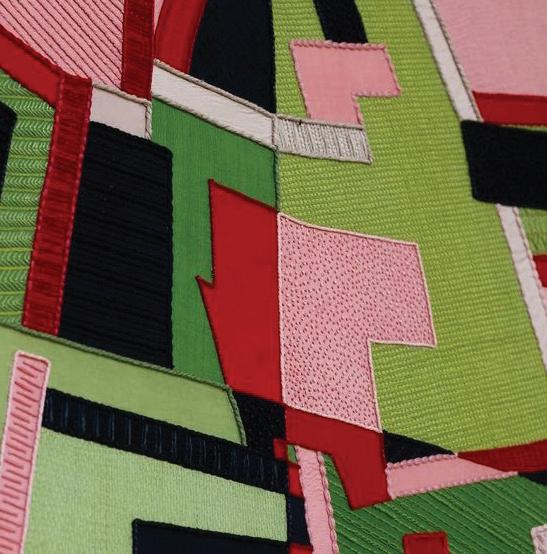
Cover: Embroidered artwork by Kamilah Ahmed; A Journey for Life was created for Homo Faber 2024 (displayed at Fondazione Giorgio Cini, Venice). Kamilah is our newest QEST Clothworkers’ Company Scholar in Textiles. Read more on page 10.
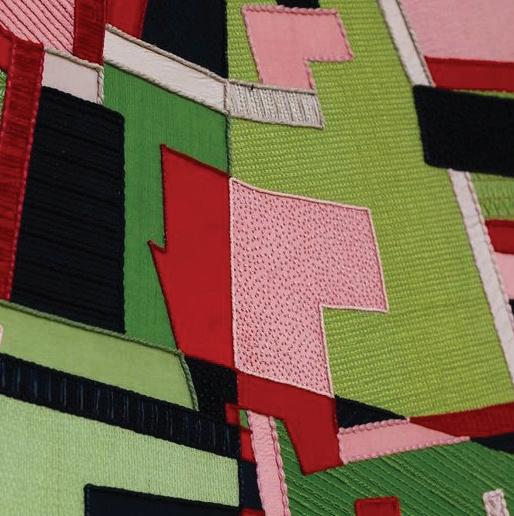
Cover: Embroidered artwork by Kamilah Ahmed; A Journey for Life was created for Homo Faber 2024 (displayed at Fondazione Giorgio Cini, Venice). Kamilah is our newest QEST Clothworkers’ Company Scholar in Textiles. Read more on page 10.
By The Hon Mary Ann Slim
December was a busy time for us all with the build up to Christmas for what was hopefully a wonderful time with family and friends. It was certainly a busy time in the City with many wonderful events and Carol Concerts. By the end of 2025, at Clothworkers’, we had a very well attended Court and Livery Dinner, a virtual wreath making event, and the St Thomas’ Eve Freedom Luncheon – always a highlight for me. All our events have been so well attended and it has been a joy for me to see so many fellow Clothworkers in my first months as the 506th Master.
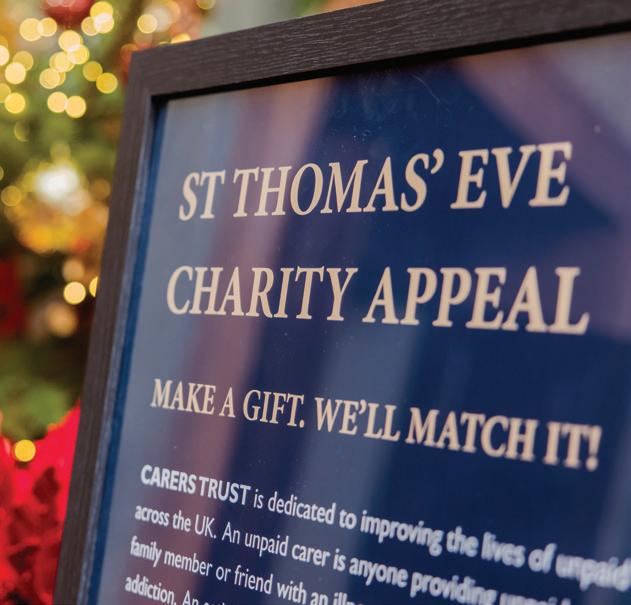
I chose to support the Carers Trust for this year’s St Thomas’ Eve charity, which is a cause close to my heart. Most of us will be involved with caring for someone we love in our lifetime and, when I attended the Carers Trust Carol Concert last month, I was given the astounding statistic that the figure is one in ten people. This equates to roughly 6 million unpaid carers. If these carers were to be paid the minimum wage it would equate to the same annual bill it costs to run the NHS.
We now rely on a huge workforce of unpaid carers of all ages which Carers Trust works to help and support. Any help is hugely valued by a carer, whether it is the gift of a washing machine for the never-ending washing involved in caring for someone, or some form of respite care for the carer such as a reflexology session. I was deeply moved by a quote from one of the child carers who said ‘I don’t always get much time to be a kid’ – I find this devastating. Those who attended the Freedom Luncheon will have had the opportunity to hear more directly from Kirsty McHugh, Chief Executive of Carers Trust, about the challenges carers face every day and the work the charity does to help improve their lives.
I am so impressed and so grateful to the 140-plus Clothworkers (and Clothworker friends) who donated to this charity appeal. These generous gifts amounted to nearly £8,700. With the matched-gift from The Clothworkers’ Company and Gift Aid claims, the Carers Trust is set to receive more than £19,000. This has set a new record for our annual St Thomas’ Eve Charity Appeal, and it will all go to an amazing charity which clearly deeply resonates with our fellowship.
Ryan Knight, Fundraising Executive at Carers’ Trust, wrote
to say: ‘This will allow us to provide at least 40 unpaid carers in London with essential grants (up to £400 each), which will make a real and immediate difference to their lives. We are extremely grateful for your generosity and valued support.’
We received the exciting news at the end of November that University of Leeds, in particular the Leeds Institute of Textiles and Colour (LITAC), has received the prestigious Queen Elizabeth Prize for Higher and Further Education to honour 150 years of outstanding textile research and innovation. While LITAC was only established four years ago, with an £8.9 million contribution by The Clothworkers’ Company, its researchers are currently addressing a vast range of global challenges in areas including sustainability, health-tech and
performance textiles. Their expertise has an impact beyond academia as they work with significant commercial partners to advance current practices. Huge congratulations to fellow Clothworker and LITAC Director Professor Stephen Russell and the incredible team at the university.
We have begun another exciting year at The Clothworkers’, which I hope will be a good year for everyone. It began with The Clothworkers’ Company fielding its first ski team in the Inter-Livery Annual Ski Event. There is more about this in the magazine but I would like to say a special thank you to Laurence and Hugo Adams for being the Team Captains and to Barnaby O’Callaghan, Georgie Threlfall, Lara Graham and William Howell for making up our
inaugural team as well as to Michael Howell (Past Master) for being there to cheer them on.
And our congratulations go to Clothworker Dhruv Patel, whom some of you may have spotted on the King’s New Year Honours List. Dhruv was awarded a CBE for services to charity which follows an earlier OBE award in 2018 for voluntary service to the British Hindu Community.
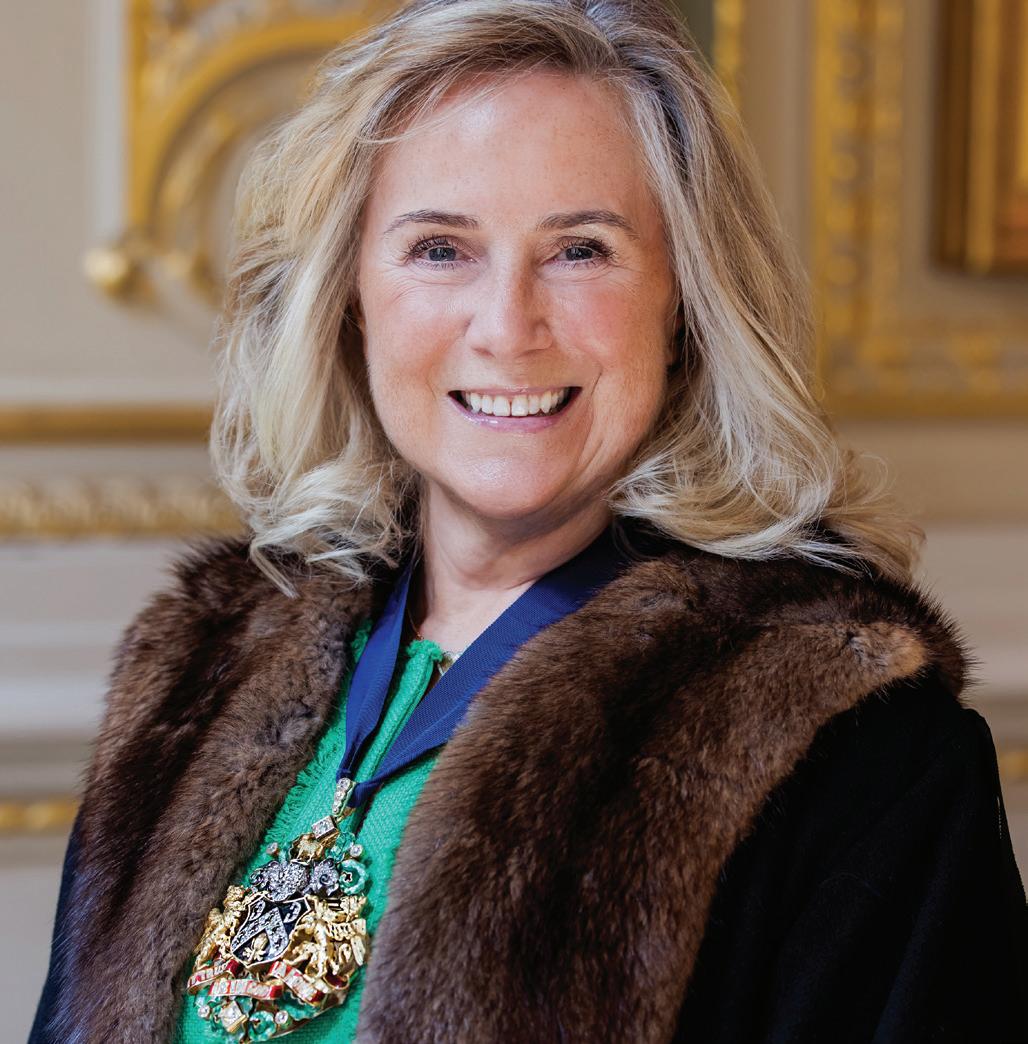
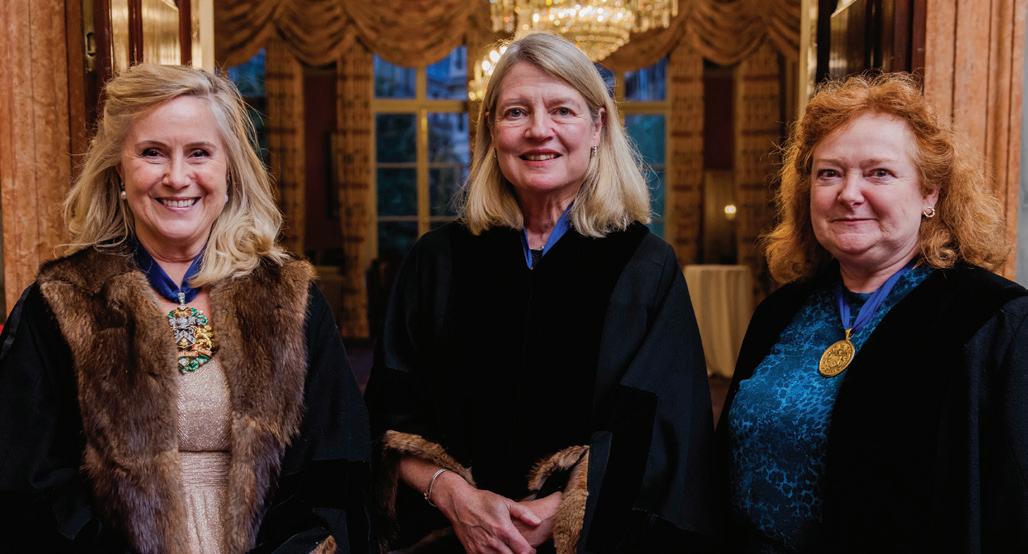
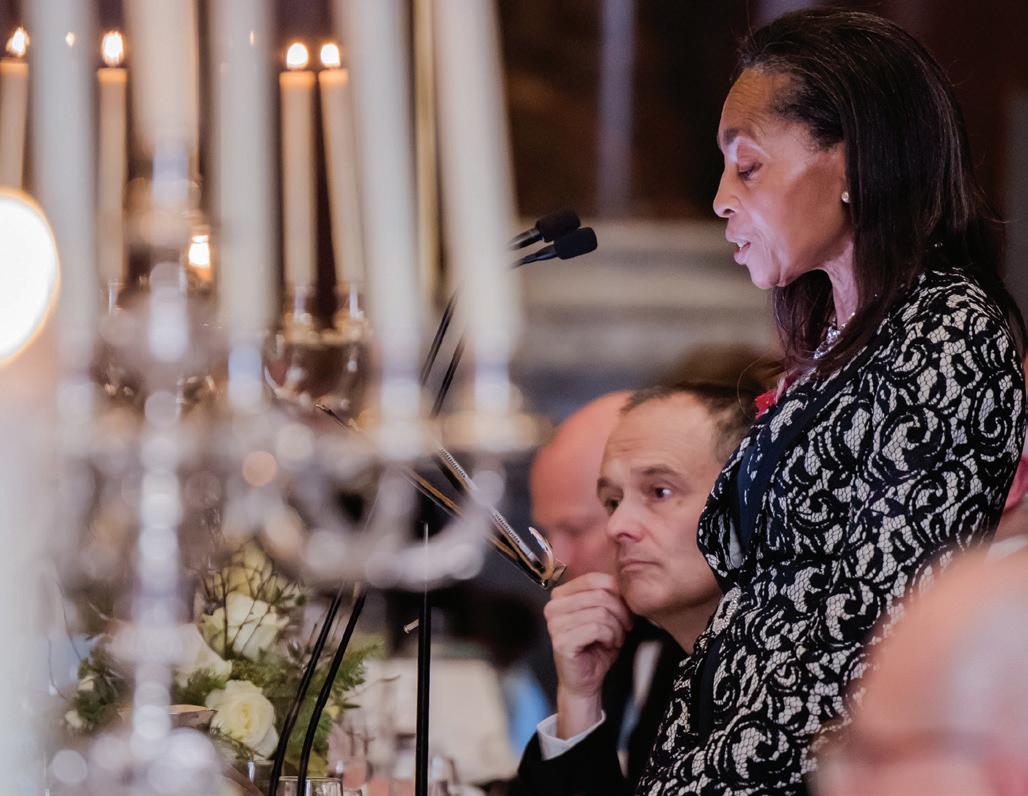
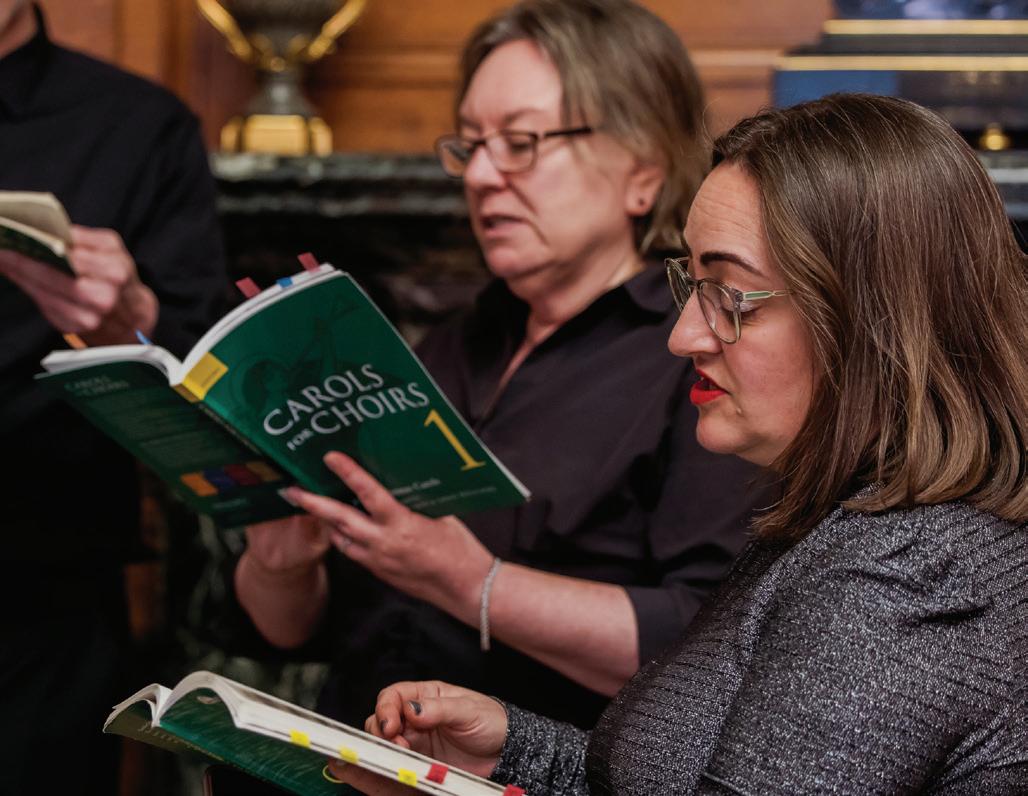
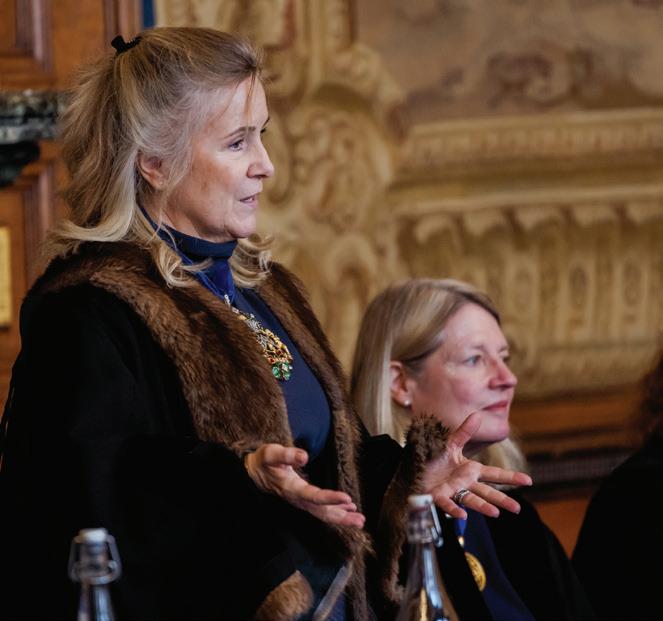
Images: The 506th Master, The Hon Mary Ann Slim (top left). The Master with First Warden Lucy Rawson and Second Warden Joanna Dodd (bottom left). Guest speaker Dr Margaret Casely-Hayford CBE at the December Court & Livery Dinner (top right). Senior Archivist Hannah Dunmow with her choir, performing at the St Thomas’ Eve Freedom Luncheon (bottom right).
“In the heart of the City of London, a new landmark is taking shape that reimagines what a commercial tower can be. Rising 36 storeys above Fenchurch Street, this all-electric office building by Eric Parry Architects and Arup weaves nature into every level, with landscaped terraces extending from each floor and public gardens that promise to transform the local ecosystem.
More than just another addition to the skyline, the tower represents a bold step toward a greener urban future – where biodiversity, cutting-edge technology and thoughtful design converge to create a workplace built for the long term ... ”


50 Fenchurch Street was featured by Tall Buildings Media last November, praising it as ‘a transformative addition to London’s skyline that demonstrates how tall buildings can achieve exceptional environmental performance while creating vibrant, healthy and adaptable workspaces for future generations.’ An excerpt is printed below, and you can read the full article online.
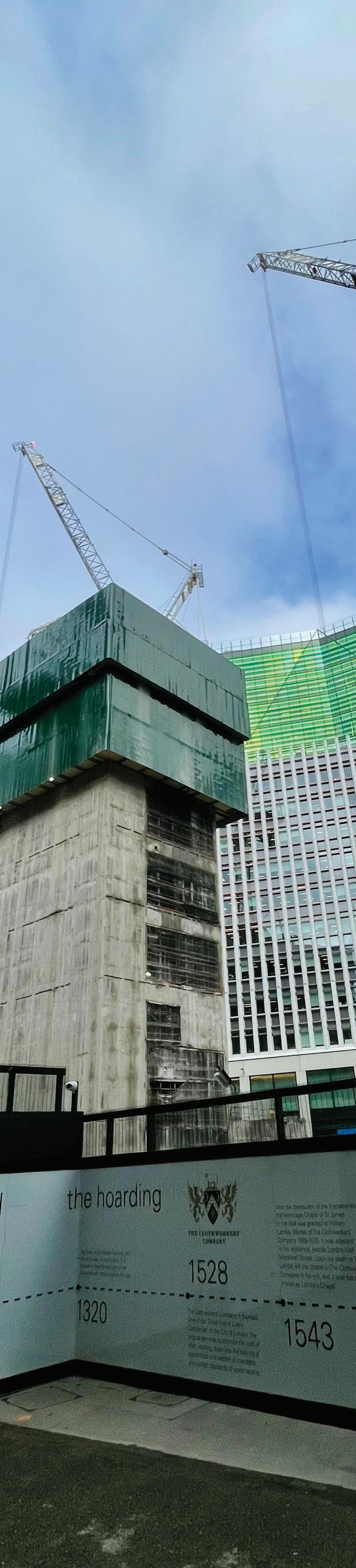
‘Owned by The Clothworkers’ Company, this complete city block redevelopment seamlessly integrates heritage preservation with cuttingedge sustainable design, creating a 36-storey tower that sets new benchmarks for environmentallyresponsible tall buildings. The site’s rich history includes the medieval Tower of All Hallows Staining, a Grade I-Listed structure, and the Grade IIListed Lambe’s Chapel Crypt.
‘While these heritage assets currently occupy private land, the development prioritises their preservation and enhanced public accessibility. The Tower will be carefully retained within the new street-level public realm, with aspirations for interior public access, while Lambe’s Chapel Crypt will be relocated to a publiclyaccessible location, offering improved presentation and interpretation of this important historical feature.’
The article goes on to detail the development’s pioneering sustainability
Images of development progress at the 50 Fenchurch Street project site (February 2026), with the medieval Tower of All Hallows Staining visible beyond the hoardings.
and net-zero operations (no fossil fuels have been consumed on site), which include London’s first all-electric towers. The design and development is targeting environmental certifications like BREEAM ‘Outstanding’, NABERS 5.5 star, EPC A rating, and more.
Overall, it is expected that the development will achieve approximately 200kgCO2e/m² of structural carbon savings compared to similar tall buildings. Tall Buildings Media estimated that this has reduced embodied carbon from the typical 460kgCO2e/m² to around 260kgCO2e/m². This impressive reduction saves more than five times the carbon a low-energy building would consume over 50 years of operation. This was made possible, in part, by the innovative optimised building grid design (rather than conventional carbon-intensive floor systems) and piled raft foundation design, which significantly reduced material usage while maintaining structural integrity for the building.
Commuters, visitors, tourists and others travelling past the site in recent months will have witnessed some of these designs coming to life in real time. However, the environmental innovation doesn’t stop there. Use the QR code below to visit the Tall Buildings Media website and read more about the next-generation building services, human-centric design and technology integration.

Celebrating 150 Years of Excellence and Innovation in Textiles
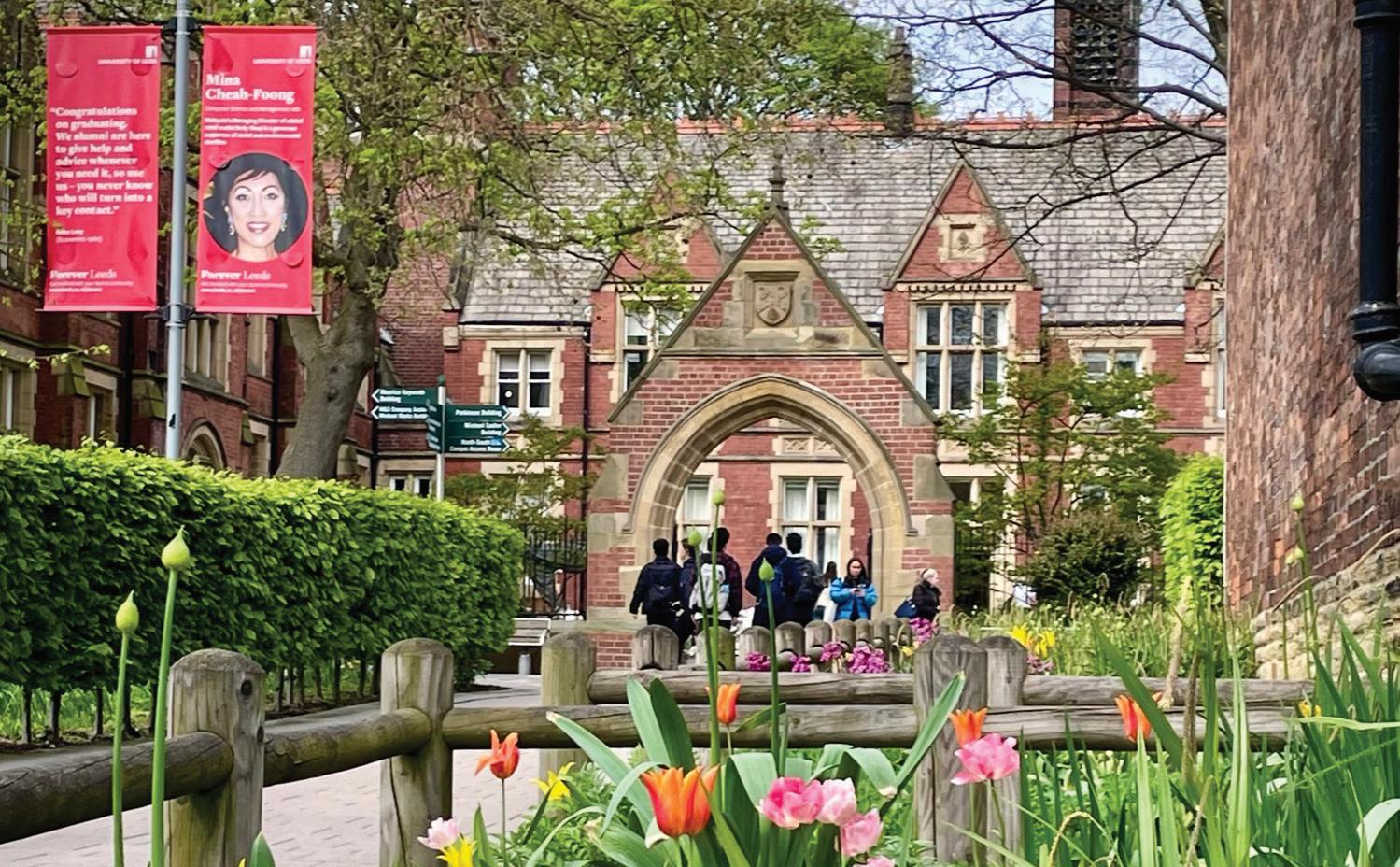
The University of Leeds has been awarded the Queen Elizabeth Prize for Higher and Further Education, recognising 150 years of pioneering textile research. The prestigious honour shines a spotlight on Leeds’ established global leadership in textiles, design and colour science — from its historic roots to today’s cutting-edge work in sustainable fabrics, medical textiles, circular manufacturing and highperformance materials.
The Clothworkers’ Company has played a defining role in this legacy from the beginning — in 1874, a Clothworkers’ grant supported the founding of the original Yorkshire College of Science; in 2021 a Clothworkers’ investment of £8.9 million helped establish the Leeds
Institute of Textiles and Colour (LITAC).
Upon hearing the news, Master Mary Ann Slim said: ‘While LITAC was only established four years ago, its researchers are currently addressing a vast range of global challenges in areas including sustainability, health-tech and performance textiles. Their expertise has an impact beyond academia as they work with significant commercial partners to advance current practices. Huge congratulations to fellow Clothworker and LITAC Director Professor Stephen Russell and the incredible team at the university.’
Today, The Company continues to support world-leading innovation
at the university (and across the textile sector). This is a moment of immense pride for both Leeds and Clothworkers’, as we celebrate the result of our long-standing partnership and more than a century of shared commitment to education, innovation and societal impact.
Want to learn more? The University of Leeds published an article about the award on its website. Additionally, this past autumn, we hosted a virtual Members’ event featuring Clothworker and LITAC Director Professor Stephen Russell, alongside UKFT CEO Adam Mansell. Log into the Members’ Portal to watch the interview and hear about how The Company continues to support textiles innovation, skills development, and more (find it under ‘News’).

Celebrating the Healing Power of Textiles and Clothworkers’ Transformative Support
Textile research has transformative impact on all of society, including advances in healthcare technology.
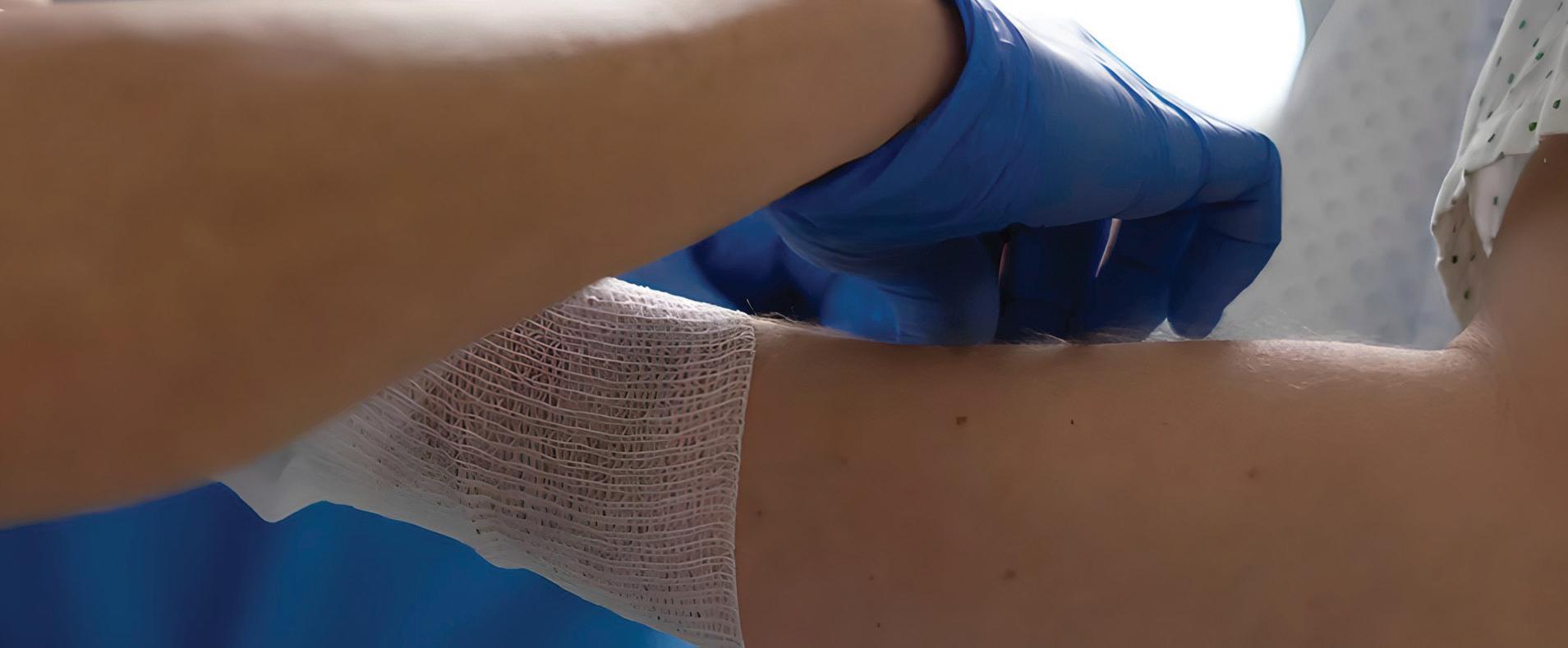
University of Leeds spinout HyFaCol brings together expertise in textile, medicine, and dentistry to find more effective ways of healing wounds without relying on antibiotics.
Wound care costs the NHS an estimated £8.3 billion per year, and consumes 50% of community nurse time, according to the NHS Benchmarking Network.
Leeds spin-out HyFaCol aims to tackle this challenge by manufacturing dressings from medical-grade collagen to heal problem wounds, such as surgical incisions that have reopened, diabetic ulcers and pressure ulcers.
Collagen products are already used to guide the regeneration of bone defects in a patient’s mouth, or to encourage new tissue to grow in chronic wounds that can’t heal on their own. But the current generation
is problematic, as the collagen products can swell up uncontrollably, or break down too quickly.
HyFaCol’s innovative collagen dressing accelerates wound healing, achieving complete wound closure within 20 days in a preclinical study in animals. This effect was confirmed in a recent first-in-human clinical trial involving patients with diabetic or pressure ulcers. These trial results, which surpassed expectations, will underpin an upcoming publication.
HyFaCol Co-Founder Giuseppe Tronci, Professor in Healthcare Materials at the Clothworkers’ Centre for Textile Materials Innovation for Healthcare, said:
‘The collagen in our biological tissues plays a major role in wound healing. Its molecular structure is highly cross-linked, which gives it unique mechanical properties.
‘But, when we extract collagen to create healing aids, this crosslinked architecture is disrupted, yielding a material that swells unpredictably and
is difficult to process. At HyFaCol, we have chemically modified the collagen molecules to achieve a crosslinked collagen network following exposure to light. This molecular network makes the ultimate dressing or membrane material to help wounds grow new tissues.
‘The unique ecosystem at Leeds allows us to integrate this molecular design approach with advanced textile manufacturing and clinical insight. Working at this interface, we create individual collagen fibres and develop prototypes tailored to specific clinical applications.’
This project has reached the clinical trial stage thanks to a partnership between Leeds’ Schools of Dentistry and Design, and significant investment from The Clothworkers’ Company, the Medical Research Council and private investors. The research team hopes to progress new ideas in the future, which could see wound dressings that include light-activated medications, so antibiotics can be provided at the right moment for optimal healing.
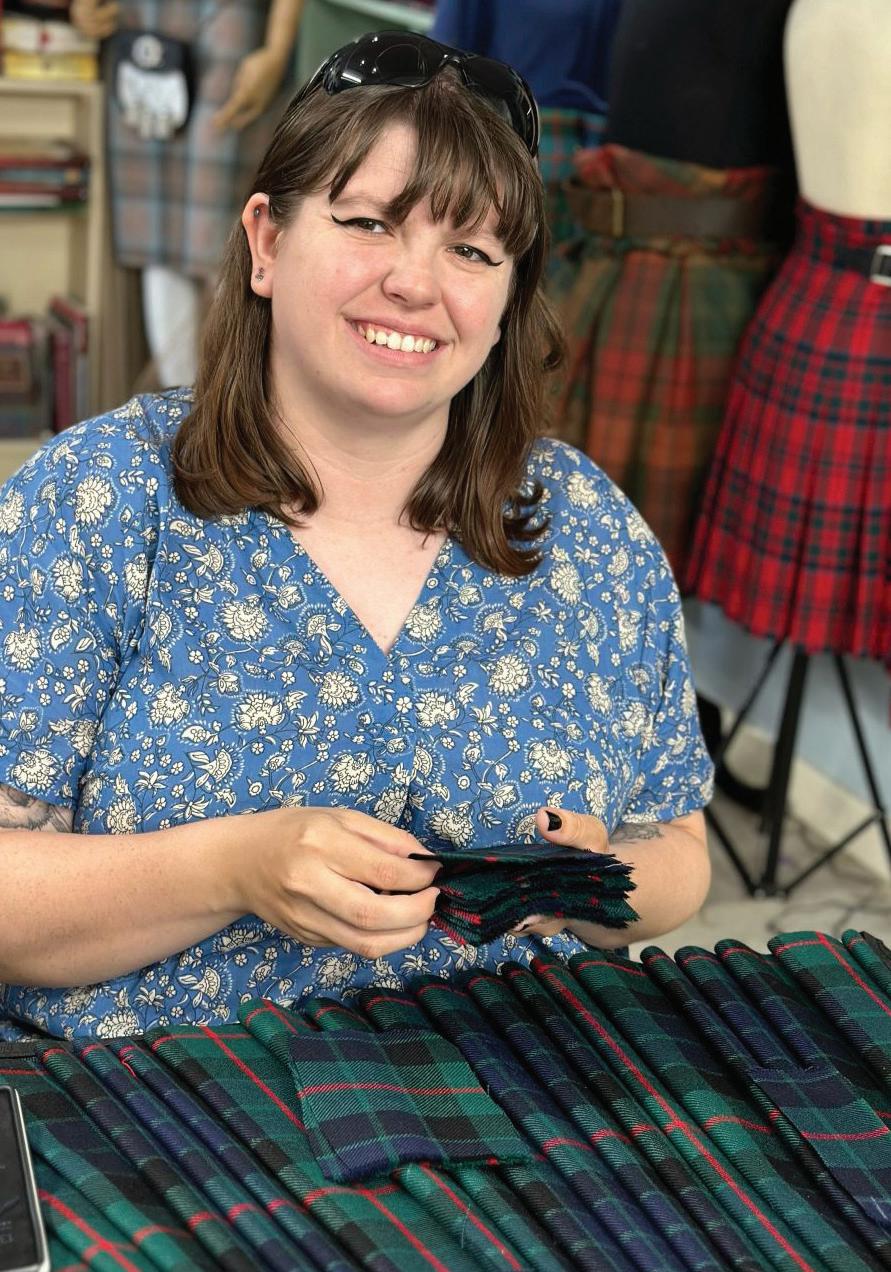
Kilt-Maker Kayleigh Ivanov Trains in Scotland; Embroiderer Kamilah Ahmed Works in Her Studio
For 35 years (since 1990), the Queen Elizabeth Scholarship Trust, known as QEST, has awarded in excess of £7 million to nearly 900 craftspeople working within 130 different craft disciplines. At the end of last year, QEST announced 19 new grant recipients –including 11 Scholars, five Emerging Makers, and three Apprentices who will now be able to use the funding to further their education and training in craft and conservation skills. Scottish kiltmaker Kayleigh Ivanov is among them, training as an Apprentice for another two years with funding from The Clothworkers’ Company. Beginning the 2026 cohort, Kamilah Ahmed joins the ranks of our Clothworker Scholars.
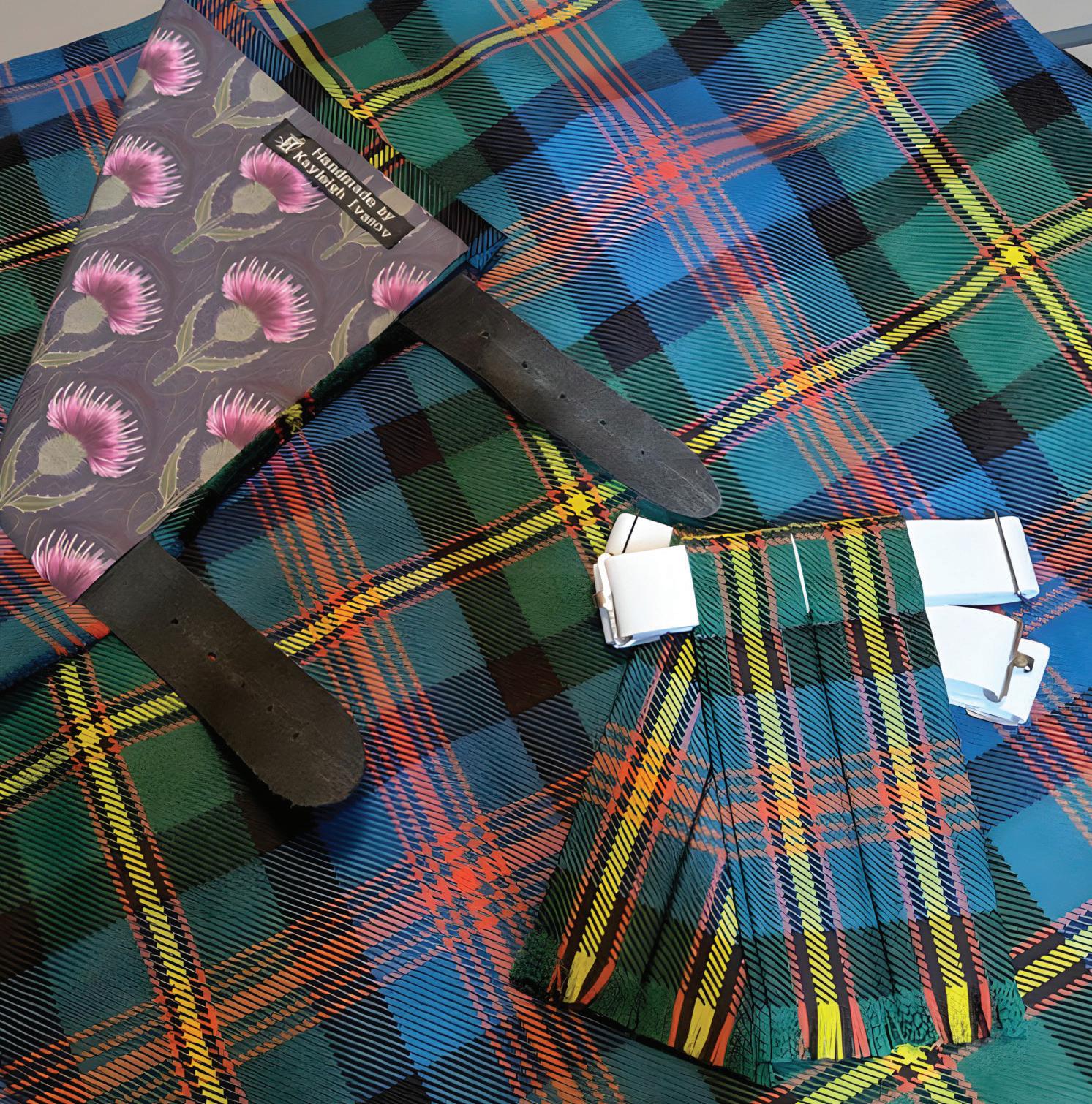
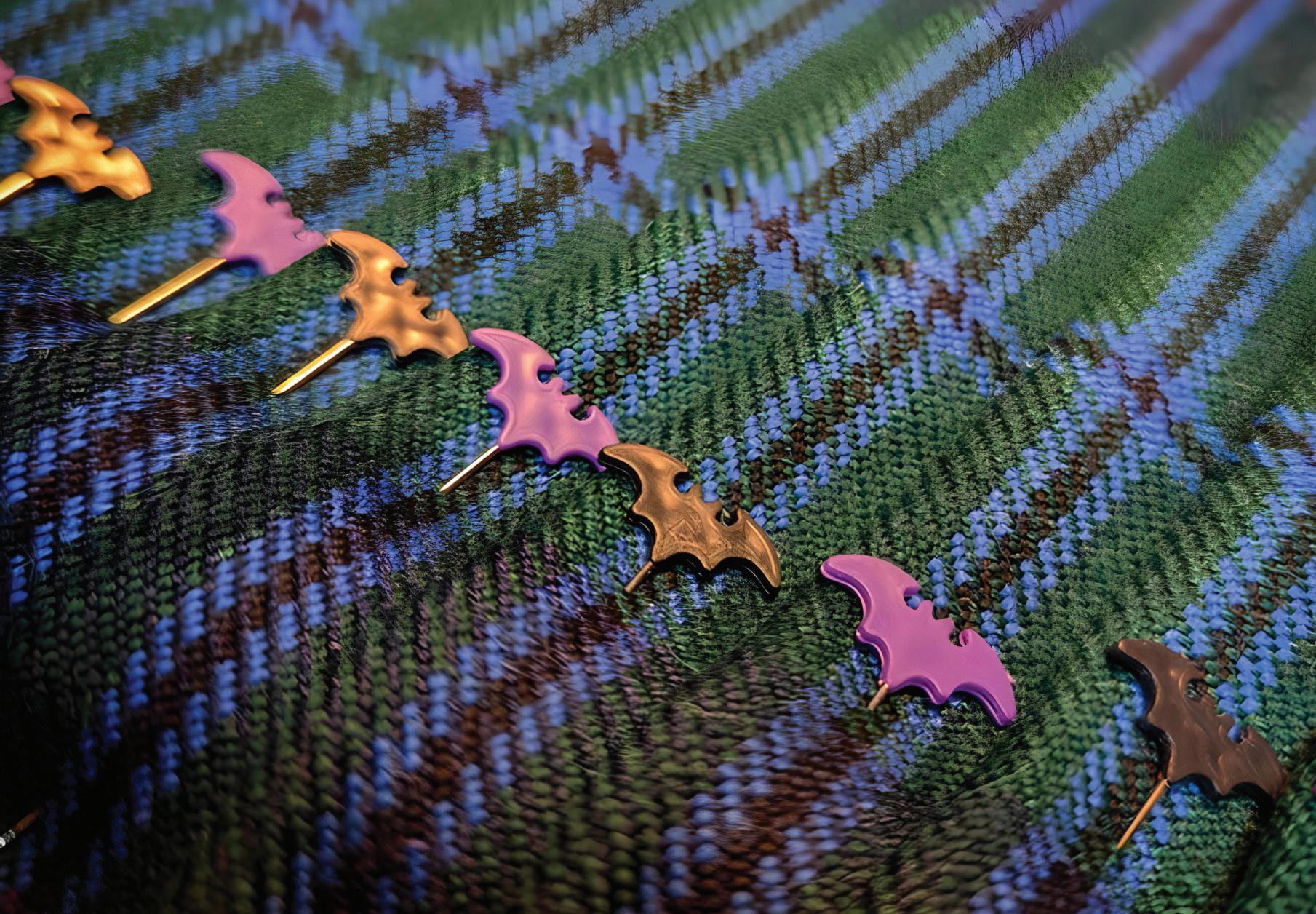
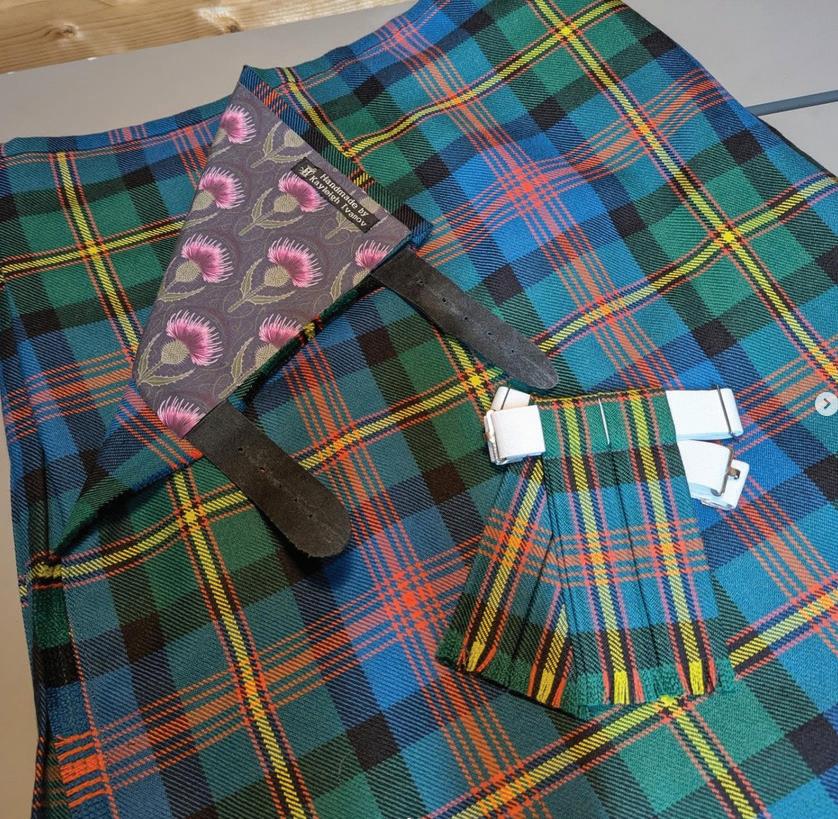
Kayleigh Ivanov is an apprentice kiltmaker working with Amanda Moffet at ScotClans in Leith, Edinburgh. QEST funding will support a further two years of training in traditional hand-stitched kiltmaking
“Kiltmaking is such a fascinating craft.”
“Being Scottish, I have always been around Kilts and Tartan, but had never fully appreciated the skill and workmanship involved. Now, I am part of this endangered craft ... I am excited to expand my skills not only in kiltmaking but learning how to craft other traditional Scottish clothing.”
~ Kayleigh Ivanov
– a craft recognised as endangered by Heritage Crafts since 2021.
Kayleigh began her journey after taking a two-week intensive course at ScotClans in 2024. Her enthusiasm and aptitude quickly stood out, and she has since joined the team to continue learning this intricate and historic craft. At ScotClans, kilts are made entirely by hand using techniques
that have remained unchanged for over a century, including alternate historical pleat styles. The workshop is also a centre for teaching, helping to preserve and pass on the skills to a new generation.
‘Kiltmaking is such a fascinating craft ... Being Scottish, I have always been around Kilts and Tartan, but had never fully appreciated the skill and workmanship involved. Now, I am part of this endangered craft; having the QEST Apprenticeship supporting me, I am excited to expand my skills not only in kiltmaking but learning how to craft other traditional Scottish clothing.’
Passionate about the problem-solving and hands-on nature of kiltmaking, Kayleigh finds deep satisfaction in crafting garments that hold cultural and historical significance. She hopes one day to become a master of the craft, contribute to teaching future apprentices, expand into tailoring, and design new garments to complement the ScotClans collection.
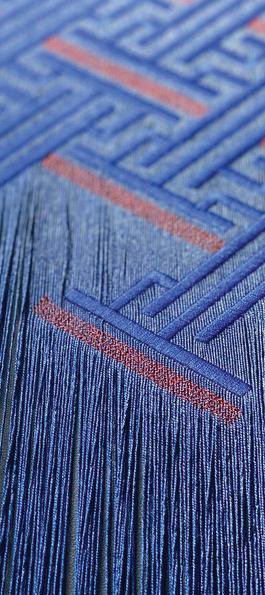
Kamilah Ahmed is a London-based, British Bangladeshi embroidery artist and designer with a studio at Cockpit Bloomsbury. Her practice bridges heritage craft and material innovation, creating bespoke embroidered artworks for contemporary interiors. Combining hand embroidery with digital and experimental textile processes, she reinterprets traditional techniques – such as Jamdani weaving and Ari hook embroidery – to produce layered, narrative-driven pieces that honour cultural heritage and advance the language of modern craft.
Through her QEST Scholarship, Kamilah will undertake a programme of one-to-one training to deepen and diversify her technical skills. This includes fabric upholstery with Richard Hack, creative laser cutting with Malaika Carr, specialised Wilcom
digital embroidery with Sarangua Sodnom, silversmithing with QEST Scholar Jacky Oliver, and welding and large-scale metal sheet bending with Scenic Sets. Each area of study will expand her ability to work across materials, enabling her to integrate embroidery with metal, structure, and form in innovative new ways.
‘Central to my practice is showcasing embroidery beyond the surface, integrating it with unexpected materials like metal, wood and structural form to create work that is sculptural, immersive and culturally resonant. The QEST grant allows me to deepen and expand my technical expertise into three-dimensional realms and realise work on a fuller scale and ambition.’
Kamilah’s goal is to develop a sustainable, collaborative practice that supports both innovation and heritage
preservation, contributing to an ongoing dialogue about the future of making within contemporary art and design.
In 2024, The Clothworkers’ Company renewed its support for QEST with a commitment of £132,000 (over three years) to help fund QEST Apprentices, Emerging Makers and Scholars focused on textile disciplines. The first Clothworkers’ Scholar to benefit from this round of funding was couture kiltmaker Andrea Chappell. Look back at Issues 28 and 29 of this magazine for more information on recent recipients. Watch this space for news later this year.
Previously, The Company provided support to QEST to fund programmes for bookbinding. Find out more about the Queen Elizabeth Scholarship Trust, and the amazing craftspeople it supports, at www.QEST.org.uk.

“Central to my practice is showcasing embroidery beyond the surface ... ”
“The QEST grant allows me to deepen and expand my technical expertise into three-dimensional realms and realise work on a fuller scale and ambition.”
~ Kamilah Ahmed
Left: Kamilah is photographed with Interwoven, an series of embroidered artworks, part of the Homo Faber Capsule in Seville (2025), which celebrated the interconnected nature of craftsmanship and human stories woven together.
Right: Detail of Kamilah’s triptych, comprising framed embroidered artworks, trapping hand-wrapped Como silk yarns onto a leather base with digital embroidery.
Images on pages 8-11 are courtesy of QEST; Kayleigh Ivanov and ScotClans; and Kamilah Ahmed (www.KamilahAhmed.Studio).
Spotlight by Senior Archivist Hannah Dunmow
Since 2007, The Company has supported Designer Bookbinders (DB) – one of the foremost societies devoted to the craft of contemporary bookbinding – as part of our support for what was an endangered craft. Nearly 20 years on and the funding we’ve continued to provide (principally through the provision of bursaries and competition prizes) has contributed to the recent removal of bookbinding from The Heritage Crafts Association’s ‘Red List’ of endangered crafts. Bookbinding is now reclassified as ‘currently viable’.
The Designer Bookbinders UK (DBUK) competition takes place every two years. It is open to all bookbinders resident in the UK, who are not DB Fellows, and thus attracts a wide number of entries from up-and-
coming craftspeople. Entrants must bind the set book and may also submit up to three ‘Open Choice’ books (i.e. books of their own choosing). The winners were announced last November during an awards ceremony at Maggs Bros (antiquarian booksellers and supporters of DB).
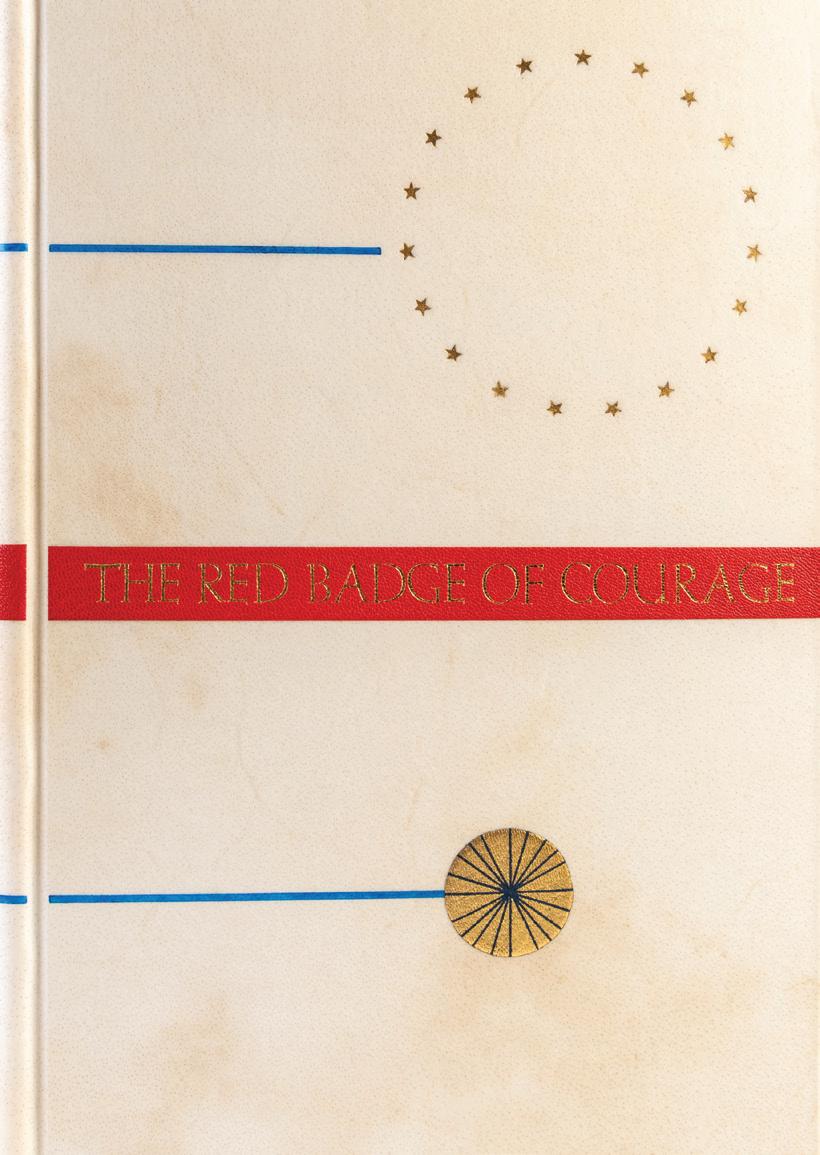
The Clothworkers’ Open Choice second prize was awarded to Ted Bennett for The Red Badge of Courage by Stephen Crane.
The Clothworkers’ Open Choice first prize was awarded to Matt Stockl for his binding of Beowulf, translated by Kevin Crossley-Holland. This binding also won the top prize: The Mansfield Medal for Best Book in the Competition.
Matt and Ted are alumni of The Queen’s Bindery Apprenticeship Scheme at Windsor Castle (2016 to
2020), for which The Company was a founding funder. Both Matt and Ted continue to work as bookbinders, and Ted is currently a DB Licentiate (another programme The Company supports through the provision of bursaries for extra skills training and pathways towards Fellowship). In fact, eight of the current nine DB Licentiates entered the competition, and six earned one or more prizes! All the winning books are featured on Designer Bookbinders’ social media channels in addition to their website.
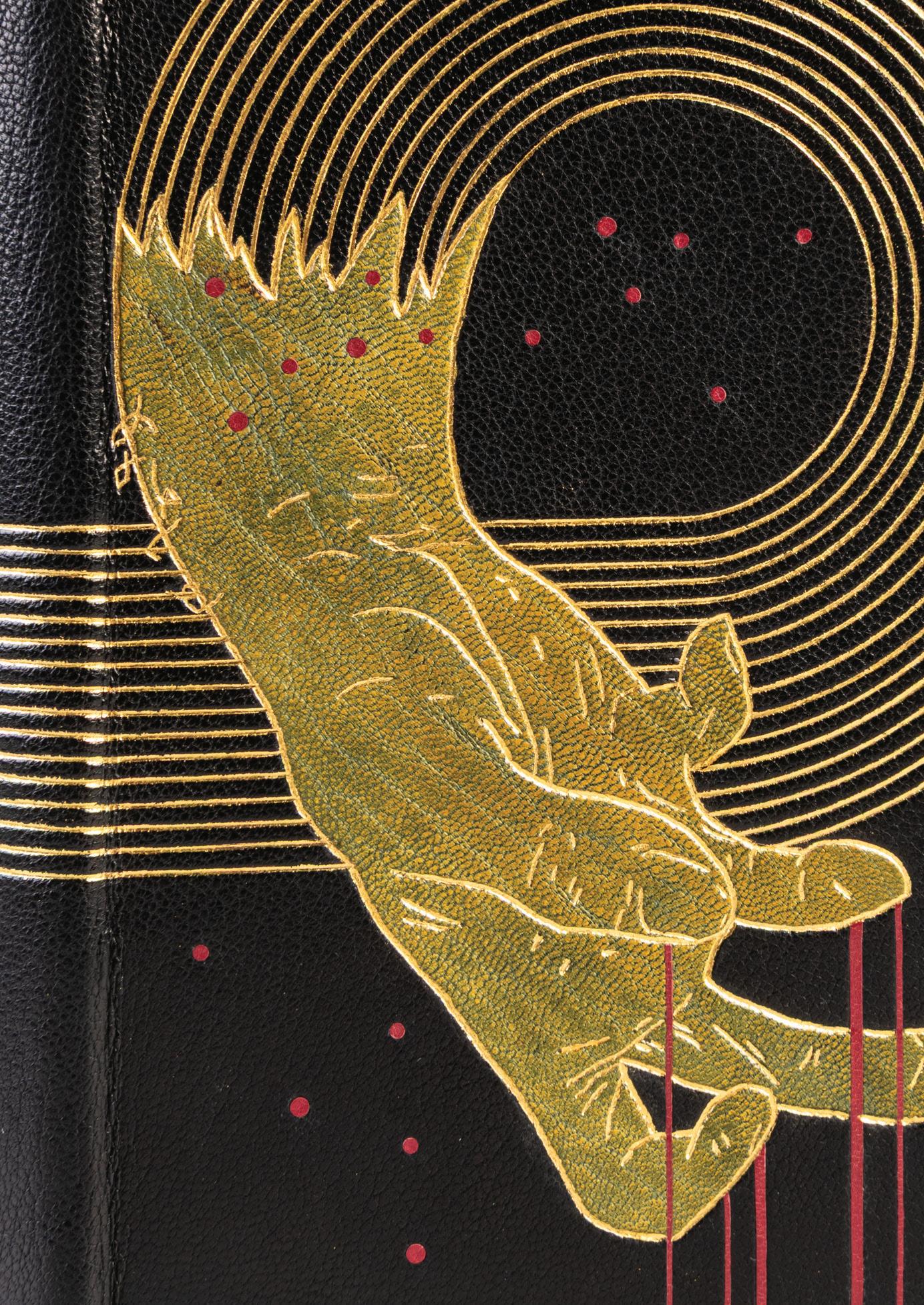
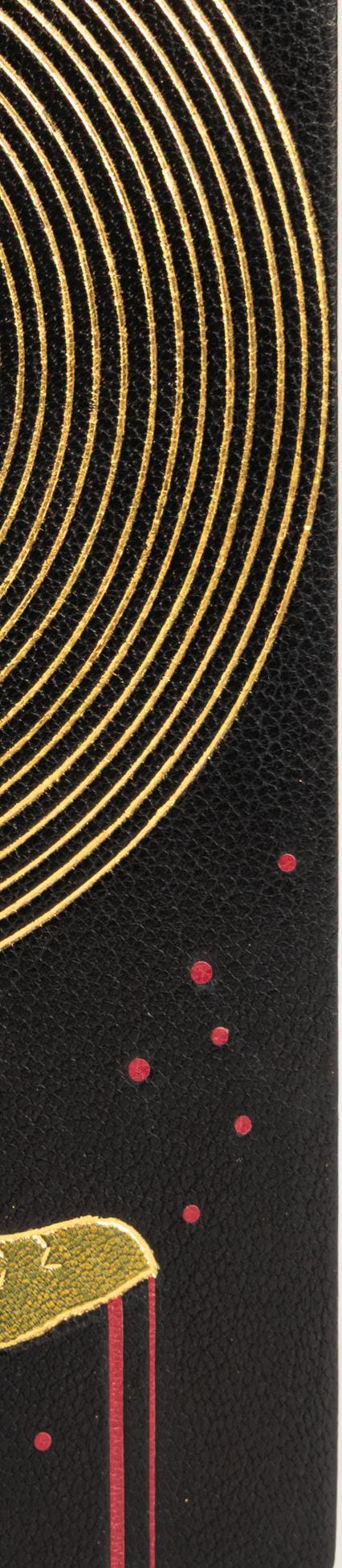
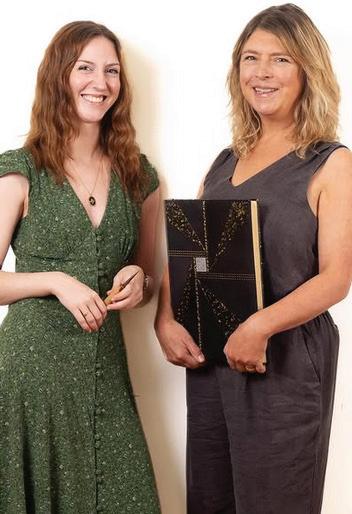
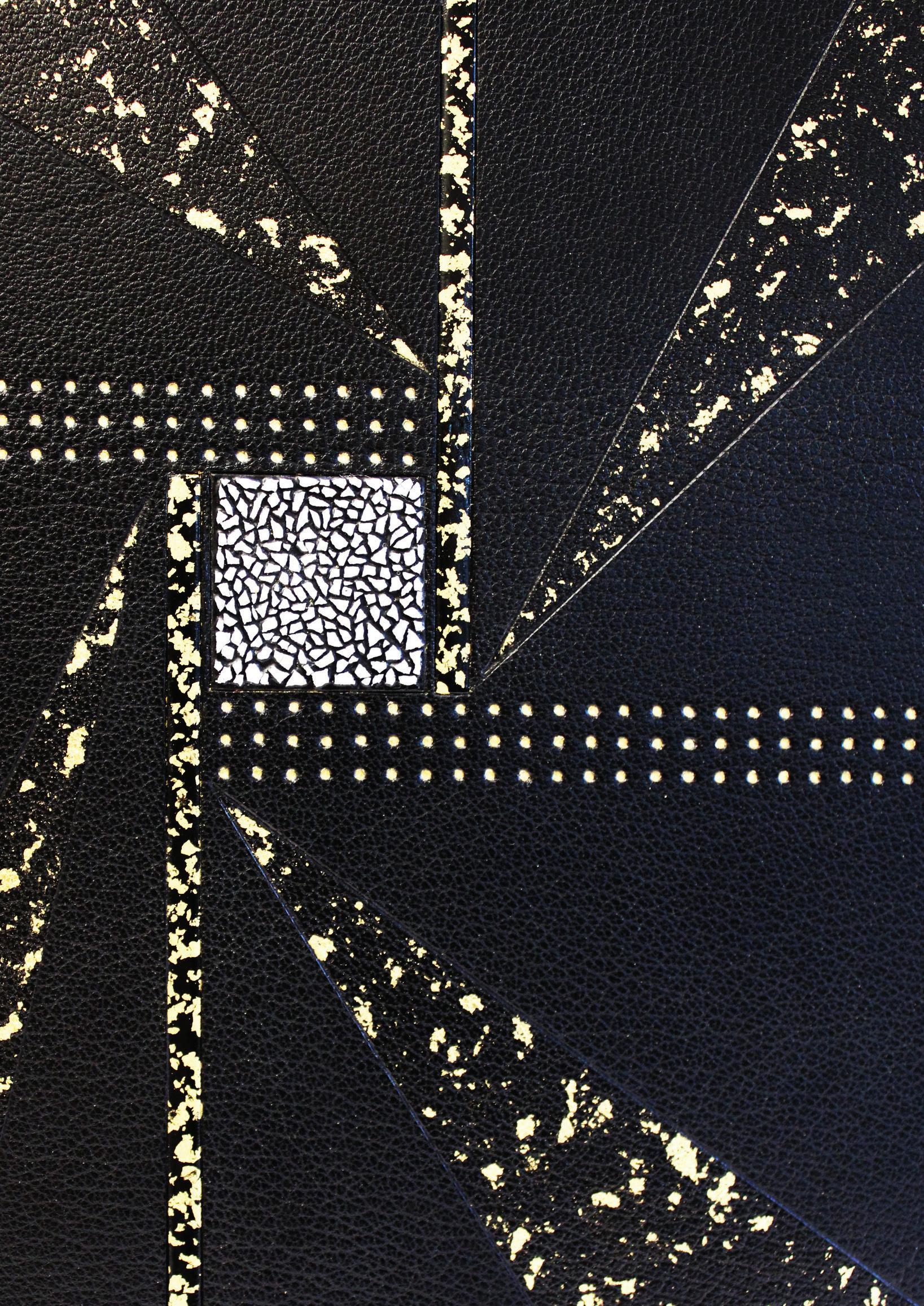
At the very end of 2025, DB Fellow Kate Holland delivered her completed bookbinding commission to The Company. It is a black and golden binding (French Art Deco inspired) of The Art of the Bookbinder and Gilder by M. Dudin, translated into English by Richard Macintyre Atkinson and published as a limited edition (255/490) by The Elmete Press, Leeds, in 1977.
The full black goatskin has inlays of coquille d’oeuf (eggshell) lacquer
and sunago gold lacquer, triangles of applied 22c gold leaf, linear dots and title on spine hand-tooled in 22c yellow gold leaf, dentelles of applied gold leaf, inlays of reversed black and gold silk lamé, endpapers of sunago gold sprinkled on black Bugra Butten paper, head rough edge gilt, and handsewn black and white silk endbands with gold highlights. It is housed in a black goatskin yapp edged chemise with sunago gold sprinkle sidings and a black goatskin entry étui (slipcase).
Kate explains that this commission was fortuitously timed. Having just been awarded a QEST (Queen Elizabeth Scholarship Trust) scholarship to study continental fine binding techniques – and this being a textbook on the art of French find binding – it seemed only fitting to showcase all the techniques she had learnt over the scholarship on this commission. She took design elements from some of the finest binders of the hallowed French Art Deco: the use of coquille d’oeuf (eggshell) lacquer as seen on bindings by Francois Louis Schmied, the triple
rows of dots were a motif much used by Pierre Legrain and the gold lamé doublures were lifted directly from a Rose Adler binding. She learnt rough edge gilding from Julian Thomas, chemise/étui enclosure systems from Luigi Castiglioni, hand tooling with gold leaf from Patrick Prouteau and insetting and inlaying from Hélène Jolis. She hopes that the whole feels contemporary to the time it was bound in, as much as to the time it honours.
You can see more of the process and her work on Instagram, via @KateHollandBook.
Save the dates of 11-17 May, when The Company will be collaborating with DB during London Craft Week. A new venue just behind the Globe Theatre will host an exhibition –including some bindings from our collection alongside the work of Fellows, Licenciates and students – as well as bookbinding demonstrations. Further details will be provided nearer the time in the e-Clothworker.
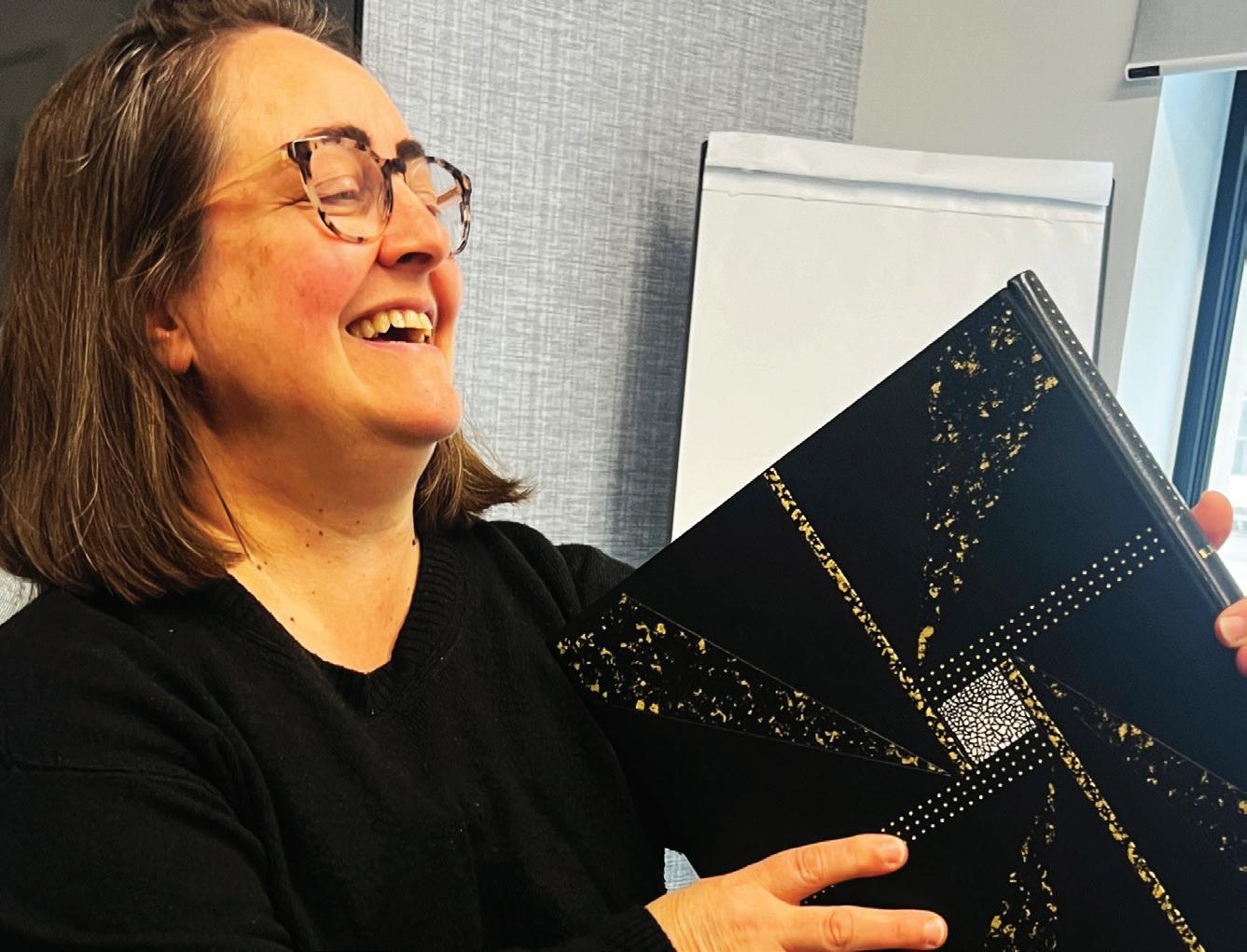
Page 14: Kate Holland, holding her completed Clothworkers’ commission, with fellow Bookbinder Emma Vukman (left image).
Senior Archivist Hannah Dunmow takes receipt of Kate Holland’s binding for The Art of the Bookbinder and Gilder (right image).
Page 15: Detail of the front cover on Kate Holland’s completed binding.
Images courtesy of Kate Holland.
Grantfunding and Social Investment Work Together to Transform a Community Centre
Report From the Foundation Director and Director of Finance, Property & Investment
At the end of last year, The Clothworkers’ Foundation confirmed an exciting new project and partnership. It finalised a loan to Alpha Grove Community Centre, which previously received a capital grant through The Foundation’s Open Grants Programme. This progression demonstrates the transformative effect of The Foundation’s continued support for capital assets and infrastructure – from grantfunding to social investment.
Alpha Grove is located in a Victorian Methodist Church, covenanted to the community in the early ’80s, and operating as a community centre in the heart of the Isle of Dogs. Looking up from Alpha Grove, you can see the ever-changing skyline of Canary Wharf, but it can feel a long way away to the diverse communities who live around the centre, many of whom are experiencing economic disadvantage.
In 2022, The Clothworkers’ Foundation awarded a grant of £150,000 to Alpha Grove for rebuilding and refurbishing the charity’s very tired toilets and showers. At this point, the community centre had a new and engaged Board of Trustees, but use of the centre was low, and finances were stretched. The project was not very glamorous, but had a significant impact. Following the refurbishment, usage of the centre increased from 30% to 80% occupation.
When The Foundation visited the centre in 2024, it was obvious that the building needed further refurbishments. However, the doors were open with people able to visit freely. A group for local people with learning disabilities was meeting in one area, while therapeutic services were offered to
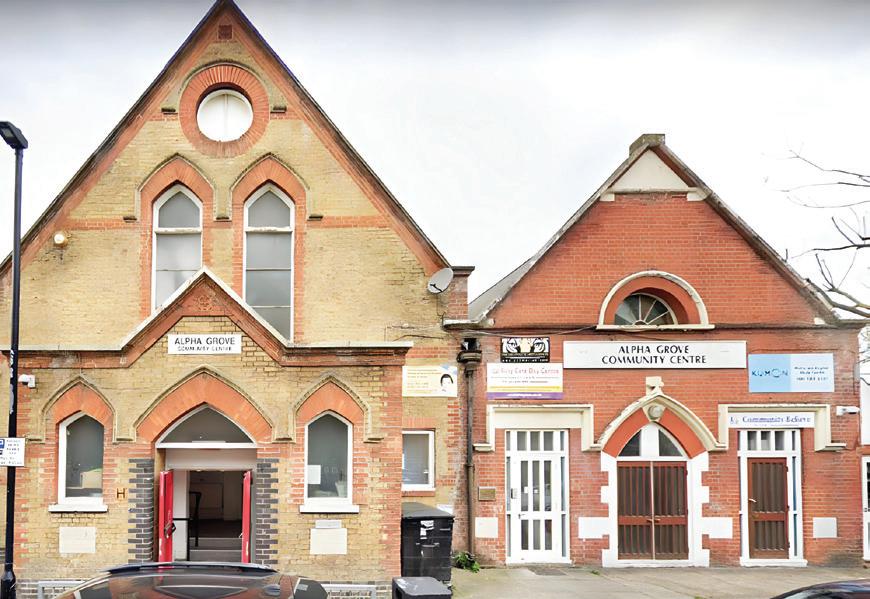
community members in another, and the theatre space was being utilised for a rehearsal. The charity’s Board (and the architect they had persuaded to work with them, pro bono) knew there was an opportunity for the centre to do more if they could find a way to invest further in the building.
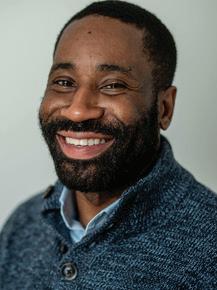
Ugo Ikokwu, Alpha Grove’s Chair (who grew up in sight of the centre and now works as a Grants Manager at Trust for London) was invited by The Clothworkers’ Company to speak at the Annual Meeting of the Livery in 2024, sharing Alpha Grove’s story – including the impact of The Foundation’s capital grant and the charity’s ambitions to unlock the centre’s potential.
The Foundation began working with Ugo and the Alpha Grove Board on a £500,000 loan application to support a large-scale conversion and refurbishment of the centre. The City Bridge Foundation was invited to become a partner, and has provided an additional £250,000 loan under the same terms as The Clothworkers’ Foundation. Additional grantfunding will make up a total budget of more than £1 million for the refurbishment. Alpha Grove will repay much of the financing as the centre becomes more sustainable over time.
Ugo, pictured above, has said, ‘Alpha Grove is already a much-loved community space, and this project will allow us to do more for local people, welcoming more residents, hosting more activities, and generating reliable income to sustain the centre long term. We sought part of the funding as social investment because it supports long-term financial resilience, not just delivery, and allows the centre to grow its own income while remaining rooted in community use. Clothworkers’ support has evolved alongside the project, from an early grant that helped us get started to social investment that’s enabling delivery at scale. That continuity of partnership has made it possible to plan with confidence, and to turn ambition into something real and lasting.’
Our Foundation Trustees approved the loan early in 2025, and Alpha Grove made its first drawdown on the loan to pay its contractors in December. This is The Foundation’s first social investment loan to a previous grantee. The long-term relationship with Ugo and his fellow Trustees was begun by The Foundation’s team in 2021, and the trust built over time contributed to our decision to invest, with confidence, in Alpha Grove’s future. We look forward to seeing the building change over the next few years!

Recipient of an Unrestricted Grant From Our Clothworker Members’ Fund (CMF)
The Clothworker Members’ Fund is your fund, and is driven by your continued engagement in three ways: (1) through your generous donations, matched by The Company; (2) through your nominations for eligible and compelling charities; and (3) by your votes to determine the final grant recipients that will share the fund in the form of grants from The Clothworkers’ Foundation.
Whether Members contribute £5 a month or £500 a year, your gift is doubled, and your charitable impact is increased by joining other Clothworkers in giving to the CMF. In 2025, your generosity enabled us to award £42,000 each to Doorstep Library, MammaKind, and PLIAS (as well as £5,000 each to three runners up). What’s more, these grants were ‘unrestricted’, meaning the grantholders could decide how best to use the funds. Unrestricted grants are ‘gold dust’ when it comes to philanthropic funding, and they significantly increase the impact of our grantmaking.
Our Proactive Programmes Manager, Nelly Koko-Konan, caught up with some of last year’s grantees to find out how they are putting our funding to use. Keep reading for an update from Doorstep Library
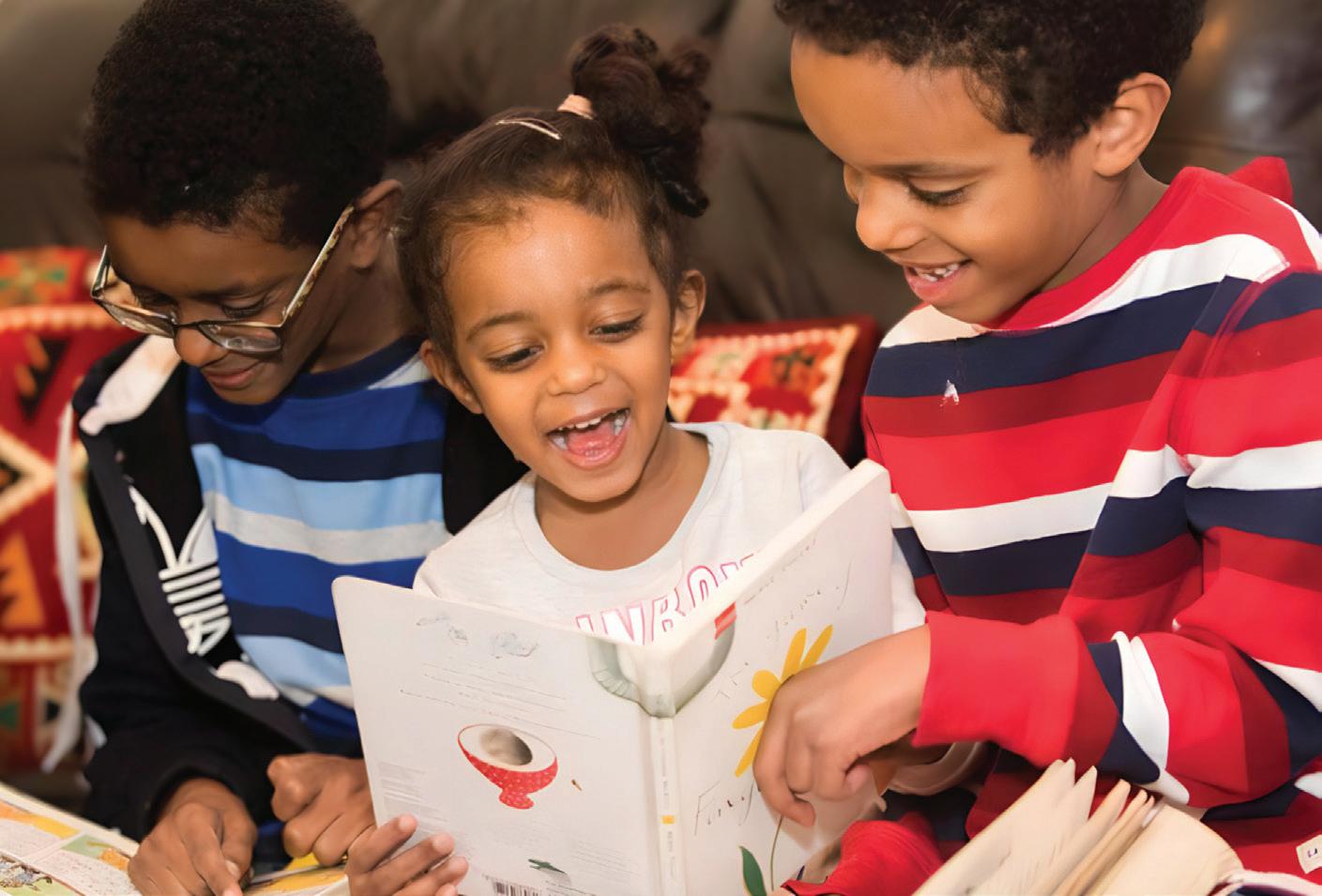
Founded in 2010, Doorstep Library is a London-based charity that aims to instil a love of reading in children aged 3 to 11. It currently has 18 full-time employees and a network of almost 250 volunteers. Once a relationship with a child is established, a volunteer reads regularly with that child for a 12-month period, after which the child ‘graduates’ from the service. Doorstep operates in
five boroughs across London, selecting its neighbourhoods following an assessment of poverty and literacy rates.
We asked Katie Bareham, CEO, what difference it made to the charity to receive unrestricted funding? She said, ‘The unrestricted nature of the grant has been especially valuable. In contrast to the heavily-restricted project funding that Doorstep Library typically receives (around 70% of this comes from trusts and foundations, often in small, oneyear pots), this grant gave us the autonomy to apply funds where they were needed most.’
Katie confirmed that our CMF grant has supported essential staffing costs, particularly within Doorstep Library’s delivery and engagement function, with a direct allocation to the critical role of Head of Delivery and Engagement (who manages a volunteer pool of around 200 individuals, overseen by just 2.5 staff members). For safeguarding reasons, volunteers operate in pairs, which
requires consistent coordination and day-to-day logistical support. The role is also overseeing the overall recruitment and on-boarding process of new volunteers who will support both its in-person and online programmes.
As a result, the charity’s team is able to deliver programmes confidently and maintain quality at scale, working with 600 children in London. Its next target is to reach 800 children across more neighbourhoods – and beyond this, to expand to other cities.
We are now accepting nominations from CMF donors for the 2026 grant awards. Not yet a donor? Make a gift before 13 March to suggest a charity for this year’s grants; or after 13 March to be able to vote on the short-listed nominations!

Use the QR code below to visit the Members’ Area and read more about becoming a donor.
Co-Captains Lawrence and Hugo Adams Report on the Inter-Livery Ski Event in Mayhofren
In January, The Clothworkers’ Company sent its inaugural team to participate in the Inter-Livery Ski Competition. The team included Lawrence Adams (Co-Captain, Freedom Member), Hugo Adams (CoCaptain, Freedom Member), Lara Graham (Livery Member), William Howell (Livery Member), Barnaby O’Callaghan (Freedom Member), Georgie Threlfall (Livery Member), and guests. One guest who deserves a special mention is Past Master Michael Howell, who returned to the slopes with remarkable enthusiasm and determination after a 20-year hiatus.
The Inter-Livery Ski Competition underwent a significant transformation this year, relocating from Morzine (its home since it was founded in 2010) to
Mayrhofen (in the Austrian Tyrol). The change proved a roaring success – the new venue brought better snow and improved racing conditions, with the local ski school setting up a fully FIS-compliant course (another welcome addition to the competition). Our Clothworker racers proved themselves to be formidable newcomers, finishing in the uppermiddle ranks whilst thoroughly enjoying their introduction to the competition.
The event is structured over three days. The first day focused on the Snow Camp Mountain Challenge: a fundraising event for the Snow Camp charity. The organisation uses snow sports as a vehicle to engage young people, delivering structured programmes that build
confidence and resilience, while creating pathways into education and long-term employment. Including Clothworkers’ contribution, this year marked a record fundraising year, with more than £70k raised across the livery companies.
We had a very successful first day despite a false start (it turns out the local ‘village shop’ only stocks alcoholic drinks). The Clothworker teams put in a very respectable effort during the Snow Camp Mountain Challenge, which included a slalom time trial, biathlon, toboggan, and Eisstockschießen (a cross between bowling and curling). With only one or two minor toboggan crashes, and a determined attitude from our Clothworker racers, we placed our teams in 7 th and 11 th (out of 37).

The second day was the Qualifying Slalom for the main race (taking place the following day). Racers lined up against the other 220 competitors, with their teams cheering each member as they carved their way through the course. The atmosphere was one of collective excitement and camaraderie, while also providing the opportunity to connect with fellow competitors, exchange experiences and build new relationships across the wider livery community.
The third race day commenced on a newly set Giant Slalom course, and the event was blessed with clear blue skies. Competitors gathered early at the start gate as teams prepared to take on the final challenge. Tensions rose as the first qualifier crashed at the fourth gate, injecting a sense of nervous energy into
the racers waiting at the start. Team Clothworker put in a brilliant effort, with two members placing in the top 30.
The final evening brought together all 37 participating livery companies to hear the results of the week, while enjoying a convivial dinner that offered ample opportunity to exchange stories, relive key moments, and celebrate the shared experience.
Our internal awards and official race rankings for Clothworker participants are as follows:
• Fastest Skier: Hugo Adams (12th)
• Map Reading (Anxious Organising): Lawrence Adams (24th)
• Stylish Skier: Lara Graham (123rd)

• Team Hyper: Georgie Threlfall (111st)
• Chief Whip on the slopes: Barnaby O’Callaghan (46th)
• Wittiest skier: William Howell (81st)
• Menace on Skis: Michael Howell (Past Master)
For news on next year’s event, connect with our Ski Co-Captains (both lifelong Anglo-Swiss skiers) Lawrence or Hugo via our Inter-Livery Skiing WhatsApp group. The next event will be 13-17 January 2027!

Use the QR code to visit our Members’ Portal and connect with our WhatsApp sport groups.

Candidates Admitted in February 2026
Membership of The Clothworkers’ Company is both a privilege and a responsibility, where fellowship and service weave together to create the enduring fabric of our existence. You can read more about the Clothworker Journey – Freedom admission, Livery promotion, and election to the Court –in the new Members’ Portal.
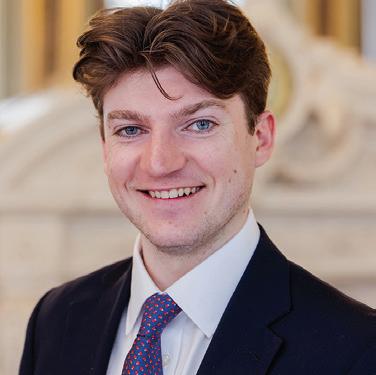
George Kernick
George studied at University of York and earned a BSc in Accounting, Business, Finance and Management. Today, he is using that degree as an Audit Associate at Grant Thornton UK LLP. In his free time, George enjoys film and several sports.
Son of Court Assistant Lucy Rawson, George is a third-generation Clothworker. His grandfather, Peter (Sam) Rawson was Master (2004-05). The family connection began with his great uncle, Christopher Rawson, who joined The Company by Redemption in 1952 and was Master (1988-89).
James O’Leary
James studied at the University of Exeter, earning a master’s degree in Mechanical Engineering. While at university, he participated in two 24-hour squash marathons and once cycled 60 miles in one day for a Movember charitable event. Today, he works as an Assistant Merchandiser.
Son of Court Assistant Susanna O’Leary, James is a third-generation Clothworker. His grandfather is also Peter (Sam) Rawson (Master, 200405); George is his cousin.
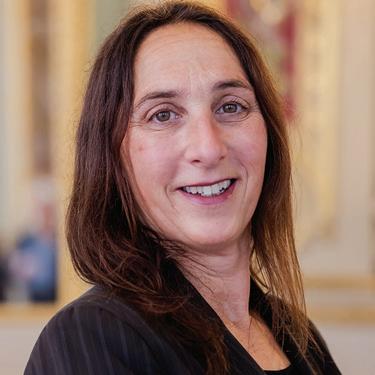
Lara Sturlese
For more than 15 years, Lara has worked as an Events and Logistics Coordinator for the Municipality of Porto Venere, organising public events in music, sport, and the arts while overseeing the management of municipal spaces. Outside of work, she volunteers with organisations like the International Women’s Club of La Spezia, organising events and fundraisers. These roles allow her to do what she loves – bringing people together, supporting access to shared resources, and building a stronger sense of self. With a BA in Modern Languages and International Business from South Bank University, Lara is fluent in English and Italian, but also speaks French, Spanish and German.
Daughter of Lynden Sturlese, Lara is a fifth-generation Clothworker. The connection dates back to 1862, when her great-great-grandfather, Alfred
Charles Cronin, was admitted to the Freedom by Redemption. He went on to become Master (1899).
Natasha Sturlese
Natasha earned a BA in International Business and Marketing with Modern Languages from Southbank University, and also holds a certificate to teach English as a second language. She is a Business Manager at the International House SRL – part of one of the most respected networks of language schools worldwide. Outside of work, she has been involved in various community or volunteer projects –from sponsoring free mobile clinics for breast cancer prevention to supporting mobility services for those with disabilities.
Daughter of Lynden Sturlese, and sister to Lara, Natasha is a fifthgeneration Clothworker.
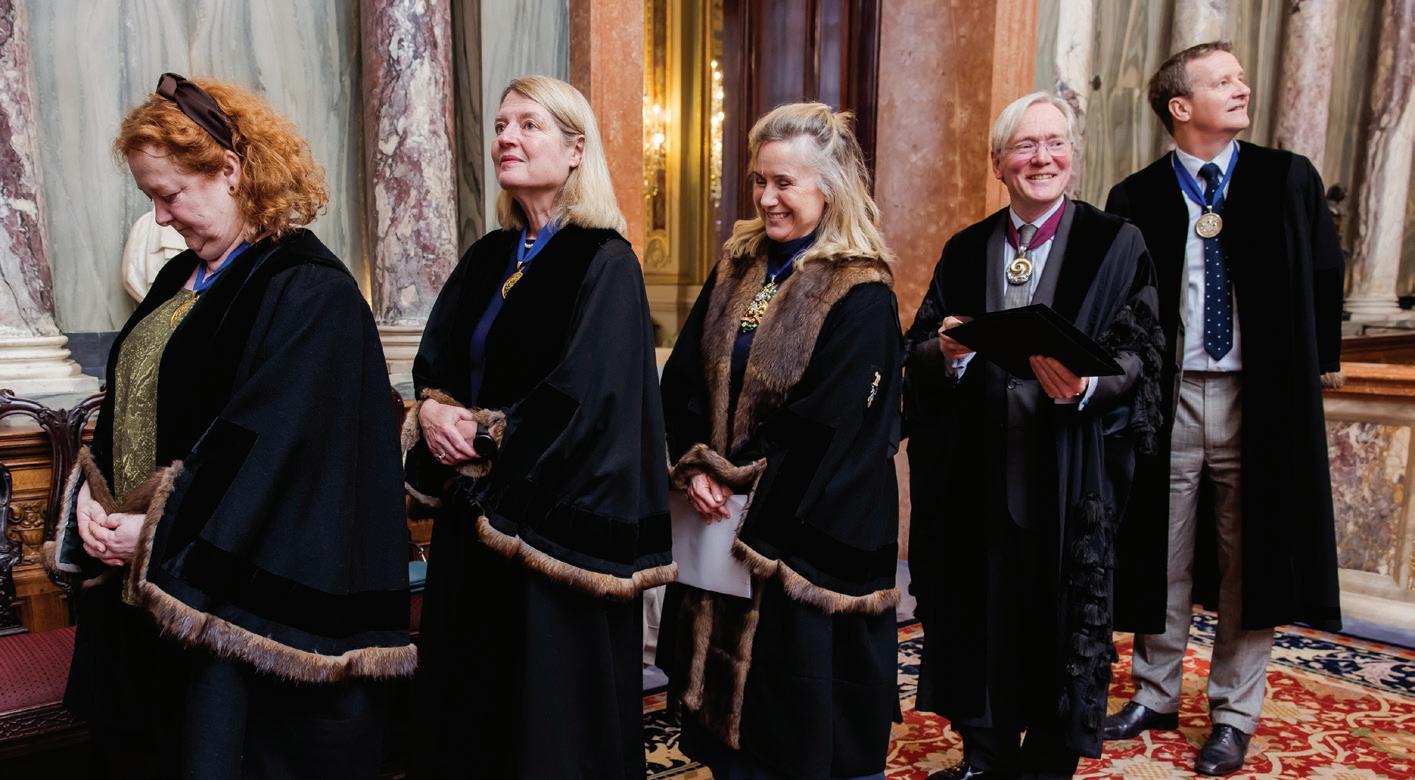
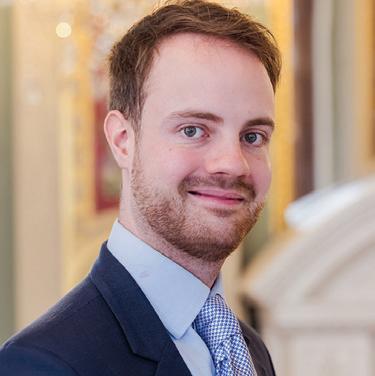
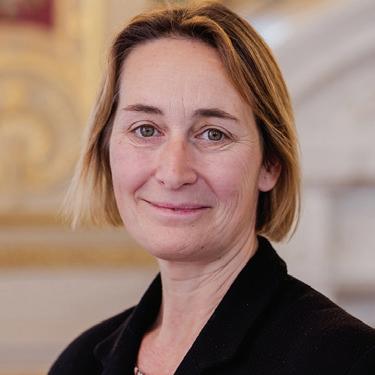
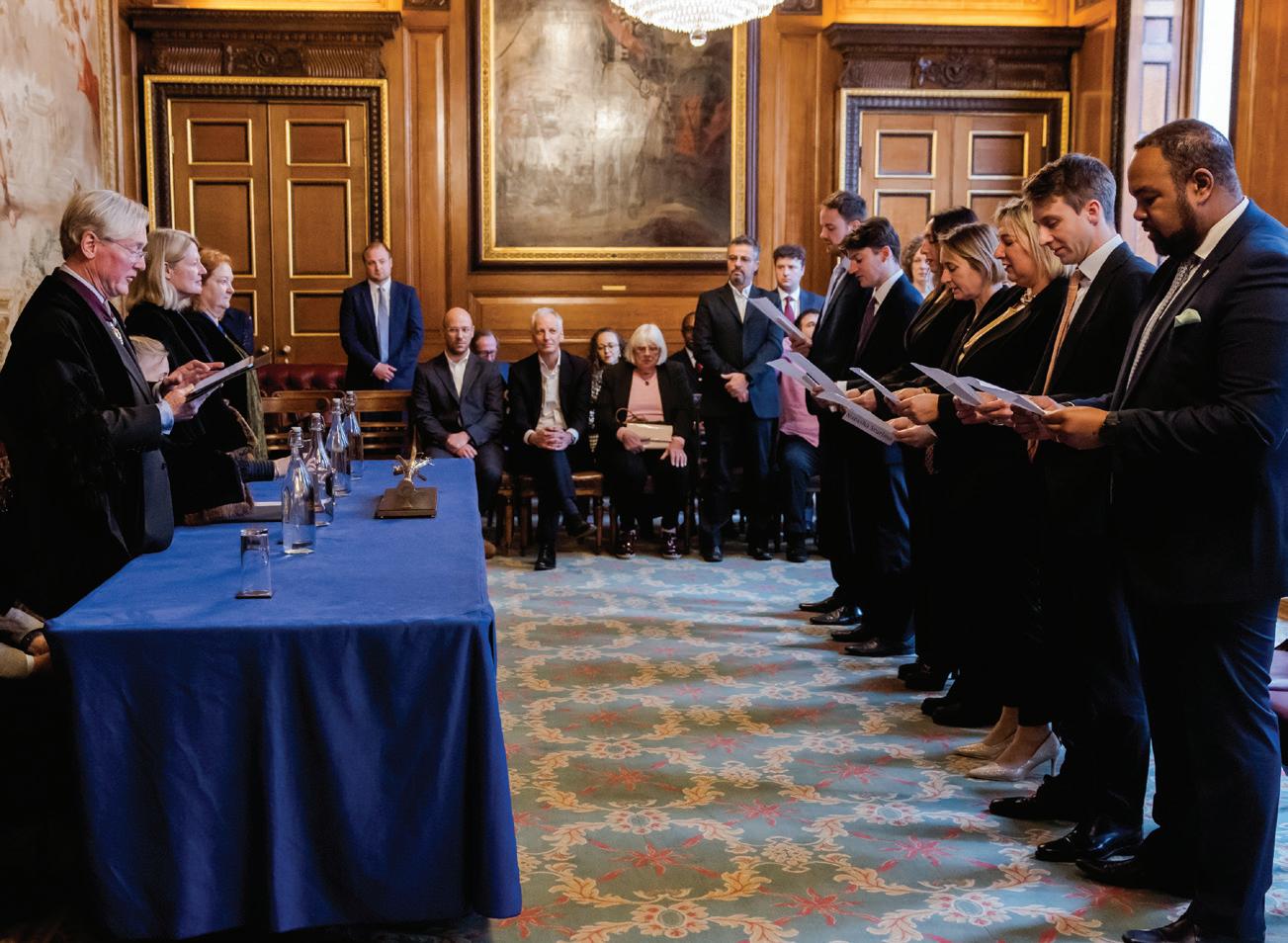
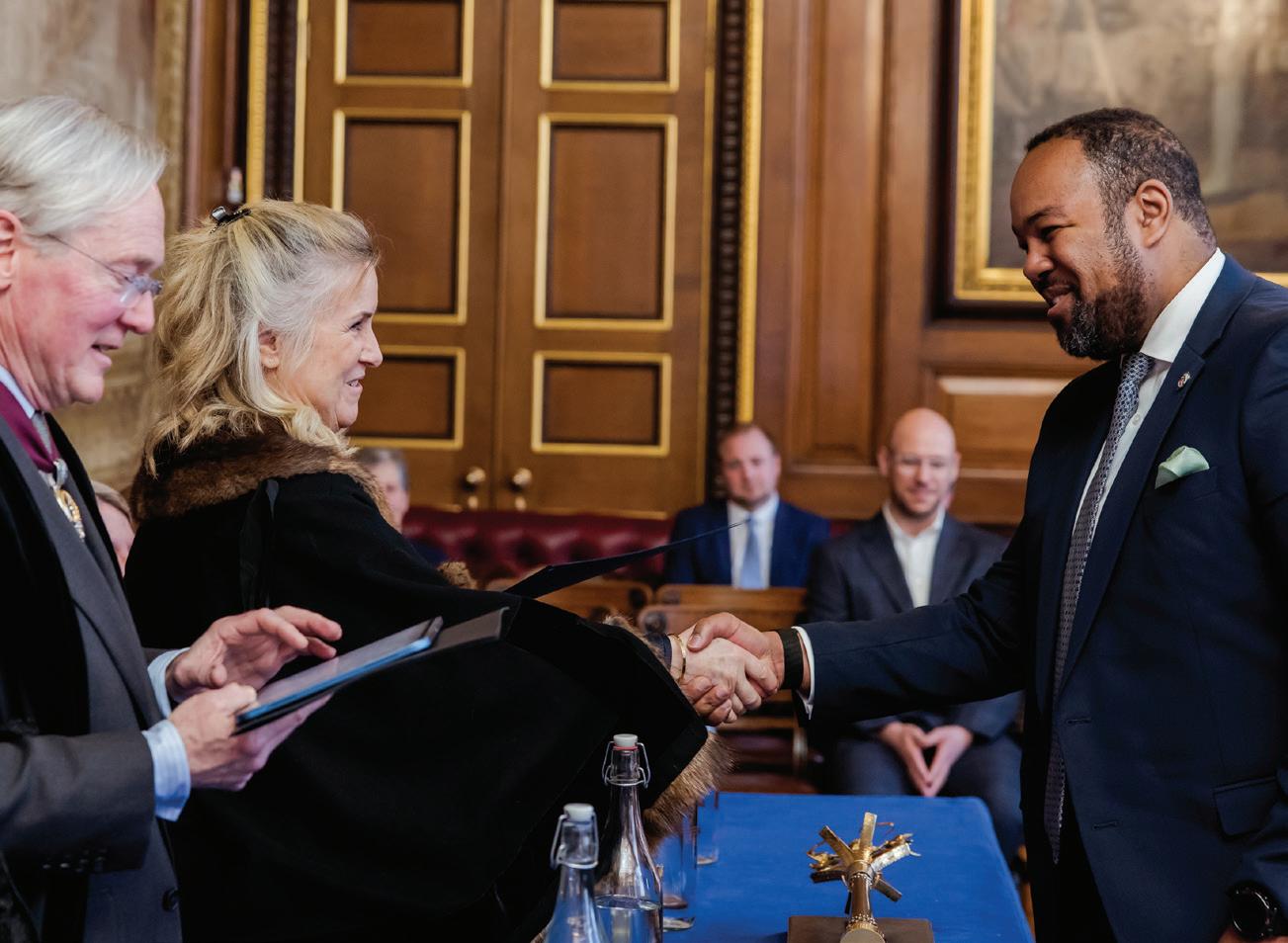
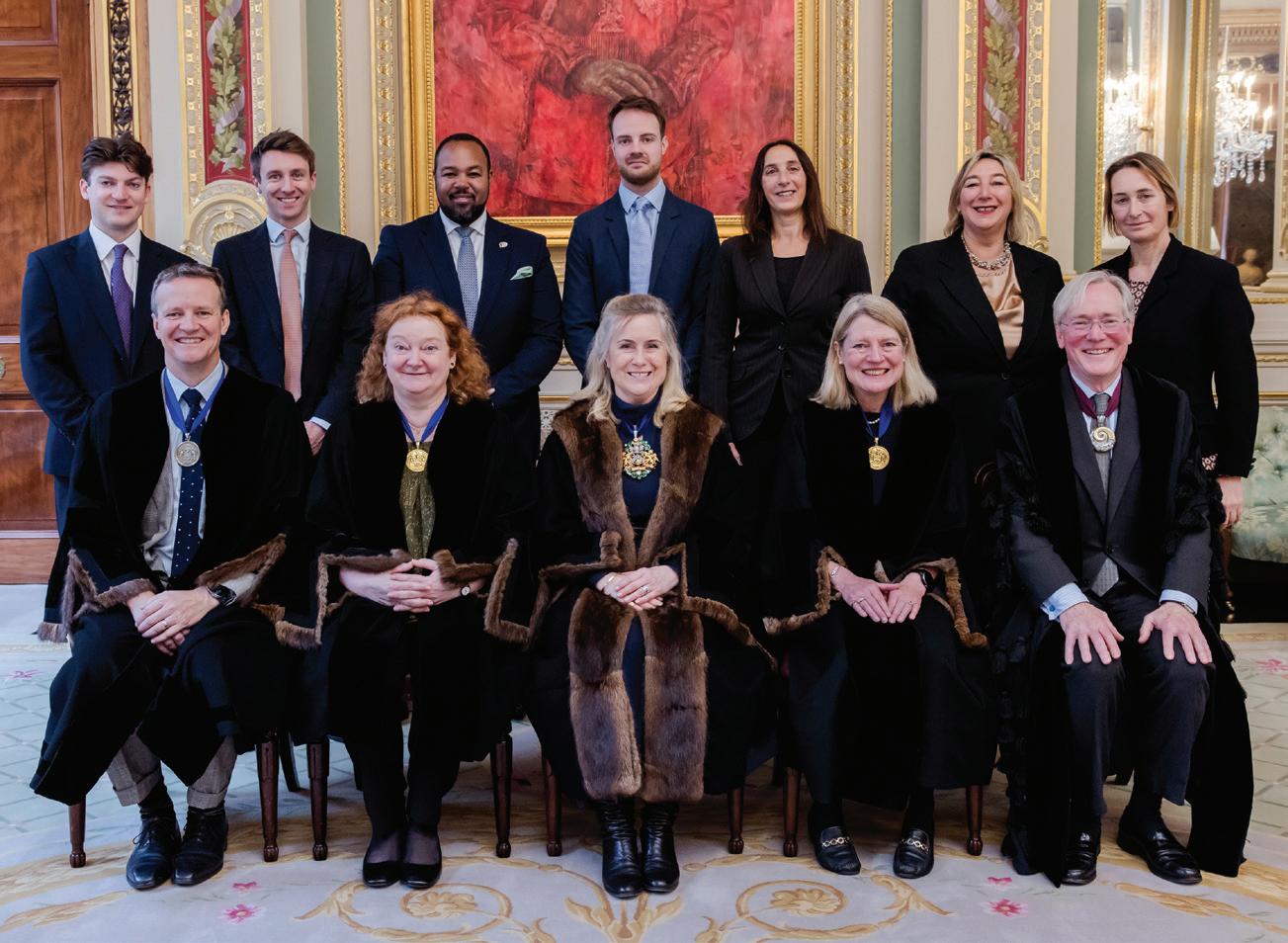
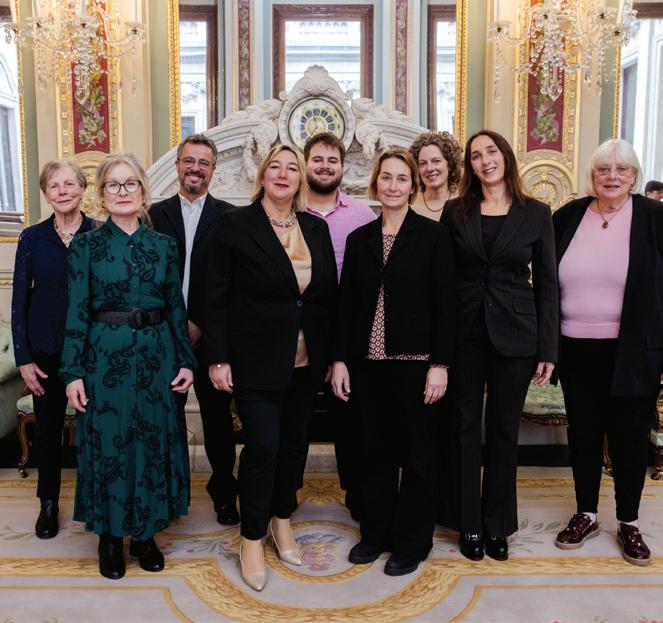
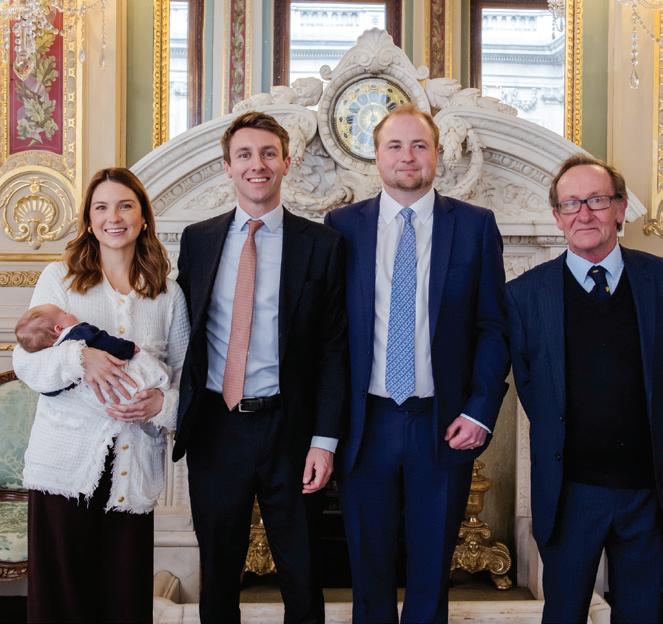
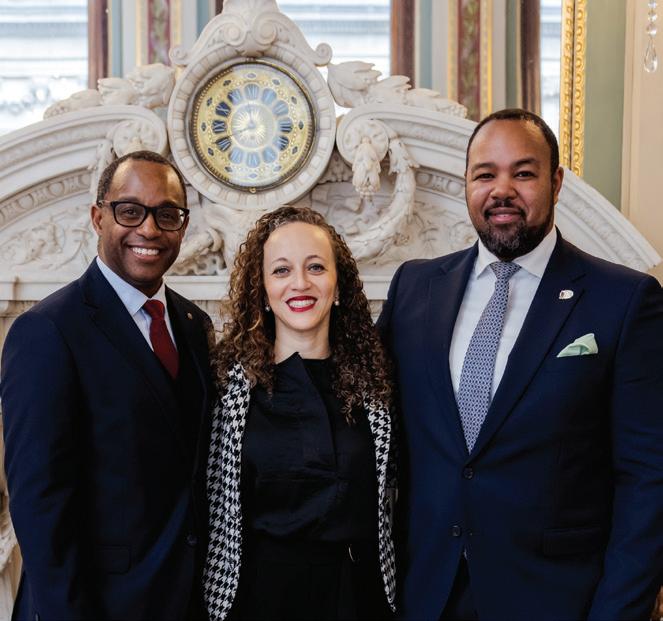
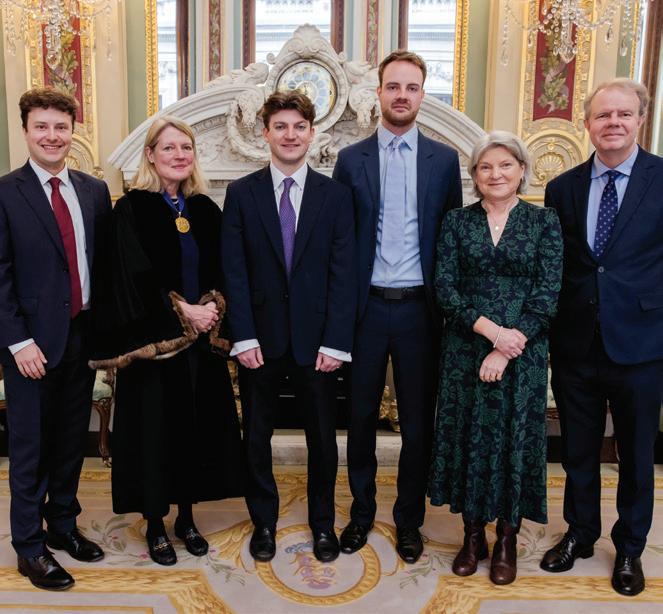
Right column: The seven candidates read the Freedom Declaration together. David accepts his Freedom certificate from Master Mary Ann Slim. Our newest Members with the Master, Wardens and Clerk.


Sonia Sturlese
Studying at South Bank University, Sonia earned a BA Hons in Modern Languages and International Business. Today, she is a Director of Sales at Hapag Lloyd Agencies. She lives in Epping Forest with her husband, Alessio.
Daughter of Lynden Sturlese, Sonia is the sister of Lara and Natasha and a fifth-generation Clothworker.
Charles Thwaytes
Charles is the Co-Founder and Director of Thwaytes Capital Group Ltd, a boutique fintech and brokerage firm delivering multi-currency payment and trading solutions. Outside of work, he enjoys running, cycling, rugby, cricket and golf. He
regularly takes part in local events and enjoys combining business, fitness, and community.
Son of Lancelot William (Bill) Thwaytes, Livery, Charles is a third-generation Clothworker. The connection began when his grandfather, Lancelot Henry Thwaytes, joined The Company by Redemption in 1969.
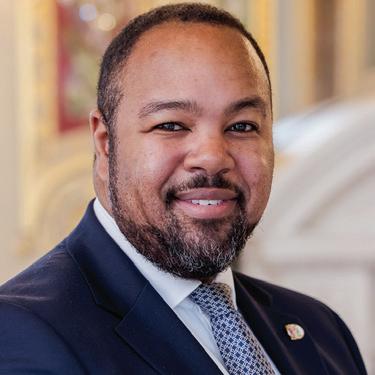
David Ziyambi
Having now worked in the City for nearly two decades, David is a Lawyer with Latham & Watkins (London) LLP. As a partner of the firm’s Finance Department and Vice Chair of the firm’s Africa Practice, he is focused primarily on project, structured, and leverage financing in the energy and infrastructure sectors
within both mature and developing markets (particularly in Africa). He is the co-founder and global leader of the company’s Black Lawyer Group.
Among a long list of achievements and awards, he has been listed on the EMpower 100 List at least four times (2020-2024), inducted into the Martin Luther King Jr. Board of Sponsors of Morehouse College (2023), and selected as a Law360 Rising Star (2021).
Outside of work, David serves as a trustee and volunteer in a variety of organisations. He is a Member of the Women’s Business Council (WBC), Director of International Lawyers for Africa, a Big Kid Foundation Trustee, and a Trustee of the Ex Fide Fiducia Trust.
“I give you joy.”
The Clerk of the Chamberlain’s Court says this during the City of London Freedom Admissions, and then offers the ‘right hand of fellowship’ to the ‘youngest’ citizens of the Square Mile.


We regret to announce the following deaths within our Clothworkers’ community:
Mr Rory St George Stephenson Clarke Livery (February 2026)
The Hon Mrs Una Rowcliffe (née Slim) Freedom (January 2026)
Mr Clive Martin Freedom (November 2025)
Mrs Rowena Altham Freedom (September 2025)
HRH The Duchess of Kent Hon Livery (September 2025)
Mrs Dorothy Smith Freedom (2024)
Announcements include notices missed in the previous publication or those for Clothworkers who have passed since the production of the previous publication.
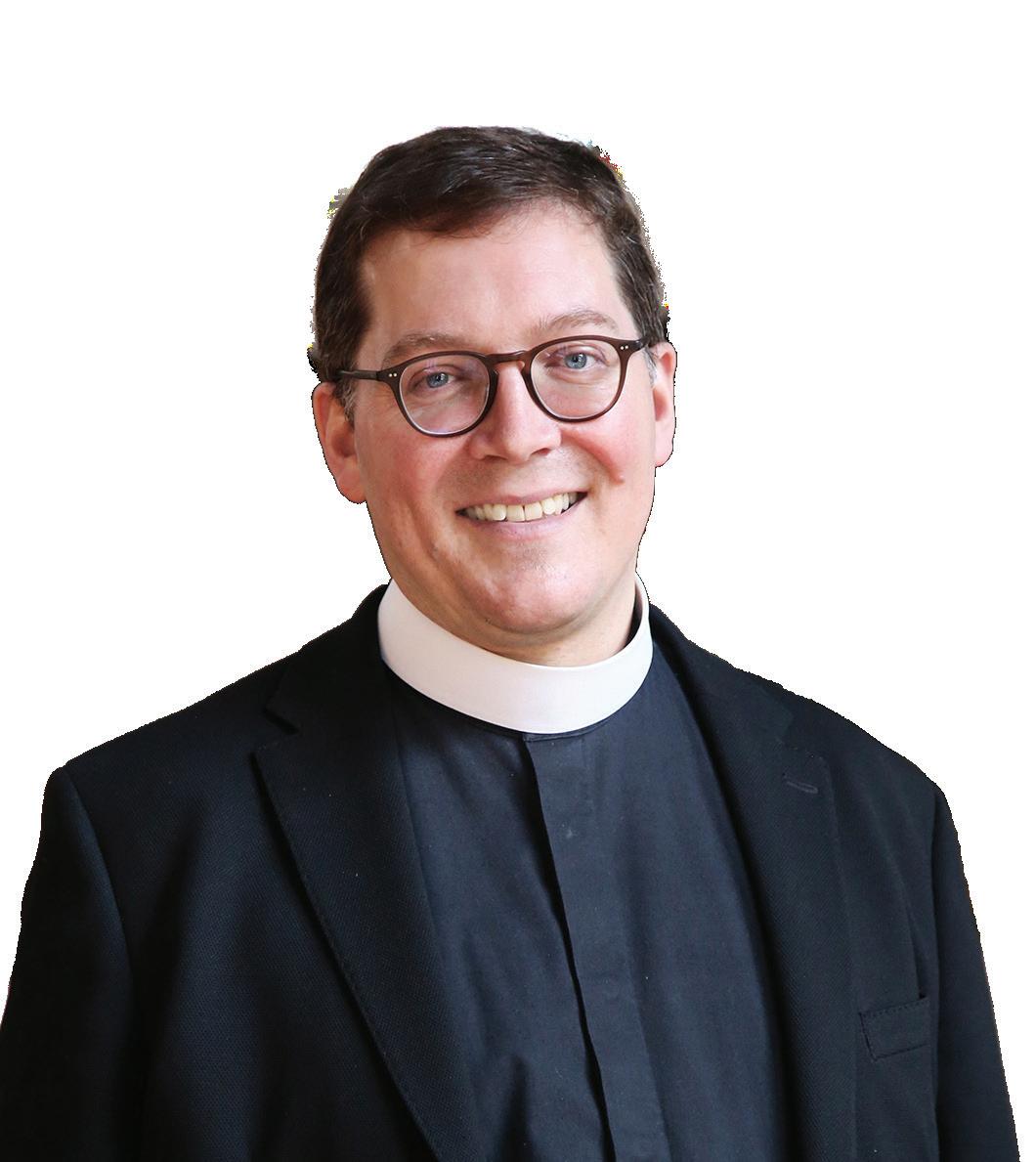
St Olave Hart Street holds Sunday worship at 11.00am. Lunchtime concerts are held on Wednesdays and Thursdays (1.00pm). Choral Evensong takes place on every second Tuesday of the month (5.30pm), with refreshments provided after the service. Find out more at www.SaintOlave.com.
In addition, The Reverend Phillip Dawson invites all Clothworkers to the following lectures and talks (scheduled for March):
Tuesday, 10 March (6.30-7.30pm) – St Olave Lecture by Roy Vickery: Job Lousley, Botanist and Banker (£5, includes a glass of wine)
Tuesday, 24 March (6.30-7.15pm) – Lent Talk by Dr Carolyn Boulter DL (Past Master of The Clothworkers’ Company): Our Own Church.
Our mission is to inspire and empower individuals and communities through action, partnership and financial support. We are particularly focused on UK textiles, charity governance, and philanthropy –through The Clothworkers’ Foundation and beyond. We achieve this through:
We are a leading supporter of UK textiles, developing partnerships that enable us to invest in and support education, academic research and innovation, skills development, training, textiles design, heritage and conservation.
Our Members come together in friendship, giving their time and expertise to serve others and to make a positive and sustainable impact in the City of London and beyond – by serving on our Court, as trustees or school governors, and volunteering.

THE DATE

We direct our resources towards promoting opportunity and empowering people and communities. We are able to achieve this through our own initiatives and partnerships with appropriate organisations.
Connect with the wider Clothworkers’ Community on WhatsApp! We have set up a ‘Community Group’. In addition to Announcements and a General Chat group, the community includes separate groups for New and Young Livery Members, New and Young Freedom Members, the inter-livery golf team, sailing team, ski team and shooting team. Use the QR code to the left to become part of the community, and join whichever of the groups feel appropriate for you.
9 March: Virtual Talk on The Clothworkers’ Foundation (All Members)
20 March: United Guilds Service at St Paul’s Cathedral (Court & Livery)
14 April: Civic Dinner at Drapers’ Hall (Court & Livery)
29 April: Spring Freedom Reception at Skinners’ Hall (New & Young Freedom, hosted by New & Young Livery) This magazine is printed on paper certified in accordance with the Forest Stewardship Council (FSC) by Woodrow Press Ltd, which aims to reduce at source the effect its operations have on the environment and is committed to continual improvement, prevention of pollution, and compliance with legislation or industry standards.


