
STANDARD FOR RESORT CONSTRUCTION
CLP CSR TEAM, 2024

INTRODUCTION
As part of its Sustainability Strategy, Clinique La Prairie SA (CLP) committed to reducing its overall environmental impact and its controlled greenhouse gas emission. An important impact of CLP activities on the environment is related to the development of Longevity Hubs and Resorts around the world. This is why CLP has decided to roll out a document listing basic ecological measures to be implemented on each CLP Longevity Resorts. The guidelines are being made to minimize overall environmental impact of building a new facility. It also focuses on solutions for energy consumption. In other words, it guides on how to achieve environmental efficiency Longevity Resorts Constructions. CLP’s strategy is to align its environmental standards with recognized building project certification.
GENERAL DESCRIPTION AND INSTRUCTION FOR USE
Why a Standard for Resorts Construction?
We want our Longevity Resorts to be fully sustainable, showcasing that luxury can be beautiful, comfortable, functional, and attractive while at the same time limiting the number of resources consumed in terms of energy, water, materials, and waste. The goal is to produce a minimal amount of non-recyclable and non-reusable waste. The way in which a building is designed and built determines most of its environmental impact. These two phases determine the materials that are used, how they are installed, the number of debris and construction waste that is produced and eventually recovered for reuse and/or recycling, and the eventual the construction site impacts on the surrounding neighborhood. These phases also determine most of the energy and water demand during operations, as these depend on the choice of technical equipment. The core structure of the building and the core technical systems (if common to other parts of the building) have an impact that can be mitigated by proper choices in the design and construction phases. Finally, properly foreseeing sufficient space and correct location of waste containers eases the possibility of properly storing and recycling materials a lot. So, planning and construction are the key phases in determining the environmental impact of the final Longevity Resort. This is a great responsibility for partners and their construction teams, and these guidelines and standards are here to support these developments in making the right choices at the right moment and in a straightforward way.
What is requested by Standard for Longevity Resorts Construction?
This standard provides guidance on how to reach our sustainability goals, calling for the use of advanced and innovative technologies and techniques in a rational, effective, and cost-effective way. The standard directly calls for certifications – LEED & WELL in particular –and provides indications on how to design, build and modify all other resorts through indications that are inspired by this certification schemes.
Concretely, CLP has the following unique requirements in term of Construction:
- Obtaining of the LEED certification or another equivalent certification
The avoidance of:
- Variable Refrigerant Volume (VRV) or Variable Refrigerator Flow (VRF) or split systems unless they use natural refrigerants.
- Drinking water as a heat sink in air conditioning
And the discouragement of:
du Lac 142, 1815 Clarens-Montreux
- Electrical resistance heaters as the main heating system
- Polyvinyl chloride (PVC) is harmful to the environment. E.g. barium and zinc stabilizers in PVC window frames,
- Lead of stabilizers in PVC drainpipes
- Antimony trioxide (flame retardants) in PVC roof coverings and
- Softeners for PVC floor coverings containing phthalate
Implementing CLP Standard internationally through certification
Longevity Resorts are those that most tangibly communicate the Brand, its style and its values through their unique design, architecture, and experience. As sustainability and environmental design are core values of CLP, then this has also to be implemented and communicated by international. To this regard, a third-party verified certification is more solid than a self-assessment. Certifications are rating systems based on the level of predefined objectives and processes set forth by the certification body to which one shows compliance. Certification schemes typically have subsequent ratings, which range anywhere from 3 to 6 levels (e.g. Bronze, Silver, Gold & Platinum). Sustainability certifications, like LEED (Leadership in Energy and Environmental Design), offer a powerful tool to improve the environmental performance of clinics and buildings. These certifications address all sustainability topics of interest for CLP (such as energy, waste, water and air quality) and offer a streamlined approach and high communication value since they are delivered by an independent evaluator. There are several schemes of sustainability certifications for buildings, the most important ones are shown in Figure 1.
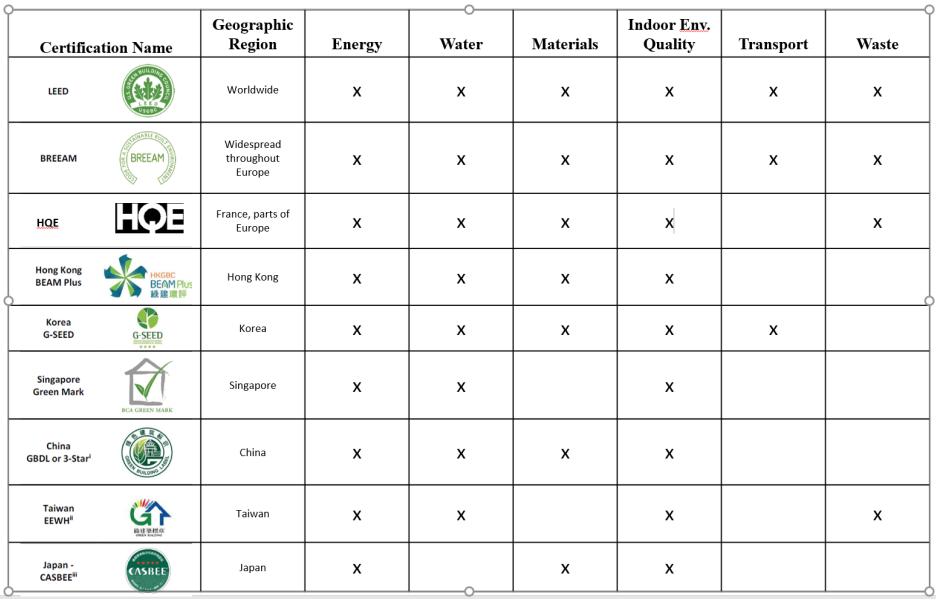
Out of them LEED and BREEAM are available worldwide, whereas the other has typically only a national diffusion but may be extremely popular in their country of origin. As Exhibit 1 shows, some of these certification schemes address more topics than others
The environmental performance of a CLP Longevity Resort depends on both:
- The structure, the envelope and the main plant and services of the building as well as whole building topics, which are normally within the action perimeter of the owner/landlord.
- Local plants and services, finishing and space organization, which are typically within the tenant’s influence
Rue du Lac 142, 1815 Clarens-Montreux | Switzerland
Figure 1 : Certification table
These certification schemes allow the two scopes to be obtained independently, although the best result is achieved when landlords and tenants act in a coherent and coordinated way. If the core and shell of the building hosting the clinic is certified with a certain scheme, it is normally easier to use the same scheme to certify the clinic fit out and refurbishment.
To properly communicate sustainability as a Brand’s value, CLP requires every Longevity Resort to submit to a certification suggested on Figure 1. In the best-case scenario, Longevity resorts should obtain a Leed certification with Platinum or Gold rating. To get the certification in a smooth way, maximizing the rating obtained and minimizing the costs related to the actions needed to get a high rating, it is recommended to start the certification process engaging the consultant from the very earliest steps of the project.
Aside from getting the certification, CLP also asks to respect three specific requirements, related to the Group’s commitment:
- Saving resources
- Fighting climate change
- Avoiding the use of dangerous materials.
Roles and Responsibilities
Clinique La Prairie CSR department can support the Resort planning teams on the standard implementation. The internal project team, i.e. the project manager of the Hub or Resort realization/renovation within the building planning/construction department, is the first one responsible for the compliance of the project with the standard. This responsibility is then cascaded with the local architect and the general contractor and their suppliers by including the standard and its respect in the contracts, and requiring they are included in the contracts with subcontractors.
Timeline for Implementation
The Standard is to be used in two situations:
- When a new Longevity Resort is opened. This situation provides the best opportunity for achieving a sustainable product following the highest standards.
- When a Longevity Resort faces any permanent renovation or change. Improvements here depend on the depth of the renovation undertaken.
The standard application shall occur from the very beginning of the designing phase project, in the moment in which the early technical design choices are made The timeline for the roll-out of the Standard will be gradual. By 2026, it is expected that all new projects will follow the standard by default. A step-by-step protocol is available on annexes 1 to resorts to implement sustainable standards on the actual projects.
Costs associated with a standard compliant Longevity Resort
Table 1 shows an estimation of extra costs related to standard implementation. This list refers to Clinique la Prairie 2023 experience and will progress over time
TOPIC
EXTRA COST ESTIMATES
$$$: Significant
$$: Moderate
$: Limited
'-: Neglible / None
OTHER ECONOMIC IMPACTS
du Lac 142, 1815 Clarens-Montreux | Switzerland
Avoid VRV, VRF and split systems
Avoiduseofpotablewateras the heat sinks in air conditioning
Ban of electric resistance heaters as the main heating system
Ban of PVC considered harmfultotheenvironment
If conceived at the beginning to cover all needs, the costs of a hydronic system are like thesesystemstoavoid
Ifanalternativeispossible,its cost is in line with that of a systemusingpotablewater
A hydronic system will have 15-25% lower consumption than these systems along a lifecycleof10years
Water costs depend on the country.Consumptionforthis type of air conditioning may resultin10to30m3waterper m2clinicsurfaceperyear.
Savingsonelectricitybills Arecommendedsystemuses 3to 5times less energy than anelectricresistancesystem, for reference 100 to 1000 Eur/m2intenyears
Maybeacostorasaving
High performance internal lighting None
Optimizedlightintensity
High performance external lighting
Lightingcontrol
High performance cooling production
$:Limited
$:Limited
$: Cost for sensors is highly variablebut overallextra cost perlightingpointislimited
$$: The highest performance is obtainable through expensive solutions, whereas the medium solution has no extra-costsinrespectofother possibilities
Expect a saving of tens of Eur/m2/year
Expect a saving of tens of Eur/m2/year
Highest solutions bring significant energy savings respect to conventional solutions (40%), medium solutionsaremoreinlinewith commonly adopted technologies
High performance heat generation
$:Thehighestperformanceis obtainable through expensive solutions, whereas the mediumsolutionhasnoextracosts respect to other possibilities
Highperformancedistribution Negligible
Highperformanceterminals Negligible
RequiredperformanceofVRF andsplitsystems,ifinstalled
Oftennoextra-cost
Efficienthotwatersystem Negligible
Control and management of thermalsystems - to $: Basic controls have negligible cost, more advanced solutions bring somecosts
Energyefficientventilation
$$: The exhaust air heat recovery system cost depends on the size but overallarelimited.Extracosts
Highest solutions bring significant energy savings respect to conventional solutions, medium solutions are more in line with commonly adopted technologies
Lower consumption during operation
Lower consumption during operation
Lower consumption during operation and lower need for refrigerantrecharges
Lower consumption during operation
Significant savings and easeof-use of equipment during operation
Largeenergysavings
Rue du Lac 142, 1815 Clarens-Montreux | Switzerland
Airtightventilation
Ventilationcontrol
for good insulation are negligible
$: Limited cost impact for testing Lower consumption and improved air quality during operation
$$: Requires some more investment in design, equipmentextra-costsarenot significantly higher than conventionalequipmentcosts
MeteringandMonitoring
BuildingManagementSystem (BMS)
Airqualitymonitoring
$ to $$: Limited impact for electricity measurement points, higher costs for hot waterandgas
$ to $$: Can range from limitedtoaverageimpactfora fullclinic
$: Low impact for basic monitoring
Indoor water efficient equipment Negligible
Nonpurifiedwateruse
Normally expensive, but in some situations, it may be doableandcheap
IdentificationandInventory Negligible
Reuse Negligible
Recycling Negligible
Energyefficientequipment Negligible
Lowemittingmaterials Normallynegligible
Sustainable and circular use ofmaterials Normallynegligible
Responsiblesourcing Normallynegligible
Useoflowtoxicityproducts Normallynegligible
Avoidance of soil, water and airpollution Normallynegligible
Construction waste managementplan Normallynegligible
Respect of residents and neighborhood Normallynegligible
Socially responsible constructioncontracts Normallynegligible
Green power and carbon offsets Negligible
Envelope thermal insulation –opaquesurfaces
$:Extracostformaterialsand installationisnormallylimited High insulation levels may
Large energy savings and improved air quality during operation
Easier individuation of mismanagement of time schedules, idling equipment andmalfunctions
Significantsavingsforenergy, maintenance and management
Returnsinimageifinternalair quality data vs external ones are communicated to customer
Savings in water bills (which are negligible, in most of the countries)
Savings in water bills (which are negligible, in most of the countries)
May bring to easier cleaning and recycling, thus reducing costsfortheseservices
May bring to easier cleaning and recycling, thus reducing costsfortheseservices
May bring to easier cleaning and recycling, thus reducing costsfortheseservices
Lowerelectricityconsumption
None
None
None
None
None
None
None
None
None
Huge energy saving, improved acoustic performance
Rue du Lac 142, 1815 Clarens-Montreux | Switzerland
High-performance external windows
bring to a 1-3% reduction in floorarea
Large ground level windows with double glazing may be significantly more expensive. Lower size windows pose no seriouseconomicconstraint
Barrierstohumiditydiffusion Negligible
Documentation for facility management Negligible
Dynamicenergysimulation Consider
Huge energy saving, improved acoustic performance
Savingsonenergyusedueto avoidanceofdehumidification devices. Huge savings from the reduction of damaged stock
SavestimeandcostsforO&M
It allows optimizing costs by assessing the impact of each single design choice on energy behavior of the clinic, thus allowing an overall optimization of construction costs
CLINIQUE LA PRAIRIE SA SPECIFIC REQUIREMENTS
This Chapter reviews all technical and practical requirements Clinique La Prairie SA (CLP) is expecting for its international sites. This list represents what CLP believes to be best practices in terms of sustainability.
1. Unaccepted techniques and practices
1.1. AVOID BY ALL MEANS: VRF/VRV/split systems
Scoping:Consideronlyifthebuildinghasanautonomouscoolingproductionplant.(!) Avoidthemunlesstheyusenaturalrefrigerants.
These systems require large volumes of hydrofluorocarbon (HFC) refrigerant gases, which are among the most powerful greenhouse gases and have a very long lifetime in the atmosphere. With time, these gases leak through piping junctions, the system loses efficiency and needs to be refilled. Alternatives to HFC already in commerce are either toxic, highly flammable, or require high pressures, so their substitution is not feasible in This Chapter reviews all technical and practical requirements Clinique La Prairie SA (CLP) is expecting for its international sites. This list represents what CLP believes to be best practices in terms of sustainability. most plants.
There are numerous alternatives to these systems:
- Heat pumps and chillers producing chilled water.
- Air into a sealed-at-factory refrigerator loop.
1.2. AVOID BY ALL MEANS: the use of direct drinking water as a heat sink in cooling systems.
These systems use huge amounts of water, with high management costs and waste is a precious resource. Heat sink systems are to be avoided as they use water as a heat sink and discharge it directly into the sewage.
Alternatives to these systems include:
- Systems that use air as the heat sink.
- Air cooled systems, masking the external units, if necessary, or locating them in non-visible locations.
- District cooling, if available Geothermal heat pumps or hydrothermal heat pumps (using river or other non-drinkable water sources
1.3. BAN: electric resistance heaters as the main heating system
If a heating system is installed, it cannot rely only on resistance heaters. Use heat pumps, district heating or gas systems.
1.4. Discourage: PVC
Clinique La Prairie SA committed to remove PVC (deemed harmful) from furniture, finishing materials, plumbing and electrical cables (where allowed by local code)
PVC often contains additives like phthalates (PVC flooring), flame retarders and even heavy metals (lead stabilizers in PVC drainpipes) that are likely to be harmful to the environment.
du Lac 142, 1815 Clarens-Montreux
2. Lightning requirements
Scoping:toalwaysbeconsideredforwhatisrelevantfortheclinic
2.1. High performance internal lighting
2.1.1. Lightingfixtures
Implement light-emitting diode (LED) lighting systems with lighting efficiency greater than 65 lumens per watt (lm/W) for at least 90% of lighting power installed in the Resort, including the back of house.
2.1.2. Lightingpower – Backofhouse
Comply with the following maximum lighting powers:
- Office: 7 W/m2
- Restrooms: 7 W/m2
- Active storage: 5 W/m2
- Stairs: 9 W/m2
2.1.3. Lightingpower-Reception/Lobby
Comply with the following maximum lighting powers (reception):
- General lighting: 19 W/m2. To assess this, consider all the installed power for general lighting and divide it into the reception area.
- Additional lighting: 28 W/m2. To assess this, consider all the installed power for additional lighting and divide it by the area (vertical or horizontal) interested in this additional lighting.
It is recommended to conduct a Lighting simulation to optimize light intensity.
2.2. High performance external lighting
2.2.1. Lightingfixtures
- Use LEDs and lighting systems with lighting efficiency greater than 65 lm/W.
2.2.2. Lightingpower
- Comply with ASHRAE indications
- Local regulatory limitations
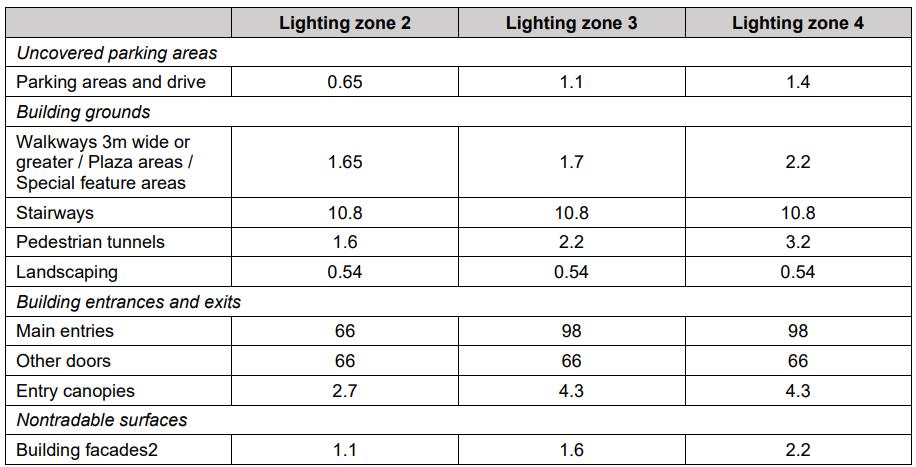
Annexes2providesthemaximumlightingpowerlevelsprovidedbyASHRAE.Dataarein W/m2.
2.3. Optimized light intensity - illuminance
Design internal lighting in all areas of the clinic to ensure an illuminance (lux) level appropriate to the tasks undertaken, accounting for building user concentration and comfort levels.
Average illuminance levels should respect the minimum following values (requirements come from the European standard EN 12464-1, Light and lighting – Lighting of workspaces.
Lighting levels for areas where computer screens are regularly used can specify 300 lux instead of what is prescribed in EN 12464-1, per CIBSE Lighting Guide 7).
- Reception areas: 300 lux
- Cash desk: 500 lux
- Enclosed office: 300 lux
- Corridors and passage areas: 100 lux
2.4. Lighting control
2.4.1. Commonspaces
Lighting controls shall be implemented per zone to separate general lighting and additional lighting (i.e. lighting to highlight products).
Rue du Lac 142, 1815 Clarens-Montreux | Switzerland
- Motion sensors: Install motion sensors for lighting in the back of house including toilets, corridors, storage areas (when not permanently occupied) and bathrooms. Regulate the turn-on time according to the use of spaces (i.e. 0.15 m -0.6 m or for toilets and corridors, 0.6 m – 1.5 m for storage areas, 3 – 4.5 m for offices).
- Clocks: Install clocks that manage night turn-off for all lights.
- Reception areas, dimming: Provide controls that can reduce the ambient light levels 0 to 100% of the maximum illumination level, not including daylight contributions.
- External areas: For external areas, manage lighting through natural light sensors and timers for facades and showcases. Use natural sight sensors and movement sensors for parking, stairs and doors.
- BMS/Remote control: Manage all building lighting fixtures with a BMS or a Digital Addressable Lighting Interface (DALI), which will implement an automatic lighting shutoff, with a time schedule defined, in accordance with the clinic timetable.
2.4.2. Individualspaces
Provide individual manual lighting controls for at least 75% of the individual occupant spaces in office and administrative areas, enabling adjustments to suit individual task needs and preferences.
3. Cooling and heating
Scoping: Consider only if the Longevity Hub or Resort has an autonomous heat productionplant
3.1. High performance cooling production
Install, alternatively, one of the following systems:
- District cooling: Connect the building/clinic to the district cooling system
- Geothermal or hydrothermal heat pump system (not using potable water): Geothermal or hydrothermal (not using potable water) heat pump with COPR ≥ 5 water-to-water, in compliance with standard conditions of AHRI 1301 (American standard) or EN 14511
- Water chiller with evaporative tower on the roof (to avoid in areas with water scarcity problems): Water chiller shall respect: COPR ≥ 4.7 electricity-to-water, in compliance with conditions of AHRI 550/590 (American standard) or EN 14511 and 14825 (European standard).
- Reversible air/water heat pump system: It shall respect: COPR ≥ 3 electricity-towater, in compliance with standard conditions of AHRI 340/360 (American standard) or EN 14511 and 14825 (European standard)
- Water chiller with dry cooling system on the roof: Water chiller shall respect: COPR ≥ 4.7 electricity-to-water, in compliance with conditions of AHRI 550/590 (American standard) or EN 14511 and 14825 (European standard).
3.2. High performance heat generation
Discourage: electric resistance heaters. These systems are the least efficient heat production systems, and their use shall be banned from good design practices. Install, alternatively, one of the following systems:
- District heating: Connect the building to the district heating system
- Geothermal or hydrothermal heat pump (not using potable water): Geothermal or hydrothermal (not using potable water) heat pump with COPR ≥ 5 water-to-water, in compliance with standard conditions of AHRI 1301 (American standard) or EN 14511
du Lac 142, 1815 Clarens-Montreux
- Biomass boiler (only in areas with no air pollution issues): Install a wood biomass boiler. This option can be considered only for clinics in large metropolitan areas with pollution problems.
- Reversible air/water heat pump system: It shall respect: COPH ≥ 3.4 (Heating Coefficient of Performance (in kW/kW). Ratio of the Net Heating Capacity to the total input power at any given set of standard conditions), in compliance with standard conditions of AHRI 340/360 (American standard) or EN 14511 and 14825 (European standard)
- Water chiller with dry cooling system on the roof: Water chiller shall respect: COPH ≥ 4.7 electricity-to-water, in compliance with conditions of AHRI 550/590 (American standard) or EN 14511 and 14825 (European standard).
3.3. High performance heating and cooling distribution
3.3.1. Pipinginsulation
Insulation of the cooling and heating water distributions (even for sanitary hot water) shall ensure a thermal loss that is less than or equal to 7 watts per meter-Kelvin (W/mK). Design of the insulation shall respect the following standards for external temperatures, for external distribution:
- Winter: Heating design temperature from Normative Appendix D – ASHRAE 90.12010
- Summer: Cooling design temperature from Normative Appendix D – ASHRAE 90.1- 2010
Design of the insulation shall respect the following internal temperature, for internal distribution (to be adapted depending on location) :
- Winter: 20°C
- Summer: 26°C 3 COPH: Heating Coefficient of Performance (in kW/kW).
3.3.2. LeakageTestduringCommissioning
For existing systems, leakage tests shall be conducted on liquid refrigerant piping at static pressures of 30 bars with hydrogenated nitrogen. Any detected leakage shall be fixed.
3.4. High performance terminals
Scoping: Consider for heating and cooling, when only if the clinic has fan coils or equivalentterminalscoolingand/orheatingaremanagedbytheLongevityHuborResort andthedistributionisdonewithwater.
Fan coils shall have a minimum efficiency of:
- Class A for cooling (FCEER) and heating (FCCOP) based on Eurovent Certification Program4 or equivalent local norm
- Or a FEG of 75, based on manufacturers’ certified data, as defined by AMCA 20
3.5. Efficient hot water system
ScopingConsideronlyiftheLongevityResortorHubhasahotwaterproductionsystem (boiler,furnaceetc).
Hot water exploits either:
3.5.1. Piping
Piping shall be insulated as ensure a thermal loss that is less than or equal to 7 W/mK with a temperature difference of 30 degrees between the exterior and interior of the pipe.
3.5.2. Thermostaticvalve
A thermostatic valve limiting tap temperature to 40°C shall be installed between the heat generator and hot water taps.
3.5.3. Productionsystem
The space heating system during the heating season,
Rue du Lac 142, 1815 Clarens-Montreux | Switzerland
- Heating sanitary water with a heat exchanger in parallel to fan coils fed by the heating network (see Exhibit 4)
- A CO2 heat pump boiler instead of an electric boiler
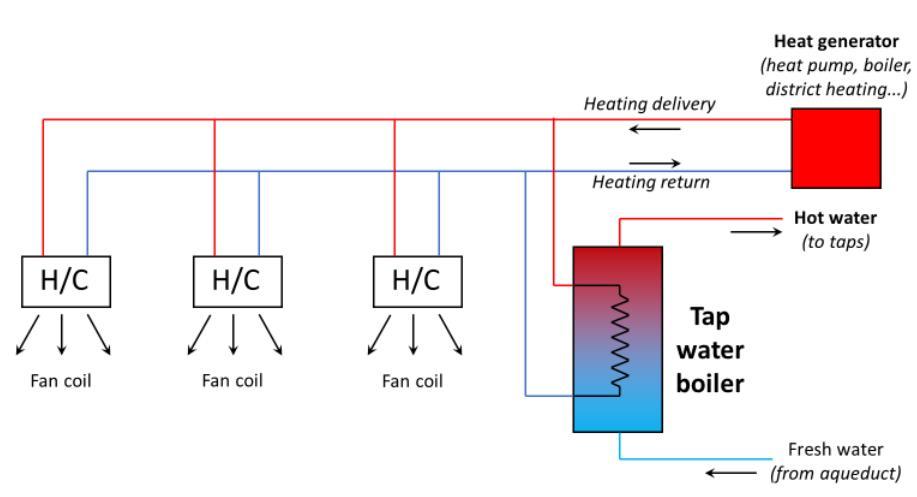
Figure 2:Hot water boiler fed by the space heating system
3.6. Control and management of thermal systems
3.6.1. Zoning
Provide independent regulation for all rooms/volumes of the building (i.e. sale rooms and back offices).
3.6.2. Temperaturemanagement
Temperature is managed via:
- A remotely manageable system or BMS
- A locally manageable system or BMS
- Temperature measurement in each zone
- Timers for each zone switching heating and cooling off out of opening hours
- Intelligent algorithms assess ideal thermal comfort for customers and set temperature in treatment areas
- Clinic entrance air curtain is controlled by a movement sensor
- Irregularly occupied back of house rooms have no heating and cooling, or have it controlled by presence sensors regulating temperature between a stand-by temperature of 15°C or less in the heating season to 30° C or more in the cooling season.
4. Ventilation
4.1. Energy efficient ventilation system
4.1.1. Energyrecovery
OutofscopewhenthelocationisinASHRAE1,2Aand3Aclimatezones(tropicalto subtropicalhumidclimates)
Implement a bypassable heat recovery system pre-heating/cooling air, with a minimum recovery rate of 75%.
4.1.2. Insulation
All supply and return ducts installed as part of a cooling or heating air distribution system shall be thermally insulated in accordance with Table 6.8.2A and 6.8.2B of ASHRAE 90.1:2010.
4.2. Airtight ventilation system
4.2.1. Airtightnessclassofventilationnetworks
All transverse and longitudinal junctions are sealed with joint sealants (such as joint compounds and adhesive tapes). Seals must be pre-integrated to duct when possible.
4.2.2. Commissioning
Introduce a commissioning process and procedures for ventilation systems that ensure the performance of the completed network and respect the airtightness class of ventilation networks.
4.3. Ventilation control
4.3.1. Airflow
Meet the minimum requirements of the applicable local regulations for outdoor air ventilation rates. Ventilation shall be scheduled to start 1 hour before beginning operations and stop 30 minutes after ending operations.
4.3.2. Ventilationcontrols
The ventilation system has VSD-driven fans and is controlled (directly or via the BMS) by a sensor monitoring CO2, humidity and VOC concentrations in internal air.
4.4. Metering and automation
4.4.1. Meteringandmonitoring
Consider only the energy directly used by the CLP portion of the shop. Install smart meters, to measure energy use in the clinic, at least 1 meter per energy type (electricity, natural gas, if present, and chilled/hot water if cooling/heat is supplied this way). Meters shall measure consumption for any type of use that exceeds 10% of total energy consumption, in particular:
- Lighting
- Cooling and heating
- Ventilation
- Hot sanitary water
- IT systems
- Any other end use needed to achieve 90% of design energy use
- Water
Metering intervals shall be of 30 minutes or less. Metering is done separately floor by floor, and separately for the reception area and for the back office/storage area. The metered data are sent and collected to an electronic platform accessible onsite and offsite.
4.4.2.
BuildingManagementSystem
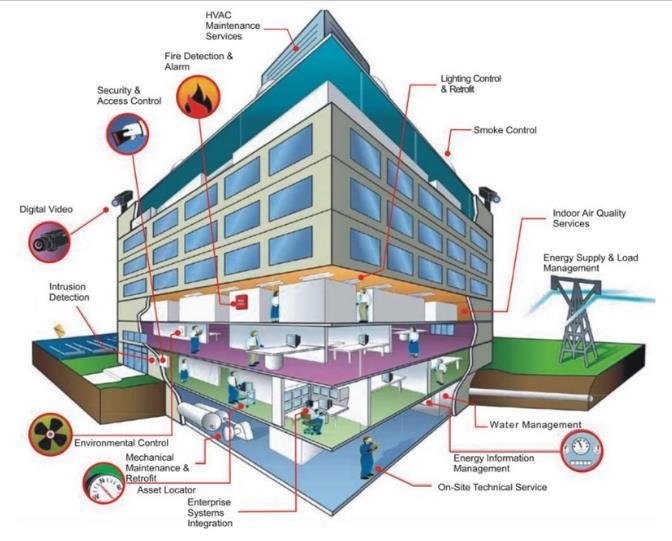

The BMS shall be:
- Web-based or web-connected
- Open, allowing the connection of meters, sensors and modules from any supplier through clear communication and connection specifications.
4.4.3.
Airqualitymonitoring
Install at least one air quality smart sensor to measure and transmit air quality data in the sales area. The sensor(s) must measure concentration of dust, VOCs, carbon dioxide, relative humidity as well as temperature (unless temperature data are recorded elsewhere).
If possible, a thermometer measuring external temperature also must be installed unless the local value can be taken by a web service.
The Energy Management System (EMS)/BMS shall also manage air quality data and be able to provide alarms for exceedances.
5. Plumping
5.1. Indoor water efficient equipment
Ensure that water pressure does not exceed 3 Bar. If it does exceed 3 Bar, install a water pressure regulator.
The maximum flow recommendations for this level are the following:
- Water closets for employees: 2/4 liters per minute (L/min) if using potable water, no limit if using non-purified water
- Water closets for customers: 3/4.5 L/min if using potable water, no limit if using non-purified water
- Urinals: 0.8 liter (L) per flush if using potable water, no limit if using non-purified water
- Lavatory faucets (Public): 1.35 L/min with infrared detection at least for employees
- Kitchen sink faucets: 4.5 L/min
- Showers: 8/9 L/min
Rue du Lac 142, 1815 Clarens-Montreux | Switzerland
Figure 3: Typical features of a building management system (some of the indicated systems are not present and the system can be simpler) Image Soure: ekeindia
5.2. Clean water preservation
If possible, use non-potable water (river water, well water or rainwater) is used for nondrinking uses:
- For toilet flushes and urinals
- Watering plants
6. Waste and circular use of materials
To ensure effective waste handling throughout the construction phase, two types of dedicated sorting areas must be planned from the design stage:
6.1. Final Sorting Area (Central Waste Warehouse)
A centralized area must be designated for the final collection and sorting of all waste generated on-site. This area should meet the following criteria:
- Hidden from guests and the public, but easily accessible to external waste collection services
- Fully compliant with relevant health and safety regulations
- Organized to allow sorting into clearly defined waste streams:
o Incinerable waste
o Recyclable waste
o Hazardous/toxic waste
o Food waste (where applicable)
o Confidential paper waste (where applicable)
o Medical Waste (where applicable)
6.2. Intermediate Sorting Areas (Per Building)
Each building on site must include a dedicated space for temporary waste storage and pre-sorting. These areas should be:
- Hidden from guest view, but easily accessible to staff
- Discretely and efficiently connected to the central waste warehouse
- Sized and equipped to enable preliminary separation of waste streams
- Recommendation: At least one room per floor should be allocated for intermediate waste sorting and storage
7. Electric appliance
7.1. Energy efficient equipment
- Energy efficiency labels
- 90% of appliances (in number) shall be Energy Star labelled (excluding lighting): office equipment, electronics and commercial food service equipment (i.e. refrigerators, computers, sound systems, flat screens and dishwaters), or shall comply with the highest level for EU Energy label (A, A+, A++, A+++ depending on the type of electrical appliances) or local equivalent
7.2. Screens
Where screens are installed, more than 70% shall be organic light-emitting diode (OLED), the rest shall be LED.
8. Materials
8.1. Low emitting materials
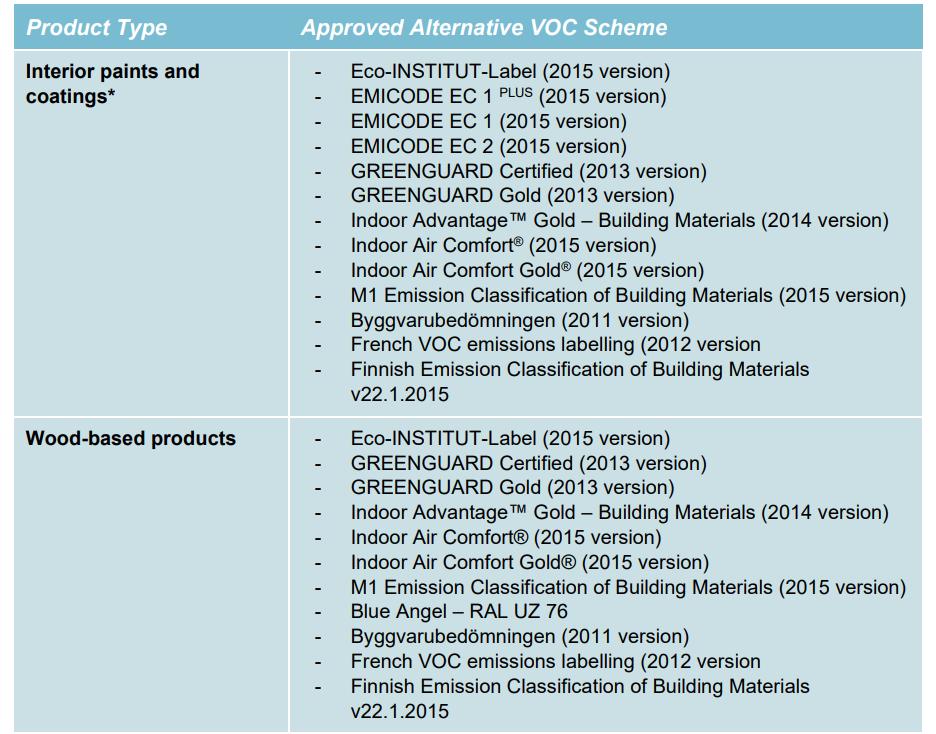
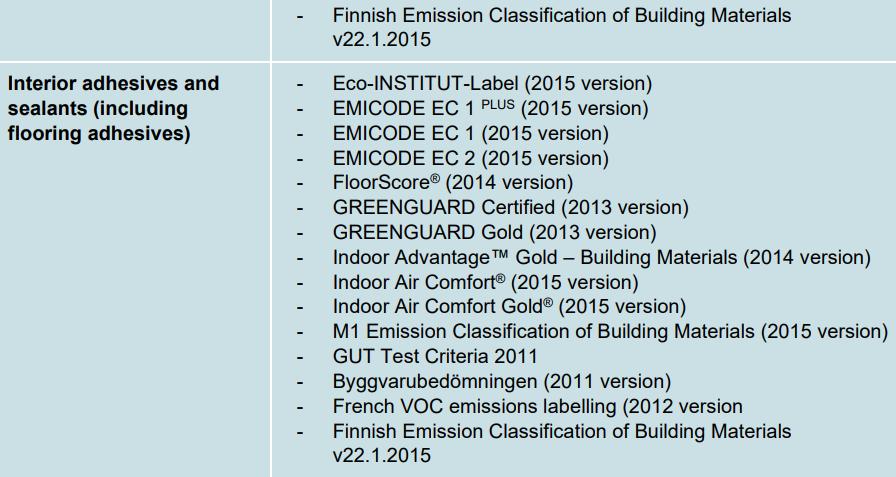
More than 90% of interior surface materials shall respect the product requirements specific to reach either the requirements in one of the following: BREEAM 2016 or V6.1, LEED v4 certification (annexes 3) or WELL V2. Materials likely to cause VOC and
Rue du Lac 142, 1815 Clarens-Montreux | Switzerland
formaldehyde emissions include paints, glues, wood, synthetics, and textile lining materials for ceilings, walls and floors.
- VOC emissions shall be less than 1,000 micrograms per cubic meter (µg/m3)
- Formaldehyde emissions shall be less than 10 µg/m3
8.2. Paints
- Paints shall meet the VOC emissions evaluation requirements one of the above certifications
- Paints used shall be fungal and algal resistant in wet areas (e.g. bathrooms, kitchens and utility rooms)
8.2.1. Furniture
More than 50% (in cost) of furniture shall not emit VOCs or formaldehyde (i.e. metal elements) and/or have the Greenguard label.
8.3. Sustainable and circular materials target
8.3.1. Bio-basedmaterials
Use at least 1 bulky construction material or the finishing product should be made of biobased materials (e.g. a matte paint based on natural plant binders for walls and ceilings of low humidity rooms)
8.3.2. Recycledmaterials
Use at least:
- 20% in weight of bulky construction materials of recycled origin, (e.g. acoustic insulation made of recycled textile, gypsum board from recycled materials, use of recycled materials as inert in mortar and screed)
- One finishing product made of recycled material (i.e. recycled carpets)
- 30% of furniture weight made of recycled materials (e.g. Masonite and other recycled wood materials, padding upcycled materials…)
8.4. Responsible sourcing of materials
8.4.1. Wood
All wood and wood derived products must be legally harvested and traded. At least 90% (in weight) of wood derived materials shall be FSC or PEFC certified or from recycled materials.
8.4.2. Fabrics
At least 90% (in weight) of fabric finishing materials shall be locally sourced.
8.4.3. Locallysourcedandstructuralmaterials
More than 40% (in cost) of bulky building material comes from local sources.
8.4.4. Locallysourcedfit-outmaterials
More than 10% (in cost) of materials comes from local sources (country, continent accepted from some exceptions).
8.4.5. Leather
Leather needs to be avoided by all means! Organic or vegan leather should be taken instead. At least 90% (in weight) of vegan leather shall be sustainably sourced or natural based. If not available, leather should be avoided.
8.5. Use of low toxicity products
Identify the potentially polluting products used at the construction site. The main categories of products that are more likely to contain polluting or toxic substances are:
- Sealants
- Paints and varnishes
- Stains
- Foams
- Glues
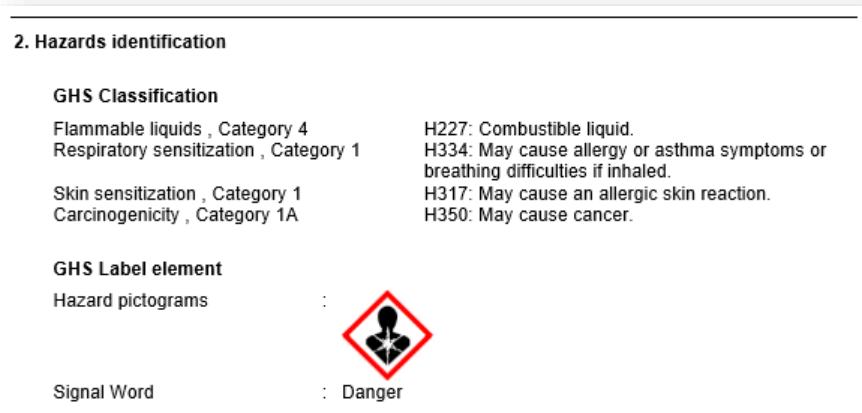
Choose low toxicity products, such as products without or with low classification hazard in their SDS (an example excerpt of a SDS is provided in figure 4).
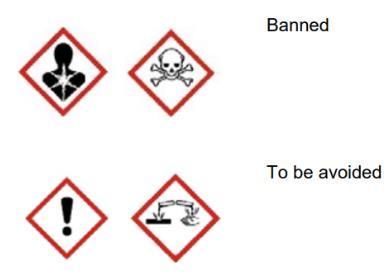
Avoid and discourage strong toxicity product (an example excerpt of a SDS is provided in figure 5).
9. Construction
9.1. Avoidance of soil, water and air pollution
- For existing elements, identify hazardous content products: asbestos, lead, PCB/PCT16, ensure a decontamination of the space with an adapted treatment of associated waste
- For existing elements where refrigerant is present, set up a collect procedure with a specialized company and ensure adapted and regulatory treatment of those products
- For any product covered by a SDS (Safety Data Sheet), observe the instructions on the sheet
- Ensure proper treatment of waste (such as, prohibition of wild deposits and specific treatment for hazardous wastes)
- Ensure proper treatment of effluent: ban pollutant discharges into the sewerage networks
- Require filtered aspiration on each grinder, power saws, and other equipment that produces dust, to reduce dispersion of dust
9.2. Construction waste management plan
9.2.1. Diversionandrecycling
- Establish waste diversion goals for the project by identifying at least eight materials (both structural and non-structural) targeted for diversion.
Rue du Lac 142, 1815 Clarens-Montreux | Switzerland
Figure 4: Excerpt from safety data sheet
Figure 5: Symbols of substances banned and to be avoided in the safety data sheets of products used.
- Specify whether materials will be separated or comingled and describe the diversion strategies planned for the project.
- Where the material will be taken and how the recycling facility will process the material
- Recycle and/or recovery of non-hazardous construction and demolition debris: at least 50% in weight.
- Provide a final report detailing all major waste streams generated, including disposal and diversion rates.
9.2.2. Reuse
- Resell/donate at least 30% (in weight) of the used furniture and finishing material instead of managing it as waste
- Reuse at least 30% of construction debris
9.3. Respect of residents and neighbourhood
- Unobstructed and safe footpaths
- Protection of the public from site activities (e.g. vehicle movement and debris).
- Communication, notification and accessible information concerning site activities
- Maintenance and cleanliness of the perimeter and adjacent areas.
- Measure to avoid dispersion of dust on the public area and private neighbourhood
- Acoustic measures to avoid noise before 8:00 a.m. and after 7:00 p.m.
- Site image, including visually appropriate hoardings
- Reduce lighting power at night by at least 40% and make sure they shielded and are not directed towards residents.
9.4. Socially responsible contracts
Relevantonlyiflocallegislationregulatesandmakesaccountabletheemploymentwithin socialandprofessionalinsertionprograms.
- Minimum amount of insertion/integration hours per supplier.
- Include an additional clause to contracts to promote the employment of persons in social and professional insertion (or integration) programs. These programs help people in need to re-enter the social and professional world by the means of coaching and support to learn and understand the social norms and rules, which helps them become independent of aids.
- Ensure follow-up of the insertion clause and guarantee the achievement of a certain number of hours of insertion during the construction site, among the total number of manpower hours: at least 5%.
- Give 25% of contracts in terms of amount to local companies (< 50 km) where available
10. Green Power and carbon offsets
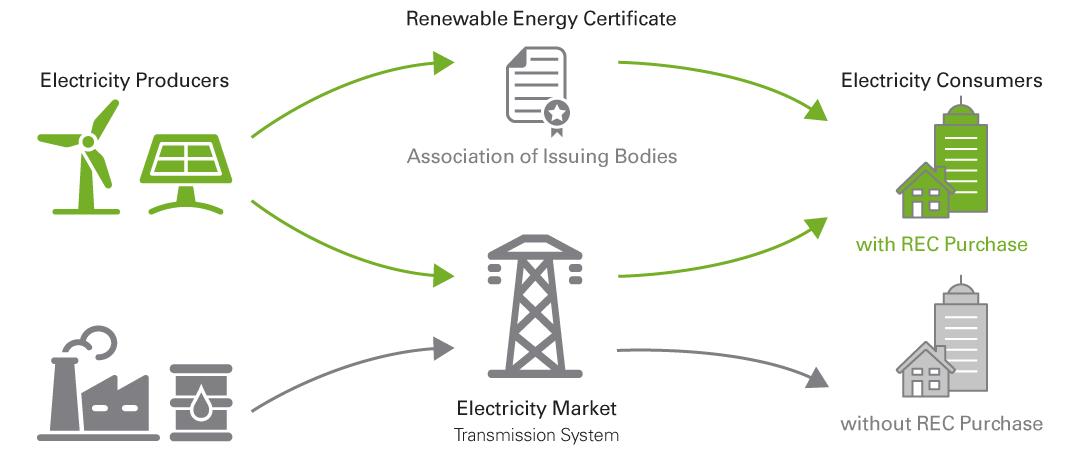
Owner should purchase green energy certificates (GOs/RECs/iRECs) corresponding to the amount of electricity used during construction or buy carbon offsets to compensate carbon emissions arising from the used electricity.
11. Building envelope
The insulation of the envelope is crucial in determining energy consumption for heating and air conditioning, which are the largest energy consumers in clinics. Its optimal features depend however on the climatic zone. Use the official ASHRAE reference to determine the climatic zone of the project.
11.1. Envelope thermal insulation – Opaque surfaces
11.1.1. Optimalroofsinsulation
The average thermal transmittance of the ceiling/roof package (for the sole ceiling surface towards external spaces) is below the following thresholds (in W/m2K), depending on the climatic zone:
11.1.2. Meanroofsinsulation
Where the clinic ceilings face the roof or an unheated part of the building a layer of some centimetres of insulating material (natural material, synthetic foam or mineral wool with barrier to humidity diffusion) is laid along the surface between the ceiling or the false ceiling or, in back of house, directly along the ceiling (in this case, a hard finishing in gypsum board or other hard material is needed).
11.2. Walls
11.2.1. Optimalwallsinsulation
The average thermal transmittance of the opaque walls (for the sole walls’ surface towards external spaces) is below the following thresholds (in W/m2K), depending on the climatic zone:
11.2.2. Meanwallsinsulation
Figure 6: How Green Energy Certificates Work, source: asiacarbonxchange, 2023
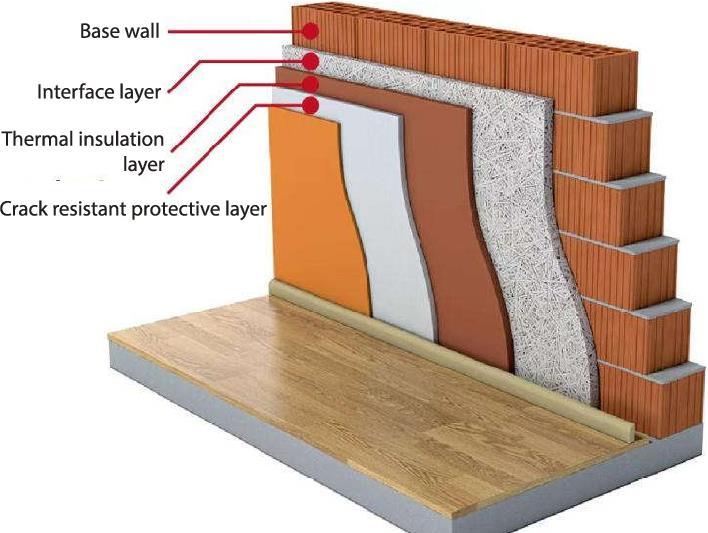
Where the clinic walls face the roof or an unheated part of the building a layer of some centimetres of insulating material (natural material, synthetic foam or mineral wool with barrier to humidity diffusion) is laid along the surface between the wall and the counter wall filling every empty space (see Figure 7) or, in back of house, directly along the wall (in this case, a hard finishing in gypsum board or other hard material is needed).
11.3. Floors
11.3.1. Optimalfloorsinsulation
The average thermal transmittance of floors (for the sole floor surface towards the ground or unheated spaces) is below the following thresholds (in W/m2K), depending on the climatic zone:
11.3.2. Meanfloorsinsulation
Where the clinic walls face the roof or an unheated part of the building a layer of some centimetres of insulating material (natural material, synthetic foam or mineral wool with barriers to humidity diffusion) is laid along the surface between the floor structure and the screed/finishing (or between the floor structure and the floating pavement).
11.4. Envelope thermal insulation - windows
11.4.1. Smallsizewindows
The average thermal transmittance of the windows and glazed surfaces (for the sole ones towards external spaces) is below the following thresholds (in W/m2K), depending on the climatic zone:
Windows having no commercial purpose, e.g. windows at upper floors must have:
- Low emissivity glass - Glass Solar factor: Fs ≤ 0.4
11.4.2. Largesizewindows
Figure 7: Insulating layer behind counterwall
The average thermal transmittance of the windows and glazed surfaces (for the sole ones towards external spaces) is below the following thresholds (in W/m2K), depending on the climatic zone:
11.5. Barriers to humidity diffusion
Scoping:Notindeserticclimates,unlessthelocalwatertableisshallow.
Walls and pavements in basement and underground floors, as well as at ground floors up to 1 meter above ground level, have a continuous damp barrier to prevent rising damp to cause the formation of molds and potentially the damage of adjacent materials. Insulating materials used have a high vapor resistance or a condensation damp break on their surface facing the clinic interiors.
12. Design and construction management
12.1. Dynamic energy simulation
Create an energy performance model of the clinic and perform a dynamic energy simulation compliant with ASHRAE 90.1-2016 to assess energy consumption of the project during normal use and assess the total yearly energy consumption per type of use. Set up and run the simulation at the preliminary project stage, then fine tune it and run it again once the project is finalized. Use this simulation to drive design of insulation, HVAC and lighting.
The simulation should show the following score,
- The simulated total annual consumption of final energy (electricity + fuels) is below 120 kWh/m2 year.
12.2. Documentation for facility management – O&M Manual
The following documentation is kept, in electronic and in paper form, at the clinic premises and at the clinic planning department. The Manual must include the equipment inventory list, all technical schemes and as-built drawings and all the equipment data sheets, and indicate the periodic and predictive maintenance operations that must be done on each piece of equipment.
12.2.1. UserguideforClinicmanagers&employees
A simple user guide explains how to correctly use, clean and maintain all the systems and equipment is realized and is provided to the clinic managers. It also indicates the specifications for cleaning and managing waste.
12.2.2. O&MManual – ElectricSystems
An O&M Manual is produced, indicating the list of all electric equipment and of lights installed in the clinic. For each type of equipment, the manual indicates:
- The cleaning mode and frequency
- The preventive and predictive maintenance operations to be done on it. The manual also contains information on how to use and maintain the meters and the automation related to electric systems, and as-built schemes and maps of these systems. The manual is produced by the designers of the clinic in case of new realization or refurbishment of a clinic by requiring it contractually, or by an external specialized technician in case it is produced for an existing and operating clinic.
12.2.3. O&MManual – MechanicalSystems
An O&M Manual is produced, indicating the list of all HVAC equipment and all plumbing systems in the clinic. For each type of equipment, the manual indicates:
- The cleaning mode and frequency.
Rue du Lac 142, 1815 Clarens-Montreux | Switzerland
- The preventive and predictive maintenance operations to be done on it.
The manual also contains as-built schemes and maps of the mechanical systems.
The manual also contains information on how to use and maintain the meters and the automation related to mechanical system, and as-built schemes and maps of these systems.
The manual is produced by the designers of the clinic in case of new realization or refurbishment of a clinic by requiring it contractually, or by an external specialized technician in case it is produced for an existing and operating clinic.
12.2.4. O&MManual – Plumbing
An O&M Manual is produced, indicating the list of all HVAC equipment and all plumbing systems in the clinic. For each type of equipment, the manual indicates:
- The cleaning mode and frequency
- The preventive and predictive maintenance operations to be done on it.
The manual also contains as-built schemes and maps of plumbing systems.
The manual also contains information on how to use and maintain the meters and the automation related to plumbing systems, and as-built schemes and maps of these systems.
The manual is produced by the designers of the clinic in case of new realization or refurbishment of a clinic by requiring it contractually, or by an external specialized technician in case it is produced for an existing and operating clinic.
12.3. Commissioning
12.3.1. FundamentalCommissioning
Complete the following commissioning (Cx) process activities for mechanical, electrical, plumbing, and renewable energy systems and assemblies, in accordance with ASHRAE Guideline 0-2005 and ASHRAE Guideline 1.1–2007 for HVAC&R Systems, as they relate to energy, water, indoor environmental quality, and durability.
1) Requirements for exterior enclosures are limited to inclusion in the owner’s project requirements (OPR), written by the Clinic Planner, and basis of design (BOD) written by the designers and collected by the architect, as well as the review of the OPR, BOD and project design. NIBS Guideline 3-2012 for Exterior Enclosures provides additional guidance.
- Develop the OPR.
- Develop a BOD.
2) By the end of the design development phase, engage a commissioning authority with the following qualifications.
- The CxA must have documented commissioning process experience on at least two building projects with a similar scope of work. The experience must extend from early design phase through at least 10 months of occupancy;
- The CxA may be a qualified employee of the owner, an independent consultant, or an employee of the design or construction firm who is not part of the project’s design or construction team, or a disinterested subcontractor of the design or construction team.
- For projects smaller than 1,860 square meters, the CxA may be a qualified member of the design or construction team. In all cases, the CxA must report his or her findings directly to the owner.
3) The commissioning authority (CxA) must do the following:
- Review the OPR, BOD, and project design.
- Develop and implement a Cx plan.
- Confirm incorporation of Cx requirements into the construction documents.
- Develop construction checklists.
- Develop a system test procedure.
Rue du Lac 142, 1815 Clarens-Montreux
- Verify system test execution.
- Maintain an issues and benefits log throughout the Cx process.
- Prepare a final Cx process report.
- Document all findings and recommendations and report directly to the owner throughout the process.
4) The review of the exterior enclosure design may be performed by a qualified member of the design or construction team (or an employee of that firm) who is not directly responsible for design of the building envelope.
12.3.2. Enhanced Commissioning Projects must complete the following commissioning process (CxP) activities for mechanical, electrical, domestic hot water, and renewable energy systems and assemblies in accordance with ASHRAE Guideline 0–2005 and ASHRAE Guideline 1.1–2007 for HVAC&R systems, as they relate to energy, water, indoor environmental quality, and durability.
- Review contractor submittals.
- Include systems manual requirements in construction documents.
- Include operator and occupant training requirements in construction documents.
- Verify systems manual updates and delivery.
- Verify operator and occupant training delivery and effectiveness.
- Verify seasonal testing.
- Review building operations 10 months after substantial completion.
- Develop an on-going commissioning plan.
GL O S S A R Y
AFUE: Annual Fuel Utilization Efficiency, a thermal efficiency measure of space-heating devices.
AHU: Air Handling Unit or air handler, in French Centrale de Traitement d'Air (CTA), in Italian UTA (Unità di Trattamento Aria). It is a device used to regulate and circulate air as part of a heating, ventilating, and air-conditioning (HVAC) system. An air handler is usually a large metal box containing a blower, heating or cooling elements, filter racks or chambers, sound attenuators, and dampers. Air handlers usually connect to a ductwork ventilation system that distributes the conditioned air through the building and returns it to the AHU. Sometimes AHUs discharge (supply) and admit (return) air directly to and from the space served without ductwork.
ATU: Air Treatment Unit, see AHU AMCA 205: Standard on efficiency of fans and ventilation systems from AMCA, the Air Movement and Control Association: http://www.amca.org/UserFiles/file/AMCA%20205- 10%20(Rev_%202011).pdf
ASHRAE: American Society of Heating, Refrigerating and Air-Conditioning Engineers. The ASHRAE standards are the most important reference standards on Heating, Ventilation and Air Conditioning & Refrigeration (HVAC&R), used at global level.
BEAM: BEAM Plus is a sustainability certification scheme developed in Hong Kong by the Hong Kong Green Building Council (HKGBC). It is quite well-used within Hong Kong, but not outside of it. BMS: Building Management Systems, these systems allow local and centralized monitoring and active management of all systems of a building or of a part of it, therein including lighting, heating, air conditioning, ventilation, lifts, gates, IT and any other technological system of the structure. They can cover a larger or smaller scope and improve the possibility of management and maintenance of a building.
CASBEE: Comprehensive Assessment System for Built Environment Efficiency. It is a sustainability certification scheme developed in Hong Kong by the Japan Green Building Consortium (JGBC). It is quite often used within Japan, but not outside of it.
CDD: Cooling Degree-Day. It considers the difference of temperature for 1 day and a reference temperature (in the USA, this is 18°C) during the hot season. The sum of the degree-days along the season provides an indication of the need of seasonal cooling and can be correlated with a building or clinic’s energy demand.
CDP: Carbon Disclosure Project is an organization to which companies (and cities) report on their impacts on carbon, water, and forests. Implementation of Kering Standard for Clinic Management Instructions for Use Page 70 of 77.
CFC: Chlorofluorocarbons are fully halogenated paraffins, a family of chemical compounds made of chlorine, Fluorine and Carbon only that were once very used for refrigeration and other purposes. They are the main responsible of the depletion of the ozone layer in the upper atmosphere and powerful Greenhouse Gases and started being gradually banned from the early ‘90s within the framework of the Montreal Convention, the international agreement on the contrast of the Ozone Hole.
CMR: a chemical substance that is Carcinogenic, Mutagenic, or Toxic for reproduction.
COP: within the document the acronym COP refers to the Coefficient of Performance, which measures the energy efficiency of air conditioning systems and heat pumps in heating mode as the ratio between heating energy produced and input energy. This value is normally between 2 and 3 (these systems do not convert energy into heat or cooling, but pump heat from a colder area to a hotter one) in common systems but can be much higher for efficient systems.
Rue du Lac 142, 1815 Clarens-Montreux | Switzerland
COP21: within the world of international climate agreements, the COPs are the Conferences of Parties, i.e. the yearly meetings of the United Nations Framework Convention on Climate Change (UNFCCC). The COP3, held in Kyoto in 1997, ended with the signing of the Kyoto Protocol, which first set some binding commitments to the signing countries. The COP21 was held in Paris, and was concluded with the Paris Agreement, in which the signatory countries agree on a set of commitments aimed at keeping the global temperature increase due to climate change of the planet below 2°C.
DALI: Digital Addressable Lighting Interface (DALI) is a trademark for network-based systems that control lighting in building automation, allowing to control and regulate lighting. It is based on an open protocol, and functionally equivalent to a BMS (Building Management System) based on an open protocol.
EAC: Energy Attribute Certificate, a publicly, second- or third-party verified certificate system that certifies that a certain amount of energy is produced by a certain power plant, and that can be sold and bought by producers, traders, distributors until the final user. It allows a user to claim, for example, that the energy they use comes from renewable sources if they or their energy distributor cancel an amount of EACs from renewable power plants corresponding to the user’s total energy consumption. EACs i nclude the European system of GOs, the North American REC system and the international iREC system.
EER: Energy Efficiency Ratio is the equivalent of COP for machines (heat pumps, refrigerators and air conditioners) working in cooling mode.
EMS: Energy Management System or Energy Monitoring System. EMS systems are constituted by smart meters measuring electricity (from the main lines and typically for areas of the controlled site(s), and by final use – e.g. lighting, IT, boilers, heating, ventilation), heat, cooling, water flows, temperatures, a communication architecture, a data storage system and an analysis software with several functions allowing tracking of consumption with time, checks of consumption of the site(s) and its parts under similar conditions in different times, automated reporting and several tools allowing to easily detect inefficiencies, maintenance needs and saving opportunities.
EPA: U.S. Environmental Protection Agency Implementation of Kering Standard for Clinic Management Instructions for Use Page 71 of 77.
FCEER: Fan Coil Energy Efficiency Ratio, in cooling mode (W/W). It is the EER for air conditioning terminal units.
FCCOP: Fan Coil Coefficient of Performance, in heating mode (W/W) It is the COP for air conditioning terminal units.
FEG: Fan Efficient Grade.
FS: Solar Factor.
FSC: Forest Stewardship Council, an international multi-stakeholder organization promoting sustainable and responsible forest management. FSC certified wood comes from responsibly managed forests.
GC: General Contractor.
GHG: Greenhouse Gas, the gas responsible for the ongoing global warming of the planet. The main GHG is CO2, carbon dioxide, but there are several others, six of which are currently regulated by the UNFCCC.
GO: Guarantee of Origin - represents one megawatt hour of electricity from a renewable resource. European version of a Renewable Energy Certificate (REC), currently available within 20 European countries. GOs are Energy Attribute Certificates and their emission and control are done by the national Transmission System Operator (TSO) managing the electric grid.
Rue du Lac 142, 1815 Clarens-Montreux | Switzerland
GWP: Global Warming Potential – a measure of how much energy the emissions of 1 ton of a gas will absorb over a given period, relative to the emissions of 1 ton of carbon dioxide (CO2). Allows comparisons of the global warming impacts of different gases. The larger the GWP, the more that a given gas warms the Earth compared to CO2 over that period. The time usually used for GWPs is 100 years. Relevant GWPs include methane (CH4) at 28–36 over 100 years, R-410A, at 2088, R-134A at 1430, R-32 at 675, and HFO at 4.
HDD: Heating Degree Day. It considers the difference of temperature for one day and a reference temperature (in the USA, this is 18°C) during the cold season. The sum of the degree-days along the season provides an indication of the need of seasonal heating and can be correlated with a building or clinic’s energy demand.
HQE: Haute Qualité Environnementale, is a sustainability certification scheme developed in France by the Association française de normalization (AFNOR). It is quite frequently used within France, but not often outside of it.
HFC: Hydrofluorocarbons are partially halogenated paraffins, a family of chemical compounds made of Hydrogen, Fluorine and Carbon that do not contribute to the problem of ozone depletion and are hence used to replace CFCs and Hydrochlorofluorocarbons (HCFCs) which do. They are powerful greenhouse gases, and according to the Montreal Implementation of Kering Standard for Clinic Management Instructions for Use Page 72 of 77 Convention (the international agreement on the Ozone Hole), they will gradually be phased out, starting from those with the largest global warming potentials.
HVAC: Heating, Ventilation and Air Conditioning is the technology of indoor and vehicular environmental comfort. Its goal is to provide thermal comfort and acceptable indoor air quality. "Refrigeration" is sometimes added to the field's abbreviation, as HVAC&R or HVAC&R.
Illuminance: this is the total luminous flux incident on a surface, per unit area. It is a measure of how much the incident light illuminates the surface, wavelength-weighted by the luminosity function to correlate with human brightness perception. In SI derived units, illuminance is measured in lux or lumens per square meter (cd·sr·m−2). The foot -candle is a non-metric unit of illuminance, most used by lighting professionals and in photography.
I-REC: International Renewable Energy Certificate. Each I-REC represents proof that one MWh of renewable energy has been produced and embodies the environmental benefits that amount of renewable energy has generated. Similar to REC system in North America.
LPG: Liquified Petroleum Gas Multi-split: a multi-split system uses one external condensing unit/heat pump connected by refrigerant pipework to several indoor cooling/cooling and heating unit. LED: Light-Emitting Diode, light source using electroluminescence to produce light 90% more efficiently than incandescent light bulbs.
LEED: Leadership in Energy and Environmental Design, the sustainability certification scheme developed in America and used around the world.
NGOs: Non-Governmental Organizations.
O&M: Operations and Maintenance
OLED: Organic Light-Emitting Diode, a light-emitting diode (LED) using an organic compound to emit light in response to an electric current. Used in digital displays such as television screens.
PCB: Polychlorinated Biphenyl, a carcinogenic group of manufactured organic chemicals consisting of carbon, hydrogen and chlorine atoms used in hundreds of industrial and commercial applications. Heavily restricted due to environmental persistence and toxicity.
Rue du Lac 142, 1815 Clarens-Montreux | Switzerland
PCT: Polychlorinated Terphenyls, a carcinogenic group of manufactured organic chemicals consisting of carbon, hydrogen and chlorine atoms used as a substitute for PCBs. Heavily restricted due to environmental persistence and toxicity.
PEFC: Programme for the Endorsement of Forest Certification, is an NGO promoting sustainable forest management through third-party certification.
PVC: Polyvinyl Chloride widely used synthetic plastic polymer known to cause cancer, reproductive, development and immune problems. Kering has banned the use of PVC.
REC: Renewable Energy Certificate. Represents one megawatt hour of electricity from a renewable resource.
SBT: Science-Based Target, science-based emissions reduction target, promoted by a joint initiative of CDP, UNGC, WRI, and WWF.
SDS: Safety Data Sheet, used to communicate hazards of chemical products.
U-value: measures the effectiveness of a material as an insulator, as known as thermal transmittance.
UL: Underwriters Laboratory
UN Global Compact: A United Nations initiative to encourage businesses to adopt sustainable and socially responsible practices.
VRF: Variable Refrigerant Flow, also known as Variable Refrigerant Volume (VRF) is an HVAC technology using refrigerant as the heating and cooling method.
VRV: Variable Refrigerant Volume (see VRF)
VOC: Volatile Organic Compound, an organic compound that easily becomes a vapor or gas and is toxic to humans or animals when inhaled.
WRI: World Resources Institute, a non-profit promoting environmental sustainability, economic opportunity, and human health and well-being.
WWF: World Wildlife Federation, NGO promoting wildlife conservation and protection of endangered species
ANNEXIS
ANNEXIS 1
How to implement the standard in a Project, step by step
Step 0: include clauses in the contracts with your suppliers about implementation of “CLP Standard for Resort Construction and Operation.”
The“step0”,beforeenteringintoanyproject,istoincludethecompliancewiththis standardintothecontracts(and,ifthecase,intothetenders)withyourdirectsuppliers (architect,generalcontractorand,ifdirectlycontracted,millworkerandothersuppliers), workingwithyoursustainabilityandlegaldepartment.Ofcourse,differentcontractual arrangementscanbechosen,butitisofparamountimportancethatthecompliancewith thestandardgetsintegratedintothecontracts.
Step 1 – Feasibility / Strategic Definition : Share the standard with your architect and their environmental specialist after a site for the new project is individuated – or the decision for making a renovation is taken. If the project is at the bidding stage, then it would mean sharing this standard with the architect. Provide the architect(s) with all the general site information, for the project, and then organize a site with them. The following step is to ask the architect(s) to go through each criteria in standard and to integrate the features that are feasible to the project and allow them to obtain the rating required.
Step 2 – Concept Design Decision: Decide with the architect on the criteria, identify them in the first version of the scorecard and then annex them to the contract. At this point, a first version of the scoring table is agreed between the CLP’s project manager and the architect. It is suggested to limit as much as possible the “pending” points, which should be limited to topics where authorizations must be obtained, deliveries are uncertain and/or depend on external factors. Wherever possible, target the highest score. The contract shall explicitly indicate that the project will follow the standard where topic is agreed, and that the architect will make its best efforts on the “pending” topics.
Step 3 – Contractor’s Agreement: Refine the scorecard with the general contractor, subcontractors and any other direct supplier. Several topics treated by the Standard (i.e. Responsible sourcing of materials, Minimizing soil, water and air pollution, Construction waste management plan, Good neighbor requirements, Socially responsible construction contracts), as well as the verification of the building’s performance on topics that will be verified at the end of works. Again, on these topics the maximum score must be targeted and an effort on reducing the “pending” topics must be done.
Step 4 – Construction Works: Address all the “pending” points before the construction works begin. At the end of the built phase project, all “pending” points shall become a “yes” or a “no”.
Step 6 – Construction Assessment Reviews : Verify the real fulfilment of the standard at every milestone of the project. In case anything is done differently than expected, update the scorecard.
Step 7 – Final Review and Handover : Verify the fulfilment of the standard at the end of the construction activities. At the end of construction, commissioning shall be done to ensure that the construction has followed the requirements, and that the scorecard correctly represents the as-built situation.
ANNEXIS 2
Lighting zones by ASHRAE
Lighting zone 0: Undeveloped areas within national parks, state parks, forest land, rural areas, and other undeveloped areas as defined by the authority having jurisdiction
Lighting zone 1: Developed areas of national parks, state parks, forest land and rural areas
Lighting zone 2: Areas predominantly consisting of residential zoning, neighborhood business districts, light industrial with limited night-time use and residential mixed-use areas
Lighting zone 3: All other areas
Lighting zone 4: High activity commercial districts in major metropolitan areas as designated by the local jurisdiction
du Lac 142, 1815 Clarens-Montreux | Switzerland
Legend : External power limits per each lighting zone, in Watt/m2 (the value is in W/m2 of illuminated wall area)
ANNEXIS 3
Accepted product scheme that are compliant with the BREEAM 2016 or LEEDv4 Certifications.
Rue du Lac 142, 1815 Clarens-Montreux | Switzerland