







As we close the final pages of CLH NEWS for 2025, I find myself reflecting on what has undoubtedly been one of the most challenging years in living memory for our industry.
This year will be remembered, I fear, for all the wrong reasons—as a relentless assault on a sector that forms the very fabric of British community life.
The statistics paint a grim picture. The hospitality and licensed trade has faced a perfect storm of punitive taxation, crippling cost increases, and policy decisions that seem to demonstrate a fundamental misunderstanding of how our sector operates.
National Insurance contribution increases, spiralling staffing costs, persistent inflation, and the hammer blow of business rate hikes following November's Budget have combined to create an existential crisis for many operators.
As I write this, reports suggest the sector could lose up to 100,000 jobs in the coming months. This follows the devastating 84,000 redundancies recorded between November 2024 and June 2025—a period during which hospitality accounted for a staggering 45% of all job losses across the entire economy.
That's approximately 13,000 people losing their livelihoods every single month. These aren't just numbers; they're real people, real families, and real communities being torn apart.
Which leads me to a tweet we put up following the budget which broke records for us in the number of views!
Not earth-shattering news, I'll grant you, nevertheless, CLH News achieved something of a record—several thou-
sand views on a single tweet. No prizes for guessing the subject matter.
Yes, it was the Budget. Or more precisely, the extraordinary doublespeak that followed it.
We've all heard the platitudes, the carefully crafted spin from government spokespersons attempting to paint the Chancellor’s fiscal announcements in the most favourable light possible.
One had the brazen audacity to call it "a budget for business," and that the government was “backing Britain’s brilliant hospitality industry”, trumpeting a support package that caps "most increases" to just 15% next year.
Yes, they actually said that. With a straight face, one presumes.
My response was measured, calm, (as you would expect) and backed by evidence.
I pointed to the researched articles—not from partisan voices, but from hospitality and licensed on-trade organisations, world-leading accountants, and world-leading property specialists who had drilled down, point by point, to reveal precisely how much operators will see their costs, in particular business rates bills rise.
I politely suggested a little research might be in order before toeing the party line and trotting out pre-prepared talking points.
Suffice to say, I never received a response, and the silence, as they say, speaks volumes.
Throughout this difficult year, finding positive news to lead with has been an exercise in determination. Week after week, stories of hardship, redundancies, and closures have dominated our pages. It has been dispiriting, to say the least.
Yet I've been in this industry long enough to know something else: we are remarkably resilient.
During my years on the front line of operations back in the 1980s and early 90s, when I ran my own bar and restaurant here in Bournemouth, I experienced my fair share of challenges.
Many of those years coincided with a deep recession, with interest rates climbing as high as 15%. We survived then, just as this sector has survived world wars, reces-

sions, a global pandemic, and decades of questionable government policy. And we will survive the current Chancellor's decisions too.
Which brings me to the one genuinely positive story we can lead with as the year draws to a close. (And we all need some good news)
Next summer, the world's biggest sporting event—the FIFA World Cup—will be played on the other side of the world.
The Government has begun a consultation, featured on our front page, on extending licensing hours to accommodate the time difference. While I don't possess a crystal ball, I would be very surprised if this application were refused.
This represents a wonderful opportunity to generate additional sales at a time when every penny counts. More importantly—and this is a factor the Government should note carefully—it will put some much-needed cheer back into the country.
As a lifelong Liverpool supporter with Everton-supporting relatives, I can tell you that when it comes to international competitions, all differences, sporting and otherwise are set aside.
The pub becomes a place of unity, celebration, and shared pride. This licensing extension must be granted!!
As UKHospitality CEO Kate Nicholls rightly says, "The pub is the home of football. Outside of the stadium itself, it's the best place to watch the games."
On a personal note, we here at CLH NEWS would like to take this opportunity to thank you all—readers and advertisers alike—for your continued support throughout what hasn't been an easy year for publishers either. Ed Miliband’s energy costs are crippling!
Your loyalty and engagement mean everything to us, and we remain committed to serving this industry with honest, relevant journalism.
Here's wishing you all a busy and successful festive season, and our very best wishes for a brighter, more prosperous 2026. We'll be here with you every step of the way.
I can always be contacted at edit@catererlicensee.com


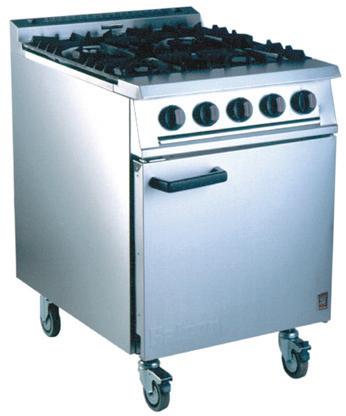
At The Commercial Oven Store, we take
your go-to destination for all your commercial
We understand that when it comes to running a successful business, having the right equipment is crucial. That’s why we have dedicated ourselves to providing top-notch products, coupled with expert advice, to help you make informed decisions and achieve your goals.
As a supplier of commercial ovens, we have established strong partnerships with leading manufacturers in the industry. By working closely with these renowned brands, we ensure that our customers have access to a wide range of high-quality ovens that meet the diverse needs of various businesses.
Whether you’re in the food service, hospitality, or catering industry, we have the perfect oven to suit your requirements.

The Home Secretary has the legislative power to extend these hours on occasions of “exceptional international, national or local significance”, such as the Women’s 2025 Euro, the Men’s 2024 Euro final and Women’s Euro 2022 Final.
Pub opening hours were also extended for the 80th anniversary of Victory in Europe Day in May this year.
Home Secretary Shabana Mahmood said: “Our nation’s pubs are going into extra time. If any home nation reaches the final stages, we will extend licencing hours.
“The party won’t end before the final whistle is blown.
“And in a personal capacity, I would like to add: It’s coming home.”
This extension would only apply to England and Wales as Scotland and Northern Ireland have separate licensing regimes.
Michael Kill, CEO of the Night-Time Industries Association said: “As we look forward to the 2026 football World Cup, the Night Time Industries Association welcomes the government’s proposal to launch a public consultation on extending licensing hours for pubs and bars in England and Wales.
“The World Cup is a globally celebrated event that brings communities together, and extending licensing hours will allow fans to enjoy the matches safely, responsibly, and in a vibrant social atmosphere.
“Our sector is committed to supporting safe, well-managed venues where people can celebrate major sporting events. We believe this consultation represents a positive step in ensuring that the hospitality industry can contribute fully to the nation’s excitement and economic activity during such a landmark event.”
Emma McClarkin, CEO of the British Beer and Pub Association, said:
“The pub has and always will be the home of live sport and there’s no better place to gather under one roof during moments of huge national significance and make memories.
“Our sector plays a huge part in boosting community spirit and extending licensing hours will mean that people can gather for longer at their local to cheer on our brilliant teams.”
The consultation will run until January 2026. A decision by the Home Office will be taken as soon as possible once responses have been reviewed.
Kate Nicholls, Chair of UKHospitality, said: “The pub is the home of football, and the atmosphere for the World Cup is always incredible as fans gather to cheer on the home nations.
“Outside of the stadium itself, it’s the best place to watch the games and I’m pleased the government is once again looking at extended licensing hours. Not only will it generate the best atmosphere for fans, but it can provide a real boost for hospitality businesses.
Lawson Mounststevens, managing director of Heineken's Star Pubs, which runs 2,400 licensed premises in the UK, said: 'Big set piece events like the World Cup are massive for bringing people together and should be a huge boost for the economy. Typically, we see trade increase by over 20 per cent during these tournaments.
'Extended hours will be welcomed by publicans across the country and we're all hoping England progress deep into the tournament.
'If you can't be at the games, nothing beats watching them in your local with a great pint.'
Following the consultation to extend hours in England and Wales the Scottish Beer and Pub Association (SBPA) is also urging decision makers in Scotland to support extending to licensing hours to ensure fans can enjoy next year’s historic World Cup matches in their local pubs.
The current licensing regulations restrict pubs in most parts of the country from operating beyond 1am, which could mean fans miss key

games likely to kick off at 11pm and 2am.
This potentially means Scottish pubs could miss out on a significant economic injection with the Scottish Beer and Pub Association predicting that next summer’s World Cup could give Scotland’s pubs a £15m boost, with 3 million pints expected to be poured, at a time when the sector faces growing pressures.
Commenting, Paul Togneri of the Scottish Beer and Pub Association said:
"This is the first time in nearly 30 years Scotland have qualified for the World Cup, and if you’re not making it to North America, there’s nowhere better for fans to cheer on Steve Clarke’s men than in the local pub. We urge local licensing boards to adopt a pragmatic approach to license applications for extended opening hours next summer by implementing temporary policy statements for the duration of the tournament to make this a summer to remember for the country.
“The tournament should bring a massive boost to the industry, with as many as an extra 3 million pints old, representing an increase of £15m to the sector at a much-needed time. The Scottish Government should also be encouraging the local licensing boards to support our pubs and grant relaxations”.
CAMPAIGN MATCHES
England will begin their campaign against Croatia, while Scotland have been drawn alongside Brazil.
England will open their tournament in Dallas or Toronto on Wednesday, 17 June, before facing Ghana and Panama in Group L.
Scotland's first match at the World Cup for 28 years will be against Haiti on Saturday, 13 June, in Boston or New York, followed by matches against Morocco and Brazil in Group C.
Wales or Northern Ireland would join Canada, Qatar and Switzerland in Group B, should either qualify through play-off matches in March.
By

If you run a pub, restaurant, bar or hotel, you’ll already know that staff shortages, rota chaos, sickness cover, and rising costs are your daily reality.
Now, with the Government’s Employment Rights Bill moving through Parliament, there’s another big change coming, and hospitality is firmly in the spotlight.
Here’s what’s changing, what it means in practice, and how to get ahead of it.
1. Zero-hours is changing, expect guaranteed hours, notice of shifts, and cancellation pay.
Workers who regularly pick up hours will be entitled to guaranteed hours based on what they actually work, reasonable notice for shifts, and short-notice compensation if shifts are cancelled. For pubs, bars, and hotels that rely on flexible rotas, this could mean paying staff even when business is quiet. The key is to plan shifts realistically. If you wouldn’t pay for a cancelled shift, don’t schedule it.
2. Redundancy consultation will cover the whole business, not just one site.
The law will now look at total redundancies across the organisation, not just at one site. If 20 or more roles are affected, you’ll need to collectively consult, even if it’s across multiple venues. The penalty for getting this wrong, doubles to 180 days’ pay per person. For multi-site operators, this means planning headcount changes at group level, not site-by-site.
3. Statutory Sick Pay becomes ‘day one’ and covers more staff.
Waiting days are being scrapped, and the lower earnings limit is being removed. This means most casual and part-time workers will now qualify for sick pay from their first day of illness. So now, operators will need clearer absence reporting, return-to-work processes, and consistent documentation.
4. Tips and service charge consultation becomes mandatory.
On top of the new ‘pass all tips to staff’ rule, employers will have to consult staff on how tips are shared and review policies every three years. Tribunal claims will be possible if consultation doesn’t happen, so if you haven’t updated your tips policy yet, now’s the time.
5. Day-one unfair dismissal and statutory probation periods are on the way.
The two-year rule for unfair dismissal protection is going. Employers will still be able to dismiss during probation, but only if proper processes are followed. For hospitality, this means written probation policies, clear feedback, and consistent records are now essential.
At Han Law, we’re already seeing cases that foreshadow these changes. In one recent hotel case, a casual bartender who’d worked 25–30 hours a week for months claimed she was effectively permanent. Under the new rules, she’d be entitled to a guaranteed-hours offer. We’ve also advised a restaurant chain facing redundancies across several sites — soon, that will require formal consultation and HR1 notification.
Another case involved rota changes mid-service to save wage costs. Under the new Bill, those cancellations would have triggered ‘short-notice pay’. The message is clear: flexibility isn’t disappearing, but it now comes at a price, and documentation will be your best protection.
• Audit your zero-hours and casual staff — track their average weekly hours and prepare guaranteed-hours offers.
• Update your rota policy — define reasonable notice and short-notice pay rates.
• Plan redundancy consultations at a group level, not by site.
• Update your SSP and absence management policies for day-one eligibility.
• Consult staff on your tips policy and diarise the three-year review requirement.
Hospitality thrives on flexibility, but the new Bill prices that flexibility. The operators who prepare now, with clear policies, good communication, and consistent processes, will adapt easily and avoid costly disputes. Those who don’t, risk being caught out by the fine print.
The Club of the Year competition is heating up as CAMRA unveils the top four social clubs in the UK. Run in conjunction with Club Mirror, the award recognises clubs offering a fantastic atmosphere, welcoming surroundings and most importantly, top quality cask beer served in great condition.
The four finalists will now battle it out to claim CAMRA’s overall Club of the Year title, the highest honour the campaign organisation can present to a club.
THE FOUR FINALISTS ARE:
• Appleton Thorn Village Hall, Cheshire-Previously an old school, the building dates back to the 1880s and was converted into a club in 1978 when a group of villagers voiced a need for a central meeting place in the village. It is now the heart of the Appleton community. The club has won overall Club of the Year four times and boasts a wide range of cask beers from independent brewers, plus real ciders and perries.
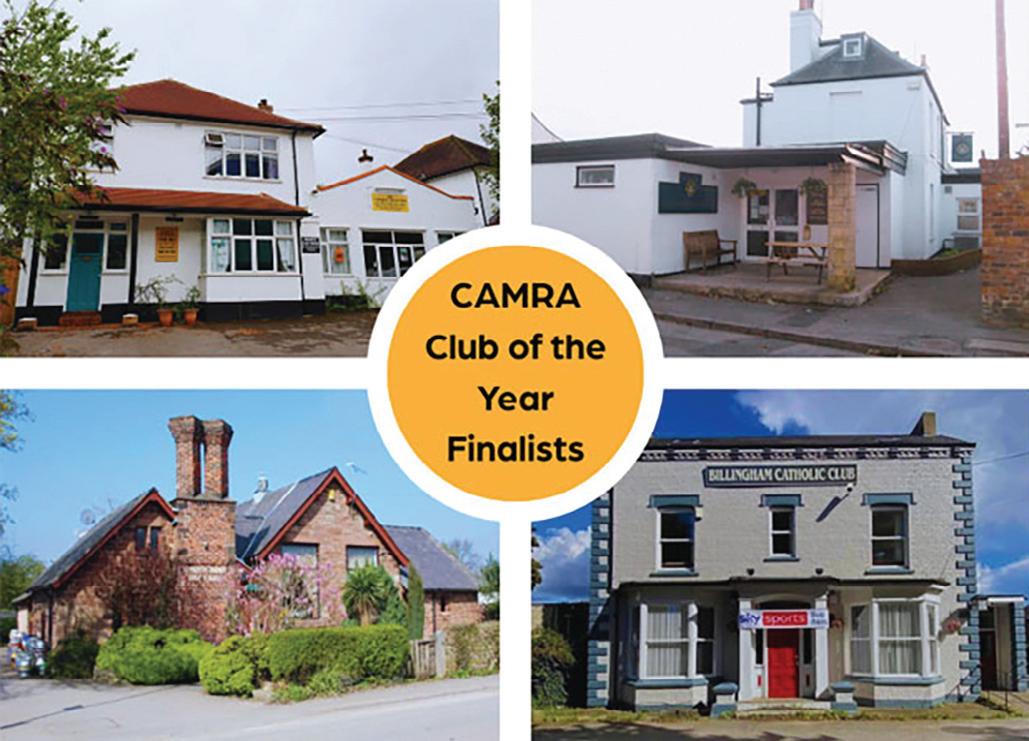
• Billingham Catholic Club, County Durham-The club is renowned for hosting weekly band nights and supporting the local live music scene. Featuring in the Good Beer Guide for almost 20 years, the club has gained a reputation for its ever-changing cask beer lineup, serving 150 different beers annually. The club stages regular beer festivals throughout the year, in particular the annual garden party in August, which raises money for local charities.
• Orpington Liberal Club, London-Run by a committee of cask beer enthusiasts, the club has a particular focus on local brewers and microbreweries, with up to five cask beers available, including a stout or porter and a changing range of real ciders and perries. Live music is a key element of the club, hosting the Orpington Jazz Club. The club runs beer festivals twice per year and frequent “Meet the Brewer” evenings.
• Cheltenham Motor Club, Gloucestershire-Formed in 1906, this friendly and welcoming club has won the overall Club of the Year three times. The bar is decorated with motoring paraphernalia and has six cask beers on tap and at least one cider plus a range of bottled Belgian beers. The club hosts local darts and pool teams plus an annual beer festival, along with regular “Meet the Brewer” and takeover evenings. The top four were announced Wednesday 26 November at Club Mirror’s Club Awards at the Athena in Leicester. The overall winner will be announced in early 2026.
Phil Gregg, CAMRA Club of the Year Co-ordinator said: “Clubs are important social hubs for communities across the UK. These fantastic finalists sum up everything that is great about the club scene: Friendly and inclusive spaces with top-quality cask beer, real cider and perry. I do not envy those judging the overall winner, as the quality of candidates for the Club of the Year competition seems to get better each and every year! I encourage everyone to visit our top four clubs to experience them for yourself or support your local club.”

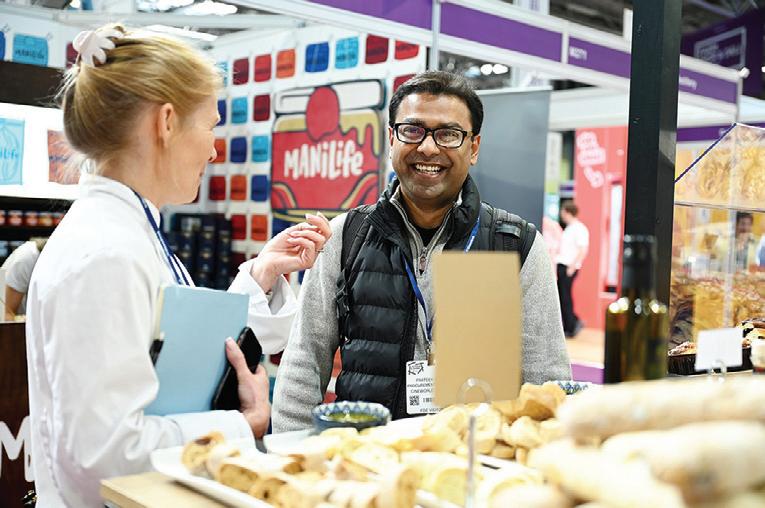
Shaping the future of retail and hospitality, The UK Food & Drink Shows return in April packed with innovation, inspiration, and fresh ideas.
25,000 visitors and 1,200 exhibitors are expected to come together for the event, which enables businesses from across the food and beverages industry to network, see the latest innovations and gain invaluable insights.
Brands exhibiting at the show include Booker, Coca-Cola, Franklin & Sons, LavAzza, itsu, My Coffee Station, Radnor, Samworth Brothers, Tenuta Marmorelle and Tudor Tea and Coffee – to name just a few.
Visitors can explore and discover aisles packed with the latest product and services across hospitality, foodservice and retail. New for 2026, are the dedicated Coffee Shop & Café and Future Foods spotlight areas.
Taking place at the NEC Birmingham from Monday 13 to Wednesday 15 April, The UK Food & Drink Shows is an umbrella event that comprises four shows, each targeting a sector of the industry:
• Food & Drink Expo inspires the future of retail and hospitality and is where the UK’s vibrant food and drink community come together - the ultimate destination for discovering fresh ideas, forging powerful connections and gaining insights that shape the future of food.
• Farm Shop & Deli Show drives growth in speciality retail and brings together the best quality local and regional produce, alongside the latest in equipment, labelling and packaging solutions.
• National Convenience Show is the biggest event for the convenience retailing sector and where visitors can discover what’s next in convenience retailing.
• Forecourt Show powers the future of forecourts and is where visitors can discover the latest in forecourt innovation. The UK Food & Drink Shows is organised by business information provider William Reed, publisher of digital and print media including The Grocer, Restaurant and
www.ukfoodanddrinkshows.co.uk
Publicans in England in Wales have reacted with fury and dismay at the realisation that far from receiving clearly promised help with their business rates, the majority will instead be hit with huge hikes in their new bills, rises that will close thousands of pubs.
In the Budget speech, the Chancellor gave the impression that the Government would at last deliver long promised and meaningful reform to pubs business rates and that they were ‘supporting pubs’. However, publicans are saying that she misled the House of Commons as the reality is that pubs in England Wales will see huge rates RISES in April next year.
The awful reality facing many publicans is that they will see huge hikes in rates bills, due to the shocking and deeply suspicious revaluation of rateable values, which suddenly sees them – and rates bills for pubs – rocket, despite so many pubs struggling due to cost pressures and the cost-of-living crisis.
The Campaign for Pubs has written to the Chancellor and the Secretary of State for Business urging them to scrap the revaluation, investigate how it has happened, when clearly the values are nonsensical compared to trading conditions and levels of trade for pubs.
Distraught publicans took to messaging each other with comparisons of the increases they face, despite the changes to the multipliers announced yesterday by the Chancellor. Some pubs face rates hikes that double or treble their annual rates bill, which immediately puts them out of business.
To give just three examples that have been shared with us, from publicans seeking their new RV:
• One pub with current rateable value of £18,000 changes to an RV of £73,500 from April
• One pub with current rateable value of £22,000 changes to an RV of £86,000 from April
• One pub with current rateable value of £50,000 changes to an RV of £183,000 from April
These are shocking – and wholly unjustified – and will lead to huge hikes in annual business rates, putting many pubs out of business, with not only the loss of income for the publican and their family, but also the loss of all the jobs at the pub and the impact on the local economy and suppliers, including local breweries.
Not only do pubs lose the current 40% business rates relief in April, which had already been slashed from 75% in April this year, but the publication of the new rateable values (RVs) by the Valuation Office Agency
(VOA) has revealed huge hikes in rateable values which will mean massive increases in annual business rates bills for most pubs.
The newly published rateable values bear no relation to the reality of pub profits or current trading conditions and the strong suspicion is that they have been deliberately engineered to be high – so the Campaign for Pubs has written to the Chancellor and to the Secretary of State for Business, calling for the revaluation to be scrapped and for an investigation into how such absurd valuations for pubs have been calculated.
The Government did announce a permanently lower rate for retail, hospitality and leisure setting the new multiplier at 5p below their national equivalent and promised a package worth £4.3 billion over the next three years will support (all businesses) as they transition to their new levels. But with the outrageous and unjustifiable increases in pubs rateable values, this will not stop many pubs’ rates bills rocketing – and will force many publicans out of business.
In the Budget speech, the Chancellor gave the impression that the Government would at last deliver long promised and meaningful reform to the business rates system they knew was unfairly penalising pubs.
Currently the 39,989 pubs and bars in England and Wales account for just 0.4% of business turnover but pay 2.1% of the national business rates bill.
However, in yet another letdown, the Government has ignored this and left the current deeply dodgy “FMT” system of calculating pubs business rates in place, a system which also penalises many publicans with excessive rent levels, as well as rates.
Pubs rateable values are based on a small and unrepresentative sample of pubs and also based on the contrived ‘Fair Maintainable Trade’ (FMT) system. This deeply flawed methodology, which was introduced as a result of lobbying by the big pubcos who use the same disputed methodology to set unfairly high rents for their own tenants, sees pubs rates charged on the basis of an assumed turnover figure, rather than square footage.
This notional turnover is known as “Fair Maintainable Trade” (FMT) and it is supposed to be an expert assessment of what an averagely competent “Reasonably Efficient Operator” (REO) might turnover in a given site in normal trading conditions. It is a system that has consistently produced highly variable results, with valuations for individual sites often showing wild variations with each three year valuation cycle. It has resulted in pubs as a sector paying more than twice what they should overall compared with other retail businesses as it sets pubs rateable values at a higher average rate than for other sectors.

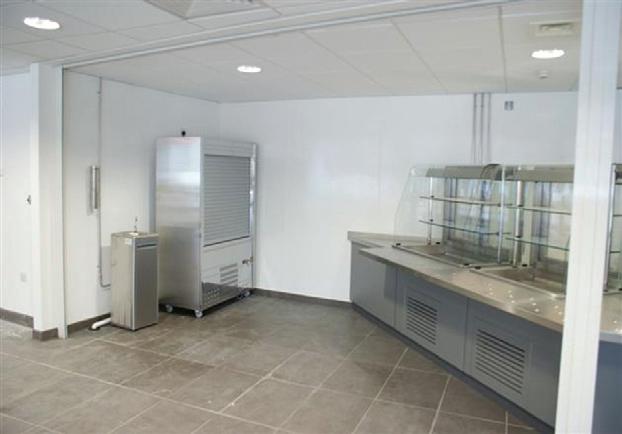
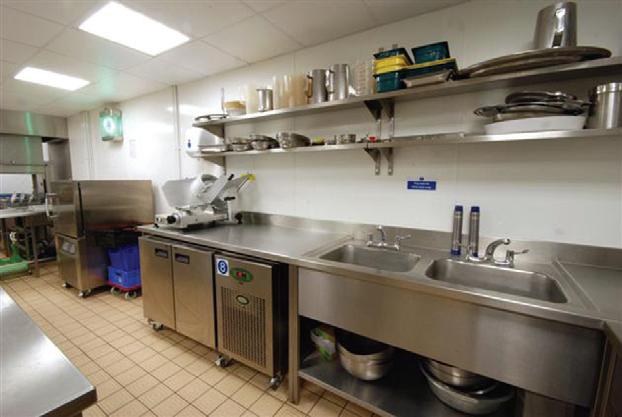
• Available in White & 10 new exciting colours
• Complemented by colour coded matching trims
• Fire rated to BS476/7 Class 0
• Sheet sizes 2440 x 1220mm & 3050 x 1220mm
• Range of cladding sealants & adhesives
This latest revaluation, just like its predecessors, bears no relation whatsoever to the reality of trading for pubs all over England, and the Campaign for Pubs is calling for a full investigation into this.
The Campaign for Pubs is calling on the Government to do 3 vital things, unless it wants to sound the death knell of our world famous culture, something for which they would never be forgiven:
• Cancel the April revaluation, which is so clearly flawed, unjustifiable and suspicious – and use existing values from 2026-2027
• Commission an investigation, independent of the VOA, Government and the pub sector into how these absurd valuations have been calculated and why.
• Deliver the genuine reform to pubs business rates from 2027 – 2028 dropping the discredited and dubious Fair Maintainable Trade system for calculating pub rateable values.
The Campaign for Pubs has also written to the Business and Trade Select Committee as there must be an investigation into how this dodgy revaluation has happened and an investigation into the whole discredited way pubs rates are calculated.
Pubs can look at the new valuations on the Valuation Office Agency at https://share.google/L4vu76etd4DAWxtk2
Dawn Hopkins, Vice-Chair of the Campaign for Pubs, and a licensee in Norwich said: “The one thing in the Budget that was sold as good news for pubs, has turned out to be the worst news of all for the vast majority of them. This is a Business Rates Betrayal by this Government. The appalling reality is that the majority of pubs will see huge hikes in business rates
“We were misled by the Chancellor and are facing destruction due to the indefensible revaluation of pubs, which bears no relation to the reality of our businesses and the current levels of trade. It is deeply suspicious how such artificially inflated rateable values have been calculated.
“We are calling on the Government to scrap the revaluation immediately, launch an independent investigation and commit to genuine reform from 2027, scrapping the highly dubious and unfair ‘Fair Maintainable Trade’ system of calculating pub rates and rents and coming up with a fairer system. Otherwise this Government will cause more damage to pubs than any other Government in history and will never be forgiven”.

By Fiona Dickie – Pubs Code Adjudicator (www.pubscodeadjudicator.org.uk)

The Pubs Code Adjudicator’s annual tied tenants’ satisfaction survey results were released this summer. For tied tenants with the six largest pub companies in England and Wales – Admiral, Greene King, Marston’s, Punch Pubs, Star Pubs, and Stonegate – it’s a must-read. An average of 61% of tenants are satisfied with their relationship with their pub company. The overall level of satisfaction is stable from last year. So, without much change to overall satisfaction levels year-on-year, what can the PCA, pub companies and tied tenants learn from this? One important thing to note is that there is significant variance in tenant satisfaction between pub companies. Another is changes in tenant satisfac-
tion by pub company that have taken place over time.
This year’s survey showed that overall, Admiral and Greene King tied tenants are the most satisfied (at 79% and 78% respectively). Lowest satisfaction ratings were for tenants of Punch (61%) and Stonegate group (43%). Marston’s has seen a 7% drop in tenant satisfaction year on year, while over the last two years Star has seen a 15% jump.
While we carefully monitor compliance with the Pubs Code, for example, through self-reported breaches, annual compliance reporting, and compliance disputes brought to arbitration, surveying how satisfied tied tenants are tells us a lot about how smoothly the tied relationship is working.
Tied tenants have important rights under the Pubs Code. These rights exist to ensure fair dealing from the pub company, and include fairness when taking on a new agreement, transparency in rent negotiations, and the right to choose whether to go free of tie when renegotiating the rent under the Pubs Code. It is clear to see that fairness is the golden thread that runs throughout the Code. These rights are based on two core Code principles – fair and lawful dealing by pub companies towards their tied tenants, who should be no worse off than if they were free of tie.
There are many external economic factors which may affect tied tenant satisfaction, but if the spirit as well as the letter of the Pubs Code are embedded in all areas of pub company practices, I would expect to see this reflected in tied tenant attitudes to their relationship with their pub company. Every day we are working to enforce the Pubs Code – and
having insight from across the tied industry helps us to know where to focus that attention. For the regulated pub companies, there are lessons to be learned from this year’s data – and I look forward to repeating this exercise next year to see the results of pub company efforts to improve their scores results. The question they should ask themselves – are we confident our tied tenants are being treated fairly in every dealing with us? If the answer is not yes, these are critical areas to address in how they run their tied business.
To find out more about the Pubs Code, please visit our website .
Every year the PCA (via IPSOS the independent research company) runs this survey to understand the views of 1,200 tenants tied to the six largest pub companies in England and Wales – Admiral, Greene King, Marston’s, Punch Pubs, Star Pubs, and Stonegate – whose rights are protected by the Pubs Code. Our findings represent 15% of the tied pub estate.
In November 2025, the PCA published new, in-depth data tables from its 2025 Annual Tied Tenants Survey, on each of the six regulated pubowning businesses who are subject to the Pubs Code. The new detailed data release represents the biggest publication of data on tied tenant satisfaction that the PCA has ever issued.
You can read all the results from this year’s survey on the PCA website
UKHospitality has called on the Government to reconsider proposed reforms to Inheritance Tax that could devastate family-run hospitality businesses across the UK, in both its Budget submission and evidence to the House of Lords Economic Affairs Finance Bill Sub-Committee inquiry on the issue. The trade body warns that changes to Business Property Relief (BPR) risk forcing the sale of viable businesses, undermining generational succession, weakening rural and coastal economies, and reducing reinvestment and long-term tax receipts.
Recent member survey data reveals that 47% of family-owned hospitality businesses expect to be directly affected, with 51% cutting back investment and a fifth anticipating being forced to sell up.
IN ITS RESPONSE, UKHOSPITALITY IS CALLING FOR:
• A pause and extension of consultation with full sector engagement
• A delay to implementation until at least 2029
• Preservation of the principles behind APR and BPR to safeguard productive capital and generational continuity
Kate Nicholls, Chair of UKHospitality, said: “These reforms are flawed in design, rushed in process, and unfairly target small and medium-sized family businesses. Without changes, many operators will be forced to sell assets in weak markets, with devastating consequences for jobs, investment and communities.
“The principle behind Business Property Relief was to safeguard family-run businesses, but these changes sadly do the opposite. I urge the Government to think again and reconsider these reforms.”
Simon Collinson, Director of Oak Taverns Ltd, said: “Our business was set up in 1991 and is still currently owned by our parents, both now in their eighties. It is now operated by a second generation of me, my brother and sister.
“We have invested heavily in freehold pubs over the years on mostly closed, failing and under threat pubs
Fuller, Smith & Turner, the premium pubs and hotels business, is delighted to announce The Coach & Horses, Soho [29 Greek St, London W1D 5DH] is the 2025 winner of its Pub of the Year competition – The Griffin Trophy. The competition is open to all Fuller’s 185 Managed Pubs and Hotels and 151 Tenanted Inns and sees the winner take home the coveted Griffin Trophy.
The Coach & Horses, managed by Ali Ross, is a Soho institution – loved by regulars and tourists alike. It is frequently listed as one of the best pubs in London – having made it on to the Telegraph’s best 500 pubs in England list and taking one of the top spots in Time Out’s 50 best pubs in London. The Coach & Horses is a lively corner of Soho with inclusivity at its heart – where there is always a warm welcome from Ali and the team. The pub offers an outstanding selection of cask and keg beers on tap and a fantastic line-up of crisps, nuts and snacks – the perfect accompaniment for a Soho pint.
A truly iconic pub, The Coach & Horses been the setting for a number of photoshoots – most recently, for Alexander McQueen – features frequently as the backdrop for TopJaw’s popular social media content and has hosted productions of the one man play Jeffrey Bernard is Unwell. Jeffrey Bernard wrote for The Spectator for years and, like many other journalists, he was regularly found in The Coach & Horses, propping up the bar.
This year’s Griffin Trophy saw 12 pubs reach the final. The
by
in villages and small market towns. We have given back communities their local pub and created jobs in the process. Following the new IHT rules, the focus is no longer on growth but trying to decide which of our great pubs we will have to sell to pay the tax bill.
“No one ever bought a small- or medium-sized pub company to avoid inheritance tax by passing it down to another generation. We would urge the government to reconsider its reforms to BPR which would be devasting for many family-run hospitality businesses.”
Paul Milsom, Managing Director of Milsom Hotels & Restaurants, said: “I believe the government’s approach is incredibly short-sighted. While we understand the need for increased revenue, to put the viability of good family businesses at risk across the country is not the answer.
“This policy could lead to businesses being sold off to less committed investors or even collapsing, ultimately resulting in job losses and less tax revenue in the long run. The government really needs to rethink this and extend the consultation period to fully understand the economic impact.
“As it stands, this move feels like it was made without proper research and could be deeply damaging to the backbone of British industry.”
Elyse Waddy, Owner and Director of The Empire Hotel, Llandudno, said: “This policy ripped my heart out –all my life I have worked with the goals of preserving and improving my family business to pass on to the next generation. Now that is all for nothing.
“Why did I invest, cherish and sweat for it to be stolen from me just because I will have the misfortune to die.
“I have been a good employer and looked after my staff, supported local suppliers and tradesmen, helped the local community and paid all my taxes so in essence did all that was asked but my business will cease when I die. I will not allow the business to continue with that tax debt around its neck as it is just not a sustainable option.”

gories in the Griffin Trophy – Best City Pub; Best Town/Local Pub; Best Country/Village Pub; and Best Hotel/Inn.
Simon Emeny, Fuller’s Executive Chairman, said: “Ali has been with Fuller’s for 15 years and is no stranger to the Griffin Trophy – having won it at The Hydrant, Monument in 2016 and winning her category, Best City Pub, last year at The Coach & Horses. She has truly pushed herself and the team to take The Coach & Horses from category winner to Griffin Trophy winner – and seeing these subtle but impactful changes during our judges’ visit was inspiring.
“The Coach & Horses has been an institution for many over the years – and in her seven years as General Manager, Ali has carefully crafted it into most welcoming, famous and inclusive pub in this wonderful part of London. The Coach & Horses, Ali and her team are the epitome of one of Fuller’s core values – celebrating individuality. This is a truly well-deserved win.”
Ali Ross, General Manager of The Coach & Horses, said: “I’m over the moon to have won the Griffin Trophy. After winning my category last year, I was determined to take The Coach & Horses to the next level and secure the coveted Griffin Trophy. I’m looking forward to displaying it proudly behind the bar for the next 12 months. I’d like to say a big thank you to my team as well – their hard work played a key role in winning this trophy. We will definitely be celebrating the win in style.”
Chancellor Rachel Reeves’ claim that the Autumn Budget delivers the “lowest tax rates since 1991” for more than 750,000 retail, hospitality and leisure properties has been called misleading, after detailed analysis of the new business rates system showed most high-street premises will pay far higher rates than the headline suggests amid support for the high street falling by £420 million next year.
Reeves told MPs she would introduce “lowest tax rates since 1991” for the high street using “tax rates” in the plural but only one of the new multipliers is even close to the level seen in 1991 which will apply to only the smallest properties with much higher effective tax rates for the rest of the high street.
The Chancellor’s comparison hinges on the new 38.2p multiplier for Retail, Hospitality and Leisure (RHL) properties with a rateable value between £12,000 and £51,000. But Treasury costings also show that any property not receiving transitional relief will also have to pay a 1p supplement on top of those rates in a £785 million tax grab, meaning thousands of small RHL premises will actually face a 39.2p rate not the 38.2p highlighted in the Budget speech.
WHILST MEDIUM AND LARGE
INCREASE SHARPLY:
• £51,000–£500,000 RV: taxed at 43p, or 44p with the 1p supplement – nowhere near 1991 levels.
• Over £500,000 RV: taxed at 50.8p, or 51.8p with the supplement among the highest business rates multipliers ever applied, and more than 12p higher than the 38.6p national rate used in 1991/92.
• Under £12,000 RV: majority of RHL properties pay no business rates at all under Small Business Rate Relief, making the 1991 comparison irrelevant for them.
Support for the high street also falls by £420 million next year in a further contrast with the Chancellor’s
messaging according to global tax firm Ryan.
The current 40% RHL discount, capped at £110,000 per business, will cost the Exchequer £1.385 billion in 2025/26. From April 2026 it will be replaced by a system in which RHL multipliers are set 5p below the standard rate, funded by a new 2.8p high-value surtax on properties with a rateable value above £500,000.
That surtax will raise £965 million in 2026/27, a £420 million or 30% cut in high street support compared with the discount in place today according to Ryan analysis.
“The headline message doesn’t match the fiscal reality” said Alex Probyn, Practice Leader for Europe & AsiaPacific Property Tax at Ryan.
Probyn added “A large number of high street premises will pay far higher tax rates than in the early 1990s with many facing the highest rates ever applied. When you look at the total funding envelope, support for high street businesses falls by £420 million next year. The headline message just doesn’t match the fiscal reality.”
✔ A small subset of RHL properties will see a 38.2p multiplier
✘ Thousands of others will pay 39.2p, 43/44p or 50.8/51.8p
✘ A large number of high street premises do not receive 1991-level tax rates
✘ Total support for the high street shrinks by £420 million next year
Despite the Chancellor’s claim of delivering “the lowest tax rates since 1991”, the new regime results in lower multipliers for some but higher tax rates for many, accompanied by a substantial reduction in overall support for high street businesses.
After four years partnering with JKS Restaurants (JKS), JKS Pubs has been fully acquired through a private investment round led by Founder and Managing Director, Dominic Jacobs.
The transaction also marks a successful exit for the pub group’s seed investors who backed the business in 2021 through an Enterprise Investment Scheme. Backed by a new US-based private investor, the group will move forward in this exciting next phase of growth under a new name, Ardent Pub Group (Ardent).
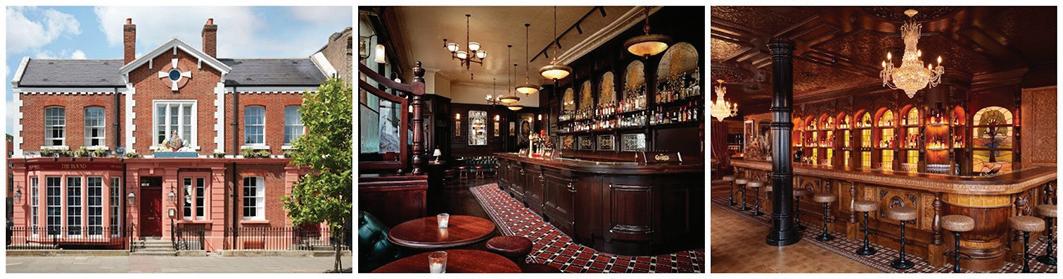
Their backing will enable the group to accelerate growth, targeting eight new openings across London and beyond in the next 3 – 5 years.
Since the reopening of The Cadogan Arms in 2021, the group has expanded with The George in 2022 and The Hound in 2024, continuing to advance its mission of delivering the gold standard of public houses. Ardent reports 20% year-on-year sales growth and over 40% year-on-year uplift in group level EBITDA, demonstrating strong performance despite industry-wide cost pressures and regulatory changes.
Ardent Founder and Managing Director, Dominic Jacobs says, “This is a hugely proud moment for me and for the Ardent team. I want to say a heartfelt thank you to Jyo, Karam and Sue for their belief, guidance and friendship over the past few years – we simply wouldn’t be here without them. I’m delighted that we can take forward the pubs we built together under a new banner: Ardent Pub Group.”
Jyotin Sethi, Co-Founder and CEO of JKS Restaurants comments, “Partnering with Dom and the team over the past four years has been an incredible journey, and this transaction represents a great outcome for all JKS

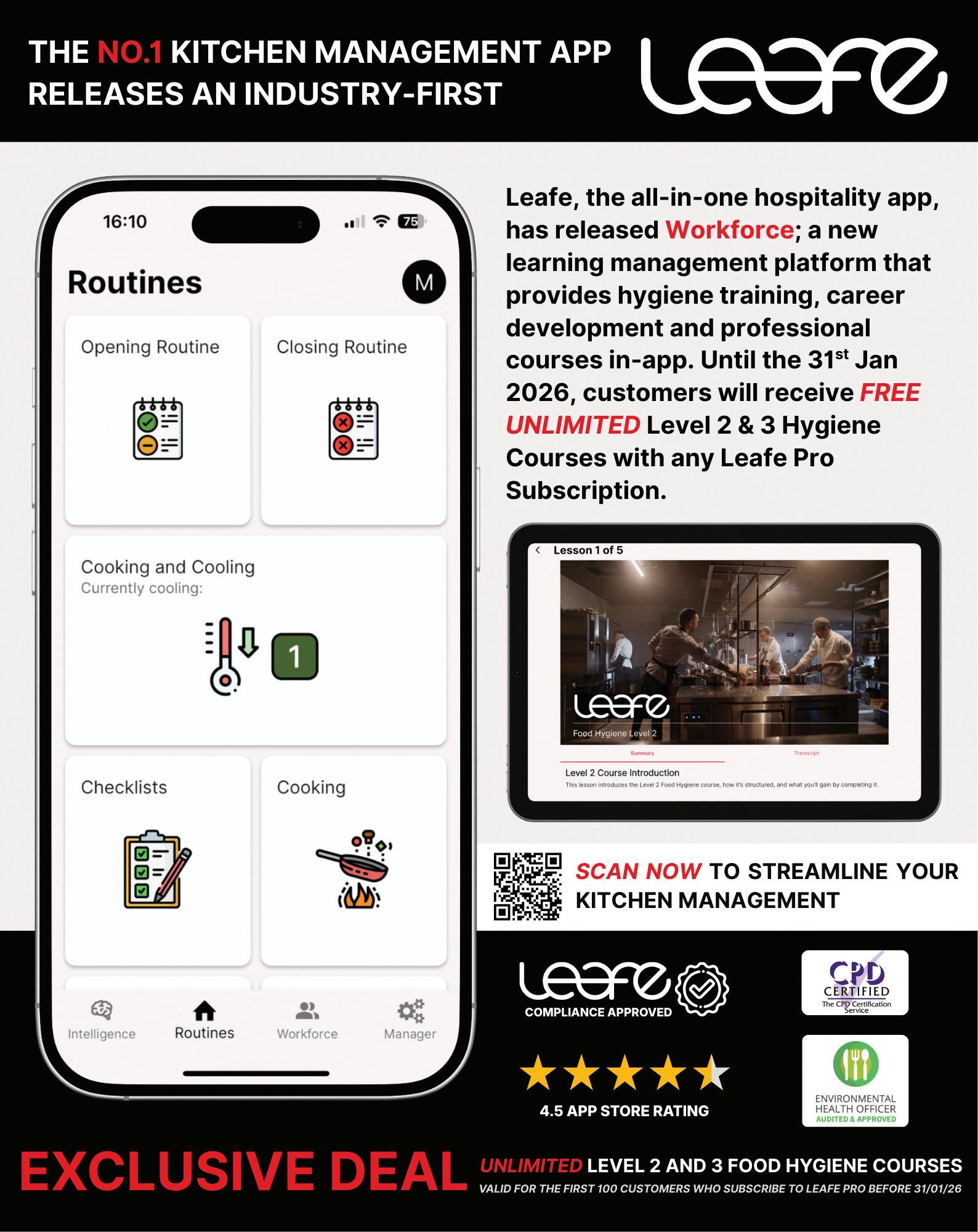
Hospitality operations app Leafe has launched an industry-first deal giving customers unlimited food hygiene training and certifications, designed to be affordable for both small businesses and multi-site groups.
Founded by chefs in 2021, Leafe is an all-in-one hospitality app that streamlines kitchen management by gamifying record-taking.
To celebrate the launch of the company’s new Learning Management System (LMS), Leafe is introducing a special offer for the first 100 customers who subscribe to Leafe Pro. Subscribers will gain unlimited access to Level 2 and 3 Food Hygiene Courses for a full year - providing thousands of pounds’ worth of training at no additional cost.
Leafe Pro represents a major step forward for food technology. Until now, restaurants have relied on low-tech tools or expensive consultants. Leafe delivers these capabilities in one accessible plat-
form, integrating smoothly into any operation.
Sam Chapman, Brighton-born Co-Founder and CEO, says: “We’re incredibly excited to open this offer to the public alongside our new LMS. It’s another way for Leafe to bring enterprise-grade benefits to hospitality businesses of any size, without the colossal price-tag.”
Serving more than 18,000 users across 800 sites worldwide, from food-trucks and cafés to stadiums and fine-dining hotels, Leafe is already a trusted tool. Marco, Owner of Brorritos, adds: “Leafe Pro lets us prioritise growth, safe in the knowledge that our food safety is being looked after.”
Leafe’s new LMS, Workforce, brings gamification and team engagement to career development using the app’s already acclaimed UI/UX design. Workforce delivers high-quality, CPD-accredited courses and exams, and as part of the launch, the first 100 new Leafe Pro subscribers will receive unlimited courses for an entire year. Leafe Pro is available now worldwide.

Existing customers can upgrade in-app, new users can start a 7-day free trial at www.leafeapp.com/pro. For more information, contact hello@leafeapp.com
Pubs stakeholders. Together, we’ve shaped what we believe a true modern British pub can be, and we’re immensely proud of what we have created – three brilliant pubs that are beacons of warmth and hospitality, with a brilliant team behind them. As Ardent embarks on this exciting new chapter, we look forward to watching their continued success and growth, and we have every confidence that they will set new benchmarks for the industry.”
By Josie Beal, Legal Director in the employment team at Birketts LLP

The hospitality industry is powered by people, the smiles, the service, the sense of welcome. People aren’t just part of the industry; they are its lifeblood. In a sector where service defines success, attracting and retaining the right people isn’t just important, its critical.
However, the sector has faced persistent staffing challenges. According to the Office for National Statistics, vacancies peaked at more than 112,000 last year. But a demographic shift might offer hope: over 50s now make up one-third of the hospitality workforce and their numbers have grown by 165,000 in just three years, a study by Caterer.com found. Data from the Institute for Fiscal Studies suggests there has been an increase in 50- to 64-year-olds returning to the workforce and, according to Rest Less, 70% of over 50s would consider a hospitality career.
Older workers can bring reliability, strong customer service skills, and experience that can enhance team stability and guest satisfaction. Research even suggests that businesses with a higher proportion of older employees can be more productive.
Age is a protected characteristic under Equality Act 2010, and employers should be mindful that recruitment strategies that target or exclude specific age groups risk discrimination claims. Employers should therefore avoid focusing exclusively on one demographic and instead ensure recruitment processes are inclusive, appeal to a broad range of applicants and do not disadvantage those with a particular protected characteristic (including but not limited to age).
Instead, employers should strive to adopt an inclusive recruitment strategy which will appeal to a wide range of applicants, including adopting an age friendly culture. Employers can take a number of practical steps. Inclusive job adverts and recruitment processes: employers should audit job adverts to remove any bias, including age bias, and ensure that the language used is inclusive – for example, in the case of age, avoiding agerelated language such as “young and energetic”. Employers should also consider how their recruitment processes could reach a diverse audience by, for example, allowing paper or in person applications in addition to applications online and via recruitment consultant.
DEI policies and training: employers should have policies and training in place covering diversity, equity and inclusion. In order to foster a genuinely inclusive culture, employers should ensure these are embedded in the workforce and ensure that managers and those involved in recruitment are trained in implementing these policies and practices, so that they lead by example.
• Flexibility: one of the key advantages within the sector is that there is often the ability to work flexibly, which can appeal to a diverse range of applicants. Employers may wish to showcase this as part of the recruitment process for example spotlighting part time, seasonal and job-sharing opportunities.
• Upskilling opportunities: employers should consider outlining the training, upskilling opportunities and support that will be available as part of the induction process. For example, in relation to the technology employees may be required to operate such as tills, card machines and online training programmes – to avoid discouraging applicants who may not be familiar with such technology.
• Culture and belonging: creating a sense of belonging and showcasing culture is a powerful recruitment and retention tool. To appeal to applicants of all ages, employers can showcase intergenerational teams in job adverts and social media. When candidates see themselves reflected in an organisation’s culture, they are more likely to apply and stay.
The rise in older workers joining the hospitality sector is encouraging given the staffing challenges faced by the industry. However, employers should avoid focussing on one particular demographic alone when considering recruitment strategies as this may risk disadvantaging other applicants and may be discriminatory under Equality Act 2010. Instead, employers should use these insights as a prompt to audit recruitment processes to ensure that they are inclusive and appeal to a wide range of applicants. This will include applicants of diverse ages, but also a wide range of other applicants. By embracing flexibility, inclusivity, and belonging, hospitality businesses can unlock a vital talent pool, helping to stabilise staffing and strengthen the sector for the future.
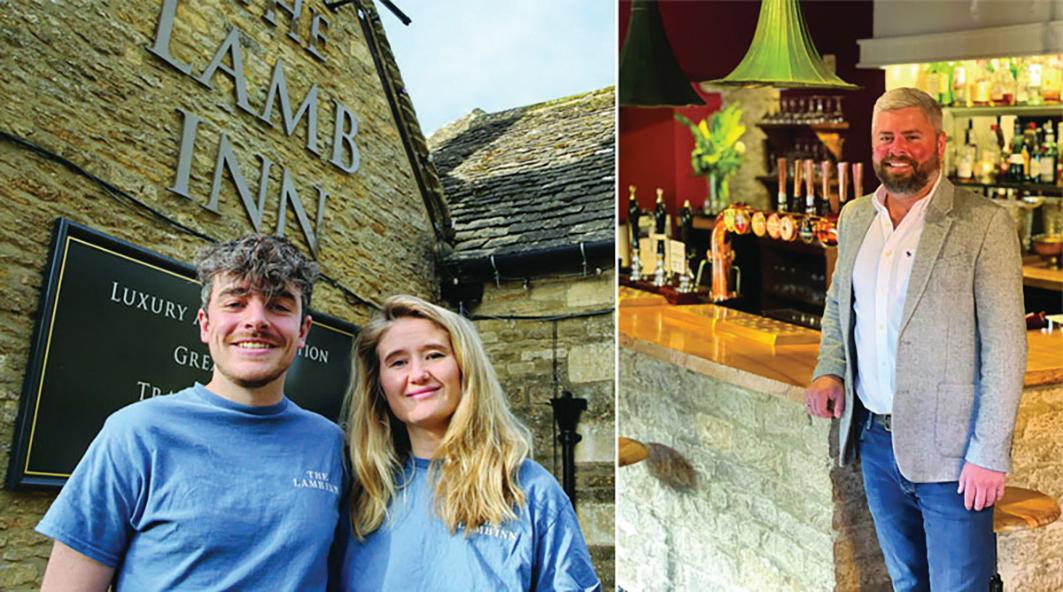
Both pubs are run by talented licensees: Elliot & Kath Cree at The Lamb Inn and Tom Downing at The Five Alls. Their hospitality skills, embracing food, drink and accommodation, ensure that guests enjoy a memorable experience on every visit.
Elliot & Kath are experienced chefs who have worked in Michelin Star restaurants around the world.
Since taking on The Lamb Inn in 2024, they have used their culinary skills to create dishes that blend international influences with locally sourced ingredients.
At The Five Alls, overnight guests stay in luxury in one of its nine bedrooms: four en-suite bedrooms above the bar and five cottagestyle rooms the pub garden, including a Family Suite. Tom took on the pub in 2024 and has grown the accommodation side of the business,
The winner of KP of the Year 2025 has been announced, and taking home the trophy is Ram Meadows, the head kitchen porter of Liverpool Football Club.
2025 is the 11th time the competition has been run since being started by Winterhalter back in 2013. Ram takes home the award for being the lynchpin of Liverpool’s kitchen team, which on match days will often serve more than 10,500 covers, covering everything from street food to fine dining as part of Anfield Stadium’s food offerings.
As well as the KPOTY trophy, Ram won vouchers, and a celebratory meal. In addition, the club receives a piece of Winterhalter equipment worth up to £10,000.
The club’s in-house catering operation is on a huge scale. On match days, Ram oversees around 70 kitchen porters working alongside 200 chefs across 11 kitchens. His nomination praised his ability to liaise with his colleagues not just in the kitchen and front of house but with stadium operations, retail, maintenance and safety too, ensuring that everyone is working together to “make the magic happen.”
“Ram’s work rate is phenomenal, he just doesn’t stop,” says Paul Cuttill, Liverpool FC’s chief operating officer. “I think it’s infectious to some degree – if anyone’s head goes down he picks them up and puts a smile back on their face. He’s a morale booster in the kitchen!
“Having people like that around is special, because you're going to hit
with a recent refurbishment of all rooms to give them a cottage feel. Brakspear chief executive Tom Davies said: “It is always wonderful when our licensees win accolades for their achievements, and we are delighted for Elliot & Kath and Tom.
We are lucky to work in partnership with these talented professionals who have turned our pubs into successful and sought-after destinations for delicious food, luxury bedrooms and warm, welcoming hospitality.
“Congratulations to the teams at both pubs on this well-deserved recognition. We’re confident more awards will follow!”
The Cotswolds Awards 2025 are a free, independent annual award scheme based on nominations and votes from people living in or visiting the Cotswolds. Tens of thousands of nominations were received between January and September, with voting taking place during October and November and the winners announced on 1st December.
The awards are organised by the Cotswolds Concierge.
points where there is pressure. You need a Ram who’s going to sort stuff out, and that’s what you get with him.”
Winterhalter UK’s head of sales, Glenn Roberts, presented the award. “Ram clearly goes over and above to support his team and the entire operation at Anfield,” he says. “Everybody working at such an iconic site is committed 100% to providing the very best they can for customers and fans.”
“It’s a surprise to win this award,” says Ram, “But it’s nice to have your hard work recognised. KP’s need to have a lot of patience and be prepared to work hard, but when you have good people around you on your team, it’s easy.”

As well as the main winner, two highly commended finalists will receive a trophy and vouchers. They are Jose Farinha of the Honourable Society of Lincoln’s Inn, London, and Venetia Wisher of Genuine Dining.
The judging panel for the 2025 KP of the Year consisted of Dipna Anand, chef-owner, Brilliant Gastro; Kate Brooke-Green, head of food, Mollie’s Motels; Steve Groves, group development chef, Restaurant Associates Venues; Kerth Gumbs, head chef, Fenchurch at the Sky Garden; Lisa Jenkins, chief executive, Royal Academy of Culinary Arts; and Stephen Kinkead, managing director, Winterhalter UK.
Winterhalter provides a total solution for dishwashing and glasswashing, from pre-sales advice to after-sales service, training and maintenance, with sustainability fitted as standard. Alongside its market-leading dish washers and glass washers, the company’s range includes utensil washers, advanced water treatment machines, and cleaning detergents and rinse aids.
For further details, call Winterhalter on 01908 359000, visit www.winterhalter.com/uk-en/ or email info@winterhalter.co.uk.
Britain's late-night economy has contracted by 4.6% over the past 12 months, as bars, clubs and casinos face mounting pressure from escalating operational costs, safety concerns and inadequate transport infrastructure, according to the latest Night Time Economy Market Monitor from CGA by NIQ and the Night Time Industries Association
The dip means the number of late-night bars, clubs, casinos and similar venues is now 28.0% below the levels of March 2020, when the COVID-19 pandemic triggered a wave of closures across the sector. It highlights the cumulative effect of years of financial, regulatory and environmental pressures on an industry that has long been at the heart of Britain’s cultural and social lives, and the urgent need for support in the government’s forthcoming Budget.
Sales data from the CGA RSM Hospitality Business Tracker reinforces the fall in late-night spending. September’s Tracker figures show year-on-year growth of 2.5% for drink-led pubs, but a sharp drop of 6.8% for bars, which usually operate later into the night. Across all hospitality channels, the 5pm-to-7pm slot has now overtaken 7pm-10pm as the biggest earning trading period of the average day.
RESTRICTIVE POLICIES
The latest wave of closures reflects the restrictive policies and neglect endured by the late-night economy, alongside rising operational costs in rent, wages, energy, licensing fees and other areas. They are also the result of a shift in consumers’ habits towards earlier evenings, driven by worries over safety and the declining availability of reliable late-night transport. Data from the Night Time Economy Market Monitor shows around a quarter (24%) of high-tempo night-goers now consider security when planning visits, while even more (28%) weigh up transport options, often leaving venues emptier after midnight.
These concerns have created sharp contrasts between the fortunes of Britain’s late-night and evening economies. While late-night venue numbers have tumbled, the Monitor shows licensed premises in the evening economy increased by 0.9% in the 12 months to September, and they now sit only 7.4% behind the level of March 2020.
Smaller, independent venues have been particularly hard hit by the long-term financial and environmental squeeze, the Monitor reveals. The number of independently run late-night sites has fallen by 30.6% since the start of the pandemic – double the decline of 14.5% among larger hospitality groups, who have been better able to absorb inflation and regulatory burdens. As the Chancellor’s Budget nears, the crisis highlights the urgent need to deliver the late-night infrastructure that is needed to support the late-night economy.
The Night Time Economy Market Monitor delivers many more insights into the late-night sector, including an uneven geography of resilience in the late-night sector, with bars performing better than nightclubs, and northern cities and Scotland sustaining a higher proportion of pre-COVID venues than London. “ENGINE FOR JOBS”
Mike Kill, CEO of the Night Time Industries Association, said: “For too long, government policies have suppressed a vital part of Britain’s cultural and social life. The late-night economy is an engine for jobs, tourism and community vibrancy, but it is being systematically squeezed. Rising costs, safety fears and unreliable latenight transport are creating barriers to spending and closing doors. The Budget is a chance to reverse this trend and recognise the late-night sector as the cultural and economic powerhouse it truly is.”
Reuben Pullan, CGA by NIQ’s senior insight consultant, said: “These numbers are more proof of the huge pressures facing late-night businesses. While many have responded well to seismic changes and challenges, oth-
ers – especially smaller operators – have found it impossible to recover from COVID and its aftershocks. Consumers remain eager to go out, and demand for hospitality experiences is changing rather than collapsing. Christmas and New Year trading will bring a much-needed boost, but we’re likely to see more closures into 2026 unless the late-night economy gets the support from central and local government that it deserves.”
This latest “call for action” follows a warning from trade bodies that more than half of hospitality businesses warn they will be forced to take drastic action if they do not receive adequate support in the Budget next week.
According to a new national survey by hospitality trade bodies, 58% of businesses say they will have to reduce the number of staff they employ and/or increase prices if the Budget does not deliver necessary business support.
The warning from members of UKHospitality, the British Institute of Innkeeping (BII), the British Beer & Pub Association (BBPA) and Hospitality Ulster comes at a time when hospitality is under intense financial pressure, with jobs, livelihoods and communities already hit hard by the impact from last year’s Budget.
The survey reveals that almost three-quarters (73%) of businesses have less than six months of cash reserves. Three in 10 businesses (29%) report they have no cash reserves – a record high.
Members also reveal that:
• Half of businesses have been forced to cut staff and 60% have reduced staff hours. On average, the number of hours available to staff has decreased by 8%, compared to this time last year.
• 70% of respondents have already increased prices since April, when £3.4bn of additional annual cost hit hospitality. On average, prices have increased by 5% since April.
The worsening economic situation facing hospitality businesses requires ‘urgent action’, the group said, with members citing the maximum possible business rates discount (61%), amending April’s changes to employer NICs (54%) and a cut in VAT (84%), as the Government actions that can help their business.
In a joint statement, the trade bodies said: “The situation facing our local pubs, neighbourhood restaurants and other hospitality venues is becoming increasingly perilous.
“Economic pressures are mounting at every turn and businesses have been forced to make tough decisions to cut jobs, reduce staff hours and put up prices. Many have already had to close the doors for the last time, leaving communities without the support local hospitality venues provide as a local hub.
“For those surviving, the situation is becoming more worrying. Cash flow is becoming a serious issue, with three-quarters of businesses with less than three month’s cash reserves. Those with no cash reserves - a critical safety net - has reached a record high.
“This is an urgent situation that demands urgent action at the Budget.
“No one wants to see jobs and communities hit even further, but it’s clear that they will once again be impacted if there is not adequate support for our sector at the Budget next week.
“Lower business rates, amendments to employer NICs and a cut to VAT are the measures that will deliver the relief and stability that hospitality desperately needs. We urge the Chancellor to act next week to protect cherished local venues, which support local jobs, economies and communities.”
By Matthew Biboud-Lubeck, General Manager EMEA,

The hospitality sector has high aspirations for AI. Companies are keen to explore its potential to transform pricing, create customer offers, generate content, enhance guest support and more. But, in reality, most businesses are still at the early stage of adoption, with applications currently small-scale or experimental.
Recent Amperity research has revealed that while 96 percent of businesses in hospitality are planning to maintain or increase AI spending over the next 12 months, less than a quarter of leaders feel ‘very confident’ in their ability to deploy AI at scale across operations.
A lack of technical expertise and high costs are cited as reasons for this. Critically though, it’s a lack of quality data and the inability to act on customer insights that are undermining the effectiveness of AI investments.
Businesses recognise the contribution AI can make to keeping pace with competition and meeting rising consumer expectations. It has the potential to enhance personalised interactions, tailored experiences and the ability to present real time offers based on customer preferences.
Yet, only a third are currently using AI for customer-facing applications. Cost is undoubtedly holding some businesses back. Four in ten respondents said the expense of AI tools is impeding their ability to scale initiatives across their organisation. AI investments can quickly snowball, so businesses need to set clear and specific goals that will not only increase the chances of success but also help keep expenditure under control.
A lack of technical skills is also inhibiting progress. Customer support, marketing and sales are the business functions most likely to use AI in hospitality. But less than a third of professionals in these teams are able to manage customer data independently of the IT department.
This is an issue that needs attention. Intuitive tools like AI agents can help reduce the dependence of non technical teams on IT colleagues but businesses must also consider formal AI training. Only a third of hospitality businesses are currently providing this. As companies seek to ramp up productivity using AI, it’s going to be critical that users understand how it adds value, where its limitations lie and what safeguards should be put in place to ensure responsible use.
Any AI deployment depends on quality data, but this is also an area that needs attention in hospitality. Data siloed across different systems and channels often leads to inaccurate reporting, increased risk of human error and higher IT costs. More than half of respondents in the Amperity study said their customer data is fragmented or incomplete, and less than a quarter said they were very confident in their ability to understand and act on customer behaviour.
The creation of duplicate customer profiles is a common problem. Customers tend to engage with hospitality brands across several touch points including email, mobile, apps and in-store. They also use various identifiers such as abbreviated names, alternative email addresses, etc. This can lead to a customer being treated as if they are different people on different channels.
AI tools drawing from un-unified data will be making decisions based on partial or incorrect insights. This will reduce the effectiveness of cross-channel engagement, impede personalisation and potentially result in customers receiving conflicting communications.
Conversely, when businesses consolidate data from their multiple consumer touch-points, customer-facing AI solutions can make informed decisions based on all previous customer engagements – and take action fast, in a meaningful way.
This data still needs to be in a format that is accessible and usable, however. To achieve this, organisations need a customer data platform (CDP) that can clean and improve the accuracy of their information.
These platforms provide a solid data foundation - a great advantage when it comes to AI deployments. Our research shows that businesses with a CDP are twice as likely as those without, to be confident about acting on customer behaviour – and twice as likely to also be using AI in guest facing applications.
The latest generation of CDPs – AI-empowered customer data clouds – also ensure that, in addition to consolidating data, any identity issues are detected and resolved automatically. This provides businesses with a true, 360 degree profile of each customer, based on all interactions across each channel.
Although this should be a key area of focus, only 18% of hospitality businesses say they are currently deploying AI to ensure customer data is unified and ready for use in marketing or analytics.
The hospitality sector is clearly at an inflection point on its road to full AI adoption. Businesses are starting to move from pilot projects and early stage experimentations to broader deployments and scaled execution. But to enable AI-powered customer experiences, they first need to solve their data problems.
Enterprise level data management solutions and modern CDPs are allowing businesses to do this. Providing a solid data foundation holds the key to understanding customers and succeeding with customer facing AI applications. Enabling meaningful connections will build brand loyalty, drive up the lifetime value of a customer and, ultimately, give businesses the competitive edge.
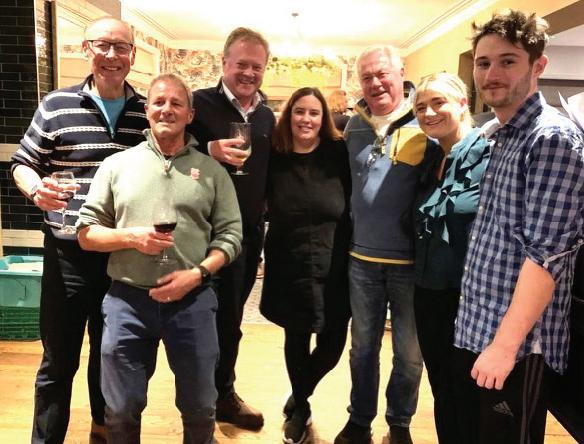
Lindford pub The Royal Exchange celebrated its 10th anniversary last Saturday (15 November) with a party to thank its customers and staff – and offered selected drinks at 2015 prices during a ‘back to the future’ session in the evening.
The celebrations marked 10 years since The Royal Exchange reopened in 2015, after it was saved from permanent closure by a strong Save the Pub campaign by the local community.
Around 100 people, including Gregory Stafford, MP for Farnham and Bordon, filled the Brakspear pub on Liphook Road to enjoy food, drink and retro entertainment from local band ‘Rock of 80s’. During the price drop session, some pints of beer were selling at just £3.60, resulting in a very busy bar!
Chloe King, one the pub’s three business owners with Aaron Morris and Amy Pieri, said: “The three of us started working at The Royal Exchange around seven years ago, with the aim of creating a warm, welcoming ‘home from home’ for everyone who comes through the doors.
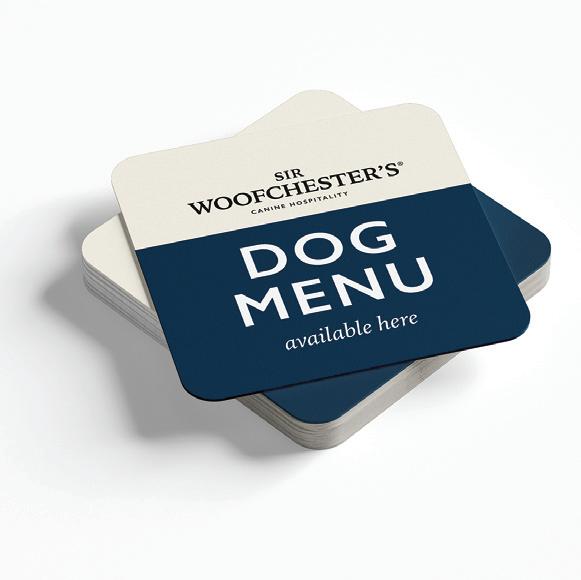
Sir Woofchester’s has the UK’s largest and most specialised product range for dog-friendly hospitality businesses, including several personalised products.
Our Dog Menu features a range of Treat Pots, Dinner Bowls, Dog Drinks and Snacks, displayed with eyecatching point of sale
Choose between:
-“All day breakfast” snack bar: a delicious innovative treat for dogs on-the-go!
-“Sleepy Bones” treat pot: relaxing bedtime dog treats.
-“Dog Welcome Pack” PERSONALISED: an nicely presented pack containing poo bags, a ball toy and a pot of Sleepy Bones. (Note: the container also serves as a temporary waterbowl!) YOUR COMPLETE SOLUTION
Water bowls, waste bags, accessories, top tips & everything else you need to be more dog-friendly.
To ensure the highest quality products, we hold a DEFRA registration, a GB Pet Food Manufacturers registration and much of our range is BRC or SALSA certified.
We look forward to working with you.
DOGFRIENDLY BENEFITS
David & the Sir Woofchester’s team
“We are delighted that our vision for the pub has become a reality, and hugely grateful to everyone who has made it happen: our brilliant team whose hard work and dedication front of house and in the kitchen is the heart of the pub, and the reason why customers return time and again. And our fantastic, loyal customers who have filled the pub with laughter and life and supported us through highs and lows.
“We raise a glass to all of you. Here’s to 10 brilliant years behind us and many more ahead!”
Gregory Stafford said: “It was lovely to celebrate The Royal Exchange’s 10th Anniversary – a local pub at the heart of Lindford. Well done to Amy, Chloe and Aaron for all their hard work to keep the pub going. As many of our pubs are facing a difficult time at the moment, it is wonderful to see their dedication matched with strong local support, and I look forward to being back for a drink very soon.”
You may also wish to consider the following benefits of working with Sir Woofchester’s, to help elevate your wider business:
• Increased average customer spend
• Increase repeat visits
• Enhances staff engagement & enjoyment
• Link to other initiatives – charityfundraisers, online competitions
• Great social media content & word of mouth marketing
• Contributes towards improved reviews
• Fully compliant with legislation etc
WHY DOG-FRIENDLY?
The number of UK dog owners has increased by over 25% since 2020
Many of these are new ‘first time dog owners’ (including pre-family millennials)
Dog owners like to treat their canine like one of the familywhen they visit your establishment
The dogfriendly trend in hotels & tourism etc has been increasing for over a decade!
The pandemic has seen a behaviour change, with more dog owners choosing the UK for their short breaks or annual holidays
The cost of boarding kennels & pet-sitting has risen, so your customers now increasingly want to bring their dog with them!
We see ever-increasing dog-friendly requirements with accommodation providers, food & beverage outlets, as well as tourist attractions.
For more information please visit www.sirwoofchesters.com
While the overall number of licensed premises in Britain remains 0.6% lower than a year ago, the third quarter of 2025 brought a modest but meaningful 0.6% quarter-on-quarter increase. This is the first such rise in a year. Beneath this headline, a closer look at pubs, bars and independents reveals a more nuanced and encouraging picture.
Drink-led venues, particularly bars and high street pubs, have shown surprising strength in the face of economic headwinds. Between September 2024 and September 2025:
• Bars grew by 1.3%, with 572 openings offsetting 512 closures.
• Bar restaurants rose by 2.4%, reflecting consumer appetite for hybrid formats.
• High street pubs increased by 0.5%, while community pubs edged up 0.2%.
In contrast, food-led venues such as food pubs and restaurants saw declines of 2.0% and 2.7% respectively. This divergence suggests that consumers, facing tighter budgets, are prioritising more affordable social occasions like drinks out over full dining experiences.
One of the most notable trends in the report is the resurgence of independent operators. While managed groups saw a slight 0.2% year-onyear decline in site numbers, independents grew by 0.1%. More strikingly, in the third quarter alone, independents expanded by 0.9%, outpacing the 0.4% growth of managed venues.
This growth is particularly evident in the bar segment. Low barriers to entry and strong consumer demand for unique, local experiences are fuelling entrepreneurial activity. These start-ups and small businesses are not only helping to stabilise the market but also injecting fresh energy and innovation into the sector.
The churn in the market remains high. Long-term challenges such as rising costs, staffing pressures and fragile consumer confidence are far from resolved. However, the performance of pubs, bars and independents offers a glimmer of hope.
Managed pubs have outperformed restaurants in like-for-like sales throughout 2025, especially during the warmer months. This trend, combined with the growth of independent venues, suggests that hospitality’s recovery may be led from the bar rather than the kitchen.
As the sector heads into the crucial Christmas trading period, the resilience of drink-led and independent venues will be tested again. But if current trends continue, they may also be the ones to lead hospitality into a more stable 2026.
in October 2025, the latest Foodservice Price Index from CGA by NIQ and Prestige Purchasing reveals.
The downward movement marks an important break in the year’s trends after six consecutive months of rising costs, bringing respite to the UK’s hospitality and foodservice sectors ahead of the festive trading period. However, despite the dip, there remains significant volatility across several key food and drink categories.
October’s most significant downward movement was recorded in the Vegetables category, where prices fell by -1.7% year-on-year. This decline reflects improved seasonal supply compared to 2024, supported by better crop emergence and completed plantings across the UK. However, the outlook remains mixed, with potato yields varying significantly between Scotland and England due to prolonged heat, and brassica sizes remaining small and making winter availability dependent on improved rainfall. There was also an easing of inflation in October in the Milk, Cheese & Eggs category, where prices fell 1.5% month-on-month. This reflects a softening in global dairy markets, with declines in whole milk powder and cheese quotations.
Conversely, the Meat & Poultry category moved in the opposite direction, with prices rising +0.7%. While
A RANGE DESIGNED FOR REAL GUEST NEEDS
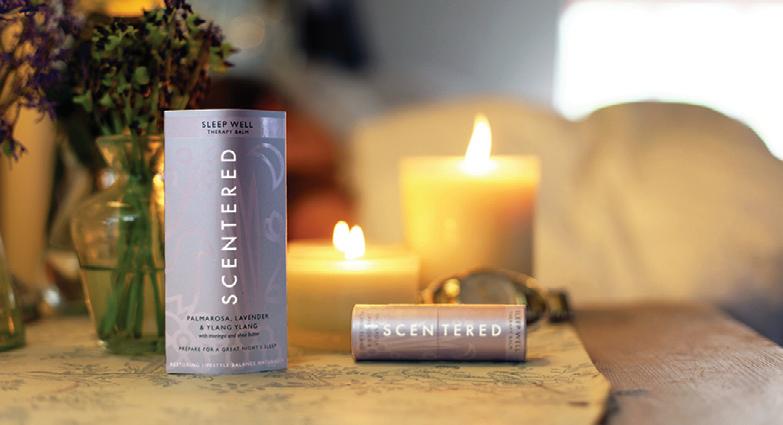
Our award-winning collection features six mood blends supporting guests throughout their day. Focus improves clarity for business travelers. Escape provides instant revitalization for spa visitors. Be Happy delivers an uplifting boost, while Love encourages selfcare and emotional balance. Sleep Well, an industry favorite, helps guests relax naturally—enhancing sleep quality scores and overall satisfaction.
PORTABLE, PRACTICAL, AND GUEST FRIENDLY
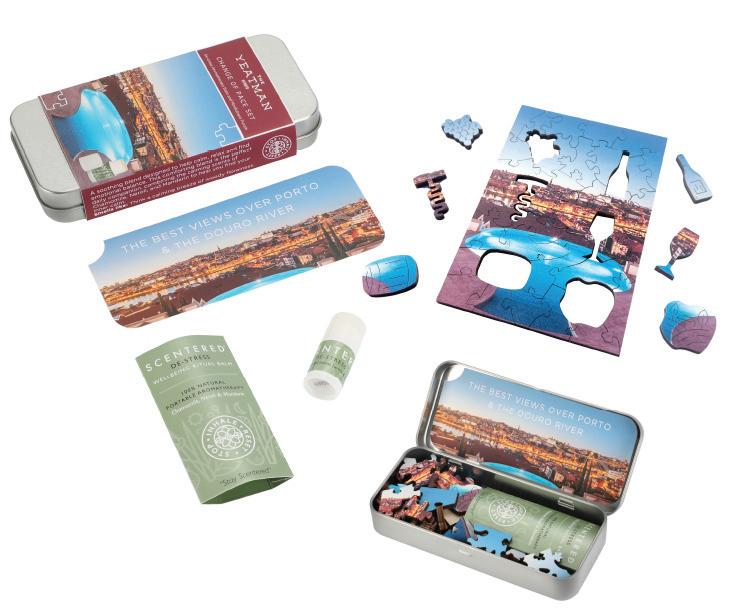
Our hero product, the Scentered Aromatherapy Balm, is mess-free, leak-free, and travel-friendly—ideal for hotel rooms, spa lounges, turndown amenities, or retail spaces. Guests enjoy calm moments whether unwinding before bed, preparing for meetings, or transitioning between activities. Gift sets and wellbeing kits complement the balms, offering natural upsell opportunities in spas, bou-tiques, and reception areas.
Get in touch to discuss
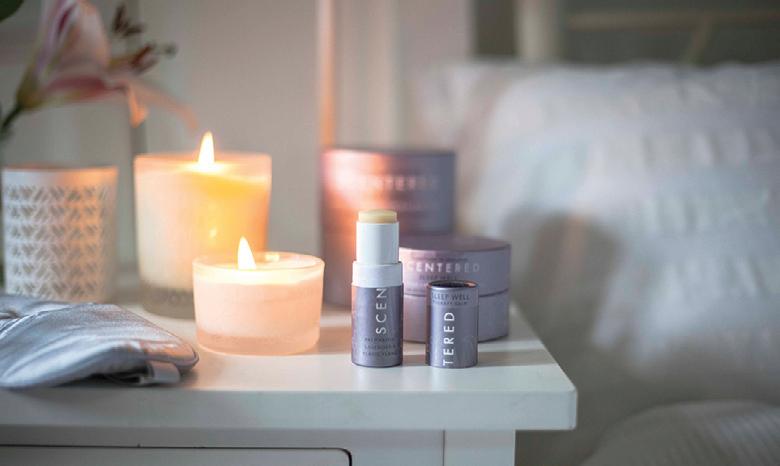
Many hotels integrate the blends into signature experiences or relaxation areas, reinforcing an atmosphere of calm and care.
A PARTNER IN GUEST WELLBEING
Scentered's gifting range offers beautifully curated wellbeing sets tailored to various guest touchpoints: welcome gifts, turn-down surprises, spa packages, retail, corporate stays, and loyalty rewards. Each gift feels thoughtful, purposeful, and premium. We understand every hotel has unique style and demographics. Our range can be customized to reflect your brand identity through bespoke packaging and curated collections aligned with your guest journey. Scentered works closely with hospitality partners to create memorable
global meat indices have shown some easing, UK poultry markets face severe volatility due to renewed Avian Flu outbreaks. Unprecedented 30-day export bans on major turkey suppliers are creating acute shortages and record-high spot prices just as festive demand accelerates.
Shaun Allen, CEO of Prestige Purchasing, said: “The slight decline in the FPI to 150.6 offers a welcome, albeit temporary, respite for operators after six months of consistent month-on-month inflation. However, the market remains incredibly fragile. With Avian Flu disrupting poultry supply during the crucial festive period and structural costs like energy and labour remaining high, this month’s easing should be viewed with caution. Operators must remain agile in their sourcing strategies to navigate the volatility expected through winter.”
Reuben Pullan, senior insight consultant at CGA by NIQ, said: “As hospitality begins the crucial run-in to Christmas, news of an easing in inflation is a welcome development. Nevertheless, months of increases have taken a heavy toll on businesses, and there are plenty of warning signs to suggest this will be temporary respite rather than a turning of the tide. Put alongside ongoing caution in consumer spending, it means hospitality operators will have to be at the top of their game to sustain sales and protect margins over the festive season.”

Wellness-focused solutions help create a memorable and relaxing stay while prioritising sustainability.
In today's hospitality land-scape, guest wellbeing is essential. Travellers seek calm, restoration, and meaningful moments that help them switch off from busy lives.
Scentered provides a simple yet powerful solution: 100% natural aromatherapy balms, candles, and wellbeing gifts designed to help people feel grounded, focused, comforted, uplifted, or relaxed.
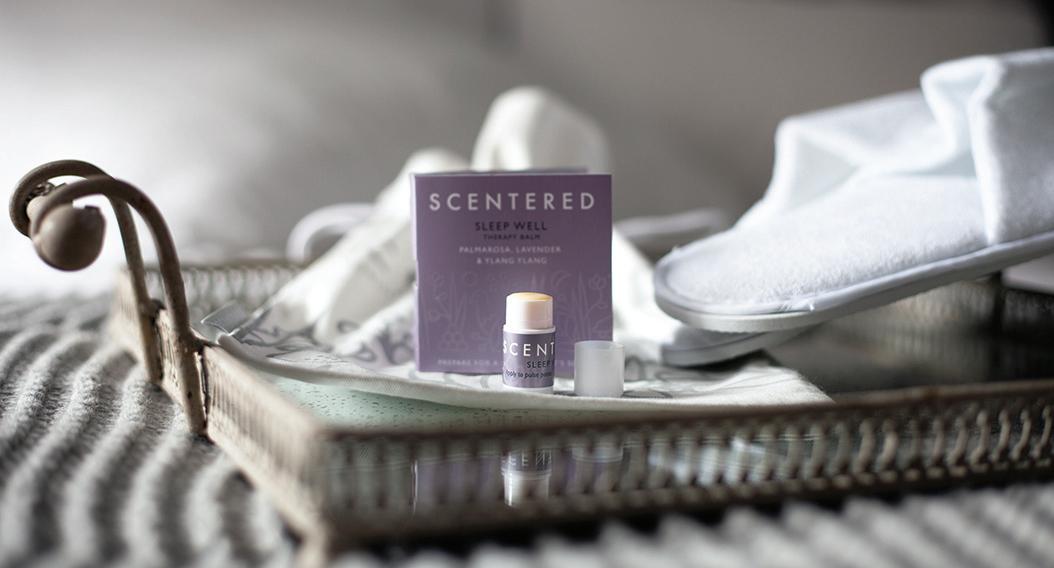
More than a product line, Scentered is a wellbeing partner. As demand for genuine wellbeing solutions rises, hotels can create deeper guest connections by offering tools supporting emotional and mental wellbeing. With natural ingredients, sustainable packaging, and a range designed around real human needs, Scentered helps deliver moments of balance and comfort guests remember long after their stay. To find out more, contact info@scentered
www.scentered.com info@scentered.com
By David Dillon, CEO of URocked

Back in 2016, a government report concluded that 100% of tips in restaurants, hotels and bars should go to workers and not their employers. This signalled the start of a drawnout process that should have put the matter to rest when, just under a year ago, the UK Tipping Law came into force. Fast forward to today, however, and the topic remains a source of controversy. In August, for example, news broke that a former employee of The Ivy chain was taking the company to a tribunal, claiming that he had received a “totally unfair” £97 share of a £31,600 tips pot. For its part, The Ivy has gone on record saying it “absolutely refute[s]” the waiter’s allegations and will challenge them at the tribunal.
While the Tribunal is not due to convene until April 2026, the situation serves as a timely reminder that the law set out a statutory Code of Practice on fair and transparent distribution of tips. To recap, as of October 1st last year, employers were required to fairly distribute all tips, gratuities and service charges to workers without any deductions. Tips must be paid to staff no later than the end of the month following the one in which the customer paid them, with employers also required to have a formal written policy explaining how they allocate tips.
As is currently being played out with The Ivy and its former employee, workers can bring a claim to an
Employment Tribunal if they believe an employer is not complying with the law. Employers face the potential of a £5,000 fine for non-compliance for every employee who has been affected.
A smooth process?
For the thousands of UK employers to whom the Tipping Law now applies, compliance has brought a series of practical challenges. Smaller businesses, in particular, may still be feeling the strain of keeping systems, records and policies compliant, while larger chains face the challenge of ensuring consistency across multiple sites. For many employers, the law has therefore become not just a compliance issue but also a test of how to balance legal obligations with the realities of day-to-day operations.
For instance, because tips must be passed on to staff without deductions, they can no longer be used to offset business costs such as administration, National Insurance or card processing fees. The requirement to pay tips no later than the end of the following month has also meant existing payroll systems have often needed updating to handle these payments reliably.
Collectively, these measures have added to the administrative workload for businesses nationwide, particularly for those operating across multiple sites or with high staff turnover, where reconciling payments and maintaining transparency can become a significant burden. Businesses that previously relied on discretionary approaches to pooling or distributing tips should, by now, be properly aligned with a more formal framework, ideally backed by efficiency processes and technologies.
Then there are the issues associated with getting tips from customers to employee bank accounts. In practice, this means capturing tips alongside customer payments, separating them accurately from the bill and reconciling the amounts before passing them on to staff. In this context, inefficient or fragmented payment systems add to the administrative workload, increase the risk of errors and make it harder for businesses to meet their obligations under the law.
The Lion at Ickleton, near Saffron Walden, Cambridgeshire, has opened a community café to provide a safe space to help people connect and socialise.
The pub, which was reopened in June 2025 after members of the local community raised £440,000 for the purchase, puts community at the centre of its ethos.
The Lion has already become the hub of the local community offering delicious food, real ale and a warm, friendly atmosphere.
Members of the Ickleton Community Pub Ltd, the community benefit society set up to purchase the pub, were determined to support people living in the village and surrounding areas to help overcome social isolation and loneliness.
Expert help and a Community Services Fund grant from Pub is The Hub, a not-for-profit organisation that helps pubs to diversify their services and activities, was provided to support the opening of the community café.
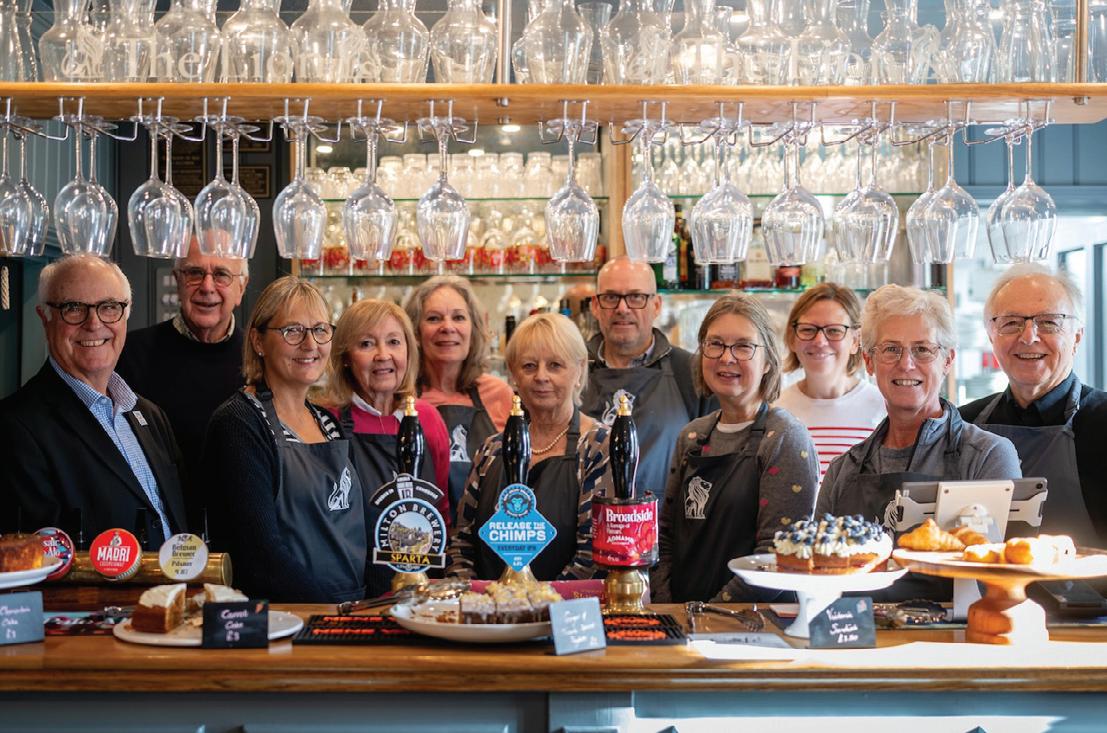
The café, which currently opens on the third Friday of the month and is run by volunteers, has already become an important meeting place for families, friends and those living alone who want to meet new people and connect. It serves delicious coffee, sourced from local roaster Ninth, along with teas and cakes –
with its Victoria sponge is already proving a firm favourite. It has become a ‘must visit’ for close to 50 people in the area and the numbers of people using the café continues to grow. There are plans to extend the opening times to provide even more support to people living in the local area.
Lizzie Molloy, Society Secretary and Community Cafe Lead, said: “Since opening, the response to our café has been overwhelmingly positive. It’s been lovely to see so many friendly faces enjoying coffee, cake and a chat together.
“It’s the perfect way to start your morning, meet friends and neighbours and enjoy the welcoming atmosphere of your community pub.”
Jo Hancock, HR and Communications Lead, said: “The community café has been a great way to build community cohesion. It is a social space for everyone to meet and provides great opportunities for volunteers.”
Regional advisor for Pub is The Hub Terry Stork said: “This is a pub that is really at the heart of its community. This important new service will enable people of all ages to get together and socialise to help combat social isolation.”
Operators and suppliers have started the crucial festive season with modest growth in drinks sales in the first half of November.
CGA by NIQ’s latest Daily Drinks Tracker shows average sales in managed venues in the week to 8 November were 2.3% ahead of the same period in 2024. This was followed by growth of 0.5% in the following seven days to 15 November.
Both figures are below the UK’s rate of inflation, as measured by the Consumer Prices Index. However, they reverse three consecutive weeks of negative trading in October, and raise hopes that some consumers are lifting their spending on the run-in to Christmas and New Year.
Trading in early November was boosted by Bonfire Night and firework displays, as well as a busy programme of Premier League, Champions League and international football fixtures, plus big rugby union fixtures for England, Scotland and Wales. The start of Christmas markets may also have lifted footfall in many British cities and towns.
However, the arrival of Storm Claudia curtailed visits to pubs and bars in some parts of the country towards the end of the fortnight—especially on Saturday 14 November, when sales dropped by 8.2% year-on-year.
Live sport has been a boost to Long Alcoholic Drinks categories, with beer sales rising by 3.6% and 1.7% in the weeks to 8 and 15 November respectively.
Cider performed even better, with growth of 5.5% and 2.9%. Soft drinks also had a positive fortnight, increasing by 5.4% and 1.3%.
Trends in other drinks categories were less encouraging. On Premise sales of spirits fell by 3.8% and 2.0% in the two weeks. Wine had fractional growth of 0.1% in the week to 8 November, but sales then dipped 2.8% in the following seven days.
Rachel Weller, NIQ’s commercial lead, UK & Ireland, said: “While sales growth in the first half of November has been marginal, it lifts optimism that consumers are starting to increase their visits to pubs and bars as Christmas occasions get into full swing.
Storm Claudia was another reminder of the damage that bad weather can do to trading, and operators and suppliers will be keeping fingers crossed for bright days that bring people out of home in the weeks ahead. There’s all to play for this festive season, and after a tough 2025 it could make or break the year for many businesses.”
By Rebecca Hughes, Associate in the employment team at Birketts

MENTAL HEALTH IN HOSPITALITY: SPOTTING THE SIGNS
Within the hospitality industry, employees are frequently exposed to long working hours, high-pressure environments, and emotionally demanding roles. It underscores the need for hospitality employers to take proactive steps in recognising and responding to the mental health challenges faced by their workforce, ensuring that legal obligations and best practice standards are met.
Identifying mental health concerns can be difficult, especially in fast-paced environments. Subtle changes in behaviour, such as irritability, withdrawal, frequent absences, or a decline in performance, may signal underlying issues. Without timely intervention, these can escalate, affecting not only the individual but also team dynamics and overall productivity.
LEGAL OBLIGATIONS AND BEST PRACTICE
HR professionals should encourage regular wellbeing check-ins. One effective method is asking staff to rate their wellbeing on a scale of one to ten. Scores at the lower end should prompt a private, compassionate conversation, creating a safe space for disclosure and support.
Under the Equality Act 2010, employers have a duty to make reasonable adjustments for employees with disabilities, which can include mental health conditions.
Employers should avoid asking pre-employment health questions unless necessary for assessments or adjustments. Any medical information shared must be treated with strict confidentiality and only disclosed with informed consent.
PRACTICAL SUPPORT: WHAT EMPLOYERS CAN DO
Employers should conduct stress risk assessments and consult with staff to identify workplace stressors. These may include workload, control over tasks, support from colleagues and managers, interpersonal relationships, clarity of role, and organisational change. Addressing these factors can help prevent mental health issues from developing or worsening.
Practical support is essential. New employees should be introduced to available mental health resources, such as Employee Assistance Programmes and private health insurance. In today’s challenging economic climate, financial stress can compound mental health issues, making these resources even more critical. Offering support that addresses both emotional and practical concerns helps employees feel valued and secure.
Employers should actively participate in awareness campaigns and demonstrate commitment through action. Open dialogue should be encouraged, but only if employees feel comfortable sharing and without applying pressure
Line managers must be equipped to recognise signs of distress and hold supportive conversations. Training managers to foster compassionate conversations is essential. Wellbeing action plans and stress risk assessments can guide the implementation of appropriate interventions and adjustments. Workplace culture also plays a critical role. Comments that belittle mental health, such as calling someone a “snowflake” or accusing them of “playing the mental health card”, are unacceptable and may constitute harassment under the Equality Act 2010. Policies on bullying and harassment must explicitly include protections for mental health.
Employers should ensure that employees have access to occupational health services. These services can assess an individual’s fitness for work and recommend necessary adjustments. Peer support networks can also be valuable, as they help staff feel less isolated and more understood.
Managing absence due to mental health requires sensitivity and planning. Employers should agree on communication during time off, plan phased returns, and remain flexible. Adjustments such as modified duties or altered hours can make a significant difference in helping staff reintegrate successfully.
Growing issues in the hospitality sector should be a call to action to reflect on employee's health and create psychologically safe workplaces where staff feel able to speak up and seek help.
With compassionate leadership, robust policies, and practical support, real progress is possible.
Restaurants’ delivery sales jumped by 7.6% year-on-year in October as consumers continued a long-term move towards direct-to-door orders, CGA by NIQ’s latest Hospitality at Home Tracker reveals.
The comparison is the strongest of the year so far on a like-for-like basis, and a welcome boost for managed restaurant groups after a challenging 2025 for dine-in sales. The figure is exactly double the UK’s rate of inflation in October, as measured by the Consumer Prices Index.
Growth in deliveries was in sharp contrast to takeaway and click-and-collect orders, which fell 5.1% from October 2024—one of the worst figures of the year, as consumers’ steady move away from picking up food went on. Combined, delivery and takeaway sales by value were 3.7% ahead of the same month last year. On a total basis—including from newly-opened restaurants, or where deliveries and takeaways have been introduced for
the first time—sales were 10.9% ahead.
The Hospitality at Home Tracker shows deliveries attracted 13.1 pence in every pound spent with restaurants in October. This is nearly treble the value of takeaways and click-and-collect orders, which earned 4.7 pence in every pound.
Karl Chessell, director – hospitality operators and food, EMEA at CGA by NIQ, said: “The rise of third-party delivery platforms has dramatically changed the game for restaurants at-home sales. After a stalling of growth in 2025, and below-inflation increases from in-restaurant sales throughout the year, October brought a welcome boost for deliveries. However, double-digit total growth also indicates a wave of new delivery offers and intense competition in this sector. This means restaurants will have to ensure consistent high standards of food and experience to sustain growth over Christmas and beyond.”
With more consumers actively seeking free from options, hospitality operators can no longer rely on a few token dishes. They need menus with variety that are inclusive and great tasting - and the numbers prove why.
Today, 2.9 million UK consumers follow a gluten free diet , while roughly 1 in 10 older children and adults are lactose intolerant . Yet dining out often falls short for these guests. A staggering 80% of people following a gluten free diet struggle to find suitable options, and 77% have unknowingly consumed gluten at hospitality venues .
This doesn't just impact guest satisfaction it affects business reputation and repeat visits.
By sourcing the right ingredients, chefs and baristas can craft dishes and drinks that rival traditional versions while keeping menus simple, modern, and easy to manage.

At Glebe Farm Foods, our award-winning PureOaty range is designed to do exactly that.
Every product is 100% gluten and lactose free and made with simple, clean label ingredients and no hidden additives. From breakfast menus featuring PureOaty porridge oats and granolas to barista quality coffees, smoothies, and cocktails made with PureOaty oat drinks, you can deliver a safe, delicious, and trustworthy guest experience across every service.
What truly sets us apart is our commitment to both purity and quality. Produced on our Cambridgeshire farm under strict gluten free controls, each batch of oats is tested to <5ppm gluten - well below the industry standard of 20ppm. This gives operators complete reassurance that what they're serving is genuinely safe.
Thanks to this rigorous standard, our customers have experienced zero consumer complaints of cross contamination reactions – known as ‘gluting’ in the community since switching to PureOaty.

BALANCING PREMIUMISATION AND PROFITABILITY
The UK on-trade faces a challenging year ahead. Rising costs, increasing alcohol duty, economic uncertainty and shifting consumer expectations mean operators must strike a delicate balance between maintaining quality and protecting margins. The good news? Wine can play a pivotal role in achieving both.
PREMIUMISATION STILL DOMINATES
Consumers visiting pubs, bars and restaurants are still willing to spend on wine, particularly when the experience feels special. Premiumisation continues to dominate, with guests seeking wines that feel indulgent and create a sense of celebration. This trend is stronger in the on-trade than in retail, where affordability increasingly shapes choices.
SMART BUYING: VALUE BEYOND THE OBVIOUS
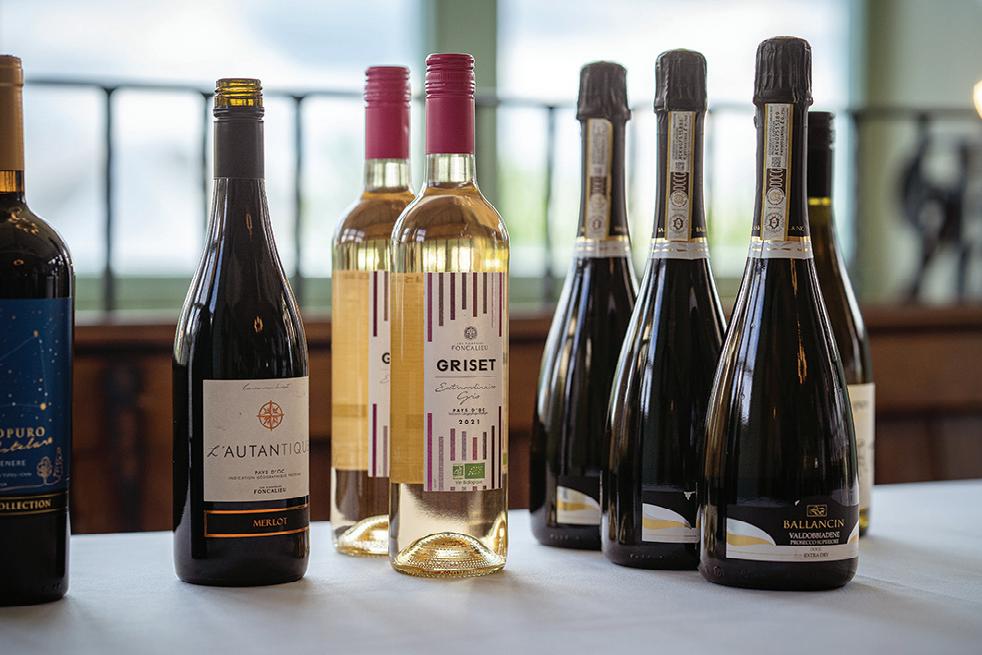
One of the most exciting developments for 2026 is the rise of lesser-known grape varieties that overdeliver on value. Grapes like Bobal from Spain or styles like Vinho Verde from Portugal are a prime example of alternatives that are both affordable yet full of character, offering venues a way to maintain quality while controlling costs. Expect to see more wines from Eastern Europe, where indigenous varieties provide distinctive flavours at competitive prices. Portugal also deserves attention, with producers showcasing native grapes that combine authenticity with excellent value. And don’t overlook Verdejo, a versatile Spanish white gaining traction for its freshness and food-friendly profile.
The on-trade is under immense pressure. Relief on business rates and an increase in minimum wage are positive steps for staff welfare, but they come at a cost. Venues, already competing with cheaper overseas destinations and retail pricing, must raise prices to stay viable; while this isn’t ideal for consumers, it’s a reality of survival, not profiteering. Every extra margin helps fund essentials that keep businesses running.
WHAT DOES THIS MEAN FOR WINE LISTS?
Operators will likely spend more per bottle, but with a sharper focus on wines that deliver exceptional value. The goal is to offer guests a memorable experience without compromising profitability. By embracing lesser-known varieties and sourcing from emerging regions, venues can differentiate their wine lists, delight guests and protect their bottom line.
LOOKING AHEAD
2026 will be a year of adaptation. For the on-trade, success lies in combining premiumisation with smart buying, curating wine lists that feel indulgent yet remain commercially sustainable. Wine presents a golden opportunity to enhance customer satisfaction while boosting turnover - a good wine merchant will always help you match a wine list with your food menu, but a great wine merchant will advise you on creating a wine strategy to enhance your guest experience while benefiting your bottom line.
www.lanchesterwines.co.uk
Consumer group CAMRA NI has expressed anger at Northern Ireland Communities Minister’s decision to block modernising of alcohol licensing system.
The Minister for Communities, Gordon Lyons ML gave an oral statement to the Assembly outlining his response to an independent review of Northern Ireland’s outdated alcohol licensing system and the ‘surrender principle’ which means a licence has to be given up before a new pub or off-licence can open.
Experts from the University of Stirling concluded that:
• The ‘surrender principle’ (where a licence has to be given up for a new premises to open) has seen pubs closing and licences moving to supermarkets or off-licences.
• The current system “is doing little to protect or invigorate the pub sector as a whole” and means “the retail market for beer is dominated by a small number of non-NI based producers who often establish restrictive supply agreements.”
• The current licensing system “creates barriers to diversification and innovation” meaning we don’t see good choice of local, independent products on offer, or a good range of venues like micropubs, specialist outlets, brewery taprooms etc. which are thriving in the rest of Europe.
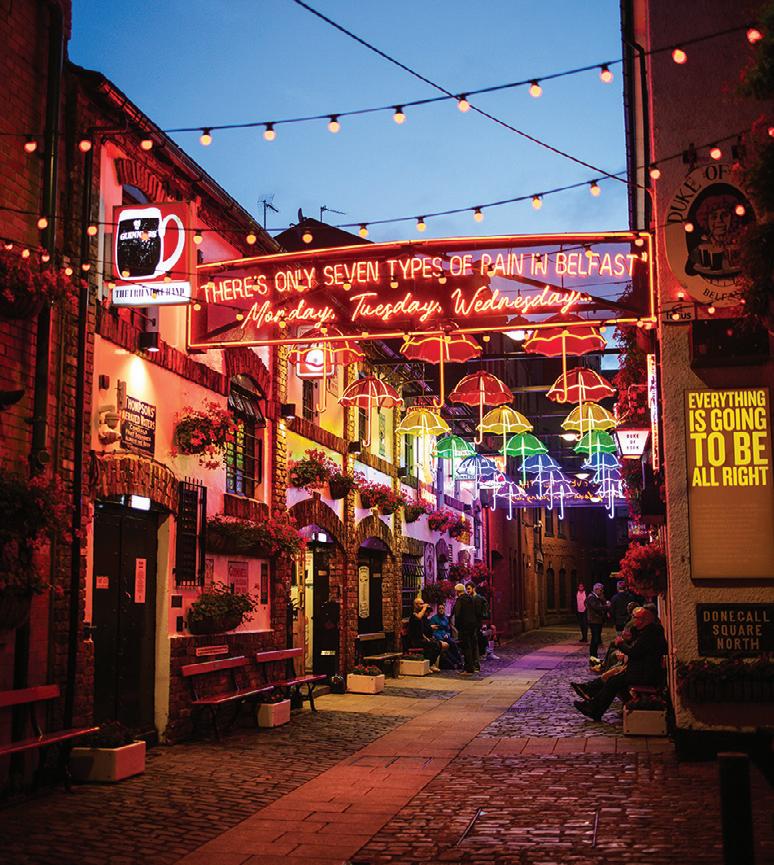
• “The promotion of positive health and social outcomes would be better served by supporting a well-managed on-trade sector [pubs] over a continued increase in the number of offlicences”
• NI is losing pubs at a faster rate than elsewhere.
Despite this, the Minister is proposing not to accept any of the independent review’s substantive recom-
Stannah is proud to have raised over £40,000 in 2025 for a variety of life-changing charities, an achievement made possible through the dedication and generosity of its employees, the strength of its match-funding scheme and the support of the Joseph Stannah Foundation.
2025 saw Stannah’s employees, including Alastair Stannah, bravely take on the mighty abseil at the Northampton Lift Tower, raising over £4,449 for the UK Lift Industry Charity. With Stannah match funding, the total reaches an impressive £8,898
The year also marked the 40th anniversary of Red Nose Day, with employees raising £512.98 for Comic Relief, which doubled to £1,025 through Stannah’s match funding.
mendations on modernising the alcohol licensing system.
Speaking after the Minister’s statement, Ruth Sloan Director of CAMRA NI said: “This is a huge, wasted opportunity from the Communities Minister and shows a total disregard for the consumers this administration represents. Instead of working to modernise the industry in Northern Ireland he has chosen to side with giant multinational businesses which dominate our pub market and mean there is rarely a choice of decent beer and cider at the bars.
“With alcohol licenses still having to be ‘surrendered’ for up to £100,000 a time it makes it almost impossible to open a new independent pub, closes pubs in areas calling out for third spaces and community hubs as well as stifling innovation and growth by pricing out anything new or interesting.
“This decision just adds another nail to the coffin of micropubs, brewery taprooms, wine bars and other specialist venues that are thriving across GB and the rest of Europe yet cannot exist here due to the nature of these outdated laws.
“Instead we can only expand existing floorspaces and end up with huge pubs and groups of pubs, sharing their existing licences, that are often forced by restrictive agreements with big business so that they can only sell the same few drinks everywhere, with no options to provide the wonderful and innovative products being made by beer and cider producers here in Northern Ireland that locals want and tourists are actively travelling here to try.
“I’m calling on MLAs from all parties to urge the Communities Minister to think again and commit to modernising our alcohol licensing system so that consumers can have a decent choice of beer and cider in every bar here and our economy can thrive in this new and upcoming market on our own doorstep.”
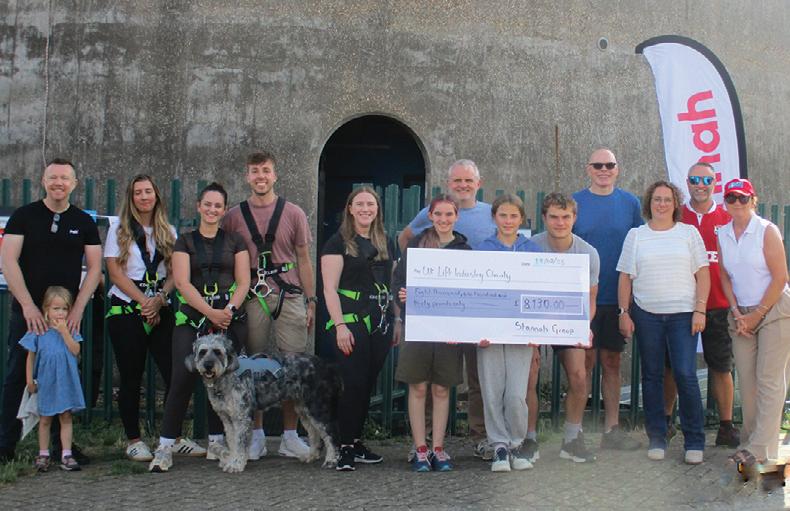
Stannah’s match funding not only helps charities access vital funding but further inspires employees to get involved in making a difference and take on even bigger challenges each year.
Among the most impressive of those challenges was the effort by Daniel Nott from Stannah’s South West England and Wales service branch, who completed the iconic London Marathon, raising £1,128 for Teenage Cancer Trust. Just months later, Daniel laced up his trainers once again, this time for the Sydney Marathon, raising £1,150 for Birmingham Children’s Hospital. With Stannah doubling every pound donated, the combined total raised from both events reached £4,556.
Cancer Research UK also benefited from a series of dedicated fundraising efforts. In June, Dean Paterson, Technical Sales Consultant in Warrington, completed the 100 push-ups-a-day challenge, raising £1,580 with match funding. Further contributions included a 300-mile cycle challenge by Arch Hutchence, Stannah’s Order Fulfilment Despatch Manager, raising £1,770 and a TCS London Marathon by Trainee Lift Engineer, Michael Fabin, who raised £1,090. Together, these fundraising efforts brought the total raised for Cancer Research UK to £4,440. Further demonstrating the organisation’s commitment to community causes, Richard Graham, Senior IT Technician, undertook a 100km walk to raise money for Saxon Wood School, a specialist school supporting children with complex physical and medical needs. With match funding, a total of £3,090 was raised. Alastair Stannah, Managing Director at Stannah, speaking on behalf of the Stannah family and the wider company, says: “Our people are the heart of our operations, and this year’s incredible fundraising achievements are a testament to their compassion, commitment and community spirit. I am immensely proud of every employee who has given their time, energy and enthusiasm to support causes close to their hearts. Their efforts, combined with our match-funding scheme and the support of The Joseph Foundation, show what we can achieve when we all work together.” For more information visit: www.stannahlifts.co.uk
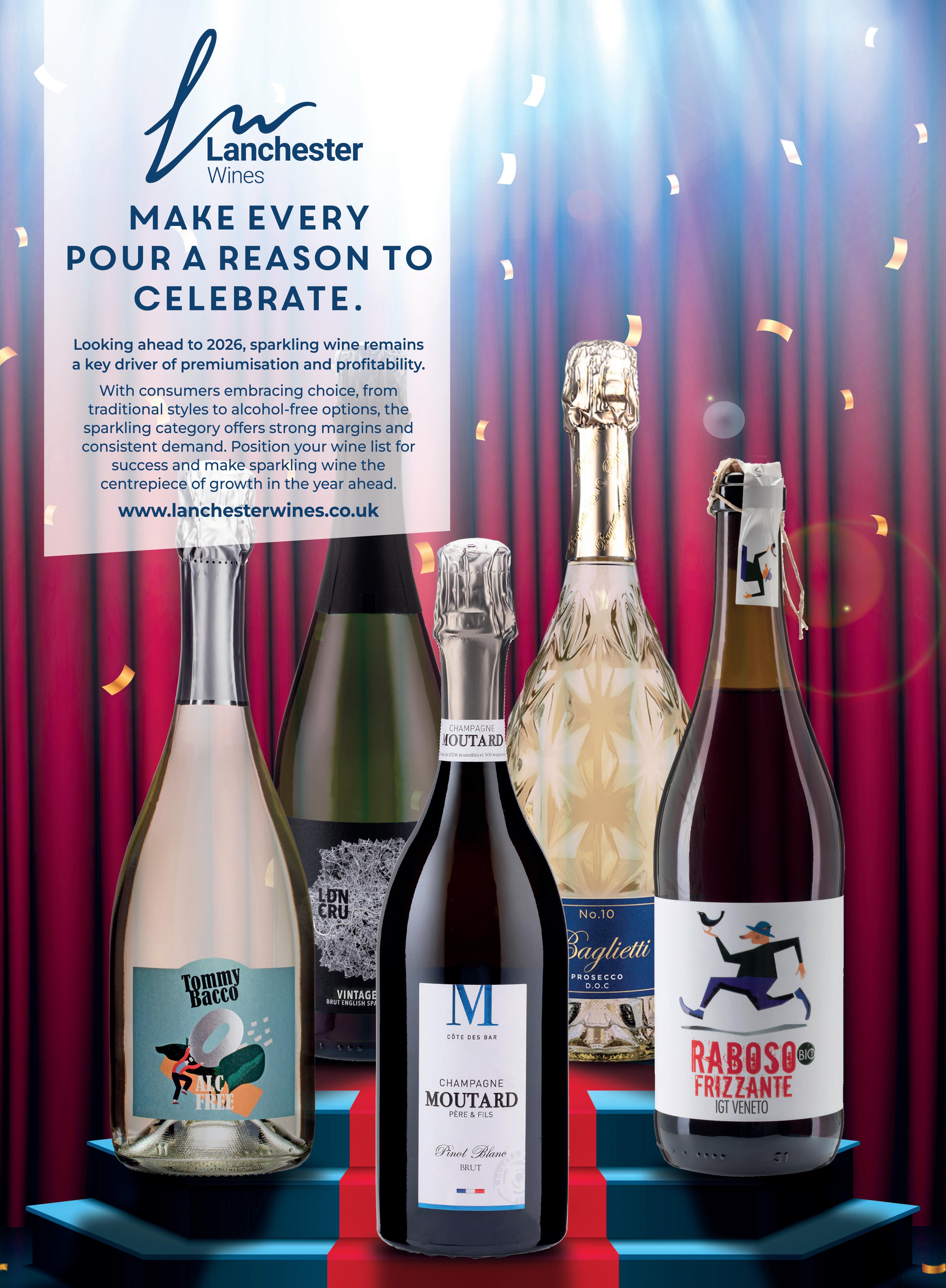

Businesses will now be expected to pay up to £60,000 in fines should they hire someone illegally.
The Government have increased the total enforced payment in an attempt to more effectively punish those employers who take advantage of current rules.
It follows proposed changes to UK immigration law. In July this year, the visa route for skilled workers was impacted by a change which now requires overseas applicants to have a skill level equivalent to that of a UK university graduate to be eligible for sponsorship. This increased from A Level equivalent.
Salary thresholds were also increased, making it more expensive for employers with social care visas also now closed to new applications from overseas.
Employment Partner at Knights, Karen Morovic, said, with more changes to come, the landscape for employers looking to hire from overseas will become more challenging:
“The right to work check is a straightforward process for businesses to undertake especially if the person they’re looking to hire does not have a time limited permission to live and work in the UK. For example, that person is already a British citizen and has a British passport. The right to work check can be done through a manual document check, using the services of an Identity Service Provider or by using the Home Office online right to work checking service.
“Follow up checks need to be carried out by the employer where somebody has a temporary or time limited right to work in the UK as you have to ensure that right to work is confirmed whilst putting processes in place to follow up ahead of a visa running out. It’s vitally important to carry out these checks as an employer
By Karen Morovic, Employment Partner at Knights
cannot employ or continue to employ someone who no longer has the right to work in the UK.
“This is a hot topic in the political landscape and the increase in fines, to a maximum of £60,000 per illegal worker, reflects that. The fines are not the only risk, with business owners at risk of criminal action should they knowingly employ somebody without having undertaken the appropriate checks.
“It is important employers have organised systems and checks in place to avoid being caught out with these severe penalties. The Government is coming down harder on those who don’t follow the correct processes, on employers who are failing to do what they should, and will continue to make it increasingly difficult for those constantly skirting over the requirements to employ illegal workers.
“My advice for businesses would always be to err on the side of caution by making sure the right paperwork is in place and you’ve got the evidence to show that you’ve carried out the correct checks and asked the right questions.
“The increase in fines could well have an adverse impact on retail and hospitality sectors in particular – as there are a higher volume of casual workers needed at peak times. This means the burden on the employer to keep on top of the checks is higher as there is a larger influx of temporary workers – particularly ahead of Christmas the busy seasonal periods.
“You've got to be proactive. You've got to be on top of who you've got in terms of permanent right to work in the UK, temporary right to work in the UK and also, for those with many hundreds of employees, logistically, it is going to be important that you have the support in place to help with that.
“Being cautious is good practice ahead of the impending Employment Rights Bill that is due to gain Royal Assent very soon. The incoming changes to the legislation will make it a challenge for those who use a lot of casual workers over a temporary basis and will look to encourage employers to be organised and know exactly who is coming through their doors.
“The final key message is that good employers have nothing to worry about with this – as long as they’ve got procedures in place and take the necessary legal advice if there’s any ambiguity. It’s those employers who take advantage that will be hit most by this.”
The British Institute of Innkeeping (BII) has announced the winners of the 2025 National Innovation in Training Awards (NITAs).
The NITAs and People Conference celebrate the exceptional individuals and businesses in the pub sector who put people at the heart of hospitality. Each year, the awards recognise those who go above and beyond to champion training, development, sustainability and wellbeing within their teams, ensuring a thriving and sustainable future for the sector.
This year’s winners were revealed at the NITAs Awards Ceremony, held at Porchester Hall London on 20th November, where over 300 industry professionals, operators and colleagues, came together to share best practice, celebrate achievement, and honour those setting new standards in hospitality excellence.
2025 NITA Winners of the evening
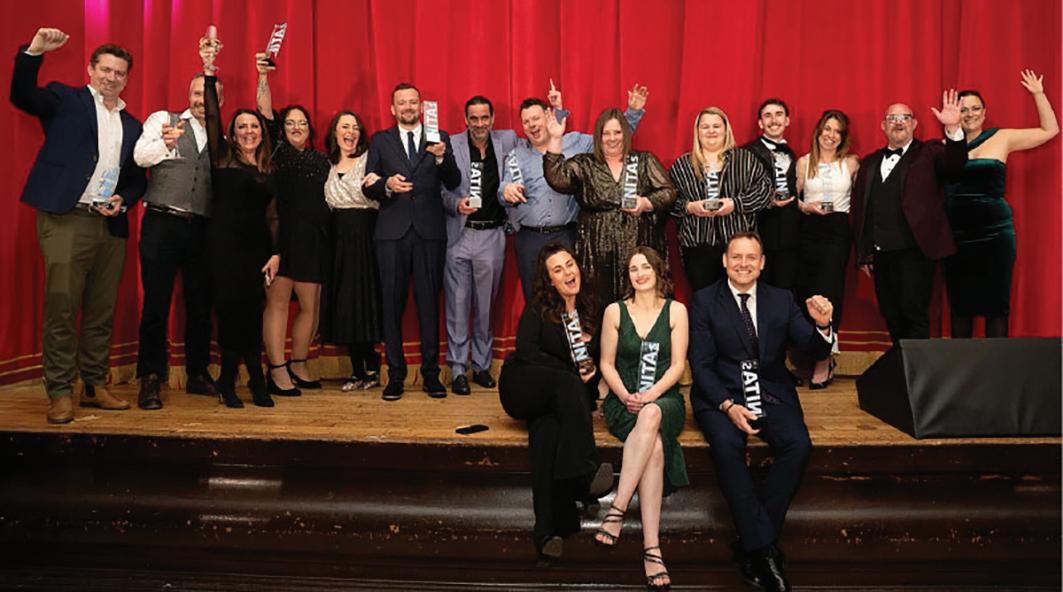
Best Training Programme: Managed & Managed Partnerships - Fuller’s Lead Your Way Best Training Programme: Individual Operator - Kim Rennie – The Barge Inn Best Training Programme: Apprenticeships - Shepherd Neame Best Training Programme: Sustainability Award - Company - Wells & Co
Best Training Programme: Sustainability Award - Individual Site - Michael Foxwell, The Old House at Home Training Professional of the Year - Company - Frazer Grant, Pub & Bar Academy Professional Trainer of the Year – Individual & Small Multiple - Katie Mannion,Nell’s Pizza Best Recruitment Strategy - Admiral Taverns
Hospitality Apprentice of the Year – Front of House - Sophie Maltby, The Tollemache Arms Hospitality Apprentice of the Year – Operations - Claire Illman, Shepherd Neame Wellbeing Award - Punch Pubs & Co
This year, after an incredible raft of apprentices in the Hospitality Apprentice of the Year categories, the BII also recognised three Workforce Apprentice Heroes, hand-picked by the judging panel for their incredible attitude, determination and spirit, and presented by the BII’s new chair, Clive Price.
One of the evening’s most heartfelt moments was the presentation of the Franca Knowles Live Your Life Award, selected by a panel of previous winners and chaired by Keith Knowles OBE. This award celebrates individuals in the sector who embody Franca’s legacy of positivity, passion, and dedication to people development. Huge congratulations to James Nye, Managing Director of Anglian Country Inns for winning this incredibly special award in 2025.
Steven Alton, CEO of the BII, said: “The NITAs recognise the incredible people and organisations who make our sector such an inspiring and rewarding place to work. Each of our winners has shown an exceptional commitment to nurturing their teams, supporting wellbeing, and driving innovation across their businesses. Their dedication and passion help ensure our pubs and hospitality venues continue to sit at the heart of every community.
“Evenings like this remind us all just how incredible our sector is, filled with people who do amazing things every single day for their guests, teams and communities.”
Despite the surge in streaming services, live television remains a key amenity in hotels and a basic expectation for guests. It contributes to a sense of familiarity and relaxation. For hoteliers, it’s a simple yet powerful way to enhance guest experience.
However, there is a crucial legal dimension that is often overlooked: showing television in guest rooms constitutes a “communication to the public” under UK copyright law. This means hotels must hold the appropriate licences to avoid infringing copyright—and facing potential legal consequences.

The AVLA Licence is specifically designed to meet this requirement. It allows hotels, aparthotels, serviced apartments, B&Bs and similar establishments to legally offer their guests access to TV channels featuring films, series, documentaries, cartoons and other content from AVLA’s extensive repertoire. Titles from AVLA’s repertoire are regularly aired on the main UK national TV channels, as well as on other networks.
It is worth noting that the AVLA licence covers a repertoire of works and rights not covered by other licences. Consequently, the licences from other bodies do not replace the AVLA licence, and vice versa.
AVLA represents the UK’s broadest community of audiovisual creators, comprising tens of thousands of producers, authors, performers, directors and visual artists.
Obtaining the AVLA Licence is simple, with quick online registration. The royalties collected are distributed to the respective rightsholders.
Respecting copyright is more than ensuring legal compliance -it also reflects a commitment to fair business practices. By taking the AVLA licence, hotels support the UK creative community, renowned globally for its quality, innovation and artistry.
To learn more about AVLA visit www.avla.uk

The British Institute of Innkeeping (BII) has released the results of their flash survey following the Chancellor’s budget announcement, with the devastating impact of broken promises destroying the pub sector.
BII members revealed that only 1-in-3 are currently profitable, thanks in the main to the previous budget in October 2024, which delivered huge increases in Employer NICs, Minimum Wage and the doubling of business rates bills as the relief was slashed to 40%.
Despite promises from the Chancellor that they would be supporting pubs by reforming the outdated and unfair Business Rates system, and delivering permanently lower rates bills, pubs have instead seen huge rises in the bills they will have to pay from April 2026.
The results are stark – if they don’t make tough decisions around staffing levels, opening hours and reducing the services they offer to their customers, less than 1-in-10 will be profitable in April next year.
Pubs have been given only a 5p discount off the standard multiplier rate used to calculate bills, but alongside the removal of the 40% relief, which was designed to be a safety blanket until business rates reform was delivered, and the huge increases in rateable values following the revaluation, they have been left with thousands more to pay from April.
The survey further revealed that publicans will have to counter the additional rises in National Minimum Wage (up 8.5% up to £10.85) and National Living Wage (up 4.1% up to £12.71ph), alcohol duty (up nearly 4%), and the huge rise in business rates bills, with a combination of cost cutting measures:
• 90% will increase drinks prices
• 80% will cut staff hours
• 71% will increase food prices
• 41% will cut services offered in the pub, such as offering food
• 45% will cut opening hours
• 42% will make staff redundant
Steve Alton, BII CEO commented: “We have spent more than a year, giving evidence to Government about the huge impact the 2024 budget had on pubs, pushing them to the brink, with ever increasing taxation on employment and the properties they occupy.
“We have been crystal clear that our pubs are not failing businesses, but that Government policy and over taxation is holding back their full potential. Fair taxes unlock investment, skilled employment opportunities and growth in every community. Instead, these further, unfair taxes are
devastating viable small pub businesses, threatening their future and that of all the people who rely upon them.“I wrote to the Chancellor on Monday on behalf of our members, who feel betrayed and devastated following her announcement last week, and the subsequent release of the business rates revaluation figures.
“Our members priorities for the support they need and deserve have not changed – reduce the unfair and unsustainable levels of tax on their businesses, with a reduction in VAT to match our European counterparts, a full reform of the business rate system, rebalancing it with the digital economy, and a reversal of the huge rise in costs around employing people in local communities.
“Despite her promises on BBC Breakfast at the end of September to reassure our members that her budget would be ‘giving a break…to businesses that operate out of local communities, like pubs’ through a fundamental reform of our business rates system, she has instead added thousands of pounds to the cost of running a pub and providing vital employment opportunities to young people, particularly those looking for their first job.
“The Prime Minister stated that ‘Pubs…are the beating heart of our communities. When our locals do well, our economy does too.’ This budget has ripped the heart out of those communities.
“We need Government to urgently reverse their decision on taxing our pubs out of existence and deliver meaningful change to the unsustainable levels of tax they already face, before it is too late. We also need all pubs and their customers to write to their MPs via the ‘Our Pub’ campaign, calling for the support they urgently need.”
The UK hotel sector remained resilient in October despite budget speculation ramping up, but hoteliers had to work harder to maintain operating profits, according to the RSM Hotels Tracker.
The data, which is compiled and produced by Hotstats and analysed by RSM UK, shows occupancy of UK hotels rose from 80.9% to 82.4% in October year-on-year, and was up from 84.2% to 85.8% in London.
Average daily rates (ADR) of occupied rooms also increased in the UK from £151.81 to £155.03 in October year-on-year and was up from £217.80 to £222.64 in London.
Despite lower-than-inflation growth in room rates, the combination of higher occupancy and increased rates saw RevPAR growth keep track with inflation. RevPAR rose from £122.88 to £127.76 (a 4% increase) in the UK and from £183.48 to £191.20 (a 4.2% increase) in London.
However, due to higher costs, gross operating profits were flat for UK hotels from 38.4% to 38.5% in October year-on-year and fell slightly from 43.3% to 43.1% in London.
Chris Tate, partner and head of hotels at RSM UK, comments: “Shaky consumer confidence in the lead up to the budget, did not appear to filter through to the hotel market in October, as travel and experiences remain a top priority for consumers. In contrast, households appeared to scale back in areas such as retail and eating out as budget jitters took hold.
“While hotel occupancy and room rates improved year-on-year, operating profits stood still in October,
suggesting hoteliers are having to work harder but are getting less in return. Plus, just as the sector adjusts to the National Insurance rise, they now have to factor in another increase in national minimum wage next April. For many, this means finding further ways to create efficiencies to avoid hitting the bottom line.
“The concern for the sector is that unless consumer confidence makes a recovery, it may just be a matter of time before it hits the hotel market.
The budget saw the Chancellor announce a further freeze on income tax thresholds, which will leave consumers feeling worse off in the future, along with local mayors being granted powers to introduce tourist levies, adding to the price of a UK stay. This could mean the sector’s current resilience is set to be severely tested.”
Thomas Pugh, economist at RSM UK, said: “The good news is that now the budget is behind us we may see consumer and business confidence start to recover, especially as there won’t be any significant tax increases next year. What’s more, a likely interest rate cut in December and further declines in inflation should support a recovery in consumer confidence.
“However, the labour market is still weakening, and wage growth is set to slow. Real household disposable income growth is set to fall to just 0.4% over the rest of this decade as future tax rises eat into incomes. The outlook is therefore far from rosy for consumer spending, despite the lack of imminent tax rises.”
HEINEKEN UK has secured the number one spot among UK drinks suppliers to the UK On-Trade according to 2025’s Advantage Report Voice of the Customer.
The nation’s leading beer, cider and pub company achieved the number one slot across all metrics, significantly outperforming its competitors in this year’s report. According to its ratings, HEINEKEN UK's core drivers of engagement centred around the brewing company’s partnership, execution, reputation and vision.
Respondents in the 2025 Advantage Report Voice of the Customer program included leading national pub groups such as Greene King, Stonegate Group, Robinson’s and RedCat Hospitality – who provided feedback on leading brewers and drinks suppliers including Molson Coors Beverage Company, AB InBev, Asahi UK and Carlsberg Britvic.
Will Rice, On Trade Director at HEINEKEN UK, comments: “It is incredible to see us hitting the number one spot in the Advantage Report for the second year in a row – highlighting the hard work, time and energy we have invested in our customers over the past 12 months.
“This positive feedback is reflective of our efforts within the hospitality sector, really listening to our customers to understand what they need to succeed. We will endeavour to use this insight to continue to support publicans throughout the year to come, helping them to grow and face these testing times together.”
Andrew Johnston, Managing Director for Advantage Group UK & Ireland, said, ““Congratulations to Heineken UK for being scored as the Best-in-Class supplier to the UK On-Trade. In Advantage Groups UK’s biggest ever On Trade program, incorporating the widest and deepest panel of respondents, Heineken’s continued success is testament to the depth of their connectivity and alignment across the full breadth of the UK On Trade.
With supplier standards rising in the eyes of their customers, the competitiveness of our 2025 benchmark has increased notably, with a number of suppliers across Drinks powering up their engagement.”
Advantage Report gives clients a benchmarked view of performance as rated by their business partners, providing them with valuable data regarding their business relationships’ strengths, weaknesses and opportunities.
HMRC’s takings from ‘sin taxes’ have fallen by 35% over the past decade to £24.2bn or 2.8% of its total revenues in 2024/25, versus 4.3% in 2015/16, according to research from UHY Hacker Young, the national accountancy firm.
The decline in receipts from sin taxes reflect a long-term shift in consumption, UHY Hacker Young says, with consumers reducing their spending on tobacco and alcohol partly in response to repeated tax increases and rising prices.
According to UHY Hacker Young, falling takings from sin taxes could prompt the Government to increase existing rates or even introduce new levies, as it seeks to close its budget gap.
James Simmonds, Tax Partner at UHY Hacker Young, says: “Traditional sin taxes now collect a small and shrinking slice of the pie for Government coffers, a gap that Rachel Reeves may look to fill with further rises.”
UHY Hacker Young says the gambling industry may be a key target for potential tax rises, given the taxes it paid increased 7% to £3.6bn in the last year, up from £3.4bn. Senior politicians, including former Prime Minister Gordon Brown**, have already called for higher taxes on the sector.
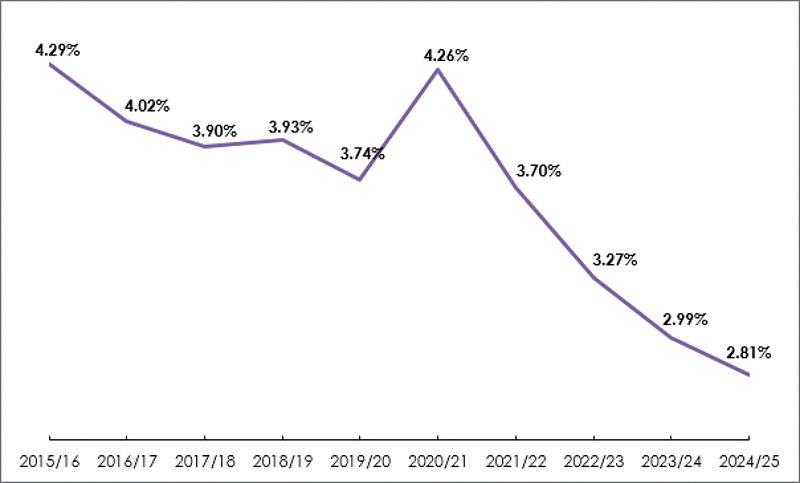
The firm warns new ‘sin taxes’ could likewise be introduced, along the same lines as the 2019 Soft Drinks Industry Levy and the Plastic Packaging Tax in 2022. These newer taxes raised only £580m last year — 1% of total receipts and down from £608m the year before — which UHY Hacker Young warns it could prompt the Government to increase them further. A new packing recycling levy has also just been introduced.
Simmonds says: “The Government may seek to include new taxes on products it deems ‘unhealthy’ or ‘polluting’, but it could also raise existing taxes on sugary drinks and plastic packaging. Given how little revenue they bring in, the Government may feel there’s still room to push them up.”
UHY Hacker Young says that the large number of new taxes and their complex structures is already making it harder to do business in the UK and that extra “sin taxes” would add to this.
“The sheer number of different taxes — many with complex, sliding structures — harms business confidence. How are companies supposed to know which products will be added to the blacklist next?” Simmonds says.
Simmonds says: “It has been widely rumoured that bigger taxes will come, especially those aimed at the gambling industry, which some politicians argue have been undertaxed.”
Of the £14 cost of a pack of cigarettes, £11 is tax and just £3 covers the product itself, while a litre of alcohol over 22% ABV carries £32.69 in duty. Taxes on gambling can reach up to 50% of marginal revenue, with companies having to pay Corporation Tax on the remaining profit.
With loneliness on a par with peak pandemic levels, new polling by the British Beer and Pubs Association (BBPA) shows that two out of three see pubs as vital in the fight against isolation.
However, two in five say they have seen pubs close in their area, prompting calls for urgent support for the ‘cherished institution’ in the next Budget.
With pubs struggling under a heavy tax and regulatory burden, more than 2,000 have closed since 2020, and one is predicted to close every day in 2025.
The same poll found that, nationally, six in ten are concerned about pub closures in their area, and seven out of ten consider the pub important or very important for their local area’s social life.

The British Beer and Pub Association’s Long Live the Local campaign said this underlined the urgent need for the Government to use the Budget to deliver fairer taxes and action on rising costs to save these beloved institutions.
The survey shows a regional picture of where people view pubs as a solution to isolation, and closely reflects where closures have hit hardest. In the North of England, 71% of people agree that pubs are vital in tackling loneliness and isolation, underlining the role pubs play as informal support networks and community hubs. In Wales, 64% feel the same, while in Scotland, 63% back the idea that pubs are part of the solution to the UK’s loneliness crisis.
Since 2021, the BBPA has recorded a net closure of 291 pubs across the North West, North East and Yorkshire and The Humber, Wales has seen the net closure of 132 pubs and Scotland 206.
According to the most recent Office of National Statistics figures from October 2025, 26% of Britons report
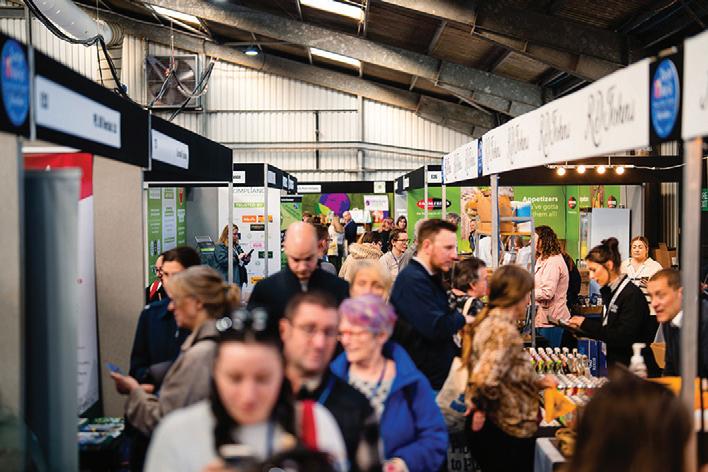
Wednesday 25th February 2026 is set to be a big day for Somerset’s business community, as two events take place alongside each other at the Bath & West Showground.
THE SOURCE ROADSHOW –
SOMERSET’S NEW FOOD & DRINK TRADE SHOW
The Source Roadshow brings together local, regional, and national food and drink producers and service providers, creating a unique opportunity for hospitality, retail, and tourism businesses to discover new products and partnerships.
This new trade show will host more than 100 exhibitors showcasing hundreds of brands. They will help visitors gain advantage for their hospitality or food retail business, by tapping into the latest and the best ideas! Find out more and register for your free entry badge now at sourceroadshow.co.uk.
VISIT SOMERSET AGM & CONFERENCE – “BUILDING AND CONNECTING”
Taking place on the same day at the Bath & West Showground, the county’s leading Destination Management Organisation, Visit Somerset, will host its Annual General Meeting and Conference, sponsored by Lloyd & Whyte Community Broking and the Source Roadshow.
Highlights include speakers Terry Stevens – Radical times demand radical actions, George Combe – Mendip Adventure, Strode College, The Campaign for the Protection of Rural England and Zen Chartered Accountants, with more speakers to be announced soon.
feeling lonely at least some of the time, a figure that has remained consistently high since records began in 2020, during the Covid pandemic.
Similarly 30% of people surveyed for the BBPA’s Long Live The Local campaign say they or someone they know has felt isolated and lonely due to the loss of their local pub.
Emma McClarkin, chief executive of the British Beer & Pub Association, said: “This polling confirms that for many, the local pub is a lifeline, not a luxury, and the loss of a pub can have a real and devastating impact. It’s made all the more concerning given our prediction that one pub will close every day this year, with heavy tax and regulatory costs often at the heart of why they’ve been forced to shut.
“The Government must use this once in a generation Budget to reset and reform the unfair tax burden and costs, which would help pubs keep their doors open and continue to fend off loneliness, which is affecting so many.”
Philip Howell, Professor of Historical and Cultural Geography at the University of Cambridge and author of the book Pub, said: “When pubs are ripped out of communities and neighbourhoods, the damage to social cohesion is incalculable. With rapidly rising levels of loneliness, we need pubs more than ever. As the survey suggests, the cost of standing by and watching pubs close will be measured in even greater isolation and the fracturing of our communities.”
The BBPA is urging supporters to join Long Live the Local and email their MP before the Budget, calling for an overhaul of business rates, a duty cut in line with European averages and action on spiralling regulatory costs.
Free for Visit Somerset members, funders & stakeholders (at their discretion). Non-members: £25 + VAT.

�� Book now: www.eventbrite.co.uk/e/visit-somerset-agmand-conference-tickets-1974963264288.
WHY ATTEND BOTH?
This combined event offers great value:
✔ Tourism insights to help your business thrive.
✔ Food & drink connections to elevate your offering.
✔ Unrivalled networking across multiple sectors – all in one day.
WHAT THE ORGANISERS SAY
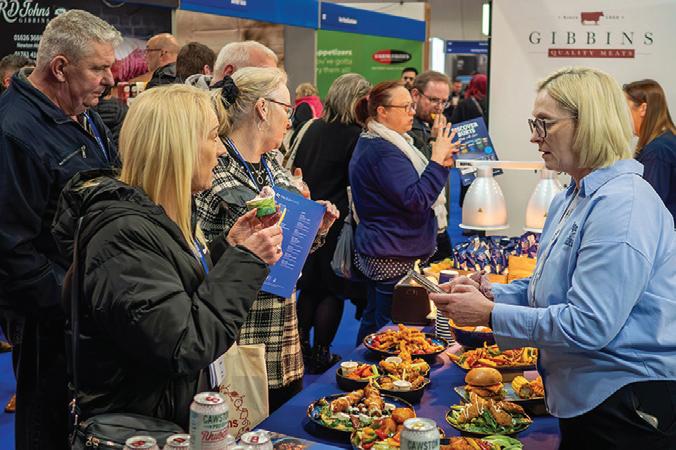
“The Source Roadshow is all about showcasing the best for food and drink businesses. By aligning with Visit Somerset’s event, we’re creating a day packed with opportunities for businesses to learn, network, and grow.”
– Mike Anderson, MD, Source Roadshow
“This is about building stronger connections and revenue across Somerset’s visitor economy by utilising our current innovations. Our AGM and conference will give businesses the tools and insights they need to succeed in challenging times.” – Giles Adams, Chair, Visit Somerset
�� 25th February 2026 | Bath & West Showground

�� Plan your

British pubs are powering the nation’s grassroots and community sports clubs having served up £40 million in financial support over the past year, a new report has revealed.
Pubs Power Sport from PubAid has shone a light on the huge value pubs are providing to the nation’s physical and mental wellbeing through financial and in-kind support of local sports teams and initiatives.
The research shows that more than 6.7 million sport and activity sessions are powered by pubs every year across the UK. Around six in every ten pubs support a sport related initiative, and those who do, facilitate an average of 20 hours of physical activity per month within their communities.
From financial donations to fundraising and providing facilities, more than 1.67 million people have benefited as a result of the support from pubs.
By raising £40 million annually for sports clubs, it is estimated that pubs generate £160 million in social value based on the Government’s social value ratio of £1 invested in sport equals £4 returned.
Des O’Flanagan, co-founder of PubAid, the positive voice for UK pubs, said: “Pubs are an essential but often unseen force behind grassroots and community sport.
“Over two thirds of pubs are even supporting more sport now than in 2019 despite the challenges of the last six years for the sector.
“Behind every statistic is a publican giving time, space and care to keep local teams alive. From funding kits to hosting yoga in the function rooms and teaching darts teams, pubs are playing a crucial part in improving the physical and mental health of the nation.
“The findings of Pubs Power Sport 2025 confirm what the industry has long known, pubs are a vital part of the nation’s social infrastructure.
“The alignment between pub-led activity and national priorities is strong, from supporting the Government’s Levelling Up agenda to playing a vital role in combating loneliness across communities.”
PubAid has identified five dimensions of pub power – physical health, mental wellbeing, community cohesion, economic resilience, volunteer-

ing and skills and said the report confirms what the industry has long known: pubs are a vital part of the nation’s social infrastructure.
As part of its 2030 Vision, PubAid is targeting an extra 25% of community sports clubs to have a pub partner.
There are tangible benefits according to 90 percent of pubs. More than half (51%) saw increased footfall, 42% have an enhanced reputation, while 40% have seen increased sales.
These benefits are felt more by pubs that are able to provide £2,000 or more in support as opposed to pubs that invest £500 or less. The data shows the differences in footfall (57% compared to 44%); reputation (58% compared to 39%) and sales (54% compared to 36%).
Showing live sport also plays a major role with pubs that broadcast sport showing better data in the survey. It revealed that 70% of pubs showing live sport have increased their support for community sport since 2019 compared to 51% that don’t. Pubs with live sport also see increased footfall and increased sales compared to pubs that don’t show live sport.
The report, backed by Guinness and Sky Business, showed that despite the fall in the number of pubs across the country, the £40 million given in 2025 matches the levels of support 2019.
However, despite injecting £40 million, pubs would like to be able to
do more to support grassroots and community clubs but 86% say that barriers are preventing them from doing so.
The biggest barrier is a lack of budget with 68% saying it’s hard to find the funds to make a difference. Some pubs (19%) do question the return of investment, while 15% admitted to a lack of awareness on who and how to support a local group.
Football is the biggest beneficiary with 76 percent of pubs supporting a football team or club. This has seen a huge increase from 40% in 2019.
The staple pub sports of darts (26%) and pool (20%) also get strong backing, while rugby is the fourth most popular sport supported at 19% – up from 14% six years ago. Cricket comes in fifth at 13%, a three percent drop from 2019.
The report also highlighted under-represented groups are also feeling the benefit. Youth teams are the most commonly supported group (43%), while people with disabilities and/or mental health conditions (20%), female groups (19%) and the over 55s (15%) are also being backed.
A breakdown into the amounts given, revealed that, of those pubs supporting sports clubs, nearly one third (31%) raise more than £1,000 and four percent of pubs raise more than £5,000 a year.
The main area of support from pubs is sponsorship (60%). This is followed by providing free space for events (43%), raffle prizes (40%), free food and drink (40%), and financial donations (36%).
As for the primary motive for supporting the grassroots sports, the top reason is to ‘strengthen ties with the local community’, with three quarters citing this. Just under half (46%) see it as pride in supporting the area, while the top five reasons are completed with creating a community focussed atmosphere (41%), building loyalty (37%) and reputation (36%).
The Pub Powers Sport Report can be accessed at www.pubaid.co.uk
Oxfordshire operator, Stephen Williams has taken on a Star Pubs’1 lease for The Fox Inn, Boars Hill. This latest move brings his portfolio to three leased and tenanted pubs in 12 months.
Stephen, who has been running The Fox Inn on a temporary basis since July 2024 is undertaking a joint £254,000 refurbishment of the pub with Star Pubs. It will reopen on 29th November in time for the festive season.
Stephen previously helped to establish the Brets Burger business in the South East. His move into pubs in 2024 has seen him take on a lease for The Plough in Witney, Witney’s oldest pub, and also open The Chequers in Weston-on-the-Green, near Bicester this month.
Says Stephen: “The leased and tenanted model is a good way to build up a portfolio of pubs. Whilst the current market is challenging the turnover of pubs throws up some attractive opportunities for those with the right formula to succeed. I want to grow my estate further but am happy to wait for the right
In today’s hospitality sector, cleaning and hygiene are no longer quiet back office activities but visible and defining elements of the guest experience. Hotels and holiday parks must deliver immaculate rooms and public spaces while inspiring confidence, supporting sustainability, and embracing innovation. Hygiene, technology, and guest focus have become crucial pillars of modern hospitality, and these themes align seamlessly with what visitors will experience in April 2026 at Interclean Amsterdam, where the new Hospitality Experience Centre offers a glimpse into the future.
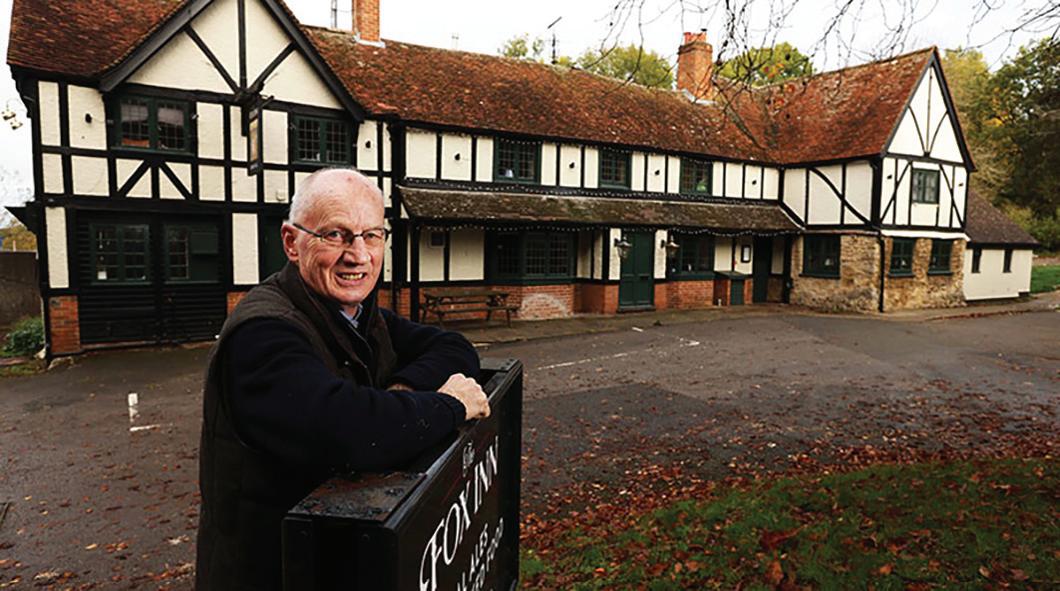
opportunities, which need to be within 30 minutes’ drive of Oxford. I’ll know when I see them. I also won’t take on a pub unless I have the right team in place, as recruitment is a big challenge.
“The Fox Inn is a wonderful historic building with nooks and crannies that ooze coziness and character. This combined with great views made it a great opportunity for me. The joint investment with Star Pubs will allow me to maximise the potential of this destination food pub, which has gone from strength to strength in the time I have had it.”
Matthew Stransom, Star Pubs Business Development Manager: says: “I am delighted that Stephen has taken on the lease for The Fox Inn. Having run the pub on a temporary basis for over year he was able to have a good look under the bonnet and could see its potential. He’s done a great job building on the pub’s reputation for food and drink, which with the latest changes, can only grow further. His plans to enhance the pub’s exterior with a new outdoor kitchen and bar will take alfresco drinking and dining to a new level.”

HYGIENE AS THE FOUNDATION OF GUEST EXPERIENCE
A clean and well maintained environment is the bedrock of every positive stay. Since the COVID 19 pandemic, expectations have shifted: guests demand spotless spaces and visible reassurance that cleaning has taken place. Disinfecting high touch surfaces such as remote controls and door handles, and providing in room hygiene kits with sanitiser and wipes, are now standard.
Air quality is also vital. Hotels and parks invest in ventilation and purification systems to enhance comfort and safety, creating environments where hygiene is a tangible promise.
INNOVATION IN HOUSEKEEPING
Technology is reshaping housekeeping. Autonomous robots vacuum and mop floors, UV C devices disinfect surfaces, and IoT systems provide real time updates on room status. Predictive analytics tailor cleaning routines to guest behaviour and occupancy, ensuring lobbies, gyms or restaurants are cleaned proactively during peak times.
Laundry logistics are evolving too: RFID tags and smart inventory systems reduce losses and ensure hygiene compliance. Sustainable washing methods, such as ozone or cold water technologies, combine cleanliness with energy savings, a key advantage for environmentally conscious travellers.
THE
Despite technological progress, housekeeping staff remain essential. Training and empowerment ensure teams operate machines confidently while embodying hospitality. A well trained team takes ownership of hygiene standards and contributes to a culture where cleanliness equals care and professionalism.
Personal touches, from a handwritten welcome card to a carefully executed turndown service, elevate a stay
from ordinary to memorable. Technology supports, but human attention remains the heart of hospitality.
At Interclean Amsterdam 2026, held from 14–17 April at RAI Amsterdam, more than 900 exhibitors and 30,000 visitors from 143 countries will gather at the world’s leading platform for cleaning and hygiene. The Hospitality Experience Centre is a highlight where practical innovations for hotels and holiday parks come to life. Demonstrations include robots delivering linen, smart housekeeping apps enabling real-time communication between teams and guests, and AI-driven systems anticipating cleaning needs. In this realistic setting visitors can virtually walk through guest rooms and see how AI and IoT optimise cleaning cycles. The Centre is a showcase that addresses the everyday challenges of housekeeping hygiene, efficiency, sustainability, and guest satisfaction with cutting-edge solutions.
The Essential Guide to Housekeeping in Hotels and Holiday Parks highlights how crucial hygiene, technology, and guest focus have become. The Essential Guide makes clear that housekeeping today is about more than cleaning: it is a strategic pillar of brand perception, guest satisfaction, and sustainability. Interclean Amsterdam 2026 builds on this by offering professionals a platform to see, test, and discuss the latest solutions.
For hotels and holiday parks, this is an opportunity not only to improve current processes but also to develop a vision of hospitality in 2030. The Hospitality Experience Centre acts as a bridge between daily practice and future oriented innovation.
The combination of practical guidance from the Essential Guide and the forward looking perspective of Interclean Amsterdam 2026 underscores that housekeeping and hospitality are entering a pivotal phase. Hygiene, technology, sustainability, and human hospitality converge in a new standard that defines both daily operations and long term strategy.
Those wishing to experience the future of hospitality will find in the Hospitality Experience Centre at Interclean Amsterdam 2026 an inspiring showcase, a place where the essence of cleaning and guest experience meets the innovations driving the sector forward.
See the advert on the back cover for further details.
Half (49%) of young adults are choosing no & low-alcohol drinks to moderate their drinking – nearly doubling since 2018 (28%), according to a new report from Drinkaware.
The report examined trend data from Drinkware’s annual Monitor since 2018, the only nationally representative survey of the UK’s drinking habits. It looked at who is using these drinks to moderate, how this has changed, and what it says about the UK’s drinking culture.
Encouragingly, uptake of alcohol-free drinks among risky drinkers –those who drink above the Chief Medical Officers’ low-risk guidelines of 14 units per week – has more than tripled, rising from 7% in 2018 to 23% in 2025.
Meanwhile, the majority (59%) of risky drinkers who consume no- or low-alcohol products use them instead of regular-strength alcohol. A further 25% use them either as a replacement or an addition depending on the occasion. Only 9% said they drink them alongside regular alcohol. Trends with clear potential for reducing alcohol harm.
According to the data, almost half (44%) of UK adults are choosing

no and low-alcohol drinks to moderate their drinking – up from 31% in 2018. It also revealed a sharp rise in UK drinkers opting for alcohol-free options to moderate their drinking, from 18% in 2018 to 31% in 2025, with consumption of low-alcohol products also increasing from 25% to 33% over the same period.
Karen Tyrell, CEO of the charity Drinkaware, said: “It is great to see young adults leading the charge in the growth of no & low drinks. But it is the rise in their use by risky drinkers which shows their potential for helping to reduce alcohol harm.
“The Government’s Ten-Year Health Plan for England rightly highlights their growth as an important tool in tackling alcohol harm. Swapping a regular beer, wine or cocktail for one of the many no and low-alcohol alternatives is an easy way to cut down on your drinking.”
Drinkaware’s research found that motivations for choosing no & low options vary by gender, socio-economic background, generation and type of drinker, ranging from a focus on improved health, curiosity, a desire to reduce alcohol intake to the wider range and better availability of no & low options.
Pub champion PubAid has appointed Kate Nicholls OBE as its new President.
Kate, who currently serves as Chair of UKHospitality and previously led the organisation as Chief Executive, succeeds Keith Bott MBE, who steps down after six years of service.
The appointment marks an exciting new chapter for PubAid as it builds on 15 years of success and strengthens its position as the positive voice for pubs showcasing how pubs enrich lives, create connections and power communities across the UK.
Kate’s remit will focus on raising awareness of PubAid’s work and further amplifying the message of pubs’ social, sporting and charitable impact. Drawing on her deep understanding of government, policy and the wider hospitality landscape, she will support the organisation’s long-term strategy to keep positive stories about pubs at the forefront of public and political debate.

Commenting Kate Nicholls OBE said: “Pubs sit at the heart of every community driving local economies, supporting communities, contributing to an active nation through funding community sport, fundraising and
bringing people together in ways that few other places can. I’m honoured to take on the role of President at PubAid, whose work in highlighting and celebrating these positive stories has never been more important.
“I look forward to building on the fantastic foundation to ensure that the true value of the great British pub is recognised by government, media and the public alike.”
PubAid’s work promotes the impact pubs have on local communities through fundraising, support, grassroots sport and sustainability. Its initiatives include the Community Pub Hero Awards with the All-Party Parliamentary Beer Group and the Positive PUBlicity Hub, which showcases positive pub stories to MPs and media, alongside research demonstrating how pubs power active, healthy communities through grassroots sport.
Des O’Flanagan, Co-Founder of PubAid, said: “Kate’s appointment is a brilliant step forward for PubAid. Her influence, knowledge and passion for our sector will help us reach new audiences and continue to showcase the incredible role pubs play across the UK. I would also like to thank Keith Bott for being our President for the last six years.”
The government has dropped controversial plans to introduce immediate unfair dismissal protection for workers, instead opting for a sixmonth qualifying period in revised Employment Rights Bill proposals.
The move represents a significant retreat from Labour’s original manifesto commitment and follows intensive negotiations between business groups and trade unions over measures that had stalled the legislation’s parliamentary progress.
Under the amended proposals announced by the Department for Business and Trade on Thursday, employees will need to complete half a year of service before gaining unfair dismissal rights—down from the current two-year threshold but falling short of the day-one protection initially promised.
The revision comes after the bill became gridlocked between the Commons and Lords, with particular contention surrounding both the unfair dismissal provisions and proposed restrictions on zero-hours contracts.
Government officials assisted discussions between employer representatives and union leaders to break the deadlock, with the DBT stating the revised approach emerged from these “constructive conversations.”
Officials defended the compromise as “a workable package” that would maintain existing first-day protections against discrimination and automatically unfair dismissal grounds whilst introducing the six-month threshold for standard unfair dismissal claims.
The changes hold particular significance for the hospitality and licensed trade, where workforce flexibility and probationary periods are standard practice. The sector had expressed concerns about the operational implications of immediate unfair dismissal protection.
The revised six-month period may offer greater certainty for hospitality employers managing seasonal recruitment and high staff turnover, though it still reduces the current 24-month window significantly.
Kate Nicholls, Chair of UKHospitality, said: “This is a pragmatic change that addresses one of hospitality businesses key concerns.
“We made clear representations to the Government that a six-month qualifying period would be much more practical for businesses and maintain job opportunities for young people, and I’m glad they have acted on those concerns.
“The Employment Rights Bill will still bring substantial changes and extra cost to hospitality businesses. In light of the increases to wages, business rates and other costs coming in April, it would be sensible for the Government to delay the introduction of statutory sick pay from day one by six months.
“This would give businesses much-needed breathing room and avoid further damage to employment opportunities.”
The DBT emphasised the amended legislation would still “benefit millions of working people who will gain new rights” whilst providing “much-needed clarity” for businesses.
In a concession to labour advocates, ministers committed that the six-month qualifying period could only be changed through primary legislation, preventing future adjustments through secondary regulation. The government also pledged to remove the compensation cap for successful unfair dismissal claims.
The revisions aim to secure the bill’s passage to royal assent according to the government’s delivery schedule.
As the way we eat, drink and socialise continues to evolve, 2026 is shaping up to be one of the most dynamic years yet for hospitality experiences. Forget dinner and drinks as usual - next year is all about experiences that bring us together.
New data insights from industry experts at hospitality discovery platform, DesignMyNight (www.designmynight.com), reveal the most popular trends set to reshape how we will be going out in 2026from immersive social venues to nostalgia-driven dining.
Looking at searches across a range of hospitality-related experiences on DesignMyNight’s website, the data uncovers three major trends that highlight shifts in what we enjoy when going out.
In 2017, there were only 250,000 yearly searches for activities on DesignMyNight. However, this year, they have more than tripled. With almost one in three UK adults visiting a socialising venue in the past year*, this shows that going out has transformed into an experiencebased opportunity.
Going out is no longer about just socialising, but taking advantage of experience-based venues. Socialising in a competitive yet fun way is set to boom even further, especially as 41% who go to venues offering darts and fairground games, for example, are returning at least once a month*. In 2026, existing and new concepts will continue to dominate the scene.
With searches for group-friendly restaurants being up by 28% in the past six months, it’s clear that restaurant guests are seeking large familystyle portions in a multi-dish format to enjoy shared dining experiences.

Beyond enhancing the social aspect of eating out, feast-style menus offer diners a greater sense of ease by simplifying both ordering and billsplitting, allowing everyone to enjoy the same dishes without the hassle of individual costs.
Diners are no longer wanting the limitations of trying one dish, so expect to see more sharing plates in 2026.
Interest in people looking for live music in bars, restaurants and pubs has increased by 15% on DesignMyNight’s website, highlighting that music-led occasions will continue to define people’s going out experiences.
Next year, more venues where music is the star, not the background,
are set to continue to expand even further. Listening bars aren’t a new concept; however, their presence will continue to grow across the UK as people seek music offline, whilst being able to chat.
EXPERT
Katie Kirwan, Head of Brand & B2C at DesignMyNight, reveals what’s next for going out and how your experiences will be even better:
Venues as an experience - We can expect to see more interactive elements or challenge-based experiences, perfect for those looking for competitive socialising.
Big tables, bigger feasts - Sharing menus that allow communal dining will become an experience in their own right. Set menus simplify bill splitting and ordering, allowing everyone to try a variety of dishes. In 2026, family-style feasts will transform dining into an interactive experience, where friends and families can taste a variety of dishes together. Music taking the spotlight - The days of the same playlist being played over and over are gone. Music will be an even more central part of your day or night out so you can enjoy live music whilst socialising.
Kirwan concludes, “With searches for a range of going-out-related experiences surging in interest by visitors on our website, it’s clear that hospitality is set to evolve faster than ever in 2026.
Our internal data highlights three major trends set to define the year: the rise of competitive socialising, the popularity of feast-style group dining and the growth of music-led venues.
Experiences are increasingly at the heart of going out, so the next year will be an exciting one for guests looking for even better ways to socialise.”
residence showcasing the activities that the pub hosts to bring people together in this isolated rural community.
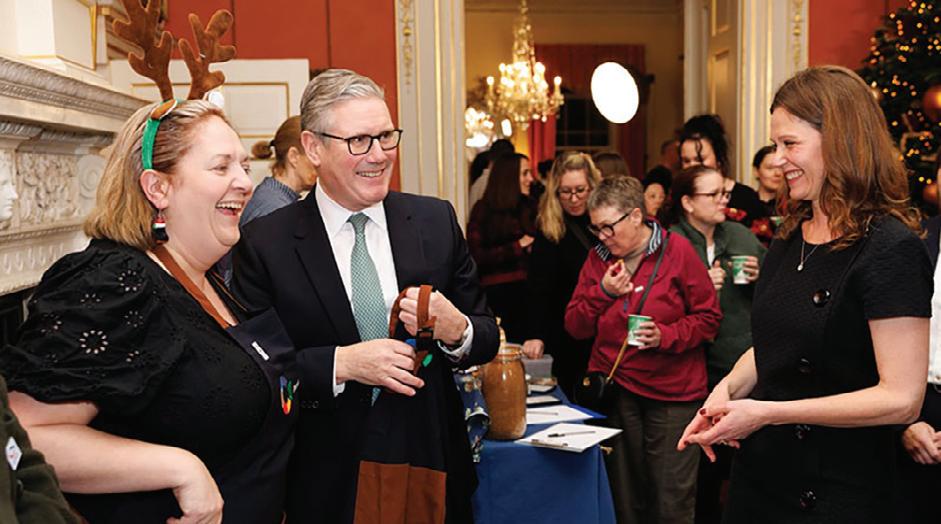
She chatted with him highlighting the important impact the pub has on community cohesion and helping local people to overcome loneliness and social isolation. As the hub of this rural area, where many residents, including farmers, live and work alone, The Halfway provides essential opportunities for social interaction. With support from Pub is The Hub, the pub has
Mitchells & Butlers, the operator behind popular pub and restaurant chains including All Bar One, Toby Carvery, Harvester, and Miller & Carter, has announced it expects to face approximately £130 million in additional costs during the coming financial year.
The Birmingham-based hospitality group attributes the substantial cost increase primarily to employment-related expenses, particularly changes to national insurance contributions and statutory minimum wage rates that took effect in April. A further minimum wage increase exceeding inflation has also been confirmed for the current year.
Rising food costs represent another significant challenge for the business, with the company highlighting particular concerns about increases in meat prices.
The projected £130 million figure encompasses the company’s initial evaluation of impacts stemming from measures announced in the recent autumn Budget, though specific details of these Budget-related effects were not disclosed.
Government ministers confirmed this week that the national minimum wage will rise by a further 4.1% from April onwards.
The hospitality sector received unwelcome news regarding business rates in the recent Budget announcement. An existing 40% relief for retail, hospitality and leisure operators, which had been capped at £110,000 per business, will cease on 31 March.
The marquee has become a vibrant space for social connection, hosting creative workshops such as chunky knitting, lino printing, wreath-making, and even CPR and defibrillator training to ensure locals can use the pub’s life-saving equipment.
Rhiannon Metters said: “It has been a fantastic experience to attend this Small Business Showcase and highlight the important role that pubs have in bringing people together and creating human connections.
“From a pint by the fire to wreath-making in the marquee, from the village shop to live music and shared skills, everything we do is about bringing people together, tackling loneliness and social isolation, supporting local makers and giving our little corner of Monmouthshire a place to gather, laugh, learn and belong.”
A replacement scheme will commence from the following financial year, featuring rates multipliers set 5p below the standard rate for qualifying businesses, but without any cap on the level of support available.
Industry analysts have suggested that when combined with increases to rateable values affecting most licensed premises, the changes are likely to result in significantly higher annual bills for many operators.
Urban, chief executive of
&
acknowledged the challenges ahead whilst expressing confidence in the company’s response strategy.
“We anticipate increased cost pressures across the sector as we look to the year ahead,” Urban stated. “However, we remain confident in our ability to manage these challenges through our established Ignite improvement programme and disciplined capital investment strategy.”
The warnings about future costs came alongside the publication of annual results showing pre-tax profits increased by 20% to £238 million for the year ending 27 September. This performance was achieved despite the business absorbing £100 million in additional wage-related costs from April’s changes.
Like-for-like sales advanced by 4.3% across the full year, though momentum slowed to 3.2% in the final quarter. The company attributed the deceleration to softer trading performance in London and surrounding areas, as well as in its premium brand portfolio.
For the opening eight weeks of the new financial year, sales growth has registered at 3.8%.
To counter rising cost pressures, Mitchells & Butlers has implemented various operational improvements. These include deploying labour scheduling systems, introducing automated ordering processes to optimise stock levels and reduce waste, and rolling out energy conservation initiatives

UK hospitality is changing fast. As 2026 approaches, sustainability is becoming a key differentiator, with a recent Booking.com survey showing that 74% of UK travellers actively seek sustainable options and many are willing to pay more for them.
Investors are taking note too. ESG performance increasingly shapes valuations, lending decisions and asset strategies, with 49% of lenders saying they would divest from businesses that aren’t taking suitable action (Savills 2022). Hotels and other hospitality venues that embrace genuine sustainability - not just good marketing - can strengthen their brand, improve operational resilience and enhance asset value.
At the same time, several major energy trends will influence how hospitality businesses manage costs. Although wholesale prices have stabilised compared to recent years, the charges for maintaining and using the UK electricity network are set to rise significantly in 2026, meaning many establishments may face higher bills even without increasing consumption. Meanwhile, carbon reporting is moving towards more granular, hour-by-hour data, making it essential for sustainability-conscious businesses to prove their energy is genuinely renewable.

Fortunately, there are practical, future-proof solutions. On-site solar generation offers fast payback for the energy-hungry hospitality sector, often in as little as three years, followed by decades of low-cost electricity. It reduces exposure to rising grid costs, makes sustainability commitments visible and supports additional services such as EV charging.
When combining solar with truly renewable electricity supply and transparent reporting, this also allows businesses to build trust with guests, investors and partners.
Good Energy helps businesses take control of their energy, offering 100% renewable electricity with hourly matching insights, solar installation expertise and competitive export tariffs.
With 25 years of UK renewable expertise, we’re here to support hospitality businesses to navigate these energy changes, cut costs, reduce carbon make informed decisions that strengthen their businesses for years to come.
Get started today: www.goodenergy.co.uk/business
See the advert on the previous page for more information.
The idea for The Fold was born during Covid, when the whole country was confined indoors. The landowners felt fortunate to have this beautiful outdoor space - a place to exercise, unwind, and find peace amid an uncertain world. Wanting others to experience the same sense of freedom, they decided to share it - creating a corner of land where friends and family could rest and reconnect with nature.
Because of the family’s deep connection to the land, the project was only possible if it protected and respected the environment - making the balance between construction and conservation the guiding principle throughout. The Fold has gradually grown into a small retreat of four off-grid cabins, each designed to offer guests simple comfort and quiet luxury, with the landscape always at the heart of the experience.
More recently The Fold has been recognised with a Judges’ Commendation as an Off-Grid Pioneer at the Herefordshire Tourism Awards.
SUSTAINABILITY AT THE CORE

Much of The Fold’s energy comes from on-site solar arrays and sustainably sourced firewood. But one part of the set-up remained a challenge: gas for cooking, heating and hot water. While essential for creating a luxurious stay, the team knew it left a heavier carbon footprint than they wanted.
INTRODUCING CALOR BIOLPG
To address this, The Fold turned to Calor, already familiar as a trusted energy provider. Together they explored switching from conventional propane to BioLPG, Calor’s renewable alternative. By working closely with a sales representative, The Fold adopted a system using 19kg cylinders and move onto a 70% BioLPG tariff which they’ve been happily using for a year now.
With Calor BioLPG customers can choose from a range of allocation tariffs, from 20% through to 100%, allowing them to balance sustainability goals with budget considerations. Each tariff corresponds to a different level of CO2 reduction, with all allocations backed by Green Gas Certificates to verify renewable usage.
This shift has allowed The Fold to significantly cut its CO2 emissions without compromising on reliability for guests. It’s also a step that fits naturally with their wider ambitions: rewilding their site, supporting local producers, and ensuring their operations enhance, rather than harm, the land they steward.
The Fold describes their experience with Calor as constructive and collaborative. Their sales representative listened carefully to what they wanted to achieve and helped design a workable solution. As they see it, this wasn’t just a switch in energy supply, but the beginning of a partnership that supports their wider sustainability goals.
For The Fold, sustainability is not a requirement but a responsibility — one that shapes every decision. Switching to BioLPG has been part of that journey, helping them to align the comfort they offer visitors with the environmental values that guide the business.
For further information on Calor visit www.calor.co.uk/caterers
See the advert on page 13 for more information.
Green energy experts have launched a new guide to show how solar PV can support resilience and guest expectations
With energy costs climbing and guests expecting more sustainable choices, UK hospitality and leisure businesses are being urged to invest in solar PV to protect margins and reputations.
This is according to a new guide from nationwide renewable energy installers, Geo Green Power, which sets out how pubs, restaurants, hotels and leisure centres can use solar PV to reduce overheads, stabilise costs and meet the demands of increasingly environmentally conscious guests.
In its research for the new guide, ‘Powering Good Times’, the firm has uncovered how around two-thirds of UK diners now consider a venue’s ethical and environmental credentials when deciding where to eat. In addition to this, further research found that sustainable travel is now considered to be important to as many as four out of five travellers. At the same time, operators are facing high and unpredictable energy bills, with kitchens, pools, refrigeration and ventilation driving continuous demand. Against this backdrop, the guide is aiming to help hospitality and leisure businesses

understand the commercial, operational and reputational benefits of solar PV and take practical, informed steps towards reducing costs, strengthening resilience and delivering visible sustainability improvements.
The guide also explores real-world examples of businesses already benefitting from solar PV, including Mitchells & Butlers, one of the UK’s largest pub and restaurant groups. Working with Geo Green Power, the company has installed solar PV across multiple sites. The installations generate over 470,000kWh of renewable electricity each year, saving more than 100 tonnes of carbon annually and reducing reliance on the grid, while providing customers with a visible signal of the company’s sustainability commitment.
Kat Auckland, Communications Director at Geo Green Power, said: “In hospitality and leisure, the energy meter never really stops. Solar PV gives operators a way to take control, stabilise costs and show guests the sustainability story they increasingly want to see.”
‘Powering Good Times’ also outlines funding options, ranging from self-funded systems with payback in four years to Power Purchase Agreements that require no upfront capital.
The guide is now available for download at: www.geogreenpower.com/solar-guide-for-commercial-sectors/

As we look ahead to 2026, premiumisation remains a key driver for the UK on-trade. Despite economic pressures, consumers remain willing to spend on high-quality wine, especially when the experience feels special. This creates a clear opportunity for operators to enhance their wine lists while protecting margins.
Authenticity and provenance matter more than ever. Guests want wines that justify their price and deliver a sense of occasion; from classic regions to innovative styles, premium wines offer differentiation and value. Consider Portuguese wines, where the use of indigenous grapes adds a sense of uniqueness. Or upgrade to Prosecco DOCG Superiore for celebrations, while Spanish Verdejo offers freshness and versatility at a competitive price
At Plastexe, our PVC Wall Cladding offers a premium finish with outstanding performance in hygienic and high-demand environments. It is fire-retardant, non-absorbent, highly durable, and provides excellent resistance to chemicals. Our Premium Cladding Collection is easy to cut, form and glue, making it ideal for a range of applications.
Our extensive satin colour range combines clean, fresh tones with modern design appeal. These versatile shades create bright uplifting space with a wipe-clean, hygienic finish, helping to elevate the look and feel of any environment.
Our gloss range offers a sleek, high-shine finish in select colours, perfect for creating a bold, modern look in environments where style and impact matter.
Complete your installation with our exclusive range of accessories, including profiles, adhesive, silicone and
CLEAN Linen & Workwear are one of the UK's most trusted laundry companies. They supply tailored workwear solutions provided by real people. Their comprehensive laundry network means they can service customers throughout England and Wales, providing chefswear, workwear and linen rental services. Whether you operate from a single-site hotel, pub or restaurant or have multiple locations, CLEAN can tailor a workwear rental solution to suit your business requirements. They offer various uniform options to support the entire kitchen brigade, from Executive Chefs to Kitchen Porters.
With their workwear rental service, you can say goodbye to the hassle of purchasing, storing, and maintaining chef and kitchen uniforms. Instead, enjoy the convenience
Sunfly is undoubtedly the bestknown name in Karaoke, having been formed in 1991. However, technology has come a long way since the 90s.
Sunfly now have over 20000 HD Karaoke videos designed specifically for large screens. All songs have been digitally remastered for consistent audio quality. There are specially curated playlists and international content on all sys-
point.
Premiumisation isn’t just about indulgence, it’s about profitability. By curating a list that strikes a balance between prestige and smart buying, venues can meet consumer expectations and maintain healthy margins. The key is selecting wines that overdeliver on quality without inflating costs.
In 2026, success for the on-trade lies in combining premium choices with commercial sustainability. With the right strategy, wine can become a cornerstone of both guest satisfaction and business growth.
Visit www.lanchesterwines.co.uk or see the advert on page 17.
weld rod, designed to deliver a seamless finish and qualify your project for the manufacturers lifetime guarantee when used together.
Our colour-matched profiles complement our Premium Cladding Collection, delivering a professional finish. They provide watertight seals, easy-to-clean surfaces, and a hassle-free installation process. Whether creating smooth transitions or securing exposed edges, our profiles complete the look while enhancing durability, hygiene, and overall performance across every installation.
For further information, or to request a brochure, please contact:- sales@plastexe.co.uk
Or call our sales office on 01392 360999
See the advert on page 5 for further information.

tems.

Sunfly now have a large range of online and offline systems. The most popular in the pub and restaurant market is the Sunfly Showcase Touchscreen System which features an intuitive interface and robust touchscreen designed for frequent use. Available for sale and on lease for just £100 + VAT per month for two years (then £25 per month).
We also have tablet-based systems such as the EVOBOX Club which is available for only £60 + VAT subscription per month, minimum one year.
In addition, we have partnered with SingPods who have a fantastic range of professional sys-
When your beer tastes good, your customers are more likely to stay longer, and/or return another time. If your beer starts to misbehave, you put that revenue at risk. Whether you are looking for beer dispense emergency services or need regular maintenance for ensuring excellent beer, Avani Solutions are the partner you need.
Whether you're running a hotel, a restaurant or a pub, you'll be trying your best to serve great beer as you juggle all the other elements of providing top notch hospitality. The last thing you want is to be fighting a frothing beer tap, tipping a tainted pint down the drain or dealing with a disappointed guest who's returned to the bar complaining of a 'dodgy pint' (or half!).
Some good news, we are determined that one day every pint served will be perfectand we're dedicated to helping you be part of that mission. We're sometimes referred to as a 'line cleaning company' – but line cleaning is only one part of what we do, we do so much more than that!
We are trusted to -:
• Troubleshoot issues with dispense.
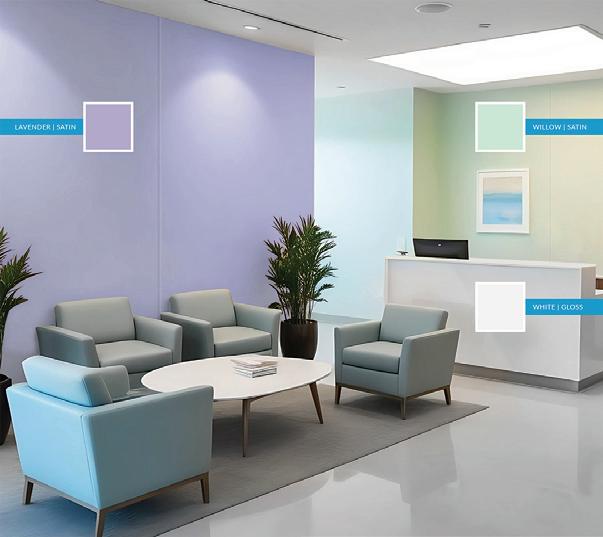
of a hassle-free rental system that provides freshly laundered garments whenever your team need them. By renting with CLEAN, you can avoid upfront purchase costs, spread the payments over your contract, and ensure quality and care with every wash. Delivery is free, and there are no hidden charges; contracts even include repairs. Each item of clothing can be branded and tailored to the wearer with logos and embroidery. Their managed service prevents issues compiling when supplying your team with work clothes; a convenient locker valet service helps distribute and store uniforms, and they tackle minor repairs early to extend the service life of a uniform. Ultimately, this avoids costly replacements wherever possible as it reduces uniform losses, and uniforms only need replacing when a repair is not safe or cost-effective.
With CLEAN's workwear rental and laundry service, business owners can focus on what matters most — running their business — while CLEAN takes care of the rest. To find out more: www.cleanservices.co.uk or see the advert on page 3.
tems as well as their famous self-contained pods.
If you have an under-performing function room, you may be surprised to hear how easy and affordable it is to convert part or all of the room to a Private Karaoke room.
Customers can then book online and enjoy 2 or 3 hour timed sessions; bookings are managed with intuitive room management software. Contact us for a free consultancy or for a full build quote. ROI possible within 3 months.
All systems are fully licensed and legal, sales are reported to PRS every quarter. We also provide great 24/7 IT support.
Visit our website today @ sunflysolutions.com to view our other products such as the Satellite Laptop and Wireless Microphones systems as well as apps and subscription packages.
See the advert on page 9 for further information.
• Re-set and re-calibrate your system with our ProSpec service.
• Provide SOS rescue cleans.
• Maintain your dispense system for you, including on behalf of a brewer.
• Give peace of mind with ProClean - our 28-day extended line clean.
• Deliver data-driven insight, to inform you of any faults, as well as highlighting trends and beer quality results.
• Training and consultancy.
Our services can help you to lower costs, increase efficiency and also improve sustainability. We empower you to keep the beer (and cider) pouring to the highest standards and protect your profits by doing so.
We walk alongside venues and are always there when you need us, like a supporting handrail, so you don't have to worry about your beer and can focus on delivering the best customer experience.
Contact us today to find out how we can become your best partner when it comes to bar and cellar services. Call us on 01638 563237. See the advert on page 3.
The South West’s leading food, drink, and hospitality event is back! The Source trade show returns to Exeter on Tuesday 3rd and Wednesday 4th February 2026, marking its 21st year as the region’s go-to showcase for innovation, inspiration, and connection.
For two decades, Source has been the cornerstone of the South West hospitality calendar, drawing thousands of buyers and decision-makers from across the region and beyond. Renowned for bringing together top suppliers, passionate producers, and forward-thinking retailers, it’s the ultimate destination for anyone looking to stay ahead in food, drink, equipment, and services.
This milestone year promises the biggest and most dynamic show yet, featuring a vibrant mix of established brands and exciting newcomers. Expect cutting-edge products, fresh ideas, and exclusive opportunities to elevate your business.
Why you should attend:
• Discover 200+ exhibitors showcasing the best in food, drink, hospitality, and retail.
• Taste and test the latest innovations first-hand.
• Network with industry peers and build valuable connections.
• Access exclusive show offers you won’t find anywhere else.
• Plan ahead with fresh ideas for menus and seasonal trends.
And that’s not all - alongside Source, the venue is hosting two other major events making this year unmissable:
• Westcountry Tourism Conference – expert insights and networking for tourism professionals (booking required at westcountrytourismconference.org.uk).
• Taste of the West Awards Ceremony – celebrating excellence on 3 February. (Invite only. More information at www.tasteofthewest.co.uk/taste-west-awards-ceremony2025).
With everything your food or hospitality business needs under one roof, The Source trade show is your ultimate platform for sourcing, learning, and growing in an ever-evolving industry.
For more details or to register, visit www.thesourcetradeshow.co.uk, or call 01934 733456
Established in 2010, our no.1 aim has always been to produce the finest quality juice based drinks in a pure & natural way.
We search the globe for the best ingredients to ensure every Daymer Bay bottle is as good as the last. Our taste experts have put all their knowledge to good use to blend different varieties of fruits to arrive at flavours you and your customers will love.
Our offering includes our premium NFC juices, traditional lemonades along with the Mocktails which are the newest addition to the range – all naturally delicious and refreshing and inspired by the beauty of the North Cornish coastline.
Our core range comes in 250ml, single serve glass bottles, available in seven flavours so there’s something for everyone from the ever-popular Pure Orange & Apple juice to our delightfully refreshing Still Lemonades.
Our new Mocktails range includes the five delicious flavours of Mojito, Strawberry Daiquiri, Pina Colada, Passionfruit Martini and Blue Mai Tai, perfect to appeal to consumers in the rapidly growing low/no alcohol market.
For more information about stocking our Daymer Bay range, contact us at: sales@daymerbaydrinks.co.uk
See us on Stand B1


For more than seven decades, Denhay Farms has stood at the intersection of craftsmanship, animal welfare and uncompromising quality. From our beginnings in the Dorset hills to becoming one of Britain’s most trusted names in premium bacon, our ethos has remained constant: to make food with intention, care and integrity. That dedication has been recognised at the highest level: Denhay holds a Royal Warrant for bacon, a mark that reflects our commitment to producing food of outstanding quality and provenance.
This philosophy is brought to life through Denhay Direct - our dedicated service for delivering exceptional bacon straight to the hospitality industry. Denhay Direct was created to give chefs, hoteliers and foodservice partners direct access to ingredients that elevate the plate while offering the consistency and reliability their kitchens depend on.
Every rasher of Denhay bacon begins with high-welfare farming and responsible sourcing, followed by the heart of our craft: our bacon is cured entirely by hand. This slow, meticulous approach ensures an even cure,
Empire Services supports businesses across the South West with dependable engineering across six core areas: air conditioning, refrigeration, commercial heating, ventilation, catering equipment and freezer/cold room trailer hire. Our team provides installation, servicing and rapid emergency support to keep essential systems running safely and efficiently.
Installation is a major part of what we do, and we work closely with restaurants, schools, hospitality venues, manufacturing sites and large commercial facilities to design and fit systems that meet each site’s
natural texture and the distinctive depth of flavour Denhay is known for. Whether cooked in volume or showcased in signature dishes, our bacon performs beautifully every time.
Working directly with professional kitchens allows Denhay Direct to provide tailored solutions - flexible ordering, dependable delivery and product formats designed to support efficiency without compromise. From our award-winning Dry Cured Back Bacon to our richly smoked streaky cuts, chefs know they are receiving premium bacon backed by decades of expertise.
Denhay are more than a supply route; we are a partnership grounded in transparency, responsiveness and shared passion for quality ingredients. As hospitality continues to evolve, Denhay remains committed to helping kitchens create memorable experiences - bringing our craft, our heritage and our Royal Warrant directly to the people who value them most.
See us on Stand B2 or visit direct.denhay.co.uk
technical, operational and compliance needs. Whether upgrading equipment or fitting out a complete workspace, our engineers ensure every installation is completed to a high standard with minimal disruption.
Alongside this, we offer one-off repairs, planned maintenance and fully inclusive service contracts to reduce downtime and extend equipment lifespan. Trusted for our responsiveness and workmanship, Empire Services helps businesses operate smoothly all year round.
See us on Stand G26 or visit www.empireservicessw.co.uk

As consumer demand shifts towards healthier, more considered drinking choices, the no/low alcohol sector continues its rapid growth. Hospitality venues are increasingly searching for sophisticated alternatives that appeal to guests seeking quality without compromise. Earlsmann VINE, a Devon-based producer of naturally alcohol-free drinks inspired by classic wine styles, is helping lead that change. Unlike de-alcoholised wines, which often taste overly sweet or artificial, Earlsmann VINE products are developed from the outset to deliver clarity, balance, and authentic wine-like character—without fermentation and without alcohol. The range includes white, blush and red variants, each designed to complement food pairings and elevate the dining experience.
The response has been striking. At recent public tastings, approximately one in three people who
tried the drinks went on to purchase—a compelling indicator of both commercial and consumer potential. Earlsmann VINE's Grenache Blush recently won a Taste of the West Gold Award, with its New Zealand–inspired white achieving Silver, reaffirming its quality credentials.
With growing interest from bars, restaurants and wellness-focused venues, now is the time for operators to rethink their alcohol-free offering. Earlsmann VINE provides a refined option for those who choose not to drink—without feeling like they’re missing out.
Earlsmann Vine; 01884 259917; earlsmann.store; sales@earlsmann.co.uk
Visit us on stand H10 at The Source

We are an artisan ice cream company based on Dartmoor. We use cream and gallons of lovely fresh milk from cows that graze on the foothills of Dartmoor.
We are passionate about creating the nearest thing to proper home-made ice cream. Making in small batches, we keep, as much as possible, to ingredients you would find in your larder, while not compromising on quality.
In addition, many of our ice creams are made even more delicious by the addi-

The Label Group Ltd are a supplier of labelling guns, thermal label printers & labels. We’re here for retail, industrial and manufacturing businesses. We’re independent, which means impartial recommendations combined with over 30 years experience in supplying these products. The labelling gun market can be complicated. Many products are known by dif-
tion of chunks and sauces, most of which are lovingly made by us. Our fruit ice creams and sorbets are made from real fruit.
We think you will find that, despite our premium quality, we are competitively priced.
We sell a range of tub sizes, including napolis, for hospitality, but also sell ice cream in 120ml and 450ml tubs for retail. Visit www.dartmooricecream.uk or see us on stand C2.


•
• 8 Month Shelf Life
We have won multiple awards for our fudge over the years and believe this is due to offering a delicious product that leaves customers always wanting to come back for more. We have also been voted as Britain’s Best Traditional Fudge Company 2022-2023, a title we are extremely proud of.
our fudge is cooked to order, maximising shelf-life and ensuring the freshest product is delivered to you. We source as many ingredients locally as possible, to cut down on our carbon footprint and support local businesses when ever we can.
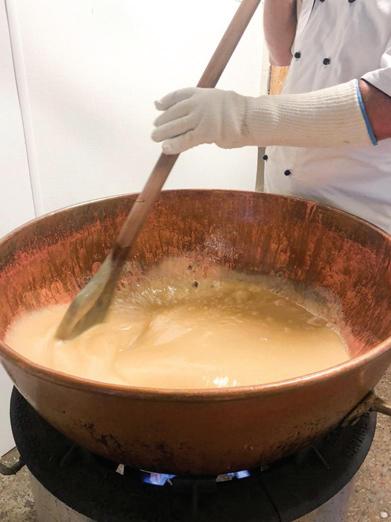
See us on Stand at the Source Trade Show or visit www.thedevonfudgecompany.co.uk for further information.


Quality, handmade, luxury DEVON CLOTTED CREAM FUDGE using only natural ingredients, all cooked in a traditional method.
We are proud to say that all our fudge is: We source as many ingredients locally as possible, to cut down on our carbon footprint and support local businesses when ever we can. www.thedevonfudgecompany.co.uk
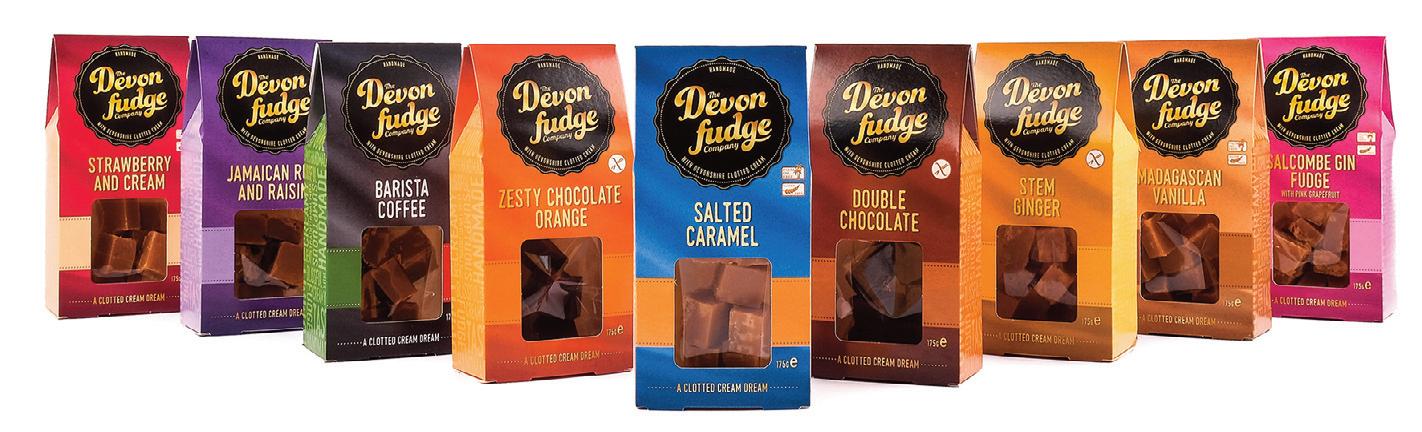

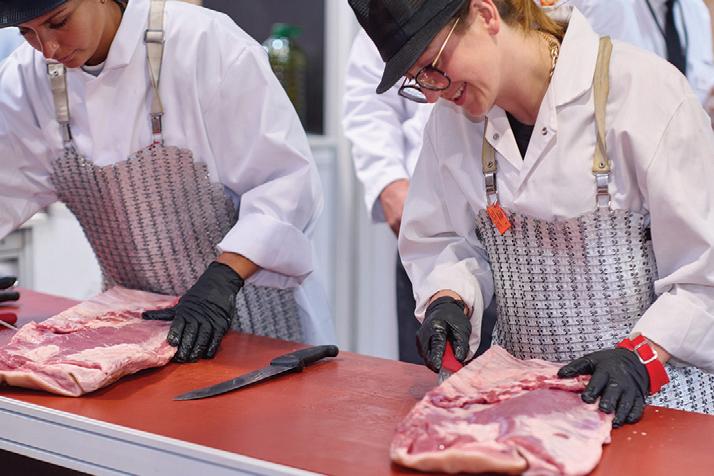
Booker is the UK’s leading food wholesaler, proudly serving over 340,000 hospitality and catering customers nationwide. From independent restaurants and gastropubs to hotels, event caterers, and street food operators, we empower every kind of food business to thrive with exceptional value, choice, and expert service.
We support chefs, kitchen teams, and front-of-house professionals with top-quality ingredients, essential supplies, and a can-do approach that makes all the difference in a fastpaced industry. Our dedicated team - including Master Butchers, specialist buyers, culinary trend experts, and hospitality-savvy colleagues - understands the unique needs of
every food business, whether sourcing the freshest produce, navigating seasonal menus, or delivering last-minute stock when it matters most.
With 190 branches, nine distribution centres, and a 7-day delivery network featuring real-time tracking and flexible credit options, Booker guarantees availability, quality, and consistency - even amid supply chain challenges. Our “We Can Save You Money” programme, loyalty schemes, and competitive pricing help customers manage rising costs, while our Own Brand ranges deliver quality without compromise to support profitability in tight-margin environments.
Beyond supply, our catering team offers hands-on advice on menu planning, portion control, compliance, and cost optimisation. We back this with sector-specific guides and clubs that provide insights, savings, and ongoing innovation.
More than a wholesaler, Booker is a trusted partner focused on the long-term success of the catering industry. With over 85,000 customer visits annually and continuous investment in people and technology, we deliver a seamless, customer-first experience that keeps kitchens stocked, guests delighted, and businesses growing.
For further information please visit www.booker.co.uk

The Heritage Excell Copper Cookware Collection is entirely crafted in Britain. Every element of its creation, from the hand-spun metal bases through to the leather handle inlays and packaging box with tissue packing paper, is created in the UK, with five Made in Britain manufacturers contributing to its creation.
Curtis Bligh, Head of Marketing Communications for Excell Metal Spinning, said: “The Heritage range of artisanal pans from Excell Metal Spinning is actively supporting 130 UK manufacturing jobs. Of the eight leading UK manufacturers involved in crafting the robust range of chef’s pans, frying pans, sauce pans and accessories, five of them are proud members of Made in Britain. In fact, we expressly looked at the Made in Britain membership directory to find manufacturers to get on board with.
“Importantly, every aspect of this is totally sourced and
made in Britain. This is a collective of British manufacturers coming together to produce a unique product.
“The Made in Britain accreditation gives us a tangible advantage in a very competitive market. It underpins that we’re perceived as high quality, entirely ethical in our practice, and innately sustainable in what we do. That's what that Made in Britain mark really stands for: it really means something, and that’s why we have it laserengraved onto our exclusive new range of celebrity-chef approved pans.”
The performance and durability of the range have been thoroughly tested by Gary Pearce, head chef at the Michelinrecommended restaurant 36 on the Quay, and celebrity chef, food writer and cookery teacher, Gill Meller. Heating evenly, even in temperatures up to 220°C, made of 100% copper and finished with a non-stick tin lining, the range delivers clear quality for even the most discerning cook.
To explore the range, visit: www.theheritageexcell.co.uk
In a professional kitchen, sharpness isn’t a luxury — it’s a necessity. From the first prep of the day to the final plating at night, chefs count on their knives to deliver precision. That’s where the Tormek T-2 Pro Kitchen Knife Sharpener comes in — a sharpening solution trusted by culinary professionals around the world.
Backed by over 50 years of sharpening expertise, and developed for the intensity of the commercial kitchen, the Tormek T-2 Pro Kitchen Knife Sharpener gives chefs full control over their edge. The machine is gentle on knives — it sharpens, not shortens. Thanks to the slowrotating diamond grinding wheel and high-precision guide, it only removes minimal steel, preserving the life of your knives while delivering exceptional sharpness.
overheating. Just consistent, razor-sharp edges — time after time. With its low-noise operation and compact design, it integrates seamlessly into even the busiest culinary spaces — and is also suitable for sharpening other blades commonly used in food preparation.
The Tormek T-2 Pro Kitchen Knife Sharpener is designed to handle a wide range of kitchen knives — from large chef’s knives to small paring blades — and can also be used to sharpen other common kitchen blades, including mandoline blades and S-blades.
No matter the task, a properly sharpened knife is essential for efficiency and control. The Tormek T-2 doesn’t just sharpen knives — it elevates the entire kitchen workflow. tormek.com
What sets the Tormek T-2 Pro Kitchen Knife Sharpener apart is its blend of simplicity and professional-grade results. No guesswork. No
Phone: +46 581-147 90 Email: info@tormek.se
Over the Festive season, hospitality venues have a unique opportunity to showcase the exceptional quality and craftsmanship of Northern Ireland’s food and drink producers. Customers seek authentic, high-quality products, and incorporating Northern Ireland food and drink products into your menus will help you elevate your seasonal offering.
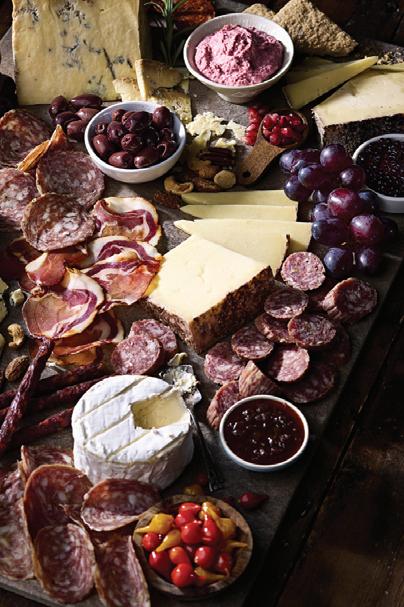
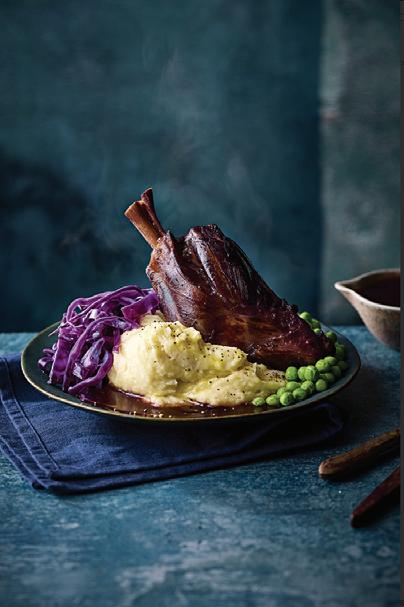
Set the stage for an unforgettable festive menu with locally crafted charcuterie, perfect for antipasti boards and sharing platters, complemented by artisan oils and condiments that bring depth and character to every dish. For mains, showcase Northern Ireland’s finest meat and fish alongside vibrant seasonal vegetables for a truly authentic celebration. Indulge those with a sweet tooth with luxurious ice creams and sorbets that add a refreshing finish, then complete the experience with a cheeseboard featuring crisp artisan crackers, locally produced cheeses, and indulgent chutneys—small touches that make a lasting impression.
LittlePod’s responsibly-sourced natural ingredients are used in professional kitchens all over the world.
Leading chefs love LittlePod’s innovative products – none more so than Peter Gorton, a long-standing advocate for the company’s Campaign for Real Vanilla.
“I love LittlePod’s natural vanilla paste – every chef should use it,” said Peter, a Michelin Star-winning Master Chef, who joined Janet Sawyer MBE BEM – LittlePod’s Managing Director and founder – at the Cake & Bake Show in November to demonstrate different ways to use his favourite LittlePod product. “LittlePod’s natural vanilla paste is so versatile. It saves so much time without compromising on quality.”
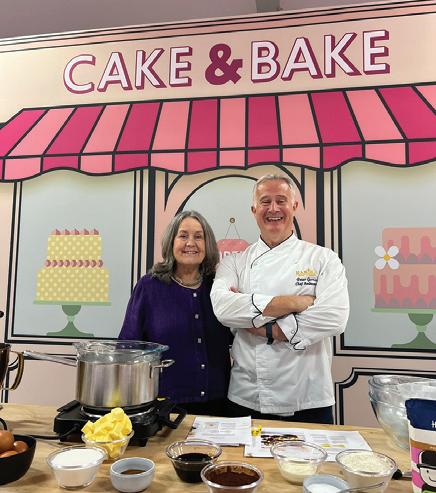
Peter gave two demonstrations – using LittlePod’s Madagascan vanilla paste – on the Cake & Bake Stage at Olympia London, while Janet signed copies of her second book, Real Vanilla: Nature’s Unsung Hero, which is available to purchase from LittlePod’s website, and from bookshops and online retailers internationally.
“It is always a pleasure to take our Campaign for Real Vanilla out and about, and to underline the importance of using real and natural ingredients,” said Janet.
“This year, I’ve been spreading the word about LittlePod and our products all over the world – in Japan, Australia and Canada – but it was great to be back in London, and to meet everyone at the Cake & Bake Show.
“We feel so fortunate to have a chef as accomplished as Peter to represent us and to demonstrate innovative ways to use our vanilla paste and other natural ingredients. I couldn’t be more grateful to Peter and we thank him for continuing to be such a fantastic ambassador for LittlePod.”
Like to purchase LittlePod’s products – including Janet’s latest book – or put Peter’s recipes from the Cake & Bake Show to the test?
Please visit www.littlepod.co.uk – or contact the LittlePod team at sales@littlepod.co.uk / telephone 01395 232022 for more details.

To complement your menu, elevate your drinks offering with award-winning Northern Irish spirits. From distinctive Poitín and premium vodka to smooth Irish whiskey and craft gin, these exceptional products are perfect for creating festive cocktails or serving neat. Each pour brings authentic local character to your bar and delivers a memorable taste of Northern Ireland.
Contact Invest Northern Ireland today and speak to the Food & Drink Business Development Team to discover suppliers and bring the best of Northern Ireland to your festive offering michelle.charrington@investni.com / alex.taggart@investni.com / buynifood.com

When it comes to creating authentic Mexican dishes, the secret lies in using genuine ingredients. For UKbased restaurants, shops, and bars, sourcing these items can often feel like a challenge. That’s where MexGrocer steps in. As a trusted supplier of Mexican food and drink products, MexGrocer provides an extensive range of high-quality ingredients straight from Mexico, making them accessible to businesses of all sizes.
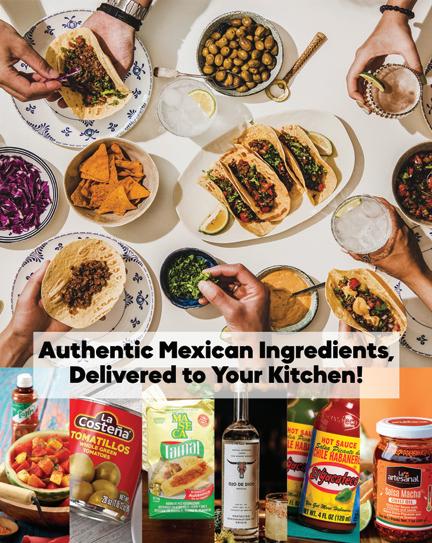
Based in the UK, MexGrocer specialises in importing and distributing wholesale products to meet the growing demand for authentic Mexican cuisine. From essentials like tortillas and chillies to unique items like nopales and tomatillos, their catalogue is a treasure trove for chefs and food businesses seeking to serve genuine Mexican flavours. They also stock hot sauces, beans, sweets, soft drinks, tequila, mezcal and a lot more, ensuring a comprehensive selection for any culinary need. MexGrocer proudly stocks some of Mexico’s most
popular and trusted brands, includ-
bring the authentic taste of Mexico to your kitchen, giving businesses the confidence to serve dishes that truly represent Mexican food culture.
MexGrocer isn’t just about providing ingredients; it’s about enabling UK establishments to embrace and celebrate Mexican food culture. Whether it’s a family-run taqueria or a high-end restaurant, MexGrocer helps businesses deliver the quality and taste their customers deserve.
If you’re in the food and drink industry and want to bring the vibrant flavours of Mexico to your establishment, MexGrocer is your go-to partner. With a straightforward ordering process and a wide product range, they make it easy to stock up on all your Mexican favourites.
www.mexgrocer.co.uk



Hale Events – the team behind leading regional trade shows such as The Source and Expowest Cornwall – is launching an exciting new event in 2026. The Source Roadshow will take place on Wednesday 25 February 2026 at the Bath & West Showground, bringing Somerset’s vibrant food and drink scene together under one roof.
This one-day event is designed for the South West market, offering a must-attend sourcing opportunity for local buyers, chefs, hospitality operators, retailers, and distributors. With 100+ exhibitors, the Roadshow provides a dedicated space for businesses to connect, discover new products, and explore fresh ideas.
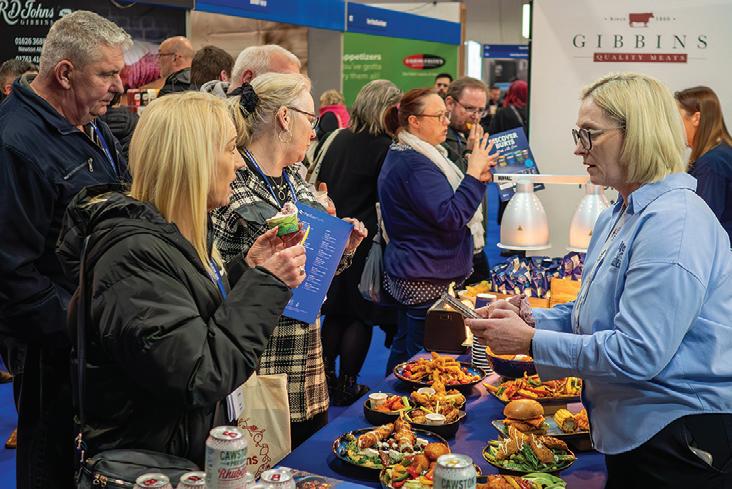
Despite Somerset’s rich food and drink heritage, the region has never had its own dedicated trade show – until now. The Source Roadshow fills that gap, giving cafés, restaurants, farm shops, delis, and catering businesses the chance to meet a fantastic mix of suppliers and producers, on their doorstep. And it’s not just about food and drink – expect to find innovative equipment, EPoS systems, and essential business services too.
From local artisans to major suppliers, the exhibitor

line-up promises something for everyone.
“We’ve organised trade shows all over the UK, but never in our home county – so this is exciting!” says Mike Anderson, MD of Hale Events. “Alongside producers, equipment and service providers, we’re making space for sector support organisations too. Expect to meet FareShare, The FSB, Visit Somerset, colleges promoting apprenticeships, and more – all helping to connect, educate and advise businesses.”
With backing from Taste of the West and key media partners, the Source Roadshow is set to become a valuable date in the industry calendar. Conveniently located for buyers from Somerset, Wiltshire, Dorset and beyond, it’s easy to get to and free to attend for trade buyers.
Don’t miss this opportunity to source, network, and grow your business in the heart of Somerset. For full details on visiting or exhibiting, go to https://sourceroadshow.co.uk.
Severn Cider are multi award winning artisan cider and perry makers.
We make whole juice draught and bottled ciders and perry using locally grown apples and pears.
Since 1956 we have been making cider at our family home and now cider mill. Set within 4 acres of heritage orchards and established gardens, we are situated on the banks of the River Severn in Awre,
Taking inspiration from cocktail traditions and Malvern’s rich water-cure heritage, Malvern Bitters’ flavours include the flagship Inky Blue (Aromatic) Bitters, which is a quirky, all-natural, colour-changing elixir that won GOLD at the World Drinks Awards 2024 and a silver medal at the London Spirits Competition 2024.
Malvern Inky Pink (Chilli) Bitters was awarded a gold star in the Great Taste Awards 2024 (food and drink that
the Forest of Dean, Gloucestershire.
We are continuing to plant cider apple and perry pear trees at our new orchards in Blakeney, home of the famous Blakeney Red Perry pear.
See us on Stand D21 or visit www.severncider.com
delivers fantastic flavour) and will add a spicy, slow burn to your favourite tipple.
Malvern Inky Orange & Cardamom Bitters won a Bronze medal in the International Wine & Spirit Competition 2025. This bitters is a veritable mélange of citrus and spice, which will add a zesty, aromatic complexity to drinks.
All flavours contain 40% ABV alcohol and fresh spring water from the Malvern Hills, are produced from scratch and will give your drinks colour, complexity, depth and flavour.
See us on Stand D23D or visit www.malvernbitters.ink

For over 60 years, Arthur David has been part of the fabric of the South West’s food community. From family beginnings to a company trusted by thousands of chefs, one thing has never changed: our belief that great food starts with great service.
We deliver more than ingredients — we deliver confidence.
Fresh produce picked with care.
Fine foods sourced for flavour.
Bakery, dairy, frozen and dry store lines chosen to help chefs save time, reduce pressure and raise the standard of their menus.
But what really defines us is how
we show up. Six days a week, early doors, in all weather — doing whatever it takes to support the kitchens that rely on us. Our teams build relationships that last, working closely with chefs, growers and makers to bring the very best of the season to our region.
Chefs tell us they choose Arthur David not just for quality, but for trust — trust that what arrives will be right, fresh, consistent, and delivered with care.
We’re proud to be a family-run business with a simple purpose: to help kitchens deliver amazing experiences through service, quality and knowledge.
The Label Group Ltd supplies labelling guns, thermal label printers and labels to retail, industrial and manufacturing sectors.
As an independent business, we offer unbiased advice backed by more than 30 years of experience in this field.
Arthur David. Trusted by chefs. Powered by service. Inspired by food.
See us on Stand B26 or visit www.arthurdavid.co.uk
The labelling gun sector can be confusing. Products go by various names based on their application: labelling guns, price guns, pricing guns, label guns, coding guns and batch guns.
Our product selection covers every requirement, from basic occasional-use models to robust industrial machines, including specialist features like auto-incrementing guns for batch coding. All equipment comes with a one year manufacturer's warranty and is built to deliver years of dependable, efficient performance.
See us on Stand D16 or call 01736 810334 for details.
DWC Services is a small business specialising in ePOS installation, maintenance, upgrade and repair.
With a growing portfolio of local establishments in the hospitality industry, we also assist with large chain retail projects.

DWC was founded by its Managing Director, Dan Curtis back in 2013, before registering in 2016. Dan has almost 20 years experience in the IT/ ePOS sector, starting in North Devon back in 2002.
Based in South Devon, we have a wide range of customers throughout Devon, Cornwall and Dorset, many
happy repeat customers that have been with us 10 years +.
We pride ourselves on our personal approach and are always on hand to talk through your needs, from simple home/office support to large commercial IT/ ePOS installations.
Our working ethos lies in traditionally supporting other businesses. Payment systems are an essential part of any business and we will never leave you waiting to get up and running.
See us on Stand D4 at the Source Roadshow or visit www.dwcservices.co.uk
The UK hospitality sector serves millions of meals daily, making food safety not merely a regulatory requirement but a fundamental pillar of operational excellence. As consumer awareness heightens and enforcement intensifies, establishments that fail to prioritise food hygiene face consequences extending far beyond financial penalties—reputational damage in the age of social media can prove catastrophic.
Foodborne illnesses remain a significant public health concern across the United Kingdom. The Food Standards Agency estimates that approximately one million people suffer from food poisoning annually, with vulnerable populations—including the elderly, young children, pregnant women, and immunocompromised individuals—facing particularly severe risks.
The most common causes of foodborne illness in hospitality settings include inadequate cooking temperatures, cross-contamination between raw and ready-to-eat foods, poor personal hygiene among food handlers, and improper storage temperatures. Each represents a preventable failure in food safety protocols.
UK hospitality operators must navigate a comprehensive regulatory landscape. The Food Safety Act 1990 and the Food Safety and Hygiene (England) Regulations 2013 establish the legal foundation, requiring businesses to implement food safety management systems based on Hazard Analysis and Critical Control Points (HACCP) principles.
Under current legislation, food business operators must ensure food is safe to eat, prevent contamination, and maintain detailed records demonstrating compliance. Registration with local authorities is mandatory, and establishments can expect regular inspections under the Food Hygiene Rating Scheme (FHRS).
The penalties for non-compliance can prove severe. Criminal prosecutions may result in unlimited fines, while serious breaches can lead to imprisonment for up to two years. Emergency prohibition orders can force immediate closure of premises or operations, with devastating financial
implications.
Beyond criminal sanctions, civil liability looms large. Customers suffering illness can pursue compensation claims, whilst adverse publicity can trigger customer exodus and long-term revenue decline.
The FHRS displays hygiene ratings from zero to five at business premises and online, making food safety standards instantly visible to consumers. Research consistently demonstrates that customers actively seek out highly-rated establishments whilst avoiding those with poor scores.
A single-star drop in FHRS rating can significantly impact footfall and revenue. Social media amplifies this effect—negative reviews highlighting hygiene concerns spread rapidly, potentially reaching thousands within hours. Conversely, maintaining a five-star rating serves as a powerful marketing tool, building customer confidence and competitive advantage.
Your food hygiene rating is now part of your brand identity. A poor rating doesn't just affect compliance—it affects your entire value proposition.
Several industry-recognised codes of practice provide frameworks for excellence. The Safer Food, Better Business pack, designed specifically for smaller hospitality businesses, offers practical guidance on implementing HACCP-based systems without overwhelming operators with bureaucracy.
Larger establishments often pursue ISO 22000 certification, demonstrating commitment to internationally recognised food safety management standards. Industry bodies including UKHospitality and the British Institute of Innkeeping provide sector-specific guidance and best practice resources.
The key lies in proportionate implementation—systems must be robust yet practical, ensuring compliance without creating unnecessary administrative burden. Regular auditing, both internal and external, helps identify weaknesses before they become problems.
Leading hospitality operators recognise that compliance alone proves
insufficient, whereas fostering a genuine culture of food safety throughout the organisation delivers superior outcomes. This means empowering staff to identify and report concerns, encouraging open communication about hazards, and ensuring management leads by example.
Regular temperature checks, cleaning schedules, supplier verification, and equipment maintenance must become habitual rather than occasional. Investment in proper equipment—including adequate refrigeration, thermometers, and handwashing facilities—demonstrates serious commitment to food safety.
Whilst regulatory compliance provides the legal imperative, the business case for exemplary food safety proves equally compelling. Establishments with strong food safety reputations enjoy higher customer retention, positive word-of-mouth marketing, and premium pricing power.
Reduced waste through proper stock rotation and storage, fewer customer complaints, and decreased staff absence due to illness deliver tangible financial benefits. Insurance premiums may reflect food safety performance, whilst due diligence in the event of claims proves invaluable.
Food safety in UK hospitality establishments represents far more than regulatory compliance—it embodies professional responsibility, business acumen, and respect for customers. The legal framework provides clear minimum standards, yet truly successful operators exceed these requirements, embedding food safety excellence into every operational aspect.
As consumer expectations rise and regulatory oversight intensifies, the hospitality sector must recognise food safety as a cornerstone of sustainable success. Investment in training, systems, and culture yields dividends in customer loyalty, brand strength, and business resilience.
The question facing every hospitality operator is straightforward: can you afford not to prioritise food safety? In an industry built upon trust and reputation, the answer proves self-evident.
Jason Webb, managing director, Electronic Temperature Instruments Ltd (www.etiltd.com)
In commercial kitchens, precise temperature control is the cornerstone of food safety. Even minor deviations in refrigeration or cooking can allow pathogenic bacteria to proliferate, compromising both safety and shelf life. Many operations still rely on manual checks and paper HACCP records. These are prone to errors, such as readings being missed or data being misinterpreted. Digital monitoring offers a more robust solution. WiFi loggers and Bluetooth® enabled thermometers provide real-time temperature tracking across storage units, prep areas, and cook-chill processes. They can send instant alerts to smartphones or central monitoring hubs if critical limits are breached, allowing staff to respond before food starts to spoil.

The same applies across the full food journey. From receiving deliveries to cold storage and hotholding, continuous monitoring ensures that perishable goods maintain the required time-temperature parameters, reducing risk and waste. Automated logging also produces tamper-proof, traceable data for auditors and regulators, supporting compliance without slowing operations.
For high-risk products and busy kitchens, connected temperature systems are a modern essential. They protect staff, customers and stock, while delivering operational intelligence that manual checks simply cannot match.

PREPsafe Food Labels (est 2004) manufacturers and distributes innovative food label equipment and consumables for the restaurant and food industry.
The PREPPY App and the PREPsafe Bluetooth printer system is a fully programmable user-friendly App interface that calculates use-by dates for prepared food items, then prints food-grade HACCP approved removable or Dissolvable labels to affix to the storage containers. Staff training is minimal as the operator only needs to input a few keystrokes into “Preppy App” to produce neat, clear and accurate labels in seconds and best of all its FREE to use.
PREPsafe Printed Labels contain all the vital information about the prepared product. This includes the Employee name, Product, Date and Time prepared along with the Use-By Date and Time.
“Preppy” will also print defrost labels and recalculate Use-By dates depending on the time the product has been defrosting.
Administration of your PREPPY® App database is done through our Cloud-based website. Adding and editing items, categories, and store logins is a breeze and your updates will be pushed to all restaurants in the field in seconds. This is truly a system that can be customised to suit any restaurant.
In 2022 there are over 7500 systems operating in restaurants worldwide, including the USA, Australia, New Zealand, Singapore, Dubai, and many other countries along with local distributors on the ground ready
to assist. Our customers include restaurant owners from brands like SUBWAY, DOMINO’S, ARBY’s, CARL’s JNR, PIZZA HUT, DOME COFFEE, THE COFFEE CLUB and many more facilities like Hospitals, Airports, Hotels, mining sites, and Child Care centers.
PREPsafe has proven that our systems and their simplicity are world-class and look forward to being your choice in food safety date coding.
OTHER FEATURES OF PREPPY APP
PREPsafe’s Preppy App allows for customizable label printing. In the ‘Custom Labels’ section, you can upload and print your brand’s personalized labels, including:
• Nutrition
• Consumption
• Customer pickup
• Price and barcode labels
• Received
• Allergy info
• And many more...
New customers can also benefit from a free one-onone screen share tutorial to maximize the app’s functionality.
www.prepsafe.com
uksales@prepsafe.com
+44 (0)20 3960 8787 Mobile: 07951749664

Food outlets and catering providers understand the serious risks of food labelling errors – both to customers’ safety and a business’s reputation. To help prevent future hazards, there have been significant improvements to labelling standards in the industry.
Natasha’s Law, introduced in October 2021, has revolutionised the way food allergens are labelled on Pre-packaged for Direct Sale (PPDS) foods. While it has brought about positive changes, it also presents new challenges for industry workers as they strive to ensure ‘best practices’ are met and legal requirements are followed effectively.
Food outlets offering consumers PPDS food that is made on-site and packaged by the business, such as grab-and-go sandwiches or meals, must comply with Natasha’s Law by clearly displaying the food name, a full list of ingredients, and highlighting any allergens – which could be bolded or in another colour.
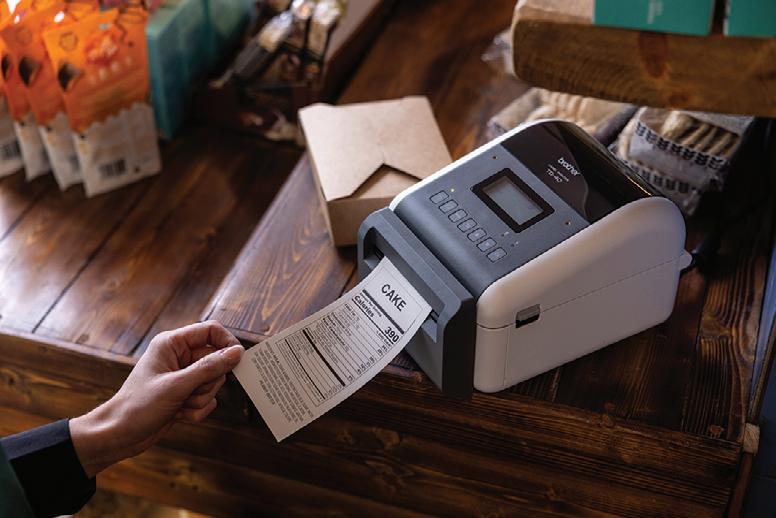
Failure to follow such rules could result in substantial fines or even criminal charges. To avoid penalties and maintain customer safety, businesses should implement effective and accurate labelling solutions.
A fresh, fun and highly effective way of learning Food Safety has been introduced by Food Safety Expert, Simply Safer. The brand-new Food Safety Board Game offers a unique tool that combines traditional game play with videos and a detailed Food Safety booklet to engage learners of all levels and capabilities.
Created by Environmental Health Officer and Simply Safer founder Ruth Baker, the game helps staff understand not just what to do, but why it matters.
“It turns must-have training into something people genuinely enjoy,” says Ruth. “This means they remember more and feel more confident applying it. It caters for all learning styles, helps employers to assess staff learning and where additional support is needed.”
Teams are tested on key food-safety knowledge
including allergens, crosscontamination, hazards and control measures in an immersive format that encourages valuable discussion and reinforces learning through the accompanying videos and book.
One business already benefiting is The Flour Pot Bakery in Brighton. Team manager, Lydia, shared her experience, “I thought it was really fun! It was interactive and delivered great training at the same time.”
This Food Safety Board Game is a clear choice for building a strong, positive food safety culture and competence for any food-related business.
‘Working in a Primary Authority partnership with Cornwall Council’
To find out more, visit Simply Hospitality on Stand G25 at Source Tradeshow, Westpoint, Exeter on 3 & 4 February, and Stand A17 at Source Roadshow, Bath & West Showground, Shepton Mallet on 25 February. Pre-order: info@simply-safer.co.uk
Brother’s labelling solutions for PPDS foods allow food outlets and providers to produce high resolution labels, to help businesses meet regulations, streamline labelling process and give customers more confidence in their choices.
Café Common Ground is one such business benefitting from Brother’s labelling solutions, after it started offering takeaway PPDS food for the first time. Brother’s TD-4520DN professional network desktop printer and free P-touch Editor software was the perfect solution for printing bespoke labels for ingredients and potential allergens as required by Natasha’s Law. The solution delivered fast, professional, and compliant labels that were easy to use.
Additionally, Brother’s stock rotation solution offers complete flexibility and can be integrated into existing digital services or used as a standalone solution with additional battery packs and touchscreen display units available.
As food labelling requirements continue to evolve, businesses should adopt flexible technology that can produce accurate, legible and cost-effective labels, to keep both customers and businesses safe.
Visit www.brother.co.uk/food-labelling to discover our full range of food labelling solutions.
Manual temperature checks are costly, time-consuming, and prone to error. Staff need to take readings regularly, log them accurately, and spot potential issues before they escalate. But what happens if a fridge or freezer breaks down overnight? You won’t know until the next day—and by then, you’ve already lost stock and a day’s trade. That’s thousands in potential losses, all because manual checks can’t catch problems in real time.

Automated temperature monitoring is the obvious solution. Smart sensors continuously track your fridges and freezers, alerting you instantly if temperatures rise or equipment fails. You stay audit-ready, paperless, and confident that your stock—and your
customers—are safe.
The cost? From just £40 per month, a small investment that can save thousands. One breakdown avoided can more than pay for a year of monitoring by preventing wasted stock and lost sales. Make the switch to digital monitoring today—and unlock the full benefits of Logicall’s ecosystem. Beyond temperature, our solution includes energy monitoring, leak detection, digital HACCP checks, and much more.
Protect your business, save time, cut costs, and simplify compliance—all with a single, smart system. 01672 569374
info@logicall.co www.logicallmonitoring.co.uk

Having worked with hospitality businesses for over two decades —from hotels to pub chains, sports venues, bars, and restaurants —we’re often part of the conversation: how do operators best protect themselves from dine-and-dash?
Technology can be a valuable ally in the fight against such opportunism. CardsSafe is designed to securely store a customer's bank cards while they run a tab. It’s the ideal deterrent for anyone contemplating walking out without paying because their card is safely tucked behind the bar in a CardsSafe unit. The system securely stores bank cards and facilitates easy tab-keeping. Rather than insisting on advance payment, businesses can keep tabs and upsell while doing so.
CardsSafe has been a trusted partner in the hospitality and leisure industries, assisting with bar tabs and significantly boosting profits. Renowned establishments, including Young’s Pubs, Hilton Hotels, and numerous golf courses, have been reaping the benefits of CardsSafe for years.
Deers Hut pub in Liphook, Hampshire, first approached CardsSafe in 2013 to help with a large volume of bar tabs for both indoor and outdoor customers. One of the primary motivations for using CardsSafe was to stay on top of where their customers were located outside. Deborah Steel, the Director, told us, "The CardsSafe system is great for servicing customers who enjoy our outdoor areas."
CardsSafe is affordable, too. Each unit, containing ten card drawers, costs just £9.95 per month. So, just one £120 walkout is the cost of a 10-card CardsSafe unit for an entire year. Additionally, each hire includes customer service troubleshooting and free replacement keys, with the option to add additional units at any time.
The question is, can you afford not to have CardsSafe as a part of your business? For more information, please visit www.cardssafe.com or contact the sales
London-based tech startup LoveBite AI now delivers over one million dish videos each month as its AI Video Menus gain momentum across the UK and USA.
The platform showcases short, high-quality videos of restaurant dishes at every stage of the customer journey, supported by a multilingual AI that answers menu questions, offers recommendations and helps upsell. These Video Menus attract more guests, convert them into bookings and encourage higher spending at the table.
LoveBite’s Video Menus are already in use at independents such as Oorja, Paladar and Gura Gura in London, as well as major groups including Las Iguanas, Bella Italia and The Real Greek.
“In today’s video-first world, diners want to see what’s on offer before deciding where to go and what to order,” said LoveBite Founder and CEO Gareth Hughes. “Our Video Menus put a restaurant’s food front and centre, enhancing the guest experience while driving more bookings and higher average spend.”
Their effectiveness is rooted in the hunger hormone ghrelin, triggered by appetising food videos that
prompt desire and action. LoveBite’s media team produces standout dish videos using efficient, low-cost methods that make ongoing content creation easy for restaurants.
When added to a website, Video Menus encourage guests to book, and in venue they prompt diners to order more courses, desserts and cocktails. The AI can also promote bookings and high-margin items, increasing profitability while easing pressure on staff. Restaurants are already seeing results.
“We’ve seen a huge rise in dessert sales. Customers love it and the feedback has been fantastic,” said Rebecca Cuthbertson, Marketing Manager at Ikigai Ramen in Edinburgh.
“Guests are visibly excited when they see videos of the dishes,” noted Umesh Uthaman, Manager of Masalchi, owned by Michelin-starred chef Atul Kochhar.
Explore Video Menus at www.iguanas.co.uk/our-menu/ and www.oorja.co.uk/menu
Find out more at www.lovebiteai.com or contact info@lovebiteai.com

As pressure grows across the hygiene and facilities sectors to reduce plastic waste and improve sustainability, packaging innovation is becoming a key focus. Responding to this need, Hadron Group has developed a ground-breaking alternative to traditional rigid buckets - the EcoSmart™ flexible pouch system.
EcoSmart replaces the bulky plastic containers typically used for wet wipes with a durable, flexible pouch incorporating a side-mounted dispenser valve. The result is a solution that uses up to 60% less plasticwhile maintaining product integrity and usability. Beyond its clear environmental advantages, EcoSmart delivers measurable commercial benefits. The reduced weight and size of the pouches lead to lower transport and storage costs, reduced waste disposal fees, and greater product density per metre of shelf
space - particularly valuable in retail and distribution environments.
Available in two sizes - a standard version to replace 3–5 litre buckets and a larger handled version to replace 10 litre formats - EcoSmart is ideal for use across food processing, dairy, beverage, and industrial hygiene applications.
Manufactured in the UK, the pouch can be branded for own-label clients or supplied as part of Hadron Group’s own brand range.
With EcoSmart, Hadron Group is demonstrating how intelligent design and sustainability can go hand in hand, helping businesses move towards a cleaner, greener future. For more information, visit www.ecosmart-packaging.co.uk
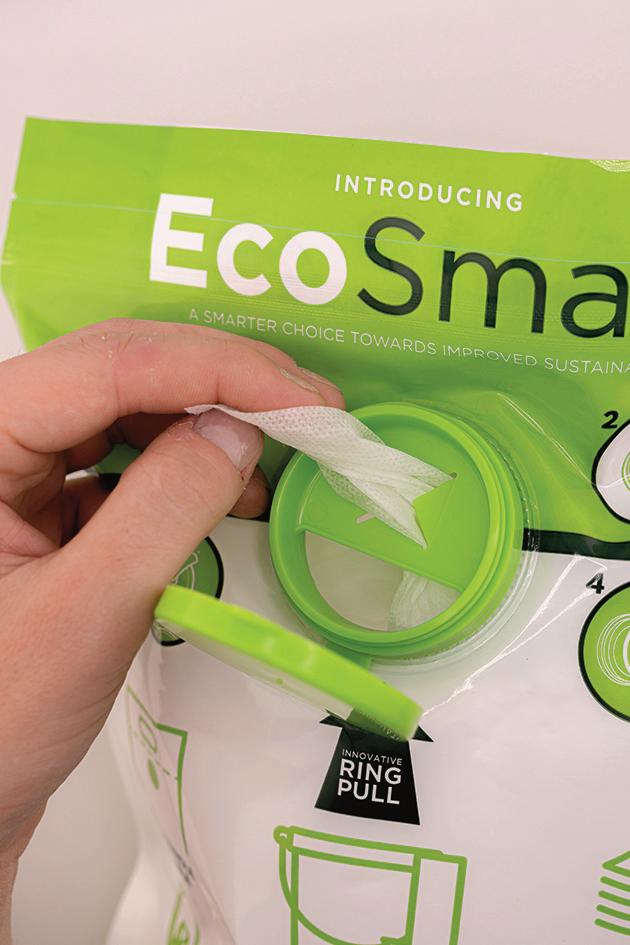
In hospitality and foodservice, many operations are locked into soap systems built around bulky goods, hidden costs, and hard-to-recycle waste. Amplify Goods believes it’s time to rethink that.
Enter SUDZERØ - the company’s newest innovation following the launch of their re:mind range in 2024. SUDZERØ's advanced and circular-enabled handwash system is designed specifically for high-demand commercial environments like catering, kitchens, and washrooms.
With SUDZERØ, Amplify Goods hopes to challenge industry norms.
• It challenges “free” proprietary dispensers - often with a high cost per litre. SUDZERØ reduces lifetime expenditure through efficient dosing, long-lasting hardware, and minimal consumable waste. Operationally, teams benefit from fewer deliveries, fewer changeovers, and considerably less waste to dispose of.
• It delivers a radically reduced footprint: the future is water-free shipping, freeing up
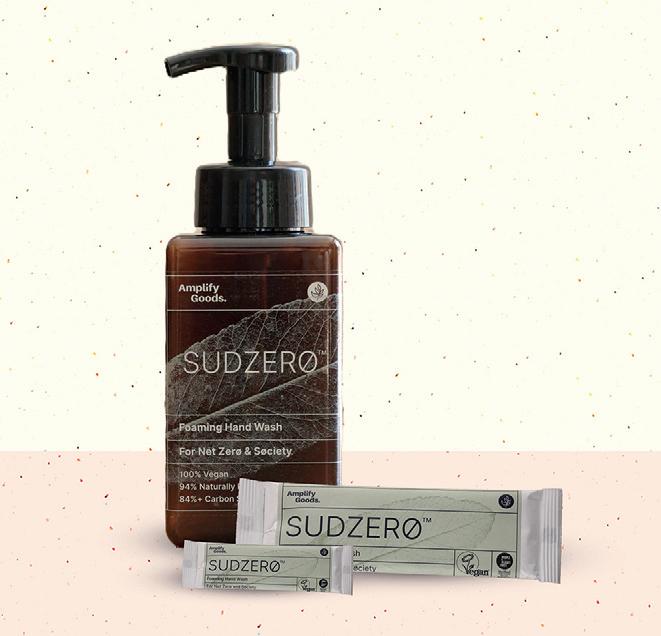
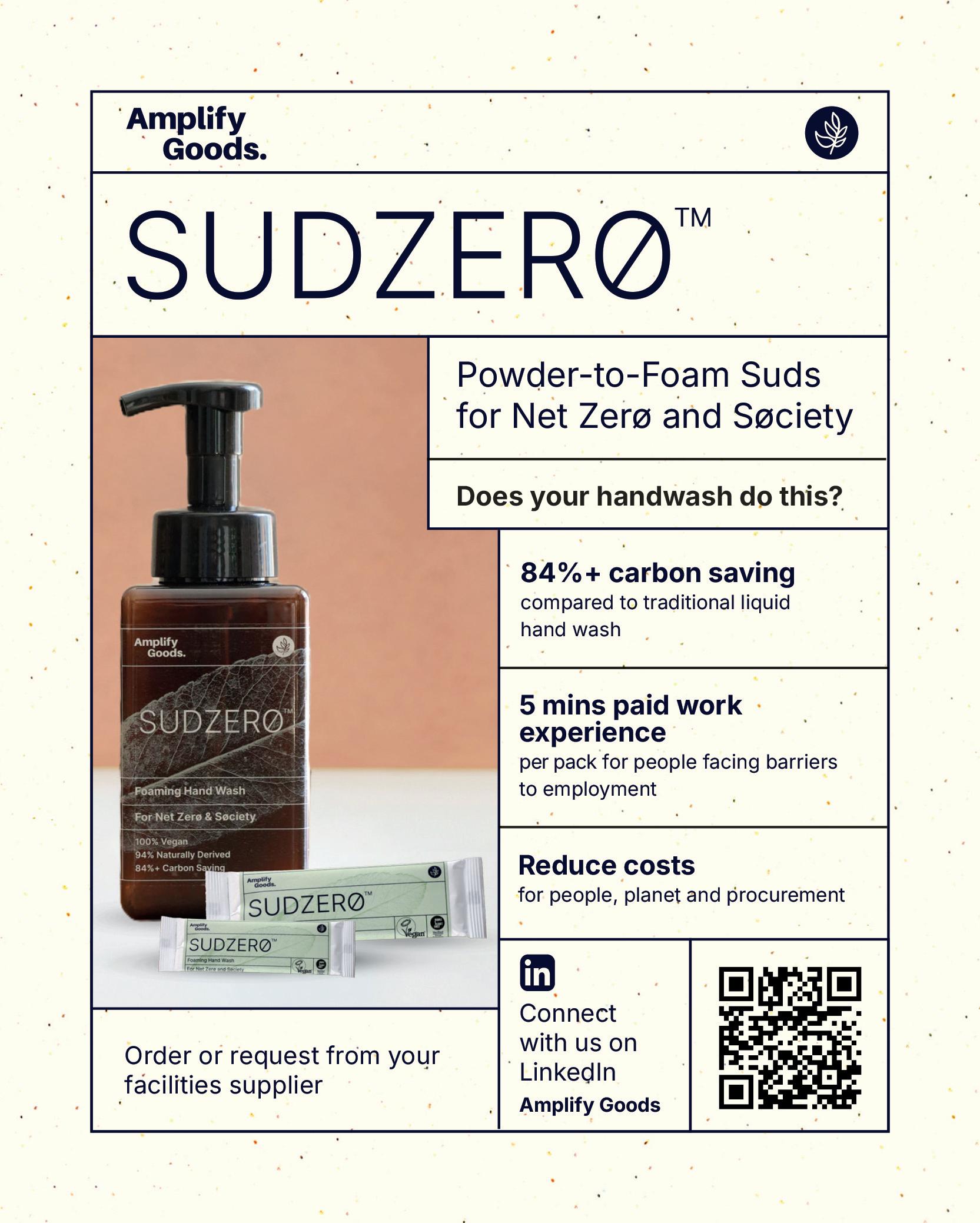
crowded lorries and storerooms. 99.96% naturally derived and vegan, its circular-enabled refill system offers an 84%+ carbon saving compared to traditional liquid handwash (backed by an LCA), no single use plastic waste, and even upcycles cardboard packaging.
• Its lightweight powder-to-foam formulation costs less to produce and less to package, so it costs 50% less than Amplify Goods' own traditional liquid handwash.
• And while practical savings take the lead, SUDZERØ also delivers on social value, providing vital living wage work experience for people facing barriers to employment such as homelessness and disability for every sachet.
It's a hygiene solution aligned with the evolving expectations of guests, staff and regulators alike. For hospitality operators looking to reduce clutter, cut costs, and meet rising ESG standards, SUDZERØ isn’t just a new product - it’s a smarter, futureready system built for the realities of modern hospitality.
For further information please see the advert on this page or visit www.amplifygoods.org/sudzero
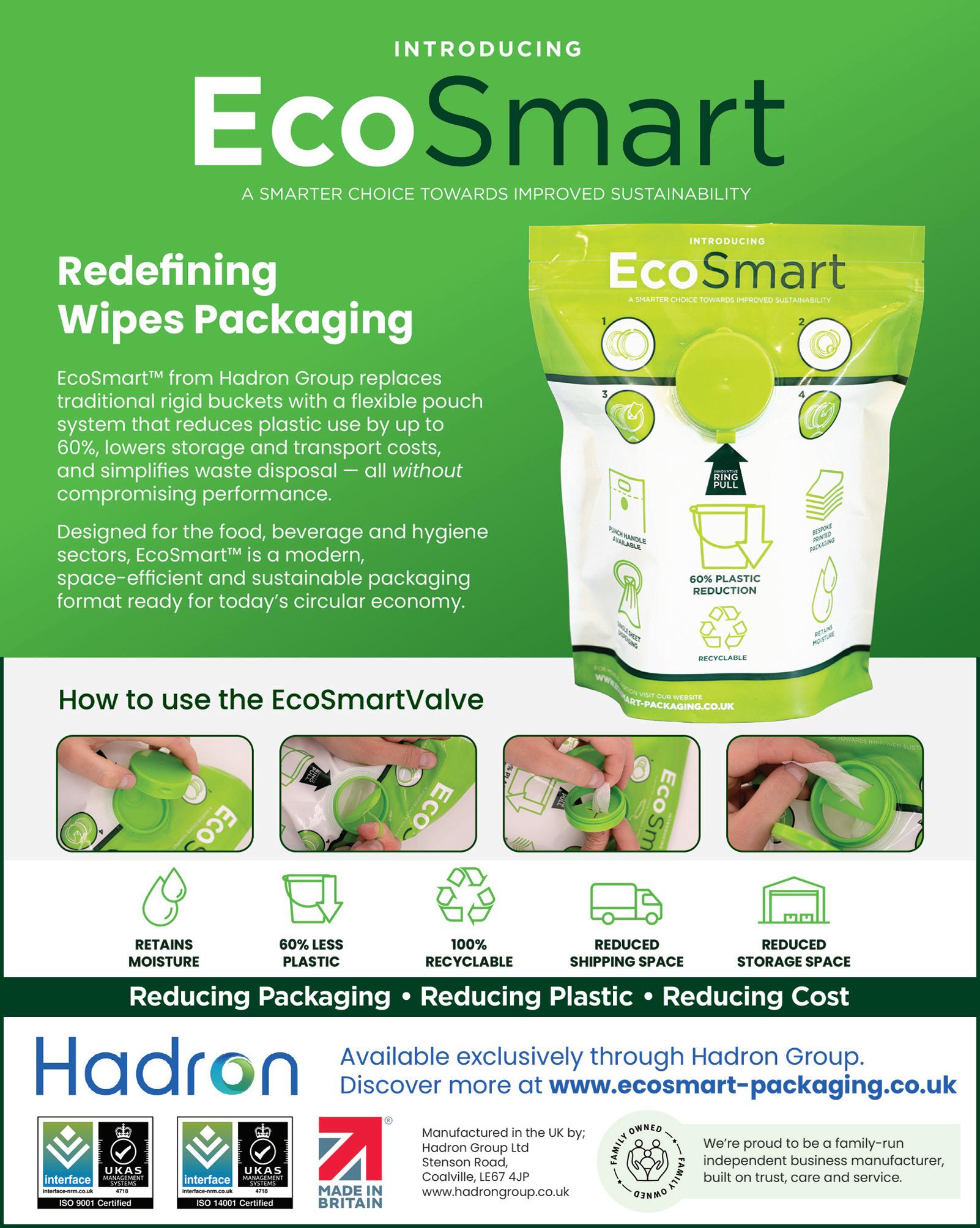
In an era where a single smartphone photograph can reach thousands within minutes, cleanliness has evolved from a basic operational requirement to a make-or-break factor for UK hospitality and licensed ontrade establishments. The stakes have never been higher, with businesses facing an increasingly discerning public armed with social media platforms and review sites that can elevate or demolish a reputation overnight.
Today's customers arrive with expectations shaped by countless online reviews and Instagram-perfect imagery. A spotless venue is no longer impressive—it is simply the entry ticket to compete. Research consistently demonstrates that cleanliness ranks among the top three factors influencing guest satisfaction across pubs, restaurants, hotels, and bars. When standards slip, the consequences are swift and unforgiving. "Cleanliness is the silent salesperson," as one operations director at a prominent London hotel group. "Guests may not consciously notice when everything is immaculate, but they will absolutely notice—and remember—when it isn't."
The mathematics is stark. Industry data suggests that establishments with poor cleanliness ratings see repeat visit rates plummet by up to 70 percent. In contrast, venues maintaining exceptional standards enjoy customer loyalty rates exceeding 60 percent, alongside significantly higher average spend per visit.
Beyond customer satisfaction lies the critical matter of legal compliance. UK hospitality operators must navigate an intricate web of health and safety legislation, including the Health and Safety at Work Act 1974, Food Safety Act 1990, and various environmental health regulations. Non-compliance can result in substantial fines, prosecution, or closure orders—outcomes that prove catastrophic for small and medium-sized businesses.
Local authority inspections under the Food Hygiene Rating Scheme have become increasingly rigorous, with ratings publicly displayed and searchable online. A poor score of zero to two not only triggers regulatory action but also serves as a public warning that can devastate trade.

Environmental health officers are uncompromising when assessing cleanliness standards in kitchens, washrooms, and public areas. Moreover, establishments owe a duty of care to both guests and employees. Inadequate cleaning protocols can lead to slip hazards, cross-contamination, pest infestations, and the spread of infectious diseases. The COVID-19 pandemic heightened awareness around hygiene practices, and these elevated expectations have proven permanent. Customers now scrutinise hand sanitiser availability, table sanitisation between sittings, and visible cleaning routines.
The impact of cleanliness extends beyond customer-facing areas into staff welfare. Employees working in unhygienic conditions face increased health risks, lower morale, and higher stress levels. In an industry already grappling with recruitment and retention challenges, workplace cleanliness has emerged as a significant factor in staff satisfaction. Clean, well-maintained work environments demonstrate respect for employees and contribute to professional pride. Kitchen staff, bar teams, and front-of-house personnel perform better and stay longer when their workplace meets high standards. Conversely, poor conditions breed resentment, increase sick leave, and accelerate turnover— adding recruitment costs to an already tight bottom line.
Perhaps no factor has transformed the cleanliness equation more dramatically than social media. A dirty glass, grimy washroom, or sticky table can be photographed, uploaded, and shared with thousands before management even becomes aware of the issue. Platforms like TripAdvisor, Google Reviews, and Facebook serve as permanent public records where cleanliness complaints feature prominently and disproportionately influence potential customers.
Positive mentions of cleanliness, meanwhile, provide powerful marketing collateral. Guests regularly praise "spotless" venues, "gleaming" facilities, and "immaculate" presentation in five-star reviews. These organic endorsements carry more weight than any paid advertising, effectively transforming satisfied customers into brand ambassadors.
For hospitality groups operating multiple sites, cleanliness standards become fundamental to brand integrity. A single location's hygiene failure can taint the entire portfolio, particularly when incidents attract media attention or viral social media exposure. Conversely, consistently high standards across all locations reinforce brand promise and justify premium pricing.
Independent operators face equally high stakes. Their reputation rests on word-of-mouth within local communities and online reviews that increasingly influence where people choose to spend their leisure time and disposable income. One viral negative review about cleanliness can take years to overcome.
Maintaining exemplary cleanliness requires investment in training, quality cleaning products, appropriate equipment, and sufficient staffing hours. Some operators view this as a cost burden, but forward-thinking businesses recognise it as essential infrastructure that protects revenue, reputation, and regulatory standing.
The evidence is clear: in UK hospitality and the licensed on-trade, cleanliness is not merely about meeting minimum standards—it is about securing the business's future. Every spotless surface, sanitised touchpoint, and gleaming glass represents an investment in customer trust, staff pride, legal protection, and long-term profitability. In this unforgiving marketplace, there is simply no alternative to excellence.
Interclean Amsterdam, the world’s leading platform for cleaning and hygiene professionals, returns from 14–17 April 2026 to RAI Amsterdam. The upcoming edition promises a host of new initiatives and experiences designed to inspire, connect, and advance the global cleaning and hygiene community.
From concept to content, the event mirrors the needs and aspirations of those working within it. “Interclean Amsterdam has always reflected the energy, innovation, and ambition of our industry. As part of the Advisory Board, I see first-hand how it is shaped by collaboration, from the earliest ideas to the experiences on site. It truly is a show built by the industry, for the industry.” – Martin Stolz, INPACS, member of the Advisory Board WHAT’S NEW IN 2026?
Amsterdam. The twelve most promising new developments from around the world will be highlighted in the House of Awards as part of the Amsterdam Innovation Award programme.
For a forward-looking view of the industry in 2030, the AI Cleaning Lab brings together students, start-ups, and experts to develop next-generation solutions using AI tools. Visitors can virtually explore these innovations in the Hospitality Experience Center.
WHY ATTEND?
The upcoming show introduces more live and interactive experiences than ever before. Visitors can explore hands-on zones, including Hospitality, Robotics, Outdoor Cleaning, and Healthcare Experiences, which offer real-world demonstrations and practical insights.
Knowledge exchange will take centre stage across four dedicated platforms: the Data & Tech Stage, Sustainability (ESG) Stage, Main Stage, and Health & Hygiene Stage. Each will feature a dynamic programme of expert talks, product presentations, and demonstrations throughout the event.
Hosting more than 900 exhibitors and 30,000 expected visitors from 120 countries, Interclean Amsterdam stands as the world’s largest global meeting. This is a unique opportunity to take part in structured and informal networking opportunities with manufacturers, distributors, contract cleaners, facility managers, and leading international experts. Alongside the business agenda, visitors can immerse themselves in an electric atmosphere with live music, art performances, DJs, and VIP networking sessions that capture Amsterdam’s dynamic spirit.
See the advert on the back cover of this issue for further information or visit www.intercleanshow.com
In hospitality, cleaning is constant but the reusable cloth is often the weak link. While microfibre cloths can be effective when new, they quickly become a hygiene risk once they’re damp, soiled, and used across multiple surfaces and shifts. Studies show that cloths used for more than two hours can harbour significant bacterial growth, even when stored in sanitising solutions.
The Food Standards Agency (FSA) has long warned against reusable cloths in food environments due to the high risk of cross-contamination. If used at all, they must be changed frequently and thoroughly washed and dried between tasks, a standard that’s difficult to maintain consistently in busy kitchens, cafés, and restaurants.
Evidence* highlights the scale of the issue:
• Over half of reusable cloths tested in food service settings contain E. coli or other hygiene indicator bacteria, even after staff “cleaned” them.
• Multi-use cloths can transfer up to 75% of bacteria from one surface to another.
• Bacteria thrive in damp cloths left at room temperature throughout service,
including pathogens such as Salmonella, Staphylococcus aureus, and E. coli.
With hygiene expectations higher than ever, many operators are moving to ready-to-use, food-safe wipes as a more reliable solution.
Protect 360° biodegradable sanitising wipes by Sani Professional provide a fresh, uncontaminated wipe every time, eliminate the need for laundering, and simplify staff training and compliance.
Clean isn’t just about wiping, it’s about protecting customers, teams, and reputations. For venues looking to strengthen hygiene standards, Protect 360° offers a safer, simpler alternative to reusable cloths. Request free samples: samples@sanipro-intl.com
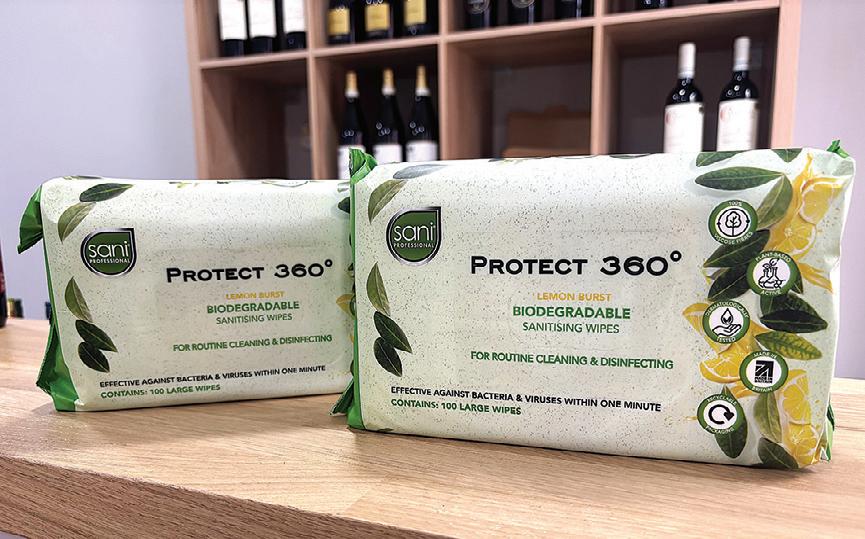
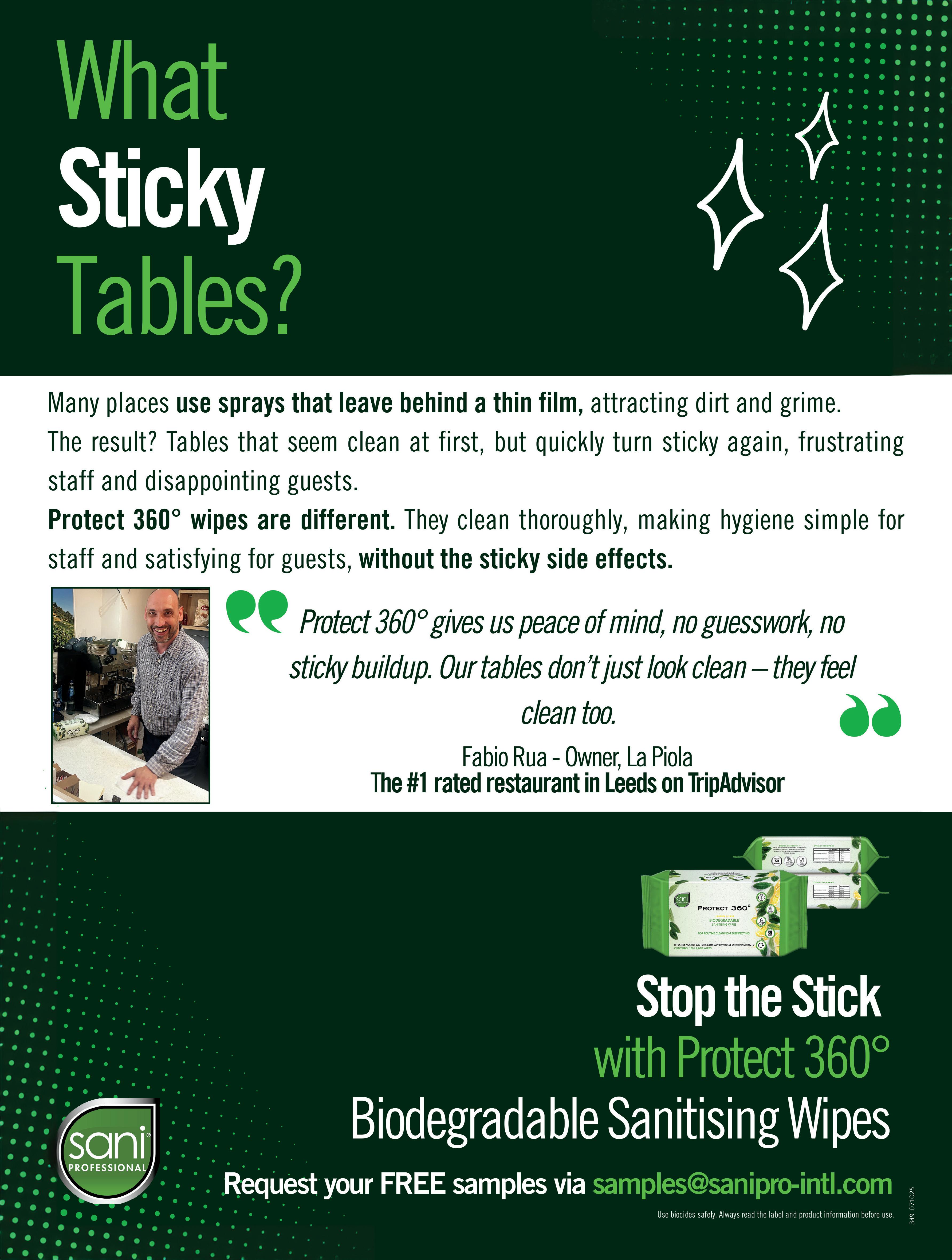
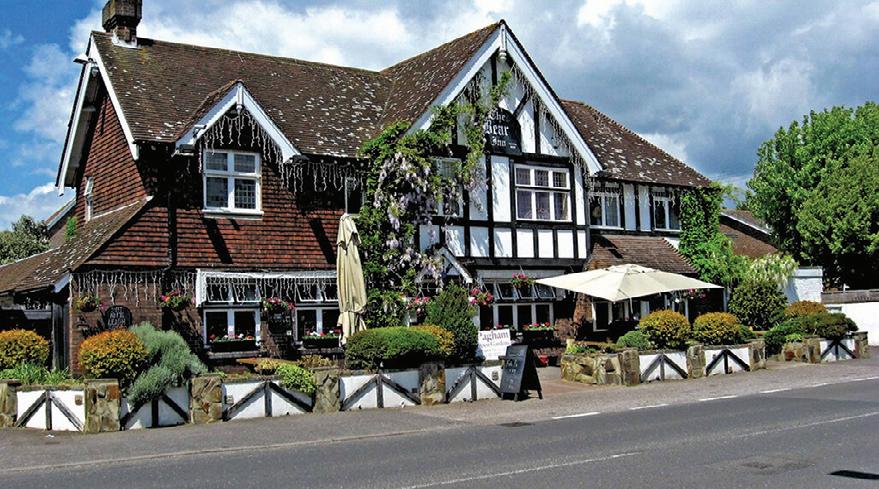
For independent pub operators across the UK, the convergence of post-pandemic recovery, soaring energy costs, and increased national insurance contributions has created a perfect storm of financial pressure. Add intensified enforcement from Local Water Authorities (LWAs) regarding fats, oils, and grease (FOG) management, and many single-owner businesses find themselves caught between regulatory compliance and economic survival.
The Bear Inn in Pagham, an 18th-century coaching inn, recently faced exactly this dilemma—and found a solution that other independent operators can learn from.
The combined effects of recent economic pressures, including the COVID-19 pandemic, escalating energy costs, and increased national insurance contributions, have placed considerable strain on the financial sustainability of small hospitality enterprises.
Furthermore, intensified oversight and enforcement by the Local Water Authority (LWA) have underscored the critical importance of regulatory compliance, particularly in a region with a longstanding history of fats, oils, and grease (FOG) accumulation and associated drainage blockages.
The historic pub's existing grease management system had become a liability. An undersized, malfunctioning passive grease trap was leaking across the rear yard, creating slip hazards and attracting rodents whilst failing in its primary purpose: preventing FOG from entering the sewer system.
In collaboration with various stakeholders, including the LWA, ECAS, relevant manufacturers, and the management of The Bear at Pagham, a tailored grease management solution was developed:
A thorough site survey was conducted to assess the specific grease management needs of the establishment.
Based on the findings, a cost-effective passive grease trap was selected, providing equivalent compliance to a grease removal unit at roughly one third of the cost.

At TheCommercialOvenStore.com, we know that the heart of any professional kitchen is a reliable, high-performance oven. That's why we offer an extensive range of ovens from the world’s leading brands – including Blue Seal, Lincat, Unox, Rational, and Merrychef.
Whether you’re running a bustling restaurant, a cozy café, or a fast-

A quarterly service contract was established to ensure regular cleaning, prevent blockages, and maintain compliance with LWA regulations.
Comprehensive training was provided to the landlord and staff on proper system use, including food basket maintenance & general cleanliness, with a scoop supplied for removing larger debris.
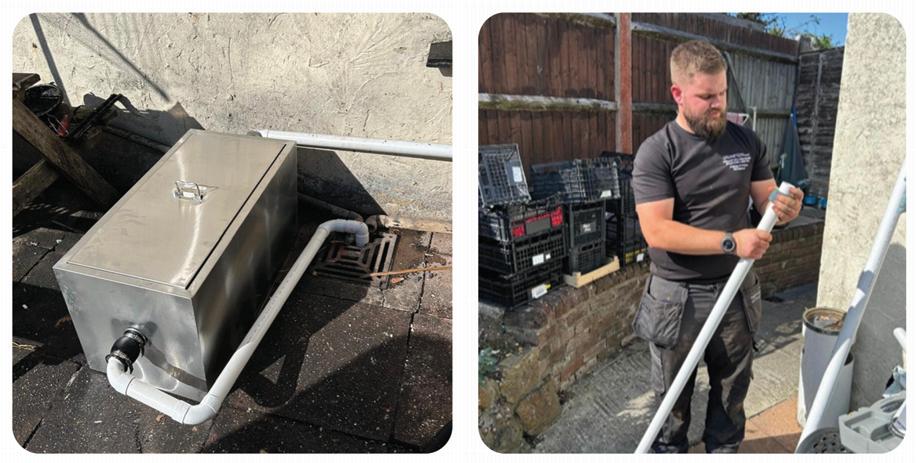
• Cost-Effectiveness: The affordable solution significantly reduced the financial burden on The Bear at Pagham while maintaining full compliance with LWA standards and regulations.
• Prevention of Blockages: The installation of the grease trap and a proactive maintenance plan will help mitigate the risk of future FOG-related blockages in the village.
• Stakeholder Satisfaction: All stakeholders, including the LWA, ECAS, and external auditors, were consulted with in a collaborative effort and recognised and agreed on a realistic, effective solution which is compliant and affordable. A follow-up visit is scheduled three months post-installation to conduct the first quarterly maintenance and cleaning, ensuring the system continues to operate effectively. The successful implementation of this solution serves as a model for other single-owner operators in similar situations facing regulatory pressures and financial constraints.
As the pub's owners noted: "As a family-run pub, compliance matters but staying on top of it cost-effectively hasn't been easy. Grease Tech Solutions changed that... In today's climate, that kind of support is rare and invaluable."
This case illustrates how effective collaboration among stakeholders can result in a sustainable, compliant, and economically feasible grease management solution. By focusing on the unique needs of single-owner-operated businesses, the project not only addresses compliance but also supports the financial viability of vital community establishments.
For operators seeking guidance on grease management compliance, GreaseTech Drainage Solutions can be reached at 01227 776 066 or fog@gtd-solutions.com

paced catering business, you’ll find the ideal solution with us. Our selection includes powerful gas and electric ranges, versatile combi ovens, high-efficiency speed ovens, and durable convection ovens, alldesigned to keep your kitchen operating at peak performance.
Explore cutting-edge features, energyefficient designs, and trusted engineering – all in one place. From compact units for smaller kitchens to heavy-duty systems for large-scale operations, we make it easy to find the right fit for your needs and budget.
Expert advice, competitive prices, and trusted brands – all at TheCommercialOvenStore.com
Get the equipment you can rely on, and take your kitchen to the next level.
T 0207 965 7502
sales@thecommercialovenstore.com
See the advert on page 2 for special offers.
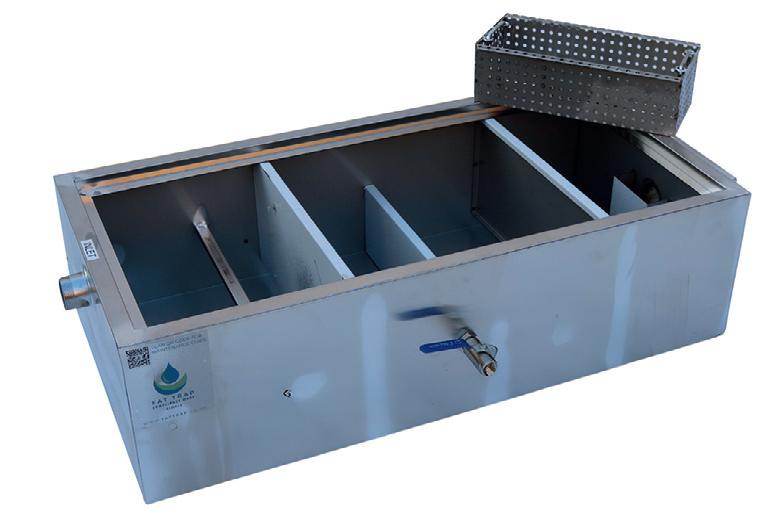
When it comes to grease management, staying compliant shouldn’t be complicated or expensive. That’s why FatTrap.co.uk has positioned itself as the go-to specialist for easy to install, fully compliant passive grease traps. With unrivalled product knowledge and a deep understanding of legislation, we help commercial kitchens achieve compliance quickly, confidently and without disruption.
Our range is designed with one goal in mind - fit where others can’t. Space is often tight in professional kitchens, and traditional traps simply don’t fit or work in confined areas. FatTrap.co.uk eliminates this issue with cleverly engineered units, each hand finished in our UK warehouse for quality you can trust. Leading the range is our market exclusive Super Slim Fat Trap, standing at just 250mm high, the smallest of its kind. It installs easily under sinks, shelves and other restricted spaces, offering a compliant solution without costly refits.
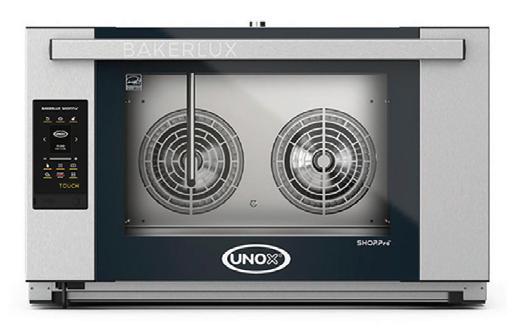
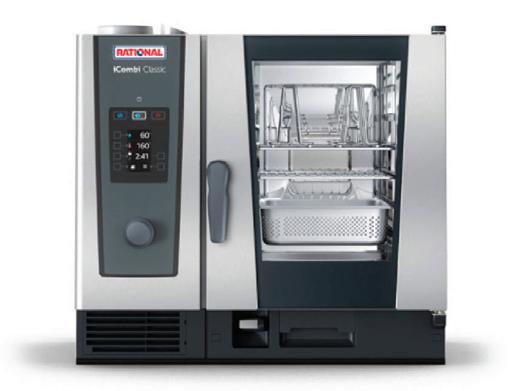
For sites needing more capacity, our Standard and Slim units deliver exceptional performance and are available in durable, weatherresistant stainless steel for outdoor installation.
Whatever your kitchen layout, we have a trap that fits and keeps you compliant.

To support long term performance, we created the FatTrap Easy Clean Range. These professional grade maintenance products, including grease removal sprays, drain unblockers and powerful odour control spray are designed to keep your system running efficiently while reducing callouts and downtime. Cleaner traps mean fewer issues, lower running costs and a longer lifespan for your equipment.
With water companies now issuing significant fines for improper disposal of fats, oils and grease, choosing the right trap has never been more important. At FatTrap.co.uk, we make compliance simple by offering reliable products, expert guidance and ongoing solutions that protect your business.
Stay compliant. Save money. Choose FatTrap.co.uk - the trusted name in grease management.


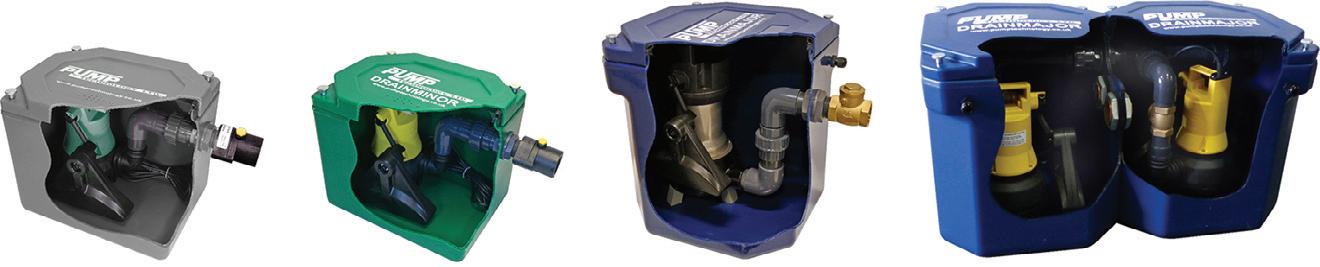
Commercial kitchens can sometimes suffer from blocked sinks, overflowing dishwashers and similar problems. As drainage engineers often know these are due to poor or lack of maintenance.
On inspection they often discover that the floor mounted pumping system is jammed or blocked by debris from foods, fats and other items.
A simple clean might offer a solution. However, even after the pump is unblocked, drainage engineers sometimes find that the pump has failed. There are many reasons for this. For example, the pump might have exceeded its number of start-stops, there may be fluid ingresses into the motor, the float might not have lifted or dropped causing the pump to run continuously or not start at all. Or something else may have caused
the electric motor to trip.
With their many years of experience, the Pump Technology Ltd team will be able to identify the pumping system and the specific submersible pump in the tank enabling them to offer a like-for-like or equivalent product in terms of performance and fit.
If the pumping system is not already fitted with a high-level alarm, they will be able to advise a simple retrofit. The Pump Technology Ltd alarm also has volt free contacts for connection to the building’s management system.
These systems are fitted with the well proven Jung Pumpen submersible pumps, which feature large triangular float mounted on a rigid float arm.
The pumps also feature mechanical seals, plus a

All of these contribute to a range of products that can perform longer in severe environments, to provide an enhanced operating life and better value.

If engineers are continuously servicing a floor mounted pumping system due to these typical failures it may be worth suggesting to the end users more robust and powerful commercial wastewater pumping option, such as the DrainMinor and DrainMajor from Pump Technology Ltd.
Caterquip Ventilation Ltd is proud to be celebrating their 25th Anniversary this year. This Warwick based company offers nationwide coverage for all your commercial catering needs: free site surveys, quotations and designs (CAD), quality bespoke and standard fabrications, specialist knowledge of catering ventilation systems including input air, odour reduction (carbon filtration and ESP) and sound attenuation. Affiliated members of Constructionline and CHAS, Caterquip Ventilation have a strong hold in the marketplace often advising industry professionals on ventilation systems to a DW172 specification & BSEN:6173.
They have strong relationships with all leading kitchen equipment suppliers, and they offer a kitchen design service to help you build your ideal kitchen.
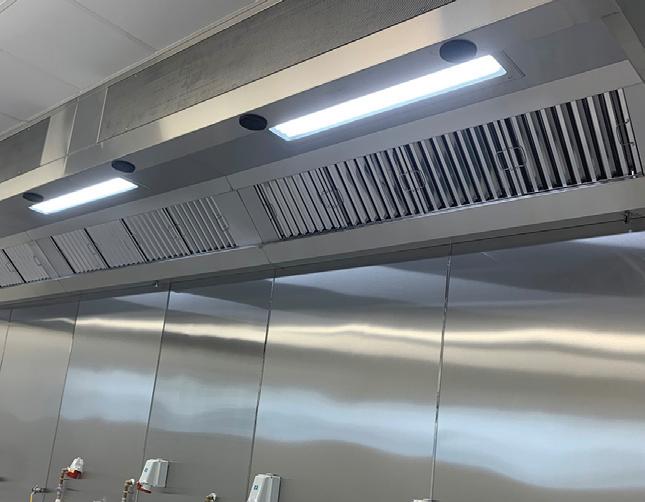

undertaken have included Olympic Villages, Basildon Hospital, The Mitre Hotel at Hampton Court, The Truck Stop at Anglesey, The Lodge at Old Hunstanton, Colleges, Schools, Hotels, Restaurants and Public Houses. They ensure their systems are compliant with the current guidelines whilst maintaining an efficient and dynamic facility.
With extensive knowledge of manufacturing and installing ventilation systems, they can help you design the best kitchen within the space available.
Call: 01926 887167, visit: www.caterquipventilation.co.uk, email: info@caterquipventilation.co.uk

For 33 years, Aluline has solved the hygiene and compliance challenges that “automatic” boxes promise—but rarely deliver. We design, manufacture, install, and maintain stainless-steel grease traps and biological dosing systems (no enzymes, no gimmicks) that keep commercial kitchens flowing, odour-free, and fully compliant across the UK.
Every site is different. That’s why our engineers size and configure each trap to your actual volumes and fixtures, then pair it with biological dosing—naturally occurring bacteria that digest fats, oils, and grease (FOG) at source without pushing grease downstream. The result is less scraping, fewer callouts, and stable effluent quality that satisfies landlords, water companies, and environmental teams. Because we build what we install, our units are robust, serviceable, and built to last—from compact under-sink separators to heavy-duty, in-ground interceptors
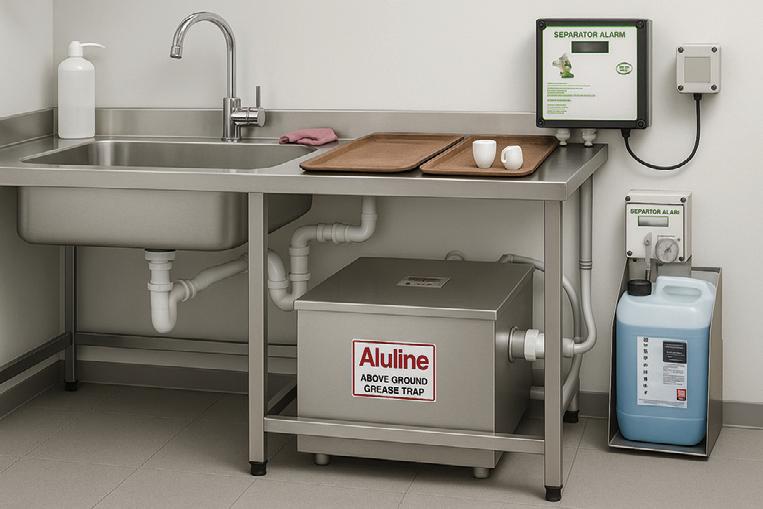
for high-throughput sites. And with UK-wide maintenance plans, alarm options, and clear service records, we help operators prove compliance and avoid costly disruption.
If kitchen hygiene is mission-critical,
— Design. Manufacture. Install. Maintain. Comply. www.alulinegreasetraps.com | enquiry@alulinegroup.com |
At Kitchen Clearance UK, we specialise in supplying top-quality refurbished and Bgrade commercial catering equipment from some of the industry’s most trusted brands, including Rational, Lincat, Merrychef, Maidaid, Falcon, Foster, Blue Seal, and many more. We carefully source only the best pre-owned commercial catering equipment, ensuring that each piece is fully refurbished to a high standard and rigorously tested by our expert engineers. All equipment can be viewed if required to see it working and see the quality of the item.
We also supply B-grade catering equipment — items that may have minor cosmetic imperfections or have been used for demonstrations. All B grade items come boxed and complete with all accessories where required, offering a cost-effective solution for high-performance kitchen equipment.
We pride ourselves in excellent customer service, making sure any initial issues are quickly resolved.
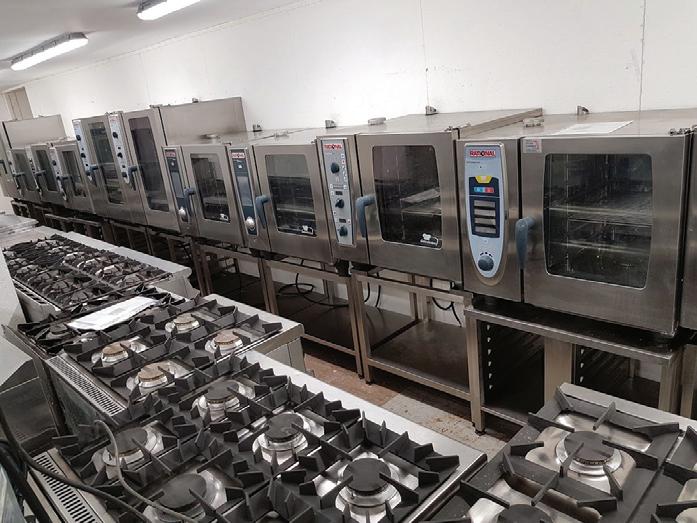

• Be ready for your inspections
• Damaged fridge seals are unhygienic
• Make your fridge more energy efficient with a good seal on your fridge
• We provide custom seals for cold rooms, discontinued models, and units with no identification information
• Next-day delivery service
• Discounted prices on large orders WhatsApp, phone, and email support
Tel: 07790 612911 Email:

www.fridgesealsdirect.co.uk

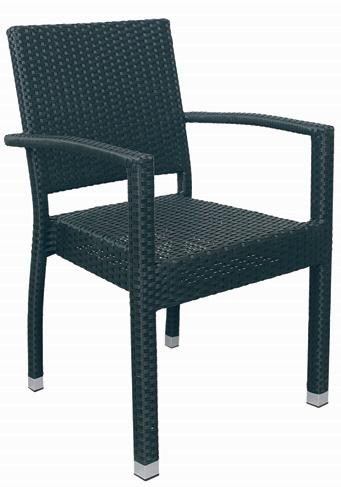

practical and attractive option for any clubhouse, and the highly popular Alma Table is available with both square and round tabletops. Pair it with the Monaco Aluminium Stacking Chair or the Monaco Wicker Stacking Chair and save 10% on your seating.
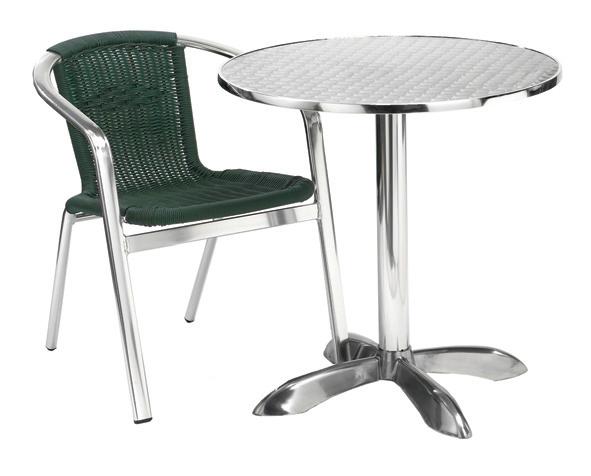
To find out more about our extensive range of outdoor seating for
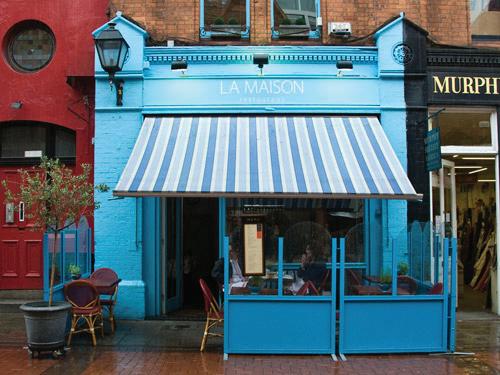
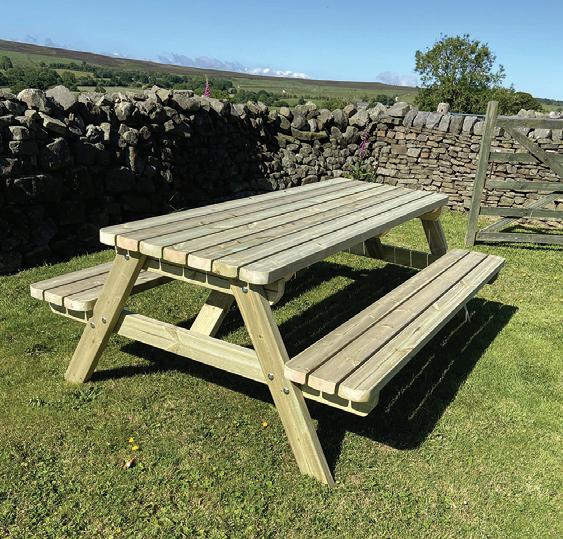

Woodman Chairs is a long established manufacturer and supplier of wooden chairs, stools, benches, frames and tables, to the UK contract, hospitality and retail markets for well over thirty years
Sensibly priced, we offer our own lines or can make bespoke for your own special needs, All our product is well made, thoughtfully designed, sturdy and built to last, with styles ranging from traditional to modern. We can supply finished, or in the raw wood and with a choice of seat pad options. Pads and fabrics – either ours or COM - can be “Crib 5” compliant for contract use.
We are also able to make frames or components for you to upholster or assemble. So, also of interest to upholsterers and those in UK looking to outsource some, possibly difficult or time
consuming manufacturing, such as stools, benches, boxes, etc. MOQ’s may apply. See us in a broader sense than just doing the more straightforward, able to think and make outside the box.
Working mainly in beech, oak, pine, lime and ash we can, however, work in other woods. All our product is FSC and responsibly sourced, in most cases with a direct line of supply from the forests themselves.
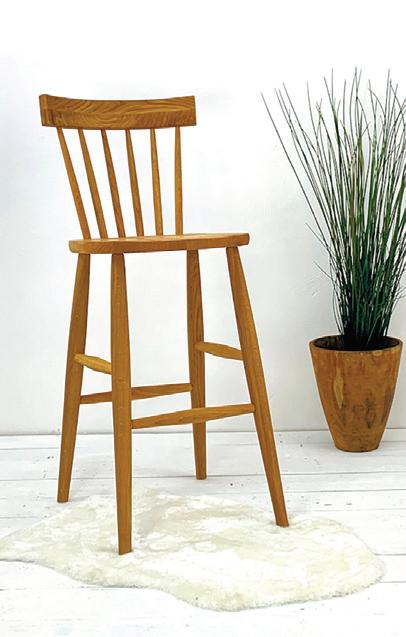
We carry a lot of stock and a wide range, but when not held, lead times are good.
Have a look at our website www. woodmanchairs.co.uk for a general idea of what we offer “off the shelf”. This does not cover all we make by a long way, as much of our supply is bespoke.
If you want chairs or tables, or might want a chair style made to your design, or would like to know more about us and what we could offer you, please contact us at sales@woodmanchairs.co.uk or on 01884 841789.
At HotelContractBeds, we’ve been supplying the hospitality industry with premium contract beds and mattresses for over 40 years. Whether you're running a boutique B&B, a busy hotel chain, or student accommodation, we offer a bespoke service that ensures you get the perfect beds to suit your needs.
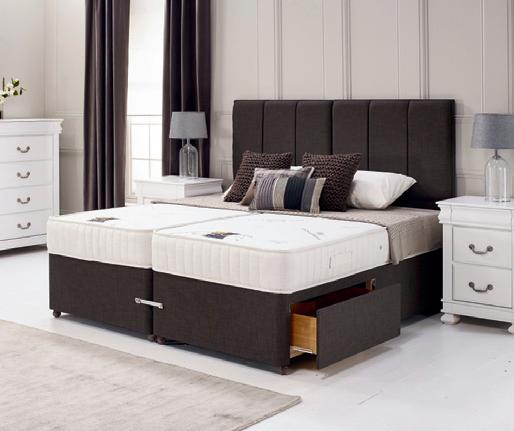
As specialist UK manufacturers, we take pride in delivering high-quality, durable, and comfortable beds that meet strict UK & EU fi re safety regulations (BS 7177:2008 – Crib 5), ensuring your guests sleep safely and soundly. Why Choose HotelContractBeds?
✓ Premium Quality Beds & Mattresses – Zip & Link, Divan, Bed Bases & More…
✓ No Minimum Order Value – Whether you need one bed or a whole hotel’s worth
✓ FREE UK Delivery – Reliable weekly deliveries for your convenience
✓ Competitive Prices – Exceptional quality without the premium price tag
Our zip & link beds offer ultimate fl exibility, allowing rooms to convert from twin to double in minutes—perfect for hotels catering to varied guest needs. From luxury hotel mattresses to budget-friendly options, we cater to all types of commercial accommodation.
Join thousands of satisfi ed customers across the UK who trust HotelContractBeds for unmatched quality, comfort, and service.
Ready to upgrade your guest experience? Visit HotelContractBeds.co.uk today or call us (01234 834693) to discuss your requirements!


With Covid an increasingly distant memory, restaurateurs are predicting 2026 as the year when communal dining is set to make a comeback. Here at Trent Furniture, we have a fantastic range of options to accommodate this fun and fluid approach to eating out.
Rather than go fully communal, many venues choose to add countertop dining at bars or open cooking areas. Our classic wooden tall stools with backrests such as the Tall Boston Stool are perfect partners for any bar, and are available with comfortable padded seating.
Another great option for diners who plan to linger at the bar for longer than a quick drink is the fully upholstered Tall Andorra Stool, available in brown faux leather or a choice of two chic checks. Or for a vintage style statement, opt for the Tall Saxony Stool which features a stunning lightweight yet durable design.
At standard height tables it’s a good idea to mix bench seating with chairs, which are more accessible and versatile. The Bella Chair is a no brainer for your communal tables, and again is available with a padded seat for added comfort. Made from durable steel, this compact chair has rubber feet to protect your floor as it’s effort lessly moved around. Pair it with the Tall Bella Stool at your bar, for a seamless retro décor theme. For a more traditional feel, the York Crossback Stacking Chair is another versatile and compact option, ideal for pairing with large tables that cater for multiple groups.
With great discounts available on much of the range, including 20% off the Bella Chair and 10% - 20% off the York Crossback Stacking Chair, now is a great time to buy! To find out more, please call us on 0116 286 4911 or email us at sales@trentfurniture.co.uk.
Have you recently taken over premises, just fancy a change or need to replace your tired old fixed seating and fixtures? At Drakes, we can help you realise your dreams with our bespoke furniture design service.

Every week we build new tailor-made furniture up and down the UK, working with owners to come up with design concepts for fixed seating, booths and even bars and fixtures. We can take ideas from you, or your interior designer, or we can design something ourselves, all done efficiently, with professional quality and on time within budget.
Our service provides a unique opportunity to make your establishment stand out from others and add additional comfort for your customers.
We have been providing bars, pubs, restaurants, cafes, clubs, and hotels with high-quality furniture and fixtures for decades. We employ over 15 joiners, upholsterers, polishers and designers who are capable of installing fixed seating and bespoke joinery, new bars and full refurbishments, or simply making stools for the front of the bar, or providing quality tables that last. Our dedicated team are either time-served officially trained craftsmen or externally based professionals.
Got you interested? We are available for a chat on
you prefer, email us at sales@askdrake.com, and of course please visit our website www.askdrake.com
Mayfair Furniture will be celebrating 12 years this year of providing the UK’s fastest and affordable commercial furniture. Supplying all kinds of establishments from high end hotel chains to small local takeaways.
We keep in stock a huge variety of items ready for immediate dispatch, and can fulfil a wide range of bespoke orders. We deliver to all areas of the UK, Ireland & Europe.
We are not just a supplier; we understand that from time to time hospitality and leisure establishments like to give themselves a fresh new look. That's why


not only do we supply contract furniture, but when it's time for your establishment to go through a refurbishment we also offer a complete clearance service. We'll organise everything from a suitable time and date, professional clearance staff to remove contract furniture whether fitted or unfitted. Along with our sister company Caterfair who provides commercial catering equipment for your kitchens we are the ideal people to speak to when you are looking to refurbish.
01733 310115 sales@mayfairfurniture.co.uk www.mayfairfurniture.co.uk

Ardbeg House, a boutique luxury hotel on the picturesque island of Islay, Scotland, has opened its doors as a truly immersive whisky and hospitality experience, with a newly installed Stannah Stairiser CR2 inclined platform lift providing guests with full accessibility to upper floors.
Designed in collaboration with Russell Sage Studio, Ardbeg House honours the heritage of Ardbeg while creating immersive spaces that reflect the island’s culture and the distillery’s iconic history. Over 20 local and Scottish architects contributed to weaving Ardbeg’s story into the hotel’s design, which also involved seamlessly integrating the Stannah Stairiser CR2 with customised solutions. Stannah Lifts collaborated closely with Russell Sage Studio and main contractor Thomas Johnstone to supply a custom lift solution that met both the functional and aesthetic requirements.
accommodate a wheelchair and user, while raised ramps and safety barrier arms ensure secure and safe operation.
The goal was to provide safe and reliable access for wheelchair users without disrupting the visual appeal of the hotel interiors. To achieve this, a bespoke colour was selected for the platform lift, ensuring it blended seamlessly with the surrounding walls and décor.
The Stairiser CR2 now provides safe and reliable access to the two upper floors of Ardbeg House, allowing all guests to enjoy the hotel’s immersive and unique experience. Equipped with remote call stations, wheelchair users can summon the lift independently from the top or bottom of the stairs, ensuring convenient operation.
The hotel required a custom solution to provide disabled access to its upper floors, which presented three main challenges. The first challenge was accessing the island, as transporting equipment involved careful planning and coordination with ferry services to ensure timely delivery and installation without disrupting the renovation schedule.
The second challenge was addressing the space constraints. The hotel had no space to accommodate a passenger lift, so an inclined platform lift was the best option. However, the staircase area was small, requiring a compact design. Following a detailed assessment of the space, a Stannah CR2 inclined platform lift was chosen as the ideal solution. The lift’s slimline design further minimised wall projection, and the platform folds neatly when not in use, preserving staircase space. The platform dimensions of 800mm by 1000mm comfortably
Designed for use on a curved rail, the Stairiser CR2 follows the natural flow of the staircase while keeping outward projection to a minimum. This innovative feature makes the Stairiser CR2 equally well suited for installations featuring a single turn, multiple landings or spiral configurations.
To ensure the stairlift complemented the hotel’s rich Ardbeggian interiors, the rail and carriage were finished in a custom green paint specifically chosen to match the hotel's décor. This carefully considered design decision allowed the lift to feel like a natural part of the space, making the lift an integral element of the storytelling and design.
With the installation of the Stairiser CR2 completed in just two days, Ardbeg House continues to offer a world-class whisky and hospitality experience that is now fully accessible to every guest.
For more information, visit: www.stannahlifts.co.uk
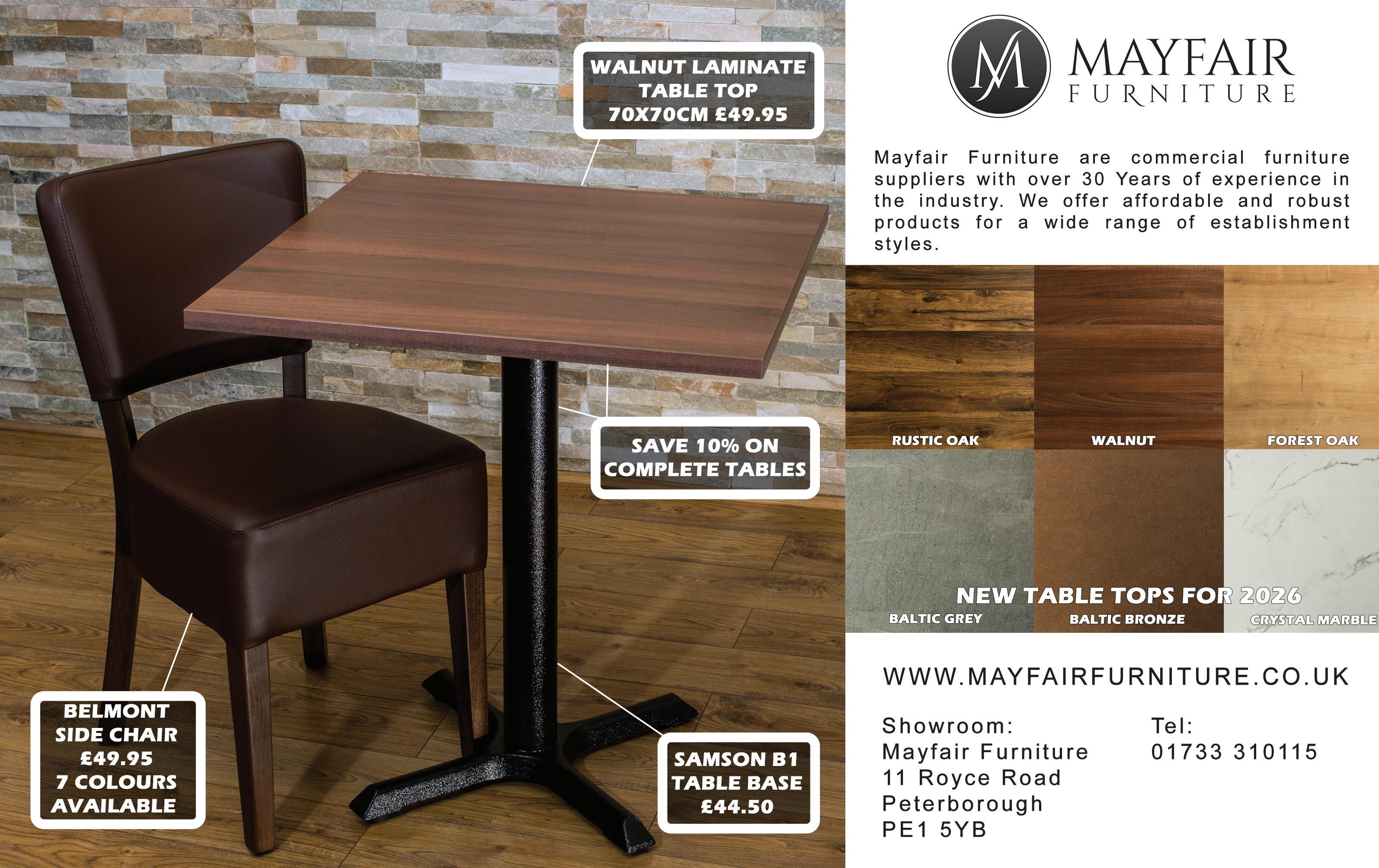
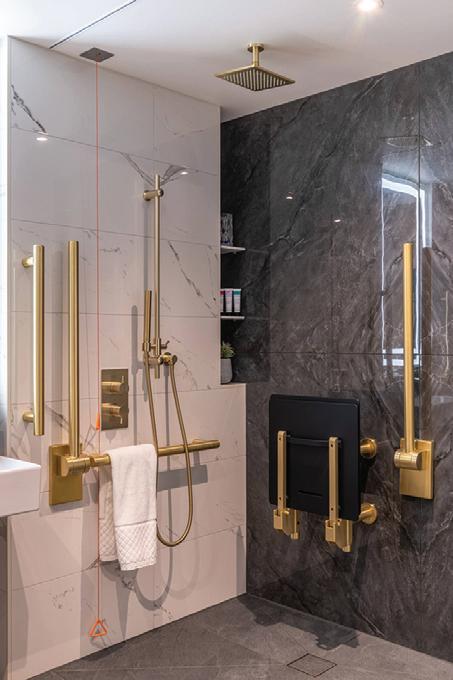
From seamlessly integrated design to innovative technology, 2026 an exciting time for accessible bathroom design as it will redefine how inclusivity is approached in high-end spaces. Mark Shepherd, Head of Product at Fitzroy of London, shares his insights into upcoming trends shaping luxury bathrooms.
“We are seeing premium, tactile materials being paired with custom detailing and finishes. This is especially helpful for those who require visual support. The result is a luxurious bathroom that can keep up with the needs of the user, without designers having to compromising on style in the process.”
“Innovative solutions like touchless interfaces and voice activated controls are now starting to find their way into luxury bathroom design and environments, however a balanced approach is required to ensure that the user experience isn’t compromised when it comes to accessible needs.”
“Where form meets function, wet room layouts are being offered for a more open plan and luxurious spa-like experience. Wet rooms lend themselves perfectly to accessibility with their barrier-free layouts, but in 2026 we
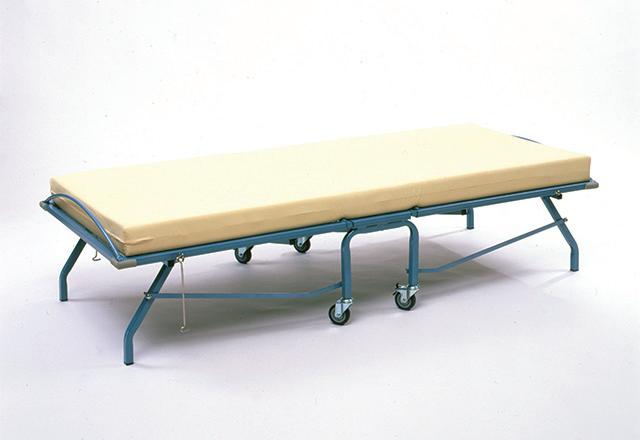
The ‘GLIDEAWAY’® Guestbed is the safest, strongest, most user-friendly and comfortable heavy-duty guest on the market and is in a class of its own
The ‘GLIDEAWAY’® bedframe was developed from GP Contracts’ highly acclaimed ‘WISKAWAY’® WALLBEDS and comes with a 10 year guarantee, but will last much longer and will, in fact, far outlast any other guest bed on the market.
The secret is a welded all-steel bedframe with a firm, pretensioned, woven steel mesh base, which is guaranteed never to sag. Double steel hooks hold the bed safely closed, when folded. Other safety features include automatic leg action, rubber corner protectors, to shield your walls (and your shins!) and laminated safety/operating instructions, permanently displayed on both sides of every bed.
Hospital wheels (2 with brakes) make moving and positioning the ‘GLIDEAWAY’®® completely effortless.
are seeing the elevation of these spaces with elements such as floating vanities and sleek grab rail friendly designs to aid seamless mobility.”
“For designers and specifiers, sustainability is as much about compliance and futureproofing as it is about environmental ethics. Nature-inspired design continues to gain momentum, including elements such as living walls, organic materials and plenty of natural light to foster tranquillity. When it comes to product development, sustainability is no longer considered optional – it is necessary from the start of the design process. We are seeing eco-flow and low energy fixtures increasing in demand, as well as luxury bathroom products with integrated timers and consumption monitors.”
www.fitzroyoflondon.com
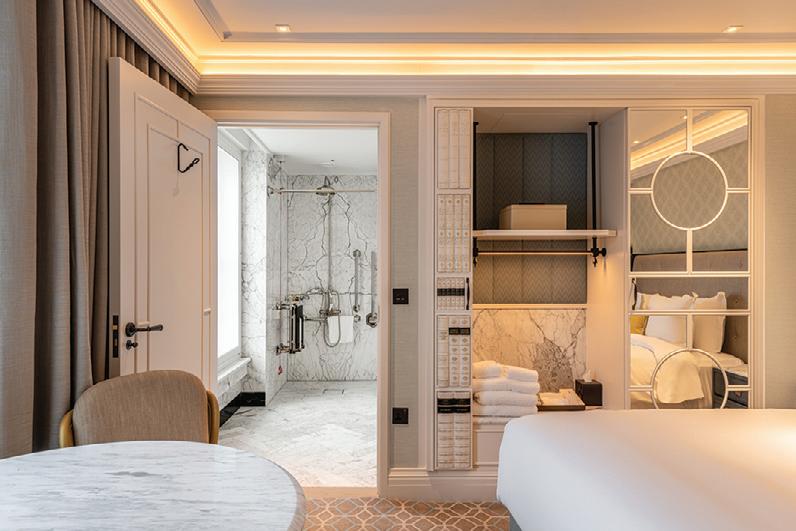
Make it up and use it whenever and wherever required.
The ‘GLIDEAWAY’® is slimmer, when folded, than other heavy-duty guest beds and, with a sleeping height of 47cms, is higher off the ground, when deployed. The ‘GLIDEAWAY’® comes in 2 single and 2 double sizes and in an extra high version (the XH model), in 2 single sizes, with an integral steel bedding tray.
It comes with a wipe-clean/waterproof medium firm foam mattress (now blue) as standard, with a removable (zip-on/zip-off) cover, flame retardant to Crib 5 and will sleep even overweight adults, for extended periods in total safety and comfort. Single ‘GLIDEAWAYS’® will cope with loads of up to 200Kg and doubles with up to 400kg. A standard contract ticking is also available.
The ‘GLIDEAWAY’® will sleep even overweight adults for extended periods in total safety and comfort.
For further information please visit www.gpcontracts.uk.com/glideaway.htm
By Ian Barnett, Group Land and Development Director, LRG (www.lrg.co.uk)

Following changes to planning legislation, specifically the opening up of Green Belt land for development, hotels across the country are changing the way they approach land use to ensure a profitable future.
Owners of hotels may be keen to sell their buildings and land where the existing asset no longer supports long-term profitability. Many older hotels are in need of significant refurbishment to remain competitive, with rising maintenance costs and energy inefficiencies eating into margins. In some cases, the property’s location may no longer align with changing tourism or business travel patterns, leaving occupancy levels under pressure. At the same time, sites in prime urban or coastal areas often carry land values far exceeding their worth as hotel operations, making redevelopment for residential, mixed-use, or commercial
schemes highly attractive. By selling, owners can release capital, exit a declining location, and reinvest in newer, purpose-built hotels in areas with stronger demand and lower operating costs.
Advise in relation to land use, planning and business rates does not mean encouraging hotels to sell up and close, but to explore alternative options that enable them to capitalise on high land values and take advantage of planning policies to benefit the future viability of the hotel and in some cases their local communities too.
As a land agent, I’ve been pleased to enable hotel owners and operators to benefit from these circumstances.
For those thinking of benefitting from situations such as this, the starting point is an analysis of local land use and opportunities, which includes the demand for land, the local market value and property prices, the local planning authority (or Mayoral) development plan and growth targets and proposed changes such as local facilities and transport infrastructure.
It’s also important to look at the accessibility of the current site, any restrictions to development (such as Green Belt or conservation area status), its proximity to local services and amenities and any physical restrictions or benefits. This will help determine both the value of the hotel’s current location and its potential for relocation elsewhere.
There are many different land transaction types. These can broadly be summarised as: unconditional sale, sale subject to planning consent, sale with planning consent and option and promotion agreements. In each case, the approach taken must reflect the owner’s objectives, specifically regarding time and risk, and the chosen method of sale will significantly impact the price achieved.
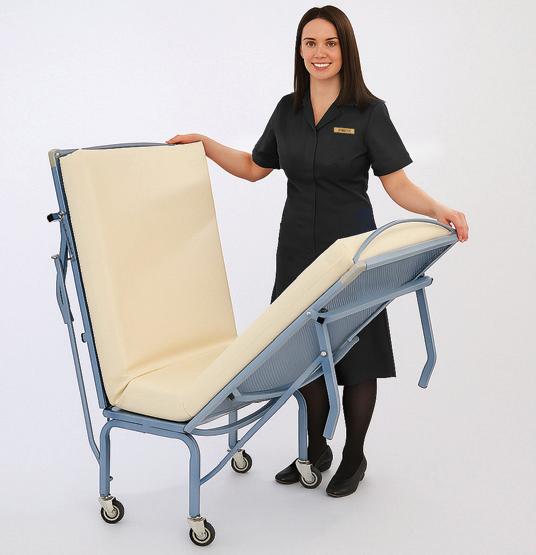
So, for example, an unconditional sale is typically best suited to a distressed landowner in a hurry to sell or whereby the value is already crystallised (i.e it is allocated in a Local Plan). But land sold as part of a hotel site without planning permission for residential development will typically result in a lower price. This is because the buyer would need to invest significantly in gaining planning consent, and without any guarantee of success.
Another, option is a ‘conditional contract’ or ‘option agreement’ which enables the owner to pursue planning consent with an eventual sale agreed if planning consent is achieved – but the buyer has the option to withdraw from the transaction if the planning application is unsuccessful. On this basis, the buyer will be prepared to offer more as their financial risk is lower as compared to an unconditional sale. Despite this, this is not a quick route to a land sale: it can take months, even years, for planning permission to be granted and so financial return is delayed. On the plus side, if a hotel can sell land with the benefit of planning permission (or an allocation), it will achieve a higher land value.
There is one further form of land sale: promotion agreements. These are increasingly popular and are well suited to large sites such as the landholdings attached to a hotel. Under these agreements, the developer/promoter uses their own funds, experience and expertise to seek planning consent. When planning permission is secured, the landowner will then sell the land with the promoter taking an agreed share of the sale price. In essence this creates a partnership model whereby both parties have a mutually beneficial objective – to maximise land value.
The planning world is complicated and ever-changing. Other opportunities that might be relevant include the relatively recent permitted development rights which allow change of use from one Planning Use Class to another (in certain circumstances). On the other hand, the introduction of new ‘planning gain’ requirements can create additional challenges - one of which is the requirement that any new development achieves a minimum 10% uplift on the existing biodiversity on site.
Navigating the planning system against the backdrop of seemingly persistent economic uncertainty presents a real challenge. There are solutions: land diversification, whether developing, relocating, or seeking alternative uses can increase a hotel’s value and generate income. Substantial changes may be necessary, but with the appropriate strategy, substantial change can result in substantially increased profitability.
By Danielle Ford, Partner and Head of Tax Disputes
& Resolutions, HaysMac (https://haysmac.com/)

The Hospitality sector including restaurants, takeaways, and similar businesses has come under intense scrutiny from HMRC in recent years. This is most evident in the growing number of businesses being ‘named and shamed’ for deliberate tax defaults.
HMRC’s policy of Publishing Details of Deliberate Defaulters (PDDD) involves the publication of identifying details for those who have deliberately avoided tax. The published details include the name, business type, address, and the amount of lost tax revenue identified. HMRC updates its PDDD list quarterly, and recent publications show a marked increase in Hospitality businesses being named. The inference here is that it is not simply the number of publications that have been increasing, but that HMRC has been undertaking more compliance activity in the sector and the rise in publications is as a result of underdeclared tax discovered in the course of the increased number of enquiries.
Details are published if one or more penalties for deliberate defaults are charged after an HMRC investigation, and if the penalties rise from of tax of £25,000 or more, where deliberate defaults relate to the underlying behaviour which HMRC alleges led to the insufficiency of tax. HMRC has three distinct behaviour types: reasonable care, careless, and deliberate, of which deliberate is the most severe and broadly means an error was committed with full knowledge and understanding.
WHY IS THE HOSPITALITY SECTOR A TARGET?
HMRC’s focus on Hospitality stems from several perceived risks. The first of these is cash trade, as many hospitality businesses still deal heavily in cash, making it easier to underreport income. Casual staff payments are an ongoing concern, as paying staff in cash without proper records immediately increases risk. Similarly Electronic Sales Suppression (ESS) is another growing cause for concern for HMRC, with the use of software or hardware to manipulate electronic sales records and till systems. HMRC is particularly keen to name and shame businesses using ESS, as it clearly signals a deliberate intent to avoid tax.
HMRC employs sophisticated software to analyse tax returns, looking for discrepancies such as unusually low sales or high expenditure. These triggers prompt further enquiries, when things don’t add up.
Once published, details remain online for 12 months, accessible to everyone. The reputational damage can be severe, leading customers to choose competitors and suppliers or lenders to reconsider their relationships due to perceived financial risk. Businesses under investigation, especially those found to owe additional tax and charged with deliberate inaccuracies, can expect HMRC to monitor future filings closely.
In the worst cases, deliberate tax loss may result in criminal prosecution. Those listed under PDDD are at the highest risk of such action.

Our
are maximising the labour usage in your business.
Budgeting, Forecasting, Menu Management, Stock Controls, Purchasing, and controlling Variable Costs are just a few of the other areas that David Hunter, your Restaurant Consultant, will work on with you, and improve with you.
Managing people brings with it a whole set of new skills that are now needed more than ever. From ‘’Managing the Managers’’ through to Service and Kitchen staff, your team needs careful and skilful Management, Motivation, guidance and Development.
If your business is actually struggling, or if you just feel that it could be doing some things better, give David Hunter a quick call on 07831 407984 to arrange a ‘’Free of Charge’’ initial consultation (please quote CLH Offer), when David will discuss with you what could be achieved if you ask us to work with you.
The most effective way to avoid being named and shamed is to ensure all tax filings are complete and accurate. However, mistakes can happen. If HMRC opens an enquiry, seek professional advice immediately. An advisor can guide you through the process, which can be very long running and stressful, however your advisor will seek to protect your position throughout and secure the best possible outcome with regards to negotiating settlement and penalties.
It's also key to note that if a lesser penalty (e.g. ‘careless’) is charged, or if a deliberate penalty is fully mitigated, HMRC cannot name and shame. Professional advice is invaluable in achieving the best possible outcome. Similarly, if HMRC visits your premises, understanding your rights and obligations is crucial. Immediate professional support can help you respond appropriately.
The best-case scenario for mistakes in tax filings is to discover and address them before HMRC raises an enquiry. Making a voluntary disclosure to HMRC involves paying the lost tax and late payment interest, however the process is typically quicker and less costly than an investigation. Voluntary disclosures benefit from the lowest possible penalties, often with no penalty at all. Importantly, businesses making a full and correct disclosure are protected from publication under PDDD and criminal prosecution.
For hospitality operators there are some clear practical steps. Conducting regular internal reviews, keeping up to date with legislative changes, as well as proactively reviewing and updating internal procedures, and checking records and systems for discrepancies is all crucial. ESS risks also need to be understood, ensuring electronic sales systems are compliant and not manipulated. All payments should be documented, and given how tax can be complicated, if an issue or HMRC enquiry emerges, professional tax advice should be sought immediately. Similarly, voluntary disclosure, if you discover an error acting quickly to disclose to HMRC.
HMRC’s name and shame campaign is a clear warning to Hospitality businesses. The risks of non-compliance are significant, but with careful management, professional advice, and a proactive approach, operators can protect their reputation and financial health.