









EDITOR
Peter Adams
March’s latest figures from the NIQ RSM Hospitality Business Tracker paint a picture that is, at best, uneven, and at worst, quietly troubling.
On the surface, there is something to welcome.
Restaurants returning to growth (up 2.5% year-onyear) is a reassuring sign that consumers haven’t entirely abandoned the idea of eating out.
Occasion-led spending, particularly around events like Mother’s Day is clearly still alive and well. People are still willing to spend, but, crucially, only when given a reason.
But scratch beneath that, and the reality becomes far less comforting.
Pubs, long the backbone of the UK’s on-trade, managed just 0.2% growth. That’s not just sluggish; in real terms, it’s decline. Even with the lift from St Patrick’s Day, the performance is flatlining. Bars, meanwhile, have slipped backwards altogether.
This is the first time in well over a year that restaurants have outperformed pubs, and while some may frame that as a “shift in consumer preference,” it’s more accurate to call it what it is: a reallocation of limited spending power.
Consumers are not spending more - they are simply choosing more carefully.
And therein lies the problem.
We are now firmly in a pattern where hospitality is being squeezed from both sides:
Rising operating costs on one hand and shrinking consumer disposable income on the other.
Energy, wages, and taxation continue to climb, while customers, who are facing their own cost-of-living pressures, cut back on frequency and spontaneity.
For pubs in particular, the challenge is acute. The traditional midweek trade has eroded significantly, replaced by fewer, more deliberate visits. Add in cheaper at-home drinking alternatives, and it’s no surprise footfall is under pressure.
Then comes the next blow: business rates increases from April. For many, that’s another 15% hit before a single pint is poured.
If operators feel like they’re being asked to run uphill into a headwind, it’s because they are.
Which brings us neatly to another issue the industry has been “banging the drum” about for years—taxation.
The recent £94 million fall in UK spirits duty revenue should surprise no one. It is a textbook example of the Laffer Curve in action.
The principle is simple: raise taxes too high, and you don’t increase revenue—you reduce it.
The tax base shrinks as consumption falls, businesses struggle, and economic activity contracts.
And yet, here we are.
Industry estimates suggest total duty revenues are running around £1.1 billion below projections set when the current framework launched in 2023. That is not a marginal miscalculation—that is a systemic failure of policy.
The irony is hard to ignore. A sector already under immense pressure is taxed harder, only for the Treasury to
collect less as a result.
It begs the question: what exactly is the strategy?
There is, of course, a potential boost on the horizon.
Extended licensing hours during the FIFA World Cup could deliver a much-needed injection of trade, with previous tournaments showing just how powerful these events can be.
Fifteen million pints for a single England knockout match is not to be sniffed at.
But let’s be clear—this is not a solution. It is a short-term spike, not a structural fix.
You cannot build a sustainable sector on sporadic surges of football-driven trade.
What the Tracker really shows is a sector that is still growing—but only just, and largely through expansion rather than underlying performance.
Larger groups, with the capital to open new sites, are driving overall growth. Meanwhile, independents—the lifeblood of a diverse hospitality landscape—are being left behind, grappling with rising costs and flat revenues.
If that trend continues, we risk losing the very character that makes the UK’s hospitality sector world-renowned.
The government, by most measures, is in a difficult position economically. But history—and basic economics— offers a clear route out of difficult fiscal terrain.
When you are in a deep hole, you stop digging.
And in the context of hospitality, that means one thing: Reduce the burden.
Lower taxes don’t just ease pressure on businesses—they stimulate activity, protect jobs, and, as the evidence increasingly shows, can ultimately increase revenues.
The current approach is not just failing the sector—it is proving counterproductive.
I can always be contacted at edit@catererlicensee.com
The Caterer, Licensee & Hotelier News Group is published by RBC Publishing Ltd, 3 Carlton Mount, 2 Cranborne Road, Bournemouth, Dorset, BH2 5BR.


tion, however, no responsibility will be accepted for loss or damage. Views expressed within this publication are not necessarily those of the publisher or the editorial team.
when compiling this publication to ensure accuracy, the publisher will assume no responsibility for any effects, errors or omissions therefrom. All rights reserved, reproduction
ten permission is obtained. All material is assumed copyright free unless otherwise advised.
The figures mark the first time in 16 months that restaurants have outperformed pubs, underlining a shift in trading dynamics. Elsewhere, managed bars reported a 2.6% year-on-year decline in sales, while the on-the-go segment delivered modest growth of 0.9%.
FACTORS BEHIND THE SHIFT
The reversal in fortunes highlights a shift in how consumers are allocating their limited discretionary spending:
• Occasion-Led Spending: Consumers are increasingly prioritising "memorable" meals for specific holidays over regular, casual visits.
• Dining vs. Drinking: While pubs historically outperformed in 2025 by offering a "trading down" option for drinkers, restaurants are now benefiting as guests seek higher-value dining experiences.
• Cost Pressures: Pubs are facing acute pressure from business rates revaluations taking effect in April 2026, which are projected to increase bills by an average of 15% for many venues.
• Midweek Slump: Pub operators report that midweek trade remains the biggest struggle, with consumers consolidating their outings into weekend or event-based visits.
CAUTIOUS EXPANSION
When channels are combined, Britain’s leading hospitality groups achieved like-for-like growth of 0.9% in March. While this is a better performance than either January or February, it is well below Britain’s recent rate of inflation.
The NIQ RSM Hospitality Business Tracker also indicates the continued cautious expansion of managed groups.
On a total sales basis—including at venues launched by hospitality groups in the last 12 months—their sales rose 4.3%—just ahead of inflation. NIQ’s recent Business Confidence Survey with Zonal found nearly two thirds (63%) of leaders of groups with five or more sites planned to increase their estate over the next 12 months.
Despite openings and real-terms growth, hospitality remains overwhelmed by high costs in key inputs like food, drink and labour.
There are also fears of renewed inflation as a result of ongoing uncertainty in the Middle East, which is likely to push up prices in many energy-related areas.
NIQ’s recent Business Confidence Survey—conducted before the start of the conflict—found that fewer than a third (31%) of leaders feel optimistic about the future of hospitality over the next 12 months.
The Tracker’s regional breakdown of sales meanwhile indicates a slightly better March for operators in London. Like-for-like sales rose by 0.4% within the M25, and by 1.1% further afield. “BACK INTO BLACK”
Karl Chessell, director – hospitality operators and food, EMEA at NIQ, said: “Restaurants’ move back into








the black in March is a welcome development after a very challenging start to the year.
“Nevertheless, many groups remain reliant on new openings and deliveries for real-terms growth, and geopolitical concerns are casting a long shadow over the months ahead. Hospitality faces relentless challenges that are not of its own making, and without targeted government support it is likely to be a challenging summer season.”
Saxon Moseley, head of Leisure and Hospitality at RSM UK, said: “Sluggish like-for-like growth across the sector masks a change in fortunes for Britain’s eateries, with restaurants returning to growth at the expense of food-led pubs.
“However, the bigger picture suggests consumer spending has not increased significantly but is instead shifting between different segments of the market, highlighting the degree of competition amongst operators. The data also shows that overall revenue growth is being driven by new openings rather than underlying like-forlike performance, favouring larger operators with the capital to expand, while many independent businesses continue to grapple with underwhelming site revenue growth alongside rising cost pressures.
“With new entrants vital to the evolution of the hospitality sector, creating the right conditions for businesses of all sizes to grow is critical to maintaining a diverse and resilient hospitality industry.”
As previously reported pub operators in England and Wales have been handed a potential boost this summer, after the government confirmed an extension to licensing hours covering additional knockout stage matches featuring England and Scotland at the FIFA World Cup.
The Home Office had already moved to allow venues to trade beyond their standard permitted hours for a range of matches at the tournament — being staged across the United States, Canada and Mexico this June and July — to accommodate the wide variety of kick-off times involved. However, the updated guidance now confirms that extended trading will also apply to earlier evening fixtures, including the guaranteed first knockout match for whichever of the two home nations advances from their group.
Under the revised framework, pubs may remain open until 01:00 BST for England or Scotland knockout matches with kick-offs between 17:00 and 21:00, and until 02:00 for those kicking off between 21:00 and 22:00.
During major England World Cup matches, approximately 15 million pints can be sold, with an estimated 28.5 million total pints sold across the 2022 tournament's key stages.
Sales during tournament matchdays typically see a boost of over 50%, or up to 334% more than usual in some venues during high-stakes games.
Key 2022 World Cup Sales Highlights:
• England v Senegal: ~15 million pints sold.
• England v Iran: ~3 million extra pints.
• England v USA: 13.1 million pints sold.





By Giles Fuchs, Owner of the Burgh Island Hotel

The hospitality industry needs to do more to keep the people who make it work. The person behind the bar who knows the regulars, the front of house manager who holds the room together on a difficult night, the chef whose pride in the food is felt by everyone eating it. These are the people who make hospitality worth experiencing, and the industry is losing them at a rate it cannot afford.
Hospitality Action's 2025 Taking the Temperature survey found that 57 per cent of hospitality professionals name understaffing as their greatest challenge, a 21 per cent rise on the previous year. Deloitte's research into frontline workforce trends found that 60 per cent of workers in hospitality say employee turnover has increased as their organisations incorporate worker data with AI and related technologies. Over half of guests still favour human interaction when they stay. The industry is
caught between guests who want more of its people and a workforce that is harder than ever to hold onto.
The cost of losing experienced staff is greater than it first appears. When a good member of the team leaves, they take with them the accumulated knowledge of the guests, the rhythms of the business, the unspoken understanding of what makes a particular venue work. Training a replacement takes time and money. But the subtler loss, of the relationships built with regulars, of the confidence that comes from years in a role, is harder to quantify and harder still to recover.
The venues and hotels getting this right are the ones that have used smarter systems to give their teams more of what they need: time, breathing room, the freedom to focus on the guest in front of them rather than the spreadsheet behind them. Technology that reduces friction and administrative burden is valuable. Technology that makes a member of staff feel like a variable to be optimised is not.
The test before any new system is introduced should be whether it makes it easier or harder for staff to do what they are good at. If the answer is harder, it is not the right investment regardless of what it costs or saves on paper. When the answer is the right one, the benefits are felt on both sides. Operations run more smoothly, administrative burdens lift, and staff find themselves with more time to engage with guests.
Introducing new processes also requires care. Staff who are brought along thoughtfully, trained properly, consulted where possible, and given the time to adapt, will make the most of new tools in ways that no implementation plan could have anticipated. Those who feel that change is happening to them rather than with them will, understandably, start to look elsewhere.
Wellbeing investment matters as much as operational investment. Hospitality Action's research found that 75 per cent of managers now recognise the value of being able to signpost staff to an Employee Assistance Programme. It has moved from a welcome extra to an expectation, and rightly so. Hospitality asks a great deal of people emotionally and physically. Acknowledging that with tangible support builds the kind of loyalty that keeps experienced staff in place for years rather than months.
At Burgh Island, where we employ between 75 and 95 staff on a selfcontained tidal island, we have invested £1 million in staff accommodation and provide all staff with access to Health Assured's Employee Assistance Programme with 24/7 confidential support. The hotel's screen-free environment and Art Deco heritage create a setting where service is personal by design. That approach is not a policy. It is embedded in our corporate culture.
Retention is an experience metric. The businesses that hold onto their best people longest are the ones that deliver the most consistent, most memorable, most recommended hospitality. That consistency cannot be built on a revolving door of new starters, however well trained. It comes from people who know the business, believe in it, and have been given every reason to stay. The hospitality businesses that will set the standard in the years ahead are those that recognise this and act on it. It is, has been, and always will be a people business.
The Master Innholders has announced that nine leading hotel professionals have been awarded the prestigious Master Innholder status following this year’s rigorous application process.
Established by the Worshipful Company of Innholders, the accolade recognises individuals who have demonstrated outstanding leadership, influence, and commitment to the advancement of the hospitality sector. Recipients are selected for their ability to champion best practice, elevate standards across the industry, and support the development of future talent.
The newly appointed Master Innholders are:
• Andrew Henning, General Manager, Grosvenor House Suites
• Gareth Ireland, General Manager, Doubletree by Hilton Cadbury House
• Jennifer McCabe, General Manager, art’otel London Battersea Power Station
• Lee Kelly, General Manager, 45 Park Lane
• Miriam Varoli, General Manager, Andaz London Liverpool Street
• Raoul De Souza, General Manager, Hilton London Bankside
• Sabine Altschaeffl, General Manager, Charlotte Street Hotel
• Sandeep Bhalla, Managing Director, The Connaught

• Tommy Mark, General Manager, The Lord Crewe Arms
The awards will be formally presented by the Master of the Worshipful Company of Innholders at a Court presentation, held prior to dinner at Innholders’ Hall on 2 June.
Commenting on the announcement, James B. Clarke MI, Chair of the Master Innholders said:
“Master Innholders play an important role in recognising and supporting outstanding hotel leadership, as well as helping to define the standards our industry should aspire to.
“This year’s successful candidates reflect those values in practice. They have demonstrated consistent excellence in their leadership, a commitment to developing others, and a willingness to contribute beyond their own organisations to the wider hospitality sector.
“It is this combination of professional achievement and broader industry engagement that makes them strong additions to the Master Innholders community, and I look forward to seeing what more they achieve in the near future.”
Brits are being encouraged to officially recognise their local as their ‘second home’ as new research shows a third (31%), equivalent to 17 million people, are now choosing a local pub over traditional location drivers, like school catchment area.
According to the research, which was commissioned by Greene King pubs, two in five (41%) Brits say they would pay up to 20% more to live near a great local, while one in three (34%) now see it as the ultimate selling point of an area.
To launch it’s ‘Second Home Scheme’, Greene King pubs has appointed actor Larry Lamb as its ‘property expert’. As a Greene King pubs regular, Lamb stars in a new video touring pubs across the UK and showcasing what Brits could enjoy from their ‘second home’. – from welcoming bar spaces to lively expansive beer gardens that feel just like an extension of the home.

Credit: Greene King
With one in three (34%) already describing their local pub as their “second home”, pub goers can make it official by signing up to the Second Home Scheme and be in with the chance of winning free beer for a year, including pints of Level Head, via the Greene King pubs website here.
Larry Lamb, Greene King pubs’ Property Expert, says, “People have always thought the big selling points of a location are things like transport links, a nice park and good schools. Whilst all of those still matter, for me –and plenty of others – the local pub is just as important. That’s where the good stuff happens. It’s where you
catch up with friends, have a proper laugh, and switch off at the end of the day.”
“And let’s be honest, it’s more than just ‘a pub’. It’s where you feel completely at home. For lots of us, it already is a second home… now we’re just calling it what it is.”
Younger adults are leading the shift, as 61% of 27–34-year-olds claim they are more loyal to their local than their barber (55%) or favourite takeaway (57%). Among 22-25 year olds, pubs are valued above green space, with 70% willing to pay more to live near a pub, compared to 66% for a park.
It is also reshaping how people live, with three in 10 (30%) willing to accept a longer commute and 28% prepared to sacrifice property size to be within walking distance of their local pub.
Andrew Gallagher, Brand and Marketing Director at Greene King Pubs said:
“We want every customer who walks through our doors to feel like they are being welcomed home and are a part of something that matters. Whether it’s a birthday celebration, dinner with friends, a quick drink after work or a place to watch the football, pubs are places that bring people together.
“The ‘Second Home Scheme’ is our way of recognising that, giving people the opportunity to officially celebrate their local and the role it plays in bringing communities together, as well as rewarding them with the chance to enjoy it even more.”
The warning comes amid new figures revealing a significant drop in revenue following duty on spirits rising by 17% over the past three years. Industry groups estimate the hike cost the sector around £94 million in 2025/26, with total revenue running approximately £1.1 billion below projections made when the current alcohol duty framework launched in 2023.
The coalition of drinks industry groups, among them the Scotch Whisky Association and the Wine and Spirits Trade Association, addressed their concerns directly to Rachel Reeves, criticising what they describe as an excessive tax burden on the sector.
The Government’s own data shows that UK spirits producers,
our supply chains and consumers across the country, can see the devastating impact of the 17% increase to spirits duty over the last three years. Spirits revenue has fallen by £94m in 2025/26, and revenue is £1.1bn lower than was forecast when the new alcohol duty system was introduced in 2023.
In a joint statement they said: “It is critical that HM Treasury do not turn a blind eye to the role the punitive and distortive duty rate has had on spirits revenue, in addition to job losses and investment pauses across the spirits industry.
“Spirits duty amounts to a super tax on the industry and must be urgently addressed. Pubs and the wider hospitality industry cannot survive on beer alone, yet hard pressed consumers are being forced to pay over the odds to responsibly enjoy premium spirits, which underpin the profitability of many bars, pubs and restaurants.
“HM Treasury promised a review of the new alcohol duty system three years after its implementation. We welcome the launch of that evaluation, and our organisations are united in our call for the review to be as comprehensive as possible, and for the Autumn Budget to take steps to support the UK’s worldclass spirits industry.”
Full list of signatories to the joint statement:
• English Whisky Guild
• Drinks Ireland: Spirits
• The Gin Guild
• Irish Whiskey Association
• Scotch Whisky Association
• UK Spirits Alliance
• Welsh Whisky Association
• Wine and Spirits Trade Association

Analysis from UKHospitality Scotland found that Scottish pubs and hotels are routinely valued significantly higher than their equivalents in England, driving higher business rates bills. Valuations could be as much as £16,000 higher for a typical pub.
This variance highlights yet another way in which Scottish hospitality is at a competitive disadvantage.
While it’s positive the valuation methodology is being examined by the Gill Review, the Scottish Government needs to go further to properly fix the faults in the business rates system.
UKHospitality Scotland has submitted a number of recommendations to the review, including how to address the broader implications of relying on a property taxbased system. Its recommendations include:
• Consider wider policy levers.The Scottish Government should consider measures beyond valuation alone, including a lower poundage rate for hospitality and relief structures.
• Establish an industry engagement forum.This can inform the development and ongoing review of valuation methodology.
• Commission independent analysis.An independent expert body should conduct analysis of hospitality property valuation to support future reforms.
Leon Thompson, Executive Director of UKHospitality Scotland, said: “The broken business rates system continues to plague Scottish hospitality businesses, often leaving them with higher bills and at a competitive disadvantage to their peers across the UK.
“The Gill Review is an important opportunity to bring forward significant reforms that address these acute challenges, which are stifling growth on the high street, investment and job creation.
“There has been recognition elsewhere that hospitality should be treated fairly by the business rates system, after decades of overpayment. The Scottish Government also needs to take that approach by looking at lower poundage rates for hospitality, as well as reforming the valuation methodology.
“It’s not fair or logical that a typical pub in Scotland could be valued significantly higher than an equivalent pub in England, leaving them with higher bills. The Gill Review can and should put forward significant reforms to fix the broken business rates system.”

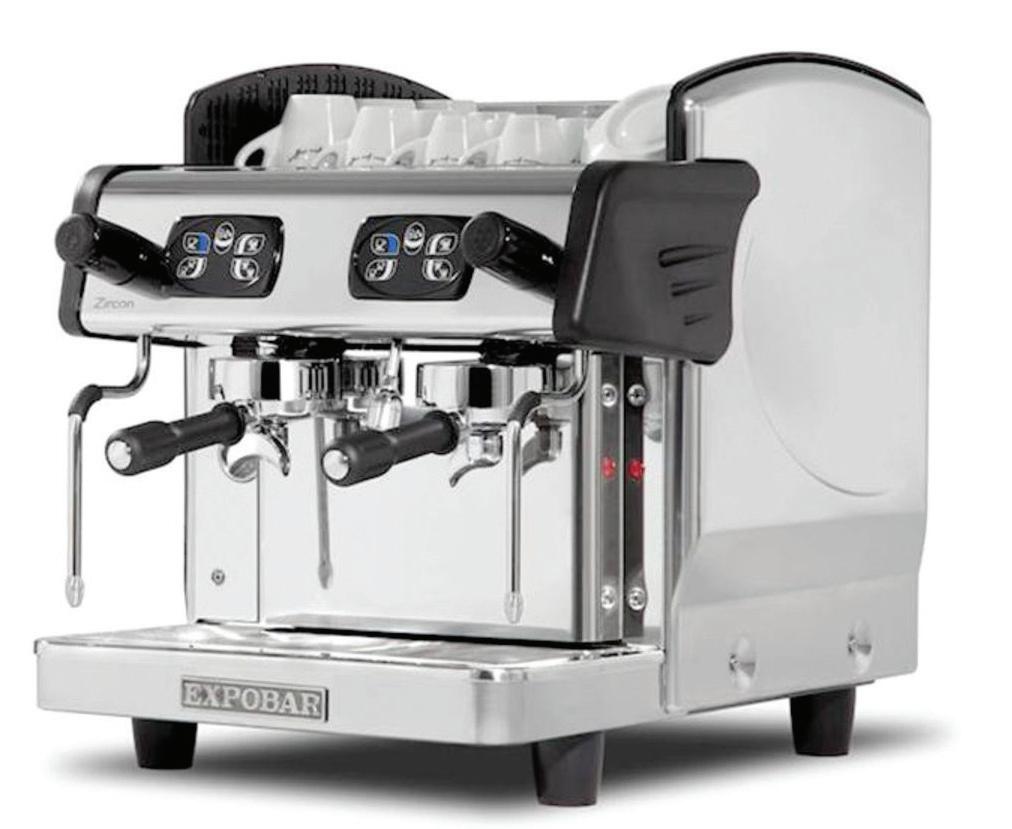
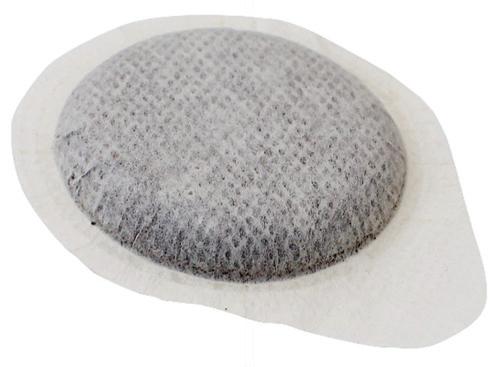
Coffee pods are not to be confused with capsules
They are specialized, individually wrapped filter paper pods containing 7 grams of top quality coffee, just like you get when a barista makes a coffee
Our pods are available in both 7 grams and double-shot 14 grams, perfect for making 2 coffees at once or a large 14 gram shot. The taste is sublime with no barista skills needed
Data from Access Hospitality reveals that 47% of hotel businesses are using two to four systems and 25% are using over five [1], leaving many operators exposed to what's known as “toggle tax”.
“Toggle tax” refers to the time, attention, and human connection lost when front desk staff are constantly switching between disconnected systems.
Recognising this, hospitality AI tech company, Access Hospitality, is urging the hotel industry to reclaim the time lost as a result of “toggle tax” by sharing their top tips for moving away from fragmented systems and towards smarter, integrated technology.
HOTEL STAFF ARE WASTING 322 HOURS EACH YEAR SWITCHING BETWEEN SYSTEMS
Hotel employees spend a large amount of time switching between systems. This results in longer check-in times, increased risk of human errors and decreased guest satisfaction.
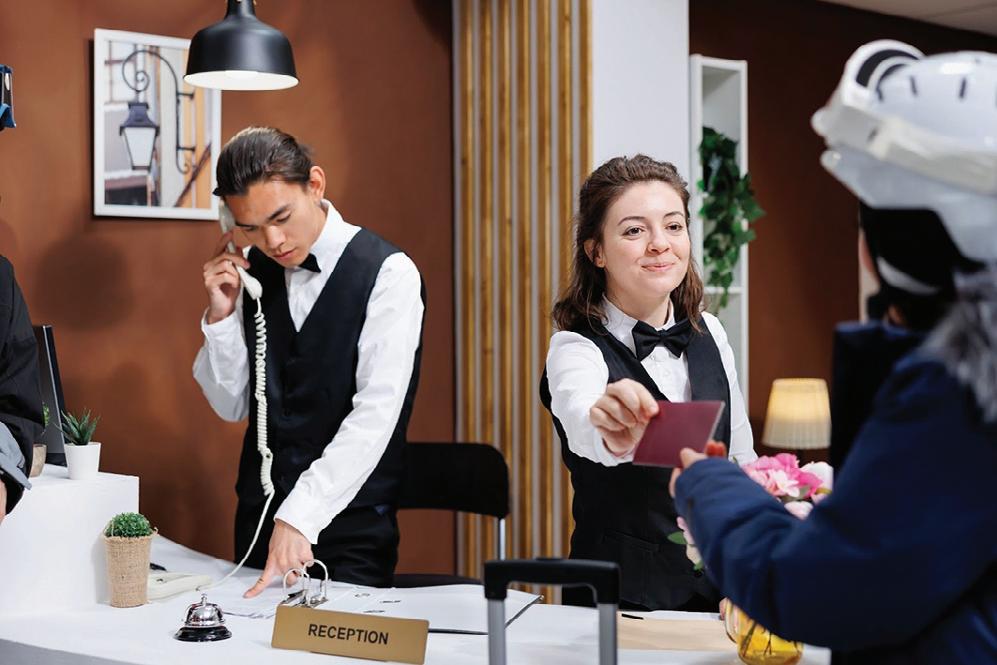
Access Hospitality found that UK and Ireland hoteliers use 5.2 systems on average, and hotel staff are wasting 322 hours a year switching between systems.[2]
FOUR TIPS ON HOW TO AVOID THE “TOGGLE TAX”
Nicola Longfield, Chief Commercial Officer, Global Accommodation & Payments at Access Hospitality, has shared four tips on how to avoid the “toggle tax”.
Nicola comments: “The operators who will be best positioned over the next three to five years are the ones making deliberate technology decisions today. Not panic decisions, not rip-and-replace, but strategic ones informed by where the industry is heading.
YOUR TECH STACK WITH A DIFFERENT
YOU HAVE ASKED BEFORE
“The old question was: does this system do what I need today? The new question is: is this technology for the next decade, or a tool solving yesterday’s problem with yesterday’s solutions?”
CONSOLIDATE WHERE YOU CAN
“Platforms that unify your operations across guest engagement, workforce management, procurement, and distribution, in the case of hotels, give AI a complete picture to work with, and AI only gets better with time and good data.
“Fragmented point solutions give it fragments. We see this across our own customer base: operators running
multiple modules on our platform report stronger operational outcomes than those on isolated tools, because the data compounds.”
“Ask your technology partners what they are actually building, not whether they have an AI roadmap.
“Ask what is in production today. Ask whether it is powered by hospitality-specific operational data or generic models available to anyone. The quality of those answers will tell you where that vendor will be in three years.”
RETHINK HOW YOU EVALUATE SWITCHING COSTS
“The traditional calculus was about migration pain: data transfer, retraining, disruption. That is real. But there is now a cost on the other side of the ledger. Staying on disconnected, isolated, and therefore AI-incapable systems means being locked out of the operational improvements your competitors will have access to. In an industry with razor-thin margins, that cost compounds fast.”
“The technology decisions you make in the next 12 to 18 months will shape how your business operates for a decade. The operators who get this right will not just navigate the transition, they will be the ones setting the pace.”
Nicola Longfield continues, “Hoteliers are switching between two to five systems everyday, and while these systems collect a lot of data, they don’t always provide clear, cohesive insights.
“At Access Hospitality, we believe that people should shape software, and the key to being successful is being AI-powered and having all systems in one place.
“Using a consolidated system like Access Hospitality’s Property Management Suite, can reduce hotelier headaches, elevate guest experience and avoid toggle tax because everything you need is all in one place.
“By making the switch, operators can reclaim hours lost using disconnected systems, as well as facilitate the overall growth of their business.”
[1] 2025 Report: AI in the Hospitality Sector
[2] https://www.theaccessgroup.com/en-gb/hotels/hotel-property-management-suite/
[3]Access Hospitality 2025 KDM Tech Survey - UK & ROI
Café and restaurant operator Benugo has announced a five-year partnership with The Clink Charity, creating a structured and sustainable employment pathway for prison leavers into long-term hospitality careers.
Beginning in September 2026, the partnership will make Benugo an employment destination for graduates of The Clink’s training programme at HMP Brixton. Participants will gain access to Benugo’s internal learning and development framework and mentorship.
Central to this is a focus on internal development, with over 80% of roles filled through internal progression across the business. The company has also worked closely with a range of charities and partners over many years to support access to employment, skills development and social mobility.
The collaboration combines financial sponsorship with practical operational support. Benugo will contribute training and development expertise to strengthen The Clink’s delivery model, while The Clink’s award-winning artisanal bakery products, produced by students in training at The Clink Bakery, located within HMP Brixton, as well as in its community-based production kitchen in Herne Hill, will be sold across chosen Benugo loca-
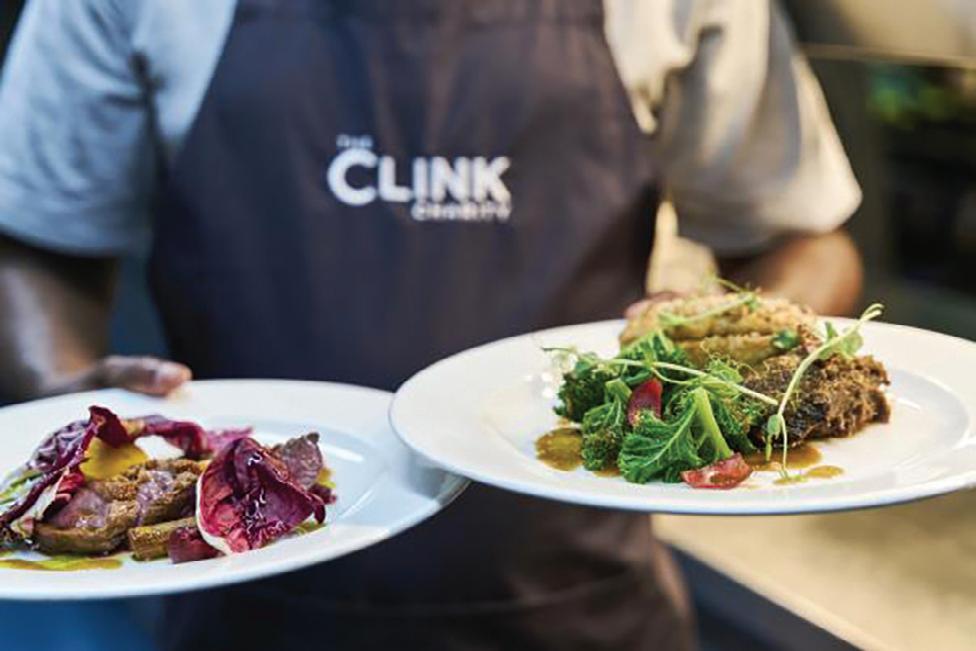
tions next year to further support the charity.
Ben Warner, Founder of Benugo, said: “Hospitality has the power to change lives. By partnering with The Clink, we’re opening doors for people who want to rebuild their futures, providing real careers, skills and confidence. A core part of our ethos is developing talent from within and ensuring people have clear pathways to grow and progress.”
In 2025, The Clink trained almost 400 students across the UK, delivered around 420 City & Guilds NVQ qualifications and provided structured post-release support to 119 individuals.
The charity also delivered more than 120,000 accredited training hours across the organisation in 2025. Nearly 70% of students from its restaurant at HMP Brixton moved into further education or employment.
Donna Edmonds, chief executive of The Clink Charity, added: “Employment is one of the most significant factors in reducing reoffending. A long-term commitment from a respected operator like Benugo provides stability, progression and real opportunity for our graduates – helping turn training into sustainable careers.”
For the UK hospitality sector, the pressure is on to reach Net Zero by 2050, with industry bodies like UKHospitality pushing for aggressive targets, including the elimination of direct emissions (Scopes 1 and 2) by 2030 and all avoidable supply chain emissions (Scope 3) by 2040. It’s a challenge that can feel complicated, frustrating, but is ultimately necessary for a sustainable future.
Hot water is the lifeblood of hotels and restaurants, but it's also a carbon heavyweight. Historically, gas was the default choice for its low cost, but it is increasingly at odds with climate regulations. Conversely, while electric water heaters offer zero on-site emissions, their higher running costs can be a bitter pill for high-demand businesses to swallow.
Adveco suggests that the smartest path forward isn’t a choice between gas or electric, but a strategic hybrid approach. By integrating multiple technologies, businesses can achieve environmental goals without compromising their bottom line.
Air source heat pumps (ASHPs) can generate up to 70% of domestic hot water (DHW) system energy as preheat, significantly reducing the load on electric boilers and

slashing carbon emissions. Hybrid systems, such as Adveco FUSION, can also incorporate electric immersion backups, ensuring an uninterrupted hot water supply—a non-negotiable for guest satisfaction.
Solar thermal, as a ‘true renewable,’ can offset up to 30% of annual DHW energy requirements, offering a low-maintenance solution with a rapid return on investment. It can also work with both electric and gas-fired appliances, like Adveco’s Astute smart water heater range.
Decarbonisation isn't just about swapping out old hardware; it’s about bespoke, intelligent design. Moving beyond like-for-like replacements to integrated systems—complete with thermal storage and optimised controls—allows hospitality venues to future-proof their operations against evolving regulations.
With trusted technological partners, the journey to Net Zero becomes a strategic evolution, securing long-term viability in a greener economy.
https://adveco.co/
With 45% of British adults now following a specific diet (rising to 60% among Gen Z and younger millennials), a broader shift towards health and purpose-driven consumption is also reshaping menus and occasions according to the latest insights from Circana.
Despite the menu changes, one in four (23%) British consumers reports that they are switching dining venues due to a lack of suitable options for the growing preference for high-protein and low-calorie diets.
Functional food and beverages – those supporting energy, immunity, and weight management – are among the fastest-growing segments of demand, influencing both menu design and venue choice.
While GLP-1 adoption remains limited in Britain due to regulation, Circana revealed that momentum is building – awareness of GLP-1 medications has risen from 69% in May 2025 to 75% in January 2026.
Restaurants are starting to adapt with portion controlled, protein-forward menus and lower-sugar offerings. However, there is potential for more innovation as social media accelerates awareness and behaviour change, expanding them to more and more users.
Presenting at the Alimentaria international trade show, Circana’s Edurne Uranga, VP Foodservice Europe, said: “Price, loyalty and function are no longer decisive factors for British consumers, who are increasingly motivated by the eating/drinking out experience. They are seeking variety, healthier options, and the excitement of discovering new places and formats. This is where growth is being unlocked.”
While Europeans visit foodservice outlets less often than Americans, the role of those foodservice outlets in European household spending is often greater. In Spain, foodservice outlets account for 9.9% of total spend,
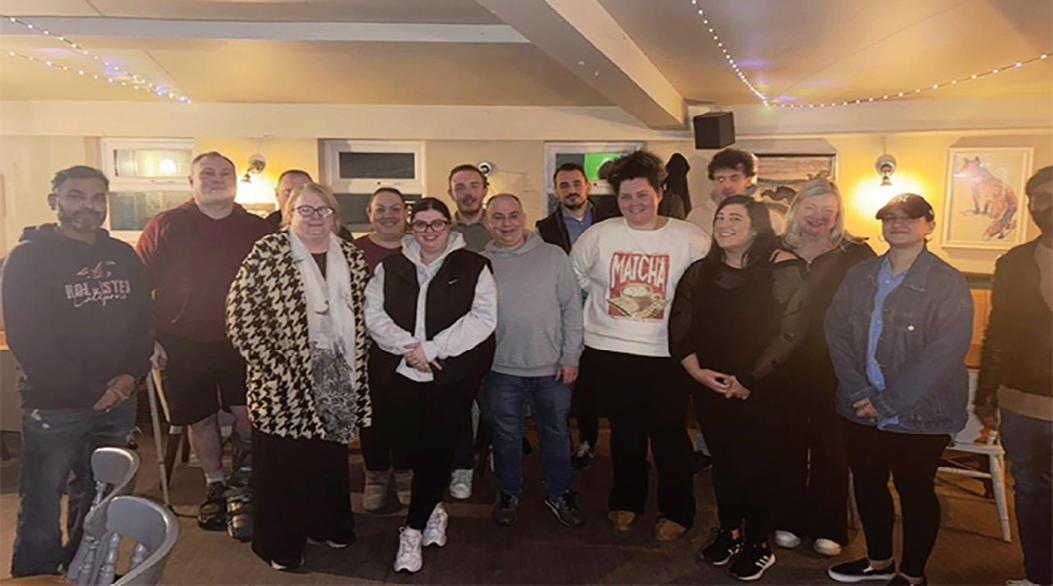
Publicans took an important step toward in strengthening community safety and collaboration with the successful launch of the area’s first Pubwatch meeting; hosted at The Old Hall Tavern on 16 March 2026.
After several previous attempts over the years that, for various reasons, never fully materialised, this marks the first time a Pubwatch group in Chingford has officially come together with commitment, structure, and a shared sense of purpose.
The meeting brought together a strong group of local licensees, each representing key venues across Chingford.
Also attending to offer support and guidance was PC Andrews, the Metropolitan Police’s dedicated ward officer, whose presence underscored the importance of partnership between local venues and law
followed by Great Britain (7.1%), Germany (6.8%) and Italy (5.9%), compared to 5.1% in the U.S., highlighting their continued importance in the European consumer wallet.
Despite economic headwinds, demand for foodservice remains resilient across British consumers who made 127 visits per capita in 2025, down -1.4%, equating to 8.8bn visits to British restaurants. The British foodservice industry is now valued at £71bn – up +3.6% on 2024 figures.
Behind stable topline demand in the foodservice category, the sector is undergoing significant structural change, shaped by demographic shifts, post-pandemic behaviours, economic pressures and ongoing innovation.
“Commercial restaurants now account for 77% of visits in Europe and 85% in Great Britain. At the same time, retail foodservice continues to gain traction in Europe, now representing 6% of visits (+3.5%), while in Great Britain it accounts for a more established 10% share (-4.0%), highlighting a more mature market despite a year-on-year dip and further blurring the lines between retail and hospitality.”
Circana predicted growth in restaurant revenue in 2026 of +3% across Europe and 4% in Great Britain, signalling steady but increasingly competitive expansion.
“As foodservice continues to evolve, restaurants and brands must rethink how they deliver value in a much broader sense so that every Pound spent feels worth it for consumers,” adds Uranga. “At the same time, the sector should look at how revamping menus will help tap into new consumption patterns in a way that feels locally relevant for the consumption occasion and channel. Those who can strike that balance will be best positioned to win in the next phase of foodservice growth.” Uranga added.
enforcement.
The newly formed Chingford Pubwatch aims to:
• Create a reliable network for publicans to share issues, concerns, and best practice.
• Provide a platform for discussing challenges such as anti-social behaviour, which has become an increasing concern across the area.
• Strengthen communication between venues and outside agencies, including the police, to ensure publicans feel supported and equipped to handle emerging issuesPromote a safer, more welcoming environment for staff, customers, and the wider community.
The first meeting set a constructive tone, with open discussion, shared experiences, and a collective determination to work together.
The group’s formation marks a promising step toward a more unified hospitality community in Chingford—one that looks out for each other and stands together in the face of challenges.
The next meeting is expected to build on this momentum, with plans to expand participation and develop practical strategies that benefit all local venues.


If the last decade of booking has been defined by mobilefirst, the next will be about AI-first - not as a gimmick, but as a serious revenue driver for pubs with rooms.
Mobile optimisation still matters, but AI will increasingly become the differentiator in a market where operators are filling rooms but finding it harder than ever to make profit on them.
Selling a bed for a night is no longer enough, auxiliary spend is where the real growth is and those pubs with AI-powered functionality built directly into the booking journey, based on guests’ needs and preferences, will have the best chance of increasing conversions and profit through personalised upselling.
The booking battle is no longer won on room type and rate alone. Guests are now choosing experiences - yet many pub’s online booking systems don’t easily showcase this to the user, resulting in lost potential revenue. This gap is where AI will unlock real value.
Today, many booking journeys are built around availability, not persuasion. Whether that’s dates, guest numbers or payment details - the process does very little to showcase what a stay might look, and feel, like. This results in friction: guests drop off, average spend remains flat and pubs miss the opportunity to upsell an experience.
If AI is integrated into the booking journey, that changes. AI will transform a static booking journey into one that is visual, curated and personalised. And one that feels more like scrolling on a social feed than filling in a
By Patryk Luszcz, Regional Director
form.
AI can turbocharge the booking journey in real-time, based on who is booking, when they’re travelling and what they actually care about. A couple booking a Friday night in Autumn might be shown a fireside weekend package with seasonal tasting menu. A family booking during the Easter weekend might be prompted with a Sunday roast slot, local walking routes or nearby activities. A group booking around the World Cup may be offered pre-match food bundles or reserved bar tables.
Like a ‘discovery engine’, it will let guests scroll, explore and select experiences. It makes them feel like they’re building their ideal stay, rather than just booking a room.
In most cases, before they even choose their accommodation, guests will have already researched destinations and activities and pictured what their trip might look like. A pub can come into its own by helping to make their vision come to life. They will also see higher conversion rates, because guests feel guided, not overwhelmed, and a higher average booking value through highly relevant upsells.
AI CAN HELP PUBS WORK SMARTER
The reality is that most pubs already have everything they need at their disposal to increase guest spendgreat food, drink, atmosphere, local knowledge - they just need to increase its visibility.
If you only offer a room, you limit both conversion and revenue. However, AI-driven booking journeys that let pubs generate personalised recommendations within the booking flow and respond to guests’ needs and motivations in real time, when guest intent is high, will open themselves up to these revenue streams.
AI WON’T REPLACE WHAT MAKES PUBS SPECIAL
An AI-first approach to booking that meets guests’ needs when they are excited and ready to spend provides huge opportunities and can boost the bottom line.
Without it, they risk competing on price alone. But with it, pubs can increase experience-led revenue per stay, drive more direct bookings, reduce reliance on third parties, and build loyalty through better, more memorable experiences.
AI won’t replace what makes pubs special – but it can amplify it.
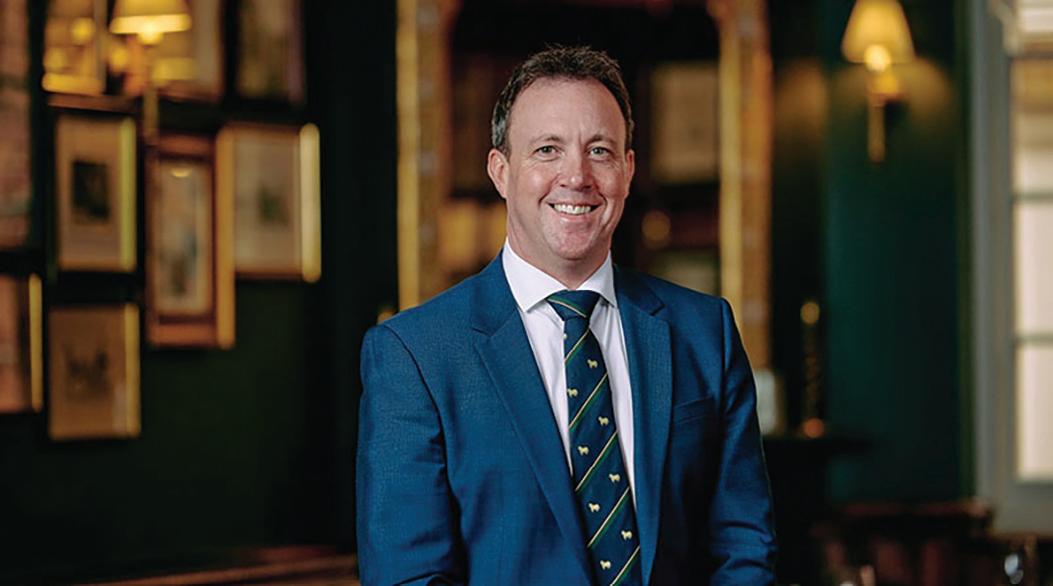
Young’s, the premium managed pub and bedroom operator, has reported a robust trading performance for the 52 weeks ended 30 March 2026, with total managed house revenue rising 4.6% and likefor-like sales up 4.7% — results the company says are in line with management expectations.
The figures represent a resilient outturn for one of London and the South of England’s most established pub groups, delivered against a backdrop of well-documented sector headwinds, including inflationary cost pressures, volatile energy markets, and ongoing uncertainty around consumer discretionary spending.
The operator attributed its performance to its long-standing strategy of running a premium, well-invested managed estate, supported by an extensive energy hedging programme that it said leaves the business well placed to navigate continued macroeconomic volatility and deliver profitable growth in the year ahead.
Alongside the trading update, Young’s confirmed the completion of its acquisition of Cubitt House London Pubs on 22 April 2026, having announced the agreement on 8 April. The deal brings eight pubs into the
Young’s estate, three of which incorporate bedroom accommodation. All eight sites are located in some of London’s most affluent neighbourhoods, with the acquisition described by the company as a natural fit with its selective expansion strategy.
Young’s said it is now in an integration period, focusing on understanding the Cubitt House teams and preserving the distinct culture that has underpinned the collection’s reputation.
Chief Executive Simon Dodd said the results reinforced the strength of the company’s premium positioning: “Our proven strategy of operating premium, well-invested pubs continues to deliver strong, resilient results. Another year of strong performance demonstrates that, even amid ongoing pressures and uncertainty, customers continue to choose Young’s pubs, consistently attracted by the quality of our offer and the environments created by our brilliant teams.
“The acquisition of Cubitt House further demonstrates this strategy. We are delighted to welcome this exceptional collection of pubs and their teams to the Young’s family as we enter a new era on the Main Market of the London Stock Exchange.”
The Black Horse, a historic pub first licensed in the 17th century, is set to reopen on Vale Road, Chesham on 12 June following refurbishment.
Having been closed for the past two years, the reopening under new ownership marks the return of a much-loved local landmark, with a renewed focus on high-quality gastro dining complemented by a variety of spaces designed to appeal to all.
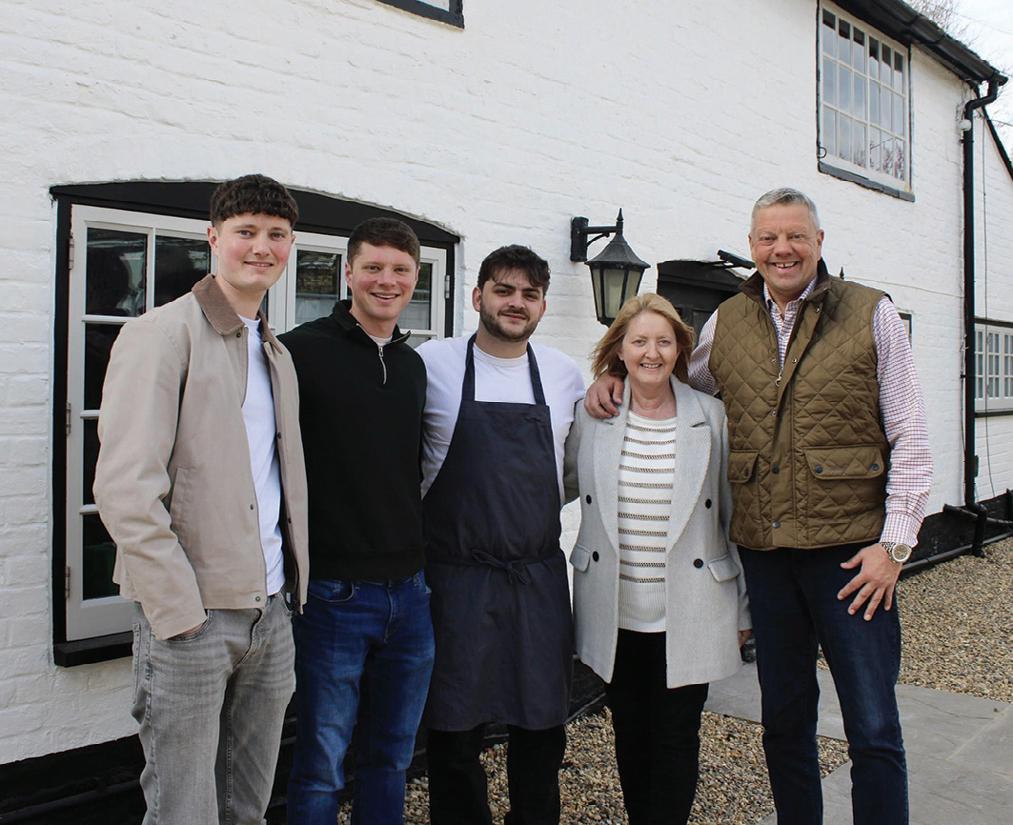
Joint owners Nigel, Sue, Ben and Sam Schroder along with Jack Lander have taken over the Black Horse site and will reopen it to the public this June, bringing with them experience from running other successful businesses, combined with Jack’s expert hospitality knowledge.
The newly restored Black Horse has been carefully renovated to preserve its original character, retaining key period features and will also feature a large pub garden and outdoor grill.
At the heart of the kitchen is joint owner and Head Chef Jack Lander, who brings experience from London’s West End, including time as a senior chef at Mayfair’s, Kitty Fisher’s restaurant.
Looking ahead, the team is also planning to introduce an exciting new concept “Padel at the Pub” with two dedicated padel courts currently awaiting planning approval.
Padel is widely recognised as one of the fastest-growing sports in Europe and the UK, with participation increasing rapidly in recent years and hundreds of new courts being developed nationwide. Its accessibility and social nature have made it particularly popular among a broad range of age groups and abilities.
The “Padel Café” is designed as a welcoming hub for padel players, dog walkers, cyclists and the wider local
community, offering drinks including coffee alongside excellent eat-in and takeaway food options in a relaxed, daytime setting.
“We’re incredibly excited to bring The Black Horse back to life,” said Nigel Schroder, joint owner. “It’s been closed for two years, and we know how much it means to the local community. We’ve already seen such a positive response from people locally who are thrilled to see it return. Our aim is to restore it to what it has always been, a welcoming pub at the heart of The Vale, while also offering a high-quality dining experience.
Padel at the Pub is something we’re particularly excited about; it’s a fantastic opportunity to bring something new to the area that we know will be incredibly popular, while also making fitness more accessible to the community.”
For Head Chef and joint owner Jack Lander, the project is also deeply personal, marking a return to where his hospitality journey began.
“This means a great deal to me personally, as I worked at The Black Horse from 2017 during the early stages of my hospitality career,” said Jack Lander. “Most recently, I was a chef at Kitty Fisher’s in Mayfair, and I’m excited to bring my passion for high-quality gastro food back to The Black Horse, with a particular focus on using locally sourced ingredients, something that has always been incredibly important to me. I’m passionate about creating a place that everyone can enjoy, and with the variety of spaces we have here, I’m confident it will become exactly that.”
The reopening has already generated strong local interest, with many residents eager to see the return of a pub that has been part of the area’s history for centuries.
UK inflation climbed to 3.3% in the year to March 2025, up from 3% the previous month, according to newly released figures from the Office for National Statistics — marking the first official data to capture the economic impact of the ongoing conflict involving Iran, which broke out on 28 February.
The most dramatic single contributor to March’s inflation reading was motor fuel, which surged 8.7% month-on-month — the steepest increase recorded since June 2022. Year-on-year, pump prices were up 4.9%, the highest annual rise since January 2023.
Wholesale energy markets have been severely disrupted since hostilities began in the Middle East, with production and transit infrastructure across the region affected by ongoing military activity.

Food price inflation edged up from 3.3% to 3.7% in the year to March, driven by increases across chocolate and confectionery, meat, fish, and soft drinks. The ONS has noted that the timing of Easter — which fell earlier this year — may have influenced some of these movements, particularly in categories central to the on-trade’s seasonal trade.
Kate Nicholls, Chair of UKHospitality, said: “The inflationary impact of the conflict in the Middle East is evident in today’s figures.
“Hospitality businesses are highly exposed to increased fuel prices, through the price of food, drink, transport and other key inputs. As one of the final links in the food supply chain, the sector cannot be expected to pick up the bill for increased costs down the chain.
“Hospitality is already one of the most heavily taxed sectors in the economy and there is no room to absorb further cost increases. Ultimately, it will result in price rises at the till, further driving inflation.
“The impact on consumer demand should be closely monitored, as our pubs, restaurants, cafes and hotels will be the first to feel the combined hit of increased input costs and reduced spending.
“The Government should be looking closely at how it can reduce the cost of doing business for demand-sensitive sectors like hospitality, which are uniquely exposed to these kinds of economic shocks.”
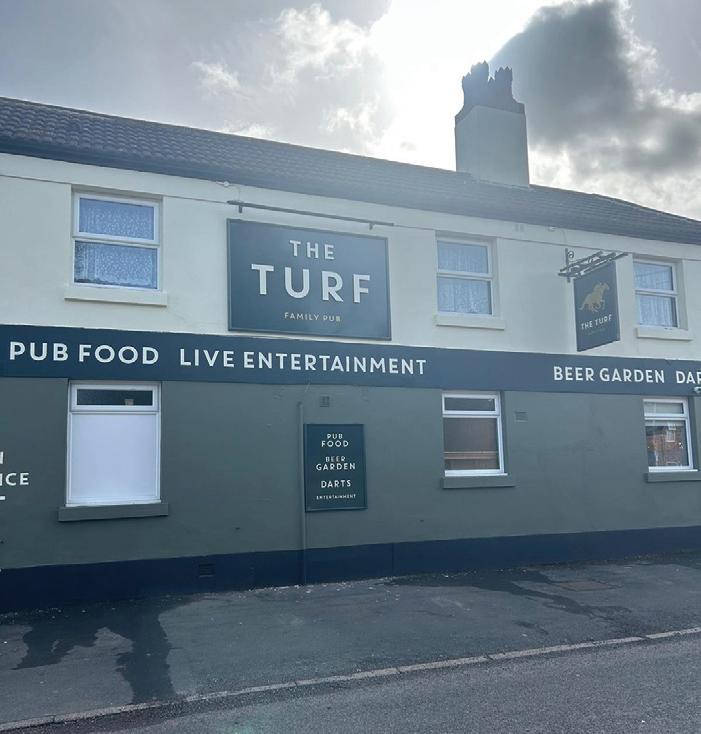
Popular community pub, the Turf Family Pub on Grove Street in Telford, reopened on Saturday 11th April following a transformational combined investment of £200,000 from experienced licensee, Steve Wright and Admiral Taverns.
Passionate licensee, Steve Wright brings a wealth of knowledge and expertise to the pub having spent the past three decades working in the pub trade, having worked in pubs both in the UK and Tenerife. Originally from Stoke, he relocated to Telford with his wife Julie, who is local to the area, six years ago, taking over the Turf Family Pub.
As the licensee, Steve leads the general running of the pub, with Julie providing essential support by heading up the kitchen operations. Going forward, they are committed to creating a family friendly community pub that brings people together and supports all aspects of community life.
Steve Wright, licensee at the Turf Family Pub, commented: “It has been incredible to see the pub transform and to witness the community come together to celebrate. This is a true local, and our regulars are like family, so I am delighted to be offering them a new and improved pub. I want to extend my thanks to my hard-
working team at the pub and everyone at Admiral Taverns who have gone above and beyond to make this renovation a success. I look forward to seeing this pub thrive, hopefully for another hundred years!”
To mark the reopening, the Turf Family Pub hosted a day full of celebrations on Saturday 11th of April, with food and entertainment throughout the day and into the night. The pub was officially opened by Tracie Harrison, Director of Income Generation from Severn Hospice, a charity which is close to the hearts of both the pub and the wider community. In her speech she thanked the licensee and pub team for their continued support and fundraising efforts, wishing them well on their reopening.
Dolores Quigley, Business Development Manager at Admiral Taverns, added: “I’m delighted to see the refurbishment of the Turf Family Pub completed and to have witnessed the positive reaction from the local community. I look forward to seeing Steve and his team continue to thrive in the future.
“On behalf of myself and the Admiral Taverns team, we wish Steve all the best for many years to come”.

At the start of Allergy Awareness Week, a groundbreaking coalition of charities, clinicians and patients have united to tackle decades of policy neglect with allergic disease affecting over 25% of UK population.
• The UK's first National Allergy Strategy was launched yesterday (20th April 2026) at Allergy UK’s parliamentary reception in Westminster, marking a historic moment for the millions of people living with allergic disease across the country
• The UK has some of the highest allergy rates in the world with 39% of children and 30% of adults affected by allergies. Against this backdrop, the new Strategy provides a coordinated, four-nation response to decades of fragmented care
• The Strategy was developed by an unprecedented coalition including the British Society for Allergy & Clinical Immunology (BSACI), Allergy UK, Anaphylaxis UK, The Natasha Allergy Research Foundation, over 150 experts and representatives from all four UK nations
The National Allergy Strategy aims to deliver significant benefits to patients living with allergies, as well as the NHS and wider public services through prevention, early intervention and more efficient use of resources, reducing preventable harm and addressing health inequalities.
Despite affecting millions, allergic disease remains dramatically under-resourced within the NHS. Most GPs begin their careers with no training in allergy yet more than one in three of their patients have allergic conditions and 8% of consultations are allergy related. Many allergy patients face delays in diagnosis, access to specialist services is a “postcode lottery” and inconsistent standards of care are common.
The National Allergy Strategy sets out a bold, comprehensive plan achieved through five strategic goals:
• UK-wide leadership and governance
• Equitable access to quality healthcare
• Prevention Strategies
• Whole Society Awareness and Engagement
• World-Leading Research
The Strategy also champions two crucial pieces of legislation: Benedict's Law which will provide statutory requirements for allergy management in schools and Owen's Law which will require written allergen information at the point of ordering across food outlets.
Professor Adam Fox OBE, Chair of the National Allergy Strategy Group, said: "For too long, despite the scale of the problem, too little has been done to develop solutions. This strategy focuses on system-level change, embedding allergy into national policy, strengthening safety in everyday environments and improving accountability across health, education, food and workplace settings".
Looking ahead, the NASG believes that co development and implementation of the Strategy is the most effective way to address the burden of allergic disease. “Since progress will require action across multiple policy areas, alignment with existing priorities across all four UK nations will be critical”, says Professor Fox. He adds, “We anticipate a review phase in which government departments can assess the Strategy’s recommendations and explore areas of alignment with political priorities. The NASG welcomes the opportunity to work with government to support cross departmental coordination and to contribute to UK wide discussions on a shared Allergy Framework”.
The Strategy can be read in full at NASG
The publican of The New Inn in Selby, Steve Dyson, has been presented with a dedicated service award by Heineken owned Star Pubs in recognition of the contribution that he has made to The New Inn and the community.
Steve is celebrating more than 20 years’ service at the helm of this much-loved town centre local, the last independently operated pub in town. For the last 12 years, he has been operating The New Inn together with his partner, Alison and their daughters.
Steve came to the pub industry via a circuitous route. He started out racing bikes and was part of a travelling stunt show and even appeared on BBC 1’s Late Late Breakfast Show. From there he went on to run a motorbike shop, followed by a property development business.
Fate stepped in when a repossessed pub he bought in Barnby on Marsh failed to get planning permission for conversion into houses and a fall from a roof made him re-examine his career. He decided instead to run the pub himself and there followed a lifelong love affair with pubs.
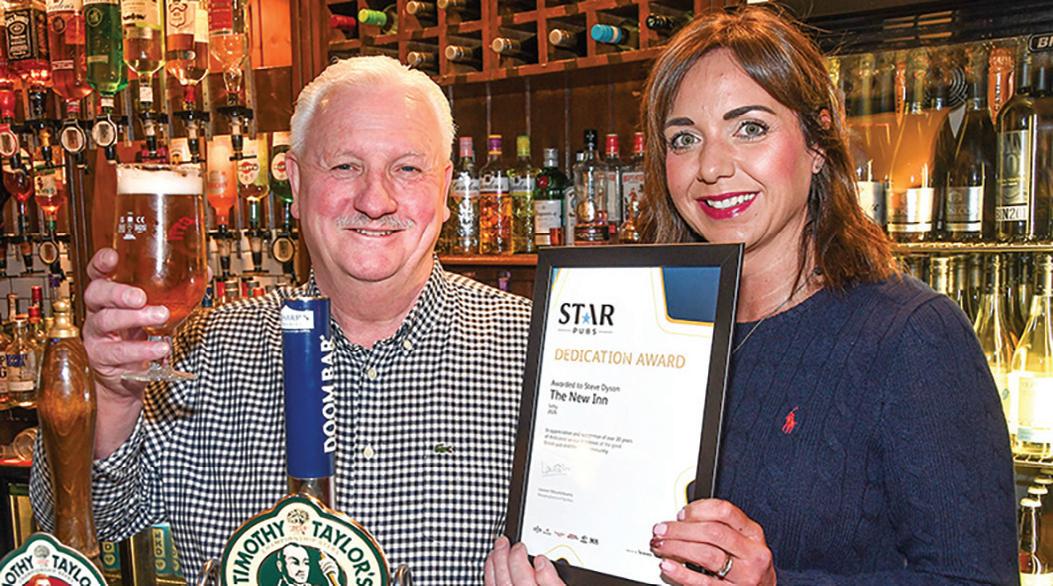
Bitten by the bug, at one time he had 10 pubs. Today he has The New Inn in Selby and The New Inn in Barlby, a village pub that at the time was facing closure which his daughters persuaded him to take on 10 years ago. It played a key role helping the community during covid.
The initial impetus to take on The New Inn in Selby was because Steve wanted to socialise in town when
A new Breakfast Smarter report by the British Egg Industry Council (BEIC) reveals strong momentum for eggs across both retail and foodservice, driven primarily by millennials and Gen Z, who are increasingly recognising eggs as a key staple for modern, protein-rich diets. Breakfast continues to strengthen its position as the leading occasion for egg consumption, supported by a shift towards higher protein, less processed morning meals. The report shows that cooked breakfasts have made a clear comeback, with eggs increasingly chosen for their health benefits, versatility and ease of preparation.
Younger adults are reshaping the category, not only eating eggs more frequently but also experimenting with globally inspired dishes such as shakshuka, Hong Kong French toast and Asian style savoury porridges. This aligns with the broader rise of brunch culture and the growing appetite for more distinctive breakfast formats.
Health, value and convenience remain central to consumer decision making. Eggs are widely recognised as a natural, complete protein that aligns with modern nutritional priorities, while also offering affordability and quick preparation, attributes that continue to resonate with families and busy professionals.
The out of home breakfast market is also expanding, with operators
not behind the bar himself, and couldn’t find his type of pub. He took on the lease of The New Inn and it has been busy ever since.
Today the Grade II listed pub retains its historic character and has been recognised by CAMRA as one of “Britain’s Real Heritable pubs”, places that have preserved their authentic interiors from a time when pubs were more of a social sanctuary, a living museum of British beer culture.
Says Steve: “I can’t imagine not running a pub. I have had very hard and very good times in the pub business. Selby has seen 12 pubs close since Covid with five closing since Christmas, so we’re doing something right. You can’t have a successful pub without great customers. It is thanks to all our regulars for their support over the years and thank you also to Alison and our daughters, without whose help The New Inn wouldn’t be what it is today. As for the future, I am here for the duration. I have no intention of retiring anytime soon. We’ll be continuing with our karaoke and disco for which we’re renowned.”
Says Rachel Greenley, Star Pubs’ Business Development Manager: “Steve has created the go-to pub in Selby. It’s somewhere where people of all ages come in to chat and socialise. Running pubs is evidently in Steve’s DNA and it would appear something he has passed down to his children and grandchildren, who also help out in the pub. Although it’s Steve’s dedicated service award, knowing Steve, I am sure it is one he wants to share with Alison and his wider family, and of course his many regulars.”

growing demand for egg based dishes. Lightspeed EPOS data shows that while eggs typically account for a modest share of breakfast sales, top performing venues generate more than double the category average.
The report highlights that, ‘Egg dishes consistently account for 8–9% of all breakfast transactions… however, the most successful operators generate more than 20% of breakfast revenue from eggs.’
The report identifies further opportunities for operators through premium brunch formats, simple menu upgrades and the expansion of on the go egg options such as baps, wraps and pots. The versatility of eggs and their operational simplicity make them a reliable lever for both value led and premium propositions.
Nick Allen, Chief Executive of the British Egg Industry Council, said: “British Lion eggs are one of UK agriculture’s strongest success stories, and this report shows just how central they have become to modern breakfast and brunch culture.
“With younger consumers driving sustained growth across both retail and foodservice, eggs’ unique combination of nutrition, value and convenience, alongside the reassurance of the British Lion mark, means the opportunity for operators and retailers is significant.”
and
This week’s Tube strikes have more than halved pub revenues across London, according to recent data.
Industrial action this week has contributed to a sharp drop in hospitality revenue across the capital, according to new data from frontline employee experience platform Harri.
Analysis of London-based hospitality businesses shows that, compared to last week:
• Total hospitality revenue is down 18% in the week-to-date, vs the same period last week.
• Pubs are the worst affected, losing over half (54%) of their weekly takings
• Quick service restaurants were also significantly impacted, falling 34%, while casual dining fell 14%, cafés fell 8% and fast casual restaurants fell by 4%
The impact is particularly pronounced on strike days. Pubs saw revenues fall 46% on Tuesday alone, compared to non-strike day averages, while cafés experienced a 26% drop, reflecting reduced footfall and more people working from home.

Dan Maimone, Head of Global Customer Experience at Harri, said: “Strike action has compounded the myriad of challenges already facing the hospitality sector. These figures are a big blow, particularly with more strike
days planned. Supporting local pubs and hospitality venues on strike days has never been more important, and we’d encourage people to make every effort to visit and back their neighbourhood businesses where they can.”
While industry observers have said it’s too early to see the exact impact on businesses analysis of the impact of 31 days of tube strikes across 2023/2024 saw a 32 per cent fall in average sales for hospitality in Zone 1.
Coffee and sandwich shops saw a 34 per cent drop, sales dropped 38 per cent for pubs and bars, while restaurants experienced 29 per cent less custom.
Kate Nicholls, Chair of UKHospitality, said: “Tube strikes have a devastating impact on London’s hospitality businesses, with sales falling by up to 40 per cent on strike days. Commuter footfall is almost non-existent and families cancel plans to visit the capital.
“The cost of strikes can stretch into the millions – as we saw when strikes hit the sector a couple of years ago. It’s not just lost sales, but the impact on hospitality staff who can no longer get into work.
“I urge all parties to continue negotiations and reach a solution that averts these damaging strikes.”
The Foodservice Equipment Association (FEA) is calling on members to begin preparing for the ban of Bisphenols, (notably A “BPA”) from materials intended to come into contact with food, recently announced by the Food Standards Agency (FSA).The FSA does not cover Scotland, however the ban is also expected to be enforced by Food Standards Scotland (FSS).
BPA is a chemical used in the manufacture of some hard plastics, and protective linings for food and drink containers, as well as packaging and equipment. It has been linked with hormone changes in humans in certain use cases. The ban will cover food contact materials, which the FSA defines as materials and articles that come into contact with food during production, processing, storage, preparation or serving.
This includes containers used for transportation of food and packaging materials as well as kitchen and tableware.
The FSA reached this ruling following a consultation process, and FEA is highlighting that it will directly affect many products made and supplied by its members and other companies in the industry. This includes utensils, chopping boards, storage containers, drinking vessels, tableware and kitchenware.
Once the ban is fully implemented, any products intended to come into contact with food or drink, including any products that could be reasonably expected to come into contact with them, will be prohibited from sale in the UK. It is expected that existing pre-sold stock will remain in circulation and not be subject to
recall, however, FEA is working to confirm this definitively.
Furthermore, the EU has restrictions that will come into force from 20th July 2026 for single use plastics, which will mean that UK stock cannot be sold to EU countries. The FSA is proposing to match the EU’s dates of transition which means that the ban of BPA products in the UK will be undertaken in phases.
The proposed timeline is: single use products will be banned from 20th July 2026; repeat use food contact materials will be banned from 20th July 2027; and the ban on repeat use food contact materials for professional food preparation equipment will come into force in January 2028.
FEA are working to confirm the definition of professional food preparation in the context of the ban. It should not, at this stage, be assumed that this covers commercial foodservice equipment.
FEA will also be developing support for its members who will be affected by this change, but in the meantime it recommends looking at how to source BPA-free products to replace any critical equipment. “They should pay specific attention to regulations surrounding PFAS alongside the BPA ban,” says Luke Slater, Technical and Policy Director of FEA. “In particular, whether any alternatives are compatible with proposed EU/UK PFAS regulations, to avoid further changes to supply chains in the future. Members will undoubtedly have questions regarding the implementation and enforcement of the ban; we are here to support and encourage those affected to reach out to FEA for further guidance”.
Stonegate Group has reported significant progress in its ongoing investment programme, completing 160 development projects across its leased and tenanted arm, Pub Partners, during the first half of its financial year.
The work forms part of a broader strategy to strengthen pub performance and support operators, with improvements ranging from refreshed interiors and external refurbishments to enhanced outdoor trading areas. The initiatives are designed to help publicans drive revenue while elevating the overall customer experience.
The programme sits within a wider planned investment pipeline of £40 million for the full year, highlighting the group’s continued commitment to its leased and tenanted estate.
Performance figures indicate that sites benefiting from capital investment are delivering stronger results than both non-invested pubs within the group and the wider market, reinforcing the value of targeted upgrades. Alongside physical improvements, Pub Partners has continued to expand its support offering for licensees. This includes sharing operational expertise and best practice drawn from Stonegate’s managed division, providing publicans with additional tools to enhance performance.

Demand for pubs within the estate remains robust, with an average of seven applicants per available site. Stonegate also reports that publican tenure has reached its highest level to date, pointing to growing stability across its operator base.
Dan Castle, managing director of Stonegate Pub Partners, said: “We are committed to always being a long-term partner to our publicans, and our performance in the first half of the year reflects that continued focus. Completing 160 development schemes in just six months demonstrates both the pace at which our teams are working with publicans to invest in our businesses, and the importance we place on helping them succeed.
“What’s particularly encouraging is the clear correlation between investment and pub performance. Businesses where we have invested are outperforming both our internal benchmarks and the wider market, reinforcing the value of targeted, collaborative investment.
“Combined with the strength of demand for our pubs, the quality of our publicans and the support we continue to provide through our scale, insight and expertise, we are confident in the continued growth of the Pub Partners business.”
The business is also gearing up for major trading opportunities, including the forthcoming FIFA World Cup, with tailored guidance aimed at helping operators maximise footfall, sales, and customer engagement.
Stonegate Pub Partners said the milestone reflects its continued focus on investment, partnership and performance across its estate, as it aims to support publicans in building resilient businesses within their local communities.
Almost two thirds of young people would be more likely to go out locally if pubs and bars hosted regular live music, according to new nationwide research released today — underlining a major opportunity for hospitality venues at a time when the sector is under sustained pressure.
The findings show that 63% of 18-25 year olds would be more likely to go out locally if pubs hosted regular live music.
When looking at the UK population as a whole, the new research also suggests that, while the UK’s network of seed music venues has shrunk sharply in recent years, public appetite for live music in hospitality settings remains strong.
Polling of more than 1,500 UK adults aged 18 and above saw 31% of people say there are fewer venues hosting live music locally than five years ago, and 17% of Britons now travel more than 30 minutes to reach a venue hosting live music at least once a month.
But 57% of Britons agreed that live music in pubs and hospitality venues is part of what makes the country’s culture special, and 42% said regular live music in local pubs and bars made them feel more connected to their community.
The findings come ahead of the return of Seed Sounds Weekender, the

UK’s largest multi-venue music festival, transforming more than 1,000 pubs, bars, restaurants and hotels across 20 towns and cities into live music stages for over 2,000 performances.
The first edition of Seed Sounds Weekender was backed by artists including Matty Healy of The 1975, who highlighted the importance of
seed music venues.
“Local venues aren’t just where bands cut their teeth – they’re the foundation of any real culture,” said Healy.
“Without them, you don’t get The Smiths, Amy Winehouse, or The 1975. You get silence. Music doesn’t start in arenas or boardrooms – it starts in back rooms, pubs, basements and independent spaces run on belief in something bigger.”
Today’s announcement comes on the backdrop of a wider contraction in the grassroots venue network. Across the hospitality and live music sectors, the UK has lost around 11,000 pubs, bars, nightclubs and grassroots venues since 2019 – roughly one in five of the pre-pandemic total.
That equates to around four to five venues disappearing every day for seven years, with closures continuing at a rate of around 35–40 venues per month. If the trend continues, the UK could lose a further 2,000 venues by the end of the decade, further reducing access to live music in many communities.
Presented by live music marketplace GigPig, Seed Sounds Weekender 2026 will take place from April 24–26 and will transform pubs and hospitality venues across the UK into live music stages for one weekend, celebrating the venues where Britain’s music culture begins.
The Grand Final of Marston’s Cool Hand Cup brought together some of the best amateur darts teams from across the UK for a thrilling night of competition, culminating in last week’s dramatic finale at The Boundary in Alfreton, Derbyshire.
After months of darts action in local Marston’s pubs across the country, 65 players from 16 finalist teams earned their place in the Grand Final, competing for national bragging rights, a £10,000 cash prize, and the ultimate honour – the chance to take on former darts world champion Luke ‘Cool Hand’ Humphries.
Held on Friday 10 April, the event celebrated the very best of pub darts, with passionate crowds creating an electric atmosphere throughout the night, as teams went head-to head in traditional 501 darts, battling through heats, quarter finals and semi finals before reaching a tense final showdown.
In a nail-biting final against Barlow’s Babes from Wales, the score was tied at three legs apiece before The Dog’s Bollogs, representing The
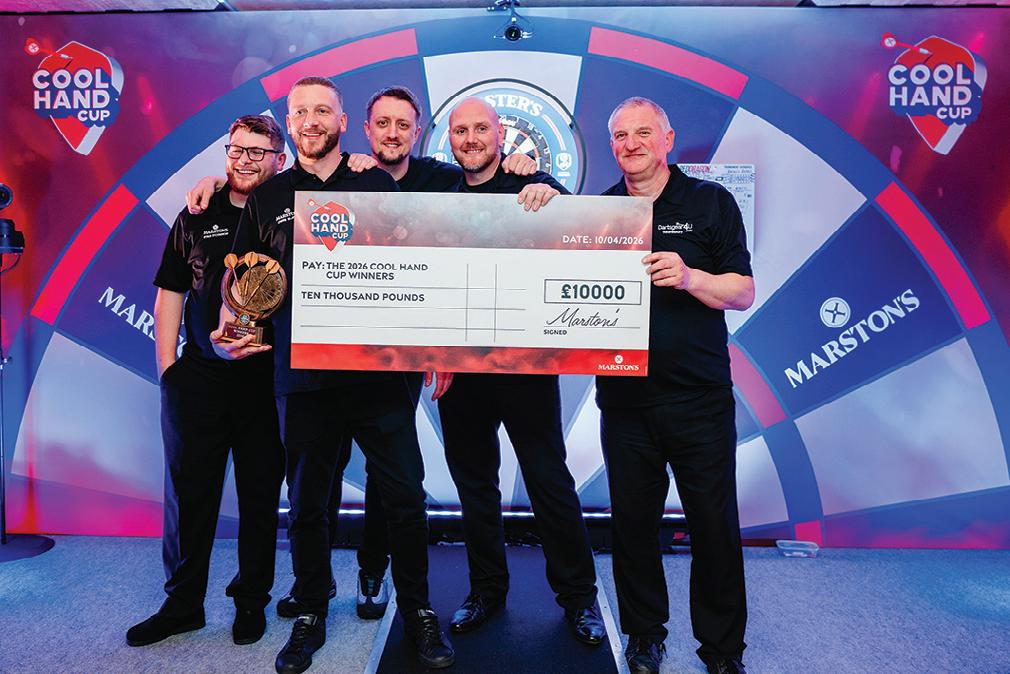
Dog and Partridge pub in the West Midlands, held their nerve to secure victory.
Ending the night in style, the deserving champions were presented with the Cool Hand Cup trophy and a cheque for £10,000, before stepping up to face Luke Humphries himself, to bring the 2026 tournament to a fitting close.
John Green, Director of Operations at Marston’s, said: “It’s been a real pleasure bringing the Cool Hand Cup back again for the second year to over 500 of our pubs in partnership with Luke Humphries. By inviting teams to enter together this year, we’ve seen how darts and pub culture can bring people together on a huge scale, with more than 11,000 people taking part across the UK.
“The Grand Final was an incredible evening, with a fantastic crowd and a brilliant atmosphere throughout. After such a closely fought final, congratulations to The Dog’s Bollogs and to everyone involved for making it a night to remember.”
A new report has revealed a dramatic surge in egg imports often produced to significantly lower food safety and hen welfare standards, creating what industry leaders warn is an urgent and escalating risk for UK consumers, retailers, manufacturers, and foodservice operators.
The Shell Shocked report, which also highlights the lack of effective border control inspections to prevent inferior products from entering the UK, has prompted the British Egg Industry Council (BEIC) to urge the Government to take immediate action to stop these eggs flooding the British market.
According to the report, UK egg imports have risen 60% since 2021, increasing from approximately 1 billion to 1.6 billion eggs per year. Ukraine has emerged as a major source of this growth, with exports to the UK rising 65.6% in 2025 alone. These products, most of which are produced in conventional battery cages, illegal here since 2012, are increasingly competing with British eggs produced under the world-leading British Lion Code of Practice.

Shell Shocked also highlights how this surge has coincided with a se3ries of egg-related food safety incidents across Europe. Recent examples include 123 confirmed illnesses in the UK in late 2025, traced to a single imported egg distributor (origin unconfirmed), banned antibiotic residues found in Ukrainian eggs entering European markets; ongoing Salmonella investigations in Sweden linked to Ukrainian imports; and more than 200 UK cases in 2024 associated with imported Polish eggs.
Nick Allen, Chief Executive of the BEIC, said: “This report highlights the real and urgent risks that inferior imports pose for consumers and the wider food industry.
“Any consumer would be appalled at what the Government is doing to undermine their safety. More than 90% of eggs produced in the UK are covered by the British Lion Code of Practice, one of the most comprehensive food safety schemes in the world. British farmers have invested hundreds of millions of pounds to
meet these standards, including vaccination against Salmonella and not using conventional battery cages.
“Allowing lower-standard imports to undercut UK egg producers is not protectionism, it risks undermining consumer safety, public confidence in eggs and the resilience of our domestic food supply.
“It is time for the Government to act in the interests of consumers and ensure that any eggs and egg products entering the UK meet our standards, starting with stronger controls at the border.”
Food safety expert, Dr Lisa Ackerley, who reviewed import controls for the report, added:
“Most consignments are not physically inspected, testing is risk-triggered rather than systematic, and sampling frequencies are not publicly disclosed. As a result, contamination or residues may only be identified once illness occurs or overseas alerts are issued, meaning product may already be in kitchens, factories or on shelves.
“It is also worth noting that British Lion eggs are Food Standards Agency approved for vulnerable groups to consume runny, while imports are not. That is a serious food safety risk for imports.”
The Shell Shocked report calls on retailers, manufacturers, and foodservice operators to urgently review their sourcing policies for eggs and egg ingredients, strengthen traceability requirements, and ensure they are not inadvertently compromising consumer safety.
It also calls on the Government to align import standards with UK food safety and hen welfare rules and introduce systematic testing and effective inspections at the border to ensure eggs entering the UK meet the same high standards required under the British Lion Code of Practice.

The Westons Cider Report 2026 reveals a category under pressure from costs and regulation, yet defying volume decline through premiumisation, surging low-and-no sales and a bumper World Cup summer opportunity ahead.
The UK cider category posted a total value of £3.17 billion in 2025, a 2.2% year-on-year increase, according to the 11th edition of the Westons Cider Report — though the figures mask a more complex picture for on-trade operators navigating a category in structural shift.
Total volume fell 2.6%, with 643 million litres purchased across both channels. Yet the on-trade accounted for 64% of total category value despite handling only 38% of volume — a reflection of the significant price premium commanded by draught serves, where the pence-per-litre rate of £8.44 dwarfs the off-trade equivalent of £2.82.
On-trade cider spend reached £2.04 billion, up 3.1%, as rising prices offset volume losses. The average pint of cider now costs £4.79, an increase of 32p on the previous year.
For licensees, the most significant strategic shift is the rapid migration from standard ciders to premium draught. Inch's has leapfrogged from third to first in the top-10 draught apple brands ranking, adding £55.1 million in value to overtake the long-dominant Strongbow. The brand now commands 22% of the total UK draught apple category.
The crafted segment — comprising traditional and heritage ciders, often produced by independent or family-run makers — continues to punch well above its weight. In the on-trade, crafted cider accounts for 12% of total draught cider volume but 14% of value, as consumers demonstrate a clear willingness to pay a premium for provenance.
"Cider has a clear catch-up opportunity. The more it leans into real orchards, real local makers and real regional stories, the more distinctive and compelling it becomes."— Steve Alton, CEO, British Institute of Innkeeping
Flavoured draught cider, meanwhile, is in sharp retreat. Strongbow Dark Fruit saw its on-trade draught share eroded significantly, with growth accruing to more premium alternatives including Old Mout and Rekorderlig. The overall draught flavoured category declined 8.3% by volume.
TAP SPACE UNDER THREAT FROM NO/LOW AND WORLD LAGER
Operators are facing intensifying competition for draught taps. The report highlights a growing challenge from premium world lager, no-andlow alcohol categories and draught stout — with Guinness 0.0% singled

out as a disruptor. The proportion of outlets stocking a single draught cider line increased, while two-tap stocking fell.
Kathryn Chabowska, Head of Buying at Greene King, cautioned that "tap numbers on bars are going to be challenged throughout 2026." Lee Williams of LWC Drinks noted that consumers are gravitating back to trusted brands, flattening the good-better-best model as the middle ground faces a squeeze.
The number of licensed premises in Great Britain now stands at 98,914, a net decline of 206 sites over the past year. The report notes, however, that the pace of closures has stabilised — the market is around 15% smaller than in 2019 but no longer contracting rapidly.
WORLD CUP 2026 — THE BIGGEST SALES OPPORTUNITY SINCE 2018
The report places considerable weight on the commercial opportunity presented by this summer's FIFA World Cup, the first men's summer tournament since 2018. Data from that previous tournament shows England's quarter-final against Sweden drove draught cider sales to 344.2% of the daily on-trade average. In the off-trade, the peak cider week for the entire year 2018 came during the England-Panama-Belgium group stage, when volumes ran 59% above the weekly average.
England's group-stage fixtures — against Croatia on 17 June (9pm UK time), Ghana on 23 June and Panama on 27 June — fall at commercially advantageous evening times. Operators are urged to ensure sufficient stock is in place and that cider is prominently featured across all drinking occasions tied to the tournament.
LOW-AND-NO ACCELERATES; REGULATION ADDS COST PRESSURE
Low-and-no alcohol cider continues its strong trajectory in the offtrade, with value sales up 37.3% to £52.9 million. Rob Hallworth of NIQ noted that the no/low segment is increasingly functioning as a re-engagement vehicle for lapsed cider drinkers, not merely a moderation tool. Research suggests that if no/low cider reached the same category share as its beer equivalent, it would unlock a £10 million incremental opportunity.
Regulatory headwinds remain a concern for the whole supply chain. Extended Producer Responsibility (EPR) is already inflating costs for glass-packaged products, prompting some producers to accelerate a switch from bottles to cans. The Deposit Return Scheme is confirmed for October 2027 in England, Northern Ireland and Scotland, with a likely 20p deposit per container expected to add further complexity. Wales has also announced a 30% increase in Minimum Unit Pricing, from 50p to 65p per unit, effective October 2026.
"In what is set to be another challenging year, it is essential for the long-term health of the category that cider makers remain focused on recruiting and engaging new drinkers, whilst also retaining loyal consumers."— Helen Thomas, Managing Director, Westons Cider REGIONAL OPPORTUNITY FOR OPERATORS
The report provides granular regional guidance for on-trade operators. Draught apple is gaining share across nine of the 10 television regions, with the most dramatic shifts occurring in Lancashire (+6.69 percentage points), Scotland (+5.73ppts) and the North East (+4.19ppts) — historically flavoured-cider strongholds. The South West remains the largest geography for draught apple, with 19.4% of total UK volume.
Operators in regions where apple cider accounts for more than 75% of draught sales are advised to stock two differentiated apple taps with no draught flavoured offering. Those in Yorkshire, Lancashire and the North East — where flavoured cider retains a greater share — may benefit from one apple and one flavoured tap.
Despite the volume headwinds, Ashley Moore, Category Lead for Beer and Cider at Mitchells and Butlers, argued that cider's relative positioning on the premium journey gives it structural advantages over beer and spirits. "The category has not travelled as far on the premium journey as beer or spirits, and that is actually one of its biggest strengths," he said, adding that cider can offer a premium drinking experience without pushing into the highest price points.
For on-trade operators, the Westons report presents a clear strategic direction: prioritise crafted and premium apple draught, capitalise aggressively on the World Cup occasion, and begin planning now for a no/low offering that keeps moderating drinkers within the cider category rather than losing them to soft drinks or functional beverages.
Hertfordshire-based hospitality group, Herts Pubs Company, has appointed Joe Walker as the group’s Executive Chef, leading the kitchen team at The Cock in Hitchin, along with supporting the gastropub group on its future expansion.
Bringing a wealth of experience and expertise to the role, honed over 14 years within the industry, Joe has previously held leadership positions within established kitchens including Hermitage Road in Hitchin and The Dial House in Reepham, along with leading the brigade at the fine-dining, two AA Rosette Wernher Restaurant at Luton Hoo Hotel.
In 2020, Joe went onto become the Head of Food Operations at Simmer Eats, joining from its inception from a small kitchen in Hitchin to seeing it become Europe’s fastest growing food business by 2025.
In his new role at Herts Pubs Company, Joe will be responsible for the development and execution of the pub menus, delivering exceptional dining experiences with an unwavering
BCB London’s return to Tobacco Dock this May signals more than just the second edition of a successful trade show—it marks the evolution of a platform finding its place in the global drinks calendar. Following a strong debut in 2025, the 2026 edition comes into sharper focus, with a clear emphasis on education and the changing needs of today’s hospitality industry.
Central to this shift is the appointment of Elliot Ball as Director of Education. With a background spanning bar ownership, consultancy and training, Ball brings a practical, experience-led approach to shaping the programme. His focus is clear: to deliver content that reflects the realities of working in hospitality today, rather than abstract theory.
The 2026 seminar programme underlines this direction. Sessions exploring flavour science, sustainability and team culture highlight an industry that is evolving beyond drinks creation into a more holistic, people-focused business. From understanding the biology of taste to building stronger, more resilient teams, the agenda is rooted in practical insight that operators can apply immediately.
commitment to excellence and championing local British ingredients. Embracing the group’s ethos of ‘People, Purpose and Passion’, Joe will also oversee the training and development for the front-and-back of house teams, working collectively with them to deliver a consistent and high-quality experience for diners.
Joe Walker comments: “I am thrilled to take on this new challenge and to be part of the dynamic team at Herts Pubs Company. As a Hitchin local, I have been avidly following the pub team at The Cock since its opening and am excited to be working with the group as they continue to grow their portfolio.”
On Joe’s appointment, Adam Msetfi, Operations Director of Herts Pubs Company says: “We have had a fantastic first year with the opening of The Cock, and our team have been committed to delivering exceptional dining experiences accessible to all. With future expansion in the pipeline, Joe is joining us at a pivotal time, and we’re excited for him to lead our kitchen teams and support continued growth.”
This is where BCB London begins to stand apart. Rather than replicating its Berlin counterpart, it leans into the specific challenges facing the British Isles, from staff retention and skills development to workplace culture. These are not distant trends but everyday pressures for businesses across the sector.
If year one proved there is appetite for a London-based international bar show, year two is about delivering real substance. With a stronger educational backbone and a clear focus on industry relevance, BCB London 2026 is positioning itself as an essential date for hospitality professionals navigating both ongoing challenges and future opportunities.
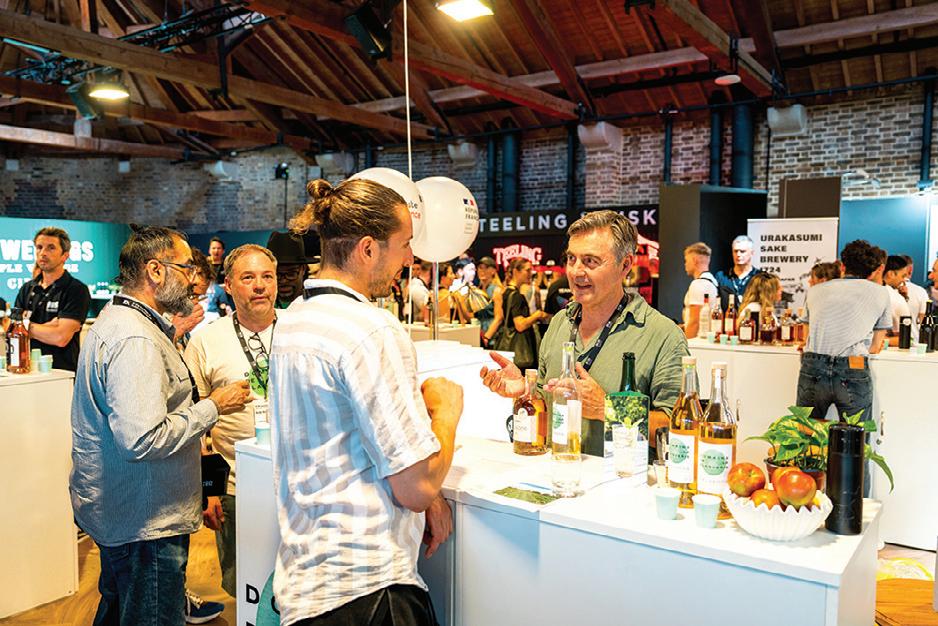
See the advert on the facing page or visit www.barconventlondon.com

Over a quarter (26%) of UK diners are searching for multiple allergens before choosing where to eat out.
AllergyMenu.app analysed over 136,000 allergen searches with the volume and consistency confirming food allergies and intolerances are not niche concerns and play a central role on where and what customers chose to eat.
Recent statistics from the Food Standards Agency highlight six percent of the adult population in the UK has a clinically recognised food allergy. That’s around 2.4 million adults.
The FSA also found more than 30% of adults reported some types of adverse reactions when eating food.
The data highlighted gluten was the most searched for allergen amounting to over 58% of all searches, despite research from the Food Standards Agency (FSA) finding foods such as peanuts and tree nuts are most likely to cause an allergic reaction.
Following the publication of party manifestos ahead of the forthcoming Holyrood election, the Scottish Beer and Pub Association (SBPA) has welcomed the near cross-party consensus on the need to reform or review business rates and the existing valuation methodology for hospitality businesses.
The manifestos have been published as industry submits responses to the independent review of the valuation methodology of licensed hospitality led by BJ Gill KC, which was established by the Scottish Government to ensure a fair, transparent, and evidence-based approach to valuing hospitality premises.
Amid the acute challenges facing Scotland’s beer and pub sector, the SBPA’s manifesto published in January outlined a range of practical asks for the next Scottish Government to adopt to help ensure brewers and pubs remain economically viable and secure the sector’s future for years to come.
Peanuts amounted to 17.9% of searches and tree nuts 16.8%.
The allergy search behaviour identified by Allergymenu.app shows users typically engage with allergy searches at the point of decision-making, before entering a venue or placing an order.
Accessible and easy-to-understand allergy information can directly influence footfall and conversion.
Juliet Moran, founder of Allergymenu.app said: “This analysis highlights that food allergies are a big concern for customers eating out. Easily accessible and detailed information for these allergens so customers can make an informed choice based on their requirements has to be a priority for eateries. They can also be reassured the establishment is taking its legal responsibility seriously.
“Many consumers manage multiple allergens which increases the importance of robust allergen management systems.
“Transparent allergen information can directly influence customer confidence, venue selection, and overall dining experience. The allergen information becomes a key component of customer service and trust-building.”
For the full reporthttps://allergymenu.app/allergy-search-trends-prevalence-report-2025.pdf
Central to the manifesto was a call for parties to permanently address the disproportionate business rates burden facing pubs – which has been a significant contributing factor to closures across the sector in
Scotland through the last parliamentary session. Over the past five years, 293 Scottish pubs have closed permanently, amounting to 6.4% of all pubs in the country. This compares to 4.1% in England during the same period.
Paul Togneri of the Scottish Beer and Pub Associations said: “With the Holyrood election fast approaching, this cross-party alignment on the need to tackle the business rates burden facing pubs is very welcome. Business rates bills are one of the biggest challenges facing pubs across our country, so an intervention here is integral to the sustainability of our sector.
“More broadly, it was encouraging to see commitments across party manifestos to reduce bureaucracy facing business, and extend the pilot for alcohol at football – both of these are key pre-election asks of the Scottish Beer and Pub Association.
“We now look forward to working constructively with newly elected MSPs after the election to deliver these manifesto commitments and ensure our critically important sector receives the support it desperately needs”.



Punch Pubs & Co, one of the largest pub companies in the UK, in partnership with Northumbria University, Newcastle, and supported by celebrity ambassador, Sara Cox, today launches new research revealing the average pub contributes up to £1.3m in economic and social value to its local community.
The report, The Public’s House: The True Economic & Social Value of Pubs, showcases the real value of pubs. Looking beyond just their economic output, to the unique contribution that pubs make to society. The research highlights how pubs provide vital social infrastructure, enhance wellbeing, tackle loneliness, strengthen local identities, foster everyday connections, and generate millions in charitable contributions.
The insight reveals that the Punch Pubs estate delivers £1.7bn in total economic and social value to the UK economy each year. The analysis also reveals annual trends demonstrating that:
• A Punch pub, on average, is estimated to spend as much as £56,000 on local suppliers
• This means that, as a whole, the business injects up to £70m into the wider economy
• Across its 1,250-strong estate, the business generates £4m in charitable contributions
• Punch Pubs puts £350,000 in wages per pub, back into the economy
• Each Punch pub spends up to £266,945 on goods and services.
The entire pub sector contributes at least £142m in Social Value per annum based on each Punch pub generating an estimated £3,200 every year in charitable contributions via sponsorship, advertising support to local community groups and providing use of venue space.
However, the figure is a conservative one, as many of the community contributions made by pubs are, quite simply, priceless. From providing safe spaces for the vulnerable, company for the lonely (one in four UK adults, 25%, report they feel lonely “often or always”), to giving advice and support to those in need, and providing a welcoming and safe space for all, such benefits in kind cannot be monetised.

The report provides deep insight into why pubs are so important to UK culture and communities. The more embedded a pub is in its local community, the more social value it can deliver – and the evidence suggests that this has a positive effect on turnover, too. Pubs with higher engagement tend to have higher revenues and so an average pub could raise its annual revenue by as much as £150,000 a year] by driving social value and community engagement.
As part of the report, the Community Engagement Index (CEI) was created. This framework brings together information on a wide range of community activities, such as hosting community events, supporting charities,
and working with local organisations. The CEI data shows how pubs are far more than commercial venues – they are vital community hubs that provide inclusive spaces for social interaction, support for local organisations and charities, create employment and pathways into skills and careers, and contribute to a shared sense of identity and belonging.
Andy Spencer, CEO of Punch Pubs & Co, said: “Hospitality is an incredible industry to be a part of, and what continues to inspire me is the extraordinary creativity and adaptability I see demonstrated every day. It’s no secret that, in common with many other industries, the operating environment is currently challenging, but Publicans are responding with innovation and a real commitment to their communities.
“Our report highlights an important factor in the sector’s ongoing success and resilience: pubs with strong community engagement tend to be more commercially successful, whilst also building lasting guest loyalty that supports repeat visits, recommendation and long term growth.
“We also know the hospitality industry doesn’t just create value through its own activity; it also has a ripple effect on the wider economy. The value of the pub to society is undeniable, protecting and supporting the sector isn’t just about safeguarding businesses, it’s about strengthening our communities.”
Sara Cox, Radio 2 DJ, presenter and author, added: “I’m hugely passionate about pubs, my Mum ran The Pineapple Pub in Bolton while I was growing up, so pub culture has been a big part of my life. Pubs, for me, are a place where brilliant memories are made and friendships for life are formed.
“This research is a powerful reminder of just how much pubs matter, yet more than one pub a day closes, and we lost 366 of them last year alone. That a pub provides local jobs and supports local farmers, butchers and bakers is evident, but this research also illustrates what the pub means for ordinary folk up and down the country.
“The group of bereaved and lonely men who use the pub to gather and chat, the dementia sufferers and their families that gather in a pub to find support and respite, the school parents able to use a pub carpark when dropping off and picking up their children, all know the true value of a pub.
“Nowadays, you can eat, drink, sing, play board games, knit, natter, or attend a book club in a pub – but it doesn’t matter what you do, the most important thing is that we use them. If we don’t, it’ll be far more than somewhere to go and have a pint that we’ll miss out on, our social links and community support will be lost as well.”
Wyboston Lakes Resort is calling on accommodation providers across the UK to support local charities and adopt more sustainable practices by signing the Room2Give Charter and joining the Room2Give initiative. The goal: collectively to raise £1 million for local charities nationwide.
Launched at Wyboston Lakes Resort in January 2025, Room2Give offers guests staying for more than one night the opportunity to choose to support one of three local charities instead of opting for a room clean. By displaying a colour coded door hanger, selecting their preferred charity a donation is made to the Room2Give fund.
In its first year alone, the scheme has raised more than £35,000 for Wyboston Lakes Resort’s chosen charities. But the impact goes far beyond funding alone.
Guests have also helped prevent a substantial amount of carbon emissions. With each room clean typically generating around 2.635kg of CO e, the collective action of guests has saved the equivalent of more than 73 tonnes of carbon emissions — the same as:
• Driving over 380,000 kilometres in a petrol car
• Producing more than 360,000 plastic bottles
• Fully charging a smartphone nearly 9 million times
Or, put another way, it would take thousands of trees months to absorb the same CO2 naturally These figures show the power of small choices at scale. Room2Give doesn’t just support good causes — it
directly reduces environmental impact in measurable, meaningful ways. It’s a win for the community, and a win for the planet.
Louisa Watson, Marketing Director & Sustainability Lead at Wyboston Lakes Resort, said:
“Room2Give has had a hugely positive impact—not just for our local charities, but for our guests and team too. It’s sparked fantastic engagement and interest across the industry, showing how a simple idea can deliver meaningful change.”
“We believe the hospitality and conference sector has a real opportunity to share ideas and collaborate more actively on ESG initiatives. Room2Give is designed to be open, inclusive and replicable. We’re now inviting hotels, venues, serviced apartments and retreats to sign the Room2Give Charter and take up the initiative.”
Room2Give is completely free to adopt, and participating organisations will receive:
• Step-by-step implementation and training guides
• Support in selecting local charities
• Customisable, print-ready guest-facing artwork and signage
• Use of the Room2Give logo and branding Andrew Perolls, CEO of Greengage Solutions said: “Wyboston Lakes Resort’s Room2Give initiative is a fantastic example of how simple, thoughtful actions can deliver meaningful environmental and social impact. By engaging guests directly, they are turning everyday choices into tangible support for local communities.”
Moderation is no longer a niche behaviour. Today’s on trade consumer is increasingly conscious about when, how and how much they drink, yet crucially, they still want to participate in social occasions. For operators, that presents an opportunity rather than a threat.
As a wine business, we firmly believe that zero alcohol options work best when they sit alongside full strength wines, not instead of them. A well curated 0% sparkling offer keeps mixed occasion tables together, protects dwell time and ensures no guest feels excluded from a celebratory moment.
Two standout examples in our portfolio are Tommy Bacco 0% Sparkling from Tombacco in Italy, usually known for its Prosecco. And Moutard M0% Sparkling from Famille Moutard in France, usually known for its high end Champagne and Burgundy wines.
Tommy Bacco 0% brings Italian flair to the category. Made from premium grape must, it delivers freshness, balance and persistence rather than overt sweetness. Importantly, it looks and serves like sparkling wine, making it an easy swap. Its quality credentials were recognised

with a Silver award at the People’s Choice Drinks Awards, reinforcing that alcohol free no longer means compromise.
From France, Moutard M0% reflects the pedigree of a historic Champagne house applying the same care and expertise to a zero alcohol expression. Crisp, refined and food friendly, it offers operators a credible alcohol free option that sits comfortably on premium wine lists. Consumer data consistently shows that around half of on trade drinkers are now moderating their alcohol intake, driven by health, lifestyle and financial considerations. Many are not abstaining completely, but alternating between alcoholic and alcohol free serves over the course of an occasion.
For operators, the message is clear: offering high quality 0% sparkling alongside wine keeps guests engaged, supports inclusive hospitality and protects revenue. Done well, alcohol free doesn’t dilute the wine offer, it strengthens it.
Travel marketing agency Propellic has released its latest Travel Marketing Index: Special Intelligence Briefing, The Impact of the 2026 Middle East Conflict on Travel Marketing.
The report, which draws on 30 days of live performance data across more than 60 middle-market travel brands and 27 destinations, reveals a consistent and alarming pattern: traveller research is surging while booking conversions have collapsed.
The Middle East conflict has created what researchers are calling a “frozen pipeline”. In other words, a structural breakdown between traveller intent and commercial action. Across every Focus region analysed, sessions and impressions have increased significantly, while transactions have fallen to zero or near-zero.
The data suggests that much of the elevated traffic may reflect existing travellers checking cancellation terms and monitoring safety advisories rather than researching new trips in the region.
Key findings include:
• Jordan: 153% increase in sessions while conversion rates dropped 25.81% month-over-month, CGI™ score: 97.99 (maximum recorded gap)
• UAE: +12,766% sessions month-over-month; CTR down 22.6%, CGI™ score: 29.1
• Saudi Arabia: +209% ad spend year-over-year, but click through rate

declined 22.6% month over month, CGI™ score: 28.8
The report also identifies the “Mediterranean Sentiment Spillover”, a finding that the confidence crisis has spread well beyond conflict-adjacent destinations. Greece, Spain, and Croatia, none of which are located in the conflict zone, are showing similar patterns, suggesting that broader airspace uncertainty and travel advisory escalations are suppressing European summer booking cycles.
• Greece: 3,225% increase in sessions year-over-year; while conversion rates are down 35.14% month over month.
• Spain: 2,221% increase in sessions year-over-year; while conversion rates are down 47.74% month over month.
“The data is clear,” said John Matson, CRO of Propellic. “Travelers are willing to travel and are actively researching these destinations. They haven’t lost interest. They’ve lost confidence. And that distinction matters enormously for how travel brands should be allocating budget and messaging right now.”
The report identifies geographic cluster (such as in Southeast Asia) that show improvement across both month-over-month and year-overyear timeframes.
The analysis suggests the reason is traveller perception of safety distance from the conflict, rather than traditional destination appeal.
“This pattern would not have been visible by analysing individual destinations in isolation,” said John Matson. “It only becomes clear when you look at the full dataset. And it has significant implications for how travel brands should think about budget allocation over the next 90 days.”
The report draws on 30 days of live performance data across more than 60 middle-market travel brands and 27 destinations, revealing a consistent and alarming pattern: traveler research is surging while booking conversions have collapsed.
With approximately 38,600 licensed pubs still trading across the United Kingdom, the great British local remains a cornerstone of community life — and as beer garden season draws near, the prospect of a well-earned pint in the sunshine holds as much appeal as ever.
Yet that simple pleasure is becoming an increasingly costly one. According to data from small business comparison platform Bionic, the average price of a pint in the UK has climbed to £4.85 — a significant 27.6% rise on the £3.80 average recorded in 2025, placing fresh pressure on both consumers and operators alike.
With longer evenings arriving and consumer confidence in outdoor hospitality returning, Bionic has identified the most and least affordable locations across the UK for a drink — findings that will be of particular interest to on-trade operators navigating an increasingly price-sensitive customer base.
THE 10 CHEAPEST PLACES IN THE UK FOR A PINT ON AVERAGE
• Bury – £2.50
• Burnley – £3.00
• Darlington – £3.00
• Burton Upon Trent – £3.25
• Blackburn – £3.25
• Bradford – £3.25
• Hartlepool – £3.25
• Doncaster – £3.25
• Blackpool – £3.50
• Kingston Upon Hull – £3.50
Bury is the cheapest place in the UK for a pint
With the average pint priced at just £2.50, Bury, in Greater Manchester, comes out on top as the ultimate destination for a drink in the UK.
Home to more than 35 pubs with a high average rating, frequently ranging between 4.2 and 4.9 stars, the town offers a great experience for pub lovers.
THE AVERAGE COST OF A PINT IN BURY AND GLOUCESTER IS £3.00
If you’re after an affordable pint, Bury and Gloucester are among the top spots in the UK. With a pint averaging just £3.00 in both places, these locations offer great value for money when it comes to enjoying a drink.
THE 10 MOST EXPENSIVE PLACES IN THE UK FOR A PINT ON AVERAGE
• Oxford England – £6.75
• Brighton and Hove England – £6.50
• London England – £6.50
• Guildford England – £6.50
• Reading England – £6.50
• Basingstoke England – £6.50
• Harlow England – £6.50
• Woking England – £6.25
• Edinburgh Scotland – £6.00
• Belfast Northern Ireland – £6.00
OXFORD IS THE MOST EXPENSIVE PLACE IN THE UK FOR A PINT
Oxford is officially the priciest place in the UK for a pint, with an average pint costing £6.75 – 170% more than the country’s cheapest.
THE SOUTH EAST IS THE MOST EXPENSIVE PLACE IN ENGLAND FOR A PINT
Despite common assumptions that London would top the list due to its reputation and high cost of living, Brighton and Hove ranks above London, as the second most expensive place in England for a pint on average, with prices averaging £6.50, on par with several other southern towns, including Guildford, Reading, and Basingstoke.
This cluster of high prices across the South East highlights a broader regional trend, where strong demand, affluent populations, and thriving social scenes continue to push pint prices upward
By Ben Cotts, Lanchester Wines

As the UK hospitality sector prepares for another busy summer season, operators are once again focused on maximising outdoor trading, improving service efficiency and meeting evolving consumer expectations. While glass bottles remain central to any quality wine list, wine on tap is increasingly being used alongside them as a practical way to support seasonal demand, particularly in high volume and alfresco settings.
At Lanchester Wines, we work closely with venues that successfully combine traditional bottled wine service with keg wines to create flexible, profitable wine programmes that adapt to changing trading patterns without compromising quality or choice.
Outdoor trading presents unique challenges for wine service. Increased footfall, faster turnaround and limited storage space can all put pressure on teams during peak summer days. Wine on tap offers a practical solution in these environments, allowing pubs, bars and terraces to serve wine by the glass quickly and consistently.
Dispensing wine from a keg speeds up service at busy bars and outdoor counters, helping reduce queues and maintain momentum. Many venues retain premium bottled listings for table service, while using keg wines in beer gardens or terrace areas, ensuring customers can enjoy wine in the format that best suits the occasion.
Summer heat can be challenging for wine storage, particularly in outdoor or temporary bar setups. Key Keg systems keep wine protected from oxygen throughout service, preserving freshness even during extended periods of warm weather. This reassurance allows operators to offer wine by the glass more freely across the day, from lunchtime through to evening trade.
It also opens up the opportunity to list styles that work beautifully chilled in summer, with reliability and consistency across every serve.
Wine on tap also gives operators more freedom when building by the glass wine lists. It opens up the opportunity to offer indigenous or regional varietals at a more accessible price, encouraging guests to trade up or explore beyond familiar choices.
For many venues, keg wine supports a relaxed, informal style of drinking, offering wines that you will find yourself drinking in tavernas and enotecas whilst holidaying across the Med. These are approachable, food friendly wines designed for enjoyment rather than ceremony, well suited to casual dining, sharing plates and sociable outdoor settings.
Sustainability is now an important consideration for both operators and consumers. Wine on tap offers a clear sustainability advantage, with one 20 litre keg replacing the equivalent of around 26 glass bottles, significantly reducing packaging and transport weight.
At the same time, bottled wine continues to play an essential role, particularly for premium selections, special occasions and provenance led listings. For many operators, the most effective approach is a balanced one, using different formats to suit different needs.
Seasonal trading often brings influxes of new or temporary staff. Wine on tap helps simplify training and service during these periods. Consistent portion control, reduced handling and faster pours all help teams work confidently and efficiently during busy summer service.
From a management perspective, tighter stock control and minimal wastage make keg wine a valuable tool during high turnover periods.
Lanchester Wines’ 20 litre keg range has been developed with versatility in mind, featuring approachable styles such as Pinot Grigio, Sauvignon Blanc, Merlot and Malbec, alongside lighter, aperitif style options including Bianco Frizzante and Glera. These wines sit comfortably alongside bottled lists and pair well with seasonal menus.
Wine on tap is not about replacing bottles, but about building a wine offer that works harder across all parts of the business. With the right balance, operators can deliver speed, sustainability and consistency while retaining depth, theatre and choice.
For venues planning for summer, keg wine has become a valuable addition, helping future proof the wine offer, whatever the weather brings.

The UK foodservice delivery market is set to reach £14.8bn in 2026, growing +2.8% year-on-year, as demand becomes increasingly concentrated among affluent 25–34-year-olds, London consumers and higher income households, according to Lumina Intelligence’s newly released UK Foodservice Delivery Market Report 2026.
Once viewed as an occasional weekend indulgence, delivery is now firmly embedded in everyday eating habits. Monday and Tuesday are gaining share as delivery becomes a core early-week family meal solution, driven by convenience, premiumisation and evolving consumer expectations.
Growth in 2026 is being powered by consumers with household incomes above £100k, who are increasing delivery frequency, occasion count and average spend. London continues to outperform the rest of the UK, acting as both a bellwether for national trends and a testbed for new menu concepts, formats and loyalty propositions.

Rather than broad-based volume growth, value is being unlocked through trading up, with consumers prioritising quality, health credentials and trusted brands over price-led promotions.
The UK delivery ecosystem has undergone its most significant transformation to date. As of October 2025, the market is now consolidated under three global tech conglomerates:
• Uber Eats
• DoorDash–Deliveroo
• A restaurant-quality experience at home
• Prosus–Just EatWith geographic expansion largely complete, competitive strategy has pivoted towards AI-driven optimisation, personalised loyalty ecosystems and margin defence. As platform economics tighten, Lumina highlights that direct-to-consumer delivery capability is no longer optional for operators seeking to protect brand equity, customer data and profitability.
Consumer motivation for choosing delivery is also changing rapidly. In 2026, health (+4.6ppts) and quality (+2.2ppts) show the largest increases in importance among delivery users, outpacing familiarity and habit.
Today’s delivery consumer expects:
• High-protein, low-UPF menu options
• Clear nutritional transparency
• Premium ingredients and trusted provenance
This shift is forcing operators to rethink menus, sourcing and brand storytelling, as delivery becomes a platform for credibility and premiumisation, not just convenience.
“The delivery market has entered a new phase,” said Linda Haden, Insight lead at Lumina Intelligence. “Growth is now being driven by affluent, discerning consumers who are demanding more – more quality, more health credibility and more transparency. At the same time, platform consolidation and AI-led optimisation mean operators must be far more strategic about where and how they play.”
Entries to this year’s S.Pellegrino Young Chef Academy are now open. The world-renowned global talent program returns with a stellar jury line up for the UK’s Regional Final, taking place in October 2026.
Bringing together emerging culinary talent with some of the industry’s most respected chefs and partners, the seventh edition of the program invites chefs aged 30 and under to apply before 9 June 2026. Each chef will submit a signature dish that reflects their individual technical skill, creativity and personal approach to cooking. The International School of Italian Culinary Arts (ALMA) will produce a shortlist to progress to the regional finals.
This year’s jury features a prestigious line up of industry experts spanning restaurant operators, chef-owners and some of the most distinctive voices in the UK hospitality scene, including Paul Ainsworth (The Ainsworth Collection), Nieves Barragán Mohacho (Sabor and Legado), Chantelle Nicholson (Apricity), Angelo Sato (Humble Chicken), Emily Roux (Caractère), Stuart Ralston (Lyla), and Will Murray (Fallow Group).
The group will select a UK winner who will go on to represent the region at the Grand Finale in Milan in 2027, competing alongside leading young chefs from around the world. The esteemed jury will look well beyond the plate’s execution, expecting the regional winner to express their identity through their cooking and the trajectory they see for their food. Each dish will be assessed on technical skill, creativity and personal belief, with as much weight given to flavour and precision as to originality and the thinking behind it.
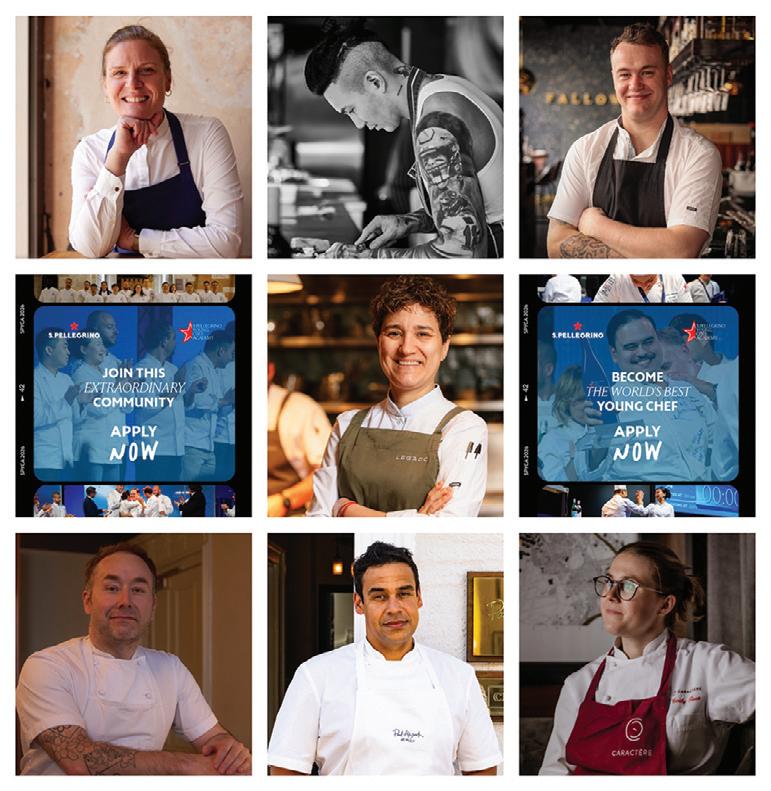
The Academy has a strong track record of identifying chefs at a pivotal moment in their careers. Alumni
Given the rise in multichannel ordering in recent years we are seeing growing demand for customer collection and third-party delivery, resulting in the need for versatile printers to print food and drink ingredient labels, food orders, clear permanent and repositionable delivery and customer collection labels as well as bag seals.
With more focused legislation around accurate ingredients and allergy identification for pre-packed food and drinks, label printers increasingly have a range of tasks to perform resulting in the emergence of versatile multifunctional printers that can respond and adapt to any environment and application.
Integrating printers into the food preparation process which allow different sizes and types of labels to be printed from one easy-to-use device; variable length food and allergy labels, nutrition information alongside food delivery orders and labels, means businesses can meet today’s requirements as well as future-oriented labelling applications.
In line with growing demand for versatile omnichannel labelling solutions, Star has significantly expanded its Cloud-connected label printer range. These solutions meet the requirements of both local printing as well as printing from central databases, while providing simple set-up and provisioning of wireless printers to facilitate printing ‘out-of-the-box’.
NEW Star mC-Label2 printer
include Mark Moriarty (2015), now a prominent TV chef and leading voice in modern Irish cooking, and Killian Crowley (2017–18), who was previously at Michelin-starred Aniar in Galway. Most recently, UK winner Ben Miller (2024–25) has just been promoted to Head Chef at Alex Dilling at Hotel Café Royal. Reflecting on the impact of the competition, Miller comments: “Taking part in the competition was a turning point for me. It pushed me to reflect on who I am as a chef – not just what I cook every day, but what I want to communicate through my food. Presenting to chefs you admire pushes you in a different way, and the level of learning is hard to match. It gave me a much clearer sense of my cooking.”
Alongside the competition itself, the Academy is designed to support chefs beyond the event, offering mentorship, career development opportunities and prizes that help nurture the next generation of talent. Additional awards include the S.Pellegrino Social Responsibility Award (judged by the Sustainable Restaurant Association), the Acqua Panna Connection in Gastronomy Award, and the Fine Dining Lovers Food for Thought Award.
Paul Ainsworth, Chef Owner of the Ainsworth Collection, says: “It’s a privilege to be involved in something that genuinely supports young chefs at such an important stage in their careers. What’s exciting about this competition is that it’s not just about technical ability, it’s about seeing personality on the plate. You’re looking for chefs who understand flavour and craft, but who also have a point of view and a clear sense of where they’re heading. The UK has an incredible pool of talent coming through, and it’s always inspiring to see that first hand.”
Applications remain open until 9 June 2026. For more information and to apply, please visit www.sanpellegrinoyoungchefacademy.com
For businesses that require both order and label printing solutions, the new multi-media mC-Label2 printer
offers two distinct models; an entry-level model with tear bar for printing traditional liner backed die cut labels and a multifunctional model which features an auto cutter for printing traditional pre-formatted die cut labels, high adhesive permanent and semi-permanent linerless labels as well as receipts. These include labels such as permanent food and allergy labels for food storage, customer collection and delivery labels in addition to customer orders.
The compact mC-Label2 printer is ideal where space is limited and thanks to its IP22-rated design the printer can be used safely in a variety of environments. At less than 10cm wide and with a unique front-loading design for easy paper loading, the mCLabel2 fits neatly on or under the counter, on a shelf or where workspace is limited. Despite its compact size, the mC-Label2 can accommodate high-capacity media rolls up to 102mm in diameter, reducing the frequency of paper roll changes. Paper width is fully adjustable from 25mm to 60mm, while the high-resolution 300dpi print head ensures small format text, barcodes and graphics are clear and legible, even in paper saving mode. The larger mC-Label3 printer is ideal for wider media up to 80mm. For more information on Star’s complete range of food order, label and receipt printing solutions, visit www.Star-EMEA.com
the advert on the back cover for further details.
In an industry where margins are under constant pressure and guest expectations are higher than ever, the right operational foundation isn't just a luxury - it’s a lifeline. For modern hospitality operators, the goal is simple: reduce administrative friction to focus entirely on the guest experience.
Built on over 60 years of combined industry experience, 3R EPOS offers a bespoke approach to point-of-sale and payment processing. Powered by CES Touch, a marketleading software designed specifically for the daily realities of the hospitality floor. 3R EPOS provides systems that arrive ready to go, pre-configured to minimise setup time and allow businesses to hit the ground running from day one.
Beyond processing transactions, CES Touch provides a comprehensive management suite. Real-time stock control and detailed financial reporting allow managers to move away from guesswork, offering the clarity needed to identify high-margin items and minimise waste. Integrated loyalty features and modules for tableside ordering further empower businesses to cultivate a database of regulars while driving operational effi-
ciency.
In today’s economic climate, transaction costs are a critical consideration. By offering competitive merchant rates and a variety of hardware - from fixed terminals to portable units for tableside service - the focus remains on speed and security. What truly sets 3R EPOS apart is their commitment to partnership. With UK-based support, free on-site installation, and a rapid hardware replacement guarantee, they ensure that the "open" sign stays in the window. In a trade where downtime equals lost revenue, having a reliable, human-centric support network paired with the robust capabilities of CES Touch is the ultimate competitive advantage for any venue, from boutique hotels to bustling restaurants.
To discover a solution tailored to your venue, visit www.3repos.com or call 01992 574 650. See the advert on page 9.
What was once a place for creative, hardworking youth to flourish, could now be falling to the same exclusionary stagnance as so many other once thriving industries. Unlike many professions, hospitality takes in new workers from as young as schooling age, offering individuals the opportunity to develop their careers and excel regardless of academic credentials. Where the schooling system may fail neurodiverse individuals, hospitality has historically gained some of its brightest stars, from Heston Blumenthal to MasterChef UK semi-finalist Vanessa D’Souza. Indeed, Dyslexia, ADHD and Autism are reportedly prevalent in the hospitality workforce, with an estimated 1 in 2 workers being neurodiverse (1). As standards for hospitality businesses rise, it's no wonder more and more are leaving the profession, overwhelmed by complicated admin and excessive paperwork (2).

Leafe provides a solution. The hygiene compliance app, Leafe, is designed specifically to streamline user experience, gamifying necessary but often overwhelming, temperature records, delivery checks and cleaning checklists, amongst other features. Virtually type-free, Leafe simplifies operational management at every tier;

managers can set up clear, concise routines for both Front and Back of House, monitor team progress and ensure compliance.
The mounting burden of paperwork is a bottleneck for both business growth and professional development. For a business to scale, consistency is key; however, when admin demand leads to inconsistent record-keeping, the entire organisation’s reputation and legal standing are put at risk. Leafe bridges this gap by transforming complex compliance into an intuitive, digital process, ensuring administrative friction never stalls operational excellence. Leafe Pro even offers personalised HACCP and safety document creation, ensuring literacy levels never damage your chances of a 5 hygiene rating.
See the advert below or visit www.leafeapp.com/lpclh
1. (Burnt Chef, 2022)
2. (RSPH, 2019)

The team at LittlePod have spent the last 16 years focusing on the importance of vanilla to the environment.
Having established a thriving forest orchard in Indonesia, where the LittlePod farmers’ pioneering polyculture system is bearing fruit in more ways than one, the natural ingredients company’s emphasis has switched from planet to people.
Introducing Wellbeing and Happiness with LittlePod!
“It’s time for the next chapter in the LittlePod story,” said Janet Sawyer MBE BEM, LittlePod’s managing director and founder. “In 2025, I wrote my second book – Real Vanilla, Nature’s Unsung Hero – and with our forest orchard in Bali having proved so successful, we are excited to be focusing our efforts elsewhere this year.
“LittlePod continues to care for the environment – of course – and the team will still work closely with our farmers to protect, preserve and regenerate the rainforest.
“But closer to home, we are set to embark on a number of exciting projects and initia-

tives – all with wellbeing and happiness at their heart.
“The team will be working on recipe development with Master Chef Peter Gorton, launching a LittlePod podcast, and, perhaps most excitingly, embracing our sporting side with a top-secret project that is in the pipeline here.
“I can’t say anything further about this last one, but all will be revealed in due course. Please do be sure to keep following LittlePod to find out more!”
Winners of the King’s Award for Enterprise (Sustainable Development), LittlePod’s longrunning Campaign for Real Vanilla continues to go from strength to strength both at home and abroad.
Having long exported their responsibly-sourced ingredients to countries all over the world, further international expansion in planned for 2026, with the appointment of the company’s first European Sales Manager, Jakub Miniewski.
littlepod.co.uk / sales@littlepod.co.uk / 01395 232022
In a professional kitchen, sharpness isn’t a luxury — it’s a necessity. From the first prep of the day to the final plating at night, chefs count on their knives to deliver precision. That’s where the Tormek T-2 Pro Kitchen Knife Sharpener comes in — a sharpening solution trusted by culinary professionals around the world.
Backed by over 50 years of sharpening expertise, and developed for the intensity of the commercial kitchen, the Tormek T-2 Pro Kitchen Knife Sharpener gives chefs full control over their edge. The machine is gentle on knives — it sharpens, not shortens. Thanks to the slow-rotating diamond grinding wheel and high-precision guide, it only removes minimal steel, preserving the life of your knives while delivering exceptional sharpness.
What sets the Tormek T-2 Pro Kitchen Knife Sharpener apart is its blend of simplicity and professional-grade results. No guesswork. No overheating. Just consis-
tent, razor-sharp edges — time after time. With its low-noise operation and compact design, it integrates seamlessly into even the busiest culinary spaces — and is also suitable for sharpening other blades commonly used in food preparation.
The Tormek T-2 Pro Kitchen Knife Sharpener is designed to handle a wide range of kitchen knives — from large chef’s knives to small paring blades — and can also be used to sharpen other common kitchen blades, including mandoline blades and S-blades.
No matter the task, a properly sharpened knife is essential for efficiency and control. The Tormek T-2 doesn’t just sharpen knives — it elevates the entire kitchen workflow.
tormek.com | Phone: +46 581-147 90 | Email: info@tormek.se

Reducing food waste is no longer simply a question of good housekeeping; it is a commercial, environmental, and reputational priority for professional kitchens.
Rising disposal costs, growing legislative pressure and ever-more environmentally aware customers mean operators must adopt smarter, more responsible waste strategies. This is where technologies such as the Meiko Green BioMaster® are making a measurable difference.
BioMaster transforms unavoidable food waste into a manageable, hygienic and environmentally responsible output at the point of production. By breaking down food waste and reducing its volume significantly, the system enables kitchens to cut waste collections, lower transport costs and reduce associated carbon emissions, all without adding complexity to busy operations.
What distinguishes the BioMaster is its integration into daily kitchen workflows. Waste is disposed of where it is generated, eliminating the need for exter nal bins, manual handling and the associated hygiene risks. Fully enclosed processing helps maintain a clean and safe foodservice environment, while auto-
mated operation ensures consistency without additional staff workload.
From hotels and restaurants to pubs and contract catering, the BioMaster allows operators to futureproof their waste infrastructure. As legislation tightens around food waste separation and reporting, on-site treatment provides reassurance that compliance is built into the operation.
Equally important is the opportunity food waste systems provide for sustainability reporting. Accurate data capture and clear reductions in waste volumes allow businesses to demonstrate tangible environmental progress, a critical factor for investors, clients and consumers alike.
In an industry where margins are tight and sustainability expectations are rising, tackling food waste effectively is one of the few initiatives that delivers operational, financial and environmental returns simultaneously. With solutions such as the Meiko Green BioMaster, food waste becomes not just a challenge to manage, but a valuable opportunity to lead by example.
Read more here: www.meiko-uk.co.uk
First Mile, the UK’s leading recycling and waste management provider celebrated the hospitality & catering and entertainment sectors' highestperforming recycling businesses as part of its annual Recycling Standard campaign.
In the past year, First Mile worked with more than 30,000 businesses across the UK, welcoming 8,000 new customers, collecting 207,540 tonnes of waste and recycling 94,128 tonnes. Hospitality continues to be one of the most dynamic sectors within its network, with hotels, restaurants, pubs, cafés and entertainment venues increasing the number of separated waste streams and driving higher recycling rates in response to evolving regulation and customer expectations.
The top three hospitality & catering and events businesses by recycling tonnage are ATG Entertainment Limited, which recycled 3,468 tonnes; Gail’s Bakery, which recycled 2,279 tonnes; and Caffè Nero (Nero Holdings Ltd), which recycled 1,079 tonnes.
Together, these organisations represent the highest-volume hospitality recyclers in the First Mile network, demonstrating the scale of impact that consistent, data-driven recycling can deliver across theatres, hotels, cafés and bakery estates nationwide.
From managing high footfall in theatre venues to handling significant volumes of food waste and coffee grounds in busy city centre locations, these businesses face unique operational challenges. The performance of this year’s top three reflects sustained investment in back-of-house processes, staff engagement and the expansion of specialist services including food waste, glass, coffee cups and cook-
ing oil recycling.
Within the scheme, accreditation levels are awarded based on verified recycling rates and the number of services used. Gold-accredited customers achieve an 80 per cent or higher recycling rate alongside four or more services, or three or more services where one of these is food recycling.
One of these services must be general waste, which is required to be zero to landfill. Silver accreditation recognises businesses achieving a recycling rate of 50 per cent or above with at least two services. Zero to Landfill status is awarded to customers with recycling rates of up to 49 per cent whose general waste is diverted from landfill.
Gold-performing hospitality businesses typically operate streamlined waste systems across multiple sites, implement clear front-of-house and back-ofhouse separation, and introduce initiatives to influence both staff and customer behaviour. They also comply with the government’s Simpler Recycling regulations, which came into effect in April 2025, requiring mixed recycling and food waste collections alongside residual waste.
Talking about the scheme, Bruce Bratley, First Mile founder and CEO, said: “Hospitality businesses operate in fast-paced, high-pressure environments, yet the leaders in this sector show that recycling can be embedded into day-to-day operations at scale. Our Recycling Standard is built on real operational data, giving businesses a clear picture of performance and a credible way to demonstrate progress. It is fantastic to see operators like ATG Entertainment Limited, Gail’s Bakery and Caffè Nero setting the benchmark for the sector.”
Visit www.thefirstmile.co.uk for more information.

The purpose of a food hygiene inspection is of course to ensure that a food business is preparing, handling, and storing food safely so it does not pose a risk to public health.
A recent survey by Virtual College has highlighted that 40% of people avoid venues with a food hygiene rating of 3 or less and 19% choose where to eat based on food hygiene ratings more than the menu.
The Food Hygiene Rating Scheme (FHRS) is one of the most common signs in restaurant, takeaway and café windows and is one of the best ways a customer can judge the cleanliness and quality of the establishment.
Katherine Pavling, Head of Product at Virtual College, explains, “A hygiene inspection involves individuals arriving, typically unannounced, on the site of a food vendor to check the cleanliness of premises and equipment, how food is handled and cooked, whether it is stored at safe temperatures, and if measures are in place to prevent contamination. The aim is for the inspectors to see how the business operates under normal, everyday conditions rather than a prepared set of conditions, to assure it is safe for public health.
“Inspections aren’t solely about monitoring cleanliness of the site, it also includes checks on staff hygiene, training, and the business’s food safety system, often based on HACCP principles, to make sure risks are properly identified and controlled.”
By Katherine Pavling, Head of Product at Virtual College
A food safety system based on HACCP principles (Hazard Analysis and Critical Control Points) is a legal requirement for businesses in England that helps to identify potential hazards in food handling and putting controls in place to prevent those risks.
Katherine says, “In practice, this means things like setting rules for cooking temperatures, keeping food stored correctly, cleaning regularly, training staff, and keeping records to prove everything is being done properly. During a hygiene inspection, the inspector will look at these procedures and records and check that staff are following them in practice and ensuring hazards are properly identified, monitored, and controlled to keep food safe.”
Importantly, businesses are able to act if they feel a rating does not accurately reflect their standards. Katherine says, “There’s a right to challenge or appeal the outcome of an inspection, as well as the opportunity to request a re-inspection once improvements have been made. This ensures the system remains fair, while still holding businesses accountable to the compliance measures designed to protect public health.”
“While the law doesn’t require a specific training qualification, it does require that all food handlers are adequately trained or supervised, which means they need to understand safe food handling, hygiene practices, and allergen awareness relevant to their role.
“Most businesses support this through recognised courses, such as Achieving a Five Star Food Hygiene Rating training by Virtual College, which provides practical guidance on how inspections are scored, how to meet hygiene standards, and how to achieve top ratings.
“The most important is that businesses have a clear and effective food safety management system in place, and that staff are properly trained appropriately to follow it in practice.”
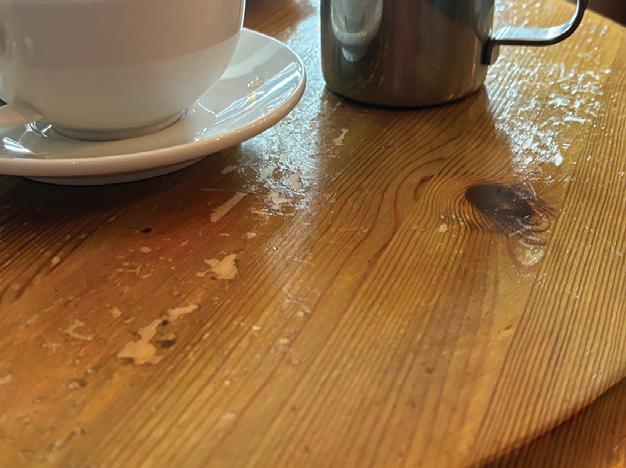
Around 90% of consumers check online reviews before choosing a restaurant, and they’re increasingly candid about what disappoints them. Cleanliness is one of the fastest ways to trigger negative feedback, especially when expectations aren’t met.
A quick scan of TripAdvisor highlights comments like:
“Our table looked clean, although sticky.”
It’s a small detail, but one that carries weight. Sticky tables instantly signal poor hygiene to guests, even in venues that otherwise appear spotless.
In many cases, the issue isn’t whether tables are being cleaned, but how. Commonly used sanitising sprays containing quaternary ammonium compounds (quats) can leave behind an invisible residue. Over time, this builds up, particularly when damp cloths are reused across tables or when heat and
humidity come into play. The result is a surface that looks clean, but feels anything but.
For operators, the risk is reputational. Guests may say nothing in the moment, yet share their experience online, influencing future bookings and loyalty.

Reducing residue starts with better surface hygiene practices: cleaning before sanitising, using residue-free products designed for food-contact surfaces, avoiding dilution errors, and allowing surfaces to fully air dry.
When nearly every guest is checking reviews, perceived cleanliness matters just as much as compliance.
At Sani Professional®, we’ve developed Protect 360° biodegradable sanitising wipes to solve this challenge sustainably. Their plant-based active formula cleans effectively and dries residue-free, helping hospitality teams deliver a spotless, guest-ready finish every time.
Request your FREE Protect 360° samples by writing an email to samples@sanipro-intl.com
Tork has released new guidance aimed at helping pubs, restaurants and hotels transform their washrooms into assets to enhance user satisfaction and benefit business performance. Based on research which shows that 73% of people will not return to a washroom after a bad experience, Tork’s “Washroom Guide”, available on its website, provides recommendations on improving inclusive hygiene, environmental sustainability and operational efficiency. According to the survey, a negative washroom experience at a venue can also lead to: 23% of people spending less time there, 13% avoid eating and drinking and 10% will choose not to return to that venue.
“Our data shows that when washroom users and cleaners’ needs aren’t met, a business can suffer as people spend less time and/or money there,” said Olivia Slater, Commercial Director, Professional Hygiene at Essity. “With three in four people concerned about washroom hygiene,[1] and one in two likely to face barriers to meeting their needs, small, targeted updates to the washroom – the most visited room in a facility –can make a substantial difference for both users and cleaning staff, ultimately benefitting the business.”
Recommendations:
1. LEAN INTO INCLUSIVE HYGIENE
Washroom users said that when the following “must have” elements are provided, which exemplify inclusive hygiene, the majority (59%) of people say a business can improve its positive image:
• Toilet paper and paper hand towels in dispensers that are easy to grasp (67% said these are a “must have”)
• Spaces and design elements that enable privacy (63%)
• Disposal bins in the stall for personal items including incontinence and menstrual products (60%)
• Physical accessibility – including grab bars and ramps – for everyone (58%)
• The availability of paper hand towels (57%)
• Features in public washrooms that enable caregivers to meet their needs (40%) such as changing tables
2. PROMOTE SUSTAINABILITY
Respondents reported experiencing, without limitation, diagnosed or self-diagnosed physical/cognitive conditions, e.g. eczema, chronic pain, general anxiety, claustrophobia.
The washroom is an overlooked place for reducing environmental impact by businesses, yet 67% of people want washroom managers to prioritise environmental sustainability.[2]
Tork recommends the following actions:
• Promote sustainability practices with signs in the washroom
• Ensure teams understand the importance of responsible sourcing and look for third-party certified products using training and educational assets.
• Control consumption with one-at-a time dispensing to reduce waste.
• Support sustainability goals – avoid landfill with recyclable packaging and
recycling schemes like Tork PaperCircle® paper towel recycling.
3. SUPPORT EMPLOYEE EFFICIENCY
Investing in washroom features and supporting cleaning teams can improve business revenue. To empower cleaning staff, many of whom feel unsupported1 and enhance guest experiences, Tork recommends:
• Working smarter with data-driven cleaning that identifies service needs in a facility.
• Installing high-capacity dispensers that reduce the need for frequent refills, allowing cleaning staff to focus more on cleaning rather than refilling.
• Using compressed towels for refills to serve more guests before cleaners need to refill again.
• Sourcing products with ergonomic packaging including Tork Easy Handling® packaging for easier carrying, opening and disposal.
Olivia continued “By addressing these critical aspects, hospitality businesses can help washroom users and cleaners meet their basic needs and deliver an experience that meets the needs of as many as possible. Investing thoughtfully in inclusive hygiene, sustainability, and operational support not only meets evolving public expectations but also improves business performance.”
Tork helps businesses realise the benefit of sustainable hygiene with a focus on four key areas materials & packaging, use & waste, carbon and hygiene for all. It also provides free training and educational assets. For more steps businesses can take, visit: www.torkglobal.com
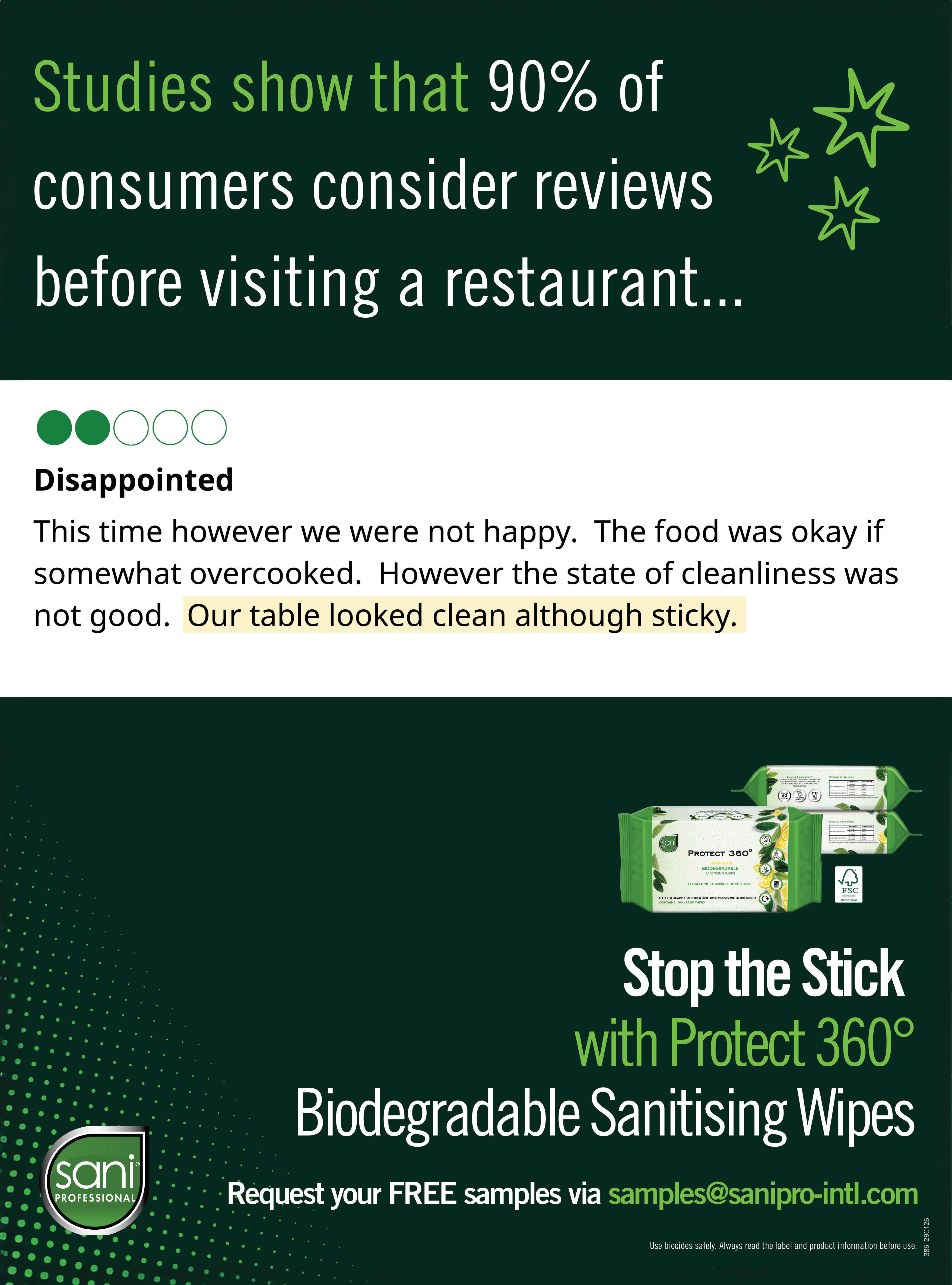

New data has revealed the most searched for allergens by consumers making a decision on where and what to eat when dining out.
Allergymenu.app looked at its annual data to highlight current consumer behaviours in relation to food allergies and intolerances. Its aim is to help businesses in the hospitality sector understand the concerns and priorities of customers managing food allergies.
It found that gluten was the most searched for allergen amounting to over 58% of all searches, with milk (16.8%), peanuts (17.9%) and tree nuts (16.8%) being the other most searched allergens. Over 136,000 searches were analysed.
The volume and consistency of searches captured from Allergymenu.app confirms that food allergies and intolerances are not niche concerns and play a central role on where and what customers chose to eat.
Recent statistics from the Food Standards Agency highlight six percent of the adult population in the UK has a clinically recognised food allergy. That’s around 2.4 million adults.
It also found more than 30% of adults reported some types of adverse reactions when eating food. The allergy search behaviour shows users typically engage with allergy searches at the point of decision-
making, before entering a venue or placing an order, suggesting accessible and easy-to-understand allergy information can directly influence footfall and conversion.
Juliet Moran, founder of Allergymenu.app said: “This analysis highlights that food allergies are a big concern for customers eating out within the UK hospitality sector. The prominence of gluten, milk, peanuts and tree nuts shows when the biggest concern is. Searches for these accounted for over three quarters of all searches.
“What this data reinforces is the need for food businesses to prioritise easily accessible and detailed information for these allergens so customers can make an informed choice based on their requirements. They can also be reassured the establishment is taking its legal responsibility seriously.
Juliet continues: “Ensuring accurate, detailed and easily accessible information to meet legislative requirements is the minimum. Many consumers manage multiple allergens which increases the importance of robust allergen management systems.
“This is where the role of digital tools plays its part. The data shows many allergy searches are made during a visit to the customer’s website, as shown in the website referral data.
“Transparent allergen information can directly influence customer confidence, venue selection, and overall dining experience. The allergen information becomes a key component of customer service and trust-building.
“Systems which reduce ambiguity, standardise allergen communication and minimise reliance on verbal explanations can help lower the risk of serious incidents and support staff.
Juliet concludes: “Our hope after publishing this data is that food businesses and industry bodies will improve allergen communication which will boost customer confidence and reduce the risk of avoidable incidents. Ultimately, a hospitality environment that meets both regulatory obligations and the real-world needs of allergy-aware consumers.”


With the UK Free From market now worth £4.2bn1 and an estimated 2.9 million consumers following a gluten free diet2 demand for high quality free from options has never been greater. For caterers and hotel operators meeting these dietary needs without compromising on taste or quality is essential and that's exactly where PureOaty delivers.
The award-winning range offers gluten free, oat-based products that work brilliantly across catering environments. Whether you're running a breakfast station with our porridge oats or using our oat drinks for hot beverages, PureOaty provides versatile, crowd-pleasing and 100% allergen free solutions for every service occasion.
What sets us apart starts on the farm. Our pure, British oats are grown by us and a network of local farmers within a 70-mile radius of our Cambridgeshire farm, then produced and milled in our dedicated allergen free facility. The result is a product that tests at under <5ppm of gluten - four times purer than the industry standard, giving you genuine peace of mind.
That commitment to quality carries through to our finished products, Our oat drinks contain just four simple ingredients, with absolutely no preservatives or added sugars. They're actually less processed than dairy milk, fruit juice and even beer! And for customers who want a nutritional boost, our Creamy and Enriched variant is fortified with essential vitamins and calcium.
And none of that comes at the expense of taste. The PureOaty portfolio is Great Taste accredited, with our most recent stars awarded to PureOaty Tea-rrific Oat Drink and PureOaty Porridge Oats. Independent proof that free from and genuinely delicious can go hand in hand.
To find out how PureOaty can work across your menu, get in touch with the Glebe Farm Foods team today! Visit www.glebefarmfoods.co.uk or email office@glebefarmfoods.co.uk
1 https://ofplus.com/sector-updates/free-from-sector-update/ 2 Coeliac Society 2024

CLEAN Linen & Workwear are one of the UK's most trusted laundry companies. They supply tailored workwear solutions provided by real people. Their comprehensive laundry network means they can service customers throughout England and Wales, providing chefswear, workwear and linen rental services. Whether you operate from a single-site hotel, pub or restaurant or have multiple locations, CLEAN can tailor a workwear rental solution to suit your business requirements. They offer various uniform options to support the entire kitchen brigade, from Executive Chefs to Kitchen Porters.
With their workwear rental service, you can say goodbye to the hassle of purchasing, storing, and maintaining chef and kitchen uniforms. Instead, enjoy the convenience of a hassle-free rental system that provides freshly laundered garments whenever your team need them. By renting with CLEAN, you can avoid upfront pur-

chase costs, spread the payments over your contract, and ensure quality and care with every wash. Delivery is free, and there are no hidden charges; contracts even include repairs. Each item of clothing can be branded and tailored to the wearer with logos and embroidery. Their managed service prevents issues compiling when supplying your team with work clothes; a convenient locker valet service helps distribute and
Offering your customers the best possible customer service is key to building trust and relationships. It will also increase profits, encourage repeat visits, and offer positive peer recommendations.
The good news is that CardsSafe can help. The system wirelessly and securely holds customers' bank cards while they run a tab. As a result, staff can spend more time with customers, upsell and build valuable relationships. Customers will also feel more relaxed knowing that their cards are safe. As a result, the technology not only protects against credit card fraud but also eliminates dine-and-dash and allows checking the validity of bank cards.
The CardsSafe system has revolutionised how hospitality businesses manage their customers' payment obligations. Wireless technology can be safely tucked away behind the bar, POS, or service station. The units are easy to install, and the system does not collect data, so it never breaches GDPR.

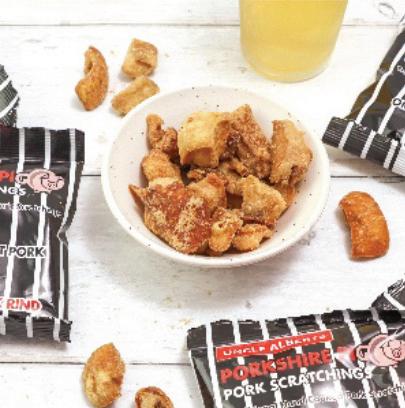
But in the more relaxed, post covid era, pubs, bars and restaurants are increasingly turning to bulk snack servings to boost the average spend of their customers.
Snack Brands offer a bulk 1kg bag of Uncle Alberts Porkshire Pig Pork Scratchings at just £16.75 and have seen a growth in the bulk business from venues up and down the country.
‘’Loose servings elevate the customers experience, they can be placed in a nice dish or presented with a range of other snacks’’, says Alex, sales director at Snack Brands. ‘’We recommend our customers offer an 80g serving with a RSP of £2.45, giving them a POR of 34%’’. Alex goes onto say, ‘’we recognize that some venues prefer using the heated machines and our scratchings are perfect if this is the avenue venues want to go down’’.
The rise of craft beer and premium spirits has played a big role in this shift, drinkers are becoming increasingly
interested in pairing flavours and loose pork scratchings fit naturally into this world.
Loose servings also tap into a growing trend of small plate menu offerings, a bowl of scratchings placed in the centre of the table invites conversation and communal eating in a way that individual packets don’t.
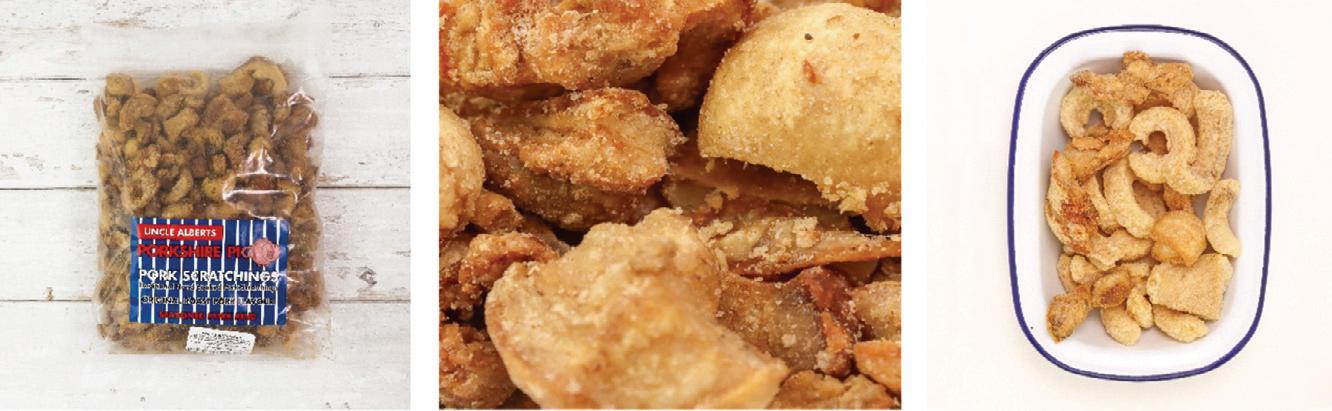
The return of loose pork scratchings might seem minor but it reflects something larger about British food culture today, there is a renewed appreciation for traditional snacks and a determination to refine them without losing their identity.
See the advert on the inside front cover for further information or visit www.snackbrands.co.uk
We can help you make the most of your coffee and hot drinks service, ensuring high levels of customer satisfaction and loyalty – together with increased profits.
We offer a wide range of Bean-to-Cup and Traditional Barista coffee machines, all at competitive prices and with a range of rental, finance and leasing options available. We have our own in-house engineering team and guarantee the highest levels of customer service, ensuring downtime is kept to an absolute minimum. Wholesale customers get discounted service charges, further enhancing the overall value of working with us.
In 2025 we opened our Showroom & Academy in central Exeter, offering you the

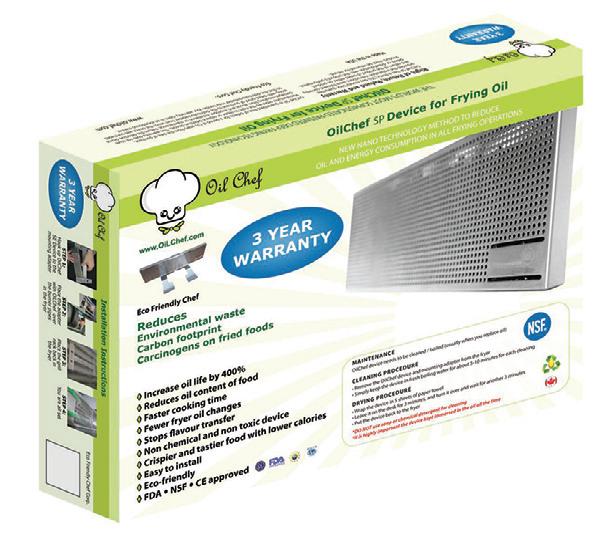

— yet the decisions made at fit-out stage will shape efficiency, compliance and costs for years to come.
For pub and restaurant operators embarking on a new build, refurbishment or change of use, the commercial kitchen is rarely the most glamorous element of the project — but it is almost certainly the most consequential. Get it wrong and no amount of front-of-house charm or marketing spend will compensate. Get it right and you lay the groundwork for a smooth, profitable food operation from day one.
The challenge is that commercial kitchen design demands the simultaneous navigation of regulatory compliance, workflow logic, equipment specification, utilities infrastructure and long-term operational needs — often within tight footprints and tighter budgets. Here, we outline the key considerations operators should address before a single piece of equipment is ordered.
The foundation of any successful kitchen design is the workflow — the logical progression from goods-in through preparation, cooking, plating and service, with waste and washing-up operating in the opposite direction. In practice, this means avoiding cross-contamination by keeping raw and ready-to-eat food preparation zones physically separate, and ensuring that clean and dirty routes do not intersect.
Most professional kitchen designers apply zonal planning principles: a goods-in and dry store area, a cold storage zone, dedicated preparation areas, a cooking suite, a pass, and a pot wash and dishwash section. Even in smaller pub kitchens, adhering to this logic — however compressed the layout — significantly reduces food safety risk and improves throughput during service.
"The most common and costly mistake operators make is purchasing equipment before finalising the layout. Specification must follow design, not precede it."
Extraction is frequently underestimated at planning stage and disproportionately expensive to correct after installation. A canopy extraction system must be sized correctly for the heat and moisture output of the cooking equipment beneath it, and replacement air (make-up air) must be supplied in adequate volume to prevent negative pressure — a common cause of extraction failure and uncomfortable working conditions.
Building regulations in England, Wales and Scotland require kitchen ventilation to meet specific air change rates, and Local Authority Environmental Health Officers will assess extraction adequacy during inspections. Operators in older buildings should commission a structural survey before specifying extraction, as ductwork routing through historic fabric can involve unforeseen complications and cost.
Before finalising an equipment specification, operators must understand the capacity of existing utilities. A commercial kitchen running a six-burner range, combi oven, fryer bank and salamander simultaneously will place significant demands on both gas and electrical supply. A gas capacity survey by a Gas Safe registered engineer and an electrical load assessment by a qualified electrician should be commissioned early — upgrading supply infrastructure is expensive and time-consuming.
Water supply and drainage are equally important. Pot wash and dishwash areas require adequate hot water supply and correctly sized waste drainage. Grease traps or grease management systems are now a standard requirement of most commercial leases and are increasingly enforced by water authorities to prevent fats, oils and grease entering public sewers.
Equipment selection should be driven by menu analysis and projected covers, not by what a neighbouring venue uses or what a supplier is promoting. Over-specification wastes capital and energy; under-specification creates operational bottlenecks and shortens equipment lifespan through overuse.
Combination ovens (combis) have become the workhorse of the modern pub kitchen, offering steam, convection and combination cooking modes that maximise output from a compact footprint. Operators should also consider induction cooking where gas supply is limited, noting the lower ambient heat output — a meaningful factor for staff welfare and air conditioning costs.
All equipment should carry CE or UKCA marking, and where gas appliances are specified, they must meet current Gas Appliance Regulations. Operators should request equipment data sheets prior to purchase to confirm utility connection requirements.
Every commercial kitchen serving food to the public must comply with Regulation (EC) No 852/2004 on food hygiene as retained in UK law, the Food Safety Act 1990, and relevant guidance from the Food Standards Agency. At fit-out stage, this means specifying appropriate surface materials — sealed concrete, stainless steel and food-grade tiles for walls and floors — with coving at floor-wall junctions, no exposed timber, and surfaces that can withstand commercial cleaning chemicals.
Adequate refrigeration must be specified to maintain food at or below 8°C (and ideally 5°C), with freezers operating at -18°C or below. All refrigeration should be monitored, and new installations should consider digital temperature logging systems as standard.
With energy costs remaining elevated, the efficiency ratings of commercial kitchen equipment now materially affect profitability. When comparing equipment, operators should look beyond purchase price to total cost of ownership — energy consumption data (measured in kWh), duty cycle information and maintenance intervals. The Foodservice Equipment Association (FEA) publishes guidance on energy-efficient procurement, and some local energy providers offer commercial kitchen efficiency surveys.
Working with professionals
A well-executed kitchen fit-out almost always involves a professionals and contractors working in coordination. Operators who attempt to manage these trades independently, without professional design input, consistently encounter the most expensive and time-consuming problems.
Seeking quotes from multiple professional kitchen design & refurbishment companiies and engaging an environmental health consultant during the design phase rather than after the build, represent straightforward steps that deliver significant returns in reduced remedial costs and faster sign-off from regulatory authorities.
The kitchen is not a back-of-house afterthought. It is the commercial heart of every food-led pub and restaurant — and the operators who treat it as such from the very earliest stages of a project are consistently those who build the most resilient and profitable operations.
When it comes to commercial kitchens, cleanliness isn’t just a about presentation – it’s a matter of safety, compliance and operational efficiency.
Two critical areas often overlooked are kitchen extract systems and deep cleaning routines. Neglecting either can lead to serious fire hazards, hygiene issues and costly long-term issues.
Kitchen extract systems, responsible for ventilating heat and smoke, are prone to grease buildup. This accumulation doesn’t just hamper airflow – it dramatically increases the risk of fire. Regular professional extract cleaning removes flammable residues and ensures your ventilation operates efficiently.
At Jasun Envirocare, our Kitchen Extract Cleaning Service helps reduce fire risks, improves hygiene and ensures you stay aligned with insurance and inspection standards. It’s not just recommended – it’s essential.
Equally important is a full-spectrum kitchen deep clean. Surface-level tidying may suffice for appearances, but bacteria and grime often linger in hidden corners and all over equipment.


Atosa Catering offer a wide variety of catering equipment for the commercial kitchen, and pride themselves on being a one stop shop for all your catering needs.
Based in the midlands, the Atosa distribution centre is a purpose-built innovative building with access to our office facilities, an immersive kitchen to allow our clients to experience and stress test our products in a ‘live’ environment, and over 63,000 sq ft of warehousing space, ensuring we are holding high levels of stock and can react quickly to any orders placed, with plans to open a second distribution centre in Scotland to increase our service offering and further support our clients in the North and Scotland. Atosa have expertise in Refrigeration and Hot Cooking, with a product portfolio including Combi Ovens, Blast Chillers, Bottle Coolers, Horizontal Gas, Electric Cooking, Upright Refrigeration and Counter Refrigeration.

An innovator within the hospitality space, Atosa were one of the first companies to offer the option of an extended warranty up to 5 years. (t’s and c’s apply.)
Atosa products can be found in a variety of establishments from local cafes and takeaways to high-end 5-star restaurants and everywhere in-between.
Atosa has experienced huge growth in the past few years which has been due to their mantra of ‘Premium Products at Non-Premium Prices’, alongside the outstanding service which they provide, and listening to their core audience, reacting appropriately and constantly evolving their product portfolio in sync with their customers’ requirements.
Recent additions include the Combi Oven, which is available in 5, 7 and 10 Grids in both a GN1/1 and GN 2/1, which has proven a huge success with outstanding feedback from our customers, who appreciate its versatile functionality, and consistency of performance. We have also introduced a new range of Wi-Fi enabled refrigeration, hot banquet trollies and sushi showcase units, as well as many others. atosauk.com | enquiries@atosauk.com | 01604 700853
Caterquip Ventilation Ltd is proud to be celebrating their 25th Anniversary this year.
This Warwick based company offers nationwide coverage for all your commercial catering needs: free site surveys, quotations and designs (CAD), quality bespoke and standard fabrications, specialist knowledge of catering ventilation systems including input air, odour reduction (carbon filtration and ESP) and sound attenuation. Affiliated members of Constructionline and CHAS, Caterquip Ventilation have a strong hold in the marketplace often advising industry professionals on ventilation systems to a DW172 specification & BSEN:6173.
They have strong relationships with all leading kitchen equipment suppliers, and they offer a kitchen design service to help you build your ideal kitchen.
Fridge Seals Direct proud to be UK's no1 supplier of replacement fridge and freezer seals. We fabricate for a wide variety of commercial fridge & freezers.
The management team at Fridge Seals Direct have over 30 years of experience in the refrigeration industry and have each spent many of those years installing gaskets and hardware for a range of styles, brands and sizes of fridges.

Projects undertaken have included Olympic Villages, Basildon Hospital, The Mitre Hotel at Hampton Court, The Truck Stop at Anglesey, The Lodge at Old Hunstanton, Colleges, Schools, Hotels, Restaurants and Public Houses. They ensure their systems are compliant with the current guidelines whilst maintaining an efficient and dynamic facility.
With extensive knowledge of manufacturing and installing ventilation systems, they can help you design the best kitchen within the space available.
Call: 01926 887167, visit: www.caterquipventilation.co.uk, email: info@caterquipventilation.co.uk
From restaurant kitchens to food warehouses - we have experience in dealing with fridge & freezers of all sizes and scales. To learn more about fridge seals, be sure to explore our range of extensive guides on how to replace a refrigerator door seals. Otherwise, find your specific guides in how to identify, measure, install or maintain your fridge or freezer door seal.

Our reputation in the industry along with our commitment to providing a high-quality gasket without having to buy from the factory allows us to have competitive pricing and fast turnaround time. Try us out, order your door gaskets from us and discover a better way to do business. We are here to help you. www.fridgesealsdirect.co.uk

• Be ready for your inspections
• Damaged fridge seals are unhygienic
• Make your fridge more energy efficient with a good seal on your fridge
• We provide custom seals for cold rooms, discontinued models, and units with no identification information
• Next-day delivery service
• Discounted prices on large orders WhatsApp, phone, and email support 07936807320
sales@fridgesealsdirect.co.uk

As the days grow longer and the first pints spill into sunlit beer gardens, Britain’s pubs and hotels enter their most important trading season. Spring and summer are no longer just “busy periods” — they’re the defining months that shape customer loyalty, brand identity, and revenue for the year ahead.
Across the UK, hospitality venues are embracing a powerful shift: the outdoor experience. Beer gardens, terraces, and alfresco spaces are no longer an afterthought — they are now central to customer expectations. Well-designed outdoor areas can increase capacity, boost dwell time, and drive higher spend per visit, all while creating memorable guest experiences that keep people coming back.
But there’s a crucial element many venues overlook… Visibility. First impressions. That split-second decision to walk in.

A great beer garden hidden from view is a missed opportunity. High-impact pub banners transform your outdoor space into a magnet for passing footfall — turning curious glances into paying customers.
From promoting “Cold Pints in the Sun” to advertising live music, BBQ events, or seasonal menus, banners act as bold, flexible marketing tools that work around the clock. In a competitive market with thousands of pubs vying for attention, standout signage isn’t optional — it’s essential.
Even a simple, well-placed banner can:
• Attract new customers from the street
• Reinforce your brand identity
• Highlight seasonal offers and events
• Guide customers into your outdoor space
• The Go-To Size for Maximum Impact
When it comes to visibility, size matters — and the most popular choice for pubs across the UK is the 8ft x 3ft banner. It’s the perfect balance of bold presence and practical placement, ideal for fences, railings, and beer garden boundaries.
Better still, these high-impact banners are available from just £40.25 + VAT, making them one of the most

cost-effective marketing tools you can invest in this season.
Even more value:
• Free delivery when you order two
• Free professional design service to make your banner stand out
It’s a simple, affordable way to upgrade your outdoor space and attract more customers without stretching your budget.
BUILT FOR THE BRITISH SUMMER (RAIN INCLUDED)
British weather is famously unpredictable — but modern banner materials are built to handle it. Durable PVC and weather-resistant inks ensure your message stays sharp and vibrant, whether it’s blazing sunshine or a sudden downpour.
That means your marketing never stops working — even when the clouds roll in.
TURNING OUTDOOR SPACE INTO A DESTINATION
Today’s most successful pubs don’t just have beer gardens — they brand them. Thoughtfully designed outdoor areas, combined with strong visual signage, create a clear identity and a sense of place. Customers don’t just stumble in — they choose you.
Clear, attractive signage helps customers instantly understand what you offer and feel confident stepping inside, especially during busy summer months when competition is at its peak.
MAKE THIS SPRING & SUMMER COUNT
If you’re investing in your outdoor space this season, don’t stop at furniture and flowers. Make sure people know it’s there.

�� Discover durable, eye-catching options here: https://www.hfe-signs.co.uk/pub-hotel-banners.php
Because when the sun is shining and the drinks are flowing, the pubs that stand out are the ones that get seen first.
This season, turn your beer garden into your most powerful marketing tool.
See the advert on page 3 for the latest offers.

A cold drink in a beer garden is the first thing many people imagine when looking forward to warmer days ahead. Here at Trent Furniture, we offer a wide range of durable contract-grade furniture designed to withstand anything the great British summer can throw at it. A cornerstone of the range is our bestselling Chunky Picnic Table.
Here’s just a few reasons why this bestselling table is a solid investment for your outdoor space:
• Versatility: No-one wants a small group taking up a large table, so the Chunky Picnic Table is available in sizes to seat 4, 6 or 8 in comfort.
• Superior quality: Chunky by name, chunky by nature, our picnic table is constructed from fully dip treated 4cm thickness spruce wood for dependable durability.
Extra Strength: Galvanised metal fixings and a strong double strut across the A-frame reinforces the table’s durability and suitability for commercial use.
• Sustainability: The timber used to construct the Chunky Picnic Table is sustainably sourced.
• Easy assembly: Your tables will arrive flat packed, with assembly taking two people around 10 minutes.
Comfort: You can choose to have an umbrella hole to provide shade. Also, rounded edges and corners offer a pleasant and comfortable experience.
• Value: Starting at £145.90, our Chunky Picnic Table offers the contract-grade quality you need at a budgetfriendly price point.
• Flexibility: Although the beer garden or outdoor seating area is the natural home of the Chunky Picnic Table, this comfortable and stylish table is increasingly popular in indoor settings such as large commercial venues as well as bars and restaurants with outdoor rooms and conservatories.
If you would like to find out more about the Chunky Picnic Table and the rest of our range of outdoor furniture, please call us on 01162 864911 or email sales@trentfurniture.co.uk
As the days lengthen and temperatures begin — however tentatively — to climb, British pub operators face one of their most significant commercial opportunities of the year. Spring and summer collectively represent the peak trading period for the licensed on trade, with footfall rising sharply as customers seek out venues that offer not just good drink and food, but a genuinely welcoming atmosphere. The question for many operators, particularly those managing tighter margins, is how to make their venues shine without embarking on a costly full-scale refurbishment. The good news is that a well-targeted, strategic approach to freshening up your pub can yield impressive results at a fraction of the price.
Your exterior is your silent salesperson. A customer walking past a pub with peeling paintwork, tired hanging baskets and faded signage will unconsciously form a negative association before they have even stepped inside. Conversely, a well-maintained, inviting frontage signals quality, pride of ownership and — critically — that people are welcome. Start with a fresh coat of paint on fascias, window frames and external woodwork. Choose your colour palette carefully: heritage tones such as deep greens, navy blues or warm burgundies are perennially popular and rarely date. Power-wash external walls, paving and any permanent signage — the difference can be remarkable for minimal cost. Ensure your pub
sign is clean, legible and well-lit; if it has been years since it was updated, this modest investment pays dividends in brand recognition.
Window boxes and hanging baskets, refreshed seasonally, add warmth and character that is almost impossible to replicate through expensive fixtures alone. Work with a local nursery or garden centre for costeffective planting schemes, and consider hardy perennials alongside seasonal colour to reduce ongoing maintenance.
INTERIOR REFRESH: HIGH IMPACT, CONTROLLED COST
Interior refurbishment need not mean gutting and rebuilding. A targeted approach — focusing on the elements customers interact with most directly — delivers the greatest perceptible improvement per pound spent. Begin with the bar itself: polish or refinish the bar top if worn, replace tired bar stools, and ensure all optics, fonts and glassware are pristine. A clean, well-organised bar communicates professionalism before a single drink is poured.
Lighting is transformative and frequently overlooked. Switching from cold, fluorescent overhead lighting to warm LED alternatives — particularly in dining and lounge areas — fundamentally changes the atmosphere of a space. Dimmer switches add flexibility for different trading periods. Accent lighting on artwork, shelving or back-bar displays adds sophistication with minimal installation complexity.
Soft furnishings — cushions, bench pads, curtains — age faster than
Mayfair Furniture will be celebrating 12 years this year of providing the UK’s fastest and affordable commercial furniture. Supplying all kinds of establishments from high end hotel chains to small local takeaways. We keep in stock a huge variety of items ready for immediate dispatch, and can fulfil a wide range of bespoke orders. We deliver to all areas of the UK, Ireland & Europe.
hard fixtures and are relatively inexpensive to replace. A cohesive, freshly upholstered seating area in quality fabric communicates care and investment even in an otherwise traditional interior. For communal or games areas, ensure furniture is sturdy, well-maintained and appropriately scaled for the space.
SERVICE AND ATMOSPHERE: THE INVISIBLE REFURBISHMENT
No amount of fresh paint or new furniture will retain customers if the service experience falls short. Spring is an ideal time to revisit your team's training, particularly around seasonal menu knowledge, upselling and pace of service — all of which tend to be stretched as volumes increase through summer. Consider a pre-season briefing session that energises the team and ensures everyone is aligned on standards. Finally, ensure your toilets are exemplary. It sounds unglamorous, but toilet quality remains one of the most cited indicators of overall venue standards among customers. A freshly painted, well-stocked and fragranced WC sends a powerful signal about how a pub views its guests. It costs very little to get right — and an enormous amount to recover from if neglected.
The pubs that emerge from this season with genuine commercial momentum will be those that recognised the opportunity early, acted decisively — and understood that the finest refurbishment of all is the one a customer simply feels, without ever being able to name.
We are not just a supplier; we understand that from time to time hospitality and leisure establishments like to give themselves a fresh new look. That's why not only do we supply contract furniture, but when it's time for your establishment to go through a refurbishment we also offer a complete clearance service. We'll organise everything from a suitable time and date, professional clearance staff to remove contract furniture whether fitted or unfitted. Along with our sister company Caterfair who provides commercial catering equipment for your kitchens we are the ideal people to speak to when you are looking to refurbish.
01733 310115
sales@mayfairfurniture.co.uk
www.mayfairfurniture.co.uk

As the World Cup approaches, let’s hope success on the field leads to a big boost for the hospitality industry! With most of the group games for England and Scotland taking place late at night, it’s time to think about how to maximise your space to cater for all those nocturnal goal celebrations during the extended licensing hours!
The good news is that here at Trent Furniture, we’ve got a great range of traditional furniture that combines classic style with lightweight flexibility. When groups are getting together, bar stools are a must. High stools such as the Tall Brass Rail Stool are perfect for getting a bird’s eye view of the match, and with 15% off much of the range, now is the perfect time to invest. Low stools are the ultimate way to offer punters flexible seating, and again we have a great range, with a fantastic 20%
off the hard top and button top designs of our bestselling Small Wooden Stool and Small Shaker Stool.
Alternatively, our extensive range of easy-to-store stackable chairs is a perfect solution for busy periods. The York Crossback Stacking Chair is a popular option for pubs as it combines traditional wooden style with lightweight stackability. You can even add a seat pad for added comfort! Or why not go for a stackable chair that can be used both indoors and out, such as the Plaza Chair , constructed from rust-resistant aluminium and hardwearing goes-with-anything synthetic black rattan.
To find out more about our great range of lightweight, flexible furniture, available well before the first match kicks off, please email us at sales@trentfurniture.co.uk or give us a call on 0116 286 4911

Have you recently taken over premises, just fancy a change or need to replace your tired old fixed seating and fixtures? At Drakes, we can help you realise your dreams with our bespoke furniture design service. Every week we build new tailor-made furniture up and down the UK, working with owners to come up with design concepts for fixed seating, booths and even bars and fixtures. We can take ideas from you, or your interior designer, or we can design something ourselves, all done efficiently, with professional quality and on time within budget.
Our service provides a unique opportunity to make your establishment stand out from others and add additional comfort for your customers.
We have been providing bars, pubs, restaurants, cafes, clubs, and hotels with high-quality furniture and fixtures for decades. We employ over 15 joiners, upholsterers, polishers and designers who are capable of installing fixed seating
MST AUCTIONEERS Ltd specialise in handling & auctioning a wide variety of goods.
We act for Insolvency Practitioners, Receivers, Bailiffs and Solicitors as well as large PLCs.

and bespoke joinery, new bars and full refurbishments, or simply making stools for the front of the bar, or providing quality tables that last. Our dedicated team are either timeserved officially trained craftsmen or externally based professionals.
Got you interested? We are available for a chat on 01422 839 690. If you prefer, email us at sales@askdrake.com, and of course please visit our website www.askdrake.com

We are members of The National Association of Auctioneers and Valuers (NAVA). For the past 25 years, we've provided a unique disposal service tailored to suit, liquidators, banks, receivers as well as private and corporate vendors. We carry out probate valuations and conduct complete house and commercial clearances. We have the largest Auction venue in the South of England. Our regular monthly Auctions occupy 45,000 sq.ft. of undercover space, selling over 2500 lots from 3 rostrums over two days.
We also hold regular Auctions ”On Site” and "On Line" Visit www.mstauctioneers.co.uk for further information.

Capricorn Contract Furnishings are now firmly established as one of the countrys largest stockist and supplier of quality contract furnishings to cafes, bars , restaurants , pubs, clubs and hotels.
Capricorn are based in a large showroom and distribution warehouse on the outskirts of Exeter in Devon. From within the distribution area we are able to offer a next day delivery service on thousands of products including tables , chairs , stools and lounge furniture.
Customers are encouraged to visit our large showroom to
view an extensive range of furniture ideally suited for the leisure market. Here you can relax and let Capricorn help and advise you with your requirements. Opening hours for the showroom are appointment only
We are able to offer a full polishing and upholstery service so many items can be custom made to the customers requirements .
For more information or a Capricorn Contract Furnishings catalogue and price list contact Brian Pengelly on 07767 387 962 or visit www.ccf-ltd.uk
At HotelContractBeds, we’ve been supplying the hospitality industry with premium contract beds and mattresses for over 40 years. Whether you're running a boutique B&B, a busy hotel chain, or student accommodation, we offer a bespoke service that ensures you get the perfect beds to suit your needs.

As specialist UK manufacturers, we take pride in delivering high-quality, durable, and comfortable beds that meet strict UK & EU fi re safety regulations (BS 7177:2008 – Crib 5), ensuring your guests sleep safely and soundly.
Why Choose HotelContractBeds?
✓ Premium Quality Beds & Mattresses – Zip & Link, Divan, Bed Bases & More…
✓ No Minimum Order Value – Whether you need one bed or a whole hotel’s worth
✓ FREE UK Delivery – Reliable weekly deliveries for your convenience
✓ Competitive Prices – Exceptional quality without the premium price tag
Our zip & link beds offer ultimate fl exibility, allowing rooms to convert from twin to double in minutes—perfect for hotels catering to varied guest needs. From luxury hotel mattresses to budget-friendly options, we cater to all types of commercial accommodation.
Join thousands of satisfi ed customers across the UK who trust HotelContractBeds for unmatched quality, comfort, and service.
Ready to upgrade your guest experience? Visit HotelContractBeds.co.uk today or call us (01234 834693) to discuss your requirements!

&

By Russell Howe, Group VP

The UK Employment Rights Act has dominated headlines, with much of the public debate focusing on zero hours contracts and changes to statutory sick pay. But tucked away in the legislation is a lesser-known clause with outsized consequences for frontline-heavy, shift work industries like hospitality, where fluctuating hours are commonplace.
Under the Act, businesses must now give workers “reasonable notice” when shifts are changed or cancelled. If they fail to do so, they will be required to compensate the affected employees. For hospitality operators already battling rising labour costs, tight margins, and ongoing recruitment challenges, providing frontline managers with real-time workforce visibility and more accurate labour planning has never been more critical.
For many shift workers, particularly in hospitality, last minute changes have long been part of working life. Rotas are often adjusted at short notice and shifts cancelled close to start times, and workers have long been expected to take that uncertainty in stride.
This kind of flexibility has helped businesses respond to fluctuating demand. Over time, however, it has also meant that many employers have grown used to giving their people very little notice when schedules need to change.
We know shift workers are central to day-to-day operations and hospitality customer service as frontline brand ambassadors—and now the way their schedules are managed is under much closer scrutiny. Unfortunately, many UK organisations are not equipped to efficiently comply with the law or easily provide audit reports if their scheduling practices come into questions.
UKG and YouGov surveyed 2,000 workers in January – February this year, which showed how fragmented shift communication still is. One-third of shift workers receive updates via WhatsApp, text or email, while a further 26% still rely on physical noticeboards or verbal messages. This patchwork of channels makes it hard for staff to keep track of the latest rota, and even harder for employers to maintain consistency across teams and locations to match labour demand or give employees easy self-scheduling and shift swapping options. Additionally, with 64% of shift workers receiving updates through tools that provide no clear audit trail, many
hospitality businesses lack dependable records of when changes were issued or acknowledged. As legal expectations around notice increase, this absence of verifiable evidence leaves employers exposed to compliance risks and uncertainty when disputes arise.
Legal requirements set the parameters, but employee expectations often reveal a more nuanced understanding of what is acceptable within the industry. While “reasonable notice” is currently undefined by the law, what is clear is the gap between employee expectations and current scheduling practices. In the same survey, 1 in 3 shift workers say they one week’s notice of changes is considered reasonable, with a further 27% preferring two weeks or more as employees push for more visible scheduling timelines.
With restaurants and hotels already facing annual staff turnover rates of 70 and 80% according to reports, and poor retention estimated to cost the hospitality sector £272 million each year, a lack of advance notice and giving employees the shifts they want also makes it harder to keep the staff they have. Against this backdrop, employers cannot afford to overlook employee preferences.
Clearer notice requirements will offer employers a chance to rethink how shifts are managed day to day. Hospitality brands that use transparent technology for shift needs and scheduling can see fluctuating demand in real-time and reallocate staff to areas that have a surge in demand, or even schedule their people to work across multiple locations. That starts with moving away from paper rotas, group chats and last-minute messages towards something that connects time, attendance, scheduling, absence, skills and certification, and employee preference data in real time.
When schedules, attendance and vacation data sit in one compliant digital platform, workers have a better sense of what their week looks like, and managers have clearer oversight when shift changes are required before they miss the “reasonable notice” cutoff. With only 23% of shift workers reporting that they are compensated for last-minute shift cancellations, this will be a major change for the employers of the other 77%.
As workers’ rights reforms create new requirements around advance notice, hospitality operators will need to rethink how they organise and record shift changes. Systems built around text, email, verbal or sign-posted notice are difficult to defend when missing notice periods carry costs and legal consequences.
Technology, like an AI-led workforce operating platform, has a role to play in helping organisations comply with changing regulations and, more importantly, run operations more efficiently and provide a better employee experience. Workforce management tools make it easier for managers to plan further ahead, whether for busier periods or to align staffing with demand, or maintain clear records of rota updates. They also bring more consistency to day-to-day operations, replacing ad hoc processes with clearer workflows that give both managers and employees a better view of what’s coming.
Moving workforce data from manual, fragmented reconciliation to transparent real-time intelligence via technology-supported systems will help businesses meet today’s requirements – and stay prepared for whatever compliance changes come next.
By Jamie Blackmore, Lecturer at Glion Institute

Periods of market volatility often trigger calls for transformation in hotel commercial strategy. Yet in reality, the most effective response to unpredictable demand patterns is rarely reinvention. Instead, it is a disciplined return to the fundamentals of revenue management – executed with clarity, consistency and strategic intent.
At present, one of the most critical areas requiring renewed focus is segmentation clarity. Without a precise understanding of customer behaviour by segment and source market, including booking windows and price sensitivity, pricing decisions inevitably become reactive rather than strategic. When hotels lack this clarity, revenue strategies become driven by short-term signals rather than meaningful demand insight, which ultimately weakens rate positioning and long-term performance.
Equally important is a more dynamic approach to pace and booking window analysis. The traditional cadence of weekly pick-up reviews is no longer sufficient in an environment where forward visibility can change rapidly. Demand signals, short-term inflection points and shifts in booking behaviour now require continuous monitoring, particularly as geopolitical disruption and uneven recovery across global markets continue to influence travel patterns.
Inventory discipline also remains essential. Rate integrity should be protected through data-led conviction rather than optimism. Too often, hotels adopt long-lead pricing that exceeds realistic market positioning, only to discount aggressively closer to arrival in order to stimulate demand. This pattern not only erodes credibility with customers but also destabilises average daily rate (ADR) performance over time. Longlead pricing must therefore remain market-appropriate and aligned with the property’s positioning.
Technology, of course, plays a critical role in enabling these decisions.
Automation is now indispensable within modern revenue management practice. However, its value lies in informing strategy rather than replacing human judgement. Revenue management systems excel at identifying patterns and optimising within defined parameters, but they cannot interpret broader commercial intent. Strategic repositioning, brand evolution, competitive dynamics and the implications of geopolitical disruption remain fundamentally human decisions.
The role of leadership is therefore to establish clear strategic direction and allow automation to operate within those boundaries. Artificial intelligence adds value when it enhances real-time demand interpretation and accelerates decision-making, but indiscriminate adoption risks introducing unnecessary complexity. The most effective approach combines computational efficiency with commercial insight.
Distribution strategy represents another area where discipline is often lacking. Channel mix directly influences net ADR and margin, yet many hotels continue to manage distribution tactically rather than strategically. Channel presence should reflect the segments and source markets a hotel intends to attract. Simply increasing distribution exposure does not automatically improve profitability and may instead introduce additional acquisition cost and operational complexity.
Higher-cost intermediaries can play a valuable role during softer demand periods, supporting occupancy when needed. However, without careful management they can also displace lower-cost direct demand and compress margins. Promotional activity must therefore be evaluated on true incrementality rather than volume alone. One persistent weakness across the industry remains inconsistent long-lead pricing, where delayed market positioning followed by short-lead discounting conditions customers to wait before booking and ultimately weakens rate integrity.
At the same time, revenue management must increasingly operate as an integrated commercial function rather than a standalone discipline. As guest expectations evolve, collaboration between revenue management, marketing and operations becomes central to driving total revenue performance.
Marketing activity, for instance, should align with forecasted need peri-
ods and demand compression rather than follow rigid campaign calendars. When promotional activity is disconnected from demand signals, it risks undermining pricing strategy rather than supporting it.
Operational alignment is equally important. Decisions around arrival patterns, length-of-stay controls and upsell initiatives influence both profitability and the guest experience. Beyond rooms revenue, there is considerable untapped opportunity in coordinated food and beverage packaging, event space utilisation, ancillary pricing and structured prearrival upsell strategies. Hotels that align pricing, marketing and operational planning around total revenue optimisation consistently outperform those operating in functional silos.
Looking ahead over the next 12 to 24 months, the real differentiator between high-performing hotels and the rest will not necessarily be technology. Most properties now operate broadly similar commercial platforms, and in many cases technological complexity has increased without delivering proportional strategic benefit.
What will matter more is commercial clarity. High-performing hotels will demonstrate disciplined thinking, a deep understanding of their audiences and the confidence to make decisions grounded in core principles.
This includes adopting a longer-lead perspective on pricing strategy. Rather than reacting to short-term fluctuations, leading hotels will position rates earlier and make measured adjustments as demand evolves. Performance evaluation will also broaden beyond Revenue Per Available Room to include acquisition cost, contribution and margin by segment and channel. Greater value will be created by integrating insights from existing systems – including PMS, RMS, CRM and digital analytics –rather than continuously layering new tools onto already complex technology stacks.
Ultimately, the competitive advantage in uncertain markets will not come from chasing every new system or trend. It will come from composure, consistency and strategic conviction. In an environment defined by uncertainty, the hotels that return to the fundamentals – and execute them with discipline – will be the ones best positioned to outperform.
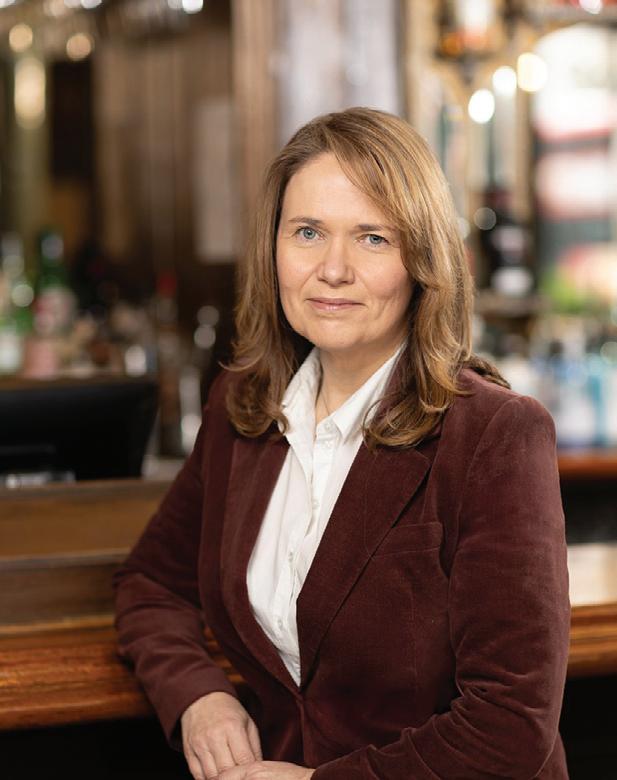
Running a tied pub can be an unpredictable business, and tenants must react to market developments and unexpected events, like tax and legal changes. Margins shift, forecasts change, and tenants must juggle multiple pressures. In this environment, fair conversations with the pub company’s Business Development Manager (BDM) will be more important than ever. But anyone in business knows how important it is to keep a paper trail of a promise or agreement made verbally.
The regulated pub companies must ensure their BDM deals fairly with tied tenants, and the Pubs Code gives vital protections to those tenants when having key conversations. The BDM, or anyone representing the pub company, must make notes of discussions which relate to business planning, repairs or rent negotiations. These notes must then be sent to the tenant within 14 days to check. The tenant must be asked to respond within 7 days if they do not agree with any aspect of them.
This is not just admin. Tied tenants have the right to have all commitments, promises and action points recorded and provided to them while their memory is still fresh. These notes form part of the official record of the relationship between pub company and tenant, so that clear, reliable BDM notes can be a point of reference down the line. This makes BDM meetings, and the notes that follow them, an important formal protection for tenants. The PCA has created a new short video about this right, which is part of our new series of bite-sized video guides about key Code protections.
So, for example, if a BDM verbally promises marketing support, it must appear in the notes. If it doesn’t, that could be a breach of the Code. The Code Compliance Officer (CCO) is employed by the pub company to verify compliance with the Code and can be the first port of call for a tied tenant who is concerned they have not received appropriate meeting notes. The CCO must report breaches of the Code to the PCA, and to ensure maximum transparency the PCA publishes details of pub company breaches in its searchable database, so reported failures to provide BDM notes on time can be identified.
Most tied tenants say their BDM relationship works well. The PCA’s 2025 tied tenant survey found that 70% of tenants are satisfied with their BDM relationship, and 72% think their BDM provides accurate notes of discussions. Most BDM notes are issued promptly though automated systems. The PCA team regularly accompa-
Why Use a Specialist Hospitality Consultant? Answer: because we can help your business to succeed.

With over 30 years of industry experience in the Hospitality sector, The Bowden Group’s Managing Consultant David Hunter will work with you to address the following elements:
Profitability, Operational Strategy, Staff Management, Marketing and The Future of your business.
Our experts will analyse your entire operation and also its key operating figures if they are available. We then help you to identify strategies to manage costs and overheads associated with the core Profitability of running a Hospitality business.
The largest overhead, even higher than Cost of Sales, is the Labour cost, so, with detailed analysis of your wages and being able to understand ‘’the way
your business actually works’’ we can ensure that you are maximising the labour usage in your business.
Budgeting, Forecasting, Menu Management, Stock Controls, Purchasing, and controlling Variable Costs are just a few of the other areas that David Hunter, your Restaurant Consultant, will work on with you, and improve with you.
Managing people brings with it a whole set of new skills that are now needed more than ever. From ‘’Managing the Managers’’ through to Service and Kitchen staff, your team needs careful and skilful Management, Motivation, guidance and Development.
If your business is actually struggling, or if you just feel that it could be doing some things better, give David Hunter a quick call on 07831 407984 to arrange a ‘’Free of Charge’’ initial consultation (please quote CLH Offer), when David will discuss with you what could be achieved if you ask us to work with you.
For over three decades, Stonesmith has established itself as the South West's premier business transfer agent, specialising in the sale of licensed, hospitality, and catering businesses throughout Devon, Cornwall, Somerset, and Dorset. Whether you're an aspiring publican seeking your first freehold pub, an experienced hotelier looking to expand your portfolio, or an entrepreneur wanting to enter the thriving restaurant sector, Stonesmith's unrivalled local expertise makes them the natural choice for navigating the Westcountry's dynamic hospitality market.
nies BDMs on visits to tied pub tenants, to see how discussions work in practice, hearing on a recent visit about Marston’s work to improve its process to make it more user friendly and ensure that meeting notes are shared automatically with the tenant once the document is completed.
Proper note-keeping of BDM meetings is not optional—it is a legal requirement. The PCA exists to protect tied tenants' rights under the Code and can take action to ensure that pub companies comply. A failure to take and share notes of these key business discussions was the subject of a recent report on breaches by Star Pubs. The PCA issued a formal, written censure to Star on review of the evidence gathered after Star reported that, owing to systematic errors, some BDM meeting notes between 2019-24 had not been provided within 14 days or, in some cases, at all.
Star informed the PCA that it had taken remedial measures to prevent a repeat of the breach, including retraining BDMs through regional development programmes. Star has now transitioned to a new IT system for the completion of BDM notes for onboarded tenants. The PCA will be looking closely at this year’s tied tenant survey results to see the level of tied tenant satisfaction with the BDM relationship across all six of the regulated pub companies. Fieldwork for that survey kicked off in January and results will be published in early June.
The right to notes of discussions about rent negotiations, repairs and business planning also applies to applicants who are negotiating to take on a tied pub. This is important given that this is the time when matters like deals, discounts, rent and repairs may be thrashed out face-to-face or over the phone. Early accuracy prevents later disputes about what was said and can provide protection for tenants if things go wrong. The pub company must ensure that these discussions and agreements are recorded in writing and that the record is sent to the prospective tenant. This is one part of how the Pubs Code supports tied tenants to get off to the right start. The PCA is currently working with the regulated pub companies to understand their approaches to complying with this duty.
The Pubs Code requires that pub companies must provide appropriate training for BDMs about their duties under the Code. Good notes support better business planning for tenants and provide confidence, clarity and control, helping to create a transparent, professional relationship with the pub company.
This article is intended to aid understanding of the Pubs Code and its impact. Nothing in it should be understood to be a substitute for the pubs code legal framework.
For more information on the Pubs Code and Pubs Code Adjudicator, including comprehensive resources for tied tenants, visit www.pubscodeadjudicator.org.uk.
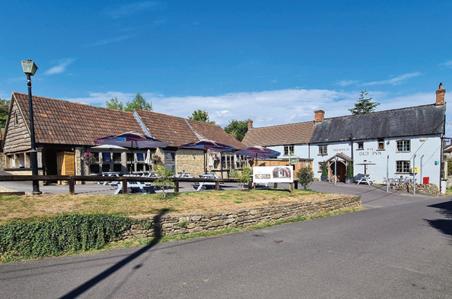
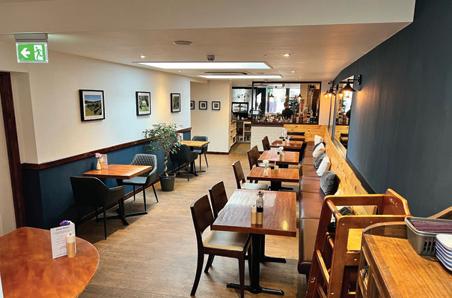

The team at Stonesmith understands that no two hospitality businesses are alike. From traditional country pubs and coastal hotels to contemporary restaurants and boutique guest houses, each property presents unique opportunities and challenges. Their approach centers on listening to clients' individual needs and crafting bespoke marketing strategies that align with specific objectives. This personalized service, combined with their deep knowledge of the regional market, ensures that both buyers and sellers receive guidance tailored precisely to their circumstances.
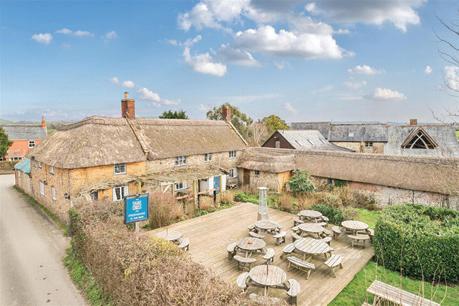
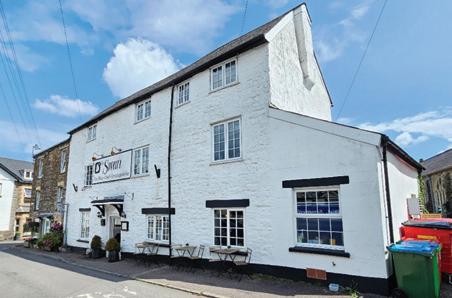
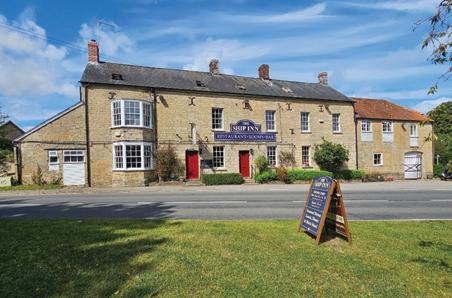
Choosing Stonesmith means partnering with specialists who genuinely understand the hospitality sector's nuances—from licensing requirements and valuation complexities to the seasonal dynamics that define Westcountry trade.
Thinking of selling or buying? Visit www.stonesmith.co.uk