CLH Digital - Issue #312

Page 1


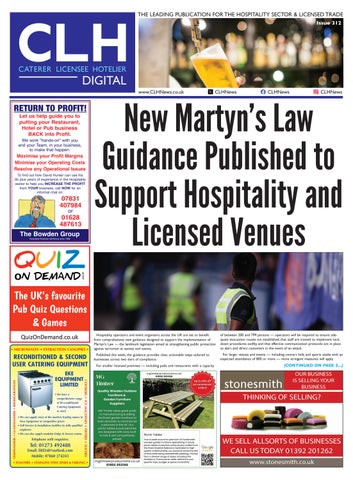
Guidance Published to Support Hospitality and Licensed Venues

Editor's Viewpoint

Welcome to the latest issue of CLH Digital

A WELCOME LAW, A RESILIENT SECTOR — AND A GOVERNMENT THAT STILL NEEDS TO LISTEN

There are moments that define a generation, moments so devastating in their impact that they demand a fundamental rethinking of how we, as a society, approach the safety of public spaces.

The 22nd of May 2017 was one such moment. The Manchester Arena attack — which claimed 22 precious lives, among them the muchloved Martyn Hett — was an act of barbarism that none of us who witnessed its aftermath could ever forget, and which we must collectively ensure is never, ever repeated.

It is with that solemn commitment front of mind that we warmly welcome the publication of new guidance supporting the implementation of Martyn's Law — formally, the Terrorism (Protection of Premises) Act 2025.

We reported this week (see front page) on the new guidance published to help businesses understand their responsibilities under this landmark legislation, and we would urge every operator across our sector to take note.

The story of this law is, in no small part, the story of one extraordinary woman. The tenacity and grace shown by Figen Murray, Martyn's mother, in campaigning for this legislation over so many years, is truly humbling.

That her determination has translated into law is a tribute both to her and to her son.

Now the industry that welcomes millions of people through our doors each and every week, will embrace this legislation in the spirit in which it was conceived — to pro-

tect people, and to ensure that those who visit our venues go home safely to their families.

In practical terms, Martyn's Law introduces proportionate, tiered obligations for venues. For those of us in hospitality with premises capable of holding 200 or more people — and that encompasses a great many pubs, bars, restaurants, hotels and clubs — there will be requirements around evacuation procedures, staff training, lockdown protocols, and communication planning. For larger venues of 800-plus capacity, the obligations go further still.

I will be entirely honest with you: the full detail and legal implications of this legislation are, as I readily confess, somewhat above my pay grade.

What I can tell you is that we have already put out a call for expert advice and guidance from specialists in this field, and I would ask you to watch this space closely.

We will bring you practical, accessible analysis as soon as we are able, to help you understand precisely what you will need to do, and by when. The implementation period of at least 24 months from Royal Assent does afford us some breathing room — but that time will pass more quickly than we might imagine, and preparation should begin in earnest.

What strikes me most about the guidance published this week is its deliberate accessibility.

The government has been at pains to make clear that compliance should not require expensive specialist consultants.

The illustrative examples provided — including a helpful case study for a 400-seat restaurant — are a refreshing recognition that most of us running hospitality businesses are practical people who respond far better to clear, plainEnglish instruction than to impenetrable legalese. That is genuinely encouraging.

We also note and welcome the collaborative approach taken in developing this guidance, with the Night Time Industries Association among those who worked closely

with the Home Office to ensure the framework is workable on the ground.

This is exactly the kind of industry-government partnership our sector needs — and we would be rather glad to see it applied more broadly.

And on that note, allow me to turn, with rather more optimism than we are perhaps accustomed to deploying in this column, to the broader state of our sector.

It is genuinely heartening to report that new data from The Oxford Partnership reveals clear signs of recovery in the on trade during March, with stronger consumer demand, longer visits, and record spend per head.

Consumers are staying longer and spending more when they do visit — and that tells us something important about the enduring appeal of the great British pub, bar and restaurant. People still want us. They still value what we offer. Overall volumes may remain below last year's levels, and we must not become complacent, but the direction of travel is encouraging.

We are further cheered by data from Christie & Co showing that over 90% of freehold pubs sold in 2025 were purchased for continued use as pubs — a powerful statement of investor confidence in the future of our sector, and a far cry from the narrative of inevitable decline that some in the media seem determined to peddle.

Independent operators — who, lest we forget, represent around 80% of the market — continue to demonstrate remarkable ingenuity and resilience, leveraging their roles as genuine community hubs, adapting menus, embracing premium and locally sourced offerings, and building the kind of loyal customer relationships that no algorithm can replicate.

One can only pause and reflect: if our sector achieves all of this in the face of the current economic headwinds, imagine what might be possible with a genuinely supportive policy environment?

Visit our website at www.catererlicensee.com to sign up for our twice weekly e-newsletter.

The Caterer, Licensee & Hotelier News Group is published by RBC Publishing Ltd, 3 Carlton Mount, 2 Cranborne Road, Bournemouth, Dorset, BH2 5BR.

tion, however, no responsibility will be accepted for loss or damage. Views expressed within this publication are not necessarily those of the publisher or the editorial team. Whilst

when compiling this publication to ensure accuracy, the publisher will assume no responsibility for any effects, errors or omis ten permission is obtained. All material is assumed copyright free unless otherwise advised.

At The Commercial Oven Store, we take great pride in being your go-to destination for all your commercial oven needs.

We understand that when it comes to running a successful business, having the right equipment is crucial. That’s why we have dedicated ourselves to providing top-notch products, coupled with expert advice, to help you make informed decisions and achieve your goals.

As a supplier of commercial ovens, we have established strong partnerships with leading manufacturers in the industry. By working closely with these renowned brands, we ensure that our customers have access to a wide range of high-quality ovens that meet the diverse needs of various businesses.

Whether you’re in the food service, hospitality, or catering industry, we have the perfect oven to suit your requirements.

New Martyn’s Law Guidance Published to Support Hospitality and Licensed Venues

(CONTINUED FROM FRONT COVER)

These include risk-reduction provisions such as CCTV systems, bag search policies and, where deemed appropriate, vehicle access controls — steps designed to significantly reduce vulnerability to terrorist activity and bolster the safety of large-scale public gatherings.

IMPLEMENTATION PERIOD

The Terrorism (Protection of Premises) Act 2025 also known as Martyn’s Law, is named in tribute to Martyn Hett, one of the 22 victims of the horrific Manchester arena attack.

The act will come into effect after an implementation period of at least 24 months from Royal Assent, giving organisations time to understand their new obligations and prepare.

All premises need, as a minimum, to reflect upon whether they are required to act.

This includes:

• Pubs and Bars

• Nightclubs

• Hotels

• Restaurants

• Festivals and large-scale public events

• Experiential premises

• Gambling premises

• Event spaces

• Stadiums

“READY TO ACT”

The major milestone comes as the threat from terrorism endures and evolves, with a rise in attacks from individuals who are not formally part of an existing terrorist group making it harder for the police to detect and investigate.

Since the start of 2020, MI5 and the police have disrupted 19 latestage attack plots and intervened in many hundreds of developing threats.

Security Minister, Dan Jarvis, said: “Martyn’s Law will help to save lives by making sure venues are ready to act if the worst happens.

“Today’s guidance is a significant step toward turning the law into action, giving organisations clear, straightforward advice to protect the public.

“I pay tribute to Figen Murray, whose dedication was instrumental in bringing this landmark law into existence.”

By providing practical advice and clear instructions to meet the requirements set out in the act, it empowers organisations to take proportionate steps to protect lives and improve emergency preparedness – helping to keep both staff and visitors safe across the UK.

It is designed to explain the act’s requirements in a way that works for all and reflects the government’s clear intent that those responsible for premises and events in scope can comply without needing to buy specialist or consultancy services.

It provides advice and illustrative examples to help those with responsibilities under the legislation.

IMPORTANT MILESTONE

Michelle Russell, Chief Executive of the Security Industry (SIA) said: “Today is an important milestone. As the regulator of Martyn’s law, the SIA’s approach will be driven by public protection objectives. Our focus will be to ensure compliance with the requirements set out in the legislation and Home Office section 27 guidance published today.

“This guidance will enable us as the independent regulator to take decisions on whether premises and events in scope have taken the steps, they need to comply and play our part in bringing about improvements to protective security across the UK.”

A case study for a 400-seater restaurant may look like the following example”

Evacuation: such as one route through the main entrance that leads onto a public pavement and another through a side door that leads into a different area.

• Invacuation: for example, bring individuals into the main restaurant area and, if needed, into a variety of staff areas.

• Lockdown: this could require nominated individuals knowing when (i.e. when their shift manager instructs them to) and how to quickly lock doors, close window shutters and turn off lights.

• Communication: this might be met by ensuring staff know who will enact procedures (shift manager) and planning how to communicate with customers present at the restaurant, were an attack to occur.

• Training and awareness: such as providing new members of staff with a short awareness briefing on the restaurant’s procedures at induction, alongside health and fire safety inputs.

• Review: the procedures should be kept under appropriate review, for example reviewed annually or when there is any significant change in the restaurants set up.

As the regulator, the Security Industry Authority will support, advise and guide those responsible for premises and events in meeting the requirements of this legislation.

EVOLVING THREAT

Michael Kill, CEO of the Night Time Industries Association & Chair of the UK Door Security Association said: “The release of the guidance for the Terrorism (Protection of Premises) Act 2025, known as Martyn’s Law, marks an important step forward in strengthening the safety and resilience of public spaces across the UK. It provides a clear and proportionate framework to help venues better prepare for and respond to the evolving threat of terrorism.

“The Night Time Industries Association, alongside key stakeholders, has worked closely with the Home Office and government partners to help shape guidance that is both practical and accessible for businesses of all sizes. Ensuring the voice of the sector has been reflected throughout has been critical to making the framework workable on the ground.

“We welcome this collaborative approach and the commitment shown across industry and government to get this right. We will continue to support our members in understanding and implementing the requirements, helping to build a safer, more prepared night-time economy while protecting the vibrancy that defines it.”

Zero Tolerance: Immigration Enforcement and The Hospitality Sector

The 2025 Immigration White Paper has placed the UK hospitality sector under heightened scrutiny, introducing increased skill requirements, higher salary thresholds for overseas workers, and excluded many frontline hospitality roles from sponsorship eligibility. These measures come at a time when the industry is already experiencing severe labour shortages, further restricting employers’ ability to sponsor migrant workers –particularly for roles that no longer meet the revised, heightened eligibility criteria, such as chefs (SOC code 5434) and restaurant and catering establishment managers and proprietors (SOC 1222).

Against this backdrop, government enforcement across the sector has intensified, adopting what has been described as a zero tolerance approach and reaching unprecedented levels in recent years. As hospitality businesses reopened following the Covid 19 pandemic, widespread staffing shortages prompted many employers to rely heavily on overseas recruitment through the Skilled Worker visa route. While this helped to address immediate workforce pressures, it also exposed longstanding structural issues within the sector. In particular, concerns around exploitation and unethical employment practices became more pronounced, especially in lower paid hospitality roles, triggering increased regulatory and enforcement scrutiny.

In response, the UK Government has launched its most extensive crackdown on illegal working to date. Published figures show that arrests of individuals working unlawfully in the UK increased by 63%, with more than 8,000 people detained and 11,000-plus enforcement visits carried out. These figures represent the highest levels of immigration enforcement ever recorded in the UK.

Transparency data released by UK Visas and Immigration (UKVI) on 5 March 2026 further illustrates the scale of enforcement within the hospitality sector. The data indicates that hospitality businesses were subject

to the highest number of illegal working visits and arrests in 2025, with 3,559 visits recorded – up from 2,695 the previous year. Arrests also rose significantly, increasing to 2,523 from 1,922 in 2024.

Employers found to be employing individuals without the appropriate right to work or visa permission may face serious consequences, including:

• civil penalties of up to £60,000 per illegal worker

• revocation of a Sponsor Licence

• significant reputational damage

• Home Office compliance visits

• potential criminal liability.

The most effective way for an employer to avoid a civil penalty for illegal working is to comply fully with the Home Office’s right to work checking regime. Where a right to work check is conducted correctly and in accordance with prescribed requirements, the employer will benefit from a statutory excuse. This means that, even if it later emerges that an employee did not have permission to work, the employer will not be held financially liable.

1. CARRYING OUT RIGHT TO WORK CHECKS CORRECTLY

Employers must complete a right to work check before an individual commences employment. Checks can be undertaken using one of three methods:

• manual document checks, involving the inspection and copying of original documents

• online checks, carried out through the Home Office right to work service for eligible individuals

• Identity Service Provider (IDSP) checks, which allow digital verification for British and Irish citizens.

For manual checks to be valid, employers must:

obtain original documentation from the Home Office’s list of acceptable evidence

• examine the documents in the presence of the individual (either in person or via a live video link) to confirm they appear genuine and relate to the individual concerned

• produce a clear copy of the documents and record the date on which the check was completed.

Where an online check is used, the individual must provide a share code generated via the Home Office website. Employers must view the individual’s right to work status online and retain confirmation of the result as evidence.

2. MAINTAINING RIGHT TO WORK RECORDS

Evidence of right to work checks must be retained for the duration of the individual’s employment and for a minimum of two years after employment ends. Records should be stored securely and in a format that can be produced promptly if requested during a Home Office audit or compliance visit.

3. MONITORING TIME LIMITED IMMIGRATION

PERMISSION

Employees who hold time limited immigration permission to work require follow up checks before their right to work expires. Employers should monitor visa expiry dates carefully, implement reminder systems, and take appropriate action where an individual cannot demonstrate continued permission to work.

Failure to complete a required follow up check will result in the loss of any statutory excuse previously established and open the business up to risk

4. TRAINING AND INTERNAL COMPLIANCE MEASURES

Staff involved in recruitment and HR functions should receive regular training on right to work obligations. Employers are encouraged to adopt consistent internal procedures, conduct periodic compliance audits, and remain up to date with changes to immigration legislation and Home Office guidance.

5. AVOIDING DELIBERATE OR SUSPECTED ILLEGAL EMPLOYMENT

A statutory excuse will not apply where an employer knowingly employs an individual without the right to work, or where there is reasonable cause to believe this is the case. In such circumstances, employers may face not only civil penalties but also criminal liability.

In an environment of heightened enforcement and unprecedented scrutiny, compliance with right to work obligations has never been more critical for hospitality employers. With the sector firmly in the focus of UKVI enforcement activity, businesses must adopt a proactive and structured approach to immigration compliance. This includes implementing robust right to work checks, maintaining accurate records, effectively monitoring visa expiry dates, and ensuring staff are properly trained. Failure to do so carries significant financial, operational, and reputational risks. By embedding compliance into everyday HR and recruitment practices, employers can not only mitigate enforcement risk but also contribute to fairer and more ethical employment standards across the hospitality industry.

Stonegate Reaches First £50,000 Milestone for CALM Just 12 Weeks into Partnership

Stonegate Group has reached its first major fundraising milestone in its charity partnership with Campaign Against Living Miserably (CALM), raising an incredible £50,000 in just 12 weeks – an average of more than £4,000 every week – driven by fundraising efforts from colleagues, pub teams and guests across the UK.

The milestone marks a powerful early start to the two-year partnership, which launched in January with the ambition of bringing suicide prevention into the heart of Britain’s pubs, bars and venues through Stonegate’s “Cheers to Checking In” campaign.

The £50,000 raised is equivalent to funding over 4,000 potentially life-saving calls to CALM’s free and anonymous suicide prevention helpline, where trained staff provide vital support to people who are struggling or in crisis.

With suicide remaining the biggest killer of men under 50 in the UK, and one in four people experiencing suicidal thoughts in their lifetime, the funds raised will directly support CALM’s frontline services, digital tools and national campaigns, helping more people access support when they need it most.

Fundraising activity has taken place across the business, with colleagues and pub teams embracing the partnership through a wide range of creative, community-led initiatives.

Highlights so far include sponsored walks and running challenges –from an 18-mile London walk to 5k-a-day efforts – alongside bold indi-

vidual challenges such as cold-water swims, bungee jumps and endurance events. Teams have also hosted world record themed challenge nights, car washes and duck races, as well as high energy fundraising events including a 12-hour rave-a-thon and family fun days across pubs and venues nationwide.

Engagement has also been driven through in-venue activity, including the introduction of a £3 virtual pint donation across Craft Union and managed pubs. The optional donation appears on menus and can be added directly to a guest’s bill, with the full £3 going to CALM. The partnership has quickly resonated across Stonegate, with col-

leagues from every part of the business rallying behind the cause and helping to build momentum from day one.

David McDowall, CEO at Stonegate Group, said: “What’s been so powerful about this partnership is seeing how our pubs, bars and venues bring people together – not just as places to socialise, but as spaces where people can support one another and make a real difference.

“The level of fundraising and engagement we’ve seen in such a short space of time has been incredible, but it’s the conversations happening alongside that which really matter. If this partnership helps even one person feel less alone or seek support, then it’s making a difference. We’re proud of what’s been achieved so far and excited to keep building on this momentum.”

Simon Gunning, CEO of CALM, said: “Raising 50k in just over 12 weeks is an incredible start to our partnership with Stonegate, and will help us run our life-saving services, including our suicide-prevention helpline. Alongside some really creative fundraising over the past three months, Stonegate’s teams, operators and guests have shown a real willingness to play their part in changing the conversation AROUND suicide prevention. That work is invaluable, and we can’t wait to keep making a real difference through the rest of the partnership.”

Alongside fundraising, Stonegate has rolled out CALM messaging across its estate and launched a number of awareness initiatives, including the “5 Ways to Check in with a Mate” experience on the MiXR app, encouraging guests to start open conversations about mental health.

Hospitality Insolvencies Jumped Even Before Middle East Conflict, With More Pain To Come

Company insolvency statistics released earlier this month show accommodation and food services insolvencies jumped 22% month-on-month from 222 in January 2026 to 270 in February 2026, but were flat compared to the same month in 2025 (272).

Saxon Moseley, partner and head of leisure and hospitality at leading audit, tax and consulting firm RSM UK, said: “Hospitality insolvencies are back on the rise, which is unsurprising given the burdensome tax regime faced by operators combined with subdued consumer demand, making it increasingly challenging to stay afloat. While bigger operators tend to be better insulated due to having stronger balance sheets and economies of scale to fall back on, it’s the smaller, independent businesses that are struggling the most.

“Unfortunately, the outlook for the sector isn’t much rosier. The jump in insolvencies came even before the Middle East conflict, which if it continues, could hit consumer sentiment and discretionary incomes, combined with an expected rise in inflation and

energy costs, resulting in a double whammy for the hospitality industry.

“Operators are already having to contend with the Employment Rights Act, and rise in National Minimum Wage and business rates, meaning some have, and others will, decide it’s no longer viable to keep their doors open.”

Gordon Thomson, restructuring partner at RSM UK, added:

“Relatively weak sales in the hospitality industry along with relentless cost pressures have required some operators to explore restructuring options to optimise their trading position and to reduce their cost base.

“It’s encouraging to see businesses taking action rather than burying their heads in the sand, but this highlights just how challenging it is to operate in the current environment. As pressures in the sector intensify in the coming months, we expect to see more operators having to consider restructuring options in order to survive.”

Abu Dhabi Investor Acquires Caring Empire In £1.4bn Landmark Deal

One of the most significant ownership changes in the history of British hospitality has been confirmed, with restaurateur Richard Caring agreeing to transfer a controlling interest in his portfolio of restaurants and private members’ clubs to Abu Dhabi-based luxury investment platform DIAFA in a transaction understood to be worth £1.4 billion.

The scale of the deal places it among the largest ever recorded in the UK’s licensed and hospitality trade, encompassing some of the country’s most recognisable dining and leisure brands across three distinct business pillars.

DIAFA, an affiliate of Abu Dhabi’s International Holding Company (IHC), has acquired a majority stake in a portfolio spanning The Ivy Brasseries, the Caprice Holdings restaurant group — which includes Scott’s, Sexy Fish and Noema — and The Birley Clubs, home to Annabel’s, George, Harry’s Bar and Mark’s Club.

IHC is chaired by Sheikh Tahnoon bin Zayed al-Nahyan, deputy ruler of Abu Dhabi and younger brother of

UAE president Sheikh Mohamed bin Zayed al-Nahyan. Caring, 77, is set to stay on in an executive capacity. He will serve as executive chairman, taking a lead role in driving the international expansion of Scott’s, Sexy Fish and Noema, with Annabel’s in New York cited as the first planned new opening under the combined group’s ownership.

The Ivy Brasseries, which operate across the UK and Ireland, are among the highest-profile assets in the transaction. The new ownership structure is expected to accelerate expansion, with the US market among the territories under active consideration for future openings.

DIAFA group chief executive Ravi Thakran, said: “This transaction marks the beginning of a new chapter in global luxury hospitality. We are curating a portfolio of the world’s most iconic and culturally defining brands, with the ambition to shape how the next generation experiences dining, social connection, and lifestyle. Together with Richard Caring, we are building a platform of enduring value and global influence.”

Employment Rights Act: What Hospitality Operators Need To Know About New Legislation

A wave of employment law changes will reshape the hospitality sector this year creating additional cost and compliance pressures for employers across the sector.

The first raft changes came into force on 6th April 2026, with further updates expected later this year. April updates include changes to Statutory Sick Pay (SSP) rules, the introduction of day-one rights for paternity and parental leave, enhanced whistleblowing protections, and reforms to trade union and industrial action processes.

These changes will have a direct impact on the workforce and will require business leaders and their HR teams to take a proactive role in updating policies, managing compliance and guiding effective workforce communication. For an industry already operating under pressure, the challenge will be to adapt quickly to remain compliant while maintaining operational efficiency.

The most immediate impact has come from changes to SSP. Payments will now begin from the first day of sickness rather than the fourth, and the removal of the lower earnings limit meaning that there is no longer a requirement to earn a minimum amount to be eligible for SSP. SSP will now need to be calculated as the lower of the prescribed weekly rate (set by the Government in April each year), or 80% of the employee’s actual weekly earnings. Significantly more workers will be eligible for SSP, offering them greater financial security during periods of illness.

Alongside this, the new day-one rights for paternity and parental leave are set to have a significant impact on workforce planning. Currently, employees must complete 26 weeks of service to qualify; under new rules this requirement will be removed. This reform aligns these entitlements with maternity and adoption leave, marking a shift towards more inclusive and accessible family leave policies.

Whistleblowing protections have also been strengthened under the new reforms to include sexual harassment as a form of wrongdoing. This means workers who make a report will be automatically protected from detriment and unfair dismissal for making a protected disclosure about sexual harassment, provided it is made with reasonable belief and in the public interest. This will apply to disclosures around historic incidents, ongo-

ing issues or concerns that harassment is likely to occur.

There are also several updates affecting trade union and industrial action processes that have come into effect. The statutory trade union recognition process will become far easier for unions to navigate, meaning employers will need to prepare for more recognition requests, faster ballots, and a more active industrial relations environment.

Further reforms expected in October 2026 could build on these changes. Whilst not yet confirmed and still subject to final legislation, it is anticipated that tipping policies will come under greater scrutiny, with employers required to consult with trade union representatives, employee representatives or directly with workers themselves when creating or updating tipping policies. Policies should also be reviewed at least once every three years. This reflects a wider push for transparency and fairness in how tips are distributed. It is also anticipated that time limits for bringing most employment tribunal claims (except for breach of contract claims arising on termination of employment) will be extended from three to six months although this remains subject to final legislation.

Additional proposals include greater protections for workers taking industrial action, extending beyond dismissal to protection from detriment. Trade union rights are also expected to be extended to include enhanced rights to workplace access, additional rights for union representatives (such as time off and facilities), and increased employer obligations to inform workers of their right to join a union.

For many hospitality businesses, the impact of these changes will be felt in both cost and complexity. Increased eligibility for SSP alongside day-one leave rights is likely to drive higher absence related costs and require more workforce planning. HR and payroll teams should work closely with finance to plan accordingly and ensure systems are updated to reflect the new requirements.

Greater scrutiny around tipping and workplace conduct places will also require more robust policies, clearer internal processes and enhanced staff training.

For all hospitality sector employers and HR teams, the changes to the Employment Rights Act require an immediate response. Employment policies, contracts and staff handbooks should be reviewed and updated to reflect the changes swiftly. HR teams must also ensure these reforms are clearly communicated to managers and that they receive training on the new rules, particularly the implications of day-one family leave rights and changes to SSP eligibility. This will ensure they are equipped to handle employee queries effectively and in accordance with current legislation.

Emma Rowley is part of the specialist employment team at award-winning law firm Schofield Sweeney, recognised in The Times Best Law Firms 2024 and 2025 for its advice to businesses and individuals.

Restaurants Raise A Million To Tackle Homelessness

Earlier this week (April 14), restaurateurs gathered at Toklas restaurant in central London to acknowledge the achievements of the charity StreetSmart. Guests were the first to hear that the latest campaign raised a massive £1,178,000 to tackle homelessness across the U.K. Each year StreetSmart raises funds by collecting £1 per table donations from diners at leading restaurants. This time 650 restaurants took part including St John, Barrafina and The Wolesley. The eateries at Selfridges, Fortnum & Mason and The Ned Hotel were joined by newcomers Lillibets, Kudu and One Club Row each adding thousands of pounds to the pot.

Sunaina Sethi of JKS restaurants said “StreetSmart community of supporters represent the hospitality sector at its very best: generous and without prejudice. Their work is a powerful reminder that small acts can ripple into big impact.”

Charities are in urgent need of any extra funds available to tackle the rising problem. As of late 2025, rough sleeping in England has reached a record high of 4,793 people on a single night, marking the fourth consecutive annual increase.

Since its launch in 1998, the pioneering fundraising initiative has raised over £16 million to support people

experiencing homelessness in 22 regions across the UK. Every penny raised in each city stays local, supporting frontline projects that provide sustainable solutions to homelessness – with a strong focus on young people aged 16–25.

Michelin Star Chef Jun Tanaka says “Hospitality is about caring for people. Supporting Streetsmart lets us share that care beyond our restaurant with homeless and vulnerable people across the U.K.” StreetSmart partners LandAid – the property industry charity working to end youth homelessness have partnered with Streetsmart to maximise the impact of the funds raised. LandAid covers all campaign costs and plays a vital role in distributing funds to ensure that 100% of donations go directly to local projects helping those in greatest need. And this year they have pledged an additional £175,000 boost to the fund.

Paul Morrish, Chief Executive at LandAid, was delighted with the result: “The generosity of diners and the commitment of the hospitality sector is a powerful reminder of what’s possible when communities come together with purpose. At LandAid, we’re proud to stand alongside StreetSmart, ensuring that every pound raised helps transform the lives of young people facing homelessness – offering them hope, dignity and a brighter future.”

BE THE BEST! Improve Work-Life Balance with

Two innovations relevant now for the hard-pressed trade are heat recovery, which saves energy and cuts running costs, and Meiko’s new leasing offer, which makes its most energy-efficient machines more affordable.

Meiko’s latest M-iClean U undercounter machine, for example, now operates with a total connected load of under 5kW at 400V. This is a 21% energy saving compared to the previous generation.

The new leasing offer provides Meiko dishwashing from £7 per day, with a preinstallation survey and lifetime training support. There is also optional planned maintenance and breakdown support, plus installation, water treatment, tabling, etc., making it a choice that can ensure the best reliability, cost-effectiveness, and staff protection.

All of Meiko's added-value services, such as training support throughout the dishwasher's working lifetime, are included in its new leasing offer, MEIKO SMARTPAY.

Our training covers the safe use of the machine as you would expect, but also energy-saving and ergonomic use of equipment, ultimately saving the operator money.

Undercounter glasswashers and hood-type dishwashers are the most popular pieces of equipment. Lifetime training support is particularly useful where staff are often changing or where chains are short of managers for training. Meiko’s expertise in ergonomic design and efficient use will also save operators money. Ask for details.

For sites washing utensils, boxes, and perhaps bakery trays, plus glassware, crockery, and cutlery, the new UPster XD (extra deep) undercounter dishwasher handles glassware, serving dishes, trays,

Foodservice Inflation Dips Slightly In February, But Geopolitical Risks Loom Large

Food and drink prices in the foodservice sector recorded a minor month-on-month decline of -0.2% in February, the latest Foodservice Price Index from NIQ and Prestige Purchasing reveals.

The slight easing builds on a stabilisation of prices in January, bringing respite to hospitality after inflationary spikes in late 2025. Downward movement in February was driven by significant cooling in major categories including Milk, Cheese & Eggs, where prices fell month-on-month after improved European milk availability and softer demand for cheese. The Oils & Fats category also continued to moderate while Coffee, Tea & Cocoa prices were reduced by the unwinding of extreme cocoa price inflation, as global supply expectations and market surpluses rose.

Other categories of the Foodservice Price Index including Mineral Water, Soft Drinks & Juices and Meat & Poultry remained broadly flat in February. Stable packaging costs and softer global sugar inputs helped to offset any significant upward movement in beverage prices, while the meat sector balanced tight domestic beef availability against softer global pork values.

However, short-term relief in inflation is heavily overshadowed by the escalating global geopolitical situation. The recent closure of the Strait of Hormuz has triggered a sharp rise in crude oil prices, generating significant concern for future inflation. The sudden spike in energy costs threatens to rapidly drive up costs of manufacturing, packaging and distribution across the entire supply chain, potentially reversing the recent easing of prices recorded by the Index.

More upward pressures remain elsewhere in the basket. Prices in the Bread & Cereal category rose as global wheat markets reacted to frost damage and winterkill risks across parts of Europe and the US. Fresh produce also remained challenged, with Vegetables ticking up due to crop-transition gaps in key growing regions like Spain and Morocco, while the Fish category inflated as strict Barents Sea cod quotas kept whitefish prices at historic highs.

Shaun Allen, CEO of Prestige Purchasing, said: “A month-on-month drop of 0.2% is a positive signal for the hospitality sector, demonstrating that the severe cost pressures in categories like dairy and cooking oils are beginning to ease. Furthermore, the bursting of the cocoa inflation bubble is providing much-needed relief to supply chains. However, operators must stay on high alert. The escalating geopolitical crisis and the closure of the Strait of Hormuz pose a severe risk to this fragile stability. As oil prices surge, the knock-on effects on freight and production costs will be unavoidable. Agile and forward-looking procurement strategies are essential to navigate this impending volatility.”

Reuben Pullan, senior insight consultant in the hospitality operators and food team at NIQ, said: “After inflationary pressures across the board for hospitality in 2025, the recent easing of food and drink prices has been a rare and welcome cause for optimism. However, that optimism is being tempered by heightened geopolitical uncertainty and the knock-on impact of higher energy-driven inputs. For hospitality, this makes it more important than ever to stay close to costs and remain flexible in planning.”

Luxury Buckinghamshire Hotel Celebrates Multiple Wins At Prestigious Culinary Awards

The team at a luxury Buckinghamshire hotel are celebrating after taking home a trio of accolades at one of the hospitality industry’s most prestigious culinary competitions.

Horwood House Hotel, a 4-star country house hotel and conference venue in Little Horwood, near Milton Keynes, is celebrating culinary success after three of its pastry chefs were recognised at the International Salon Culinaire 2026.

Pastry Chef, Rishitha Liyange, was named Best in Class in the Petit Fours category, while Dilip Kumara, Head Pastry Chef, was awarded Bronze in Dessert Course Plate and Chloe Matthews, Pastry Chef, achieved Merit in Junior Tea Pastries.

The prestigious competition took place over three days, bringing together leading chefs and hospitality professionals from across the UK to compete in a series of live and static culinary challenges, with the event organisers describing the overall

standard of competition as exceptional.

Speaking on the win, Karim Kassam, owner of Horwood House Hotel, said: “We are absolutely delighted to see Rishitha, Dilip and Chloe recognised at International Salon Culinaire. These awards are a fantastic achievement for each of them individually, but they also reflect the strength, passion and talent of our wider kitchen team at Horwood House. We are very fortunate to have such a hardworking team who consistently bring creativity and commitment to everything they do. To see that recognised on a national stage is incredibly rewarding, and everyone at Horwood House is immensely proud.”Rishitha Liyange, Pastry Chef at Horwood House, said: “Winning Best in Class is a huge honour. International Salon Culinaire is such a respected competition, so to receive this recognition means a great deal. I’m very grateful for the support of the team at Horwood House and proud to represent the hotel in this way.”

Hospitality Sector Handed New Data To Improve Support For Diners With Food Allergies

New data has revealed the most searched for allergens by consumers making a decision on where and what to eat when dining out.

Allergymenu.app looked at its annual data to highlight current consumer behaviours in relation to food allergies and intolerances. Its aim is to help businesses in the hospitality sector understand the concerns and priorities of customers managing food allergies.

It found that gluten was the most searched for allergen amounting to over 58% of all searches, with milk (16.8%), peanuts (17.9%) and tree nuts (16.8%) being the other most searched allergens. Over 136,000 searches were analysed.

The volume and consistency of searches captured from Allergymenu.app confirms that food allergies and intolerances are not niche concerns and play a central role on where and what customers chose to eat.

Recent statistics from the Food Standards Agency highlight six percent of the adult population in the UK has a clinically recognised food allergy. That’s around 2.4 million adults.

It also found more than 30% of adults reported some types of adverse reactions when eating food.

The allergy search behaviour shows users typically engage with allergy searches at the point of decisionmaking, before entering a venue or placing an order, suggesting accessible and easy-to-understand allergy information can directly influence footfall and conversion.

Juliet Moran, founder of Allergymenu.app said: “This analysis highlights that food allergies are a big concern for customers eating out within the UK hospitality sector. The prominence of gluten, milk, peanuts and tree nuts shows when the biggest concern is. Searches for these accounted for over three quarters of all searches.

“What this data reinforces is the need for food businesses to prioritise easily accessible and detailed information for these allergens so customers can make an informed choice based on their requirements. They can also be reassured the establishment is taking its legal responsibility seriously.

Juliet continues: “Ensuring accurate, detailed and easily accessible information to meet legislative requirements is the minimum. Many consumers manage multiple allergens which increases the importance of robust allergen management systems.

“This is where the role of digital tools plays its part. The data shows many allergy searches are made during a visit to the customer’s website, as shown in the website referral data.

“Transparent allergen information can directly influence customer confidence, venue selection, and overall dining experience. The allergen information becomes a key component of customer service and trust-building.

“Systems which reduce ambiguity, standardise allergen communication and minimise reliance on verbal explanations can help lower the risk of serious incidents and support staff.

Juliet concludes: “Our hope after publishing this data is that food businesses and industry bodies will improve allergen communication which will boost customer confidence and reduce the risk of avoidable incidents. Ultimately, a hospitality environment that meets both regulatory obligations and the real-world needs of allergy-aware consumers.”

Allergy Menu Ltd was established to assist the restaurant industry in making it easier for them to meet allergy legislation, improve customer experience and assist in removing the communication risk within the sector.

Decarbonising Hospitality With Sustainable Hot Water

For the UK hospitality sector, the pressure is on to reach Net Zero by 2050, with industry bodies like UKHospitality pushing for aggressive targets, including the elimination of direct emissions (Scopes 1 and 2) by 2030 and all avoidable supply chain emissions (Scope 3) by 2040. It’s a challenge that can feel complicated, frustrating, but is ultimately necessary for a sustainable future.

Hot water is the lifeblood of hotels and restaurants, but it's also a carbon heavyweight. Historically, gas was the default choice for its low cost, but it is increasingly at odds with climate regulations. Conversely, while electric water heaters offer zero on-site emissions, their higher running costs can be a bitter pill for high-demand businesses to swallow.

Adveco suggests that the smartest path forward isn’t a choice between gas or electric, but a strategic hybrid approach. By integrating multiple technologies, businesses can achieve environmental goals without compromising their bottom line.

Air source heat pumps (ASHPs) can generate up to 70% of domestic hot water (DHW) system energy as preheat, significantly reducing the load on electric boilers and slashing

carbon emissions. Hybrid systems, such as Adveco FUSION, can also incorporate electric immersion backups, ensuring an uninterrupted hot water supply—a non-negotiable for guest satisfaction.

Solar thermal, as a ‘true renewable,’ can offset up to 30% of annual DHW energy requirements, offering a low-maintenance solution with a rapid return on investment. It can also work with both electric and gas-fired appliances, like Adveco’s Astute smart water heater range.

Decarbonisation isn't just about swapping out old hardware; it’s about bespoke, intelligent design. Moving beyond like-for-like replacements to integrated systems—complete with thermal storage and optimised controls—allows hospitality venues to future-proof their operations against evolving regulations.

With trusted technological partners, the journey to Net Zero becomes a strategic evolution, securing long-term viability in a greener economy.

https://adveco.co/

Survey Reveals Regional Pint Price Gap

With approximately 38,600 licensed pubs still trading across the United Kingdom, the great British local remains a cornerstone of community life — and as beer garden season draws near, the prospect of a well-earned pint in the sunshine holds as much appeal as ever.

Yet that simple pleasure is becoming an increasingly costly one. According to data from small business comparison platform Bionic, the average price of a pint in the UK has climbed to £4.85 — a significant 27.6% rise on the £3.80 average recorded in 2025, placing fresh pressure on both consumers and operators alike.

With longer evenings arriving and consumer confidence in outdoor hospitality returning, Bionic has identified the most and least affordable locations across the UK for a drink — findings that will be of particular interest to on-trade operators navigating an increasingly price-sensitive customer base.

THE 10 CHEAPEST PLACES IN THE UK FOR A PINT ON AVERAGE

• Bury – £2.50

• Burnley – £3.00

• Darlington

• Burton Upon Trent

• Blackburn

• Bradford

• Hartlepool – £3.25

• Doncaster – £3.25

• Blackpool – £3.50

• Kingston Upon Hull – £3.50

Bury is the cheapest place in the UK for a pint

With the average pint priced at just £2.50, Bury, in Greater Manchester, comes out on top as the ultimate destination for a drink in the UK.

Home to more than 35 pubs with a high average rating, frequently ranging between 4.2 and 4.9 stars, the town offers a great experience for pub lovers.

THE AVERAGE COST OF A PINT IN BURY AND GLOUCESTER IS £3.00

If you’re after an affordable pint, Bury and Gloucester are among the top spots in the UK. With a pint averaging just £3.00 in both places, these locations offer great value for money when it comes to enjoying a drink.

THE 10 MOST EXPENSIVE PLACES IN THE UK FOR A PINT ON AVERAGE

• Oxford England – £6.75

• Brighton and Hove England – £6.50

• London England – £6.50

• Guildford England – £6.50

• Reading England – £6.50

• Basingstoke England – £6.50

• Harlow England – £6.50

• Woking England – £6.25

• Edinburgh Scotland – £6.00

• Belfast Northern Ireland – £6.00

OXFORD IS THE MOST EXPENSIVE PLACE IN THE UK FOR A PINT

Oxford is officially the priciest place in the UK for a pint, with an average pint costing £6.75 – 170% more than the country’s cheapest.

THE SOUTH EAST IS THE MOST EXPENSIVE PLACE IN ENGLAND FOR A PINT

Despite common assumptions that London would top the list due to its reputation and high cost of living, Brighton and Hove ranks above London, as the second most expensive place in England for a pint on average, with prices averaging £6.50, on par with several other southern towns, including Guildford, Reading, and Basingstoke.

This cluster of high prices across the South East highlights a broader regional trend, where strong demand, affluent populations, and thriving social scenes continue to push pint prices upward

Hospitality Hit Hardest by Inflation Over the Past Decade

The cost of running a business has risen significantly in the past decade, reshaping the business landscape across the UK. However, new research suggests that not all industries have been impacted on the same scale, as the severity of a business’s impact depends on its cost structure.

To understand which industries have faced the greatest pressure, Dojo have analysed ten core cost categories, including business rates, energy, and industry-relevant supplies, between 2015 and 2025, to create the UK Inflation Index, a sector-by-sector breakdown revealing where operating costs have risen fastest, and how business inflation now compares to consumer inflation.

The analysis shows that on average, UK business costs for SMEs have outpaced consumer price growth by 11.75%, creating an “inflation gap”.

How much have operating costs increased for hospitality businesses in the past decade?

Dojo’s research found that catering businesses have been hit harder by inflation than any other industry in the index, with overall running costs increasing by 62% in the last decade. Unlike traditional restaurants, cater-

ers must also factor in transportation for every job, making each more expensive to deliver, as logistics costs alone have risen by 57% for catering businesses.

Food prices remain volatile, making supply chains increasingly unpredictable, too. Materials and supplies costs have increased more for caterers than for any other business type, now costing 113% more on average than they did a decade ago.

Of all costs, hotels were the most affected by an 83% rise in payment processing costs, while pubs and bars were most impacted by technology and software, a 167% increase. Over the past decade, hospitality has become increasingly automated, with greater reliance on technology and software across operations.

Charlie Ashworth, Head of Research & Insights at Dojo, says, “While operating costs have risen significantly over the past decade, with the right insight into their cost structure, businesses can be better equipped to respond to these pressures.

“For business owners, the opportunity lies in control and efficiency. With labour, energy, insurance and technology costs all contributing to long-term structural change, understanding where your exposure sits is now a strategic advantage. Reviewing supplier contracts, improving operational efficiency, reducing unnecessary overheads, and optimising payment systems can all help protect margins in a higher-cost environment.

“With increases of this scale, businesses must take a more strategic approach to operations and managing their supplies. Understanding the supply chain is critical, and business owners should really look into how much they pay per item and whether there are more competitive suppliers available without compromising quality. Another option is to investigate how usage can be reduced, or processes improved to minimise waste. In times of sustained inflation, careful supply management can make a meaningful difference to overall profitability.

“Businesses that regularly assess their operating model, adapt pricing strategies where possible, and invest in tools that streamline transactions and reduce friction are often better positioned to absorb cost pressures without compromising service or growth.

“The past decade shows that the cost of running a business has evolved. The next decade will reward those who evolve with it.”

LittlePod's Next Chapter: Wellbeing and Happiness Take Centre Stage

The team at LittlePod have spent the last 16 years focusing on the importance of vanilla to the environment.

Having established a thriving forest orchard in Indonesia, where the LittlePod farmers’ pioneering polyculture system is bearing fruit in more ways than one, the natural ingredients company’s emphasis has switched from planet to people.

Introducing Wellbeing and Happiness with LittlePod!

“It’s time for the next chapter in the LittlePod story,” said Janet Sawyer MBE BEM, LittlePod’s managing director and founder. “In 2025, I wrote my second book – Real Vanilla, Nature’s Unsung Hero – and with our forest orchard in Bali having proved so successful, we are excited to be focusing our efforts elsewhere this year.

“LittlePod continues to care for the environment – of course – and the team will still work closely with our farmers to protect, preserve and regenerate the rainforest.

“But closer to home, we are set to embark on a number of exciting projects and ini-

tiatives – all with wellbeing and happiness at their heart.

“The team will be working on recipe development with Master Chef Peter Gorton, launching a LittlePod podcast, and, perhaps most excitingly, embracing our sporting side with a top-secret project that is in the pipeline here.

“I can’t say anything further about this last one, but all will be revealed in due course. Please do be sure to keep following LittlePod to find out more!”

Winners of the King’s Award for Enterprise (Sustainable Development), LittlePod’s longrunning Campaign for Real Vanilla continues to go from strength to strength both at home and abroad.

Having long exported their responsibly-sourced ingredients to countries all over the world, further international expansion in planned for 2026, with the appointment of the company’s first European Sales Manager, Jakub Miniewski. littlepod.co.uk / sales@littlepod.co.uk / 01395 232022

Why Deprioritising Sustainability During A Crisis Is Hospitality’s Costliest Mistake

As conflict in the Middle East continues to destabilise global fuel markets, the natural instinct for many business leaders is to hunker down. In a scramble to protect margins, sustainability is often moved to the bottom of the priority list, however, this is a strategic mistake. Here, Stephen Lankfer, associate director at Consultus Sustainability

(www.consultus-sustainability.co.uk) explains why the current climate is not a reason to reverse course, but is actually the ultimate reason for change.

When energy prices are volatile and the global stage is chaotic, sustainability isn’t just about ‘saving the planet’ – it can become about saving a business. To ignore this at such a critical time is to leave yourself exposed to the very crisis you are trying to navigate out of.

FRONT OF METER VS BEHIND THE METER

The media has become incredibly noisy in recent weeks. From scaling the grid and electricity generation shifts to the volatility of oil prices driven by war in the Middle East – there is a massive amount of information that is, for many, overwhelming. This is what we would describe as ‘front of the meter’ – external factors that business leaders cannot control when it comes to energy pricing.

However, what happens ‘behind the meter’ is entirely within your control. This is your domain; efficiencies, compliance, audits and consumption. By shifting focus away from the global noise and toward your own business infrastructure, leaders can go from trying to stay afloat in the market to mastering the waves.

THE COST OF INACTION

Research shows that the hospitality sector wastes 10-20% of energy and around 1.1 million tonnes of food, 75% of which is avoidable. In a fuel crisis, that isn’t just an environmental footprint – it's a huge drain on profits.

For an average UK hotel, the ‘behind the meter’ reality includes a small number of big-ticket energy sources. Heating and cooling is responsible for roughly 70% of total energy use, while lighting is responsible for around 8-18%. This shows that even small measures, such as upgrading to more efficient lighting or installing occupancy sensors, could have a major impact on both consumption and cost when scaled across multiple sites.

TAKING ACTION

Sustainability strategies used by global hospitality brands are not a secret, and they are not exclusive to those with deep pockets. They include scalable, practical actions that offer an immediate ROI. These can be broken down into two categories:

1. Behavioural (culture over capital)

You cannot achieve net zero without cultural buy-in. Engaging your employees from the bottom up creates a sustainability-focused culture. Simple shifts in guest behaviour – like towel reuse in hotel rooms or smarter kitchen scheduling for refrigeration and gas – cost nothing but yield immediate results.

2. Physical (data over guesswork)

You cannot manage what you do not measure. Granular data through submetering allows businesses to identify waste hotspots in real-time. Whether it’s rooms where heating is left on full blast even when unoccupied, or leisure spaces like pools and saunas running on outdated schedules, automation (building management systems, sensors and timers) removes the margin for human error.

THE TIPPING POINT

Compliance penalties are rising (ranging from £10k to £50k) and consumers now expect – and demand –transparent environmental credentials. But beyond the ethics and the recruitment benefits, the most compelling argument for sustainability during a crisis is simple; efficiency is the best defence against inflation. Businesses need to look past the headlines and drown out the noise of the global fuel crisis to focus on the power that can be controlled. Focusing on what is behind the meter is the only way to ensure your business stays ahead of the curve.

Foodservice Equipment Association Calls On Members To Prepare for BPA Ban

The Foodservice Equipment Association (FEA) is calling on members to begin preparing for the ban of Bisphenols, (notably A “BPA”) from materi als intended to come into contact with food, recently announced by the Food Standards Agency (FSA).The FSA does not cover Scotland, however the ban is also expected to be enforced by Food Standards Scotland (FSS).

BPA is a chemical used in the manufacture of some hard plastics, and protective linings for food and drink containers, as well as packaging and equipment. It has been linked with hormone changes in humans in certain use cases. The ban will cover food contact materials, which the FSA defines as materials and articles that come into contact with food during production, processing, storage, preparation or serving. This includes containers used for transportation of food and packaging materials as well as kitchen and tableware.

The FSA reached this ruling following a consultation process, and FEA is highlighting that it will directly affect many products made and supplied by its members and other companies in the industry. This includes utensils, chopping boards, storage containers, drinking vessels, tableware and kitchenware.

Once the ban is fully implemented, any products intended to come into contact with food or drink, including any products that could be reasonably expected to come into contact with them, will be prohibited from sale in the UK. It is expected that existing pre-sold stock will remain in circulation and not be subject to

recall, however, FEA is working to confirm this definitively. Furthermore, the EU has restrictions that will come into force from 20th July 2026 for single use plastics, which will mean that UK stock cannot be sold to EU countries. The FSA is proposing to match the EU’s dates of transition which means that the ban of BPA products in the UK will be undertaken in phases.

The proposed timeline is: single use products will be banned from 20th July 2026; repeat use food contact materials will be banned from 20th July 2027; and the ban on repeat use food contact materials for professional food preparation equipment will come into force in January 2028.

FEA are working to confirm the definition of professional food preparation in the context of the ban. It should not, at this stage, be assumed that this covers commercial foodservice equipment.

FEA will also be developing support for its members who will be

affected by this change, but in the meantime it recommends looking at how to source BPA-free products to replace any critical equipment. “They should pay specific attention to regulations surrounding PFAS alongside the BPA ban,” says Luke Slater, Technical and Policy Director of FEA. “In particular, whether any alternatives are compatible with proposed EU/UK PFAS regulations, to avoid further changes to supply chains in the future. Members will undoubtedly have questions regarding the implementation and enforcement of the ban; we are here to support and encourage those affected to reach out to FEA for further guidance”.

Efficiency at the Heart of Hospitality: Why 3R EPOS is the Operator’s Choice

In an industry where margins are under constant pressure and guest expectations are higher than ever, the right operational foundation isn't just a luxury - it’s a lifeline. For modern hospitality operators, the goal is simple: reduce administrative friction to focus entirely on the guest experience.

Built on over 60 years of combined industry experience, 3R EPOS offers a bespoke approach to point-of-sale and payment processing. Powered by CES Touch, a marketleading software designed specifically for the daily realities of the hospitality floor. 3R EPOS provides systems that arrive ready to go, pre-configured to minimise setup time and allow businesses to hit the ground running from day one.

Beyond processing transactions, CES Touch provides a comprehensive management suite. Real-time stock control and detailed financial reporting allow managers to move away from guesswork, offering the clarity needed to identify high-margin items and minimise waste. Integrated loyalty features and modules for tableside ordering further

empower businesses to cultivate a database of regulars while driving operational efficiency.

In today’s economic climate, transaction costs are a critical consideration. By offering competitive merchant rates and a variety of hardware - from fixed terminals to portable units for tableside service - the focus remains on speed and security. What truly sets 3R EPOS apart is their commitment to partnership. With UK-based support, free on-site installation, and a rapid hardware replacement guarantee, they ensure that the "open" sign stays in the window. In a trade where downtime equals lost revenue, having a reliable, human-centric support network paired with the robust capabilities of CES Touch is the ultimate competitive advantage for any venue, from boutique hotels to bustling restaurants.

Spring Boost Lifts UK Hospitality, But Full Recovery Still Out of Reach

New data from The Oxford Partnership reveals that the UK On Trade showed clear signs of recovery in March, with stronger demand, longer visits, and record spend per head. However, despite this positive momentum, overall volumes remain below last year, highlighting a continued gap between consumer engagement and actual consumption.

March marked a step forward for the sector, with venues benefiting from seasonal tailwinds including improved weather and major sporting occasions such as the Six Nations. Average occupancy rose to 65.4% (+1.1ppt year on year), while dwell time increased to 153 minutes (+3.4%), indicating that consumers are returning to pubs and bars and staying longer.

Spend per head reached a new high of £26.91, continuing a steady upward trend driven primarily by food-led occasions. While drink spend also increased, the data suggests that consumers are prioritising experience and duration over drinking intensity.

Total volumes rose +9.9% versus February, signalling improving demand as the market moves beyond the post-Christmas slowdown. However, volumes remain down -2.0% year on year, underlining that recovery is gradual rather than complete.

Category performance continues to be uneven. Stout remains the standout performer, growing +7.1% on a moving annual basis, while World Lager also shows resilience. In contrast, Core Lager, Premium 4% Lager, Craft and Ale remain under pressure, reflecting ongoing shifts in consumer behaviour.

Despite improving demand, operators continue to face significant cost pressures, including wages, utilities and input costs, which are limiting margin recovery.

Alison Jordan, CEO of The Oxford Partnership, said: “What we are seeing is a market that is clearly improving, but not yet fully recovered. Consumers are coming back, they are staying longer and spending more, but they are drinking differently. Value is now being created through longer, more experience-led occasions rather than higher consumption. The key challenge for the sector is converting this strong engagement into sustainable volume growth as we move into the summer months.”

The data highlights a critical shift in the On Trade: while engagement metrics are strengthening, drinking intensity continues to lag. This evolving consumer behaviour suggests that the current pattern of ‘spend up, volume down’ may persist, shaping how operators and suppliers approach growth in 2026.

Half Moon Putney Reopens Following Full Refurbishment

The Half Moon in Putney has reopened its doors following a comprehensive refurbishment that has introduced a new first-floor dining space and a redesigned beer garden, while retaining the southwest London venue’s long-standing identity as one of the capital’s most celebrated live music pubs.

The pub, which has operated as a live music venue since 1963, has previously hosted acts including The Rolling Stones, Kate Bush and Ed Sheeran, and continues to programme nine shows a week. The refurbishment has been carried out with the venue’s musical heritage as a central design reference point, with the ground floor bar featuring exposed brickwork, stripped timber and worn leather seating alongside framed instruments, album artwork and neon signage.

The Music Room, the venue’s dedicated performance space, retains its black-and-white diamond flooring and music-themed detailing, with the stage now framed by a new red velvet curtain. A cinema-style overbar has been introduced as part of the updated fit-out.

The most significant change to the venue is the conversion of the first floor into a dedicated dining and

events space. Previously underutilised, the upper level has been fitted with a bar featuring reclaimed artwork and antique mirrors, alongside a new rooftop terrace with a retractable roof and indoor-outdoor seating. The space is available for private hire in addition to general use.

A new food menu has been introduced across the venue, centred on Deep South Americana-influenced sharing plates. Offerings include BBQ platters, buffalo wings, surf and turf boards and popcorn chicken alongside pub classics, plant-based options and Sunday roasts.

The drinks range features craft lines including DEYA’s Steady Rolling Man IPA and beers from South London independent Gipsy Hill Brewery, as well as fruit lager from Jubel.

The pub’s events programme remains a core part of the operation. Monday night New Moon sessions continue to platform emerging artists, with alumni including Cat Burns, Jalen Ngonda and Sophie & The Giants. Monthly comedy nights, weekly quizzes, garden parties and matchday screenings are also part of the regular calendar, with further headline acts to be announced through the venue’s website.

Calls for New Music Fan Association as Review Publishes Charter to Safeguard Live Music Sector

Music lovers should be given more representation in policy and decision making with the establishment of a government and industry-backed Music Fans Association, according to the fan-led review of live and electronic music published today. (April 17)

The recommendation for the new body, similar to that representing football supporters, follows almost a year of engagement across the country with music fans and stakeholders, after the Culture, Media and Sport Committee set up the independent review with the aim of improving the sustainability of grassroots music and safeguarding the success of the wider UK music industry.

The review, which was chaired by Lord Brennan of Canton, calls on all those with an interest in the sustainability of live and electronic music to commit to a new Fans’ Charter, which sets out nearly 50 recommendations under seven key principles – or ‘essentials of live’ - of celebration, ticketing, grassroots, safety, accessibility, transport and voice.

Key recommendations range from those for the Government to implement, such as introducing legislation to ban the resale of tickets above face value, through to practical suggestions aimed at improving the experiences of fans at large and small venues, such as ensuring the provision of drinking water and the availability of ear plugs.

The review also calls for the UK government to embed the ‘agent of change’ principle in planning legislation in England. This would ensure that when new homes are built near music venues the responsibility to ensure that noise is not a problem would fall on the builder rather than the venue.

Speaking ahead of today’s review launch event at the Le Pub live music venue in Newport, south Wales, review chair Lord Brennan, said: “Over the last year we’ve given a voice to fans of all different music types and genres from across the country and they’ve told us loud and clear that often they feel neglected and ripped off.

“Sharp commercial practices and impersonal service are now all too prevalent in the music world and point to an industry that fails to treat its fans, the lifeblood of the sector, with respect.

Our new Fans’ Charter sets out a practical and achievable way ahead that everyone, from ticketing platforms to venues, from artists to promoters, from managers to councils, can sign up to, to help secure the long-term future of live music.

“From establishing a proper representative body to give fans more clout and ending the ticketing rip-off, to improving access for disabled gig goers and venue safety, it’s time for all involved in music to turn the volume dial up to 11 in favour of the fans.”

The review was one of the recommendations from the predecessor CMS Committee’s report on grass-

roots music venues, which amplified concerns by venue operators, touring artists and independent promoters regarding the financial precarity of the grassroots music sector, with venues shutting at the rate of two a week.

When the Government did not take up the recommendation, the current committee asked Lord Brennan to conduct an independent review. It has since taken on the views of thousands of music fans through a national survey and nationwide engagement events.

NTIA CEO Michael Kill Said: "The Night Time Industries Association welcomes the publication of the Independent Fan-Led Review of Live and Electronic Music and is proud to have played a key role in ensuring the voices of electronic music fans were meaningfully represented throughout this process.

“As an organisation at the heart of the UK’s night time economy, we actively worked to bring electronic music fans into the review, amplifying a community vital to the wider live and electronic music landscape. Too often overlooked, these fans represent a significant and influential segment of the UK audience, and their perspectives have been essential in shaping a more complete and accurate picture of the challenges and opportunities facing the sector.

“We are extremely pleased to have contributed to a process that recognises fans not as passive observers, but as core stakeholders in the success of live and electronic music. The inclusion of electronic music culture within this national conversation is fundamental, and reflects the true diversity, scale and impact of the UK’s music ecosystem.

“The recommendations, which include creating a Music Fans Association and introducing a Fans’ Charter, represent a positive step toward embedding fan voices in policy and decision-making. These measures align with the principles we continue to advocate for: fairness, protection of grassroots venues, safety, accessibility, and long-term sustainability.”

Dame Caroline Dinenage MP, Chair of the CMS Committee, said: “For too long, the views of fans have been treated as background noise, despite those that attend gigs, concerts and festivals having an under-valued importance in the UK music scene and a unique insight, including on how to ensure its successful future.

"Today’s recommendations from the independent fan-led review show the potential of putting the power in the hands of those that truly understand and love live and electronic music. We look forward to all those with an interest in securing a sustainable industry engaging with the findings and taking on board the views of the most important people in music.”

The Committee will be holding an evidence session later this year with Lord Brennan to discuss the review and has urged the Government to respond to its findings.

Veeno Wine Bar Chain Falls Into Administration For Second Time

Italian wine bar group Veeno has entered administration for the second time in less than a decade, raising fresh concerns about the mounting pressures facing the UK’s casual dining and licensed on-trade sector.

David Kemp and Richard Hunt of Exigen Group Limited have been appointed joint administrators to Vintage Corporation Ltd, the legal operating entity behind the Veeno brand, with the appointment confirmed on 8 April.

Five UK venues — in Bristol, Durham, Edinburgh, Leeds and Leicester — now face an uncertain future, with all sites at risk of permanent closure should efforts to restructure the business or find a buyer prove unsuccessful.

The chain’s Chester location had already shut its doors earlier this year.

Commenting on the situation, co-founder Nino Caruso pointed to the well-documented difficulties confronting hospitality operators across the country. He cited escalating operating costs and a challenging property market as key factors behind the group’s financial difficulties, adding that the administration process was intended to allow the business to stabilise and build a more viable base going forward.

Veeno was established in Manchester in 2013 by Italian entrepreneurs Nino Caruso and Andrea Zecchino, built around the concept of bringing authentic Italian aperitivo culture to British consumers. The brand became known for its wines sourced from the founders’ own family vineyard in Sicily, offering customers a selection not available elsewhere on the UK high street.

At the height of its expansion, the group operated 12 company-owned wine bars alongside five franchised sites across major UK cities.

The administrators’ immediate task will be to assess options for the remaining sites, including a potential sale of the business as a going concern, restructuring of liabilities, or — if no viable solution emerges — an

Catering To Every Customer With Pureoaty

With the UK Free From market now worth £4.2bn1 and an estimated 2.9 million consumers following a gluten free diet2 demand for high quality free from options has never been greater. For caterers and hotel operators meeting these dietary needs without compromising on taste or quality is essential and that's exactly where PureOaty delivers.

The award-winning range offers gluten free, oat-based products that work brilliantly across catering environments. Whether you're running a breakfast station with our porridge oats or using our oat drinks for hot beverages, PureOaty provides versatile, crowd-pleasing and 100% allergen free solutions for every service occasion.

What sets us apart starts on the farm. Our pure, British oats are grown by us and a network of local farmers within a 70-mile radius of our Cambridgeshire farm, then produced and milled in our dedicated allergen

orderly wind-down. Staff employed across the five venues are understood to be among those most affected by the uncertainty.

Nick Stockley, partner at law firm Mayo Wynne Baxter said: “The suggestion from Veeno Bars’ owners is that the administration process is a positive way to help the business survive in the long term.

In reality, the administrators’ role will most likely be to obtain a better return to creditors than if Veeno Bars went into liquidation.

“The administrators will achieve this by trying to sell any of the business’ assets that have value, whether to a single buyer or to multiple buyers.

“The Veeno name may retain some value alongside its profitable locations.

“As the business has previously been into administration, this administration is more likely to amount to a fire sale of the Veeno Bars assets rather than a resurrection of the business.

“The profitable branches may well continue but they will have new owners.

“It is inevitable that the overall scale of the Veeno Bars operation will either significantly reduce or disappear completely. Jobs will be lost and creditors will go unpaid.

“This is another example of changing consumer tastes and behavioural patterns which has impacted restaurant businesses of all sizes.

“The way in which people dine out has changed dramatically and the marketplace is both ever changing and unpredictable.

“Veeno Bars appears to be another victim in that environment.”

free facility. The result is a product that tests at under <5ppm of gluten - four times purer than the industry standard, giving you genuine peace of mind.

That commitment to quality carries through to our finished products, Our oat drinks contain just four simple ingredients, with absolutely no preservatives or added sugars. They're actually less processed than dairy milk, fruit juice and even beer! And for customers who want a nutritional boost, our Creamy and Enriched variant is fortified with essential vitamins and calcium.

And none of that comes at the expense of taste. The PureOaty portfolio is Great Taste accredited, with our most recent stars awarded to PureOaty Tea-rrific Oat Drink and PureOaty Porridge Oats. Independent proof that free from and genuinely delicious can go hand in hand.

To find out how PureOaty can work across your menu, get in touch with the Glebe Farm Foods team today! Visit www.glebefarmfoods.co.uk or email office@glebefarmfoods.co.uk

VisitEngland Reveals National Finalists for 2026 Awards for Excellence

VisitEngland has announced the finalists for the tourism industry’s national Awards for Excellence.

The VisitEngland Awards for Excellence have been championing the best in England’s tourism industry for more than 35 years and celebrate quality, innovation, best practice and exceptional customer service. Finalists represent the very highest standards across accessibility, accommodation, attractions, experiences, food and drink, and business events, showcasing the strength and diversity of English tourism.

VisitEngland Director Andrew Stokes said: “These awards honour the very best businesses and individuals in tourism, who are the driving force in an industry that delivers growth to local economies across England. I thank them for their dedicated service, congratulate them on achieving finalist status and wish them every success.”

The 53 finalists, selected following a rigorous judging process by handpicked tourism industry experts, will now go on to compete in 16 core

categories at this year’s awards. There will also be three special awards, including the ‘Outstanding Contribution to Tourism Award’, the ‘Travel Content Award’ and the ‘Tourism Superstar Award’.

This VisitEngland Awards for Excellence worked in collaboration with 21 local competitions across England with 369 winners automatically put forward for national recognition.

Tourism is one of England’s largest, most valuable industries - supporting hundreds of thousands of small-to-medium sized businesses, more than two million jobs and worth £127 billion to the economy in England.

Stonegate Offloads 100+ Pubs as Sector Pressures Persist

One of the UK’s largest pub operators has continued to reshape its estate, disposing of more than 100 venues over the past year as trading conditions across the on-trade remain challenging.

Stonegate Group, which operates around 4,000 sites nationwide and is backed by TDR Capital, confirmed it sold 109 pubs during the period as part of a wider strategic shift.

The company, which includes well-known brands such as Slug & Lettuce, said the disposals align with its ongoing “estate transformation strategy”, with a growing emphasis on leased and tenanted pubs rather than directly managed sites.

Financial results for the year to September show the group reported a pre-tax loss of £174m, while revenues declined by £128m to £1.62bn. More recent figures for the three months to January indicate sales of £476m, down from £505m in the same period a year earlier. However, losses before tax narrowed from £37m to £24m, suggesting some operational stabilisation despite ongoing headwinds. Stonegate’s filings also show total debt edged up to £3.81bn, compared with £3.76bn the previous year. The company indicated that proceeds from pub disposals are being used in part to reduce this debt burden. Many of the sites sold have been acquired by individual operators.

While further disposals have not been ruled out, the group stressed that any future sales would be selective and strategic in nature.

The move comes against a backdrop of continued strain across the hospitality sector. Rising labour costs and increased National Insurance contributions have added pressure to already tight margins, while energy costs and taxation remain significant concerns.

According to the British Beer and Pub Association, pubs are closing at a rate of around one per day, with high taxation, beer duty and operating costs cited as key factors. Changing consumer habits, including reduced alcohol consumption and a shift towards drinking at home, are also impacting trade.

David McDowall, CEO of Stonegate, said: “2025 was a pivotal year for Stonegate, laying the foundations of our transformation strategy. A core pillar of this strategy is reshaping our estate to ensure every pub is positioned for long term success.

“This focus, supported by a series of targeted initiatives, is proving highly successful.”

Chief executive David McDowall described the past year as a turning point for the business, highlighting estate optimisation as central to its long-term plans. He said the strategy is focused on ensuring each site is positioned for sustainable performance, supported by targeted operational initiatives.

BCB London - Get Your Ticket Now!

BCB London’s return to Tobacco Dock this May signals more than just the second edition of a successful trade show—it marks the evolution of a platform finding its place in the global drinks calendar. Following a strong debut in 2025, the 2026 edition comes into sharper focus, with a clear emphasis on education and the changing needs of today’s hospitality industry.

Central to this shift is the appointment of Elliot Ball as Director of Education. With a background spanning bar ownership, consultancy and training, Ball brings a practical, experience-led approach to shaping the programme. His focus is clear: to deliver content that reflects the realities of working in hospitality today, rather than abstract theory.

The 2026 seminar programme underlines this direction. Sessions exploring flavour science, sustainability and team culture highlight an industry that is evolving beyond drinks creation into a more holistic, people-focused business. From understanding the biology of taste to building stronger, more resilient teams, the agenda is rooted in practical insight that operators can apply immediately.

Sharpening Innovation from Sweden

In a professional kitchen, sharpness isn’t a luxury — it’s a necessity. From the first prep of the day to the final plating at night, chefs count on their knives to deliver precision. That’s where the Tormek T-2 Pro Kitchen Knife Sharpener comes in — a sharpening solution trusted by culinary professionals around the world.

Backed by over 50 years of sharpening expertise, and developed for the intensity of the commercial kitchen, the Tormek T-2 Pro Kitchen Knife Sharpener gives chefs full control over their edge. The machine is gentle on knives — it sharpens, not shortens. Thanks to the slow-rotating diamond grinding wheel and highprecision guide, it only removes minimal steel, preserving the life of your knives while delivering exceptional sharpness.

What sets the Tormek T-2 Pro Kitchen Knife Sharpener apart is its blend of simplicity and professionalgrade results. No guesswork. No overheating. Just consistent, razor-sharp edges — time after time. With its

Emma McClarkin, CEO of the British Beer and Pub Association, said: “We are the most highly taxed of any business sector, with £1 in every £3 spent in the pub going to the taxman. We know government values the pub and to continue supporting us, they must deliver permanent, meaningful business rates reform, a cut in beer duty and VAT, and review the regulatory burden, so we can remain a cornerstone of the job market, the heart and soul of communities, and a pillar of the economy.”

This is where BCB London begins to stand apart. Rather than replicating its Berlin counterpart, it leans into the specific challenges facing the British Isles, from staff retention and skills development to workplace culture. These are not distant trends but everyday pressures for businesses across the sector.

If year one proved there is appetite for a London-based international bar show, year two is about delivering real substance. With a stronger educational backbone and a clear focus on industry relevance, BCB London 2026 is positioning itself as an essential date for hospitality professionals navigating both ongoing challenges and future opportunities.

See the advert on the facing page or visit www.barconventlondon.com

low-noise operation and compact design, it integrates seamlessly into even the busiest culinary spaces — and is also suitable for sharpening other blades commonly used in food preparation.

The Tormek T-2 Pro Kitchen Knife Sharpener is designed to handle a wide range of kitchen knives — from large chef’s knives to small paring blades — and can also be used to sharpen other common kitchen blades, including mandoline blades and S-blades. No matter the task, a properly sharpened knife is essential for efficiency and control. The Tormek T-2 doesn’t just sharpen knives — it elevates the entire kitchen workflow.

tormek.com

Phone: +46 581-147 90

Email: info@tormek.se

Credit: VisitBritain/Kevin Moran

Travel & Tourism Sees Best Year Ever and Emerges as the World’s Fastest Growing Sector

Travel & Tourism has strengthened its position as the world’s fastest-growing sector in 2025, with new data from the World Travel & Tourism Council (WTTC) and Chase Travel, Lead Research Partner, revealing the sector significantly outpaced global economic growth.

According to WTTC’s latest Economic Impact Research (EIR), Travel & Tourism’s global GDP contribution reached a record US$11.6 trillion in 2025, accounting for 9.8% of the global economy. The sector’s growth (4.1%) exceeded overall global economic growth (2.8%) by almost 50%, underscoring its role as a primary engine of global expansion.

In a landmark milestone, Travel & Tourism supported 366 million jobs (10.9%) worldwide in 2025 — a figure greater than the total population of the United States — reinforcing its critical role in global employment and livelihoods. The sector also accounted for 1 in 3 new jobs created globally.

This exceptional performance confirms Travel & Tourism not only as a driver of recovery, but as a leading force shaping the future of the global economy.

WTTC’s data also reveals a clear divergence in regional performance, with Asia-Pacific emerging as the fastest-growing region globally, while North America trails behind other major markets.

Asia-Pacific recorded the strongest expansion in Travel & Tourism GDP in 2025, with growth of 8.1%, driven by reopening momentum, rising international demand, and strong regional connectivity, reaching US$3.29 trillion.

In contrast, North America saw significantly slower growth of just 1.0%, with Travel & Tourism GDP totalling US$3.05 trillion, reflecting continued challenges in international visitor recovery and more mature market

dynamics.

This regional imbalance highlights how policy, investment, and international openness continue to shape the pace of growth across global markets.

Gloria Guevara, President & CEO of WTTC, said: “Despite the global challenges of 2025, the Travel & Tourism sector had its best year ever, which demonstrates its resilience. In a truly record-breaking year, the sector contributed an unprecedented US$11.6 trillion to the global economy. This exceptional performance underscores not only its economic strength, but its resilience and ability to outpace wider global growth.

“The scale of global travel is equally remarkable. With 1.54 billion international overnight arrivals this year — equivalent to 4.2 million people travelling every day — Travel & Tourism continues to connect the world at an extraordinary pace, surpassing both last year’s levels and pre-pandemic benchmarks.

“This is a defining moment. Governments around the world must recognise Travel & Tourism as a strategic priority and continue enabling policies that support growth, investment, and connectivity.”

Jason Wynn, CEO of Chase Travel, said: “What we’re seeing today is not just sustained demand for Travel & Tourism, but a reacceleration, as travellers prioritise meaningful experiences and plan with greater intention.

“At the same time, the recovery remains uneven across markets, with affordability and capacity constraints influencing where and how people choose to travel. In this environment, delivering seamless end-to-end journeys, expanding access and connectivity, and investing in smarter, more flexible travel experiences will be critical for Chase Travel and the industry at large.”

Licensing Extension Confirmed for England And Scotland World Cup Knockout Matches

The government has confirmed an extension to licensing hours in England and Wales covering additional knockout stage matches involving England and Scotland at this summer’s FIFA World Cup, being held across the United States, Canada and Mexico.

The Home Office had previously announced relaxed trading hours for licensed premises to accommodate matches broadcast at varying times due to the significant time difference between the UK and the three host nations — all of which are at least five hours behind British Summer Time. However, the latest update closes a gap in those earlier provisions by including matches with earlier evening kick-offs, which had not been fully addressed.

Under the confirmed arrangements, pubs and bars in England and Wales may trade until 01:00 BST for matches involving either England or Scotland that kick off between 17:00 and 21:00, and until 02:00 BST for those commencing between 21:00 and 22:00.

The practical impact centres on three specific potential fixtures in the last-16 stage:

• Scotland v opponents — 18:00 BST, Houston, Monday 29 June (if Scotland top their group)

• England v opponents — 17:00 BST, Atlanta, Wednesday 1 July (if England top their group)

• Scotland v opponents — 18:00 BST, Houston, Saturday 4 July (if Scotland finish second and progress from the last 32)

Licensing is a devolved matter in Scotland, where local authorities are handling extensions independently. A particular logistical challenge there is Scotland’s opening group match, which carries a 02:00 BST kick-off — among the latest start times of the tournament.

Neither Wales nor Northern Ireland qualified for the tournament following defeats in the play-off semi-finals, though operators across all four home nations have historically benefited commercially from extended international tournaments, with summer football consistently drawing strong trade.

The new measures were welcomed by senior industry figures. Michael Kill, chief executive of the Night-Time Industries Association, described the development as a welcome boost for the sector. Emma McClarkin, chief executive of the British Beer and Pub Association, said it would give communities the opportunity to come together and enjoy a summer of international sport.

The original tranche of licensing relaxations followed a public consultation launched in December. Home Secretary Shabana Mahmood confirmed the legal basis for the extensions, noting that the relevant legislation grants the Home Secretary powers to extend trading hours on occasions deemed to be of exceptional national or international significance.

The World Cup opens in June, with matches distributed across time zones spanning the eastern seaboard to the Pacific coast of the three host nations.

Avoid Losses, Increase Profits and Build Relationships

Offering your customers the best possible customer service is key to building trust and relationships. It will also increase profits, encourage repeat visits, and offer positive peer recommendations.

The good news is that CardsSafe can help. The system wirelessly and securely holds customers' bank cards while they run a tab. As a result, staff can spend more time with customers, upsell and build valuable relationships. Customers will also feel more relaxed knowing that their cards are safe. As a result, the technology not only protects against credit card fraud but also eliminates dine-and-dash and allows checking the validity of bank cards.

The CardsSafe system has revolutionised how hospitality businesses manage their customers' payment obligations. Wireless technology can be safely tucked away behind the bar, POS, or service station. The units are easy to install, and the system does not collect data, so it never breaches GDPR.

CardsSafe helps pubs, bars, restaurants, golf clubs, and sports centres avoid losses and increase profits. From Young's pubs to Hilton Hotels, the London Golf Club, Lord's Cricket Ground, and numerous restaurants and bars utilise the CardsSafe system.

Grant Rumbelow, Food and Beverage Operations Manager at London Gold Club, told us, “CardsSafe has been a welcome addition to the London Golf Club. We utilise the system in our Golf Shop and Spike Bar, and on course with our Drinks Buggy. With CardsSafe, we can safely store customers’ cards while they enjoy their round of golf.”

CardsSafe is affordable, too. Each unit contains 10 card drawers, which can be hired for just £9.95* per month. In addition, each unit hire comes with customer service troubleshooting and free replacement keys. Additional units can be added at any time. For more information, please visit www.cardssafe.com Or contact the sales team on 0845 500 1040

Listed Wiltshire Pub Wins Right To Keep Its Painted St George’s Flag

A historic pub in rural Wiltshire has secured planning permission to retain a painted St George’s cross on its exterior wall, after local councillors overruled their own officers and backed the landlord in a five-to-three vote.

The Moonrakers Inn, a 17th-century Grade II listed building in the market town of Pewsey, has displayed the red-and-white English flag since 2016, when landlord Jerry Kunkler had it painted on as a mark of support for England’s sporting teams.

The decision to keep it has now been formally ratified by Wiltshire Council’s Eastern Area Planning Committee, following months of scrutiny triggered by a complaint from a member of the public.

Council officers launched a formal investigation in November of last year after a local resident raised concerns about the appearance of the listed building, reportedly suggesting the flag gave the pub an unwanted political connotation.

Planning officers subsequently recommended that the committee refuse consent, arguing the painted flag was incompatible with the building’s listed status.

The committee, however, took a different view. With five councillors voting in favour, three against and one abstention, permission was granted for the flag to remain.

During the committee session, Mike Fowler spoke on behalf of the licensee. He described the Moonrakers as an English sports-focused pub that does not serve food, and argued that the cross of St George painted on its exterior had become central to the establishment’s character and identity.

Councillor Paul Oatway dismissed the political concerns raised in the original complaint as unfounded, pointing out that only a small number of objections had come from residents in a town of nearly 4,000 people.

Six members of the public had formally voiced their support for the flag during the planning process, four had objected, and two had offered mixed views.

Councillor Stuart Wheeler went further, describing the pub and its landlord as genuinely celebrated locally — and noting that the Moonrakers had even inspired wider cultural interest.

The pub, known affectionately in the area as “the Moonies”, is widely understood to have been among the inspirations for the acclaimed stage play Jerusalem, written by Jez Butterworth, which starred Mark Rylance in its celebrated run.

Mr Wheeler told the committee that visitors travel from across the country to the Pewsey pub, drawn by its legendary status. “This pub is famous,” he said. “This pub enhances the environment, it does no harm.”

Burntwood Community Pub Reopens Following Transformational

Popular community pub, the Foresters on Ogley Hay Road in Burntwood officially reopened Thursday 16th April following a transformational combined investment of £225,000 from new licensee, Krunal Patel and Admiral Taverns.

This refurbishment has breathed a new lease of life into the Foresters to elevate and modernise the overall look and feel of the pub – whilst still retaining its original, characterful features – ultimately enabling the licensee to further cement it as the go-to community hub for locals.

Passionate licensee Krunal brings a wealth of knowledge and expertise to the pub having spent over a decade in the hospitality trade, running another successful restaurant in Birmingham’s Jewellery Quarter for many years. Going forward he is committed to creating a hub that brings people in the community together to connect over a pint, a game of pool or a delicious meal.

Krunal Patel, licensee at the Foresters, commented: “It has been fantastic to see the pub transform and watch our vision come to life. I am excited for people to try our new food options; we have everything from Indian classics to popular Indian street food. Thanks must go to the hardworking team at the pub and everyone at Admiral Taverns who have gone above and beyond to make this renovation a success. I look forward to welcoming old and new customers in Burntwood and hope this will be a place people can come for great food and great company for many years to come!”

Jenni O’Grady Business Development Manager at Admiral Taverns, added: “I’m delighted to see the refurbishment of the Foresters completed and the introduction of the delicious new food menu. I look forward to seeing Krunal and his team thrive in the future. On behalf of myself and the Admiral Taverns team, we wish Krunal all the best with his new venture for many years to come”

© Copyright Colin Smith and licensed for reuse under Creative Commons Licence.

Independent Breweries Capitalise On Local Roots To Win Over Consumers Despite Tough Trading Conditions

Against the backdrop of record pub and brewery closures, the UK’s small and independent breweries have shown how acting nimbly and capitalising on local roots can win over consumers.

As the annual Indie Beer Week continues to celebrate the sector, the Society of Independent Brewers and Associates (SIBA) published its in-depth report into the state of independent brewing.

It illustrates how breweries have expanded their local offering and are now selling more beer directly to drinkers. Around half of independent breweries now have a shop (51%) and 46% have a taproom on their brewery sites with a third (33%) selling beer through market stalls and events. To help manage this expansion, breweries say they intend to create over 780 jobs this year and more see investment in developing staff as a top priority.

This is in response to growing consumer interest with the latest SIBA/YouGov survey showing that eight out of 10 beer drinkers, along with 89% of 18-24 year olds, say it’s important to have a range of beers from small breweries on offer alongside Global brands. And in positive momentum for the sector, the number of consumers that ever drink beer has clocked up to 50% in this year’s results, reversing the declines seen in previous years.

The majority of the beers made by independent breweries continues to be packaged into cask (58%) with pale ales, bitters and golden ales dominating the top three beer styles. While only nearly a quarter (27%) of beer consumers drink cask beer, our survey shows the best ways to engage with consumers. Four in ten would try cask beer if they were offered a free sample and 31% would try it if it was made locally. And to

demonstrate the importance of advocacy, 43% of drinkers said they would try a new drink if it was recommended by a friend or family member.

Despite this evolving demand, the market remains restricted. While the new report shows that 82% of small breweries can sell some beer to local pubs they report being unable to sell on average to 62% of the pubs in their local area due to the dominance of the larger Global brewers.

The report also shows that the independent sector remains fragile. Significant pressures – such as from the cost of living crisis, government regulation and taxation and overseas uncertainty – are combining and threatening to storm the sector. Almost half (49%) of breweries say that survival is their top priority and nearly a third (32%) expect turnover to fall this year. More than half (53%) of brewers sought no investment last year which saw 137 independent breweries close and one pub a day shutting its doors.

“There is no doubt that trade is tough and events are changing rapidly, but small independent breweries demonstrate what successful local community businesses can achieve if they have the right conditions”, says SIBA Chief Executive Andy Slee.

“Small breweries are nimble and innovative and want to expand and grow. Consumer interest for their products is there, they just can’t always get their beers in front of them. Having their own taproom and shop is part of the solution and it’s great to see that more are doing so. But it’s also important to have the chance for local pubs to put them on the bar and access continues to be too restrictive for most small breweries.”

More information can be found at https://indiebeer.uk/

Jobs at Risk as Franco Manca Plans Closures Amid Cost Pressures

Up to 225 jobs are at risk after sourdough pizza operator Franco Manca confirmed it intends to close around 16 sites as part of a major restructuring programme.

The move forms part of a company voluntary arrangement (CVA) being launched by parent company Fulham Shore, which said a number of restaurants within its estate are no longer financially viable under current trading conditions.

The Bournemouth town centre site closed without notice earlier this month.

Fulham Shore, which also owns The Real Greek, has not yet revealed which locations from Franco Manca’s circa 70-restaurant portfolio will be affected.

Chief executive Marcel Khan pointed to sustained cost inflation across the sector as a key driver behind the decision. He highlighted rising employer costs, including increases in National Insurance contributions and the National Living Wage, alongside what he described as a lack of meaningful business rates relief for restaurants.

Khan also noted that VAT levels for the UK hospitality sector remain comparatively high versus European markets, adding further strain to operating margins.

He said that even well-performing businesses are struggling to offset these pressures, forcing operators to reassess the viability of parts of their estate.

The restructuring follows a broader strategic review initiated earlier this year, during which Fulham Shore appointed advisers to explore options including a potential sale or wider reorganisation of the business.

Industry sources indicate that the group continues to assess the future direction of The Real Greek brand, which currently operates around 28 sites.

Fulham Shore itself was acquired in 2023 by Japanese operator Toridoll, backed by investment firm Capdesia, in a deal valued at £93.4m.

Khan said the CVA is intended to place Franco Manca on a more sta-

ble financial footing, enabling the business to focus on sustainable growth: “Even restaurant businesses that are doing all the right things from a customer and operational perspective are not immune to widely publicised pressures impacting the hospitality industry.

“This includes significant increases in national insurance and the national living wage in recent history, as well as a lack of business rates relief for the restaurant sector and disproportionately high VAT in the UK compared with Europe.”

He added: “As a result of these external cost pressures, we have to make sure that we are putting our business on a sustainable footing for long-term growth and development.

“This is why we have taken the difficult decision to undertake a CVA for Franco Manca, which will see a minority proportion of our restaurants closing where they are no longer sustainable in this cost environment.

“We are deeply saddened by the closures of a minority proportion of our restaurants, and will support our affected team members throughout this process in every way that we can.”

New Report Urges Government Action on Escalating Safety, Hen Welfare and Reputational Risk from Imported Eggs

A new report has revealed a dramatic surge in egg imports often produced to significantly lower food safety and hen welfare standards, creating what industry leaders warn is an urgent and escalating risk for UK consumers, retailers, manufacturers, and foodservice operators.

The Shell Shocked report, which also highlights the lack of effective border control inspections to prevent inferior products from entering the UK, has prompted the British Egg Industry Council (BEIC) to urge the Government to take immediate action to stop these eggs flooding the British market.

According to the report, UK egg imports have risen 60% since 2021, increasing from approximately 1 billion to 1.6 billion eggs per year. Ukraine has emerged as a major source of this growth, with exports to the UK rising 65.6% in 2025 alone. These products, most of which are produced in conventional battery cages, illegal here since 2012, are increasingly competing with British eggs produced under the worldleading British Lion Code of Practice.

Shell Shocked also highlights how this surge has coincided with a se3ries of egg-related food safety incidents across Europe. Recent examples include 123 confirmed illnesses in the UK in late 2025, traced to a single imported egg distributor (origin unconfirmed), banned antibiotic residues found in Ukrainian eggs entering European markets; ongoing Salmonella investigations in Sweden linked to Ukrainian imports; and more than 200 UK cases in 2024 associated with imported Polish eggs.

Nick Allen, Chief Executive of the BEIC, said: “This report highlights the real and urgent risks that inferior imports pose for consumers and the wider food industry.

“Any consumer would be appalled at what the Government is doing to undermine their safety. More than 90% of eggs produced in the UK are covered by the British Lion Code of Practice, one of the most comprehensive food safety schemes in the world. British farmers have invested hundreds of millions of pounds to

meet these standards, including vaccination against Salmonella and not using conventional battery cages.

“Allowing lower-standard imports to undercut UK egg producers is not protectionism, it risks undermining consumer safety, public confidence in eggs and the resilience of our domestic food supply.

“It is time for the Government to act in the interests of consumers and ensure that any eggs and egg products entering the UK meet our standards, starting with stronger controls at the border.”

Food safety expert, Dr Lisa Ackerley, who reviewed import controls for the report, added:

“Most consignments are not physically inspected, testing is risk-triggered rather than systematic, and sampling frequencies are not publicly disclosed. As a result, contamination or residues may only be identified once illness occurs or overseas alerts are issued, meaning product may already be in kitchens, factories or on shelves.

“It is also worth noting that British Lion eggs are Food Standards Agency approved for vulnerable groups to consume runny, while imports are not. That is a serious food safety risk for imports.”

The Shell Shocked report calls on retailers, manufacturers, and foodservice operators to urgently review their sourcing policies for eggs and egg ingredients, strengthen traceability requirements, and ensure they are not inadvertently compromising consumer safety.

It also calls on the Government to align import standards with UK food safety and hen welfare rules and introduce systematic testing and effective inspections at the border to ensure eggs entering the UK meet the same high standards required under the British Lion Code of Practice.

Why 0% Belongs on the Wine List, Not Off It

Moderation is no longer a niche behaviour. Today’s on trade consumer is increasingly conscious about when, how and how much they drink, yet crucially, they still want to participate in social occasions. For operators, that presents an opportunity rather than a threat.

As a wine business, we firmly believe that zero alcohol options work best when they sit alongside full strength wines, not instead of them. A well curated 0% sparkling offer keeps mixed occasion tables together, protects dwell time and ensures no guest feels excluded from a celebratory moment.

Two standout examples in our portfolio are Tommy Bacco 0% Sparkling from Tombacco in Italy, usually known for its Prosecco. And Moutard M0% Sparkling from Famille Moutard in France, usually known for its high end Champagne and Burgundy wines.

Tommy Bacco 0% brings Italian flair to the category. Made from premium grape must, it delivers freshness, balance and persistence rather than overt sweetness. Importantly, it looks and serves like sparkling wine, making it an easy swap. Its quality credentials were recognised

Article supplied by Lanchester Wines (www.lanchesterwines.co.uk)

with a Silver award at the People’s Choice Drinks Awards, reinforcing that alcohol free no longer means compromise.

From France, Moutard M0% reflects the pedigree of a historic Champagne house applying the same care and expertise to a zero alcohol expression. Crisp, refined and food friendly, it offers operators a credible alcohol free option that sits comfortably on premium wine lists. Consumer data consistently shows that around half of on trade drinkers are now moderating their alcohol intake, driven by health, lifestyle and financial considerations. Many are not abstaining completely, but alternating between alcoholic and alcohol free serves over the course of an occasion.

For operators, the message is clear: offering high quality 0% sparkling alongside wine keeps guests engaged, supports inclusive hospitality and protects revenue. Done well, alcohol free doesn’t dilute the wine offer, it strengthens it.

Licensee of the Year 2026 Semi-Finalists

The British Institute of Innkeeping (BII) is delighted to announce their 12 Semi-Finalists for this year’s Licensee of the Year competition.

Since the launch in January this year, licensee operators have been entering the competition, showing the judges evidence of how they have been building their businesses and communities, with a focus on their resilience, sustainability, diversification and commitment to their teams.

This year, the entries and Quarter-Finalists have been of a particularly high standard, making it even more difficult for the team of judges to decide who made the Semi-Finals.

Selected from a field of over 800 nominations, the 12 SemiFinalists have reached this far in the awards based on their exceptional entry forms, social media and web presence audits as well as mystery customer visits, courtesy of Proinsight. Head Judges, Amanda Hemming FBII and Ashley McCarthy CBII, will be making their way across the country over the next few weeks to meet all of the Semi-Finalists in person to experience their businesses first hand.

The 2026 Licensee of the Year Semi-Finalists are as follows:

• Becky Sumner – The Red Lion Eynsham

• Darren & Shannon Harding – The Woolpack Inn, Islip

• Eamonn England & Arina Piskunova – The Windsor Castle

• Ian & Lisa Prior-Richards – Earl of Chatham

• Jacqueline Fairburn – Hare & Hounds

• James & Charlotte Foy – The White Horse

• Linda Cole – The Berkeley Arms

• Matt Crowther & Hollie Blythe – The Lost Pug

• Micky Foden-Andrews – The Swan in Clewer

• Nicholas & Wendy Harrop – The Ranken Arms

• Nigel Smith – The Fleece Inn

• Sonia Labatut – The Plough

Steven Alton, BII CEO commented: “Our Licensee of the Year Award is the most prestigious & hard-fought award, showing the excellence in our sector; our Semi-Finalists are of a fantastic standard. We have some familiar faces returning to the competition in 2026, as well as some brand-new operators to the LOYA process.

“We are proud that the awards process this year, more than ever, is offering a value-added experience to all those involved with business insight and the chance to evaluate your business available at every stage. In addition to the mystery customer visits, facilitated by Proinsight, we have this year again been supported by useyourlocal who have been promoting our entrants to consumers across the whole of the UK. With Cask Marque auditing cellars in addition to the visits from our Head Judges, Amanda and Ashley, the competition this year will provide more value to contestants than ever before.”

Following the judging visits, the finalists will be announced in mid-May.

All six finalists will be presented with a trophy at the BII Summer Event on 16th June, where the overall winner of Licensee of the Year 2026 will be crowned.

Spring Into Summer: How Pub Banners Turn Beer Gardens into Profit-Driving Destinations

As the days grow longer and the first pints spill into sunlit beer gardens, Britain’s pubs and hotels enter their most important trading season. Spring and summer are no longer just “busy periods” — they’re the defining months that shape customer loyalty, brand identity, and revenue for the year ahead.

THE OUTDOOR REVOLUTION: WHY BEER GARDENS MATTER MORE THAN EVER

Across the UK, hospitality venues are embracing a powerful shift: the outdoor experience. Beer gardens, terraces, and alfresco spaces are no longer an afterthought — they are now central to customer expectations. Well-designed outdoor areas can increase capacity, boost dwell time, and drive higher spend per visit, all while creating memorable guest experiences that keep people coming back.

But there’s a crucial element many venues overlook…

Visibility. First impressions. That split-second decision to walk in. BANNERS: THE UNSUNG HERO OF THE BEER GARDEN

A great beer garden hidden from view is a missed opportunity. Highimpact pub banners transform your outdoor space into a magnet for passing footfall — turning curious glances into paying customers.

From promoting “Cold Pints in the Sun” to advertising live music, BBQ events, or seasonal menus, banners act as bold, flexible marketing tools that work around the clock. In a competitive market with thousands of pubs vying for attention, standout signage isn’t optional — it’s essential. Even a simple, well-placed banner can:

• Attract new customers from the street

• Reinforce your brand identity

• Highlight seasonal offers and events

• Guide customers into your outdoor space

• The Go-To Size for Maximum Impact

When it comes to visibility, size matters — and the most popular choice for pubs across the UK is the 8ft x 3ft banner. It’s the perfect balance of bold presence and practical placement, ideal for fences, railings, and beer garden boundaries.

Better still, these high-impact banners are available from just £40.25 + VAT, making them one of the most cost-effective marketing tools you can invest in this season.

Even more value:

• Free delivery when you order two

• Free professional design service to make your banner stand out

It’s a simple, affordable way to upgrade your outdoor space and attract

more customers without stretching your budget.

BUILT FOR THE BRITISH SUMMER (RAIN INCLUDED)

British weather is famously unpredictable — but modern banner materials are built to handle it. Durable PVC and weather-resistant inks ensure your message stays sharp and vibrant, whether it’s blazing sunshine or a sudden downpour.

That means your marketing never stops working — even when the clouds roll in.

TURNING OUTDOOR SPACE INTO A DESTINATION

Today’s most successful pubs don’t just have beer gardens — they brand them. Thoughtfully designed outdoor areas, combined with strong visual signage, create a clear identity and a sense of place. Customers don’t just stumble in — they choose you.

Clear, attractive signage helps customers instantly understand what you offer and feel confident stepping inside, especially during busy summer months when competition is at its peak.

MAKE THIS SPRING & SUMMER COUNT

If you’re investing in your outdoor space this season, don’t stop at furniture and flowers. Make sure people know it’s there.

�� Discover durable, eye-catching options here: https://www.hfe-signs.co.uk/pub-hotel-banners.php Because when the sun is shining and the drinks are flowing, the pubs that stand out are the ones that get seen first.

This season, turn your beer garden into your most powerful marketing tool.

Why Wine on Tap Is Becoming a Smarter Part of a Modern Wine Offer

As the UK hospitality sector prepares for another busy summer season, operators are once again focused on maximising outdoor trading, improving service efficiency and meeting evolving consumer expectations. While glass bottles remain central to any quality wine list, wine on tap is increasingly being used alongside them as a practical way to support seasonal demand, particularly in high volume and alfresco settings.

At Lanchester Wines, we work closely with venues that successfully combine traditional bottled wine service with keg wines to create flexible, profitable wine programmes that adapt to changing trading patterns without compromising quality or choice.

Supporting Summer and Outdoor Service

Outdoor trading presents unique challenges for wine service. Increased footfall, faster turnaround and limited storage space can all put pressure on teams during peak summer days. Wine on tap offers a practical solution in these environments, allowing pubs, bars and terraces to serve wine by the glass quickly and consistently.

Dispensing wine from a keg speeds up service at busy bars and outdoor counters, helping reduce queues and maintain momentum. Many venues retain premium bottled listings for table service, while using keg wines in beer gardens or terrace areas, ensuring customers can enjoy wine in the format that best suits the occasion.

Freshness and Reliability in Warmer Conditions

Summer heat can be challenging for wine storage, particularly in outdoor or temporary bar setups. Key Keg systems keep wine protected from oxygen throughout service, preserving freshness even during extended periods of warm weather. This reassurance allows operators to offer wine by the glass more freely across the day, from lunchtime through to evening trade.

It also opens up the opportunity to list styles that work beautifully chilled in summer, with reliability and consistency across every serve.

Broadening the Wine Offer by the Glass

Wine on tap also gives operators more freedom when building by the glass wine lists. It opens up the opportunity to offer indigenous or regional varietals at a more accessible price, encouraging guests to trade up or explore beyond familiar choices.

For many venues, keg wine supports a relaxed, informal style of drinking, offering wines that you will find yourself drinking in tavernas and enotecas whilst holidaying across the Med. These are approachable, food friendly wines designed for enjoyment rather than ceremony, well suited to casual dining, sharing plates and sociable outdoor settings.

Sustainability Without Sacrifice

Sustainability is now an important consideration for both operators and consumers. Wine on tap offers a clear sustainability advantage, with one 20 litre keg replacing the equivalent of around 26 glass bottles, significantly reducing packaging and transport weight.

At the same time, bottled wine continues to play an essential role, particularly for premium selections, special occasions and provenance led listings. For many operators, the most effective approach is a balanced one, using different formats to suit different needs.

Ease of Service During Peak Trading

Seasonal trading often brings influxes of new or temporary staff. Wine on tap helps simplify training and service during these periods. Consistent portion control, reduced handling and faster pours all help teams work confidently and efficiently during busy summer service.

From a management perspective, tighter stock control and minimal wastage make keg wine a valuable tool during high turnover periods.

A Versatile, Food Friendly Range

Lanchester Wines’ 20 litre keg range has been developed with versatility in mind, featuring approachable styles such as Pinot Grigio, Sauvignon Blanc, Merlot and Malbec, alongside lighter, aperitif style options including Bianco Frizzante and Glera. These wines sit comfortably alongside bottled lists and pair well with seasonal menus.

Planning for a Profitable Summer

Wine on tap is not about replacing bottles, but about building a wine offer that works harder across all parts of the business. With the right balance, operators can deliver speed, sustainability and consistency while retaining depth, theatre and choice.

For venues planning for summer, keg wine has become a valuable addition, helping future proof the wine offer, whatever the weather brings.

Cleaning and Hygiene

The Hidden Cost of “Looks Clean”

Around 90% of consumers check online reviews before choosing a restaurant, and they’re increasingly candid about what disappoints them. Cleanliness is one of the fastest ways to trigger negative feedback, especially when expectations aren’t met.

A quick scan of TripAdvisor highlights comments like:

“Our table looked clean, although sticky.”

It’s a small detail, but one that carries weight. Sticky tables instantly signal poor hygiene to guests, even in venues that otherwise appear spotless.

In many cases, the issue isn’t whether tables are being cleaned, but how.

Commonly used sanitising sprays containing quaternary ammonium compounds (quats) can leave behind an invisible residue. Over time, this builds up, particularly when damp cloths are reused across tables or when heat and

humidity come into play. The result is a surface that looks clean, but feels anything but.

For operators, the risk is reputational. Guests may say nothing in the moment, yet share their experience online, influencing future bookings and loyalty.

Reducing residue starts with better surface hygiene practices: cleaning before sanitising, using residue-free products designed for food-contact surfaces, avoiding dilution errors, and allowing surfaces to fully air dry.

When nearly every guest is checking reviews, perceived cleanliness matters just as much as compliance.

At Sani Professional®, we’ve developed Protect 360° biodegradable sanitising wipes to solve this challenge sustainably. Their plant-based active formula cleans effectively and dries residue-free, helping hospitality teams deliver a spotless, guest-ready finish every time.

Request your FREE Protect 360° samples by writing an email to

samples@sanipro-intl.com

EcoSmart™ – A Smarter Choice Towards Improved Sustainability

As pressure grows across the hygiene and facilities sectors to reduce plastic waste and improve sustainability, packaging innovation is becoming a key focus. Responding to this need, Hadron Group has developed a ground-breaking alternative to traditional rigid buckets - the EcoSmart™ flexible pouch system.

EcoSmart replaces the bulky plastic containers typically used for wet wipes with a durable, flexible pouch incorporating a side-mounted dispenser valve. The result is a solution that uses up to 60% less plasticwhile maintaining product integrity and usability.

Beyond its clear environmental advantages, EcoSmart delivers measurable commercial benefits. The reduced weight and size of the pouches lead to lower transport and storage costs, reduced waste disposal fees, and greater product density per metre of shelf space - particularly

valuable in retail and distribution environments.

Available in two sizes - a standard version to replace 3–5 litre buckets and a larger handled version to replace 10 litre formats - EcoSmart is ideal for use across food processing, dairy, beverage, and industrial hygiene applications.

Manufactured in the UK, the pouch can be branded for own-label clients or supplied as part of Hadron Group’s own brand range.

With EcoSmart, Hadron Group is demonstrating how intelligent design and sustainability can go hand in hand, helping businesses move towards a cleaner, greener future.

For more information, visit www.ecosmart-packaging.co.uk

Urgent Legionella Warning For Hospitality Operators Ahead Of New Season

With spring just around the corner, hospitality providers preparing to get their operations into ship-shape for the start of the new season are being warned not to overlook one critical safety priority - Legionella prevention. Cases of Legionnaires’ disease - a potentially fatal lung infection caused by inhaling water droplets containing Legionella bacteria - have reached record levels, with 604 cases reported in England and Wales in 2023, up from 488 in 2017.1

Legionella thrives in stagnant water, as common in unused or little-used water systems. Hospitality providers, particularly smaller hotels, short-term lets, caravans and campsites, remain at particular risk due to the scope for intermittent use between seasons.

With this, Hydrohawk, from the UK’s leading authority in rapid Legionella

testing technology, is urging the sector to pay due diligence to Legionella risk when preparing for the spring-kick-off.

“With spring firmly on the horizon, many hospitality providers will be focused on getting operations ready,” said Greg Rankin, CEO of Hydrohawk. “The importance of a robust approach to water safety cannot be underestimated as part of this. Legionella can build up quickly in stagnant systems - even during colder months. Taking action now, to include flushing systems, checking temperatures and using rapid Legionella testing, can help to ensure that water systems are safe and any problems are addressed before the rush.”

Under UK health and safety law, all property owners and duty holders are responsible for identifying and controlling the risk of exposure to

Legionella, including hoteliers, leisure operators and other hospitality providers.

Along with regular maintenance, frequent flushing, and risk assessments, Hydrohawk asserts there is also a clear case to incorporate regular rapid Legionella testing – which can detect Legionella in just 25 minutes – as part of any water safety regime.

“Legionella rates are rising globally and in the UK, making this a risk hospitality can no longer afford to overlook,” Rankin added. “Rapid testing as part of new-season preparations gives operators peace of mind, safeguarding both guests and reputation. After all, no one wants a Legionella outbreak as we enter the all-important summer run-up.”

For further information, visit https://hydrosense-legionella.com

Outdoor Spaces

Firestorm Heaters Starting Off Light: Where Ambience Meets Assurance

In hospitality, first impressions matter - but so does safety. From boutique hotels to bustling outdoor dining spaces, lighting plays a pivotal role in shaping a bright experience without compromising compliance. With Lumena Lights, you don’t have to sacrifice aesthetics for safety; instead, the two should work seamlessly together, bridging the gap between decorative appeal and functional performance.

Decorative lighting is where ambience begins. Lumena’s Cosmic range, including solar festoon lights with effects such as flame or meteor shower and string lighting, is designed to transform outdoor and transitional spaces into warm, inviting environments. Soft, welcoming illumination encourages guests to stay - why end at teatime? This helps prolong evenings for alfresco dining, events and social spaces. Well-lit, visually engaging

areas naturally attract footfall, creating places people regularly visit. Late nights are always more fun with Lumena.

For safety-led illumination, step lighting such as our Monolite offers a sleek, solid brass design that complements premium materials such as stone, timber and concrete. Discreet yet powerful, Monolite expertly focuses illumination where needed without glare, enhancing visibility on stairways and level changes while maintaining a refined aesthetic — ideal for hospitality settings where form and function must coexist.

Solar bollards and path lighting, such as the Halopost, complete the picture, providing longlasting illumination with no running costs. Its modern silhouette and generous light spread suit contemporary and traditional hotel landscapes

alike, ensuring a safe access route for guests. Lumena offers comprehensive solutions, including solar lighting (bollards, wall & sign lights, festoons & string lights, floodlighting and path lighting). Additionally, mains and 12V solutions such as step lights, architectural luminaires and low-level guidance lighting. Whether upgrading your space in time for peak season or planning a new installation, Lumena helps create safe, compliant and beautifully lit environments, a true home away from home.

Don’t sit in the dark. Shine above the rest with Lumena.

For further information or queries, please contact sales@lumenalights.com or call us on 01327 871161

Firestorm Heaters is a proudly British, father-and-son business founded by Steve and Zac Morris in Herefordshire. Born from a passion for engineering and sustainable heat, Firestorm has spent five years redefining outdoor warmth through precision design and British manufacturing.

Unlike traditional patio heaters, Firestorm models run on cleanburning British wood pellets, delivering an impressive 14kW heat output without smoke or mess and at roughly 1/3 the cost of bottled gas. Modern aesthetics combine with practical innovation, resulting in heaters that are efficient, reliable, and built to last.

The Phoenix is designed for domestic use, while the Flamenco sets a new benchmark for commercial outdoor heating. Matching the Phoenix’s output, the Flamenco offers up to four hours of continuous runtime without refuelling, making it ideal for restaurants, bars, and event spaces. Simple operation, full guarding, and lockable castors ensure safety, ease of use, and flexibility.

Hand-assembled from robust

www.firestormheaters.co.uk

Phone: 01432 667 567

Email: info@firestormheaters.co.uk

Lightweight, Stackable Outdoor Furniture – Whatever The Weather!

Whether you’re providing all-year round outdoor seating at a café or turning your outdoor space into an al fresco dining area during the warmer months, your outdoor seating needs to be practical and versatile as well as stylish and able to accommodate your customers in comfort. Here at Trent Furniture, we have a great choice of tables and chairs designed to tick all these boxes and more.

Made from weather-resistant black rattan, the Plaza Chair is a strong yet light customer favourite, that’s so easy to stack and store when not in use. Alternatively, you can choose between a chic grey or black finish for the Nantes Stacking Chair. Perfect for using indoors now or outside in the summer, it’s made of lightweight polypropylene which can be stacked up to eight high. Or if you’re looking for warmer hues,

the Bolero Side Chair is a perfect alternative in a rich on-trend brown. Pair it with the Bolero Armchair to create the perfect outside dining set-up.

Given the vagaries of the British weather, your outdoor tables need to be as easy to clear away as your chairs, and ideally also work well in your indoor space at busy times in the colder months. Comfortably seating up to four, the Plaza Table features a strong hardened top and is easily stackable when the rain starts or at quieter times. Alternatively, the Bolero Table is the perfect partner to the Bolero chairs and is effortlessly stackable up to five high.

To find out more about Trent Furniture’s great range of versatile outdoor furniture including the latest special offers available, please call 0116 286 4911 or email us at sales@trentfurniture.co.uk

Kitchen Equipment and Fit Out

Fridge Seals Direct

kitchens to food warehouses - we have experience in dealing with fridge & freezers of all sizes and scales. To learn more about fridge seals, be sure to explore our range of extensive guides on how to replace a refrigerator door seals. Otherwise, find your specific guides in how to identify, measure, install or maintain your fridge or freezer door seal.

Our reputation in the industry along with our commitment to providing a high-quality gasket without having to buy from the factory allows us to have competitive pricing and fast turnaround time. Try us out, order your door gaskets from us and discover a better way to do business. We are here to help you. www.fridgesealsdirect.co.uk

Caterquip - Specialists in Ventilation Systems

Caterquip Ventilation Ltd is proud to be celebrating their 25th Anniversary this year. This Warwick based company offers nationwide coverage for all your commercial catering needs: free site surveys, quotations and designs (CAD), quality bespoke and standard fabrications, specialist knowledge of catering ventilation systems including input air, odour reduction (carbon filtration and ESP) and sound attenuation. Affiliated members of Constructionline and CHAS, Caterquip Ventilation have a strong hold in the marketplace often advising industry professionals on ventilation systems to a DW172 specification & BSEN:6173.

They have strong relationships with all leading kitchen equipment suppliers, and they offer a kitchen design service to help you build your ideal kitchen.

With extensive knowledge of manufacturing and installing ventilation systems, they can help you design the best kitchen within the space available. Call: 01926 887167, visit: www.caterquipventilation.co.uk, email: info@caterquipventilation.co.uk

Find the Perfect Oven for Your Kitchen at TheCommercialOvenStore.com

At TheCommercialOvenStore.com, we know that the heart of any professional kitchen is a reliable, high-performance oven. That's why we offer an extensive range of ovens from the world’s leading brands – including Blue Seal, Lincat, Unox, Rational, and Merrychef.

Whether you’re running a bustling restaurant, a cozy café, or a fast-paced catering business, you’ll find the ideal solution with us. Our selection includes powerful gas and electric ranges, versatile combi ovens, high-efficiency speed ovens, and durable convection ovens, alldesigned to keep your kitchen operating at peak performance. Explore cutting-edge features, energyefficient designs, and trusted engineering – all in one place. From compact units for smaller kitchens to heavy-duty systems for large-

scale operations, we make it easy to find the right fit for your needs and budget.

Expert advice, competitive prices, and trusted brands – all at TheCommercialOvenStore.com

Get the equipment you can rely on, and take your kitchen to the next level. T 0207 965 7502

sales@thecommercialovenstore.com See the advert on page 2 for special offers.

• Be ready for your inspections

• Damaged fridge seals are unhygienic

• Make your fridge more energy efficient with a good seal on your fridge

• We provide custom seals for cold rooms, discontinued models, and units with no identification information

• Next-day delivery service

• Discounted prices on large

Design and Refit

Capricorn Contract Furnishings

Capricorn Contract Furnishings are now firmly established as one of the countrys largest stockist and supplier of quality contract furnishings to cafes, bars , restaurants , pubs, clubs and hotels.

Capricorn are based in a large showroom and distribution warehouse on the outskirts of Exeter in Devon. From within the distribution area we are able to offer a next day delivery service on thousands of products including tables , chairs , stools and lounge furniture.

Customers are encouraged to visit our large showroom to

view an extensive range of furniture ideally suited for the leisure market. Here you can relax and let Capricorn help and advise you with your requirements. Opening hours for the showroom are appointment only

We are able to offer a full polishing and upholstery service so many items can be custom made to the customers requirements .

For more information or a Capricorn Contract Furnishings catalogue and price list contact Brian Pengelly on 07767 387 962 or visit www.ccf-ltd.uk

The Perfect Night’s Sleep for Your Guests

At HotelContractBeds, we’ve been supplying the hospitality industry with premium contract beds and mattresses for over 40 years. Whether you're running a boutique B&B, a busy hotel chain, or student accommodation, we offer a bespoke service that ensures you get the perfect beds to suit your needs.

As specialist UK manufacturers, we take pride in delivering high-quality, durable, and comfortable beds that meet strict UK & EU fi re safety regulations (BS 7177:2008 – Crib 5), ensuring your guests sleep safely and soundly. Why Choose HotelContractBeds?

✓ Premium Quality Beds & Mattresses – Zip & Link, Divan, Bed Bases & More…

✓ No Minimum Order Value – Whether you need one bed or a whole hotel’s worth

✓ FREE UK Delivery – Reliable weekly deliveries for your convenience

✓ Competitive Prices – Exceptional quality without the premium price tag

Our zip & link beds offer ultimate fl exibility, allowing rooms to convert from twin to double in minutes—perfect for hotels catering to varied guest needs. From luxury hotel mattresses to budget-friendly options, we cater to all types of commercial accommodation.

Join thousands of satisfi ed customers across the UK who trust HotelContractBeds for unmatched quality, comfort, and service.

Ready to upgrade your guest experience? Visit HotelContractBeds.co.uk today or call us (01234 834693) to discuss your requirements!

Stylish and Durable Tables to Suit All Your Venue’s Seating Needs

These days many hospitality spaces have to work hard all day long from morning coffees, to light lunches, to dinner,

drinks. Here at Trent Furniture, we offer a great choice of table ranges in different sizes and shapes to cater for all your customers’ needs.

As well as being available as a square, rectangular and round table, our bestselling Shaker Table is also available as a coffee table and a poseur table. Add to that a great choice of size options, including a choice of four sizes for the standard height Rectangular Shaker Table, and you’ve got the ability to create a seamless theme from your smallest square coffee table through to your largest dining table. Choose from dark oak, light oak or walnut to fit in with your décor scheme.

For a modern look, the Pyramid Table is also a fantastic choice. Available as a square or rectangular coffee table and dining table in a great choice of

sizes, or as a square, round or rectangular poseur table, this range is also designed to create a cohesive style statement across your entire venue. Available in a chic black tabletop finish as well as dark oak, light oak or walnut, you can choose from solid, veneer or melamine tabletops. Bases are available in reflective chrome or matt black.

The Olympic Table is another popular option in a great choice of sizes and shapes. Right now, it has some great savings of between 20% and 50% across the range.

To find out more about how we can help you find the perfect furniture for your venue, please give us a call on 0116 286 4911 or email us at sales@trentfurniture.co.uk.

Need to Increase Footfall? Our Custom Made Quality Furniture Could Help!

Have you recently taken over premises, just fancy a change or need to replace your tired old fixed seating and fixtures? At Drakes, we can help you realise your dreams with our bespoke furniture design service. Every week we build new tailor-made furniture up and down the UK, working with owners to come up with design concepts for fixed seating, booths and even bars and fixtures. We can take ideas from you, or your interior designer, or we can design something ourselves, all done efficiently, with professional quality and on time within budget.

Our service provides a unique opportunity to make your establishment stand out from others and add additional comfort for your customers.

We have been providing bars, pubs, restaurants, cafes, clubs, and hotels with high-quality furniture and fixtures for decades. We employ over 15 joiners, upholsterers, polishers and designers who are capable of installing fixed seating and bespoke joinery, new bars and full refurbishments, or simply making stools for the front of the bar, or providing quality tables that last. Our dedicated team are either time-served officially trained craftsmen or externally based professionals.

Got you interested? We are available for a chat on

you prefer, email us at sales@askdrake.com, and of course please visit our website www.askdrake.com

Auctioneers Ltd

MST AUCTIONEERS Ltd specialise in handling & auctioning a wide variety of goods.

We act for Insolvency Practitioners, Receivers, Bailiffs and Solicitors as well as large PLCs.

We are members of The National Association of Auctioneers

and Valuers (NAVA).

For the past 25 years, we've provided a unique disposal service tailored to suit, liquidators, banks, receivers as well as private and corporate vendors. We carry out probate valuations and conduct complete house and commercial clearances.

We have the largest Auction venue in the South of England. Our regular monthly Auctions occupy 45,000 sq.ft. of undercover space, selling over 2500 lots from 3 rostrums over two days.

We also hold regular Auctions ”On Site” and "On Line" Visit www.mstauctioneers.co.uk for further information.

Design and Refit

Bringing Vision to Reality: Adan's Hive Ltd's Approach to Commercial Design & Build

Adan's Hive Ltd specialises in transforming client visions into extraordinary spaces across diverse industries. Whether designing bars, restaurants, retail stores, or boutique venues, the company handles every detail from concept to completion—creating bespoke environments that are as visually compelling as they are practical. They have extensive experience shop-fitting and designing projects all across central London, from Regent Street, Soho and Covent Garden, all while remaining competitive so your business can benefit from their expertise at a budget that suits you.

With design expertise spanning multiple sectors, Adan's Hive believes that every project starts with truly listening to the client. "Your vision, our style—let's make your new place stand out" isn't just a tagline; it's the foundation of their approach. The team digs deep into each client's ideas, vibe, and specific needs, crafting custom designs that marry aesthetic appeal with operational efficiency.

Projects typically feature a blend of traditional elements and modern, minimalistic flair—incorporating rich textures, bold lighting, and curated

Mayfair Furniture

Mayfair Furniture will be celebrating 12 years this year of providing the UK’s fastest and affordable commercial furniture. Supplying all kinds of establishments from high end hotel chains to small local takeaways.

We keep in stock a huge variety of items ready for immediate dispatch, and can fulfil a wide range of bespoke orders. We deliver to all areas of the UK, Ireland & Europe.

We are not just a supplier; we understand that from time to time hospitality and leisure establishments like to give themselves a fresh new look. That's why not only do we supply contract fur-

materials to create signature atmospheres.

Adan's Hive offers comprehensive turnkey services, managing everything from initial consultation to design, construction, and fitting. Their capabilities extend beyond aesthetics to include commercial kitchen canopies, air systems, air handling units (including A/C), cold rooms, freezer systems, and fire alarm and security installations.

With a reputation for smooth, reliable project execution, Adan's Hive consistently delivers spaces on time and within budget—working with clients across various budget ranges without sacrificing quality. The result? Spaces designed with customer flow, ambience, and operational efficiency in mind—creating environments that are more than just venues; they're experiences.

To see more of Adan's Hive Ltd's full-service commercial

niture, but when it's time for your establishment to go through a refurbishment we also offer a complete clearance service. We'll organise everything from a suitable time and date, professional clearance staff to remove contract furniture whether fitted or unfitted. Along with our sister company Caterfair who provides commercial catering equipment for your kitchens we are the ideal people to speak to when you are looking to refurbish.

01733 310115

sales@mayfairfurniture.co.uk www.mayfairfurniture.co.uk

Sunfly Karaoke

Sunfly is undoubtedly the best-known name in Karaoke, having been formed in 1991. However, technology has come a long way since the 90s.

Sunfly now have over 20000 HD Karaoke videos designed specifically for large screens. All songs have been digitally remastered for consistent audio quality. There are specially curated playlists and international content on all systems.

Sunfly now have a large range of online and offline systems. The most popular in the pub and restaurant

Products and Services

market is the Sunfly Showcase Touchscreen System which features an intuitive interface and robust touchscreen designed for frequent use. Available for sale and on lease for just £100 + VAT per month for two years (then £25 per month).

We also have tablet-based systems such as the EVOBOX Club which is available for only £60 + VAT subscription per month, minimum one year.

In addition, we have partnered with SingPods who have a fantastic range of professional systems as well as their famous self-contained pods.

If you have an under-performing function room, you may be surprised to hear how easy and affordable it is to convert part or all of the room to a Private Karaoke room.

Because First Impressions Matter

Candles — or the lack of them

— are one of the first things customers notice when they sit down. In fact, 82% of customers surveyed say they prefer a candle on the table, and it’s often one of the very first details that shapes how a room feels.

Unfortunately, they also notice when things aren’t quite right. Wax spills on tables and linens. Dirty candle holders and shades. Half-burnt candles, flames not lit, or candles going out halfway through service. What should feel effortless quickly becomes another small frustration — for staff and guests alike.

That’s where Clearcraft Oil Candles make a difference.

There are no drips or spills, no dirty shades, no halfburnt mess, and no customers playing with wax. Just beautiful, clean, steady candlelight that looks intentional from the moment doors open until the last table leaves.

It means candles that look the same at 11pm as they did at 5pm, a simple system that fits easily into your

SOPs, and staff who actually light them — without constant checking or replacing. The result is a consistent, considered ambience that quietly supports the dining experience rather than distracting from it.

If you’d like to try one, simply email sales@clearcraftltd.co.uk with the word “Sample”, along with your business name and address. We’ll send you one of our most popular designs, completely free and with no obligation.

Put it on a table during service — you’ll quickly know whether oil is right for your restaurant. If it earns its place, we can help you choose the perfect design (if the one we send isn’t already).

Clearcraft Limited sales@clearcraftltd.co.uk

www.clearcraft-catering.co.uk

Tel: 01279 731621

See the advert on page 5.

Try the World's Healthiest Cola

Olivier Blanc has officially taken the helm as Director at Net Zero Foods, overseeing the growth and management of the multi-award-winning ROBOT Kombucha brand.

As the principal taste expert from day one, Olivier brings a wealth of experience, shaped by a lifetime immersed in gastronomy.

The son of world-class Masterchef Raymond Blanc and raised in a family of culinary excellence, Olivier is uniquely positioned to lead ROBOT Kombucha into its next chapter.

Olivier explains: “I grew up with gastronomy my whole life. My mother was a Cordon Bleu chef, and my father, Raymond Blanc, has owned the 2 x Michelin Star Le Manoir aux Quat’Saisons for 40 years.”

all wellbeing, often called the body’s ‘second brain,’and ROBOT Kombucha was created with this in mind.

Many cheap kombuchas on the market fall short on taste or contain too few gut-friendly bacterial strains to make a difference.

“ROBOT Kombucha is an ultra-premium, hand-made, multi-strain blend ~ which means that it has more of the good stuff to support overall gut health, and it also tastes sublime”

ROBOT was designed to be superior in both health and flavor, delivering a drink that supports your gut while tasting exceptional.

Olivier explains: “I love the taste of Coca-Cola, but with 35 grams of sugar per 330ml can, we wanted a healthier alternative.”

Customers can then book online and enjoy 2 or 3 hour timed sessions; bookings are managed with intuitive room management software. Contact us for a free consultancy or for a full build quote. ROI possible within 3 months.

All systems are fully licensed and legal, sales are reported to PRS every quarter. We also provide great 24/7 IT support.

Visit the website today @ sunflysolutions.com to view all our other products such as the Satellite Laptop, Wireless Microphones systems as well as apps and bespoke packages.

See the advert on page 9 for details.

Eat My Logo

Based in Chorley, Lancashire the team at Eat My Logo Limited strive to make brands tasty. Every week they send tens of thousands of branded food items to business around the UK to help them promote their brand in a fun and tasty way. With a wide range of products that include cakes and biscuits, confectionary and chocolate, there is plenty to choose from to meet the needs of your business.

CLEAN Linen & Workwear are one of the UK's most trusted laundry companies. They supply tailored workwear solutions provided by real people. Their comprehensive laundry network means they can service customers throughout England and Wales, providing chefswear, workwear and linen rental services. Whether you operate from a single-site hotel, pub or restaurant or have multiple locations, CLEAN can tailor a workwear rental solution to suit your business requirements. They offer various uniform options to support the entire kitchen brigade, from Executive Chefs to Kitchen Porters.

Eat My Logo bake their own cake and biscuit ranges, many of which are decorated with high quality edible branding images, printed directly into fondant icing. Customers can buy the finished product or just the fondant toppers to add to their own decorations. Their chocolatiers create delicious, branded chocolate bars and chocolate boxes using high quality couverture chocolate. These unique chocolate products are ideal hotel room favours, whether branded with an edible logo or a small pack of truffles.

A growing confectionary range offers a choice of traditional sweets, packed in small eco friendly bags that are branded with your own brand or logo. You can also choose from tubs, jars and tubes. With low minimum order quantities and competitive prices, they can offer a great range of products to add that extra special touch to your hospitality offering.

For 25% OFF YOUR FIRST ORDER, please register your details via the QR code.

www.eatmylogo.co.uk

emlsales@eatmylogo.co.uk

01772 472 580

See the advert on page 11 for details.

over your contract, and ensure quality and care with every wash. Delivery is free, and there are no hidden charges; contracts even include repairs. Each item of clothing can be branded and tailored to the wearer with logos and embroidery. Their managed service prevents issues compiling when supplying your team with work clothes; a convenient locker valet service helps distribute and store uniforms, and they tackle minor repairs early to extend the service life of a uniform. Ultimately, this avoids costly replacements wherever possible as it reduces uniform losses, and uniforms only need replacing when a repair is not safe or costeffective.

“Developing a healthy Coke alternative that supports gut health, addresses diabetes, respects the environment, and tastes better than the real thing was a huge challenge ~ but we have definitely achieved it.” Explains Oli.

“You only need to look at the countless awards we have won to know that ROBOT represents the worlds number one challenger brand”

ROBOT Kombucha is a pioneering beverage in the growing kombucha market which addresses the damage caused to the gut microbiome, at the same time, acknowledging that pesticides, ultra-processed foods, microplastics and chemicals have a profound effect on our health, where fermented foods and drink, can really help to restore the healthy gut bacteria.

ROBOT is Fermented using 13 live prebiotic strains ~ far more than most Kombuchas and flavored with 14 organic botanicals, it is sweetened only with a teaspoon of organic honey, which acts as a prebiotic and antifungal - which means that it doesn’t raise blood sugar levels.

Multiple studies show gut health is essential to over-

“ROBOT has just 4.9 grams of complex organic honey as the sweetener - (90% less) which is entirely different than refined white sugar, and we feel we’ve really created The World’s Healthiest Cola.”

Innovation remains central to the brand, combining AI-assisted formulation with Olivier’s culinary expertise.

ROBOT is the world’s first microbiome-focused cola, and the team is expanding with new organic flavors and gut-healthy shots.

Discussions are underway with major retailers, including Holland & Barrett, to bring ROBOT to a wider audience.

With Olivier driving the brand, ROBOT is set to become a leader in health, taste, and sustainability, cementing its place as the world’s healthiest and most delicious cola alternative.”

Visit https://robotkombucha.com for further information or to order.

See the advert on page 17.

With their workwear rental service, you can say goodbye to the hassle of purchasing, storing, and maintaining chef and kitchen uniforms. Instead, enjoy the convenience of a hassle-free rental system that provides freshly laundered garments whenever your team need them. By renting with CLEAN, you can avoid upfront purchase costs, spread the payments

With CLEAN's workwear rental and laundry service, business owners can focus on what matters most — running their business — while CLEAN takes care of the rest.

To find out more: www.cleanservices.co.uk or see the advert on page 3.

Real Grease Management — Not Automatic Guesswork

For 33 years, Aluline has solved the hygiene and compliance challenges that “automatic” boxes promise—but rarely deliver. We design, manufacture, install, and maintain stainlesssteel grease traps and biological dosing systems (no enzymes, no gimmicks) that keep commercial kitchens flowing, odour-free, and fully compliant across the UK. Every site is different. That’s why our engineers size and configure each trap to your actual volumes and fixtures, then pair it with biological dosing—naturally occurring bacteria that digest fats, oils, and grease (FOG) at source without pushing grease downstream. The result is less scraping, fewer callouts, and stable effluent quality that satisfies landlords, water companies, and environmental teams.

under-sink separators to heavy-duty, in-ground interceptors for high-throughput sites. And with UK-wide maintenance plans, alarm options, and clear service records, we help operators prove compliance and avoid costly disruption.

If

Because we build what we install, our units are robust, serviceable, and built to last—from compact

Property and Professional

Taking On A Dilapidated Pub / Hotel / Restaurant Tips for working effectively with the local authority

Reviving an empty or underloved pub, hotel or restaurant can be one of the most rewarding projects in hospitality. These buildings hold layers of history and local memory, yet many have fallen into disrepair through changing tastes, high running costs or simple neglect. For a determined operator or developer, the challenge is not just fixing roofs and refreshing interiors but navigating the planning system.

That process can feel opaque from the outside. Yet planning is not designed to block progress – it exists to manage change and, when handled well, can unlock the commercial and cultural potential of a building. The local authority, and in particular its conservation and heritage officers, should be seen as partners rather than obstacles.

START THE CONVERSATION EARLY

One of the biggest mistakes is waiting until designs are finished to approach the council. Most planning teams offer a pre-application service where you can present your vision and get an early steer. This is especially valuable for listed or historic properties, where the heritage officer can highlight red lines and opportunities before you commit to detailed plans or budgets.

Bringing a professional team – usually an architect experienced in heritage work and a planning consultant – demonstrates that you understand the sensitivities and intend to follow due process. It also builds credibility when you later submit formal applications.

DO YOUR HOMEWORK

Heritage officers respond well to owners who understand the building’s significance. Read the Historic England list entry or your local conservation area appraisal to see which features matter most. Preparing a heritage impact statement that shows how you will retain and reveal original fabric – beams, fireplaces, cellars – can go a long way to building trust.

BE OPEN BUT EVIDENCE-BASED

Planning is a technical as well as aesthetic process. If you need to make significant alterations – for example, new kitchen extraction routes, disabled access ramps or structural reinforcement – provide surveys and reports to justify why they are essential. Explaining the commercial logic (such as creating bedrooms to secure long-term viability) helps officers see that your scheme will safeguard the building’s future.

RESPECT CHARACTER WHILE ADAPTING FOR MODERN HOSPITALITY

Hospitality venues must evolve to survive, but heritage value need not be sacrificed. Officers often prefer reversible alterations such as lightweight partitions or clearly distinguishable new elements that can be removed in future. Honest, high-quality modern insertions are usually better received than pastiche copies of old details.

Materials matter too. Natural finishes, sympathetic joinery and sensitive lighting can transform guest experience without undermining history. The goal is to adapt, not erase.

KEEP DIALOGUE GOING

Once an application is lodged, stay responsive. Provide extra drawings or clarifications quickly and be willing to adjust plans where feedback is reasonable. Consulting neighbours and local groups early can also reduce the risk of objections – a well-briefed community often welcomes the prospect of a beloved venue coming back to life.

UNDERSTAND THE RESOURCE CHALLENGE

Many councils are under pressure. Conservation and archaeological specialists in local government have declined by over a third since 2006. Some authorities now share a single heritage officer across several districts or rely on external consultants. This can mean slower responses and heavier caseloads – but it also means clear, well-prepared submissions stand out and help officers progress your project more quickly. Recognising these constraints and providing complete, professional information from the outset is one of the best ways to keep a scheme moving.

PLANNING AS SHARED STEWARDSHIP

Perhaps the most important mindset shift is to see planning as shared stewardship. Local authorities want these buildings safe, active and contributing to their communities. Heritage officers are rarely trying to preserve a static past; rather, they aim to ensure historic assets continue to serve a purpose.

Position your project as a way to secure the building’s future, not simply to exploit it commercially. When officers understand that your scheme will invest in maintenance, create jobs and offer long-term use, they are far more likely to support pragmatic, creative solutions.

A PRACTICAL ROUTE TO SUCCESS

Working effectively with the local authority is not about luck; it is about preparation, respect and collaboration. Start early, know your building, provide evidence, respect its character and maintain open dialogue.

Handled well, the planning process is not a hurdle but a gateway. It can enable bold new hospitality concepts to flourish within historic walls, protect treasured local landmarks and give tired pubs, hotels and restaurants a successful second life.

Why Use a Specialist Hospitality Consultant? Answer: because we can help your business to succeed

With over 30 years of industry experience in the Hospitality sector, The Bowden Group’s Managing Consultant David Hunter will work with you to address the following elements:

Profitability, Operational Strategy, Staff Management, Marketing and The Future of your business.

Our experts will analyse your entire operation and also its key operating figures if they are available. We then help you to identify strategies to manage costs and overheads associated with the core Profitability of running a Hospitality business.

The largest overhead, even higher than Cost of Sales, is the Labour cost, so, with detailed analysis of your wages and being able to understand ‘’the way

your business actually works’’ we can ensure that you are maximising the labour usage in your business.

.

Budgeting, Forecasting, Menu Management, Stock Controls, Purchasing, and controlling Variable Costs are just a few of the other areas that David Hunter, your Restaurant Consultant, will work on with you, and improve with you.

Managing people brings with it a whole set of new skills that are now needed more than ever. From

‘’Managing the Managers’’ through to Service and Kitchen staff, your team needs careful and skilful Management, Motivation, guidance and Development.

If your business is actually struggling, or if you just feel that it could be doing some things better, give David Hunter a quick call on 07831 407984 to arrange a ‘’Free of Charge’’ initial consultation (please quote CLH Offer), when David will discuss with you what could be achieved if you ask us to work with you.

Finding Your Perfect Hospitality Investment in the South West

For over three decades, Stonesmith has

Smarter Label Printing from Star

New to Star’s range of label printers, the mC-Label2 is a 300dpi, 2”/ 58mm multi-media label printer designed for space-conscious retail, food service and healthcare environments. With its ultracompact, IP22-rated design and front-loading operation, it fits where other printers can’t — under counters, on shelves or in tight workspaces.

3-in-1 - supporting traditional and linerless labels as well as standard receipts, the mC-Label2 delivers precise, professional output from store systems, tablets, smartphones and cloud-based software. One-Touch-Label allows label designs to be stored and printed directly from the printer, while fully adjustable media widths from 25–60mm and high-capacity rolls reduce downtime and boost efficiency. Contact Star now!

Turn static files into dynamic content formats.

Create a flipbook
CLH Digital - Issue #312 by CLH News - Issuu