








EDITOR
Peter Adams
The debate regarding the plight of hospitality and business rates has been the subject of contentious national debate for weeks, and shows no signs of abating. Rightly so—the rates burden placed on operators is simply unsustainable.
Ironically, as political debate has reached fever proportions on matters unrelated to hospitality, we saw a suggestion for a 'Minister for Nightlife' from the very same government that has crippled the nighttime economy with increased taxes, rules, regulations and compliance demands.
Although, to be fair, a former government minister recognised this recently and also acknowledged the unfair burden of VAT in our hospitality sector compared to the EU.
However, the tourist tax—and let's be honest, that's exactly what it is—has slipped under the radar.
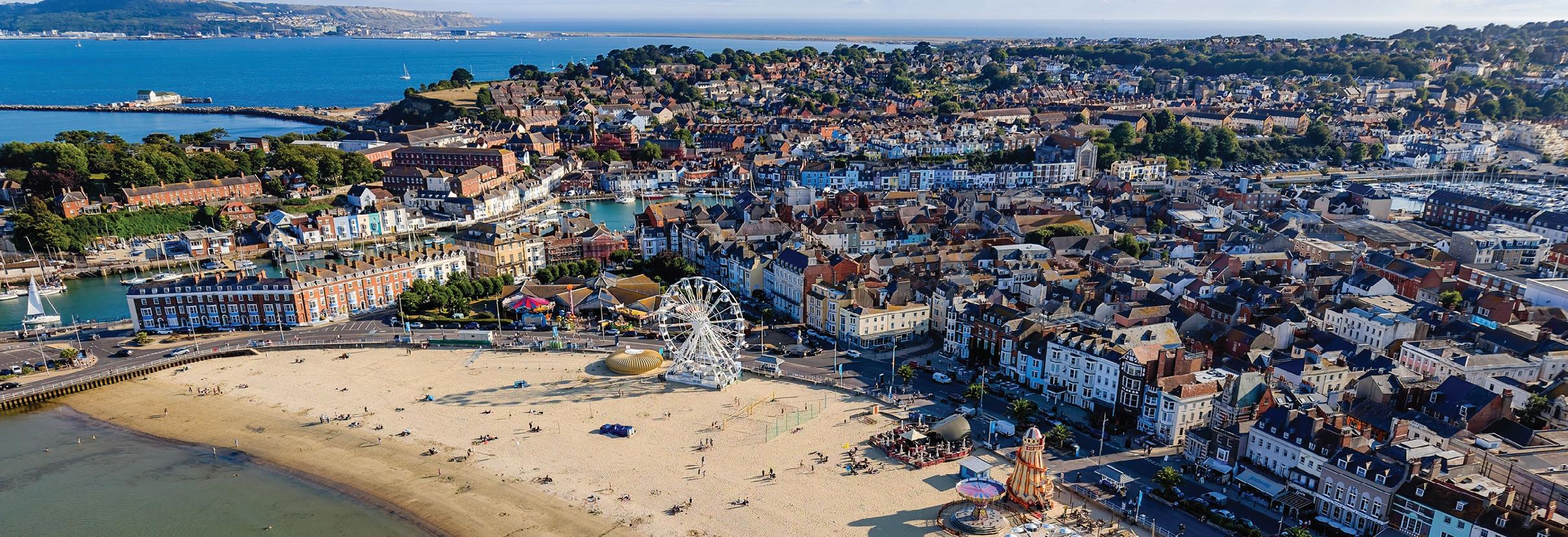
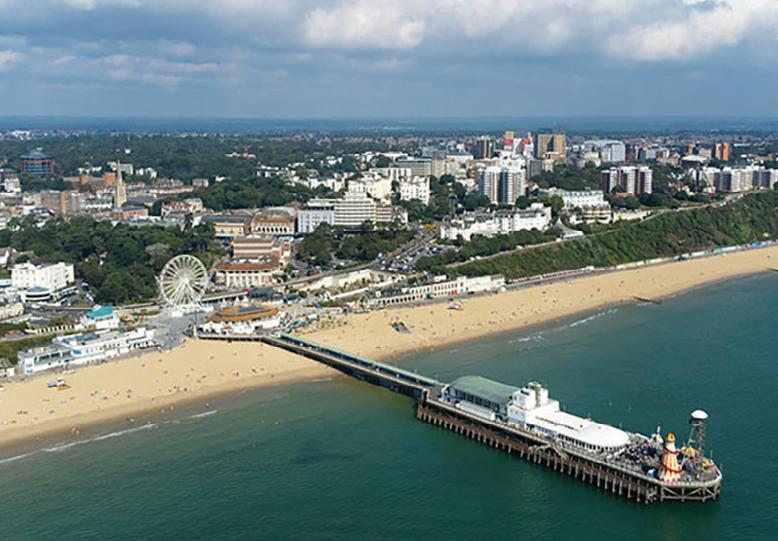
More than 200 hospitality bosses, including leaders from Butlin's, Haven, Hilton, IHG Hotels & Resorts, Merlin Entertainments, Parkdean Resorts, Travelodge and Whitbread, have now urged the Government to scrap this unfair levy. They warn it will hit families hardest, putting jobs at risk and draining money from local businesses and communities.
The UK already faces some of the highest taxes on holidays in Europe. The proposed visitor levy would add an extra £100 or more to a two-week family holiday in the UK. Think about that for a moment. We're talking about slapping a tax on hard-working people seeking to take a break, to enjoy a family holiday. It's frankly outrageous.
As Allen Simpson, Chief Executive of UKHospitality, rightly put it: 'Holidays are for relaxing— not taxing.' The sector already pays billions in business rates, employment taxes and VAT at 20%—double the rate of competitors in France, Italy, Spain or Portugal. And now they want to add more?
I do hope the public see this for what it is: a tax grab by robber barons who really have no idea how hospitality works. The impact extends far beyond accommodation providers. Fewer visitors mean lower spending at restaurants, cafés, pubs, taxi firms and shops. In many coastal communities that rely on tourism for survival, this could be devastating. Fewer visitors mean fewer local jobs, fewer shifts and fewer opportunities.
To even think of taxing holidays is beyond the pale. Do not turn the Great British break into a luxury. Scrap the holiday tax!!
On a brighter note, there is some genuinely good news to celebrate. The opening weekend of the Six Nations demonstrated exactly why pubs matter to communities and why they deserve our support, not additional burdens.
At The Commercial Oven Store, we take great pride in being your go-to destination for all your commercial oven needs.
We understand that when it comes to running a successful business, having the right equipment is crucial. That’s why we have dedicated ourselves to providing top-notch products, coupled with expert advice, to help you make informed decisions and achieve your goals.
As a supplier of commercial ovens, we have established strong partnerships with leading manufacturers in the industry. By working closely with these renowned brands, we ensure that our customers have access to a wide range of high-quality ovens that meet the diverse needs of various businesses.
Whether you’re in the food service, hospitality, or catering industry, we have the perfect oven to suit your requirements.
New data from The Oxford Partnership reveals that across Thursday 5th and Saturday 7th February, pubs sold 11.4 million pints of draught beer and cider, with the average pub serving 349 pints over the two days and generating an estimated £1,805 in income per venue.
Rate of sale rose by 6.6% compared with the previous weekend, whilst sales were up 0.9% year-on-year.
This is a powerful indication of how the public value pubs, particularly during major sporting events. Footfall increased by 4.0% compared with 2025, and customers spent an average of 163 minutes in venues—four minutes more than the previous year. These aren't just statistics; they represent real people coming together, spending time in their local communities, supporting local businesses.
It's precisely why decisions like the proposed holiday tax are so misguided. When given the opportunity, people want to spend their money in hospitality venues. The sector doesn't need more taxes—it needs support.
More good news: congratulations to Craft Union Pub Company, who has proudly reached the £1 million fundraising milestone towards local charitable causes for the second consecutive year.
Their community pubs across the UK came together to raise an incredible £1,358,422 for local causes as part of their nationwide Make It A Million campaign.
And good luck to Hospitality Action, who have launched Hospitality Rides as challenge organisers set their ambition to raise over £500,000 for leading hospitality charities LTC and Only A Pavement Away in 2026.
It's great to see the sector, despite its current difficulties, giving back to communities. This is what hospitality does best—bringing people together, supporting local causes, creating jobs and opportunities. These are the stories we should be celebrating and supporting, not undermining with ill-conceived tax grabs.
The contrast couldn't be starker: an industry under immense pressure, yet still finding ways to support communities and drive economic activity, versus a government seemingly intent on taxing it into submission. Something has to give—and it shouldn't be our hospitality sector.
Visit our website at www.catererlicensee.com to sign up for our twice weekly e-newsletter.
I can always be contacted at edit@catererlicensee.com



“Holidays
(CONTINUED FROM FROM COVER)
Bosses warn that “holidays are for relaxing, not taxing”, with the proposed tax meaning Brits would face an extra £100 or more for a two-week holiday in the UK. It could force families to shorten trips, skip travel altogether or head overseas, spending their money elsewhere.
The letter also says there will be significant damage to local communities across England that rely on tourism for survival, as fewer visitors mean fewer local jobs and lower spending at local businesses.
“Hospitality and tourism supports three million UK jobs, from cleaners and reception staff to chefs and entertainers.
“Fewer visitors means fewer shifts, fewer jobs and fewer opportunities — particularly in the entrylevel and return-to-work roles which the government is focused on.” The letter said
“RELAXING NOT TAXING”
Allen Simpson, Chief Executive of UKHospitality, said: “Holidays are for relaxing – not taxing. Whether you enjoy a city break, a rural retreat or building sandcastles on your beach holiday, you’re already paying your fair share of tax.
“In fact, it’s one of the highest tax rates for visitors in Europe and the holiday tax will only increase that further.
“We are so lucky to enjoy these wonderful islands and we should be encouraging people to visit every part of our country – not taxing them for doing so. The Government needs to scrap the holiday tax.”
3 MILLION JOBS
The letter, signed by 200 hospitality and leisure CEOs, said: “This ‘Holiday Tax’ will hit families hardest, puts jobs at risk, drain money from local businesses and communities and undermine the Government’s growth agenda. Holidays are for relaxing, not taxing.
“For millions of hardworking families, a UK holiday is their chance to switch off and spend quality time together.
“For many, this tax will make their holiday unaffordable, meaning families will shorten trips, forgo a break altogether, reduce their spending with pubs, restaurants, events, leisure activities and local attractions, or travel overseas – spending their money and creating jobs elsewhere.
“Hospitality and tourism supports 3 million UK jobs, from cleaners and reception staff to chefs and entertainers. This is particularly true for coastal areas, which are at the heart of our national renewal. Fewer visitors mean fewer shifts, fewer jobs and fewer opportunities — particularly in the entry-level and return-to-work roles which the Government is rightly focused on.
“The impact of a Holiday Tax goes well beyond the people who provide accommodation. Fewer visitors mean lower spending at local businesses like restaurants, cafes, pubs, taxi firms and shops. In many places, it is tourist spending which keeps high streets alive, supporting the small businesses that define our communities.

“The UK’s hospitality sector is already under pressure, with rising business rates, energy costs, tax bills and employment costs. It already contributes billions of pounds in tax, through business rates, employment taxes and VAT, which at 20% is double the rate of competitors in France, Italy, Spain or Portugal.
“Do not turn the Great British break into a luxury. Scrap the holiday tax and back the families, workers and the businesses who make England worth visiting.”
The Government has indicated that, if introduced, any visitor levy in England would most likely be set as a percentage of the accommodation price rather than a fixed nightly fee. It has also suggested that elected mayors would be expected to determine an appropriate rate for their individual areas.
A consultation on proposals to grant English local leaders the authority to implement such a charge is open until 18 February.
In contrast, councils in Scotland and Wales already have the legislative powers required to introduce a visitor levy should they choose to do so.
Across parts of England, a form of visitor charge is already operating through local business improvement districts (BIDs), where hospitality operators have collectively agreed to apply an additional levy to customer bills.
In Manchester, a £1 per room, per night charge was introduced in 2023 and generated £2.8 million in its first year. The Manchester Accommodation BID, which represents 74 hotels and serviced apartment providers across the city, said the revenue has been used to fund marketing activity aimed at driving demand during traditionally quieter occupancy periods.
Liverpool followed suit in 2025, with its own accommodation BID bringing in a comparable scheme. Elsewhere in the UK, Edinburgh is set to introduce a 5% charge on hotel, B&B and holiday accommodation bookings from this summer. Aberdeen and Glasgow have also approved plans to implement a visitor levy, while some local authorities – including Orkney and Shetland – have opted not to proceed. Internationally, tourist taxes are already well established in a number of major European destinations, including Paris, Rome and Brussels.
A Government spokesman said: “Tourists travel from near and far to visit England’s brilliant cities and regions.
“We’re giving our mayors powers to harness this and put more money into local priorities, so they can keep driving growth and investment in the economy, supporting thriving communities.
“We expect any new charges to be modest and in line with other countries, and it is for mayors to consider the right level for their area.”

By Filip Linek is the Founder and CEO of FLAE Robotics

Artificial intelligence tools are reshaping travel searches by offering instant, customized trip plans that skip conventional booking sites. Google's AI Overviews and ChatGPT provide personalized itineraries, rates, and recommendations without requiring users to visit aggregator platforms like Expedia or Booking.com. More than two-thirds of U.S. travelers turn to AI for researching destinations, over half use it to plan activities, and a significant portion book trips directly from those suggestions.
The rise of the internet economy reshaped industries two decades ago through a new wave of intermediaries. These aggregators built power by monetizing search traffic through ads and transaction fees. They became web gateways, turning discovery into a business model that reshaped online search and decision-making. Whoever controlled discovery captured revenue, creating the foundation of digital commerce. That model now faces disruption. Generative AI changes how people get information online. Apps like OpenAI's ChatGPT and Google's Gemini engage users in conversation and generate direct answers, not lists of links. By reducing the need to click through to other sites, these systems erode aggregators' gateway function and ability to capture user intent at the top of the funnel, which is the foundation of their traffic and revenue. In travel, generative AI threatens giants like Expedia and Booking.com by transforming online discovery. As conversational AI tools answer questions directly, traditional platforms risk losing their gateway role. Incumbents must shift from functional efficiency to emotional engagement, adapt to AI-driven ecosystems, and reframe data advantages. Success depends on delivering personalized, inspiring experiences that keep travelers engaged throughout their journey.
Online travel is the perfect test case for how AI could upend the aggregator model. Expedia and Booking.com dominate digital travel, running platforms that handle about half of global bookings. Like all aggregators, they thrive on scale, where more travelers attract more suppliers, making the platforms essential, which lets them negotiate better terms, grab larger commissions, and charge higher ad rates. To sustain that scale, online travel agencies chase early discovery demand with paid prominence on Google, which commands 90% of global search. Marketing eats their biggest budgets, with Expedia burning more than half its 2024 revenue, $6.8 billion, and Booking.com spent about 30% of its revenue, over $7 billion. AI scrambles those economics. Google holds travelers longer in its AI-boosted search for trip planning. Bookings may still hit agencies, but discovery drifts from their sites, starving cross-sells and network effects. It could worsen. Generative AI aids planning now, but search engines and startups test agentic AI that acts on its own after grasping goals, tweaking itineraries via linked systems. Entire trips could be planned and booked inside AI, skipping sites entirely, handing newcomers control of the intent-to-decision path.
AI-driven travel search is upending Google and the hotel industry's reliance on website traffic for revenue. Tools such as ChatGPT and Google's Gemini now deliver instant accommodation rundowns, sidestepping brand sites entirely and sparing travelers the slog of multiple clicks. Chains, commanding 72% of the US room supply, might initially gain from their data-rich sites, which are ripe for AI extraction of rates, perks, and facilities, yet this masks bigger risks to visibility as answers consolidate away from direct visits.
As travellers increasingly turn to personal AI assistants for planning and decision-making, hotels must fundamentally rethink their digital strategy. Being merely “visible” online is no longer enough; offerings must now be machine-readable and action-ready. For AI models acting on behalf of users, content and inspiration alone are insufficient. What truly matters is the ability to complete a booking and process payment. Achieving this requires standardized, secure APIs that allow personal language model assistants to interact directly with availability, pricing, policies, and payment systems. This is where a new category of AI infrastructure begins to emerge.
Personal AI assistants act as an intermediary layer between hotel systems and user-facing assistants. Instead of forcing individual hotels to manage complex integrations with multiple AI platforms, this layer provides a unified interface for queries, bookings, and payments. Hotels
become AI-ready, discoverable by decision-making models, while retaining full control over pricing, policies, and direct guest relationships. This shift does not mark the end of hotel websites but rather a redefinition of their purpose. Instead of serving as the primary transaction point, websites evolve into sources of trust, brand identity, and contextual depth, while transactional logic moves into the API layer. Content-rich websites that share local insight, authentic storytelling, and a human perspective on the destination remain valuable. They serve not as gateways but as reference points that both guests and AI systems can use to validate choices.
Independent and boutique hotels may be especially well-positioned in this AI-driven landscape. A chef curated 48-hour itinerary, a profile of the artist behind a signature interior piece, or a seasonal narrative spanning winter après ski menus to summer rooftop aperitifs all provide the contextual richness that AI models increasingly rely on as user queries become more conversational and specific. Combined with readiness for direct AI-driven bookings, this creates a new form of competitiveness defined not by web traffic but by accessibility to intelligence.
AI-powered receptionists are automating front desk operations for hotels, handling bookings, guest requests, and communications through email, WhatsApp, and voice. These tools run around the clock with no training costs, helping cut staffing expenses by 20% to 50% during labor shortages. They streamline check-in and check-out processes for both online and in-person guests, manage extras such as spa treatments and rentals, and integrate with property management systems, booking engines, and channel managers.
Artificial intelligence is redrawing the battle lines of online travel, wresting control from established players and handing tools to sidestep the middlemen. What matters most is the revolution in how journeys begin. AI does not just answer queries; it anticipates desires, dismantling old hierarchies of search and opening doors for nimble newcomers with bold ideas. The booking behemoths, which were built on lavish ad spends to own Google's top spots, now scramble to protect their digital real estate, hoping rapid reinvention alongside Big Tech keeps their empires intact. Yet the prize will go to those who master subtlety over speed, trading rote transactions for deeply tailored adventures where firstmover agility trumps all. Hotel sites will endure if they evolve. Bland chain listings may fade in AI's long summaries, while those rich with unique stories stand to capture the spotlight.
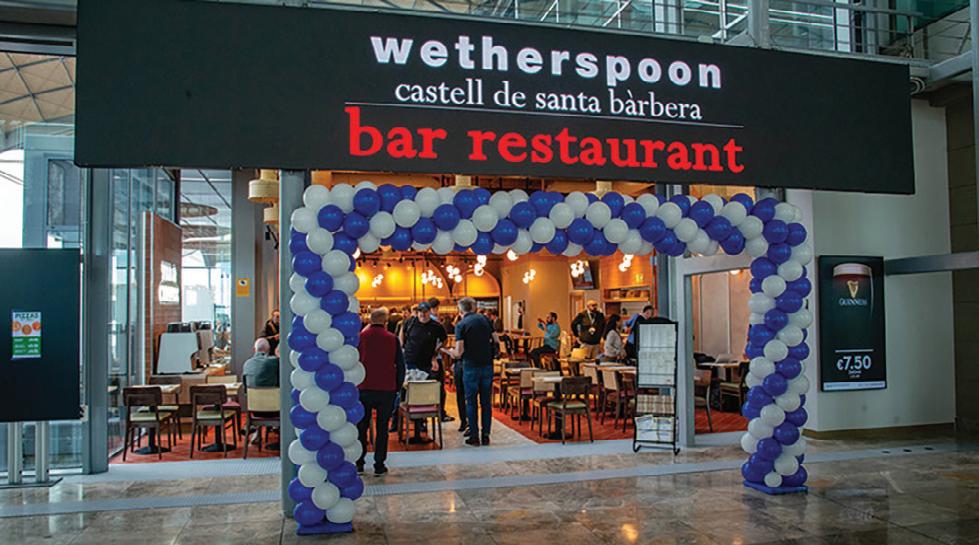
J D Wetherspoon has opened its first pub in continental Europe (Monday February 9) – at Alicante-Elche Miguel Hernández Airport in Spain.
The franchise partner, Lagardère Travel Retail, is operating the pub. The pub, Castell de Santa Bàrbera, is located in departures (airside). The new-build pub is open seven days a week from 6am to 9pm.
It offers almost 1,000 square foot (93 square metres) of customer space on one level, together with an external terrace with customer seating.
Food is served at all times up to an hour before closing. The menu includes many meals available in Wetherspoon pubs in the UK, including breakfast dishes, burgers and pizzas, as well as local dishes including garlic prawns and Spanish omelette.
Wetherspoon founder and chairman Tim Martin said: “We are delighted to
have opened in Spain.
“We believe the pub will be popular with a wide range of customers travelling home from Alicante Airport, including those travelling home to the UK and those using the terminal for trips to England and beyond.
“We aim to open a number of pubs overseas in the coming months and years, including those at airports.”
Lagardère Travel Retail Spain & Portugal chief executive officer, Javier Cagigal, added: “At Alicante Airport, our team has focused on understanding passenger expectations and translating that insight into a dining offer that is relevant and appealing.
“This opening reflects our locally driven approach and the way we work with partner brands across our portfolio.”
In a competitive hospitality market, pubs and hotels can’t afford to be subtle. If you serve food, people need to know it immediately – and according to HFE Signs, one of the UK’s leading hospitality signage suppliers, food banners remain one of the most powerful ways to turn passing trade into real revenue.
“Food banners are one of the highest-impact products we sell to pubs and hotels,” says a spokesperson from HFE Signs. “They answer the customer’s question before they even ask it: Do they serve food here?”
From “Breakfast Served Here” banners catching early-morning footfall, to “Food Available All Day” messages aimed at lunchtime trade, and “Sunday Roasts” banners driving weekend covers, clear outdoor signage works where decisions are actually made – outside the venue.
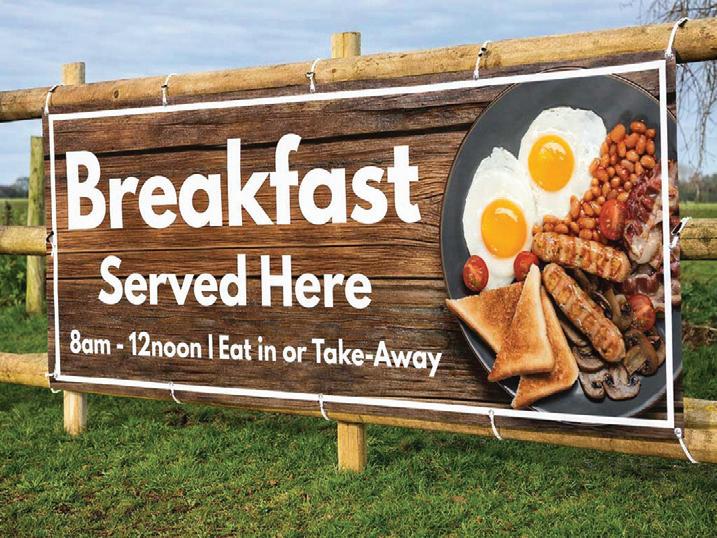
Unlike menus hidden indoors or promotions lost online, food banners are bold, visible and constant. Positioned on railings, fences, walls or frontage areas, they promote food offers all day, every day.
“Our customers tell us the same thing time and again,” explains HFE Signs. “Once the banner goes up, people start coming in specifically asking for food they didn’t realise was available.” Speed is crucial in hospitality marketing. Menus change, seasons shift and opportunities come and go quickly. HFE Signs offers next-day delivery on many food banner products, allowing pubs and hotels to react fast –whether launching a new breakfast offer, promoting a midweek food deal or capitalising on Sunday trade. “We know pubs and hotels can’t wait weeks for signage,” says HFE Signs. “That’s why fast turnaround is built into what we do.”
But speed alone isn’t enough. Outdoor food banners need to look professional and last. Poor-quality signage creates poor expectations, especially when promoting food. HFE Signs produces banners using durable materials and high-quality print, ensuring colours stay vibrant, text stays sharp and the banner continues to represent the standard of food inside.
Design is another area where operators often struggle. Not every pub or hotel has the time or expertise to create effective artwork, which is why HFE Signs includes a free simple design service with every order.
“We make it easy,” says the team. “Our designers create clear, bold food banners that work in real-world conditions – not cluttered designs that don’t read from the pavement.”
Food banners are also one of the most cost-effective marketing tools available. With a one-off cost and ongoing visibility, they deliver long-term exposure without ongoing advertising spend – making them ideal for boosting food sales without stretching budgets.
With over 30 years’ experience, thousands of five-star Trustpilot reviews, and a reputation for reliability, HFE Signs has become a trusted supplier for pubs and hotels across the UK.
“Our goal is simple,” concludes HFE Signs. “Help hospitality businesses get noticed, get customers through the door, and sell more food.”
New data from The Oxford Partnership reveals that the opening weekend of the 2026 Guinness Six Nations delivered a significant uplift for the UK’s on-trade, with pubs and bars benefiting from increased footfall, longer dwell times and strong drinks sales.
Across Thursday 5th and Saturday 7th February, rate of sale rose by 6.6% compared with the previous weekend, while sales were up 0.9% year-on-year versus the equivalent fixtures in 2025. In total, 11.4 million pints of draught beer and cider were sold, with the average pub serving 349 pints over the two days, generating an estimated £1,805 in income per venue.
Welsh supporters led the way, driving the highest uplift and contributing an average of 86 extra pints per pub. Stout was the standout category, growing by 7.4% compared with last year, significantly outperforming the overall market, while Guinness emerged as the highest-selling brand, overtaking Carling. World lager continued to dominate market share, with Cruzcampo recording the strongest rate of sale, as consumers increasingly favoured premium international brands over craft, core and standard premium lagers.
The data also highlights positive shifts in consumer behaviour, with footfall rising by 4.0% compared with 2025, outpacing volume growth and indicating stronger engagement in venues. Thursday trading proved particularly strong, with visits up 7.2%, reflecting both fixture scheduling and growing appetite for midweek sports occasions.
Urban locations performed especially well, recording an 11.2% uplift in footfall, while city centres saw the
biggest increase in dwell time. On average, customers spent 163 minutes in venues across the two days, up four minutes year-on-year, representing a 2.5% increase. Urban, suburban and rural venues all experienced longer visits, underlining the broad-based nature of the uplift.
While the shift of the opening fixture from Friday in 2025 to Thursday in 2026 partly explains the stronger performance, the results point to sustained consumer enthusiasm for live sport in pubs and bars.
Commenting on the findings, Alison Jordan, CEO of The Oxford Partnership, said: “Week One of the Six Nations once again underlines the vital role that major sporting events play in driving footfall, dwell time and revenue for pubs.
“Selling over 11 million pints in just two days shows the continued power of live sport to bring people together in venues. What’s particularly encouraging is that this growth isn’t just about volume, as customers are staying longer, spending more time in pubs, and increasingly choosing premium and world lager brands.
“In the current trading environment, where many operators are under significant cost pressure, these occasions provide a crucial opportunity to rebuild margins and confidence. Our data shows that when the product, atmosphere and occasion align, consumers are still very willing to engage with the on-trade.
The Six Nations continues to be one of the most important trading periods of the year, and Week One 2026 has set a strong benchmark for what’s possible.”
Colombo Kitchen, with restaurants in Worcester Park, Surrey and Putney, has been named Sri Lankan Restaurant of the Year at the fourth annual Nation’s Curry Awards 2026, held at the Cedar Court Hotel, Huddersfield on Monday 9 February 2026.
Selected from a shortlist of eight Sri Lankan restaurants from across the UK, the award celebrates excellence across the country’s curry, hospitality and quick service sectors, recognising standout culinary talent and business achievement in restaurants, takeaways and service operations. Organised by Oceanic Awards, the Nation’s Curry Awards bring together a UK wide community of operators across the broader curry and South Asian dining landscape, spotlighting innovation, consistency, service excellence and the contribution of award winning businesses to their local communities and the national hospitality sector.
The recognition underscores Colombo Kitchen’s commitment to authentic Sri Lankan cuisine, seasonal sourcing and a flavour philosophy that bal-


ances spices, coconut and heritage techniques across both neighbourhood restaurants. Under the creative leadership of Executive Chef and Founder Sylvia Perera, Colombo Kitchen has steadily built a reputation for vibrant, culturally rooted cooking, anchored in precision, generosity and warm neighbourhood hospitality, with Sylvia continuing to oversee menus and cooking across the Worcester Park and Putney sites.
Sylvia Perera, Executive Chef and Founder of Colombo Kitchen, said: “We are incredibly honoured that Colombo Kitchen has been named Sri Lankan Restaurant of the Year at the Nation’s Curry Awards.
This recognition reflects the dedication of our passionate team across both restaurants and the continued support of our community, from loyal local guests to diners discovering Sri Lankan food for the first time. Awards like this inspire us to keep sharing the depth, warmth and vibrancy of Sri Lankan cooking through everything we do at Colombo Kitchen.”
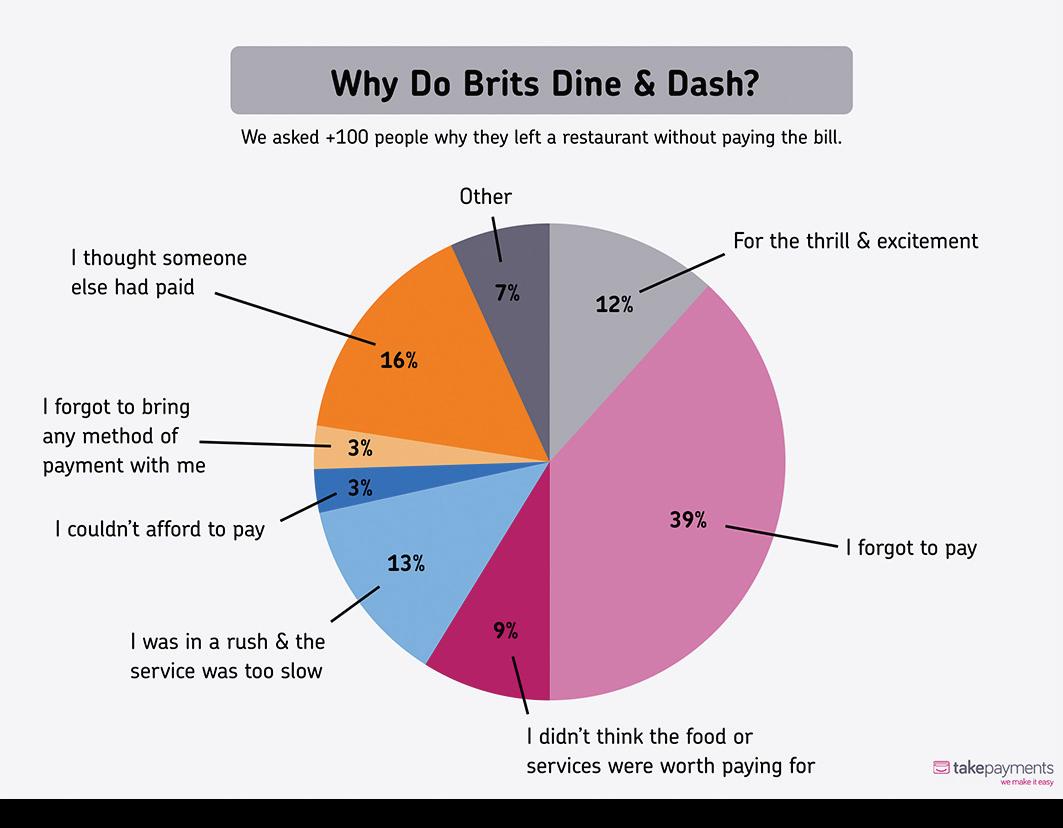
New research from takepayments has revealed that 8% of Brits have admitted to leaving a restaurant without paying for their meal.
The card payment solutions provider surveyed 1,500 UK adults to investigate what restaurant visitors expect from their dining experience.
The research reveals that two-thirds of diners (66%) are deterred from booking when a restaurant asks for a deposit, with 21% going so far as to say they’d book elsewhere, whilst 44% said they’d still book even if they were discouraged.
One in eight diners said they’ve been a ‘no show’ for a restaurant booking, with nearly two-thirds (60%) saying they simply forgot to cancel. Another 1 in 6 (15%) said they were too embarrassed to contact the restaurant, and the same amount stated that it was ‘too much effort’ to get in touch.
Even in fast-food environments, diners still crave personal interaction. When it comes to ordering and paying, dealing directly with a member of staff was the most popular option for both sit-down and fast food restaurants.
50% prefer to order with a staff member in sit-down restaurants, while this preference reduces to 38% for quick-service establishments. The most significant contrast was ordering through a self-service kiosk. Whilst 37% chose this option for QSRs, only 6% chose it for sit-down restaurants. Interestingly, only 15% prefer to order using a QR code for both types of restaurants.
59% of diners want to pay a staff member directly at a sit-down restaurant. Paying using a kiosk (34%) follows closely behind paying staff (38%) in fast food restaurants. Paying through a QR code was the least popular option for both types of restaurants.
One in six diners (17%) said they never tip restaurant staff. A third said they always tip to support staff, whilst 37% said they tip depending on the level of service. 73% of the respondents said they want more clarity over whether tips are fairly distributed throughout the staff.
When it comes to service charges, over a third (37%) strongly believe that a service charge shouldn’t be added automatically to their bill, and nearly 1 in 10 actively avoid a restaurant after this practice (9%).
43% of diners review the amount of service charge a restaurant imposes before deciding whether to eat there, and 24% avoid establishments where the charge isn’t clear.
WHAT CAN RESTAURANTS TAKE AWAY FROM THE FINDINGS?
Darren Larkman, Field Sales Director at takepayments (now a Global Payments company):
Streamline booking systems to reduce ‘no-shows’ - “That could be an easy-to-use online system, clear instructions for walk-ins, or flexible deposits. Automated reminders and easy cancellation links help diners cancel responsibly, freeing up tables and protecting revenue. It’s about making things easier for customers while keeping businesses running smoothly.”
Offer multiple options for ordering & paying to provide a great customer experience across generations - “Our research shows ordering and payment preferences vary by age, particularly in fast food. Younger diners (18–24) are more likely to use self-service kiosks (49%) and QR codes (24%), whereas those over 55 prefer to speak with staff (52%). Offering a mix of options is just the start — each should be seamless and secure, with staff trained to assist those less confident with technology. This keeps queues moving, improves the experience, and builds trust to encourage return visits.”
Make use of self-service kiosks, but don’t forget the human touch“Even in fast food restaurants, many still like paying a staff member — the human touch matters. But kiosks are catching up fast; they speed things up, give customers more control, and support staff during busy periods. The key is making kiosks easy to use, well-signed, and well-maintained while still having staff available for face-to-face support. That way, every customer gets the experience they want, and businesses avoid losing sales.”
Provide transparency around tipping & service charges - “Transparency builds trust, reduces complaints, and encourages repeat visits. Clearly explain how tips are distributed - display information on menus or at tables so diners know their money supports staff fairly. Make service charges optional where possible to avoid deterring customers. Train staff to explain tipping policies and offer varied payment options — cash, card, QR codes, and mobile, so everyone can tip in the way that suits them.”
Take steps to avoid customers ‘dining and dashing’ - “Have a clear payment process so every table knows how and when to pay - at the table, the till, or via kiosk. Table ordering systems reduce accidental non-payment while keeping things smooth. Assign sections to staff and train them to handle issues in a calm and professional manner. Consider pre-payment or deposits for large groups, and use CCTV visibly as a deterrent and for evidence when needed. If CCTV is used, inform customers to maintain transparency.”
Market Taverns has announced the appointment of Miles Slade as Managing Director, alongside Chris Gosling as Chief Accountant, strengthening its senior leadership team as the business builds on positive trading momentum and prepares for its next phase of growth.
Miles joins Market Taverns with extensive experience in the hospitality sector, including senior roles at RedCat Pub Company, Urban Pubs & Bars, and JD Wetherspoon bringing both his expertise and a genuine passion for pubs to the group.
“Market Taverns is a truly distinctive business, a collection of characterful London pubs, each with its own identity, heritage and loyal community. I’m excited to be joining Rolf and the team and to help shape the next chapter of the business,” said Miles.

Chris Gosling joins as Chief Accountant, bringing strong financial and operational experience from his previous senior roles with the St. John Restaurant Group, Pizza Storm
and Corbin & King. He will play a key role in supporting the continued development of the business.
The appointments follow a strong trading period for Market Taverns, with Christmas trading performing well and January delivering a solid performance despite the ongoing challenges facing the hospitality industry.
As part of this transition, Market Taverns confirms that Adrian Laws will be stepping away from the business to pursue new opportunities. Adrian joined the company during a period of senior management transition and provided valuable support during that time.
Owner Rolf Munding said, “I would like to thank Adrian for his contribution and commitment to Market Taverns during an important phase for the business, and we wish him every success in the future. At the same time, I’m delighted to welcome Miles and Chris as we look ahead to the next stage of Market Taverns’ growth.”

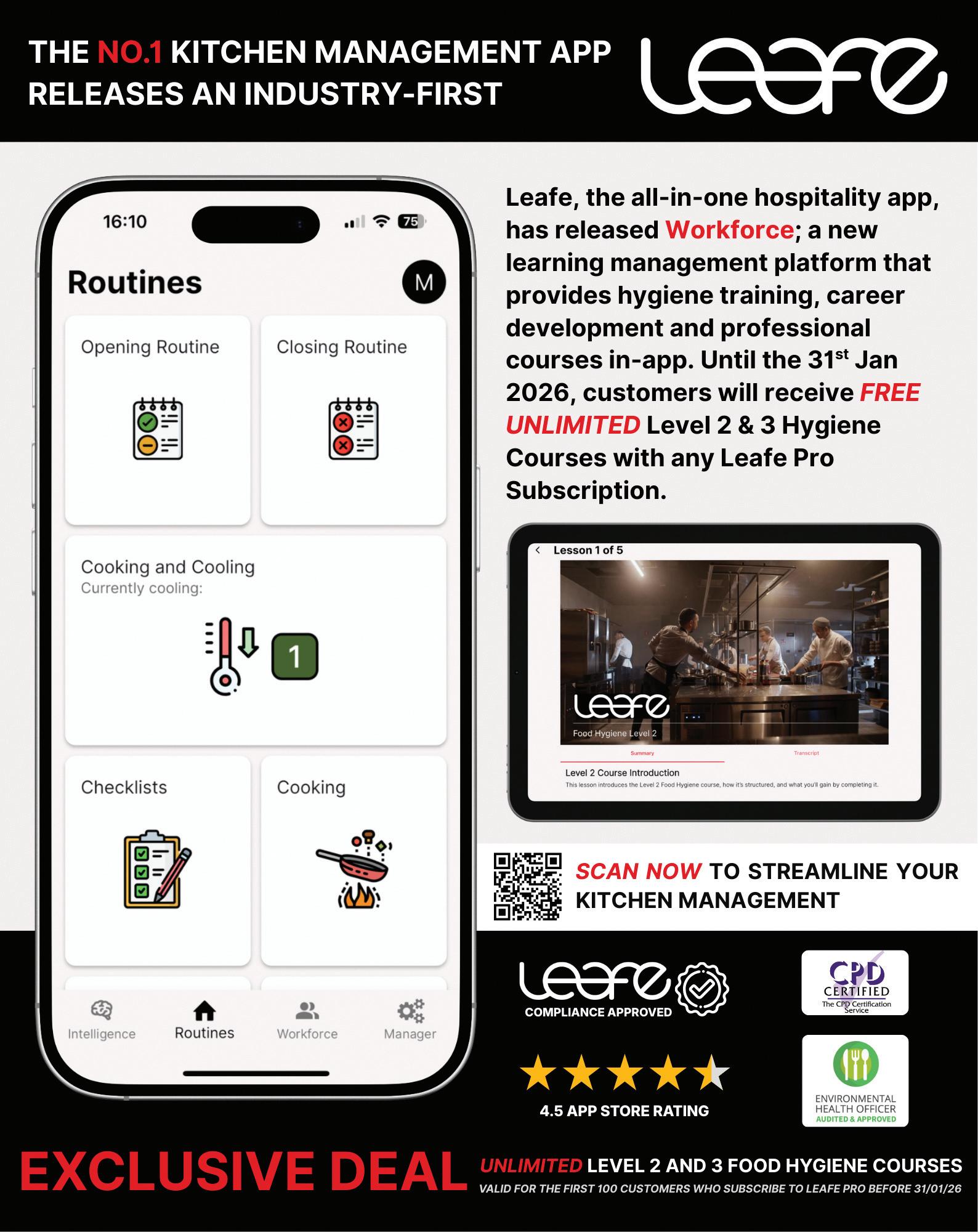
Hospitality operations app Leafe has launched an industry-first deal giving customers unlimited food hygiene training and certifications, designed to be affordable for both small businesses and multi-site groups.
Founded by chefs in 2021, Leafe is an all-in-one hospitality app that streamlines kitchen management by gamifying record-taking.
To celebrate the launch of the company’s new Learning Management System (LMS), Leafe is introducing a special offer for the first 100 customers who subscribe to Leafe Pro. Subscribers will gain unlimited access to Level 2 and 3 Food Hygiene Courses for a full year - providing thousands of pounds’ worth of training at no additional cost.
Leafe Pro represents a major step forward for food technology. Until now, restaurants have relied on lowtech tools or expensive consultants. Leafe delivers these capabilities in one accessible platform, integrating smoothly into any operation.
Sam Chapman, Brighton-born Co-Founder and CEO, says: “We’re incredibly excited to open this offer to the public alongside our new LMS. It’s another way for Leafe to bring enterprise-grade benefits to hospitality businesses of any size, without the colossal price-tag.”
Serving more than 18,000 users across 800 sites worldwide, from foodtrucks and cafés to stadiums and fine-dining hotels, Leafe is already a trusted tool. Marco, Owner of Brorritos, adds: “Leafe Pro lets us prioritise growth, safe in the knowledge that our food safety is being looked after.”
Leafe’s new LMS, Workforce, brings gamification and team engagement to career development using the app’s already acclaimed UI/UX design. Workforce delivers high-quality, CPD-accredited courses and exams, and as part of the launch, the first 100 new Leafe Pro subscribers will receive unlimited courses for an entire year. Leafe Pro is available now

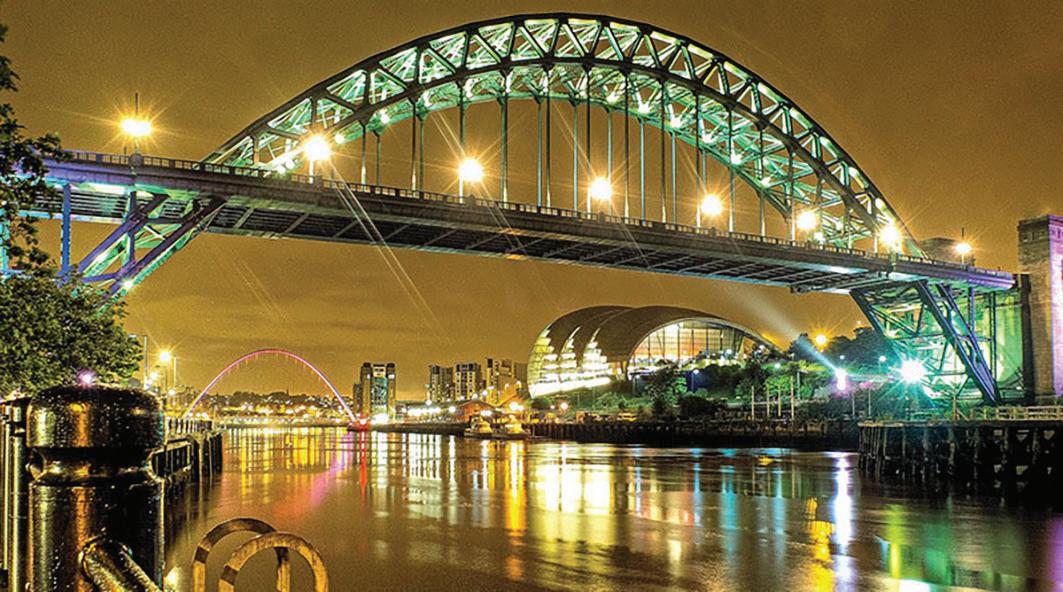
Hospitality growth in the UK is being supported by strong performance in the North, with new research from Northern Restaurant & Bar (NRB), in partnership with NIQ powered by CGA, revealing that all five of the country’s fastest-growing hospitality cities are located in the North and Scotland.
Newcastle emerges as the strongest-performing city overall, recording a +2.2% increase in licensed venues over the past year, followed by Chester (+2.0%), York (+0.9%), Glasgow (+0.2%) and Leeds (+0.2%). In contrast, major southern cities including London (-0.8%) and Birmingham (-2.9%) declined over the same period, underlining just how firmly the North is leading the UK’s hospitality recovery.
Traditional pubs continue to underpin this resilience. Northern pubs recorded +0.5% growth in like-for-like sales. Consumer loyalty is also stronger in the North, with 39% of consumers regularly visiting traditional drinking pubs compared to 35% in the South, helping to support sustained venue growth, despite challenging trading conditions.
The data also highlights regional differences in how consumers are responding to ongoing cost-of-living pressures. While concerns are more acute in the North, with 72% citing cost as a factor when deciding whether to
go out compared to 61% in the South, Northern consumers are prioritising quality over quantity when they do spend. Celebrating special occasions and investing in higher-quality food and drink are key drivers of spend, reinforcing the importance of experience-led venues. Customer satisfaction levels further reflect this focus on quality. Overall satisfaction with experience quality stands at 87% in the North, compared with 82% in the South, with Northern venues outperforming on cleanliness, menu range and speed of service.
For northern operators, the data offers genuine grounds for confidence. With the region’s cities consistently leading UK growth and consumers demonstrating stronger loyalty and higher satisfaction, the North appears best placed to capitalise.
Chris Brazier, Group Event Director for NRB26, said: “The North’s hospitality sector has always been built on strong community roots, genuine value and standout experiences, and this data proves just how powerful that combination remains. Despite continued economic pressures, Northern operators are finding ways to grow by focusing on quality, loyalty and creating places people genuinely want to return to. It’s a positive signal for the future of hospitality in the region.”
The British Beer and Pub Association (BBPA) has been awarded the Bronze Armed Forces Covenant Award, recognising its commitment to supporting serving personnel, veterans, reservists and military families across the pub and brewing sector.
The award follows the BBPA’s formal signing of the Armed Forces Covenant and confirms the trade body’s commitment to being an Armed Forces-friendly organisation.
Bronze status is awarded to organisations that demonstrate their understanding of the Covenant and actively promote support for the Armed Forces community within their workforce.
The recognition reflects the pub and brewing industry’s longstanding relationship with the Armed Forces and its role at the heart of local communities.
Across the UK, pubs and brewers continue to host remembrance events, bring veterans together, raise funds for military charities and provide welcoming spaces for service personnel past and present.
The BBPA is encouraging more pub and brewing businesses to sign the Armed Forces Covenant and work towards recognition under the Defence Employer Recognition Scheme.

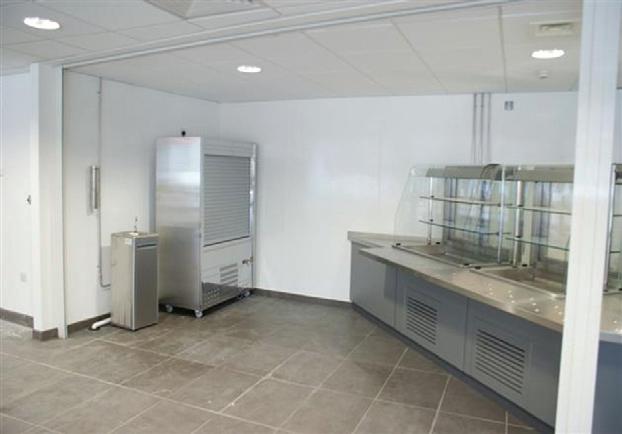
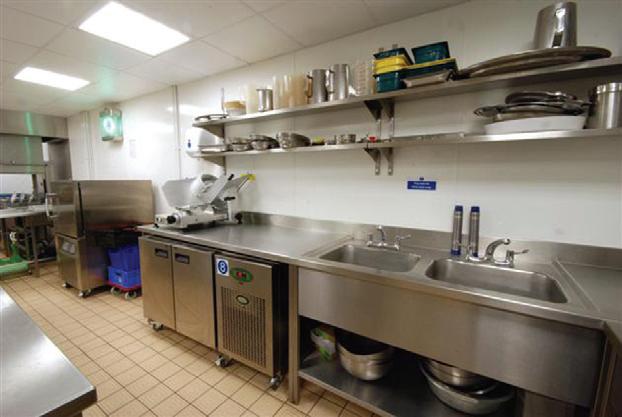
• Hygienic Wall Cladding & Ceiling Systems
• Available in White & 10 new exciting colours
• Complemented by colour coded matching trims
• Fire rated to BS476/7 Class 0
• Sheet sizes 2440 x 1220mm & 3050 x 1220mm
• Range of cladding sealants & adhesives
Emma McClarkin, CEO of the British Beer and Pub Association, said: “Receiving the Bronze Armed Forces Covenant Award is an important step in recognising the contribution of those who serve and have served our country.
“Pubs have always played a central role in bringing communities together, and this award underlines our commitment to ensuring veterans, reservists and service families are supported across our sector.”
Jonny Ball, Veteran and co-founder of charity the UK Afghanistan Veterans Community, said: “I am delighted to learn that so soon after signing the Armed Forces Covenant, the BBPA has been recognised with a Bronze Defence Employer Recognition Scheme Award.
This demonstrates that not only is the industry wanting Veterans, Reservists, Cadet Force Adult Volunteers and their families in a variety of careers across our diverse British hospitality sector, but that it is recognised by Defence as a good place to work too.
“I look forward to their members being inspired by this award, and as a Veteran, walking into any one of our great pubs and seeing this award and the Covenant displayed by others following their example.”
By Christian Mouysset Co-Founder – Sales at Tenzo

The hospitality industry is facing unprecedented challenges. Having survived the upheaval of COVID through innovative thinking and a rapid adoption of new tech, including apps and QR codes, the latest hikes in wage costs and business rates are pushing many to the edge. Cutting hours, shrinking menus, even reducing locations is one response but where does that leave a company’s long term growth plans?
This is an industry that has one big advantage: the power to achieve very rapid change. Effectively and quickly manipulating powerful levers, from inventory to staff, can have an immediate impact on profitability. Restaurant General Managers (GM) can boost the day’s sales with savvy menu and staffing decisions. Menu design can be optimised in real time based on ingredient costs to safeguard margins. But these swift, intelligent actions cannot be achieved with historic information hoarded at head office. To maximise opportunities and improve profit, decision makers need to be empowered with immediate access to real-time insight that supports their operational needs, explains Christian Mouysset, Founder, Tenzo.
In a low margin industry, unexpected events can eradicate profit overnight. For the hospitality sector, which is juggling food inflation, recruitment challenges and changing customer expectations, recent legislative changes have caused significant problems. Cost increases associated with increased employer National Insurance (NI) contributions, increased minimum wage – especially for under 21s – and the proposed changes to business rates have caused understandable outcry. Many have opted to reduce staff, cut trading hours and close sites, undermining both profitability and growth plans.
And yet, some chains are bucking the trend. Individual restaurants are thriving. While there is no magic formula for success, hospitality has one simple advantage over other business sectors: the ability to effect immediate change. Restaurants don’t have to wait weeks or months to see the impact of decisions: profitability can be impacted today. And that is an enormously powerful tool.
Sales on a cold day can be boosted by offering a spiced hot apple juice or a warming soup. Savvy inventory buying decisions can be leveraged in a promotional special offer. Effective staff management can minimise costs without affecting the customer experience. The value is both tangible and immediate. This can only be achieved, of course, if the people taking the decisions on the ground, the restaurant GMs, Assistant Managers, even Head Chefs, have real-time access to relevant, easily accessible information – and that is where far too many hospitality companies are failing.
Operating a profitable restaurant business is tough in any climate. Post COVID, many hospitality companies have diversified by running takeaway models alongside traditional eat-in options. They are leveraging diverse technologies, from apps to QR codes, to streamline booking and ordering and invested in a raft of systems to manage staff and inventory. But these tools do not provide the real-time insight required to empower decisionmakers, especially GMs, day by day.
Instead, information is collated and assessed, often on a spreadsheet, before finally being shared with the wider business. GMs get an updated report at least a week later – long after the time when any decision could have affected sales or profitability. Far too late to reduce food wastage or intelligently optimise staff levels.
Even worse, telling a GM that the restaurant had a great day last Tuesday and ‘do more of that’ is hardly going to boost morale. How many shifts have been worked since then? How many routine disasters averted? Good GMs are leveraging great people skills to manage both customers and staff; finessing supplier relationships when deliveries are late, short or damaged. They are fixing equipment and managing hygiene crises. They have no time for complex, detailed and outdated reports. To drive real change, GMs need quick, relevant insight that supports their complex, challenging role; a simple, highly visual tool that provides no more than three or four actionable, empowering pieces of insight every day. Consolidating the diverse and deep data sets created by the existing technology stack into a real-time insight resource can transform
the speed of decision making. In addition, AI tools can also make it easy for GMs to chat with the data and quickly understand how decisions affect the handful of Key Performance Indicators. Providing GMs with easy to consume, real-time data enables restaurant chains to embed profit-led decision making within day-to-day activity.
There are, of course, so many elements to running a successful restaurant. A restaurateur must have the magic combination of concept, ambience and location. A GM needs the diverse skill set and speed of response to manage a complex, high pressure environment. But intelligently manipulating diverse levers can also optimise profitability in realtime across the entire business.
A menu engineering matrix that identifies the top (stars) and bottom (dogs) menu performers allows a company to assess options to improve the profitability of each item by changing the ingredients or updating the description. Adding real-time insight into the mix means every change in ingredient price can be factored into this matrix, enabling the company to make the changes required to maintain a profit goal for each item, such as tweaking the recipe or opting for an alternate ingredient source. In addition to real-time tracking of menu item costs, detailed understanding of inventory provides vital insight into trends, from price volatility to wastage. Identifying wastage sources, incidents and patterns, enables companies to minimise over ordering and cut costs. Tracking staffing patterns and costs, especially in the light of the hike in minimum wage for under 21s, is also key to understanding not only wage costs but also determining future strategy, from recruitment to training.
No one could underestimate the challenges facing the hospitality industry in 2026. Customer spending is down, costs are up and the outlook is tough. But there are very real opportunities to improve performance and keep growth plans on track – and many of the foundations are already in place.
Hospitality companies have invested in a compelling tech stack over the past five years and they are excited about the possibilities of AI. The only way to maximise this potential and, critically, address the crippling cost pressures now imposed through staff costs and business rates is to leverage this tech stack. This means consolidating data and using it to empower individuals across the business in real time – especially at the sharp end where the impact can be immediately enjoyed.
community pub, the Five Bells on 126 High Street in Lower Halling, officially reopened on Saturday 7th February following a transformational combined investment of £183,000 from experienced licensee Lloyd Slythe and community pub company Admiral Taverns. This refurbishment will breathe a new lease of life into the Five Bells to elevate and modernise the overall look and feel of the pub – whilst still retaining its original, characterful features such as the open fireplace. The renovation will enable the licensee to further cement it as the goto community hub for local residents.
Passionate
commented: “I’m absolutely
Sunfly is undoubtedly the best-known name in Karaoke, having been formed in 1991. However, technology has come a long way since the 90s. Sunfly now have over 20000 HD Karaoke videos designed specifically for large screens. All songs have been digitally remastered for consistent audio quality. There are specially curated playlists and international content on all systems.
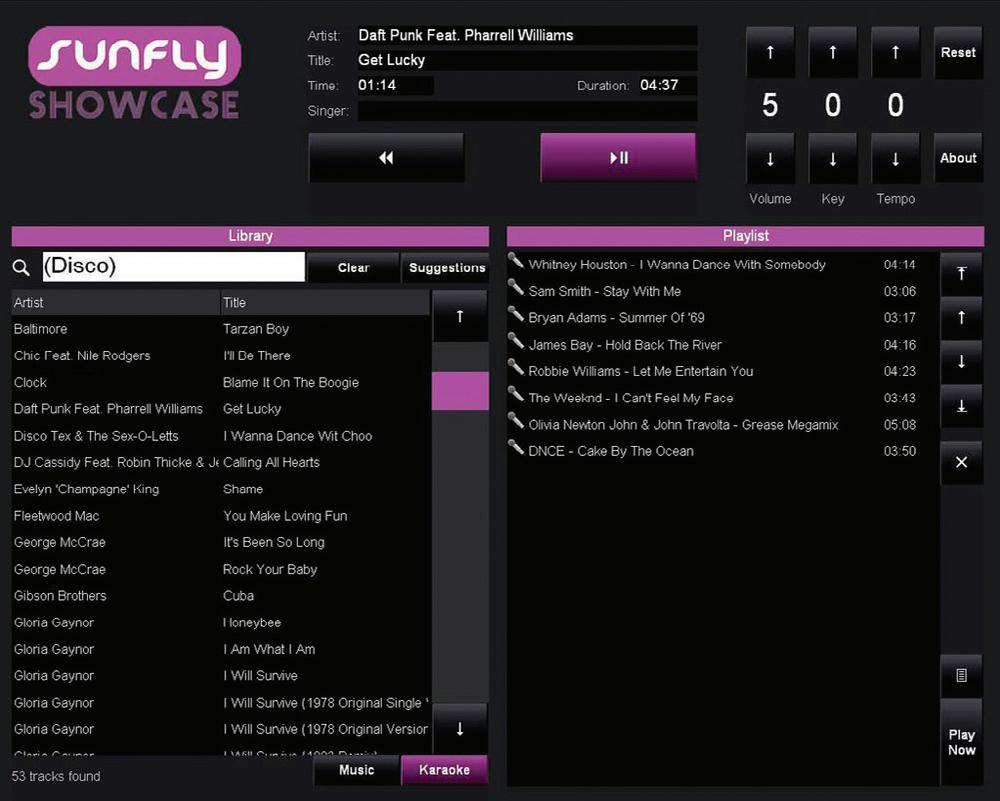
Sunfly now have a large range of online and offline systems. The most popular in the pub and restaurant market is the Sunfly Showcase Touchscreen System which features an intuitive interface and robust touchscreen designed for frequent use. Available for sale and on lease for just £100 + VAT per month for two years (then £25 per month).
We also have tablet-based systems such as the EVOBOX Club which is available for only £60 + VAT subscription per month, minimum one year.
In addition, we have partnered with SingPods who have a fantastic range of professional systems as well as their famous self-contained pods.
If you have an under-performing function room, you may be surprised to hear how easy and affordable it is to convert part or all of the room to a Private Karaoke room.
Customers can then book online and enjoy 2 or 3 hour timed sessions; bookings are managed with intuitive room management software. Contact us for a free consultancy or for a full build quote. ROI possible within 3 months.
All systems are fully licensed and legal, sales are reported to PRS every quarter. We also provide great 24/7 IT support. Visit our website today @ sunflysolutions.com to view our other products such as the Satellite Laptop and Wireless Microphones systems as
Gornall, Business
Ahead of the Welsh elections in May, UKHospitality Cymru has set out its six key policy priorities in a new report – ‘Serving Wales: a manifesto for growth’.
Its priority ask is proper reform of business rates, with a permanently lower multiplier for hospitality and leisure, funded by rebalancing the burden to reflect the rise of the online economy.
It is also calling for the next Welsh Government to immediately revisit the business rates support available for the current financial year.
ITS OTHER RECOMMENDATIONS INCLUDE:
A newly commissioned Tourism and Hospitality Governmental Review to assess the cumulative impact of regulation and taxation on hospitality, opportunities to reduce this and to create mechanisms for greater engagement with the sector.
A place-based approach to infrastructure and connectivity, including increased rail capacity to west and north Wales, accelerated delivery of the South East Wales Metro, and addressing chronic congestion on the M4 corridor, which is a major constraint on economic activity.

The report also highlights the growth potential of hospitality. It shows that, with the right economic conditions, the sector can create an additional 17,000 jobs and add £520 million to the Welsh economy by 2031.
David Chapman, Executive Director of UKHospitality Cymru, said: "Hospitality is at the heart of Welsh life and the foundation of our local economies, communities and culture.
“It’s a sector with huge potential to grow, which the next Welsh Government should be incentivising. That needs to begin with full reform of the broken business rates system. The current tweaks are nothing more than tinkering around the edges and have left hospitality paying even more.
“Proper reform that rebalances the system in favour of hospitality and leisure is the easiest way to unlock investment, drive economic growth and regenerate Welsh high streets.
“The next Welsh Government should seize this opportunity to put hospitality, leisure and tourism at the heart of Welsh economic and social policy.
As well as working with the sector directly, the Government should engage with the entire farm-to-fork supply chain to lift our communities, high streets and visitor economy.
“Connectivity is vital. A place-based approach to transport infrastructure is essential. Improved train routes with increased capacity and a less congested M4 corridor would be huge for the Welsh economy.
“Hospitality businesses want to work in close partnership with the next Welsh Government. I would urge all parties to commit to our recommendations and to working with us to implement them, for the benefit of Wales.”
The report was launched today at Hugh James’ Headquarters in Cardiff.
Gerallt Jones, Partner and Head of Hospitality and Leisure at Hugh James, said: “At Hugh James, we work with hospitality businesses across Wales and beyond, and see firsthand both the resilience of the sector and the pressures it continues to navigate.
“Serving Wales sets out an ambitious and practical vision for a stronger, healthier hospitality sector in Wales.
“As members of UKHospitality, we value the role the organisation plays in representing the sector’s interests and engaging constructively with government, and we were pleased to host today’s discussion ahead of the forthcoming Senedd elections.”
The Imperial Hotel Blackpool has announced the appointment of Sacha Cauwels–Wigan as its new General Manager, marking the start of an exciting new chapter for one of the city’s most historic hotels.
With more than 32 years of international hospitality experience, Sacha brings a wealth of knowledge and a genuine people-first approach to the role.
Originally from the Netherlands, Sacha’s hospitality journey began through family roots in food and restaurants, sparking an early love for the kitchen and hotel life. With a lifelong ambition to lead a hotel of her own, Sacha worked her way up from entry-level roles, gaining extensive hands-on experience across operations, event management and food and beverage.
Her senior leadership journey with Sheraton Hotels & Resorts has taken her

across the UK, Africa and the Middle East, where diverse experiences have shaped a warm, inclusive leadership style built on communication, respect and cultural understanding.
Having known the Imperial Hotel for many years, Sacha joins with a high esteem for the property, and a clear vision for its future – one that celebrates its rich heritage while embracing the evolving atmosphere of Blackpool as a vibrant, familyfriendly destination.
Commenting on her new role, Sacha Cauwels–Wigan, said: “The Imperial Blackpool has incredible history and heritage. It needs care, attention and love – and I’m excited to work closely with the team and the wider Blackpool community to create authentic, fun and genuine experiences for our guests. ”
Greene King Pub Partners, the leased, tenanted and franchise division of Greene King, has announced it has reached the major milestone of 100 franchise pubs.
The milestone has been hit just over four years after Greene King launched its first franchise concept, Hive Pubs, in late 2021 and almost two years after it opened its first Nest Pubs franchise in 2024.
In 2025, Greene King Pub Partners opened 30 new franchise pubs, including in Scotland under the Belhaven brand for the first time. Key openings in 2025 included The Tarbet in Edinburgh, which became the first Greene King franchise pub in Scotland after a £285,000 refurbishment, The Dolphin in Melbourn, which reopened as a Hive Pub after a £570,000 investment, and the Two Poplars in Wokingham which opened after a £450,000 transformation.
To build on this momentum with its successful and growing pub franchise model, Greene King will continue to grow its franchise business in 2026 with plans to open 30 more Hive Pubs and Nest Pubs.
To support this growth, Greene King will expand its franchise operations into Wales and the Southwest of England for the first time through a pipeline of openings set for 2026. New franchise investments and openings already planned for the first quarter of 2026 include Millwrights in Aylesbury, The Freemasons Arms in Wigan and The Flag Inn in Egerton.
This expansion will be facilitated by the growth of the Greene King Pub Partners franchise team, through the hiring of two new Business Development Managers (BDMs) to cover the expanded geography of the franchise
business and the internal promotion of a franchise BDM to Operations Manager, leading a team of five BDMs.
A Greene King franchisee can run their own pub franchise business from as little as £3,000 ingoing cost, which covers agreement fees, induction, and on-site training. Earnings are based on a percentage of food and drink sales, with additional opportunities for profit-sharing and performance-based bonuses.
As it continues to grow its successful franchise business and its proven Hive Pubs and Nest Pubs franchise concepts, Greene King Pub Partners is actively recruiting for experienced pub managers and operators who want to run their own pub business within a proven framework and concept.
Penelope Bruce, Pub Partners Franchise Operations Director, said: “We are over the moon to have hit the magic number of 100 franchise pubs. Just over four years on from launching our very first Hive Pub, our franchise offer continues to grow. After expanding into Scotland for the first time, we have plans to launch in Wales in 2026 as we open 30 more franchise pubs.
“We continue to see lots of interest in our pub franchise agreements from experienced pub managers looking to take the step up and run their own pub business and are actively seeking applicants to run the pubs in our pipeline.”
Greene King Pub Partners Managing Director, Dan Robinson, said: “We are delighted with the ongoing growth of our franchise business, which continues to complement our very successful leased and tenanted pub business.”
Craft Union Pub Company has proudly reached the £1 million fundraising milestone towards local charitable causes for the second consecutive year, with its community pubs across the UK once again coming together to raise an incredible £1,358,422 for local causes as part of its nationwide Make It A Million campaign.
The achievement sees Craft Union build on last year’s success, reinforcing its community values and the powerful collective social impact of its pubs, operators and support teams. Since February 2025, every Craft Union pub has been fundraising for charities close to their hearts through events, donations and volunteering time, with every local effort contributing to the nationwide total.
In total, pubs raised £1,272,613, supported by a further £85,809 from Craft Union’s pub support teams, taking the overall total beyond £1.35 million.

The causes supported reflect the issues most important to local communities, with health charities such as Macmillan, Motor Neurone Disease Association and cancer awareness organisations the most donated to overall. But also donations to wellbeing and social enterprises have seen an increase through their growing importance to individual communities.
Fundraising activity over the year has ranged from sponsored challenges and 24-hour events to charity collections, community donation hubs and large-scale pub events.
Last year also marked Craft Union’s 10th anniversary, and to celebrate, every pub took part in a special initiative where 10p from every pint sold on the celebration day was donated to the local charity of their choice. This simple gesture meant that all pubs were able to contribute to their communities, adding to the impact of their wider fundraising efforts throughout the year.
STANDOUT FUNDRAISING EFFORTS THIS YEAR INCLUDE:
• The New Inn, Keynsham, which raised an impressive £99k, mainly supporting Operation Community Hamper and Dogs Friends – two charities deeply connected to the local community.
• The Cross Keys, Hull, which raised around £63,000 for charities including CALM, Help for Heroes, Men in Sheds and Dove House, with a strong focus on tackling mental health and loneliness.
• Garden House, Norwich, which raised approximately £40,000, supporting causes including homelessness charities, food banks, special needs schools, asylum seeker children and Only a Pavement Away.
• Greenford Arms, Greenford, which raised around £22,000, supporting an elderly care home, a local school and fundraising efforts for a terminally ill member of the community.
• The Malt Shovel, Pontefract, which raised more than £14,000, supporting over 50 charities and individuals, including Pontefract Family Centre, CoppaFeel, RNLI and the Royal British Legion, with a standout 24-hour cycle challenge.
In addition to pub-led fundraising, Craft Union and Operations, Support teams and Suppliers once again came together for the Craft Union Stomp, a nationwide walking challenge that took place in summer 2025. Split into regional routes, teams volunteered to take part in long-distance walks, stopping off at Craft Union pubs along the way to raise funds and engage local communities. The nationwide challenge raised nearly £23,000 for Help for Heroes and Pub is the Hub.
Frazer Grimbleby, Managing Director of Craft Union, said: “Reaching £1 million for local causes second year running is an incredible achievement and one we’re immensely proud of. It’s a powerful reminder of the vital role our pubs play at the heart of their communities and the social impact they create when people come together with a shared purpose.
“What makes this so special is that it’s driven by our operators and their teams. The events they organise, the causes they champion and the relationships they build locally are just so imortant. Every pub, every fundraiser and every act of generosity adds up to real support for people who need it most. This milestone truly shows the difference community pubs can make.”
A RANGE DESIGNED FOR REAL GUEST NEEDS
Our award-winning collection features six mood
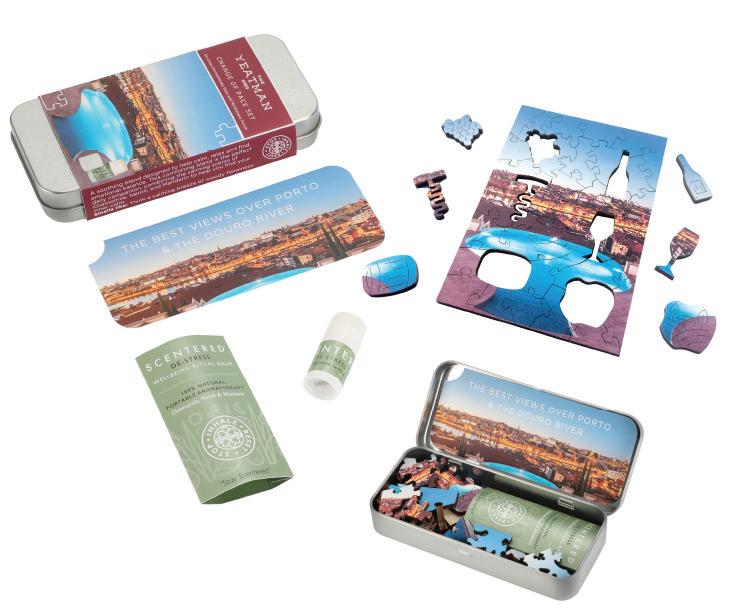
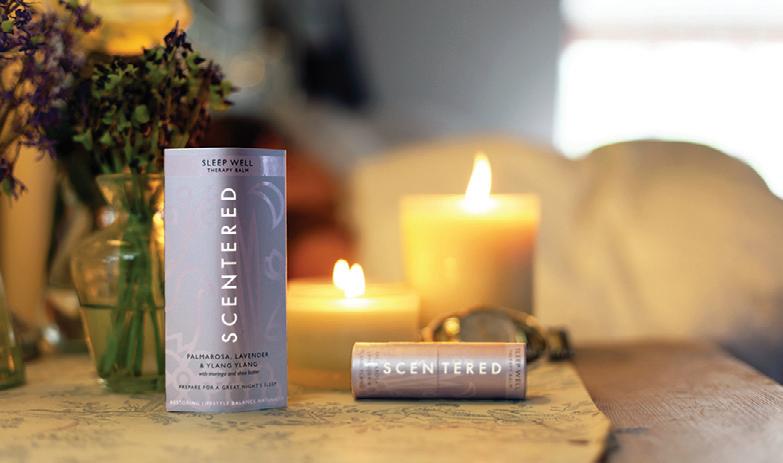
blends supporting guests throughout their day. Focus improves clarity for business travelers. Escape provides instant revitalization for spa visitors. Be Happy delivers an uplifting boost, while Love encourages selfcare and emotional balance. Sleep Well, an industry favorite, helps guests relax naturally—enhancing sleep quality scores and overall satisfaction.
PORTABLE, PRACTICAL, AND GUEST FRIENDLY
Our hero product, the Scentered Aromatherapy Balm, is mess-free, leak-free, and travel-friendly—ideal for hotel rooms, spa lounges, turndown amenities, or retail spaces. Guests enjoy calm moments whether unwinding before bed, preparing for meetings, or transitioning between activities. Gift sets and wellbeing kits complement the balms, offering natural upsell opportunities in spas, bou-tiques, and reception areas. Many hotels integrate the blends into signature expe-

riences or relaxation areas, reinforcing an atmosphere of calm and care.
A PARTNER IN GUEST WELLBEING
Scentered's gifting range offers beautifully curated wellbeing sets tailored to various guest touchpoints: welcome gifts, turn-down surprises, spa packages,
retail, corporate stays, and loyalty rewards. Each gift feels thoughtful, purposeful, and premium. We understand every hotel has unique style and demographics. Our range can be customized to reflect your brand identity through bespoke packaging and curated collections aligned with your guest journey. Scentered works closely with hospitality partners to create memorable
Pub campaigning group CAMRA is calling on the Government to rethink plans to weaken protections in the planning system in England, which it says could lead to thousands of pubs being lost forever.
The Ministry of Housing, Communities and Local Government is consulting on plans to change the National Planning Policy Framework.
Existing planning rules mean local councils have to protect all pubs, as they are considered vital community facilities.
Pubs are offered protections in the planning system including the need for planning permission to be granted before a pub can be demolished or converted into houses, shops or takeaways.
But under the Government’s new plans, protections would only apply if a pub were the last one in the local area.
The consumer group is warning that this could see thousands of pubs converted into flats, houses, shops or takeaways by greedy developers – even when local people want to save them as community locals.
The proposal comes shortly after a Government rethink on business rates bill increases for pubs in England
which threatened thousands of local pubs across the country.
CAMRA argues that it doesn’t make sense for the Government to give help with business rates bills to stop pub closures and then change planning rules which could lead to more pubs being lost forever.
Paul Ainsworth, CAMRA National Planning Policy Advisor said: “We strongly object to these plans which could spell the end for thousands of viable pubs across England.
“Strong planning protections are needed to give local people the right to try to save their pub if it is under threat of demolition or conversion. Crucially, this must apply to all pubs so that communities can save their local even if there are other pubs in the same area.
“Without protections for every pub, we risk seeing greedy developers cash in and try to turn pub buildings into other uses like houses, shops or takeaways. This would be devastating for communities who would lose a vital part of their social fabric.
“CAMRA wants Government ministers to rethink this proposal and keep strong protections for all pubs in the planning system so our locals can keep serving their communities instead of being lost forever.”
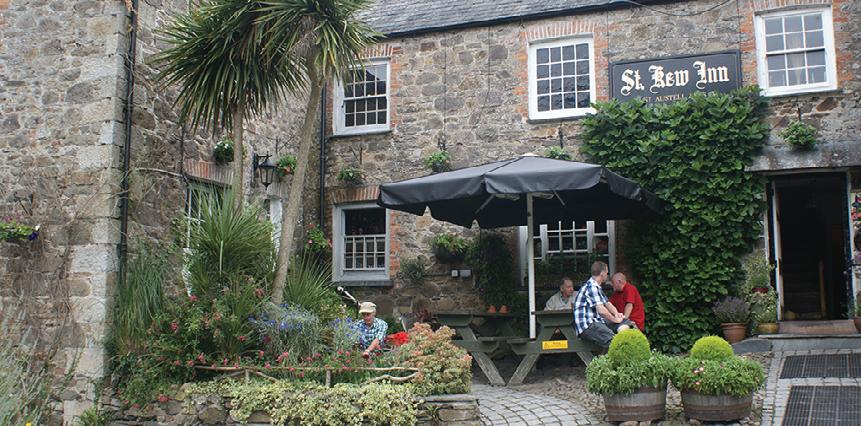
Two St Austell Brewery pubs have been recognised among the very best foodie venues in the country, following the release of the Estrella Damm Top 50 Gastropubs list. The Cornish Arms in Tavistock - owned by St Austell Brewery and run by husband-andwife team John and Emma Hooker - has been ranked in the UK’s top ten, marking an impressive 13th consecutive year in the guide.
Joining The Cornish Arms on the 2026 list is the St Kew Inn near Wadebridge, which has entered the rankings for the second time, securing a position at number 69 in the extended version of the guide, which lists the top 100.
John, who also leads the kitchen at The Cornish Arms, said: “Placing 10th in the Estrella Damm 2026 Top 50 is an incredible honour and to be making the list for a 13th consecutive year is something we’re truly humbled by. It reflects the passion, consistency and hard work of our entire team and the ongoing support of everyone who believes in what we do.”

Widely recognised as one of the South West’s leading chefs, John has previously been awarded Chef of the Year at the Trencherman’s Awards, held three AA Rosettes and competed on Great British Menu. Since taking on The Cornish Arms in 2013, John and Emma have built the pub’s reputation as both a warm, welcoming local and a celebrated dining destination. John’s menus champion the best regional ingredients, driven by seasonality and rooted in hearty, flavour-led cooking.
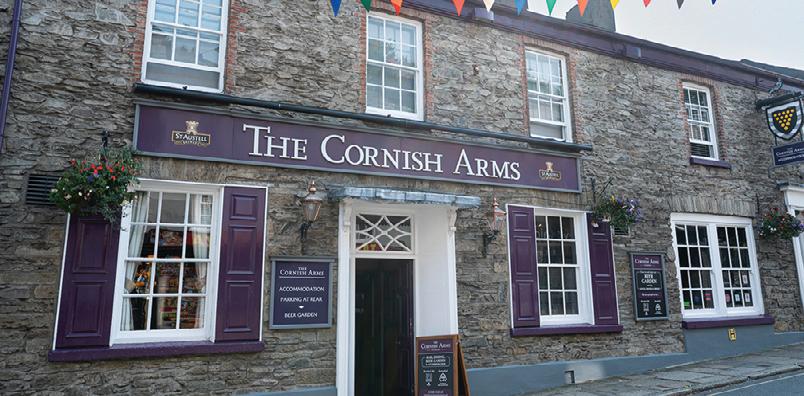
The St Kew Inn, a traditional 15th century pub, also places food at the forefront of its guest experience. Head chef Simon Davies plays a key role in shaping the menu and maintaining the highest standards in the kitchen, with the whole team working hard to ensure the food remains among the very best.
Sarah Allen, who runs the St Kew Inn, said: “We are honoured to be recognised among such esteemed company. We are committed to providing our guests with an exceptional dining experience and we’re excited to showcase our latest menu, which features seasonal and locally sourced ingredients. Visitors can expect a warm atmosphere, delicious food and great service from our fantastic front of house team when they come to see us.”

In today's hospitality land-scape, guest wellbeing is essential. Travellers seek calm, restoration, and meaningful moments that help them switch off from busy lives.
Scentered provides a simple yet powerful solution: 100% natural aromatherapy balms, candles, and wellbeing gifts designed to help people feel grounded, focused, comforted, uplifted, or relaxed.
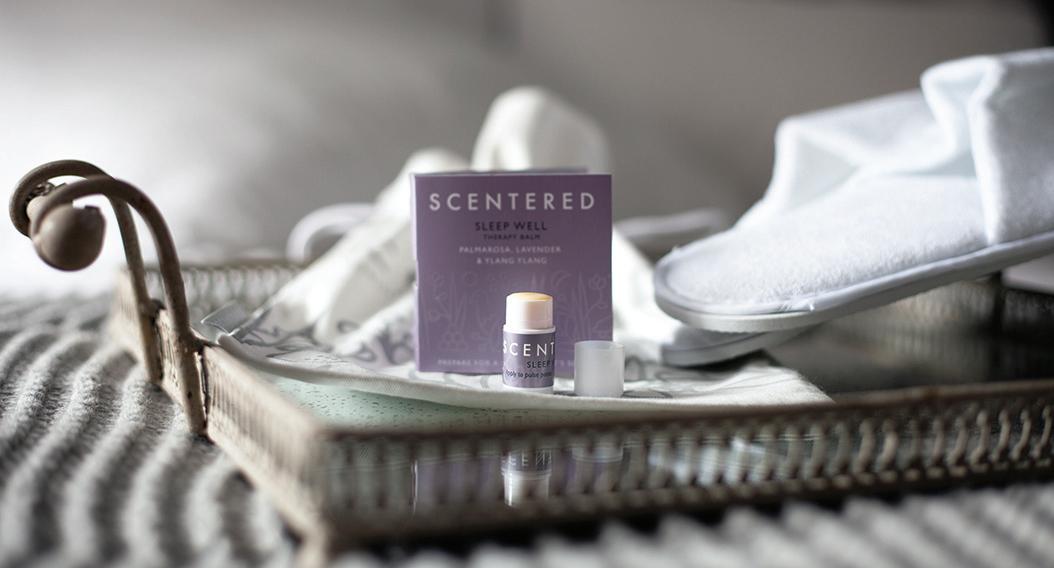
solutions help create a memorable and relaxing stay while prioritising sustainability. www.scentered.com
FEA’s latest Tabletop Trends newsletter looks at new light equipment product launches and considers the tableware trends for 2026 that light equipment and tableware (LET) distributors need to know about. There are also articles about the exciting new LET event for foodservice operators, Tabletop Trends Live, as well as a sneak preview of the next LET Forum, which is now open for distributors to book their places.
The newsletter is all about keeping LET professionals updated with the latest ideas and concepts for the sector. For example, readers can find out about the diverse choice of new product launches heading this way in Q1 of 2026, ranging from revamped classic tin openers to rechargeable designer table lamps.
This issue looks at several events happening in the LET sector. There’s already plenty of buzz building up around Tabletop Trends Live, the free event where dealers can bring their customers to see the latest LET launches. It’s happening on 24th - 25th March 2026, at Capital City
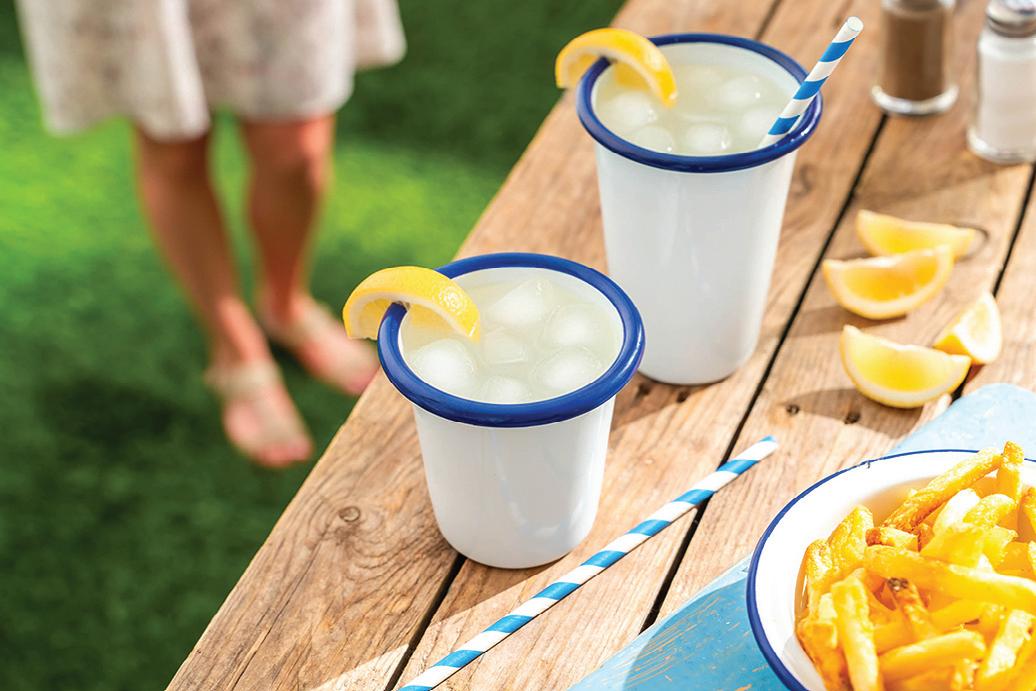
College (formerly Westminster Kingsway College) in central London. Click here for more information. As well as the article on the 2026 edition of the LET Forum, the newsletter also looks at this year’s Ambiente and considers what we learned from the FEA Conference.
What about the tableware designs to look out for in 2026? The newsletter highlights the big three, as operators continue to value practicality, versatility and styles that can fit in with a diverse range of uses.
Tabletop Trends is free for anyone involved in the light equipment and tableware sector. To sign up for future issues click here.
To see the latest issue click here.
The Foodservice Equipment Association (FEA) is the independent, authoritative voice of the foodservice equipment industry, representing over 160 companies who supply, service and maintain all types of commercial catering equipment - from utensils to full kitchen schemes. For more information on FEA visit www.fea.org.uk
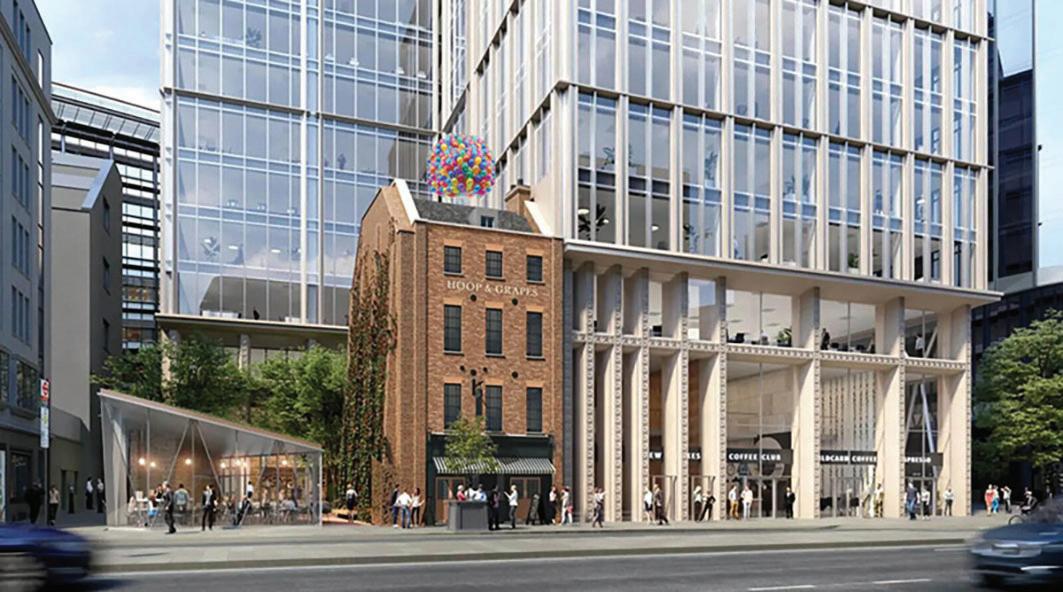
A spectacular display of more than 1,000 balloons floating above Farringdon marked the reopening of historic City pub The Hoop and Grapes earlier this month.
The eye-catching launch transformed the five-storey building into a real-life version of the house from Disney’s Up, celebrating the long-awaited return of one of the area’s most distinctive pubs. Independent family brewer and pub company Shepherd Neame has invested £1.8 million in restoring the Grade II-listed landmark, which had been closed since 2019 during redevelopment of the surrounding area.
The renewed pub now offers three distinct experiences. The ground floor retains the character of a classic London pub, opening onto a courtyard terrace. Upstairs, customers can unwind in the relaxed first-floor Terrace Bar, or retreat to the intimate Parson’s Parlour at the top of the building, ideal for private dining and gatherings. The space features a striking black lacquered self-playing piano, along with a darts board and games table.
The pub is led by General Manager Phil McAree, whose relationship with Shepherd Neame spans more than 20 years, including managing the Coach & Horses in Mayfair and the Cock & Woolpack in Bank. Working alongside new Head Chef Aleksandrs Voroncovs, Phil has helped develop a distinctive food-offering centred on locally sourced, seasonal produce and relaxed, shareable dishes.
The reopening is part of Shepherd Neame’s ongoing investment in its premium London estate, following major refurbishments at The Tom Cribb, The Westminster Arms, The White Horse and Bower, and the acquisition of the Bishops Finger in Smithfield.
“Seeing more than 1,000 balloons billow above the Hoop and Grapes was a truly magical moment – a joyful way to mark the return of a pub with such a remarkable history.
We’ve worked hard to create a space that showcases the building’s heritage while offering a contemporary, welcoming experience, and the response from our team and customers has been incredible.
Shaping the future of retail and hospitality, The UK Food & Drink Shows return in April packed with innovation, inspiration, and fresh ideas.
25,000 visitors and 1,200 exhibitors are expected to come together for the event, which enables businesses from across the food and beverages industry to network, see the latest innovations and gain invaluable insights.

Brands exhibiting at the show include Booker, Coca-Cola, Franklin & Sons, LavAzza, itsu, My Coffee Station, Radnor, Samworth Brothers, Tenuta Marmorelle and Tudor Tea and Coffee – to name just a few.
Visitors can explore and discover aisles packed with the latest product and services across hospitality, foodservice and retail. New for 2026, are the dedicated Coffee Shop & Café and Future Foods spotlight areas. Taking place at the NEC Birmingham from Monday 13 to Wednesday 15 April, The UK Food & Drink Shows is an umbrella event that comprises four shows, each targeting a sector of the industry:
• Food & Drink Expo inspires the future of retail and hospitality and is where the UK’s vibrant food and drink community come together - the ultimate destination for discovering fresh ideas, forging powerful connections and gaining insights that shape the future of food.
• Farm Shop & Deli Show drives growth in speciality retail and brings together the best quality
In its first full year of trading under the Butcombe Group name, having evolved from Liberation Group at the end of 2024, the business has reported LFL growth of 8.0% across its managed pub division including drink at 10.1%, food at 6.5% and accommodation 5.3% LFL. UK Butcombe Pubs & Inns delivering 9.7% LFL growth, and Channels Islands Liberation Pubs & Bars performing at 3.5% LFL in a mature market.
With a sustained focus on investment in the estate, particularly in its room offering, the accommodation business is outperforming the broader market, delivering year-on-year occupancy growth of 180 bps and an occupancy rate of 76.8%.
Strong demand across the portfolio for its premium room offering, Butcombe Boutique Inns has encouraged the business to add another site to the portfolio, converting the Welldiggers Arms, Petworth to a Butcombe Boutique Inns venue, bringing the total up to 12. Further investment is now planned for the new financial year to further expand the number of Boutique Inns.
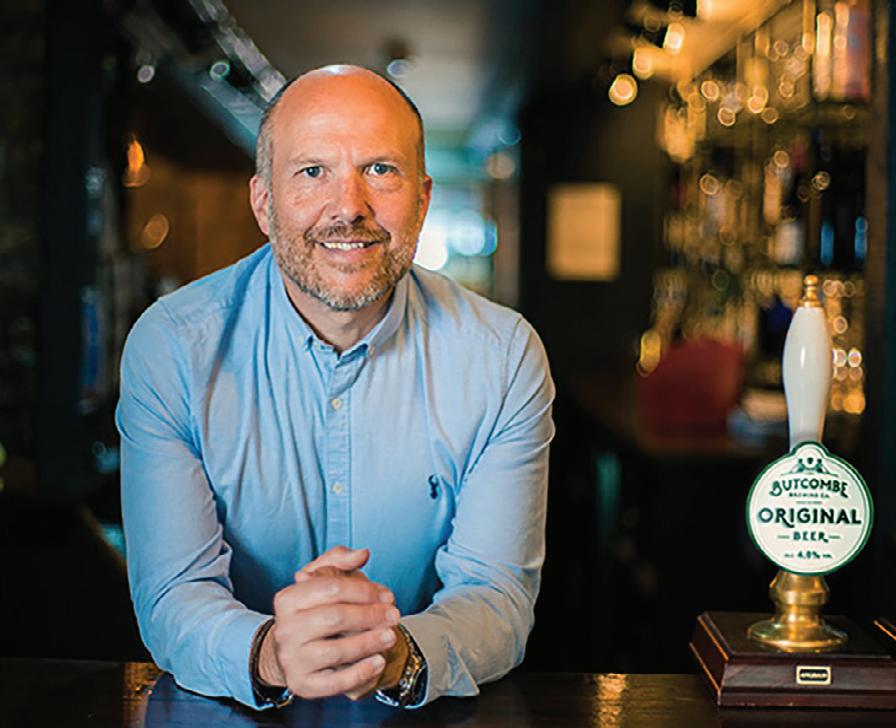
London pubs in Butcombe’s managed estate have shown significant growth delivering LFLs of 11.6%, with strong returns at The Punch Bowl, The Brown Cow and The Fulham Arms encouraging future investment in the city.
The Group has maintained its strategic focus on key day parts, dates and events, with morning sales up 25.9% and weddings delivering 55% growth versus last year. The focus on key occasions has also delivered a record festive trading period for the managed pub estate, achieving LFL Sales at 14.4% over the Christmas and
New Year fortnight delivering the group’s record highest week ever and highest ever Day on Christmas Day. Meanwhile the business’ UK tenanted business achieved sales growth of 25.2% for the Christmas and New Year fortnight.
The Butcombe Brewing Co and Drinks business has continued to grow with an especially strong performance in the UK Free Trade growing 5.3%, supported by an exceptional festive period with total LFL sales in the UK Free Trade up 21.0% for Christmas and New Year fortnight.
Jonathan Lawson, Chief Executive Officer of Butcombe Group, said: “I am delighted to report such strong results and once again I must start with a massive thank you to our amazing teams in the UK and Channel Islands who are at the heart of everything we do and are passionate about delivering the highest standards of service to our customers. To culminate with a recordbreaking Christmas with sector leading LFL’s against tough comparatives last year is incredibly satisfying and demonstrates the strength of our business and the growing loyalty of our customers.
“We are proud to see our Managed Pubs and Inns evolve to meet changing customer needs, while staying true to the character that define British pubs, which has helped us capture new occasions such as mornings and weddings. At the same time, our Brewing and Drinks business continues to perform strongly, supported by our core brands and a disciplined approach to innovation. As we look ahead, we remain confident that we are well positioned to sustain growth thanks to our brilliant pubs in ideal locations and unmatched guest experience.”
The Craft Guild of Chefs has officially opened entries for the National Chef of the Year 2026, the UK’s most prestigious and career-defining culinary competition. Building on its reputation for inspiring excellence and shaping the future of British gastronomy, the Craft Guild of Chefs has revealed its new brief for 2026. It was created by new Chair of Judges, Mark Birchall, and is centred on the overarching theme of “Our Sustainable Future.”
In another exciting moment for the competition, the live semi-finals will make their long-awaited return this year, responding to overwhelming demand from chefs across the industry who value the experience that the live competition environment delivers.
For the online entry, chefs will be challenged to produce a three-course menu for four covers within three hours, demonstrating exceptional technical skill, creativity, sustainability awareness and respect for seasonal produce.
Chefs are asked to showcase seasonal autumn ingredients featuring foraged and farmed mushrooms, vegetables and herbs, paired with Isle of Mull scallops. The judges will look for finesse, clarity of flavour and evidence of thoughtful ingredient utilisation, particularly around waste reduction, provenance and sustainability.

From the initial entries, 40 chefs will be selected to cook in one of the semi-finals taking place on Wednesday 24th June at Sheffield College and Wednesday 1st July at Capital City College. Ten chefs will then be invited to cook at the final which will take place on Tuesday 6th October 2026, returning to the prestigious Le Cordon Bleu Cookery School.
Mark Birchall, chef patron at Moor Hall Restaurant and chair of judges, said: “This year’s brief invites chefs to think deeply about how they cook, the ingredients they select and the impact their decisions have on the world around them.
Under the theme, ‘Our Sustainable Future’, we want to see dishes that celebrate the very best of ingredients, show technical skill, and demonstrate respect for seasonality and sustainability. NCOTY has always attracted chefs who push boundaries and challenge themselves, and I would encourage all ambitious chefs to enter.”
David Mulcahy, project director and Vice-President of the Craft Guild of Chefs added: “For over five decades, National Chef of the Year has been a platform that brings the industry together, celebrates excellence and champions the talent driving British cuisine forward.
This year marks an exciting evolution with the return of the live semi-finals. It’s something chefs have been asking for, and we’re delighted to bring back. The competition continues to be a defining moment for many chefs, offering inspiration, opportunity and a chance to be part of something truly special. We look forward to seeing the creativity and passion that we know this new brief from Mark will inspire.”
Chefs from across the UK are invited to submit their entries via the National Chef of the website. Entries will be open for eight weeks closing on Tuesday, 7th April 2026. Those interested are advised to create an account asap so they can receive updates and advice throughout the process. Menus can be worked on and saved throughout the entry period.

In today’s hospitality sector, cleaning and hygiene are no longer quiet back office activities but visible and defining elements of the guest experience. Hotels and holiday parks must deliver immaculate rooms and public spaces while inspiring confidence, supporting sustainability, and embracing innovation. Hygiene, technology, and guest focus have become crucial pillars of modern hospitality, and these themes align seamlessly with what visitors will experience in April 2026 at Interclean Amsterdam, where the new Hospitality Experience Centre offers a glimpse into the future.
HYGIENE AS THE FOUNDATION OF GUEST EXPERIENCE
A clean and well maintained environment is the bedrock of every positive stay. Since the COVID 19 pandemic, expectations have shifted: guests demand spotless spaces and visible reassurance that cleaning has taken place. Disinfecting high touch surfaces such as remote controls and door handles, and providing in room hygiene kits with sanitiser and wipes, are now standard.
Air quality is also vital. Hotels and parks invest in ventilation and purification systems to enhance comfort and safety, creating environments where hygiene is a tangible promise.
INNOVATION IN HOUSEKEEPING
Technology is reshaping housekeeping. Autonomous robots vacuum and mop floors, UV C devices disinfect surfaces, and IoT systems pro-
vide real time updates on room status. Predictive analytics tailor cleaning routines to guest behaviour and occupancy, ensuring lobbies, gyms or restaurants are cleaned proactively during peak times.
Laundry logistics are evolving too: RFID tags and smart inventory systems reduce losses and ensure hygiene compliance. Sustainable washing methods, such as ozone or cold water technologies, combine cleanliness with energy savings, a key advantage for environmentally conscious travellers.
Despite technological progress, housekeeping staff remain essential. Training and empowerment ensure teams operate machines confidently while embodying hospitality. A well trained team takes ownership of hygiene standards and contributes to a culture where cleanliness equals care and professionalism.
Personal touches, from a handwritten welcome card to a carefully executed turndown service, elevate a stay from ordinary to memorable. Technology supports, but human attention remains the heart of hospitality.
At Interclean Amsterdam 2026, held from 14–17 April at RAI Amsterdam, more than 900 exhibitors and 30,000 visitors from 143 countries will gather at the world’s leading platform for cleaning and hygiene. The Hospitality Experience Centre is a highlight where practical innovations for hotels and holiday parks come to life. Demonstrations include robots delivering linen, smart housekeeping apps enabling realtime communication between teams and guests, and AI-driven systems
anticipating cleaning needs. In this realistic setting visitors can virtually walk through guest rooms and see how AI and IoT optimise cleaning cycles. The Centre is a showcase that addresses the everyday challenges of housekeeping hygiene, efficiency, sustainability, and guest satisfaction with cutting-edge solutions.
The Essential Guide to Housekeeping in Hotels and Holiday Parks highlights how crucial hygiene, technology, and guest focus have become. The Essential Guide makes clear that housekeeping today is about more than cleaning: it is a strategic pillar of brand perception, guest satisfaction, and sustainability. Interclean Amsterdam 2026 builds on this by offering professionals a platform to see, test, and discuss the latest solutions.
For hotels and holiday parks, this is an opportunity not only to improve current processes but also to develop a vision of hospitality in 2030. The Hospitality Experience Centre acts as a bridge between daily practice and future oriented innovation.
The combination of practical guidance from the Essential Guide and the forward looking perspective of Interclean Amsterdam 2026 underscores that housekeeping and hospitality are entering a pivotal phase. Hygiene, technology, sustainability, and human hospitality converge in a new standard that defines both daily operations and long term strategy. Those wishing to experience the future of hospitality will find in the Hospitality Experience Centre at Interclean Amsterdam 2026 an inspiring showcase, a place where the essence of cleaning and guest experience meets the innovations driving the sector forward.
See

The Harris in Preston, Lancashire, has significantly improved operational efficiency and staff safety with the recent installation of a Stannah dumbwaiter.
Faced with the frequent challenge of moving heavy and fragile items between floors, The Harris Café needed an efficient solution that would provide a dedicated internal access route, removing the need to manoeuvre goods through public areas.
First opened to the public in 1893, the Grade I listed building has stood as a cultural landmark in Preston for over 125 years, hosting world-class exhibitions and collections that have inspired generations.
The Harris has recently undergone a £19 million redevelopment designed to restore, reimagine and revitalise The Harris for the 21st century, creating a more welcoming and accessible environment while preserving its rich heritage.
The transformational Harris Your Place project has been possible thanks to the generous support of its funders and partners, including The National Lottery Heritage Fund, Preston City Council, the UK Government’s Towns Fund, Arts Council England and Lancashire County Council, alongside contributions from trusts, foundations and individual donors.

The refurbishment project included repairing the building to restore its architectural appeal while upgrading its infrastructure for modern use. This involved refurbishing 18 galleries, a new café with the installation of a Stannah Microlift dumbwaiter, plus visitor shop and event venue, as well as improving accessibility and enhancing visitor experiences.
Accessibility has been central to the design, with new circulation routes and inclusive features ensuring that every visitor feels welcome and represented.
Preston City Council has led the project in collaboration with Conlon Construction Ltd, who oversaw the major structural works, and HUB Build, responsible for the interior fit-out. Buttress Architects served as lead architects for the restoration, while Ralph Appelbaum Associates developed the overall design strategy and visitor experience.
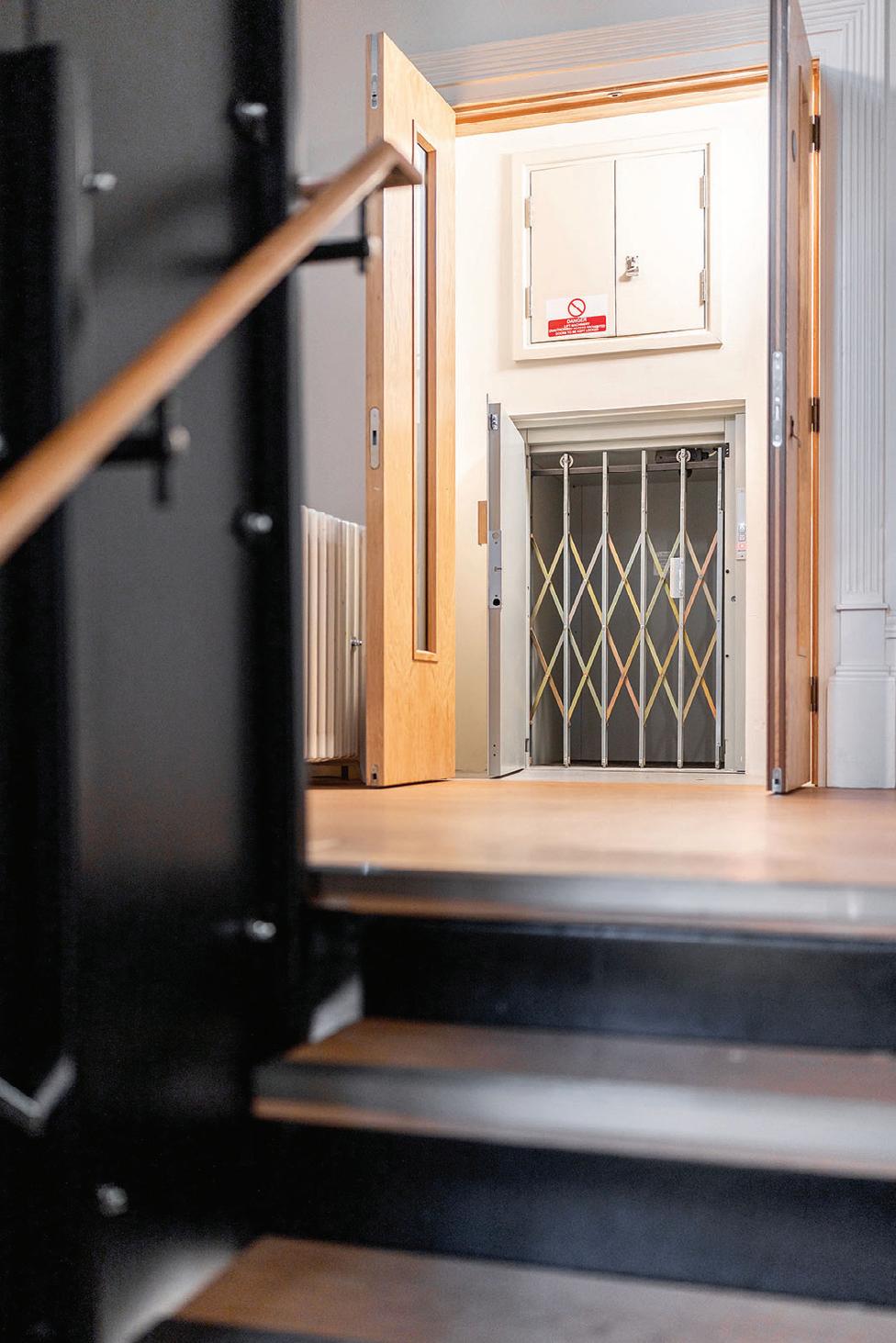
Direct Access provided accessibility consultancy to ensure inclusive design across all spaces, with Ridge and Partners LLP and Focus Consultants supporting the project’s delivery and quality assurance. Stannah Lifts managed the installation and provides ongoing maintenance of the dumbwaiter.
Stannah Lifts recommended a floor-level loading Microlift as the most effective solution for The Harris Café. Unlike traditional dumbwaiters that load at waist height, the floor-level Microlift allows items to be transferred directly on and off the lift using small trolleys, roll cages or pallets. The floor loading design significantly reduces the need for strenuous lifting and drastically lowers the risk of back injuries and other manual handling-related accidents. Its impact is being appreciated by staff.
The Microlift dumbwaiter features a galvanised steel supporting frame that can be erected quickly with minimal on-site building work and does not require a
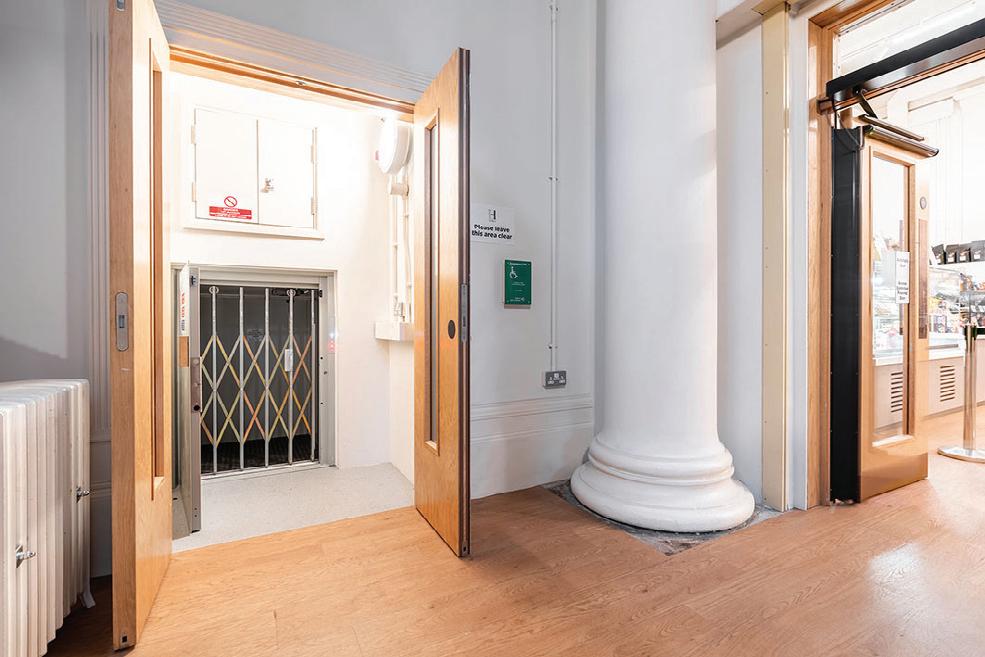
load-bearing shaft. With a 100 kg capacity, the Microlift 100B model provides fast and reliable transport of goods between floors, offering a costeffective way to mitigate manual handling risks while improving operational efficiency.
To complement the surrounding environment, the Microlift car and landing entrances are finished in a durable grey baked-enamel coating, delivering both functionality and a clean professional appearance.
The installation of the Stannah Microlift has delivered significant improvements in providing safe loading, transporting goods to the first and second floors of galleries and exhibitions.
By providing a dedicated internal route for transporting heavy and fragile items between floors, the dumbwaiter has made it easier for staff to manoeuvre goods, reducing manual handling risks and improving safety.
Fitted with a modern VVVF (Variable Voltage Variable Frequency) drive system, the Microlift delivers improved energy efficiency without compromising performance or lifting power. This advanced drive technology ensures smoother operation, reduced power consumption and lower long-term running costs.
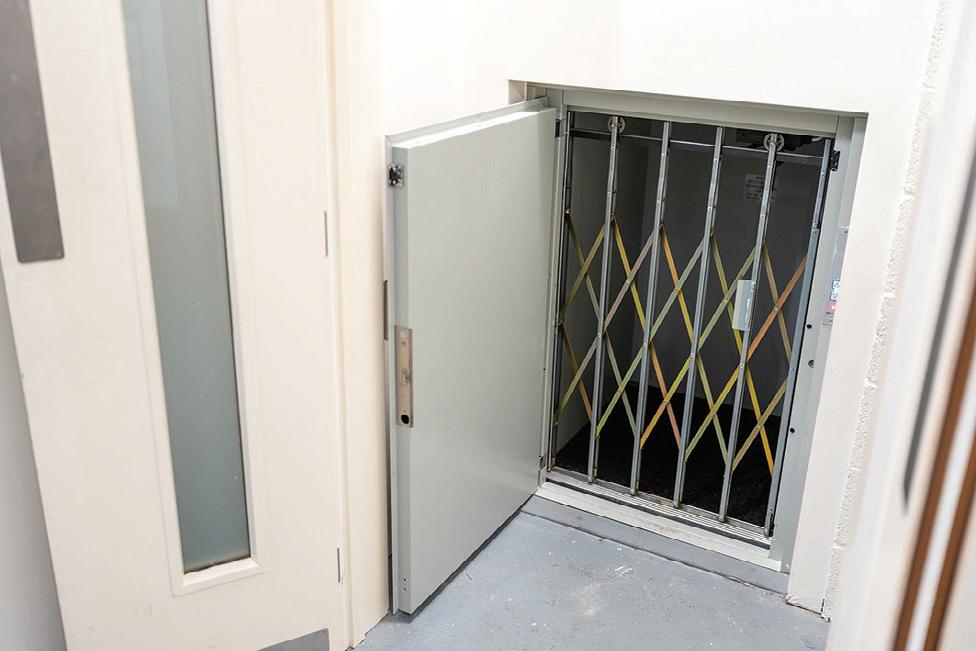
As a result, the Microlift now facilitates reliable and controlled movement of goods between floors while offering a quieter, more efficient and energy-efficient solution for the client’s daily operations.
Timothy Joel, Assistant Director, Head of Culture for Preston City Council, shares: “The installation of the new floor-loading Microlift dumbwaiter from Stannah Lifts has greatly improved café operations and ensures safer handling of bulky items. It’s safer for our staff, streamlines workflows, and allows us to focus on further improving operational efficiency.”
With the redevelopment complete and operational logistics improved, The Harris is now better equipped to manage high visitor numbers and support its growing programme of exhibitions and events. As a result, the refurbished building is expected to attract an additional 100,000 visitors each year, building on its existing annual footfall of 350,000.
The Scottish government has increased rates relief for licensed hospitality premises to 40%.
The additional Scottish Budget funding means that rates relief for eligible premises liable for the basic and intermediate property rates will rise to 40% for the next three years, subject to a £110,000 cap per business.
SLTA managing director Colin Wilkinson said: “The Westminster government has already recognised the need to focus more direct support for pubs in England, with a 15% rates relief package currently in place. Now the Scottish Government has also recognised the same need to support our pubs and bars in Scotland, but has upped that support, after intense lobbying by the sector and other political parties, and has now thrown a potential lifeline to struggling SMEs, many of whom are facing substantial increases in the rateable values and rates bills.
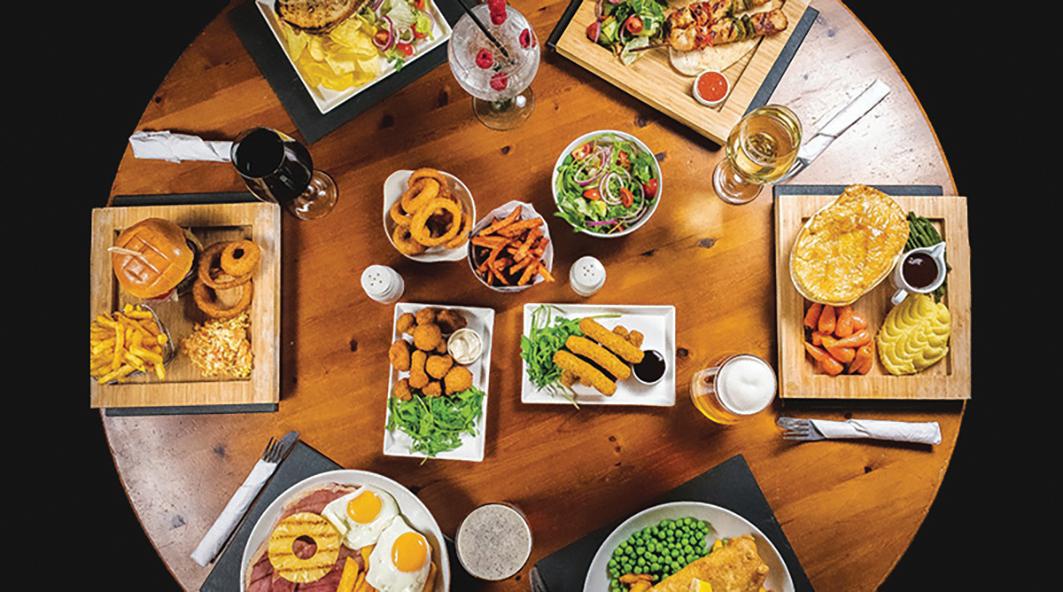
“It must also not be forgotten that many larger businesses will see no support coming their way from today’s announcement and yet these businesses still face the same challenges, including extortionate increases in their rateable values, as the rest of the sector.
“This essential support will go some way in helping the sector remains viable and continues to be not only a key contributor to the tourism sector and the Scottish economy in general, but also a major employment provider.
The Association’s recent Market Insight Report released earlier this month highlighted the continued challenges facing licensed hospitality.
In releasing the report, Mr Wilkinson highlighted: “A combination of costs rising significantly above inflation
and consumers with lower disposable incomes adds up to a very difficult market for one of Scotland’s key industries and major employers.
“One of our biggest challenges is a higher cost base, as hospitality businesses in Scotland face higher rates and energy charges than our counterparts across the rest of the UK. Our report highlights that over 84% of respondents do not think the economic policies of the Scottish Government are aligned to growing their businesses.
“Perhaps today’s support package announcement might just bring that figure down a bit. Scottish and Westminster governments both need to ‘walk the talk’,” said Mr Wilkinson.
Leon Thompson, Executive Director of UKHospitality Scotland, said:
“This increased relief is positive news and will help soften the blow for many licensed hospitality businesses.
“UKHospitality Scotland has been clear that urgent support was needed for the sector, and it’s clear the Scottish Government has acted as a result of our engagement.
“This is a good example of how the Scottish Parliament can make a positive difference to businesses, when political parties work together.
“However, the sheer scale of rateable value increases have driven rate bill hikes to such an extent that business rates bills will still increase for the vast majority. This is particularly true for businesses in the higher property rate, who have not been included in relief.
“The need for this urgent support is yet another demonstration that the business rates system is completely broken and in need of serious reform. Fixing the system has to be a priority for the next Scottish Government.”
Hospitality Rides launches raft of corporate sponsorship opportunities as challenge organisers sets ambition to raise over £500k for leading hospitality charities LTC and Only A Pavement Away in 2026.
Led by ride founder and KAM Managing Director Katy Moses, 30 hospitality industry leaders will take on the annual industry cycle challenge from 18 – 26 April 2026 in an epic 400km cycle across Cuba to raise vital funds for people entering, working and leaving the hospitality sector who are in need. Riders will embark on a stunning and challenging route from the historic Bay of Pigs to the beautiful beaches of Santa Maria.
The annual fundraiser, now in its fifth year and highly commended at the RMI Awards 2025 for Best Community/Charity Initiative, is supported by sponsors Avani Solutions, Carlsberg Britvic, KAM, Molson Coors, Punch and Sky. With only three sponsorship opportunities left, please contact Katy Moses at katy@kaminsight.com for more details on how to get involved. Both individual riders fundraising efforts and wider industry events are already well underway, including KAM’s annual Hospitality Rides Charity Pub Quiz, which raised over £4,000. The funds raised enable both charities to carry out their vital work, providing assistance and opportunities to individuals in need of support within the hospitality community.
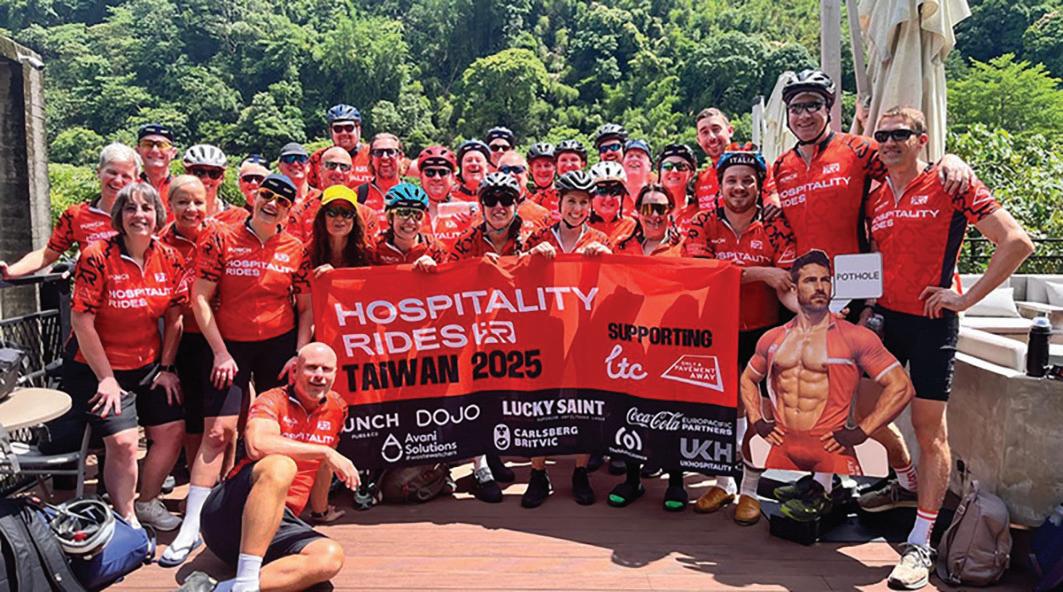
epic charity ride into what it is today. It has been fantastic to see the transformative impact that fundraising is having on the individuals LTC and Only A Pavement Away support.
“As we look ahead, 2026 is shaping up to be a challenging year for the hospitality sector. If your company is in a position to make a meaningful difference, we are still seeking corporate sponsors for Hospitality Rides 2026. Your support will champion our riders as they take on the 400km challenge across Cuba, while strengthening the essential work of two incredible industry charities.”
Joby Mortimer, Director of Charity Operations at LTC, said: “Hospitality Rides enables LTC to reach even more people through the fantastic awareness and funds we get from the campaign. Myself and the other riders are currently training hard to prepare ourselves for Cuba – especially for the hills and the heat! Your support motivates us and makes a real difference to people in need of wellbeing and financial support across hospitality.”
Hospitality Rides founder Katy Moses, of KAM, said: “Thank you to everyone who has helped shape this
Step away from the screen and into Wadebridge on Tuesday 3rd & Wednesday 4th March - where real connections, real products, and real opportunities await. For more than 40 years, Expowest Cornwall has been the place where Cornwall’s hospitality businesses - from pubs and hotels to cafés, holiday lets and caterers - source their food, drink, equipment and services. With over 95% of visitors coming from Cornwall, it’s the only trade event built entirely around the needs of local buyers.
Experience the Difference Face-to-Face Makes In a world dominated by online transactions, nothing compares to the power of personal interaction. The Expowest Cornwall trade show returns to Wadebridge on Tuesday 3rd & Wednesday 4th March, offering food retail & hospitality businesses and buyers the chance to connect, discover, and - most importantly - try before you buy.
WHY FACE-TO-FACE WINS
• 82% of trade show attendees have
Greg Mangham, Founder and voluntary CEO at Only A Pavement Away, said: “Hospitality Rides continues to be a lifeline for the work we do at Only A Pavement Away. The funds raised through this annual challenge allow us to support people who need a fair chance to rebuild their lives within our industry. This year’s 400km ride across Cuba is no mean feat, and the commitment shown by every rider is truly inspiring. We are immensely grateful to the existing partners and we welcome new sponsors to join us in making an even greater impact in 2026.”
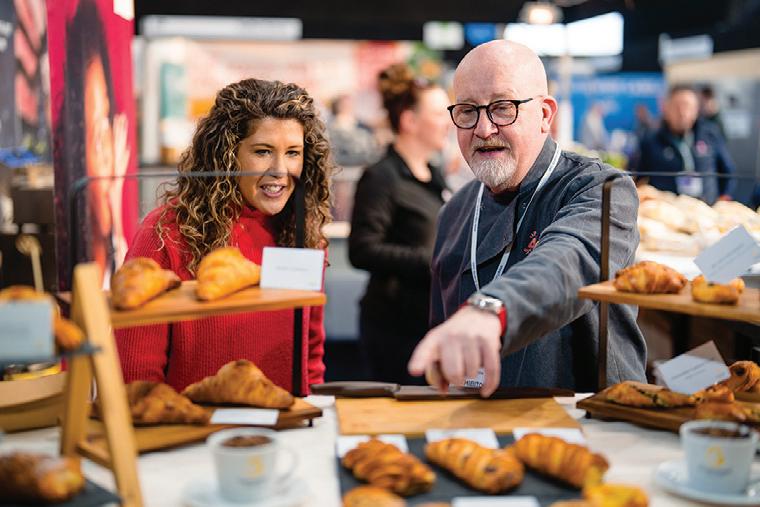
[boothexperiences.com] 92% of visitors attend primarily to see new products, something online browsing rarely replicates. [boothexperiences.com]
• 74% of attendees agree that engaging with exhibitors increases their likelihood of becoming customers. [joinlto.com]
As one visitor to the show put it: “The great thing about Expowest Cornwall was that everyone we spoke to opened up new opportunities, even the ones we didn’t intend to visit! It’s great being able to try before you buy, and hugely inspiring for upcoming menu products and saving some money at the same time. It always surprises me every year with what you can take away from the process.” Callum Hirst, Waterfront Polzeath
YOUR INTEREST TODAY
miss out on the chance to connect with suppliers, sample products,
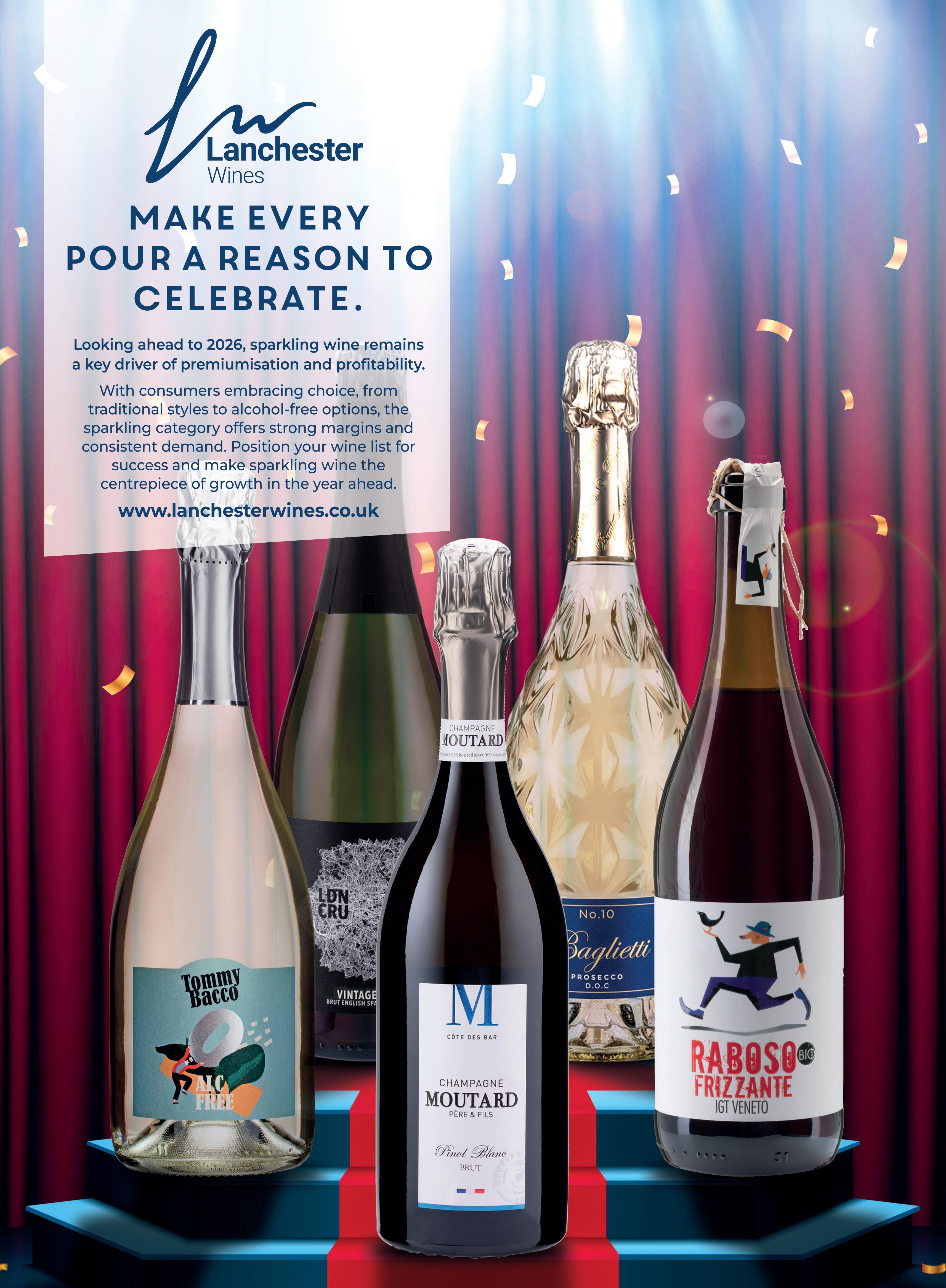
The Institute of Hospitality has welcomed Clermont Hotel Group into Company Sponsored Membership, with more than 50 employees receiving 12 months’ professional membership as part of the Group’s ongoing investment in its people.
By sponsoring its teams into membership, Clermont Hotel Group is supporting career development, confidence and progression across its team.
The move provides members with access to professional recognition, structured CPD, on demand learning, mentoring from experienced hospitality leaders, practical resources and global networking opportunities. Together, these benefits support long term careers while strengthening professional standards across the business.
Clermont Hotel Group operates a broad portfolio of hotels and venues across the UK and is recognised for placing people at the centre of its business strategy.
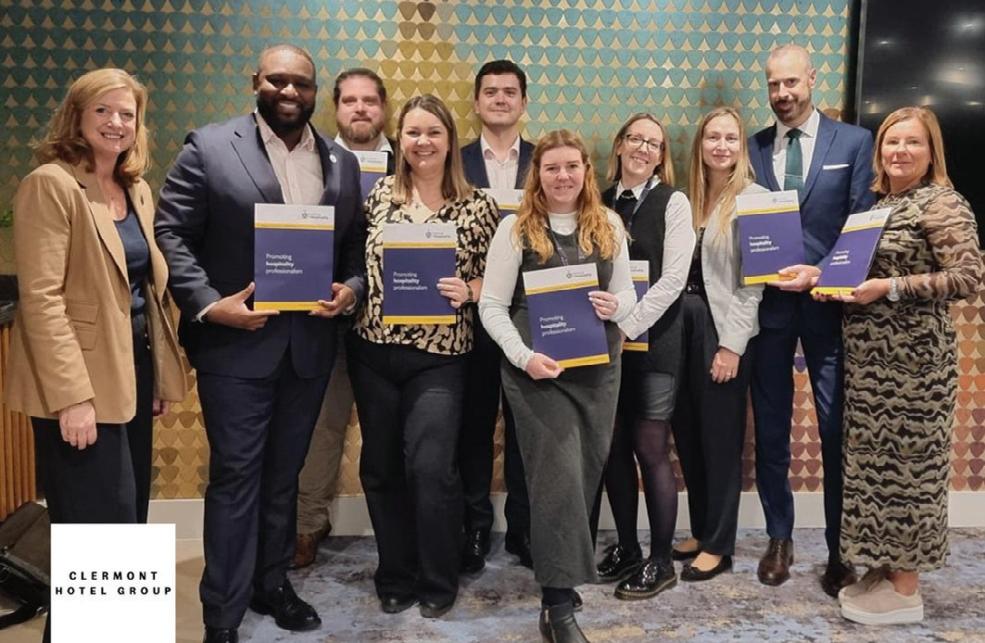
Company Sponsored Membership allows hospitality employers to sponsor six or more employees into Institute membership, embedding professional learning and standards into everyday working life.
Commenting on the announcement, Institute of Hospitality CEO Robert Richardson FIH MI said:
“We are delighted to welcome Clermont Hotel Group as a Company Member of the Institute of Hospitality. Sponsoring more than 50 team members into professional membership demonstrates a clear commitment to developing their team of hospitality professionals and supporting their longterm careers.
Investment like this builds skills, confidence, enforces their culture and helps drive retention and recruitment. All of which benefits its people and business.”
Amanda Hall, Head of Talent and Organisational Development at Clermont Hotel Group said: “Training and developing our people so they can unlock their full potential forms a crucial part of the long-term success of our business.
This partnership with the Institute of Hospitality will be a valuable addition to our team by giving an external professional framework to support their growth, while reinforcing the standards and behaviours that matter to our business.”
Community pub, the Simms Road Inn in Wigan reopen’s on Saturday, 14th February following a combined investment of £320,000 from licensee Jack Duffy, his parents Julie and Tony, and Admiral Taverns.
This refurbishment will breathe a new lease of life into the Simms Road Inn to elevate and modernise the overall look and feel of the pub – whilst still retaining its original, characterful features such as the two open fireplaces – ultimately enabling the licensees to further cement it as the go-to community hub for local residents.
Licensee, Jack, along with his parents, bring a wealth of knowledge and expertise to the pub having grown up in the local area.
Jack’s memories of going to the pub as a child mean that the pub holds a special place in their hearts.
Going forward the licensees are committed to creating a family-friendly hub that brings people together and supports all aspects of community life.
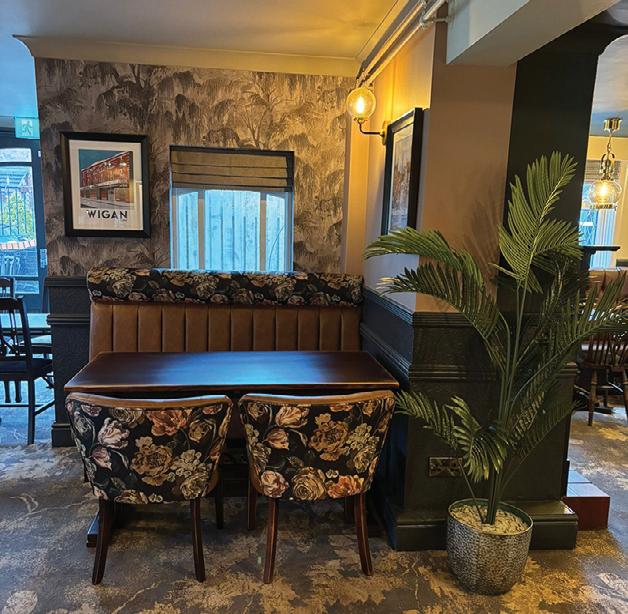
Jack Duffy, licensee at the Simms Road Inn, commented: “We’re really thrilled with the results of this fantastic investment so far. We look forward to welcoming regular and new customers through the doors this week.
We have loved every minute of our time at the Simms Road Inn so far and I would like to thank everyone, from our family and friends to our customers and of course the team at Admiral Taverns, for all their ongoing support so far. I look forward to everything the future holds for this fantastic community pub!”
Ashleigh Kirk, Business Development Manager at Admiral Taverns, added: “Jack, Tony and Julie have brought a real passion and dedication to the pub since taking it over and they have built a strong community focused local that I am sure residents will enjoy.
On behalf of myself and everyone at Admiral Taverns, I wish them and the entire team at the Simms Road Inn the best of luck in the future.”
New Jade models are precisely adjustable between -22°C and +8°C Williams is the UK foodservice market’s first refrigeration manufacturer to develop and launch multi-temperature counters and cabinets. The Jade MultiTemp range offers caterers a single solution to meet nearly all the specific temperature requirements of different food types, from chill to freeze, from +8°C to - 22°C.
For any chef wanting to keep food in top condition, the correct temperature is essential. Until now, for the best quality storage they would need to invest in a dedicated unit for each food type. For example, for meat it would be -2°C to +2°C, for ice cream -10°C to -21°C, for cheese +5°C to +8°C, and so on….
The Jade MultiTemp counters and cabinets offer caterers a fully flexible alternative. For example, when menus change, such as for seasonal specials, they can be adjusted to the specific temperature requirements of the different food types being stored. An additional benefit is that should a fridge or freezer (cabinet or coldroom) break down, they can be used as temporary replacements.
The MultiTemp units can be adjusted very quickly, simply by scrolling through the temperatures on the control panel. So whatever the food being stored, the MultiTemp can store it perfectly and precisely – to within 0.1°C accuracy – guaranteeing the best quality, throughout its adjustable temperature range of -22°C to +8°C.
There are five Jade MultiTemp models: a two and a three door

counter; a one and a two door cabinet; and a one door cabinet featuring two independently controlled half door sections. All are built to the same high specifications as the popular Jade range, including stainless steel construction throughout and natural refrigerant, and have identical dimensions and footprints.
Alongside the standard doors, the new Jade MultiTemp counters can be specified with a bank of two drawers. In addition there is the option of ‘reverse units’, with the refrigeration on the right hand side of the doors, rather than the standard left hand side. This flexibility is very useful when it comes to planning, designing and installing in kitchens.
All Jade MultiTemps are WiFi enabled and come with a connectivity module allowing users to connect to either their own system or to a
dedicated Williams connectivity platform (terms and conditions apply). Connectivity allows for remote monitoring and temperature adjusting, HACCP logging and trend analysis of individual units. If WiFi is not available, the MultiTemp’s module can also be hard-wired into a client’s system.
Connectivity on this level is a major quality of life upgrade for the kitchen brigade, as they no longer have the chore of manually recording temperatures in all their fridge and freezers, two or more times per day.
“The Jade MultiTemps offer total flexibility,” says Malcolm Harling, sales and marketing director of Williams. “These counters and cabinets are industry-first innovations, giving chefs the ideal storage conditions for all their food types, helping them to create excellence.”
Williams has already calculated embodied carbon figures for all the Jade MultiTemp models. The figures are CIBSE-certified and were calculated using the TM65 methodology. “Embodied carbon figures are not only increasingly important to our customers, they are also integral to our ongoing commitment to sustainability and transparency,” says Harling.
The Jade MultiTemps have list prices starting from £5,225 for the single door cabinet (model VJ1SA).
Williams Refrigeration offers a comprehensive range of commercial refrigeration including gastronorm cabinets and counters, specialist bakery equipment, coldrooms, multidecks and blast chillers.
Despite the surge in streaming services, live television remains a key amenity in hotels and a basic expectation for guests. It contributes to a sense of familiarity and relaxation. For hoteliers, it’s a simple yet powerful way to enhance guest experience.
However, there is a crucial legal dimension that is often overlooked: showing television in guest rooms constitutes a “communication to the public” under UK copyright law. This means hotels must hold the appropriate licences to avoid infringing copyright—and facing potential legal consequences.

The AVLA Licence is specifically designed to meet this requirement. It allows hotels, aparthotels, serviced apartments, B&Bs and similar establishments to legally offer their guests access to TV channels featuring films, series, documentaries, cartoons and other content from AVLA’s extensive repertoire. Titles from AVLA’s repertoire are regularly aired on the main UK national TV channels, as well as on other networks.
It is worth noting that the AVLA licence covers a repertoire of works and rights not covered by other licences. Consequently, the licences from other bodies do not replace the AVLA licence, and vice versa. AVLA represents the UK’s broadest community of audiovisual creators, comprising tens of thousands of producers, authors, performers, directors and visual artists.
Obtaining the AVLA Licence is simple, with quick online registration. The royalties collected are distributed to the respective rightsholders.
Respecting copyright is more than ensuring legal compliance -it also reflects a commitment to fair business practices. By taking the AVLA licence, hotels support the UK creative community, renowned globally for its quality, innovation and artistry.
To learn more about AVLA visit www.avla.uk

The Scotch Whisky Association (SWA) has released figures for 2025 that show global exports of Scotch Whisky falling by -0.6% in value, and by -4.3% in volume, as the industry navigates significant challenges across multiple markets.
Exports were valued at £5.36bn in 2025, with the equivalent of 1.3bn bottles exported around the world: 43 per second. Exports of Scotch Whisky, which previously totalled £5.4bn in 2024, have fallen in volume and value as the impact of international tariffs, increased cost of doing business in the UK, and softening consumer demand have hit producers and the supply chain.
The industry’s most valuable export market, the United States, has seen export volume fall by -15% following the implementation of the 10% tariff in April 2025. The trade body has called on the UK Government to finalise a deal with the United States to return zerotariff trade, which has been directly raised with President Trump by both Prime Minister Starmer and First Minister Swinney.

In 2025, full year exports to the US fell by -4% in value to £933m. Volume fell more significantly, down -9.2% on the previous year to the equivalent of 120m bottles. The acute effect of the 10% tariff is clear with a -7% drop in export value and a -15% fall in volume between May and December 2025, and concerns remain that a UK-US deal to remove Scotch from tariff harm has not been secured almost a year since the tariff was first imposed.
Tariff pressure on the Scotch Whisky industry has come into sharper focus with the potential rise to 35% in July this year: the sector is approaching the end of a five-year suspension of the 25% single malt tariff which cost Scotch Whisky producers over £600m in lost exports between 2019 and 2021, as a result of the BoeingAirbus dispute.
Along with pressures in the United States, the SWA has warned that the potential gains from recent deals to
reduce tariffs in India and China will not be realised while the domestic tax and regulatory burden continues to increase to unsustainable levels. With some distilleries halting or reducing production and jobs being lost in the industry and wider supply chain, the industry has warned that more businesses will close their doors for good during 2026 if clear measures of support from Westminster and Holyrood are not forthcoming.
Mark Kent, Chief Executive of the SWA said: “The international trading environment continues to be challenging for Scotch Whisky producers, with tariffs and geo-political tension causing significant turbulence in some key markets. At home, the industry faces soaring costs, from year-on-year duty increases to new packaging taxes. Our member companies tell us they are under strain not felt for decades, and that support is vital to weather the storm.
“While global volatility has become the norm, it has now been joined by an increasingly uncompetitive domestic tax and regulatory environment. The spirits duty increase earlier this month, totalling more than 17% in three years, has clearly impacted jobs, investment potential and economic growth.
“It’s said that form is temporary, but class is permanent. Scotch Whisky is an iconic product which appeals around the world, and the industry’s great resilience means that our long-term potential for continued growth is clear.
“In order to realise this future potential, finalisation of a deal to return zero-tariff trade to the US, vigorously pursuing trade deals with Thailand, Mercosur and Gulf Cooperation Council (GCC) countries, and no further tax increases in the UK must be immediate priorities. It is within both the UK and Scottish Governments’ power to facilitate the supportive environment producers need, boosting and sustaining growth for Scotch Whisky and the wider economy, and we stand ready to work in partnership to achieve that aim.”
Scottish hospitality operators Lomond Leisure Group have secured their sixth venue and are eyeing further sites.
Kilderkin on The Royal Mile in Edinburgh is the closest pub to Holyrood Palace and the Scottish Parliament and is Lomond Leisure’s third site with Star Pubs. Lomond Leisure and Star Pubs are breaking ground this week on a £170,000 revamp of the pub, which will be renamed The Parliament Arms to reflect its location and new offer. The pub is scheduled to open in mid-March, creating 20 new jobs.
The makeover will enhance the building’s exterior, injecting more character in line with the surrounding architecture and installing new signage and lighting.
Lomond Leisure Group director Chris Thynne said: “We enjoy partnering with Star Pubs – they’re supportive, transparent and easy to do business with. The Parliament Arms is our second refurbishment with them in the last year*. We like their collaborative approach; they listen to us and deliver what we want.”
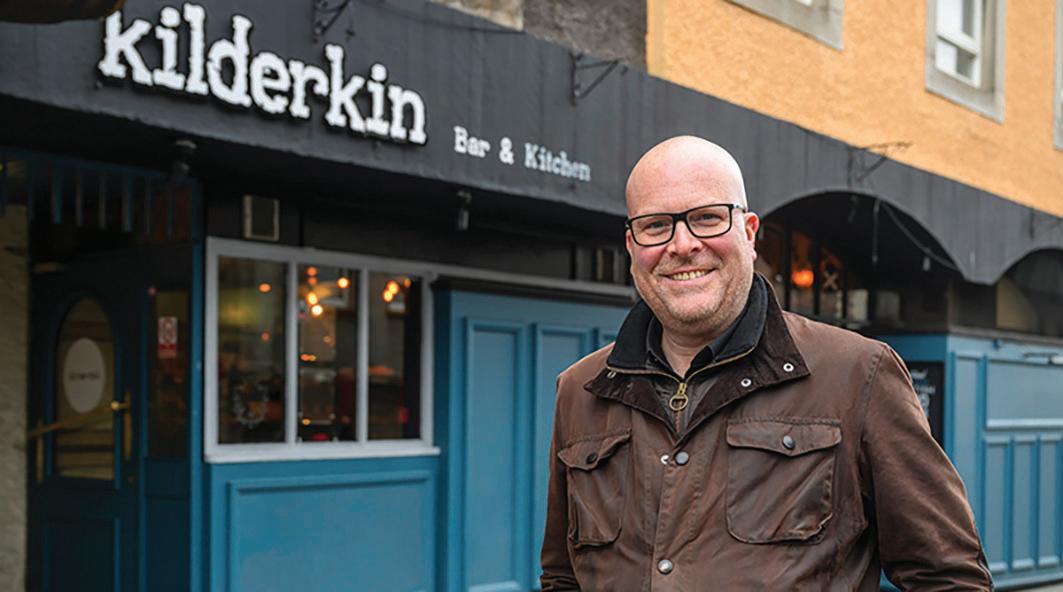
Having added three new venues to their portfolio since the start of 2025, Lomond Leisure are now considering expansion in areas that attract tourists. Places such as Edinburgh, the North of Scotland and St Andrews are on their radar, in addition to destination spots in northern England.
Adds Thynne: “We’re seeing strong like-for-like sales growth at our venues, giving us confidence to increase our group. We believe there’s a market for delivering great quality food, drink and hospitality. This is helped by our focus on local produce, as consumers have a new level of interest in sustainably sourced ingredients. When it comes to expansion, we’re ambitious but cautious; we’re not in any rush and won’t compromise. Location is everything for us and new sites will have to fit our business model.”
Says Matt Dyson, Star Pubs’ operations director for Scotland: “We want The Parliament Arms to do justice to its position close to two of Edinburgh’s most important sites. We’re delighted that Lomond Leisure Group are operating the pub; their commitment to Scottish hospitality is a perfect fit for The Parliament Arms.”
With the opening of The Parliament Arms, Lomond Leisure will operate six hospitality venues across Scotland including Gael & Grain, Van Winkle and Mharsanta in Glasgow, Kirk O’The Lochs in Tarbet and The Tolbooth Tavern in Edinburgh.
*Lomond Leisure undertook a £275,000 revamp of Gael & Grain in Glasgow with Star Pubs in April 2025.
The winner of KP of the Year 2025 has been announced, and taking home the trophy is Ram Meadows, the head kitchen porter of Liverpool Football Club. 2025 is the 11th time the competition has been run since being started by Winterhalter back in 2013.
Ram takes home the award for being the lynchpin of Liverpool’s kitchen team, which on match days will often serve more than 10,500 covers, covering everything from street food to fine dining as part of Anfield Stadium’s food offerings. As well as the KPOTY trophy, Ram won vouchers, and a celebratory meal. In addition, the club receives a piece of Winterhalter equipment worth up to £10,000.
The club’s in-house catering operation is on a huge scale. On match days, Ram oversees around 70 kitchen porters working alongside 200 chefs across 11 kitchens. His nomination praised his ability to liaise with his colleagues not just in the kitchen and front of house but with stadium operations, retail, maintenance and safety too, ensuring that everyone is working together to “make the magic happen.”

“Ram’s work rate is phenomenal, he just doesn’t stop,” says Paul Cuttill, Liverpool FC’s chief operating officer. “I think it’s infectious to some degree – if anyone’s head goes down he picks them up and puts a smile back on their face. He’s a morale booster in the kitchen!
“Having people like that around is special, because you're going to hit points where there is pressure. You need a Ram who’s going to sort stuff out, and that’s what you get with him.”
Winterhalter UK’s head of sales, Glenn Roberts, presented the award. “Ram clearly goes over and above to support his team and the entire operation at Anfield,” he says. “Everybody working at such an iconic site is committed 100% to providing the very best they can for customers and fans.”
“It’s a surprise to win this award,” says Ram, “But it’s nice to have your hard work recognised. KP’s need to have a lot of patience and be prepared to work hard, but when you have good people around you on your team, it’s easy.”
As well as the main winner, two highly commended finalists will receive a trophy and vouchers. They are Jose Farinha of the Honourable Society of Lincoln’s Inn, London, and Venetia Wisher of Genuine Dining.
The judging panel for the 2025 KP of the Year consisted of Dipna Anand, chefowner, Brilliant Gastro; Kate Brooke-Green, head of food, Mollie’s Motels; Steve Groves, group development chef, Restaurant Associates Venues; Kerth Gumbs, head chef, Fenchurch at the Sky Garden; Lisa Jenkins, chief executive, Royal Academy of Culinary Arts; and Stephen Kinkead, managing director, Winterhalter UK.
Winterhalter provides a total solution for dishwashing and glasswashing, from pre-sales advice to after-sales service, training and maintenance, with sustainability fitted as standard. Alongside its market-leading dish washers and glass washers, the company’s range includes utensil washers, advanced water treatment machines, and cleaning detergents and rinse aids. For further details, call Winterhalter on 01908 359000, visit www.winterhalter.com/uk-en/ or email info@winterhalter.co.uk.
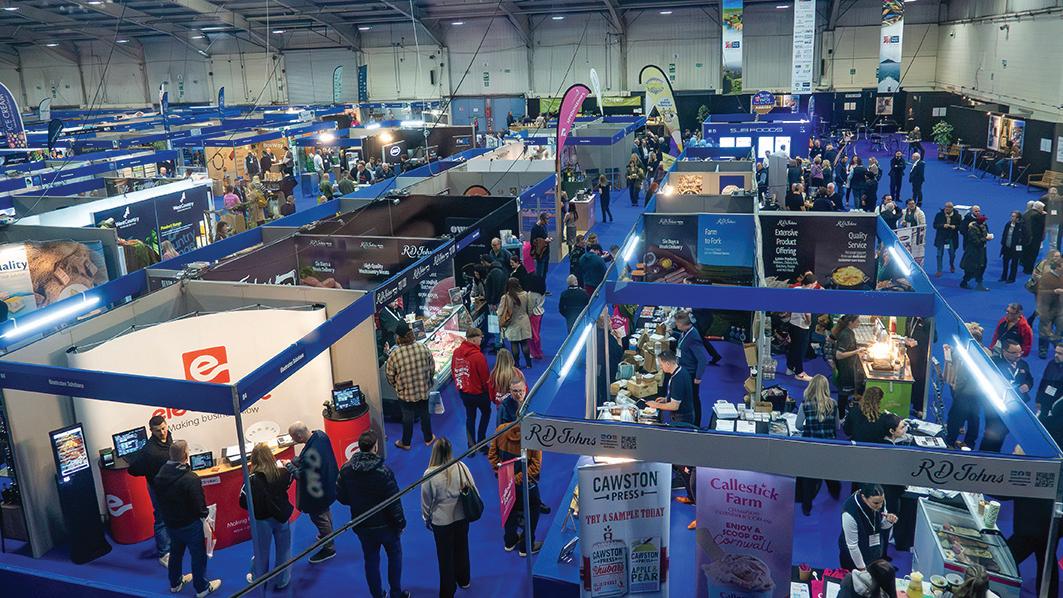
‘Continually buzzy throughout the show’, ‘brilliantly organised’, ‘engaged with some really exciting new retailers including some large national accounts’, ‘a unique opportunity to open accounts in the South West that you don’t see at the national shows’, ‘loads of amazing contacts’. These are just a few snippets from exhibitors who took part in this year’s Source trade show in Exeter on the 3rd and 4th of February.
Visitor to the show had plenty to say too - ‘Excellent selection of businesses’, ‘suppliers stands were really good’, ‘good deals on products’, ‘great opportunity for networking and finding out about new products’, ‘so good to have all these exhibitors under one roof’. 95% of visitors said they'll be back next year and would also recommend the show.
“What a couple of days of enquiries, sales, planning, networking, collaboration and engagement!” commented Mike Anderson, MD of the show’s organisers, Hale Events. “The Source is a trade show that really delivered
this year for visitors and exhibitors.”
The Source trade show was complemented in 2026 by the Westcountry Tourism Conference; which saw 200 delegates attend to listen to speakers communicating best practice in tourism for the SW and beyond, helping their businesses, and the Taste of the West Awards ceremony; that welcomed 200 guests, who were there to celebrate the best food, drink, retail and hospitality in the South West of England.
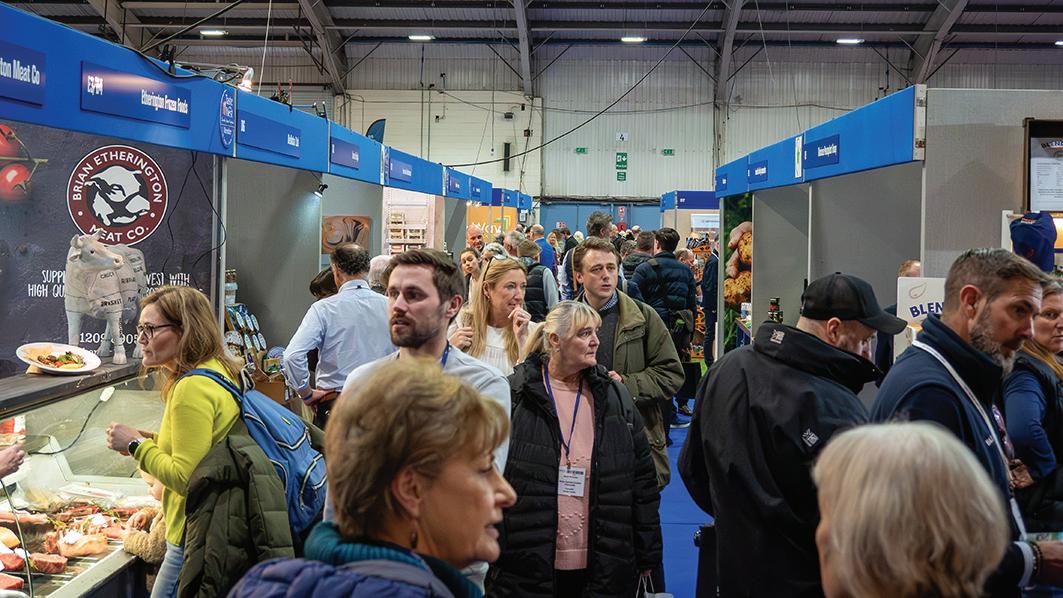
“We were so pleased to co-locate and help host these events.” added Mike. “It’s great to see the whole of the South West food & drink sector coming together and celebrating what the region has to offer.”
Next year The Source trade show takes place on Tuesday 2nd and Wednesday 3rd February. For more details visit thesourcetradeshow.co.uk, or call 01934 733456. You can also follow The Source on Facebook and Instagram for updates @SourceFoodDrink.
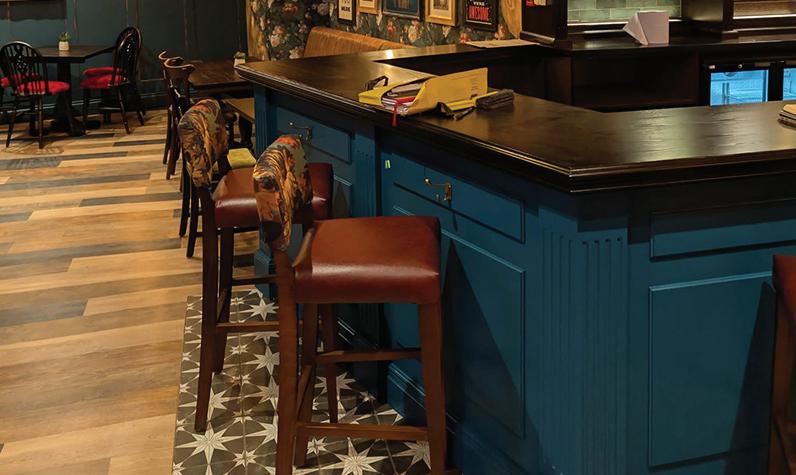
Popular community pub, the Black & Grey on Newgate Street in Morpeth will officially reopen on Friday 6th February following a transformational combined investment of £257,00 from experienced licensee, Nina Smith and Admiral Taverns, the UK’s leading community pub company.
This refurbishment will breathe a new lease of life into the Black & Grey to elevate and modernise the overall look and feel of the pub –whilst still retaining its original, characterful features such as the open fireplace. The refurbishment will enable the licensee to further cement it as the go-to community hub for local residents.
Internally, the pub has undergone a full refurbishment to include brand new fixtures, fittings, furniture and flooring throughout including a brand-new bar and dining area, toilets and a kitchen.
Passionate licensee Nina Smith brings a wealth of knowledge and expertise to the pub having 27 years of hospitality experience under her belt. Going forward the licensee is committed to creating a family-friendly and dog-friendly hub that brings people together and supports all aspects of community life.
Nina Smith, licensee at the Black & Grey, commented: “It has been a terrific journey watching the pub
come to life over the past few months and I can’t wait to reopen soon. The entire team, including everyone at Admiral Taverns, has truly gone the extra mile to get the pub to where it is now and I couldn’t be more grateful for all the support.”
To celebrate the reopening the Black & Grey will be inviting the local mayor, Rachael Hogg on the night of the reopening at 6pm.
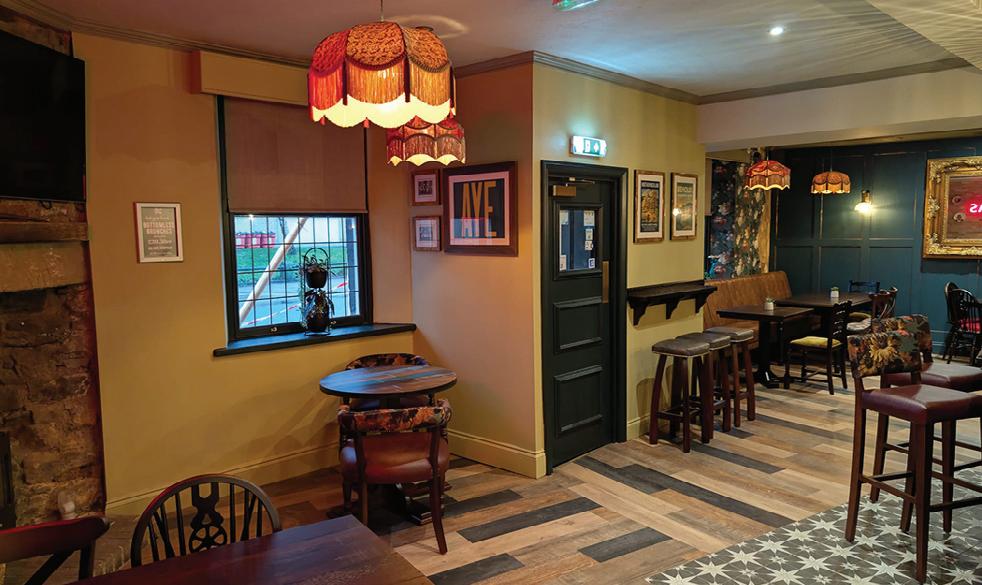
Going forward, Nina Smith will be hosting a busy schedule of regular entertainment for the community to enjoy including a quiz night every Wednesday at 7.30pm and a live singer occurring every Saturday from 8pm. The pub will also host a ‘buskers’ night’ once a month where anybody can come along, sing and bring their instruments. In addition, the pub will host a ‘boozy book club’ the last Thursday of every month where anyone can drink and read a book together. As part of her mission to give back to the local community, Nina will also be hosting regular fundraising events/community initiatives close to her heart.
Samantha Banks, Business Development Manager at Admiral Taverns, added: “I’m delighted to see how well the refurbishment is progressing and I look forward to seeing Nina realise her vision for the Black & Grey. “On behalf of myself and the Admiral Taverns team, we wish Nina all the best with the reopening and for everything that’s to come”.
Sir Woofchester’s has the UK’s largest and most specialised product range for dogfriendly hospitality businesses, including several personalised products.
For your BAR OR RESTAURANT
Our Dog Menu features a range of Treat Pots, Dinner Bowls, Dog Drinks and Snacks, displayed with eye-catching point of sale
For your BEDROOMS & ACCOMMODATION
Choose between:
-“All day breakfast” snack bar: a delicious innovative treat for dogs on-thego!
-“Sleepy Bones” treat pot: relaxing bedtime dog treats.
-“Dog Welcome Pack” PERSONALISED: an nicely presented pack containing poo bags, a ball toy and a pot of Sleepy Bones. (Note: the container also serves as a temporary waterbowl!)
Water bowls, waste bags, accessories, top tips & everything else you need to be more dog-friendly.
To ensure the highest quality products, we hold a DEFRA registration, a GB Pet Food Manufacturers registration and much of our range is BRC or SALSA certified.
We look forward to working with you.
David & the Sir Woofchester’s team
DOGFRIENDLY BENEFITS
You may also wish to consider the following benefits of working with Sir Woofchester’s, to help elevate your wider business:
• Increased average customer spend
• Increase repeat visits
• Enhances staff engagement & enjoyment
• Link to other initiatives – charityfundraisers, online competitions
• Great social media content & word of mouth marketing
• Contributes towards improved reviews
• Fully compliant with legislation etc
WHY DOGFRIENDLY?
The number of UK dog owners has increased by over 25% since 2020
Many of these are new ‘first time dog owners’ (including pre-family millennials)
Dog owners like to treat their canine like one of the familywhen they visit your establishment
The dogfriendly trend in hotels & tourism etc has been increasing for over a decade!
The pandemic has seen a behaviour change, with more dog owners choosing the UK for their short breaks or annual holidays
The cost of boarding kennels & pet-sitting has risen, so your customers now increasingly want to bring their dog with them!
We see ever-increasing dog-friendly requirements with accommodation providers, food & beverage outlets, as well as tourist attractions.
For more information please visit www.sirwoofchesters.com
Fresh produce supplier, Bidfresh, has released its latest ‘Growing Greener’ sustainability report, unveiling a refreshed sustainability framework and a new mission and vision that will guide the business towards a more responsible and resilient future.
As sustainability expectations continue to rise across the industry, and 16% of consumers think that suppliers are responsible for ensuring eating out of home is sustainable, Bidfresh has provided its customers, teams and partners with clear, evidence-based insight into how it’s addressing environmental and social challenges across the supply chain.
Taking a more proactive approach, ‘Growing Greener’ showcases progress across Bidfresh’s three specialist brands, Direct Seafoods (fish and seafood), Campbell Brothers (meat and poultry) and R Noone & Sons (fresh produce), and its new vision: Caring for people, committed to responsible sourcing and delivering the best in foodservice.
Bidfresh is also developing its own Environmental, Social, Governance (ESG) strategy and has taken an important step with the introduction of its first ‘Plan on a Page’, providing a clear and structured foundation to embed its ESG priorities across the business.
Through this framework, Bidfresh aims to reduce its environmental impact, support resilient UK farming and fishing communities, uphold ethical governance, and include transparent and traceable sourcing across all operations, setting a clear path to 2030 and beyond.
• The introduction of an ‘Inclusion at Work’ and ‘Workplace Behaviour’ standard
• Retaining the ASC and MSC Chain of Custody certification for all the seafood trading sites
• Achieving a ‘Bronze’ medal by the EcoVadis sustainability assessment platform.
Valeria Potsinok, Sustainability Manager at Bidfresh, said: “Now in the second year of reporting, I’m so proud of the progress we’ve made, from advancing responsible sourcing and animal welfare to reducing waste and strengthening community initiatives across our regional sites. ‘Growing Greener’ will enable closer collaboration with our customers, helping them make informed menu and supplier decisions, while supporting their own ESG reporting.
“This year’s report also sheds light on our expanded training on Health & Safety and Diversity, Equality, Inclusion & Belonging, and our new route planning to reduce last-mile emissions.
“Yet, we know this journey is ongoing, and there is much more to do. Guided by our new vision: caring for people, committed to responsible sourcing and delivering the best in foodservice, we remain focused on building a fairer, more responsible and sustainable future for our people, customers, partners and the planet.”
Click here to read the latest ‘Growing Greener’ report: viewer.ipaper.io/bidcorp/bidfresh/growing-greener-bidfresh-sustainability-report2025/?page=1
BALANCING PREMIUMISATION AND PROFITABILITY
The UK on-trade faces a challenging year ahead. Rising costs, increasing alcohol duty, economic uncertainty and shifting consumer expectations mean operators must strike a delicate balance between maintaining quality and protecting margins. The good news? Wine can play a pivotal role in achieving both.
PREMIUMISATION STILL DOMINATES
Consumers visiting pubs, bars and restaurants are still willing to spend on wine, particularly when the experience feels special. Premiumisation continues to dominate, with guests seeking wines that feel indulgent and create a sense of celebration. This trend is stronger in the on-trade than in retail, where affordability increasingly shapes choices.
SMART BUYING: VALUE BEYOND THE OBVIOUS
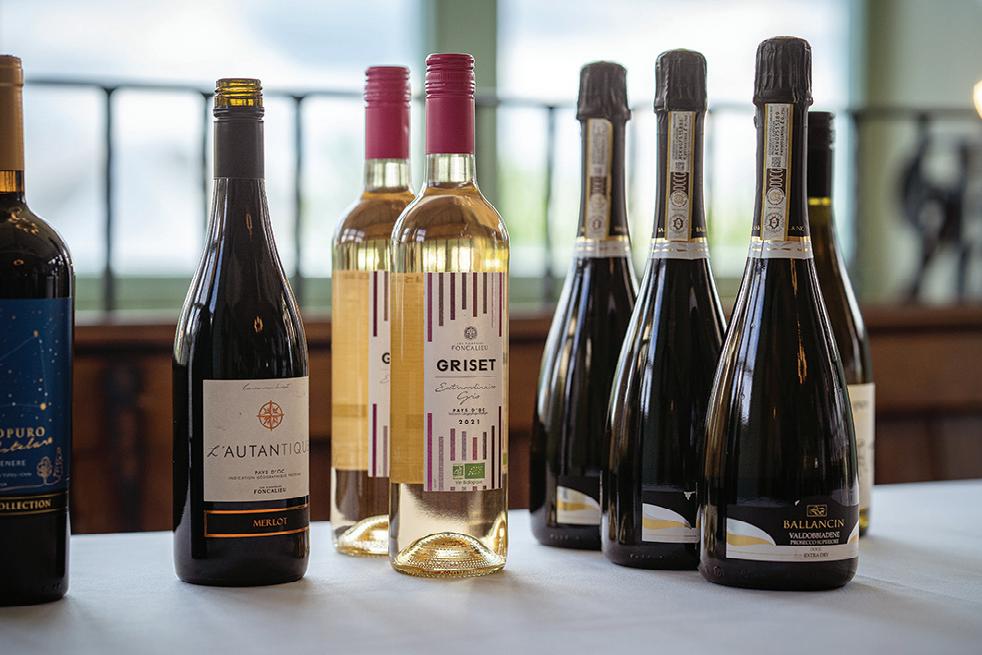
One of the most exciting developments for 2026 is the rise of lesser-known grape varieties that overdeliver on value. Grapes like Bobal from Spain or styles like Vinho Verde from Portugal are a prime example of alternatives that are both affordable yet full of character, offering venues a way to maintain quality while controlling costs. Expect to see more wines from Eastern Europe, where indigenous varieties provide distinctive flavours at competitive prices. Portugal also deserves attention, with producers showcasing native grapes that combine authenticity with excellent value. And don’t overlook Verdejo, a versatile Spanish white gaining traction for its freshness and food-friendly profile.
The on-trade is under immense pressure. Relief on business rates and an increase in minimum wage are positive steps for staff welfare, but they come at a cost. Venues, already competing with cheaper overseas destinations and retail pricing, must raise prices to stay viable; while this isn’t ideal for consumers, it’s a reality of survival, not profiteering. Every extra margin helps fund essentials that keep businesses running. WHAT DOES THIS MEAN FOR WINE LISTS?
Operators will likely spend more per bottle, but with a sharper focus on wines that deliver exceptional value. The goal is to offer guests a memorable experience without compromising profitability. By embracing lesser-known varieties and sourcing from emerging regions, venues can differentiate their wine lists, delight guests and protect their bottom line.
2026 will be a year of adaptation. For the on-trade, success lies in combining premiumisation with smart buying, curating wine lists that feel indulgent yet remain commercially sustainable. Wine presents a golden opportunity to enhance customer satisfaction while boosting turnover - a good wine merchant will always help you match a wine list with your food menu, but a great wine merchant will advise you on creating a wine strategy to enhance your guest experience while benefiting your bottom line.
www.lanchesterwines.co.uk
With more consumers actively seeking free from options, hospitality operators can no longer rely on a few token dishes. They need menus with variety that are inclusive and great tasting - and the numbers prove why. Today, 2.9 million UK consumers follow a gluten free diet , while roughly 1 in 10 older children and adults are lactose intolerant . Yet dining out often falls short for these guests. A staggering 80% of people following a gluten free diet struggle to find suitable options, and 77% have unknowingly consumed gluten at hospitality venues .
This doesn't just impact guest satisfaction it affects business reputation and repeat visits.
By sourcing the right ingredients, chefs and baristas can craft dishes and drinks that rival traditional versions while keeping menus simple, modern, and easy to manage.

At Glebe Farm Foods, our award-winning PureOaty range is designed to do exactly that.
Every product is 100% gluten and lactose free and made with simple, clean label ingredients and no hidden additives. From breakfast menus featuring PureOaty porridge oats and granolas to barista quality coffees, smoothies, and cocktails made with PureOaty oat drinks, you can deliver a safe, delicious, and trustworthy guest experience across every service.
What truly sets us apart is our commitment to both purity and quality. Produced on our Cambridgeshire farm under strict gluten free controls, each batch of oats is tested to <5ppm gluten - well below the industry standard of 20ppm. This gives operators complete reassurance that what they're serving is genuinely safe.
Thanks to this rigorous standard, our customers have experienced zero consumer complaints of cross contamination reactions – known as ‘gluting’ in the community since switching to PureOaty.
If you’re looking to elevate your free from offering, explore our full PureOaty
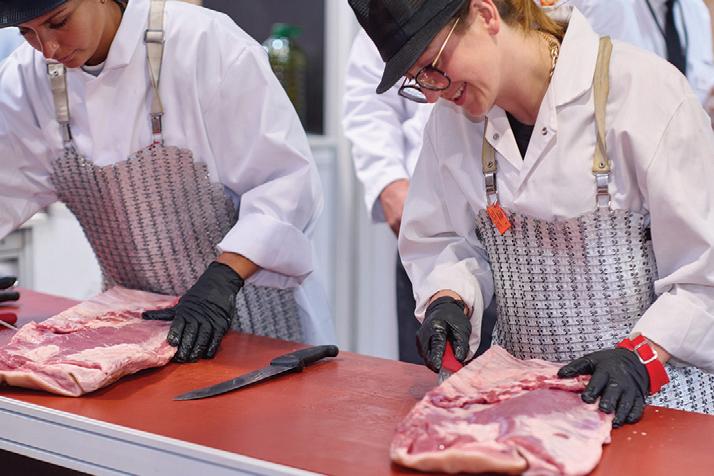
Booker is the UK’s leading food wholesaler, proudly serving over 340,000 hospitality and catering customers nationwide. From independent restaurants and gastropubs to hotels, event caterers, and street food operators, we empower every kind of food business to thrive with exceptional value, choice, and expert service.
We support chefs, kitchen teams, and front-of-house professionals with top-quality ingredients, essential supplies, and a can-do approach that makes all the difference in a fastpaced industry. Our dedicated team - including Master Butchers, specialist buyers, culinary trend experts, and hospitality-savvy colleagues - understands the unique needs of
every food business, whether sourcing the freshest produce, navigating seasonal menus, or delivering last-minute stock when it matters most.
With 190 branches, nine distribution centres, and a 7-day delivery network featuring real-time tracking and flexible credit options, Booker guarantees availability, quality, and consistency - even amid supply chain challenges. Our “We Can Save You Money” programme, loyalty schemes, and competitive pricing help customers manage rising costs, while our Own Brand ranges deliver quality without compromise to support profitability in tight-margin environments.
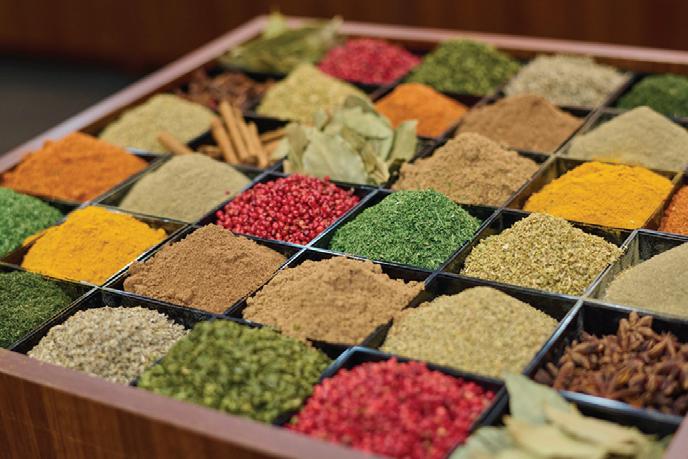
Beyond supply, our catering team offers hands-on advice on menu planning, portion control, compliance, and cost optimisation. We back this with sector-specific guides and clubs that provide insights, savings, and ongoing innovation.
More than a wholesaler, Booker is a trusted partner focused on the long-term success of the catering industry. With over 85,000 customer visits annually and continuous investment in people and technology, we deliver a seamless, customer-first experience that keeps kitchens stocked, guests delighted, and businesses growing.
For further information please visit www.booker.co.uk

The Heritage Excell Copper Cookware Collection is entirely crafted in Britain. Every element of its creation, from the hand-spun metal bases through to the leather handle inlays and packaging box with tissue packing paper, is created in the UK, with five Made in Britain manufacturers contributing to its creation.
Curtis Bligh, Head of Marketing Communications for Excell Metal Spinning, said: “The Heritage range of artisanal pans from Excell Metal Spinning is actively supporting 130 UK manufacturing jobs. Of the eight leading UK manufacturers involved in crafting the robust range of chef’s pans, frying pans, sauce pans and accessories, five of them are proud members of Made in Britain. In fact, we expressly looked at the Made in Britain membership directory to find manufacturers to get on board with.
“Importantly, every aspect of this is totally sourced and
made in Britain. This is a collective of British manufacturers coming together to produce a unique product.
“The Made in Britain accreditation gives us a tangible advantage in a very competitive market. It underpins that we’re perceived as high quality, entirely ethical in our practice, and innately sustainable in what we do. That's what that Made in Britain mark really stands for: it really means something, and that’s why we have it laserengraved onto our exclusive new range of celebrity-chef approved pans.”
The performance and durability of the range have been thoroughly tested by Gary Pearce, head chef at the Michelinrecommended restaurant 36 on the Quay, and celebrity chef, food writer and cookery teacher, Gill Meller. Heating evenly, even in temperatures up to 220°C, made of 100% copper and finished with a non-stick tin lining, the range delivers clear quality for even the most discerning cook.
To explore the range, visit: www.theheritageexcell.co.uk
In a professional kitchen, sharpness isn’t a luxury — it’s a necessity. From the first prep of the day to the final plating at night, chefs count on their knives to deliver precision. That’s where the Tormek T-2 Pro Kitchen Knife Sharpener comes in — a sharpening solution trusted by culinary professionals around the world.
Backed by over 50 years of sharpening expertise, and developed for the intensity of the commercial kitchen, the Tormek T-2 Pro Kitchen Knife Sharpener gives chefs full control over their edge. The machine is gentle on knives — it sharpens, not shortens. Thanks to the slowrotating diamond grinding wheel and high-precision guide, it only removes minimal steel, preserving the life of your knives while delivering exceptional sharpness.
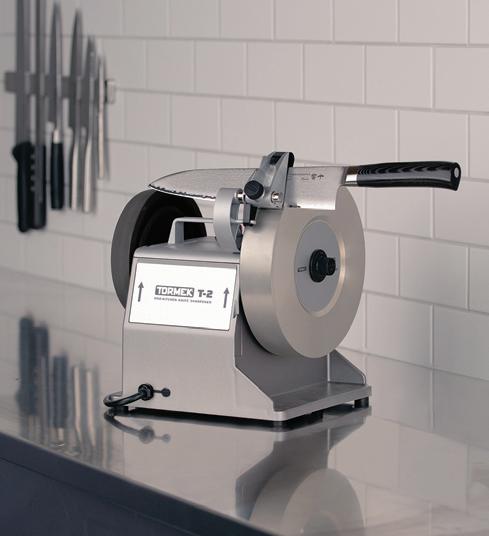
overheating. Just consistent, razor-sharp edges — time after time. With its low-noise operation and compact design, it integrates seamlessly into even the busiest culinary spaces — and is also suitable for sharpening other blades commonly used in food preparation.
The Tormek T-2 Pro Kitchen Knife Sharpener is designed to handle a wide range of kitchen knives — from large chef’s knives to small paring blades — and can also be used to sharpen other common kitchen blades, including mandoline blades and S-blades.
No matter the task, a properly sharpened knife is essential for efficiency and control. The Tormek T-2 doesn’t just sharpen knives — it elevates the entire kitchen workflow. tormek.com
What sets the Tormek T-2 Pro Kitchen Knife Sharpener apart is its blend of simplicity and professional-grade results. No guesswork. No
Phone: +46 581-147 90
Email: info@tormek.se
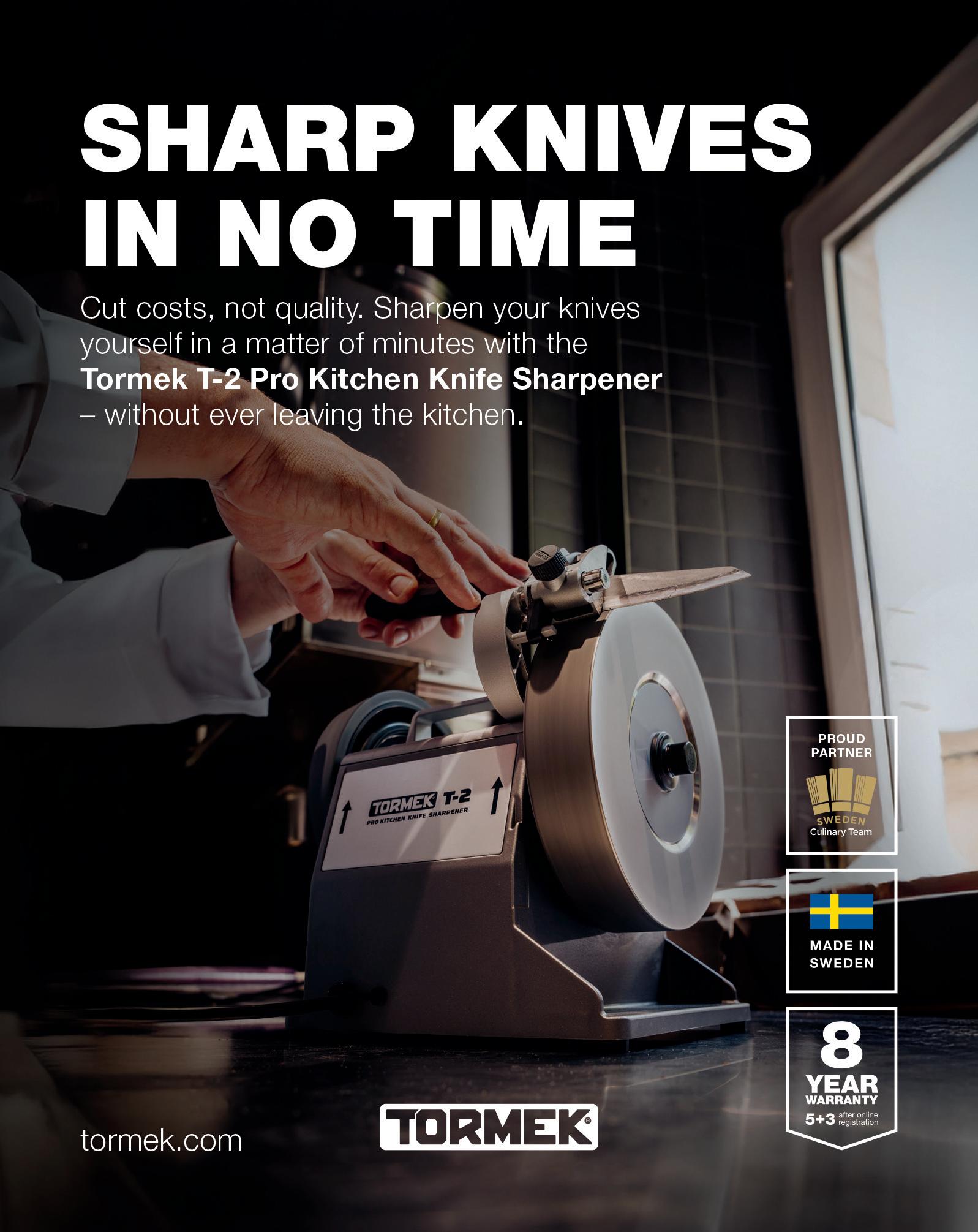

Northern Ireland’s drink industry is experiencing a dynamic resurgence, driven by a blend of heritage, innovation, and global ambition. With a growing number of distilleries and breweries operating across the region, it is becoming a powerhouse for premium spirits, craft beers, cider and RTDs.
Many of the Northern Ireland producers are award winners across the globe, including the Great Taste’s 2025 Golden Fork Award Winner, Basalt Distillery, a rising star in Irish spirits. The producer picked up the award for its flagship Basalt Volcanic Rock Gin (42.1%) while winning 2* Great Taste awards for their Basalt Volcanic Rock Gin (50.1%) and Basalt Volcanic Rock Vodka. These are crafted with ultra-pure water filtered through the ancient basalt rock of the Giant’s Causeway, a UNESCO World Heritage site characterised by the precise structure and placement of the dramatic basalt columns.
The Distillery was founded by chemical engineers Martha Garbe and James Richardson, who expertly blend scientific precision with geological heritage to produce spirits of exceptional character. The heritage is tens of millions of years old, with the geology helping
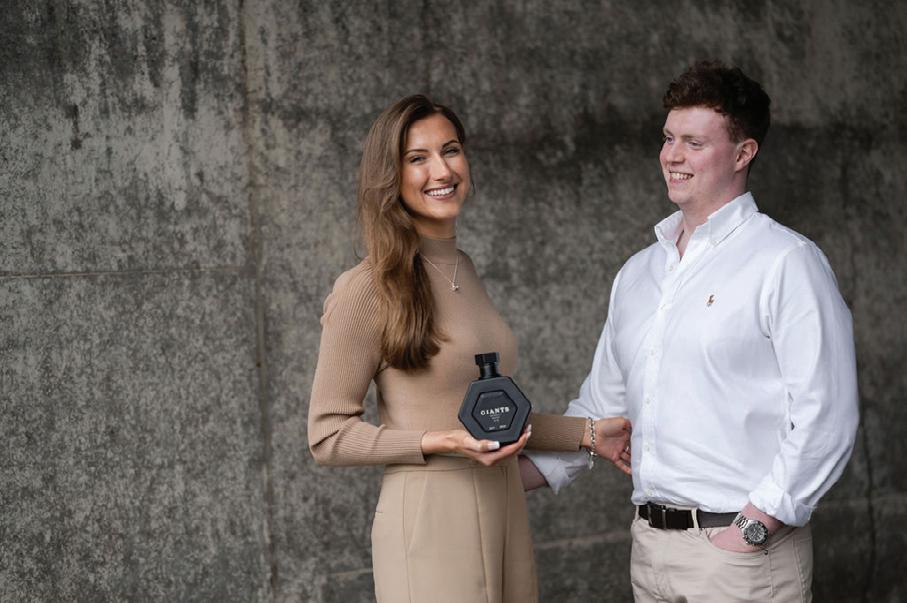
LittlePod’s responsibly-sourced natural ingredients are used in professional kitchens all over the world.
Leading chefs love LittlePod’s innovative products – none more so than Peter Gorton, a long-standing advocate for the company’s Campaign for Real Vanilla.
“I love LittlePod’s natural vanilla paste – every chef should use it,” said Peter, a Michelin Star-winning Master Chef, who joined Janet Sawyer MBE BEM – LittlePod’s Managing Director and founder – at the Cake & Bake Show in November to demonstrate different ways to use his favourite LittlePod product. “LittlePod’s natural vanilla paste is so versatile. It saves so much time without compromising on quality.”
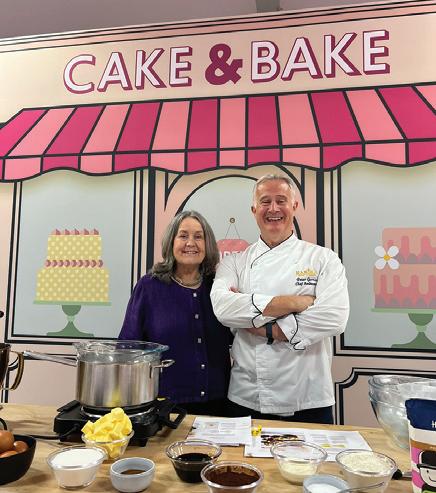
Peter gave two demonstrations – using LittlePod’s Madagascan vanilla paste – on the Cake & Bake Stage at Olympia London, while Janet signed copies of her second book, Real Vanilla: Nature’s Unsung Hero, which is available to purchase from LittlePod’s website, and from bookshops and online retailers internationally.
“It is always a pleasure to take our Campaign for Real Vanilla out and about, and to underline the importance of using real and natural ingredients,” said Janet.
“This year, I’ve been spreading the word about LittlePod and our products all over the world – in Japan, Australia and Canada – but it was great to be back in London, and to meet everyone at the Cake & Bake Show.
“We feel so fortunate to have a chef as accomplished as Peter to represent us and to demonstrate innovative ways to use our vanilla paste and other natural ingredients. I couldn’t be more grateful to Peter and we thank him for continuing to be such a fantastic ambassador for LittlePod.”
Like to purchase LittlePod’s products – including Janet’s latest book – or put Peter’s recipes from the Cake & Bake Show to the test?
Please visit www.littlepod.co.uk – or contact the LittlePod team at sales@littlepod.co.uk / telephone 01395 232022 for more details.
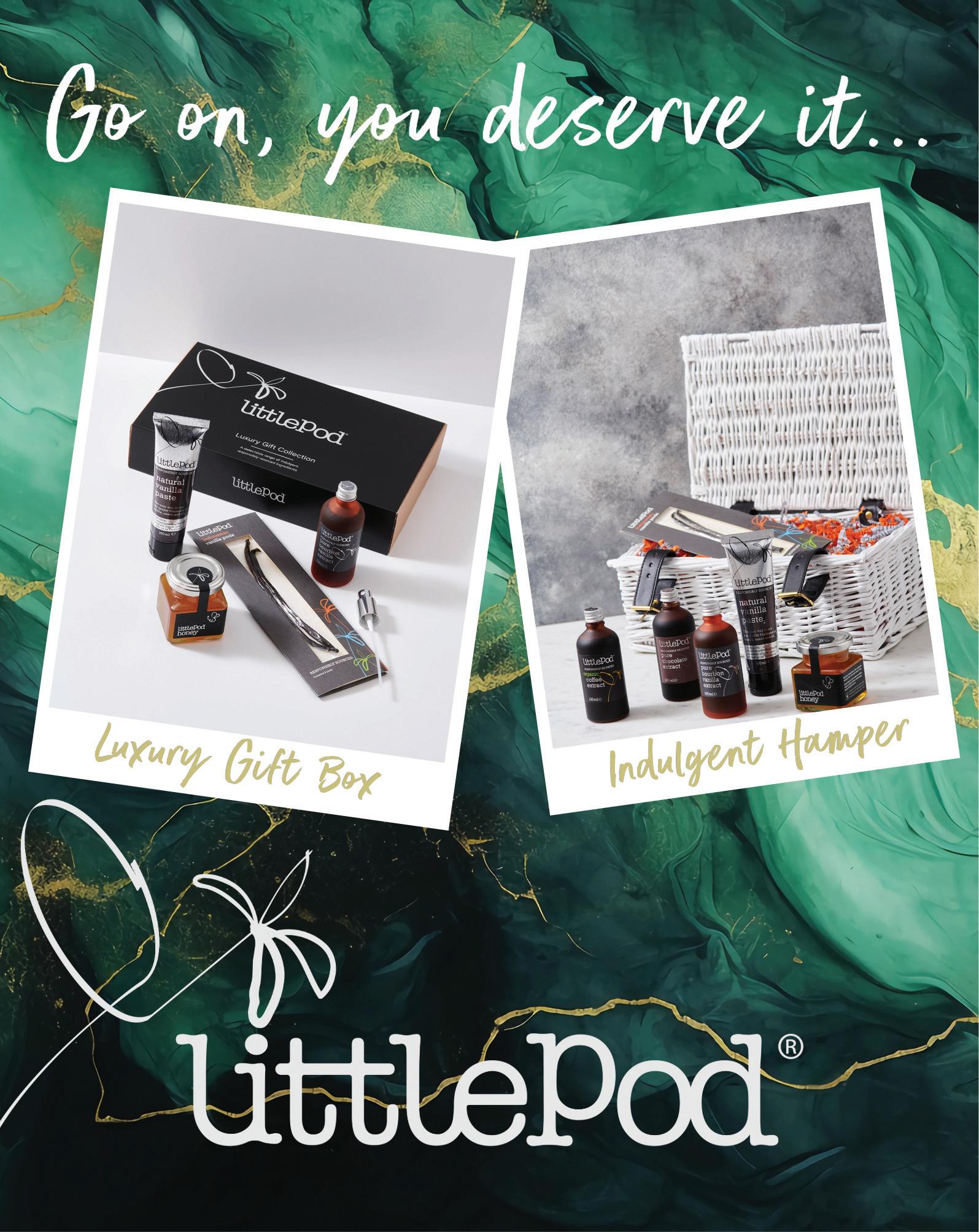
to filter and purify the water drawn from the borehole. Using the purest water possible, they use state-of-the-art stainless- steel distilling equipment to create gin with complex taste and detailed flavour profiles while ensuring every drop of liquid is identical, a skill which is almost impossible to achieve within craft gin distilleries.
You can learn more about Basalt Distillery’s products and where to find them on their website www.basalt-distillery.com
To learn more about the impressive portfolio of NI drinks producers please contact Michelle Charrington: michelle.charrington@investni.com or Alex Taggart: alex.taggart@investni.com or visit BuyNIFood.com

When it comes to creating authentic Mexican dishes, the secret lies in using genuine ingredients. For UKbased restaurants, shops, and bars, sourcing these items can often feel like a challenge. That’s where MexGrocer steps in. As a trusted supplier of Mexican food and drink products, MexGrocer provides an extensive range of high-quality ingredients straight from Mexico, making them accessible to businesses of all sizes.
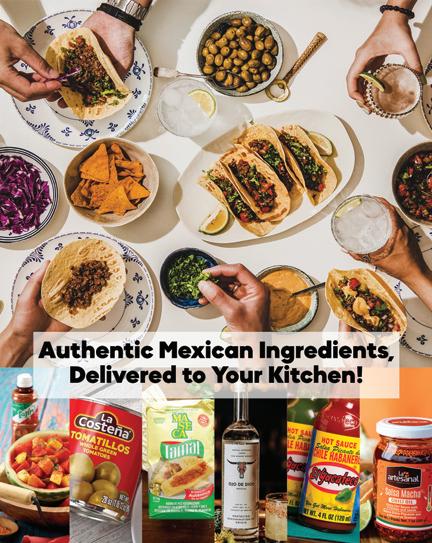
Based in the UK, MexGrocer specialises in importing and distributing wholesale products to meet the growing demand for authentic Mexican cuisine. From essentials like tortillas and chillies to unique items like nopales and tomatillos, their catalogue is a treasure trove for chefs and food businesses seeking to serve genuine Mexican flavours. They also stock hot sauces, beans, sweets, soft drinks, tequila, mezcal and a lot more, ensuring a comprehensive selection for any culinary need. MexGrocer proudly stocks some of Mexico’s most
popular and trusted brands, including
Jarritos, Naturelo, Valentina, Ojo de Dios and more! These well-known names bring the authentic taste of Mexico to your kitchen, giving businesses the confidence to serve dishes that truly represent Mexican food culture.
MexGrocer isn’t just about providing ingredients; it’s about enabling UK establishments to embrace and celebrate Mexican food culture. Whether it’s a family-run taqueria or a high-end restaurant, MexGrocer helps businesses deliver the quality and taste their customers deserve.
If you’re in the food and drink industry and want to bring the vibrant flavours of Mexico to your establishment, MexGrocer is your go-to partner. With a straightforward ordering process and a wide product range, they make it easy to stock up on all your Mexican favourites.
www.mexgrocer.co.uk


Hale Events – the team behind leading regional trade shows such as The Source and Expowest Cornwall – is launching an exciting new event in 2026. The Source Roadshow will take place on Wednesday 25 February 2026 at the Bath & West Showground, bringing Somerset’s vibrant food and drink scene together under one roof.
This one-day event is designed for the South West market, offering a must-attend sourcing opportunity for local buyers, chefs, hospitality operators, retailers, and distributors. With 100+ exhibitors, the Roadshow provides a dedicated space for businesses to connect, discover new products, and explore fresh ideas.
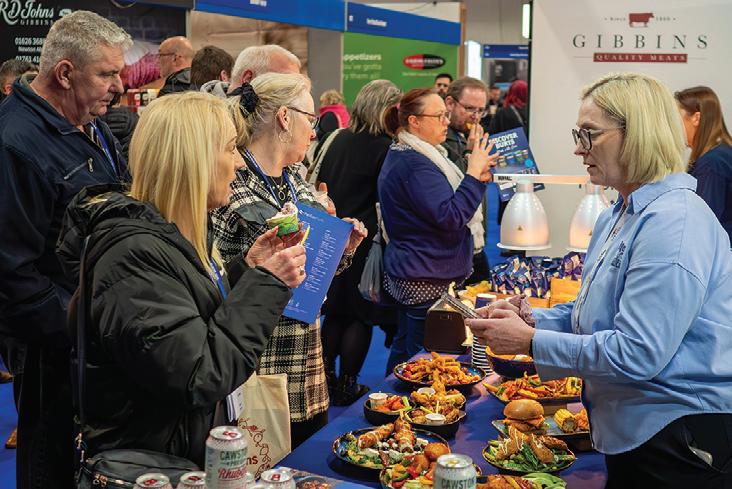
Despite Somerset’s rich food and drink heritage, the region has never had its own dedicated trade show – until now. The Source Roadshow fills that gap, giving cafés, restaurants, farm shops, delis, and catering businesses the chance to meet a fantastic mix of suppliers and producers, on their doorstep. And it’s not just about food and drink – expect to find innovative equipment, EPoS systems, and essential business services too.
From local artisans to major suppliers, the exhibitor

line-up promises something for everyone.
“We’ve organised trade shows all over the UK, but never in our home county – so this is exciting!” says Mike Anderson, MD of Hale Events. “Alongside producers, equipment and service providers, we’re making space for sector support organisations too. Expect to meet FareShare, The FSB, Visit Somerset, colleges promoting apprenticeships, and more – all helping to connect, educate and advise businesses.”
With backing from Taste of the West and key media partners, the Source Roadshow is set to become a valuable date in the industry calendar. Conveniently located for buyers from Somerset, Wiltshire, Dorset and beyond, it’s easy to get to and free to attend for trade buyers.
Don’t miss this opportunity to source, network, and grow your business in the heart of Somerset. For full details on visiting or exhibiting, go to https://sourceroadshow.co.uk.
Severn Cider are multi award winning artisan cider and perry makers.
We make whole juice draught and bottled ciders and perry using locally grown apples and pears.
Since 1956 we have been making cider at our family home and now cider mill. Set within 4 acres of heritage orchards and established gardens, we are situated on the banks of the River Severn in Awre,
Taking inspiration from cocktail traditions and Malvern’s rich water-cure heritage, Malvern Bitters’ flavours include the flagship Inky Blue (Aromatic) Bitters, which is a quirky, all-natural, colour-changing elixir that won GOLD at the World Drinks Awards 2024 and a silver medal at the London Spirits Competition 2024.
Malvern Inky Pink (Chilli) Bitters was awarded a gold star in the Great Taste Awards 2024 (food and drink that
the Forest of Dean, Gloucestershire.
We are continuing to plant cider apple and perry pear trees at our new orchards in Blakeney, home of the famous Blakeney Red Perry pear.
See us on Stand D21 or visit www.severncider.com
delivers fantastic flavour) and will add a spicy, slow burn to your favourite tipple.
Malvern Inky Orange & Cardamom Bitters won a Bronze medal in the International Wine & Spirit Competition 2025. This bitters is a veritable mélange of citrus and spice, which will add a zesty, aromatic complexity to drinks.
All flavours contain 40% ABV alcohol and fresh spring water from the Malvern Hills, are produced from scratch and will give your drinks colour, complexity, depth and flavour.
See us on Stand D23D or visit www.malvernbitters.ink

For over 60 years, Arthur David has been part of the fabric of the South West’s food community. From family beginnings to a company trusted by thousands of chefs, one thing has never changed: our belief that great food starts with great service.
We deliver more than ingredients — we deliver confidence.
Fresh produce picked with care. Fine foods sourced for flavour. Bakery, dairy, frozen and dry store lines chosen to help chefs save time, reduce pressure and raise the standard of their menus.
But what really defines us is
how we show up. Six days a week, early doors, in all weather — doing whatever it takes to support the kitchens that rely on us. Our teams build relationships that last, working closely with chefs, growers and makers to bring the very best of the season to our region.
Chefs tell us they choose Arthur David not just for quality, but for trust — trust that what arrives will be right, fresh, consistent, and delivered with care.
We’re proud to be a family-run business with a simple purpose: to help kitchens deliver amazing experiences through service, quality and knowledge.
The Label Group Ltd supplies labelling guns, thermal label printers and labels to retail, industrial and manufacturing sectors.
As an independent business, we offer unbiased advice backed by more than 30 years of experience in this field.
The labelling gun sector can be confusing. Products go by various names based
Arthur David. Trusted by chefs. Powered by service. Inspired by food.
See us on Stand B26 or visit www.arthurdavid.co.uk
on their application: labelling guns, price guns, pricing guns, label guns, coding guns and batch guns.
Our product selection covers every requirement, from basic occasional-use models to robust industrial machines, including specialist features like auto-incrementing guns for batch coding. All equipment comes with a one year manufacturer's warranty and is built to deliver years of dependable, efficient performance.

See us on Stand D16 or call 01736 810334 for details.
Since 2000, DWC has been providing IT & ePOS Solutions to Hospitality Business throughout the South West, with customers from Weston Super Mare in Somerset to Fareham in Dorset to St Ives in Cornwall.
We provide Hardware & Software Solutions available to suit ALL Hospitality sectors, from Cafes and Bistros to Bars & Restaurants to Hotel Chains.

Come visit us on Stand D4 and see how we can help you in 2026 & beyond. Working in Conjunction with Stuart Doderer - Payment Consultant. Official DOJO Payments Consultant for ALL Hospitality needs.
See us on Stand D4 at the Source Roadshow or visit www.dwcservices.co.uk

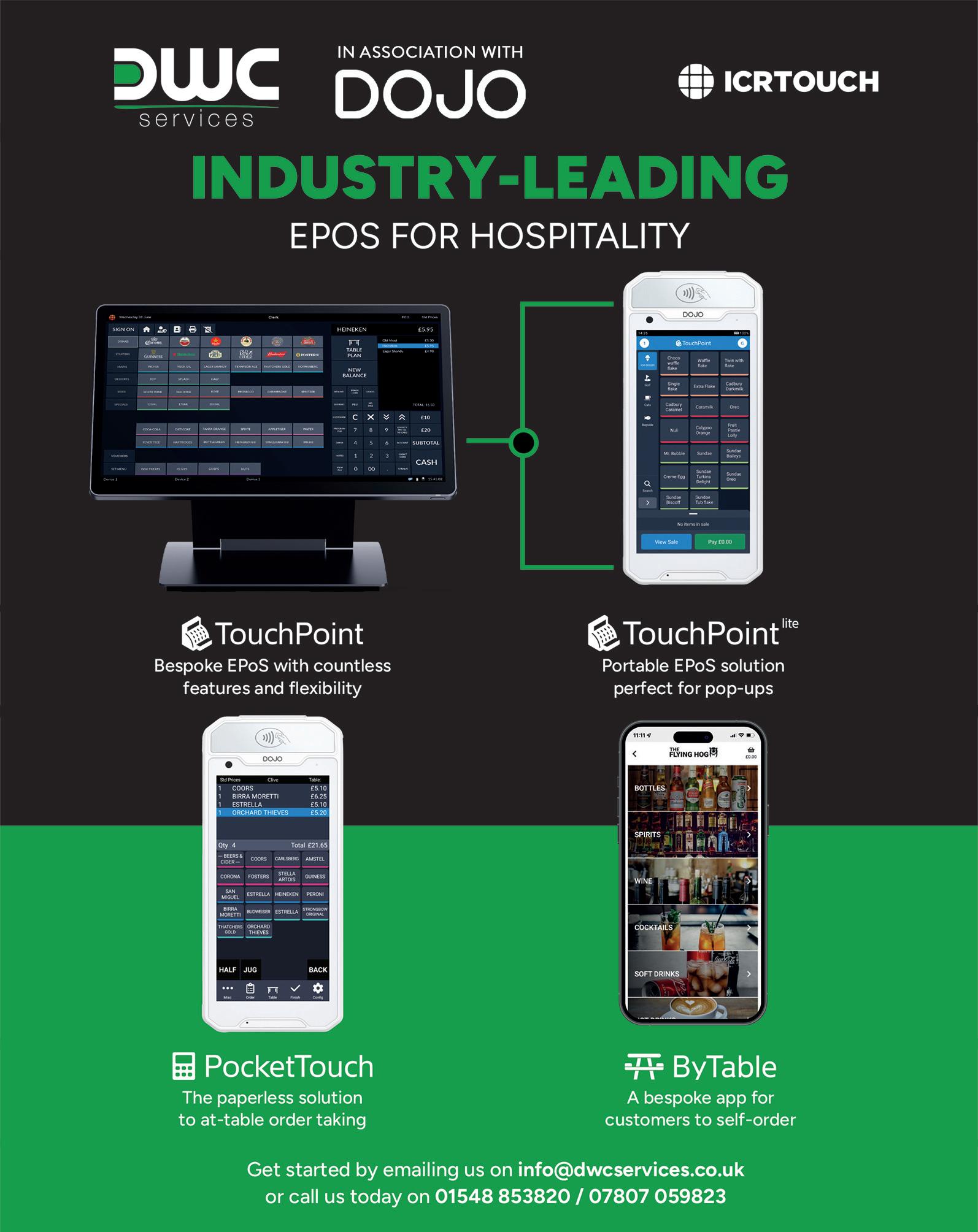


Holidaymakers may have filled beer gardens and seaside restaurants as the UK’s hottest summer draws to a close, but behind the scenes the hospitality sector is grappling with a growing crisis.
Rising operational costs - particularly soaring energy bills - are putting significant pressure on pubs, restaurants, cafés, and hotels. Since last autumn, more than a thousand venues have closed, and the industry has accounted for over half of the UK’s job losses since October 2024.
The challenge is compounded by the UK’s Industrial Strategy, which from 2027 will reduce electricity bills for energy-intensive industries such as manufacturing by up to 25%, but leave sectors such as hospitality in the cold. Hospitality businesses will not receive the same support, leaving them dangerously exposed to volatile wholesale energy prices.
While government relief is limited, operators are not without options. Investments in on-site generation, battery storage, and energy efficiency measures can help the sector mitigate risk, improve resilience, and plan for the long term, as Kat Auckland, Director of Communications and Projects at Geo Green Power explains.
ON-SITE GENERATION AND EFFICIENCY
“Having spent 15 years in the hospitality industry I know how accomplished the sector is at controlling cost, and the bottom line is that hospitality operators need to take the same proactive approach to managing
By Kat Auckland, Director of Communications and Projects at Geo Green Power
their utility costs,” says Auckland. “Many operators have already maximised savings through energy efficiency and resource management, and they must now turn their attention to energy generation for long-term performance.”
For larger operators, even marginal efficiency gains have delivered meaningful savings. Measures such as LED lighting, occupancy sensors, and modern heating and cooling systems can reduce consumption without compromising guest comfort.
But to truly stabilise costs, businesses must look at renewable energy to future-proof operations, and many already are.
Advances in solar technology mean panels generate significantly more energy per square metre than previous models, opening up feasibility for older buildings or sites with limited roof space. At the same time, costs have fallen by almost 90% over the past decade (Our World in Data, 2024), making adoption more financially accessible.
“These improvements mean operators can now generate more energy from smaller installations,” Auckland adds. “Funding options such as power purchase agreements are also helping to lower the barriers to entry.”
Crucially, operators don’t need to overhaul their entire estate at once. “We’re seeing many hospitality businesses take a phased approach, starting with one or two sites, then reinvesting the savings into further installations,” says Auckland. “That ability to scale gradually makes solar a more realistic and sustainable strategy for groups managing multiple venues.”
SOLAR CARPORTS OFFER UNTAPPED POTENTIAL
One example of this phased approach is the integration of solar carports. These structures convert underutilised parking areas into sources of solar energy, allowing businesses to gradually expand their renewable energy capacity.
Beyond generating electricity, solar carports offer multiple advantages, they provide covered parking, support EV charging, reduce energy costs, and can even allow surplus energy to be sold back to the grid.
“There is untapped power waiting for businesses across the UK in their car parks. They could harness enough energy to cover their electricity needs and even sell energy back to the grid, paying for their investment in the process,” says Auckland.
“Solar carports, like the ones being deployed at leading hospitality businesses, have a lot of potential because they're free-standing structures that don't require additional land or a reduction in parking spaces, whilst requiring no major groundworks.”
Battery storage provides additional flexibility for managing energy consumption. Paired with on-site solar generation, it allows businesses to store surplus daytime energy and use it during peak evening hours, when restaurants, hotels, and leisure venues are busiest.
“This approach can help businesses manage costs more effectively while reducing reliance on grid electricity during high-demand periods,” explains Auckland. “It also supports wider decarbonisation goals, which are becoming increasingly important for customers and stakeholders alike.”
By smoothing consumption and reducing exposure to volatile wholesale prices, storage not only lowers costs but also provides greater certainty over energy supply. For hospitality operators, it strengthens resilience while securing reliable supply regardless of market fluctuations or geopolitical events.
The case for investment in energy efficiency and on-site generation extends beyond cost control. Guests are increasingly attentive to sustainability credentials, employees want to work for businesses aligned with their values, and investors expect credible action on carbon reduction.
In a landscape where external support is limited and energy volatility is set to persist, building resilience is no longer optional. By investing in efficiency, solar PV, and battery storage, hospitality businesses can take greater control of their future, reduce financial risk, and safeguard the sector’s long-term stability.
By Andrew Ashton, energy procurement expert and head

With the Autumn Budget looming, the hospitality industry is bracing for new financial pressures. Andrew Ashton, energy procurement expert and Head of Consultancy at Consultus International, believes the sector needs to prioritise energy by implementing a derisking strategy that accounts for future volatility alongside sustainability requirements. Here, he discusses the importance of transparency and proactivity to help prepare for the future, protect costs and boost sustainability.
The hospitality sector is already facing immense pressures, with potentially more challenges to come after Rachel Reeves’ Budget announcement on 26 November. With persistently high operating costs, a severe labour shortage and a drop in consumer spending, the perfect storm is already brewing.
When we look closely at how energy pricing impacts hospitality businesses, it is clearly an area that needs prioritising regardless of the outcome of this month’s Budget. Energy purchasing decisions are now discussed at senior board level within most businesses – and are often the second highest cost after staffing -- yet there are still issues with the approach being taken.
UNSEEN RISKS
The current practice for some large hospitality operators is a basic "pot luck" energy strategy. Whether choosing to go direct to a supplier or through an energy broker, these contracts are typically fixed for one to three years, and are then reassessed and changed just weeks before renewal. The main issue with this approach, is that it compromises stability and does not support long-term financial or net zero goals –which all businesses need to be prioritising.
For large hotel operators that could be spending millions on energy each year across multiple sites, a pot luck approach can expose the business to significant unseen risks, particularly as the energy market is
so volatile. Locking into a contract like this can mean opportunities to save are missed, or budgets become strained if prices continue to rise.
In addition, it is critical that hospitality is prepared for the unavoidable increase in Transmission Network Use of System (TNUoS) charges (projected to increase hugely from April 2026). This cannot be controlled, but its impact can be managed within this strategic approach, by shifting peak-time consumption away from high-demand periods.
In summary, it is important for operators to look at both ends of their energy strategy – the buying process as well as the management. Both are required to ensure long-term resilience and flexibility that can keep up with the changing market and regulations. And for many businesses, the problems can stem from the broker or automatic energy service being used, which may provide more generic support rather than tailored advice, based on detailed analysis and understanding.
To become more agile and resilient with energy buying and management, one solution is to shift to a more dynamic purchasing strategy.
This means instead of purchasing energy in a single lump sum and fixing for three years, energy can be bought in blocks (tranches) over time, according to a pre-agreed risk management strategy. Tranche buying, or flexible procurement, is a strategy used by large energy consumers to spread the risk of purchasing their yearly energy requirements by making multiple, smaller purchases over time, rather than a single, high-stakes purchase on one day.
Decisions are guided by robust market intelligence and financial modelling, and can even include scenario-based insight to gauge what future price fluctuations could mean for profit and loss (P&L) - particularly important when we think about the changes from the upcoming Budget.
In some instances, this has the potential to save businesses significant amounts of money. At Consultus International, our team implemented a flexible three-year contract for a multi-national hotel group by locking in different energy blocks across the contract period. This achieved a saving of around £25 million, demonstrating how this type of structured purchasing can consistently outperform a fixed price-style contract.
Strategic procurement is the essential first step toward meaningful ESG and net zero goals and extends far beyond simply buying a 'green tariff'. True efficiency begins with knowing what you are using and when, and strategic buying naturally requires this level of proactive energy management.
Once energy purchasing is robust and reliable, thoughts can turn to controlling the consumption, which is a good opportunity to utilise tools such as energy audits and virtual energy management, to help cut down usage or shift it to cheaper times of the day.
Having a strategic energy partner or consultant can also support flexible energy contracts to ensure a greater proportion of renewable energy is purchased, which then directly supports sustainability targets.
Ahead of the Budget, and certainly before the next contract renewal, hospitality operators should consider the following:
• Check your strategies: Is there a clear, dynamic strategy in place for energy purchasing, and a separate strategy to effectively manage consumption? If not, this is a crucial place to begin.
• Review partners: Is the business working with a transparent, trusted energy consultant, relying on brokers, or going direct to suppliers? A true energy consultant goes beyond basic procurement, providing financial modelling, risk management, and market intelligence. If the business is experiencing poor, opaque service, money is likely being wasted and cost savings are not being spotted.
• Assess net zero integration: Is the business considering how better energy management and purchasing can support your net zero goals and, in turn, offer compelling marketing/green messaging? For any size hospitality operator, sustainability is only going to become more important.
This strategic shift in energy purchasing and management is not a luxury; it is a fundamental requirement for long-term resilience and competitive advantage within the hospitality sector. With potentially more challenges on the horizon for the sector, ensuring energy costs and use is streamlined and sustainable is a no-brainer. It is therefore advised to make internal assessments about what plans are in place currently, and if required, engage a trusted, transparent partner to begin seeing the true financial benefits of a bespoke strategy.

UK hospitality is changing fast. As 2026 approaches, sustainability is becoming a key differentiator, with a recent Booking.com survey showing that 74% of UK travellers actively seek sustainable options and many are willing to pay more for them.
Investors are taking note too. ESG performance increasingly shapes valuations, lending decisions and asset strategies, with 49% of lenders saying they would divest from businesses that aren’t taking suitable action (Savills 2022). Hotels and other hospitality venues that embrace genuine sustainability - not just good marketing - can strengthen their brand, improve operational resilience and enhance asset value.
At the same time, several major energy trends will influence how hospitality businesses manage costs. Although wholesale prices have stabilised compared to recent years, the charges for maintaining and using the UK electricity network are set to rise significantly in 2026, meaning many establishments may face higher bills even without increasing consumption. Meanwhile, carbon reporting is moving towards more granular, hour-by-hour data, making it essential for sustainability-conscious businesses to prove their energy is genuinely renewable.

Fortunately, there are practical, future-proof solutions. On-site solar generation offers fast payback for the energy-hungry hospitality sector, often in as little as three years, followed by decades of low-cost electricity. It reduces exposure to rising grid costs, makes sustainability commitments visible and supports additional services such as EV charging.
When combining solar with truly renewable electricity supply and transparent reporting, this also allows businesses to build trust with guests, investors and partners.
Good Energy helps businesses take control of their energy, offering 100% renewable electricity with hourly matching insights, solar installation expertise and competitive export tariffs.
With 25 years of UK renewable expertise, we’re here to support hospitality businesses to navigate these energy changes, cut costs, reduce carbon make informed decisions that strengthen their businesses for years to come.
Get started today: www.goodenergy.co.uk/business
See the advert on the previous page for more information.
The idea for The Fold was born during Covid, when the whole country was confined indoors. The landowners felt fortunate to have this beautiful outdoor space - a place to exercise, unwind, and find peace amid an uncertain world. Wanting others to experience the same sense of freedom, they decided to share it - creating a corner of land where friends and family could rest and reconnect with nature.
Because of the family’s deep connection to the land, the project was only possible if it protected and respected the environment - making the balance between construction and conservation the guiding principle throughout. The Fold has gradually grown into a small retreat of four off-grid cabins, each designed to offer guests simple comfort and quiet luxury, with the landscape always at the heart of the experience.
More recently The Fold has been recognised with a Judges’ Commendation as an Off-Grid Pioneer at the Herefordshire Tourism Awards.
SUSTAINABILITY AT THE CORE

Much of The Fold’s energy comes from on-site solar arrays and sustainably sourced firewood. But one part of the set-up remained a challenge: gas for cooking, heating and hot water. While essential for creating a luxurious stay, the team knew it left a heavier carbon footprint than they wanted.
INTRODUCING CALOR BIOLPG
To address this, The Fold turned to Calor, already familiar as a trusted energy provider. Together they explored switching from conventional propane to BioLPG, Calor’s renewable alternative. By working closely with a sales representative, The Fold adopted a system using 19kg cylinders and move onto a 70% BioLPG tariff which they’ve been happily using for a year now.
With Calor BioLPG customers can choose from a range of allocation tariffs, from 20% through to 100%, allowing them to balance sustainability goals with budget considerations. Each tariff corresponds to a different level of CO2 reduction, with all allocations backed by Green Gas Certificates to verify renewable usage.
This shift has allowed The Fold to significantly cut its CO2 emissions without compromising on reliability for guests. It’s also a step that fits naturally with their wider ambitions: rewilding their site, supporting local producers, and ensuring their operations enhance, rather than harm, the land they steward.
The Fold describes their experience with Calor as constructive and collaborative. Their sales representative listened carefully to what they wanted to achieve and helped design a workable solution. As they see it, this wasn’t just a switch in energy supply, but the beginning of a partnership that supports their wider sustainability goals.
For The Fold, sustainability is not a requirement but a responsibility — one that shapes every decision. Switching to BioLPG has been part of that journey, helping them to align the comfort they offer visitors with the environmental values that guide the business.
For further information on Calor visit www.calor.co.uk/caterers
See the advert on page 13 for more information.
Green energy experts have launched a new guide to show how solar PV can support resilience and guest expectations
With energy costs climbing and guests expecting more sustainable choices, UK hospitality and leisure businesses are being urged to invest in solar PV to protect margins and reputations.
This is according to a new guide from nationwide renewable energy installers, Geo Green Power, which sets out how pubs, restaurants, hotels and leisure centres can use solar PV to reduce overheads, stabilise costs and meet the demands of increasingly environmentally conscious guests.
In its research for the new guide, ‘Powering Good Times’, the firm has uncovered how around two-thirds of UK diners now consider a venue’s ethical and environmental credentials when deciding where to eat. In addition to this, further research found that sustainable travel is now considered to be important to as many as four out of five travellers. At the same time, operators are facing high and unpredictable energy bills, with kitchens, pools, refrigeration and ventilation driving continuous demand. Against this backdrop, the guide is aiming to help hospitality and leisure businesses

understand the commercial, operational and reputational benefits of solar PV and take practical, informed steps towards reducing costs, strengthening resilience and delivering visible sustainability improvements.
The guide also explores real-world examples of businesses already benefitting from solar PV, including Mitchells & Butlers, one of the UK’s largest pub and restaurant groups. Working with Geo Green Power, the company has installed solar PV across multiple sites. The installations generate over 470,000kWh of renewable electricity each year, saving more than 100 tonnes of carbon annually and reducing reliance on the grid, while providing customers with a visible signal of the company’s sustainability commitment.
Kat Auckland, Communications Director at Geo Green Power, said: “In hospitality and leisure, the energy meter never really stops. Solar PV gives operators a way to take control, stabilise costs and show guests the sustainability story they increasingly want to see.” ‘Powering Good Times’ also outlines funding options, ranging from self-funded systems with payback in four years to Power Purchase Agreements that require no upfront capital.
The guide is now available for download at: www.geogreenpower.com/solar-guide-for-commercial-sectors/

Food outlets and catering providers understand the serious risks of food labelling errors – both to customers’ safety and a business’s reputation. To help prevent future hazards, there have been significant improvements to labelling standards in the industry.
Natasha’s Law, introduced in October 2021, has revolutionised the way food allergens are labelled on Pre-packaged for Direct Sale (PPDS) foods. While it has brought about positive changes, it also presents new challenges for industry workers as they strive to ensure ‘best practices’ are met and legal requirements are followed effectively.
Food outlets offering consumers PPDS food that is made on-site and packaged by the business, such as grab-and-go sandwiches or meals, must comply with Natasha’s Law by clearly displaying the food name, a full list of ingredients, and highlighting any allergens – which could be bolded or in another colour.
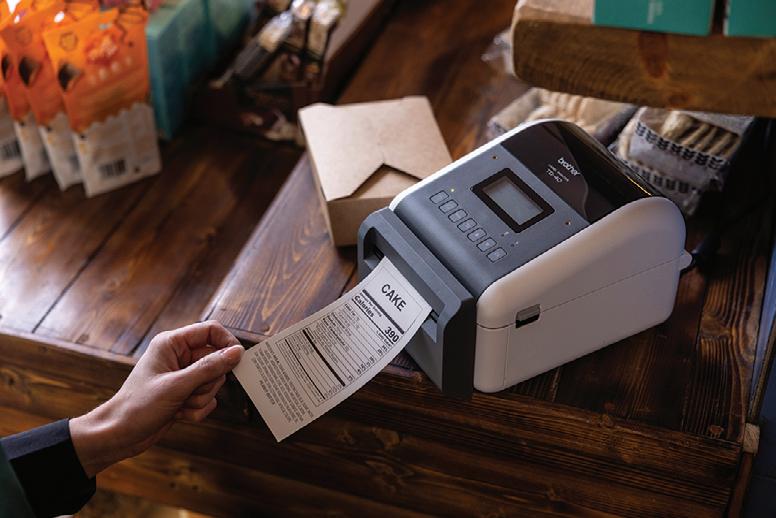
Failure to follow such rules could result in substantial fines or even criminal charges. To avoid penalties and maintain customer safety, businesses should implement effective and accurate labelling solutions.
A fresh, fun and highly effective way of learning Food Safety has been introduced by Food Safety Expert, Simply Safer. The brand-new Food Safety Board Game offers a unique tool that combines traditional game play with videos and a detailed Food Safety booklet to engage learners of all levels and capabilities.
Created by Environmental Health Officer and Simply Safer founder Ruth Baker, the game helps staff understand not just what to do, but why it matters.
“It turns must-have training into something people genuinely enjoy,” says Ruth. “This means they remember more and feel more confident applying it. It caters for all learning styles, helps employers to assess staff learning and where additional support is needed.”
Teams are tested on key food-safety knowledge
including allergens, crosscontamination, hazards and control measures in an immersive format that encourages valuable discussion and reinforces learning through the accompanying videos and book.
One business already benefiting is The Flour Pot Bakery in Brighton. Team manager, Lydia, shared her experience, “I thought it was really fun! It was interactive and delivered great training at the same time.”
This Food Safety Board Game is a clear choice for building a strong, positive food safety culture and competence for any food-related business.
‘Working in a Primary Authority partnership with Cornwall Council’
To find out more, visit Simply Hospitality on Stand G25 at Source Tradeshow, Westpoint, Exeter on 3 & 4 February, and Stand A17 at Source Roadshow, Bath & West Showground, Shepton Mallet on 25 February. Pre-order: info@simply-safer.co.uk

Brother’s labelling solutions for PPDS foods allow food outlets and providers to produce high resolution labels, to help businesses meet regulations, streamline labelling process and give customers more confidence in their choices. Café Common Ground is one such business benefitting from Brother’s labelling solutions, after it started offering takeaway PPDS food for the first time. Brother’s TD-4520DN professional network desktop printer and free P-touch Editor software was the perfect solution for printing bespoke labels for ingredients and potential allergens as required by Natasha’s Law. The solution delivered fast, professional, and compliant labels that were easy to use.
Additionally, Brother’s stock rotation solution offers complete flexibility and can be integrated into existing digital services or used as a standalone solution with additional battery packs and touchscreen display units available.
As food labelling requirements continue to evolve, businesses should adopt flexible technology that can produce accurate, legible and cost-effective labels, to keep both customers and businesses safe.
Visit www.brother.co.uk/food-labelling to discover our full range of food labelling solutions.
Manual temperature checks are costly, time-consuming, and prone to error. Staff need to take readings regularly, log them accurately, and spot potential issues before they escalate. But what happens if a fridge or freezer breaks down overnight? You won’t know until the next day—and by then, you’ve already lost stock and a day’s trade. That’s thousands in potential losses, all because manual checks can’t catch problems in real time.

Automated temperature monitoring is the obvious solution. Smart sensors continuously track your fridges and freezers, alerting you instantly if temperatures rise or equipment fails. You stay audit-ready, paperless, and confident that your stock—and your
customers—are safe.
The cost? From just £40 per month, a small investment that can save thousands. One breakdown avoided can more than pay for a year of monitoring by preventing wasted stock and lost sales. Make the switch to digital monitoring today—and unlock the full benefits of Logicall’s ecosystem. Beyond temperature, our solution includes energy monitoring, leak detection, digital HACCP checks, and much more.
Protect your business, save time, cut costs, and simplify compliance—all with a single, smart system. 01672 569374
info@logicall.co
www.logicallmonitoring.co.uk

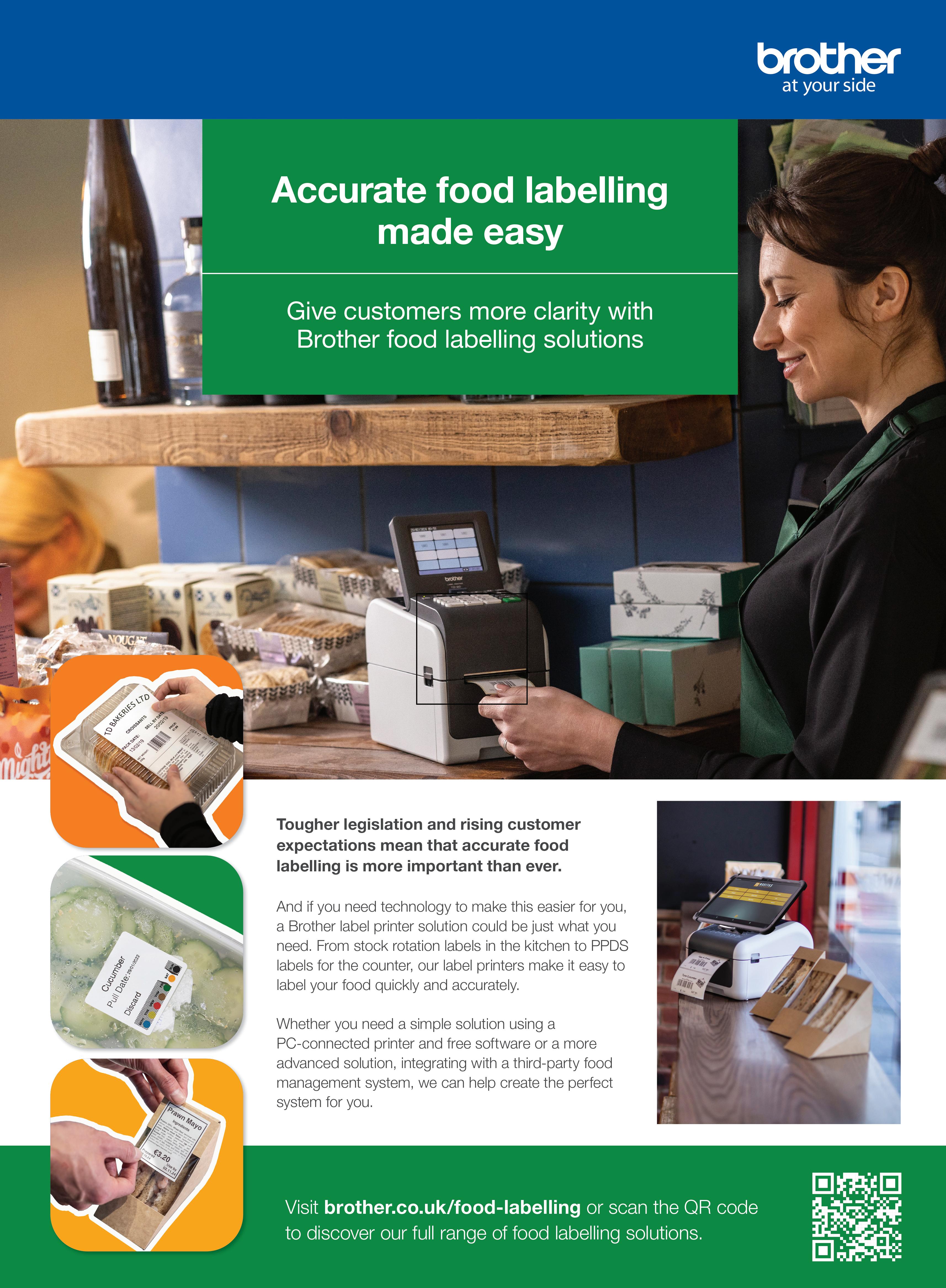
Customer service is the backbone of the hospitality industry. A single interaction can turn a casual visitor into a loyal advocate or a disgruntled customer into a negative review. In today's competitive landscape, delivering exceptional customer service is no longer a luxury but a necessity.
Hospitality should be based on exceeding customer expectations. The more the operator impresses, the better its reputation. Offering comprehensive training and the latest technology and products to make their jobs run more smoothly can improve customer service.
UK hospitality businesses lose millions annually due to poor customer service. While getting everything right is not always possible, there are ways to improve how customers see your business.
Leveraging technology will help manage guest information and interactions more efficiently. CardsSafe Ltd.'s technology has been a part of customer service at numerous restaurants, hotels, bars, and golf courses for over 25 years. The system protects businesses by deterring dine and dash and securely protects customers' bank and ID cards while they run a tab. The bar tab-keeping units signal to customers that the venue cares about their card security.
If a customer wishes to run a tab and their bank card is slotted in the wallet or stuffed into a till, things
don't look good for the business. The brand's impression is diminished, resulting in less loyalty and, ultimately, a reluctance for that customer to return. One of CardsSafe's longest-standing customers, the leading global hospitality brand Hilton Hotels, has used their system since 2005. They say, "All our customers are pleased that we look after their cards more securely with CardsSafe." CardsSafe's tab systems are in multiple hotels nationwide.
So, the choice is yours. To exceed customer expectations, ensure your technology benefits your business and reap the benefits of reputation and loyalty.
For more information, please visit www.cardssafe.com Or contact the sales team on 0845
London-based tech startup LoveBite AI now delivers over one million dish videos each month as its AI Video Menus gain momentum across the UK and USA.
The platform showcases short, high-quality videos of restaurant dishes at every stage of the customer journey, supported by a multilingual AI that answers menu questions, offers recommendations and helps upsell. These Video Menus attract more guests, convert them into bookings and encourage higher spending at the table.
LoveBite’s Video Menus are already in use at independents such as Oorja, Paladar and Gura Gura in London, as well as major groups including Las Iguanas, Bella Italia and The Real Greek.
“In today’s video-first world, diners want to see what’s on offer before deciding where to go and what to order,” said LoveBite Founder and CEO Gareth Hughes. “Our Video Menus put a restaurant’s food front and centre, enhancing the guest experience while driving more bookings and higher average spend.”
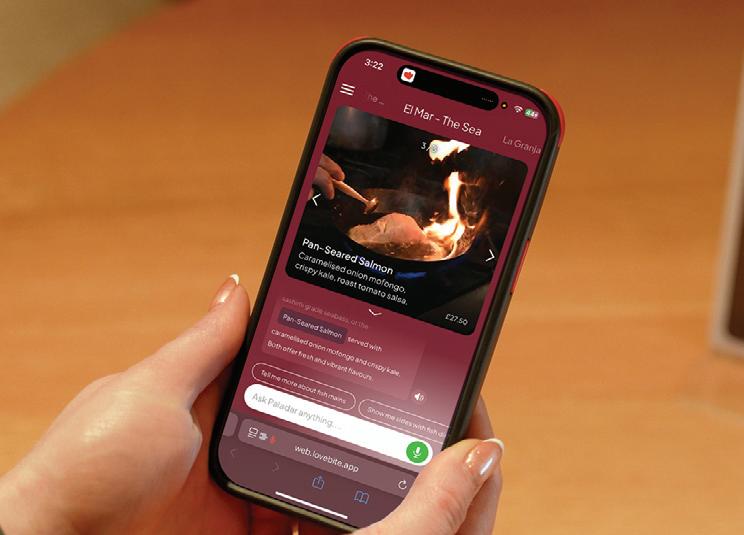
Their effectiveness is rooted in the hunger hormone ghrelin, triggered by appetising food videos that
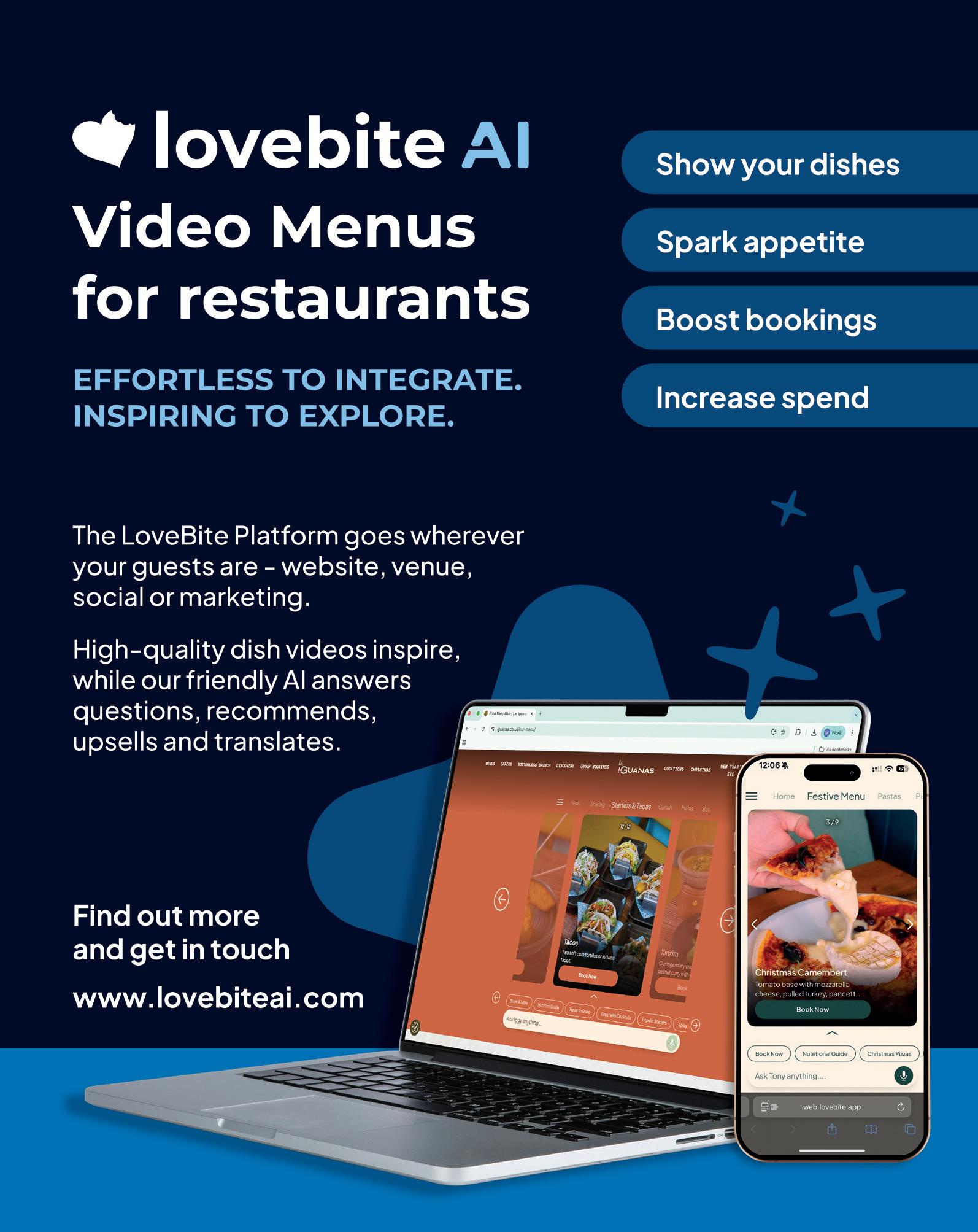
prompt desire and action. LoveBite’s media team produces standout dish videos using efficient, low-cost methods that make ongoing content creation easy for restaurants.
When added to a website, Video Menus encourage guests to book, and in venue they prompt diners to order more courses, desserts and cocktails. The AI can also promote bookings and high-margin items, increasing profitability while easing pressure on staff. Restaurants are already seeing results.
“We’ve seen a huge rise in dessert sales. Customers love it and the feedback has been fantastic,” said Rebecca Cuthbertson, Marketing Manager at Ikigai Ramen in Edinburgh.
“Guests are visibly excited when they see videos of the dishes,” noted Umesh Uthaman, Manager of Masalchi, owned by Michelin-starred chef Atul Kochhar.
Explore Video Menus at www.iguanas.co.uk/our-menu/ and www.oorja.co.uk/menu
Find out more at www.lovebiteai.com or contact info@lovebiteai.com

As pressure grows across the hygiene and facilities sectors to reduce plastic waste and improve sustainability, packaging innovation is becoming a key focus. Responding to this need, Hadron Group has developed a ground-breaking alternative to traditional rigid buckets - the EcoSmart™ flexible pouch system.
EcoSmart replaces the bulky plastic containers typically used for wet wipes with a durable, flexible pouch incorporating a side-mounted dispenser valve. The result is a solution that uses up to 60% less plasticwhile maintaining product integrity and usability. Beyond its clear environmental advantages, EcoSmart delivers measurable commercial benefits. The reduced weight and size of the pouches lead to lower transport and storage costs, reduced waste disposal fees, and greater product density per metre of shelf
space - particularly valuable in retail and distribution environments.
Available in two sizes - a standard version to replace 3–5 litre buckets and a larger handled version to replace 10 litre formats - EcoSmart is ideal for use across food processing, dairy, beverage, and industrial hygiene applications.
Manufactured in the UK, the pouch can be branded for own-label clients or supplied as part of Hadron Group’s own brand range.
With EcoSmart, Hadron Group is demonstrating how intelligent design and sustainability can go hand in hand, helping businesses move towards a cleaner, greener future. For more information, visit www.ecosmart-packaging.co.uk
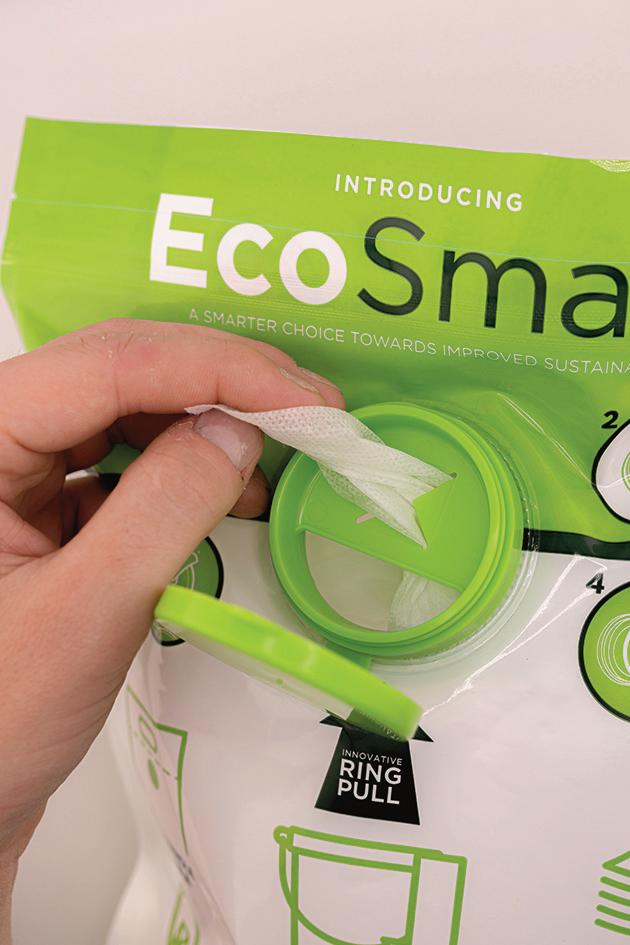
In hospitality and foodservice, many operations are locked into soap systems built around bulky goods, hidden costs, and hard-to-recycle waste. Amplify Goods believes it’s time to rethink that.
Enter SUDZERØ - the company’s newest innovation following the launch of their re:mind range in 2024. SUDZERØ's advanced and circular-enabled handwash system is designed specifically for high-demand commercial environments like catering, kitchens, and washrooms.
With SUDZERØ, Amplify Goods hopes to challenge industry norms.
• It challenges “free” proprietary dispensers - often with a high cost per litre. SUDZERØ reduces lifetime expenditure through efficient dosing, long-lasting hardware, and minimal consumable waste. Operationally, teams benefit from fewer deliveries, fewer changeovers, and considerably less waste to dispose of.
• It delivers a radically reduced footprint: the future is water-free shipping, freeing up
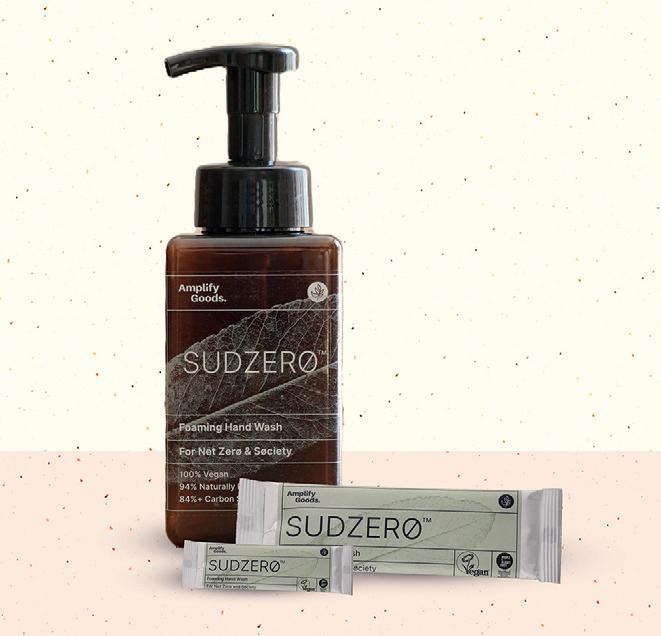
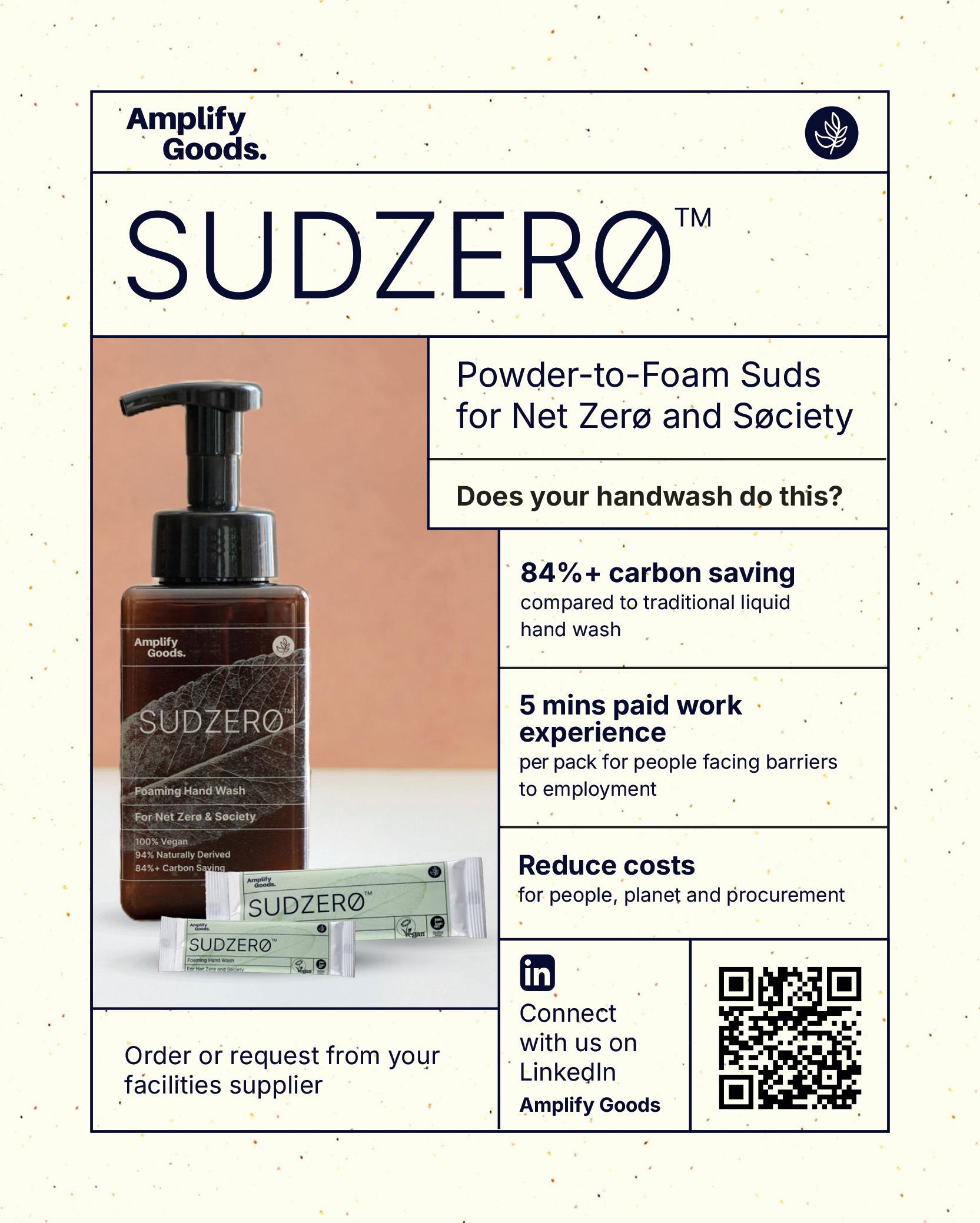
crowded lorries and storerooms. 99.96% naturally derived and vegan, its circular-enabled refill system offers an 84%+ carbon saving compared to traditional liquid handwash (backed by an LCA), no single use plastic waste, and even upcycles cardboard packaging.
• Its lightweight powder-to-foam formulation costs less to produce and less to package, so it costs 50% less than Amplify Goods' own traditional liquid handwash.
• And while practical savings take the lead, SUDZERØ also delivers on social value, providing vital living wage work experience for people facing barriers to employment such as homelessness and disability for every sachet.
It's a hygiene solution aligned with the evolving expectations of guests, staff and regulators alike. For hospitality operators looking to reduce clutter, cut costs, and meet rising ESG standards, SUDZERØ isn’t just a new product - it’s a smarter, futureready system built for the realities of modern hospitality.
For further information please see the advert on this page or visit www.amplifygoods.org/sudzero
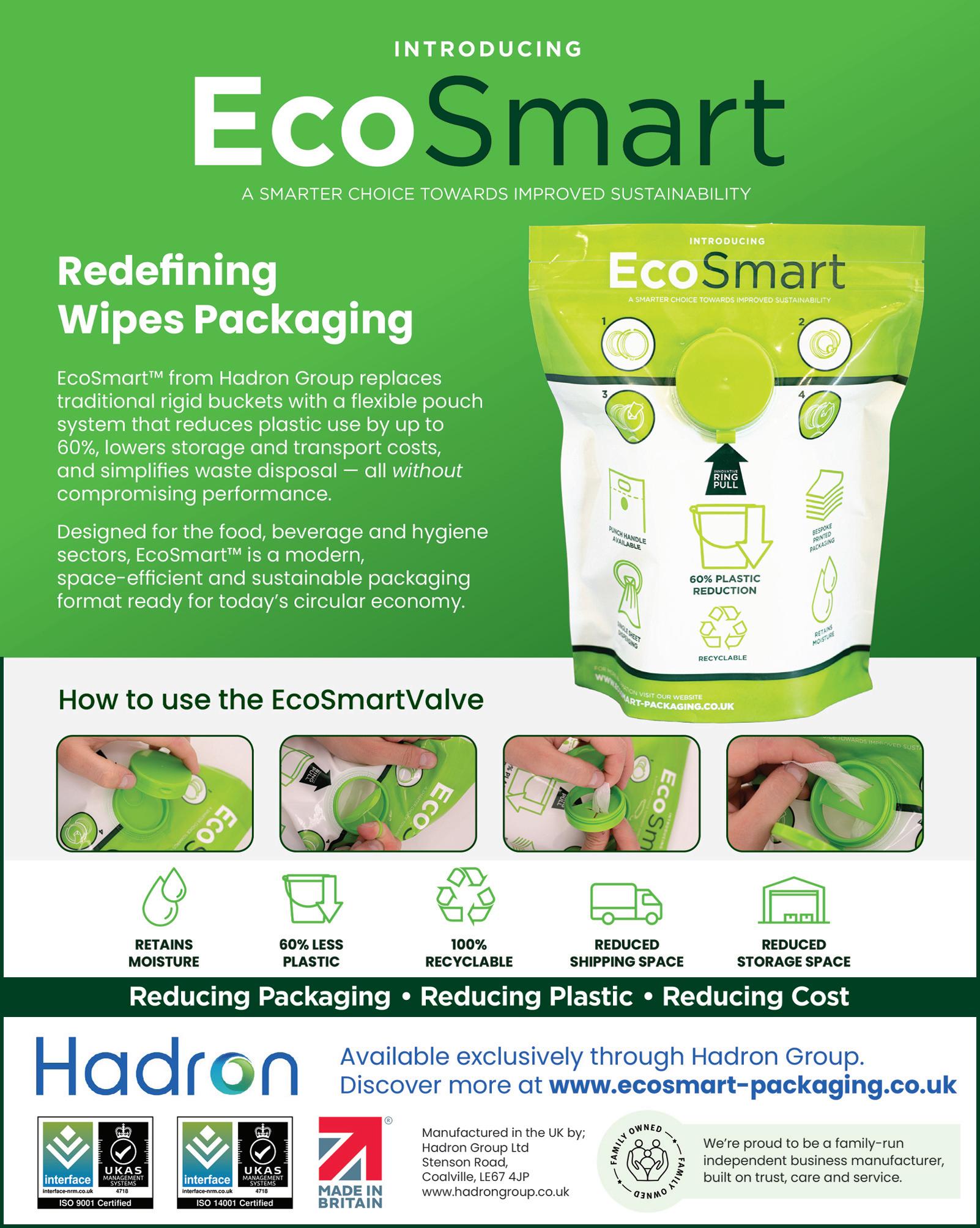
In an era where a single smartphone photograph can reach thousands within minutes, cleanliness has evolved from a basic operational requirement to a make-or-break factor for UK hospitality and licensed ontrade establishments. The stakes have never been higher, with businesses facing an increasingly discerning public armed with social media platforms and review sites that can elevate or demolish a reputation overnight.
Today's customers arrive with expectations shaped by countless online reviews and Instagram-perfect imagery. A spotless venue is no longer impressive—it is simply the entry ticket to compete. Research consistently demonstrates that cleanliness ranks among the top three factors influencing guest satisfaction across pubs, restaurants, hotels, and bars. When standards slip, the consequences are swift and unforgiving. "Cleanliness is the silent salesperson," as one operations director at a prominent London hotel group. "Guests may not consciously notice when everything is immaculate, but they will absolutely notice—and remember—when it isn't."
The mathematics is stark. Industry data suggests that establishments with poor cleanliness ratings see repeat visit rates plummet by up to 70 percent. In contrast, venues maintaining exceptional standards enjoy customer loyalty rates exceeding 60 percent, alongside significantly higher average spend per visit.
Beyond customer satisfaction lies the critical matter of legal compliance. UK hospitality operators must navigate an intricate web of health and safety legislation, including the Health and Safety at Work Act 1974, Food Safety Act 1990, and various environmental health regulations. Non-compliance can result in substantial fines, prosecution, or closure orders—outcomes that prove catastrophic for small and medium-sized businesses.
Local authority inspections under the Food Hygiene Rating Scheme have become increasingly rigorous, with ratings publicly displayed and searchable online. A poor score of zero to two not only triggers regulatory action but also serves as a public warning that can devastate trade.

Environmental health officers are uncompromising when assessing cleanliness standards in kitchens, washrooms, and public areas. Moreover, establishments owe a duty of care to both guests and employees. Inadequate cleaning protocols can lead to slip hazards, cross-contamination, pest infestations, and the spread of infectious diseases. The COVID-19 pandemic heightened awareness around hygiene practices, and these elevated expectations have proven permanent. Customers now scrutinise hand sanitiser availability, table sanitisation between sittings, and visible cleaning routines.
The impact of cleanliness extends beyond customer-facing areas into staff welfare. Employees working in unhygienic conditions face increased health risks, lower morale, and higher stress levels. In an industry already grappling with recruitment and retention challenges, workplace cleanliness has emerged as a significant factor in staff satisfaction. Clean, well-maintained work environments demonstrate respect for employees and contribute to professional pride. Kitchen staff, bar teams, and front-of-house personnel perform better and stay longer when their workplace meets high standards. Conversely, poor conditions breed resentment, increase sick leave, and accelerate turnover— adding recruitment costs to an already tight bottom line.
THE SOCIAL MEDIA AMPLIFICATION EFFECT
Perhaps no factor has transformed the cleanliness equation more dramatically than social media. A dirty glass, grimy washroom, or sticky table can be photographed, uploaded, and shared with thousands before management even becomes aware of the issue. Platforms like TripAdvisor, Google Reviews, and Facebook serve as permanent public records where cleanliness complaints feature prominently and disproportionately influence potential customers.
Positive mentions of cleanliness, meanwhile, provide powerful marketing collateral. Guests regularly praise "spotless" venues, "gleaming" facilities, and "immaculate" presentation in five-star reviews. These organic endorsements carry more weight than any paid advertising, effectively transforming satisfied customers into brand ambassadors.
For hospitality groups operating multiple sites, cleanliness standards become fundamental to brand integrity. A single location's hygiene failure can taint the entire portfolio, particularly when incidents attract media attention or viral social media exposure. Conversely, consistently high standards across all locations reinforce brand promise and justify premium pricing.
Independent operators face equally high stakes. Their reputation rests on word-of-mouth within local communities and online reviews that increasingly influence where people choose to spend their leisure time and disposable income. One viral negative review about cleanliness can take years to overcome.
Maintaining exemplary cleanliness requires investment in training, quality cleaning products, appropriate equipment, and sufficient staffing hours. Some operators view this as a cost burden, but forward-thinking businesses recognise it as essential infrastructure that protects revenue, reputation, and regulatory standing.
The evidence is clear: in UK hospitality and the licensed on-trade, cleanliness is not merely about meeting minimum standards—it is about securing the business's future. Every spotless surface, sanitised touchpoint, and gleaming glass represents an investment in customer trust, staff pride, legal protection, and long-term profitability. In this unforgiving marketplace, there is simply no alternative to excellence.
Interclean Amsterdam, the world’s leading platform for cleaning and hygiene professionals, returns from 14–17 April 2026 to RAI Amsterdam. The upcoming edition promises a host of new initiatives and experiences designed to inspire, connect, and advance the global cleaning and hygiene community.
From concept to content, the event mirrors the needs and aspirations of those working within it. “Interclean Amsterdam has always reflected the energy, innovation, and ambition of our industry. As part of the Advisory Board, I see first-hand how it is shaped by collaboration, from the earliest ideas to the experiences on site. It truly is a show built by the industry, for the industry.” – Martin Stolz, INPACS, member of the Advisory Board WHAT’S NEW IN 2026?

twelve most promising new developments from around the world will be highlighted in the House of Awards as part of the Amsterdam Innovation Award programme.
For a forward-looking view of the industry in 2030, the AI Cleaning Lab brings together students, start-ups, and experts to develop next-generation solutions using AI tools. Visitors can virtually explore these innovations in the Hospitality Experience Center.
WHY ATTEND?
The upcoming show introduces more live and interactive experiences than ever before. Visitors can explore hands-on zones, including Hospitality, Robotics, Outdoor Cleaning, and Healthcare Experiences, which offer real-world demonstrations and practical insights.
Knowledge exchange will take centre stage across four dedicated platforms: the Data & Tech Stage, Sustainability (ESG) Stage, Main Stage, and Health & Hygiene Stage. Each will feature a dynamic programme of expert talks, product presentations, and demonstrations throughout the event.
Around 90% of consumers check online reviews before choosing a restaurant, and they’re increasingly candid about what disappoints them. Cleanliness is one of the fastest ways to trigger negative feedback, especially when expectations aren’t met.
A quick scan of TripAdvisor highlights comments like:
“Our table looked clean, although sticky.” It’s a small detail, but one that carries weight. Sticky tables instantly signal poor hygiene to guests, even in venues that otherwise appear spotless.
In many cases, the issue isn’t whether tables are being cleaned, but how. Commonly used sanitising sprays containing quaternary ammonium compounds (quats) can leave behind an invisible residue. Over time, this builds up, particularly when damp cloths are reused across tables or when heat and humidity come into play. The result is a surface that looks clean, but feels anything but.
Hosting more than 900 exhibitors and 30,000 expected visitors from 120 countries, Interclean Amsterdam stands as the world’s largest global meeting. This is a unique opportunity to take part in structured and informal networking opportunities with manufacturers, distributors, contract cleaners, facility managers, and leading international experts. Alongside the business agenda, visitors can immerse themselves in an electric atmosphere with live music, art performances, DJs, and VIP networking sessions that capture Amsterdam’s dynamic spirit.
See the advert on the back cover of this issue for further information or visit www.intercleanshow.com
For operators, the risk is reputational. Guests may say nothing in the moment, yet share their experience online, influencing future bookings and loyalty.
Reducing residue starts with better surface hygiene practices: cleaning before sanitising, using residue-free products designed for food-contact surfaces, avoiding dilution errors, and allowing surfaces to fully air dry.
When nearly every guest is checking reviews, perceived cleanliness matters just as much as compliance.
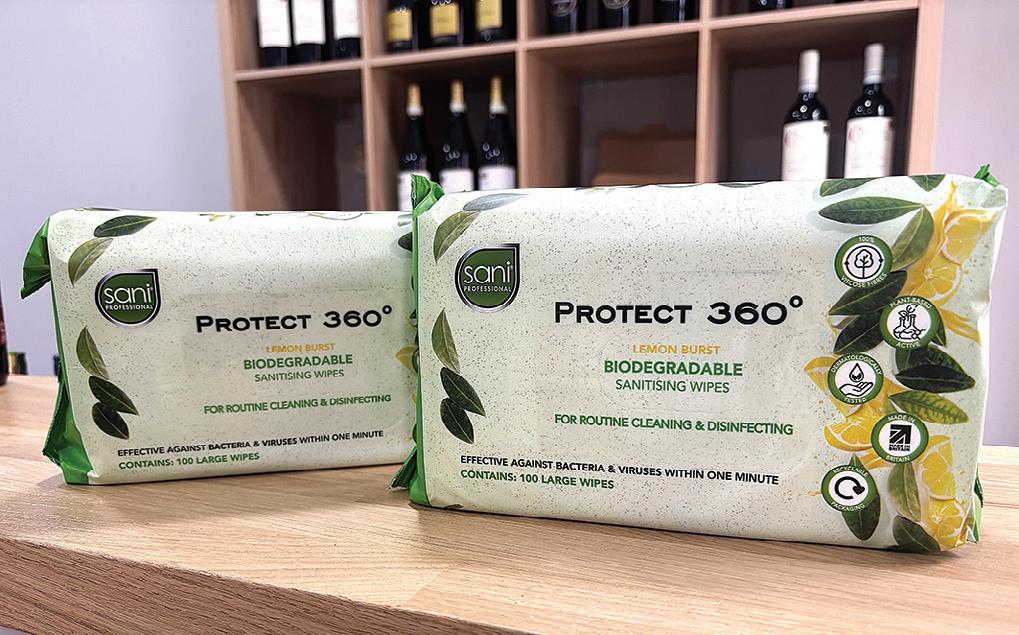
At Sani Professional®, we’ve developed Protect 360° biodegradable sanitising wipes to solve this challenge sustainably. Their plant-based active formula cleans effectively and dries residue-free,

Commercial kitchens can sometimes suffer from blocked sinks, overflowing dishwashers and similar problems. As drainage engineers often know these are due to poor or lack of maintenance.
On inspection they often discover that the floor mounted pumping system is jammed or blocked by debris from foods, fats and other items.
A simple clean might offer a solution. However, even after the pump is unblocked, drainage engineers sometimes find that the pump has failed. There are many reasons for this. For example, the pump might have exceeded its number of start-stops, there may be fluid ingresses into the motor, the float might not have lifted or dropped causing the pump to run continuously or not start at all. Or something else may have caused
the electric motor to trip.
With their many years of experience, the Pump Technology Ltd team will be able to identify the pumping system and the specific submersible pump in the tank enabling them to offer a like-for-like or equivalent product in terms of performance and fit.
If the pumping system is not already fitted with a high-level alarm, they will be able to advise a simple retrofit. The Pump Technology Ltd alarm also has volt free contacts for connection to the building’s management system. If engineers are continuously servicing a floor mounted pump-

system due to these typical failures it may be worth suggesting to the end users more robust and powerful commercial wastewater pumping option, such as the DrainMinor and DrainMajor from Pump Technology Ltd.
These systems are fitted with the well proven Jung Pumpen submersible pumps, which feature large triangular float mounted on a rigid float arm.
The pumps also feature mechanical seals, plus a
All of these contribute to a range of products that can perform longer in severe environments, to provide an enhanced operating life and better value.

Caterquip Ventilation Ltd is proud to be celebrating their 25th Anniversary this year. This Warwick based company offers nationwide coverage for all your commercial catering needs: free site surveys, quotations and designs (CAD), quality bespoke and standard fabrications, specialist knowledge of catering ventilation systems including input air, odour reduction (carbon filtration and ESP) and sound attenuation. Affiliated members of Constructionline and CHAS, Caterquip Ventilation have a strong hold in the marketplace often advising industry professionals on ventilation systems to a DW172 specification & BSEN:6173.
They have strong relationships with all leading kitchen equipment suppliers, and they offer a kitchen design service to help you build your ideal kitchen.

With extensive knowledge of manufacturing and installing ventilation systems, they can help you design the best kitchen within the space available.
Call: 01926 887167, visit: www.caterquipventilation.co.uk, email: info@caterquipventilation.co.uk


At TheCommercialOvenStore.com, we know that the heart of any professional kitchen is a reliable, high-performance oven. That's why we offer an extensive range of ovens from the world’s leading brands – including Blue Seal, Lincat, Unox, Rational, and Merrychef.
Whether you’re running a bustling restaurant, a cozy café, or a fast-paced catering business, you’ll find the ideal solution with us. Our selection includes powerful gas and electric ranges, versatile combi ovens, high-efficiency speed ovens, and durable convection ovens, alldesigned to keep your kitchen operating at peak performance.
Explore cutting-edge features, energyefficient designs, and trusted engineering – all in one place. From compact units for smaller kitchens to heavy-duty systems for large-
scale operations, we make it easy to find the right fit for your needs and budget.

Expert advice, competitive prices, and trusted brands – all at TheCommercialOvenStore.com
Get the equipment you can rely on, and take your kitchen to the next level.
T 0207 965 7502
sales@thecommercialovenstore.com
See the advert on page 2 for special offers.
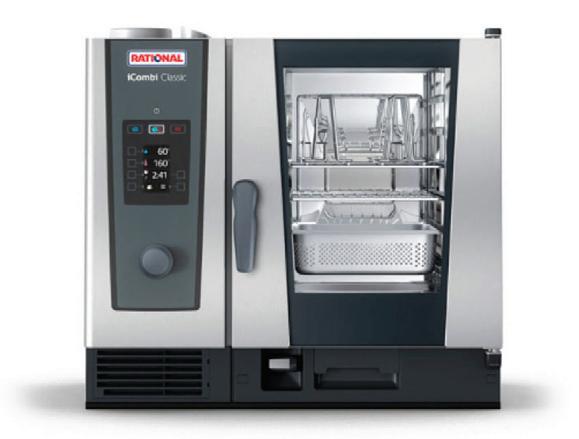
At Kitchen Clearance UK, we specialise in supplying top-quality refurbished and Bgrade commercial catering equipment from some of the industry’s most trusted brands, including Rational, Lincat, Merrychef, Maidaid, Falcon, Foster, Blue Seal, and many more. We carefully source only the best pre-owned commercial catering equipment, ensuring that each piece is fully refurbished to a high standard and rigorously tested by our expert engineers. All equipment can be viewed if required to see it working and see the quality of the item.
We also supply B-grade catering equipment — items that may have minor cosmetic imperfections or have been used for demonstrations. All B grade items come boxed and complete with all accessories where required, offering a cost-effective solution for high-performance kitchen equipment.
We pride ourselves in excellent customer service, making sure any initial issues are quickly resolved.
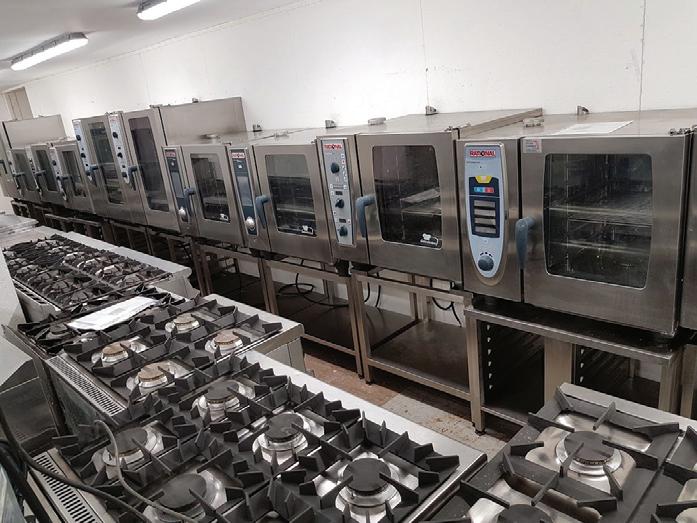
Fridge Seals Direct proud to be UK's no1 supplier of replacement fridge and freezer seals. We fabricate for a wide variety of commercial fridge & freezers. The management team at Fridge Seals Direct have over 30 years of experience in the refrigeration industry and have each spent many of those years installing gaskets and hardware for a range of styles, brands and sizes of fridges.

• Be ready for your inspections
• Damaged fridge seals are unhygienic
• Make your fridge more energy efficient with a good seal on your fridge
• We provide custom seals for cold rooms, discontinued models, and units with no identification information
• Next-day delivery service
• Discounted prices on large orders WhatsApp, phone, and email support 07936807320 sales@fridgesealsdirect.co.uk
Located on the borders of Lincolnshire, Leicestershire, Rutland, Northamptonshire, Cambridgeshire.
Tel: 07790 612911
Email: kitchenclearanceuk@gmail.com www.kitchenclearanceuk.co.uk See the advert on page 2.
From restaurant kitchens to food warehouses - we have experience in dealing with fridge & freezers of all sizes and scales. To learn more about fridge seals, be sure to explore our range of extensive guides on how to replace a refrigerator door seals. Otherwise, find your specific guides in how to identify, measure, install or maintain your fridge or freezer door seal.

Our reputation in the industry along with our commitment to providing a high-quality gasket without having to buy from the factory allows us to have competitive pricing and fast turnaround time. Try us out, order your door gaskets from us and discover a better way to do business. We are here to help you. www.fridgesealsdirect.co.uk
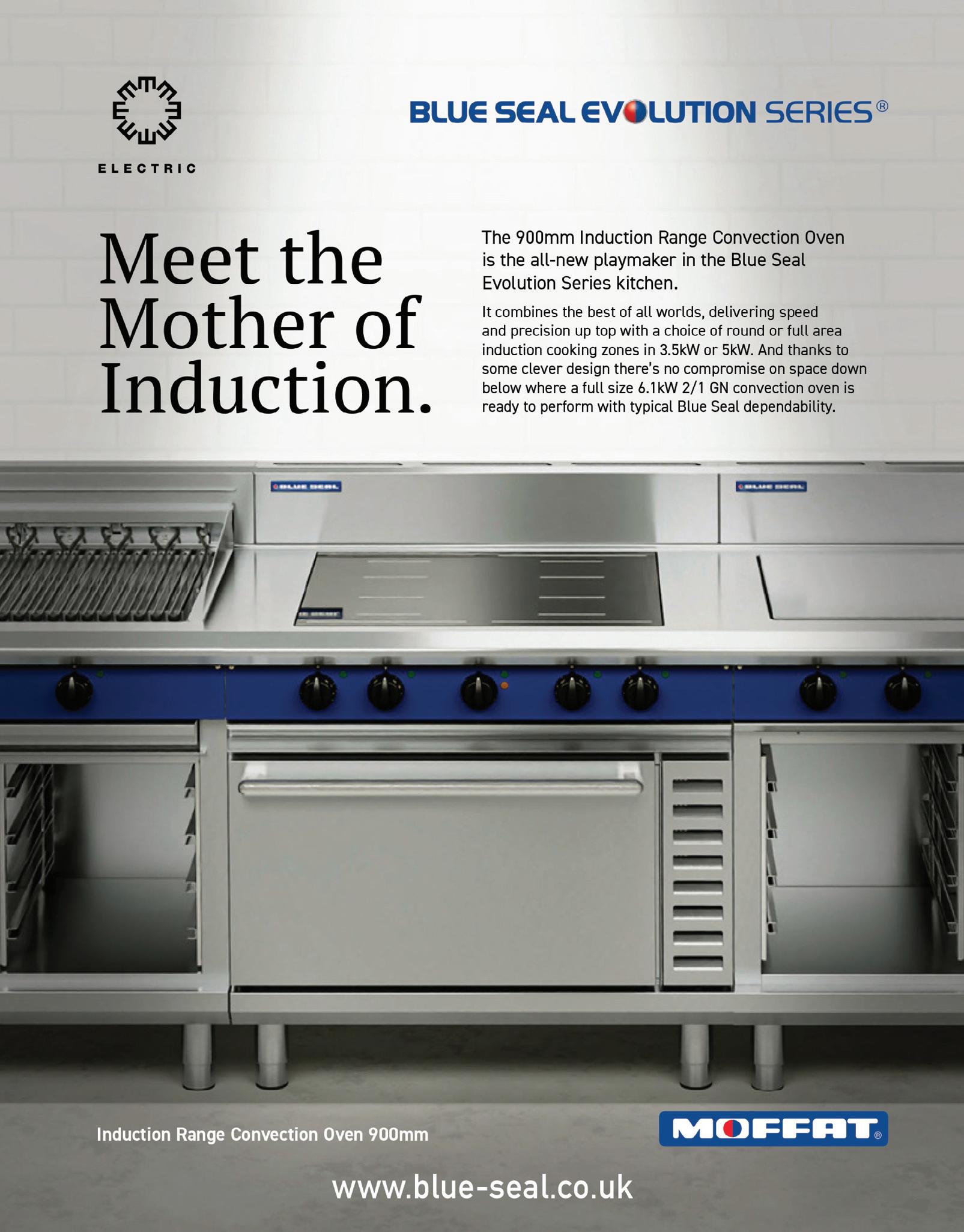
In the demanding environment of UK hospitality and catering establishments, effective grease management remains one of the most overlooked yet critical aspects of operational compliance and service continuity. From bustling restaurant kitchens to hotel dining facilities and pub kitchens, the proper installation, maintenance, and servicing of grease traps represents far more than a regulatory checkbox—it's fundamental to business continuity and environmental responsibility.
Fats, oils, and grease (collectively known as FOG) are inevitable byproducts of commercial food preparation. When inadequately managed, these substances solidify within drainage systems, creating blockages that can escalate from minor inconveniences to catastrophic failures.
The progression typically follows a predictable pattern. Initially, drainage becomes sluggish, with sinks taking longer to empty. Kitchen staff may notice unpleasant odours emanating from drains—the first warning sign of accumulated grease. As the buildup intensifies, complete blockages occur, causing wastewater to back up into preparation areas, compromising food safety standards and forcing kitchen closures.
Beyond the immediate premises, FOG entering the public sewer system contributes to the formation of fatbergs—massive congealed masses that obstruct municipal infrastructure. These blockages cost water companies millions annually and can result in sewage overflows into streets and waterways.
For hospitality operators, grease-related drainage failures deliver devastating consequences. A blocked drain during peak service can transform a profitable evening into a financial disaster. Kitchen operations must cease immediately when wastewater cannot drain, leaving establishments unable to fulfil customer orders or maintain hygiene standards.
The ripple effects extend beyond lost revenue. Emergency drainage services command premium rates, particularly during evenings and weekends when most hospitality businesses operate at capacity. Reputation damage follows swiftly—negative reviews highlighting unsanitary conditions or cancelled reservations spread rapidly through social media and review platforms.
Staff morale suffers when working conditions deteriorate. Persistent odours, standing water, and the stress of operating compromised facilities create an unpleasant work environment, potentially impacting retention in an industry already challenged by staffing issues.
UK REGULATIONS: A COMPREHENSIVE FRAMEWORK
The regulatory landscape governing grease management in UK commercial kitchens derives from multiple legislative sources, creating obligations
that operators must navigate carefully.
Building Regulations Approved Document H establishes the technical standards for drainage and waste disposal systems. This document mandates that commercial kitchens must install grease separators of adequate size and efficiency to prevent FOG from entering drainage systems. The specifications depend on the volume and type of food preparation undertaken.
Water Industry Act 1991 empowers water and sewerage companies to establish trade effluent consent requirements. Under this legislation, commercial kitchens must obtain permission to discharge wastewater into public sewers. These consents typically stipulate maximum FOG concentrations and require evidence of proper grease trap installation and maintenance.
Environmental Protection Act 1990 addresses the broader environmental implications. Discharging substances that may cause pollution or harm to the environment constitutes an offence. FOG that escapes into watercourses through sewer overflows falls squarely within this prohibition.
Food Safety Act 1990 and associated regulations require food businesses to maintain hygienic premises. Drainage failures caused by grease accumulation can result in Environmental Health Officers issuing improvement notices or, in severe cases, emergency prohibition orders.
Local authorities exercise enforcement powers through Environmental Health departments, which conduct inspections and investigate complaints. Water companies maintain their own inspection regimes, particularly where trade effluent consents apply.
Operators who neglect grease management face an escalating scale of penalties and interventions. The consequences extend far beyond financial penalties, threatening the viability of businesses.
Financial penalties begin with water company charges for clearing blockages in public sewers when traced to specific premises. These can reach thousands of pounds for a single incident. Fines imposed by magistrates' courts for environmental offences can reach £20,000, while Crown Courts possess unlimited fining powers for serious breaches.
Enforcement actions by Environmental Health Officers may include improvement notices mandating specific actions within set timeframes. Failure to comply can result in prohibition orders preventing food business operations until deficiencies are rectified. In extreme cases involving persistent non-compliance or serious public health risks, prosecutions may result in imprisonment for responsible individuals.
Civil liability exposes businesses to claims from water companies for costs incurred in clearing FOG-related blockages and repairing damage to infrastructure. Neighbouring businesses affected by sewer flooding may pursue compensation for losses sustained.
Licensing implications present additional risks for licensed premises. Local authority licensing committees consider management competence when
reviewing licences. Serious environmental health failures, including drainage issues, may trigger licence reviews that could result in additional conditions or, potentially, licence revocation.
Reputational damage often inflicts the most lasting harm. Food hygiene ratings can be reduced following inspections that identify drainage deficiencies. Public records of enforcement actions and prosecutions remain accessible indefinitely, while media coverage of closures or prosecutions can permanently tarnish brand reputation.
Successful grease management programmes combine appropriate equipment, regular maintenance, and staff training. Modern grease traps range from compact under-sink units suitable for smaller operations to large external separators serving extensive kitchen facilities.
Professional servicing schedules must reflect the volume of FOG generated. High-volume operations may require weekly servicing, while smaller establishments might manage with monthly visits. Critically, servicing records must be maintained meticulously—these documents provide evidence of compliance during inspections and consent reviews.
Preventive measures reduce the burden on grease management systems. Staff training should emphasise scraping plates thoroughly before washing, disposing of cooking oils through approved collection services, and avoiding pouring fats down sinks. Simple practices like using sink strainers capture food particles that contribute to blockages.
Kitchen design influences grease management effectiveness. Positioning equipment to minimise the distance FOG travels before reaching grease traps improves separation efficiency. Regular deep cleaning of extraction systems prevents grease-laden condensate from overwhelming drainage systems.
As environmental standards tighten and enforcement intensifies, effective grease management transitions from optional best practice to essential operational requirement. Water companies increasingly employ sophisticated monitoring and, in some regions, install sensors that detect FOG concentrations in real-time.
For hospitality operators, the message is clear: investing in proper grease management systems and maintenance delivers protection against operational disruption, regulatory penalties, and reputational damage. In an industry where margins remain tight and competition fierce, the relatively modest costs of compliance represent insurance against far greater expenses.
Establishments that embrace comprehensive grease management demonstrate professionalism, environmental responsibility, and commitment to operational excellence—qualities that resonate with increasingly environmentally conscious consumers and regulatory authorities alike
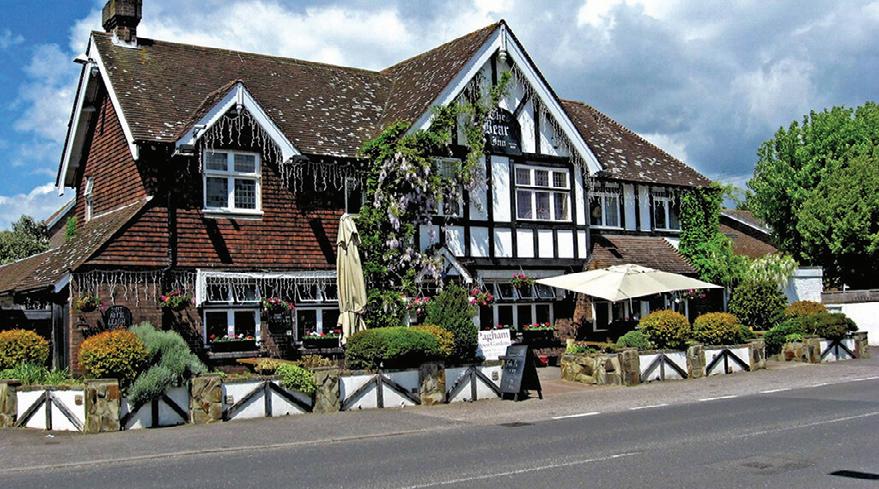
For independent pub operators across the UK, the convergence of post-pandemic recovery, soaring energy costs, and increased national insurance contributions has created a perfect storm of financial pressure. Add intensified enforcement from Local Water Authorities (LWAs) regarding fats, oils, and grease (FOG) management, and many single-owner businesses find themselves caught between regulatory compliance and economic survival.
The Bear Inn in Pagham, an 18th-century coaching inn, recently faced exactly this dilemma—and found a solution that other independent operators can learn from.
The combined effects of recent economic pressures, including the COVID-19 pandemic, escalating energy costs, and increased national insurance contributions, have placed considerable strain on the financial sustainability of small hospitality enterprises.
Furthermore, intensified oversight and enforcement by the Local Water Authority (LWA) have underscored the critical importance of regulatory compliance, particularly in a region with a longstanding history of fats, oils, and grease (FOG) accumulation and associated drainage blockages.
The historic pub's existing grease management system had become a liability. An undersized, malfunctioning passive grease trap was leaking across the rear yard, creating slip hazards and attracting rodents whilst failing in its primary purpose: preventing FOG from entering the sewer system.
In collaboration with various stakeholders, including the LWA, ECAS, relevant manufacturers, and the management of The Bear at Pagham, a tailored grease management solution was developed:
A thorough site survey was conducted to assess the specific grease management needs of the establishment. Based on the findings, a cost-effective passive grease trap was selected, providing equivalent compliance to a grease removal unit at roughly one third of the cost.
A quarterly service contract was established to ensure regular cleaning, prevent blockages, and maintain compliance with LWA regulations.
Comprehensive training was provided to the landlord and staff on proper system use, including food basket maintenance & general cleanliness, with a scoop supplied for removing larger debris.
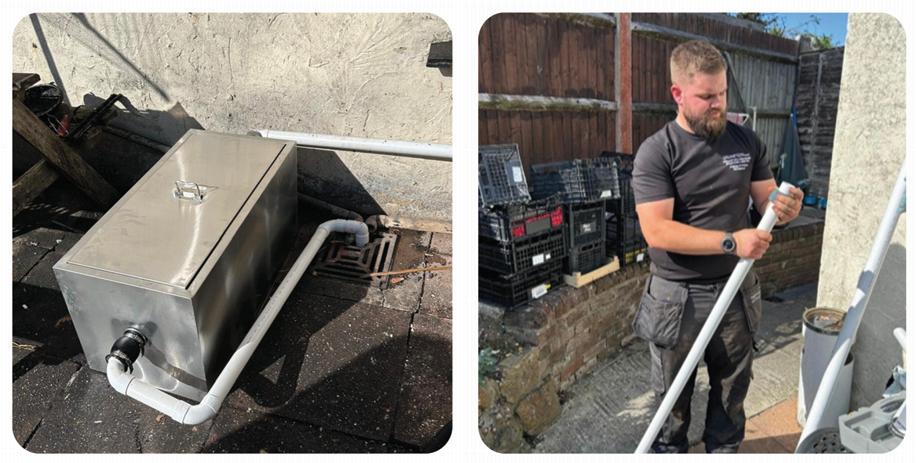
• Cost-Effectiveness: The affordable solution significantly reduced the financial burden on The Bear at Pagham while maintaining full compliance with LWA standards and regulations.
• Prevention of Blockages: The installation of the grease trap and a proactive maintenance plan will help mitigate the risk of future FOG-related blockages in the village.
• Stakeholder Satisfaction: All stakeholders, including the LWA, ECAS, and external auditors, were consulted with in a collaborative effort and recognised and agreed on a realistic, effective solution which is compliant and affordable. A follow-up visit is scheduled three months post-installation to conduct the first quarterly maintenance and cleaning, ensuring the system continues to operate effectively. The successful implementation of this solution serves as a model for other single-owner operators in similar situations facing regulatory pressures and financial constraints.
As the pub's owners noted: "As a family-run pub, compliance matters but staying on top of it cost-effectively hasn't been easy. Grease Tech Solutions changed that... In today's climate, that kind of support is rare and invaluable."
This case illustrates how effective collaboration among stakeholders can result in a sustainable, compliant, and economically feasible grease management solution. By focusing on the unique needs of single-owner-operated businesses, the project not only addresses compliance but also supports the financial viability of vital community establishments.
For operators seeking guidance on grease management compliance,



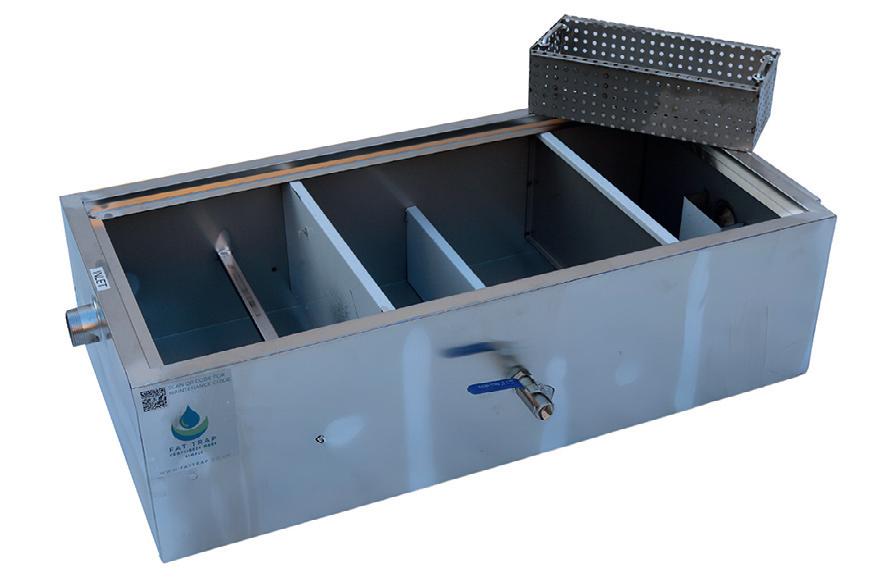
When it comes to grease management, staying compliant shouldn’t be complicated or expensive. That’s why FatTrap.co.uk has positioned itself as the go-to specialist for easy to install, fully compliant passive grease traps. With unrivalled product knowledge and a deep understanding of legislation, we help commercial kitchens achieve compliance quickly, confidently and without disruption.
Our range is designed with one goal in mindfit where others can’t. Space is often tight in professional kitchens, and traditional traps simply don’t fit or work in confined areas.
FatTrap.co.uk eliminates this issue with cleverly engineered units, each hand finished in our UK warehouse for quality you can trust. Leading the range is our market exclusive Super Slim Fat Trap, standing at just 250mm high, the smallest of its kind. It installs easily under sinks, shelves and other restricted spaces, offering a compliant solution without costly refits.
For sites needing more capacity, our Standard and Slim units deliver exceptional performance and are available in durable, weather-resistant stainless steel for outdoor installation. Whatever your kitchen layout, we have a trap that fits and keeps you compliant.
To support long term performance, we created the FatTrap Easy Clean Range. These professional grade maintenance products, including grease removal sprays, drain unblockers and powerful odour control spray are designed to keep your system running efficiently while reducing callouts and downtime. Cleaner traps mean fewer issues, lower running costs and a longer lifespan for your equipment.
With water companies now issuing significant fines for improper disposal of fats, oils and grease, choosing the right trap has never been more important. At FatTrap.co.uk, we make compliance simple by offering reliable products, expert guidance and ongoing solutions that protect your business.

Stay compliant. Save money. Choose FatTrap.co.uk - the trusted name in grease management.
For 33 years, Aluline has solved the hygiene and compliance challenges that “automatic” boxes promise—but rarely deliver. We design, manufacture, install, and maintain stainless-steel grease traps and biological dosing systems (no enzymes, no gimmicks) that keep commercial kitchens flowing, odourfree, and fully compliant across the UK.
Every site is different. That’s why our engineers size and configure each trap to your actual volumes and fixtures, then pair it with biological dosing—naturally occurring bacteria that digest fats, oils, and grease (FOG) at source without pushing grease downstream. The result is less scraping, fewer callouts, and stable effluent quality that satisfies landlords, water companies, and environmental teams.
Because we build what we install, our units are robust, serviceable, and built to last—from compact under-sink separators to heavy-duty, in-ground
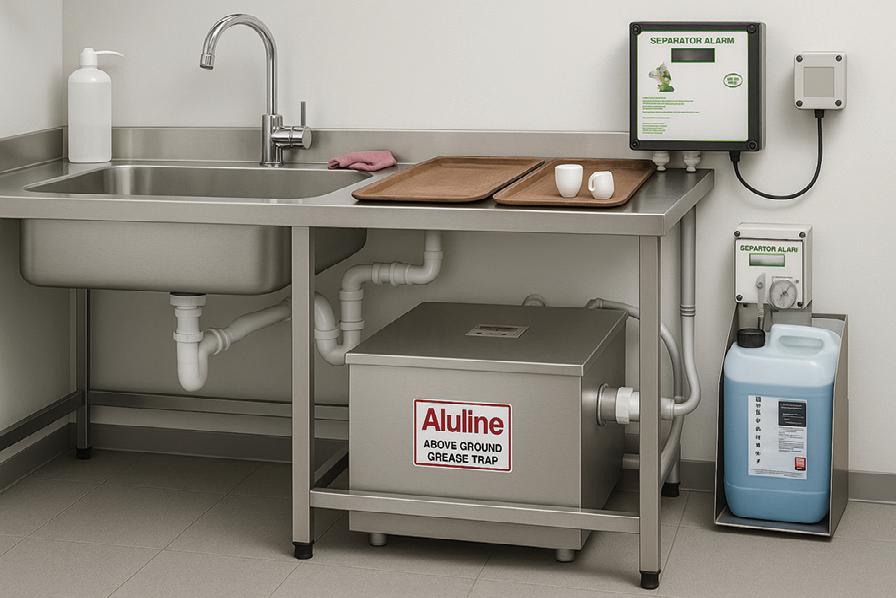
interceptors for high-throughput sites. And with UK-wide maintenance plans, alarm options, and clear service records, we help operators prove compliance and avoid costly disruption.
If kitchen hygiene is mission-critical, don’t gamble on small plastic “automatic” gadgets and enzyme quick fixes. Choose the team that’s been onsite, in kitchens, and under sinks for over three decades—Aluline: engineered solutions, expert installation, and lifetime support. Aluline — Design. Manufacture. Install. Maintain. Comply. www.alulinegreasetraps.com | enquiry@alulinegroup.com | 01928 563 532
|

|

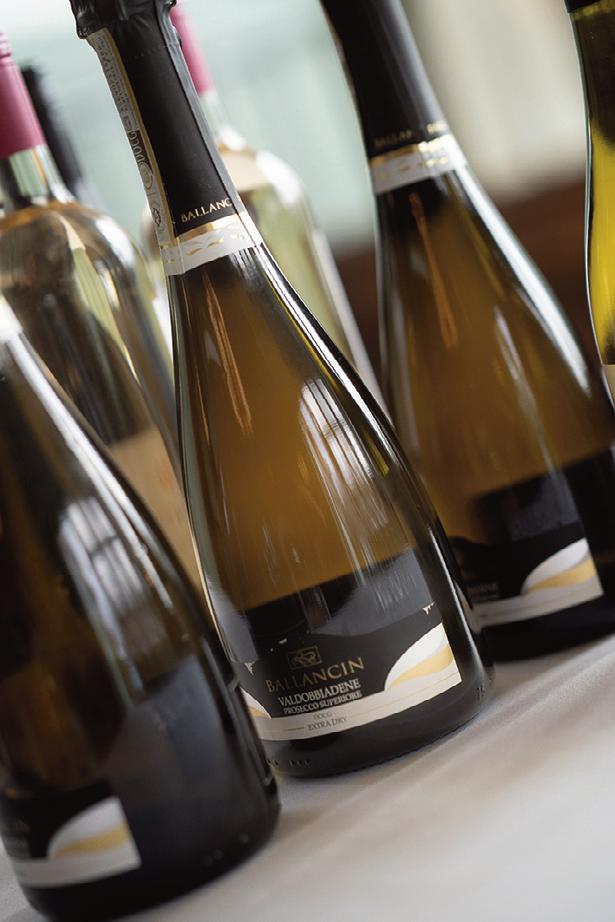
As we look ahead to 2026, premiumisation remains a key driver for the UK on-trade. Despite economic pressures, consumers remain willing to spend on high-quality wine, especially when the experience feels special. This creates a clear opportunity for operators to enhance their wine lists while protecting margins.
Authenticity and provenance matter more than ever. Guests want wines that justify their price and deliver a sense of occasion; from classic regions to innovative styles, premium wines offer differentiation and value. Consider Portuguese wines, where the use of indigenous grapes adds a sense of uniqueness. Or upgrade to Prosecco DOCG Superiore for celebrations, while Spanish Verdejo offers freshness and versatility at a competitive price
At Plastexe, our PVC Wall Cladding offers a premium finish with outstanding performance in hygienic and high-demand environments. It is fire-retardant, non-absorbent, highly durable, and provides excellent resistance to chemicals. Our Premium Cladding Collection is easy to cut, form and glue, making it ideal for a range of applications.
Our extensive satin colour range combines clean, fresh tones with modern design appeal. These versatile shades create bright uplifting space with a wipe-clean, hygienic finish, helping to elevate the look and feel of any environment.
Our gloss range offers a sleek, high-shine finish in select colours, perfect for creating a bold, modern look in environments where style and impact matter.
Complete your installation with our exclusive range of accessories, including profiles, adhesive, silicone and
CLEAN Linen & Workwear are one of the UK's most trusted laundry companies. They supply tailored workwear solutions provided by real people. Their comprehensive laundry network means they can service customers throughout England and Wales, providing chefswear, workwear and linen rental services. Whether you operate from a single-site hotel, pub or restaurant or have multiple locations, CLEAN can tailor a workwear rental solution to suit your business requirements. They offer various uniform options to support the entire kitchen brigade, from Executive Chefs to Kitchen Porters.
With their workwear rental service, you can say goodbye to the hassle of purchasing, storing, and maintaining chef and kitchen uniforms. Instead, enjoy the convenience
point.
Premiumisation isn’t just about indulgence, it’s about profitability. By curating a list that strikes a balance between prestige and smart buying, venues can meet consumer expectations and maintain healthy margins. The key is selecting wines that overdeliver on quality without inflating costs.
In 2026, success for the on-trade lies in combining premium choices with commercial sustainability. With the right strategy, wine can become a cornerstone of both guest satisfaction and business growth.
Visit www.lanchesterwines.co.uk or see the advert on page 17.
weld rod, designed to deliver a seamless finish and qualify your project for the manufacturers lifetime guarantee when used together.
Our colour-matched profiles complement our Premium Cladding Collection, delivering a professional finish. They provide watertight seals, easy-to-clean surfaces, and a hassle-free installation process. Whether creating smooth transitions or securing exposed edges, our profiles complete the look while enhancing durability, hygiene, and overall performance across every installation.
For further information, or to request a brochure, please contact:- sales@plastexe.co.uk
Or call our sales office on 01392 360999
See the advert on page 5 for further information.
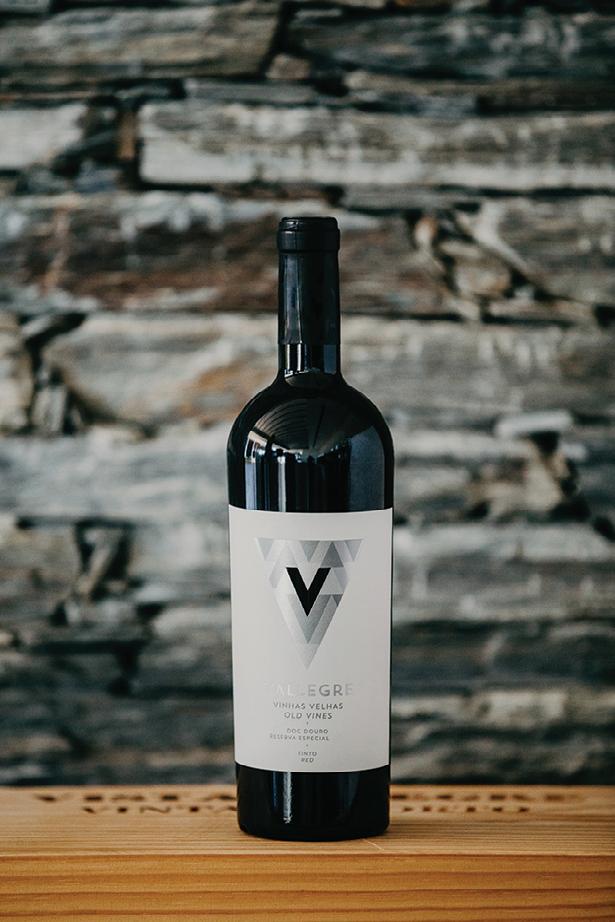
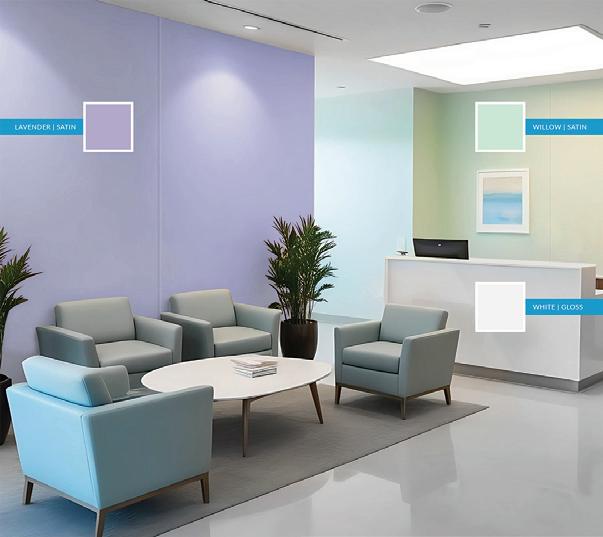
of a hassle-free rental system that provides freshly laundered garments whenever your team need them. By renting with CLEAN, you can avoid upfront purchase costs, spread the payments over your contract, and ensure quality and care with every wash. Delivery is free, and there are no hidden charges; contracts even include repairs. Each item of clothing can be branded and tailored to the wearer with logos and embroidery. Their managed service prevents issues compiling when supplying your team with work clothes; a convenient locker valet service helps distribute and store uniforms, and they tackle minor repairs early to extend the service life of a uniform. Ultimately, this avoids costly replacements wherever possible as it reduces uniform losses, and uniforms only need replacing when a repair is not safe or cost-effective.
With CLEAN's workwear rental and laundry service, business owners can focus on what matters most — running their business — while CLEAN takes care of the rest. To find out more: www.cleanservices.co.uk or see the advert on page 3.
When your beer tastes good, your customers are more likely to stay longer, and/or return another time. If your beer starts to misbehave, you put that revenue at risk. Whether you are looking for beer dispense emergency services or need regular maintenance for ensuring excellent beer, Avani Solutions are the partner you need.
Whether you're running a hotel, a restaurant or a pub, you'll be trying your best to serve great beer as you juggle all the other elements of providing top notch hospitality.
The last thing you want is to be fighting a frothing beer tap, tipping a tainted pint down the drain or dealing with a disappointed guest who's returned to the bar complaining of a 'dodgy pint' (or half!).
Some good news, we are determined that one day every pint served will be perfectand we're dedicated to helping you be part of that mission. We're sometimes referred to as a 'line cleaning company' – but line cleaning is only one part of what we do, we do so much more than that!
Avani Solutions are trusted to -: • Troubleshoot issues
• Re-set and re-calibrate your system with our ProSpec service.
• Provide SOS rescue cleans.
• Maintain your dispense system for you, including on behalf of a brewer.
• Give peace of mind with ProClean - our 28-day extended line clean.
• Deliver data-driven insight, to inform you of any faults, as well as highlighting trends and beer quality results.
• Training and consultancy.
Our services can help you to lower costs, increase efficiency and also improve sustainability. We empower you to keep the beer (and cider) pouring to the highest standards and protect your profits by doing so.
We walk alongside venues and are always there when you need us, like a supporting handrail, so you don't have to worry about your beer and can focus on delivering the
customer experience.
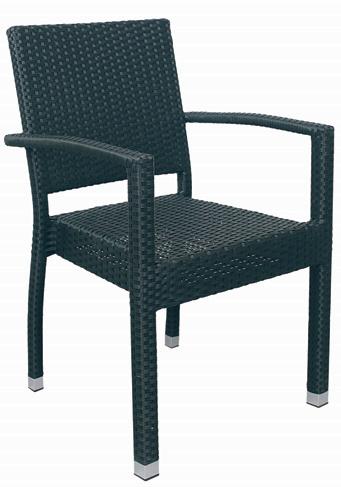
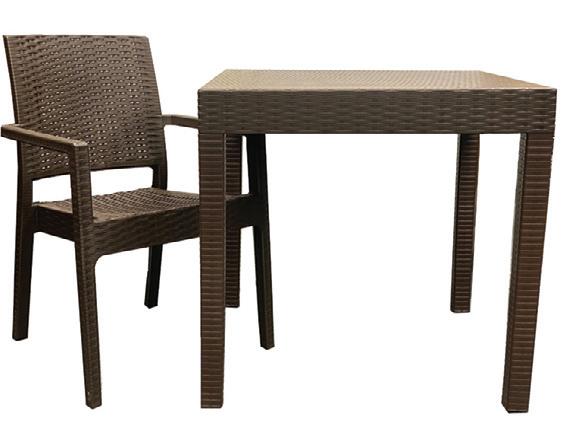
for any clubhouse, and the highly popular Alma Table is available with both square and round tabletops. Pair it with the Monaco Aluminium Stacking Chair or the Monaco Wicker Stacking Chair and save 10% on your seating.
To find out more about our extensive range of outdoor seating for all venues and all

Woodman Chairs is a long established manufacturer and supplier of wooden chairs, stools, benches, frames and tables, to the UK contract, hospitality and retail markets for well over thirty years
Sensibly priced, we offer our own lines or can make bespoke for your own special needs, All our product is well made, thoughtfully designed, sturdy and built to last, with styles ranging from traditional to modern. We can supply finished, or in the raw wood and with a choice of seat pad options. Pads and fabrics – either ours or COM - can be “Crib 5” compliant for contract use.
We are also able to make frames or components for you to upholster or assemble. So, also of interest to upholsterers and those in UK looking to outsource some, possibly difficult or time
consuming manufacturing, such as stools, benches, boxes, etc. MOQ’s may apply. See us in a broader sense than just doing the more straightforward, able to think and make outside the box.
Working mainly in beech, oak, pine, lime and ash we can, however, work in other woods. All our product is FSC and responsibly sourced, in most cases with a direct line of supply from the forests themselves.
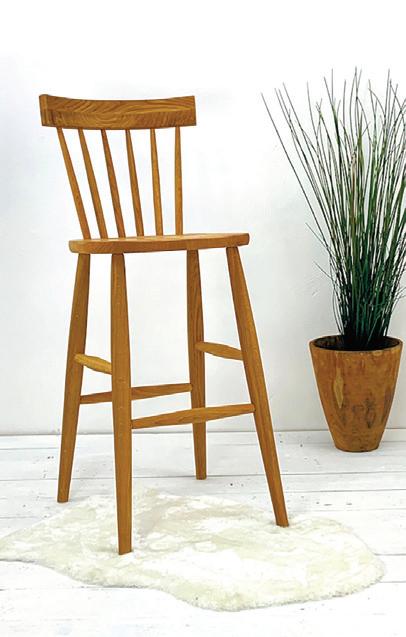
We carry a lot of stock and a wide range, but when not held, lead times are good.
Have a look at our website www. woodmanchairs.co.uk for a general idea of what we offer “off the shelf”. This does not cover all we make by a long way, as much of our supply is bespoke.
If you want chairs or tables, or might want a chair style made to your design, or would like to know more about us and what we could offer you, please contact us at sales@woodmanchairs.co.uk or on 01884 841789.
At HotelContractBeds, we’ve been supplying the hospitality industry with premium contract beds and mattresses for over 40 years. Whether you're running a boutique B&B, a busy hotel chain, or student accommodation, we offer a bespoke service that ensures you get the perfect beds to suit your needs.
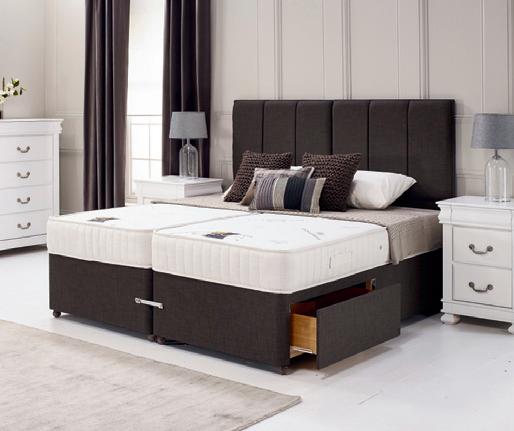
As specialist UK manufacturers, we take pride in delivering high-quality, durable, and comfortable beds that meet strict UK & EU fi re safety regulations (BS 7177:2008 – Crib 5), ensuring your guests sleep safely and soundly. Why Choose HotelContractBeds?
✓ Premium Quality Beds & Mattresses – Zip & Link, Divan, Bed Bases & More…
✓ No Minimum Order Value – Whether you need one bed or a whole hotel’s worth
✓ FREE UK Delivery – Reliable weekly deliveries for your convenience
✓ Competitive Prices – Exceptional quality without the premium price tag
Our zip & link beds offer ultimate fl exibility, allowing rooms to convert from twin to double in minutes—perfect for hotels catering to varied guest needs. From luxury hotel mattresses to budget-friendly options, we cater to all types of commercial accommodation.
Join thousands of satisfi ed customers across the UK who trust HotelContractBeds for unmatched quality, comfort, and service.
Ready to upgrade your guest experience? Visit HotelContractBeds.co.uk today or call us (01234 834693) to discuss your requirements!


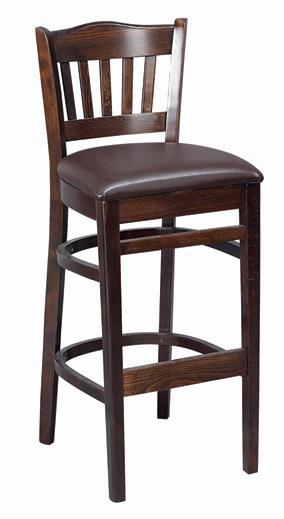
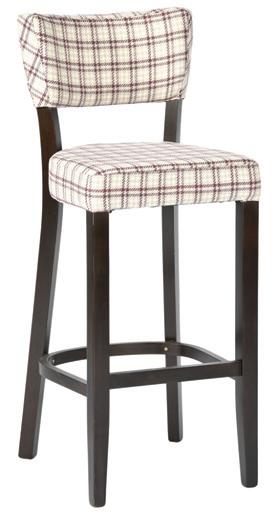
With Covid an increasingly distant memory, restaurateurs are predicting 2026 as the year when communal dining is set to make a comeback. Here at Trent Furniture, we have a fantastic range of options to accommodate this fun and fluid approach to eating out.
Rather than go fully communal, many venues choose to add countertop dining at bars or open cooking areas. Our classic wooden tall stools with backrests such as the Tall Boston Stool are perfect partners for any bar, and are available with comfortable padded seating.
Another great option for diners who plan to linger at the bar for longer than a quick drink is the fully upholstered Tall Andorra Stool, available in brown faux leather or a choice of two chic checks. Or for a vintage style statement, opt for the Tall Saxony Stool which features a stunning lightweight yet durable design.
At standard height tables it’s a good idea to mix bench seating with chairs, which are more accessible and versatile. The Bella Chair is a no brainer for your communal tables, and again is available with a padded seat for added comfort. Made from durable steel, this compact chair has rubber feet to protect your floor as it’s effort lessly moved around. Pair it with the Tall Bella Stool at your bar, for a seamless retro décor theme. For a more traditional feel, the York Crossback Stacking Chair is another versatile and compact option, ideal for pairing with large tables that cater for multiple groups.
With great discounts available on much of the range, including 20% off the Bella Chair and 10% - 20% off the York Crossback Stacking Chair, now is a great time to buy! To find out more, please call us on 0116 286 4911 or email us at sales@trentfurniture.co.uk.
Have you recently taken over premises, just fancy a change or need to replace your tired old fixed seating and fixtures? At Drakes, we can help you realise your dreams with our bespoke furniture design service. Every week we build new tailor-made furniture up and down the UK, working with owners to come up with design concepts for fixed seating, booths and even bars and fixtures. We can take ideas from you, or your interior designer, or we can design something ourselves, all done efficiently, with professional quality and on time within budget.

Our service provides a unique opportunity to make your establishment stand out from others and add additional comfort for your customers.
We have been providing bars, pubs, restaurants, cafes, clubs, and hotels with high-quality furniture and fixtures for decades. We employ over 15 joiners, upholsterers, polishers and designers who are capable of installing fixed seating and bespoke joinery, new bars and full refurbishments, or simply making stools for the front of the bar, or providing quality tables that last. Our dedicated team are either time-served officially trained craftsmen or externally based professionals.
.
Got you interested? We are available for a chat on
you prefer, email us at sales@askdrake.com, and of course please visit our website www.askdrake.com
Mayfair Furniture will be celebrating 12 years this year of providing the UK’s fastest and affordable commercial furniture. Supplying all kinds of establishments from high end hotel chains to small local takeaways.
We keep in stock a huge variety of items ready for immediate dispatch, and can fulfil a wide range of bespoke orders. We deliver to all areas of the UK, Ireland & Europe.
We are not just a supplier; we understand that from time to time hospitality and leisure establishments like to give themselves a fresh new look. That's why


not only do we supply contract furniture, but when it's time for your establishment to go through a refurbishment we also offer a complete clearance service. We'll organise everything from a suitable time and date, professional clearance staff to remove contract furniture whether fitted or unfitted. Along with our sister company Caterfair who provides commercial catering equipment for your kitchens we are the ideal people to speak to when you are looking to refurbish.
01733 310115 sales@mayfairfurniture.co.uk www.mayfairfurniture.co.uk

Ardbeg House, a boutique luxury hotel on the picturesque island of Islay, Scotland, has opened its doors as a truly immersive whisky and hospitality experience, with a newly installed Stannah Stairiser CR2 inclined platform lift providing guests with full accessibility to upper floors.
Designed in collaboration with Russell Sage Studio, Ardbeg House honours the heritage of Ardbeg while creating immersive spaces that reflect the island’s culture and the distillery’s iconic history. Over 20 local and Scottish architects contributed to weaving Ardbeg’s story into the hotel’s design, which also involved seamlessly integrating the Stannah Stairiser CR2 with customised solutions. Stannah Lifts collaborated closely with Russell Sage Studio and main contractor Thomas Johnstone to supply a custom lift solution that met both the functional and aesthetic requirements.
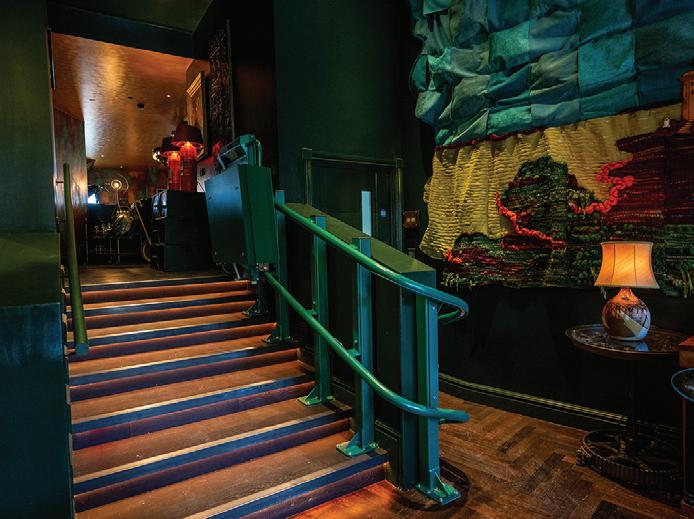
accommodate a wheelchair and user, while raised ramps and safety barrier arms ensure secure and safe operation.
The goal was to provide safe and reliable access for wheelchair users without disrupting the visual appeal of the hotel interiors. To achieve this, a bespoke colour was selected for the platform lift, ensuring it blended seamlessly with the surrounding walls and décor.
The Stairiser CR2 now provides safe and reliable access to the two upper floors of Ardbeg House, allowing all guests to enjoy the hotel’s immersive and unique experience. Equipped with remote call stations, wheelchair users can summon the lift independently from the top or bottom of the stairs, ensuring convenient operation.
The hotel required a custom solution to provide disabled access to its upper floors, which presented three main challenges. The first challenge was accessing the island, as transporting equipment involved careful planning and coordination with ferry services to ensure timely delivery and installation without disrupting the renovation schedule.
The second challenge was addressing the space constraints. The hotel had no space to accommodate a passenger lift, so an inclined platform lift was the best option. However, the staircase area was small, requiring a compact design. Following a detailed assessment of the space, a Stannah CR2 inclined platform lift was chosen as the ideal solution. The lift’s slimline design further minimised wall projection, and the platform folds neatly when not in use, preserving staircase space. The platform dimensions of 800mm by 1000mm comfortably
Designed for use on a curved rail, the Stairiser CR2 follows the natural flow of the staircase while keeping outward projection to a minimum. This innovative feature makes the Stairiser CR2 equally well suited for installations featuring a single turn, multiple landings or spiral configurations.
To ensure the stairlift complemented the hotel’s rich Ardbeggian interiors, the rail and carriage were finished in a custom green paint specifically chosen to match the hotel's décor. This carefully considered design decision allowed the lift to feel like a natural part of the space, making the lift an integral element of the storytelling and design.
With the installation of the Stairiser CR2 completed in just two days, Ardbeg House continues to offer a world-class whisky and hospitality experience that is now fully accessible to every guest.
For more information, visit: www.stannahlifts.co.uk
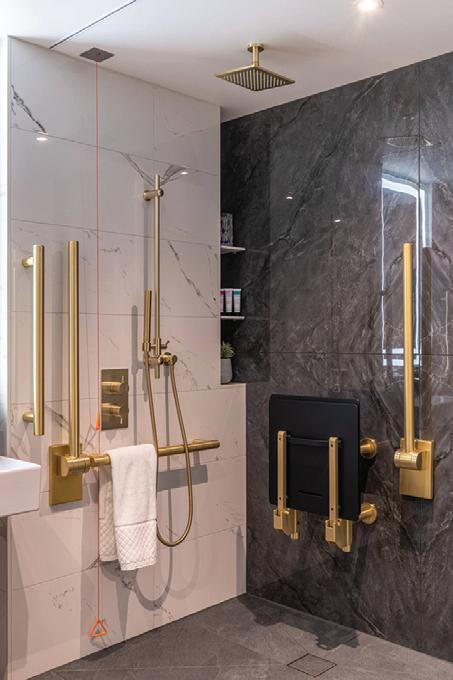
From seamlessly integrated design to innovative technology, 2026 an exciting time for accessible bathroom design as it will redefine how inclusivity is approached in high-end spaces. Mark Shepherd, Head of Product at Fitzroy of London, shares his insights into upcoming trends shaping luxury bathrooms.
“We are seeing premium, tactile materials being paired with custom detailing and finishes. This is especially helpful for those who require visual support. The result is a luxurious bathroom that can keep up with the needs of the user, without designers having to compromising on style in the process.”
“Innovative solutions like touchless interfaces and voice activated controls are now starting to find their way into luxury bathroom design and environments, however a balanced approach is required to ensure that the user experience isn’t compromised when it comes to accessible needs.”
“Where form meets function, wet room layouts are being offered for a more open plan and luxurious spa-like experience. Wet rooms lend themselves perfectly to accessibility with their barrier-free layouts, but in 2026 we
are seeing the elevation of these spaces with elements such as floating vanities and sleek grab rail friendly designs to aid seamless mobility.”
“For designers and specifiers, sustainability is as much about compliance and futureproofing as it is about environmental ethics. Nature-inspired design continues to gain momentum, including elements such as living walls, organic materials and plenty of natural light to foster tranquillity. When it comes to product development, sustainability is no longer considered optional – it is necessary from the start of the design process. We are seeing eco-flow and low energy fixtures increasing in demand, as well as luxury bathroom products with integrated timers and consumption monitors.”
www.fitzroyoflondon.com
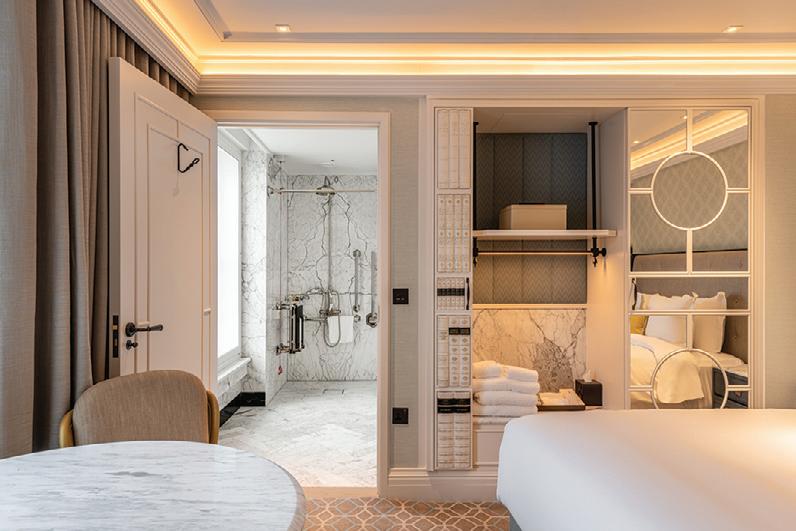
The ‘GLIDEAWAY’® Guestbed is the safest, strongest, most user-friendly and comfortable heavy-duty guest on the market and is in a class of its own
The ‘GLIDEAWAY’® bedframe was developed from GP Contracts’ highly acclaimed ‘WISKAWAY’® WALLBEDS and comes with a 10 year guarantee, but will last much longer and will, in fact, far outlast any other guest bed on the market.
The secret is a welded all-steel bedframe with a firm, pretensioned, woven steel mesh base, which is guaranteed never to sag. Double steel hooks hold the bed safely closed, when folded. Other safety features include automatic leg action, rubber corner protectors, to shield your walls (and your shins!) and laminated safety/operating instructions, permanently displayed on both sides of every bed.
Hospital wheels (2 with brakes) make moving and positioning the ‘GLIDEAWAY’®® completely effortless.
Make it up and use it whenever and wherever required.
The ‘GLIDEAWAY’® is slimmer, when folded, than other heavy-duty guest beds and, with a sleeping height of 47cms, is higher off the ground, when deployed. The ‘GLIDEAWAY’® comes in 2 single and 2 double sizes and in an extra high version (the XH model), in 2 single sizes, with an integral steel bedding tray.
It comes with a wipe-clean/waterproof medium firm foam mattress (now blue) as standard, with a removable (zip-on/zip-off) cover, flame retardant to Crib 5 and will sleep even overweight adults, for extended periods in total safety and comfort. Single ‘GLIDEAWAYS’® will cope with loads of up to 200Kg and doubles with up to 400kg. A standard contract ticking is also available.
The ‘GLIDEAWAY’® will sleep even overweight adults for extended periods in total safety and comfort.
For further information please visit www.gpcontracts.uk.com/glideaway.htm
By Ian Barnett, Group Land and Development Director, LRG (www.lrg.co.uk)

Following changes to planning legislation, specifically the opening up of Green Belt land for development, hotels across the country are changing the way they approach land use to ensure a profitable future.
Owners of hotels may be keen to sell their buildings and land where the existing asset no longer supports long-term profitability. Many older hotels are in need of significant refurbishment to remain competitive, with rising maintenance costs and energy inefficiencies eating into margins. In some cases, the property’s location may no longer align with changing tourism or business travel patterns, leaving occupancy levels under pressure. At the same time, sites in prime urban or coastal areas often carry land values far exceeding their worth as hotel operations, making redevelopment for residential, mixed-use, or commercial
schemes highly attractive. By selling, owners can release capital, exit a declining location, and reinvest in newer, purpose-built hotels in areas with stronger demand and lower operating costs.
Advise in relation to land use, planning and business rates does not mean encouraging hotels to sell up and close, but to explore alternative options that enable them to capitalise on high land values and take advantage of planning policies to benefit the future viability of the hotel and in some cases their local communities too.
As a land agent, I’ve been pleased to enable hotel owners and operators to benefit from these circumstances.
For those thinking of benefitting from situations such as this, the starting point is an analysis of local land use and opportunities, which includes the demand for land, the local market value and property prices, the local planning authority (or Mayoral) development plan and growth targets and proposed changes such as local facilities and transport infrastructure.
It’s also important to look at the accessibility of the current site, any restrictions to development (such as Green Belt or conservation area status), its proximity to local services and amenities and any physical restrictions or benefits. This will help determine both the value of the hotel’s current location and its potential for relocation elsewhere.
There are many different land transaction types. These can broadly be summarised as: unconditional sale, sale subject to planning consent, sale with planning consent and option and promotion agreements. In each case, the approach taken must reflect the owner’s objectives, specifically regarding time and risk, and the chosen method of sale will significantly impact the price achieved.
So, for example, an unconditional sale is typically best suited to a distressed landowner in a hurry to sell or whereby the value is already crystallised (i.e it is allocated in a Local Plan). But land sold as part of a hotel site without planning permission for residential development will typically result in a lower price. This is because the buyer would need to invest significantly in gaining planning consent, and without any guarantee of success.
Another, option is a ‘conditional contract’ or ‘option agreement’ which enables the owner to pursue planning consent with an eventual sale agreed if planning consent is achieved – but the buyer has the option to withdraw from the transaction if the planning application is unsuccessful. On this basis, the buyer will be prepared to offer more as their financial risk is lower as compared to an unconditional sale. Despite this, this is not a quick route to a land sale: it can take months, even years, for planning permission to be granted and so financial return is delayed. On the plus side, if a hotel can sell land with the benefit of planning permission (or an allocation), it will achieve a higher land value.
There is one further form of land sale: promotion agreements. These are increasingly popular and are well suited to large sites such as the landholdings attached to a hotel. Under these agreements, the developer/promoter uses their own funds, experience and expertise to seek planning consent. When planning permission is secured, the landowner will then sell the land with the promoter taking an agreed share of the sale price. In essence this creates a partnership model whereby both parties have a mutually beneficial objective – to maximise land value.
The planning world is complicated and ever-changing. Other opportunities that might be relevant include the relatively recent permitted development rights which allow change of use from one Planning Use Class to another (in certain circumstances). On the other hand, the introduction of new ‘planning gain’ requirements can create additional challenges - one of which is the requirement that any new development achieves a minimum 10% uplift on the existing biodiversity on site.
Navigating the planning system against the backdrop of seemingly persistent economic uncertainty presents a real challenge. There are solutions: land diversification, whether developing, relocating, or seeking alternative uses can increase a hotel’s value and generate income. Substantial changes may be necessary, but with the appropriate strategy, substantial change can result in substantially increased profitability.
By Danielle Ford, Partner and Head of

The Hospitality sector including restaurants, takeaways, and similar businesses has come under intense scrutiny from HMRC in recent years. This is most evident in the growing number of businesses being ‘named and shamed’ for deliberate tax defaults.
HMRC’s policy of Publishing Details of Deliberate Defaulters (PDDD) involves the publication of identifying details for those who have deliberately avoided tax. The published details include the name, business type, address, and the amount of lost tax revenue identified. HMRC updates its PDDD list quarterly, and recent publications show a marked increase in Hospitality businesses being named. The inference here is that it is not simply the number of publications that have been increasing, but that HMRC has been undertaking more compliance activity in the sector and the rise in publications is as a result of underdeclared tax discovered in the course of the increased number of enquiries.
Details are published if one or more penalties for deliberate defaults are charged after an HMRC investigation, and if the penalties rise from of tax of £25,000 or more, where deliberate defaults relate to the underlying behaviour which HMRC alleges led to the insufficiency of tax. HMRC has three distinct behaviour types: reasonable care, careless, and deliberate, of which deliberate is the most severe and broadly means an error was committed with full knowledge and understanding.
WHY IS THE HOSPITALITY SECTOR A TARGET?
HMRC’s focus on Hospitality stems from several perceived risks. The first of these is cash trade, as many hospitality businesses still deal heavily in cash, making it easier to underreport income. Casual staff payments are an ongoing concern, as paying staff in cash without proper records immediately increases risk. Similarly Electronic Sales Suppression (ESS) is another growing cause for concern for HMRC, with the use of software or hardware to manipulate electronic sales records and till systems. HMRC is particularly keen to name and shame businesses using ESS, as it clearly signals a deliberate intent to avoid tax.
HMRC employs sophisticated software to analyse tax returns, looking for discrepancies such as unusually low sales or high expenditure. These triggers prompt further enquiries, when things don’t add up.
Once published, details remain online for 12 months, accessible to everyone. The reputational damage can be severe, leading customers to choose competitors and suppliers or lenders to reconsider their relationships due to perceived financial risk. Businesses under investigation, especially those found to owe additional tax and charged with deliberate inaccuracies, can expect HMRC to monitor future filings closely.
In the worst cases, deliberate tax loss may result in criminal prosecution. Those listed under PDDD are at the highest risk of such action.
The most effective way to avoid being named and shamed is to ensure all tax filings are complete and accurate. However, mistakes can happen. If HMRC opens an enquiry, seek professional advice immediately. An advisor can guide you through the process, which can be very long running and stressful, however your advisor will seek to protect your position throughout and secure the best possible outcome with regards to negotiating settlement and penalties.
It's also key to note that if a lesser penalty (e.g. ‘careless’) is charged, or if a deliberate penalty is fully mitigated, HMRC cannot name and shame. Professional advice is invaluable in achieving the best possible outcome. Similarly, if HMRC visits your premises, understanding your rights and obligations is crucial. Immediate professional support can help you respond appropriately.
The best-case scenario for mistakes in tax filings is to discover and address them before HMRC raises an enquiry. Making a voluntary disclosure to HMRC involves paying the lost tax and late payment interest, however the process is typically quicker and less costly than an investigation. Voluntary disclosures benefit from the lowest possible penalties, often with no penalty at all. Importantly, businesses making a full and correct disclosure are protected from publication under PDDD and criminal prosecution.
For hospitality operators there are some clear practical steps. Conducting regular internal reviews, keeping up to date with legislative changes, as well as proactively reviewing and updating internal procedures, and checking records and systems for discrepancies is all crucial. ESS risks also need to be understood, ensuring electronic sales systems are compliant and not manipulated. All payments should be documented, and given how tax can be complicated, if an issue or HMRC enquiry emerges, professional tax advice should be sought immediately. Similarly, voluntary disclosure, if you discover an error acting quickly to disclose to HMRC.
HMRC’s name and shame campaign is a clear warning to Hospitality businesses. The risks of non-compliance are significant, but with careful management, professional advice, and a proactive approach, operators can protect their reputation and financial health.

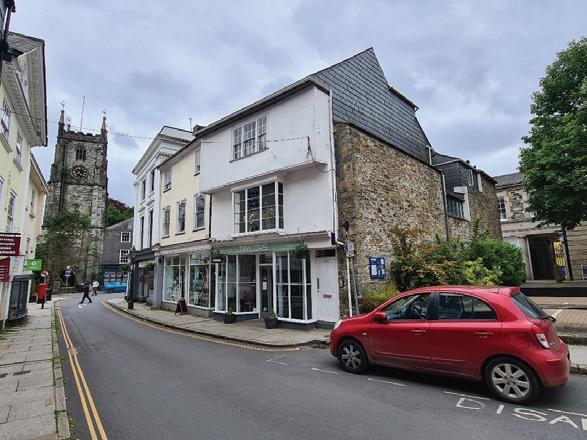
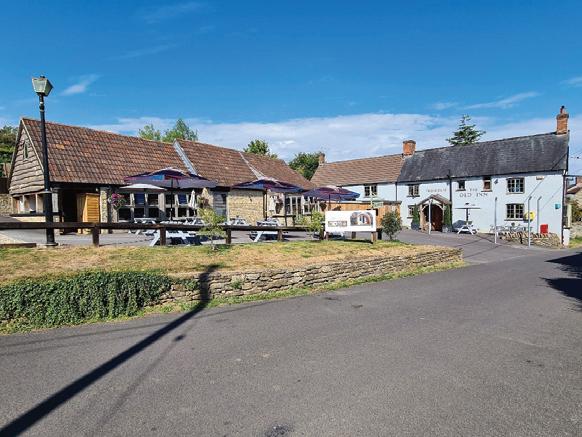


If your business is actually struggling, or if you just feel that it could be doing some things better, give David Hunter a quick call on 07831 407984 to arrange a ‘’Free of Charge’’ initial consultation (please quote CLH Offer), when David will discuss with you what could be achieved if you ask us to work with you.