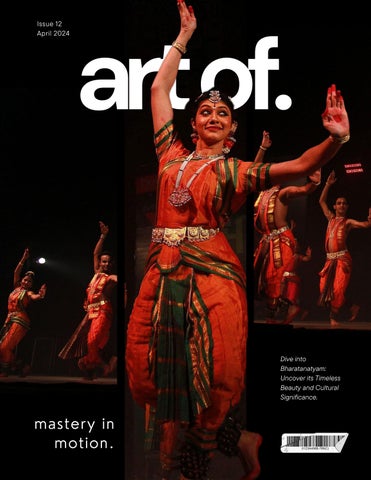
maste mo Issue 12 April 2024 a
3
Understand the history and cultural context
4
Explore the symbolism behind body adornments and mudras.
7
Capture the essence of motion through experimental data. content
Delve into the steps of precision and technique.
8
Discover the steps of tradition and precision.
Discover the essence of fluid movements and grace.
ArtofBharatanatyam EssenceofTradition SutralAdavu NattaAdavu
6 10 JatiAdavu PrintsofExpression
artof bharatanatyam
“Bharatanatyamisadanceofbhava–feeling,raga–tune,andtala–rhythm.Thetuneoflifeisset.Youhave tofindtherhythm”~RukminiDeviArundale
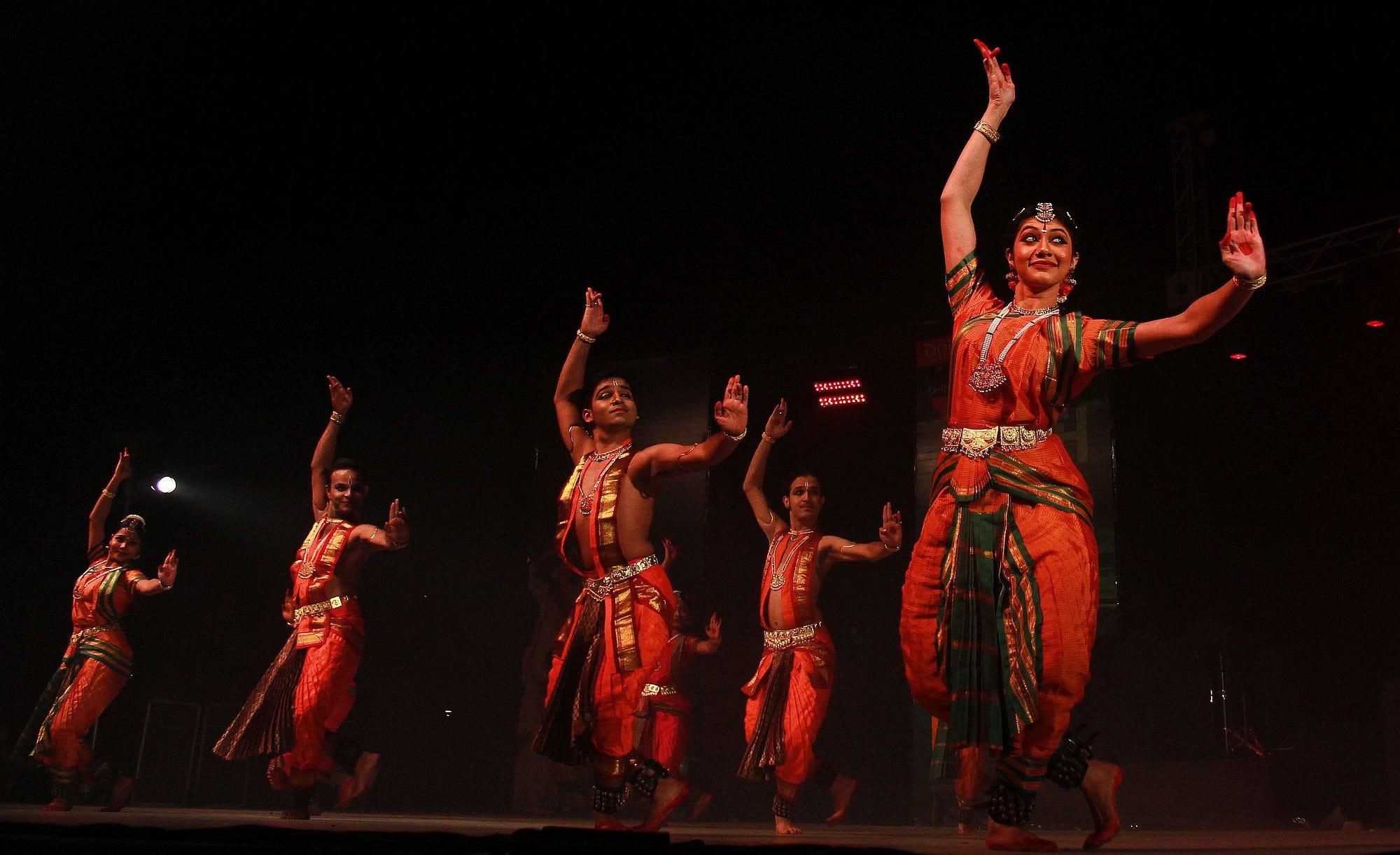
Bharatanatyam, an ancient and revered classical dance form, boasts a rich history originating in TamilNadu'stemples.Tracingback millennia, it evolved from sacred rituals that seeked to embody worship through dance. Over centuries, Bharatanatyam has assimilated elements from diverse cultures, including poetry, music, andwriting.Despitecolonialsuppr-
-ession, resilient practitioners have preserved and revitalized the dance form. In the 20th century, luminaries like Rukmini Devi Arundale spearheaded its revival, earning global recognition. Today, Bharatanatyam symbolizes tradition, innovation, and artistic expression, captivating audiences worldwide with its beauty and storytellingprowess.
THIS ISSUE
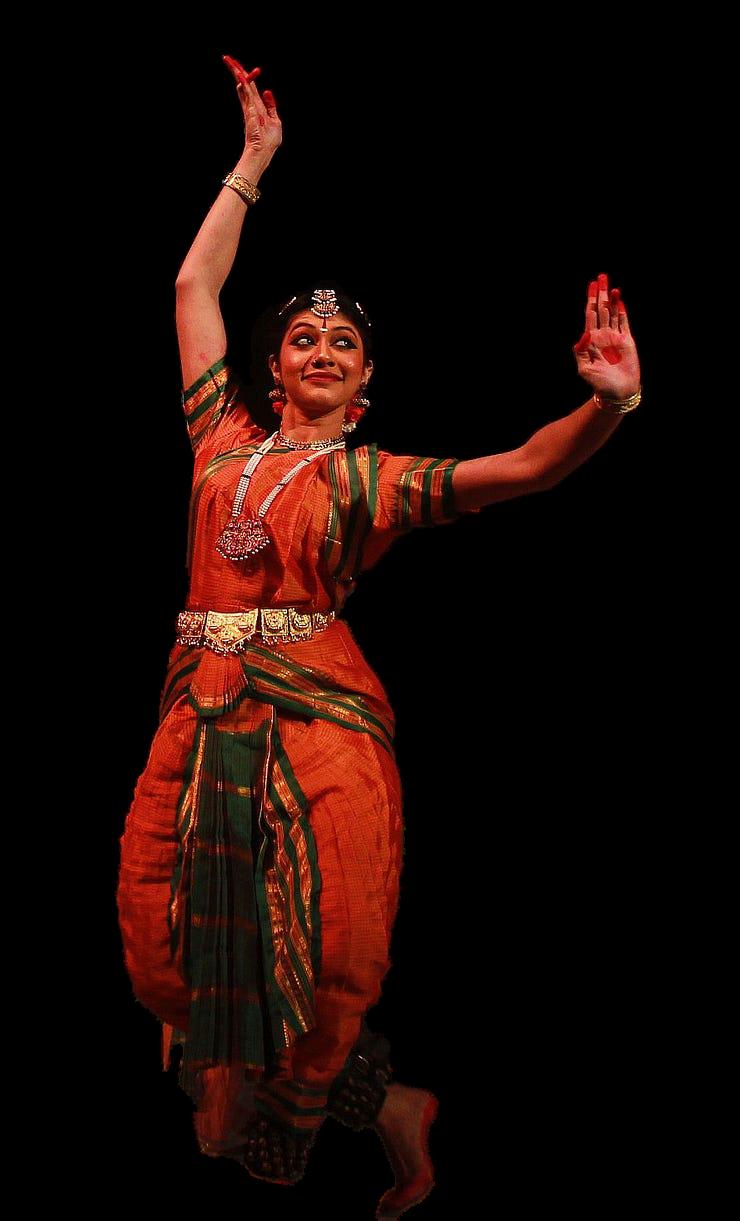
In this issue, we embark on a captivating journey through the world of Bharatanatyam Through the eloquence of hand gestures (mudras), the depth of facial expressions (abhinaya), and the grace of intricate body movements (adavus), we uncover the essence of this timeless dance tradition We will first delve into the cultural significance of attire and explore the symbolism woven into each item of the garment Our focus then shifts to three foundational movements:theJaatiAdavu,Sutral
Adavu, and Natta Adavu each representing a cornerstone in Bharatanatyam's repertoire These movements vary in complexity and serve as building blocks to create meaningful stories We will take an in-depth look at the supporting mudras and meticulously break down the adavus from silhouette to motion-sensing data Finally, we will take an experimental approach, trackingtherhythmicmovementof footprints an innovative exploration into the dance's rhythmicintricacies
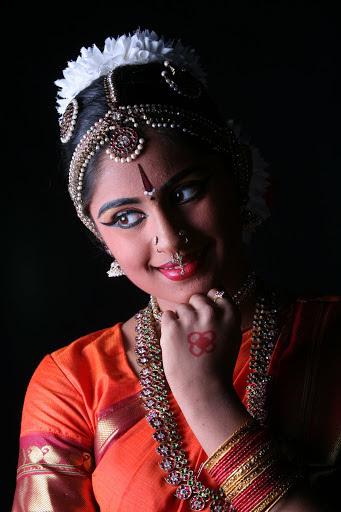
BHARATANATYAM COSTUME
Gajra
flowers adorn the hair to enhance the beauty of attire
Bindi
representation of the third eye
twelve piece set of earrings, necklaces, and bangles.
Oddiyanam
contrasting gold belt to accentuate waist movements.
SilkSaree Temple Jewellery
vibrant six meter fabric with with gold embroidery.
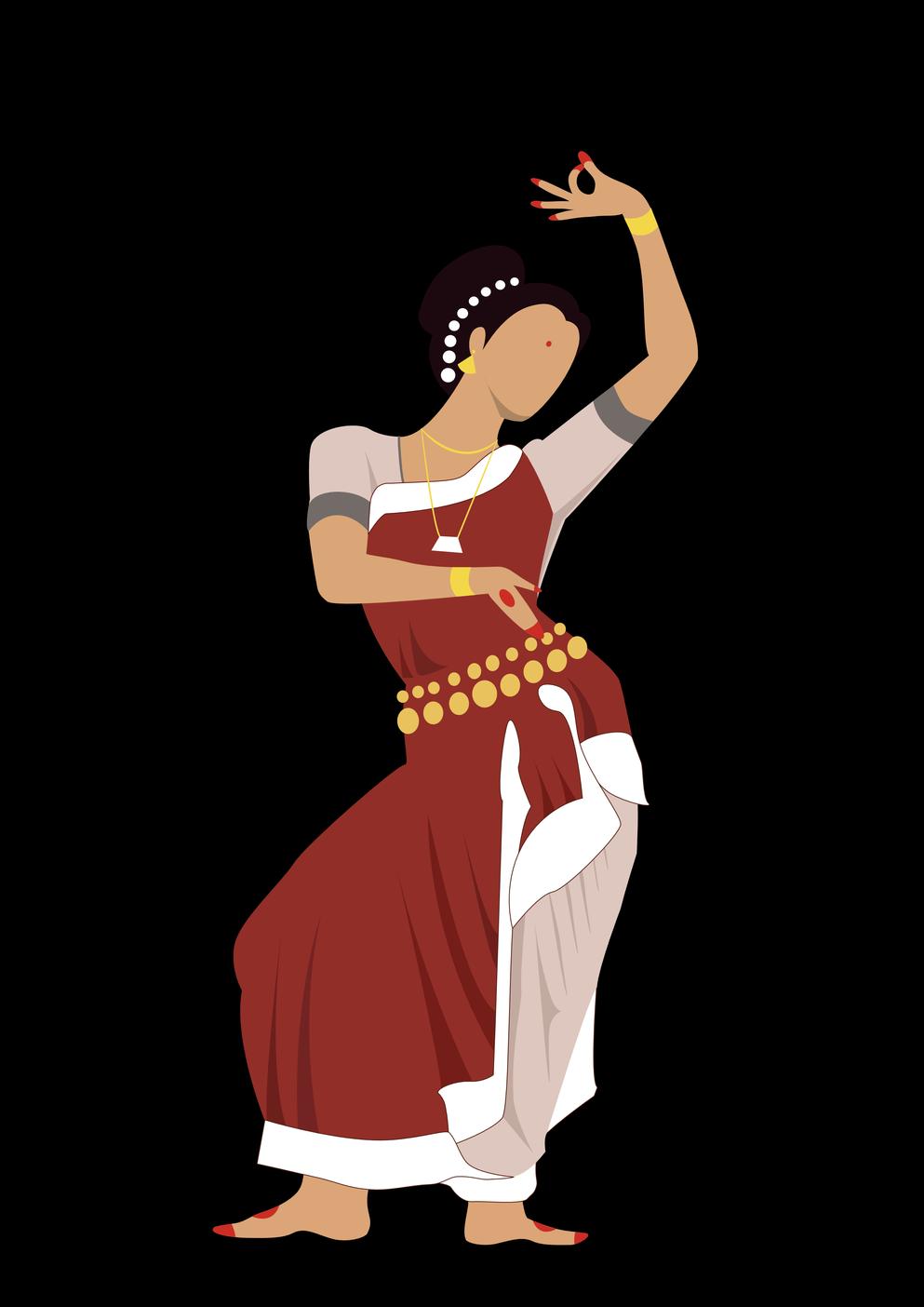
heavy eye makeup provides fuller expressions
Atla Kajal
red henna on the hands and feet to emphasize gestures
Ghungroo
anklets to improve the volume of rhythmical sound
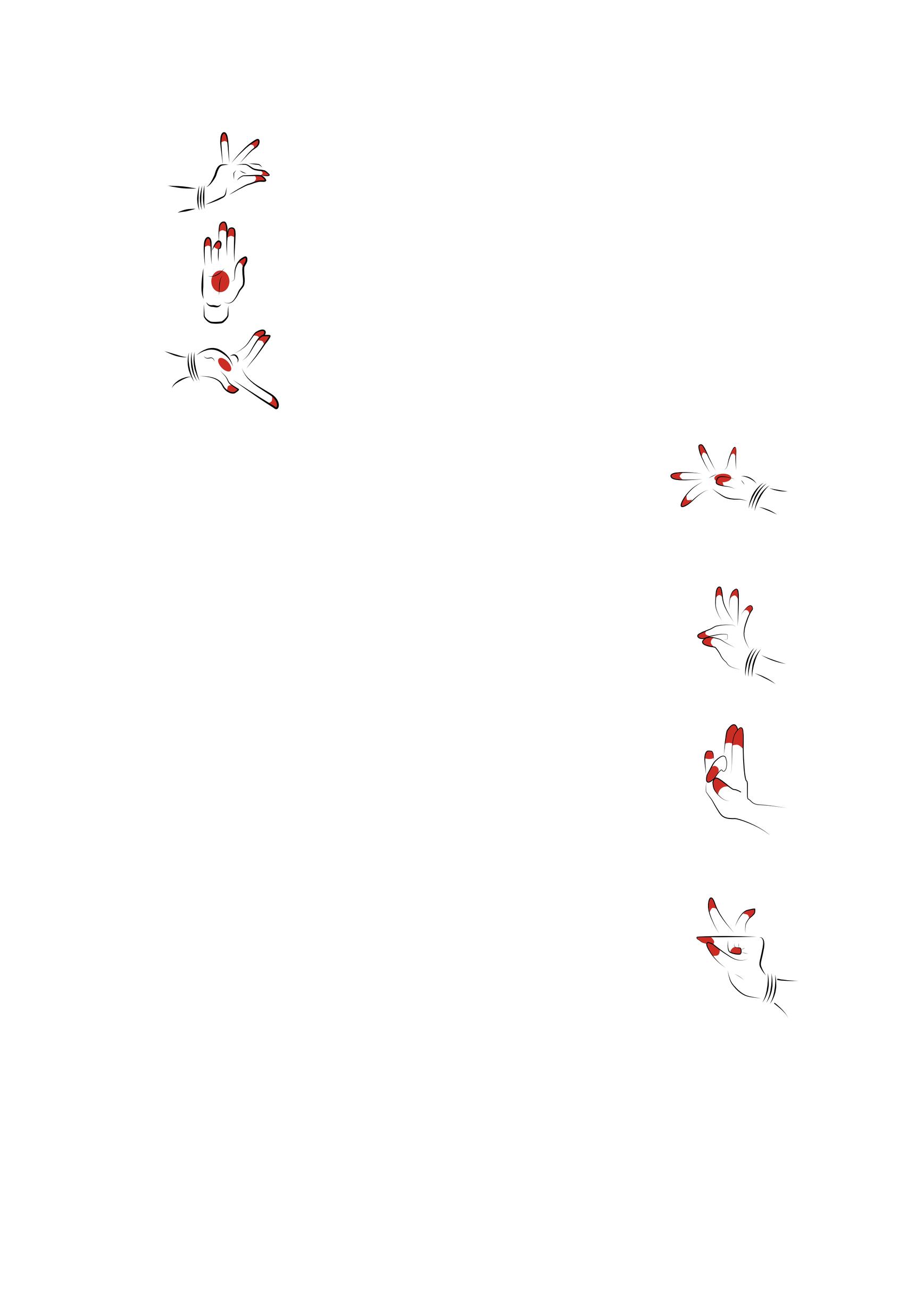
represents cutting through ignorance and obstacles on the path to enlightenment
Kartarimukh
symbolizes the teachings of Buddha as encapsulated in the three baskets of Buddhist scripture; signifies the transmission and preservation of knowledge
Tripataka
embodies stability and balance, reflecting the harmonious integration of mind, body, and spirit
Chatura
Hamsanaya
embodies elegance and discernment, reflecting a swan's ability to distinguish between pure and impure elements
Mayura
represents grace, beauty, and regal poise, mirroring the majestic movements of the peacock; signfies inner strength and potential
Bhramara
symbolizes the transformation of the individual self into the universal consciousness, akin to a bee merging with the essence of the flower
Hand mudras are the language through which stories come to life on the stage. Rooted in ancient Indian texts and scriptures, Bharatanatyam utilizes a vast array of mudras, ranging from simple gestures to complex configurations of the fingers to represent emotions, characters, and narratives
Each mudra is choreographed to synchronize with the rhythm and melody of the accompanying music, adding depth and nuance to the dancer's expression. Above are six common mudras used alongsidetheJaati,Sutral,andNattaAdavus. Leftfiguredenotes essentialadornmentstothedance.
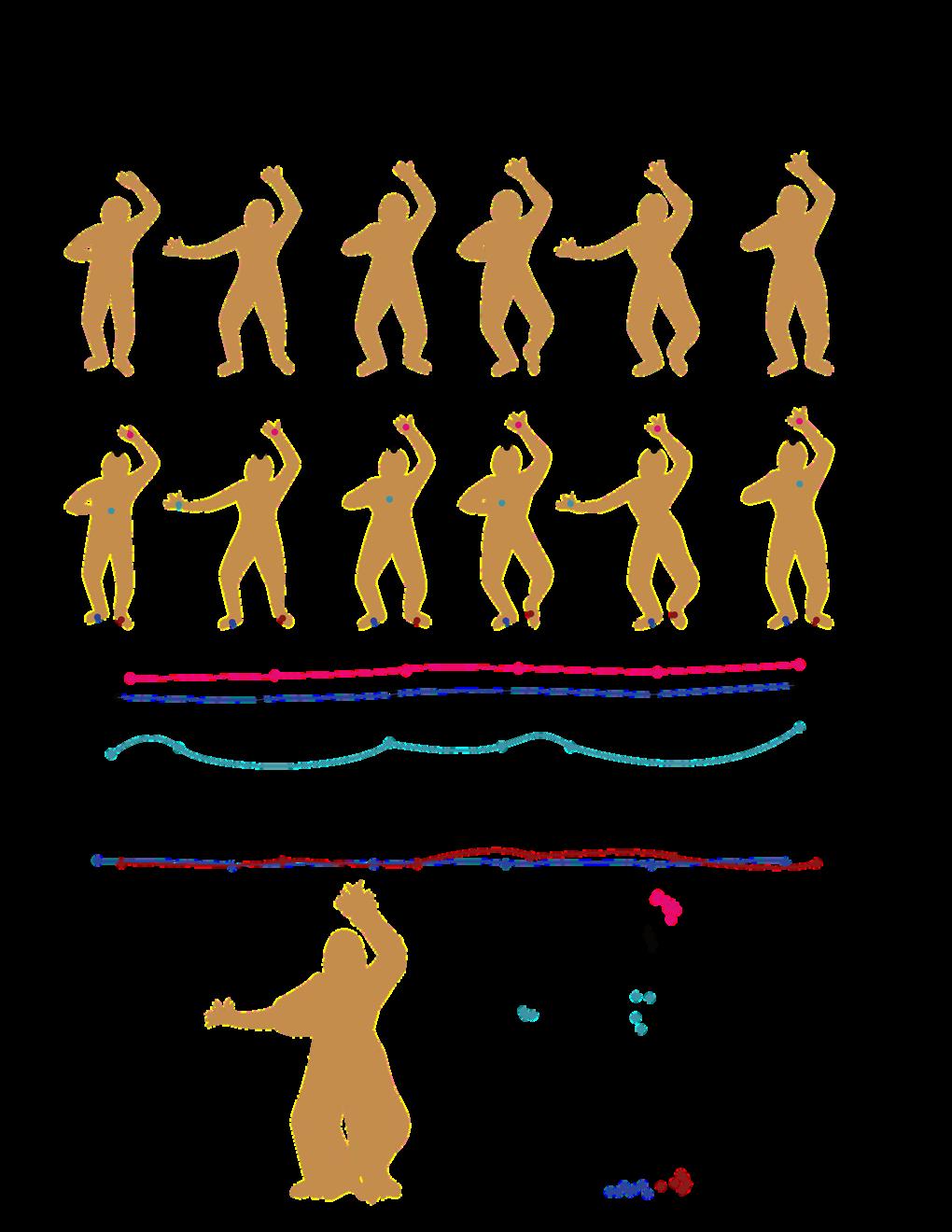
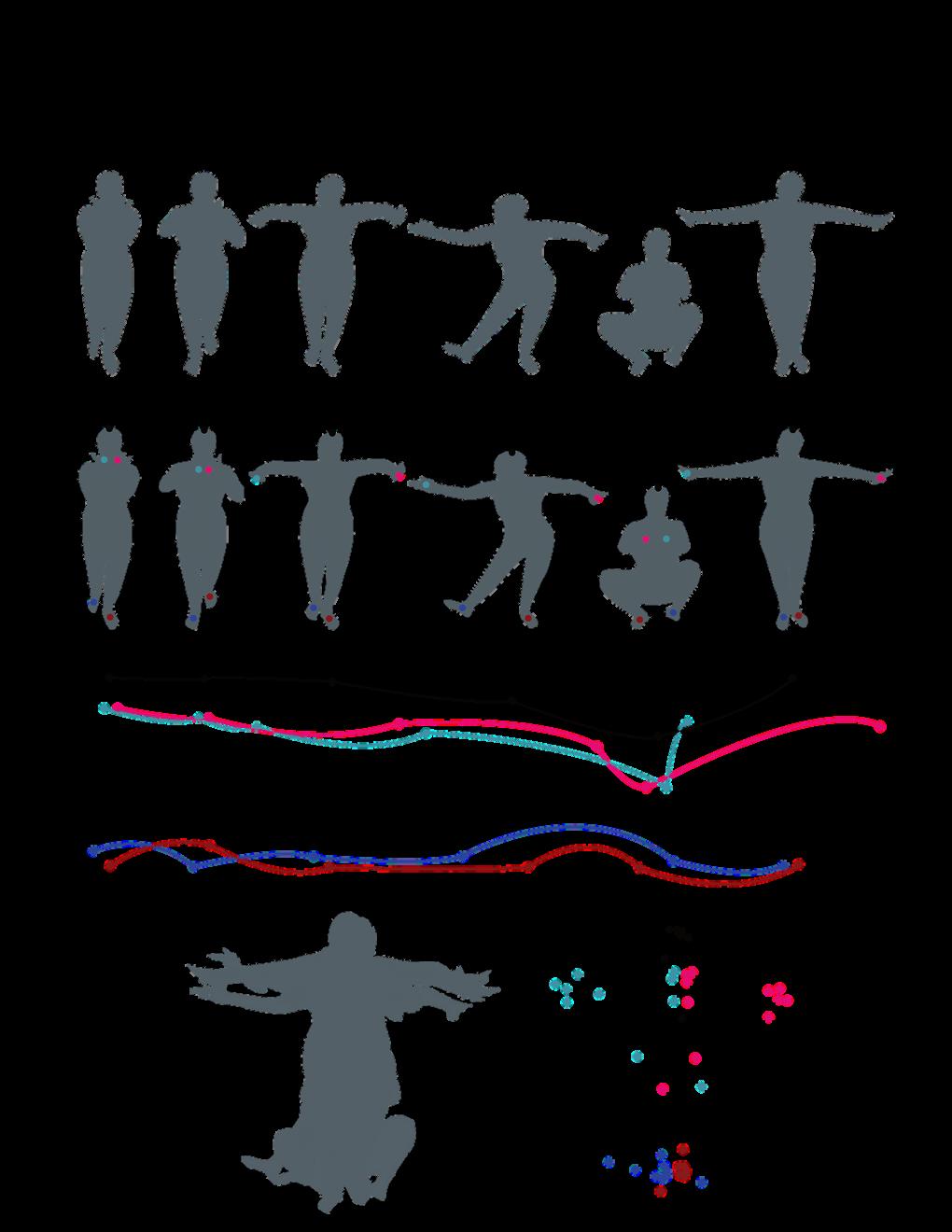
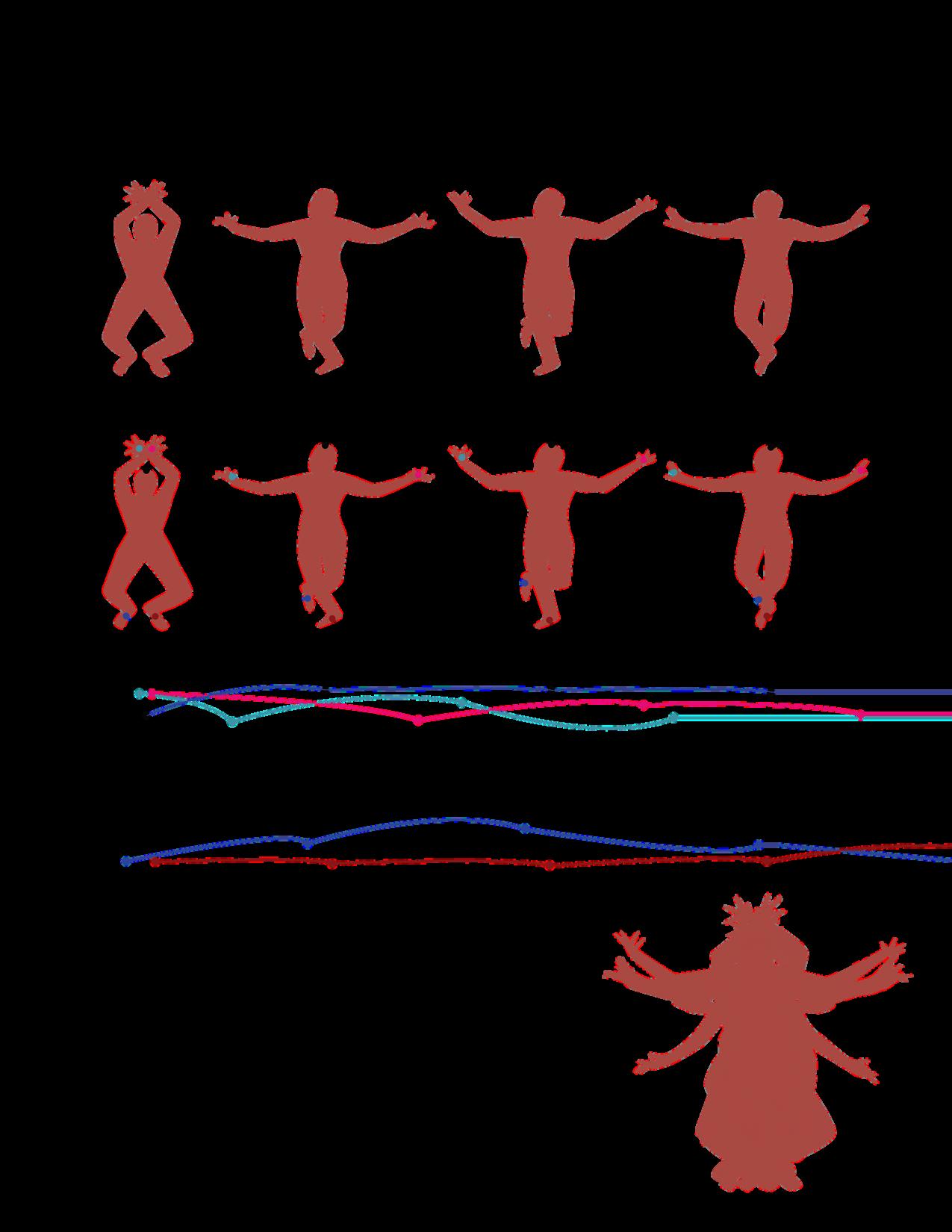
f r a m e g e s t u r e p a t h o f m o t i o n
decomposition and reconstruction of
prints of expression
In Bharatanatyam, counting plays a pivotal role in the precise execution of movements, with each adavu possessing its unique rhythmic pattern. This intricate counting system, known as sollukattu, guides dancers through the sequence of steps, ensuring synchronization with the accompanying music and maintaining theintegrityofthechoreography.
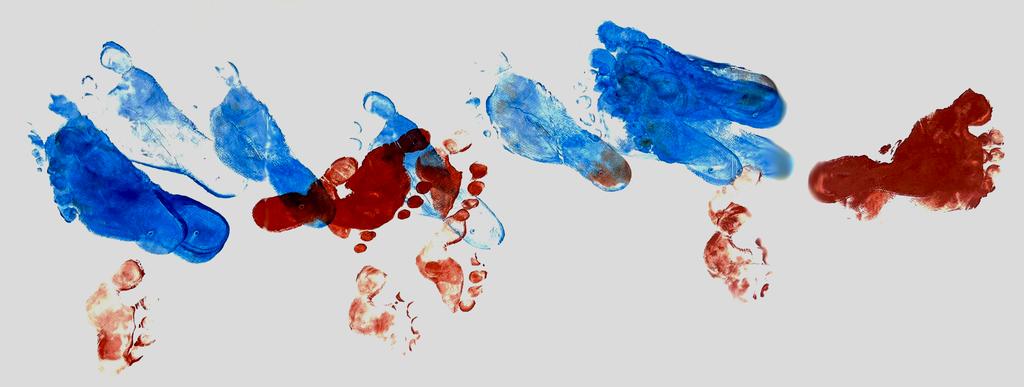
Experimental data collection techniques allow us to trace the transference of leg movement throughout the adavu The resulting figures offer insights into the rhythm and intricacies of footwork, illustrating the dynamic interplay between tradition and innovation in Bharatanatyam's evolution. Below, red prints indicate left foot and blue indicate therightfoot.
SUTRAL ADAVU
tha thai tham thith thai tham
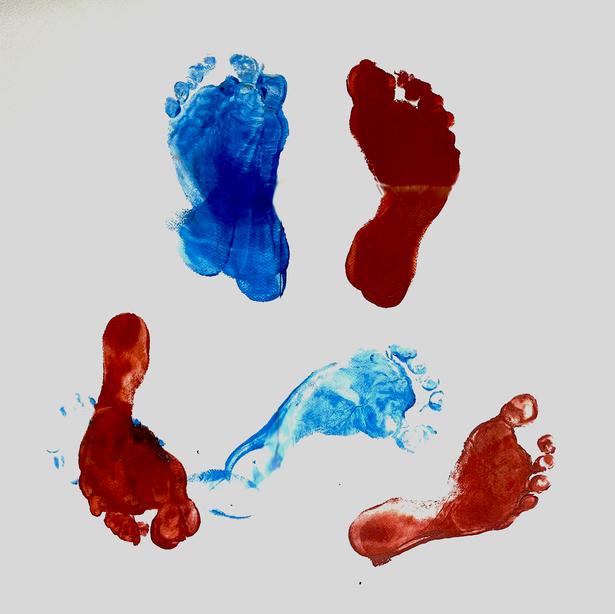
JAATI ADAVU tha ki ta tha ka thi mi
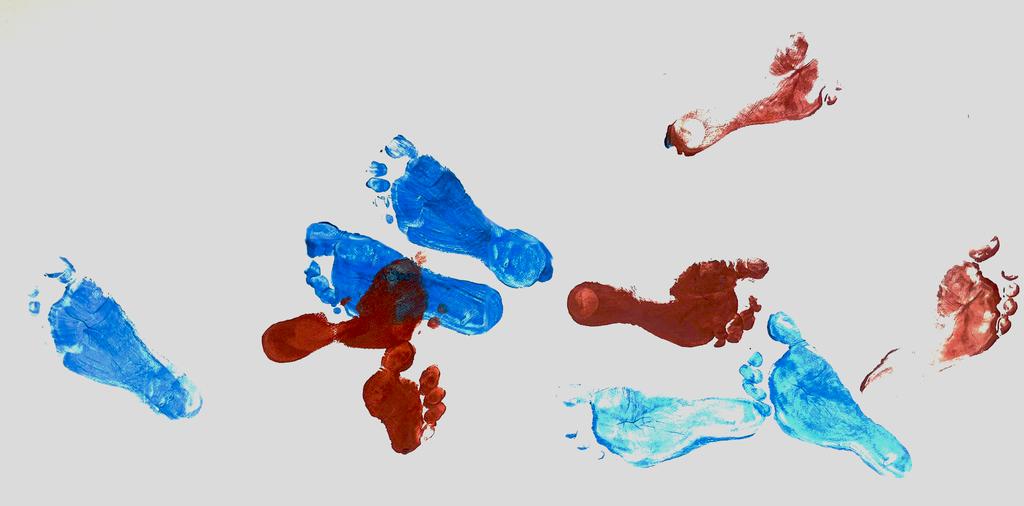
NATTA ADAVU thai yum that tha thai yum tha ha
2
 Benjamin Koshy Jacob HSC301: Data Visualization April 2024