CAMP GUIDE
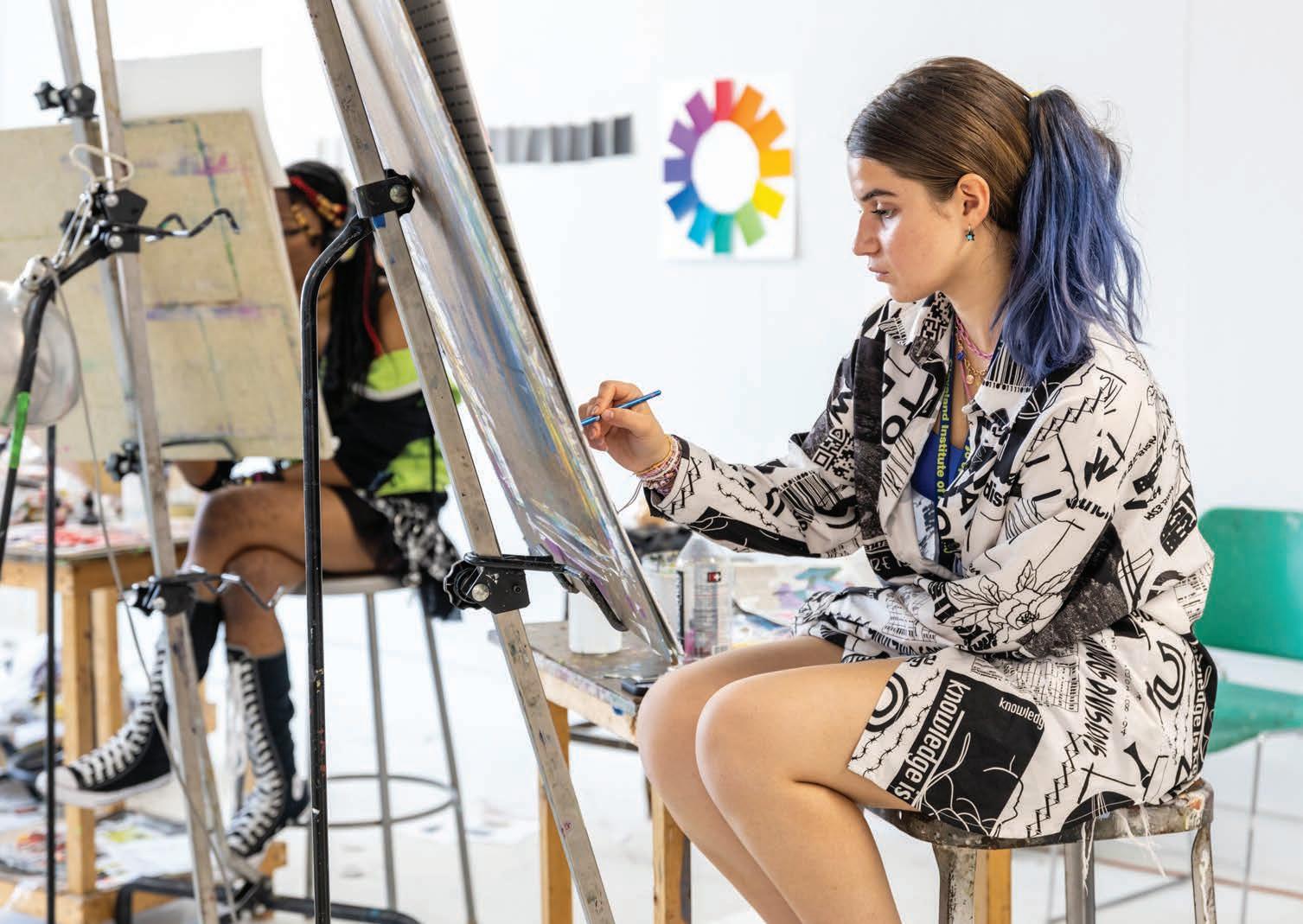
Cleveland Institute of Art | Pre-College
Photo / Amber N. Ford
ADRIANA GASIEWSKI agasiewski@cjn.org
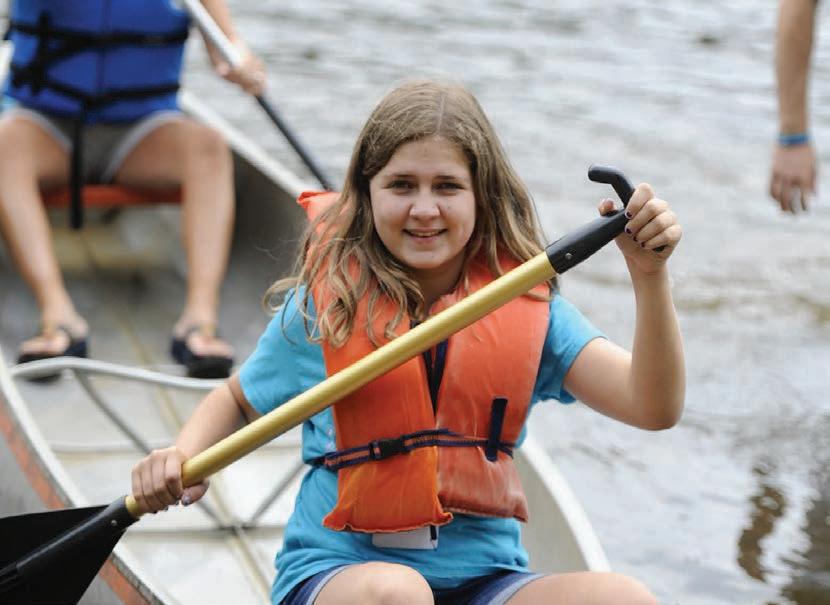
Liz Stevens, owner and director of Camp Walden in Cheboygan, Mich., befriended a number of children from Cleveland, Cincinnati and Chicago while attending the summer camp as a camper.
“I think some of the most special camp friendships are the ones that you really only get to … people you only get to see over the summer,” she said. “And I know that many of my best camp friends from 50 years ago and 45 years ago are still kids who did not grow up near me in suburban Detroit.”
With more than half of its campers from outside of Michigan, Stevens said Camp Walden and other out-of-state summer camps provide children with the opportunity to form various friendships with peers from other states.
“I think kids can really take the opportunity to reinvent themselves at camp to really be who they want to be outside of the pressures that they might feel at home,” she said.
Outside of forming friendship, parents should take into consideration out-ofstate camps while determining what camp o erings best suit their child.
“I think kids

For some, Walden may be the best choice because of its over 50 camp activities, ranging waterfront ones, land sports, performing arts and visual arts.
But Steven understands there are concerns about sending a child out of state, like transportation and remaining in contact with them throughout their camp stay.
“Honestly, you need to trust the camp that you’re sending your child to and know that no matter what happens – and knock on wood – it’s nothing where a child’s injured or anything like that but camp is going to take care of them,” she said.
To ensure this, she recommends parents ask camps about their relationship with emergency services and to research if they are near professional medical treatment.
Camp Walden has begun mailing letters from campers to their parents to help them remain in contact.
“If a camp is willing to get those letters to you by some special arrangement, I think that’s a nice thing to do for parents who are out of state,” Steven said.
She added that spending children to a camp outside of their home state is a “marvelous way to introduce children to the beauty and diversity of the country that we live in.”
“For many children, the opportunity to go away to camp outside of the geography that they’re used to, the community that they’re used to, the faces that they recognize, the newness that is a part of a di erent part of the country,” Steven said.
really take the opportunity to reinvent themselves at camp to really be who they want to be outside of the pressures that they might feel at home.”





A.KEVIN CORVO
Summer camps have been a rite of passage for generations of children and while the experience might di er with age, it is a wonderful opportunity for all children.
“Any age,” is the right age for a child to begin the summer camp experience, according to Courtney Nicolai, executive director of Hiram House Camp.
Nestled in Moreland Hills, Hiram House Camp is Ohio’s oldest camp, having been in
continuous operation since 1896.
e nonpro t camp o ers day camps in the summer, overnight camps, school programs, group retreats and corporate events.
Archery, canoeing, horseback riding and other outdoor activities are o ered on the 172 acres of campground, Nicolai said.

While any age is perfect for beginning camp life, the focus of summer camp can vary depending on age, she said.
At the age of 5 or 6, representing the youngest campers, Nicolai said the focus is on discovering.
“At 5 and 6 (years old), it’s a great opportunity to discover” and nd out which activities a child gravitates toward or enjoys the most, Nicolai said.
Children today are technologically savvy, and some might say dependent, but such technology is not part of the summer camp experience at Hiram House Camp.
“We are outdoors all day and involved in so many activities,” Nicolai said.
e activities are designed to help campers nd what they like best and want to explore further.
“ ere is a little taste of everything,” Nicolai said.
By the age of about 9, and especially so for those who have summer camp experience, campers have an idea of which kinds of activities they most enjoy, according to Nicolai.
“ ey know what kinds of things they like to do and it often leads to making new friends who enjoy doing the same things,” she said.
In discovering what kinds of activities they enjoy, Nicolai said campers become more self-aware.
“ ey make new friends, form new relationships and learn more about themselves,” Nicolai said, which is in keeping of the camp’s mission to build the charter and self-esteem of children at the camp while building life skills.
Kevin Corvo is a freelance journalist.
SHANNON MORTLAND
It’s a typical scenario: Parents have signed up their children for summer camps, paid the fees and dropped o their kids for some summer fun. However, sometimes that planned fun gets interrupted by an illness or injury.
After all, children play hard and germs spread, so illness or injury are likely inevitable, if even on a small scale.
Not to worry, Irene Graber, owner of Lakeshore Dance and Gymnastics in May eld, said.

Places that o er summer camps are prepared and know how to handle the problem.
Graber said she typically does not experience many injuries at summer camps and programming. In a 2025 study, the National Library of Medicine found only 575 injuries per 100,000 camp days.
But when an injury occurs, the child rests until the parent picks them up, Graber said.
However, over the years she has noticed some trends, namely with children getting
tired by Wednesday or ursday. Graber and her team of instructors try to get in front of that fatigue by structuring the day with a variety of activities and breaks.
“You can’t do gymnastics all day long, so you try to do arts and crafts and open gym,” she said.
Parents can help combat fatigue in their children by making sure they start the day with a good breakfast, bring a water bottle and bring a healthy snack to camp to give kids good energy, Graber said.
Camps, which start at 9 a.m., begin with a warm-up or a game, followed by an event or two, open gym, and arts and crafts. en they break for lunch before ending the day with the last event, she said.
Sometimes coaches need to improvise and change the program based on how tired the children are on a given day, Graber said.
She advised parents to let her sta know what’s going on in the child’s life, such as any extenuating circumstances.
“It doesn’t have to be medical, it could be their preferences,” Graber said. “Did something big change in their life? At least it will help us understand what’s happening during the day.”
Shannon Mortland is a freelance journalist.
SHANNON MORTLAND
No matter how much planning and research a family does when deciding how children will spend their summer break, some children may change their minds about their interests or gure out that a camp is di erent than what they had in mind.
Here’s how to handle the situation.
It is common for some campers, especially younger children or rst-time campers to feel nervous on their rst day at camp and even to be hesitant, said David Baxter, chief business o cer at Red Oak Camp in Kirtland. While most campers eventually settle in and love their camp experience, being in a new environment with new people can be a big transition, he said.
Having help is key.
“With supportive counselors, engaging activities and a little time to adjust, most campers quickly nd their place and thrive,” Baxter said. “ at said, like any activity, camp isn’t the right t for every child, and that’s OK, too.”
According to the American Camp Association, more than 30 million children attend summer camp, so there are bound to be a few who have a hard time adjusting. In such instances, communication is important so camp sta can help the child conquer their initial reaction. Campers should talk to their camp counselor or program leader about their feelings and gure out what is behind them, such as homesickness, friendships, the fear of a new routine or environment, or an activity that isn’t a good t, he said.
“Camp sta are trained to help campers navigate those challenges,” Baxter said. “Parents should also communicate with the camp director or leadership team to share what their camper is experiencing. Often, small adjustments, extra
“With supportive counselors, engaging activities and a little time to adjust, most campers quickly find their place and thrive. That said, like any activity, camp isn’t the right fit for every child, and that’s OK, too.”
David Baxter Red Oak Camp
support, helping a camper connect with peers or shifting activities can make a big di erence.”
With the team’s help, most children establish relationships with other children and gain con dence, which helps them quickly overcome their initial reservations, he said.
ere are also things parents can do to avoid such a situation before camp starts.
Baxter recommended choosing a camp whose programs align with a child’s interests and visiting the camp before booking to ensure the child will enjoy the environment.
“Many camps o er open houses, tours or preseason

programs that allow children to become familiar with the space and meet sta before summer begins,” he said. “At Red Oak, we o er Spring Break Camp days that give children a chance to experience favorite camp activities, meet counselors and explore the property before summer arrives.
Attending Spring Break Camp or touring the camp with a friend can also make the transition easier, he said. “ e more comfortable and excited a child feels beforehand, the smoother that rst day tends to be,” Baxter added.
Spring 1: Through Sat., Apr 25, 2026. CLOSED April 1-7, 2026 for Spring Break Spring 2: Mon, Apr 27 – Sat, May 23, 2026. Now in our 23rd year of helping gymnasts
You choose the day & time that your gymnast will attend their weekly lesson. ENROLLMENT IS ALWAYS ONGOING & PRORATED ACCORDINGLY -- NO NEED TO WAIT FOR THE BEGINNING OF A SESSION
June 8 – Aug 14, 2026 9:15 a.m. – 3 p.m.

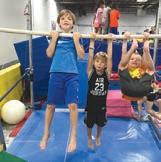
• For ages 4–14, boys and girls, and all levels of gymnastics experience, from recreational to competitive gymnastics.
• Gymnastic camp at Jump Start is a great way to explore and experience gymnastics for the first time, learn new skills, or build a solid competitive base for the next season.
• Our philosophy at JSG is that gymnastics is for everyone, an excellent basis for physical fitness, and benefits coordination for every sport and children's health. FLEXIBLE SCHEDULING WEEKLY or DAILY ENROLLMENT
OR YOUTH OPEN GYM


A.KEVIN CORVO
The rst time a child prepares for an overnight summer camp is memorable for the child and their family.
Some might approach it with wild abandon while others might have a more cautious or even apprehensive approach, but in either instance summer camp operators work to ensure each kind of child enjoys the summer camp experience in equal measure.
“At the Mandel JCC’s Camp Wise, we welcome new campers through our core Jewish values of community, acceptance and respect,” said Rabbi Dan Utley, director of Camp Wise in Claridon Township.
Each camper and family is treated individually, and a one-on-one meeting is scheduled with all new campers and their parents, according to Utley.
Camp Wise o ers in-person and online orientation sessions.

who notice and respond if a child is upset.”
Camp Wise is intentionally designed in villages so that each age group area feels like a large extended family, rather than a row of cabins mixed with all age groups, according to Utley.
Similar preparations are made for children attending day camps, he said.

Pre-College Film & Media Arts Program

“I always love talking with rst-time families and campers and explaining the normal nerves that come with being dropped o ,” Konner Lashley, director of J-Day Camps and Youth Services at the Mandel Jewish Community Center of Cleveland in Beachwood, said.
5-DAY FILM CHALLENGE
June 7–12
“During these sessions, we review what the rst day of camp will be like, how meals work, who their counselors will be, and we help everyone get excited for all the incredible program areas and activities,” Utley said.
Create a short film from start to finish
$1,200 Day Program
Utley o ered tips for parents to help make a rst-time summer camp trip the best possible experience.
$1,600 Residential Program
FILMMAKERS INTENSIVE (2WEEKS)
June 14–26
Directing, cinematography, editing and storytelling
$2,400 Day Program
“As a camp director and as a dad, I suggest parents try to project con dence and empathy in the weeks before camp,” he said. “It’s good to remind new campers that it’s normal to have big feelings – excitement, nervousness, missing home and joy – all at once.
“To help with this, I encourage families to practice some of the routines that happen during a typical day as much as possible. is might include opening their backpack, getting out of their bathing suit and packing up at the end of the day.”
After a child arrives at camp, Lashley said he will ask how they are doing and if necessary direct the camper to a counselor.
Camp is fun but it can be hectic, Lashley acknowledged.
5-DAY
June 7–12 Create
$1,200
$1,600
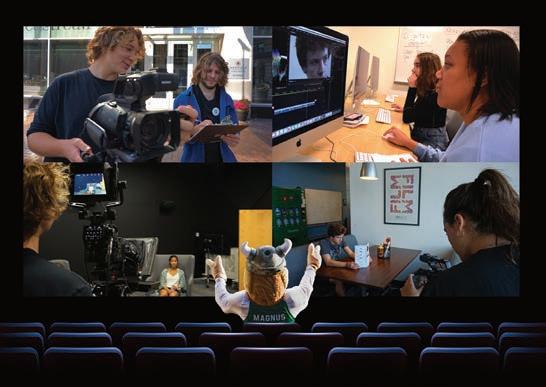
Pre-College Film & Media Arts Program Summer 2026
June 14–26
Directing, cinematography,
$3,200 Residential Program
$3,200 Residential Program
ACTING AND DIRECTING
July 13–17
“Naming these feelings and being OK with experiencing more than one emotion at a time is healthy. Once campers arrive, they are surrounded by new friends and attentive sta
Develop characters, story and screenplay
$1,200 Day Program
ANIMATION
July 13–17
Animation from concept to screen
$1,200 Day Program
“ e more these routines have been practiced at home, the less stress the camper will feel when doing them for the rst time in a new setting,” he said.
A.Kevin
Corvo is a freelance journalist.
“During these sessions, we review what the first day of camp will be like, how meals work, who their counselors will be, and we help everyone get excited for all the incredible program areas and activities.”
Rabbi Dan Utley Camp Wise
SHANNON MORTLAND
Spring is here and local students are likely dreaming about the end of the school year. Parents, however, are already looking for ways to keep the children busy and stimulated during the summer, and local museums are ready with a variety of programs for all ages.
e goal is to keep children learning outside the classroom.
Camp Curiosity at the Great Lakes Science Center in downtown Cleveland serves children from kindergarten to eighth grade with programs such as robotics and boat camp, which teaches children about how Lake Erie is used, said Brett Nicholas, vice president of education at the Great Lakes Science Center.
is year the science center is also o ering programs at Siegal Lifelong Learning in Beachwood, he said.
e Cleveland Museum of Natural History strives “to expose campers to di erent aspects of natural history so that these young learners can nd what they’re passionate about,” Justin Forneris, manager of youth initiatives, said. “From making model exhibits to learning how to maintain a nature journal, we try to create experiences that give our campers access to nding a love of nature and a curiosity about the world and its history.”
eir programs are for students in rst through eighth grades and are held weekdays from 9 a.m. to 4 p.m.

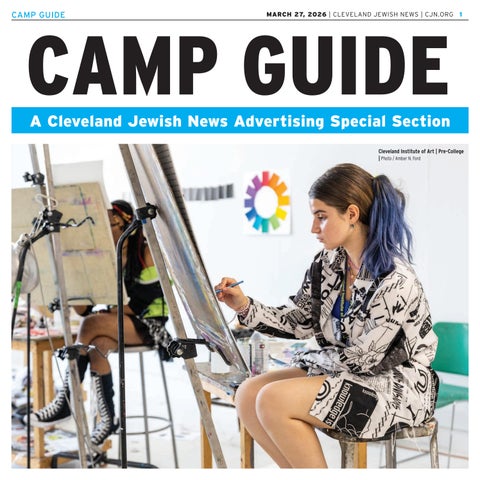
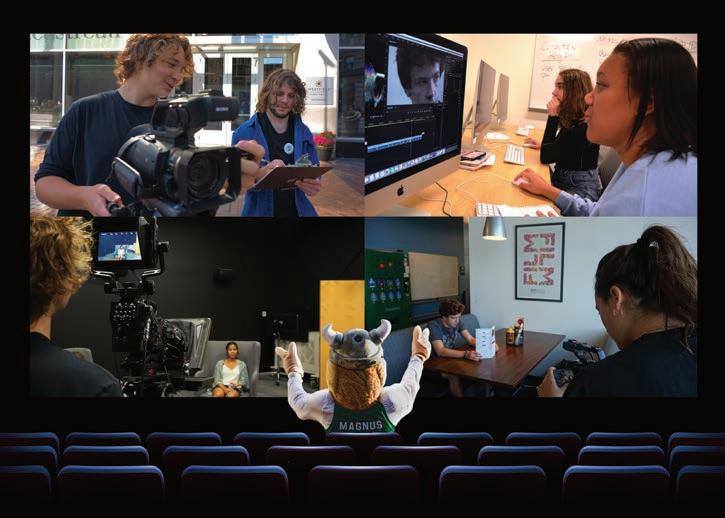
e Cleveland Institute of Art serves children in grades kindergarten through 12, Crystal Johnson, assistant vice president of admissions and continuing education, said.
June focuses on young artists through programs that use di erent physical and digital mediums in two-hour classes that run for two weeks, she said.
“If they want talk more than one class, they can spend the whole day with us exploring di erent mediums for the sake of having fun, learning new skills and spend some time thinking creatively,” Johnson said.
CIA’s Pre-College program launches in July for students entering 10th grade to recent high school graduates who may want to pursue a career in the arts, Johnson, who also oversees CIA’s Pre-College program, said. Pre-College is residential for two weeks, during which students get more
than 100 hours in the art studio.
“ ey are creating nonstop,” Johnson said. “I like to think of it as a primer for going to art school one day. We want students to see themselves as someone who has something to put out into the world, and we want to give them space to create it and share it.”
ough some programs are already sold out at the museums, there are spots open in others that can get to the heart of an individual child’s interest. Information on camps and registration can be found on the museums’ websites.
“ e learning, the play and the friendships made at camp are what create the foundation for a future where science plays a key role in improving our connection with nature and understanding how this connection in uences the health and beauty of not only our surroundings, but also our own human lives,” Forneris said.
Nicholas added that a lot of learning in life happens outside the classroom. In summer camps, students are learning while having fun, and they may even forge a deeper connection to the region, Johnson added.
“Having such a vibrant arts and culture district is such a part of the Cleveland identity,” she said. “Anything we can do to encourage kids to be part of that community continues to promote the culture.”
Shannon Mortland is a freelance journalist.
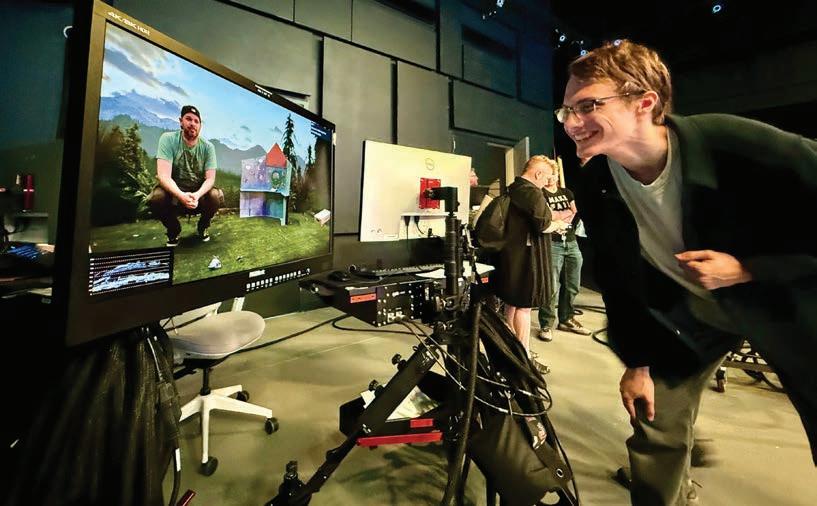

No matter how aspiring artists and designers express their creativity, CIA’s Pre-College program has a place for them!
Participants spend two or four weeks immersed in a world of creativity, learning and community building—all while living in CIA residence halls in culturally vibrant University Circle.
Pre-College students prepare for creative futures by building their portfolio, earning college credit and experiencing life at a leading college of art and design.















NOELL WOLFGRAM EVANS
What are the surest signs that summer is approaching? e budding trees? Cracking open a window? Children pulling out suitcases to collect things for summer camp?





Overnight camp has been a mainstay of childhood summers for decades. In an increasingly digital and connected world, the overnight camp experience has taken on an increasingly important role, Annie Mauch, assistant director of Camp Walden, a family-owned camp in Cheboygan, Mich., said.
“Overnight camp is 1,000% a great way to get kids away from daily stresses,” Mauch said.
“It’s an opportunity to get back to simpler things like playing a game of cards or having a conversation without any screens getting in the way.
“Overnight camp also gives kids independence as it helps them to learn how to do things on their own. ings that their parents probably do for them at home like make a bed or wipe down a counter.”
Rebecca Rucker, manager, marketing and communication for the Girl Scouts of Northeast Ohio, said, “Overnight camp is one of the most powerful experiences a young person can have. It’s an opportunity to step into a world that was designed just for them.”
Brandon Mitchell, manager of girl
experience for Girl Scouts of Northeast Ohio, said, “Campers learn to trust themselves, care for one another, and embrace the joy of being outdoors. In community and in play, they practice the skills that help them thrive long after summer ends.”
Rucker said, “ ere is a special community that develops in an overnight camp. It’s a space where campers can develop a sense of belonging.”
She said while overnight camp o ers a number of bene ts, it’s important that the campers (and their families) are ready for the experience.
“Camp readiness isn’t just about a child sleeping away from home,” Rucker said.
She explained there are a number of factors families should consider.
“Have they slept at a friend’s house,” Rucker said. “Can they take care of themselves? Are they excited?”
Even if the answer to all of these questions is “yes,” there is still likely to be some anxiety about what a camper thinks the overnight experience will be. at’s where the caregivers come in.
“If they are con dent, the camper will be too,” Rucker said.
To help build that con dence “we send out a lot of communications to prepare our campers and their families for everything they might need or experience,” Mauch said. “We also use that as a way to build excitement because we want people coming to camp to be excited about the experience.”
Rucker said that every camper has their own, unique experience at the start of camp but that, on average, between the third and fth day, something shifts. “ at self-doubt they started the week with turns into pride,” Rucker said.
“Camp is more than time away from home,” Mitchell said “it is an intentionally designed experience where girls grow in courage, con dence, and character. Each day blends movement, creativity, re ection and hands-on exploration.”
Noell Wolfgram Evans is a freelance journalist.
“There is a special community that develops in an overnight camp. It’s a space where campers can
SHANNON MORTLAND
Many adults who attended summer camp as children likely have memories of playing games, learning and making friends. ough camps have changed to appeal to today’s children, those foundational principles still apply –and kids keep going back.
Camp Wise, which is part of the Mandel Jewish Community Center of Cleveland, was founded in 1907 and is the thirdoldest Jewish overnight camp in the country. Today’s culture is shaped by both longstanding traditions and contemporary values, according to Rabbi Dan Utley, director of Camp Wise in Claridon Township.
“Camp Wise campers are highly engaged in activities and programs each day,” he said. “If you’re a person who likes to spend time with others, be active and creative for most of the day, our camp is for you.”
At Camp Ramah in Conover, Wis., activities are rooted in fun, friends, Jewish

identity building and Jewish communal living, or “joyful Judaism,” Jacob Cytryn, executive director of Camp Ramah, which was founded in 1947. e camp becomes like a second home for many children, he said.
“For most of the kids, it’s the relationships, the friends, the feeling of community. It’s getting to do activities that you can’t do at home or that are more fun at camp with your camp friends,” he said.
Both camps attract a wide variety of children from elementary to high school.
Camp Ramah attracts about 600 kids each summer who mostly hail from the Midwest.
Camp Wise welcomes campers from diverse socioeconomic backgrounds and from many di erent Jewish communities, representing a range of denominations, interfaith families, Israeli campers and families who immigrated to the U.S. from the former Soviet Union in the 1980s and 1990s.
In the past, parents chose summer activities for their children, but how children spend their summer is now a joint decision with the parents, Cytryn said. He tries to help them make decisions based on what the child really wants.
“We talk up the magic and beauty of summer camp. We really work with parents and kids to get clarity for themselves on what they want,” he said. “Usually, that conversation helps them make a decision.”
Utley paints the picture of what summer is like at Camp Wise.
“It’s a fun fact that our camp chefs prepare more food and nutrition at meals than they would typically expect from a
camp our size. We love to play hard, eat a lot and rest well,” he said.
Camp activities continue to evolve to meet the needs and interests of kids today, including popular centers for music production, STEM and outdoor cooking in addition to traditional camp fun, Utley added.
Camp Wise Maccabia (color wars) is a tradition that keeps campers coming back and creates lasting memories, he said. Children are placed on di erent color teams that compete in sports, arts, cheering, singing, drama and dance. e major event is a 45-minute relay race across the entire campgrounds, ending in a re-building contest for the team captains.
Cytryn said he assures parents that “if your kid can spend the night away from home, even with grandparents or cousins or friends, then they’re probably ready for overnight camp.”
Shannon Mortland is a freelance journalist.



The Michael & Anita Siegal One Happy Camper Program
(SO IS GETTING A GRANT OF UP TO $1,000!)
SHANNON MORTLAND

Choose a Jewish overnight summer camp and receive up to $1000 for a first-time experience. Some synagogues may o er additional funds.

Ramah Camps • Camp Wise • Moshava Camps Emma Kaufmann Camp • Camp Stone URJ Goldman Union Camp Institute (GUCI) NCSY US-Based Summer Programs and many more!
Restrictions may apply. For more information visit www.onehappycamper.org, email onehappycamper@jecc.org or call 216.371.0446.
Children with a parent who has cancer often feel alone and typically are not included in support services for loved ones. ose children can meet other kids who are impacted by cancer at camp Kesem.

Kesem is a national nonpro t with a Greater Cleveland chapter operated by students at Case Western Reserve University in Cleveland’s University Circle neighborhood. It runs a ve-day camp in August free of charge, according to Aishi Sethi, development coordinator for Kesem Greater Cleveland and a junior studying mechanical engineering at CWRU.
create a magical time for kids in attendance, Sethi said. e children will spend Aug. 3 to Aug. 7 at Recreation Unlimited, a campsite in Central Ohio. ey will participate in activities such as making s’mores, having a talent show, canoeing and even playing a game where they just throw paint at one another, she said.
“ ese kids are able to just be kids for a week,” Sethi said, adding that one day is spent talking about cancer since that is the reason the children attend the camp.
Talking about cancer helps the children bond over their common experiences and helps them process everything they’re going through, she said.
Sethi and her team are raising $125,000 to host the camp for up to 120 children, whose families do not pay anything for the camp.
Children ages 6 to 18 are invited to register at kesem.org. ey do not have to live in Northeast Ohio.

“We want to create a community for these kids who are going through something very di cult. We want them to feel less alone,” she said.







According to the organization, there are 5 million children in the U.S. with parents who have cancer. ose children often experience increased anxiety, emotional isolation, loss of social interest and feelings of hopelessness. Kesem means magic in Hebrew, and the camp aims to


“It’s amazing to see the amount of growth they have in this camp,” Sethi said. “ ey’re able to share more about their lives and they’re away from the troubles that life brings.”
Shannon Mortland is a freelance journalist.











































‘I
RIKKI ZAGELBAUM | JNS
Danielle Meyers still smiles when she recalls the moment she rst noticed her husband, Shlomo Meyers, at summer camp more than a decade ago.
“He was standing on a rock, and as my camp was going back on the bus, I turned around,” the 34-year-old Los Angeles native told JNS. “It was love at rst sight.”
Two years later, in 2014, the couple married under the chuppah and moved to Danielle’s hometown, where their life looks much like that of other Orthodox couples. ey split household chores. ey take long walks around their neighborhood. ey unwind with their favorite movies. ey also both have Down syndrome. e couple talked to JNS from the Los Angeles home of Danielle’s father, Terry Magady. e two described their marriage and what it took to build a life together at a time when romantic relationships involving people with disabilities were still uncommon in the Orthodox world. February was Jewish Disability Awareness, Acceptance and
Both Danielle and Shlomo said that they dreamed of getting married from a young age, even though they had almost no examples of Jewish couples with Down syndrome.
Danielle, who attended a mainstream, Haredi girls’ school in Los Angeles, said that marriage was a constant topic among her friends. Naturally, she assumed that she would marry, too.
“In high school, all my friends were talking about marriage and shidduchim,” she told JNS, using the Hebrew term for matchmaking. “I saw a lot of my friends get married, and I felt it was time for me.”
Shlomo, who is 40 and originally from Chicago, said he felt the same.
He attended dozens of weddings, including those of his siblings, and often wondered when his turn would come. After his sister’s wedding, he told his mother: “I’m next.”
“I had no idea how I was next,” Shlomo told JNS. “I’m emotional, which is not a bad thing. But there was a time I thought, ‘What would happen if I got married?’ en I met Danielle and thought she was the one.”






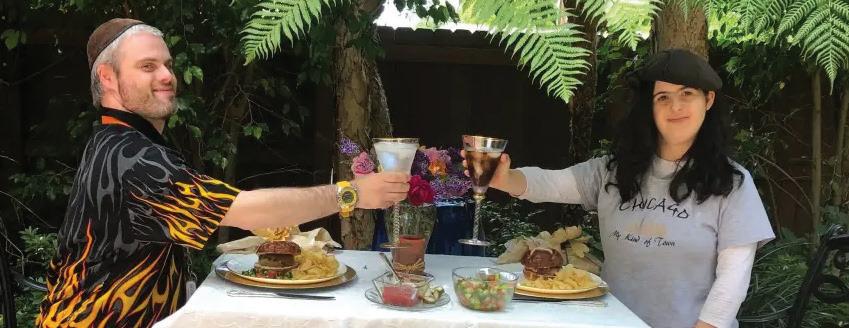
Avromie Adler, international director of Yachad, told JNS that the Orthodox disabilities conversation has shifted in recent years, and inclusion is no longer only about schooling, programming or employment.
More families are asking about adult relationships, including marriage, he said.
“ e ‘next level’ conversations I’m having with families, whether it’s the participants themselves or parents, revolve around one of two issues,” he told JNS. “One of them is longterm relationships, speci cally marriage.” at kind of expectation was far less common when Danielle was born in 1991, her father said.
Magady told JNS that he believed by the time his daughter was 1 that she would marry one day.
“Back then, it was new. Nobody was doing it much,” Magady said. “I remember a Jewish professional, a nice person, telling me at a panel, taking o his glasses to make a point: ‘It will never happen.’ And he repeated: ‘It will never happen.’”
Magady and his wife, Holly, pushed for Danielle to have as typical a childhood and adulthood as possible, sending her to regular schools throughout her life.
When she returned from two years in seminary in Israel, he began looking for a match. He made calls across the country, sometimes multiple a day, and reached out to organizations, including Yachad, to spread the word.
Many, he said, did not know what to do with the request.
“When I called organizations, it didn’t register,” he told JNS. “It was like I was talking about Mars.”
Some were confused, he said. Others warned him to “be careful.”
“But I wasn’t looking for warnings,” Magady said. “I just wanted help nding a match.”
Magady eventually found a matchmaker willing to take on the search. Danielle and Shlomo were soon arranged to sit next to each other at a dinner at Camp Lavi, an Orthodox summer camp with a Yachad program, where Danielle was working as a counselor.
ey connected quickly, Magady said.
Nearly 12 years later, despite early bumps in the road, especially during the pandemic lockdowns, the couple has settled into married life, Magady told JNS.
“ ey’re not a caricature,” he said. “ ey’re real people with real di erences. Shlomo is very di erent from Danielle and vice versa.”
“He’s a cool guy. He has an amazing sense of humor,” Danielle said of Shlomo. “He makes me laugh. We have the same personalities, but he’s also wise and punctual. at’s just how he was raised.”
At one point during their hourlong conversation with JNS, Danielle shared a personal detail about Shlomo that he didn’t want to appear in print. “Don’t say that,” he chided. Danielle assured her husband that she was only giving a “general overview” of their journey and wouldn’t go into further detail to protect his privacy.
Shlomo said they have been “shmoozing” more lately. ey spend time with friends and talk at night before bed. ey go to the movies, see musicals and head to the beach.
“We like being around people, and sometimes just ourselves,” he told JNS. “We both have a fear of the dark, and we both like socializing.”
e couple receives support from outside programs and organizations but lives independently.
In early February, Magady said, the two decided on their own to go to the beach to
watch the sunset. eir families learned about it afterward, when they received a photo.
“ ey went to the beach, watched the sunset, asked a stranger to take a picture of them with a beach ball and then Ubered home,” Magady said. “ at’s not orchestrated. at’s just their life.”
Magady said that perceptions in the Orthodox world around marriage for people with disabilities have shifted since Danielle got married.
“At a macro level, things have changed a lot,” he told JNS. “People call us now and say, ‘My son or daughter is dating. What do we do?’ Organizations acknowledge it’s real.”
Still, Magady said, misconceptions remain about what people with disabilities and special needs can do, and what kinds of adult lives they can build.
Historically, he said, communal attitudes have moved through phases, from hiding people with disabilities away, to institutions, to education and then to inclusion in community life.
Marriage, he told JNS, is the next phase.
“When people actually see Danielle and Shlomo out at a restaurant and talk to them, it changes perception,” he said. “It’s not just, ‘Nice they got married.’ It represents an entirely new expectation of what’s possible.”
JNS asked Magady if the couple had ever brought up the topic of having kids. He said that he preferred not to answer for the couple’s privacy.
Adler, of Yachad, told JNS that families often come to him with questions about dating and marriage after hearing about couples like Danielle and Shlomo.
Yachad can help families navigate the process, from dating through the early and ongoing adjustments of married life, he said. But the organization does not decide for families whether marriage is the right choice.
“We don’t see ourselves as deciding for people what is or isn’t right for them,” Adler said. “ ey make decisions. We lay out pitfalls to watch for and provide handholding where possible.”
Despite having multiple Yachad couples currently dating, Adler said he has not launched a formal matchmaking initiative, which would require a database of potential matches, professional matchmakers and signi cant funding. However, it is something he would like to build in the future.
“Right now,” he said, “the community doesn’t view it as a priority yet.”
“Attitudes change when people change,” he said. “ is is an evolution driven by participants saying, ‘I want more,’ families believing and professionals helping deliver.” Orthodox Jews, especially in Chassidic communities, have excelled in inclusion for people with special needs, according to
Moshe Krakowski, a professor and director of doctoral studies at Yeshiva University’s Azrieli Graduate School of Jewish Education and Administration.
“ e Chassidic community believes strongly in the intrinsic value of every person, and they don’t de ne people by ‘success,’” Krakowski, who studies Chassidic education in New York, told JNS.
“In that community, a person’s role as an eved Hashem, someone devoted to religious life, is more central than accomplishments,” he said.
“I once had a Chassidic father say that children with Down syndrome are the
greatest nachas,” he added, using the Hebrew word for pride.
“With other kids, parents often put hopes and expectations on them, and they can be disappointed,” he told JNS. “With a child with Down syndrome, parents don’t have the same expectations, so they’re able to appreciate them for who they are.”
Danielle told JNS that she and Shlomo take marriage “day by day.”
e most important things, she said, are “patience and compromise.”
“Be patient,” she said. “Some people with special needs struggle with words. It takes time to get them out.”
Shlomo agreed. “If you’re Jewish and were born with a disability, it doesn’t mean you cannot have a good future or cannot have a good life,” he told JNS. “Not everyone understands people with special needs.”
“It is not easy for anyone living with special needs or people born with Down syndrome,” he said. “Me, I’m good at communicating. at’s one of the many things I’m good with. But there are times it’s hard to understand. People need patience.”
“Our relationship is good, but it’s not always perfect,” he added. “We take care of each other. We joke around. We support each other through hard times.”