I am proud to present the City of Rock Hill’s 2025 Popular Annu Financial Report (PAFR). The PAFR is a condensed version of th City’s 2025 Annual Comprehensive Financial Report (ACFR), which details the City’s financial position for Fiscal Year 2025. Designed to be easy to understand, the PAFR does not include all funds, assets, liabilities, or component units; however, it highlights key aspects of the City’s financial performance and condition during Fiscal Year 2025.
This document reflects the progress the City has made in support of our FY2025–FY2027 Strategic Plan, which is built around three core initiatives: Serving Our Community, Engaging Residents, and Growing Rock Hill. Serving, engaging, and growing also require a strong commitment to the responsible stewardship of public dollars.
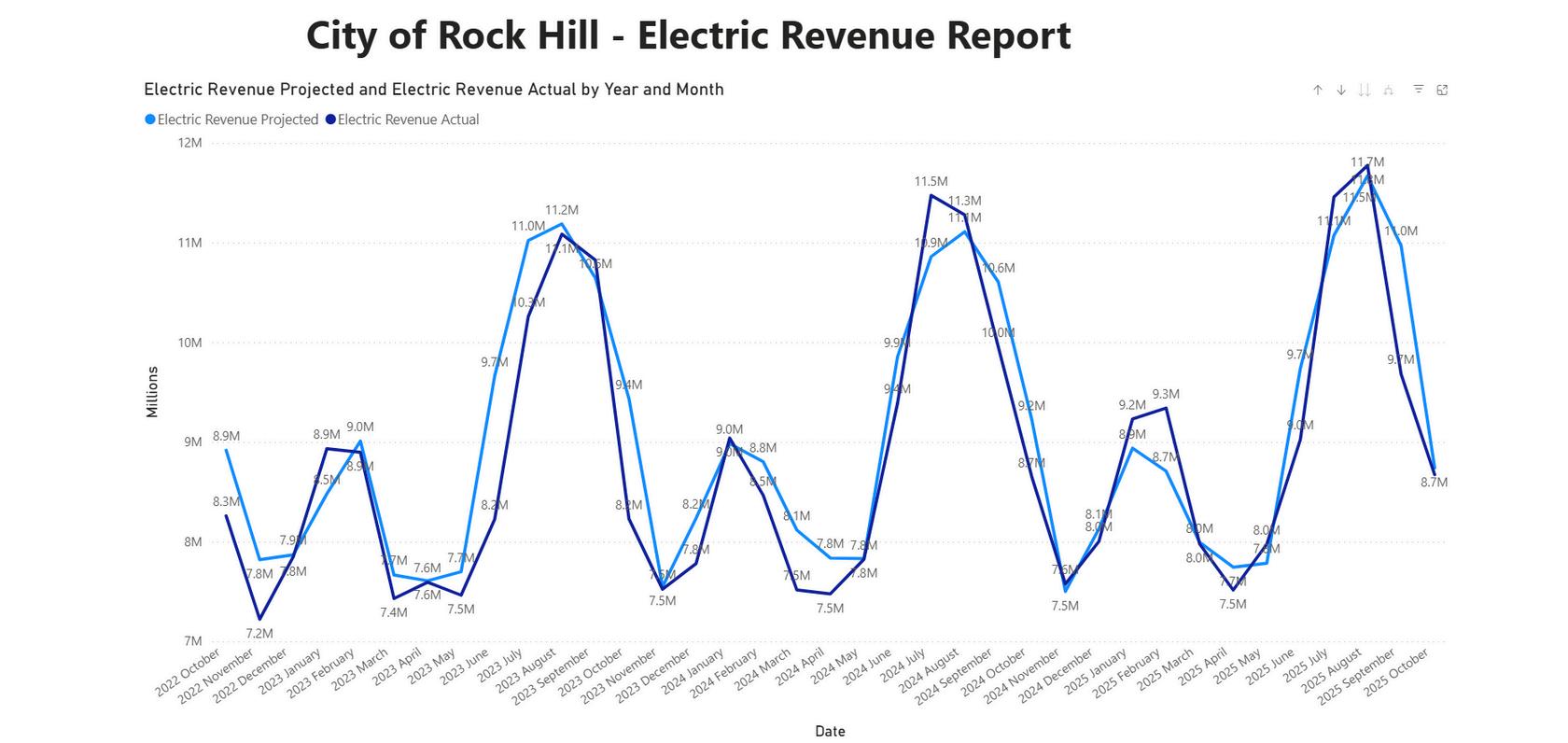
To promote accountability and transparency, the City provides financial information to our residents in several formats. Monthly financial reports disclose budget-to-actual revenues and expenditures, and financial dashboards illustrate revenue trends over the past three years. On an annual basis, the City produces the ACFR, the Budget Book, and the PAFR. These reports, along with additional transparency resources, are available at
www.cityofrockhill.com/transparency.
In addition to presenting the City’s financial position, this report includes economic, demographic, and performance information that provides important context for how tax dollars and other resources are used to serve our I hope you find this report both helpful and inform
Sincerely,
David B. Vehaun City Manager
City of Rock Hill Organizational Chart
City Reports
There are a number of City reports and documents that provide the public with valuable information about our plans, goals, and progress. Here are a few brief descriptions of some of these documents.
Strategic Plan and FY2025 Year End Report:
The Rock Hill Strategic Plan FY2025- FY2027 provides a roadmap that guides Rock Hill’s vision into reality. The plan is separated into 3 major focus areas; Serving the community, Engaging residents, and Growing Rock Hill. Rock Hill uses the strategic plan to align financial resources with initiatives, tying them to the broader vision. The goals and tasks included in this plan directly determine the City’s work plans. The City’s elected officials review progress on existing tasks regularly throughout the year. At the end of each fiscal year, the City reports out performance metrics on strategic goals and tasks to gauge progress. Each measure is given a “stoplight” color that provides the reader an easy to read indication of success. Additionally, the report provides more detailed information about the degree to which goals were achieved. This report holds the City accountable to its customers, City Council, and residents. The FY2025 year-end report is available on the City’s Government Transparency and Performance website.
Annual Comprehensive Financial Report:
This Popular Annual Financial Report (PAFR) is a high level summary of the Annual Comprehensive Financial Report (ACFR). The ACFR is a set of governmental financial statements comprising the financial condition of a state, municipal or other governmental entity that complies with the accounting statements maintained by the Governmental Accounting Standards Board (GASB). The ACFR financial statements are audited by an independent firm to confirm that the City fairly presented its financial
statements. There are four main sections of our ACFR; the introductory, financial, statistical, and federal awards sections. The financial information is based on generally accepted accounting principles (GAAP). Rock Hill received both the award for Outstanding Achievement in Popular Annual Financial Reporting and Certificate of Achievement for Excellence
for FY2024.
City Awards
Government Finance Officers Association: Distinguished Budget Award
This award honors local government budget documents of the highest quality that reflect GFOA’s best practices on budgeting. This is the 34 consecutive year the City has won this award. th
American Public Power Association: RP3 Award - Diamond Designation
For the seventh consecutive time, the City has been recognized as a Reliable Public Power Award recipient. This award recognizes Rock Hill as a leading power provider on a national level.
Insurance Service Office (ISO): Class 1 Fire Designation
The Fire Department maintained its Class 1 ISO rating. This is the most prestigious designation available across the nation.
Commission on Accreditation for Law Enforcement Agencies and South Carolina Law Enforcement Accreditation
The Police Department maintained its National and State accreditation. This was the 9 cycle for CALEA and the 4 cycle for SCLEA. th th
Arbor Foundation: Tree City USA Award
This award is an annual, national recognition for cities that raise awareness of the value of community trees. Rock Hill has received this award for the past 38 years.
Commission for Accreditation of Park and Recreation Agencies: National Accreditation
The City Parks, Recreation and Tourism Department has earned national accreditation through CAPRA, joining an elite group of park and recreation agencies nationwide.
South Carolina Law Enforcement Network: Gold Level Award
The Police Department’s Patrol Division was recognized for their efforts in traffic safety and DUI enforcement.
75,798 Population Estimated*
34 miles of trails
45 square miles
average police response time (minutes)
Bureau
3,957 new jobs in Rock Hill
7,717 fire inspections completed
compliance with REDI neighborhoods
Major Trends
The finances of the City are impacted by economic trends. Over the last 10 years, assessed values in Rock Hill have grown 65% and the City’s net position has grown 60%. However, full-time city employees have only increased 17%, and general bond debt per capita has decreased 45% (with only a 6% increase in population). This displays the City’s dedication to fiscal prudence and responsible management of taxpayer dollars.
Capital Projects
The Capital Improvement Plan (CIP) is the City’s multi-year plan for developing and maintaining major capital facilities and infrastructure. It includes vehicles, improvements, and projects costing more than $100,000 with a useful life of over one year, and outlines anticipated needs on a 5-year schedule. The plan is guided by the City’s Comprehensive Plan and Strategic Plan to ensure improvements are aligned with long-term community goals. While only the first year is budgeted, the remaining years provide a forecast to support informed decision-making. The CIP is reviewed and updated regularly as priorities and circumstances change.
FY2025 Capital Projects:
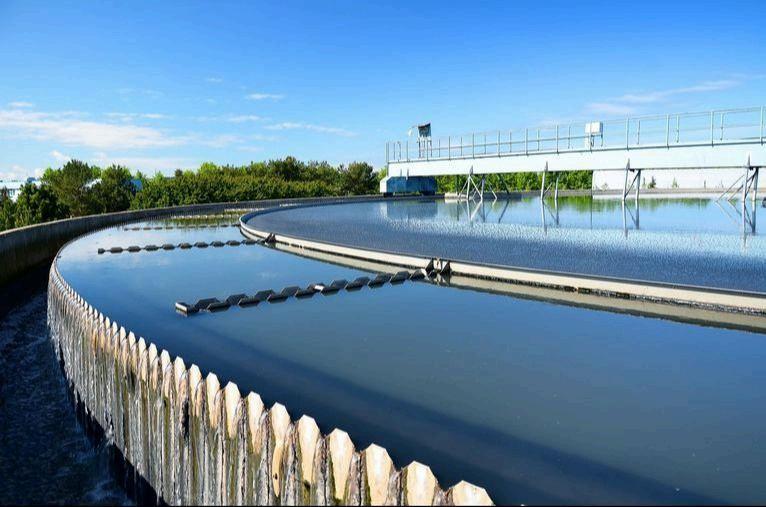
Wastewater Treatment Plant Expansion to 30 MGD
The City is expanding its wastewater treatment plant to a capacity of 30 million gallons per day. As the regional water and sewer provider, the growth of both Rock Hill and surrounding areas in York County has created the need for increased treatment capacity to support continued development and reliable service.
Bleachery Fieldhouse
Completed in early FY2026, the Bleachery Fieldhouse serves as an annex to the Rock Hill Sports and Event Center. With four additional basketball courts and 12 pickleball courts, the facility expands the City’s capacity to host athletic events and will continue to drive sports tourism and economic impact in Rock Hill.
McGirt Auditorium
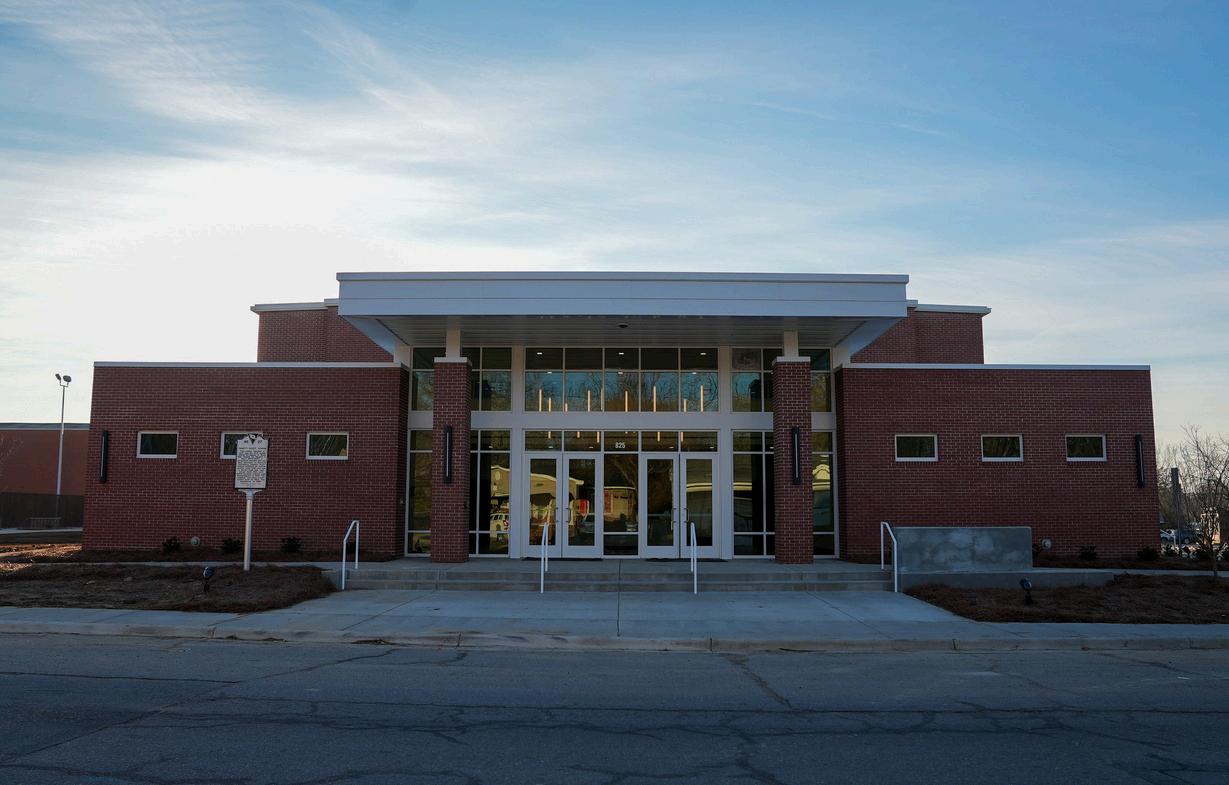
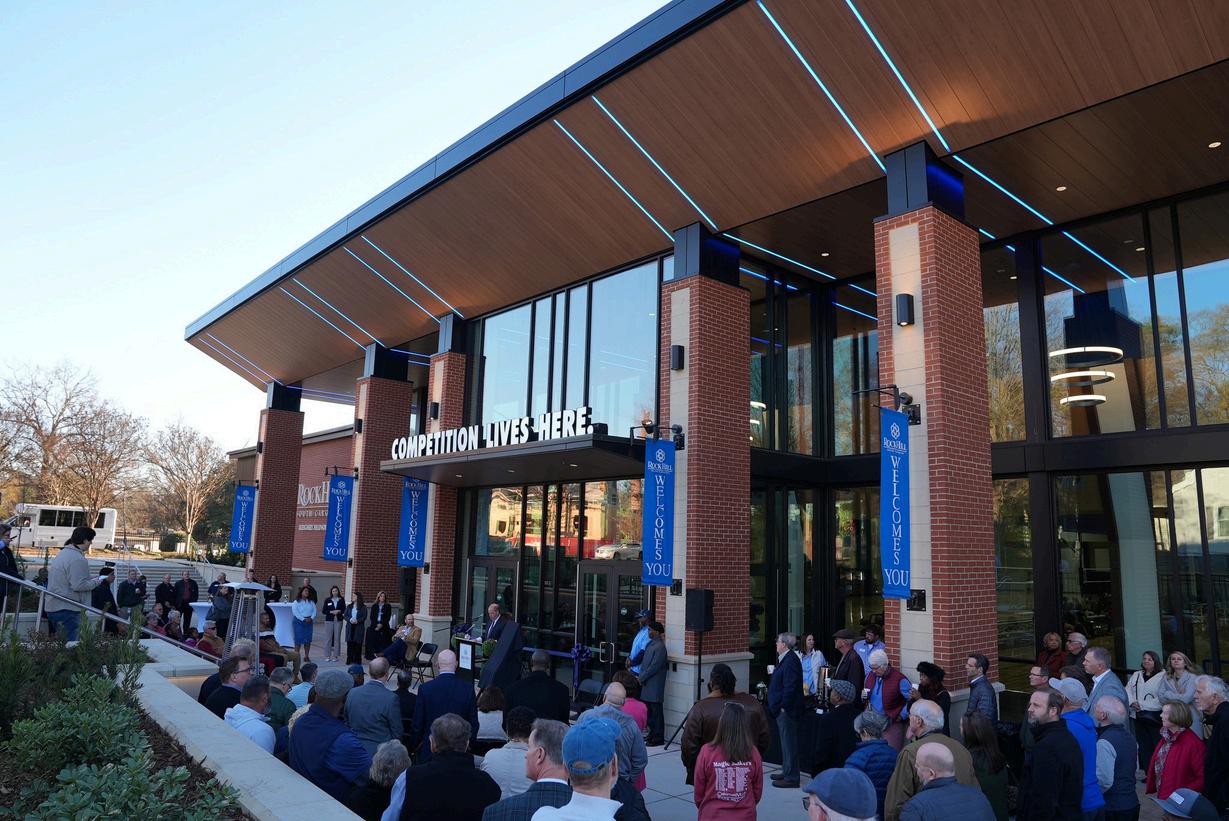
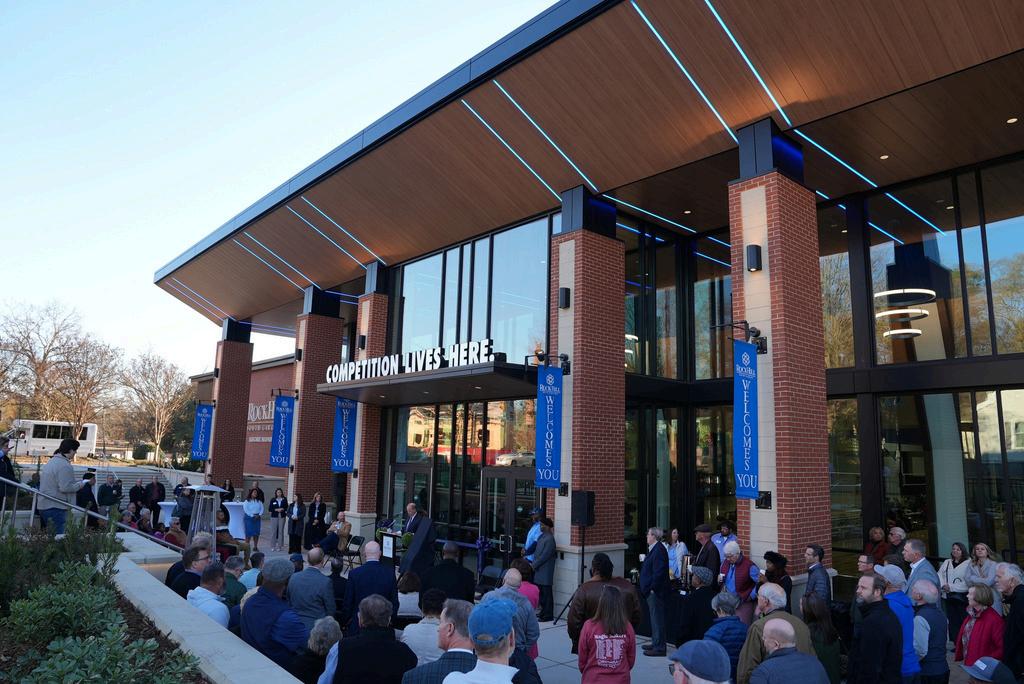
In January 2025, the City held the grand reopening of McGirt Auditorium. Formerly home to Emmett Scott High School, the auditorium has been a pillar of the community since 1920. The recent renovations provide a state-of-the-art venue for performing arts and community events.
City Revenue Sources:
Property Taxes
15%
69%
8%
Property taxes provide for the majority of General Fund expenditures, but make up only 15% of total City revenue. In FY2024, property taxes were 14% of total City revenue.
3%
Charges for Services
Charges for services primarily includes revenue from electric, water, sewer, and sanitation bills. This makes up 69% of City revenue, up 4% from FY2024.
Grants
Operating and capital grants - funding from state or federal agencies for specific programs or capital projects - made up 8% of total revenue in FY2025, a 2% increase from FY2024.
Accommodations and Hospitality Taxes
Accommodations and hospitality taxes are a 3% tax on hotel stays and a 2% tax on prepared food and beverage. These made up 3% of total revenues, remaining unchanged from FY2024. 4%
Investment Income
Increasing 1% from FY2024 to 4% in FY2025, investment income is the interest earnings on the City’s cash and reserve balances that helps to support overall financial stability.
FY2025 total revenue for the City amounted to $323,523,721, a slight decrease of 0.5% from FY2024 due to a one-time $27.5 million legal settlement received in the prior year. Excluding that settlement, revenues increased by 8.6% year over year. As Rock Hill and the surrounding area continue to grow, the City’s major revenue sources are trending upward.
City Expenses:
General Government
General Government expense, which include central support functions such as Human Resources and Finance, comprised 14% of total City expenses in FY2025, consistent with FY2024.
Public Safety
Public Safety includes Police and Fire services. These departments were 13% of total City expenses in FY2025, which remained unchanged from FY2024.
Public Works
Public Works, which includes the City’s sanitation services, accounted for 4% of City expenses in FY2025, unchanged from FY2024.
Parks, Recreation and Tourism
Parks, Recreation, and Tourism expenses enhance quality of life for residents and support Rock Hill’s growing sports tourism industry, comprising 8% of total FY2025 expenses, consistent with FY2024.
Electric, Water, Sewer and Stormwater
Utility expenses cover the cost of providing electric, water, sewer and stormwater services. These services accounted for 59% of total FY2025 expenses, an increase of 1% from FY2024. FY2025 Major Expenses
FY2025 total expenses amounted to $306,852,389, an increase of 5% from FY2024. One of the City’s largest expenses is purchased power from its wholesale power provider, Piedmont Municipal Power Agency, which Rock Hill jointly owns. Debt service is also a significant expense, supporting capital projects across the City. The $8.9 million shown for capital projects reflects only operating funds used and does not include projects funded by bonds. Personnel costs are another major expense, as the City employs more than 1,000 employees and continues to prioritize recruitment and retention.
City Debt
A significant component of Rock Hill’s long-term financial strategy is the responsible management of debt. The City exercises fiscal prudence when issuing and repaying debt, which is primarily used to fund large-scale capital projects. These projects and their funding sources are outlined in the annual Capital Improvement Plan, enabling the City to maintain a strong long-term financial outlook.
Total bonds payable as of June 30, 2025:
$633,167,084
There are 2 different types of long-term debt the City issues - debt repaid with general revenues of the City (the full faith and credit of the City) and debt repaid by specific revenue sources. State statute authorizes the City to issue up to but not to exceed 8% of the total assessed value of property. Debt issued from specific revenue sources does not have legal limits, but the City makes the investment based on the needs to the system, balanced with fiscal prudence, low interest rates, and debt ratios.
In Fiscal Year 2025 the City issued the following bonds: $12,000,000 in limited obligation bonds that will be repaid solely by hospitality tax revenues. These bonds funded the Bleachery Fieldhouse project. $9,051,170 in State Revolving Fund loans for the alum sludge project at the water treatment plant ($909,656), the Wildcat Creek force main project for wastewater ($3,142,762), and the wastewater treatment plant biosolids project ($4,998,752). These bonds will be repaid with water and wastewater revenues.
Capital Assets
Capital assets include any property, equipment, or infrastructure (bridges, roads, sidewalks, etc.) that exceed $5,000 and have an estimated useful life of at least one year. Over the course of time, capital assets are depreciated by a straight line method based on the type of asset. Capital assets increased 4.2% from Fiscal Year 2024 to Fiscal Year 2025. These capital assets include buildings, land, machinery, and equipment less any related debt outstanding.
Net investment in capital assets as of June 30, 2025 (net of accumulated depreciation and related debt):
$501,368,500
Major capital asset events during the year include:
Improvements to McGirt auditorium
Near completion of the Bleachery Fieldhouse
Investment in water, sewer, and stormwater infrastructure
The ongoing wastewater treatment plant expansion
Financial Transparency
The City of Rock Hill has a number of funds and funding sources that make up the official financial statements. The City also offers public facing resources including monthly financial reports, performance data and cost of public service comparisons to help residents understand the City’s finances. These resources, and more, are available at cityofrockhill.com/transparency.
Budget vs. Actual
Every year, the City adopts an annual operating budget based on priorities outlined in the Strategic Plan. The City operates with two primary types of funds: governmental and enterprise. The General Fund, the largest governmental fund, is financed primarily by proper taxes and business license revenues. The enterprise funds, Electric, Water, Sewer, and Stormwater, are mainly financed through charges for services. When comparing budgeted and actual expenses, it is important to note that differences often arise from varying accounting methods. Budgetary outcomes are calculated on a cash or modified accrual basis, rather than the full accrual basis required under Generally Accepted Accounting Principles (GAAP) for accounting records.
In comparing the FY2025 budget to actual results for the General Fund, both revenues and expenditures exceeded budgeted amounts. Revenues came in above projections, with property taxes performing particularly strongly. Expenditures also exceeded projections, largely due to increased health insurance costs. As the City is self-insured, any overages in health insurance expenses must be absorbed by the City. Additionally, salary and wage market adjustments were implemented throughout FY2025 to remain competitive in recruitment and retention. Overall the General Fund
balance decreased by $2.8 million in FY2025.
The enterprise net position increased by $15.1 million in FY2025, dri by strong revenues and cost containment achieved through the use bonds to fund capital projects. The City maintains a strong debt management plan that balances capital needs across the organiza while preserving favorable credit ratings and healthy debt ratios.
The FY2025 budget also included funding for several key initiatives, including a 3% merit increase for employees, implementation of a salary survey, initiation of an annual leave reimbursement program, and four new General Fund positions: an HVAC Technician, an Audio-Video Technician, a Customer Service Representative, and a Permit Application Center Administrative Assistant. These initiatives were approved by City Council to advance the City’s strategic goals of Serving, Engaging, and Growing Rock Hill.
Millage Rate History
The City is committed to maintaining reasonable property tax rates, ensuring a balance between community needs and responsible management of public funds. For the first time in over a decade, the City increased its millage rate to 96.5 mills. This was due to new legislation allowing apartment complexes to file as tax-exempt, costing the General Fund close to $1 million in revenue. Before this increase, property taxes had been reduced by 12% over the last 20 years. This reflects the City’s dedication to financial responsibility and its ability to manage the community’s growth effectively.
Net Position
Total Net Position as of June 30, 2025: $466,598,837
The statement of net position is the balance of the City’s assets, or resources, minus the City’s liabilities, or financial obligations. Net position is similar to an individual’s net worth. This statement combines all governmental and business-type activities. The City’s net position increased by 2.4% between FY2024 and FY2025. This increase is due to responsible financial management and planning, fiscal prudence, and investing in infrastructure responsibly. The City of Rock Hill has seen steady increases in its net position over the last few years adding new and maintaining existing facilities and infrastructure in a high quality manner. Strong financial management is the key to Serving, Engaging and Growing.