MESA PUBLIC LIBRARY MASTER PLAN
The Mesa Public Library Master Plan provides a strategic roadmap to guide the Library’s growth, reinvestment, and innovation over the next 20 years. As Mesa continues to expand and diversify, the Library must evolve to meet changing community needs, bridge service gaps, and provide equitable access to information, learning, and connection.
Grounded in extensive public engagement, facility assessments, and operational analysis, the Master Plan outlines a forward-thinking vision for the Library system. It positions Mesa Public Library to enhance its role as a dynamic civic resource, one that fosters lifelong learning, embraces technological change, and reflects the values and aspirations of the community it serves.
The findings presented in this Master Plan are the result of a comprehensive planning process that combined public input, facility assessments, demographic analysis, and operational review. Each section of the document provides deeper insights into specific areas, from community needs to building conditions and service models. Together, these findings form the foundation of a strategic path forward for Mesa Public Library. The summary below highlights the most significant themes that emerged across all areas of analysis and engagement.
Demand for Responsive and Expanded Library Services
With a population surpassing 500,000 and continuing growth projected, demand for responsive, inclusive library services is rising across all parts of the city.
75,986 documented engagement touchpoints ensured a deeply informed plan. Residents, staff, and stakeholders voiced strong support for early literacy, bilingual access, digital readiness, and inclusive programming.
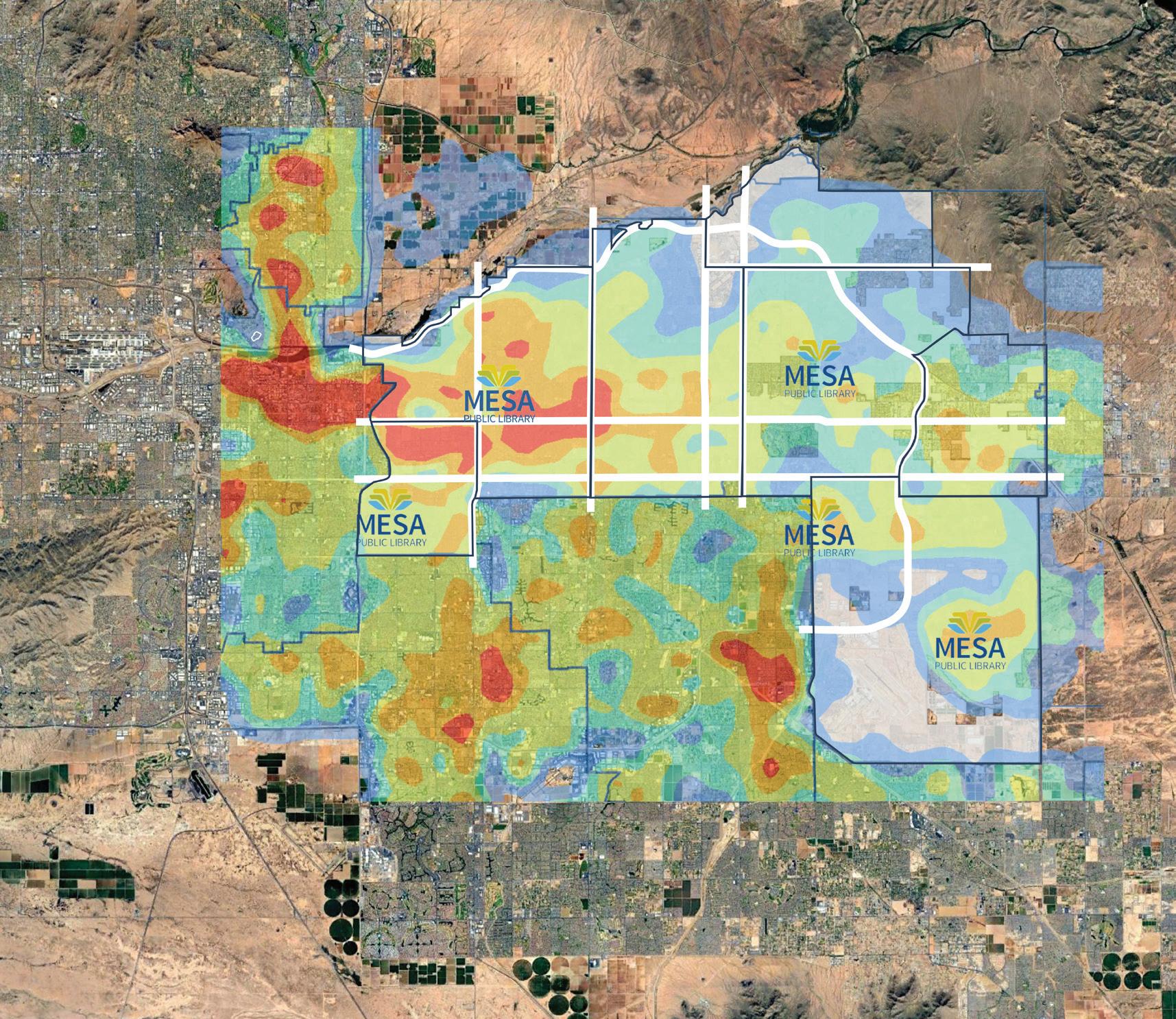
Geographic analysis revealed that some neighborhoods lack convenient access to physical library locations. Expanding services through Express Libraries, mobile outreach, or new branches is needed to close these gaps.
Facilitated multilingual and inclusive outreach to ensure participation from underrepresented and diverse community groups
Completed a comprehensive facility assessment of all library locations, including mechanical, electrical, and infrastructure reviews
Analyzed programming trends and usage data from 2021-2024 across all branches
Benchmarked Mesa Public Library against peer systems regionally and nationally to assess service levels and operational models
Identified geographic service gaps and opportunities for new or expanded facilities
Developed a strategic framework and capital improvement roadmap to guide both short-term actions and longterm investments
Most buildings have aging infrastructure and require investment in HVAC, electrical, plumbing, accessibility, and signage. Flexible, reconfigurable spaces are essential to meet future service demands.
Patrons see the library as a safe, welcoming hub for connection, technology access, creativity, and learning. Programming has shifted to include job readiness, STEAM, and multilingual events, which must continue to grow.
The system has already piloted new models like the Mesa Express Library. Continued investment in cost-effective, scalable solutions will help extend access and reach more residents.
Operational reviews show that while Mesa’s library team is effective and community-focused, expanding services and facilities will require enhanced staffing, training, and systems support.
The Main Library had an estimated 263,679 patrons in FY24, with over 551,854 books in circulation.
551,854
FY24 Hard Copy Circulation +1% from FY23
263,679
FY24 In-Library Patrons +9% from FY23
19,650
FY24 Program Attendance -1% from FY23
11,989
FY24 Library Cards Issued +10% from FY23
29,984
FY24 Hours of Public Internet Use +6% from FY23
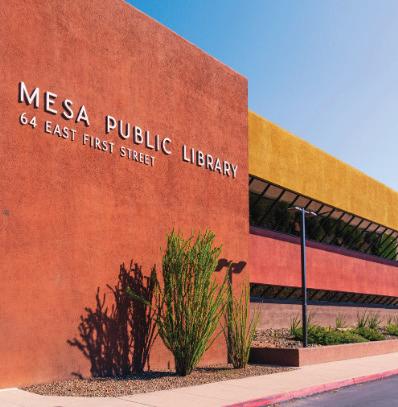
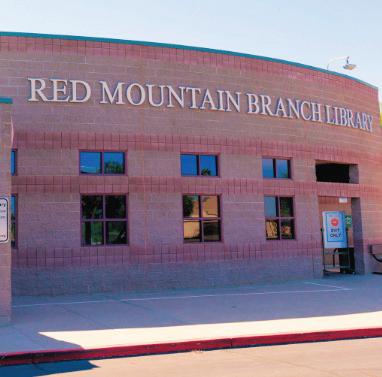
Red Mountain Library had an estimated 247,389 patrons in FY24, with over 764,530 books in circulation.
764,530 FY24 Hard Copy Circulation -2% from FY23
247,389
FY24 In-Library Patrons +6% from FY23
18,676
FY24 Program Attendance +21% from FY23
9,133
FY24 Library Cards Issued -11% from FY23
17,917
FY24 Hours of Public Internet Use -1% from FY23
Dobson Ranch Library had an estimated 128,086 patrons in FY24, with over 262,387 books in circulation.
262,387
FY24 Hard Copy Circulation +8% from FY23
128,086
+23% from FY23
FY24 In-Library Patrons
8,237
+2% from FY23
FY24 Program Attendance
4,579
FY24 Library Cards Issued -2% from FY23
10,091
+30% from FY23
FY24 Hours of Public Internet Use
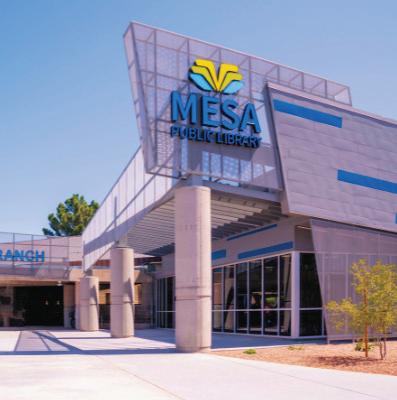
The Mesa Express Library had an estimated 10,083 patrons in FY24, with over 16,443 books in circulation.
16,443 FY24 Hard Copy Circulation
10,083
FY24 In-Library Patrons
338 FY24 Program Attendance
732
FY24 Library Cards Issued
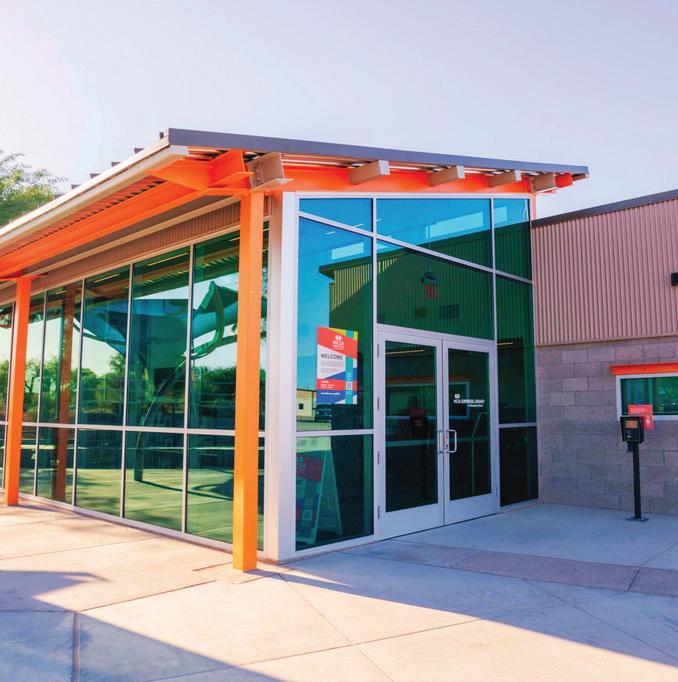
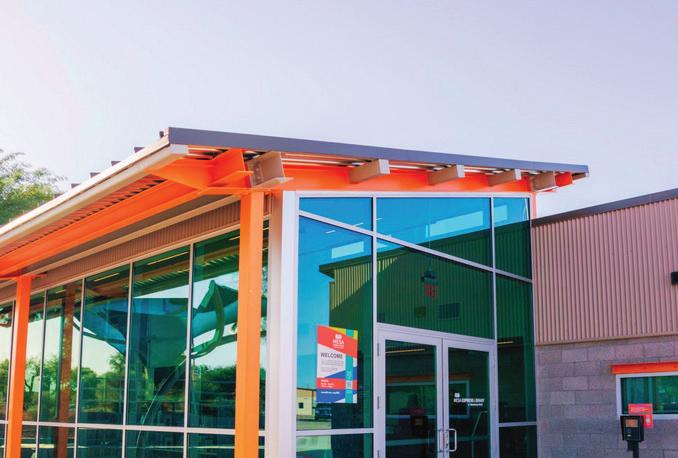
The Mesa Express Library at Christopher J. Brady Park is a one-of-a kind self-service library outfitted with Expanded Access technology to enable patrons to access the facility using their library barcode and PIN.
MEL opened its doors in October of 2023. The first full year of visitation data is for FY24.
Overall, Red Mountain Branch has the highest population of adults over the age of 50. The Main Library has the youngest median age and the highest prevalence of children in the household.
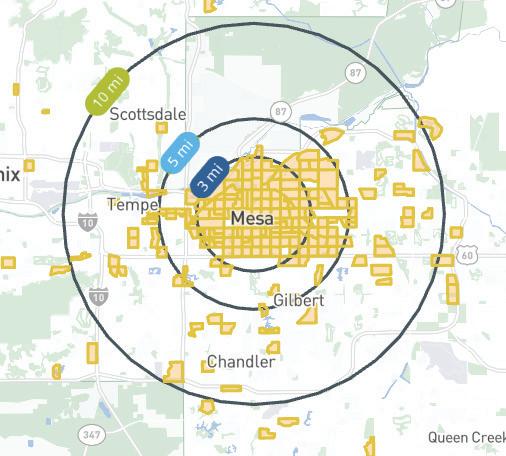
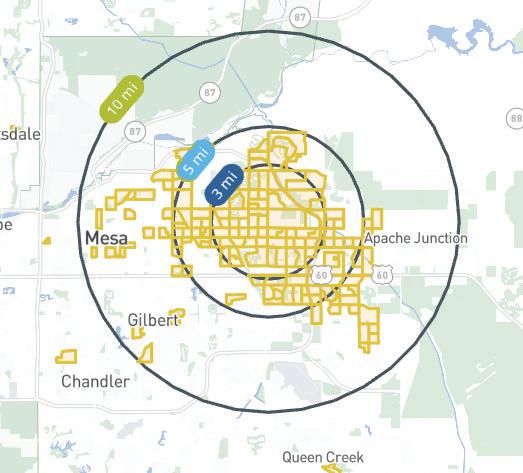
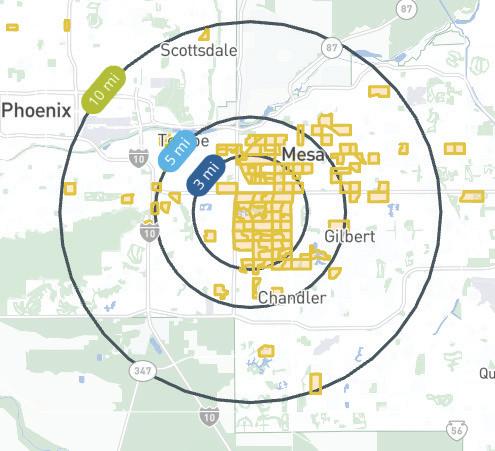
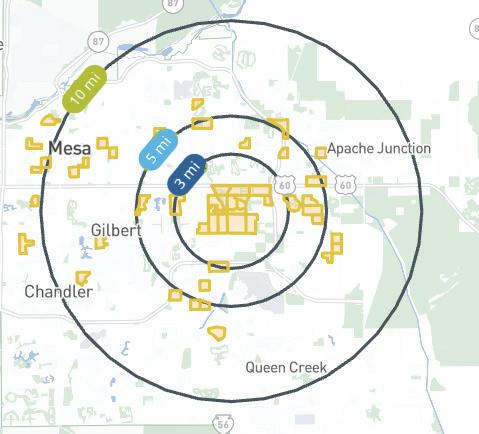
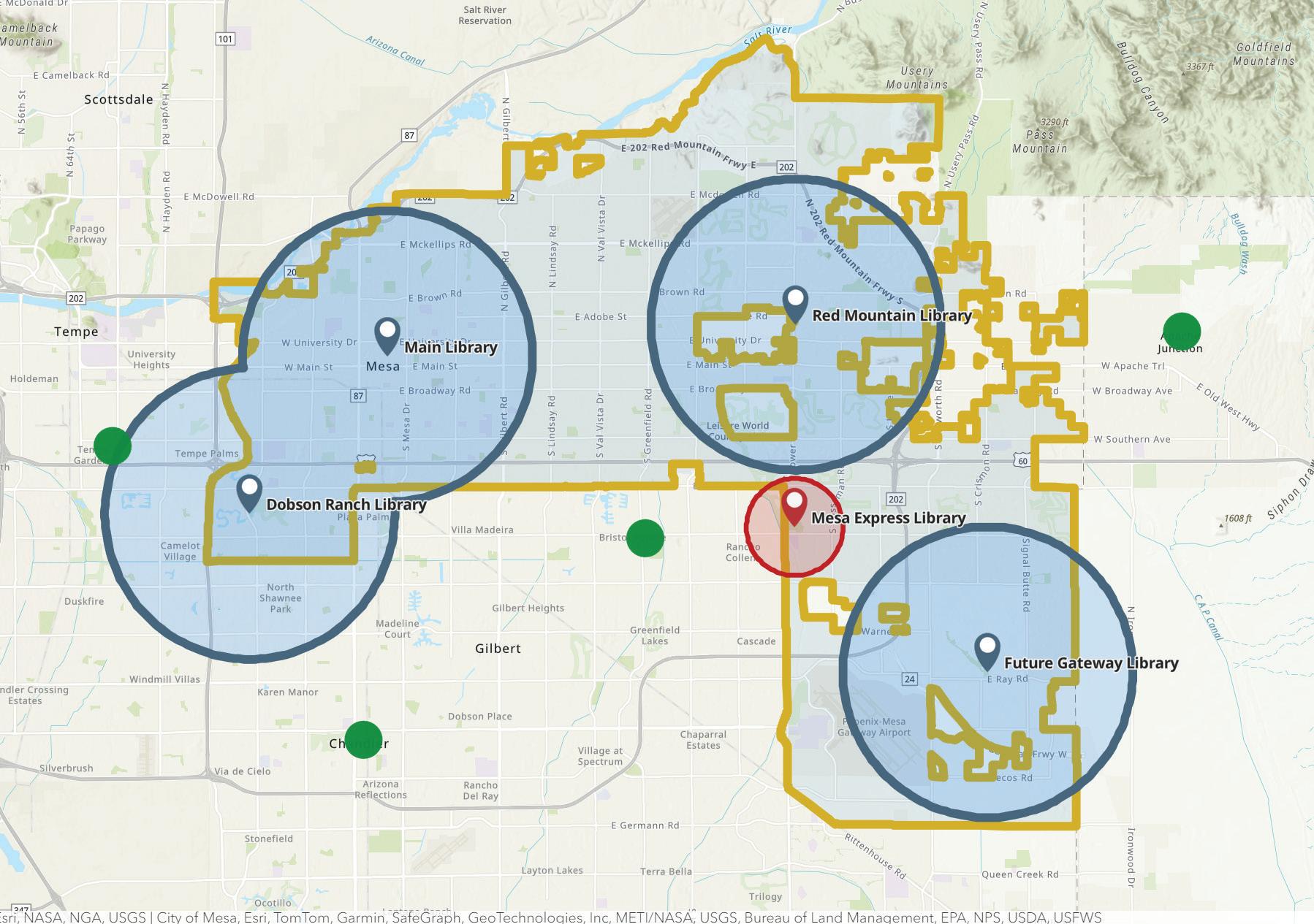
The City of Mesa had an estimated population of 521,604 residents do not live within a 3-mile radius, or roughly 10 minutes, of a library.
= Service gaps are mapped below. Central/Northern Mesa appear to be most underserved.

This assessment analyzes Mesa Public Library’s programming data across its various locations. By examining the types and volume of programs offered at each site, the analysis highlights the programming landscape, identifying areas of strength, opportunities for growth, and potential gaps in service.
The data, spanning 2021 to 2024, is categorized by program type, target age group, and location. This detailed breakdown evaluates how programming aligns with the diverse needs of the community, tracks trends in participation and engagement, and explores opportunities for growth and innovation in service delivery.
Mesa Public Library provides a wide variety of programs designed to meet the needs and interests of its diverse community. These programs span multiple formats, from educational workshops and literacy initiatives to cultural events, technology training, and recreational activities. The library’s offerings are tailored to serve all age groups, including early childhood, children, teens, adults, and families, ensuring broad engagement across its patron base.
In addition to on-site programs at locations like Dobson Ranch, Main Library, and Red Mountain, the library has also used virtual programming and outreach services to extend its reach beyond traditional settings. This diversity in programming reflects the library’s commitment to fostering lifelong learning, community connection, and equitable access to resources.
Program demand continues to rise across the board, but staffing has limited the Library’s ability to fully meet that demand. While 2024 numbers remain strong, the overall total reflects the need for more backup support, flexible staffing solutions, and advance planning.

Table 1 shows the number of programs offered at each location for 2021 through 2024. Figure 1 shows a graphic comparison of number of programs offered by each location.
Over the past four years, Mesa Public Library has experienced significant growth in program offerings, more than quadrupling from 354 programs in 2021 to a peak of 1,827 in 2023 before slightly leveling off to 1,767 in 2024. This growth reflects increased investment in community engagement and a return to in-person programming following the pandemic-era emphasis on virtual services in 2021. While virtual programs were phased out starting in 2022, in-person offerings surged at all locations, especially at the Main Library, Red Mountain Library, and Dobson Ranch.
In 2024, Mesa Public Library hosted a total of 1,767 programs across its locations. The Main Library led the system with 719 programs, underscoring its role as a central hub for library services. Red Mountain Library followed with 486 programs, and Dobson Ranch Library offered 439 programs throughout the year. The Express Library expanded its offerings significantly, delivering 68 programs, while Outreach Services provided 55 programs to reach community members beyond the library’s physical locations. Online/ virtual programming, which had been a key feature in 2021, remained on pause in 2024 as the library emphasized in-person engagement.
Points of Contact breaks down and summarizes 75,986 documented points of contact recorded throughout the public engagement campaign. A “point of contact” refers to every instance in which a unique individual provided documentable evidence of receiving and/or responding to a specific engagement tool (i.e., a recorded comment, an opened email, a piece of direct mail delivered to a residence). In BerryDunn’s experience, points of contact are a more accurate representation of engagement efforts than comment tallies; while some residents may be unwilling to participate in a discussion, data can demonstrate an invitation to the conversation..
BerryDunn gathered input and feedback from a variety of audiences (e.g. library users, non-users, teens, Spanishspeaking residents) using an assortment of measurement tools (online surveys, focus group meetings, stakeholder interviews). To assist with analyzing the thousands of individual comments and suggestions, BerryDunn created Figure 1: Key Issues Matrix, which summarizes how often themes where mentioned and by whom. Then, Figure 2: Library Priorities breaks key findings into three area of priority: High, Medium, and Low.
The raw data collected during the master planning process is provided in the Appendix.
The Mesa Public Library Master Plan is built around key strategic focus areas designed to guide future investments, improvements, and service expansions. These strategies are informed by community engagement findings, demographic analysis, peer comparisons, and industry best practices, ensuring that the library remains a vital and responsive resource for all residents.
The strategies outlined in this plan provide a broad framework for organizing specific recommendations that will shape the future of Mesa Public Library. Each strategy addresses a critical area of need, including expanding access, modernizing programs and services, and enhancing library spaces to support community connection. By implementing these strategies, Mesa Public Library can ensure it adapts to changing community needs, fosters lifelong learning, and strengthens its role as a hub for knowledge, creativity, and engagement.
The recommendations within each strategy are organized to provide clarity and ease of implementation. Each strategy first outlines system-wide initiatives applicable across all library locations, followed by specific recommendations tailored to the unique needs and opportunities identified for the various library locations and outreach services. This structured approach ensures that each location receives focused, relevant guidance aligned with broader strategic goals.
Mesa’s diverse and growing population requires a library system that is accessible, inclusive, and responsive to community needs. Expanding self-service library options, extending library hours, and enhancing outreach efforts will be essential. Strengthening bilingual resources, technology access with interpretation tools, and mobile library services will help bridge gaps in service and ensure all residents can fully utilize the library
1.1.1
Develop a robust backup staffing plan to maintain programming during staffing shortages, partnering with temporary staffing agencies and educational institutions.
1.1.2
Expand self-service options including automated kiosks and lockers at strategic locations. Extend library operating hours based on community feedback to improve accessibility.
1.1.3 Bilingual and Multicultural Engagement:
Enhance bilingual resources, technology access, interpretation tools, and multilingual signage to serve the diverse Mesa community effectively.
1.1.4 Geographic Expansion:
Address geographic service gaps by evaluating opportunities for new branches, pop-up libraries, and additional bookmobile routes based on demographic trends and community feedback.
1.1.5 Transportation Solutions:
Develop targeted transportation solutions, such as partnerships with local transit services or shuttle programs, to improve access to library facilities for underserved neighborhoods.
1.2.1 Automated Services:
Introduce lockers and automated kiosk options for greater user convenience and accessibility.
1.2.2 Bilingual Efforts:
Expand bilingual signage, programming, and resource collections tailored specifically to Hispanic and immigrant communities
1.2.3 Facility Improvements:
Explore facility adjustments to provide more comfortable and welcoming spaces for family use, older adults, and community groups.
1.3.1 Local Outreach:
Strengthen outreach and collaboration with local community organizations, schools, and neighborhood associations to increase awareness and library use.
1.3.2 Expanded Service Hours:
Evaluate and potentially expand service hours, especially during weekends and evenings, based on community demand.
1.4.1 Expanded Service Hours:
Evaluate and potentially expand service hours, especially during weekends and evenings, based on community demand.
1.4.2 Bilingual programming:
Expand bilingual storytime sessions, cultural events, and educational workshops to reflect local demographic needs.
1.4.3 Increased visibility:
Increase visibility and engagement through strategic community partnerships and neighborhood events.
1.5.1 Targeted Expansion:
Significantly expand programming and outreach activities, targeting underserved geographic areas identified in community engagement sessions.
1.5.2 Early Literacy:
Introduce consistent early literacy and bilingual programming to underserved areas.
1.5.3 Strategic Partnerships:
Strengthen partnerships with community centers, schools, recreation facilities, and local businesses to broaden the reach and effectiveness of outreach services.
1.5.4 Community Presence:
Establish a regular schedule for pop-up libraries at popular community hubs, parks, and neighborhood events to increase library visibility and access.
1.5.5 Digital Equity Initiatives:
Develop and implement mobile technology labs or “tech-on-the-go” initiatives to address digital equity gaps within the community.
As Mesa’s demographics and community interests continue to evolve, the library must adapt its programs and services to remain relevant, engaging, and impactful. There is increasing demand for early literacy initiatives, STEAM education, career development, and digital resources, reflecting the community’s shifting priorities. Expanding youth engagement opportunities, lifelong learning programs, and adult education initiatives will be essential to meeting these needs. Additionally, library users are seeking more interactive and non-traditional experiences, such as maker spaces, hands-on learning opportunities, and café-style community areas that foster creativity, collaboration, and connection.
2.1.1 STEAM and Workforce Development:
Expand STEAM programs, career readiness programs, and entrepreneurial programs to align with community workforce demands.
2.1.2 Comprehensive Learning Opportunities:
Enhance bilingual, early literacy, and intergenerational learning opportunities to support lifelong learning.
2.1.3 Innovative Touchpoints:
Introduce interactive kiosks, short-story machines, maker spaces, and creative learning labs to engage patrons of all ages.
2.1.4 Hybrid Programming:
Offer flexible learning and program options to accommodate diverse user schedules and reach broader audiences.
2.2.1 Outdoor Programming:
Add more outdoor programming that can take advantage of outdoor amenities and surroundings.
2.2.2 Workforce and Certification Programs:
Introduce and expand job-focused certificate programs, including technology skills and fiber optic training, partnering with community partners such as the Mix Center and ASU Downtown Campus, EVIT, etc.
2.2.3 Senior-Focused Programming:
Develop programming tailored to older adults, such as lifelong learning workshops, technology training, and wellness sessions.
2.2.4 Multicultural Inclusivity:
Enhance offerings to reflect demographic shifts, emphasizing bilingual programs, cultural festivals, and ESL classes.
2.3.1 Educational Recovery and Expansion:
Prioritize restoring educational programs impacted by staffing shortages, emphasizing instructional sessions and interactive learning opportunities.
2.3.2 Youth and Family Programs:
Strengthen youth-oriented and family-focused offerings, including expanded STEAM activities and creative arts workshops.
2.3.3 Community-Driven Activities:
Introduce more programs responsive to local interests, such as outdoor fitness activities, community gardening, and nature education programs.
2.3.4 Teen Leadership Initiatives:
Create specialized programming for teens, including leadership workshops, digital literacy classes, and creative arts opportunities
2.4.1 Hands-On Learning Expansion:
Increase interactive, hands-on STEAM and maker-space activities specifically for children and teens.
2.4.2 Career Readiness and Adult Education:
Develop targeted career support workshops, resume-building sessions, and job-search resources for young professionals and working adults.
2.4.3 Community Engagement Events:
Introduce regular community-driven events, such as book clubs, craft workshops, and interactive social gatherings, to foster local participation.
2.4.4 Outdoor Programming:
Add more outdoor programming that can take advantage of outdoor amenities and surroundings.
2.5.1 Customized Community Programs:
Develop and deliver targeted outreach programs tailored to the specific needs identified within underserved neighborhoods, focusing on education, literacy, and digital skills.
2.5.2 Flexible Learning Options:
Offer flexible learning and program options that accommodate various schedules and maximize community participation.
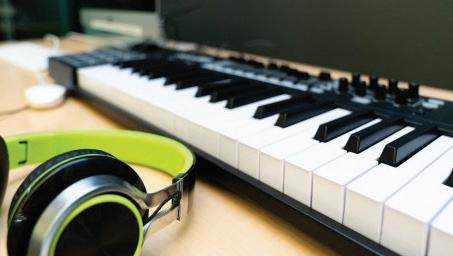
The Mesa Public Library system requires ongoing investments in facility maintenance, infrastructure improvements, and operational efficiency to ensure long-term sustainability. Many of its buildings have aging mechanical, electrical, and plumbing systems, requiring proactive maintenance and modernization efforts to maintain service quality.
Additionally, as community needs evolve, spaces must be reconfigured to improve flexibility, energy efficiency, and user experience. Strategic investments in HVAC, lighting, accessibility, signage, and sustainability will help extend the lifespan of library assets while creating a more welcoming and functional environment for patrons.
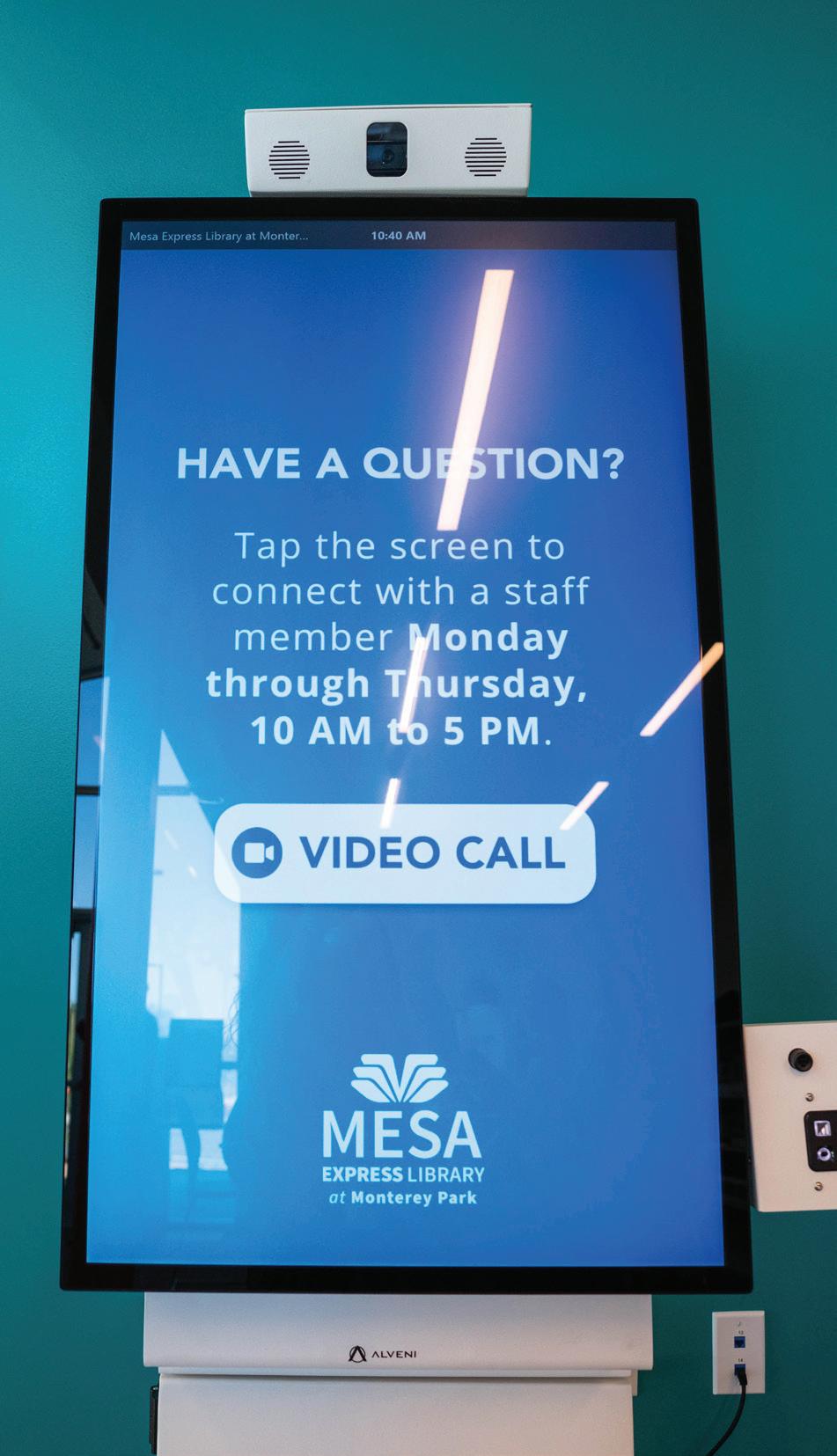
Specific recommendations related to facility maintenance, infrastructure upgrades, and capital improvements are addressed in greater detail in the Facility Analysis and Capital Improvement Plan section of this Master Plan.
3.1.1 Facility Maintenance Implementation:
Fully implement the prioritized maintenance, upgrade, and opportunity projects as outlined in the Facility Analysis and Capital Improvement Plan for each Library to ensure all facilities meet current standards and community expectations.
3.1.2 Sustainability and Efficiency:
Develop and implement a comprehensive sustainability initiative, including solar energy solutions, smart building technologies, and energy-efficient lighting upgrades.
3.1.3 Operational Efficiency:
Improve operational efficiency through regular staff training on new systems, preventative maintenance scheduling, and integrated facility management software solutions.
3.1.4 Community-Responsive
Regularly review and adjust library space layouts to accommodate evolving patron usage patterns, prioritizing flexibility and multi-use spaces that support diverse programming.
3.1.5
Continuously evaluate and improve safety and security infrastructure, including upgraded surveillance systems, improved lighting, and clearly marked emergency exits to ensure a secure environment for staff and patrons.
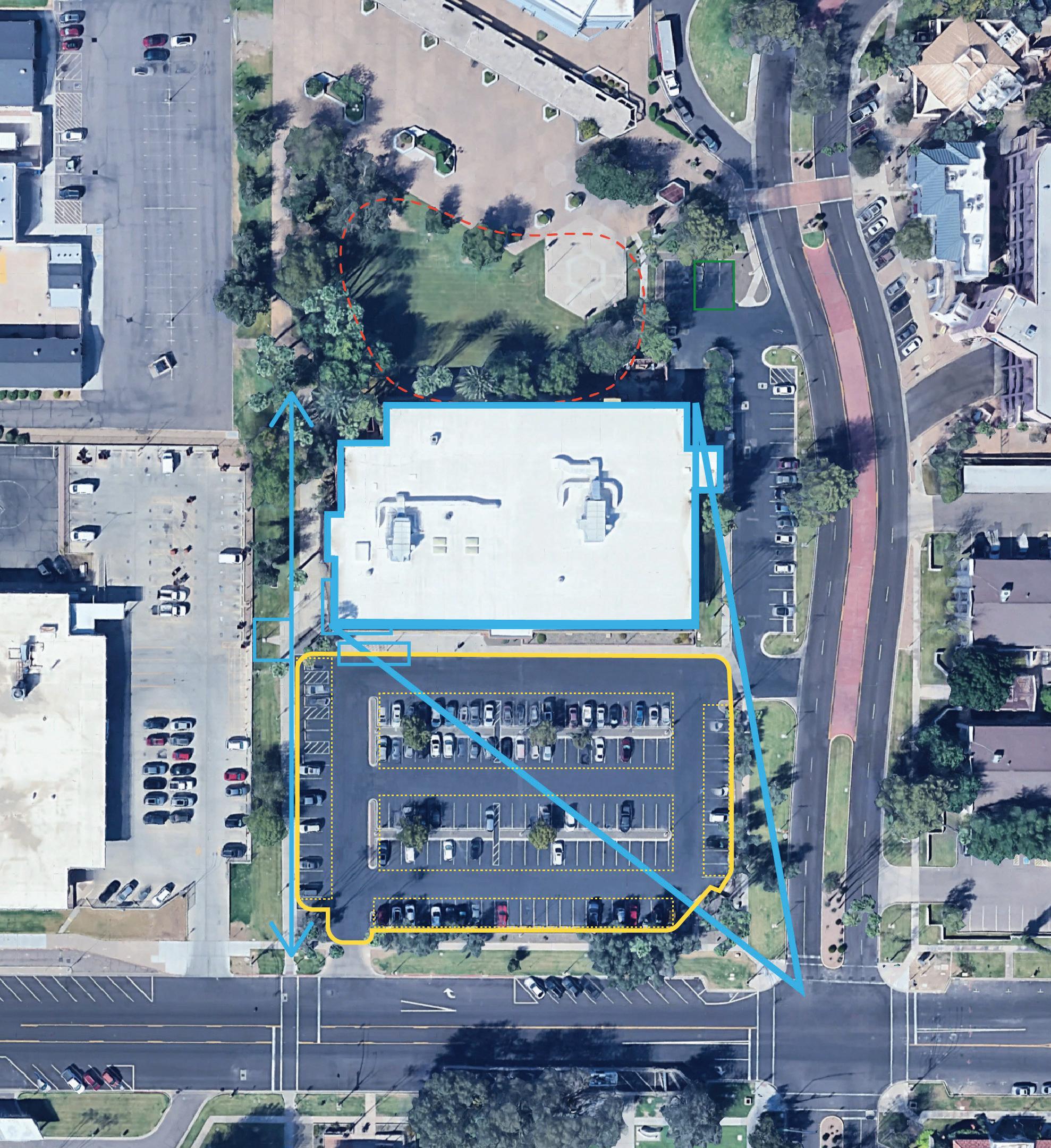
EXTERIOR IMPROVEMENTS PACKAGE 1
A. Repaint exterior.
B. Upgrade / replace building signage.
C. Relocate flagpole to street and bike racks to the west.
D. Add planter box at southwest corner of building.
EXTERIOR IMPROVEMENTS PACKAGE 2
A. Replace damaged window seals.
B. Upgrade landscape at site perimeter and against building.
C. Consider adding north facing windows to increase views and natural light.
D. Add external holds lockers.
A. Add solar canopies over parking spaces. (*CoM CIP project currently underway)
B. Add LED lighting to solar canopy.
(*CIP project currently in development)
A. Define vision to better utilize exterior landscape area on north of library for exterior program space and renovate north facade to provide visual connection and patron access to outdoor space.
(may not need to list on CIP recommendations)
A. Provide bookmobile parking “hanger” including locked gated parking space with overhead canopy and power for charging.
(Dedicated staff would be required before initiating parts of this project)
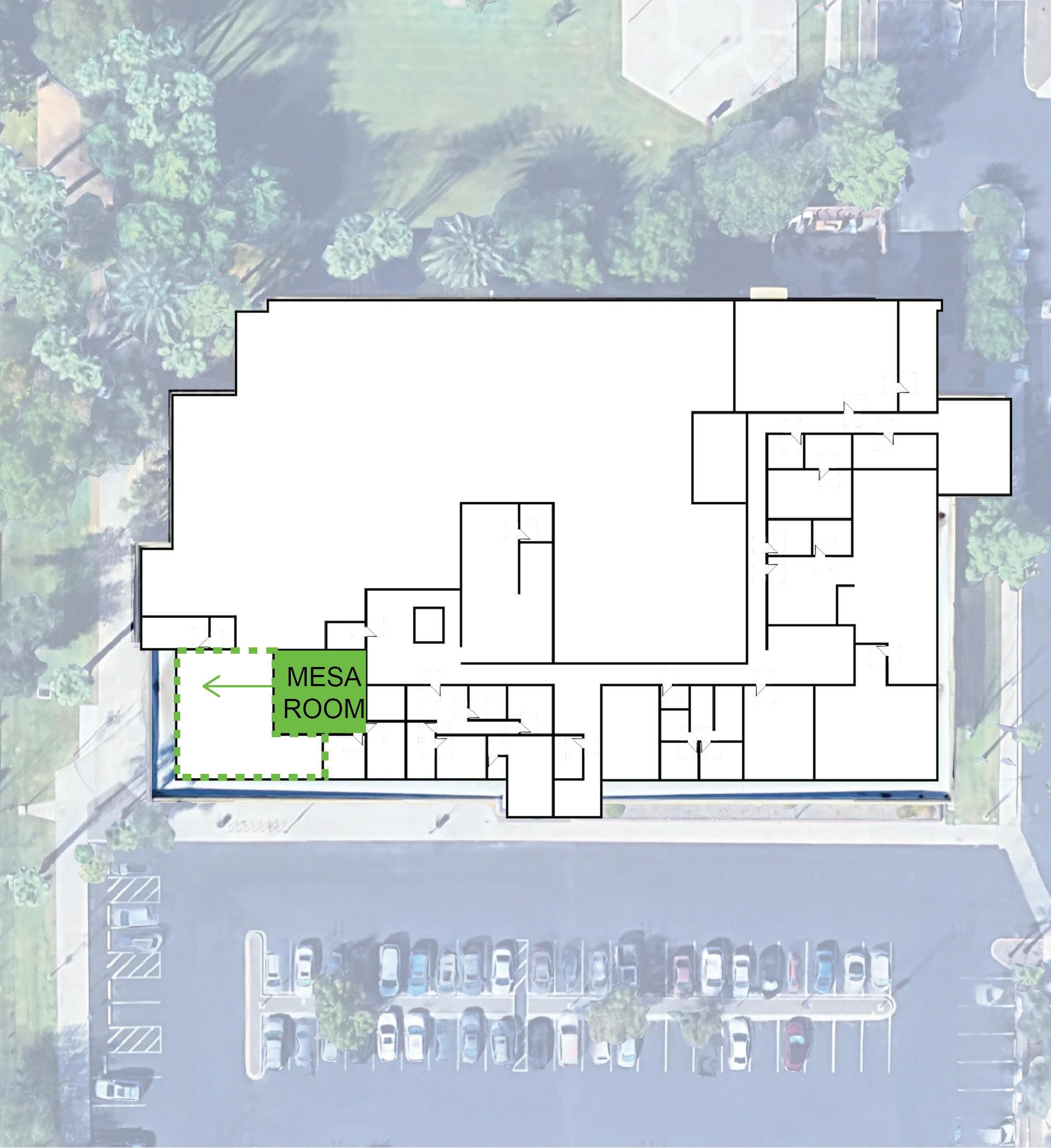
A. Add signage and display in lobby.
1. Add display in the lobby highlighting the Mesa Room (see item MA.O.3).
a) It can be a digital display with rotating content or gallery type display with rotating curated items/collections.
2. Add signage to the lobby highlighting the Mesa Room (see item MA.O.3)
B. Reimagine and renovate the Mesa Room.
1. Engage with a design professional to update the layout, provide new finishes and furniture, and confirm mechanical requirements for archival storage of special collections.
a) Relocate the desk to always provide staff with a second exit.
b) Opportunity to expand the room to the west to integrate more of the collection for public use.
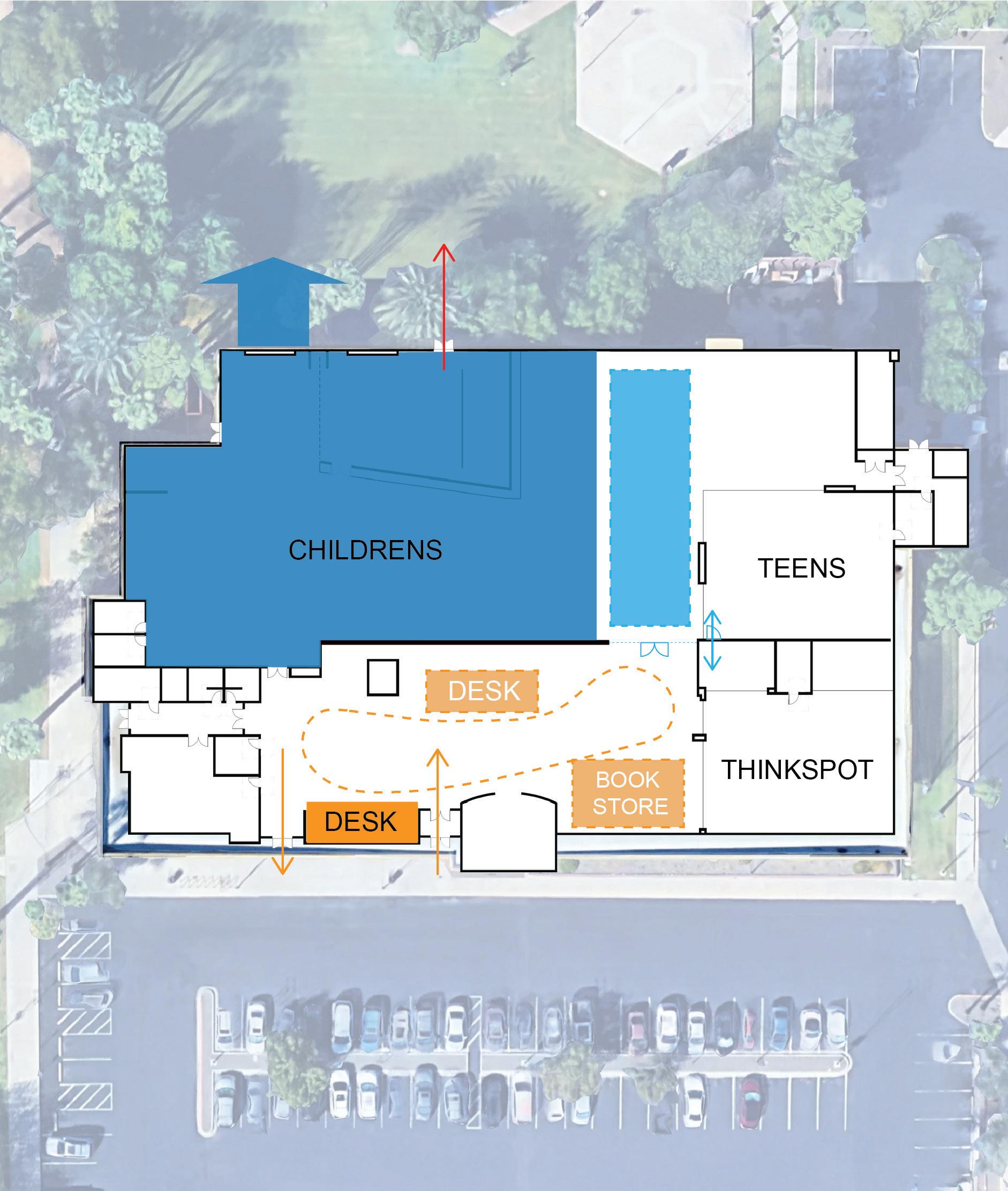
A. Explore alternate first floor layouts for better space utilization.
1. Engage a design professional to program, design, and document the renovation.
2. Consider relocating the front desk to face patrons as they enter the library.
a) Switch entry and exit locations at main entry so patrons see new desk location upon entry.
3. Consider relocating or adding program elements to the space.
a) Seed Library
b) Stuff-brary
c) Gallery – rotating display. Digital or physical. Opportunity to showcase Mesa Room
d) Café – self serve or vendor cart/stand.
(could be included in MA.O.3)
A. Explore concepts to better identify and define the program area between Teen’s and Children’s areas.
1. Consider enclosing the Children’s Area to provide security for families.
2. Consider area signage for ‘Tween’.
3. Consider varying seating types and orient furniture along circulation.
4. Consider providing internal connection between Thinkspot and Teens area.
(*could be included in MA.O.3 or combined with DR.U.5)
A. Contract with a consultant to study solutions to remediate acoustics issues in existing study rooms.
A. Consider engaging a design professional to review and document existing power locations in public areas and recommend increasing access to power where need is identified.
A. Provide better visual connection between library and Saguaro Room.
1. Consider replacing entry doors with doors with large glass panels.
2. Consider adding glazing west of entry doors.
B. Repaint the interior.
C. Provide improved signage to better identify the room within the library.
D. Provide upgraded technology.
E. Consider adding north facing window to increase views and natural light.
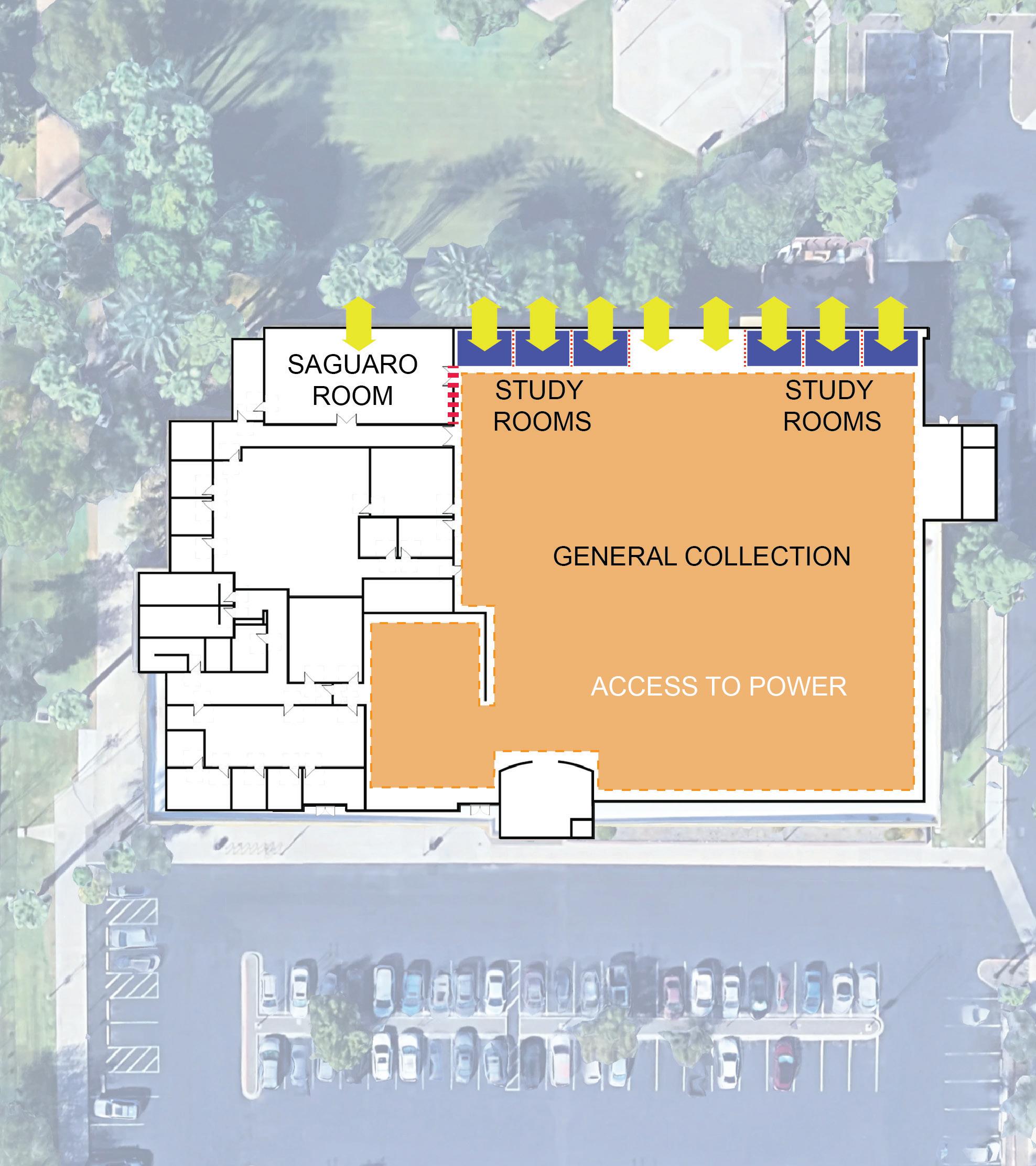
A. Consider engaging a design professional to complete a full furniture inventory and review for updating. Updating furniture can provide efficiency in space use and integration of power. New furniture can also improve patron experience by providing different seating types and more accessible options.
A. Consider engaging a design professional to complete collection and stack analysis. More efficient use of book stacks can potentially provide opportunities to reduce stack heights and/or increase program space.
A. Consider engaging a design professional to review and document existing power locations in public areas and recommend increasing access to power where need is identified.
(create system wide study / standarization)
A. Contract a consultant to complete a signage review of the existing conditions.
1. Focus on accessibility and Spanish.
2. Goal to improve wayfinding for patrons.
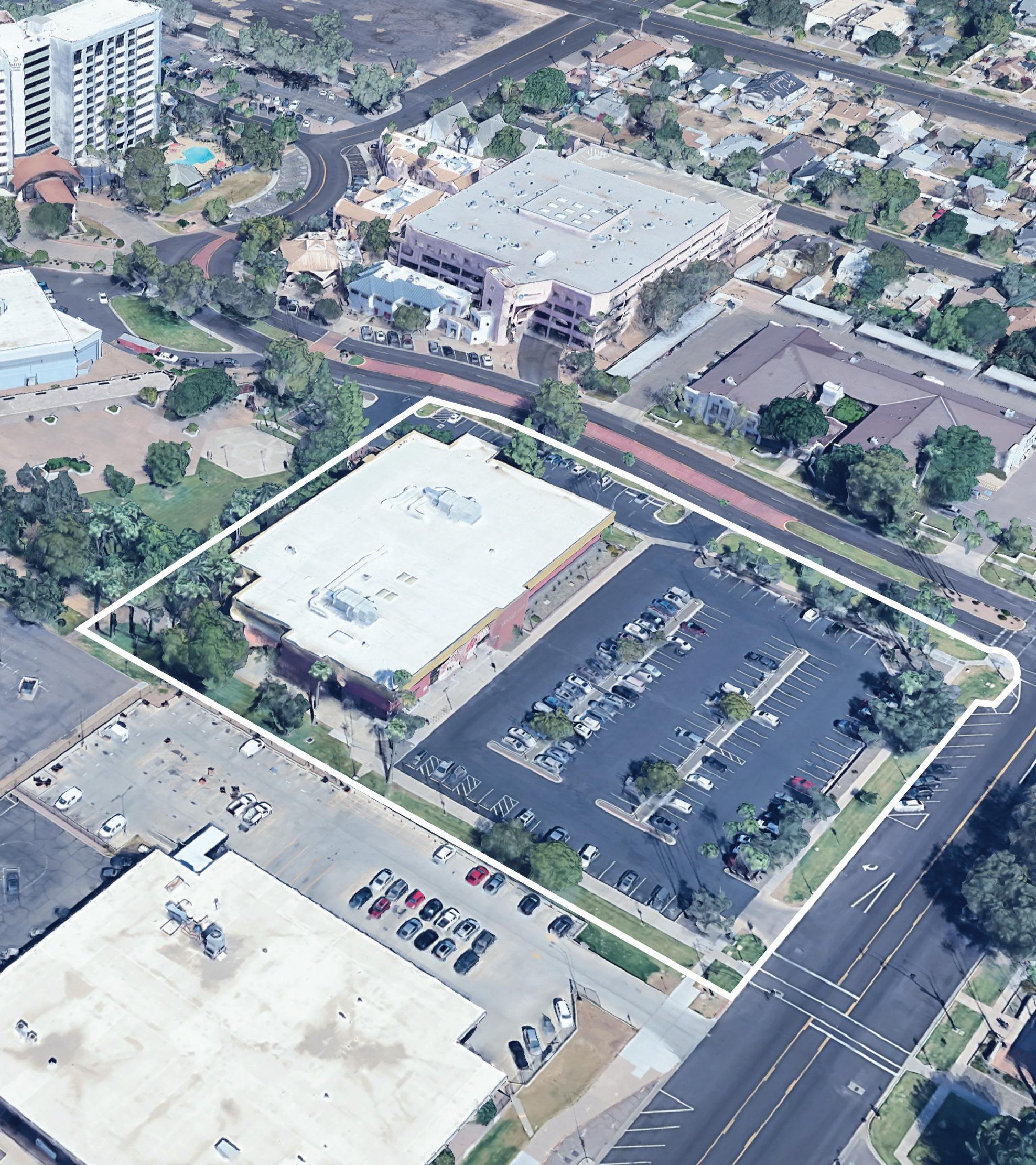
The Mesa Main Library is in good overall condition, with well-maintained public areas that provide a welcoming environment for users. It is essential to allocate sufficient resources to upgrade mechanical areas, underutilized spaces like the basement, and the building envelope to ensure long-term functionality and aesthetic appeal.
A comprehensive update of the building envelope, including exterior finishes, will enhance the library's appearance and improve energy efficiency. Also, introducing more landscaping elements will create shade and comfortable outdoor spaces, further improving user experience.
Regular maintenance plans for walls, floors, and other high-wear areas will ensure their continued durability. As detailed in the appendix, implementing these recommendations is essential for preserving the library's integrity.
With the advancement of technology and the constant modernization around lighting and equipment, it is necessary to consider that the building will require continuous updates to lighting, equipment, and other electronic systems to meet future demands.
By prioritizing these recommendations and scheduling regular professional inspections, the Mesa Main Library can maintain its functionality, and aesthetic appeal for decades to come.
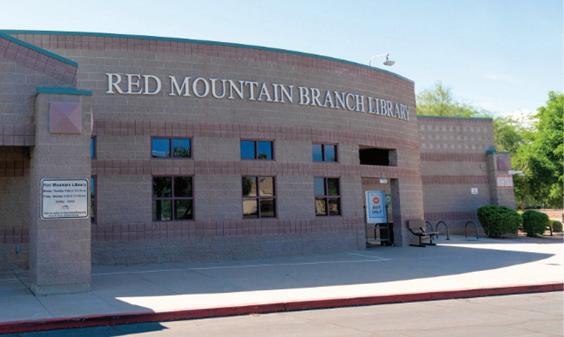
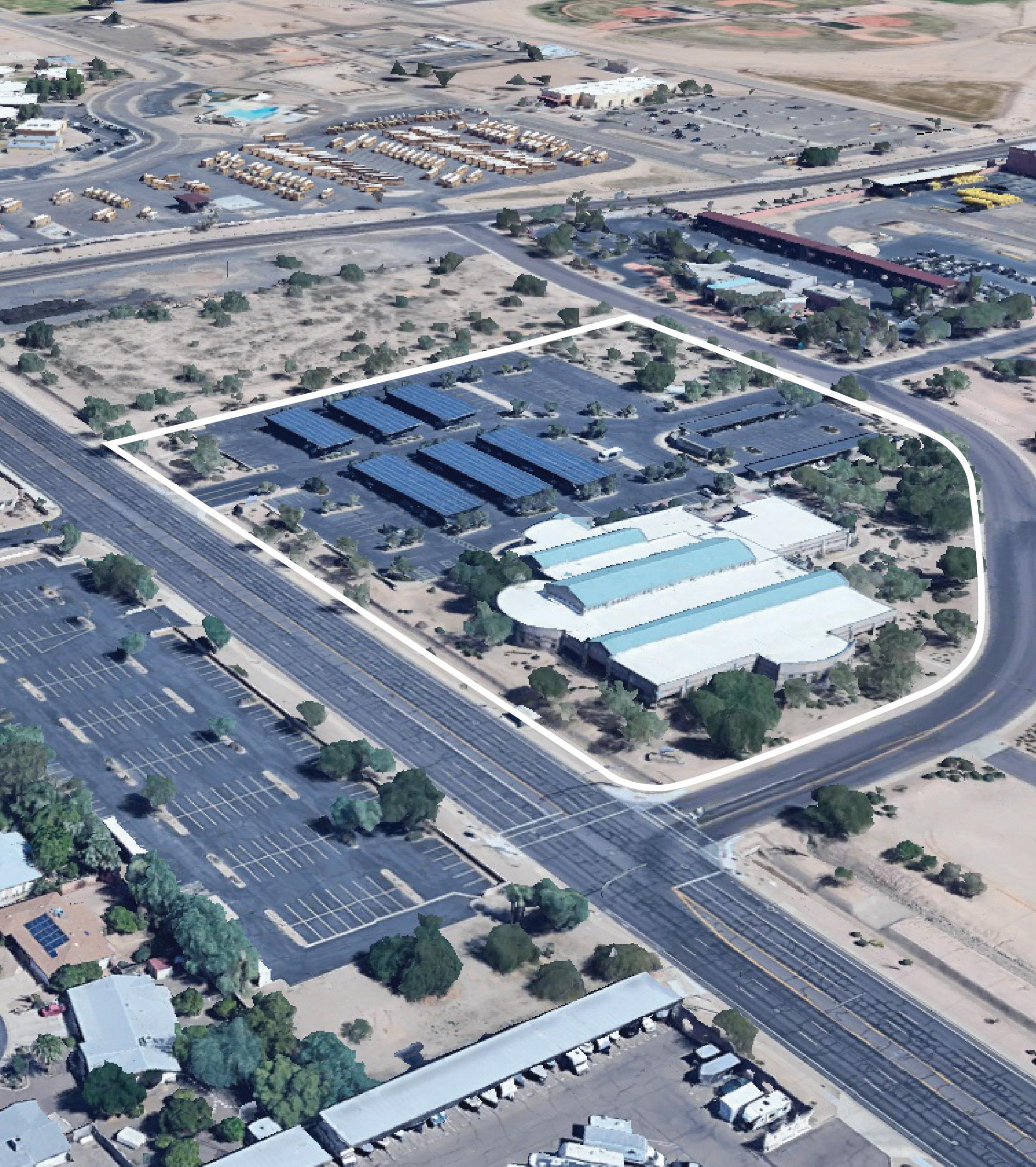
The Red Mountain Library is one of the three public libraries in the city of Mesa as of 2024, located on the northeast side of Mesa. The library dates to 1995 and has undergone expansion in 2002. In its mission to support lifelong learning, empower individuals and strengthen the community, Red Mountain Library has impacted the citizens of Mesa for over 30 years.
As part of the methodology for this report, a site visit was conducted on May 9, 2024, to perform the visual inspections that form the basis of this report. This report identifies the value of the overall condition of a given category based on four parameters that are described in the following table. The report also documents relevant architectural findings and includes a photographic report in the appendices.
All this information will be used to develop a strategic plan for the future of the Red Mountain Library branch over the next two decades.
BUILDING GENERAL INFO
Address 635 N Power Rd, Mesa, AZ 85205
Opening 1995
Year of remodel/renovation 2002 - South and east expansion 2013 - THINKspot
Current use Red Mountain Library - Mesa Public Library
Occupancy type A-3
Approximate height 29’- 8’’approx.
Building area Square Footage Library: 52,560 sqf
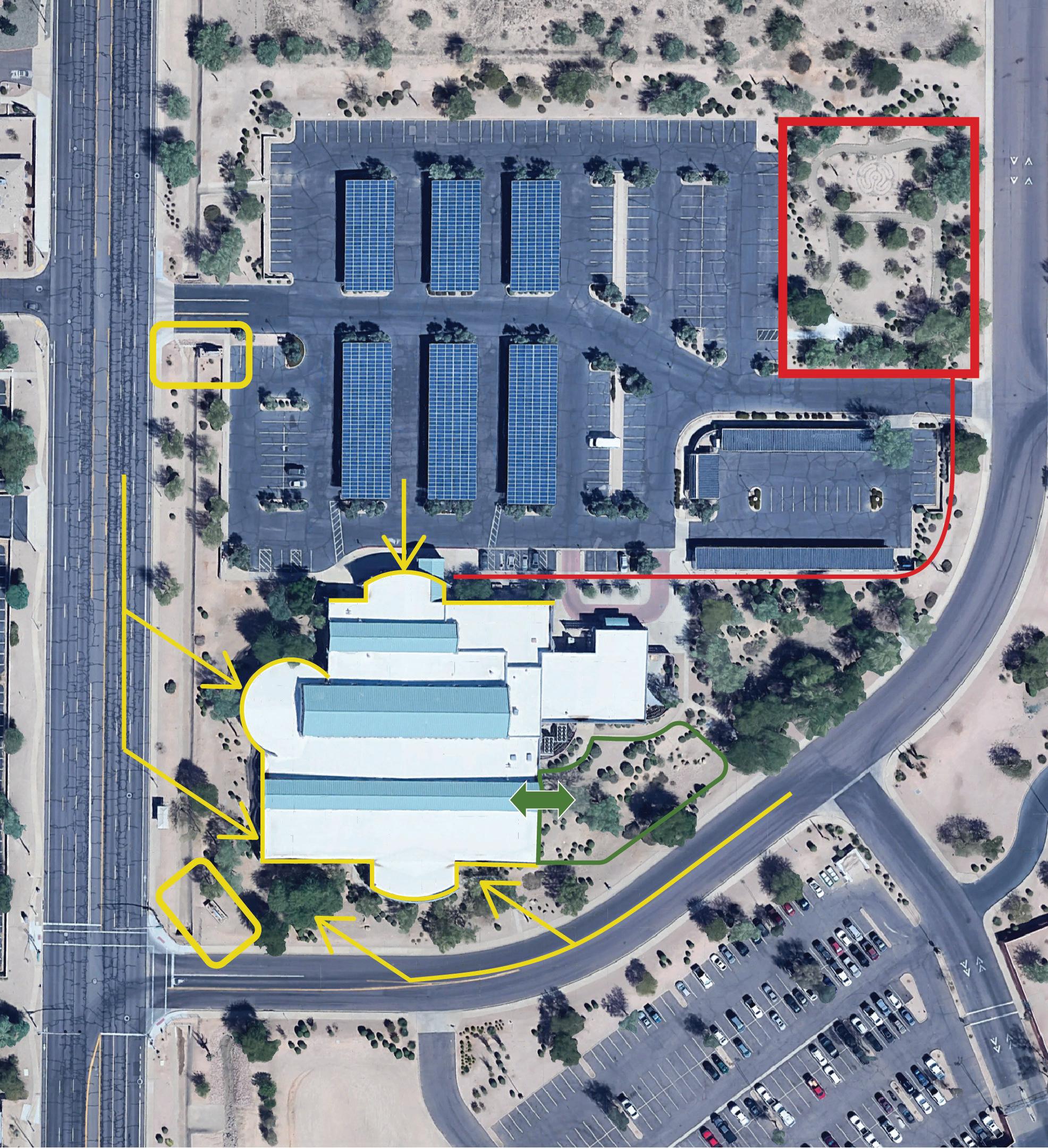
A. Repaint exterior.
B. Upgrade / replace building signage.
C. Upgrade landscape.
D. Provide exterior program space.
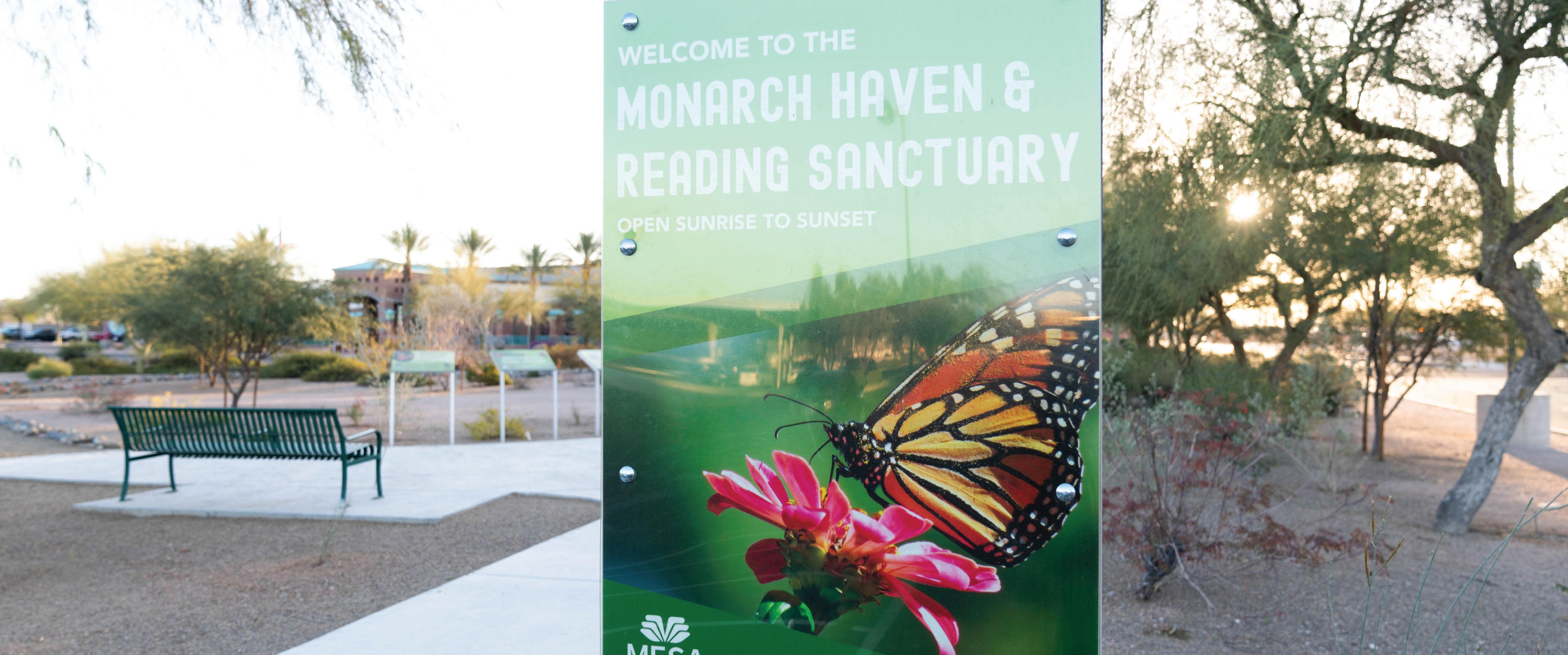
A. Provide a clear and pedestrian friendly path to the Monarch garden.
B. Include outdoor elements and signage to activate the garden during:
1. Story walk
2. Outdoor signage and furniture.
AREA RENOVATION
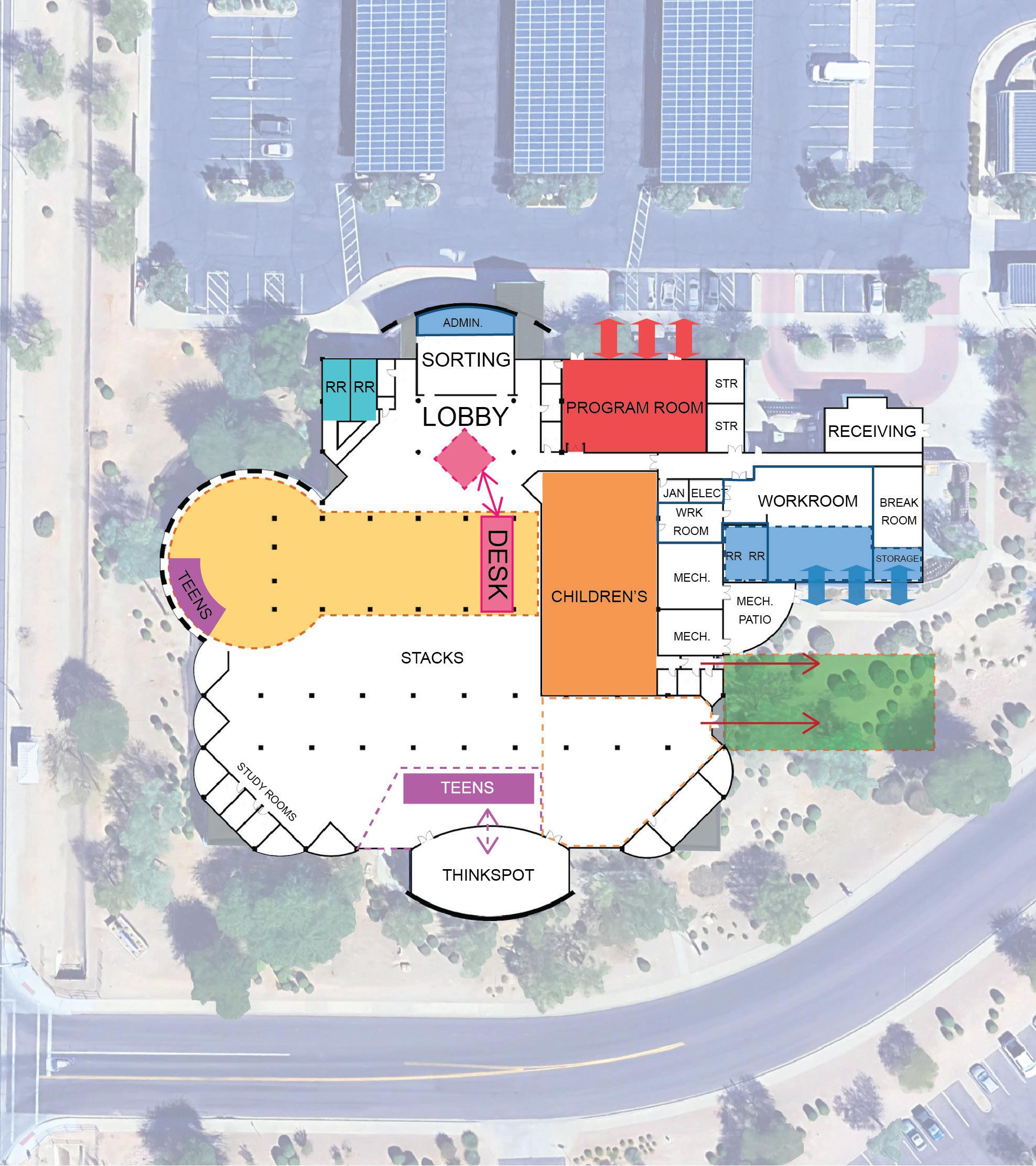
A. Renovate and expand the Children’s area for improved programming and service.
PUBLIC AND FAMILY RESTROOM RENOVATION
A. Update finishes and fixtures and resolve acoustic issues.
SERVICE DESK RENOVATION
(include in RM.O.2)
A. Replace the service desk and consider a new location.
B. Provide ADA-compliant search stations.
STAFF SPACE RENOVATION
(could include in RM.O.2)
A. Relocate 3 administrative offices from staff operations (sorting room) to main staff area.
B. Consider adding windows and/or skylights for natural light.
PROGRAM ROOM RENOVATION
A. Update finishes, lighting and technology.
B. Consider adding windows and/or skylights for natural light.
TEEN’S SPACE
(could include in RM.O.2)
A. Provide dedicated space for teens.
1. Provide semi-enclosed space with a mix of seating adjacent to Young Adult collection.
2. Relocate away from service desk.
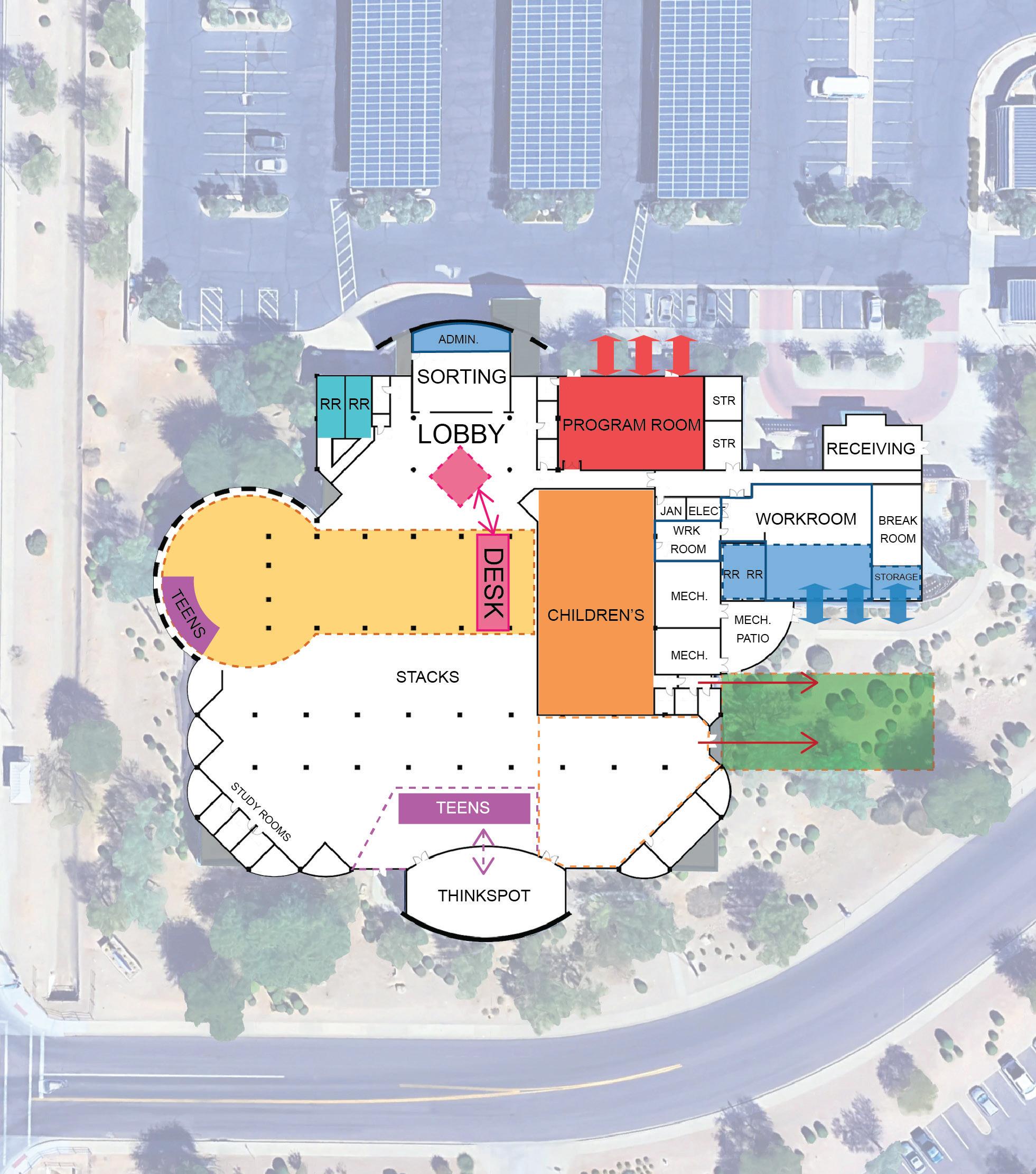
A. Review furniture updates and program options to better utilize central library area.
B. Relocate the front desk to face patrons as they enter the library.
C. Provide ADA-compliant search stations.
D. Consider relocating or adding program elements to the space.
1. Seed Library
2. Stuff-brary
3. Gallery – rotating display. Digital or physical.
4. Café – self serve or vendor cart/stand.
A. Consider engaging a design professional to complete a full furniture inventory and review for updating. Updating furniture can provide efficiency in space use and integration of power. New furniture can also improve patron experience by providing different seating types and more accessible options.
A. Consider engaging a design professional to complete collection and stack analysis. More efficient use of book stacks can potentially provide opportunities to reduce stack heights and/or increase program space.
(create system wide study / standarization)
A. Contract with a consultant to complete a signage review of the existing conditions.
1. Focus on accessibility and Spanish.
2. Goal to improve wayfinding for patrons.
A. Verify access to power and take advantage of the raised floor condition to provide power in a discrete manner.
The Red Mountain Library Branch is overall in good condition with opportunities to enhance functionality and user experience.
There are several public areas noted by staff and patrons that should be improved including the children's area, program room, central open space, and teen area. We recommend studying each space to identify ideal/preferred program components.
Functionality and efficiency of space could be improved by replacing existing furniture with new modern pieces of varying size and function that include integrated power. Updating interior spaces can provide additional program space and improved patron experience.
As with the Main Library, prioritizing regular maintenance for high-wear surfaces like walls and floors will ensure their longevity. Refer to the appendix for detailed recommendations.
Like all other branches, the library should establish a plan to keep pace with technological advancements by regularly updating lighting, equipment, and other electronic systems. By implementing these recommendations and scheduling routine professional inspections, the Red Mountain Library Branch can remain a functional, and welcoming space for the community for years to come.
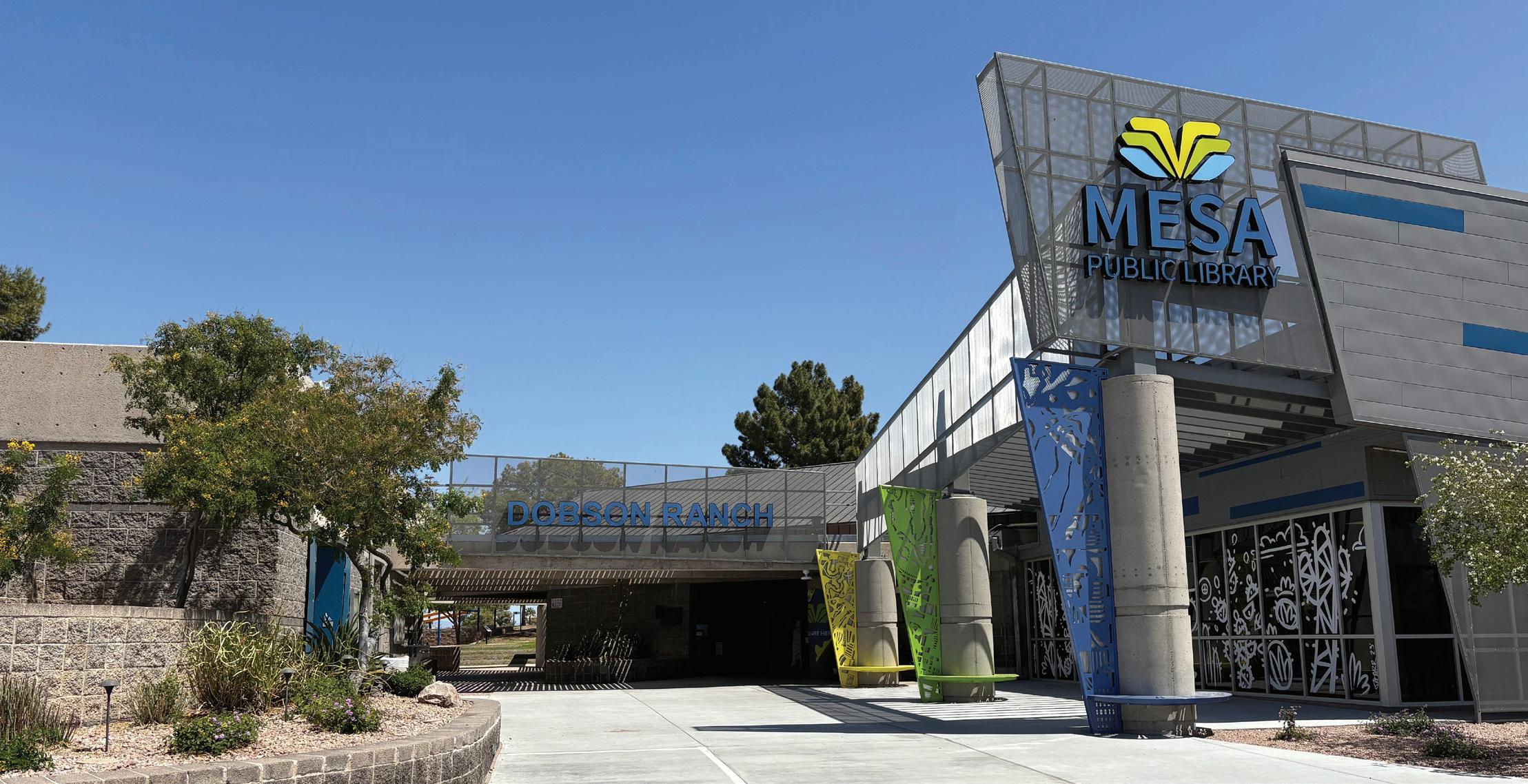
Dobson Ranch Library is one of three City of Mesa Public Libraries located on the southwest side of Mesa. The library was established in 1987 and has been an integral part of the community for over 37 years. The Dobson Ranch Library underwent a major renovation in 2023 with the addition of the new THINKspot in the southwest area of the original library.
As part of the methodology for this report, a site visit was conducted on May 9, 2024, to perform the visual inspections that form the basis of this report. This report identifies the value of the overall condition of a given category based on four parameters that are described in the following table. The report also documents relevant architectural findings and includes a photographic report in the appendices.
All this information will be used to develop a strategic plan for the future of the Dobson Ranch Library branch over the next two decades.
Address
2425 S Dobson Rd, Mesa, AZ 85202
Opening 1987
Year of remodel/renovation 2023-THINKspot - 1,761 SF
Current use Mesa Public Library branch.
Occupancy type A-3
Approximate height 19’ approx.
Building area Square Footage Meeting room and restrooms: 1,848 sqf
Library: 13,312 sqf
Total: 15,152 sqf
A. Add solar canopies over parking spaces. (recommend this be listed as CoM project)
(recommend this be listed as CoM project)
A. Consider charging stations in the parking lot . (recommend this be listed as CoM project)
A. Add solar canopies over parking spaces. (recommend this be listed as CoM project)
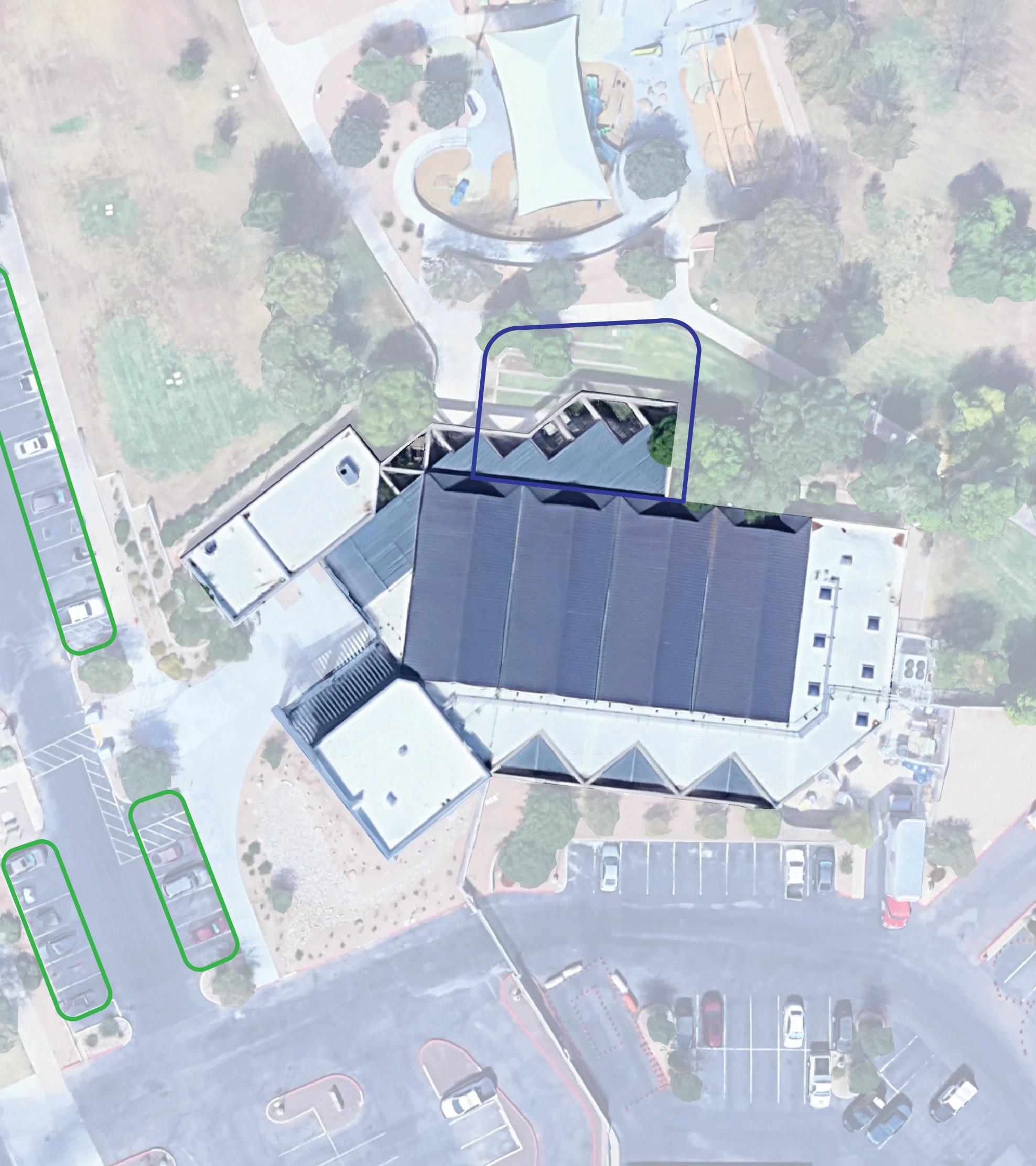
A. Renovate exterior amphitheater for exterior program space with direct connection to interior.
1. Enclose the area with a fence and gates.
2. Improve tiered seating and provide outdoor furniture.
3. Provide a door to access space from the interior of the library.
4. Upgrade power and lighting as required for programming.
A. Update finishes and fixtures in Family and Staff Restrooms.
STAFF SPACE RENOVATION
A. Renovate staff breakroom.
1. Update finishes, fixtures, and equipment.
2. Increase area to accommodate 4 to 6 seated staff.
B. Re-design and expand staff office/work area.
1. Include 3 enclosed offices.
a) Current partial-height office walls do not provide adequate acoustic privacy.
b) Existing large office could be reduced in size if beneficial to adjacent spaces.
2. Include 8 workstations.
MEETING ROOM RENOVATION
A. (P1) Update finishes, lighting and technology.
B. (P3) Expand building to the northwest. (phase two)
STUDY ROOM ACOUSTICS
(could be included in DR.U.2 or combined with MA.U.4)
A. Contract with a consultant to study solutions to remediate acoustics issues at existing study rooms.
B. Increase the number of study rooms.
AND TEEN’S RENOVATION
(could be combined with DR.U.2)
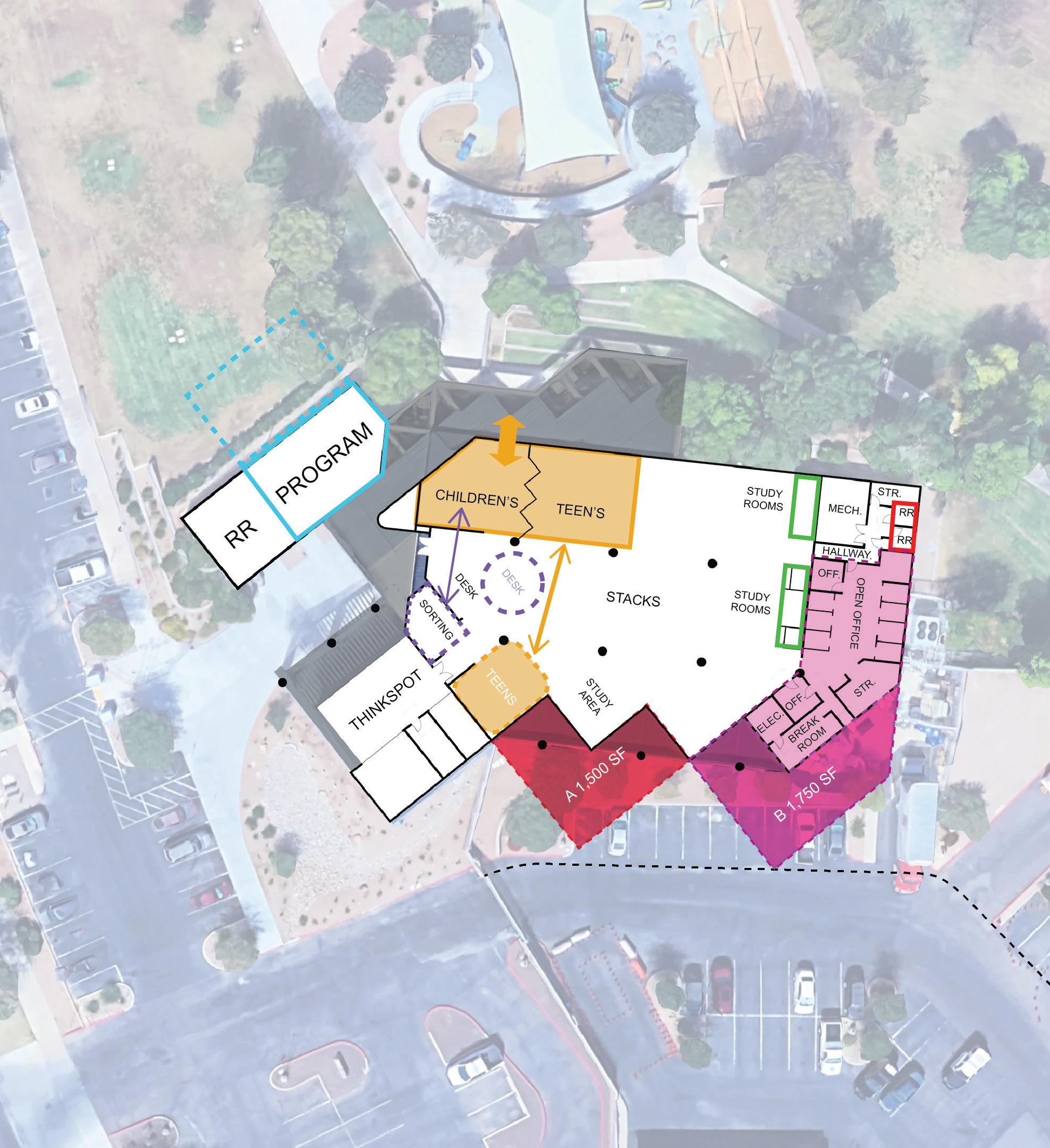
A. Expand Children’s area.
1. Provide a cohesive area with a mix of seating types and acoustic separation from the rest of the library.
2. Provide connection to exterior program space.
B. Provide dedicated space for teens.
1. Provide semi-enclosed space with a mix of seating adjacent to Young Adult collection.
A. Relocate front desk to face patrons upon entry.
B. Consider relocating sorting room to the north when Children’s Area is renovated so it is closer to the entry.
A. Conduct a study to identify areas that are in need of an additional power supply in the staff and patron areas.
A. Consider engaging a design professional to complete a full furniture inventory and review for updating. Updating furniture can provide efficiency in space use and integration of power. New furniture can also improve patron experience by providing different seating types and more accessible options.
A. Consider engaging a design professional to complete collection and stack analysis. More efficient use of book stacks can potentially provide opportunities to reduce stack heights and/or increase program space.
(create system wide study / standarization)
A. Contract a consultant to complete a signage review of the existing conditions.
1. Focus on accessibility and Spanish.
2. Goal to improve wayfinding for patrons
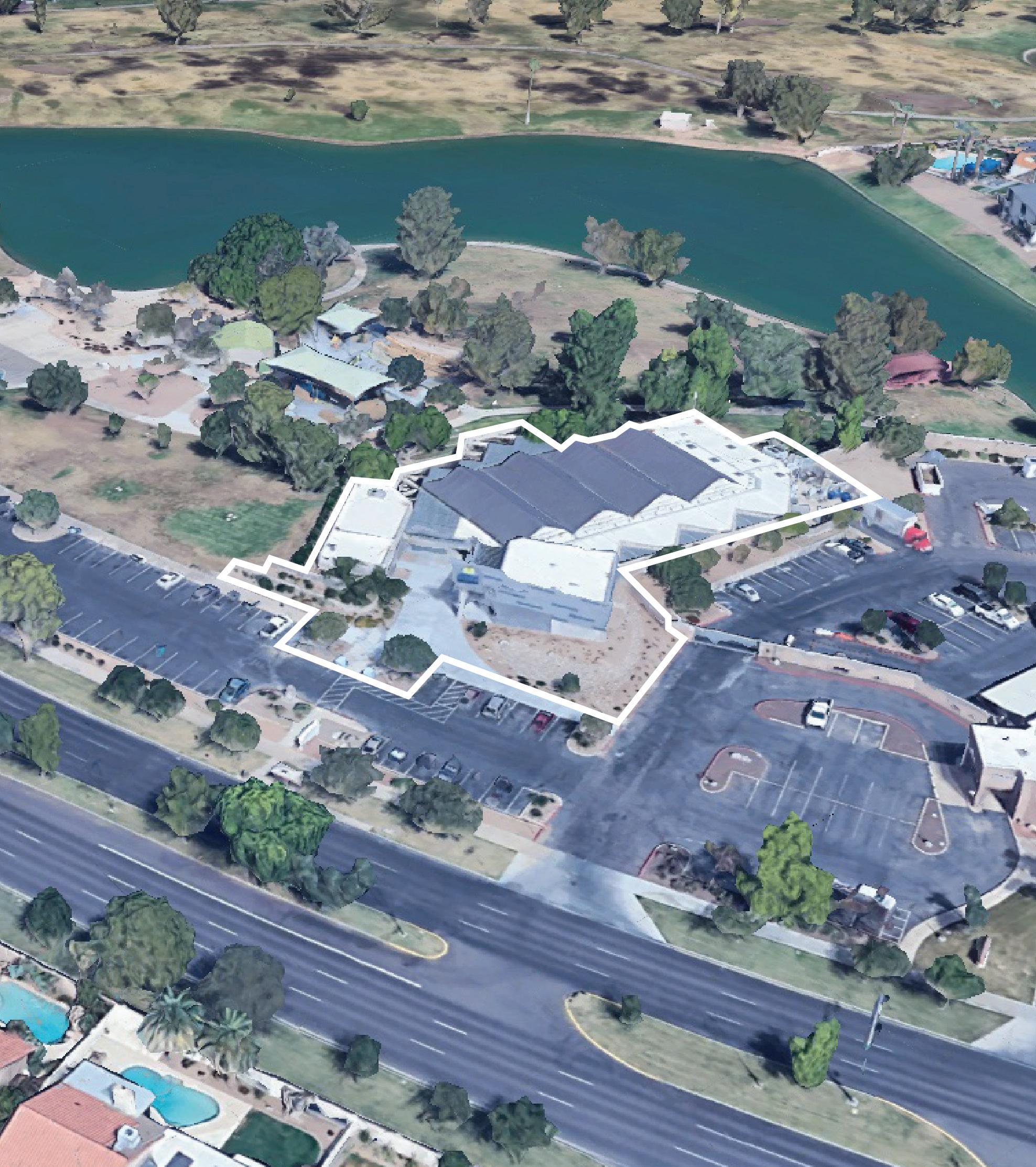
The Dobson Ranch Library Branch stands out for its timeless design and enduring functionality, a testament to the quality materials and construction techniques used in the original building which has minimized maintenance needs over time.
The recent THINKspot addition increased program space and provided improved street presence.
A future addition should be considered to address the need for an expanded children’s area, a dedicated teen area, and improved study spaces. The current amphitheater, east of the library provides a buildable area directly adjacent to the spaces in need and should be allocated for future expansion space.
Comprehensive cleaning and inspections will be necessary as well as regular professional inspection to monitor the condition of the new and original structure.
Special attention will be needed for the structural damage found on the north side of the building. Addressing the problem as soon as possible is crucial to preserving the integrity.
As with the other libraries, regular maintenance plans for walls, floors, and other high-wear areas will ensure their continued durability. As detailed in the appendix, implementing these recommendations is essential for preserving the library's integrity.
Also, with the advancement of technology and the constant modernization around lighting and equipment, it is necessary to consider that the building will require continuous updates to lighting, equipment, and other electronic systems to meet future demands.
By prioritizing these recommendations and scheduling regular professional inspections, the Dobson Ranch Library can maintain its functionality, and aesthetic appeal for decades to come.
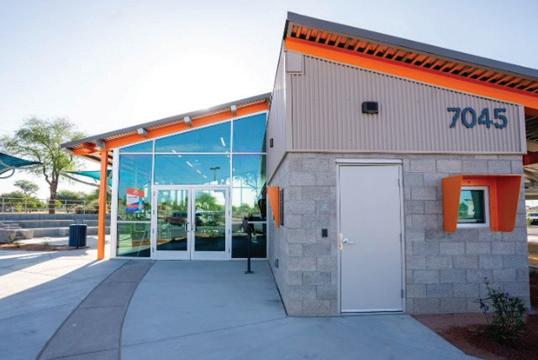
technology to enable patrons to access the facility using their library barcode and PIN.
As part of the methodology for this report, a site visit was conducted on May 9, 2024, to perform the visual inspections that form the basis of this report. This report identifies the value of the overall condition of a given category based on four parameters that are described in the following table.
The report also documents relevant architectural findings and includes a photographic report in the appendices. All this information will be used to develop a strategic plan for the future of the Mesa Express Library over the next two decades.
Address 7045 E Monterey Ave, Mesa, AZ 85209
Opening 2023
Year of remodel/renovation Mesa Express Public Library
Current use Mesa Public Library branch.
Occupancy type A-3
Approximate height 14’-6’’approximate
Building area Square Footage Library: 1,109 sqf
Restroom building: 1,073 sqf
A. Consider installing instantaneous water heater if hot water is desided at the hand washing station.
INTERIOR PROGRAM SPACE
A. Consider alternate furniture for flex programs in existing interior space.
1. Replace fixed desk with mobile tables so they can be moved out of the way for open program area.
2. Consider moving technology along the southeast wall to the southwest wall to allow presentation wall at front of flex program area.
PROVIDE SHADE FOR HOLDS LOCKERS AND RETURN BINS
A. Install a shade structure to protect the hold lockers.
B. OR consider relocating against south façade of building under the overhang.
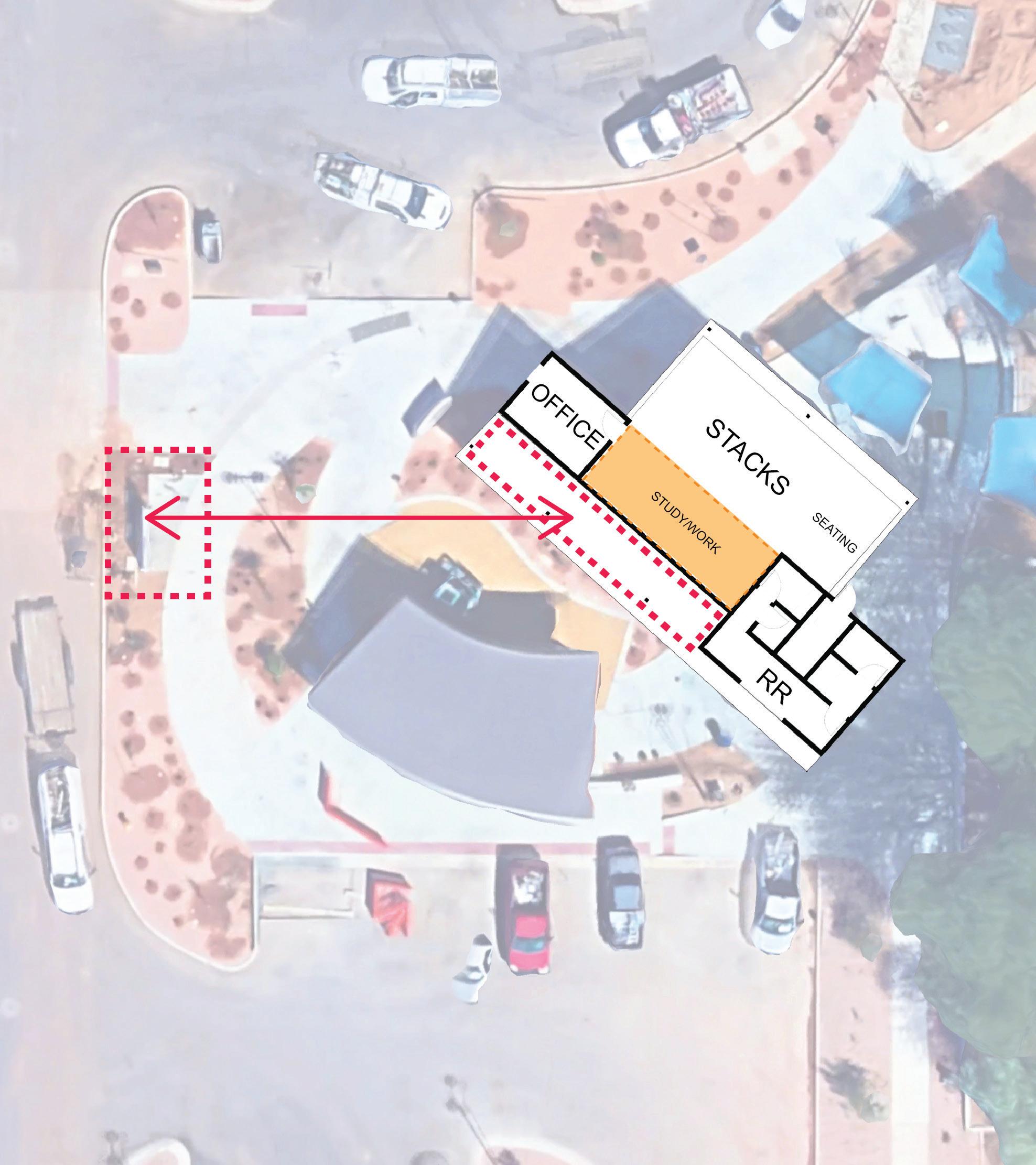
Having recently opened its doors in 2023, the Mesa Library remains in like-new condition. Its small footprint and layout minimizes future maintenance needs due to its efficient use of space.
Regular maintenance, as outlined in the appendix, remains crucial to the library's longevity. This includes regular maintenance of high-traffic areas such as walls and floors.
As with other libraries, staying ahead of technological advances will be essential. Regular updates to lighting, equipment, and electronic systems will ensure that the library meets the evolving needs of its patrons.
The Mesa Express Library serves as a model for future library development. Its efficient design and focus on the user experience can be replicated in smaller neighborhoods or parks to expand services and reach a wider audience throughout the city.
Providing an alternate furniture layout for temporary program space should be considered for this location and integrated into future express library programs. MESA
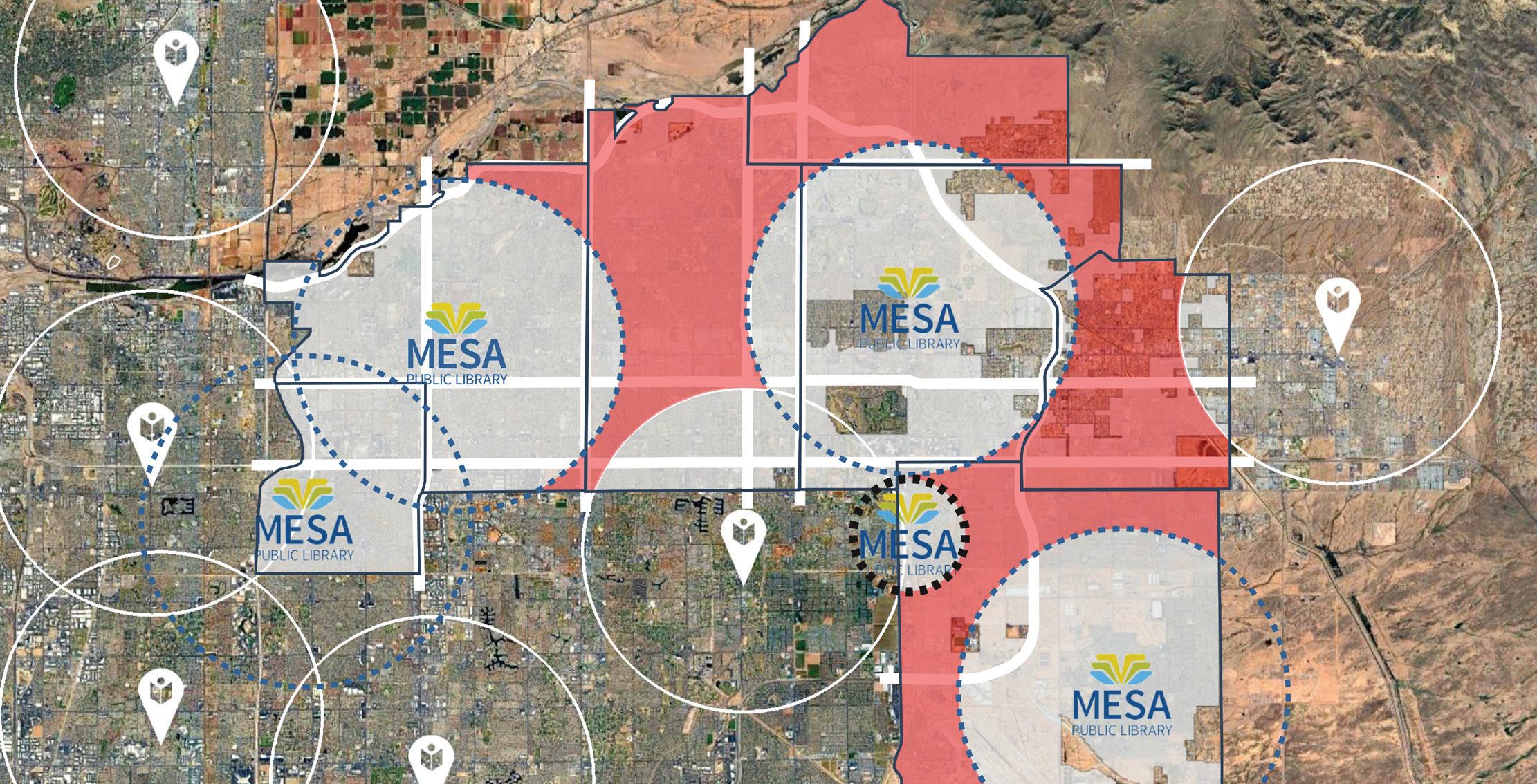
In collaboration with Berry Dunn and City of Mesa staff, the team conducted a comprehensive analysis of geographic and demographic data to identify existing service gaps and potential areas of library services needs within the community. This analysis incorporated population growth projections, demographic trends, and emerging community needs to forecast future library service demands.
This process resulted in three significant service zone gaps within Mesa’s boundaries: Central, East, and North Mesa. Following the identification of these zones, a detailed analysis, incorporating city growth strategies, existing place types, school locations, city-owned properties, and other socioeconomic data, was conducted to gain a deeper understanding of each zone’s specific needs and potential.
Based on the information gathered and discussions with MPL leadership, three future branch library locations are proposed, one in each of the identified service zones. The size of each library is based on comparison sf/population and proven operational model of the existing Mesa libraries.
In addition to future branch locations, express library locations were considered to further extend the libraries’ service area quicker. Express libraries have a lower upfront capital cost and lower operational cost than full-service branch locations. Because of this, express libraries can provide a more cost-effective model to quickly reach undeserved populations in Mesa. One prefabricated ‘mobile’ express library is proposed. The mobile unit can be placed on-site with limited site and utility preparation and relocated to alternate locations in the future as the need arises.
The proposed future locations documented on the following pages provide a model for growth over the next 20 years, closing existing service gaps and reinforcing the existing programs and services the Mesa public Library system provides to the residents of Mesa.
The Mesa Library System consists of four existing libraries: Main (MA), Red Mountain (RM), Dobson Ranch (DR), and Mesa Express Library (MEL). A fifth location, Gateway (GW) is under construction and scheduled to open in the fall of 2025.
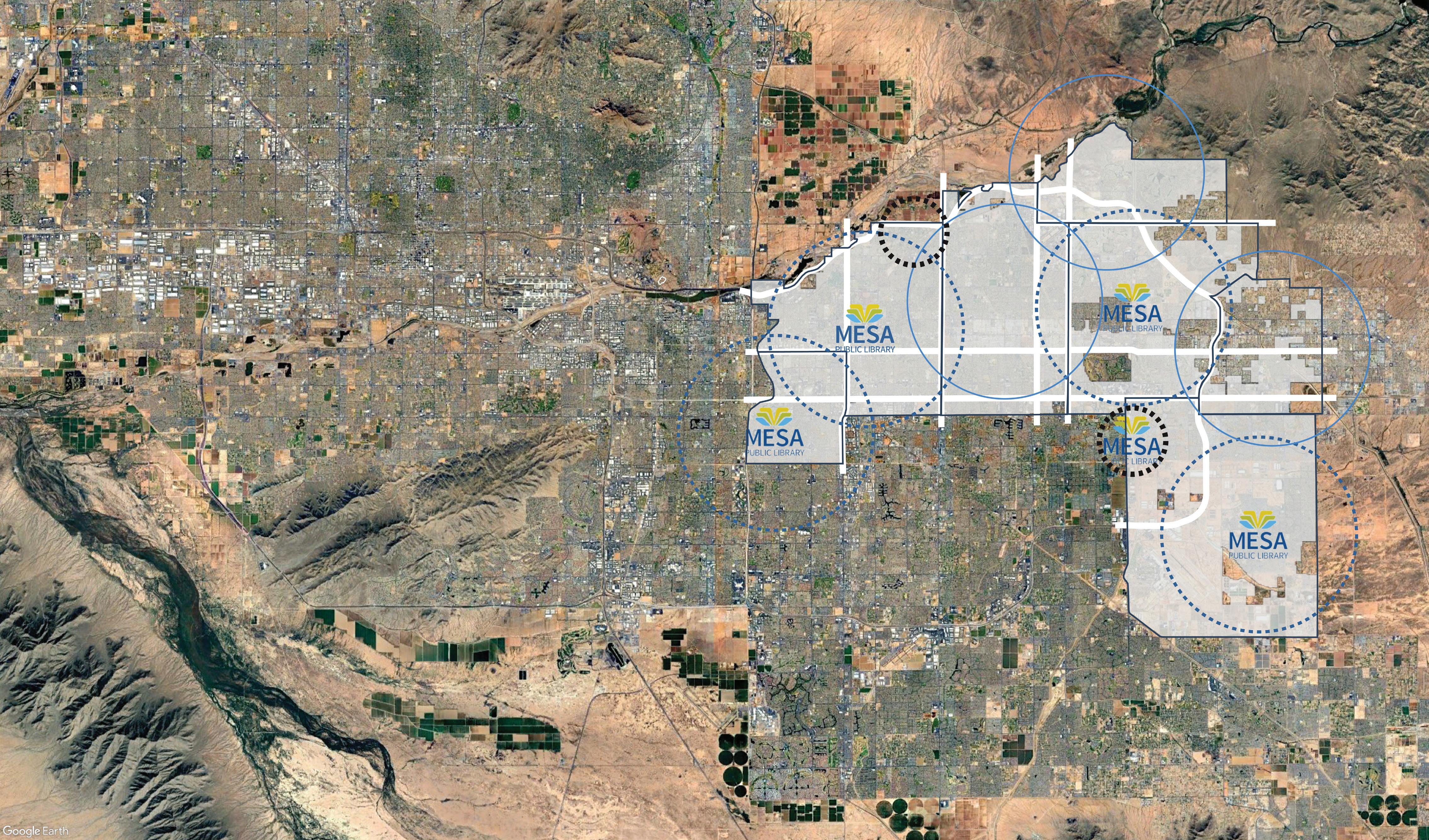
A three-mile radius is equivalent to a 10-minute drive in a typical urban setting. This is a useful planning tool as it represents the distance the average person is willing to drive on a regular basis for services. When the three-mile radii for Mesa’s existing branch libraries are placed on a map it begins to identify service gaps in the existing library system. The Mesa Express Library service zone is reduced to a one-mile radius because it is not a full-service branch and has a more localized service impact.
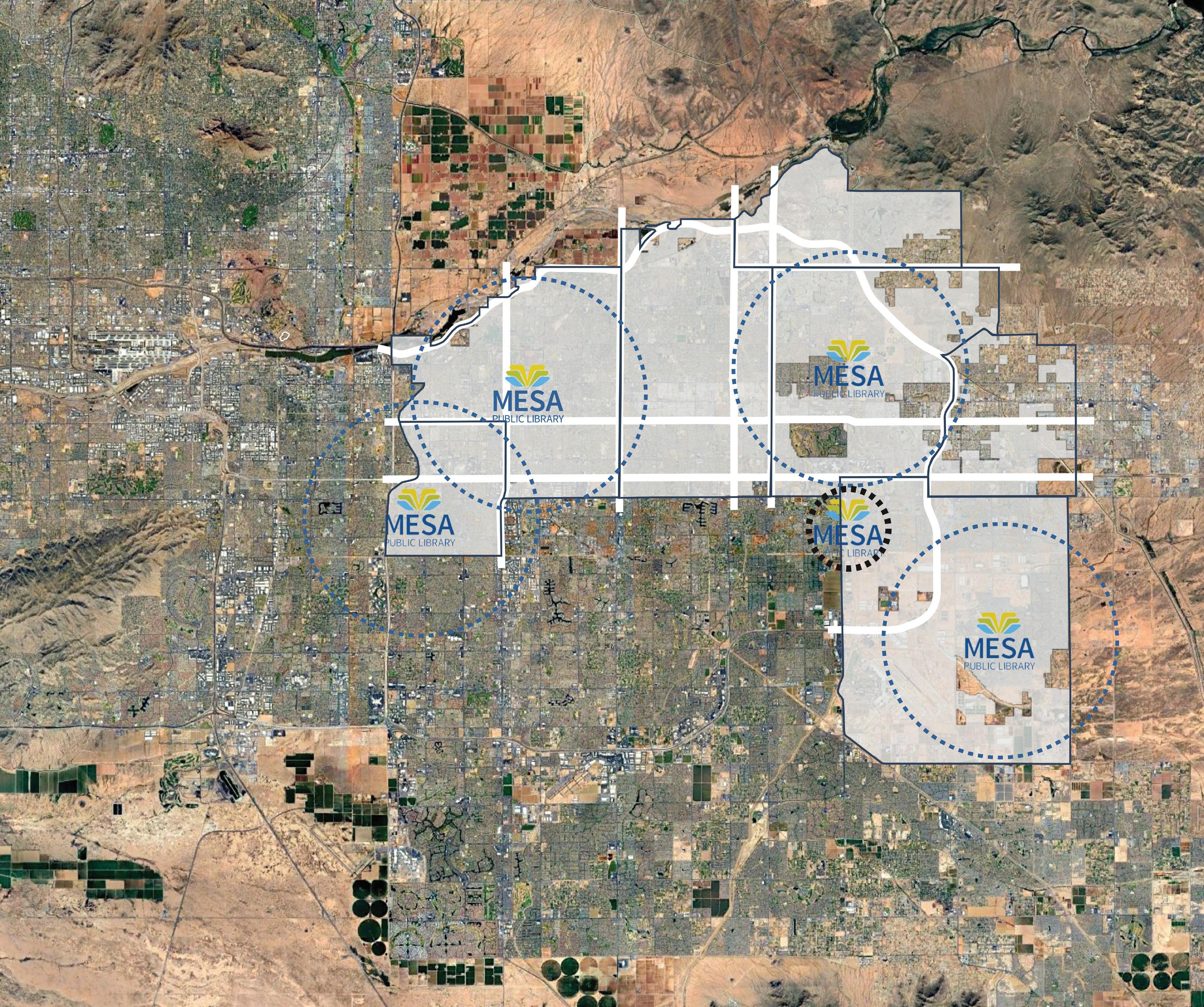
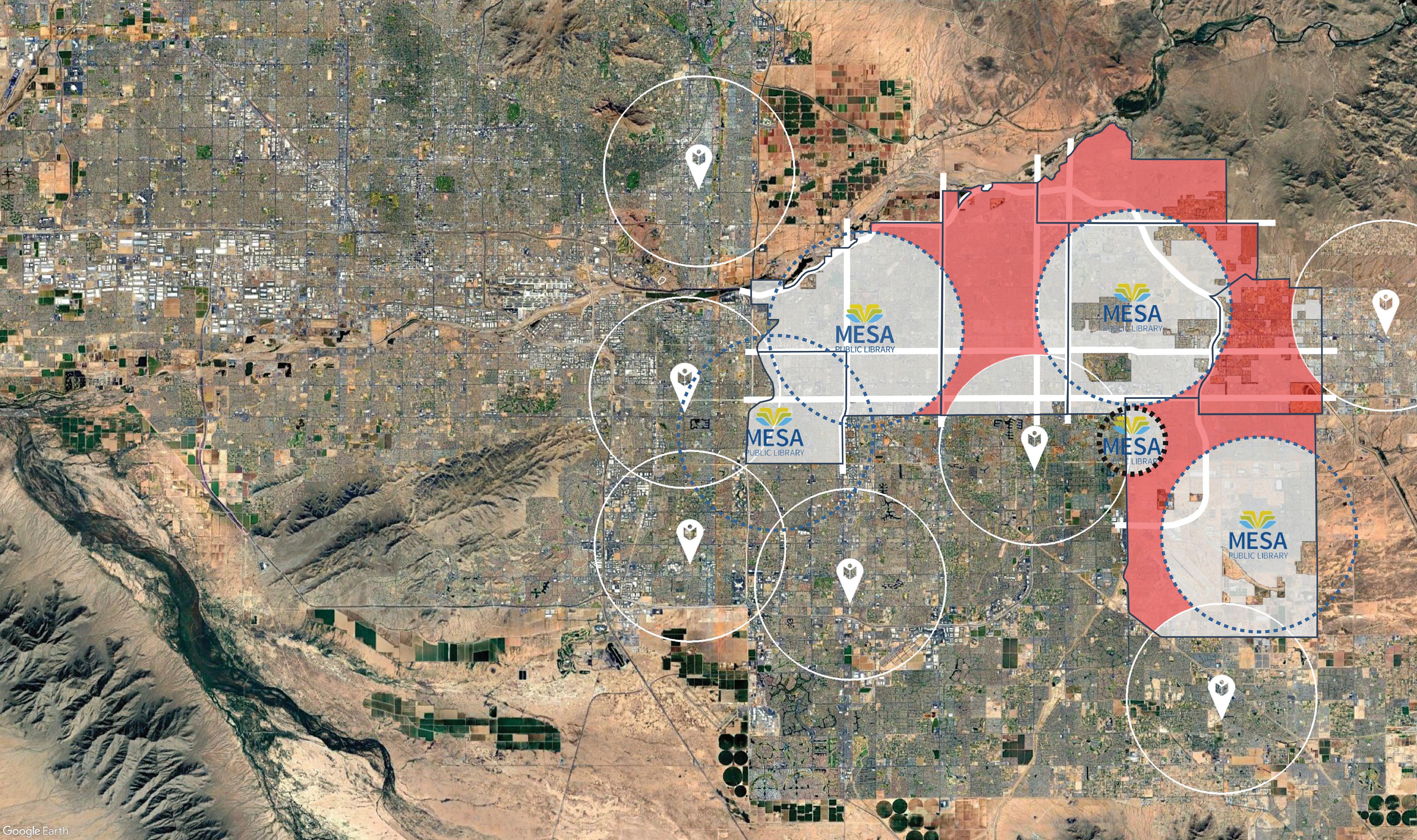
Using the three-mile radius, existing library facilities adjacent to Mesa’s borders were taken into account when considering library coverage of service. This process resulted in three significant service zone gaps within Mesa’s boundaries: Central, North, and East Mesa.
SCOTTSDALE-CIVIC CENTER LIBRARY
Using existing library service zones and identified service gaps seven regional service zones were identified. The service zone boundaries were created based on the limits of existing service areas and defined geographic markers.
SOUTHWEST: includes the Dobson Ranch library
WEST: Includes the Main Library
CENTRAL-WEST: Identified service gap
CENTRAL-EAST: Includes the Red Mountain Library
NORTH: Identified service gap
EAST: Identified service gap
SOUTHEAST: Includes the Mesa Express Library and Gateway Library
The Central-west, North, and East zones are identified service gaps and will benefit the most from new branch locations. Demographics in these three service zones were studied to identify key factors for future library site locations and develop library growth strategies over the 20-year span of the master plan.
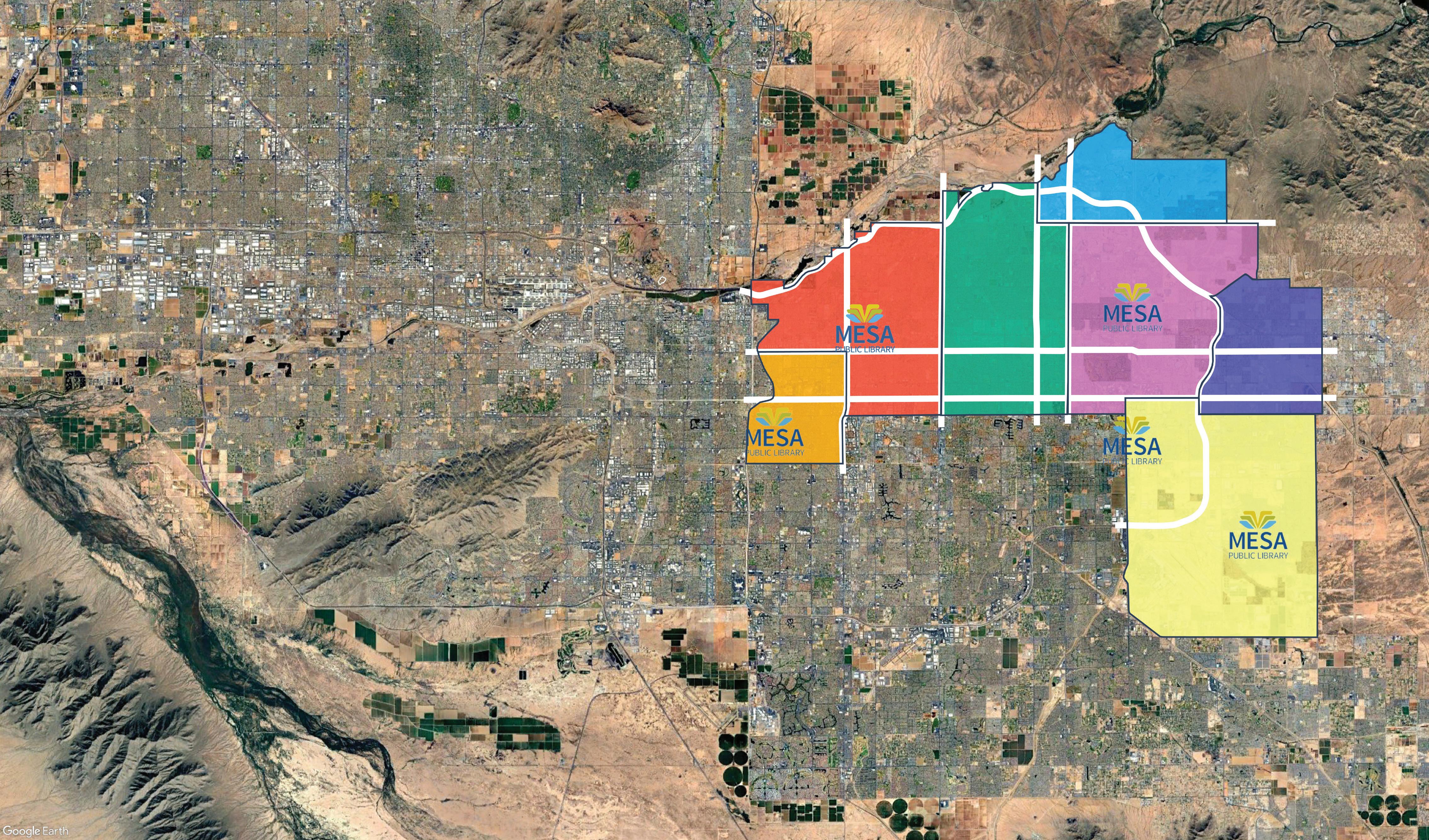
Although the scope of this Master Plan does not identify specific future branch locations, the information provided can be used to inform future site selection with ideal adjacencies to support the Library’s success and facilitate the City of Mesa’s planned growth.
Areas that should be preserved and protected and remain largely in their current condition. These areas include land with significant development constraints, historic resources, neighborhoods with a significant heritage, school sites, public lands, and parklands.
Areas of stability that are encouraged to remain generally in their current condition but may see minor changes and transition of use over time.
Developed areas are encouraged to improve as development ages. Vacant, transitioning, or underdeveloped land that supports new development will bring reinvestment to Mesa. These areas will continue to develop or be reused as the development patterns change and align with City priority.
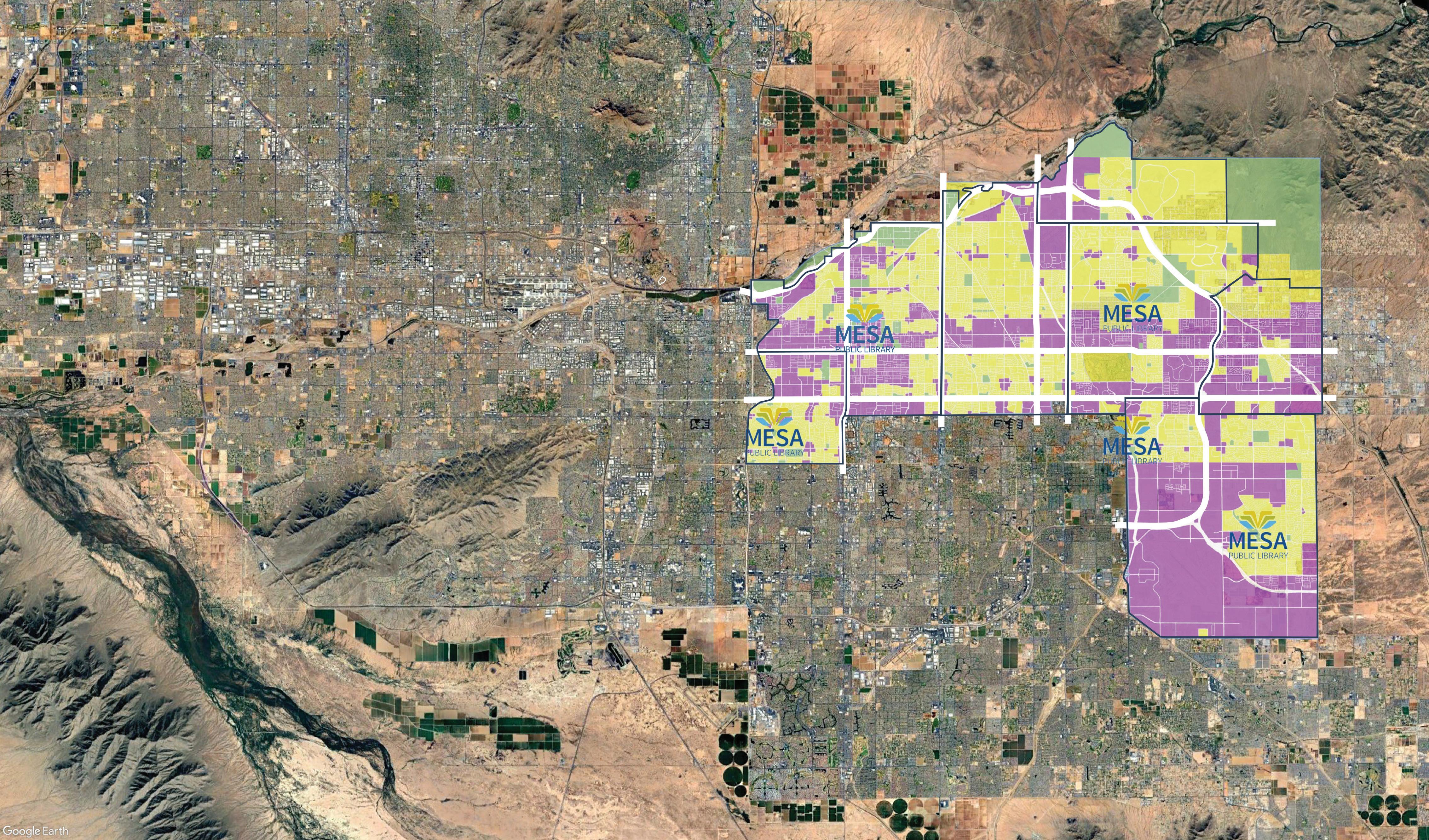
When considering new branch locations within the identified zones, the Mesa General Plan was referenced to for placetype designations and growth strategies.
Future library locations can benefit from being adjacent to urban and neighborhood centers. These placetypes are typically along major vehicular and pedestrian pathways and have established public transportation routes. They are more densely populated areas and have a mix of commercial and municipal services that support the community. The existing infrastructure and density of population and services provided by these placetypes provide ideal adjacencies for library locations.
Residential placetypes should also be considered as library service zones should include as many residents as possible.
*Socioeconomic projections source: Maricopa Association of Governments (https://geo.azmag.gov/maps/projections)
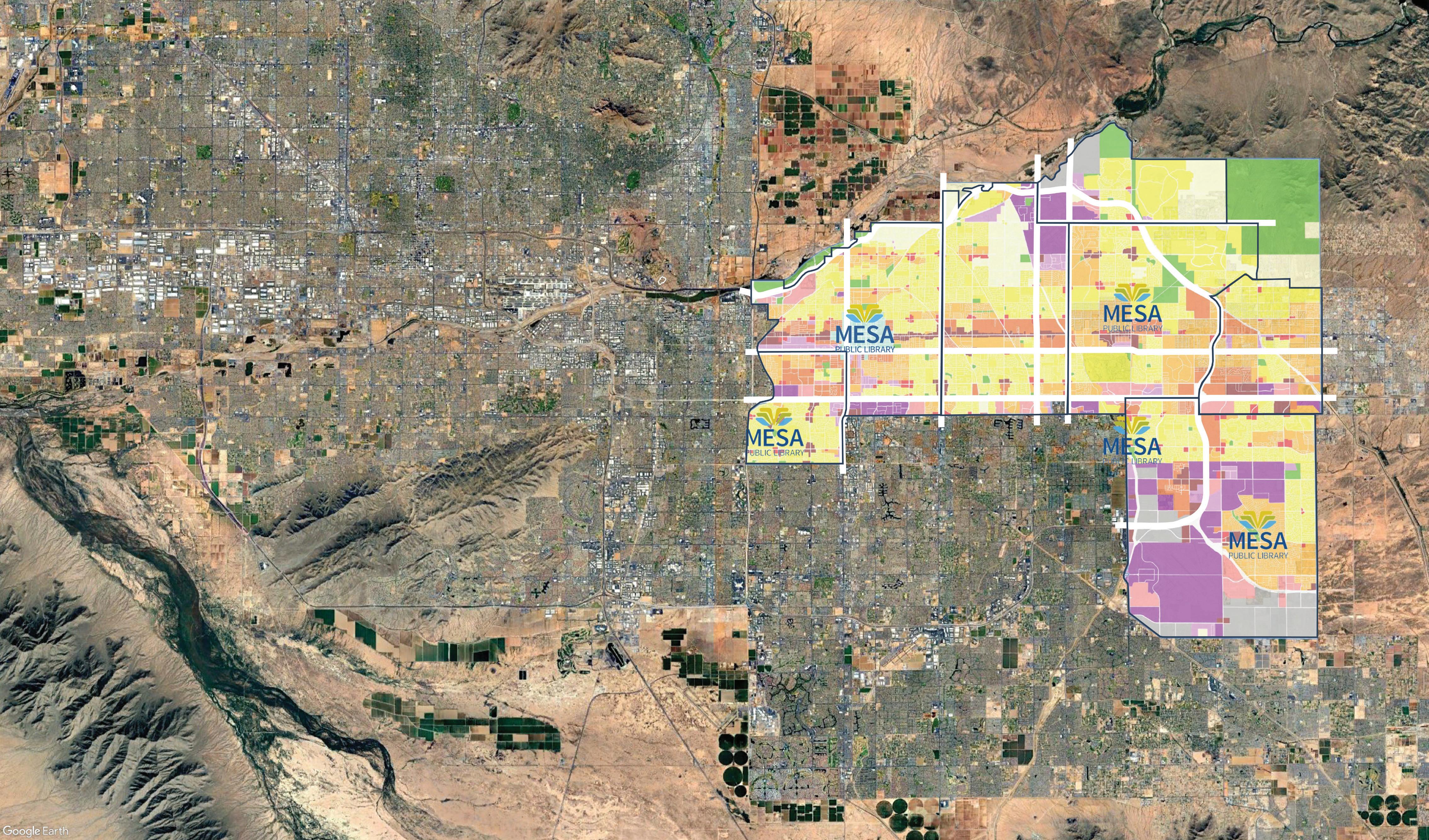
Placetype is a defined geographic area within a General Plan that is characterized by a specific set of primary and secondary land uses.
City-owned parks and properties are good options for future library sites and provide opportunities for shared outdoor amenities and programs. The Mesa Public Library system has a long-standing successful partnership with the Mesa Parks and Recreation Department as shown by the shared development of the Mesa Express Library. Ongoing collaboration with the parks department to identify potential sites is beneficial for the continued success of MPL growth.
Schools also offer potential partnerships and program opportunities and should be considered when locating future library sites.
Parks / Utility Facilities
City of Mesa Owned Properties
City of Mesa Owned Properties: httpp://data.mesaaz.gov/ Zoning-Property/City-Owned-Properties
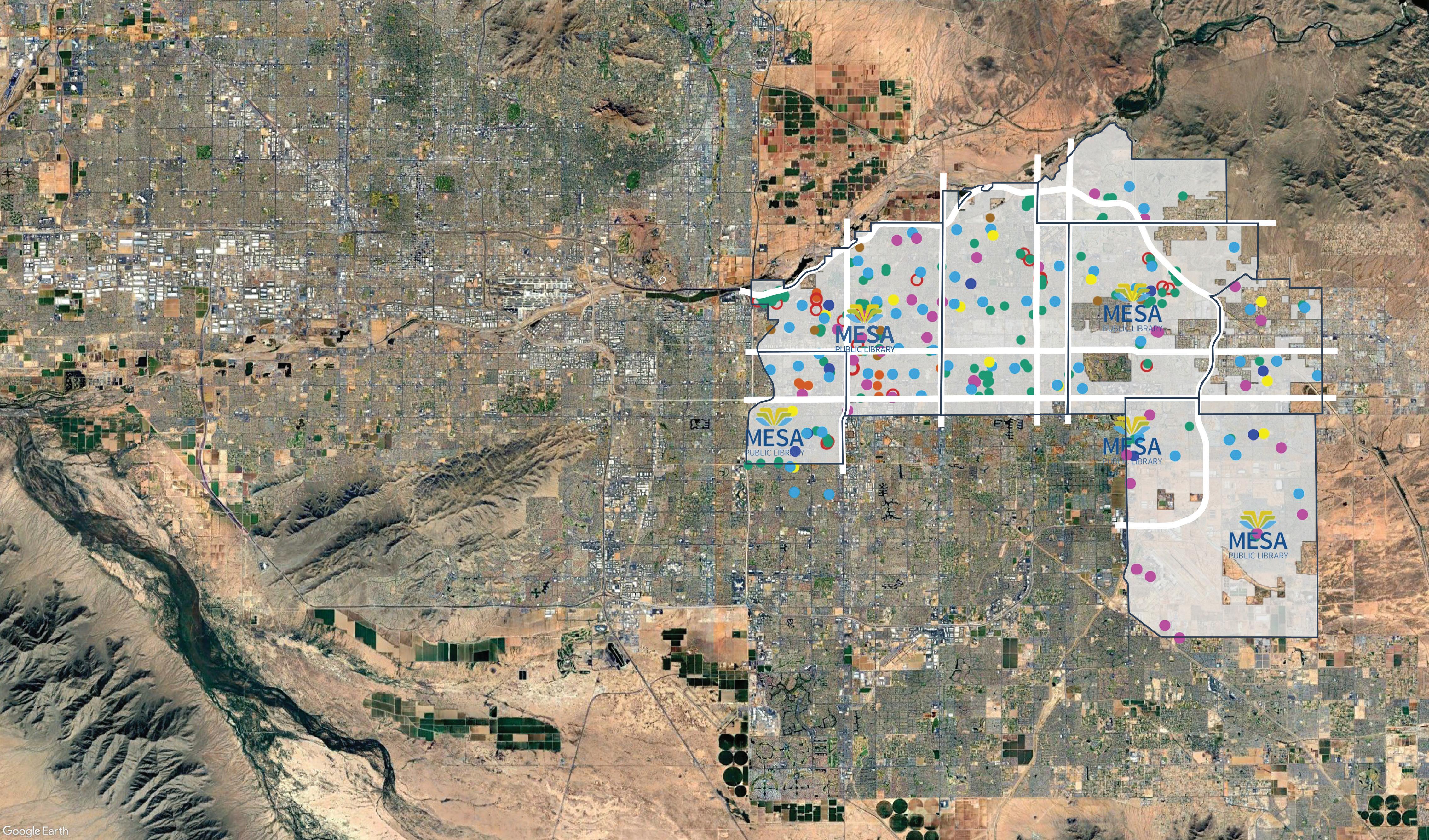
Current growth projections help identify fast growing areas with high population densities.
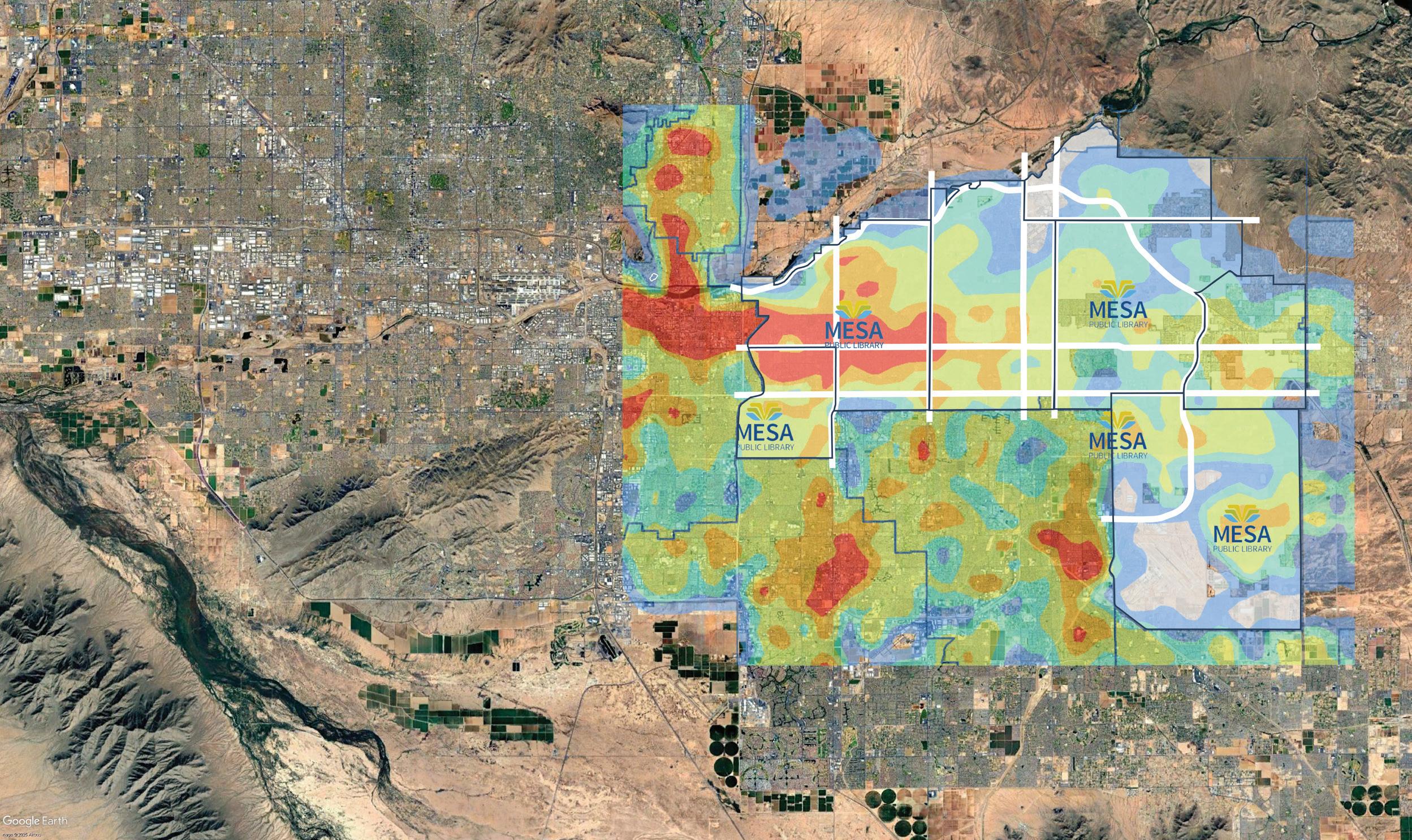
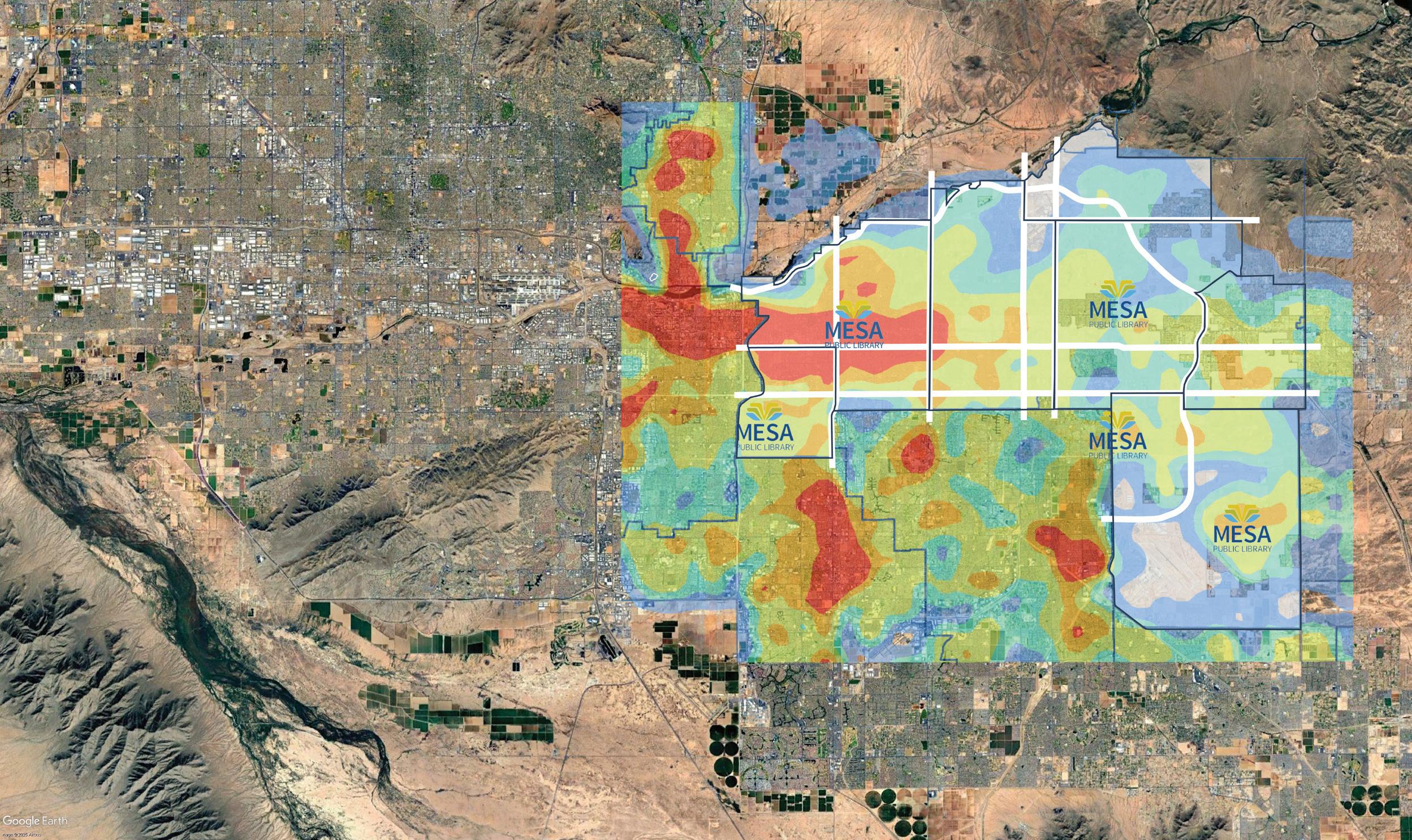
8,000 6,001 - 8,000 4,001 - 6,000 2,001 - 4,000 251 - 2,000 Less than 250
*Socioeconomic projections source: Maricopa Association of Governments (https://geo.azmag.gov/maps/projections)
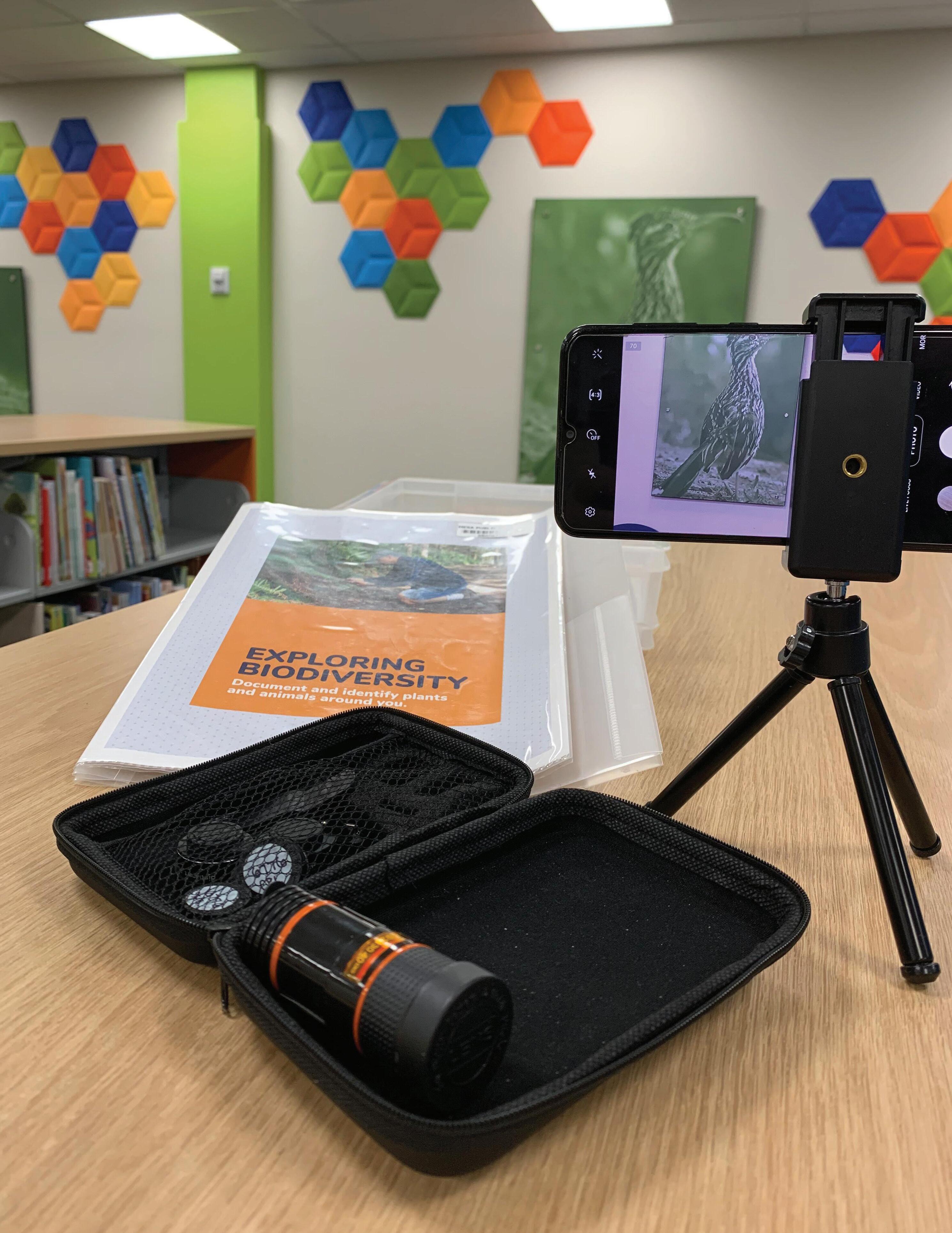
The traditional model for library system growth is to add new branch library locations in undeserved populations to reduce service gaps. New construction projects are typically funded through voterapproved bond initiatives and take years for design and construction to be complete.
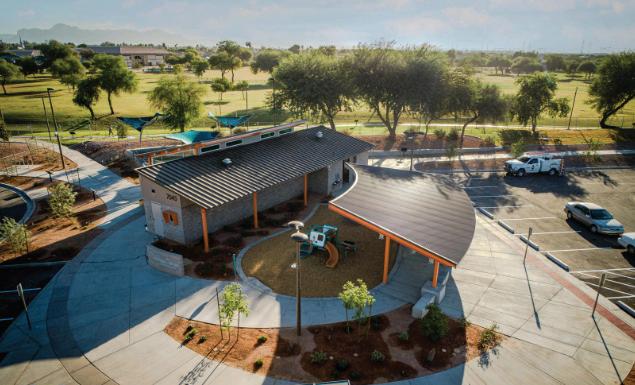
As an alternative to the traditional full branch library construction, MPL opened an express library in 2023. It is the second staff-less express library in the nation and provides an innovative model growth that is more cost effective and quicker to build.
The Mesa Express Library was built in partnership with the Mesa Parks and Recreation Department. The park and library share public restrooms and the library benefits from additional eyes on the building from parks users and security staff.
With the success of the Mesa Express Library, additional future express locations were discussed as an effective solution to extend services quickly and more affordably than building new branch locations. New express branch locations can be strategically placed to infill smaller service gaps where a new branch library is either not required or not economically feasible.
Express libraries, combined with new full-service branch locations, provide MPL with tools for an innovative model for growth.
A commercial lease or parks department partnership are proven models to expand Mesa's service model through additional express library locations.
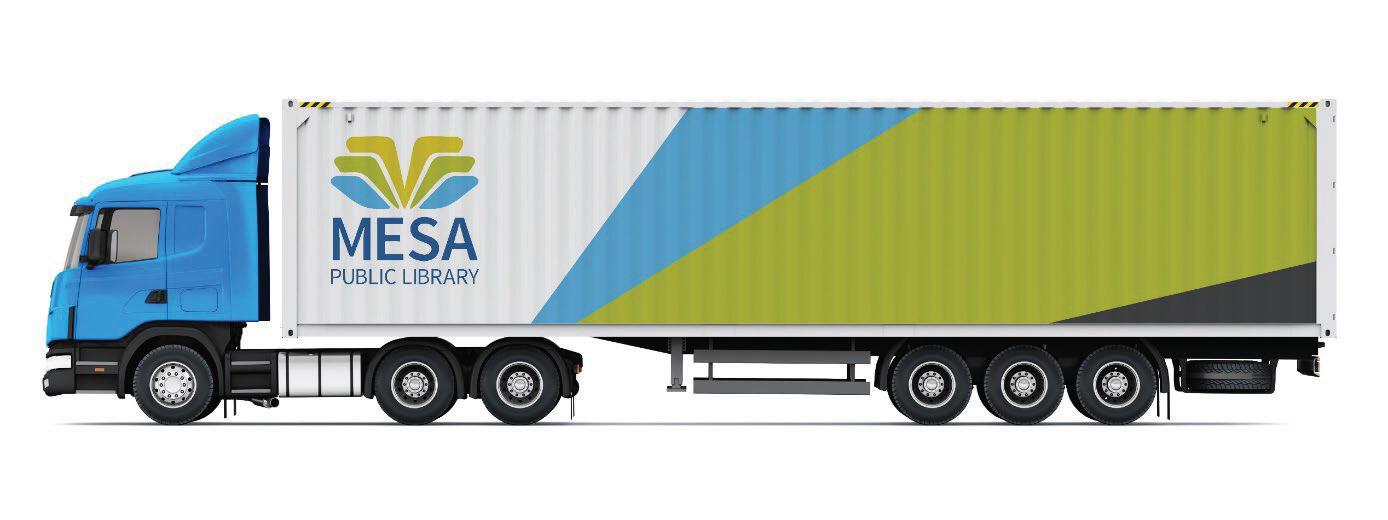
An alternate concept utilizing a prefabricated semi-mobile express library was discussed as a way to address large service gaps as quickly as possible while also providing future flexibility to respond to changing demographics.
1. PREFAB LIBRARY
There are currently two staff less express libraries in the United States. The Express Colorado and The are unique but including shared
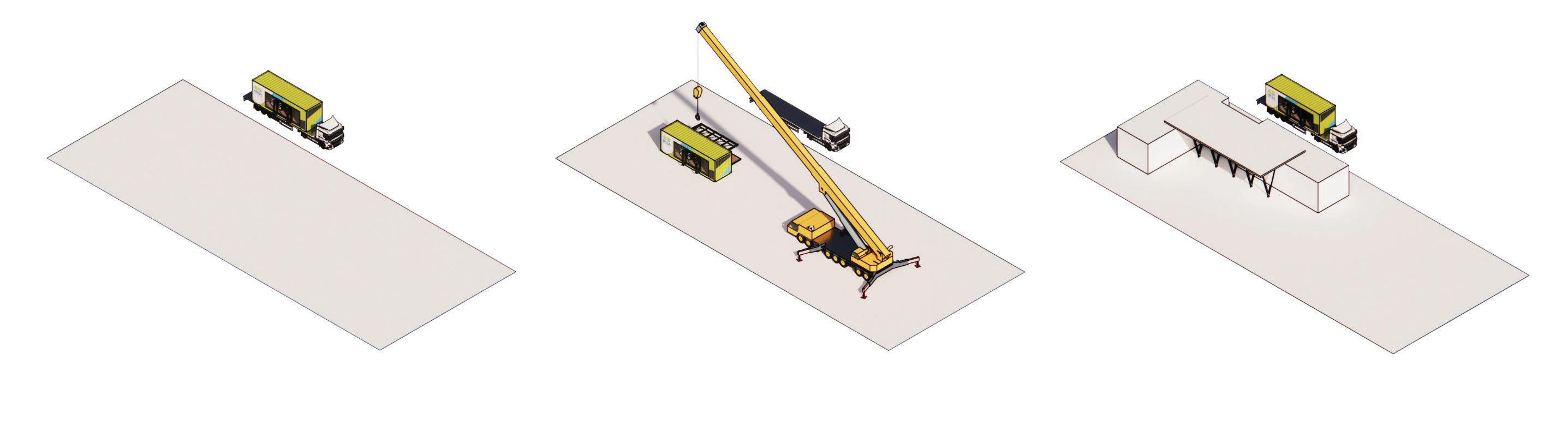
The Prefab Library concept allows for immediate service in areas identified as potential future library facilities. With all the technological services of a full branch, the prefabricated module serves as an Express Library
The Jefferson County strip mall benefiting and benefits from undeserved by
The Mesa Express
FUTURE LIBRARY
3. REUSABLE
The prefabricated module is reusable and flexible enough to be moved to another location.
1. PREFAB LIBRARY 2. TEMPORARY + EASY INSTALLATION 3.REUSABLE
2. TEMPORARY + EASY INSTALLATION
The Prefab Library concept allows for immediate service in areas identified as potential future library facilities. With all the technological services of a full branch, the prefabricated module serves as an express library.
The Prefab Library is designed to be temporary and requires minimal labor. Depending on the site, additional modules can be added to expand the library and services.
2. TEMPORARY + EASY INSTALLATION 3.REUSABLE
The Prefab Library is designed to be temporary and requires minimal labor. Depending on the site, additional modules can be added to expand the library and services.
The prefabricated module is reusable and flexible enough to be moved to another location.
The Prefab Library is designed to be temporary and requires minimal labor. Depending on the site, additional modules can be added to expand the library and services.
The prefabricated module is reusable and flexible enough to be moved to another location.
Depending on the site, additional modules and flexible enough to be moved to
Based on the identified gaps in service and the demographic information gathered, MPL leadership and RKA prepared a plan for phased sustainable growth:
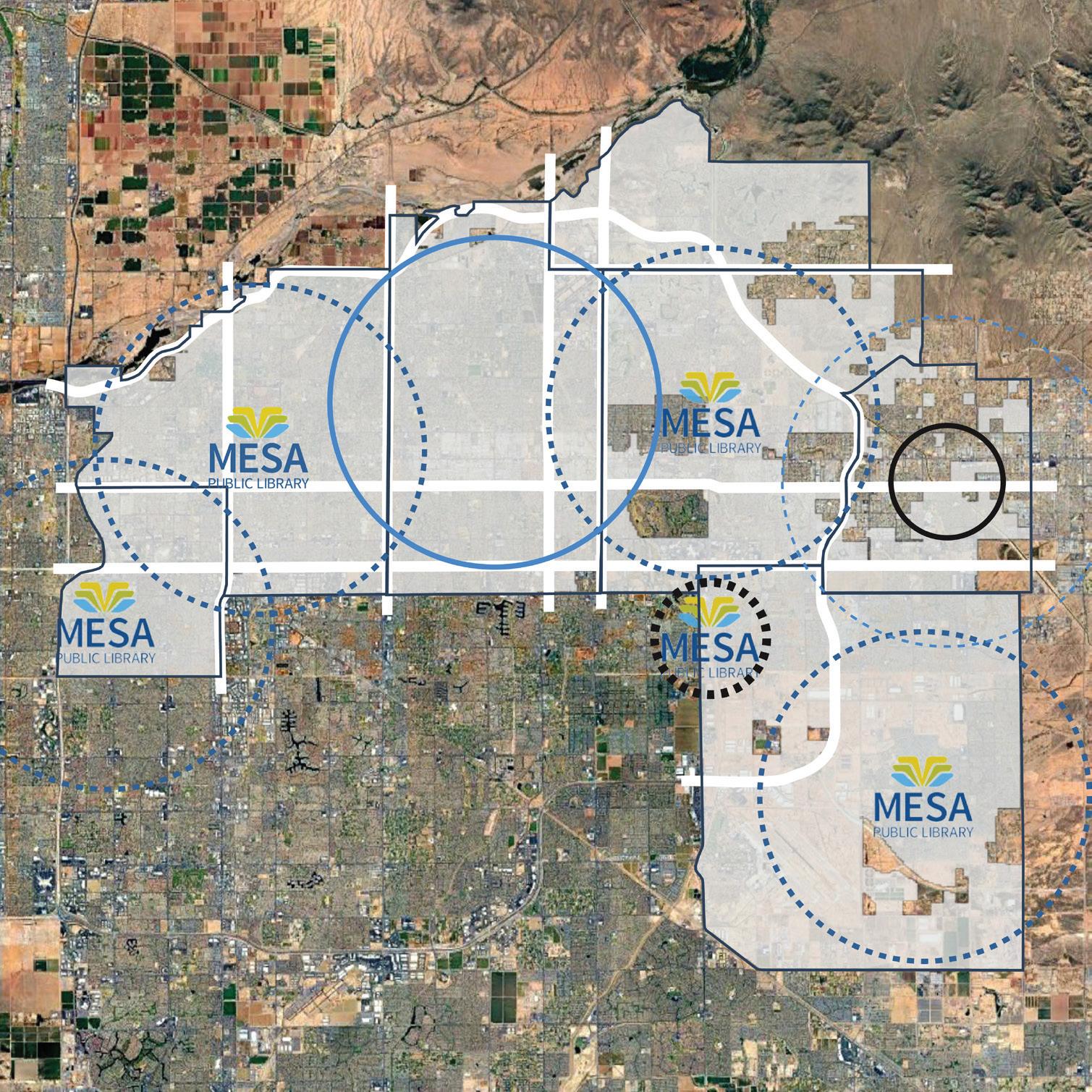
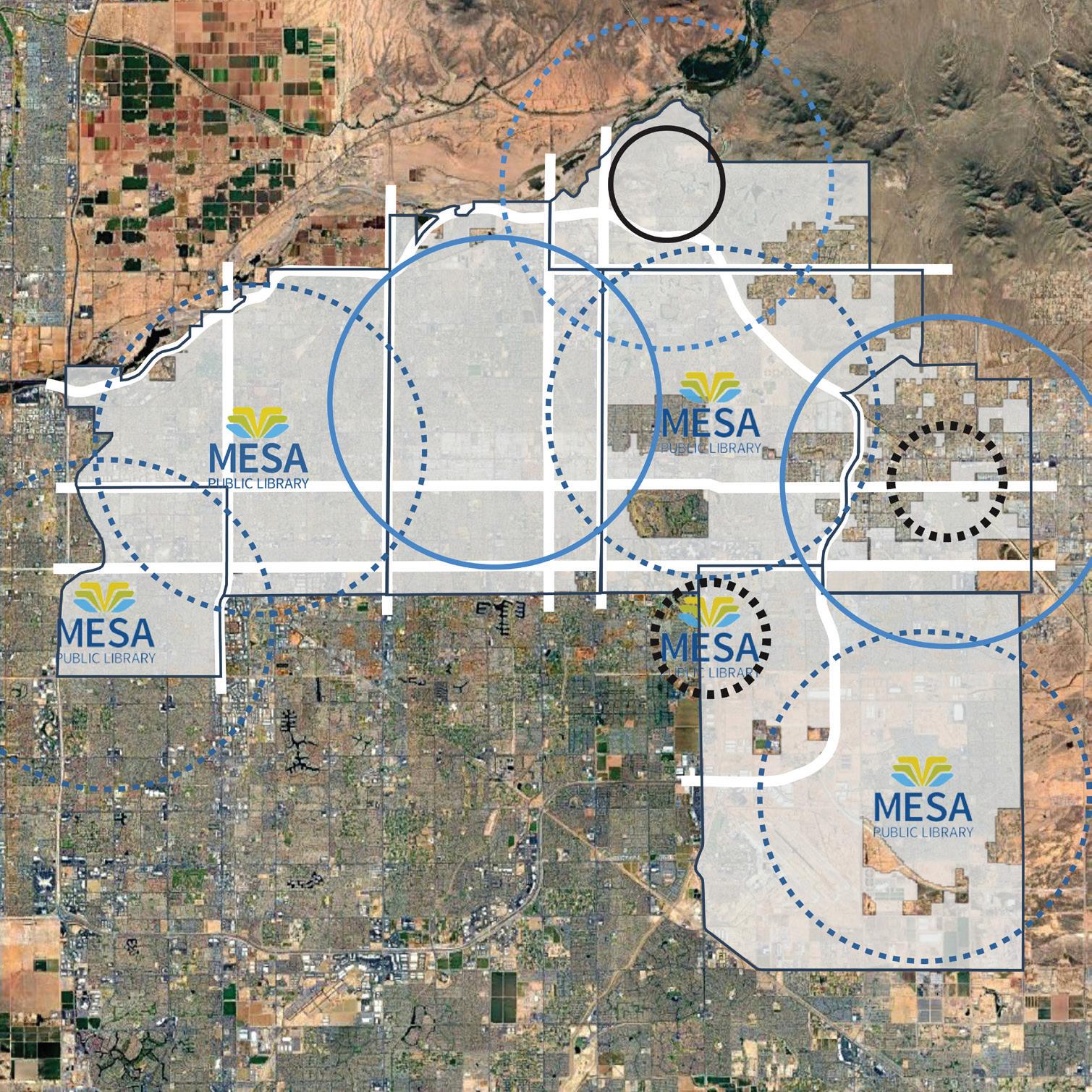
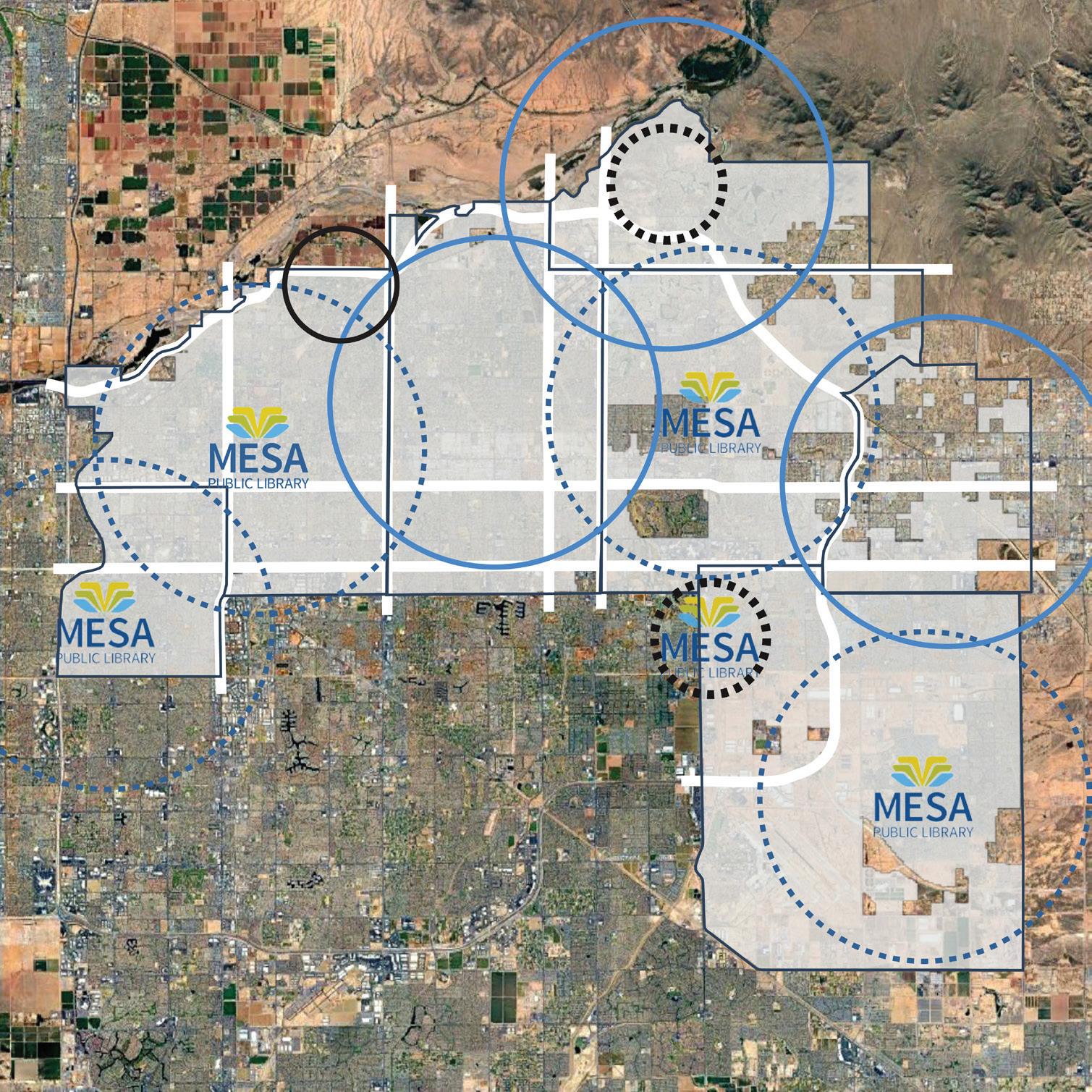
Build one full-service branch located in the CENTRAL-WEST zone. A site should be selected near urban and neighborhood centers with a three-mile service zone covering densely populated areas. Ideal sites are on city owned land and adjacent to parks and schools.
Build one prefabricated mobile express library. Ideally a site for a future full-service branch in the EAST zone would be selected and prepped for the new express library. Placing the express library where the future full-service branch will be located provides a more cost-effective way to extend services to underserved populations.
Relocate the mobile express library to a new site. Ideally a site for a future full-service branch in the NORTH zone would be selected and prepped for the express library. A site should be selected near urban and neighborhood centers with a three-mile service zone covering densely populated areas. Ideal sites are on city owned land and adjacent to parks and schools.
Build one full-service branch located in the EAST zone. The site has already been selected and partially developed for the express library in PHASE 1.
Relocate the mobile express library to a new site. Ideally a site would be selected in the northern portion of the CENTRAL-WEST zone to fill existing service gaps.
Build one full-service branch located in the NORTH zone. The site has already been selected and partially developed for the express library in PHASE 2.
At the end of the 20-year master plan the Mesa Public Library System will have closed significant gaps in the current service areas. It will be achieved through phased sustainable growth using traditional and innovative models. In addition to upgrading the existing facilities the system will include:
• One new full-service library branch in the CENTRAL-WEST zone
• One new full-service library branch in the EAST zone
• One new full-service library branch in the NORTH zone
• One mobile express library located in the CENTRAL-WEST zone with the ability to be relocated to meet future needs.
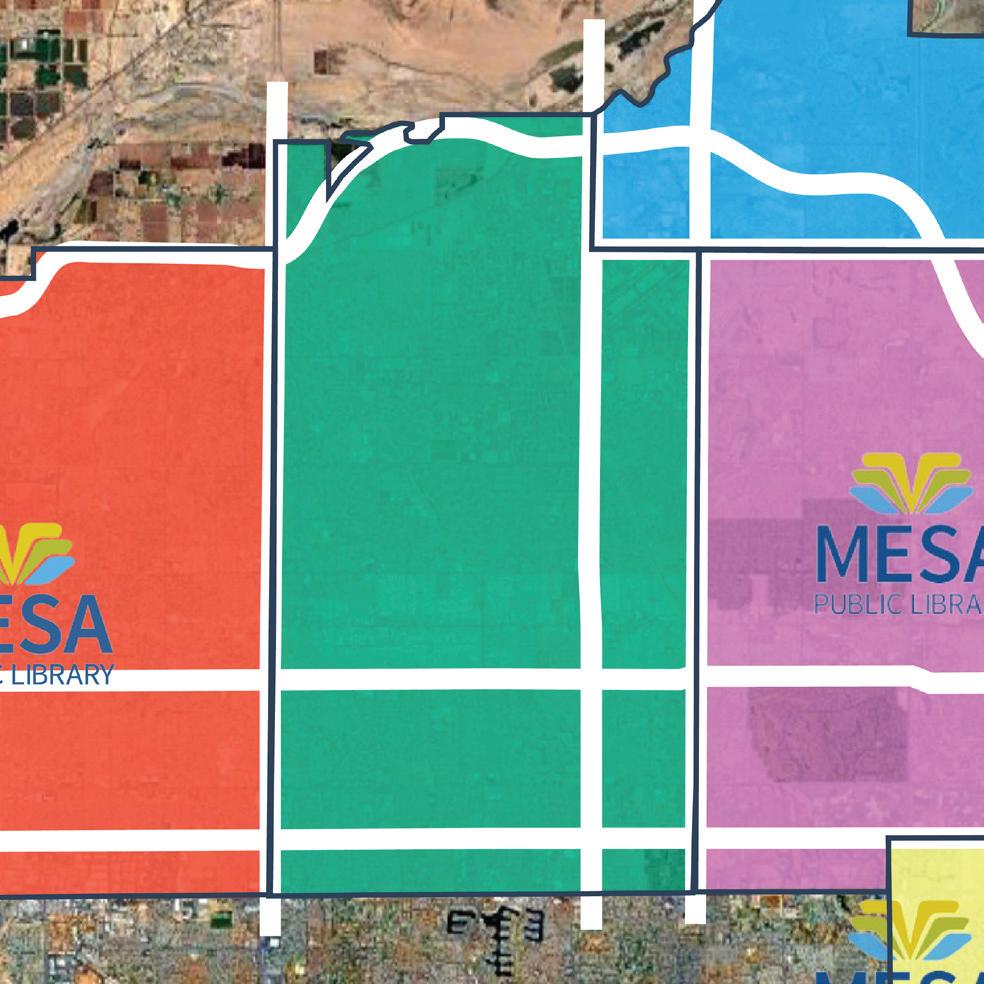
The proposed future central branch service area has a population of 129,320 within a threemile radius as of 2024. The fastest growing, and highest population, densities of this zone
is the urban center along Broadway Road that includes urban and mixed use residential surrounded by traditional residential placetypes. Future library locations can benefit from being adjacent to urban and neighborhood centers identified in the Mesa General Plan.
Through collaboration with Mesa Library leadership, a 40,000 SF facility is proposed for this zone. Recommended size was based on average sf/ population of existing facilities and proven service model size of existing Mesa facilities with similar demographics.
The facility should have a baseline of services similar to the other branches. Special consideration should be given to multi-use flexible space to adapt to future needs. Additionally, the facility should address relatively high child population percentage by providing a large children’s area with a dedicated program room.
In 2025 MPL is exploring providing a satelite location in an existing MPS facility in the Central Zone.
Source: Esri Community Analyst, 2024 Esri Community Analyst, U.S. Census Bureau URL: https://www.esri.com/
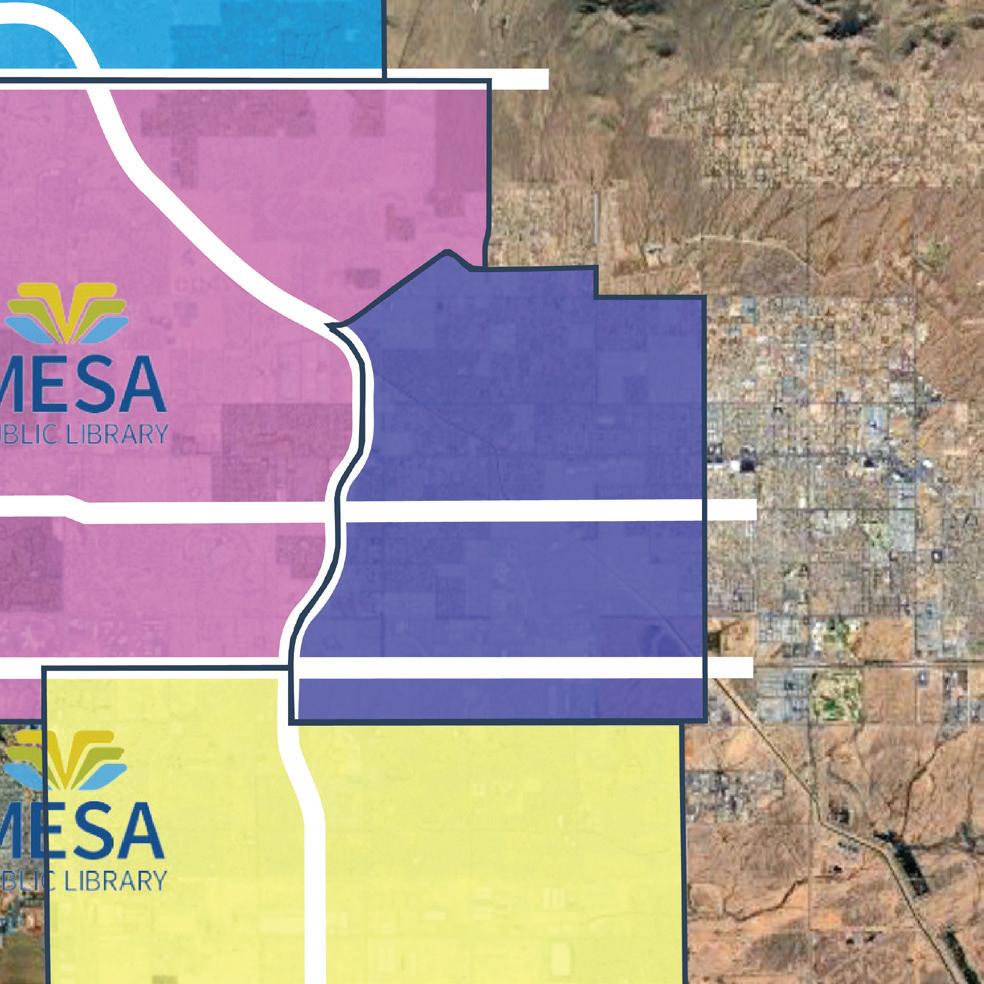
The proposed future east branch service zone has a population of 109,211 within a three-mile radius as of 2024. The fastest growing, and highest population, densities of this zone is the urban center along Broadway Road and the Superstition Freeway that includes urban and mixed use residential with a mix of traditional residential placetypes. Future library locations can benefit from being adjacent to urban and neighborhood centers identified in the Mesa General Plan.
Through collaboration with Mesa Library leadership, a 35,000 SF facility is proposed for this zone. Recommended size was based on average sf/ population of existing facilities and proven service model size of existing Mesa facilities with similar demographics.
The facility should have a baseline of services similar to the other branches. Special consideration should be given to multi-use flexible space to adapt to future needs. 2024 Demographic Characteristics
Source: Esri Community Analyst, 2024 Esri Community Analyst, U.S. Census Bureau URL: https://www.esri.com/
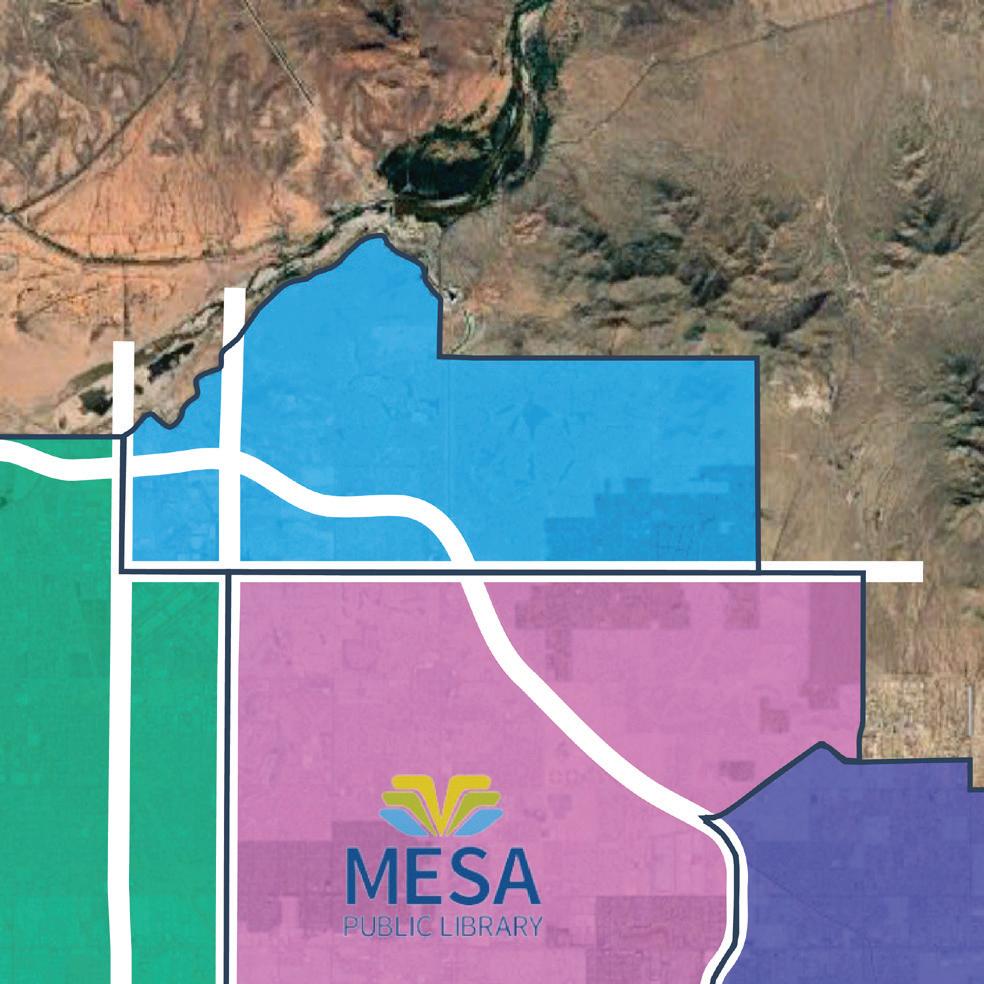
The proposed future north branch service zone has a population of 42,405 within a three-mile radius as of 2024. This area has a relatively stable population that includes traditional residential, mixed use residential, and regional employment center placetypes. Future library locations can benefit from being adjacent to urban and neighborhood centers identified in the Mesa General Plan.
Through collaboration with Mesa Library leadership, a 15,000 SF facility is proposed for this zone. Recommended size was based on average sf/ population of existing facilities and proven service model size of existing Mesa facilities with similar demographics.
The facility should have a baseline of services similar to the other branches. Special consideration should be given to multi-use flexible space to adapt to future needs. Additionally, the facility should address the older than average median age by focusing on acoustic separation of quiet and active spaces and providing multi-use and maker spaces that include adult programming.
Source: Esri Community Analyst, 2024 Esri Community Analyst, U.S. Census Bureau URL: https://www.esri.com/
Mesa has a diverse population and each library should reflect the needs of the patrons it serves. A baseline of services should be provided across all branches, programs and spaces can be tailored to better provide for service populations

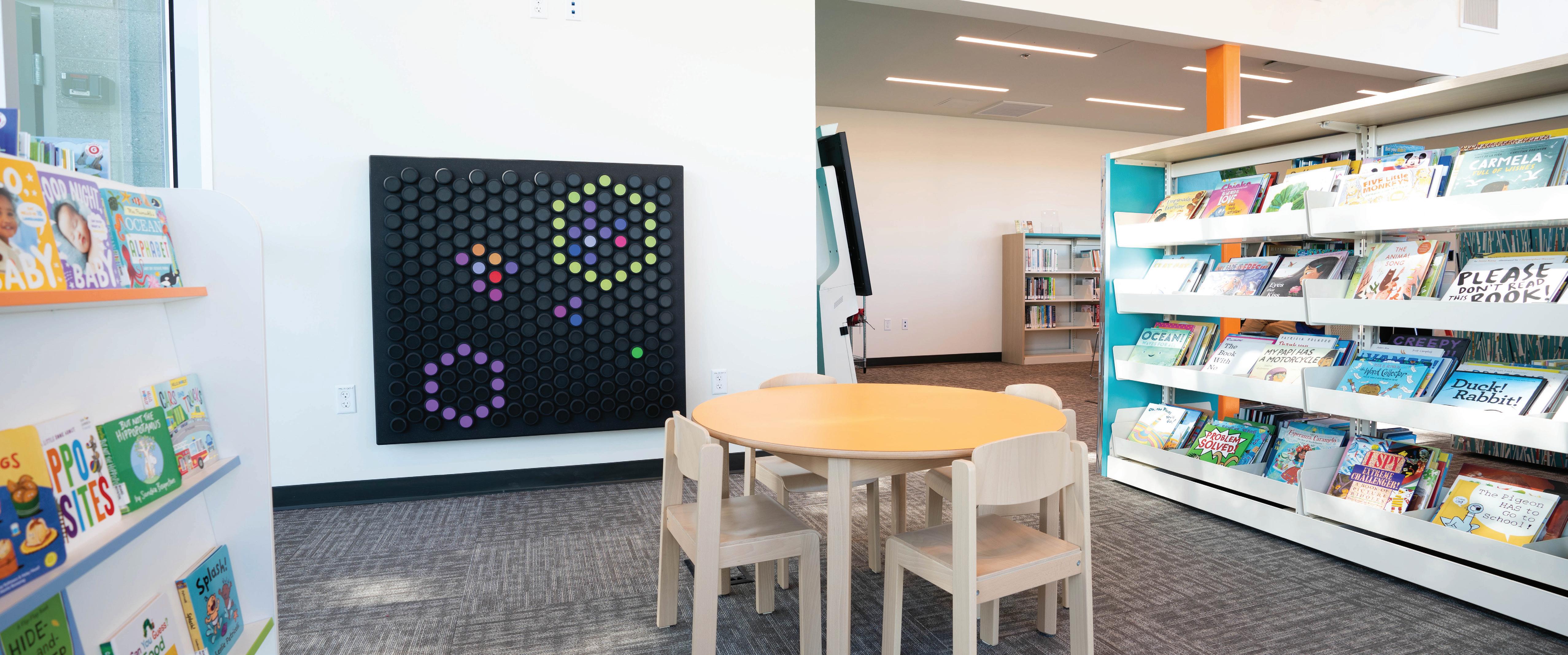
** Project packages for existing facilities have have been identified by priority level. Projects are recommended to be completed within the priority time period at mpl discretion as funds become available.
***Future facilities are assumed to be funded by bond innitiatives. Timeline shows project initiation at bond approval.
Design and build process for mobile express estimated at 24 months.
Design and build process for new branch estimated at 36 months.
Site preparation and relocation of mobile express to new site estimated at 18 months