LEGISLATIVE PRIORITIES
Citrus County, located on Florida’s Nature Coast, is home to more than 160,000 residents and some of the state’s most unique natural resources, including world-class springs, rivers, and the largest population of West Indian manatees in the United States. Our location along U.S. 19 and the Suncoast Parkway provides direct access to Tampa Bay, Orlando, and Gainesville, while allowing us to preserve the charm and character of a smaller community.
The Board of County Commissioners is focused on building for the future through smart infrastructure investments, protecting our environment, and creating new opportunities for businesses and families. From expanding utilities and transportation corridors to supporting economic development at our industrial and airport business parks, we are positioning Citrus County as a place where Floridians can live, work, and thrive.
Ensuring our voice is heard.
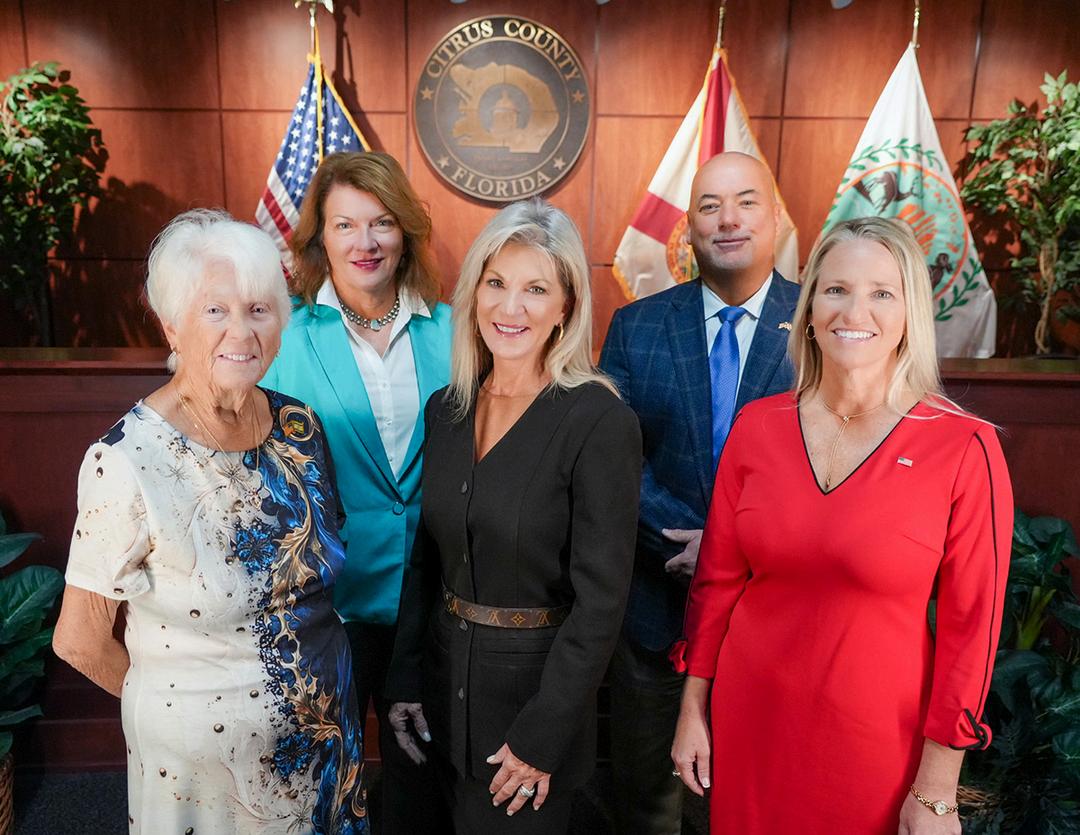
L-R: 2 Vice Chair Janet Barek, Commissioner Holly Davis, Chairman Rebecca Bays, Commissioner Jeff Kinnard, and 1 Vice Chair Diana Finegan.
nd st
Foundations for a Competitive and Sustainable Future Citrus County, Florida

Citrus County stands at the forefront of Florida’s next phase of economic development an increasingly significant region on the Nature Coast that presents exceptional opportunities for strategic investment. With a steadily increasing population, substantial commercial expansion, and unparalleled natural resources, Citrus County is not merely participating in Florida’s growth; it is actively shaping it Historically renowned for its environmental assets and small-town quality of life, the county has evolved into a dynamic center of opportunity, characterized by thoughtful infrastructure development, a flourishing tourism sector, and a diversified economic base. Its appeal lies in the unique integration of preserved natural landscapes, modern amenities, and a community deeply committed to sustainable, forward-looking progress.
Tourism remains a foundational pillar of the local economy. Premier destinations such as Crystal River and Homosassa attract over a million visitors annually, offering unique experiences unparalleled elsewhere in the nation including the rare opportunity to observe and swim with the endangered West Indian manatee in its natural habitat Additionally, the county offers world-class outdoor recreation opportunities, including spring-fed rivers, nationally recognized trails, and culturally significant heritage sites that underscore its rich history. Beyond tourism, the county’s economic momentum has been notably enhanced by the recent extension of the Suncoast Parkway (State Road 589), which provides direct, highspeed connectivity to the Tampa Bay metropolitan area and Central Florida. This critical infrastructure improvement has unlocked significant potential for industrial and commercial development, with designated enterprise zones and ready-to-develop sites attracting interest from manufacturing, logistics, and distribution sectors
The county’s leadership has been deliberate in managing this growth investing in utility modernization, expanding broadband access, upgrading infrastructure, and fostering collaboration with educational institutions to develop a skilled and adaptable workforce. Equally paramount is Citrus County’s steadfast commitment to environmental conservation. As development progresses, local policies continue to prioritize the preservation of sensitive ecosystems, springsheds, and wildlife habitats, ensuring that economic advancement is achieved without compromising the region’s natural heritage. Through comprehensive land preservation efforts, rigorous environmental standards, and active community engagement, Citrus County exemplifies the harmonious balance between growth and stewardship
In alignment with its motto, "Where Nature and Community Thrive," Citrus County is also distinguished as a region where business prospers. The county provides a competitive and business-friendly environment that encourages innovation, attracts investment, and supports sustainable economic development. As Florida continues to experience robust growth, Citrus County represents one of the state’s most strategic opportunities a locale where environmental integrity coexists with economic vitality, and where prudent investment can yield enduring benefits. For stakeholders seeking to promote impactful growth and secure Florida’s long-term prosperity, Citrus County offers a compelling and well-founded proposition
Citrus County, Florida
Guiding Principles for our 2026 Legislative Priorities
Community-Centered Governance
Support policies that improve quality of life, safety, and well-being for all Citrus County residents
Fiscal Responsibility and Transparency
Promote efficient use of public funds, transparency, and accountability in government spending.
Sustainable Growth and Development
Encourage balanced growth that preserves natural resources and community character.
Infrastructure and Public Services
Prioritize investment in transportation, water, public safety, and broadband to meet current and future needs
Collaborative Partnerships
Build strong relationships with state, federal, regional partners, and community groups to maximize resources
Protection of Local Authority
Defend local decision-making authority and oppose unfunded mandates.
Economic Opportunity and Workforce Development
Attract diverse industries, support small businesses, and foster workforce training aligned with local needs.
Health and Human Services Support
Ensure access to quality healthcare, mental health, and social services for vulnerable populations.
Environmental Conservation and Resilience
Protect natural environments and promote resilience against natural disasters
Section 1: Appropriations Requests
1.
3.
4.
5.
Section 2: Policy Proposals 1.
Section 3: Requests for Special Consideration
3.Housing
4.
5.
APPROPRIATIONS REQUESTS SECTION ONE
ISSUE SUMMARY
FLORAL CITY SEPTIC-TO-SEWER EXPANSION
The proposed expansion of septic-tosewer infrastructure in Floral City represents a critical environmental and public infrastructure priority for Citrus County. This initiative directly supports nutrient reduction goals outlined in the Homosassa/Chassahowitzka Basin Management Action Plan (BMAP) and will significantly benefit the Homosassa River, an Outstanding Florida Waterway and home to a First-Magnitude Spring
The project’s primary objective is to reduce nutrient loading into the Homosassa Springshed by redirecting wastewater flows from multiple aging and noncompliant wastewater treatment plants to the City of Inverness Wastewater Treatment Plant (WWTP). The Inverness facility produces public access reclaimed water and operates in full compliance with BMAP requirements, thereby ensuring a higher standard of wastewater treatment.
Key components of the project include the interconnection of five existing package plants Singing Forest Mobile Home Park, Stoneridge Landing MHP, Moonrise Resort MHP, Ensigns Oasis MHP, and Aunt Vera’s Antiques into the centralized sewer system Additionally, it encompasses a major septic-to-sewer conversion effort for residential properties located north of E Orange Ave , extending to Floral City Elementary School (FCE)
This segment of the project will enable sewer connections for up to 320 additional homes.
The success of this initiative is contingent upon approval of the County’s Springs Grant request for FY 25–26, which seeks $4,000,000 in funding to support the construction of a main transmission line the FCE Wastewater Interconnection that will serve as the backbone of the overall sewer expansion
In addition to the environmental benefits, this project will result in increased reclaimed water availability from the Inverness WWTP and supports broader regional water reuse goals. Furthermore, the absence of centralized wastewater infrastructure has historically limited economic development opportunities in the Floral City area. By expanding sewer capacity, this project is expected to encourage commercial and residential growth, thereby enhancing the economic vitality of the community.
None
REQUEST: The Citrus County Board of County Commissioners requests $6,227,894 to expand septic-to-sewer infrastructure in the Floral City area, advancing environmental protection, public health, and economic development through the reduction of nutrient loading to the Homosassa Springshed.
ISSUE SUMMARY
The Halls River Road Multi-Use Path (MUP) project proposes the construction of a paved asphalt path, varying in width from 6 to 12 feet, to run parallel to Halls River Road. The proposed facility will extend approximately 3.2 miles, beginning at South Riverview Circle and terminating at U.S. Highway 19.
The project corridor follows a two-lane roadway with flush shoulders and is situated within an existing right-of-way that ranges from 100 to 120 feet in width. The alignment is subject to several environmental and right-of-way constraints, which are being carefully considered as part of the project development process
The Florida Department of Transportation (FDOT) is currently responsible for the design and permitting phases of the project. Contingent upon the availability of funding, FDOT will also oversee and manage the construction phase. Construction is tentatively scheduled to commence in December 2027, with a projected duration of approximately one year.
This multi-use path is intended to provide a safe, accessible, and dedicated facility for pedestrians and bicyclists, thereby enhancing multimodal connectivity within the region.
APPROPRIATIONS REQUEST: HALLS RIVER MULTI-USE PATH
It will serve as a critical linkage between multiple residential communities and key local destinations, including restaurants, retail centers, and commercial establishments located along the corridor.
Importantly, the Halls River Road MUP will connect to the recently constructed multi-use path along U S 19, a major regional transportation facility that traverses nearly the entire length of Citrus County
The project is expected to deliver substantial benefits to the County’s approximately 160,000 residents as well as its visitors and tourists by promoting active transportation options, improving roadway safety, and fostering economic development through improved access to local businesses.
COMMITTED LOCAL FUNDING
$1,210,000
$5,200,000 APPROVED STATE FUNDING
REQUEST: The Citrus County Board of County Commissioners requests an appropriation of $2,500,000 to support the construction of the Halls River Road Multi-Use Path (MUP), a critical infrastructure project designed to enhance pedestrian and bicyclist safety, improve multimodal connectivity, and support economic growth within the County.
ISSUE SUMMARY
Citrus County respectfully seeks support from the Florida Legislature to address critical facility and infrastructure needs within the downtown Inverness government complex, with a specific emphasis on judicial space planning. The current Citrus County Courthouse and adjacent government buildings are operating at or near full capacity As the County continues to grow, the demand for judicial services is projected to increase significantly, further straining existing space and operational capabilities.
In addition to space limitations, the current configuration presents challenges related to secure access, which is essential for the safe and efficient operation of court functions. As court operations expand, ensuring appropriate separation of judicial staff, inmates, and the public will become increasingly difficult within the existing footprint The County’s long-range facility planning efforts seek to mitigate these concerns by acquiring key parcels of land surrounding the courthouse, including Park Place, the Little Italy Italian Restaurant, a vacant lot off Martin Luther King Jr. Boulevard, and potentially other properties owned by the City of Inverness.
These acquisitions will provide the necessary land base to support the phased development of additional judicial and governmental facilities. They will also allow the County to initiate design work on a structured parking garage that will be essential to support expanded operations and must precede any vertical construction This investment will ensure the continued delivery of safe, secure, and efficient public services, while also contributing to the long-term redevelopment and vitality of downtown Inverness.
CITRUS COUNTY INVESTMENT
$8,163,220*
*Judicial expansion funds allocated to date by BOCC
REQUEST: Citrus County requests a state appropriation of $5,000,000 to support the acquisition of strategically located properties and the preliminary design of infrastructure necessary to expand judicial and governmental facilities in downtown Inverness.
ISSUE SUMMARY
The current Citrus County Fire Rescue training facility is aging, functionally limited, and increasingly incompatible with the evolving demands of modern public safety training Its location soon to be surrounded by expanding residential and commercial development poses additional challenges, particularly for conducting high-risk, highintensity training exercises essential to maintaining readiness. These constraints underscore the urgent need for a new, purpose-built Regional Public Safety Training Center that can adequately support the multifaceted training requirements of fire, law enforcement, and emergency services personnel
A new regional training center would serve as a centralized hub for advanced, multidisciplinary training across all public safety sectors. This facility would not only support Citrus County’s fire and law enforcement agencies but also provide a valuable resource for surrounding counties, including Sumter, Hernando, Levy, and Marion By fostering regional collaboration, the center would promote joint training exercises, enhance interoperability among agencies, and strengthen emergency response capabilities across jurisdictions.
The proposed site could accommodate colocated facilities such as a firearms range and driver training course to meet the longterm operational needs of the Citrus County Sheriff’s Office and reduce reliance on outof-county resources
Additionally, the facility presents a valuable opportunity for partnership with the Citrus County School Board in support of public safety career pathways and technical education Incorporating a conference center and classroom complex would further enhance the center’s utility, with the added benefit of serving as a resiliency and emergency shelter during large-scale incidents or disasters.
This initiative aligns with Citrus County’s strategic goals of enhancing public safety, strengthening regional partner-ships, and investing in resilient, future-ready infrastructure It also reflects the County’s broader commitment to workforce development, professional excellence, and community preparedness. A modern facility will ensure that emergency personnel across the region receive high-quality, consistent training equipping them to respond effectively to increasingly complex emergencies and protect the safety and well-being of the communities they serve
COMMITTED LOCAL FUNDING
$250,000 Fire Impact Fees
$250,000 Citrus County School Board
REQUEST: The Citrus County Board of County Commissioners requests an appropriation of $1,500,000 for the planning and design of a Regional Public Safety Training Facility. This facility will enhance collaboration among local and regional public safety agencies by providing a centralized location for advanced, multidisciplinary training opportunities.
ISSUE SUMMARY
Citrus County has previously partnered with the Florida Department of Environmental Protection (FDEP) to implement a reimbursement program providing up to $4,000 per homeowner to offset the costs associated with connecting to central sewer infrastructure. These reimbursements covered plumbing connection costs and utility connection fees for residents within designated septic-to-sewer project areas On May 24, 2021, the County was awarded Grant LPF 0902 in the amount of $703,000 to reduce the financial burden on homeowners participating in these essential water quality improvement initiatives.
However, under current FDEP policy, grant funding is limited to costs directly related to septic tank abandonment and physical sewer connection. The exclusion of utility impact fees from eligible expenses has resulted in significantly higher out-of-pocket costs for property owners, particularly those in rural and economically vulnerable areas. As a publicly funded utility, Citrus County is unable to waive impact fees due to financial obligations and bond rating considerations, which further compounds the financial challenge for affected homeowners
To address this gap, Citrus County proposes that funding be allocated specifically for the payment of sewer connection and capacity fees for existing developed residential properties impacted by ongoing and future septic-to-sewer conversion projects. Based on the current scope of active projects, an initial appropriation of $925,000 would provide critical support to residents transitioning to central sewer service in the near term Citrus County anticipates submitting additional appropriation requests in future fiscal years, consistent with project-specific demands and the pace of residential conversions.
Restoring financial assistance for impact fee costs will promote greater participation in septic-to-sewer programs, reduce nutrient loading to impaired waterbodies, and help ensure that the burden of environmental stewardship is equitably shared among all residents.
None Identified
REQUEST: The Citrus County Board of County Commissioners requests an appropriation of $925,000 to fund sewer connection and capacity fees for existing residential properties impacted by ongoing septic-to-sewer conversion projects, thereby alleviating financial burdens on homeowners and advancing the County’s water quality improvement objectives.
POLICY PROPOSALS SECTION TWO
ISSUE SUMMARY
POLICY PROPOSAL: ANONYMOUS CODE ENFORCEMENT COMPLAINTS
Code enforcement proceedings are typically initiated following the receipt of a complaint or tip from the public either submitted via telephone, online platforms, or based on direct observation by a code enforcement officer in the course of routine duties. Given that code enforcement is inherently a local government function, the methods for receiving and processing complaints have historically varied across jurisdictions. In many communities, anonymous complaints were permitted and served as a means for residents to report potential violations without fear of retaliation In others, complainants were required to disclose their identity as part of the submission process
However, with the enactment of Section 162.06(1)(b), Florida Statutes, during the 2021 Legislative Session through CS/SB 60, individuals submitting a code violation complaint must now provide their full name and address before a local government may initiate enforcement proceedings. The legislative analysis accompanying the bill did not cite a specific problem or rationale necessitating the statutory change.
Nonetheless, the apparent legislative intent was to prevent the misuse of the code enforcement process as a tool for personal harassment or retaliation.
Despite this well-meaning objective, the mandatory disclosure of personal information introduces a significant deterrent for individuals wishing to report legitimate concerns. Complainants may now face the risk of retaliation, harassment, or intimidation by the subject of the complaint, particularly in close-knit or rural communities
As a result, many residents are now unwilling to come forward with code enforcement concerns, which has led to a measurable decline in reported violations. This decline may undermine the ability of local governments to proactively address threats to public health, safety, and welfare, thereby weakening the overall effectiveness of code enforcement systems throughout the state.
POLICY REQUEST: The Citrus County Board of County Commissioners advocates for the amendment of Florida law to reinstate the authority of county and municipal code enforcement agencies to initiate investigations based on anonymous complaints, thereby restoring the enforcement discretion that existed prior to the enactment of Chapter 2021-167, Laws of Florida.
ISSUE SUMMARY
There is currently no provision in Florida state law that authorizes Code Enforcement Officers to wear or utilize body-worn cameras (BWCs) in the performance of their duties. While law enforcement agencies across the state have long used BWCs as a tool to promote transparency, accountability, and officer safety, Code Enforcement despite often working in the field and engaging directly with the public lacks similar statutory support. As a result, local governments interested in equipping their Code Enforcement personnel with body cameras face legal uncertainty Although Citrus County does not currently have plans to pursue the use of BWCs for its Code Officers, there is growing interest from other local governments across the state in moving this concept forward.
To meet this emerging need, a change in state law is required to explicitly authorize Code Enforcement Officers to use bodyworn cameras. This statutory framework should make clear that authorizing the use of BWCs does not expand the authority of Code Enforcement personnel, nor does it deputize them or confer law enforcement powers.
BODY-WORN CAMERAS FOR CODE ENFORCEMENT
Rather, the cameras would serve a narrow and clearly defined purpose primarily documentation of interactions, increased officer safety, and enhanced public transparency. Any enabling legislation should also establish baseline standards for data management, including how footage is stored, who has access to it, and how long it must be retained. Privacy protections should be built in to safeguard both the public and employees, and all use must remain compliant with Florida’s public records and Sunshine Laws
This proposal does not advocate for a statewide mandate; it simply seeks to provide the legal foundation for local governments that wish to implement this tool based on their unique needs. By allowing local governments to decide whether and how to implement BWCs for Code Enforcement, the state can support safer, more accountable operations while respecting the differing capacities and priorities of each community. Establishing this authority now ensures that as interest continues to grow, there is a clear and consistent framework in place to guide responsible adoption
POLICY REQUEST: The Citrus County Board of County Commissioners requests the Florida Legislature to amend state law to authorize local governments to permit Code Enforcement Officers to use body-worn cameras under a clearly defined legal and regulatory framework.
ISSUE SUMMARY
Local governments across Florida are experiencing a steady decline in fuel tax revenues as advancements in automotive technology have led to increased fuel efficiency and a growing market share of electric and alternative-fuel vehicles. While this shift reflects positive progress in environmental and energy efficiency goals, it has simultaneously undermined the financial mechanisms traditionally used to support the construction, maintenance, and operation of roadway infrastructure. Fuel taxes historically levied on a pergallon basis are no longer generating sufficient revenue to meet the increasing costs associated with roadway improvements, thereby eroding the purchasing power of these critical funds
This growing disparity is further compounded by the proliferation of electric vehicles (EVs), which do not contribute to fuel-based tax systems at all. As the share of EVs in the vehicle fleet continues to grow, the imbalance between infrastructure needs and available funding will become even more pronounced. The inadequacy of the current revenue model threatens the long-term sustainability of local road systems and the safety and mobility of Florida’s communities.
POLICY PROPOSALS: ELECTRIC VEHICLE REGISTRATION FEES
Recognizing this challenge, past legislative efforts such as Senate Bill 1070 (2023) proposed the introduction of supplemental registration fees for electric and hybrid vehicles as a method of equitably distributing the costs of road usage among all drivers. This policy approach has been widely considered across the nation, as documented by the National Conference of State Legislatures (NCSL), with many states moving toward alternative funding mechanisms that reflect the realities of the evolving transportation landscape
To ensure long-term fiscal sustainability and fairness in transportation funding, Florida must adopt modern, equitable, and technology-neutral strategies. These solutions should preserve the integrity of the state’s transportation infrastructure while adapting to emerging trends in vehicle efficiency and fuel source diversification.
POLICY REQUEST: The Citrus County Board of County Commissioners urges the Florida Legislature to enact legislation that establishes a fair and equitable framework requiring electric and alternative energy vehicles to contribute appropriately toward the costs associated with the operation and maintenance of the state’s roadway infrastructure, thereby addressing the decline in local fuel tax revenues.
ISSUE SUMMARY
Code Enforcement Officers in Florida are currently excluded from the Special Risk Class within the Florida Retirement System (FRS), despite performing work that often places them in hazardous and high-stress environments. These officers routinely interact with hostile individuals, inspect unsafe structures, respond to public health and safety violations, and work in the field under unpredictable conditions. However, under existing law, their job classification does not qualify for the retirement benefits available to other public safety professionals whose roles carry similar risks
For years, the idea of including Code Enforcement Officers in the Special Risk Class has been proposed and consistently rejected, largely due to concerns about cost and scope. However, this proposal does not seek a mandate. Instead, it aims to address the first and most critical barrier: the lack of recognition of Code Enforcement Officer as a job classification eligible for Special Risk designation. By updating state statute to recognize this job title as eligible, the state can provide local governments the option not the obligation to classify their Code Officers under Special Risk if they determine it is appropriate for their workforce.
This change would not require local governments to alter their compensation structures, nor would it impose any new costs unless they voluntarily choose to opt in. It would simply establish the eligibility needed to allow flexibility and fairness in retirement planning for a profession that has evolved significantly in both responsibility and risk exposure. Additionally, it would align with the broader goal of supporting public employees who serve on the front lines of community safety and health
By recognizing Code Enforcement Officers in statute as eligible for Special Risk Retirement, Florida can give local governments the discretion to extend these benefits based on their own operational needs, workforce challenges, and fiscal capacity. It is a practical and equitable first step that respects local control while acknowledging the real-world demands of the job.
POLICY REQUEST: The Citrus County Board of County Commissioners respectfully requests the Florida Legislature to revise the Florida Retirement System statute to recognize Code Enforcement Officers as an eligible classification for inclusion in the Special Risk Class, allowing local governments the option to participate.
ISSUE SUMMARY POLICY PROPOSAL: RECORDS EXEMPTIONS FOR LOCAL GOVERNMENT OFFICIALS
Local government executives and elected officials including County Administrators, Deputy County Administrators, City Managers, and Town Managers are often required to have their personal information, such as home addresses, personal phone numbers, and email addresses, disclosed under existing public records laws. While transparency and public access to government information are fundamental to accountability, the mandatory disclosure of sensitive personal data raises significant privacy and security concerns
These officials frequently face increased exposure to harassment, threats, and intimidation due to the public availability of their personal contact details. Such risks extend beyond the officials themselves and can impact their families and private lives. The potential for misuse of this information has become a growing concern, particularly in an era marked by heightened political polarization and targeted harassment.
Balancing the public’s right to access government information with the need to protect the personal safety and privacy of local government leaders presents a complex challenge. Current laws do not sufficiently differentiate between official records and personal information, leaving individuals vulnerable.
As a result, there is increasing discussion around the need to reconsider existing public records policies to better safeguard sensitive personal data without compromising governmental transparency and accountability
POLICY REQUEST: The Citrus County Board of County Commissioners urges an amendment to Section 119.071, Florida Statutes, to incorporate an exemption protecting the personally identifiable information of County Administrators, Deputy County Administrators, City Managers, Town Managers, and their immediate family members from public disclosure.
ISSUE SUMMARY
Transportation concurrency was originally established through Florida’s Growth Management Act of 1985, which required local governments to ensure that adequate infrastructure including roadways was in place to accommodate the impacts of new development Under this framework, development approvals were contingent upon consistency with adopted level of service (LOS) standards. In 2005, the Legislature amended the Act to strengthen these requirements, mandating that transportation improvements be included in the Capital Improvements Element (CIE) of the local government’s Comprehensive Plan, be financially feasible, and be scheduled for construction within a defined timeframe.
In 2009, the Florida Legislature adopted the Community Planning Act, which made transportation concurrency optional and allowed local governments greater flexibility in determining how to manage the relationship between growth and infrastructure capacity. In 2011, the Citrus County Board of County Commissioners formally exercised this option and designated concurrency as optional within the County, effectively eliminating the mandatory requirement to maintain transportation concurrency as a condition of development approval. To reestablish concurrency, Citrus County would be required to amend its Comprehensive Plan to remove the optional concurrency designation and establish clearly defined minimum LOS standards for its roadway network.
These standards must be accompanied by specific strategies and implementation timelines and incorporated into the County’s Capital Improvements Element. In accordance with Florida Statute 163.3180, transportation improvements listed in the CIE must be scheduled to achieve the adopted LOS within a fiveyear period. Once those standards are met, a formal concurrency management system would need to be implemented to evaluate and schedule infrastructure improvements for future development, thereby ensuring that roadway capacity keeps pace with projected growth
While reinstating concurrency may offer long-term benefits for infrastructure planning and growth management, it also presents several challenges Financially, the County would need to allocate sufficient resources to meet the LOS standards, which may require identifying new funding sources under constrained fiscal conditions. From a planning perspective, existing development that has occurred without concurrency oversight may present mismatches between infrastructure capacity and demand, complicating future compliance efforts. Reestablishing concurrency would also require updated data and advanced traffic modeling to ensure accuracy in projecting future needs efforts that could demand additional staffing or outside technical assistance.
POLICY REQUEST: The Citrus County Board of County Commissioners urges the Florida Legislature to amend the Community Planning Act to provide a streamlined and more practical process for local governments to reinstate transportation concurrency, enabling more effective growth management and mitigation of traffic congestion.
REQUESTS FOR SPECIAL CONSIDERATION SECTION THREE
ISSUE SUMMARY
REQUEST
CHASSAHOWITZKA RIVER CAMPGROUND
Citrus County has entered into a 40-year agreement with the Southwest Florida Water Management District (SWFWMD) for the operation and management of the Chassahowitzka River Campground, a critical recreational and environmental resource located along the Chassahowitzka River. Under this agreement, the District retains ownership of the property, while the County assumes full responsibility for the day-to-day management, operations, and maintenance of the facility.
As part of the transition, SWFWMD has allocated $200,000 to support initial repairs and capital improvements However, Citrus County will bear the full cost of ongoing operations, including staffing, maintenance, and public programming.
The Chassahowitzka River Campground provides essential access to one of Florida’s most pristine spring-fed river systems, attracting residents and visitors for camping, boating, fishing, and naturebased recreation. The campground also serves as a gateway to broader ecotourism and conservation efforts in the region.
As a publicly accessible, environmentally sensitive site, its continued preservation and functionality are vital to maintaining both the local quality of life and the broader health of Florida’s natural resources.
The property sustained substantial damage during the 2024 hurricane season, when Hurricanes Helene and Milton caused significant flooding, erosion, and infrastructure impacts throughout the Chassahowitzka watershed Recovery and rehabilitation efforts remain ongoing, with several facilities and amenities in need of repair or replacement to restore safe, full public access
By assuming operational control, the County demonstrates a commitment to environmental stewardship, but longterm sustainability will require additional investment and support. Without dedicated funding for future improvements and ongoing maintenance, the facility’s infrastructure and ecological integrity could deteriorate over time, limiting public access and diminishing its value as a regional asset.
REQUEST: Citrus County requests that the State of Florida formally recognize the Chassahowitzka River Campground as a valuable public and environmental asset and consider allocating future funding to support its continued operation, infrastructure needs, and environmental protection. While the County is committed to maintaining the site, state investment will be essential to sustain its long-term viability, protect the river’s sensitive natural resources, and ensure that this treasured destination remains accessible and safe for generations to come.
ISSUE SUMMARY REQUEST FOR
The proposed widening of County Road (CR) 491 from Pine Ridge Boulevard to U.S. Highway 41 represents a critical component of Citrus County’s long-term transportation infrastructure strategy. The corridor serves as a significant regional arterial roadway, supporting freight movement, commuter traffic, and functioning as a designated hurricane evacuation route.
The project’s successful advancement is essential to enhance safety, improve capacity, and support the region’s continued economic growth. However, the financial demands associated with this project phase including the Project Development and Environment (PD&E) study, engineering design, permitting, and right-of-way acquisition present considerable challenges that must be carefully addressed through prudent funding strategies.
The estimated cost for this current phase of the project is approximately $37,010,000, exclusive of future construction expenditures, which will require substantially greater investment.
Citrus County presently does not possess a dedicated local funding mechanism capable of supporting projects of this magnitude. Without a dedicated revenue source, such as a transportation surtax, infrastructure impact fee, or other locally generated infrastructure fund, the County lacks the financial capacity to absorb the costs associated with the project without significantly impacting other critical public services or ongoing infrastructure maintenance.
REQUEST: The County asks that our legislators please notify us of any roadway expansion-eligible funding programs available from the State of Florida or the United States federal government that we may be unaware of.
ISSUE SUMMARY
REQUEST FOR SPECIAL CONSIDERATION: HOUSING STABILITY FOR HOMELESS SCHOOLCHILDREN
Homelessness among school-aged children in Citrus County is a pressing and multifaceted issue that profoundly affects the educational, developmental, and emotional well-being of our youth. According to the local McKinney-Vento Liaison, a significant and growing number of students currently face housing instability, which creates numerous barriers to their academic success and overall health. The lack of stable housing often forces children to change schools frequently, disrupting their learning continuity and social connections, leading to lower academic achievement and increased dropout rates. Homeless children are disproportionately impacted by developmental delays and learning disabilities, conditions that are exacerbated by the instability and stress of their living conditions
In addition to academic challenges, these children are at higher risk of mental health issues such as anxiety, depression, and behavioral disorders due to exposure to trauma, violence, and the uncertainty of their living conditions. The stress of homelessness also compromises physical health and nutrition, further impairing their ability to focus and succeed in school. The cycle of homelessness perpetuates socioeconomic disadvantage, as children who struggle academically and emotionally are less likely to graduate and more likely to experience continued instability into adulthood.
Families experiencing homelessness face significant obstacles in accessing affordable housing, employment, and supportive social services. Without targeted interventions, these families remain trapped in unstable living environments such as shelters, motels, or overcrowded housing This instability not only affects the children but also places additional burdens on schools and community resources, which often lack the capacity to fully address the complex needs of homeless students
Addressing the root causes of homelessness among schoolchildren by providing stable, affordable housing is critical to breaking this cycle. Stable housing creates a foundation for children to attend school consistently, access health and social services, and engage in learning and development in a safe and supportive environment. By prioritizing housing stability, Citrus County can significantly improve educational outcomes, promote emotional and mental well-being, and foster long-term self-sufficiency for vulnerable families.
REQUEST: The Citrus County Board of County Commissioners calls for continued funding for the Housing Stability for Homeless Schoolchildren Grant to expand support services and housing assistance for homeless students and their families.
ISSUE SUMMARY
The Invasive Plant Management Section of the Florida Fish and Wildlife Conservation Commission (FWC) is charged with the oversight and control of invasive plant species within Florida’s freshwater ecosystems. Species such as hydrilla, water hyacinth, and Brazilian pepper present significant challenges by disrupting native habitats, degrading water quality, diminishing biodiversity, and hindering recreational uses. This section is dedicated to preventing the proliferation of invasive plants, restoring impacted ecosystems, and mitigating their detrimental effects on the state’s aquatic environments
The management approach employed by the Invasive Plant Management Section is multifaceted, incorporating mechanical removal, targeted herbicide applications, biological controls, and habitat restoration initiatives. The section collaborates extensively with local, state, and federal agencies, as well as private stakeholders, to develop and implement the most effective and coordinated management strategies.
These ongoing efforts are critical to the preservation of Florida’s aquatic ecosystems, the protection of biodiversity, the enhancement of recreational opportunities, and the safeguarding of the long-term sustainability of the state’s water resources. For over thirty years, Citrus County has benefited from financial support provided by the FWC’s Invasive Plant Management Section, which has been essential in managing aquatic vegetation within the county’s waterways This enduring partnership has played a vital role in maintaining the ecological integrity of Citrus County’s freshwater systems
REQUEST: Citrus County respectfully urges the Florida Legislature to ensure full and sustained funding for the Florida Fish and Wildlife Conservation Commission’s (FWC) Invasive Plant Management Section to safeguard and maintain the health of our waterways and critical ecosystems.
ISSUE SUMMARY
REQUEST FOR SPECIAL CONSIDERATION: LOCAL GOVERNMENT CYBERSECURITY GRANT PROGRAM
The Local Government Cybersecurity Grant Program is a state-administered initiative established to assist local government entities in strengthening their cybersecurity defenses. This program allocates funding to municipalities, counties, and other local agencies to enhance the security of their digital infrastructure and safeguard sensitive data from evolving cyber threats. Recognizing the critical nature of the information managed by these entities including personal records, financial data, and essential infrastructure systems the program seeks to improve the overall cybersecurity posture of local governments, which are increasingly targeted by cybercriminal activity
In response to the rising incidence of cyberattacks, ransomware, and data breaches that threaten the continuity of government operations and the protection of citizen information, this grant program provides necessary financial support for a wide range of cybersecurity enhancements.
Eligible uses of the funds include the deployment of advanced security technologies, comprehensive cybersecurity training for personnel, system upgrades aligned with industry best practices, and the implementation of robust data protection protocols.
This program constitutes a key component of the state’s broader strategy to reinforce the cybersecurity resilience of public sector entities. Its primary objective is to equip local governments with the resources required to effectively counter sophisticated cyber threats, thereby preserving public confidence and ensuring the uninterrupted delivery of critical government services.
REQUEST: Citrus County respectfully urges the Florida Legislature to maintain and support continued funding for the Local Government Cybersecurity Grant Program to enhance the cybersecurity capabilities of local governments, safeguard critical infrastructure, and ensure the protection of sensitive data amid escalating cyber threats.
ISSUE SUMMARY
REQUEST FOR SPECIAL CONSIDERATION: NITROGEN-REDUCING SEPTIC SYSTEMS
Adequate funding for local nitrogenreducing septic system conversion programs across Florida is essential to safeguarding the state’s water quality and overall environmental health Conventional septic systems contribute significantly to nitrogen pollution by releasing excessive nitrogen into the soil, which then leaches into nearby water bodies. This process exacerbates harmful algal blooms, deteriorates water quality, leads to fish kills, and causes biodiversity loss. Florida’s freshwater springs, lakes, and coastal ecosystems highly sensitive to nutrient pollution stand to benefit substantially from the widespread adoption of nitrogenreducing septic technologies. Addressing nitrogen runoff through these conversions is critical to preserving Florida’s delicate environmental equilibrium.
Citrus County’s Septic Upgrade Incentive Program offers an innovative and effective approach to reducing nitrogen pollution by providing financial assistance to residents for upgrading from conventional septic systems to advanced nitrogen-reducing technology. These upgraded systems are specifically designed to minimize nitrogen discharge into soil and groundwater, thereby preventing further contamination and contributing to the restoration of surface water bodies.
The program has demonstrated significant success and strong, sustained community interest, reflecting public recognition of the vital importance of protecting water resources. By reducing nitrogen loads entering the environment, this initiative helps maintain biodiversity, supports healthier aquatic ecosystems, and ensures compliance with state and federal water quality standards. Expanding this program will enable more residents to participate, amplifying its positive impact on water quality, public health, and environmental sustainability. Continued and increased funding is critical to ensuring that Citrus County can comprehensively address nitrogen pollution and safeguard natural resources for current and future generations.
Local governments, which often lead these efforts, require sufficient financial support to implement effective septic system upgrade programs. Without adequate funding, many property owners especially those in rural or economically disadvantaged areas may face prohibitive costs associated with necessary upgrades A well-funded program promotes equity by making environmentally sustainable technologies accessible to all residents.
REQUEST: The Citrus County Board of County Commissioners urges the Florida Legislature to provide continued funding for local septic system conversion programs ahead of the proposed mandate requiring the adoption of nitrogenreducing systems.
ISSUE SUMMARY
REQUEST FOR SPECIAL CONSIDERATION: SADOWSKI HOUSING TRUST FUND
Established in 1992, the Sadowski Housing Trust Fund serves as a vital mechanism for addressing Florida’s affordable housing needs. Funded primarily through documentary stamp taxes collected from real estate transactions, the Trust Fund provides a reliable and recurring source of revenue dedicated to housing programs across the state. It supports key initiatives such as the State Housing Initiatives Partnership (SHIP), which delivers critical services including down payment assistance, emergency home repairs, and the development of affordable rental housing. In addition, the Fund enables the Florida Housing Finance Corporation to expand and preserve affordable housing opportunities for low- and moderateincome families, helping ensure access to safe, stable, and affordable homes
As Florida continues to experience population growth and a sharp rise in housing costs, the need for sustained and robust investment in affordable housing infrastructure has never been more urgent. Without full funding of the Sadowski Housing Trust Fund, Florida risks deepening its housing affordability crisis, leaving many working families, seniors, and vulnerable residents unable to secure adequate housing. Restoring and protecting the full allocation of Trust Fund revenues for their intended purpose is essential for preventing homelessness, increasing housing availability, and enhancing quality of life throughout the state.
Consistent investment in affordable housing not only stabilizes families and communities but also helps reduce long-term public expenditures on emergency services, health care, and social safety nets.
Beyond its social impact, the Sadowski Housing Trust Fund also delivers significant economic benefits. Funds invested in affordable housing generate employment in the construction, real estate, and home improvement industries contributing to local economies and creating ripple effects in related sectors. Leveraging these resources as originally intended promotes economic vitality, community resilience, and inclusive growth.
Continued commitment to fully utilizing the Sadowski Housing Trust Fund reflects Florida’s dedication to building thriving communities where all residents have the opportunity to live in safe, affordable, and dignified housing In the face of mounting housing pressures, preserving and strengthening this critical funding source is essential to meeting the state’s current and future housing needs.
REQUEST: Citrus County respectfully urges the Florida Legislature to fully restore and protect all revenues dedicated to the Sadowski Housing Trust Fund for their intended purpose of addressing the state’s affordable housing needs. Maintaining the integrity of this Trust Fund will ensure continued investment in critical programs such as the State Housing Initiatives Partnership (SHIP) and other initiatives that expand and preserve affordable housing.
ISSUE SUMMARY
REQUEST
The Florida Department of Transportation’s Small County Outreach Program (SCOP) is specifically established to assist counties with populations below 200,000 in enhancing their transportation infrastructure. Recognizing the unique challenges these smaller jurisdictions face in securing adequate funding and maintaining road networks, SCOP serves as a critical financial resource to support essential projects such as roadway resurfacing and reconstruction. The program is instrumental in addressing the transportation requirements of these communities by promoting improvements in road safety, mobility, and overall infrastructure quality
Funding under SCOP is distributed to local governments through a competitive application process, enabling counties to prioritize projects that address vital roadways integral to residents’ daily travel, emergency response access, and regional economic activity. Eligible projects may include surface rehabilitation as well as more comprehensive reconstruction efforts aimed at optimizing traffic operations and enhancing safety standards.
The Florida Department of Transportation administers SCOP to ensure the equitable allocation of funds in compliance with state construction guidelines and safety regulations. Through this program, the state fosters effective partnerships with smaller counties, thereby supporting local economic development through improved transportation connectivity. SCOP is essential in guaranteeing that all areas of Florida, irrespective of population size, have the necessary resources to sustain safe, reliable, and efficient transportation networks for their communities
REQUEST: The Citrus County Board of County Commissioners requests continued funding for the Florida Department of Transportation’s Small County Outreach Program (SCOP) to support critical transportation infrastructure improvements, ensuring safe and efficient road networks that foster equitable development and economic growth in smaller counties.
ISSUE SUMMARY
REQUEST FOR SPECIAL CONSIDERATION: WATER QUALITY IMPROVEMENT GRANT PROGRAM
The Water Quality Improvement Grant Program, administered by the Florida Department of Environmental Protection (FDEP), is a vital funding mechanism that enables local governments across Florida to implement projects aimed at reducing nutrient pollution and improving water quality. This program provides critical financial support to counties, municipalities, and other governmental entities for infrastructure projects that address nutrient loading from key sources such as wastewater (including septic-tosewer conversions), stormwater runoff, and agricultural activities To qualify for funding, projects must be located within impaired waterbodies that do not meet nutrient or nutrient-related water quality standards, or within designated Total Maximum Daily Load (TMDL) basins, Basin Management Action Plan (BMAP) areas, Reasonable Assurance Plan areas, Alternative Restoration Plan areas, or Rural Areas of Opportunity as defined in section 288.0656, Florida Statutes.
Historically, this grant program has played an instrumental role in assisting communities like Citrus County in advancing water quality restoration projects aligned with state and regional environmental priorities.
These efforts are particularly important in areas such as the Homosassa and Chassahowitzka Springsheds, where nutrient reduction is necessary to protect Outstanding Florida Waterways and fragile spring ecosystems.
However, for Fiscal Year 2025–2026, eligibility for funding under the Water Quality Improvement Grant Program was limited exclusively to projects located within the Indian River Lagoon and Biscayne Bay. While those areas are undeniably in need of restoration, this restrictive funding approach has significantly hindered progress in other parts of the state, including many rural and environmentally sensitive regions that are actively engaged in nutrient reduction planning and implementation.
Reestablishing broader eligibility will ensure that all communities with qualifying projects regardless of geographic location have equitable access to the resources needed to protect water quality, comply with regulatory mandates, and preserve Florida’s natural environment for future generations.
REQUEST: Citrus County urges the Florida Department of Environmental Protection and the Florida Legislature to restore a statewide scope for the Water Quality Improvement Grant Program in future funding cycles.
ISSUE SUMMARY REQUEST
Once a thriving, ecologically rich waterway, the Lower Withlacoochee is now experiencing severe degradation due to decades of hydrologic alteration, unchecked nutrient pollution, and habitat loss. The State of Florida, despite the river's designation as Outstanding Florida Waters and its federal recognition as a navigable waterway, has not sufficiently protected this valuable resource
Over time, urban, commercial, and agricultural development in the region has led to significant reductions in base and spring flows. These reduced flows have fundamentally altered the river’s ability to sustain aquatic life and flush out sediments and nutrient accumulations Elevated nitratenitrogen levels have triggered recurring algal blooms and proliferation of invasive aquatic species, leading to the near-complete loss of native submerged vegetation. These conditions threaten the river’s biodiversity and have significantly degraded its recreational and economic value.
Several feasible engineering paths exist to restore natural flows, including the modification or addition of structures to redirect flows from Lake Rousseau back into the lower river, and the use of spillways to control outflows between the barge canal and the river itself. Another viable option would be to utilize the existing Lock structure at Inglis Dam to facilitate controlled discharges through the Rock Dam, restoring natural flushing events.
These interventions would improve habitat conditions, reduce algal buildup, and support fishery recovery while lowering long-term maintenance costs.
Beyond flow restoration, basin-wide efforts are needed to reduce nutrient pollution, upgrade aging wastewater infrastructure, and rehabilitate natural aquatic habitats. This includes prioritizing septic-to-sewer conversions, enforcing minimum flow and level standards, upgrading wastewater treatment systems to remove nitrogen more effectively, and reducing pollution through improved land use practices. Special attention should be given to regulating fertilizer and herbicide use in buffer zones and along Lake Rousseau, where past chemical treatments have contributed to habitat loss and water quality impacts.
The long-term restoration of the Lower Withlacoochee River will not only benefit Citrus County but also neighboring counties and the broader state economy. Enhanced ecological function, increased recreational use, and restored fisheries will support regional tourism and reduce costly reactive maintenance efforts currently borne by state and local governments. This effort should be viewed not merely as the restoration of a single component, but rather as the improved, integrated management of an entire riverine system.
REQUEST: The Citrus County Board of County Commissioners requests legislative support and state funding to restore ecological flows and improve water quality in the Lower Withlacoochee River and its connected spring systems, safeguarding biodiversity, recreational value, and regional economic benefits.