mailroom



“Unlocking the Power of Direct Mail for Charities”
This magazine is designed to give UK charities the knowledge and confidence to make direct mail one of your most effective and compliant fundraising channels. Inside, you’ll find practical guidance on harnessing creative, data-driven campaigns, insights into new opportunities such as the soft opt-in rule, and clear, accessible explanations of VAT rules—including where VAT exceptions apply and how to maximise available reliefs for your organisation.
Our aim is to demystify the essentials—whether it’s understanding how and when VAT is charged
on printed matter, discovering ways to reduce your costs through VAT mitigation schemes, or ensuring every campaign meets the latest regulatory standards. You’ll also benefit from best-practice tips for personalisation, guidance on data compliance, and expert advice to help you engage and grow your supporter base in a changing fundraising landscape.
At Citipost Mail, we’re here to help you make every penny and every message count. Let this guide empower your team to deliver smarter, more impactful, and compliant direct mail campaigns—so you can focus on what matters most: your mission.

Direct mail remains a vital part of the UK charity fundraising landscape because it delivers results that digital channels alone simply can’t match. Unlike digital messages that can be easily overlooked or filtered out, a physical letter or pack arrives directly in the supporter’s home—creating a tangible, lasting presence. This not only increases the likelihood of your message being seen, but also strengthens emotional connection and trust with your cause.
As charities face rising digital competition and changing supporter expectations, direct mail stands out for its proven ability to cut through the noise, spark action, and drive meaningful engagement—whether prompting a donation, signposting digital platforms, or deepening long-term loyalty. When integrated with targeted data and creative messaging, direct mail consistently delivers some of the highest response rates in the sector, justifying its place at the heart of any smart fundraising strategy.
79%
of all charity donations come from direct mail, making it the most effective channel for fundraising.
85%
of charity mail is opened, with items often revisited multiple times, increasing engagement.
Response rates to warm charity mail campaigns average 7.9%, far outperforming most digital channels.
Direct mail remains the foundation of a successful multi-channel marketing mix building awareness, trust, and action.
70%
of recipients go online after receiving charity mail, bridging the gap between offline and digital marketing.
These sector-leading statistics show why direct mail remains a cornerstone of successful UK charity fundraising:
• Trusted by Donors: Nearly 4 in 5 charity donations originate from direct mail, underscoring the channel’s unique power to motivate action and inspire giving on a scale unmatched by digital alone.
• Reliably Opened and Engaged With: 85% of charity mail being opened, and often revisited multiple times, direct mail stands out for its ability to capture attention and build real relationships with supporters.
• Outstanding Response: Warm direct mail campaigns see average response rates of 7.9%, making them by far the most effective fundraising channel for turning supporter interest into action.
• Bridging Offline and Online: Direct mail not only secures donations; it also actively drives people online, supporting integrated campaigns that combine the best of physical and digital marketing.
• A Worthy Investment: A significant 61% of the average charity marketing budget is allocated to direct mail, reflecting its proven ROI and vital role in both acquisition and stewardship strategies.
Whether you’re looking to deepen supporter loyalty, reach lapsed donors, or drive up new donations, these figures demonstrate that direct mail delivers engagement, action, and long-term value.

Recent years have seen a renewed focus on cold direct mail as an effective channel for charities seeking to reach new donors and supporters. In 2024, industry analysis revealed that cold direct mail response rates and ROI both increased, signaling the channel’s ongoing value despite a challenging fundraising climate and higher print and postage costs.
This resurgence is partly a response to stricter GDPR regulations and changes in data privacy laws, which have led many charities to carefully review how they manage supporter data. While GDPR initially meant a shift towards ‘consent only’ marketing, many organisations have adopted a ‘legitimate interest’ basis for postal mail, allowing them to reach new audiences in a compliant way while ensuring transparency and robust safeguarding of personal information.
In practice, cold mail remains a preferred channel for many charities:
• According to recent figures, 80% of UK charities state that mail is a crucial part of their fundraising mix.
• The average response rate for cold direct mail is currently 0.9%, with campaigns that integrate mail seeing higher engagement and longer dwell times compared to digital alone.
• Donors typically engage with mailed charity appeals on four separate occasions, underscoring mail’s ability to cut through and make a lasting impression.
• Cold mail has enabled charities to extend campaign reach beyond existing supporters, provided that data usage stays firmly within GDPR guidelines and best practice. The result is a highly targeted, measurable, and effective way to drive supporter engagement and income.
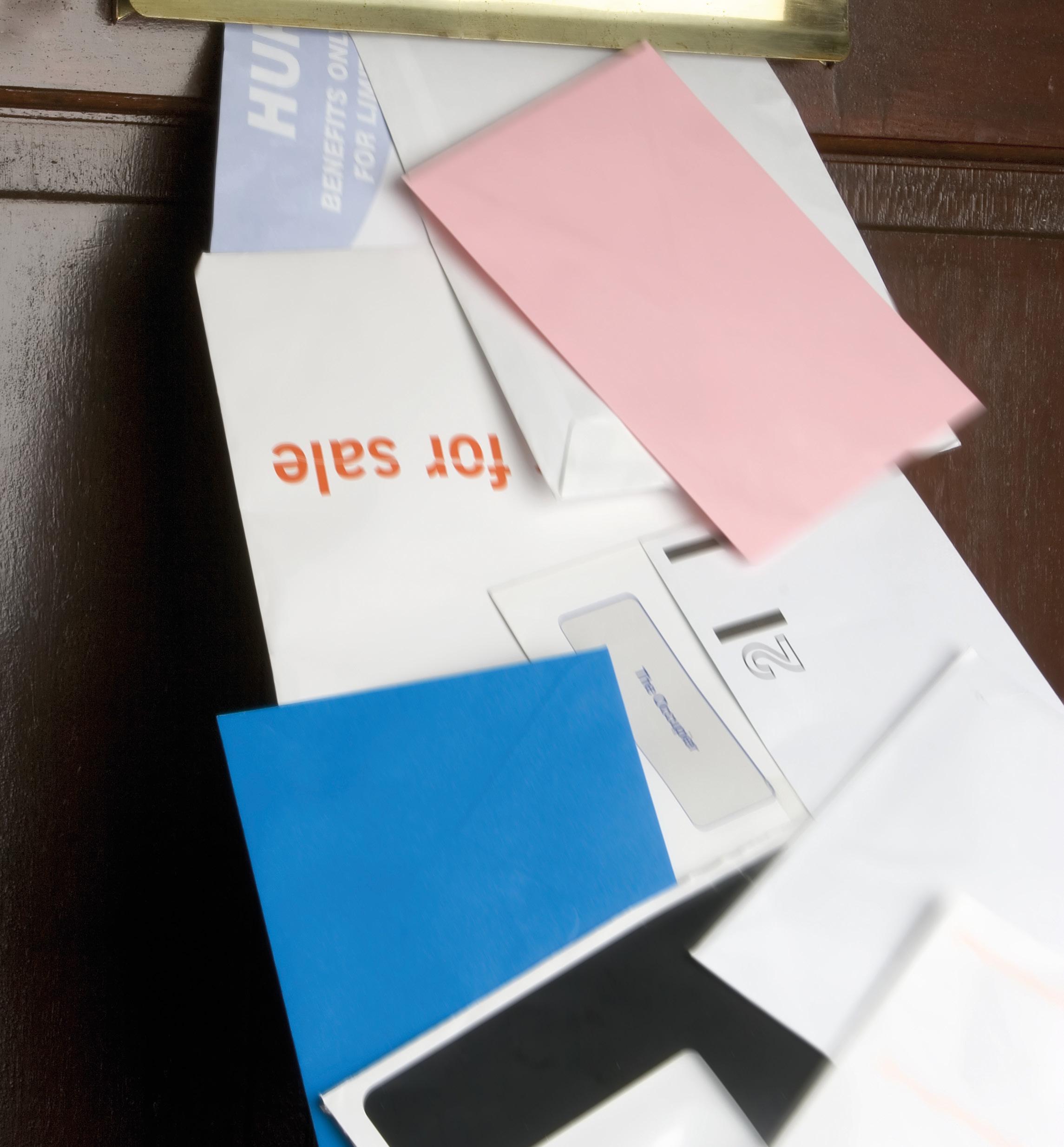
When planning a mail campaign, charities have three main options: Direct Mail, Partially Addressed Mail (PAM), and Door Drops. Each approach has different benefits, costs, and levels of targeting —so understanding the differences helps you meet your budget and campaign objectives.
1 2
What is it?
Mail sent to named individuals at their addresses using your supporter or prospect data.
How is it used?
Personal, tailored communications with existing supporters: thank you letters, fundraising asks, appeals, welcome packs.
What is it?
Mail sent to households on a postcode basis, addressed to ‘The Occupier’ or a campaignspecific salutation (e.g., “Dear Dog Lover”), without using individual supporter data.
How is it used?
To acquire new supporters, reach lookalike audiences, or target specific postcodes without needing personal data—ideal for GDPR-compliant acquisition.
Key benefits:
• Highest level of personalisation.
• Strongest relationships and trust.
• Highest response rates.
Key benefits:
• More targeted than door drops, less cost and data requirement than direct mail.
• Reach up to 30% more households on the same budget as direct mail.
• Exclude existing supporters to avoid duplication.
What is it?
Printed material delivered to every household in a defined geographic area, without any personal or address data.
How is it used?
Broad awareness campaigns, event promotions, or regional fundraising appeals where low cost and mass reach matter.
Lifespan in the home:
• Direct Mail: +7 days
• Partially Addressed Mail: 6-7 days
• Door Drops: 5-6 days
“Partnering with Citipost Mail has enabled us to access the most cost-effective mail campaign solutions”
The British Psychological Society
Key benefits:
• Lowest unit cost (as little as 6p per leaflet).
• No data or consent required and fully GDPR-compliant.
• Maximum regional reach.
• Want to nurture or update current supporters? Choose direct mail for personalisation and strong relationships.
• Looking to grow your supporter base or reach new audiences efficiently? Partially Addressed Mail offers a smart middle ground.
• Need maximum awareness on a limited budget? Door drops provide the broadest coverage at the lowest price.
Carefully weighing your goals, supporter data, and budget will help you select the right strategy —or combine them for maximum impact.
Selecting the most appropriate postal service for your charity’s direct mail is key to balancing cost, impact, and timing.
There are three main service tiers—Priority, Standard, and Economy—each designed to suit different campaign needs and budgets.
Overview
The fastest option, ideal for urgent or time-sensitive mail campaigns, such as fundraising appeals tied to events or strict deadlines.
Delivery Speed
Typically delivered within 1–2 working days after collection (commonly “D+2”). Provides rapid delivery Monday to Saturday.
Best For
Urgent calls-to-action, lastminute event invitations, or communications where timing is critical.
Cost
Much higher than standard and economy services due to speed and handling.
Overview
The most widely chosen service for everyday mail campaigns where quick delivery is important but not critical.
Delivery Speed
Arrives within 2–3 working days, striking a reliable balance for most campaigns.
Best For
Appeals, supporter updates, newsletters, general engagement where a 1–2 day window is not essential.
Cost
More cost-effective than priority, but faster than economy—ideal for most campaign schedules

Overview
For non-urgent, costsensitive mail campaigns. Offers more flexible delivery times with typical handoverto-delivery in up to four to five working days.
Delivery Speed
Within 4–5 days, sent on standard delivery routes.
Best For
Bulk communications, reminders, information packs, or broad awareness campaigns where savings outweigh speed.
Cost
Lowest postage rates offered among the three options.
Lifespan in the home:
To access these services and secure the most competitive rates, there is a minimum volume requirement of 4,000 items per mail campaign for sorted mail service entry. Posting at this scale enables your charity to benefit from optimal pricing; smaller volumes may be subject to alternative pricing structures or less favourable rates.
(Effective July 2025)
Since the changes introduced on 28th July 2025, the way mail is delivered via Royal Mail’s universal service has fundamentally shifted. These updates affect both the timing and frequency of direct mail delivery, making it essential for charities to review campaign planning and delivery schedules.
Although it was originally planned that Standard and Economy mail would no longer be delivered on Saturdays from July 2025, Royal Mail is continuing to provide Saturday deliveries for these services for an interim period. What we do know for certain is that Saturday deliveries for all non-Priority services (Standard, Second Class, and Economy mail) will end nationwide in due course. The removal of Saturday deliveries is a confirmed part of the national delivery changes, but Royal Mail has not yet published a fixed implementation date.
Royal Mail intends to launch its alternative delivery model across the UK, this will take time to deploy and make the changes needed in each delivery office. Once implemented at each delivery office: :
• First Class mail and parcels continue to be delivered Monday to Saturday, maintaining six-day-a-week service for the most urgent communications.
• Second Class, Standard, and Economy mail will be delivered on a bi-weekly rotational schedule.
Each household receives deliveries on set days that change every week: for example, one week they might receive post on Monday, Wednesday, and Friday, and the next week on Tuesday and Thursday. Delivery days are determined and rotated nationally, meaning not all addresses will receive mail every weekday.
• Campaigns previously planned to arrive ahead of weekends or key events must now allow for weekday-only delivery, and potentially several extra days for final in-home arrival.
• Appeals, reminders, and event invites require new lead-time planning to maximise effectiveness under the new model.
Citipost Mail’s account management team is fully up to speed on these national delivery changes. We will:
• Advise you on the optimal handover times to Royal Mail, ensuring your campaign lands when it will be most effective.
• Plan around the new delivery schedules so your time-sensitive appeals and mail campaigns still achieve the desired impact.
• Work with you collaboratively, adjusting campaign plans to take full advantage of the current postal landscape—whatever your campaign objectives.
When planning a direct mail campaign, choosing the right pack format is vital for achieving your charity’s objectives within budget. Every format—enveloped letters, one-piece mailers, and postcards—has its strengths. At Citipost Mail, we guide you through these choices, ensuring your campaign is cost-effective and impactful.
What are they?
• Traditional addressed mail campaigns including a letter, donation form, and sometimes extra inserts, all inside an outer envelope.
Impact:
• Create a sense of importance, privacy, and trust.
• Allow for personalised storytelling and in-depth communication—ideal for appeals, membership renewals, or sensitive updates.
What are they?
• Self-contained folded leaflets or brochures sealed without an envelope— sometimes called “self-mailers.”
Impact:
• Visually engaging and easy to read at a glance.
• Efficient for expressing a clear message quickly and cost-effectively.
• Less private than enveloped packs but more interactive than a postcard.
• Higher perceived value boosts response rates and donor loyalty.
Cost Considerations:
• Generally more expensive due to separate components, enclosing, and higher postage.
• Price per item increases with pack weight, number of inserts, and level of personalisation.

Cost Considerations:
• Lower production and fulfilment costs than enveloped packs.
• Heavier or complex folds may raise postage rates, but still often cheaper than full envelope packs.
What are they?
• Flat cards with a message and call to action printed on one or both sides —no envelope needed.
Impact:
• Attention-grabbing and concise.
• Perfect for reminders, event invites, or acquisition campaigns.
• Immediate visibility; low barrier to reading.
Cost Considerations:
• Most cost-effective pack option, minimal print and fulfilment costs.
• Lowest postage on the Standard service, but can not be sent on an Economy service.
• Less space for storytelling; not suitable for confidential or highly personalised messages.
Appeals, donor updates,
Campaigns, info leaflets
Reminders, events, acquisition
Choosing the right pack is a strategic decision. Citipost Mail’s expert team will:
• Assess your campaign objectives, target audience, and budget.
• Recommend formats that balance impact, cost, and practical considerations.
• Help you optimise pack content to meet Royal Mail requirements and maximise postal discounts.
• Suggest design tweaks, such as adjusting paper weight, size, or layout, to reduce production costs while preserving effectiveness.
• Offer free pack consultations and reviews, sharing the latest sector insights to ensure every pound you spend delivers maximum value.
Whether you need a high-response fundraising pack or a budget-conscious awareness mailer, Citipost Mail works in partnership with you from concept to delivery. Let us help you create a tailored package that connects with supporters, fits your budget, and advances your charity’s mission.


At Citipost Mail, we understand that compelling print and creative choices are at the heart of successful charity communications. Our team partners with you from day one—offering specialist advice, innovative ideas, and hands-on support at every stage.
“Citipost Mail have gone above and beyond to implement tailored processes that suit our specific needs, and their ongoing customer service and account management have been consistently excellent” Anthony Nolan
These sector-leading statistics show why direct mail remains a cornerstone of successful UK charity fundraising:
• Bespoke Pack Design: We help you explore all your options, from classic enveloped appeals and striking one-piece mailers to cost-effective postcards and innovative formats. Our specialists guide you on the advantages, costs, and tactical uses of each pack type, ensuring your campaign format aligns with your goals, data, and budget.
• Prototyping and Testing: Want advice on what works before you commit? We can provide print and pack samples,mock-ups, and A/B split testing, helping you assess visual impact, tactility, before large-scale production.
• Format Optimisation: Our experts suggest subtle design adjustments—choice of paper stock, size tweaks, sustainable materials, or targeted inserts—to elevate your fundraising pack and optimise for postal discounts and environmental responsibility.

• Personalisation at Scale: Leveraging supporter data, we deliver highly personalised print—variable names, tailored donation asks, or segmented messages—meaning every recipient feels valued and understood.
• Watching your Footprint: We offer advice on sustainable formats, including FSC-certified paper, plastic-free wrappings, and vegetable-based inks, helping you meet donor expectations for environmentally responsible fundraising.
• Campaign Workshops: Whether you have a fully formed concept or a blank page, our creative advisors can facilitate campaign planning sessions, idea generation, and messaging workshops— tailored specifically for charities’ needs.
• Impactful Storytelling: We specialise in clear, emotive copywriting and eye-catching design that brings your cause to life, moves supporters, and encourages action. From donor letters to campaign flyers, we ensure every word and image works harder for you.
• Resonating Designs: Our in-house and partner studio offers full creative design support— developing artwork, layouts, and bespoke visual identity for appeals, newsletters, and donor communications, ensuring your charity’s mail campaigns look professional and inspire action.
• End-to-End Print Management: We handle every aspect of your direct mail production—from creative concept and data preparation, right through to printing, fulfilment, and despatch. This leaves your team free to focus on driving your charity’s mission.
Our creative and print consultancy has helped charities of all sizes:
• Increase response rates while controlling production costs.
• Launch new campaigns or refresh existing programmes with confidence.
• Build supporter trust with beautiful, compliant, and impactful mail campaigns.
• Compliance and Accessibility: All creative proposals are checked against regulatory and accessibility standards. We can advise on accessible design (large print, plain English), legal requirements, and best practices to ensure your communications are inclusive and trustworthy.
Wherever you are in your planning journey, Citipost Mail is ready to help you maximise every aspect of your print and creative—from initial brainstorm to final drop. Contact us for a free creative consultation and let’s create campaigns that deliver lasting impact for your cause.

Contact our team for a free campaign consultation. We’ll discuss your objectives, data, and ideas, then recommend the best format, creative approach, and service level for your needs. You’ll get a tailored plan and sample pack with clear timelines and next steps.
VAT can have a significant impact on the cost of your fundraising campaigns. While many charities know about VAT mitigation on postage through the Agency Agreement, it's just as important to understand where VAT exceptions and charges apply on printed materials themselves. Making the right choices allows you to unlock further savings—and avoid unexpected costs.
Zero-Rated Printed Items:
Some printed materials are eligible for VAT zero-rating if they meet HMRC’s criteria and are supplied to a UK-registered charity. These include:
• Appeal letters (if their primary purpose is soliciting donations)
• Brochures, booklets, leaflets, catalogues
• Annual reports, journals, manuals, instruction guides
• Donation envelopes (when specifically printed for fundraising)
• Books, newspapers, magazines, hymn/prayer books, pamphlets, education materials
Standard-Rated Items:
Some items are always subject to standard VAT:
• Business cards, general stationery (e.g. letterheads, invoices)
• Diaries (unused), calendars, posters, greeting cards
• Stickers, labels, folders
• General-use envelopes, order forms, postcards, receipt books, price tags
Books, Booklets, Brochures, Leaflets, Catalogues
Annual Reports, Journals, Manuals, Textbooks
Appeal Letters (soliciting donations)
Donation Envelopes (over-printed for fundraising)
Business Cards, Stationery, General Envelopes
Greeting Cards, Calendars, Posters, Diaries (unused)
Stickers, Labels, Folders
When multiple printed items are mailed together, their VAT status is determined by the "package test":
• If your package includes more zero-rated items than standard-rated, the whole package may be zero-rated.
• If there are more standard-rated items, the package is standard-rated.
• If equal, look at the cost of each: the higher value determines the VAT status.
For example, a fundraising pack containing an appeal letter, campaign flyer, and donation envelope (all zero-rated) with only a reply-paid envelope (standard-rated) would likely be zero-rated overall.
Zero-rated
Zero-rated
Zero-rated
Zero-rated
Standard-rated
Standard-rated
Standard-rated
• Always clarify the primary purpose of appeal letters and ensure donation envelopes are clearly marked.
• Consult your print provider or account manager to confirm zero-rating eligibility before committing to print.
• For non-print items or anything ambiguous, refer to HMRC’s guidance or seek professional advice to avoid unexpected VAT costs.
• Overseas or non-UK charities generally do not qualify for these VAT reliefs unless also registered with HMRC.
• Inner donation envelopes and appeal letters overprinted for fundraising qualify for zero-rating, but outer mail envelopes do not.
• Only items made entirely of paper or card count toward the package test.
When it comes to bulk campaigns and achieving vital VAT savings, it’s essential that any agency agreement is arranged directly between the charity and an accredited Downstream Access (DSA) provider like Citipost Mail. This direct relationship is the only way to ensure the agreement functions correctly and is fully compliant with HMRC disbursement rules.
Crucially, charities need to be aware that mailing houses and intermediaries cannot legally hold the agency agreement on their behalf. Any arrangement involving third-party control risks breaching HMRC’s disbursement regulations, potentially exposing the charity to unplanned VAT liabilities or compliance scrutiny. A tri-party agreement, between the charity, DSA provider, and Royal Mail, is the gold standard and the only structure that secures VAT exemption on bulk postage costs for charitable organisations.
Insisting on a direct agency agreement with a DSA provider not only ensures compliance and cost savings, it also protects longstanding supplier relationships and prevents misunderstandings that could compromise fundraising budgets. Charities are strongly advised to review existing setups and always deal directly with trusted DSA providers for agency agreements, this is one of the most important safeguards in the sector
Many charities cannot reclaim VAT, significantly increasing postage costs. Citipost Mail's Agency Agreement solution means:
• Charities buy postage via Citipost Mail as an agent, enabling VAT-free Royal Mail Wholesale postage.
• VAT is only payable on Citipost Mail’s handling and logistics services, reducing your overall VAT bill.
• Full transparency and compliance with HMRC.
A signed Agency Agreement and up to six weeks for approval. Your Citipost Mail dedicated account manager handles all paperwork.
• Use personalisation techniques such as customised letters and tailored content to increase open and response rates.
• Combine direct mail with digital elements for integrated campaigns that boost engagement up to fivefold
• Employ storytelling and clear calls to action to inspire donations and strengthen supporter relationships.
• High quality, clean, and segmented data is critical to target the right audience and maximise ROI.
• Direct mail benefits from more lenient GDPR restrictions than email marketing, making it a trusted channel post-GDPR.

Thanks to the Data (Use and Access) Act 2025, UK charities can now benefit from a soft opt-in exemption —a major shift that modernises how you stay in touch with new supporters via digital channels.
The soft opt-in allows charities to send marketing messages (including email, SMS, and other digital communications) to supporters without needing prior opt-in consent—provided certain conditions are met:
• Contact details were obtained while the individual was donating, volunteering, or otherwise expressing support.
• The communication is directly related to your charity’s aims (e.g. donation requests, campaign updates).
• An opt-out is clearly offered at the time of data capture and with every message sent.
• It applies to new supporters only—existing contacts remain under prior consent terms.
• Increased reach: Engage more supporters across more channels—quickly and legally.
• Greater fundraising potential: Sector estimates suggest the rule change could unlock up to £290 million in additional donations.
• Streamlined compliance: Use legitimate interest more confidently—with clear limitations and responsibilities.
At Citipost Mail, we’ll help you upgrade your supporter data strategy to make the most of this new opportunity—while maintaining best-practice compliance.
Before you launch your next campaign, are you confident your supporter database is working as hard as it could be?
Our Free Data Health Check delivers a clear, actionable assessment of your data quality—identifying hidden issues, exposing outdated records, and highlighting opportunities for segmentation and personalisation.
• Save on wasted mail and improve deliverability
• Reach lapsed donors or duplicate records you didn’t know existed
• Uncover how to use your data more efficiently under new compliance rules
No guesswork. No jargon. Just smart insight you can use right away.
Let our experts guide you through the results—and help you build more efficient and effective campaigns from the data you already have.
To build trust and safeguard your charity, it’s vital that every direct mail campaign meets the standards set out in the Fundraising Regulator’s Code of Fundraising Practice. This means:
• Transparency: Be open, honest, and fair in all communications.
• No pressure: Never place undue influence on supporters or use misleading statements.
• Opt-outs: Ensure it’s easy for recipients to opt out of future mail campaigns.
For full guidance, refer to the Fundraising Regulator’s latest code.
Charity communications should be inclusive and accessible to all. Consider offering your direct mail in:
• Large print
• Plain English
• Alternative formats (Braille, audio, easy-read)
Highlight on your materials that accessible options are available upon request so every supporter can engage with your cause.
Make sure every mail item clearly displays:
• Your charity’s registered name
• Charity registration number (where applicable)
• Principal office address or contact details
Providing this information enhances supporter trust and, in some cases, is a legal requirement for compliance under charity and fundraising laws.
Before sending any campaign, check your lists against the Mailing Preference Service (MPS) to avoid contacting individuals who have opted out of unsolicited mail, unless they have an existing relationship with your charity. Regularly update suppression lists for deceased or ‘gone-away’ records and those who have chosen not to receive further communications.
When including items like thank-you gifts, certificates, or campaign documents:
• Avoid items that could create financial guilt, embarrassment, or inappropriate pressure.
• Ensure all enclosures align with the Fundraising Regulator’s guidance for responsible incentives.
“A job which has, in the past, taken us many days to complete can be taken care of at the touch of a button”
Cancer Support UK
End your planning process with this quick-reference checklist:
Are your materials honest, open, and fair?
Have you included your charity’s registered name and number?
Is there a clear and easy opt-out mechanism?
Can recipients request accessible formats?
Have you screened your list against MPS and updated suppression files?
Are your enclosures appropriate and in line with fundraising rules?
Does every campaign comply with the latest Fundraising Regulator Code?
Including these best practices will help ensure your mail pieces inspire confidence, boost supporter engagement, and uphold your charity’s reputation.
Fast. Easy. Reliable.
Transform the way your charity or organisation sends mail — whether it’s a single letter or an entire campaign, Digi-Mail makes it effortless from your desktop.
Do you need to send supporter letters, fundraising packs or vital campaign updates? With Digi-Mail, it’s as simple as upload, click and go. In just 10 seconds, your documents can be ready for dispatch — no more standing by the printer or stuffing envelopes.
Lightning-fast
Upload your campaign in seconds — Digi-Mail handles the rest.
No technical know-how needed
Simple and intuitive, no training needed.
Smart for campaigns of all sizes
Send one document, or thousands, instantly.
We do the hard work
Our expert Digi-Mail team will print, enclose, and post out your mail, ensuring your communications arrive quickly and professionally.
Free up your team to do what matters most
Caring, fundraising, supporting, changing lives. Digi-Mail puts simplicity and speed at the heart of your communication, letting your message reach supporters when it counts.

Ready to experience the difference?
Send smarter, save time, and empower your cause with Digi-Mail. Contact us today to arrange a free demo. citipostmail.co.uk/contact

Citipost Mail is a leading UK-based expert in end-to-end marketing solutions, specialising in creative, print, data, direct mail, and digital mail services. As one of the UK’s largest independent downstream access postal provider, we offer charities a unique blend of expertise, cost efficiency, and personalised service to help you engage supporters effectively and maximise your fundraising impact.
With decades of experience serving a wide range of sectors, including the charity market, Citipost Mail is trusted by organisations that demand high quality, reliability, and value. Our dedicated account managers guide you through every stage of your campaign—whether creative development, data handling, print production, or mail delivery—providing tailored solutions designed around your unique needs.
Strategic campaign planning, impactful design, messaging, and personalisation that connect emotionally with your audience.
High-quality, sustainable print production for letters, brochures, leaflets, and other collateral.
Data cleansing, segmentation, management, and GDPR-compliant mail lists to target supporters precisely.
End-to-end management of your mail campaigns, print, fulfilment, and delivery optimisation to maximise response.
Citipost Mail: Your partner for smarter, more effective charity communications.
Innovative hybrid mail solutions that combine digital sending with physical mail delivery, saving time and cost while maintaining quality.
Let’s work together to make every penny— and every message—count for your cause.
Deep charity sector expertise
We understand your challenges and provide practical advice to maximise impact while respecting tight budgets.
Comprehensive solutions
From creative design to print, data management, direct mail, and Digi-Mail, all under one roof.
Cost-effective campaigns
Our Agency Agreement and bulk mail discounts stretch your budget further.
Dedicated support
A single point of contact ensures smooth project management and expert guidance.
Security and compliance:
Fully ISO-accredited and GDPR-compliant services protect your supporter data.





Want practical tips, downloadable resources, and the latest insights for your charity’s next fundraising campaign?
Scan this QR code to visit our exclusive online hub for charities. Whether you’re planning a direct mail appeal, seeking compliance guides, or ready to connect with an expert, our dedicated landing page offers everything you need to make your next campaign a success

Discover how Citipost Mail can help your charity unlock the full power of direct mail, reduce costs through VAT mitigation, and run campaigns that deliver measurable results. Contact us today for a free consultation, and let us tailor a solution designed for your unique fundraising goals.
Find out more Citipost Mail – Your partner for smarter, more effective charity communications.
Visit: www.citipostmail.co.uk
Call: 0203 2600 140
Email: charityteam@citipost.co.uk