Welcome to the options process at CIS. This options booklet is designed to guide you through the choices the Year 9 students must make as they prepare for Key Stage 4. At CIS we provide a broad and balanced curriculum, tailored to the needs of each student, that opens up a world of opportunities at the end of Year 11.
What is IGCSE?
IGCSE is the acronym for International General Certificate of Secondary Education. Our examination board is Pearson Edexcel which is the one of the largest and most popular exam boards in England. This qualification is comparable with GCSE but with appropriate international content and assessment that will enable successful progression for learners. IGCSE examinations are generally undertaken across Key Stage 4, which are years 10 and 11 and are designed for all ability ranges. The courses support students to develop a range of transferable skills (such as problem solving, critical thinking, leadership and collaboration) as part of their IGCSE curriculum. These skills will ensure that students are better equipped to access higher levels of academic study, and will be able to demonstrate highly sought after skills to their future employers
IGCSE Assessment
The subject information will explain the assessment arrangements for each course. All IGCSEs at CIS are linear in nature with final external examinations being taken in the Summer Term of their Year 11. There are also opportunities for some students to take these examinations early if this is the agreed route for them.
Some IGCSE courses have an element of coursework, known as the controlled assessment, which is prepared in class and at home but completed under examination conditions in school. Tasks are marked by CIS teachers then externally moderated by the examination board. All controlled assessments must be completed before examinations can be undertaken. These pieces of work must be completed under direct supervision and cannot be taken home. Although the amount of coursework varies from subject to subject, all of it requires students to work independently over a period of time. It is essential that students manage their time effectively from the start of their IGCSE courses to avoid a build-up of coursework deadlines and class commitments.
IGCSE Grading
The grading of IGCSE is in the form of numbers ranging from 1 to 9, with 1 being the lowest and 9 the highest.
The Curriculum
The curriculum at CIS has been carefully considered to enable students the curriculum time they need to excel at IGCSE.
The Curriculum
The curriculum at CIS has been carefully considered to enable students the curriculum time they need to excel at IGCSE.
Core Subjects
All students study the Core Subjects
• English Language IGCSE.
• English Literature IGCSE.
• Mathematics IGCSE.
• Modern Foreign Language IGCSE, either French or Spanish.
• At least one Science IGCSE from the selection.
• Personal Social and Health Education, or PSHE, which is non examined.
• Physical Education, or PE, which is non examined.
Selecting Subjects
When students select their options, please encourage them to consider the following advice. Course options cannot be guaranteed as they are subject to maximum and minimum class sizes.
• Choose what you enjoy and what you are good at.
• Consider your future career choices.
• Carefully read through the courses to ensure the content is what you were expecting.
• Choose a balance of courses you are familiar with and any new subjects.
• Students who wish to complete a language degree at university are advised to choose both Spanish and French.
• Talk to your teachers or Miss Teru, our Careers Counsellor, if you need further support.
Avoid the Following
• Don’t allow your choices now to limit what you would like to do in Sixth Form or at university. Advice is available if you are unsure.
• Don’t choose courses based on what your friends want to take.
• Don’t choose a course because of the teacher.
• Don’t take more than two coursework subjects.
• Taking subjects that are similar such as Economics and Business Studies as this limits your other options and some institutions will not allow for both.
Options Timeline
Please complete the options choices by Monday, 13th April using the link below. This will enable our boarders to discuss their options when at home with their families.
https://forms.gle/munp8aNy8LueAJtq7
Any additional IGCSE requests can be made at the end of the Google Form.
Options Choices
• All students will take the subjects in the core column.
• All students will then select a subject from each column which must include a Modern Foreign Language.
• Avoid a build-up of coursework deadlines and class commitments.
• We recommend that students do not select to take both Economics and Business Studies due to the crossover topics within the courses.
• We recommend that students avoid having two or more coursework subjects.
• Every student will also take PSHE and PE as part of their compulsory curriculum.
ENGLISH LANGUAGE
Pearson Edexcel International GCSE (4EB1)
COURSE CONTENT
The objectives of this qualification are to enable students to:
• read a wide range of texts fluently and with good understanding.
• use knowledge gained from wide reading to inform and improve their own writing.
• write effectively and coherently using Standard English appropriately.
• use grammar correctly, punctuate and spell accurately.
• acquire and apply a wide vocabulary alongside literary terminology, linguistic and structural conventions.
• broaden and deepen literacy skills.
• read and respond to a variety of genres.
• read critically; make comparisons between texts and analyse writers’ ideas, perspectives, and craft.
• construct and convey meaning in written language, matching style to audience, purpose and form.
• inventively develop transactional and imaginative writing skills for a variety of purposes and audiences and genres.
ASSESSMENT ARRANGEMENTS
100% external assessment; 3 hours
Section A – short and long answer questions related to two previously unseen text extracts; 40 marks.
Section B – one directed/transactional writing task (article, speech, letter) based on the ideas presented in the source texts involving a given audience, form or purpose; 30 marks
Section C – one writing task from a choice of three (discursive, narrative, and descriptive) 30 marks.
ENGLISH LITERATURE
Pearson Edexcel International GCSE (4ET1)
COURSE CONTENT
The objectives of this qualification are to enable students to:
• engage with and develop the ability to read, understand and respond to a range of literary texts (poetry, prose, drama).
• develop an appreciation of the ways in which writers convey themes and achieve effects.
• develop the skills needed for close/critical reading.
• explore diverse cultures, social issues, and themes.
• find enjoyment in reading literature and understand its influence on individuals and societies.
• demonstrate a close knowledge and understanding of texts; maintain a critical style and present an informed personal engagement.
• analyse the language, form and structure used by writers to create meanings and effects.
• explore links and connections between texts.
• understand the relationships between texts and the contexts in which they were written.
ASSESSMENT ARRANGEMENTS
Paper 1; 2 hours
Students will be provided with the anthology poems in the examination.
Section A – Unseen Poetry: one essay question exploring the meaning and effects created in an unseen poem. 20 marks
Section B – Anthology Poetry: one essay question from a choice of two, comparing two poems from Part 3 of the Pearson Edexcel International GCSE English Anthology. 30 marks
Section C – Modern Prose: one essay question from a choice of two on the set text. 40 marks
Paper 2; 1 hour 30 minutes
Open Book: Students will be provided with the two selected plays in the examination.
Section A – Contemporary Drama: one essay question from a choice of two on the set text. 30 marks
Section B – Literary Heritage: one essay question from a choice of two on the set text. 30 marks
DRAMA
Pearson Edexcel GCSE (1DR0)
COURSE CONTENT
The objectives of this qualification are to enable students to:
• apply knowledge and understanding when devising, performing and responding to drama.
• explore performance texts; understand their social, cultural and historical context including the theatrical conventions of the period in which they were created.
• develop a range of theatrical skills and apply them to create effective performances.
• work collaboratively to generate, develop and communicate ideas.
• develop creatively, effectively, independently and reflectively.
• contribute as an individual to a theatrical performance.
• reflect on, analyse and evaluate a range of works.
• develop an awareness and understanding of the roles and processes undertaken in contemporary professional theatre practice.
• adopt safe working practices.
• recognise and understand the roles and responsibilities of performer, designer and director.
• understand how performance texts can be interpreted and performed.
• build a portfolio.
• create and develop a devised piece from a stimulus.
• perform a devised piece.
• analyse and evaluate the devising process and performance.
ASSESSMENT ARRANGEMENTS
100% external assessment; 3 hours
Component 1: Devising (1DR0/01)
Non-examination assessment 20% of the qualification – 48 marks
Component 2: Performance from Text (DR0/02)
Non-examination assessment 20% of the qualification – 48 marks
Component 3: Theatre Makers in Practice (1DR0/3A or 3B)
Written examination: 1 hour 45 minutes
40% of the qualification – 60 marks
DESIGN & TECHNOLOGY
Pearson Edexcel GCSE Design & Technology (1DT0)
COURSE CONTENT
Design and Technology is a creative and practical subject that enables students to design, make and evaluate products that solve real-world problems. Students develop the ability to think creatively, analyse user needs and apply technical knowledge to create innovative solutions.
The course encourages students to become independent designers and problem solvers while developing practical workshop skills and an understanding of how products are designed and manufactured. Students in the Design and Technology department study a broad range of materials and technologies. While the department specialises in Timber and Textile design pathways for the GCSE examination and NEA, students also gain experience working with other materials and systems such as:
• Electronics.
• Metals.
• Papers and boards.
• Polymers.
• Mechanical systems.
• Computer-aided design (CAD).
These core areas are taught through practical projects and design challenges. Where appropriate, students may also integrate these skills into their NEA coursework project. Through the course students explore how products are developed through the design process, including:
• Investigating user needs and design contexts.
• Analysing existing products.
• Generating and communicating design ideas.
• Developing prototypes and models.
• Testing and evaluating design solutions.
Students will also study key topics such as:
• Materials and their properties.
• Manufacturing processes.
• Product analysis.
• Sustainability and environmental impact.
• The circular economy.
• Modern and smart materials.
• Emerging technologies.
The course develops both creative and technical skills, preparing students for further study and careers in design, engineering and manufacturing.
TIMBER DESIGN PATHWAY
Students specialising in the Timber pathway focus on designing and manufacturing products using wood and wood-based materials. Students develop skills in:
• Woodworking tools and machinery.
• Joinery techniques.
• Product construction.
• Surface finishing.
• Prototype development.
Typical timber-based projects may include:
• Storage products.
• Furniture design.
• Small functional household items.
• Creative wooden products.
Students also learn about the environmental impact of timber production and the importance of sustainable forestry and responsible material selection.
TEXTILE DESIGN PATHWAY
Students specialising in the Textile pathway focus on designing and producing products using fabric and textile materials. Students develop skills in:
• Fabric construction and properties.
• Pattern development.
• Hand and machine stitching.
• Decorative techniques.
• Product development and finishing. Typical textile-based projects may include:
• Fashion accessories.
• Interior textile products.
• Decorative textile items.
• Functional fabric-based designs.
Students also explore modern textiles, smart fabrics and sustainable textile production
DESIGN SKILLS DEVELOPED
Throughout the course students develop a wide range of important skills, including:
• Creative thinking and innovation.
• Problem solving and critical thinking.
• Sketching and design communication.
• Technical drawing and CAD.
• Practical workshop skills.
• Project planning and time management.
• Evaluation and product improvement. These skills are valuable in many academic and professional pathways.
ASSESSMENT ARRANGEMENTS
The Pearson Edexcel GCSE Design and Technology qualification is assessed through two components:
Component 1: Written Examination
Weighting: 50%
Duration: 1 hour 45 minutes
The written exam assesses students’ knowledge and understanding of:
• Materials and manufacturing processes.
• Design principles.
• Product analysis.
• Sustainability.
• Modern and emerging technologies.
Students answer a mixture of multiple-choice, short-answer and extended design questions.
Component 2: Non-Exam Assessment (NEA)
Weighting: 50%
Students complete a design and make project based on a contextual challenge set annually by Pearson Edexcel.
To ensure students are well prepared for the demands of the final coursework project, Year 10 students complete a mini-NEA project. This preparatory project allows students to practise the design process, develop practical skills and understand the expectations of the GCSE coursework before beginning the final assessed project.
The final NEA project begins when Pearson Edexcel releases the contextual challenge in Year 11. Students then work through a structured design process to develop and manufacture a prototype that responds to the design brief.
The NEA involves:
• Research and investigation.
• Product analysis.
• Design development.
• Prototype manufacturing.
• Testing and evaluation.
Students apply their chosen material specialism (Timber or Textile) while also drawing on broader design and technology knowledge.
SKILLS FOR THE FUTURE
Design and Technology develops practical and intellectual skills that are highly valued in many fields.
Possible career pathways include:
• Product Design.
• Architecture.
• Mechanical Engineering.
• Furniture Design.
• Fashion and Textile Design.
• Industrial Design.
• Construction and Manufacturing.
• Robotics and Engineering Technology.
The subject also supports further study in A Level Design & Technology, Engineering, Architecture and Creative Design disciplines.
SPECIFICATION LINK
Pearson Edexcel GCSE Design and Technology Specification
The Pearson Edexcel International GCSE in Business is designed as a two-year course. As learners progress through the course, they are introduced to new i deas and concepts while continuing to use and reinforce previously learned concepts and skills. The course is designed to give learners a sound understanding of business, and the ability to use knowledge, skills, and understanding appropriately in the context of individual countries and the global economy.
The Business qualification enables learners to:
• develop an interest in and enthusiasm for the study of business.
• understand how the main types of business are organised, financed, and operated.
• develop and apply knowledge, understanding, and skills to contemporary business issues in a wide range of businesses from small enterprises to large multinationals and businesses operating in local, national, and global contexts.
• develop critical-thinking and enquiry skills to distinguish between facts and opinion, calculating, interpreting, and evaluating business data, to help build arguments and make informed judgements.
• develop an understanding of the dynamics of business activity and the related considerations of ethics and sustainability for global businesses.
Assessment Arrangements:
This paper consists of two (2) examinations with questions designed to differentiate learners of all abilities. Each exam paper consists of four compulsory questions, each worth 20 marks.
The sub-questions are a mixture of multiple-choice, short-answer, data response and open-ended questions. This paper is available as a paper-based or on-screen assessment. Calculators may be used in the examination.
Students typically sit two external examinations:
Paper 1: Investigating Small Businesses.(4BS1/01)
Paper 2: Investigating Large Businesses. (4BS1/02)
The content in both Paper 1 and Paper 2 is appropriate and relevant for progression. It is appropriate for international learners, building understanding and awareness of business concepts and applying them to real-life scenarios. The content develops learners’ ability to participate effectively in global society as citizens, producers, and consumers
Grading Scale: Uses the 9-1 scale, where Grade 9 is the highest possible achievement, roughly equivalent to a high A*
Paper 1: 4BS1/P1: Investigating Large Businesses
Weighting: 50%
Duration: 1 hour 30 minutes
Marks: 80
Structure: Assessment option available includes:
• A linear examination where the two papers are written after the completion of the curriculum within two academic sessions.
• A modular option where students sit for paper 1 after completing the micro-economic and business sections of the specification, while they sit for the Macroeconomics and the global economy at the end of the second year. Question types include:
Multiple-choice
• Short-answer questions.
• Data-response questions.
• Extended response questions.
Broad and deep development of skills: The design of the revised International GCSE aims to extend learners’ knowledge by broadening and deepening skills, for example, learners will develop the ability to:
• read sources to interpret and evaluate business information.
• write extended responses .
• respond appropriately to a range of question types, including multiple-choice, short-answer, data-response and open-ended questions.
• develop an understanding of business concepts and apply these concepts to real-life situations.
Topics usually assessed include:
• Business activity and influences on business.
• People in business.
• Business finance .
• Marketing.
• Business operations.
Paper 2: Investigating Large Businesses(4BS1/02)
This paper will focus on a large business of more than 250 employees that has a multinational/global market.
Marks: 80
Weighting: 50%
Duration: 1 hour 45 minutes
Question types include:
• Multiple-choice.
• Short-answer questions.
• Data-response questions.
• Extended response questions.
Topics usually assessed include:
• Business activity and influences on business.
• People in business.
• Business finance .
• Marketing.
• Business operations.
Total marks for the qualification: 160 marks
• Paper 1: 80 marks (50%)
• Paper 2: 80 marks (50%)
Access arrangements:
Access arrangements are agreed before an assessment. They allow learners with special educational needs, disabilities or temporary injuries to:
• access the assessment
• show what they know and can do without changing the demands of the assessment.
Examples of access arrangements include: (i) A prompter, (ii) A scriber, (iii) Extra time, (iv) On-screen assessment.
Link to Business Specification https://qualifications.pearson.com/en/qualifications/edexcel-international-gcses/international-gcse-economics-2017.html
Link to Business (9-1) Students’ textbook (Abridged version) chrome-extension://efaidnbmnnnibpcajpcglclefindmkaj/https://www.pearson. com/content/dam/one-dot-com/one-dot-com/international-schools/pdfs/secondary-curriculum/international-gcse/business/International-GCSE-Business-Student-Book-sample.pdf
Art and Design: Fine Art
Pearson Edexcel GCSE Art and Design (4FA1)
Course Content
1. What “Fine Art” Means
Fine Art involves creating artwork that expresses personal ideas, feelings, and observations, rather than work made mainly for a practical function. Students learn to:
• Explore their own ideas visually.
• Experiment with materials and techniques.
• Develop creative responses to themes and artists.
2. Main Areas of Study (Disciplines)
Students usually work in two or more Fine Art disciplines, such as:
Painting and Drawing
• Observational drawing.
• Figure drawing and portraits.
• Abstract or representational painting.
• Understanding tone, colour, texture, shape, and form.
• Using media like:
• graphite.
• charcoal.
• ink.
• watercolour.
• acrylic or oil paint.
Printmaking
• Relief printing.
• Screen printing.
• Monoprinting.
• Experimenting with texture and layered images.
Alternative or Mixed Media
Students can combine materials such as:
• collage.
• mixed techniques.
3. Skills Students Develop
During the course, students learn to:
• Record observations and ideas.
• Research artists and art movements.
• Experiment with materials and techniques.
• Develop and refine ideas.
• Produce a final personal response artwork.
These are assessed through four assessment objectives:
Assessment Objective
AO1
AO2
AO3
AO4
What it means
Research and analyse artists and sources
Experiment with materials and techniques
Record observations and ideas
Produce a final personal outcome
Each objective counts 25% of the marks.
4. Course Structure
The GCSE normally has two components:
Component 1: Personal Portfolio (60%)
• Coursework produced during the course.
• Sketchbooks, experiments, research, and final pieces.
• Component 2: Externally Set Assignment (40%)
• Theme released by the exam board.
• 6 weeks preparation.
• 10-hour practical exam to produce final artwork.
5. Typical Projects Students Do
Examples of themes teachers might set:
• Identity / Portraits
• Nature
• Architecture
• Culture and society
• Surrealism or abstract art
Students research artists, experiment with materials, and create final artwork based on their theme.
ECONOMICS
Pearson Edexcel International GCSE – (4EC1)
Course Content
The Pearson Edexcel International GCSE (9-1) Economics qualification (specification code 4EC1) is designed to provide students with a comprehensive understanding of economic theory and its practical applications in the real world. It provides students with the necessary 21stcentury skills and knowledge to make them stand out in any country they find themselves, regardless of the economic situation happening around them. Economics has a profound impact on businesses and industries. Students will be able to understand and explain decisions made by the government, and critically evaluate the impacts of these decisions on different economic agents.
Assessment Arrangements:
This paper consists of two (2) examinations with questions designed to differentiate learners of all abilities. Each exam paper consists of four compulsory questions, each worth 20 marks. The sub-questions are a mixture of multiple-choice, short-answer, data response and open-ended questions. This paper is available as a paper-based or on-screen assessment.
Students typically sit two external examinations:
Paper 1: Microeconomics and Business Economics.
Paper 2: Macroeconomics and the Global Economy.
Grading Scale: Uses the 9-1 scale, where Grade 9 is the highest possible achievement, roughly equivalent to a high A*
Paper 1: 4EC1/P1
Marks: 80
Weighting: 50%
Duration: 1 hour 30 minutes
Structure:
1. Written Assessment option available includes:
• A linear examination where the two papers are written after the completion of the curriculum within two academic sessions.
• A modular option where students sit for paper 1 after completing the micro-economic and business sections of the specification, while they sit for the Macroeconomics and the global economy at the end of the second year.
2. Onscreen assessment: Onscreen assessment is available for this qualification. Find out more information on: https://qualifications.pearson.com/en/about-us/ qualification-brands/edexcel/onscreen-assessment.html
Question types include:
• Multiple-choice
• Short-answer questions
• Data-response questions
• Extended response questions
Topics usually assessed include:
• The basic economic problem.
• Economic system.
• Price mechanism and resource allocation.
• Market structure.
• Market equilibrium and disequilibrium analysis.
• Cost and revenue.
• Market failure and externalities.
Paper 2: Macroeconomics and the global economy
Marks: 80
Weighting: 50%
Duration: 1 hour 30 minutes
• Question types include:
• Multiple-choice.
• Short-answer questions.
• Data-response questions.
• Extended response questions.
Topics usually assessed include:
• The macroeconomic objectives.
• Unemployment and its consequences.
• Inflation and the role of the apex bank in monitoring inflation.
• Economic growth .
• Balance of payments and its effects on exchange rates and other macroeconomic objectives.
The Pearson Edexcel International GCSE in Computer Science introduces students to the fundamental principles of computing and computational thinking. The course develops problem-solving skills, logical reasoning, and the ability to design and develop computer programs.
Students will explore how computers process data, how software is created, and how digital systems interact with the wider world. A strong emphasis is placed on algorithmic thinking, programming, and understanding computer systems.
The course covers the following key areas:
• Problem Solving and Algorithms
Students learn how to analyse problems using computational thinking. They develop algorithms using techniques such as decomposition, abstraction, and logical reasoning.
• Programming
Students design, write, test and debug programs using a high-level programming language such as Python. Key programming constructs such as sequence, selection, iteration, variables, data types and sub-programs are covered.
• Data Representation
Understanding how data is stored and represented in computer systems, including binary, data storage, compression, and encryption.
• Computer Systems
Study of computer hardware, software, logic gates, and the structure of digital systems.
• Communication and Networks
How computers communicate with each other through networks, including the internet, network security and data transmission.
• The Bigger Picture
Exploration of the ethical, legal, environmental and social impacts of computing, including emerging technologies such as artificial intelligence.
The course encourages independent thinking and prepares students for further study in Computer Science, Information Technology, and other technologyrelated fields.
ASSESSMENT ARRANGEMENTS
The Pearson Edexcel International GCSE in Computer Science is assessed through two externally assessed examination papers, each contributing 50% of the final grade.
Paper 1: Principles of Computer Science
Marks: 80
Weighting: 50%
Duration: 2 hours
Format: Written examination with a combination of multiple-choice, short-answer and extended response questions. Content: Tests understanding of the theoretical principles of computer science, including algorithms, programming concepts, data representation, computer systems, networks and the societal impact of computing.
Paper 2: Application of Computational Thinking
Marks: 80
Weighting: 50%
Duration: 3 hours
Format: Practical programming examination. Students solve programming problems using a high-level programming language such as Python. This paper assesses computational thinking skills, including designing algorithms, writing and adapting code, and testing solutions to real-world problems.
INFORMATION AND COMMUNICATION TECHNOLOGY (ICT)
Pearson Edexcel International GCSE – (4IT1)
Course Content
The Pearson Edexcel International GCSE in ICT develops students’ understanding of how digital technologies are used to solve problems, manage information, and support communication in the modern world.
The course combines theoretical knowledge with practical application, enabling students to develop confidence in using industry-standard software tools while understanding the systems that support them.
Students will study the following key areas:
• Digital Devices and Connectivity
Understanding computer hardware, software systems, input/output devices and how devices communicate through networks and the internet.
• Operating Systems and Software Applications
Exploring the use of operating systems and common application software used in organisations.
• Using ICT for Communication and Information Management
Developing skills in word processing, spreadsheets, databases and presentation software to organise and communicate information effectively.
• Data Handling and Modelling
Using spreadsheets and databases to analyse data, create models and support decision-making.
• The Role and Impact of ICT in Society
Understanding the social, ethical and environmental impacts of digital technologies, including issues such as data protection, cybersecurity, privacy and digital communication.
The course equips students with practical digital skills and critical understanding of ICT systems, which are valuable across a wide range of academic and professional pathways.
ASSESSMENT ARRANGEMENTS
The Pearson Edexcel International GCSE in ICT is assessed through two examination papers:
Paper 1: Written Examination (Theory)
Marks: 100
Weighting: 50%
Duration: 1 hour 30 minutes
Format: Written paper consisting of short-answer and structured questions.
Students demonstrate their ability to use application software such as word processors, spreadsheets, databases and presentation tools to complete realistic tasks involving data processing, modelling and communication.
French is an important international language spoken across Europe, Africa and many other parts of the world. Studying French enables students to communicate with a wider global community while developing valuable linguistic and cultural awareness.
By the end of Year 9, students will have built a foundational knowledge of grammar and vocabulary for the IGCSE. In Years 10 and 11, students continue to develop their language skills through a range of relevant and engaging themes, including personal identity, school life, hobbies and free time, food and healthy living, travel and tourism, and global issues.
Students strengthen their abilities in listening, speaking, reading and writing, learning to express opinions, describe experiences and communicate confidently in everyday situations. The course also introduces students to the cultures and traditions of French-speaking countries around the world, encouraging a broader global perspective.
Learning French aligns with our commitment to developing internationally minded learners who are confident communicators and responsible global citizens. Language learning promotes curiosity, resilience and openmindedness while reflecting our school’s values of excellence, collaboration and global awareness.
ASSESSMENT ARRANGEMENTS
Pearson Edexcel French IGCSE is assessed through three externally assessed examination papers.
Paper 1: Listening (25%) 40 marks: 30 mins + 5 mins reading time
Students listen to a variety of spoken French passages and answer questions that test their ability to understand key information, main ideas and opinions.
Paper 2: Reading and Writing (50%) 80 marks: 1 hour 45 minutes
Students read a range of written texts in French and answer comprehension questions. They also complete writing tasks demonstrating their ability to communicate clearly using appropriate vocabulary and grammatical structures.
Paper 3: Speaking (25%) 40 marks: 8–10 minutes
Students participate in a structured recorded conversation with a teacher-examiner on familiar topics. The assessment focuses on pronunciation, fluency and effective communication in French.
Spanish is one of the most widely spoken languages in the world and an important global language for communication, culture and travel. Studying Spanish allows students to develop practical language skills while gaining a deeper understanding of Spanish-speaking cultures around the world. By the end of Year 9, students will have built a foundational knowledge of grammar and vocabulary for the IGCSE. During Years 10 and 11, students strengthen this foundation and develop greater confidence in using the language through a range of engaging themes, including identity and culture, school life, hobbies and interests, travel and tourism, and the wider world. The course develops the four key language skills of listening, speaking, reading and writing, enabling students to communicate ideas, express opinions and describe experiences in Spanish. Cultural learning is also an important part of the course, helping students gain insight into the traditions, lifestyles and perspectives of Spanish-speaking communities worldwide. Studying Spanish aligns with our commitment to developing internationally minded, confident and responsible global citizens. Language learning encourages curiosity, resilience and respect for other cultures, reflecting our school’s values of excellence, collaboration and global awareness.
ASSESSMENT ARRANGEMENTS
Pearson Edexcel Spanish IGCSE is assessed through three externally assessed examination papers.
Paper 1: Listening (25%) 40 marks: 30 minutes + 5 mins reading time
Students listen to a range of spoken Spanish passages and answer questions to demonstrate their understanding of key information, main ideas and opinions.
Paper 2: Reading and Writing (50%) 80 marks:1 hour 45 minutes
Students read a variety of written texts in Spanish and answer comprehension questions. The writing section requires students to produce responses demonstrating clear communication, appropriate vocabulary and accurate grammar.
Paper 3: Speaking (25%) 40 marks: 8–10 minutes
Students take part in a structured recorded conversation with a teacher-examiner based on familiar topics. The assessment focuses on pronunciation, fluency and the ability to communicate effectively in Spanish.
History is one of the most respected IGCSE subjects, valued by universities and employers alike. It is not simply about learning facts—it is about developing intellectual curiosity, critical thinking, and the ability to understand complex issues. By studying History, students gain insight into how societies evolve, how decisions shape outcomes, and how the past informs the present.
History equips students with a wide range of transferable skills that are essential in higher education and professional life: Analytical Thinking – Evaluating evidence, identifying bias, and drawing balanced conclusions; Research Competence – Locating, interpreting, and synthesising information from diverse sources; Communication Excellence – Writing persuasively, presenting arguments clearly, and debating effectively and Problem-Solving by understanding causes and consequences, and applying logical reasoning to complex issues.
These skills are not confined to History—they strengthen performance across all subjects and prepare students for the demands of Sixth Form, university, and beyond.
Career Pathways
An IGCSE in History provides a strong foundation for a wide range of academic and professional opportunities. It is highly regarded in fields that require analytical ability, communication skills, and global awareness. Students of History often progress into careers such as: Law and International Relations –Applying critical analysis to legal cases and global issues; Politics and Public Policy – Understanding governance, diplomacy, and decision-making; Journalism and Media – Investigating stories, interpreting events, and communicating to wide audiences; Business and Management – Using problem-solving and strategic thinking in leadership roles; Education and Research – Inspiring future generations and contributing to knowledge; Museums, Heritage, and Cultural Institutions – Preserving and interpreting the past for society
History: A subject that shapes minds, opens doors, and prepares students for success in the modern world.
The Department offers a two-year International GCSE course. This programme builds directly on the skills developed in Key Stage 3, where students already completed one unit of the course. Designed to provide a broad and varied perspective, the course explores the history of modern Europe as well as the wider world, giving students a strong foundation for further study and a deeper understanding of global contexts.
ASSESSMENT ARRANGEMENTS
Each examination is worth 50% of your final IGCSE mark Each examination lasts 1 hour 30 minutes. Both examinations will be taken in the summer of Year 11. There is no coursework or controlled assessment.
Paper 1: Depth Studies
We will study the events in Germany after the First World War, focusing on Hitler’s rise to power and the Nazi era, as well as the turbulent period of protest and change in the United States following the Second World War.
The examination consists of a mixture of short and longer essay-style questions based upon knowledge and interpretation of source material.
Topics studied:
Germany: development of dictatorship, 1918-1945 A Divided Union: Civil rights in the USA, 1945-74
Paper 2: Investigation and Breadth Studies
We will study the various crisis and rivalry in Europe which brought about by the First World War and the world’s leaders effort at preventing world wars as well as the successes and failures of the League of Nations and the United Nations.
The examination consists of two sections. In Section A, a small collection of sources will be used to answer three questions on an historical period studied in depth. In Section B, there will be questions on an historical period studied in breadth.
Topics studied:
Section A (Historical Investigation): The origins and course of the First World War,1905-18
Section B (Breadth Studies in change): The Changing role of international organisations: The League and the UN, 1919-c2011
Additional information can be found on the Edexcel International GCSE website : https://qualifications.pearson.com/content/dam/pdf/International%20GCSE/History/2017/specification-and-sample-assessments/int-gcse-history-specification.pdf
You are encouraged to approach the member of the department who currently teaches you to discuss further elements of the course or your individual suitability to study History.
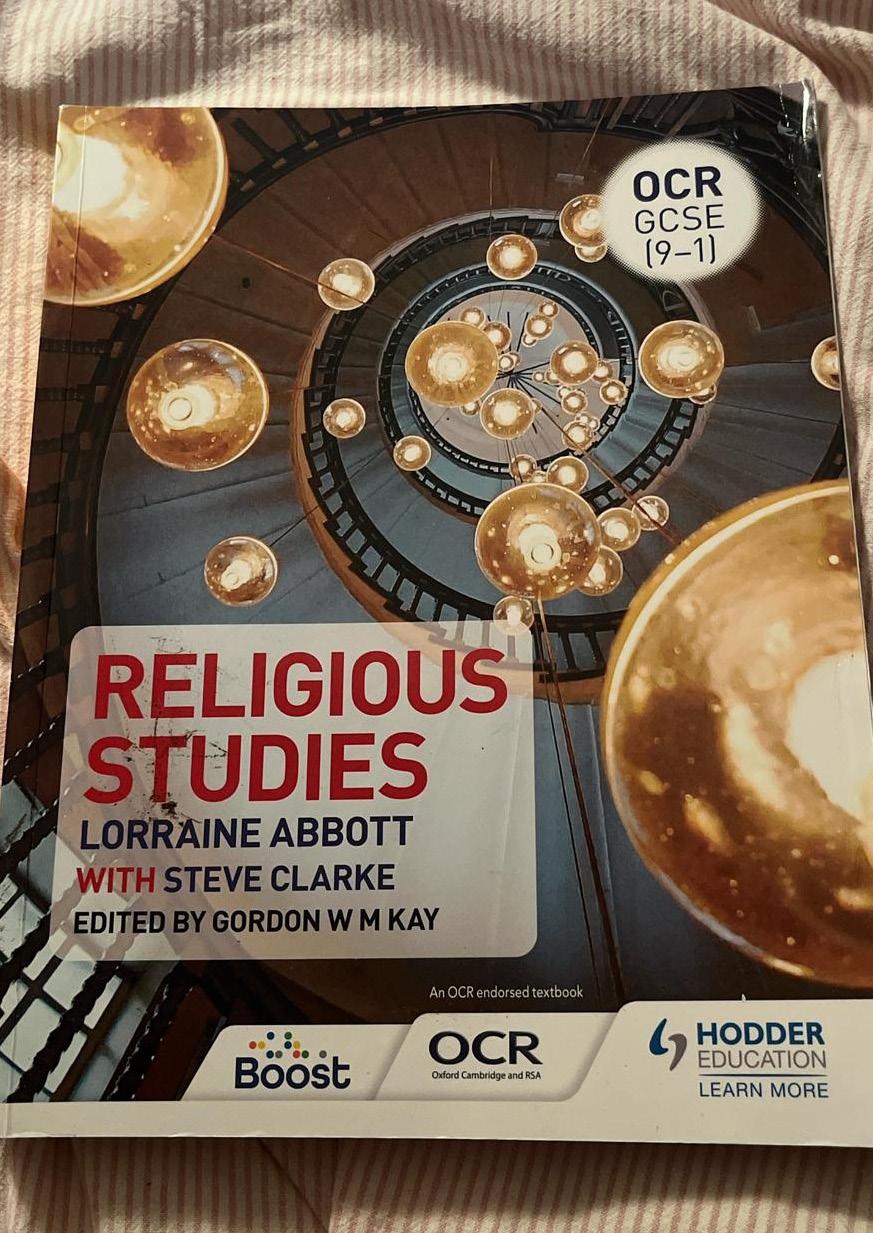
RELIGIOUS STUDIES
Pearson
Edexcel (9-1 Secification B) (1RB0)
Course Content
The GCSE Religious Studies course examines the origins, beliefs, and practices of Christianity and Islam, while also exploring the wider impact of religion on individuals and society. Students gain a deep understanding of these two major world faiths and engage with some of the 21st century’s most important ethical and philosophical questions. The course encourages discussion from both religious and non-religious perspectives, ensuring that students learn to value diverse viewpoints and develop their own reasoned opinions.
Religious Studies is a highly respected qualification, valued by both universities and employers. It demonstrates: The ability to think critically about complex moral and social issues; Skill in constructing logical, evidence-based arguments; An understanding of diverse beliefs and values, fostering respect and cultural awareness; Strong communication skills through debate, discussion, and extended writing.
Students develop skills that are essential in higher education and professional life: Such as Critical thinking and analysis, research and evaluation of sources, clear, persuasive communication; empathy and intercultural understanding.
Career Pathways
A GCSE in Religious Studies provides a strong foundation for a wide range of careers, including: Law and International Relations – applying ethical reasoning and critical analysis; Politics and Public Policy – understanding diverse perspectives in decision-making; Journalism and Media – interpreting events and communicating effectively; Business, Marketing, and Human Resources –managing diversity and fostering inclusion; Education and Academia – inspiring future generations and contributing to knowledge; Ai Science- Understanding Diverse Perspectives, Ethical Reasoning, Critical Thinking and communication Social Work and Community Development – supporting individuals and communities with empathy and respect.
In today’s interconnected world, success depends on the ability to understand diverse perspectives, communicate effectively, and think ethically. Religious Studies equips students with these vital skills, making it one of the most versatile and future-proof GCSE options.
GCSE Religious Studies: Preparing students to engage with the world’s big questions and succeed in the future.
There are two examinations of 1 hour 45 minutes each. Each examination is worth 50% of your final GCSE grade. There is no coursework or controlled assessment in this subject.
Paper 1: Paper 1: Area of Study 1- Religion and Ethics (Option 1RBO/1B - Christianity):
Christian Beliefs:
Students will look at what Christians believe about God and Jesus, life after death and issues raised by the existence of evil and suffering in a world created by God.
Marriage and the Family:
Students will investigate Jewish attitudes to marriage, family life, sexual relationships, contraception, divorce and gender roles in religion and in the family.
Living the Christian Life:
Students will consider ideas about the value of human life and look at the arguments surrounding abortion, euthanasia, animal issues and the relationship between religion and science.
Matters of Life and Death: Students will study the origins and key beliefs of Christianity and learn about the sources of wisdom and authority that underpin Christian attitudes to moral issues.
Paper 2: Area of Study 2 - Religion, Peace and Conflict (Option 1RBO/2-Islam):
Muslim Beliefs:
Students will look at what different Muslims beliefs and evaluate their importance and implications in today’s world. about God.
Crime and Punishment:
Students will learn about Muslims attitudes to the treatment of criminals and have the opportunity to discuss issues such as the aims of punishment, restorative justice, forgiveness, the death penalty and the use of torture.
Living the Muslim Life:
Students will study forms of Muslim worship, the importance of each of the obligatory acts and different Muslims attitude towards them.
Peace and Conflict:
Students will investigate the causes of conflict in the world today and consider whether it is ever right to go to war. Students will learn about attitudes to holy war, just war, weapons of mass destruction and terrorism.
Additional information can be found on the Edexcel International GCSE website
You are encouraged to approach the member of the department who currently teaches you to discuss further elements of the course or your individual suitability to study Religious Studies.
GEOGRAPHY
Pearson Edexcel International GCSE – (4GE1)
Course
Content
The Pearson Edexcel International GCSE in Geography helps students develop an understanding of the world around them by exploring physical landscapes, human environments, and global challenges. The course encourages students to investigate how natural and human processes shape the Earth and how people interact with their environments. Students develop geographical enquiry skills, including analysing maps, interpreting data, evaluating evidence and understanding spatial relationships. The course promotes critical thinking about environmental sustainability, population change, economic development and the management of natural resources.
The course covers the following key areas:
Physical Environments
Students study the natural processes that shape the Earth’s landscapes. Topics include rivers, coasts, and natural hazards such as earthquakes, volcanoes and tropical storms. Students explore how these processes operate and how human activity can influence natural environments.
Human Environments
This area examines how human populations live, work and interact with their surroundings. Students study population change, urbanisation, migration and economic development, considering how societies grow and adapt in different parts of the world.
Global Issues and Resource Management
Students explore global challenges such as climate change, energy use, water supply and food security. They learn about the importance of sustainable development and how resources can be managed responsibly to meet the needs of present and future generations.
Geographical Skills and Investigation
The course develops practical geographical skills, including map reading, data interpretation, graphical presentation and analysis of geographical information. Students also learn how geographers investigate real-world issues using fieldwork and case studies.
The Bigger Picture
Students consider the wider significance of geography by examining environmental sustainability, global interdependence and the impacts of human decision-making on the planet. This helps students understand how geographical knowledge can support responsible citizenship and informed decision-making.
The course encourages students to think critically about global challenges and prepares them for further study in Geography, Environmental Science, and related disciplines.
ASSESSMENT ARRANGEMENTS
The Pearson Edexcel International GCSE in Geography is assessed through two externally assessed examination papers.
Paper 1: Physical Geography
Duration: 1 hour 10 minutes
Marks: 70
Weighting: 40%
Structure:
• Section A: Answer two out of three questions on physical geography topics.
• Section B: Answer one out of three questions based on fieldwork or geographical investigation.
The Pearson Edexcel International GCSE in Global Citizenship helps students develop an understanding of the political, social, economic and technological forces shaping societies around the world. The course encourages students to think critically about global challenges and their responsibilities as active and informed citizens.
GC SPECIFICATION
Students explore how individuals, communities and governments interact locally, nationally and globally to respond to change. They also develop the skills needed to analyse different perspectives, evaluate evidence and engage in debates about global issues.
GC SPECIFICATION
A key feature of the course is the Citizenship Community Action Project, which allows students to apply their learning to real-world situations by planning and undertaking actions that benefit their communities.
GC SPECIFICATION
The course covers the following key areas:
Politics and Governance
Students study how countries are governed and how political systems influence citizens’ lives. They explore ideas such as democracy, the role of governments, and the responsibilities and rights of citizens.
Topics include different systems of government, the concept of the nation state, and the challenges faced by modern democracies. Students also examine global governance, international law and organisations that work to protect human rights and maintain peace around the world.
Culture and Community
Students investigate how cultures, identities and communities change in response to globalisation, migration and economic development. They explore how global cultural influences interact with local traditions and identities. Topics include migration, cultural diversity, changing social attitudes and the impact of tourism, media and communication on societies.
Technology and Global Change
This topic examines how technological development affects economies, communities and political systems.
Students analyse the role of communication technologies in economic development, political participation and social interaction. They also consider emerging issues such as cyber security, social media influence, technological inequality and the role of innovation in addressing environmental challenges.
Citizenship Community Action Project
Students investigate how cultures, identities and communities change in response to globalisation, migration and economic development. They explore how global cultural influences interact with local traditions and identities. Topics include migration, cultural diversity, changing social attitudes and the impact of tourism, media and communication on societies.
The Bigger Picture
The course encourages students to think about their role in an interconnected world. Students consider how political decisions, economic activities, cultural interactions and technological developments influence societies globally.
By studying these issues, students develop the knowledge and skills required to participate responsibly in society and to contribute positively to their communities at local, national and global levels.
ASSESSMENT ARRANGEMENTS
The Pearson Edexcel International GCSE in Global Citizenship is assessed through one externally assessed examination paper.
Paper 1: Global Citizenship
Duration: 2 hours 30 minutes
Marks: 100
Weighting: 100%
Format: Written examination with a mixture of short-answer, sourcebased and extended response questions.
Content:
The examination assesses students’ knowledge and understanding of four key themes:
• Politics and Governance.
• Economic Development and the Environment.
• Culture and Community.
• Technology.
The paper also includes questions based on students’ Citizenship Community Action Project, as well as a synoptic essay that requires students to draw together ideas from across the course.
Global citizenship Specification link https://qualifications.pearson.com/content/dam/pdf/International%20 GCSE/Global%20Citizenship/2017/Specification%20and%20sample%20 assessments/international-gcse-global-citizenship-spec.pdf
M ATHEMATICS
Pearson Edexcel International GCSE – (4MA1)
At Children’s International School (CIS), our KS4 Mathematics programme empowers Year 10 and 11 students to excel in the Pearson Edexcel International GCSE Mathematics A (Higher Tier, with Foundation Tier in rare cases), aligned to the National Curriculum for England. This rigorous yet supportive pathway equips students with essential numerical confidence and problem-solving prowess for university and beyond.
Core Curriculum and Assessment
Following the Pearson Edexcel Specification A, students master key areas: Number for real-world applications; Algebra through equations, graphs, and problem-solving; Geometry via transformations, shapes, and precise tools like rulers and compasses; and Statistics including averages, probability, and data techniques. Calculators are permitted; formulae provided; SI units throughout.
Assessment comprises two 2-hour exam papers (Paper 1 and Paper 2), emphasising application, reasoning, deductions, proofs, and translating everyday problems into mathematical processes.
Access the specification. https://qualifications.pearson.com/content/dam/pdf/International%20GCSE/ Mathematics%20A/2016/Specification%20and%20sample%20assessments/international-gcse-in-mathematics-spec-a.pdf
Flexible Progression Pathways
CIS offers an accelerated programme, allowing ambitious students to sit their IGCSE in Year 10, especially for those eyeing advanced A-Level study or international opportunities. This flexibility ensures every learner progresses at their pace, whether aiming for top grades or solid foundations.
Career Pathways with KS4 Mathematics
A strong IGCSE Mathematics A (Higher Tier) from Children’s International School opens doors to diverse fields requiring analytical foundations, from finance and engineering to data-driven roles. It equips students with problem-solving, statistics, and algebra skills for broad employability.
• Finance & Business: Banking analyst, accountant, financial advisor—using probability and numerical modeling for risk assessment and budgeting.
• Engineering & Tech: Civil/software engineer, IT specialist—applying geometry and algebra in design and coding.
• Healthcare & Sciences: Data analyst, epidemiologist—leveraging statistics for research and patient outcomes.
• Other: Architecture, project management, education—real-world applications in planning and evaluation.
Edexcel IGCSE Paper Codes
For Pearson Edexcel International GCSE Mathematics A (Specification A, 4MA1) –Higher Tier:
• Paper 1: 4MA1/1H (2 hours, 100 marks)
• Paper 2: 4MA1/2H (2 hours, 100 marks)
FURTHER PURE MATHEMATICS
Pearson Edexcel International GCSE – (4PM1)
At CIS, our KS4 Further Pure Mathematics programme challenges Year 10 and 11 high-achievers with the Pearson Edexcel International GCSE in Further Pure Mathematics (building on IGCSE Mathematics A). This elite pathway hones elite problem-solvers for STEM futures, demanding mastery beyond standard Maths.
Core Curriculum and Assessment
Students advance in Number for sophisticated applications; Algebra and Calculus through expression manipulation, graphs, and problem-solving; plus Geometry and Trigonometry covering vectors, rates of change, coordinate geometry, shapes, angles, and transformations. Building on core IGCSE Maths A (Higher Tier) knowledge, excluding statistics and probability, expectations include formula manipulation, set theory notation, and arithmetic precision. Two 2-hour exam papers (each 100 marks, ≈ 11 questions) test integrated application, with 40% marks at grades 4-5 and 60% at 6-9. Calculators are permitted; formulae provided; SI units throughout.
This course cultivates fearless reasoning: modelling real-world scenarios with vectors and calculus, proving theorems, and communicating complex insights. Our expert teachers ignite passion in a supportive community, transforming raw talent into global leaders.
Edexcel IGCSE Paper Codes
For Pearson Edexcel International GCSE Further Pure Mathematics (4PM1):
• Paper 1: 4PM1/01 (2 hours, 100 marks)
• Paper 2: 4PM1/02 (2 hours, 100 marks)
MUSIC
Course Content
GCSE Music enables students to develop practical, creative and analytical musical skills through performing, composing and listening. Students study a wide range of musical styles and traditions while developing technical, creative and critical understanding of music.
The course encourages students to:
• Perform confidently as soloists and ensemble musicians.
• Compose original music using a range of musical techniques and technologies.
• Listen to, analyse and evaluate music from different historical periods and styles.
• Develop creativity, independence and musical fluency.
• Understand how music expresses ideas, identities and cultures.
The course provides a strong foundation for further study in A Level Music, Music Technology or other creative subjects.
Component 1: Performing
Students develop practical performance skills on an instrument or voice. They perform both individually and as part of a group, demonstrating technical control, musical expression and stylistic awareness.
• Perform one solo piece.
• Perform one ensemble piece with other musicians.
• Rehearse and refine performances to improve accuracy, fluency and expression.
• Use musical elements such as dynamics, tempo, articulation and phrasing.
• Develop awareness of performance style, audience and context.
• Use appropriate musical vocabulary and notation where relevant.
Non-examined assessment (NEA), internally assessed and externally moderated. Students submit a solo and an ensemble performance with a combined minimum duration of four minutes. Each performance is marked out of 30 marks (60 marks total, 30% of the GCSE).
Component 2: Composing
Students develop creative skills by composing original music. They explore melody, harmony, rhythm, texture and structure while learning how music is written for different instruments, audiences and purposes.
• Create and develop musical ideas.
• Explore melody, harmony, rhythm, texture and structure.
• Compose for instruments, voices or music technology.
• Use notation software or digital audio workstations (DAWs).
Students complete two compositions:
• One composition responding to a brief set by Pearson.
• One free composition based on the student’s own ideas.
Assessment
Non-examined assessment (NEA). Students submit two compositions with a combined duration of at least three minutes. Each composition is marked out of 30 marks (60 marks total, 30% of the GCSE).
Component 3: Appraising (Listening and Analysis)
Content Content
Students develop listening and analytical skills by studying music from a range of genres and historical periods. They learn to identify musical elements and understand the context in which music was created.
Areas of Study:
• Instrumental Music (1700–1820).
• Vocal Music.
• Music for Stage and Screen.
• Fusions.
Students study eight set works including music by composers such as Bach, Beethoven, Purcell, Queen, Stephen Schwartz and John Williams.
Assessment
Written examination: 1 hour 45 minutes (80 marks). Section A includes listening questions, dictation and questions on an unfamiliar piece. Section B requires an extended comparison between a set work and an unfamiliar piece. This component accounts for 40% of the GCSE.
Skills Developed
• Practical performance skills.
• Creativity and composition techniques.
• Critical listening and analysis.
• Musical literacy and notation.
• Confidence in individual and group music-making.
Studying IGCSE Music can lead to a wide range of opportunities in the global creative and cultural industries. The skills developed through the course including creativity, collaboration, discipline and cultural awareness are highly valued internationally.
Possible career pathways include becoming an international performer or recording artist, a touring musician or orchestral performer (for example with professional ensembles such as the London Philharmonic Orchestra), or a musical director for theatre and stage productions. Students may also pursue careers as film, television or video game composers, music producers, sound engineers, or music supervisors for film,streaming platforms, music therapy, retail, and music education.
Other pathways include working as a digital content creator in music and media, a community arts or cultural programme leader, a festival or concert producer, an arts administrator or cultural manager, or a music industry manager or talent agent within the international music industry.
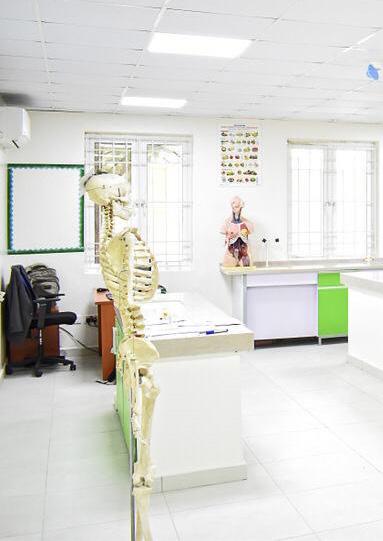
BIOLOGY
Pearson Edexcel International GCSE – (4BL1)
Course Content
The Pearson Edexcel International GCSE in Biology provides students with a strong foundation in the principles of life sciences and develops their understanding of biological processes that affect living organisms and the environment. The course encourages scientific inquiry, analytical thinking, and practical investigation. Students explore how living organisms function, interact with their environment, and how biological knowledge is applied to address real-world challenges in areas such as health, agriculture and environmental sustainability.
The course covers the following key areas:
• The Nature and Variety of Living Organisms.
• Structures and Functions in Living Organisms.
• Reproduction and Inheritance.
• Ecology and the Environment.
• Use of Biological Resources.
Assessment Arrangements
The Pearson Edexcel International GCSE in Biology is assessed through two externally assessed examination papers.
Paper 1: Biology Paper 1
Duration: 2 hours
Marks: 100
Weighting: 61.1%
Format: A mixture of different question styles, including multiple-choice questions, short-answer questions, calculations and extended open-response questions. A calculator may be used in the examinations.
Content: Assesses core content that is not in bold and does not have a ‘B’ reference. Questions may come from any topic area across the specification.
Paper 2: Biology Paper 2
Duration: 1 hour 15 minutes
Marks: 70
Weighting: 38.9%
Format: A mixture of different question styles, including multiple-choice questions, short-answer questions, calculations and extended open-response questions. A calculator may be used in the examinations.
Content: Assesses all the content, including content that is in bold and has a ‘B’ reference.
Questions may come from any topic area across the specification. Bold statements cover some sub-topics in greater depth.
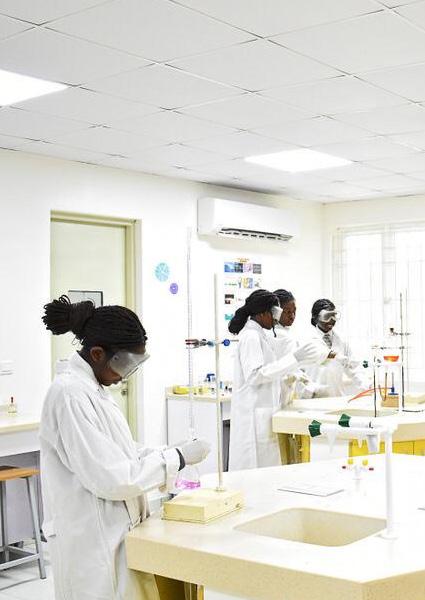
The Pearson Edexcel International GCSE in Chemistry develops students’ understanding of chemical principles and their application in everyday life and industry. The course builds analytical and investigative skills through theoretical study and practical work. Students learn how substances interact, how chemical reactions occur, and how chemistry contributes to technological advancement and environmental sustainability. The course covers the following key areas:
• Principles of Chemistry.
• Physical Chemistry.
• Inorganic Chemistry.
• Organic Chemistry.
Assessment Arrangements
The Pearson Edexcel International GCSE in Chemistry is assessed through two externally assessed examination papers.
Paper 1: Chemistry Paper 1
Duration: 2 hours
Marks: 110
Weighting: 61.1%
Format: A mixture of different question styles, including multiple-choice questions, short-answer questions, calculations and extended open-response questions. A calculator may be used in the examinations.
Content: Assesses core content that is not in bold and does not have a ‘C’ reference. Questions may come from any topic area across the specification.
Paper 2: Chemistry Paper 2
Duration: 1 hour 15 minutes
Marks: 70
Weighting: 38.9%
Format: Written examination with structured and extended response questions.
Content: Assesses all the content, including content that is in bold and has a ‘C’ reference.
Questions may come from any topic area across the specification. Bold statements cover some sub-topics in greater depth.
The Pearson Edexcel International GCSE in Physics introduces students to the fundamental principles that govern the physical world. The course encourages curiosity about natural phenomena and develops the ability to apply scientific knowledge to technological developments. Students investigate how energy, forces and matter interact, and how physics explains everyday phenomena and modern technological systems.
The course covers the following key areas:
• Forces and motion
• Electricity.
• Waves.
• Energy resources and energy transfers.
• Solids, liquids and gases.
• Magnetism and electromagnetism.
• Radioactivity and particles.
• Astrophysics.
Assessment Arrangements
The Pearson Edexcel International GCSE in Physics is assessed through two externally assessed examination papers.
Paper 1: Physics Paper 1
Duration: 2 hours
Marks: 110
Weighting: 61.1%
Format: A mixture of different question styles, including multiple-choice questions, short-answer questions, calculations and extended open-response questions. A calculator may be used in the examinations.
Content: Assesses core content that is not in bold and does not have a ‘P’ reference. Questions may come from any topic area across the specification.
Paper 2: Physics Paper 2
Duration: 1 hour 15 minutes
Marks: 70
Weighting: 38.9%
Format: A mixture of different question styles, including multiple-choice questions, short-answer questions, calculations and extended open-response questions. A calculator may be used in the examinations.
Content: Assesses all the content, including content that is in bold and has a ‘P’ reference.
Questions may come from any topic area across the specification. Bold statements cover some sub-topics in greater depth.
The Pearson Edexcel International GCSE in Science (Single Award) provides students with a broad introduction to the three main scientific disciplines: Biology, Chemistry and Physics. The course develops scientific literacy and practical skills while emphasising the application of science in everyday life. Students gain an integrated understanding of key scientific concepts and develop the ability to apply scientific methods to investigate questions and solve problems. Some specification content in the separate Physics, Chemistry and Biology has been excluded in the Single Award Science specification, however, it still retains a comparable level of rigour and demand. The course covers the following key areas: Biology
• The Nature and Variety of Living Organisms.
• Structures and Functions in Living Organisms.
• Reproduction and Inheritance.
• Ecology and the Environment.
• Use of Biological Resources. Chemistry
• Principles of Chemistry.
• Physical Chemistry.
• Inorganic Chemistry.
• Organic Chemistry. Physics
• Forces and motion.
• Electricity.
• Waves.
• Energy resources and energy transfers.
• Solids, liquids and gases.
• Magnetism and electromagnetism.
• Radioactivity and particles.
• Astrophysics.
Assessment Arrangements
The Pearson Edexcel International GCSE in Science (Single Award) comprises three externally-assessed papers:
Science Paper 1 (Paper code 4SS0/1B)
Duration: 1 hour 10 minutes
Marks: 60
Weighting: 33.3%
Format: A mixture of different question styles, including multiple-choice questions, short-answer questions, calculations and extended open-response questions. A calculator may be used in the examinations.
Science Paper 2 (Paper code 4SS0/1C)
Duration: 1 hour 10 minutes
Marks: 60
Weighting: 33.3%
Format: A mixture of different question styles, including multiple-choice questions, short-answer questions, calculations and extended openresponse questions. A calculator may be used in the examinations.
Science Paper 3 (Paper code 4SS0/1P)
Duration: 1 hour 10 minutes
Marks: 60
Weighting: 33.3%
Format: A mixture of different question styles, including multiple-choice questions, short-answer questions, calculations and extended openresponse questions. A calculator may be used in the examinations.
Welcome to the fascinating world of the human mind! GCSE Psychology is the scientific study of how we think, feel, and act. If you’ve ever wondered why people follow the crowd, how your memory works, or what causes some people to develop mental health conditions, this is the subject for you.
Science Paper 1 (Paper code 4SS0/1B)
The course is divided into two main sections: Compulsory Topics (the foundations) and Optional Topics (specialized areas of human behavior).
Compulsory Topics
These core topics provide the building blocks of psychological understanding.
Development: How did you develop?
Are you wondering why it is important to know how we develop? Development underpins everything we do, what we say, our attitudes and our beliefs throughout our lifetime. It is fundamental to understanding humans. Most people would agree that it is important for us to know more about how we become who we are. This is partly determined by what we are born with and partly influenced by what happens to us. How much do you know about your own development? You probably realise that you developed abilities as you got older, such as being able to do puzzles that you could not do when you were younger. You probably also know what people have said you are good at and what you think you are good at; however, psychology suggests that this very knowledge can hinder your development. When someone challenges us to improve at something, we generally do better. Or you might have found that you become better at something, such as a sport or a different skill, by practising and putting in effort. Many psychologists have researched these aspects of development and we will be exploring these in more detail in this topic.
Memory: How does your memory work?
Memory is central to being human. Imagine your life without memory: you would not know who you are, where you came from, who your family is, what you were doing at any time in the past and what you planned to do after school. So memory can be seen as an anchor to the past, allowing us to understand what is currently happening, and to project ourselves into the future. Understanding how memory works can help our own memory improve and can also help us support those whose memory does not work as well as others. In this topic, you will
explore different psychologists’ views of how memory works by looking at the way in which we remember and forget things. You will learn about the different memory stores, such as the theory proposed by Atkinson and Shiffrin (1968). You will also learn about how memory can be reconstructive, as our recollection of an experience can differ slightly to what actually happened.
Psychological Problems: How would psychological problems affect you?
According to recent statistics, approximately 25 per cent of people will suffer from a mental health problem each year (Mind, 2016). These problems could be anything from a brief period of depression following a death in the family to addiction to drink, drugs or gambling. So, what happens to you when you have a mental health problem? This is a very complex question. The effect it has on you will depend on the type of symptoms you have, how severe your symptoms are, what might have caused your symptoms and how easy it is to treat those symptoms. This topic is important to investigate as many people will be affected by mental health problems in their lifetime. Understanding what causes these psychological problems and how they can be treated will hopefully improve the quality of life of those affected. Studying mental health problems also leads to greater understanding of the issue of mental health, which raises awareness and reduces stigma. In this topic, you will look at two examples of mental health problems: unipolar depression and addiction.
The Brain and Neuropsychology: How does your brain affect you?
Your brain is a very important organ in your body. It is often thought of as the ‘control centre’ of your body as almost all of your behaviour is controlled from the brain, which sends messages around the rest of the body. Neuropsychology is an area of psychology that aims to learn more about the brain and how it works. This topic will explore the different parts of your brain and what they do. We will also look at what happens when the brain is damaged or does not work in the same way as everyone else’s. You will explore some of the ways that we can study the brain and show how studying the brain has changed over time.
Social Influence: How do others affect you?
Social influence is about how others – groups and individuals – can influence your behaviour. We tend to believe that we make our own decisions and choose our own behaviour, but often other people can impact and influence us. Have you ever been a bystander at an incident? Did you stand by and watch or choose to help? We like to believe that in an emergency situation we would be the one to intervene and help. However, there are a number of factors that determine whether or not you are
willing to help, depending on the situation and what type of person you are. It is really important to understand how others influence our behaviour because then we can promote good behaviour and prevent bad behaviour, such as bullying. Social psychology can give us insight into why we behave in certain ways around others and how we can go about understanding ourselves better in our social world.
Optional Topics
We dive deeper into specific human experiences, typically covering:
Criminal Psychology: Why do people become criminals?
Criminal psychology is an application of psychology that seeks to understand why people become criminals and what can be done to prevent crime and antisocial behaviour. Theories of behaviour can help us to understand why people become aggressive or steal; biological theories can also help to explain criminal behaviour. In addition, behaviour theories can be used to evaluate the ways in which criminals are treated or rehabilitated. In this topic, you will explore theories of behaviour that suggest that criminality is either learned or a result of other factors, including the theory proposed by Hans Eysenck in his book Crime and Personality (1964). This will help you understand whether criminals are born or made. Other biological theories for criminality will also be explored. In our society, criminals can be punished for their actions, and new ways of punishing people for their crimes are used. We will explore how effective these forms of punishment are. You will also look at how prisoners can be rehabilitated or treated in prison, which is where psychology can be used to help prisoners.
Sleep and Dreaming: Why do you need to sleep and dream?
Our lives consist of periods of waking and sleeping. A lot of psychology focuses on when we are awake, for example looking at our development, memory and psychological problems. However, we also need to study sleep, during which we have periods of dreaming. We know that humans need to sleep because we can see how things go wrong when people are sleep-deprived. For example, serious incidents have happened during night shifts at Chernobyl (1986) and Three Mile Island (1979) nuclear power plants. A lot of people work night shifts and it is useful to know what shift patterns work best for people. Babies sleep for about 16 hours at first and this drops to an average of between 7 and 8 hours for adults, suggesting that sleep helps in our development. Dreams have been used to explain mental health issues. Some researchers, however, claim that dreams are simply the brain making sense of random thoughts. You might have thought about dreams containing meaningful symbols that relate to our lives. This brief exploration of issues around sleep and dreaming hopefully helps to show the importance of the question: ‘Why do we need to sleep and dream?’.
The Compulsory Topic
Research Methods:
How do you carry out psychological research?
Psychological research is central to psychology. Research underpins psychological explanations and is critical to the scientific process. In psychology, as in other sciences, we suggest theories concerning human behaviour and then test them using psychological investigations or studies. The research can be used to support, reject or refine a suggested theory. Then more research is conducted. This is how scientific knowledge is built. Like most subjects, psychology uses a variety of research methods and techniques to explore human behaviour. Just as in geography, where you may conduct a questionnaire or take soil samples, each different research method has a different procedure and a different set of issues involved in the process. In this topic, you will explore how psychological research is designed and how analysis takes place, as the types of research methods used by psychologists. It is important that you take practical opportunities throughout this course, as you may be asked to design your own investigation or comment on a research study in the examination. These opportunities also give you practical application of your knowledge and help you to develop your psychological imagination.
How You Will Be Assessed
There is no coursework in Pearson Edexcel GCSE Psychology. Assessment consists of two written exams at the end of Year 11:
| Paper | Focus | Weighting |
| Paper 1 | The five compulsory core topics. | 55% of total grade |
Duration: 1 hr 45 minutes
Marks: 98
Weighting: 33.3%
This is a written examination in which all questions must be answered.
• The paper consists of six sections.
• The first five sections each cover one of the topics listed below. These sections will include multiple-choice, short-open and open-response questions.
• The sixth section will contain two extended open-response questions. These questions will focus on debates within psychology and the interrelationships between the core areas of psychology.
| Paper 2 | Research methods and the optional topics. | 45% of total grade
Duration: 1 hr 20 mins
Marks: 79
Assessment overview:
Students must answer all questions from Section A. All questions from two sections – B to F. Questions range from multiple-choice and short-answer knowledge questions to longer, 9- and 12-mark extended essays where you debate different theories and evaluate them.
• Topics 6 to 10 are optional; students must study two of them.
• Topic 11 is compulsory.
• Topic 6: Criminal psychology – Why do people become criminals?
• Topic 7: The self – What makes you who you are?
• Topic 8: Perception – How do you interpret the world around you?
• Topic 9: Sleep and dreaming – Why do you need to sleep and dream?
• Topic 10: Language, thought and communications – How do you communicate with others?
• Topic 11: Research methods – How do you carry out psychological research?
Is This Subject Right For You?
Think of Psychology as a bridge between the Sciences and the Humanities. You will love this if: You are curious about people, enjoy debating different points of view, and are interested in the biological wiring of the brain. Be prepared for: A significant amount of scientific terminology and a requirement for strong essay-writing skills. You will also need to be comfortable with Maths in Science (interpreting graphs and data).
chrome-extension://efaidnbmnnnibpcajpcglclefindmkaj/https://qualifications.pearson.com/content/dam/pdf/GCSE/Psychology/2017/Specification%20and%20sample%20assessments/gcse-psychology-specification. pdf