Welcome to Issue 4 of Circulation! This is my last issue that I’ll be working on, and I’m so excited to hand over to the next committee. I know they will be brilliant and I can’t wait to see what Joe does as Editor-in-Chief. Circulation has been my baby for a while now. From re-ratifying it in second year, to creating our first ever issue, it has been a brilliant journey - I can’t believe we are now on Issue 4! I have had so much fun and I have met so many lovely people through Circulation. In this issue, we have a range of articles centred on the theme of revolution. Read ahead for live reviews, artist deep dives, opinion pieces and interviews with local York bands.
Joseph Arabbetou Editor-in-Chief
Hello, I’m Joseph! I’m looking forward to continuing the amazing work that Heather and the rest of the committee have done for Circulation as the new Editor for the magazine. I have been incredibly lucky to support the creation of Issue 4 of Circulation. This issue is truly a product of a wonderful committee and also an amazing group of contributors. The theme of ‘Revolution’ is incredibly fitting, as our committee and contributors are constantly pushing the boundaries for what a magazine can be with their amazing ideas, visuals and articles. Thank you for reading!
To get involved, check out our Instagram: @ circulationzine, or send us an email if you have an idea for an article: circulationmagazine@yorksu.org.
Gosling
Ben
Joseph Arabbetou
Joshua Brown
Erin Wassell
Millie Weale
our back page for a rundown of what’s happening in York and beyond...
The Brighton duo Lambrini Girls have recently released their album Who Let The Dogs Out, and have been crowned the next punk superstars by Iggy Pop. Lambrini Girls consists of Phoebe Lunny on vocals and guitar, and Lilly Maceira on bass. They are known for their lively and dynamic shows, and at their sold out show at The Crescent there was palpable excitement in the crowd.
CLTDRP, an electro-punk trio also hailing from Brighton opened the evening. Lead singer Annie Dorrett brought the energy to the stage and her vocal range was impressive as she segued from softer vocals to intense punk screams. Daphne Koskeridou’s energetic drumming was a particular highlight and the drums formed the backbone of many of the band’s songs. Scott Reynold’s on guitar was technically brilliant, creating stretched out guitar riffs using distortion pedals. The band’s electro-punk sound comes out when Annie sings about body image issues and gender: “Maybe I don’t wanna go to the gym”. Annie announced the next song: “This one’s for all my big belly queers!” to massive cheers from the crowd. CLTDRP ended their set with ‘I am the Reason’ from their album Nothing Clever, Just Feelings which explores gender fluidity and sexuality. The crowd started a mosh pit and cheered, CLTDRP had energised the crowd and were a perfect opener.
Lambrini Girls took to the stage with massive cheers from the crowd and opened their set with ‘Big Dick Energy’. A crowd member was wearing a T-Shirt emblazoned with the song’s title, a sign that Lambrini Girls have a loyal following of fans. Before the next song, lead singer Phoebe parted the crowd like Moses parting the Red Sea and told everyone to kneel down before she returned to the stage. The next song was the queer banger ‘Help Me, I’m Gay’, and the crowd started a mosh pit which Phoebe entered, becoming its epicentre. Phoebe asked the crowd to put their hands up if they identify as queer, and a sea of hands appeared. Phoebe passed the mic to members of the crowd and asked their name and whether they were a queer legend.
After the song, Phoebe started talking to the crowd about political issues that Lambrini Girls seek to address, she said: “We are a political band, and we write about how shitty our government is.” Both Phoebe and Lilly spoke on a range of issues from the rise of the far right in the UK and Europe, the cuts made by the Labour government on PIP, and the ongoing gen-
ocide in Palestine. The crowd cheered loudly in support of the band speaking out on these issues, and the band started playing ‘Bad Apple’, a song that deals with police brutality. Phoebe jumped off stage into the crowd and said: “Imagine I’m a police officer. And I’ve come in here to stop the gig because we are all having too much fun.” She instructed the crowd to let out all their anger and rage in the mosh pit. ‘God’s Country’ was the next song, a song about the issues of racism that Britain is facing: “All Hail God’s Country! Daily Mail. Bacon baps. Racist uncles want their country back.” Phoebe then ran off the stage to fetch a bottle of tequila which she fed to members of the crowd. Before the next song started, the crowd chanted “Yorkshire! Yorkshire!”, a classic moment at any Yorkshire gig. Lilly expressed her love of this tradition: “I once read on the internet that you can’t play a gig in Yorkshire without people chanting Yorkshire … I f**king love it.”
‘Boys in the Band’ was played next, and Lilly commented on the problem of sexual assault in the music scene in Brighton and how we need to work together as a community to call out the perpetrators of sexual assault.
Phoebe announced ‘Craig David’ as the next song, inspiring a call and response of ‘Craig’ and ‘David’ and then ‘Lambrini’ and ‘Girls’. She then jumped into the crowd and gave us some options. Option one was a cartwheel competition, option two was a human pyramid and option three was the biggest mosh pit that York has ever seen. We went with the third option and started a huge mosh pit during the song and sang along to the lyrics.
For the final song, the band welcomed Annie back on stage to sing ‘Cuntology 101’ with them, creating a moment of friendship between Lambrini Girls and CLTDRP. After the gig ended, members of the crowd started making a human pyramid and Phoebe nearly made it to the top before it unfortunately crumbled, though no one was injured.
Lambrini Girls conquered The Crescent with their raw, unapologetic punk sound, all while bringing attention to political issues through their music and interactions with the crowd.
Lambrini Girls are bringing in a new era of punk music at a time when it is most needed.
All Hail God’s Country!: Lambrini Girls Conquer The Crescent
BY HEATHER GOSLING
Review: Gracie Abrams’ Secret of Us tour
“an expression of love to her fans”
BY EDEN HARTLEY
After Gracie had to unfortunately delay her Leeds concert, fans were itching to finally see her on stage. With McDonald’s in hand for the very long and winding queue that displayed a sea of yellow bows and long, flowing skirts, I was slightly worried about our prospects for a good standing position. However, when we finally made it into the venue, I was happily surprised to be only a few rows back with a clear view – thanks to the significantly raised stage.
The night started tremendously with opener Dora Jar. A mixture of ethereal and whimsy, Dora Jar sauntered and danced her way through her set. Her light and airy vocals were a great match to the stripped-back, acoustic versions of her songs, allowing the audience to appreciate the musical talent of her guitarists. Alongside her originals, such as my favourites ‘Cannonball’ and ‘Ragdoll’, she also performed a cover of Oasis’ ‘Champagne Supernova’, where she encouraged everyone to hug those around them and light up their phone torches. I have to say this is one of the best opener performances I have experienced; despite only listening to a few of her songs in preparation for the show, I immediately wanted to delve into her entire discography.
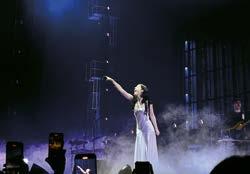
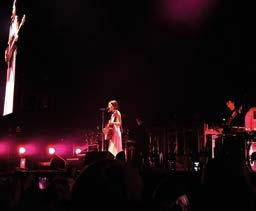
Gracie kept up the tension during the end of the opening set and her performance, as the crowd anxiously waited for her set to begin. For dramatic effect, she used Ariana Grande’s song ‘we can’t be friends’ to initiate the start of her show – when the song reached the lyric “me and my truth we sit in silence” the song abruptly stopped, and the concert hall was suddenly plunged into darkness. Gracie continued to tease the audience by performing the entirety of her first song, ‘Felt Good about You’ behind a semiopaque wall onstage. When she finally appeared in a floor-length white dress adorned with black bows on her shoulders, the screams were deafening.
The performance began with songs from her touring album, The Secret of Us. A clear fan favourite was ‘I Love You, I’m Sorry, ’ as the audience screamed the bridge alongside Gracie and her guitar. She also included songs from previous albums and EPs, such as the upbeat and lively ‘21’ and the more sombre ‘Where do we go now?’ from her debut album ‘Good
Riddance’. It was also really nice to see ‘Mess It Up’ permanently returning to Gracie’s setlist – Gracie has been very open in the past about having mixed feelings towards this song. However, perhaps after seeing how much joy it brings to her fans when she does perform it, her perspective has clearly changed as she now appreciates it in a new way.
One of the most exciting moments of Gracie’s performance was the inclusion of a B-stage, in the style of her old bedroom, which fans will be familiar with from the music video for ‘I miss you, I’m sorry.’ Here, Gracie also chose as the surprise song that evening to be the infamous unreleased song ‘In Between’, much to fans’ delight. Gracie clearly enjoys keeping us on our toes: first uploaded to SoundCloud in 2016, the more times she performs it, the more fans are certain it will one day be officially released.
Although this is my third time seeing Gracie Abrams perform since being a fan back in 2021, each time is more magical than the last. She constantly surprises the audience with her ever-strengthening power over her voice – impressing us with extended or changed notes, such as the angelic high notes during ‘Normal Thing’. Each song is sung with so much emotion that even though the crowds have drastically grown in the last few years, with Leeds First Direct venue holding around 10,000 people, it still feels like a personal, intimate concert. The audience reflects this intimacy, gifting her as they would a best friend, with scrapbooks and polaroids they’ve made.
With Gracie’s energetic dancing across the stage, taking people’s phones to film videos and joining in on FaceTime calls, the Secret of Us Tour felt like an expression of love to her fans. I can’t wait to see how her songs and concerts evolve in the future as she continues to grow as an artist!
EP Review: Maddie Ashman’s Otherworld
Ashman is a composer and songwriter from London. Specialising in microtonal music, she has recently set out on a musical journey to escape the twelve fixed notes typically used within Western music. Microtonal guitars are designed to play intervals smaller than the standard semitone; they have two or three times the number of frets of a standard guitar, allowing for more melodic possibilities. The result is jarring to some but when I came across a video of her playing on TikTok I was absolutely mesmerised. Otherworld consists of five songs, and was released on Bandcamp in March. “When I was writing Otherworld,“ Ashman explains, “I was thinking of questions like what if the guitar could sing? Or speak? What if the guitar could express beyond its traditional limits? What if the voice was the ‘instrument’ rather than the guitar?” The EP blends avant/psychedelic-folk with ‘freak-folk’, often recalling the microtonality of King Gizzard in acoustic form. Paired with deeply poetic lyrics by Jessa Brown, it is a truly unique piece of music.
Ashman has detailed her struggle to find a label and thus release music through Spotify due to the eccentricity of her music. Not being readily accessible on Spotify made the EP just that bit harder to find, but I felt it was part of this otherworldly experience. As the title suggests, Brown’s lyrics enter another realm, using Welsh folklore and landscape as a backdrop for her grandmother Jennifer’s story. Ashman’s microtonal composition was perfect for such rich storytelling. Some quickly dismiss microtonal instruments as sounding badly out of tune, but Ashman proves otherwise. She translates Brown’s narrative of “half-memories and lost voices” onto her guitar, unlocking the instrument and the unspoken things within. When she plays, a language emerges.
Otherworld opens with ‘horizon.’ Shrill vocals urge the listener to ‘come and be free,’ inviting them into this eerie ‘otherworld.’ The way Ashman’s voice effort-
BY LAUREN WILSON
lessly jumps to different notes creates labyrinthine melodies. Narratively, ‘horizon’ is the start of Jennifer’s story and how the Welsh landscape calls out to her. ‘moonlight’ follows, an uneasy listen yet softened by Ashman’s enchanting harmonies. This track is representative of what microtonal guitar can do. It takes completely unexpected turns; you think you know where the song is going, then a singular note sticks out and changes the course of the song. Next is ‘dark,’ my favourite off the EP. It is a dark, menacing song that works itself into a frenzy as we are fully immersed in the ‘otherworld.’ Ashman describes the song as ‘soft rap electronic music,’ switching between singing and spoken lyrics. She also uses a guitar slide to access unique chord voicings, and often makes the guitar sound percussive. The song emphasises the versatility of her voice, at times breathy and others piercing. It reminded me of The Cocteau Twins’ frontwoman Elisabeth Fraser, and her ability to make the voice an instrument in itself. Although Ashman’s lyrics are fully transcribed, she sings them in an almost indecipherable way until all that’s left is the melody. It perfectly echoes the narrator’s journey as she enters the wooded world that has long called out to her.
The fourth movement, ‘blossom,’ is a beautiful song written entirely in Welsh. It recounts Jennifer’s decision to relearn the language and reconnect with her landscape. The lyrics are heavily inspired by the Mabinogion character Blodeuwedd, a goddess made out of wild flowers. The guitar is minimal here, offering respite after ‘dark’ and making the microtonality stand out even more as Ashman fingerpicks mellow chords. The lyric “rwy’n blentyn eto (I am a child again)” compliments the cathartic quality of this otherworld and the belonging Jennifer feels there.
The final track, ‘bonfire,’ sees Jennifer trying to recover her past through the landscape. It places the guitar and vocals in conversation with each other. Ashman makes use of the ‘hocket’ form, an interrupted effect used in medieval music; it is produced by dividing a melody between two parts, with the notes in one part coinciding with the rests in the others. The result is a chopped vocal style which makes it hard to believe it’s just her and her guitar. The lyric ‘what if this green otherworld makes a woman of a girl’ really stood out to me. In folklore, forests and green spaces often become places of transformation and discovery, and the EP really taps into this. It culminates in the nonsensical yet haunting line, ‘I am a return.’
Otherworld is an EP that defies musical boundaries and embraces unconventionality. Ashman suggests that change is still possible within modern music, even if it remains peripheral and unrecognised. It’s unlike anything I’ve heard before, but I would recommend it to fans of experimental music with profound and mythical storytelling.
Otherworld is free to stream now on Bandcamp!
Maddie
IMAGES: Eden Hartley
IMAGE: Maddie Asherman
“Everyone’s Idea of Punk is Different”: The Importance of Subcultures in the Punk Genre
BY RUBY THORPE
Punk music gradually emerged from the American 1960s garage rock scene. It became distinguishable from other rock-adjacent genres due to its political motivations and anti-establishment messages, a response to the prominent commercialisation within the music industry. The genre’s growth in popularity spread across the Atlantic to the UK in the 1970’s with rising unemployment and frustration at the British government, making punk music the perfect outlet. Since then, punk ideology has carved a place for itself in pop culture with various subgenres of music emerging over the years and influences being seen in music, fashion and art. While the term ‘punk’ has a very ambiguous definition and varies across subgenres, its principles are founded in rejecting the status-quo through political rebellion. However, this is only the story for White punk music. While there are so many genre-defining punk bands like The Sex Pistols, The Clash, Green Day and The Stooges, the genre stereotypically portrays White, working-class, male issues. There are so many other groups of individuals that are not properly recognised in the mainstream punk scene but pioneered for a new political revolution within music.
Whitewashing has been a prominent part of commercialised punk music, with many Black musicians being historically erased from the genre or being disconnected from White punk music with a separate label of ‘afro-punk’. Long before the fame of any of the bands named above, the Black punk scene was thriving. Over in America, the band Death was formed in 1971 and Pure Hell in 1974. They were coined as one of the first African-American punk bands. Although Pure Hell only released one track during their active years (‘These Boots Are Made For Walking’) and Death had very little commercial success, they carved out a space for other Black musicians to break onto the scene like Bad Brains and Don Letts later on in the decade. Don Letts was a key actor in bringing together Jamaican reggae music into the London punk scene and British pop-culture. He worked with many of the successful White punk bands such as The Clash and The Sex Pistols through his work as a videographer, manager, writer and produc-
er within the genre since the 1970’s. As a result, Letts has had unimaginable influence over the genre with his experiences and history underpinning British punk culture. Even then, these influences are still not placed at the forefront of the genre despite being a large part of Black culture due to racism present within the music industry, pressuring them conform to what is seen as traditional Black music genres like rap or funk. There are also other intersectional groups that are not seen within mainstream punk music. Many female musi cians have also been erased from the history of punk despite the popularity of the Riot Grrrl sub genre. Although Riot Grrrl emerged much later on in the 1990’s in Wash ington D.C., it provides different political perspectives on punk music as it focuses on feminism, sexuality and the violence and oppression directed towards wom en. They took inspiration from punk-rock bands and icons before them like Siouxsie Sioux, The Slits and Kim Gordon who were ac tive during the 1970s and ‘80s.
Bands like Bikini Kill, Bratmobile, Sleater-Kin ney and Heavens to Betsy were at the forefront of this second musical revolution aligned with the spread of third-wave feminism. In reaction to the male-dominated nature of punk culture at the time, Riot Grrrl grew to be one of the largest sub genres of punk music and a platform for women’s voices to be heard. Although the purpose of their music was to convey significantly different mes sages to their male counterparts, ultimately they have the same goal of political change.
Unfortunately, many of the larger Riot Grrl groups were exclusively White, meaning that Black women’s issues were not represented, despite their ethos of inclusivity. One of the original Riot Grrrl bands, X-Ray Spex, and Skunk Anansie who came to the scene a little later were a part of the few examples of Black women within punk. Even then, both of these bands were composed of a majority of White male instrumentalists with lead singers Skin and Poly Styrene being the only women in the bands.
Due to there being a range of subgenres, there are many different interpretations and forms of punk music. Despite the many levels of intersectionality that are present within the punk genre and the essential influences of both women and people of colour, White punk music is still seen as the standard. As the punk ideology is characterised above as a rejection of the status-quo, this leads us to the question: what status-quo exactly are we rejecting, and how?
shifting blame from politicians and preventing these subjects being tackled.
The answer changes significantly depending on who is singing, with Black and female punk musicians having very different social views. This means that punk is incredibly political and individualistic, as musicians use their personal experiences as motivations behind their songs. Consequently, this explains why there are so many subgenres of punk as groups of people with similar political experiences, typically seen in gender and racial groups, come together to promote certain political goals.
To understand this further, we can draw upon Carol Hanisch’s 1969 essay title The Personal Is Political. This title was popularised by second-wave feminism in the 1960’s and was important within the Black civil rights movement. Hanisch refers to the idea that personal experiences are directly connected to larger socio-political structures and, therefore, should be dealt with publicly. This rejected the idea that these issues are personal and should be solved in private,
Political experiences are individualistic, each person has a different relationship and experience with political institutions. Punk agrees with this idea, using music to publicly address politics with different subgenres focusing on different political agendas. Whether this is Afro-punk, Riot Grrrl, Folk Punk, Anarcho Punk or Death Rock, those within these subgenres still look towards political change but focus in on intersectional group issues. The main difference is they are rejecting the commercialised view of the status-quo that is presented by White, male punk music, instead taking from their lived experiences of the world.
Today, punk is still thriving due to issues still not being addressed nearly 60 years on with bands like Big Joanie, Destroy Boys, Fontaines D.C. and Idles fighting for different political goals and still representing the subgenres that were created many years ago.
While punk was never meant to be a single, rigid music genre, the breadth of punk is certainly underrepresented within commercial punk music. It is an incredibly individualistic genre, with each song being a reaction to personal experiences with the unequal political structures that have been historically present within society. Despite punk music’s purpose of not conforming and rejecting the status-quo, the commercialisation of White, male groups restricts the diversity of the genre. Therefore, the breadth of punk music is essential in moving towards political change and providing a voice to different groups who find a community within punk music and its many sub-genres.
Ilustration: Lina Taylor
My Love Letter to Manic Street Preachers: The Voice of Decades to Come
I went to see the Manic Street Preachers last year at the Eisteddfod, Wales’ acclaimed music and culture festival. It was certainly a big deal for Welsh people I knew: family, friends, friends of family and so on would all be in attendance. At the time, I didn’t really get it.
I mean, I understood why people would like them; they were a good band, their music seemed uproarious enough to hold a decent-sized stadium under its spell, and their sphere of influence in Wales was pretty clear: I often heard relatives lovingly refer to them as the ‘Manics’, as if they knew them personally. My mother, auntie and grandmother had gone to see them years before in the 90s, even sleeping on the floor of a train station when they couldn’t find a hotel for the night. The anecdote meant it was naturally ingrained into my family history; it was a part of being from Wales, being associated with the Manics.
But I think what I really didn’t get at the time was the political magnitude of what they were doing and had been doing since they formed in 1986, and the fact that this extended far outside of Wales. They had been pushing for a revolution which I wasn’t even aware of yet.
Back in June 2024, the audience sang their songs word for word, and each lyric clearly carried weight. Still, I didn’t get it: “If You Tolerate This, Your Children Will Be Next”? Seems too long winded for a chorus, surely? Back then I didn’t believe in overcomplicating things in music; I was overly vexed by how descriptive their lyrics were
BY AMELIA GRIFFITHS
and how they could still be a stadium band, how people still chanted them back with such heart. I think my problem at the time was that I was thinking too personally rather than universally. Suede were playing on the same day, and their quieter, more personal (and equally great) songs almost brought me to tears. At the time, I thought the Manics were good, but I couldn’t really connect with them in the same way.
Now, I get it.
The Manic Street Preachers were literally birthed from political upheaval and the fight for a revolution. They formed in Blackwood, Wales, one of the epicentres for miner’s strikes during the mid 80s as they were forcibly shut down by the UK government. The soon-to-be band members were inspired by their resilience, even after they lost the fight and their workplaces vanished. The incident inspired them to write their first song dedicated to the strikes, and from then on their relentless politically driven fury only grew as a group.
Their discography is full of moments of anguish as a result, and incredibly self aware statements about the political state of the UK. Their electrifying album The Holy Bible is unapologetic and urgent. ‘Revol’ in particular is a blatantly anti-fascist anthem - its verses list historical figures who openly pushed for either communist or socialist ideals, but whose campaigns eventually lost to fascism. Its booming chorus repeats the song’s title over and over, as they demand for a worldwide revolution following the results of prior failures; with ‘Revol’ intriguingly spelling
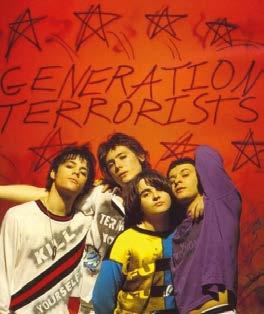
Their popular track “Motorcycle Emptiness” from their debut studio album ‘Generation Terrorists’ critiques consumer culture and how advertisements can often warp a consumers’ reaction to buying new products - when instead it leads to a “neon loneliness” and a global isolation depicted vividly throughout the song. With consumerism only growing in trend and frequency, this song couldn’t be more relevant today. Perhaps that is why this song impacts so many when played live; it’s a small and genuine glimpse of community in spite of our growing isolation as a species. Other songs such as ‘A Design For A Life’ use Wales as a microcosm for a more global issue. The track was also inspired by their hometown Blackwood, but applies to working class Britons just as much, and again to a global class divide. “We don’t talk about love / we only want to get drunk” - this is how outsiders often view the working class, despite it being far from the truth.
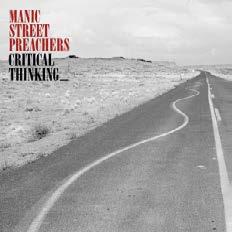
Their latest album Critical Thinking doesn’t stray far from a global-political line of thought, but it definitely takes a softer approach, both instrumentally and lyrically. Its title track interrogates our collective ability for questioning the things we consume- also incredibly topical for today’s digital world which we all live in. It’s much easier to not be drawn immediately to instrumentals throughout the album, as it’s quieter, introspective and carries itself with wisdom but less edge compared to their first few albums.
The Manics weren’t just revolutionary for their lyrics; they also created a name for Wales by being part of the Cool Cymru movement of the 90s, which drew attention to Welsh culture and didn’t allow it to be forgotten. Years of divide
with England and being left behind socially and economically was suddenly being fought against through music, film and media- a mini revolution of its own. Maybe this is why the Welsh adore them so much, for essentially helping to put the country back on the map.
In a time dominated by the genre of shoegaze, which famously focused on mood and sound almost to an obsessive extent, the Manics made space for change. Rock and Roll was suffering as a result, and they brought it back with force, although not in a typical way.
As the Skunk Anansie song reinstates, everything IS political- but the Manic Street Preachers were unique in that they proved that rock and roll was more than just sex and drugs. There can be a message behind any genre of music if that is the artist’s intention.
The Manics are as relevant now as they were at their peak in the 90s. Their values are strong, and their anti capitalist messaging is perhaps the most crucial and relatable thing that young people can draw from their songs today. Around the same time that I went to see them live, a survey came out that showed support for socialism for people in the UK between 18-34 had grown to 53%, and the numbers are only on the rise.
So, if you want change but don’t know where to start, look to the Manic Street Preachers first. After all, they’ve been fighting for it for almost three decades.
IMAGE: Drew de F Fawkes
IMAGE: Paul Sinclair
The Revolution Will Be Televised:
BY HATTIE NEWMAN
Kendrik Lamar’s Superbowl Performance
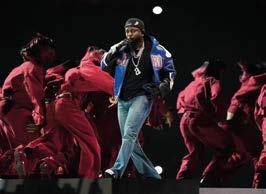
Kendrick Lamar’s performance at the Super Bowl LIX halftime show was outspokenly a call for revolution within American politics and culture. He was watched by an audience of 133.5 million people, which was the show’s largest audience to date. From the symbolic value of ‘building’ the American flag on the back of Black men, to the onstage Buick GNX car, and Samuel L. Jackson’s feature as an ‘Uncle Sam’, every moment of the half-time show was a refusal to soften for a mass audience - which featured the current Republican president - through his unflinching commentary on the enduring, systematic oppression of Black people in America, and his call to action.
After a short opening rap, the spotlight hit Lamar as he addressed the audience, saying “The revolution ‘bout to be televised - you picked the right time but the wrong guy”. The ‘wrong guy’ referenced here could be Lamar himself, chosen as a mistaken representative for the ruling power’s desired portrayal of America on the world stage, as he reveals the facade of supposed American values of freedom and instead uses his platform to speak against the state oppressions of African American people. ‘Wrong guy’ could also reference the current republican president of the USA - although the time is right for revolution, the people with control of that revolution and the narratives surrounding it are not what America needs - and so Lamar renounces the watching President’s power over the revolutions in American culture and reclaims this power as his own.
However, his opening statement was not solely a promise of a revolutionary performance or a cultural revolution onstage - it directly references Gil Scott-Heron’s 1971 song, ‘The Revolution Will Not Be Televised’, a Black liberation song which satirises American consumer culture, playfully referencing contemporary advertising messaging and slogans such as: “The revolution will not go better with coke” and “The revolution will not
make you look five pounds thinner”. ‘The Revolution Will Not Be Televised’ calls for a revolution which opposes consumer culture and passive engagement with media. Scott-Heron was a voice of the Black Power movements of the 1960s and 70s, and an important influence of hip-hop. The revolution he calls for is not and cannot be easy, appealingly packaged, or convenient, and so can’t be assimilated into an image regime of advertisement, compliance, and consumerism. Lamar’s halftime show similarly rejects this consumer narrative - instead of performing his hits, the songs most palatable to the white, republican audience which currently hold positions of power within America - Lamar’s performance, as Scott-Heron’s revolution, is not made for passive consumption. Instead, it is selfaware in its incompatibility with white Republican ideals. In his role as ‘Uncle Sam’, Jackson tries and fails to convince Lamar to pursue palatability over meaning, bringing Lamar’s choice of political and cultural impact over saleable neutrality into the foreground. By paying homage to ‘The Revolution Will Not Be Televised’ in the opening of his performance, Lamar frames his performance as the legacy of Scott-Heron’s revolution, the televisation of the untelevisable as he shuns the expectation for him to entertain and appeal, playing with the expectations of the audience to reveal their narratives of prejudice - after Lamar’s performance of ‘All the Stars’ with SZA, ‘Uncle Sam’ praises them for being “nice and calm” and conforming to “What America Wants”, mocking the idea that hip-hop is not for a wider audience as Lamar opens ‘Not Like Us’, the final song in his feud with Drake in which he fights against the commodification of hip-hop to make it more ‘palatable’ to a wider audience, rejecting a feigned revolution which can be advertised and consumed as it is televised, without any real action or change due to the necessary passivity of the viewer. Lamar’s performance at the Super Bowl LIX closed with the song ‘tv off’, from his most recent album GNX - another homage to Scott-Heron, and a call to action for those who only passively engage in hip-hop. By televising the revolution, Lamar reclaims the media space as the site of a revolution which, like Scott-Heron’s, can only happen outside of a media regimented and controlled space. By closing his show with the repeated message of “Turn this TV off”, Lamar makes his message clear - his revolution has been televised, but now his disruption of regularly scheduled, passively consumable media is over, the viewer should look to the reality of revolution. Scott-Heron states at the end of ‘The Revolution Will Not Be Televised’: “The revolution will be no re-run, brothers//The revolution will be live.”
Revolution Summer: “We’re
Bikini
Kill,
and we want Revolution, Girl Style Now!”
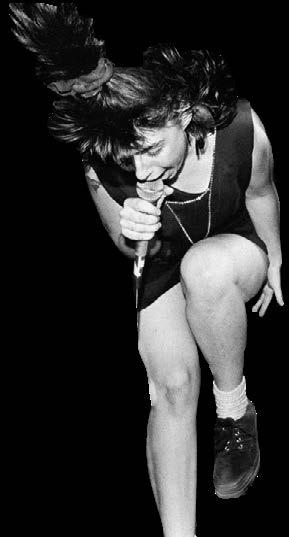
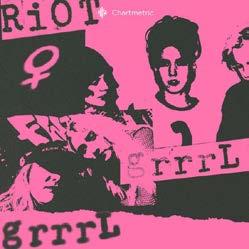
This is the opening line to one of Bikini Kill’s first songs, performed in Olympia, Washington in 1990 a song which both epitomises and kick-started the Riot Grrrl movement. Hang on though – what the hell is Riot Grrrl?! The phrase came from the murmurings of ‘girl riot’ that were being heard around Washington in the early ‘90s, and this version of it was coined by Tobi Vail, the drummer of Bikini Kill. The movement began in the early ‘90s with a group of young women who were sick of the misogyny and machismo that was strangling the punk scene of Olympia and Seattle – they got together and, led by Kathleen Hanna (told by a mentor she should write songs instead of spoken word), started to form bands and organise meetings about their sexism, assault and their experiences of womanhood.
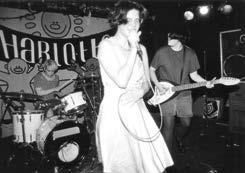
From these Riot Grrrl meetings sprang forth a myriad of zines, bands and events that bound women together and created a subculture around punk rock feminism. The first of these bands included Bikini Kill, Bratmobile and Heavens to Betsy, and what made Riot Grrrl unique is that the people who made up the bands were the same people who made the zines (with titles like ‘Jigsaw’ and ‘Girl Germs’), and they were the same people who hosted shows in their parents’ basements and community venues, and who went to Riot Grrrl meetings. You could be friends with the singer of your favourite band, and that created a sense of community and relatability that I don’t think has been seen since, as well as being something that links it to the punk movement in London in 1977. The bands were characterised by inexperience, DIY ethos and making music because they had something to say; their priorities were being heard, in terms of volume and in their lyrics. This is what made them so relatable, to me at least, and what made Riot Grrrl a community, not just a genre.
I think it’s important to note that there were men in the Riot Grrrl scene: although it was conceived
BY OLLY HARRISON
to escape the misogyny of punk, there were guys who fully supported the riot grrrls. Some of the most prominent of these were Ian MacKaye, lead singer of famously anti-capitalist hardcore/straight edge band Fugazi, and Kurt Cobain, who dated Tobi Vail and who’s defining song with Nirvana was named for a slogan spray-painted by Kathleen Hanna. Though Riot Grrrl was a women-centred movement, it was about feminism first and foremost, and there were men at the time who were almost as outspoken about feminism as the women were.
This article was written with a lot of reference to a book by Sara Marcus, titled ‘Girls to the Front: The True Story of the Riot Grrrl Revolution’. I read the book for the first time when I was 15 and just getting into music, politics, and everything that combines the two. Riot Grrrl was a lifeline to me as a queer, politically minded teenager with a lot of anger in my body and not a lot of ways to express it, and this book was an amazing starting point that made me feel like I, and people like me, had a history. The book is accessible and fun as well as comprehensive and endlessly interesting, and I wholeheartedly recommend it as a first port of call to anyone interested in learning about the Riot Grrrl movement or about ‘90s feminism through the medium of music and memoir.
Though the subculture died out in its original form sometime around 1996, it has been resurrected in the following decades. The queercore punk movement took inspiration from Riot Grrrl’s inclusivity, expanding that even further to create a subgenre of music by and for queer and trans people, with bands like Dazey and the Scouts and G.L.O.S.S, and local scenes popping up all over (including Birmingham where I attended a queercore event over the summer). Similarly, zine culture has changed and expanded, with thousands of people expressing their thoughts, feelings and opinions through the medium of personal art and writing, to be handed out at events or sold in online shops. I count myself among these creatives, and you can find my own zines on Instagram @zines_by_blade!
It’s undeniable that Riot Grrrl as a subculture revolutionised punk music for women, leaving its mark on the 90s and with a legacy that persists to this day in the new generation of revolutionaries, making music in garages and assembling zines in bedrooms. Vive La Riot Grrrl Revolution!
IMAGE: Greg Neate Bratmobile performing in 1994
IMAGE: FariborZ
Circulation’s Ones to Watch
SOAPBOX
BY OLLY HARRISON
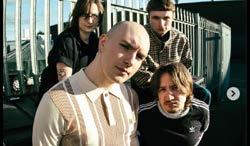
I was made aware of SOAPBOX when I saw them live at The Crescent in support of Kid Kapichi; I couldn’t be more glad to have caught them because SOAPBOX are absolutely sick. The thing that caught my attention most was probably the appearance of the lead singer, with his clean-shaven head, formidable stance, and t-shirt emblazoned with the phrase “I <3 PVC”. However, by the time the band left the stage I was transfixed by their sound just as much as their looks. The band is characterised by the typical punk/hardcore garage rock setup of drums, bass, vocals and one guitar, and their sound is heavy and well-balanced, with the rhythm section locking in a tight groove that allows the guitar to build on top of it perfectly. ‘Mad Jungle Beat’ highlights this perfectly, with a deep rocking bass riff and the use of plenty of toms that makes it impossible not to at least nod your head along. The singer’s hardcore-style vocals are made even more interesting
Esme
by his fairly strong Scottish accent, and I love hearing people unapologetically using their regional accents when singing – it adds so much uniqueness and I wasn’t really aware of any Scottish punk bands before now.
SOAPBOX are not afraid to get political, and that shows both in their lyrics and their off-stage life; songs include lines like “…his country’s fucked. Blame it on the immigrants, instead of the toffs […] all hope is lost for Fascist Bob” (from ‘Fascist Bob’), and the members are vocal onstage and on social media about their advocacy for trans rights, anti-racism, feminism and other leftist political movements.
If I had a pound for every punk song I know about public transport, I’d have 2 quid, which isn’t much but it’s weird that there’s two of them. The first is The Chats’ ‘Bus Money’, and the second is SOAPBOX’s ‘Private Public Transport’, a painfully relatable song about the miserable state of public transport in this country. This illustrates one of the things that makes SOAPBOX such a great band to me – they are the common people, they share our struggles, our hopes, our beliefs, and they’re just as pissed off at the government as we are, for all the same reasons. ‘Disgrace’ espouses the same one-of-the-people ethos, with its complaints about the price of drinks (“What d’you mean six quid it used to be four?!”).
To me, being a smaller band doesn’t just mean you’re not popular yet. Given a couple of years, I think SOPABOX will be up there in the pantheon of modern punk greats, and I hugely look forward to seeing what they do in the future and catching them live whenever they next make the journey down to Yorkshire from their native Scotland.
Emerson BY EDEN HARTLEY
Esme Emerson is a British-Chinese sibling duo involved in the indie/folk music scene, singing about love, childhood, and trucks. In 2024 they released their second EP ‘Big Leap, No Faith, Small Chances’ which includes the boppy and upbeat ‘Show You (Truck Song)’. Their music videos showcase interesting and mesmerising visuals, allowing listeners to see the band as artists of all mediums - their music video for ‘Afraid of Losing’ is a super cool felt-stop animation video! For them, the only way is up, as they have recently announced their very first UK Headline Tour alongside teasing their upcoming EP ‘Applesauce’ by releasing ‘Together’, a lyrically powerful song about what it means to be alone together. I had the privilege to see them live earlier this year, where they sang some unreleased songs that I’m annoyed aren’t out yet! Seeing them play on stage shows how much passion and joy they get out of creating music, as well as how close Esme and Emerson are to each other.
A flash Guide To Create Your Own Patch Jacket
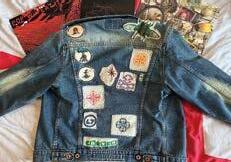
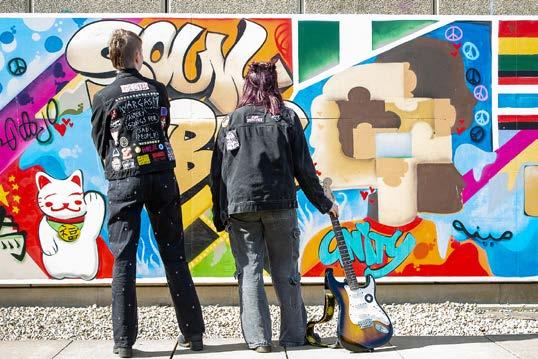
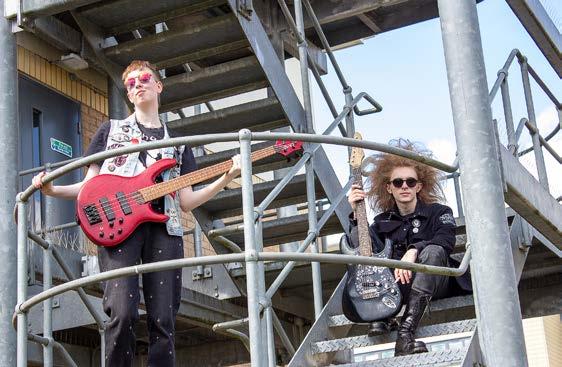
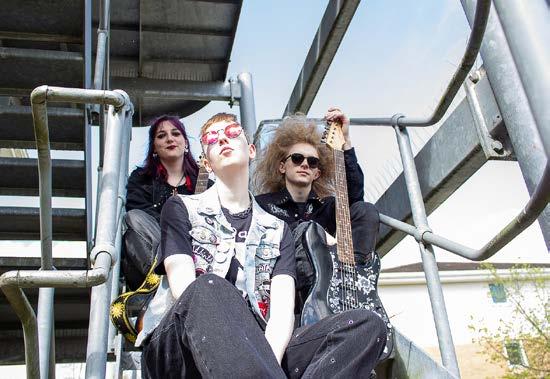
The first patch jackets were worn by pilots coming home after WWII who decorated their bomber jackets with the marks of their squadrons. Many of these pilots became bikers, and this tradition of (literally) wearing your allegiance on your sleeve was carried across with them. In the 50’s and 60’s, two new groups with patch jackets of their own emerged: mods and rockers. Mods added favourite bands of the subculture like The Who and The Jam, whilst rockers covered themselves in spikes. Then, we get to punk. Throughout its existence, patch jackets belonged to subcultures, but with punk it became truly revolutionary. Alongside band patches, punks wore (wear!) slogans for political change. Metalheads and goths took them on too, and now many groups have their own version. Though certain fast fashion brands — more on that later — would have you believe otherwise, patch jackets have always been a cheap, accessible way to express yourself and show your values. Three rules:
Patch jackets are inherently personal, customised to your interests, so there are very few rules. Anyone who tries to police placement, type of patch, and especially what bands you put on your jacket isn’t worth listening to. That being said, if you want to make a patch jacket, there are three things to keep in mind:
1. Don’t be a bigot. This is the golden rule of pretty much any subculture. Punk especially is often co-opted by the alt-right, and people are tired of it. Patch jackets are a tool for revolution, not stagnation, and people who stitch hate symbols onto their knock-off versions can expect a very frosty welcome.
2. The jacket should be your own. Though starting a patch jacket can be quite intimidating, buying one premade from exploitative fast fashion companies defeats the point. If you aren’t able to make one yourself, there are many talented small businesses who’ll put one together with you. Or for a less pricey option, a friend may be willing to help!
3. Politics go on the front of the jacket only. This is for safety — if one of the aforementioned bigots takes issue with your political patches, you don’t want a punch you can’t see coming.
BY ERIN WASSELL
Make your own:
Patch jackets are a labour of love. But they’re also not as scary as they can seem. All you need to be able to do is sew a running or whip stitch. If you can’t or don’t want to buy patches, they can be made from scraps of fabric. There really is no barrier for entry.
The first thing to do is source a jacket. Denim and leather are both popular choices, with denim being a little easier to sew onto. You don’t have to stick to those, though! I’ve sewn patches on a couple of blazers, and you really can choose anything. Besides the jacket, some supplies I’d recommend grabbing a needle, some thread (or dental floss), safety pins and a paint or fabric pen. A great place to buy patches is at shows or from band websites. That way, you’re directly supporting the musicians you’re listening to. Markets, sewing shops and online secondhand marketplaces are also great places to go. People might even be willing to swap patches with you! Patches really can be found anywhere. Just try to avoid the place that’s always the first search result when you look online. You know the one.
Patches can also be made. You don’t have to be an amazing artist for this. Patch jackets are deeply rooted in DIY — looking homemade is kind of the point. Even if your lines are a bit wonky, the overall effect of a jacket covered in patches will never not look cool. I like to draw on scrap fabric with paint pens to make my patches, but you could also embroider (warning: this takes ages), cut out designs from old shirts, use stencils… there’s a thousand ways to approach it. Again, talented friends can be very helpful. My jacket includes a set of three patterns made by an artist I know (@artlimpet).
But what do you actually put on your jacket? Band and political patches are the most common. Band patches will usually be of the band’s logo, or sometimes an album cover. When you’re choosing/making a political patch, it’s a good idea to keep to short phrases in legible font. But you’re not limited to those two groups. My most patched jacket has both, but I’ve also added designs from zines I make, and I plan to cover it with all my interests, from writing to entomology. Self-expression is such an important part of alternative subculture, so don’t be embarrassed to include any hobby!
Ultimately, the most important part of making a patch jacket is just doing it. Putting so much time and effort into a piece of clothing you wear and rewear is inherently revolutionary. And it’s great for building community, too. Friendships can be literally stitched into the jacket. People can create together in sewing circles* or subculture meetups, and a patch jacket will always be a good conversation starter. Even though it’s just fabric, my jacket has helped me feel more like myself, and less helpless against the state of the world. I hope yours can do the same for you!
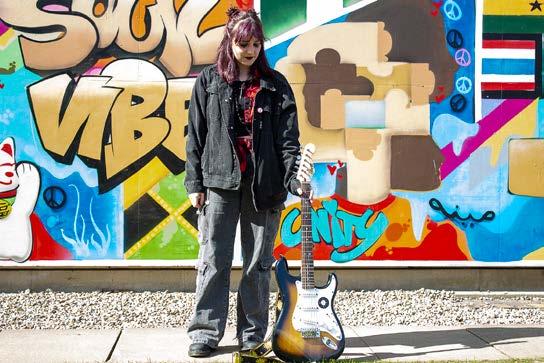
PHOTOGRAPHY BY HEATHER GOSLING
In Conversation with Tommy Dumbarton Smith: the Rave Revolution of the ‘80s and ‘90s
BY ALEXANDRA PULLEN
Amidst the de-industrialisation of Northern towns and cities during the early 1980s under the rule of Margaret Thatcher, there was an underground revolution occurring in the North West which was fuelled by a scene of acid house music. The youth of these decades were met with a lack of opportunity and hope, and the post-punk sounds of the late 1970s mirrored the dreariness of the streets and the overwhelming feeling of abandonment.
However, with a new decade came a new soundtrack, and the booming bass and euphoric freedom which came with acid house music provided young people with an escape from reality. The city of Manchester was a forerunner in creating this new subculture, bringing the sounds of New York, Chicago and Detroit to prominence in clubs such as The Haçienda, The Thunderdome and Konspiracy. But these venues tended to shut at 2am, so what were people expected to do after?
The music would spill out of clubs and onto the streets, seeping further into the North West and across the country to the point where it felt like an addictive blessing to hear. As a result of this, and some of the exclusivity which surrounded club management and doormen, Tommy Dumbarton Smith, along with a revolutionary collective self-named Hardcore Uproar, created another space for young people to find belief in themselves and connect with others. This was in the form of underground raves, hosted in abandoned warehouses and mills which gave life to the plague of industrial decay across the region.
Living in Berlin before coming back to the UK, Tommy was told that all of the music he had heard and started to love was being played in Manchester. When discussing the rave and clubbing scene in the late 1980s
and early 1990s Tommy shared that “it wasn’t elite but it was certainly kind of chosen. They had people on the door [of The Haçienda] and they would say ‘it’s not your night, you’re not getting in.’ They said that to me one night and I thought ‘it will be my fucking night’ and that’s when we came to Blackburn and did the illegal parties.”
The revolutionary force which came behind these raves would lead to thousands of people heading up the motorways in a convoy towards Blackburn to meet with like-minded individuals who had the same appreciation for the new emerging scene.
“You cannot have people standing in the way of revolution and telling you how to behave, what to pay, how to dress. So we thought, this doesn’t belong in nightclubs for a start, this belongs underground. And that’s where we headed.”
Determined to make this revolution come into action and make it as accessible for everyone as possible, Tommy would sometimes “let people in for nothing” if they couldn’t afford it:
“The Haçienda, I think it was a tenner in, pills were 20 quid and remember most people were unemployed. Giro was 25 quid a week so that didn’t even cover your drugs and your entry. When we took it to Blackburn one of our big driving forces was not “can you feel it?”, [but] “can you afford it?” so if you couldn’t afford it we let people in for nothing.”
Despite the positive intentions surrounding these raves, with a new subculture comes a flurry of new ideas and attitudes, not all of which were positive. In this period, many associated acid house with the growing use of Ecstasy and violence in clubs, and this was reflected in some of the local newspapers in the North West. With headlines including “30,000 set for acid invasion.” and “Acid thugs run rampage.”, the press instilled a sense of fear in their coverage but Tommy expressed that in fact, this was sometimes positive for the cause:
“So although they were opposed to us we were of the mind that there was no such thing as bad publicity. Hysteria was one way to put it because it was shaking the whole foundations of many aspects of society, not just the youth which always scares older people but they were changing habits…There was hysteria from every level. I loved it. It was great stuff.”
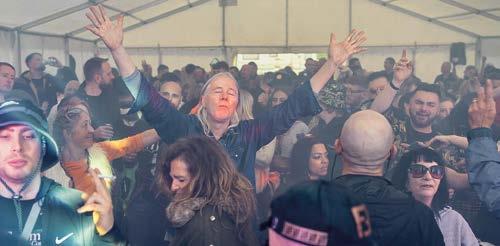
The Blackburn raves provided a real community and “sense of belonging” to thousands of people throughout the years. Beginning with just 50 people at the first event, then growing to 2000 after just six months and finally with 10,000 in attendance, they grew at a rapid rate.
“At our last event there were 10,000 people there and you have to imagine the Sabbath Day, as we call it as Catholics, was a Sunday. So 10,000 people, you’re not only having this once in a lifetime experience but you’re sharing it with so many other people. Can you imagine that? It’s just so euphoric. It just lifts you up into the clouds and beyond.”
When it all came to an end though, Tommy was left as the ‘Last Man Dancing’.
“With my last party, the ones we organised [the raves] with were all locked up, imprisoned or dead. I was the ‘Last Man Dancing’ as they called me. There were 836 people arrested at my last party.” Tommy continues to hold events to this day called
HIGHONHOPE, usually in outdoor venues such as fields where they are met with “no security, no law, nobody telling us what to do [or] when to finish.” We discussed how his relationship with the police changed over time, and how during one night, someone even believed that the police were guiding young people to the raves:
“People often ask if I remember any stories. This guy came from Leeds and came up hugging me and he says “Tommy, you’ve done it, you’ve fucking done it man. I don’t believe it. You promised we’d take over. You’ve even got the police working for you.” I’m like what? Obviously he’s off his head. He’s like “Yeah we’re on the motorway, on the M62. The police stop a convoy and ask ‘You going to Blackburn?’ and took us straight to the party.” It was only in the morning I realised they wanted all the spaced-up ravers off the motorway. But that was the mentality, we thought anything was possible.”
Music and revolution have come hand in hand for decades, and Tommy’s organisation of and involvement in the Blackburn raves provided a way of looking forward during the years of struggle in the 1970s and 1980s.
Now, Tommy continues to look to the future for a way in which our generation can use music for change and awaits a new revolutionary movement to “wise up and rise up”:
“It totally is a revolution and that’s the only solution, revolution, and I’ve always believed that. It changed every aspect of life and rev olutions are only successful if you pass it onto the next generation which is what we’ve done…
You cannot charge people to enter a revolution, you invite them in. One solution, revolution. It’s your turn now.
I’m retiring.”
IMAGE: Craig Dewse
IMAGE: Rausgeganen
The Quiet Revolution of Kate Bush
BY SHONA PATHAK
Interview with Lady Liv
BY JOSEPH ARABBETOU
The year is 1978 and you turn on the television to hear an ethereal, dreamy piano hook chime hypnotically, almost like an incantation. This is the iconic intro to Kate Bush’s number one single ‘Wuthering Heights’, which simultaneously baffled and spellbound the nation. Kate Bush is not someone who valued the traditional conventions of being a pop singer. Aside from Blondie and ABBA, there were not many female voices in the charts in 1978, much less a 19 year old who had never released an album before. Despite this vulnerable position and Bush’s soft spoken, bashful demeanour, she possessed an armour of professionalism and razor sharp belief in her work that no boardroom of seasoned, middle aged male record executives could weaken. It was in this room that Bush insisted that ‘Wuthering Heights’ HAD to be her first single, despite men who had been in the business for decades countering that ‘The Man with The Child in His Eyes’ (also a stunning song) should definitely be chosen. I wonder who was right? ‘Wuthering Heights’ was an idyllic hit single complete with a ghostly, attention grabbing register which seared and meandered straight into the memory of the listener. It was also the introduction to Bush’s unconventional, enriching, narrative-driven storytelling and prodigious songwriting talent. Wuthering Heights ebbs and flows, staggering and reeling like a desperate Cathy through the Yorkshire moors. We were about to meet Kate Bush.
Kate Bush’s incredible power lay in her ability to ignore the expectations that were heaped upon her: the suffocating, misogynistic demands of a female popstar. She spoke when she had something to say. And sometimes… that took a while. Bush’s debut album The Kick Inside is a whimsical, poetic skip through a fantasy world, tackling bold, mature, shamelessly female themes, with ‘Strange Phenomena’ being about periods bringing luck and supernatural occurrences. Her follow-up Lionheart was almost an extension of this album, which she had felt rushed to complete by her record company. But for her third album, Bush was going to take her time and do it her way. She was a perfectionist and was known to go through multiple takes until it sounded exactly the way she wanted. She tackled evocative, dramatic themes of adultery, nuclear fallout and young men going into war. With ‘Army Dreamers’, Bush created protest, but through soft, gentle storytelling and an almost soothing lullaby. Similarly in ‘Breathing’, Bush examined the effects of a possible nuclear war (it was written in 1980 during high Cold War tensions) through the eyes of a defenceless, terrified foetus flailing in its mother’s womb. Bush was focused on a quiet revolution. She told stories through the eyes of everyday people who were blindsided and devastated by the larger issues of society. It was this intricate and nuanced approach that made her songs so emo-
tive and gripping. Meanwhile, in the public eye Bush was equally as revolutionary. She starred in most of her music videos and created elaborate, stunning visual representations of her music. She disliked media appearances and her interviews were few and far between. She would much rather let her music speak for her as this was surely more interesting than her personal life. This is a startling juxtaposition to today’s convention of a pop star’s personal life being equally as sensationalised and marketed as their music. This was simply not a concept that appealed to Bush. Between albums she led a normal, ordinary life with her cats and boyfriend, spending her time lovingly curating her masterpieces of albums rather than making tabloid headlines. As a similarly quiet person, the lack of scandal or drama surrounding Bush’s life is both refreshing and reassuring.
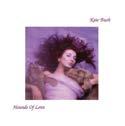
The 1980s was a fruitful decade for Bush. She produced her fourth album The Dreaming, attaining complete creative control over her work. She pushed sonic and vocal boundaries, even at one point impersonating a donkey (as she should). It was the closest EMI had ever come to completely rejecting an album. Despite low chart positions, this record is a cult classic and cements Bush’s status as a true innovator. She was able to break down the barriers to create her magnum opus… Hounds of Love. ‘Running Up That Hill’ doused a delirious public who had almost forgotten about Bush in a gauzy, synth driven, pounding plea to God to swap a man and woman’s places. It was an instant hit. Kate Bush was back. Then in the mid 1990s after several more successful albums she just… disappeared? There were no public appearances, no interviews, not even music. People were confused, concerned, even thought she was dead… In fact she was just living a normal life and having a well deserved break from the unwanted trappings of fame. It was also accidentally leaked by Peter Gabriel that she had a son, whose existence was only discovered by the time he was already a toddler. Well, it was no one else’s business! She dedicated her life to being a mother and raising her son. Then in 2022, an episode of Stranger Things catapulted Bush back into the mainstream. ‘Running Up That Hill’ had new life breathed into it as a talisman and life saving support for the character of Max as she is possessed. The power of Kate Bush clearly still lives on. Kate Bush was also a fan of the series, hence why this was one of the few shows she allowed the song to be featured in. And it was a good choice as it rocketed to number one… 38 years later. It took it a while but better late than never.
Lady Liv is an independent musician, producer and sound engineer based in York, who formerly represented the University of York’s Music Society as their Head Technician. She simply has a knack for creating amazing music, and she has an ever-growing and versatile discography that ranges from the genres of indie rock and metal to experimental and atmospheric pop.
Liv is revolutionising pop music as we know it, and I sat down with Liv to discuss the writing process and technical prowess of some of her latest and greatest tracks.
We’ll start by discussing the absolute masterpiece of-a-track ‘Emotional Support Forest’ from Lady Liv’s debut album of the same name. If you haven’t heard it, and this goes for all of Lady Liv’s music because it’s all so bloody good. This track stands at a whopping length of 11 minutes and 16 seconds. When asked why create a song this long, Liv confessed that she has a “tendency to write longer songs” as she simply writes songs until she has said what she wanted to say. Also, she’s a “prog fan”, meaning her music is influenced by the genre ‘Progressive Rock’, characterised by its extended song structures and avant garde style.
Liv confirmed that the ‘Emotional Support Forest’ is indeed real. Specifically, it is the ‘Bourne Woods’ in Surrey. She recalls frequenting there a lot during lockdown, when it was harder to connect to people, in order to connect with nature instead. Liv shared her reasoning for why it became the title track, being that it’s the “most centrally themed” track on the album. This was achieved by cherry-picking bits from other songs in the album, such as the guitar part of ‘Rose Gold’, the same organ sounds from ‘Pipe Dreams’, and even the space-like synth from ‘Cosmic’. How ingenious is that?!
Liv’s 2024 single ‘Pink Lucid Fuzzy Dreams’ is another song to highlight, as this track’s metallic remnants deviate from her other works so far, which made it an amazing addition to her already diverse discogra-
phy. Liv explained that “[she] originally wrote the basic riff for a band [she] was in at college.” However, no one in the band could play it so Liv spent quite some time “practising odd time signatures”. For those not so musically inclined, time signatures are the notations in sheet music that guide the rhythmic structure of a given piece. She further noted the song’s complexity by stating that “it’s quite experimental in that it’s also micro tonal.” Microtones, in music, refer to the notes in between the notes so to speak. ClassicFM explains that they cannot be found on a standard Western piano or keyboard, and are actually more like any of the infinite possibilities of notes you might hear in between any two consecutive piano notes, or notes in standard scales. On top of this, the messaging of the song is also so uniquely Liv, as the song title stemmed from Liv wanting a phrase “that summed up [her] ideas about gender expression.” The song sheds light onto her experience as a trans person, with the key lyrics being “I don’t like the code in my genes, I live my life in pink lucid fuzzy dreams”. Liv explained to me the technicalities behind the screaming section of the track, stating that “The screams were kind of derivative of a song called ‘One of My Eyes is a Clock’ by Jamie Lenman, where, at the beginning, there’s a very oddly long scream where you can kind of tell what’s happened [is] the scream crossfades into itself. I thought, I’m gonna do that, but I’m gonna do three of them.” Before we move on to the final song, it should be noted that when I asked whether Lady LIVes her life in ‘Pink Lucid Fuzzy Dreams’, she exclaimed “HELL YEAH!”. The final song in Liv’s repertoire is a song titled ‘Fleur’. “Who is Fleur?”, you may ask: only Lady Liv’s dog! Subject matter aside, it’s Liv’s approach to the second verse of the song that particularly stood out to me, as she uses a more grumbly and gravelly sounding voice, which contrasts with the rest of the song. Her reasoning for it stemmed from when she saw King Gizzard & the Lizard Wizard live at Alexandra Palace. It was there they performed one of their, at the time unreleased, songs called ‘Motor Spirit’, where the singer, Stu Mackenzie, was throat singing over what Liv described as “some really eerie drums and guitar”. So, naturally, this caused Liv to research how to do similarly styledthroat singing. In the end, she found and followed a tutorial on Mongolian throat singing on YouTube, which enabled her to use said vocal technique in ‘Fleur’.
I hope that you can now understand not only just how cool Lady Liv is but also how talented of a musician she is and how much you won’t regret listening to her music!
Album Review: Amyl and The Sniffers
Cartoon Darkness
BY OLLY HARRISON
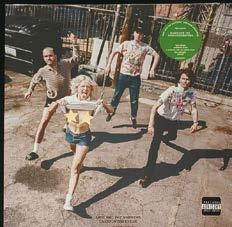
While the US and UK are well-known to be the joint originators of punk, remaining the most prominent contributors to the genre even today, Australia has been making waves in the modern punk scene, perhaps most notably with Melbourne natives Amyl and the Sniffers. Fronted by Amy Taylor, a blonde bombshell with the energy of a firework and the mouth of a sailor, the Sniffers never fail to bring the rebellion without skimping out on fun, and their latest album Cartoon Darkness (released 25 October 2024) perfectly fits these themes.
I’ve been a fan of this band for a while and I was slightly apprehensive that their quintessential bare-bones, punkish pub-rock sound would start to sound repetitive with their third release, but I wasn’t disappointed at all. Cartoon Darkness manages to live up to the brand they’ve cultivated since 2019 while bringing fresh lyrics and commentary. Recurring themes include self-love, a new take on girl power, and plenty of anger, cementing the band’s don’t-give-a-fuck attitude.
Bass, drums, vocals and a single guitar might be the only instruments used, but the songs don’t sound oversimplified or unfinished. When accompanied by Taylor’s bombastic, profanity-filled lyrics and a healthy dose of gain, the instrumental becomes a punchy wall of sound rather than anything boring or basic.
Speaking of profanity-filled lyrics, my favourite track is undoubtedly ‘Jerkin’ . I wish I knew who this song was written about and what he did to deserve it, but not knowing is nice in itself as I can sing along and direct the words at whoever I please. Lines like “You’re a dumb c*nt, you’re an arsehole” and “You are ugly all day, I am hot always” make Taylor’s ire easy to sense, but my favourite thing is the sense of pure fun this song brings. Sure, Amy’s mad at whoever this dumb c*nt is, but she’s also taking the absolute piss out of him. There’s a unique kind of rebellion in refusing to give someone the respect of
intellectually dissecting and refuting their opinions, instead just calling them a bunch of ugly f**kers – it’s more satisfying and arguably more insulting. The driving bass and guitar make it easy to get into the groove, and the song also espouses self-love with lines like “I am the top bitch, I am the best yet”.
Cartoon Darkness inspires radical self-love in the face of opposition, a revolutionary concept especially in underrepresented and oppressed groups who face struggles like this every day. “U Should Not Be Doing That” speaks to the experience of “Working on [your] worth” and self-acceptance while dealing with people looking down and criticising you for doing what you’re doing – “Another person saying I’m not doing it right, Another person tryna give me some kinda internal fight”. I’m glad the Sniffers are bringing attention to the issue with such a great track; the bassline sticks out to me, and throughout the album it’s made more audible than usual due to the group having one guitar rather than the typical two. ‘Tiny Bikini’ takes a light-hearted approach to a similar topic, biting back at people who look down on performers like Amy for wearing skimpy outfits on stage. Personally, I think these buttoned-up critics need to loosen up and have a bit more fun, and with lyrics like “You think the world is not man enough? I’m gonna inject some of this c*nt! If I didn’t show up in something spicy, the cold world would feel even more icy”, it seems like Taylor agrees.
The whole band has a cool energy that I imagine makes them a brilliant live band, but Amy Taylor oozes this pure confidence which makes her a beacon of an alternative kind of girl-power. The album cover features her joyfully flashing her tits to the camera, while singles feature her squatting to piss on the floor without a care in the world – the song ‘Me and the Girls’ has a similar chaotic energy, showing that female empowerment doesn’t have to be about intellect or being taken seriously, it can be more like ‘Hey you guys are really dumb and boring and we’re having fun over here so f**k you’. The lyrics are equal parts stupid and serious, a mirror to the Sniffers’ discography and this album.
‘Bailing on Me’ is a softer, sadder tune that gives a nice break from the full-on punk energy and nonstop speed of the album; it also shows Amy using her voice in a different way, proving that she has an incredible singing voice as well as being great at shouting and belting. ‘Big Dreams’ is another less fun-filled but still fantastic track, this time touching on the cost-of-living crisis and adding a dash of soberness to the record, giving it more range and showing that the band members aren’t exclusively about chaos and do have more realistic takes on serious issues.
The next time Amyl and the Sniffers tour the UK, I will be first in line for tickets: they epitomise my favourite kind of band to see live. They ooze charisma and energy, just like this album, and I’ll be keeping my eye out for the next release.
Nevermind: A Revolutionary Album?
BY JOE DEAL
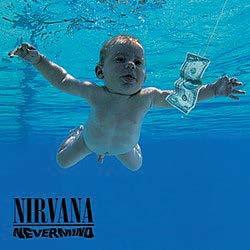
Alternative rock had many major players in the late ‘80s and ‘90s, from the dynamic and guttural loudness of the Pixies to fellow grunge contemporaries Soundgarden, but no one spearheaded the movement like Nirvana in their angst-tinged sophomore album Nevermind. Glam rock had dominated the cultural zeitgeist for a decade, with bands like Poison and Mötley Crüe over-saturating the radio with songs revolving around the same tired themes of the ‘80s: drugs, gloss and machismo. But culture was changing and Nirvana’s tight and importantly ‘authentic’ album came at just the right time.
A key quality that separated Nevermind from its competition was its themes. Kurt Cobain would make it clear in countless interviews and even in his own songs (like the aptly named ‘Tourettes’) that his lyrics were not to be overanalyzed. Regardless, there is no doubt that the themes on this album are vivid and the messaging can be pointed when needed. There is no song where Nirvana rejects what was to be expected by a rock band more than ‘Polly’. ‘Polly’ retells a real girl’s experience of being sexually assaulted after a rock concert from the perpetrator’s perspective. Akin to Nabakov’s Lolita, This puts the focus on the man’s wrongdoings through his own psyche. By challenging the crowd that would go to these concerts, Nirvana would set themselves apart from the overly macho and often misogynistic aesthetics of ‘80s glam. Such heavy themes weren’t just relegated to album tracks. Major singles also delved into dark subject matter, like their third single ‘Lithium’, which deals with themes of mental health and religion.
Although the subjects of Nirvana’s hits were important, themes alone were not enough for people to respond to, it would be the band’s sound that came to define them and the music landscape.
Whilst the band retained the intensity and energy of their debut album Bleach, it is by no means the same album. The heavy grunge riffs from tracks like ‘Negative Creep’ and ‘Floyd the Barber’ had been softened in favour of melodic and pop oriented melodies seen previously in ‘About a Girl’, in my opinion their best work from Bleach. No song encapsulates Kurt Cobain’s sense of melody more than Nevermind’s biggest track ‘Smells Like Teen Spirit’. Borrowing from the Pixies ‘dynamic quiet-loud-quiet structure’, Smells Like Teen Spirit’s power chord soaked chorus is undoubtedly catchy whilst staying true to its punk sound –reaching number six on the US billboard top 100. This would be no different for other album tracks like ‘Breed’, with NME describing it as “screaming pop” in 1991. Whilst there are exceptions, I think that “screaming pop” doesn’t just encapsulate the essence of Breed but the core of the album. While Nirvana would move away from the popular aspect of screaming-pop when writing ‘In Utero’, it is this aspect that makes this album so important as this more accessible sound opened the door for more hardcore/alt bands not just in the 90’s but also every decade following, whether it be the explosion of grunge bands or the success of similarly angsty outfits like My Chemical Romance. Nevermind proved that albums could be angsty and intense and angry whilst also being able to dominate the scene, and the album went on to sell 30 million copies (as of 2024).
Interview with Section 4, winners of Battle of the Bands
BY OLLY HARRISON
Section 4 are an alt-rock band from York and were the winners of Battle of the Bands this year. I caught up with the band to chat about their experience at Battle of the Bands, their musical projects and future plans.
Olly: So, Battle of the Bands guys – that was such a cool event and you guys really killed it, you played so well. Tell me a bit about what the whole thing was like, because you went into the heat as your first show together, right? Then being picked as the wildcard choice for the finals, that would be really cool to hear about.
Tom: I mean, we formed the band and were kind of just like, let’s just write some stuff and see how we do for the heats of BOTB. And then we did the first heat, I think we had about four rehearsals didn’t we? And then we did the heat and we didn’t get through and we’re like ah, that’s fine, you know. You take your wins, you take your losses, and we’ll just move on and keep gigging anyways.
Vanessa: Well, when we got the wild card, I don’t know where Luke and Tom were, I think they were gigging but Anna and I found out and we were just like “yes, yes!”
Anna: I didn’t expect us to get through honestly. Vanessa: It was very surreal.
Olly: That was kind of my follow-up question; were you hoping or expecting that you might be the wild card or was it a complete shock?
Tom: I kind of squared it away in my head like, you know what, don’t worry about it, think about something else.
Olly: Unfortunately I missed out on going to the final, but from what I’ve heard from others and
the videos I’ve seen it was a really good show, sold out and everything. What was it like with that kind of audience in the room?
Luke: I had people clapping along to my drum solo, which I quite enjoyed, I liked seeing how long they could stay with me clapping.
Tom: It’s always hard opening. It’s always really, really difficult, especially when it’s a competition and you have to kind of think about it in terms of – you to get a benefit, right, you get to set the tone and the energy for the night, but equally it’s so hard to get the crowd going in the first place. So I think our approach was very much, let’s just try and build the energy and throughout the set we know we’ve got things to engage the crowd, like Luke’s drum solo connecting the last two songs of the set.
Olly: It seems like you managed to keep the energy going really well, so congrats on that. In terms of gigs, what else have you guys got lined up for the people of York to go and see?
Vanessa: Oh, we’ve got Sus Fest, which is with my other band Suspicious Liquid. We’ve also got a couple of gigs with some of the colleges – we’ve got one that’s yet to be announced, we got a message about it like two weeks ago. We’ve got one in Leeds as well soon which we haven’t had confirmed yet, so yeah, we’ll definitely be playing around. And Summer Ball, of course!
Olly: I’ll make sure to catch at least one of those gigs! You mentioned Suspicious Liquid, who I’ve seen live, and it was a brilliant set by the way.
Anna, I know you play in The Tonics as well – are there any other bands in the Section 4 Band Universe that you guys are involved in?
Tom: I’ve got a band down in London called Milkman Jack and my new band Velleity are also playing on Thursday. I also had my solo project last year called Tom John Trio, but that’s sadly discontinued.
Luke: I’m playing quite a few things in Leeds, basically the Britpop band is my main gig, and then a funk band and a, like a prog rock, 70s, 60s, weird psychedelic thing.
Olly: Oh wow, lots of variation in sound then. How does Section 4 compare to your other creative projects? What makes it different, and why did you start this in the first place?
Anna: It felt like I was scouted, Tom was just like, “Do you wanna be in a band?” and I was like, “Whoa, I’ve not really talked to you before”
Tom: Yeah, I spoke to Vanessa at the end of last year and I was interested in starting a new project anyway because I had the Trio at the time, but I wanted a band that I was just playing the guitar in.
We just thought, let’s find a drummer and bassist, so we found Anna and Luke and we started having some rehearsals and then yeah, here we are.
Vanessa: I mean, in terms of comparing our different bands, I think that it is a different sound. I like doing stuff with Suspicious Liquid ‘cause it’s heavier, but then again we have times where our set is heavy at points and I think that’s really cool to have that diversity. At least for me, I definitely have a different approach for how I sing in the bands.
Tom: What about you, Anna and Luke?
Anna: I think it’s the first one where I’ve done no covers, which is quite cool. It’s always like “we’re gonna make songs ourselves”, which is cool, we’re good at bouncing off each other
Luke: Only doing originals is nice. And I’ve been fighting for years, YEARS, to get a drum solo longer than 16 bars!
Olly: Let’s talk about influences – where do you think you’ve come from, and where do you think you’re going next?
Luke: I really like drummers like John Bonham from Led Zep. Al Jackson Jr, who was the drummer for Booker T and the MGs drummer, I absolutely love.
Tom: Section 4 is an amalgamation of Luke, Anna, Vanessa and me, and we all have our own experiences and tastes and styles. My background is from learning a lot of metal and hard rock songs, so moving from that to something that’s a bit more Smashing Pumpkins and grungy on my approach with guitar – I’ve noticed that’s what’s changed for me a lot with Section 4.
Vanessa: I’ve been trying to jam with everyone more vocally, like randomly improv-ing lyrics and just seeing what fits. I’ve been really focusing on attaching more meaning to the lyrics of the song, which I think adds to the overall performance.
Olly: Something a bit more whimsical now, to finish off the interview – if you could play any venue, lo-
cal or dream as big as you like – where would you like to play?
Tom: One of my favourites of all time is Led Zeppelin, 1973 Madison Square Garden.
Luke: On a cruise ship – you’d be there for like a week, you could just be nicking cocktails all day every day.
Anna: I mean if it’s like big dreams then Wembley, London O2.
Vanessa: I’d love to play my hometown stage. There’s this big stage with this beautiful mural on it, and there’s this big park in my town and a couple thousand people just get in the park and watch some live music you know?
Olly: That’s a really nice idea. My last question then, keeping it local, is this: are there any bands in the York area that you haven’t played with yet that you’d really like to in the future?
Vanessa: Ooh, Disappearer!
Tom: Yeah, Disappearer, they’re so good.
Anna: I really like Ghostship as well. I’m sad I missed them, I missed their comeback actually.
Olly: There’s so many bands in York, more than I was expecting – the scene is so vibrant and I always have a great time at shows.
Thanks so much to Section 4 for talking with me, and congrats on the big win at Battle of the Bands! If you want to see them performing live you can catch them at Sus Fest on May 13th, and potentially at a mysterious, as-yet-unnamed event with the Colleges soon…
In Conversation with The Upstarts on their new single ‘I Hope Not’
BY HEATHER GOSLING AND JOSEPH ARABBETOU
The Upstarts formed as a band in 2023 at The University of York, and the band consists of frontman Tom Foreman, Tom Cashin on the drums, Mia Sinh-Gelling on bass and James Littlefield on guitar. Circulation caught up with lead singer Tom Foreman on Zoom to discuss their new single ‘I Hope Not’ and their future plans as a band.
Heather: Last time we saw you was at the Issue 2 launch party. What have you been up to since then?
Tom: We’ve all finished uni now, so we’re all in the scary world and kind of reminiscing on last year as a band being able to see each other every week. We are trying to find ways here and there to meet up with each other, and it’s kind of left us all to think and write about songs, for me especially, to share with the group and hopefully record. This song that we are going to be talking about today is something that I’ve written … the first song that Upstarts have had that I’ve written and I’ve shared it with the band and we are going to record it in a couple of months time.
Heather: How do you feel your new single differs from ‘Stage Direction’ and ‘When I Saw You’?
Tom: I think the subject matter of this one is the most where I’ve talked about how I’ve felt. ‘When I Saw You’ was me reminiscing on meeting my lovely girlfriend Mia, who is the bass player in the band. ‘Stage Direction’ was about a character, and this one is coming from the worries I have around the band moving away from each other. I think it’s the worry that when you’ve found something so good that you might sort of slowly lose it and not see these people as much. That’s where it’s coming from, a place of almost insecurity maybe, which is quite interesting because it’s the first time as a band where we have gone into that territory.
Heather: I feel a similar thing as someone in Third
Year with my housemates moving on after university and being scattered around the country.
Tom: I hope that’s something that people can take away from it, that it’s a relatable feeling.
Heather: What is your writing process like when you are writing songs?
Tom: Usually James will come to us with a guitar riff, but as we have been apart from each other it’s been harder, so this time I wrote a very simple guitar riff. I used this loop pedal. It sort of opened up me practicing on my own. I wrote a really basic riff that I could loop again and again and I could just talk out loud in my room and kind of find the vocal path for where I wanted to go with it. So that was kind of the writing process was using this loop pedal and soloing over the riff and seeing what would come out of it.
Heather: Do you have any genres or artists that you draw from when you are writing?
Tom: Oh definitely! I’ve always been a fan of The Kinks, I think they are one of the most underrated popular rock bands of all time. Everyone has heard of them, but they don’t get as much love as people from the same era do and they had such a massive impact. I think some of the vocal delivery on the chorus I wanted to sound a bit like The Kinks, but Nirvana as well! Especially the chord progression of the verse. One of the last of the notes of the loop of the riff, I tried to get a really strange Kurt Cobain-y sound where you play the note and the singing on top of it kind of feels a bit uneasy. I think playing with those two influences and mixing them together, which you don’t usually hear because they are quite different. This single will be interesting because I’ve come to James with a guitar riff but he’s going to play it in a way more advanced and interesting way than I could ever play it. It may sound a bit grungy and a bit like The Kinks now, but it will be really interesting to see, for you especially Heather as you’re the only person who has listened to the demo, what I hear in my head and what James responds to the demo with.
Heather: Is there an album in the works in the future?
Tom: I think now that we know we can work apart and as long as we keep a good relationship with people who can record for cheap at the university, then I think there is no limit on us hopefully recording an album. We would love to, I know we’d all love to.
Heather: If you could meet any musician dead or alive who would you meet?
Tom: That’s a big question! I think the most interesting person would be Keith Richards from The Rolling Stones just because he’s a bit of a nutter and he writes songs in such a weird way and he retunes his guitar just for the hell of it and I think he’d be an interesting guy to have a chat with and learn things from. My favourite fact about him is that for his pre show ritual he has to eat a shepherd’s pie.
Heather: Do you have any pre-show rituals?
Tom: You know what, I do. I can’t believe I’m going to say this, but I have a pair of pink pants. So I might wear some pink pants. I like to be slightly more calm than I usually am, wear my lucky pink pants, and drink lots of lukewarm water for my voice… I can’t believe I just said I wear pink pants! I also check on everyone else in the band and try to take the stress off them.
Heather: I think you bounce off each other really well as bandmates onstage, it’s really nice to see.
Tom: Yeah we have fun! Sometimes if you watch James during a performance he might do an impression of a guitarist. I might just shout at Tom to play something different on the drums, or we have this game where I’ll say something to the crowd and he drums behind me.
Joe: If you could swap places with one of your band mates for just one of your performances, who would you choose and why?
Tom: The problem is that no one else wants to sing. I can either be mean and switch out someone who really wouldn’t enjoy it, or someone I think might be good at it. I think James, our guitarist, is a secret
singer. I’ve had a hunch for a while. Sometimes he’ll sing to himself while he is playing as a joke. So he might play ‘Tiny Dancer’ and he’ll go, “Oh, how it feels so real”. But he can actually sing it. But then, as soon as anyone else hears, he then pretends to not sing it very well. So I think James would be a good replacement for me (...) I think Mia would hate singing. If I’m feeling mean, I’d make Mia do it. And for me, I can just about play the bass guitar. So, for things not to sound too bad, I think we’re gonna switch Mia into the front man position and me into bass.
Joe: That was a lovely answer. I like how there’s a justification for everyone, but I do especially like the bit about the secret singer. My final question is kind of a more standard one. How would you sum up the band in three words?
Tom: In three words? God blimey. Okay. Little. Bit. Cautious. I think we’re very cautious about what we put out and how we want people to perceive the band. We’re always thinking about the image of the band and how we are perceived at shows. (...) When we play live, we want to be really energetic. I think that’s why we played a lot of warm up sets for bands headlining. (...) We try and bring a lot of energy that you may not get sometimes with other bands. Everyone brings something different and I think there’s a lack at York of front men and women who really try and warm up the crowd. Almost like a ‘Mick Jagger’ kind of thing. I think that’s such a fun thing to do and I’d love to see more people do it.
Heather: Have you got any gigs lined up in the future (other than the Circulation Launch Party on the 7th of May)? Or any other music you are planning to record?
Tom: I think the boys especially are really pushing for an EP. We’ve blocked out a weekend to go up to York a couple of weeks after we do the performance for you guys to go and record. There is definitely a drive to find a couple more songs to get an EP out, and I think that’s our next goal after this.
It was a pleasure to chat with Tom about The Upstarts and their latest single, and we can’t wait to see them perform! Check out their Spotify by scanning the code below.
what’s on?
York:
09/05/25: The Crescent – Weetwood Mac (Fleetwood Mac tribute)
13/05/25: Sus Fest, Fulford Arms – Suspicious Liquid with Bin Bag, Section 4 + A Man Is Scared
14/05/25: Fulford Arms – Chub with Idle Eyes, Damage Control + Bin Bag
15/05/25: York Barbican – The Waterboys
15/05/25: Fulford Arms – Heartsink supported by Innovation Way + Strip
20/05/25: The Crescent – Crash Test Dummies
22/05/25: The Crescent – Glass Caves
24/05/25: The Crescent – The Vaselines
26/05/25: York Barbican – Sophie Ellis-Bextor
31/05/25: Fruit Fest, Fulford Arms – Slice!, Mango x3, Innovation Way, A Dog Called Crisis + Trainsbopping
06/06/25: The Crescent – Shonen Knife
Leeds:
10/05/25: O2 Academy Leeds – The K’s
11/05/25: Harmonize Her, Hyde Park Book Club – independent female Soul/Jazz/ R&B acts
17/05/25: Santiago Bar – Nirvanher (all-female Nirvana tribute)