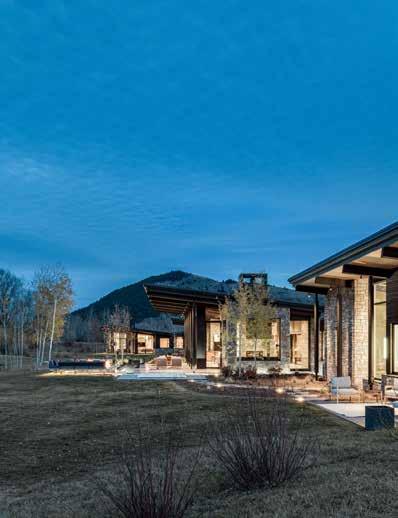
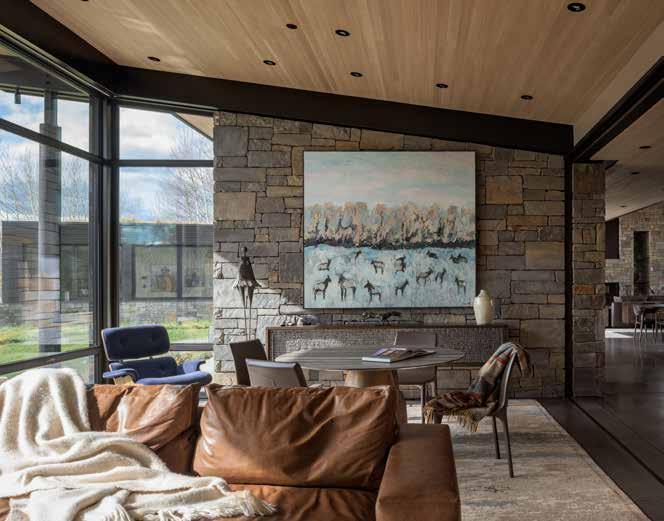
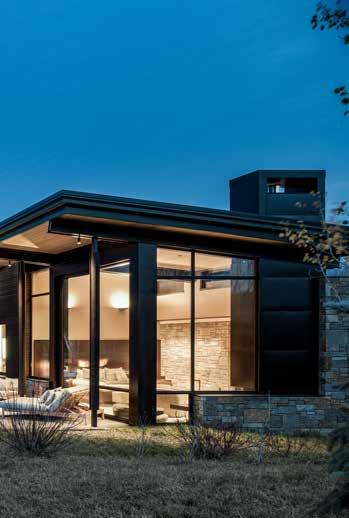
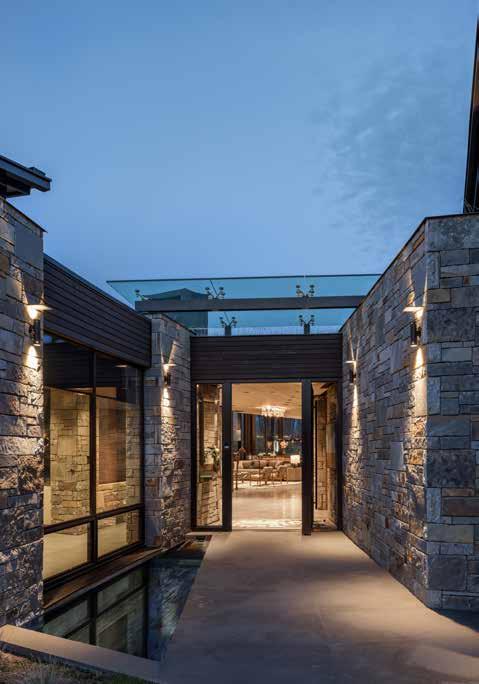
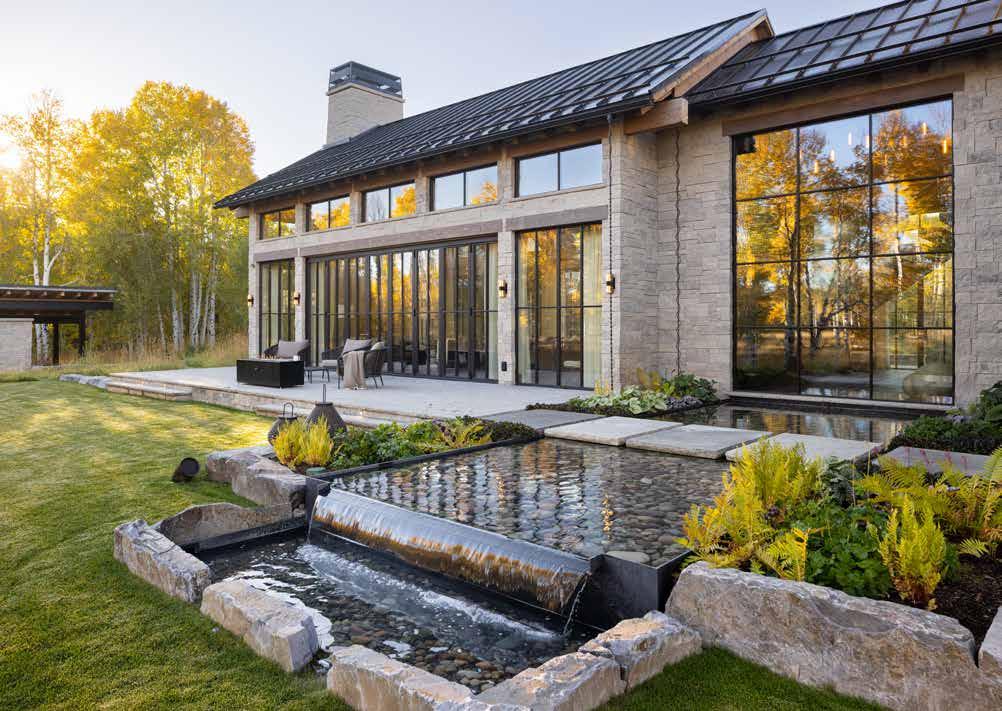
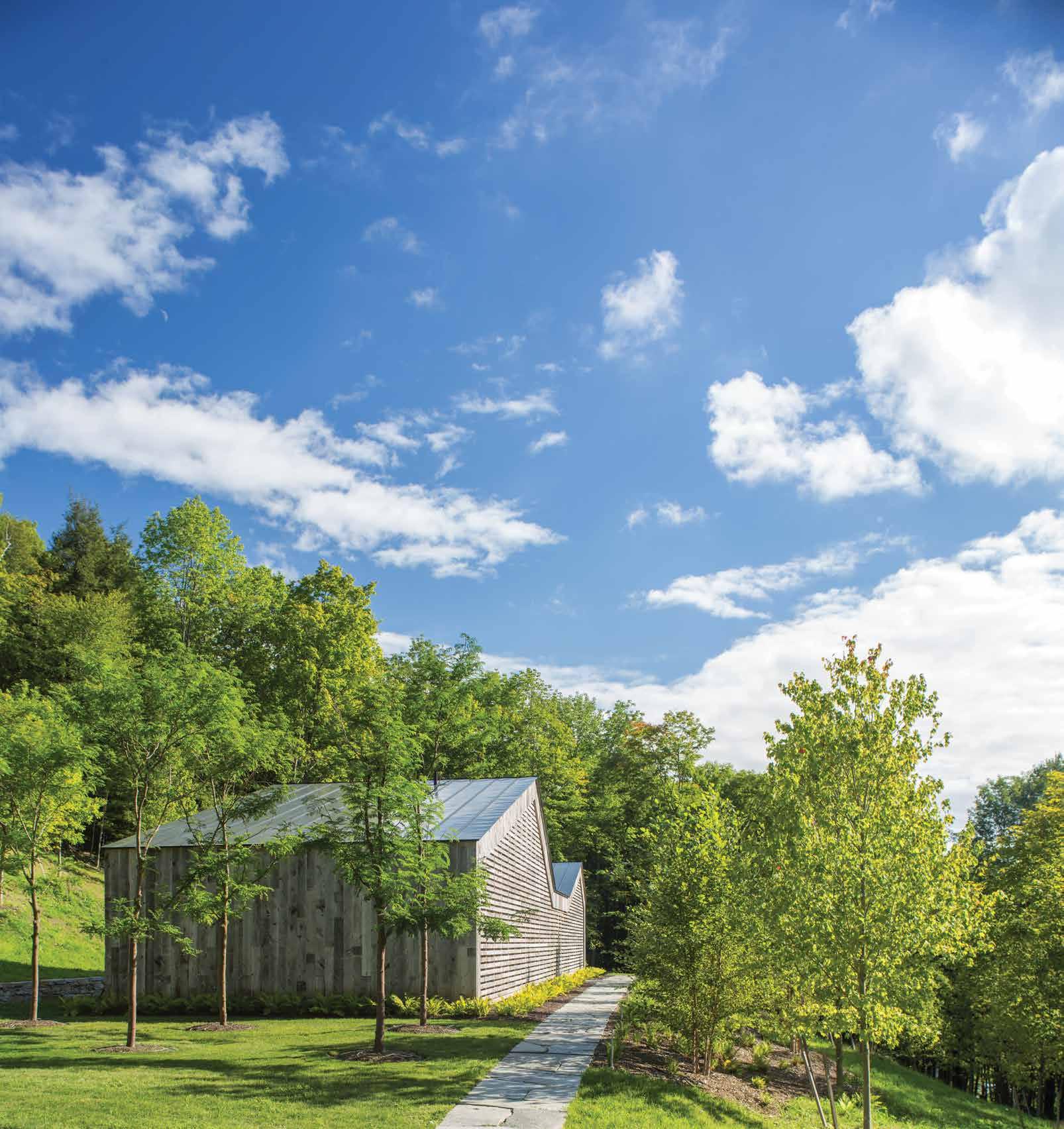
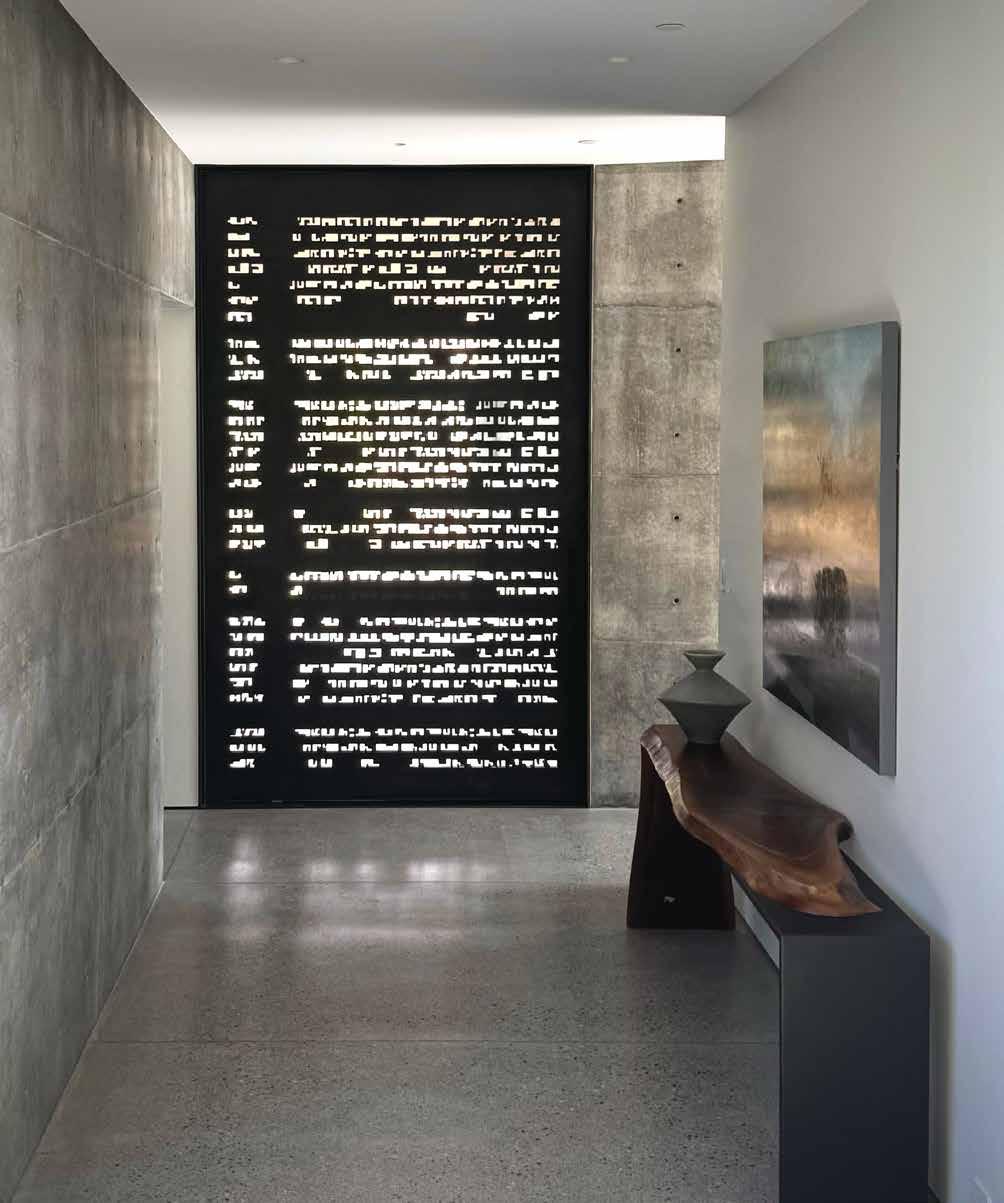
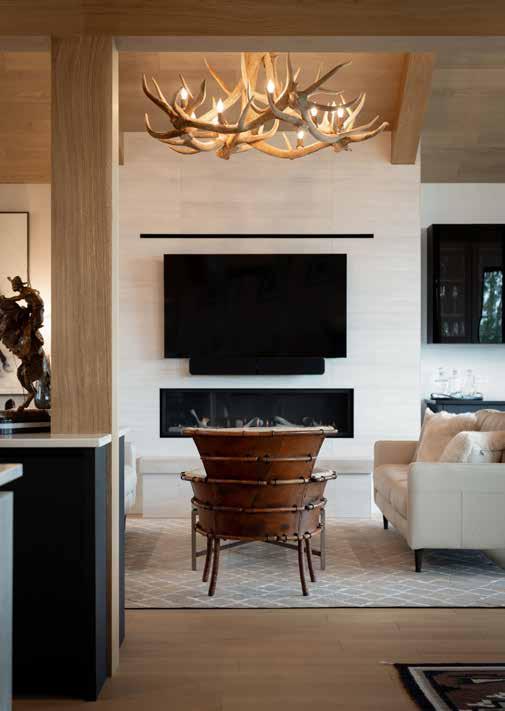
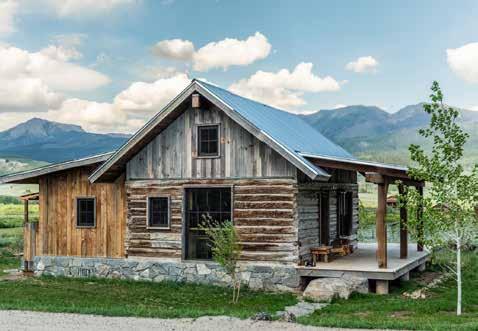
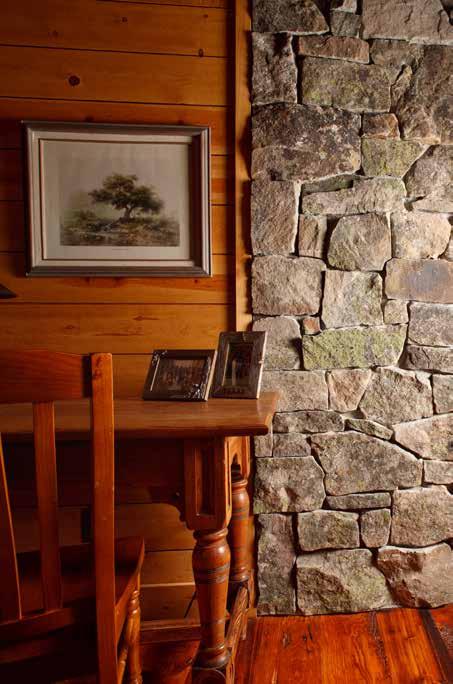
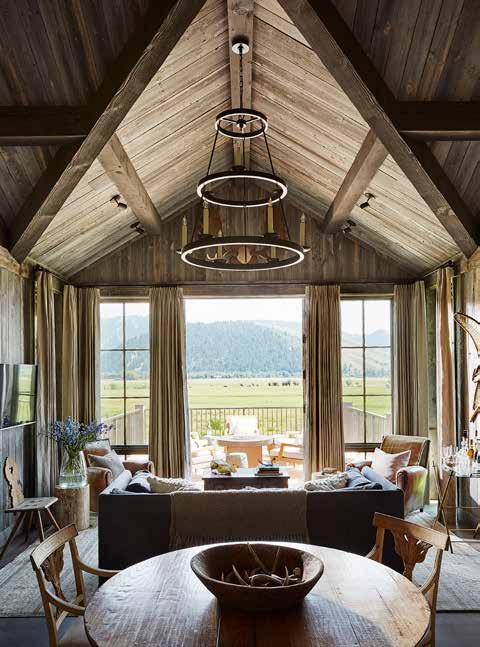
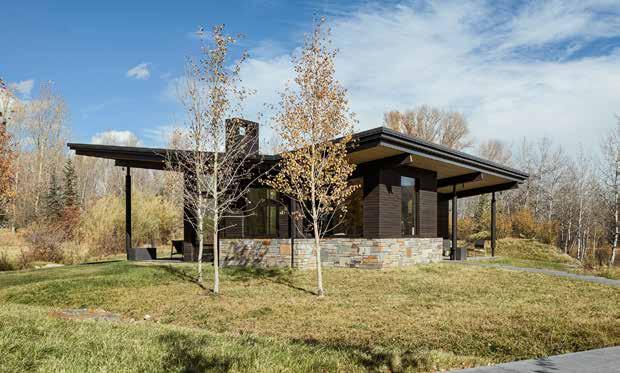
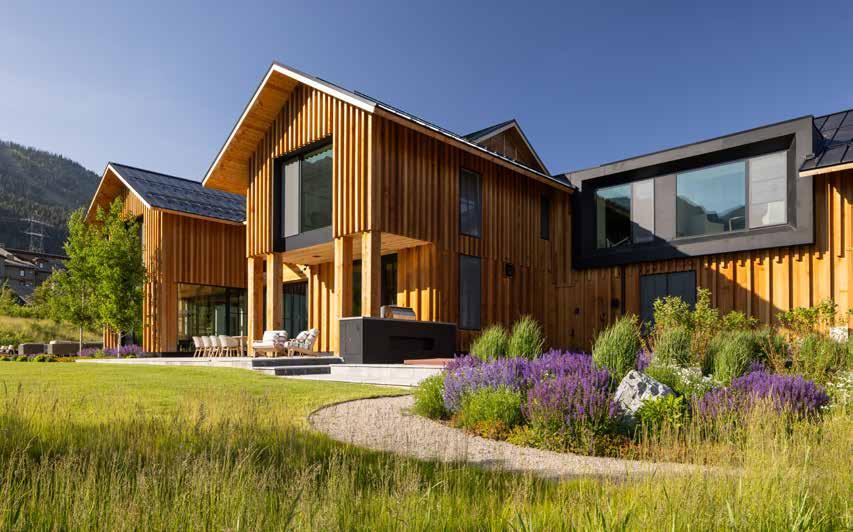
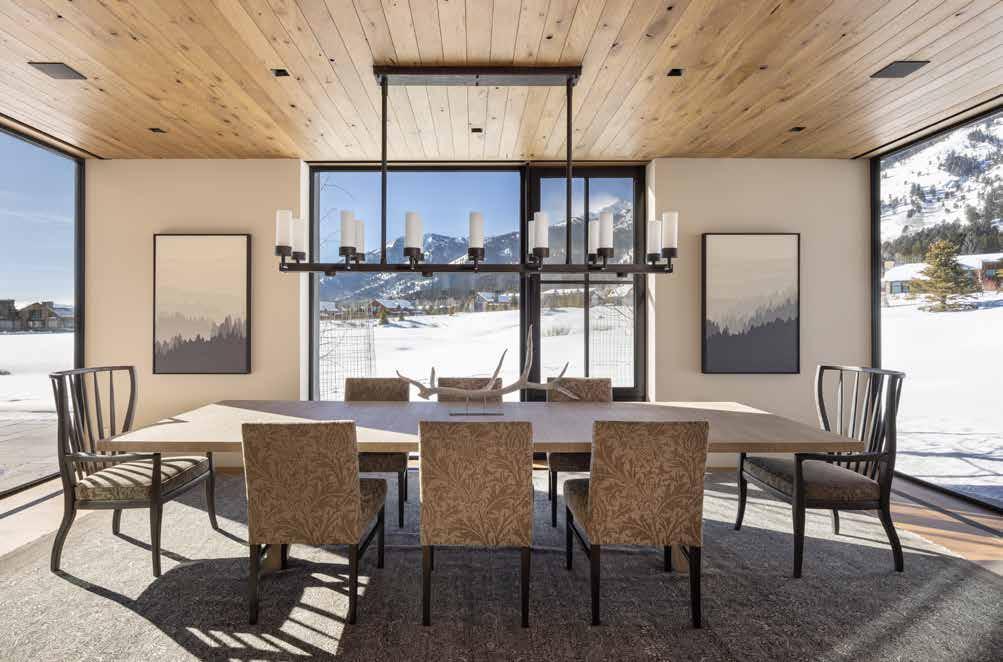
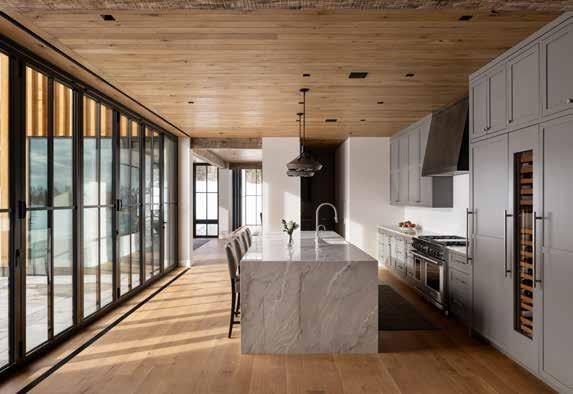
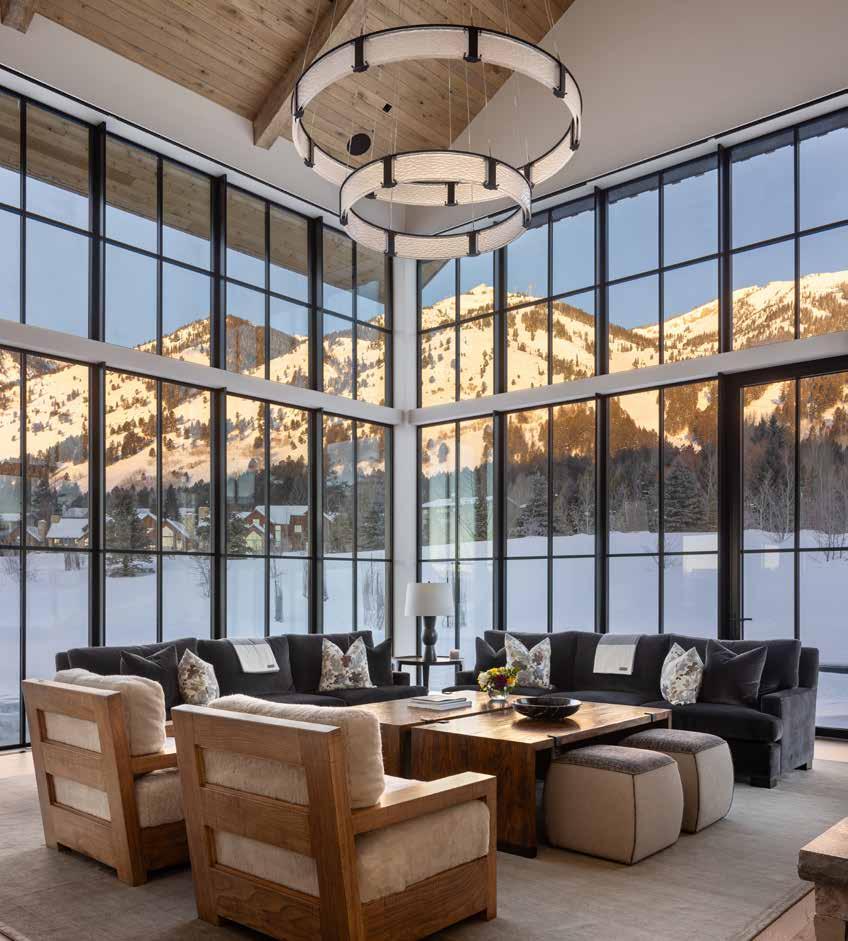
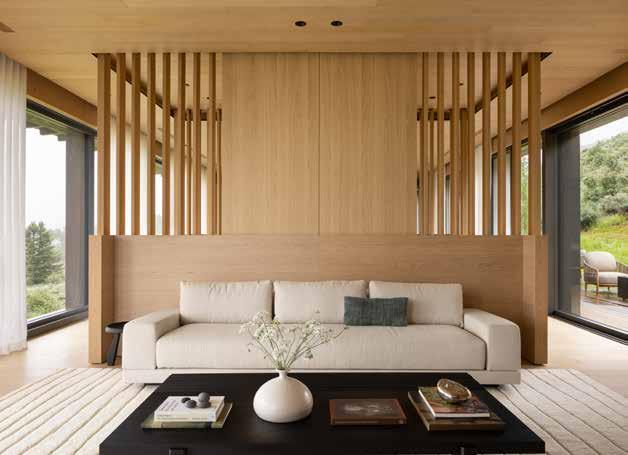
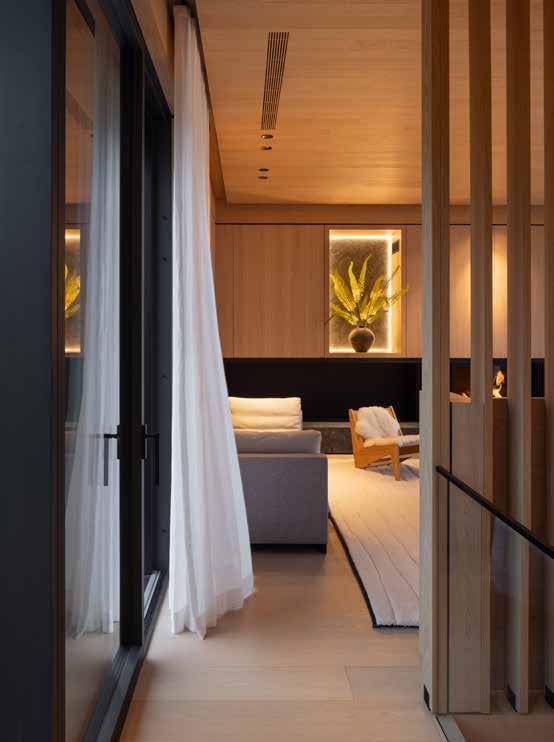
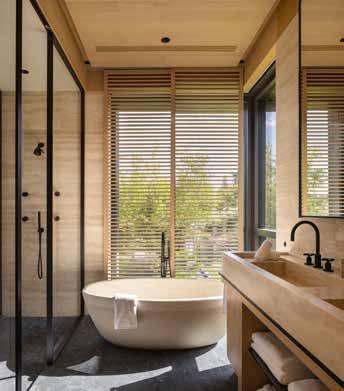
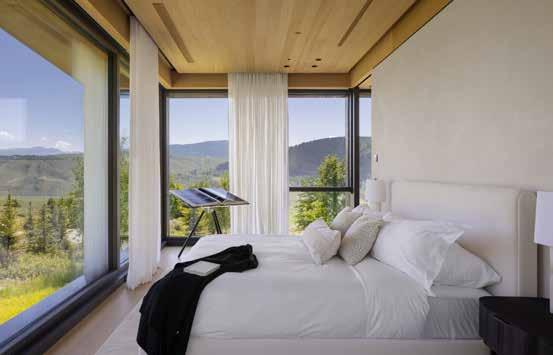
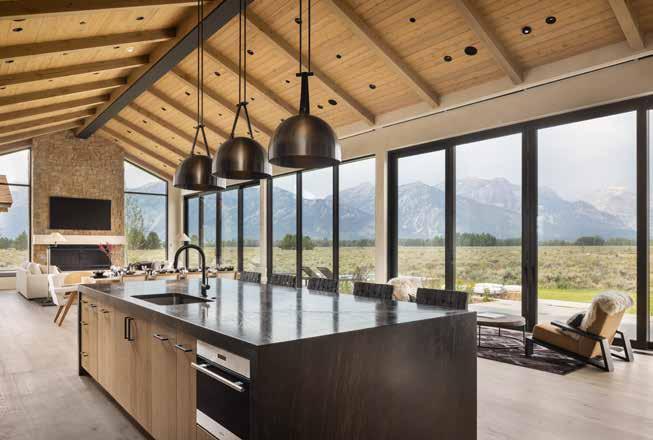
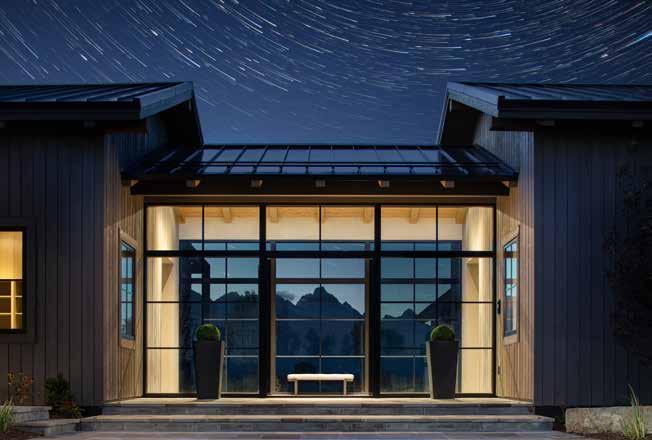
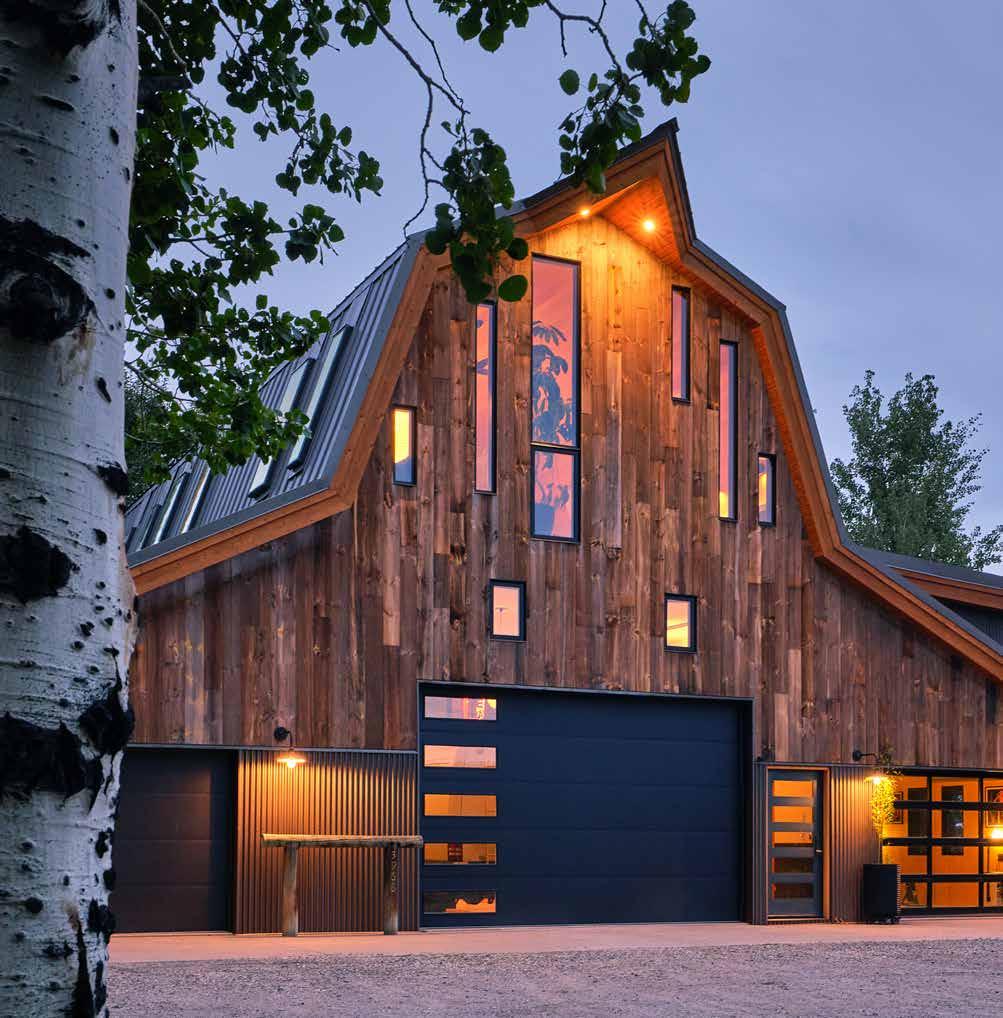
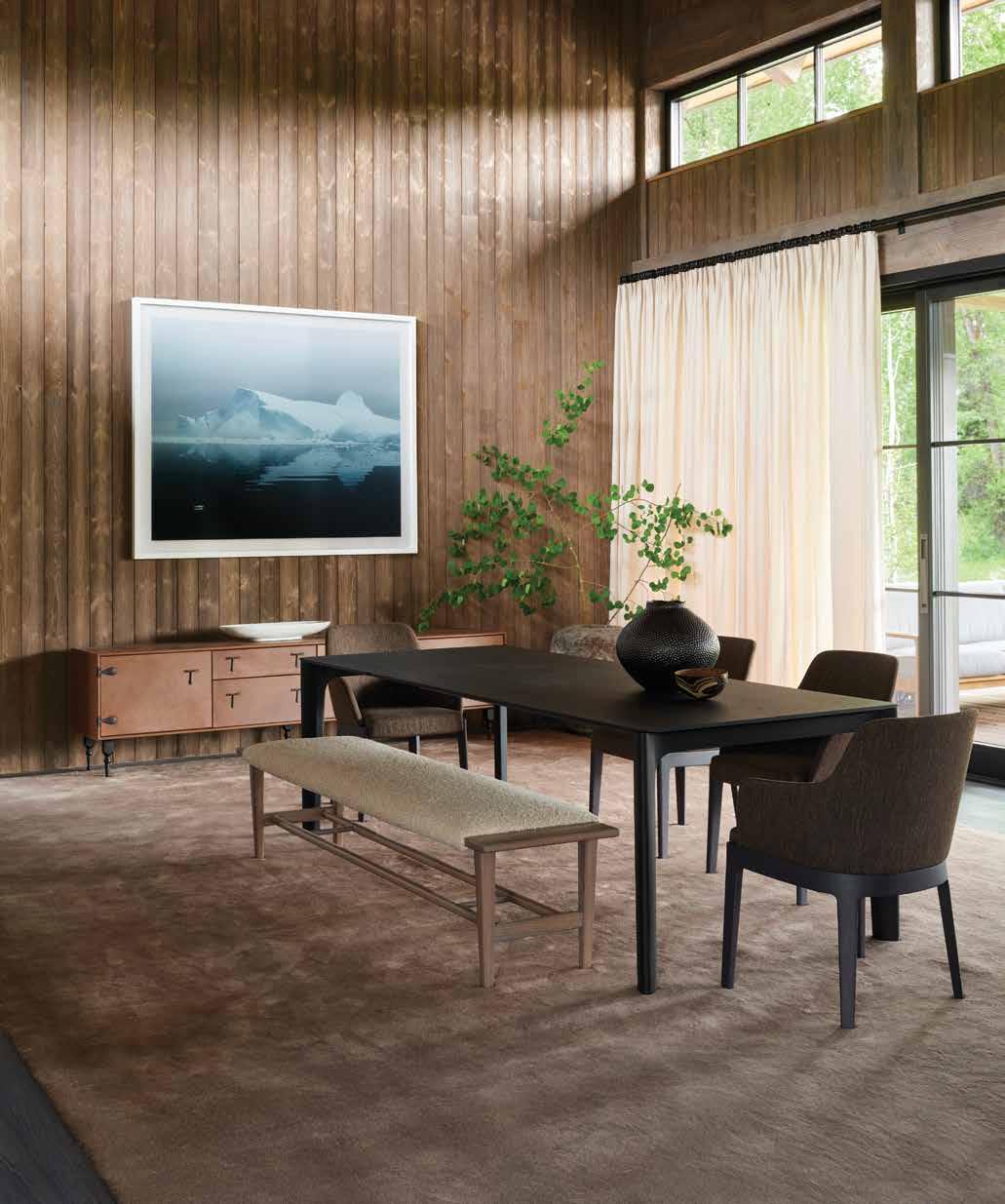
DESIGN SO INVITING, GUESTS WILL OVERSTAY THEIR WELCOME.
WYOMING
Our commitment is to provide our clients with peace of mind through reliable and trustworthy property care. Our team positions themselves as invaluable, with breadth of capabilities, outstanding customer service, and innovative solutions.
Services
Landscaping
Landscape Installation
Landscape Maintenance
Irrigation
Pond, Pool, & Spa Care
Noxious Weed Removal
Gardening
Arbor/Tree Services
Snow Removal Caretaking
Full-Service Concierge
House Keeping
Home Inspections
Home Management
Project Management
TABLE OF CONTENTS
FEATURE STORIES
52
60
94
98
104
108
Building Traditions
Lessons from Jackson Hole’s historic built environment inform good design today.
Nine Ways to Elevate a Guest House
Architects and designers share ideas that will take your guest house to the next level. Fair warning: your guests might not want to leave.
Designer Picks
Stars of the valley’s style scene share some of their favorite things.
Defensible Beauty
The risk of wildfire in Teton County is higher than in 88 percent of counties in the U.S. Here’s how you can protect your home.
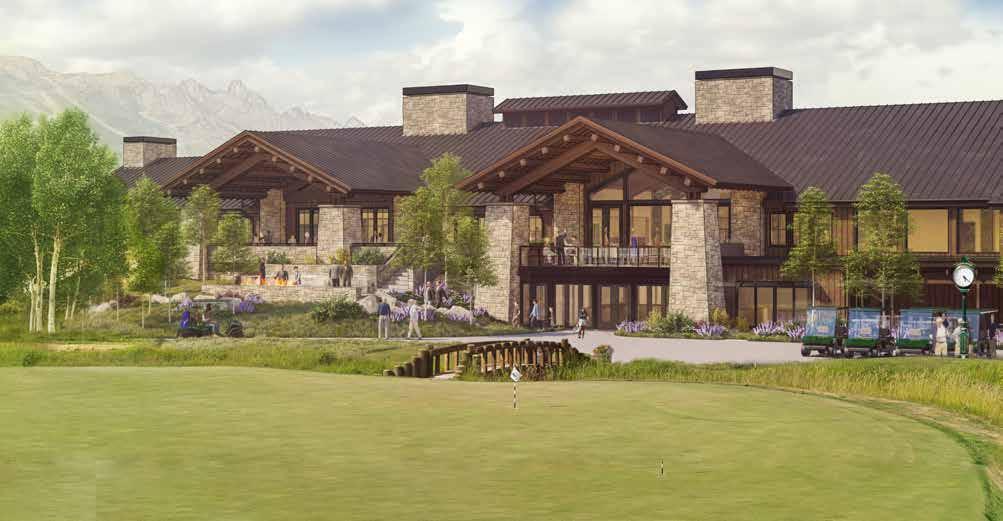
Teton Pines Country Club
One of Jackson Hole’s first golf communities, Teton Pines offers a sense of connection, thanks to membership programming and future growth plans.
Fall Arts Festival
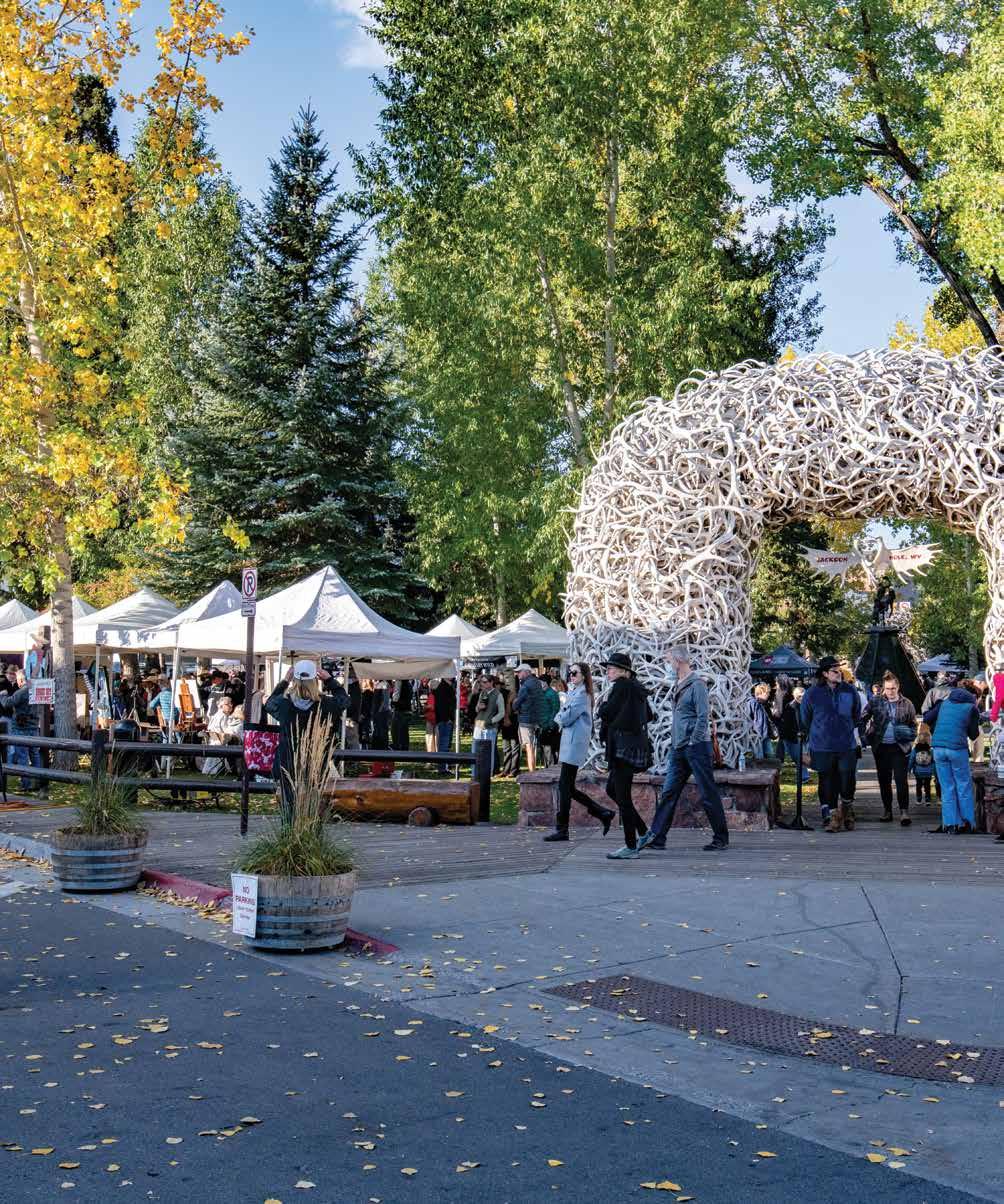
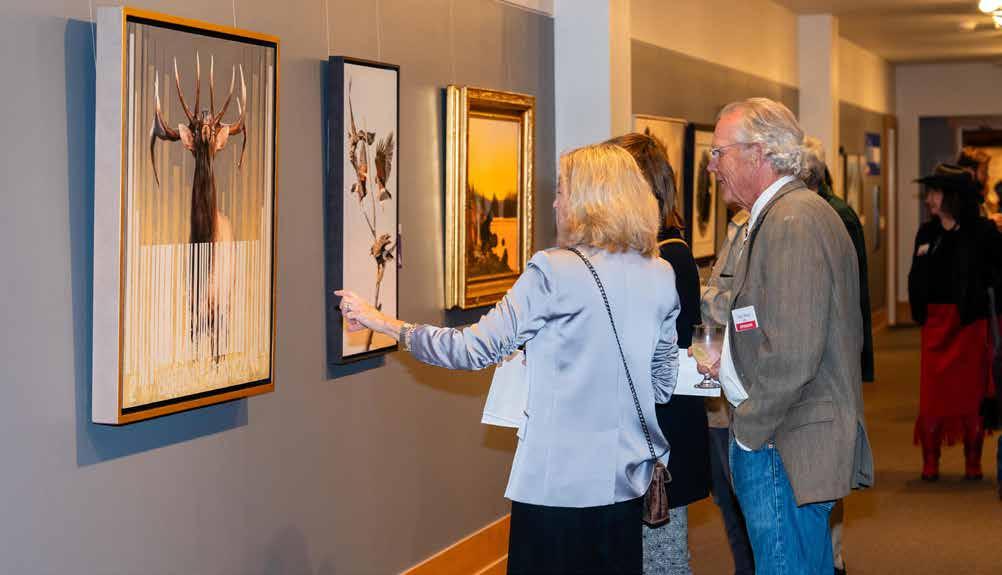
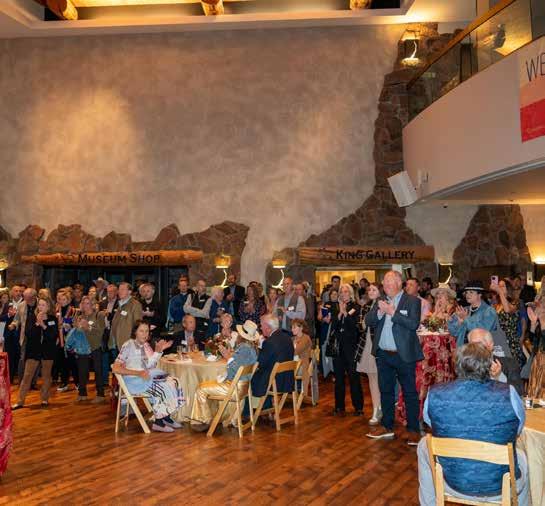
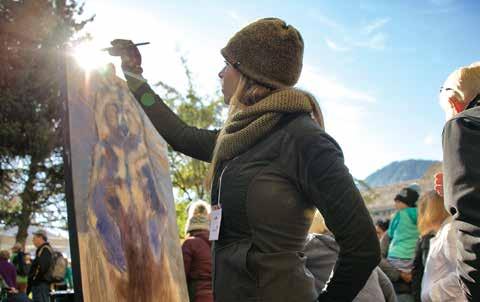
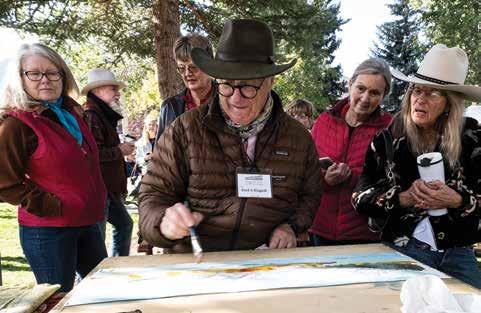
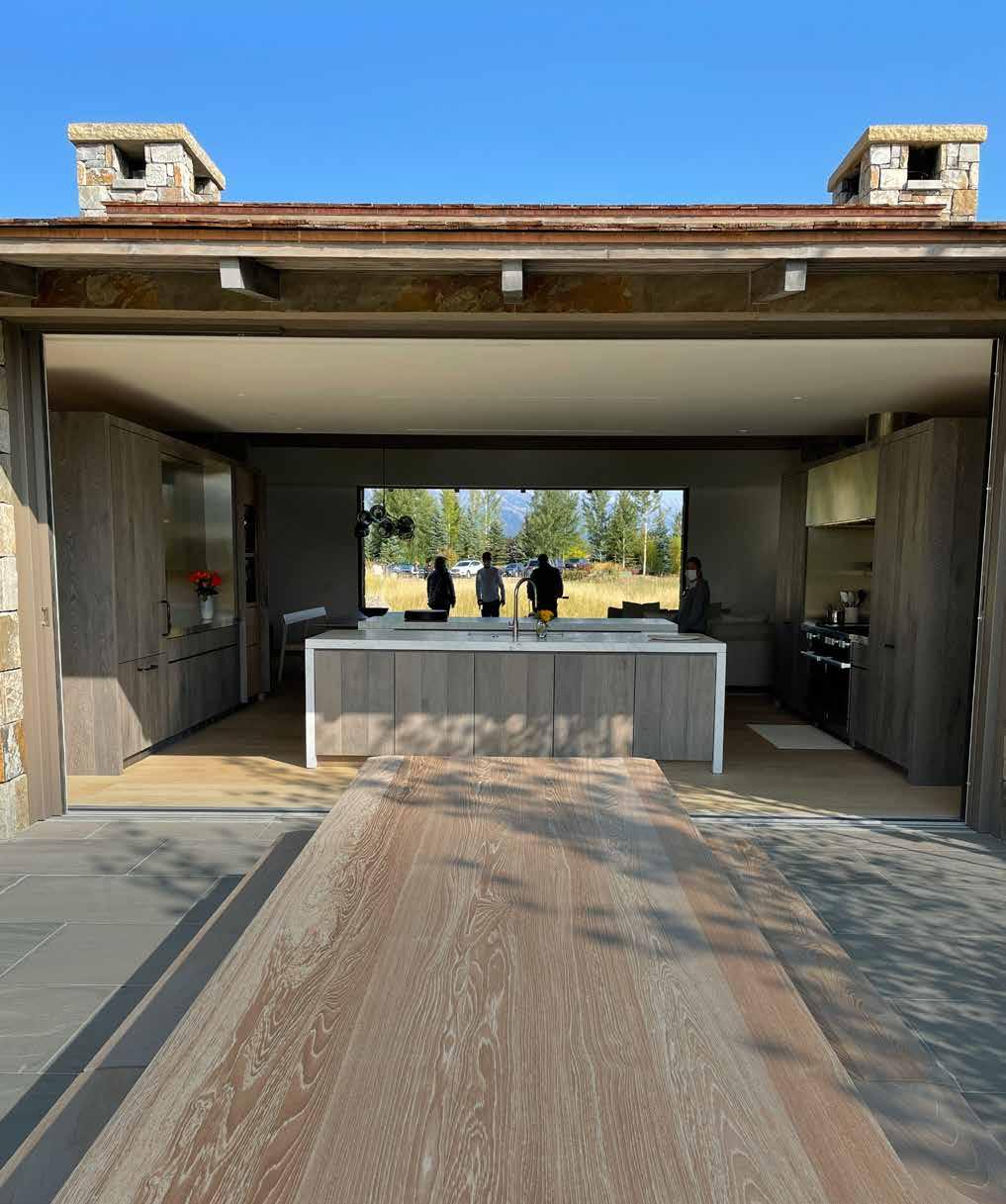
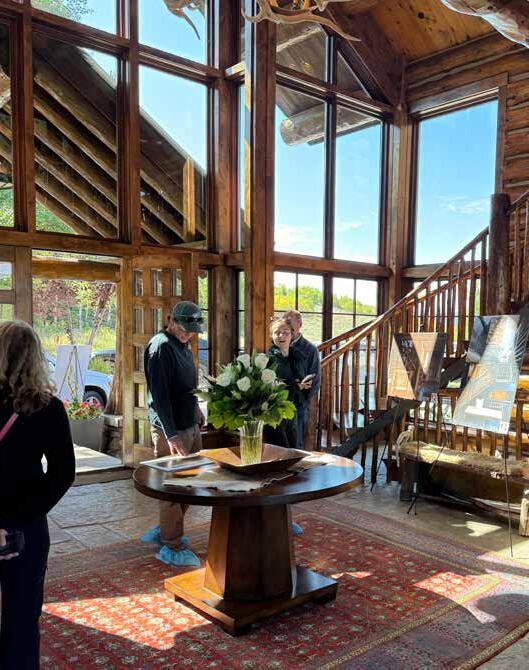
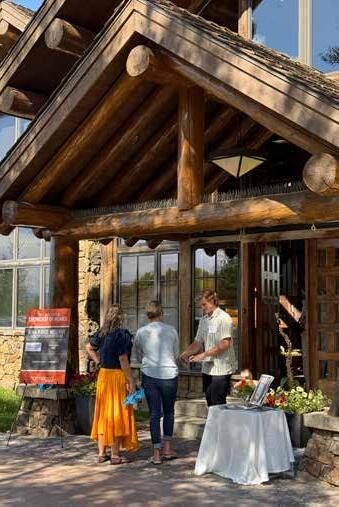
The 2026 FAF is September 9–26 and includes art auctions, gallery walks, a QuickDraw, and The Showcase of Homes, among other events.
34
Timothy Brown Studio
Interior designer Timothy Brown brings his thoughtful eye for warm, carefully edited interiors to Jackson Hole while sharing the inspirations behind his work.
Thal Glass Studio
Thal Glass Studio is increasingly commissioned to create architectural fused-glass pieces such as windows and room dividers. 36
38
40
Mountain West Luxury Living
As the founder of Mountain West Luxury Living, Mel Biggs see clients as partners on a journey and provides whiteglove, concierge service to help them.
Corona’s Roofing
Building relationships in addition to roofs and gutters, the owners of Corona’s Roofing prioritize earning customers’ trust. “Making our clients happy makes us happy,” they say.
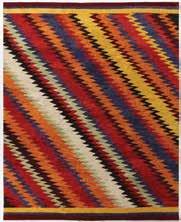
Kismet Fine Rugs
With 12,000-plus hand-woven pieces from around the world, Kismet Fine Rugs turns rug shopping into a hands-on, in-depth design experience.
HOMES
46
Jacque Jenkins-Stireman Design
Since 2003, this boutique design firm has shown that building trust leads to great design.
Farmer Payne Architects
Approaching its 10-year anniversary, Farmer Payne Architects is growing its reach and earning national recognition for excellence in the architectural space.
The Wonder Institute
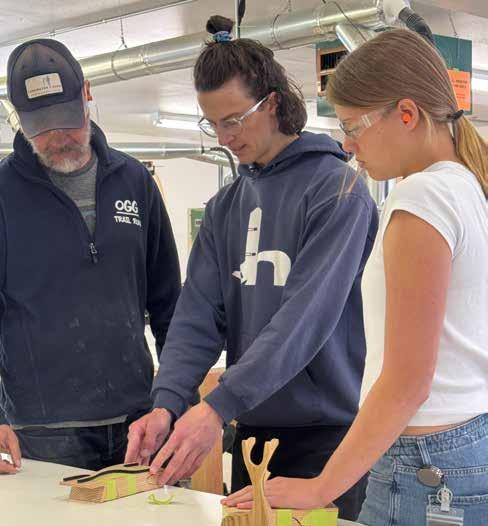
The Wonder Institute creates spaces where people of all ages can design, build, and make.
What the Land Is Telling You
A unique perspective from Latham Jenkins on the vibrant local real
A full list of participating
Mountain Panorama
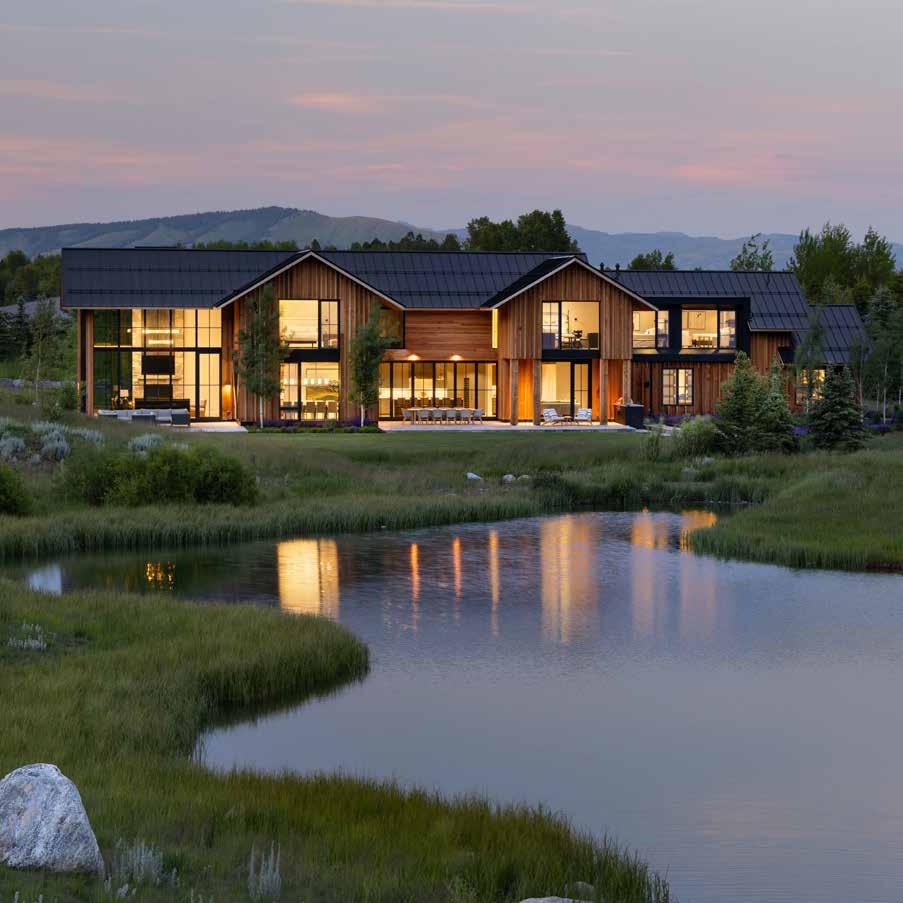
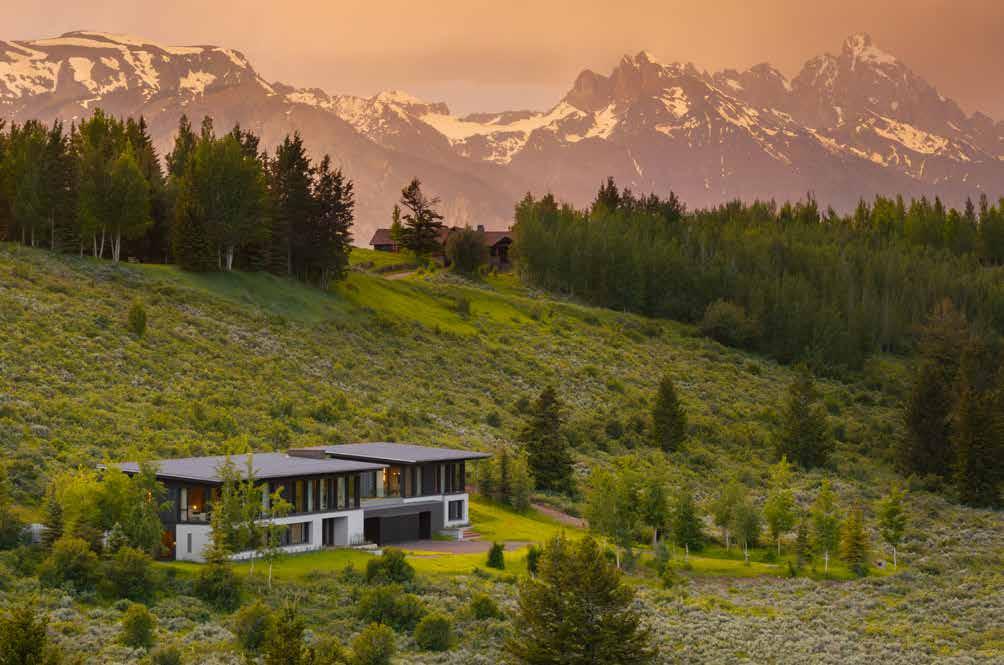
Berlin Architects, Headwall Construction, and Redpath Constable Interior Design collaborated to create a light-filled custom home that blends traditional details of Mountain West architecture with modern living. 66
72
76
82
Views Outside, Beauty Within
Executing every construction detail flawlessly, Bontecou Construction created Skyhouse, a sanctuary that is as sophisticated as it is restrained.
Darby Creek Ranch
A full renovation of a legacy property in Teton Valley, Idaho, preserves a strong sense of home while making spaces feel lighter, more open, and better connected to the landscape.
The Jewel Box
With rigorous planning and design, Ward | Blake Architects create a guest house that lives big.
When History Speaks
When the WRJ Design principals discovered a log cabin beneath the siding of their newly purchased home, what ensued was a remodel challenge tying them to the history of Jackson Hole and the formation of Grand Teton National Park. 86
ON THE COVER
Berlin Architects, Headwall Construction, and Redpath
Constable Interior Design collaborated to create a lightfilled custom home that blends traditional details of Mountain West architecture with modern living.
OUR TEAM
FOUNDER
AND CO-PUBLISHER
Latham Jenkins is the founder and co-publisher of and . His idea for began in 2000 in response to the expanding number of exceptional home-design projects in our valley. His goal was to provide a platform to showcase these works of art and give others a chance to admire them.
EXECUTIVE EDITOR
Editor Dina Mishev’s writing about the area, architecture, design, and adventure travel has appeared in , and other publications. One of her favorite summer and fall sports is hammocking, either in an Eno hammock in the backcountry or a Bless Fatknit Hammock (blessservice.de/collections/hammocks) on her deck.
homestead
66 Winter Summer
72
Executing every construction detail flawlessly, Bontecou Construction created Skyhouse, a sanctuary that is as sophisticated as it is restrained.
CREATIVE DIRECTOR
After working on the magazine from 2003 to 2008, Martha Vorel reunited with in 2016. When not working, she enjoys spending time with her family, traveling, and painting.
CONTRIBUTING WRITERS
CO-PUBLISHER
Melinda Duquette has been with magazine since its launch in 2000 and serves as co-publisher. She collaborates with many of the valley’s leading architects, builders, and designers, and photographs architectural projects featured in the magazine. She also coordinates the Jackson Hole Showcase of Homes charity event.
COPY EDITOR
A former editor of and copy editor Bevin Wallace is a contributor to , and . She lives in Colorado but spends a part of every summer in southern Montana with her family and tries not to let a year go by without seeing the Tetons.
Helen Olsson, Zachary Barnett, Sofia McGulick, The Team, Katherine Wonson, Teton Pines Country Club
CONTRIBUTING PHOTOGRAPHERS
Gabe Border, Melinda Duquette Photography, Krafty Photos, Cody Brown, David Stubbs, Latham Jenkins, William Abranowicz Art + Commerce, Roger Davies, Laurie Thal, Dan Price Photography, Tuck Fauntleroy, Ivan Jones, Ed Riddell, Eric Elberson, Ivan Jones
From the Team
For more than 25 years, Homestead has offered the rare opportunity to look inside homes designed and built by Jackson Hole’s most talented architects, designers, landscape architects, and builders, speaking to the architectural excellence of this valley. For readers fortunate enough to be homeowners here and readers who aspire to be homeowners, our goal is for Homestead to serve as a resource and guide—a curated connection to the professionals who can help make a home here authentically fit you and your Jackson Hole lifestyle.
For all readers, Homestead seeks to showcase the most interesting and compelling architecture, design, and home trends currently happening in and around Jackson Hole. In this issue, learn about the increasing importance of firewise landscaping, “Defensible Beauty,” page 98. Did you know that the risk of wildfire in Teton County is higher than in 88 percent of counties in the U.S.? Or flip to “Designer Picks,” page 94, for something lighter—some of our favorite local architects and interior designers weigh in on what they’re currently obsessed with. In “Building Traditions,” page 52, writer and architectural historian Katherine Wonson looks at how lessons from the valley’s historic built environment can inform good design today. The final article in this issue’s editorial feature well is a fun one: “Nine Ways to Elevate a Guest House,” page 60. (A sneak peek: coziness is good, clutter is bad.)
For inspiration, this issue features five Dream Homes: a guest house on the shore of a pond (page 82); a custom home in Shooting Star (page 66); a renovation of a legacy ranch in Teton Valley, Idaho (page 76); a sophisticated and peaceful mountain retreat (page 72); and the remodel of a historic log cabin (page 86). The two stories in our Design Inspirations department shine a light on the creativity and work of architects, builders, and interior designers; the range of aesthetics they collaborate with their clients to create; and the problems they solve for homeowners.
Just as architecture and design in Jackson Hole are constantly maturing, so too is Homestead. This issue is the first for our new Spotlight department. For years we’ve lamented that Homestead didn’t have a place to profile individuals working in architecture and design—we focused solely on the end products of their gorgeous work. We’ll never give up featuring spectacular homes, but Spotlight allows us to also share the stories, personal style, and inspirations of the people who create them.
If you have topics and questions you’d like us to explore in a future issue, send them to us via our Instagram account @homesteadmag.
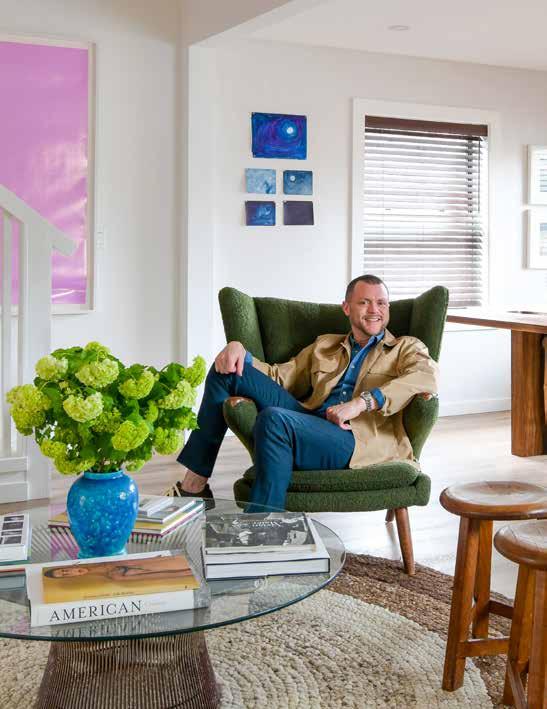
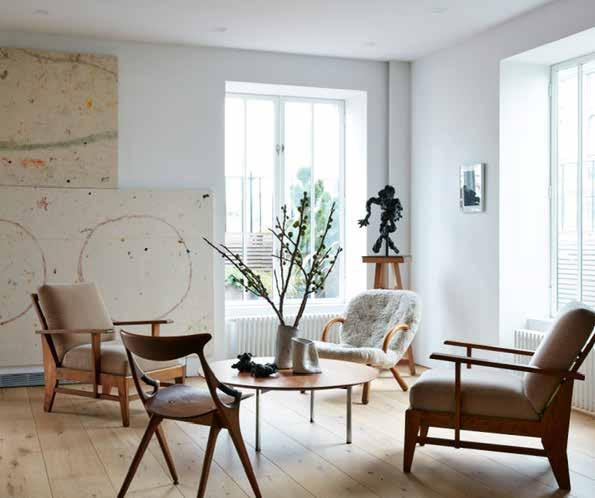
There are few things interior designer Timothy Brown loves more than helping a house reach its potential.
“There’s nothing more fun to me than that,” he says. Since founding his own firm in Manhattan in 2010, Timothy, who previously worked with Architectural Digest AD100 and Elle Décor A-List designers Robert Stilin and Victoria Hagan, has done this for properties on the East and West Coasts of the U.S. and even across the Atlantic, in Paris. And now he’s turning his curious, contemplative eye toward homes in Jackson Hole.
“While I’m new to Jackson Hole, I’m used to working in locations with a strong sense of place,” he says. “Although the environment that the design responds to here is different, my experience working with clients to create edited, warm spaces translates. I hope to bring a fresh perspective.”
Here Timothy, whose work was featured in the book Interior Design Master Class: 100 Lessons from America’s Finest Designers on the Art of Decoration, shares some of the things that inspire his work.
My Inspiration
TIMOTHY BROWN, FOUNDER/PRINCIPAL AT TIMOTHY BROWN STUDIO
STORY The Homestead Team PHOTOS Courtesy of Timothy Brown Studio
Location
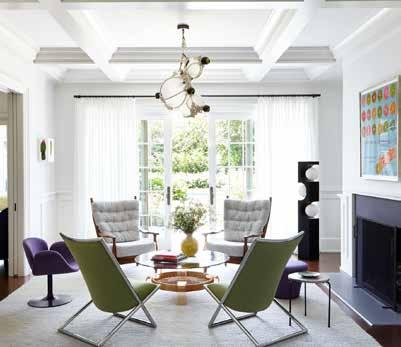
Whether the mountains, beach, or city, location plays a huge role in several things— the way a house is used, views, light, fabrics, colors, and accents. In a home five minutes from the beach, I used a Lindsey Adelman knotty bubbles pendant above a sitting area. Its translucent glass and rope recall both buoys and barnacles. It’s a nod to the area where the house is located.
Clients
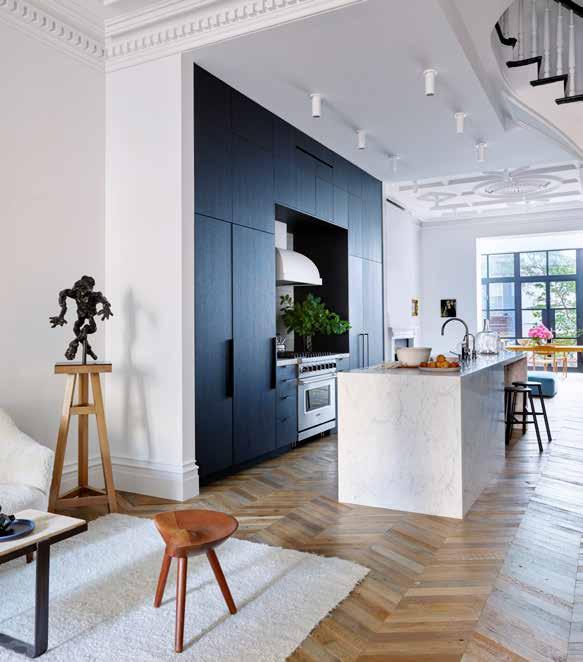
My projects are as different as my clients. When collaborating with clients, I’m continually inspired. I was once asked to make a traditional Park Avenue duplex into a loft someone might find in SoHo. I’ve taken details visually collected on my travels and incorporated them into a townhouse, mixing traditional ideas with modern living. I’m always thinking of how I can use what I’ve seen and experienced to create a beautiful visual story and a better day-to-day routine for clients in their home.
NEW YORK NY
147 E 37TH ST
NYC 10016
(212) 255-4895
JACKSON WY
255 N GLENWOOD STREET
JACKSON 83001 (307) 203-2003
Collected Details
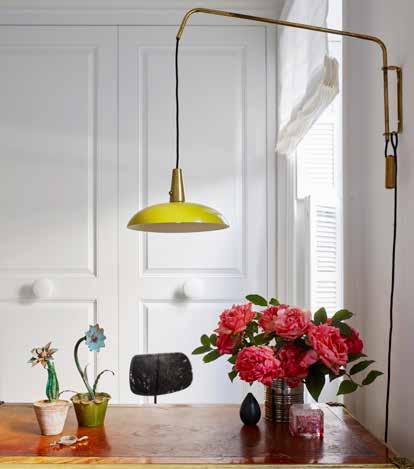
I’m such a visual person and am constantly looking and seeing, in everyday life and when I travel. I don’t know that I’ve ever been out and not found something that inspires me. I catalog everything—a color combination I see in a painting in a museum, the shape of a sand dune or the architecture of a tree, a mosaic in a door. I collect details that might not mean anything in the moment I see them in a painting but mean something later. I never know what is going to strike me as something that will work, so I’m just constantly paying attention. Shown above is a mid-century yellow lamp hanging over an antique French desk. The big doors on the back wall are a modern version of millwork I saw on a visit to Versailles
THAL GLASS STUDIO & GALLERY
INTERNATIONALLY KNOWN FOR ITS BLOWN AND SANDBLASTED ARTWORKS, THAL GLASS STUDIO IS INCREASINGLY BEING COMMISSIONED TO CREATE ARCHITECTURAL FUSED-GLASS PIECES, LIKE WINDOWS AND ROOM DIVIDERS.
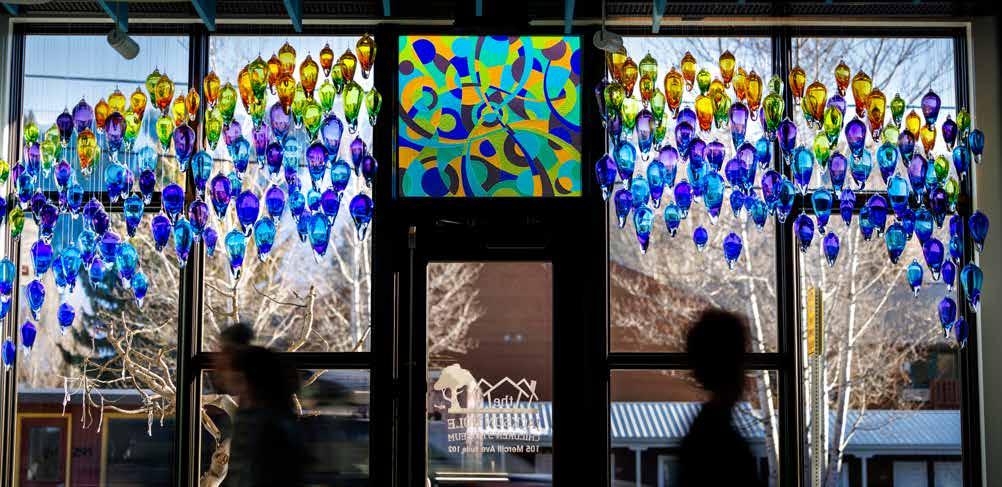
Installed in early 2026, a Thal-Altwies piece in the new Jackson Hole Children’s Museum includes fused and blown glass. Altwies, who worked with leaded glass before fused glass, did the center window, a fused piece measuring 36 by 36 inches. Thal blew 200 unique pieces of glass in the same vibrant jewel colors as Altwies’s window. “We wanted to inspire the children with playful glass colors shimmering in the southfacing wall of windows,” she says.
ARTIST THAL GLASS STUDIO thalglass.net
“We enjoy the challenge of designing and creating fused-glass pieces. It is a great opportunity to help enhance the homes and everyday lives of our clients.”
— GLASS ARTIST LAURIE THAL
The blown and sandblasted glass artworks—bowls, vases, glasses—of Laurie Thal and Dan Altwies are in collections across Wyoming, and the world. Even more inspiring are the pair’s architectural fused-glass pieces—think windows, room dividers, and lighting fixtures. “We work with clients to create artworks that are an integral part of their home and bring them joy every day,” Thal says.
For a mountaineering couple, Thal and Altwies of Thal Glass Studio, created a fused-glass triptych of the Tetons. Another couple had an octagonal window that looked out at a neighbor’s garage. “By replacing their traditional window with custom fused glass, they now have a vibrant piece that is beautiful to look at instead of the neighbor’s garage,” Thal says. “And it still allows natural light to come in.”
Thal blows each of these glass bowls in layers of rich colors cased in clear glass. After the bowls have been blown and cooled, Altwies sandblasts the intricate designs onto the interior, delicately shading and removing the layer of color down to the clear glass. The edges of the bowls are deeply carved with the sandblasting tool in a petal motif.
Icarus is a unique, wall-mounted fused-glass sculpture with texture and dimension. Designed by Thal and Altwies, the piece was created by fusing three layers of glass together. “It was a complicated piece because of all the curves,” Thal says. “Cutting glass in a straight line is easy, but curves are challenging, and [Altwies] is an expert at doing this.” Measuring 35x62 inches together, each of the two sections has a different-length wall hanger. “This gives more depth to the whole piece,” Thal says.
While Thal, an avid skier, says fusing glass is as different from blowing glass as Nordic skiing is from alpine skiing, she and Altwies evolved to work with the medium more than a decade ago. “They are totally different, but both are wonderful artistic directions, and there is a call for both,” says Thal, who has welcomed visitors to her studio on Teton Village Road for more than 40 years. “Fused pieces have very different functions and dimensions from blown pieces.” Thal and Altwies can even create ULapproved lighting fixtures. “We have created unique and impressive lighting,” she says. “People don’t have to order from Italy.”
“We enjoy the challenge of designing and creating fused-glass pieces,” Thal says. “It is a great opportunity to help enhance the homes and everyday lives of our clients.”
STORY
Sofia McGulick
PHOTOS
Laurie Thal
Meet MEL BIGGS
MEL BIGGS
FOUNDER
MOUNTAIN WEST LUXURY LIVING
When it launched last July, Aperture Global Real Estate was the world’s first independent luxury brokerage with a global footprint from day one. Luxury Home Advisor Mel Biggs founded and leads the brokerage’s Mountain West Luxury Living team, which specializes in providing discerning buyers and sellers of premiere mountain estates in Idaho and Wyoming deep local insights, an elevated marketing strategy, full-service experience, and unparalleled global reach.
“We understand our clients aren’t just looking for a house, but a lifestyle,” says Mel. “We take the time to understand their unique dreams, needs, and goals; help them obtain the property that delivers the lifestyle they want; and have the vetted connections to provide them with an established ecosystem to assist them as they begin building their lives here.”
For sellers, Mountain West Luxury Living’s marketing, network, and reach are peerless. “Every two weeks, I’m in a meeting with top agents around the world,” Mel says. Aperture has offices in nine countries, its own print shop for traditional marketing materials, and digital marketing professionals. “This area is unlike any other in the world. Mountain West Luxury Living’s goal is to redefine the buying and selling experience here for high-end property seekers.”
THE FOUNDER OF MOUNTAIN WEST LUXURY LIVING— POWERED BY APERTURE GLOBAL REAL ESTATE DOESN’T SEE CLIENTS AS CUSTOMERS; THEY ARE PARTNERS ON A JOURNEY.
“WE PROVIDE WHITE-GLOVE CONCIERGE SERVICE TO HELP CLIENTS FIND THEIR PLACE AND BUILD LIVES IN ONE OF THE MOST SOUGHT-AFTER REGIONS IN THE COUNTRY.”
STORY The Homestead Team
PHOTOS Courtesy of Mountain West Luxury Living
A FEW THINGS I LOVE ABOUT
Jackson Hole
The landscape here never stops inspiring me. Waking up every day to the Tetons and living where wilderness literally starts at your back door is something you can’t replicate anywhere else.
3
The Tetons are amazing, but they are only one of five mountain ranges that ring this valley. I’ve lived here for many years, and yet still find new trails, lakes, summits, and creeks to explore. My son has been letting me tag along as he seeks to swim in as many high alpine lakes as possible.
(307) 338-0456
There is always so much more to do in Jackson Hole than you expect—and I’m not just talking about all the outdoor stuff like skiing, hiking, SUPing, camping, fly-fishing, and wildlife watching. The annual (September) Jackson Hole Fall Arts Festival celebrates our Western and contemporary creative spirit and brings together artists and collectors from around the globe. The Old West Days Parade and Rodeo in May capture Jackson’s heritage and traditions in a way that still feels genuine. In winter, I love Music Under the Tram at Jackson Hole Mountain Resort—locals gathered in their ski boots, live music echoing off the slopes, it’s pure Jackson camaraderie. 2
CORONA’S ROOFING
“We fix everything and serve our clients equally, whether it’s a large or small project.”
— OSCAR CORONA, OWNER, CORONA’S ROOFING
“It was a pleasure to have Corona’s Roofing replace our roof. We scheduled our project three months in advance and they arrived precisely as planned,” says one of many reviews of Corona’s Roofing. “The work done is of quality and was performed quickly and efficiently, while adhering to the details that we had discussed. Oscar and his crew are also personable and reliable. They cleaned as they went and maintained an orderly worksite throughout the duration of the project.” This is exactly how Corona’s Roofing founders and owners (and husband and wife) Oscar Corona and Soledad Hernandez-Cano want all of their clients to feel.
Oscar says, “As business owners, we take priority in earning customer trust so they know they can count on us with their roofing needs, whether it is a small repair or a whole roof replacement.” Soledad adds that she and Oscar put their hearts into the company. “Making our clients happy makes us happy,” she says.
Corona’s scope of expertise includes leaks, old roofs, new roof redesign and construction, snow retention, yearly maintenance, and replacing and redesigning gutters. “We fix everything and serve our clients equally, whether it’s a large or small project,” Oscar says. “And we deliver the same high quality to all projects.”
A high quality is ensured because Oscar spends so much time on-site. “Our crew is there, but so is Oscar,” Soledad says. “He likes to be on-site the majority of the time to make sure all the work gets done right and because it allows him to figure out the best ways to make more detailed projects look unique and good.”
While it would be easy for Corona’s Roofing to rest on its many positive reviews and satisfied customers, it does not. “We’re always looking for ways to improve and make our clients’ experiences better,” Soledad says. For example: When it heard from clients that finding reliable professionals to install and repair gutters was difficult, Corona’s Roofing added gutters to its scope of work. As flat and metal roofs have become more popular in the area, the Corona’s team invested the time in becoming specialists in installing each of these.
“We like our customers to feel happy and confident with the end result. We want them to feel like they have made the right decision in choosing us for their roofing project and future projects,” Oscar says. “A roof is one of the main components of a home, so we want our customers to know they have a roofing company they can count on anytime.”
“Great company! Corona’s Roofing is easy to communicate with. Very polite and knowledgeable employees. They really seem to go the extra mile for their customers and take great pride in their work.”
— REVIEW
The Homestead Team
Corona’s Roofing founders and owners Oscar Corona and Soledad Hernandez-Cano strive to deliver a high level of quality to all projects and takes on projects of all sizes, from small leaks to complete roofs on 10,000-square-foot new builds.
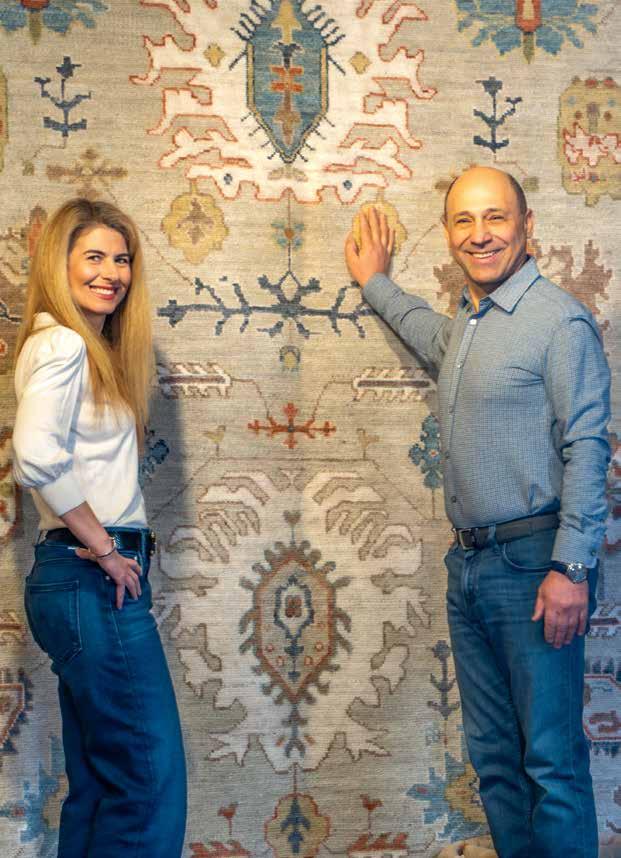
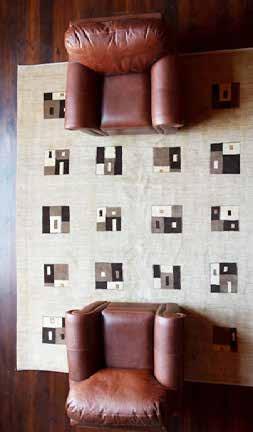
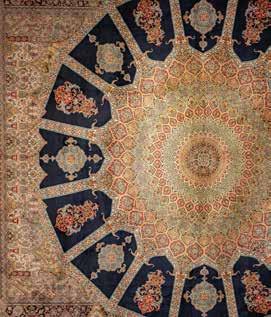
Jeff Neishabouri founded Kismet Rugs in 1990. He and his wife, Mina, have spent decades curating a collection of more than 12,000 handwoven pieces from master artisans. Transforming rug shopping into an immersive design experience, the gallery invites visitors to explore global craftsmanship, texture, timeless beauty, and an unwavering commitment to exceptional, personalized service.
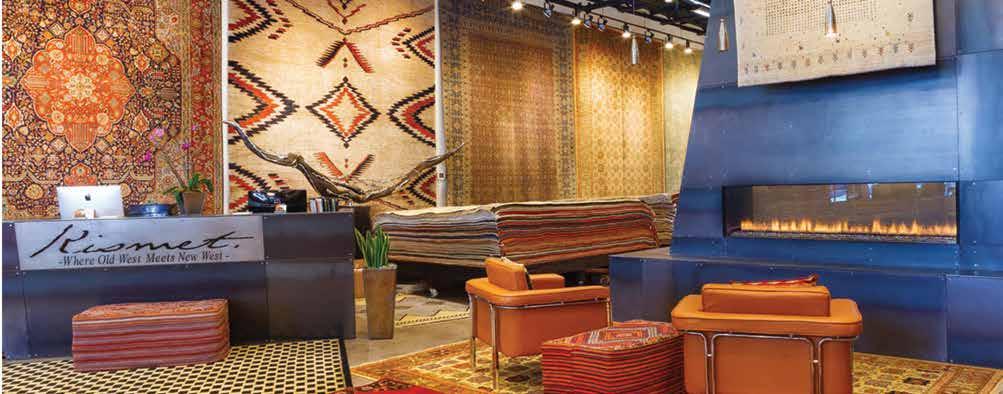
From the moment you walk into Kismet Fine Rugs, a warm welcome and more than 12,000 hand-woven rugs invite you to slow down, explore, and find pieces that feel right, supported by a team that makes the experience both personal and approachable. The flagship gallery on Broadway Avenue in downtown Jackson features antique, vintage, and contemporary rugs from weaving hubs including Turkey, Iran, Uzbekistan, Pakistan, India, Nepal, and Afghanistan. The inventory is meticulously curated by owner Jeff Neishabouri, who has been in the rug business for more than 40 years and travels several times a year to meet weavers and hand-pick pieces for the gallery. Every rug is certified child-labor-free.
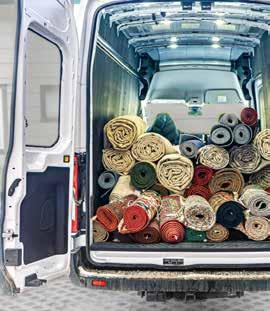
Stacks of rugs in every color and style might feel intimidating elsewhere, but at Kismet, they are part of
KISMET FINE RUGS
WITH 12,000-PLUS HAND-WOVEN PIECES SOURCED DIRECTLY FROM ARTISANS AROUND THE WORLD, KISMET FINE RUGS IN DOWNTOWN JACKSON TURNS RUG SHOPPING INTO A HANDS-ON, IN-DEPTH DESIGN EXPERIENCE.
HOME DÉCOR
Kismet Fine Rugs kismetfinerugs.com
the experience. What stands out as much as the diverse inventory are the gallery’s customer service and passion for education. “Kismet is not just a retail store, but also an experience,” says CEO Ivan Jones. To deepen that experience, the gallery recently published the digital “Kismet Ultimate Guide to Hand-Woven Rugs,” accessible via the QR code to the right.
“Whether you are looking for a single small rug or rugs for an entire home—whether you know exactly what you want or are looking to be inspired—we work to make clients feel at home in our gallery,” Jones says. “We go the extra length to ensure that every client finds something they love and will love for years to come.”
Clients are encouraged to watch staff flip through stacks and to handle the rugs themselves. Feeling different
weaves and piles, comparing designs and colors, and seeing motifs in person are the best ways to truly understand what you want, Jones says. If nothing in the stacks is quite right, Kismet facilitates custom pieces and collaborates closely with discerning clients to bring their vision to life.
Kismet, founded by Neishabouri in 1990, offers free in-home consultations for clients at any stage of design, from blueprints to fully furnished. “We see the space ourselves, measure rooms, and listen to how clients hope to achieve their design goals,” says Neishabouri, who has furnished thousands of homes with rugs over his career. Kismet will facilitate a preview of selected rugs in local clients’ homes. “Rugs can look very different in different spaces and in different light,” Jones says. “We don’t want clients to have to imagine what a rug might look like in their home; we take the rugs to them so they can actually see them in their space before committing.”
Neishabouri’s trips to meet and buy directly from weavers shape more than just the look of Kismet’s inventory. “We don’t have any middlemen or buyers,” Jones explains. “Working directly with weavers ensures our pricing is the most aggressive it can be. To find a similar rug in a different gallery, you’re almost certainly looking at a mark-up.”
Kismet also offers designer and industry discounts, and runs frequent sales for budget-conscious clients. The gallery ships rugs free in the U.S.
“We’re a small family business, locally owned and operated for 36 years,” Jones says. “We pride ourselves on our prices and service. We go the extra mile for all of our clients so that each of them gets the experience they want out of the gallery and leaves with a rug they love.”
first step toward making families happy in their homes is building a level of trust,” says Jacque Jenkins-Stireman, who founded Jacque Jenkins-Stireman Design in 2003. “Our team spends time understanding who clients are so that they’re comfortable trusting us to create spaces that reflect their personalities, background, and aesthetic,” she says. “And the more and better we get to know clients, the more we trust our ability to achieve our goal—creating a home for clients to be happy in for many years, building a story that lives on, over the course of many generations.”
Jenkins-Stireman says that her team’s consistency and longevity go a long way in building trust. “We’re a team that has worked together for more than 10 years. Clients aren’t going to
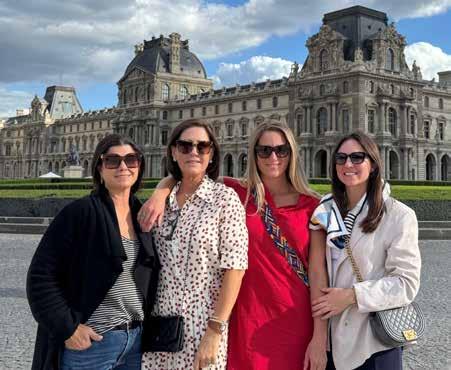
The team on an inspiration trip to Paris.
“Our team spends time understanding who clients are so that they’re comfortable trusting us to create spaces that reflect their personalities, background, and aesthetic.”
have to get to know a new designer in the middle of a project. Clients have told us that our consistency gives them confidence,” she says.
Having listened to clients’ needs, wants, and inspirations—maybe even traveling with them to see how they live in their other homes—and with clients’ confidence and trust, the JJS team designs with intent. “We aren’t out looking for pieces that will work, but pieces that will work for these clients that we have taken the time to understand the vision of,” Jenkins-Stireman says.
Being so client-driven, JJS Design projects don’t have a signature style. The firm takes its decades of experience, relationships, and expertise and applies these to creating something wholly unique with every project. “We are very much a custom house,” Jenkins-Stireman says. “We’re inspired by showrooms and catalogs and then we take that inspiration and create pieces for specific spaces. If there is a piece that speaks to our clients and us, we reimagine it. The redesign needs to work for the region, the space, and our client’s lifelstyle. We have custom case goods and lighting divisions and decades-long relationships with artists and artisans for rugs, furniture, and more. We can create anything anyone wants.”
A recent custom project the team spent time on is a set of outdoor rugs inspired by Pierre Frey fabrics for a home in Bermuda. “These were for very discerning clients inspired by very specific products,” Jenkins-Stireman says. “It was not easy, but this kind of challenge doesn’t scare us.”
At the conclusion of a project, when clients marvel at the firm’s work, JenkinsStireman often finds herself saying, “This was a collaboration and turned out beautifully because of your direction and trust.”
Jacque Jenkins-Stireman Design is a client-driven, collaborative firm that designs and curates beautiful spaces reflecting clients’ lives, vision, and needs. To do this, the firm often works with master craftsmen and artisans to create custom pieces, like the rent table in the foyer, the walnut table in the dining room, and the bronze accent table in the guest suite.
STORY
The Homestead Team
PHOTOS
Tuck Fauntleroy
FARMER PAYNE ARCHITECTS
APPROACHING
It’s been nearly a decade since Jackson native Jamie Farmer and Scott Payne of Louisiana joined forces to form their boutique residential architecture firm, Farmer Payne Architects Since 2017, the firm has grown to a 19-person practice with offices in Sun Valley, Idaho; Jackson, Wyoming; and Shreveport, Louisiana. Farmer Payne has become known for imagining luxury properties that seamlessly integrate into the surrounding landscape—whether set against a rugged Teton backdrop or along a serene Southern lakefront. “We try to bring simplicity of form, a sense of minimalism and proportion, and uncompromising quality to every space we design,” Payne says.
This year, Farmer moved his team to a new office space in midtown Jackson, while Payne led the design of the company’s own office building in Ketchum, Idaho. Called First Chair, the project
LRN’s flat-roof design melds the structure seamlessly into the surrounding landscape, while sophisticated interiors transform the home into a true oasis.
In designing LRN, an award-winning Sun Valley home that’s close to town yet feels a world away, Farmer Payne maximized the property’s expansive mountain vistas.
a East
required designing a contemporary building in Ketchum’s historic downtown core. Mixing big moments in glass with an exterior material palette that repurposed century-old, locally made reclaimed bricks, First Chair received a prestigious American Institute of Architects-Idaho Honor Award. “As a firm, we enjoyed the challenge of bringing Ketchum’s architectural history into a modern building. Receiving recognition for this vision was very meaningful to us,” Payne says.
Moving offices, in Ketchum and Jackson, represents a defining chapter in the firm’s evolution. “It’s given us a moment of pause to reflect on our accomplishments and how far we’ve come,” says Meredith Leonard, director of operations and interiors. “One of the biggest challenges of a growing company is staying true to your core mission. For us, that’s the quality of the product—and the process.”
Farmer Payne also won an AIA-Idaho Award of Citation for Pioneer Ranch, a contemporary home in Hailey featuring hand-hewn heavy timbers and stone, and an AIA-Idaho Honor Award for LRN, a contemporary energy-efficient residence in Sun Valley that captures stunning 360-degree views while quietly integrating the home into the landscape with an unobtrusive flatroof design.
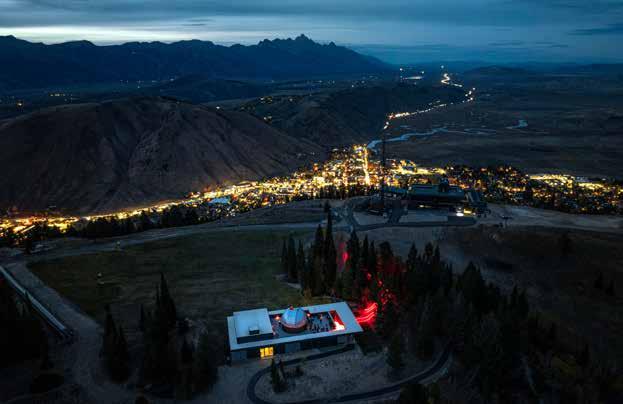
Farmer Payne Architects, alongside GALCZYNSKI, designed Snow King Observatory, the pioneering astronomy center perched atop Jackson’s local ski resort, earning global recognition, including an Award of Honor from the AIA College of Fellows Western Mountain Region. “That one was especially meaningful because the award spans projects across eight Western states,” Farmer says. Keeping the local ecosystem in mind, he designed the observatory—which houses a massive Plane Wave telescope and 24-foot dome—with a deliberately small footprint and low profile. The firm also landed on Forbes’s Best-in-State Residential Architects 2025 list and its Top 200 Residential Architects in America list. But they’re keeping the accolades in perspective. “Honestly, we’re just trying to make beautiful buildings,” Payne says. “The awards are simply a byproduct of being really passionate and working really hard.”
Farmer Payne says its success is in part built on a deeply collaborative approach with clients. “When we interface with and get to know the client, we’re able to design what they truly want,” Farmer says. “At the end of a project, the clients are our friends.”
Set on
Texas cattle ranch, this lodge-inspired home features local limestone, reclaimed wood, and heritage timber beams.
STORY Helen Olsson
Architect Jamie Farmer partnered with an all-star cast of designers, engineers, and builders to realize the cutting-edge Snow King Observatory and Planetarium, on the summit of Snow King Mountain and overlooking the town of Jackson.
The firm chose contemporary forms that nestle naturally into the hillside to create Grand Terre, a legacy property in Wilson, Wyoming, that frames the Grand Teton, and draws curious local wildlife.
BUILDING TRADITIONS
LESSONS FROM JACKSON HOLE’S HISTORIC BUILT ENVIRONMENT INFORM GOOD DESIGN TODAY.
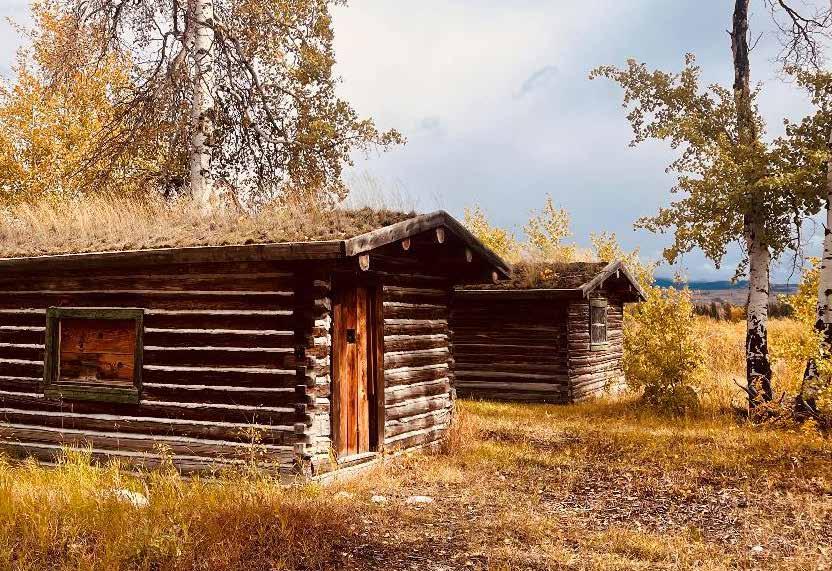
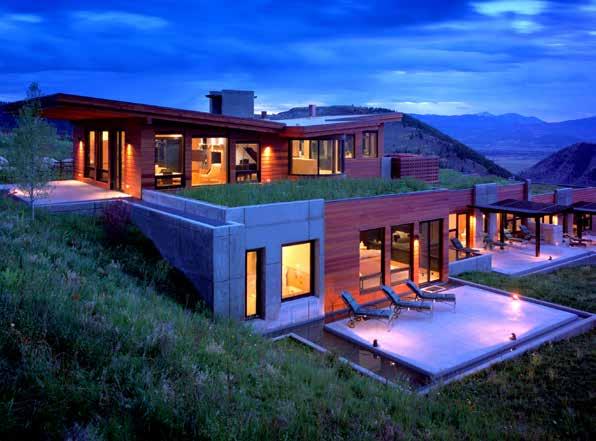
Roofing materials were not readily available in the late nineteenth century in Jackson Hole; instead, homesteaders relied on sod roofs to insulate, waterproof, and protect their homes. Today, architects use them for those same attributes, as well as for their beauty and the link they create to the land.
From the Shoshoni who built grass-filled, double-walled tipis to the homesteaders with their sod-roofed log cabins, Jackson Hole’s earliest builders were driven by one goal: survival. Homes faced south to maximize solar gain and were sited behind trees or topographic features to minimize exposure to the prevailing wind. The steep roofs of the Moulton barns were not an aesthetic nod to the majestic mountains behind them but a very real response to a climate that produced enough snow to collapse a barn roof that didn’t shed the weight properly.
Jackson Hole’s homesteading builders relied on traditions brought from their home countries or other regions of the United States—traditions that emphasized minimizing heat loss, maximizing solar and thermal gain, and reducing time-
consuming maintenance. This knowledge was rarely documented formally; instead, vernacular building techniques evolved through a shared, almost crowd-sourced understanding of what worked and what did not.
As access to materials, skilled labor, building technology, and affordable energy steadily increased through the latter half of the twentieth century, Jackson Hole’s architecture became increasingly divorced from environmental realities. Not surprisingly, the valley’s time-tested building traditions were often dismissed as quaint and irrelevant.
For some architects today, however, these building traditions hold the key to creating a comfortable, livable, and sustainable house—an asset that is anything but quaint and irrelevant.
Long before “green roofs” became an architectural buzzword, they were a frontier necessity. Rooted in Scandinavian, Plains, and Rocky Mountain building traditions, they were a strategic solution for building quick shelter, especially in locations where sod was abundant and timber scarce. Thick layers of earth and native grasses provided exceptional insulation against Wyoming’s extreme temperature swings, buffering interiors from summer heat and bitter winter cold. Sod roofs also absorbed rain and snowmelt, reducing runoff and helping stabilize lightweight log structures.
The photographic record suggests that historic sod roofs in the Greater Yellowstone Ecosystem were probably not simply cut from the ground and laid on roof structures, like traditional sod roofs (due to the abundance of sagebrush). Instead, they were likely constructed by creating dirt roofs that gradually became covered with native vegetation. Unfortunately, because an unmaintained sod roof retains moisture, which accelerates rot in the roof membrane, very few historic buildings with sod roofs remain in Teton County. In 2012, in partnership with the University of Pennsylvania and funded by the National Park Foundation, Grand Teton National Park installed two sod roofs at the Bar BC Dude Ranch, which can be seen today. Some local architects have revived the tradition, adapting historic principles, such as the use of hardy native grasses and custom detailing, to contemporary buildings. These modern sod roofs echo a long-standing building tradition and place the buildings in a dialogue with the land.
“Sod roofs were nature’s insulation. Today we reinterpret that idea with deeper roof assemblies, better air sealing, and protective overhangs that manage heat, snow, and weather just as effectively.”
While the architectural outcomes are a far cry from the low-slung, dark cabins of yesteryear, the building traditions that once shaped Jackson Hole’s historic built environment continue to inform good design, demonstrating that traditional building knowledge remains as relevant today as it was to our predecessors.
Site Your House Wisely
On many building sites in Teton County, architects face a design dilemma: prioritize north-facing views of the Tetons or the southfacing orientation most beneficial for optimal building performance and efficiency. Nona Yehia, principal of GYDE Architects, notes that while a north-facing glass wall is possible with today’s technology, “it creates a really flat light that’s not very efficient.”
GYDE Architects has found a creative way to thread the needle and achieve both aims. At the W house, Yehia created a curved northern exposure that takes full advantage of the western afternoon sunlight, creating its own microclimate and a dynamic movement of light throughout the house. Southernfacing clerestory windows let in light to warm the concrete radiant heat floors, which, in turn, release the stored energy once the sun goes down. For Yehia, light really drives the primary design. She says, “Natural light is so limited in Jackson Hole that you have to
COURTESY
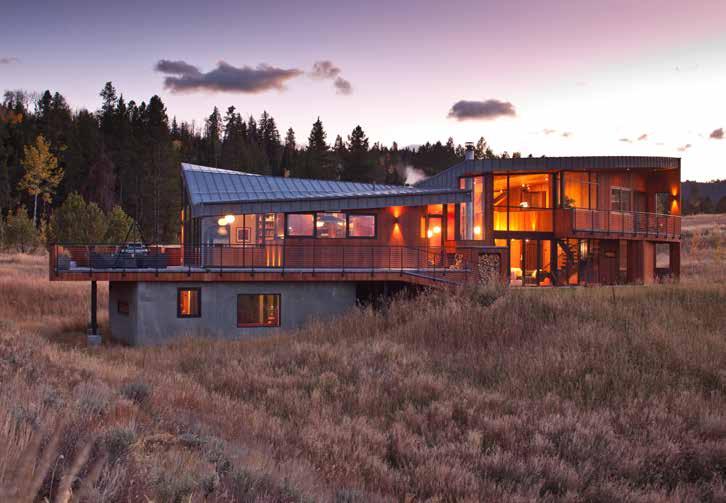
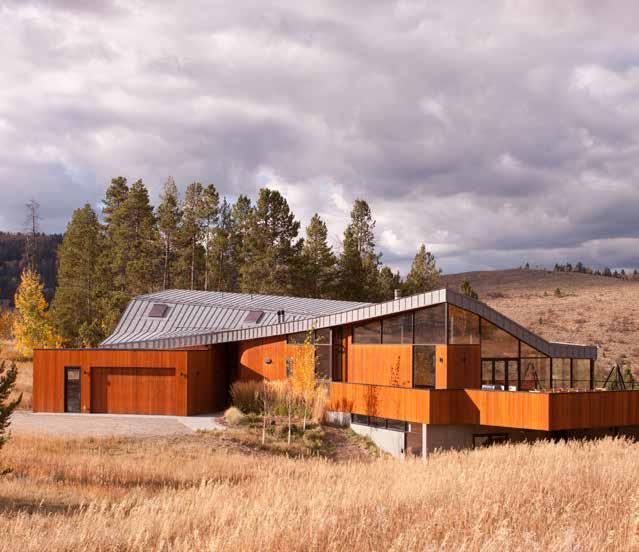
In climates like Jackson Hole’s, traditional building wisdom dictates orienting a house to capture the maximum amount of the sun’s warmth. But architects can tip and fold rooflines in ways our cabin-bound predecessors never imagined, allowing for solar gain and eyecatching views all at once, as seen at W House.
“We should all buy the highest-quality materials we can afford. Because if you’re going to build a house for yourself and you use heirloom-quality materials, there’s an inherent sustainability.”
— ARCHITECT TOM WARD, WARD | BLAKE ARCHITECTS
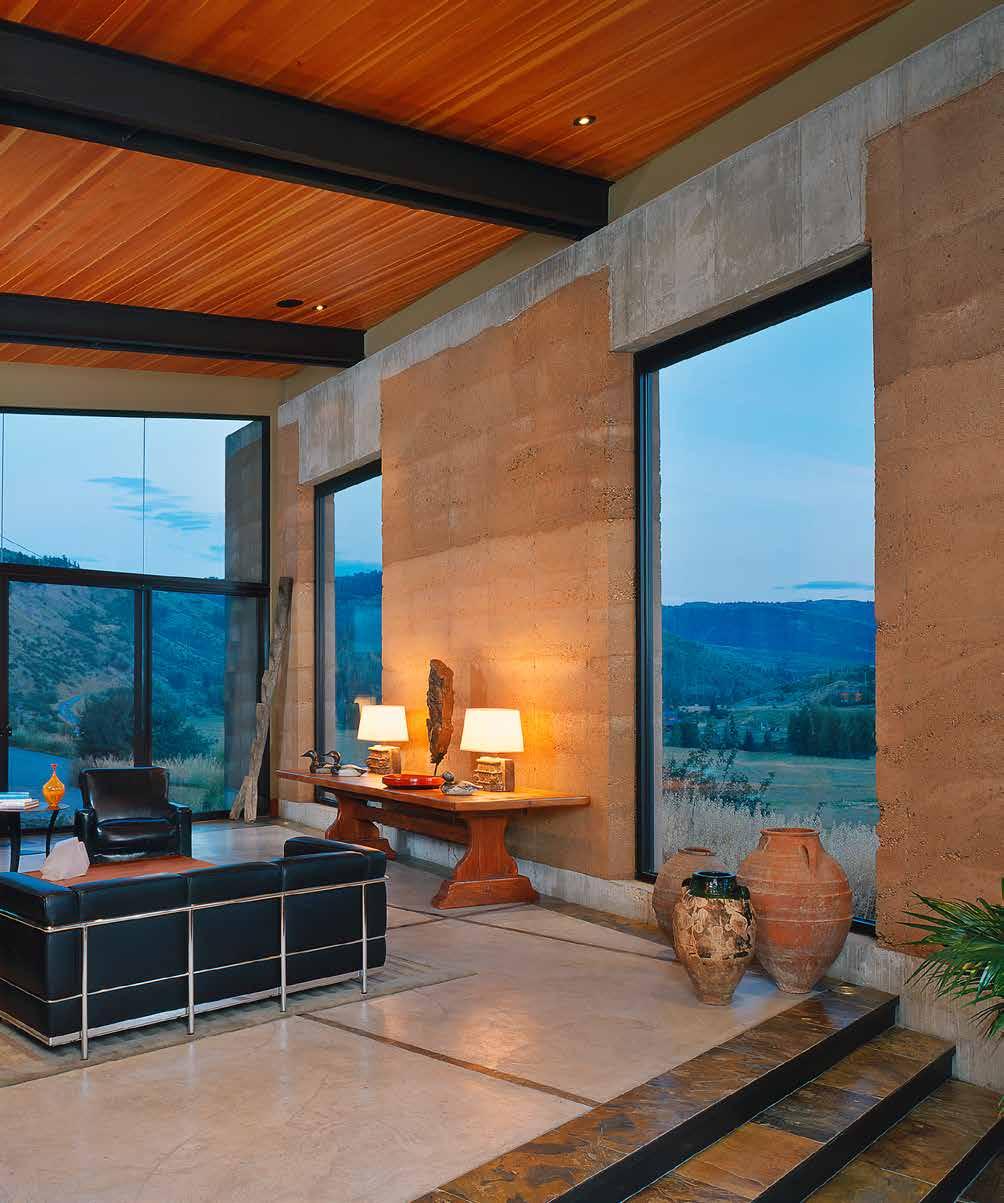
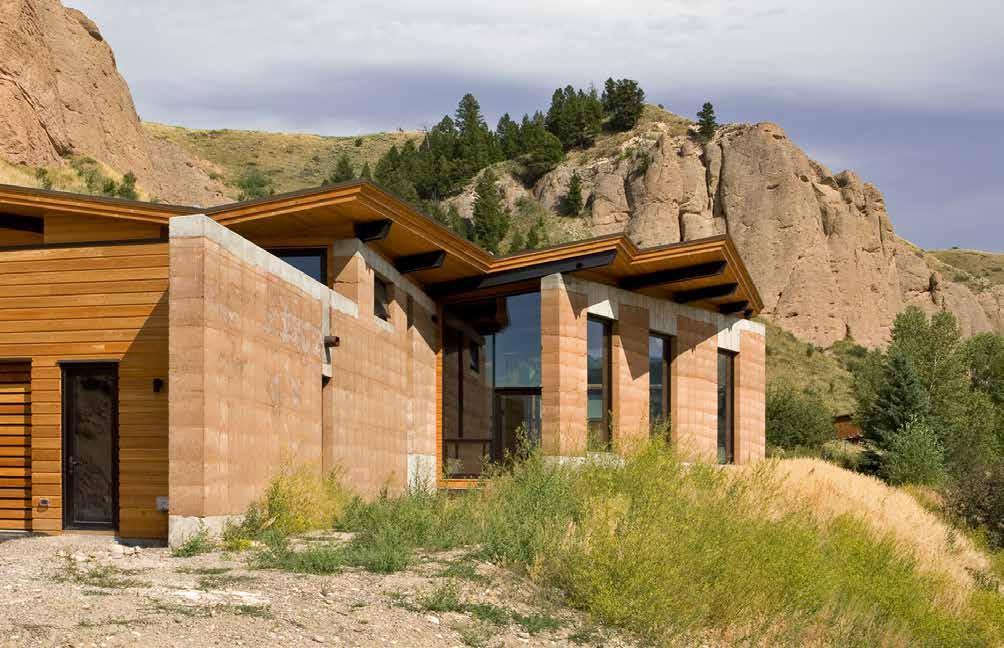
Much like builders a century ago who gathered materials from the local landscape, architect Tom Ward, a principle at Ward | Blake Architects, also used on-site earth for the rammed-earth construction of his own home, TK Pad. The exposed walls reveal the stratified layers that match the colors of the surrounding bluffs.
feel engaged with the outside. And that’s the selling point: ‘do you want to be in a house where you never want to go outside, or don’t even have to shift rooms because, within a given room, you can experience different times of day really pleasantly?’” Orientation is no longer an issue of survivability, but one of livability.
Strong, durable materials were paramount for early builders who lacked the time or resources to replace failing building components. Likewise, TK Pad uses a palette of durable, sustainable, and natural materials throughout to create an heirloom-quality house that blends with the natural environment.
COURTESY
Materials Matter
Long before the term “heirloom” came into vogue, the valley’s early builders used high-quality, durable materials such as old-growth Douglas fir and lodgepole pine, granite, and river rock. These locally sourced materials, with their 100-year-plus lifespans, proved invaluable in creating rugged structures that could endure the harsh Wyoming winters. Modern materials, by contrast, have far shorter lifespans and are often factory-produced, so they cannot be repaired; they can only be replaced.
Tom Ward, principal of Ward | Blake Architects, is a believer in investing in long-lasting materials. “We should all buy the highest-quality materials we can afford,” he says. “Because if you’re going to build a house for yourself and you use heirloom-quality materials, there’s an inherent sustainability.” Ward recently remodeled a house he designed 30 years ago, where he found the original Amish-crafted mahogany windows still functioning beautifully. “But, you know, the windows were excellent when they were built, and they still are today.” For the remodel, Ward upgraded the glass to enhance energy efficiency but left the sash and the German-made hardware as is until the next remodel.
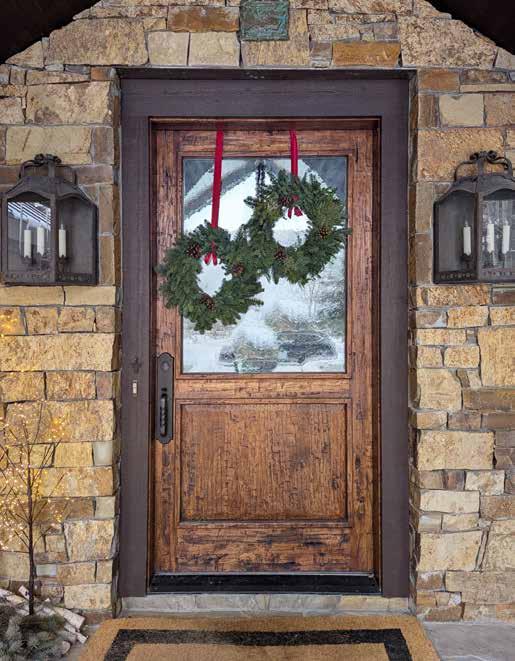
In a recent remodel, architect Alison Price reused the home’s original entry door, but removed the solid-pane upper half to replace it with waterseed glass to admit more light.
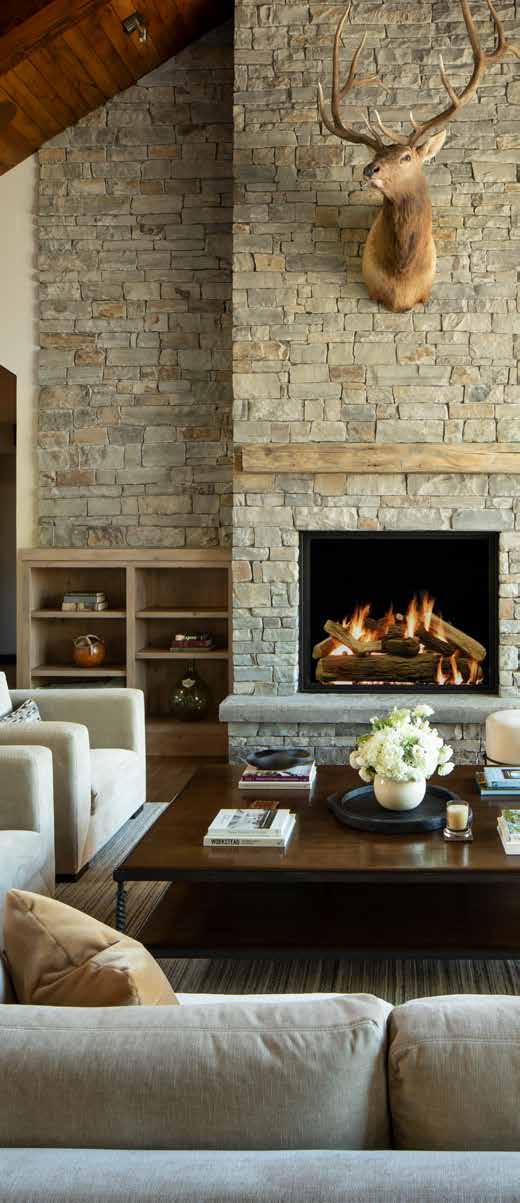
The Solitude 2 project exemplifies the thrifty reuse of existing materials that characterized building in Jackson until WWII. The original hearth was painstakingly disassembled, and all of the rocks were repurposed into a new hearth configuration.
Ward | Blake is so committed to durable materials that they’ve patented a seismically stable rammed-earth wall construction technique. TK Pad, Ward’s own home and shown on the prior spread, utilizes rammed-earth walls, an ancient building technique of tamped layers of earth and sand with the modern addition of post-tensioned rods for the seismic stability required by Teton County’s building codes. The walls are not only highly durable, but because the materials are sourced from the site, they weather along with the surrounding environment.
Waste Not Want Not
Since building materials needed to be harvested rather than simply ordered, and labor was limited, homesteaders frequently reused, repurposed, and tacked on to their homes to meet changing needs. Alison Price, principal of Price West Architects, is a firm believer in this tradition. “There’s a saying that the greenest building is the one that’s already standing,” she says. “Homesteaders lived that truth long before it had a name. They repaired, added on, and let their homes evolve. I try to design with that same sense of care and continuity, honoring what came before while creating space for what’s next.”
Price found her ideal renovation project for a client in the waste management industry who wanted to reuse all materials. She recalls, “Renovations are harder than new builds, but they’re also more meaningful. A home already holds memory. When you work with what’s here, you’re honoring that lineage instead of erasing it.” In this project, Price West Architects breathed new life into an aging home, leveraging Price’s creativity and eye for second chances for building materials (in one case, literally reusing the hearth as stepping stones to a new porch and outdoor grill area).
While the through line between Jackson’s early-twentieth-century and early twenty-first century architecture grows hazier by the year, the building traditions that paved the way for today’s architects are not lost. As Price, a member of the younger generation of architects working in the valley, reminds us, “I’ve always believed the future of building is rooted in the past. The homesteading vernacular still teaches us how to design with restraint, resourcefulness, and respect for place.”
STORY
Katherine Wonson
Katherine Wonson is an architectural historian and preservationist and the founder of Old School Heritage Solutions, a nationwide preservation consulting and training firm. She holds advanced degrees in historic preservation and architectural conservation from Columbia University and the University of Pennsylvania and has 17 years of experience with the National Park Service.
NINE WAYS TO ELEVATE A GUEST HOUSE
ARCHITECTS AND DESIGNERS SHARE IDEAS THAT WILL TAKE YOUR GUEST HOUSE TO THE NEXT LEVEL. Fair warning: your guests might not want to leave.
While staying at a client’s guest house in Maine, Rush Jenkins, co-founder of Jackson-based WRJ Design, found every drawer thoughtfully organized and stocked with anything a guest might have forgotten. “It felt as though every possible need had been anticipated before you even realized it,” says Jenkins about the
guest house, which was not a WRJ project. Shannon White Burns, who founded Shannon White Design in 2008, likes to include amenities that guests don’t even know that they want, like books about wildlife, birds, or Jackson Hole history. “If the guest house is a log cabin, maybe have some photography books of cabins
1 Enhance Amenities
around the world,” she suggests. But you don’t want too much. “You want to keep a guest house edited enough that guests don’t feel like they’re in the living room in someone’s house. A great guest house should feel uncluttered, so there is space to be and have some visual calm.”
2 Plan for Plenty of Storage
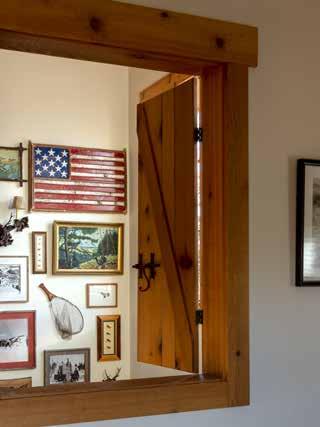
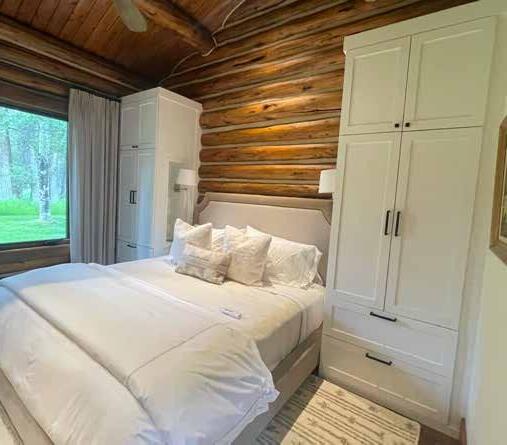
Encourage guests to really settle in by giving them space to store all of their stuff. Do this without diminishing the size of rooms with custom built-ins. “A guest house is like a boat—you have to use every space,” says architect Shawn Ankeny, who founded Ankeny Architecture and Design in 2005. For the primary suite of a guest house, Ankeny designed built-in closets on either side of the bed (shown here). Window nooks are another option that serve a dual purpose. In addition to offering storage, they can also provide additional seating or even an extra bed.
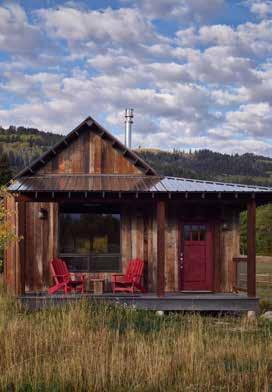
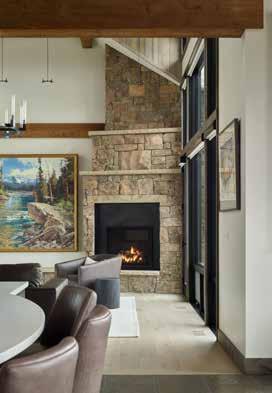
Both Ankeny and White Burns have a soft spot for remaking historic cabins into guest houses. “There is something so iconic and cozy about a little cabin,” White Burns says. If this isn’t an option, consider a wood-burning stove or fireplace, or an interior materials palette that includes natural materials. In an Ankeny guest house, the living room includes a fireplace with a stone surround. The wall the fireplace is in is shared with the primary bedroom. Ankeny could have designed a regular wall on the bedroom side, but instead, she carried over the stone from the surround in the living room. “That made the bedroom feel cozier,” she says. Reclaimed wood can evoke a similar feeling. “There are properties where the main house is more contemporary, but the guest house is all wood on the inside,” Ankeny says.
3 Curate Coziness
4 Make It Feel Bigger
A paradox of guest houses: they’re small—Teton County building codes require they be less than 1,000-square-feet—but you want them to feel spacious. “Anything you can do to make a guest house feel more generous is helpful,” architect Ankeny says. This can be done with vaulted ceilings, expansive porches, and big windows that go to the floor. Most expansive of all? Have windows that go to the floor with an adjacent porch.
5 Make It a Destination
Ankeny loves when a property offers the opportunity to site a guest house so that it has its own sense of place. “Because guest houses are small, you can tuck them into cool spots, like a stand of trees or by a creek,” she says. “A guest house that is in its own special place on a property feels like a destination that people want to spend time in.” An added benefit of a guest house off on its own is that it can be connected to the main house and parking by a rustic path, “which makes the experience more interesting,” Ankeny says. Shown here is a Ward | Blake Architects guest house connected to the main house by a pathway.
WILLIAM ABRANOWICZ; ART + COMMERCE
6 Proper Proportions
Logan Leachman, owner/partner at JLF Architects says that the firm’s clients increasingly desire guest houses to include the same level of detail as the main house. “We’re bringing the same level, or even enhanced, detailing as in the larger house into this smaller package,” he says. “The trick is not to repeat the details at the same scale, since guest houses are smaller spaces.” For example—you can’t just repeat the same size roof overhang as is on the larger home on a smaller structure. A guest house kitchen can have all of the same appliances as the main house, but scaled back to fit the needs of someone who might only be there for several days. “When proportions are correct, a space has a relaxing, calming feeling, but when they’re out of whack, it just doesn’t feel calming,” Leachman says. In a disproportioned space, you might not be able to put your finger on why you don’t feel comfortable, “but you know it when it happens,” Leachman says.
Over the last decade, guest bedrooms in main houses have increasingly been designed as suites. Do the same with bedrooms in the guest house. Meredith Leonard, director of operations and interiors at Farmer Payne Architects, says clients are increasingly asking for bedroom suites in their guest houses.
“Our clients take pride in their homes and want their guests to have an elevated experience,” she says. WRJ’s Jenkins sees the same thing: “Most of the guest houses we design include two suites, sometimes a primary suite paired with a bunk room, and other times two equally appointed suites to comfortably accommodate either families or couples traveling together.”
Go for The Bedroom Suite
COURTESY JLF ARCHITECTS / ED RIDDELL
8 Allow for Independent Living
“Clients increasingly want guest houses that include all the amenities of independent living, a true home away from the main home,” WRJ’s Jenkins says. “A well-designed guest house borrows from the best parts of a luxury hotel experience, but it also goes beyond it. A guest house gives homeowners the ability to extend hospitality with privacy and ease. Friends or family can stay on the property without being underfoot in the main house, creating a generous and effortless experience for everyone.” Set guests up to be self-sufficient with a wellappointed kitchen (including a stocked coffee station), a washer and dryer, and a dedicated desk area. Interior designer White Burns says that when a guest house is set up so guests can be completely selfsufficient, you’re giving them a gift: “Then they have the luxury of visiting the main house on their own terms.”
“Airflow is a detail guests consistently appreciate,” Jenkins says. “In Jackson especially, the ability to open windows and let in fresh mountain air, even in winter, makes the experience feel grounded in nature.” Another way to do this is with windows and porches. A Ward | Blake Architectsdesigned guest house (shown here) has a living room with floor-to-ceiling windows. “It allows the space to flow and connect to outside,” says firm principal Tom Ward.
A fresh interpretation of exterior board-andbatten siding gives this 6,000-square-foot Shooting Star home a modern look rooted in the vernacular of the Mountain West.
MOUNTAIN PANORAMA
BERLIN ARCHITECTS, HEADWALL CONSTRUCTION, AND REDPATH CONSTABLE INTERIOR DESIGN COLLABORATED TO CREATE A LIGHT-FILLED CUSTOM HOME THAT BLENDS TRADITIONAL DETAILS OF MOUNTAIN WEST ARCHITECTURE WITH MODERN LIVING.
Asnowball’s throw from Jackson Hole Mountain Resort’s base area, in an exclusive neighborhood bisected by creeks and with sweeping views of several of the mountain ranges that surround Jackson Hole, is a Minnesota-based family’s ski and summer retreat. But this 6,000-square-foot residence with its 1,000-squarefoot guest cabin is more than a getaway—it’s a commitment to contemporary mountain living rooted in the vernacular of the Mountain West.
Interior designer Katie Constable, who is based in Minneapolis and had previously designed a lake house for the family, says her clients desired a home that was mountain modern and classically elegant, yet comfortable and cozy. “They wanted it to feel welcoming and did not want it to be intimidating,” she says. Part of this was ensuring the home wasn’t so contemporary that it lacked a sense of place.
These goals resonated with architect Larry Berlin, who founded Berlin Architecture in 1984. “The custom spaces we create speak in a profound way to the mountain lifestyle and to the unique character of the individuals who live it,” he says. “We always want to bring a sense of the history of the vernacular of the Mountain West. In this case, we wanted it to feel like a cabin at the base of the Tetons, but open to the spectacular views available from its site at the base of the mountains.”
“The architecture embraces the surrounding landscape with a flowing, light-filled floor plan and expansive views. Inside, there is minimalist detailing, floor-to-ceiling glass, and clean lines.”
— LARRY BERLIN, ARCHITECT
Inside, bold and clean window proportions, an organic color palette, and texture give the home a cozy, contemporary elegance.
Responding to the Site
An inspiring force for Berlin was the exceptional quality of the southern light and long views downrange. In response, most spaces, including the bedrooms on the home’s second floor, are oriented in this direction. “On this site, you can look all the way down the Tetons to the south,” Berlin says. In contrast, the great room boldly faces northwest, up toward the energy of the slopes and lifts rising steeply at Jackson Hole Mountain Resort.
As the design was taking shape, Berlin also factored in what might be built in the future on adjacent lots, which were vacant at that time. “Our site plan development was informed by where we thought neighboring houses might be built,” Berlin says. “That is always something we look at very closely. We don’t want light and views to be lost to structures that come later.”
While Berlin considered how future buildings might impact the house, Constable, who founded Redpath Constable Interior Design in 2005, and Colby Bancroft, president of Headwall Construction, had their own challenges. Constable was considering how she might create interiors that didn’t distract from the light and views. “I was looking at windows and the views they framed as art and decided on an organic color palette with texture. This would allow your eye to go through the furniture and focus instead on the view,” she says. “Loud color would distract from the beauty outside.”
Rustic white oak was used on the ceilings of some rooms. Headwall Construction worked with Red Path Interior Design and Berlin Architects to come up with a custom finish that made the traditional material read as crisp, clean, and contemporary.
Accentuating the textural quality of the home’s exterior, the vertical battens are overscaled; subordinate components are clad with a smooth siding to emphasize the dynamic interaction.
Teamwork
Bancroft, who is a former structural engineer converted to contractor, focused on bringing Berlin’s design to life efficiently and in a way that would last in the long run. There were bump-outs in the main public space—a living room/dining room/kitchen/family area where each of these areas flowed into the next—that Bancroft saw as places where the home would lose heat. “We worked with Berlin, framing crews, and insulators to make sure we would resolve the thermal concerns,” he says. “Every single project has its own challenges, and I look at it as part of my job to find ways to solve these in practical ways that don’t compromise the quality or look of the project.”
But Bancroft didn’t have to solve problems solo. “It was a great team on this project, and the clients really benefited from that,” Constable says. “Everyone came in with different past experiences and different things they were focused on. This meant that when we were trying to solve a problem, we had the benefit of a variety of approaches. We also had each other to lean on.”
Bancroft found Constable’s deep understanding of what the clients wanted invaluable. “Her
Three sides of floor-toceiling windows in the dining area make the room feel connected to the outdoors.
Rather than having the dining room, kitchen, and family rooms stacked on top of each other, Berlin Architects created a floor plan where these rooms are adjacent, but each maintains it own sense of space.
Most of the spaces in the house respond to the site’s exceptional quality of the southern light and long views down range, but the great room boldly faces northwest to the
knowing exactly what they would want was so beneficial,” he says. Berlin’s job was made easier because the Headwall crew intrinsically appreciated the attention to detail required to make a minimalist space successful. “Spaces that look simple are the hardest to build,” Berlin says. And Constable and Bancroft say Berlin’s design challenged them to do their best work. “I was so proud to hand this finished project over to the clients. It started off with the ultimate design and ended with it looking and functioning phenomenally,” Bancroft says.
Blending Traditional with Modern
Paradoxically, a fresh interpretation of exterior board-and-batten siding, common in traditional Mountain West architecture, gives the home a more modern look among its reclaimed-wood-and-stone-clad neighbors. “Board-and-batten is something you’d traditionally see on a lot of houses in the Mountain West,” Berlin says. “We used it here to give the house a sense of history in a unique way, where this traditional element has a modern twist.”
steep slopes of the Jackson Hole Mountain Resort.
The vertical battens are overscaled, and the pattern alternated, accentuating the textural quality and rhythm of the wooden skin. In contrast, subordinate components of the building are clad with a smoother horizontal siding to emphasize the dynamic interaction. The standing seam metal roof reinforces the home’s modern pedigree. Window proportions are bold, simple, uncomplicated, and clean. All this contributes to a masterful balance of traditional form rendered through modern detailing.
The home has baseboards, but instead of being stained, they are enamel. “A modern twist on a traditional detail,” Constable says. The rustic white oak on the ceilings of some rooms strikes a similar balance. White oak is traditional, but the Headwall team worked with Constable and Berlin to come up with a finish that makes it read crisp, clean, and contemporary. “It was exciting and interesting to play with traditional elements and materials and see how they could work together to create a mountain modern home,” Bancroft says.
Dina Mishev PHOTOS Krafty Photos
STORY
The clients wanted this home to be mountain modern and classically elegant, yet comfortable and cozy. “They wanted it to feel welcoming and did not want it to be intimidating,” says interior designer Katie Constable. Architect Larry Berlin says his firm’s design speaks in a profound way to both the mountain lifestyle and the client’s unique character.
VIEWS OUTSIDE, BEAUTY WITHIN
EXECUTING EVERY CONSTRUCTION DETAIL FLAWLESSLY, BONTECOU CONSTRUCTION CREATED SKYHOUSE, A SANCTUARY THAT IS AS SOPHISTICATED AS IT IS RESTRAINED.
CONSTRUCTION
Bontecou Construction bontecouconstruction.com
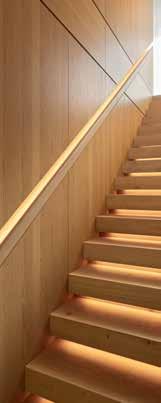
Vertical wooden slats, hand-troweled plaster, floating treads on a staircase, and carefully considered window placements can create an interplay of light and shadow that enhances a home’s feng shui, shaping energy within the lived environment and striking a delicate balance of yin and yang.
The owner of this stunning 6,574-square-foot, fivebed, eight-bath property near Jackson Hole tapped Bontecou Construction to bring their vision for a peaceful mountain retreat to life. “They were influenced by the aesthetic of a Belgian architect known for creating spaces that inspire occupants to respond viscerally,” says
Lindsey Bontecou, president of Bontecou Construction, which served as general contractor on the two-year project, working with an architect and interior designer from Belgium. “The owner’s end goal was to create a home that felt Zen, filled with spaces that invite quiet moments of reflection.”
Blending European and Japanese sensibilities, Skyhouse features clean lines and exquisitely executed details. “I’d call it modern minimalism, but at the same time, all the oak wood throughout the interior makes it feel warm and inviting. It has a soft, earthy quality,” Bontecou says.
Nestled into a hillside on 6.4 acres, the home has expansive windows that frame views of the iconic Sleeping Indian in the Gros Ventre range on the east side of the valley, but its real beauty lies within. A simple materials palette features light oak, black patinated steel, Italian travertine, and dark Pietra Vesuvius stone. Every finish was thoughtfully curated and custom built: a recessed stairway handrail with integrated LED lighting, a custom white clay bathtub imported from Belgium, and millwork crafted in Italy. In the guest wing, a striking rectangular oak bathtub imported from Poland offers visitors a memorable soak. The kitchen
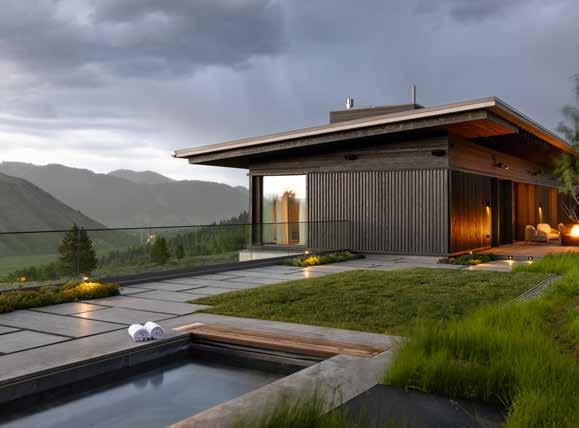
As the project progressed, the owners chose to add on a two-bedroom addition for guests, linked to the main residence by a serene terrace with a spa, fire pit, and glass railings that preserve uninterrupted mountain views.
combines patinated metal cabinets with travertine drawer and door fronts. White-oak-paneled walls and floor-to-ceiling pocket doors define the home’s spaces while creating beautiful moments of light and shadow. The result is a sophisticated and restrained sanctuary that leaves one with an overall feeling of calm without pointing to just one move, material, or detail.
Midway through the project, the owners decided to expand the project’s scope with a 2,640-squarefoot, two-bedroom addition for guests. “This architectural add-on gave us the opportunity to
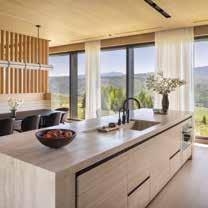
Top: In the kitchen, a light travertine countertop juxtaposes dark patinated metal cabinets, while light wood cabinetry lends warmth. Below: A finned wall of white oak divides the kitchen from the living space while allowing light to filter through.
Throughout the home, Bontecou integrated LED lighting into the millwork, in alcoves and stair railings, creating an understated mood.
A custom clay bathtub imported from Belgium serves as a focal point in the primary bath. Below: Floorto-ceiling windows capture stunning sunrise views.
build out what we call the ‘Sky Terrace,’” Bontecou says. Spanning livable garage space, they installed a sunken spa, Montana fire pit, concrete pavers, and a frameless glass railing designed to disappear into the mountain panorama. This tranquil outdoor space connects the two two-story structures via a sophisticated linear composition.
The approach to the home’s exterior construction mirrored the interior design strategy.
“We were thoughtful about not introducing too many different materials,” Bontecou says. To reinforce the homeowners’ intention to create a juxtaposition between the warm interior materials and the exterior, cedar siding was stained a brushed gray. This ensured it remained in harmony with other exterior finishes and accents like deep black, board-formed concrete, and Ipê, a Brazilian hardwood used for the understated entryway and rear decking.
“The real challenge was the extraordinary level of craftsmanship. Every shadow line, every cove molding, every fin of white oak—every last detail received focused attention.”
—LINDSEY BONTECOU, BONTECOU CONSTRUCTION
Sophisticated clean lines define the exterior, allowing interiors to flow harmoniously from one space to the next.
“Skyhouse required precision work at every step,” Bontecou says. “The real challenge was the extraordinary level of craftsmanship. Every shadow line, every cove molding, every fin of white oak—every last detail received focused attention. This creates a seamless space, which, in turn, makes the home feel harmonious and peaceful.”
Born in Jackson, Lindsey is the second generation to helm Bontecou Construction. She returned to the area in 2017 to work with her father, Steve, who founded the company in Jackson in 1978. Steve officially retired in 2024—though he still likes to visit job sites now and then. “Everywhere I look in this valley, there are high-end custom homes that Bontecou Construction has had a hand in over the last 45 years,” Lindsey says. “It feels good to carry on that legacy.”
STORY Helen Olsson
PHOTOS
Krafty Photos
A sunken spa anchors the outdoor space between the main house and the guest quarters.
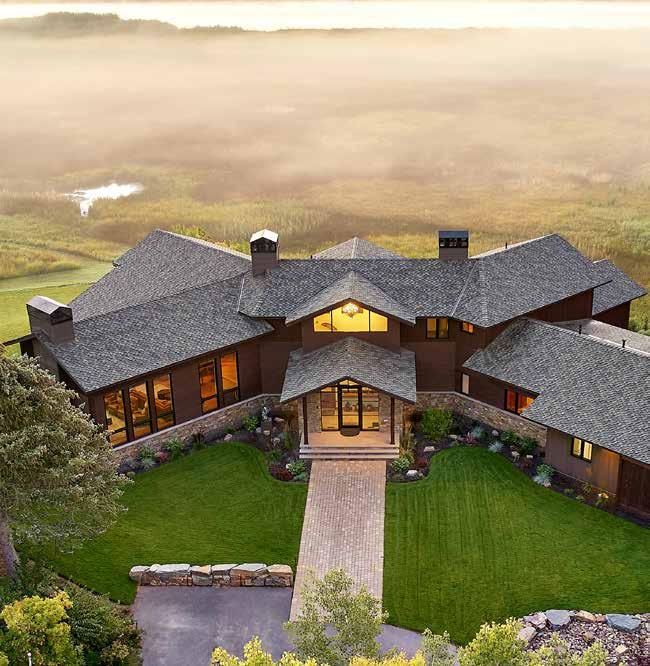
The architectural renovation of Darby Creek Ranch, a legacy property in Idaho, was informed by the surrounding landscape— and the diverse wildlife that moves quietly through it.
DARBY CREEK RANCH
A FULL RENOVATION OF A LEGACY PROPERTY IN TETON VALLEY, IDAHO, PRESERVES A STRONG SENSE OF HOME WHILE MAKING SPACES FEEL LIGHTER, MORE OPEN, AND BETTER CONNECTED TO THE LANDSCAPE.
ARCHITECTURE
Price West Architecture pricewestarchitecture.com
CONSTRUCTION Fulcrum Builders fulcrumbuilders.group
INTERIOR DESIGN
B&B Design b-bdesign.com
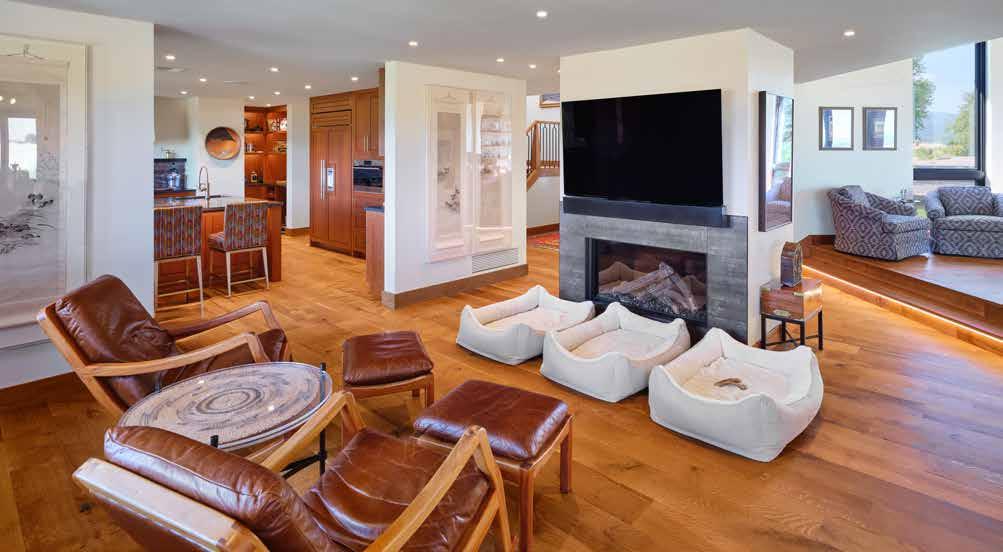
Asingle design cue—a dazzling slab of granite or an iconic Teton view—can serve as inspiration for a whole-house renovation. With Darby Creek Ranch, a multi-winged, three-level residence overlooking the Teton River, the homeowners’ love for their four dogs set the architectural design in motion. They wanted more space for a row of dog beds by the home’s central fireplace, along with more room for friends and family to gather. “Those simple requests quietly set the tone for the entire project,” says Alison Price, architect and owner of Price West Architecture, who combined forces with interior architect Brianna Taylor, founder of Wyoming-based B&B Design, and Fulcrum Builders to realize the vision.
Built by the homeowner’s father in 1988, Darby Creek Ranch has since passed to the next generation. The renovation expanded the original footprint in multiple directions, adding a relatively modest 1,550 square feet of habitable space to the existing 7,356 square feet. The team changed a two-car garage into a three-car garage, expanded the kitchen, dining room, and great room, created a three-bedroom guest oasis on the garden level, reimagined the entryway, and reclaimed old second-story decks for indoor space. Outdoor spaces were built out, adding 2,000 square feet of outdoor living and creating a stronger connection to the surrounding 15 acres, a landscape that doubles as an informal bird sanctuary.
Rugged Rustic Exteriors
The home’s exterior underwent a complete transformation. “We removed all the siding, windows, roof—we took everything down to studs,” says Derek DiVenere, who in 2022 founded Fulcrum Builders and teamed up with the highly experienced superintendent Steve Comeau on this project.
New cedar siding was placed in shifting directions to break up the facade’s scale. Montana Chief Cliff Stone surrounding the base of the house anchors the forms, while vertical standing-seam metal on the garage and the fireplace’s chimney adds visual interest. “The metal accents were a way to play with the proportion of the exterior wood paneling,” Price says.
The original entryway consisted of a simple wood panel door. To create a more welcoming and formal arrival, the team added 120 square-feet to the entry and a new roof and incorporated natural stone, log timbers, metal tension rods, and a new Loewen glass door with sidelights. “The glass gives it a more modern aesthetic, and it glows beautifully at night,” Price says. “When you approach the entryway, you know you’ve arrived.”
Top: The footprint of the home expanded in multiple directions to capture views and create gathering spaces for family.
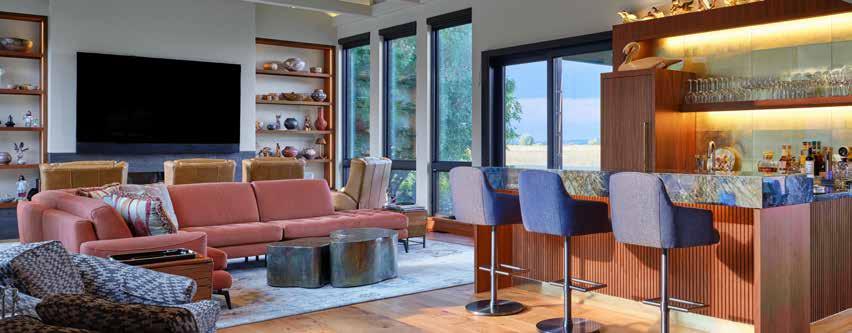
Below: The solid-surface slab with waterfall edge topping the bar serves as a key design element in the living room.
Contemporary Interiors
While the rustic exterior is rooted in natural materials, interiors are a refined departure from the usual rugged masculinity found in the valley’s design aesthetic. Spaces feel intentional, inviting, and deeply lived-in.
The interior layout was shaped by where the homeowner’s furniture and art collection would live— and where light would land. “From the beginning, the client knew where certain pieces of art would go, including a beautiful pair of ancient scrolls,” Taylor says. Heavy forms were replaced with gentle curves. Layers of pattern, texture, and warmth give each room its own personality while staying connected to the whole.
“I focused on ensuring the interior movement worked functionally with the homeowner’s vision for living in the space,” Taylor says. To complement their eclectic collection of Native American, Chinese, and Indian artwork, Taylor employed a timeless neutral palette layered with warm tones—reds, blues, greens, and coppers—along with walnut cabinetry, white oak flooring, and brass accents. “We had to create a neutral base that allowed the artwork to pop, but that also matched its richness,” she says. “The wife leans to a midcentury Art Deco style, and the husband has a more outdoorsy, traditional sensibility. It was interesting melding those two styles together.”
The renovation added a back porch for dining and extended the landscaping outward, enhancing the home’s indooroutdoor sensibility.
The dining room was enlarged to create a more substantial space for entertaining.
“The glass gives it a more modern aesthetic, and it glows beautifully at night when you approach the entryway, you know you’ve arrived.”
—
ALISON PRICE, ARCHITECT
The second-floor outdoor deck offers the perfect perch for watching wildlife go by.
out a dedicated
Structural Challenges and Improvisation
Sometimes the most impressive architectural work is invisible. Extending spaces out and capturing more Teton views meant removing load-bearing walls. To support the newly imagined forms, Fulcrum shored up the house with helical piers and concealed massive steel beams inside the flooring system. “Getting 1,400-pound, 30-foot-long beams into the floor without using heavy equipment was a monumental structural challenge,” Comeau says. The solution? Using hydraulic jacks to crib the beams into place.
“We get a set of plans, but sometimes we need to improvise,” DiVenere says. During construction, the team realized a new roofline over the back deck would block views of the Tetons. “We made a game-day decision to eliminate part of the roof to open up sightlines.”
Realizing the Vision—and Expanding on It
Located off the primary suite’s office-lounge, the second-story outdoor balcony is an enchanting space where you can pick up a pair of binoculars and watch for coyotes and sandhill cranes moving along the riparian corridor. “The ‘perch’ began as a small idea in our first concept sketch, and even though the clients hadn’t asked for it, it’s become the husband’s favorite spot,” Price says. “Creating moments like this is one of the great joys of being
Carving
space by the fireplace for the owner’s beloved dogs was a priority.
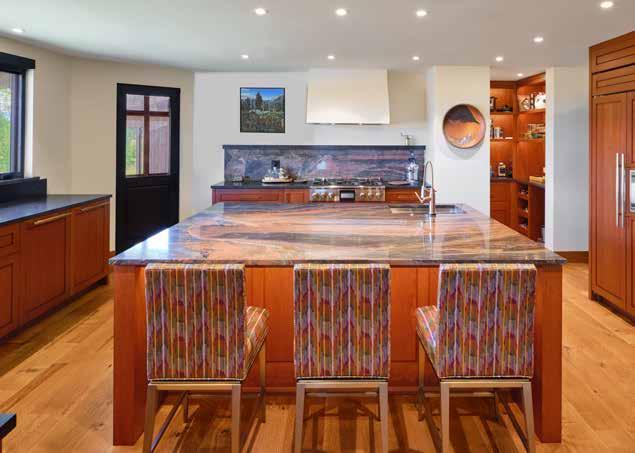
The team designed the kitchen around a richly toned stone slab the owners had sourced early in the project.
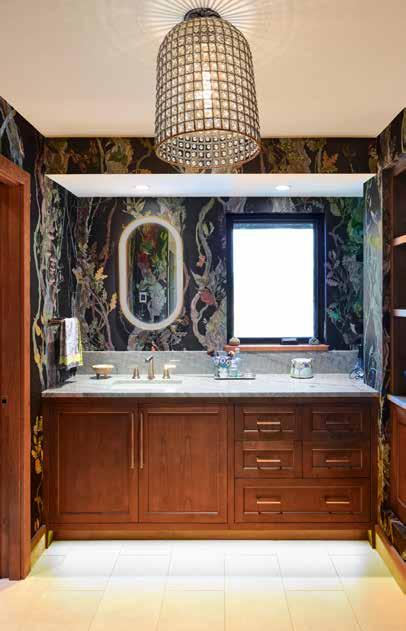
The interior design embraces color, as seen in the primary bathroom’s rich wallpaper, festooned with birds and foliage.
an architect.” It was also an opportunity to build more sustainably. “We salvaged redwood deck material from the original home and reconfigured it in the new deck in a more intriguing parquet design,” Comeau says.
Ultimately, the clients wanted a home that supported their everyday rituals. “Our role wasn’t to reinvent the house, but to help carry forward its history, creating space for its future,” Price says. The renovation deftly balances shared living spaces with contemplative moments of retreat—places to linger and watch the world go by, binoculars within reach, dogs asleep at your feet.
STORY
PHOTOS
Dan Price Photography
Helen Olsson
Price reimagined the entryway in stone, glass, and metal, evoking a true sense of arrival.
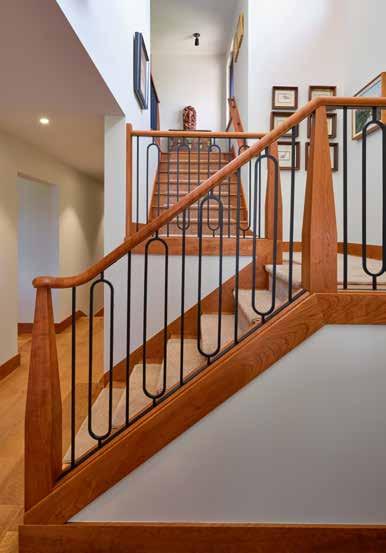
Local artisans crafted this custom stairway with powdercoated steel and cherry balusters.
THE JEWEL BOX
RIGOROUS PLANNING AND DESIGN CREATE A GUEST HOUSE THAT LIVES BIG
ARCHITECTURE
Ward | Blake Architects wardblake.com
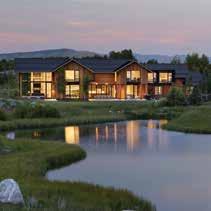
Out of all of the award-winning residential projects architect Mitch Blake has designed during his 40-plus-year career, a 960-square-foot guest house completed in 2024 is the one he most gravitates to. Designed and built simultaneously with a main house and a barn, this guest house has views and finishes that match those of the main house and, thanks to its own sense of place, a coziness that would be impossible in a larger house.
“It has absolutely everything you need, but in a small package,” says Blake, who co-founded Ward | Blake Architects with Tom Ward in 1996. Ward adds, “For all of the rigor and attention to detail in the design process, [this guest house] is very wearable. It’s not an uptight space, but a relaxed one. Even the owner talks about living in it instead of in the main house for a while.”
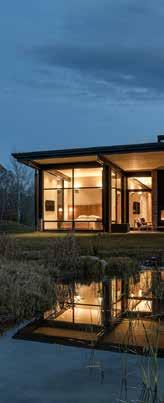
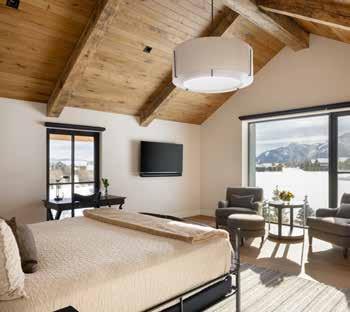
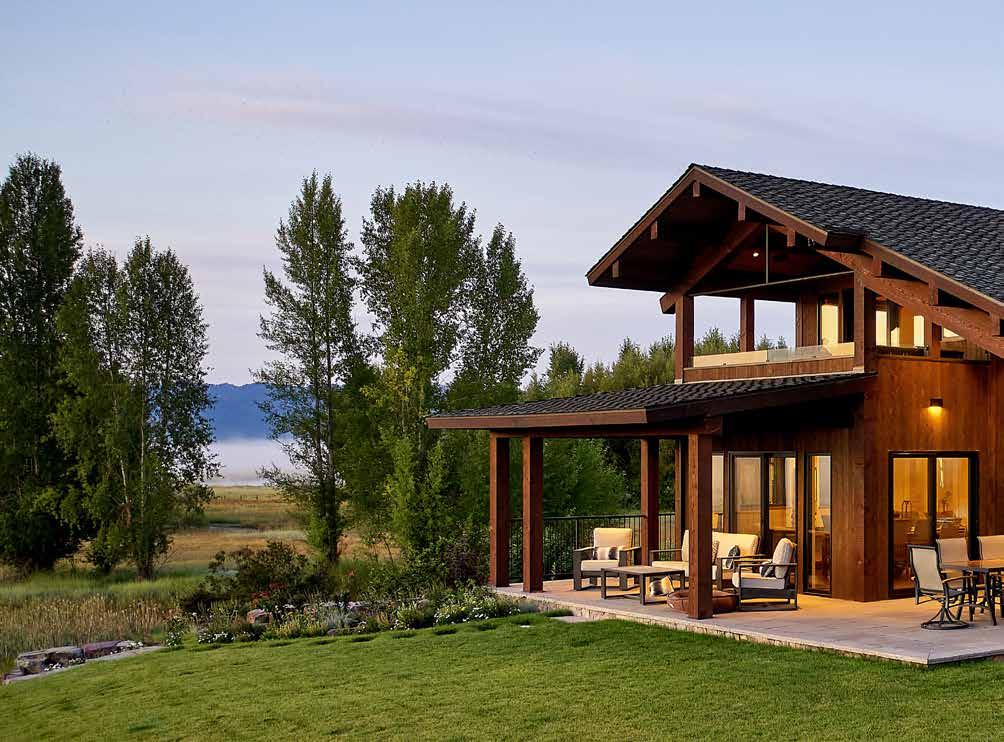
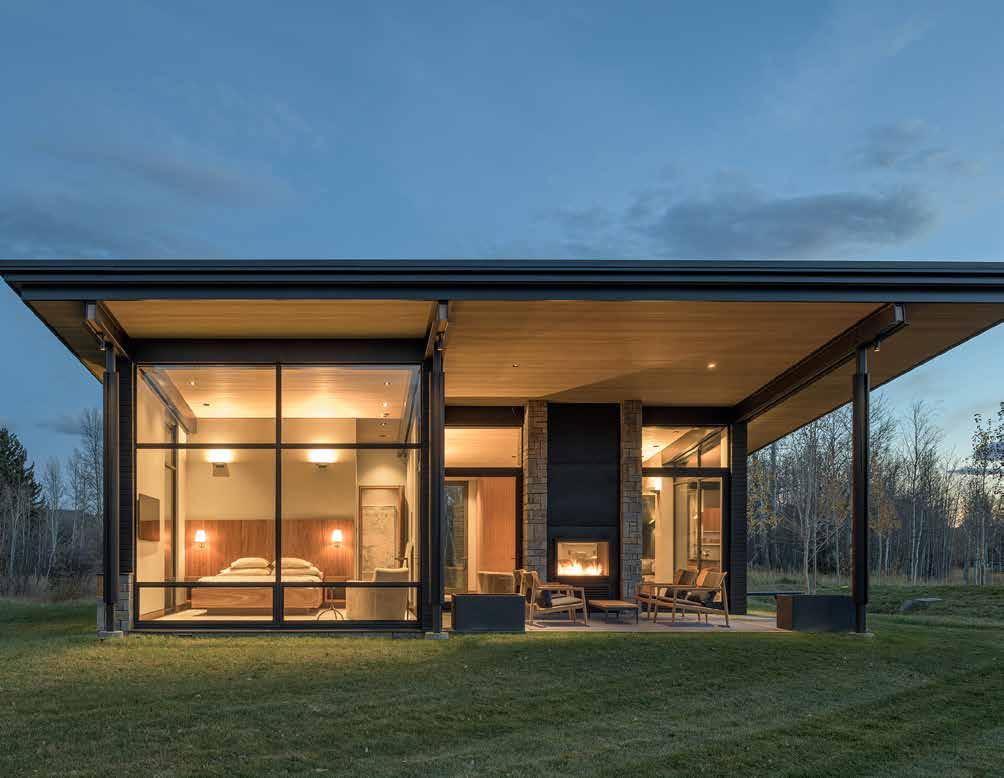
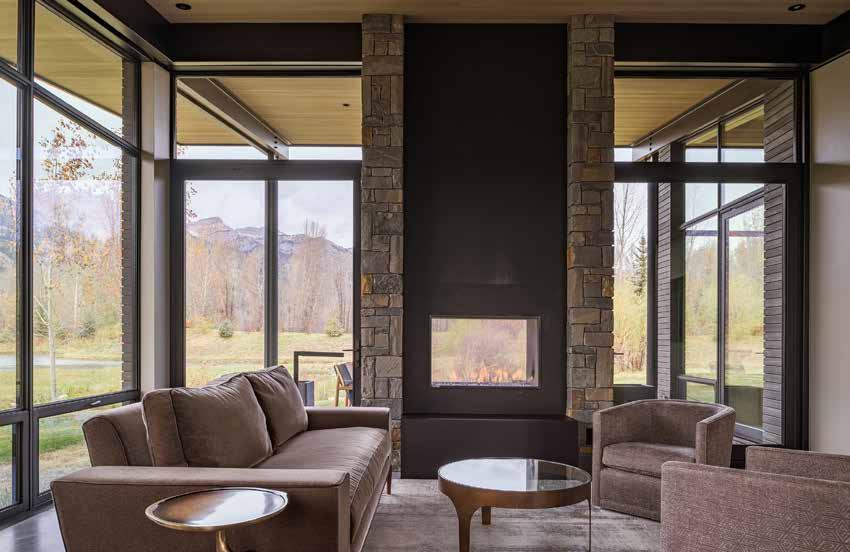
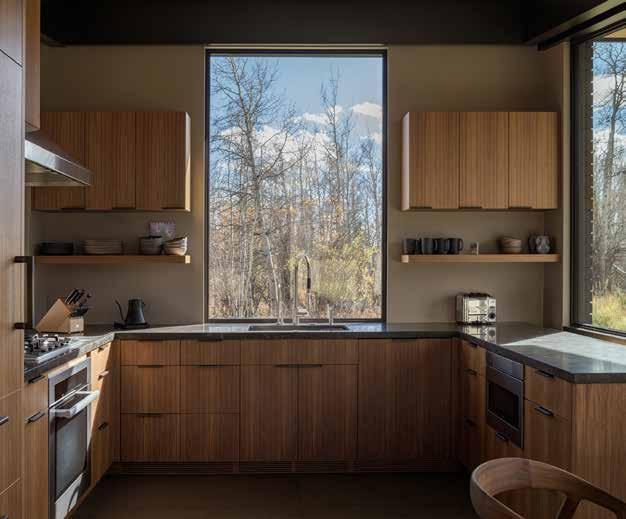
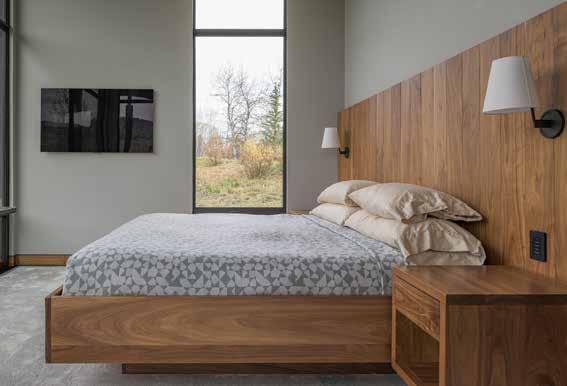
This guest house’s bedroom suite brings the outside in thanks to a wall of floor-to-ceiling windows. The goal was different with the adjacent covered porch. “Here, we wanted to bring the inside out,” says architect Tom Ward. The porch, which is heated, is off the living room and doubles the size of that space. Both living rooms—indoor and out—are connected via a see-through, double-sided fireplace.
Joined, but not subservient
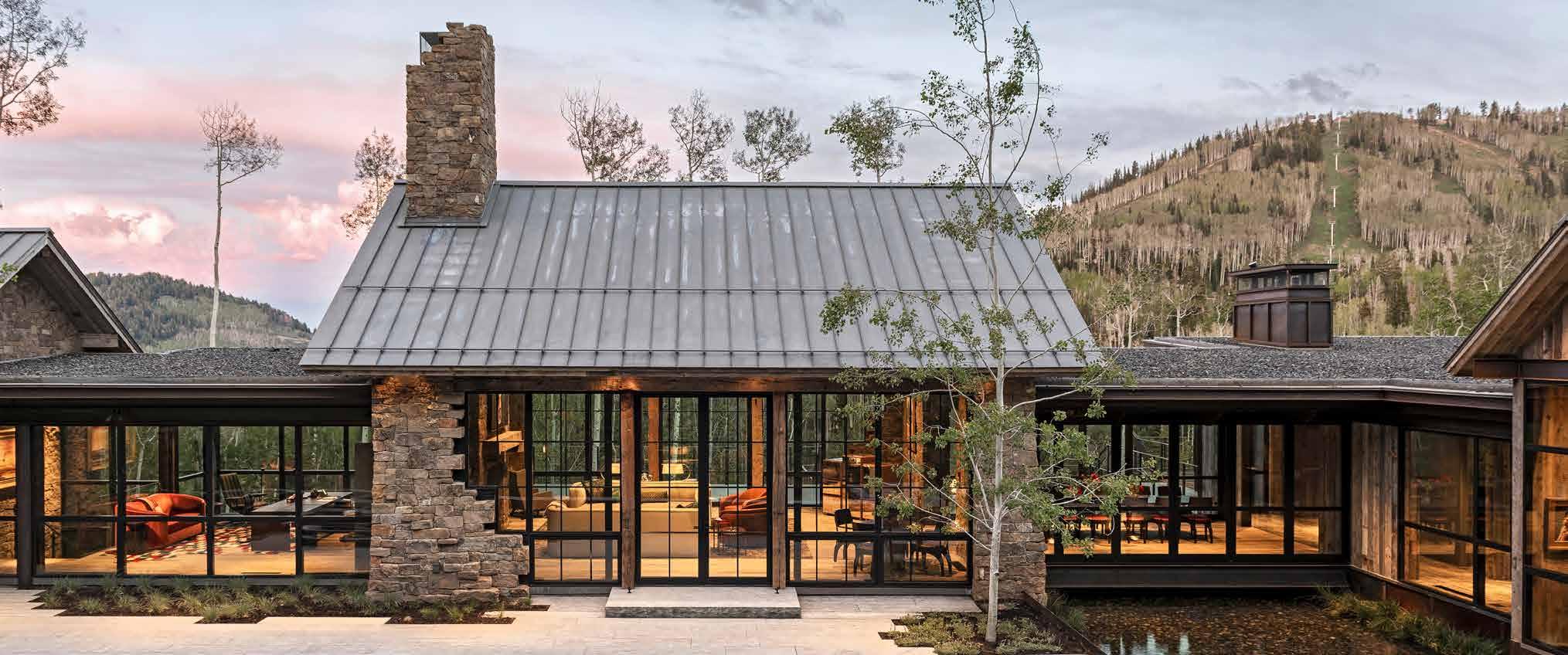
Like all well-designed guest houses, this one relates to the main house, which is 6,750 square-feet. “The two structures, and also the barn, have the same rhythms of structure and are similar in their architectural language,” Blake says. Additionally, the two houses are finished with the same materials and have the same type of windows, and the exposed exterior steel columns on both houses are the same design. “They were designed as a unit—to talk to each other,” Ward says.
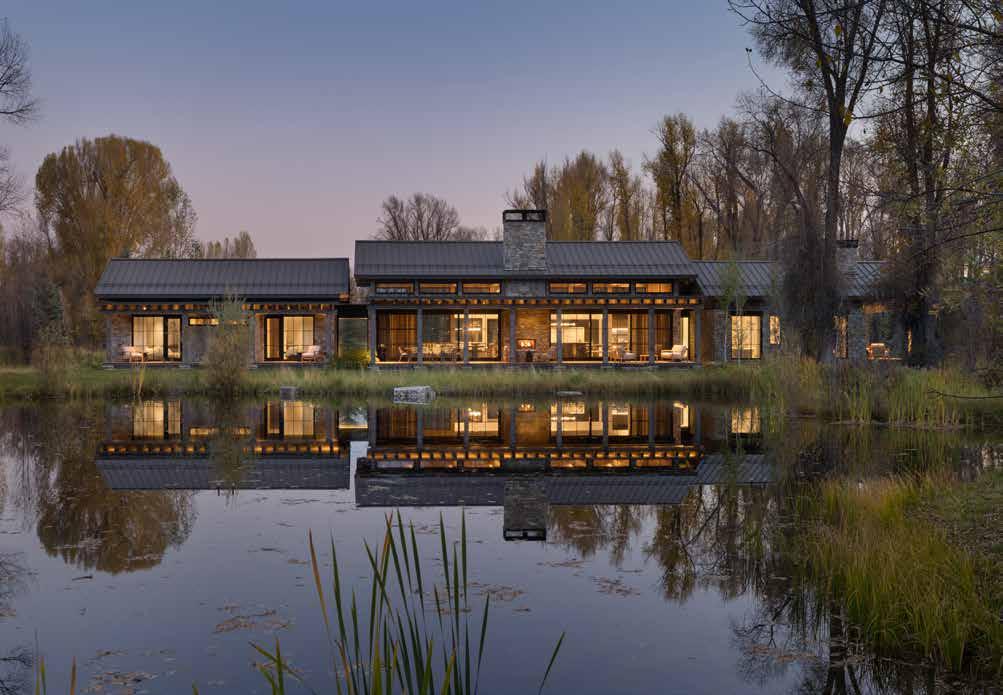
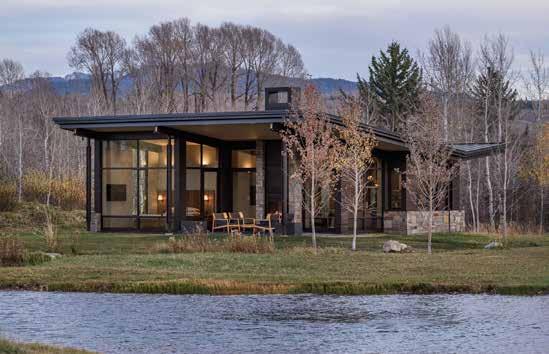
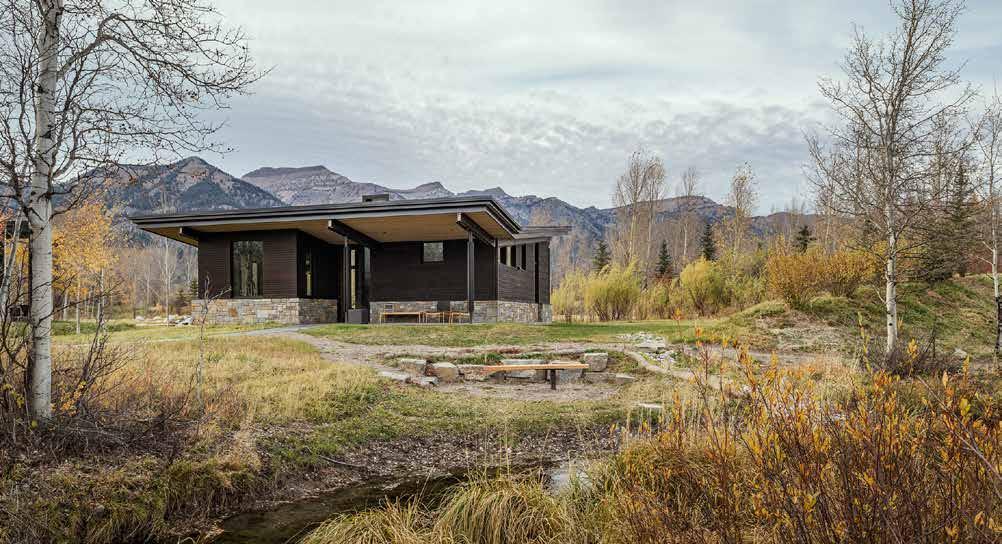
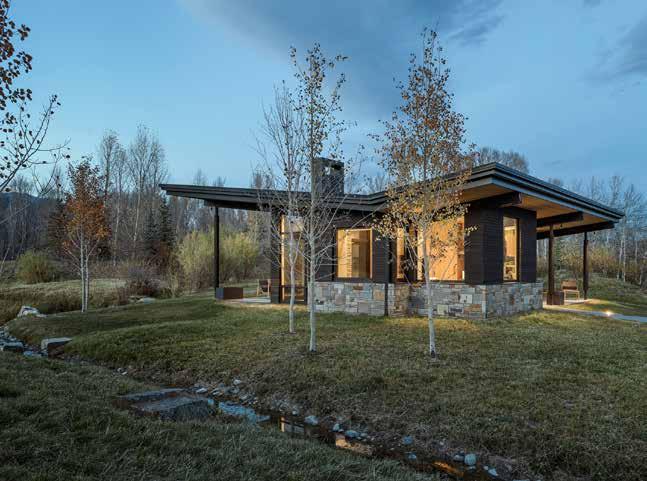
But, barely visible from the main house and sited on the shore of a pond, the guest house also works on its own. Unlike most guest houses, it has views equal to those of the main house and, thanks to an irrigation ditch that Ward | Blake worked with landscape architects to turn into something closer to a creek, feels wholly separate. “I think you can be in the guest house and feel like you’re all by yourself on the property,” Blake says. “And the guest house itself feels like it belongs exactly where it is on the site.”
A butterfly roof allows for maximum mountain, and sky, views. “We didn’t want the roofline coming down and blocking the views,” architect Mitch Blake says. “The mountains are close. Tilting the roof up allowed us to capture the blue sky above the mountains.”
“Everyone talks about bringing the outside in, but here we wanted to bring the indoors out. The windows allow the space to flow outside.”
—ARCHITECT TOM WARD
Cataloging and capturing the views
Before starting the design process, Blake did what the firm always does: spent hours on the six-acre site at different times of the day over several months. The goal of this is not only to discover the range of views available, but also to get a sense of where and how the different buildings might engage with and utilize natural light. “I wanted to get a feel for what the light was like and how we might best capture views of the Teton Range and Wilson Faces, and the feeling of the way mountains surround the property,” Blake says.
While the initial focus was on how the main and guest house would capture the property’s big views, the opportunities, and potential, offered by the foreground—the pond that helps make the guest house feel like its own experience and an existing berm—were also considered. “What we created with the pond and after we beefed up the berm, suddenly we developed an incredibly strong foreground,” Ward says.
While the guest house has mountain views, including of the ski slopes at Jackson Hole Mountain Resort, when you’re in the living room, it is the pond and the wildlife that often wanders past it, that is most visually compelling. Ward | Blake designed this room with floorto-ceiling glazing. These open to a heated porch. Just beyond the porch is the pond. “Here there is all this action in the foreground,” Ward says.
The End Result
“This guest house really gets used,” Blake says. “It is selfsufficient and feels so much bigger than it is because of the open plan and the floor-to-ceiling windows.” Ward adds, “Everyone talks about bringing the outside in, but here we wanted to bring the indoors out. The windows allow the space to flow outside.”
STORY
PHOTOS
Gabe Border
from top left: Laying in bed in the sole suite in the guesthouse, you can open the shades to expose a wall of windows that frame the Tetons; every detail in the guesthouse was rigorously considered, resulting in clean, simple lines; a small creek between the guest and main houses reinforces the feeling that the former is autonomous, a precious gift to guest; thoughtful site design gave the guest house the same expansive Teton views as available from the main house.
The Homestead Team
Clockwise
WHEN HISTORY SPEAKS
The
was
WHEN WRJ DESIGN PRINCIPALS DISCOVERED A LOG CABIN BENEATH THE SIDING OF THEIR NEWLY PURCHASED HOME, WHAT ENSUED WAS A REMODEL CHALLENGE, WHICH TIED THEM TO THE HISTORY OF JACKSON HOLE AND GRAND TETON NATIONAL PARK. THE SOLUTION WAS REALIZED WITH THE HELP OF BOTH ANKENY ARCHITECTURE AND DESIGN, AND JACKSON CONTRACTORS.
INTERIOR DESIGN
WRJ Design wrjdesign.com
ARCHITECTURE
Ankeny Architecture and Design ankenyarchitecture.com
CONSTRUCTION
Jackson Contractors daniel@jackson.contractors
The great Moran log cabin round-up began in 1950, shortly after Truman expanded Grand Teton National Park, annexing both the land of the Jackson Hole National Monument and the 35,000 acres of John D. Rockefeller’s Snake River Land Company.
But then the park and Rockefeller had a log cabin problem: the land he’d amassed held a collection of old hunting residences that needed to be removed. He solved this by sending most of these structures to the campgrounds at Colter Bay, and the rest he offered up to the people of Jackson Hole.
And this is where the history lesson concludes and our story begins, with a note regarding one such cabin that found its way into town, which read:
“Klaus and Rush, Louise didn’t know the history of the cabin which was discovered in 1963 when the Hirschs added onto the garage … Louise had never heard that the cabin was moved from the former town of Moran although her father had told me it had ….”
Beneath the vinyl siding of the newly purchased ranch-style home at 415 Deloney, there existed a log cabin. And this note from a neighbor to the new
great room
not only expanded, but the ceiling, which had been flat, was vaulted, and a stone fireplace added to anchor the room. Finishing touches included a Poltrana Frau sofa, a Holly Hunt table, Jiun Ho chairs, and an 1890 stag mount, which once belonged to Kaiser Wilhelm II.
After Ankeny and Hierro restored the original ceiling pitch of the cabin and brought in paned windows to reflect its history, Jenkins and Baer turned it into their bedroom. Here treasures from times past accentuate the rich history of the structure; a late-nineteenth-century painting from the Bierstadt School, a swan from the collection of Geoffrey Beene on top of a 1690 German strongbox, prints by Thomas Moran, and a rug acquired while traveling in Cappadocia highlight Jenkins’s and Baer’s eye for collecting.
“Klaus and I both hold a deep appreciation for history, for items with rich story and meaning, and the resurrection of this little cabin became a matter of personal responsibility for us.”
— RUSH JENKINS
The
ceiling with a clerestory window and surrounding nearly-floor-to-ceiling windows allow maximum light while providing guests the opportunity to fully experience Baer’s landscaping genius. A staple of Jenkins’s design principles is the round table, promoting conversation and inclusion.
homeowners, WRJ Design principals Klaus Baer and Rush Jenkins, was how they came to learn of the matter.
There had been plans for a remodel. Baer wanted a new kitchen, and Jenkins, a more fitting space for his beloved Steinway. And both men wanted a more dynamic entranceway and a sunroom to replace the back patio. For five years, they waited and pondered this predicament until, in 2020, in the quiet of Covid, they reached out to their like-minded aesthete and friend, architect Shawn Ankeny, of Ankeny Architecture and Design, who they’d enjoyed collaborating with on several previous projects.
For a contractor, they brought in Daniel Hierro of Jackson Contractors, who they’d discovered fortuitously earlier that year. Hierro offered boundless skill sets, an easy demeanor, and a great team. Together, they began discussing the possibilities.
The first line of business was, what about this mysterious cabin? Was it salvageable? The time had arrived for them to take a peek beneath the siding. Fortunately, Hierro had worked on log cabins and knew what to look for, and what they found was a treasure worth preserving.
“Klaus and I both hold a deep appreciation for history, for items with rich story and meaning,” recounts Jenkins. “And the resurrection of this little cabin became a matter of personal responsibility for us.”
Old and new. The sleek lines of Earth Elements cabinetry, Bolier stools, and Jonathan Browning sconces contrast playfully with the exposed cabin beyond, while the large awning window to the left can open outward allowing chef Baer to serve guests on the heated patio. The paintings are from the collection of Olympic ice skater Dick Button.
vaulted
Drapes are Loro Piana linen, and the chandelier is by Jonathan Browning.
Indeed, Jenkins’s design philosophy has long emphasized the value of enriching one’s home with story, whether in the form of family heirlooms or treasures of a personal nature. His training at Sotheby’s in New York had only reinforced what he’d come to believe as the son of a long line of Idaho ranchers and farmers: the true value of things lies in their meaning.
And so, with the decision made to keep the cabin, the team went into action, driving around town studying other such historic structures, the proper care of the logs and chinking, and imagining the possibilities.
“This project was always evolving,” remembers Ankeny. “First, liberating the cabin, then figuring out how to mesh the pitches of the roofs, removing walls to improve the flow. So many times, a solution would present itself that could make the house more gracious, and so we’d change course right there. Daniel and his team were great with that.”
A Dutch door, copper gas lanterns by Bevolo, stonework and a stone lintel pay homage to a time gone by in Ankeny’s brilliant reimagining of the entranceway. The exposed logs, white window trim, and matching exterior coloring to the left are inspired by other such historical structures in Jackson. Compare this with the snapshot of the original house, a cacaphony of roof heights and 1950s vinyl siding.
A stone mantelpiece and paned windows carry the theme of the house’s historical relevance, which is complimented here by Loro
Beams were removed and ceilings raised. On one end, the house was lengthened, and on the other, a proper stone garage was added. And in a stroke of high art, Ankeny and Hierro created a three-sided sunroom experience with floor-to-ceiling windows that fully embraced Jenkins’s vision and allowed both his training as a landscape architect and Baer’s expertise as a gardener to shine through.
“With the sunroom completed, we seized the opportunity to landscape this beautiful new footpath through spruce trees, hosta, and ferns, winding from the backyard to a whole new fence and garden area. It all felt very much like home,” says Baer.
Recalls Hierro, “I think in the end, we moved or removed all but two walls, and I enjoyed the process. I think what was most satisfying was that, no matter the situation, Rush and Klaus were always choosing in favor of what was most beautiful. The house spoke, and we answered.”
Zachary Barnett
PHOTOS
Roger Davies
Pitch perfect. A stone garage and stone chimney bracket Ankeny’s revision, while the pitches of the roofs have been artfully meshed. The great room has been extended to the left allowing Jenkins’s piano room to breathe.
STORY
Piana cashmere drapes, an Andre Arbus desk, and a Carlo Moretti lamp.
Where Land, Lifestyle, and Legacy Meet.
GUIDING BUYERS AND SELLERS THROUGH WYOMING’S MOST SIGNIFICANT ESTATES AND RANCHES WITH AUTHENTICITY, STORYTELLING, AND TRUST.
For more than three decades, Latham Jenkins has connected people to place through thoughtful interpretation of Wyoming’s most remarkable properties. His work blends deep local insight with a global perspective, ensuring every transaction honors the land, its legacy, and the lifestyle it affords.
Get started at LathamJenkins.com
Recognized by RealTrends as Wyoming’s #1 individual broker in 2021 & 2024 and #2 in 2022 & 2023, Latham leads with integrity and results.
THE WONDER INSTITUTE SERVES AS A HUB WHERE COMMUNITY AND CRAFTSMANSHIP GROW SIDE BY SIDE THROUGH MAKING, CREATING, SKILL-BUILDING, AND CONNECTION.
The Wonder Institute wonderinstitute.org
Ahomestead has always been more than a house. It’s where furniture is built, tools are repaired, wood is shaped, and practical skills pass from one generation to the next. Long before convenience defined modern life, the home was a workshop—a place where making something by hand connected people to place, to community, and to something real.
Jackson Hole’s finest homes reflect that same spirit. Materials chosen with care, details shaped with intention, craftsmanship that doesn’t just shelter life—it expresses it.
The Wonder Institute carries this tradition forward. Through community woodshops and maker programs, people of all ages can design, build, and create—where timeless skills meet modern tools, and curiosity becomes craft.
Supporting The Wonder Institute means weaving that heritage into the fabric of this community. Quietly, beautifully, and for generations to come.
Here, the homestead lives on—not just in our homes, but in the hands of those who make them.
STORY + PHOTOS
The Homestead Team
DESIGNER
Picks
Style Jackson Hole
“We call the Jonty round end table the ‘floater’ because it is easy to move around for entertaining and it perfectly fits a cocktail,” says Danette Burr Dixon, who, with her husband John, founded and runs Style Jackson Hole, whose clients include Pottery Barn, Wrangler, Anthropologie, Filson, Calvin Klein, Aeropostale, Dooney & Burke, Yellowberry, J. Crew, Soft Surroundings, Ralph Lauren, and Amangani, among others. “You can’t have enough of these [end tables].”
stylejacksonhole.com
@stylejacksonhole
Dwelling Interior Design Studio
Kate Binger, who founded Dwelling Interior Design Studio in 2007, is currently loving printed grasscloth. “I am very fond of printed patterned grasscloths, especially in spaces like a laundry room,” she says. “They bring an impactful level of warmth and depth to a hard surface space. Now, there is a myriad of styles and selections.”
dwellingjh.com @dwellingjh
Parent Halsey Architects
“Shelfology makes slick shelves in various materials, but I am particularly fond of their Tromso FM1 Steel Floating Shelves,” says architect Karen Parent, who partnered with fellow architect Doug Halsey to form Parent Halsey Architects in early 2025. “They can support anything you can fit on them, and their thin profile and concealed fastener system allow the focus to be on what is on display, rather than the shelves themselves. The shelves also come in a range of depths, lengths, and colors, so you can get a custom look for any space. We have these in our own office.” The fact that the company is based in nearby Rexburg, Idaho, is a bonus.
@parent_halsey
Interior designer Timothy Brown worked with notable designers Victoria Hagan, Wayne Nathan, and Robert Stilin before founding his own design studio. Although based in New York City, Brown has worked on projects across the country, including in Jackson Hole. And he says there is one thing that can work in almost any home, regardless of location or style: Abyss Super Line Towels. “A client turned me onto these when we wanted towels with color,” he says. “They really are great towels; they’re fluffy, dry reasonably fast, and the colors are amazing and do not fade.” Personally, Brown likes darker colors like charcoal grey or evergreen, but anything is on the table for clients. “It really depends on the bathroom and person. For a color-loving client, the sky is the limit, or in this case, they can choose powder blue!”
Shannon White Design
Prior to opening her eponymous interior design studio in 2008, Shannon White studied antiques, textile history, and decorative arts at Christie’s in London. So, it’s no surprise that among her current loves are Western wool blankets—Pendleton being the most famous—with a twist. “There are so many blankets and patterns available and so much you can do with them,” White says. “Even if you’re only thinking about using them as an upholstered accent, there is so much you can upholster—a footstool, bench, cushions, and even a vintage Eames chair. These blankets are fun because they can work in traditional settings or in super modern projects where you might want a pop of color or personality. You can put them on a really rustic piece of furniture, up to something very modern, and it grounds it in the region and adds color.”
timothybrownstudio.com @timbrownstudio
shannonwhitedesign.com
@shannonwhitedesign
Timothy Brown Studio
Jacque JenkinsStireman Design
Traditional plaster is one of interior designer Jacque Jenkins-Stireman’s favorite materials. She found another reason to love it during a trip to Tuscany in 2024 when she experienced waterproof plaster beautifully executed for the first time. “Waterproof plasters are a wonderful option for wet rooms; they’re durable, easy to clean, and maintain a beautiful luster and finish,” she says. Jenkins-Stireman, the principal at Jacque Jenkins-Stireman Design, suggests making a statement by pairing plaster walls with a marble mosaic tile floor and aged brass fittings. “This can create a warm classic outcome,” she says. “Plaster walls in a crisp tone paired with marble, large-format tile floors can maintain a contemporary look in a modern home.”
jjstiremandesign.com
@jacquestiremandesign
A misconception about firewise landscaping is that it means hardscaping everything, but landscape architect Hans Flinch says that is not the case. “You can do firewise landscaping and make it beautiful and native, and hardscaping can take many forms, including pathways and water features.”
DEFENSIBLE BEAUTY
FIREWISE LANDSCAPING MATTERS IN JACKSON HOLE.
Not long ago, homeowners in Jackson Hole could marvel at how their cedar decks seemed to melt into the surrounding forest. The slope of lodgepole pine framed the Tetons like a living picture window—a view worth nearly any price. But as summers grow hotter and drier, and wildfire smoke becomes an increasingly frequent visitor, the idyllic blend of wildland and home is showing its vulnerability.
Wildfire is no longer a distant and infrequent threat. It is now part of the calculus of owning a home and living in Jackson Hole. According to wildfirerisk.org, a website with interactive maps, charts, and resources created in 2018 by the USDA Forest Service under the direction of Congress, the risk of wildfire in Teton County is higher than in 88 percent of counties in the U.S. This is slightly lower than the risk of wildfire in Park City, Utah, but higher than in Steamboat Springs, Colorado.
Firewise landscaping has emerged as a crucial defense, allowing residents to maintain beauty and biodiversity while reducing the risk that one stray ember could turn a dream house into an insurance claim.
The Changing Fire Reality of Jackson Hole
Jackson Hole’s natural landscape—a high desert with dense, conifer-dominated forests and seasonal droughts—was shaped by fire long before development arrived. Historically, low-intensity burns cleared underbrush, recycled nutrients, and maintained healthy ecosystems. But a century of aggressive suppression policies has left many forested areas packed with dense fuel, waiting for a spark.
Layered on top of that are hotter, longer summers; an increase in the number of hot, dry, windy days; the spread of invasive species that dry out earlier than native species; and more frequent drought conditions. The Greater Yellowstone region’s fire season now lasts roughly six weeks longer than it did in the 1970s. The frequency of high-intensity crown fires—those that leap from treetop to treetop—has roughly doubled over the same period.
For a community like Jackson Hole, framed by the Bridger-Teton National Forest and Grand Teton National Park, that means fire hazard literally meets the backyard fence line. The wildland-urban interface (WUI)—the zone where human development meets flammable wildland vegetation—expands every time a new home is built.
As of 2025, all private lands in Teton County are considered to be in the WUI zone and must adhere to wildfire-specific construction requirements. These requirements differ based on where a home is: a house tucked into the forest off Fall Creek Road will have different guidelines than one in East Jackson, but all new homes in Jackson Hole must now meet a basic level of ignition-
resistant construction. An example is that wood shakes and shingles are no longer allowed for any new construction anywhere in the county.
“All homes in Jackson Hole have some level of risk from wildfire. Whether in downtown Jackson, Moran, or Hoback Junction, every landowner has some exposure to wildfire,” says Robb Sgroi, land resources specialist at Teton Conservation District and a certified wildfire-mitigation specialist and arborist.
Don’t Trust Our Historical Luck
While Sgroi is not aware of any occupied structure in Teton County being lost to a wildfire, he says, “If we expect past performance to inform future outcomes and don’t take proactive action, that is an unsafe path to follow.” The July 2001 Green Knoll Fire forced the evacuation of hundreds of homes south of Wilson—in neighborhoods including Crescent H and Indian Paintbrush—and came within feet of some homes. The 2012 Horsethief Canyon Fire came within three miles of East Jackson and threatened several homes in the Little Horsethief Canyon area, but ultimately firefighters, with the help of a shift in weather, prevented any structures from being lost.
“Our firefighters have been incredibly effective in suppressing wildfire, and weather turned in our favor in both of these cases,” Sgroi says. “But we might not always have the firefighting resources we did for these two fires, and the weather could go in the opposite direction. It’s not difficult to imagine a future wildfire having a very different outcome, so the more homeowners can do to harden their homes against fires, the better.”
The earlier in the design process you start to think about hardening your home against fire, the better. Having it on your radar from conception allows you to incorporate materials, like concrete, that will stand up to fire.
“When it comes to reducing wildfire risk, we really need to look at it at a community level and not purely what we want individually. If one person’s house floods, that doesn’t impact the neighboring house. But if one house catches fire, the neighboring house might, too. We should recognize that our responsibility goes beyond our own property boundaries.
If we really want to see Teton County fire-adapted, we need to come together and work as neighbors. We elected to live in a fire-adapted ecosystem, so we need to be responsible to it.”
—
BOBBI CLAUSON, WILDFIRE MITIGATION COORDINATOR,
JACKSON HOLE FIRE/EMS
What “Firewise” Really Means
Firewise is more than a single practice; it’s a holistic approach to making structures and their surrounding landscapes more resistant to fire ignition and spreading. At its core, being firewise is about defensible space—the buffer zones around your home where fire intensity can be reduced and firefighters can safely operate. These zones are typically divided into concentric rings, starting with the house itself and extending roughly a hundred feet outward, or as far as the property allows. (See sidebar for details.)
Firewise landscaping isn’t about stripping away every tree and blade of grass, though. “It’s a common misconception that ‘firewise’ means
you’re hardscaping everything,” says Hans Flinch, a landscape architect and founder of Cairn Landscape Architects. “You can do firewise landscaping and make it beautiful.” Bobbi Clauson, Jackson Hole Fire/ EMS wildfire-mitigation coordinator says, “Firewise landscaping does not mean a barren landscape. It just means being selective.”
Greg Jackson, general manager and managing partner at Boreal Property Management, which has an arborist on staff, says clients are almost always nervous about pruning trees to make their property more defensible … but end up surprised by and pleased with the results. “So often we hear, ‘I didn’t
expect I would like it so much. It opens up the space.’ We know how to be strategic with the trees that we remove and the ones we work to keep as focal pieces.”
Homeowners whose 1.38-acre property south of Wilson abuts the Bridger-Teton National Forest and was itself dense with trees had 57 trees removed before they moved in. “The forest is so beautiful—it is the reason everyone who lives on our street lives there,” they say. “It felt wrong to manage and tame it, but it looks even better now. When we started taking out trees around the perimeter, the views of the forest became even better. Now we can see the deer and birds.”
The Three Defensible Zones
Zone 1: The Home Ignition Zone (0–5 feet)
This narrow band is often the difference between survival and loss. Embers—tiny, wind-borne fragments of burning material—are what cause most homes to ignite during wildfires. They can land unnoticed in mulch, vents, or patio furniture. “The latest science says that the best thing you can do is give a five-foot nonflammable buffer around your house,” landscape architect Hans Flinch says. “What exactly that buffer is—we can be creative. We’ve done pathways, walkways, and irrigated plant material.”
Zone 2: The Intermediate Zone (5–30 feet)
This zone acts as a speed bump, slowing a wildfire’s advance. Trees and shrubs should be well spaced and pruned to prevent flames from “laddering” upward.
BEST PRACTICES INCLUDE:
• Maintaining 10 feet of clearance between tree crowns.
• Removing lower limbs up to 6–10 feet above the ground.
• Keeping grass and wildflowers mowed short.
• Integrating fire-resistant plants like serviceberry, chokecherry, and aspen, which retain higher moisture and lower resin content.
• Placing garden beds within stone borders that break up fuel continuity.
Zone 3: The Extended Zone (30–100 feet)
Beyond the immediate surroundings, this outer zone focuses on managing larger vegetation and maintaining access for emergency crews.
HOMEOWNERS SHOULD:
• Thin dense forest stands and remove dead or fallen trees.
• Stack and dispose of slash piles responsibly (not during the summer fire season).
• Use gravel driveways and turnarounds to double as firebreaks.
• Mark water sources and access points for firefighters.
In large parcels, the goal is not to eliminate fuels altogether but to reduce their density and continuity so that fire behavior becomes more predictable and less destructive.
Not all trees are created equal. For example: aspen trees rarely catch fire because of their high water content, while balsam firs have such a high sap content that they can actually explode during a fire.
A community’s wildfire risk is the combination of the likelihood and intensity (together called “hazard”) and exposure and susceptibility (together called “vulnerability”). According to , Teton County has a HIGH RISK of wildfire—higher than in 88 percent of counties in the U.S.
A Local Resource
“The Teton Conservation District is a great resource,” Flinch says. Since 2013, the agency has offered free wildfire risk-reduction reports to county homeowners. To date, the organization has generated more than 600 reports. These include an on-site visit (these are between 45 and 90 minutes and most effective when the homeowner is able to participate) that TCD uses to create a wildfire risk overview for the property. This overview includes a comprehensive assessment of the fire hardiness of both structures and vegetation on the property.
Boreal has had many clients that have gotten this report from the TCD. “We take the time to go through the report with them and then do the recommended work that meets their goals and budget,” Jackson says. “We’ve done everything from installing a remote Wi-Fi irrigation system to doing fuel reduction and pruning low-hanging trees around driveways to ensure access is good for firefighting.”
The owners of the 1.38 forested acres who had 57 trees removed before moving in had the TCD come out to generate a wildfire risk overview. “We learned about the importance of creating a perimeter and also that some species of trees throw embers more readily and easily than others,” they say. “The report helped guide us in how to most effectively and efficiently spend our budget.”
TCD doesn’t only offer free wildfire risk overviews but also matching grants to help fund wildfire risk-reduction projects. Landowners can receive up to 50 percent of project costs, with reimbursement not to exceed $3,000, to implement the recommendations supporting vegetationmanagement projects from their wildfire risk overview.
The Economics of Prevention Insurance companies, already strained by record wildfire payouts in California and Colorado, increasingly scrutinize wildfire risk before issuing or renewing coverage. “I didn’t know much about wildfire risk and what that would mean for us buying a home here,” says Laura Timmerman, who bought her first home in Jackson hole with her husband in the autumn of 2025. “We learned from our real estate agent that insuring the place we liked the most might be challenging because of all of the trees.”
Boreal’s Jackson says the company has helped clients reduce the risk of a wildfire threatening their homes for insurance purposes. “We have clients who acted after getting pressure from their carriers that they might be dropped if they didn’t do certain things related to wildfire mitigation,” he says. TCD’s Sgroi has seen a similar trend: an increase in requests for wildfire risk overviews by homeowners driven by insurance issues, whether the issue is an increase in insurance rates, the threat of being dropped by their insurer, or the inability to get new insurance. “How people think about a home’s wildfire risk is an absolutely different environment than it was 10 years ago,” he says.
TETON PINES UNVEILS A NEW LOGO AND “THE PINES OVERLOOK,” MARKING A MAJOR MILESTONE IN THE CLUB’S MULTI-PHASE MASTER PLAN.
Teton Pines Country Club is proud to announce the unveiling of a new Club logo in conjunction with the official opening of The Pines Overlook, a premier 9,000-squarefoot wellness and social hub. The completion of this project marks the successful conclusion of Phase II of the club’s most ambitious investment in member amenities since its founding in 1987.
The project represents a substantial step in the multi-year Master Plan shaped by direct member engagement and a deep commitment to the future of the Teton Pines community.
“Our members are active, social, and deeply connected to the Valley,” says General Manager Todd Bretzlaff. “The Pines Overlook reflects not only their desire for an elevated wellness experience but also their long-term vision for the club. We are thrilled to see this space come to life as a cornerstone of our membership.”
The Pines Overlook
Phase II: (Completed April 2026)
Teton Pines members have long demonstrated a strong commitment to health and wellness, participating in daily group fitness classes, cross-country skiing, organized fly fishing, paddleboarding, and other outdoor pursuits, along with premier racquet, aquatics, and golf offerings.
To support and reflect this lifestyle, the club partnered with local architecture firm Prospect Studio to create a design that embodies the Mountain-Western character of Teton Pines while offering world-class modern amenities.
THE PINES OVERLOOK FEATURES INCLUDE:
• A 2,200-square-foot state-of-the-art cardio and weight room.
• A 1,000-square-foot dedicated group fitness studio.
• A 300-square-foot specialized physical therapy and treatment space, including red-light therapy.
• A full-service kitchen and resort-style poolside bar.
• A versatile social space that will serve as a temporary dining venue during the upcoming Clubhouse renovation.
Defining Our Future:
The New Teton Pines Logo
Teton Pines is debuting a new modern logo to signify a new era of refined excellence, coinciding with the opening of the Pines Overlook wellness center and the broader progress of the Club’s master plan. This rebranding bridges the Club’s relaxed heritage with its premier future, ensuring a consistent and elevated identity across all member touchpoints and facilities.
“These improvements are designed to appeal to generations of members for years to come. Teton Pines is a part of our members’ lives, their children’s lives, and even their grandchildren’s lives.”
— DR. SIGSBEE DUCK, CLUB PRESIDENT
Up Next: A Complete Clubhouse Transformation Phase III:
With the doors to the Pines Overlook now open, the club turns its attention to its most ambitious and impactful undertaking, a comprehensive renovation and 10,000-square-foot expansion of the 30,000-square-foot Clubhouse. The exterior of the Club will be completely transformed with a mountain-rustic aesthetic featuring reclaimed barnwood, metal roofing, abundant stacked stone and multiple gables adding architectural interest and style. Deck space will be enlarged and covered, offering al fresco opportunities for both the casual and fine dining options. Inside the final phase will introduce a kids’ center, dedicated card room, an expanded proshop, two golf simulators, and significant dining square footage featuring a predominantly Western relaxed casual
floor plan while retaining a smaller footprint for elevated dining in a refined setting.
“These improvements are designed to appeal to generations of members for years to come,” says Dr. Sigsbee Duck, Club President. “Teton Pines is a part of our members lives, their children’s lives, and even their grandchildren’s lives. It is the Club’s goal to offer them amenities that are reflective of their lifestyle and allow them to connect with one another in appealing, functionally designed, and inviting spaces.”
Teton Pines intends to begin the extensive Clubhouse renovation in early 2027. All member amenities will be available during the renovation with the Pines Overlook, serving as a home base for dining and social events.
Phase I: (Completed 2021-2022):
• Extensive golf course enhancements, including bunker renovations, an upgraded on-course comfort station, and green restorations.
• Aquatics renovation, including a new year-round lap pool, heated deck, multiple hot tubs, a familyfriendly wading shelf, and upgraded Janus et Cie deck furniture.
• Racquet improvements, including replacement of outdoor tennis courts with a state-of-the-art cushioned system, four new pickleball courts, shade structures, and enhanced courtside furnishings.
About Teton Pines Country Club:
Located at the base of the Teton Range in Jackson Hole, WY, Teton Pines is a premier private country club offering world-class golf, racquet sports, Nordic skiing, dining, and wellness/social programming. Since 1987, it has served as a year-round hub for its members, providing genuine hospitality in a relaxed, Wyoming atmosphere.
The Club is known for its strong sense of community and being an active part of members’ lives while in Jackson.
STORY + EDIT
Teton Pines
PHOTOS
Courtesy Teton Pines Country Club
melindaduquette.photography
FEATURED ARTIST
Ben Steele, who is based in the small Utah railroad town of Helper, is the Featured Artist of the 2026 Jackson Hole Fall Art Festival. Represented in Jackson Hole by Altamira Fine Art, Steele often melds art history or pop culture into his wide-ranging body of styles, allowing the subject matter to frequently shift between still life, portraiture, landscape, and more. He considers anything that keeps the art-creation experience fresh and exciting to be fair game. In his artist statement, he says, “My art journey evolved through experimentation, resulting in a lively mix of still life, portraits, landscapes, and composites.”
Meet Steele from 5–7 p.m. September 16 at an exclusive poster signing at Altamira Fine Art. Signed posters of his featured artwork are $55; unsigned posters are $45. Interested in Steele’s original artwork? Bid on it during the QuickDraw Auction on the Town Square on September 19.
Bugling elk, aspens glowing orange and yellow—these are true signs that fall has come to Jackson Hole. Add to that list the annual Fall Arts Festival, one of the premier art events in the West. This year marks the festival’s 42nd iteration, and the 2026 event includes more than 50 art events over 12 days. September 9–20, enjoy exhibit openings, gallery walks, plein air painting, a poster signing with Steele of his official FAF artwork, artist demonstrations, concerts and performances, a QuickDraw, art auctions, museum exhibits, and more. Mingle with nationally and internationally known artists, architects, designers, and makers. Year-round, Jackson Hole is a destination for art collectors—it has more than 30 galleries and has been consistently ranked for the last decade as the most arts-vibrant small community in the U.S. by SMU Data Arts, which annually recognizes the country’s most arts-vibrant communities and cities. During the FAF, the valley’s art scene goes into overdrive.
Palates + Palettes
For more than a decade, Palates + Palettes has been one of the signature events of the Fall Arts Festival, and in 2026 it is no different. Free and welcome to everyone, this gallery walk pairs local restaurants (palates) with fine art galleries (palettes)— enjoy light bites and beverages and art; galleries often use this evening as the opening celebration for a new show. Friday, September 11, 5–8 p.m.
Western Visions Show + Sale
The National Museum of Wildlife Art’s largest—and also most fun—annual fundraising event, the Western Visions Show + Sale, celebrates its 39th anniversary in 2026. While the show is up for the entirety of the Fall Arts Festival (it hangs September 5–27), the Show + Sale, on September 17 this year, is the big night, where you have the opportunity to not only see all of the approximately 170 works, but also to submit an intent to purchase for any of them. How does this work? Each work has a set price. The winning bidder for each piece is selected by a drawing from the pool of those who submitted an intent to purchase. Last year, artworks in the sale ranged in price from $400 to $27,000.
Most pieces are limited to 480 square inches or less, but 33 pieces (5 three-dimensional works and 28 two-dimensional works) are large format—up to 1,500 square inches. Large-format works follow a theme that changes every year. The 2026 theme is “Curiosity.” “It is a different theme every year, and it is always exciting to see how different artists respond to it,” says Madison Webb Stanko, the museum’s chief marketing officer and Western Visions show director.
Making the event even more fun is how many of the participating artists come; about 20 percent of the attendees at the Show + Sale are artists with work in the show! All five of the artists whose work won one of the five awards given out at last year’s Western Visions are participating again in 2026, but, as of press time, whether they’ll be at Western Visions in person was unknown.
The Show + Sale party does sell out. Staying with the same ticket prices and levels that debuted last year, both VIP ($500) or Benefactor ($1,000) tickets get you entry to the VIP/Artist Lounge during the Show + Sale and to the Artists’ Party the night before. General admission tickets are $195. Buy tickets in advance online at wildlifeart.org.
QuickDraw
What can you accomplish in 90 minutes? How about a completed painting or sculpture? QuickDraw artists do! Walk around the Town Square and watch the creative process and then, when the 90 minutes are up, maybe you’ll want to bid on your favorite piece. All of the newly created works—some with the paint still wet—immediately go to a live auction. Tickets are $30 and go on sale August 1, 2026. The event is September 19, 8 a.m.–1 p.m.
Other Events
Many other exciting events, including Arts on the Green (September 13, 10 a.m.–5:30 p.m.), take place during the Fall Arts Festival. Check the Jackson Hole Chamber of Commerce website jacksonholechamber.com/fall-arts-festival for additional details.
Showcase of Homes
Want to do more than read about some of Jackson Hole’s favorite homes? Homestead magazine is pleased to host the 14th annual Jackson Hole Showcase of Homes as one of the signature events of the Fall Arts Festival. Highlighting the diversity of architecture and design in the valley while showcasing the work of many of Jackson Hole’s best builders, architects, and interior designers, the Jackson Hole Showcase of Homes invites you to be inspired while raising funds for its nonprofit partner(s) in 2026. “The goals of the Showcase are always to celebrate the talent of our local building and design professionals while raising important funds for our charitable partner,” says Mindy Duquette, Homestead’s co-publisher and the director of the Showcase.
STORY + PHOTOS
The Homestead Team
Fall Arts Festival 2026 CALENDAR OF EVENTS
WINE DOWN WEDNESDAY + WIND UP FOR FALL ARTS FESTIVAL
Wednesday, September 15
The Wort Hotel
PALATES + PALETTES GALLERY WALK
Friday, September 11
Various galleries
ARTS ON THE GREEN
Sunday, September 13
Center for the Arts
POSTER SIGNING WITH FEATURED ARTISTS
Wednesday, September 16
Altamira Fine Art
WESTERN VISIONS SHOW + SALE
Thursday, September 17
National Museum of Wildlife Art
JACKSON HOLE SHOWCASE OF HOMES
Friday, September 18
Various Homes
JACKSON HOLE QUICKDRAW
Saturday, September 19
Town Square
JACKSON HOLE ART AUCTION
Saturday, September 19
Center for the Arts
SUNDAY ART BRUNCH
Sunday, September 20
Various galleries
SHOWCASE OF HOMES
FRIDAY, SEPTEMBER 18, 2026
“The Showcase of Homes is compelling because it offers a rare opportunity to step inside some of the valley’s most thoughtfully designed residences while supporting a meaningful cause. Each home reflects the creativity, craftsmanship, and vision that define building in Jackson Hole, and together they tell a larger story about the lifestyle and architectural excellence of our community. The Showcase is an event that brings the community together—where inspiration meets purpose— and we’re incredibly proud of the impact it continues to make year after year.”
JacksonHole’s favorite home tour highlights the diversity of architecture and design in the valley. Including the work of many of Jackson Hole’s best builders, architects, and interior designers, the Jackson Hole Showcase of Homes invites you to experience some of the valley’s most interesting and inspiring new residences.
Homestead magazine is pleased to host the 14th annual Jackson Hole Showcase of Homes as one of the signature events of the Fall Arts Festival. Our goal is to allow you to experience a range of innovative architectural, construction, and design work. At the homes, some of these professionals are even on hand to share their thoughts on and expertise with creating private residences that are part of the Intermountain West.
We at Homestead invite you to explore and enjoy learning the ins and outs of the design process. May the masterpieces you see inspire you to look at your own spaces and explore possibilities you might never have considered. We encourage you to be a part of this new Western evolution.
STORY + PHOTOS
The Homestead Team
Wild, Clear and Blue (detail) by Kathryn Mapes Turner, 30 x 60 inches, oil on linen.
ASSOCIATE BROKER
Latham Jenkins
Live Water Properties
307-690-1642
latham@lathamjenkins.com
LathamJenkins.com
Perspective by Latham Jenkins
DEFINED BY THE LAND
What the Land Is Telling You
Thirty years of working in this valley has taught me one thing above all else. The best homes here don’t compete with the landscape. They belong to it.
That is what people respond to, whether they can articulate it or not. A home that feels settled into the land, positioned with intent, and designed with restraint will always hold more weight than one that simply tries to impress.
In this valley, the land sets the terms. It always has. That is not a quality of the market. It is a quality of the place.
The Number That Defines This Market
Less than three percent of Teton County is private land. The rest is national park, national forest, and wildlife refuge. That boundary was drawn by geology and federal law, and neither is subject to negotiation.
That number has never changed. It will not change.
What I have watched change over thirty years is the depth of understanding that serious buyers bring to it. The most discerning among them arrive already knowing what that constraint means. They are not persuaded by it. They have already done the math. What they are looking for is someone who can tell them which properties within that three percent genuinely hold their position in the landscape, and which ones simply occupy it.
Properties Here Do Not Sell on Features. They Sell on Meaning.
A home adjacent to Grand Teton National Park is not interchangeable with another home, no matter how well executed. A ranch in the Gros Ventre is not evaluated the same way as a typical real estate asset. Position, water, what surrounds a property and what can never be built between it and the horizon, these are the variables that matter at this level.
Buyers who understand that are not looking to be sold. They are looking for the right fit, and they are capable of recognizing it without being told how to feel. The work is not persuasion. It is clarity. It is presenting a property in a way that allows the right person to see it accurately and make a decision with confidence.
When that alignment happens, it tends to move quickly and hold permanently.
What I Bring to a Listing
I have spent thirty years publishing Homestead alongside this practice because I believe the architecture, design, and landscape of this valley are not separate subjects. They are the same subject.
The way a house sits on the land. The way light moves through a great room at the end of a January afternoon. The way a covered porch frames the Tetons without
competing with them. These details are not aesthetic preferences. They are the difference between a property that belongs here and one that merely arrived.
Most people who fall in love with Jackson Hole cannot fully explain why. What they are responding to is coherence. A place where the natural world and the built environment are not in conflict. That coherence is rare, and it is not produced by budget or square footage alone. It is created by intention. That has always been the foundation of how I approach this work.
The Conversation Worth Having
For buyers, the opportunity is not simply finding a home. It is identifying the properties that genuinely hold their place within this landscape and will continue to do so across decades.
For sellers, it is not simply bringing a property to market. It is ensuring that what makes it irreplaceable is understood before the first conversation begins, not discovered somewhere in the middle of one.
Latham Jenkins
Latham Jenkins is the founder and co-publisher of Homestead Magazine and an Associate Broker with Live Water Properties in Jackson Hole. A longtime valley resident, he has been recognized by RealTrends as Wyoming’s number one individual broker.
“Properties
—LATHAM JENKINS
STORY + PHOTOS
RESOURCE DIRECTORY
ARCHITECTURE
Ankeny Architecture
307-413-0904 | AnkenyArchitecture.com
Berlin Architects
307-733-5697 | BerlinArchitects.com
Dynia Architects
307-733-3766 | Dynia.com
Farmer Payne Architects
307-264-0080 | FarmerPayneArchitects.com
Gyde Architects
307-733-7303 | GydeArchitects.com
JLF Architects
406-587-8888 | JLFArchitects.com
Kinsey LLC
307-203-2852 | KinseyArch.com
Parent Halsey Architecture ParentHalsey.com
Price West, LLC
307-699-5178 | PriceWestArchitecture.com
Ward | Blake Architects
307-733-6867 | WardBlake.com
BUILDERS/CONTRACTORS
Bontecou Construction
307-733-2990 | BontecouConstruction.com
Couloir Construction
307-699-3949 | CouloirConstruction.com
Dembergh Construction
307-733-0133 | DemberghJH.com
Fulcrum Builders
307-413-6467 | FulcrumBuilders.group
Headwall Construction
307-413-5597 | HeadwallJH.com
Jackson Contractors Daniel@Jackson.Contractors
JH Builders
307-734-5245 | JHBuilder.com
Teton Heritage Builders
307-733-8771 | TetonHeritageBuilders.com
INTERIOR DESIGN
B&B Design
307-679-8619 | B-BDesign.com
Dwelling
307-733-8582 | DwellingJH.com
Forsyth & Brown Interior Design 307-200-6608 | ForsythAndBrown.com
Long Reimer Winegar LLP is a boutique Wyoming law firm with the expertise and sophistication of a firm with national reach. Our experienced and dedicated staff of 22 attorneys is licensed in multiple states and takes a collaborative approach to working with clients, with each other, and with our clients’ trusted advisors. This team is your expert in real estate, trusts, and navigating Wyoming’s unique tax and estate benefits, wherever you may be resident.
Real Estate Transaction Experts
Establishing Residency in Wyoming
Your Jackson Hole Ambassadors
Christopher M. Reimer partner
creimer@lrw-law.com
LRW’s attorneys have a nuanced understanding of every stage of your real estate transaction. We’ll walk you through, step by step, and provide clarity, expertise, and efficiency. Our firm can advise you on financing, construction, development, corporate involvement, tax implications, and investment potential for your real estate transaction.
Our firm can advise you on establishing domicile here in Wyoming and making the most of our state’s tax and business benefits. We take a team-based and personalized approach to each client and like to say, “We’re here to help, not to take over.” We know you have valued advisors in your home state, and we offer an integrative strategy to create the best outcome for you.
The LRW attorneys know Wyoming and Jackson Hole. More importantly, we have roots in the community and the state. Our partners and staff attorneys have served in leadership positions or on boards at organizations including the Wyoming State Bar Foundation, the College of Law Advisory Board, Equal Justice Wyoming, the Teton County Library Foundation Board, and many others. There is no better partner for your introduction to the valley.