PORTFOLIO PORTFOLIO
syafa ailsa dewi bhanuwati
CURRICULUM VITAE

FORMAL EDUCATION
Institut Teknologi Sepuluh Nopember Architecture (S1)
GPA: 3.64/4.00
ACHIEVEMENTS
1st Runner-Up | Architectural Design Competition
SKALARS 2023
As a freshgraduate from Institut Teknologi Sepuluh Nopember, I have a keen interest in architectural design, graphic design, business management, and public speaking. In addition to absorbing knowledge from my academic lectures, I actively pursue new experiences and seek out opportunities to broaden my understanding through webinars, courses, organizations, volunteering, and other programs. Three words that encapsulate my personality are passionate, hard-working, and creative. I am eagerly looking forward to continuing my architectural endeavors.
COMMITTEE EXPERIENCE
Staff | Student x CEOs League 2022
Graphic Design
Staff | OASE Vol. 2 & 3 2021
Layouter, Editor
Coordinator | BMS Hima Sthapati 2021
Design Division
Staff | Arch Project 2021
Honorable Mention | Architectural Design Competition
MORPH ARCH PROJECT 2023
Top 10 | Architectural Design Competition
EPIPHANY PRADITA 2023
1st Winner | Urban Planning Scientific Writing Competition
LKTI PLANOPOLIS 2022 PWK ITS
Top 20 | Architectural Design Competition
WAW WARMADEWA 2022
2nd Winner | English Speech Competition
MEDITION AMSA FK UB 2020
WORK EXPERIENCE
Laboratory Assistant | Laboratory of Architectural Theory, History, and Criticism (2024 - on going)
Writing proposals for research grants. Preparing for publications (research papers, conferences).
Research Assistant | Dr.Eng. Didit Novianto S.T., M.Eng. (2023 - 2024)
Writing proposals for research grants. Writing research papers. Making 3D models for design projects (Revit). Preparing lecture materials.
Graphic Designer | Sunny Seeds Learning (2022 - on going)
Designing social media posts, stories, catalogue, and interior wallpaper design.
Creative Division
Staff | Pemilu Hima Sthapati 2021
Event Division
Co-Coordinator | INI LHO ITS 2021 Tulungagung
Design Division
ORGANISATIONAL EXPERIENCE
Staff | Hima Sthapati (2021-2022)
Creative Media Bureau
VOLUNTEER EXPERIENCE
Coordinator | KKN ABMAS Tulungagung (2021)
Design Division: Graphic Design and 3D Modelling
Staff | Keluarga Bonsai
Creative Division: Graphic Design
LANGUAGE
Duolingo English Test 145
SOFTWARE
< 1 Year 1-4 Years >4 Years
Rhino, Revit, Vray, Lumion
Sketch Up, AutoCAD, Enscape, Blender
Adobe Photoshop, Adobe Illustrator
contacts
Phone/Whatsapp : 081235710006
E-mail : dewielsa76@gmail.com
LinkedIn : Syafa Ailsa Dewi Bhanuwati
2019 - 2023PODO
CONTENTS 01 GERMINAL TOP 10 EPIPHANY PRADITA 2023 02
CARPE DIEM 1ST RUNNER UP SKALARS 2023 03
GLAMPING
RUKUN UNDERGRADUATE THESIS 2023
CONTENTS 06 KOST JEMBER & SD PATI WORK PROJECT 2023-2024 05 A MODEST PROPOSAL: ERRATICA 7TH SEMESTER 2022 04 CALADAN TOP 20 WAW WARMADEWA 2022
GERMINAL
TOP 10 EPIPHANY PRADITA | INDIVIDUAL PROJECT | 2023
01
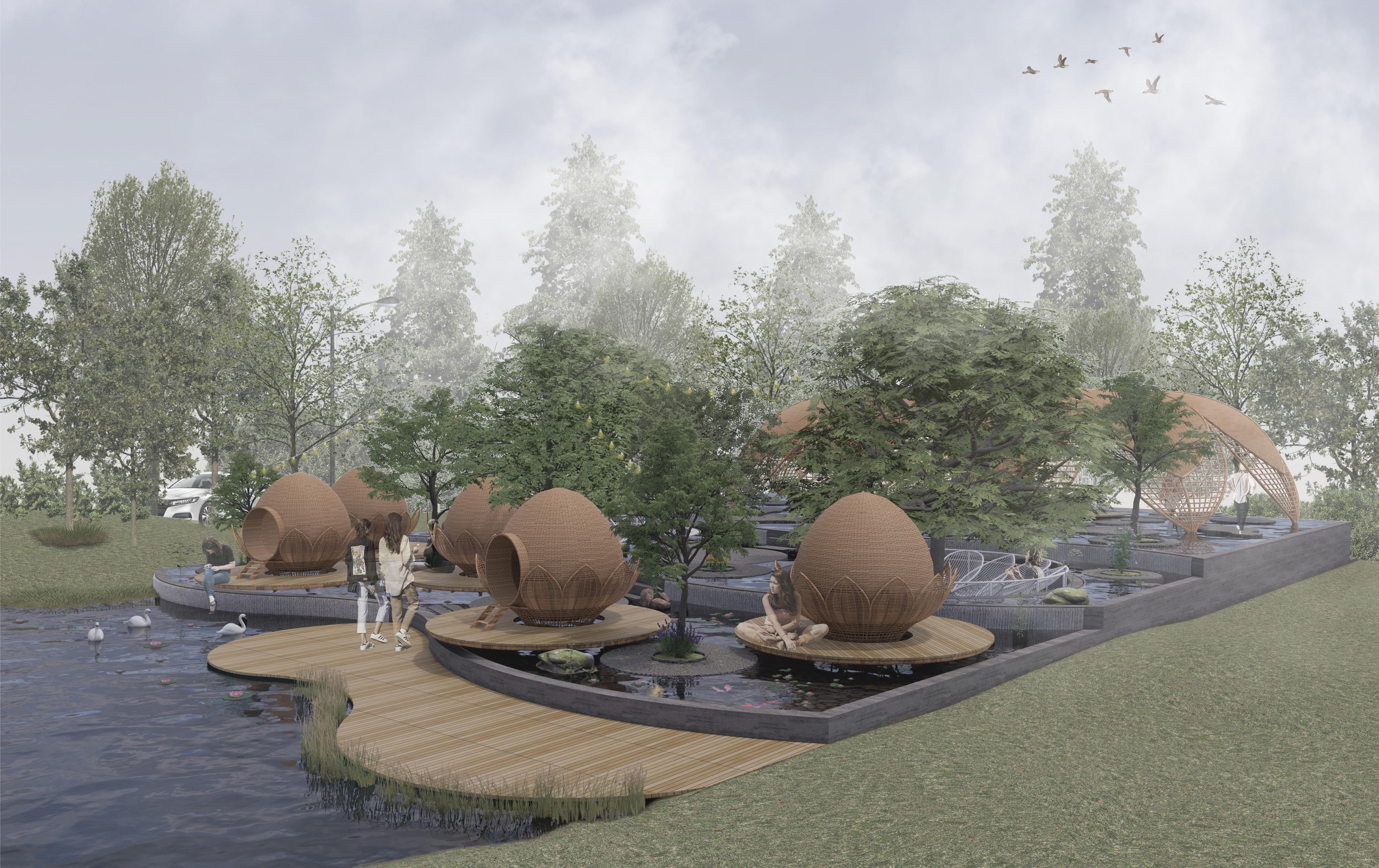
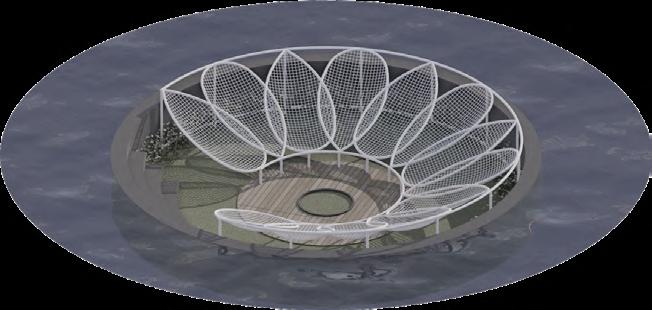
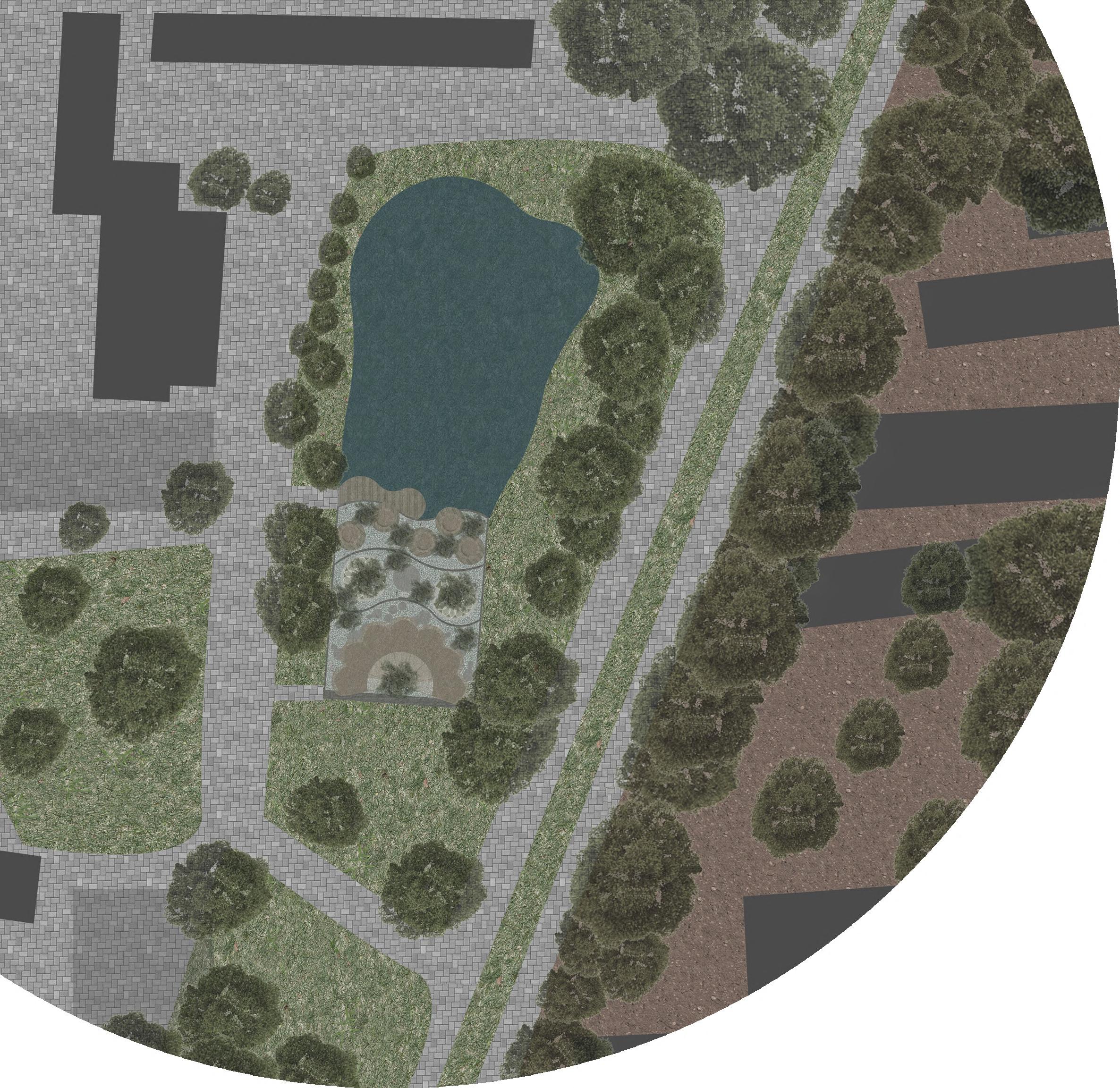
A healing landscape architecture located within the lakeside vicinity of the Student Dormitory at ITS. The design incorporates bamboo as the primary construction material, resulting in the creation of a biophilic and immersive environment, seamlessly integrated into the tranquil waterscape.
High stress and anxiety are common among engineering students. A 2018 survey found that 22.4% of them experience significant stress, 29.9% deal with high anxiety, and 29.9% face depression. Lifestyle changes, especially for international students, contribute to this. Urban life's fast pace, as noted by the Chair of the Indonesian Association of Psychiatrists (PDSKJI), can lead to anxiety. Engineering students, with their demanding workload and competitive environment, epitomize this fast-paced lifestyle. Thus, a third space incorporating healing architecture with a biophilic approach is needed. It would offer a pause in urban life, providing a place for relaxation, contemplation, socialization, and a connection with nature.
BIO PHI LIA
USER: ENGINEERING & DESIGN STUDENTS
-Spending most of the time indoors (in some majors)
-Extended computer screen time
-Lack of sleep etc.
Direct Experience of Nature
Indirect Experience of Nature
Experience of Space and Place
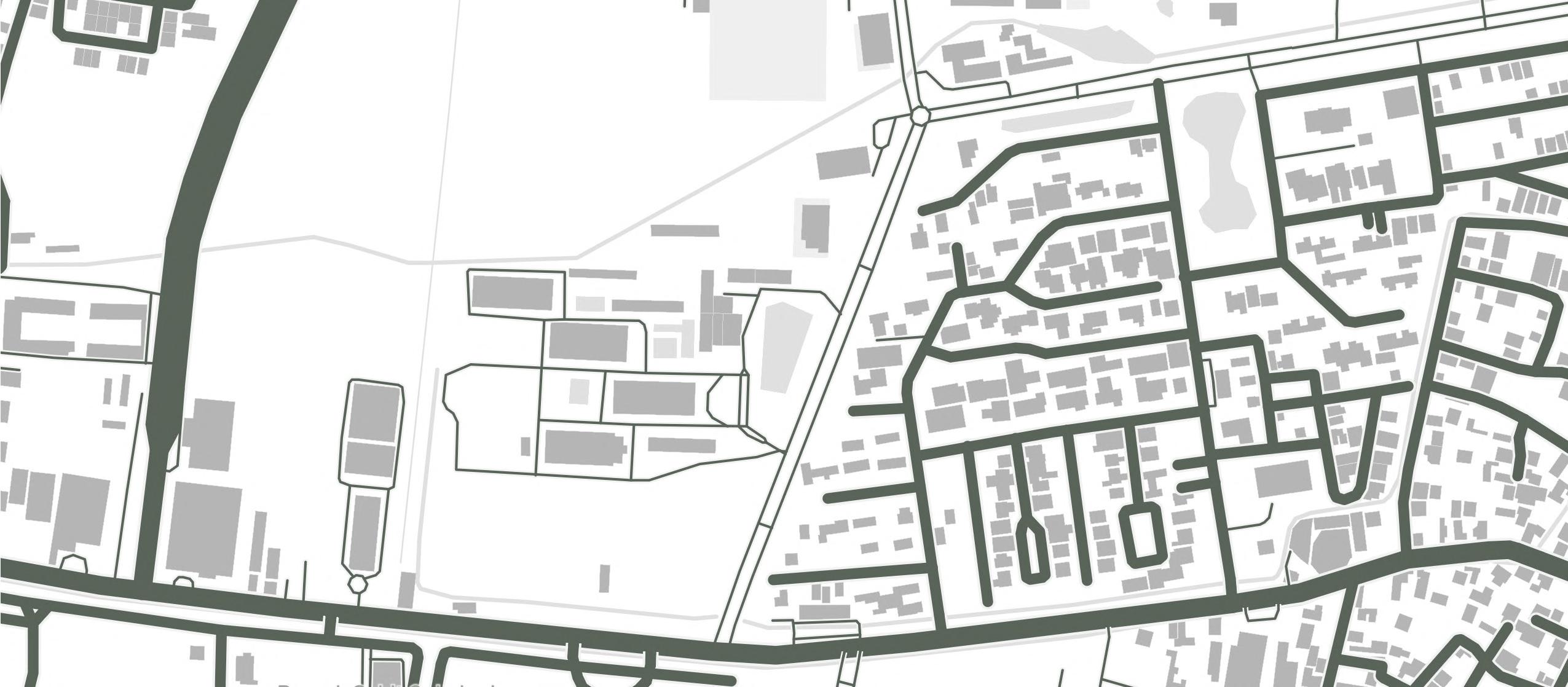
SURABAYA, JAWA TIMUR, INDONESIA

internal healing intention, personal wholeness behavioural healthy lifestyle, integrative care external healing spaces, ecological resilience interpersonal healing relationships and organisaitons For urban areas like
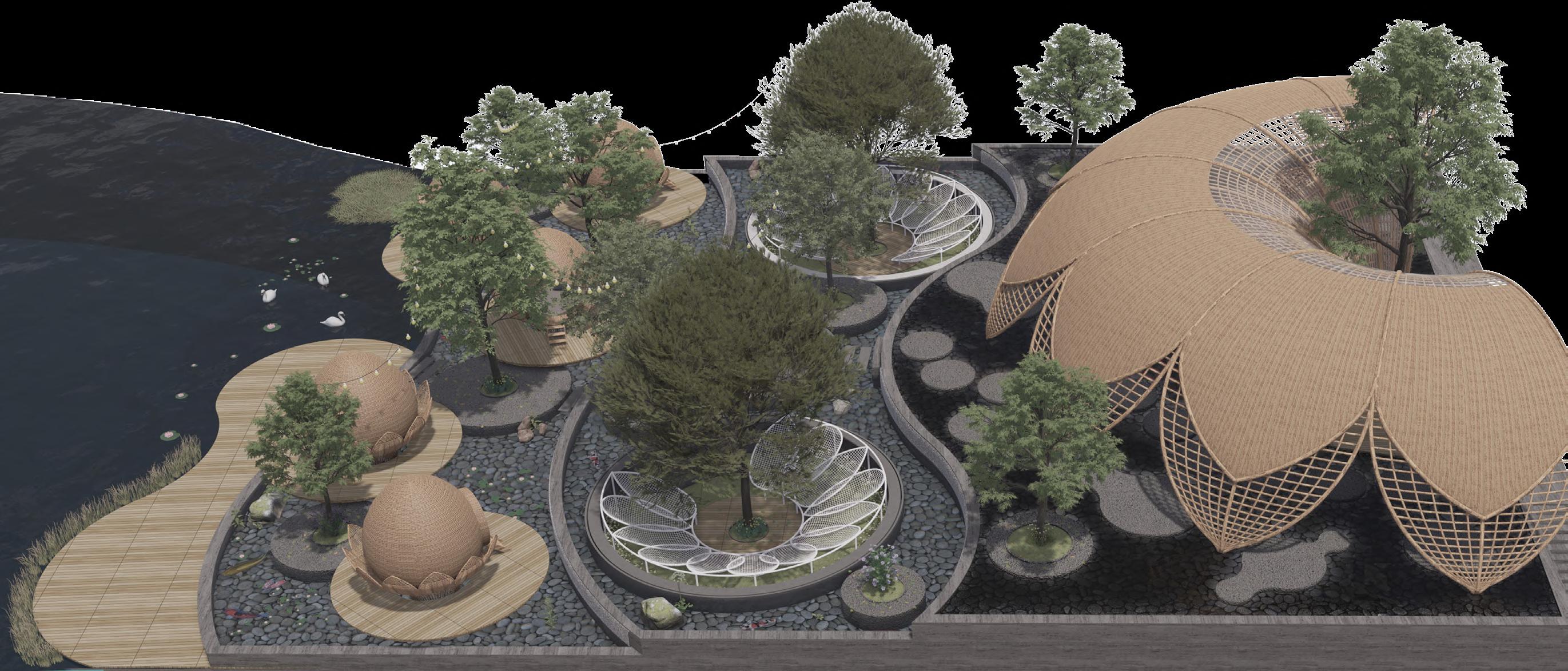
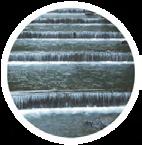
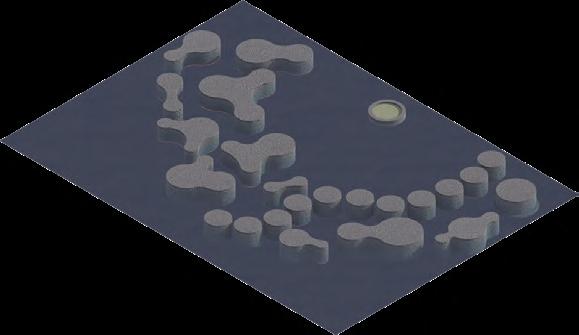
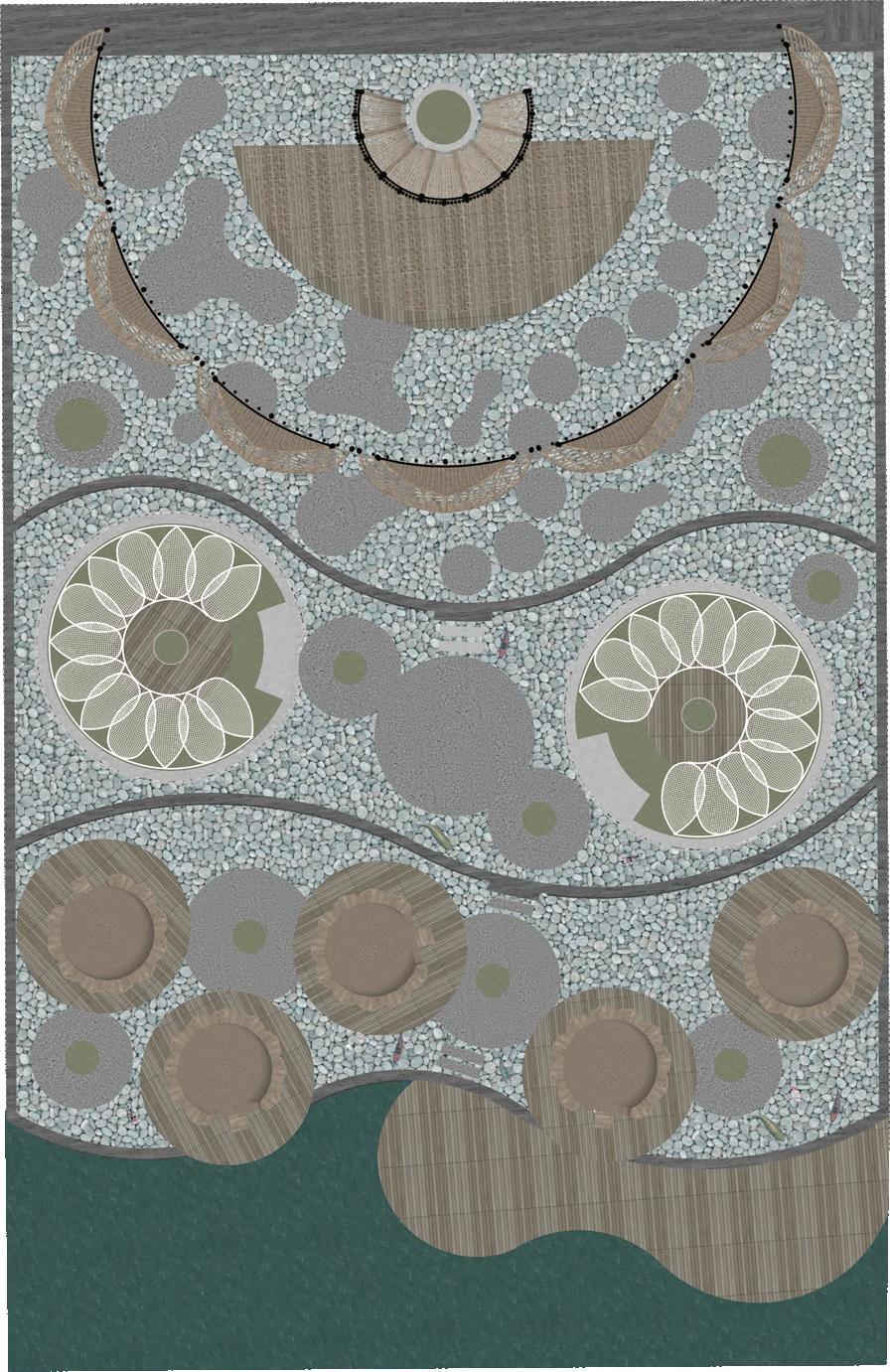
land is a highly valuable property. The demand for land continues to increase while its availability is limited. Therefore, an urban escape landscape is designed at the ITS dormitory lake by utilizing the rarely used water body for activities. Dividing circulation into zones focusing on internal, interpersonal, and behavioral aspects. The elevation of the terrain as a simulated terraced waterfall to provide an auditory experience of the sound of a fountain. Determining the elements to be placed in each zone: deck (entrance), pod (internal), conversation pit (interpersonal), and communal space (behavioral). Selecting hardscape materials, a combination of wood, plain concrete, and aggregate concrete, to create diverse experiences.
Surabaya,
Penambaha
hardscape sebagai ajalur sirkulasi dan softscape berupa pepohonan sebagai shading dan tanaman aroma terapi. ITS,
Chapter 1: Tranquillity Pod (Internal)
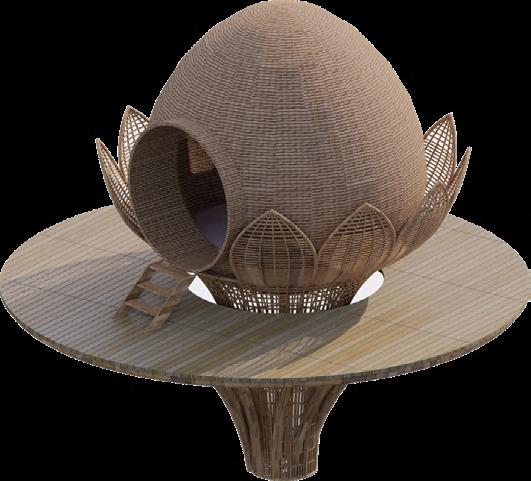
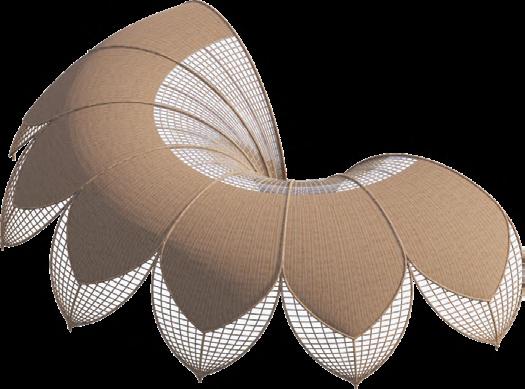
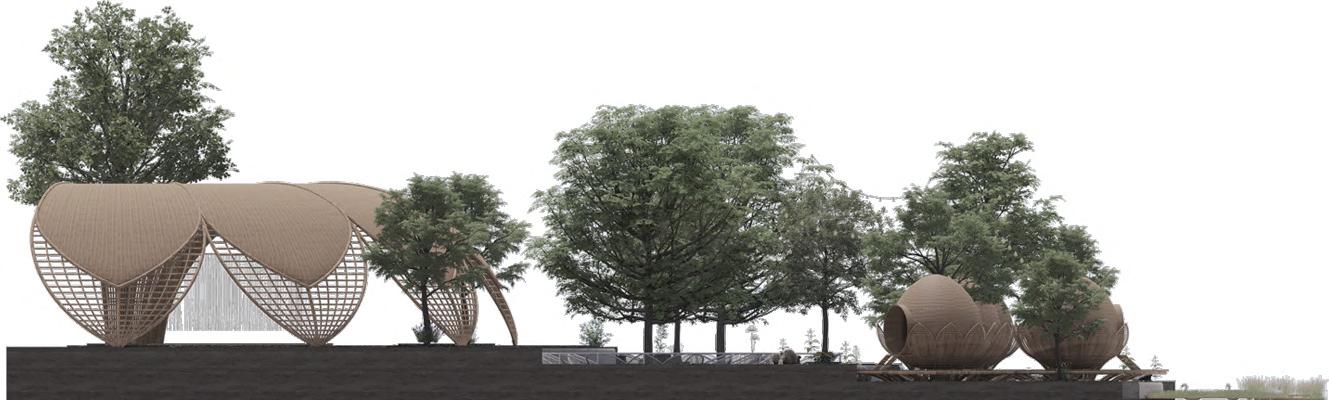
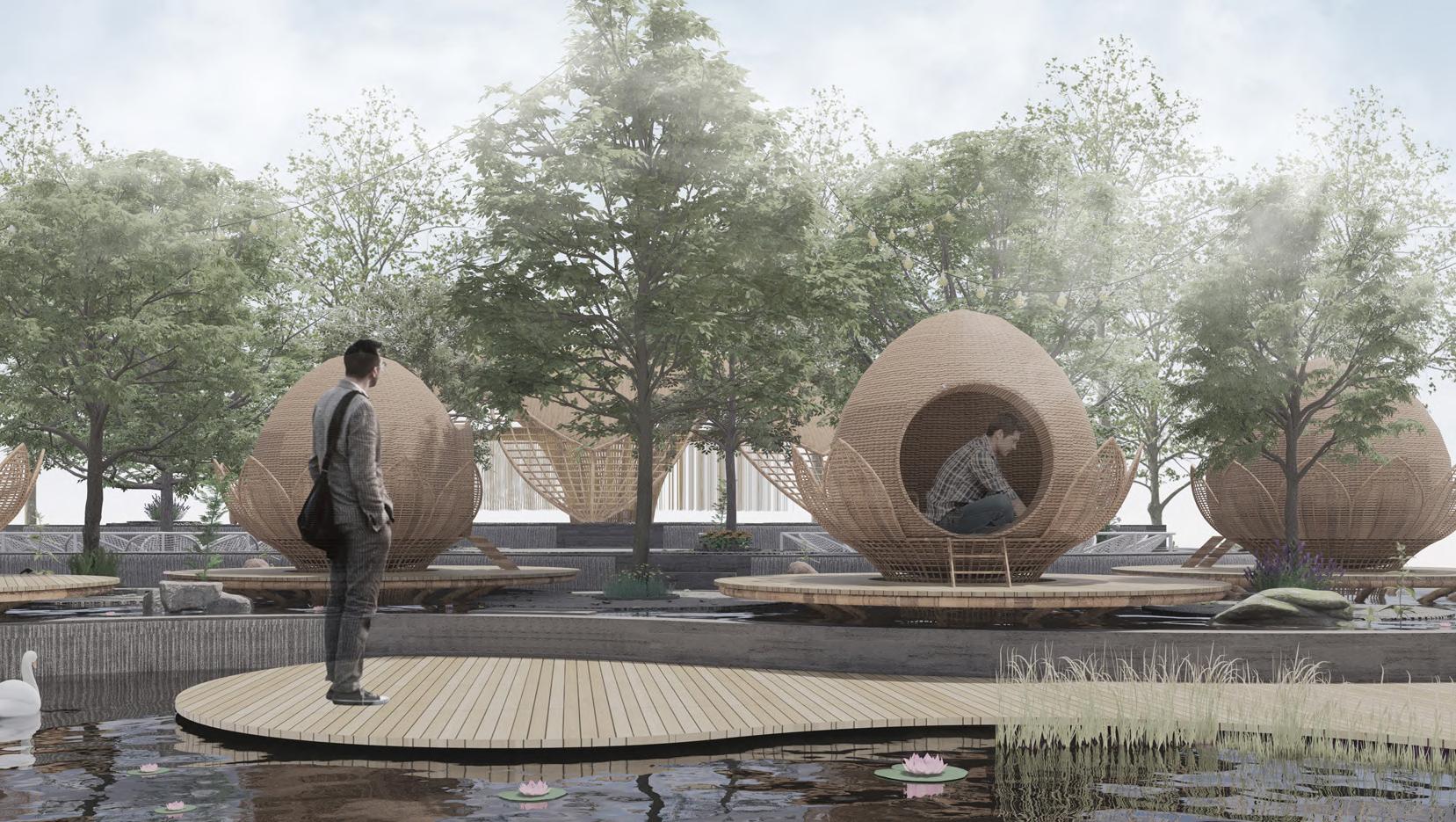
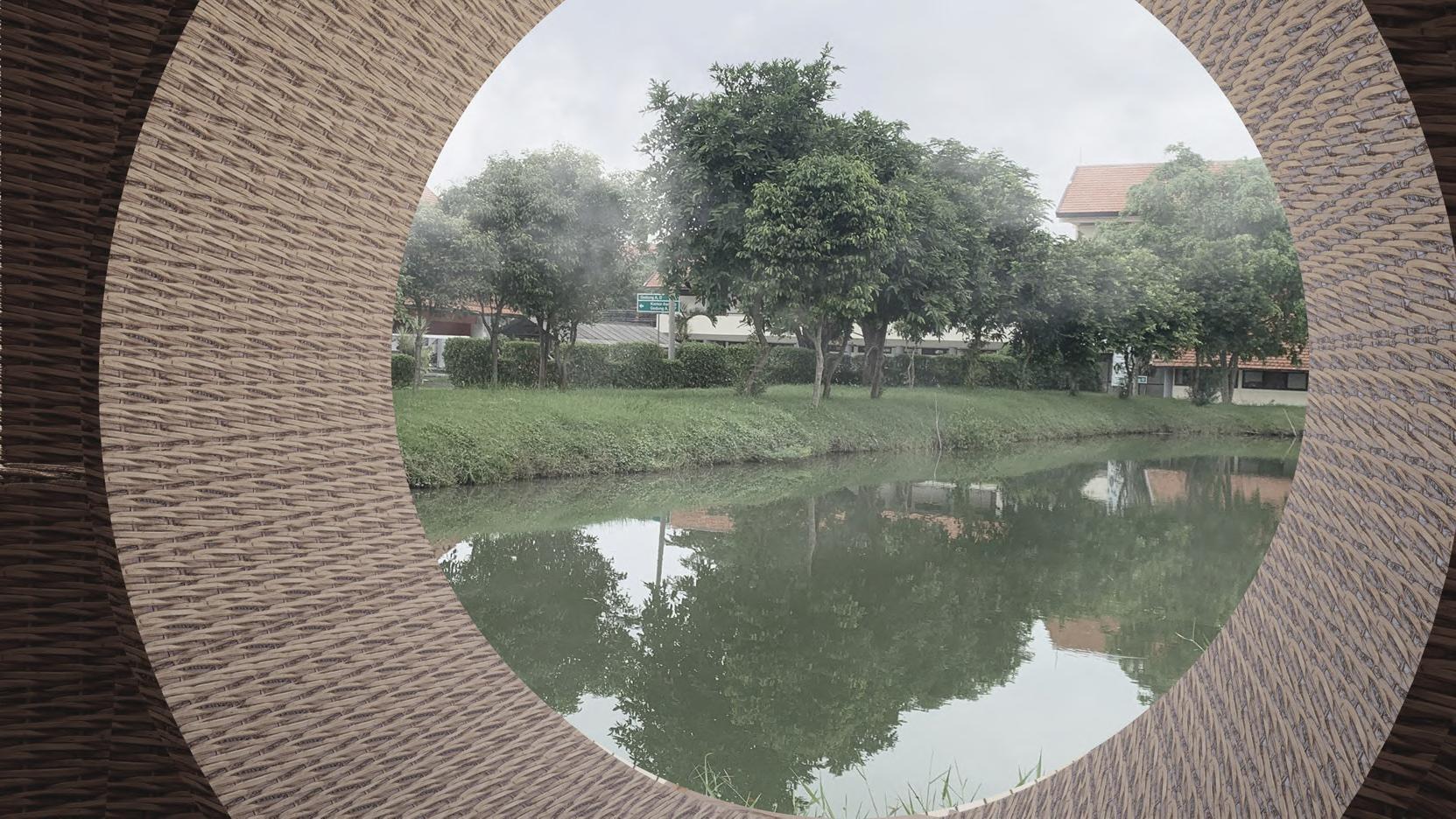
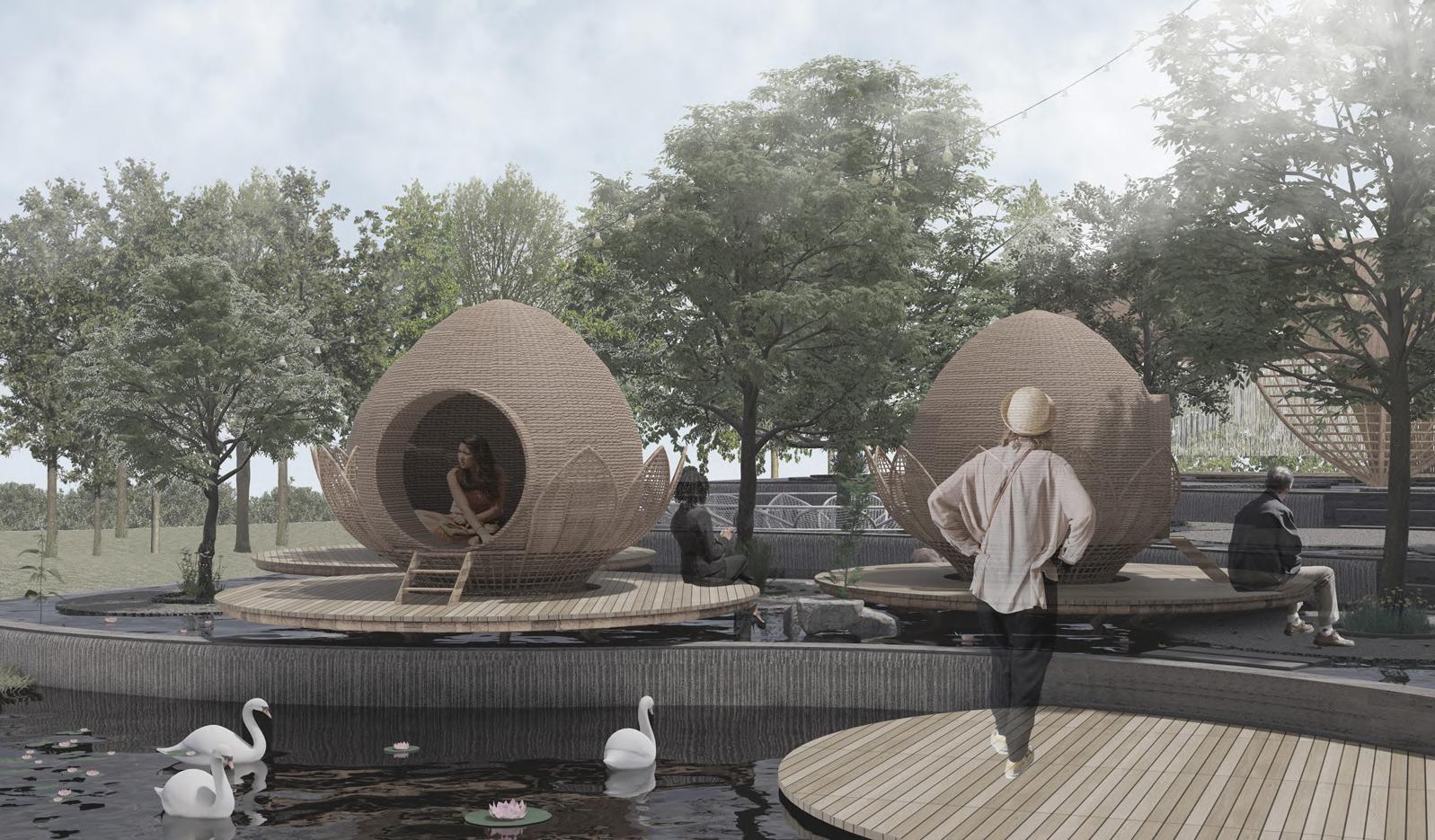
A resting place to relieve fatigue and overstimulation caused by the intense schedule of engineering students. Eliminating unnecessary stimuli and replacing them with more calming sensory stimuli. Noise is masked by the sound of flowing water and rustling leaves, with the addition of aromatherapy plants, a pod opening that allows users to view the lake scenery from their private space, and a woven bamboo enclosure that provides a tactile experience.
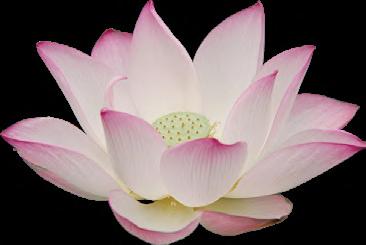
LOTUS FLOWER
Chapter 2: Blossoming Pit (Interpersonal)
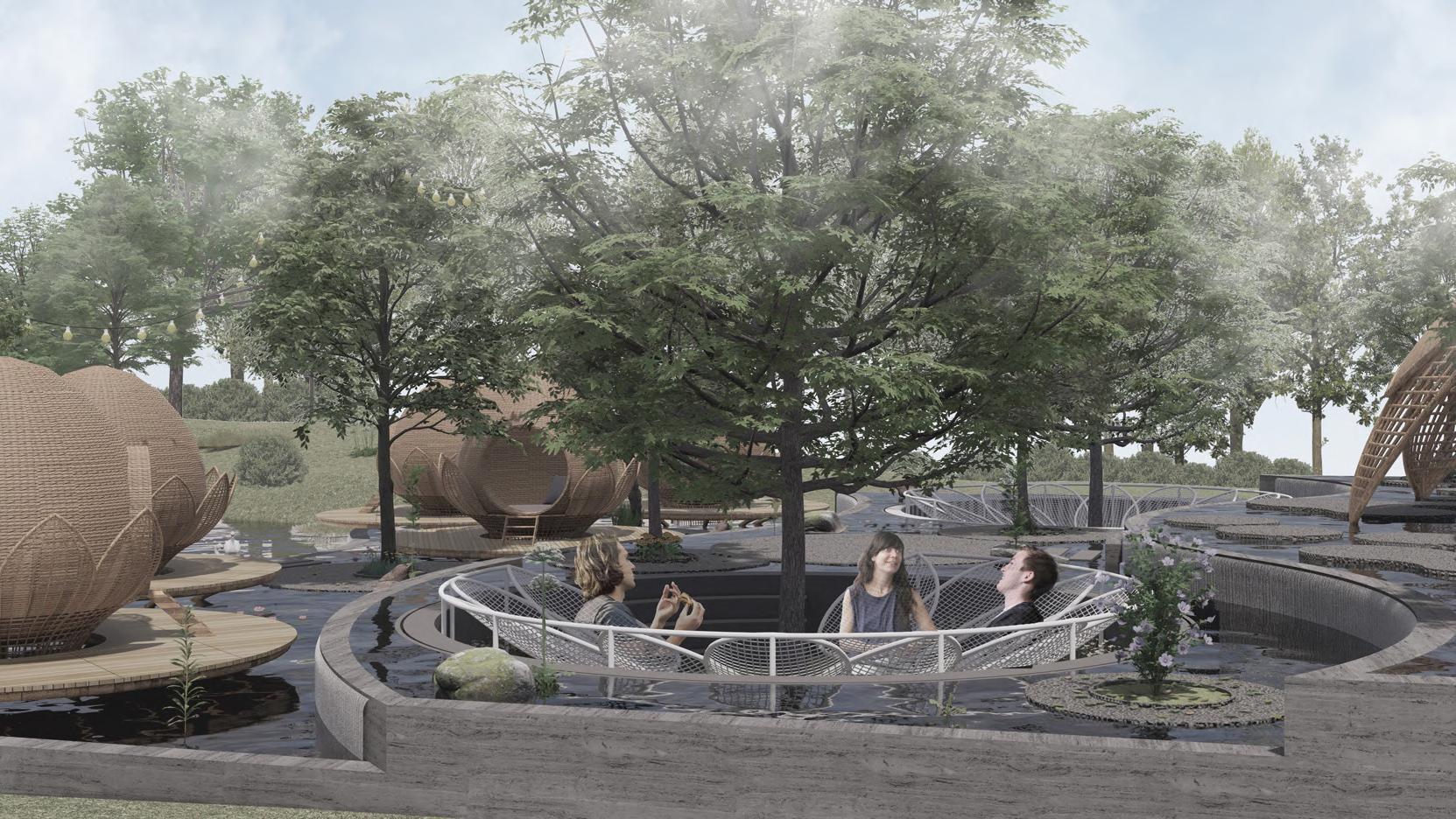
Swinging in a hammock, much like when we were babies, makes humans feel relaxed and alleviates anxiety because this motion can stimulate the vestibular system. Here, users are more connected with nature and can socialize with friends. Surrounded by concrete walls and views at the water level, it provides a unique spatial experience. Trees are planted in the middle, serving as a roof that still allows some sunlight exposure for sunbathing.
Chapter 3: In Bloom (Behavioural)
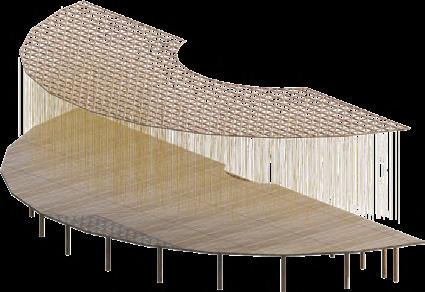
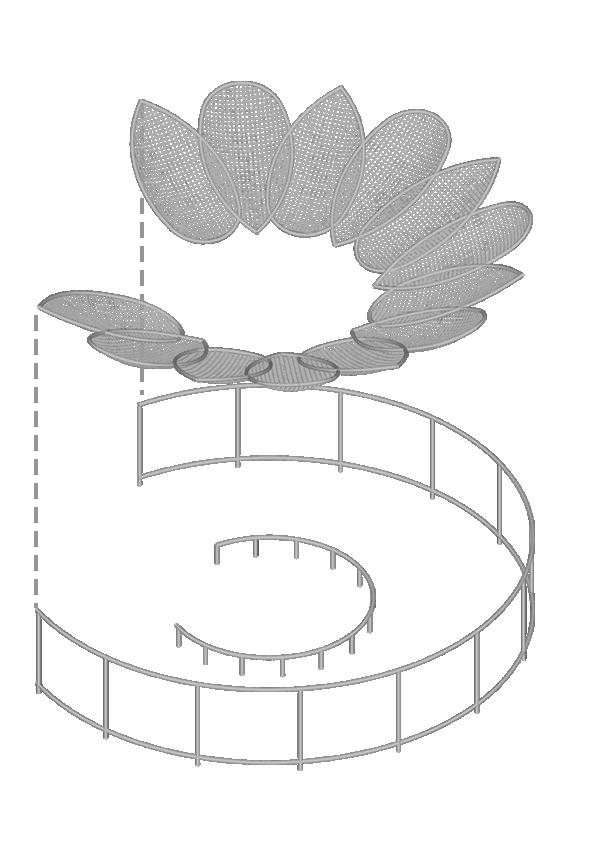
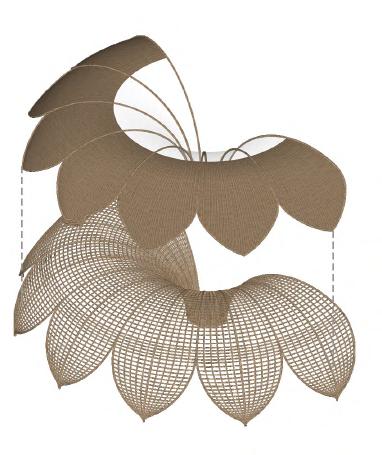
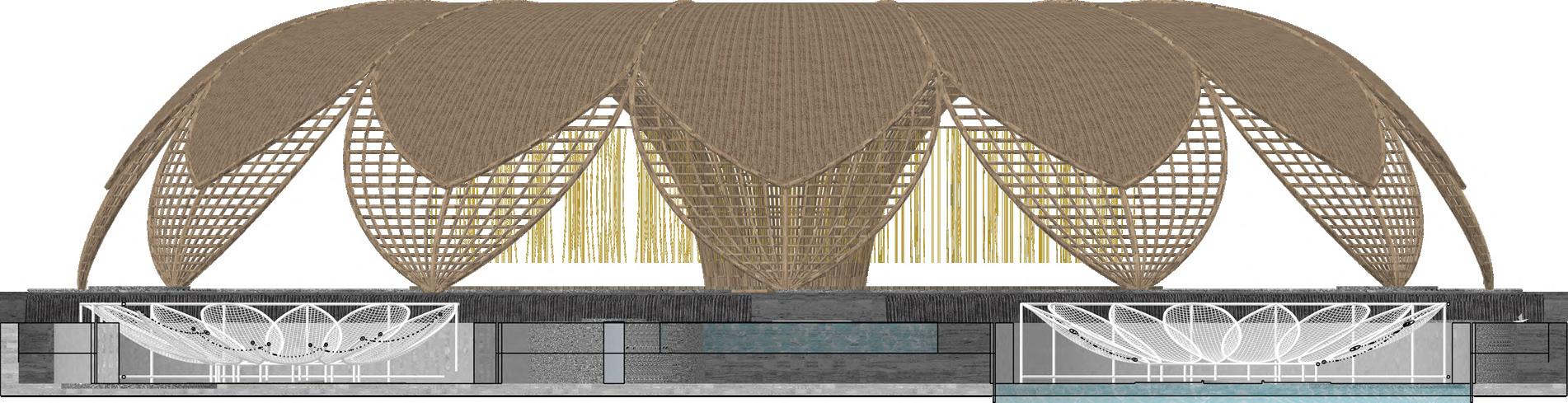
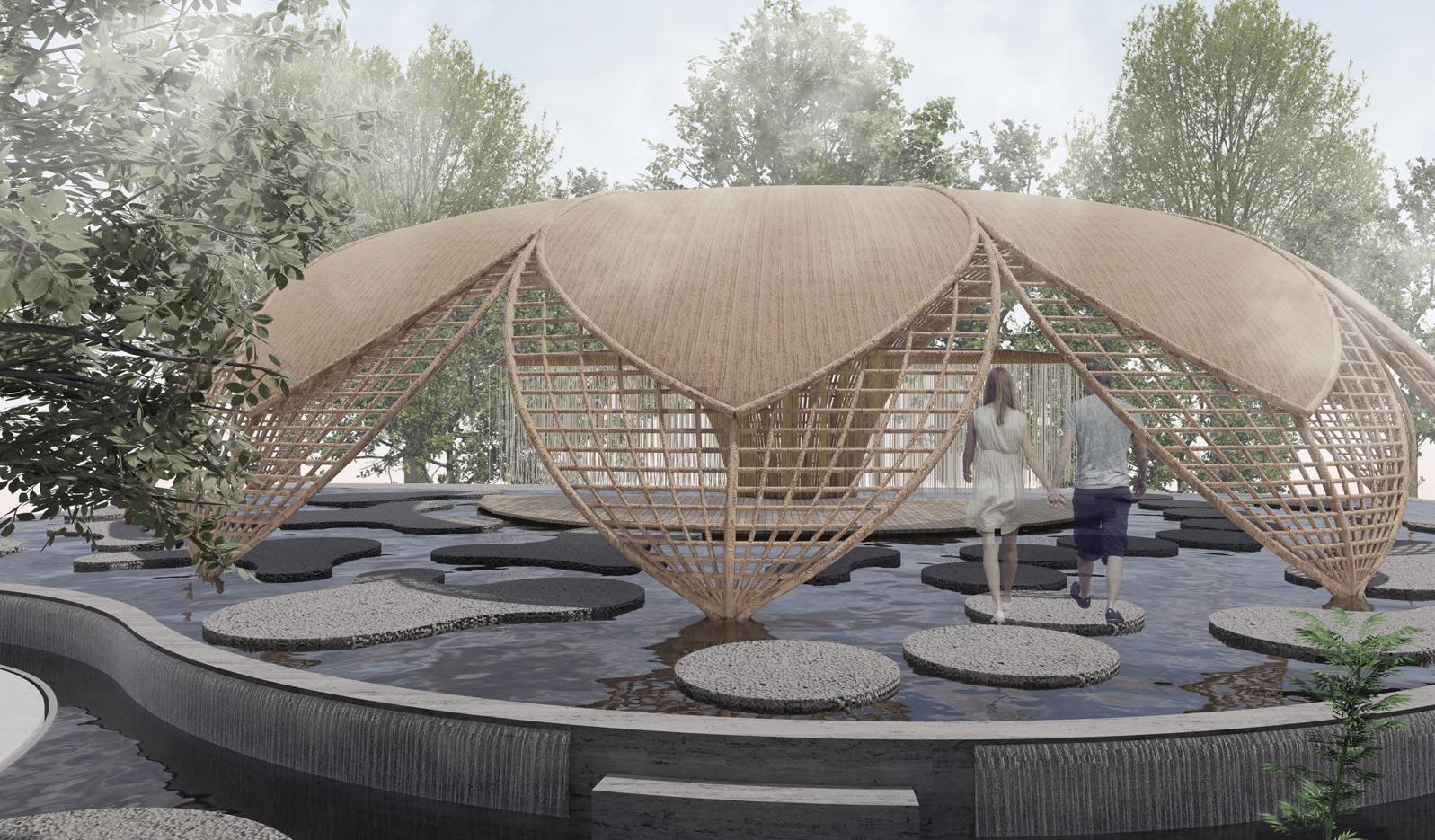
The main building features a bamboo roof-wall structure. Users can play in the water directly, and the interior is connected to nature through a skylight casting sunlight patterns. In the center, there's an art installation inspired by Jesús Rafael Soto's "Penetrable," offering a unique sensory experience. It's interactive, responding to human presence and natural elements. When not in use, the installation can be removed for other activities like yoga.
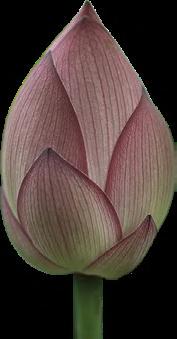
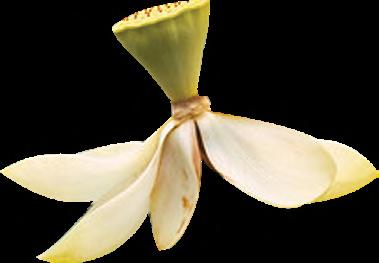
In various cultures, it symbolizes rebirth and resilience. The Lotus flower can grow and bloom amidst murky waters, much like students who must endure amidst pressure. This garden is designed to be an urban escape for students, providing a break from their fast-paced urban lives. Each phase gradually stimulates the senses in different ways. Users can start their journey from the initial phase of rest, meditation, contemplation, and self-soothing to alleviate overstimulation, symbolized by the budding Lotus. The second phase involves sunbathing and socializing with friends to gradually restore their spirits, represented by fully bloomed Lotus flowers. The final phase allows them to explore and interact with nature, rejuvenating their spirits until they are













Direct Experience of Nature: Water Indirect Experience of Nature: Natural Materials
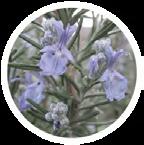
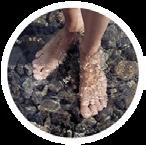
Rosemary Plain Concrete River Pebbles Aggregate Concrete Chamomile Melati Lavender Indirect Experience of Nature: Natural Geomteries Direct Experience of Nature: Animals Experience of Space and Place: Prospect and Refuge Direct Experience of Nature: Plants Indirect Experience of Nature: Naturalistic Shapes and Forms
Mawar
Tranquility Pod
Blossoming Pit
In Bloom
ITS DORMITORY POND
PARKING LOT
PARKING LOT
CAFETARIA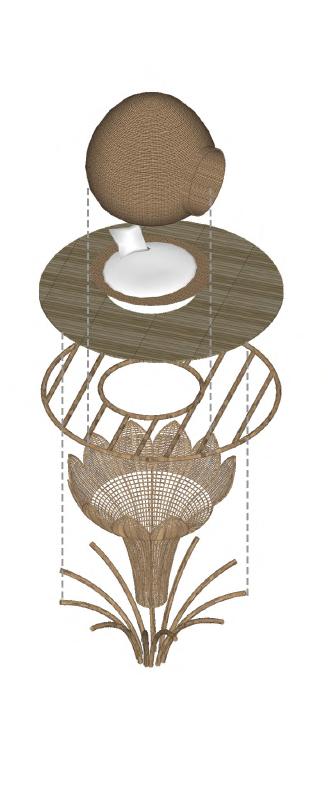
1. Entrace Deck
2. Tranquility Pod
3. Blossoming Pit 4. In Bloom
26m 15,65m 9,20m 7,75m 3,2m ±0.00 -0.50 -1.00 -1.50
Legend:
A A B B Pelupuh Roof Polycarbonate (Skylight) Petung Bamboo Bundle 10cm Petung Bamboo Bundle 2 10cm Petung Bamboo Bundle 2 10cm Steel Frame Net Petung Bamboo 10 cm Petung Bamboo 8 cm Petung Bamboo 14-15 cm Wooden Deck Bamboo Weaving
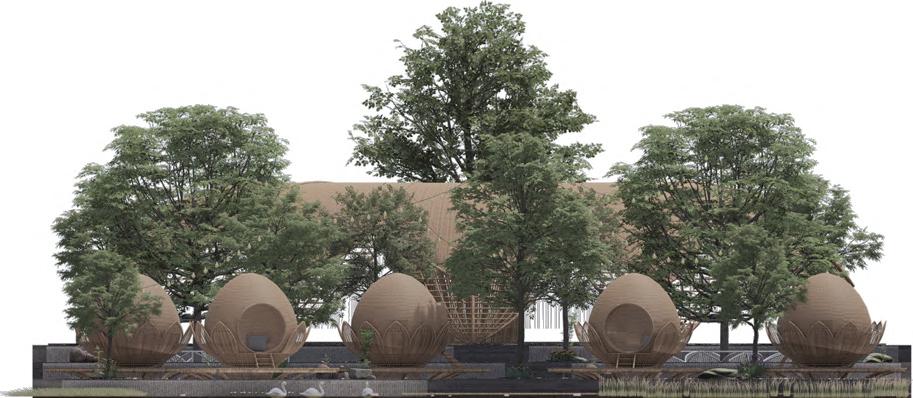
FRONT ELEVATION
SIDE ELEVATION
SECTION A-A

ENTRANCE
VIEW FROM TRANQUILITY POD
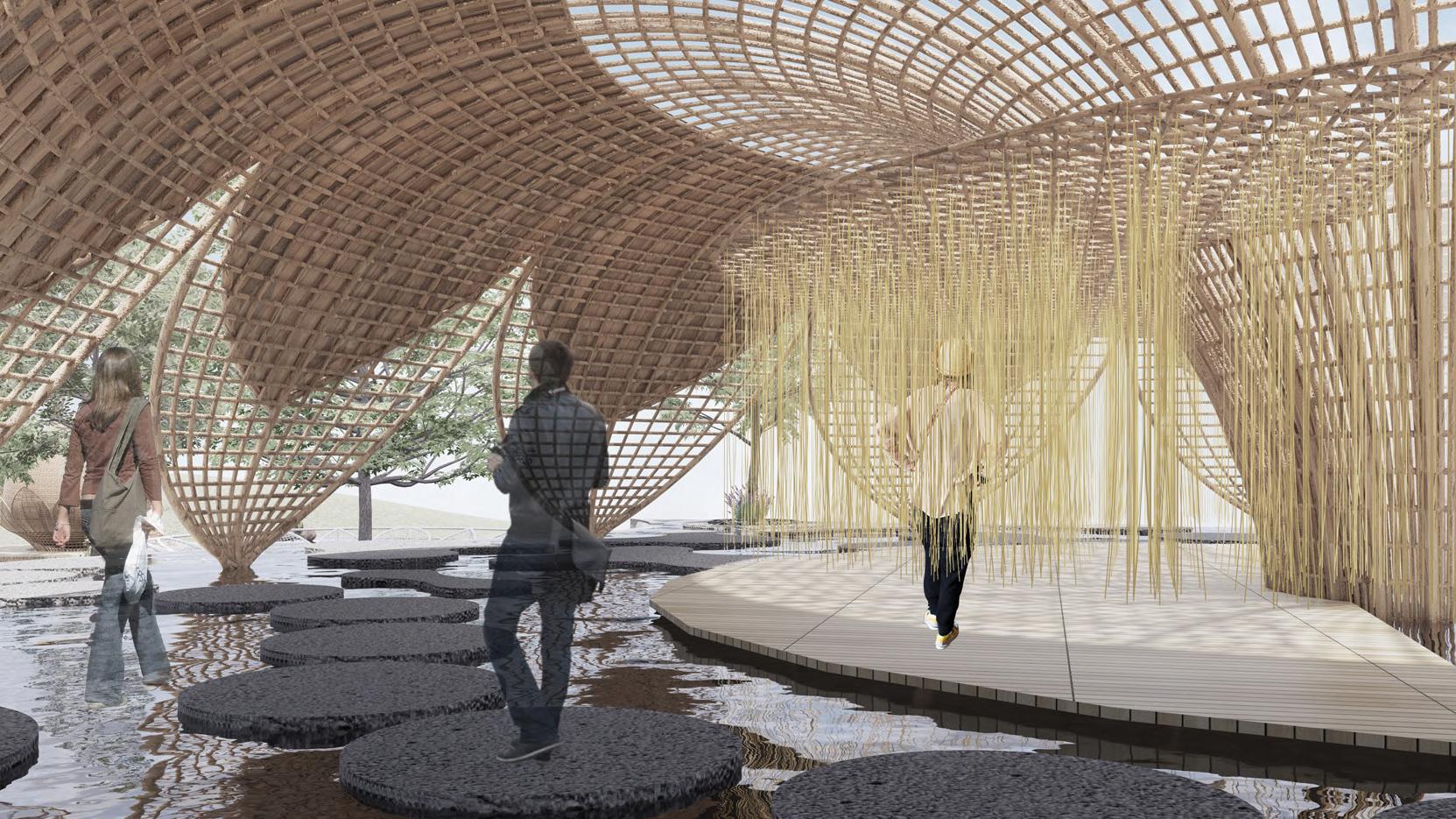
BLOSSOMING PIT IN BLOOM (INTERIOR)
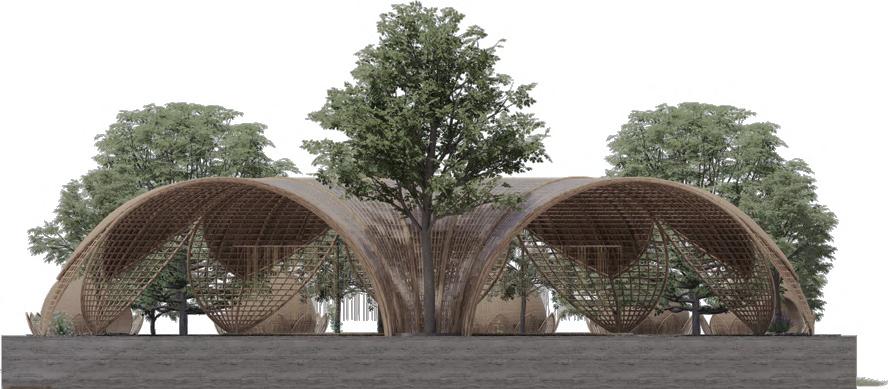
REAR ELEVATION
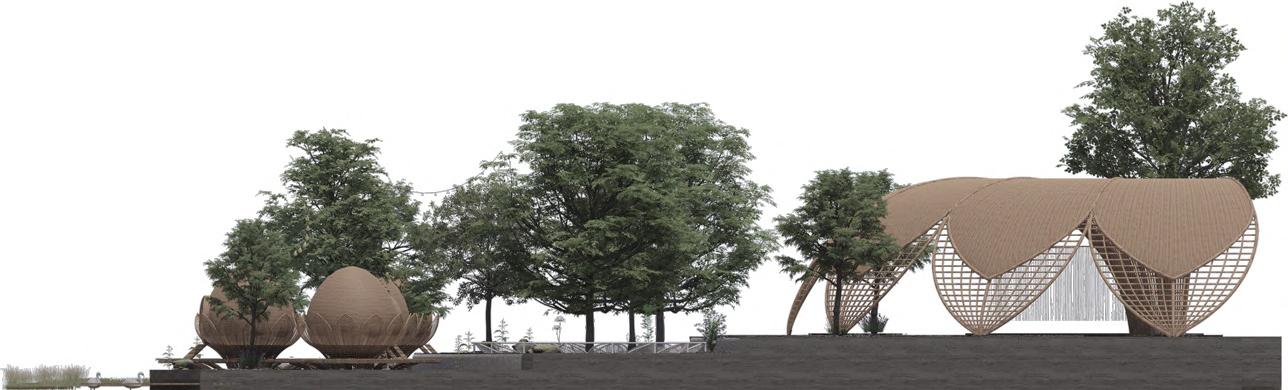
SIDE ELEVATION
SECTION B-B
POD
TRANQUILITY POD
IN BLOOM (EXTERIOR)
CARPE DIEM
1ST RUNNER-UP SKALARS| INDIVIDUAL PROJECT | 2023
02
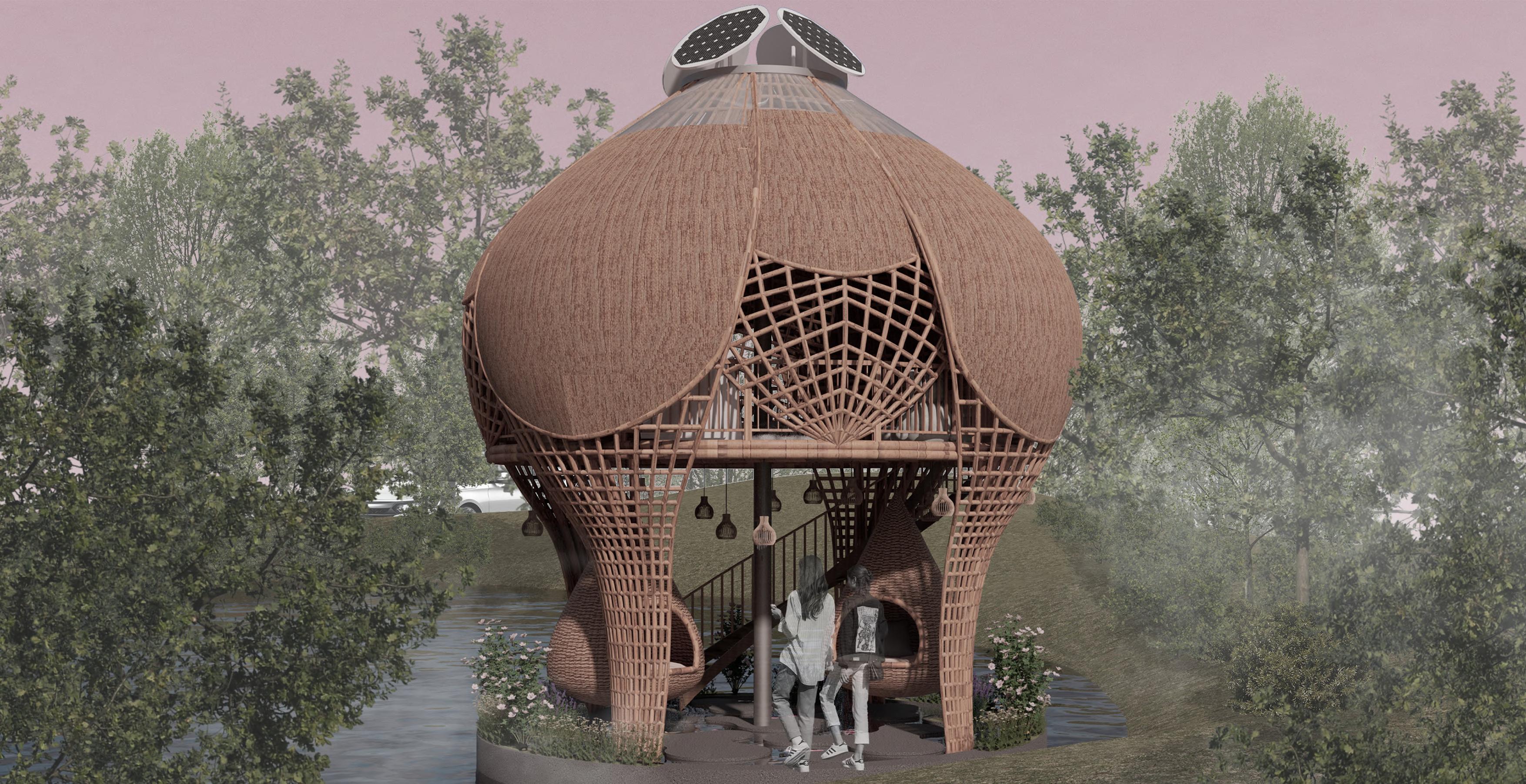
When envisioning a "healing pod," it is crucial to think beyond superficial ideas like "relaxation" or "meditation." Such approaches fail to delve into the deeper complexities of the healing process. Rather than merely providing an escape, this Healing pod becomes a dynamic arena for active self-discovery and personal growth.
High stress and anxiety are common among engineering students. A 2018 survey found that 22.4% of them experience significant stress, 29.9% deal with high anxiety, and 29.9% face depression. Lifestyle changes, especially for international students, contribute to this. Urban life's fast pace, as noted by the Chair of the Indonesian Association of Psychiatrists (PDSKJI), can lead to anxiety. Engineering students, with their demanding workload and competitive environment, epitomize this fast-paced lifestyle. Thus, a third space incorporating healing architecture with a biophilic approach is needed. It would offer a pause in urban life, providing a place for relaxation, contemplation, socialization, and a connection with nature




GESTALT THERAPY
Holistic View of the Person
DORMITORY LAKE
Awareness of Phenomena
Creative Adjustment


Personal Responsibility
I want to break free Pressure pushing down on me, pressing down on you, no man ask for... LESS AWARENESS FULL AWARENESS
Menuju
Healing
Come as you are Survei
,2018) menunjukkan bahwa 22.4%
teknik mengalami m oderate
29.9% mengalami moderate to severe
,
29.9% mengalami
Slow down, everyone, you're moving too fast! Frames can't catch you when you're moving like that
Lingkungan kota menuntut orang-orang untuk mengikuti kehidupan fast-paced dimana hidup dijalani serba cepat. Hal ini dapat berujung pada kecemasan, membuat mereka merasa tidak memiliki kontrol akan hidup mereka.
sisi lain dari kontinum, individu memiliki pemahaman yang mendalam tentang diri mereka.
pod dirancangn dengan penekanan mendasar pada present dan awareness menghargai momen saat ini.
(KJ Cross
mahasiswa
to severe stress
anxiety
dan
moderate to severe depression
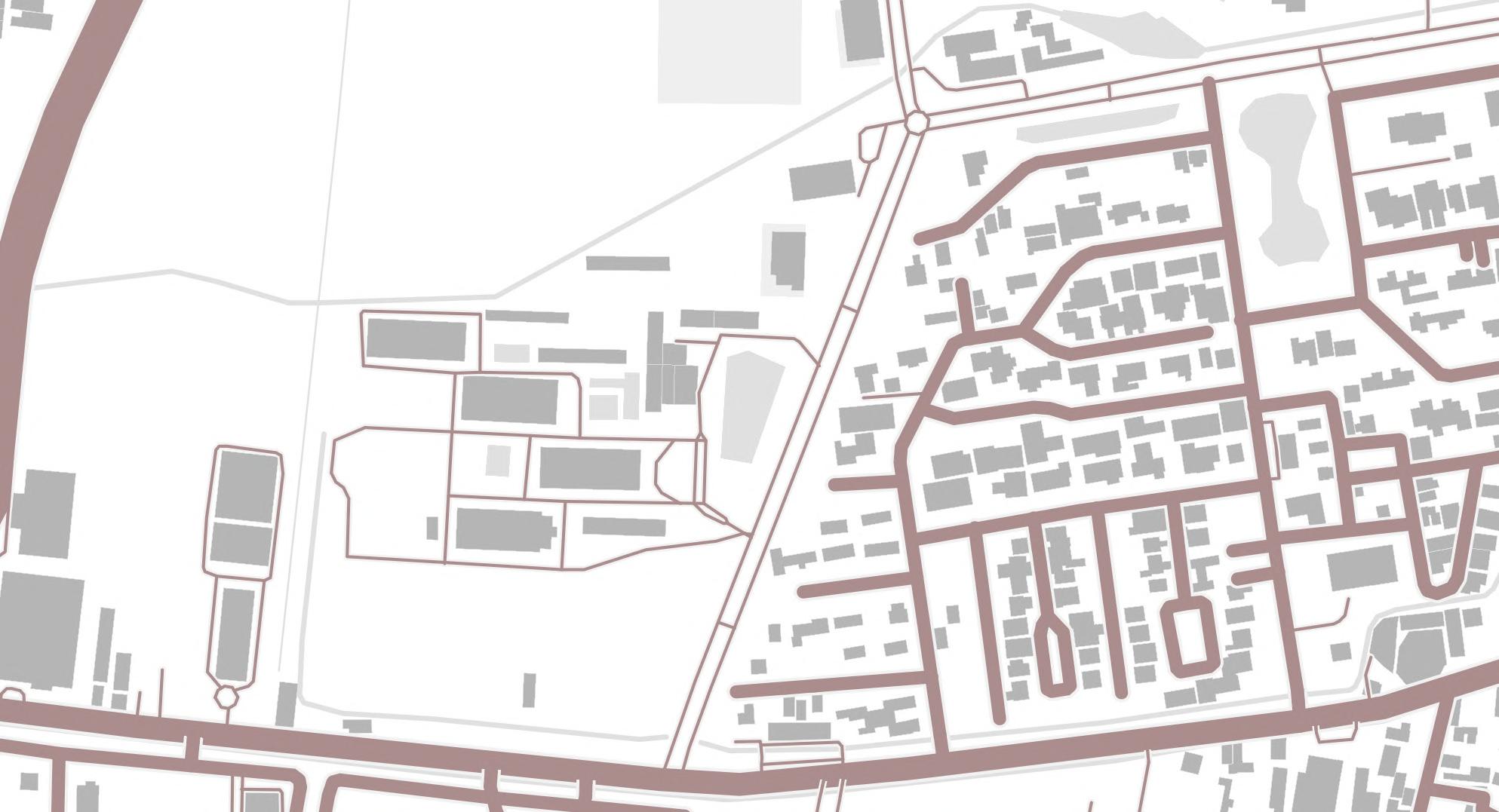
For urban areas like Surabaya, land is a highly valuable property. The demand for land continues to increase while its availability is limited. Therefore, an urban escape landscape is designed at the ITS dormitory lake by utilizing the rarely used water body for activities.
ITS, SURABAYA, JAWA TIMUR, INDONESIA
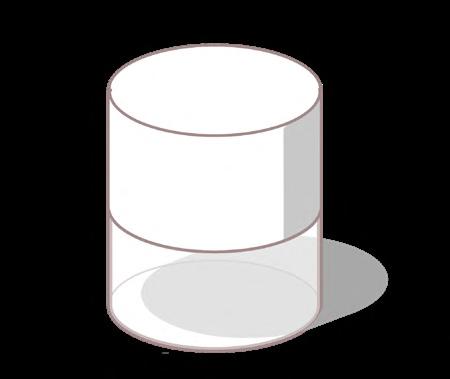
Division of open and enclosed space. The open space serves as a buffer before users can access the pod, while the enclosed space is positioned above to enhance privacy and provide a barrier.
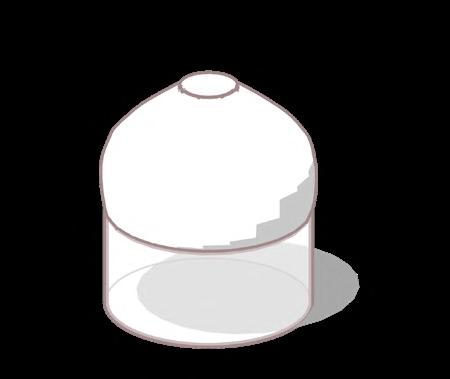
Carving dome-like shape. Curved lines can contribute to a calming and harmonious ambiance, conducive environment for the active healing process.

The silhouette draws inspiration from the form of the princess earring restaurant design, as explored by Thilina Liyanage, and reinterpreted to create a healing pod experience.
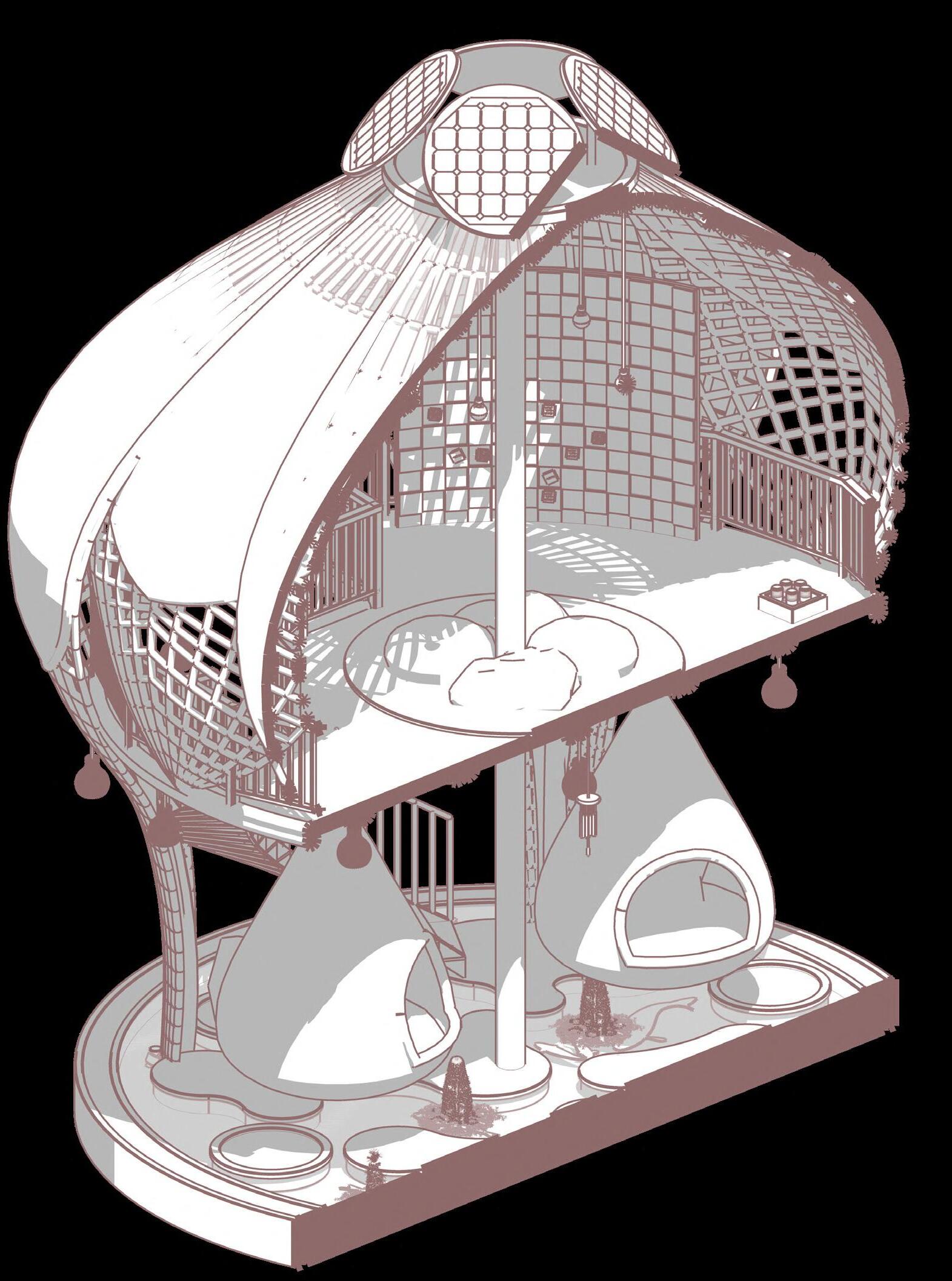
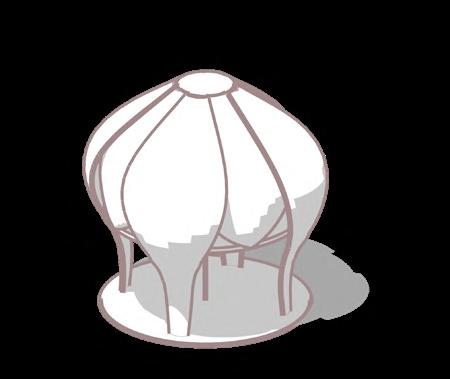
Stretching the petal-shaped frame to form columns for structural support. The other four frames will remain short as an envelope.
Sensory exploration Narrative Wall Reenactment Art Therapy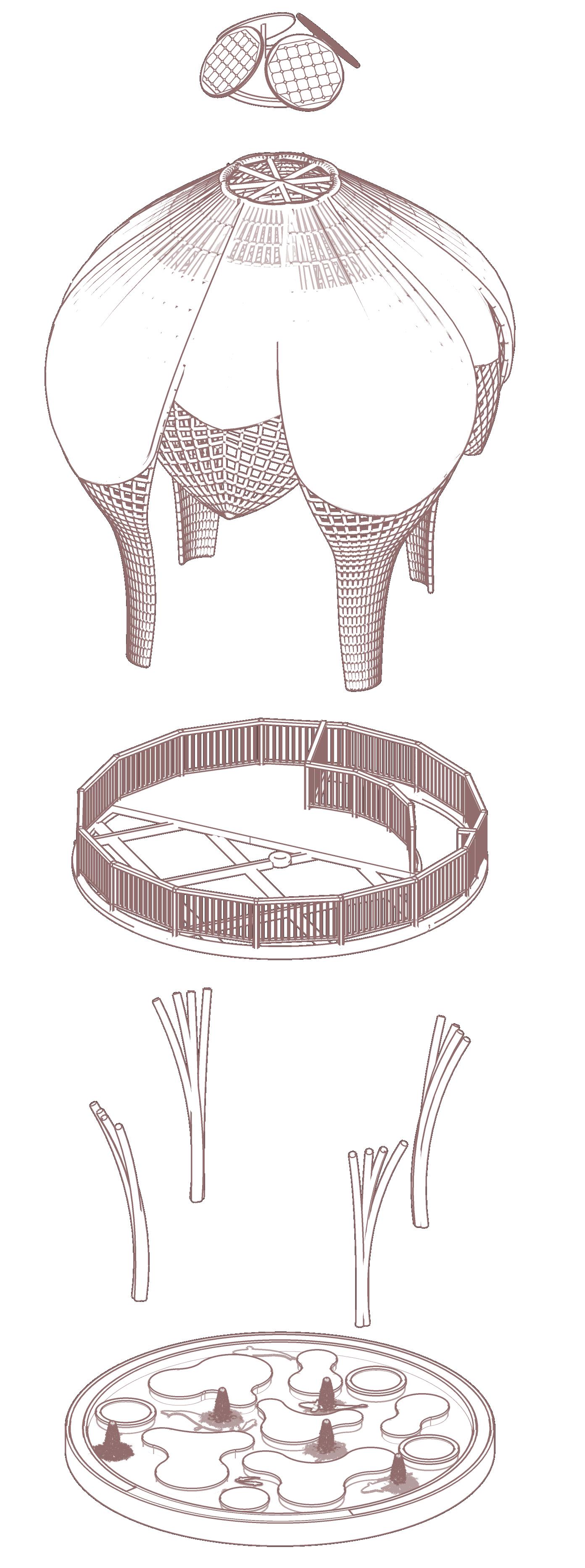
photovoltaics
bamboo petung O 14-15cm
flattened bamboo shingles
double split gridshells
wooden railing 80cm
wooden floor slabs
bamboo petung O 14-15cm
4 bundle bamboo petung O 14-1cm
concrete pedestal foundation
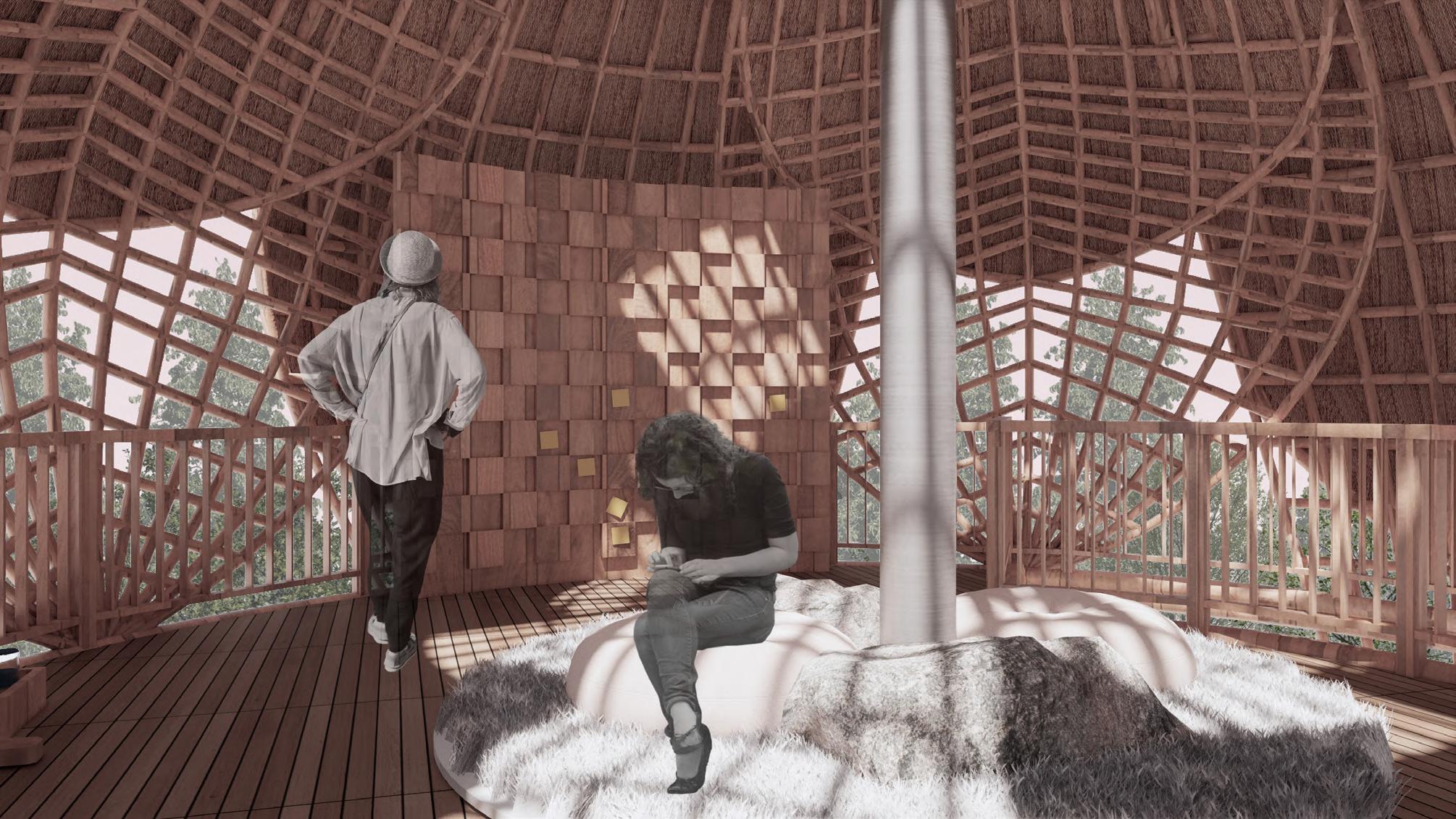
Narrative wall. A place where visitors can fill the wall with their narratives. This is part of Gestalt therapy where we minimize the "blaming others" mentality so that we have control over our lives. Here, visitors can pour out various narratives that are the source of their problems and organize them, both conscious (protruding wall) and subconscious (recessed wall).
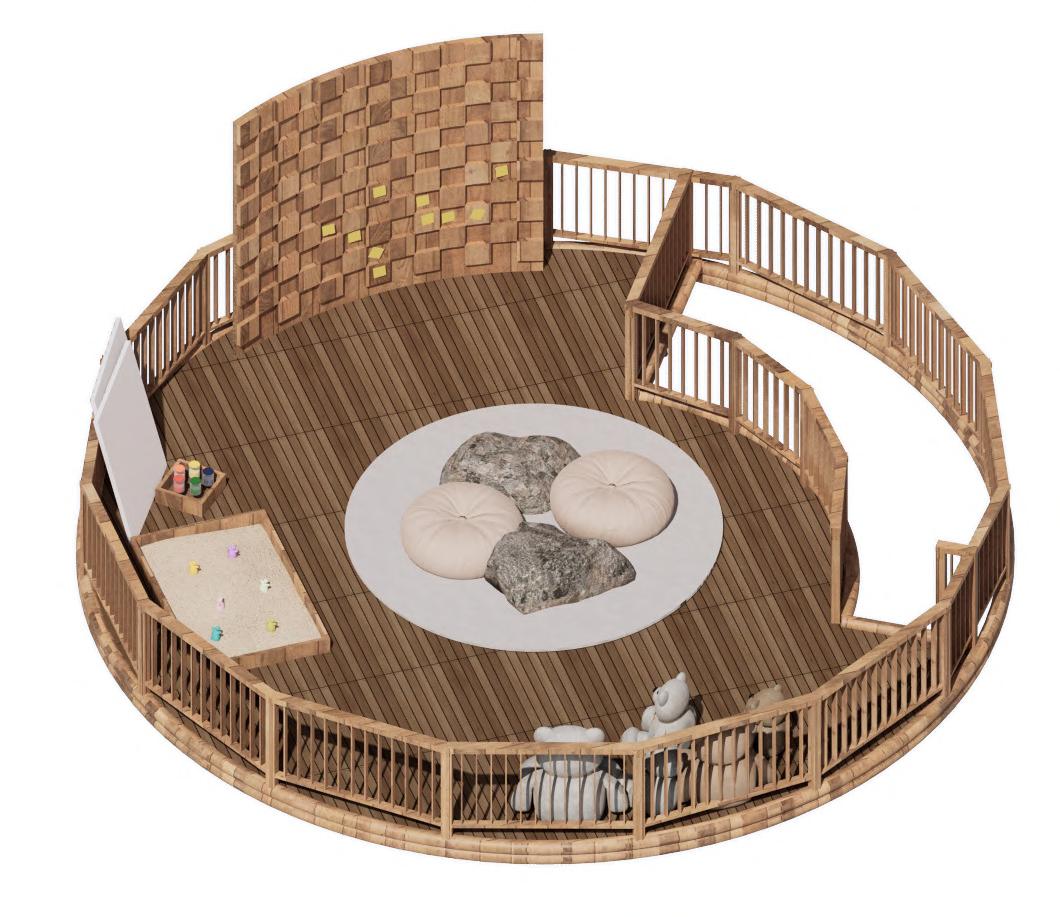
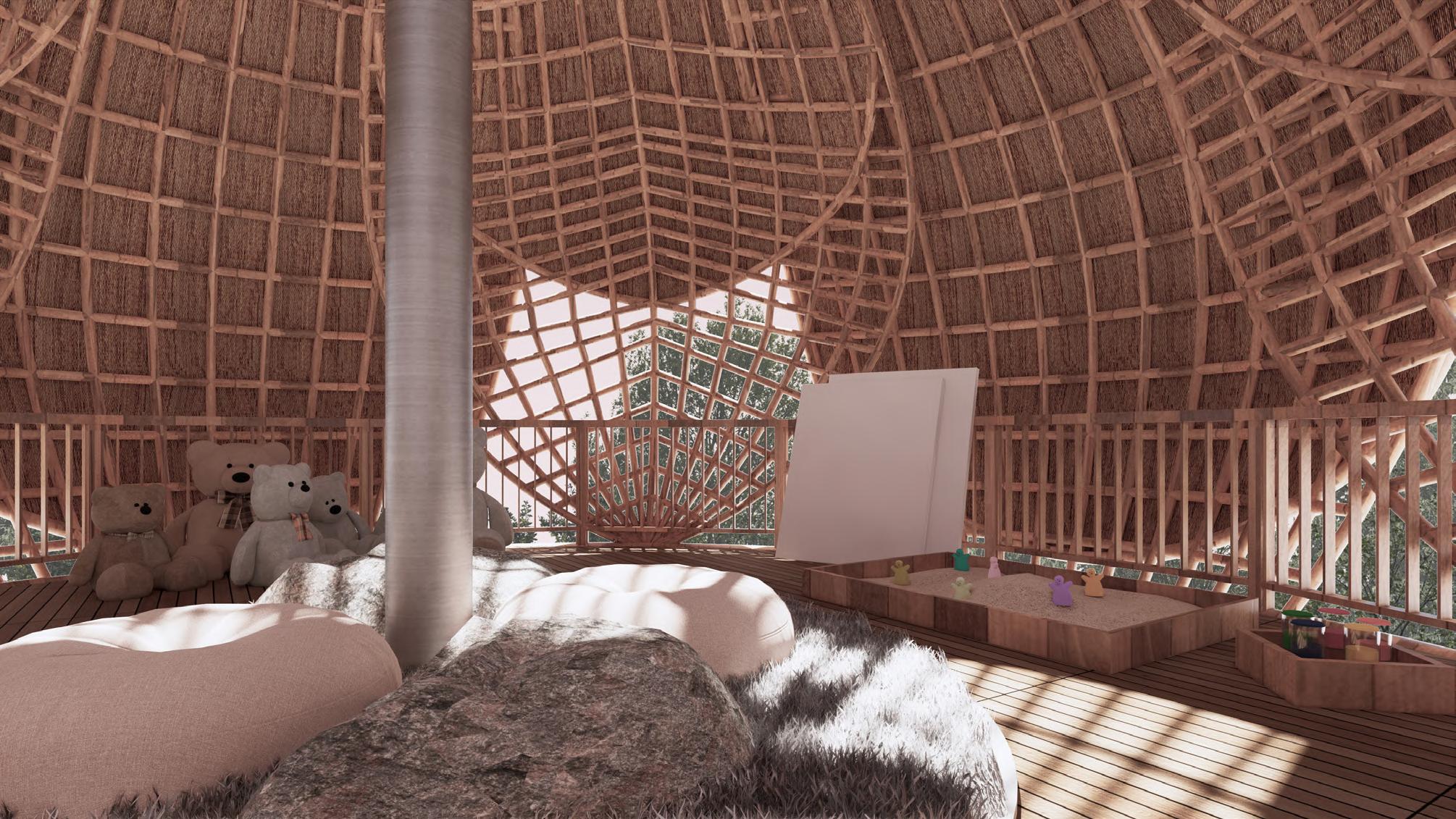
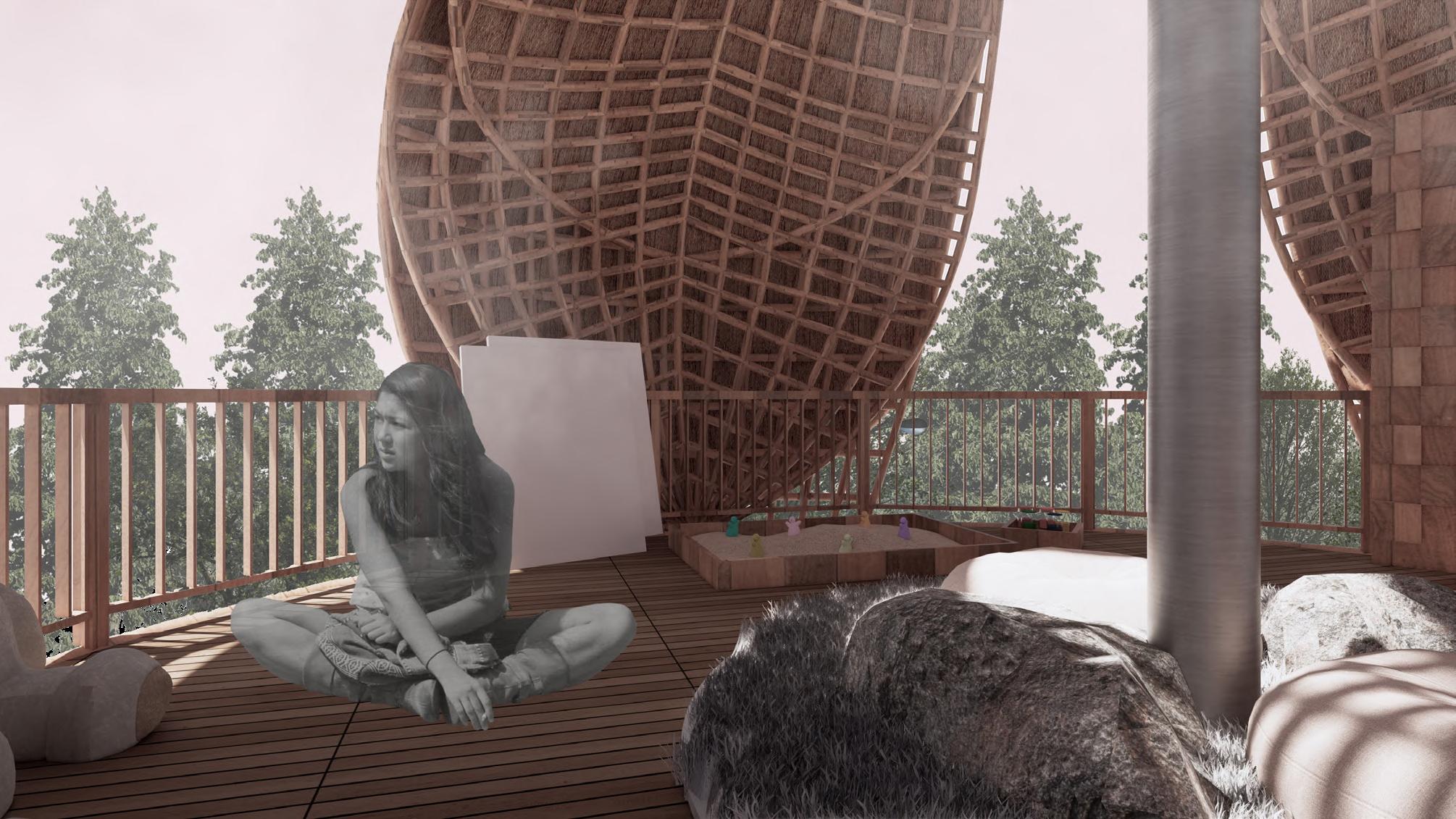
Art therapy. Sand painting is another form of narrative creation that places oneself among the people around. Easily shaped pawns and sand represent oneself and loved ones. Painting is also able to be a narrative medium that expresses the heart of visitors.
Reenactment . One example of Gestalt therapy technique is dream reenactment, role-playing as someone else, and pretending to converse with others. This can help visitors gain perspective. Dolls can be a medium for this.
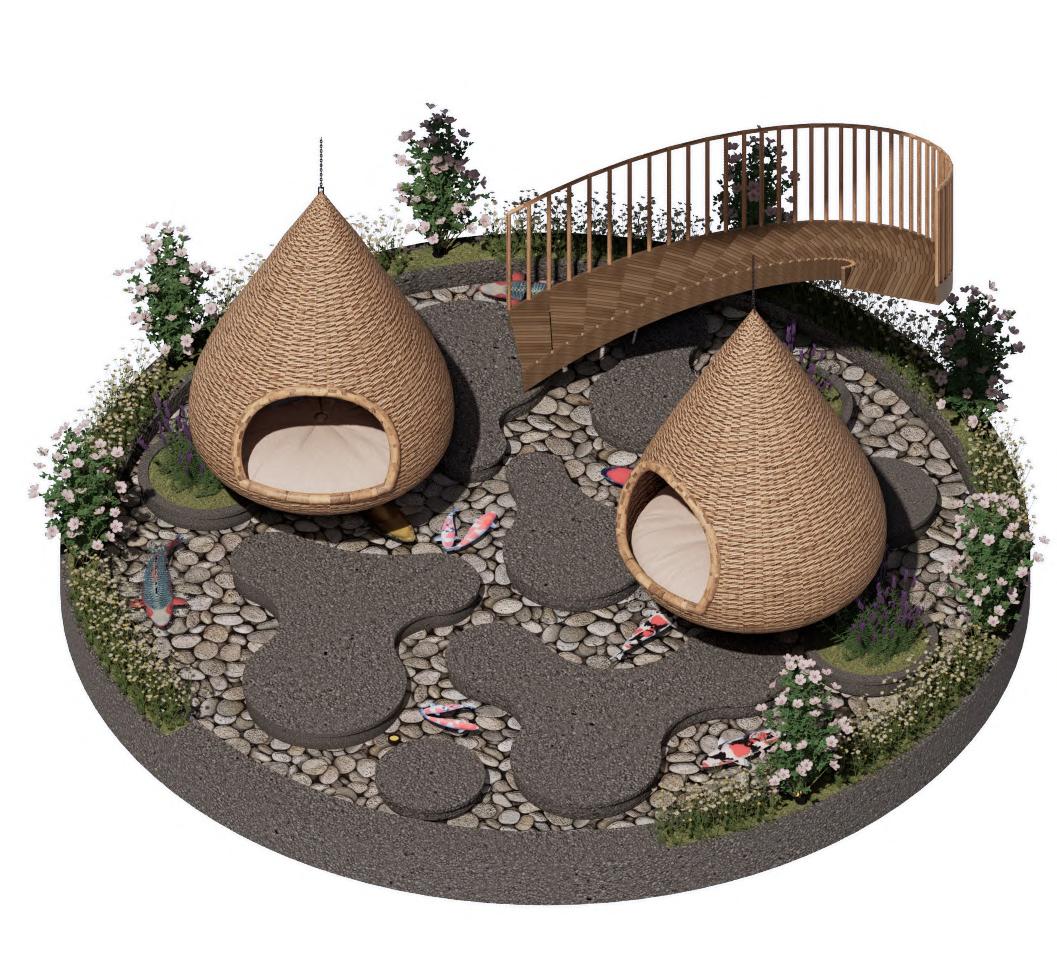
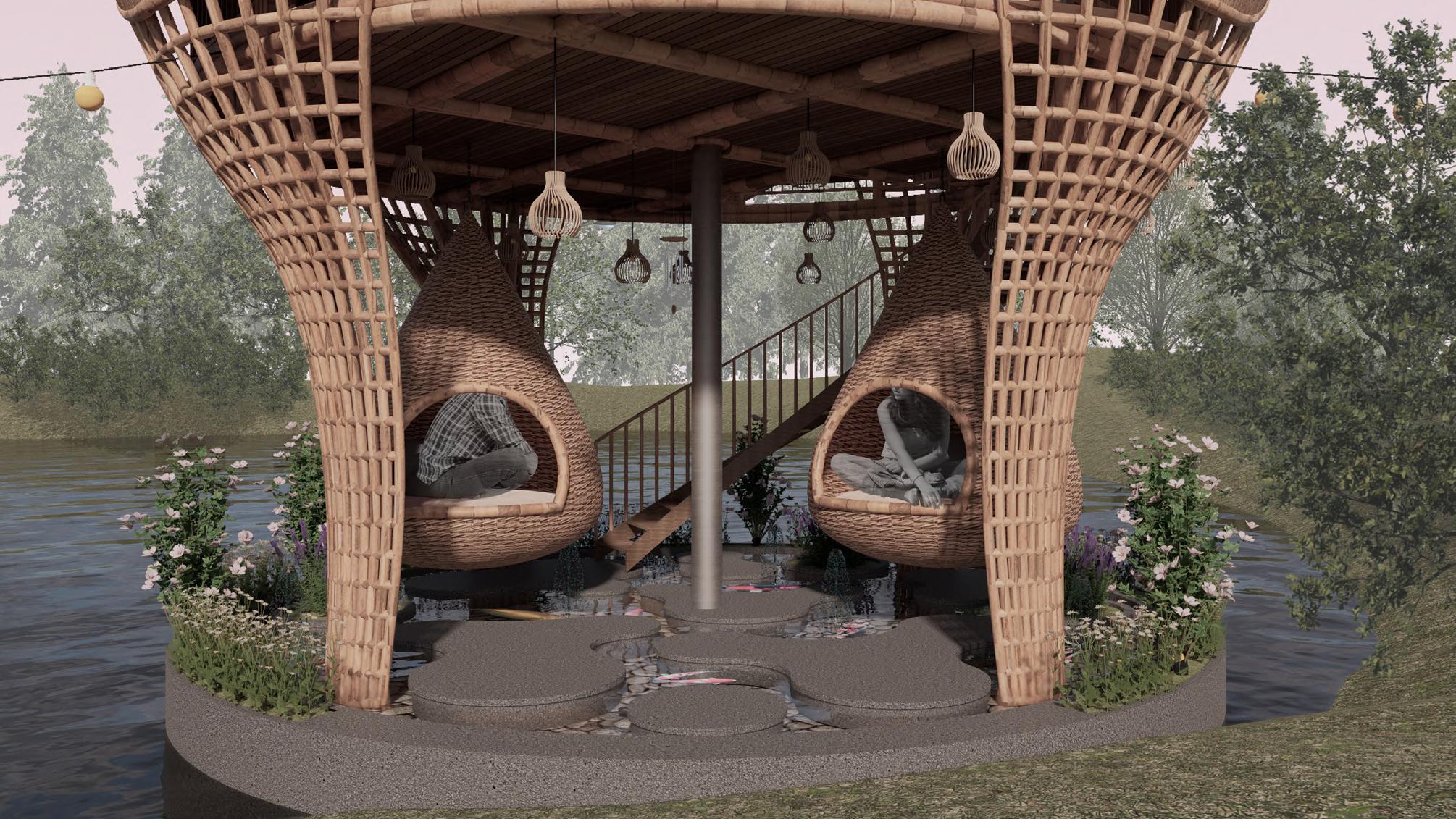
Sensory exploration . visitors are invited to relieve overstimulation by resting in small pods that limit sight and with the sound of fountains as a noise barrier, accompanied by therapeutic plant aromas such as lavender, jasmine, and roses as well as reconnection to nature through interaction with water, pebbles, and fish. Inspired by Junya Ishigami’s Water Garden.
PODO RUKUN GLAMPING
UNDERGRADUATE THESIS | INDIVIDUAL PROJECT | 2023
03
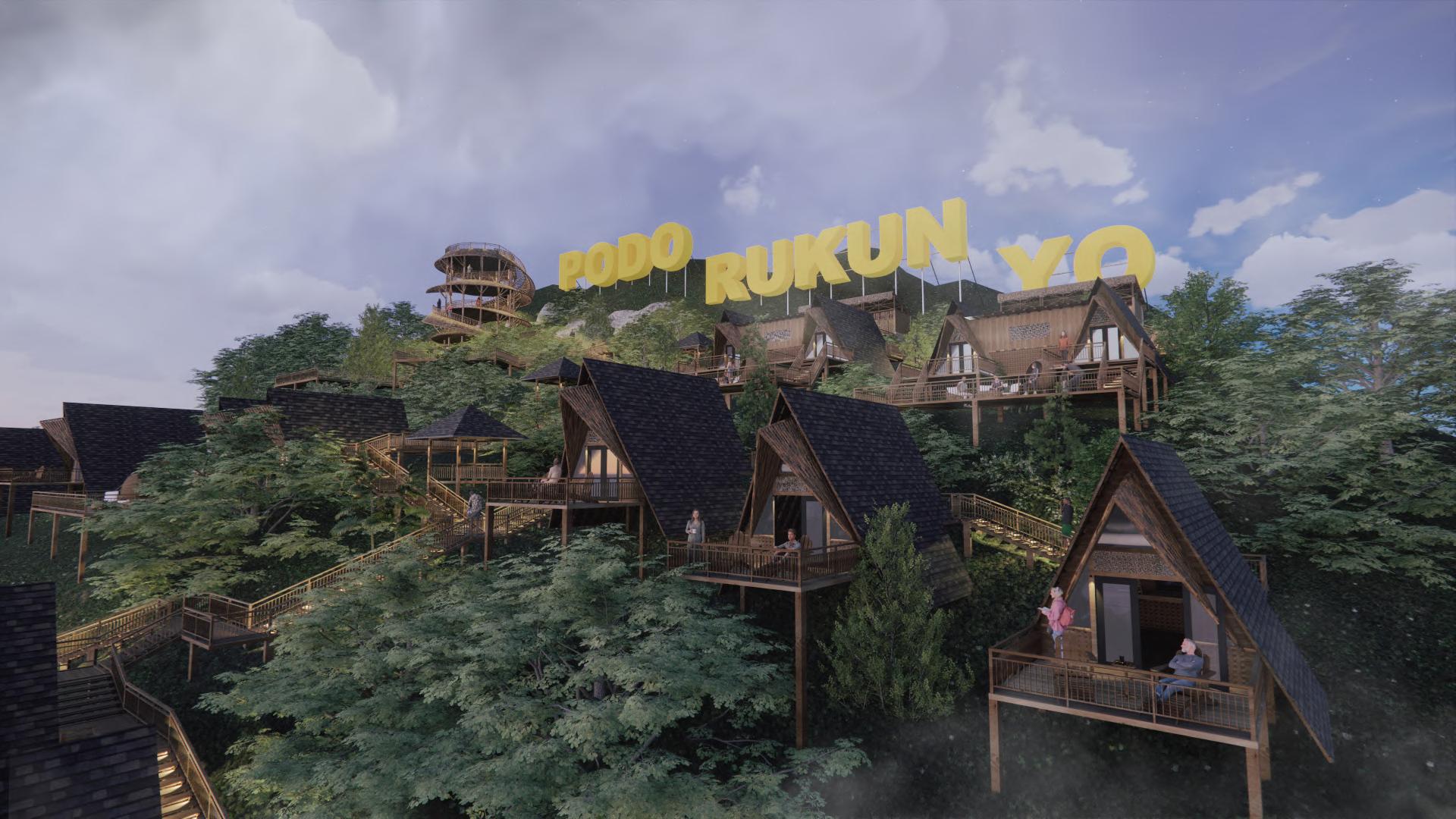
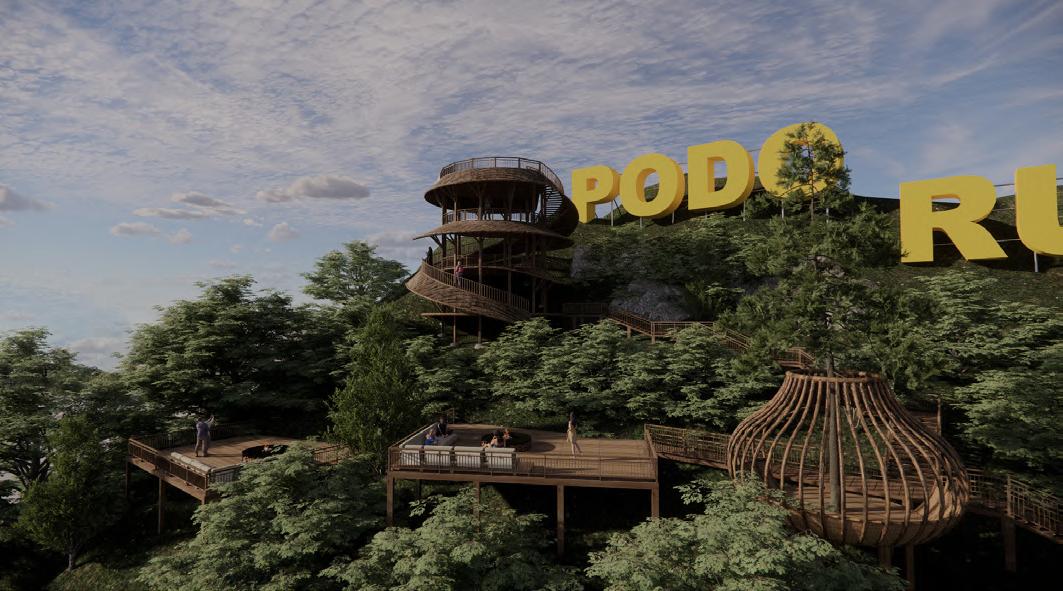
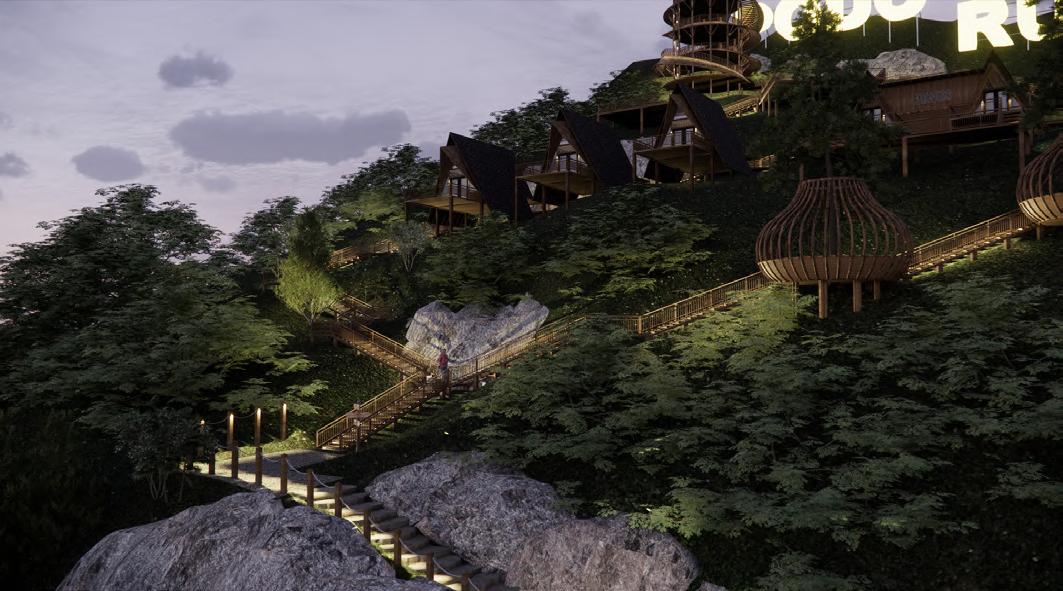
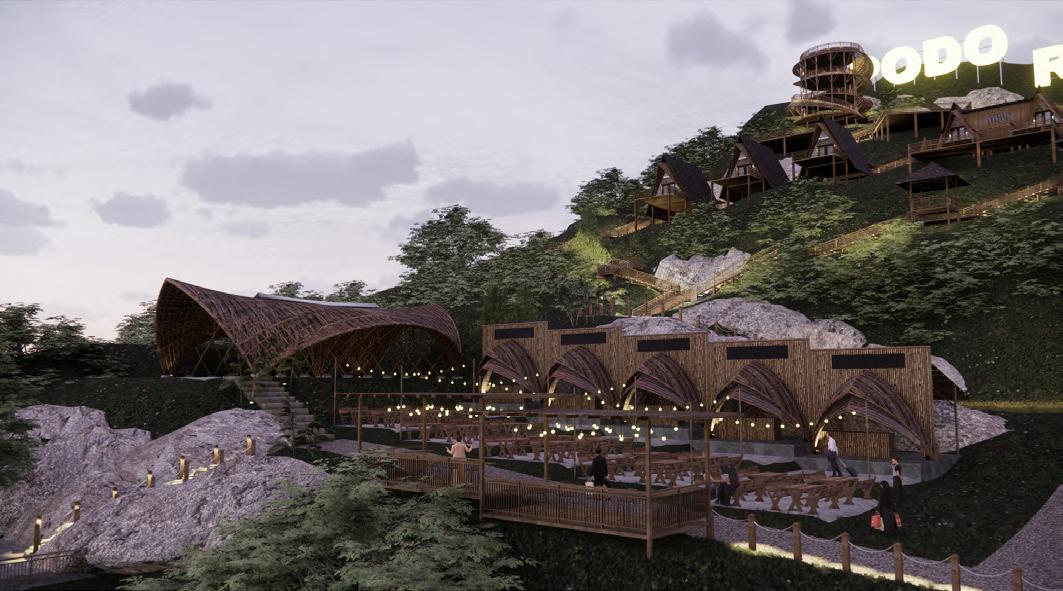
The challenge of commercial identity manipulation is tackled through staged authenticity, perceived both as a threat and a means for local adaptation. Critical regionalism, influenced by Kenneth Frampton, balances modernization with regional context in architecture. Utilizing participatory design informed by critical regionalism, "Podo Rukun" creates a unique ambiance aligned with community and stakeholder vision in its culinary tourism and glamping site.
Supervisor: - Dr. Ir. Murni Rachmawati, M.T.
WATES VILLAGE
JUNJUNG VILLAGE
site descriotion
BETAK VILLAGE
42.000m 2
 DADI TEMPLE
GOA SELOMANGLENG
PANCASILA MONUMENT
PASREN GARUDA
PASIR CAVE
SPLASH WATERPARK
AL-KHOIRIYAH
ISLAMIC BOARDING SCHOOL
TAPAK
DADI TEMPLE
GOA SELOMANGLENG
PANCASILA MONUMENT
PASREN GARUDA
PASIR CAVE
SPLASH WATERPARK
AL-KHOIRIYAH
ISLAMIC BOARDING SCHOOL
TAPAK
U
BUMI PERKEMAHAN MA’ARIF NU TULUNGAGUNG
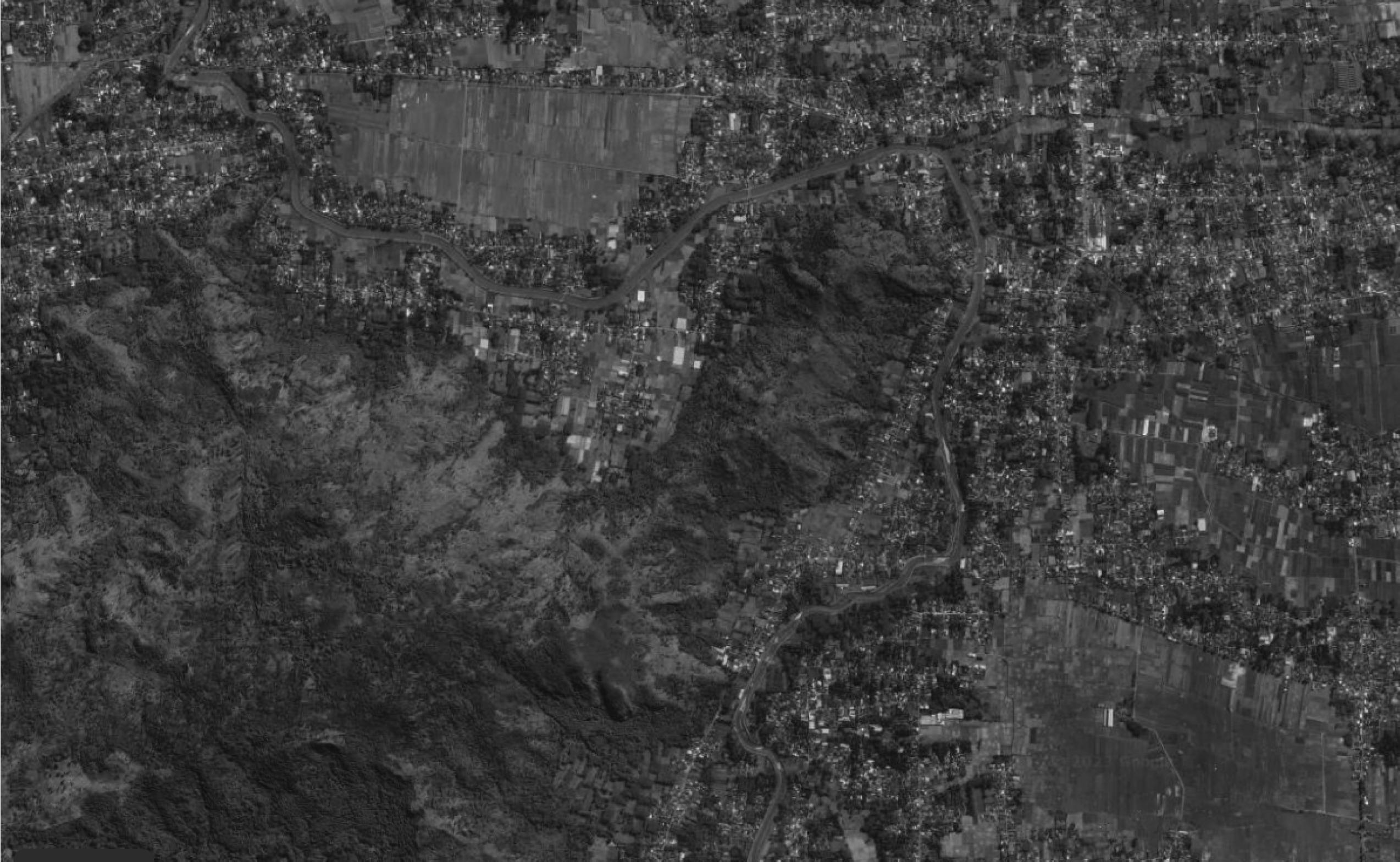
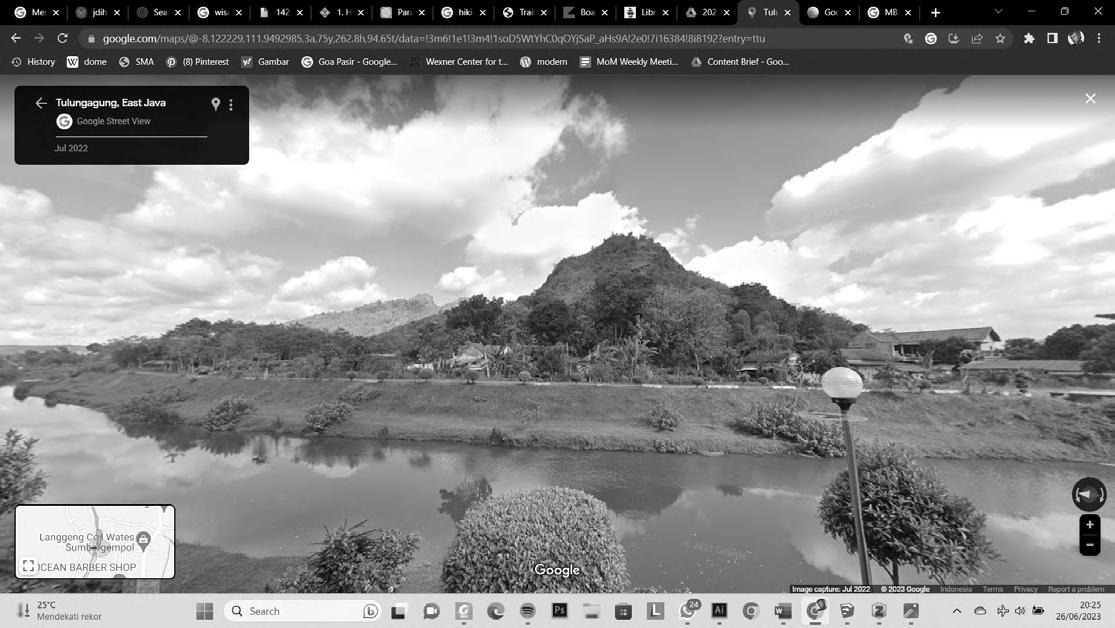
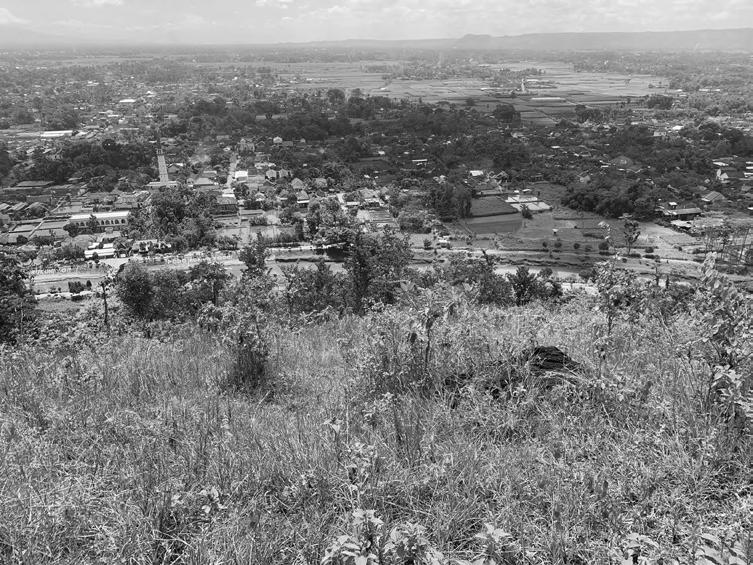
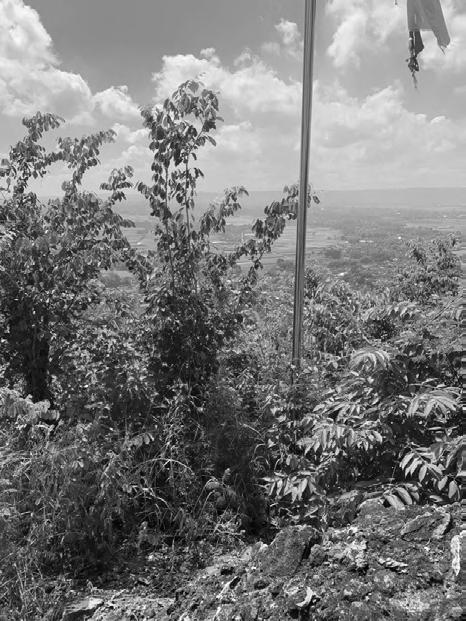
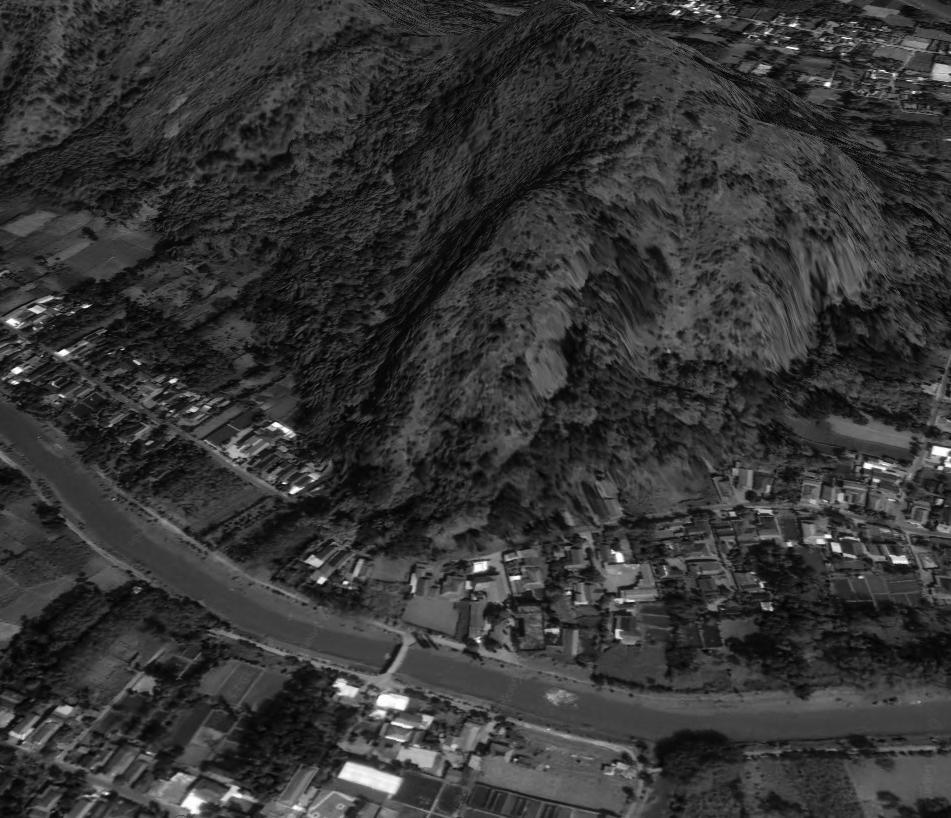
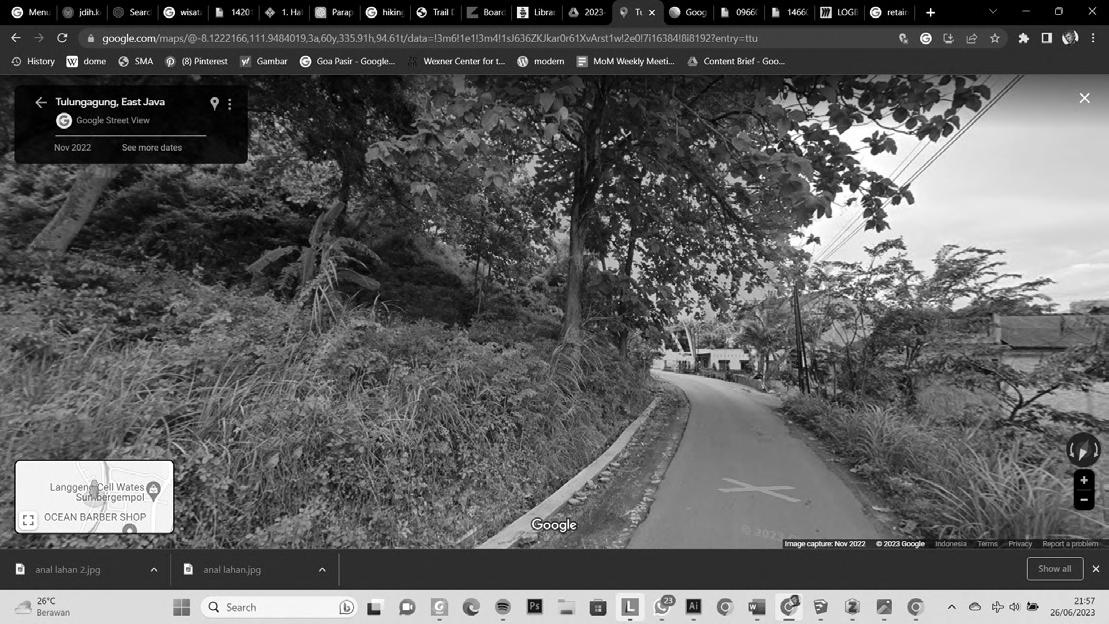
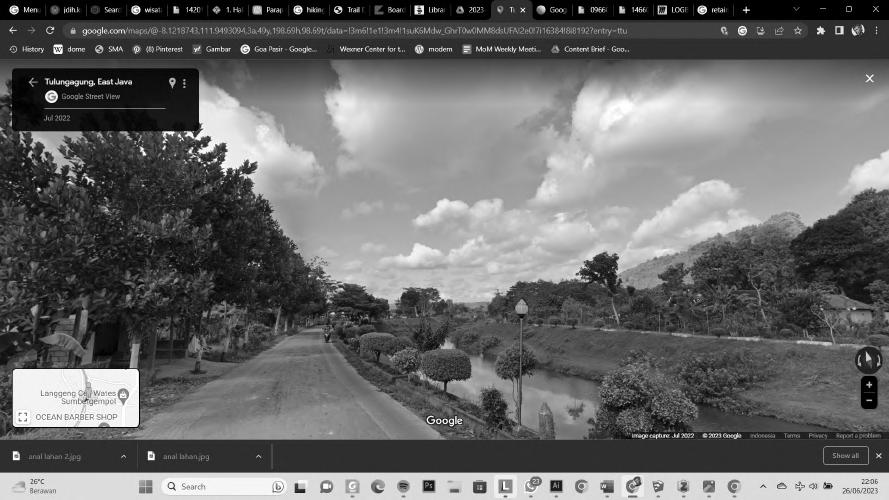
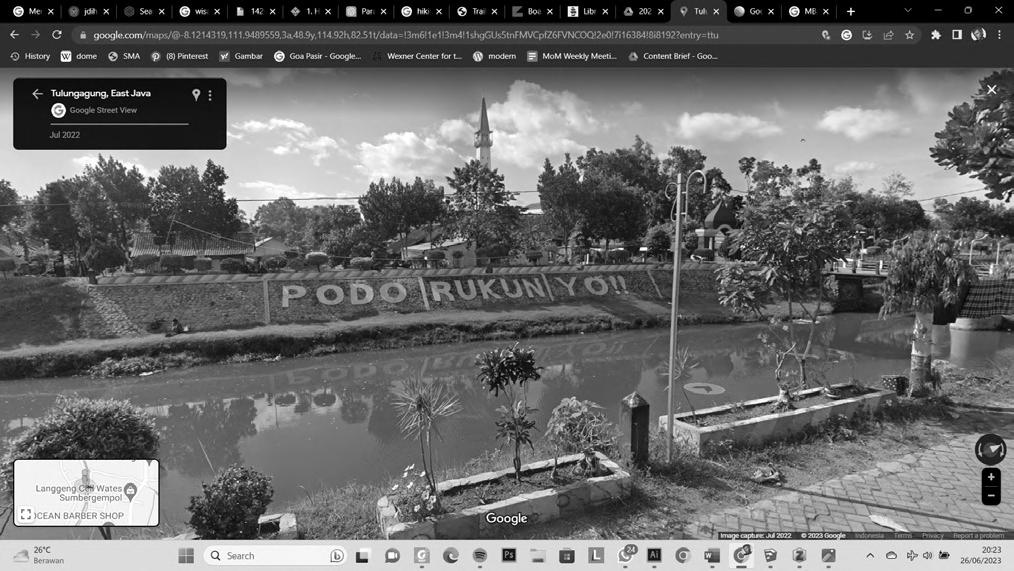
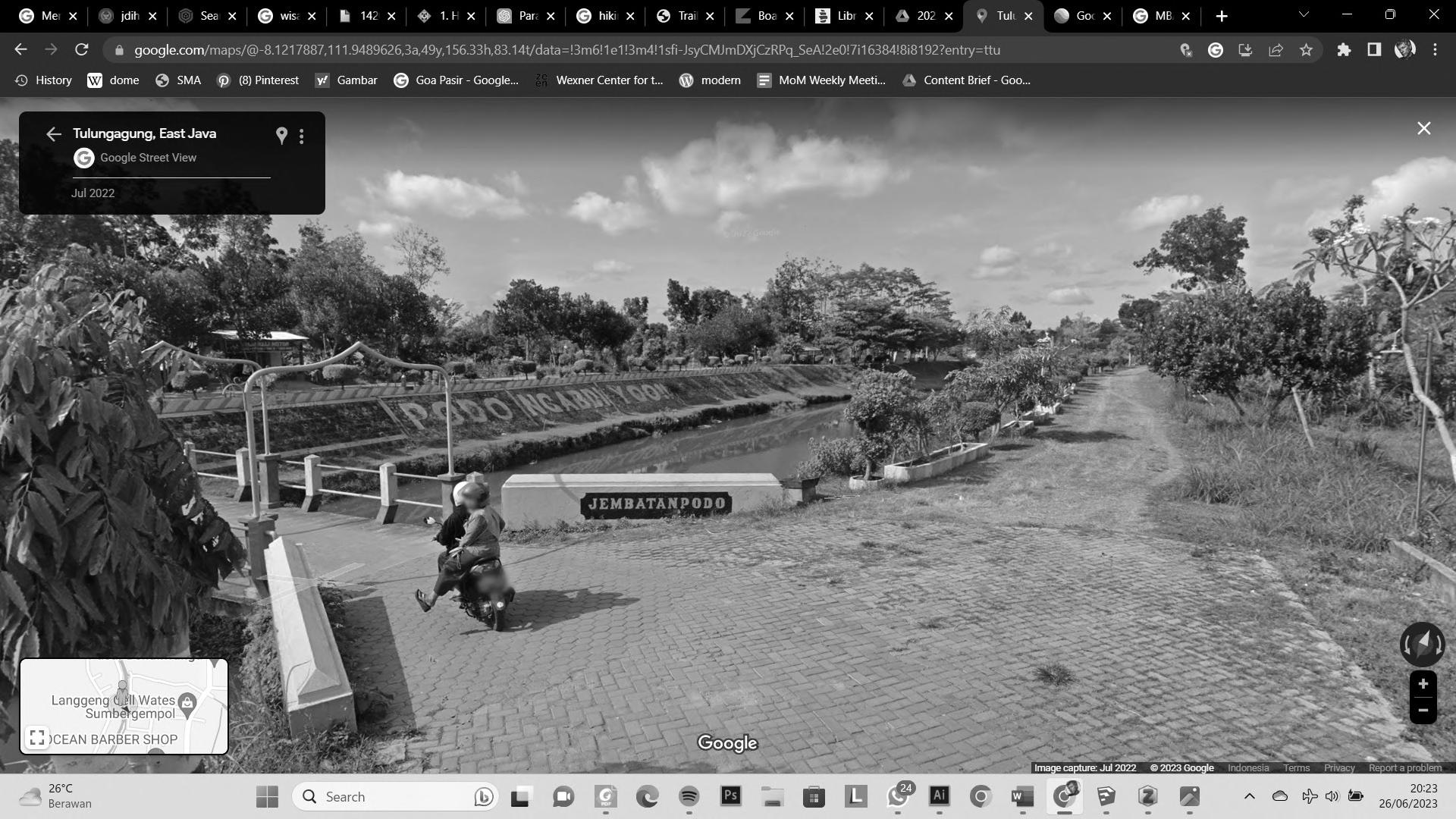
Lokasi: Jawa Timur, Kab. Tulungagung Perbatasan Desa Wates dan Desa Junjung di Kec. Sumbergempol dan Desa Betak di Kec. Kalidawir, Pondok Al-Khoiriyah Jembatan Podo (Kali Tempur Sari) dan Bukit Podo dan Bukit Podo
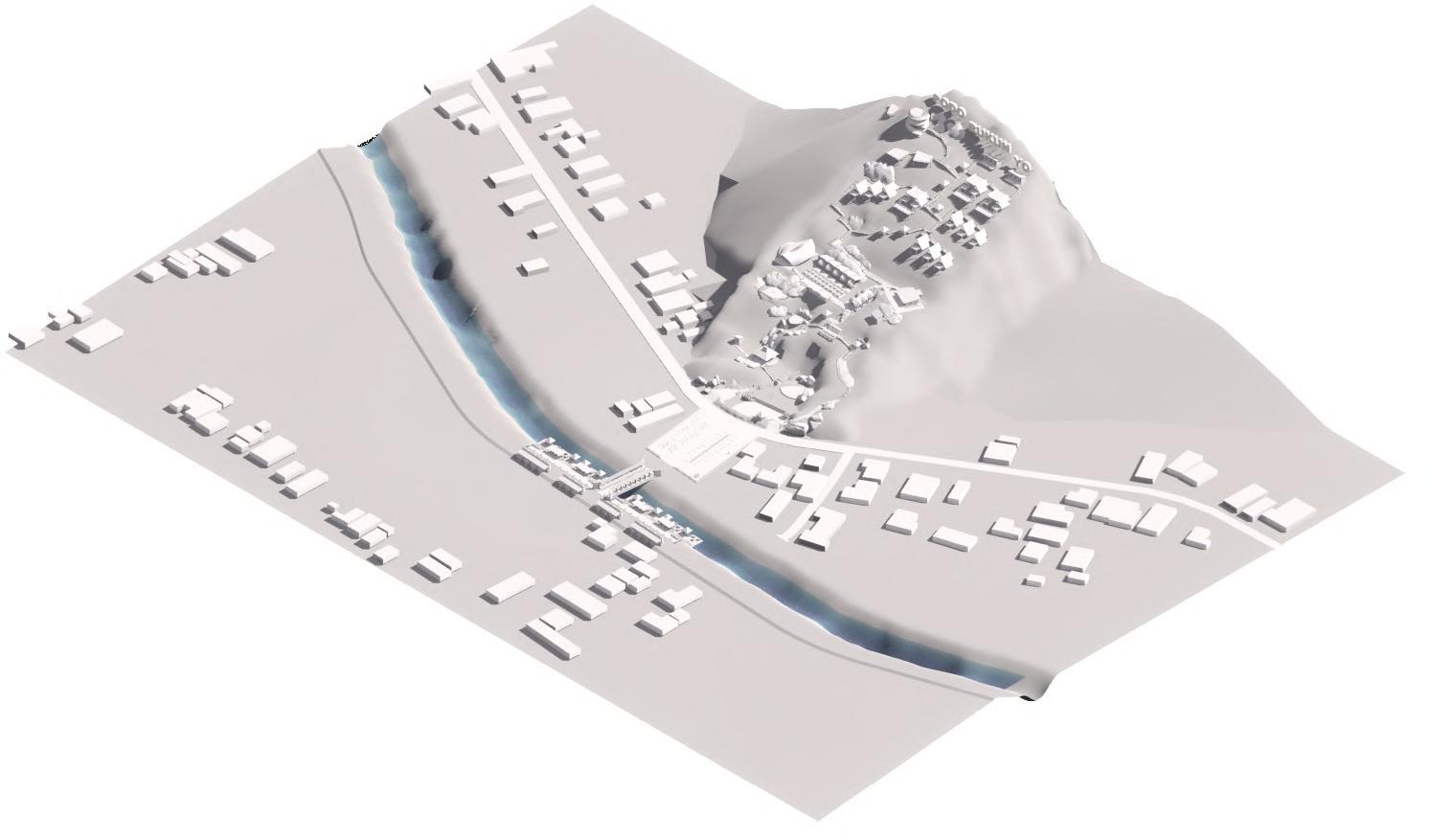
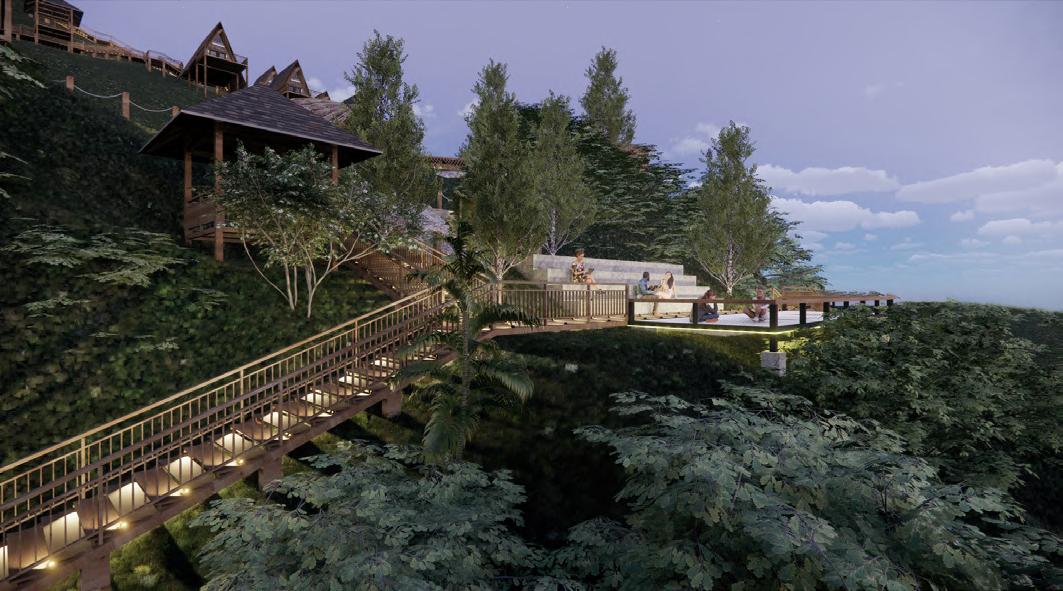
boardwalk offering a stable and elevated pathway, allowing visitors to explore the area comfortably and safely
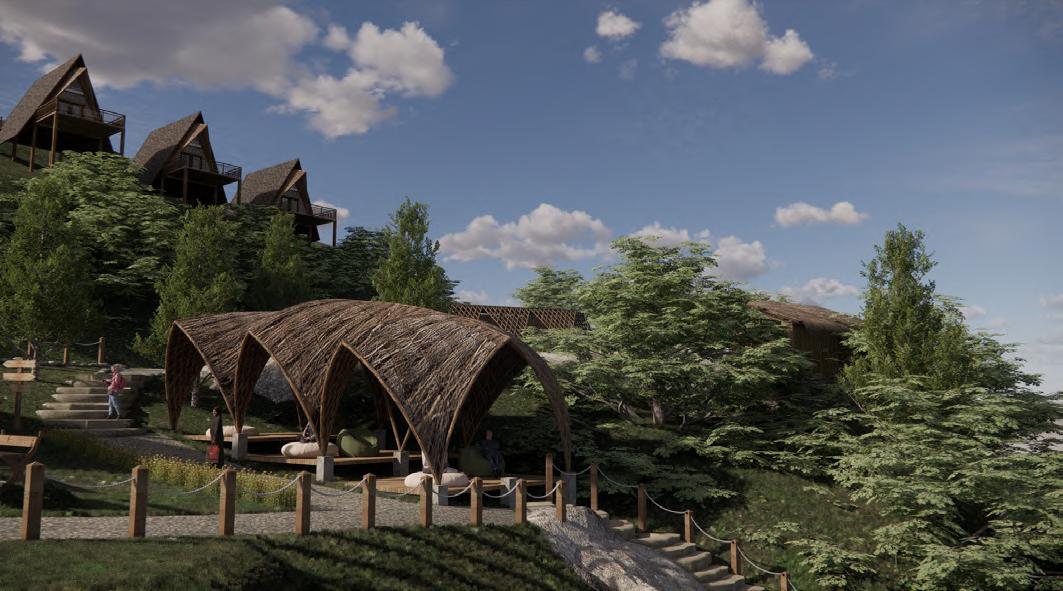
service/resting points (gazebos, toilets, and prayer halls)
bridge and promenade, circulation of bikers and pedestrians on both sides
vehicle circulation is limited to designated roads and parking area, ensuring organized and efficient movement.
stairs with pavement, taking advantage of the textures of the stones
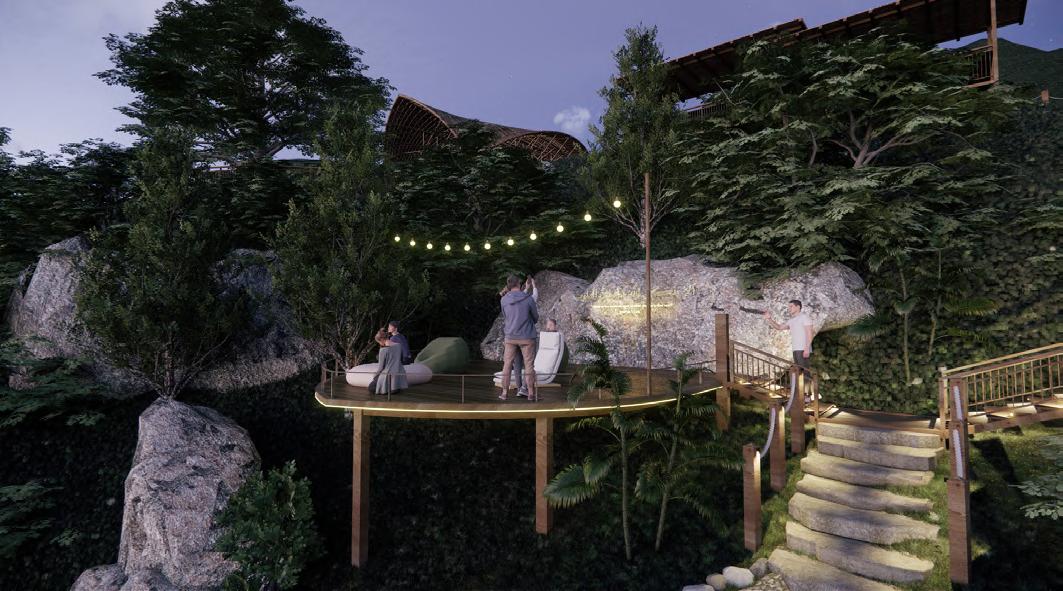
path of reflection
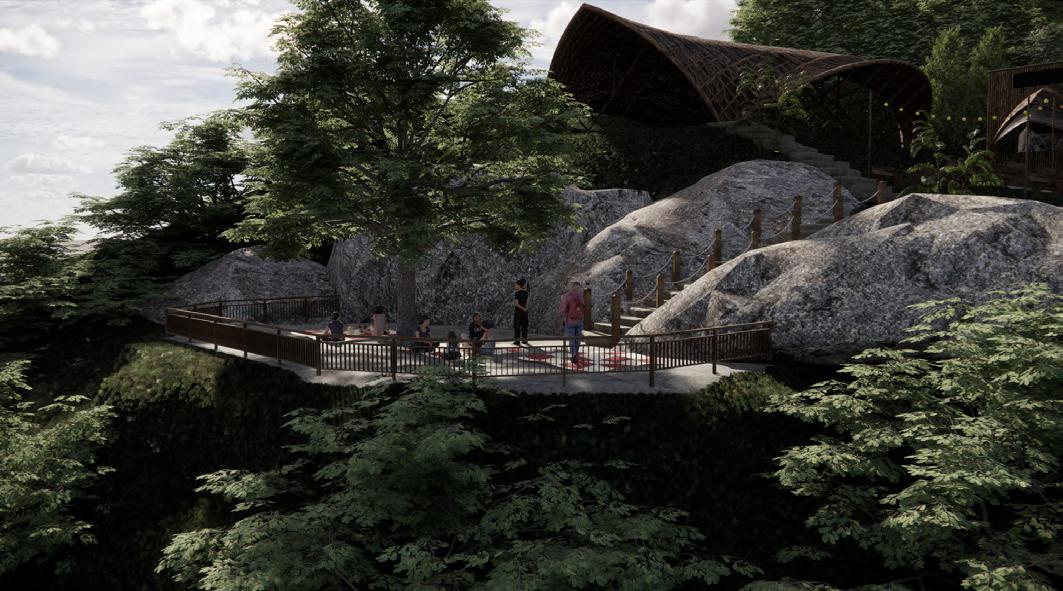
community sanctuary
contemplation summit tranquil retreat
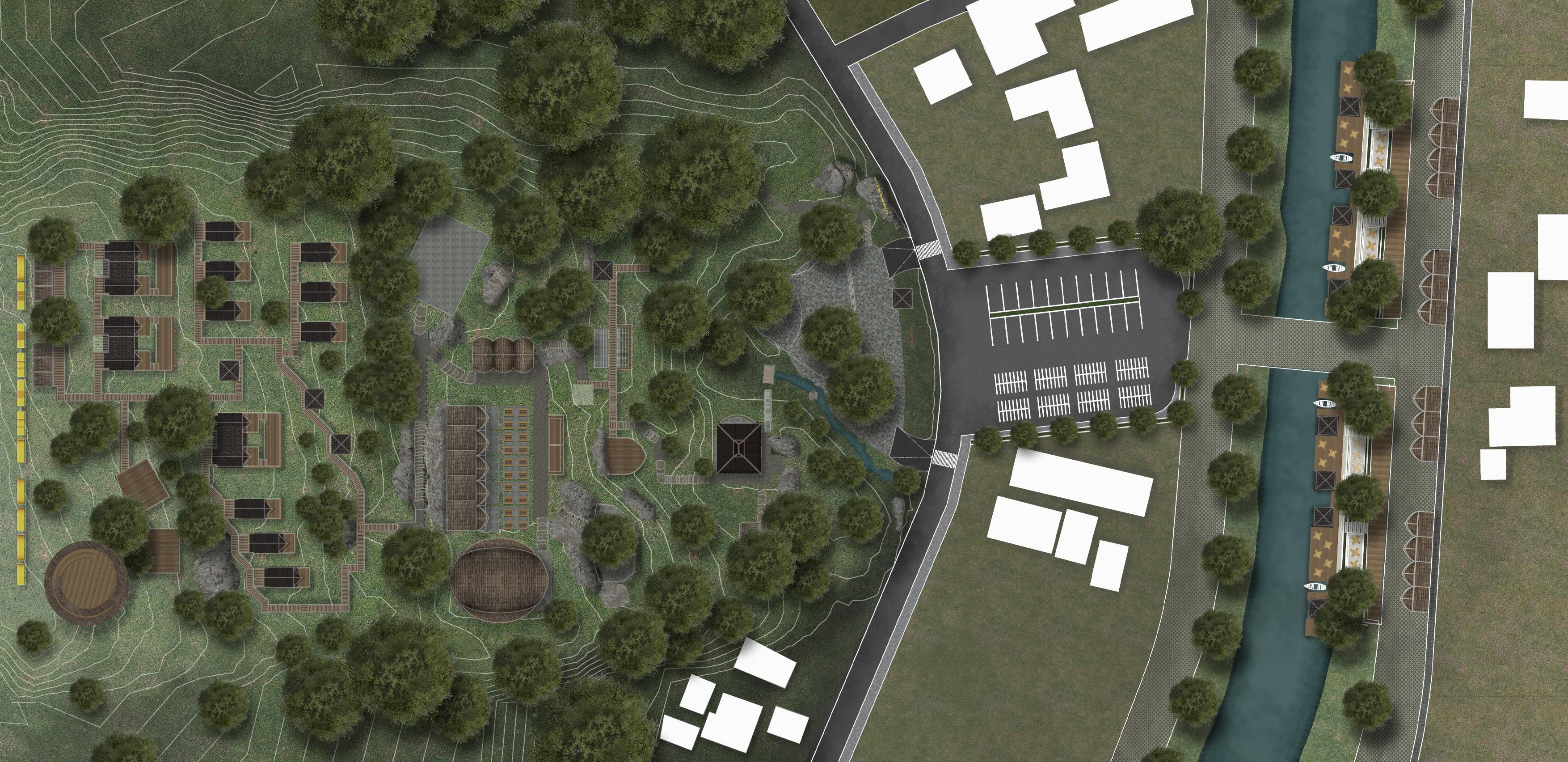
site plan
4 5 10 11 12 13 5 6 6 6 7 8 9
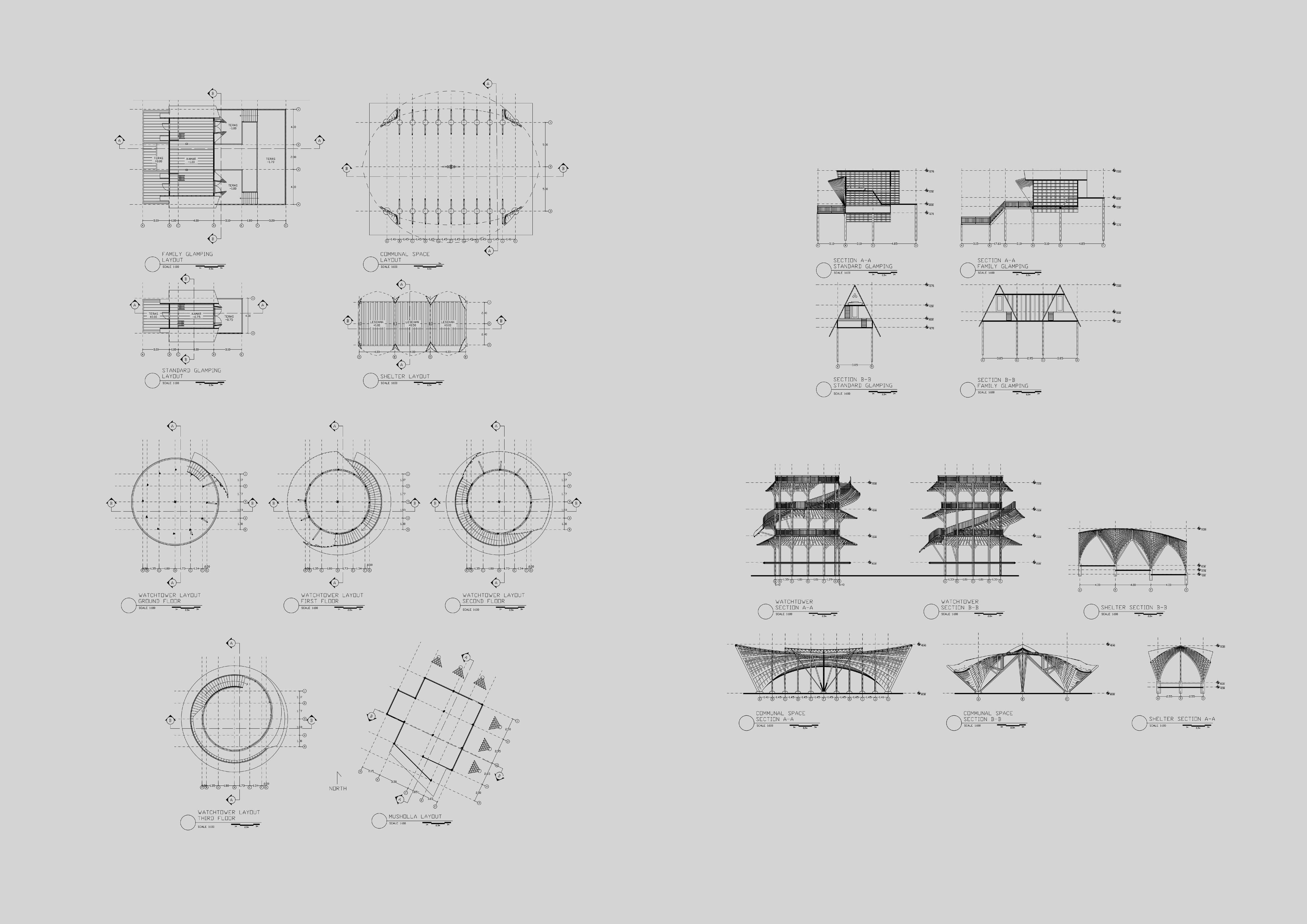
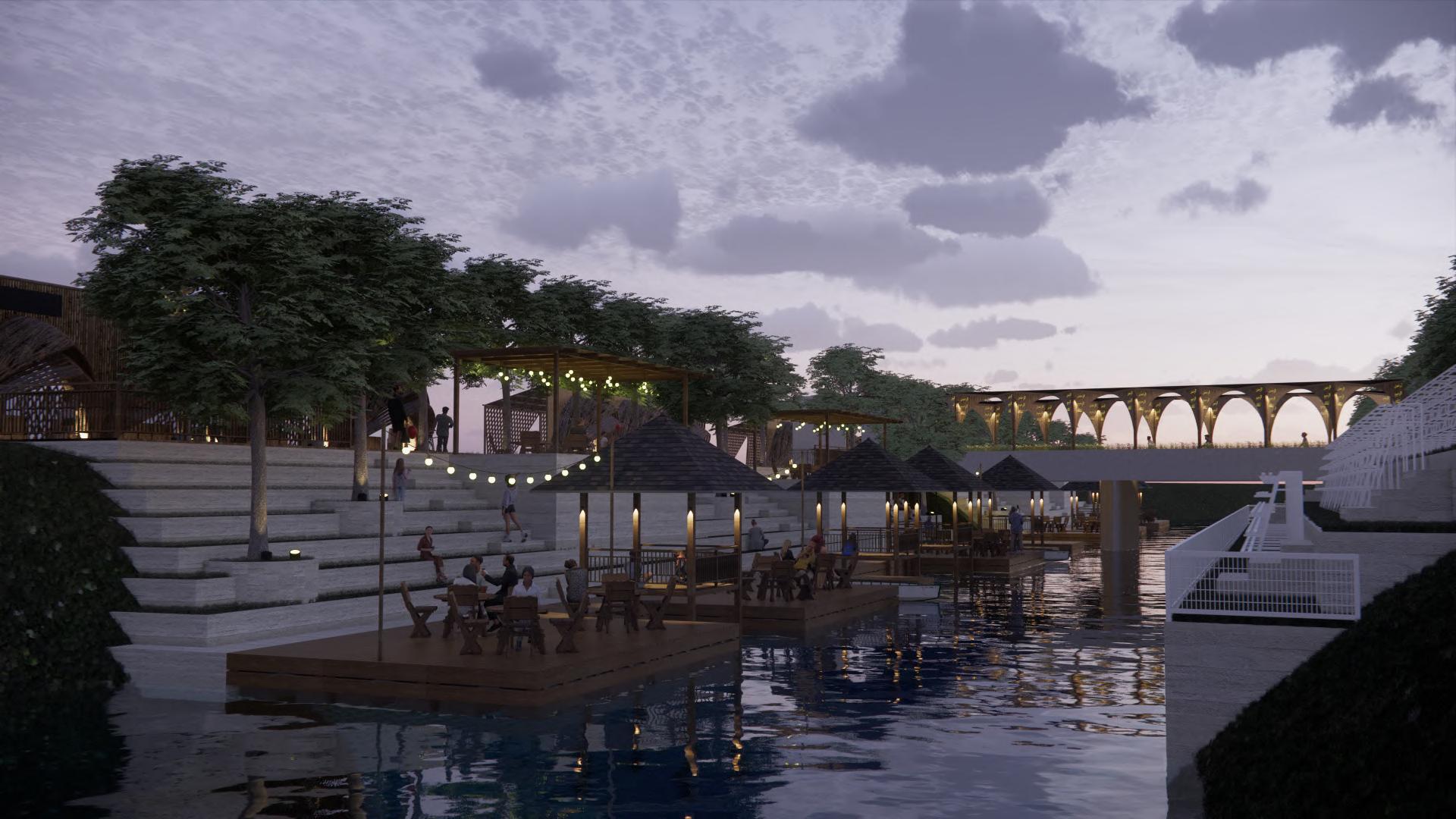
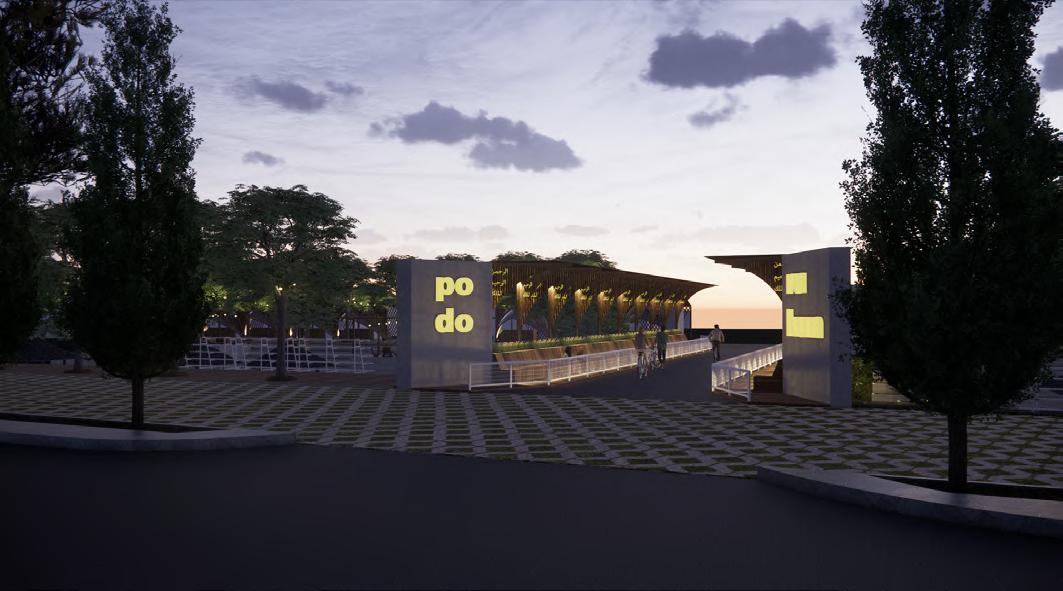
1 2 3 13 1. 2. 3. 4. 5. 6. 7. 8. 9. 10. 11. 12. 13. Entrance and Ticketing Food Kiosk Promenade Floating Food Court Joglo, Welcoming Gamelan Toilet Rest Areas Food Court Communal Area Musholla Glamping Area Bathroom Campfire Area Viewing Post
04
CALADAN
TOP 20 WAW WARMADEWA | INDIVIDUAL PROJECT | 2022
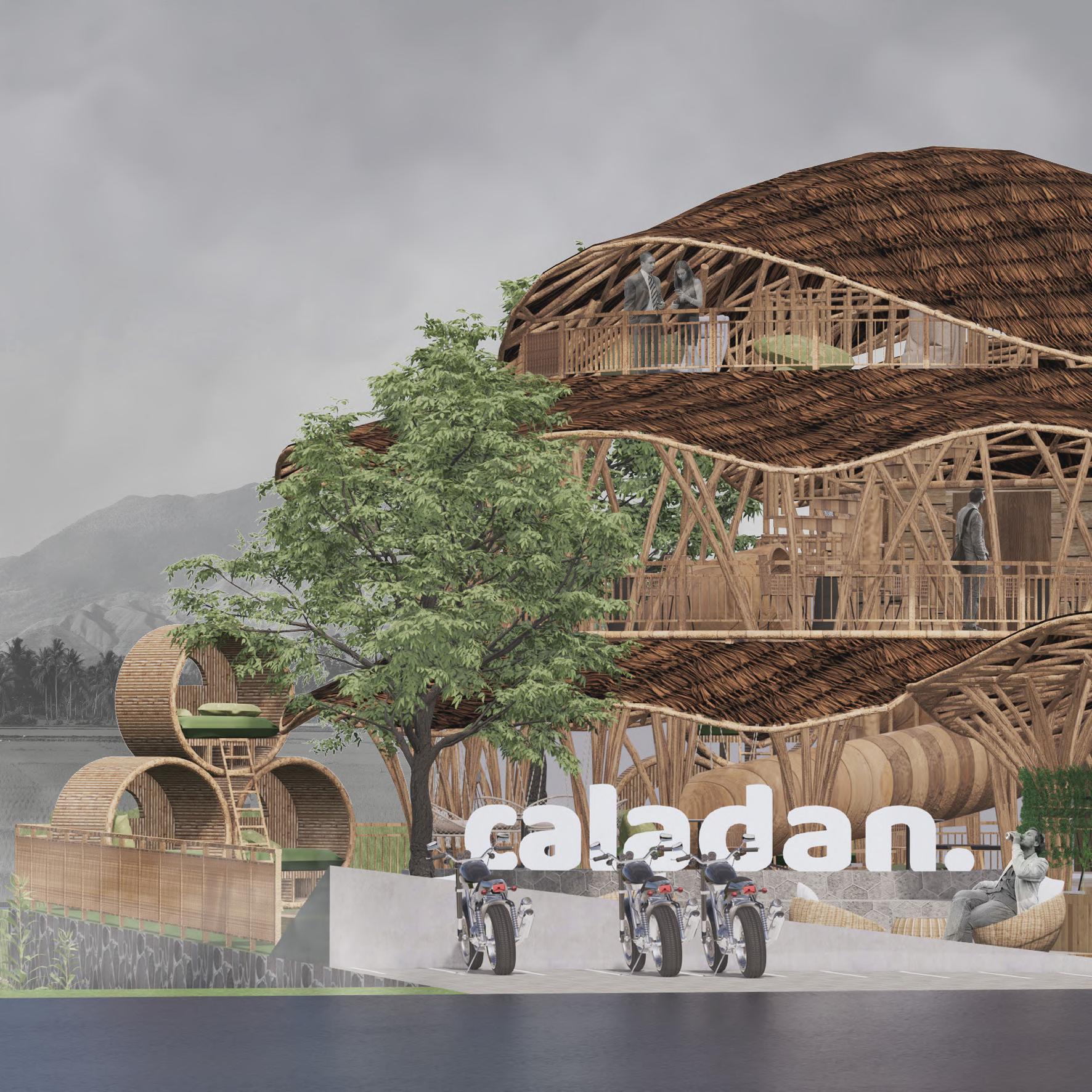
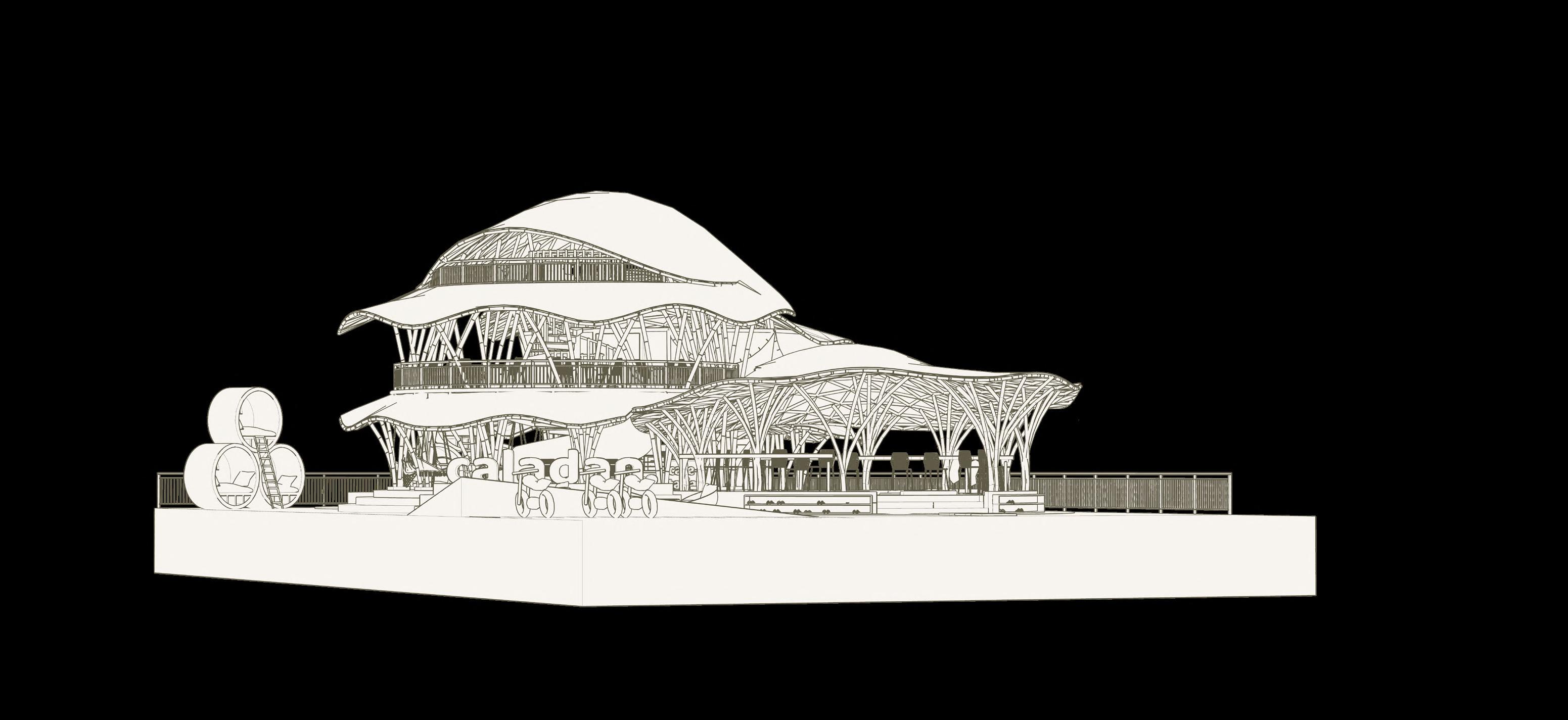
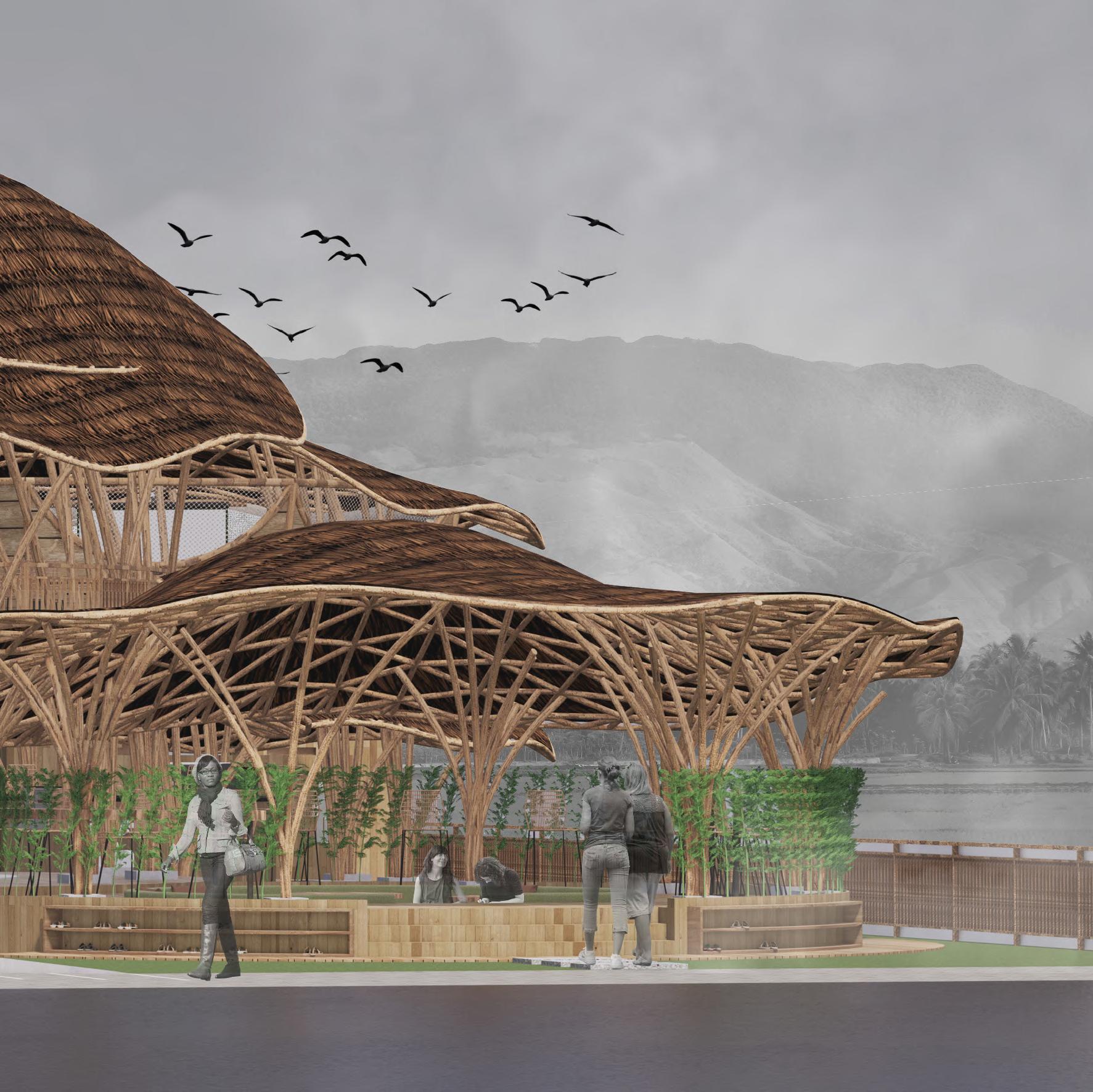
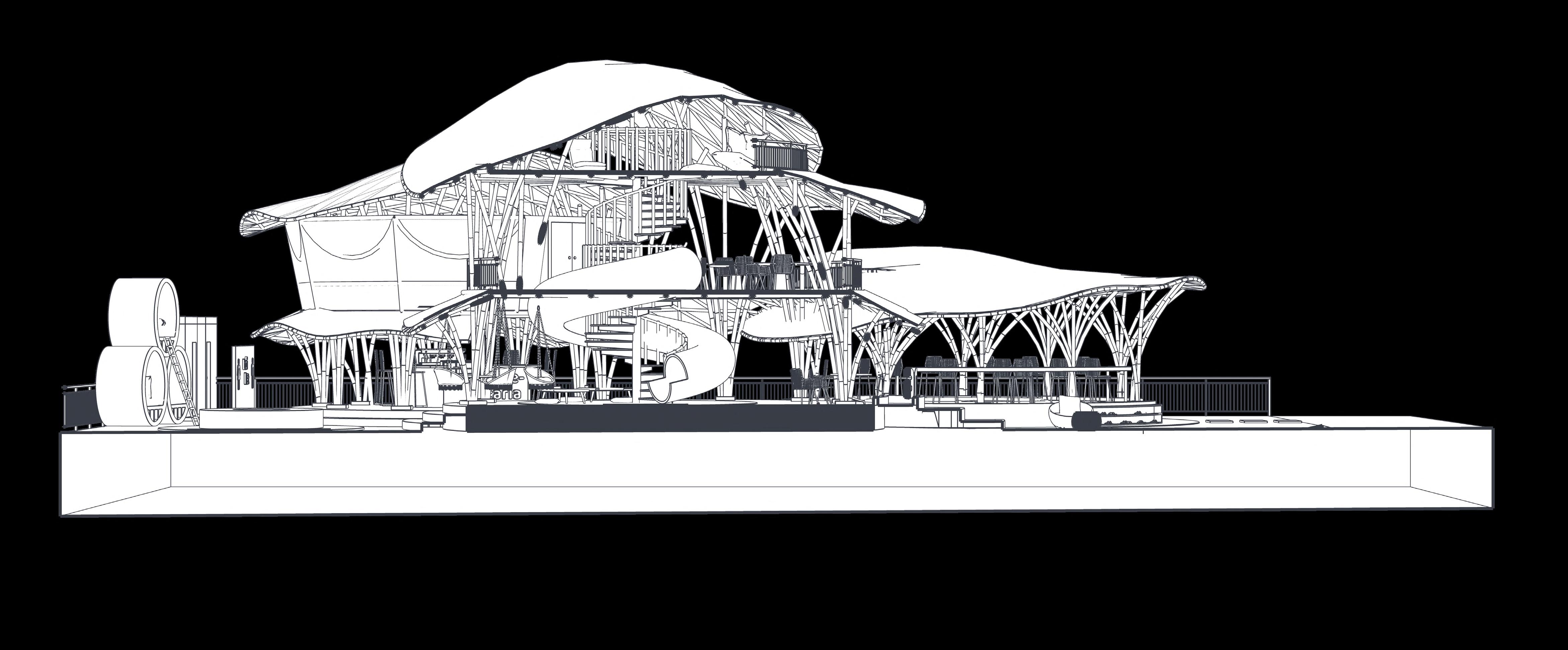
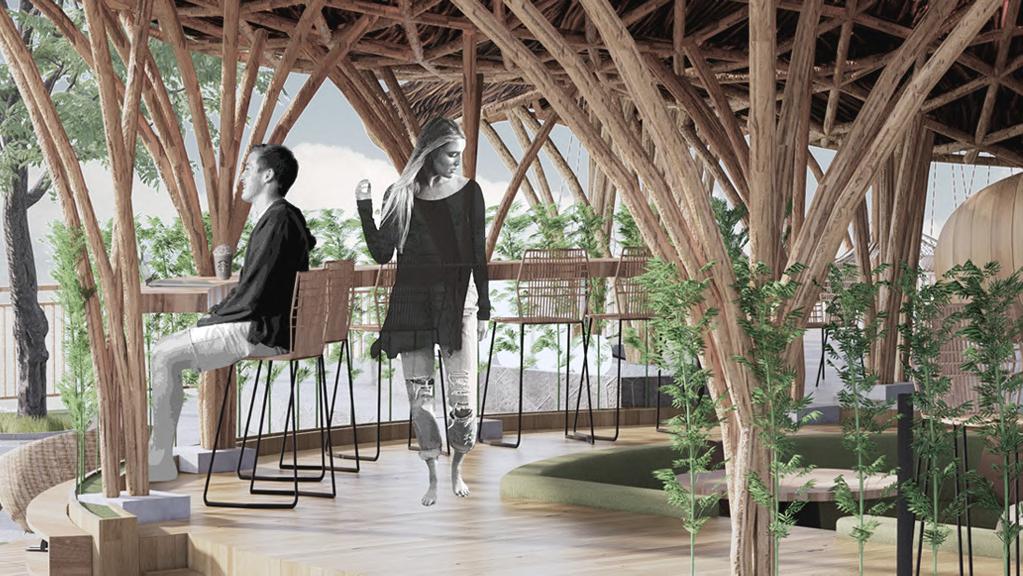
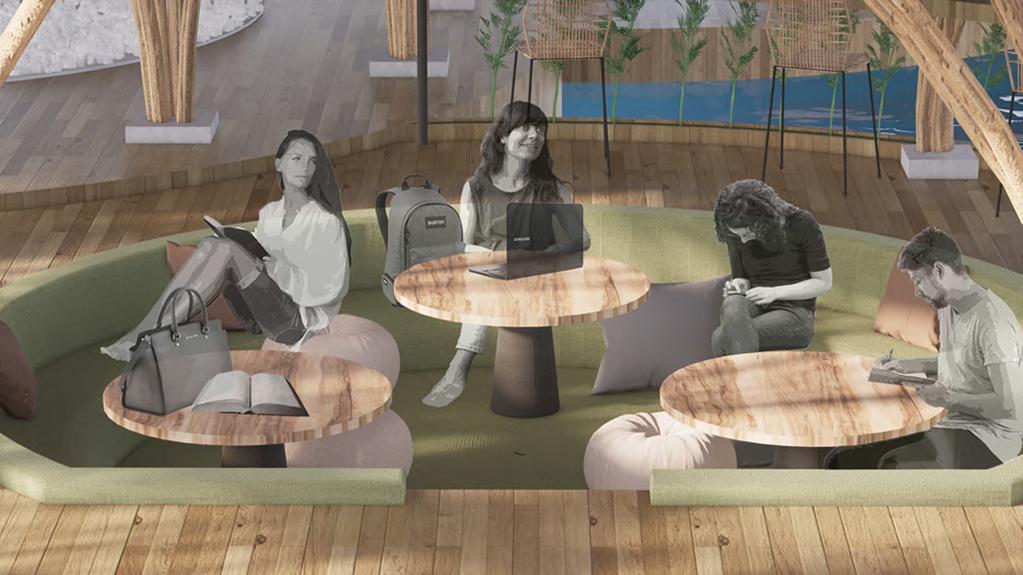
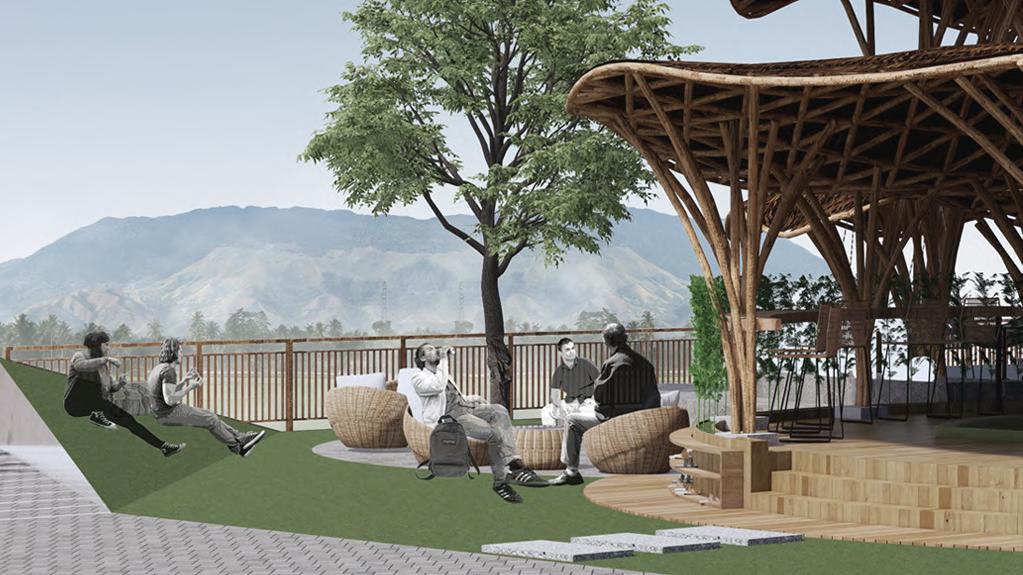
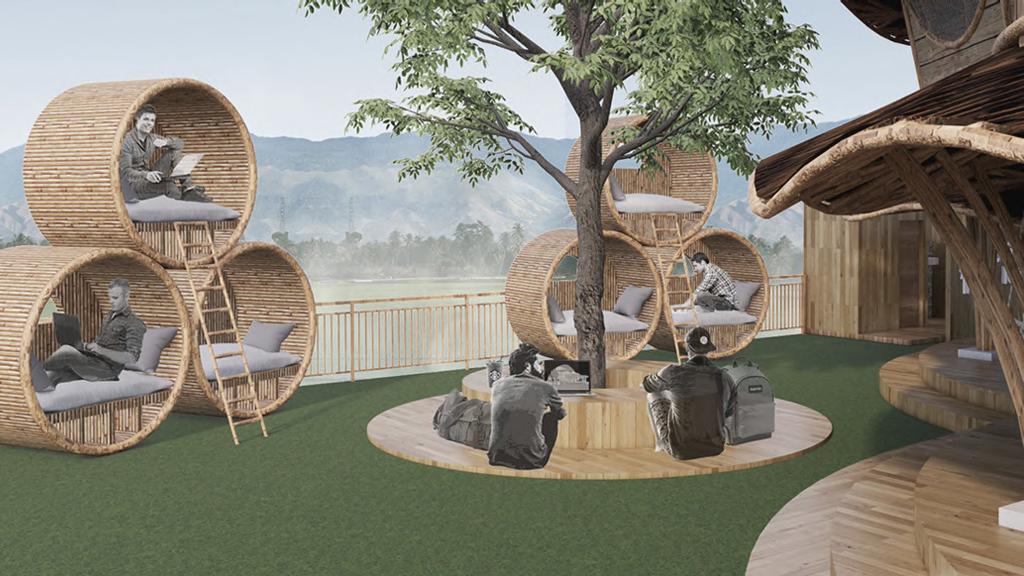
A co-working space set in a semi-open environment, strategically situated in a serene location that strikes a balance between seclusion and city accessibility. This unique design is enveloped by picturesque rice fields, and it prominently features bamboo as the primary construction material. This not only transforms the conventional office environment but also creates a biophilic workspace that seamlessly blends with the natural surroundings.
The reliance on air conditioning in tropical office buildings is on the rise, impacting both the environment and people's comfort expectations. AC systems maintain temperatures between 16-25 degrees Celsius during the day, significantly cooler than the natural tropical climate, particularly in places like Tulungagung Regency. Dull office interiors have been shown to decrease productivity, contrasting with environments that include elements of nature. Furthermore, after two years of working from home, some employees are hesitant to return to the office. They've grown accustomed to choosing their own workspace at home, whether it's in the bedroom, kitchen, or living room. This shift towards a "healing" culture, seeking nature-based activities, aligns with the concept of biophilia, suggesting humans have an innate inclination to connect with nature. Air conditioning systems not only restrict office spaces but also disconnect people from the natural world. Coupled with the need to spend extended hours indoors at work, it raises questions about whether this lifestyle is suited to human nature.

How do people
Target
Individuals in both the creative and non-creative industries, including freelancers and employees practicing work from anywhere, aim to alleviate boredom and boost morale through the design of this object.
User



Design Criteria
Biophilic architecture involves both a direct experience of nature and an indirect experience of nature. Diverse co-working space furniture allows each individual to choose the type of workspace they prefer. Round tables and layouts are used to foster a sense of camaraderie among coworkers, as opposed to square tables.
focused fun
fun
Freelancer Work from Anywhere Client
between humans and nature
Connection
determine their personal workspace?



be more aerodynamic

determining room function: private spaces require tranquility from the street and need a noise barrier
relaxed
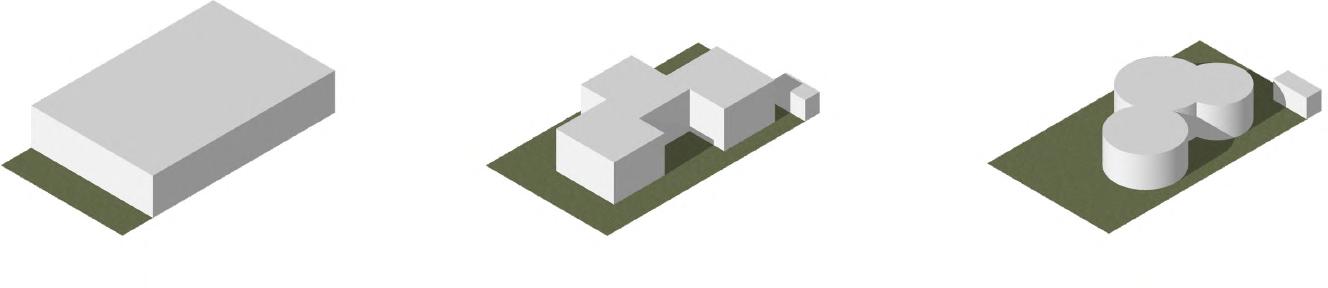
elimination of walls to optimize the potential of wind and panoramic views of the rice fields
organic roof with overhangs to prevent runoff and excessive heat.
focused
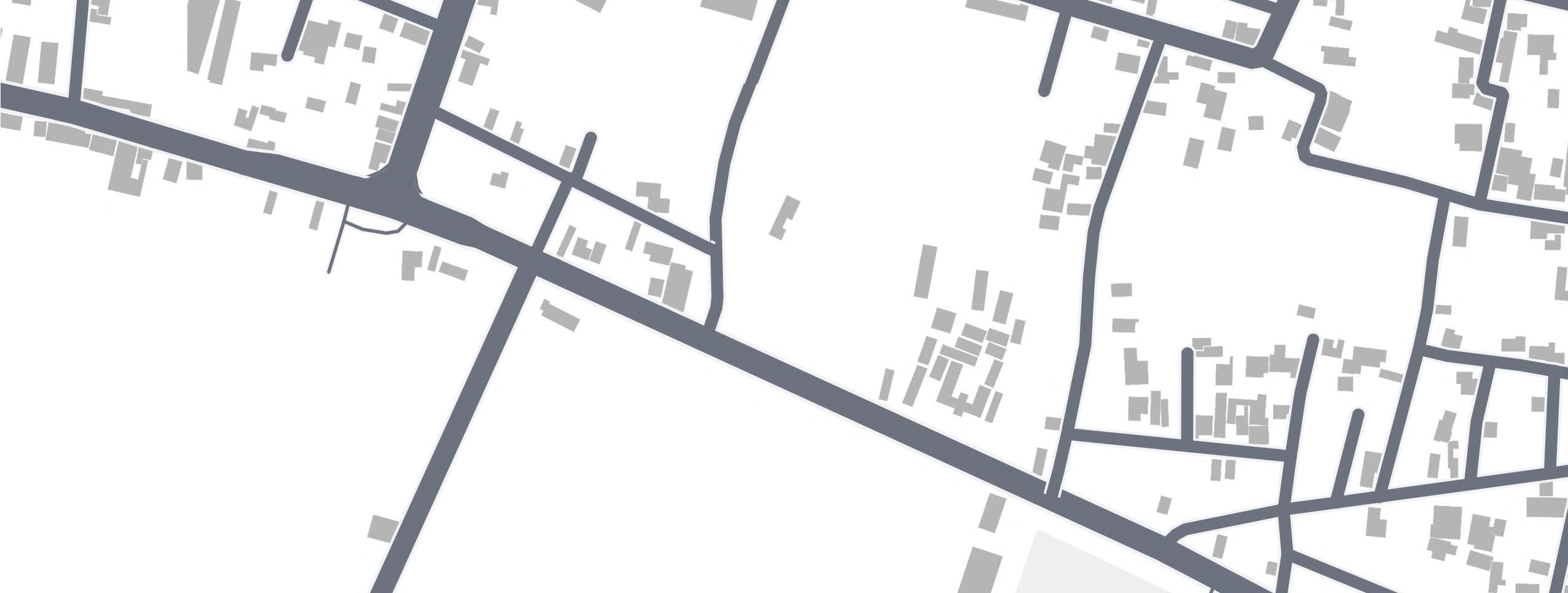
Site:
Jl. Ir. Soekarno Hatta Tulungagung, East Java
setbacks.
daylight and cross ventilation
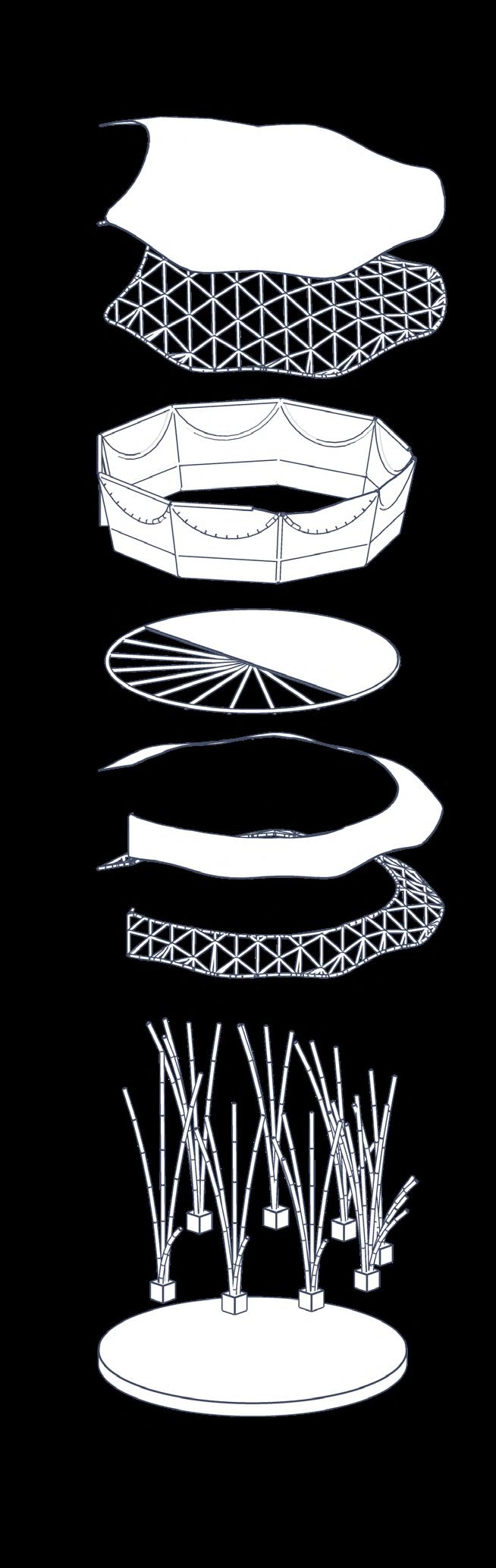
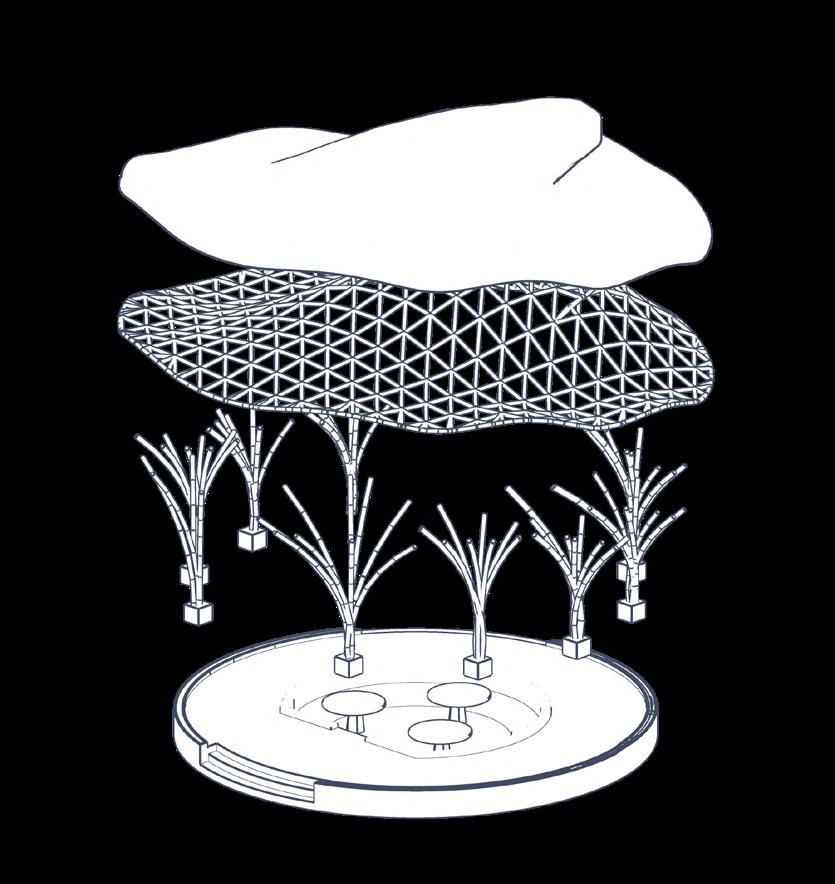
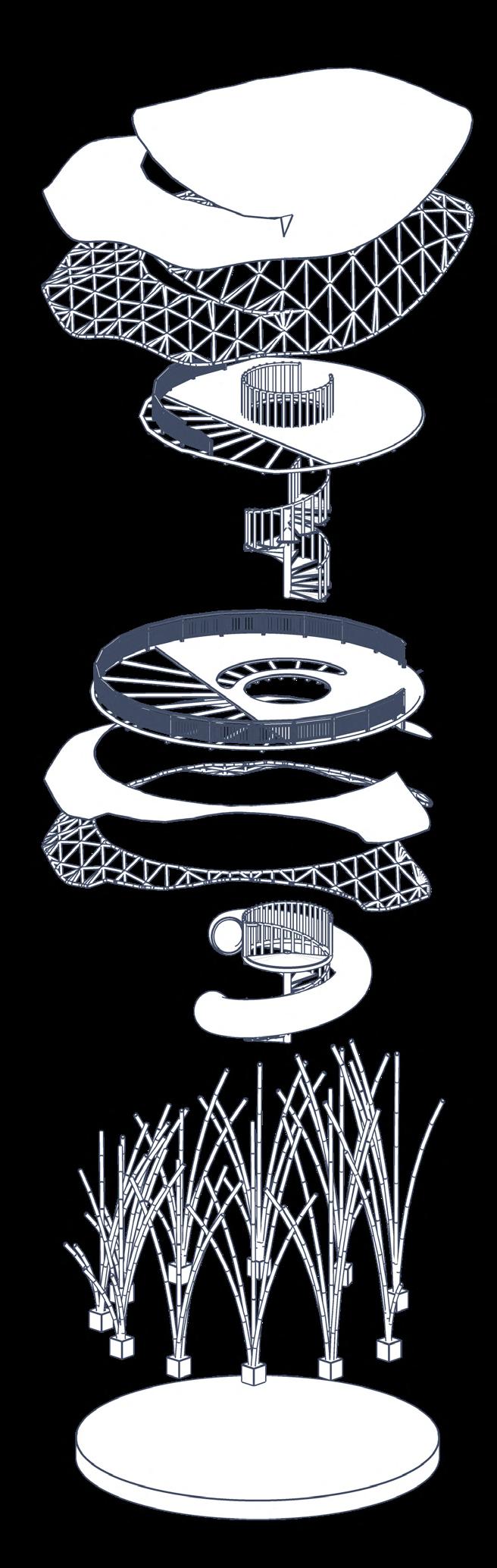
flattened bamboo shingles
double split gridshells
flattened bamboo shingles
bamboo petung O 14-15cm
double split gridshells
wooden floor slabs
bamboo petung O 14-15cm
flattened bamboo shingles
double split gridshells
wooden railing 80cm
5 bundle bamboo petung O 14-15cm
flattened bamboo shingles
double split gridshells
concrete pedestal foundation
5 bundle bamboo petung O 14-15cm
flattened bamboo shingles
concrete pedestal foundation
double split gridshells
5 bundle bamboo petung O 14-15cm
concrete pedestal foundation
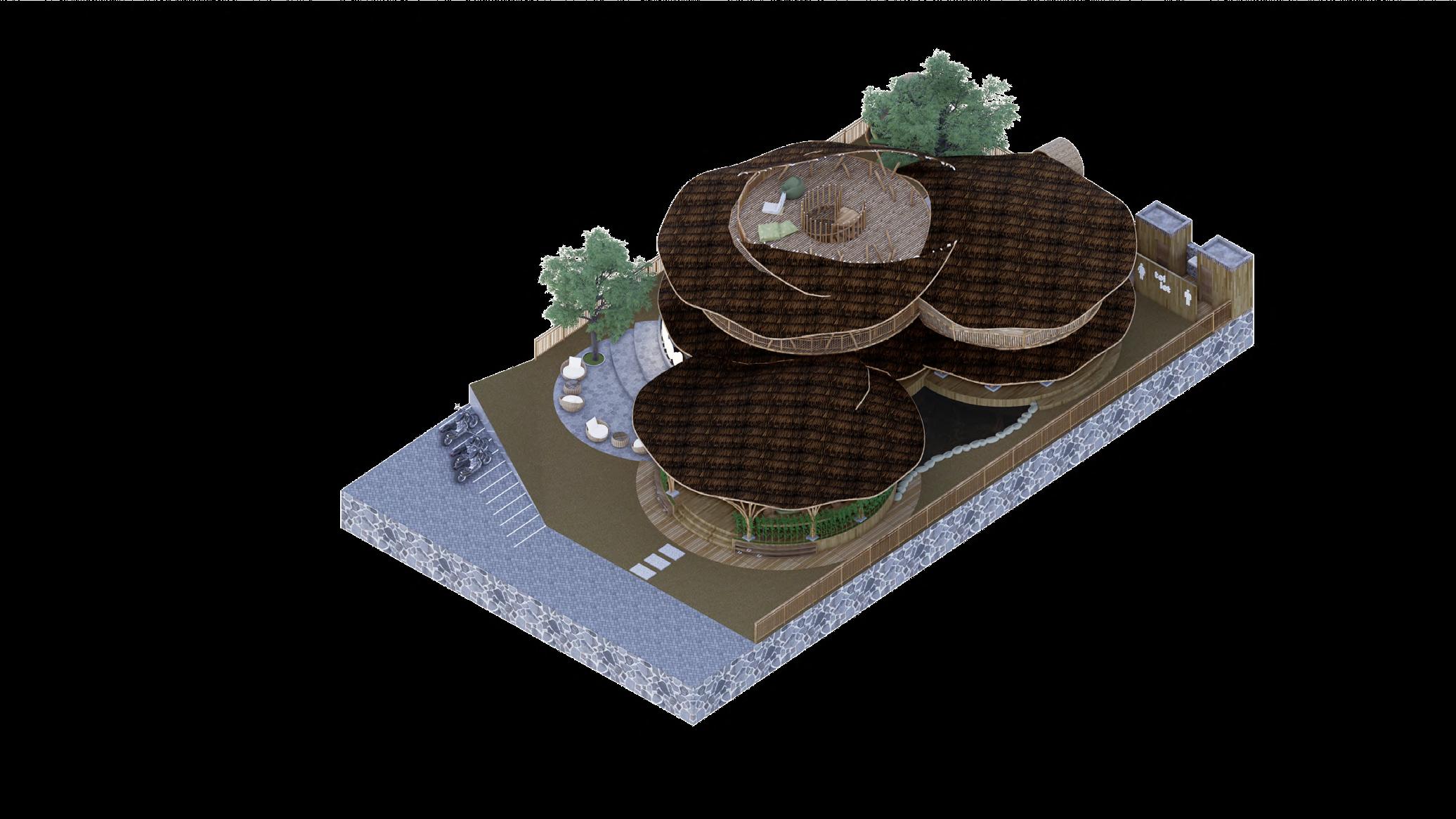
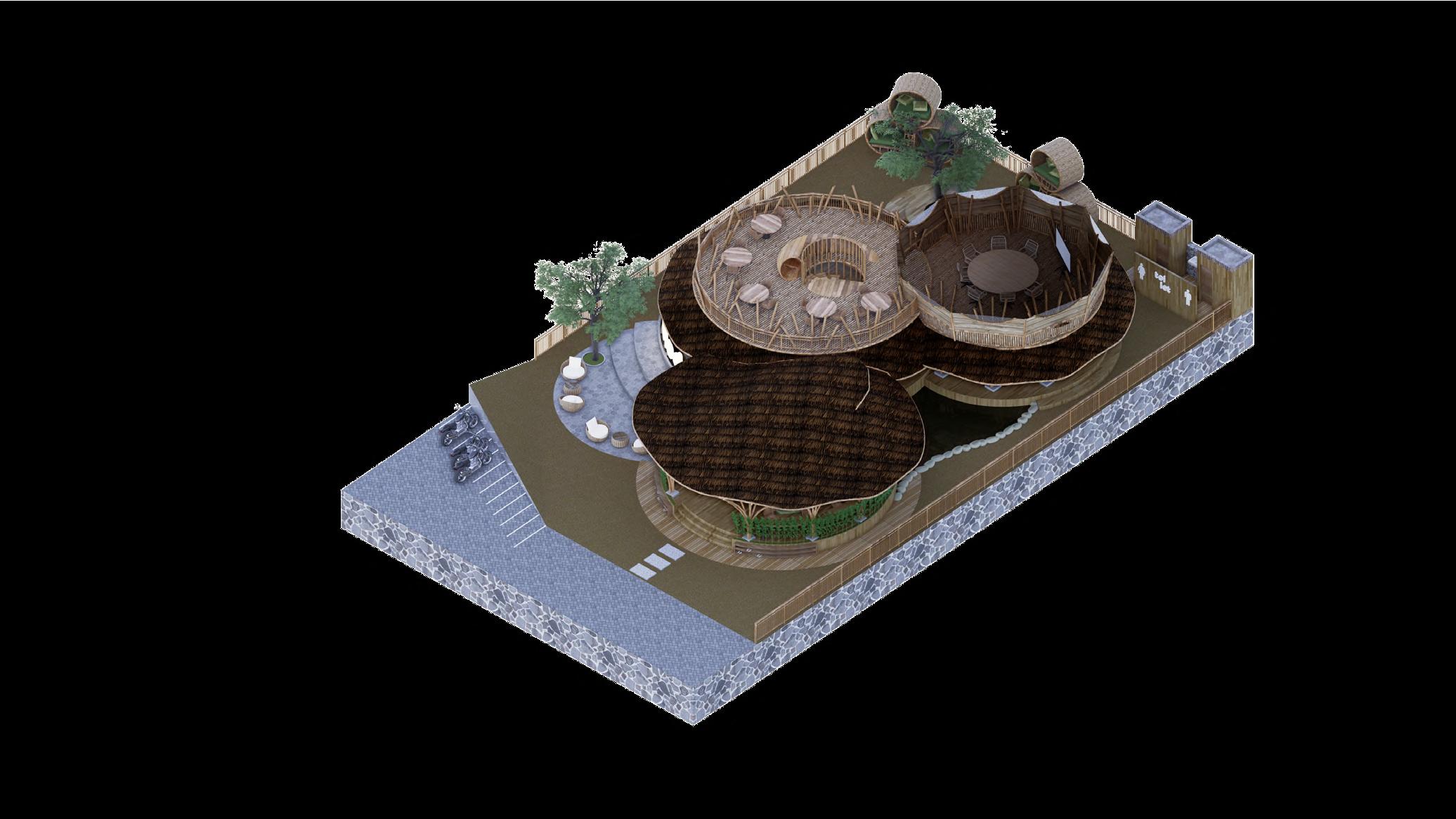
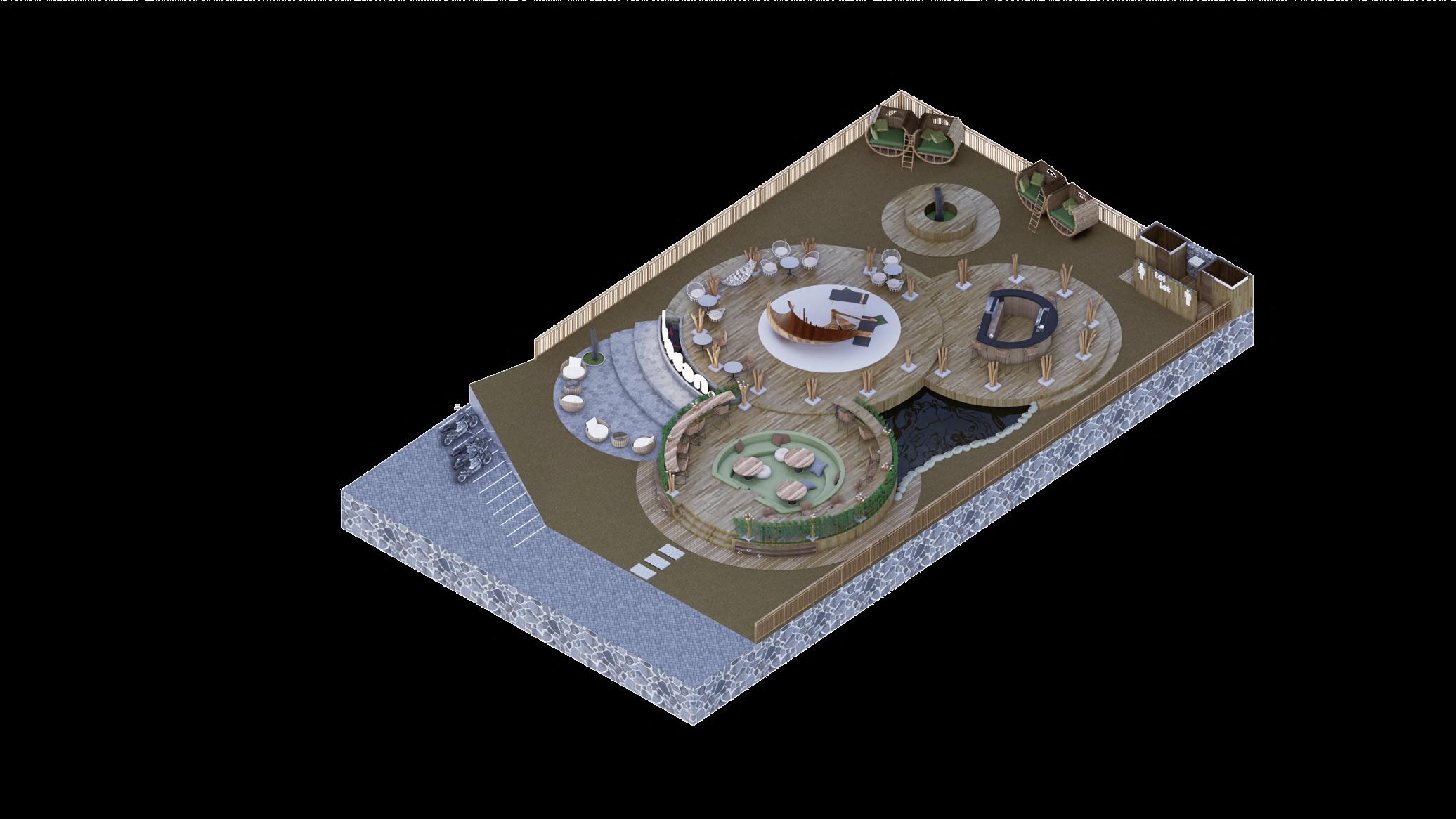
2ND FLOOR: 11. Breakroom
1ST FLOOR: 9. Regular Co-Working Space 10. Meeting Room
GROUND FLOOR:
1. Parking Area
2. Outdoor Communal Space
3. Co-Working Pit
4. Co-Working Bar
5. Creative Co-Working Space
6. Outdoor Co-Working Space
7. Cafetaria
8. Toilet
11 1 2 3 4 5 6 7 9 8 10
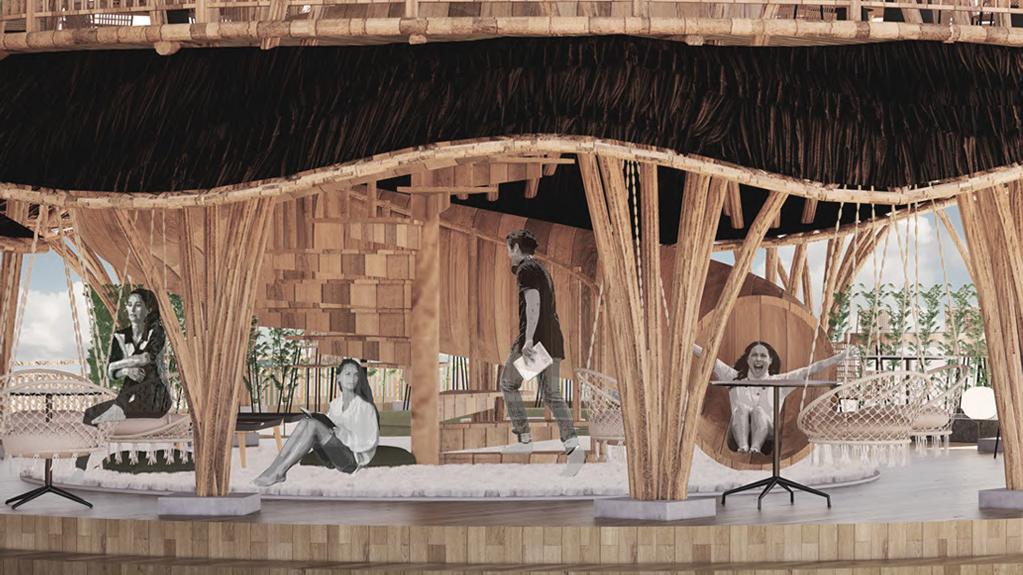
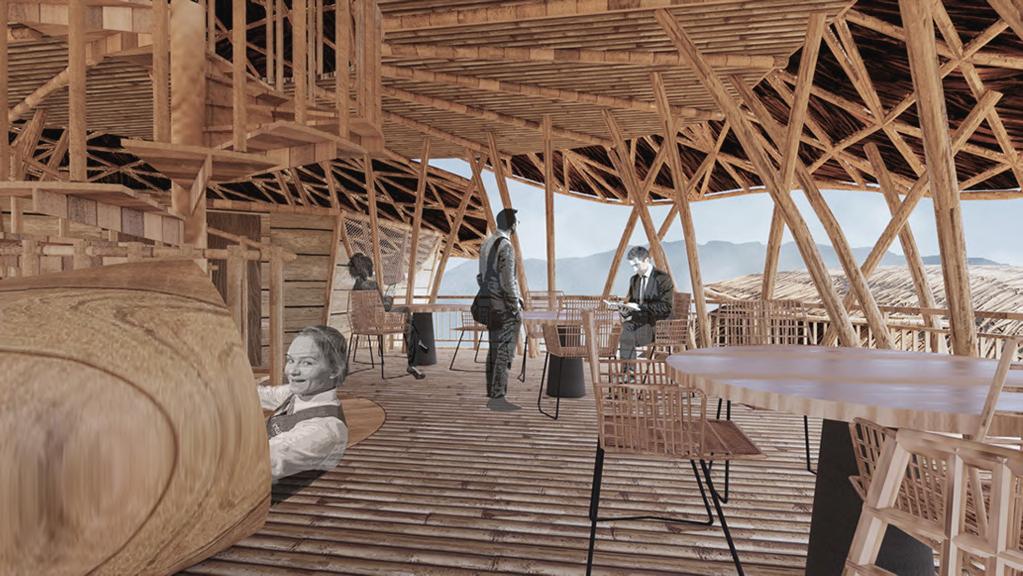
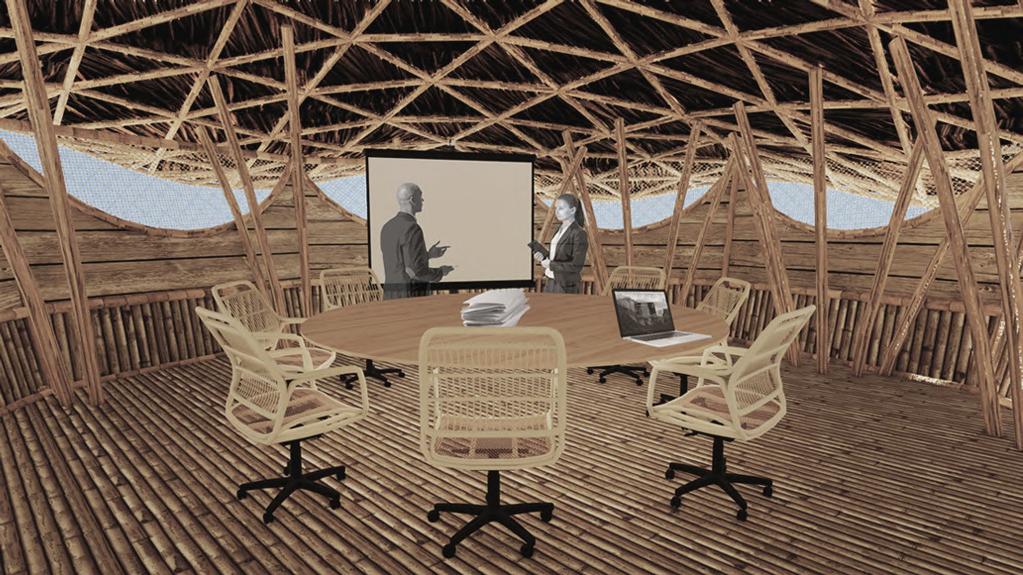
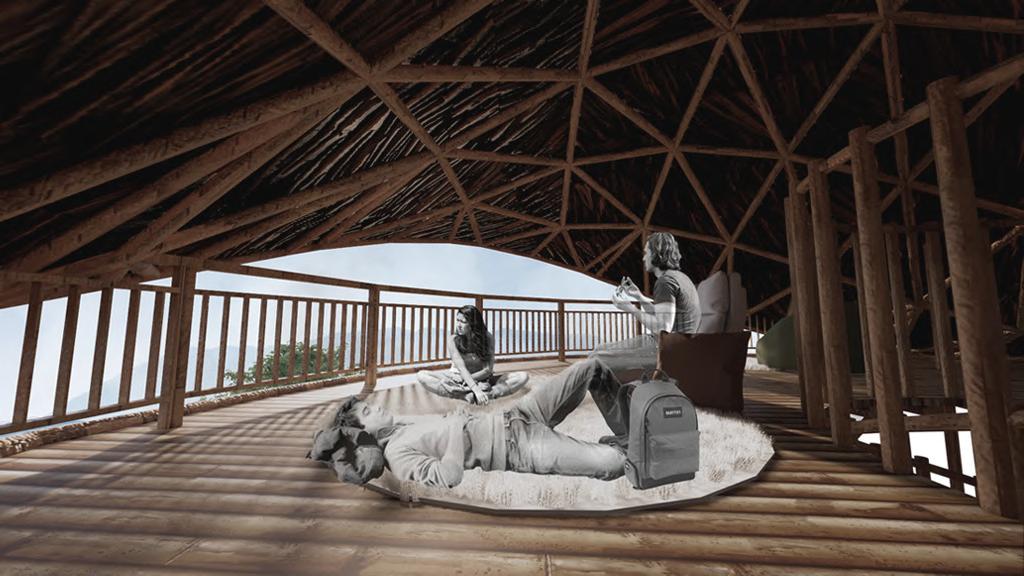
EXPPERIMENTAL ARCHITECTURE | 7TH SEMESTER| 2022 04
function form
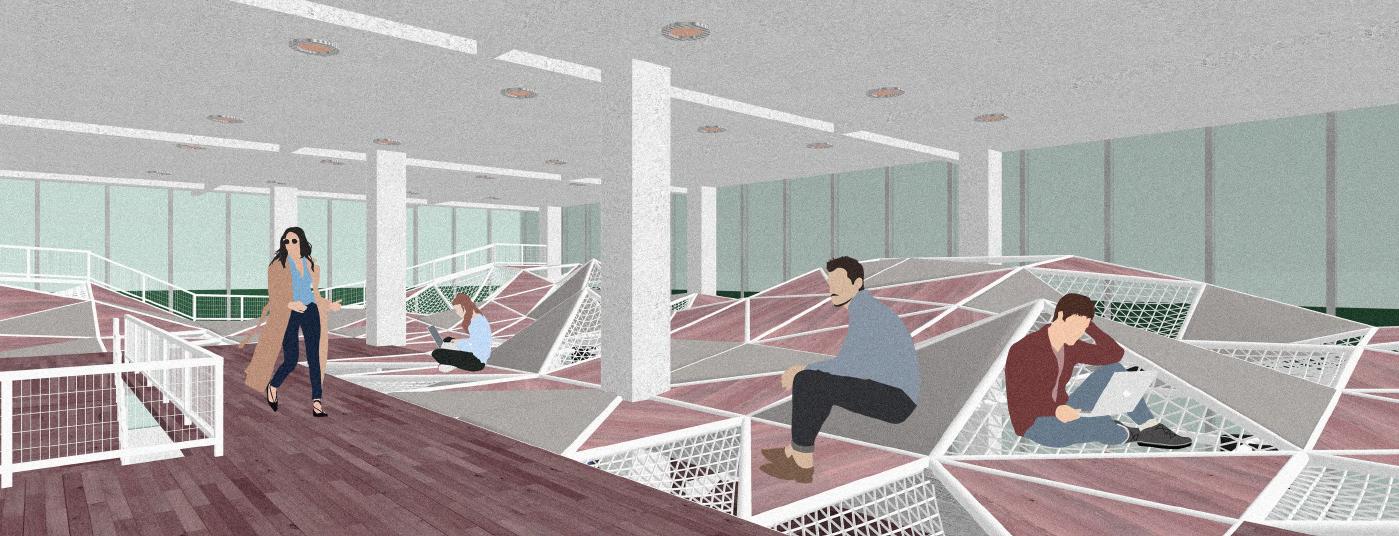
A MODEST PROPOSAL: ERRATICA
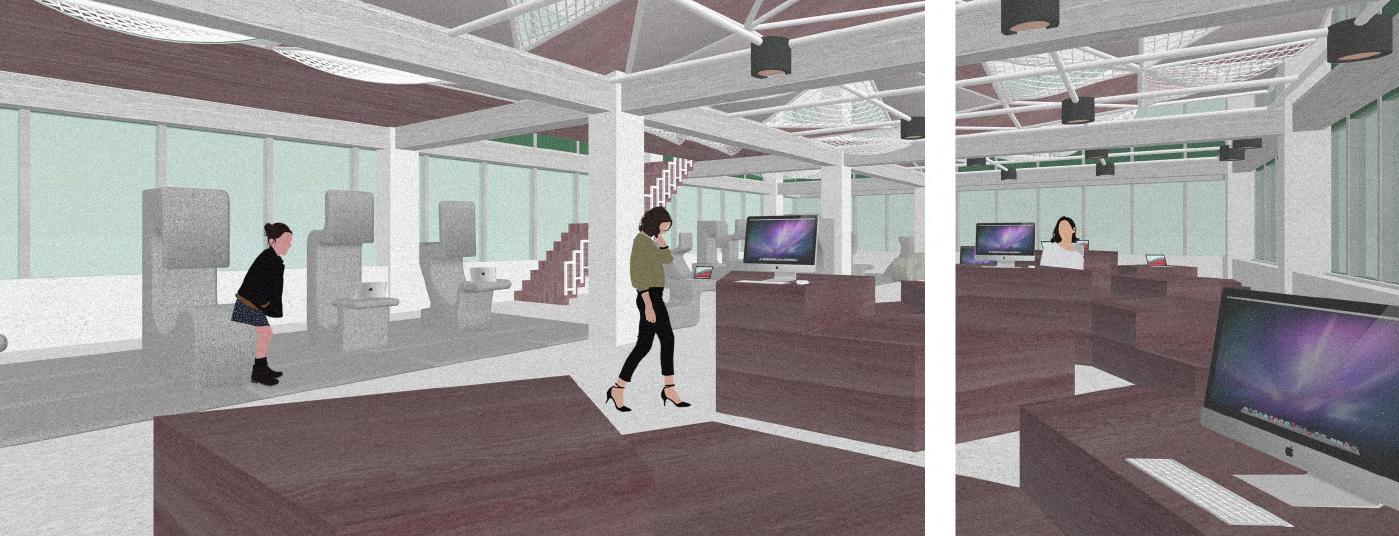
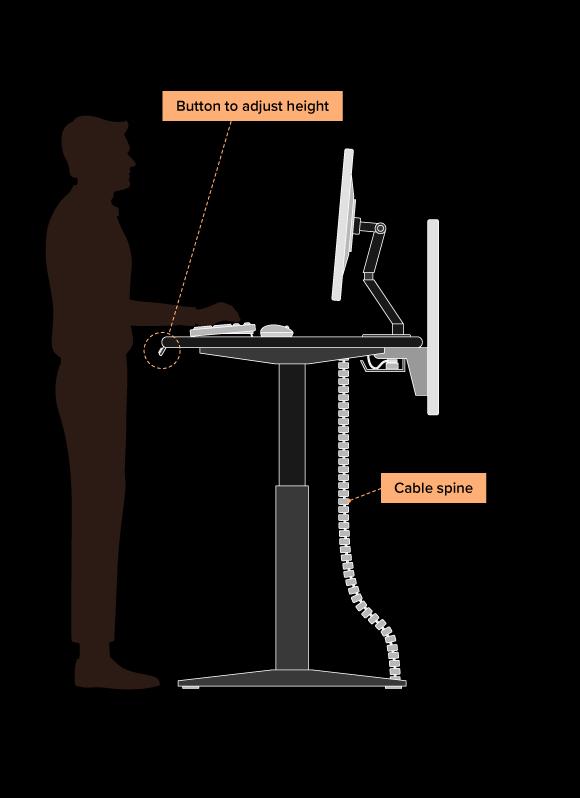
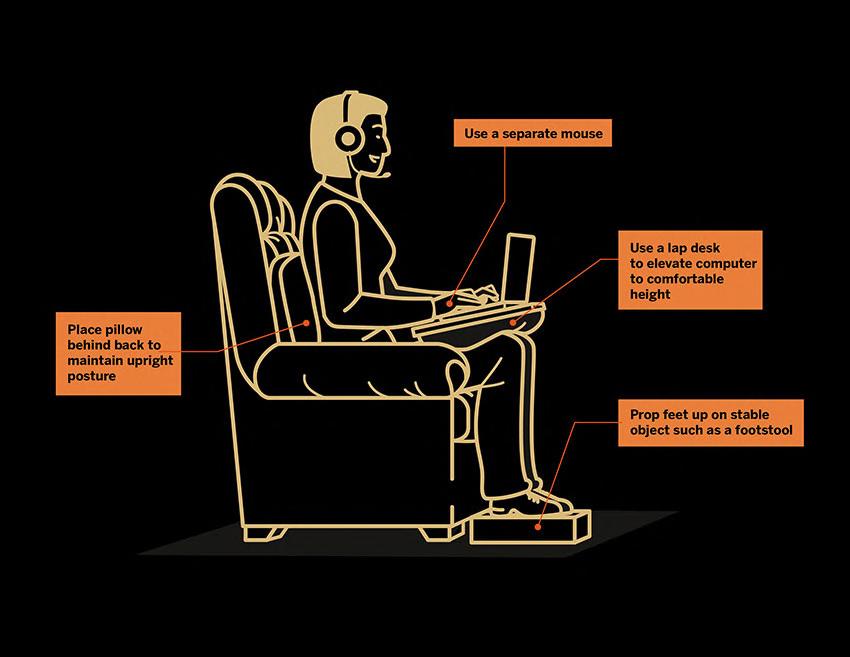
Some uniform, customised while others I can sit facing anywhere I want. Different material and different degree of slope for different activities different people Work while standing, sitting, or lying down. follows
follows
PROPOSAL:
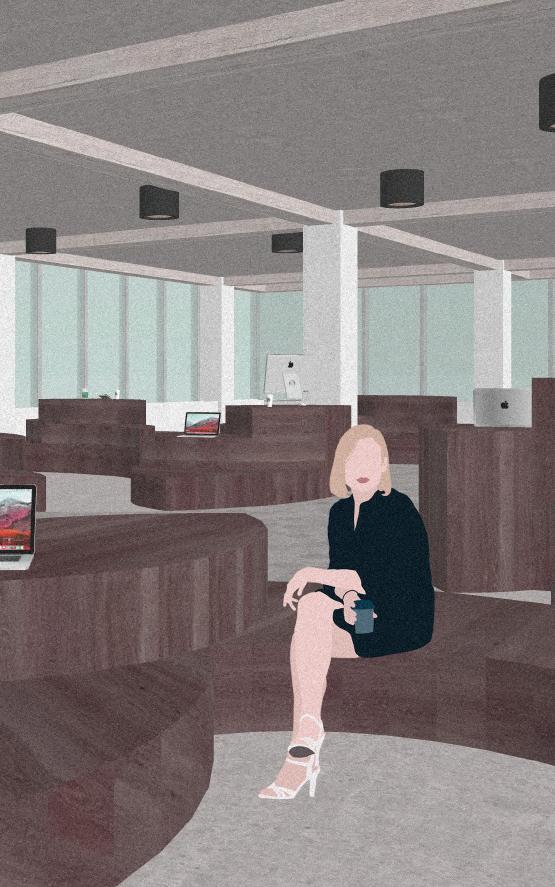
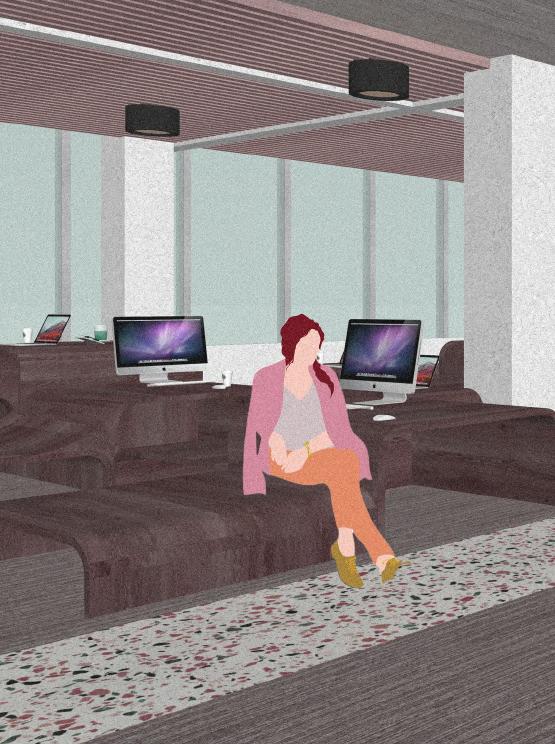
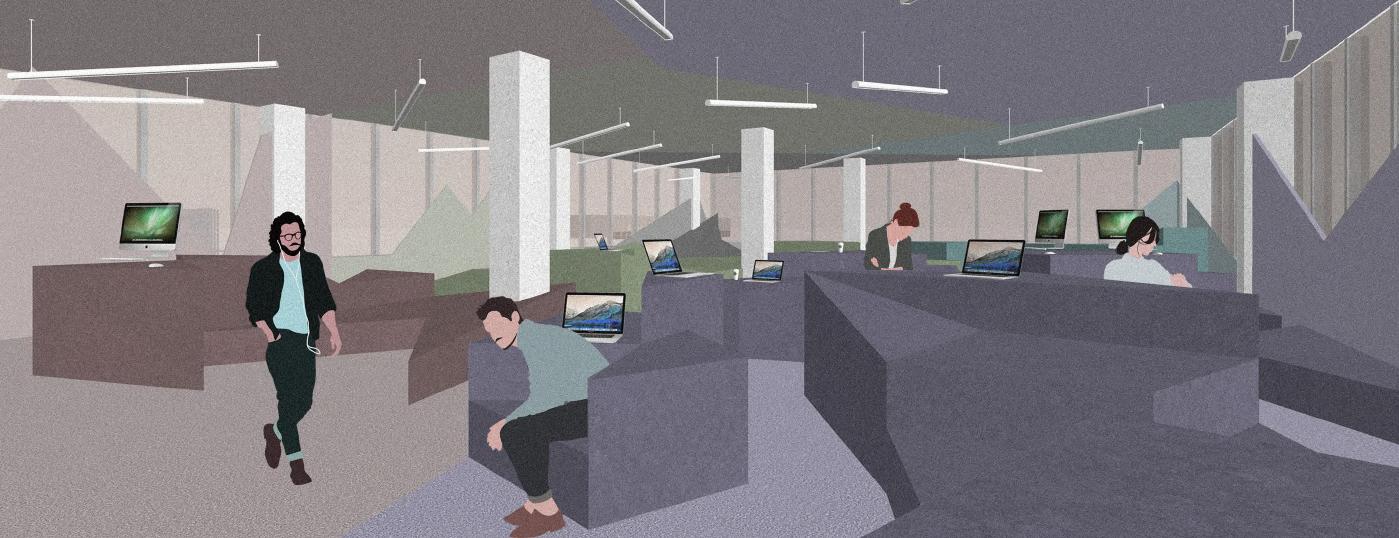
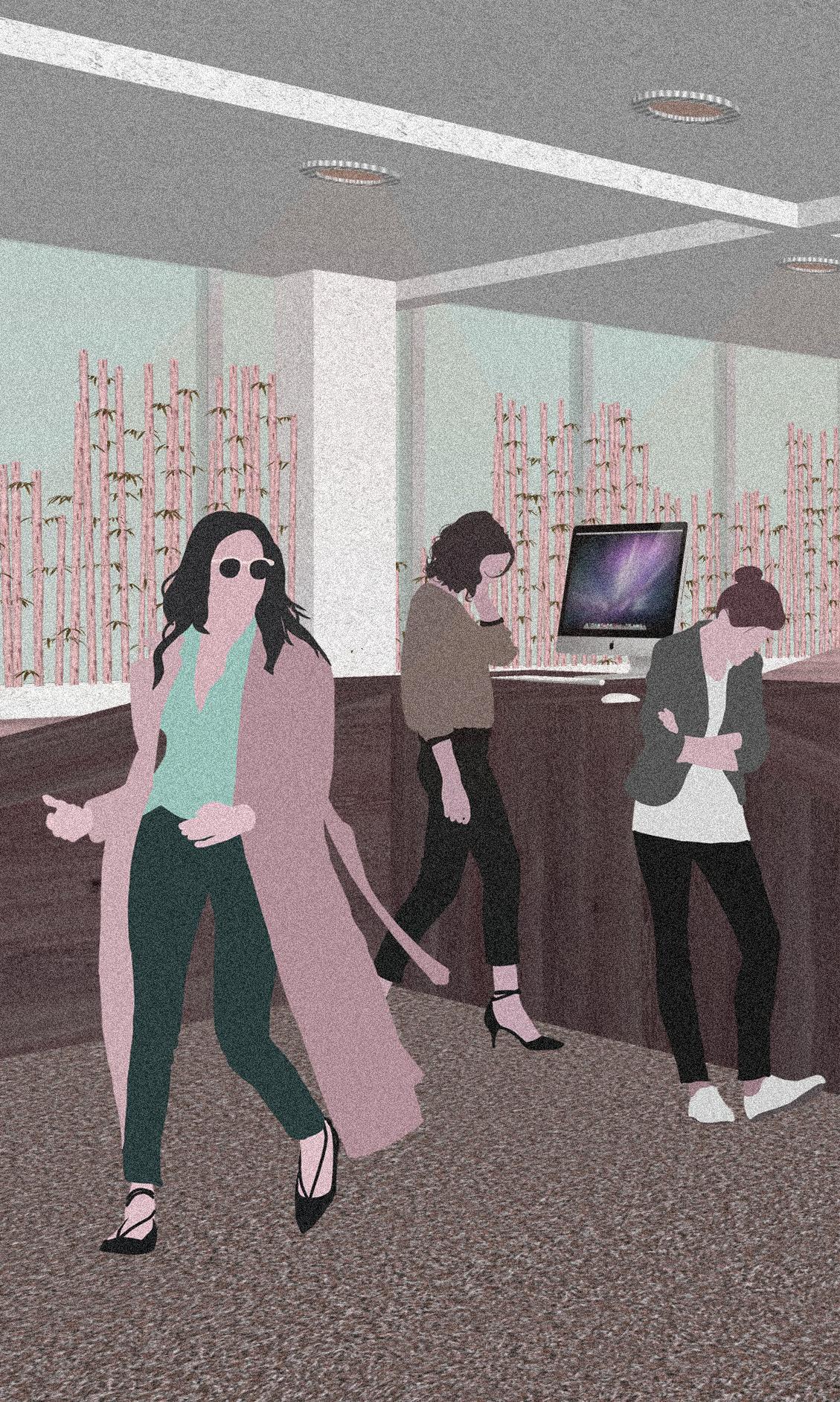
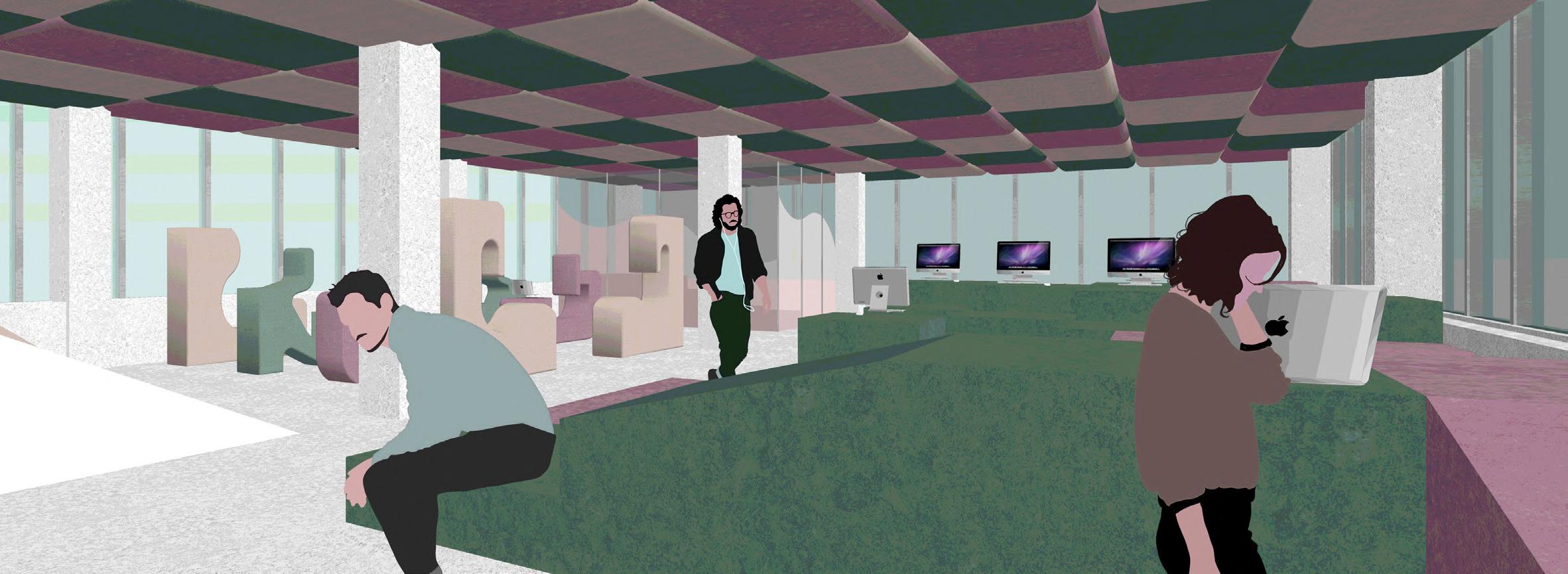
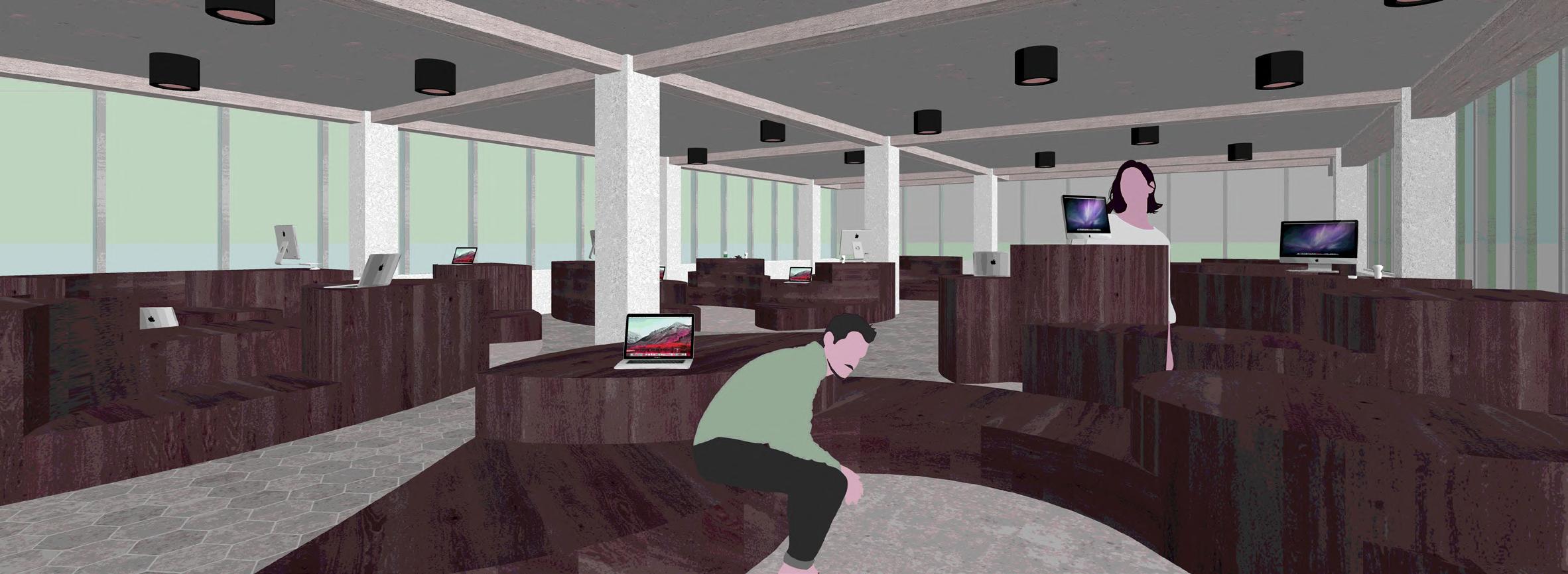
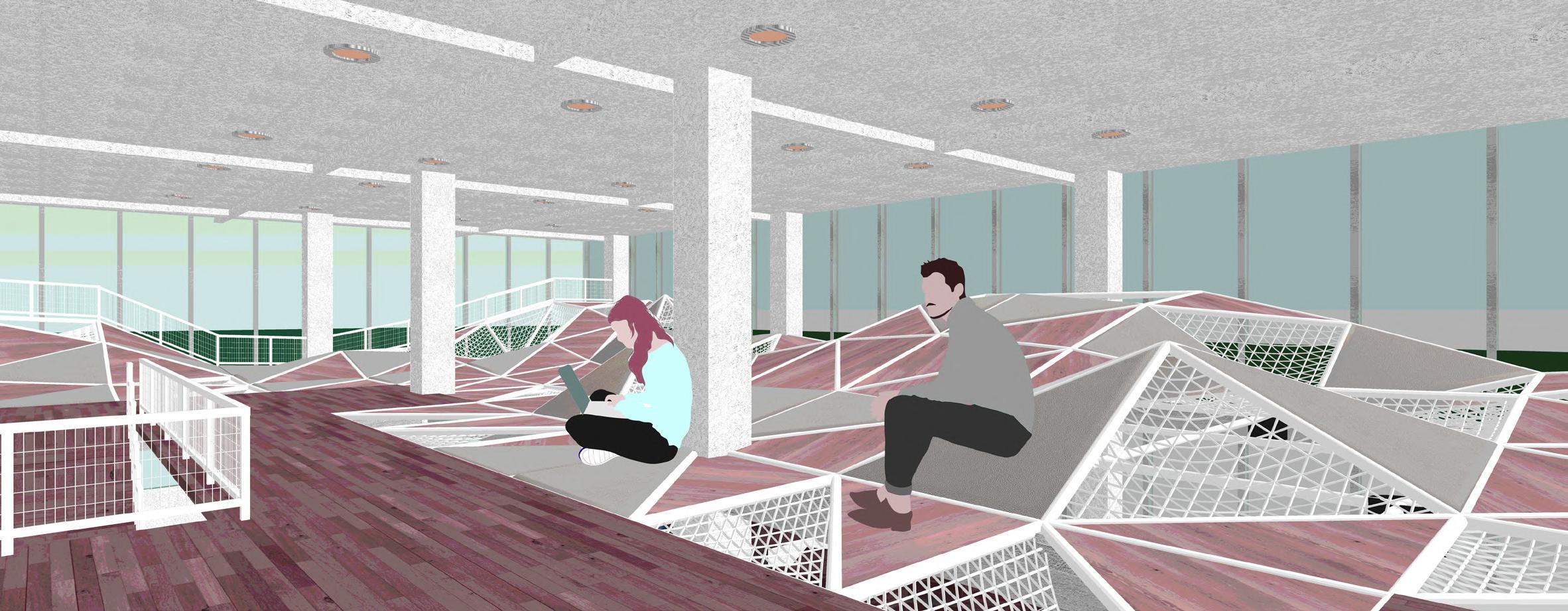
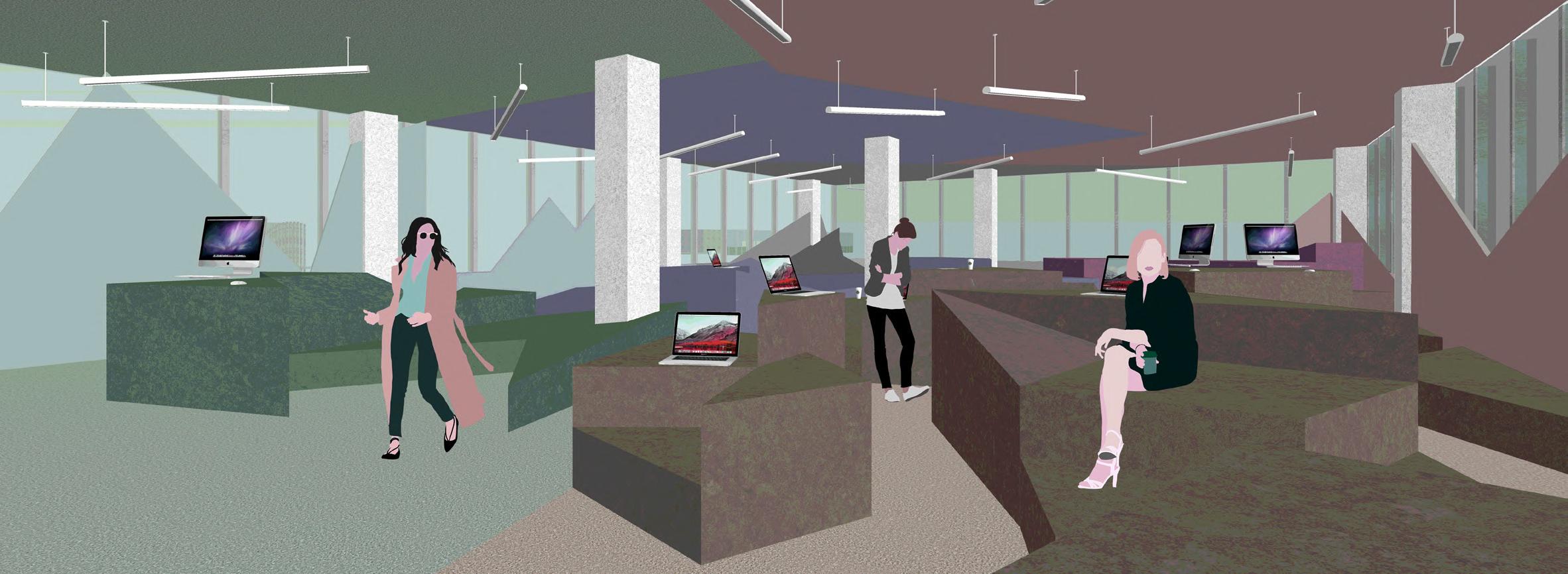
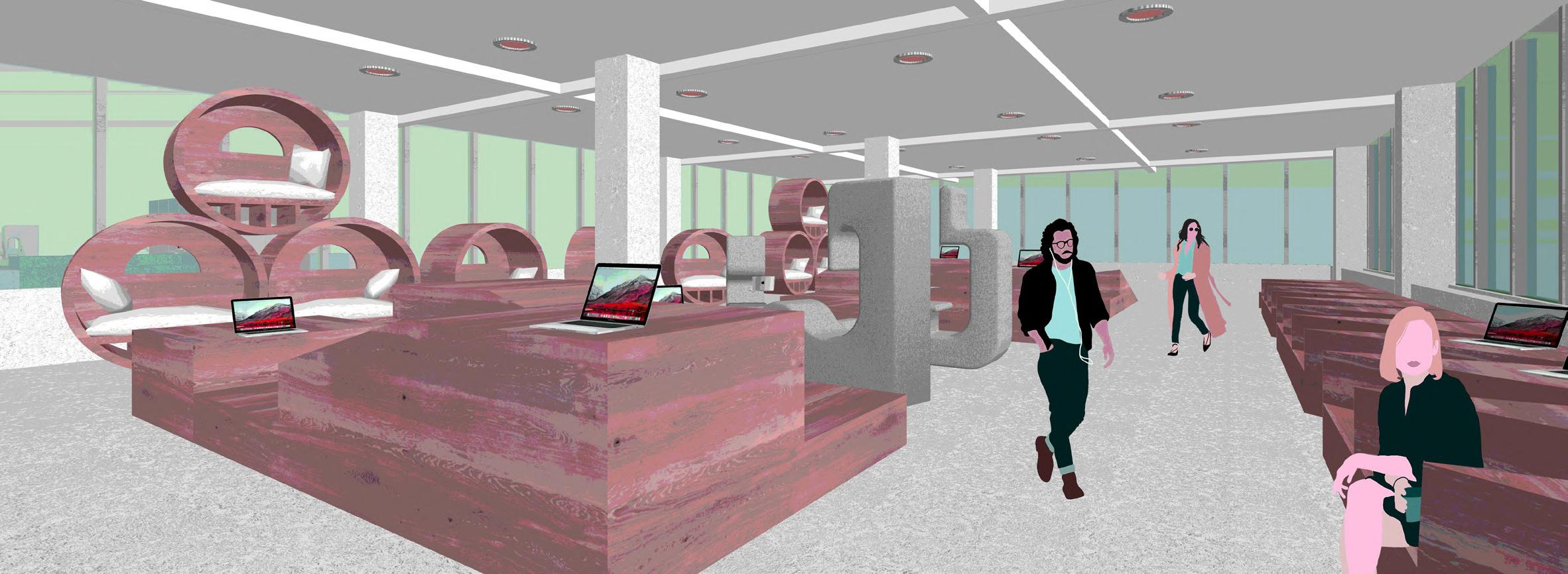
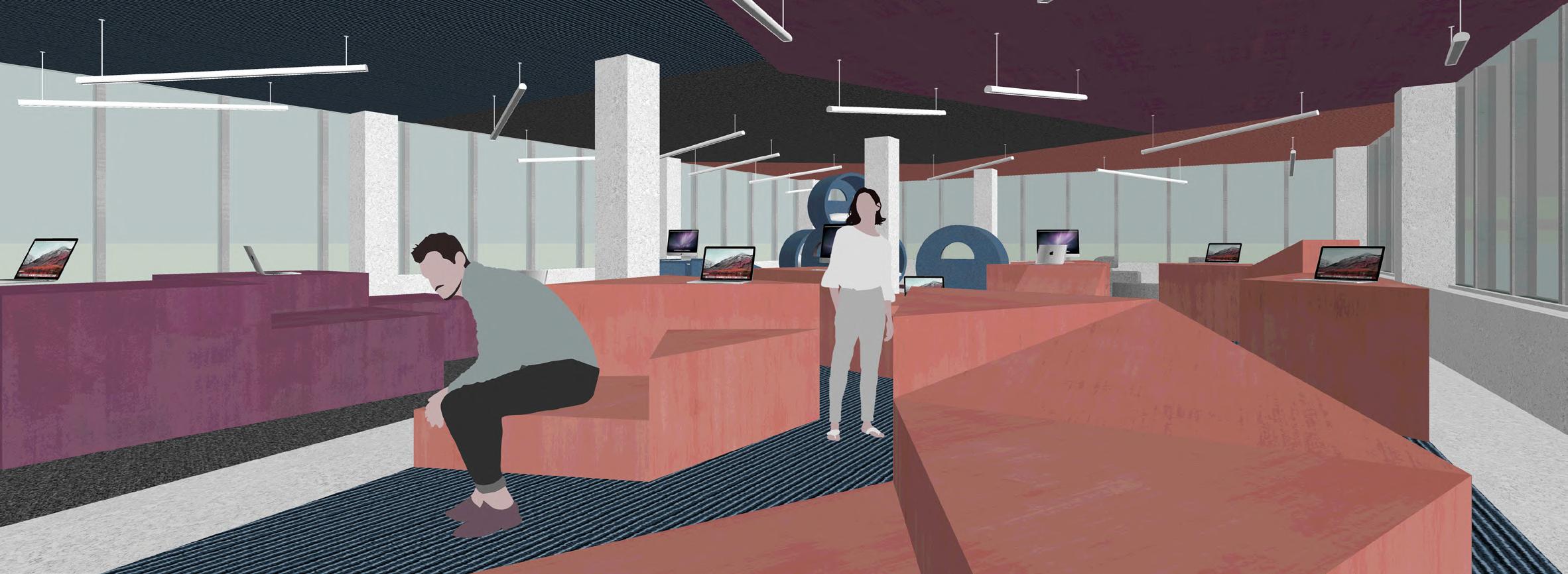
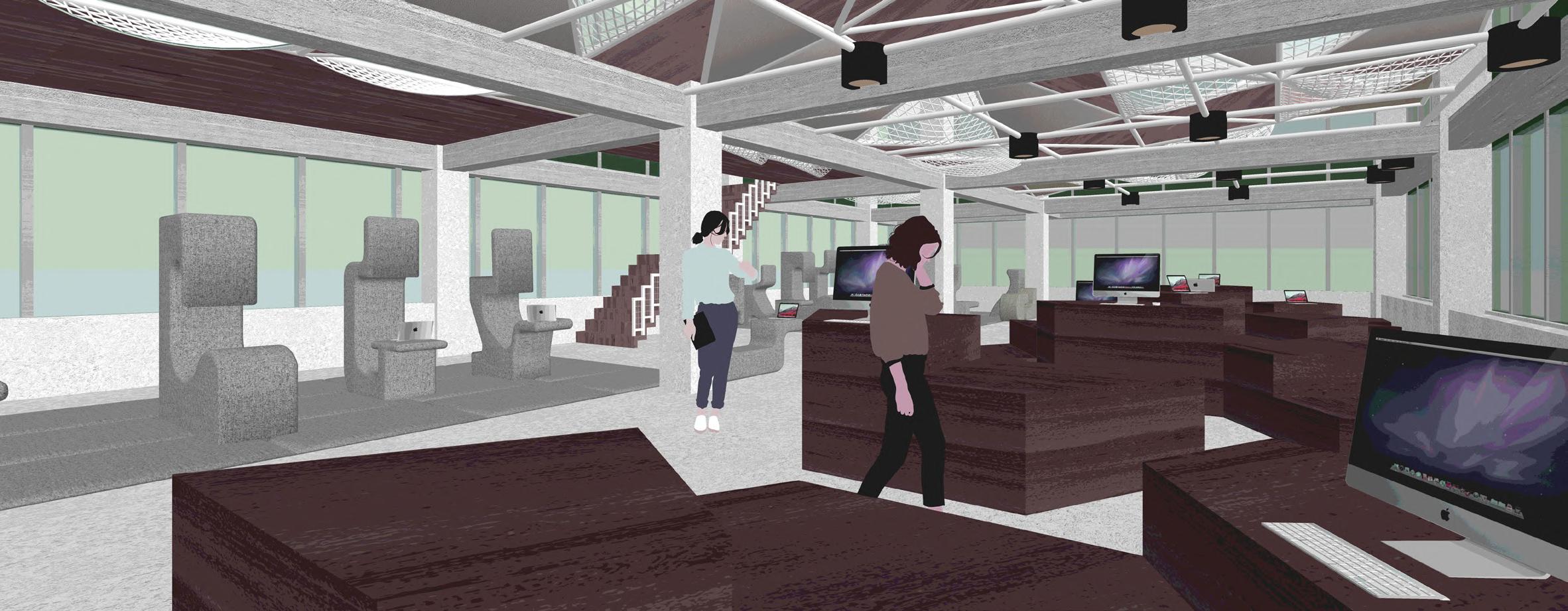
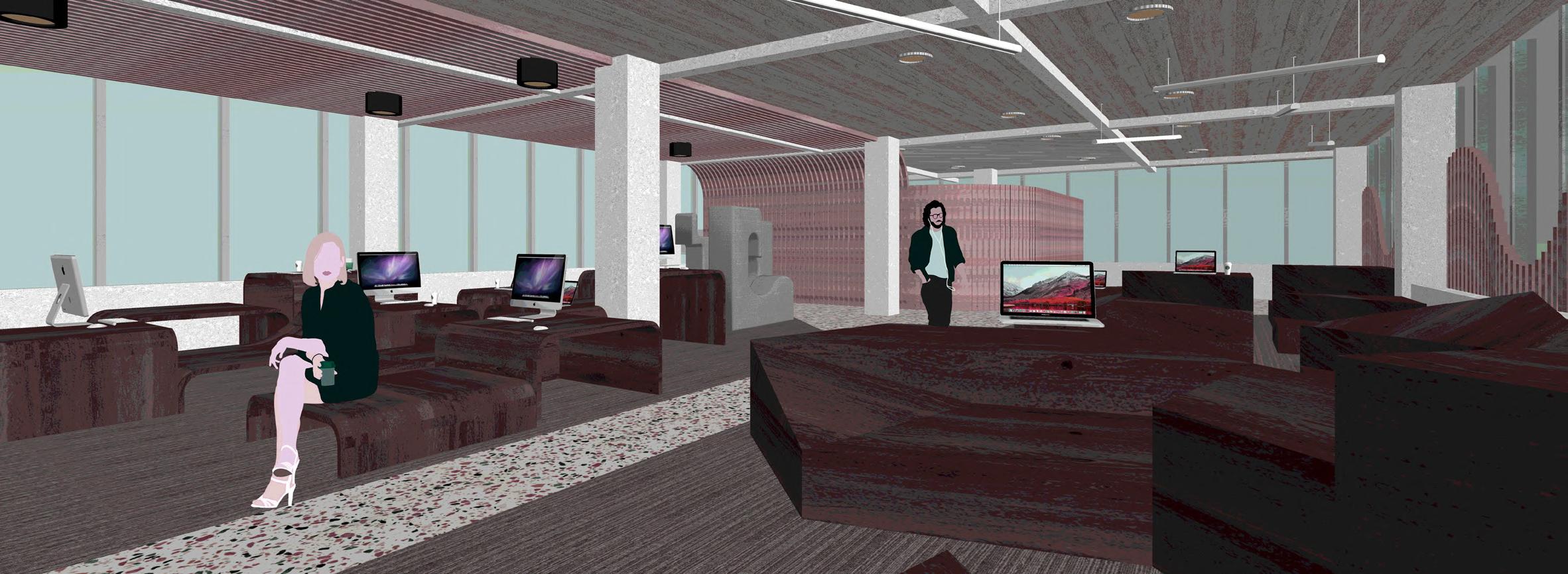
This is in fact a modest proposal on how one can reimagine working space, with the basic principle of a chair and a desk, based on the hypothesis that new environment will potentially produce new behaviour leading to more productive and creative working styles, as being in a more comfortable, engaging, and inspiring workspace could help foster positive working attitudes and behaviours.
form function
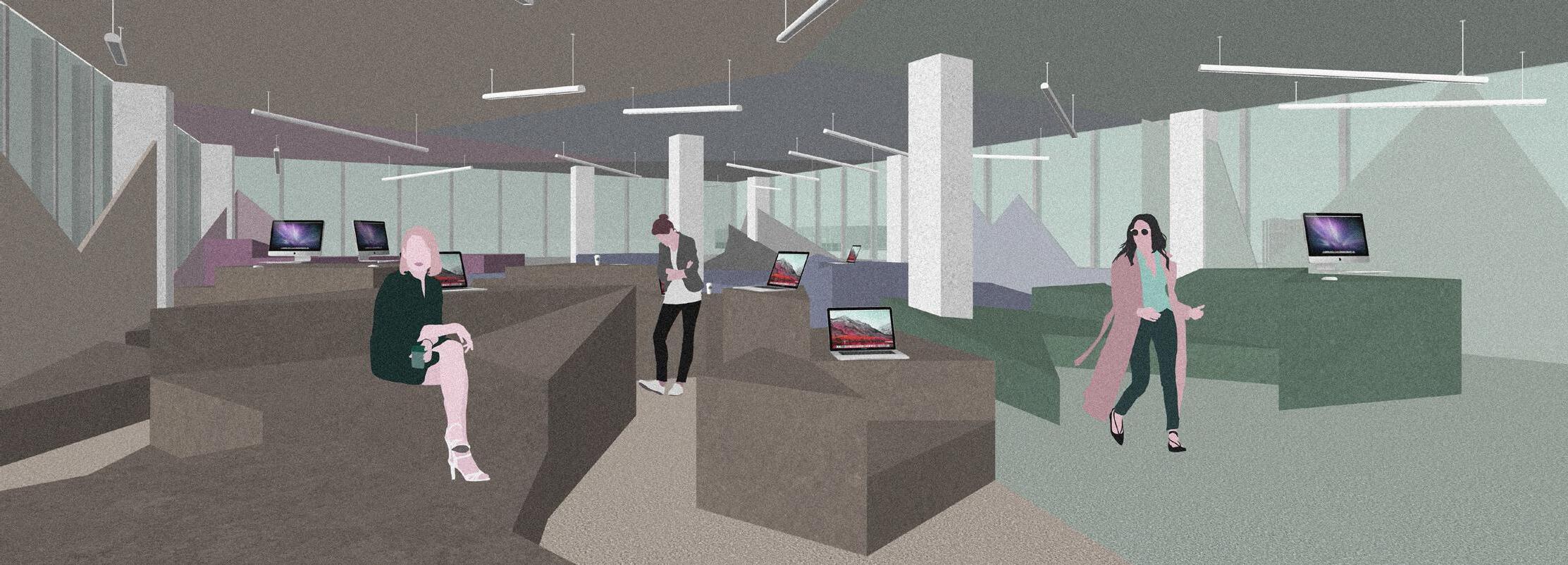
Some modules are uniform, can be easily customised and organised others are more erratic. and slope of
Open-plan, territory created by colours and elevation of modules.
Supervisor:
- Ir. Purwanita Setijanti M.Sc., Ph.D
FIRST PRINCIPLES REDUCTION AS DESIGN TOOL:
how can louis sullivan’s “form follows function” aphorism possibly be applied deconstructionist (tshcumi) manner?
“If modernism was a white box, and postmodernism was a grey box with decoration–with whipped cream on it sprayed out of a can–that deconstructivism broke the box open.” - Peter
module analysis
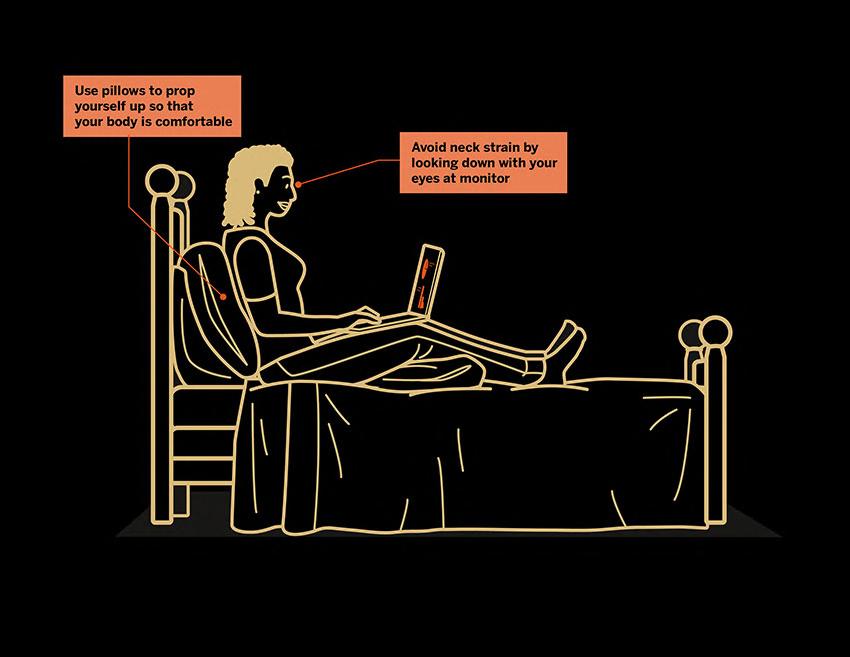
“I think that being horizontal is conducive to creative thinking,” he said. “When we’re horizontal, whether it’s sleeping or dreaming, is when we’re doing a lot of subconscious or unconscious creative work.”... “Being in bed is great,” he said. “I wish, in general, there were fewer norms and standards around where it is and isn’t acceptable to work.”
-Abie Sidell, 27, a filmmaker
“I think that the pandemic is highlighting all these things that chronically ill and disabled people have been doing for a long time, and now everyone is doing them as well and working from bed is one of them ... I know a lot of highly productive, intelligent, talented people who have to work from bed as a necessity.”
We have data showing time crafting is good for happiness, if you’re able to work from anywhere and you choose to work from bed this is one example of time crafting, - Ashley Whillans, an assistant professor at Harvard Business School. however, the working from home has shifted people’s working habit: worksurface foot rest
EACH OCCUPIES DIFFERENT ELEVATIONS
-Tessa Miller, 32, a author
circulation
*2. Take the Assign places, and relationships; distinguish generic and programmatic test alternatives.
floor table = 40cm *width of private depending on whether *minimum width 162,5cm main foot rest bottom work surface EACH OCCUPIES DIFFERENT ELEVATIONS elevation defines space
foot rest
work
bottom work surface bottom
surface
1 3
REDUCTION
decoration–with open.”
Peter Eisenmanmodule concept
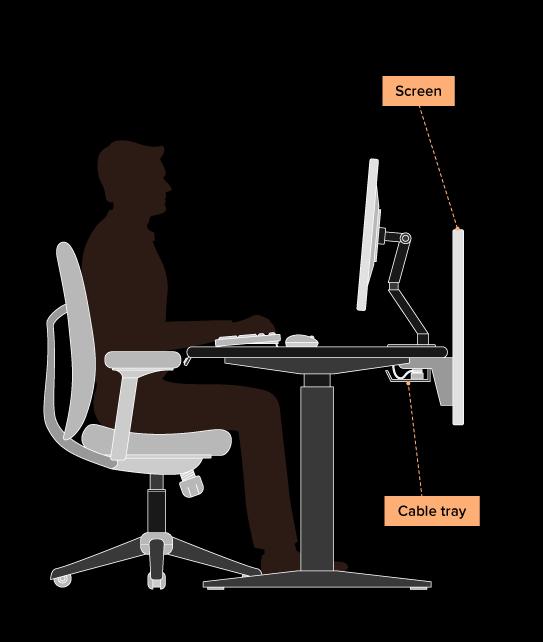
1. The first step is to analyse the physical positions in which people perform their work related activities. I conclude that all require 3 fundamental things: worksurface, bottom (surface to sit on), and foot rest. The absence of one (excluding worksurface) is acceptable.
2. The second step is to study standard dimensions.
3. The last step is to begin conceptual work. odule consisting of elevated surfaces which can be utilised as worksurface, bottom, and foot rest.
2standard dimension circulation
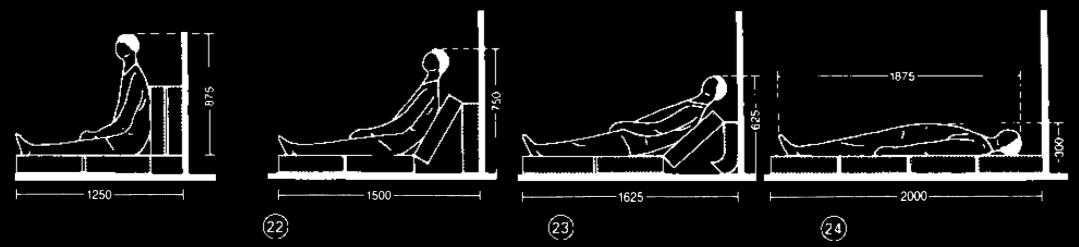
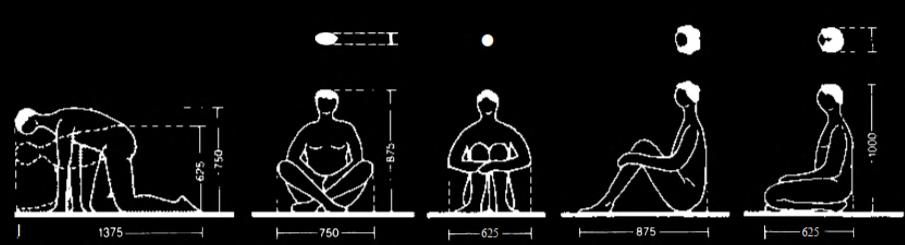
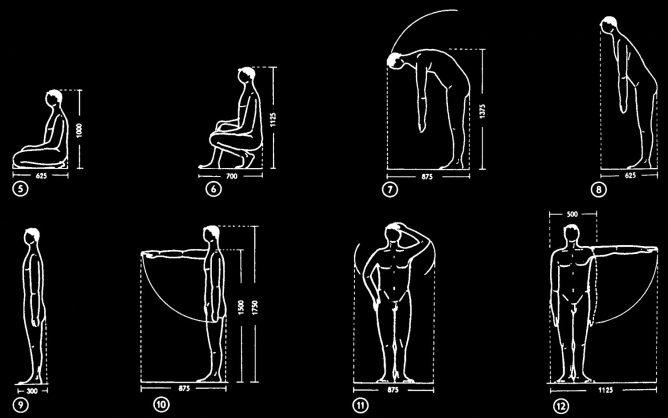
activities taking place on the modules may vary: standing, sitting, laying, squatting. analysing the standard dimension of human is necessary to determine the size and shape of the modules. 80 cm = regular desk
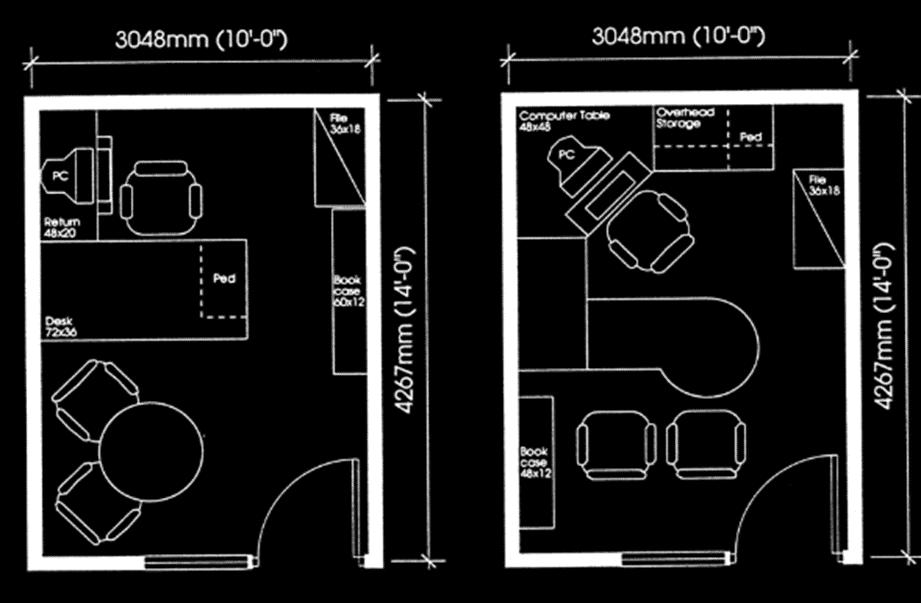
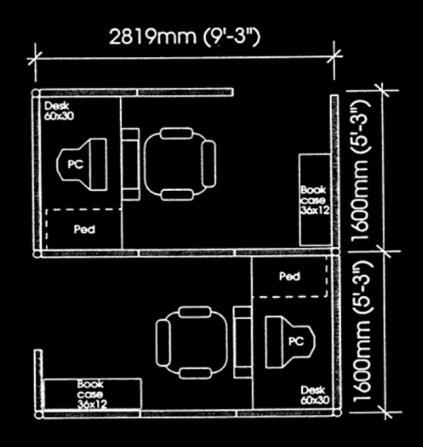
analysing the standard office rooms. some partitions will be eliminated. spaces are defined with plants and elevation of platforms.
the program. dimensions, relationships; between and specific programmatic spaces; alternatives.
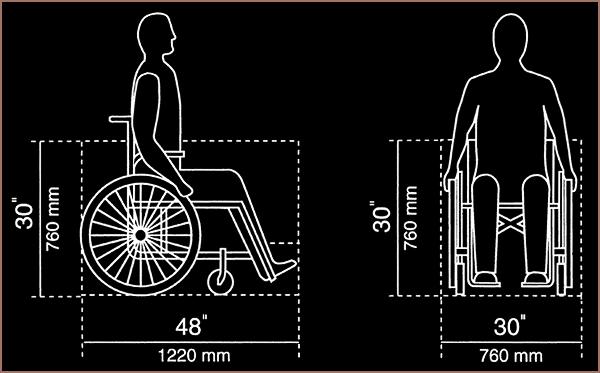
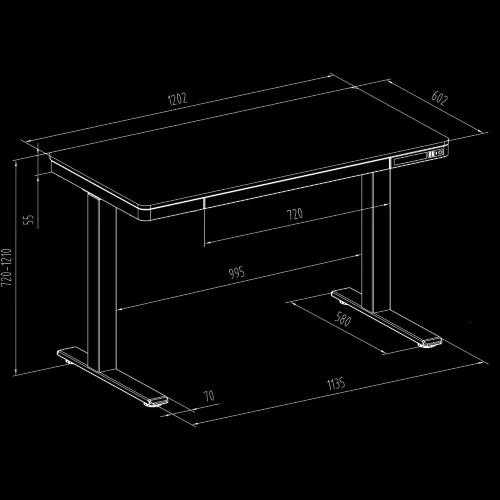
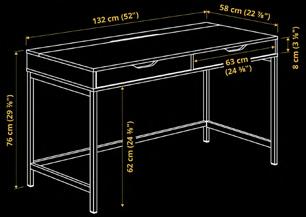
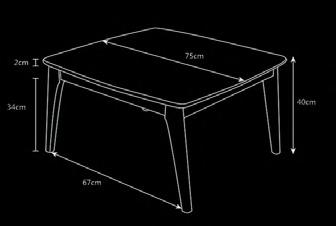
desks and chairs must be eliminated and replaced with modules. to determine the dimensions of the modules, designer must analyse the dimensions of standard desks and chairs. from this analysis, I conclude that the height ofthe modules will increase by 40cm, close to the dimension of standard floor table, regular desk, and standing desk.
40cm 40cm
width 40cm 40cm 120cm = standing desk main circulation = 1,2m 45° = drafting table defines space
office space depicted in the previous image. however, the width will vary, whether the space is intended to be private, communal, or both.
between modules = 0.8m
circulation
follows applied in
a
PROGRAMMING
existing layout and standard dimensions
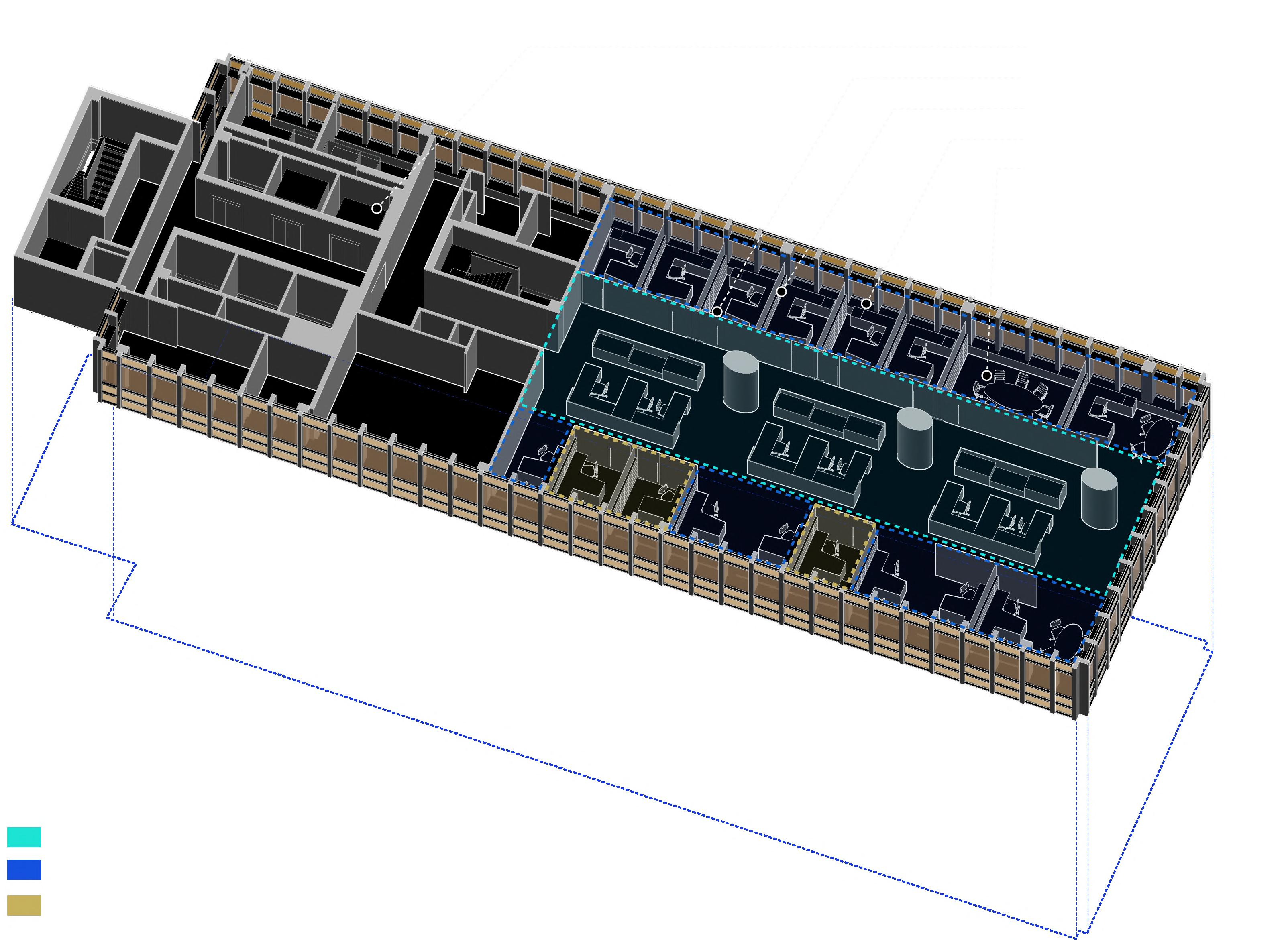
"The lever house is an icon of modernist design. The grid of the façade and clear orthogonal structure and massing are the defining characteristics of the existing building. We designed the space to work with and reinforce this order. Starting with the building’s grid, we created a rational orthogonal layout for the offices and other spaces. As a counterpoint to this extension of the buildings inherent Cartesian logic, we introduced some subtle non-orthogonal geometries. These elements are framed by the orthogonal geometry. The most striking of these are the staircase connecting the two floors and the translucent ceiling over the open trading areas in the center of the office."
- SLADE ARCHITECTURE

min. 9 people min. 26 people min. 3 people
CAPACITY: APPROXIMATELY 38 PEOPLE
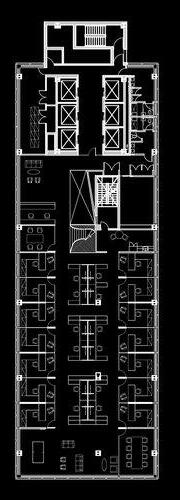
working individually (private) partition partition orientation (facing non-crowded area) (above others’ eye level) (limiting vision) elevation elevation creating privacy small group/ collaborative (semi-private) connection (eye contact) same-level/horizontal different-level/vertical creating territory partition (required) elevation connection (eye contact) same-level/horizontal different-level/vertical creating territory public/ communal connection (eye contact) same-level/horizontal different-level/vertical connection (eye contact) same-level/horizontal different-level/vertical hosting guests/ clients connection (eye contact) same-level/horizontal office party meeting/ conference *only the office area is redesigned (not including restroom, breakroom, utility area, etc. as depicted in the image above). however, activities may include those outside of work related matters.
*not required in all layout
layout and interior
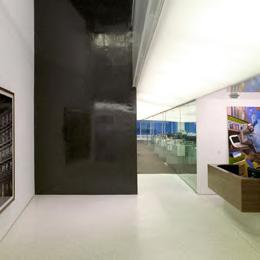
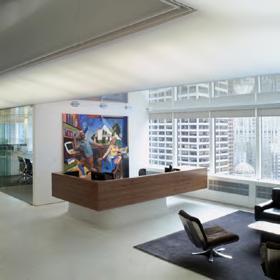
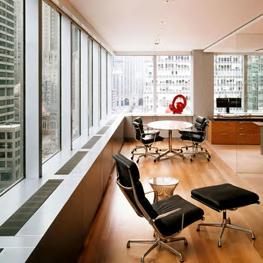
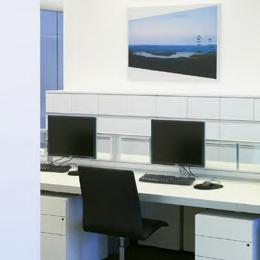
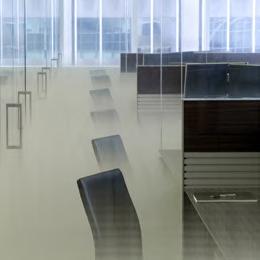
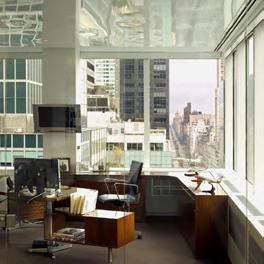
Though the idea is to make an erratic office layout, there are certain aspects that must be under designers’ control, considering that we’re adapting principles of an urban park into an office. Activities that take place in an urban park immensely vary and nearly limitless.
In an office setting, employees and employers are tied to work goals. There exsists expected activities. In this context, designer must preconceive what kind of activities take place in the office tiers.
Here, I analyse one of the current existing layouts of the typical office tiers as a starting point of programming (what kind of rooms and their spatial qualities). Then I begin to synthesise the potential activities that may occur and how I can build adequate spaces for the activities. However, eventually, the decision of creating relationship with the surrounding space and how to use the modules to perform their tasks are in the hands of users.
Figure 4. The Lever House 18th and 19th floor layout and interior source: slade architecture communal small group/private larger office space small group discussion corridor receptionistdifferent-level/vertical different-level/vertical
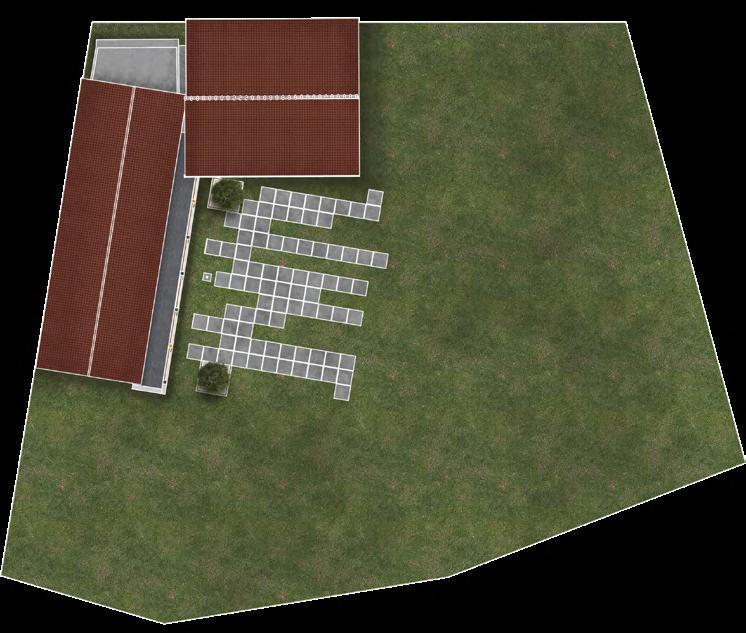
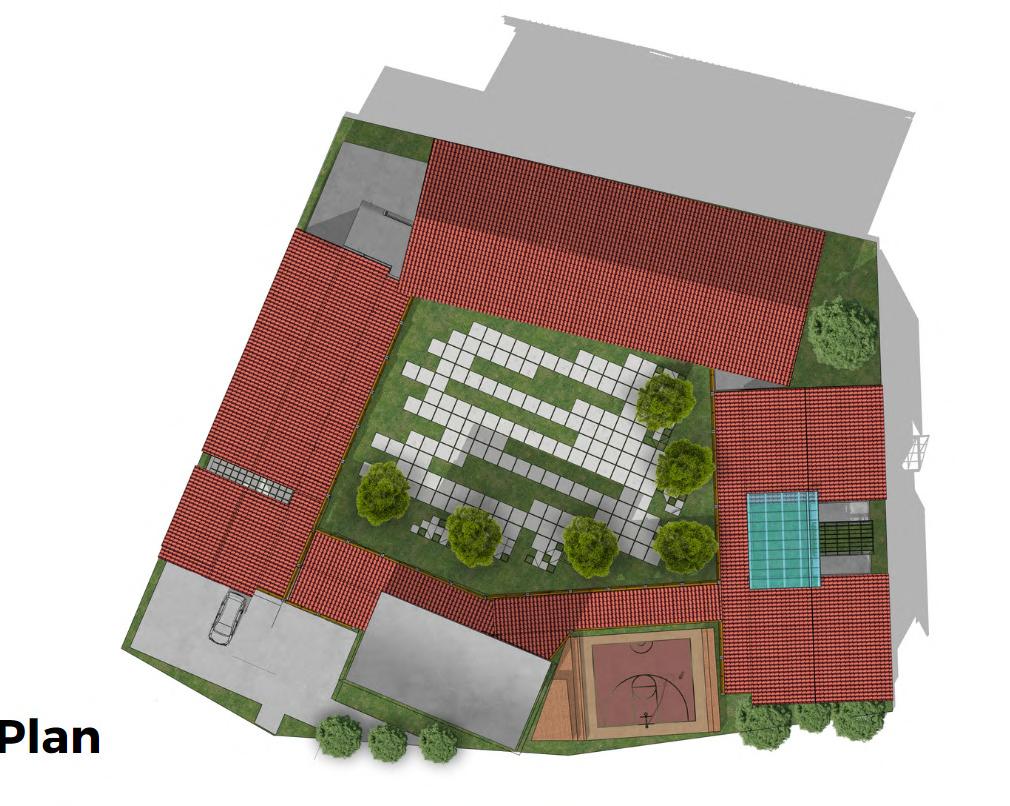
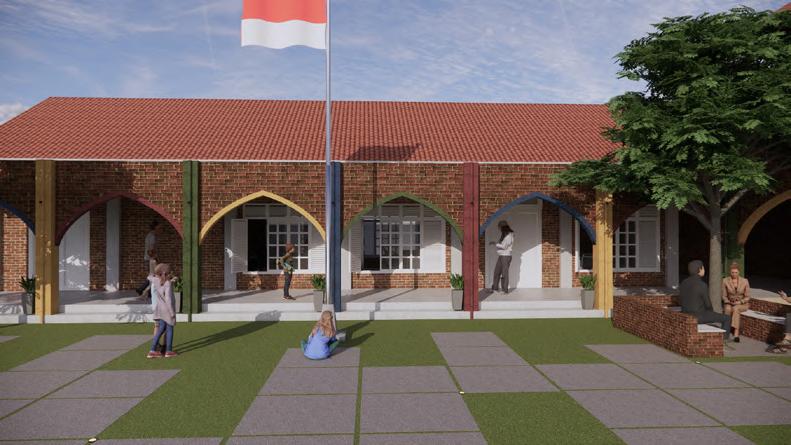
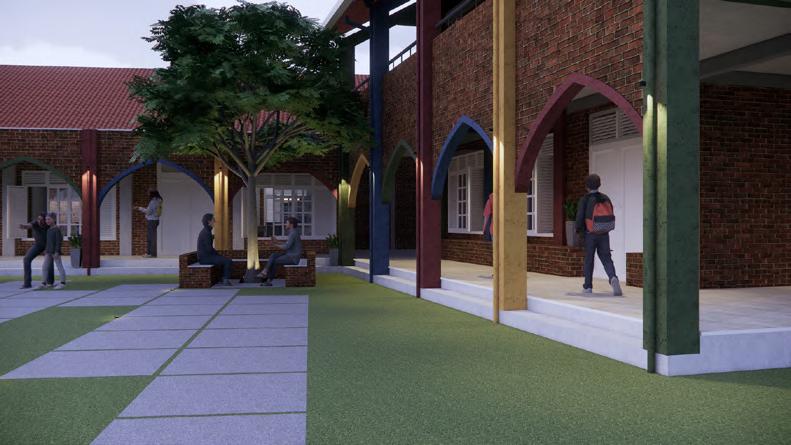
KOST JEMBER & SD PATI
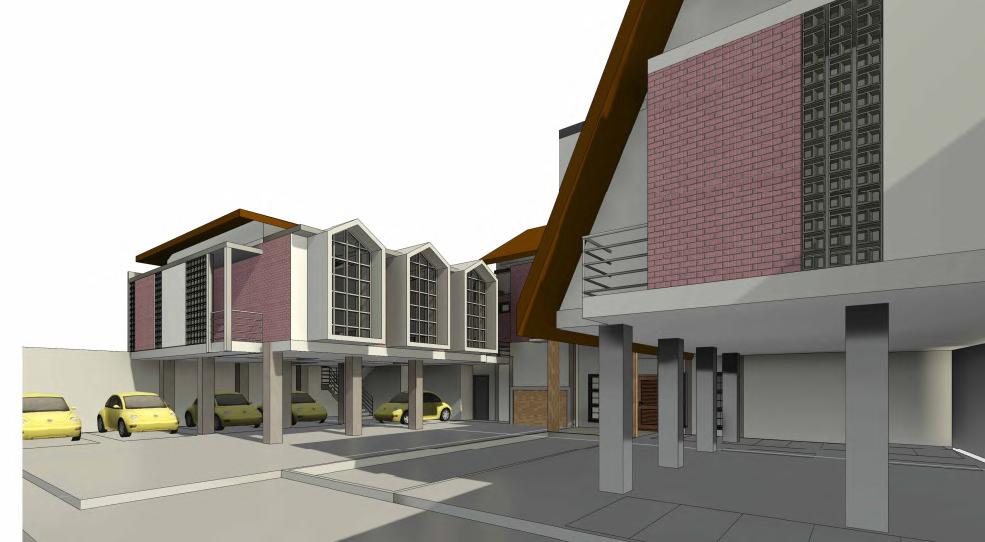
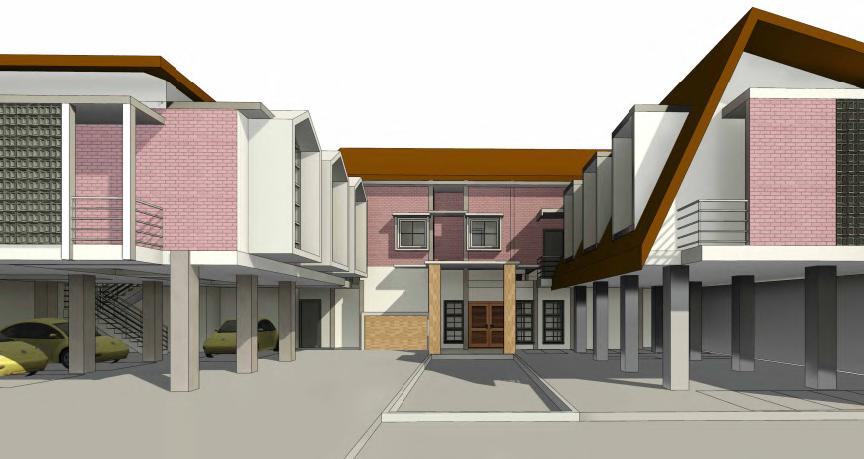
| TEAM PROJECT | 2023-2024 06
WORK PROJECT
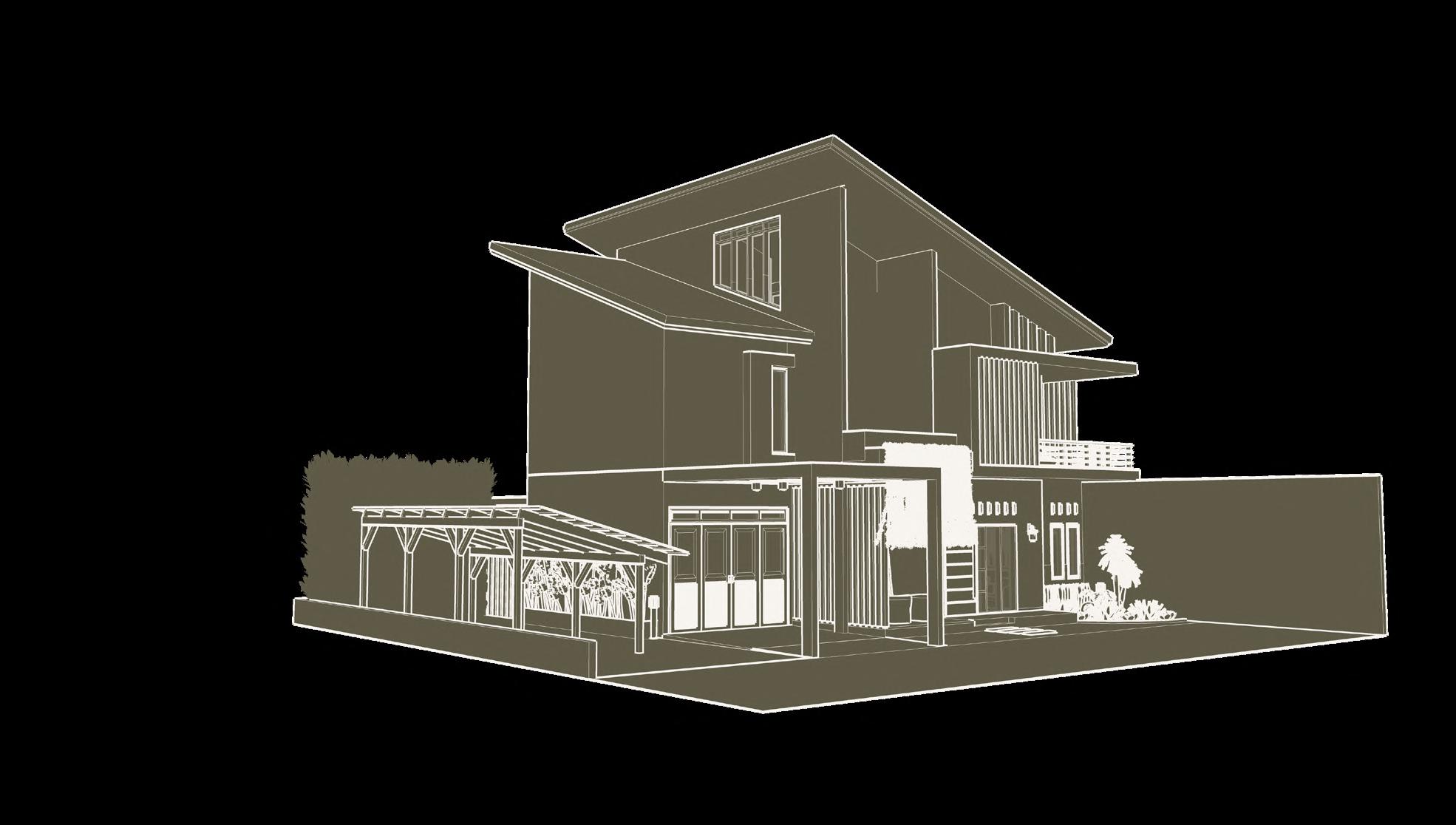
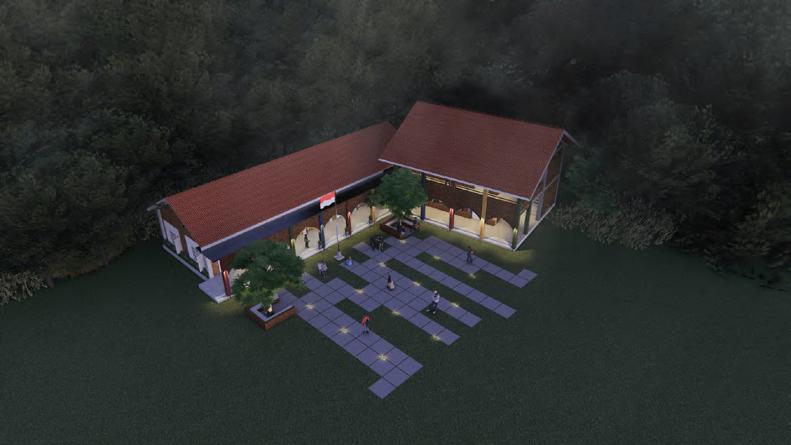
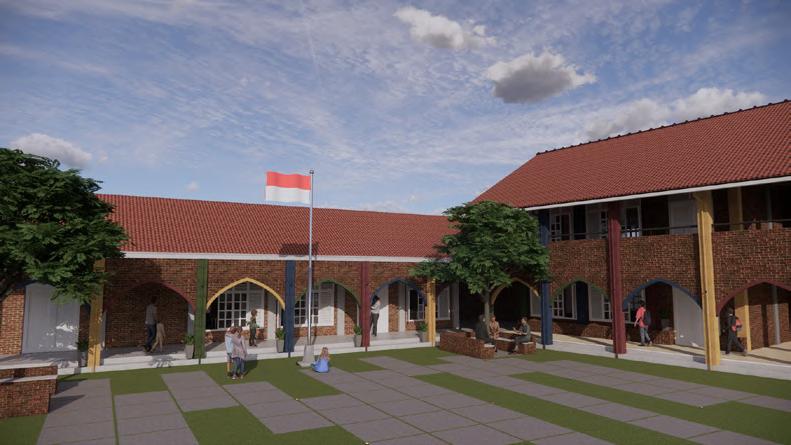
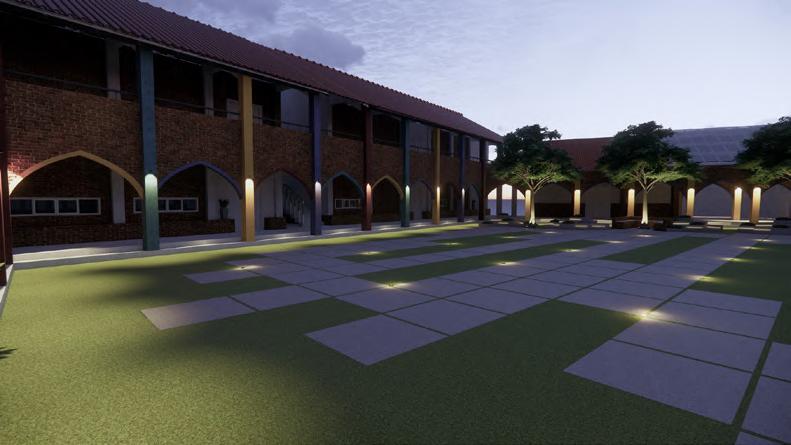
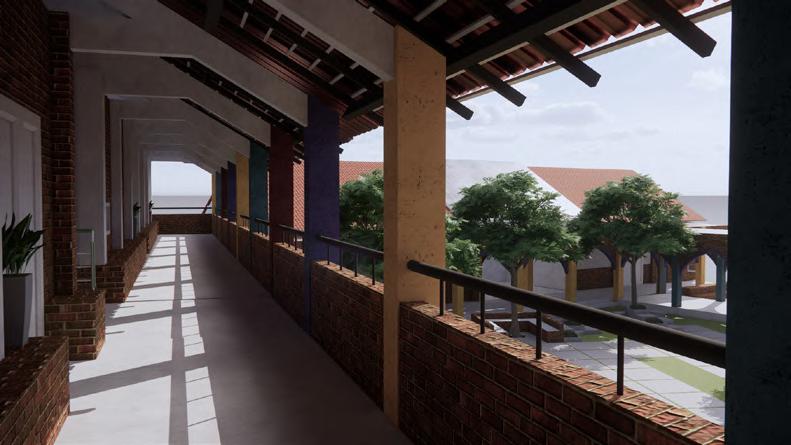
In these projects, my tasks involved conceptualising (iterations of designs while maintaining core concepts) and 3D modeling using SketchUp, Revit, and Enscape. These projects were conducted at NRT Studio under the supervision of Dr. Didit Novianto, my lecturer during undergraduate studies.
&
- Nurfahmi Muchlis, S.T., M.T.
Mentor:
thank you