



APR / MAY 2026

















A proud sponsor of the musical arts

























APR / MAY 2026
A proud sponsor of the musical arts
8 Cover Story: Come as You Are
12 Spotlight: Why We Give: Music For All Campaign — This is Your CSO
14 Spotlight: Life is Good When You’re Surrounded by Music, an Essay
15 Save the Dates: 2026 Brady Block Parties
16 Spotlight: “Studio Ghibli” Conductor Wilbur Lin on the Art of the Film Score
18 Orchestra Roster
19 Artistic Leadership: Cristian Măcelaru, John Morris Russell
20 Concerts in this Issue:
20 Concerts in this Issue:
• APR 14: The Music of Studio Ghibli (Pops)
• APR 14: The Music of Studio Ghibli (Pops)
• APR 17 & 18: Mendelssohn Symphony No. 3 (CSO)
• APR 17 & 18: Mendelssohn Symphony No. 3 (CSO)
• APR 24 & 25: Stravinsky’s Firebird (CSO)
• APR 24 & 25: Stravinsky’s Firebird (CSO)
• APR 30: Stories in Sound (Winstead Chamber Series)
• APR 30: Stories in Sound (Winstead Chamber Series)
• MAY 1–3: The Music of Star Wars (Pops)
• MAY 1–3: The Music of Star Wars (Pops)
• MAY 8 & 9: Beethoven & Tchaikovsky (CSO)
• MAY 8 & 9: Beethoven & Tchaikovsky (CSO)
• MAY 10: CSYO Concert Orchestra and CSYO Philharmonic Orchestra Spring Concerts
• MAY 10: CSYO Concert Orchestra and CSYO Philharmonic Orchestra Spring Concerts
58 Financial Support
64 Administration
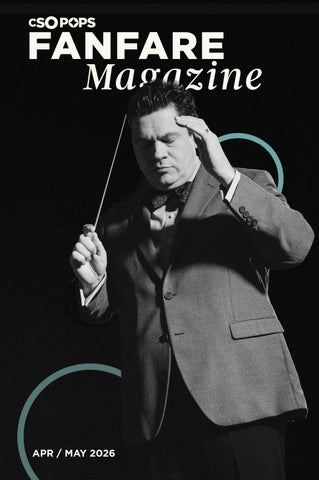
ON THE COVER: Music Director Cristian Măcelaru
8
8
Now that Cristian Măcelaru has completed his first season as CSO Music
Now that Cristian Măcelaru has completed his first season as CSO Music Director, he paused to reflect on the highlights of the year past, including time spent getting acquainted with the community surrounding Music Hall, and shares plans for the next season — one that he hopes will represent the best of what our country has to offer in its 250th year, pp. 8–11.
12
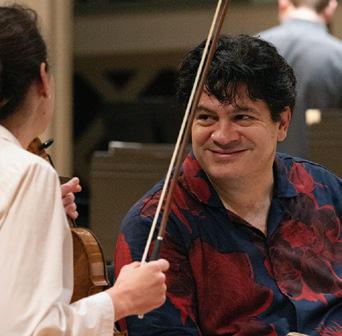
Director, he paused to reflect on the highlights of the year past, including time spent getting acquainted with the community surrounding Music Hall, and shares plans for the next season — one that he hopes will represent the best of what our country has to offer in its 250th year, pp. 8–11.
12
(Credit: Alex Johnson) ALL
Regardless of who we are or where we come from, music lives within us all. … This statement is a guiding principle behind the Orchestra’s Music For All Campaign — an opportunity to invest not only in the CSO but also in the cultural vibrancy of Cincinnati, while also ensuring that the CSO remains a dynamic and relevant force in our community. Read testimonials from three donors who have committed to the Music For All Campaign, pp. 12–13.
16
Regardless of who we are or where we come from, music lives within us all. … This statement is a guiding principle behind the Orchestra’s Music For All Campaign — an opportunity to invest not only in the CSO but also in the cultural vibrancy of Cincinnati, while also ensuring that the CSO remains a dynamic and relevant force in our community. Read testimonials from three donors who have committed to the Music For All Campaign, pp. 12–13.
16
Former CSO
Former CSO Assistant Conductor Wilbur Lin returns to Music Hall to lead the Cincinnati Pops in its “The Music of Studio Ghibli” concerts, featuring music of film score composer Joe Hisaishi, April 14. On pp. 16–17 he shares his insights into the art of presenting film music for a live audience and the intricacies of the music itself.
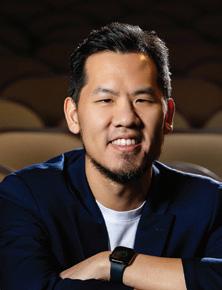
Assistant Conductor Wilbur Lin returns to Music Hall to lead the Cincinnati Pops in its “The Music of Studio Ghibli” concerts, featuring music of film score composer Joe Hisaishi, April 14. On pp. 16–17 he shares his insights into the art of presenting film music for a live audience and the intricacies of the music itself.



















CINCINNATI SYMPHONY ORCHESTRA & CINCINNATI POPS
Music Hall, 1241 Elm Street, Cincinnati, OH 45202
Box Office: 513.381.3300
hello@cincinnatisymphony.org
Group Sales: 513.864.0196 groupsales@cincinnatisymphony.org
TTY/TDD: Use TTY/TDD Relay Service 7-1-1
cincinnatisymphony.org cincinnatipops.org
O cers
Charla Weiss, Chair
Dianne Rosenberg, Immediate Past Chair
Sue McPartlin, Treasurer
Gerron McKnight, Secretary
Directors
Dorie Akers
Nick Apanius
Heather Apple
Evin Blomberg**
Kate C. Brown
Trish Bryan*
Otto M. Budig*
Emma Compton
Andrea Costa
Adrian Cunningham
Gabriel Davis
FANFARE MAGAZINE STAFF:
Managing Editor
Tyler Secor
Senior Editor/Layout
Teri McKibben
Assistant Editor
Gabriela Godinez Feregrino
CINCINNATI MAGAZINE: Advertising and Publishing Partners for Fanfare Magazine
Publisher Ivy Bayer
Production Director & IT Systems
Administrator
Vu Luong
Advertising Designer
Sophie Kallis
Account Representatives
Laura Bowling, Maggie Wint Goecke, Chris Ohmer, Julie Poyer, Sarah Riesenberger
Operations Director
Missy Beiting
Business Coordinator
Meredith Carroll
Advertising and Business O ces
Atrium 2 — 221 E. 4th Street, Suite 130 Cincinnati, OH 45202 | 513.421.4300
Subscriptions: 1.866.660.6247 cincinnatimagazine.com




You are welcome to take this copy of Fanfare Magazine home with you as a souvenir of your concert experience. Alternatively, please share it with a friend or leave it with an usher for recycling. Thank you!
Maria Espinola
Blair Fleischmann*
Kori Hill**
Francie S. Hiltz*
Joseph W. Hirschhorn*
Edna Keown
Florence Koetters*
John Lanni
H. Spencer Liles*
Robert W. McDonald
Dean Moulas
Anne E. ulder
Aik Khai Pung
James B. (“Rick”) Reynolds*
Jack Rouse*
Patrick Schleker**
Valarie Sheppard
Brett Stover
Kari Ullman
Randolph (“Duck”) L. Wadsworth, Jr.*
Emeritus *
We thank our many partners who serve on the following CSO Board of Directors committees, as well as the Multicultural Awareness Council (MAC), as we collectively work to realize our vision to be the most relevant orchestra in America.
Audience Engagement
Audit & Ethics
Inclusion
Executive
Finance & Investment
Learning
Nominating & Governance
Non-Board Advisory Council
Multicultural Awareness Council:
Holly Bates
Janet Bohne
Rick Bohne
Susan Carlson
Andria Carter
Piper Davis
Carolyn Glosby
Eric Glosby
Kori Hill
Alverna Jenkins
Beverley Lamb
Paulette Moore
Nicole Ortiz
Aurelia “Candie” Simmons
Daphney Thomas
Community Advisory Council:
Daniel Betts
Myra Epps
Crystal Kendrick
Bernardo Lopez
John Spencer
Nick Wade
WE BELIEVE MUSIC LIVES WITHIN US ALL regardless of who we are or where we come from. We believe that music is a pathway to igniting our passions, discovering what moves us, deepening our curiosity and connecting us to our world and to each other.
Our mission is to seek and share inspiration, and we exist to serve our community. Our entire community. Reflecting our community and the world around at every level — on stage, behind-the-scenes and in neighborhoods throughout the region — is essential to our present and future and makes us a strong ensemble and institution.
The Cincinnati Symphony Orchestra and Cincinnati Pops acknowledge that Cincinnati Music Hall occupies land that has been the traditional land of the Myaamia (Miami), Shawandasse Tula (Shawanwaki/Shawnee), and Wahzhazhe Manzhan (Osage) peoples, who have continuously lived upon this land since time immemorial. We honor past, present and future Indigenous peoples.

















































































































































































































































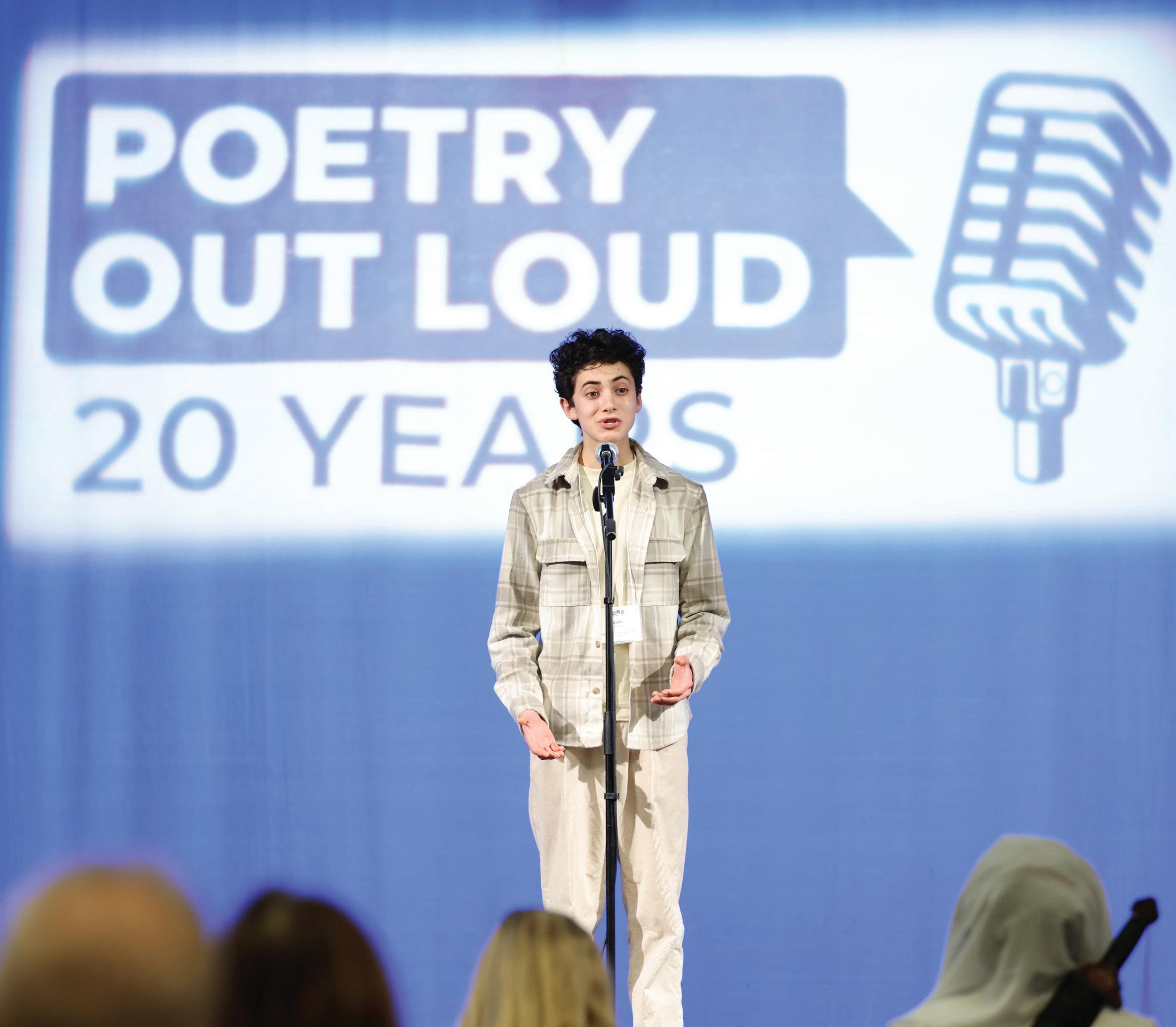
Program Spotlight: POETRY OUT LOUD
Investing state and federal dollars, the Ohio Arts Council funds and supports quality arts experiences for all Ohioans to strengthen communities culturally, educationally, and economically.
Learn more about our grant programs and resources, find your next arts experience, or connect: OAC.OHIO.GOV.
to the April and May 2026 issue of Fanfare Magazine
to the April and May 2026 issue of Fanfare Magazine
Dive into Cristian Măcelaru’s reflections on working with the Orchestra during the 2025–26 season, and catch a glimpse of what he told writer Hannah Edgar is in store for the 2026–27 season on pp. 8–11.
Dive into Cristian Măcelaru’s reflections on working with the Orchestra during the 2025–26 season, and catch a glimpse of what he told writer Hannah Edgar is in store for the 2026–27 season on pp. 8–11.
Along with the online version of Fanfare Magazine, the CSO has developed a digital platform to deliver concertspecific content.
Along with the online version of Fanfare Magazine, the CSO has developed a digital platform to deliver concertspecific content.
On pp. 12–13, writer Kit Gladieux spoke with donors about their experiences with the CSO and why they have chosen to support the Music For All Campaign. Their investments help the CSO reach all Cincinnatians and allow the Orchestra to continue to evolve the concert experience.
On pp. 12–13, writer Kit Gladieux spoke with donors about their experiences with the CSO and why they have chosen to support the Music For All Campaign. Their investments help the CSO reach all Cincinnatians and allow the Orchestra to continue to evolve the concert experience.
Fanfare Magazine continues to celebrate the winners of its first-ever writing competition with second place winner Matthew Liversedge’s essay, “The Sound of Rain,” on pp. 14–15. For this competition, Fanfare Magazine invited graduate and undergraduate students to respond to Cristian Măcelaru’s words, “Life is good when you’re surrounded by music.”
Fanfare Magazine continues to celebrate the winners of its first-ever writing competition with second place winner Matthew Liversedge’s essay, “The Sound of Rain,” on pp. 14–15. For this competition, Fanfare Magazine invited graduate and undergraduate students to respond to Cristian Măcelaru’s words, “Life is good when you’re surrounded by music.”
Go behind the scenes to discover what a conductor must consider when conducting film scores for a live audience. Writer Ken Smith spoke with former CSO Assistant Conductor Wilbur Lin about the artistry, as well as the hurdles, of presenting such a concert as The Music of Studio Ghibli, on pp. 16–17.
Go behind the scenes to discover what a conductor must consider when conducting film scores for a live audience. Writer Ken Smith spoke with former CSO Assistant Conductor Wilbur Lin about the artistry, as well as the hurdles, of presenting such a concert as The Music of Studio Ghibli, on pp. 16–17.
FOLLOW US on social media for the latest updates!
FOLLOW US on social media for the latest updates!
Facebook:
Facebook:
@CincySymphony
@CincySymphony
@CincinnatiPops
@CincinnatiPops
Instagram:
@CincySymphony
Instagram: @CincySymphony
Please enjoy these stories that have been curated for you in Fanfare Magazine, but also know that the Fanfare Magazine experience is not limited to a print publication available only at Music Hall concerts. You can explore Fanfare Magazine at any time via our website at cincinnatisymphony. org/fanfare-magazine, where you can also find webexclusive articles.
Please enjoy these stories that have been curated for you in Fanfare Magazine, but also know that the Fanfare Magazine experience is not limited to a print publication available only at Music Hall concerts. You can explore Fanfare Magazine at any time via our website at cincinnatisymphony. org/fanfare-magazine, where you can also find webexclusive articles.
YouTube: @CincySymphony
YouTube:
@CincySymphony
TikTok:
@cincysymphony
TikTok: @cincysymphony
*By texting to this number, you may receive messages that pertain to the organization and its performances; msg & data rates may apply. Reply HELP to help, STOP to cancel.
*By texting to this number, you may receive messages that pertain to the organization and its performances; msg & data rates may apply. Reply HELP to help, STOP to cancel.
Along with the online version of Fanfare Magazine, the CSO has developed a digital platform to deliver concert-specific content to meet the CSO’s ongoing commitment to digital storytelling, innovation and accessibility. This digital platform offers early access to exclusive concert-specific content: full-length program notes, artist biographies, feature stories, up-to-theminute information and much more! As a bonus, program notes and artist biographies for the entire season will be available on this digital platform in advance of the season-opening concerts, allowing you to engage with all the content before you arrive at Music Hall.
Along with the online version of Fanfare Magazine, the CSO has developed a digital platform to deliver concert-specific content to meet the CSO’s ongoing commitment to digital storytelling, innovation and accessibility. This digital platform offers early access to exclusive concert-specific content: full-length program notes, artist biographies, feature stories, up-to-theminute information and much more! As a bonus, program notes and artist biographies for the entire season will be available on this digital platform in advance of the season-opening concerts, allowing you to engage with all the content before you arrive at Music Hall.

Unlike a print magazine, this digital platform is compatible with all smartphone accessibility features. The CSO’s digital platform is easily accessible — no app to download or subscription to manage. To explore our digital content, visit cincinnatisymphony.org/DigitalProgram, text the word PROGRAM to 513.845.3024* or scan the QR code at right with your mobile device.
Unlike a print magazine, this digital platform is compatible with all smartphone accessibility features. The CSO’s digital platform is easily accessible — no app to download or subscription to manage. To explore our digital content, visit cincinnatisymphony.org/DigitalProgram, text the word PROGRAM to 513.845.3024* or scan the QR code at right with your mobile device.
The CSO hopes you find inspiration within these pages and within the music — past, present and future — that reverberates at Music Hall and in the community. Thank you for being with us!
The CSO hopes you find inspiration within these pages and within the music — past, present and future — that reverberates at Music Hall and in the community. Thank you for being with us!
by HANNAH EDGAR
by HANNAH EDGAR
As the United States celebrates a milestone anniversary, Cristian Măcelaru reflects on what it means to be the Music Director of an American orchestra — and looks toward a 2026–27 season that lives out his ethos of close listening and collaboration.
As the United States celebrates a milestone anniversary, Cristian Măcelaru reflects on what it means to be the Music Director of an American orchestra — and looks toward a 2026–27 season that lives out his ethos of close listening and collaboration.
Programming a season can be an opaque process. Usually, an orchestra’s music director and administration work together to hash out repertoire, and orchestra musicians find out what’s on their own seasons around the same time as audiences.
Programming a season can be an opaque process.
Usually, an orchestra’s music director and administration work together to hash out repertoire, and orchestra musicians find out what’s on their own seasons around the same time as audiences.
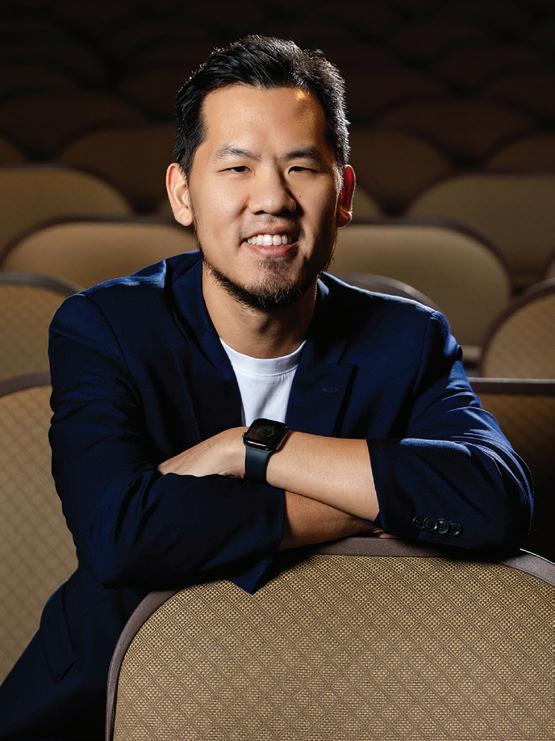
CSO Music Director Cristian Măcelaru is flipping that script. Măcelaru conducts orchestras all over the world and hears suggestions from various musicians — some obscure and many that these musicians are itching to play. One such suggestion opens a CSO program this fall: the tone poem Lamia, by the 20th-century British composer Dorothy Howell.
CSO Music Director Cristian Măcelaru is flipping that script. Măcelaru conducts orchestras all over the world and hears suggestions from various musicians — some obscure and many that these musicians are itching to play. One such suggestion opens a CSO program this fall: the tone poem Lamia, by the 20th-century British composer Dorothy Howell.
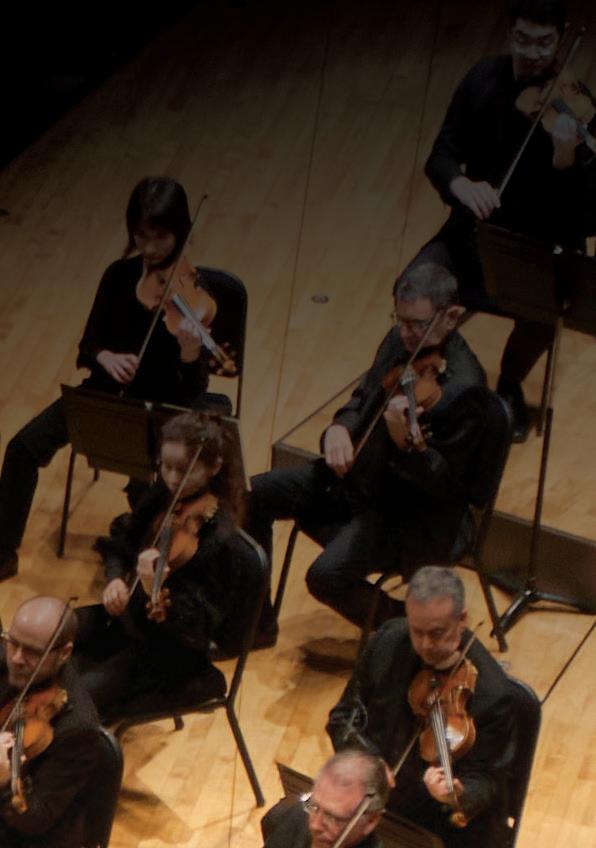
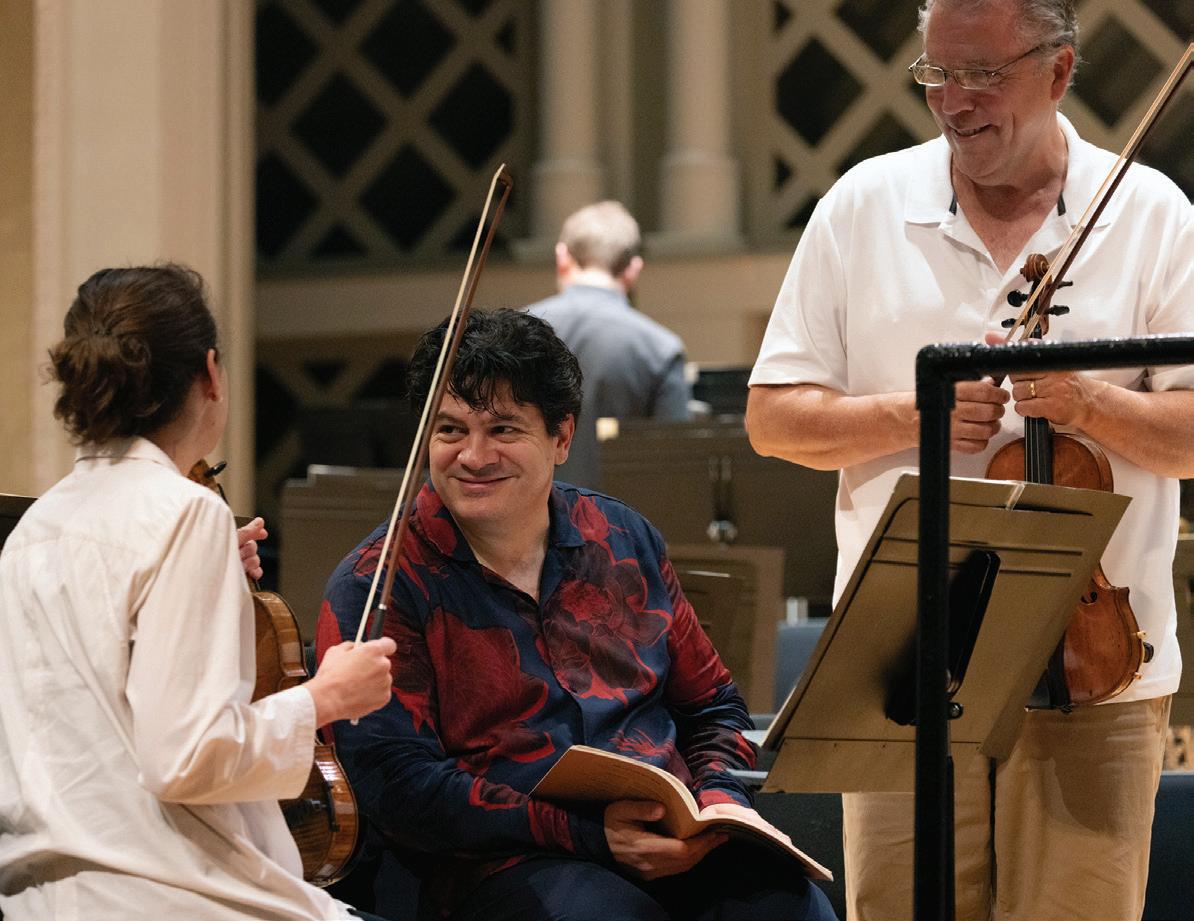
A scene from Măcelaru’s first rehearsal as CSO Music Director, with Concertmaster Stefani Matsuo and Principal Second Violin Gabriel Pegis. (Credit: Charlie Balcom)
(Credit: Charlie Balcom)
he says. “I think people have a pretty good vision of what my direction is: making sure that the relevance we seek is really represented in the diversity that we present.”
he says. “I think people have a pretty good vision of what my direction is: making sure that the relevance we seek is really represented in the diversity that we present.”
And, as Măcelaru has stressed to Fanfare Magazine before, he thinks about diversity broadly. That includes diversity of genre. In May 2027, you’ll find contemporary film composer Eunike Tanzil — Indonesian-born, Los Angeles-based — programmed (her Remembering) alongside Erich Korngold, who, in Măcelaru’s words, became the “OG” of Golden Age Hollywood composers when he emigrated to the U.S. to flee the Holocaust.
And, as Măcelaru has stressed to Fanfare Magazine before, he thinks about diversity broadly. That includes diversity of genre. In May 2027, you’ll find contemporary film composer Eunike Tanzil — Indonesian-born, Los Angeles-based — programmed (her Remembering) alongside Erich Korngold, who, in Măcelaru’s words, became the “OG” of Golden Age Hollywood composers when he emigrated to the U.S. to flee the Holocaust.
“It’s absolutely insane how much good music I’ve received — it would have taken me 10 years to come up with all that music,” Măcelaru says. “If I am to really, truly be inclusive and promote not only great music but also music that has not been appreciated properly, I just cannot do it by myself. I have my own limitations.”
“It’s absolutely insane how much good music I’ve received — it would have taken me 10 years to come up with all that music,” Măcelaru says. “If I am to really, truly be inclusive and promote not only great music but also music that has not been appreciated properly, I just cannot do it by myself. I have my own limitations.”
As a musician, music director and person, Măcelaru believes in inviting everyone to the table, whether they sit in the audience or onstage. Those principles are front of mind for Măcelaru as he prepares for another season with the CSO and as he considers how the Orchestra represents the best of what our country has to offer in its 250th year.
As a musician, music director and person, Măcelaru believes in inviting everyone to the table, whether they sit in the audience or onstage. Those principles are front of mind for Măcelaru as he prepares for another season with the CSO and as he considers how the Orchestra represents the best of what our country has to offer in its 250th year.
“In some ways, this is truly the first season that has my stamp on the whole season, even more so than my first,”
“In some ways, this is truly the first season that has my stamp on the whole season, even more so than my first,”
Măcelaru first met Tanzil while working with violinist Ray Chen on Player 1, a recorded homage to some of Chen’s favorite music from video games to television shows. (Chen is also featured in those May concerts, playing Korngold’s Violin Concerto, which is a centerpiece of Player 1.) While collaborating on Tanzil’s Serenade for violin and orchestra, Tanzil and Măcelaru hit it off immediately, chatting through the entire recording session.
Măcelaru first met Tanzil while working with violinist Ray Chen on Player 1, a recorded homage to some of Chen’s favorite music from video games to television shows. (Chen is also featured in those May concerts, playing Korngold’s Violin Concerto, which is a centerpiece of Player 1.) While collaborating on Tanzil’s Serenade for violin and orchestra, Tanzil and Măcelaru hit it off immediately, chatting through the entire recording session.
“She became this very trendy, interesting composer, especially for young people. [I thought], how much fun would it be to introduce someone to this genre?” he says.
“She became this very trendy, interesting composer, especially for young people. [I thought], how much fun would it be to introduce someone to this genre?” he says.
Subscribe to the CSO’s YouTube channel and watch the three-part docuseries: Introducing Cristian Măcelaru.
Subscribe to the CSO’s YouTube channel and watch the three-part docuseries: Introducing Cristian Măcelaru.
Măcelaru argues that what he’s planned for those May 14 and 15 concerts isn’t new, in the broad sweep of music history. He points to Mozart’s Violin Concerto No. 5 — a
Măcelaru argues that what he’s planned for those May 14 and 15 concerts isn’t new, in the broad sweep of music history. He points to Mozart’s Violin Concerto No. 5 — a
standard of the repertoire. In the concerto’s third movement, however, there is a sudden pivot to a minor-key Turkish melody, cellos and basses drumming their strings with their bows in the manner of the Ottoman Empire’s Janissary bands (the world’s first recorded military marching bands), which Vienna was fascinated with during Mozart’s time.
standard of the repertoire. In the concerto’s third movement, however, there is a sudden pivot to a minor-key Turkish melody, cellos and basses drumming their strings with their bows in the manner of the Ottoman Empire’s Janissary bands (the world’s first recorded military marching bands), which Vienna was fascinated with during Mozart’s time.
Referencing those sounds wasn’t a neutral act for Mozart. Not only were the bands associated with everyday life on the street, rather than the high art of the Viennese aristocracy, but the Ottoman and Habsburg empires had a complex history both of conflict and cultural exchange, and the bands’ Turkish-sounding strains would scan as familiar yet “foreign” to Viennese audiences — and be seen as provocative for a violin concerto.
Referencing those sounds wasn’t a neutral act for Mozart. Not only were the bands associated with everyday life on the street, rather than the high art of the Viennese aristocracy, but the Ottoman and Habsburg empires had a complex history both of conflict and cultural exchange, and the bands’ Turkish-sounding strains would scan as familiar yet “foreign” to Viennese audiences — and be seen as provocative for a violin concerto.
“I think so much about what people at the time must have thought,” Măcelaru says. “I think the great composers and performers didn’t have this definition of, ‘I only play classical music.’ That’s very limiting. I really think the way to diversify the audience is to diversify the genre a little bit.”
“I think so much about what people at the time must have thought,” Măcelaru says. “I think the great composers and performers didn’t have this definition of, ‘I only play classical music.’ That’s very limiting. I really think the way to diversify the audience is to diversify the genre a little bit.”
Just as he will bring film composers of the past and present into dialogue, Măcelaru will also place contemporary composer Errollyn Wallen alongside great female composers of the past — Fanny Mendelssohn, Emilie Mayer and Clara Schumann — during concerts on March 5 and 6. On January 8 and 9, Măcelaru also brings into dialogue the music of Florence Price and Johannes Brahms with the modern composer Mark Simpson’s Piano Concerto, written for and to be played by Víkingur Ólafsson.
Just as he will bring film composers of the past and present into dialogue, Măcelaru will also place contemporary composer Errollyn Wallen alongside great female composers of the past — Fanny Mendelssohn, Emilie Mayer and Clara Schumann — during concerts on March 5 and 6. On January 8 and 9, Măcelaru also brings into dialogue the music of Florence Price and Johannes Brahms with the modern composer Mark Simpson’s Piano Concerto, written for and to be played by Víkingur Ólafsson.
Măcelaru leads the Orchestra in his
(Guest conductor Marta Gardolińska champions another pioneer in her April CSO podium debut, with orchestrations of turn-of-the-century French composer Mélanie Bonis’ reflections on the tragic lives of three of history’s most influential female heroines — Ophelia, Salome and Cleopatra.)
(Guest conductor Marta Gardolińska champions another pioneer in her April CSO podium debut, with orchestrations of turn-of-the-century French composer Mélanie Bonis’ reflections on the tragic lives of three of history’s most influential female heroines — Ophelia, Salome and Cleopatra.)
“I think it’s really beautiful not to pigeonhole the idea of female composers into a time period,” Măcelaru says. “I’ve heard so many people say, ‘If they would have been good enough, music history [would remember them].’ I’m here to dissect that statement for you. … I’m presenting music from the 21st century that I strongly believe in, and looking at it in context. Discovering composers of the past tells the true story of what has happened.”
“I think it’s really beautiful not to pigeonhole the idea of female composers into a time period,” Măcelaru says. “I’ve heard so many people say, ‘If they would have been good enough, music history [would remember them].’ I’m here to dissect that statement for you. … I’m presenting music from the 21st century that I strongly believe in, and looking at it in context. Discovering composers of the past tells the true story of what has happened.”
Depicting history as it actually happened is crucial for Măcelaru. That’s why he continues to have such an enduring affinity for — and lasting friendship with — composer and trumpeter Wynton Marsalis, one of the great musical truthtellers of our time. When Marsalis was seeking co-commissioners for his Symphony No. 5, Liberty, Măcelaru clamored for the CSO to join in.
Depicting history as it actually happened is crucial for Măcelaru. That’s why he continues to have such an enduring affinity for — and lasting friendship with — composer and trumpeter Wynton Marsalis, one of the great musical truthtellers of our time. When Marsalis was seeking co-commissioners for his Symphony No. 5, Liberty, Măcelaru clamored for the CSO to join in.
“About once a decade, Wynton makes a statement about America that is deeply meaningful, socially,” Măcelaru says, pointing to Marsalis’ Pulitzer Prize-winning oratorio Blood on the Fields and his Symphony No. 1, All Rise. “Liberty is the symphony for this decade.”
“About once a decade, Wynton makes a statement about America that is deeply meaningful, socially,” Măcelaru says, pointing to Marsalis’ Pulitzer Prize-winning oratorio Blood on the Fields and his Symphony No. 1, All Rise. “Liberty is the symphony for this decade.”
The CSO performs Liberty on opening night, Oct. 2. The following evening, it teams up with Marsalis’ Jazz at Lincoln Center Orchestra for a
The CSO performs Liberty on opening night, Oct. 2. The following evening, it teams up with Marsalis’ Jazz at Lincoln Center Orchestra for a

unique account of Pictures at an Exhibition. The CSO and JLCO will trade off throughout, with the CSO playing the Mussorgsky/Ravel original and the JLCO playing Marsalis’ big-band arrangements.
unique account of Pictures at an Exhibition. The CSO and JLCO will trade off throughout, with the CSO playing the Mussorgsky/Ravel original and the JLCO playing Marsalis’ big-band arrangements.
Unlike JLCO appearances with other orchestras, however, the CSO version brings both orchestras closer together than ever before. They don’t merely alternate movements. They alternate sections, then bars, before eventually uniting in an explosion of ensemble technicolor.
Unlike JLCO appearances with other orchestras, however, the CSO version brings both orchestras closer together than ever before. They don’t merely alternate movements. They alternate sections, then bars, before eventually uniting in an explosion of ensemble technicolor.
It’s not just a dazzling musical effect. To Măcelaru, it’s a metaphor for the musical omnivorousness he’s trying to nurture at the CSO.
It’s not just a dazzling musical effect. To Măcelaru, it’s a metaphor for the musical omnivorousness he’s trying to nurture at the CSO.
“I’m using it to tell the story of a very segregated format that breaks down and comes together at the end,” he tells Fanfare Magazine. “I tell the Orchestra, the only way your Strauss will be better is if you find a way to play it like a gospel choir sings on Sunday morning. The advantage of the Cincinnati Symphony Orchestra is that they do play concerts with a gospel choir, like the CSO’s Classical Roots Community Choir. So, they know what I’m talking about when I’m saying that. The more I can find ways to utilize their depth of understanding that is not genre-specific, I think the better the experience for the public.”
“I’m using it to tell the story of a very segregated format that breaks down and comes together at the end,” he tells Fanfare Magazine. “I tell the Orchestra, the only way your Strauss will be better is if you find a way to play it like a gospel choir sings on Sunday morning. The advantage of the Cincinnati Symphony Orchestra is that they do play concerts with a gospel choir, like the CSO’s Classical Roots Community Choir. So, they know what I’m talking about when I’m saying that. The more I can find ways to utilize their depth of understanding that is not genre-specific, I think the better the experience for the public.”
Looking back through the 2025–26 season, the CSO audience reception far exceeded Măcelaru’s expectations. The 2026 Martin Luther King, Jr.
Looking back through the 2025–26 season, the CSO audience reception far exceeded Măcelaru’s expectations. The 2026 Martin Luther King, Jr.
weekend concerts especially stand out. One evening sold out; the other came close. And he found the public reaction electric, with standing ovations and cheers.
weekend concerts especially stand out. One evening sold out; the other came close. And he found the public reaction electric, with standing ovations and cheers.
Măcelaru, certainly, has been thinking about King for years. At the top of our call, he told me about a recent trip to the Civil Rights leader’s boyhood home in Atlanta. Though King fought for the rights of those who were born in — and built — this country, his lessons resonate in the heart of Măcelaru, an immigrant from Romania.
Măcelaru, certainly, has been thinking about King for years. At the top of our call, he told me about a recent trip to the Civil Rights leader’s boyhood home in Atlanta. Though King fought for the rights of those who were born in — and built — this country, his lessons resonate in the heart of Măcelaru, an immigrant from Romania.
“The concert was about recommitting together to this America, the America that I fell in love with,” Măcelaru says.
“The concert was about recommitting together to this America, the America that I fell in love with,” Măcelaru says.
Măcelaru will lead next year’s King weekend concerts again, considering them a priority of his CSO tenure. 2027’s iteration is titled “Come as You Are,” taking its name from a newly orchestrated work by saxophonist Steven Banks, also the concert’s soloist. But it doubles as Măcelaru’s North Star as he continues his one-of-a-kind partnership with the CSO and the city of Cincinnati.
Măcelaru will lead next year’s King weekend concerts again, considering them a priority of his CSO tenure. 2027’s iteration is titled “Come as You Are,” taking its name from a newly orchestrated work by saxophonist Steven Banks, also the concert’s soloist. But it doubles as Măcelaru’s North Star as he continues his one-of-a-kind partnership with the CSO and the city of Cincinnati.
“The whole concept of America was for everyone to come as you are: to bring who you are to the table, and to create an identity together based on shared values,” he says.
“The whole concept of America was for everyone to come as you are: to bring who you are to the table, and to create an identity together based on shared values,” he says.
Explore more of what Măcelaru has planned for the 2026–27 season at cincinnatisymphony.org.
Explore more of what Măcelaru has planned for the 2026–27 season at cincinnatisymphony.org.
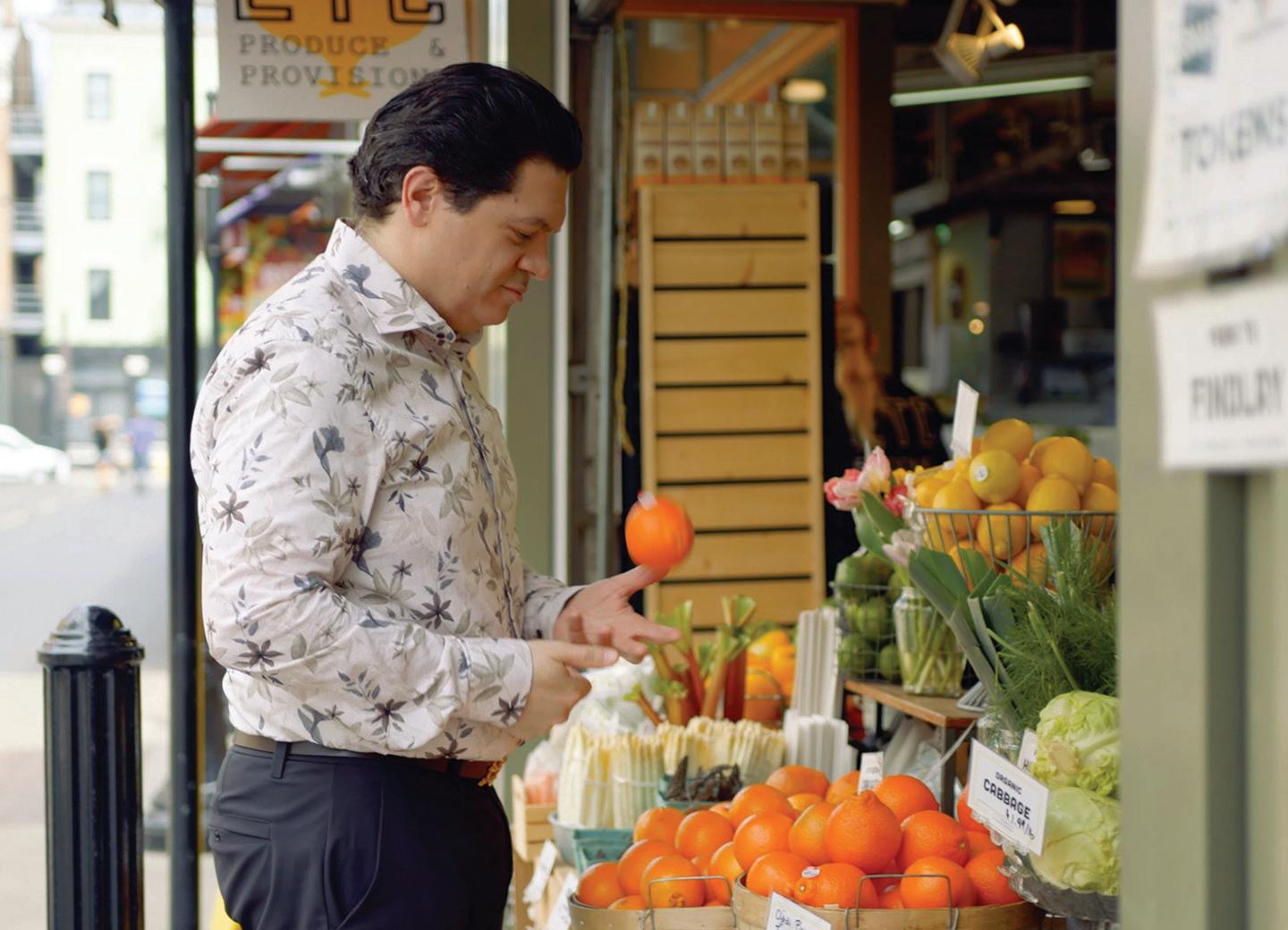
Cristian Măcelaru takes in the vast offerings of Cincinnati’s Findlay Market, during his first days as CSO Music Director.
by KIT GLADIEUX & CSO STAFF
by KIT GLADIEUX & CSO STAFF
For more than 130 years, the Cincinnati Symphony Orchestra has sought to seek and share inspiration through music. Regardless of who we are or where we come from, music lives within us all. We believe that music inspires our community, music belongs to all who live here and music is a living, breathing art form that continues to evolve. These beliefs drive our vision to be the most relevant orchestra in America.
For more than 130 years, the Cincinnati Symphony Orchestra has sought to seek and share inspiration through music. Regardless of who we are or where we come from, music lives within us all. We believe that music inspires our community, music belongs to all who live here and music is a living, breathing art form that continues to evolve. These beliefs drive our vision to be the most relevant orchestra in America.
Music For All goes beyond sustaining the CSO. It’s about expanding what is possible by enabling us to inspire audiences through innovative programming and artistic excellence, deepen our impact across Greater Cincinnati and ensure that the transformative power of music is accessible to all.
Music For All goes beyond sustaining the CSO. It’s about expanding what is possible by enabling us to inspire audiences through innovative programming and artistic excellence, deepen our impact across Greater Cincinnati and ensure that the transformative power of music is accessible to all.
The Music For All Campaign is an initiative to invest in our Orchestra’s ability to embody our vision. Through the unmatched generosity of the Cincinnati community, the Music For All Campaign has made remarkable progress, and, with your support, we’ll make it to our goal.
The Music For All Campaign is an initiative to invest in our Orchestra’s ability to embody our vision. Through the unmatched generosity of the Cincinnati community, the Music For All Campaign has made remarkable progress, and, with your support, we’ll make it to our goal.
Your investment in the Orchestra is an investment in the cultural vibrancy of Cincinnati and ensures the CSO remains a dynamic and relevant force in our community for generations to come. Join us as we transform the future of music for all, together.
Your investment in the Orchestra is an investment in the cultural vibrancy of Cincinnati and ensures the CSO remains a dynamic and relevant force in our community for generations to come. Join us as we transform the future of music for all, together.
Here are a few of the heartfelt stories behind why donors have committed to the Music For All Campaign:
Here are a few of the heartfelt stories behind why donors have committed to the Music For All Campaign:
Kelly Dehan and Rick Staudigel
Kelly Dehan and Rick Staudigel
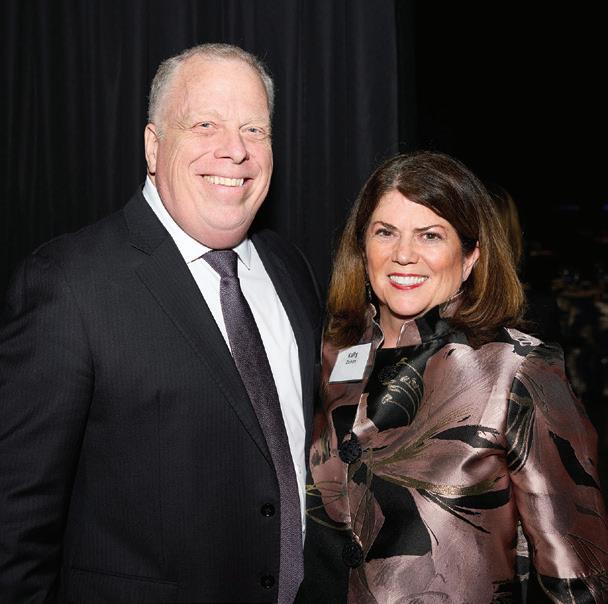
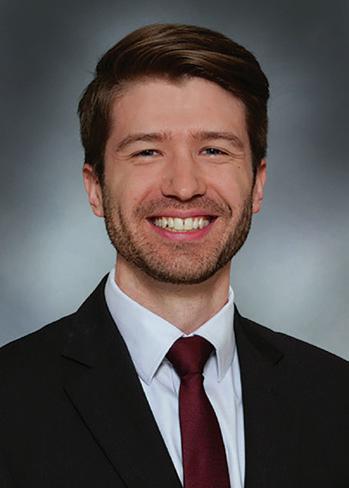
For Kelly Dehan and Rick Staudigel, what excites them most about the Cincinnati Symphony Orchestra’s future is the leadership guiding it forward. “Our conductors, Cristian Măcelaru and John Morris Russell, are extraordinary, and the variety of programming truly appeals to the masses,” they say. “The entire staff, from CEO Robert McGrath on, are bright, caring and wonderful people. It’s inspiring to see how well the organization is run.”
For Kelly Dehan and Rick Staudigel, what excites them most about the Cincinnati Symphony Orchestra’s future is the leadership guiding it forward. “Our conductors, Cristian Măcelaru and John Morris Russell, are extraordinary, and the variety of programming truly appeals to the masses,” they say. “The entire staff, from CEO Robert McGrath on, are bright, caring and wonderful people. It’s inspiring to see how well the organization is run.”
Kelly and Rick have supported many recent Pops concerts, including one that led to the Orchestra’s most recent recording, Harlem Renaissance, an
Kelly and Rick have supported many recent Pops concerts, including one that led to the Orchestra’s most recent recording, Harlem Renaissance, an
homage to one of America’s most important artistic movements and the breadth of jazz styles it has nurtured. Their philanthropy reflects a core belief that music nourishes the spirit. “Music is good for the soul; there is nothing like it,” Kelly explains.
homage to one of America’s most important artistic movements and the breadth of jazz styles it has nurtured. Their philanthropy reflects a core belief that music nourishes the spirit. “Music is good for the soul; there is nothing like it,” Kelly explains.
That belief made it an easy decision to support the Music For All Campaign. “Harlem Renaissance was a terrific program, and we simply couldn’t pass up the opportunity to share that music,” they say. “The songs, the voices and the orchestral music were absolutely good medicine for our ears and our hearts.”
That belief made it an easy decision to support the Music For All Campaign. “Harlem Renaissance was a terrific program, and we simply couldn’t pass up the opportunity to share that music,” they say. “The songs, the voices and the orchestral music were absolutely good medicine for our ears and our hearts.”
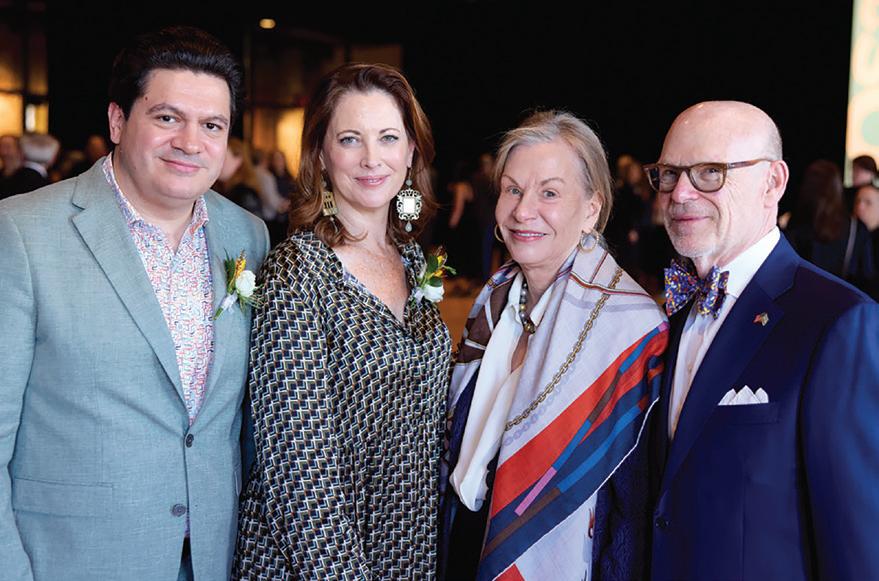
David Rosenberg
and David Rosenberg
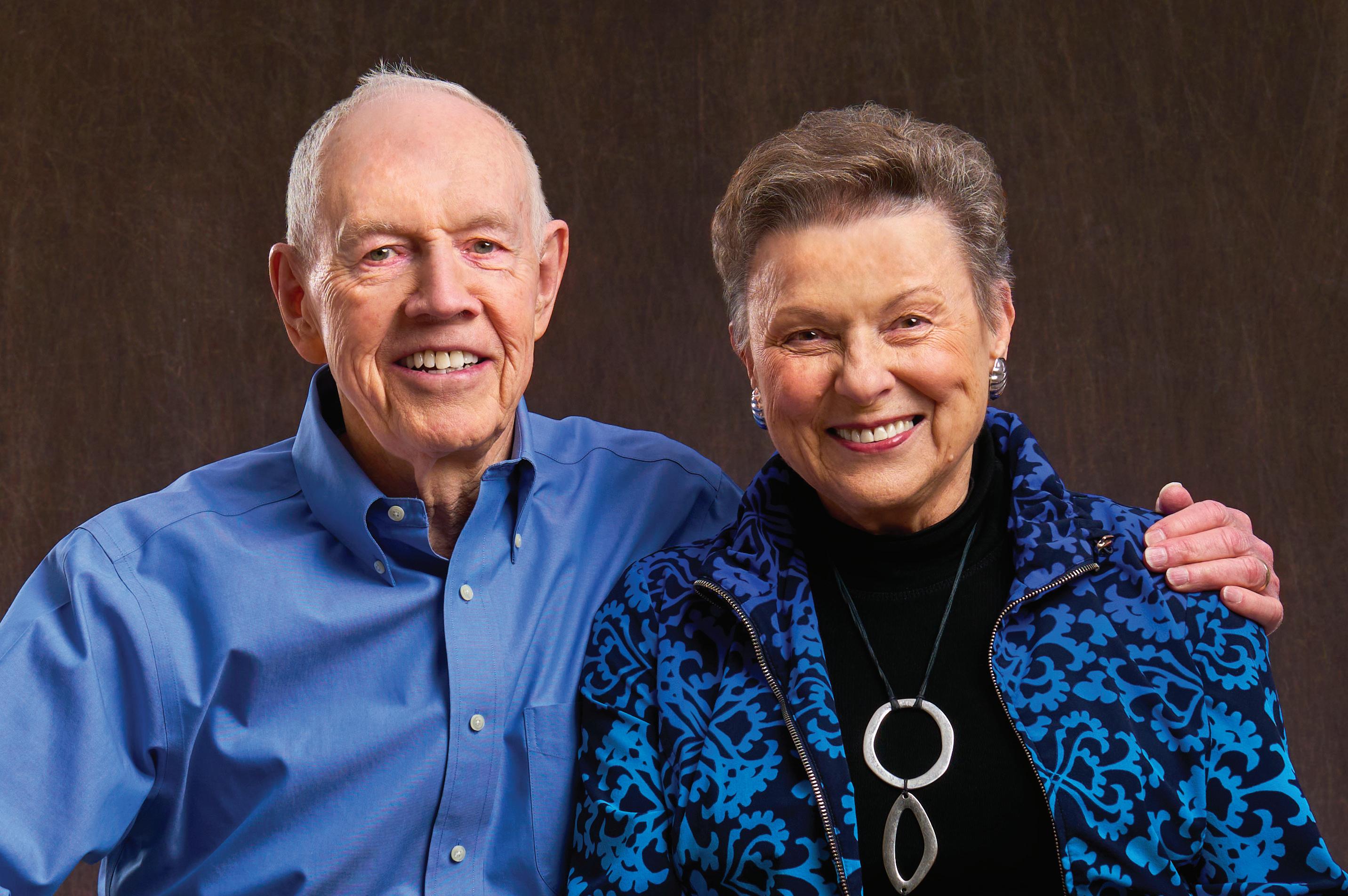
Dianne Rosenberg’s connection to the Cincinnati Symphony Orchestra began the first time she visited Music Hall as a child, where she was “absolutely mesmerized by the vastness of Music Hall and the sound of the Orchestra.” That early experience shaped a relationship that would later include leadership, service and a shared commitment to the CSO’s future with her husband, David.
Dianne Rosenberg’s connection to the Cincinnati Symphony Orchestra began the first time she visited Music Hall as a child, where she was “absolutely mesmerized by the vastness of Music Hall and the sound of the Orchestra.” That early experience shaped a relationship that would later include leadership, service and a shared commitment to the CSO’s future with her husband, David.
Together, the Rosenbergs have supported the Orchestra with their time and energy, as well as through philanthropic giving. “For Dianne’s 70th birthday,” states David, “we endowed a chair in the First Violin section.” Also, during the renovation of Music Hall, the Rosenbergs provided a significant contribution resulting in the naming of the “Dianne and J. David Rosenberg Green Room,” and, for the 125th anniversary season of the CSO, the Rosenbergs underwrote the commission of Christopher Rouse’s Sixth Symphony — the last piece Rouse finished before his death.
Together, the Rosenbergs have supported the Orchestra with their time and energy, as well as through philanthropic giving. “For Dianne’s 70th birthday,” states David, “we endowed a chair in the First Violin section.” Also, during the renovation of Music Hall, the Rosenbergs provided a significant contribution resulting in the naming of the “Dianne and J. David Rosenberg Green Room,” and, for the 125th anniversary season of the CSO, the Rosenbergs underwrote the commission of Christopher Rouse’s Sixth Symphony — the last piece Rouse finished before his death.
After Dianne’s three-season tenure concluded as the chair of the CSO’s Board of Directors, David
After Dianne’s three-season tenure concluded as the chair of the CSO’s Board of Directors, David
wanted to do “something significant” to honor her service. Together, they established the Dianne and J. David Rosenberg Innovation Fund, which Dianne says is designed to allow the CSO “to experiment, take risks and expand the boundaries of what’s possible in orchestral music.”
wanted to do “something significant” to honor her service. Together, they established the Dianne and J. David Rosenberg Innovation Fund, which Dianne says is designed to allow the CSO “to experiment, take risks and expand the boundaries of what’s possible in orchestral music.”
wanted to do “something significant” to honor her service. Together, they established the Dianne and J. David Rosenberg Innovation Fund, which Dianne says is designed to allow the CSO “to experiment, take risks and expand the boundaries of what’s possible in orchestral music.”
The Rosenbergs firmly believe that evolution is essential to the Orchestra’s future. “It’s not the way it’s always been. And 10 years from now it won’t be the way it is today,” Dianne says. What matters most to them is that the CSO continues to “look over the horizon — to be cutting edge.”
The Rosenbergs firmly believe that evolution is essential to the Orchestra’s future. “It’s not the way it’s always been. And 10 years from now it won’t be the way it is today,” Dianne says. What matters most to them is that the CSO continues to “look over the horizon — to be cutting edge.”
The Rosenbergs firmly believe that evolution is essential to the Orchestra’s future. “It’s not the way it’s always been. And 10 years from now it won’t be the way it is today,” Dianne says. What matters most to them is that the CSO continues to “look over the horizon — to be cutting edge.”
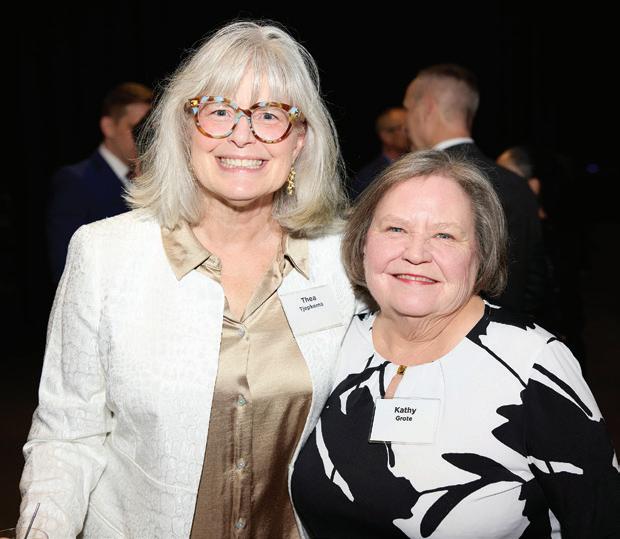
Kathy Grote
Kathy Grote
For longtime patron Kathy Grote, access to free concerts sparked a lifelong love for the Cincinnati Symphony Orchestra.
For longtime patron Kathy Grote, access to free concerts sparked a lifelong love for the Cincinnati Symphony Orchestra.
For longtime patron Kathy Grote, access to free concerts sparked a lifelong love for the Cincinnati Symphony Orchestra.
“In the 1970s and ’80s, the Cincinnati Symphony Orchestra hosted Concerts in the Park,” recalls Kathy Grote. “I was in my 20s and didn’t have much money, so those free concerts meant everything to me.” At one performance in Norwood, she met Robert Howes, a CSO violist,
“In the 1970s and ’80s, the Cincinnati Symphony Orchestra hosted Concerts in the Park,” recalls Kathy Grote. “I was in my 20s and didn’t have much money, so those free concerts meant everything to me.” At one performance in Norwood, she met Robert Howes, a CSO violist,
“In the 1970s and ’80s, the Cincinnati Symphony Orchestra hosted Concerts in the Park,” recalls Kathy Grote. “I was in my 20s and didn’t have much money, so those free concerts meant everything to me.” At one performance in Norwood, she met Robert Howes, a CSO violist,
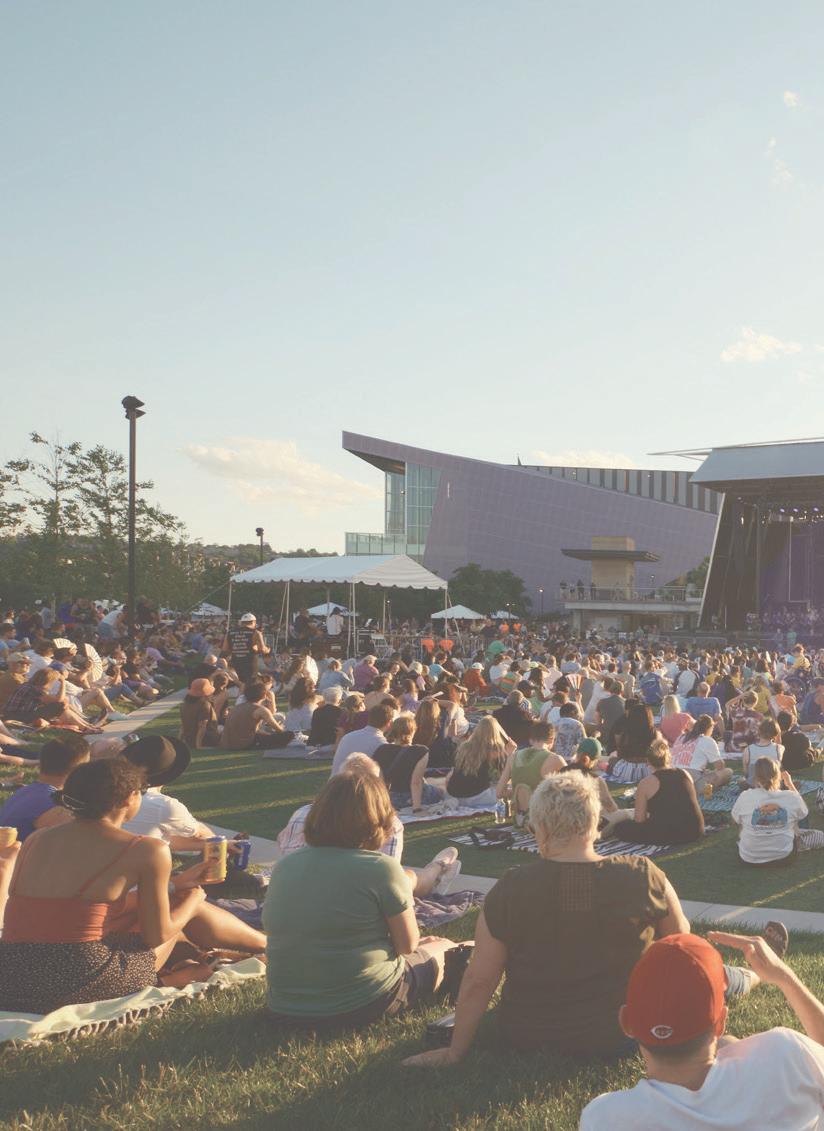
and the two became dear friends. “Bob took me to concerts and taught me so much. That was the beginning of my appreciation and love for classical music and this Orchestra.”
and the two became dear friends. “Bob took me to concerts and taught me so much. That was the beginning of my appreciation and love for classical music and this Orchestra.”
and the two became dear friends. “Bob took me to concerts and taught me so much. That was the beginning of my appreciation and love for classical music and this Orchestra.”
Some of her most powerful memories are tied to moments when music brought the community together. She vividly remembers the weekend after 9/11, when Paavo Järvi made his debut as Music Director. “The national anthem was incredibly emotional,” she says. “Then came a beautiful performance of Barber’s Adagio for Strings. I felt such a strong connection to the music, the Orchestra and everyone in attendance. It’s something I will never forget.”
Some of her most powerful memories are tied to moments when music brought the community together. She vividly remembers the weekend after 9/11, when Paavo Järvi made his debut as Music Director. “The national anthem was incredibly emotional,” she says. “Then came a beautiful performance of Barber’s Adagio for Strings. I felt such a strong connection to the music, the Orchestra and everyone in attendance. It’s something I will never forget.”
Some of her most powerful memories are tied to moments when music brought the community together. She vividly remembers the weekend after 9/11, when Paavo Järvi made his debut as Music Director. “The national anthem was incredibly emotional,” she says. “Then came a beautiful performance of Barber’s Adagio for Strings. I felt such a strong connection to the music, the Orchestra and everyone in attendance. It’s something I will never forget.”
Kathy is inspired by the leadership guiding the Orchestra today. “Cristian Măcelaru and John Morris Russell continue to lead the Orchestra to its very best,” she says. She is particularly proud of the CSO’s commitment to inclusion. “The Orchestra should be for everyone,” she explains. “I think the organization is doing a great job working toward that goal.”
Kathy is inspired by the leadership guiding the Orchestra today. “Cristian Măcelaru and John Morris Russell continue to lead the Orchestra to its very best,” she says. She is particularly proud of the CSO’s commitment to inclusion. “The Orchestra should be for everyone,” she explains. “I think the organization is doing a great job working toward that goal.”
Kathy is inspired by the leadership guiding the Orchestra today. “Cristian Măcelaru and John Morris Russell continue to lead the Orchestra to its very best,” she says. She is particularly proud of the CSO’s commitment to inclusion. “The Orchestra should be for everyone,” she explains. “I think the organization is doing a great job working toward that goal.”
When presented with the opportunity to sponsor the Pops recording American Originals: Harlem Renaissance and commission “Hellfighters’ Blues” by Carlos Simon, Kathy didn’t hesitate. “I knew Carlos would create a wonderful homage to James Reese Europe. I’m also a huge fan of the previous American Originals productions, and I knew JMR would once again program a fantastic concert.” For Kathy, philanthropy is about participating in something larger than herself. “It’s so meaningful to me,” she says. “I’m so excited to be part of the creation of music.”
When presented with the opportunity to sponsor the Pops recording American Originals: Harlem Renaissance and commission “Hellfighters’ Blues” by Carlos Simon, Kathy didn’t hesitate. “I knew Carlos would create a wonderful homage to James Reese Europe. I’m also a huge fan of the previous American Originals productions, and I knew JMR would once again program a fantastic concert.” For Kathy, philanthropy is about participating in something larger than herself. “It’s so meaningful to me,” she says. “I’m so excited to be part of the creation of music.”
When presented with the opportunity to sponsor the Pops recording American Originals: Harlem Renaissance and commission “Hellfighters’ Blues” by Carlos Simon, Kathy didn’t hesitate. “I knew Carlos would create a wonderful homage to James Reese Europe. I’m also a huge fan of the previous American Originals productions, and I knew JMR would once again program a fantastic concert.” For Kathy, philanthropy is about participating in something larger than herself. “It’s so meaningful to me,” she says. “I’m so excited to be part of the creation of music.”



To celebrate Music Director Cristian Măcelaru’s first season with the Cincinnati Symphony Orchestra, we are using his words, “Life is good when you’re surrounded by music” as the theme for the magazine’s first-ever writing competition. Fanfare Magazine invited local undergraduate and graduate students to celebrate the power of music through words.
Students enrolled at colleges and universities in Ohio and Northern Kentucky submitted essays reflecting on the emotional, cultural, societal or personal significance of music in their lives.
The essay below is by second-place winner Matthew Liversedge. Look for more of the winning essays at cincinnatisymphony.org and in upcoming issues of Fanfare Magazine .
by MATTHEW LIVERSEDGE, SECOND PLACE WINNER
I am a very young boy. I am sitting on the tiled floor of our porch and watching a wall of rain rush across the dark green tropical forest that seems to completely cover the valley separating our house from the president’s mansion. I feel a thrill as the massive torrent breaks into our yard and races toward our home. I think, “This must be what Noah felt like watching the rain approach the Ark.” One second later and — “tat-tattat!” — the rain pelts our tin roof, a deafening soundtrack for the night to come.
When the power fails, Mom and Dad light kerosene lamps and set them on the table. My brothers and sister bring books; I crack open The Silver Chair and listen as Puddleglum’s thin voice rises in my imagination above the roar of the rain: “A journey up north just as winter’s beginning, looking for a Prince that probably isn’t there, by way of a ruined city that no one has ever seen, will be just the thing. If that doesn’t steady a chap, I don’t know what will.” When I glance up from the magical pages, the light flickers on the faces of people who love me. We are all here, together, swallowed up by a rainstorm that sounds like it might never stop. And I am horribly happy.
I am seated on a cushion, leaning against the enormous frame of my father, peering over his arm at the pages of an old hymnal. Jonny, even smaller than me, is peering from his other side, but neither of us can yet read all the words. We are singing a hymn, learning it the way people did long before they had hymnals, repeating the melodies phrase by phrase until we can sing it all the way through. The simple hymns are my favorite. They are invitations to feel peace: “Be still and know that I am God.” One of us sings the wrong word and we all laugh. I am in love with the way it feels to be together while singing.
I am growing up. I am walking, bowing, seating myself in front of an enormous room full of people. My hands are sweating. It is a moment for which I have practiced for months. I cannot see their faces for the bright lights, but in the inky black of the audience I know there are hundreds of people whose hearts I wish to touch. The conductor raises her baton. A deafening silence has blanketed the hall. Like the moment before the rainstorm, I feel a thrill; my heart threatens to leap from my chest. The baton flashes; the strings burst from silence with thunderous fury. I wait for my cue, plant my bow on the largest string, and dive into a cello
concerto. For more than 10 glorious minutes, I tell the people in the inky black about the rainstorms in Cameroon and the adventures of Puddleglum and the Pevensies. Though I have not yet fallen in love, I sing to them about love I have learned to long for in the stories and songs my family cherishes.
I am no longer a child. I am walking down a long corridor with calming scenes hanging on the wall, passing one doorway after another. Most of them are closed, but through those that are open I glimpse a few people sitting around beds. The pleasant woman who gave me my badge is carrying a chair for me. She places it at the end of the hallway. “They should all be able to hear you from here,” she tells me. I softly tune the strings and flip through the pages of Bach cello suites I have stored in my head. Some feel more fitting than others. I begin in G major. I am no longer a praying man, but I pray that I do not wake anyone who would rather be asleep.
Halfway through the first suite, a woman emerges from one of the rooms and glances in my direction. As she approaches, I see tracings of tears on her cheeks. I stop playing and smile at her, invitingly. “My husband is in the room down the hallway. There’s a song he loves … I wonder if you might know it. It’s called ‘Give Me Jesus.’” I feel warmth well up inside me because I know this tune from my childhood, from a CD my mother would frequently play in the evenings. “I do know that one,” I tell her. The woman smiles, whispers “Thank you,” and returns to the room. Alone once more in the hallway, I sit for a moment in silence.
And in this moment, I realize that the music I am about to play will be sacred, not because it is religious, but because it will contain, bound up within a simple melody, the precious moments of a man’s life. Whether we realize it or not, the music that surrounds us also colors our lives with meaning, drawing us into unison with others
SAVE THE DATES continued, p. 17
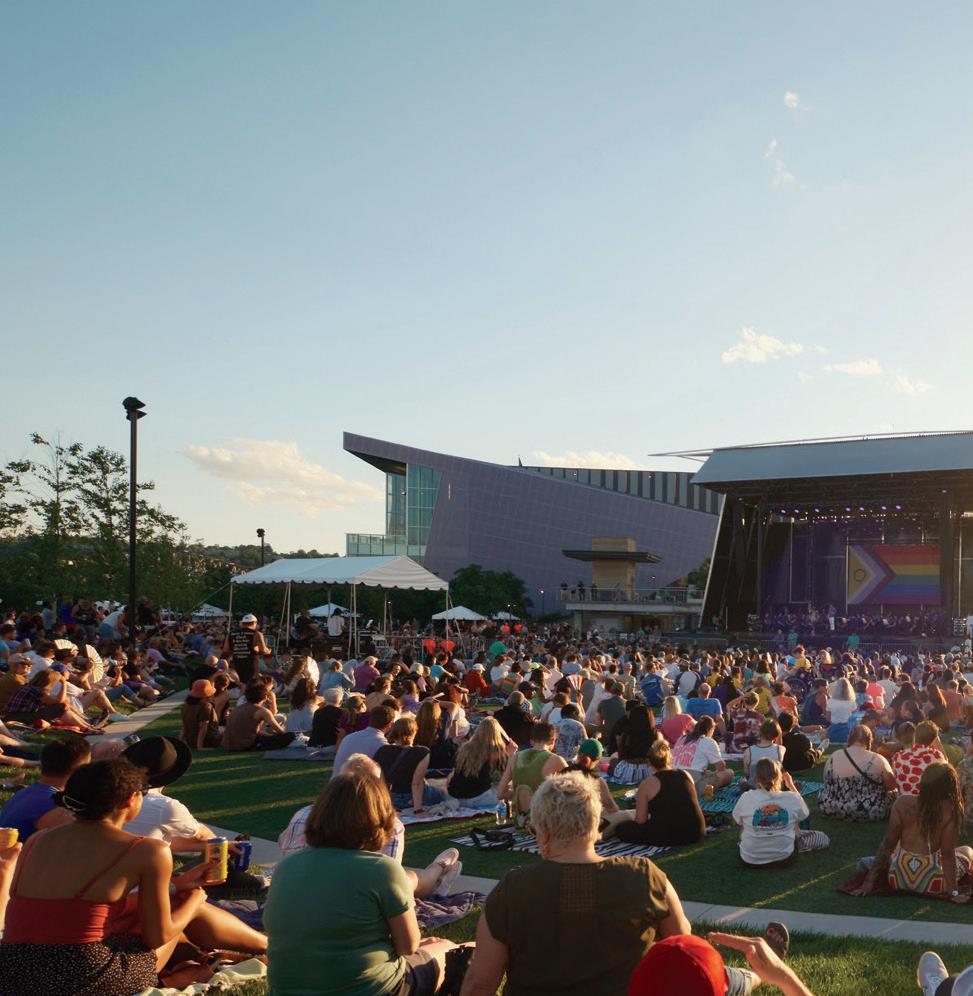
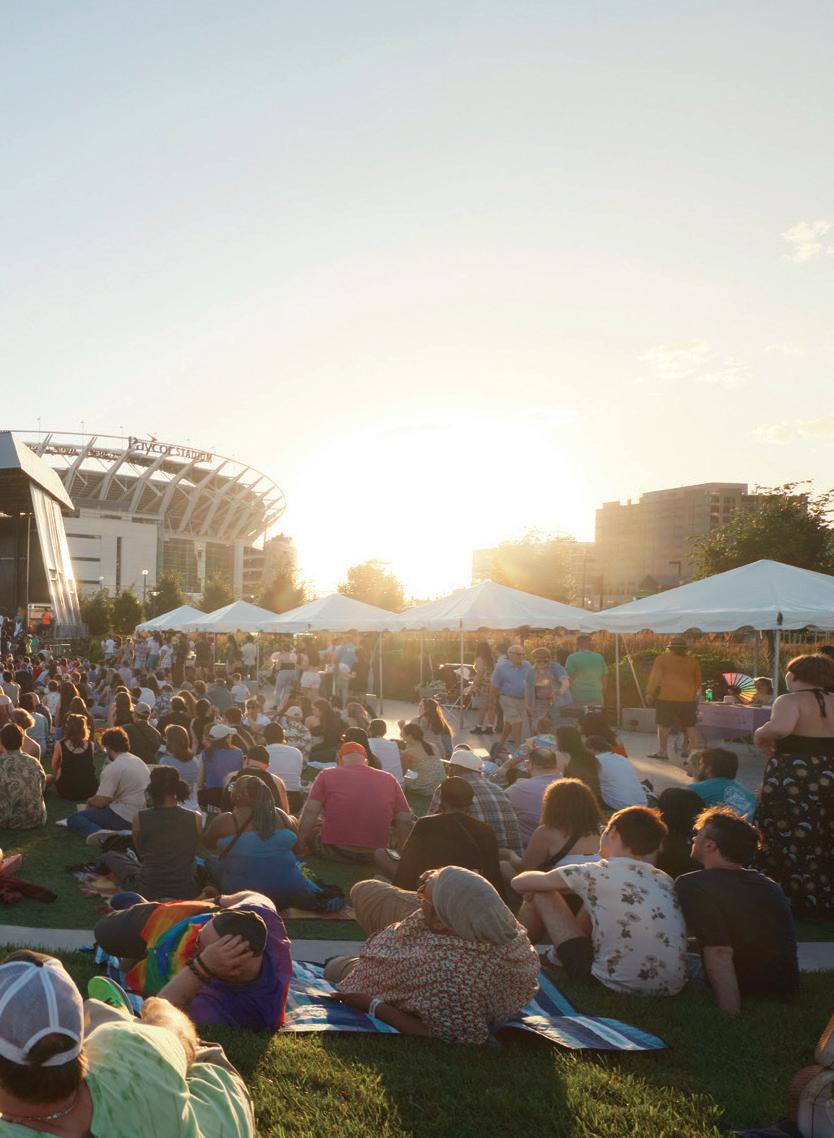
Join the CSO in neighborhoods around the city this summer.
Thursday, June 4: Pride Brady Block Party
Location: ICON Festival Stage at Smale Park at The Andrew J. Brady Music Center®
Pre-concert activities: 6:30pm | Concert: 7:45pm
Saturday, June 13: Evanston Brady Block Party
Location: Evanston Playground
Pre-concert activities: 6:30pm | Concert: 7:45pm Community Partners: Cincinnati Recreation Commission and Evanston Community Council
Sunday, June 21: West End Brady Block Party
Location: Ezzard Charles Park
Pre-concert activities: 6:30pm | Concert: 7:45pm Community Partners: Seven Hills Neighborhood Houses, Cincinnati Parks and Visit Cincy
Sunday, June 28: Madisonville Brady Block Party
Location: Madisonville Recreation Center
Pre-concert activities: 6:30pm | Concert: 7:45pm Community Partners: Cincinnati Recreation Commission and Madisonville Community Council
Friday, July 17: Woodlawn/Lincoln Heights Brady Block Party
Location: Woodlawn Community Center Fields
Pre-concert activities: 6:30pm | Concert: 7:45pm
Community Partners: Village of Woodlawn and Village of Lincoln Heights
For the most up-to-date information, visit cincinnatisymphony.org/BlockParties
by KEN SMITH
Just to be clear, there will be no films shown on the Music Hall stage at the upcoming April & May 2026 Cincinnati Pops events. That notice may seem redundant, since the program information both for the showcase of Joe Hisaishi’s “The Music of Studio Ghibli” (April 14) and John Williams’ “The Music of Star Wars” (May 1–3) carefully states that no projections are involved. But it bears repeating, given the CSO’s 2026–27 season announcement that includes three films, La La Land (September), Psycho (October) and Hook (January), presented with live orchestra.
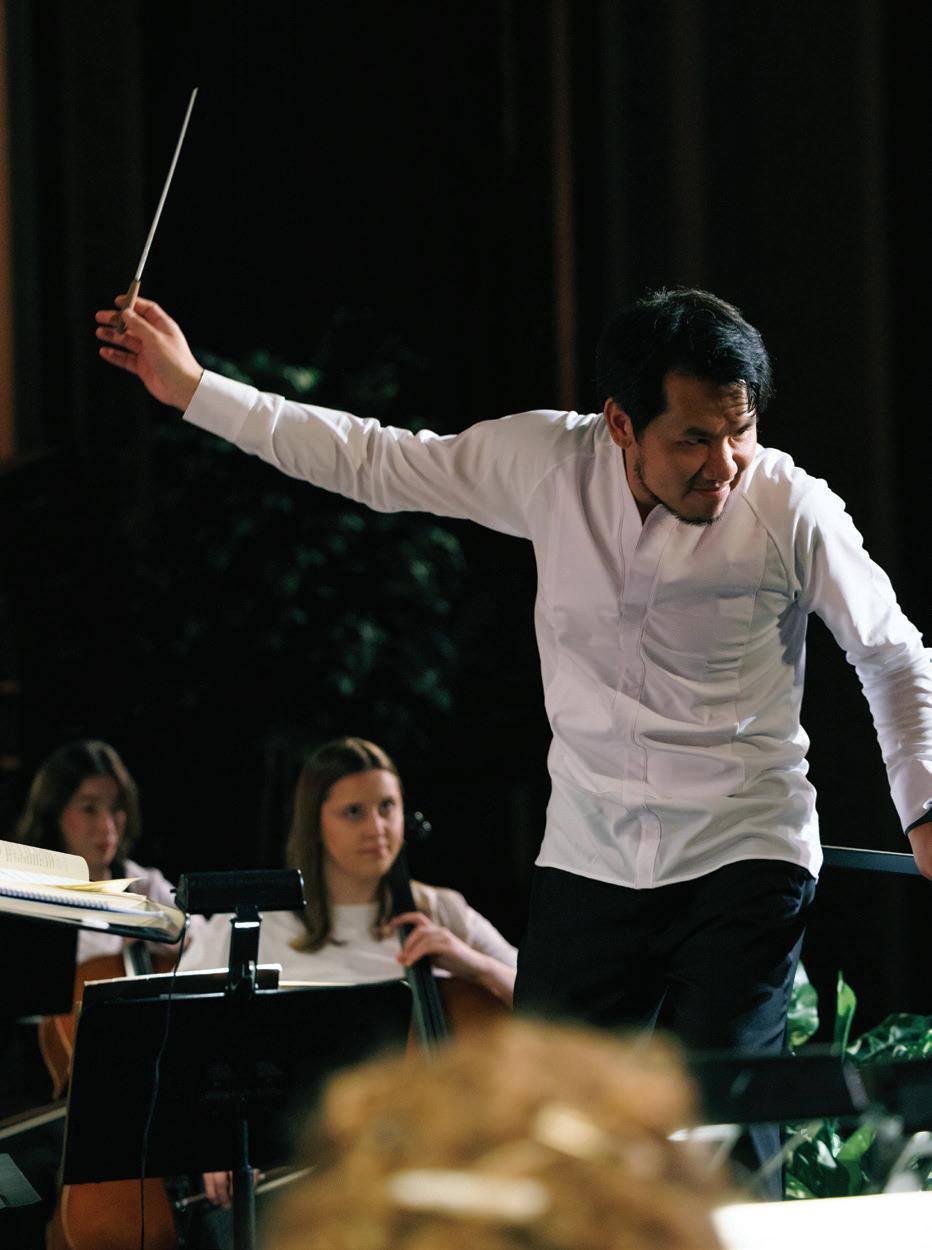
a rehearsal
where he is currently
In fact, not showing the Studio Ghibli or Star Wars movies for these programs is part of the point. “Hisaishi’s fan base may be smaller than John Williams’, but it’s just as devoted,” says former CSO Assistant Conductor Wilbur Lin, who returns to lead the Hisaishi program on April 14. (Pops Principal Guest Conductor Damon Gupton conducts Williams’ Star Wars music in May.) “It doesn’t really matter whether or not you show the films. People are there to hear the music.”
For Lin, who left his native New Jersey for Taiwan at age 6, Hayao Miyazaki’s feature films for Tokyo’s celebrated animation studio had been part of his personal filmgoing long before he ever thought of conducting the music Hisaishi composed for them. The scores first lured Lin to the podium in 2022, for a program conceived by the Ann Arbor Symphony. After seeing the audience reaction, Lin brought a revised version of the program to the Missouri Symphony, where he is now music director.
“I figured that, since Ann Arbor and Columbia are both college towns, what was successful at the University of Michigan would probably work at the University of Missouri,” he says. “But it’s been a success everywhere, even in towns without much of an Asian population. People you’d never expect to be anime fans know these films, and audiences are hungry for things like this.”
Film music in the concert hall — both with and without the actual film — has blossomed in the past couple of decades, but not without controversy. Debates have surfaced, both from the programming and audience development perspectives, Lin says, and continue on several fronts. “Some rightly say it’s a great way to get people to a concert, but those audiences don’t necessarily translate into ticket sales for Mahler,” he says. “My argument, though, is that it doesn’t really matter. Experiencing new music — and in the case of films with live orchestra, a new kind of art form — is in itself a worthy goal.”
For those unfamiliar with Hisaishi’s music, Lin offers a varied output, sampling scores from Kiki’s Delivery Service, Howl’s Moving Castle, Spirited Away and My Neighbor Totoro. “It’s like programming John Williams,” he says. “If you showcase John Williams, you have to do Star Wars If you’re playing Hisaishi, Spirited Away has to be there. But they’re all a bit different.” Having started in television, Hisaishi’s score to My Neighbor Totoro sounds “more like commercial jingles than a proper film score,” Lin says. “As he grew with the films, his music grew more connected to the stories and their
development. It even started to sound a lot like John Williams.” Though, he adds, it never totally lost its episodic quality.
“I may be reading too much difference here between East and West,” Lin observes, “but there isn’t the same sense of tension and release. The Ghibli films wouldn’t just point to a final conflict where things would emotionally burst. It’s just one new experience after another till you get to the end, which is all reflected in the music.”
While conducting to a projected film is much like ballet, where rhythmic precision and consistency are key, Lin compares film music concerts to opera. “Once you hit the key points, the rest is artistic freedom,” he says. “The source material may be from film, but I treat it like classical repertory.”
The only difference, he explains, concerns audience familiarity with the music and their expectations. “If I’m doing music from Star Wars, where the tempo, the style, the ritardandos are pretty much set in our ears, I don’t stray too far. With Hisaishi, where most people haven’t seen the movie 10 times and don’t expect it to be the same, I take more artistic license.”
In contrast to ballet, where much of the musical repertory took time to reach the concert stage, film has made in-roads with symphonic ensembles in record time. “I think film music is not far from ballet now,” Lin says, citing programs pairing concert works and film music by Miklós Rózsa and
Erich Wolfgang Korngold, both European immigrants who helped shape the classic Hollywood sound. The Melbourne Symphony Orchestra’s opening gala last year featured the Star Wars Suite alongside Rachmaninoff’s Symphonic Dances — a testament, Lin claims, both to how readily audiences have embraced film music and musicians have come to respect it.
“John Williams wrote his Star Wars music to be played in 30-second chunks. Once you stitch it together and play the whole thing, parts of it are as hard as a Wagner opera,” he says. “You can tell it’s becoming standard repertory, because whenever it’s on the program, you’re expected to play it without rehearsing. It shows how the orchestra world has matured, when even regional orchestras can perform the entire music from Star Wars. In the 1970s, that simply wasn’t imaginable.”
and reassuring us in moments of solitude that we are never truly alone. It turns our attention to the divine quality of life’s most ordinary moments and, in moments of deepest uncertainty, quietly reminds us of what makes life precious.
I place the bow on the string and begin to play. Though I do not know this man’s story, I am singing about its beauty: about the sound of the rain and how it felt to feel his children’s tiny hands clasping his arms. I am singing, “This life was a good life.” I am singing, “Be at peace.”
Matthew Liversedge is a fourth-year medical student at the University of Cincinnati College of Medicine. He grew up as a missionary kid in Cameroon and began
playing the cello after returning to the United States. The story in his essay took place while he was studying the cello at Vanderbilt University. After finishing his degree in psychology and music, he spent several years working with young people in therapy and as an EMT during the Covid-19 pandemic before beginning his medical degree. Liversedge plans to begin residency in Internal Medicine in 2026. He continues to love making music with his cello.
FIRST VIOLINS
Stefani Matsuo
Concertmaster
Anna Sinton Taft Chair
Felicity James
Associate Concertmaster
Tom & Dee Stegman Chair
Philip Marten
First Assistant Concertmaster
James M. Ewell Chair++
Eric Bates
Second Assistant Concertmaster
Serge Shababian Chair
Kathryn Woolley
Nicholas Tsimaras–
Peter G. Courlas Chair++
Anna Reider
Dianne & J. David Rosenberg Chair
Mauricio Aguiar§
Anne G. & Robert W. Dorsey Chair
Minyoung Baik‡
Jo Ann & Paul Ward Chair
James Braid
Marc Bohlke Chair given by Katrin & Manfred Bohlke
Rebecca Kruger Fryxell
Clifford J. Goosmann &
Andrea M. Wilson Chair
Elizabeth Furuta
Gerald Itzkoff
Jean Ten Have Chair
Joseph Ohkubo
Luo-Jia Wu
Jonathan Yi
SECOND VIOLINS
Gabriel Pegis
Principal
Al Levinson Chair
Yang Liu*
Harold B. & Betty Justice Chair
Scott Mozlin**
Henry Meyer Chair
Kun Dong
Charles Gausmann Chair++
Cheryl Benedict
Evin Blomberg§
Sheila and Christopher Cole Chair
Rose Brown
Rachel Charbel
Ida Ringling North Chair
Chika Kinderman
Charles Morey
Hyesun Park
Michael Rau
Stacey Woolley
Brenda & Ralph Taylor Chair++
VIOLAS
Christian Colberg
Principal
Louise D. & Louis Nippert Chair
Gabriel Napoli*
Grace M. Allen Chair
Julian Wilkison**
Rebecca Barnes§
Christopher Fischer
Stephen Fryxell
Melinda & Irwin Simon Chair
Caterina Longhi
Denisse Rodriguez-Rivera
Dan Wang
Joanne Wojtowicz
Music Director
Louise Dieterle Nippert & Louis Nippert Chair
JOHN MORRIS RUSSELL, Cincinnati Pops Conductor
Louise Dieterle Nippert & Louis Nippert Chair
Matthias Pintscher, CSO Creative Partner
Damon Gupton, Pops Principal Guest Conductor
Louis Langrée, Music Director Laureate
Alex Amsel, Assistant Conductor
Ashley and Barbara Ford Chair
Duo Shen, Assistant Conductor
Ashley and Barbara Ford Chair
CELLOS
Ilya Finkelshteyn
Principal
Irene & John J. Emery Chair
Lachezar Kostov*
Ona Hixson Dater Chair
[OPEN]
Karl & Roberta Schlachter
Family Chair
Drew Dansby§
Daniel Kaler
Peter G. Courlas–
Nicholas Tsimaras Chair++
Nicholas Mariscal
Marvin Kolodzik & Linda S. Gallaher Chair for Cello
Hiro Matsuo
Laura Kimble McLellan Chair++
Alan Rafferty
Ruth F. Rosevear Chair
Tianlu (Jerry) Xu
BASSES
Owen Lee
Principal
Mary Alice Heekin Burke Chair++
Luis Celis*
Thomas Vanden Eynden Chair
Stephen Jones**
Trish & Rick Bryan Chair
Boris Astafiev§
Michael Martin
Gerald Torres
Rick Vizachero
HARP
Gillian Benet Sella
Principal
Cynthia & Frank Stewart Chair
FLUTES
Randolph Bowman
Principal
Charles Frederic Goss Chair
Henrik Heide*
Carol J. Schroeder Chair
Haley Bangs
Jane & David Ellis Chair
PICCOLO
Rebecca Pancner
Patricia Gross Linnemann Chair
OBOES
Dwight Parry
Principal
Josephine I. & David J. Joseph, Jr. Chair
[OPEN]*
Stephen P. McKean Chair
Emily Beare
ENGLISH HORN
Christopher Philpotts
Principal
Alberta & Dr. Maurice Marsh Chair++
CLARINETS
Christopher Pell
Principal
Emma Margaret & Irving D.
Goldman Chair
Joseph Morris*
Associate Principal and E-flat Clarinet
Robert E. & Fay Boeh Chair++
Ixi Chen
Vicky & Rick Reynolds Chair in honor of William A. Friedlander
BASS CLARINET
Ronald Aufmann
BASSOONS
Christopher Sales
Principal
Emalee Schavel Chair++
Martin Garcia*
Christy & Terry Horan Family Chair
Hugh Michie
CONTRABASSOON
Jennifer Monroe
HORNS
Elizabeth Freimuth‡
Principal
David Alexander†
Acting Principal
Mary M. & Charles F. Yeiser Chair
David Smith†
Acting Associate Principal
Ellen A. & Richard C. Berghamer
Chair
[OPEN]**
Sweeney Family Chair in memory of Donald C. Sweeney
Lisa Conway
Susanne & Philip O. Geier, Jr. Chair
Duane Dugger
Mary & Joseph S. Stern, Jr. Chair
Charles Bell
Donald & Margaret Robinson Chair
TRUMPETS
Anthony Limoncelli
Principal
Rawson Chair
[OPEN]
Jackie & Roy Sweeney
Family Chair
Alexander Pride†
Otto M. Budig Family
Foundation Chair++
Christopher Kiradjieff
David C. Reed, MD Chair
TROMBONES
Cristian Ganicenco
Principal, in memoriam
Dorothy & John Hermanies
Chair
Joseph Rodriguez**
Second/Assistant Principal Trombone
Sallie Robinson Wadsworth &
Randolph L. Wadsworth Jr. Chair
BASS TROMBONE
Noah Roper
TUBA
Christopher Olka
Principal
Ashley & Barbara Ford Chair
TIMPANI
Patrick Schleker
Principal
Matthew & Peg Woodside Chair
Joseph Bricker*
Morleen & Jack Rouse Chair
PERCUSSION
David Fishlock
Principal
Susan S. & William A. Friedlander Chair
Michael Culligan*
Joseph Bricker
Morleen & Jack Rouse Chair
Marc Wolfley+
KEYBOARDS
Michael Chertock
James P. Thornton Chair
Julie Spangler+
James P. Thornton Chair
LIBRARIANS
Christina Eaton
Principal Librarian
Lois Klein Jolson Chair
Elizabeth Dunning
Associate Principal Librarian
Cara Benner
Assistant Librarian
Citlalmina Hernandez
Orchestra Library Intern
STAGE MANAGERS
Brian P. Schott
Phillip T. Sheridan
Daniel Schultz
Mike Ingram
Andrew Sheridan
§ Begins the alphabetical listing of players who participate in a system of rotated seating within the string section.
* Associate Principal
** Assistant Principal
† One-year appointment
‡ Leave of absence
+ Cincinnati Pops rhythm section
++ CSO endowment only
Music Director
Louise Dieterle Nippert & Louis Nippert Chair
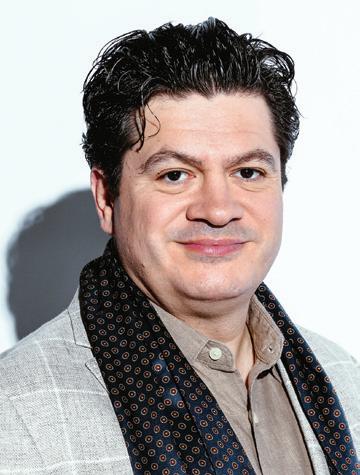
Grammy-winning conductor Cristian Măcelaru is Music Director of the Cincinnati Symphony Orchestra, Music Director of the Orchestre National de France, Artistic Director of the George Enescu International Festival and Competition, Artistic Director and Principal Conductor of the Interlochen Center for the Arts’ World Youth Symphony Orchestra, Music Director and Conductor of the Cabrillo Festival of Contemporary Music and Distinguished Visiting Artist at The Shepherd School of Music at Rice University. He also serves as Artistic Partner of the WDR Sinfonieorchester in Cologne, where he was Chief Conductor from the 2019–20 through 2024–25 seasons.
Măcelaru’s 2025–26 guest engagements include debuts with the Münchner Philharmoniker and Orchestra dell’Accademia Nazionale di Santa Cecilia, as well as returns with Tonhalle-Orchester Zürich, Czech Philharmonic, Leipzig Gewandhaus Orchestra, Philharmonia Orchestra and San Francisco Symphony.
Măcelaru’s previous seasons include European engagements with the London Philharmonic Orchestra, NDR Elbphilharmonie, Concertgebouworkest, Symphonieorchester des Bayerischen Rundfunks, Budapest Festival Orchestra and Wiener Symphoniker. In North America, he has led the New York Philharmonic, Philadelphia Orchestra, Los Angeles Philharmonic, Chicago Symphony Orchestra, Boston Symphony Orchestra and The Cleveland Orchestra. He is equally at home as a conductor of opera, with career highlights including productions of Don Giovanni with the Houston Grand Opera and Madama Butterfly with Opera Națională București.
In 2020, Măcelaru received a Grammy Award for conducting the Decca Classics recording of Wynton Marsalis’ Violin Concerto with Nicola Benedetti and The Philadelphia Orchestra. His highly anticipated recording of George Enescu’s complete symphonic works with the Orchestre National de France was released in April 2024 on Deutsche Grammophon. September 2025 marks the release of Măcelaru’s and the Orchestre National de France’s Ravel Paris 2025 album on the naïve label, featuring the symphonic works of Maurice Ravel in celebration of the 150th anniversary of the composer’s birth.
JOHN MORRIS RUSSELL
Cincinnati Pops Conductor
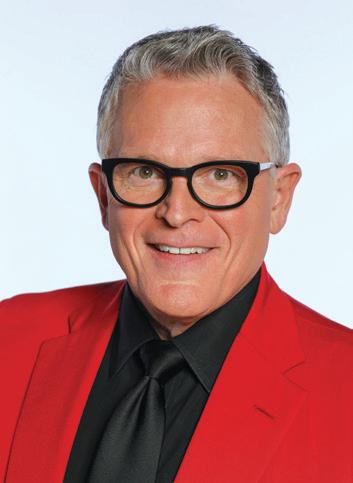
Louise Dieterle Nippert & Louis Nippert Chair John Morris Russell’s (JMR) embrace of America’s unique voice and musical stories has transformed how orchestral performances connect and engage with audiences. As conductor of the Cincinnati Pops since 2011, the wide range and diversity of his work as a musical leader, collaborator and educator continues to reinvigorate the musical scene throughout Cincinnati and across the continent. As Music Director of the Hilton Head Symphony Orchestra in South Carolina, JMR conducts the classical series as well as the prestigious Hilton Head International Piano Competition.
A Grammy-nominated artist, JMR has worked with leading performers from across a variety of musical genres, including Aretha Franklin, Emanuel Ax, Amy Grant and Vince Gill, Garrick Ohlsson, Rhiannon Giddens, Hilary Hahn, Brian Stokes Mitchell, Cynthia Erivo, Sutton Foster, George Takei, Steve Martin, Brian Wilson, Leslie Odom, Jr., Lea Salonga and Mandy Gonzalez.
For over two decades, JMR has led the Cincinnati Symphony Orchestra’s wildly successful Classical Roots initiative honoring and celebrating Black musical excellence. Guest artists have included Marvin Winans, Alton Fitzgerald White, George Shirley, Common and Hi-Tek.
JMR has contributed seven albums to the Cincinnati Pops discography, including 2023’s holiday album JOY!. In 2015, he created the “American Originals Project,” which has won both critical and popular acclaim and features two landmark recordings: American Originals (the music of Stephen Foster) and the Grammynominated American Originals 1918 (a tribute to the dawn of the jazz age). The 2020 “American Originals” concert King Records and the Cincinnati Sound with Late Show pianist Paul Shaffer honored legendary recording artists associated with the Queen City. In the 2024–25 season JMR took on the next installment of the project, offering a concert and recording (released March 2026) celebrating the legacy of the Harlem Renaissance, and presented a national PBS broadcast of Rick Steves’ Europe: A Symphonic Journey. JMR’s American Soundscapes video series with the Pops and Cincinnati’s CET public television station has surpassed one million views on YouTube since its launch in 2016.
For more information about Cristian Măcelaru and John Morris Russell, please visit cincinnatisymphony.org/about/artistic-leadership.
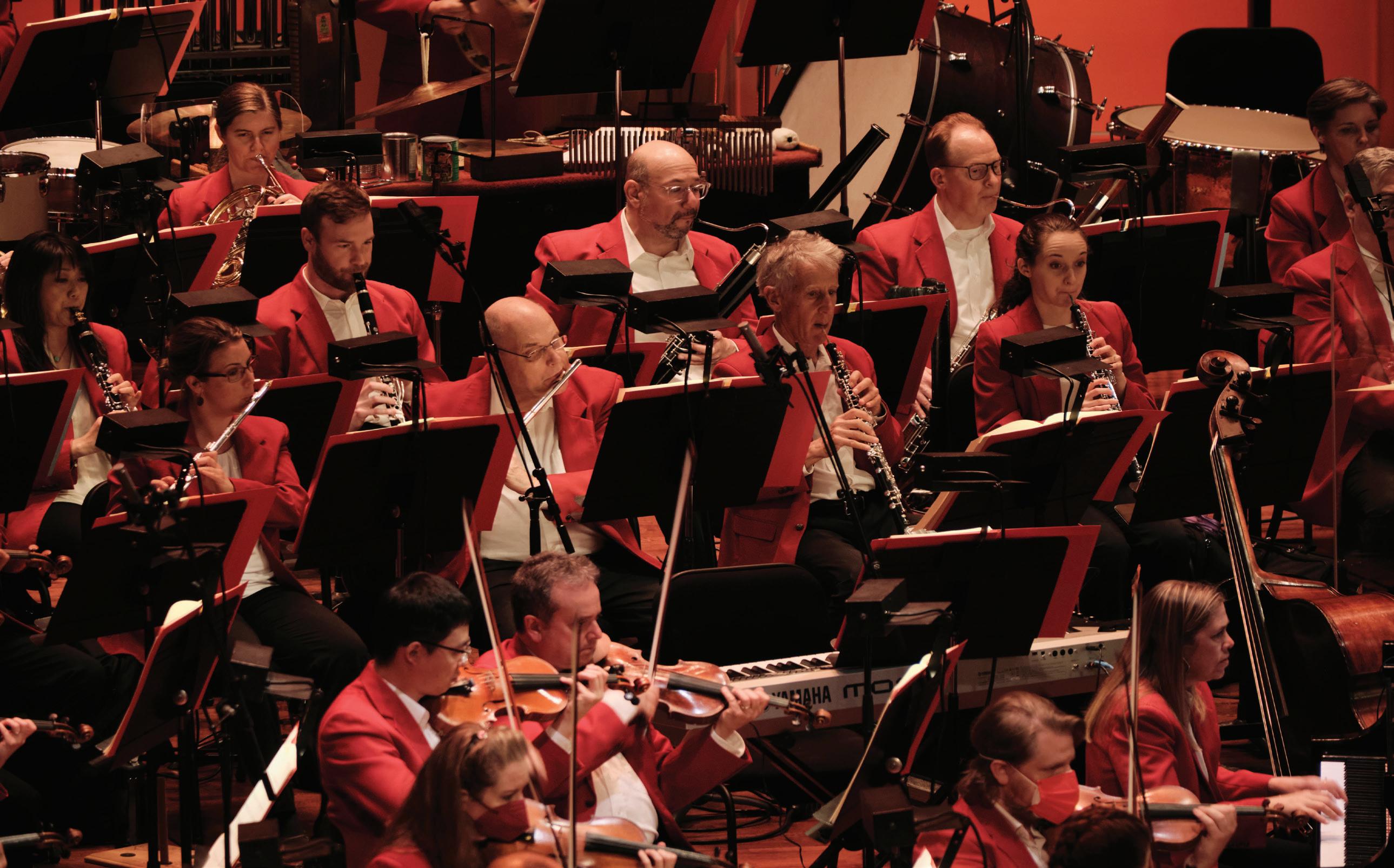
PNC is proud to be the Pops Season Presenter and to support the Cincinnati Symphony Orchestra and Cincinnati Pops. Thank you for mastering the art of making Greater Cincinnati a more brilliantly beautiful place.

TUE APR 14, 7:30 PM | Music Hall
Wilbur Lin conductor
Chika Kinderman narrator
Symphonic Variation “Merry-Go-Round” from Howl’s Moving Castle
My Neighbor Totoro Orchestra Stories Joe
Hey Let’s Go
The Village in May
Dust Bunnies
Mother
A Little Monster Totoro
The Path of the Wind
A Lost Child
Cat Bus
My Neighbor Totoro
“A Town with an Ocean View” from Kiki’s Delivery Service Symphonic Suite* Joe Hisaishi
Spirited Away Suite
One Summer’s Day
Nighttime Coming
The Gods View of the Morning
The Bottomless Pit
The Dragon Boy
No Face
The Sixth Station
Reprise
The Return
Joe Hisaishi
Program subject to change.
For insights into this program and film music in general, please read the article on p. 16, “Studio Ghibli Conductor Wilbur Lin on the Art of the Film Score.”
The Cincinnati Pops Orchestra is grateful to Pops Season Presenter PNC, Support Sponsor Asianati and Supporter Sponsor CinSei.
The Cincinnati Symphony Orchestra is grateful for the support of the Louise Dieterle Nippert Musical Arts Fund of the Greenacres Foundation, the Nina Browne Parker Trust, and the thousands of people who give generously to the ArtsWave Community Campaign, the region’s primary source for arts funding. This project was supported in part by the Ohio Arts Council, which receives support from the State of Ohio and the National Endowment for the Arts
The CSO in-orchestra Steinway piano is made possible in part by the Jacob G. Schmidlapp Trust.
MENDELSSOHN SYMPHONY NO. 3 | 2025–26 SEASON FRI APR 17, 11 AM | SAT APR 18, 7:30 PM
Music Hall
Kristiina Poska conductor
Lise de la Salle piano
Julia Adolphe Underneath the Sheen (b. 1988)
Frédéric Chopin Concerto No. 2 in F Minor for Piano and Orchestra, Op. 21 (1810–1849) Maestoso Larghetto Allegro vivace
Felix Mendelssohn Symphony No. 3 in A Minor, Op. 56, Scottish (1809–1847) Andante con moto. Allegro un poco agitato Vivace non troppo Adagio Allegro vivacissimo. Allegro maestoso assai
These performances are approximately 115 minutes long, including intermission.
The CSO is grateful to CSO Season Sponsor Western & Southern Financial Group These concerts are endowed by Martha Anness, Priscilla Haffner & Sally Skidmore in loving memory of their mother, LaVaughn Scholl Garrison, a long-time patron of the Orchestra.
The Cincinnati Symphony Orchestra is grateful for the support of the Louise Dieterle Nippert Musical Arts Fund of the Greenacres Foundation, the Nina Browne Parker Trust, and the thousands of people who give generously to the ArtsWave Community Campaign, the region’s primary source for arts funding. This project was supported in part by the Ohio Arts Council, which receives support from the State of Ohio and the National Endowment for the Arts. Pre-Concert Talks are made possible by an endowed gift from Melody Sawyer Richardson WGUC is the Media Partner for these concerts. This concert will air on 90.9 WGUC on May 31, 2026, followed by 30 days of streaming at cincinnatisymphony.org/replay.
The CSO in-orchestra Steinway piano is made possible in part by the Jacob G. Schmidlapp Trust
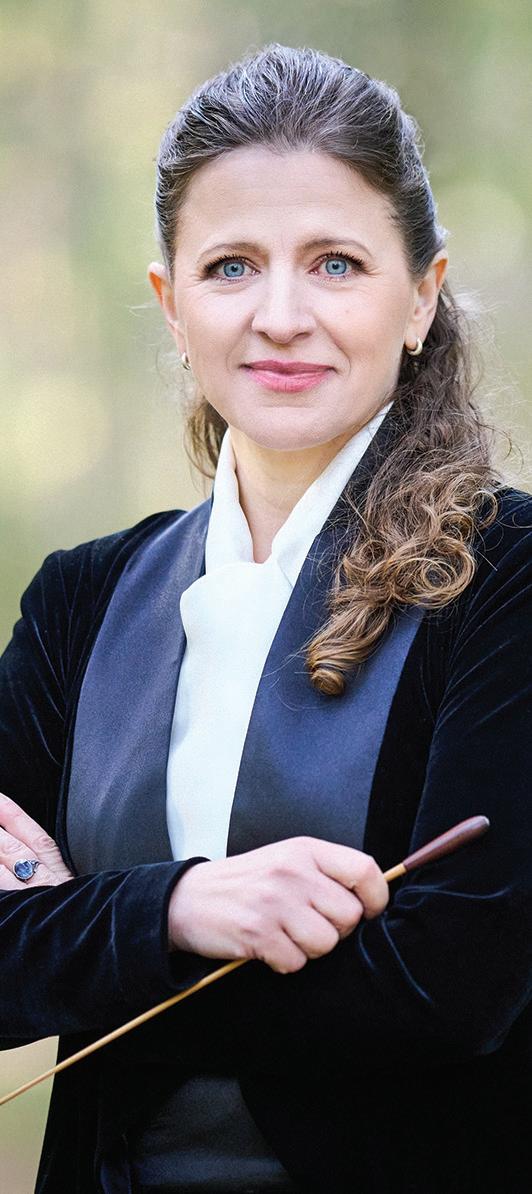
Kristiina Poska, conductor
The award-winning conductor Kristiina Poska is in high demand on the international music scene. She has held the post of chief conductor of the Flanders Symphony Orchestra since the 2019–20 season and principal guest conductor of the Latvian National Symphony Orchestra since 2021–22, and she began her tenure as music director of Orchestre Français des Jeunes in summer 2025. She studied choral conducting at the Estonian Academy of Music and Theatre in Tallinn and orchestral conducting at Hochschule für Musik Hanns Eisler Berlin. Poska was a finalist at the renowned Donatella Flick London Symphony Orchestra Competition in 2010 and at the Malko Competition in May 2012, where she also won the audience prize. She then went on to win the prestigious German Conductors’ Prize in April 2013.
This season’s highlights include several debuts — with the Toronto Symphony Orchestra and Colorado Symphony in North America, Orquesta Sinfónica de Euskadi and Orquesta Sinfónica de Bilbao in Spain, the Swedish Radio and Norwegian Radio symphony orchestras in Scandinavia, as well as Orchestre national de Montpellier, Lahti Symphony Orchestra and Grazer Philharmoniker. During the concert season, she returns to the Orchestre National de France and Estonian National Symphony Orchestra, and she tours with the Flanders Symphony Orchestra several times, performing in Belgium, the Netherlands, France, Germany and Estonia. As the new music director of the Orchestre Français des Jeunes, she embarked on two European tours at the end of the summer of 2025.
Equally prolific in the operatic repertoire, Poska debuts at the Opéra de Dijon this season, conducting a double bill production featuring Bartók’s Bluebeard’s Castle and Strauss’ Metamorphosen directed by Dominique Pitoiset.
Together with the Flanders Symphony Orchestra, Poska is recording the complete Beethoven cycle for the label Fuga Libera. kristiinaposka.com
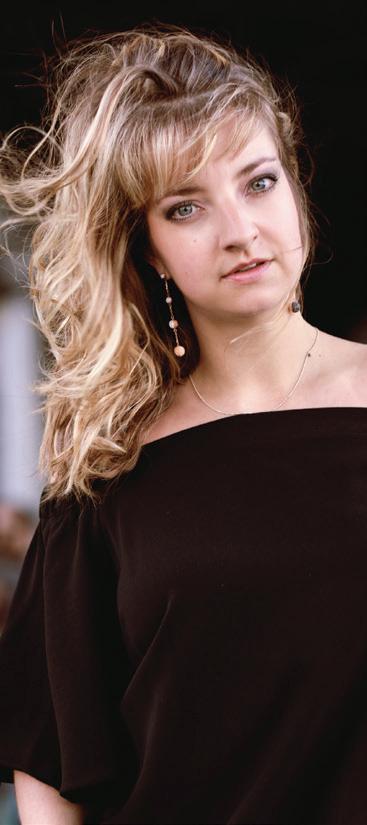
Lise de la Salle is an internationally recognized pianist with a career spanning over 20 years. Her award-winning recordings and international performances have made her a prominent figure among contemporary pianists.
Her 2025–26 season features collaborations with orchestras such as Staatskapelle Berlin, Wiener Symphoniker, Antwerp Symphony and Polish National Radio Symphony, as well as Orchestre Symphonique de Québec, Shanghai Philharmonic, Enescu Philharmonic, Colorado Springs Philharmonic and the Gulbenkian Orchestra. She also tours with the Philharmonie zuidnederland.
Lise de la Salle has played with many leading orchestras across the globe, including the Chicago, Boston and Washington symphony orchestras; the Los Angeles Philharmonic, Philadelphia Orchestra, Philharmonia and BBC and London symphony orchestras; and the Deutsches Symphonie-Orchester Berlin, Münchner Philharmoniker, Dresden Staatskapelle, hr-Sinfonieorchester, Orchestre de Paris, Orchestre National de France, Orchestra dell’Accademia Nazionale di Santa Cecilia, Filarmonica della Scala, Orchestra Sinfonica Nazionale Della RAI, Rotterdam Philharmonic, St. Petersburg Philharmonic, Royal Stockholm Philharmonic and NHK Symphony Orchestra; and the Singapore and Tokyo Metropolitan symphony orchestras. She also conducts masterclasses in many of the cities in which she performs.
Her extensive discography on Naïve includes critically acclaimed recordings such as an all-Chopin album and a Liszt album, which was awarded a Diapason d’Or in Gramophone magazine. Her latest releases include When Do We Dance?, which explores a century of dance music, and Phantasmagoria, dedicated to Liszt and featuring his famous Sonata.
Lise de la Salle began playing piano at age 4 and gave her first concert at 9, broadcast live on Radio France. A graduate of the Paris Conservatoire, she studied with Pascal Nemirovski and was mentored by Geneviève Joy-Dutilleux. She won the Young Concert Artists International Auditions in New York in 2004. lisedelasalle.com
Julia Adolphe: Underneath the Sheen
Composed: 2018
Premiere: September 27, 2018 by the Los Angeles Philharmonic, Walt Disney Concert Hall, Gustavo Dudamel conducting
Instrumentation: 2 flutes (incl. alto flute, piccolo), 2 oboes (incl. English horn), 2 clarinets (incl. bass clarinet), 2 bassoons (incl. contrabassoon), 4 horns, 3 trumpets, 3 trombones, tuba, timpani, bass drum, crotales, maracas, marimba, suspended cymbals, tam-tam, tambour de Basque, temple blocks, tom-tom, vibraphone, harp, piano, strings
CSO notable performances: These are the first CSO performances of Underneath the Sheen
Duration: approx. 8 minutes
Julia Adolphe’s music is performed across the U.S. and abroad by renowned orchestras and ensembles such as the Los Angeles and New York philharmonics; the Boston, Cincinnati and BBC symphony orchestras; Gewandhausorchester Leipzig, Chamber Music Society of Lincoln Center, Orchestre Métropolitain, Minnesota Orchestra, Colorado Symphony, the Sitkovetsky Trio, the Norwegian and Los Angeles chamber orchestras and the Brooklyn Youth Chorus, as well as soprano Hila Plitmann and pianist Gloria Cheng, among others. Adolphe’s awards include a Lincoln Center Emerging Artist Award, an OPERA America Discovery Grant, an ASCAP Young Composer Award and a Charles Ives Scholarship from the Academy of Arts and Letters.
A native New Yorker living in Nashville, Adolphe holds a Master of Music degree in music composition from the USC Thornton School of Music and a Bachelor of Arts degree from Cornell University, where she studied with Steven Stucky and Stephen Hartke.
Recent commissions include Chrysalis, a cello concerto for Seth Parker Woods and the Los Angeles Philharmonic, and a large-scale choral work with celebrated poet Safiya Sinclair, to be announced. Other works include the violin concerto Woven Loom, Silver Spindle, also commissioned by the LA Philharmonic for Martin Chalifour; the orchestral work Makeshift Castle (2023), co-commissioned by the Boston Symphony and Gewandhausorchester Leipzig; Adolphe’s chorus and orchestra piece Crown of Hummingbirds (2023), a collaboration with Safiya Sinclair and commissioned by the Cincinnati May Festival; and her piano trio Etched in Smoke and Light, commissioned by the Chamber Music Society of Lincoln Center, The Soraya and Arizona Friends of Chamber Music for the Sitkovetsky Trio.
Passionate about de-stigmatizing mental illness and dispelling the myth of the tortured artist, Adolphe is the creator and host of the podcast LooseLeaf NoteBook. juliaadolphe.com
Of Underneath the Sheen, which was commissioned by the Los Angeles Philharmonic Association, Adolphe wrote:
Underneath the Sheen envisions the movement of light edging and shining through a canopy of leaves and branches as observed from the forest floor. The endurance and quiet omnipotence of California’s Redwood trees served as the source of inspiration. Standing beneath these trees is a humbling and exhilarating experience, a stunning reminder of the simultaneous power and fragility of nature. The immense roots, twisting and turning, the mist hanging in the air, and the beams of light entering the forest ceiling create a striking enclosure, encasing the observer in an otherworldly realm. The music explores this oddly foreign yet deeply intimate atmosphere, a sense of a lost home, a state of vulnerability.
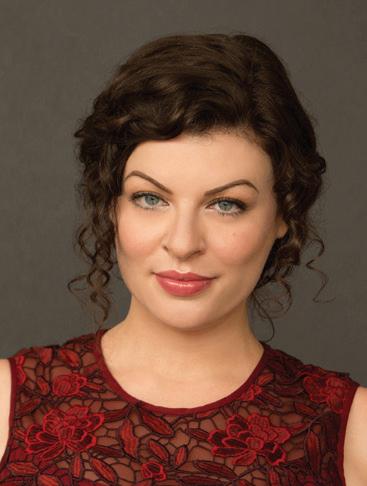
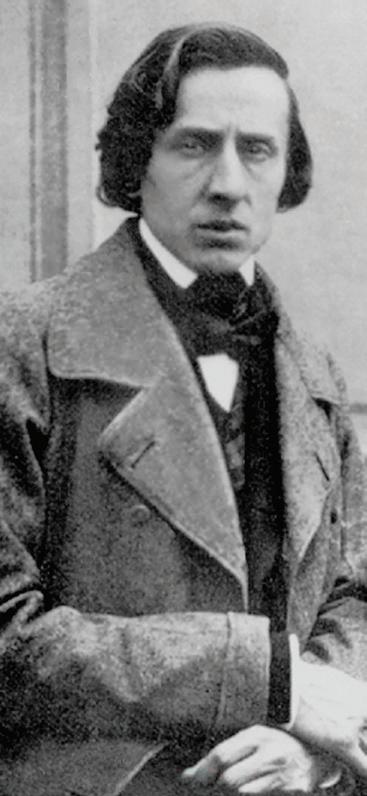
Born: March 1, 1810, Żelazowa Wola, Poland
Died: October 17, 1849, Paris, France
Frédéric Chopin: Concerto No. 2 in F Minor for Piano and Orchestra, Op. 21
Composed: 1829
Premiere: March 17, 1830, Warsaw, Poland (Warsaw National Theatre), Frédéric Chopin, piano
Instrumentation: solo piano, 2 flutes, 2 oboes, 2 clarinets, 2 bassoons, 2 horns, 2 trumpets, bass trombone, timpani, strings
CSO notable performances: First: December 1897, Frank Van der Stucken conducting; Richard Burmeister, piano. Most Recent: September 2014, Louis Langrée conducting; Emanuel Ax, piano.
Duration: approx. 32 minutes
Success caught Frédéric Chopin off guard. On August 11, 1829, the 19-year-old gave a concert at the Kärntnertor Theatre in Vienna that featured an unpublished set of variations for piano and orchestra on the duet “Là ci darem la mano” (“There We Will Give Each Other Our Hands”), from Mozart’s Don Giovanni, and a free fantasy on operatic and Polish themes. The choice mix of exotic, theatrical and local fare won over the Viennese, who induced Chopin to appear again a week later, when he performed (by popular request) the Mozart Variations and introduced his Rondo à la Krakowiak. On August 20, 1829, encouraged by his surprise success and inspired by Vienna’s vibrant musical scene, Chopin left the city with hopes of conquering Europe as a virtuoso composer-pianist.
Although Chopin had substantial works for piano and orchestra in his compositional portfolio, he had yet to write a full concerto. Results came quickly: he presented the F Minor Concerto on March 17, 1830, as the anchor piece to his official public debut at Warsaw’s National Theatre, which also saw the premiere of his Potpourri on Polish Themes for piano and orchestra (later published as the Fantasia on Polish Airs, Op. 13). According to one newspaper report, over 800 people attended the event, and “it was agreed that he belongs among the greatest masters.” Less than seven months later, he was again on stage for a “farewell” concert that saw the premiere of another concerto, this time in E minor.
With two concertos in hand, Chopin planned a route established by many an aspiring virtuoso: impress Vienna (again), tour Italy and then aim for success in Paris and London. Yet, soon after arriving in Vienna in November 1830, a failed assassination attempt on Grand Duke Konstantin Pavlovich of Russia abruptly closed off the border to his homeland. With a return to Warsaw now impossible, Chopin found himself in Vienna alone and impoverished, cut off from the financial resources and professional networks that were essential to realizing his long-range plans. As a result, he had to rearrange much of his original itinerary, eliminating the Italian leg and instead proceeding, after many frustrating delays, to Paris by way of Munich and Stuttgart.
While the musical cognoscenti rallied around Chopin’s genius, the general press did not. Chopin’s anti-virtuosic style — intimate, introspective, inviting — clashed with the powerful, near-overwhelming personalities of Niccolò Paganini and Franz Liszt, whose onstage habits profoundly shaped the practice of modern public performance. With popular success unlikely, Chopin pivoted, building a studio of students drawn from some of Paris’ most elite families and offering a substantial back catalog of completed compositions to influential publishers. The piano concertos were among this first wave of compositions that Chopin released during his first years in Paris: the Piano Concerto in E Minor was published in June 1833 as Op. 11, while the Concerto in F Minor, although the first to be composed, appeared in 1836 as Chopin’s second.
Chopin’s F Minor Concerto shares much with the concerted works of the preeminent virtuosos of Chopin’s youth, but it also transcends them in several important ways. They had used embellishment techniques as melodic window dressing; with Chopin the techniques become essential tools for thematic development. For instance, after the piano’s dramatic entrance in the first
movement, it dutifully takes up the principal theme. Yet the phrase destabilizes as it progresses, on account of increased ornamentation in the right hand. Chopin’s employment of this approach for the entire first theme group makes the transition to the next section nearly seamless, thus creating the impression of organic, continuous growth and change.
By contrast, the second movement owes its timeless appeal to an intensity of rhetorical expression shaped by an extraordinary array of melodic permutations and performative gestures. A sweeping pass through four-and-a-half octaves lands on an exposed, high E-flat, the first pitch of a melody long celebrated as an aria without words. The inspiration for such a dramatic scene came from the singer Konstancja Gładkowska, whom Chopin adored from afar for the better part of 1829 and into the early months of 1830. A blend of nocturne and dramatic recitative, the second movement is notable for its juxtaposition of anguished lyricism and brash, defiant octave outbursts, almost as if the teenage Chopin is trying to articulate his authentic voice before a distant beloved.
If the second movement offers a glimpse of Chopin as (hopeless) romantic, the finale projects his national identity. The main theme is indebted to the Polish mazurka, albeit colored by elements typically associated with the cosmopolitan waltz. Chopin’s designation of “Rondo” is also a bit misleading, as he infuses the genre’s traditional sectional design with extended episodes that take on developmental functions, thus tipping the movement’s formal paradigm toward the sonata. Notable, too, are the subtle rhythmic transformations that characterize the fulsome middle section, the overdue opportunities for members of the orchestra to add meaningfully to the sonic palette (e.g., col legno strings [drawing the wood stick of the bow across the strings], horn fanfare), and the rambunctious hemiolas [rhythmic hiccups] and harmonic asides that characterize the piano writing. Taken as a whole, the concerto is an astonishing testament to Chopin’s youthful genius and a harbinger of his many innovations to come.
— ©Jonathan Kregor, University of Cincinnati, College-Conservatory of Music
Felix Mendelssohn: Symphony No. 3 in A Minor, Op. 56, Scottish
Composed: 1841–1842
Premiere: March 3, 1842, Leipzig Gewandhausorchester, Felix Mendelssohn conducting
Instrumentation: 2 flutes, 2 oboes, 2 clarinets, 2 bassoons, 4 horns, 2 trumpets, timpani, strings
CSO notable performances: First: April 1895, Henry Schradieck conducting. Most Recent: November 2021, Roderick Cox conducting.
Duration: approx. 40 minutes
A gifted prodigy, Felix Mendelssohn is remembered as one of the great German composers of the 19th century. Along with his talented sister Fanny, Felix demonstrated musical genius as a child, playing piano and violin, singing and skillfully practicing music theory and composition. He came into his own as a composer in the 1820s, fully launching his career just as Beethoven’s career ended. Well-known for his orchestral, choral and pianistic writing, Mendelssohn’s musical style reflects the clarity of the Classical forms he studied as well as the dramatic musical aesthetics of Romanticism. One of his most frequently performed works, the Scottish Symphony No. 3, demonstrates his masterful skill in composing.
Much of Mendelssohn’s early life was spent in Berlin, where he received musical and general education from tutors and private teachers. Around 1819, he entered into an apprenticeship with Carl Friedrich Zelter, the director of the Berlin Singakademie, who taught the young Mendelssohn theory and compositional techniques. Mendelssohn soon pursued increasingly larger composition projects, including piano works, chamber music, choral works and Singspiels. He wrote his first symphony in 1824, and he composed his well-known Overture to A Midsummer Night’s Dream in 1826.
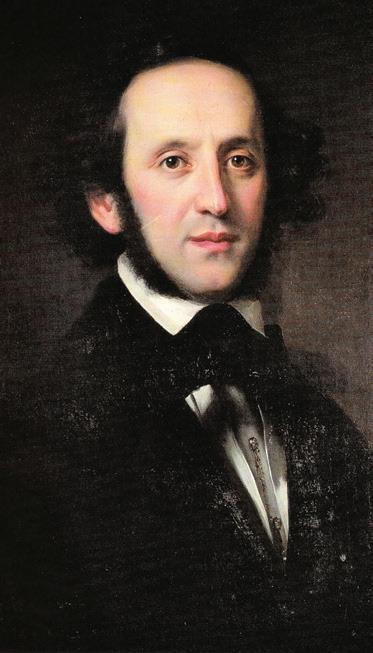
Born: February 3, 1809, Hamburg, Germany
Died: November 4, 1847, Leipzig, Germany
In 1829, Mendelssohn decided to travel to England, Italy and France in a grand tour of conducting, performing and composing. This tour would also prove to be important for Mendelssohn to establish relationships and reunite with musical friends in the various cities he visited, bolstering his career and professional connections. He traveled to London in the spring of 1829 before returning to Berlin in December. He embarked for Italy in the spring of 1830, passing through Munich and Vienna before proceeding to Venice, Florence and finally Rome. After several months, he set out again, passing through several cities before arriving in Paris in December 1831. Mendelssohn returned to London in April 1832 and finally returned to Berlin in June.
Having completed his grand tour, Mendelssohn contemplated career prospects. He took on a position as the Düsseldorf music director in October 1833, but he grew dissatisfied and pursued other opportunities. In September 1835, he began a new position as the municipal music director of Leipzig and conductor of the Gewandhaus Orchestra. This transition proved to be a positive move, as Mendelssohn would maintain his affiliation with Leipzig for the rest of his life. In 1840, Friedrich Wilhelm IV succeeded his father as King of Prussia, and, as part of his plan to revive arts in Berlin, he appointed Mendelssohn as Kapellmeister. For the next several years, Mendelssohn traveled back and forth between Berlin and Leipzig, overseeing various aspects of musical life in Berlin, continuing his duties with the Gewandhaus and establishing a new conservatory in Leipzig. In May 1847, he learned the devastating news of his sister Fanny’s death. A few months later, his own health declined as he suffered a series of strokes, and he died in November 1847. A funeral service was held for Mendelssohn in Leipzig, and he was buried in Berlin next to Fanny’s grave.
Many great compositions make up Mendelssohn’s musical legacy, including the Scottish Symphony. Though published as Symphony No. 3, it was the last of the five symphonies Mendelssohn composed. A long period of time passed between his conception of the symphony and its completion. Mendelssohn decided to write his Scottish Symphony while visiting Scotland during his grand tour early in his career. When he traveled to London in 1829, Mendelssohn had free time after the Philharmonic Society’s season had ended, so he journeyed to Scotland with his friend, the poet Karl Klingemann. They visited Edinburgh, where the Holyrood Palace gave Mendelssohn the inspiration for the opening of his Scottish Symphony. Their tour of the Highlands sparked the creativity of both men, as Klingemann wrote poetry and Mendelssohn sketched the landscapes. Upon reaching the western coast, they caught their first glimpse of the Hebrides. Seeing the cluster of islands and visiting Fingal’s Cave on the island of Staffa inspired Mendelssohn to compose his Hebrides Overture, a picturesque orchestral overture that captures the beauty of the islands and the sound of the sea. From there, they traveled to Glasgow and then Liverpool, at which point Klingemann returned to London and Mendelssohn continued on to Wales. The memorable trip through Scotland provided Mendelssohn with the musical ideas and motivation to compose his Scottish Symphony, though he ended up setting his work aside for a while. He returned to working on the symphony in 1841, completing it while performing his duties in Berlin early in 1842 and premiering it in Leipzig a couple months later. Mendelssohn later premiered the symphony in London and dedicated the piece to Queen Victoria.
Although Mendelssohn often referenced his symphony as his “Scottish” or “Scotch” in his own writing and correspondence in 1829, he did not explicitly label it as such when he completed the work in 1842. He did not provide a descriptive title or program to accompany the symphony to suggest a Scottish narrative. Nevertheless, for many listeners, the history of the piece and its rich orchestration evoke the picturesque landscapes of Scotland. Mendelssohn’s Symphony No. 3 consists of four movements that are generally performed without pauses between
the movements. The first movement begins with a slow introduction, the initial theme presented in the dark colors of the viola and low-register winds. A new section begins with the clarinet and violins presenting the second theme. It begins softly and gently but grows in intensity to a more agitated style. Rapid bursts of agitation balance with smoother and calmer sections. The first movement closes with pizzicato strings before continuing into the second movement, a scherzo, in which the music moves quickly and with spirit and a lively clarinet theme evokes the style of Scottish folk music, in a pentatonic scale and the rhythm of the Scotch snap. This energy continues through to the third movement, a much slower Adagio that begins softly, highlighting an expressive violin melody followed by a stately and somber march of dotted rhythms. The final movement, Allegro guerriero (“warlike”), restores the agitated energy of the first movement, introducing a skipping theme in the violin that is passed around among the instruments. Mendelssohn includes an innovative coda to close the fourth movement, which almost serves as a fifth movement. The coda introduces a new majestic theme in the key of A major. This broad sweeping theme resolves the tension of the symphony, closing the piece with what we might imagine to be a depiction of the pastoral Scottish landscape.
—©Dr. Rebecca Schreiber
To view the Digital Program for exclusive content, such as full-length program notes and artist biographies, please text PROGRAM to 513.845.3024*, use your mobile device to scan the QR code or visit cincinnatisymphony.org/digitalprogram.
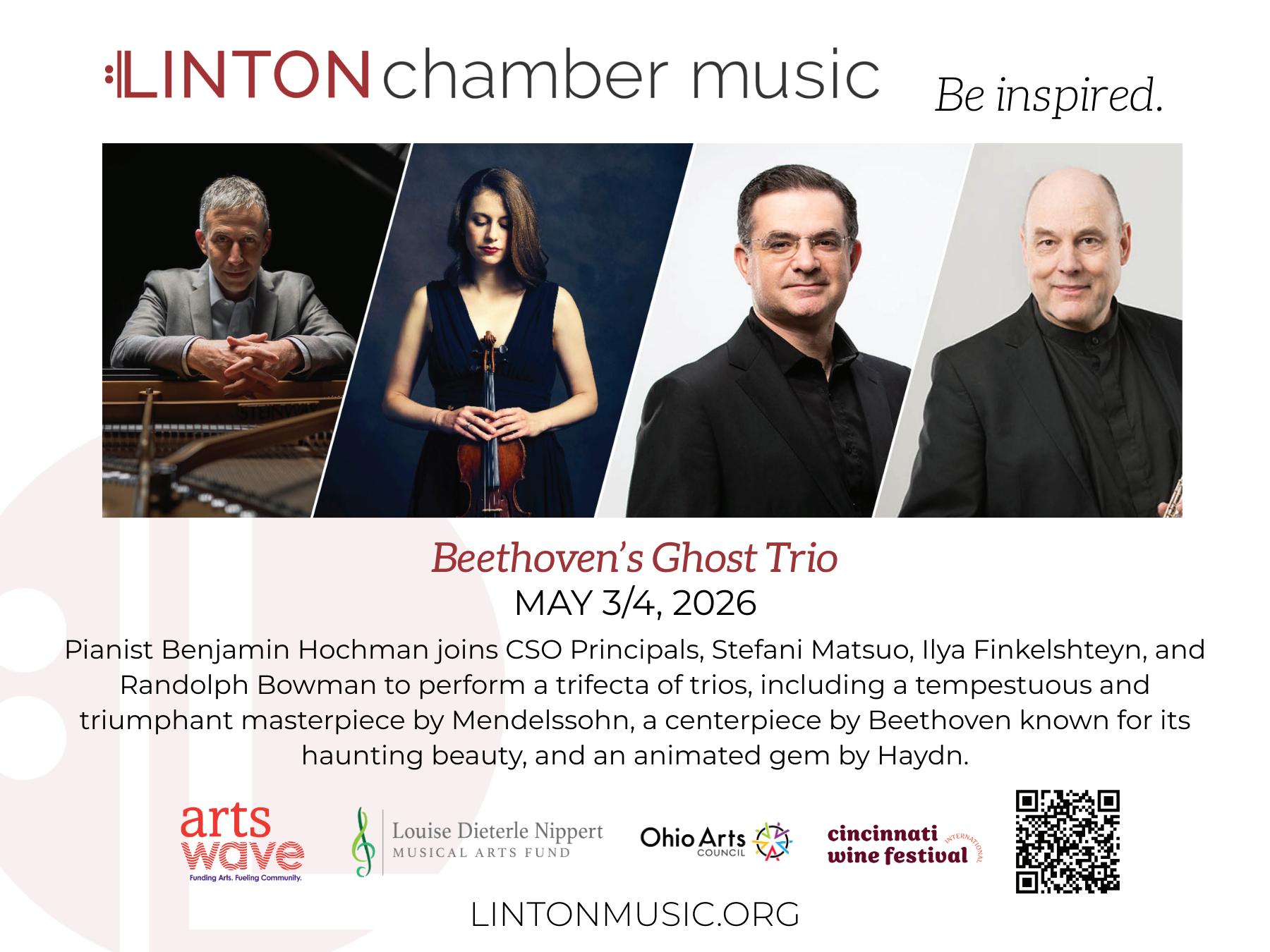



103 YEARS OF SUPPORT




STRAVINSKY’S FIREBIRD | 2025–26 SEASON
FRI APR 24, 7:30 PM | SAT APR 25, 7:30 PM
Music Hall
Cristian Măcelaru conductor
Janni Younge director
Gustav Mahler Totenfeier (1860–1911)
Igor Stravinsky L’Oiseau de feu (“The Firebird”), complete ballet (1882–1971)
These performances are approximately 105 minutes long, including intermission.
The CSO is grateful to CSO Season Sponsor Western & Southern Financial Group/ Fort Washington Investment Advisors, Series Sponsor Cincinnati Symphony Club, Presenting Sponsor Peter E. Landgren and Judith Schonbach Landgren and Performance Sponsor Rock Island Realty
The Firebird is generously supported by the David C. Herriman Fund of Greater Cincinnati Foundation
Peter E. Landgren and Judith Schonbach Landgren

The Cincinnati Symphony Orchestra is grateful for the support of the Louise Dieterle Nippert Musical Arts Fund of the Greenacres Foundation, the Nina Browne Parker Trust, and the thousands of people who give generously to the ArtsWave Community Campaign, the region’s primary source for arts funding. This project was supported in part by the Ohio Arts Council, which receives support from the State of Ohio and the National Endowment for the Arts
Pre-Concert Talks are made possible by an endowed gift from Melody Sawyer Richardson.
WGUC is the Media Partner for these concerts. This concert will air on 90.9 WGUC on June 21, 2026, followed by 30 days of streaming at cincinnatisymphony.org/replay.
The CSO in-orchestra Steinway piano is made possible in part by the Jacob G. Schmidlapp Trust
with Cristian Măcelaru, Music Director
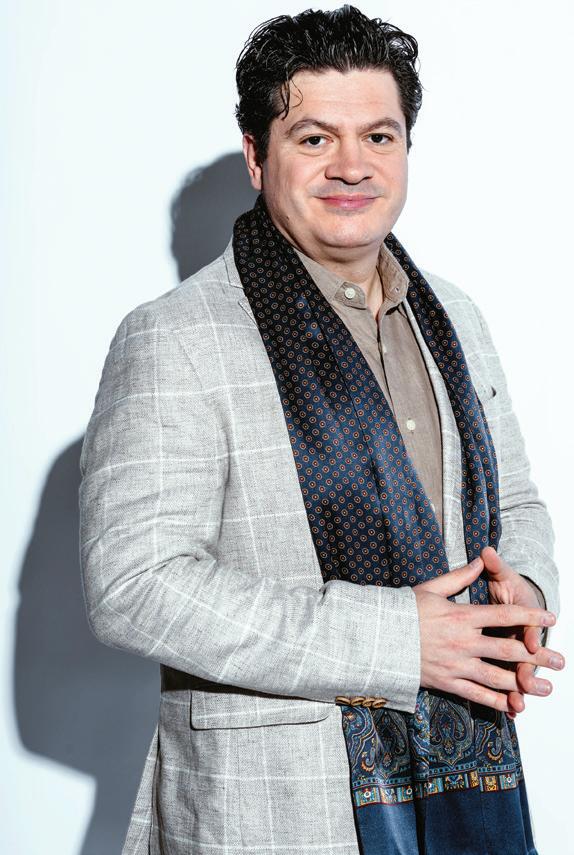
Igor Stravinsky’s The Firebird is a marvel of musical storytelling. Even those who don’t know the ins and outs of the 1910 ballet — its central lovers, attempts by the evil sorcerer Kastchei to thwart them, and the lovers’ final triumph, with the help of a mystical Firebird — are moved by the vividness of Stravinsky’s musical language.
In these concerts, sonic lushness meets visual spectacle as director and puppeteer Janni Younge presents her contemporary take on the Firebird fable, with imagery inspired by her native South Africa.
According to Music Director Cristian Măcelaru, the “visually stunning” production is a perfect choice for CSO first-timers.
“It’s my way of inviting a much greater community, age-wise, to come to the concert, whether they’re 12 or 13 or inviting their grandparents,” he says.
We mostly hear The Firebird through its popular suite, now a mainstay on orchestra programs. Here, Younge’s troupe and the CSO present the ballet in its entirety. And who better to take on the entire opus than the CSO, which also serves as the pit orchestra for the Cincinnati Ballet?
“Stravinsky’s music was never intended to be abstracted from the story. It’s actually a narrative, rather than just emotions,” Măcelaru tells Fanfare Magazine. “This music is helped tremendously by an orchestra that has the practice of defining characters in their musical gestures.”
In keeping with the concert’s themes of death and rebirth, Măcelaru pairs The Firebird with Gustav Mahler’s Totenfeier (“Funeral Rites”), a tone poem Mahler later adapted for the opening of his Symphony No. 2, Resurrection.
“I wanted to present something that balances the weight of Stravinsky’s music,” Măcelaru says. “I think those who know Mahler’s music will both recognize some things and be able to discover a new take on a composer that they’re familiar with.”
—Hannah Edgar
To view the Digital Program for exclusive content, such as full-length program notes and artist biographies, please text PROGRAM to 513.845.3024*, use your mobile device to scan the QR code or visit cincinnatisymphony.org/digitalprogram.
*By texting to this number, you may receive messages that pertain to the organization and its performances; msg & data rates may apply. Reply HELP to help, STOP to cancel.
Cristian Măcelaru, conductor
A complete biography for Music Director Cristian Măcelaru can be found on p. 19.
Janni Younge, director
Janni Younge is a director and producer of theatre with an emphasis on puppetry. Younge’s work has been performed widely internationally in North and South America, Africa, Europe, the Middle East and India.
Recognition for her work includes the Standard Bank Young Artist Award for Theatre, four-time winner of the Fleur du Cap award for puppet design and best director at the I Festiwal małych Prapremier in Poland. In 2018, she was selected as the Grenada Artist-in-Residence at the University of California, Davis, where she designed and co-directed The Bluest Eye. The show went on to win four awards at the American College Theatre Festival.
A past director of Handspring Puppet Company, she currently runs Janni Younge Productions. She also directs UNIMA South Africa, a UNESCO-affiliated organization that works for the development and training of visual performance artists and focuses on social development through visual performance mediums.
Younge’s works include Hamlet and Toni Morrison’s The Bluest Eye (Chicago International Puppet Theatre Festival); puppet design and direction for the Royal Shakespeare Company’s Tempest; Ouroboros (South Africa, France and India); The Firebird (U.S. venues including Ravinia and the Hollywood Bowl); and Take Flight, winner of the best director award at the I Festiwal małych Prapremier in Poland.
With Handspring, Younge also directed revivals of William Kentridge’s Woyzeck on the Highveld and Ubu and the Truth Commission, and she worked on War Horse and on the Bristol Old Vic’s Midsummer Night’s Dream.
Younge is a graduate of the French National School of Puppet Theatre and has a B.A. in Fine Art and an M.A. in Theatre. janniyounge.com
n PROGRAM NOTES
Gustav Mahler: Totenfeier
Composed: 1888
Premiere: March 16, 1896, by the Berlin Philharmonic, Mahler conducting
Instrumentation: 3 flutes (incl. piccolo), 2 oboes, English horn, 2 clarinets, bass clarinet, 3 bassoons, 4 horns, 3 trumpets, 3 trombones, tuba, timpani, bass drum, crash cymbals, tam-tam, triangle, harp, strings
CSO notable performances: First: April 1991, Jesús Lopez Cobos conducting. Most recent: October 2007, Paavo Järvi conducting.
Duration: approx. 23 minutes
In August 1886, the distinguished conductor Arthur Nikisch appointed the 26-yearold Gustav Mahler as his assistant at the Leipzig Opera. At Leipzig, Mahler met Carl von Weber, grandson of the German Romantic composer Carl Maria von Weber, and the two worked on a new performing edition of the elder Weber’s virtually forgotten opera Die drei Pintos (“The Three Pintos”). Following the premiere of Die drei Pintos, on January 20, 1888, Mahler attended a reception in a room filled with flowers. That seemingly beneficent image played on his mind, becoming transmogrified into nightmares and waking visions, almost hallucinations, of himself on a funeral bier surrounded by floral wreaths.
Spurred by the startling visions of his own death (and almost immediately after completing his Symphony No. 1 in March 1888), he conceived a new work called Totenfeier (“Funeral Rite”). Although he inscribed his manuscript Symphony in C minor/First Movement, Mahler had no clear idea at the time what sort of music would follow Totenfeier, and he considered allowing the movement to stand as an independent composition. He completed the score on September 10, 1888.
The next five years were ones of intense professional and personal activity for Mahler. He resigned from the Leipzig Opera in May 1888 to take a new post in
Born: July 7, 1860, Kalist, Bohemia Died: May 18, 1911, Vienna, Austria
Budapest. In 1891, he switched jobs again, leaving Budapest to join the prestigious Hamburg Opera as principal conductor. There he encountered the esteemed pianist and conductor Hans von Bülow, then director of the Hamburg Philharmonic concerts. Encouraged by Bülow’s admiration of his conducting, Mahler asked for his comments on the still-unperformed Totenfeier. Mahler described their encounter:
When I played my Totenfeier, Bülow fell into a state of extreme nervous tension, clapped his hands over his ears and exclaimed, “Beside your music, Tristan sounds as simple as a Haydn symphony!” We parted in complete friendship, I, however, convinced that Bülow considers me an able conductor but absolutely hopeless as a composer.
Mahler, who throughout his career considered his composition more important than his conducting, was deeply wounded by this behavior, but he controlled his anger out of respect for Bülow, who had extended him many kindnesses and become something of a mentor. Bülow did nothing to quell his doubts about the quality of his creative work, however, and Mahler, who had written nothing since Totenfeier three years before, was at a crisis in his career as a composer.
The year after Bülow’s withering criticisms, Mahler found inspiration to compose
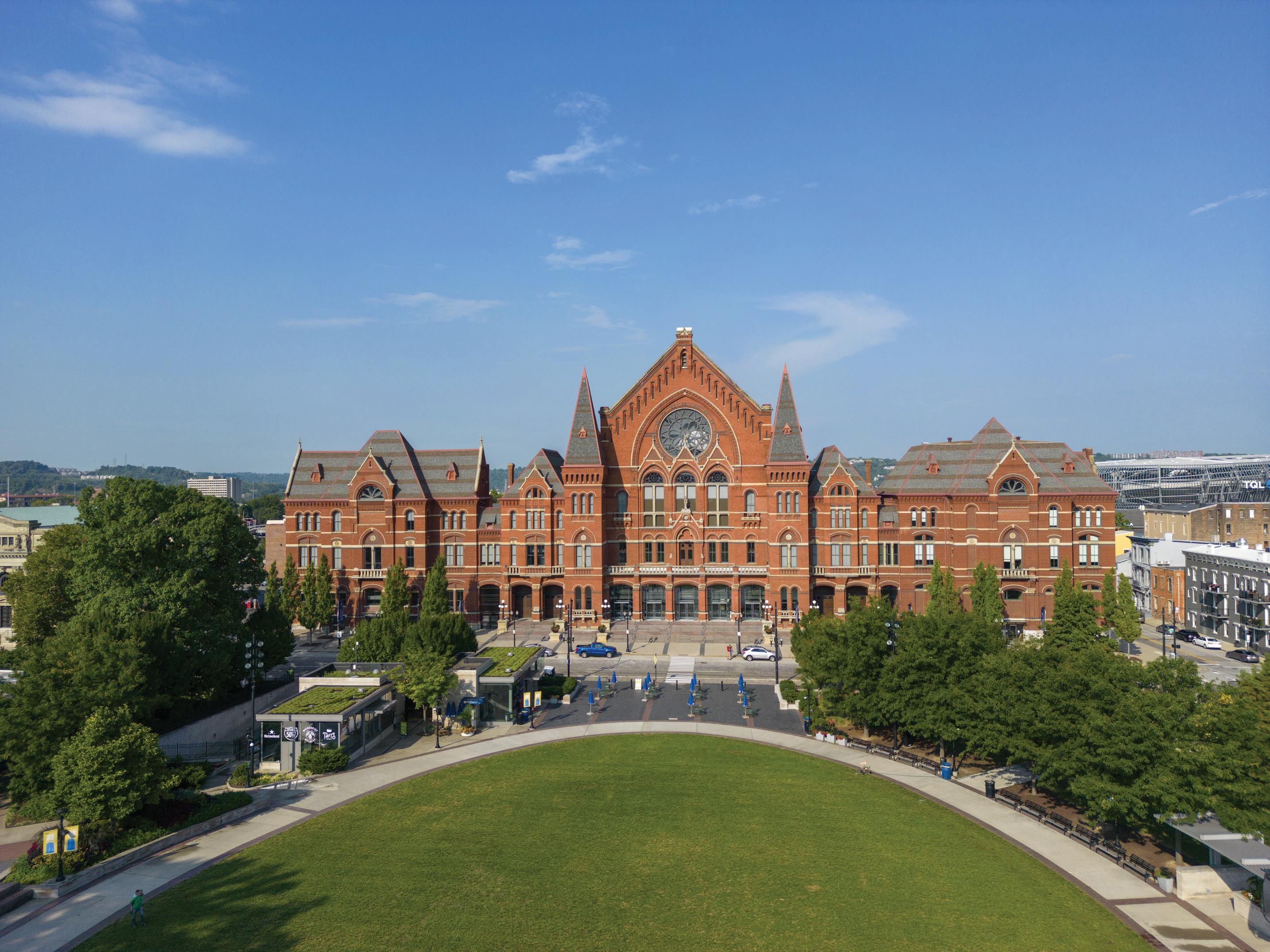
OF STRAVINSKY’S FIREBIRD | April 24 & 25
Peter Landgren and Judith Schonbach Landgren who enthusiastically support the musicians of the CSO and Music Director CHRISTIAN MACELARU. ˘
Peter E. Landgren and Judith Schonbach Landgren are excited to welcome a new era with Music Director CRISTIAN MӐCELARU.
woodwind and brass contingents, augmenting the percussion and adding a second harp and off-stage trumpets and horns.
By the end of the summer of 1893, the first four movements of the Second Symphony were complete, but Mahler was still unsure about the work’s ending — the finality implied by the opening Funeral Rite seemed to allow no logical progression to another point of climax. As a response to the questions posed by the first movement, he envisioned a grand choral close for the work, much in the manner of the triumphant ending of Beethoven’s Ninth Symphony. Still, no solution presented itself — until the 1894 memorial service for Bülow, who had died suddently at Cairo on February 12, 1894. There Mahler had heard children singing Klopstock’s profound poem Auferstehen (“Resurrection”) and knew that he had found the basis for the finale of the Second Symphony.
On June 29, 1894, three months later, Mahler completed his monumental Symphony No. 2, Resurrection. He premiered the complete symphony with the Berlin Philharmonic on December 13, 1895; he conducted Totenfeier three months later, on March 16, 1896 in Berlin, as an independent work. The piece was not performed again until the score of the original version was published in 1988, the centenary of its composition.
Mahler wrote of Totenfeier:
We stand by the coffin of a well-loved person. His life, struggles, passions and aspirations once more, for the last time, pass before our mind’s eye. — And now in this moment of gravity and of emotion which convulses our deepest being, when we lay aside like a covering everything that from day to day perplexes us and drags us down, our heart is gripped by a dreadfully serious voice which always passes us by in the deafening bustle of daily life: What now? What is this life — and this death? Do we have an existence beyond it? Is all this only a confused dream, or do life and this death have a meaning? — And we must answer this question if we are to live on.
—©Dr. Richard E. Rodda
Igor Stravinsky: L’Oiseau de feu (“The Firebird”), complete ballet
Composed: 1910
Premiere: June 25, 1910, Palais Garnier in Paris by the Ballets Russes
Instrumentation: 3 flutes (incl. piccolo), piccolo, 3 oboes, English horn, 3 clarinets (incl. clarinet in D), bass clarinet, 3 bassoons (incl. contrabassoon), contrabassoon, 4 horns, 3 trumpets, 3 trombones, tuba, timpani, bass drum, bass drum with attached cymbal, chimes, crash cymbals, glockenspiel, orchestra bells, suspended cymbals, tam-tam, tambour de Basque, triangle, xylophone, 3 harps, celeste, piano, strings
CSO notable performances: (complete ballet) First: November 1945, at a special concert with The Russian Ballet. Most recent: October 1981, Michael Gielen conducting. Other (suites): Igor Stravinsky conducted the CSO in the 1919 Firebird Suite in March 1925; several CSO performances of the various Firebird Suites (1911, 1919 and 1945) have occurred since 1920, with one notable performance in 1944, when Leonard Bernstein led the CSO in the 1919 Suite on tour in Parkersburg, West Virginia.
Duration: approx. 44 minutes
The Russian ballet impresario Sergei Diaghilev, equal parts dictator and devil, charmer and charlatan, had a reputation for eccentricity and remorseless ambition, yet his first season with the Ballets Russes, in 1909, at the height of the Parisian mania for all things Russian, dazzled audiences with breathtaking dancing and stunning visual designs. Only the music had come under criticism in the press for its lack of novelty, so Diaghilev went in search of a composer (four had already turned him down), working his way through the Who’s Who of Rimsky-Korsakov’s students before he found a willing volunteer: Igor Stravinsky. Stravinsky was a driven young man who had not yet established himself and stood to benefit from the opportunity and the recognition the impresario offered. Thus, in December of 1909, Stravinsky joined the production team.
Their choice of title for their new production was a brilliant marketing strategy, because it cashed in both on common perceptions of “Russian-ness” and associations with the avant garde in artistic circles. Prior to coming to Paris, Diaghilev had
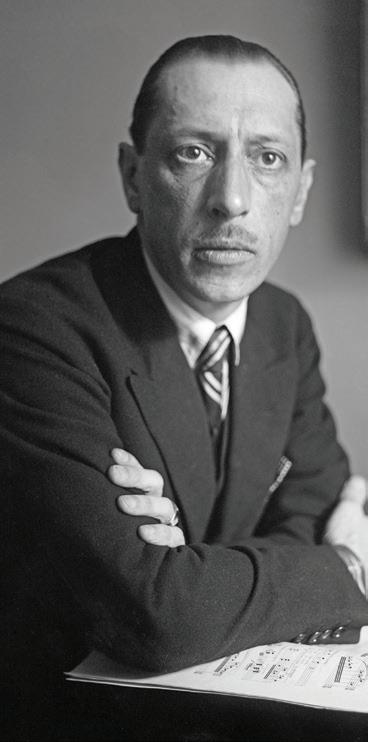
Born: June 17, 1882, Oranienbaum, Russia Died: April 6, 1971, New York City
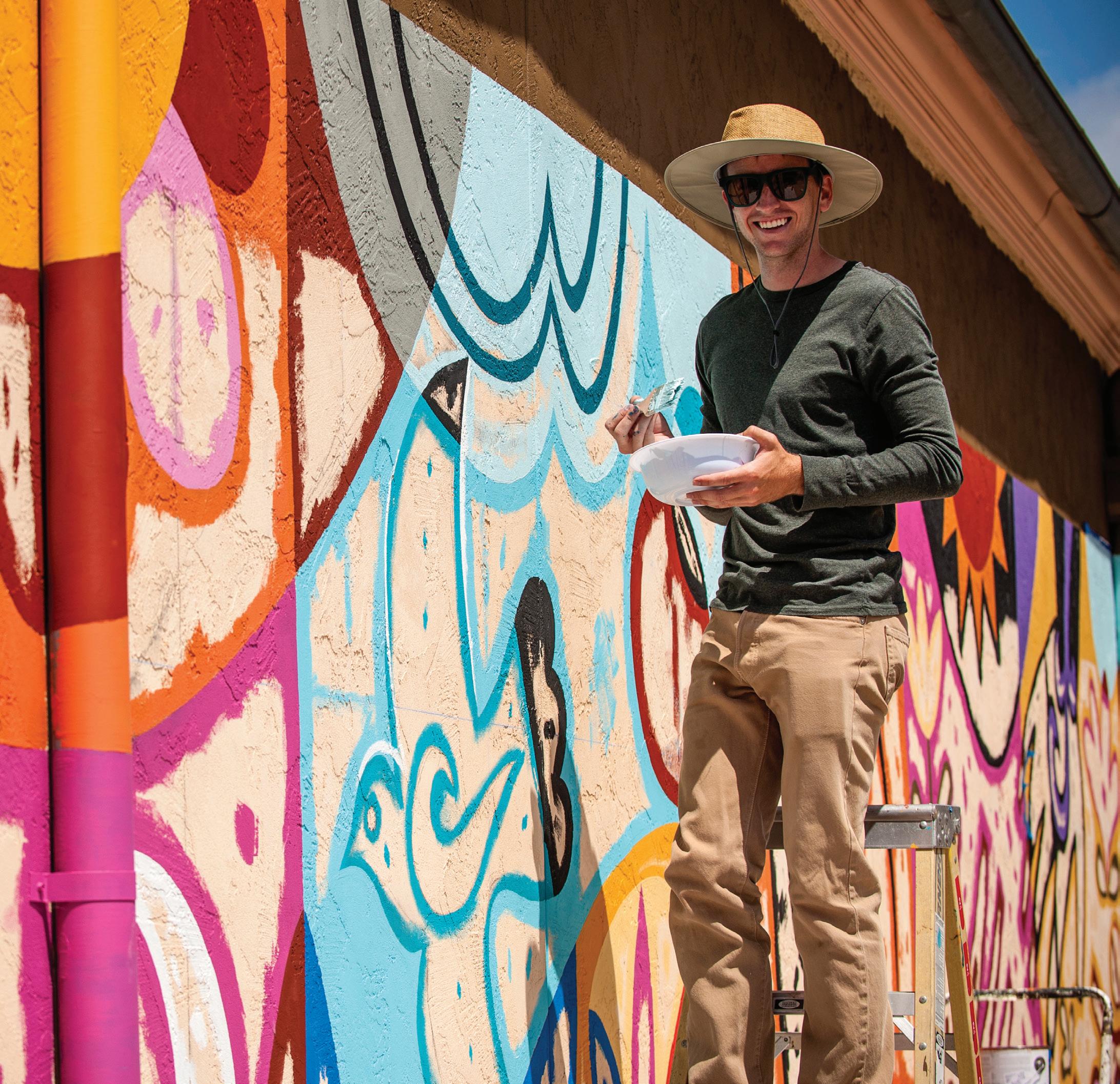

helmed one of St. Petersburg’s most prominent art journals, Mir Iskusstva (“The World of Art”), which championed an “art for art’s sake” philosophy that its critics declared decadent. It favored style and affect over realism, folktales over social critique, beauty and sensuality over virtue and raw emotion over reason. It sought to integrate music, theatre and visual design into an innovative form of expression that would reflect the essence of ancient Russia in a fresh, new way. Diaghilev chose the symbol of that movement as the title of his new ballet, a recognizable character from Slavic folklore that embodied magic, beauty and rebirth: Zhar-ptitsa, translated into French as L’Oiseau de feu — “The Firebird.”
Like all the best theatrical works of the period, this Gesamtkunstwerk* relied on close collaboration among a team of creators. The plot was primarily crafted by the choreographer Michel Fokine (1880–1942), an exceptional young dancer who had trained under some of Russia’s most famous masters. He cut and pasted elements from several children’s fables into a pastiche calculated to appeal to Parisian orientalism, in which a Prince Charming figure, Ivan Tsarévich, engages the magical Firebird to help him win over Princess Nenaglyadnaya-Krasa (“Unearthly Beauty”) by freeing her and 12 other princesses from the evil sorcerer, King KashcheyBessmertnïy (“Kastchei the Immortal”).
Stravinsky worked one on one with Fokine, who, like many dance masters, insisted that the music be tailored to the choreography, rather than the other way around. He later recollected how Stravinsky … … brought me a beautiful Russian melody for the entrance of Ivan-Tsarévich. I suggested not presenting the complete melody all at once, but just a hint of it, by means of separate notes, at the moments when Ivan appears at the wall, when he observes the wonders of the enchanted garden, and when he leaps over the wall …
… Stravinsky played, and I acted out the role of Tsarévich, the piano itself substituting for the wall. I climbed over it, jumped down off it, and crawled around in fear, looking around — my living room. Stravinsky, watching, accompanied me with patches of the Tsarévich melodies, playing mysterious tremolos as background to depict the garden of the sinister Kastchei the Immortal. …
As the least experienced member of the production team, Stravinsky had little license to assert his own ideas, and most of his early sketches for the ballet had to be discarded as the production developed. Yet, he had learned from his teacher and mentor, Rimsky-Korsakov, how to use music to help the audience distinguish the elements of the story. Exotic permutations of chromatic scales and harmonies represented supernatural forces, while simpler, white-key melodies and folk tunes depicted human characters.
This is apparent already from the first sepulchral notes of the introduction. A crescendo–decrescendo flutters through the orchestra as the Firebird flies through the garden, pursued by Ivan Tsarevich. The Firebird’s dance follows and ends in her capture (easily recognized from the suite Stravinsky published in 1919). A sensual dance with English horn and viola follows, punctuated with cellos and basses hitting their strings with the wood of the bow, col legno. The garden games of the 13 princesses follow, set to some of the most illustrative music of the ballet in the tremolo strings and cymbal.
A solo horn introduces the moment when Ivan reveals himself, followed by a round dance that quotes a Russian folk song. The kiss between Ivan and the



youngest princess is interrupted by a trumpet call, and the timpani announce Kastchei’s entrance. The bass rumbles as Kastchei begins to turn Ivan into stone, but the fluttering music signals the return of the Firebird, who uses her power to make Kastchei and his henchmen leap and spin to harsh accents and disorienting syncopation.
Kastchei and his minions dance to exhaustion and fall into a deep sleep as the Firebird begins her lullaby, accompanied by an ethereal bassoon melody. The orchestra lurches as Ivan crushes the egg holding Kastchei’s soul and then builds to an electrifying finale. The brass section reiterates the Firebird’s leitmotif in broad, triumphant chords, bringing the story to its conclusion.
Although Diaghilev and Fokine dictated many of Stravinsky’s compositional choices throughout the creative process, Stravinsky reportedly won one battle. The original production ended with a remarkable tableau in which the corps de ballet stood on stage, motionless except for the slowly rising hand of Ivan Tsarévich, while the music — not the dancing — narrated the ending of the story for the audience.
One of the star dancers of the Ballets Russes, Vaslav Nijinsky, once wrote in his diary: “Diaghilev cannot live without Stravinsky, and Stravinsky cannot live without Diaghilev. They understand each other.” Indeed, even if the partnership between Igor Stravinsky and Sergei Diaghilev was ultimately a toxic one, it was nonetheless productive, producing monuments such as Petrushka, Les noces and Rite of Spring that would come to define the early 20th century.
—©Dr. Scot Buzza
*Gesamtkunstwerk means “total work of art“ or “synthesis of the arts.“ The term was developed by the German writer and philosopher K.F.E. Trahndorff in 1827, but the term was popularized in the field of music discourse through descriptions of Richard Wagner’s operas. The basic premise of Gesamtkunstwerk is that the work of art was conceived as a combination of different art forms into a single cohesive whole.















STORIES IN SOUND | 2025–26 SEASON
STORIES IN SOUND | 2025–26 SEASON
TUE APR 30, 7:30 PM
TUE APR 30, 7:30 PM
Music Hall Ballroom
Music Hall Ballroom
Gernot Wolfgang New York Moments (b. 1957)
Gernot Wolfgang New York Moments (b. 1957)
East River Funk
East River Funk
After Hours
After Hours
Avenue A and 2nd
Avenue A and 2nd
Christopher Philpotts, oboe and English horn
Christopher Philpotts, oboe and English horn
Ronald Aufmann, clarinet
Ronald Aufmann, clarinet
Nicholas Mariscal, cello
Nicholas Mariscal, cello
Julie Spangler, piano
Julie Spangler, piano
Bohuslav Martinů La revue de cuisine, H. 161 (1890–1959)
Bohuslav Martinů La revue de cuisine, H. 161 (1890–1959)
Prologue
Prologue
Tango Charleston Final
Tango Charleston Final
Stefani Matsuo, violin
Stefani Matsuo, violin
Hiro Matsuo, cello
Hiro Matsuo, cello
Christopher Pell, clarinet
Christopher Pell, clarinet
Martin Garcia, bassoon
Martin Garcia, bassoon
Anthony Limoncelli, trumpet
Anthony Limoncelli, trumpet
Kimberly Russ, piano
Kimberly Russ, piano
INTERMISSION
INTERMISSION
Johannes Brahms
Johannes Brahms
Piano Trio No. 2 in C Major, Op. 87 (1833–1897)
Piano Trio No. 2 in C Major, Op. 87 (1833–1897)
Allegro moderato
Allegro moderato
Andante con moto
Andante con moto
Scherzo: Presto
Scherzo: Presto
Finale: Allegro giocoso
Finale: Allegro giocoso
Charles Morey, violin
Charles Morey, violin
Alan Rafferty, cello
Alan Rafferty, cello
Dror Biran, piano
Dror Biran, piano
This performance is approximately 95 minutes long, including intermission.
This performance is approximately 95 minutes long, including intermission.
YOU’RE INVITED to greet the musicians after the concert.
YOU’RE INVITED to greet the musicians after the concert.
The Winstead Chamber Series is endowed by a generous gift from the estate of former CSO musician WILLIAM WINSTEAD
The Winstead Chamber Series is endowed by a generous gift from the estate of former CSO musician WILLIAM WINSTEAD
Gernot Wolfgang: New York Moments
Gernot Wolfgang: New York Moments
Composed: 2008
Composed: 2008
Premiere: October 31, 2008 at Bargemusic in Brooklyn, New York by the Tapestry Ensemble
Premiere: October 31, 2008 at Bargemusic in Brooklyn, New York by the Tapestry Ensemble
Duration: approx. 18 minutes
Duration: approx. 18 minutes
Grammy-nominated composer Gernot Wolfgang (gernotwolfgang.com) has so far received more than 50 commissions from organizations and individuals such as the Los Angeles Chamber Orchestra, Santa Barbara Chamber Orchestra, European Broadcasting Union, Verdehr Trio, and Los Angeles Philharmonic principals David Breidenthal (bassoon), Joanne Pearce Martin (keyboard) and Michele Zukovsky (clarinet). He has received awards and grants from the American Composers Forum, American Music Center, Berklee College of Music, Billboard Magazine, BMI and the Fulbright Commission.
Grammy-nominated composer Gernot Wolfgang (gernotwolfgang.com) has so far received more than 50 commissions from organizations and individuals such as the Los Angeles Chamber Orchestra, Santa Barbara Chamber Orchestra, European Broadcasting Union, Verdehr Trio, and Los Angeles Philharmonic principals David Breidenthal (bassoon), Joanne Pearce Martin (keyboard) and Michele Zukovsky (clarinet). He has received awards and grants from the American Composers Forum, American Music Center, Berklee College of Music, Billboard Magazine, BMI and the Fulbright Commission.
Wolfgang, who lives in Santa Fe, New Mexico, also works as an orchestrator in the Los Angeles film and TV music industry. He is a former associate artistic director of HEAR NOW — A Festival of New Music by Contemporary Los Angeles Composers.
Wolfgang, who lives in Santa Fe, New Mexico, also works as an orchestrator in the Los Angeles film and TV music industry. He is a former associate artistic director of HEAR NOW — A Festival of New Music by Contemporary Los Angeles Composers.
Wolfgang wrote the following about New York Moments:
Wolfgang wrote the following about New York Moments:
New York Moments was commissioned in 2008 by the CSU Mike Curb College of the Arts, Media and Communication in Northridge, California for the Tapestry Ensemble. When I learned that the premiere of the piece was going to be at Bargemusic in Brooklyn, the good times that I had spent over the years in New York City immediately came to mind. As I started writing, locations and memories of certain events became the inspiration for the three individual movements.
New York Moments was commissioned in 2008 by the CSU Mike Curb College of the Arts, Media and Communication in Northridge, California for the Tapestry Ensemble. When I learned that the premiere of the piece was going to be at Bargemusic in Brooklyn, the good times that I had spent over the years in New York City immediately came to mind. As I started writing, locations and memories of certain events became the inspiration for the three individual movements.
East River Funk is a tribute to the waterway on which the venue of the premiere, Bargemusic, is located. Its musical backbone is a steady funk rhythm, which forms the base for a virtuosic oboe solo. The movement proceeds through a quieter groove into a contemplative, contrapuntal section featuring the winds and the cello. Nearing its conclusion, the original theme reappears.
East River Funk is a tribute to the waterway on which the venue of the premiere, Bargemusic, is located. Its musical backbone is a steady funk rhythm, which forms the base for a virtuosic oboe solo. The movement proceeds through a quieter groove into a contemplative, contrapuntal section featuring the winds and the cello. Nearing its conclusion, the original theme reappears.
After Hours reminds of the wee hours of the morning in Manhattan, when most businesses and restaurants are closed, when traffic is light and the city is not quite awake yet. The clarinet paints the picture of a relaxed late-night-feel in this jazzy ballad.
After Hours reminds of the wee hours of the morning in Manhattan, when most businesses and restaurants are closed, when traffic is light and the city is not quite awake yet. The clarinet paints the picture of a relaxed late-night-feel in this jazzy ballad.
Avenue A & 2nd is the location where I have stayed during most of my visits to New York. The apartment at this address was bustling with life at all times — three jazz musicians were living there, one of them in the living room — and the movement reflects on the energy and sometimes insanity (in the good sense of the word) of things going on there. The piano is clearly the solo instrument in this movement, romping through a quasi-swing groove and accompanied — or disrupted — by percussive woodwind accents.
Avenue A & 2nd is the location where I have stayed during most of my visits to New York. The apartment at this address was bustling with life at all times — three jazz musicians were living there, one of them in the living room — and the movement reflects on the energy and sometimes insanity (in the good sense of the word) of things going on there. The piano is clearly the solo instrument in this movement, romping through a quasi-swing groove and accompanied — or disrupted — by percussive woodwind accents.
New York Moments is published by TrevCo Music.
New York Moments is published by TrevCo Music.
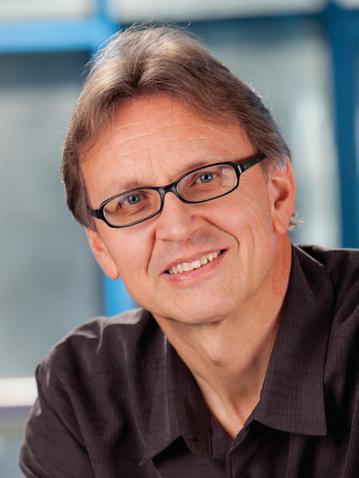
Born: 1957, Bad Gastein, Austria
Bohuslav Martinů:
Bohuslav Martinů: La revue de cuisine, H. 161
Composed: 1927
Composed: 1927
Premiere: (concert suite) January 5, 1930, Paris
Premiere: (concert suite) January 5, 1930, Paris
Duration: approx. 15 minutes
Duration: approx. 15 minutes
After his move from Prague to Paris in 1923, Bohuslav Martinů spent a lot of time listening to jazz, which inspired one of his most frequently performed works — the ballet The Kitchen Revue. The work was commissioned by Božena Nebeská, the wife of a prominent Czech art expert living in Paris (after his arrival in the French capital, the composer lived with the Nebeskýs for five years). Jarmila Kröschlová, a pioneer of modern dance in Czechoslovakia, wrote the script, created the choreography and performed the ballet with her troupe in Prague.
After his move from Prague to Paris in 1923, Bohuslav Martinů spent a lot of time listening to jazz, which inspired one of his most frequently performed works — the ballet The Kitchen Revue. The work was commissioned by Božena Nebeská, the wife of a prominent Czech art expert living in Paris (after his arrival in the French capital, the composer lived with the Nebeskýs for five years). Jarmila Kröschlová, a pioneer of modern dance in Czechoslovakia, wrote the script, created the choreography and performed the ballet with her troupe in Prague.
In this work, Martinů’s interest in jazz goes hand in hand with his taste for all things grotesque. Kröschlová’s libretto, about the amorous entanglements of pots
In this work, Martinů’s interest in jazz goes hand in hand with his taste for all things grotesque. Kröschlová’s libretto, about the amorous entanglements of pots
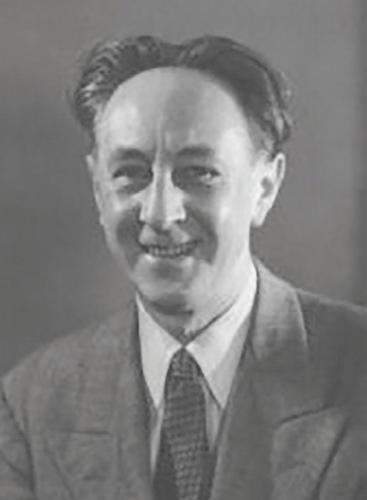
Born: December 8, 1890, Polička, Bohemia
Born: December 8, 1890, Polička, Bohemia Died: August 28, 1959, Liestal, Switzerland
Died: August 28, 1959, Liestal, Switzerland
and pans in a kitchen, is a quintessential product of les années folles (the “crazy years,” as the 1920s were widely known).
In his book on Martinů, musicologist Miloš Šafránek summarized the plot as follows:
The marriage of Pot and Lid is in danger of being broken up by the restless, change-craving Twirling-stick, the most active character in the plot. Pot succumbs to the seductions of Twirling-stick and is so inflamed by passion that Lid, who sits on his head, falls off it and rolls away in a corner. Had it not been for the orderly Broom, Dish-cloth would have taken advantage of the situation to lure Lid from the path of virtue. But Broom challenges Dish-cloth to a duel, which sends Twirling-stick into an ecstasy, thus kindling still more the passions of the two belligerents, who eventually retire from the dueling-ground with broken limbs. Twirling-stick again turns her attention to Pot, but Pot longs for Lid, and Lid is nowhere to be found. Then somebody’s enormous foot appears before the footlights and kicks Lid on the stage, to the great joy of all. Broom takes Lid back to Pot, Twirling-stick and Dish-cloth break into a dance. Broom, Pot and Lid are the happiest trio in the world.
Three years after the Prague premiere, Martinů arranged the ballet score into a concert suite that contains most of the music from the show.
—©Peter Laki
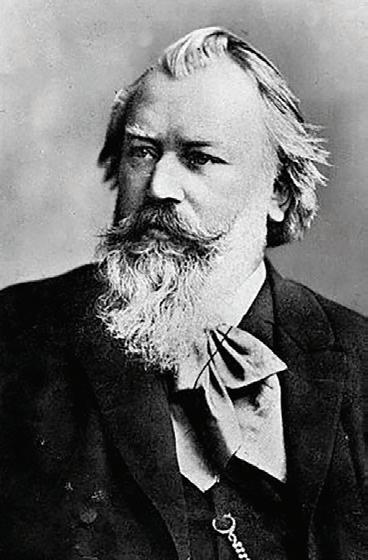
Born: May 7, 1833, Hamburg, Germany Died: April 3, 1897, Vienna, Austria
Johannes Brahms: Piano Trio No. 2 in C Major, Op. 87
Composed: 1880 and 1882
Premiere: 1882, Frankfurt am Main, Johannes Brahms, piano
Duration: approx. 29 minutes
Johannes Brahms’ Op. 87 is the most joyous of his three piano trios. He composed it during one of the happiest periods of his life, when the success of each new composition was virtually assured. He wrote the first movement in the summer of 1880, during his vacation in the Austrian town of Bad Ischl, about 170 miles from his home in Vienna. He completed the remaining three movements in 1882 at the same location. Brahms adored the quiet pleasures of Ischl, where he could enjoy daily walks and relax with friends. Although he was on vacation and claimed to one friend that he was loafing around, those summers were remarkably productive: in addition to the Op. 87 Trio, he composed the widely popular Academic Festival Overture and the beautiful String Quintet, Op. 88. Brahms’ close friend Theodor Billroth, who heard the first movement of the Op. 87 Trio shortly after it was composed, praised the work as a product of “effortless creativity.”
Uncharacteristically, Brahms himself told his publisher he was quite pleased with it. The outer movements of the trio each present the main themes in an economical way, offering little transitional material between each statement. Although both are more concise than the movements in Brahms’ earlier Op. 8 Piano Trio (from 1853–54), they display quite contrasting moods, with the Finale being more exuberant than the first movement. Its energy arises from the cooperation between the instruments, in contrast to the rhythmic tensions between the piano and strings that animate the first and second movements. The inner movements are predominantly quiet. The slow, second movement is a theme with five variations, but only the third variation features striking loud chords. The Scherzo turns quietness into mystery through low repeated notes and ghostly flourishes from the piano. Its spectral atmosphere is dispelled by the ebullient Finale, whose grand fortissimo closing chords crown the work Clara Schumann declared to be “magnificent!”
—©Heather Platt, Sursa Distinguished Professor of Fine Arts, Ball State University
FRI MAY 1, 7:30 PM | SAT MAY 2, 7:30 PM | SUN MAY 3, 2 PM
Music Hall
Damon Gupton conductor
20th Century Fox Fanfare
“Main Theme” from Star Wars
“The Flag Parade” from The Phantom Menace
“Anakin’s Theme” from The Phantom Menace
“Battle of the Heroes” from Revenge of the Sith
“Obi-Wan” from Obi-Wan Kenobi
“Jyn Erso and Hope” from Rogue One
“Here They Come” from A New Hope
“Princess Leia’s Theme” from A New Hope
“The Asteroid Field” from The Empire Strikes Back
“Yoda’s Theme” from The Empire Strikes Back
“Imperial March” from The Empire Strikes Back
The Mandalorian Theme
“Luke and Leia” from Return of the Jedi
“The Forest Battle” from A New Hope
“Rey’s Theme” from The Force Awakens
“Duel of the Fates” from The Phantom Menace
“The Rise of Skywalker” from The Rise of Skywalker
“The Jedi Steps” from The Force Awakens
“Throne Room” and “End Title” from A New Hope
Program subject to change.
The Rendigs Foundation


Alfred Newman
John Williams
John Williams
John Williams
John Williams
John Williams
Michael Giacchino
John Williams
John Williams
John Williams
John Williams
John Williams
Ludwig Göransson
John Williams
John Williams
John Williams
John Williams
John Williams
John Williams
John Williams
The Cincinnati Pops Orchestra is grateful to Pops Season Presenter PNC, Presenting Sponsor
The Rendigs Foundation and Show Sponsor Thompson Hine LLP.
The Cincinnati Symphony Orchestra is grateful for the support of the Louise Dieterle Nippert
Musical Arts Fund of the Greenacres Foundation, the Nina Browne Parker Trust, and the thousands of people who give generously to the ArtsWave Community Campaign, the region’s primary source for arts funding. This project was supported in part by the Ohio Arts Council, which receives support from the State of Ohio and the National Endowment for the Arts
The CSO in-orchestra Steinway piano is made possible in part by the Jacob G. Schmidlapp Trust.
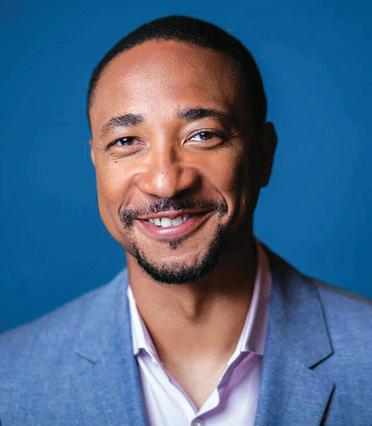
Damon Gupton, Pops Principal Guest Conductor
Damon Gupton is the Principal Guest Conductor of the Cincinnati Pops. A native of Detroit, he served as American Conducting Fellow of the Houston Symphony and held the post of assistant conductor of the Kansas City Symphony. His conducting appearances include the Philadelphia Orchestra, Orchestra of St. Luke’s, Detroit Symphony, Boston Pops, National Symphony Orchestra, San Francisco Symphony, Atlanta Symphony, Baltimore Symphony, St. Louis Symphony, Toledo Symphony, Fort Worth Symphony, Florida Orchestra, San Diego Symphony, Long Beach Symphony, San Antonio Symphony, Princeton Symphony, Orchestre Philharmonique de Monte Carlo, Chineke!, NHK Orchestra of Tokyo, Orquesta Filarmonica de UNAM, Charlottesville Symphony, Brass Band of Battle Creek, Brevard Music Center, and Sphinx Symphony as part of the 12th annual Sphinx Competition. He led the Sphinx Chamber Orchestra on two national tours with performances at Carnegie Hall, and he conducted the finals of the Seventh Cliburn International Amateur Piano Competition and the 2021 Classic FM Live at Royal Albert Hall with Chineke!.
Gupton received his Bachelor of Music Education degree from the University of Michigan. He studied conducting with David Zinman and Murry Sidlin at the Aspen Music Festival and with Leonard Slatkin at the National Conducting Institute in Washington, D.C.
An accomplished actor, Gupton is a graduate of the Drama Division of The Juilliard School. He has had a number of roles in television and film, including in the Paramount+ series Happy Face and the film Lear Rex with Al Pacino, as well as on stage.
He is represented by Harden Curtis Kirsten Riley Agency (HCKR), SMS Talent and Brookside Artist Management.




BEETHOVEN & TCHAIKOVSKY | 2025–26 SEASON
FRI MAY 8, 11 AM | SAT MAY 9, 7:30 PM
Music Hall
Roderick Cox conductor
Stephen Hough piano
Jennifer Higdon Fanfare Ritmico (b. 1962)
Ludwig van Beethoven Concerto No. 5 in E-flat Major for Piano and Orchestra, (1770–1827) Op. 73, Emperor Allegro
Adagio un poco mosso—
Rondo: Allegro
Piotr Ilyich Tchaikovsky
Symphony No. 4 in F Minor, Op. 36 (1840–1893)
Andante sostenuto—Moderato con anima Andantino in modo di canzona
Scherzo: Pizzicato ostinato
Finale: Allegro con fuoco
This performance is approximately 125 minutes long, including intermission.
The CSO is grateful to CSO Season Sponsor Western & Southern Financial Group
The appearance of Roderick Cox is generously supported by the Janice W. and Gary R. Lubin Fund for Black Artists.
The appearance of Stephen Hough is made possible by an endowed gift from the Fund for Great Artists by Fred L. and Katherine H. Groll.
The Cincinnati Symphony Orchestra is grateful for the support of the Louise Dieterle Nippert Musical Arts Fund of the Greenacres Foundation, the Nina Browne Parker Trust, and the thousands of people who give generously to the ArtsWave Community Campaign, the region’s primary source for arts funding. This project was supported in part by the Ohio Arts Council, which receives support from the State of Ohio and the National Endowment for the Arts
WGUC is the Media Partner for these concerts. This concert will air on 90.9 WGUC on June 7, 2026, followed by 30 days of streaming at cincinnatisymphony.org/replay.
The CSO in-orchestra Steinway piano is made possible in part by the Jacob G. Schmidlapp Trust
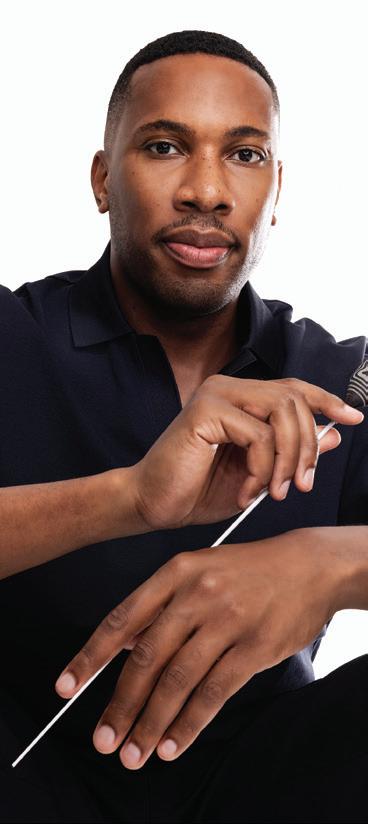
Roderick Cox, conductor
Roderick Cox has built a reputation for thoughtful artistry and a diverse repertoire that encompasses symphonic, operatic and contemporary works.
As of the 2024–25 season, Cox serves as music director of the Opéra Orchestre national Montpellier Occitanie, making him the youngest in the orchestra’s history.
Cox has made guest appearances with many of the world’s leading ensembles across North America, Europe and beyond, including the Philadelphia Orchestra, Boston Symphony, Los Angeles Philharmonic, Cleveland Orchestra, and the major orchestras of Atlanta, Detroit, Seattle and Montreal, as well as Staatskapelle Dresden, Rotterdam Philharmonic, WDR Symphony, BBC Symphony, Orchestre de la Suisse Romande, Netherlands Radio Philharmonic and Halle Orchestra. His international profile also includes debuts in Asia and Australia with the Sydney Symphony and Seoul Philharmonic.
Highlights of the 2025–26 season include his debuts with the Frankfurt Radio Symphony, MDR Leipzig, Orchestre National de Belgique and Kansas City Symphony, as well as return engagements with the Rundfunk-Sinfonieorchester Berlin and the Cincinnati Symphony Orchestra. He also conducts the Chineke! Orchestra on a major European tour, including performances in London, Paris, Dublin, Dortmund and Antwerp.
On the opera stage, Cox debuted with English National Opera in 2024, conducting Rossini’s The Barber of Seville. He has also led productions with San Francisco Opera, Houston Grand Opera, Washington National Opera, Finnish National Opera and Opéra national de Montpellier.
In 2019, Cox founded the Roderick Cox Music Initiative, a program dedicated to nurturing young musicians of color and expanding access to classical music education. A native of Georgia, Cox studied at the Schwob School of Music and Northwestern University before undertaking early career fellowships at Aspen, Chautauqua and the Chicago Sinfonietta. He served as associate conductor of the Minnesota Orchestra under Osmo Vänskä from 2016 to 2019 and is a recipient of the 2018 Sir Georg Solti Conducting Award. roderickcox.com
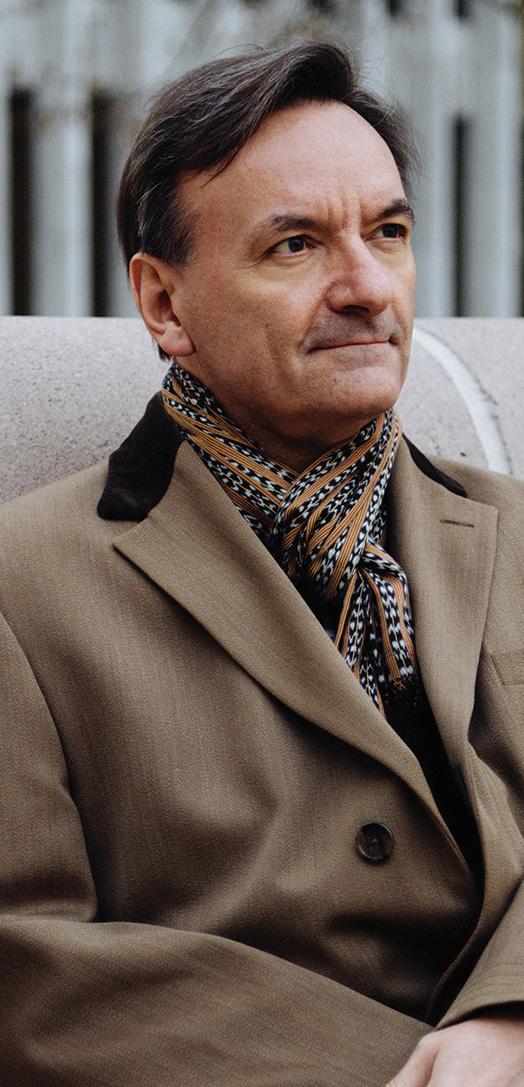
Stephen Hough, piano
Named by The Economist as one of Twenty Living Polymaths, Sir Stephen Hough combines the distinguished career of a concert pianist with those of a composer and writer. In recognition of his contribution to cultural life, he became the first classical performer to be given a MacArthur Fellowship and was awarded a Knighthood for Services to Music in the Queen’s Birthday Honours 2022.
In a career spanning over 40 years, Hough has played regularly with most of the world’s leading orchestras, and he has been a regular guest of recital series and festivals worldwide.
Sir Stephen Hough opens his 2025–26 season at the Elbphilharmonie, launching the Hamburg Staatsorchester’s season under its new music director Omer Meir Wellber. He also gives more than 60 concerts across three continents, appearing with leading orchestras in the U.S., Europe and Asia and in recital at Wigmore Hall in London and Klavierfestival Ruhr in Germany.
As a composer, Hough has written several works on commission from, among others, the Van Cliburn International Piano Competition, Musée du Louvre,
To view the Digital Program for exclusive content, such as full-length program notes and artist biographies, please text PROGRAM to 513.845.3024*, use your mobile device to scan the QR code or visit cincinnatisymphony.org/digitalprogram.
*By
the
National Gallery of London, Westminster Abbey, Westminster Cathedral, Wigmore Hall, the Genesis Foundation, Gilmore International Keyboard Festival, the Walter W. Naumburg Foundation, BBC Sounds and the Berlin Philharmonic Wind Quintet. This season, his piano quintet, Les Noces Rouges, inspired by an episode in American novelist Willa Cather’s My Ántonia and commissioned by the Lincoln Center Chamber Music Society in 2024, receives its European and U.K. premieres at the National Concert Hall in Dublin and Southbank Centre in London, and his piano concerto, The World of Yesterday, premieres with the Singapore Symphony Orchestra, followed by its Korean premiere with Symphony S.O.N.G.
Hough’s discography of over 70 recordings has garnered awards including the Diapason d’or de l’année, several Grammy nominations and eight Gramophone Awards. Among his recent releases for Hyperion is a 2025 album of Hough’s own Piano Concerto with the Hallé Orchestra and Sir Mark Elder.
He is an Honorary Bencher of the Middle Temple, an Honorary Member of the Royal Philharmonic Society, an Honorary Fellow of Cambridge University’s Girton College, the International Chair of Piano Studies and a Companion of the Royal Northern College of Music, and is on the faculty of The Juilliard School in New York. stephenhough.com
Jennifer Higdon: Fanfare Ritmico
Composed: 1999–2000
Premiere: March 2000 by the Women’s Philharmonic, San Francisco
Instrumentation: 3 flutes (incl. piccolo), 3 oboes, 2 clarinets, bass clarinet, 2 bassoons, contrabassoon, 4 horns, 3 trumpets, 3 trombones, tuba, timpani, harp, piano, strings
CSO notable performances: First: May 2005, Paavo Järvi conducting. Most recent: March 2025 as part of a Young People’s Concert, Samuel Lee conducting. Recording: Released in 2011 on American Portraits, Paavo Järvi conducting.
Duration: approx. 7 minutes
Jennifer Higdon is one of America’s most acclaimed figures in contemporary classical music, receiving the 2010 Pulitzer Prize in Music for her Violin Concerto, a 2010 Grammy for her Percussion Concerto, a 2018 Grammy for her Viola Concerto and a 2020 Grammy for her Harp Concerto. Higdon’s first opera, Cold Mountain, won the International Opera Award for Best World Premiere and the opera recording was nominated for two Grammy Awards. Her work, All Things Majestic, written for the Grand Teton Music Festival, is part of that national park’s visitor center experience. The Library of Congress has added the recording of her Percussion Concerto to the National Recording Registry.
In 2018, Higdon received the prestigious Nemmers Prize, awarded to contemporary classical composers of exceptional achievement who have significantly influenced the field of composition. Most recently, she was inducted into the American Philosophical Society and the American Academy of Arts and Letters. Higdon enjoys several hundred performances a year of her works, and her music has been recorded on more than 90 CDs. Her music is published exclusively by Lawdon Press. jenniferhigdon.com
Fanfare Ritmico was commissioned by the San Francisco-based Women’s Philharmonic and premiered in March 2000. It was part of an initiative called “The Fanfares Project” that was part of The Women’s Philharmonic’s drive for “the promotion of women composers, conductors and performers.” A wind ensemble version, commissioned by the Alpha Lambda Chapter of the Phi Mu Alpha Sinfonia Fraternity at Illinois Wesleyan University, received its world premiere in April 2002 by the Illinois Wesleyan Wind Ensemble, Steven W. Eggleston, conducting.
Higdon describes Fanfare Ritmico as follows:
Fanfare Ritmico celebrates the rhythm and speed (tempo) of life. Writing this work on the eve of the move into the new Millennium, I found myself reflecting on how all
Born: December 31, 1962, Brooklyn, New York
things have quickened as time has progressed. Our lives now move at speeds much greater than what I believe anyone would have ever imagined in years past. Everyone follows the beat of their own drummer, and those drummers are beating faster and faster on many different levels. As we move along day to day, rhythm plays an integral part of our lives, from the individual heartbeat to the lightning speed of our computers. This fanfare celebrates that rhythmic motion, of man and machine, and the energy which permeates every moment of our being in the new century.
things have quickened as time has progressed. Our lives now move at speeds much greater than what I believe anyone would have ever imagined in years past. Everyone follows the beat of their own drummer, and those drummers are beating faster and faster on many different levels. As we move along day to day, rhythm plays an integral part of our lives, from the individual heartbeat to the lightning speed of our computers. This fanfare celebrates that rhythmic motion, of man and machine, and the energy which permeates every moment of our being in the new century.
Ludwig van Beethoven: Concerto No. 5 in E-flat Major for Piano and Orchestra, Op. 73, Emperor
Ludwig van Beethoven: Concerto No. 5 in E-flat Major for Piano and Orchestra, Op. 73, Emperor
Composed: 1809
Composed: 1809
Premiere: November 28, 1811 in Leipzig, Johann Philipp Christian Schulz conducting the Gewandhaus Orchestra; Friedrich Schneider, piano
Premiere: November 28, 1811 in Leipzig, Johann Philipp Christian Schulz conducting the Gewandhaus Orchestra; Friedrich Schneider, piano
Instrumentation: solo piano, 2 flutes, 2 oboes, 2 clarinets, 2 bassoons, 2 horns, 2 trumpets, timpani, strings
Instrumentation: solo piano, 2 flutes, 2 oboes, 2 clarinets, 2 bassoons, 2 horns, 2 trumpets, timpani, strings
CSO notable performances: First: March 1897, Frank Van der Stucken conducting; Teresa Carreño, piano. Most recent: May 2019, Louis Langrée conducting; Daniil Trifonov, piano.
CSO notable performances: First: March 1897, Frank Van der Stucken conducting; Teresa Carreño, piano. Most recent: May 2019, Louis Langrée conducting; Daniil Trifonov, piano.
Duration: approx. 38 minutes
Duration: approx. 38 minutes
The beauty and sensitivity that pervade Beethoven’s Fifth Piano Concerto seem to contradict contemporary portraits of the composer, in which he appears brooding and resentful, with rage festering just below the surface. In the year 1809, Beethoven certainly had plenty to be disgruntled about. Europe was in the throes of the Napoleonic wars and Austria had declared war on France. The city was under bombardment, and Viennese nobility had fled the city for safer territory, with the Archduke Ferdinand, Beethoven’s pupil and financial backer, among them.
The beauty and sensitivity that pervade Beethoven’s Fifth Piano Concerto seem to contradict contemporary portraits of the composer, in which he appears brooding and resentful, with rage festering just below the surface. In the year 1809, Beethoven certainly had plenty to be disgruntled about. Europe was in the throes of the Napoleonic wars and Austria had declared war on France. The city was under bombardment, and Viennese nobility had fled the city for safer territory, with the Archduke Ferdinand, Beethoven’s pupil and financial backer, among them.
In Vienna, under the occupation of French troops, living conditions had begun to deteriorate. The local population was required to foot the cost of soldier upkeep, which drained the resources for food and daily necessities. In addition, Austria was held responsible for reparations as well as heavy taxes. Beethoven wrote to acquaintances in Leipzig, “We are lacking money here — we need twice as much as usual — damned war!” and later, “We no longer even have decent, edible bread.”
In Vienna, under the occupation of French troops, living conditions had begun to deteriorate. The local population was required to foot the cost of soldier upkeep, which drained the resources for food and daily necessities. In addition, Austria was held responsible for reparations as well as heavy taxes. Beethoven wrote to acquaintances in Leipzig, “We are lacking money here — we need twice as much as usual — damned war!” and later, “We no longer even have decent, edible bread.”
The composer had initially expressed admiration for Napoleon and was even considering the music director post in Kassel at the court of Bonaparte’s brother, Jérôme. But during the siege and bombardment, huddled in the cellar of his brother Kaspar’s lodgings with pillows pressed to his ears, his attitude soured and his loyalty to Germany deepened.
The composer had initially expressed admiration for Napoleon and was even considering the music director post in Kassel at the court of Bonaparte’s brother, Jérôme. But during the siege and bombardment, huddled in the cellar of his brother Kaspar’s lodgings with pillows pressed to his ears, his attitude soured and his loyalty to Germany deepened.
Evidence of Beethoven’s patriotism surfaces in the preparatory scribblings made during the early stages of the Fifth Concerto. The music paper on which he worked out his ideas for the concerto also contains preliminary sketches for a musical setting for choir and orchestra of the poem Östreich [sic] über alles (“Austria Above All”) by Heinrich Joseph von Collin, a patriotic writer whose political songs resulted in persecution by the French. Further evidence of Beethoven’s feelings toward Bonaparte show up in the manuscript to the concerto, at the beginning of the second movement where the composer scribbled, Östreich [sic] löhne Napoleon — “Austria pay Napoleon back!”
Evidence of Beethoven’s patriotism surfaces in the preparatory scribblings made during the early stages of the Fifth Concerto. The music paper on which he worked out his ideas for the concerto also contains preliminary sketches for a musical setting for choir and orchestra of the poem Östreich [sic] über alles (“Austria Above All”) by Heinrich Joseph von Collin, a patriotic writer whose political songs resulted in persecution by the French. Further evidence of Beethoven’s feelings toward Bonaparte show up in the manuscript to the concerto, at the beginning of the second movement where the composer scribbled, Östreich [sic] löhne Napoleon — “Austria pay Napoleon back!”
Like Mozart and other Viennese musicians before him, Beethoven had written his first four concertos as vehicles showcasing his dual roles as pianist and composer. By the premiere of the Fourth Concerto in 1807, his hearing had already degenerated significantly, and his status as a performing artist was slipping. Knowing that his Fifth Concerto would need to be performed by someone else, he kept the composer in the spotlight but stripped the pianist of the autonomy that soloists had previously enjoyed. They had traditionally supplied their own embellishments, improvised filler for certain passages, and inserted personalized cadenzas toward the end of each movement to “finish” the piece for the audience, much in the same way that an interior decorator completes the work of the architect. In his Fifth Concerto,
Like Mozart and other Viennese musicians before him, Beethoven had written his first four concertos as vehicles showcasing his dual roles as pianist and composer. By the premiere of the Fourth Concerto in 1807, his hearing had already degenerated significantly, and his status as a performing artist was slipping. Knowing that his Fifth Concerto would need to be performed by someone else, he kept the composer in the spotlight but stripped the pianist of the autonomy that soloists had previously enjoyed. They had traditionally supplied their own embellishments, improvised filler for certain passages, and inserted personalized cadenzas toward the end of each movement to “finish” the piece for the audience, much in the same way that an interior decorator completes the work of the architect. In his Fifth Concerto,
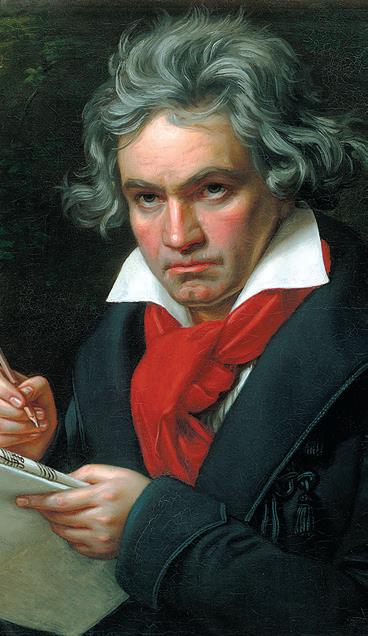
Born: baptized December 17, 1770, Bonn, Germany
Died: March 26, 1827, Vienna, Austria
Beethoven took this liberty from the performer in two ways: first, he inserted cadenza passages, meticulously written down to the last note, into the opening of the first movement. Then, at the conclusion of the movement where audiences were primed to expect improvisation, Beethoven dictated in the score, Non si fa una cadenza, ma s’attacca subito il seguente — “Do not play a cadenza, but immediately go on to the following.”
Beethoven took this liberty from the performer in two ways: first, he inserted cadenza passages, meticulously written down to the last note, into the opening of the first movement. Then, at the conclusion of the movement where audiences were primed to expect improvisation, Beethoven dictated in the score, Non si fa una cadenza, ma s’attacca subito il seguente — “Do not play a cadenza, but immediately go on to the following.”
Because the composer was no longer the soloist, his most effective economic strategy was to publish the concerto before it had even premiered, first in 1810 in London, then in 1811 in Leipzig. Unlike the other concertos, this publication was geared to dilettantes, so Beethoven wrote out a full reduction of the orchestral part for the soloist instead of the customary figured bass line. In addition to simplified alternatives (ossia) for the more difficult passages, he gave exceptionally precise instructions for articulations, expression marks and pedal indications.
Because the composer was no longer the soloist, his most effective economic strategy was to publish the concerto before it had even premiered, first in 1810 in London, then in 1811 in Leipzig. Unlike the other concertos, this publication was geared to dilettantes, so Beethoven wrote out a full reduction of the orchestral part for the soloist instead of the customary figured bass line. In addition to simplified alternatives (ossia) for the more difficult passages, he gave exceptionally precise instructions for articulations, expression marks and pedal indications.
A private premiere took place in January 1811 at the Viennese palace of Prince Joseph Lobkowitz with the Archduke Ferdinand as soloist, followed by a public premiere in the Leipzig Gewandhaus the following November. Viennese audiences first heard it in February 1812 when Beethoven’s pupil Carl Czerny performed the solo part. Among his piano concertos, it is the only one that the composer never performed.
A private premiere took place in January 1811 at the Viennese palace of Prince Joseph Lobkowitz with the Archduke Ferdinand as soloist, followed by a public premiere in the Leipzig Gewandhaus the following November. Viennese audiences first heard it in February 1812 when Beethoven’s pupil Carl Czerny performed the solo part. Among his piano concertos, it is the only one that the composer never performed.
The opening of the first movement thwarts all previous conventions: with no tempo and no meter, grand orchestra chords kick off flowery piano interjections. After the main tune appears in the violins, the clarinet and bassoon take up the contrasting second theme in a minor key. A chromatic flourish introduces the piano’s solo exposition before the music migrates unexpectedly to B minor and the soloist develops the themes in dialogue with the orchestra throughout a series of tonalities. Beethoven reintroduces the main themes and extends them with a brilliant climax: the first written fortississimo dynamic (fff) in music history.
The opening of the first movement thwarts all previous conventions: with no tempo and no meter, grand orchestra chords kick off flowery piano interjections. After the main tune appears in the violins, the clarinet and bassoon take up the contrasting second theme in a minor key. A chromatic flourish introduces the piano’s solo exposition before the music migrates unexpectedly to B minor and the soloist develops the themes in dialogue with the orchestra throughout a series of tonalities. Beethoven reintroduces the main themes and extends them with a brilliant climax: the first written fortississimo dynamic (fff) in music history.
The original tempo marking of movement two, Andante un poco moto, was later changed to Adagio by the composer, resulting in an unusually wide margin of tempo choices for this movement among modern-day pianists. The movement opens with muted strings playing a chorale in B major over a pizzicato bass. The piano enters presenting a new musical idea that drifts through several keys before a chain of trills brings back the key of B major. Beethoven transitions seamlessly into the last movement: bassoons change their last note by a half-step and pass it off to the horns while the piano foreshadows the theme of the final rondo. The soloist makes two unsuccessful attempts at the tune, and finally, on the third try, succeeds in launching the finale.
The original tempo marking of movement two, Andante un poco moto, was later changed to Adagio by the composer, resulting in an unusually wide margin of tempo choices for this movement among modern-day pianists. The movement opens with muted strings playing a chorale in B major over a pizzicato bass. The piano enters presenting a new musical idea that drifts through several keys before a chain of trills brings back the key of B major. Beethoven transitions seamlessly into the last movement: bassoons change their last note by a half-step and pass it off to the horns while the piano foreshadows the theme of the final rondo. The soloist makes two unsuccessful attempts at the tune, and finally, on the third try, succeeds in launching the finale.
The Rondo opens not with the full orchestra, but with the pianist playing a joyful ascending motif to thunderous chords in the bass. Beethoven conforms to early 19thcentury Viennese tradition in merging the structure of his Rondo with that of the classical sonata. This strategy tends to suit the composer more than the soloist, as it allows for a more sophisticated treatment of themes, more innovation and greater room for ingenuity than the simpler Rondo. In the final coda Beethoven presents the audience with another novelty: a duet between piano and timpani that slows and fades away. The piano explodes with a final burst of energy punctuated with three triumphant final chords.
The Rondo opens not with the full orchestra, but with the pianist playing a joyful ascending motif to thunderous chords in the bass. Beethoven conforms to early 19thcentury Viennese tradition in merging the structure of his Rondo with that of the classical sonata. This strategy tends to suit the composer more than the soloist, as it allows for a more sophisticated treatment of themes, more innovation and greater room for ingenuity than the simpler Rondo. In the final coda Beethoven presents the audience with another novelty: a duet between piano and timpani that slows and fades away. The piano explodes with a final burst of energy punctuated with three triumphant final chords.
The appeal of this concerto was in no small part due to recent changes in piano construction associated with the industrial revolution. Beethoven had lobbied throughout his career for bigger, louder and more sensitive instruments; by the year 1811, innovations in instrument design and manufacture enabled a greater range of articulation and expression, providing the composer with an instrument worthy of masterworks such as his Piano Concerto No. 5, his Hammerklavier Sonata, Op. 106, and his Diabelli Variations, Op. 120.
The appeal of this concerto was in no small part due to recent changes in piano construction associated with the industrial revolution. Beethoven had lobbied throughout his career for bigger, louder and more sensitive instruments; by the year 1811, innovations in instrument design and manufacture enabled a greater range of articulation and expression, providing the composer with an instrument worthy of masterworks such as his Piano Concerto No. 5, his Hammerklavier Sonata, Op. 106, and his Diabelli Variations, Op. 120.
—©Dr.
—©Dr. Scot Buzza
Scot Buzza
The essential guide to living your best life here.
The city’s most respected and award-winning magazine, highlighting the region’s most interesting people, cultural issues, food, arts, fashion, and history.


NOW!
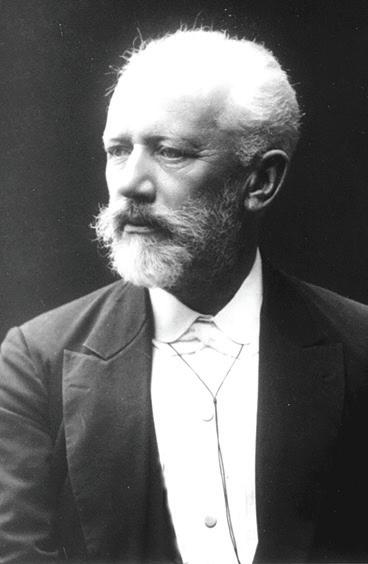
Born: May 7, 1840, Votkinsk, Russia
Died: November 6, 1893, St. Petersburg, Russia
Piotr Ilyich Tchaikovsky: Symphony No. 4 in F Minor, Op. 36
Composed: 1877–1878
Premiere: February 22, 1878, in Moscow, Nikolai Rubinstein conducting
Instrumentation: 2 flutes, piccolo, 2 oboes, 2 clarinets, 2 bassoons, 4 horns, 2 trumpets, 3 trombones, tuba, timpani, bass drum, crash cymbals, triangle, strings
CSO notable performances: First: November 1896, Frank Van der Stucken conducting. Most recent: October 2023, Ramón Tebar conducting.
Duration: approx. 44 minutes
The Fourth Symphony was a product of the most crucial and turbulent time of Tchaikovsky’s life — 1877, when he met two women who forced him into a period of intense introspection. The first was the sensitive, music-loving widow of a wealthy Russian railroad baron, Nadezhda von Meck. Mme. von Meck had been enthralled by Tchaikovsky’s music, and she first contacted him at the end of 1876 to commission a work. She paid him extravagantly, and soon an almost constant stream of notes and letters passed between them: hers contained money and effusive praise, his contained thanks and an increasingly greater revelation of his thoughts and feelings. She became not only the financial backer who allowed him to quit his irksome teaching job at the Moscow Conservatory to devote himself to composition, but also the sympathetic sounding-board for reports on the whole range of his activities — emotional, musical, personal. Although the two never met, her place in Tchaikovsky’s life was enormous and beneficial.
The second woman to enter Tchaikovsky’s life in 1877 was Antonina Miliukova, an unnoticed student in one of his large lecture classes at the Conservatory who had worked herself into a passion over her young professor. Tchaikovsky paid her no special attention, and he had quite forgotten her when he received an ardent love letter professing her unquenchable desire to meet with him. Tchaikovsky (age 37), who should have burned the thing, answered the letter of the 28-year-old Antonina in a polite, cool fashion, but did not include an outright rejection of her advances. He had been considering marriage for almost a year in the hope that it would give him both the stable home life he had not enjoyed in the 20 years since his mother died, as well as to help dispel the all-too-true rumors of his homosexuality. He believed he might achieve both those goals with Antonina. He could not see the situation clearly enough to realize that what he hoped for was impossible — a pure, platonic marriage without its physical and emotional realities. Further letters from Antonina implored Tchaikovsky to meet her and threatened suicide out of desperation if he refused. A welter of emotions gripped his heart when, just a few weeks later, he proposed marriage to her. Inevitably, the marriage crumbled within days of the wedding amid Tchaikovsky’s searing self-deprecation.
It was during May and June of 1877 that Tchaikovsky sketched the Fourth Symphony, finishing the first three movements before Antonina began her siege. The finale was completed by the time he proposed. Because of this chronology, the program of the symphony was not a direct result of his marital disaster. All that — the July wedding, the mere 18 days of bitter conjugal farce, the two separations — postdated the actual composition of the symphony by a few months, though the orchestration took place during the painful time from September to January when the composer was seeking respite in a half dozen European cities, from St. Petersburg to San Remo. What Tchaikovsky found in his relationship with this woman (who by 1877 already showed signs of approaching the door of the mental ward in which, still legally married to him, she died in 1917) was a confirmation of his belief in the inexorable workings of Fate in human destiny. He later wrote to Mme. von Meck, “We cannot escape our Fate, and there was something fatalistic about my meeting with this girl.” The relationships with the two women of 1877,
Mme. von Meck and Antonina, occupy important places in the composition of this symphony: one made it possible, the other made it inevitable, but the vision and its fulfillment were Tchaikovsky’s alone.
After the premiere, Tchaikovsky explained to Mme. von Meck the emotional content of the Fourth Symphony:
The introduction [stentorian brasses heard immediately in a motto theme that recurs throughout the work] is the kernel of the whole symphony. This is Fate, which hinders one in the pursuit of happiness. There is nothing to do but to submit and vainly complain [the melancholy, syncopated shadow-waltz of the main theme, heard in the strings]. Would it not be better to turn away from reality and lull one’s self in dreams? [The second theme is begun by the clarinet.] But no — these are but dreams: roughly we are awakened by Fate. [The brass fanfare over a wave of timpani begins the development section.] Thus we see that life is only an everlasting alternation of somber reality and fugitive dreams of happiness. The second movement shows another phase of sadness. How sad it is that so much has already been and gone! And yet it is a pleasure to think of the early years. It is sad, yet sweet, to lose one’s self in the past. In the third movement are capricious arabesques, vague figures which slip into the imagination when one has taken wine and is slightly intoxicated. Military music is heard in the distance. As to the finale, if you find no pleasure in yourself, go to the people. The picture of a folk holiday. [The finale is based on the Russian folk song “A Birch Stood in the Meadow.”] Hardly have we had time to forget ourselves in the happiness of others when indefatigable Fate reminds us once more of its presence. Yet there still is happiness, simple, naive happiness. Rejoice in the happiness of others — and you can still live.
—©Dr. Richard E. Rodda

2025–26 SEASON
SUN MAY 10, 2 PM, Music Hall | COMMON GROUND
DR. ANTOINE T. CLARK conductor
Martin Hebel Fanfare for Common Ground (b. 1990)
Jordan Jinosko Three Sketches of Unblemished Earth (b. 1994) Water • Woodlands • Heights
Ching-chu Hu
(b. 1969)
For program notes, please visit our digital program by texting PROGRAM to 513.845.3024.
Angélica Negrón Tornasol (b. 1981)
Harry T. Burleigh From the Southland (1866–1949) Through Moanin’ Pines • The Frolic • In de Col’ Moonlight • arr. Stig Junge A Jubilee • On Bended Knees • A New Hidin’ Place
SUN MAY 10, 7 PM, Music Hall | THE MIDNIGHT EXHIBITION
DUO SHEN conductor MARIO YNGA-ORELLANA clarinet
Anna Clyne This Midnight Hour (b. 1980)
Claude Debussy Première rapsodie for Clarinet and Orchestra (1862–1918)
INTERMISSION
Samuel Coleridge-Taylor Ballade in A Minor, Op. 33 (1875–1912)
Modest Mussorgsky Pictures at an Exhibition (1839–1881) Introduction: Promenade • I. Gnomus | Promenade • orch. Maurice Ravel II. Il vecchio castello • Promenade • III. Tuileries • IV. Bydlo • Promenade • Ballet of Little Chicks in Their Shells • VI. Two Polish Jews • VII. Limoges—Le Marché • VIII. Catacombae—Sepulcrum romanum • Cum mortuis in lingua mortua • IX. Baba Yaga • X. The Great Gate of Kiev
Ellen and Richard Berghamer Foundation
The Charles H. Dater Foundation
The Unnewehr Foundation

Support provided by the Ellen and Richard Berghamer Foundation, The Charles H. Dater Foundation, The Unnewehr Foundation and Chemed Corporation
The Cincinnati Symphony Youth Orchestras is a program of the Cincinnati Symphony Orchestra and receives generous support in the form of rehearsal space from the University of Cincinnati College-Conservatory of Music and Walnut Hills High School.
FIRST VIOLIN
Alexander Wang, Concertmaster
Grace Barnett
Elessar Dehoff
Bella Duhaime
Emma Leong
Julia Li
Eric Liu
Lukas Meinken
Ella Shadix
Sarang Srikanth
Stacy Villo
Mia Wang
Kevin Wen
Ethan Yao
Ethan Yuan
Angela Zhang
Jenna Zhang
SECOND VIOLIN
Andrew Zhang, Principal
Alice Chi
Kathryn Dillman
Soham Gudsoorkar
Joy Jang
Jiffannie Fredy
Daniel Kong
Nathan Lee
Brianna Luo
Rishi Pamparti
Noah Stulberg
Sarah Wang
Luke Wright
Iris Xu
Clairette Yang
VIOLA
Lucia Schartung, Principal
Sungwoo Choi
Ryley From Andrew Jee
Henrik Reinsalu
Annabel Schulte
John Vasconcelos
Adele Williams
CELLO
Eliot Brown, Principal
Cynthia Li, Assistant Principal
Alexander Berger
Sieun Ghim
Marie Godarova
Zoe Lee
Jason Liew
Gabriel Shin
Ethan Wang
James Yeoh
Emma Zhu
Alex Zhuang
DOUBLE BASS
Jonathan McGrath, Principal
Joel Bierkan
Jameson Hornsby
Miles Manning
Darcy McMahon
Christopher Southern
FLUTE/PICCOLO
Ethan Li5
Yuxin Liu2
Penny Schackmann3
Samantha Wong4
OBOE/ENGLISH HORN
Sophia Cheng4
Gary Forsyth3
Sab Rajan2
Isabella Vilanueva5
CLARINET
Lucian Chang3
Vincent Dicicco2
Ian Duff4
Evelyn Shin5
BASSOON
Justus Chapman3,4
Scott Singleton2,5
HORN
Nathan Barkley5
Zoey Little2
Maxwell Nelson3
Eden Proctor4
Akio Wiese1
TRUMPET
Elijah Flores1,3
Benjamin Holloway5
Emma Ogden2,4
FIRST VIOLIN
Angela Tang, Concertmaster
Youngwoo Choi+
Anna Christos
Marley Feng
Yuhan Gu
Hyori Han
Andy Li
Annie Li
Madeline Mozlin
Sarah Perpignan
Clara Schmid
Ian Shang
Jubilee Shang
Eva Cate Wesley
Raina Yang
Elizabeth Yeoh
SECOND VIOLIN
Paul Ku, Principal
Andrew Cheng+
Carmen DeAtely-Rosales
Maren Heisler
Eli Hu
Grace Kim,
Julia Lancman
Cecilia Lehmann
Elaine Peng
Santhosh Rajan
Ben Truong
Kenneth Wu
Irene Zhang
TROMBONE
Tvasta Gajjar3
Mikayla November5
Colin Van Niman1,2,4
BASS TROMBONE
Jessica Ries
TUBA
Evan Moore
PERCUSSION
Murray Cummings
Chloe Dick
Adolphus McCullom II
HARP
Magdalena Milroy
+Begins the alphabetical listing of players who participate in a system of rotated seating within a string section.
All wind players are considered principals and rotate between pieces.
Principal Players
1 Hebel
2 Jinosko
3 Hu
4 Negron
5 Burleigh
VIOLA
Grace Yu, Principal
Christy Kim, Co-Assistant Principal
Kasinda Willingham, Co-Assistant Principal
Samuel Butler+
Anna Cameron
Goehring, Ethan
Simon Park
Blake Roberts
Lainie Stautberg
Isabella Wang
Alina Zhang
CELLO
Sonya Moomaw, Principal
Autumn Rinaldi, Assistant Principal
Lillian Duhaime+
Adhi Nayak,
Kallea Willingham
William Yeoh
DOUBLE BASS
Matteo Meli, Co-Principal
Aaron Scott1, Co-Principal
Evan Butler+
Josiah Eriksen
Gerrit Johnson
FLUTE/PICCOLO
Mona Allen2
Camille Kolar1
Allison Sayles
Riya Tummala
OBOE/ENGLISH HORN
Lydia Banzhof1
August Hagen
Eden Potterton2
Gwendolyn Stapp
CLARINET
Edward Riddle1
Jackson Runtenelli
Liheng Wang
Mario Ynga-Orellana2
BASSOON
Sean Hayes2
Josie Youtsler1
HORN
Josh Baxter
Lucas Elmore
Eva Fuller1
Cate Mahoney
Lucas Monjot2
TRUMPET
Ryan Metsker
Trent Stricker1
Thomas Stricker2
Benjamin Yoby
TROMBONE
Jack Izor2
Connor Perkins1
BASS TROMBONE
Douglas Jacobo
TUBA
George Kaiser
PERCUSSION
Braeden Brown
Benjamin Hofmann
+Begins the alphabetical listing of players who participate in a system of rotated seating within a string section.
All wind players are considered principals and rotate between pieces.
Principal Players
1 Clyne
2 Mussorgsky
The CSYO CCM Conducting Fellow for 2025–26 is Moyue Zhou.
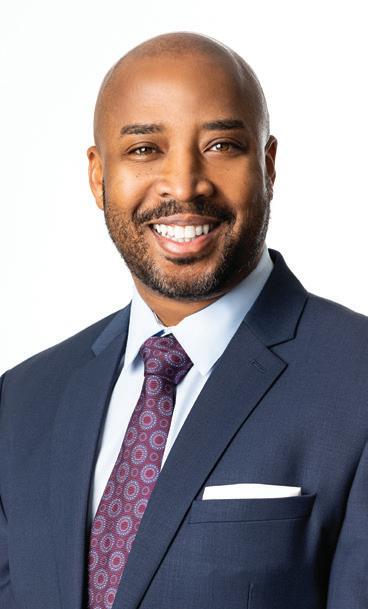
CSYO Concert Orchestra
DR. ANTOINE T. CLARK, conductor
Dr. Antoine T. Clark is an award-winning conductor and educator dedicated to nurturing young musicians and expanding equitable access to classical music. He was appointed conductor of the Cincinnati Symphony Youth Orchestra Concert Orchestra in 2025 and brings to the role more than a decade of experience leading youth, collegiate and professional ensembles. Clark previously served as associate conductor of the Northern Ohio Youth Orchestra’s Philharmonia Orchestra, which was invited to perform at the 2025 Ohio Music Education Association Professional Development Conference. His honors include the 2024 Columbus Symphony Music Educator Award, the 2024 Artists Elevated Award from the Greater Columbus Arts Council and Third Prize in the 2024 Los Angeles Conducting Workshop and Competition. He is also a 2025 national finalist for The American Prize in four categories, including conducting, orchestral performance, programming and the performance of American music.
In addition to his work with the CSYO, Clark is the founding artistic and music director of the Worthington Chamber Orchestra in Ohio. He also served as associate conductor of the Wheeling Symphony Orchestra and assistant conductor of the Chicago Sinfonietta, and he recently completed a visiting professorship as orchestra director at Denison University. A committed music educator, he serves on the Columbus Symphony Orchestra’s education committee and is the founder of the Music Academy of Worthington.
Clark is committed to fostering inclusion and community through music. In 2022, he served as the Cincinnati Symphony Orchestra’s MAC Music Innovator, leading performances and school residencies across the community. He has been a featured speaker and panelist on inclusive practices and youth engagement for the International Conductors Guild, the Washington Musical Pathways Workshop: Career in Music Panel and the Columbus Symphony Youth Orchestras’ Workshop Academy, among other national initiatives.
As a guest conductor, Clark has appeared with the Cincinnati Symphony Orchestra, New Jersey Symphony, Symphony Tacoma and Dayton Philharmonic, among others. He has participated in prestigious festivals and fellowships, including the Cabrillo Festival of Contemporary Music, the Monteux School and Music Festival, and Chicago Sinfonietta’s Project Inclusion Conducting Freeman Fellowship.
CSYO Philharmonic
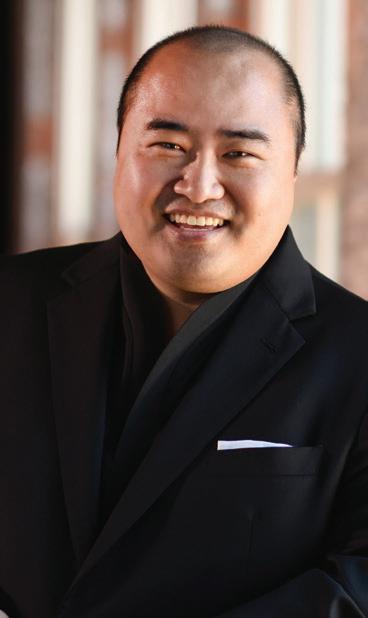
DUO SHEN, conductor
Dr. Duo Shen, named Assistant Conductor of the Cincinnati Symphony Orchestra starting with the 2025–26 season, also is associate conductor of the Grand Rapids Symphony — a role held by only two individuals in the orchestra’s 95-year history. During his three seasons with the Grand Rapids Symphony, Shen curated and conducted over 90 performances, spanning masterworks and chamber concert series, family and educational concerts, film/pop productions and run-out concerts. His 2024–25 season highlights included a subscription debut at DeVos Performance Hall with double bass virtuoso Joseph Conyers that was praised for its artistry and energy.
Shen has served as assistant conductor to esteemed conductors such as Marcelo Lehninger, JoAnn Falletta, Carlos Kalmar, Vinay Parameswaran, Carlos Miguel Prieto, Ruth Reinhardt, Tianyi Lu, Nicholas McGegan, David Robertson and Robert Spano. In 2022, immediately upon graduation, he was hired as a staff conductor at the Cleveland Institute of Music, where he served as prep-conductor and cover conductor for guest artists while also leading subscription concerts. Additionally, Shen has been a cover conductor for the Buffalo Philharmonic and the Cleveland Orchestra Youth Orchestra.
Shen’s conducting mentors include Vinay Parameswaran, Carlos Kalmar, JoAnn Falletta, Marcelo Lehninger, Carl Topilow and Michael Jinbo. He has collaborated with orchestras such as the Grand Rapids Symphony, Fargo-Moorhead Symphony Orchestra, CIM Orchestra, New Symphony Orchestra (Bulgaria) and Pazardjik Symphony Orchestra (Bulgaria). Known for reimagining classical works in projects like “A New Imagination of Beethoven’s Sixth Symphony” and “A Day with Symphony” at Blue Lake Fine Arts Camp, he has earned praise for the projects’ accessibility and creativity. Local Spins lauded him as “passionate” and “a talented individual.”
Shen holds a professional studies diploma in orchestral conducting from CIM, a Doctor of Musical Arts in Violin from the University of Maryland, and master’s and bachelor’s degrees from the University of Delaware.
2026 CSYO Concerto Competition 2nd Place
Mario Ynga-Orellana is a sophomore at Walnut Hills High School. Raised in Mexico, Spain and Germany, he grew up surrounded by music through his family traditions from Bolivia. After exploring piano and accordion, he discovered the clarinet, drawn to its elegance and the colors in music written for the instrument by French turn-of-the-century composers. He is the principal clarinetist of the OMEA All-State Band, a CSYO Norman E. Johns Chair awardee and an Overture Awards finalist with the Cincinnati Arts Association. He studies with Dr. Laura Sabo. Besides music, Orellana is a mathematics enthusiast and the proud older brother of twins.
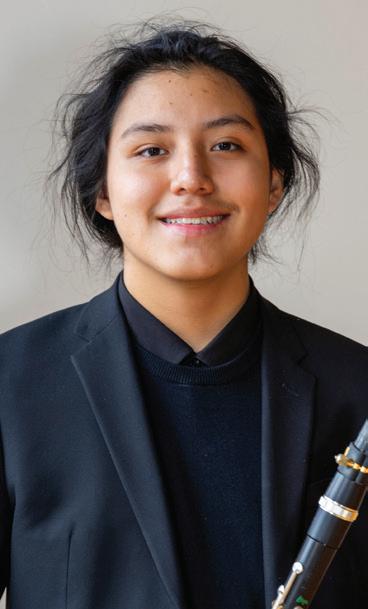
If you have a passion for the arts and want to raise awareness about the Orchestra with your peers, this program is for you!
Student Brand Ambassadors work closely with CSO administrative staff to promote membership for Student Access Plus (the CSO’s student ticket program) and increase student attendance at concerts. The SBA program provides a unique volunteer opportunity and perks such as free merch, a complimentary Student Access Plus membership, experience for your resume and more!

Apply to be a CSO Student Brand Ambassador.


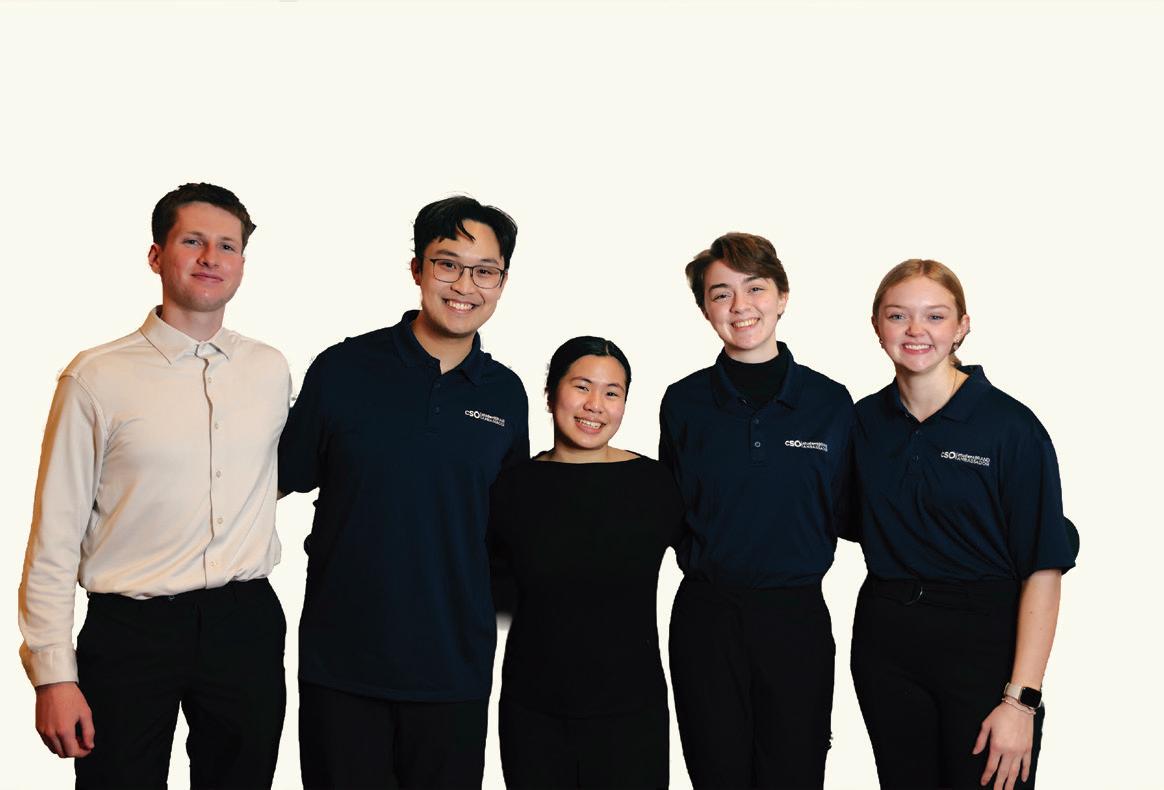
Applications for the 2026/27 season are open now.

Local and national foundations, businesses, and government agencies are integral to the Orchestra’s vibrant performances, community engagement work, and education activities. We are proud to partner with the following funders. To join this distinguished group, contact Sean Baker at 513.744.3363 or sbaker@cincinnatisymphony.org.
ANNUAL SUPPORT
AND SERIES SPONSORS

Season Sponsor
PLATINUM BATON CIRCLE ($50,000+)
Anonymous ArtsWave
Ellen and Richard Berghamer Foundation
Charles H. Dater Foundation
The Fifth Third Foundation
Local Initiative for Excellence Foundation
The Jeffrey & Jody Lazarow and Janie & Peter Schwartz Family Fund
H.B., E.W. & F.R. Luther Charitable Foundation
Dr. John & Louise Mulford Fund for the CSO National Endowment for the Arts
Louise Dieterle Nippert Musical Arts Fund of the Greenacres Foundation
Ohio Arts Council
The Oliver Family Foundation
PNC Bank
Margaret McWilliams Rentschler Fund of Greater Cincinnati Foundation
Nina Browne Parker Trust
Robert H. Reakirt Foundation Equities
Harold C. Schott Foundation / Francie and Tom Hiltz, Trustees
The Unnewehr Foundation
Western & Southern Financial Group
GOLD BATON CIRCLE ($25,000–$49,999)
Anonymous
The Cincinnati Symphony Club
HORAN Wealth
Louis H. and David S. Ingalls Foundation Inc.
George and Margaret McLane Foundation
The Ladislas & Vilma Segoe Family Foundation
United Dairy Farmers & Homemade Brand Ice Cream
SILVER BATON CIRCLE ($15,000–$24,999)
Roger and Jan Ames
BlaCkOWned™
BT Rise
Kelly Dehan and Rick Staudigel
Johnson Investment Counsel
Millstone Fund
The Procter & Gamble Company
The Rendigs Foundation
Scott and Charla Weiss
Wodecroft Foundation
CONDUCTOR’S CIRCLE ($10,000–$14,999)
Bartlett Wealth Management
Chemed Corporation
CVG Airport Authority
Crosset Family Fund
Graeter’s Ice Cream
JRH Consultants
Messer Construction Co.
The Daniel & Susan Pfau Foundation
Taft Stettinius & Hollister LLP
YOT Full Circle Foundation
Metro
CONCERTMASTER’S CIRCLE ($5,000–$9,999)
GBBN Architects
Interact for Health
The Andrew Jergens Foundation
Keating Muething & Klekamp PLL
Richard and Carmen Kovarsky
Medical Mutual
New Music USA
Queen City (OH) Chapter of The Links, Incorporated
The Willard & Jean Mulford Charitable Fund
Rock Island Realty
Katherine and Tim Stautberg
Thompson Hine LLP
WOW Windowboxes
ARTIST’S CIRCLE ($2,500–$4,999)
Duke Energy Foundation
Dinsmore & Shohl LLP
Hispanic Chamber Cincinnati USA
HUB International
Learning Links Fund of Greater Cincinnati Foundation
NAMI Urban Greater Cincinnati
Charles Scott Riley III Foundation
Southern Grace Eats
Visit Cincy
BUSINESS & FOUNDATION PARTNERS (up to $2,499)
AARP Ohio
African American Chamber of Commerce
Asianati
Albert B. Cord Charitable Foundation
American Red Cross, Greater Cincinnati-Dayton Region
The Blue Book of Cincinnati
Cinsei
William G. and Mary Jane Helms Charitable Foundation
Hixson Architecture Engineering Interiors
Journey Steel
Robert A. & Marian K. Kennedy Charitable Trust
The Kroger Co.
League of American Orchestras
Frances L. P. Ricketts Sullivan Memorial Fund
The Voice of Your Customer
The Cincinnati Symphony Orchestra and Cincinnati Pops acknowledge the following partner companies, foundations and their employees who generously participate in the Annual ArtsWave Community Campaign at the $100,000+ level. Thank you!
$2 million+
P&G
$1 million to $1,999,999
Fifth Third Bank and Fifth Third Foundation
$500,000 to $999,999
GE Aerospace
$250,000 to 499,999
The Cincinnati Insurance Companies
The H.B., E.W. and F.R. Luther Charitable Foundation, Fifth Third Bank, N.A., Trustee
Western & Southern Financial Group
$100,000–$249,999
altafiber
Cincinnati Children’s Hospital Medical Center
Cincinnati Reds
Dinsmore & Shohl LLP
The E.W. Scripps Company and Scripps Howard Foundation
The Enquirer | Cincinnati.com
Great American Insurance Group
Greater Cincinnati Foundation
The Kroger Co.
Messer Construction Co.
PNC
Endowment gifts perpetuate your values and create a sustainable future for the Orchestra. We extend our deep gratitude to the donors who have provided permanent endowments in support of our programs that are important to them. For more information about endowment gifts, contact Kate Farinacci, Director of Special Campaigns & Legacy Giving, at 513.744.3202.
Grace M. Allen Chair
Ellen A. & Richard C. Berghamer Chair
Robert E. & Fay Boeh Chair
The Marc Bohlke Chair given by Katrin & Manfred Bohlke
Trish & Rick Bryan Chair
Otto M. Budig Family Foundation Chair
Mary Alice Heekin Burke Chair
Michael L. Cioffi & Rachael Rowe— the Honorable Nathaniel R. Jones Chief Inclusion Officer
Sheila and Christopher Cole Chair
Peter G. Courlas–Nicholas Tsimaras Chair
Ona Hixson Dater Chair
The Anne G. & Robert W. Dorsey Chair+
Jane & David Ellis Chair
Irene & John J. Emery Chair
James M. Ewell Chair
Ashley & Barbara Ford Chair for Assistant Conductor
Ashley & Barbara Ford Chair for Assistant Conductor
Ashley & Barbara Ford Chair for Principal Tuba
Susan S. & William A. Friedlander Chair+
Charles Gausmann Chair
Susanne & Philip O. Geier, Jr. Chair+
Emma Margaret & Irving D. Goldman Chair
Clifford J. Goosmann & Andrea M. Wilson Chair
Charles Frederic Goss Chair
Jean Ten Have Chair
Dorothy & John Hermanies Chair
Christy & Terry Horan Family Chair
Lois Klein Jolson Chair
Josephine I. & David J. Joseph, Jr. Chair
Harold B. & Betty Justice Chair
Marvin Kolodzik & Linda S. Gallaher Chair+
Al Levinson Chair
Patricia Gross Linnemann Chair+
Alberta & Dr. Maurice Marsh Chair
Stephen P. McKean Chair
Laura Kimble McLellan Chair
The Henry Meyer Chair
The Louise Dieterle Nippert & Louis Nippert Chairs
Rawson Chair
David C. Reed, MD Chair
The Vicky & Rick Reynolds Chair in honor of William A. Friedlander+
Ida Ringling North Chair
Donald & Margaret Robinson Chair
Dianne & J. David Rosenberg Chair+
Ruth F. Rosevear Chair
The Morleen & Jack Rouse Chair+
Emalee Schavel Chair
Karl & Roberta Schlachter Family Chair
Carol J. Schroeder Chair
Serge Shababian Chair
Melinda & Irwin Simon Chair+
Tom & Dee Stegman Chair+
Mary & Joseph S. Stern, Jr. Chair+
Cynthia & Frank Stewart Chair
The Jackie & Roy Sweeney Family Chair
The Sweeney Family Chair in memory of Donald C. Sweeney
Anna Sinton Taft Chair
Brenda & Ralph Taylor Chair
James P. Thornton Chair
Nicholas Tsimaras–Peter G. Courlas Chair
Thomas Vanden Eynden Chair
Sallie Robinson Wadsworth & Randolph L. Wadsworth Jr. Chair
Jo Ann & Paul Ward Chair
Matthew & Peg Woodside Chair
Mary M. & Charles F. Yeiser Chair
Eleanora C. U. Alms Trust, Fifth Third Bank, Trustee
Rosemary and Frank Bloom Endowment Fund*+
Cincinnati Bell Foundation Inc.
Mr. & Mrs. Val Cook
Nancy & Steve Donovan*
Sue and Bill Friedlander Endowment Fund*+
Mrs. Charles Wm Anness*, Mrs. Frederick D. Haffner, Mrs. Gerald Skidmore and the La Vaughn Scholl Garrison Fund
Fred L. & Katherine H. Groll Fund for Musical Excellence
Fred L. & Katherine H. Groll Fund for Great Artists
Fred L. & Katherine H. Groll Trust Pianist Fund
The Carol Ann and Ralph V. Haile, Jr. Foundation Endowment Fund
Anne Heldman Endowment Fund**
Mr. and Mrs. Lorrence T. Kellar+
Lawrence A. & Anne J. Leser*
Mr. & Mrs. Carl H. Lindner**
Janice W. & Gary R. Lubin Fund for Black Artists
PNC Financial Services Group
The Procter & Gamble Fund
Vicky & Rick Reynolds Fund for Diverse Artists+
Whitney Rowe and Phillip Long Fund for Emerging Artists
Melody Sawyer Richardson*
Rosemary and Mark Schlachter Endowment Fund*+
The Harold C. Schott Foundation, Francie and Tom Hiltz Endowment Fund+
Peggy Selonick Fund for Great Artists
Dee and Tom Stegman Endowment Fund*+
Mr. & Mrs. Joseph S. Stern, Jr. Fund for Great Artists
U. S. Bank Foundation*
Sallie and Randolph Wadsworth Endowment Fund+
Educational Concerts
Rosemary & Frank Bloom * Cincinnati Financial Corporation & The Cincinnati Insurance Companies
The Margaret Embshoff Educational Fund
Kate Foreman Young Peoples Fund
George & Anne Heldman+
Macy’s Foundation
Vicky & Rick Reynolds*+
William R. Schott Family**
Western-Southern Foundation, Inc.
Anonymous (3)+
Ruth Meacham Bell Memorial Fund
Frank & Mary Bergstein Fund for Musical Excellence+
Jean K. Bloch Music Library Fund
Cora Dow Endowment Fund
Corbett Educational Endowment**
Belmon U. Duvall Fund
Ewell Fund for Riverbend Maintenance
Linda & Harry Fath Endowment Fund
Ford Foundation Fund
Natalie Wurlitzer & William Ernest Griess Cello Fund
William Hurford and Lesley Gilbertson Family Fund for Guest Pianists
The Mary Ellyn Hutton Fund for Excellence in Music Education
Josephine I. & David J. Joseph, Jr. Scholarship Fund
Richard & Jean Jubelirer & Family Fund*
Anne C. and Robert P. Judd Fund for Musical Access
The Kosarko Family Innovation Fund
Elma Margaret Lapp Trust
The Richard and Susan Lauf Fund
Jésus López-Cobos Fund for Excellence
Mellon Foundation Fund
Nina Browne Parker Trust
Dorothy Robb Perin & Harold F. Poe Trust
Rieveschl Fund
Thomas Schippers Fund
Martha, Max & Alfred M. Stern Ticket Fund
Mr. & Mrs. John R. Strauss Student Ticket Fund
Anna Sinton & Charles P. Taft Fund
Lucien Wulsin Fund
Wurlitzer Season Ticket Fund
CSO Pooled Income Fund
CSO Musicians Emergency Fund
*Denotes support for Annual Music Program Fund
**Denotes support for the 2nd Century Campaign
+Denotes support for the Fund for Musical Excellence
December 16, 2025–February 3, 2026
The following people provided gifts to the Gift of Music Fund to celebrate an occasion, to mark a life of service to the Orchestra, or to commemorate a special date. Their contributions are added to the Orchestra’s endowment. For more information on how to contribute to this fund, please call 513.744.3271.
In honor of Larry Hamby
Kathryn Sullivan
In honor of Cristian Măcelaru’s First Season
Marie Speziale
In honor of Maribeth and Martin Rahe
James L. & Linda F. Miller
In honor of Mrs. Angela Reed
Richard & Margaret Kuck
In honor of the Cincinnati Symphony Orchestra Staff Anonymous
In memory of Eleanor McCombe
Alison Posinski
In memory of Reverend James Metzger
Susan Laffoon
Mr. George H. Niesen
In memory of Judith Moorman
Nancy C. & Patricia M. Wagner
Gary & DeeDee West
The Cincinnati Symphony Orchestra and Cincinnati Pops are grateful to the following individuals that support our efforts by making a gift to the Orchestra Fund. We extend our heartfelt thanks to each and every one and pay tribute to them here. You can join our family of donors online at cincinnatisymphony.org/donate or by contacting the Philanthropy Department at 513.744.3271.
Gifts of $50,000 and above
Mr. and Mrs. Frederick E. Bryan, III §
Sheila and Christopher C. Cole §
David C. Herriman Fund of Greater Cincinnati Foundation
Robert W. Dorsey §
Healey Liddle Family Foundation, Mel & Bruce Healey
Harold C. Schott Foundation, Francie & Tom Hiltz
Dr. Lesley Gilbertson and Dr. William Hurford §
Dr. and Mrs. Stephen Joffe
Florence Koetters
Marvin P. Kolodzik and Linda S. Gallaher §
Jo Anne and Joe Orndorff
Vicky and Rick Reynolds
Irwin and Melinda Simon §
Dee Stegman §
Jackie and Roy Sweeney Family Fund*
Mr. and Mrs. Jonathan Ullman
Mr. Randolph L. Wadsworth Jr. §
Ginger Warner
Scott and Charla Weiss §
GOLD BATON CIRCLE
Gifts of $25,000–$49,999
Jan and Roger Ames
Joe and Patricia Baker
Dr. and Mrs. John and Suzanne Bossert §
Robert and Debra Chavez
Stephen J. Daush
Mr. and Mrs. Tom Evans
Dr. and Mrs. Carl G. Fischer
Ashley and Bobbie Ford §
The Garber Family
Tom Hardy §
Ms. Barbara Johnson
Calvin and Patricia Linnemann
Susan McPartlin & Michael Galbraith
Carolyn Baker Miller
Dianne and J. David Rosenberg
Moe and Jack Rouse §
Ann and Harry Santen §
Carol B. Striker
Sarah Thorburn Anonymous
SILVER BATON CIRCLE
Gifts of $15,000–$24,999
Michael P. Bergan and Tiffany Hanisch
Mr. and Mrs. Larry Brueshaber
Mr. Gregory D. Buckley and Ms. Susan Berry-Buckley
Mr. and Mrs. Joseph W. Hirschhorn §
Patti and Fred Heldman
Mrs. Andrea Kaplan
Mrs. Erich Kunzel
Peter E. Landgren and Judith Schonbach Landgren
Will and Lee Lindner
Mark and Tia Luegering
Mr. and Mrs. Timothy Maloney
Joseph A. and Susan E. Pichler Fund*
Mark S. and Rosemary K. Schlachter §
Brent & Valerie Sheppard
Jacqueline Sifri
DeeDee and Gary West §
Mr. and Mrs. James M. Zimmerman §
Anonymous
CONDUCTOR’S CIRCLE
Gifts of $10,000–$14,999
Access Audio, Inc.
Mr. and Mrs. Andrew Akers
Michael L. Cioffi & Rachael Rowe §
Mrs. Thomas E. Davidson §
Dianne Dunkelman and Clever Crazes for Kids
David and Kari Ellis Fund*
Emory P. Zimmer Insurance Agency
Dr. G. Russell and Renee S. Frankel
Lynne Friedlander and Jay Crawford
John B. and Judith O. Hansen
Laurent Huguenin and Elizabeth Warner
Mr. and Mrs. Geoffrey Keenan
John and Molly Kerman
Michael and Marilyn Kremzar §
John and Ramsey Lanni
Phillip Long
Alan Margulies and Gale Snoddy
David L. Martin §
Mr. and Mrs. Robert W. McDonald
Linda and James Miller
James and Margo Minutolo
Mike and Digi Schueler
Mr. Lawrence Schumacher
In Memory of Bruce R. Smith
Dr. Jean and Mrs. Anne Steichen
In memory of Mary and Joseph S. Stern, Jr
Ralph C. Taylor §
Nancy C. Wagner and Patricia M. Wagner
Ms. Diana Willen §
Anonymous (4)
Gifts of $5,000–$9,999
Mr. Nicholas Apanius
Heather Apple and Mary Kay Koehler
Thomas P. Atkins
Mrs. Thomas B. Avril
Kathleen and Michael Ball
Robert and Janet Banks
Louis D. Bilionis and Ann Hubbard
Sharon Ann Kerns and Mike Birck
Robert L. and Debbie Bogenschutz
Thomas A. Braun, III §
The Otto M. Budig Family Foundation
Ms. Melanie M. Chavez
Emma Compton
Sally and Rick Coomes
George Deepe and Kris Orsborn
Bedouin and Randall Dennison
Dennis W. and Cathy Dern
Dr. and Mrs. Stewart B. Dunsker
Mrs. Diana T. Dwight In Loving Memory of Diane Harrison Zent
Ann A. Ellison
Dr. and Mrs. Alberto Espay
Estate of E.J. and Jean Krabacher
Mr. and Mrs. James T. Fitzgerald
Marlena and Walter Frank
Dr. and Mrs. Harry F. Fry
L. Timothy Giglio
Jim and Jann Greenberg
Kathy Grote in loving memory of Robert Howes
Mr. and Mrs. Lawrence Hamby
Ms. Delores Hargrove-Young
William and Jo Ann Harvey
Dr. James and Mrs. Susan Herman
Ms. Sandra L. Houck §
John M. and Lynda Hoffman Jeep for their 50th anniversary
Barbara M. Johnson
Robert Johnson
Mrs. Barbara Kellar in honor of Mr. Lorrence T. Kellar
Holly King
Marie and Sam Kocoshis
Mr. and Mrs. Richard Kovarsky
The Lewis and Marjorie Daniel Foundation
Adele Lippert
Mrs. Robert Lippert
Mark Mandell-Brown, MD and Ann Hanson
Elizabeth and Brian Mannion
Mr. and Mrs. Donald Marshall
Mandare Foundation
Barbara and Kim McCracken §
Robert and Heather McGrath
Mr. and Mrs. David W. Motch
Ms. Mary Lou Motl §
Dean and Catherine Moulas
The Patel-Curran Family
Poul D. and JoAnne Pedersen §
David and Jenny Powell
Drs. Marcia Kaplan and Michael Privitera
Ellen Rieveschl §
Elizabeth and Karl Ronn §
Dr. E. Don Nelson and Ms. Julia Sawyer-Nelson
Dr. and Mrs. Michael Scheffler
Sandra and David Seiwert
Rennie and David Siebenhar
Michael and Donnalyn Smith
Mr. and Mrs. Timothy Stautberg
Brett Stover §
Christopher and Nancy Virgulak
Donna A. Welsch §
Mr. Donald White
Cathy S. Willis
Ronna and James Willis
Wright Brothers, Inc.
Anonymous (4)
Gifts of $3,000–$4,999
Dr. Charles Abbottsmith
Mr. and Mrs. Gérard Baillely
Pamela & Jeffrey Bernstein
Ms. Marianna Bettman
John Beyer
Mr. and Mrs. James Bilbo
Glenn and Donna Boutilier
Kate and Pete Brown
Dr. Ralph P. Brown
Chris and Tom Buchert
Daniel A. Burr
Janet and Bruce Byrnes
Peter G. Courlas §
Marjorie Craft
Jim and Elizabeth Dodd
David and Linda Dugan
Hardy and Barbara Eshbaugh
Mr. Thomas Price Ferrell
Mrs. Amy Forte
Yan Fridman
Linda P. Fulton §
TJ Gale and Victoria Hafner
Frank and Tara Gardner
Naomi T. Gerwin
Dr. and Mrs. Ralph A. Giannella
Lesha and Samuel Greengus
Mrs. Elizabeth Lovett Grover
Esther B. Grubbs §
Mr. and Mrs. Byron Gustin
Dr. and Mrs. Jack Hahn
Catherine K. Hart
Mr. and Mrs. Robert R. Heidenreich
Mr. Fred Heyse
Mr. and Mrs. Stephen Hicks
Ruth C. Holthaus
In Memory of Benjamin C. Hubbard §
Mr. and Mrs. Bradley G. Hughes
Mr. and Mrs. Michael C. Hughes
Heidi Jark and Steve Kenat
The Marvin Jester Family
Karolyn Johnsen
Dr. Richard and Lisa Kagan
Dr. Robert W. Keith and Ms. Kathleen Thornton
Don and Kathy King
Rachel Kirley and Joseph Jaquette §
Lynn Keniston Klahm
Frank and Ann Kromer
Carol Louise Kruse
Mary Mc and Kevin Lawson
Mr. Shannon Lawson
Richard and Nancy Layding
Merlanne Louney
Luke and Nita Lovell
Mr. Jonathan Martin
Glen and Lynn Mayfield
Holly and Louis Mazzocca
The Allen-McCarren Trust
John and Roberta Michelman
Ms. Sue Miller
Mr. and Mrs. David E. Moccia §
George and Sarah Morrison III
Phyllis Myers and Danny Gray §
Alice Perlman
Rev. Dr. David V. Schwab
Michael and Katherine Rademacher
Dr. and Mrs. Robert Reed
Sandra Rivers
James Rubenstein and Bernadette Unger
Carol J. Schroeder §
Mr. Rick Sherrer and Dr. Lisa D. Kelly
Sue and Glenn Showers §
Stanley and Jane Shulman
Elizabeth C. B. Sittenfeld §
William A. and Jane Smith
Nancy Steman Dierckes §
Ellen K. Stillpass
Elizabeth A. Stone
Peggy and Steven Story
Emily Terwilliger
Mr. and Mrs. J. Dwight Thompson
Mr. and Mrs. Ronald Tinklenberg
Dr. Barbara R. Voelkel
Dr. and Mrs. Matthew and Diana Wallace
Mrs. Paul H. Ward §
Dr. and Mrs. Galen R. Warren
Jonathan and Janet Weaver
Jim and George Ann Wesner
Stephen and Amy Whitlatch
Jo Ann Wieghaus
Steve and Katie Wolnitzek
Carol and Don Wuebbling
Irene A. Zigoris §
Anonymous (5)
SYMPHONY CIRCLE
Gifts of $1,500–$2,999
Jeff and Keiko Alexander §
Judy Aronoff and Marshall Ruchman
Ms. Laura E. Atkinson
Dr. Diane S. Babcock §
Beth and Bob Baer
Mr. and Mrs. Carroll R. Baker
Ms. Henryka Bialkowska-Nagy
David and Elaine Billmire §
Neil Bortz
Dr. Leanne Budde
Gay Bullock
Tom Carpenter and Lynne Lancaster
Stephen and Karen Carr
Dr. Alan Chambers
James Civille
James Clasper and Cheryl Albrecht
Carol C. Cole §
Mr. and Mrs. Philip K. Cone
Randy K. and Nancy R. Cooper
Charles and Kimberly Curran §
Mark Dauner and Geraldine Wu
Robert B. Dick, Ph.D.
Tom and Leslie Ducey
Mr. and Mrs. John G. Earls §
Barry and Judy Evans §
Dr. and Mrs. William J. Faulkner
Ms. Barbara A. Feldmann
Mr. Robert Ferrell
Philip Ficks
Anne and Alan Fleischer
Mrs. Charles Fleischmann
Mr. and Mrs. John Freeman
Richard Freshwater §
Mr. and Mrs. Joseph Fricke
Carol S. Friel
Anne E. Mulder and Rebecca M. Gibbs
Louis and Deborah Ginocchio
Mr. Mark W. Glogowski
Donn Goebel and Cathy McLeod
Dr. and Mrs. Glenn S. Gollobin
Bill and Christy Griesser §
Mary and Phil Hagner
Mrs. Jackie Havenstein
Mrs. Betty H. Heldman §
Karlee L. Hilliard §
Mrs. Carol H. Huether
Mr. and Mrs. Paul Isaacs §
Andrew MacAoidh & Linda Busken Jergens §
Ms. Sylvia Johnson
Christopher and Felecia Kanney
Holly H. Keeler
Mr. and Mrs. Woodrow Keown, Jr.
Bill and Penny Kincaid
Mr. Dennis G. King
Jack & Sharon Knapp
In Memory of Jeff Knoop
Mr. and Mrs. Robert H. Kraimer
Pat and Randy Krumm §
Everett and Barbara Landen
Evelyn and Fred Lang
Charles and Jean Lauterbach
Mrs. Jean E. Lemon §
Dr. Carol P. Leslie
Andi Levenson Young and Scott Young
Mr. Peter F. Levin §
Mr. and Mrs. Lance A. Lewis
Mr. and Mrs. Clement H. Luken, Jr.
Mr. Gerron McKnight
Ms. Nancy Menne
Mr. and Mrs. David A. Millett
Mrs. Sally A. More
Mr. and Mrs. Christopher Newcomer
Susan E. Noelcke
Mr. Arthur Norman and Mrs. Lisa Lennon Norman
Nan L. Oscherwitz
Mark and Kim Pomeroy
Dr. Aik Khai Pung
In Memory of Daniel H. Reigle
Stephen and Betty Robinson
Laurie and Dan Roche
Amy and John Rosenberg
Ross Charitable Trust
Marianne Rowe
Mr. and Mrs. Patrick Schleker
Mr. & Mrs. Peter A. Schmid
Ms. Martha Slager
Susan and David Smith
Mark M. Smith (In memory of Terri C. Smith)
Stephanie A. Smith
Stephen and Lyle Smith
Albert and Liza Smitherman
Standard Insurance Company
Marian P. Stapleton
Bill and Lee Steenken §
Susan M. and Joseph Eric Stevens
Mrs. Donald C. Stouffer
Mr. and Mrs. Richard Stradling, Jr.
Mr. Mark Stroud
Rich and Nancy Tereba
Susan and John Tew
In Memory of Mr. William T. Bahlman, Jr.
Ms. Nita Walker
Michael L. Walton, Esq
Ted and Mary Ann Weiss
Virginia Wilhelm
Rev. Anne Warrington Wilson
Judith A. Wilson
Rebecca Seeman and David Wood
David and Sharon Youmans
Dona & Roland Young
Anonymous (7)
CONCERTO CLUB
Gifts of $500–$1,499
Christine O. Adams
Drs. Frank and Mary Albers
Lisa Allgood
Mr. Thomas Alloy & Dr. Evaline Alessandrini
Patricia A. Anderson
Paul and Dolores Anderson §
Dr. Victor and Dolores Angel
Nancy J. Apfel
Lynne & Keith Apple, Honoring our Family
James Babb
Mrs. Mary M. Baer
Mrs. Gail Bain
Jerry and Martha Bain
Mr. Sean D. Baker
Jack and Diane Baldwin
Scott Balmos
Terry Bangs
Glenda Bates
Drs. Carol and Leslie Benet
Fred Berger
Dr. Allen W. Bernard
Barbara and Milton Berner
Dr. David and Cheryl Bernstein
Glenda and Malcolm Bernstein
Karina Biehl
Milt and Berdie Blersch
Randal and Peter Bloch
Margaret Blomer
Dr. and Mrs. Jeffrey Bloomer
Michael and Pamela Boehm
Ron and Betty Bollinger
William Bonansinga
Clay and Emily Bond
Dr. and Mrs. Kevin Bove
David & Madonna Bowman
William & Mary Bramlage
Ms. Susan Brengle
Joan Broersma
Kathryn L. Brokaw
Harold and Gwen Brown
Jacklyn and Gary Bryson
Bob and Angela Buechner
Barbie Wagner
Tom & Nancy Bunnell
Lawrence and Faye Busse
Angie & Gary Butterbaugh
Jack and Marti Butz
Drs. Alan B. Cady and Anne K. Nestor
Ms. Deborah Campbell §
Joseph P. Cardone
Mr. and Mrs. Thomas Carothers
The Castellini Company
Mike and Shirley Chaney
Gordon Christenson
Dee and Frank Cianciolo Fund*
Mr. and Mrs. John Clapp
Bob Clary
Alfredo Colas Castellote and Maria Gullon
Fred W. Colucci
Marilyn Cones
Janet Conway
Andrea D. Costa, Esq. §
Robin Cotton and Cindi Fitton
Dennis and Pat Coyne
Martha Crafts
Tim and Katie Crowley
Susan and John Cummings
Adrian and Takiyah Cunningham
Jacqueline Cutshall
Gabriel A. and Princess J. Davis
Ronda Deel
Loren and Polly DeFilippo
Stephen and Cynthia DeHoff
Nancy and Steve Donovan
Douglas & Kathy Dougherty
Meredith and Chuck Downton
Judy Doyle in Memory of James Johnson §
Ms. Andrea Dubroff
Tom and Dale Due
Mrs. Shirley Duff
Mr. Corwin R. Dunn
Edgar J. and Elaine J. Mack Fund
Dale & Kathy Elifrits
Mrs. Joyce Elkus
Ron Ellis
Sally Eversole
Mr. Douglas Fagaly
Ms. Kate Farinacci
Mrs. Michelle Finch
Ilya Finkelshteyn and Evin Blomberg
Dr. and Mrs. Thomas Fischer
William and Carol Fisher
Mr. and Mrs. James Foreman
Janice and Dr. Tom Forte
Mr. and Ms. Bernard Foster
Dr. Charles E. Frank and Ms. Jan Goldstein
Guy and Marilyn Frederick §
Harriet and Bill Freedman
Mr. Gregrick A. Frey
Mr. and Mrs. James Fryman
Marjorie Fryxell
Dudley Fulton
Mark S. Gay
Drs. Michael and Janelle J. Gelfand
Dr. and Mrs. Freidoon Ghazi
Kathleen Gibboney
Patricia and Donald Gilb
Dr. Jerome Glinka and Ms. Kathleen Blieszner
Dr. and Mrs. Charles J. Glueck
Dan Goetz
Susan Goldman
Mr. and Mrs. Jim Goldschmidt
Ms. Arlene Golembiewski
Ellen Grabois
William J. Gracie and Daniel Fairbanks
John and Carolyn Grant
Anita J. and Thomas G. Grau
Robert and Cynthia Gray
Carl and Joyce Greber
Mary Grooms
Nina Gross
Kurt and Joanne Grossman
Janet C. Haartz and Kenneth V. Smith
Ham and Ellie Hamilton
Walter and Karen Hand
Roberta Handwerger, in memory of Dr. Stuart Handwerger
Mr. and Mrs. William Hardie
James and Sally Harper
Dr. Donald and Laura Harrison
Mariana Belvedere and Samer Hasan
Dr. Deborah Hauger
Mr. John A. Headley
Amy and Dennis Healy
Janet Heiden
Angie Heiman
Howard D. and Mary W. Helms
Donald and Susan Henson
Mr. Jeff Herbert
Herman & Margaret Wasserman Music Fund*
Michelle and Don Hershey
Janet & Craig Higgins
Mr. and Mrs. William A. Hillebrand
Susan and Jon Hoffheimer
Timothy and Constance Holmen
Richard and Marcia Holmes
Kevin Logeman & Joseph Hoskins
Ben Houck
Deanna and Henry Huber
Melissa Huber
Karen and David Huelsman
Dr. Edward & Sarah Hughes
Tom and Susan Hughes §
Nada Christine Huron
Mr. Michael Ilyinsky
Judith Imhoff
Caroline Isaacs
Ms. Idit Isaacsohn
Dr. Maralyn M. Itzkowitz
Mrs. Charles H. Jackson, Jr.
Ruth and Frederick Joffe
Ms. Anna R. Johnson
Mrs. Marilyn P. Johnston
Mr. Andrew Jones
Elizabeth A. Jones
Scott and Patricia Joseph
Jay and Shirley Joyce §
Mr. and Mrs. Robert Judd §
Rabbi Kenneth Kanter and Dr. Toni Kanter
Marilyn and Joseph Katz
Dr. James Kaya and Debra Grauel
Dr. and Mrs. Richard Kerstine
Larry Kissel
Mr. and Mrs. Dave Kitzmiller
Paul and Carita Kollman
Carol and Scott Kosarko §
Ken and Sue Kramer
Kathleen B. and Michael C. Krug Fund*
Mark and Elisabeth Kuhlman
Maggie and Eric Kuhn
Mrs. John H. Kuhn §
Janice Kummer
Pinky Laffoon
Patricia Lambeck §
Angel Landeros
Asher and Kelsey Lanier
Ms. Sally L. Larson
Janet R. Schultz
Mrs. Julie Laskey
Joe Law and Phil Wise
Ms. Katy Leitch
Ms. Presley Lindemann
Mr. Arthur Lindsay
Mitchel and Carol Livingston
Mrs. Marianne Locke
Fred and Johna Lucas
JP and Footie Lund
David and Katja Lundgren
Larry and Mary Geren Lutz
Lyme House Creative
Timothy and Jill Lynch
Edmund D. Lyon
Mrs. Mary Reed Lyon
Marshall and Nancy Macks
Jenea Malarik
Barry and Ann Malinowski
Ms. Cheryl Manning
Ms. Wendy Marshall
Mr. and Mrs. Dean Matz
Ms. Mary Jane Mayer
In memory of Bettie Rehfeld
Ms. Elizabeth McCracken
Dr. Janet P. McDaniel
Tim and Trish McDonald
Mark McKillip and Amira Beer
Stephanie & Arthur McMahon
Art and Stephanie McMahon
Stephanie McNeill
Charles and JoAnn Mead
Michael V. Middleton
Mr. Bradley Miller
Terence G. Milligan
Sonia R. Milrod
Leslie and Michael Minutolo
Mr. Steven Monder
Eileen W. and James R. Moon
Mr. and Mrs. Fred Moore
Mr. Edward Moran
Regeana and Al Morgan
Janet Mott
Dr. and Mrs. M. J. Mueller
Mr. Scott Muhlhauser
Kevin and Lane Muth
Alan Flaherty and Patti Myers § Hochwalt Naumann Fund
Amy Paul and Jerry Newfarmer
Cheryl and Roy Newman
Ms. Jane Nocito
Northern Cincinnati Foundation
Jane Oberschmidt §
Richard and Mary Oertel
Steven Olson
Gary Oppito
Mr. Gerardo Orta
Ms. Sylvia Osterday
Ms. Eileen Ostrowski
Gaye Overton
Anthony Paggett
Ms. Beth A. Palm
John A. Pape
Rozelia Park and Christopher Dendy
Leslie D. Payne
Ms. Catherine J. Pearce
Carol and Jim Pearce
Barbara Persons
Ms. Kristin M. Peter
Mr. and Mrs. Paul Piazza
Ann and Marty Pinales
Mr. James Quaintance II and Mrs. Catherine Hann
Jerry Rape
James W. Rauth §
Mrs. Genie Redman
Allan Reeves
Kenneth and Danielle Revelson
Dr. Robert Rhoad and Kitsa Tassian Rhoad
Becky and Ted Richards
Stephanie Richardson
Drs. Christopher and Blanca Riemann
Mr. David Robertson
Mr. Brian Robson
Dr. Anna Roetker
Ms. Jeanne C. Rolfes
Catherine Calko
Dr. and Mrs. Gary Roselle
Tina and Bruse Ross
Mr. and Mrs. G. Roger Ross
Dr. Deborah K. Rufner
Mr. Tom Samuels
Dr. Richard S. Sarason and Ms. Anne S. Arenstein
Cindy Scheets
Ms. Carol Schleker
Dr. and Mrs. Michael Schmerler
Mr. and Mrs. William C. Schmidter, III
Alice and Charles Schneider
George Palmer Schober
Tim and Jeannie Schoonover
Glenda C. Schorr Fund*
Dr. Joseph Segal and Ms. Debbie Friedman
Elaine Semancik
Ms. Kay Shaner
Mick and Nancy Shaughnessy
The Shepherd Chemical Company
Alfred and Carol Shikany
Mr. and Mrs. A. C. Shoop, Jr.
Jacqueline M. Mack and Dr. Edward B. Silberstein
Ms. Joycee Simendinger
Doug and Laura Skidmore
Nancy McGaughey and Sally Skillman
Alice E. Skirtz
Jennifer S. Smith
Phillip and Karen Sparkes
Mrs. John A. Spiess
St. Teresa Benedicta of the Cross
Mary Stagaman and Ron Kull
Dr. Jeffrey Stambough
Dana A. Stang
Jason M. Steffen
Mary M. Stein
Christopher and Meghan Stevens
Mr. and Mrs. Richard Stevie
Stephanie and Joseph Stitt
Nancy and Gary Strassel
Ms. Susan R. Strick
Mr. George Stricker, Jr.
Tom and Keri Tami
Dr. Alan and Shelley Tarshis
Maureen Taylor
Mr. Fred Tegarden
Carlos and Roberta Teran
Linda and Nate Tetrick
Dale and Yana Thatcher
Marcia and Bob Togneri
James and Susan Troutt
Dr. Nicolette van der Klaauw
Mr. D. R. Van Lokeren
Dr. Judith Vermillion
Jim and Rachel Votaw §
Mrs. Barbara J. Wagner
Ms. Barbara Wagner
Mr. and Mrs. James L. Wainscott
Jane A. Walker
Rosemary Waller
Sarella Walton
Ping Wang
Claude and Camilla Warren
Mrs. Louise Watts
Wendell & Mary Webster
Doug and Joan Welsh
Mr. and Mrs. Frank Welsh
Jeff & Arlene Werts
Janice T. Wieland
Mr. Bruce Williamson
Mr. Dean Windgassen and Ms. Susan Stanton Windgassen
Craig and Barbara Wolf
Donald and Karen Wolnik
Judith R. Workman
Linda Wulff
Mr. and Mrs. Robert Wylly III
Mr. John M. Yacher
Edith and Leo Yakutis
Drs. Marissa S. Liang and Y. Jeffrey Yang
Judy and Martin Young
Mr. David Youngblood and Ms. Ellen Rosenman
Janice Zahn
Cheryl Zalzal
Mr. and Mrs. John Zeller
Moritz and Barbara Ziegler
Mr. and Mrs. Robert L. Zierolf
Mr. Richard K. Zinicola and Ms. Linda R. Holthaus
David and Cynthia Zink
Matthew Zory and Shelly Reese
Daniel & Susmita Zuck
Mrs. Beth Zwergel
Anonymous (27)
List as of January 22, 2026
GIFTS IN-KIND
Graeter’s Ice Cream
Hispanic Chamber Cincinnati USA
Southern Grace Eats
The T Shirt Co.
The Voice of Your Customer
WOW Windowboxes
Carlos Zavala
List as of January 26, 2026
* Denotes a fund of The Greater Cincinnati Foundation.
§ Denotes members of The Thomas Schippers Legacy Society. Individuals who have made a planned gift to the Cincinnati Symphony Orchestra and Pops Orchestra are eligible for membership in the Society. For more information, please contact Kate Farinacci at 513.744.3202.
as of March 10, 2026
POPS The Music of Studio Ghibli | APR 14
Cynthia Tisue Friends & Family
UC Medical Symphony
CSO Mendelssohn Symphony No. 3 | APR 17 & 18
Barrington of Oakley
Butler Tech
Christian Village of Mason
Garfield Middle School
Lighthouse Christian Academy
Maple Knoll Village
Otterbein Retirement Community
Twin Lakes at Montgomery
Wilson Middle School
The Kenwood
Seasons Retirement Community
The Knolls of Oxford
CSO Stravinsky’s Firebird | APR 24 & 25
Ken Wetstein & Friends
Twin Lakes
Little Miami Middle School
POPS The Music of Star Wars | May 1–3
Batavia Middle School
Choice Music Tours
George Rogers Clark High School
David and Jessica Thielen Friends & Family
James Lawson High School
Mike and Barbara Burns Friends & Family
CSO Beethoven & Tchaikovsky | MAY 8 & 9
Barrington of Oakley
Christian Village of Mason
Maple Knoll Village
Otterbein Retirement Community
Twin Lakes at Montgomery
The Kenwood
Seasons Retirement Community
The Knolls of Oxford
ENJOY THE MUSIC, TOGETHER!
• Groups of 10+ save 20% on most concerts and seniors and students save even more!
• Curate your own event with a private reception, guided tour or meet and greet — the possibilities are endless.
Contact CSO Group Sales: 513.744.3252 or wmarshall@cincinnatisymphony.org cincinnatisymphony.org/groups
Mr. & Mrs. James R. Adams
Jeff & Keiko Alexander
Mrs. Robert H. Allen
Dr. Toni Alterman
Paul R. Anderson
Carole J. Arend
Donald C. Auberger, Jr.
Thomas Schippers was Music Director from 1970 to 1977. He left not only wonderful musical memories, but also a financial legacy with a personal bequest to the Orchestra. The Thomas Schippers Legacy Society recognizes those who contribute to the Orchestra with a planned gift. We thank these members for their foresight and generosity. For more information on leaving your own legacy, contact Kate Farinacci at 513.744.3202.
The B & C Family Legacy Fund
Dr. Diane Schwemlein Babcock
Henrietta Barlag*
Peggy Barrett*
Jane* & Ed Bavaria
David & Elaine Billmire
Walter Blair
Dr. John & Suzanne Bossert
Dr. Mollie H. Bowers-Hollon
Ronald Bozicevich
Thomas A. Braun, III
Joseph Brinkmeyer
Mr. & Mrs. Frederick Bryan, III
Harold & Dorothy Byers
Deborah Campbell & Eunice M. Wolf
Catharine W. Chapman
Michael L. Cioffi & Rachael Rowe
Mrs. Jackson L. Clagett III
Lois & Phil* Cohen
Leland M.* & Carol C. Cole
Sheila & Christopher Cole
Jack & Janice Cook
Mr. & Mrs. Charles Cordes
Ms. Andrea Costa
Peter G. Courlas & Nick Tsimaras*
Mr. & Mrs. Charles E. Curran III
Amy & Scott Darrah, Meredith & Will Darrah, children
Caroline H. Davidson
Harrison R.T. Davis
Ms. Kelly M. Dehan
Amy & Trey Devey
Robert W. Dorsey
Jon & Susan Doucleff
Ms. Judith A. Doyle
Mr. & Mrs. John Earls
Mr. & Mrs. Barry C. Evans
Linda & Harry Fath
Alan Flaherty
Ashley & Barbara Ford
Guy & Marilyn Frederick
Rich Freshwater & Family
Mr. Nicholas L. Fry
Linda P. Fulton
H. Jane Gavin
Edward J. & Barbara C.* Givens
Kenneth A. Goode
Clifford J. Goosmann & Andrea M. Wilson
Mrs. Madeleine H. Gordon
J. Frederick & Cynthia Gossman
Kathy Grote
Esther B. Grubbs, Marci Bein, Mindi Hamby
William Hackman
Vincent C. Hand & Ann E. Hagerman
Tom & Jan* Hardy
William L. Harmon
Mary J. Healy
Frank G. Heitker
Betty & John* Heldman
Karlee L. Hilliard
Michael H. Hirsch
Mr. & Mrs. Joseph W. Hirschhorn
Daniel J. Hoffheimer
Kenneth L. Holford
George R. Hood
Mr. & Mrs. Terence L. Horan
Sandra L. Houck
Mrs. Benjamin C. Hubbard
Susan & Tom Hughes
Dr. Lesley Gilbertson & Dr. William Hurford
Mr. & Mrs. Paul Isaacs
Julia M. F. B. Jackson
Michael & Kathleen Janson
Andrew MacAoidh Jergens
Jean C. Jett
Jay & Shirley Joyce
Anne C. & Robert P. Judd
Margaret H. Jung
Mace C. Justice
Dr. & Mrs.* Steven Katkin
Rachel Kirley & Joseph Jaquette
Jay & Shirley Joyce
Carolyn Koehl
Marvin Kolodzik & Linda Gallaher
Carol & Scott Kosarko
Marilyn & Michael Kremzar
Randolph & Patricia Krumm
Theresa M. Kuhn
Warren & Patricia Lambeck
Peter E. Landgren & Judith Schonbach Landgren
Susan J. Lauf
Owen & Cici Lee
Steve Lee
Mrs. Jean E. Lemon
Mr. Peter F. Levin
Janice W.* & Gary R. Lubin
Mr.* & Mrs. Ronald Lyons
Margot Marples
David L. Martin
Allen* & Judy Martin
David Mason
Barbara & Kim McCracken
Laura Kimble McLellan
Dr. Stanley R. Milstein
Mrs. William K. Minor
Mr. & Mrs. D. E. Moccia
Mary Lou Motl
Kristin & Stephen Mullin
Christopher & Susan Muth
Patti Myers
Ms. Phyllis A. Myers
Susan & Kenneth Newmark
Dr. & Mrs. Theodore Nicholas
Jane Oberschmidt*
Marja-Liisa Ogden
Julie & Dick* Okenfuss
Dr. & Mrs. Richard E. Park, MD
Charlie & Tara Pease
Poul D. & JoAnne Pedersen
Sandy & Larry* Pike
Mrs. Harold F. Poe
Anne M. Pohl
Irene & Daniel Randolph
James W. Rauth
Barbara S. Reckseit
Mrs. Angela M. Reed
Melody Sawyer Richardson
Ellen Rieveschl
Elizabeth & Karl Ronn
Moe & Jack Rouse
Ann & Harry Santen
Rosemary & Mark Schlachter
Carol J. Schroeder
Mrs. William R. Seaman
Dr. Brian Sebastian
Mrs. Robert B. Shott
Sue & Glenn Showers
Irwin & Melinda Simon
Betsy & Paul* Sittenfeld
Sarah Garrison Skidmore*
Denis & Lisa Skowronski
Adrienne A. Smith
David & Sonja* Snyder
Marie Speziale
Mr. & Mrs. Christopher L. Sprenkle
Barry & Sharlyn Stare
Bill & Lee Steenken
Tom* & Dee Stegman
Barry Steinberg
Nancy M. Steman
John & Helen Stevenson
Mary & Bob Stewart
Brett Stover
Dr. Robert & Jill Strub
Patricia M. Strunk
Ralph & Brenda* Taylor
Conrad F. Thiede
Minda F. Thompson
Carrie & Peter Throm
Dr. & Mrs. Thomas Todd
Nydia Tranter
Dick & Jane Tuten
Thomas Vanden Eynden* & Judith Beiting
Mr. & Mrs. Robert Varley*
Mr. & Mrs. James K. Votaw
Mr. & Mrs.* Randolph L. Wadsworth Jr.
Nancy C. Wagner
Patricia M. Wagner
Mr. & Mrs. Paul Ward
Jo Anne & Fred Warren
Mr. Scott Weiss & Dr. Charla Weiss
Donna A. Welsch
Anne M. Werner
Gary & Diane West
Charles A. Wilkinson
Ms. Diana Willen
Susan Stanton Windgassen
Mrs. Joan R. Wood
Dr. Mark* & Irene Zigoris
Alison & Jim Zimmerman
* Deceased
New Schippers members are in bold
SHARED SERVICES & SUBSIDIARIES. The Cincinnati Symphony Orchestra’s business model is unique within the orchestral industry because it provides administrative services for other nonprofits and operates two subsidiary companies — Music & Event Management, Inc. and EVT Management LLC. With the consolidation of resources and expertise, sharing administrative services allows for all organizations within the model to thrive. Under this arrangement, the CSO produces hundreds of events in the Greater Cincinnati and Dayton regions and employs hundreds of people annually.
SENIOR MANAGEMENT TEAM
Robert McGrath President & CEO
Harold Brown
The Honorable Nathaniel R. Jones Chief Inclusion O cer
John Clapp Chief Orchestra & Production O cer
Felecia Tchen Kanney Chief Marketing & Communications O cer
Mary McFadden Lawson Chief Philanthropy O cer
Gregory Lee Chief Financial O cer
Anthony Paggett Chief Artistic O cer
Kyle Wynk-Sivashankar Chief People O cer
EXECUTIVE OFFICE
Shannon Faith Executive Assistant to the President & CEO
ARTISTIC PLANNING
Julia Gaines
Artistic Planning Intern
Theresa Lansberry
Manager of Artistic Planning & Artist Servicing
Shuta Maeno Manager of Artistic Planning & Assistant to the Music Director
Sam Strater Senior Advisor for Cincinnati Pops Planning
COMMUNITY ENGAGEMENT
Key Crooms Director of Community Engagement
Pamela Jayne Volunteer & Community Engagement Manager
Andrea Saavedra Ferreira Community Engagement Intern
FINANCE, IT & DATA SERVICES
Julian Cann Accounting Clerk
Leia Chan Finance Intern
Kathleen Curry
Data Entry Clerk
Elizabeth Engwall
Accounting Manager
Matt Grady Accounting Manager
Sharon Grayton
Data Services Manager
Marijane Klug Sta Accountant
Shannon May Accounting Clerk
Kristina Pfei er Director of Finance
Judy Simpson Director of Finance
Tara Williams
Data Services Manager
HUMAN RESOURCES & PAYROLL
Megan Inderbitzin-Tsai Director of Payroll Services
Monica Lange Payroll & Human Resources Assistant
Natalia Lerzundi Human Resources Manager
LEARNING
Hollie Greenwood Learning Department Coordinator
Kyle Lamb School Programs Manager
Jack Obermeyer Youth Orchestras Manager
Anja Ormiston Learning Department Coordinator
Hannah Ross Director of Learning
MARKETING, COMMUNICATIONS & DIGITAL MEDIA
Charlie Balcom
Social Media Manager
Leon Barton Website Manager
Hannah Boettcher Marketing Intern
KC Commander Director of Digital Content & Innovation
Maria Cordes
Video Editor
Jon Dellinger
Growth Marketing Manager
Drew Dolan Box O ce Manager
Kaitlyn Driesen
Digital Media & Label Services Manager
Jensen Fitch Publicity Manager
Gabriela Godinez Feregrino Publications Manager
Daniel Lees Assistant Box O ce Manager
Michelle Lewandowski Director of Marketing
Tina Marshall Director of Ticketing & Audience Services
Wendy Marshall Group Sales Manager
Madelyn McArthur Audience Engagement Manager
Nyla Nawab Communications Intern
Amber Ostaszewski Director of Audience Engagement
Devon Pine
Subscription Marketing Manager
Tyler Secor Director of Communications & Content Development
Alexis Shambley Audience Development Marketing Manager
Lee Snow
Digital Content Technology Manager
Elise Wells
Digital Content Intern
Patron Services
Representatives
Hannah Blanchette, Lead
Jacob Forte, Lead
Grace Mattina, Lead
Marian Mayen, Lead
Gregory Patterson, Lead
Andy Demczuk
Craig Doolin
Abby Dreith
Ebony Jackson
Scott Molnar
Kathleen Riemenschneider
Mekhi Tyree
PHILANTHROPY
Sean Baker Director of Institutional Giving
Angelina Bush
Philanthropy Intern
Ashley Co ey Foundation & Grants Manager
Maddie Denning
Institutional Giving Coordinator
Kate Farinacci
Director of Special Campaigns & Legacy Giving
Catherine Hann
Assistant Director of Individual Giving
Rachel Hellebusch
Corporate Giving Manager
Leslie Hoggatt-Minutolo Director of Individual Giving & Donor Services
Quinton Je erson
Research & Grants Administrator
Ethan Mann
Individual Giving Manager
D’Anté McNeal
Special Projects Manager
Emma Steward
Leadership Giving Manager
PRODUCTION
Laura Bordner Adams Director of Operations
Shawnta Hunter
Production Intern
Alex Magg
Production Manager
Isabella Prater
Production Coordinator
Brenda Tullos
Director of Orchestra Personnel
Rachel Vondra
Assistant Orchestra Personnel Manager