Guide to the Southern Side
Your

As the Spring weather brings us warmer days, you may be wishing that you could skip (or lighten up) your makeup routine. For many of us, uneven skin tone, wrinkles, or spots may make us feel less than ready to go bare-faced. Mona Dermatology’s provider team shares their favorite treatments and products for revealing a youthful, even complexion before summer is here.





Makeup is most commonly used to give the look of an even skin tone, but now more than ever we also use it to do the same thing with such natural results! I love using natural beauty! It is such a joy to help give my patients a healthy, rejuvenated appearance without the need for all the makeup.
Anna Luning,


This winter I did a Fraxel laser treatment on my face to help with texture and pigmentation. It is absolutely one of the best things I have done for my skin and plan to repeat this every year to maintain an even skin tone and a youthful appearance. After this treatment I also started the SkinMedica Even & Correct System to limit pigment production and to prolong the results of the Fraxel. My

Mona S. Foad, MD





Other than daily skin care, I love tightening procedures that help to build and lift the support structures of the skin. A yearly treatment with radiofrequency or ultrasound works to build my own collagen and elastin. In addition, EmFace, the newest facial muscle stimulation device, goes deeper to lift and tighten my cheeks and forehead. I call it “putting money in your aging bank”. I love these procedures because they help reverse and prevent the inevitable sagging around the eyes, jawline and neck that we all get as we age. And the best part is there is no down time!
Megan Niese, PA-C I like to maintain my skin by doing a laser treatment annually during the winter months. IPL is my go to treatment for redness and brown spots. This year I loved my results! I had no idea I had so much sun damage. Not only does it treat pigment, but it helps with anti-aging. My skin has a nice glow and I don’t feel like I need makeup to leave the house.
Taylor

One of my favorite ways to maintain youthful looking skin is by getting Botox injections every 3 months. This is a quick that helps smooth out wrinkles. Don’t forget to pair this treatment with medical grade skincare to ensure optimal and long lasting results. I suggest SkinMedica’s TNS Advanced+ Serum and retinol. Both of these products help uneven skin tone, and texture on the surface of the skin.


 Photograph by Sam Greenhill
THECOVKY.GOV
Photograph by Sam Greenhill
THECOVKY.GOV
Just south of the Ohio River lies a land of opportunity, great things to eat and do, and people giving back to their community. We delve into their stories, the new attractions, and everything that makes the 859 great.

The Castellinis are now Cincinnati’s No. 1 sports villains, and the Browns are the cool kids. Here’s how the Reds can duplicate the Bengals’ return to favor.
BY CHAD DOTSON
The story behind the business district’s rebirth comes down to energy, vision, friendships, and a group of far-sighted gardeners.
BY DAVID HOLTHAUS12 / CONTRIBUTORS
12 / LETTER FROM THE EDITOR
15 / DISPATCH
All the old stories are new again
16 / SPEAK EASY
Novelist Emily Henry
16 / CULTURE
The World Affairs Council turns 100
18 / GREAT ROOM
How do you live in a former church? Reverently.
20 / INTERSECTION
Exploring the shops of Loveland
22 / HOMEGROWN
Elevation Road helps you live that van life
24 / DR. KNOW
Your QC questions answered
26 / LIVING IN CIN
Is it Jay, or is it a chatbot?
BY JAY GILBERT
30 / CITY WISE
Kelcey Ervick’s Title IX graphic novel
BY KELLY
BLEWETT112 / CINCY OBSCURA
The first flight of the Mt. Adams steps BY LAUREN FISHER
84 / MAIN REVIEW
Nolia Kitchen, Over-theRhine
86 / LUNCHBOX
Guanacos Cafe & Pupuseria, Fairfield
86 / TABLESIDE WITH…

Hell’s Kitchen survivor
Mindy Livengood
88 / ROAD TRIP
The Fountain Room, Indianapolis
88 / FIELD NOTES
National Exemplar turns 40
92 / DINING GUIDE
Greater Cincinnati restaurants: A selective list ON
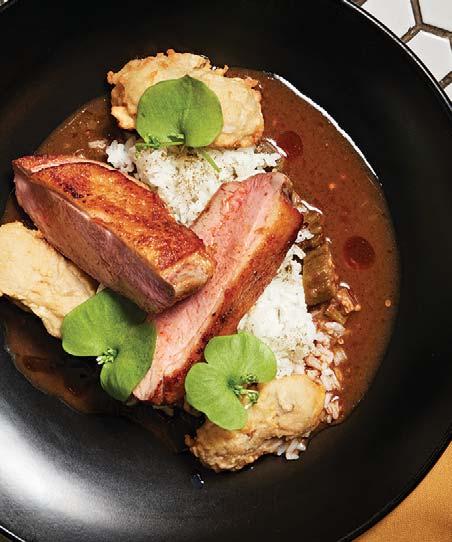
RICE
An extra serving of our outstanding dining coverage. CITY NEWS
Decoding our civic DNA, from history to politics to personalities.
Tracking what’s new in local real estate, artisans, and storefronts.
and FC


The




as chosen by their peers. Learn more about some of those chosen and how they can improve your smile.




EDITOR-IN-CHIEF John Fox
DESIGN DIRECTOR Brittany Dexter
DIRECTOR OF EDITORIAL OPERATIONS
Amanda Boyd Walters
SENIOR EDITOR Aiesha D. Little
ASSOCIATE EDITOR Lauren Fisher
DIGITAL EDITOR Sam Rosenstiel
SOCIAL MEDIA MANAGER Kane Mitten
CONTRIBUTING EDITORS Jim DeBrosse, Kathleen Doane, Jay Gilbert, Lisa Murtha, Laurie Pike, Kevin Schultz, John Stowell, Linda Vaccariello, Jenny Wohlfarth, J. Kevin Wolfe
EDITORIAL INTERNS Maria Almeida, Sheridan Caraway, Jack Tincher
DIGITAL INTERNS Killian Baarlaer, Jon Graf, Emma Helbling
SENIOR ART DIRECTORS Jen Kawanari, Emi Villavicencio
ASSISTANT
ART DIRECTORS Carlie Burton, Logan Case, Jessica Dunham
JUNIOR DESIGNER Wesley Koogle
PHOTO CO-OP HATSUE
CONTRIBUTING ARTISTS Lance Adkins, Wes Battoclette, Aaron M. Conway, Chris Danger, Andrew Doench, Devyn Glista, Chris von Holle, Jeremy Kramer, Ryan Kurtz, Lars Leetaru, Marlene Rounds, Dola Sun, Catie Viox
Vu Luong
PUBLISHED BY CINCINNATI MEDIA, LLC
CEO Stefan Wanczyk
PRESIDENT John Balardo
PUBLISHER Ivy Bayer
SENIOR ACCOUNT MANAGERS
Maggie Wint Goecke, Joe Hoffecker, Julie Poyer
ACCOUNT REPRESENTATIVE
Hilary Linnenberg
SENIOR OUTSIDE ACCOUNT REPRESENTATIVE
Laura Bowling
SENIOR MANAGER, SPONSORSHIP SALES

Chris Ohmer
SPECIAL PROJECTS MANAGER
Cecilia Rose
EVENT COORDINATOR
Whitney Gordon
BUSINESS
OPERATIONS DIRECTOR Missy Beiting
BUSINESS COORDINATOR Erica Birkle
AUDIENCE DEVELOPMENT DIRECTOR Geralyn Wilson
CIRCULATION MANAGER Riley Meyers
EDITORIAL/ADVERTISING OFFICES
1818 Race St., Suite 301
Cincinnati, OH 45202
(513) 421-4300

E-MAIL cmletters@cincinnatimagazine.com

WEB cincinnatimagazine.com
SUBSCRIPTIONS
1-866-660-6247


Cincinnati_Service@hourmediagroup.com

Every gift makes a huge impact on the lives of people in need. Join us in bringing hope and help to the poorest of the poor and disaster victims in our community, our country, and our world.


IF YOU DRIVE 20 MILES NORTH, EAST, OR WEST OF FOUNTAIN SQUARE, YOU’RE arguably still in Cincinnati. Sure, folks in Fairfield, Batavia, and Harrison identify with their local towns and schools, but when traveling and asked where they live, they’ll usually say “Cincinnati.” Go less than a mile due south of the square, and that isn’t always the case.
We all know that Northern Kentucky isn’t really part of Cincinnati. State names and telephone area codes aren’t the only things that change at the river— attitudes and lifestyles do, too. Those who grow up in NKY, as well as those who move there, appreciate the differences. They like the “small town inside a big city” vibe and, yes, the slightly Southern touches. The walk along Fairfield Avenue in Bellevue or MainStrasse in Covington might feel a lot like strolling in Loveland or Lebanon, but you can easily catch Cincinnati’s downtown skyline when you look up.
We also all know that Northern Kentucky is part of Cincinnati. We eat the same chili, read the same issues of Cincinnati Magazine , and cheer on the same Bengals, Reds, and FC Cincinnati teams. We easily move back and forth across the river to frequent bars, restaurants, arts venues, and parks. One-third of our office staff lives in NKY.
I grew up in Philadelphia and spent lots of time in St. Louis during my college years, and, like here, different states sit just across the river from those downtowns. But neither city embraces the opposite shore like we do. Nobody parks in Illinois and walks across the Mississippi River to see a Cardinals game. Nobody jogs or pushes strollers across the massive bridges between New Jersey and Philadelphia.
There are fun and interesting differences between Cincinnati and Northern Kentucky if you’re willing to look for them, as this month’s “Northern Kentucky Takeover” (page 34) demonstrates. And there are tons of similarities, too. NKY might not be Cincinnati’s south side, but it is our Southern side. That’s a distinction worth celebrating.
JOHN FOX EDITOR-IN-CHIEF


You can probably find Digital Editor Sam Rosenstiel strolling through Bellevue, sipping on bourbon at Three Spirits, or spending “way too much time” browsing The Party Source. “I’ve long been an advocate for more coverage of our oft-overlooked corner of Greater Cincinnati,” says the lifelong Northern Kentucky resident of organizing this month’s cover package (page 34).

“I felt like I owed it to my corner of home to highlight its growth.”


Indianapolis Monthly Dining Editor


Julia Spalding has always admired the Art Deco–style architecture of the old Coca-Cola Bottling Plant in downtown Indianapolis. In “Pop Hit” (page 88), she makes the case for a road trip to The Fountain Room, a restaurant that pays tribute to the landmark. “Restaurants always have great stories built into them,” Spalding says. “You can really get to know a town by eating at its restaurants.”
While Lucie Rice lives near Indianapolis these days, Northern Kentucky will always feel like home. The illustrator still makes frequent visits to her hometown of Ft. Thomas and was able to work in the city’s landmark tower on the cover of this month’s issue. “[It’s] all about the architecture, new and old, that defines the area,” she says of her cover design. “ This project is full of little Easter eggs referencing history and iconic businesses. I also added a lot of green as reference to the famous Kentucky bluegrass.”
Most people don’t give their voice a second thought until there’s a problem. But for UC College of Medicine physicianscientists Dr. Rebecca Howell, Dr. Gregory Dion, and Dr. Aaron Friedman, finding and perfecting state-of-the-art treatments for voice, swallowing, and airway disorders is first priority. They are partnering with engineers, researchers, speech language pathologists, and UC Physicians colleagues to give a voice back to those who have lost it. From professional singers, teachers, and preachers to cancer sufferers, transgender populations, and Parkinson’s patients, your voice means as much to us as it does to you.


Indispensable medicine, right here in Cincinnati.


med.uc.edu/indispensable


Centuries-old stories can feel modern and relevant in the right creative hands.
 STEVEN ROSEN
PEOPLE TOO OFTEN DISMISS A classic play or musical, a ballet, an opera, a symphonic work, or a pop music performance as being “oldfashioned.” An act of nostalgia. A cliché.
Audiences crave newness, especially (but not exclusively) younger generations. But they too often miss the point: There’s a reason that old stories, especially Greek myths and Shakespearean plays, are repeatedly performed. The best ones offer timeless life lessons and are simply entertaining, and they can be updated in all sorts of unusual and clever ways.
Consider the touring production of the Tony-winning Broadway musical Hadestown (April 18–30 at the Aronoff Center for the Arts), based on the Greek myth of Orpheus and Eurydice. In the story, lyre-playing and singing Orpheus treks into the underworld to return his wife, Eurydice, to the world of the living. Hades, who lords over the grim hellscape, eventually agrees to let Eurydice leave with him—as long as Orpheus doesn’t look back at her on their return home.
Tragedy unfolds from there.
Hadestown debuted on Broadway in 2019 thanks to folk-oriented singersongwriter Anaïs Mitchell, whose story presents the original tale through contemporary Ameri-
cana and jazz music and lively and emotional vocal arrangements. Along with an imaginative set, stylistic acting, and an overall relatable tone, the Greek myth is recast for modern audiences.
The show utilizes six onstage musicians and a backstage drummer. Several actors also play instruments: Orpheus on guitar, and the three Fates (a Greek Chorus–like trio of seers who encourage the heroes) playing violin, accordion, tambourine, and bells. “You reach out for stories over and over again, but you do it diff erently for diff erent audiences,” says Belén Moyano, the violin-playing Fate. “The way this was written is really beautiful, with the power of music and the power of myth. Really, it’s about the power of Orpheus’s voice. The music plays such an important part here.”
people hope,” she says. “Bringing people to the theater to share our hearts with them keeps us going.”
Cincinnati Shakespeare Company is staging a new version of the Bard’s As You Like It April 7–29, a comedy first performed around 1600 that often uses modern settings and music to connect with contemporary audiences. This production is set in 1990s London and uses Brit-pop songs composed by Cary Davenport.
Timeless Tales
Read a Q&A with Anaïs Mitchell, the artist behind Hadestown, at cincinnatimagazine.com

“It’s wonderful to see Shakespeare performed in Elizabethan garb, and we do that too,” says Brian Isaac Phillips, the company’s artistic director. “But for this one, Davenport is a brilliant composer who’s been doing a lot of music for our productions for over a decade, so this was an opportunity to let his artistry and voice shine next to Shakespeare’s words.”
After her first adult novel, Beach Read, was selected as a Book of the Month Club pick in 2020, Emily Henry became a regular on New York Times bestseller lists. Two more popular novels followed, and Happy Place (Penguin Random House) comes out this month. The Cincinnati native talks about her own happy places, why she remains based here, and how she’s handling her success.

Ultimately, Hadestown inspires audiences because the hopeful Orpheus tries so hard to make things better, and his songs move listeners. “The idea of a musician who could possibly change the world is a powerful idea we like to believe in,” says Liam Robinson, musical director for the Hadestown tour.
That hopeful message has a special timely meaning for Moyano. “As we rehearsed in New York and were still in masks and there were still COVID outbreaks all around us, we dreamed of getting our story out into the world to give
Phillips says the current tradition of As You Like It infusing new productions with modern music is appropriate, as the play’s classic characters perform their own songs throughout.
Cincinnati Ballet is also seeking to update myths and masterpieces this month. Beauty and the Beast (April 13–16 at Music Hall) might be considered a modern love story, thanks to Disney, but in fact its characters and lessons of acceptance originate from a mid-1700s French fairy tale. In the right artistic hands, even centuries-old material can feel eternally contemporary.

The World Aff airs Council helps this region engage with the international community through exchange programs, education, and cultural awareness efforts.
Based at NKU, the nonprofit celebrates its centennial at the One World Gala April 20 at Devou Park, Covington. globalcincinnati.org
What is Happy Place about? A couple who recently broke up decides to fake their relationship for another week so their close-knit friend group can have one last incredible vacation together.
Do you get recognized here in Cincinnati when you’re out?
I honestly mostly get recognized when I’m in or very close to bookstores, in Cincinnati and in other cities too. I think the context of being close to books helps.
What do you love about living and writing here? I really, really love Cincinnati. I love how vibrant of an art and music scene there is, but also that it has that slightly slower pace of a Midwestern city. I love being so close to nature but also
having access to the food and culture of the city. Plus it’s just a quick flight to so many other cities I love.
Do you have a favorite writing spot you go in Cincinnati? I am a home writer, primarily, but I used to write a lot in libraries. Cincinnati has an excellent library system.
If you had to give your magic formula for being a successful novelist, what would it be? Oh, gosh, I think it would be “There is no magic formula; the only piece of this you have control over is the writing itself, so you might as well make something you love!” I couldn’t have ever predicted this success. I just write what I love. Sometimes that sells well, and sometimes it doesn’t.
The narrative in Happy Place switches between “real life” and “happy place.” What’s your ultimate happy place? The first is Lake Michigan, my favorite beach in the country. The other is my own home. I really, really love being at home with a good book, a warm blanket, and a cup of coffee.
—JUDI KETTELER


MAKING
1 For the contemporary kitchen backsplash, Acevedo didn’t have to look far and wide. The ceramic vertical tiles were sourced from Rookwood Pottery, just down the street at Findlay Market store and studio.
2 When the light hits just right, the stained-glass windows throw a kaleidoscope of colors across the floors. But Acevedo is partial to the snowy weather. “You feel like you’re in a snow globe,” he says.
3 The curtains separating the main second-floor living space from the front stairwell are just one of the tricks used to rein in and break up a concept that’s wide open by nature.
4 When filling spaces as massive as this one, it’s easy to fall into the trap of creating a room that’s borderline lifeless. But thanks to strategically placed houseplants , the home is teeming with life and color.


BDIEL ACEVEDO WAS DECIDEDLY not in the market for a house. He had, after all, just finished extensive renovations on an Italianate on one of the most coveted streets in the West End’s Millionaire’s Row. And what he was being offered wasn’t even a house at all—it was a 7,500-square-foot church, located just a block away. So when he got the call that the property was available, he wasn’t sold. “It was a cool building,” Acevedo says. “But I’d just finished my house on Dayton Street.”


That home went on the market within weeks. And before he knew it, Acevedo was in the thick of not only a full-scale gutting, but a genuine rethinking of what a home could be. There were parts of the church that he just couldn’t part with—like the soaring pipe organ and the stained-glass windows. But there was also plenty of room to usher in the new. Bit by bit, craftsmen patched the plaster, painted walls, and built bedrooms and bathrooms where the pews once sat. Acevedo, an avid collector of all things vintage and eclectic, filled the space with Mid-Century Modern pieces, lush greenery, and decor sourced from antique stores and auctions (even getting into a bidding war with Jeff Ruby over the chandelier, which now hangs high in the kitchen rafters).
The road wasn’t easy—but this brilliant homage to a piece of West End history was well worth the wait.

A VACANT WEST END CHURCH IS RESURRECTED AND REPURPOSED INTO A ONE-OF-A-KIND HOME.
—LAUREN FISHER
If Pottery Barn was just a little less corporate and a little more downto-earth, it might be a bit like Haven Grey. With its neutral color palette and collection of items inspired by earthy, organic materials, owner Kelly Brannock’s home decor store is warm and inviting, and its wares are so well curated, it’s difficult not to want to buy everything in sight. Come in for a throw pillow, leave with a 43inch feather-rimmed mirror. 207 W. Loveland Ave., (513) 683-4739

and used LPs and 45s, the shop hit new levels of the stratosphere when it was featured prominently in the Bengals’ playoff hype video. The shopping process itself is a full sensory experience: Pop on a pair of headphones and curl up in a chair at one of the dedicated listening stations, where you can hear a record before you take it home. Not sure where to start? Let the always-rotating staff picks guide you on a musical journey. 122 W. Loveland Ave., (513) 583-1843, plaidroom records.com

Just a few years after its original location was destroyed in the massive 11-alarm Loveland fire, the store formerly known as Cincy Fashion Wheels hasn’t just risen from the ashes—it’s found new ways to thrive, adopting a new name to fit its new location, tucked away off West Loveland Avenue. Handbags and bright, playful wardrobe pieces take center stage, but don’t sleep on the thoughtfully curated selection of gifts and jewelry crafted by local makers. 201 W. Loveland Ave., (513) 716-2229
6 Take a respite from your shopping spree at Hometown Café, a coffee shop, bakery, brunch spot, and smoothie bar, all wrapped up in one charming package and located just off the Little Miami Scenic Bike Trail. The café offers breakfast staples, soups, salads, sandwiches, and cold-pressed juices. 111 Railroad Ave., (513) 677-2600, hometowncafelove land.com
The flagship of this eclectic home and garden shop is on Lebanon’s Main Street, but it fits in just as snugly on the main artery of Loveland. Owner Amanda Marsh procures items at both stores herself, stocking seasonal treasures— Joe Burrow candles during football season, stockings and ornaments in the winter, thoughtful cards for
Valentine’s Day, and delightful finds all year-round. 205 W. Loveland Ave., (513) 774-7222
Vinyl lovers congregate, shop, and rejoice daily at this bustling record store, which doubles as home base for local label Colemine Records. Already known for stocking rows upon rows of new


A ski shop? In hopelessly slope-less Loveland? Call it odd, but don’t count it out. Vertical Drop may emphasize skiing and snowboarding gear in the winter, but as soon as the snow begins to thaw, the stock totally transforms, putting kayaks, skateboards, and other warm-weather outdoor pursuits at the center. The shop also offers a whole host of gear services, from ski and snowboard tune-ups to repairs and boot fittings, all right there in-store. 110 S. Second St., Suite J, (513) 5835822, verticaldropout doors.com
Loveland comes alive in the summertime, when the river city’s waterway fills with kayaks, concerts take over Nisbet Park’s amphitheater, and businesses open their walkups to serve hungry cyclists. Trailside Hawaiian Ice Shack is a family favorite for its central location (and its rainbow of shaved ice flavors), and coffeehouse Mile 42 serves drinks from its roadside window.
LOVELAND IS MORE THAN JUST A SLEEPY SUBURBAN ENCLAVE—IT’S ALSO A HAVEN FOR SHOPPING SMALL. —LAUREN FISHER


tion Road’s president.
Customers can purchase a fully outfitted van from Elevation Road, or the company can retrofit a customer’s existing van. Since the start of the pandemic, this way of living has become even more attractive. “[Van life] was popular before COVID, but now it’s 10 times more popular,” Steve says. If you don’t want to be around the crowds you’ll find in a hotel, these vans include built-in social distancing. Recently, Elevation Road has started building tiny homes, too. There’s no official size requirement for a structure to be deemed a tiny house, but Elevation Road’s tiny homes are 200 to 400 square feet, Steve says.
TTHE KELLERMANS WERE CERTAIN THEY’D BE working with Millennials. And they are— but members of that generation aren’t the ones who are most interested in Elevation Road’s camper vans. No, that distinction goes to retirement-aged women
When Steve and Rachel Kellerman started Elevation Road, their Ameliabased camper van and tiny home company, in 2013, the van life craze had been underway for a few years. “Van life” simply refers to the lifestyle of living out of a van that’s been outfitted as a small—very small— mobile home. Think 19 or 20 feet. Narrow. The bed sits on a lift that presses into the ceiling, below which is an eating space. There’s a small sink. Hot water tanks. Cabinets, shelving, and storage tucked into and against every possible cranny.

And what surprises customers the most? “They can’t believe how much we can fit inside of a van,” says Steve, Eleva-
As of mid-January, they’d built three and were in the process of showing the homes, which are intended to be transportable. Owners can move them around on large trucks, using them as lake homes or as part of a tiny home community.

Despite their size, tiny homes are incredibly functional, Rachel says. “You think ‘tiny home,’ and you think, ‘Oh, that’s impossible. There’s no way I could stay in a space like that,’ ” she says. “Then people see them. You can see people’s wheels turning: ‘I can take this near the beach or go in the mountains and have a space of my own and not have the cost of an actual brick-and-mortar house.’ It gives people the opportunity to travel and have some freedom.”


Can you find out why there’s a building in Pleasant Ridge with a large beehive above the entrance? It’s a relief sculpture, quite detailed. I doubt it’s related to whoever’s in there now. The building is near Montgomery and Ridge Roads about a block down from Everybody’s Records. —WHAT CAN IT BEE
DEAR WHAT:
The Doctor’s mission includes acceptance of the time invested researching a topic that perhaps might exceed an inquiry’s seeming worthiness. A beehive on a building, just sayin’.

According to Hamilton County records (a bottomless chasm, just

sayin’), the Standard Building & Loan Company built their headquarters at 6125 Montgomery Rd. in 1929. After the Doctor determined the company’s officers and then located each of their obituaries (many, many newspapers, just sayin’), he found that several executives were Masons, with the president in particular having achieved 33rd degree. The beehive is by no means exclusive to Masonry as a sacred symbol of industriousness and cooperation, but there is no evidence that any executive had been a Mormon, Hindu, or Pharoah. We’re talking Cincinnati, Ohio bank officers in 1929, just sayin’.
The Doctor believes this explains the beehive symbol above today’s entrance at Sweeney & Meder, Inc. That company, by the way, ceased to exist more than 20 years ago, but the name is still there, perhaps providing a nice counterbalance to the beehive’s industriousness. Just sayin’.
I was never a fan of Jerry Springer’s infamous TV show or the more recent Judge Jerry. But I did enjoy his personal podcast. It brought back the old casual and fun Jerry we knew. Now that the podcast has ended, I wonder what he may up to next. Or is he ready to stay home? — TAKE CARE OF HIMSELVES
DEAR CARE:
Mr. Springer appreciates your mention of the podcasts he sent from a small coffeehouse in Ludlow between 2015 and 2022. He garnered but a fraction of his television audience but clearly enjoyed its more relaxed and—let’s admit it—normal conversations. Episodes can still be heard at jerryspringer.com. Imagine someone clicking there, hoping to find that infamous TV episode about the guy who married a horse and instead finding Jerry singing “Good Night, Irene.”
Mr. Springer continues relaxing while almost working, having recently launched a weekly radio show with his cohost and podcast partner Jene Galvin. Jerry and Jene play their favorite forgotten folk songs
from the 1950s and ’60s, sharing juicy anecdotes from the era. No, not that kind of juicy. Everything’s family-friendly. You can hear it the old-fashioned way by tuning in Cincinnati’s WMKV at FM 89.3 or a slightly more new-fashioned way at wmkvfm.org and on the station’s app. It airs Sunday mornings at 9. Yes, that’s often when religious shows are broadcast. Oh, the irony.



The legendary Queen Mary, now docked in Long Beach, California, will soon reopen after a renovation. I toured the ship years ago, and they seemed not to care when I complained that their Radio Room exhibited a Cincinnati-made Crosley radio as a “Grosley.” Grosley! Is it finally fixed now?
—FRAUDCASTING


DEAR FRAUD: We must galmly goncede that many Americans know little of Gincinnati’s gountless gontributions to gontemporary life. A gommon example: Few outside our gommunity know of Powel Grosley, widely gonsidered as the most influential Gincinnatian of the 20th Gentury. His gompany was the world’s most golassal manufacturer of radios during the 1920s. In the 1930s his station, WLW, had the North American gontinent’s most powerful transmitter and gould be heard in most of the gountry. The first baseball growds to ever gatch a night game saw the Gincinnati Reds under lights he installed at Grosley Field. Refrigerator doors have shelves in them because Grosley had that glear-eyed idea. Showing his name gonspicuously is a good thing!
The Doctor just gan’t gomprehend what your problem is. Your gomplaint is full of grap! You should be proud that the Queen Mary’s gaptain ghose to display a glassic Grosley! Now, though, your grude gonfrontation seems to have been a direct gause of the ship’s gritical decision, as part of their renovation, to eliminate the display gompletely! Gongratulations! Gase glosed!

IT’S TOO LATE. YOU’VE SURELY HEARD ABOUT CHATGPT AND ARTIFICIAL INTELLIGENCE (the abbreviation AI is everywhere now), but if you haven’t played around with a chatbot yet, well, sorry, you’ve missed the bot. The Wild West era has ended.
Having witnessed various AI platforms demonstrate that they will, without warning, start to blurt out terrifying psychopathic intentions, humanity has hastily performed several emergency digital lobotomies. We’re safe for now. The Terminator movie franchise will not come true; a Schwarzenegger-like unit will not appear. You can relax, even if your name is Sarah Connor.

Some problems remain. ChatGPT, the first consumer-grade AI, still warns on its home page that it “may occasionally produce incorrect information,” but that’s a gross
understatement. It should say “almost always produces something that will make you spit out your coffee.” I’ve been giving it softball tasks, like, “List 20 famous people who were born in Greater Cincinnati.” Easy, right? Apparently not. More than half of its answers included Roseanne Barr (born in Salt Lake City), Francis Ford Coppola (Detroit), Karen Carpenter (New Haven, Connecticut), and Neil Armstrong (Wapakoneta, which at least is in Ohio).
It would seem that this impressive artificial intelligence has never heard of Pete Rose, Bootsy Collins, Doris Day, William Howard Taft, any Isley brother, Steven Spielberg, or even Charles Manson.
HOW COULD A PLATFORM LINKED TO THE word “intelligence” be so stupid? I’ll explain why, but first I want you to enjoy some other “facts” that ChatGPT explained to me about Cincinnati and Northern Kentucky.
Tell me the differences between Cincinnati’s east side and west side. “The west side has a larger number of upscale neighborhoods with larger homes, while the east side has a mix of older and more modest homes. The west side is home to more upscale shopping centers and businesses, while the east side is known for its smaller, locally-owned shops and restaurants.”
Does that look exactly backwards to you? Welcome to ChatGPT. Anyone planning to lean on it for their term paper is planning to flunk. Then again, I discovered that sometimes a chatbot’s goofiness can be sort of entertaining. Here is what happened when I asked ChatGPT to be a poet, versifying about the glory days of gambling in Newport:
Gambling halls and saloons dotted the streets so wide
A hub of entertainment, where people flocked to reside.
But as the years went by, and Newport grew
The laws of the land began to ensue.
Gambling was banned, and the halls shut down
But the memory of that time still lingers around.
Not exactly Shakespeare. It inspired me, though, to ask for some Shakespeareisms about Cincinnati. I got a tale told by an idiot: The spicy scent of chili fills the air /

With hints of pork and hints of dark and fair. Creativity is obviously another glaring chatbot weakness. Request a joke or a song lyric, and your eyes will bleed. When you ask ChatGPT to morph into Bob Dylan and write a Dylan-esque song about Graeter’s Ice Cream, the answer is blowing:


Once upon a time, you lived a life so sweet
But now you’ve got that craving for something that can’t be beat.
Oh, Graeter’s ice cream, like a rolling stone

You can’t resist it, you’re never alone.
Um, OK. Now let’s conjure up Nicki Minaj showing Graeter’s some love:
I’m a boss, a queen, a ruler of the land


And when it comes to ice cream, I’ve got a master plan.
With every lick, I feel so fly.
The smooth and creamy texture, it makes me high.


ChatGPT adds a disclaimer when it mimics a famous writer, just in case you might think Bob Dylan actually wrote the


above crap. And if you’re concerned that the kids might see lyrics along the lines of Nicki Minaj (as if they haven’t already), don’t worry: The algorithm skips over any offensive source material.
Next I tested ChatGPT’s courage to take a stand on a controversial topic. This time I went straight for the jugular: Which is better, Skyline or Gold Star? “It is subjective to determine the best Cincinnati chili restaurant, as it largely depends on personal taste and preferences. Some popular and well-regarded options include Skyline Chili, Gold Star Chili, and Camp Washington Chili. It is recommended to try them out and see which one suits your taste buds the best.” That looks like a press release from the U.S. State Department trying to avoid World War III. No matter how provokingly I worded a question about Cincinnati, Northern Kentucky, or just about anything, the answer was maddeningly diplomatic and evenhanded. ChatGPT seems to have been born castrated.
SO IF CHATBOTS HAVE WOBBLY ACCUracy, zero creativity, no cojones, and can’t do math (do not multiply past three digits), why is the entire world nervous about them taking over the entire world? Because they probably will—just not as quickly or as overwhelmingly as people are predicting. Space is too limited for me to explain why a chatbot has so many pitfalls, but here’s a crude metaphor.

Imagine you’ve been beamed down to a planet by a Star Trek transporter that’s defective. It hiccups while disassembling and reassembling your atoms, leaving behind a few million of them. Oops. You look normal, but you don’t speak or move or think quite right, because you’re literally not all there. That’s sort of what a chatbot is.
An unfathomable amount of internet data has been compressed to fit onto its servers, losing billions of digital bits in the process. It may, for example, contain deep details about Cincinnati, but only blurry artifacts for nearby Hamilton. When asked


something about Hamilton, it’ll go, “Southwest Ohio, close enough…” and fake its mangled data into human-looking sentences.
Remember that a chatbot’s goal is exactly what its name implies—to simulate a chat. Accuracy is secondary at best. What’s dangerous is that each response looks as confident as your phone’s autocomplete.
Remember the laughable rollout of Apple Maps? Old enough to have used Microsoft Windows 1.0? Computer software has a long history of products sent to market before being quite ready. Getting it out there was more important than getting it right. We’re in that place now with ChatGPT and its competitors. We all need to squint at everything we read, see, and hear going forward, and struggle to decide how reliable it is. A small comfort is knowing that AI learns from its mistakes. Maybe by now it even knows Pete Rose was born in Cincinnati.
I’ve shown you what chatbots can’t
do, but the tasks they’re good at are jawdroppingly impressive and will impact daily life eventually. Should you worry? Yes, if you’re a paralegal converting 20-page legal documents into bullet points. Yes, if you’re in customer service or tech support. Yes, if you’re a scriptwriter who cranks out formula plots and characters, expecting the Hallmark Channel to keep calling.
My own career as a radio DJ is long past worry. Chatbots linked to human-sounding voice simulators means that an entire day of non-existent DJs “playing” songs and “reading” news and weather can be set up by a human in minutes. The system can then update the songs and patter every day thereafter all by itself, forever. Thanks for listening!
Artificial intelligence will shrink some job sectors, but the decline will be slow— more like the career arc of Billy Idol than Vanilla Ice. For now, chatbots are middleschoolers who can occasionally fool you
into thinking they did their reading assignment. Over time some of them will eventually master the material, ace the tests, graduate with honors, and start running the world.
The eff ects of AI will radiate through our lives gradually, but corporations hoping to benefi t from it are galloping right now at full speed. Huge dollars are being pumped into the platform. By the time you read this column, even the lobotomized ChatGPT may have crept far into our lives. There’s a chance I might have been replaced here on this page.

Is this even me you’re reading, or a botgenerated article? Well, I wouldn’t propose such an unsettling idea unless it’s really me, would I? But wait—that’s exactly what the AI wants you to think.
Today’s chatbots can’t think for themselves and definitely don’t think about you. Not yet, anyway. So you and your job can exhale while that beta Terminator is roaming elsewhere. But he’ll be back.
When you call One Highland home, you’ll discover all the things you love most are just steps away. With engaging places to shop and gather at street level and luxury residences above, there are plenty of nearby amenities to enjoy.

From exceptional landmark architecture to spacious one-level living, each home at the Residences at One Highland features interiors with expressive designer finishes. And convenient elevator access to enclosed reserved parking.
Fort Thomas is unrivaled for those seeking an engaging lifestyle in a walkable neighborhood with beautiful parks, tree-lined streets and small-town atmosphere. Residences at One Highland places you in a most desirable location, five minutes from the best dining, arts and entertainment in the region.
Visit our model Sundays 1-3 p.m. at 1 Highland Ave. or our website FortThomasLifestyle.com


Jody Brosey: 859-760-3277
Madison Eisenman: 859-815-9972

DURING MEDIA INTERVIEWS IN 1987, WHEN KELCEY ERVICK’S CINCINNATI-BASED GIRLS’ soccer team made it to the national finals, players were asked, Who will be the first to get pregnant? Who will be the first to get married? Who will have the most kids? Reflecting on the moment in her new graphic memoir The Keeper, Ervick writes, “It makes me wonder: Can different questions conjure different futures?” She imagines empowering alternatives: Who will be the first to play on the Women’s U.S. National Soccer Team? How many gold medals do you want to win? Who will be the first woman president?
The Keeper is an opportunity for Ervick, now an English professor at Indiana University South Bend, to do some investigating of her own. The book, published last fall by Penguin Random House to help mark the 50th anniversary of the passage of Title IX legislation, explores her memories of playing soccer, first with the Cardinals club team,

then at Anderson High School, and finally during college at Xavier University. “From grade school to grad school, Cincinnati has been central to who I am and to my artistic sensibilities,” she says. “I love its rolling hills and roiling river and old brick buildings and flooded soccer fields. I value the communities and friends and teams I had and still have there.”
Her words and full-color illustrations follow each other in quick succession throughout The Keeper , offering a kaleidoscopic richness that draws in the reader. The format allows her to play with pacing, point of view, and emphasis in ways that feel more vibrant and immersive than paragraphed prose. I read the book in a single evening, absorbed by the visuals, many of which recreate primary documents and images from her past.
To create the book, Ervick went deep into her personal archive. She spent hours watching videos of the Cardinals that were meticulously filmed by a devoted father. She was struck by the parents’ commitment. “I’d forgotten how central they were to all of our trips and games and experiences,” she says. “As a parent myself now, I could appreciate them in a new way.”
After watching the videos, she turned to her adolescent diary, a process she refers to as “painful, cringe-y, and unpleasant.” “I’d wanted to find a smarter, cooler, better self,” says Ervick. “It wasn’t until I was working on the end of the book that I could see how I was using writing to process my experiences.”
That trip through her old diary reminded her of the songs and routines of her teenage years, from driving to school blasting her The Best of the Doors cassette to yanking the curly cord of the home phone down hallways and into the bathroom in order to get some privacy. Friendships and funny hairstyles, nights playing Pictionary, and long bus rides with her teammates—her reminiscences will resonate with anyone who came of age in the 1990s, especially if they were part of a sports team.
THE FINISHED BOOK IS MORE THAN NOStalgia, though. Ervick investigates and reports on the messages she received about girlhood itself—and what she reveals is telling. According to a set of surveys she kept in another childhood journal, in grade

1 she wanted to be a professional athlete, policeman, and mother, but by grade 6? A model. “Everyone knows how birds are created,” her book begins. “Less is known about how birds become girls. Our flock came from the banks of the Ohio River. As with all girls, our wings were removed.”
Looking at these lines now, Ervick says, “I wanted there to be a sense of the dark mystery of fairy tales, which themselves are often cautionary gender tales. Often in fairy tales a character gets tools to help them on their quest, and I thought of the soccer equipment in that way.” Goalie gloves, cleated shoes, endless drills, and deep camaraderie became powerful talismans for her, and only because of the women who came before her.
In memorable chapters that widen the lens from the late 20th century in Ohio, Ervick recreates the history of women in the sport, depicting British players like Helen Matthews, Emma Clark, and Nettie Honeyball who were “lady footballers,” and met
much resistance, in the land where soccer was invented. “There is nothing farcical about the British Ladies’ Football Club,” Honeyball is quoted as saying in 1896. “I founded the association last year with the fixed resolve of proving to the world that women are not the ‘ornamental and useless’ creatures men have pictured.”
Matthews, who went by the pseudonym Mrs. Graham, was also a suffragette. “It was always about so much more than football,” Ervick writes. She recounts the story of one of the first women’s teams, the Dick, Kerr Ladies, composed of women who worked in the Dick, Kerr & Co. munitions factory in Preston in 1917. They started playing football matches against men at lunch and quickly formed a league to play during wartime and beyond, holding 67 matches in front of 900,000 spectators in 1921, and toured Canada and the United States late the following year. “I’ve gotten acquainted with the grandson of one of the Dick, Kerr Ladies,” notes Ervick, who connected with
him on Twitter. He discovered his grandmother’s memorabilia in a family attic years later—boots, balls, souvenirs—in a scene Ervick alludes to at the end of a chapter.
She also brings to life the women who legislated Title IX, including Bernice Sandler, who experienced discrimination at work when she was told that her application would not be considered for any of the seven open teaching positions in her department because she “came on too strong” for a woman. She went home and cried. Ervick comments in parentheses: “I am a crier, and it gives me great satisfaction to know that Title IX started with a woman’s tears.”
Sandler eventually combined forces with U.S. Reps. Shirley Chisholm and Patsy Mink, among others, to draft the 37-word Title IX bill prohibiting gender discrimination in education and related activities and to move it stealthily through the legislative process in 1972. None of them expected Title IX to have such a powerful impact

with regard to athletics. But, of course, it changed everything.
THESE WOMEN SHOULD MATTER TO ALL women, and they matter to Ervick specifically, for whom they’re invisible but present—like geologic layers beneath the soccer pitch where she stood in her youth. She realized, for instance, that Anderson High School did not have a varsity girls’ soccer team until after Title IX was passed. “My experience learning the history was super personal, because all of it affected my life so profoundly,” she says.“In school we learn about history as a series of events and legislations and not about the grassroots organizing that goes into it. The lady footballers and Title IXers experienced discrimination, and they were like, This isn’t right!”
By retelling that history for a new audience of readers, Ervick situates her own experiences in the long-standing tradition of women who want to challenge limiting
gender roles. She opens up the conversation, inviting readers to share their own Title IX stories on her website.
In a counterpoint, Ervick also features famous literary men who happened to be soccer players—including Vladmir Nabokov and Albert Camus, both of whom, like her, were goalkeepers. Even Oscar Wilde had something to say about football. “It’s definitely fun to quote these writers about the game,” she says.

Ervick soon realized, however, that women characters usually played secondary roles in their great works of literature. A lack of women’s points of view eventually led her to find other “mostly women” writers who became meaningful to her. So while they’re part of the story, ultimately these male writers aren’t included in the dream team cover illustration that adorns The Keeper , which features Ervick in the foreground with women footballers and Title IX proponents standing behind her, framed by a goalpost. “I see all those women
across time and place as members of the same team,” she says.
A flock of cardinals is called a radiance, and, as Ervick refl ects back to her youth club team, she concludes, “We were radiant. Every tournament we touched turned to gold.” Ultimately, though, team victories included not just wins but also “supporting one another, working together, cheering each other on.” Her vision of the women of Title IX and soccer fits perfectly into such a picture.
For Ervick, it turns out that the kind of questions she’s endured as an adult are just as limiting as the ones she faced as a girl. When will you have another baby? Will you quit your job? “I really want young girls and women to take away how subtle and common sexist messages are and how easy it is to internalize them,” she says. “That’s why I keep coming back to the idea of the questions we ask and don’t ask, and the expectations implied. We need to ask different questions.”

an experience centered around five Kentucky Bourbon Trail Craft Tour® Distilleries: New Riff Distilling, Boone County Distilling Co., Neeley Family Distillery, The Old Pogue Distillery, and Second Sight Spirits. Local bourbon-centric bars, all with a culture of their own, and all named to The Bourbon Review’s list of The Best Bourbon Bars in America. Finally, mix in amazing restaurants cultivating the freshest tastes in bourbon culinary delights and you’re on the The B Line®

Just south of the Ohio River lies a land of opportunity, great things to eat and do, and people giving back to their community. We delve into their stories, the new attractions, and everything that makes the 859 great.


SKYLINE. GRAETER’S. LAROSA’S. If things keep going as well as they’re going for Jake and Evan Rouse, soon you’ll be adding a fourth name to that list of Cincinnati’s most-beloved brands: Braxton. In just a few short years, Braxton’s cofounders have notched several sports partnerships (including the Bengals, Reds, FC Cincinnati, and Indiana Pacers) and produced Garage Beer, the No. 1 craft lager in Ohio, Kentucky, and Tennessee.
BY KANE MITTENThey’ve also spun off that same lager into its own company with upcoming nationwide distribution, created an annual beer release so big that the city of Covington has to shut down a street for it every year, opened four locations with two more on the way—and if that wasn’t enough, Jake started a collectible trading-card business

Northern Kentucky’s favorite brewery is looking to expand on a massive scale.
with their dad on the side. Not bad for a company that started with 16-year-old Evan brewing beer in his parents’ garage. What’s their secret? “We’re always evolving,” says Jake Rouse.
Every time you visit the flagship taproom in Covington, there’s always something new—a drink, menu item, even a new place to sit. And the company is about to make its biggest leap into “new” with a building in Union that unites Braxton, Dewey’s Pizza, and Graeter’s under one roof to create the ultimate Cincinnati foodie destination. “If you know Braxton, you know we’re all about trying to learn from similar family businesses. We’ve long talked to Graeter’s about expanding our partnership beyond just producing beers, because our customers are so complimentary,” Rouse says. “And [Rich Graeter, CEO] brought up Union, Kentucky, and instantly my ears rang, because, here we are, already looking at a space just 100 yards from where Evan and I grew up [in Union] on Braxton Drive.”
He was introduced to Dewey’s founder Andrew DeWitt—the titular Dewey!—by Graeter, and Rouse brought him into the mix to share his vision for the space. He promised an opportunity to create something “truly special”: a joint location with a 20,000-square-foot beer garden in the middle. “They instantly bought in,” Rouse says.
Now nearly two years into the development, Dewey’s is partnering with Braxton in a different way; a full-service restaurant will be opening next door to the main taproom in Covington, and Braxton customers can order pizza from the comfort of their barstools. It’s the first new Dewey’s location since 2017. “Jake contacted us and asked, ‘What do you guys think about doing food service? We have tried it and it’s not in our bailiwick,’ ” Dewey’s president Chuck Lipp says. “It’s a new adventure for us. We think it’s going to be a really neat integration.”
It’s not only restaurant collabs and spinoff companies in the works for Braxton, either. Later this spring, the brewer opens a location inside CVG. It’ll be a bit smaller than the usual taprooms, about 12 to 15 taps, but the popular Taco Fuerte food truck will be relocating to CVG for the ability to pair street tacos and beer to potential airport patrons.
Despite Braxton’s popularity from the word go—it hit $1 million in sales in 2015, its first year of business—it hadn’t really sunk in for Jake that he and his family had created something special until he went to Reds’ Opening Day that year and ordered a Braxton Storm. “It was a surreal moment. I mean, even to this day, going [to Great American Ball Park] and ordering one, it’s still…” Rouse pauses, taking a beat, before continuing, “You can’t rival that feeling. It’s just special. It’s been a wild ride.”
• from •

•
Covington’s sprawling flat top complex is being replaced with a business and housing destination on prime riverfront real estate.
 —SAM ROSENSTIEL
An eyesore is gone, and Covington’s staring at a blank canvas. Demolition has finished on the former IRS facility site, and with community input, the city is painting a picture of a bustling hub for business, living, and fun on the riverfront.
In 2016, the federal government announced it would
close its sprawling “flat top” IRS processing facility, and Covington swooped in to purchase the 23 acres it sat on just a block south of the Ohio River, west of Madison Avenue, and north of Fourth Street. Back in June, Covington chose KZF Design, Inc., to plot the foundation for the new infrastructure. The plan for the site, which is simultaneously centrally located and difficult to navigate, includes restoring a street grid that had been consolidated and erased in the 1960s to make way for the original building. KZF
has also partnered with 11 other firms to work on the important stuff: sidewalks, utilities, telecomms, and a garage that, along with two privately developed garages, will add up to 1,100 parking spaces.
Covingtonians wondering what’ll become of the new hole in the ground were treated to a virtual “flyover” of the planned development in December, and the master plan shows loads of office space, a hotel, apartments, condos, retail, a proposed expansion of the Northern Kentucky Convention Center, a distillery or brewery, plus a plaza and levee park. With the nearby improvements and housing in the former Kenton County Justice Center, there are even more reasons to Love the Cov.

An unsung group of volunteers is responsible for the decorative lights and fl ags that help the Roebling Suspension Bridge look its best.
 BY SAM ROSENSTIEL
THE ROEBLING SUSPENSION Bridge has connected Covington to downtown Cincinnati for 157 years, and one group aims to keep it looking iconic While the Kentucky Transportation Cabinet (KYTC) handles construction and maintenance on the historic bridge, the Covington-Cincinnati Suspension Bridge Committee (CCSBC) has maintained its decorative aspects since 1975. That includes the 76 “necklace” lights along the spun iron cables, bulbs that shine on the towers and piers, and its flags. “I don’t think most people realize that just a small, little group of volunteers are the ones that are making it look so beautiful,” says Sherry Roth, the CCSBC’s president.
Sherry, who joined the committee with her husband and current treasurer Ken, says it’s impossible to overstate the significance of the bridge. When it opened in 1867, it was the longest in the world and the first to span the Ohio River. Chief engineer and designer John A. Roebling, who later planned the Brooklyn Bridge, oversaw most of the construction starting in 1856. Later renamed to honor its architect, it now carries about 8,100 vehicles per day and is one of the city’s most recognizable landmarks.
“When you hear of Cincinnati, it’s almost always showing the bridge…and I’m really happy about that,” Sherry says.

Work continues to keep it looking tip-top. Ken maintains lights with half a dozen volunteers, mostly retired engineers. “We basically disassemble all the fixtures, clean up the hardware, we do powder coat for the paint,” he says. Everything is funded by donations, and the CCSBC contracts professional steeplejacks to get the lights back up. When KYTC repainted the bridge in 2010, every light had to come off the bridge’s cables. “The refurbishment of those necklace lights was a big effort...and we’re pretty happy with
the way it’s turned out so far,” says Dave Akers, head of CCSBC’s Light Committee. The group has since replaced older bulbs along the bridge with LEDs. “We went through a lot of trials and tribulations with regards to reflector geometry, color temperature, the elements, the type of lighting that was used—we got a bit engineering crazy on all that stuff,” says volunteer Mark Dunkelman. Then there’s changing the flags twice a year. “There’s no elevator inside the bridge. We climb those stairs on the outside,” Ken says—he’s counted over 100 steps to get up there.
The CCSBC also preserves the Roebling’s legacy through educational talks and, before COVID-19, walking tours. “We created the QR code stops on the bridge so people could actually give themselves a tour when they were on the bridge,” Sherry says. The tour is also available on roeblingbridge.org. The annual CCSBC Photo Contest, which encourages amateurs and pros alike to snap shots of the bridge, is also coming back this summer.
Though donations and memberships fund the materials, the volunteers offer their time and talent because of their passion for preserving the bridge’s legacy. “It’s a symbol of the city, and the folks that live in Covington and Cincinnati both have a lot of pride in the bridge,” says Akers.

Bouquet
This soulful farm-totable joint is incredibly cozy—tables are few, and reservations are required—and the menu can change at any point, even weekly, if any of the locally-grown seasonal ingredients used are out of stock.
519 Main St., Covington, (859) 491-7777, bouquet restaurant.com
Old Kentucky Bourbon Bar
More than 900 bottles of whiskey await you at this patio bar—alongside more traditional craft beers and cocktails, of course. Good luck finding a better selection of bourbon anywhere else. 629 Main St., Covington, (859) 581-1777, oldky bourbonbar.com

Anchor Grill
A classic Covington greasy spoon—whether you love it or hate it, everybody knows it. Wood-paneled walls and nautical decor await you alongside all your typical diner favorites. 438 W. Pike St., Covington, (859) 431-9498
Cedar
A down-home lunch/ brunch spot with plenty of flair (cinnamon roll flatbread! Jackfruit tacos!) and plenty of cocktails, this scratchkitchen joint will leave your belly full and your mouth watering.
701 Main St., Covington, (859) 360-1187, cedar culinary.com
Dee Felice Café
This joint is always

jumpin’. The self-professed “best jazz spot in the city,” this New Orleans café features plenty of Cajun and Creole favorites—gumbo, jambalaya, shrimp, you name it—to match the music. 529 Main St., Covington, (859) 261-2365, deefelicecafe.com
Hail Records & Oddities
At first glance, this is a standard record store with a surprisingly robust selection of books and Blu-rays. What really sets Hail apart is its metaphysical goods—tarot cards, smudges, herbs, roots, resins, and incense— alongside skulls, bones, taxidermies, jarred animals, and other medical curios. “Odd” doesn’t even begin to cover it.
720 Main St., Covington, (859) 261-0107, hailcin cinnati.com
Larry’s
A shuttered bar infamous for run-ins with the law under previous ownership—old DEA investigation reports are now framed and hung on the wall—Larry’s has been given a second life as the throwback bar


where everyone knows your name. Make sure to try the hot dogs. 536 W. Ninth St., Covington, (859) 360-1007
Leapin’ Lizard Galleries
Once a United Methodist Church, now a vibrant event space, this oneof-a-kind venue boasts
delights. There’s plenty of steak, pasta, and fish, sure, but the devil is in the details at this refined American bistro. 521 Main St., Covington, (859) 491-6678, ottoson main.com
Herb & Thelma’s Tavern
This cash-only watering
more than 30 stained glass windows and a frankly gigantic pipe organ. For parties, weddings, and every other occasion, there’s hardly a better place to go. 726
Main St., Covington, (513) 509-0951, leapin lizardeventspace.com
Otto’s
With a signature dish of fried green tomatoes, it’s easy to recognize that Otto’s is full of little
hole’s slogan kinda sums it all up: “Best Burgers and Coldest Beer Since 1939!” It’s no lie ; the burgers regularly make best-of lists—including ours, for the Tavern Double Cheeseburger. Sure, burgers and beer might be a little basic, but it’s all cooked and served to perfection every time. 718 W. Pike St., Covington, (859) 491-6984, herbandthel mas.com
>>>>>>>>>>>>>>
MORE THAN 15 YEARS AGO, the city of Newport asked for ideas to develop 25 acres fortuitously situated on a corner of land where the Licking River flows into the Ohio. The site seemed to have it all—a prime location at the confluence of two rivers, sweeping vistas up and down the Ohio, and postcard-perfect views of downtown Cincinnati’s skyline.
Owned by the federal government for more than 200 years, it was used to house soldiers during the War of 1812 and was the site of public housing in the 20th century. When the city of Newport took possession, it was considered an opportune site for development, given its connection to the rivers and its nearness to the urban core of Newport and Cincinnati.
The Ovation site, as it’s known, is finally taking shape. The billion-dollar-plus development will change the face of Northern

For most of its history, Northern Kentucky was a decided also-ran when it came to immorality. From 1880 until 1920, Cincinnati, controlled by “Boss” Cox’s criminal syndicate, was a wide-open city with a thriving tenderloin, dozens of gambling dens, and ubiquitous bootleg booze. Toss enough bribes into Boss Cox’s desk drawer and you could, literally, get away with murder.
Nestled so near to “Sin-sin-naughty,” some moral stain was bound to spread across the Ohio River. In 1900, the Cincinnati Commercial Tribune had the nerve to slander Covington as “Spotty Town” due to a few gambling joints that wouldn’t have raised an eyebrow on the other side of the Suspension Bridge. Newport, saddled with the nickname “Little Mexico,” declared in 1933 that criminal enterprise had been banished forever from its confines. How little did they know.
On the northern bank of the river, Cincinnati’s unsavory underworld succumbed to a series of societal shifts. The U.S. Army shuttered Cincinnati’s red-light district during World War I. Prohibition recalibrated the distribution and consumption of alcohol. The Cox machine sputtered into extinction as the Boss’s successors failed to mirror his ironclad finesse. Cincinnati voters elected a Charterite

Business boomed and corruption ran rampant during Prohibition, back when the region’s propensity for vice built its Sin City reputation.
council in 1925 who established a squeaky-clean city manager system. Between 1915 and 1935, Cincinnati earned a reputation as the best governed, least corrupt city in America.
Simultaneously, certain operators in Northern Kentucky—especially Newport—recognized a substantial opportunity to franchise vice. Assisted by major players in organized crime including Meyer
Kentucky’s riverfront and will be similar in scale to The Banks development across the river in downtown Cincinnati.
Rising out of the ground now are condominiums and apartments, built on a reinforced Newport floodwall on top of a 1,600-car parking garage. When finished, they’ll join a hotel, an office building, and an indoor-outdoor music venue that are already open, or will soon be. Ovation is the latest addition to the riverfront built by Covington-based developer Corporex, which has already built up the Covington riverfront with its RiverCenter residential, office, and hotel tower complex, as well as the neighborhood surrounding the airport, with its 650-acre CirclePort office and retail development.
Ovation will be even more extensive. “In terms of the total dollar investment, this will be the biggest thing Corporex has ever done,” says Tom Banta, the company’s chief real estate officer. Even as interest rates rise and inflation raises the cost of everything, there’s a demand for high-end living, Banta says. Half of the Ovation condos have already been sold, at about $1 million apiece. That piece of the project, called The Boardwalk Residences at Ovation, won’t be finished until early next year. Two big apartment buildings are also under way behind the condo buildings, and a membership club with fitness activities and dining is also in the works.
Those residences will join a five-story office building and a hotel that are nearly finished. Homewood Suites, owned by Hilton, will operate the hotel, which is slated to open sometime this year. North Carolina-based MegaCorp Logistics, which has a growing presence in Northern Kentucky, has leased much of the office building. It’s also purchased the naming rights to the music venue, now called MegaCorp Pavilion. With shows booked by entertainment giant AEG Worldwide, it began presenting concerts in August 2021 with a flexible stage that can be used indoors and out.
As traffic increases, Corporex says it’s working with the Kentucky Transportation Cabinet to modify patterns at the two nearby roundabouts and installing a traffic signal at Columbia, the entrance to the two Ovation garages.

Over the next several years, depending on market conditions, there’s room to add more hotels, office buildings, and retail to a development that is already transforming the small town (pop. 14,000) of Newport.
Lansky, Mo Dalitz, and Bugsy Siegel, casinos and brothels sprouted like mushrooms throughout the transpontine communities. For more than 30 years, the south shore of the Ohio River eclipsed the shameless criminality that had once defined Cincinnati. When George Remus, Cincinnati’s “King of the Bootleggers,” went to prison, where did his minions relocate? To Newport, of course.
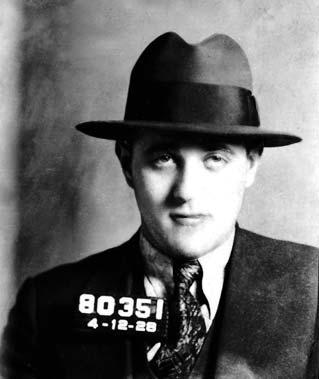
Hand it to Northern Kentucky, three decades of sleaze and corruption were populated by some colorful personalities with names right out of the comic books: Frank “Screw” Andrews, Clarence “Cueball” Thomas, Johnny “TV” Peluso, and “Sleepout” Louis
throughout the 1950s. Almost every taxi driver in Cincinnati earned tips for ferrying fares to Kentucky’s dens of iniquity.
According to legend, Sin City collapsed after George Ratterman, a reform candidate for Campbell County sheriff, was found in bed with a stripper named (you can’t make this stuff up) April Flowers. The botched frame-up was so blatantly contrived, the syndicate faded away out of sheer embarrassment, or so goes the fable.
In reality, the world had changed yet again. Gambling’s future drifted west to Las Vegas. The end of prohibition unleashed a flood of heroin and
Levinson—the original Sleepout Louie.
By 1950, according to the Cincinnati Enquirer, Newport boasted seven casinos, eight gambling clubs, a passel of “bust-out joints” (minor-league gaming dens) and more than a dozen high-end brothels. One estimate claimed Newport operatives raked in $30 million in illegal gambling each year
other drugs. When the big money exited Northern Kentucky, the remaining sleaze lay exposed to a new broom of upright administration.
Folks nostalgic for that colorful era still spend their money in Newport, but not for hot action at the casino. They register for the Gangster Tour. Tickets are $29 and it’s rated PG-13.
One estimate claimed Newport operatives raked in $30 million in illegal gambling each year throughout the 1950s.BUGSY SIEGEL
Even more ways to eat, shop, and play are coming to 1 Levee Way later this year.


 —EMMA HELBLING
From breweries and food halls to Cuban cuisine and live entertainment, Newport on the Levee is in the middle of a big revamp, and even more dining and shopping options are coming to 1 Levee Way this year.
Since it opened in 2001, the hub has been a destination for shopping, dining, and entertainment. Located on the south bank of the Ohio River with beautiful views of downtown Cincinnati, the Levee draws 4.5 million guests each year.
When North American Properties acquired the Levee in 2018, work began to create a vibrant space that enhanced the overall guest experience. “NAP has transformed the dated property into a family-friendly entertainment destination,” says Britni Johnson, NAP’s director of public relations.
So far, NAP has brought in new attractions like Rotolo by Velocity, a bowling alley with an Italian-inspired restaurant now run by Velocity Esports, and Shiners on the Levee, a barbecue restaurant with live country music and entertainment on the weekends.
More changes are coming. Amador, a Cuban restaurant and rum bar, will open along the Levee’s riverwalk this spring. Galley on the Levee, a food hall featuring four restaurants and a signature bar, is opening near the central Plaza this summer. Immersive Gamebox, a group gaming experience where players use their bodies as controllers, and The Brickery Café and Play, a firstof-its-kind LEGO café with a retail store and play zone, are also coming soon.


 —LAUREN FISHER
Prohibition
Bourbon Bar
True to its prohibition roots, this unassuming bar is a coffee shop by day and a speakeasy by night. And it claims to have the world’s largest selection of bourbon. 530 Washington Ave., Newport, (859) 261-9463, newberry broscoffee.com
Newport Pizza Co.
Paper-thin, New Yorkstyle slices dominate the menu at NPC, where pizzas like the “Wiseguy” pay subtle homage to Newport’s gangster past. 601 Monmouth St., Newport, (859) 261-4900, newportpizzacompany. com
Newport Car Barn
In 2018, Fedders Construction purchased the historic, 46,000-squarefoot Green Line Car Barn and transformed it into a multi-functional space for events, offices, and everything in between. 1102 Brighton St., Newport

Purple Poulet
This Southern-style favorite moved into the former Green Derby space from nearby Dayton in 2021, bringing nationally recognized fried chicken and a fully stocked bourbon bar with it. 846 York St., Newport, (859) 916-5602, purplepoulet.com
Tesori
Vintage treasures mingle with one-of-a-kind antiques at this charming
Monmouth storefront, where items are thoughtfully curated by David Riter and FOX19 anchor Stefano DiPietrantonio. 925 Monmouth St., Newport, (304) 281-8173
Dixie Chili
There are plenty of chili parlors to go around in Northern Kentucky, but Dixie, nearly 100 years old, was the first to crop up south of the river. Be sure to try the Alligator when you visit. 733 Monmouth St., Newport, (859) 291-5337, dixiechili.com
The Baker’s Table
Sustainability is the name of the game at this Monmouth Street restaurant, where the ingredients are local, the menu is prix fixe, and the dishes change with the week and the season. 1004 Monmouth St., Newport, (859) 261-1941, bakerstablenewport.com
The Brass Ass
This relic of Newport’s Sin City strip club past may look a tad out of place on a main street in the year of our lord 2023. But let’s face it—that’s half the charm. 613 Monmouth St., Newport, (859) 261-7011
Carabello
Coffee
Sip a vanilla latte and cozy up with a book in Carabello’s main café or reserve a spot at the Analog Coffee Bar, a chef’s table experience distinctly formulated for coffee. 107 E. Ninth St., Newport, (859) 415-1587, carabellocoffee.com
Take
The Party Source
The largest employeeowned liquor store in America, this depot is a must-stop before any gathering for rare and crowd-pleasing liquor, beer, wine, cigars, decorations, glassware—or as they put it, “Everything but the guests.” 95 Riviera Dr., Bellevue, (859) 291-4007, thepar tysource.com
—SAM ROSENSTIELGalactic Fried Chicken
Let the uniquely crispy chicken, sweetly spicy housemade Galactic Sauce, and sinfully delicious deviled eggs tempt your tastebuds at this quick option for outof-this-world Southern cooking. 624 Sixth Ave., Dayton, (859) 287-7049, galacticfriedchicken. com
the Flemish pronunciation is beer-cus) and the historic Ludlow Theatre offer aptly named pints like The Breaded Lady kölsch and Showman IPA, woodfired pizza, and performances by Circus Mojo for a unique spin on dinner and a show. 322 Elm St., Ludlow, (859) 740-3118, bircus. com
Elusive Cow
Classic dishes are made even better by using locally sourced, high-quality, organic, natural ingredients. This bovine café will give you something to moo about. 519
Yuca
Cedar’s newest concept outside of Covington specializes in Latin-inspired brunch favorites. We’re talking scratch-made tacos, Latin poutine, and a TexMex burger to soak up all those mimosas and margs. Es muy buena comida. 700 Fairfield Ave., Bellevue, (859) 360-0110
Tuba
Baking Co.
Scratch-made, creative spätzle dishes and artisanal pretzels fill the menu at this slice of Germany—and you’ll find plenty of namesake tubas inside the new gaststätte. No offense to Hofbräuhaus, but the local German cuisine scene has some stiff competition in Dayton. 517 Sixth Ave., Dayton, (859) 835-2171, instagram.com/tuba bakingco
from the extensive cocktail menu (our secret menu go-to is the New York Sour). 209 Fairfield Ave., Bellevue, (859) 261-2611, threespiritstavern.com
The B-List Bar
Pull up a stool at Bellevue’s “world’s nicest dive bar” with a treasure trove of Kentucky gold: bourbon. There’s no better place to catch a game with some Weller (or a Miller High Life) in hand. 343 Division St., Bellevue, (859) 2617033, facebook.com/ TheBListBvue
former Masonic temple can be rented out to lay down tracks—Jack White’s My Sonic Temple bench and amplifier live here—plus photography, music video shoots, and special events. 231 Sixth Ave., Dayton, (513) 476-9115, thelodgeky. com

Taqueria
Domingo
An unassuming food trailer, which at press time was parked on Ludlow’s main drag, serves some of the best Tex-Mex fare around. Grab a spot at a picnic table and enjoy the

Unataza
The cozy coffee shop has moved to a space across the street to pour fresh brews sourced from founder Alejandra Flores’s home country of Honduras and to serve its tasty taquitos and wraps. 603 Sixth Ave., Dayton, (859) 261-8292, unatazacoffee.square. site


Bircus Brewing Co.
Bircus (appropriately,
Fairfield Ave., Bellevue, (859) 291-0269, theelu sivecow.com
Three Spirits Tavern
Located inside a historic Fairfield Avenue home, the tavern boasts its fair share of spirits—the kind that go in your glass and others that go bump in the night. If you’re lucky, owner Charlie Zimmerman will be tending bar and mixing something
The Lodge KY
Music lives in NKY.
This recording and art studio inside a 9,000-square-foot
rotating menu that’s recently featured crispy nachos, cheesy quesabirria, and birria tacos. 333 Elm St., Ludlow, (859) 638-6130
a drive along the riverside to visit the locals’ favorite spots in Bellevue, Dayton, and Ludlow.
Dayton Mayor Ben Baker explains where he thinks the region is heading for businesses and families.
 —SAM ROSENSTIEL
What makes NKY a great place to live?
Location, location, location. We can walk to a Major League baseball park, an NFL game, Broadway, great restaurants, great theater—all these things are at our fingertips. We’ve created airports that get us anywhere in the world. We have a great workforce, jobs are readily available. Northern Kentucky University—I can’t say enough great things about a university that’s a bus ride away. We have all these metropolitan amenities available, but we have that Southern charm. We’ll hold the door for you, say “yes ma’am, no ma’am.” Those types of things set Northern Kentucky apart from the region, and Dayton itself is just a gem in that cap.
How is Dayton leading the way, and what’s next for NKY?


I don’t see it slowing down. Dayton is a piece of it. We’re continuing to see more investment into the city, more people taking buildings, rehabbing them, and putting their kids in our schools. You’re gonna see schools continue to grow. We’re going to connect more people to the river. We’ve got some plans to bring the floodwalls into the city from connector roads so that the folks who are on the river can access our Main Street. One of the coolest things happening in the city, I think, is the resurgence of the Raymee Building that’s going to add affordable housing into the heart of our Main Street with a historic building. Those types of revitalization projects and connectivity projects are gonna make Dayton continue to grow. It’s gonna be a great place to live and raise your family. I really dig the river cities—of course I’m biased, but I absolutely see growth in our fellow river cities in the same manner that we’re observing. I believe the huge investment of Amazon is great for all these jobs and the growth of our airport, which I think is huge. I think the outlook is great for us.


 —KILLIAN BAARLAER


Clovernook is the largest manufacturer of braille—roughly 30 million pages per year, mostly transcriptions of books and magazines. Over half of the Clovernook team is blind or visually impaired, and recently the organization has been working with Northern Kentucky University’s Build a Better Book course to remediate global inequalities in braille access through a tactile literacy initiative for schools in East Africa. “Every student, we believe, has the same right to access information and to access learning,” says Samuel Foulkes, director of braille production and accessible innovation.
Easterseals Redwood

These two local charities merged in the summer of 2022 to expand their reach in the tri-state area. With a new breadth of expertise in workforce inclusion and therapy services, the shift aims to adapt these services to help individuals with disabilities, veterans, and those facing economic hardship. “We are trying, as a collaborative organization, to find a way to bring those special services to the other side of the bridge, so that the bridge can actually be a bridge and not a barrier,” says Danielle Gentry-Barth, VP of agency advancement and veteran services.
PWC provides home repair services to individuals and families with low income, disability, and other difficult circumstances: emergency repairs, mobility modifications, and energy-saving plans. “We don’t talk enough about the preservation of existing housing.… This is the first and easiest step,” says PWC President Jock Pitts. Now based in Cincinnati, the org got its start in Covington in 1975 and still helps NKY meet housing needs—it served 297 households there last year. Continuing to broadcast PWC’s mission, Pitts hopes, will help channel more efforts toward the region in the future.


The Point/Arc serves individuals with intellectual and developmental disabilities through personalized case management that invests time and care in realizing a plan to help people reach their full potential. The organization has built a collection of social enterprises that create a variety of workforce opportunities like embroidery, coffeemaking, cleaning services, and as of the new year, pretzels. The Point/ Arc purchased Yankee Doodle Deli in January—home of ZELS gourmet pretzels. The Point/Arc will continue to produce ZELS and anticipates a grand opening this spring, according to President Judi Gerding.
Through a bevy of resources and programs—residential treatment, targeted case management, independent living, and outpatient therapy—DCCH maintains trauma-informed care for our communities. DCCH brings treatment and refuge for people at any stage of life to a single place with therapeutic foster care. As of February, more than 8,000 children in the Kentucky are in the out-of-home care system, and about 1,200 of them are in the Northern Kentucky area. “These kids need a place to go…we’re serving that need,” says Development and Marketing Director Amy Pelicano.
You’ll find many hidden gems along and beyond I-275, so start exploring. —AMANDA BOYD WALTERS
Bobby Mackey’s Music World
Whether you’re looking for a supernatural experience, a mechanical bull ride, or some good old honky-tonk music, Bobby Mackey’s in Wilder is the place. On Saturday nights, Mackey takes the stage
with his Best Damn Band. 44 Licking Pike, Wilder, (859) 431-5588, bobbymackeys.com
Vent Haven Museum
Next month is the grand opening of the new facility for this museum dedicated to ventriloquist’s dummies and
the art of ventriloquism itself. Founder W.S. Berger established the collection, and today it’s at least 1,000 vents strong. 33 W. Maple Ave., Ft. Mitchell, (859) 3410461, venthaven.org
Big Bone Lick State Historic Site
While the name sounds like a joke, the science is serious: A natural salt lick here drew untold numbers of large prehistoric animals, and their (ahem) big bones were found at the site as early as the 18th century. 3380 Beaver Rd., Union, (859) 384-3522, parks.ky.gov


Elk Creek Vineyards
With a winery, café, bed and breakfast, and live entertainment, Elk Creek is a one-stop shop for a great weekend getaway. The nearby Elk
Creek Hunt Club offers three shooting clays courses where you can test your marksmanship. 150 Highway 330, Owenton, (502) 4845319, elkcreekvineyards. com; 1860 Georgetown Rd., Owenton, (502) 484-4569, elkcreek huntclub.com
Old Pogue
This tiny distillery— where the fifth and sixth generations of Pogues man the still—produces only about 200 barrels a year. But the intimate tours and gorgeous setting along the Ohio River make it worth your time. 705 Germantown Rd., Maysville, oldpogue.com

The B-Line (series of bars) Five craft distilleries, seven bourbon bars, and six “bourbon-centric” restaurants from Sparta to Maysville to
Covington celebrate the bluegrass’s signature spirit. Make sure you download the B-Line Line Guide for special deals. thebline.com
Rabbit Hash
Along the Ohio River in Boone County lies the charming Rabbit Hash General Store, the beating heart of a tiny community. It hosts Sunday night concerts
during the winter and monthly barn dances in the summer. Stay at the “Old Hashienda” across the street, and you might run into the mayor—a French bulldog named Wilbur. 10021 Lower River Rd., Rabbit Hash, (859) 5867744, rabbithash.com
The Rosemary Clooney
House
The star of White Christmas (and aunt of George) grew up in Maysville, and today her home in nearby Augusta is a museum devoted to her life and career. Closed since November, it reopens to the public for tours this month.
106 E. Riverside Dr., Augusta, (502) 383-9911, rosemaryclooney.org
Keeneland
Twice a year, in spring and fall, the call to the post echoes across the pastures in Lexington. The storied track dishes out burgoo, fancy patrons, and fast ponies—get in line and place your bets. 4201 Versailles Rd., Lexington, (859) 254-3412, keeneland.com

EarthJOY


Village
Bill and Shelly Byrne started out offering guided tree climbing and now own 285 acres where you can rent one of three treehouses, a tiny house in a converted school bus, or the main farmhouse. Explore 20 miles of themed hiking trails or just climb a tree and enjoy the breeze. 3400 Bridgeville Rd., Brooksville, (859) 380-1945, earthjoyvillage.org
Creation Museum/Ark Encounter

These sister attractions from Christian organization Answers in Genesis portray that group’s take on creation science and Noah’s ark, respectively. They also each have zipline courses, restaurants, and animal encounters. 2800 Bullittsburg Church Rd., Petersburg, (888) 582-4253, creation museum.org; 1 Ark
Encounter Dr., Williamstown, (855) 284-3275, arkencounter.com


PILGRIMS OF ALL KINDS FLOCK TO Northern Kentucky each year— those seeking all kinds of spirits: the holy ones, the spirit of nature, and spirits that go well over ice.


Coming off a record year for travel as pandemic restrictions lifted, Julie Kirkpatrick, president of Northern Kentucky’s tourism org meetNKY, says much of that traffic comes from the Bourbon Trail. With the rise of New Riff, Boone County, Second Sight, Pensive, and other local distilleries on the Bourbon Line (BLine, for short), bourbon lovers have more reason than ever to start their journey up north, where Kirkpatrick says the trail truly starts.
“You see a lot of women-owned bars and restaurants, and we are so excited about new unique bourbon experiences opening like Wenzel Whiskey in Covington, which is an experience where you can basically play with bourbon. You can fuse your own bourbon and have something unique from our region to take home with you,” she says.
Religious tourism draws visitors to sites like the Cathedral Basilica of the Assumption, Ark Encounter, and the Creation Museum, too. “A good proportion of that are visitors coming in for the Ark Encounter and the Creation Museum,” says Kirkpatrick.


Those seeking outdoor adventure have plenty of trails to visit, as well, in-
cluding the Riverfront Commons. “We have a phenomenal trail system on both sides of the river. Obviously, the river itself is a gem,” she says, adding that meetNKY is working with destinations up and down the Ohio River Way to get a national trail designation.
National and international media are taking notice of NKY, too. Condé Nast Traveler named the region one of its 23 spots to visit this year. A big reason for that is Northern Kentucky’s gateway to the world, CVG. The airport recently announced British Airways will fly direct into foggy London. “It is not well known that Northern Kentucky is the No. 2 tourism area in the state of Kentucky. A lot of that has to do, of course, with being close to Cincinnati and being part of the region, but a big part has to do with CVG,” Kirkpatrick says.
7.6
1.3
2.1 million Kentucky Bourbon Trail visitors (2022) 20


THE CASTELLINIS ARE NOW CINCINNATI’S NO. 1 SPORTS VILLAINS, AND THE BROWNS ARE THE COOL KIDS. HERE’S HOW THE REDS CAN DUPLICATE THE BENGALS’ RETURN TO FAVOR.


 BY CHAD DOTSON
ILLUSTRATION BY MIKE TOFANELLI
BY CHAD DOTSON
ILLUSTRATION BY MIKE TOFANELLI


in mid-January, but spirits were high inside the Bally Sports Club at Great American Ball Park. The annual members-only luncheon of the Rosie Reds featured a buffet spread, and members had been promised a keynote address from Cincinnati Reds President Phil Castellini.
The Rosie Reds (ROSIE: “Rooters Organized to Stimulate Interest and Enthusiasm”) are an institution in this town. Formed in 1964 as a “women’s only group” in response to persistent rumors that Reds owner Bill DeWitt intended to move the franchise to another city, these are perhaps the most loyal and dedicated group of Reds fans anywhere.
Castellini, son of team CEO Bob Castellini, has been a target of frequent criticism since his disastrous comments last year when he asked fans “Where ya gonna go?” in response to public criticism of the team’s small payroll and perceived lack of effort at improving the roster. Phil has largely kept out of the public eye since that day, but when given a platform at the Rosie Reds luncheon, he proceeded to pick up where he left off.


Castellini opened by admitting that he had just learned that “Rosie” was an acronym and asked if everyone else knew that. A groan rose up from the crowd, but Phil was off and running. He claimed that the Reds operate as a nonprofit and lamented baseball’s guaranteed contracts, asking rhetorically if “anyone here [was] paid to not do their job?” And then, the coup de grace: a slide show in which he used cherry-picked data to argue that the Reds simply cannot compete with other teams in Major League Baseball.


One day later, just down the riverfront, the Cincinnati Bengals faced off against the Baltimore Ravens in the first playoff game since last year’s


electrifying run to the Super Bowl. More than 66,000 fans poured into Paycor Stadium to watch Joe Burrow and company capture a dramatic victory, capped by the Fumble in the Jungle, a 98-yard return touchdown by defensive end Sam Hubbard, a Cincinnati native and product of Moeller High School.


As rapturous Bengals fans filed out of the stadium with dreams of glory to come, the contrast between Cincinnati’s two oldest professional sports franchises couldn’t have been starker. The Castellinis had officially replaced the Brown family, owners of the Bengals, as Cincinnati’s sports villains. It took Mike Brown and family almost 30 years to get the city back in their corner. How long will it take the Castellinis?


Chris Wilson grew up as a die-hard Reds and Bengals fan in southwest Virginia, just across the eastern Kentucky border in a region that was once part of “Reds Country.” As a child, his family made the four-hour trek several times a year to Cincinnati to watch the Reds, and it became a cherished ritual. “My buddies and I would get cheap hotel rooms across the river many times each summer,” Wilson recalls. “When Great American Ball Park opened, we attended 11 home games that first season.”
As he married and started a family of his own, they continued making the trip west as often as possible, his oldest son even learning to keep his own scorecard at GABP at the age of 4. “The Reds were our team,” he says. “It’s like they were part of our family.”
A couple of years ago, the Wilsons returned to Cincinnati. “My kids didn’t attend their first Bengals game until 2013, and we hadn’t been to another one since as a family,” he says, “but in 2021 we


“PROBABLY THE CRAZIEST ATMOSPHERE I’VE EVER BEEN A PART OF.”
decided to go back.” Despite a Bengals loss, “the atmosphere, the energy, and the team itself created an environment that made us want to return. Which we did the following week. And they lost again. But we were hooked.”
The Wilson family took the plunge and bought Bengals season tickets. He was in the stadium for the Fumble in the Jungle. “Probably the craziest atmosphere I’ve ever been a part of,” he says. “Unlike anything I’ve ever witnessed.”
He and his family are still Reds fans but struggle to get excited about the franchise’s direction. “We attended just one Reds game last year,” says Wilson. “And we did that one only because we were in the city to watch a Bengals practice and figured we’d might as well go to a game since we were there.”
It wasn’t always this way. For years, Mike Brown was Public Enemy No. 1 among Queen City sports fans. Upon the death of his father, team founder and legendary NFL coach Paul Brown, in August 1991, Mike officially took over and served as the team’s de facto general manager. What followed was nothing short of disastrous.
After reaching the Super Bowl twice in the 1980s, the Bengals spent the next three decades as a league-wide punchline. Between 1991 and 2019, when the team drafted Burrow, Cincinnati had just seven winning seasons. “He took too much on himself and was not very good at it,” longtime Cincinnati Enquirer scribe Paul Daugherty told Cincinnati Magazine in 2014. “[The Bengals] were not only the worst team in the NFL, they were arguably the worst team in professional sports. And it was entirely Mike’s show.”



Accounts of Brown’s legendarily frugal ways are legion, with tales of used jockstraps, refusals to provide Gatorade to the players, and trips to a local Wendy’s restaurant for negotiation sessions with agents. The on-field product was often more embarrassing. Until the last two seasons, the Bengals had not won a single playoff game since Brown began calling the shots. In Forbes named him the fifth-worst


owner in the NFL. A similar study in 2021 declared him the worst of the league’s 32 owners.
The depths of Brown’s villainy are best illustrated by his efforts to fleece Hamilton County taxpayers in what The Wall Street Journal termed perhaps the most lopsided public-financing stadium deal in U.S. sports history. Voters ultimately approved a half-cent county sales tax increase to pay for new stadiums for the Bengals and the Reds, but only after a coordinated PR campaign centered around the Bengals’ threat to relocate the team to another city.
By all accounts, the stadium deal has been calamitous for the county. As of 2016, taxpayers had forked over more than $920 million to build and operate what was originally known as Paul Brown Stadium. The
total public cost is estimated to rise to $1.1 billion by the time the team’s lease with the county expires in 2026.


SO YES, MIKE BROWN’S LOUSY REPUTAtion among local sports fans was indeed well-deserved. Bob Castellini, on the other hand, enjoyed a lengthy honeymoon after his ownership group purchased a stake in the Reds and installed him as CEO in 2006. At his introductory press conference, Castellini was very clear, saying, “We’re buying the Reds to win. Anything else is unacceptable.” Soon thereafter, Castellini and his fellow owners penned an open letter to fans, promising to bring a championship back to Cincinnati and famously guaranteeing that “[We] will not rest until you are happy.”
The Reds won division championships in 2010 and 2012 and secured a Wild Card berth in 2013. But thanks largely to Castellini’s persistent interference with baseball decisions, the Reds soon plunged into the depths of the National League. They suffered through six consecutive losing seasons, including four straight campaigns during which they lost no fewer than 94 games. Finally, in 2020, there was reason for optimism.


When Reds CEO Bob Castellini purchased the team in 2006, he said, “We’re buying the Reds to win. Anything else is unacceptable.” The club has had just four winning seasons since then, and no playoff series victories.

Under the leadership of former President of Baseball Operations Dick Williams—son and nephew, respectively, of Joe and Thomas Williams, minority share-


The story behind the business district’s rebirth comes down to energy, vision, friendships, and a group of far-sighted gardeners.

When the ground is fertile, they act. In the dormant months, they plan, organize, and prepare. When the timing is right, they get to work. Procrastinating could mean a lost opportunity to bring something to life.
Beth McLean has been gardening for 40 years. Growing up in rural northwest Ohio, she treasured the open spaces and greenery. Shortly after she and her husband, Tom, moved to Cincinnati in the 1980s, they found a place with plenty of space for trees, bushes, grass, vegetables, and flowers. On more than four acres on Belmont Avenue in the urban neighborhood of College Hill, the McLeans cultivate herbs, tomatoes, lettuce, peas, and radishes from seeds in the greenhouse, transplant the seedlings to a kitchen garden, and then bring the plants to fruition in the larger summer garden.
Sometime around 2002, Beth got together with a couple of other serious College Hill gardeners to form not so much a club but a group of like-minded, engaged neighbors. Phyllis Schoenberger is a master gardener. Peg St. Clair is a gardening writer and former director of education at the
Civic Garden Center. They invited other neighbors, and about 20 people showed up for the first meeting.
From the start, it was evident that the group was interested in way more than the latest variety of hybrid roses. “No one at that meeting was concerned about whether they had to wait until after Mother’s Day to plant their annuals,” recalls McLean.

What they wanted to discuss was the neighborhood. In particular, College Hill’s business district. Six blocks long on Hamilton Avenue, it was once a self-contained mini-downtown. Decades ago, one barely needed to leave the neighborhood to do the grocery shopping, stop at the bank and the drugstore, buy a refrigerator, or see a movie. Like many of the city’s first-ring suburban neighborhood business districts, the years weren’t kind to it, and the street had fallen into decline.
By the start of the 21st century, storefronts languished vacant, litter and debris piling up on empty lots. College Hill’s old retail buildings, many built during the first half of the 20th century, were becoming
home to check-cashing outlets and carryouts peddling beer and cigarettes with a side of lottery tickets. And worse.
“The business district along Hamilton Avenue has seen buildings deteriorate to the point of demolition, with the land left vacant and periodically overgrown with weeds and littered with trash,” reads a City of Cincinnati planning document published in 2018. “Vacant buildings, still standing, are home to hookers, squatters, and generally attract trouble, crime, and unsavory activity.”

This emerging situation, not roses, was on the minds of the group at that first meeting in 2002. Neighborhood resident Tina Stoeberl made one of the first gatherings. “I knew right away this was not a bunch of gardeners,” she says. “This was a group of community activists. And they were going to change things. I could see it immediately.”
Gardeners possess qualities that make them well-adapted to be neighborhood activists. They’re generally optimists. If the bean plants fail to yield much this year, next year will make up for it. They’re patient, encouraged by small signs of growth; one new, emergent bud means more will follow.


The College Hill Gardeners started small by adopting a vacant lot at the corner of Hamilton and Llanfair, cleaning it up, and hosting a farmers’ market there. “We turned a vacant lot into a spot where people could buy fresh produce, get some eggs and plant material, and buy some pies and cakes and cookies,” McLean says.
What the group cultivated has grown, 20 years later, into one of Cincinnati’s most remarkable stories of neighborhood transformation. More than $85 million has been

CONTINUED ON PAGE 74

“I k new right away th is “I knew right away this was n ot a bunc h of was not a bunch of gar de n s Th is was garden s. This was a gr oup a group of com munity f community activists An d they activists. And they w e going to c hange w e going to change th ings I cou ld see things. I could see it im mediat y ” immediat y.”
– Tina StoeberlFROM THE GROUND UP Planting, growing, and nurturing remain intertwined in the College Hill neighborhood DNA thanks to volunteers such as (opposite page, from left) Mary Kaufmann, Laurel Staley, Jan Martin, Karen Hartman, and Amy Reichle. New Hamilton Avenue businesses such as Kiki (owner Hideki Harada at left) and Sleepy Bee will soon be joined by a repurposed Hollywood Theatre (below), which was built in 1923.
Our annual list of the top dentists in the Cincinnati region, 259 professionals in seven specialties who are making smiles brighter.
VAISHALI AGARWALA
Yonchak and Agarwala, DDS, MS Inc, 5180 Winton Rd., Fairfield, OH 45014, (513) 829-1935
BENJAMIN R. BLUMBERG
University Pointe Endodontics, 7760 W.
VOA Park Dr., Suite A, West Chester, OH 45069, (513) 759-2700
ERIC M. BRAMY
Endodontics North: Eric M. Bramy, DDS, 6900 Tylersville Rd., Suite C, Mason, OH 45040, (513) 754-0900
ERIC D. BROWN
Eric Brown Endodontics, 810 Plum St., Cincinnati, OH 45202, (513) 241-0018
MICHAEL D. FULLER
University Pointe Endodontics, 7760 W. VOA Park Dr., Suite A, West Chester, OH 45069, (513) 759-2700
SHEENU GOEL
Empire Dental Specialty Group, 5900
W Chester Rd., Suite G, West Chester, OH 45069, (513) 216-0814
CAREY M. HEIN
Carey Hein DDS LLC, 4030 Smith Rd., Suite 450, Cincinnati, OH 45209, (513) 321-5353
ZACHARY A. IMPERIAL
Imperial Endodontics, 10597 Montgomery Rd., Suite 100, Cincinnati, OH 45242, (513) 583-5700
TIMOTHY J. KREIMER
Timothy J. Kreimer, DDS, Inc., 3560 Blue Rock Rd., Cincinnati, OH 45247, (513) 385-9888
DARYL KWAN
Kenwood Endodontics, 8250
Kenwood Rd., Suite A, Cincinnati, OH 45236, (513) 394-6299
G. ROBERT LAWLEY
Lawley Endodontics, Inc., 748 State
Rte. 28, Suite C, Milford, OH 45150, (513) 456-4144
HARISH K. MALYALA
River Valley Endodontics, 809 Wright’s Summit Pkwy., Suite 110, Fort Wright, KY 41011, (859) 780-2550
ALEX K. MIHAILOFF
Alex K. Mihailoff, DDS, MSD, 9200 Montgomery Rd., Bldg. F, Suite 22A, Cincinnati, OH 45242, (513) 793-6500
RICHARD MULLINS
Dr. Richard Mullins, 7205 Dixie Hwy., Suite 3, Florence, KY 41042, (859) 371-8686
ROBERT S. SCHNEIDER
Schneider Endodontics, 5420 N. Bend Rd., Suite 100, Cincinnati, OH 45247, (513) 661-7668
CLAIRE SIEGEL GERHARD
Paul F. Siegel Jr., DDS, 9403 Kenwood Rd., Suite B205, Cincinnati, OH 45242, (513) 821-2668
PAUL F. SIEGEL JR.
Paul F. Siegel Jr., DDS, 9403 Kenwood Rd., Suite B205, Cincinnati, OH 45242, (513) 821-2668
J. ERIC WALDEN
Northern Kentucky Endodontics, 8729 US Hwy. 42, Suite A, Florence, KY 41042, (859) 647-0006
WILL YODER
Crestview Endodontics, 340 Thomas More Pkwy., Suite 130, Crestview Hills, KY 41017, (859) 331-2800
THOMAS YONCHAK
Yonchak and Agarwala, DDS, MS Inc, 5180 Winton Rd., Fairfield, OH 45014, (513) 829-1935
LAUREN M. ZOLLETT
Zollett Endodontics, 7661 Beechmont Ave., Suite 140, Cincinnati, OH 45255, (513) 231-1500
GENERAL DENTISTRY
MALLORY ADLER
Wolf + Adler Family Dentistry, 10475 Reading Rd., Suite 408, Cincinnati, OH 45241, (513) 563-8188
ABDALLAH Y. AL-ZUBI
Cosmetic & Implant Dental Center of Cincinnati, 910 Barry Ln., Cincinnati, OH 45229, (513) 370-2400
BARRY D. APPLEGATE
Applegate Dentistry, 324 Greenup St., Covington, KY 41011, (859) 291-8600
CHRIS BALSLY
Trailside Dental Care, 5382 Cox-Smith Rd., Mason, OH 45040, (513) 229-7711
ANNE G. BANTA
Anne G. Banta, DDS, Inc., 5680 Bridgetown Rd., Suite B, Cincinnati, OH 45248, (513) 574-2444
ANDREW F. BARTISH
Velle Dental, 5916 Cheviot Rd., Cincinnati, OH 45247, (513) 661-5800
RICHARD T. BAUDENDISTEL
Richard T. Baudendistel, D.D.S. & Joseph Jacob, D.D.S., 3860 Race Rd., Suite 101, Cincinnati, OH 45211, (513) 661-8509
KATHERINE BEITING
Beiting Family Dentistry, 2617 Legends Way, Suite 200, Crestview Hills, KY 41017, (859) 341-2234
CHUCK BELL
Bell Dental Group, 2767 Erie Ave., Cincinnati, OH 45208, (513) 449-6068
DAVE BELL JR.
Bell Dental Group, 2767 Erie Ave., Cincinnati, OH 45208, (513) 449-6068
JOHN BENNET JR.
Bennet Family Dental, 5606 Bridgetown Rd., Cincinnati, OH 45248, (513) 662-2000
ANTHONY J. BOHMAN
Anthony J. Bohman, DDS, 1107 Allen Dr., Milford, OH 45150, (513) 831-1941
JEREMY J. BORSKY
Jeremy J. BorsKY DDS, 7521 State Rd., Cincinnati, OH 45255, (513) 268-5229
RACHELLE BOUDREAU
Illuminate Family & Cosmetic Dentistry, 11333 Springfield Pike, Cincinnati, OH 45246, (513) 772-0722
MARK BRONSON
Bronson Dental, 4935 Paddock Rd., Cincinnati, OH 45237, (513) 242-1601
LEE BROWN
Brown & Gettings, DDS, 8191 Beckett Park Dr., West Chester, OH 45069, (513) 854-8667
ANGELA BURLESON-OTT
Cornerstone Dental Group, 4030 Smith Rd., Cincinnati, OH 45209, (513) 631-8920
MARIA BUSTAMANTE
Seven Star Dental, 7 W. Seventh St., Suite 1, Cincinnati, OH 45202, (513) 241-7827, www.sevenstardental.com
JORDAN CAMPBELL
Milford Family Dentistry, 780 Main St., Milford, OH 45150, (513) 248-1233
JONATHAN D. CONOVER
Conover Family Dental, 9312 Winton Rd., Cincinnati, OH 45231, (513) 931-7542
HEWITT J. COOPER
Hewitt J. Cooper, DDS, 1305 William Howard Taft Rd., Cincinnati, OH 45206, (513) 751-3384
JEFFREY CRONLEY
Hyde Park Dental Arts, 2761 Erie Ave., Cincinnati, OH 45208, (513) 321-0886
DAVID N. CROOP
Mt. Lookout Dentistry, 3197 Linwood Ave., Suite 1, Cincinnati, OH 45208, (513) 871-2852
THOMAS J. DILTS
Dilts Family Dentistry, 723 Buttermilk Pike, Suite 2, Crescent Springs, KY 41017, (859) 431-3900
REBECCA DONALDSON Advance Dentistry, 5823 Wooster Pike, Cincinnati, OH 45227, (513) 272-9009
SHAWN DORNHECKER
Patel and Dornhecker Dentistry, 3500 Siaron Way, Fairfield Township, OH 45011, (513) 815-3166
ANDREW J. DORR
Andrew Dorr Family Dentistry, 3473 N. Bend Rd., Cincinnati, OH 45239, (513) 661-6800
CHRISTINE L. ELFERS
Dr. Christine L. Elfers, DDS, 2758 Erie Ave., Cincinnati, OH 45208, (513) 321-7076

ERIK V. ELLINGSWORTH
Erik V. Ellingsworth, DDS, 1246 Nilles Rd., Suite 3, Fairfield, OH 45014, (513) 829-1117
RONNIE ELLIOTT JR.
Smith & Elliott Dental Associates, 265 Main St., Florence, KY 41042, (859) 371-4620
ELEANOR M. ENDRES
Endres Gateway Dentistry, 9380 Montgomery Rd., Suite 204, Montgomery, OH 45242, (513) 909-7837
MAGGIE ERNST
Bell Dental Group, 2767 Erie Ave., Cincinnati, OH 45208, (513) 449-6068
PATRICK O. FLANNERY
Dr. Patrick Flannery, DDS, Inc., 8250 Beckett Park Dr., Suite A, West Chester, OH 45069, (513) 715-0101
ANTHONY E. FORTE
Anthony E. Forte Family Dentistry, 3475 N. Bend Rd., Cincinnati, OH 45239, (513) 661-6100
DAVID J. FRANZ
David J. Franz, DDS, 8333 Montgomery Rd., Cincinnati, OH 45236, (513) 771-2230
Dr. Tara Hardin and the Hardin Advanced Dentistry team have perfected a completely new dental experience. As a Fellow of the American Academy of Cosmetic Dentistry and the Academy of General Dentistry, Dr. Hardin has curated a team of dental professionals who closely collaborate with guests in a state-of-the-art facility.

Utilizing the latest technology, Hardin Advanced Dentistry provides a customized approach tailored to each individual’s goals and vision. Offering IV sedation, implant dentistry, and smile makeovers, the practice attracts patients from across the United States. Alongside her team, including Mitch, an emotional support dog, Dr. Hardin provides an overall comfort to her patients with passion and precision, resulting in a beautiful and healthy smile.
5350 Socialville-Fosters Rd., Mason, OH 45040, (513) 398-4448, www.hardindental.com
WARREN R. GASE
Warren Gase, D.D.S., 9294 Winton Rd., Cincinnati, OH 45231, (513) 268-2037

MARK E. GEROME
Gerome & Patrice Family Dentistry, 6378 Branch Hill-Guinea Pike, Loveland, OH 45140, (513) 647-4973
ROSS M. GILLE
Dentistry on the Village Green, 571 Wessel Dr., Fairfield, OH 45014, (513) 939-3200
BEN T. GOSNELL
Mt. Lookout Dentistry, 3197 Linwood Ave., Suite 1, Cincinnati, OH 45208, (513) 871-2852
RONALD GRYCKO
Grycko Dentistry of Blue Ash, 9050 Plainfield Rd., Cincinnati, OH 45236, (513) 791-3138
ADEL H. HANNA
Adel H. Hanna, DDS & Assoc., 365 N. Main St., Suite A, Springboro, OH 45066, (937) 748-2855

PATRICIA HANNAHAN
Advance Dentistry, 5823 Wooster Pike, Cincinnati, OH 45227, (513) 272-9009
DR. TARA HARDIN
Hardin Advanced Dentistry 5350 Socialville-Fosters Rd. Mason, OH 45040 (513) 398-4448 www.hardindental.com
ANDREW J. HARRIS
Fountain Square Dental Care, 525 Vine St., Suite 1020, Cincinnati, OH 45202, (513) 621-2483
REBECCA W. HAYDEN
Hayden Family Dental, 9200 Montgomery Rd., Bldg. G, Suite 20B, Cincinnati, OH 45242, (513) 791-4500, https://haydenfamilydental.net
CHRISTOPHER F. HECK
Christopher F. Heck, DMD, 9370 Main St., Suite B, Cincinnati, OH 45242, (513) 794-1884, https://montgomery generaldentistry.com
“BRING COMFORTABLE DENTISTRY TO EVERYONE.”
That’s the mission.
FREDERICK A. HEISELMAN
Frederick A. Heiselman, DDS, 7140 Miami Ave., Suite 201, Madeira, OH 45243, (513) 561-8600
BROOKE A. HENAGE
Henage Dentistry by Design, 7208 Dixie Hwy., Florence, KY 41042, (859) 525-1420
PATRICK HOBAN
Hoban Dentistry DDS, 5184 Winton Rd., Fairfield, OH 45014, (513) 858-1600
COLLEEN TEPE HOFSTETTER
Tepe Dentistry, 3507 Glenmore Ave., Cincinnati, OH 45211, (513) 481-5885
MARY HUDEPOHL
Testerman Dental, 767 Columbus Ave., Lebanon, OH 45036, (513) 932-4806
THOMAS J. HULLER SR.
K & E Advanced Dentistry, 3420 Atrium Blvd., Suite 100, Franklin, OH 45005, (855) 912-7677
JOSEPH W. JACKSON
Jackson Family Dental Wellness Center, 322 N. Elm St., Oxford, OH 45056, (513) 523-6267
KEITH JACKSON
Madeira Dentistry, 7113 Miami Ave., Madeira, OH 45243, (513) 561-5318
LAURA KINLAW JACKSON

Madeira Dentistry, 7113 Miami Ave., Madeira, OH 45243, (513) 561-5318
RICHARD L. JACKSON
Richard L. Jackson D.D.S., Inc., 3650 Erie Ave., Cincinnati, OH 45208, (513) 321-3037
YOUNG K. JIN
Young K. Jin, DDS, 3440 Michigan Ave., Cincinnati, OH 45208, (513) 321-2465
ALBERT M. JOHNSTON
Albert Johnston, DDS, 7248 Beechmont Ave., Cincinnati, OH 45230, (513) 296-7359

ANDREW JORDAN
Vita Dental, 5841 Snider Rd., Mason, OH 45040, (513) 777-9117
For lots of folks, the dentist’s office can be a scary, stress-inducing place. That’s exactly why the #NoFearDentist experience is tailored to be as supportive, positive, and productive as possible.
The entire Advance Dentistry team is committed to delivering a next-level, no-fear patient experience and is honored to be unlocking dentistry for folks throughout the Tri-State.

Fairfax / Mariemont Office: 5823 Wooster Pike, Cincinnati, OH 45227, (513) 272-9009
Anderson Township Office: 7655 Five Mile Rd, Cincinnati, OH 45230, (513) 231-1973
West Chester Office 7301 Tylers Corner Dr, West Chester Township, OH 45069, (513) 538-4880
http://nofeardentist.com
MARVIN N. KAPLAN
Marvin N. Kaplan DMD, 3406 Ormond Ave., Cincinnati, OH 45220, (513) 540-4630
DANIEL KELLEY
Eastgate Dental Excellence, 3241 Mount Carmel Rd., Cincinnati, OH 45244, (513) 548-4150
RUCHIKA KHETARPAL
Cincinnati Area Family Dentistry, 7074 Harrison Ave., Cincinnati, OH 45247, (513) 923-1215
JOEL R. KOCH
Joel R. Koch, DDS, 9655 Cincinnati Columbus Rd., West Chester, OH 45241, (513) 779-2200
DARYL KWAN
Kenwood Endodontics, 8250
Kenwood Rd., Suite A, Cincinnati, OH 45236, (513) 394-6299
BARTOSZ LABEDA
Labeda Dental, 4533 Elmont Dr., Cincinnati, OH 45245, (513) 528-9553
CAMERON LAYER
Lowitz, Meier & Layer, 8712 Winton Rd., Cincinnati, OH 45231, (513) 521-8900, www.cincinnatidentists.com
CHRISTOPHER P. LEARY
Christopher P. Leary D.D.S., 7852 Camargo Rd., Cincinnati, OH 45243, (513) 271-6611
ERICH D. LENZ
Peters and Lenz DDS, Inc., 6431 Bridgetown Rd., Suite 1, Cincinnati, OH 45248, (513) 574-1477
STEVEN LEVINSOHN
Anderson Ferry Dental, 411 Anderson Ferry Rd., Cincinnati, OH 45238, (513) 922-8500
CHRISTOPHER LOGEMAN
Hyde Park Dental Arts, 2761 Erie Ave., Cincinnati, OH 45208, (513) 321-0886
MARK LOGEMAN
Hyde Park Dental Arts, 2761 Erie Ave., Cincinnati, OH 45208, (513) 321-0886
TERRY LOWITZ
Lowitz, Meier & Layer, 8712 Winton Rd., Cincinnati, OH 45231, (513) 521-8900, www.cincinnatidentists.com
ALEXIS MAI
Elite Cosmetic & Family Dentistry, 11039 Prince Ln., Cincinnati, OH 45241, (513) 771-5212
SCOTT MALAVICH
Beckham Square Family Dental, 12500 Reed Hartman Hwy., Suite 110, Cincinnati, OH 45241, (513) 489-7800
MARC L. MARLETTE
Florence Family Dentistry, 7303 US Hwy. 42, Florence, KY 41042, (859) 283-0033
CHRISTOPHER P. MARTINEZ
Martinez & Martinez Family Dental Care, 5374 Cox Smith Rd., Mason, OH 45040, (513) 229-8609
KRISTINA S. MARTINEZ
Martinez & Martinez Family Dental Care, 5374 Cox Smith Rd., Mason, OH 45040, (513) 229-8609
JANE R. MAYS
Jane R. Mays, D.M.D., 2631 Erie Ave., Suite 14, Cincinnati, OH 45208, (513) 216-5095, www.janemaysdmd.com
CHRIS MCVEY
Dr. Chris McVey, D.D.S., 797 Compton Rd., Cincinnati, OH 45231, (513) 522-8660

MELISSA MEIER
Lowitz, Meier & Layer, 8712 Winton Rd., Cincinnati, OH 45231, (513) 521-8900, www.cincinnatidentists.com
ROBERT MEUSELBACH
Meuselbach Family Dental, 7200 Tylersville Rd., West Chester, OH 45069, (513) 779-0800
DREW MEYERS
Advance Dentistry, 7655 Five Mile Rd., Cincinnati, OH 45230, (513) 231-1973
A. REZA MIREMADI
Center for Facial & Oral Surgery, 576 N. Main St., Springboro, OH 45066, (937) 748-8814
POOJA MISRA
Colerain Advanced Dental Care, 3548 Springdale Rd., Cincinnati, OH 45251, (513) 385-5430

Rebecca W. Hayden, D.M.D., graduated from Miami University in Oxford, Ohio, with a B.A. in Zoology. She graduated with her Doctor of Dental Medicine in 2002 from the University of Kentucky College of Dentistry. Dr. Hayden is a member of the American and Ohio Dental Association, and the Cincinnati Dental Society.
If you are looking for a family and cosmetic dentist Dr. Rebecca Hayden and team would love to meet you! She offers the most current technology in dental care coupled with a compassionate approach and friendly, easygoing office that will make everyone in your family comfortable. Our team of dental professionals can’t wait to work with you and your family.
99200 Montgomery Rd., Blg. G, Suite 20B, Cincinnati, OH 45242, (513) 791-4500, https://haydenfamilydental.net
THOMAS B. MUELLER
Mueller Family Dentistry, 1862
Ashwood Cir., Fort Wright, KY 41011, (859) 331-2202
ELIZABETH OSTERDAY
Elizabeth L. Osterday D.D.S., LLC, 7655
Five Mile Rd., Suite 121, Cincinnati, OH 45230, (513) 233-0001
SUNNY PAHOUJA
Lifetime Smiles, 5205 N. Bend Rd., Cincinnati, OH 45247, (513) 661-8586
K. MICHAEL PALMER
Palmer Dentistry, 6895 Burlington Pike, Florence, KY 41042, (859) 344-1185
JESAL A. PATEL
Patel and Dornhecker Dentistry, 3500
Siaron Way, Fairfield Township, OH 45011, (513) 815-3166
JERRY PAUL
Southwood, Paul & Pope, 5601 Cheviot Rd., Cincinnati, OH 45247, (513) 741-0900
FRED H. PECK
Fred H. Peck, DDS, FAACD, 8251 Cornell Rd., Suite 130, Cincinnati, OH 45249, (513) 657-1047, www.peckdds.com
JORDAN PELCHOVITZ
Kenwood Complete Dentistry, 5050 E. Galbraith Rd., Suite C, Cincinnati, OH 45236, (513) 531-5050
THOMAS J. PERRINO
Perrino Family Dentistry, 7565 Kenwood Rd., Suite 201, Cincinnati, OH 45236, (513) 791-9092
JEFFREY D. PETER
Peter Family Dentistry, 2025 Declaration Dr., Independence, KY 41051, (859) 429-1327
ELIZABETH PLAS
Dr. Elizabeth Plas, 3964 Edwards Rd., Cincinnati, OH 45209, (513) 351-3700
TIMOTHY L. POHLMAN
Timothy L. Pohlman, D.D.S., 2761 Erie Ave., Cincinnati, OH 45208, (513) 871-2989
BRIAN POPE
Southwood, Paul & Pope, 5601 Cheviot Rd., Cincinnati, OH 45247, (513) 741-0900
ROB REINECK
Milford Dental Excellence, 1188 OH-131, Milford, OH 45150, (513) 831-1446
MICHAEL D. ROLFES
Michael D. Rolfes, DDS & Euna C. Koo, D.D.S., 7729 Montgomery Rd., Kenwood, OH 45236, (513) 793-1241

SCOTT SAYRE
Advance Dentistry, 5823 Wooster Pike, Cincinnati, OH 45227, (513) 272-9009
ANDREA SCHMERLER
Beckham Square Family Dental, 12500 Reed Hartman Hwy., Suite 110, Cincinnati, OH 45241, (513) 489-7800
JAMES SEIBERT
Seibert Complete Dentistry, 1149 Fehl Ln., Cincinnati, OH 45230, (513) 231-9300
AARON SHAFTEL
Vita Dental, 5841 Snider Rd., Mason, OH 45040, (513) 777-9117
SHELLEY SHEARER
Shearer Family & Cosmetic Dentistry, 1335 Hansel Dr., Florence, KY 41042, (859) 647-7068
GREG SHERMAN
Kenwood Complete Dentistry, 5050 E. Galbraith Rd., Suite C, Cincinnati, OH 45236, (513) 531-5050
JIM SIMPSON
Pearce Dental Group, 425 Walnut St., Suite 201, Cincinnati, OH 45202, (513) 651-0110
RICK SINGEL
South Coast Ohio Dentistry Inc., 2752 Erie Ave., Suite 8, Cincinnati, OH 45208, (513) 871-4200
HUBBELL J. SMITH
Tepe Family Dentistry, 3427 Glenmore Ave., Cincinnati, OH 45211, (513) 662-4555
Precision dental care with a personal touch.
Dr. Heck and his team are focused on caring and comprehensive management of your oral health with a hometown feel. Positive outcomes, no matter the severity or complexity of dental issues, comes with experience and training. Whether it is family dental care, cosmetic dentistry, or emergency treatments, Dr. Heck is focused on you and those outcomes. At Montgomery General Dentistry, we treat you like a friend and want to build a relationship of reliability, compassion, and fairness. Dr. Heck also specializes in providing a safe, judgment-free zone for those with complex issues with sedation options to aid in your comfort.
9370 Main St., Ste B, Cincinnati, OH 45242, (513) 794-1884, https://montgomerygeneraldentistry.com

MICHELLE STORY
Michelle E. Story DMD, 1227 S. Fort Thomas Ave., Fort Thomas, KY 41075, (859) 572-6700
JULIANNE SWAYNE
Julianne Swayne, DDS, 410 W. Loveland Ave., Loveland, OH 45140, (513) 683-4500
MONICA B. SWOPE
Kingdom Family Dentistry, 772 Waycross Rd., Cincinnati, OH 45240, (513) 742-2322
BRADD TESTERMAN
Testerman Dental, 767 Columbus Ave., Lebanon, OH 45036, (513) 932-4806
DAVID L. VORHERR
David L. Vorherr DDS, 5968 Cheviot Rd., Cincinnati, OH 45247, (513) 385-2411, www.vorherrdental.com
PAMELA WALDEN
Shearer Family & Cosmetic Dentistry, 1335 Hansel Dr., Florence, KY 41042, (859) 647-7068
JANE WALKER
Dr. Jane Walker, DDS, 27 Water St., Suite 1, Milford, OH 45150, (513) 831-4133
WAYNE R. WAULIGMAN
Wauligman Dentistry, 7 S. Rd., Addyston, OH 45001, (513) 662-4242
WHITNEY R. WAULIGMAN
Wauligman Dentistry, 7 S. Rd., Addyston, OH 45001, (513) 662-4242
RICHARD A. YAUSS
Yauss Family Dentistry, 7779 Colerain Ave., Cincinnati, OH 45239, (513) 521-6874
JODIE YILDIRIM
Eastgate Dental Excellence, 3241 Mount Carmel Rd., Cincinnati, OH 45244, (513) 548-4150
REBECCA B. YOXTHIMER
Kingdom Family Dentistry, 772 Waycross Rd., Cincinnati, OH 45240, (513) 742-2322
ROB YOXTHIMER
Fennell, Yoxthimer and Associates, DDS, Inc., 5451 Montgomery Rd., Cincinnati, OH 45212, (513) 631-6600
V. RUSSELL BOUDREAU JR.
Thatcher & Boudreau, DDS, Inc., 800 Compton Rd., Suite 20, Cincinnati, OH 45231, (513) 521-0110
JAMES P. CASSIDY
Cincinnati Oral, Maxillofacial & Dental Implant Surgery, 7140 Miami Ave., Suite 202, Cincinnati, OH 45243, (513) 271-5900
TIMOTHY W. CONLEY
Affiliates in Oral & Maxillofacial Surgery, 5188 Winton Rd., Fairfield, OH 45014, (513) 829-8080
ATUL DESHMUKH
Oral & Maxillofacial Surgery of Ohio, 7462 Jager Ct., Cincinnati, OH 45230, (513) 232-4600
BABAK EMAMI
Oral & Maxillofacial Surgery of Ohio, 7462 Jager Ct., Cincinnati, OH 45230, (513) 232-4600
MELISSA H. FISHER
Cincinnati Oral & Maxillofacial Surgery, Inc., 2852 Boudinot Ave., Cincinnati, OH 45238, (513) 451-7300
JIMMIE L. HARPER JR.
Cincinnati Oral & Maxillofacial Surgery, Inc., 2852 Boudinot Ave., Cincinnati, OH 45238, (513) 451-7300
KHURRAM A. KHAN
About Face Surgical Arts, 7523 State Rd., Cincinnati, OH 45255, (513) 232-8989, https://aboutfacesurgicalarts.com
MARK A. KNIBBE
Oral Facial Surgery Associates, 1481 Cavalry Dr., Suite 200, Florence, KY 41042, (859) 371-0123
DEEPAK KRISHNAN
UC Health - Holmes, 200 Albert Sabin Way, Suite 2119, Cincinnati, OH 45267, (513) 584-7910
CHRISTOPHER A. MCDANIEL
Affiliates in Oral & Maxillofacial Surgery, 5188 Winton Rd., Fairfield, OH 45014, (513) 829-8080
The dental office of Terry K. Lowitz, D.D.S., Melissa S. Meier, D.M.D., and Cameron R. Layer, D.D.S. offers a unique dental experience for our patients. From the minute they walk into our warm, friendly environment, our patients know they are not just at the dental office, they are at home. Located centrally in Cincinnati, we have been serving our community for over 40 years. From a regular checkup to a complete smile makeover, our doctors’ top priority is the comfort and health of our patients. Drs. Lowitz, Meier, and Layer pride themselves in offering our patients the most state-of-the art dental procedures available. We have incorporated the latest technologies in digital dentistry to make our practice one of the most technologically advanced offices in Cincinnati. From digital X-rays and impressions to fully-guided dental implant surgeries and same-day CEREC crowns, we give our patients the best, and they definitely know it. Our patient reviews speak for themselves. Our doctors and dental team are committed to giving our patients the most professional, compassionate care for a lifetime of dental health.
Drs. Lowitz, Meier, and Layer, 8712 Winton Rd., Cincinnati, OH 45231, (513) 521-8900, www.cincinnatidentists.com

ERIC MURNAN
Cincinnati Oral Surgeons, Inc., 11438
Lebanon Rd., Cincinnati, OH 45241, (513) 769-5545
J. PATRICK NALL
Affiliates in Oral & Maxillofacial Surgery, 5188 Winton Rd., Fairfield, OH 45014, (513) 829-8080
MATTHEW F. PAGNOTTO
Tri-State Oral and Maxillofacial Surgery, 2300 Conner Rd., Hebron, KY 41048, (859) 586-4825
STEVEN P. PIEPER
Cincinnati Oral, Maxillofacial & Dental
Implant Surgery, 7140 Miami Ave., Suite 202, Cincinnati, OH 45243, (513) 271-5900
JOHN L. PRATHER
Prather Facial Surgery, 7268 Liberty Way, West Chester, OH 45069, (513) 777-9555
SCOTT A. PUCKETT
Wilmington Oral Surgery, 1665 Alex Dr., Wilmington, OH 45177, (937) 382-8020
MICHAEL D. RECHTIN
Tri-State Oral and Maxillofacial Surgery, 2300 Conner Rd., Hebron, KY 41048, (859) 586-4825
STEVEN J. REUBEL
Steven J. Reubel D.M.D., 7729 Montgomery Rd., Suite B , Kenwood, OH 45236, (513) 891-2992
MICHAEL L. ROBINSON
Northern Kentucky Oral and Maxillofacial Surgical Associates, 20 Medical Village Dr., Suite 196, Edgewood, KY 41017, (859) 331-2100
MARK SCHIBLER
Cincinnati Oral, Maxillofacial & Dental Implant Surgery, 7140 Miami Ave., Suite 202, Cincinnati, OH 45243, (513) 271-5900
JAMES M. SCHIRMER
The Center for Oral and Maxillofacial Surgery at Countryside, 1726 Deerfield Rd., Lebanon, OH 45036, (513) 932-9991
GARRETT SEGHI
Cincinnati Oral Surgeons, Inc, 11438 Lebanon Rd., Cincinnati, OH 45241, (513) 769-5545
HANK W. SLEET JR.
Northern Kentucky Oral and Maxillofacial Surgical Associates, 20 Medical Village Dr., Suite 196, Edgewood, KY 41017, (859) 331-2100
NATHAN SPENCER
Cincinnati Oral, Maxillofacial & Dental Implant Surgery, 7140 Miami Ave., Suite 202, Cincinnati, OH 45243, (513) 271-5900
RANDALL D. STASTNY
Blue Ash Oral & Maxillofacial Surgery, Inc., 4350 Malsbary Rd., Suite 201, Cincinnati, OH 45242, (513) 984-2100
FREDERICK L. STEINBECK
F. L. Steinbeck, DDS, MD, 627 Highland Ave., Fort Thomas, KY 41075, (859) 781-0500
RODNEY STIGALL
Implants and Orofacial Surgery
Specialists - Rodney C. Stigall, DMD, 2533 Ritchie Ave., Crescent Springs, KY 41017, (859) 525-0022
SCOTT L. THATCHER
Thatcher & Boudreau, DDS, Inc., 800 Compton Rd., Suite 20, Cincinnati, OH 45231, (513) 521-0110
GLENN S. WATERS
Oral & Facial Surgery Associates, LLC, 11655 Solzman Rd., Cincinnati, OH 45249, (513) 791-0550
YAVUZ YILDIRIM
Oral & Facial Surgery Associates, LLC, 11655 Solzman Rd., Cincinnati, OH 45249, (513) 791-0550
ROBIN BAKER
Cassinelli, Shanker, & Baker, 4881 Cooper Rd., Blue Ash, OH 45242, (513) 466-1833
SPENCER BOLEY
Boley Braces, 5530 Muddy Creek Rd., Cincinnati, OH 45238, (513) 347-9222
The office of Dr. Jane Mays sets itself apart from other dental practitioners by actively working with patients on whole-body well-being through the practice of Oral-Systemic Health. The correlations between oral diseases and systemic conditions are broadly accepted. Inflammation and/or bacteria in the oral cavity can be connected to seven of the 10 leading causes of death. The experienced staff at Mays Dentistry utilizes patient education, has implemented screening protocols and tools, and collaborates with local medical professionals to effectively manage the oral manifestations of systemic diseases. OralDNA Labs’ MyPerioPath saliva testing is one tool utilized in Dr. Mays’ office to diagnose the specific underlying oral pathogens causing periodontal disease and inflammation and leading to a higher incidence of chronic systemic diseases. This allows you to effectively manage your health, well-being, and longevity as our office guides you to the goal of a longer and more active life.
2631 Erie Ave., Cincinnati, OH 45208, (513) 321-1102, www.janemaysdmd.com

DARCIE R. BRADLEY
Dr. Darcie R. Bradley, 5947 Cheviot Rd., Cincinnati, OH 45247, (513) 385-2161
ALEX CASSINELLI
Cassinelli, Shanker, & Baker, 4881 Cooper Rd., Blue Ash, OH 45242, (513) 466-1833
JERROD DEMPSEY
Gruelle Dempsey Orthodontics, 9675 Montgomery Rd., Suite 100, Cincinnati, OH 45242, (513) 697-9999
NELSON R. DIERS
Nelson R. Diers, DDS, MSD, 1251 Nilles Rd., Suite 14, Fairfield, OH 45014, (513) 829-4400
BART GIRDWOOD
Girdwood Orthodontics, 600 Columbus Ave., Lebanon, OH 45036, (513) 932-7675
TERRY GRUELLE
Gruelle Dempsey Orthodontics, 9675 Montgomery Rd., Suite 100, Cincinnati, OH 45242, (513) 697-9999
STEPHEN HAVERKOS
Haverkos Family Orthodontics, 5754
Bridgetown Rd., Cincinnati, OH 45248, (513) 481-8000
ERIC HICKMAN
Hickman Orthodontics, 3116-L Montgomery Rd., Maineville, OH 45039, (513) 697-9772
LAMONT (MONTY) B. JACOBS
Lamont Jacobs Orthodontics, 1242 Nilles Rd., Fairfield, OH 45014, (513) 829-7045
GRACE KERR
Grace Kerr Orthodontics, 2706 Observatory Ave., Cincinnati, OH 45208, (513) 533-4200
D. WILLIAM LANGE
Lange Orthodontics, 9157 Montgomery Rd., Cincinnati, OH 45242, (513) 791-0777
JAMES W. LOGEMAN
James W. Logeman, D.D.S., M.S., 5240 E. Galbraith Rd., Cincinnati, OH 45236, (513) 540-3266
FERNANDO L. MARTINEZ

Martinez Orthodontics, 6381
Bridgetown Rd., Cincinnati, OH 45248, (513) 598-9800
ASHLEY MENCARELLI
Gruelle Dempsey Orthodontics, 9675 Montgomery Rd., Suite 100, Cincinnati, OH 45242, (513) 697-9999
KENT MORRIS
Kent Morris Orthodontics, 9573 Montgomery Rd., Cincinnati, OH 45242, (513) 683-3900, www.kentmorrisorthodontics.com
DON MURDOCK
Murdock Orthodontics, 5420 N. Bend Rd., Cincinnati, OH 45247, (513) 662-2100
DANIEL NOLL
Orthodontic Specialists, 4440 Glen Este-Withamsville Rd., Suite 1400, Cincinnati, OH 45245, (513) 772-6500
ANTHONY RINALDI
Rinaldi Orthodontics, 5987 Meijer Dr., Milford, OH 45150, (513) 831-6160
MONA RINALDI
Rinaldi Orthodontics, 5987 Meijer Dr., Milford, OH 45150, (513) 831-6160
BRIAN ROMICK
Romick Orthodontics, 7655 Five Mile Rd., Cincinnati, OH 45230, (513) 232-4110
SHIV SHANKER
Cassinelli, Shanker, & Baker, 4881 Cooper Rd., Blue Ash, OH 45242, (513) 466-1833
JACOB STADIEM
Northeast Orthodontic Specialists, 9380 Kenwood Rd., Cincinnati, OH 45242, (513) 793-4770
JANICE STRUCKHOFF
Struckhoff Orthodontics, 1944 Declaration Dr., Independence, KY 41051, (859) 356-6630
JERI L. STULL
Jeri Stull Orthodontics, 637 Highland Ave., Fort Thomas, KY 41075, (859) 781-2662
Dr. Fred Peck, D.D.S., FAACD, is a third-generation dentist practicing in Cincinnati for more than 30 years. He is the first Accredited Fellow of the American Academy of Cosmetic Dentistry in Ohio, a process that involved rigorous training in cosmetic dentistry and required passing an extensive AACD Accreditation Board Examination. A graduate of The Ohio State University College of Dentistry, Dr. Peck went on to complete the curriculum at the Kois Center in Seattle, regarded by many as the leading advanced continuing education center for dentists in the United States. Being accomplished in cosmetic dental techniques, Dr. Peck has published numerous articles in a variety of dental journals and presents lectures and hands-on techniques to share his skills to dental professionals across the United States and Canada.
8251 Cornell Rd., Suite 130, Cincinnati, OH 45249, (513) 621-7666, www.peckdds.com
PETER M. SUFFIELD
Precision Orthodontics, 8154
Montgomery Rd., Suite 102, Cincinnati, OH 45236, (513) 891-4324
JAMES N. THACKER
Thacker Orthodontics, 1057 Nimitzview Dr., Cincinnati, OH 45230, (513) 802-9360
MARYEVAN THACKER
HELLEBUSCH
Thacker Orthodontics, 1057 Nimitzview Dr., Cincinnati, OH 45230, (513) 802-9360
BRYAN R. WIRTZ
Bryan R. Wirtz, DDS, MS, 11329 Springfield Pike, Cincinnati, OH 45246, (513) 772-1671
EDWARD J. WNEK
Wnek Orthodontics, 2712 Erie Ave., Cincinnati, OH 45208, (513) 871-0324
JAMES J. ZETTLER
Zettler Orthodontics, 417 Park Ave., Hamilton, OH 45013, (513) 863-1984
STEVEN M. ZETTLER
Zettler Orthodontics, 417 Park Ave., Hamilton, OH 45013, (513) 863-1984
JAMES R. ZETTLER JR.
Zettler Orthodontics, 417 Park Ave., Hamilton, OH 45013, (513) 863-1984
BERT BATHIANY
Dr. Bert Pediatric Dentistry, 525 Alexandria Pike, Suite 330, Southgate, KY 41071, (859) 781-4100
KATIE BLOMER
Hyde Park Pediatric Dentistry, 3870 Paxton Ave., Suite G, Cincinnati, OH 45209, (513) 979-6998
DOUGLAS BROCKMAN
Brockman, Pollock & Associates DDS, 210 S. Breiel Blvd., Middletown, OH 45044, (513) 423-9239
MARIE CALLEN
Marie Callen DMD - Dentistry for Kids, 11306 Montgomery Rd., Cincinnati, OH 45249, (513) 376-8200
LAUREN CAPOZZA
Loveland Pediatric Dentistry, 10570
Loveland Madeira Rd., Loveland, OH 45140, (513) 806-2060
MURRAY DOCK
Montgomery Pediatric Dentistry, 4881 Cooper Rd., Blue Ash, OH 45242, (513) 891-0660
LAURA DOSS
Village Pediatric Dentistry, 8179-H
Princeton Glendale Rd., West Chester, OH 45069, (513) 844-0046
JOHN GENNANTONIO
Sea of Smiles Pediatric Dentistry, 1319 Nagel Rd., Cincinnati, OH 45255, (513) 474-6777
WILLIAM A. GREENHILL
Union Pediatric Dentistry, 2012 Callie Way, Suite 202, Union, KY 41091, (859) 384-6050
SARAH HUSTED
Sea of Smiles Pediatric Dentistry, 1319 Nagel Rd., Cincinnati, OH 45255, (513) 474-6777
KAITLIN JENNISON
Union Pediatric Dentistry, 2012 Callie Way, Suite 202, Union, KY 41091, (859) 384-6050
DENNIS M. LAMBERT
Cincy Kids Teeth Pediatric DentistryDennis Lambert DDS, 8205 Corporate Way, Mason, OH 45040, (513) 754-8900
TRISHA R. MCNAMARA
The Pediatric Dentist, 5177 N. Bend Rd., Cincinnati, OH 45211, (513) 662-5203
CINDY R. PONG
Smiles 4 Kids Pediatric Dentistry, 11350 Springfield Pike, Cincinnati, OH 45246, (513) 771-5231
RONALD L. POULOS
Pediatric Dentistry of Anderson, 7655 Five Mile Rd., Suite 214, Cincinnati, OH 45230, (513) 232-0550
DAVID RIDER
David Rider, D.M.D., 1809 Alexandria Pike, Suite A, Highland Heights, KY 41076, (859) 781-1500

Experience cutting-edge dentistry in a beautiful spa-like environment. Dr. Maria Bustamante created Seven Star Dental to offer her patients a unique dental experience. Her main focus is in general and cosmetic dentistry, ranging from simple treatments to complete smile makeovers. Dr. Maria Bustamante puts high emphasis on advanced continuing education to offer her patients state-of-the-art cosmetic dentistry including Invisalign, porcelain veneers, same-day crowns, ZOOM! whitening, restorative dentistry, oral laser surgery and full mouth rehabilitation. Her patients love the private treatment and consultation rooms, as they learn about their dental health and options for care. The relaxing touches like heated massage chairs, Wi-Fi, Netflix, and refreshments compliment a comforting visit. Thanks to Dr. Bustamante’s dedication to dentistry along with a knowledgeable, friendly team and comfortable atmosphere, every Seven Star patient can expect a personable, seven-star experience!
7 W. Seventh St., Suite 1, Cincinnati, OH 45202, (513) 241-7827, www.sevenstardental.com
in the Midwest • •
A FEW OF OUR COURSES

Katrina Sanders, RDH SCALE ALL DAY, THEN ROSÉ


May 12, 2023
Ankur Gupta, DDS MITIGATING


May 19, 2023
Isaac Tawil, DDS SINUS AUGMENTATION FOR THE 21ST CENTURY


June 2, 2023
speakers,
SOCKET GRAFTING (hands-on experience)
July 21, 2023

LISA RUDOLPH
Montgomery Pediatric Dentistry, 4881 Cooper Rd., Blue Ash, OH 45242, (513) 891-0660
NANNETTE SHERMAN
Lakota Pediatric Dentistry, 7908
Cincinnati-Dayton Rd., Suite R, West Chester, OH 45069, (513) 755-7220
BRAD SKELTON
Fairfield Pediatric Dentistry - Chew Chew Junction, 945 Deis Dr., Fairfield, OH 45014, (513) 858-6575
ERIC M. SOPER
Pediatric Dental Center, 5495 N. Bend Rd., Suite 102, Burlington, KY 41005, (859) 810-6716
KATIE STEWART
Sea of Smiles Pediatric Dentistry, 1319 Nagel Rd., Cincinnati, OH 45255, (513) 474-6777
DAVE SULLIVAN
Sea of Smiles Pediatric Dentistry, 1319 Nagel Rd., Cincinnati, OH 45255, (513) 474-6777
ADEL M. TAWADROS
Adel M. Tawadros DDS MPH, 420 Ray Norrish Dr., Cincinnati, OH 45246, (513) 671-1666
BRACKEN WEBB
West Chester Pediatric Dentistry, 9215 Cincinnati-Columbus Rd., West Chester, OH 45069, (513) 777-2313
ALEX YOUNG
Young Smiles Pediatric Dentistry, 7400 U.S. Hwy. 42, Florence, KY 41042, (859) 525-2100
ANDREW BAKER
Shapiro and Baker Periodontics & Dental Implants, 8350 E. Kemper Rd., Suite C, Cincinnati, OH 45249, (513) 984-4867
CHRISTOPHER W. BECKNER
Christopher W. Beckner, DDS, 5850 Boymel Dr., Unit 2, Fairfield, OH 45014, (513) 856-8253
STACEY BLUME
Periodontics & Implantology At Cornerstone, 4030 Smith Rd., Suite 225, Cincinnati, OH 45209, (513) 871-8488
RAYMOND BONOMO
Bonomo Periodontics, 6208
Muhlhauser Rd., West Chester, OH 45069, (513) 671-0222, www.bonomoperiodontics.net
RYAN P. ESTES
Southern Roots Periodontics and Implant Specialists, 8136 Mall Rd., Florence, KY 41042, 201 Martha Layne Collins Boulevard, Suite B, Highland Heights, KY (859) 371-6543
MARY ANN HANLON
Mary Ann Hanlon, DDS, MS, 7074 Harrison Ave., Cincinnati, OH 45247, (513) 662-4867
RYAN HARRIS
Harris Periodontics & Implant
Dentistry, 5138 Cedar Village Dr., Mason, OH 45040, (513) 336-8100
TIFFANY HARRIS
Harris Periodontics & Implant
Dentistry, 5138 Cedar Village Dr., Mason, OH 45040, (513) 336-8100
DAVID KRILL
Wessel Periodontics, LLC, 8221 Cornell Rd., Suite 430, Cincinnati, OH 45249, (513) 891-3933
NEAL LEMMERMAN
Lemmerman Periodontics, 6950 E. Kemper Rd., Cincinnati, OH 45249, (513) 851-9292
ROBERT J. LIMARDI
Periodontal Visions, Inc., 3174 Mack Rd., Suite 1, Cincinnati, OH 45014, (513) 870-9672
ALLISON K. MARLOW
Southern Roots Periodontics and Implant Specialists, 8136 Mall Rd., Florence, KY 41042, (859) 371-6543, https://southernrootsky.com
LARRY S. MARTIN
Martin Periodontics, 1211 Nilles Rd., Fairfield, OH 45014, (513) 829-8999
MATTHEW M. PARKER
Parker Periodontics & Implant
Dentistry, 8000 Five Mile Rd., Suite 350, Cincinnati, OH 45230, (513) 474-4486
ABHISHEK PATEL
Periodontics & Implantology At Cornerstone, 4030 Smith Rd., Suite 225, Cincinnati, OH 45209, (513) 871-8488

Our name, Southern Roots, is a nod to our southern upbringing. Being from Kentucky and Alabama, we strive to provide southern hospitality in a caring, friendly, and nonjudgmental environment. Our mission is to provide the highest standard of periodontal care in our community, leading to optimal patient outcomes for long-term oral health. Located in Florence and Highland Heights, KentucKY our team consists of three doctors (Dr. Ryan Estes, Dr. Allison Marlow, and Dr. Srividya Prabhu) who provide a wide range of periodontal services for gum disease, laser therapy, gum grafting, and dental implants.
8136 Mall Rd., Florence, KY 41042, (859) 371-6543
201 Martha Layne Collins Blvd., Ste. B, Highland Heights, KY 41076, (859) 441-4805
https://southernrootsky.com

MICHAEL POTH
Harris Periodontics & Implant
Dentistry, 5138 Cedar Village Dr., Mason, OH 45040, (513) 336-8100
VLAD SHAPIRO
Shapiro and Baker Periodontics & Dental Implants, 8350 E. Kemper Rd., Suite C, Cincinnati, OH 45249, (513) 984-4867
MARK SILVERS
Mark Silvers DDS MS, 7710 Shawnee Run Rd., Madeira, OH 45243, (513) 271-1101
SCOTT SILVERSTEIN
Ohio Valley Center for Periodontics & Implants, 748 State Rte. 28, Suite A, Milford, OH 45150, (513) 854-0338
MICHAEL C. TOMS
Michael C. Toms, DDS, MS, 5532 Muddy Creek Rd., Cincinnati, OH 45238, (513) 922-7300

MICHAEL VIETH
Parker Periodontics & Implant
Dentistry, 8000 Five Mile Rd., Suite 350, Cincinnati, OH 45230, (513) 474-4486
MARGARET WEBER
Shapiro and Baker Periodontics & Dental Implants, 8350 E. Kemper Rd., Suite C, Cincinnati, OH 45249, (513) 984-4867
JEFFREY R. WESSEL
Wessel Periodontics, LLC, 8221 Cornell Rd., Suite 430, Cincinnati, OH 45249, (513) 891-3933
DAVID D. CARRIER
David D. Carrier, DDS, 121 Williams Taft Rd., Cincinnati, OH 45219, (513) 961-8113
MANNY (MANISH) CHOPRA
Center for Dental Health, 2752 Erie Ave., Suite 1, Cincinnati, OH 45208, (513) 871-4411
ROBERT F. FAULKNER
Cincinnati Prosthodontics, 6355 E. Kemper Rd., Suite 150, Cincinnati, OH 45241, (513) 489-8070
ROBERT J. FAULKNER
Cincinnati Prosthodontics, 6355 E. Kemper Rd., Suite 150, Cincinnati, OH 45241, (513) 489-8070
At Bonomo Periodontics we pride ourselves on treating our patients like family. We specialize in dental implants, periodontal disease, and gum recession. We offer a variety of sedation options to make your visit as comfortable as possible!
: There is such a thing as enjoying your dental visit at Dr. Bonomo’s! Pleasant, thorough, professional. No wonder they earned top Dentists Award by Cincinnati Magazine. —Patient B. Powers
6208 Muhlhauser Rd., West Chester, OH 45069, (513) 671-0222 34 Remick Blvd., Springboro, OH 45066, (937) 886-9940
www.bonomoperiodontics.net
Dr. Kent Morris has been serving the Cincinnati area for over 20 years. Being an orthodontist is not just his career, it his passion. When he is not in the office, he enjoys running, swimming, playing his guitar, and spending time with his family.

9573 Montgomery Rd., Cincinnati, OH 45242, (513) 683-3900, www.kentmorrisorthodontics.com
Dr. Khurram A. Khan is a Board Certified Oral and Maxillofacial Surgeon and a Pediatric Cleft and Craniofacial Surgeon.
About Face Surgical Arts is equipped to handle any oral surgery or facial reconstructive needs. From basic tooth extractions and dental implants to the most complex orthognathic jaw surgery or cleft lip and palate case, Dr. Khan and his team will welcome you to their practice and assist you on your treatment journey.
Dr. Khan brings a wealth of knowledge and surgical expertise he acquired internationally, and from around the country, bringing cutting edge surgical techniques for his patients.
7523 State Rd., Cincinnati, OH 45255, (513) 232-8989, https://aboutfacesurgicalarts.com, Instagram: aboutfacesurgicalarts Facebook: About Face Surgical Arts - Dr Khurram A Khan

holders in Castellini’s ownership group— the Reds reshaped nearly everything about the minor league system and began filling holes on the big league roster. Williams signed Nick Castellanos, Mike Moustakas, and Wade Miley and traded for pitcher Trevor Bauer.

Cincinnati finished the pandemicshortened 2020 season with a 31–29 record, actually sneaking into an expanded playoff structure, where they were promptly crushed by the Atlanta Braves. But it was
things went from bad to worse. The Reds lost 100 games for only the second time in franchise history and finished the season with the lowest attendance totals since the early 1980s. Things don’t figure to get any better in 2023, as Phil warned the Rosie Reds.
While the Reds have continued to alienate an already-frustrated fan base, the Bengals have engineered a stunning turnaround. “It’s night and day right now,” says Mo Egger, who hosts the afternoon sports talk show on ESPN 1530. “Bengals fans finally seem unburdened by the franchise’s past and no longer filled with the apprehension that came with decades of not advancing to the postseason. Even with the disappointment of losing in the AFC title game, there seems to be a legitimate feeling that a championship—while not inevitable—is very, very likely.”


Sara Elyse, a news anchor with WLW
The NFL and MLB operate different business models in many ways.
The NFL has a payroll cap and a robust revenue sharing system that reflects the fact that pro football is a national product, while baseball is more of a local one. MLB teams don’t have a payroll cap; they have a luxury tax. Teams that spend more than the luxury tax threshold are “taxed” on the amount by which they exceed the number. The amount collected is then disbursed to the other baseball franchises.
In practice, MLB teams can essentially spend any amount they want on salary. There is a penalty for exceeding the luxury tax threshold, but that hasn’t discouraged baseball owners who actually want to win. Case in point: The New York Mets’ 2023 payroll is projected to be in excess of $330 million. That’s nearly five times the Reds’ projected payroll ($70,624,500).
Though there are differences between the economic systems in each sport, there are specific lessons that Bob Castellini can learn from the example of the Bengals and Mike Brown. Here are five of them.
something to build on. Curiously, Williams stepped down immediately after the season in what was a harbinger of things to come. Within two months, Cincinnati had essentially given away two quality relief pitchers for free, and the Reds did little to improve the roster over the winter.

The 2021 Reds won 83 games and fell just short of the playoffs only because ownership quit on them. That’s when everything devolved into chaos. General Manager Nick Krall revealed that he had been ordered to “align payroll to our resources.”
The Reds cynically gave away players (Miley and Gold Glove catcher Tucker Barnhart) because Castellini didn’t want to pay them. Krall executed a fire sale, trading away the core of the roster: Jesse Winker, Sonny Gray, Eugenio Suarez, Luis Castillo, and Tyler Mahle.
Phil Castellini then verbally vomited all over himself on Opening Day 2022, and
radio as well as iHeart Media, is a lifelong Cincinnatian who’s been attending Reds and Bengals games for years. She’s had a similar experience as Egger. “Bengals fans are definitely energized right now and feeling optimistic about the future,” says Elyse.
“In the AFC Championship game in Kansas City, as soon as the field goal was good and the Chiefs were crowned winners, Bengals fans were sad, yes, but also still feeling optimistic. Like, Hey, we’ll get them next year. Key word here: optimistic. We all know the Bengals are capable of getting back to the big stage.
“Sadly, Reds fans are not optimistic right now. It’s a glass half full vs. glass half empty situation.”
IF MIKE BROWN’S REPUTATION HAS BEEN resurrected from the dead, there’s no reason Bob Castellini can’t do the same. First, though, we must acknowledge the obvious:
In recent years, Brown has stepped away from day-to-day operations within the Bengals front office. He began by ceding control of many on-field decisions to former coach Marvin Lewis. Off the field, Brown’s daughter Katie Blackburn and her husband Troy have steadily taken a more active role in nearly every arena of front office operations, from contract negotiations to marketing, while Duke Tobin—Cincinnati’s director of player personnel—has acted more like a typical NFL general manager. The product, both on the field and off, has improved substantially.
The Castellinis must similarly fade into the background. “I’ve often been critical of Castellini leadership,” says Egger, “either for being meddlesome or for not going all-in when they could have. Their almost constant switching from one plan to another has yielded very, very limited results. Remember when [former minor league pitching coordinator] Kyle Boddy was going to lead a total overhaul of how the Reds developed pitchers?
“Is Nick Krall the right person to run the

“BENGALS FANS FINALLY SEEM UNBURDENED, NO LONGER FILLED WITH THE APPREHENSION THAT CAME WITH DECADES OF NOT ADVANCING TO THE POSTSEASON.”
team’s baseball operations? I don’t know. But if he and his staff are allowed to carry forth a plan without ownership interference and eventually with more financial support, then, yes, the Reds can execute a turnaround. You’re being fair if you lack faith in those things happening.”
Of course, Bob Castellini can’t simply permit Phil to take over his role, as Mike Brown did with his daughter. Phil has shown a talent only for inserting his foot into his mouth alongside his silver spoon. Both should get out of the way.


On the final day of the 2019 regular season, the Bengals clinched the No. 1 pick in the NFL Draft, which was used to select Burrow. The following year, they nabbed wide receiver Ja’Marr Chase in round one. And just like that, the Bengals had two young pieces to build a franchise around, not to mention receiver Tee Higgins, kicker Evan McPherson, tackle Jonah Williams, and lineback-
ers Germaine Pratt and Logan Wilson, all drafted in recent years.
Burrow, Chase, and company became big-time contributors pretty much from the day they arrived, of course, while even the best baseball prospects take years to develop into major leaguers. But building around young studs can absolutely work for the Reds. “What the Reds are trying to do will require a bunch of things to go right,” says Egger, “but they do have the building block of starting pitchers Hunter Greene, Graham Ashcraft, and Nick Lodolo to build around, which isn’t insignificant. I’ve got to think that lots of MLB franchises starting a rebuild would like to have those three pitchers as their foundation.”
Atlanta provides an instructive example. In recent years, Braves GM Alex Anthopoulos has been steadfast in a commitment to signing his young stars—including Ronald Acuña Jr., Ozzie Albies, Austin Riley, and Spencer Strider—to contracts that bought out their arbitration-eligible years or sea-


sons in which they would have been free agents.
The Reds should look to lock up young players such as catcher Tyler Stephenson, second baseman Jonathan India, and the trio of Greene, Ashcraft, and Lodolo to deals that give the players some financial certainty while providing the team with a nucleus to build around. Then, as the celebrated prospects from the restocked farm system begin to arrive on the big league level, Krall must be prepared to identify those who might fit into that nucleus and lock them up as well.
3. MODERNIZE YOUR ROSTER-BUILDING PHILOSOPHY.


Duke Tobin built competitive rosters during the Marvin Lewis era, but there’s been a notable change in organizational philosophy in recent years. “It’s been a little surprising to see the Bengals embrace more modern ways of roster building,” says Egger. “It was interesting last off-season when they steered away from their own free agents,

Carl Lawson and William Jackson, and effectively replaced them with players from other teams. They’ve moved on from players who had years left on their deals, which was something they used to never do.”
The Reds were among the very last teams to fully embrace analytics, and in many ways they still lag behind most other MLB franchises. They also appear to be rolling back the radical player development efforts instituted under Williams. He’s never spoken publicly about the reasons for his departure, but shortly after he left Cincinnati’s minor league pitching (Boddy) and hitting coordinators (CJ Gillman) resigned on the same day. Both cited the fact that the Reds were “moving in a different direction in many areas of player development.”
If the Reds intend to build from within, it’s imperative that they embrace cuttingedge player development and not rely on old-school philosophies of the past. They should be aggressive in the international market, and Krall should also be ruthless
in moving on from players who aren’t performing, regardless of how much they’re being paid. The release of Moustakas over the winter, despite being owed $22 million, was a refreshing decision. There’s no room for sentimentality in professional sports. Except where Joey Votto is concerned, of course.
One of the most impressive things about the Bengals’ resurgence is how aggressively they’ve addressed weaknesses on the field. In March 2022, Tobin worked overtime to improve the struggling offensive line, but you can see similar efforts all over the field. Most of the Bengals’ roster was acquired in the last three years.
Here, the Bengals have an advantage. They were able to exploit the fact that they have a franchise quarterback on a rookie contract, providing additional cap space to improve the team. But the Castellinis have
consistently stumbled with putting the finishing touches on a competitive roster. Think back to 2020 when, in response to a pandemic-related dip in revenue, ownership panicked and actually downgraded the roster to save money. If they’d been aggressive in improving the team, the Reds almost certainly would have made the playoffs in 2021.
We can also look back to the 2010 and 2012 division champion Reds, both good teams with clear flaws. Instead of addressing those flaws, the Reds largely decided just to run it back with the same players or take flyers on those they could get on the cheap. It didn’t end well either time.
You can’t build a roster on prospects alone. At some point, the Castellinis will need to open up the checkbook again and be intentional about filling roster holes.
5. REBUILD THE RELATIONSHIP WITH YOUR FANS.
has been a revelation as the Bengals’ director of strategy and engagement. She was instrumental in finally bringing a Ring of Honor to the stadium and is laser-focused on improving fan engagement.
It doesn’t stop there. Think about Zac Taylor popping into local bars and handing out game balls after playoff victories. These are the things that help bond a fan base with the local team.
In general, the Reds have done a tremendous job of promoting their glorious past, but the club is on a two-year streak that can only be characterized as a public relations disaster. You already know about the ongoing Phil Castellini fiasco, but every time Krall speaks he says something else that frustrates a dwindling fan base.
There is a way to sell the Reds’ current plan, but it will require a coordinated PR strategy. Phil should never be seen in public again. Krall must stop talking publicly, and the Reds need someone who can clearly communicate the team’s strategy and highlight their successes. (I’m available to fill that position, by the way.) The Reds also need to be honest with fans about their past failures, admit that they haven’t lived up to their promises, and commit to listening to feedback.
Making the case for the Reds shouldn’t be particularly difficult. Thanks to trades engineered by Krall, Cincinnati’s minor league system is stacked with prospects. If the team plays things right, this could be a competitive team sooner rather than later, and winning ultimately cures everything. As we’ve seen from the Bengals, victories combined with a real focus on the fan experience can bring dynamite results.

“I’ve lived in Cincinnati my whole life,” says WLW’s Elyse. “This has always been a baseball town. I mean, Opening Day is a holiday! But now, for Bengals home games, you can’t even walk The Banks because of how crowded it is. Every home game feels like a playoff game, and every bar in Cincinnati is decorated in orange and black stripes. I’ve been going to Bengals games for years with my dad, and I’ve never seen anything like this. It all comes down to winning. Cincinnati fans are fans of winning.”
The Castellinis don’t have to be Cincinnati’s sports villains. Redemption is possible. Just ask Mike Brown.
invested in business district development, most of it homegrown. The latest new venture is the Big Chill, a neighborhood bar owned by College Hill residents that will, when the weather warms, also include a walk-up window for soft serve ice cream.
The Big Chill occupies a building in the heart of the business district that was once so old and nondescript it was referred to merely as the Nameless White Building. Its development is part of a $9.5 million project in the 5900 block of Hamilton Avenue that also includes locally owned breakfast, lunch, and brunch destination Sleepy Bee Café, which opened its fourth Cincinnati location in August 2022 at the site of an old furniture store.
“The neighborhood has always been near and dear to my heart,” says Sleepy Bee owner Frannie Kroner, who grew up in College Hill, has family there, and just moved back to the neighborhood from Northside. The new location also serves dinner Wednesdays through Saturdays, as the Sleepy Bee transforms into “The Smoky Moth” in the evenings and fires up its wood-burning oven for flatbreads and other dinner fare.
That block also includes the re-imagination of an old bowling alley, Mergard’s, which in later years had been taken over by a discount shoe store. The building will feature 14 apartments, to be priced affordably, and new offices for the neighborhood’s not-for-profit developer, the College Hill Community Urban Redevelopment Corporation (CHCURC). The new digs will be a far cry from the days when the organization operated out of a coffee shop or the rec center. CHCURC has evolved into one of the city’s most active, well-staffed, and best funded neighborhood redevelopment groups and is the prime mover behind the
business district’s transformation.
Community development corporations (CDCs) can be a powerful tool to revitalize urban neighborhoods, and, as the name implies, they derive power from their communities. Not every Cincinnati neighborhood has the benefit of one, and not every group has the resources needed to effect such transformation. “Organizations like that reinvest in the community,” says Seth Walsh, who led CHCURC for six years. “They’re the community at the end of the day.”
CHCURC was the first CDC in Cincinnati, established in 1975 by a church pastor and other neighborhood champions. One of its first successes back then was redeveloping a parking lot behind the building that now houses College Hill Coffee Co. at Hamilton Avenue and North Bend Road.
Like a lot of organizations that depend on volunteer help for their success, CHCURC’s level of activity rose and waned over the years but finally emerged as a force after a tipping point in the early 2000s. Kroger shuttered its neighborhood grocery at the Hamilton and North Bend crossroads; across the street, the popular Shuller’s Wigwam restaurant closed after 80 years in business. “The community had a panic moment,” says Walsh. “Was there anything to be done to prevent the business district from declining?”
Walsh recalls the story as he’s heard it from neighborhood residents. He became the full-time executive director of College Hill’s CDC in 2016, and his leadership is credited with getting much of the business district’s visible success across the finish line. He leveraged that action into an appointment to Cincinnati City Council, when he was named in December 2022 to fill the seat left by Democrat Greg Landsman, who was elected to Congress.
The Kroger/Wigwam wake-up call led to a community reckoning. It started with a backyard barbecue to which a couple dozen civic-minded residents were invited.
COLLEGE HILL IS A DIVERSE COMMUnity, both racially and economically. It
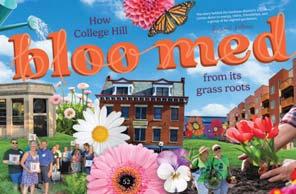


was founded in the early 1800s by a prominent abolitionist, William Cary. He and other residents were active members of the Underground Railroad. Cary also believed in education, and he established two schools there: Farmers’ College, built by farmers to educate their children, and Ohio Female College. Neither of them lasted very long, but they survived long enough to give the hilltop community its name.
Lawyers, university professors, and government professionals have long found College Hill’s solid, stately Tudors attractive places to call home. One of those was Dale McGirr, a senior vice president at the University of Cincinnati who was instrumental in the campus master plan that changed the university’s look in the 1990s. He also worked behind the scenes to further commercial development in the neighborhoods around UC’s campus. McGirr advised the College Hill group to view the departure of the two neighborhood anchors as a moment to take action.
sored dinner parties at their homes, where $20 would buy a specially prepared gourmet meal, and March Madness parties with beer, wine, snacks, basketball, and camaraderie for $10 a head. Stoeberl helped organize a 5K race in the neighborhood that cleared $13,000 in its first year. “We did everything you can imagine to raise money,” she says. “This was boots on the ground doing whatever it takes.”
The College Hill Gardeners organized a community garden walk and a fall festival to raise money. CHCURC meetings became well-attended and turned into fundraising challenges. It took a while, but they finally matched the $200,000 pledge— and then they didn’t stop. Over the last two decades, residents have raised more than $6 million to support CHCURC’s not-for-profit development work, says Kate Greene, the organization’s CEO and a College Hill resident.
There was hope when a local developer proposed condominiums, retail, and town-
fic islands and bus stops that had become overgrown and littered with trash. They essentially embraced the “broken windows” theory of urban neighborhoods, the idea that small things that remain uncared for lead to bigger problems. “If you’re standing there to catch a bus and it’s not cared for, you’re not going to bother to take your empty pop bottle and put it in the trash,” says McLean. “You’re just going to drop it because there’s trash all around you. We wanted to address that. It looks like no one cares, but I do, we do, so let’s do.”
The gardeners’ enthusiasm was contagious, and members started seeding other neighborhood organizations that had gone fallow. “I became secretary of the business association, and I didn’t even own a business,” Stoeberl says. She would a few years later, buying College Hill Coffee Co. during a bit of a midlife crisis. “I was turning 40 and wanted to leave my industry [health insurance administration],” she says. “I guess you could call it a little bit of a meltdown.”
“He said, You need to think of this as a golden opportunity instead of being in a state of desperation,” Stoeberl remembers. “He told us, You are sitting on the golden egg with these corners being empty.”
Kroger is not coming back, McGirr said then, and neither is any other grocery store. Business district landlords are filling their storefronts with whatever tenants they can. It’s time to think differently and get busy saving the district, or give up and let it go. McGirr died in January 2022 at the age of 73, but he lived to see the community take up his challenge and run with it.
The neighborhood group decided to raise money to reinvigorate the community development corporation and to potentially buy and control property in the business district. One benefactor, who has remained anonymous, pledged to donate $200,000 if the community could match it.
It was a call to action. Neighbors spon-
homes on the Shuller’s Wigwam site, but that plan fell through during the recession of 2008 and 2009. The city, however, had granted the project $1 million to help close the financing gap, money that the redevelopment corporation still controlled. “We took that money and used it to buy property in the business district and get it ready for development,” says Walsh.
Neighbors stepped up to buy property when they could in order to get it under community control. A group of residents formed an LLC and bought a half dozen properties. A building in the heart of the business district was slated for a sheriff’s sale and became another opportunity to buy. Who do we know that has $10,000 or $20,000? Stoeberl recalls the group asking. “We sat down and made a list of people who might be interested.”
Flushed with the success of the farmers’ market, the gardeners adopted two traf-
Her partner begged her not to do it. “She said, Buy yourself a nice pair of diamond earrings,” recalls Stoeberl, who had no experience in consumer retail or in coffee. “I thought, How hard can it be? I’m going to change the hours, the menu, the look, the feel, the retail…virtually everything. I was too naïve to know how hard it was. I drank a bottle of wine, said, I’m doing it, and I never looked back.”
Seventeen years later, College Hill Coffee Co. has survived the pandemic, anchored the busy Hamilton and North Bend corner, and served as a community gathering place. Perhaps looking ahead, Stoeberl announced in February that she had sold the business.
PHYLLIS SCHOENBERGER FORMED A quality-of-life team through the community council, the College Hill Forum, and began addressing vacant lots one by one. The garden group recruited volunteers to claim blighted, vacant parcels of land in the business district and keep them clean. “We thought if we can clean up our public spaces and show a clean and bright, shiny, caredfor face to the community and those who pass through, it would benefit everyone,” says McLean.
THE GARDENING GROUP ADOPTED AN OVERGROWN TRAFFIC ISLAND, EMBRACING THE “BROKEN WINDOWS” THEORY OF IMPROVING URBAN NEIGHBORHOODS.


Gardeners have held volunteer leadership roles in the community council and the development corporation. “Gardeners are a group of folks who don’t tarry on,” McLean says. “When something needs to be done, it better get tasked immediately or it gets overgrown. We just had an itching amount of energy that we wanted to expend in our neighborhood and make it better for everyone.”
One of the first locally owned successes in the district was the now-closed Red Rose Pizza, located in a building owned by neighborhood residents in 2013. Brink Brewing opened in 2017. The owners settled on College Hill after a search that included Madisonville, Walnut Hills, and other urban neighborhoods. There were bars in the neighborhood, but no breweries yet. “We didn’t know a lot about College Hill,” says co-owner Mark Landers. “There wasn’t a whole lot here at the time.”
After a little firsthand observation, they determined that, yes, residents there like to drink beer and would support a locally owned brewpub. Brink has since won numerous awards for its beers while maintaining a family atmosphere in the pub. “We wanted it to be a gathering place where people could meet, get together, and celebrate,” says Landers, who’s since moved into the neighborhood with his family of six.
With coffee, pizza, and beer as the gastronomic foundations, more adventuresome eateries followed. Kiki, serving ramen and Japanese-influenced dishes, opened in a former bank building in 2019. MashRoots debuted in 2021, serving varieties of a Puerto Rican specialty, mofongo, as well as other Latin street food.
They joined two pioneering College Hill establishments that had weathered the good times and the bad: Bacall’s Café, serving burgers, fries, and beer since 1982, and Marty’s Hops and Vines, which opened as a bar and bottle shop during the recession, in 2009.
Guided by the community members’ vision and support, CHCURC has emerged as, in effect, the neighborhood business district’s master developer. The organization owns 31 properties there and has overseen $85 million worth of development, Greene says. “This work didn’t happen
overnight,” she says. “It’s been almost 50 years and been done mainly by volunteers.”
Her organization follows a “ground-up” approach led by the neighbors, as opposed to one influenced by for-profit development companies. “It was made possible because of all of the neighborhood involvement—the volunteerism and civic engagement and active citizenry of College Hill,” she says. “That’s really the critical piece to getting us to what we see today.”
COLLEGE HILL’S POPULATION IS ABOUT 60 percent Black, and the question of gentrification arises in a community that’s mixed both racially and economically. Henrietta Carr owns Enliven, a nail and massage salon in the business district. “A little bit more diversity wouldn’t hurt,” she says. In the same breath, though, she’s quick to point out, “The world is not really black and white anymore—it’s important that every culture is represented.” Businesses like Kiki, MashRoots, and Tortilleria Garcia reflect other cultures, she says, while businesses such as YEP! Fitness and her own are Black-owned.
Julie Brown sees the gentrification issue as being less about race and more about income. “I appreciate the development that’s been happening, because I can afford what’s happening,” says Brown, a Procter & Gamble employee who’s active in the neighborhood’s community council. She believes CHCURC is promoting equitable and inclusive development, although that could change down the road as market forces drive up property and housing prices.
Stoeberl says racial diversity is good for business and offers a simple formula: “Black plus white equals green,” she says.
Greene says CHCURC has made “defensive plays” to maintain affordable housing, including buying the building that houses College Hill Coffee Co. and contains 16 affordable apartments, and buying, rehabbing, and preserving affordable residences at Hollywood Apartments and elsewhere in the district. “If those were owned by someone who was in it for the money or someone who was from out of town, they could absolutely increase the rents right now, because we’re bringing the market up to a point that could support higher rents,” she says. “What we’ve done is purchase
those and keep the rents artificially low, because we want to make sure we’re not displacing people who call this place home.”
CHCURC also launched the OurShop project, which offers young lifestyle businesses a chance to test a brick-and-mortar concept with six months of free space in a business district storefront, along with mentoring and guidance. Of the five businesses that were accepted for the first round last year, two have remained in the district. Applications for the second round closed in January, and more than 50 startups applied.
Another new addition to the district is Manga Manga, which sells Japanese comic books, perhaps the only store of its kind in Cincinnati. It’s moving to a more prominent storefront space from its current location just off of Hamilton Avenue.
Those big, empty corner lots where Kroger and Shuller’s Wigwam once stood have finally filled in. In October 2022, the community celebrated the grand opening of HaNoBe (for Hamilton and North Bend), featuring 171 apartments that will bring in more residents to support the neighborhood businesses. Just to the west of that, a developer is planning to build 31 townhomes, with prices beginning at $400,000.
One of the next big items on CHCURC’s to-do list is the old Hollywood Theater, a former movie house dating back almost 100 years that’s situated squarely in the middle of the business district. Last year, the organization began a nationwide search for companies to adapt and operate the space, and final decisions could be made later this year, Greene says. Meanwhile, CHCURC turned the back parking lot into a drive-in theater, with family movies screened on the exterior wall in the summer months.
Twenty years after Beth McLean and her friends planted their seeds, the College Hill garden has bloomed and the community has reaped a bounty. McLean was reminded of those early days while cleaning out her attic recently, when she found a card her fellow gardener Phyllis Schoenberger had sent.
“Everything worthwhile takes time,” the Hallmark-style sentiment read. And Phyllis wrote in, “…And energy, and vision, and friends who help on the job.”












NOLIA KITCHEN brings all the flavors of the Big Easy to the Queen City.
 —BRANDON WUSKE
N A SIDE STREET BETWEEN MAIN AND WALNUT (IN THE FORMER PLEASE space), Nolia Kitchen brings a delicious taste of New Orleans to Cincinnati. We have several Cajun and New Orleans–themed joints where one can load up on barbecued shrimp and andouille sausage. But none of those places capture the true diversity of New Orleans dining. Nolia does it so well, it serves as an irrefutable reminder of why New Orleans is one of the world’s top food cities.
Chef/Owner Jeffery Harris, a New Orleans native, prepares the cuisine of his beloved city with sophistication and flair. Before opening Nolia, Harris operated Jimmie Lou’s, an Oakley Kitchen Food Hall stall serving up more casual Cajun/Creole dishes, but opening a higher-end eatery was always his endgame. With Nolia, he has fulfilled his goal.

The decor of the small-but-comfortable restaurant evokes New Orleans without dropping you facefirst into the middle of Bourbon Street. No Mardi Gras beads or alligator heads adorn the walls here, though the exposed brick, flowered wallpaper, and hanging plants transport diners to a cozier, quieter corner of the French Quarter. The main draws here, perhaps like New Orleans itself, are flavor and creativity.
Overlooking it all from a black-and-white photo on the wall is Jimmie Lou, Harris’ great-grandmother (and namesake of his former Oakley Kitchen venture). She’s the one who first taught Harris how to cook. When he was 4 years old, she pulled a step stool up to the stove and showed him how to make his favorite dish—scrambled eggs. Flash forward to 2000, when he got his professional start at famed New Orleans chef/TV star Emeril Lagasse’s namesake restaurant. He learned teamwork and kitchen management at
FYI
Nolia Kitchen
1405 Clay St., Over-theRhine, (513) 384-3597, noliakitchen.com
Hours
Tues–Thurs 5–9 p.m., Fri & Sat 5–10 p.m.
Prices
$8 (Mustard Greens)—
$50 (Ba Kri Twa: oysters, crab claws, and peel-andeat shrimp)
Credit Cards
All major
The Takeaway Seasonal, New Orleans–inspired food that’s a welcome addition to our dining scene.
Emeril’s, working his way up from line cook to sous chef. Then Hurricane Katrina hit.

Harris landed here, working stints at Orchids, Salazar, and Mita’s, as well as Covington’s Blinkers Tavern and the now-closed Commonwealth Bistro. He eventually decided to venture out on his own and share his beloved Southern food—as eaten in New Orleans—with the city he now calls home. And with stunning results; this year, Nolia was named a James Beard Award semifinalist for “Best New Restaurant.”
The menu changes seasonally, with almost a complete overhaul each time. No dish is untouchable. This is because Harris wants to continuously push himself creatively. Harris’s drive also means that he’s not content to stick to the handful of classic dishes, like gumbo and jambalaya, that have become so synonymous with New Orleans cooking. He draws on all the influences that have contributed to the cuisine of that great city—from West African to French to Japanese to Haitian. The latter influence is responsible for one of my favorite vegetarian dishes: the jackfruit Griot. Griot, one of Haiti’s most beloved dishes, consists of citrus-marinated pork shoulder, cut into cubes and fried to a golden brown. Flawlessly fried jackfruit is the perfect stand-in for the traditional pork, especially when eaten with a dash of Nolia’s tongue-tingling house-made hot sauce.
If classic New Orleans dishes do show up on the menu, they’re likely to get delightfully unexpected touches. Take the duck and oyster gumbo (this surprising protein combination is apparently popular in gumbos at more refined New Orleans restaurants).

Harris deconstructs the typical stew, building on a base of popcorn rice, instead of the more typical long grain, and a decadent
duck fat roux. It’s served with sliced okra, further reflecting the dish’s African influences. The result is the most unique gumbo this Midwesterner has ever had.
Some of the dishes here are just pure Southern comfort food, like the cornbread, which is served in a hot skillet. Pancake-soft with a slightly gritty texture, it eats like something straight out of a Southern hearth. Equally comforting are the beef grillades, a lesser-known New Orleans staple. Two tender, juicy medallions of braised chuck are served over creamy grits with fragrant peppers and onions. Harris describes the dish as a “hug from Grandma,” and I couldn’t agree more. A side dish of sweet and acidic cider greens served with caramelized onions adds some zing to the meal.
Desserts at Nolia are not to be missed. A creative assortment of ice cream and pastries are made in house under the direction of Sous Chef Korry Wolf. These are hearty desserts to round out what is sure to be a hearty meal. The fig-spiced ice cream (flavors are constantly rotating) tastes like Christmas in a bowl and the moist sweet potato cake—served with a purple flower on top (because why shouldn’t sweet potato cake be beautiful?) and a side of rocky road ice cream— gives off a coffee cake flavor with a hint of sweet potato.
Nolia brings fine dining flavors without fine dining prices; most entrées are in the $20 to $30 range. Harris deliberately eschews the overly precious plating and preparation associated with fine dining, as he disdains the “robotic nature” that such preparation so often entails. His open kitchen is a lively one as he banters with staff and customers, mans the stove, and plates dishes.
Nolia is exquisitely prepared food served in a funky, laid-back atmosphere. Each of these colorful, flavorful dishes is prepared with the expertise that comes from a lifetime spent in kitchens, going back to those afternoons with his great-grandma.
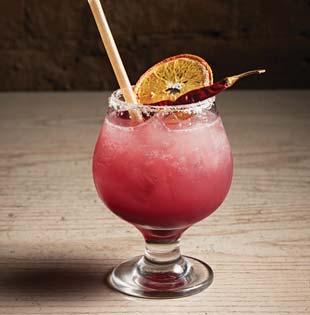 NO LIMIT SOLDIERS (From left) Pecan flounder with pecan butter, winter greens, and sauce meunière; Chef/Owner Jeffery Harris; duck and oyster gumbo with dark roux, popcorn rice, and fried oysters; cocktails at Nolia are named after southern rappers, like the Trina (Cazadores tequila, Ancho Reyes chile liqueur, Cointreau, lime, and pomegranate juice).
GUANACOS CAFE & PUPUSERIA SERVES UP TRADITIONAL DISHES FROM EL SALVADOR, including tamales, carne asada, and pescado frito. However, as the name suggests, this is pupusa territory. Never had one? Imagine a savory, cornmeal pancake filled with cheese, meat, and vegetables.

Guanacos Café offers six varieties: queso (cheese), chicharron con queso (pork and cheese), frijol con queso (bean and cheese), mixta (pork, beans, and cheese), queso con loroco (cheese and loroco flower buds), and ayote con queso (zucchini and cheese). The cheese in each pupusa melts into the tortilla as it cooks, and each nibble ends in long, melty strings. The queso showcases this beautifully while the beans in the frijol con queso add a little extra texture. The pork in the chicharron con queso infuses the entire flatbread with a pop of deep savory flavor, and the same succulent meat can be found in the cheese and bean harmony of the mixta. The mellow blend of loroco flower buds in the queso con loroco makes an excellent base for the cafe’s house-made hot sauce. The finely grated zucchini holds its own in the ayote con queso, and while the squash’s texture disappears into the tortilla, the bright, fresh bite remains.
A glass of horchata de morro (morro, peanut, and spices) makes a sweet, creamy counterpoint to this rich meal. The milky drink also puts out any fire the hot sauce leaves behind. —M. LEIGH HOOD
THE PERSONAL CHEF APpeared as a contestant on the TV cooking competition Hell’s Kitchen: Battle of the Ages last fall.
How did it feel to be selected? I couldn’t believe they wanted me. I’m just a Midwestern mom with a dream.
What drew you to the show? Chef Christina—Chef Ramsay’s sous chef and winner of season 10—is my chef hero. Getting to meet her was a real life-changing moment for me.

What was it like to be on the set? Obviously meeting Chef Ramsay was the most incredible experience, but it was so surreal.
What lessons did you learn from your appearance on the show? So many. I honestly came back a very different person. Whether it’s work, TV appearances, interviews, speeches, I do not fear anything.
What was your best dish? I won Best Dish of the Day. In our challenge— where we had to use a wok to create our whole dish—I made a poached snapper with a miso shitake broth. Chef Ramsay and Chef Stephanie Izard, who owns Little Goat in Chicago, loved it.
Do you keep in touch with anyone from the show? I talk to every single person on the show nearly every day. Alex [Belew, who went on to win the competition] said, “I miss you all terribly. It’s like a bad breakup I can’t shake.” He’s totally right. The cast have all become family. aiesha d . little
BREAKFAST FOR DINNER KICKED OFF THE 2023 EVENT SEASON WITH COMFORT AND STYLE.


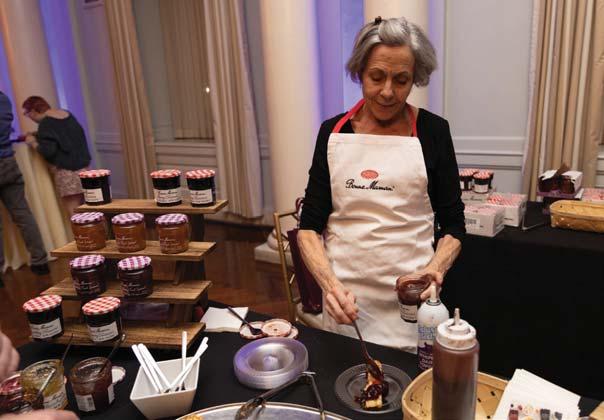
In February, more than 300 guests gathered at The Cincinnati Club to indulge in everyone’s favorite twist on mealtime, Breakfast for Dinner. Eleven local restaurants known for breakfast fare—in addition to several sponsors—served their most delicious dishes while guests enjoyed live music from four popular local bands. A portion of the proceeds benefited Sweet Cheeks Diaper Bank.
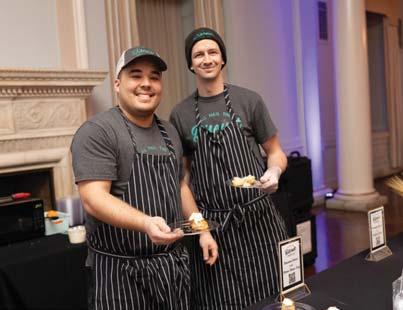
THANK YOU TO OUR SPONSORS:
Sustainability Partner: MadTree Brewing
Additional Sponsors: La Brea Bakery, McCormick, St. Pierre, Bonne Maman, Minute Maid, Simply Mixology, Simply Orange, Chobani, and Applegate


HE MAJESTIC ART DECO–INSPIRED COCA-COLA bottling plant along downtown Indianapolis’s Massachusetts Avenue languished for decades after its heyday. But after a $300 million revamp, the 12-acre grounds became the multi-use Bottleworks District in late 2020, home to a boutique hotel, a food hall, an independent movie theater, and an eatery that exudes casual elegance—The Fountain Room. Filled with raised clamshell booths, marble bar tops, and cascading chandeliers, this two-level restaurant playfully bills itself as “Mass Ave’s Finest Supper Club.” (It’s also Mass Ave’s only supper club.)
Executive Chef Andrew Popp merges the best parts of a retro steakhouse with the big-shouldered comfort of a Wisconsin supper club. The menu focuses on family-style sides, freshwater catches, and massive steaks. The lobster bisque alone is worth the drive, silky with sherry and amaretto, every spoonful dredging up mind-blowing amounts of claw meat. The Coca-Cola pork ribs are predictably delicious, a sticky yet refined callback to the Bottleworks bubbly backstory. End your meal with one of the restaurant’s potent cocktails, such as the Fountain Room Classic. Made with Maker’s Mark, Coca-Cola simple, Bohemian Bitters, and Luxardo cherries, it comes with an ice cube embossed with the restaurant’s fountain motif. Classic, indeed. —JULIA
SPALDINGThe Fountain Room, 830 Massachusetts Ave., Indianapolis, (463) 238-3800, thefountainroom.com
This month, The National Exemplar in Mariemont celebrates four decades in business. To recognize this achievement, the restaurant will offer a selection of breakfast and dinner favorites from menus past, such as the Fettuccine Bravo and Steak KP. The week-long celebration (April 12–16) will also include Mariemont Mayor Bill Brown’s declaration of April 13 as “National Exemplar Day.”
“The National Exemplar was founded on the concept of consistency, fresh ingredients, good food, and great people,” says Kenneth Pendery Jr., the restaurant’s owner. “This approach has helped us create 40 years of opportunities, memories, and experiences for our friends, family, neighbors, and staff. We are beyond grateful to celebrate so many milestones and special moments.”
In addition, the restaurant will host “Great Food for a Great Cause” on April 25, a fund-raiser for a former employee with cancer.
The National Exemplar, 6880 Wooster Pke., Mariemont, (513) 271-2103, nationalexemplar.com
This Mariemont mainstay turns the big 4-0.
—AIESHA D. LITTLE


AVAILABLE IN APRIL AND IN THE JUNE ISSUE OF CINCINNATI MAGAZINE
A MOST BEAUTIFUL GUIDE TO WHERE AND WHEN TO FIND LOCAL FOOD IN THE REGION


Our lavish four-night dinner series returns to celebrate the bounty of Spring. Be sure to #savorthedate dining experience and enjoy a one-of-a-kind meal in a fun and festive atmosphere.

Limited tickets available.
CINCINNATIMAGAZINE.COM/SAVOR


On any given evening, guests nibble at spicy hummus served with French breakfast radishes and pita bread while sipping slightly spumante glasses of Spanish Txakolina. And while the dinner menu reads strictly casual at first glance—soups, salads, and sandwiches and sharing plates—the preparation and quality are anything but. A chef salad with chopped romaine, sweet peas, applewood smoked bacon, hard-boiled egg, and sunflower seeds surpassed many versions of the bistro classic. And both the Brussels sprouts and fingerling potato sides refused to play merely supporting roles. Both were sensational studies in the balance of sweet, spicy, and acidic flavors.
702 Indian Hill Rd., Terrace Park, (513) 8315678, thebirchtp.com. Lunch and dinner Tues–Sat. MCC, DS. $
Boomtown leans hard into the Gold Rush theme: prospector-style overall aprons on servers, bluegrass tunes humming, and rustic decor details. And the dense grub isn’t for the faint of heart. Arrive with an empty belly, ready for a carbo load. The biscuits are all they’re cracked up to be, and the gravy’s not playing around, either. Sample its biscuits and gravy styles with a gravy flight. Or try The Yukon, an anytime breakfast sandwich, featuring fried chicken on par with the best the city has to offer. By the end of the meal, you’ll feel a little out of place without your own denim getup.
9039 U.S. Route 42, Suite H, Union, (859) 384-5910, boomtownbiscuitsandwhiskey. com. Breakfast, lunch, and dinner Tues–Sat. Breakfast and lunch Sun. MCC. $
You might think this is a lunch-only spot where you can nosh on a chicken salad sandwich after browsing next door at Joseph-Beth Booksellers. But this Norwood eatery feels welcoming after work, too. The dinner menu features entrées beyond the rotating soup and quiche roster that’s
CINCINNATI MAGAZINE’S dining guide is compiled by our editors as a service to our readers.
The magazine accepts no advertising or other consideration in exchange for a restaurant listing.
The editors may add or delete restaurants based on their judgment. Because of space limitations, all
Upscale New American fare will be on deck in condo development Moore Flats near Mid-City and Avril Bleh Meat Market when Court Street Kitchen opens later this year. The restaurant is brainchild of chef and restauranteur
Braheam Shteiwi, who also owns Caruso’s in Fairfield (his father’s former downtown eatery which he reopened in 2019). Construction wraps up this summer.
of the guide’s restaurants may not be included. Many restaurants have changing seasonal menus; dishes listed here are examples of the type of cuisine available and may not be on the menu when you visit.
To update listings, e-mail: cmletters@cincinnati magazine.com

popular at noon. Mac and cheese? Check. Quesadillas and other starters? Yep. An assortment of burgers? Present, including a grilled portobello option. Casual food rules the day but the surprise is Brontë Bistro’s lineup of adult beverages, which elevates the place above a basic bookstore coffeeshop. The regular drinks menu includes such mainstays as cosmopolitans and sidecars.
2692 Madison Rd., Norwood, (513) 396-8970, josephbeth.com. Breakfast, lunch, and dinner seven days. MCC. $
If you haven’t had a plate of Shawn McCoy’s design set in front of you, it’s about time. Many of the menu’s dishes show his knack for the plate as a palette. A trio of grilled lamb t-bone, boar tenderloin, and prawns in scampi butter is a standout. The eye for detail and contrasts of colors and textures belongs to someone who cares for food.
1000 Summit Place, Blue Ash, (513) 794-1610, browndogcafe.com. Lunch and dinner Mon–Sat, brunch Sat. MCC, DS. $$
With wine on tap and an extensive local beer list, Coppin’s is an ideal place to meet for drinks. In addition to plenty of Kentucky bourbon, much of the produce, meat, and cheese comes from local growers and producers. House-cured meat and cheese from Kenny’s Farmhouse and cheese from Urban Stead populate the “Artisan Cheese and Charcuterie Board,” which dresses up the main attractions with honey, dijon mustard, house pickles, and Sixteen Bricks purple barley bread. The mussels—made with seasonally rotating sauces and chorizo from Napoleon Ridge Farms in Gallatin County—were served with a peppery tomato sauce, perfect for sopping up with bread. The seven-ounce Sakura Farms Wagyu ribeye with wild mushrooms, roasted parsnip, and beef jus is a must have. Or try the striped bass with grape farro roasted broccolini and mussel cream sauce.
638 Madison Ave., Covington, (859) 9056600, hotelcovington.com/dining/coppins.
Breakfast seven days, lunch Mon–Fri, and dinner Thurs–Sun. MCC. $$
On a visit to England, Jan Collins discovered the “cozy” atmosphere of London restaurants built in
KEY: No checks unless specified.
AE American Express, DC Diners Club
DS Discover, MC MasterCard, V Visa
MCC Major credit cards: AE, MC, V
$ = Under $15 $$ = Up to $30
$$$ = Up to $49 $$$$ = $50 and up
Top 10 = Named a Best Restaurant March 2023.
historic houses. She brought that warm, comfortable feeling back to the United States in opening Cozy’s. Though the atmosphere in the restaurant is reminiscent of Collins’s London travels, the food remains proudly American. The produce in virtually every dish is fresh, seasonal, and flavorful. The braised short rib stands out with its cheesy grits and haystack onions along with a portion of tender meat. And when it comes down to the classics, from the biscuits that open the meal to carrot cake at the end, Cozy’s does it right.
6440 Cincinnati Dayton Rd., Liberty Twp., (513) 644-9365, cozyscafeandpub.com. Lunch and dinner Tues–Sat, brunch Sat & Sun. MCC. $$$
The revamped post office at 13th and Vine feels cozy but not claustrophobic, and it has distinguished itself with its stellar fried chicken. Even the white meat was pull-apart steamy, with just enough peppery batter to pack a piquant punch. Diners can order by the quarter, half, or whole bird—but whatever you do, don’t skimp on the sides. Bacon adds savory mystery to crisp corn, green beans, and edamame (not limas) in the succotash, and the crock of mac and cheese has the perfect proportion of sauce, noodle, and crumb topping. The Eagle OTR seems deceptively simple on the surface, but behind that simplicity is a secret recipe built on deep thought, skill, and love.
1342 Vine St., Over-the-Rhine, (513) 802-5007, eaglerestaurant.com. Lunch Fri–Sun, dinner Mon–Thurs. MCC. $
The menu here is built for celebration: poshly priced steak and sushi selections are meant to suit every special occasion. Appetizers are both classic (shrimp cocktail) and Asian-inspired (shrimp tempura); fashionable ingredients are name-checked (micro-greens and truffles); a prominent sushi section (nigiri, sashimi, and rolls) precedes a list of archetypal salads; Kobe beef on sushi rolls sidles up to steaks of prime; non-steak entrées (Chilean sea bass or Dover sole with haricots verts and almondine) make for high-style alternative selections. Talk about a party.
8170 Montgomery Rd., Madeira, (513) 9848090, embersrestaurant.com. Dinner seven days. MCC, DC, DS. $$$$

Sweet dreams are made of this every Friday and Saturday in April at Hard Rock Casino Cincinnati!


Immerse yourself in an exclusive experience with custom cocktails, life-size Instagram moments, live characters and more! Don’t miss out on this one-of-a-kind event, never before seen in Cincinnati!
SCAN THE QR CODE FOR MORE DETAILS and purchase your ticket at HardRockCasinoCincinnati.com today!

cincinnati


Back in the streetcar days, this roughly 100-year-old roadhouse was at the end of the Dixie Highway line, where the cars turned around to head north. The place was called the Dixie Tea Room then, and they served ice cream. The fried chicken came along in the 1930s, and they’re still dishing it up today. Families and regulars alike pile in on Mondays and Tuesdays for the fried chicken dinner. While the juicy (never greasy) chicken with its lightly seasoned, crisp coating is the star, the side dishes—homemade biscuits, cole slaw, green beans, mashed potatoes, and gravy—will make you ask for seconds. Call ahead no matter what night you choose: There’s bound to be a crowd. Not in the mood for chicken? Choose from steaks, seafood, sandwiches, and comfort food options that include meatloaf and a Kentucky Hot Brown. Or just try the onion rings. You’ll wonder where onions that big come from.
2500 Dixie Highway, Ft. Mitchell, (859) 331-3767, greyhoundtavern.com. Lunch and dinner seven days, brunch Sat & Sun. MCC, DS. $$

MR. GENE’S DOGHOUSE
Cumminsville is home to arguably the best hot chili cheese mett and chocolate malt in Greater Cincinnati. A family owned business that began as a simple hot dog stand more than 50 years ago, Mr. Gene’s still attracts lines of loyal customers at its windows. Can’t stand the heat? Order the mild chili mett—more flavor, fewer BTUs. And if you still haven’t embraced Cincinnati-style coneys, try the Chicago-style hot dog with pickles, onions, relish, mustard, tomato, and celery salt; a pork sandwich ; or wings (a sign proclaims “So hot they make the devil sweat”). Although the chocolate malt is the biggest seller, we love the $3.75 pineapple shake,
made with real pineapple.


3703 Beekman St., South Cumminsville, (513) 541-7636, mrgenesdoghouse.com. Open Feb–Oct for lunch and dinner Mon–Sat. MC, V. $
The third restaurant from chef Jose Salazar, Goose & Elder is a more everyday kind of joint compared to his others. The prices are lower, and most of the dishes, from burgers to grits, are familiar. Salazar’s menus have always hinted that the chef had a fondness for, well, junk food. But junk food is only junk if it is made thoughtlessly. Everything here is made with little twists, like the cumin-spiced potato chips and delicate ribbons of housemade cucumber pickles with a sweet rice wine vinegar. Even the fries, crinkle cut and served with “goose sauce,” a mildly spiced mayonnaise, are wonderfully addictive. The restaurant demonstrates that what we now consider “fast food” can be awfully good if someone makes it the old-fashioned, slow way.
1800 Race St., Over-the-Rhine, (513) 579-8400, gooseandelder.com. Lunch Mon & Wed–Fri, dinner Mon & Wed–Sun, brunch Sat & Sun. MCC. $$
has an excellent brunch.
2998 Harrison Ave., Westwood, (513) 389-0175, ivoryhousecincy.com. Dinner Tues–Sat, brunch Sun. MCC. $$$
The classics are here—prime rib with horseradish and au jus; liver and onions; an eight-ounce filet with bernaise— plus some new favorites, including short rib pasta. Or have breakfast, English-style: fried eggs, bacon, sausage, stewed beans, roasted tomatoes, and buttered toast. The dinner menu also features burgers, risotto, pasta, seafood, and plenty more lighter options.
6880 Wooster Pke., Mariemont, (513) 271-2103, nationalexemplar.com. Breakfast, lunch, and dinner seven days. MCC, DS. $$

Top10
The menu here generally doesn’t reinvent dishes or introduce outlandish flavors, but simply pays attention to enough little things to make the results unusually good. The Wagyu is served in cheeseburger form, but the exceptional tomme from Urban Stead gives it that extra something. The cocktails are things you’ve probably seen before, but everything—from the Death Valley Old Fashioned to the Queen City’s Bees Knees—had an extra dash of liveliness from a house-made element, like a rhubarb honey syrup or the raspberry shrub. Even when an ingredient seems out of left field, like the burnt grapefruit hot sauce on the Hamachi, it never tastes as unusual as it sounds. The hot sauce is just a hint of sweet citrusy spice that melts into the grits—a softly intriguing element rather than a slap in the face. Ivory House also
In Northstar’s first outpost beyond the Greater Columbus area, the space itself reflects the ethos of the food: warm and comfortable, but still modern and fresh. The dinner and cocktail menus are fab, as is the large bar. But breakfast is worth waking up early for. Take the mushroom frittata, made with meaty mushrooms, caramelized sweet onions, and Gruyère. The portions are no joke—that frittata comes with breakfast potatoes and arugula—yet it doesn’t feel gluttonous or excessive. In large part that’s due to the freshness (e.g., the sausage made in-house daily) and the abundance of healthy options. One of our favorites: the shooting star juice, a balanced blend of carrot, ginger, orange, and lemon.
7610 Sloan Way, Liberty Township, (513) 759-0033, thenorthstarcafe.com. Breakfast, lunch, and dinner seven days. MCC. No cash. $
Chef/owner Paul Weckman opened Otto’s, named after his father-in-law, with $300 worth of food and one employee—himself. Weckman’s food is soothing, satisfying,
and occasionally, too much of a good thing. His tomato pie is beloved by lunch customers: Vine-ripe tomatoes, fresh basil, and chopped green onions packed into a homemade pie shell, topped with a cheddar cheese spread, and baked until bubbly. Weckman’s straightforward preparations are best. The shrimp and grits with sauteed shrimp spinach, mushrooms, Cajun beurre blanc atop a fried grit cake, short ribs braised in red wine and herbs, served over mashed potatoes with green beans and caramelized baby carrots that will bring you the comfort of a home-cooked meal. This is, at its heart, a neighborhood restaurant, a place with its own large, quirky family.
521 Main St., Covington, (859) 491-6678, ottosonmain. com. Lunch and dinner Tues–Fri, brunch and dinner Sat–Mon. MCC. $$
The quintessential neighborhood dive, Quatman’s sits in the shadow of the Our Lady of the Holy Spirit Center, serving up a classic bar burger. Look elsewhere if you like your burger with exotic toppings: This half-pound of grilled beef is served with lettuce, tomato, onion, and pickle. Sometimes cheese. The no-frills theme is straightforward and appealing. A menu of standard sandwich fare and smooth mock turtle soup; beer on tap or soda in cans (no wine or liquor); and checkered tablecloths, serving baskets, and plenty of kitsch is served daily. Peppered with regulars, families, and political discussions, Quatman’s is far from fancy. But it is fun, fast, and delicious.
2434 Quatman Ave., Norwood, (513) 731-4370, quatmancafe.com. Lunch and dinner Mon–Sat. MC, V, DS, MCC. $
Historically peasant-grade cuts of meat get the full Pygmalion treatment at Red Feather in Oakley, where there’s deep respect for the time and tending necessary to bring a short rib, pork chop, or steak to its full potential. After a quick sear to lock in juices, the steak takes a turn in the

wood-fired oven. While primal cuts play a leading role, the supporting cast is just as captivating. The French onion soup is especially warming on a winter evening and the crispy skin on the salmon acts as the foil to the plump, rich flesh. Service here only improves the experience.
3200 Madison Rd., Oakley, (513) 407-3631, redfeatherkitchen.com. Dinner Wed–Sat, brunch Sun. MCC. $$$
At its best, Red Roost Tavern—located in the Hyatt Regency, downtown—meets its singular challenge with verve: offering a locally sourced sensibility to an increasingly demanding dining public while introducing out-of-town guests to unique Cincinnati foods. Take the goetta, rich pork capturing the earthiness of the steel-cut oats, served as a hash with sweet potatoes and poached eggs. The seasoning added a restrained, almost mysterious hint of black pepper. But the kitchen’s talent seems straightjacketed. Chefs thrive on instincts not covered by the five senses; restaurants thrive by taking careful risks. Red Roost seems to be struggling to find its third eye, and sometimes the entrées don’t live up to their ambitions.
151 W. Fifth St., downtown, (513) 354-4025, redroosttavern.com. Breakfast and lunch Sat & Sun, dinner seven days. MCC,DS. $$$

RON’S ROOST
They stake their reputation on their fried chicken, serving 10,000 pieces weekly. It takes a few minutes, since each batch is made to order. Ron’s also serves chicken 18 other ways, including chicken livers in gravy. It’s all about the chicken here, but that’s not all they have. The menu is five solid pages of stuff good enough to be called specialties: Oktoberfest sauerbraten, Black Angus cheeseburgers, fried whitefish on rye, hot bacon slaw, lemon meringue pie (homemade, of course), and the best Saratoga chips this side of Saratoga.
3853 Race Rd., Bridgetown, (513) 574-0222, ronsroost.

net. Breakfast Sun, lunch and dinner seven days. MCC, DS. $$
An old flag stands in one corner and pictures of Abe Lincoln and the first George W. hang on the wall of this Civil War–era schoolhouse. The daily menu of familiar Midwestern comfort fare is written in letter-perfect cursive on the original chalkboard. Once you order from a woman who bears an uncanny resemblance to your high school lunch lady, the elevated lazy Susan in the center of the table begins to fill up with individual bowls and baskets of corn bread, slaw, salad, mashed potatoes, chicken gravy, and vegetables. The deal here is quantity. More mashed potatoes with your fried chicken? More corn bread with your baked ham? You don’t even have to raise your hand.
8031 Glendale-Milford Rd., Camp Dennison, (513) 8315753, theschoolhousecincinnati.com. Lunch Sun, dinner Fri–Sun. MCC, DS. $
You no longer need an event to celebrate with a fish fry. At Candice Holloway’s restaurant, Soul Secrets, fried chicken and fish are always on the menu. Servers wearing T-shirts that read “my ancestors sent me” introduce guests to a trim menu full of the best soul food. You can’t go wrong with the fish platters. The whiting is good, but the catfish is divine. The cornmeal breading is so perfectly seasoned you won’t need salt, and the light crunch it adds doesn’t hide the star of the show. So soft it’s nearly fluffy, the catfish melts in your mouth. Each catfish platter delivers two enormous pieces of fish along with two sides and a cornbread muffin that may be the best in Cincinnati. This is the kind of meal you take home with you—not just in your heart but in a box—because chances are low you’ll conquer all the fish and sides in one go.

1434 Vine St., Over-the-Rhine, (513) 721-7685, soulsecretscincy.com. Lunch and dinner Tues–Sat. MCC. $

This Paddock Hills diner, with a second location in Overthe-Rhine, has been dishing up wispy-thin pancakes and football-sized omelettes to Cincinnatians since FDR was signing new deals. Breakfast and lunch offerings mix oldhat classics like steak and eggs, corned beef hash, and basic burgers with funky iterations that draw on ethnic ingredients such as chorizo and tzatziki. Get here early if you don’t want to stand in line.
4381 Reading Rd., Paddock Hills, (513)242-3521; 1203 Sycamore St., Over-the-Rhine, (513) 762-0390; 10275 Summit Pkwy., Blue Ash, (513) 447-6453, eatsugarnspice.com. Breakfast and lunch seven days. MCC. $
Tucked into a West 14th Street Italianate directly around the corner from Music Hall, this place feels like a private dinner club. There’s a preferred by-reservation policy. Check the web site for the weekend’s five-course menu, a slate of “new American” dishes that changes monthly. You can see the reliance on local produce in the Greek lemon chicken soup. Salads are interesting without being busy, and the lemon lavender sorbet is served as the third course palate cleanser with the five-course menu. Main courses of panseared rainbow trout, grass-fed strip steak, and a veggie burger hit all the right notes, and you can end with a sweet flourish if you choose the strawberry lavender shortcake.
210 W. 14th St., Over-the-Rhine, (513) 721-3353, symphonyhotel.com. Dinner Fri & Sat. $$
This Loveland bistro is comfortable, with reasonably priced food and amenable service. The menu is tidy—25 or so dishes divided between appetizers, salads, and entrées, plus two or three specials—its flavor profile partially influenced by a childhood growing up in a third generation Italian family. Most of Tano Bistro’s main courses lean toward the comfortable side of American. For instance, Williams serves a stuffed salmon and an allegiance pork chop. The sprout & snout appetizer is also worth a trip to Loveland, combining balsamic-drizzled brussels sprouts with sliced pork belly.
204 W. Loveland Ave., Loveland, (513) 683-8266, foodbytano.com. Lunch and dinner Tues–Sat. MCC. $$$
Classically conceived but casually executed comfort food, including a royale with cheese, mac and cheese topped with a Mr. Pibb–braised pulled short rib, and steak frites with garlic aioli. Servers are slightly scattered, yet enthusiastic and friendly, with a good grasp of the beverage program.
1212 Springfield Pke., Wyoming, (513) 821-8352, telabarandkitchen.com. Lunch and dinner Tues–Sat. MCC. $$
TRIO
Trio is nothing if not a crowd pleaser. Whether you’re in the mood for a California-style pizza or filet mignon (with roasted red potatoes, sauteed spinach, crispy onions, and a red wine demi glace), the menu is broad enough to offer something for everyone. It may lack a cohesive point of view, but with the number of regulars who come in seven nights a week, variety is Trio’s ace in the hole. A simple Margherita pizza with roma tomatoes, basil, Parmesan, and mozzarella delivered a fine balance of crunchy crust, soft cheese, and sweet, roasted tomatoes. Paired with a glass of pinot noir, it made a perfect light meal. The service is friendly enough for a casual neighborhood joint but comes with white tablecloth attentiveness and knowledge. Combine that with the consistency in the kitchen, and Trio is a safe bet.
7565 Kenwood Rd., Kenwood, (513) 984-1905, triobistro.com. Lunch and dinner seven days. MCC, DC. $$
Wildflower Café is not the sort of place that tries to wow anyone with feats of inventiveness. Its formula is simple but satisfying: lots of mostly local meat and produce, a menu
that continuously changes with available ingredients, a nice selection of wine and beer, and well-made, homey food. The small, focused menu has a classic American quality (salads, steaks, burgers) with enough surprises to keep things interesting. Many of the dishes are designed with open spaces to be filled with whatever is available in the kitchen that day, an advantage of an unfussy style. You don’t go to Wildflower expecting a certain kind of perfection; you accept that your favorite dish from last time might be made differently tonight, or no longer available. Like the farmhouse that Wildflower occupies, the imperfections are part of the charm.
207 E. Main St., Mason, (513) 492-7514, wildflowermason.com. Dinner Mon–Fri. MCC. $$$
Five blocks from the Newport riverfront, Terry and Betsy Cunningham have created the sort of comfortable, welcoming environment that encourages steady customers. A dependable menu and quirky atmosphere appeal to a broad range of diners, from non-adventurous visiting relatives to non-attentive children. Desserts have always been one of the stars: flourless chocolate hazelnut torte, bittersweet, rich and moist; butter rum pudding that would be equally at home on a picnic table or a finely dressed Michelin-starred table.
738 York St., Newport, (859) 261-9675, yorkstonline. com. Lunch Tues–Fri. Dinner Tues–Sat. MCC, DS. $$
BEE’S BARBEQUE
You’ll want to get to Bee’s Barbecue in Madisonville early if you want to avoid the line of friendly regulars. The restaurant’s smoker churns out a variety of meats—including brisket, pulled pork, ribs, turkey breast, and two kinds of sausage—so it’s easy to see why they keep coming back. If you enjoy the spicy grease that oozes out of a good chorizo, you’ll love the Cincinnati Hot Link, which tastes like the delicious love child of a chorizo and a hot mett. Word to the wise: Bee’s opens at 11 a.m. and closes when they run out of meat. Understandably, this doesn’t take long.
5910 Chandler St., Madisonville, (513) 561-2337, beesbarbecue.com. Lunch and dinner Wed–Sat. MCC. $
Elias Leisring started building his pulled pork reputation under canopies at Findlay Market and Fountain Square in 2011. Leisring’s proper little ’cue shack along the river serves up ribs that are speaking-in-tongues good, some of the zazziest jalapeño cheese grits north of the MasonDixon line, and browned mashed potatoes that would make any short order cook diner-proud. The small no-frills restaurant—packed cheek-by-jowl most nights—feels like it’s been there a lifetime, with customers dropping vinyl on the turntable, dogs romping in the side yard, and picnic tables crowded with diners. The hooch is bring-your-own, and the barbecue is bona fide.
3313 Riverside Dr., East End, (513) 533-1957, elisbarbeque.com. Lunch and dinner seven days. MCC. $
SINNERS
You won’t leave this Texas smokehouse/sports bar hungry. From the brisket—served with Texas BBQ sauce, white bread, and pickles, or on toasted sourdough—to the chicken thighs, you can’t go wrong with these richly smoked flavors. Several dishes, like the Korean style pork belly, the pulled pork naan tacos, and Bigos stew, draw on global influences, while the sides take flavors back to the country (try the creamy coleslaw, the house-made mac and cheese, and chili-spiced cornbread). The restaurant’s character shines through its decor, which includes hanging hockey memorabilia, pictures of public figures and tables made from real NBA courts.
2062 Riverside Dr., East End, (513) 281-4355, sinsaintsmoke.com. Lunch Sat & Sun, dinner Tues–Sun. MCC. $$
A Northern Kentucky institution returns. Roughly 750 pounds of ribs per week are pit-fired in a small building in
front of the restaurant, with a smaller dedicated smoker out back for brisket and chicken. Walt’s ribs begin with several hours in the smokehouse and then are quick-seared at the time of service. This hybrid method takes advantage of the leaner nature of the baby-back ribs they prefer to use. Each rib had a just-right tooth to it where soft flesh peeled away from the bone. One hidden treasure: Walt’s housemade tomato and garlic dressing. Slightly thicker than a vinaigrette yet unwilling to overwhelm a plate of greens, the two key elements play well together.
3300 Madison Pke., Ft. Wright, (859) 360-2222, waltshitchingpost.com. Dinner seven days. MCC. $$
More than 800 miles from New Orleans, this may be as close as you can get to the real deal here in your own backyard. The menu fully leans into Chef Michael Shields’s penchant for cuisine from the Crescent City. His six years of training under NOLA’s own Emeril Lagasse comes through in a scratch kitchen menu that spans a range of the city’s classics. The enormous shrimp and oyster po’ boys—the former protein fried in a light and crispy beer batter and the latter in a hearty cornmeal breading—are served on fluffy French bread loaves and dressed with lightly spicy rémoulades. The jambalaya packs all the heat of a late summer day in the French Quarter without masking a hint of its satisfying flavors. Paired with a Sazerac and nightly live jazz, you may just feel tempted to start a second line.
4632 Eastern Ave., Linwood, (513) 861-2484, brewrivercreolekitchen.com. Dinner Tues–Sun, brunch and lunch Sat & Sun. MCC. $
At first blush, this place is a dive where homesick Cajuns can find a good pile of jambalaya. But thoughtful details like draft Abita Root Beer and char-grilled Gulf Coast oysters on the half shell signal its ambition. Bayou standards like jambalaya, gumbo, and fried seafood also make an appearance. But the extensive menu also features amped up pub-style items for those who may be squeamish about crawfish tails (which can be added to just about anything on the menu). You’ll also find a roundup of oyster, shrimp, catfish, and alligator Po’Boys, as well as a selection of hardwood-smoked meats.
3742 Kellogg Ave., East End, (513) 834-7067, swampwatergrill.com. Lunch and dinner Wed–Sun, brunch Sat & Sun. V, MC, DS, AMEX. $$
The Pine serves some of the best Louisiana home-style food you’ll find this far north of New Orleans. Taste the fried catfish filets with their peppery crust, or the garlic sauteed shrimp with smoky greens on the side, and you’ll understand why it’s called soul food. Between March and June, it’s crawfish season. Get them boiled and heaped high on a platter or in a superb crawfish etouffee. But the rockin’ gumbo—a thick, murky brew of andouille sausage, chicken, and vegetables—serves the best roundhouse punch all year round. As soon as you inhale the bouquet and take that first bite, you realize why Cajun style food is considered a high art form and a serious pleasure. And you’ll start planning your return trip.
6302 Licking Pke., Cold Spring, (859) 781-2200, theknottypineonthebayou.com. Dinner Tues–Sun. MCC, DS. $$
A sense of energetic fun defines this tiny Chinese spot with a robust beer list. The glossy paper menu depicts Master Chef Rich Chu as a “Kung Food” master fighting the evil fast-food villain with dishes like “fly rice,” “Brocco-Lee,” and “Big Bird’s Nest.” Freshness rules. Pot stickers, dumplings, and wontons are hand shaped. The Dragon’s Breath


wontons will invade your dreams. Seasoned ground pork, onion, and cilantro meatballs are wrapped in egg dough, wok simmered, and topped with thick, spicy red pepper sauce and fresh cilantro. Noodles are clearly Chef Chu’s specialty, with zonxon (a tangle of thin noodles, finely chopped pork, and mushrooms cloaked in spicy dark sauce and crowned with peanuts and cilantro) and Matt Chu’s Special (shaved rice noodle, fried chicken, and seasonal vegetables in gingery white sauce) topping the menu’s flavor charts.
521 Madison Ave., Covington, (859) 261-6121 , amerasia. carry-out.com. Lunch Mon–Fri, dinner Sat. MCC. $





The chilies-on-steroids cooking here will have you mopping beads of garlic-laced sweat from your brow. The musky, firecracker-red Mongolian chicken stabilizes somewhere just before nirvana exhaustion, and aggressively pungent shredded pork with dried bean curd leaves your eyes gloriously glistening from its spicy hot scarlet oil. Even an ice cold beer practically evaporates on your tongue. Do not fear: not all the dishes are incendiary. Try the seafood— lobster, Manila clams, Dungeness and blue crabs, whelk, and oysters—prepared with tamer garlicky black bean sauce, or ginger and green onions. The Cantonese wonton soup, nearly as mild as your morning bowl of oatmeal, is as memorable as the feverish stuff. Sliced pork and shrimp are pushed into the steaming bowl of noodles and greens just before serving. Think comforting, grandmotherly tenderness.
11042 Reading Rd., Sharonville, (513) 563-6888, chineseimperialinn.com. Lunch and dinner seven days. MC, V, DS. $


Although the (24-page!) menu features classic dishes in every style, the specialty at Great Tang is the refined coastal cuisine of Zhejiang. If you like spice, you can get still the Sichuanese and Hunanese classics. One dish will hint at the surprises in store for people who are mainly used to Chinese takeout: the lovely Xian cold noodle. The dish is exquisitely layered: the creamy and nutty undertone of sesame paste, mixed with notes of tang and spice, topped with the bright pop of cilantro. The combination of textures is also delightful, with crunches of cucumber and sprouted mung and the softness of the flat noodles. And that tofu! It was wonderfully meaty, with dense layers, substantial and satisfying as a counterpart to the noodles. Be as brave as you are in the mood to be. Ask for some suggestions and prepare to be astonished.
7340 Kingsgate Way, West Chester, (513) 847-6097, greattangohio.com. Lunch and dinner Wed–Mon, dim sum Sat & Sun. V, DS, MC, AMEX. $$


When Mike and Helen Wong opened Oriental Wok in 1977, the couple wanted to recreate the glamor and refinement of the Hong Kong-Cantonese cuisine they knew. Today, locals and expats alike enjoy authentic Chinese and ChineseAmerican dishes in dining rooms reminiscent of Beijing. Beyond the elephant tusk entryway and fish ponds and fountains is the warmth and hospitality of the Wong family, service on par with the finest establishments, and very, very good food. Best are the fresh fish: salmon, grouper and sea bass steamed, grilled or fried in a wok, needing little more than the ginger-green onion sauce that accompanies them. Oriental Wok is the tri-state’s longest-running familyowned Chinese restaurant for a reason.
317 Buttermilk Pke., Ft. Mitchell, (859) 331-3000; 2444 Madison Rd., Hyde Park, (513) 871-6888, orientalwok. com. Lunch Mon–Fri (Ft. Mitchell; buffet Sun 11–2:30), lunch Tues–Sat (Hyde Park), dinner Mon–Sat (Ft. Mitchell) dinner Tues–Sun (Hyde Park). MCC. $$
TThe monster of a menu can be dizzying. Ease in with some top-notch Korean Wings. These slightly bubbly, shattercrisp wings are painted with a thin gochujang chili sauce (a foil to the fat). It takes 24 hours to prep the Cantonese duck, between a honey-vinegar brine to dry the skin, a marinade of star anise, bean paste, and soy within the re-sealed cavity, and the crispy convection oven finish. Dolsot bibimbap had plenty of crispy rice at the bottom of the stone bowl, and the accompanying banchan were soothing yet flavorful. Even dishes like a Malaysian goat stew resonated with rich, original flavors..
8300 Market Place Lane, Montgomery, (513) 898-1833, thepacific.kitchen. Lunch and dinner Mon & Wed–Sun, dim sum lunch Sat & Sun. MCC. $$
It has all the elements of your typical neighborhood Chinese restaurant: Strip mall location. General Tso and kung pao chicken. Fortune cookies accompanying the bill. The dragon decoration. But it is the nontraditional aspects of Raymond’s Hong Kong Café that allow it to stand apart. The menu goes beyond standard Chinese fare with dishes that range from Vietnamese (beef noodle soup) to American (crispy Cornish hen). The Portuguese-style baked chicken references Western European influences on Chinese cuisine with an assemblage of fried rice, peppers, carrots, broccoli, zucchini, and squash all simmering together in a creamy bath of yellow curry sauce. Deciding what to order is a challenge, but at least you won’t be disappointed.
11051 Clay Dr., Walton, (859) 485-2828. Lunch and dinner seven days. MCC. $$


Like many Chinese restaurants that cater to both mainstream American and Chinese palates, this strip mall gem uses two menus. The real story here is found in dishes of pungent multi-layered flavors that set your mouth ablaze

with fermented peppers and fresh chilies and then just as quickly cool it down with the devilish, numbing sensation of hua jiao, Sichuan pepper. Its numbing effect is subtle at first: appetizers of cold sliced beef and tripe, as well as slices of pork belly with a profusion of minced garlic, lean toward the hot and sweet; mapo tofu freckled with tiny fermented black beans and scallions, and pork with pickled red peppers and strips of ginger root, progress from sweet to pungent to hot to salty—in that order. Alternated with cooling dishes—nibbles of rice, a verdant mound of baby bok choy stir-fried with a shovelful of garlic, refreshing spinach wilted in ginger sauce, a simply sensational tea-smoked duck—the effect is momentarily tempered.
7888 S. Mason Montgomery Rd., Mason, (513) 770-3123, sichuanbistro.com. Lunch and dinner Tues–Sun. MCC, DS. $$


Long before sushi somehow un-disgusted itself to the Western World, China had houses of dim sum. Uncle Yip’s valiantly upholds that tradition in Evendale. This is a traditional dim sum house with all manner of exotic dumplings, including shark fin or beef tripe with ginger and onion. As for the seafood part of the restaurant’s full name, Uncle Yip has most everything the sea has to offer, from lobster to mussels. The menu has more than 160 items, so you’ll find a range of favorites, from moo goo gai pan to rock salt frog legs.
10736 Reading Rd., Evendale, (513) 733-8484, uncleyips.com. Lunch and dinner seven days. MCC, discount for cash. $$
Top 10 ABIGAIL STREET
Most people who’ve eaten at Abigail Street have favorite dishes that they order every visit: the Mo-
roccan spiced broccoli, for example, or the mussels charmoula, with its perfect balance of saffron, creaminess, and tomatoey acidity. Many of the new items on the menu have the same perfected feeling as these classics. Working within a loose framework of Middle Eastern and North African flavors, Abigail Street has never fallen into a routine that would sap its energy. New offerings like the wood-grilled kefta, with charred tomatoes, peppers, and whipped tahini, feel just as accomplished as old favorites like the falafel, beautifully moist and crumbly with a bright parsley interior. The restaurant is always watching for what works and what will truly satisfy, ready to sacrifice the superficially interesting in favor of the essential.
1214 Vine St., Over-the-Rhine, (513) 421-4040, abigailstreet.com. Dinner Tues–Sat. MCC, DS. $$
Top 10 BOCA
With its grand staircase, chandelier, and floorto-ceiling draperies, Boca has an atmosphere of grandeur and refinement. There is a sense of drama not only in the decor but in everything it serves. In some dishes, there is a painterly sense of contrast and surprise, like violet-derived purple sugar beside the pain de Gênes (French almond cake). In others, there is a dramatic suspense, like the whole egg yolk quivering in the center of the Fassone tartare waiting to be broken. While staying mostly grounded in the fundamentals of Italian and French cuisine, Boca has an air of international sophistication that sets its food apart. The hamachi crudo, an old standby on the menu, takes Japanese flavors and gives them new dimensions with grapefruit suprêmes and slivers of shishito pepper. This is food of extraordinary creativity and flair.
114 E. Sixth St., downtown, (513) 542-2022, bocacincinnati.com. Dinner Mon–Sat. MCC, DS. $$$
Top 10 BOUQUET
changes to the menu are simply a sign of integrity. Chefowner Stephen Williams is serious about using seasonal ingredients, and if the figs have run out or there is no more chicken from a local farm, so be it. The flavors at Bouquet are about doing justice to what’s available. Preparations are unfussy, complexity coming from within the vegetables and proteins themselves. A spring salad—wonderfully fresh and vibrant, so you know the strawberries included have just come off a nearby vine—is dressed with candy-striped beets, jerk-seasoned pepitas and whipped goat cheese. This determination to make something delicious out of what’s on hand, to embrace limitations, gives the food at Bouquet a rustic, soulful quality.
519 Main St., Covington, (859) 491-7777, bouquetrestaurant.com. Dinner Tues–Sat. MCC, DS. $$
This Walnut Street spot draws on authentic Argentine recipes, including the empanadas. Choose from more than a dozen different crispy, perfectly cinched dough pockets, with fillings ranging from traditional (a mixture of cuminspiced beef, hard-boiled egg, and olives) to experimental (mushrooms, feta, green onion, and mozzarella). There are also six different dipping sauces to choose from, but you need not stray from the house chimichurri.
1342 Walnut St., Over-the-Rhine, (513) 345-8838, checincinnati.com. Lunch Tues–Sun, dinner seven days, brunch Sat & Sun. V, MCC, DC, AMEX. $$

AND WINE BAR
Normally diners aren’t pleased when a restaurant runs out of something. At Bouquet, though, surprise
What makes Crown Republic special isn’t its handful of outstanding dishes. It’s the place’s sheer consistency. No single dish is absolutely mind-blowing or completely original, but when almost everything that comes out is genuinely tasty, the service is always friendly and attentive, and (stop the presses!) the bill is quite a bit less than you expected, you sit up and pay attention. The crab and avocado toast, served on toasted bread with lime juice and slivers of pickled Fresno
chiles, is a prime example of what makes Crown Republic tick. The cocktails are equally unfussy and good, like the Tequila Honey Bee, made with tequila reposado, honey thyme syrup, lemon, bitters, and mezcal rinse, which adds a smoky kick.
720 Sycamore St., downtown, (513) 246-4272, crgcincy.com. Brunch, lunch and dinner Wed–Sun. V, MC, DS, AMEX. $$
This Milford restaurant playfully elevates diner classics. Breakfast is available all day so if you’re looking to greet the morning with decadence, try the ricotta toast, a thick slab of brioche toast smothered in ricotta and fresh, seasonal jams. Sandwiches also get an inventive twist here. The “Governor Tso’s chicken”—a crispy fried chicken breast glazed with a General Tso’s–inspired sauce, topped with apricot slaw and served on a toasted brioche bun—is a gigantic, happy mess of a sandwich, but the sweet glaze faintly evokes the namesake “General” while letting the sublimely fried chicken lead the charge. Order a side of crinkle cut fries and ask for the housemade Maple Thousand Island dipping sauce. (You’ll thank us later.)
231 Main St., Milford, (513) 239-8298, governordiner.com. Breakfast, lunch, and dinner seven days. Brunch and lunch Sun. MCC. $
Inside a modest 1,500 square-foot space on Spring Grove, just south of Hamilton Avenue, at least 70-odd bourbons behind the bar drive this little restaurant’s philosophy. The menu is meant to be limited, the better to support and celebrate the bottled flavors up front. There are surprises: a faint hint of curry powder deepens the moody cauliflower fritters; skewered golf-balls of mild, peppery ground lamb get a faint crust from the final sear. You’ll also want to order the smoked pork katsu. Panko crusted cutlets of pork, topped with tonkatsu sauce, served with sesame ginger slaw and kewpie mayo. The signature chicken and corn chowder is exactly what you need on a cold winter’s day.
3934 Spring Grove Ave., Northside, (513) 386-7570, littlefieldns.com. Lunch Mon–Fri, dinner Sat & Sun.

V, MC. $
At Maplewood, you order at the counter, then find a table, and a server will deliver what you’ve selected. There’s no cohesive cuisine, rather, the menu takes its cue from all corners of the globe: chicken tinga, spaghetti pomodoro, a New York Strip steak, guajillo chicken are all represented, along with a satisfying pappardelle with house-made sausage. Brunch is available all day so try the light lemon ricotta pancakes or the satisfying avocado benedict.
525 Race St., downtown, (513) 421-2100, maplewoodkitchenandbar.com. Breakfast and lunch seven days. MCC. $$
After serving mofongo at Findlay Market for nearly four years, Mashroots opened its first brick-and-mortar spot in College Hill this year. For the uninitiated, mofongo is a traditional Puerto Rican dish of mashed fried plantains with garlic and olive oil, typically served with protein and sauce. Here, you can get plantain, yuca, or sweet potato as your root and a protein, like skirt steak or pulled chicken. Top it off with veggies (pinkslaw, vinagrete, citruscarrot) and a sauce (pink mayo, anyone?), and wash it all down with refreshing cocktails made with rum and harder-to-find spirits.
5903 Hamilton Ave., College Hill, (513) 620-4126, mashroots.com. Lunch and dinner Tues–Sat, Lunch and dinner Sun. MCC. $
In this Northside sandwich joint, the restaurant’s name pretty much dictates what you should get. Diners have their choice of sandwiches, including the vegetarian cheesesteak—seitan (a meat substitute) topped with roasted onions, peppers, and provolone—and the J.L.R. Burger, a black bean or veggie patty served with cheese, tomato, lettuce
and housemade vegan mayo. For those who require meat in their meals, try the verde chicken melt: juicy pieces of chicken intermingle with pesto, zucchini, and provolone. Not sure you’ll want a whole sandwich? Try one of the halvesies, a half-salad, half-soup selection popular with the lunch crowd.
4100 Hamilton Ave., Northside, (513) 818-8951, meltrevival.com. Lunch and dinner Tues–Fri, breakfast, lunch, and dinner Sat, brunch Sun. MCC, DS. $
Metropole has been remarkably stable since it opened in 2012. Even when chefs have left, the organization has promoted from within, kept pop-ular dishes on the menu, and maintained a certain vibe, a balance between sophistication and rustic-ity. Its vegetarian fare contains many of its most inventive and delightful creations. The seared salmon is served with beluga lentils, green tomato, cucumber, brown butter, and smoked onion. The blistered shishitos, served with refreshing watermelon, goat cheese, yuzu, and spiced almonds, encapsulates Metropole at its best: fun and whimsical, but rooted in careful execution of deep and satisfying flavors.
609 Walnut St., downtown, (513) 578-6660, metropoleonwalnut.com. Dinner seven days. V, DS, MC, AMEX. $$

It’s fitting that chef Jose Salazar named this restaurant after his grandmother, because there is something deeply homey about the food at Mita’s. With a focus on Spanish and Latin-American tapas, it always feels, in the best possible way, like elevated home cooking. Its sophistication is modestly concealed. The flavors are bold and direct, whether the spicy freshness of the ceviche de camarones with passionfruit leche de tigreor the intensely bright sourness of the pozole verde. In dishes like the alcochofas y hongos, the chef hits every register: the acid of red espelette peppers to balance the earthy ramp-garlic hummus, the crunchy pistachios against the soft sautéed mushrooms and artichoke hearts. But what mainly comes through is the warm-hearted affection a grandmother might have put into a meal for a beloved grandson. It’s the kind of big hug everyone needs from time to time.
Top10
501 Race St., downtown, (513) 421-6482, mitas.co. Dinner Mon–Sat. MCC. $$$

To remind local diners that they were here before those young dog-toting punks with their exposed brick and crafty ales in Over-the-Rhine, Nicholson’s branded themselves Cincinnati’s “first and finest gastropub,” and revamped the menu to include plenty of snacks and small plates for grazing, and not-quite-brawny, straightforward sandwiches and main dishes. Try the Faroe Island salmon, bowl of cock-a-leekie soup, or check out the shepherd’s or Scottish BBQ style burgers or the turkey reuben with Russian dressing. And the bar’s clubby intimacy makes it easy to belly up and enjoy their impressive collection of single malts or a Scottish ale.
625 Walnut St., downtown, (513) 564-9111, nicholsonspub.com. Lunch and dinner seven days. MCC. $$
Chef/Owner Jeffery Harris, a New Orleans native, prepares the cuisine of his beloved city with sophistication and flair, drawing on all the influences that have contributed to the cuisine of the Big Easy—from West African to French to Japanese to Haitian. The menu changes seasonally, with almost a complete overhaul each time. If classic New Orleans dishes do show up on the menu, they’re likely to get delightfully unexpected touches. Take the duck and oyster gumbo. Harris deconstructs the typical stew, building on a base of popcorn rice, instead of the more typical long grain, and a decadent duck fat roux. It’s exquisitely prepared food served in a funky, laid-back atmosphere.
1405 Clay St., Over-the-Rhine, (513) 384-3597, noliakitchen.com. Dinner Tues–Sat. MCC. $$


The city’s most respected and award-winning magazine, highlighting the region’s most interesting people, cultural issues, food, arts, fashion, and history.


This lively mash-up is a telling symbol of Earth+Ocean Restaurant Group’s flexible approach to traditional food. In what other Greek restaurant would the best cocktail be a smoky, chile-laced paloma, normally associated with Mexico? Or would the dish of lamb chops come dressed with gremolata, which we’ve never seen on anything but Italian food? E+O has always prided itself on its eclectic take on regional cuisine and they serve up something similarly fun and varied here. Those looking for classic Greek food will find plenty to satisfy them. The lamb kebabs, served ground, with the classic roasted tomato on the side; or the Via bowls, featuring tomatoes, olives, cucumbers, feta, red onion, tzatziki, and your choice of protein served atop a bed of couscous. The fun Okto has with Greek cuisine means there is already plenty that is good, plus plenty of room to grow.
645 Walnut St., downtown, (513) 632-9181, oktocincinnati.com. Dinner Tues–Sat. MCC. $$
PAMPAS
Much like American food, Argentine cuisine is a melting pot shaped by immigration, particularly from Italy and Germany, and with plenty of meat on the plate. You see that mix in the menu, but Pampas puts parrillada, the Argentine method of cooking over an open flame, front and center. The chimichurri appears throughout the menu, and does wonders wherever it goes. Spicy, tart, and filled with the flavor of oregano, it wakes up the marinated skirt steak. Magnificent desserts deserve special mention. The dolce de leche crème brule, with its caramelized sugar crust and shaved chocolate, is particularly popular.
2036 Madison Rd., O’Bryonville, (513) 321-0863, pampascincinnati.com. Brunch Sun, dinner Tues–Sun. V, DS, MC, AMEX. $$
PONTIAC OTR
Dan Wright’s BBQ dream gets reincarnated as a wing joint and tiki drink emporium. The brisket still shows up on the brisket nachos, and the fried pickles and the cheesy grits didn’t go anywhere, but the smoked wings have taken center stage. Choose from one of three sauce options—BBQ, buffalo, or dry rub—pick your quantity, and chow down. If you’re feeling particularly spirited, you can try one of their original tiki cocktails. The cherry blossom, made with lightly aged Puerto Rican rum, whisks diners away with notes of coconut and lime.
1403 Vine St., Over-the-Rhine, (513) 579-8500, pontiacbbq.com. Lunch Fri–Sun and dinner Wed–Sun, brunch Sun. MCC. $$
The Quarter Bistro has multiple personalities: one part clubby neighborhood joint, one part dinner and a movie with a dash of lusty romance. The Bistro Burger, a halfpound of black Angus beef, is seasoned but not overly so, with a sturdy-but-not-too-chewy bun. The 18-hour short ribs are the star, and reason enough to skip the movie next door. Braised into a flavor bomb of meat candy, it’s served with papardelle pasta, roasted vegetables, and onion straws. With the no-lip service, The Quarter Bistro could be well on the way to making middle age look sexy.
6904 Wooster Pke., Mariemont, (513) 271-5400, qbcincy.com. Dinner Tues–Sun. MCC, DS. $$
The spiritual successor of Mullane’s Parkside Café, Ruth’s brings back the vegetable-forward menu with a few concessions to contemporary tastes. Dinner options now include steaks and heavier entrées. But the stir-fries, beans and rice, pasta, and the traditional option to add a protein to an entrée (tofu, tempeh, chicken, or local chorizo) for an upcharge are all old standards. While dishes are generally hearty, they are rarely too rich, leaving room to freely consider dessert. There is a small selection of baked goods, including a gooey butter cake, homemade fruit pies, and Madisono’s Gelato.
1550 Blue Rock St., Northside, (513) 542-7884, ruthscafe.com. Lunch Mon–Fri, dinner Mon–Sat. MCC. $$
Sacred Beast advertises itself as a kind of upscale diner, but the real gems are the oddball dishes that don’t quite fit the diner mold. The menu can be disorienting in its eclecticism: foie gras torchon is next to fries with lobster gravy, and a king salmon is next to a diner breakfast and deviled eggs. Winners are scattered throughout the menu in every category. On the cocktail list, the Covington Iced Tea, a lemon and coffee concoction made with cold brew, San Pellegrino, and vodka is oddly satisfying. The service is good, and there is some flair about the place—including vintage touches, from the facsimile reel-to-reel audio system to the mostly classic cocktails—even within its rather chilly industrial design. In short, go for the unique grub; stay for the elegant, shareable twists on classic snacks.
1437 Vine St., Over-the-Rhine, (513) 213-2864, sacredbeastdiner.com. Lunch and dinnerWed–Sun. MCC.
$$
A freewheeling tour through Korean, Moroccan, Italian, and French flavors—and that’s just on one iteration of the ever-evolving menu. Salazar turns out fresh, well-balanced dishes dotted with seasonal surprises: the cauliflower steak special (a Moroccan spiced, seared wedge of the cruciferous vegetable complemented by a strong hit of lemon), the chicken liver mousse (so good it deserves its own trophy), and the succulent chicken Milanese (with its musky, sweet-and-sour notes of ground cherry). With its bustling bar and cheek-by-jowl tables, Salazar hums with energy at every meal.
1401 Republic St., Over-the-Rhine, (513) 621-7000, salazarcincinnati.com. Dinner Mon–Sat, brunch Sat & Sun. MCC. $$
Ever since it began dishing out its lo-fi eats, Chef Dan Wright’s gastropub has been operating at a velocity few can match. From the howl and growl of supremely badass hot dogs to the palate-rattling poutine, Senate has led the charge in changing the local conventional wisdom about what makes a great restaurant. Consumption of mussels charmoula means either ordering additional grilled bread to soak up every drop of the herby, saffron-laced broth or drinking the remainder straight from the bowl and perfectly crisped and seasoned fries inspire countless return visits.
1100 Summit Place Dr., Blue Ash, (513) 769-0099, senateblueash.com. Lunch and dinner Tues–Sun. MC, V, DS. $
Owners Paul Weckman and Emily Wolff offer a pared down menu of five to seven rotating small plates, plus seven sandwiches. It’s simple but satisfying, with a small-town diner vibe. After a complete menu overhaul that shifted the restaurant away from its Pan-Asian street food concept, The Standard focuses on Americana classics, like smoked brisket chopped cheese, smash burgers, smoked wings, and chili.
434 Main St., Covington, (859) 360-0731, facebook. com/thestandardcov. Dinner Tues–Sun. MCC. $
Jean-François Flechet’s waffle empire grew from a back counter of Madison’s grocery at Findlay Market to multiple full-service sit-down spots. There’s more on the menu than the authentic Belgian treat, though it would be a crime to miss the chicken and waffles: a dense, yeasty waffle topped with a succulent buttermilk fried chicken breast, Frank’s hot sauce, and maple syrup. There are also frites, of course, and Brussels sprouts—served with pancetta and sherry vinaigrette—plus a gem of a Bolognese. And let’s not forget the beer. Five rotating taps offer some of the best the Belgians brew, not to mention those made in town.
1133 Vine St., Over-the-Rhine, (513) 381-4607, and other locations, authenticwaffle.com. Breakfast and lunch Mon–Sat, dinner Tues–Sat, brunch Sun. MCC. $
This restaurant mixes Mediterranean influences with homespun choices, and he comes up with some marvelous food. Lamb meatballs with melted onions and romesco sauce are sweet and peppery, and their simplicity partners well with a lush Zinfandel. The excellent wine list, arranged by flavor profiles within the varietals, features dozens of
varieties by the glass in five-ounce or two-ounce pours, which makes it easy to try several.
101 Main St., Milford, (513) 831-2749, 20brix.com. Lunch and dinner Mon–Sat. MCC, DS, DC. $$
West African cuisine consists of mostly simple, home-style dishes of stews and grilled lamb with just enough of the exotic to offer a glimpse of another culture. Be prepared for a few stimulating sights and flavors that warm from within. An entire grilled tilapia—head and all—in a peppery citrus marinade and served on plantains with a side of Dijon-coated cooked onions is interesting enough to pique foodie interest without overwhelming the moderate eater. Stews of lamb or chicken with vegetables and rice are a milder bet, and Morrocan-style couscous with vegetables and mustard sauce accompanies most items. The dining room atmosphere is extremely modest with most of the action coming from the constant stream of carryout orders. 8438 Vine St., Hartwell, (513) 821-1300, terangacinci. com. Lunch and dinner seven days. MCC. $
The name of this restaurant demands that one question be answered first: So, how’s that view? Well, it’s impressive. Especially if the weather cooperates and you can get a seat outside. Most dishes are rotated out every six months, but a few remain staples from season to season. Try the panroasted chicken, featuring a Freebird Farms skin-on breast. Or go for the Chef’s Feast for Two, a shareable steak with an Argentine shrimp salad and two sides. The cocktail list offers high, low, and zero proof options alongside a wellrounded beer and wine selection.
309 Vine St., 10th Floor, downtown, (513) 407-7501, theviewatshiresgarden.com. Dinner Tues–Sat, brunch Sat & Sun. MCC. $$$
Yuca is in The Fairfield’s former space, retaining much of the same modern, airy, and inviting café vibes with a neighborhood feel, but boasting a menu certainly worth a commute. In the mood for a hearty breakfast? Indulge in the Fat Zach, a heaping corn gordita packed to the brim with chicken, chorizo, and scrambled egg, served with avocado, pineapple pico, and sweet and spicy potatoes. There’s a full drink menu ranging from coffee to Bloody Marys—or a selection of margaritas and palomas if you’re looking to stick around.
700 Fairfield Ave., Bellevue, (859) 360-0110, yucabycedar.com. Breakfast and lunch Tues–Sun. MCC. $
Based on American stereotypes of French food—that it’s elaborate, elitist, and expensive—one might expect Chez Renée to fall on the chichi side. Instead, it’s elegant in an everyday way, operating on the principle that it is better to excel at simplicity than to badly execute something complicated. The formula is not complex: Simple ingredients, generally fresh and from nearby, prepared without much fuss. Warmed brie is served with thyme, almonds, fruit, and bread, and the chicken risotto is served with creamy mushrooms. This is solid, tasty food, both approachable and well executed. It’s well on its way to becoming, as a good bistrot should be, a neighborhood institution.
233 Main St., Milford, (513) 428-0454, chezreneefrenchbistrot.com. Friday–Sat and dinner Wed–Sat. MCC. $$
Located in the old Globe Furniture building at the corner of Elm and Elder Streets, this Jean-Robert de Cavel creation offers French fare in the heart of Over-the-Rhine. Swing by for lunch and have a quiche Lorraine (French Crust’s quiches are unrivaled in our humble opinion) and an avocado and shrimp salad, or opt for a more hearty entree—like bouillabaisse or cassoulet—for dinner. If you’re an early bird, a Croque Monsieur (sunny side up egg) is a great way to start the day.








Local home chef and vegan recipe developer Teresa Stone will appear on the first season of Top Vegan this month.
The YouTube cooking competition was filmed at Columbus State Community College’s culinary facility Mitchell Hall and is hosted by vegan restauranteur Chad Goodwin. Episodes begin airing April 20. youtube.com/ @topvegan
1801 Elm St., Over-the-Rhine, (513) 455-3720, frenchcrustcafe.com. Breakfast and lunch Wed–Sun, dinner Thurs–Sun. MCC. $$
Top10 LE BAR A BOEUF
If it’s been a couple of years since you’ve been to Le Bar a Boeuf—Jean-Robert de Cavel’s fun-yet-refined French bistro located on the first floor of the Edgecliff Private Residences in East Walnut Hills—it may be time for a revisit. The formerly burger-centric menu now approaches the full repertoire of bistro classics. The menu reads like a greatest hits list of bistro fare, with escargot, beef tartare, duck leg confit, steak frites, and French onion soup all making appearances. As France’s influence on American fine dining has waned, it’s refreshing to see a restaurant committed to not only preserving the French classics but reinvigorating them.
2200 Victory Pkwy., East Walnut Hills, (513) 751-2333, barboeuf.com. Dinner Tues–Sat. MCC. $$
AMMA’S KITCHEN
Muthu “Kumar” Muthiah serves traditional southern Indian and Indo-Chinese vegetarian cuisine, but with a sizable Orthodox Jewish community nearby, Muthia saw an opportunity: If he was going to cook vegetarian, why not also make it kosher? Muthiah prepares every item—from the addictively crunchy gobhi Manchurian, a spicy Chinese cauliflower dish, to the lemon pickle, tamarind, and mint sauces—entirely from scratch under the careful eye of Rabbi Michoel Stern. Always 80 percent vegan, the daily lunch buffet is 100 percent animal-product-free on Wednesdays. Tuck into a warm and savory channa masala (spiced chickpeas) or malai kofta (vegetable dumplings in tomato sauce) from the curry menu. Or tear into a crispy, two-foot diameter dosa (chickpea flour crepe) stuffed with spiced onions and potatoes.
7633 Reading Rd., Roselawn, (513) 821-2021, ammaskitchen.com. Lunch buffet seven days (all-vegan on Wed), dinner seven days. MC, V, DS. $

BRIJ MOHAN
Order at the counter the way you might at a fast food joint, except the shakes come in mango and there’s no super-sizing your mint lassi. The saag, full of cream in most northern Indian restaurants, is as intensely flavored as collard greens in the Deep South—real Punjabi soul food. Tarka dal is spectacular here, the black lentils smoky from charred tomatoes and onions, and the pani puri, hollow fried shells into which you spoon a peppery cold broth, burst with tart cool crunch. Follow the spice with soothing ras malai, freshly made cheese simmered in thick almond-flavored milk, cooled and sprinkled with crushed pistachios.
11259 Reading Rd., Sharonville, (513) 7694549, brijmohancincinnati.com. Lunch and dinner Tues–Sun. MC, V, DC, AMEX. $
In 2011, Jared Wayne opened A Tavola Pizza with two friends just as OTR was blowing up. A Ferrara pizza oven was ordered from Italy; Wayne, a skilled woodworker, built custom tables; and the menu was fleshed in with trendy crowd-pleasers like charcuterie and craft cocktails. Fast-forward a decade. The OTR outpost is closed but the second location is still going strong in the ’burbs: A Tavola Madeira capitalizes on the menu from the Vine Street location, including the fresh and zesty
artichoke pizza on a Neapolitan crust; gooey mozzarella-filled arancini, or risotto fritters; and the zucchini mozzarella. Wash down your small plates with a glass of crisp and grassy Sannio falanghina or an ice-cold Peroni lager. They’re definitely going to need a bigger parking lot.
7022 Miami Ave., Madeira, (513) 272-0192, atavolapizza.com. Lunch and dinner seven days. V, DC, MS, AMEX. $
Everything about this place says it’s about the pizza: the herbed sauce, the assault of the cheese, the toppings. It’s all evenly distributed, so you get a taste in every bite. Adriatico’s still delivers the tastiest pizza in Clifton. On any given night the aroma wafts through every dorm on campus. It’s that popular because it’s that good. Being inexpensive doesn’t hurt either.
113 W. McMillan St., Clifton Heights, (513) 281-4344, adriaticosuc.com. Lunch and dinner seven days. MCC. $
This Italian place hits the spot on all levels. It’s casual—we felt at home in jeans and a T-shirt—but not so casual to rule it out as a date-night spot. It’s friendly, with a staff that stays on top of refilling that Morretti La Rossa beer. And best of all, the food is amazing (especially for the price). We ranked their pizza the best in the city. Dubious? Their pizza Margherita will make a believer out of you. Their lasagna, spaghetti, and eggplant Parmesan will have you crying Mama Mia and other Italian-sounding phrases. Their dessert options (Cannoli! Tiramisu! Amaretto cream cake!) are all homemade, and delicious to the very last bite.
3764 Montgomery Rd., Norwood, (513) 6316836. Lunch Mon–Fri, dinner Mon–Sat. MC, V. $$
Cristian Pietoso’s second restaurant has all the bones of an upscale eatery, but the menu is infused with enough Italian soul to make nonna proud. In most instances, raving about a side of creamed corn wouldn’t bode well for the rest of the menu. Here, that side dish—kernels swimming in a pool of truffle-laced heavy cream that demands sopping up—is evidence that each component is purpose-driven. The red wine–braised honeycomb tripe, which carries a warning label (“Don’t be scared!”), and the pappardelle with spiced cinghiale (wild boar) ragu are examples of the elevated, adventurous comfort food that Pietoso strives for.
3514 Erie Ave., East Hyde Park, (513) 818-8720, fornoosteriabar.com. Dinner Tues–Sun, brunch Sun. MCC. $$
Top10 NICOLA’S
Chef/Restaurateur Cristian Pietoso carries on the legacy of his father, Nicola, as the elder Pietoso’s Over-the-Rhine eatery celebrates 25 years in business. Nicola’s has entered a new era of exuberant creativity under the leadership of chef Jack Hemmer. You can still get the old Italian classics, and they’ll be as good as ever, but the rest of the menu has blossomed into a freewheeling tour of modern American cuisine. Any establishment paying this level of attention to detail—from the candied slice of blood orange on the mascarpone cheesecake to the staff’s wine knowledge—is going to put out special meals. Rarely have humble insalate been so intricately delicious, between the perfectly nested ribbons of beets in the pickled beet salad or the balance of bitterness, funkiness, and creaminess in the endive and Gorgonzola salad. Order an old favorite, by all means, but make sure you try something new, too.
1420 Sycamore St., Pendleton, (513) 721-6200, nicolasotr.com. Dinner Mon–Sat. MCC, DC, DS.
$$$
PADRINO
Billed as “Italian comfort food,” this sister restaurant to 20 Brix offers the classics (like lasagna and
chicken carbonara) plus hoagies and meatball sliders, an impressive wine list, seasonal martinis, and a decadent signature appetizer—garlic rolls, doughy buns smothered in olive oil and garlic. Best of all, Barraco’s pizza sauce, which is comprised of roasted tomatoes and basil, is so gardenfresh that one can’t help but wonder: If this is real pizza, what have we been eating all these years?
111 Main St., Milford, (513) 965-0100, padrinoitalian.com. Lunch and dinner seven days. MCC, DS. $$
As with all of Thunderdome’s restaurants, you get a sense that they want to deliver a meal that satisfies many different kinds of people. The prices are reasonable, with pasta entrées about $15. The dishes are familiar in their flavors, but everything feels balanced and modulated and gradually perfected. There is lovely variety: the limone pasta is zippy with lemon and chili flakes, and just the right mixture of tart and creamy; the deep meaty flavors on the mushroom toast are balanced with a nice acidity; and the heat in dishes like the eggplant involtini is just enough to wake up the sauce without overwhelming the flavor. The menu has a wealth of excellent vegetarian and pasta-alternative options.
1501 Vine St., Over-the-Rhine, (513) 419-1820, peppanddolores.com. Lunch Fri–Sun, dinner Mon–Thurs. MCC. $$
Besides offering the old world flavors of Italy, Primavista also serves up a specialty no other restaurant can match: a bird’s eye view of Cincinnati from the west side. The kitchen is equally comfortable with northern and southern regional specialties: a Venetian carpaccio of paper thin raw beef sparked by fruity olive oil; house-made fresh mozzarella stuffed with pesto and mushrooms; or artichoke hearts with snails and mushrooms in a creamy Gorgonzola sauce from Lombardy. Among the classics, nothing is more restorative than the pasta e fagioli, a hearty soup of cannellini, ditali pasta, and bacon. Most of the pastas are cooked just a degree more mellow than al dente so that they soak up the fragrant tomato basil or satiny cream sauces. The fork-tender osso buco Milanese, with its marrow-filled center bone and salty-sweet brown sauce (marinara and lemon juice), is simply superb. Desserts present further problems; you’ll be hard-pressed to decide between the house-made tiramisu or bread pudding with caramel sauce, marsala soaked raisins, and cream.
810 Matson Pl., Price Hill, (513) 251-6467, pvista.com. Dinner Wed–Sun. MCC, DC, DS. $$
There are certain books and movies that you can read or watch over and over. Eating at Sotto is a similar experience: familiar, but so profound and satisfying that there is no reason to ever stop. Unlike other restaurants, where the techniques are often elaborate and unfamiliar, the magic at Sotto happens right in front of you, using ordinary elements and methods. When you taste the results, though, you realize that some mysterious transmutation has taken place. Penne with rapini and sausage comes in a buttery, lightly starchy broth with a kick of spice that you could go on eating forever. From the texture of the chicken liver mousse to the tart cherry sauce on the panna cotta, most of the food has some added element of soulfulness.
Top10
118 E. Sixth St., downtown, (513) 977-6886, sottocincinnati.com. Dinner seven days. V, MC, DS, AMEX. $$
Focusing on Northern Italian cuisine, Subito carves out its own worthwhile place in the landscape. Most of the items on the menu—from pizza to various pastas—will be familiar, but there are


delightful surprises, like the vegan torta di ceci. At the base of the dish is a light, flaky farinata—a griddled pancake made out of chickpea flour. Topped with pickled red onion, and covered with nectarine and toasted almonds, the whole dish is rounded out with a touch of tangy sweetness from a blackberry balsamic vinaigrette. Everything at Subito is done with intelligence and a light touch.
311 Pike St., downtown, (513) 621-4500, thelytleparkhotel.com/dining/subito. Breakfast and lunch Mon–Fri, dinner Mon–Sat, brunch Sat & Sun. MCC.
$$
VIA VITE
Via Vite serves up crowd-pleasing entrées, including the Pietoso family Bolognese, over penne, right on Fountain Square. (Add in a golf-ball-sized veal meatball heavy with lemon zest, and it’s an over-the-top comforting main dish.) The same applies to the risotto, where a few small touches add sophistication. Carnaroli rice results in a glossier, starchier dish. A puree of asparagus turns the risotto an eye-popping green, and the poached lobster garnish creates a nice back-and-forth between vegetal and briny flavors. Braised lamb shank over polenta is comforting workhorse, and the flavorful Faroe Island salmon with roasted carrot puree, caramelized Brussel sprouts and truffled brown butter balsamic vinaigrette.
520 Vine St., downtown, (513) 721-8483, viaviterestaurant.com. Dinner Mon–Sat. MCC, DS. $$
You don’t go just anywhere to dine on uni sashimi (sea urchin) or tanshio (thinly sliced charcoal-grilled beef tongue). Don’t miss the rich and meaty chyu toro (fatty big-eye tuna), or the pucker-inducing umeshiso maki (pickled plum paste and shiso leaf roll). Noodles are also well represented, with udon, soba, or ramen options available. And don’t forget to ask about the specials; owners Ken and Keiko Ando always have something new, be it grilled koji or marinated amberjack smoked salmon crudo, delicacies that you’ll be hard-pressed to find in any of those Hyde Park pan-Asian wannabes. The only thing you won’t find here is sake, or any other alcohol. Bring your own, or stick to the nutty and outright addicting barley tea.
5889 Pfeiffer Rd., Blue Ash, (513) 791-8687, andojapaneserestaurant.com. Dinner Tues–Sat. MCC.
$$$
Top 10 KIKI
Kiki started as a pop-up at Northside Yacht Club, then leapt into brick-and-mortar life in College Hill. Your best bet here is to share plates, or simply order too much, starting with the shishito buono, a piled-high plate of roasted shishito peppers tossed in shaved parmesan and bagna cauda, a warm, rich blend of garlic and anchovies. Add the karaage fried chicken, with the Jordy mayo and the pepe meshi, confit chicken on spaghetti and rice that somehow works. And, yes, the ramen, too. The shio features pork belly and tea-marinated soft-boiled egg, but the kimchi subs in tofu and its namesake cabbage for the meat.
5932 Hamilton Ave., College Hill, (513) 541-0381, kikicincinnati.com. Lunch Sun and dinner Wed–Sat. MCC. $
KYOTO
Owner Jason Shi seems to know everybody’s name as he chats up diners, guiding them through the extensive sushi and sashimi menu. Five young sushi chefs, all part of Shi’s family, work at light speed behind the bar, a choreography backlit by rows of gleaming liquor bottles. Dinner proceeds with glorious chaos as a feisty Carla Tortelli–like server delivers one dish after another—slivers of giant clam on ice in a super-sized martini glass, a volcanic tower of chopped fatty tuna hidden inside overlapping layers of thin avocado
slices, smoky grilled New Zealand mussels drizzled with spicy mayo, and delicate slices of a samurai roll—all between shots of chilled sake.
12082 Montgomery Rd., Symmes Twp., (513) 583-8897, kyotosushibar.com. Lunch and dinner seven days. MCC.
$$
MEI
Mei’s menu is meant to represent traditional Japanese cuisine, appealing to the novice as well as the sushi maven. It is divided into sections that encourage a progressive meal of small dishes: One each for hot and cold appetizers, noodles, sushi and sashimi, special rolls, soups and salads, sushi dinners (with miso soup), and combinations (such as tempura paired with sashimi). Deep-fried soft shell crab comes with ponzu sauce—a dipping sauce made of rice vinegar, soy sauce, mirin, and citrus juice—and the kind of yakitori that you can find on the streets of New York. Bento boxes—lacquered wooden boxes divided into compartments—offer the neophyte a sampling of several small dishes. Mei’s are lovely: deep red and stocked with tempura, cooked salmon, sashimi, stewed vegetables, and a fabulous egg custard with shrimp and gingko nut. Mei’s sushi—nigiri, maki, and handrolls—is exceptionally good with quality cuts of fresh seafood. The staff is knowledgeable, extremely efficient, respectful, and attentive, even when it’s at peak capacity.
8608 Market Place Lane, Montgomery, (513) 891-6880, meijapaneserestaurant.com. Lunch Sat & Sun, dinner Tues–Sun. MCC, DS. $$
A stark contrast to Styrofoam cup soup, chef Han Lin’s ramens are a deep and exciting branch of cuisine, capable of subtlety, variation, and depth. The simplicity of the dish’s name hides a world of complexity. Zundo uses the traditional Japanese building blocks of flavor—soy sauce, miso, sake, mirin—to create something freewheeling and timetested. Bowls of ramen come with a marinated soft-boiled egg half, roast pork, green onion, and a healthy serving of noodles. Each has a distinct identity, like the milky richness of the tonkotsu, the rich and buttery miso, or the light and faintly sweet shoyu ramen. A transformative add-in is the mayu, or black garlic oil. Dripped on top of one of the subtler broths, it adds a deep, mushroom-y richness, with the hint of burned flavor that makes barbecue so good.
220 W. 12th St., Over-the-Rhine, (513) 975-0706, zundootr.com. Lunch and dinner Tues–Sun. MCC. $$
HARU
After the closing of Sung Korean Bistro, Haru is a welcome addition to the downtown scene. Dishes are served along with the usual Korean accompaniment of pickles, kimchi, fish cakes, and other mysteriously delicious dainties. A favorite is the japchae, a traditional dish sporting silky sweet potato noodles with sesame-and-garlic sauce, matchsticks of assorted crisp vegetables, and behind it all a wonderful smokiness that pervades the whole meal. The accompanying pot of gochujang, a fermented Korean chili paste, adds its own sweet and spicy note. The result is a homey, soulful, and satisfying taste that appeals even to those who’ve never eaten a bite of Korean food before.
628 Vine St., downtown, (513) 381-0947, harucincy. com. Lunch and dinner Mon–Sat. MCC. $$
Come for the jo gi mae un tang—a bowl of sizzling, happy hellbroth pungent with red pepper, garlic, and ginger, crowded with nuggets of fish, tofu, and vegetables. Come for the restorative power of sam gae tang, a chicken soup for the Seoul—a whole Cornish hen submerged in its own juices and plumped with sticky rice and ginseng, dried red dates, and pine nuts. Revered for their medicinal properties, both dinner-sized soups will leave your eyes glistening and your brow beaded with sweat. They’re a detox for your overindulgence, rejuvenation for when you’re feeling under the weather. Expect crowds on weekends. Expect too, that dozens of them have come for dolsot bibimbap, the hot stone pots filled with layers of rice, vegetables, meat or tofu, egg, and chili paste. Characterized by its electric
color and addictive flavors, Riverside Korean’s version is a captivating bowl of heaven.
512 Madison Ave., Covington, (859) 291-1484, riversidekoreanrestaurant.com. Lunch Tues–Fri, dinner Tues–Sun. MCC, DS. $$
In this lively joint with a burnished summer lodge interior of wood and stone, even the food is unrestrained: rough-cut chunks of charbroiled beef tenderloin, big slices of onion and green pepper turned sweet and wet in the heat, skewers of marinated and charbroiled chicken perched on rice too generous for its plate. Co-owner Andy Hajjar mans his station at the end of the bar, smoking a hookah pipe that fills the air with the sweet smell of flavored tobacco, while the friendly but hurried staff hustles through.
906 Nassau St., Walnut Hills, (513) 281-9791, andyskabob.com. Lunch Mon–Sat, dinner seven days. MCC. $$
Chef-driven Middle Eastern cuisine leans heavily on Turkish tradition here. The baba ghanoush uses seared eggplant, which adds a pleasant smokiness to the final product. Börek is described as a “Turkish Egg Roll,” wrapping feta and fresh and dried herbs into phyllo dough, and frying it lightly to brittle flakiness. The pastry arrives atop a vivid cherry tomato marmalade, which adds a welcome dimension of barely sweet fruitiness. While there is a smooth, simple hummus on the menu, you should go for the classic sucuklu hummus, which is spiked with sujuk, a common beef sausage popular all over the Middle East.
3520 Erie Ave., East Hyde Park, (513) 871-8714, mediterranean-cafe.com. Lunch Mon–Sat, dinner seven days. MCC. $$
No matter how much restraint you go in with, meals at Phoenician Taverna quickly become feasts. There is just too much that’s good, and everything is meant to be shared. With fresh pita bread continuously arriving from the ovens, and a table of quickly multiplying meze (hummus, falafel, muhammara), there is a warmth and depth to the cooking that envelops you. With such traditional cuisine, you may think there isn’t much left to discover beyond simply executed classics prepared according to time-tested methods. But there are always new discoveries as the flavors mingle from plate to plate: the tabbouleh with the hummus, mixed with a touch of harissa, or the smoky baba ghanoush spooned onto falafel. Phoenician Taverna keeps taking these classics a little further.
7944 Mason Montgomery Rd., Mason, (513) 770-0027, phoeniciantaverna.com. Lunch Tues–Fri, dinner Tues–Sun. MCC. $$
Steak, eggs, and home fries. Jumbo haddock sandwich with Greek fries. Chocolate chip hot cakes with bacon. Notice something wrong with this menu? Chicken Philly cheese steak sandwich with Olympic onion rings. Yep, it’s obvious: What’s wrong with this menu is that there’s nothing wrong with this menu. Greek feta cheese omelette with a side of ham. It’s been owned by the same family for more than 30 years. Santorini has diner standards, like cheeseburgers, chili five ways, and breakfast anytime, but they also make some Greek pastries in house, like spanakopita and baklava.
3414 Harrison Ave., Cheviot, (513) 662-8080. Breakfast, lunch, and dinner Mon–Sat, breakfast and lunch Sun. Cash. $
When the wind is just right, you can smell the meat roasting from a mile away. Watch owner Alex Vassiliou tend to the rotating wheels of beef and lamb, and you understand how Greek food has escaped the American tendency to appropriate foreign cuisines. Sebastian’s specializes in gyros, shaved off the stick, wrapped in thick griddle pita with
28 - 30
Celebrating Beacon of Light Humanitarian Award honorees


Saturday, April 29
Benefiting Lighthouse Youth & Family Services
POP-UP ART SHOW & SALE
Friday, April 28
Saturday, April 29
Sunday, April 30
onions and tomatoes, and served with cool tzatziki sauce. Alex’s wife and daughter run the counter with efficient speed, and whether you’re having a crisp Greek salad with house-made dressing, triangles of spanikopita, or simply the best walnut and honey baklava this side of the Atlantic (often made by the Mrs.), they never miss a beat, turning more covers in their tiny restaurant on one Saturday afternoon than some restaurants do in an entire weekend.
5209 Glenway Ave., Price Hill, (513) 471-2100, sebastiansgyros.com. Lunch and dinner Mon–Sat. Cash. $
The meze, a parade of small plates and appetizers—the refreshing yogurt dish with cucumber, mint, and garlic known as cacik, and its thicker cousin haydari, with chopped walnuts, dill, and garlic—is rounded out with flaky cheese or spinach boureks, falafels, soups, salads, and more, while baked casseroles or stuffed cabbage and eggplant dishes (dubbed “Ottoman specials”) augment the heavy focus on kebabs: chunks of lamb and beef on a vertical spit for the popular Doner kebab (a.k.a. Turkish gyro), peppery ground lamb for the Adana kebab, or cubed and marinated for the Shish kebab.
7305 Tyler’s Corner Dr., West Chester, (513) 847-1535, sultanscincinnati.com. Lunch and dinner seven days. MCC, DS. $$
Guests with dietary issues, high anxiety, and no Spanish may take a pass, but for hardy souls, this taqueria delivers a memorable evening. Seafood dishes are the star here— ceviche tostadas, crisp corn tortillas piled high with pico de gallo, avocado, and lime-tastic bits of white fish, squid, and crab; the oversized goblet of cocktel campechano, with ample poached shrimp crammed into a Clamato-heavy gazpacho; and simmering sopa de marisco came with langoustines, mussels, crab legs, and an entire fish—enough to feed three.
6717 Vine St., Carthage, (513) 821-5400, valle-verde3.com. Lunch and dinner seven days. $
It’s easy to find a cheap burrito place around a college campus, but you’d be hard-pressed to find one as consistently good as Habañero, with its flavors of Latin America and the Caribbean wrapped up in enormous packages. Fried tilapia, apricot-glazed chicken breast, hand-rubbed spiced flank steak, shredded pork tenderloin, or cinnamon-roasted squash are just some of the ingredients for Habañero’s signature burritos. All salsas are house-made, from the smoky tomato chipotle to the sweet-sounding mango jalapeño, which is hot enough to spark spontaneous combustion.
358 Ludlow Ave., Clifton, (513) 961-6800, habanerolatin.com. Lunch and dinner seven days. MCC, DC, DS. $
Mazunte runs a culinary full court press, switching up specials to keep both regulars and staff engaged. Pork tamales arrive swaddled in a banana leaf, the shredded pork filling steeped in a sauce fiery with guajillo and ancho chilies yet foiled by the calming sweetness of raisins. The fried fish tacos are finished with a citrusy red and white cabbage slaw that complements the accompanying mango-habañero salsa. With this level of authentic yet fast-paced execution, a slightly greasy pozole can be easily forgiven. Don’t miss the Mexican Coke, the margaritas, or the non-alcoholic horchata.
5207 Madison Rd., Madisonville, (513) 785-0000, mazuntetacos.com. Lunch and dinner Mon–Sat, brunch Sun. MCC. $
Sitting on a corner of Hyde Park Square, it’s easy to see that Mesa Loca has an absolute dream of a location. The pandemic forced a few changes to the seafood-centric menu, but those dishes still on the menu indicate what Mesa Loca could be. The tuna ceviche is nicely balanced: tart, with a little spicy creaminess, and a good crispy tostada. The Baja snapper goes well with a bright pile of grated radish and the mango habañero salsa, one of the highlights of the meal. With minced chunks of mango and a hint of fruity habañero heat, it is a prime example of how you can elevate Mexican food and make it worthy of a higher-thanordinary price. One of Mesa Loca’s appealing qualities is its dramatic flair: The yucca fries come stacked on the plate like a late-stages game of Jenga, and their sour-and-spicy rub is quite delicious and striking against the bright starchy white of the fries.
2645 Erie Ave., Hyde Park, (513) 321-6372, mesalocahydepark.com. Lunch and dinner seven days. MCC. $$
MONTOYA’S
Mexican places seem to change hands in this town so often that you can’t get the same meal twice. Montoya’s is the exception. They’ve been hidden in a tiny strip mall off the main drag in Ft. Mitchell for years. It’s unpretentious and seemingly not interested in success, which means success has never gone to their head here. At a place where you can get Huracan Fajitas with steak, chicken, and chorizo or Tilapia Asada, the tacos are still a big item.
2507 Chelsea Dr., Ft. Mitchell, (859) 341-0707. Lunch and dinner Tues–Sat. MC, V, DS. $
The brains behind Boca deliver authentic, contemporary, high-quality Mexican fare downtown. You’ll find a concise menu, including tacos, salads and sides, large plates, and desserts. The Pork Al Pastor tacos, zesty with salsa verde and sweet with grilled pineapple, are definite crowdpleasers. If you’re biased against brussels sprouts, Nada just might convert you. Their crispy brussels, served with chipotle honey and candied ancho pepitas, are a deliciously intriguing starter.
600 Walnut St., downtown, (513) 721-6232, eatdrinknada.com. Lunch Mon–Fri, dinner seven days, brunch Sat & Sun. MCC, DS. $$
The menu at this four-table mom-and-pop welcomes you to “a little piece of Mexico.” The huaraches (spelled guarachis here), are flat troughs of thick, handmade fried masa dough the approximate shape and size of a shoeprint, mounded with beans and slivers of grilled beef or chili-red nubs of sausage, shredded lettuce, a crumble of queso fresco, and drizzle of cultured cream. Should you have an adventurous side, you can have your huarache topped with slippery tongue, goat meat, shredded chicken, or pork. There are stews, carne asada plates, and sopes—saucers of fried masa much like huaraches, only smaller.
518 Pike St., Covington, (859) 431-3859. Lunch and dinner seven days. Cash. $
On a Saturday night, Taqueria Mercado is a lively fiesta, with seemingly half of the local Hispanic community guzzling margaritas and cervezas, or carrying out sacks of burritos and carnitas tacos—pork tenderized by a long simmer, its edges frizzled and crispy. The Mercado’s strip mall interior, splashed with a large, colorful mural, is equally energetic: the bustling semi-open kitchen; a busy counter that handles a constant stream of take-out orders; a clamorous, convivial chatter in Spanish and English. Try camarones a la plancha, 12 chubby grilled shrimp tangled with grilled onions (be sure to specify if you like your onions well done). The starchiness of the rice absorbs the caramelized onion juice, offset by the crunch of lettuce, buttery slices of avocado, and the cool-hot pico de gallo. A shrimp quesadilla paired with one of their cheap and potent margaritas is worth the drive alone.
6507 Dixie Hwy., Fairfield, (513) 942-4943; 100 E. Eighth St., downtown, (513) 381-0678, tmercadocincy. com. Lunch and dinner seven days. MCC, DS. $
The daily rotation here reads like a fisherman’s wish list: fresh lobsters from the coast of Maine, ahi tuna from Hawaii, clams from New England. But high-quality ingredients are only half the equation; preparation is the other. Herbbroth sea bass, served with roasted fingerling potatoes, makes the taste buds dance. The spacious digs and attentive waitstaff bring a touch of class to Fountain Square, and make it a sophisticated destination. It’s likely to remain a favorite. After all, it’s right in the middle of things.
21 E. Fifth St., downtown, (513) 721-9339, mccormickandschmicks.com. Lunch and dinner seven days. MCC, DC, DS. $$
When Mapi De Veyra and Kam Siu, the duo behind DOPE! and Decibel Korean Fried Chicken, took over Pelican’s Reef in late 2021, they weren’t looking to make too many changes. Varieties of fresh fish still rotate daily across the 10-by-2-foot chalkboard: mahi-mahi from the Gulf, Lake Erie walleye, wild Alaskan salmon, wreckfish from South Carolina, rainbow trout, and wild striped bass make up the majority of the featured dishes. The regular offerings are no slouch either: a Cajun grouper sandwich with chipotle tartar sauce, chubby fish tacos, perfectly fried piping hot oysters tucked into a buttered and toasted po’ boy bun with housemade slaw, and tart-sweet key lime pie. And of course, the damn good New England style chowder.
7261 Beechmont Ave., Anderson Twp., (513) 232-2526, the pelicansreef.com. Lunch Tues-Sat, dinner Mon–Sat. MCC, DS. $$
Chanaka De Lanerolle sold Mt. Adams Fish House back in 2011, and Rosewood Sushi, Thai & Seafood is its reincarnation—and reinvention. Most of the menu tends toward fairly conservative takes on classics, like well-seasoned crab cakes and thick, creamy chowder full of seafood. The handful of ethnic experiments on the menu are among its most vibrant offerings, including a Mediterranean fish stew that takes inspiration from the North African coast. Tender, fluffy couscous soaks up a fier y but sweet tomato sauce that showcases chiles and peppercorns, golden raisins, and lovely firm cashews, and the stew itself is packed with mussels, shrimp, and chunks of fish.
3036 Madison Rd., Oakley, (513) 631-3474, rosewoodoakley.com. Lunch Fri–Sun, dinner Tues–Sun. MCC. $$$
The stars of the menu are 12 delectable steaks that could sway the vegi-curious to recommit. Not sure which to choose? If you prefer brawny flavor over buttery texture, go for one of the three bone-in rib cuts. Or if it’s that meltin-your-mouth experience that raises your serotonin levels, C&J features several tenderloin cuts, including the premium six-ounce Wagyu filet. There are the usual suspects of raw bar, seafood, pork chops, et al, if you’re interested in non-beef alternatives.
9769 Montgomery Rd., Montgomery, (513) 936-8600, jeffruby.com/carlo-johnny. Dinner seven days. MCC. $$$$
Top 10 LOSANTI
A bit more upscale than its sister restaurant, Crown Republic Gastropub, Losanti is also more conservative in its offerings. Service is friendly and informal, and though the meal feels like a special occasion, prices and atmosphere are right for, say, a date, rather than a wedding anniversary. The filet mignon, rib eye, and New York strip are cut to order for each table (there are a few available weights for each). The steaks themselves are totally irreproachable, perfectly seasoned, cooked to precisely the right point. Losanti even makes the steakhouse sides a little special. Sweet and smoky caramelized


Queen City bourbonbrand O.K.I recently received approval to start producing its products, which are produced through Lawrenceburgbased distillery MGP, in Ohio. Owners Jake Warm and Chad Brizendine teamed up to acquire the brand after it was dropped by New Riff Distilling in 2018. okibourbon.com

onions are folded into the mashed potatoes, a nice dusting of truffles wakes up the mac and cheese, and the sweet corn—yes, totally out of season, but still good—is at least freshly cut off the cob and recalls elote with lime and chile.
1401 Race St., Over-the-Rhine, (513) 246-4213, losantiotr.com. Dinner Mon–Sat. MCC. $$$
JAG’S STEAK AND SEAFOOD
Chef Michelle Brown’s food is deeply flavored, if occasionally a bit busy, her steaks of the butterymild variety, with not too much salty char crust. All five cuts are served with veal demi-glace and fried onion straws. According to my steak-centric dining partner, his cowboy ribeye is “too tender and uniform” (as if that’s a crime). “I like to wrestle with the bone,” he adds, though that’s a scenario that, thankfully, doesn’t get played out in this subdued dining room.
5980 West Chester Rd., West Chester, (513) 860-5353, jags.com. Dinner Tues–Sat. MCC, DC. $$$
JEFF RUBY’S
Filled most nights with local scenesters and power brokers (and those who think they are), everything in this urban steakhouse is generous—from the portions to the expert service. White-jacketed waiters with floor-length aprons deliver two-fisted martinis and mounds of greens dressed in thin vinaigrettes or thick, creamy emulsions. An occasional salmon or sea bass appears, and there’s a small but decent assortment of land fare. But most customers, even the willowy model types, inhale slabs of beef (dry aged USDA prime) like they’re dining in a crack house for carnivores. The best of these is Jeff Ruby’s Cowboy, 22 ounces of 70-day dry-aged bone-in rib eye. This is steak tailor-made for movers and shakers.
505 Vine St., downtown, (513) 784-1200, jeffruby.com. Dinner Mon–Sat. MCC, DC. $$$$
THE STEAKHOUSE
No one has replicated the concept of an expensive boys’ club better than Morton’s. Amid the dark polished woods and white linen, the Riedel stemware and stupendous flower arrangements, assorted suits grapple with double cut filet mignons, 24 ounces of porterhouse, pink shiny slabs of prime rib, overflowing plates of salty Lyonnaise potatoes, or mammoth iceberg wedges frosted with thick blue cheese dressing. Jumbo is Morton’s decree: Oversized martini and wine glasses, ethereal towering lemon soufflés, roomy chairs, and tables large enough for a plate and a laptop. Even steaks billed as “slightly smaller” weigh in at 8 to 10 ounces.
441 Vine St., downtown, (513) 621-3111, mortons.com. Dinner seven days. MCC. $$$
known for his 30 years in fine dining—including the Jeff Ruby empire while managing the venerable Precinct—Ricci has built a life in the hospitality industry. Much of Tony’s menu is right out of a steakhouse playbook: jumbo shrimp and king crab legs from the raw bar; Caprese, Greek, and Caesar salads; sides of creamed spinach, mac-and-cheese, asparagus, and sautéed mushrooms; toppings of roasted garlic or Gorgonzola butters to accompany your center cut of filet mignon. There are boutique touches, though, that make it stand out—a garlic herb aioli with the calamari, steak tartare torch-kissed and topped with a poached egg, a superb rack of lamb rubbed with aromatic sumac and served with mint pesto.
12110 Montgomery Rd., Symmes Township, (513) 677-8669, tonysofcincinnati.com. Dinner seven days. MCC, DS. $$$$
GREEN PAPAYA
Inside this simple dining room, replete with soothing browns and greens and handsome, dark wood furniture, it takes time to sort through the many curries and chef’s specialties, not to mention the wide variety of sushi on the somethingfor-everyone menu. Have the staff—friendly, attentive, and knowledgeable—help you. When the food arrives, you’ll need only a deep inhale to know you made the right choice. The Green Papaya sushi rolls are as delicious as they look, with a manic swirl of spicy mayo and bits of crabstick and crispy tempura batter scattered atop the spicy tuna, mango, cream cheese, and shrimp tempura sushi—all rolled in a vivid green soybean wrap.
2942 Wasson Rd., Oakley, (513) 731-0107, greenpapayacincinnati.com. Lunch Mon–Sat, dinner seven days. MCC. $$
Nestled in the nearly hidden Market Place Lane, this tiny restaurant isn’t exactly slick. A chalkboard lists the day’s specials, usually spicy dishes worthy of an adventurous diner. But if it’s noodle dishes and curries you’re after, Sukhothai’s pad kee mao—wide rice noodles stir-fried with basil—is the best around. Served slightly charred, the fresh and dried chilies provide enough heat to momentarily suspend your breath. Pad Thai has the right amount of crunch from peanuts, slivers of green onion, and mung sprouts to contrast with the slippery glass noodles, and a few squeezes of fresh lime juice give it a splendid tartness. The crispy tamarind duck is one of the best house specials, the meat almost spreadably soft under the papery skin and perfectly complemented by the sweet-tart bite of tamarind.
bites to signature dishes, you have plenty of room to craft your own dining experience.
1200 Race St., Over-the-Rhine, (513) 421-8325, teakotr.com. Lunch and dinner Tues–Sun. MCC. $$
Classic Thai comfort food on the west side from chef/owner Tussanee Leach, who grew up with galangal on her tongue and sriracha sauce in her veins. Her curries reign: pale yellow sweetened with coconut milk and poured over tender chicken breast and chunks of boiled pineapple; red curry the color of new brick, tasting of earth at first bite, then the sharply verdant Thai basil leaves, followed by a distant heat. Tom Kha Gai soup defines the complex interplay of flavors in Thai food: astringent lemongrass gives way to pepper, then Makrut lime, shot through with the gingery, herbaceous galangal, all yielding to the taunting sweetness of coconut. Even the simple skewers of chicken satay with Thai peanut sauce are rough and honest, dulcified by honey and dirtied up by a smoky grill.
5461 North Bend Rd., Monfort Heights, (513) 481-3360, thainamtip.com. Lunch and dinner seven days. MC, V. $
Wild Ginger Asian Bistro’s ability to satisfy a deep desire for Vietnamese and Thai fusion cuisine is evidenced by their signature Hee Ma roll—a fortress of seaweed-wrapped rolls filled with shrimp tempura, asparagus, avocado, and topped with red tuna, pulled crab stick, tempura flakes, a bit of masago, scallions, and of course, spicy mayo. It’s tasty, even though the sweet fried floodwall of tempura and spicy mayo overpowered the tuna completely. The spicy pad char entrée was a solid seven out of 10: broccoli, carrots, cabbage, succulent red bell peppers, green beans, and beef, accented with basil and lime leaves in a peppercorn-and-chili brown sauce.
3655 Edwards Rd., Hyde Park, (513) 533-9500, wildgingercincy.com. Lunch and dinner Mon–Sun. MCC, DS. $$
Top10
Part of the appeal of the Ruby restaurants is their ability to deliver deep, comfort-food satisfaction. And the steaks. The meat is tender with a rich mineral flavor, and the signature seasoning provided a nice crunch, not to mention blazing heat. The supporting cast is strong—the basket of warm Tribeca Oven bread with a mushroom truffle butter, the addictive baked macaroni and cheese, the creamy garlic mashed potatoes, the crisp-tender asparagus with roasted garlic and lemon vinaigrette—and dinner ends on a sweet note with a piece of Ruby family recipe cheesecake. Neither cloyingly sweet nor overwhelmingly creamy, it’s a lovely slice of restraint.
311 Delta Ave., Columbia-Tusculum, (513) 321-5454, jeffruby.com/precinct. Dinner seven days. MCC. $$$$
TONY’S
He is a captivating presence, Tony Ricci. Best
8102 Market Place Lane, Montgomery, (513) 794-0057, sukhothaicincin.com. Lunch Tues–Fri, dinner Tues–Sat. DS, MC, V. $
Owner Chanaka De Lanerolle has said that he decided to bring back Teak’s take on Thai food because of the renewed vibrancy in Over-theRhine, which he compared to the energy he felt in Mt. Adams during his time there. But for all of the hype around the restaurant’s reemergence on the scene, it’s probably best to consider it a reimagining rather than a reopening. While long-time favorites show up on the menu, prepared by many of the same kitchen staff members from Mt. Adams, some adaptations have been made to better meet expectations of modern diners. Letting go of preconceived notions about Teak will serve you well. With a two-sided, standalone sushi menu and a wide variety of main plates ranging from small
Owners Duy and Bao Nguyen and David Le have created a greatest hits playlist of Vietnamese cuisine: elegant, brothy pho made from poultry, beef, or vegan stocks poured over rice noodles and adrift with slices of onions, meats, or vegetables (the vegan pho chay is by far the most flavorful); fresh julienned vegetables, crunchy sprouts, and herbs served over vermicelli rice noodles (again, the vegan version, bun chay, is the standout); and bánh mì. Be sure to end with a cup of Vietnamese coffee, a devilish jolt of dark roast and sweetened condensed milk that should make canned energy drinks obsolete.
1828 Race St., Over-the-Rhine, (513) 376-9177, pholangthang.com. Lunch and dinner seven days. MCC, DS, DC. $
CINCINNATI MAGAZINE, (ISSN 0746-8 210), April 2023, Volume 56, Number 7. Published monthly ($19.95 for 12 issues annually) at 1818 Race St., Ste. 301, Cincinnati, OH 45202. (513) 421-4300. Copyright © 2023 by Cincinnati Magazine LLC, a subsidiary of Hour Media Group, 5750 New King Dr., Ste. 100, Troy, MI 48098. All rights reserved. No part of this magazine may be reproduced or reprinted without permission. Unsolicited manuscripts, photographs, and artwork should be accompanied by SASE for return. The magazine cannot be held responsible for loss. For subscription orders, address changes or renewals, write to CINCINNATI MAGAZINE, 1965 E. Avis Dr., Madison Heights, MI 48071, or call 1-866-660-6247. Periodicals postage paid at Cincinnati, Ohio, and additional mailing offices. Postmaster: Please send forms 3579 to CINCINNATI MAGAZINE, 1965 E. Avis Dr., Madison Heights, MI 48071. If the Postal Service alerts us that your magazine is undeliverable, we have no further obligation unless we receive a corrected address within one year.
With costs for basic needs, such as food and housing, on the rise, many families’ budgets are being pushed to the brink. Your support helps ensure neighbors get the essentials they need.

Give today at SVDPcincinnati.org/give Just $3 provides one meal.


IT’S A LOCAL TRAdition as old as Skyline Chili and the Cincinnati Reds. Every Good Friday, like clockwork, hundreds of Catholics make the midnight trek up the steps from St. Gregory Street in Mt. Adams to the doors of Immaculata Church to go through the quiet motions of “Praying the Steps.” The 85 stone stairs aren’t necessarily a walk in the park for your quads. But for the faithful who want to better understand the true meaning of suffering, here’s a tip: Start at the actual beginning of the steps. That’s right— the iconic Mt. Adams steps actually begin farther south at Adams Crossing, marked by a classical revival stone arch made from Daytonquarried limestone. Make your way through the archway and begin the official ascent, which weaves over Columbia Parkway. In the summer, this part of the steps can get jungle-y, but you’ll emerge victorious (read: sweaty) at the Celestial and Hill Overlook before inevitably ending up in the line to ascend to the church. But look at it this way: After that StairMaster of a journey, the last 85 steps should be a piece of cake.
—LAUREN FISHER