
Hotel March 2026

Page 1


Image courtesy of Broadwick Soho

MARCH 2026

With March comes longer days, fuller calendars, and fresh ideas within the hotel space. It’s also the perfect moment to talk about design. Not just how hotels look, but how they feel, function, and quietly shape the guest experience in ways that last.

This issue of Hotel Magazine is dedicated to Design & Interiors, and we open with a question that’s becoming increasingly important in today’s market: how can hotels create spaces that feel premium, thoughtful, and memorable - without premium budgets? Our Essential 5 feature explores five smart design strategies that help hotels punch above their price point, proving that creativity, clarity, and detail often matter more than big spend.

Our main feature, ‘The New Quiet Luxury’, reflects a powerful shift in hospitality design. Across the industry, hotels are moving away from flashy statements and overt opulence, and toward something more subtle and lasting. Think tactile materials, calm palettes, craftsmanship, and spaces that feel human, warm, and timeless. Quiet luxury isn’t about showing off - it’s about creating interiors that guests feel instantly comfortable in, and remember long after they’ve left.

Design today doesn’t exist in isolation, which is why this issue also looks at technology through a practical lens. In our sponsored Technology feature with MEWS, ‘Building a Tech Strategy That Pays Off’, we explore how hoteliers can invest wisely - choosing systems that genuinely support teams, improve guest journeys, and deliver real return, rather than simply chasing the latest trend.

We also turn our attention to people, with a dedicated focus on Recruitment - examining how hotels can attract, train, and retain talent in a competitive market where culture and purpose matter more than ever.

And of course, there’s plenty more inside. We reveal details of the upcoming Hotel Magazine Awards, celebrate standout hospitality in Hotel of the Month, and sit down with another industry leader in ‘In the Hot Seat’ to hear the stories, lessons, and ideas shaping hospitality today.

Design, technology, people, and purpose - this March issue brings them together in one conversation.

Enjoy the issue.

JADE EVANS, EDITOR

EDITOR-IN-CHIEF

12 INDUSTRY NEWS

Wondering what’s currently happening within the hotel sector? We reveal all as we share insights into some of the latest news.

15 HOTEL MAGAZINE AWARDS

We are now just a month away from the HMAs! As we gear up for the event, we are excited to reveal further partners and key details of the evening.

26 HOTEL OF THE MONTH

The newly opened Park Hyatt London River Thames features as our Hotel of the Month. Standing as a beacon of luxury in the heart of Nine Elms in central London, we explore how the architectural marvel offers a sanctuary of sophistication.

29 DESIGN & INTERIORS

Delving into the ‘new quiet luxury’, we explore how hotels are moving away from flashy statements toward subtle, tactile, high-quality interiors that feel calm, crafted, and timeless.

51 TECHNOLOGY

We speak to industry experts as we look at how hoteliers can invest in technology wisely, instead of chasing trends.

80 RECRUITMENT

5776

Jade Evans jevans@thehotelmagazine.co.uk

HEAD OF BUSINESS DEVELOPMENT

Jazmine Davis

jazmine@thehotelmagazine.co.uk

Tel: 01795 509 105

ACCOUNT MANAGER

Harrison Hume hh@cimltd.co.uk Tel: 01795 509 105

MARKETING MANAGER

Lucas Payne lucas@cimltd.co.uk

ADMINISTRATION MANAGER

Natalie Woollin admin@cimltd.co.uk

DESIGN AND PRODUCTION

Grant Waters grant@cimltd.co.uk

James Taylor james@cimltd.co.uk

HEAD OF DIGITAL

Xhulio Bishtaja digital@cimltd.co.uk

SOCIAL MEDIA MANAGER

Lily Lawson socials@cimltd.co.uk

A guest column from The Caterer delves into the details surrounding hiring in a competitive market and how hotels can attract quality staff even when everyone is hiring.

CREDIT FACILITIES MANAGER

Gwen Lee

creditcontrol@cimltd.co.uk

Tel: 01795 509 103

DIRECTOR

Declan Wale

declan@thehotelmagazine.co.uk

Tel: 01795 509 112

Tom Woollin

tom@cimltd.co.uk

MANAGING DIRECTOR

John Denning

The Torridon Achieves EarthCheck Silver Certification

The Torridon, the award-winning five-star hotel on the shores of Upper Loch Torridon in the North West Highlands, is proud to announce it has achieved EarthCheck Silver Certification, marking a significant milestone in its sustainability journey and reinforcing its leadership in responsible luxury hospitality.

The Torridon is the first hotel in Scotland to receive EarthCheck Silver Certification and the most northerly five-star hotel in Britain to achieve this internationally recognised accreditation. EarthCheck, the world’s leading scientific benchmarking and certification programme for travel and tourism, certifies the systems, processes and continual improvements embedded within an organisation, rather than one-off achievements.

Following the achievement of EarthCheck Bronze in July 2025, Silver status required The Torridon to demonstrate measurable performance improvements, independently verified through a rigorous two-day on-site audit in November 2025. Annual audits will continue due to the hotel’s location within a sensitive and high-risk ecosystem on the shores of Loch Torridon.

Between 2024 and 2025, greenhouse gas emissions per guest night were recorded at more than 60% below the regional average for comparable hotels. In 2025 alone, gas usage fell by over 70% following the replacement of kitchen gas cooktops with electric appliances, while all

heating across the resort are powered by renewable energy supported by FSC-certified responsibly managed forests.

Sustainability initiatives span every aspect of the operation, from locally driven sourcing, led by Head Chef Danny Young, whose menus celebrate the local larder and minimise food miles, with less than 10% of ingredients sourced from outside the UK, to biodiversity initiatives including on-site beehives, a kitchen garden nourished by composted food waste, and a commitment to leaving at least 10% of the resort’s grounds unmanaged for wildlife.

“As independent owners, Rohaise and I have raised our family here while developing the country’s most northerly five red star hotel,” says Dan Rose-Bristow, Managing Director and Owner of The Torridon. “Sustainability has always been central to who we are, and we are proud to show that sustainability and luxury can go hand in hand.”

Culloden Estate & Spa Completes £500,000 Guestroom Investment

Following a year of continued growth, Culloden Estate & Spa has announced the completion of a £500,000 investment in its guestrooms, reinforcing the 5-star property’s commitment to the ongoing enhancement of its luxury guest experience.

The investment has delivered a stunning upgrade to the fourth floor Garden Rooms, with views across the estate grounds, and has included new soft furnishings, lighting, seating and décor alongside a complete refit of guest bathrooms.

Bold colours of heritage-inspired tones of deep green and terracotta have been paired with soft, atmospheric lighting to create a calm and considered sense of luxury, while the bathrooms have been finished in striking marbleeffect stone finishes, brushed brass detailing and walk-in rainfall showers.

The investment follows a strong year of growth for the estate, which has included a marked increase in visitors from both the Republic of Ireland and American markets over the last 12 months.

Cormac Fadden, General Manager of the Culloden Estate & Spa said: “We are delighted to unveil our newly upgraded bedrooms, which have been thoughtfully designed to reflect the character of the estate while balancing timeless luxury with contemporary comfort. Our bedrooms play a

central role in the guest experience, and this investment underscores our commitment to creating restorative spaces where guests can relax, from elegant interiors to beautifully finished bathrooms, with wellbeing at the heart of every design decision.

2025 was a great year for the Culloden, with continued growth across key markets and sustained demand for luxurious, experience-led stays. Ongoing investment in our bedrooms, facilities and our team ensure we are well positioned for the next phase of growth. We look forward to continuing to evolve the Estate as a destination defined by timeless elegance, intuitive service with a deeply personal approach to luxury whilst exceeding the expectations of our guests.”

sleep, done properly

From intimate independents to iconic destinations, we help hoteliers deliver sleep that guests truly remember.

British-made sleep solutions from the UK’s biggest and most trusted sleep brand, refined by hospitality for 80 years.

contact contracts@silentnight.co.uk visit silentnight.co.uk/hospitality

HOTEL MAGAZINE AWARDS

THE STAGE IS SET

With the big day fast approaching, we share the final details for the Hotel Magazine Awards 2026.

Next month, we will gather some of the most esteemed names from the hotel sector in celebration of the Hotel Magazine Awards (HMAs).

At the InterContinental London Park Lane on 20 April 2026 the annual HMAs will serve as a flagship event in the industry calendar, celebrating innovation, service excellence and leadership across the hotel sector.

With the applications for the awards now closed and finalists being chosen, this marks a pivotal moment for hotels and individuals who have demonstrated outstanding achievement over the past year. From spa and wellness destinations creating moments of true tranquillity, to forward-thinking properties redefining the guest journey through technology, and inspirational leaders championing their teams, the HMAs provide a platform to recognise excellence in all its forms.

This year’s awards promise to provide an unforgettable evening with plenty to get excited about. Featuring ten categories, the HMAs shine a spotlight on the full breadth of talent within the industry. Highly sought after accolades such as Hotel of the Year, Hotelier of the Year, Environment Award and Unsung Hero return, alongside three exciting new categories introduced for 2026: Technology Award, Hotel Bar of the Year and Hotel Restaurant of the Year. These additions reflect the growing importance of innovation and food and beverage excellence in shaping the modern hospitality experience.

Guests attending the Hotel Magazine Awards 2026 will be welcomed into a reception space designed to set the tone

for an unforgettable evening. A curated selection of pop-up bars will line the area, each serving bespoke drinks created for the occasion, while circulating canapés offer the perfect opportunity to network and unwind ahead of the gala dinner and awards ceremony.

The evening will be hosted by two familiar and respected figures within the hospitality industry, Peter Hancock and Hamish Kilburn, who will guide guests through the celebrations. Unlimited complimentary drinks will be served throughout the night, alongside a three-course dinner crafted by renowned chef Theo Randall - ensuring the conversation flows as freely as the wine.

As the industry continues to evolve in a post-pandemic landscape, the Hotel Magazine Awards 2026 aim to honour those setting new benchmarks for British hospitality.

For those interested in attending or sponsoring the event, further details can be found at hotelmagazineawards.co.uk.

What Your Ticket Includes:

- A complimentary drinks reception with pop-up bars

- A three-course gala dinner prepared by Theo Randall

- Free-flowing drinks all night from our bespoke cocktail menu

- An incredible goodie bag

- An unmissable networking opportunity with industry greats

- A ticket to the after party at Florattica Rooftop Bar

COMPANY PROFILE

Sponsoring The Marketing Innovation Award at the 2026 HMAs is Agilysys. As the event grows closer, we heard from Alan Edwards, Senior Marketing Director EMEA, APAC, at Agilysys who revealed more on the brand’s aim and why it’s essential to be involved with the Hotel Magazine Awards.

Agilysys (AGYS) is a leading global provider of next-generation hospitality software solutions and services. With a comprehensive suite of innovative products designed to streamline operations, enhance guest experiences, and drive revenue, Agilysys serves a diverse range of customers, including hotels, resorts, casinos, and cruise lines. Our mission is to empower hospitality institutions with the tools they need to deliver exceptional service and achieve operational excellence.

We are proud to sponsor the marketing award at the Hotel Management Awards event. This sponsorship underscores our commitment to recognizing and celebrating the ingenuity and impact of outstanding marketing initiatives within the hospitality industry. Hotel marketing plays an integral role in shaping the guest experience, driving bookings, and maintaining brand loyalty—values that are deeply aligned with the Agilysys brand.

At Agilysys, we understand that exceptional marketing efforts are crucial for the success and growth of hospitality businesses. By participating in the Hotel Management Awards event, we are not only supporting the recognition of stellar marketing achievements but also reinforcing our dedication to fostering innovation and excellence in the industry. Our involvement in this prestigious event highlights our belief in the power of effective marketing to transform the hospitality landscape and enhance guest satisfaction.

In conclusion, Agilysys’ sponsorship of the marketing award at the Hotel Management Awards event is a testament to our ongoing commitment to excellence and innovation in the hospitality sector. We are excited to celebrate the visionaries who are setting new standards in hotel marketing and to contribute to the continued success of the industry.

agilysys.com

with Stock smarter for 2026

COMPANY PROFILE

Silentnight Contract are this year’s sponsor of the Hotelier of the Year category at the 2026 Hotel Magazine Awards. Priding itself on crafting a great nights’ sleep for the hospitality sector, Silentnight’s Martin Snelson, Marketing Manager - Contract & Hospitality, explains why this brand partnership felt like a natural one.

Please Introduce your company and what you strive to achieve within the hospitality sector.

As the hospitality and contract division of the UK’s most trusted sleep brand, Silentnight Contract is dedicated to providing flexible, scientifically proven sleep solutions for every hospitality experience. From hotels to student accommodations and private rentals, our mission is to ensure that every guest enjoys a restful night’s sleep, no matter where they find themselves.

Tell us about the award you are sponsoring. We’re proud to be the headline sponsor of the Hotelier of the Year award at the prestigious Hotel Magazine Awards. This category perfectly aligns with our brand’s focus on elevating the guest experience through exceptional sleep quality. The Hotelier of the Year award recognises the hospitality professionals who are going above and beyond to deliver outstanding service and operational excellence –qualities that are essential to ensuring guests have a truly memorable stay.

How does this category align with your brand?

As a brand deeply rooted in sleep science and innovation, we believe that the quality of sleep is a key differentiator in the hotel industry. Guests today demand more than just a comfortable bed; they want a sleep experience that leaves them feeling refreshed and rejuvenated. By sponsoring this award, we aim to shine a spotlight on the hoteliers who are

pioneering new ways to prioritise sleep and wellness within their properties.

Why is it important for your brand to be involved with the HMAs?

Our involvement in the Hotel Magazine Awards also underscores our commitment to shaping the future of the hotel sector. As the hospitality industry continues to evolve, we see the HMAs as a platform to foster innovative thinking, share best practices, and celebrate the trailblazers who are raising the bar for guest satisfaction. Through our sponsorship, we hope to inspire other hospitality providers to follow suit and make sleep a central focus of the guest experience.

How do you see the HMAs shaping the future of the hospitality industry?

At Silentnight Contract, we bring over 75 years of expertise in sleep science, as well as a meticulously tested range of durable, comfortable, and fire-safe products. Our trusted brands are designed to deliver a superior sleep experience in any hospitality setting. By aligning ourselves with the prestigious Hotel Magazine Awards, we aim to cement our position as the go-to sleep partner for the hospitality industry, helping hoteliers across the UK and beyond provide their guests with the restful nights they deserve.

silentnight.co.uk

In the Hot Seat

MARIE LAURE-FLEURY

From pastry-shop beginnings in Geneva to leading Four Seasons Hotel London at Tower Bridge, Marie-Laure Fleury’s career has been shaped by curiosity, courage and a love of people. In the Hot Seat, she reflects on global moves, redefining a landmark hotel, and what modern leadership in hospitality really means.

When Marie-Laure Fleury talks about hospitality, she speaks with the energy of someone who has never lost her sense of wonder. Now at the helm of Four Seasons Hotel London at Tower Bridge, she leads one of the capital’s most distinctive luxury addresses - but her journey began with a simple desire to see the world.

“To be honest, I always knew I wanted to do something that wasn’t geographically static,” she said. “I have always loved travelling and seeing the world through different lenses. The idea of staying in one place forever just didn’t sit with me.” Hospitality, for Marie, was not initially a career plan, but a feeling: “I have also always loved what hospitality is all about; the thought of making individuals happy, creating experiences, and working in an industry where you can have a real impact on people.”

Her first real exposure came through family. Her uncle was a pastry chef in Geneva, and time spent working in his patisserie changed everything. “One day he said, ‘Have you thought about hospitality school?’ and suggested I look into it. I took that on board – and never looked back.”

That advice led her to Lausanne Hotel School, a turning point she still speaks about with gratitude. “I absolutely fell in love with the campus and the school. For me, it was certainly a sacrifice on my parents’ part to support me, and that really drove me to make the most of the opportunity.”

Marie’s career has been defined by movement, challenge, and ambition. A major milestone came in 2017 when she joined Four Seasons after working with brands including Shangri-La and Peninsula. “My first role with the brand was taking on the pre-opening of Four Seasons Resort in Tunis. That was a huge milestone – building something from the ground up, leading a team through all the chaos and excitement of an opening.”

From there, her career became a global journey. “Each move – whether it was Hong Kong, Bangkok, Phuket, or Sydney – shaped me in different ways.” But London stood out. “Taking the helm at Tower Bridge, in such a historic building; the old Port of London Authority for those that don’t know! - felt like both an honour and a huge responsibility.”

In October 2024, the property was repositioned and renamed Four Seasons Hotel London at Tower Bridge, marking the start of a new chapter. “That moment was the start of a transformative journey: redefining our identity, building awareness, and putting this hotel firmly on the map through activations, partnerships, and new initiatives. What you’ve seen so far is just the beginning, and there’s so much more to come.”

Leadership, for Marie, is deeply personal. She draws inspiration from women who have shown that ambition and family life can coexist. “I’ve always been very inspired by success stories from women in leadership - people like Sheryl Sandberg. It’s not just about ambition, but about proving that you can be a parent, a partner, and a General Manager at the same time.”

She is proud of the culture she helps shape at Tower Bridge. “Within the brand, I am incredibly proud to be part of a company where women are increasingly represented at the highest levels - from general managers to department heads. I feel lucky to have several women in senior leadership positions in this hotel, and their voices,

perspectives, and leadership styles help shape our culture every day.”

Behind every leader, she believes, is a support system. “I’ve been fortunate to have people around me who believed in me, and that makes all the difference. My husband has been incredibly supportive too. You really do need someone in your corner when you’re chasing big dreams.”

Her leadership style has evolved with experience. “I’ve learnt that leadership isn’t about a simple figurehead telling people what to do; it’s about creating an environment where people can thrive, feel supported, and surprise themselves with what they can achieve.” She added, “I am also constantly learning, and that’s the true magic of being a leader. You grow with the people around you.”

At Tower Bridge, that philosophy translates into energy and innovation. “My philosophy is about empowerment and momentum. When you’ve got a young, dynamic, hungry team, and we certainly do here, the trick is to keep that energy flowing and never let it stagnate.” In a fiercely competitive city, standing still is not an option. “Competition in London is fierce, so we have to be bold and innovative; whether that’s through partnerships, like the Afternoon Tea we launched last year with Lily Vanilli, an East London celebrity baker, or by showcasing the talents of our incredible team.”

Looking ahead, Marie sees Tower Bridge carving out a strong and distinctive identity. “This location is special and unique. We are in the heart of the City and East London, and therefore we have our own story to tell, different to that of a Central London hotel.” Her ambition is clear: “I want more and more people to come here and recognise it for the incredible product it is.”

In the next five to ten years, she imagines the hotel as a place people fall in love with. “I see us as a destination that guests not only choose, but fall in love with - a place where the local community feels welcome and international visitors see the best of what that part of London can offer.”

At the core of everything she does is family and purpose. “For me, inspiration comes from two places: family and ambition. My parents and my husband and children have made big sacrifices so I could chase my dreams, and I’ll always pay homage to that by giving my all in what I do.”

Ultimately, her philosophy returns to people. “Hospitality is about people - caring for them, believing in them, and helping them create memories. That’s what inspires me, and that’s what I try to bring into the way I run this hotel every single day.”

A NEW LUXURIOUS LANDMARK

Marking the Park Hyatt brand’s long-awaited UK debut, Park Hyatt London River Thames brings refined, residential-style luxury to Nine Elms. The 203-key hotel blends understated elegance, destination dining and elevated wellness with a powerful sense of place and this March features as Hotel of the Month.

Marking the long-awaited arrival of the Park Hyatt brand in the UK, Park Hyatt London River Thames is redefining luxury hospitality along one of the capital’s most dynamic waterfronts. Rising elegantly within One Nine Elms, this 203-room property brings Park Hyatt’s signature understated elegance to London, pairing residential-style luxury with a powerful sense of place.

For the Park Hyatt team, the opening represents both a brand milestone and a commitment to its evolving neighbourhood. “Bringing Park Hyatt’s deeply personalised approach to luxury to the UK for the first time is tremendously exciting,” they said. “Equally important is what we represent for the Nine Elms neighbourhood… helping to establish this stretch of the Thames as a destination in its own right.”

That sense of destination is woven through every aspect of the hotel’s design. Envisioned by architecture firm KPF and brought to life internally by Super Potato Studio, the property embraces a unifying concept of “park by the water,” reflecting its riverside location and the meeting of Eastern and Western influences. Guests are welcomed beneath Charlie Whinney’s sculptural installation Ebb & Flow, a striking tribute to the movement of the Thames. “Our location beside the River Thames is central to the hotel’s identity,” the team explained. The theme of ‘Park by the Water’ and the meeting of East and West runs throughout every space in the hotel.

The guestrooms continue this narrative with floorto-ceiling windows, serene palettes and subtle nods to British heritage, including textiles inspired by William Morris. Marble bathrooms, generous layouts and intuitive technology reinforce the feeling of staying in a refined private residence rather than a traditional city hotel.

Culinary experiences are central to Park Hyatt London

River Thames’ ambition to become one of the capital’s leading lifestyle destinations. The Nine Elms Kitchen & Terrace has quickly established itself as a vibrant social hub, while Yú Gé, the hotel’s Cantonese restaurant, has emerged as a standout success. “Guests have particularly connected with the authenticity of the cuisine and the rich culinary heritage each dish embodies,” said the team, noting its early critical acclaim and strong guest feedback. The hotel’s food and beverage vision extends beyond dining, with immersive concepts such as The Magic Table blurring the boundaries between gastronomy, theatre and technology.

In line with consumer demand, wellness is equally elevated. A dedicated wellness floor flooded with natural light houses a 20-metre indoor pool, state-of-the-art fitness centre and six tranquil treatment rooms. “Guests have truly appreciated that sense of space and serenity,” the team noted, positioning the spa as a new benchmark for urban wellbeing in London.

Events are another defining pillar. With one of the largest new ballrooms to open in central London in decades, alongside multiple flexible meeting spaces, the hotel is already attracting high-profile social and corporate gatherings. The team’s vision is clear: “Our plan is for the hotel to become one of London’s premier event destinations, supported by our curated collection of versatile event spaces and exceptional service at every touchpoint.”

At its core, Park Hyatt London River Thames is guided by a simple philosophy. “Luxury is Personal,” the team said. “There is no one-size-fits-all approach.” As Nine Elms continues its transformation, the hotel stands not just as a new landmark on the Thames, but as a quietly confident expression of modern London luxury – thoughtful and tailored.

THE GUEST EXPERIENCE CURATORS

Introducing La Bottega Collective

A multidisciplinary collective of excellences: La Bottega, Vanity Group, Palatino, Beltrami, White Privé, and Colosseo.

Through our integrated expertise across beauty, textiles, OS&E and design-driven consulting, La Bottega Collective partners with the world’s most discerning hospitality clients, from hoteliers to developers and designers, to transform the guest journey into memorable experiences. Because excellence is never an accident. labottegacollective.com

& INTERIORS

DESIGN

The Bradley Hare

BEYOND THE ROOM RATE

In an era where travellers are more design-literate than ever, hotels no longer need a luxury budget to feel premium. The most successful properties are those that use smart, intentional design to surprise guests, streamline operations and tell a compelling story. Here are five ways you can use design strategically to punch above price point.

1

PRIORITISE THE MOMENTS THAT MATTER MOST

Guests don’t remember every detail of a stay equally. Design investment should focus on high-impact touchpoints: the arrival experience, the bed, the shower and the lighting. A wellconsidered entrance, even if modest in scale, sets expectations. In-room, an exceptional mattress, layered lighting and a powerful shower will be remembered long after guests forget the size of the wardrobe. Concentrating spend where it counts most delivers disproportionate returns in guest satisfaction and reviews.

3

DESIGN

FOR FLEXIBILITY AND LONGEVITY

Smart design considers not just how a space looks on opening day, but how it performs over time. Modular furniture, movable lighting and adaptable public spaces allow hotels to refresh their look without major refurbishments. Guest rooms that can subtly shift between business and leisure use, for example through flexible desk and seating arrangements, feel more generous and better considered.

5

LET LIGHTING DO THE HEAVY LIFTING

2

USE MATERIALS CREATIVELY, NOT EXPENSIVELY

Perceived quality often comes down to texture and contrast rather than cost. Laminates can convincingly mimic stone or timber; porcelain tiles can replace marble; and painted finishes can be elevated with good detailing and lighting. Mixing materials thoughtfully - matte with gloss, soft with hard - creates visual richness without inflating budgets. The key is consistency and restraint, rather than trying to do everything everywhere.

4

TELL A CLEAR, AUTHENTIC STORY

Hotels that feel premium often have a strong narrative, whether rooted in local culture, architecture or a specific lifestyle concept. This doesn’t require elaborate theming. A limited, well-curated design language; colours, artwork, typography, can create a sense of place and purpose. Guests respond to spaces that feel intentional rather than generic, and storytelling helps smaller or mid-market hotels stand out in crowded markets.

Lighting is one of the most powerful, and underestimated, tools in hotel design. Warm, layered lighting can instantly elevate a space, making even simple finishes feel refined. Thoughtful lighting design enhances mood, highlights architectural features and improves functionality. Crucially, it also photographs well, amplifying a hotel’s perceived value across social media and booking platforms. Ultimately, punching above your price point is about intelligence, not extravagance.

QUIET LUXURY

As hotel design turns down the volume, a new language of luxury is emerging - one rooted in restraint, craftsmanship, and how a space makes us feel rather than how it performs on first glance. With the help of experts, we explore how hotels are moving away from flashy statements toward subtle, tactile, high-quality interiors that feel calm, crafted, and timeless.

Quiet luxury is redefining the language of hotel design. In place of bold gestures and headline-making spectacle, a more considered aesthetic is taking hold, one that values restraint, material integrity, and the emotional resonance of space. This new approach speaks softly but with confidence, inviting guests to slow down and notice the weight of a hand-finished timber, the depth of a woven textile, the calm created by thoughtful proportions and light.

We explore how leading hotels are embracing interiors that feel crafted rather than curated, luxurious through touch and longevity rather than overt display. From muted palettes and honest materials to artisanal details and timeless forms, The New Quiet Luxury reflects a shift toward spaces that offer refuge, authenticity, and a deeper

sense of comfort - luxury that is felt, not flaunted.

At Whitby’s Saltmoore, luxury is found in the little things; long bubble baths, wood-burning fires, drinks shared with friends, and spaces that feel instinctively comfortable rather than showy. The team behind the interiors at Sapin Studios, said, “We wanted the interiors to feel calm, layered, and lived-in, so we moved away from overt statement pieces in favour of thoughtful design choices.”

With this in mind, they opted for antiques and local suppliers wherever possible, choosing pieces with history and character rather than uniform, off-the-shelf furniture. Natural materials, muted tones, and tactile finishes were used throughout to create a sense of warmth and quiet luxury.

Looking at the materials, textures, or craft techniques used in creating a tactile sense of quality throughout

Delano Miami Beach

Saltmoore, antiques such as the grand farmhouse table, barley twist chairs used for check-in, and the oversized antique glass mirror behind the desk introduce warmth, texture, and a sense of history. The team at Sapin Studios explained, “These pieces bring an inherent quality that comes from age, craftsmanship, and use something that can’t be replicated with mass-produced furniture.”

They continued, “Craft was equally important. The bespoke chandelier, created in collaboration with local sculptor Emma Stothard and inspired by the gorse flower, adds a hand-made focal point that feels rooted in place. Throughout Saltmoore, these material and craft choices were made to create spaces that feel layered, human, and quietly luxurious interiors that invite touch and reward close attention rather than relying on overt visual statements.”

We asked the Sapin Studios team how they balanced timeless design with contemporary expectations, ensuring spaces feel both enduring and relevant to today’s guest, they explained, “The reception area beautifully contrasts old and new, reflecting the overarching design ethos of Saltmoore and setting the tone for the rest of the hotel. Modern limewashed walls were chosen for their softness and depth, creating a finish that feels calm, tactile, and subtly imperfect rather than flat or overly polished.”

When building the picture of Saltmoore during the design, the Sapin Studios team were conscious that how a space feels matters more than how it performs visually. Soft, layered lighting was used throughout to create warmth and intimacy, allowing spaces to transition naturally from day to evening. Careful attention to acoustics, achieved through the use of soft furnishings, textured surfaces, and layered materials, helped create a calm, unrushed atmosphere.

Scent and tactility also play a quiet but important role in interior design. Natural materials, antiques, and textiles

encourage touch and slower engagement, while subtle fragrance helps anchor the experience in memory. With this in mind, the team developed their own Saltmoore candle, inspired by the scents of the moors and sea, to further connect guests to the landscape and sense of place.

Every bedroom at Saltmoore has its own distinct design, avoiding a uniform look throughout the hotel. The Sapin Studios team revealed that this was “essential to making Saltmoore feel authentic and considered, rather than formulaic.”

Each bedroom was designed individually, drawing on the wider narrative of the North Yorkshire landscape, the building’s heritage, and the use of antiques and local sourcing. “That sense of individuality reflects quiet luxury time, thought, and care have been invested in every space and it gives guests a more personal experience, encouraging connection, comfort, and a desire to return,” finished the team at Sapin Studios.

Palm PR Founder, Emily Keogh, has a unique idea of what ‘quiet luxury’ entails. She believes it’s about designing spaces that respond to how people actually want to feel.

“It moves beyond logos, flashy spectacle and dramatic statements, focusing instead on creating environments that feel effortless, intuitive and human-centred,” she said.

Today, it’s less about what looks impressive in photos (we’ve gone beyond a simple Instagram back drop bucket list) and more about crafting spaces that support mood, rest, comfort and wellbeing.

Emily added, “Think rooms that promote restorative sleep, lighting that shifts with the time of day, layouts that encourage ease of movement and materials that feel grounded rather than performative or excessive.”

We know that materials and texture are central to shaping how a space makes guests feel. No one wants to stay in an identikit hotel room that could be anywhere in the world. “Therefore, local materials, considered spatial

Sea Containers

flow, natural light and of course the unique views become central to the experience - with thoughtful materials and subtle design cues enhancing calm rather than competing for attention,” said Emily.

In terms of guest experience, and how quiet luxury influences the way people feel and interact with a space compared to more visually bold or opulent hotel interiors, Emily sees that it encourages guests to slow down and inhabit the space on their own terms.

Unlike some hotels where harsh lighting, clutter or overstimulating décor can work against rest, Emily said, “Quieter interiors actively support relaxation, focus, or social interaction, very much depending on the guest’s purpose for being there.”

Quiet luxury reflects a deeper cultural shift: wellness is now the ultimate luxury.

Hotels that consider how spaces affect mood, energy and sleep are increasingly in demand.

And with all the testing and high-tech wearables that have now been mass adopted by consumers, guests can actually measure what’s working for them and what’s not. Emily said, “This means that design needs to authentically support wellbeing. For example, if a hotel purports to have design to support sleep, the stats on our Oura ring in the morning will prove if that is correct. There’s nowhere to hide in product or design.”

Emily believes over the next five years, we’ll continue to see this evolve through biophilic design, circadianinformed lighting, sensory layering and spaces tailored to different rhythms of the day. “The most successful hotels will integrate these principles seamlessly in to the design DNA, creating environments that feel restorative and enriching, not just visually striking.

“Ultimately, how guests feel during and after their stay will become the defining measure of luxury,” she finished.

At Penmaenuchaf, quiet luxury is about confidence

without the need to shout, or as Zoe Kedward, Director of Projects and Co-Founder of The Seren Collection – home to Penmaenuchaf, likes to think of it, “doing things properly and trusting that people will feel it.”

The four-year refurbishment at Penmaenuchaf has focused on warmth, craftsmanship and a strong sense of place, rather than bold gestures or interiors designed to make an entrance before the guest does. Zoe revealed, “Interior Designer, Nicola Harding’s work is layered and narrative-driven, with subtle Welsh cultural references and textures that reveal themselves over time, not all at once, and certainly not on first glance.”

At Seren they have consciously moved away from the old idea that luxury needs to be glossy, grand or overly formal.

“Here, the luxury is in how relaxed you feel, and how quickly you stop noticing the design and start enjoying the stay,” Zoe added.

Natural materials do most of the heavy lifting at Penmaenuchaf with timber, wool, linen, leather and stone chosen because they feel good to live with and will only improve with time. “We’ve deliberately avoided anything that looks too new or too perfect. Penmaenuchaf should feel collected, not curated, comfortable rather than precious,” Zoe said.

Welsh craft and heritage details have been used quietly, as part of the fabric of the building rather than as statements in their own right. Guests are increasingly looking for places that help them slow down. Zoe told us how “Texture, weight and softness matter because they create a sense of ease.

“After a long journey, most people would rather sink into a good sofa than admire a shiny surface,” and we couldn’t agree more!

Delving into how Zoe and her team balance contemporary design with heritage and longevity, ensuring the interiors feel timeless rather than tied to short-lived

Rixos Murjana Lobby

trends, she told us from the start, they were clear that this wasn’t about reinventing Penmaenuchaf, it was about listening to it.

The interiors draw on Welsh mythology, the hotel’s Victorian origins and the surrounding Eryri landscape, all of which have outlasted more than a few design trends already. Zoe told us how Nicola Harding’s aim was for the spaces to feel as though they’ve evolved over generations, with contemporary elements added carefully and with restraint. The result is an interior that feels settled and confident. “Not trying to be fashionable, and therefore far more likely to stand the test of time,” finished Zoe.

At Thailand’s Iniala Beach House, they interpret “quiet luxury” as a commitment to proportion, calm, and the integrity of craftsmanship over visual excess. Florencia Nahmad, Chief Executive Officer for Iniala Beach House, Thailand, said, “Our interiors are defined by a meticulous selection of natural, tactile materials, such as warm teak, bamboo, organic rattan, and cool stone, which ground the guest experience in authenticity rather than spectacle.

“Instead of relying on overt opulence, we prioritise spatial generosity and absolute privacy. Our open-plan layouts and seamless indoor-outdoor flow allow the architecture to breathe, shifting the definition of luxury toward a sense of effortless ease.”

In an era of constant digital and visual overstimulation, luxury at Iniala is felt rather than just seen. The team prioritise tactility over spectacle and have chosen materials that invite the touch and naturally encourage guests to slow their pace. These artisanal elements are vital because they communicate a sense of human intention and care, reminding the guest of the hand-crafted heritage behind every surface.

This is epitomised by Joseph Walsh’s Carpenter’s Suite, where a fluid ash wood sculpture forms a spectacular handmade canopy bed, and Korakot Aromdee’s Siamese

Suites, which use bamboo, hemp, and traditional Thai techniques to create a sensory delight of curved lines.

Florencia said, “Our use of spatial restraint serves a functional purpose: it heightens the guest’s awareness of the natural environment, the shifting light, the sound of the Andaman Sea, and the surrounding greenery. By removing noise from our design, we allow the luxury of emotional calm and restorative privacy to take centre stage.”

The future of quiet luxury lies in the transition from a purely visual aesthetic to a holistic sensory philosophy.

Florencia said, “We believe that as global tastes shift, the most essential principle will be how a space makes a guest feel rather than how loudly it announces itself. Moving forward, the industry will see a deepened focus on material longevity and local craft, ensuring that designs feel timeless rather than trend-driven.”

Across these diverse properties, a shared philosophy is unmistakable: quiet luxury is not a trend to be applied, but a mindset to be embedded. It is rooted in confidence, restraint and a deep understanding of how design shapes human experience. From Saltmoore’s layered tactility and sense of home, to Penmaenuchaf’s narrative-driven warmth, and Iniala Beach House’s commitment to calm, proportion and craft, luxury is increasingly defined by how intuitively a space supports rest, connection and wellbeing.

For hoteliers, the message is clear. Today’s most compelling interiors are not designed to impress at first glance, but to endure in memory. They privilege longevity over novelty, place over uniformity, and feeling over spectacle. In a world of constant noise and visual excess, the hotels that will stand apart are those confident enough to soften the volume - creating spaces that guests don’t just admire, but inhabit, return to, and quietly recommend. Here, luxury is no longer announced. It is sensed, slowly and deeply, long after the stay has ended.

Hyde Perth

Easy to use

Effortless Operation. It Pays Off.

Experience superior performance from day one with the Benchmark range of commercial washers and dryers – Engineered for maximum efficiency and unmatched quality. Designed with you in mind for effortless operation with impressive OneFingerTouch door technology and a wide variety of programmes for every use – all whilst delivering significant energy and cost savings. It Pays Off. Learn more about the Benchmark models at www.miele.co.uk/pro/benchmark

SENSE OF PLACE

As a 250-year-old family estate and contemporary luxury resort in Wiltshire, Bowood Hotel, Spa & Golf Resort occupies a rare position in the UK hospitality landscape. Lord Kerry, Chief Executive and 11th-generation custodian, and General Manager Matthew Voyle discuss how heritage, hospitality and innovation come together to shape Bowood’s future.

How do you balance preserving Bowood’s historic character with the need to continually modernise and meet evolving guest expectations?

Lord Kerry: We balance Bowood’s historic character with the need to modernise by introducing experiences that are sympathetic to the estate’s history and complement its purpose. These experiences allow guests to step further into Bowood’s story and create their own memories. Any new developments are carefully managed, with deep respect for the estate’s rich heritage and idyllic surroundings.

Looking ahead, what is your long-term vision for Bowood, and how do you plan to keep the property relevant and compelling for the next generation of guests?

Lord Kerry: My long-term focus is on safeguarding the

history and heritage of Bowood for future generations to discover, explore and enjoy.

Bowood serves many roles simultaneously. It is a family home, a centre of community life, a place to visit and learn about history and nature, and an environment that allows guests and the local community to pause, reconnect and restore. It is also an important employer and contributor to the local economy.

It is essential that Bowood continues to offer captivating experiences that encourage people to connect with the estate in different and meaningful ways.

Bowood combines heritage, landscape, hospitality and leisure. What do you see as the single most distinctive element that sets the resort apart from other luxury countryside destinations?

Matthew Voyle: What truly sets Bowood apart is that it

Matthew Voyle
Lord Kerry

is not simply a hotel set in the countryside. It is a living estate, with deep family roots, a strong sense of place and a clear purpose that guides everything we do.

For over 250 years, the Bowood Estate has been home to the Lansdowne family, and that continuity of ownership brings an authenticity guests immediately feel. Bowood has evolved carefully over generations into a destination that offers enriching experiences for all ages, while remaining true to its history. From the House & Gardens to the hotel, spa & golf resort, there is a genuine sense that Bowood has grown organically rather than being created to fit a trend.

Family is central to that story. Guests can explore the gardens and woodland, attend seasonal events, or simply spend time together in beautiful surroundings. Children have space to discover and play, while adults can relax, unwind and reconnect. That balance is rare.

Our vision is to bring nature, heritage and culture to everyone. We honour our past, but we are equally open to the future. Our mission is to sustain and grow a flourishing rural business, respecting the environment while remaining commercially astute and forward-thinking.

In an increasingly competitive spa and golf market, what innovations or experiences have you introduced to ensure Bowood remains a destination of choice?

Matthew Voyle: We are very clear about what type of spa and golf destination Bowood is, and that clarity allows us to innovate in a way that feels authentic rather than reactive.

Our spa is rooted in tranquillity, nature and genuine escapism. Guests are seeking time away from constant stimulation, so we have been deliberate in not creating a technology-driven spa environment. Instead, we focus on calm, sensory experiences that allow guests to properly switch off.

We continually evolve our treatments in line with wellness trends while staying true to that philosophy. A recent example is the introduction of Temple Spa’s A Brush With Heaven, a 90-minute treatment centred on slow, rhythmic brushstrokes. It was introduced at a time of year

when guests often feel overwhelmed by busy routines. Giving yourself 90 uninterrupted minutes is increasingly rare, and this experience offers something genuinely restorative.

Golf is another key differentiator. Our 18-hole PGA course is renowned for its year-round playing conditions, thanks to the expertise and dedication of our greenkeeping team. They work throughout the year to maintain exceptional standards, allowing the course to be open almost every day.

Combined with rolling greens, panoramic views and a peaceful setting, the course delivers an experience that is both technically impressive and deeply enjoyable.

How important is the local Wiltshire identity, its produce, culture and landscape, in shaping the guest experience at Bowood?

Matthew Voyle: It is absolutely fundamental. Bowood is part of Wiltshire, not separate from it, and everything we do is rooted in our local landscape and community.

Our connection to the land is especially evident in our food offering. Following Covid, we introduced our ‘0 Mile’ dishes, showcasing produce grown in the estate’s Walled Garden, just a short walk from our kitchens. Herbs, vegetables and fruits are harvested seasonally and appear on menus at their very best.

This field-to-fork approach allows our chefs to work creatively, regularly adapting menus based on what is growing, while also reducing food miles and supporting a more sustainable operation. Guests benefit from fresh, flavour-led dishes that genuinely reflect the estate and its surroundings.

Beyond food, we work closely with local suppliers, artisans and communities across Wiltshire. Our purpose is to provide lasting support to the environment and the communities we live and work within, through careful stewardship and a long-term, sustainable approach. That strong sense of place is something guests increasingly value, and it sits at the heart of the Bowood experience. bowood.org

SETTING STANDARDS

The Chancery Rosewood Redefines London Landmark with Technogym Sand Stone.

A historic setting for a modern wellness vision

The Chancery Rosewood has set a new benchmark for wellness in London, with Technogym Sand Stone and the innovative Technogym Checkup to hotel guests and members. Magdy Abdelaty, Director of Wellness, explains how the hotel offers a seamlessly connected wellness experience that extends beyond the gym’s walls.

The London landmark offers 144 suites, multiple restaurants and bars, and a 10,000 sqm wellness space with 25m pool, sauna and steam areas, heated marble loungers, and premium changing facilities.

Within this iconic setting, The Chancery Rosewood has

invested in the very best fitness solutions to complement its holistic wellness offering. The fitness facility is equipped with the Technogym Sand Stone cardio and strength line and the wellness ecosystem extends to in-room fitness solutions and digital platforms, offering guests and members a personalised experience.

“Our wellness facility is designed to deliver the highest standard of service 24/7,” said Magdy. “Technogym Checkup offers our guests and members a truly individualised programme that integrates body analysis, lifestyle, and mind metrics into a broader wellness programme.”

Bringing 360° wellness to life

Technogym Checkup is central to The Chancery Rosewood’s fitness offer, providing guests detailed wellness assessments and tailored training programmes designed by the AI-powered Technogym Coach, accessible via Technogym App. Guests can use with or without guidance from wellness staff, offering a flexible and user-friendly way for busy guests to maintain their routine whilst travelling.

The luxury equipment and digital solutions extend beyond the gym space, with in-room fitness solutions incorporating Technogym Case – a portable gym kitQR codes linking to the TV for guided workouts, and Technogym App to continue personal programming and track progress.

The system is designed to support hyper-personalisation at scale, combining AI-driven insights with human guidance from personal trainers, giving guests a hightouch, bespoke experience that aligns with The Chancery Rosewood’s luxury positioning.

A first for luxury London hospitality

The Chancery Rosewood establishes itself as a leader in the integration of luxury wellness and digital innovation. The combination of historical architecture, world-class design, and cutting-edge digital fitness solutions sets the property apart within the London luxury hotel scene.

“We wanted luxurious fitness equipment that would allow us to deliver personalised wellness at scale while staying true to our values around design and sustainability,” he said. “Technogym Sand Stone with the Technogym

digital ecosystem allows every guest and member to have an unforgettable wellness experience that lasts beyond the workout.”

Technogym Sand Stone is made with 30% recycled materials, proof that high-end wellness and environmental responsibility can go hand in hand - a message that resonates with discerning hospitality clientele who value luxury and sustainability.

“Technogym at The Chancery Rosewood brings together our values of high-end design, wellness, and attention to detail,” said Magdy. “It’s about providing meaningful, personalised experiences that support our members and guests in achieving their health goals wherever they are.”

Seamless integration for a connected wellness journey

The Chancery Rosewood is a leader in luxury wellness, and the integration of the Technogym ecosystem of Technogym Sand Stone, Technogym Checkup, and Technogym App strengthens the hotel’s commitment to innovation and personalisation.

By connecting AI-powered insights with gym and inroom solutions, The Chancery Rosewood is showing how luxury hotels can embrace technology without losing the human touch that defines luxury hospitality. With a thoughtful blend of heritage, design, and innovation, the hotel stands out as a destination luxury wellness in the heart of London.

www.technogym.com/en-GB/sandstone/

SERVED WITH PURPOSE

How embedding purpose is becoming crucial to hospitality.

Hospitality has always traditionally been about service, focused on guest satisfaction and efficiency. This shift is also being driven by growing awareness of environmental and social impact. Research shows that 62% of travellers now consider environmental impact when choosing a hotel, and hospitality brands perceived as environmentally responsible are significantly more likely to drive repeat visits. At the same time, guests are increasingly drawn to hotels that demonstrate positive social impact, from supporting local communities to ethical sourcing, with studies showing that social responsibility strengthens brand trust and long‑term loyalty. Together, these factors mean that purpose is no longer an add-on, but a powerful driver of emotional connection and advocacy. Purpose led hospitality enhances trust, elevates guest experience,

and creates a stronger emotional connection that goes far beyond the stay itself and creates long-term brand advocates.

Why Purpose Matters More Than Ever to Hotel Guests

Guests today aren’t just comparing room types and rates; they’re actively choosing hotels that reflect their values. They want to see sustainability in action, understand how a hotel supports its community, and feel confident that their stay contributes to something positive. When purpose is visible and genuine, it becomes a clear reason to book. This means that things like your communications, website, social media and suppliers all play a part in motivating a guest to stay.

Guests now expect hotels to show real progress on

Image © Zodee Media

environmental impact, be transparent about their supply chains, and demonstrate authentic contributions to society. They don’t want a blanket sustainability statement; they want proof they can see. Provenance matters more now than ever with things such as in the products you sell in minibars to the suppliers you choose to work in the restaurants need to be evaluated.

Purpose directly shapes their behaviour: guests are more willing to pay premium rates, leave stronger reviews, and return more often when they feel aligned with a hotel’s values.

How to Embed Purpose into your hotel

Embedding purpose into your venue isn’t about launching a big campaign or rewriting your brand overnight. Purpose becomes real when it influences how you buy, how you train, how you communicate, and how you serve guests.

1. Start with the simple. Define what your hotel stands for, whether that be reducing environmental impact, supporting local communities, or championing fair, transparent supply chains. Once that direction is clear, translate it into practical actions your team can take immediately. Clem Haxby, owner of The Salad Project and a tastemaker from our Served with Purpose campaign summed this up brilliantly “Serving with Purpose is doing something knowing that you have the power to leave the world, the person, the context better than it was before that happened. Whether that’s serving, knowing we can buy better as businesses, or knowing we can sell better”.

2. Look to your supply chain for collaboration. Partners can instantly strengthen your impact by bringing their own purpose led practices into your business. Working with brands that have a strong stance on sustainability or social impact creates instant value for your brand. Belu for

example invest 100% of net profit into our purpose, which means that by switching to Belu you are instantly helping give more towards this. Since 2011 we have given £6.1m to WaterAid to bring clean water, decent toilets and good hygiene to over 400,000 people worldwide. This is a simple way to make progress without adding pressure to internal teams. By choosing suppliers who do the heavy lifting on environmental standards, transparency, and positive impact, hotels can reduce their footprint and offer guests visible proof of their commitment.

3. Finally, communicate openly and transparently. Guests respond to honesty: show them the small steps as well as the big milestones. Whether it’s reducing single use materials, choosing local products, or supporting fair employment, each action builds trust. If you aren’t sure what you need to say, speak to your suppliers and partners and share information. Purpose is a journey and it doesn’t happen overnight or in silo. Purpose becomes embedded when guests can see it, staff can live it, and suppliers help sustain it.

Served with Purpose

At Belu we have helped many brands serve with purpose, from hotels like Firmdale and The Corinthia to restaurants like Gymkhana and Cafe Murano. Our products are built with purpose in mind, and we ensure that every decision we make is made with the Sustainable Development Goals in mind, specifically 6,12 and 13. In practice this means we support clean water projects with WaterAid, nature based solutions in the UK restoring rivers and waterways and advocating for a closed loop packaging system.

If you feel like you would like to start serving with purpose, contact us at hello@belu.org.

Image © WaterAid Vivek Vadoliya

A COLLABORATION THAT DELIVERED

By integrating Babybel into its breakfast service, Hilton DoubleTree Tower of London demonstrates how brand recognition, operational ease and guest appeal can come together to create a highly successful foodservice partnership.

Strategic brand partnerships can elevate the guest experience while delivering tangible operational benefits. A recent collaboration between Hilton DoubleTree Tower of London and Bel Foodservice demonstrates exactly how the right product, placed thoughtfully, can enhance breakfast service, delight guests, and open the door to future innovation.

The partnership saw Babybel introduced into the hotel’s breakfast offering - an initiative that exceeded expectations in terms of guest engagement, brand recognition, and ease of execution.

We spoke to Jessica Walker, Sales & Marketing Manager, and Conrad Dsouza, Executive Chef at Hilton DoubleTree Tower of London, to understand how the collaboration came together and why it proved so successful.

The response to Babybel’s introduction at breakfast was immediate and overwhelmingly positive.

“Firstly, I want to say thank you for doing this partnership because it was a huge success,” Jessica explained. “Guests absolutely loved it. We had the Babybels available for as long as we wanted, but they were gone within four days.”

With 583 bedrooms and consistently high breakfast footfall between 6am and 10am, the speed at which the product was consumed spoke volumes.

“It’s a very recognised brand,” Jessica continued. “We positioned Babybel within the cheese and continental sections, and it worked perfectly for guests to help themselves.”

Brand familiarity played a major role in guest uptake, with Babybel resonating across both leisure and corporate audiences.

Point of Sale That Created Buzz

Clear, informative POS supported the activation and helped drive engagement at the buffet.

“We included a POS leaflet explaining what Babybel is, how it fits into sustainability and innovation, and why it was being introduced,” said Jessica. “It created excitement and really worked well.”

The grab-and-go nature of Babybel made it particularly appealing.

“It’s the perfect snack to grab when you’re in a rush or save for later in the day - that’s why it was a great addition to our breakfast line-up.”

Alignment with Hilton’s Brand and Quality Standards

From a brand perspective, the partnership felt like a natural fit for the whole team.

“It’s very much an on-the-go product, which works perfectly for our Monday-to-Friday corporate guests,” Jessica explained. “The branding aligns really well with Hilton and DoubleTree by Tower of London.”

Conrad also highlighted the product’s relevance in today’s wellness-focused hospitality landscape.

“It’s a healthy alternative and wellness is something more hotels are prioritising,” he sais. “It works just as well for guests as it does for our F&B team.”

Operational Ease and Practical Benefits

From a kitchen and service standpoint, Babybel proved exceptionally easy to manage.

“With Babybel’s wax coating, it can be stored at ambient temperature for a number of days,” said Conrad. “The only real challenge was that it got used up so fast – meaning it was just a case of getting more.”

He also noted its broad appeal: “It’s a big hit with children, but I noticed a lot of adults taking it too. It’s a comfort food, a snack - it’s a winner.”

Enhancing the Family Experience

The timing of the partnership aligned perfectly with the hotel’s wider focus on families.

“We’ve just launched newly refurbished rooms and family interconnecting rooms,” Jessica explained. “We’re really

focusing on the family experience, and Babybel works extremely well for children.”

The product was even incorporated into the children’s breakfast station. “We have pancakes and kid-friendly options, and adding Babybel brings excitement for children while giving parents a better breakfast choice,” she added.

With the hotel located moments from Tower Bridge and the Tower of London, the enhanced breakfast offering supports the overall guest journey for visiting families.

Future Opportunities with Bel

Both Jessica and Conrad see significant potential to expand the partnership further.

“We’re open to all options,” said Conrad. “Cheese is incredibly versatile and always popular, especially with European guests. There are so many opportunities with Bel as a brand.”

Jessica agreed, highlighting the creative possibilities within the kitchen.

“We could integrate Bel products into breakfast or brunch dishes. Our chefs are always coming up with something new - we want to keep standing out in the market.”

Seasonal activations are also on the agenda. “With Easter coming up, we’d love to create a children’s snack box including Babybel,” Jessica adds. “It’s about unique introductions like this that elevate the guest experience.”

Key Takeaway for Hoteliers

This collaboration demonstrates how a well-known, versatile product, supported by clear POS and aligned brand values, can deliver strong guest engagement with minimal operational complexity. For Hilton DoubleTree Tower of London, Babybel didn’t just enhance breakfast - it opened the door to future creativity, family-focused experiences, and long-term partnership potential. A simple idea, executed well, can make a meaningful difference.

Want to experience these results for yourself? Contact foodserviceuk@groupe-bel.com to join the trial

EXCEEDING EXPECTATIONS

We caught up with Alli Scott, Strategic Partnerships Lead at Oatly, to find out why your hotel should upgrade its coffee experience with Oatly Baristamatic.

Bean-to-cup coffee machines have been around since the 1980s, becoming a staple in hotels where speed and consistency are essential. While machine technology has advanced significantly, little attention has been given to compatibility with plant-based milks. As more guests expect high-quality plant-based options, Oatly decided to solve the challenge directly. The result is Baristamatic, the first oat drink designed specifically for automated coffee machines. Consumer expectations have shifted, with over 34% of households now buying plant-based milks1. Guests expect hotel coffee to match, if not surpass, what they enjoy at home. Oatly Barista Edition is already the UK’s best-selling plant-based milk, making a version tailored for automated systems a natural next step. Baristamatic keeps the Oatly taste guests love, while delivering reliable performance in high-pressure settings.

How does Baristamatic differ from the Barista Edition many in hospitality already use?

Due to their fibrous nature, most plant-based milks need to be shaken every couple of hours to avoid separation. That simply doesn’t work in a busy service environment. With Baristamatic, you shake it once and it stays homogenised without separation for more than 24 hours. That means you can set it and forget it, delivering the convenience automation is designed for, without compromising on quality.

Baristamatic delivers the same flavour profile and glossy microfoam as Oatly Barista Edition — the taste that 65% of consumers prefer over other brands2. The key difference lies in its functionality: reduced sedimentation, simplified SOPs and no need for frequent shaking resulting in smoother service during peak times.

Can you explain the technology behind Baristamatic and how it improves machine performance?

Using the same ingredients as our Original Barista Edition,

Baristamatic’s updated formulation reduces sedimentation significantly. It has been tested and approved by leading coffee machine manufacturers to ensure consistent performance. Camilla Morgan, UK Sales Director at Eversys says, “Baristamatic was introduced by a high-volume client on Eversys Machines across roughly 200 sites last year. Based on their internal feedback, the Baristamatic performed well in terms of foamability and texture, and the machines operated efficiently to expectations with this product.” For hotels, this means fewer machine issues, less downtime and greater confidence during peak service.

What are the advantages of Baristamatic for hotel hospitality settings?

With 88% of plant-based milk drinkers not identifying as vegan or vegetarian3. Baristamatic helps hotels meet modern guest expectations - a great coffee experience away from home - effortlessly, consistently, and at scale. Oatly is the world’s largest and original oat drink company trusted for its quality, consistency and category-leading products. With a mission rooted in health, sustainability and great taste, Oatly offers hotels a dependable, future-ready partner.

oatly.com

1. Numerator, Houeshold penetration, 52 w/e 25/01/2026

2. (Attest survey, March 2025, n=300).

3. (Attest survey, January 2026, n>500),

MADE FOR MACHINES

OPTIMISED FOR AUTOMATED COFFEE MACHINES

Reduced sedimentation, improves machine health + performance.

SHAKE ONCE

Then leave for up to 24 hours.

SAME GREAT TASTE AND FOAMABILITY

Same experience as the Oatly Barista Edition.

1.5 L

FORMAT

For food service.

BUILT-IN CASSETTE PLAYER

It’s not a thing.

LEADING THE FLOOR

As Sopwell House marks its 40th anniversary, General Manager Giammario Ragnoli reflects on a career built from the ground up, his people-first leadership philosophy and how strengthening culture, service and emotional connection will shape the hotel’s next chapter as a leading luxury destination.

Could you tell us a little about your career journey and what led you to Sopwell House?

My career in hospitality has been shaped by hands-on experience and a deep-rooted passion for the industry. I’ve progressed through a wide range of departments and senior leadership roles within luxury hotels, both in the UK and internationally, which has given me a very practical understanding of what it takes to operate at the highest level.

Those experiences reinforced my belief that great hotels are built from the inside out, through strong teams, clear standards and leaders who are visible, engaged and passionate. Sopwell House appealed to me because of its established reputation, distinctive character and loyal guest base. I saw an opportunity to build on something already special and help further elevate the hotel within the luxury hospitality sector.

How would you describe your leadership style, and how has your experience shaped the way you manage and inspire your team?

My leadership style is very people-focused and highly visible. I believe a General Manager should be accessible, present within the operation and genuinely connected to both guests and colleagues.

Having worked my way up through the industry, I understand the pressures faced at every level of a hotel. That experience shapes how I lead today. I set clear expectations and high standards, but I also place great importance on listening, supporting and developing people. I don’t believe in leading from behind a desk; I believe in leading by example. When teams feel trusted, respected and aligned around a shared vision, they naturally deliver more meaningful and memorable guest experiences. Since taking on the role of General Manager, what have been your key priorities and achievements so far?

My primary focus has been on culture, consistency and clarity. Sopwell House already has strong foundations, so the emphasis has been on refining how we operate rather than redefining who we are.

We’ve worked hard to align teams behind a clear service vision, strengthen communication across departments and reinforce standards at every guest touchpoint. Alongside this, people development has been a key priority. Engaged,

motivated teams are essential to delivering consistently excellent service and achieving truly aspirational levels of hospitality.

What excites you most about leading a property like Sopwell House, and how do you see your role influencing its future direction?

What excites me most is the balance Sopwell House offers. It is a luxury country house hotel, yet it remains warm, approachable and personal. Guests return not only for the facilities, but because they feel a genuine emotional connection to the hotel.

My role is to protect and nurture that identity while continuing to raise standards. That means being thoughtful and intentional about how we evolve, focusing on service, consistency and emotional connection rather than change for its own sake. The hotel’s future will always be driven by the guest experience and the strength of our team.

Sopwell House is celebrating its 40th anniversary this year. How would you describe the hotel’s journey over the past four decades?

Over the past 40 years, Sopwell House has continued to evolve while remaining true to its core values. It has established itself as a leading luxury destination, particularly renowned for its spa, diverse food and beverage offering and welcoming atmosphere.

Its longevity reflects a willingness to invest, adapt and genuinely listen to guests. That balance between heritage and progress has been key to its continued relevance and success.

How do you ensure Sopwell House continues to honour its heritage while evolving to meet the expectations of today’s guests?

Honouring heritage is about preserving the spirit of the hotel, its warmth, setting and sense of welcome, while recognising that guest expectations continue to evolve. Today’s guests value authenticity, personalisation and seamless service. Our approach is to evolve thoughtfully,

ensuring any changes enhance the guest experience without losing what makes Sopwell House feel distinctive and familiar.

Are there any upcoming plans, developments or anniversary initiatives you’re particularly looking forward to sharing with guests?

The 40th anniversary is a milestone we’re incredibly proud of. Rather than focusing on a single moment, we’re using it as an opportunity to celebrate the hotel’s story, its people and the guests who have been part of that journey.

Throughout the year, we’ll be introducing a series of experiences, events and initiatives that reflect both our heritage and our ambition for the future, allowing guests to feel genuinely connected to the celebrations.

Looking ahead, what is your vision for Sopwell House over the next few years, and how do you hope your leadership will shape its next chapter?

Our vision is for Sopwell House to continue strengthening its position as a leading luxury destination, recognised not only for its facilities, but above all for exceptional and consistent service.

A key part of that journey is the strength of our Senior Leadership Team. Since I joined, we have strengthened the SLT through several key appointments, complementing an already talented and committed group of leaders. I firmly believe that success is never driven by one individual, but by the collective experience, alignment and collaboration of a strong leadership team.

We lead by example, setting clear standards and a shared direction. When leadership is visible, united and engaged, it creates trust and motivation throughout the hotel. If my leadership helps foster strong future leaders, a positive culture and consistently memorable guest experiences, then I am confident that Sopwell House’s next chapter will be its strongest yet.

sopwellhouse.co.uk

Employee Assistance Programme.

Support your team, strengthen your business.

For hospitality businesses that truly care, Hospitality Action’s industry-specific wellbeing products provide comprehensive, round-the-clock support tailored to your team’s needs.

With no shareholders to satisfy, our sole focus is to deliver the best possible service for the lowest price to improve the wellbeing of your team and the wider hospitality community.

Affordable. Effective. Built for hospitality.

Scan to learn more

https://www.hospitalityaction.org.uk/eap/

TECHNOLOGY

TAPPING IN

Fitting neatly into the device your guest’s already carrying, walletbased room keys let guests skip the front desk and unlock their room with a single tap of their phone or watch. There are no app downloads, no friction and definitely no plastic keycards. Here, MEWS share five reasons why wallet-based room keys are a win for both hoteliers and their guests.

1

IT’S EASIER FOR GUESTS (AND THEY EXPECT IT!)

Guests can use digital wallets to board flights, pay for dinner and book concert tickets. So, why shouldn’t it work for their hotel room? With no app to download, no new login info needed and an interface they’re already familiar with, digital wallet-based room keys are the new normal for guests.

2

IT LIGHTENS THE LOAD FOR HOTEL STAFF

Fewer queues. Fewer third-party providers. Fewer “I lost my key” moments. By offering wallet-based digital keys, front desk staff spend less time on plastic card troubleshooting and more time with their guests.

3

IT’S BUILT RIGHT IN

If you’re already offering wallet-based room keys then you’re probably used to clunky add-ons or third-party workarounds. But not with Mews. We’re the first PMS to offer hoteliers fully integrated wallet-based keys. That means no new providers, no extra tech to manage and just one port of call for all questions.

4

IT’S BETTER FOR THE PLANET

Every broken, redundant or well-worn keycard leaves a mark on the planet. Switching to digital wallet-based room keys reduces your business’ carbon footprint and aligns more with your guests’ eco-conscious values. It’s one small change with a big environmental impact.

5

IT’S ANOTHER STEP TOWARD FRICTIONLESS GUEST EXPERIENCES

Long day of travel? Early morning check-in? Desperately in need of a nap? Whatever your guest’s situation, it’s never been easier for them to check-in and head straight to their room. Flexibility like this is what brings guests back time and time again. Wallet-based keys aren’t just an upgrade; they’re the future of hotel tech.

Hoteliers without ASSA ABLOY locks can learn more about Wallet Keys by visiting www.mews.com/en/products/digital-key

TECH WITH INTENT

In a hospitality market saturated with shiny new tools, the smartest tech strategies aren’t about speed, but about discernment. Industry leaders reveal how hoteliers can cut through the hype and invest in technology that truly drives efficiency, revenue and guest experience.

Technology promises a lot – but for hoteliers, the real challenge isn’t keeping up, it’s choosing well. In an industry flooded with new platforms, plug-ins, and “must-have” tools, smart investment has become more valuable than rapid adoption. We have experts on hand to help explore how hotel leaders can build a tech strategy that genuinely pays off: aligning digital decisions with guest experience, operational efficiency, and long-term profitability. Instead

of chasing trends, we look at how to invest with intention, so technology works harder for the business, not the other way around.

While AI is the current industry buzzword, Matt Wesson, CEO & Founder of Hotel IT Company, believes that the real ROI is finding the right AI tools to use; “AI-powered CRMs like Bloomreach or Klaviyo, alongside Smart Energy Management Systems.”

The difference is in the data. Matt added, “A high-end

CRM allows a hotel to fully track the guest journey from the first digital touchpoint right through to checkout. This means we aren’t just guessing where to spend our marketing budget; we are using data to drive highvalue, repeat bookings. When you combine this with Task Automation via Microsoft PowerAutomate, you remove the manual, admin-heavy tasks that slow down operations. These tools outperform the hype because they directly reduce labour and energy costs while measurably increasing the guest’s lifetime value.”

When evaluating new tech, we were keen to find out what questions hoteliers should ask to distinguish between a long-term strategic investment and a short-lived trend. Matt believes that the first question has to be: ‘Does this help me increase ad-hoc spend and allow for real guest stay customisation?’ He explained, “Strategic tech should be a revenue engine. For example, launchsoftware.co.uk developed StayGuide, which is a digital guest welcome book and hotel compendium. It replaces expensive, unhygienic printed materials with a QR-based system that the hotel or marketing team can control.

“It provides guests with all the information they may need during their stay; the property can add info about restaurant menus, spa, golf, and room service. Best of all, it is on the guests’ own devices, as guests prefer to use their own phones while they are relaxed in their room. It also includes an integrated AI chatbot, turning a static information book into a proactive tool for personalising their stay.”

The second questions he insists hoteliers should ask is: ‘Can my team learn this in ten minutes, or will it create

a constant stream of technical issues?’. “A trend usually adds complexity and frustration to a receptionist’s day. A strategic investment is intuitive and lightens the load, allowing your team to focus on the guest rather than fighting with the software,” said Matt.

A common mistake that Matt has seen hotels make when investing in technology is neglecting the “foundations” in favour of shiny new applications. “We often see hotels investing in expensive guest-facing software only for it to fail because the underlying infrastructure, the Wi-Fi, cabling, and network security, isn’t up to the task,” he explained. Simply, if your ‘plumbing’ is weak, even the best software in the world will feel slow and unreliable to your staff and guests.

To avoid this, Matt advises hoteliers to adopt a “Foundations First” approach. Before adding new layers of tech, ensure your core connectivity and cybersecurity are rock solid. “When your network is stable and correctly configured, your business applications can actually do their job without being hampered by constant technical dropouts,” he finished.

Patryk Luszcz, Regional Director for the UK at Profitroom, believes that, in order to separate hype from genuine value, hoteliers should filter every new technology through a simple “friction vs gimmick” test. The key question is whether it solves a persistent friction point for staff or guests, or whether it is simply a ‘cool’ feature looking for a problem.

Patryk said, “Short-lived trends tend to rely on novelty and deliver a strong initial ‘wow’ factor, but see limited long-term adoption.” Examples include in-room

VR headsets or complex crypto payment options. He continued, “In contrast, value-adding solutions often fade into the background because they work seamlessly, such as mobile keys, automated upselling or predictive housekeeping.”

When making long-term technology investments, Patryk sees that several criteria should guide decision-making. He said, “Systems should be built on open APIs so they can integrate easily with existing platforms like the PMS and adapt to future tools. Scalability is essential, particularly for operators planning to grow across multiple properties. Vendor viability also matters.

“Hoteliers should look for partners with a clear product roadmap and ongoing investment in development, not just a single solution. Finally, staff and guest adoption is critical. If a system requires extensive training or feels unintuitive, usage will drop quickly. Long-term value is closely tied to ease of use.”

Today, the strongest returns are being delivered by technologies focused on operational automation and guest-facing self-service. These areas directly address two of the biggest pressures on hotels: labour costs and lost revenue opportunities.

Labour management and task automation tools help streamline scheduling, housekeeping and front-of-house operations, and guest request handling. By reducing manual coordination and improving visibility, they cut overtime costs and help prevent burnout-related staff turnover.

Patryk finished by explaining, “Upselling and attributebased selling tools are another high-impact area.

Automated pre-arrival emails or digital check-in prompts offering room upgrades, early check-in or added amenities generate high-margin revenue with minimal operational effort. Because these offers are automated and integrated into existing workflows, they support profitability without adding complexity for staff.”

Stuart Derricott, Sales Director, Zonal Hotel Solutions, sees that a great way for hotels to maximise the impact of their technology investments is by prioritising strong integration from the outset. He said, “Choosing a tech provider that offers truly connected systems helps reduce manual or duplicated work, which is especially valuable at a time when staffing costs are rising. This approach not only drives operational efficiency, but also allows staff to focus on tasks that enhance the guest experience.”

Hotels can also set themselves up for long-term success by investing in tech that supports growth and scalability. “By selecting suppliers whose systems can evolve as operational needs become more complex, operators (particularly smaller ones) ensure that their tech continues to serve them as effectively as they expand. This forwardthinking mindset helps avoid future disruptions,” Stuart added.

Looking into how a hotel should align its tech strategy with guest experience and operational goals, Stuart believes that the most effective tech strategies in hospitality start with a clear understanding of what genuinely improves the guest journey and what strengthens day to day operations. That means prioritising tools that deliver real value. Examples of this include, better access to guest data through direct bookings or

online platforms that remove friction from arrival and departure, as well as choosing platforms and suppliers that are truly integrated with other business systems.

Many consumers like the idea of tech-led hotel experiences, but only when they are easy and intuitive. While nearly half of guests (48%)1 are open to staying in a smart hotel where everything is digital, many still place value on meaningful human interaction. Aligning tech strategies with operational goals allows hotels to increase efficiency and streamline processes, ultimately freeing staff to focus on guest-centred moments that enhance their overall experience.

Stuart added, “Operational alignment is equally important. Tech should automate the right tasks, such as upselling early in the guest journey, while ensuring core systems like PMS and EPoS integrate smoothly to streamline billing and eliminate duplication, as well as provide a more seamless experience for guests. This creates smoother workflows, reduces admin, and frees staff to spend more time engaging with guests.”

Dimitris Manikis, President EMEA, Wyndham Hotels & Resorts, recognises that the use of technology continues to be an emerging trend in travel across a wide range of functions, from marketing optimisation to loyalty programmes and financial insights. These innovations equip hoteliers with the confidence that they’re reaching the right guests with the right messages at the right time.

“Software, such as integrated AI platforms, can analyse vast volumes of data to predict customer preferences and, therefore, optimise marketing campaigns,” added Dimitris. At Super 8 by Wyndham Durham, technology is

used to send tailored promotions to loyal guests and create dynamic ads based on past booking behaviour. Guests are able to check-in and check-out from their mobile, as well as tip, access rewards and use a chatbot to quickly answer any questions they may have.

“When it comes to investing capital, nearly a quarter of hoteliers (24%) will be prioritising increased staffing in 2026, while others plan to invest in sales and marketing improvements (20%), technology investments (19%) and enhanced amenities (17%), suggesting that even amid economic uncertainty, owners continue to prioritise service and the guest experience alongside operational efficiency and marketing,2” said Dimitris.

He sees that hotel technologies delivering the strongest ROI today are those that directly address the industry’s most pressing operational and commercial challenges, such as rising operating costs, labour shortages and intensifying competition.

AI powered guest engagement platforms are among the clearest examples of this shift toward practical, performance led innovation. “Platforms such as Wyndham Connect embed AI into nearly every stage of the stay, supporting automated guest messaging, mobile check-in, dynamic upselling and voice assistance. These technologies lead to increased revenue, improved operational efficiency and stronger guest loyalty,” Dimitris finished.

Nuno Borges, Head of Tech at LQA, sees that hospitality technology has reached a turning point. “After years of rapid digital adoption, hoteliers are becoming more discerning, less interested in what’s new, and more focused on what works. In the luxury sector especially, successful

tech strategies are no longer about experimentation, but about impact,” he said.

Launched in 2024, the myLQA app reflects this evolution. Designed specifically for luxury hospitality teams, it brings training, assessment insight and collaboration into a single, purpose-built platform. Managers can respond to service performance data immediately, making informed adjustments in real time rather than relying on retrospective reports.

“The technology also addresses one of the sector’s ongoing challenges, maintaining standards across diverse and dynamic teams. New hires are supported through structured training modules that accelerate onboarding, while assessment-led insights strengthen collaboration and accountability across departments. Through detailed appraisals, leadership teams can identify service stars, refine action plans and support self-assessment, turning performance data into meaningful development.

“MyLQA was designed to translate insight into action, giving teams the tools they need to deliver excellence consistently. Smart hospitality technology should simplify decision-making, not complicate it,” said Nuno.

When building a technology strategy, Matthew Prosser, Senior Sales Director at Agilysys, explained that hoteliers must start with a clear understanding of the outcomes they want to achieve rather than focusing on the tools themselves. Technology investments are most effective when they are directly tied to measurable business goals, such as increasing RevPAG (Revenue Per Available Guest).

He said, “Instead of merely chasing the latest trend, hoteliers should ask whether a solution helps staff work more efficiently, enables more personalised guest

interactions, drives repeat visits, or provides real-time data that supports better decision-making. Technologies that unify data across the property and turn insights into action consistently deliver stronger and more consistent ROI than standalone, siloed tools.”

To determine which technologies are essential, hoteliers must evaluate whether a solution addresses a core operational or guest experience need, and whether it will continue to deliver value over time and across the property. “Essential technologies are those embedded in daily workflows and guest touchpoints, such as PMS, POS, inventory management and AI-powered personalisation, as they continuously shape service quality and can drive revenue.

“Solutions that extend convenience and choice to guests, such as mobile check-in, ordering, contactless payments and personalised F&B services, have evolved from being mere trends to essential,” finished Matthew.

By contrast, hoteliers should be wary of tech that struggles to justify its value, does not integrate with core systems, and lacks clear performance metrics.

Ultimately, the hotels seeing the strongest returns aren’t those adopting the most technology, but those adopting the right technology. By prioritising solid foundations, seamless integration and tools that remove friction for both guests and staff, hoteliers can cut through the hype and invest with confidence. In a landscape defined by choice, intention is what turns technology into a genuine competitive advantage.

CONSISTENT CUPS

From bleary-eyed breakfasts to late-night espresso martinis, consistency is everything in a hotel setting. In this interview, Ari Huecherig, Sales & Partner Manager at Dalla Corte UK&I, explains how the brand’s technology supports this.

How does Dalla Corte’s technology improve consistency in drink quality, especially across different shifts and varying levels of staff experience?

As all hoteliers know, guests don’t think about the skill set of staff on shift or how experienced the team is. They just want their morning cappuccino and evening espresso martini to taste great every time, paired with genuine hospitality.

That’s where the advanced technology found in every Dalla Corte espresso machine comes into play. The equipment might look super-traditional, but in reality, each piece of kit is packed with modern, intuitive features to support staff of all skill levels.

At the core of every Dalla Corte espresso machine is multiboiler technology, which ensures stable temperatures by allowing group heads to operate independently from one another. It means no temperature dips or fluctuations – just consistently rich, balanced aroma and flavour extraction.

What specific elements of Dalla Corte machines help streamline staff workflow during peak periods, such as breakfast service or evening bar trade?

Hotels have their own rhythm, one that doesn’t necessarily follow the same peak periods as a coffee shop or bar just around the corner. Dalla Corte equipment is flexible for this exact reason, tailored to match the unique routines and rituals of guests on a hotel-to-hotel basis.

For all-hands-on-deck breakfasts in the restaurant, with continuous milk-based drink orders, a two- or threegroup espresso machine with dual steam wands lets staff work in simultaneous harmony. As for the hotel bar, a compact two-group espresso machine is ideal for when evening hits, and espresso martini requests start coming in – ready to serve those in-demand cappuccinos and lattes during calmer afternoons, too.

And then there are the finer details to help shifts run smoothly: cool-touch steam wands to prevent burns, preset dosing for pinpoint accuracy, and clear digital displays to remove guesswork in the drink-making process.

How does the machine’s technology support sustainability goals, such as energy efficiency, reduced waste, or better use of coffee beans?

As sustainability efforts become non-negotiable, more hotels are opting for equipment that supports their green ambitions. Dalla Corte equipment has a power-saving function for quieter periods, with staff able to put the entire machine in sleep mode or keep a limited number of group heads operational – made possible by multiboiler technology.

That same technology also reduces waste. After all, when every shot pulled tastes perfect because of temperature stability, fewer drinks are returned by unhappy guests. Hoteliers can also pair Dalla Corte espresso machines with a grinder featuring Grinder Control System (GCS), which, in a nutshell, adjusts grind size in real-time based on changes in humidity, temperature, and bean condition. It leads to fewer coffee beans wasted, with no staff involvement required.

Exceptional coffee plays a huge role in shaping the guest experience. Investing in an advanced espresso machine elevates the vibe, with precise shots and indulgent foam adding a touch of theatre to every sip – and signals something important: we care about your stay.

Learn more about Dalla Corte espresso machines today: Ari.Huecherig@dallacorte.com

Choose Franke Coffee Systems.

Upgrade your beverage service with the Classic A Line: Franke’s automatic coffee machine range, designed to simplify and elevate hotel operations.

Latte, cappuccino, iced coffee, hot chocolate, and more... the Classic A Line crafts over 80 to 300 cups a day with effortless precision.

Featuring customisable add-ons such as milk fridges, cup warmers, and automated cleaning systems, rely on the Classic A Line to ensure drinks are consistently delicious –and every shift runs seamlessly.

But that’s not all. Monitor and optimise fleet performance in real-time thanks to Franke Digital Services (IoT) access, alongside ongoing maintenance support from over 100 Franke engineers across the UK and Ireland.

Make each sip all about

SMOOTH OPERATOR

5 UK Hotels Boosting Revenue and Delighting Guests.

What does hotel technology mean to you? Spreadsheets and manual data entry, frustrating delays and endless clicking? Or do you think of sleek tablets and connected systems, of real-time insights and time savings?

Hopefully, it’s the latter. Technology is your biggest ally in the quest for unforgettable hospitality, and those who embrace it push themselves to the front of the pack.

From coastal escapes to urban retreats, here are five hotels using next-gen tech to reshape the guest journey, streamline operations and build future-ready businesses. All five are powered by Mews, a hospitality cloud designed to automate tasks, drive revenue and elevate experiences for staff and guests.

The Gate Cornwall

Tucked away on the Cornish coast, The Gate Cornwall is a boutique hotel that delivers on laid-back luxury. By automating payments and streamlining arrivals with online check-in, the team has cut paperwork and queues at the front desk. Guests can head straight to their room without the admin, with staff able to focus on crafting memorable stays. Proof that it makes a difference? Their five-star Google rating, for a start.

Revenue and profit margins are also looking rosier. Using Mews Booking Engine, their website outperforms average conversion rates and helped boost the number of direct bookings significantly. For a small, independent property, that kind of optimisation makes a big impact.

In the words of owner, Richard Codgbrook: “The whole

customer journey has changed thanks to Mews. Guest satisfaction has increased, and our team are very confident when booking guests in. Mews will make your life a nicer place to be.”

Bush Hotel Farnham

One of the oldest coaching inns in England, Bush Hotel has a long legacy of welcoming guests. But behind the 17th-century charm is a property that runs on modern, connected systems.

By introducing Mews POS, the hotel’s F&B and room operations now run in sync. No more manual reconciliation or missed revenue. Front desk staff have a complete picture of each guest’s stay, and service across departments feels more connected. It’s also a smoother guest experience, with features like easy digital bill splitting, tipping and automated payments linked to the guest profile.

Meanwhile, the hotel boosted its ADR by 13% and has a booking engine conversion rate that dwarfs the industry average: 13.3% compared to 3%. Historic doesn’t have to mean outdated.

Leven Manchester

Set in a handsome former cotton warehouse, Leven Manchester combines striking design with a progressive hospitality philosophy. Their focus is on people – guests and staff – and they’ve chosen tech that supports that mission.

Mews automates the mundane tasks so the team can focus on delivering standout service. All payments are handled automatically. Online check-in rates sit at 33%. And the front desk team saves up to an hour every day –time they reinvest into personal, human interactions. Empowered staff, happier guests and a more scalable operation. That’s what modern hospitality looks like.

Cornwall Hotel Collection

After upgrading from an older legacy system, The Cornwall Hotel Collection gained real-time visibility across their

properties. This allowed them to act faster, spot trends earlier, and personalise the guest experience more effectively.

The result? 42% of bookings are now direct, with a 15% higher average booking value compared to OTAs. Guests spend an average of £32 on extras like champagne, room upgrades and late check-outs. Overall, the group saw an impressive 39% increase in RevPAR.

The Regent

The Regent in Cambridge is a model of modern hospitality. The aparthotel embraces embedded payments and selfcheck-in kiosks to generate huge time savings for staff while boosting productivity. Guests also benefit, as teams have more time to focus on creating personal experiences.

Mews University transformed staff training, with new team members able to confidently use the system in just one day. This speedy onboarding ensures that the team can maintain high service standards without extensive and costly training periods.

And here’s one final impressive data point to end on: a 26% increase in occupancy and a 21% rise in RevPAR.

The big picture

The common thread running through these hotels is a willingness to embrace technology that prioritises people. By choosing cloud-native, guest-centric systems, you minimise admin in order to maximise human experiences.

Written down, it’s a simple formula. If you empower your people, they’ll be better at their jobs. If they’re better at their jobs, your guests will be happier. And if your guests are happier, they’ll spend more and be more likely to return.

To make this happen, you need forward-thinking technology partners that understand your business. The best place to start is the world’s Best PMS 2025, as voted for by hoteliers like you. Let’s talk at mews.com/demo

PurchasePlus is a cloud-based, Al-enabled Procure-to-Pay software platform and curated B2B supplier network.

Procure-to-Pay

Supercharged procurement built for hospitality. Eliminate manual work, reduce errors, and enforce purchasing standards across your entire operation.

Paperless Invoicing

AI-powered invoice processing eliminates paper trails. Automatically receive, match and approve invoices with full GL coding and audit control. No PDFs, printing or chasing approvals.

Inventory Management

Control stock across every site with real-time tracking, barcode scanning, and POS integration. From receiving to stocktakes, streamline the entire inventory lifecycle and reduce waste.

Supplier Engagement

True supplier connectivity with hundreds of UK suppliers already on the platform. Access a worldwide marketplace and engage with top-tier vendors with real-time price updates.

Live in weeks, not months

API first and integration ready. PurchasePlus is built for fast onboarding with no CSV chaos or complex setup. Your team can go live in weeks with full support every step of the way.

AI Powered Procurement:

Smarter buying starts here. From automated price comparisons to AI powered invoice matching and approvals, PurchasePlus adds intelligence to every step of the process with less admin and greater accuracy.

Reports that write themselves:

Make confident decisions faster. Generate powerful real-time reports across line items, recipes, transfers and more. All your procurement data in one place with no spreadsheets required.

More time for guests, less time on admin: Free up your team by eliminating slow and manual processes. With streamlined procurement workflows, staff can focus on delivering five-star service and creating moments guests remember.

Supplier Engagement That Works:

Work directly with hundreds of UK suppliers and thousands globally. Get live pricing, real-time catalogue updates and support to build strong and reliable supply relationships.

Savings That Add Up:

Hotels using PurchasePlus report 7–12% savings on purchasing. In some categories, that’s over 200% ROI when factoring in time saved, fewer errors, and better supplier pricing — all without compromising on quality.

Global Supplier Marketplace: Search and connect with a wide network of top tier suppliers. From local specialists to international vendors, everything you need is available in one smart platform.

"She used to chase

payments.

Now they chase her."

Marketboomer product. Because your time matters.

TECHNOLOGY

INSIDE TRYBE

Built from the inside out, TRYBE is redefining how technology supports spa, leisure, and hospitality operations. In this interview, the team behind the fast-growing platform reflect on the pivotal decisions that shaped their rise.

TRYBE has grown rapidly over the past few years - what were the most pivotal decisions or moments that shaped this growth, and what lessons did you learn along the way?

TRYBE started with a simple but deliberate principle: to build technology from within the spa, leisure, and hospitality industry, not adjacent to it. We have firsthand experience of hospitality operations, and we learnt about spa and leisure operations through trusted industry experts. We understood early on that many existing systems weren’t failing because of a lack of features, but because they weren’t designed around how these spaces actually function day to day. TRYBE focuses on solving problems unique to the industry, rather than forcing generic software into complex environments.

One of the most pivotal moments in our growth was recognising that guest experience and operational efficiency are inseparable. TRYBE’s booking engine enhances the customer experience while also supporting back-of-house teams in their day-to-day operations. Within 12 months, TRYBE saved teams an average of 22 days per property in administrative tasks. Our solution streamlines the entire guest journey; from pre-arrival through to departure, which led to the development of ourcontactless check-in and access journey challenging the long-standing assumptions about how guests move through the spa.

We’ve learned that sustainable growth comes from solving real operational pain points with clarity and conviction; we listen to operators and guests, and we make decisions that benefit them. When you build with purpose and solve genuine pain points, adoption follows naturally.

Your expansion into the U.S. market is a major milestone. What attracted you to the U.S., and how has entering this market differed from your earlier growth phases?

The U.S. hospitality market is experiencing rapid evolution, particularly within wellness-led concepts such as bathhouses, large-scale spas, and destination resorts. These environments are operationally complex, yet many are still relying on fragmented or legacy systems that struggle to support modern guest expectations. They’re clunky, unintuitive, and not designed to manage the scale

and intricacy that make up the guest journey.

The U.S. was not initially a market we intended to prioritise so heavily. However, industry leaders recognised what we were building and were drawn to our approach to technology, partnerships, and innovation. This external validation reinforced that TRYBE is solving a genuine, industry-wide challenge and that our product is addressing a real need.

We quickly realised there was a clear alignment between market need and TRYBE’s core strengths. Operators are increasingly looking for technology that can handle scale, flexibility, and guest flow without compromising experience. TRYBE’s platform is purpose-built for complex hospitality environments, and our core approach resonates strongly with U.S. operators.

Entering the U.S. has required a more intentional approach; deeper localisation, closer partnerships, and a stronger physical presence. While the pace and scale are different from earlier growth phases, the underlying philosophy remains unchanged: simplify complexity, empower teams, and allow guests to focus on the experience itself.

TRYBE’s contactless kiosks have become a defining part of your offering. How did the idea originate, and how are hotels and guests responding to this technology?

The concept originated from a simple observation: traditional check-in processes often create unnecessary friction at the very moment when guests are seeking calm, clarity, and escape. We believed there was an opportunity to remove that friction while preserving the sense of care and personalisation that hospitality demands.

Our contactless kiosks use RFID technology to create a seamless transition from arrival to experience. Guests are guided intuitively through check-in, receive personalised access credentials, and move through facilities without the need for phones, wallets, or repeated touchpoints.

For operators, the impact is equally significant. Front-ofhouse pressure is reduced, operational visibility improves, and teams are able to focus more time on service rather than administration. Many see contactless journeys not as a replacement for hospitality, but as an enabler of it.

From an operations and culture standpoint, how has scaling, especially internationally, changed the way you lead the business?

At our core, our approach to leadership hasn’t fundamentally changed. Myself, Will and Steve remain closely involved in the business, and our values continue to guide how we build, hire, and partner.

As we’ve scaled internationally, we’ve been deliberate about protecting our culture. We prioritise hiring people who understand both the technical and human sides of hospitality, and we invest time in being present with teams and clients across regions.

Scaling has reinforced the importance of clarity, trust, and proximity. Staying close to the realities of our customers’ operations and ensuring that our teams, wherever they’re based, feel connected to the purpose that drove TRYBE from the beginning.

We haven’t perfected this yet, and we don’t pretend to have all the answers. There’s still a great deal to learn as we grow. What we are absolutely committed to protecting and

nurturing the exceptional culture we’ve built as we scale from a single-country team to an international one.

Looking ahead at 2026, what is your vision for TRYBE, and what innovations or milestones are you most excited to bring to the hospitality industry?

Looking ahead, our focus is on expanding the TRYBE ecosystem in a way that supports increasingly complex hospitality models. We’re continuing to evolve our contactless and operational capabilities, while deepening integrations across the wider hospitality technology stack.

One key milestone will be the launch of TRYBE Overnights, developed in partnership with MEWS and Guestline, enabling a more seamless connection between spa, leisure, and hotel operations, with further PMS integrations on the roadmap.

We are firmly in global growth mode. Our immediate priority is to supercharge expansion across Europe and North America, building meaningful market share and strategic partnerships in both regions. From there, we will move decisively into additional territories of interest, guided by demand and opportunity, with a clear ambition, to become the world’s leading spa and leisure software platform.

More broadly, our vision is for TRYBE to serve as the infrastructure behind exceptional wellness and leisure experiences; flexible, future-proof technology that adapts to how hospitality is evolving, rather than asking operators to adapt to the software.

try.be

BEYOND REVPAR

How connected technology is reshaping hotel performance.

Digital transformation has moved beyond being a future ambition for hoteliers. Across Europe and the UK, it’s becoming a critical response to mounting operational pressure, evolving guest expectations, and the need to drive sustainable revenue beyond the room. The conversation is not just about implementing new tools, but how technology can quietly connect the guest journey, support teams, and unlock a more complete picture of performance.

Few sectors feel this shift as acutely as hospitality. Guests arrive shaped by seamless, personalised digital experiences throughout other areas of their daily lives - from travel planning to dining and entertainment - and expect hotels to match that level of ease. Meanwhile, operators are navigating labour constraints, rising costs, and the growing complexity of managing revenue across multiple touchpoints. In this environment, digital transformation has become less about innovation for its own sake and more about creating clarity.

This is where connected systems matter most. When property management, food and beverage, guest engagement, and analytics operate in isolation, hotels struggle to act on insight in real time. Decisions become reactive, teams are forced into workarounds and opportunities to personalise experiences - and spend - are missed. By contrast, when systems are designed to work together, technology fades into the background, allowing hospitality to take centre stage.

A compelling example can be found at Watergate Bay and the wider Another Place collection, where digital transformation has been approached not as a technology overhaul, but as a strategic shift towards guest-centricity. Under the leadership of its commercial team, the group recognised that understanding the guest across the entire stay - not just at check-in or checkout - was essential to delivering both meaningful experiences and commercial resilience.

Rather than focusing solely on room revenue, the

business began looking at how guests engage with dining, activities, wellness and on-property experiences. By connecting systems across the resort, teams gained a clearer, real-time view of guest preferences and behaviour. This enabled more thoughtful interactions - from tailored recommendations during the stay to offers that felt relevant rather than generic - while giving leadership better visibility into what was driving value.

This shift reflects shifting focus away from roomcentric performance metrics. While RevPAR remains a useful benchmark, it tells only part of the story in modern hospitality. Experiences, food and beverage, events and ancillary services play an increasingly important role in overall profitability. Measuring success through a guestcentric lens allows hotels to understand total spend, identify patterns and make more informed commercial decisions.

At Watergate Bay, this approach has helped teams move from assumption-based decisions to evidence-led ones. Instead of relying on intuition alone, staff can anticipate guest needs earlier in the journey, supported by data that flows across systems. The result is a more joined-up experience for guests and a more confident operating model for the business.

Automation plays a key role in making this possible - but not in the way many hoteliers fear. The most effective automation removes friction from day-to-day operations rather than replacing the human touch. By streamlining routine administrative tasks and reducing manual handovers between systems, teams are freed to focus on

what hospitality does best: personal service, creativity and connection.

This balance is particularly important in markets where service expectations remain high and staffing pressures are persistent. Intelligent automation supports consistency during peak periods, helps new team members get up to speed faster and reduces the risk of error, all while preserving the warmth that defines great hospitality.

Crucially, connected technology also enables hotels to act in the moment. Real-time insight allows operators to respond dynamically to guest behaviour, demand patterns and operational conditions. Whether adjusting offers, managing availability or shaping on-property experiences, hotels that can see and act across the entire guest journey are better positioned to maximise both satisfaction and spend.

Looking ahead, the most successful hotels will be those that view digital transformation as an ongoing evolution rather than a one-off project. At its best, technology becomes an invisible framework - aligning teams, informing decisions and supporting a more holistic approach to performance.

As the experience at Watergate Bay shows, when systems are connected and data is used thoughtfully, hotels can move beyond simply filling rooms. They can create environments where guests feel understood, teams feel supported and revenue is generated across the entire stay. In a competitive landscape, that ability to see the bigger picture may be the most valuable transformation of all. agilysys.com

FILLING ROOMS IS ONLY HALF THE JOB

Why simplifying global money movement matters as much as filling rooms.

Hotels have spent the last decade modernising the guest experience. Yet behind the front desk, the way money moves often remains fragmented, manual and far more costly than it needs to be.

For hotel groups operating across borders, international payments can quietly put pressure on margins. Forced FX conversions, layered bank fees and the use of multiple payment providers can reduce transaction value by 1–3% before revenue is recognised. Instead, they surface as unexplained variance at month-end.

As operations scale, the challenge intensifies. Managing dozens of international payments each week across multiple providers leaves finance teams stitching together data just to understand where cash sits and what it costs to move it. Manual, spreadsheet-driven processes further slow reconciliation, particularly during peak trading periods.

What is changing is not the need to pay internationally, but how hotels choose to do it.

Leading finance teams are shifting towards samecurrency settlement and multi-currency wallets that integrate directly into their existing hotel tech stacks. By connecting payment infrastructure with PMS platforms, ecommerce portals and third-party booking engines, hotels can collect, hold and pay funds in the currencies they operate in.

Crucially, this infrastructure is increasingly embedded into hotel finance workflows. PMS-generated guest charges, OTA and marketplace settlements, and centrally managed supplier payments can all flow into a single payment layer. Instead of reconciling across portals and spreadsheets, finance teams gain a clearer, system-level view of cash movement. During peak periods, this visibility helps reduce reconciliation pressure and month-end strain.

This reduces unnecessary conversions and brings greater predictability to cash flow. FX and payment fees become operational variables finance teams can manage, rather than market inevitabilities that quietly erode room profitability.

The contrast is clear. Before, finance teams managed fragmented providers, delayed visibility and spreadsheet-

based reconciliation. After, they operate with a single operational view, more predictable settlement and greater control over liquidity across properties.

Batch payments are another practical step forward. Instead of processing supplier payouts one by one, finance teams can execute thousands of payments in a single action, freeing up time while maintaining control and oversight.

Most importantly, these changes create a single operational view of global payments. As hotel groups expand into new regions, add properties or onboard more suppliers, this clarity becomes essential to scaling without adding unnecessary operational headcount. Forecasting improves, reconciliation becomes faster and international growth becomes easier to manage.

At Sokin, we see this shift accelerating across international hotel groups. Finance teams are increasingly prioritising integrated payment infrastructure that connects collection, settlement and reconciliation into a single operational flow. When payments work quietly and predictably in the background, teams can focus on what matters most: protecting margins and supporting sustainable growth.

sokin.com

TOO MANY SYSTEMS

Time to Take Back the Keys.

In the modern hotel, we are told that “best-of-breed” technology is the gold standard. We are sold a dream of a perfectly curated tech stack: a specialised tool for procurement, a separate genius for inventory, a standalone wizard for accounts payable, and a boutique platform for supplier relations.

On paper, it looks like a masterpiece of digital engineering. In practice? It’s a Frankenstein’s monster that requires constant manual life support.

We’ve reached a tipping point where the very systems designed to save us time are the ones stealing it. If you find yourself jumping between five different tabs, three

different logins, and two different “support desks” just to figure out why a crate of Wagyu beef cost 20% more than it did last week, your systems aren’t working for you. You are working for them.

The Hidden Tax of “Integration”

The hospitality industry has fallen into the trap of System Fragmentation. We’ve been led to believe that as long as two pieces of software have an API, they “talk” to each other. But as any frustrated Finance Director will tell you, there is a world of difference between “talking” and “understanding.”

When your procurement system doesn’t natively live inside your invoicing platform, data gets lost in translation. You end up paying the “Integration Tax” - the endless hours spent reconciling data that should have been born in the same place. We spend our lives building bridges between silos when we should have just built one solid foundation.

The Human Cost: Training for a Marathon of Tabs

Beyond the software costs, there is a massive human resource drain. Every time you add a new “niche” system to your hotel, you increase the cognitive load on your team.

Think about your staff turnover. Every time a new member joins the back office or the kitchen, they aren’t just learning the hotel’s culture; they are being forced to become amateur IT consultants. They have to learn the quirks of the inventory app, the login protocols for the ordering site, and the Byzantine approval workflow of the AP software.

It is a waste of education and a waste of talent. We should be training our people to be better hoteliers, better chefs, and better procurement strategists - not experts in navigating a cluttered desktop of disconnected icons.

The “Full Picture” vs. The Digital Jigsaw

The real danger of multiple systems isn’t just the boredom of data entry; it’s the blurred vision.

When you manage spend across multiple platforms, you never truly have “The Full Picture.” You have a jigsaw puzzle with three pieces missing under the sofa. You see the invoice, but you can’t easily see the original PO. You see the price increase, but you can’t see the three-year trend from that specific supplier without exporting a CSV and performing Excel gymnastics.

This is where the “invoices running the hotel” metaphor

becomes a reality. When information is fragmented, you are always reacting to the past (archaeology) rather than commanding the present (strategy). You aren’t holding the keys; you’re just following the paper trail.

The Power of One: Why Full Solutions Win

Taking back the keys requires a shift in philosophy. It means moving away from “multi-system chaos” and toward a unified spend management ecosystem.

This is the core of the PurchasePlus approach. By bringing procurement, inventory, and invoicing into one single, elegant environment, the friction vanishes.

• One Truth: The PO becomes the delivery, which becomes the invoice. There is no “matching” because they are parts of the same DNA.

• One Login: Your team masters one interface. Training time is slashed, and adoption rates soar.

• One View: You can see the health of your entire operation in real-time.

Conclusion: Control is the New Luxury

We need to stop treating hotel administration like a series of disconnected chores and start treating it like the heartbeat of the business. Every minute your team spends jumping between systems is a minute they aren’t negotiating better rates, finding better suppliers, or improving the guest experience.

It’s time to stop letting a mess of “integrations” run your hotel. It’s time to consolidate, simplify, and finally see the whole board.

The keys are on the desk. It’s time to take them back.

purchaseplus.com

SILENT SAVINGS

Opinion: Why smarter energy management is now hospitality’s most underrated competitive advantage.

For years, sustainability in hospitality sat somewhere between “nice to have” and “marketing add-on.” Today, it has become a business necessity. It directly influences profitability, guest satisfaction, and long-term operational resilience. Across the UK, operators are navigating rising energy costs, tightening regulations, and increasingly eco-conscious travelers. Yet one area remains surprisingly overlooked in the race towards greener operations: guest-room energy management.

It’s a blind spot with big consequences. Guest rooms account for a major share of hotel energy consumption, yet research shows they remain unoccupied for 60–65% of the day while systems continue running. Heating or cooling an empty room is no longer just inefficient; it’s financially unsustainable. This is where smarter, data-driven energy control becomes a genuine competitive advantage.

Energy efficiency without compromising the guest experience

The common misconception is that sustainability requires guest trade-offs. But modern occupancy-based control systems challenge that idea. By automatically adjusting room heating or cooling when guests are away, hotels can significantly cut energy waste without guests ever noticing a change.

Remote management tools support this approach and allow to monitor and adjust settings across the property, ensure consistency, and respond quickly to inefficiencies. A practical advantage at a time when many businesses are operating with reduced staffing and rising energy costs.

For many operators, this offers something rare: a sustainability initiative that reduces carbon emissions, cuts operating costs, supports ESG reporting with reliable data, and prioritises guest comfort. All at the same time.

In an industry battling labour constraints and tight margins, these “silent efficiencies” matter more than ever.

A smarter approach to retrofits

One barrier has traditionally been installation complexity. But newer technologies now allow hotels to upgrade energy management systems quickly, without rewiring or disrupting rooms. Simple, scalable retrofits are enabling properties - from independent hotels to large groups - to access savings that were once only achievable through major capex projects. For owners and operators working toward net-zero pathways, intelligent HVAC and (smart) thermostats is becoming one of the most cost-effective solutions available.

Every empty room is an opportunity

As the sector continues its transition toward greener, more resilient operations, hotels that embrace smart energy management will be the ones that gain the greatest advantage. It is not just in cost savings, but in brand reputation, guest trust, and operational agility. Sustainability is no longer about grand gestures.

It’s about making the everyday smarter. And in hospitality, the humble guest room may just hold the biggest untapped potential of all.

verdant.copeland.com

“Heating or cooling an empty room is no longer just inefficient; it’s financially unsustainable.”

CLOSING THE GAPS

As hotels navigate an increasingly complex digital landscape, fragmentation across brand, media and technology is quietly eroding revenue. In this interview, Justin Larsen, CEO of Screen Pilot, explains how the company’s Digital Brand Experience (DBX) philosophy helps hoteliers close the gaps in the guest journeycreating seamless, emotionally engaging digital experiences that drive direct bookings, loyalty and long-term growth.

For readers who may be unfamiliar with Screen Pilot, how would you describe your core mission and the specific challenges you help hoteliers solve in today’s increasingly digital marketplace?

At Screen Pilot, we’ve centered our mission on a philosophy we call the Digital Brand Experience (DBX). We believe that a hotel brand is more than just a static image or logo. The digital journey is real. Our mission is to transform fragmented digital activity into a single, cohesive experience that drives demand, conversion and long-term loyalty.

The biggest challenge I see hoteliers facing is the revenue loss caused by a fragmented digital world. Too many teams operate in silos, which creates gaps in the guest journey where revenue simply leaks away. To fix this, we’re “Smart with Heart.” It’s our belief that the best work is both intelligent – driven by data and analytical insight – and emotionally compelling. We focus exclusively on the brands people love to enjoy, like hospitality and travel, because we know this business is driven by feeling and imagination. We aren’t selling insurance or everyday goods, our team is in the business of memories.

Hotel owners and operators are under constant pressure to drive direct bookings while managing costs - how does Screen Pilot’s approach to digital marketing and technology support sustainable revenue growth for hospitality businesses?

For me, sustainable growth is anchored in our “no guest left behind” approach. I recognise that every gap between brand, media, content and technology represents a guest who does not convert. To support owners, DBX treats the digital ecosystem as a single, cohesive experience where brand, performance, content, personalisation and social media work together at every stage of the journey.

When a client buys into DBX, they’re moving towards a shared responsibility for the entire guest journey rather

than channel-by-channel delivery. By ensuring that creative, technology and performance work as one, we maximise budget efficiency for our partners. We focus on what matters most to operators – heads in beds – by using powerful creative and smart technology to attract and retain high-value guests.

From your perspective, what are the most common gaps or missed opportunities you see in hotel marketing strategies, and how do you help teams turn data, branding, and guest insights into measurable results?

The “old world” approach, where departments operate in isolation, is inefficient. Performance teams run campaigns, social teams manage organic content, and CRM speaks to past guests, but everyone only optimising their own lane. This fragmentation is exactly where hospitality brands lose revenue.

We build brand worlds. We define what makes a property distinctive and turn it into a world people want to spend time in. By shifting to a “new world” model, planning happens around the guest journey rather than any one specific channel. This results in a single, unified plan across brand, performance, tech and CRM, underpinned by a shared view of success. High-impact creative and compelling storytelling then power the entire digital ecosystem, from first interest through to repeat visits.

Looking ahead, what trends or shifts in guest behaviour and hotel technology should hoteliers be paying closest attention to, and how is Screen Pilot evolving its services to help clients stay competitive?

Guests expect a seamless, end-to-end digital journey. The most successful hoteliers focus on a guest-centric approach, designing the ultimate system to guide people from the first touchpoint through to the return visit.

Screen Pilot has evolved very specifically to deliver this full Digital Brand Experience end-to-end, a holistic concept that was previously difficult to realise across the entire ecosystem. We’re moving away from channelbased delivery and towards integrated execution, where data-informed decisions and smart technology close the gaps that lead to lost demand. By breaking down the walls between insight, brand, paid media and social media, we ensure our clients provide a connected brand world that delivers real commercial value in an increasingly competitive marketplace. screenpilot.com

PHONE STILL SELLS

Why phone reservations still matter - and how hotels can convert more calls into bookings.

For all the attention given to digital booking channels, the telephone remains one of the most powerful, and often underestimated, drivers of hotel revenue. According to the State of Distribution 2025 report, voice reservations still represent approximately 18% of total bookings. More notably, they skew toward higher-value guests: travellers with complex needs, special occasions, or a desire for reassurance before committing.

That reality raises the stakes for reservation teams. Every missed call, long hold time or poorly handled conversation

is more than a service failure - it’s a lost opportunity for a direct, commission-free booking. As guest expectations rise, hotels must rethink how phone reservations are staffed, trained and supported by technology.

Below are key strategies hotels are using today to increase phone conversion rates while improving the overall guest experience.

Make It Easy to Call - Everywhere

Conversion starts before the phone rings. If guests can’t quickly find a hotel’s phone number, they’ll book elsewhere.

Data from Revinate’s 2024 North America Hospitality Benchmark Report shows that inbound calls convert at roughly 50%, making visibility critical.

Best practices include placing phone numbers prominently on hotel websites, enabling click-to-call functionality on mobile, ensuring accuracy across Google Business profiles and OTAs, and reinforcing the number through retargeting ads and social channels. High-intent guests shouldn’t have to hunt for human contact.

Ensure Coverage Beyond the Front Desk

Travellers don’t limit their booking behaviour to office hours. Late-night and early-morning calls often come from international guests or travellers making last-minute plans. Without coverage, those bookings are easily lost.

Some hotels address this with overnight reservation staff or by routing calls across time zones. Others supplement human teams with hospitality-focused AI reception tools that answer calls after hours, capture leads and manage basic booking requests. Regardless of the approach, roundthe-clock availability is increasingly a baseline expectation.

Treat Reservation Calls as Sales Conversations

Answering questions is not the same as closing a sale.

Reservation agents need training that blends service with sales fundamentals, teaching them how to recognise buying signals, guide indecisive callers and confidently address objections around price or policy.

Hotels that invest in role-playing, call reviews and clear performance benchmarks consistently outperform those that rely on ad hoc learning. The goal isn’t aggressive selling - it’s confident guidance that helps guests make decisions faster.

Replace Scripts with Conversations

Rigid scripts can feel transactional and impersonal. Today’s most effective reservation teams rely on conversational sales techniques: open-ended questions, active listening and tailored recommendations.

Asking what brings a guest to the area or acknowledging the importance of a milestone trip builds rapport and trust. When agents focus on guest intent instead of reciting features, calls feel more human - and conversion rates follow.

Prepare for Common Objections

Hesitation is natural, especially for higher-value bookings. Successful teams equip agents with flexible talking points rather than scripted rebuttals, enabling them to respond naturally to concerns about rates, cancellation policies or location.

Clear, confident explanations often turn uncertainty into reassurance - and prevent guests from “calling back later” only to book through a third party.

Use Guest Data to Personalise Every Call

Personalisation shouldn’t stop at digital channels. When reservation agents can see guest history through CRM or PMS integrations, conversations become warmer and more relevant. Recognising a repeat guest, referencing a prior stay or tailoring upsell offers based on known preferences reinforces loyalty and accelerates decision-making.

Always Ask for the Booking

One of the most common missed opportunities in voice reservations is failing to ask for the sale. Many callers are simply waiting for an invitation to book.

Direct but friendly prompts - such as offering to secure the room immediately or walking the guest through next steps - often make the difference between an inquiry and a confirmed stay.

Follow Up While Interest Is High

If a guest doesn’t book on the first call, proactive followup can significantly increase conversion. A timely outbound call, paired with a short email or text, keeps the conversation warm and demonstrates attentiveness. When follow-ups reference details from the initial conversation, they feel consultative rather than transactional.

Review Calls and Measure What Matters

Continuous improvement depends on visibility. Recording and reviewing calls allows leaders to identify coaching opportunities, replicate best practices and recognise highperforming agents. Meanwhile, tracking metrics such as call volume, conversion rate and booking outcomes helps hotels align staffing, training and marketing investments with real demand.

The Role of AI in the Modern Reservation Stack

As labour challenges persist, many hotels are turning to AI voice technology to support reservation teams. Hospitalityspecific AI solutions can answer calls 24/7, route inquiries, handle routine questions and integrate with existing systems to personalise conversations.

Platforms such as Canary’s AI Voice illustrate how technology can complement, not replace, human teams by ensuring no call goes unanswered and no opportunity is lost. When implemented thoughtfully, AI becomes a force multiplier for revenue, service consistency and guest satisfaction.

Phone reservations are far from obsolete. They remain a vital channel for high-intent, high-value guests - and a significant opportunity for hotels willing to modernise their approach. By combining skilled coaching, data-driven insights and smart technology, hotels can turn every call into a stronger connection and more direct bookings.

HOSPITALITY PAY IN TRANSITION

Rising wages are reshaping hospitality recruitment, but financial pressure and a lack of transparency continue to test employers and workers alike. Drawing on Caterer.com’s Salary & Benefits Report 2026, we explore how pay trends, equity gains and workforce sentiment are influencing who joins, stays and moves on in a sector at a pivotal moment.

The hospitality sector is entering a new phase, shaped by rising wages, changing workforce expectations and continued financial pressure on both employers and employees.

Caterer.com’s latest Salary & Benefits Report 2026, provides a detailed snapshot of how pay trends and workforce sentiment are influencing recruitment across the industry. Based on analysis of 865,000 hospitality job advertisements alongside recruiter and worker surveys, the first of three reports focuses on salary developments by role and location, supported by insights from leading hospitality employers.

Wage Growth Continues

Hospitality has seen consistent pay growth over the past five years, with the median salary rising from £20,800 to £27,258. This increase has been driven in part by changes to the National Living Wage, which saw hourly rates rise by 16.3% for 18–20-year-olds and 6.7% for those over 21 in 2025.

Further increases are scheduled for April 2026, including higher rates for younger workers, apprentices and statutory payments such as sick pay and familyrelated leave. While these changes place pressure on operating costs, they have also improved hospitality’s competitiveness in attracting talent.

Regional and Role-Based Salary Trends

London remains the centre of hospitality hiring, offering the highest volume of vacancies and a median salary of £30,000, reflecting both strong demand and higher living costs.

Other major cities, including Manchester, Birmingham, Edinburgh and Oxford, report median salaries slightly

above the national average. Across much of the UK, salaries remain stable around £26,200 to £26,700, indicating a consistent national baseline.

The most commonly advertised roles are kitchen porters, cooks and housekeepers. While kitchen porters account for the largest share of vacancies, cooks and housekeepers offer higher earning potential, with salaries exceeding £30,000 at the upper end. Cooks in particular show wide salary ranges, highlighting strong opportunities for progression.

Improving Pay Equity

One of the most encouraging findings in the report is hospitality’s progress on pay equity. The sector’s gender pay gap has narrowed to just 2%, significantly lower than the 6.9% average across the wider labour market for fulltime employees.

This improvement positions hospitality as a leader in fair pay practices and strengthens its appeal to a workforce increasingly focused on equality and transparency.

However, while pay equity has improved, openness around salary remains a challenge.

The Transparency Challenge

Despite strong candidate demand for clear salary information, 61% of hospitality job advertisements in 2025 did not include salary details. At the same time, 81% of candidates say they avoid applying for roles without advertised pay.

Employee perception reflects this frustration. More than half of workers in larger organisations and over a third in smaller businesses report that lack of transparency damages their view of employers.

Yet only 22% of hospitality employers regularly publish salary ranges, and just 24% plan to expand transparency efforts, leaving the sector behind many other industries.

Financial Pressure and Job Mobility

While 52% of hospitality employees received a pay rise in the past year, pushing salary satisfaction up to 76%, many continue to face financial strain.

More than half have reduced discretionary spending, nearly 40% have cut back on essentials, and a third have relied on savings, loans or credit cards to manage everyday costs.

These pressures are driving job movement. The report finds that 51% of hospitality workers plan to look for a new role in 2026 specifically to secure higher pay, with a further 31% considering a move early in the year.

Younger workers feel the impact most acutely. Despite being more confident in their market value, they are more likely to rely on debt, delay major life decisions and actively seek new opportunities. Employees in smaller organisations also experience lower pay progression and greater financial insecurity.

A Sector in Transition

Caterer.com’s Salary & Benefits Report 2026 presents a hospitality industry at a turning point. Wages are rising and pay equity is improving, yet transparency gaps and financial pressures continue to shape workforce behaviour. For employers, the message is clear: competitive pay

alone is no longer enough. Clear communication, fair structures and visible career pathways are increasingly essential to attracting and retaining talent.

As further wage increases take effect in 2026 and beyond, those hospitality businesses that balance fair remuneration with transparency and people-focused strategies will be best placed for long-term success.

Read the full report to get the insights you need to attract, retain and engage hospitality www.caterer.com/recruiters/hospitality-salary-benefitsskills-2026?cid=E_A_EM_CT_TP_Hotel_Mag_ Salaries1_2026

LEARNING EVERY LAYER

From engineer to industry leader, Nataliya Yatsyna’s career spans three decades at the heart of hotel operations. As Director of Housekeeping at The Standard, London, she shares how empathy, structure, and smart use of technology shape high-performing teams - and why housekeeping deserves a stronger voice at the top table.

Could you share your journey to becoming Head of Housekeeping, and key experiences that shaped your leadership style?

I began my career in housekeeping nearly 30 years ago, when my family and I moved to London. In Ukraine,

I graduated as a mechanical engineer, but limited opportunities at the time led me to hospitality.

I started as a Room Attendant at the Sheraton Skyline Hotel, and within a year, I had the opportunity to step into the role of Head Housekeeper, followed by a later

promotion to Operational Manager at Hotel Solutions. Working across 10-15 hotels, constantly travelling while raising two young children, taught me the value of teamwork, time management, and shared responsibility.

In 2012, I joined Park Plaza Westminster Bridge Hotel, overseeing housekeeping for a 1,019-bedroom property with more than 200 team members and a 24/7 in-house laundry. Operating at this scale strengthened my focus on structure and commercial awareness to consistently deliver standards in a high-volume environment.

Joining The Standard during its entry into the UK market gave me a different perspective again. Being part of a lifestyle brand that encourages individuality and creativity has reinforced my belief that the best guest experiences come from teams who feel trusted, empowered, and proud of their work.

What are some lesser-known tips or efficiencies you’ve discovered that maintain high standards while keeping your team motivated?

For me, it comes down to consistency and visibility. Being present on the floor, setting clear expectations, and keeping daily routines simple but effective make a real difference. I place a lot of importance on communication. I keep an open-door policy and make time to listen, caring for my team like family. No matter how busy a day is, I always make time to listen and support my team, not only professionally, but personally as well.

When a team feels genuinely cared for and respected, they take a lot of pride in their work, support one another and naturally maintain the highest standards. It is this sense of belonging that keeps morale high and service consistently strong.

How has technology changed housekeeping in recent years? Are there any tools you now consider indispensable?

Today, technology is not optional. It is essential to deliver modern, responsive housekeeping operations. Systems such as Knowcross and HyGeo, integrated with Opera, allow real-time communication between the Front Office and Housekeeping, which helps us respond quickly to guest requests and manage room status more efficiently.

We’ve also introduced robotic vacuum cleaners, which have been a practical addition. They free up time for porters to focus more on guest interaction and personalised service, rather than routine tasks.

What advice would you offer someone aspiring to a long-term career in hotel housekeeping or hospitality management?

Housekeeping is much more than cleaning rooms. It plays a key role in how guests experience a hotel, especially today, when expectations are higher than ever.

My advice for anyone starting out is to begin at the front line and truly learn every aspect of the job. Understanding workload, challenges, and operational realities builds credibility and respect. Career progression is absolutely possible in housekeeping, and growing through the department gives you a unique perspective and respect for the job.

Be curious, adaptable, and committed to excellence. Take every opportunity to develop your skills, observe how different teams operate, and learn from those around you. By genuinely understanding your team and supporting them, you can build a career that is both rewarding and long-lasting.

With ongoing staffing challenges and shifting guest expectations, what strategies have you found effective in maintaining service quality and team morale?

Covid and Brexit highlighted the true value of hospitality professionals. During this period, we rethought recruitment and focused heavily on flexibility, work-life balance and looking after the team we already had.

At The Standard, many team members have been with us for over three years, and we haven’t advertised for a room attendant since early 2022. In today’s market, that’s something I’m very proud of.

After the outbreak of war in Ukraine, we supported Ukrainian families, and today nearly half of my team is Ukrainian. Many joined through personal recommendations, which says a lot about the trust within the team. We also offer English language classes, which have helped build confidence, loyalty, and morale. That stability shows directly in the consistency of our service.

What would you like to see evolve in hotel housekeeping over the next 1–3 years?

Despite often being the largest department in a hotel, housekeeping leadership is rarely represented at the executive level. I would like to see clearer development pathways and leadership programmes that allow Directors of Housekeeping to progress into senior operational and general management roles. Without these opportunities, younger generations may overlook housekeeping as a viable long-term career, despite how complex and important the role really is.

REIMAGINING GUEST ENGAGEMENT

How Digi-Hub Is Enhancing the Hotel Experience.

The modern hotel guest arrives with higher expectations than ever before. Seamless checkins, thoughtful design and personalised service are now baseline requirements. Increasingly, however, it is the moments between the time spent waiting, relaxing or unwinding, that define how a guest remembers their stay.

As hotels continue to evolve, digital media is emerging as a powerful yet underutilised tool in the guest journey. From international news and magazines to podcasts, puzzles and games, digital content is becoming a significant differentiator for hotels seeking to elevate the experience without adding operational complexity.

Today’s travellers are global, connected and expect instant access. A guest flying in from overseas may want to catch up on news from home, browse familiar publications, or simply look for some entertainment with a game or podcast while waiting for a room or having a coffee in the lobby. Providing this type of content isn’t just about entertainment, but also comfort, familiarity and perceived care.

Hotels have traditionally addressed this need through print, but print alone comes with limitations: rising costs, waste and lack of flexibility. Digi-Hub offers an alternative that complements physical spaces while aligning with sustainability goals. App-free, QR-based access allows guests to engage using their own devices - no downloads, no learning curve, no friction.

Now, hotels are recognising that media can do more than just entertain - it can advertise their services directly to the consumer. Thoughtfully designed platforms like DigiHub can reinforce brand identity, showcase hotel services, and subtly guide guests towards dining, spa or local experiences, while remaining guest-centric.

This is where Digi-Hub, developed by DLT Media, is beginning to gain attention within hospitality. Designed for customer-facing environments, Digi-Hub offers premium digital international magazines and newspapers, with complimentary access to games, puzzles and podcasts, within one personalised branded space, accessible via a simple QR scan. For hotels, it represents a way to modernise guest engagement while retaining control over tone, branding and messaging.

As guest expectations continue to rise, the question for hoteliers is no longer whether digital touchpoints belong in physical spaces, but how seamlessly they can be integrated. In an industry built on experience, even small enhancements, especially during moments of downtime, can have a lasting impact.

In the years ahead, digital media may well become as standard as Wi-Fi. Not as a replacement for human service, but as a quiet companion to it - enriching stays, reducing friction, and redefining what thoughtful hospitality looks like in a connected world.

digi-hub.media

DON’T MISS OUT

Elevate your hotel offering at Food, Drink & Hospitality Week 2026.

Food, Drink & Hospitality Week returns to Excel London from 30 March to 01 April, bringing together six co-located events that span food, drink, hospitality and technology.

For hoteliers, the breadth of the week is a major draw, but two areas in particular stand out: HRC, the UK’s leading hospitality trade event, and Hospitality Tech360, a new launch dedicated to the digital future of the sector.

HRC brings together operators, suppliers and thought leaders from across hotels, restaurants and foodservice. Built around the theme The Power of Us, the 2026 edition places people, culture and collaboration firmly centre stage. Across the Vision Stage and Future of Drinks Stage, the seminar programme tackles the commercial and cultural pressures facing hospitality businesses, from leadership and recruitment to changing consumer expectations and evolving food and drink trends.

Hotel-relevant sessions include high-profile conversations on leadership and sector unity, with speakers such as Kate Nicholls OBE discussing the importance of a collective voice for hospitality, and Institute of Hospitality’s Robert Richardson moderating a keynote session with Night Time Industries Association Chair Sacha Lord.

Other sessions explore how design influences revenue, how businesses can stay relevant on the high street, and how changing attitudes to health, sustainability and alcohol consumption are reshaping menus and guest experiences. The programme balances strategic insight with practical takeaways, offering hoteliers ideas that can be applied across operations, from front of house to food and beverage.

Running alongside HRC is Hospitality Tech360, a dedicated destination for operators navigating digital change. Launching in 2026, HT360 brings together hospitality leaders, technology providers and founders to focus on how technology is actually being implemented in real businesses. Rather than treating tech as an abstract future concept, the content centres on adoption, integration and return on investment, with a strong emphasis on keeping the human side of hospitality intact.

At the core of Hospitality Tech360 is the Hospitality Leaders Forum, which hosts a programme aimed squarely at senior decision-makers. Sessions explore how hotels and hospitality groups are balancing automation with service, how data can support better people decisions, and how AI is moving from experimentation to everyday operations. Hotel voices feature prominently, including leaders

from Lore Group, The Imperial London Hotels Limited, Mollie’s and boutique operator House of Gods, offering perspectives on leadership models, digital strategy and organisational change.

Several discussions at HT360 will circle the same central question: how can digital tools support teams rather than replace them? Sessions on the “tech GM”, AI-enabled leadership and marketing to algorithms reflect the growing reality that hotel leaders are now expected to combine commercial, cultural and technological expertise.

Beyond HRC and Hospitality Tech360, the wider Food, Drink & Hospitality Week portfolio enhances the visitor experience. IFE and IFE Manufacturing bring insight into F&B product development, supply chains and food innovation, while The Pub Show and International Salon Culinaire add further depth through operator-focused content and live culinary competition. A single badge provides access across all six events, allowing hoteliers to move easily between strategic thinking, sourcing and skills development.

For hotel professionals, Food, Drink & Hospitality Week offers a chance to step back, compare notes with peers, and engage with the ideas shaping hospitality’s next chapter.

Find out more about HRC at hrc.co.uk and Hospitality Tech360 at hospitalitytech360.co.uk, with both events taking place from 30 March to 1 April at Excel London.

CELEBRATING STORYTELLERS

As hospitality shakes off winter and looks ahead to spring, Jane Pendlebury, CEO at HOSPA, argues that momentum now depends on more than strategy alone. From the power of hotel marketing to the industry’s need to celebrate creative excellence, she makes the case for why storytelling, experience and recognition are central to driving commercial success in 2026.

As the final chills of February begin to clear, there’s a tangible shift in the air. For many of us in the hospitality world, this isn’t just about the change in seasons – it’s about a shift in focus. If January was for recovery and February was for strategy, then the transition into March is undoubtedly about momentum. In last month’s column, I spoke about the hard reality of strategy – the spreadsheets, the GOPPAR and the forensic pursuit of RevPAG. But strategy alone is a cold engine. What fuels it and that ultimately brings those guests through the doors is the power of hotel marketing. What keeps those guests returning is their experience whilst at the property and perhaps some well-timed marketing messages!

In some traditional circles, marketing was once all about a glossy brochure with some great pictures. However, as we navigate 2026, we know that perception is a relic of the past. Marketing is the vital bridge between our financial objectives and the human experience. It’s the narrative that turns an empty bedroom into a city-centre sanctuary or a simple dinner into a gastronomic journey. It’s the art of persuasion backed by the science of data, and it’s more essential than ever as we compete for every pound of guest spend.

This collaboration of creativity and commerce is why I always look forward to this time of year, as one of the highlights of the industry calendar fast approaches – the Hotel Marketing Awards. Organised by the Hotel Marketing Association, these awards represent a crucial moment for our sector to pause and celebrate the brilliance that drives our commercial success. By the time this column reaches your desk, the window for nominations will be on the cusp of closing. So, if you haven’t yet put forward your team or a particularly stellar campaign, I urge you to make that final sprint toward the finish line.

“We’ve always championed the idea that the back office and the front of house should be in constant dialogue.”

Recognition in our industry is far more than a vanity project or a trophy for the mantelpiece. It is a vital tool for talent retention, showing your team that their late nights and creative breakthroughs are seen and valued. It’s also a way of benchmarking excellence, allowing us to see how we stack up against the best in the business. Perhaps most importantly, in an era of consumer scepticism, an awardwinning seal of approval speaks volumes to the modern, discerning traveller who is looking for more than just a place to sleep.

The judging panel will soon begin their deliberations, and I don’t envy them the difficult task ahead! But we can all look forward to the shortlist being revealed in May, which always provides a fascinating snapshot of where our industry’s collective imagination is heading. Whether it’s a boutique hotel mastering the latest social algorithms or a hotel group using AI-driven personalisation to skyrocket

engagement, these awards remind us that hospitality is as much about storytelling as it is about service.

At HOSPA, we’ve always championed the idea that the back office and the front of house should be in constant dialogue. Your Revenue Manager might know when the hotel is unlikely to fill but your Marketing Manager is the one to drum up new demand. So, as the daffodils emerge and we prepare for the spring surge, let’s ensure our marketing engines are revving. Let’s celebrate the risktakers and the brand-builders who make our industry look so effortless to the outside world. I look forward to seeing many of you on that shortlist in May.

Jane Pendlebury is CEO of HOSPA – the Hospitality Professionals Association. For more information on HOSPA and its offering, please visit www.hospa.org. And www.hotelmarketingassociation.com/awards-2026.

RATES RELIEF

The Government’s latest support package for pubs and live music venues offers welcome relief for some, but hotels, restaurants and much of the wider hospitality sector are facing even steeper business rates rises. Kate Nicholls argues that only a hospitality-wide solution will stop businesses haemorrhaging money, protect jobs and secure growth.

The Government’s support package for pubs and live music venues will have been disappointing news for hotels, who are affected just as badly, and in fact worse, by business rates increases in April.

While this relief will help some pubs and music venues in England survive, it won’t stop hotels and our wider industry continue to haemorrhage money.

The 15% business rates discount and no increase for two years is worth £1,650 to the average pub, according to the Treasury, but hotels, restaurants and many other venues miss out.

Much-trailed, the package comes after November’s Budget, and leaves thousands of operators facing huge increases to their business rates bills.

But while this discount is welcome for pubs and music venues, hotels, restaurants and other venues won’t benefit from it, so UKHospitality is continuing to urge Chancellor Rachel Reeves to tackle rising costs for the rest of the sector.

Urgency is needed now if the Government is to deliver on its intention to tackle hospitality’s rising cost of doing business.

Yes, we welcome recognition from the Prime Minister and the Chancellor of the sheer scale of the challenges facing our industry. And yes, they’ve listened to us when we’ve pressed them concerning the acute cost challenges facing the likes of hotels, which is adversely affecting business viability, jobs and consumer prices.

But this is a hospitality-wide problem in need of hospitality-wide solution, not one that addresses only part of the sector. Indeed, the Government’s immediate review of hospitality valuations is a clear acknowledgement of this.

Of course, the devil will be in the detail, but we must now see pace and urgency to deliver the sort of reform that’s desperately needed if we’re to see a reduction in hospitality’s massive tax burden, increased demand, job protection and growth.

Which is why we’ll continue to work with the

Government over the next six months, holding its feet to the fire to deliver all of that.

The reality remains, though, that we still have hotels and other hospitality businesses facing severe challenges from successive Budgets. If they’re to survive, they’ll need to see substantive measures that genuinely reduce their costs.

Without any clear action from government, those businesses will face increasingly tough decisions on business viability, jobs and the costs that end up being borne by us all.

I sincerely hope, then, that the Government delivers fully on its promise to support the whole of the hospitality sector.

ELEVATING HOSPITALITY EXCELLENCE

HUMAN ONE GLOBAL

EXCEPTIONAL TALENT, PERFECTLY PLACED GLOBAL TALENT ACQUISITION SOLUTIONS

CONNECTING GLOBAL TALENT WITH LONDON, THE MIDDLE EAST & BEYOND

+44 (0) 20 8129 5555

HELLO@HUMANONE.GLOBAL HUMANONE.GLOBAL

Turn static files into dynamic content formats.
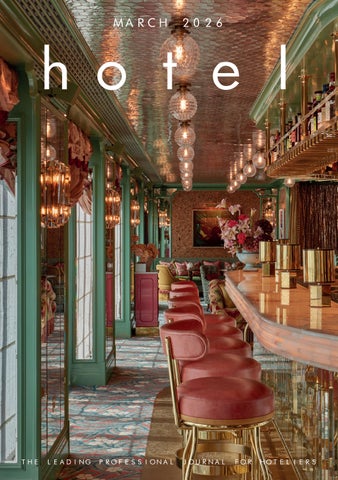
Create a flipbook