![]()


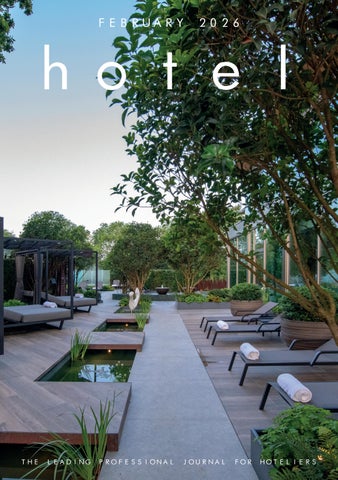
February has long been a month associated with restoration, a pause after the excess of winter and the busy Christmas period in hospitality, a moment to reset habits and refocus on wellbeing. It is therefore fitting that our February 2026 edition turns its attention to Spa, Wellness & Amenities, and to a broader question now shaping the future of hospitality: how personalised wellbeing has become the new definition of luxury.
At the heart of this issue is our main feature, The Rise of the Wellness Concierge. Once considered an added extra or niche offering, wellness is now central to the guest experience, and increasingly led by dedicated specialists. Across leading hotels, wellness concierges are curating deeply individual journeys that go far beyond the spa menu. From sleep optimisation programmes and tailored nutrition guidance, to bespoke spa itineraries designed around travel schedules, stress levels and lifestyle goals, these roles represent a significant evolution in service. As our contributors explore, today’s luxury guest is not simply seeking indulgence, but intentional care - delivered with expertise, empathy and precision.
Wellness, of course, does not end at the spa. This edition also delves into The Bedroom, Housekeeping and Linens, with a second major feature examining The Rise of Sleep Tourism and what hotels need to offer in 2026. Quality sleep has become one of the most sought-after amenities in hospitality, driven by growing awareness of its impact on physical and mental health. We speak to experts across housekeeping, design and wellness to uncover what truly makes a sleep-focused stay effective - and where hotels should be focusing their investment over the coming year.

Alongside our main focuses, this issue includes all of our regular features that reflect the breadth of today’s hospitality landscape. Our Industry Update captures the key developments shaping the sector as we move into 2026. Hotel of the Month takes us to Princes Street, where location, design and service come together to create a standout urban experience. In In the Hot Seat, we sit down with Brenda Collins for a candid conversation on leadership, longevity and change. Hospitality Around the World transports us to Four Seasons New York, offering a global perspective on excellence at scale, while our UKHospitality Guest Column provides a vital voice on policy, people and the priorities ahead for the industry.
We hope this edition informs, inspires and encourages you to rethink how wellbeing can be woven into every layer of the guest journey.


EDITOR-IN-CHIEF
Jade Evans jevans@thehotelmagazine.co.uk
HEAD OF BUSINESS DEVELOPMENT
Jazmine Davis jazmine@thehotelmagazine.co.uk Tel: 01795 509 105
ACCOUNT MANAGER
Harrison Hume hh@cimltd.co.uk Tel: 01795 509 105
MARKETING MANAGER
Lucas Payne lucas@cimltd.co.uk
ADMINISTRATION MANAGER
Natalie Woollin admin@cimltd.co.uk
DESIGN AND PRODUCTION
Grant Waters grant@cimltd.co.uk
James Taylor james@cimltd.co.uk
HEAD OF DIGITAL
Xhulio Bishtaja digital@cimltd.co.uk
SOCIAL MEDIA MANAGER
Lily Lawson socials@cimltd.co.uk
Wondering what’s currently happening within the hotel sector? We reveal all as we share insights into some of the latest news.
With the HMAs 2026 around the corner, we are excited to reveal further partners and key details of the event.
This February we journey to Edinburgh to showcase 100 Princes Street in all its glory.
With the help of industry experts, we explore the rise of the wellness concierge and personalisation as the new luxury in hotels.
We delve into the rise of sleep tourism and what hotels need to offer in 2026.
As a fantastic source of expert guidance and insight, we are delighted to share another guest column by UKHospitality’s Kate Nicholls.
CREDIT FACILITIES MANAGER
Gwen Lee
creditcontrol@cimltd.co.uk
Tel: 01795 509 103
DIRECTOR
Declan Wale
declan@thehotelmagazine.co.uk
Tel: 01795 509 112
Tom Woollin
tom@cimltd.co.uk
MANAGING DIRECTOR
John Denning


The Shepherd Mayfair, a new boutique hotel in the heart of Shepherd Market, is set to open in 2026. Located within one of Mayfair’s most historic enclaves, the hotel has been conceived by Buckley Gray Yeoman in collaboration with Timothy Shepherd, founder and managing director of Shepherd&, drawing on the architectural spirit of the original Mansions of Mayfair and reinterpreting them through a contemporary, story-led lens.
Occupying 33,600 square feet, the hotel will feature 82 guest rooms and suites arranged across six floors, alongside a trio of food and drink destinations. These include Fayre, a modern all-day dining destination; The Lounge, a café-style space offering artisan coffee and light bites; and Teddy’s, a darkly atmospheric hidden cocktail bar set to become a late-night hotspot. The Shepherd Mayfair forms part of Elegant Hotel Collection.
Design throughout the hotel reflects the layered character of Shepherd Market, combining refined historical references with a sense of curiosity and discreet playfulness. Two contrasting arrival experiences define the property, with one entrance offering a calm, arcaded approach from Mayfair and another opening directly into the lively village atmosphere of the market. Interiors are informed by classic British design, tactile materials and thoughtful detailing, with subtle narrative references woven throughout, including nods to local historical

figures and Mayfair’s lesser-known connections to wartime intelligence.
Aldwark Manor Estate is celebrating after longstanding team member Kim Richardson was honoured with the prestigious Unsung Hero Award at the Yorkshire Post Tourism Awards, held at Leeds Dock on December 1st.
Kim, who has been a cornerstone of Aldwark Manor Estate for more than ten years, is widely known for her exceptional commitment to weddings, conferences, and events. Her expertise, warmth, and unwavering support for guests and colleagues alike have made her an indispensable part of the hotel’s success.
The introduction to Kim’s award submission captures what makes her so deserving of the accolade: “Kim Richardson, Aldwark Manor Estate’s heart and anchor for over a decade, delivers exceptional service, compassion, and dedication - creating unforgettable experiences and embodying the very essence of Yorkshire hospitality.”
Kim Richardson, Unsung Hero Award winner, said: “I’m incredibly honoured to receive this award. I love what I do, and I’m lucky to work with such an amazing team who support me every day. Helping our guests create memories is a privilege, and this recognition means the world to me.”
Richard Smith, General Manager of Aldwark Manor Estate, added: “Kim is the embodiment of dedication and true hospitality. She consistently goes above and beyond, not because it’s expected, but because it’s who she is. We

are immensely proud to see her hard work recognised on such a respected stage. Aldwark Manor Estate simply wouldn’t be the same without her.”
www.aldwarkmanorestate.co.uk


As the big day grows ever closer, we share some final details on the upcoming Hotel Magazine Awards 2026.

On 20 April 2026, the hospitality industry will gather at one of London’s most prestigious addresses, the InterContinental London Park Lane, for the annual Hotel Magazine Awards (HMAs). Organised by Hotel Magazine, the HMAs have become a flagship event in the industry calendar, celebrating innovation, service excellence and leadership across the hotel sector.
With applications for the 2026 awards now closed, this marks a pivotal moment for hotels and individuals who have demonstrated outstanding achievement over the past year. From spa and wellness destinations creating moments of true tranquillity, to forward-thinking properties redefining the guest journey through technology, and inspirational leaders championing their teams, the HMAs provide a platform to recognise excellence in all its forms.
This year’s awards promise to be bigger and bolder than ever. Featuring ten categories, the HMAs shine a spotlight on the full breadth of talent within the industry. Highly

sought after accolades such as Hotel of the Year, Hotelier of the Year, Environment Award and Unsung Hero return, alongside three exciting new categories introduced for 2026: Technology Award, Hotel Bar of the Year and Hotel Restaurant of the Year. These additions reflect the growing importance of innovation and food and beverage excellence in shaping the modern hospitality experience.
Guests attending the Hotel Magazine Awards 2026 will be welcomed into a reception space designed to set the tone for an unforgettable evening. A curated selection of pop-up bars will line the area, each serving bespoke drinks created for the occasion, while circulating canapés offer the perfect opportunity to network and unwind ahead of the gala dinner and awards ceremony.
The evening will be hosted by two familiar and respected figures within the hospitality industry, Peter Hancock and Hamish Kilburn, who will guide guests through the celebrations. Unlimited complimentary drinks will be served throughout the night, alongside a three-course

“The HMAs have become a flagship event in the industry calendar, celebrating innovation, service excellence and leadership across the hotel sector.”
dinner crafted by renowned chef Theo Randall - ensuring the conversation flows as freely as the wine.
Once again, the HMAs represent a significant opportunity for the hospitality community to come together and celebrate achievements across every corner of the sector.
As the industry continues to evolve in a post-pandemic landscape, the Hotel Magazine Awards 2026 aim to honour those setting new benchmarks for British hospitality. For those interested in attending or sponsoring the event, further details can be found at hotelmagazineawards.co.uk.
2026 Award Categories
• Environment Award
• Marketing Innovation Award
• Best Spa and Wellness Venue
• Hotel of the Year
• Hotel Bar of the Year
• Hotelier of the Year
• Hotel Restaurant of the Year
• Equity, Diversity & Inclusion Award
• Unsung Hero Award
• Technology Award
This year’s official vodka cocktail partner at the Hotel Magazine Awards is KRÓL. As the event grows closer, we spoke with the Alessandro Mansueto, Brand Manager at KRÓL, who revealed more on the liquid and its involvement with the HMAs.
Founded in 2018 by entrepreneur Suk Dhillon, G.B. Brandz Ltd has quickly become one of the UK’s most dynamic family-owned luxury beverage distributors. Based in Windsor, the company specialises in curating premium wines and spirits for discerning consumers, boutique retailers, and the high-end on-trade. Its philosophy is rooted in authenticity, craftsmanship, and mindful enjoyment - paired with a modern commitment to eco-friendly packaging and inclusive certifications such as vegan and kosher status.
At the heart of the portfolio is KRÓL, a vodka brand inspired by 19th-century Polish vodka-making traditions. Named after the Polish word for “King,” the KRÓL collection blends heritage with innovation, presenting organic, fivetimes-distilled vodkas crafted with exceptional purity. The flagship KRÓL IV Luxury Organic Vodka is produced from natural grains, filtered through active carbon, and softened with reverse-osmosis water. A delicate hemp infusion (<0.01% THC) adds a smooth, velvety elegance to its 40% ABV profile, revealing subtle notes of vanilla, brioche, pineapple, and rye.
The newest release, KRÓL I, represents the brand’s next chapter; an accessible yet refined organic vodka created for the modern market. Clean, herbaceous, and remarkably smooth, it launched exclusively in the UK and has already begun turning heads within the trade.
2025 has marked a breakthrough year for the company. KRÓL I won both Master and Taste Master at The Vodka Masters 2025, praised for its clarity and craftsmanship, while KRÓL IV secured Gold at The Luxury Spirits Masters 2025 - cementing G.B. Brandz as a rising leader in premium vodka innovation.

With an eye on quality, creativity, and global ambition, G.B. Brandz Ltd is shaping a new era of luxury spirits - one defined by heritage, sustainability, and exceptional taste and that’s why being an official partner of the 2026 Hotel Magazine Awards aligns so seamlessly.
“With an eye on quality, creativity, and global ambition, G.B. Brandz Ltd is shaping a new era of luxury spirits.”

SUPPORT YOUR CLIENTELE ACROSS THE SIX PILLARS OF HEALTH & WELLNESS
With a presence in over 40 countries, we leverage our proprietary NAD+ formulation first registered in 1974 to deliver world-class IV protocols, diagnostics, and supplementation. Through turnkey solutions including Longevity Concierge IVs, premium supplement retail, IV pop-ups, and comprehensive IV menus, supported by medical experts, AI longevity consultants, and trained spa teams, we enable hospitality and wellness brands to become gold-standard longevity hubs and centres of human performance.


L’OR are the proud coffee sponsor at the 2026 Hotel Magazine Awards. As a brand that prides itself on all-in-one, premium coffee solutions, we share further details on their offering and what makes L’OR the appropriate partner.
Tell our readers about L’OR and the work you do within the industry
L’OR is a global JDE Peet’s premium coffee brand, delivering sensorial experiences and attainable luxury. We offer a wide range of blends characterised by rich flavours and distinct intensities available for both home and professional use.
We understand the unique demands of every hotel space, from the welcoming lobby and bustling breakfast/ lunch occasions to the refined restaurant and café. That’s why L’OR provides a comprehensive suite of coffee solutions, encompassing responsibly sourced beans, intuitive equipment, tailored training, and ongoing support, ensuring a perfect cup for every guest, every time.
important is it for L’OR to be involved with industry
At L’OR, we value collaboration with industry partners. The opportunity to meet and connect with operators, decision makers and potential customers is crucial. It allows us to gain further insights into their challenges and collaboratively devise the most effective solutions. Furthermore, events such as the Hotel Magazine Awards provide an excellent platform for building lasting relationships and exploring new opportunities within the industry.
sets
Luxury positioning and French heritage: We leverage our French origins to cultivate an image of sophistication, elegance, and gourmet quality. The brand name itself (“The Gold”) and its sleek, often gold-accented packaging

reinforce this premium, luxurious feel.
Emphasis on intense and aromatic flavour profiles: We are renowned for crafting blends that deliver rich, deep, and complex aromas and tastes. We focus on a wide spectrum of intensities, allowing consumers to find a coffee that perfectly matches their preference for a bold and impactful experience.
A full solution: we provide a tailored coffee solution for every area of your hotel. L’OR elevates the entire hotel coffee experience, addressing every touchpoint from the lobby and hotel bar to in-room offerings.
Sourcing for better: our commitment extends beyond the cup. JDE Peet’s Common Grounds programme embodies our ambition to positively impact people, our planet, and the future of coffee and tea. Common Grounds is comprised of three pillars: Responsible Sourcing, Minimising Footprint and Connecting People. Bringing all our ongoing sustainability work together under one programme.
“We are renowned for crafting blends that deliver rich, deep, and complex aromas and tastes.”


Global perspective, local soul: as Regional Director – Northern Europe at Preferred Travel Group, Anna Moore, champions individuality, emotional intelligence and authentic luxury in an industry moving beyond “beigification.” She shares the experiences that shaped her career, her vision of exceptional hospitality, and why Europe’s independent hotels are perfectly placed to thrive by being unmistakably themselves.
With a career shaped by global experience and a passion for independent hospitality, Anna Moore brings both strategic vision and emotional intelligence to her role as Regional Director – Northern Europe at Preferred Travel Group. From championing individuality in a world of “beigification” to redefining what luxury really means, Anna sits at the intersection of tradition, innovation and authenticity.
Here, she shares the experiences that shaped her career, her definition of exceptional hospitality, and what she believes lies ahead for Europe’s independent hotels.
Rather than a single defining leap, Anna describes her career as a steady progression.
“Rather than one pivotal moment, my path has been shaped by a gradual evolution built on experience across multiple international markets,” she said. “I’ve been fortunate to travel extensively throughout my career and to experience a wide range of hotels and cultures, which has deepened my appreciation for the diversity and complexity of our industry.”
Hospitality, she added, has always been more than a job. “It’s not just a profession for me – it is a genuine passion, and one that has only strengthened over time.”
What excites her most about her current role is its scope. “I enjoy the breadth of the role and the opportunity to engage with every aspect of the hotel ecosystem,” she explained. “From matching travellers with the right hotel experience, to working closely with member hotels to help them optimise their partnership with Preferred Hotels & Resorts, it is incredibly rewarding to see each property’s individuality truly shine.”
That individuality is at the heart of Preferred’s soft brand model. “The strength of Preferred lies in the fact that no two hotels are the same,” Anna said. “Every conversation, challenge and solution is tailored to the specific needs of each business. That variety makes the role highly entrepreneurial, dynamic and continuously stimulating.”
She describes the brand’s philosophy simply: “As a soft brand, Preferred Hotels & Resorts offers a powerful balance of flexibility and support. Our members retain the autonomy to express their unique identity and vision, while benefiting from a strong global infrastructure that supports distribution, marketing and loyalty objectives.”
For Anna, true hospitality is almost invisible. “Exceptional hospitality, to me, is when a guest’s needs are anticipated and seamlessly met before they even realise they exist,” she said. “It lives in the details, the small, thoughtful touches delivered with consistency and authenticity, and it also relies on hotel teams truly understanding who their guests are.”
When it works, the result is emotional rather than transactional. “When teams get this right, hospitality feels effortless, personal and genuinely memorable, creating an experience that resonates long after the stay has ended.”
She has watched the industry transform during her career. “We have moved away from a one-size-fits-all approach towards highly tailored experiences designed around individual preferences, expectations and lifestyles,” she noted.
Luxury, in particular, is changing. “As the definition of luxury continues to shift and become increasingly personal,
and competition in the market intensifies, it is more important than ever for hotels to deliver experiences that feel relevant and meaningful to each guest.”
The winners, she believes, will be those who understand both people and purpose. “Those that succeed are the ones that combine intuitive service, emotional intelligence and a deep understanding of their brand promise to create truly exceptional hospitality.”
Europe’s diversity is both its strength and its challenge. Anna sees huge potential for independent hotels willing to embrace who they really are.
“The European market’s diversity creates strong opportunities for independent hotels, particularly as travellers increasingly seek authenticity, individuality and a sense of place,” she said.
She points to the industry’s move away from sameness.
“As the industry moves away from ‘beigification’ – as identified by our Luxury Travel Report in 2025 –independents can differentiate by leaning into their unique identities through local storytelling, bespoke design, distinctive culinary offerings and highly personalised service.”
Technology and partnerships will also play a role. “By combining these strengths with smart use of data, loyalty platforms and strategic partnerships, independent hotels can expand their reach and compete effectively while preserving their independence.”
But challenges remain. “Ongoing cost pressures, rising labour expenses and staffing shortages continue to affect hotels across Europe,” Anna said.
In the Nordic region, there is an added layer of difficulty. “There is a complexity in balancing luxury with sustainability. The opportunity lies in redefining luxury to focus on quality, meaning and experience rather than excess, allowing independent hotels to meet evolving guest expectations without compromising their values.”
Anna’s leadership style is shaped by trust and authenticity. “It is rooted in trust, empowerment, and authenticity,” she said. “I believe the best results come when team members feel confident to be themselves, bring their unique perspectives, and take ownership of their work.”
Working across borders has made listening essential. “Working across multiple countries, I’m continually listening to and learning from my colleagues all over the world.”
For her, leadership is less about control and more about creating space for others to succeed.
Constant travel comes with its own routines. For Anna, staying grounded starts with fitness.
“A good gym when I’m travelling is a must!” she laughed. “My gym kit is the first thing I pack for any trip, even if it’s just a quick 30-minute workout, it’s an important part of my daily routine that I value.”
And what makes a hotel truly special in her eyes? It’s not just design or luxury, but how it makes her feel – the details, the atmosphere, and the sense that someone has really thought about the guest experience.
In an industry increasingly pulled between scale and individuality, Anna Moore is firmly on the side of character, connection and authenticity – and she believes that’s exactly where the future of hospitality lies.

Facing Edinburgh Castle and steeped in stories of explorers, artists and adventurers, 100 Princes Street is Red Carnation Hotels’ quietly confident Scottish debut. More private club than conventional hotel, the 29-key townhouse delivers an experience that feels deeply personal, richly local and unmistakably luxurious – featuring as February’s Hotel of the Month.

There are few hotel addresses in Edinburgh as commanding as 100 Princes Street. Directly opposite the Castle, the elegant townhouse occupies a front-row seat to the city’s most iconic view. Step inside and the mood changes straight away. The noise of Princes Street fades, replaced by something quieter and more considered. It feels less like a hotel and more like being welcomed into an impeccably kept private home.
Opened in April 2024 as Red Carnation Hotels’ first Scottish address, 100 Princes Street occupies the former headquarters of the Royal Overseas League. The building has long been a meeting place for artists, explorers and international thinkers, and that spirit still lingers. Today, the hotel takes its cues from the Scottish explorers who once gathered here, with nautical touches, botanical references and finely crafted details threaded through the interiors.
The result is a hotel that feels grounded in its surroundings. Five bespoke tartans, created exclusively for the property by textile designer Araminta Campbell, appear throughout the rooms and public areas, alongside carefully chosen antiques and subtle maritime details that hint at Scotland’s seafaring heritage.
One of the most striking features is the hand-painted mural by Croxford & Saunders, which winds its way up the five-storey staircase. Inspired by vintage travel posters, it celebrates Scotland’s botanical explorers and leads to a dramatic hot-air-balloon chandelier at the top.
With just 29 individually designed rooms and suites, the hotel retains an almost members’-club feel. Many rooms look directly onto Edinburgh Castle, while others feature porthole-style windows, a playful nod to the building’s nautical past. The two signature suites - The Archibald and The Isobel, named after explorers Archibald Menzies and Isobel Wylie Hutchison, are among the city’s most soughtafter, with floor-to-ceiling windows framing the Castle in

cinematic style.
Luxury at the venue is quietly confident. It shows up in the details: traditional sporrans doubling as “Do Not Disturb” signs, furniture crafted by local makers, and a team that genuinely remembers guests and their preferences. Under Managing Director, Malcolm Hendry, a Red Carnation veteran of more than 20 years, 100 Princes Street boasts warm, instinctive and refreshingly unforced service – nothing is too much to ask.
Dining is reserved exclusively for residents, reinforcing the feeling that you’re part of something private. The Wallace; part dining room, part bar, part library, forms the social heart of the hotel. Here, Executive Chef, Wilhelm Maree, focuses on Scotland’s best produce, delivering dishes that are generous, elegant and rooted in seasonality.
For smaller gatherings, Ghillie’s Pantry offers private dining for up to twelve guests. Shelves lined with more than 100 whiskies and an astrological ceiling mural make it a destination in its own right, ideal for tasting menus and expertly guided whisky experiences, thanks to Dario Orsili, Head Bartender and Whisky Ambassador.
Beyond the building itself, 100 Princes Street excels at connecting guests to Scotland more deeply. Experiences range from whisky tastings with Dario and textile workshops with Araminta Campbell, to private walking tours, bespoke fragrance creation and even custom kilt design.
Sustainability is also central to the hotel’s ethos. Working with EarthCheck, the team is on a path towards netzero emissions, with initiatives that include AI-led food waste reduction, biodiversity projects and community partnerships.
In a city filled with exceptional hotels, 100 Princes Street stands out by offering something harder to define but instantly felt: a genuine sense of belonging. For February and beyond, this elegant townhouse sets a new standard for boutique hospitality in Edinburgh.


As luxury hospitality shifts from indulgence to intention, the rise of the wellness concierge is redefining the guest experience. From personalised sleep, movement and recovery journeys to expert-led guidance that extends far beyond the spa, we explore how hotels are setting a new benchmark for holistic, human-centred wellbeing.
As wellness evolves from a menu of treatments into a holistic lifestyle offering, luxury hotels are redefining what it means to truly care for their guests. Enter the wellness concierge: a new generation of specialists dedicated to designing deeply personalised wellbeing journeys that extend far beyond the spa. From tailored sleep programmes and one-to-one nutrition guidance to bespoke spa itineraries shaped around individual needs, today’s leading hotels are positioning personalisation as the ultimate luxury. We’re exploring how the rise of the wellness concierge is transforming the guest experience - and setting a new benchmark for Spa and Wellness in the global hospitality landscape.
At Pennyhill Park the role of the spa team has changed significantly. Charlene Phipp, Spa Manager at Pennyhill Park explained, “We have moved away from simply delivering treatments and towards guiding guests through more outcome driven experiences.” Recognising that today’s luxury hotel guests are not just looking to relax, they want to feel better, perform better and leave with tangible results, Charlene revealed that her spa team take on a consultative role, and guide guests through treatments, thermal experiences, movement, recovery and rest. “For those guests that need additional guidance around the spa we have written structured wellness journeys helping navigate the spa facilities and optimise their experience step by step,” she added. Looking at examples of how personalisation - whether through pre-arrival consultations, bespoke journeys, or intuitive guest interaction – can elevate the wellness experience and create a lasting emotional connection for guests, Charlene told us about their Contrast Therapy Retreat where the lasting emotional connection comes directly from being guided by world class expert David “Jacko” Jackson.


“Our pre arrival calls for all our guests, but especially for those attending the Contrast Therapy Retreats, allows us to learn more about the guest and experience with thermal therapies. During the retreat Jacko personally leads guests through the spa vast thermal spaces combining heat and cold immersion with breathwork techniques. His expertise gives guests confidence ensuring they feel safe and supported whilst mastering these powerful practises. Through the retreat Jacko observes, adjusts and teaches throughout the journey helping guests with recovery, reducing tension and enhancing clarity,” said Charlene.
This expert led retreat is paired with Pennyhill Park’s Exclusive Hot and Cold Wellbeing Treatment plus shared meals and extended spa access creating a fully immersive day. But Charlene believes what truly makes the experience memorable for guests is Jacko’s presence and ongoing guidance he provides. “Guests leave with a lasting connection to their body, practical techniques to manage stress and recovery and confidence to continue these practises beyond the spa.”
Looking at what guests are valuing more between access to facilities and treatments, or guidance, expertise, and human connection, and how Pennyhill Park is responding to the shift, Charlene said, “The Spa facilities will always remain incredibly important however what guests increasingly value is guidance and expertise.” The
spa facilities alone are no longer enough, guests want to know how to use the spa and gym facilities, why they are recommended, in what order and what impact they will have.
At Pennyhill Park, they have partnered with leading sports performance specialists, 292 Performance, renowned for providing bespoke high-performance support and coaching to elite athletes including Premier League football players and Olympic champions, to bring guests world-class personalised testing and training.
Sharing details on the collaboration, Charlene explained, “Our one hour profiling begins with a thorough in-depth assessment of current performance, challenges and specific objectives and use cutting edge VALD technology to asses strength, power and asymmetry. Our guests then receive a personalised development plan created for them, based on their specific objectives and profiling results.”
From a slightly different perspective, at Palm, the public relations firm, specialising in travel, hospitality, property and F&B communications for global brands, the rise of the wellness concierge signals a structural shift in how luxury travellers define value. Emily Keogh, Founder, Palm, explained, “Guests are no longer seeking isolated moments of indulgence; they are looking for experiences that support how they feel across the entirety of a stay: physically, mentally and emotionally. Even spiritually. One

of the clearest insights from our ongoing Palm trends work is that wellness has evolved from a novel differentiator to a baseline expectation in the luxury space.”
Traditional spa services can feel transactional and used to be disjointed from the rest of a guest’s hotel experience. Emily recognises that the wellness concierge represents a move away from that model and towards something far more considered, permeating the whole guest journey –“That’s exciting,” she added.
“It means properties take time to understand a guest’s needs, energy levels and intentions, and when it works well, they translate that insight into a more cohesive experience. Rather than selling treatments, hotels are curating journeys where sleep, movement, nutrition, rest and recovery are thoughtfully aligned.”
We’re seeing this approach embraced by forwardthinking brands such as Six Senses with their anticipated city London launch, where wellness touchpoints will help guests navigate highly personalised pathways rather than fixed menus. Emily explained how this can include laser precise ingredients choices and sourcing, to medical led tech, right through to spiritual wellbeing. “In an increasingly crowded luxury market, that sense of continuity and genuine care is becoming a powerful form
of differentiation,” she added.
Personalisation has become one of the clearest expressions of modern luxury, and wellness concierges are enabling hotels to deliver it in a more intelligent and human way. “Although AI technology is obviously accelerating and supporting this process, what’s interesting is that this personalisation is less about data points and more about discernment through conversation, observation and emotional intelligence,” said Emily.
She believes there is power in understanding why a guest is travelling, whether they are seeking restoration, focus, connection or simply space to switch off, as concierges can tailor everything from daily rhythms to in room rituals and off property recommendations. This really works because today’s luxury traveller is highly discerning and increasingly resistant to generic, one size fits all experiences. Emily added, “In today’s world, personalisation done right can truly drive loyalty.”
Leading hotels are integrating wellness concierges across the entire guest journey, from pre arrival through to post stay. Wellness is no longer treated as a standalone offering. Instead, it becomes a lens through which the whole experience is shaped.
This might include influencing room environments

to support better sleep, guiding guests towards more restorative dining choices, curating movement or mindfulness experiences, or helping guests engage more meaningfully with the destination itself. Wellness concierges are great at helping guests slow down, disconnect and reconnect, not just with themselves, but with place, culture and nature. To add to this, the Palm trends report also highlights a growing demand for integrated wellness, where guests expect wellbeing to be woven into sleep, dining, movement and connection with place, rather than confined to a spa timetable.
Emily revealed, “A great example is the collaboration between Skyendor and St. Pancras Spa in London, which created a cocoon-like escape. Launched in summer 2025, the partnership introduced innovative treatments that marked the start of a new era, where luxury hotels and science-led skincare brands join forces to deliver experiences that are both indulgent and transformative.”
Looking ahead, Emily sees the wellness concierge evolving from experience curator into a true strategic differentiator. “As wellness becomes more mainstream - and as touchpoints like longevity are important to a growing younger audience keen to get ahead of the curve - the hotels that stand out will be those that use this role
with intention and tapping into guests’ needs with meaning and precision,” she said.
Emily believes the next phase of luxury wellness will be less about abundance and more about discernment. Guests are increasingly seeking guidance in an overstimulated tech-heavy and uncertain world, and wellness concierges are uniquely positioned to help hotels provide that sense of calm authority.
“From a brand perspective, the hotels that will stand out are those that empower wellness concierges to shape the guest experience holistically, rather than treating the role as a straightforward extension of the spa,” she concluded.
In an era where time, attention and wellbeing have become the ultimate luxuries, the rise of the wellness concierge marks a pivotal shift for hospitality. No longer confined to treatments or facilities, wellness is now guided, contextual and deeply personal – shaped by human insight as much as expertise. As hotels like Pennyhill Park and forward-thinking global brands demonstrate, the future of luxury wellness lies in meaningful connection, informed guidance and experiences that stay with guests long after check-out. Those who embrace this evolution won’t just meet rising expectations – they’ll redefine what it truly means to care.
From an £85 million expansion to a bold new focus on holistic wellbeing, Managing Director Chris Eigelaar, shared how The Belfry is honouring its iconic heritage while redefining luxury through wellness-led experiences and future-focused innovation.
Tell us about your journey into your current role at The Belfry. Hospitality has been part of my life for as long as I can remember. Growing up in a family-run hotel in South Africa, I learned early on that this industry is about more than service, it’s about connection, care, and creating experiences that matter. Those values shaped my career from the very beginning.
Over the past two decades, I’ve had the privilege of working with some of the most respected brands in the industry, including Sofitel, Hilton, QHotels, and Locke Hotels. Each role taught me something new: how to lead teams, how to deliver operational excellence, and how to balance commercial success with a people-first culture. I’ve worked everywhere from banqueting floors to boardrooms, and that hands-on experience has been invaluable.
I joined The Belfry in 2018, and from day one, I knew this was a special place. It’s not just a resort; it’s an icon of British hospitality and golf. I started as General Manager and progressed through several senior roles, including Resort Director during the pandemic, a time that tested every ounce of resilience and leadership. Guiding the team through that period was one of the most challenging and rewarding experiences of my career.
In January 2025, I stepped into the role of Managing Director. Leading The Belfry through a period of transformation and growth has been an incredible journey. From overseeing an £85 million expansion to driving record-breaking performance and building a culture where people thrive, every day is about honouring our heritage while shaping the future. And what makes it truly special is the team: passionate, talented individuals who share my commitment to excellence and heartfelt hospitality.
Can you share details on the hotel’s recent refurbishment and what inspired the decision?
The Belfry has just completed an £85 million


transformation, the biggest investment in our history, and it’s nothing short of game-changing. We’ve added The Masters Suite, a stunning events space that can host up to 920 delegates, 149 new luxury bedrooms, and a cutting-edge leisure club designed for the modern wellness traveller.
Why did we do it? Quite simply, demand. The Belfry has always been a destination people love, but we were hitting capacity and turning away business. This expansion means we can say “yes” more often, yes to larger conferences, yes to spectacular weddings, yes to guests who want a complete resort experience with world-class hospitality and leisure under one roof.
It’s about future-proofing The Belfry. We’re not just growing in size; we’re elevating what it means to stay here.
The Leisure club is a new addition, why is wellness so important to your growth strategy?
Wellness isn’t just a trend, it’s a cultural shift. Today’s guests aren’t looking for a simple overnight stay; they’re seeking experiences that make them feel better physically, mentally, and emotionally.
Our new Leisure Club is designed to meet those expectations head-on. It’s not just a gym, it’s a space for holistic wellbeing, featuring state-of-the-art equipment, tailored fitness programs, and soon-to-launch wellness packages that combine spa treatments and mindfulness experiences. We’re creating opportunities for guests to recharge, reset, and leave feeling better than when they arrived.
Wellness also aligns perfectly with our long-term
strategy. It strengthens our leisure offering, attracts new markets such as wellness retreats and corporate wellbeing events, and complements our reputation as a world-class golf and hospitality destination.
What is your advice to other hoteliers on how to successfully navigate a large-scale re-vamp?
First and foremost, communication is everything. A refurbishment of this scale can feel overwhelming, and without clear, consistent communication, it can quickly unravel. At The Belfry, we made transparency a priority. Every team member knew what was happening, why it was happening, and how it would impact their area. That clarity kept everyone aligned and focused on delivering exceptional service, even during construction.
Second, get your team involved early. Make them a part of the vision, not just the logistics. When people understand the bigger picture, the “why” behind the change, they become champions for it. We held regular town halls, shared progress updates, and celebrated milestones together. That sense of ownership made all the difference.
Third, plan for the guest experience. Guests should feel the least amount of disruption possible. We stayed open throughout the entire expansion, which was no small feat! It required meticulous scheduling, creative problemsolving, and a relentless commitment to maintaining standards. Every decision was made with the guest in mind.
Finally, stay flexible and resilient. Things will change, challenges will arise, and timelines will shift. The key is to adapt quickly without losing sight of the end goal. For


us, that goal was clear: to create a resort that sets a new benchmark for luxury hospitality. Keeping that vision front and centre helped us navigate every twist and turn.
The Belfry has a long-standing reputation for excellence in hospitality and golf. How do you balance honouring its heritage while driving innovation and modernisation across the resort?
The Belfry’s heritage is its heartbeat. Golf isn’t just part of our story, it’s the foundation of our identity. We’re proud to have hosted the Ryder Cup more times than any other venue, and that legacy is something we protect fiercely. Our greenkeeping team works tirelessly to ensure our courses evolve every year, so golfers always experience something fresh while enjoying the traditions they love.
But heritage alone isn’t enough in today’s world. Guests expect more, they want modern, memorable experiences that go beyond the fairway. That’s where innovation comes in. For us, innovation isn’t about replacing tradition; it’s about enhancing it. Every investment we make, from the £85 million expansion to our new Leisure Club and Masters Suite, is designed to complement what makes The Belfry iconic.
We’ve built trust over decades of heartfelt hospitality, and that trust gives us the freedom to innovate boldly. Guests know that when we introduce something new, whether it’s wellness packages, sustainability initiatives, or cuttingedge event spaces, it’s done to elevate their experience, not change the essence of The Belfry.
The fact that our occupancy increased during the expansion says it all: our guests came on the journey with us because they believe in what we stand for. Ultimately,
it’s about balance. We honour our past while shaping the future, ensuring The Belfry remains a destination where tradition meets transformation.
In an era where guest expectations are rapidly evolving, how is The Belfry leveraging technology and data to create more personalised and memorable guest experiences?
Technology is no longer a back-office function, it’s a key driver of the guest experience. At The Belfry, we use data and digital tools to make every stay feel personal, seamless, and memorable. Our CRM systems track guest preferences and history, allowing us to anticipate needs before guests even arrive. From favourite room types to dining choices, this insight helps us tailor experiences, whether that’s a personalised welcome amenity or a curated itinerary for their stay.
We’ve recently introduced a new property management system that transforms the guest journey from check-in to check-out. It learns about each guest’s preferences in real time and shares that information across departments, enabling our teams to deliver those “wow” moments that make a stay unforgettable. For example, if a guest prefers a certain wine or spa treatment, that detail is communicated instantly so we can surprise and delight them.
Convenience matters too. Our new website chatbot provides instant answers to guest queries, while ReviewPro helps us track feedback and continuously enhance our offer. These tools give us actionable insights to improve service and exceed expectations.
Ultimately, technology is an enabler, not a replacement for human connection. It gives us the agility and

intelligence to deliver experiences that feel bespoke, while keeping the warmth and authenticity that The Belfry is known for.
The hospitality industry has faced recruitment challenges in recent years. How do you attract, retain, and motivate top talent while maintaining the distinctive Belfry culture?
Recruitment in hospitality been challenging over the years, but at The Belfry, we’ve turned it into an opportunity to strengthen our culture and elevate our service. It starts with hiring for attitude and values, not just experience. Skills can be taught, passion and alignment with our ethos cannot. That’s why we introduced The Belfry DNA, a programme designed to unite our culture across the resort and raise the bar for service excellence. It ensures every team member understands what makes The Belfry special and how they can bring that to life every day.
Retention is about creating an environment where people feel valued and see a future for themselves. Our LEAD career pathways programme is a cornerstone of that strategy. It combines one-on-one mentoring, master classes, and practical projects to develop future leaders at every level. The result? 70% of our management roles are filled internally, a statistic we’re incredibly proud of.
Motivation comes from recognition and flexibility. We’ve introduced initiatives like monthly appreciation events, peer-nominated awards, and a generous benefits package that includes mental health support, 24/7 GP access, and flexible working options such as four-day weeks and selfselected shifts. These aren’t perks, they’re part of a culture that prioritises wellbeing.
The results speak for themselves: staff turnover has dropped from 70% to 29%. Ultimately, it’s about creating a workplace where people don’t just work, they belong, grow,
and thrive. That’s The Belfry culture, and it’s what sets us apart.
Looking ahead, what are your priorities for The Belfry over the next five years, and how do you see the UK luxury hospitality sector evolving in that time?
The next five years are about turning our recent transformation into long-term success. Our investment wasn’t just about adding rooms and facilities, it was about future-proofing The Belfry and redefining what a resort experience should be. Now, the focus is on showcasing the Masters Suite as the UK’s leading events venue, elevating our wellness and leisure offering, and continuing to innovate in every area of the guest journey.
We’re planning enhancements to The Belfry Spa, introducing new leisure concepts like pickleball, and exploring a signature dining experience that will set a new benchmark for culinary excellence. Sustainability will remain at the heart of everything we do, alongside technology-driven personalisation to create seamless, tailored stays.
The UK luxury hospitality sector is evolving rapidly. Guests are no longer satisfied with just a beautiful room, they want experiences that feel unique, authentic, and memorable. Wellness, sustainability, and experiential travel are shaping the future, and The Belfry is perfectly positioned to lead that movement.
Our vision is clear: to honour our heritage while embracing innovation, ensuring The Belfry remains the destination of choice for those seeking something truly extraordinary.
Steeped in centuries of history yet firmly rooted in modern hospitality, Holdsworth House continues to evolve without losing its soul. In this interview, General Manager Chris Meehan shares how the Jacobean manor balances heritage with contemporary comfort, and how its new Farmhouse Treatment Rooms, developed in partnership with luxury wellness specialists Lemi, are redefining restorative experiences through thoughtful design and craftsmanship.


UK AND IE SALES MANAGER – Anna Histed Anna.histed@lemigroup.it
Holdsworth House has a unique heritage. How do you preserve its character while keeping the guest experience modern and comfortable?
Holdsworth House is defined by its story; centuries of craftsmanship, creativity and hospitality, and preserving that character is central to every decision we make. We protect the fabric and atmosphere of the Jacobean manor while gently integrating contemporary comforts that today’s guests value. Whether it’s bedroom amenities, our food and drink offering, or the new Farmhouse Treatment Rooms, every enhancement is designed to feel authentic
to the house. Modernity never replaces heritage; it complements it. Guests feel the weight of history the moment they arrive, but they also enjoy the warmth, ease and quality expected of a luxury hotel.
How does the new Farmhouse Treatment Rooms concept support your vision for blending historic charm with contemporary wellness?
The Farmhouse Treatment Rooms are a natural extension of Holdsworth House’s heritage. Inspired by Yorkshire’s
wild moorlands and the grounding energy of the landscape, The Farmhouse brings a contemporary wellness offering into a setting that’s rich with history. The space is intentionally restorative - quiet, warm and intimatewith materials and textures that echo the surrounding countryside. While the building honours its centuriesold roots, the wellness philosophy, design approach and treatment partnerships place the Farmhouse firmly in the present, offering guests a modern sanctuary shaped by the stories of the past.
What inspired the creation of the Farmhouse Treatment Rooms and how does this development evolve the guest experience at Holdsworth House?
We wanted to create something different; something rooted in place, story and emotion. The Farmhouse Treatment Rooms were inspired by the moors that surround us and the long history of creativity connected to the hotel–from artists and actors who stay here to the filming of Riot Women and production of Wuthering Heights. In the Farmhouse, we saw an opportunity to offer a deeper, more meaningful kind of wellness experience: one that prioritises rest, grounding and emotional balance rather than traditional spa facilities.
Lemi is known for their luxury wellness engineering. What made their treatment beds the right choice for your new spa offering?
The Farmhouse was designed around quality, intention and comfort and Lemi aligned perfectly with that vision. Their treatment beds combine exceptional craftsmanship with innovative wellbeing technology, offering guests unparalleled comfort and therapists exceptional support. We wanted equipment that would elevate every treatment and stand the test of time and Lemi’s heated memory-foam design, build quality and ergonomic precision made them the ideal choice.
How has your partnership with Lemi enhanced the overall wellness experience at The Farmhouse Treatment Rooms?
Lemi plays a vital role in creating the cocooning sensory experience we envisioned for The Farmhouse. The moment a guest lies on the bed, the warmth, stability and cushioning signal safety and calm. This supports our partnership with GROUND Wellbeing, allowing their rituals - rooted in rest, rhythm and natural healing - to unfold without distraction. The beds are not just functional; they elevate the entire treatment journey and help us deliver a deeply restorative experience.
What specific benefits have guests experienced since integrating Lemi’s technology into your treatments?
Guests consistently tell us they’ve “never felt so comfortable” during a treatment. The heated memory foam helps them drop into deep restful state quickly, while the ergonomic support enhances everything from Grounding Rituals to Biome Facial techniques. Many guests comment on how the bed enhances the sensory flow of the treatment, allowing them to fully experience the scents, sounds and stillness of the space. The result is a more

immersive and restorative outcome that stays with them long after the treatment ends.
How do Lemi’s ergonomic and technical features support your therapists and elevate treatment delivery?
Our therapists are able to work with exceptional precision and comfort thanks to the beds’ smooth adjustability and ergonomic engineering. This means they can focus completely on technique, alignment and guest connection without compromising their own physical wellbeing. The beds enhance every ritual we offer—particularly the slow, intentional GROUND therapies where position, breath and flow matter enormously. Lemi allows our team to deliver treatments that are not only luxurious but also deeply effective.
What guest feedback have you received since opening the Farmhouse Treatment Rooms?
The response has been overwhelmingly positive. Guests describe The Farmhouse as “unexpectedly calming,” and “a sanctuary.” Many highlight the tranquillity of the space, the sensory design, and the thoughtful balance of light and dark, warmth and stillness. We’ve also received wonderful feedback about the GROUND Wellbeing treatments and the comfort of the Lemi beds, with guests often saying the experience feels more like a retreat than a standard spa visit.
Looking ahead, how do you see your partnership with Lemi evolving and enhancing the guest experience further?
Lemi is an important part of our long-term wellness vision. As The Farmhouse Treatment Rooms continue to develop, we see opportunities to introduce additional Lemi technologies that align with our philosophy of mindful, restorative wellness. Whether through expanded treatment offerings, enhanced therapeutic tools or new sensory elements, Lemi’s innovation will help us continue shaping a wellness journey that feels deeply connected to both Yorkshire’s landscape and Holdsworth House’s enduring story of hospitality.


NADclinic is helping luxury hotels meet modern wellness demand without operational strain.
Luxury hospitality has always been defined by anticipation rather than reaction. The most successful hotels are not those that chase trends loudly, but those that absorb cultural shifts quietly and translate them into guest experiences so seamless they feel instinctive. Wellness is now being approached in much the same way. Leading hotels are working with medically governed partners such as NADclinic to integrate intelligent, performanceled wellbeing into the guest journey with discretion and ease. What was once an optional spa visit has evolved into a broader expectation. Better sleep, sustained energy, stronger immunity, cognitive clarity and long-term vitality. Today’s guest is not necessarily looking for more experiences. They are looking to feel better while they travel, and to trust that their hotel understands how to support that need responsibly.
operational reality behind rising wellness expectations
For owners, general managers and operators, the question is no longer whether wellness matters. It is how to deliver it without adding complexity, cost or disruption. Across the global hotel landscape, operators continue to face staffing shortages, rising labour costs and limited physical space, while also being expected to unlock incremental revenue and maintain exceptional service. At the same time, guest expectations around wellbeing have accelerated, becoming more informed, more specific and more closely tied to performance.
High-value segments such as executives, frequent flyers and long-haul travellers are increasingly attentive to how hotels support resilience and recovery. Support for jet lag, fatigue, sleep disruption and sustained clarity has quietly become part of the modern luxury equation. Traditional spa menus and familiar amenities often struggle to meet these needs, not through lack of intent, but because the operating model behind hotel wellness has not evolved at the pace of demand. The result is a widening gap between what guests want and what hotels can realistically deliver through conventional approaches.

A different model for hospitality wellness
It is within this gap that NADclinic has developed a partnership approach designed specifically for hospitality realities. Rather than asking hotels to invest in new facilities or specialist staffing, NADclinic enables properties
to introduce medically governed wellness services that integrate into existing operations with minimal disruption. This includes clinically supervised IV programmes and premium supplementation designed to support energy, recovery, immunity and cognitive performance. The focus is high guest impact with minimal operational lift. The guest-facing experience remains calm, refined and unmistakably luxurious. Medical governance, clinical oversight and compliance are managed entirely by NADclinic behind the scenes, allowing hotel teams to elevate wellbeing without increasing pressure on existing structures.
For many luxury properties, this is the difference between wellness as a marketing promise and wellness as a viable, scalable part of the guest journey. Wellness that moves with the guest One of the most noticeable shifts in hotel wellbeing is its movement beyond fixed spaces and scheduled appointments. Increasingly, guests expect support to fit around their travel demands, not the other way around. NADclinic enables hotels to offer in-room, ondemand wellness delivery led by medically trained teams. IV programmes for jet lag, travel recovery or sustained energy can be administered privately in-suite, enabling guests to benefit without disrupting their schedule or the flow of their stay. For VIPs, corporate travellers and longhaul guests, this flexibility is often where value is most keenly felt. It meets the reality of modern travel, where time is compressed, sleep is fragmented and performance expectations remain high regardless of geography. For hotel teams, the benefit is equally clear. Wellness is elevated without requiring front-of-house teams to coordinate clinical delivery or manage an additional service line. The guest experience remains hospitality-led. The clinical element remains discreet.
As wellness becomes more informed and personalised, trust has become a defining consideration. Guests are increasingly knowledgeable about supplementation, recovery protocols and longevity-focused interventions. They are also more discerning about where and how those interventions are delivered. This is where medically governed wellbeing introduces a crucial layer of reassurance. NADclinic’s clinical framework ensures that IV programmes and supplementation are delivered responsibly, with appropriate screening, oversight and standards. For hotels, this is not simply about service quality. It is about brand protection. Luxury hospitality depends on consistency, discretion and trust. When wellness offerings become more sophisticated, the regulatory and reputational exposure increases. Medically governed delivery allows hotels to meet rising guest expectations while protecting brand integrity and ensuring that responsibility for medical standards sits firmly with a specialist partner.
Wellness retail has also evolved within luxury hospitality. Thoughtfully curated products increasingly act as a continuation of the guest experience rather than a transactional add-on.
By offering premium, clinically backed supplementation,

hotels can enable guests to sustain positive habits long after departure. This extends the impact of the stay beyond checkout, reinforces long-term brand affinity and creates an additional revenue stream without adding operational complexity. It also allows wellness to become part of a guest’s lifestyle, not simply an in-stay indulgence.
In a crowded luxury market, differentiation has become more nuanced. Adding more facilities or louder wellness programming is not always the answer. For many hotels, the opportunity lies in refining how wellbeing is delivered and ensuring it is credible, discreet and aligned with contemporary lifestyles. NADclinic’s partnership approach respects the cultural fabric of each property. It adapts to existing service flows, supports internal teams and enhances the guest journey without overshadowing what already makes the hotel exceptional. As guest expectations continue to evolve, the hotels that lead will be those that integrate wellbeing in the same way they integrate everything else that defines luxury. Quietly, intelligently and with the right partners behind the scenes.
To explore a wellness partnership with NADclinic, please contact partnerships@nadclinic.com
Wellness is no longer a hotel add-on - it’s a defining element of modern luxury. From personalised in-room rituals to thoughtfully curated amenities, La Bottega Collective reveals how they are reshaping the guest experience by turning every stay into a meaningful journey of wellbeing, comfort and emotional connection.

Over the past decade, wellness has evolved from a desirable add-on to a defining pillar of luxury hospitality. The global wellness market within hotels is forecast to reach $9 trillion by 2028, rising from $6.3 trillion in 2023 and growing at an annual rate of 5.9% (McKinsey, 2025). La Bottega Collective has been at the forefront of this shift, reimagining the guest room as a private wellness sanctuary. By curating thoughtfully designed experiences and products, La Bottega Collective transforms hotel stays into personalised rituals of care.
La Bottega Collective positions itself not as a supplier, but as a curator of guest experience, taking a holistic view of the guest journey to enhance each moment through carefully considered touchpoints. From beauty essentials via La Bottega and Vanity Group, to luxury textiles through Beltrami and White Privè, OS&E accessories with Palatino,
and design through Colosseo, every element is thoughtfully selected to support wellbeing and brand storytelling, enabling bespoke solutions across the entire hotel environment: from lobby and dining spaces to in-room amenities, textiles and bedding, where each interaction places guest wellbeing at the centre.
Whether delivered through a personalised detail or a guided ritual, these moments provide hotels with the opportunity to express their values and ethos in a way that feels authentic and emotionally resonant. The modern traveller expects more than aesthetics; rituals that support wellbeing, encourage self-care, and create an emotional connection to the stay.
A recent example is the launch of Perricone MD TV, a bespoke in-room channel offering guided facial tutorials that invite guests to engage with the brand in a meaningful, hands-on way. Available exclusively to hotels

“The modern traveller expects more than aesthetics; rituals that support wellbeing, encourage self-care, and create an emotional connection to the stay.”
with Perricone MD as their beauty essentials partner, this innovation elevates the traditional bathroom experience into an immersive wellness journey. Guests are encouraged to slow down, follow expert-led routines and experience the products as part of a curated self-care ritual, creating a lasting brand connection and a truly memorable stay.
Similarly, art’otel properties in London, Amsterdam and Rome feature an exclusive KEVIN.MURPHY in-room hair styling channel, developed through their global beauty essentials partnership with Vanity Group. This offering seamlessly extends the salon-quality experience into the privacy of the guest room. Wellness is delivered effortlessly, woven into the stay without interruption.
These in-room rituals invite moments of pause and restoration that integrate naturally into a guest’s daywhether preparing for an evening out or unwinding after travel. By allowing guests to engage at their own pace, these experiences reinforce a sense of autonomy, comfort and wellbeing.
Complementing these experiences, Beltrami, a member
La Bottega Collective, brings over 60 years of Italian craftsmanship into the realm of in-room wellness through bespoke luxury linens. Crafted from Autentica Fibra di Legno, a sustainable birch-based yarn, Beltrami’s Fibra di Legno linens embody understated luxury and feature in select destinations including The Arts Club Suites and The Corinthia London. As quality sleep becomes an essential pillar of guest wellbeing, particularly for frequent travellers, these linens play a vital role in supporting rest and recovery. Thoughtfully designed bedding enhances physical comfort while creating an atmosphere of calm, indulgence and quiet luxury - ensuring wellness continues long after the lights are switched off.
Together, these carefully considered touchpoints illustrate how in-room rituals are redefining wellness in hospitality, shifting the focus from shared spaces to private moments, and from passive luxury to purposeful, guest-led wellbeing.
Visit www.labottegacollective.com
In a fast-paced world, true wellness lies in moments of stillness and intentional care. TEMPLESPA redefines modern self-care by uniting science, sensory ritual and soulful wellbeing - transforming everyday moments and spa experiences alike into acts of balance, restoration and radiance.
In a world that moves faster than ever, true wellness is found in moments of stillness. It is no longer about indulgence alone, it is about creating small, intentional rituals that restore balance, calm the mind and nourish the body. Modern wellness connects mind, body and soul, recognising that how we feel, sleep and manage stress is reflected in our energy, our glow and our inner radiance.
At the heart of the TEMPLESPA approach to wellness is the thought that self-care can be integrated into daily life and moments of spa-escape alike.
Spa treatments with TEMPLESPA offer more than relaxation. They provide a chance to press reset, to reconnect with the body and leave feeling energised, grounded and revitalised.
Whether it is through mindful and purposeful touch, soothing rituals or immersive experiences, the TEMPLESPA portfolio offers 40 professional treatments in over 160 Spa partners globally across luxury and boutique hotels and Spas. From results-driven tailored prescription facials to firming and lifting, wellbeing massages, problem-solving body treatments, as well as bespoke full-day packages. Each offers exceptional guest experience, unique and creative spa extras that leave customers wowed and returning for more.
TEMPLESPA is a science-led skincare brand built on over 25 years of formulation breakthroughs, where heritage meets innovation. The brand blends the finest ingredients with cutting-edge technology, exceptional, resultsdriven products that are a fusion of hyperactives, rich Mediterranean-inspired botanicals and vitamins.
Curated and expertly developed in Britain, TEMPLESPA brings together derma-scientists, artisan herbalists and the expertise of its in-house experts to create rituals that nurture your skin, body and soul. From the moment guests arrive in a spa, treatments are designed to engage all the senses of touch, sight, scent and sound, offering personalised experiences that leave visitors deeply restored.
This demonstrates that wellness is not an isolated moment but a continuous practice. Massage and facial rituals release tension, improve circulation and encourage deep relaxation, while thoughtfully formulated products

extend the benefits of a spa experience into the home. Every step, from ritual to routine, is an invitation to honour the body as a living temple, to reconnect, and to nurture balance, energy and joy.
Wellness at TEMPLESPA extends far beyond the spa. Whether TEMPLESPA is discovered in a luxury spa, boutique hotel or while travelling, our luxury skincare and spa lifestyle products will nourish the whole self and be the brand that serves as a reminder to take a daily pocket of spa peace. They’re not just products, they’re a feeling.
If interested in partnering with TEMPLESPA to help elevate your guest wellness journey contact corporate@templespa.com or 01903 719429.
templespa.com
From The Original Team Behind Procure Wizard
Purchase Warrior is the reimagined platform for today’s operators – faster, smarter and truly mobile.

Our cloud-native, AI-enhanced platform delivers:
Real-time visibility from purchase to payment
Mobile-first ordering and approvals
Seamless supplier onboarding done for you
Instant invoice matching with live reporting


until your current contract ends. No disruption, no risk.
by UK-based hospitality experts and trusted by leading hotel groups. The future of hospitality procurement is already here.
Four Seasons New York.


In a city where reinvention is constant and luxury is continually redefined, Four Seasons Hotel New York remains a quiet constant, an address that speaks less to spectacle and more to substance. Under the leadership of General Manager Michal Dedera, the hotel continues to occupy a rarefied position within the evolving American hospitality landscape, particularly in one of the world’s most competitive gateway cities.
Michal observes that luxury hospitality in the United States has shifted decisively toward experience and emotional connection. “The hospitality landscape in the United States has evolved toward a more experience-led and emotionally driven model of luxury, particularly in gateway cities such as New York,” he said. Today’s guests, he explained, are no longer impressed by scale or novelty alone. “Rather than novelty or scale, travellers now value space, calm, and elevated service that feels genuinely thoughtful, intuitive, and anticipatory.”
Within this environment, Four Seasons Hotel New York stands apart by offering something increasingly scarce in Manhattan: privacy and residential scale. “Located at 57th Street and Madison Avenue, the hotel offers a sense of privacy, scale, and refinement that has become increasingly rare,” Michal noted. Anchored by timeless design and generous accommodations, the property appeals to guests seeking discretion and comfort. “Our focus on timeless design and a culture of kindness delivered with true generosity of spirit allows the hotel to meet modern expectations while remaining grounded in the fundamentals of true luxury.”
While the hotel’s physical presence is unmistakable, Michal is clear that its greatest differentiator lies not in architecture or address, but in its people. “The defining differentiator of Four Seasons Hotel New York is its people,” he said. “A significant number of our team members have been here for decades, many since the hotel opened in 1993.” That longevity creates an atmosphere that guests immediately feel. “They view the hotel not just as a workplace but as a home and a family, and this deep sense of pride, continuity, and generosity in service is felt the moment guests arrive.”
This continuity enables a deeply personal style of service that feels less like a hotel stay and more like arriving at a private residence. “Guests are welcomed as if arriving at a home rather than a hotel, with thoughtful attention paid to individual preferences and routines,”
Michal explained. Complementing this approach are the hotel’s bespoke My NYC Moment Experiences, designed to connect guests with the city in meaningful ways. From private AMAFFI perfume scent tastings to curated shopping journeys with expert stylists, “these experiences reflect our commitment to meaningful luxury, delivered with warmth, kindness, and genuine generosity.”
Balancing such a strong identity with the need to evolve is a challenge in any city, but particularly in New York. Michal believes the answer lies in evolution with intention. “The hotel is continuously cared for while honouring its architectural roots,” he said of the I.M. Pei–designed building. “Its art deco architecture, emphasis on light, and residential scale remain central to the guest experience, offering a sense of continuity and calm.” At the same time, adaptation happens through service and programming rather than reinvention for its own sake. “Changing guest expectations are met through elevated, highly personalised service and an intuitive understanding of how travellers want to engage with New York today.”
For many international travellers, Four Seasons Hotel New York serves as a first encounter with American luxury hospitality - and Michal is acutely aware of the responsibility that carries. “For many international guests, the hotel becomes a defining first impression of American luxury,” he said. “We present a refined and understated expression of luxury, where elevated service, space, and authenticity take precedence over spectacle.” Guests may arrive expecting grandeur, he added, “but they leave remembering the warmth of the team, the ease of the experience, and the kindness shown throughout their stay.”
Looking to the UK and European markets, Michal believes there are clear lessons to be drawn from the hotel’s success. Chief among them is the long-term investment in people. “High team retention, mentorship, and a strong sense of belonging create consistency and authenticity in service that guests immediately recognise,” he said. He also points to the value of space and calm in urban environments, and to the growing importance of bespoke experiences. “Meaningful moments matter more than standardised luxury,” Michal reflected.
In a city that never stands still, Four Seasons Hotel New York continues to prove that true luxury lies not in constant reinvention, but in care, continuity, and human connection - delivered quietly and confidently.
From his storied career in luxury hotels and world-class golf resorts, Michael Davern brings a deep passion for people, place and service to Seaton House. He discusses the hotel’s rapid rise, its community roots, and the experiences set to shape its future in St Andrews.


Could you share a little about your background in hospitality and what led you to take on the role of General Manager here in St Andrews?
For the three years before joining Seaton House, I served as General Manager of Anantara The Marker Hotel in Dublin. Prior to that, I spent 25 years as General Manager and CEO of the iconic K Club in Kildare, having joined in 1995 - a year before we hosted the Ryder Cup. When the resort was sold in 2020, I successfully guided the transition to its new ownership before concluding my tenure later that year.
Most of my career has been rooted in luxury hotels and golf resorts, including roles at The K Club, Fancourt in South Africa, and Sandy Lane. Golf has always been a big part of my professional life, so the chance to open a luxury independent hotel in the home of golf was incredibly exciting. The high-end luxury and golf market is one I know intimately and genuinely enjoy. I was drawn to the
opportunity to lead an opening, to be hands-on, and to help shape a property from the ground up.
I’ve also followed the journey of Valor Hospitality closely since its inception by my long-time friend Euan McGlashan, and I was enthusiastic about finally working with Euan and the Valor team. Seaton House also provided the added pleasure of collaborating with Chef Patron Roy Brett of Ondine - I’ve been a fan of Roy and Ondine in Edinburgh for many years.
Seaton House Hotel has quickly established itself as a standout destination in St Andrews. What sets the property apart, and how does being part of Small Luxury Hotels of the World elevate the experience?
Our location is simply extraordinary; there are few views to rival those over West Sands and the Old Course. But


ultimately, it’s our people who make Seaton House truly special. Being a new property with exceptional attention to detail certainly helps, but it’s the team who deliver the warmth, personality, and extra hospitality that resonate with guests.
At Valor, we refer to ourselves as “Hoteltarians” - a term that captures our commitment to genuine, heartfelt service. As a member of Small Luxury Hotels of the World, we embrace their exacting standards while maintaining an atmosphere that is authentically welcoming rather than transactional. Every interaction is designed to make guests - and our team - feel amazing, creating memorable moments built on sincere care.
The opening has clearly made an impression. How has the first season gone, and what have been some of the early highlights or lessons learned?
It has been an incredible journey so far. Just six months in, we’re performing exceptionally well and already seeing strong repeat business. Local support has also been tremendous, many regulars now join us for Sunday lunch at Ondine Oyster & Grill or for food and drinks throughout the week at Bow Butts Bar.
We’ve been especially encouraged by the number of university students, parents, and R&A members who have embraced us. Becoming part of the St Andrews community is very important to us, and it’s been fantastic to welcome so many neighbours through our doors.
As we head into February, how are you planning to maintain momentum during what is traditionally a quieter period for hospitality?
St Andrews is a destination with year-round appeal - from beach walks and coastal hikes to Sunday strolls on the Old Course and exploring the rich history of the town. Coupled with the hotel itself, we are fortunate to have Ondine
Oyster & Grill, which is a strong draw in its own right and well worth the journey for a night away. Our focus is on championing what makes St Andrews special in every season.
Sustainability and local connection are increasingly central to luxury travel. How are these values reflected at Seaton House?
Sustainability is embedded in our daily decision-making. All of our food is locally sourced, and we have eliminated single-use plastics wherever possible. Many of the interior elements throughout the hotel were intentionally sourced from local suppliers to support the community and reduce our footprint.
In the guestrooms, we use large refillable amenities to minimise waste, partnering with Natura Bissé for highquality, sustainable products. It’s an ongoing journey, but one we take very seriously.
Looking ahead to 2026, what are your key ambitions for the hotel in terms of guest experience, community partnerships, or broader brand development?
By 2026, we aim to further strengthen our presence as the neighbourhood hotel and bar of choice, with Ondine Oyster & Grill firmly established as a favourite within the local community.
We have a full calendar of activities planned, from terrace and garden pop-ups celebrating local food, wine, and drinks, to collaborations with regional producers and artisans. We’re also continuing to expand our portfolio of local experiences, helping guests immerse themselves in the culture, heritage, and unique character of St Andrews. Our goal is to make Seaton House not only a luxury retreat, but a gateway to everything that makes this place so remarkable.
Enhance your hotel bar snack range with Pringles and Cheez-It


Cheez-It has reached £32m total sales since its UK launch1

Cheez-It saw 3.61m buyers, with a 54% repeat rate in 20251
Pringles is growing 15% year on year, outperforming the crisp category2
Pringles’ stackable format takes up 41% less space than the average crisps packet


As sleep becomes the new measure of luxury, hotels are transforming bedrooms into science-led sanctuaries designed for deep rest and recovery. From smart beds to seasonal stillness, experts reveal how sleep tourism is reshaping hospitality and redefining what guests truly value from a stay.
As sleep becomes the ultimate luxury, hotels are reimagining the bedroom as a destination in its own right. In 2026, the rise of sleep tourism will reshape guest expectations, placing rest, recovery and wellbeing at the heart of the hospitality experience.
From smart mattresses that adapt in real time to circadian lighting that mirrors the body’s natural rhythms, today’s most forward-thinking hotels are investing in science-backed solutions to deliver truly restorative sleep. Add to this advanced noise control, personalised sleep coaching and wellness-led in-room features, and the modern guestroom is evolving into a high-performance sleep sanctuary. This feature explores how Bedroom, Housekeeping and Linens teams can respond to this shift — and what hotels need to offer to stay ahead in the new era of sleep-led travel.
Sleep tourism has moved from a wellness add-on to a core travel motivator. In line with this, shifts in guest behaviour prompted Farncombe Estate to launch its new sleep-focused stays at The Fish and Dormy House. Joanne Reeves, Director of Sales & Marketing, Farncombe Estate, explained that guest feedback increasingly showed that sleep was becoming one of the important measures of a successful stay. She said, “Guests spoke less about wanting more to do and more about how well they slept, how quiet their room felt and how restored they were when they left. We also saw guests going to their rooms earlier, seeking fewer interruptions and valuing calm over stimulation.”
The Fish and Dormy House approach sleep in distinct but complementary ways, with the Sleep Stays reflecting the character of each property. At Dormy House, the sensory design draws on hygge - the Danish sense of warmth and contentment that echoes the family’s Scandinavian heritage. Every detail is shaped for cocooning comfort, quiet, and slower evening rituals that naturally lead to early, restorative sleep.
The Fish takes a lighter, more contemporary approach. Joanne added, “Bedrooms feel more open and connecting to the outdoors, helping guests gently transition from a busy day into rest through fresh air.”
The beginning of a new year is traditionally a period of


“Every detail is shaped for cocooning comfort, quiet, and slower evening rituals that naturally lead to early, restorative sleep.”
reset for guests. We asked Joanne how she sees seasonal timing influencing the success of sleep-led stays, and whether she thinks sleep tourism will evolve into a yearround offering rather than a post-holiday indulgence.
“The packages were shaped around winter’s quiet pull to hibernate. Instead of resisting the darker months, we chose to honour them, crafting stays that celebrate stillness, soft light, and unhurried hours. This is an invitation for guests to sink into the season and let it soothe them,” she finished.
At The Westin Maldives Miriandhoo Resort, sleep is treated as a core element of the guest experience rather than an amenity. Through signature touchpoints such as the Heavenly® Bed, Lavender Balm bedside amenities, expert-led Yoga Nidra rituals, and a thoughtfully crafted Sleep Well menu, the resort translates Westin’s global
Sleep Well pillar into tangible, guest-facing credentials that directly support recovery, rejuvenation, and overall stay satisfaction.
The Westin’s General Manager, Vijay Kumar, explained, “The resort’s commitment extends to families through their innovative partnership with Savvy Sleep paediatric specialists, who developed The Westin Maldives Kids Sleep Manual, ensuring that guests of all ages can achieve the restorative rest needed to fully embrace their Maldivian adventure and return home as their best selves.”
Jersey’s L’Horizon Beach Hotel & Spa captures the essence of relaxed coastal living on St Brelade’s Bay.
Capitalising on the consumer demand for restful sleep, the property’s light-filled interiors and spacious rooms invite guests to unwind fully, along with their partnership with

“The packages were shaped around winter’s quiet pull to hibernate.”
Hypnos beds promise tranquil slumber in harmony with the hotel’s serene atmosphere and attentive service.
Andrew Coggings, General Manager of Grand Jersey Hotel & Spa and L’Horizon Beach Hotel & Spa said, “We chose Hypnos because they deliver consistent comfort and reliability across our portfolio. For us, it’s about more than just a bed. It’s a key part of the guest experience. Every visitor expects a truly restful night’s sleep after a day exploring the island or enjoying our culinary and wellness offerings. Hypnos shares our values of authenticity, craftsmanship, and understated quality, which means our guests can always trust that their stay will be comfortable, elegant, and perfectly in tune with the unique character of the Channel Islands.”
Trusted by luxury hotels worldwide, Hypnos demonstrate a shared commitment to enhance their clients guest experience. By combining timeless British craftsmanship with distinctive island character, Hand Picked Hotels and Hypnos deliver a truly luxurious hospitality experience. What distinguishes leading sleep-led properties is not a single innovation, but a holistic mindset. Whether through
seasonal stillness at Farncombe Estate, family-inclusive sleep education at The Westin Maldives, or the understated luxury of Hypnos beds at L’Horizon, successful hotels are designing environments that respect natural rhythms and encourage guests to slow down. These spaces gently remove friction, minimise stimulation and support rituals that lead effortlessly into rest.
Looking ahead to 2026 and beyond, sleep tourism is set to evolve into a year-round expectation rather than a winter indulgence. As travellers become more conscious of burnout, longevity and mental resilience, hotels that prioritise restorative sleep will stand apart in an increasingly crowded market. Those that fail to adapt risk being remembered not for what they offered, but for what they disrupted.
Ultimately, sleep is the most personal luxury a hotel can provide. By placing rest, recovery and wellbeing at the heart of the guest experience, hospitality brands have an opportunity not only to meet changing expectations, but to redefine what true luxury means in a restless world.


With more than three decades in hospitality and a career shaped on the floors rather than behind a desk, Ruth Clark has become one of Scotland’s most respected housekeeping leaders. Now Executive Housekeeper at the Isle of Eriska Hotel, Spa & Island and Scottish Chairperson of the UK Housekeepers Association, she reflects on her journey, the impact of technology, and why recognition and support for housekeeping teams have never been more important.
Can you share your journey to becoming Head of Housekeeping, and the key experiences that shaped your leadership style?
I have been in the hospitality industry for over 33 years, with the majority of my career spent in housekeeping. Although I’ve worked across all departments, housekeeping is where my true passion lies. Alongside my hotel role, I have also been Scottish Chairperson of the UK Housekeepers Association for around four years, a voluntary position that allows me to support and advocate for housekeeping professionals across Scotland.
In September last year, I joined the five-star, threerosette Isle of Eriska Hotel, Spa & Island as Executive Housekeeper. I moved from the Cairndale Hotel & Spa in Dumfries to return to the west coast of Scotland, closer to my family.
My career began while I was still at school, working weekends as a pot washer in a local hotel. That early experience inspired me to pursue a Higher National Diploma (HND) in Hospitality Management at Fife College, Kirkcaldy. During my studies, I completed a housekeeping placement at Cameron House on Loch Lomond, which confirmed that housekeeping was the career path I wanted to follow.
My first full-time role was as a Trainee Supervisor at the Forth Bridges Hotel, overseeing 108 bedrooms. I then progressed to Assistant Housekeeper at Marriott Dalmahoy before gaining wider experience at Castle Stuart in Inverness and later moving into management roles with Highland Heritage Coach Tours, including a period as Hotel Manager at The Highland Hotel in Crianlarich.
One of my most memorable roles was aboard The Hebridean Princess, the five-star cruise ship, where


“I see myself as a hands-on leader who leads by example.”
I progressed from Assistant Housekeeper to Head Housekeeper. Travelling around the Scottish islands on a five-weeks-on, two-weeks-off rota was an incredible experience and a real highlight of my career.
I see myself as a hands-on leader who leads by example. You’ll rarely find me in the office - I prefer to be out on the floors, supporting the team, making beds and ensuring standards are met. It’s important to me that my team know I’m there to support them while still managing the department effectively.
How has technology changed housekeeping in recent years? Are there any tools you now consider indispensable?
Technology has transformed housekeeping operations. Real-time room management and inspection apps have made a huge difference, allowing us to see check-outs instantly and update room statuses efficiently. This has greatly improved communication between housekeeping
and front desk teams and saved valuable time.
What advice would you offer someone aspiring to a long-term career in hotel housekeeping or hospitality management?
Housekeeping is a career, now more than ever. My advice is to work hard, stay committed and take every opportunity to learn and progress. Working your way up gives you a deep understanding of the department and opens doors to long-term success.
What would you like to see evolve in hotel housekeeping over the next one to three years?
I would like to see greater support from management teams, particularly during challenging periods. When managers step in to help, it makes a real difference. I’d also like to see increased recognition and appreciation for housekeeping teams and the vital role they play in delivering exceptional guest experiences.
Managing Director Catherine Morris explains how Tradelinens is redefining what luxury hotel bedding means, from exceptional comfort to conscience-driven design.
Agood night’s sleep isn’t the only thing top of mind for luxury travellers these days. For the sustainability-conscious tourist, sleeping well also means knowing their rest leaves a lighter footprint on the planet.
Sustainability is on many travellers’ minds today, but it can sometimes feel like a tradeoff. How does your bedding give hotel guests a luxurious sleep while staying green?
Nothing beats waking up after a truly restful night. So much so that many people are willing to pay a little extra for a decent eight hours. According to a study by Kleber Group, 70% of luxury travellers choose hotels that offer sleep-optimised rooms.
Tradelinens has taken sleep seriously for over 30 years, but their commitment goes beyond exceptional bed linen. “The most memorable part of any stay should always be how well the guest slept - it is the primary function of a hotel, after all. But people also sleep more soundly knowing their bedding has sustainability woven into every thread,” explained Catherine.
Tradelinens products are engineered to withstand significantly higher laundry cycles than the TSA industry average, reducing waste and the need for frequent replacement. As members of the Better Cotton Initiative since 2016, everything starts with responsibly sourced raw materials. “We’ve worked with the same family mills for years and trust their commitment to both the environment and a high-quality, durable finish. Everything is done with guest comfort and a better planet in mind.”
Being B Corp certified isn’t just a badge, it’s a philosophy. How does it shape the way you do business and why does it matter to guests?
Tradelinens became a certified B Corp last year, a major milestone for the company, which has long embedded environmental and social responsibility into the fabric of its operations. “Our principles have underpinned the business for decades, but B Corp certification is global recognition. Our practices are independently assessed, which is increasingly important as UK hotels respond to growing ESG reporting requirements.”
Catherine and her team believe every great night’s sleep should help create a better tomorrow. “Supplier due diligence is becoming more complex, and we hope


this offers reassurance to procurement teams that they’re choosing quality products where continuity of supply and service is non-negotiable.”
Luxury today is less about opulence and more about experience. How does your bed linen help hotels create a more personalised stay while meeting sustainability goals?
When it comes to sleep, preferences are deeply personal. “A pillow menu is just the start. We’re moving towards a world where your preferred fill, firmness and duvet weight are as personalised as your Netflix profile - and they follow you from London to Dubai to New York.”
Tradelinens don’t believe in excess. “We offer bespoke designs through embroidery, woven details and tailored fills. It allows hotels to wrap guests in their brand in a refined, durable way and create a truly restorative sanctuary.”
Your brand has been trusted by hotels for years. What keeps people coming back?
Trust isn’t built overnight; it’s earned through consistency and long-term delivery. Tradelinens products are made
to last, wash after wash, balancing laundry efficiency with the realities of housekeeping. “Clients come to us for our experience, stay for our service, and trust us for our quality. With the rise of the ‘shoppable stay’, guests can even take that same luxury home.”
Looking ahead, what will make sleep truly exceptional?
Luxury stays are no longer just about shiny gold taps, but about how a stay makes you feel. “For today’s luxury traveller, quality of sleep, calm surroundings and a sense of care define a five-star experience. As guests become more informed, they value brands that demonstrate responsibility through action, not statements.
“Our focus has always been on creating superior products that last, perform and are made responsibly. Ultimately, exceptional sleep is built on trust - guests trusting their environment, and hotels trusting the partners they choose to create it.”
Interested in giving your guests their best night’s sleep? Head to tradelinens.co.uk to find out more.
How hotels can raise standards and reduce costs by bringing laundry in-house, as told by Ela Hedges, Business Development Manager GB & IE at Miele Professional.

For hotels, the smallest details shape the guest experience. A spotless room, crisp bedding and soft towels are signals of care and quality. Laundry, once considered a back-of-house task, now plays a visible role in defining a hotel’s reputation. With sustainability influencing guest choices and hygiene expectations at an all-time high, operators are rethinking how laundry is managed.
Many businesses have outsourced laundry services as a cheaper alternative. Now, hoteliers are increasingly looking at the bigger picture, investing in solutions that deliver long-term savings and greater efficiency, such as onpremise laundry (OPL) facilities.
This development has been accelerated by the
convenience, consistency and confidence that OPLs provide, ensuring hotel managers have full control over their laundry operations.
Why OPL is gaining momentum
Hotels operate under constant pressure to deliver flawless service. Outsourcing laundry can create vulnerabilities, from delays in turnaround to reduced oversight of hygiene standards. When linens leave the premises, the risk of cross-contamination rises, and quality checks become harder to enforce.
An OPL can help to mitigate the challenges that outsourced laundry often presents. Through keeping laundry in-house, hotels maintain full control over

every stage of the process. Wash cycles can be set to recommended temperatures, and thermo or chemothermo disinfection programmes can be applied with precise detergent dosing. This level of assurance is vital, as guests expect not only cleanliness but proven hygiene.
Commercial-grade machines designed for hospitality, such as Miele Professional’s Benchmark range, are built for these demands. They combine short cycle times with advanced hygiene features, ensuring bedding, towels and uniforms meet the highest standards without compromising efficiency.
Guests notice the details. That includes the feel of freshly laundered sheets, the scent of clean fabrics and the softness of towels, all of which contribute to their perception of value. These details can influence reputation as much as the welcome at reception, and with the rise of social media and instant reviews, every element of the guest experience should be considered to protect your business’s reputation.
Domestic machines may seem cost-effective for smaller properties, but they are not designed for the heavy, frequent loads of hospitality laundry. Bed linens, robes and staff uniforms place significant strain on equipment, leading to faster wear and tear, more breakdowns and higher lifetime costs.
Professional solutions like Benchmark are engineered for durability and performance. They handle high volumes with ease, delivering consistent results while reducing water and energy consumption. For hotels, this means
faster turnaround times, fewer spare sets in circulation and the ability to respond immediately to unexpected requirements.
Hygiene is a visible part of the guest experience and a critical operational standard. Guests want reassurance that the linens they use are hygienically safe. Benchmark machines include thermal disinfection programmes and high-temperature rinses for added peace of mind. Automatic detergent dosing ensures accuracy, while hygiene monitoring tools make compliance straightforward for staff.
This control extends to staff uniforms. Washing them on-site rather than at home reduces the risk of infection transfer and reinforces a culture of safety. For hotels, these measures protect guests and staff while supporting compliance with industry standards.
Eco-conscious travel is growing as we move further into 2026, and sustainability is now a deciding factor for many guests. Hotels are already reducing single-use plastics and introducing refillable toiletries, but laundry offers another opportunity to demonstrate environmental responsibility.
For businesses with extensive laundry needs, introducing an OPL facility can reduce utility bills significantly, making them not only more cost-effective but also environmentally sustainable. For instance, Benchmark machines incorporate intelligent sensors that adjust water and detergent based on load size, preventing waste and lowering costs.

Energy-efficient programmes reduce consumption without compromising hygiene or fabric care. Investing in equipment that prioritises sustainability means hotels can align with environmental goals while strengthening their reputation with guests who value responsible practices.
Reliability also plays a role in sustainability. Benchmark machines are tested for up to 30,000 operating hours and supported by long-term spare parts availability, reducing the environmental impact of frequent replacements. For hotels, this durability translates into peace of mind and a smaller carbon footprint.
Managing laundry in-house introduces new responsibilities, for instance, where businesses may operate across multiple sites or with several machines in use. However, technology plays a vital role in making this easier.
Platforms such as Miele MOVE Connect provide realtime visibility over machine status, programme progress and resource use, operating as a single view of laundry operations to make day-to-day management far more straightforward. This oversight helps teams plan effectively, whether preparing linen for check-ins, spa treatments or food service.
This continuity also ensures there are no gaps in service and that standards are upheld throughout. Teams gain a clearer picture of how their laundry operation is performing, helping them stay on top of usage, reduce waste and maintain control over quality and cost. Digital monitoring also flags maintenance issues early, reducing
the risk of disruption, ensuring hoteliers can manage their OPL operations with confidence.
Hotels, spas and leisure venues deal with a wide range of laundry needs, from guest towels and robes to restaurant linen and staff uniforms. OPL setups require machines that can handle this variety without compromising on hygiene or presentation. Benchmark machines are designed for exactly that, with specialist programmes and features that support consistent results even with frequent use.
Installation and training are typically handled by experienced partners, ensuring teams can get up and running quickly. And with regular servicing and access to emergency support, downtime can be kept to a minimum, which is essential in settings like hotels and restaurants where fast laundry turnaround is required to meet guest expectations.
Bryn Tanat Hall, a luxury self-catering retreat in mid-Wales, offers a blend of elegant lodges and a main house with 12 bedrooms. Known for its meticulous attention to detail and commitment to sustainability, the team needed a laundry solution that could keep pace with demand and maintain the highest standards.
For owner Susan Martin, outsourcing was never an option. “I wouldn’t change my method of washing, drying and then finishing on the ironer,” she explains. “It gives our 400-thread Egyptian cotton bedding a pristine finish for the Hall and the lodges.”


The decision to install an OPL was driven by a desire for consistency and sustainability, with air drying before ironing helping reduce energy consumption while maintaining the freshness guests expect. To meet their needs, Bryn Tanat Hall invested in Miele Professional equipment, including three 8–10kg washing machines, two vented dryers and two rotary ironers.
The journey began when a domestic machine broke down, prompting a visit to the Miele Experience Centre in Abingdon. With guidance from approved partners Multibrand Services, the team learned about the benefits of switching to fully commercial appliances. “They were very informative and helped us take the step into commercial washer and dryers,” Susan recalls.
The results speak for themselves. The new setup can process an entire lodge’s worth of towels and bedding in just 90 minutes. Reliability and ease of use have been standout features. “They’re almost too easy!” Susan says. “Having the new machine added, and the tumble dryer on a larger electrical supply means I am running faster to keep up with them!”
This investment has helped Bryn Tanat Hall maintain its reputation for excellence, earning the title of Best Self-Catering Accommodation at The Mid-Wales Tourism Awards and a second-place finish in the National Tourism Awards for Wales.
Introducing an OPL requires careful planning; space allocation, equipment selection and staff training all need attention. Comprehensive support services can make this
transition smoother. Miele offers consultancy to assess specific requirements, recommend suitable machines and design processes that fit the property’s operational needs.
Digital tools such as remote monitoring and predictive maintenance can further support reliability. Features like automatic detergent dosing prevent waste and ensure optimal cleaning, while programmable controls allow different staff members to achieve identical results.
The investment in commercial equipment pays dividends through durability. Machines built for intensive use withstand constant operation while maintaining consistent performance. For hotels, this reliability translates into uninterrupted service and consistent guest satisfaction.
As hotels face increasing scrutiny around hygiene and sustainability, on-premise laundry facilities offer a practical route to excellence in both areas. The decision to bring laundry in-house reflects a commitment to quality, responsibility and guest care.
The Benchmark range from Miele Professional is designed for these demands, combining robust construction with advanced hygiene programmes and energy-saving features. For properties seeking greater control and long-term value, Benchmark provides the tools to achieve both.
With Miele Professional, access the highest-quality, allround laundry solutions so your business can work to the best of its abilities. Discover how Miele Professional can support your hotel: www.miele.co.uk/p/hotels-guesthouses-4113.htm
Hotel technology should never dictate the business it supports. Liutauras Vaitkevicius, Hospitality Tech Expert, argues that the real challenge for hoteliers is designing tech stacks that balance stability with flexibility - unlocking creativity, empowering frontline teams, and allowing concepts to evolve with changing guest expectations rather than anchoring operations to yesterday’s needs.

As hotel technology accelerates at pace, owners and operators face a persistent tension: how to remain flexible enough to meet evolving guest expectations while maintaining the operational stability the business depends on. For Liutauras Vaitkevicius, Principal at Lion Share Hospitality, this tension is not a technology problem as much as a mindset challenge - one that requires hoteliers to rethink how and why they build their tech stacks.
“At the core of it, within hospitality, it’s a debate between traditional operational models and an innovative experiential hospitality,” Liutauras explained. As the industry evolves, he argues, operations, decision-making and controls must evolve alongside it. “Tech stacks are there to enable us all to run the business and be as much in control financially and as flexible operational as possible.”
Too often, however, technology decisions are rooted in the past. “The question to ask here is not whether tech stack will suit the purpose of business today – it is whether business itself will be free to grow and evolve together with ever-changing customer expectations,” he said. For Liutauras, technology must follow the concept, not dictate it. “Way too often technology is chosen around business needs of yesterday rather than that of tomorrow.”
A well-designed tech stack should do more than support operations, it should actively enable creativity. “The ideal tech stack should unlock commercial creativity – allowing business to serve their customers without creating barriers or departmental silos,” he said. Crucially, this means rethinking who technology is really for. “Who are the real users of these systems – is it people sat in offices, or those that are in front of customers, creating ambiences, experiences and services day in and day out?” In his view, “best tech stacks should be built around customer-facing teams, and not back-end users.”
This perspective challenges the long-held idea of a “perfect” or universal hotel tech stack. According to Liutauras, such a concept simply doesn’t exist. “There is no such thing as the ‘perfect’ solution. Be it tech stacks, individual service providers, or conceptual tools,” he said. What matters instead is agility. “The challenge here is to have architectural builds that are agile and innovative.”
Hospitality’s inherently multi-disciplinary nature makes one-size-fits-all approaches unrealistic. “Different areas have different needs,” he noted. “Just because finance needs certain access, controls and reporting tools, this should not create barriers for a head chef to practice his craft, or for maintenance to track their repairs.” Historically, trade-offs have been accepted as inevitable, but Liutauras believes that era should be over. “In 2026, this simply should not be the case.”
Advances in modular and composable technologies mean functions can now be tailored without compromising others. This thinking, he added, should apply not just to individual hotels but also to groups. “Just because concept extends across multiple locations, does no longer mean it should have exactly the same, identical tech stacks,” he said. “Controls can be achieved through intelligent architecture and strong data connections rather than a cookie-cutter approach.”
Yet modularity brings its own risks, particularly when experimentation leads to long-term complexity

or technical debt. Avoiding this, Liutauras argued, is a leadership responsibility. “Far too often leadership make decisions, deliver implementation and then completely leave tech stack behind, as if it’s closed-box exercise,” he said. Technology requires ongoing stewardship, not one-off deployment.
He stresses the importance of architecture that allows change without disruption. “No single element (even if it’s PMS or CRM) should be a blocker or create limitations when need for change arises,” he said. Quoting Stafford Beer - “The purpose of a system is what it does” - Liutauras points out that hospitality often fails by buying tools and expecting results without sustained engagement.
To avoid these pitfalls, he advocates a disciplined approach: defining current challenges, articulating a future vision, selecting technology that serves both, building flexibility into the stack, training users properly, and continuously reassessing whether systems remain fit for purpose.
Vendor lock-in is another area where hoteliers must tread carefully. While it is often portrayed as the enemy of flexibility, Liutauras takes a more nuanced view. “Always negotiate maximum contractual flexibility,” he advised. “Flexibility is a strength and not a trade-off. Because if something works well – there is no risk to anyone.”
The real danger, he warns, lies in heavy upfront investment. “The biggest problem… is capex expenditure,” he said, whether in hardware, implementation or training. Large sunk costs make it psychologically and politically difficult to change systems later, even when they no longer serve the business. Instead, “investment should be thought of as an agile and ongoing process,” focused on people, experiences and growth rather than one-off technology bets.
Looking ahead five to ten years, Liutauras believes the guiding principle remains clear. “Unilaterally, the answer is flexibility,” he said. This starts with data ownership, “no system, no vendor should ever limit you from accessing, extracting and fully using your own data”, and extends to user interface, contractual terms and freedom.
In an industry defined by experience, the future-proof tech stack is not the most complex or comprehensive; but the one that remains adaptable, human-centred and ready for change.
The hotel and accommodation world is changing fast. Guests expect more, technology is moving at breakneck speed, and sustainability isn’t optional, it’s essential. This is where
NoVacancy London 2026 comes in, happening at ExCeL London, 25–26 February, a must-attend event for anyone serious about the future of hotels and accommodation.
Originally a powerhouse in Sydney, NoVacancy is now bringing its mix of innovation, insight, and inspiration to the UK. The goal? To help UK and European hoteliers, operators, and industry leaders tackle the challenges shaping today’s market, from operational efficiency and cutting-edge design to workforce trends, guest experience and revenue boosting strategies.
An event that hits every mark
What sets NoVacancy London 2026 apart is the sheer breadth of its agenda. Over two days, attendees can dive into sessions on:
• People and culture: exploring workforce trends, staff retention, leadership development, and building a strong, inclusive workplace culture in hospitality.
• Energy and sustainability: addressing eco-friendly hotel operations, including energy efficiency, waste reduction, and sustainable design practices that benefit both the environment and the bottom line.
• Design talks: a creative discussion on the future of hotel interiors, focusing on materials, sustainability, and experiential design that elevates guest experiences.
• Revenue and distribution: covering best practices in pricing, distribution channels, and revenue management strategies to maximise profitability and occupancy rates.
• Small hotelier: focused on the unique challenges and opportunities for small hotels, hostels, and boutique accommodations, covering operations, guest experience, and competitive growth strategies.
• Marketing: a deep dive into cutting-edge marketing strategies, including digital advertising, social media, branding, and guest loyalty programs to drive bookings and revenue.

• Leadership forum: a platform for rising hotel and accommodation professionals, featuring leadership insights, career development strategies, and industry networking opportunities.
• Technology: exploring the latest innovations in hospitality tech, from AI and automation to payment systems and cybersecurity, helping hotels streamline operations and enhance guest satisfaction.
• Spotlight stage: showcases industry disruptors sharing insights, trends, and innovations shaping the future of the hotel and accommodation industry.
Plus, the Future Leaders track gives rising stars a platform to learn, connect, and shape the next era of hospitality.
100+ hotel and accommodation expert speakers
These speakers represent the entire hotel and


accommodation ecosystem from large multinational hotel chains to small independent accommodation providers and much more!
Over 100 exhibitors showcase tech, services, and products that make operations smarter, rooms more appealing, and experiences unforgettable. From AI-driven booking systems to eco-friendly fixtures, it’s a playground of solutions for hotels ready to level up.
The Start-Up Zone adds extra spark. Early-stage innovators get a platform to pitch bold new ideas, proving that disruption isn’t something to fear, it’s something to embrace.
NoVacancy London isn’t just about learning, it’s about connecting. With an event app for scheduling meetings, a lively expo floor, and social events like the Networking Drinks Party, it’s easy to turn conversations into collaborations.
NoVacancy London 2026 isn’t just another trade show. It’s a launchpad for change, a place where the brightest minds in hospitality converge to share ideas, test innovations, and set the course for the industry’s future.
As an attendee, you’ll have full access to NoVacancy London 2026’s conference agenda, packed with keynote presentations, dynamic sessions, panel discussions, and interactive workshops covering the latest trends in hotel operations and guest experience, helping you improve efficiency, elevate the guest journey and drive revenue.
“What sets NoVacancy apart is its ability to bring together hospitality leaders, operators, and technology providers in a way that encourages open, practical conversations.
“Based on its proven success in Australia, we expect the London edition to be a powerful forum for sharing ideas, building relationships, and addressing the challenges and opportunities shaping the industry.” - Matthew Prosser, Senior Director, EMEA, Agilysys
These speakers include:
• Paul Thomas, VP International Development, Marriott International
• Maria Ashton, VP, Development, Luxury Brands, Accor
• Uta von Dietze, VP Commercial Performance EMEA, Wyndham Hotels & Resorts
• Kalindi Juneja, CEO, PoB Hotels
• Natasha Shafi, CEO, Mr & Mrs Smith
• Davina Zydower-Cisier, Senior VP Development Europe, Ennismore
• Thomas Greenall, CEO, Bespoke Hotels
• Naomi Heaton, Founder & CEO, The Other House
• Lionel Benjamin, Founder & CEO, Gullwing Hospitality
• Mark Lewis, CEO, Hospitality Action
• Josh Danan, CEO & Co-Founder, Student Luxe
• Jannes Sörensen, Founder, Kepler Hotel Group
• Karim Kassam, Founder and Managing Director, Horwood House Hotel, Ziz Hospitality
• Claudia Abt, Chief Design Officer, CitizenM
• Kirsten Lord, Chief People & Culture Officer, Corinthia Hotels
• Allen Simpson, CEO, UK Hospitality
• Jeremy Slater, COO, BobW.
• Vibhu Gaind, CIO, RBH Hospitality Management
• Jonathon Liu, Chief Commercial Officer, Verdi Hotels
• Halima Aziz, Head of Hotels, Criterion Hospitality
NoVacancy London takes place 25/26 February, Excel, London.
For all the show information and for free registration visit
www.terrapinn.com/novacancyldn/hotelmagazine/ register

Since March 2017, Counter Terrorism Policing assesses that there have been 15 domestic terror attacks in the UK (not including Northern Ireland-related terrorism), and security services and law enforcement have together disrupted 43 late-stage plots.
As a result, the UK’s threat level remains ‘substantial,’ meaning an attack is likely.
Martyn’s Law, which is due to be enforced in 2027, requires public-facing venues, including hospitality businesses, to assess terrorism risks and have clear response plans. Depending on capacity, your hospitality venue compliance requirements may vary.
Beyond avoiding penalties, being prepared shows a commitment to guest safety and builds trust – and it also protects your employees. Staff play a critical role in responding effectively during an incident, so training and clear communication protocols are essential to keep both your team and your guests safe.
To make it easier for hospitality businesses to understand their obligations under Martyn’s Law, we’ve outlined the key requirements for each tier below.
Martyn’s Law Standard Tier generally applies to premises that are open to the public and accommodate between 200 and 799 people. Those responsible for these premises will be required to consider the most likely attacks, the measures that are in place to reduce the likelihood of attacks, and if an attack does occur, the measures that are in place to reduce the impact on those people involved. These premises will need to provide specific training to staff, and they will need to produce plans detailing options available to them when responding to a potential terror attack.
Martyn’s Law Enhanced Tier applies to public premises or events that can accommodate 800 people or more. Those responsible will be expected to undertake a more in-depth assessment and preparations. This would include the production of a specific terrorism risk assessment, identifying and implementing both specific and reasonable measures, as well as designating a ‘Responsible Person’ to oversee the adherence to the new law, and engage with the regulator. The appointed individual must be at a very senior level, typically a Director or Board member, to oversee the implementation. While this individual holds ultimate accountability, they may delegate specific tasks to others.
Together with our security specialist partner, Team 9,


we’ve created a comprehensive set of FAQs to help hoteliers navigate the implications of this new law and understand what these changes mean for their hospitality businesses.
How do we demonstrate ‘monitoring’ at our premises without creating a security-guard atmosphere for guests?
Monitoring is simply observing who is arriving and leaving and being able to raise the alarm if an incident is suspected of being about to take place – either at or in the near vicinity. This can still be a great example of good customer service rather than viewed as a disruption. In order to achieve this, reception staff, concierges etc. need to be trained in what to look for, and how to react.
What personal liability does the ‘Responsible Person’ hold, and how can organisations protect individuals from disproportionate blame?
The ‘Responsible Person’ is the person with the legal responsibility to oversee and implement measures under Martyn’s Law. It must be a senior position, and it’s important that this person is fully supported with relevant expertise, while also protected by the correct levels of insurance provision. In the event that the
‘Responsible Person’ is a corporate body, then it must appoint a ‘Designated Senior Officer’ to undertake these responsibilities. Consequently, some venues may need one or both roles, depending on their structure. These individuals have significant additional responsibilities, and their names must be provided to the regulator.
For venues within the Enhanced Tier, the law requires a very senior individual, such as a Director or Board member, to act as the ‘Responsible Person’. This role can delegate tasks as needed. A Designated Senior Officer (DSO) is only required if the ‘Responsible Person’ is a corporate entity. Consequently, some venues may need one or both roles, depending on their structure.
How do we align Martyn’s Law requirements with existing health & safety, fire safety and security procedures without duplicating effort?
Duplication and unnecessary investment should be avoided. A skilled and competent Martyn’s Law auditor should review the current practices and assess what is already in place to satisfy part of the regulatory requirements. A gap analysis, and reasonable measures should then be provided to the responsible person for consideration.

What does effective incident communication look like for multi-site hospitality businesses, especially during fast-moving situations?
A well-designed and proportionate communication strategy should be part of the overall security strategy. The plans that have been designed and approved by the ‘Responsible Person’ must be capable of being communicated.
How can we apply Martyn’s Law in older, listed or highly constrained buildings where physical security upgrades may not be possible?
The new legislation requires Enhanced Tier premises to implement reasonable security measures. These measures are always bespoke, and what is ‘reasonable’ depends on various factors, including what is possible at the building in question.
We already have CCTV, radios and staff training – how do we evidence that we meet the law in a structured and defensible way?
The CCTV system, radios, and staff training simply needs to be aligned with the overall security plan for Martyn’s Law. There’s no need to immediately buy new equipment. It’s important to see how you can use what you already have.
What does a proportionate evacuation or lockdown plan look like for busy hotel lobbies and public-facing spaces?
These plans are always bespoke to the premises and people being protected. It’s very important that these plans are well-designed and consider the likely types of attack, the
activity of the premises, and the resources available. Bear in mind that your current plans may not be appropriate for the response to Martyn’s Law. They must be reviewed.
All ‘relevant workers’ must be trained. What is a relevant worker, and what training do they require?
A ‘relevant worker’ is any person who can impact on the safety of people using the premises. It’s irrelevant if the worker is full-time or part-time; they must be trained in the specific procedures that apply at that premises.
Will Martyn’s Law affect my insurance premium?
Martyn’s Law requires venues which fall within the tiering system to take a more prudent and stringent approach to insuring risk exposures relating to an act of terrorism. Businesses will need to demonstrate to regulating authorities that as an organisation, they’ve considered and implemented appropriate risk mitigation and risk transfer measures to protect the general public whilst on their premises. This may require holding higher levels of terrorism insurance. While it may initially seem that increasing and maintaining higher cover limits will lead to higher premiums, strict compliance with Martyn’s Law and the implementation of robust risk management measures could help mitigate costs and potentially reduce premiums.
Will Public Liability insurance be enough or do I need terrorism-specific insurance?
Public Liability cover in Commercial Combined policies usually includes a sub-limit for claims of third-party injury

or property damage caused by terrorism. For example, if your policy provides £5 million in Public Liability cover, claims related to terrorism are typically capped at £2 million.
Standard terrorism insurance typically covers property damage and business interruption only. For hotels, tailored wording that offers broader protection, such as inclusion of utilities infrastructure and enhanced Non-Damage Denial of Access, may be recommended. In addition, terrorism-specific insurance (which usually runs alongside a Commercial Combined policy) can provide higher, aligned Public Liability limits, where the loss results directly from an act of terrorism.
Could directors or managers be personally liable?
Directors can be held personally liable if they breach statutory duties, act negligently, or fail to comply with specific legal obligations imposed on them. Martyn’s Law explicitly requires a ‘Responsible Person’ for compliance in enhanced-tier venues. If there’s failure to discharge these duties, and negligence or wilful non-compliance is proven, liability could extend personally to directors.
How should hospitality businesses prepare from an insurance perspective?
Engagement with your insurance broker as early as feasibly possible is recommended – the earlier the engagement,
the more favourable the outcome will be for you as an organisation from both a premium and coverage perspective. Partnering with a broker who has the right levels of expertise on the subject of terrorism, will not only assist in your compliance with Martyn’s Law, but will also help safeguard your organisation’s financial resilience against a range of terrorism-related exposures.
If you have any questions about Martyn’s Law and how this might impact your current insurance arrangement, get in touch with a Howden specialist today by scanning the QR code or calling 07974 253 097.

This article has been developed by Howden in collaboration with Team 9, the security specialist.
Article sources:
Current threat level in the UK | Metropolitan Police
Threat Levels | MI5 - The Security Service
Martyn’s Law Factsheet – Home Office in the media


The hotel industry is being pulled in two directions: the relentless drive to deliver outstanding guest experiences and the growing challenge of navigating an increasingly complex web of compliance regulations and operational demands. Too often, small oversights – a missed inspection, a supply chain gap, an undocumented risk - can unravel months or even years of hard work.
These blind spots are exactly what led thought leader Beatriz Shorrock to create Vantify. Not as “just another” compliance platform, but as a practical, human-centred
solution designed by someone who truly understands the daily pressures faced by hotel operators.
Driven by a lifelong passion for health and safety and a determination to create meaningful change, Beatriz has emerged as a fearless and inspiring leader in compliance. We sat down with the founder and CEO to explore the origins of Vantify, how it’s reshaping risk management in hospitality, and what the future holds for the industry.
From family business to industry-wide change
Beatriz Shorrock’s journey into health and safety didn’t
follow a traditional path. Growing up in a Spanish family that ran a catering business in the UK, she became the unofficial translator and compliance lead at just 13 years old. With English not her parents’ first language, Beatriz helped navigate health and safety paperwork, inspections, and risk assessments - experience that sparked a lasting fascination with protecting people.
“The inspiration came from seeing firsthand how organisations relied on paper-based, manual, or disconnected systems that inevitably led to compliance gaps,” she explained. “The lack of real-time information and visibility unknowingly contributed to accidents and illhealth incidents that could have been prevented.”
As her career progressed through property and facilities management, Beatriz saw the same challenges repeated at scale, particularly in hospitality. Hotels face an extraordinary range of risks: fire safety in multi-storey buildings, legionella control, asbestos management, pool and gym safety, lift inspections, food hygiene, and contractor oversight, often spread across multiple sites.
Add high staff turnover, complex shift patterns, and constant operational pressure, and it’s easy to see how lapses occur, sometimes with devastating consequences.
“Compliance isn’t about ticking boxes,” Beatriz said. “It’s about protecting real people - staff, guests, and business owners who’ve invested everything into their hotels.”
Vantify was born not from a boardroom strategy session, but from years of witnessing the human and financial cost of compliance failures, and knowing there had to be a better way.
The hospitality sector is under constant pressure to maximise revenue while enhancing guest satisfaction. For Beatriz, proactive compliance isn’t just a legal necessity, it’s a commercial advantage.
“A single failure - a legionella outbreak, fire safety breach, or kitchen closure, can cost thousands in lost revenue and permanently damage a brand,” she explained. “The key is managing risk proactively, not reacting when it’s already too late.”
Vantify brings together risk management, facilities services, supply chain oversight, training, and expert support into a single, integrated ecosystem. Instead of juggling spreadsheets and disconnected systems, hotel teams gain full visibility across properties and compliance areas.
When responsibilities are fragmented - maintenance tracking lifts and HVAC, kitchens managing food safety, housekeeping documenting cleaning, and facilities overseeing fire systems - gaps are inevitable. Those gaps directly impact the bottom line.
“There are risks you can’t always see: unreliable contractors, missing permits, expired checks,” Beatriz said. “Vantify helps uncover those hidden issues before they become costly problems.”
Change management is often the biggest barrier to new systems. Here, Beatriz’s hands-on experience makes a difference.
“We’ve spent over 20 years onboarding customers from

paper and spreadsheets into digital ecosystems,” she explained. “Our solutions scale to meet businesses exactly where they are, whether starting small or rolling out across multiple sites.”
Vantify’s platforms are designed to be intuitive, reducing training time, but support doesn’t end at implementation.
“We work closely with everyone - from general managers to facilities teams - to ensure long-term success. We don’t just deliver software; we build partnerships.”
The regulatory landscape is tightening, audits are becoming more rigorous, and guests increasingly expect transparency around safety. Beatriz believes the hotels that thrive over the next three to five years will be those that embrace digital compliance tools and data-driven decisionmaking now.
“Changes to the Food Safety Act and Fire Safety Order are critical for hotels,” she noted. “Digital platforms replace outdated paper systems and make compliance far easier to manage.”
But the real power of platforms like Vantify lies beyond digitisation. “We’re exploring AI and predictive analytics to help businesses identify risk trends, reduce incidents, and drive cost savings before issues arise.”
For Beatriz, success comes from combining technology with genuine human partnership.
“Technology gives us incredible capabilities, but it’s the relationship - the understanding of your business and challenges - that makes the real difference.”
As hotels navigate an increasingly complex operational landscape, resilience will define tomorrow’s leaders. Vantify isn’t just a compliance tool, it’s a strategic ecosystem helping hotels protect their people, safeguard their reputation, and operate with confidence.
vantify.com

For more than thirty years of working with boutique hotels, we’ve watched guest behaviour evolve and shift with society. We’ve seen what people truly want, what drives them through your doors, and crucially, what keeps them coming back.
Right now, there’s a significant shift happening that many spa hotels are missing entirely. There’s a large focus on weekend guests and travelling visitors, whilst a valuable audience live just twenty minutes down the road are sometimes ignored. Think about it. Whilst travelling guests will always be important, locals represent something entirely different. They’re not looking for a once a year treat; they want somewhere they can actually come back to. A place where they can book a Thursday evening massage after a rough week, or slip away for a Sunday morning facial without committing to a full weekend away.
The problem? Many spa hotels still market themselves like everyone’s a tourist. Your website talks about “getaway packages” and “escape weekends” when what locals really want to hear is that you’re their local sanctuary. That you get it. That they can pop in midweek without it being a big issue.
And here’s where it gets interesting for your bottom line. You know those quiet Tuesday and Wednesday afternoons when your treatment rooms are sitting empty? Locals can fill those slots. Some even choose to stay overnight, from our data across UK hotels we work with.
Whilst tourists cluster around weekends and school

holidays, local clients are actively looking for midweek appointments. A well-placed promotion for “Locals’ Mornings”, a postcode or targeted midweek offers can completely smooth out those revenue dips you’re always dealing with.
But the messaging has to be right. “Twenty minutes to tranquility” hits differently than “weekend spa escape.” Your digital marketing needs to speak to people who want regular self-care, not a one-off indulgence.
Geo targeted social ads, email campaigns that acknowledge what’s actually happening in their lives, website content that says “we’re here for you, regularly”, When you get this right, something brilliant happens. That person from the next town becomes a monthly regular. They bring their friends. They leave reviews. They become your best marketing without you spending a penny.
The opportunity’s there, but capturing it needs more than just deciding to target locals. It requires understanding what actually drives them, where to reach them, and how to speak their language. That’s where specialist hospitality marketing expertise makes all the difference.
If you need to fill those midweek gaps and build a loyal local following, let’s talk about making it happen. Get in touch.

Recognising the demand for high-quality coffee, the new Dr Coffee M12 Plus compact bean-to-cup machine aims to help hotels and small venues deliver consistent coffee quality without taking up valuable space.

Introducing a new, compact bean-to-cup machine that delivers consistent coffee quality with a small footprint. Designed to support reliable day-to-day service, it focuses on ease of use, consistency and space efficiency.
As guest expectations around coffee continue to rise,
many hotels face the challenge of delivering good-quality drinks alongside busy operations, limited space and varying staffing levels. Coffee service often needs to fit into existing workflows without adding complexity or significant training demands.
The M12 Plus has been developed with these operational


“The M12 Plus coffee machine has a compact design and produces up to 100 cups per day.”
realities in mind. It is intended to reduce some of the practical barriers associated with offering quality coffee, particularly in locations where space, staffing or footfall is limited.
Built for small venues and low-volume service, the M12 Plus coffee machine has a compact design and produces up to 100 cups per day. It is designed to fit into tighter backof-house or front-of-house spaces and uses a touchscreen interface that requires minimal training, making it suitable for teams without specialist coffee skills.
Maintenance is often what puts decision makers off when choosing a new coffee machine, but, with this in mind, the M12 Plus has been designed to be straightforward, with an automatic cleaning cycle that takes around 10 minutes.
As part of UCC’s Total Coffee Solution, the M12 Plus is backed by a complete support package that includes equipment servicing, training and technical expertise,
helping operators deliver reliable, consistent coffee day in, day out. The result? Coffee excellence. Guaranteed. Overall, the M12 Plus is intended as a practical option for hotels and smaller hospitality settings that want to introduce or update their coffee service in a way that fits within existing operational constraints.
If you’re interested in learning more about the Dr Coffee M12 Plus - including specifications, availability and demo opportunities register your interest now:


Hospitality Tech360 to launch alongside HRC and The Pub Show at Food, Drink & Hospitality Week 2026.

Food, Drink & Hospitality Week will return to Excel London from 30 March to 1 April 2026, bringing together five major trade events and the historic International Salon Culinaire chef competition, for three days of supplier discovery, industry debate and professional connection.
Designed to reflect the breadth and pace of change across hospitality, the portfolio combines established flagship shows with new launches, offering hotel operators a joined-up view of the products, people and technologies shaping the sector.
At the heart of the week sits HRC, long recognised as the UK’s leading trade event for hospitality operators. For hoteliers, HRC remains the most comprehensive place to explore food, drink, equipment, interiors and operational solutions under one roof. The show attracts thousands of decision-makers from hotels, restaurants, catering businesses and contract foodservice, all actively sourcing new suppliers and ideas.
HRC’s 2026 edition will feature five core sections: Food, Bar, Hot Drinks, Furniture, Interiors & Tableware, and

Equipment. Within the Food section, dedicated areas for Street Food, Pastry, and Pizza & Pasta reflect both enduring consumer demand and the continuing diversification of hospitality F&B offers.
From breakfast and grab-and-go concepts to destination dining and events catering, the breadth of exhibitors is designed to support every part of a hotel’s foodservice operation.
Alongside supplier discovery, HRC’s content programme continues to be a major draw. The Vision Stage and the Future of Drinks Stage will once again host discussions on leadership, workforce challenges, menu development and changing guest expectations, while Chef HQ and Pastry HQ, delivered in collaboration with Chef Publishing, place culinary skill and craft firmly in the spotlight.
New for 2026, the Street Food section acknowledges the influence of informal dining formats on hotel restaurants, bars and events spaces, as well as the growing importance of flexible, scalable food concepts.
Running alongside HRC for the first time is Hospitality Tech360, a new event dedicated entirely to hospitality


technology. Launching in 2026, Hospitality Tech360 builds on the success of HRC’s Hospitality Tech section, providing invaluable insights and case studies for hoteliers and hospitality operators to keep on top of the latest innovations and technologies. Speakers in 2025 included senior leaders from Bill’s Restaurants, Pizza Pilgrims, Wagamama and Gail’s, reflecting the appetite among operators for practical insight into how technology can support performance and growth.
Hospitality Tech360 has been created to give technology its own focused platform within the wider portfolio. The event will bring together hotel operators, restaurateurs, technology providers and industry experts to explore how digital tools are reshaping hospitality businesses across front and back of house. From property and revenue management to workforce scheduling, data, loyalty, automation and AI, the programme is designed to address the realities facing operators working with tight margins and rising guest expectations.
The content programme will feature panel discussions, live demonstrations and expert-led sessions examining digital transformation, operational efficiency, sustainability and the role of emerging technologies in improving both guest experience and staff engagement. Importantly for hotel teams, Hospitality Tech360 aims to move beyond theory, focusing on real-world applications and practical solutions that can be implemented across single sites and multi-site operations.
Nick Powell, Portfolio Director for Food, Drink & Hospitality Week, says technology now underpins almost every aspect of hospitality operations: “Technology is playing an increasingly critical role across the entire hospitality sector, and we wanted to create a dedicated space where hospitality industry professionals interested
in the latest technologies can learn about new innovations, exchange insights, and find practical solutions to drive their businesses forward.”
Beyond HRC and Hospitality Tech360, Food, Drink & Hospitality Week brings together a further four events. IFE and IFE Manufacturing, provide a window into the food and drink supply chain, from finished products to ingredients, packaging and production solutions. For hotel groups reviewing supplier strategies or exploring ownlabel opportunities, these shows offer valuable context and connections.
The Pub Show, runs alongside HRC in the South Hall of Excel London, reflecting the continued crossover between pubs, hotels and casual dining businesses. Meanwhile, International Salon Culinaire delivers one of the UK’s most prestigious programmes of live culinary competitions, celebrating skill, ambition and excellence across all levels of the profession.
Taken together, the events taking place as part of Food, Drink & Hospitality Week offer hotel operators a rare opportunity to step back and view the sector in the round. Whether the priority is refreshing an F&B offer, investing in equipment, rethinking interiors, or understanding how technology can unlock efficiencies and improve guest journeys, the 2026 programme is designed to support informed decision-making.
For hoteliers navigating a complex trading environment, Food, Drink & Hospitality Week 2026 promises three days of insight, inspiration and practical solutions – all in one place.
Find out more about everything taking place this year at hrc.co.uk.
Kate Nicholls, Chair of UKHospitality, warns that two looming policy changes – a new tourist tax and sharp rises in business rates – could make holidays in England more expensive and push hundreds of hotels towards closure, unless the Government urgently changes course.
While the issue of avoiding significant increases to business rates affecting hotels remains one of UKHospitality’s primary focuses as we enter 2026, our expert team is not taking its eye off the another ball that has hoteliers concerned: a new tourist tax in England.
The Government’s Budget decision to give Mayors – and, ultimately, authorities across the country - the power to introduce tourist taxes directly contradicts and undermines its oft-stated aim of cutting the cost of living.
Our own research reveals that such a tax could hit Britons with more than £500m in additional tax, making holidays in England more expensive, with costs passed directly onto consumers and fuelling inflation.
Visitors to England would be charged double the tax of visiting Paris and a mind-boggling 70% more than Barcelona and Rome.
It’s a genuinely shocking U-turn, coming just two months after the Government’s Tourism Minister said in Parliament that there were ‘no plans’ to introduce such a tax; and one that will make life more expensive for working people, with hotels and the wider hospitality sector passing costs to consumers.
Visit Britain figures reveal Brits took more than 89m overnight trips in England in 2024, staying a total of 255m nights. A 5% tax, like in Edinburgh, would cost cashstrapped tourists an extra £518m.
As with VAT, tourist taxes are charged on top of accommodation cost. So 20% VAT, a 5% holiday tax, plus the VAT charged on the tax itself, would create an effective 27% VAT rate for tourists, and make it one of Europe’s highest.
Yes, many European cities charge a tourist tax but charge significantly lower VAT rates for hospitality, putting our sector at a massive disadvantage.
As if a tourist tax wasn’t bad news enough, UKHospitality modelling suggests 574 hotels could close in the coming year, unless there’s government action on all sector business rates ahead of April’s increases.
That’s along with 963 restaurants and 540 pubs, making a total of 2,076 closures – a rate of six every day, with two of

those being hotels.
At present, the average hotel will see business rates increase by £28,900 next year, and by a total of £205,200 over the next three years – a barely believable 115% rise.
We’re therefore urging the Government to raise the business rates discount for hospitality properties from 5p to 20p, the maximum permitted by law. Failure to do so will force thousands of venues, particularly local hotels, to close for good.
Two huge hurdles, then, are standing in the way of hotels making anything like proper plans for their futures, with many facing very bleak futures indeed. I hesitate to mention those other crushing burdens facing hotels and the wider sector, namely increases to NICs, wages, energy bills and other inputs.
Needless to say, UKHospitality continues to press the Government to support the country’s biggest employer, rather than continually hamper our sector’s efforts to grow and create jobs.
Kate Nicholls, Chair, UKHospitality

Jane Pendlebury, CEO of HOSPA shares advice on
With the festive boom of December now a settled line on our P&L sheets, it’s time to look ahead. If January is the month we tighten our belts, February is when we finally look properly at the horizon.
Last month, I wrote about the importance of bringing fun back into hospitality – reigniting the cultural spark that attracts talent and delights guests. As we move toward spring, I want to shift from culture to strategy. Because the best way to protect our people is to ensure our businesses are robust, agile and profitable.
And that landscape looks very different to even five years ago. As we settle into 2026, the saying “revenue is vanity, profit is sanity” has never felt more relevant. The era of growth at all costs is fading, replaced by a sharper focus on profitability.
For our Revenue Management and Finance members at HOSPA, this is the year to move the dial. While GOPPAR remains a vital measure – especially with rising labour and utility costs – RevPAG (Revenue Per Available Guest) is emerging as a crucial driver for 2026.
This was a key theme at November’s HOSPACE. RevPAG bridges the gap between the “fun” we want to bring back to the sector and the financial sanity we need. A full hotel isn’t necessarily a profitable one if guests simply sleep and leave. RevPAG forces us to look at total wallet share – food, drink, spa, leisure and experiences. A happy, engaged guest is far more likely to upgrade, linger and spend.
If we want to drive GOPPAR, we must first maximise RevPAG. February is the perfect time to audit ancillary revenue. Are we filling rooms through high-commission OTAs while restaurants sit empty? Are we capturing full value, or just a head on a pillow?
The second major pillar for 2026 is the maturation of sustainability. Once a “nice-to-have,” it is now a compliance and financial issue. With tighter rules on greenwashing, hotels must prove claims with data. The upside? That same data drives efficiency. The green agenda is really an efficiency agenda – reducing energy use protects both the planet and the bottom line.
Finally, technology. In 2026 we’ll see the rise of the “augmented hotelier.” We’re not replacing people, but supporting them with AI copilots that remove drudgery – from smarter forecasting to personalised guest communication that boosts RevPAG. Technology is what allows us to be profitable enough to be more fun.
So, as spring approaches, let’s not wait for guests to

return. Let’s prepare our businesses to maximise the value of every single one of them.
Jane Pendlebury is CEO of HOSPA – the Hospitality Professionals Association. For more information on HOSPA and its offering, please visit www.hospa.org


Why use dogs for bed bug detection?
Speed & Accuracy -
Identifies all infested areas within minutes
Proven Programme20+ years’ specialist research & experience
Discreet & Non Disruptive -
No barking, scratching or disturbance with finds detected within minutes
Targeted Treatment -
Enables precise, cost-effective action plans

With over 20 years’ experience, Merlin Environmental operates the UK’s largest & longest-established canine bed bug detection service.
Our nationwide team of specialist technicians & trained detection dogs work across hospitality, healthcare, aviation, railways, & commercial sectors.

Approved & Accredited
Certified to the highest industry standards. Our accreditations demonstrate our commitment to quality, safety, and professional excellence— giving you complete confidence in our specialist detection service.