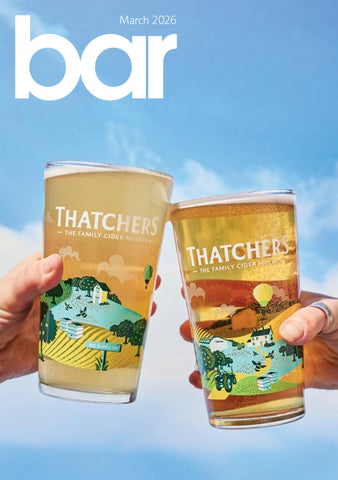
![]()


As spring begins to make itself felt, the season brings with it a sense of fresh starts across the industry – new energy on the floor, changing consumer habits, and opportunities to rethink how we operate.
This month, our main feature explores staff wellbeing — a topic that continues to grow in importance across hospitality. More than a conversation around care, this piece examines how prioritising wellbeing directly impacts efficiency on the floor, consistency of service and overall performance. We look at the oftenoverlooked costs when venues fail to support their teams, from burnout to lost experience, and how strong wellbeing practices can move beyond short-term retention to support long-term career progression. By building confidence, creativity and leadership skills, venues can help shape the next generation of industry talent.
Alongside this, we shine a spotlight on beer and cider as venues prepare for the spring months. This feature looks at both categories through a seasonal lens, exploring evolving consumer tastes, fresh product innovation, and how operators can maximise their offering as lighter drinking occasions and outdoor service come back into focus.

On our BMA pages, we’re excited to unveil the official interviews with some of our outstanding winners and valued sponsors from this year’s prestigious BMA Awards. The ceremony brought together the very best talent in the industry, and we’re taking you behind the scenes of an unforgettable night.
Whether you’re rethinking how you support your team, refreshing your drinks range, or looking for inspiration as the season shifts, this issue is designed to help you stay ahead in an ever-evolving industry.
Enjoy!


EDITOR-IN-CHIEF
Eleasha Pritchard ep@cimltd.co.uk
PUBLICATION MANAGER
Manjeet Griffiths manjeet@cimltd.co.uk Tel 01795 509109
HEAD OF BUSINESS DEVELOPMENT
Jazmine Davis jazmine@cimltd.co.uk

10 HOSPITALITY HEROES
In this exclusive interview, Dan Dove reflects on his journey from Diageo to founding Global Bartending and colaunching The Pinnacle Guide, sharing how his commitment to excellence continues to shape luxury hospitality and innovation.
15 BAR MAGAZINE AWARDS
We bring you exclusive interviews with some of our outstanding BMA 2026 winners, alongside special spotlight features celebrating our valued partners from the evening.
31 STAFF WELLBEING
We how venues can support, develop, and empower their bar teams—the heartbeat of every exceptional hospitality experience.
Alexandra Tangen and Kristine Gutierrez reveal how KABIN brings Norwegian cabin culture to New York, combining Nordic rituals, London-style conviviality, and playful storytelling. 45 60 10 40

ACCOUNT MANAGER
Harrison Hume hh@cimltd.co.uk
HEAD OF DIGITAL
Xhulio Bishtaja digital@cimltd.co.uk
CREDIT FACILITIES MANAGER
Gwen Lee
creditcontrol@cimltd.co.uk
MARKETING MANAGER
Lucas Payne lucas@cimltd.co.uk
38 VENUE OF THE MONTH
Marco Piroli, Co-Founder of Without Papers, reveals how the Shoreditch bar combines Italian warmth with British pub spirit
40 NEW CREATIONS
Andy Kerr, Founder of Parasol, unveils a fiery serve: Korean Jesus
45 A SPOTLIGHT ON: BEER & CIDER
In this spotlight feature, we reveal the latest innovations and rising trends shaping the future of beer and cider.
60 HOSPITALITY AROUND THE WORLD
SOCIAL MEDIA MANAGER
Lily Lawson socials@cimltd.co.uk
DESIGN & PRODUCTION
James Taylor
Grant Waters
DIRECTOR
Tom Woollin
MANAGING DIRECTOR
John Denning
The team at Desi Daru Vodka are delighted to announce that they have signed an exclusive distribution deal with the award-winning distributor Speciality Brands, putting them in prime position for significant expansion across the UK market.
Launched in 2023, Desi Daru has quickly established itself as cult favourite among bartenders and consumers alike. Their vodkas feature in cocktail lists at the likes of Tayēr + Elementary, Novikov Restaurant & Bar, SUSHISAMBA, Park Chinois, Mandarin Oriental as well as Michelin recommended restaurants such as Kricket, Benares, BiBi and Pahli Hill. Both vodkas have also topped the podium at international spirits competitions, Desi Daru Alphonso Mango vodka has been awarded World’s Best Flavoured Vodka at the prestigious World Vodka Awards, has been awarded 5 Master Medals as well as Taste Master at Spirit Business’ Vodka Masters and won an unprecedented 99 points at the IWSC as well as the coveted 3-Star Great Taste Award, received by less than 2% of entrants. Now with Speciality Brands support, Desi Daru are poised to expand its presence even further nationwide.
Desi Daru’s vodkas are created using the finest English winter wheat, giving a creamy, luxurious mouthfeel, as well as Alphonso mangoes sourced from Maharashtra, known at ‘King of the Mangoes’ and prized for their succulent sweetness. The brand’s ‘One Sip, One Day’ initiative pledges that every 25ml measure provides clean drinking water for one person for an entire day, with a bottle funding a month’s worth of clean water to communities across India.


In a market rediscovering its appetite for vodka, Król I Luxury Organic Vodka official UK debut arrives, bringing with it a distinctly Polish expression of craft and a reminder that this spirit can be anything but neutral.
Crafted deep in western Poland, the Król I team works with organic, artisanal farmers to cultivate heritage strain rye, who work to secure a future for these almost forgotten plants. It is this rye that is the spirit’s backbone; water from the land where the rye is grown (pure, mineral-rich) ensures that local palate nuances remain in the spirit. Distilled five times in Poland’s Old Distillery, one of the country’s longest standing, Król I want to build a future whilst keeping the past alive through process.
The launch comes at a moment when vodka is firmly back in favour with both consumers and the trade. The UK remains one of Europe’s largest vodka markets (accounting for 35%), with demand increasingly driven by premium and super-premium brands as drinkers trade up from standard options. Healthconscious lifestyles, cleaner flavour profiles and versatility in low-ABV and lighter serves are all contributing to the renewed interest in vodka.
Król I is now available in the UK through Master of Malt Amathus and Amazon, as well as Master of Malt Trade, The Whisky Exchange Trade, Amathus and Best Wines with tailored support for on-trade listings, retail activation and tasting programmes.
Hospitality Rides launches raft of corporate sponsorship opportunities as challenge organisers sets ambition to raise over £500k for leading hospitality charities LTC and Only A Pavement Away in 2026.
Led by ride founder and KAM Managing Director Katy Moses, 30 hospitality industry leaders will take on the annual industry cycle challenge from 18 – 26 April 2026 in an epic 400km cycle across Cuba to raise vital funds for people entering, working and leaving the hospitality sector who are in need. Riders will embark on a stunning and challenging route from the historic Bay of Pigs to the beautiful beaches of Santa Maria.
The annual fundraiser, now in its fifth year and highly commended at the RMI Awards 2025 for Best Community/ Charity Initiative, is supported by sponsors Avani Solutions, Carlsberg Britvic, KAM, Molson Coors, Punch and Sky. With only three sponsorship opportunities left, please contact Katy Moses at katy@kaminsight.com for more details on how to get involved.
Both individual riders fundraising efforts and wider industry events are already well underway, including KAM’s annual Hospitality Rides Charity Pub Quiz, which raised over £4,000.
The funds raised enable both charities to carry out their vital work, providing assistance and opportunities to individuals in need of support within the hospitality community.
To find out more or to donate, visit https://hospitalityrides. org.uk/cuba/


Redbreast announces the launch of Redbreast Moscatel Wine Cask Edition, the fifth iteration in the awardwinning Redbreast Iberian Series. Crafted by Master Blender David McCabe, this expression honours both Redbreast’s heritage and innovation by using Moscatel Wine casks from the historic Bodegas Quitapenas to enrich the famed Irish single pot still whiskey.
Inspired by Redbreast’s historic ties with fortified wines, Redbreast Moscatel Wine Cask Edition is first matured in a selection of ex-American whiskey casks and Spanish Oloroso
sherry casks, followed by a final maturation period of 16 months in Málaga Moscatel casks. Bottled at 46% ABV, Redbreast Moscatel Wine Cask Edition is rich in Mediterranean expression, bringing a noticeably elegant and more citrus forward personality to the Iberian Series.
Across several decades, McCabe and former Master Blender Billy Leighton have developed deep relationships with cask producers and winemakers throughout the Iberian Peninsula, inviting whiskey enthusiasts on a journey of discovery across this region. For this sun-soaked release, the team at Midleton Distillery partnered with Bodegas Quitapenas, in Málaga, now led by fifth-generation custodians Marta Suárez Prieto and Víctor Suárez Onrubia. Under their careful watch, specially selected hogsheads made from European Oak were seasoned with Moscatel wine for two years before being shipped to Midleton Distillery, where they were filled with a bespoke batch of Redbreast Single Pot Still Irish Whiskey.
With a complex flavour journey, the whiskey opens with notes of fresh, sweet tangerine and twisted orange peel, accompanied by delicate herbal notes of chamomile tea with dustings of nutmeg and cedarwood. The wine-seasoned oak imparts vanilla, with notes of floral honey and sugar glazed fruits, while the pot still spices add subtle notes of black peppercorn and clove in the background.
Crafted to be enjoyed neat or with ice, Redbreast Moscatel Wine Cask Edition is available from MidletonDistilleryCollection. com, USA, UK, Germany, Ireland, Global Travel Retail and Brand Homes at a RRP of £85.
DAN DOVE’S JOURNEY THROUGH THE WORLD OF LUXURY HOSPITALITY IS DEFINED BY A DEEP COMMITMENT TO PEOPLE, PRECISION AND THE PURSUIT OF EXCELLENCE. FROM A FORMATIVE CAREER AT DIAGEO TO FOUNDING GLOBAL BARTENDING AND CO-LAUNCHING THE PINNACLE GUIDE IN 2022, HIS FOCUS HAS REMAINED CLEAR: CREATE UNFORGETTABLE, HIGH-IMPACT EXPERIENCES THAT BRIDGE THE WORLDS OF LUXURY, HOSPITALITY AND INNOVATION. IN THIS EXCLUSIVE INTERVIEW, DAN REFLECTS ON HIS PATH SO FAR AND THE VALUES THAT CONTINUE TO DRIVE HIS SUCCESS IN THE INDUSTRY.

DAN, WHERE DID YOUR JOURNEY IN HOSPITALITY BEGIN?
I was raised in a household where love, respect, and compassion were non-negotiables. My parents instilled a strong moral compass in my brothers and me — values that have shaped not only who I am, but also how I approach my professional life. At its heart, hospitality is about people; authentic connection and trust endure far longer than trends or market shifts.
A pivotal chapter in my early career was my time at Diageo. Working within a global organisation of that scale gave me invaluable exposure to strategic thinking and the importance of seeing the bigger picture. I was encouraged to think expansively — to understand brands not just in moments, but in movements.
At the same time, my experience there helped refine something I’ve carried throughout my career: that the strength of any big vision lies in the precision of its execution. Excellence in the big picture is built on careful attention to the smallest details. In luxury hospitality, detail is the language of excellence — from the lighting at an event, to a cocktail’s garnish, to the way a client email is signed. Each moment contributes to the overall experience.
It was at Diageo that I learned to combine strategic thinking with operational precision — lessons that would prove essential when founding and growing my own businesses, Global Bartending and The Pinnacle Guide, and that continue to influence how I collaborate with leading brands in the industry today.
TELL US MORE ABOUT THE VISION BEHIND GLOBAL BARTENDING AND THE PINNACLE GUIDE. WHAT INSPIRED THE CONCEPT FOR BOTH?
Bridging the gap between luxury drink brands and the bartenders who bring them to life has always been a challenge in the industry. Too often, exceptional brands struggled to reach the right talent, at the right time, in the right place. Global Bartending was created to solve this, offering brand managers an efficient, high-impact way to activate in on-trade channels all around the world.
Founded in 2018, Global Bartending was built with the intention of redefining how premium drinks experiences are delivered at scale. From the outset, we invested in robust infrastructure, world-class talent, and operational excellence — enabling us to execute complex, high-impact activations seamlessly across international markets.
Today, supported by a core leadership team and a curated global network of industry experts, we deliver sophisticated brand experiences with both precision and pace. Our ability to mobilise within 24 hours is not simply about speed — it reflects the strength of our systems, relationships, and reputation. This combination of agility, strategic thinking, and uncompromising quality has positioned Global Bartending as a trusted partner to some of the world’s leading drinks brands.
In 2022, I partnered with good friends and industry leaders Hannah Sharman-Cox and Siobhan Payne to co-found The Pinnacle Guide. Our goal was simple: to celebrate true excellence in the industry and create a global picture of the upper echelons — a resource that brings real, lasting value to cocktail culture worldwide.
The Pinnacle Guide launched to the global bar industry in February 2022 with a clear invitation to the international drinks community: “Be Part of the Process.” Built on transparency,
In luxury hospitality, detail is the language of excellence.
credibility and collective expertise, the Guide set out to create a recognition system that truly reflects excellence in modern hospitality.
In May 2024, the inaugural list was released, marking a significant milestone with venues recognised across 6 markets. Since then, The Pinnacle Guide has continued its global expansion. Today, in 2026, it spans 14 markets and features more than 140 PINNED bars worldwide — each evaluated through a rigorous, multi-layered assessment process.
What began as a bold new standard for recognising cocktail bars has evolved into a globally respected benchmark for excellence, celebrating venues that combine craft, culture, service and leadership at the highest level.
Success, to me, starts with people. Global Bartending has grown because of a close-knit team built on trust, shared values, and mutual respect. When your team feels supported and genuinely connected, performance, loyalty, and long-term growth naturally follow.
That said, success looks different for everyone – there’s no fixed formula. My balance is working hard to grow my businesses and support my teams, while being present at home, prioritising family time, and maintaining perspective beyond the industry.
True achievement is rooted in mastery; success doesn’t come from quick moves, but from deep expertise and long-term dedication to your craft. In drinks marketing especially, there’s a tendency to move roles too quickly. Whereas, I believe, real value is built through depth, consistency, and earning genuine respect as an expert, not by chasing the next title.
This principle also applies to building platforms rather than products. Success isn’t measured in short-term wins, but in creating platforms that empower others. Global Bartending and The Pinnacle Guide were built to open doors, share knowledge, and elevate people and venues, contributing meaningfully to the industry’s future.
Lastly, longevity, with enduring influence, is crucial. Being successful means remaining trusted and relevant in a fast-moving industry. We’ve almost doubled the business year-on-year for the past three years, proving that strong values, adaptability, and consistent delivery matter more than trends or hype.
2025 marked a powerful chapter of progress, purpose, and global impact. Continuing our work with World Class across global markets has been a major highlight. It’s a platform that genuinely supports talent, education, and standards, and being part of its evolution reinforces everything we stand for at Global Bartending.
Watching The Pinnacle Guide gain genuine momentum across the global industry has been incredibly rewarding. It’s being embraced as a credible, values-led platform that

celebrates people and places with integrity, depth, and purpose, championing excellence.
One of my proudest achievements in 2025 has been scaling the business while protecting culture. Growing teams, markets, and revenue, while maintaining values, balance, and close relationships, has proven that sustainable growth doesn’t require compromising who you are.
WITH FIRST-HAND EXPERIENCE OF THE INDUSTRY AND WHAT MAKES VENUES ‘TICK’, WHAT’S THE RECIPE FOR GREATNESS FOR BARS IN 2026?
This year, genuine human connection will outperform concepts, trends, and technology. Guests remember how a bar makes them feel, not just what’s on the menu. Bars that lead with human-first hospitality – empathy, warmth, authenticity – will build loyalty that can’t be replicated digitally.
People are the most powerful asset in any venue, and investing in teams’ growth is essential. Exceptional bars prioritise education, well-being, and career progression, empowering staff to represent the brand with pride. When teams feel valued and supported, guests feel it instantly.
A clear sense of identity will be essential for venues in 2026. The strongest, most successful bars know exactly who they are and who they serve. This clarity guides everything from design and drinks to service style and communication, creating consistency and confidence. Bars that try to appeal to everyone often end up memorable to no one.
That sense of identity naturally extends into the communities they serve. Bars rooted in their local community will always outlast those chasing global hype. Supporting local talent, suppliers, and culture builds authenticity and loyalty. The most successful venues become social anchors, not just destinations. Finally, simplicity executed perfectly will define great bars this
year. Fewer drinks, better ingredients, and sharper execution allow teams to focus on consistency and storytelling. Complexity without purpose creates confusion, while clarity builds trust and elevates the overall guest experience.
WHAT’S IN STORE FOR 2026 – WHAT ARE SOME EXCITING OPPORTUNITIES YOU SEE WITHIN THE INDUSTRY THIS YEAR, AND WHAT WILL YOU BE ADOPTING FOR YOUR BUSINESSES?
For the drinks industry, the year ahead is about smarter integration, deeper connections, and more meaningful engagement.
AI will play an important role, but success comes from using it thoughtfully. We’re focused on applying it across departments to enhance efficiency, insight, and creativity — while keeping human expertise, relationships, and decision-making at the centre of everything we do.
There’s real potential for luxury consumer brands to collaborate more closely with top-tier bartenders and venues, creating elevated experiences around product launches, innovations, and live events. By leveraging the skill and creativity of world-class talent, these partnerships can redefine what a premium drink experience looks like.
Finally, redefining how the industry communicates. In 2026, success will come from a more intelligent, balanced approach. Social media, trade and consumer publications, innovative third space production, AI-generated content, and newly built communities and platforms all have a role to play — but the focus must be on genuine engagement rather than chasing reach alone.


INTRODUCING SAMUEL PAGE, HEAD BARTENDER AT SEXY FISH AND WINNER OF THE 2026 BEST MIXOLOGIST AWARD — RECOGNISED FOR HIS LEADERSHIP, INNOVATION AND COMMITMENT TO DEVELOPING THE NEXT GENERATION OF BARTENDING TALENT.
WHAT DOES WINNING THIS AWARD MEAN TO YOU PERSONALLY AND PROFESSIONALLY, AND HOW DOES IT INSPIRE YOUR NEXT GOALS?
It’s difficult to put into words, but personally, the recognition and acknowledgement from my peers is invaluable. On a professional level, it’s great for both Sexy Fish and my own career. I truly believe that Sexy Fish is one of the best bars in the world and has the bar programme to match – and this award means that we’re pushing in all the right ways.
CAN YOU SHARE A DEFINING MOMENT OR EXPERIENCE IN YOUR CAREER THAT LED YOU TO WHERE YOU ARE TODAY AND CONTRIBUTED TO THIS RECOGNITION?
The day I was offered the Head Bartender role at Sexy Fish. My big career goal was always to be the Head Bartender of a globally renowned bar and cocktail institution. Without the mentorship, development and backing of the team at Sexy Fish, I would’ve achieved significantly less and this award wouldn’t have been possible.
HOW DO YOU STRIVE TO MAKE A MEANINGFUL IMPACT IN YOUR FIELD?
Training and development of the next generation. Winning individual awards or doing well in competitions is all well and good, but the feeling of satisfaction and euphoria you get from building a diverse and passionate team and watching the team grow and succeed is something else entirely.
WHAT ADVICE WOULD YOU GIVE TO ASPIRING PROFESSIONALS LOOKING TO ACHIEVE SIMILAR SUCCESS?
Work hard, try to learn as much as you can constantly, and always be pushing yourself to develop. Every person you meet can always teach you one thing, so take the time to listen and understand everyone around you. Learning requires mistakes and failure, so don’t get disheartened if it doesn’t happen in the timeframe you think it will – development isn’t linear and is different for every person.
WHAT’S NEXT FOR YOU IN TERMS OF YOUR FUTURE GOALS, SHORT AND LONG-TERM?
Short-term, our Pinnacle Guide pin is up for renewal, so we need to focus on that application and try to see if we can push for two or even three pins. Also, Tales of the Cocktail: Spirited Awards, the “Best Spirit Selection” is a long-standing dream of everyone that has ever worked at Sexy Fish – but I also think this award makes it potentially possible to get a nomination for “Best Team”. We also have various competition finals coming up for the team, so we’ll be working hard to support each other and get the best

results possible. Long-term, the goal is always the same: to continue to develop, grow, and improve. I think I still have a lot to learn in all areas.
@page.twentythree
MEET HANNAH SHARMAN-COX AND SIOBHAN PAYNE, THE VISIONARY DUO BEHIND LONDON COCKTAIL WEEK AND FOUNDERS OF THE PINNACLE GUIDE, RECOGNISED AT THE 2026 BAR MAGAZINE AWARDS FOR THEIR OUTSTANDING CONTRIBUTION TO THE DRINKS INDUSTRY AND THEIR GLOBAL CHAMPIONING OF BAR EXCELLENCE.
WHAT DOES WINNING THE LIFETIME ACHIEVEMENT AWARD MEAN TO YOU BOTH PERSONALLY AND PROFESSIONALLY, AND HOW DOES IT INSPIRE YOUR NEXT GOALS?
Hannah: It’s amazing of course - although to be clear - there’s lots more life in us yet! We’re only just getting started! We’ve dedicated the majority of our professional careers to supporting the hospitality industry and see running the festival as a real badge of honour, albeit a big commitment. To have that recognised by our peers reinforces that both the event and our work is appreciated. Also - it’s usually us giving out the prizes so we certainly appreciate being on the receiving end!
CAN YOU SHARE A DEFINING MOMENT OR EXPERIENCE IN YOUR CAREER THAT LED YOU TO WHERE YOU ARE TODAY AND CONTRIBUTED TO THIS RECOGNITION?
Siobhan: London Cocktail Week has grown from something designed just for the trade to a city-wide celebration and a chance for us all to showcase the incredible artistry and skill that goes into London’s award-winning bar scene on a global stage. We have had pinch-me moments every step of the way as we’ve allowed the festival to evolve and grow in line with the industry’s requirements. For us - working more closely with the Mayor of London and City Hall has given a real sense of purpose to the event - and our dream is to elevate it further so it sits alongside London Fashion Week as an impactful cultural moment in our city’s calendar.
DO YOU STRIVE TO MAKE A MEANINGFUL IMPACT IN YOUR FIELD?
Hannah: We have always planned to do something on a global scale. We know that running Cocktail Weeks in cities we don’t live in is not the right route for us - however, launching The Pinnacle Guide has allowed us to take the same ethos - of championing excellence and showcasing that to the general public - on a much wider scale. Creating a system that can reward bars of any size or style in any city around the world - regardless of notorietyhas been a real privilege. We’re looking forward to launching The Pinnacle Guide into more countries as soon as possible.
WHAT ADVICE WOULD YOU GIVE TO ASPIRING PROFESSIONALS LOOKING TO ACHIEVE SIMILAR SUCCESS?
Siobhan: The wonderful thing about London Cocktail Week is it can be replicated anywhere in the world where there is a strong

bar community. We believe success comes when the organisers truly love and admire the bars they work with and the city they live in and encourage anyone who would like to start one to reach out and speak with us… London Cocktail Week has been through so many iterations over the years and we’ve navigated so many curve balls - but the key thing is understanding the dynamics of your own city and building the model around that. We are always available to chat through ideas, we’re happy to share decks and business plans with anyone who asks. Never be scared to send an email. Most people, especially in our industry, are only too happy to help.
WHAT’S NEXT FOR YOU IN TERMS OF YOUR FUTURE GOALS, SHORT AND LONG-TERM?
Hannah: The biggest news in terms of London Cocktail Week is that we have decided to move the dates to Spring 2027. We’re basically “doing a Glastonbury” and letting the city (and ourselves) have a breather. We acquired full ownership on 01 February 2026 so we want to be sure that we are doing our very best by everyone involved when the festival returns. Autumn is also so full-on within the global bar calendar - we had the opportunity to ease the load so we took it. We’re also going to actually enjoy a Summer holiday for the first time in 16 years –rather than full-on planning for October – delighted!
@hannahsharmancox
@siobhanpayne_
FRESH FROM BEING CROWNED BEST HOSPITALITY GROUP AT THE 2026 BAR MAGAZINE AWARDS, RED ENGINE CELEBRATES A MILESTONE MOMENT FOR ITS FAST-GROWING, TECH-DRIVEN SOCIAL ENTERTAINMENT EMPIRE. FOUNDER AND CEO STEVE MOORE REFLECTS ON THE CULTURE, CREATIVITY AND CONSTANT INNOVATION POWERING CONCEPTS INCLUDING FLIGHT CLUB AND ELECTRIC SHUFFLE — AND REVEALS WHAT’S NEXT FOR THE AWARD-WINNING HOSPITALITY GROUP.
WHAT DOES WINNING THIS AWARD MEAN TO THE TEAM, AND HOW DOES IT INSPIRE RED ENGINE’S NEXT GOALS?
Winning Best Hospitality Group is a proud moment for the entire Red Engine family. It’s a testament to the passion of our teams, from bartenders to game developers, who work tirelessly to ensure our guests have an unforgettable experience.
At Red Engine, we believe that world-class hospitality isn’t just about a great product; it’s about the collective energy of our teams who bring our concepts to life. This award recognises those teams and the hard work and passion they put into delivering amazing experiences for our guests.
Innovating and evolving are two of our core values. It’s in our DNA. This award is great validation of that philosophy and inspires us to keep pushing the boundaries so that we can continue setting the pace for the future of tech-driven social experiences.
Red Engine’s vision has always been to create bars that bring groups of friends together for an unforgettable experience. The aim a decade ago, when the first Flight Club opened, was to build something different from an average pub or bar experience. The goal was to provide an escape from the mundanity of life that would get people’s heads out of their phones and connecting with one another in the moment. That mission remains just as true today and fuels everything that we do. We know people go out less, so when they do, you need to deliver something truly memorable.
Beyond the guest experience, we aim to showcase the breadth of roles available in the sector and challenge the myth that it only offers short-term jobs and traditional hospitality roles. At Red Engine, every aspect of the business is handled in-house, from interior design to gaming design, from tech to finance. This means that career opportunities within the Red Engine group are vast, spanning a broad range of industries and disciplines. That surprises many people who still hold the illusion that hospitality as a career choice is limited.
WHAT ADVICE WOULD YOU GIVE TO ASPIRING PROFESSIONALS/HOSPITALITY TEAMS LOOKING TO ACHIEVE SIMILAR SUCCESS?
First, obsess over the “vibe.” Whether it’s the Victorian fairground unexpected, ridiculous joy aesthetic of Flight Club or the vibrant,

nostalgic house party atmosphere of Electric Shuffle, the environment must tell a story. Every touchpoint—from the music to the lighting—should be intentional.
Second, focus on the “friction points.” The best hospitality concepts succeed because they remove the barriers between a guest and a good time. Whether that’s seamless booking, intuitive technology, or the way a drink is served, every detail matters.
Most importantly, build an epic culture. You can have the best concept in the world, but it’s the people on the floor who turn a transaction into a memory. Hire for heart and energy; everything else can be taught.
WHAT’S NEXT FOR RED ENGINE IN TERMS OF YOUR FUTURE GOALS, SHORT AND LONGTERM?
Our focus is two-fold. We will continue to evolve and refine our experiences to ensure we maintain our position as a market leader whilst also driving our domestic and international expansion. We’re excited to keep introducing the unique joy of Electric Shuffle and Flight Club to new cities in the UK and across the globe.
We aren’t just building bars; we’re building experiences that redefine how the world connects with each other. The ongoing mission remains simple: to create the best possible settings for people to come together and share meaningful moments.
red-engine.com @redengineteam

PROUD PARTNERS OF THE 2026 BAR MAGAZINE AWARDS, ARLETT IS THE FRUIT OF THE TESSENDIER BROTHERS’ ONGOING QUEST FOR TASTE AND THE CREATION OF NEW, MEANINGFUL SPIRITS.

Distillery Tessendier is a story that began in 1880 with Gaston Tessendier. Over the centuries, the style and expertise of the family have asserted themselves and today it is the brothers Jérôme and Lilian who proudly carry the torch of the distillery, respectively cellar master and master blender, they bring the mastery to all the stages of spirit creation.
The Tessendier family has been excelling – with seriousness and passion – in the art of distillation for generations. The latest project brewing in their copper pipes is this vintage- styled whisky brand – ARLETT a range of French single malt whiskies that offer uncompromising quality and delicacy.
ARLETT, a well-made French Single malt whisky is the fruit of a fabulous journey made with 100% French Barley, Fiercely heated with a specific, local, double-distillation method, tirelessly refined by Jérôme and Lilian Tessendier in a tribute to the 50s and their beloved Mother.
The ARLETT bottles are ornate with an original padded glass
design giving it a unique look. Those padded ornaments are a heartfelt nod to the whole whisky universe. For those who are more interested in the technical side of distillation, they will recognize the vat padding which enables the wash fermentation – and it’s constant brewing – in the brewery.
ARLETT, is all about flavour exploration and tracing a specific path – from the precise choice of raw materials to flavour selection. The Single malt range varies between 43% vol and 48% vol – both intense and Generous.
From barley selection to the choice of barrels, the sum of these choices resulted in a whisky that is entirely true to Distillery Tessendier’s style and philosophy- a true exploration of French whisky!
So, Shall we say “Let’s Pick up some French Singles at the Bar Tonight!”
arlett-whisky.com/en
AS A TRUSTED PARTNER OF THE BAR MAGAZINE AWARDS, VORBOSS KEEPS LONDON’S HOSPITALITY VENUES CONNECTED AND SECURE, SO TEAMS CAN FOCUS ON RUNNING THE BAR. MARGARET WAJNKAIM, CONTENT MARKETING MANAGER, TELLS US MORE…

Vorboss handles the tech, so your teams can focus on running the bar.
Hospitality venues across London rely on Vorboss for high-speed internet, managed IT and cybersecurity. Whether it’s connectivity, Wi-Fi or device protection, we keep service running smoothly behind the scenes.
Unlike shared internet connections, Vorboss’ fibre network doesn’t slow down when things get busy, helping systems run as expected throughout service and beyond. It’s the one thing in your venue that never clocks off. Installations are straightforward, and billing stays clear and predictable.
Standout service doesn’t come from technology alone. Your venue’s network, devices and critical systems are supported by a dedicated account manager who knows your setup inside out. Because Vorboss owns its network end-to-end and all services are designed and supported by our in-house experts, standards stay high and solutions are flexible. Always ready for what the future brings.
You run the bar. We run the network.
Discuss your venue setup with one of our experts today. www.vorboss.com
“Vorboss is truly exceptional. To fellow venue owners in London, I strongly recommend choosing Vorboss. It’s the difference between a smooth sail and a turbulent storm in the world of internet service providers.”
Ben Gamble, Owner, Dockside Vaults
“It’s been truly refreshing dealing with Vorboss. The customer service has been excellent, and on any occasion we’ve needed rapid assistance, Vorboss has not only delivered on expectations but has surpassed them.”
- Fred Webster-Trussell, Managing Director, Patty & Bun
“Vorboss impressed throughout the entire installation process, and the service has been rock-solid ever since.”
- Charlie Fletcher Nichols, BAFTA
HAUS OF SPIRITS BRINGS ITS PASSION FOR PREMIUM, HANDCRAFTED SPIRITS TO THE FOREFRONT OF THE BAR INDUSTRY. CO-FOUNDED BY MIRNA SASSINE AND DEIN MOORE, THE UK-BASED BRAND IS REDEFINING THE DRINKING EXPERIENCE WITH GLOBALLY INSPIRED FLAVOURS, BOLD INNOVATION, AND A COMMITMENT TO CREATING MEANINGFUL CONNECTIONS — ONE EXCEPTIONAL POUR AT A TIME.

Haus of Spirits Ltd is a UK-based company with a deep passion for premium, handcrafted spirits. Founded by Mirna Sassine and Dein Moore, the brand was created with a simple belief at its core: great drinks bring people together. At Haus of Spirits, we celebrate the joy, creativity, and meaningful connections that come with every pour, whether shared among friends, family, or new faces brought together by a memorable drink.
Our mission is to redefine the spirits experience by offering products that are thoughtfully crafted, distinctive, and full of character. Each spirit in our collection is carefully developed with quality, balance, and flavour at the forefront, ensuring every bottle tells a story and delivers an exceptional drinking experience. We take pride in blending tradition with innovation, honouring classic techniques while embracing bold ideas and modern creativity.
Haus of Spirits is your one-stop destination for unique, highquality spirits designed to do more than simply satisfy your taste buds. Our range is inspired by flavours from around the world, drawing influence from diverse cultures, ingredients, and moments of inspiration. From globally inspired profiles to innovative blends, we aim to spark curiosity and encourage exploration with every sip.

We believe drinking should be an experience — one that invites discovery, conversation, and connection. That’s why our spirits are crafted not only to be enjoyed, but to inspire new rituals, shared moments, and unforgettable experiences. Whether you’re celebrating a milestone, hosting a gathering, or simply enjoying a quiet moment, Haus of Spirits is here to elevate the occasion.
At Haus of Spirits, we’re here to open your palate — and your mind — and to create spirits that bring people together, one unforgettable pour at a time.
hausofspirits.com

CHRIS JONES, MANAGING DIRECTOR AT PARAGON BRANDS, EXPLAINS HOW LICOR 43’S DISTINCTIVE 43-INGREDIENT BLEND AND REMARKABLE VERSATILITY HAVE CEMENTED ITS STATUS AS A BARTENDER STAPLE – FROM TRENDING SHOT SERVES AND COFFEE COCKTAILS TO MODERN TWISTS ON CLASSICS AND SUMMER SPRITZES.
LICOR 43 IS KNOWN FOR ITS VERSATILITY IN COCKTAILS. WHAT MAKES IT SUCH AN ESSENTIAL INGREDIENT FOR BARTENDERS, AND HOW DOES ITS UNIQUE FLAVOUR PROFILE HELP ELEVATE A WIDE RANGE OF DRINKS?
Licor 43 has earnt its bartender staple status with its distinctive flavour and extremely versatile proposition, making it a musthave for operators and bartenders who want spirits and liqueurs that can be used across drinks menus in a multitude of cocktails. With 43 ingredients, it has a complex yet accessible flavour profile, meaning it works in just about any cocktail.
The brand encourages drinkers to Mix Something New, highlighting Licor 43’s versatility across a wide range of cocktails and serves that bring people together, from summer spritzes to creamy dessert cocktails and high-tempo shot moments, it can bring a subtle sweetness, warmth and depth to a whole host of drinks.
Its layered and balanced flavour profile means it’s not constrained to pairing with one style of spirit and therefore allows bartenders to get creative, whether it’s elevating simple highballs, adding complexity to classic cocktails or putting a modern spin on sweet drinks.
WITH ITS BLEND OF 43 INGREDIENTS, HOW DOES LICOR 43 MAINTAIN SUCH BALANCE AND COMPLEXITY IN COCKTAILS, MAKING IT A STANDOUT OPTION FOR MIXOLOGISTS?
Licor 43’s flavour profile enhances the aromatics of a drink and can add a depth and richness to cocktails in just one simple pour. It bridges flavours well too, adding balance and complexity versus dominating the drink. With a unique combination of sweet notes along with herbs and spices, it’s perfectly balanced. Most importantly, it is a reliable bottle that opens flavour opportunities for mixologists without using lots of different ingredients and overcomplicating the drink.

FOR BARTENDERS WHO MAY NOT YET HAVE INCORPORATED LICOR 43 INTO THEIR REPERTOIRE, WHAT ARE SOME SIGNATURE DRINKS OR EASY-TO-MAKE SERVES THAT SHOWCASE THE LIQUEUR’S DISTINCTIVE CHARACTER?
Cocktail shots and miniature drinks, known as ‘Baby drinks’ which combine multiple spirits in one shot-sized drink, are on the rise; seven in 10 still drink shots on a night out, and 49% of Brits now prefer cocktail shooter shots to traditional shots. Licor 43 has been at the forefront of this revolution with one of the UK’s hottest shot trends.
With 43 ingredients, it has a complex yet accessible flavour profile, meaning it works in just about any cocktail.

Licor 43’s ‘Baby Beer’, Licor 43 topped with cream liqueur, resembles a miniature pint of beer and plays into an increasing need for high impact drinks that bring taste and shareable, repeatable moments to menus. The shot has proved lucrative by being perfectly positioned - group rituals drive repeat purchase and have higher round participation, and the smaller serve format aligns with moderation without reducing spend. Proving shots are on the up, over 6,500 venues added Baby Beer to shooter menus last year, and our data shows it can increase overall shooter sales by +34 percent.
Viewed by many as the Original Espresso Martini, the Carajillo is a bittersweet cocktail made using equal parts espresso or cold brew and Licor 43 Original. the balance of flavours in Licor 43 marry perfectly with the espresso coffee to deliver a great tasting coffee-cocktail that is an instant favourite – it’s no wonder that it’s now the fastest growing cocktail in Mexico. It’s a great example of how Licor 43 can elevate flavours, add depth and put a unique spin on cocktails Brits know and love, instantly sparking intrigue from bar-goers looking to get adventurous, whilst not straying too far from the classics.
Licor 43 also enhances classics such as the Old Fashioned, adding depth and complexity to this simple drink, just add 15ml of Licor 43 to a glass with ice and gradually stir-in 50ml of Bourbon or Rye – with a couple of dashes of bitters for a Golden-old-fashioned.
For summer 2026, we’re backing Licor 43’s Ibiza Spritz, which brings together trending flavours into a well-loved format: Licor 43 mixed with grapefruit soda and lime juice, served over ice for a long spritz drink. By investing in spritz menus, bartenders can sit at the intersection of major summer trends; a taste of the continent, lighter drinks, trending flavours and contrasts, plus ease of assembly, which appeals in venue.
IN YOUR OPINION, HOW HAS LICOR 43’S ROLE IN THE COCKTAIL WORLD EVOLVED OVER THE YEARS, AND WHY DO YOU THINK IT REMAINS A MUST-HAVE FOR BOTH NEW AND SEASONED BARTENDERS TODAY?
As cocktail culture has evolved, so has Licor 43. Despite being Spain’s number one and most loved liqueur, it has shaken off its status as a drink that’s confined to summer months or trips to Spain’s sunny shores Today, partly down to its flexibility and changing consumer drinking habits, it’s just as likely to appear in spins on Sangrias and refreshing spritzes like a Ginger 43, a simple but refreshing combination of Licor 43, ginger ale and lime juice, as it is in dessert style cocktails or on shot paddles. It has successfully evolved with trends, offering creative range, and has earnt its place as a permanent fixture on the back bar.
HARD ROCK COCKTAILS IS TURNING UP THE VOLUME IN THE READY-TO-DRINK COCKTAIL CATEGORY. HERE’S EVERYTHING YOU NEED TO KNOW ABOUT THE BRAND-NEW RANGE, INTRODUCING THE STAND-OUT FLAVOURS OF HARD ROCK CAFE’S ICONIC COCKTAILS – PERFECTLY MIXED FOR EVERY MOMENT.

From legendary memorabilia and bold flavours to world-class stays and live entertainment, Hard Rock is where music, culture and hospitality collide. For over 50 years, the brand has made its mark across 70 countries through cafés, hotels, resorts and casinos. Hard Rock Cocktails now brings that global popularity to even more consumers with bar-quality ready-to-drink cocktails in a fast serve, cost-effective can. Delivering the same iconic mixes and bold flavours guests love in Hard Rock Cafés, these cocktails offer a consistent, premium serve anywhere, letting consumers enjoy the Hard Rock experience without compromise.
Hard Rock Cocktails are served in 250ml recyclable aluminium cans, designed for convenience, consistency and premium taste. With no preparation required, each can delivers a perfect serve every time, making them ideal for pre-drinks, festivals, picnics, barbecues, weddings, corporate events, garden parties, travelling and more. The ready-to-drink format allows venues to maintain high-quality cocktails while speeding up service, reducing labour and simplifying staff training.
They are the perfect choice for bars and event venues– a fast-serve, fun option that works in high-volume settings such as live music nights, outdoor areas, pop-ups, festivals and other
busy occasions. With each can consistently delivering barquality cocktails that appeal to a wide demographic, venues can offer their guests the iconic Hard Rock experience anywhere, anytime, combining premium flavours with operational ease and a memorable drinking moment.
Hard Rock Cocktails stand out by bringing rock and roll energy into every can. Brand power is at the core. Globally recognised and loved for music, culture and lifestyle, the Hard Rock name gives venues, retailers and bars a product that instantly connects and is trusted by customers.
These cocktails are built on hospitality DNA. Born in real bars, they understand what works in fast-paced, high-volume environments and deliver a consistent, perfect serve every time.
Hard Rock Cocktails make life easier. Faster service, reliable quality, reduced training and easy upsell; help staff and outlets keep customers happy. Occasion flexibility is another bonus, making them Perfect for live music nights, outdoor areas, popups, retailers, festivals, high-footfall events, and as a quick-serve option for bars where great cocktails need to shine.
They are also incredibly versatile and inclusive. The range appeals to people of all ages and lifestyles who love to be brought together by great vibes, music, and premium cocktails.


Every moment becomes an opportunity to enjoy a Hard Rock cocktail and share the fun.
Hard Rock Cocktails offer venues a premium, ready-to-drink solution that combines bold flavours, global brand recognition, and operational ease. Perfect for high-volume settings, each 250ml can deliver a consistent, bar-quality serve every time, reducing training, labour and wait times, and helping operators maximise sales and guest satisfaction. With Hard Rock leading the ready-to-drink revolution, venues can bring the iconic Hard Rock experience to any occasion, ensuring great cocktails, vibrant energy, and unforgettable moments for every guest.
OUR FLAVOURS
The range includes fan favourites such as Classic Mojito, Peach Punch, Mango Mojito, Coconut Breeze, Espresso Martini, Piña Colada, Strawberry Daiquiri and Passion Fruit Martini.
All served at 5% alcohol by volume, except the Espresso Martini at 8%.
CLASSIC MOJITO
A faithful rendition of a classic, with a Hard Rock edge. Zingy lime zest and muddled mint swirl through a smooth, lightly sweetened base. Refreshingly crisp and clean, with a fizzy finish that tickles the palate.
PEACH PUNCH
Lusciously ripe peaches take centre stage in this fruit-led punch, complemented by a delicate citrus sparkle and a hint of tropical fruits. Juicy, bright, and effortlessly drinkable – like summer in a can with a cheeky rock and roll twist.
MANGO MOJITO
A tropical take on a timeless classic. Juicy, sun-soaked mango meets fresh mint and a lively dash of lime, delivering a vibrant burst of flavour with every sip. Smooth and gently sweet, it finishes with a crisp, cooling lift.
COCONUT BREEZE
Creamy coconut mingles with wild berry notes in this smooth tropical escape. Delicate floral hints and a soft pink hue bring a dreamy charm, while a breeze of citrus brightens the blend. Sweet, mellow, and made for easy sipping – think island getaway meets backstage access.
ESPRESSO MARTINI (*8% ALCOHOL BY VOLUME)
Dark, smooth, and effortlessly cool. Velvety espresso blends with crisp vodka and a hint of sweetness for the perfect pickme-up. Rich, refined and a little daring; the ultimate late-night indulgence.
PIÑA COLADA
Sunshine in liquid form. Ripe pineapple collides with creamy coconut for a tropical hit that is both lush and uplifting. Sweet, smooth and endlessly relaxing, it is a holiday soundtrack you can sip.
STRAWBERRY DAIQUIRI
Bright, juicy and full of energy. Fresh strawberries meet tangy lime and smooth rum in a refreshingly balanced mix. Sweet, uplifting and impossible to resist; pure sunshine in a glass.
PASSION FRUIT MARTINI
Vibrant and bold, this mix bursts with exotic passion fruit, balanced by a crisp citrus edge. Smooth and slightly sweet with a zesty uplift, it is a golden crowd-pleaser that leaves a lasting impression
Contact Us
Email: Info@hardrockcocktails.cafe
Phone Number: 02035187089
Instagram: @hardrockexpertcocktails
BCB LONDON RETURNS TO TOBACCO DOCK ON 11–12 MAY 2026. FOLLOWING A SUCCESSFUL DEBUT, THE EVENT WILL FEATURE AN EXPANDED LOCAL HEROES SHOWCASE AND A REFRESHED FOCUS ON EDUCATION, NOW LED BY NEW DIRECTOR OF EDUCATION ELLIOT BALL, WHO WILL SHAPE A FORWARD-THINKING SEMINAR PROGRAMME FOR HOSPITALITY PROFESSIONALS ACROSS THE UK AND IRELAND.

Following its successful launch in 2025, Local Heroes will once again shine a spotlight on the people, products, and stories shaping the drinks scene across the British Isles. The initiative provides homegrown brands and makers with a dedicated platform at BCB London, connecting them directly with bartenders, buyers, and decision-makers who value regional craft and local impact. In 2026, Local Heroes will continue to champion UK and Irish drinks brands with strong local roots, fostering meaningful connections between producers and both the on- and off-trade, and growing as a leading platform for regional talent in the years ahead.
BCB London has appointed London bartender and hospitality consultant Elliot Ball as Director of Education for the 2026 show. In this role, Ball will oversee the strategy, structure, curation, and delivery of the entire education programme, ensuring it reflects the realities, challenges, and ambitions of today’s bar industry. Working closely with the BCB London team, he will define key themes, formats, industry trends, and future-focused topics, curate a diverse, high-calibre lineup of speakers and contributors, and shape sessions spanning keynotes, panels, workshops, and practical learning.
As co-founder of The Cocktail Trading Co, HM’s, Filthy XIII,

Murder Inc., and Royal Cocktail Exchange, Ball brings extensive experience across bartending, systems design, and training, with a distinctive focus on the psychology of enjoyment, satisfaction, and growth in hospitality.
Jack Sotti, BCB London’s Brand Ambassador, said: “Bringing BCB London back for a second year feels like a real statement. The response from the trade in year one demonstrated there is a genuine appetite for a show that speaks directly to the international bar and beverage community – and 2026 gives us the chance to build on that energy and do even more.”
Petra Lassahn, BCB Director, added: “Launching BCB London taught us a great deal, from timing and logistics to what the UK and wider international market really wants from a trade show. What became very clear is that BCB London is not another version of Berlin. Each show serves a different market and purpose, and both have a valuable role to play. We are convinced there is a real need for both shows, each with its own identity, and London has firmly earned its place in the BCB calendar.”
BCB London 2026 will take place at Tobacco Dock on 11 to 12 May. Further details on exhibitors, education programming and feature areas will be announced in due course.
www.barconventlondon.com


AT THE CORE OF EVERY GREAT VENUE ARE THE PEOPLE BEHIND THE BAR. WE UNCOVER HOW BUSINESSES CAN INVEST IN, PROTECT, AND EMPOWER THEIR TEAMS.
FROM REGULAR CHECK-INS TO CREATING A POSITIVE WORKPLACE CULTURE, THESE FIVE SIMPLE STRATEGIES HELP STAFF FEEL VALUED, SUPPORTED AND ENERGISED AT WORK.
1
Regular check-ins with staff are an essential way to maintain both their physical and mental wellbeing. Brief, informal conversations during shifts allow managers or team leads to gauge how employees are coping with the workload and identify any early signs of stress. Simple questions like “How’s the shift feeling for you?” or “Anything stressing you out?” can open the door to honest discussions that might otherwise go unnoticed. By detecting stress early, teams can prevent burnout before it becomes a serious problem. Pre- and post-shift staff meetings also provide structured opportunities to address concerns, discuss challenges, and ensure everyone feels supported throughout their workday. These small but consistent touchpoints build trust and foster a culture of care and attentiveness within the workplace.
2
Equally important is maintaining healthy shift patterns and encouraging regular breaks. Staff should have adequate opportunities to rest and stay hydrated, especially during particularly busy periods. Rotating responsibilities fairly ensures that no single employee is consistently overloaded, which helps sustain energy levels and focus. Encouraging staff to take breaks and switch off from work-related communication outside of shifts promotes a healthier work-life balance. When employees are wellrested and supported in managing their workload, they are more alert, productive, and capable of handling the demands of the job, contributing to overall workplace wellbeing.
3
Creating a positive work environment is another cornerstone of staff wellbeing. Recognising achievements, celebrating teamwork, and addressing conflicts promptly all contribute to a culture where employees feel valued and respected. Staff should feel safe to express concerns or share ideas without fear of judgment or negative repercussions. A supportive atmosphere reduces stress, improves morale, and enhances job satisfaction. When employees feel that their contributions matter and that the workplace is a safe space for open communication, they are more engaged, motivated, and willing to collaborate effectively with their colleagues.
Providing access to resources further strengthens staff wellbeing. Sharing information about mental health support, employee assistance programs, and stress management tools ensures that staff know help is available if needed. Encouraging employees to utilise these resources without stigma signals that their wellbeing is a priority beyond day-to-day tasks. Resources can extend beyond mental health to include career progression, training, and personal development opportunities. By demonstrating investment in both professional growth and personal care, employers can foster loyalty and a sense of value among their team members.
4 5
Finally, listening to and acting on staff feedback is crucial for creating a responsive and supportive workplace. Offering multiple channels for employees to voice their ideas or concerns—such as meetings, surveys, or suggestion boxes—ensures that all voices are heard. More importantly, addressing recurring issues, whether they involve shift schedules, workload distribution, or equipment needs, shows staff that their feedback leads to meaningful change. When employees see that their opinions matter and have a tangible impact, it boosts morale, strengthens trust, and enhances overall wellbeing. Consistently applying these practices creates a workplace where staff feel supported, appreciated, and empowered to do their best.


FROM BOOSTING PRODUCTIVITY AND REDUCING TURNOVER TO SHAPING LEADERSHIP PIPELINES AND CUSTOMER TRUST, SUPPORTING TEAMS IN LICENSED HOSPITALITY DRIVES BOTH PERFORMANCE AND PROGRESSION. INDUSTRY LEADERS REVEAL HOW STAFF WELLBEING DRIVES PERFORMANCE AND RETENTION.

In today’s hospitality landscape, staff wellbeing is no longer a ‘box-tick.’ What was once a quiet back-of-house conversation now shapes brand reputation, fuels recruitment and retention, and shows up clearly on the bottom line.
“Hospitality is all about people – it’s the team behind the bar and the sense of community that makes pubs and bars great places to be,” says Chris Welham, CEO of the Licensed Trade Charity. “If we don’t ensure that teams feel supported and well equipped to face everyday challenges, we leave employees at risk of stress and burnout, and that’s a retention crisis waiting to happen.”
Operationally, the link between wellbeing and performance is clear. Chris points to the charity’s Wellbeing at Work report, which found that “92% of employees believe team wellbeing
impacts overall productivity and service quality.”
Murdo MacLeod, Founder of Bar Excellence, sees the same pattern in venue performance data. “When teams are well supported physically and mentally, efficiency improves because energy levels are more stable across a shift. We see fewer errors, faster service recovery, and better decision-making under pressure.”
The true cost of ignoring wellbeing, he argues, is often invisible. “The hidden costs of ignoring wellbeing are less visible but far more damaging: increased cognitive fatigue, inconsistent standards, slower service, higher breakages and management time lost firefighting issues that are actually performance-related.”
According to data from The Drink’s Trust, poor mental health costs UK employers an estimated £51 billion annually, largely due

In the hospitality sector, wellbeing must be a foundational priority.
to presenteeism, sickness absence and turnover. In hospitality alone, nearly half of all sick days are linked to poor mental wellbeing, costing the sector around £305 million each year. Beyond absence, an estimated 44 additional days per employee are lost annually due to reduced productivity while working in poor mental or physical health.
As Nicky Burston from The Drinks Trust explains, “Focusing on employee wellbeing benefits both individuals and the businesses. When wellbeing is prioritised, it helps reduce stress and creates a positive working environment where people and venues can thrive.”
She adds a crucial reminder: “In the hospitality sector, wellbeing must be a foundational priority. Employees’ wellbeing isn’t an added perk; it’s a critical requirement for sustaining business success.”
Wellbeing is about more than just keeping staff; it is about enabling progression.
According to the Licensed Trade Charity’s research, only 27% of pub and bar employees feel “very satisfied” with the level of wellbeing support available in their workplace. At the same time, “73% of employers and employees felt that improving team wellbeing would have a ‘significant impact’ on staff retention.”
Chris is clear on what that means for leadership pipelines. “Putting formal systems in place to enhance employee wellbeing is of huge benefit for retention and gives employees the confidence needed to step into more senior roles,” he says.
“When people enjoy their working environment and feel they belong, they’re more likely to contribute, learn and stay.”
Nicky reinforces the commercial relevance of this shift. “With 88% of workers in the UK reporting that their wellbeing is as important to them as salary, it is understandable that HR leaders are looking to focus on this area as a way to retain top talent.”
But the real opportunity, says Murdo, lies in cognitive capacity. “True wellbeing creates headroom. When staff aren’t operating in survival mode, they can develop commercial awareness, leadership confidence, and creative problem-solving. That’s how bartenders become supervisors and supervisors become future leaders. Progression happens when teams understand why standards matter, not just what to do.”
This shift from task execution to strategic thinking is what builds sustainable careers rather than short-term roles.
One of the most persistent myths around wellbeing is that it requires significant spend. In reality, the biggest gains often come from structural changes.
“The biggest gains come from structure, not spend,” says Murdo. “Clear role design, consistent training language, predictable rotas, energy-smart shift patterns, and short performance check-ins all reduce stress while improving output. The key is embedding these practices into daily operations rather than treating wellbeing as an add-on.”
Nicky outlines practical, low-cost steps venues can implement immediately:
“Create fairer rotas; Protect breaks and downtime; Introduce a “Right to Disconnect” policy; Build a “Speak-Up” culture; Normalise mental health conversations; Offer cross-training and development; Provide financial wellbeing resources,” she says.
Chris describes the Licensed Trade Charity’s Employee Assistance Programme as “a no brainer”, noting that employers can gain an estimated 5:1 return across retention, productivity and engagement for every £1 invested in an EAP.
He also encourages operators to direct teams to the charity’s free Wellbeing Platform, which offers more than 6,500 financial, emotional and physical wellbeing resources tailored to licensed hospitality.
Positive wellbeing translated to positive behaviour on the floor.
“Strong wellbeing directly enhances creativity and confidence among hospitality staff by encouraging a positive mindset, improving cognitive flexibility, and strengthening the personal resources employees need to move beyond routine tasks,” says Nicky.
“When people feel happy, safe, and supported, they are more likely to produce fresh ideas, tackle complex challenges effectively, and deliver outstanding service.”
Murdo sees this play out in high-performing venues. “When people feel supported, they take ownership. Confidence rises, creativity improves, and staff are more willing to step into responsibility.”
He adds, “In high-performing venues, wellbeing shows up as pride in execution and calm leadership during busy service, not beanbags in the staff room.”
This calm leadership — the ability to steady a team during peak trading — is often the clearest indicator that wellbeing systems are working.
So, what distinguishes venues that genuinely elevate their staff?
“Measurement,” says Murdo. “Leading operators track performance indicators like sales mix, service speed, team sentiment, and consistency across sites. They don’t rely on vibes. They build systems that scale, especially important for multi-site groups.”
Nicky points to the reputational dividend of staff wellbeing. Companies that prioritise wellbeing “often enjoy a better corporate reputation.” She notes that the 2024 Edelman Trust Barometer found 78% of consumers are more likely to trust and buy from companies that prioritise employee wellbeing.
In a competitive market, that trust translates into stronger customer relationships and new opportunities.
Both charities are expanding their support for operators.
The Drinks Trust runs a Business Advisory Programme to help companies design and deploy preventative wellbeing strategies. Participating businesses report increased discussion of health and wellbeing (71%), improved signposting for support (86%) and higher employee engagement and positivity.
Its CPD-accredited Wellbeing Champions course equips drinks hospitality professionals with practical tools and access to a free peer network for ongoing development.
Meanwhile, the Licensed Trade Charity continues to host

industry events such as its Wellbeing Conference at the Ham Yard Hotel, alongside major fundraising initiatives and year-round support services. Founded in 1793, the charity now supports tens of thousands of people across licensed hospitality annually through financial assistance, practical guidance and wellbeing resources.
The message from across the sector is consistent: staff wellbeing is no longer an optional extra.
As Nicky states, “Employees’ wellbeing isn’t an added perk; it’s a critical requirement for sustaining business success.”
Or, as Murdo frames it from a performance perspective, wellbeing is not about perks — it is about systems that “build healthier teams and stronger commercial outcomes.”
In an industry defined by energy, pressure and precision, the smartest operators understand one thing clearly: take care of your people, and they will take care of your performance.

MARCO
PIROLI, CO-FOUNDER AND DIRECTOR OF WITHOUT PAPERS, SHARES HOW THE SHOREDITCH BAR BLENDS ITALIAN WARMTH WITH BRITISH PUB CONVIVIALITY, TURNING A ONCE-DEROGATORY NAME INTO A CELEBRATION OF HERITAGE, HOSPITALITY AND COMMUNITY.

TELL US THE STORY BEHIND WITHOUT PAPERS; WHAT, IN YOUR OPINION, SETS IT APART IN TERMS OF SERVICE AND DRINKS OFFERINGS?
Without Papers (WOP) was a derogatory term used for Italians and other Mediterranean immigrants to the United States in the 1950s. For us, it has been reclaimed and transformed into something positive a symbol of the journey of three Italian friends who have made London their home.
Yes, the name Without Papers, carries a heavy past, especially for Italian immigrants. But for us, reclaiming it was about telling a different story. It represents resilience, identity, and the journey we all go through, not just across borders, but in our careers, relationships, and personal growth. We’ve each experienced that feeling of being between places, culturally, professionally, emotionally. The bar is our way of “opening our luggage” sharing our heritage, our influences, and creating a space where others feel safe to do the same. It’s about transforming something that once divided people into something that brings us together through great hospitality, conversation, and a shared sense of belonging.
We have been friends – myself, Massimiliano, Tano and Aaron – for many years and have spent most of our lives in London, so when the opportunity arose to open our own place, it felt natural to blend our Italian roots with the culture of the London pub.

What truly sets Without Papers apart is the hospitality at the heart of what we do, our ethos is Heritage Hospitality.
Heritage encompasses many things: our ethnic roots, of course, but also the cultural teachings and personal experiences that define who we are, and where we have come from to get to where we are today. For us, heritage has shaped our values, goals, personalities, and the way we welcome people. Our focus is on creating a space where hospitality comes first and guests feel at ease the moment they arrive.
We take our drinks seriously and everything on the menu is crafted with care, but what defines us is the warmth of the experience. Our heritage defines us, and hospitality is how we share it, whether guests stop in for a quick espresso or spritz, or stay for the whole evening, we want them to feel they belong.
WHAT DOES HOSPITALITY ACTUALLY MEAN TO YOUR TEAM IN DAY-TO-DAY SERVICE, AND HOW DO YOU MAKE SURE IT SHOWS UP EVEN DURING THE BUSIEST PERIODS?
It’s our main focus, the clue is in the name: hospitality. Being hospitable and genuinely welcoming means having the mindset that allows you to see people not as customers, but as guests the moment they walk through the door. Guests are entertained, cared for, and made to feel at home.


In day-to-day service, it’s the little things that make the difference: a warm welcome and farewell, remembering returning guests’ preferences, introducing guests with each other and spark conversations, and creating a real connection with everyone who comes in. That connection is what makes people want to come back, because of how they feel before anything else.
During busy periods, that mindset becomes even more important, so guests never feel the pressure behind the bar. Even when it’s hectic, we make time for eye contact, a smile, and a brief but genuine interaction. Ultimately, hospitality for us isn’t about perfection or speed of service, it’s about consistency of warmth. No matter how busy we are, every guest should always feel a casa.
HOW DO YOU BUILD A TEAM CULTURE WHERE BARTENDERS FEEL EMPOWERED TO BE THEMSELVES WHILE STILL DELIVERING A CONSISTENT GUEST EXPERIENCE?
The clear message is an Italian British cocktail pub…. Everyone can understand an image of what that is. The warmth of Italian hospitality mixed with the convivial feel of a British pub with an elevated offer above normal pub fare of cocktails and wines. We have values of heritage hospitality, leaning into the familiar great service of the past. We pair this style of hospitality that lets the team show their personality while taking care of others like our memories of how our family would take care of each other.
TELL US ABOUT THE ESSENCE OF ITALIAN HOSPITALITY AND THE SOCIABILITY OF A CLASSIC BRITISH PUB/BAR – WHY DOES THIS DYNAMIC WORK SO WELL AT WITHOUT PAPERS IN YOUR OPINION?
It’s a bit like a family run Italian osteria, warm, welcoming, and full of genuine hospitality. At the same time, it has the relaxed, friendly atmosphere of a British pub, where the community comes together. When you walk in, you feel cared for and comfortable. You might come for a cocktail but stay for the company.
This mix of care and conviviality is at the heart of what we do, it’s what makes the experience feel both memorable and effortless.
NEXT FOR WITHOUT PAPERS?
Right now, our focus is on doing one thing really well, making Without Papers a true part of the Shoreditch community. We want to build a strong reputation for the bar, establish the brand, and create a space that people genuinely connect with.
But long-term, we absolutely see the potential to grow, not as a chain, but as a family of unique venues that share the same core values: heritage, hospitality, and quality food and drinks. Each one could reflect the character of its own neighbourhood, with different concepts and ideas, while staying true to our ethos.
We’re not building for hype, we’re building for longevity.
ANDY KERR, FOUNDER OF PARASOL, SHARES A SAVOURY, SPICE-LACED TWIST ON THE DISCO-ERA MARGARITA, KOREAN JESUS DISTILS PARASOL’S LATE-NIGHT PHILOSOPHY INTO A SINGLE GLASS — WHERE TEQUILA MEETS GOCHUJANG, PLUM SOJU BRIDGES CONTINENTS, AND CLASSIC COCKTAIL CRAFT IS REIMAGINED WITH BOLD, MODERN PRECISION.

Beneath Stoke Newington Road, in the former subterranean home of The Nest, Parasol has emerged as Dalston’s nocturnal late-night destination. From the team behind Discount Suit Company, The Sun Tavern and The Umbrella Workshop, this Thursday-to-Saturday bar and nightclub blends music, design and mixology into a cohesive after-dark experience, soundtracked by esoteric selections inspired by early 1980s New York disco.
At its core is The Umbrella Project’s classically driven cocktail philosophy. Known for thoughtful, technique-led drinks, the team approached Parasol with a clear brief: honour the great disco-era cocktails of the 70s and 80s, but reinterpret them with modern precision. The cocktail list is divided into two sections, with a nod to Parasol’s musical inspiration and what it evolved into two categories, House and Disco.
The House selection showcases classically inspired cocktails
that feel relevant and of the present, balanced, tasty and refined, developed and tested at The Umbrella Workshop before making their way onto the menu. The Disco section delivers playful riffs on drink classics, reworked in The Umbrella Project’s signature style.
The energy of the cocktails reflects the venue itself: a subterranean space reimagined with warm, earthy tones and tactile textures inspired by Mexico and Morocco. Reclaimed malting tiles shape the bar top and lighting, seating is crafted from hand-split oak lathes, and vintage 1950s silk scarves have been sewn into bespoke curtains, adding colour, movement and atmosphere to the room.
Among the standouts, Korean Jesus captures Parasol’s spirit perfectly.
At its base, Korean Jesus nods to the margarita, one of disco’s enduring classics, but quickly pivots into a deeper, umami

territory. The split base of tequila and mezcal brings structure and smokiness, while plum soju adds soft fruit sweetness that bridges cultures seamlessly.
Gochujang is the defining element. Fermented, savoury and gently spicy, it introduces depth and subtle funk, transforming the drink into something layered and unexpected. Sesame and coriander enhance the savoury profile, ginger lifts the aromatics, and honey rounds the edges into balance.
That philosophy runs throughout the menu. Tropical highballs, sharp reworked Cosmopolitans and crisp mini martinis all reflect hours of refinement in the development space. The aim isn’t novelty for its own sake, but flavour memory reimagined, drinks that feel joyful, confident and technically assured.
At Parasol, music, interiors and cocktails move in sync. It’s a space built for long conversations at the bar, spontaneous dancefloor moments and drinks that evolve with the night. Korean Jesus, with its savoury heat and disco-era backbone, embodies that balance perfectly: familiar, fearless and made to be enjoyed under low light until 2am.
A bold, savoury and spicy margarita with a Korean twist
INGREDIENTS:
• Tequila
• Mezcal
• Plum soju
• Gochujang
• Sesame
• Coriander
• Ginger
• Honey
METHOD:
Shake all ingredients hard with ice to fully integrate the gochujang and honey. Fine strain into a chilled rocks glass over fresh ice and garnish with sesame and fresh coriander.
EMPOWER YOUR TEAM WITH PRACTICAL KNOWLEDGE, EXPERT TRAINING AND TAILORED RESOURCES FROM UNITY WINES, SO YOU CAN CONFIDENTLY RECOMMEND, UPSELL, AND SERVE WINE WITH EXPERTISE.
In an industry built on people, confidence and knowledge matter more than ever. Yet research shows a worrying gap: a survey of 1,000 hospitality employees found access to training and development is still falling short, costing the sector dearly1
Forty-two percent of staff considering leaving hospitality felt they lacked adequate training to progress. With recruitment, retention, and performance under pressure, the message is clear - better training isn’t optional, it’s essential.
That’s where Unity, Bidfood’s wines, beers and spirits brand, is helping customers serve things up differently.
Unity partners with pubs, bars, and restaurants to build drinks knowledge from front-of-house staff to managers, helping them sell wine with confidence, manage costs, and create a drinks offer that truly excites customers.
Our approach is underpinned by sector expertise and business insight. Bidfood delivers over one million cases of wine, beer, and spirits each year, giving us the valuable understanding of how drinks perform across different hospitality settings.
By equipping businesses with practical knowledge and tools, wine can be transformed from an area of uncertainty into a genuine strength, giving staff confidence to guide customers when choosing wines. We offer training from workshops to support for WSET Levels 1 and 2, the globally recognised gold standard in drinks education.
In addition, practical online resources for day-to-day support include ‘How-to Guides’ such as the Essential Wine Guide, Merchandising Guide, No & Low Alcohol Guide, and Wine Trends Booklet, helping businesses stay ahead of the latest trends.
The Unity team continually builds its expertise, too, with all the Unity Team WSET Level 3 qualified or currently training. This ensures customers receive expert, hands-on advice tailored to their venue and drinks offering, supported by local customer service teams in each Bidfood depot.
Customers benefit from access to Caterers Campus, Bidfood’s free e-learning platform, with wine modules created exclusively for Unity customers, making wine education easily accessible and enjoyable. Suitable for all skill levels, these can be integrated into inductions or ongoing development. Engaging videos cover wine regions, costs, flavour profiles, and tasting techniques, with

each module concluding with a multiple-choice quiz to reinforce learning.
Discover a library of videos to take your staff on a complete wine journey. From a clear introduction to wine and what makes each wine unique, to understanding costs, regions, and countries of origin, staff can explore food and wine matching, key grape varietals, storing and serving techniques, and tips on confidently upselling.
With WSET-qualified specialists, mixologists, and beer experts across the team, we’re not just supplying drinks at Unity; we’re investing in people, helping hospitality businesses improve the bar and table experience, one confident recommendation at a time.
Uncork more here: www.bidfood.co.uk/our-products/ourrange/unity/drinks-training/


https://www.bidfood.co.uk/pubs/


Tūn Brewing Co. is an award-winning independent brewery bringing something genuinely different to the bar and hospitality scene. Founded by a psychiatrist-turned-brewer, Tūn was built on a simple but powerful idea: beer should bring people together — thoughtfully, inclusively, and with purpose.
Recognised at the World Beer Awards 2025 with multiple design accolades and a category medal for our New England IPA, Tūn delivers both visual impact and proven quality — essential in a competitive market.
If you’re looking for inclusive, award-winning beer with a story your customers will connect with, it’s time to bring Tūn to your taps.
Tel: 0161 515 8272 Email: sales@tunbrewing.com www.tunbrewing.com

DISCOVER THE NEWEST INNOVATIONS AND EMERGING TRENDS DRIVING THE EVOLUTION OF BEER AND CIDER.
AS THE WARMER MONTHS APPROACH AND CUSTOMERS FLOCK BACK TO BEER GARDENS AND TERRACES, WE SHARE FIVE PROVEN WAYS PUBS AND BARS CAN BOOST BEER AND CIDER SALES THIS SPRING AND SUMMER, INCREASE SPEND PER HEAD, AND MAKE THE MOST OF THE BUSIEST TRADING SEASON OF THE YEAR.
Spring and summer represent the most important trading period of the year for pubs and bars, and maximising beer and cider sales starts with fully utilising outdoor space. When the weather improves, customers naturally gravitate towards beer gardens, terraces, and any available seating in the sun. Operators who invest in making these areas attractive, comfortable, and easy to order from consistently see higher drink sales. Simple additions such as outdoor bars, table service, clear menus, and shaded areas can significantly increase dwell time. The longer customers stay, the more rounds they buy, and beer and cider are typically the default choices in warm weather. Creating an inviting outdoor atmosphere turns a pub from a quick-stop venue into a destination where customers are happy to spend an entire afternoon or evening.
Another effective way to drive sales is by introducing seasonal and limited-time beer and cider options. Customers are more likely to try something new when it feels exclusive or tied to the season. Spring and summer are ideal for lighter, refreshing styles such as pale ales, session IPAs, wheat beers, and fruit ciders. Rotating guest lines and promoting a “beer or cider of the week” creates a sense of discovery and encourages repeat visits. Limited availability also allows pubs to command slightly higher prices, improving margins while keeping the offer fresh. Clear point-of-sale materials, chalkboards, and staff recommendations help draw attention to these products and increase trial.
Promotions and loyalty mechanics are also key tools for boosting volume. Well-timed happy hours, bundle deals, and reward schemes can increase both footfall and spend per customer. Offers such as a free pint after several purchases, midweek cider promotions, or food-and-drink pairings give customers a reason to choose one venue over another. Importantly, these promotions do not always need to focus on discounting; they can also highlight premium options or new products. The goal is to encourage frequency and build habits, ensuring customers return regularly throughout the season rather than just occasionally.
Stocking the right range is equally important. During warmer months, customers tend to favour cold, crisp, and refreshing drinks, particularly premium lagers and flavoured or fruit ciders. Ensuring these products are visible, well presented, and served perfectly cold makes a significant difference. Premiumisation is a major opportunity, as many customers are willing to pay more for perceived quality, especially in social settings. Offering a balanced selection that includes familiar favourites alongside more interesting craft options ensures broad appeal while maximising profit potential.
1 2 3 4 5
Creating experiences through events and atmosphere can significantly increase beer and cider sales. Live music, quiz nights, sports screenings, and themed events all bring in additional customers and encourage them to stay longer. Beer and cider festivals or brewery tap takeovers can be particularly effective, giving customers a reason to visit specifically to try different drinks. Combined with knowledgeable and engaged staff who can confidently recommend products and suggest another round, these experiences help create memorable visits. When customers associate a pub with enjoyable occasions, they are far more likely to return frequently, bringing friends and driving sustained sales throughout the spring and summer season.


AS BARS AND PUBS PREPARE FOR THE CRUCIAL SPRING AND SUMMER TRADING PERIOD, BEER AND CIDER ARE EVOLVING FAST. FROM MODERATION AND PREMIUMISATION TO FLAVOUR INNOVATION AND A SUMMER OF LIVE SPORT, SUPPLIERS REVEAL HOW OPERATORS CAN REFRESH THEIR RANGE, MEET CHANGING CONSUMER EXPECTATIONS AND MAXIMISE SALES DURING THE BUSIEST MONTHS OF THE YEAR.

After a challenging winter period, Britain’s bars and pubs are preparing for what could be one of the most important beer and cider trading windows in recent years. With longer days, warmer weather and a packed calendar of live sport on the horizon, the category is entering its peak season — but the way consumers are engaging with beer and cider is evolving fast.
Moderation, premiumisation, flavour exploration and experience-led occasions are all reshaping the landscape, creating new opportunities for operators who understand how to balance innovation with trusted favourites.
The transition from winter to spring has always brought
changes in drinking habits, but suppliers say those shifts are now more pronounced than ever.
Meg Drake, Marketing Executive at Kopparberg, says the category naturally pivots as consumers spend more time outdoors. “The beer and cider category shifts toward lighter, refreshing options suited to warmer weather and outdoor socialising. Consumers increasingly seek lower ABV drinks and a broader range of flavours as moderation becomes a factor,” she explains.
That shift is not just about refreshment, but about broadening the appeal of the category itself. “In the warmer months, the
category becomes more occasion-led and attracts a wider audience, with fruity, refreshing ciders performing strongly,” she adds.
Operators are seeing the same behavioural changes play out in their venues. Alice Bowyer, Director of Food and Drink at Butcombe Group, says spring and summer fundamentally reshape how guests use pubs. “As venues transition from winter into spring and summer, the category naturally shifts toward drinks that deliver refreshment and versatility. As the days get longer consumers often gravitate toward drinks that suit outdoor socialising, all-day occasions and more food-led visits. This creates a strong pull towards drinks such as, modern ales, lagers and ciders.”
For brewers, the shift is reflected clearly in sales patterns. Richard Alston, Founder and CEO at Tūn Brewing Company, says darker styles dominate winter but lighter beers take over as the weather improves. “Over the winter, we saw higher consumption of our stout and cask beers, which makes sense given their association with being indoors and enjoying something warming and comforting,” he says. “As we move into spring and then summer, we typically see stronger performance from lighter styles such as session pales, fruity hazy IPAs, and lagers. As the days get longer and the weather improves, people spend more time outdoors and naturally gravitate towards lighter, more refreshing beers.”
Running alongside the demand for refreshment is a deeper, structural shift in how people drink. Moderation, once considered a niche trend, is now firmly embedded in consumer behaviour, particularly during longer summer sessions.
Alice says the warmer months amplify this shift. “Another shift that becomes even more pronounced in the warmer months is the rise in moderation-led occasions. Warmer weather can mean longer sessions, daytime meet-ups and more socialising, and an increasing number of consumers are choosing to moderate without stepping away from the pub experience.”
Critically, operators must ensure those moderation options are visible. “Whilst draught zero-alcohol beer is growing, it’s still important to crack your no and low alcohol line up in the fridge,” she says. “It’s vital to consider how these products are presented and stored, and visibility is key. Consumers are far more likely to choose a no or low alcohol drink if they can see it clearly displayed in a chilled environment.”
Cider producers are seeing similar behaviour. James Palmer, Head of On-Trade at Thatchers Cider, says moderation is now a defining force in the category. “3 in 4 people (74%) say they’re moderating their alcohol consumption, and 44% say they would be more likely to stay longer if they could have the alcoholic free version of their favourite drink,” he explains.
But he warns that operators need to think beyond fruit-led alcohol-free options. “Too many venues have been missing out on sales because they only stock a fruit cider Low & No option, but with 70% of cider drinkers choosing an apple cider, it’s important to have a tasty, trusted, Low & No apple option on the bar.”
Sally McKinnon, Head of Marketing & Strategy at Westons Cider, reveals that apple variations continue to dominate the category. “Within draught, apple cider remains the first choice for many guests and an essential fixture on any bar,” she explains. “Crafted options such as Henry Westons Vintage and premium ciders like Stowford Press Apple continue to outperform the category, proving highly effective at driving both value and volume for venues.”

Rob Sandall, On-Trade Sales Director for England and Wales at C&C Group, agrees moderation will continue to shape the market. “One of the biggest winners in the category has been the growth of no and low products fuelled by the surge in moderation. While they might still represent a relatively small slice of the overall beer and cider market the growth in volume and value share has seen giant leaps,” he says.
Beer suppliers are seeing the same momentum. Ellie Montgomery, Category and Insights Manager at Damm UK, says, “No and Low options are being increasingly integrated into consumers’ lives which creates opportunities for bars and pubs by creating more reasons to visit the On-Trade other than for alcoholic drinks.”
Richard adds that moderation is reshaping drinking habits altogether. “There’s still a significant boom in no- and low-alcohol beer, and I don’t see that slowing down anytime soon,” he says, noting that many consumers are now alternating between alcoholic and non-alcoholic drinks during the same occasion.
While moderation is growing, consumers are also becoming more selective and more willing to spend when they do drink.

Rob says premiumisation continues to accelerate. “Across the category, premium options are also continuing to outperform as consumers look to prioritise quality and trade up for those treat me occasions,” he explains.
Cider is benefiting directly from this shift. Meg says, “Premium fruit cider on draught is outperforming traditional cider SKUs, with Kopparberg Strawberry & Lime as the number one draught fruit cider for rate of sale in the Free Trade1, as consumers seek refreshing, high quality offerings.”
And the trend extends beyond fruit. “Consumers are trading up into premium brands, with premium apple cider sales rising by 23%2. Kopparberg Crisp Apple is performing well due to this demand, offering a premium apple cider from a brand consumers love,” she adds.
Authenticity plays a central role in this premium appeal. James explains, “Craft and innovative ciders may appear to add flair, but when it comes to boosting rate of sale, authentic brands win. Customers want quality and provenance, and they’ll pay more for a cider they trust.”
He adds, “Authenticity matters; 78% seek cider made by experts, and 67% look for brands with a long heritage.”
Rob agrees, noting that provenance is now a key purchasing driver. “Almost 9 in 10 GB on trade consumers say brand
authenticity is important3. With so many options on the market, today’s consumers often look to a brand’s values in line with their own beliefs to help distinguish whether it is a brand to buy.”
For operators, that storytelling creates deeper engagement. Alice shares, “Customers want to understand not just what they’re drinking, but the journey behind it, from how it’s brewed to the values of the producer.”
Richard adds that independent brewers benefit particularly strongly from this trend. “Consumers connect more strongly with the human side of a business, and in such a crowded market, storytelling is a key way for brands to stand out,” he says.
Telling us more about the story behind Westons, Sally shares, “At Westons, we’re proud to be the UK’s largest producer of cider made from fresh-pressed juice and an independent, familyowned, fifth generation cider maker. We make cider the way we believe it should be done, using authentic cider apples, pressed once a year at harvest and matured slowly for depth, balance and consistency.
“We have our own orchards and partner with more than 200 growers within a 50-mile radius of our cider mill in Herefordshire, supporting British orchards through these long-term supply relationships,” she adds.
Alongside premiumisation, flavour innovation is bringing new


consumers into beer and cider.
Meg says fruit-led ciders continue to thrive because they align perfectly with summer occasions. “Cider’s fruity, refreshing profile makes it a natural choice,” she reveals.
Alike cider, Ellie believes flavoured beer will play a major role this year. “Flavoured Beer is a category with widespread appeal and could very well become a new ‘go-to’ for bar and pub-goers over the busy summer of sport we see for 2026,” she says.
Alice adds that flavour innovation is transforming alcohol-free beer as well. “Lighter, fruitier profiles are gaining real traction too… offering an elevated taste experience,” she says.
Major sporting events remain one of the biggest catalysts for beer and cider sales.
Meg comments, “Live sport boosts sales by increasing footfall, group occasions, and impulse purchases.”
Rob agrees, explaining that sporting occasions naturally extend drinking sessions. “High profile sports occasions are always big selling opportunities for outlets. Sports fans are out to celebrate the occasion soaking up the atmosphere — giving venues the opportunity to extend drinking occasions and maximise dwell time.”
James adds, “A summer packed with live sport is a huge opportunity for pubs and bars. With bigger crowds, longer dwell
times and warmer weather; refreshing long drinks like cider will naturally see a lift.”
Richard says the sporting calendar creates major opportunities across beer styles. “Major events such as the football World Cup, Wimbledon, and the Commonwealth Games are likely to drive increased footfall in pubs and bars,” he explains.
With so many trends converging, suppliers say careful range planning is essential.
Meg advises operators to combine innovation with familiarity. “Operators should balance core favourites with flavour innovation,” she says.
Rob agrees, suggesting balance is key. “It is important that outlets look at their range and ensure they are stocking a mix that caters for consumers different tastes and budgets,” he shares.
For operators, the opportunity is clear. As consumer expectations evolve, those who deliver refreshment, quality, flavour and experience in equal measure will be best positioned to turn the spring and summer season into a defining success.
A FORMER PSYCHIATRIST TURNED BREWER, RICHARD ALSTON FOUNDED TŪN BREWING CO WITH A CLEAR PURPOSE: TO CREATE EXCEPTIONAL BEER ROOTED IN BALANCE, INCLUSIVITY AND MINDFUL DRINKING. BLENDING CREATIVE CRAFT WITH A THOUGHTFUL ETHOS, TŪN PRODUCES AWARD-WINNING, VEGAN AND GLUTEN-FREE BEERS DESIGNED TO BRING PEOPLE TOGETHER — AND TO GIVE PUBS AND BARS A DISTINCTIVE, EXPERIENCE-LED OFFER IN AN INCREASINGLY COMPETITIVE MARKET.
CAN YOU
US
STORY
TŪN BREWING CO? WHAT INSPIRED ITS CREATION?
It may surprise some people to learn that my background isn’t in brewing at all; I’m actually a psychiatrist by training. I’ve enjoyed making beer for most of my adult life, starting with home brewing as a teenager before my studies took priority for many years. More recently, I found time to return to the hobby and discovered that brewing became a deeply cathartic and creative outlet during a period of my own mental health difficulties.
As I reflected on whether psychiatry was the long-term career I had once envisioned, I began thinking seriously about how I could combine my passion for beer with something more sustainable — initially as a side project, but with the ambition of making it my full-time focus. I’d always joked that if I won the lottery I’d start a brewery, and eventually I realised that waiting for that moment wasn’t necessary. It felt like the right time to give it a proper go.
I also wanted to bring some of my experience from psychiatry into brewing. While alcohol can be a wonderful social lubricant that brings people together, it has also caused significant harm in our culture. I believe there’s a growing shift — particularly led by younger generations — towards more mindful consumption. That idea of drinking with purpose underpins everything we do at Tūn: enjoying beer for meaningful reasons, whether that’s socialising, eating, or sharing an experience, rather than drinking without thought.
TŪN BREWING CO HAS LAUNCHED AN IMPRESSIVE VARIETY OF BEERS SINCE ITS DEBUT. WHICH BEERS AND FORMATS DO YOU THINK WILL PARTICULARLY RESONATE WITH PUBS AND BAR GUESTS?
We’ve worked hard to create a range that genuinely offers something for everyone, spanning styles from pilsners and IPAs through to stouts and darker beers, with a variety of ABVs for those who are more conscious of how much alcohol they’re consuming.
Stout has been a particularly strong trend in the industry, and we’ve seen great enthusiasm for Daradach and our Winter Warmer, both of which have resonated strongly with pub and bar guests. We think this interest will continue as people explore

what the stout style has to offer beyond the more familiar names.
For lager drinkers, Lemondrop has performed exceptionally well, especially at beer festivals. Fans of juicy IPAs have responded really positively to Gem State of Mind and Little Monster, while Archetype, our launch beer, has been especially popular with drinkers who enjoy traditional English styles. As a modern English IPA, it’s been rewarding to see people discover and appreciate that balance of heritage and innovation.

FOR PUBS AND BARS LOOKING TO STOCK YOUR BEERS, WHAT SETS TŪN BREWING CO APART FROM OTHER CRAFT AND MAINSTREAM OPTIONS?
One of our biggest points of difference is inclusivity. From the outset, I wanted as many people as possible to be able to enjoy our beer, which is why we made the decision to produce beers that are both vegan and gluten-free wherever possible.
We’ve seen strong support from people with coeliac disease or gluten intolerance, and we’ve had interest from pubs and bars that often struggle to offer high-quality gluten-free and vegan beer options. Hopefully, we make that decision easier for them.
Our ethos also sets us apart. While it might seem unusual for a brewery to openly encourage moderation, we don’t see that as contradictory. We encourage our stockists to make drinking our beer an experience — something intentional and enjoyable — and we’re always happy to support that through events, collaborations, and creative ideas. Any potential stockists are encouraged to get in touch so we can explore how best to work together.
AWARD RECOGNITION CAN BE A BIG FACTOR FOR BARS CHOOSING NEW BEERS. WHAT DO ACCOLADES AND EARLY INDUSTRY PRAISE MEAN TO YOU AND YOUR STOCKISTS?
In such a saturated market, recognition is hugely important in helping us stand out. We’ve been incredibly fortunate to receive awards at a very early stage, and we were especially proud of our success at the World Beer Awards 2025.
Across our range, we received ten design awards, including

honours for Can Design, Can Label Design, and Best New Launch. These awards not only help differentiate our beers on the bar or shelf but also serve as recognition for the fantastic work done by our designers. On the beer side, we were delighted to win a bronze medal in the New England IPA category in England for Gem State of Mind.
Most importantly, though, the praise we receive directly from customers — through our website, Untappd, and from our stockists — is what really drives us forward.
We’re entering the Great Taste Awards this year and are hopeful of further recognition.
AHEAD, WHAT PLANS OR INNOVATIONS DOES TŪN BREWING CO HAVE TO SUPPORT PUBS AND BARS IN A COMPETITIVE MARKET?
We’re planning to launch an alcohol-free beer in spring, which will expand our range and support the growing demand for highquality alcohol-free options. Beyond new products, we’re always keen to add value for our stockists through tastings, meet-thebrewer events, tap takeovers, and collaborative experiences.
The feedback from these events has been really positive, particularly when people hear the story behind Tūn and understand the thinking behind the beers. We’re always happy to share that story and to help venues communicate our ethos to their customers. If a pub or bar needs ideas or support in doing that, we’re more than happy to work with them.
tunbrewing.com
WITH OVER 120 YEARS OF CIDER-MAKING EXPERTISE, THATCHERS DELIVERS AUTHENTIC, HIGH-QUALITY OPTIONS THAT TODAY’S DRINKERS LOVE – HELPING PUBS STAND OUT AND BUILD LOYAL CUSTOMERS.
If you spend enough time behind a bar, you start to notice the small shifts first. A group of younger drinkers ordering cider before anything else. Friends asking where to meet based on who “does a good pint of Gold.” A couple choosing a venue because they know it stocks something a little fresher, a little more modern.
Those moments are becoming more common, and they tell a bigger story about how today’s drinkers are shaping the On Trade.
Gen Z and Millennials are heading out more often, and when they do, cider is increasingly influencing where they choose to go. In fact, 81% of 25–34s say cider drinkers sway their group’s venue choice1. For operators, that’s a powerful reminder: a strong cider range isn’t just a nice addition to the bar, it’s part of what pulls people through the door and keeps them coming back.
Across the category, there’s a renewed sense of energy. A wave of innovation has caught the eye of younger adults who want drinks that taste good and match their sustainable ethics. Take Thatchers Juicy Apple — a crisp, refreshing cider made using 100% renewable electricity. It’s quickly become a favourite among 18–34s who want something delicious but also aligned with their values, helping it become the fastest growing apple cider on draught2.
Authenticity is also proving key, and family-owned Thatchers Gold continues to be a standout choice with it being No.1 in the free trade for both landlords and cider drinkers – a sure sign that when people can choose, they choose Thatchers.
Thatchers Zero is also leading the charge in Low & No, an area that has grown 87% year on year. It’s a best seller in pubs and supermarkets as it gives operators a delicious alcohol free option that doesn’t ask customers to compromise on taste.
What’s driving these preferences is a blend of authenticity and expertise. Drinkers want cider made by people passionate about what they do. With 120 years of cider making behind it, and four generations shaping its craft, Thatchers carries the kind of heritage that resonates with customers who care about quality, provenance and real skill.
For some venues, refreshing their cider offer has already paid dividends. At a major London music arena, switching to Thatchers helped lift cider sales by 25% in the first year — a clear sign of what a well chosen range can do.
And underpinning it all is sustainability. With two thirds of drinkers wanting their ciders to be responsibly made, operators can feel confident knowing Thatchers use 100% renewable

electricity and even capture CO₂ produced during fermentation to use as bubbles in the cider.
Put simply: cider is a category on the rise and with Thatchers’ generations of expertise crafting quality ciders that drinkers love, there’s no better time to make the switch and boost your profits.
thatcherscider.co.uk/trade


WITH SPRING FIRMLY IN REACH AND TEMPERATURES HOPEFULLY BEGINNING TO RISE, WHO BETTER TO TALK CIDER THAN MATT BENTLEY, C&C’S BRAND DIRECTOR OF CIDER INCLUDING MAGNERS – THE BRAND THAT REVOLUTIONISED THE CATEGORY WITH ITS OVER ICE SERVE BACK IN THE EARLY 2000s.
While it might be a year-round drink, there’s no denying that lighter nights and warmer temperatures bring with them a clear shift in what consumers want, with refreshing options coming out top. As such, sales of cider tend to pick up at the end of April and peak throughout the summer months until late August, making it an important offering to get right as we come into the warmer months.
A big part of this is down to the refreshing chilled serve which makes it a popular option on a warm day, something which Magners is still celebrated for with its iconic over ice serve.
With the more favourable weather conditions comes increased opportunities for socialising and consumer preference tends to be for longer serve drinks that can be enjoyed over an extended period. Long alcoholic drinks (LADs) not only provide great value for today’s price-conscious consumers, but they can also help support dwell time.
There are significant sporting events taking place that will present further selling opportunities for outlets throughout spring/summer. Live sport is always a big opportunity for the trade, and when it lands alongside warmer weather, longer evenings and a sociable summer mindset, it becomes a real accelerator for cider sales across pubs and bars, especially in draught format.
With so many opportunities operators need to be considering their range, ensuring they are stocking a mix that caters for consumers different tastes and budgets. Including quality mainstream brands that consumers trust and will instantly recognise on the bar can help drive sales while also appealing to those prioritising value and quality. With apple cider continuing to dominate, an established brand like Magners is a great option. Magners is available in both draught and packaged and is currently the no.1 fastest growing top 10 packaged cider brand in the on trade1. As with other categories, premiumisation is showing no sign of slowing and having at least one option in different formats will appeal to those looking to trade up.
The right cider can also be a great accompaniment to food, a key element in summer socialising and can give operators the chance to play into more occasions. Our premium cider, Orchard Pig, has been crafted to create a balanced bitter and sweet taste with less bubbles that enables it to pair perfectly with a range of dishes.
Summer also tends to be a time when people experiment, so

it is worth thinking about the different flavour profiles available in the category and stocking a couple of options. This is especially appealing to younger drinkers who tend to favour cider as their drink of choice. And of course, there’s no and low options for those looking to moderate their consumption. Stocking quality brands that consumers know and trust like Magners Zero is a great way of ensuring consumers will have the confidence to give them a try when seeking a non-alcoholic alternative.
It’s an exciting time for cider, particularly as we come into the summer months and it continues to be a key focus for us in 2026. Our portfolio offers a mix that appeals to variety of cider drinkers and we’re also getting ready to build on this with the launch of Outcider in England and Wales in time for cider season. Outcider offers a fresh take on a traditional cider with a slightly sweeter apple profile that appeals to younger drinkers and has seen significant success already in Northern Ireland where it is the number one cider based on rate of sale2. We’re looking forward to offering our customers even more choice this summer. Now all we need is the sun to shine.


ELEANOR QUIGLEY, BRAND MANAGER FOR MENABREA, EXPLORES HOW TWO ICONIC DRINKS — ITALY’S MENABREA BEER AND BRITAIN’S ORCHARD PIG CIDER — BRING THEIR OWN PERSONALITIES TO SMALL PLATES AND SOCIAL DINING, HELPING OPERATORS CRAFT MEMORABLE, FLAVOUR-LED EXPERIENCES FOR GUESTS.

MENABREA AND ORCHARD PIG BOTH HAVE STRONG IDENTITIES — ONE ROOTED IN ITALIAN BREWING HERITAGE, THE OTHER IN MODERN BRITISH CIDER-MAKING. HOW DO THOSE IDENTITIES INFLUENCE THE WAY EACH DRINK PAIRS WITH SMALL PLATES AND SHARING-STYLE MENUS?
Menabrea is one of Italy’s oldest birras and has been brewed since 1846 by the same family, now in its fifth generation. Menabrea hails from the Piedmont region, an area renowned for the quality of its local ingredients and craftsmanship as well as its food. This is reflected in the beer – Menabrea is a real foodie’s beer, influenced by Italy’s foodie culture. A culture where food is central to entertainment between friends and family and is given the time to be properly enjoyed and savoured – much like small plate dining.
Orchard Pig is a premium cider with personality and bold flavours and is a great pairing for small plate dining. Its playful nature brings brightness and fun to the table, perfectly in tune with casual, social dining.
WHEN CONSUMERS ARE ORDERING SMALL PLATES, THEY’RE OFTEN MIXING FLAVOURS AND TEXTURES. WHAT STYLES OF DISHES DO MENABREA AND ORCHARD PIG WORK BEST WITH, AND WHY DO THEY SUIT THAT MORE EXPLORATORY WAY OF EATING?
Although Menabrea and Orchard Pig are different styles, both work extremely well with small plate dining that centres on varied flavours and texture profiles. Made using more apples, Orchard Pig has a balanced bittersweet taste with less bubbles and is available in two flavour profiles that complement different dishes. Reveller is a crisp, light cider that is both fruity and zesty and pairs excellently with spiced and smoky dishes as well as cutting through richer meat dishes. Orchard Pig Truffler is the drier of the two and offers a smooth bittersweet taste with notes of caramel and is a great accompaniment to cheese. Diners who like the crisp and clean finish of a Reisling will enjoy a Truffler.
Orchard Pig’s gentle carbonation gives a softness that allows different flavours to shine through as well as helping diners to move between big flavours without feeling weighed down, which

is important given this style of dining is often enjoyed over a longer period.
Menabrea is also suited to exploratory dining thanks to its ability to pair with a wide variety of dishes. This is down to the careful balance of flavours across its range which includes Menabrea Bionda, a 4.8% ABV pale lager that is light and refreshing yet offers a complex malty taste with citrus undertones. Menabrea Bionda pairs well with fried and crispy foods such as arancini or croquetas. Being from Northern Italy, Menabrea also pairs excellently with grilled and cured meats as well as herb and spice led plates. The balanced clean beer can take on big flavours and is a great palate refresher between courses making it ideal for this style of dining. The same can be said for Menabrea Zero Zero which offers the same great taste alongside food but without the alcohol. The final beer in the range is Ambrata, a 5.0% ABV golden beer with toasted malt and caramel notes offset with light bitterness. Ambrata works well with a range of dishes including braised and stewed meats, rice dishes and complements a range of cheeses.
MENABREA IS KNOWN FOR ITS BALANCE AND DRINKABILITY, WHILE ORCHARD PIG OFTEN BRINGS A BOLDER, FRUIT-FORWARD PROFILE. HOW SHOULD OPERATORS THINK ABOUT POSITIONING BEER VERSUS CIDER WHEN BUILDING FOOD-PAIRING RECOMMENDATIONS FOR SMALL PLATES?
Pairing drinks with food is such a powerful tool for operators to not only showcase their knowledge and food and drink offering but to add value to customers overall dining experience. For many diners it can feel overwhelming choosing a drink especially when ordering lots of small dishes with various flavours. Being able to inform and confidently guide customers can go a long way. When thinking about beer and cider it is key that operators recognise the individual roles they play on the table and not to treat them as competitors.
As with any food pairing, operators should follow the basics and look for common or contrasting flavours that can be
used to create a balance. Both beer and cider offer different characteristics for example carbonation, bitterness, sweetness, acidity and fruit character that make them incredibly versatile across a range of dishes.
Together beer and cider give operators flexibility to support the full spectrum of flavours found in small plate dining.
LOOKING AHEAD, HOW DO YOU SEE BEER AND CIDER PLAYING A BIGGER ROLE IN FOOD-LED OCCASIONS LIKE SMALL PLATES, GRAZING MENUS, AND SOCIAL SHARING — AND HOW ARE MENABREA AND ORCHARD PIG WELL PLACED TO TAP INTO THAT TREND?
We would expect beer and cider to play a more prominent role in food-led dining, especially when considering wider macro trends. Consumers are increasingly seeking experiences and social connection, but affordability is still front of mind and beer and cider are often seen as better value for money, delivering premium experiences at accessible price points. Diners can now enjoy a beer or cider that complements their food, much like wine, but also have the flexibility to order different varieties to match different dishes in a more cost-effective way.
With its quality credentials and versatility to complement a range of dishes thanks to being brewed with food in mind, Menabrea is well placed to tap into food-led occasions helping operators elevate their beer offering. With its rich Italian heritage, it’s also well placed to meet the needs of consumers looking to trade up to an authentic premium beer as well as appeal to those looking to moderate with Menabrea Zero Zero.
When it comes to cider, apple cider is continuing to dominate with draught accounting for 77% volume in GB1. This coupled with growing demand for premium and crafted apple ciders makes Orchard Pig an ideal serve to have on the bar and its versatility with food makes it a great option for food-led venues. With a playful persona, Orchard Pig provides a fun alternative to the usual premium cider and is a great fit for social dining.
1. CGA OPM, 52 w/e 22.02.25
ALEXANDRA TANGEN, OWNER, AND KRISTINE GUTIERREZ, PARTNER
AND GM, SHARE HOW KABIN BRINGS NORWEGIAN CABIN CULTURE TO NEW YORK, BLENDING NORDIC RITUAL, LONDON CONVIVIALITY AND PLAYFUL STORYTELLING INTO A WARM, DAY-TO-NIGHT DESTINATION.
CAN YOU SHARE THE INSPIRATION BEHIND THE CONCEPT AND HOW YOUR OWN BACKGROUND SHAPED THE VISION FOR THE SPACE?
Alexandra: My parents are Norwegian and, while I grew up in London, my upbringing was very intertwined with Nordic traditions and values. From summer breaks to winter holidays, my family’s seaside and mountain cabins in Norway have been a sanctuary for as long as I can remember - that feeling of escape is at the root of KABIN’s concept. Growing up in London, I always loved to entertain, and fell in love with UK pub culture as well as the city’s cocktail scene. After studying business at The Wharton School and relocating to New York, I noticed that the city’s social culture felt more transient and fast-paced, and I wanted to create something that could bring the best of both of my worlds - London and Norway. KABIN was created as a modern, cabin-inspired bar that would feel welcoming not just to Scandinavians, but to guests of all backgrounds.
THE “NORDIC AIR & TRAVEL” MENU FRAMES DRINKS AS DESTINATIONS RATHER THAN JUST COCKTAILS. WHAT WAS THE THINKING BEHIND CREATING A FICTIONAL AIRLINE, AND HOW DOES IT HELP GUESTS CONNECT MORE DEEPLY WITH SCANDINAVIAN CULTURE?
Kristine: We felt homesick and wanted to travel back to Scandinavia on the fastest, cheapest route. As a 1st and 2nd generation immigrant, I know intimately the power of food and drink, of how it can take us home even when we’re far away. Our cocktails - this menu - is our ticket back to the Nordics and we’re bringing all of New York City with us.
We created Nordic Air & Travel, a fake airline modelled after Pan Am and the glamorous days of air travel as our primary mode of transportation; the menu looks like an in-flight menu you’d find in your seat back. The cocktail descriptions are meant to be short and somewhat ambiguous, because the final stretch between land and cocktail is connected by the team. Like any world-class flight experience, it is the KABIN crew that gives us a comfortable journey.
The menu is divided into three sections named “see,” “taste” and “experience,” as we believe these are the three pillars of a great trip. After a trip, it’s common to ask someone what they saw, ate and experienced. In “taste,” some of the cocktails are close duplicates of staple foods: things like cardamom buns and waffle toppings. In “see,” we have a margarita whose colours are inspired by the infamous Scream painting. And in ‘experience’, our ice-cold martini named “Six Months of Winter” will give you a taste of how cold it can get in Norway, and how grateful you must feel to just experience it in cocktail form.

MANY OF THE DRINKS REINTERPRET FAMILIAR NORDIC FLAVOURS IN UNEXPECTED WAYS. HOW DO YOU APPROACH TRANSLATING TRADITION INTO SOMETHING THAT FEELS ACCESSIBLE AND EXCITING FOR A NEW YORK AUDIENCE?
Kristine: Approachability is rooted in flavour; first and foremost, the drinks are delicious. We wanted to integrate references and flavours that didn’t rely exclusively on Nordic ingredients and spirits (I love aquavit, but an aquavit-only cocktail menu would be a bit exhausting). For instance, we’re introducing New Yorkers to the idea of Janteloven: in Scandinavia, the Law of Jante is a social code that dictates that you’re not that special, it’s not always about you. The cocktail is served with a surprise sidecar of the same exact cocktail meant to gift to someone else, because it’s not just about you. We also like to casually joke that the sidecar represents your taxes, which are then shared with the community. Our 13th Warrior - the Viking drink - is a fun beer and cocktail explosion that encourages guests to chug and, ultimately, drink like a Viking.
Karpe is a milk punch named after Norway’s biggest musical act, a rap duo with Egyptian and Indian heritage. They’ve changed the Norwegian cultural and political landscape by rapping honestly about racism, xenophobia, and the many
challenges that come with being a kid of immigrants. Our Karpe has Egyptian rose, Indian chai, and Norwegian aquavit to honour their legacy.
And lastly, our Sønday Evening, THE KABIN cocktail (because nothing is cozier than a Sunday evening in a cabin), is garnished with Sunday Morning oil - an MCT oil infused with high-quality coffee beans, cinnamon and vanilla that’s both edible and wearable. As we garnish the martini tableside, we offer a few drops on the wrist so that guests can build a new olfactorydriven memory here with us, rooted in their Sunday nostalgia. These cocktails are made and presented in smart, nuanced ways that prompt connection, often laughter, and sometimes a good chug.
COMMUNITY AND TOGETHERNESS ARE CENTRAL TO NORDIC CULTURE. HOW DID YOU THINK ABOUT HOSPITALITY, SHARING AND ATMOSPHERE WHEN DESIGNING BOTH THE MENU AND THE SPACE?
Alexandra: Community and togetherness guided both the space and the menu. Cabin culture is central in Scandinavia. People leave the city to spend time at their cabins year-round, slowing down, reconnecting with nature and, most importantly, being together. We wanted to bring that feeling into an urban setting.
The space was designed to encourage connection. We have a large communal table, flexible banquettes that can shift between intimate and larger group settings, and an open layout that works just as well for quiet evenings as it does for lively happy hours. It is meant to feel warm, adaptable, and easy to gather in.
The menu follows the same philosophy. We focus on small, shareable plates rather than large individual dishes, so guests can try flavours together and pass food around the table. Everything is designed to spark conversation and create a sense of shared experience. Hospitality for us is about making people feel comfortable enough to settle in and stay awhile.
KABIN NOW MOVES SEAMLESSLY FROM COFFEE TO COCKTAILS. WHY WAS IT IMPORTANT FOR YOU TO REFLECT DAYTIME NORDIC RITUALS LIKE FIKA AND KAFFE OG VAFLER ALONGSIDE EVENING SERVICE?
Alexandra: We originally opened with just evening service, but, from the beginning, we envisioned KABIN as a true day to night space where guests could feel welcomed and comfortable at any hour, experiencing different moments of the Nordic lifestyle in one place. Now that we are open on weekdays from 8am, that journey starts in the morning with our coffee program, which blends Nordic roasting traditions with New York energy. Guests can ease into the day with Norwegian waffles and light fare, like our smoked salmon toast starting at 11am.
In much of Europe, the transition from daytime to evening is fluid and unforced. A place can move naturally from coffee to aperitif to cocktails without losing its identity. People are looking for spaces that feel like a second home during the day and just as welcoming in the evening, rather than having to move between multiple venues. We wanted to bring that sensibility to New York and avoid drawing hard lines between daytime and nighttime service.
At KABIN, we begin offering cocktails from 11am, which allows for a natural progression from coffee to coffee-cocktails and eventually into the evening. The goal is for the transition to feel intuitive rather than scheduled. KABIN is meant to feel like a

cabin away from the city, and that sense of warmth and comfort should exist during the day as much as it does at night.
LOOKING AHEAD, WHAT’S NEXT FOR KABIN? HOW DO YOU SEE THE CONCEPT EVOLVING, AND WHAT EXCITES YOU MOST ABOUT THE FUTURE OF NORDIC HOSPITALITY IN NEW YORK?
Alexandra: As a first-time female restaurant owner, I feel incredibly excited about what KABIN can become. The past year has been full of learning, building, and finding our rhythm, and it is hard to put into words how energized I feel about our future. We are still at the beginning, and there is so much potential ahead of us.
What excites me most is the opportunity to continue educating people in New York and beyond about Nordic hospitality in a way that feels approachable and relevant. Nordic food and drink are often experienced through a very high end, Michelin level lens, which can feel intimidating or reserved for special occasions. KABIN is different. We have created a space where someone can stop by for a single drink, a snack, or stay for cocktails and dinner, without committing to a set menu or formal experience. That accessibility is rare, and it is something we want to continue to build on.
We are also excited to keep collaborating with Nordic brands, chefs and creatives, and to use KABIN as a platform to introduce New Yorkers to different expressions of Nordic hospitality. That might take the form of seasonal menus, cultural programming, or special events tied to the Nordic calendar. The goal is for KABIN to feel alive and constantly evolving, while still feeling familiar and welcoming.
At the same time, we are focused on growing both within our local community and across the industry. Being embraced by our neighbourhood regulars and also earning broader recognition feel equally important. If KABIN can continue to be a place that feels warm, curious and human, whether someone is visiting for a morning coffee or staying late into the evening, then that feels like the right future for us.


Harvested from some of Britain’s purest coastal waters, Dorset Sea Salt delivers delicate, award-winning flakes with exceptional flavour and texture.
Trusted by leading chefs including Mark Hix and Elliot Grover, our salt is designed to elevate dishes without overpowering them. Our flakes are the final touch that makes all the difference.
In a time when kitchens are balancing quality with cost, Dorset Sea Salt offers premium performance without the premium price. Allowing chefs to invest where it matters most: the centre of the plate.
Have you tried it yet?