Perini Ranch Steakhouse Cocktails
Copyright © 2026 by The Perini Ranch Steakhouse.
All rights reserved. No part of this book may be reproduced in whole or in part, scanned, photocopied, recorded, distributed in any printed or electronic form, or reproduced in any manner whatsoever, or by any information storage and retrieval system now known or hereafter invented, without express written permission of the publisher, except in the case of brief quotations embodied in critical articles and reviews.
Published by Cider Mill Press, an imprint of HarperCollins Focus LLC, 501 Nelson Place, Nashville, TN 37214 USA.
The scanning, uploading, and distribution of this book via the internet or via any other means without permission of the publisher is illegal and punishable by law. Please support authors’ rights, and do not participate in or encourage piracy of copyrighted materials.
13-Digit ISBN: 978-1-40035-003-2
10-Digit ISBN: 1-40035-003-4
Books published by Cider Mill Press Book Publishers are available at special discounts for bulk purchases in the United States by corporations, institutions, and other organizations. For more information, please contact the publisher.
cidermillpress.com
Any internet addresses, phone numbers, or company or product information printed in this book are offered as a resource and are not intended in any way to be or to imply an endorsement by Cider Mill Press, nor does Cider Mill Press vouch for the existence, content, or services of these sites, phone numbers, companies, or products beyond the life of this book.
Without limiting the exclusive rights of any author, contributor or the publisher of this publication, any unauthorized use of this publication to train generative artificial intelligence (AI) technologies is expressly prohibited. HarperCollins also exercise their rights under Article 4(3) of the Digital Single Market Directive 2019/790 and expressly reserve this publication from the text and data mining exception.
HarperCollins Publishers, Macken House, 39/40 Mayor Street Upper, Dublin 1, D01 C9W8, Ireland (https://www.harpercollins.com)
Design by Steve Cooley
Typography: Freight Sans Pro, Freight Text Pro, DIN 2014, ITC Korinna, Gotham
Additional image credits: Pages 4–5, 6–7, 11, 16–17, 22, 29, 30–31, 118–119, 136–137, 144–145, 158, 160–161, 184–185, 212, 214, 215, 218–219, 220, 222–223, 224, and 225 by Michele Sparks; Pages 23, 73, and 134 by Ralph Lauer; Pages 70–71, 186, and 226 by Logan Dyer; Page 205 by Troy Myatt.
Printed in China
26 27 28 29 30 DSC 5 4 3 2 1
First Edition
LISA AND TOM PERINI
WITH CHERYL ALTERS JAMISON
PHOTOGRAPHS BY WYATT M c SPADDEN
THE COCKTAIL HOUR: OUR FAVORITE TIME OF THE DAY ★ 6
OUR SPIRITED HISTORY ★ 10
A TASTE OF PERINI RANCH STEAKHOUSE ★ 12
OUR PERSONAL COCKTAIL STORY ★ 14
STOCKING YOUR HOME BAR ★ 18
BOURBON AND OTHER WHISKEY DRINKS ★ 31
TEQUILA AND MEZCAL DRINKS ★ 59
VODKA AND GIN DRINKS ★ 81
RUM, BRANDY, COGNAC, AND LIQUEUR DRINKS ★ 119
OTHER FESTIVE LIBATIONS ★ 133
COCKTAIL NIBBLES ★ 161
HOSTING YOUR OWN COCKTAIL CELEBRATIONS ★ 211
ACKNOWLEDGMENTS ★ 234
INDEX ★ 236
Stocking your Home Bar
LIQUORS
It’s both daunting and exhilarating to walk into a well-stocked liquor store these days. The options can be completely overwhelming. The general logic behind having a good setup for making cocktails is to lay the basic foundation, with a bottle each of bourbon, Scotch, tequila, vodka, and gin. From there, you might want to add a light rum or a brandy or Cognac. However, it’s important to consider your personal interests and tastes. If you especially enjoy bourbon, for example, get two or three bottles with slightly different flavor profiles before investing in a bottle of gin that you wouldn’t drink yourself. We might suggest Kentucky’s very smooth Maker’s Mark, some Woodford Reserve, and perhaps Buffalo Trace, or even that closely related Tennessee whiskey, Jack Daniel’s. Maybe add a bottle of rye too, which is similar to bourbon but has a slightly spicier character. Do you love tequila? Treat yourself to a silver and perhaps a reposado that has a bit of barrel age to it. Maybe pick up an añejo to sip on, served straight up. You’ll likely want at least one orange liqueur for Margaritas. We like a combination of triple sec and Grand Marnier in ours, but there are numerous other choices today. Since you’re already a fan of tequila, its agave cousin mezcal would be the spirit to add next.
Gin comes in varying styles, with the most common being the juniper-forward London Dry, which includes the classic Beefeater and Bombay Sapphire. Today, though, New Western–style gins are all the rage, with broader botanical profiles. Hendrick’s, a cucumber-forward style, is arguably the best known of the New Western gins, and a real favorite of ours. For vodka, we stay close to home with Texas-produced Tito’s Handmade or Goodnight Loving. If you’re a fan of Espresso Martinis, you’ll need to invest in Kahlúa or another coffee liqueur. Throughout the book, we make recommendations of brands for many of the spirits and mixers, not because we partner with any of these folks, but because it will give you a place to start in considering what you might want to buy. Liquors are shelf-stable and can be kept at room temperature for long periods.
MIX-INS
Most cocktails balance sweet with bitter. The bitter can come from amari, such as Campari in a Negroni, or Aperol, best known as part of a spritz with prosecco. But commonly, this element derives from flavored bitters. Bitters are concentrated aromatic liquors made by infusing herbs and other botanicals that are typically used in small dashes or dots. The classic essentials are Angostura and Peychaud’s, but the universe of bitters has blown up of late, with flavors including grapefruit, bay leaves, Mexican mole, you name it. They usually come in relatively small
bottles and are not wildly expensive, so if you see or taste something that intrigues you, give it a try. Our other personal essential is an orange bitters used in Old-Fashioneds, Manhattans, and many other drinks.
Vermouth is a fortified herbaceous wine essential to some classic drinks, but it comes in two distinctly different styles. Dry vermouth is key to Martinis, and sweet vermouth is needed for Manhattans. Dolin makes a good brand of both. Unlike liquor, vermouth does need refrigeration after opening and will deteriorate over a few months’ time. Interestingly, Tom’s mother, Maxine, and her friends thoroughly enjoyed sipping vermouth during cocktail hour. We did not acquire that taste!
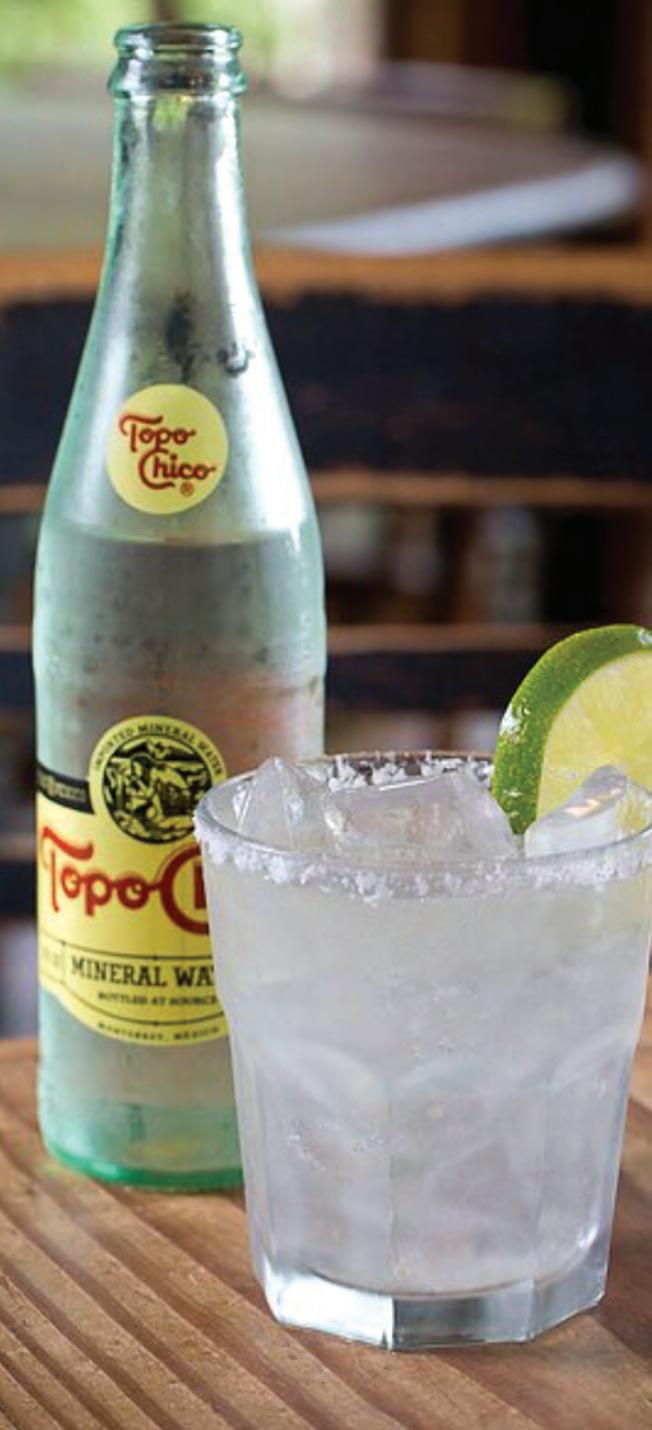
Fizzy water’s another bar essential, as a mixer and for folks who might not want to drink alcohol. We recommend carbonated Mexican Topo Chico, found widely around the country. Pick up four- or six-packs of tonic and club soda for mixers too.
Quality does matter with mixers. We opt for FeverTree, which makes an excellent ginger ale as well. We use grapefruit soda in our Paloma and a few other drinks and recommend the Texas-made Lady Bird for those who can find it.
Agave nectar, Demerara sugar cubes, and simple sugar syrup can sweeten most cocktails. When we call for simple syrup, it’s just a mix of equal parts granulated sugar and water, heated until the sugar dissolves. It will keep in the fridge for weeks. We don’t use commercial sweet-and-sour mix. You’ll find our easy recipe for that on page 65. Like simple syrup, it keeps for days chilled.
GARNISHES: WHEELS, WEDGES, SPIRALS, SWATHS, AND MORE
Wheels of lemon, lime, or other citrus are pretty well understood; just slice neat cross sections of the fruit, a generous ¼ inch in thickness. Cut a small slit in from the center of zZthe wheel and use that slit to mount the wheel on the glass rim. For wedges, cut the fruit in half lengthwise, then slice into each lengthwise at a 45-degree angle to make two or three wedges from each half, depending on size. For spirals, use a channel knife to start a deep, crosswise cut at one end of the fruit, and rotate the knife around the fruit to get a long, skinny piece of peel that you can then coil up around your fingers. Drop it into the drink. We frequently call for swaths. Use a Y-peeler to cut a rectangle of peel about 1 x 2 inches. Trim any uneven edges with a paring knife. To “express” the peel, with it facing down, hold it between your thumbs and forefingers and pinch it over the drink to release the oils. Then run the peel around the glass’s rim before dropping it in. If you wish to perch a swath on the rim of the glass, cut a 1-inch slit lengthwise down the middle of the peel, and use the slit to affix the peel to the glass.
We use a variety of other garnishes too, from garden mint and rosemary to pickled okra and jalapeños, as well as fresh berries and pomegranate seeds, more properly called “arils.” Just pick pretty, unblemished versions. And of course there are olives, big plump green olives. We hand-stuff them with blue cheese, or grilled fresh jalapeños, or even caviar.
WINE
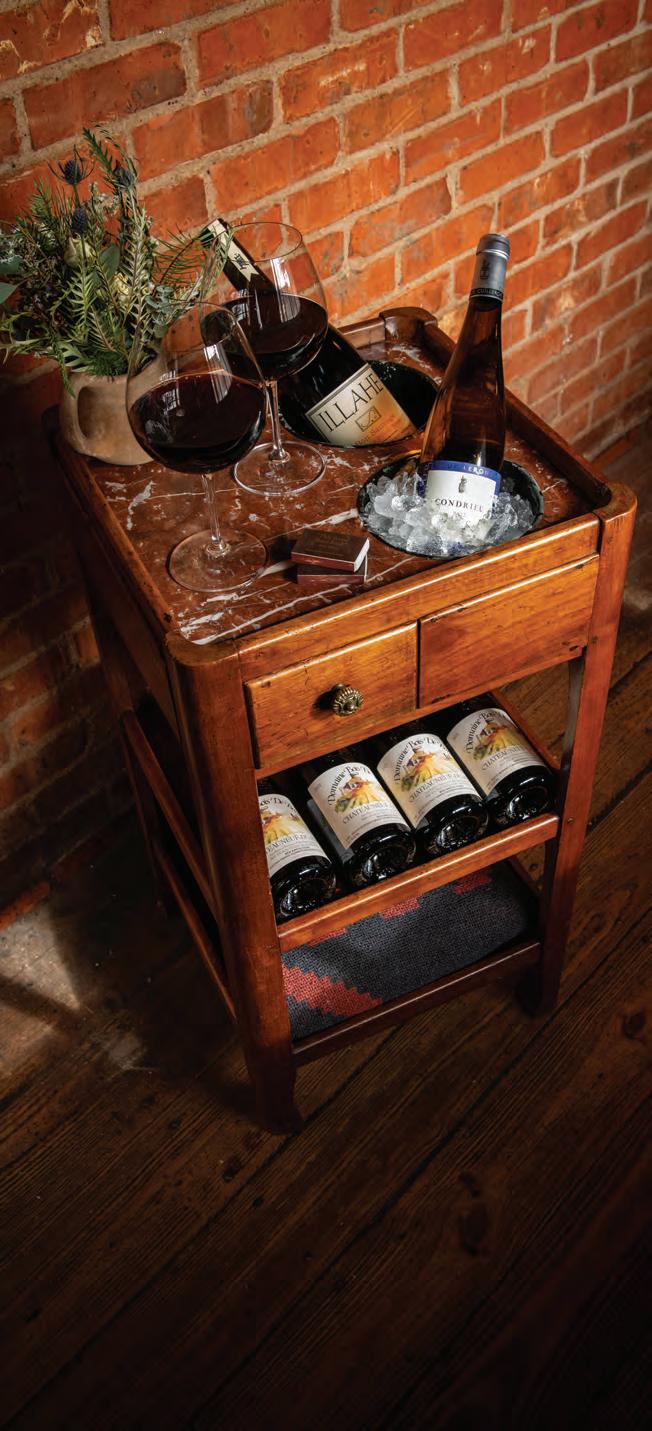
Some wines make appearances in the occasional mixed drink. Anyone wishing to be a good host with a strong bar game, though, should have a decent wine or two to serve by the glass. Choices are nearly infinite, but if budget or storage is limited, or you’re just getting started with wine, begin with one or two reds and whites each. If you’re not sure what you like, take advantage of tastings in your area, visit wineries when you have the chance, and seek out the advice of staff in stores with a large selection. Remember that you don’t need to spend a bundle to find good wine. Also, it’s not the case that red must be served with meat and white with fish or lighter fare, but it’s a reasonable place to start. White should be chilled in the bottle. If you’re short on time, a combination of ice cubes and cold water brings the temperature down the fastest. Most reds are served typically at room temperature, but that doesn’t mean an 85°F room or sitting in the sun on a picnic table.
The number of grape varietals being used in wines, just here in Texas, is staggering, and it’s exponentially larger when you include the other wine regions of the world. For a starting point in the white universe, we suggest a Sauvignon Blanc, a Pinot Grigio, or an unoaked or lightly oaked Chardonnay. Cabernet has the big name in red, and we sell a lot of it because it’s a great choice with steak, the classic “a Cab and a slab” pairing. For a general-purpose red, a lighter Pinot Noir, or a heavier Syrah, or a blend such as those from the
Rhone region of France—typically less expensive than the wines of Bordeaux or Burgundy—can be good choices. Lisa loves to serve blends—both red and white—for our large groups. Easy to please, easy to pair, red or white blends can be the focal point of any home bar too. In warm-weather months, a dry rosé makes a good addition to red and white. Southern French rosés are classics for good reason, but don’t hesitate to try one from elsewhere if recommended by someone whose taste you trust.
We recommend keeping a bottle of Champagne on hand for celebrating anything from a promotion to simply being together with friends for Sunday brunch. True Champagne must come from the Champagne region of France. You can find excellent examples of sparkling wines, though, from other areas. Gruet, from New Mexico next door, has impressive, well-priced bubbly. We use Italian prosecco to mix into a variety of cocktails.
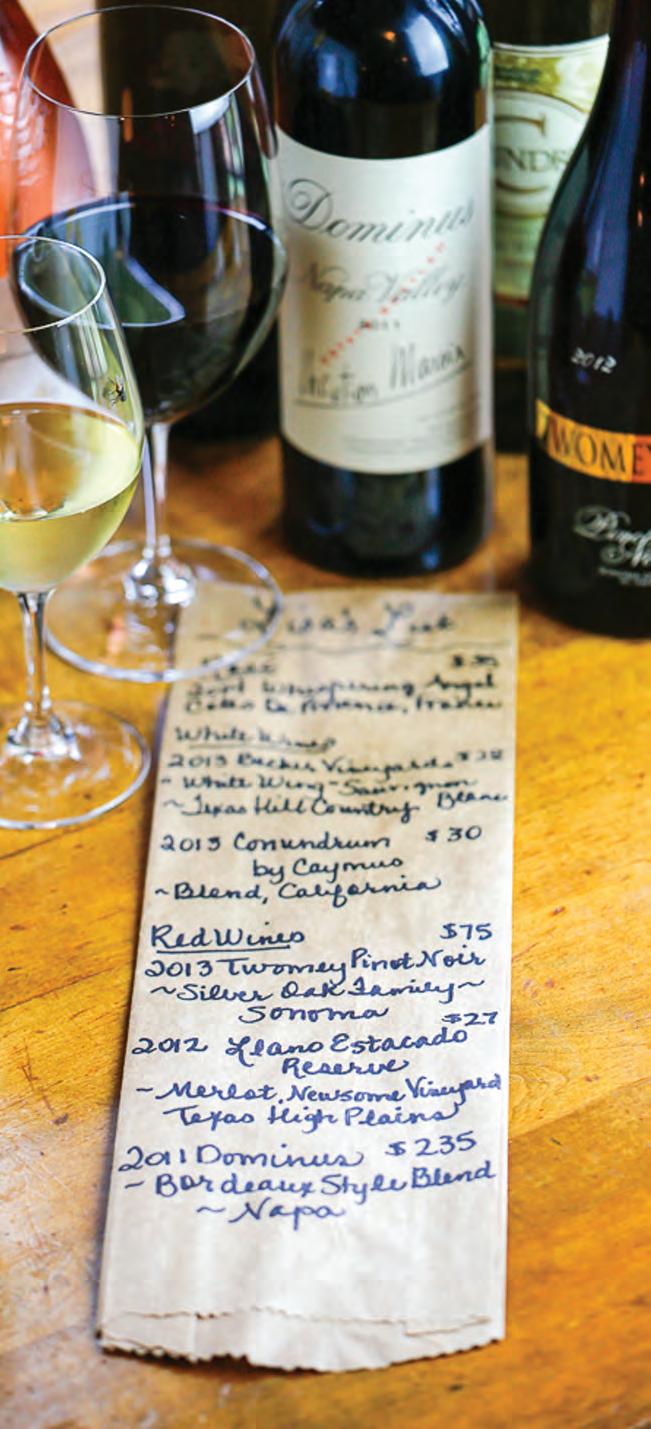
If you join us at the Steakhouse, we offer wellpriced selections of whites and reds, organized from lightest to heartiest, and our staff is trained to make recommendations to go with any of our meals. We also offer the option of ordering off of “Lisa’s List,” a selection of unique and harderto-find wines Lisa has found on our travels and tastings around the world.
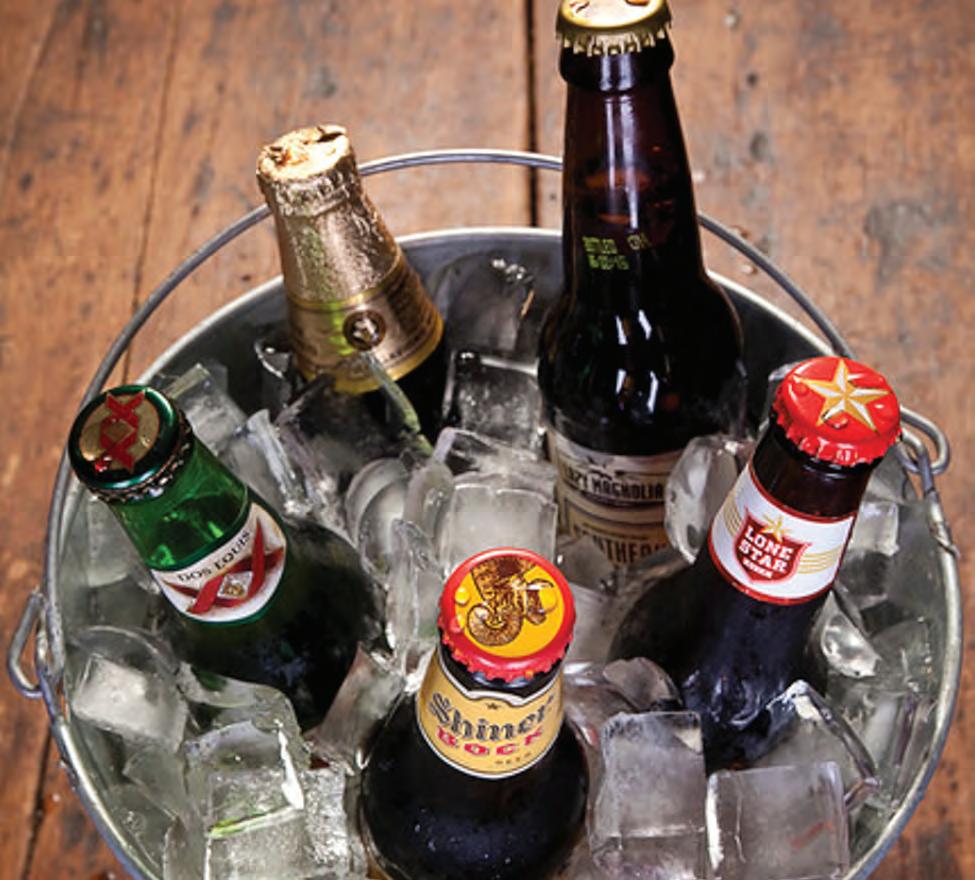
Oh my, the options here. If we were going to have two on hand, one would be a lighter lager and the other something darker or hoppier, like an IPA. We would start with beers associated with Texas, such as Shiner and Lone Star. Mexican beers are wildly popular here too, none more so than Dos Equis Lager Especial and Modelo Especial. For a darker style, Modelo
Negra is a solid choice. However, we would encourage you to check out craft beers in your area and support your local brewers. You may find their offerings in cans, bottles, or oversize growlers. Again, go to tastings, ask questions in liquor stores, and try various styles when you’re out. Should you come to the Steakhouse, you can order A Bucket of Beer, and we’ll present you and your friends with seven bottles of your choice. You only pay for six, though.
BEER
BARWARE
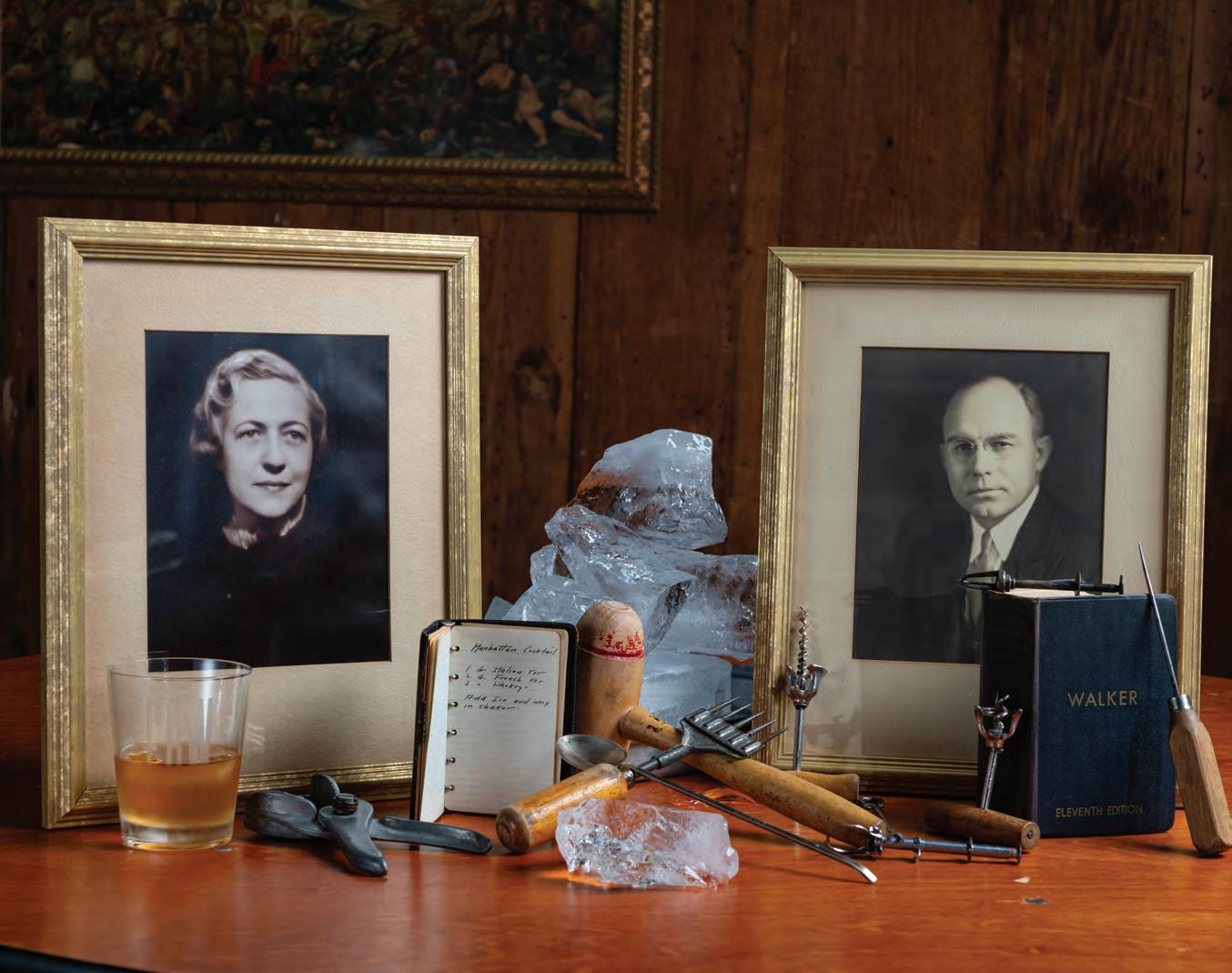
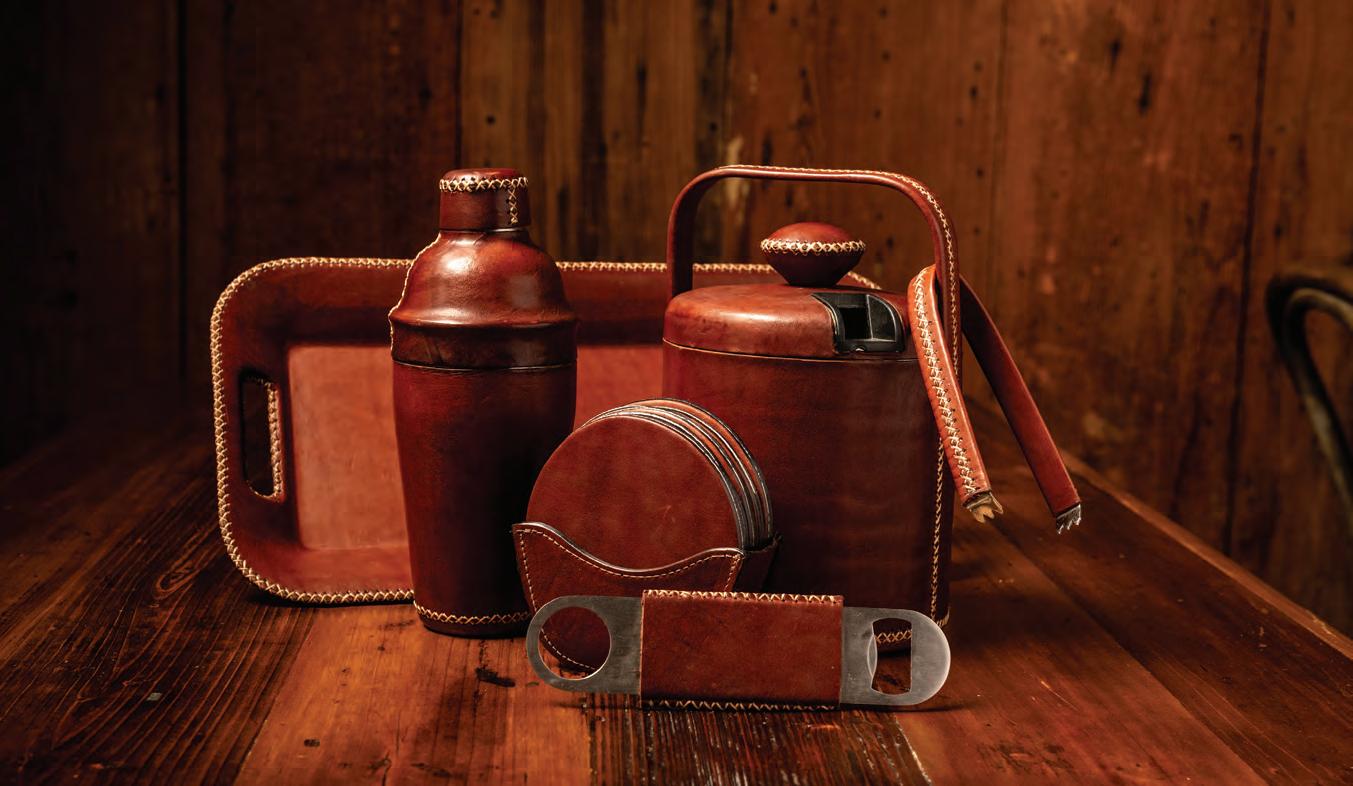
You may not want to invest initially in a mallet and chopper for ice, like Tom’s grandfather used, but a few key items will go a long way in helping you have a good cocktail game. Well-made cocktails are all about the balance of top-shelf ingredients. Balance means measuring properly— no eyeballing—so that the liquor doesn’t overpower the mixer, or vice versa.
Jigger. For precise measuring and perfectly made cocktails, buy an inexpensive, hourglass-shaped
cocktail jigger. The larger side is usually one jigger, which equals 1½ ounces; the smaller side is one-half jigger, or ¾ ounce. In a pinch, you can use a Pyrex measuring cup, but it won’t help you look like a pro.
Shaker. A shaker is essential to properly mix, aerate, and chill many cocktails. You see a lot of bartenders, especially in the movies, using what’s called a Boston shaker. It combines what looks like two glasses, usually the top one made from glass, with a base made of metal. You wedge the smaller shaker into the larger to create a tight
seal. That’s not our choice. We and our Steakhouse bartenders prefer the all-metal cobbler shaker, the kind with a large tin, a built-in strainer, and a cap. Some of them look vaguely like a penguin in shape.
An all-metal shaker gets colder faster. It forms a tight seal, but the seal is easier to break. It’s lighter weight, which might not sound like much until you shake four dozen cocktails back-to-back. Also, metal isn’t breakable. You can spend a lot on an elegant shaker, but you can get a serviceable version for a modest investment.
The shaker base can be used for simply stirred drinks like an Old-Fashioned, or used together with its top to shake, shake, shake a frothy cocktail. In that case, you are often using ice to cool the drink, and usually straining it out to serve “up” or over fresh ice. In general, you shake cocktails with citrus, like a Margarita, or opaque ingredients such as eggs or whites, as in a Whiskey Sour. You stir spirit-forward drinks like an Old-Fashioned or Negroni. Sometimes we break the rules, and you can too. We prefer our very spirited Manhattan shaken rather than stirred. Ian Fleming’s secret agent, James Bond, famously specified he wanted his Martinis shaken, not stirred, which is how we favor them too. Shaking will cause a bit more dilution of the drink, helpful to 007 in keeping his wits about him. We’re not so sure about our wits, but we like Martinis this way because it allows them to get icy, icy cold.
Long-Handled Bar Spoon. A bar spoon is sized and shaped to mix together your chosen beverage
in style. Again, it doesn’t require more than a few dollars to get one. Stirring with a bar spoon keeps the drink clearer. You’ll want to stir a cocktail in one direction, but it can be clockwise or counterclockwise, as you wish. Just go in one direction. Our nephew, pro bartender Blake Perini, says a drink should be stirred “exactly 35 times—not 34, not 36.”
Strainer. This might come with your shaker. Typically, the shaker we recommend, the cobbler, has perforations in its top. What’s called a Hawthorne strainer has a metal coil wrapped around its outside, which helps catch citrus peels. There’s another version called a Julep strainer that works for simply stirred drinks, but the Hawthorne version can be used for both.
Muddler. This wooden or stainless-steel pestlelike tool bruises or mashes ingredients, and can extract oils or juices. You muddle sugar cubes, herbs, fruits, or whatever else is in the bottom of your glass.
Y-Peeler and/or Citrus Zester/Channel Knife. These are small tools that create fragrant strips of citrus peel. The Y-peeler makes a perfect swath or a twist. The zester, also known as a channel knife, makes a longer spiral that you can twist into a tight coil too.
Microplane. Perfect for finely zesting citrus or grating chocolate, nutmeg, or other spices.
GLASSWARE
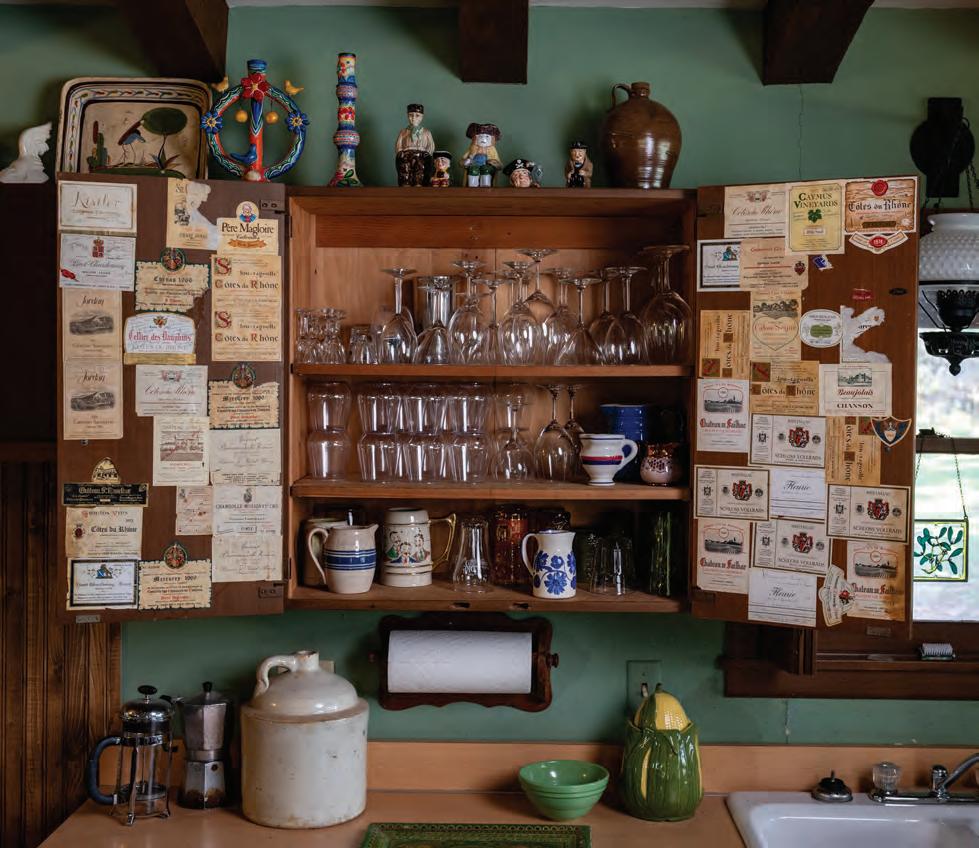
The shape and size of glassware do matter. Some of what they offer is aesthetic, but more importantly, the shape and size affect a drink’s aroma and flavor. We recommend Riedel glassware, which comes in different price points. While best known for its wine glasses, the company makes a full line of glasses for every kind of cocktail. Check them out at riedel.com, or come shop for these at Perini Ranch Country Market.
We often host Riedel tastings, fascinating educational seminars where you really see and taste the difference that the correct glassware makes. One of these tastings will certainly make you a believer that choosing the proper glassware is important.
Old-Fashioned/Rocks Glass. The workhorses of our barware, these short tumblers are used for serving spirits such as whiskey neat, over ice cubes, or blended into a cocktail. They allow a good proportion of spirit, mixer, and ice in every sip.
Martini/Nick & Nora Glass. These iconic stemmed, V-shaped glasses scream “cocktail!” Their initial heyday was during Prohibition, and they’re huge once again. The stem keeps your hand from warming the drink, and the shape allows less of any mixer to sink to the bottom. Nick & Nora glasses are about a third of the size of today’s Martini glasses, holding a more modest 4 to 6 ounces. The name comes with a good story. Author Dashiell Hammett, in his Depression-era book The Thin Man, created a rich, glamorous couple who solved homicides between wisecracks and cocktails. The book inspired 1930s and ’40s movies in which detective Nick Charles was played by William Powell, with Myrna Loy as his stylish, übersmart wife, Nora. The beloved characters always, always had these mini Martini glasses in hand. It’s been said that the Thin Man movies celebrated romance, mysteries, and Martinis. The characters drank when they got out of bed and didn’t stop drinking until the case was solved several days later. Good thing the glasses were so small!
Coupe. This stemmed, broad, and shallow glass simply looks and feels celebratory. The coupe fell out of favor for decades, but it’s back big-time at bars everywhere.
Flute. Not as important as it was just a decade ago, when the flute was favored for sparkling wines. The current thinking of most winemakers is that bubbly is better in a coupe or a white wine glass.
Wine glass. An all-purpose white-and-red wine glass is a good starting point. If you have favorite varietals, you might want to invest in a glass specific to that. The online guide at riedel.com will give you an excellent overview of glasses for popular varietals and grapes.
Highball/Collins Glass. Tall and relatively slim, this is used for drinks that are served over ice. The slim shape also helps keep a carbonated drink fizzy for longer.
Tumbler. In Texas and the South, this tall, 16-ounce glass is generally just called an “iced tea glass.” It’s perfect for a Bourbon Milk Punch, a Michelada, or a Chilton, or—to restate the obvious—iced tea.
Irish Coffee Mug. We use this 8½-ounce stemmed glass mug with a handle for Irish Coffee, of course, but also for many other hot adult beverages.
Copper or Silver Cup. For Mules and Juleps, these are beautiful and a historic nod to great traditions. They get cold fast. In copper, acidic ingredients like lime or ginger have a slight interaction with the metal that enhances their flavor.
Glencairn. These tulip-shaped glasses are wonderful for sipping spirits straight, especially whiskey, brandy, and Cognac, as the unique shape does an exceptional job of carrying a spirit’s aromas to the nose.
ICE MATTERS
From crushed, crescents, and pebbles to large cubes and spheres, ice has been elevated as an element of the cool cocktail. It’s not a new affectation, though. Early cocktail culture was always exacting about ice too. Remember our mentioning previously in this chapter that we are stewards of Tom’s grandfather’s barware, which included ice mallets and an ice chopper from back in the 1950s? Of course, ice chills a drink, but it can also mellow or dilute the flavor, as well as add texture and body to it.
In the rougher days of cattle drives and cowboy saloons, no one was asking for ice in their whiskey. It just wasn’t available. As commercial ice, icehouses, and refrigeration became more established, though, ice made its way into beverages. That coincided more or less with the Prohibition era and the post-Prohibition era, when the creation of cocktails flourished.
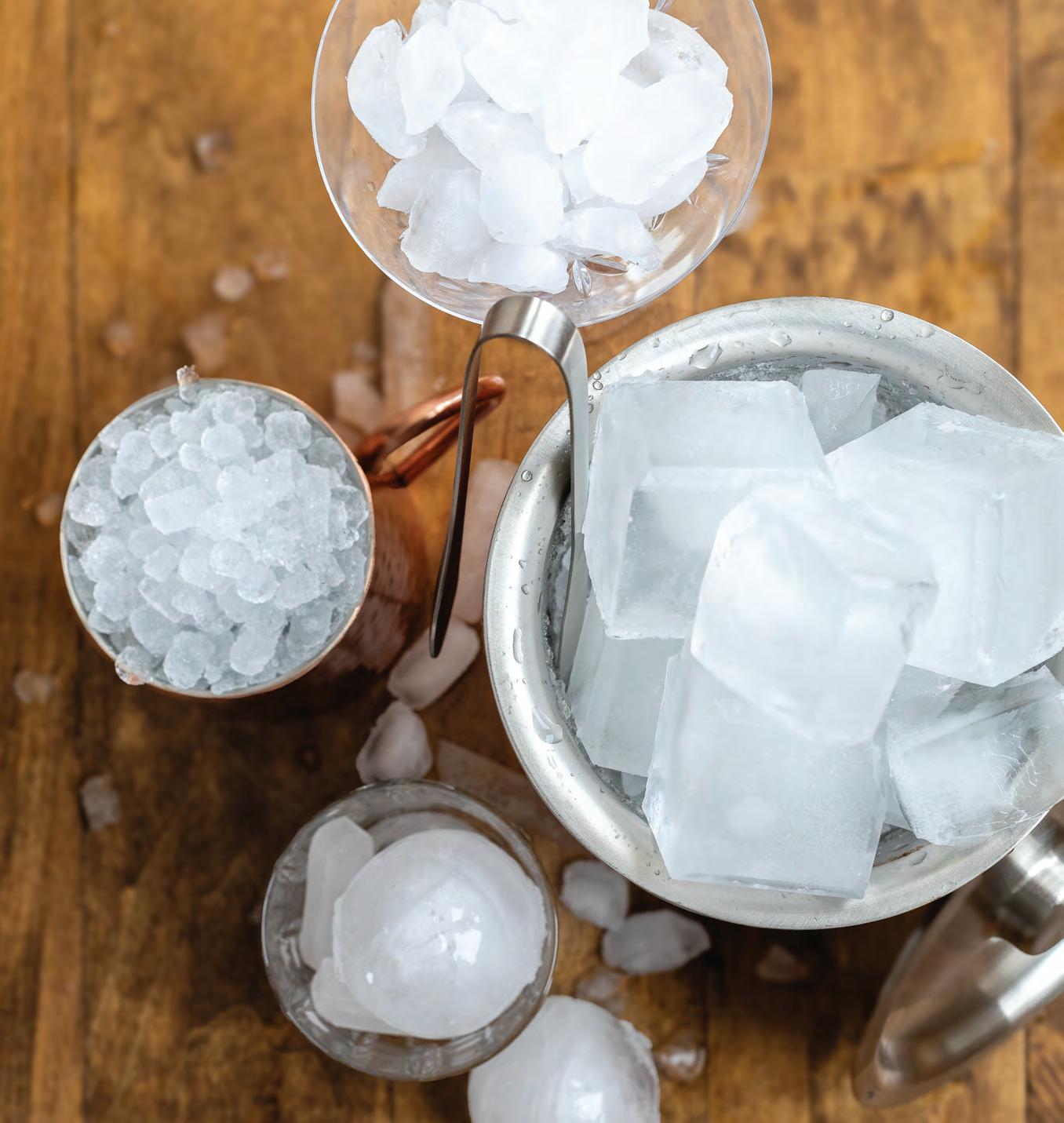
Crushed ice is the finest type, generally cracked with a mallet and a measure of great enthusiasm. There are special bags to use for this or you can pop it into a freezer-weight, resealable plastic bag before you pound away. Crushed ice can enhance a Mint Julep, quickly chilling its metal cup on a warm day. Pebbles are coarser, and can be made in special, usually silicone, trays. We use pebbles for everything from sangria to a Negroni to the Totally Texas Salty Dog. An on-therocks drink, such as an Old-Fashioned, benefits from a large or jumbo-size cube or sphere. The large cubes dilute a drink much more slowly than
smaller chunks. Spheres melt the most slowly, since they lack edges. Large cubes or spheres make you look like a pro. Molds for making all of these are now widely available. We sell ice molds in our Perini Ranch Country Market’s cocktail section.
Super-clear ice has become another hallmark of a well-crafted cocktail. The internet is full of techniques to accomplish this at home. Frankly, we don’t find that any of them work very well. We order a version of commercially made clear ice for the Steakhouse, but at home, we make large cubes and spheres with bottled water. They aren’t completely clear, but still get the job done.
When making a shaken cocktail, you usually can use standard-size ice cubes when initially shaking the drink. Most often, that half-melted ice is then strained off. Then the drink might be served “up”—chilled without additional ice—or poured over fresh ice in the glass, perhaps one of those large or jumbo cubes or spheres. Ice can play a role in chilling your glasses too. If you have time and space, you can chill cocktail glasses in the refrigerator for 15 minutes or longer. The faster method, though, is to fill glasses with ice and a little cold water. They’ll cool down in just the time it takes to create the cocktail. Simply dump out the ice-and-water mixture, fill the glass with your drink, and serve.