This is an officially licensed book by Cider Mill Press Book Publishers LLC.
All rights reserved under the Pan-American and International Copyright Conventions.
No part of this book may be reproduced in whole or in part, scanned, photocopied, recorded, distributed in any printed or electronic form, or reproduced in any manner whatsoever, or by any information storage and retrieval system now known or hereafter invented, without express written permission of the publisher, except in the case of brief quotations embodied in critical articles and reviews.
The scanning, uploading, and distribution of this book via the internet or via any other means without permission of the publisher is illegal and punishable by law. Please support authors’ rights, and do not participate in or encourage piracy of copyrighted materials.
13-Digit ISBN: 978-1-40034-082-8
10-Digit ISBN: 1-40034-082-9
This book may be ordered by mail from the publisher. Please include $5.99 for postage and handling. Please support your local bookseller first!
Books published by Cider Mill Press Book Publishers are available at special discounts for bulk purchases in the United States by corporations, institutions, and other organizations. For more information, please contact the publisher.
Cider Mill Press Book Publishers “Where good books are ready for press” 501 Nelson Place Nashville, Tennessee 37214 cidermillpress.com
Typography: Fleur, Nave, Warnock Pro
Printed in Malaysia 24 25 26 27 28 OFF 5 4 3 2 1 First Edition
The information in this book is intended for educational purposes only and should not be considered as medical advice. Herbal remedies can interact with medications and may not be suitable for everyone. Always consult with a qualified healthcare professional before starting any new treatment, especially if you are pregnant, nursing, have a medical condition, or are taking prescription medications. The author and publisher are not responsible for any adverse effects or consequences resulting from the use of any suggestions, preparations, or procedures discussed in this book.
Seasonal Remedies & Recipes for a Year of Botanical Wellness
MEAGAN VISSER
As a primary form of healthcare for centuries in cultures across the world, it’s and humans have long formed a natural partnership. More and more, modern families are tapping into its potential as an effective addition to their wellness
Reaching for herbs in times of need can be both practical and empowering, and has the beautiful benefit of nurturing our connection with the natural world, be that with plantain and ground ivy growing in our lawns or St. John’s wort and yarrow dancing in the summer meadows that draw our eye. Plant allies grow abundantly in our landscapes, are a vital part of the ecosystems of which we are part, and offer us the opportunity to connect with them throughout the seasons.
We are pleased to join herbalist Meagan Visser in celebrating her beautiful compilation, Nature’s Medicine Cabinet. As a registered nurse with years of experience in herbalism, Meagan offers a pragmatic and thoughtfully considered approach to building a seasonal herbal apothecary for those seeking to support their family’s wellness herbally.
Having had the pleasure of knowing Meagan for over a decade, we’ve watched her skillfully care for her family using herbal practices through many seasons as she has raised her four boys from infancy to adolescence. She shares much of these experiences, herbal recipes, and knowledge generously on her blog, Growing Up Herbal.
Our paths merged with Meagan’s as she advanced her herbal education at the Herbal Academy, where she now teaches alongside us in numerous herbal programs. Meagan’s insights, shaped by her medical background and her roles as a mother and herbalist, offer an abundance of support for those seeking to nurture their families by enlisting the power of herbs.
With the goal of sharing the recipes that have worked for her household over the years, Meagan expands so much of what she started on her blog to provide hands-on, practical guidance for getting started using herbs to support a range of daily wellness needs and first aid concerns. Arranged to provide
Herbalism has been the primary form of healthcare in my home for the past sixteen years, and apart from a handful of emergency situations, my family has been able to take charge of our own health naturally. This has not only saved us money and helped us avoid unnecessary medications and dependence on someone else where our health is concerned, but it has taught us to take personal responsibility for our own well-being, to work hard and stay dedicated to our vision, and to embrace a new way of thinking about health and wellness. My herbal journey began sixteen years ago while I was pregnant with my first child. As a recent nursing school graduate, I was determined not to experience the many pregnancy complaints that were covered in my university women’s health classes and clinicals—complaints that seemed all too common, yet could mostly be avoided with healthy lifestyle practices. After a fellow registered nurse gave me a book about herbs, a fire of empowerment was lit within me, and I dove headfirst into researching all things holistic and herbal, particularly where it related to supporting a healthy pregnancy. Little did I know that this would lead me down a path I would follow for many years to come, a path to embracing a practice that would change my life (and the life of my family) forever.
In the pages of this book, I will guide you on a journey through the seasons. I will introduce you to the various botanicals nature provides throughout the year, share some simple seasonal adjustments you can make to your diet and lifestyle, and bring some common seasonal ailments to your attention so you can be prepared for them ahead of time. I’m also sharing sixty herbal
recipes—those that I use in my own home—that you can stock in your natural medicine cabinet to help you navigate these seasonal ailments as naturally as possible. Not only will you gain a deeper understanding of some basic herbal concepts, but you’ll learn which supplies and ingredients to keep on hand, foraging practices you can follow if you want to harvest your own seasonal herbs, how to use herbs safely, and how to make a variety of herbal preparations.
By the end of this book, I hope to have encouraged you to approach your and your family’s health and wellness from a natural perspective and to have inspired you to embrace seasonal herbalism in your home. From here, I want to support you on your herbal journey as you explore new paths and learn from other teachers. You never know where this practice will take you, but I can assure you that it will change your life for the better.
Before you venture any further, it is important to note that the information
An Ancient Path
Herbalism is a form of folk medicine, often referred to as “the people’s medicine.” It is rooted in ancient wisdom and practices that have been passed down from generation to generation. It is considered a traditional form of healthcare because it has been practiced for centuries by different cultures and communities worldwide.
Before the advent of modern medicine, people relied heavily on the resources available in their immediate surroundings, including various plants and herbs. They observed the effects of these botanicals on the body and developed a deep understanding of their properties and health applications.
Traditional herbalism is closely tied to indigenous communities’ cultural and regional practices. It reflects their deep connection with nature and their ability to utilize local plants for wellness purposes. These traditional healing systems often incorporate holistic approaches that consider not only an individual’s physical symptoms but also their emotional, mental, and spiritual well-being. Herbal preparations and practices vary across different cultures, such as Traditional Chinese Medicine (TCM), Ayurveda, Native American herbalism, Celtic herbalism, African herbalism, Ashkenazi herbalism, and so on. Each of these traditions has their own unique theories, systems and diagnostic methods, preferred plants, and approaches to using herbs as part of their healing modalities.
Throughout the 1600s and 1700s, some of these herbal practices and traditions were brought to America. Along with Native American herbalism, these practices were primarily used by the common folk or those who didn’t have access to doctors, as well as some wealthier individuals who’d had little success with the medical interventions practiced by orthodox physicians of the time. As herbalism’s success and use began to spread, many nonorthodox physicians began to incorporate plants into their practices, eventually building upon the
art and science of herbalism and tying these two worlds—traditional folk medicine and science-based medicine—together. In fact, herbalism was a common part of many medical practices up until the mid- to late 1800s.
However, due to the wide variety of medical theories and practices among physicians of the time, as well as the struggle for social, economic, philosophical, and political power, a medical standard of practice was created by the elite. This eventually led to a decrease in nonorthodox medical schools and, thus, less herbal practice among physicians. Because of this, the practice of traditional herbalism became obsolete for most people, except for those who kept it going in their homes and communities. Thankfully, an herbal resurgence occurred during the 1960s and 1970s with the back-to the-land movement, and today, herbalism once more plays a significant role in many communities as a primary or complementary form of healthcare. It is valued for its accessibility, affordability, and connection to nature; it acknowledges the wisdom of ancestral knowledge, respecting the interplay between humans and the plant world.
As for the future of herbalism, my heart longs to see individuals take their health into their own hands by incorporating natural, holistic practices into their daily lifestyles. I would love to see an herbalist in every home, once more making plants the first thing reached for in times of need, with each generation passing their botanical knowledge and wisdom down to the next. One day, I hope that knowing the plants that grow in one’s backyard, the fields and meadows, or the forest is common knowledge. I also hope that stocking the home apothecary with seasonally harvested botanicals and filling one’s natural med icine cabinet with handcrafted herbal tea blends, infused oils, salves, syrups, and tinctures are the norm. I yearn to see a shift in modern medical practice, one that allows physicians and other healthcare professionals to once again recommend and utilize herbs and more natural forms of medicine as an option for their patients, saving pharmaceuticals and more invasive interventions for when they are most needed.
Allowing the Seasons to Guide You
One way to begin caring for yourself and your family more naturally is through the practice of seasonal herbalism.
Seasonal herbalism allows the cycles and rhythms of the year to dictate the plants you work with, your wellness focuses each season, and the types of herbal preparations you might want to keep in your natural medicine cabinet. When you begin to think seasonally, the first thing you might focus on is the common ailments and conditions you and your family experience in different parts of the year. These ailments are highly individualized and can be influenced by your location, lifestyle choices, and family health.
Another way to take a seasonal approach to your health and wellness is through practicing bioregional herbalism, which is the study and use of plants that grow in your local area. As you become more attentive to seasonal cues, you might begin to notice the plants that grow around you and how they change throughout the seasons.
To get to know your local herbs a bit better, you can start by making a list of the plants you notice each season. You can then research the botanicals on your list to identify which ones are useful in herbalism, removing those that are not. It’s also a good idea to see which botanicals are at risk of overharvesting; you’ll want to remove these from your list or learn if they can be cultivated instead of wild-harvested. Next, you can begin to research each plant to identify how it’s used, what its herbal actions and energetics are, any important safety or dosing information, and how to harvest and prepare it. It’s also wise to list some alternate herbs that act similarly to the herb you are studying, as this will come in
handy if you ever need to substitute one plant for another. Repeat this process for each botanical on your list, and after a while, you will know a lot about the herbs growing around you.
Whether you realize it or not, there are likely many plants available where you live. As you begin to make your list and see just how many useful plants there are, you may start to feel a bit overwhelmed, but let me assure you that you don’t have to learn about all of the plants on your list at once. This process can take years, and you will constantly be adding new plants to your list. Pick a handful to start studying and using regularly and then add additional plants when you feel ready.
In the second half of this book, you will find lists of herbs that are commonly found and harvested in each season, as well as suggestions for seasonal lifestyle practices and wellness focuses you can incorporate into your lifestyle. Use these as a starting point on your seasonal herbal journey and see where it takes you.
The Home Herbalist
As you embark on your journey as a home herbalist, there are a few things to consider before stocking your home apothecary with seasonal herbs or filling your natural medicine cabinet with herbal preparations for common seasonal ailments.
While this book isn’t intended to be an herbal textbook, teaching you the art and science of herbalism as a whole, it will cover some important areas that will help guide you as you care for yourself and your family members naturally, including foundational herbal concepts, which supplies and ingredients to have on hand, how to identify and harvest seasonal botanicals, how to substitute one herb for another in a recipe, how to use herbs safely, and how to make a variety of herbal preparations.
If you’re ready, let’s begin.
Foundational Herbal Concepts
As mentioned previously, herbalism encompasses diverse cultural traditions from all over the world, is a combination of art and science, and combines traditional and modern practices. Yet, amid this medley, some foundational principles bring unity to all of herbalism’s pieces in the twenty-first century.
Interconnection
All things are connected, from the cells and systems within the body to the larger, natural world of which we are a part. When something is out of balance, we must look inside and outside of ourselves to find possible causes and address these in both the inner and outer worlds. I’m reminded of the homeopathic wisdom of “like cures like”; we humans are a part of creation, and we can look to creation, whether to our local plants, to the sun or clean air and water, or to time outdoors in the mountains or at the ocean, to bring us back toward a state of balance.
A Body in Balance
The ultimate goal when using herbs for wellness is to bring the body back into equilibrium and keep it there for as long as possible. This is often achieved through using herbs that help activate, build, and/or cleanse the body so it can return to a balanced state of health. Activation is needed in times when the body is a bit sluggish and needs a boost or gentle nudge in the right direction. Building is needed when the body is in a weakened state, recovering from an ailment, or simply needs nourishment. Cleansing is needed when the body is burdened or loaded down by something that needs to be gently removed.
Use of Whole Plants
Herbalists generally use plant extracts made from whole plant material, which captures a wide range of phytochemicals found within the plant. These plant constituents work together synergistically to produce a variety of effects in the body. Using whole plants instead of isolated active ingredients helps reduce toxicity or side effects, making herbs quite safe for most individuals.
Use of Formulas
While it’s good to use one herb at a time when you are getting to know a new plant—giving you time to familiarize yourself with how the plant works in your body—when using herbs for a specific condition, you can achieve greater results by combining plants together to create a formula. This formulation creates a synergistic effect, allowing the herbs to enhance, balance, support, and direct one another, which ultimately increases the formula’s effectiveness.
An Individual Approach
Herbs are often matched to the individual and the specific symptoms of their condition to achieve the best results. Knowing how an herb works in the body, assessing how a condition is presenting itself in the individual, and then choosing the appropriate herbs to help bring the body back into a balanced state of health is key. It’s important to note that herbalism is not a “set it and forget it” practice. It is quite common to make adjustments in herbal formulas and protocols along the way to better achieve the desired end result.
Now that you have an understanding of some of the principles herbalism is built upon, let’s look at some things you’ll need to have on hand to stock your home apothecary so you can care for yourself and your family naturally.
Sourcing Supplies & Ingredients
There are numerous ways to use herbs in your home throughout the season, but when it comes to using herbs for wellness purposes, the most common way to use them is through a variety of herbal preparations, such as teas, tinctures, salves, poultices, and more. Some of these preparations are made and used right away, and others are created and stored for later use. To make these herbal preparations, you will need to gather some basic supplies and ingredients, many of which you might already have in your home.
Here is a list of common kitchen and storage supplies, as well as some basic ingredients to have on hand so you are ready to make the seasonal recipes in the second half of this book. For items you don’t already have on hand, try searching for them at local or online shops, thrift stores, garage sales, and flea markets, or borrow them from a friend or family member.
Supplies:
• Baking sheet
• Cheesecloth (unbleached)
• Coffee filters (unbleached)
• Coffee grinder
• Cotton/linen cloth or paper towels
• Cutting board
• Digital kitchen scale
• Electric mixer
• Eye wash cup
• Fine-mesh sieve
• Glass canning jars with lids (various sizes)
• Glass measuring cups or graduated cylinders
• Glass storage containers (various sizes)
• Gloves
• Heat-proof cups or mugs
Ingredients:
• Activated charcoal
• Alcohol (40-95% ABV, such as brandy, whiskey, vodka, or grain alcohol)
Once you have your supplies and ingredients on hand, you’ll need to gather some herbs to make the preparations you want to stock in your natural medicine cabinet each season. Herbs can be sourced by purchasing, growing, or wildcrafting them.
Purchasing Dried Herbs
If you are new to using herbs, one of the simplest ways to source them is to purchase them from reputable local or online herb stores or suppliers. They are almost always dried, cut and sifted, and ready for use. Before purchasing, it’s a good idea to ask where the plants were sourced, whether sustainable harvesting methods were used, and if the botanicals were tested for purity. Remember, you are taking plants from nature and putting them on and in your body, so asking these questions is not only important for your own overall wellness, but the sustainability and future supply of the plants as well.
Growing Herbs
Another way to source herbs is to grow them yourself. If you are new to growing herbs, it’s a great idea to have a book about herb gardening on hand to use as a reference when starting your garden. You can also take a local or online class on the subject. You can even ask a friend with an herb garden for advice and see if they have any seeds they wouldn’t mind sharing with you to help get your garden started.
If starting plants from seed isn’t an option, you can purchase herb seedlings from local or online nurseries. Grocery stores will sometimes carry potted culinary herbs you can purchase and replant as well. Just be sure to look for organic varieties and suppliers that don’t spray their plants with pesticides. You can also ask your herb gardening friends to share any extra perennial plants they’ve recently divided with you!
Wildcrafting Herbs
As you continue on your herbal journey, chances are you will learn how to identify more and more plants that grow in your area, whether in the forest, fields, or meadows. Wildcrafting plants can be a great way to gather herbs for free. It also allows you to play a bigger role in stewarding the land around you and helps you to connect with nature on a deeper level.
If you’re interested in harvesting local plants, knowing how to properly identify plants and sustainably harvest them is essential. Many plant species have lookalike counterparts with significant differences in how they work in the body, such as yarrow (Achillea millefolium) and Queen Anne’s lace (Daucus carota), not to mention deadly look-alikes like poison hemlock (Conium maculatum) and water hemlock (Cicuta maculata), all of which have white lacy flowers and feathery-looking leaves. Mistakenly harvesting the wrong plant can lead to ineffective formulas, potential poisoning, and even death, so precise plant identification is of the utmost importance if you plan to forage for your own herbs!
If you want to gather local plants, here are some tips and resources to help you along the way.
Plant Identification Tips
• Observe the physical characteristics of the plant by paying attention to key features, such as its leaf shape, arrangement, color, texture, flower structure, fruit or seed, stem, and overall growth habit.
• Use recommended field guides or reputable online resources that are specific to your region. These resources often provide descriptions, images, and distribution maps for plant identification.
• You may want to have a camera handy on your foraging trips to take clear photos of the plant in question. Be sure to take photos of the entire plant, as well as specific plant parts if necessary. These can come in handy when seeking outside help from a botanical expert.
• Pay attention to the natural environment where the plant is growing, including the type of soil, sun exposure, elevation, and surrounding vegetation. This information can help you narrow down possibilities during identification and help recreate the plant’s preferred habitat if you decide to grow it in your garden.
• Some plants may exhibit different characteristics or undergo changes throughout the seasons, so it’s a good idea to revisit the plant regularly throughout the year, taking note of the timing of flowering, fruiting, or other unique seasonal features, to assist with identification and the plant’s growth cycle.
• If you are uncertain about a plant’s identification, reach out to local botanical gardens, arboretums, or experienced herbalists or botanists who can provide guidance and help verify the identification. There are also some great plant identification groups on Facebook you can join as well.
• If you think you’ve identified a plant, it’s wise to verify your findings using multiple reputable sources to ensure accuracy. Compare descriptions, images, and other distinguishing information to confirm the plant’s identity.
Ethical Foraging Practices
• Avoid harvesting plants from protected areas, private property without permission, or locations that might be sprayed with chemicals or exposed to toxic residue.
• Do not harvest plants that are endangered or at risk of becoming endangered.
• To avoid overharvesting, harvest only what you will be able to process and use in one year’s time, and take no more than 25 percent (or less, depending on the botanical) from a given plant stand.
• Minimize disturbance to the plant habitat and take care to harvest the plant in a way that allows the plant to regenerate if you are only taking a portion of it.
It’s a good idea to maintain a foraging journal to document your observations, including details like location, date, plant characteristics, and any notes on potential uses or medicinal properties, for future reference and learning.
Keep in mind that proper plant identification takes time and practice. It can be helpful to engage with local plant identification groups, attend workshops or courses, or connect with experienced foragers who can provide hands-on guidance and share their knowledge with you.
Regardless of how you source your herbs, there are some common botanicals that can be helpful to keep on hand in your home apothecary. These plants are often used in a variety of herbal recipes and are a good starting place when sourcing herbs to keep in stock.
• Elder (Sambucus nigra, S. canadensis) flower and berry
• Fennel (Foeniculum vulgare) seed
• Ginger (Zingiber officinale) rhizome
• Hawthorn (Crataegus spp.) flower and berry
• Lavender (Lavandula spp. ) flower bud
• Licorice (Glycyrrhiza glabra) root
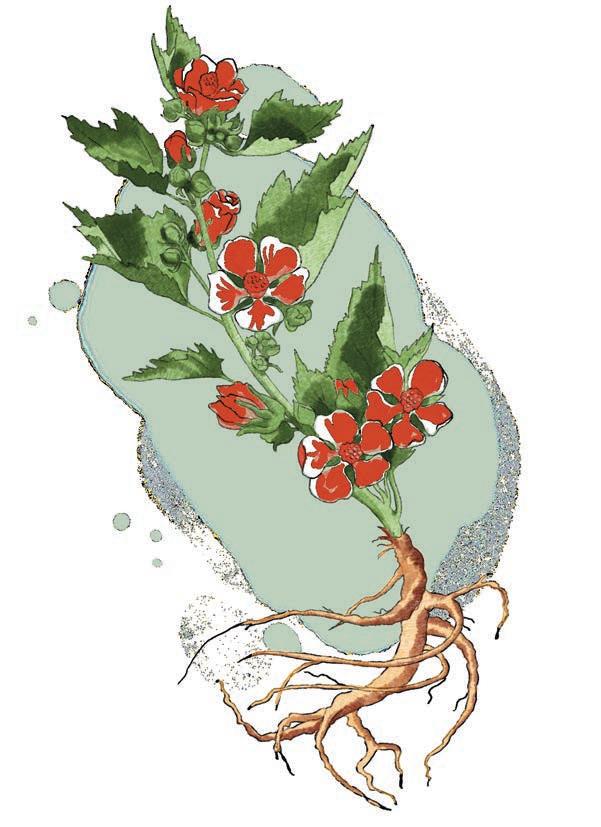
• Marshmallow (Althaea officinalis) root
• Mullein (Verbascum thapsus) leaf
• Nettle (Urtica dioica) leaf
• Oat (Avena sativa) seed and straw
• Peppermint (Mentha x piperita) leaf
• Plantain (Plantago spp.) leaf
• Raspberry (Rubus spp.) leaf
• Rose (Rosa spp.) flower
• Rosemary (Salvia rosmarinus) leaf
• Sage (Salvia officinalis) leaf
• Skullcap (Scutellaria lateriflora) aerial parts
• Thyme (Thymus vulgaris) aerial parts
• Tulsi (Ocimum tenuiflorum) aerial parts
• Valerian (Valeriana officinalis) root
• Yarrow (Achillea millefolium) aerial parts
Making Substitutions
Once you’ve stocked your home apothecary with the supplies, ingredients, and herbs you want to keep on hand, you are ready to begin making seasonal herbal preparations to fill your natural medicine cabinet.
As you go about this process, you might come across an ingredient or herb in a recipe that you don’t have on hand or simply don’t want to use. When this happens, don’t worry. You can always replace it with a suitable substitute. Where substituting ingredients is concerned, you have plenty of options. However, it’s important to remember that recipes may not turn out as originally intended when certain substitutions are made. For example, substituting vegan wax instead of beeswax in a salve can change the hardness, texture, and color of the final product, or substituting a dry sweetener for a liquid sweetener in a syrup can change the final flavor, texture, color, and possibly shelf-life of the final product. Therefore, it may take some ingredient research and trial and error to get the recipe as close to the original as possible. Below, you will find a list of general ingredient substitutes you can make.
ORIGINAL INGREDIENT SUBSTITUTE WITH
Alcohol
Apple cider vinegar
Beeswax
Bentonite clay
Brandy
Cocoa butter
Cornstarch
Food-grade vegetable glycerin
Any vinegar of your choice (red/white wine, rice wine, sherry, etc.)
Any wax of your choice (berry, caranuba, rice bran, soy, etc.)
Any clay of your choice (green, kaolin, pink, yellow, rhassoul, white, etc.)
Any similar ABV alcohol of your choice (gin, rum, vodka, whiskey, etc.)
Any butter of your choice (avacado, kokum, mango, shea, etc.)
Arrowroot powder
Honey
Olive oil
Sea salt
Any sweetener of your choice (coconut sugar, maple syrup/sugar, food-grade vegetable glycerin, stevia, unbleached and nonGMO cane sugar, etc.)
Any carrier oil of your choice (avocado, fractionated coconut oil, grapeseed, sweet almond, etc.)
Any salt of your choice (Celtic, Fleur de sel, Himalayan, etc.)
As for substituting herbs, you still have plenty of options, but you have to be a bit more strategic in choosing the right substitute herb if you want to achieve the same results as the original recipe intended.
To do this, you’ll need to take the three foundational properties of the original herb into consideration before choosing a substitute herb. These three foundational herbal properties are tissue affinity, energetics, and actions.
Tissue Affinities
Tissue affinities are the tissues, organs, or body systems that an herb targets or affects. This might be the mucous membranes (or another type of tissue), the liver (or another specific organ), or the entire cardiovascular system (or other body system). Some herbs act primarily upon one tissue, while others affect multiple tissues throughout the body.
Peppermint (Mentha x piperita) leaf, for example, has a tissue affinity for the respiratory, digestive, and cardiovascular systems. We can get even more specific by noting that peppermint directly affects the smooth muscle tissue throughout each of these body systems. When looking for a substitute for peppermint, you will want to find another herb with an affinity for similar tissues.
Herbal Energetics
Herbal energetics are an herb’s energy characteristics, which affect the tissues it has an affinity for in the body. According to Western herbalism, herbal energetics are fixed and unchanging and are associated with temperature, moisture, and tissue structure.
Author bio
Meagan Visser is a registered nurse turned herbalist who lives with her husband and four sons in the beautiful southern Appalachian mountains. As a Staff Herbalist and Lead Herbalist Educator at Herbal Academy, Meagan brings a wealth of knowledge to her contributions, blending her medical background with timeless herbal wisdom. She is also the founder of Growing Up Herbal, a platform dedicated to natural living for families. When she’s not teaching or crafting herbal preparations, Meagan enjoys homeschooling her children, gathering with friends and family, and spending time in her gardens, where she finds inspiration in the beauty of nature.
About Cider Mill Press Book Publishers
Good ideas ripen with time. From seed to harvest, Cider Mill Press brings fine reading, information, and entertainment together between the covers of its creatively crafted books. Our Cider Mill bears fruit twice a year, publishing a new crop of titles each spring and fall.