THIS BOOK IS
DEDICATED TO THE LIFE AND LEGACY OF MY FATHER
R. P. MACWELCH
MAY 12, 1934 – JANUARY 6, 2023
Modern Bushcraft
Copyright © 2026 by HarperCollins Focus LLC.
All rights reserved. No part of this book may be reproduced in whole or in part, scanned, photocopied, recorded, distributed in any printed or electronic form, or reproduced in any manner whatsoever, or by any information storage and retrieval system now known or hereafter invented, without express written permission of the publisher, except in the case of brief quotations embodied in critical articles and reviews.
Published by Cider Mill Press, an imprint of HarperCollins Focus LLC, 501 Nelson Place, Nashville, TN 37214 USA.
The scanning, uploading, and distribution of this book via the internet or via any other means without permission of the publisher is illegal and punishable by law. Please support authors’ rights, and do not participate in or encourage piracy of copyrighted materials.
13-Digit ISBN: 978-1-40034-978-4
10-Digit ISBN: 1-40034-978-8
Books published by Cider Mill Press Book Publishers are available at special discounts for bulk purchases in the United States by corporations, institutions, and other organizations. For more information, please contact the publisher. cidermillpress.com
Any internet addresses, phone numbers, or company or product information printed in this book are offered as a resource and are not intended in any way to be or to imply an endorsement by Cider Mill Press, nor does Cider Mill Press vouch for the existence, content, or services of these sites, phone numbers, companies, or products beyond the life of this book.
Without limiting the exclusive rights of any author, contributor or the publisher of this publication, any unauthorized use of this publication to train generative artificial intelligence (AI) technologies is expressly prohibited. HarperCollins also exercise their rights under Article 4(3) of the Digital Single Market Directive 2019/790 and expressly reserve this publication from the text and data mining exception.
HarperCollins Publishers, Macken House, 39/40 Mayor Street Upper, Dublin 1, D01 C9W8, Ireland (https://www.harpercollins.com)
Cover and interior design by Shannon Johnson-Pynes
Typography: Halyard, The Seasons, Zenon
Photos courtesy of Unsplash and Pexels.
Printed in Malaysia 26 27 28 29 30 PCA 5 4 3 2 1
First Edition
Illustrated by Ethan Davies
Introduction
Welcome to Modern Bushcraft. My name is Tim MacWelch and over the last 30 years I have taught bushcraft and self-reliance skills to adults and children. In that time, I’ve also written over a dozen books on outdoor skills and survival, including three New York Times bestsellers. My goals for this book are to help you become safer and feel more at home in the wild, while at the same time helping you understand the importance of your role in the environment. I want you to feel like you are part of the wild places, not just a tourist walking through them.
So, what exactly is bushcraft and what can it do for you?
If the term bushcraft is new to you, let’s start there. While the word itself is becoming more common in modern language, the skills of bushcraft are truly ancient, and that specific word dates back to the 1800s. Though there doesn’t seem to be a single person who coined the term, we have a good idea of its linguistic origin. The old Dutch word bosch (meaning woodlands and wild places) was used in South Africa and Australia about two centuries ago. It’s the source of the modern word “bush,” which is still used to describe these natural areas today. The second part of the word is “craft” and it refers to making things, especially by hand. Understanding these root words, the dictionary definition makes a lot more sense. The Oxford English Dictionary defines the word bushcraft as “skill in matters pertaining to life in the bush,” but as you might guess from holding an entire book on the topic, there’s much more to bushcraft than this brief explanation.
If I could expand on this simple dictionary entry, I’d say that bushcraft is a combination of useful skills, the correct mindset, and knowledge of the environment. When combined, these three components make it possible for us to live in the wild as a part of the landscape, not just a visitor.
Let’s start with the useful skills. These are a fairly obvious blend of outdoor living techniques and heritage skills. These are the physical components of bushcraft, and at a bare minimum, you’ll need the skills to acquire shelter, water, fire, food, tools, and a few other practical supplies to satisfactorily check this box.
Even for a seasoned practitioner, the bushcraft mindset can be hard to understand and challenging to explain. We’ll delve deeper into the bushcraft mindset throughout the book, but for now, let’s say that the physical skills give us the how of bushcraft and the mindset gives us the reason why we do it. Our mindset is reflected in the attitude we carry and the manner in which we approach nature. It’s our sense of belonging, the feeling of being a “native” species to that place. It’s also our mindset that inspires us to learn, encourages us to practice, and compels us to share our enthusiasm with others. Yes, the physical skills of bushcraft may keep you alive during a wilderness survival scenario, but the fear of death isn’t necessarily the reason people learn these skills in the first place. For many people, bushcraft isn’t some life-and-death struggle or a case of people versus the environment. Bushcraft is about being part of the environment, with an attitude of appreciation for nature and the skills that have made their way from the distant past to you. I find something very satisfying about these skills and the way they foster our connection to the land. I hope that you will find the same thing.
The final component of my expanded definition of bushcraft is knowledge of the environment. We can’t interact with nature like a native and we can’t be a responsible steward if we don’t know about the species and elements around us. We can’t afford to have people chopping down rare trees or bringing in more invasive species into our shrinking wild places. A wide range of outdoor skills and a helpful mindset can only take us so far. Knowledge of our environment is one of the best tools in our toolbox and it’s a facet of bushcraft no one can afford to ignore.
So how does a highly stressed and out-of-touch modern human realize this outdoorsy ideal? How do we get the skills and adopt the mindset to be a bushcrafter? Where will we acquire this knowledge of nature?
Doing so may seem overwhelming. I’m asking you to gain new skills, cultivate your mindset, and learn about the environment. For me, I like to start any big project with a
focal point. Learning bushcraft is like assembling a huge puzzle. Start by putting a few pieces together. Then add more, one at a time. Piece by piece, we can start building positive outdoor experiences as we try out the same skills that our ancestors have used for millennia. I’d recommending picking one skill that really calls out to you and giving it a try. While you’re working on it—learning how we do bushcraft—take your time with the skill and ponder why we are doing it. Think about the ways you can balance these time-tested skills with a modern understanding of personal wellness and ecological conservation. Have fun with the skills and the learning process. These skills are part of our collective heritage, and many people find them to be enjoyable, an opportunity to reconnect with nature. For example, I have a huge affection for basketry. Most of my bushcraft students also develop a passion for weaving, and they are truly shocked that we can go grab some vines and have large wicker baskets an hour later. Whichever skills you choose to learn from my book, I’d recommend working on your mindset along with your skills, and start adding knowledge of the plants, animals, and all the other things you encounter in nature. While you work, consider your role in nature and how you might be able to preserve these historic skills for future generations. As you keep going, you’ll find that the puzzle pieces start to take shape, and one bit of information will lead you toward others. This is the heart of modern bushcraft—enjoying nature, learning about the environment, preserving the skills of the past, and preserving the landscape for the future. As a bonus, there’s a very important insurance policy built in: the outdoor “hobbies” you learn could actually save your life in a wilderness emergency.
Now for the hard parts: you’ve got to put in the work and find the balance.
Learning some new outdoor skills can be challenging, especially if you’ve never done anything like this before. It’s going to take some hard work. You will get cut, scraped, burned, scratched, tired, sore, and bitten by bugs, at the very least. You will also have to learn how to do the work of bushcrafting without destroying the environment, which is a tricky balance to maintain. For how can we claim an environmental connection when we’re pulling up plants, burning things, and chopping down trees? There definitely seems to be a conflict at first glance. I’m asking you to use resources from the land, but also preserve the land. Despite the perceived struggle, we can maintain this very delicate balance through thoughtfulness and knowledge of our environment.

Through this, we can be a benefit to the landscape while still using resources from it. That’s my simplest hope for this book—to teach you how to perform bushcraft skills and how to do them in a way that preserves our local environments.
We’ll start with the foundational information you’ll need to increase your safety in the outdoors. We’ll then move into the helpful resources that everyone should carry into the bush. With these resources in place, we’ll dive into the details of building survival shelters and establishing a practical campsite. Next comes water procurement and disinfection, along with some options for outdoor hygiene and tips to prevent water contamination. We then get into my favorite skill set—fire building! You don’t have to be a pyromaniac to enjoy this section. You’ll learn about fuels, ignition methods, and how to keep a fire going. We’ll also make sure you know how to put a fire out (and make sure you can identify conditions in which you shouldn’t even build a fire at all). Next, you’ll learn about a popular bushcraft pastime, foraging for wild plant foods. There are many wild foods that we can collect, some for survival sustenance

and some because they are delicious. But don’t worry, we’ll focus on food species that aren’t endangered (because we want the next generations of rare plants and people to have a chance to meet). Once you’ve learned how to build fires and find food, the next chapter will show you how to cook over a campfire, wash the dishes, and preserve food for future use. Then I’ll walk you through the art of navigation (to reduce your chance of getting lost in the wild) and teach you how to perform a wide range of crafts that are beneficial to the bushcrafter. The final section of this book will focus on stewardship and conservation. This chapter will inform you of some of the threats to the future of bushcraft, conservation practices while camping, and the environmental damage done by invasive species. You can learn how to be a guardian of the wild places, even if you don’t own the land.
So, let’s get ready to embrace the art of being “at home” when we’re out in nature. Let’s learn how to be safe, comfortable, and feel a sense of belonging when we embrace our native habit—the great outdoors.
CHAPTER ONE
THE SURVIVAL PRIORITIES
Time in the bush always brings with it a tinge of danger (this can be part of the fun), so it’s important to start by focusing on priorities. But are needs and priorities the same thing? Imagine that you’re lost in the winter woodlands and you are really thirsty. Envision it as vividly as you can. The fear of being lost is almost as uncomfortable as the frigid wind striking your face. You’re disoriented. You’re cold. You haven’t had anything to drink all day. Should you be wandering around looking for water in the icy wind—before you have even built a shelter? In this instance, shelter should obviously take priority over water because the cold environment is the bigger threat than dehydration. But this little scenario brings up another issue, showing that each wilderness emergency is unique. Yes, our needs are consistent, but there are always unusual situations that may require us to change our sequence of actions. In general—and remembering the Rule of Threes—suffocation kills faster than exposure, exposure kills faster than dehydration, and dehydration kills faster than starvation. But what happens when there’s a medical emergency or a menacing wild animal is stalking you? The Rule of Threes doesn’t cover those issues. That’s where the survival priorities step in to help.
The priorities of survival have been organized in many different ways by many different people over the years and even over the centuries. One of the oldest frameworks is the concept of four survival priorities: shelter, water, fire, and food (in that order). This sequence of needs will suit many outdoor survival situations, but not all. A quicker and more flexible version of the survival priorities is that you take care of the worst problem first, then the next worst problem, and so on. However, you’d need to be able to honestly and quickly assess all of your problems in any scenario. Dealing with the worst (known) problem first could leave us ignoring issues that we didn’t recognize or consider. So, let’s avoid the oversimplification and consider a more detailed version of the survival priorities. Imagine what it would feel like to be caught in a real outdoor emergency and ask yourself: What should I do when everything’s gone wrong?
PRIORITY ONE: GET YOUR MIND RIGHT
This should always be the first thing you do, in any emergency or important situation. Control panic, stay positive, get ready to do the work, and be logical. These four aspects of the survival mentality are lifesaving tools. You may have very little time in an emergency for this wellness check, but take the time to mentally switch into survival mode. You need to control your fear, maintain a positive attitude, think logically, and keep up a strong work ethic to survive in an ordeal. When you harness your survival mindset, you can start to turn things around in a bad situation. Yes, staving off panic and staying positive are easier said than done. The same is true when it comes to remaining logical in a crazy situation, and it’s pretty hard to do manual labor if you are injured or traumatized. I know I’m asking a lot from someone who is having one of the worst days of their life, but there are some tricks that have helped me in dicey situations over the years.
CONTROL PANIC
Focus on one small thing you can control, like your breathing. Count the number of seconds on an inhale (like a three- or four-second inhale), hold the air for the same length of time, then exhale slowly and deeply for the same length of time. Doing this can lower your blood pressure and decrease your body’s fight or flight reaction. When you’re a little calmer, find another thing you can control or a survival task you can begin.
STAY POSITIVE
I search for silver linings when circumstances look bleak. These are some positive points in a seemingly bad situation. Find one positive thing, like still being alive, to look for silver linings. Then find another and another, until your morale improves.
WORK HARD
Do the best job you can, under the circumstances that you are facing. Understand that necessary tasks require a certain level of effort. You can give this effort on the front end (like getting a big pile of firewood before it gets dark), or you can put in the work on the back end (stumbling around in the cold dark night trying to find sticks to burn). There are always tasks that must be done in survival, and they’re usually easier when we put in the labor on the front end. Think about that to renew your work ethic if you start to lag.
BE LOGICAL
Consider your situation. Observe your surroundings. Think about the threats you face and the resources you need. Plan a way to handle your problems (like jumping to Priority Two).
PRIORITY TWO: ASSESS AND ADDRESS YOUR IMMEDIATE PHYSICAL THREATS
In most cases, exposure to the cold is your biggest physical threat in the wild. Unfortunately, this isn’t the only issue you may have to address. You could find yourself facing a life-threatening medical emergency, like a deep cut that won’t stop bleeding or someone choking on a bite of food. You may also find yourself eye to eye with a dangerous wild animal or in the path of an environmental hazard like flooding. The list of potential physical threats is actually alarmingly long. Rather than worrying about every possible scenario, stay alert to threats and be prepared for the most likely events. There are two general scenarios that happen more than all other situations combined. Scenario One is getting lost in the wild and suffering from exposure and dehydration. Scenario Two (and it’s a close second) is being out in the wild with a medical emergency. We know this because the majority of search and rescue cases involve lost people, and the majority of the remaining cases involve an injury or medical emergency. Naturally, learning how to build warm shelters and perform first aid will help you in these tough situations, as will knowledge of the other local hazards and the best ways to handle them.
PRIORITY THREE: FIND WATER, MAKE FIRE, AND START SIGNALING
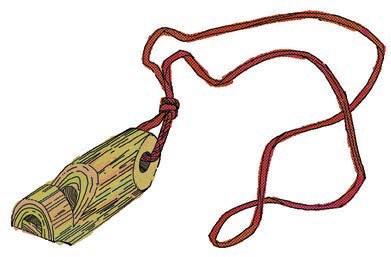
Water puts out fires and fire boils off water. It’s strange how interconnected these seemingly opposite elements can be in the wilderness. However, if you need safe drinking water and lack modern disinfection supplies, you may have to boil the water to make it safe to drink. This means that you need to both locate a water source and successfully make fire to get potable water. You’ll also want to make sure that you have the equipment to help you with each of these necessities. Equally important is the use of signaling equipment and techniques. Signaling is your ticket to go home, and you can start signaling with a variety of methods, even before you start looking for water. Your fire will also be a great signal for help. Keep up the signaling until you get rescued or until you decide to just live in the forest forever (somewhat kidding, somewhat not). You’ll also want to carry signaling equipment such as your mobile phone, a whistle or air horn, a signal mirror, a brightly colored bandana for a distress flag, and any other supplies that you are comfortable using. Also bring drinking water, a water filter or other decontaminating products, a metal cup as a backup method to boil water, and plenty of fire-making supplies (multiple ignition methods and some waterproof fuel).

PRIORITY FOUR: GATHER FOOD
Since calories are the fuel that your body burns, it’s very helpful to know how to find food out in nature. Start off by bringing high-calorie foods on your outing and learn different ways to acquire more food when you’re out in the wild. Edible plant guides, fishing tackle, and other food procurement equipment could be invaluable during an extended survival situation. Keep in mind that starving to death would take weeks, so food is more of a long-term survival issue than a short-term problem. Still, it’s nice to have food to keep your energy and morale as high as possible.
PRIORITY FIVE: NEVER GIVE UP
So you’ve built a shelter, tended your wounds, located water, made a fire, and found food. You’ve also been signaling for help day and night, but you’re still stuck out there. How could this happen? Maybe you didn’t tell anyone where you were going and you got hurt while you were hiking off trail. Since you didn’t tell anyone about your trip, no one knows where to look for you. If you have no phone signal and can’t walk, you might be stuck out there for a long time. This final survival priority is just as vital as the others. Don’t give up. Keep trying. Be tenacious. Survive. This may be the last item on the list, but it needs to be your mantra through the entire ordeal. Never give up.
SURVIVAL GEAR
Now that we have a good understanding of our survival necessities, we can better understand our need for the gear and supplies that will help us if disaster strikes. While it’s entirely possible that a talented (and lucky) primitive survival expert could get through a tough situation with only sticks and stones as resources, why would anyone limit themselves to Stone Age technology and ignore the very real threat of being injured? It’s not so easy to rub two sticks together with a broken arm. Don’t misunderstand me. I love these ancient survival skills and I teach them on a regular basis, but I also instruct every class to bring modern survival supplies on every trip into the outdoors. Even if you’re a master of primitive living and low-tech survival, the right emergency supplies can make up for an illness, injury, or some other misfortune that would keep you from performing the ancestral skills you’ve spent so much time perfecting.
Carrying a survival kit is like maintaining a wilderness survival insurance policy. You hope you’ll never need it, but it is incredibly valuable if you do. For those who never cracked open their emergency supplies, it almost feels like the survival kit was their lucky charm to avoid trouble. For those who need to rely on their kit in an emergency, these resources are more than a good luck charm, they are a lifeline. Here’s a quick list of gear for everyday
outdoor excursions. One thing to note: many of the following survival products have no instructions provided, which is a tragedy. Make sure to familiarize yourself with them before taking them out into the outdoors. These products could save more lives if the users knew how to use them.
SHELTER
This is typically your top priority, and you can provide shelter for yourself by carrying a space blanket to provide some warmth and a rain poncho to keep you dry. Don’t wait until you start getting wet to break out the poncho, and definitely don’t wait until you’re cold to wrap up in the space blanket. Made from aluminum-coated Mylar, space blankets are reflective plastic sheets that bounce back some of your body heat in cold conditions. However, if you wait until your body is cold—you’re not radiating much heat to reflect back!
WATER
Start by carrying more drinking water than you think you’ll need for your outing. Make sure your survival kit also contains a water filter or disinfection tablets so that you can refill your water bottle from sources you’ll find along your way.
SIGNALING
This is your ticket to go home, so don’t ignore your signaling resources. Make sure you bring your charged mobile phone and consider carrying a backup power source. Stock your kit with a loud whistle and a signal mirror too. A colorful bandana, piece of cloth, or a scrap of plastic sheeting can also be added for a signal flag to mark your shelter or location.
FIRE
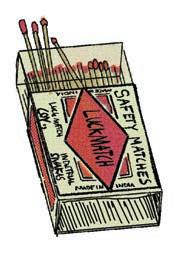
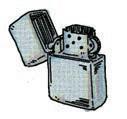
Carry multiple fire-starting implements in separate pockets and places, in case you lose your jacket or backpack. Bring a lighter, spark rod, and matches, along with a fuel source (like cotton balls in petroleum jelly).
SHORT-TERM OUTDOOR SURVIVAL KIT
SHELTER
Include a space blanket for warmth and a poncho to stay dry.
WATER
Bring drinking water with you and a water filter or disinfection tablets to provide more safe water.
SIGNALING
Get a loud whistle and a signal mirror for your kit. Bring a charged mobile phone too.
FIRE
Carry multiple fire starters, such as a lighter, spark rod and matches, along with a fuel source.
FIRST AID
Buy or build a medical kit to cover the typical outdoor injuries.
FOOD
Bring food that is calorie dense and consider supplies that could help you get more food.
IMPORTANT EXTRAS
Pack your kit with a flashlight, navigation tools, repair items, and a knife.
FIRST AID
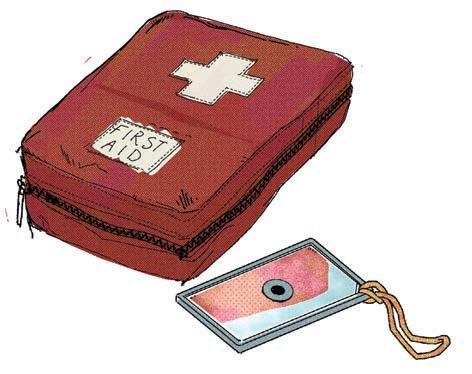
Consider purchasing a ready-made first aid kit for your survival kit. You could also build your own first aid pack by combining the items you’d need for common outdoor injuries. At a minimum, stock some nonstick gauze pads, at least one trauma dressing, nonlatex gloves, medical tape, assorted flexible fabric bandages (Band-Aids), an Ace bandage, antiseptic wipes, tweezers, burn gel, antibacterial cream, and over-thecounter medicines for pain. To upgrade your medical kit for more serious injuries, add additional trauma dressings, EMT shears, eyewash, an eye pad, a tourniquet, a triangle bandage, and wound clotting product. Finally, make sure you have first aid training. What you’ll learn there goes hand in hand with the supplies in your kit.
FOOD
Even though food is typically a low-survival priority, it is also our energy source and a powerful morale booster. Include food items that are long lasting, ready to eat, and loaded with calories. This could be survival ration food bars, or something else that suits your dietary needs. You could also consider bringing some fishing tackle for food procurement in environments with bodies of water and a very compact wild edible plant booklet. They say an army moves on its stomach, and this has definitely been the case for me. Food is the thing I’ve always been the most thankful to have when my adventures have taken a turn for the worse or the weird, and it’s the resource I’ve missed the most when it ran out.
IMPORTANT EXTRAS
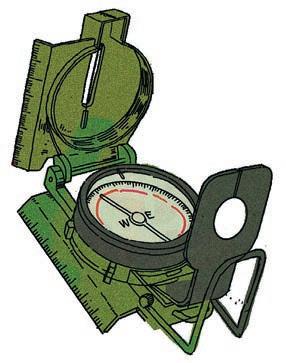
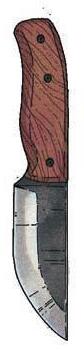
A flashlight could be a lifesaver, as well as navigational gear (a local map and compass), repair items (cordage, duct tape, small zip ties), a cooking container (like a small lightweight metal pot or large metal cup), and a knife. The flashlight illuminates the night, as well signals your location and distress after dark. A map and compass could allow you to navigate and prevent you from getting lost in the first place. A few repair items can mend supplies that break or tear. That little cooking pot could be a big deal. Boiling water, cooking food, digging in sand or snow—a simple pot can do more tasks than you might imagine. Finally, a knife is a tool that is hard to replace in the wild. Carry a quality blade for the myriad of cutting and carving tasks it can accomplish.
This could be a multi-tool that has several tools and a knife blade, or it could also just be a normal knife. I’d recommend a good little folding knife in your survival kit, and a larger better fixed blade in your regular camping supplies (for the heavier tasks you may need to accomplish).
CAMPING GEAR
Your survival kit can be a vital part of your outdoor supplies, but if you’re actually hoping to enjoy the outdoors, you’ll need more gear than just the survival essentials. It’s easy to get overwhelmed if you visit a camping store and it’s even worse when shopping online. There is a bewildering array of makes and models of each piece of gear. With so many products on the market, many of them shockingly expensive, you can’t afford to buy something that isn’t right for your needs. How do we choose? I’d highly recommend that you read as many online reviews as you can stomach. Old-fashioned magazine reviews can be helpful, but they are only the opinion of one author. You’ll get a wider range of reactions and reports from a broader customer base.
So, what do we actually need to get started? For those starting with no camping equipment, build your inventory as you can afford it. The necessities are the heart of this chapter, and we’ll mainly stick to the necessities when it comes to camping gear. You’ll eventually need to have a backpack, shelter items, water procurement gear, fire starters, food and cooking supplies, a first aid kit, navigation gear, lighting, tools, and appropriate clothes, footwear, and outerwear. I know it’s a long list. The good news is that you may already have some supplies that will work just fine. If you start off with the things you’ll need for day hikes, you can choose the more expensive gear carefully and work your way up to the tent, sleeping bag, and the other gear you’d need for overnight trips.
DAY HIKE GEAR
If you’ve bought (or built) a survival kit based on the supplies previously mentioned, you’re well on your way to being ready for a one-day outing in nature. Check through your current wardrobe for rugged clothing that is appropriate for the season. You’ll generally want to favor wool and synthetic fabrics for their ability to maintain warmth
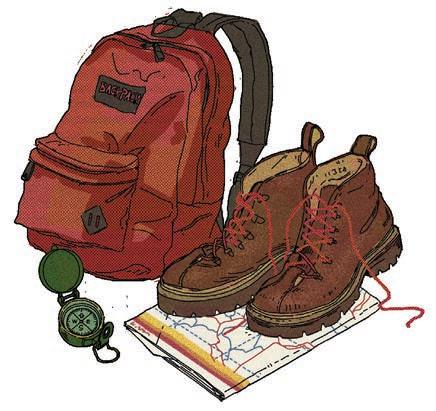
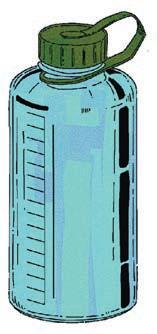
even when wet. Cotton is heavy when wet and slow to dry. Dressing in layers is also very important. This allows you to shed a layer if you warm up and add it back when you start to cool down again. If you have an old backpack, even a book bag from school, you’re ready to carry your survival kit, food, and water. Pack a jacket or a coat, depending on how low the overnight temperatures will be (in case you get stuck overnight or the weather turns unpredictably). Pack a waterproof map of the area and a compass, along with your fully charged phone. A rugged water bottle is indispensable. By choosing a single-wall stainless-steel bottle, you can even use it as a boiling vessel. Now it’s not just a water bottle, it’s a backup strategy for water disinfection. Equally important to a good water bottle is a quality pair of boots. If you don’t already have good hiking boots, you may want to make this purchase first. Boots are something you’ll want to try on in-person for a good fit and ankle support. Waterproof boots are great, but this feature doesn’t last forever. Reapply a waterproofing treatment before any rainy hike or camping trip. You may also want to consider a rain gear set, consisting of a waterproof yet breathable hooded jacket and pants. Bring a flashlight, even on a hike when you plan to be home before dark. I’ll tell you later in the book how I learned the importance of this the hard way. And finally, consider bringing research and educational materials. To immerse yourself deeper in nature and learn more about your surroundings, consider a study theme for your day hike and bring a field guide to learn about that subject. These books can be purchased, or if funds are tight, check them out from your local library. Try a tree identification hike, to see how many tree species you can identify. You could also do a flower hike, bird-watching trip, foraging hike, and many other one-day adventures.
OVERNIGHT CAMPING GEAR
Your old school backpack won’t have enough room for all the additional supplies you’ll need for an overnight campout. You’ll need a larger backpack along with a tent, sleeping bag, and insulating pad to go under the sleeping bag. The backpack and the other three pieces of gear are a major financial purchase and should all be chosen carefully. Try on the backpack in a store (with some weight in it) and choose something a little larger in capacity than you think you’ll need for now. This gives you room to grow. For one person, a two-person tent still makes sense. This allows you to bring your backpack
and boots inside at night (or bring a friend). Lightweight backpacking tents are more expensive, but well worth it. Never skimp on your sleeping bag. I personally use both down and synthetic fill bags for different occasions. Keep in mind that the temperature rating on the bag is more of a survival rating than a comfort rating. Choose a bag about 20 degrees lower than the lowest overnight temperature you’ll encounter when camping. For budget shoppers, you may pick up some secondhand gear or military surplus. Make sure everything works before you take it out into the wild. A sleeping bag with a broken zipper or a tent with a missing pole will not create a pleasant night out. For overnight trips, you may be able to carry all the water you’d need. For any longer trips, you’ll probably need a water filter or disinfection tablets (unless you plan to boil it all). The water filter in your survival kit could be a simple and affordable survival straw filter, but these aren’t very practical when camping. You’ll have a better experience with a water filter that pumps water. Food, of course, is another subject for careful planning. You could choose no-cook foods, skipping the pots and stoves altogether. You could also buy a camping stove and fuel, a nice little cooking pot, some freeze-dried meals, and all the accessories. You’ll need some personal items for an overnight trip that aren’t
About the Author
TIM MACWELCH is a bushcraft, survival, and self-reliance professional based in Virginia. He is both a wilderness survival instructor and celebrated author, with three New York Times–bestselling survival manuals and numerous other titles. He has been teaching outdoor skills for over 30 years, yet remains a perpetual student, still earnestly studying and practicing the survival skills he has enjoyed since his teenage years. Tim offers hands-on training through his business, Advanced Survival Training, which is also established in Virginia.
About the Illustrator
ETHAN DAVIES is an illustrator based out of Shropshire in the UK. He works digitally to bring to life cozy fantasy worlds full of nostalgia, wonder, and hiraeth. His lifelong love of art has been inspired by works such as Tintin, The Hobbit, and Witch Hat Atelier, as well as the natural world around him (trees and all things green becoming a recurring motif in his work), creating a practice that celebrates and combines his love of traditional illustration with the versatility of working digitally.