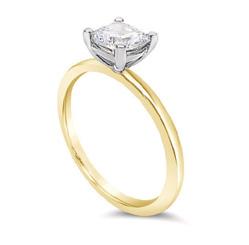
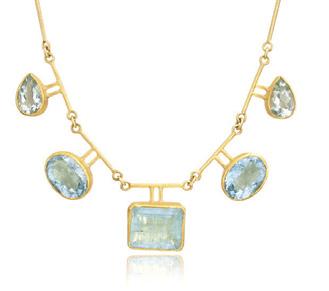
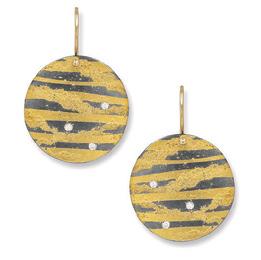
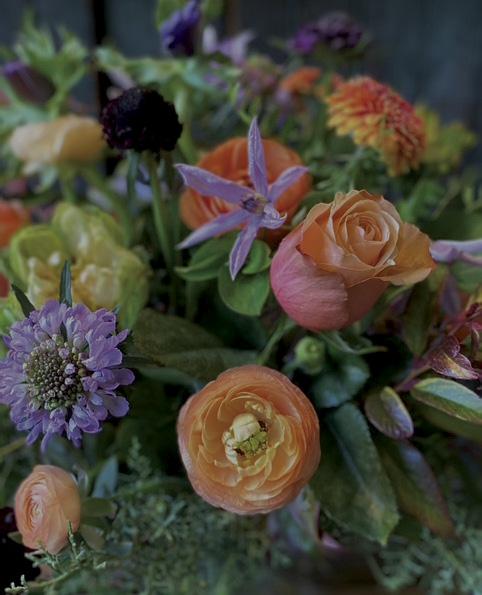
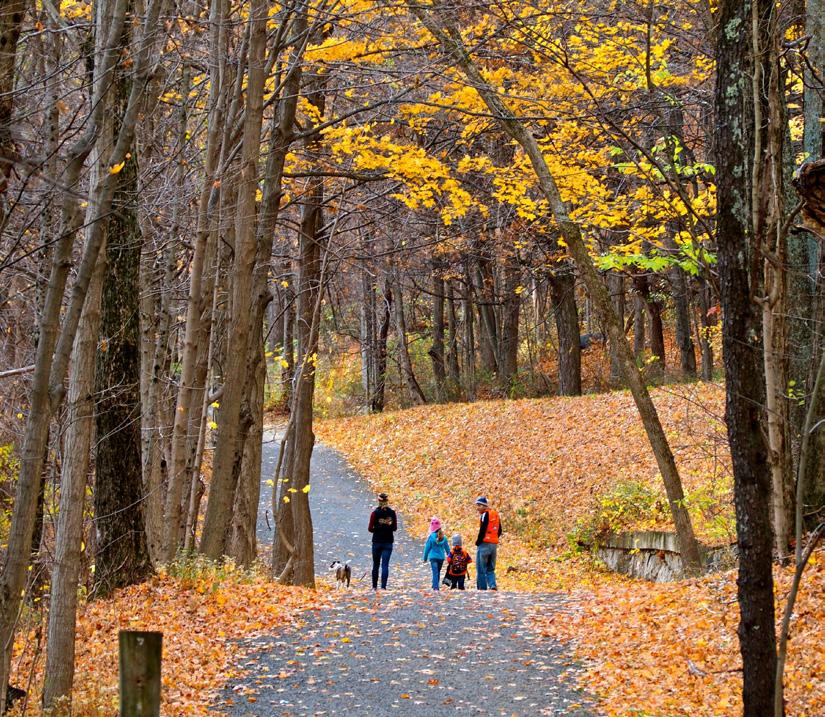
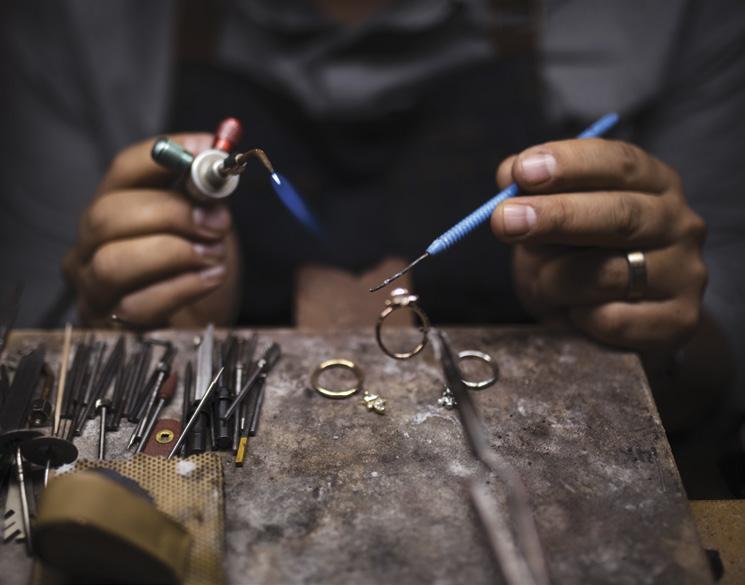
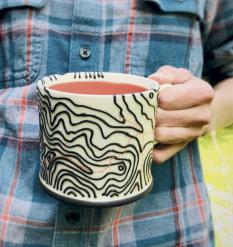
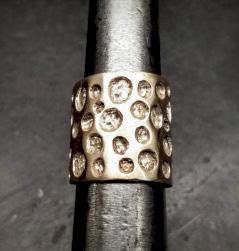
REPURPOSING OF FAMILY HEIRLOOMS • ANTIQUE RESTORATION REPAIRS • RESTRINGING • LASER WELDING WATCHMAKER ON PREMISES GIA CERTIFIED GEMOLOGISTS / NAJA MEMBER APPRAISER
23A EAST MARKET ST. RHINEBECK NY HUMMINGBIRDJEWELERS.COM 845-876-4585
12 25
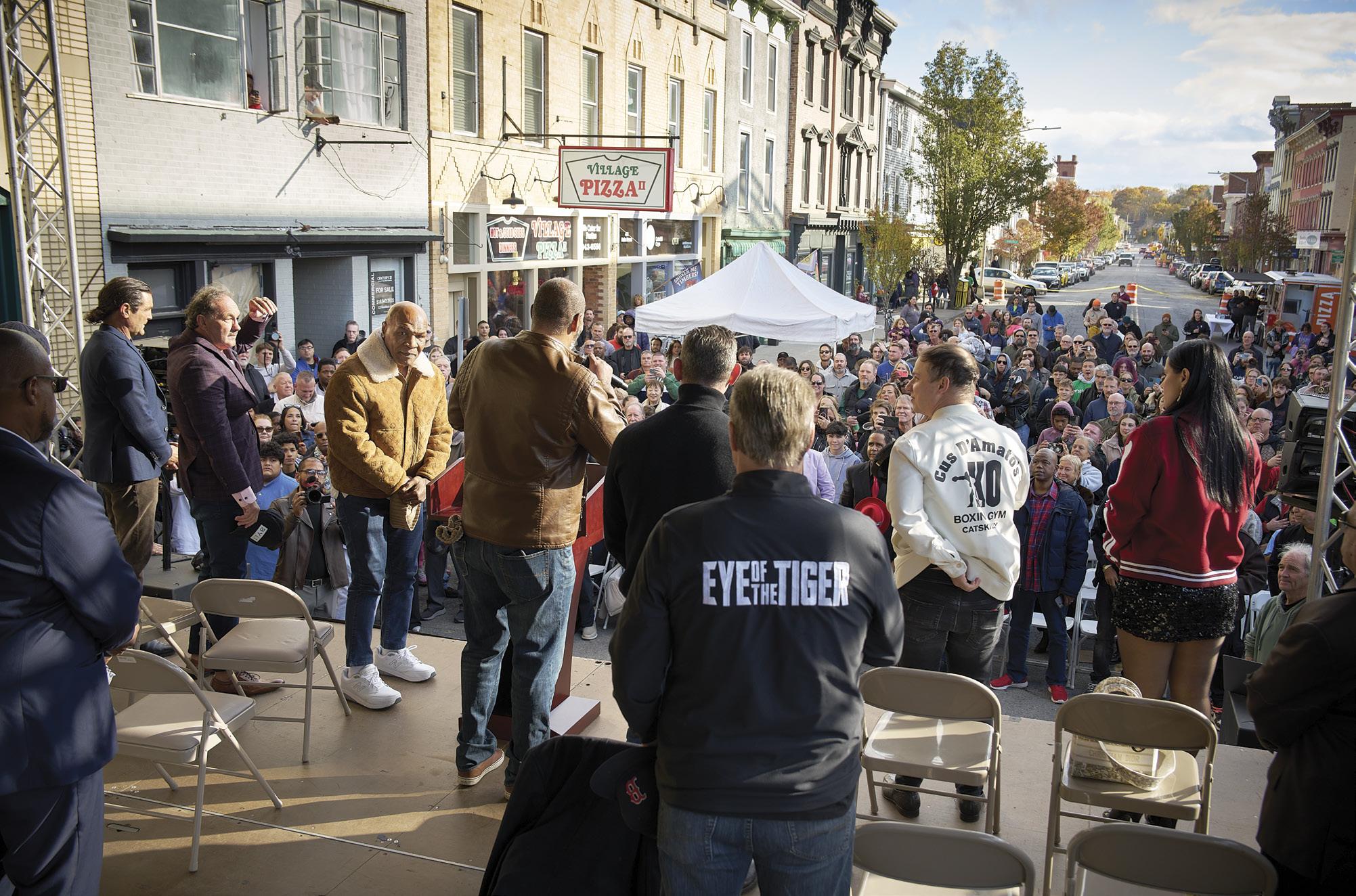
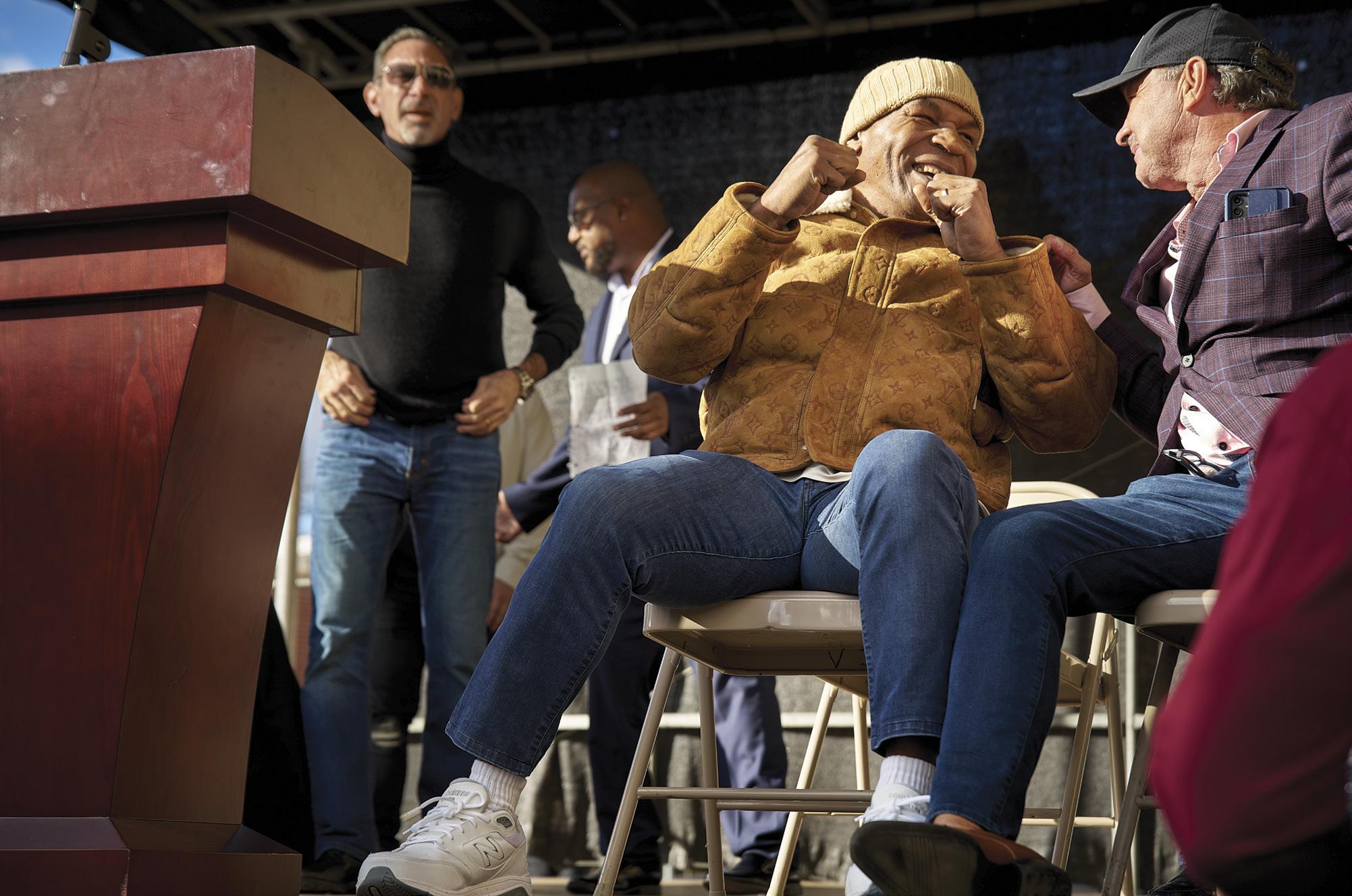
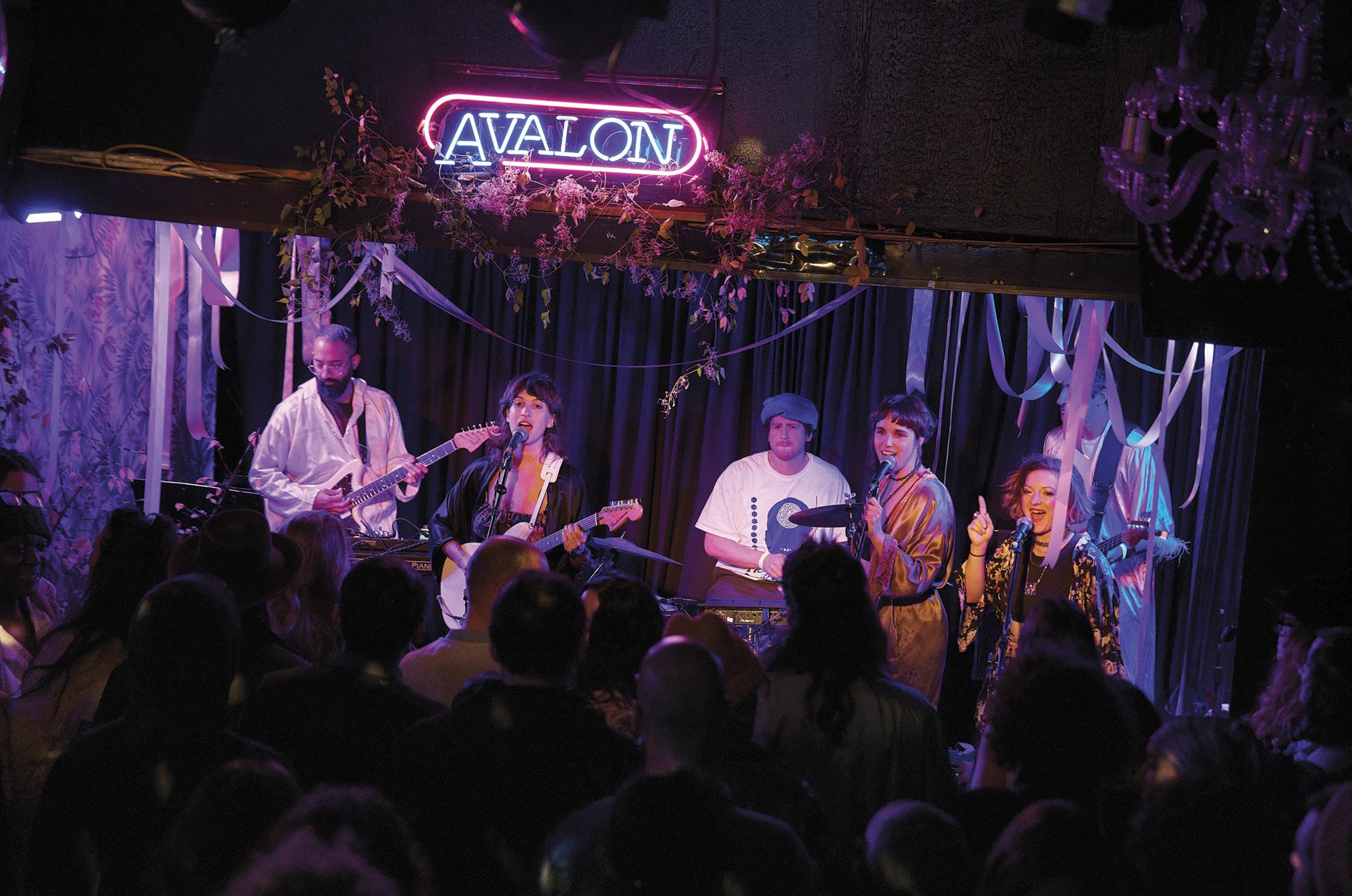
Mike Tyson onstage at Celebration of Cus in Catskill on November 1, an event to celebrate the memory of Cus D’Amato, who trained Tyson in the 1980s at his Main Street gym.
Photo by David McIntyre
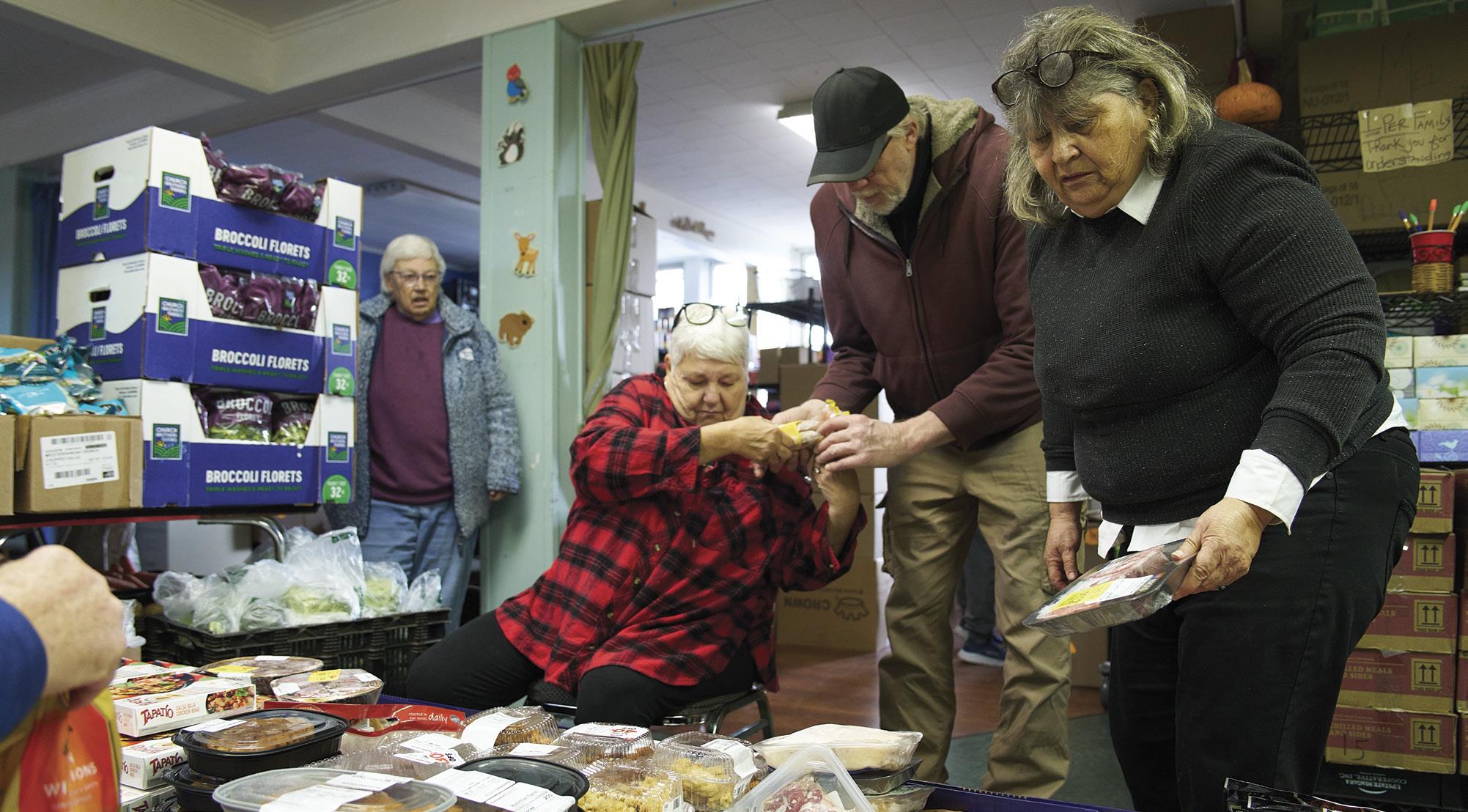
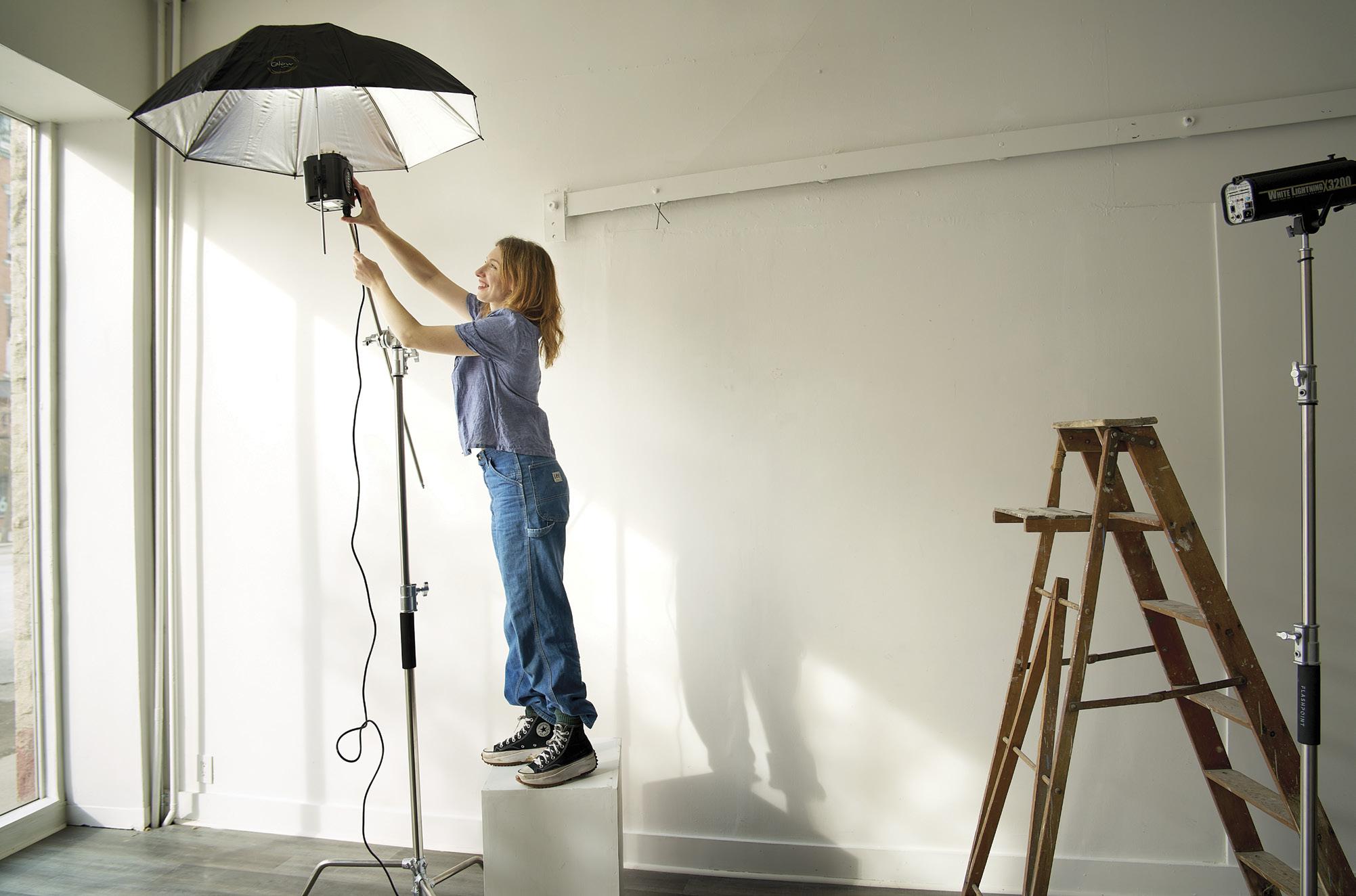
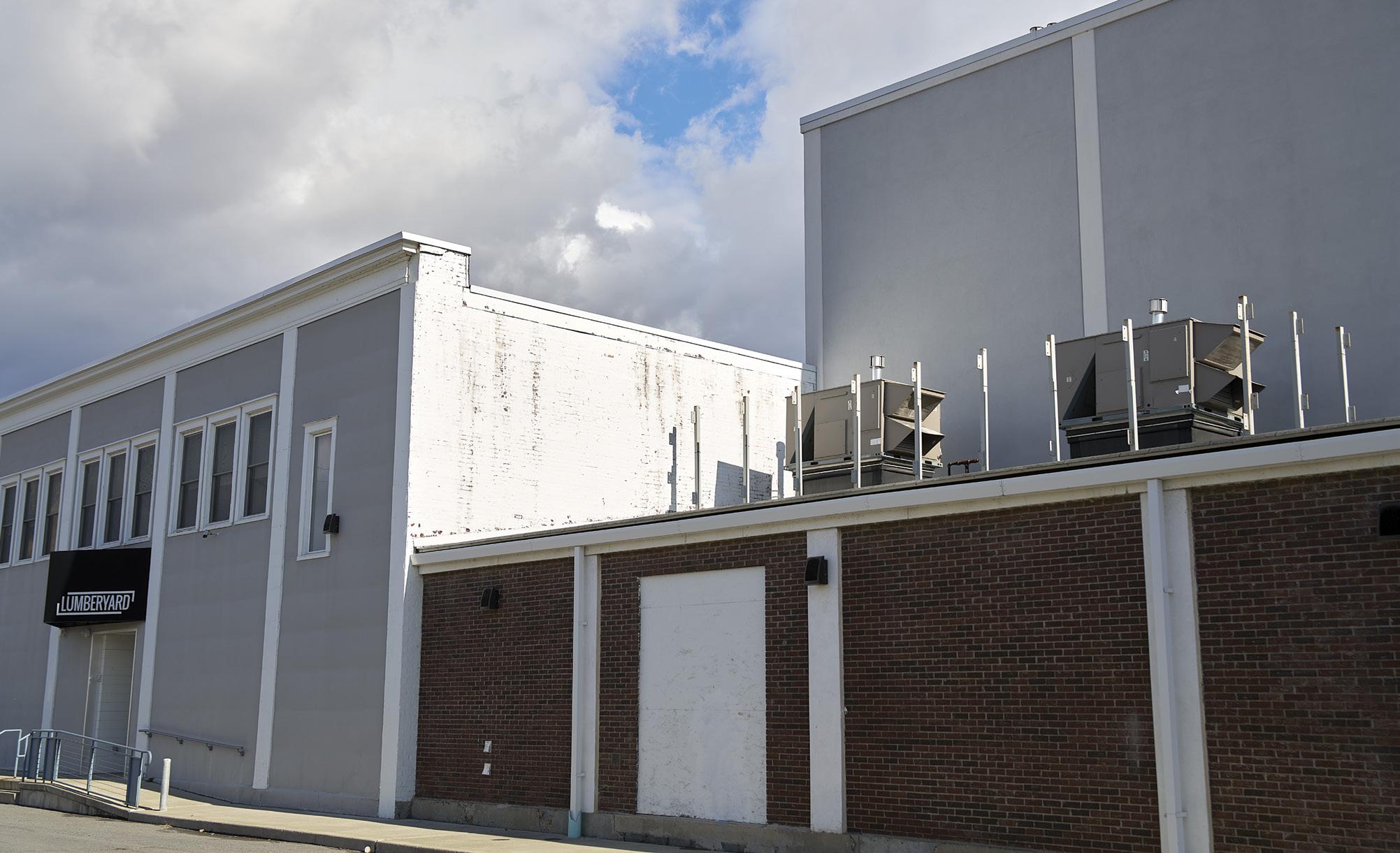
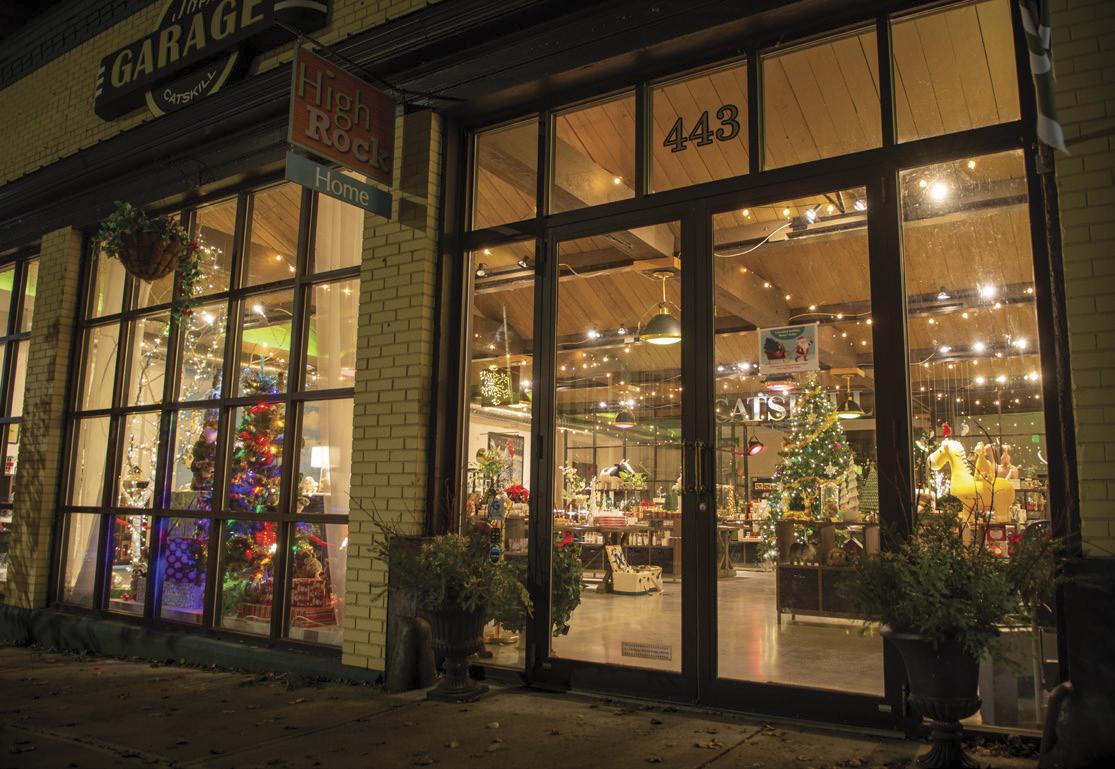
COMMUNITY PAGES, PAGE 44
DEPARTMENTS
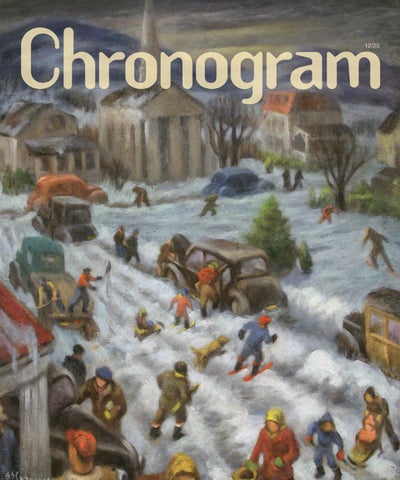
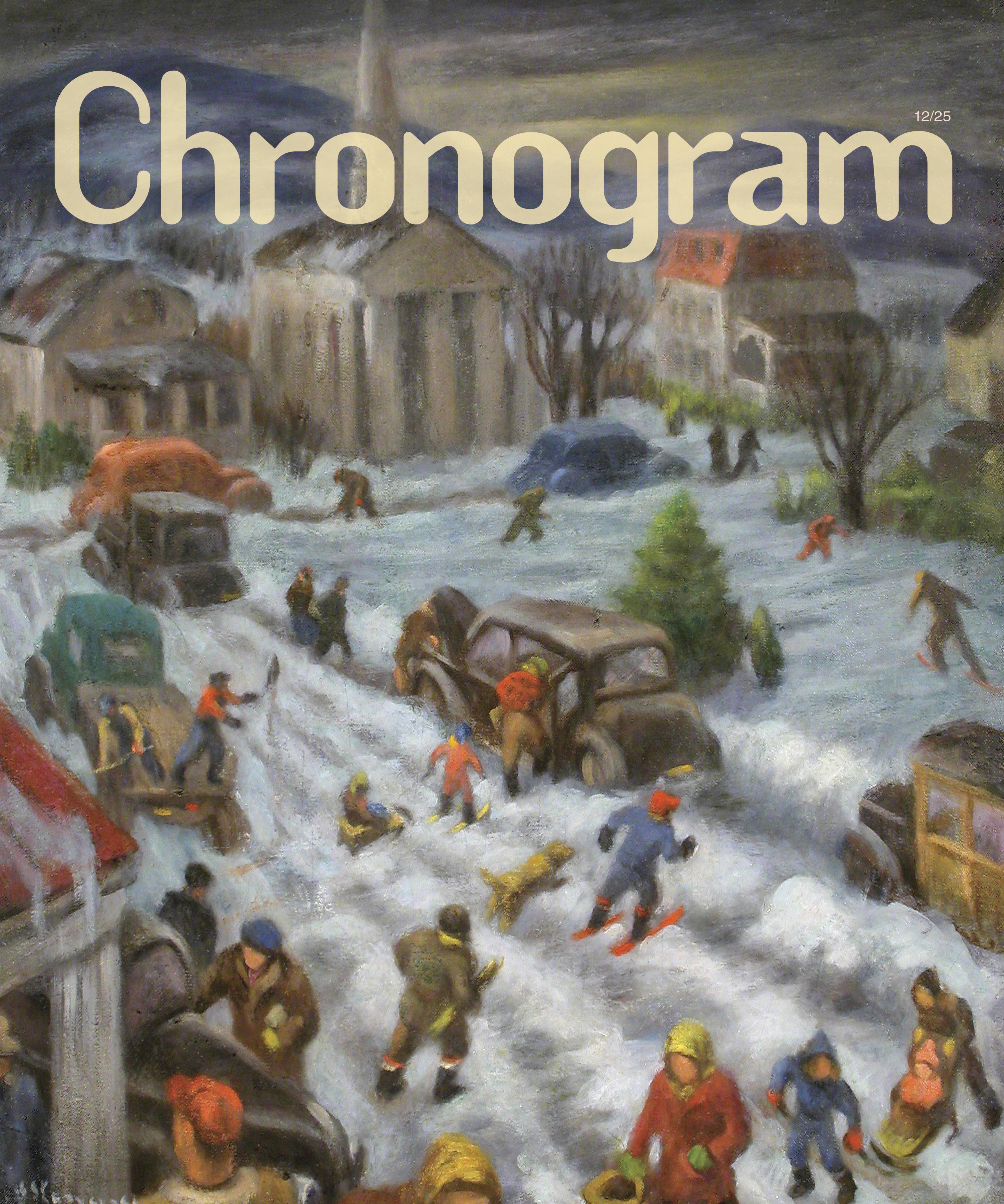
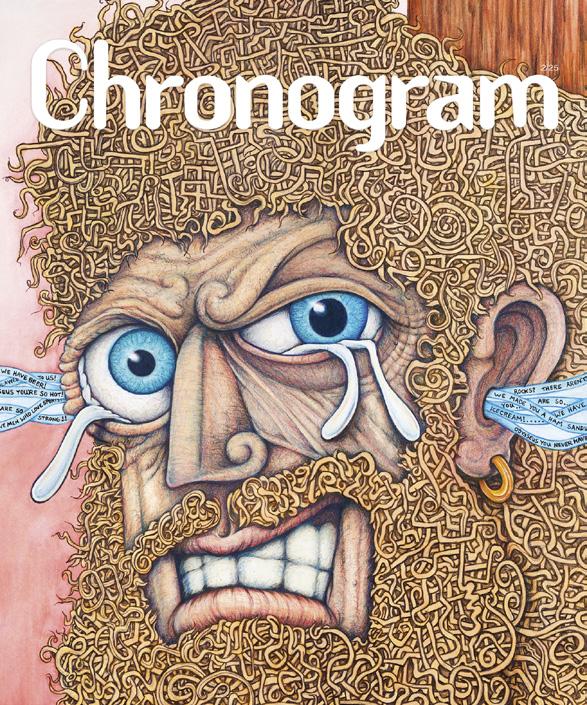
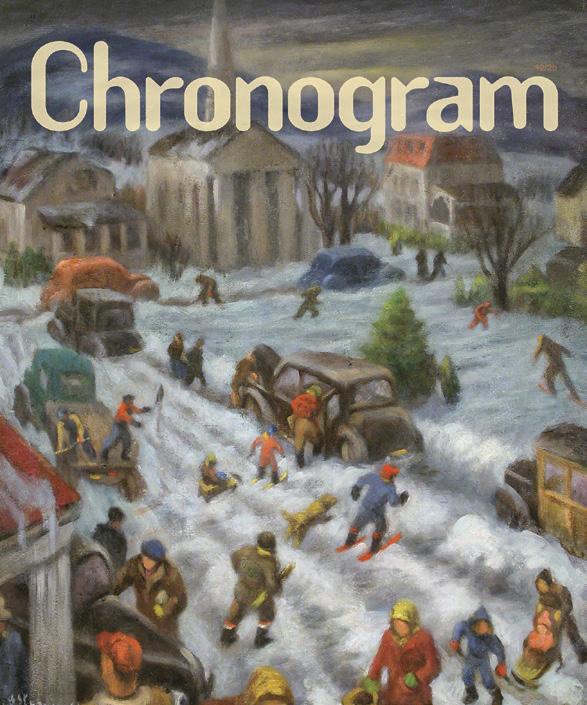
6 On the Cover
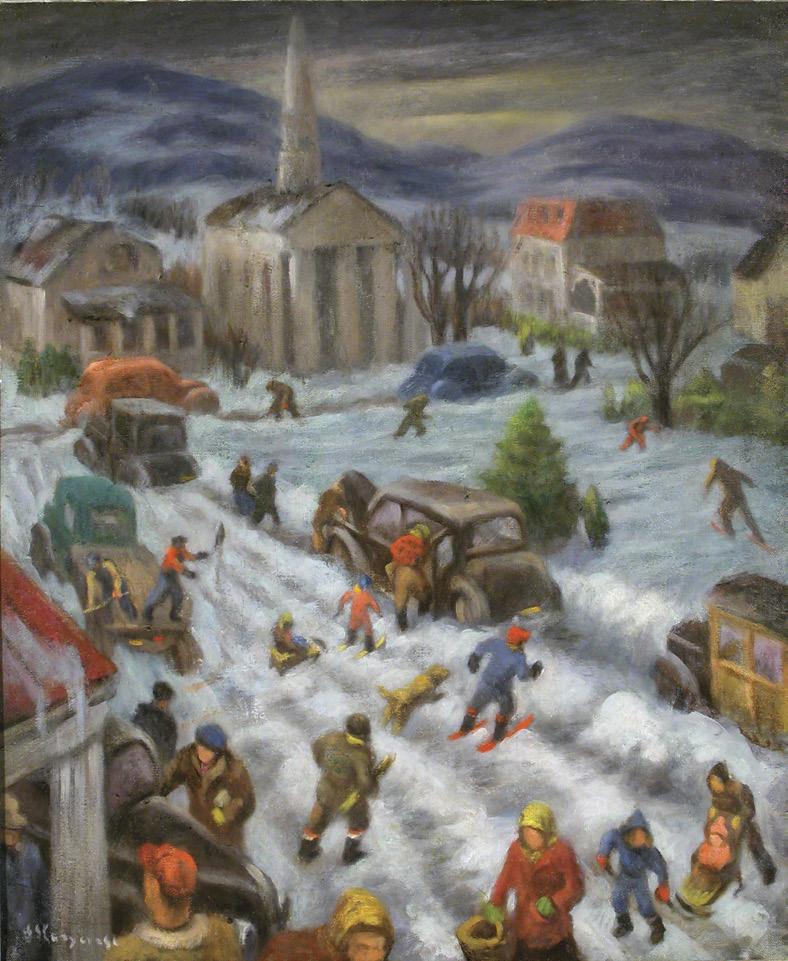
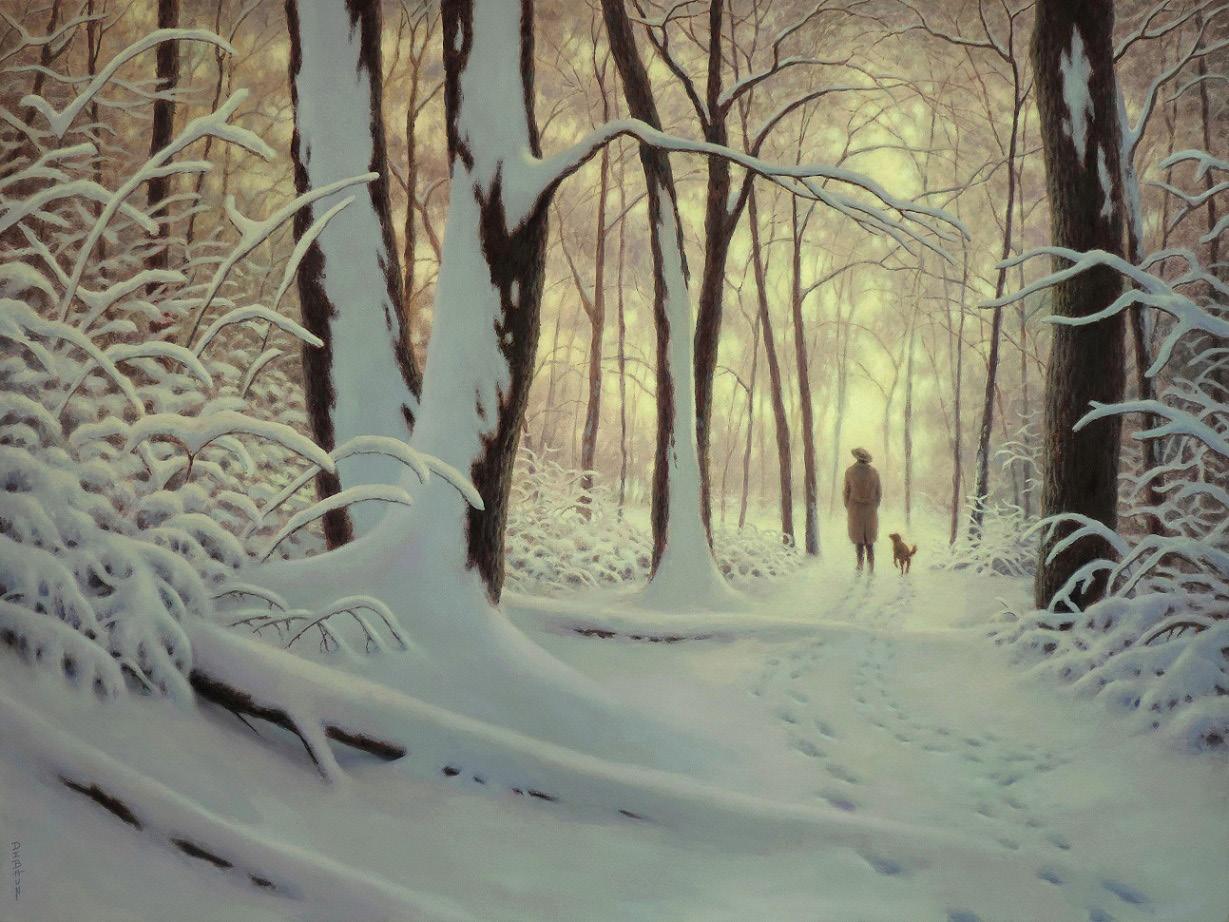
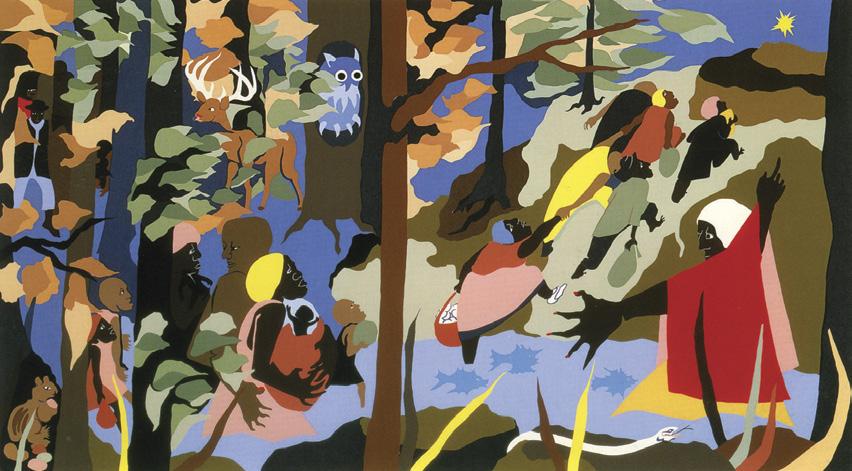
Julia Leaycraft’s Village in Winter (1940).
8 Esteemed Reader
Jason Stern dies so that he might live again.
9 Editor’s Note
Brian K. Mahoney sifts through the rubble for the good life.
PROFILE
10 Spread Your Wings: Gail Ann Dorsey
Gail Ann Dorsey’s journey from Queen-obsessed kid to Bowie collaborator, and how decades of song-serving work have led to her first solo release in 21 years.
FOOD & DRINK
14 The Secret on Raymond Avenue
Twisted Soul delivers bold, globally inspired street food— dishes that thrive both in-house and delivered.
17 Sips and Bites
Recent restaurant openings across the region.
HOME
18 Midlife Chrysalis
A couple transforms a tiny Catskills farmhouse into a light-filled, future-ready retreat, blending old bones with a seamlessly crafted new addition with help from local professionals.
HOLIDAY SHOPPING GUIDE
28 Holiday Shopping Guide
Discover Hudson Valley businesses showcasing inspired gifts, handcrafted goods, and local favorites for the holiday season.
HEALTH & WELLNESS
38 Harmony Heals
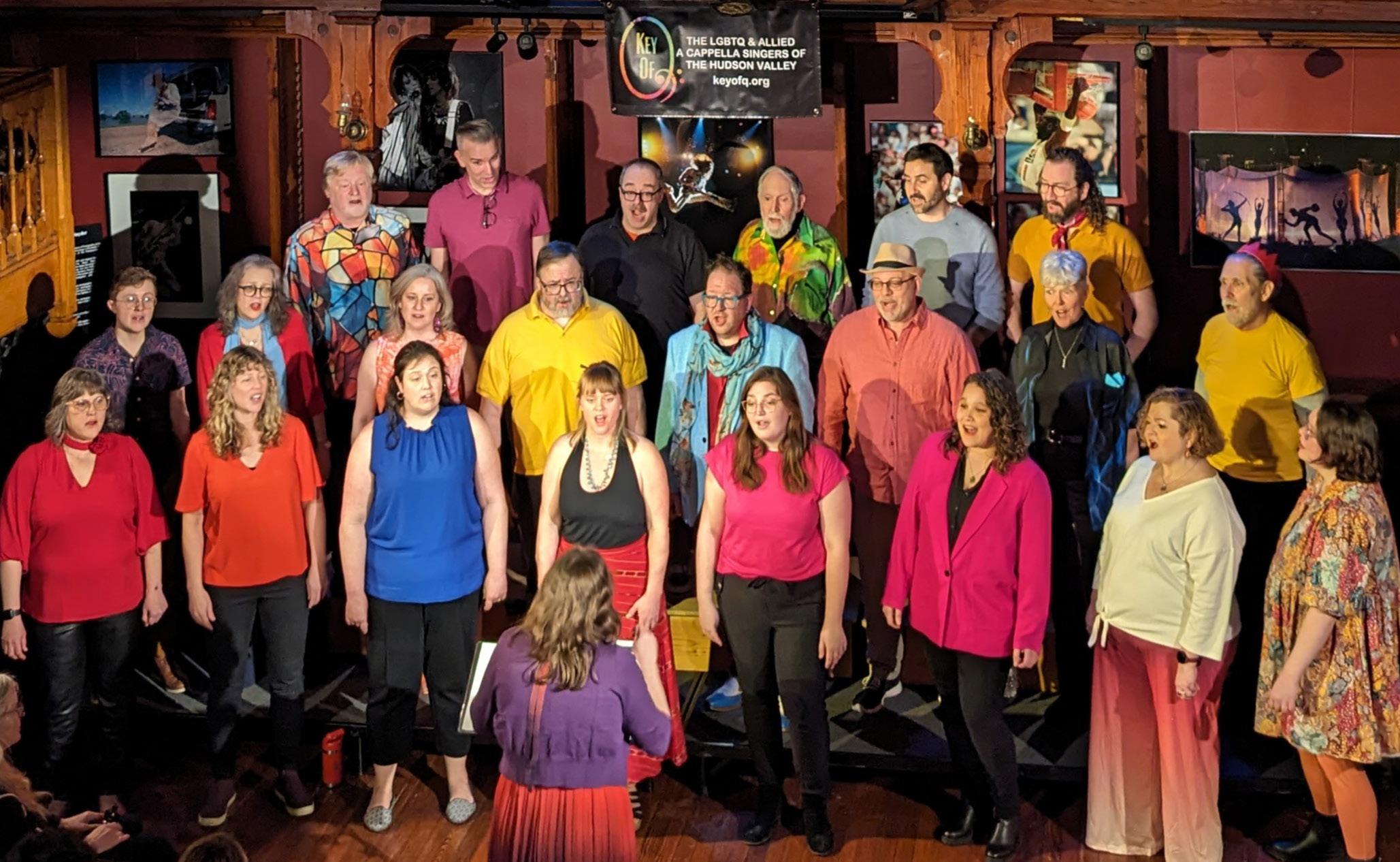
Local choruses show how shared singing strengthens bodies, regulates emotions, and builds deep community connections.
COMMUNITY PAGES
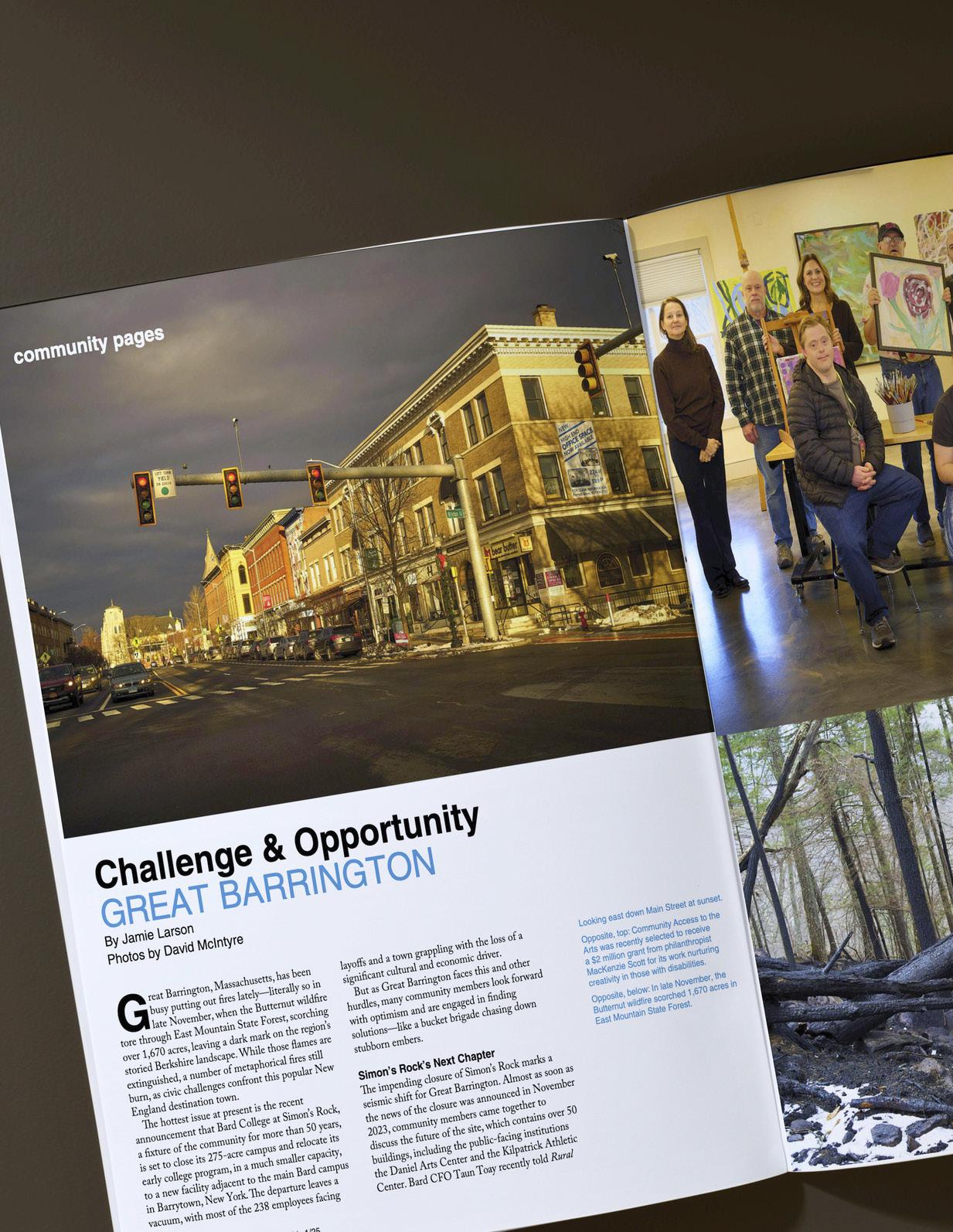
44 Catskill: Punching Above Its Weight
Catskill’s comeback blends history, arts, community grit, and new investment, positioning the village for renewed growth.
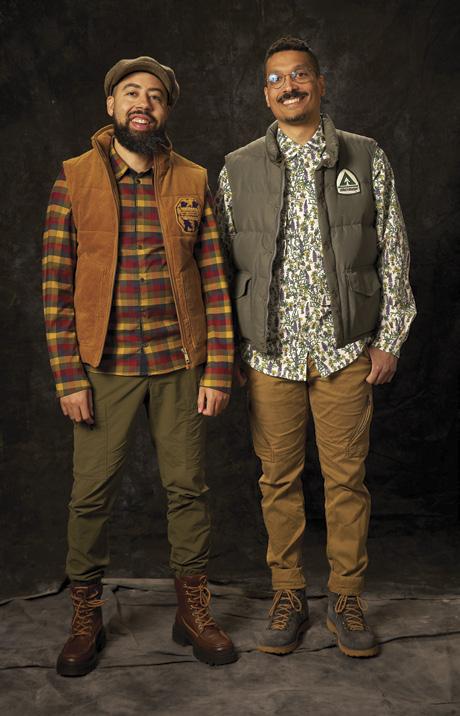
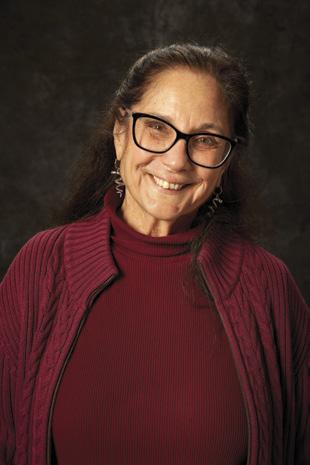
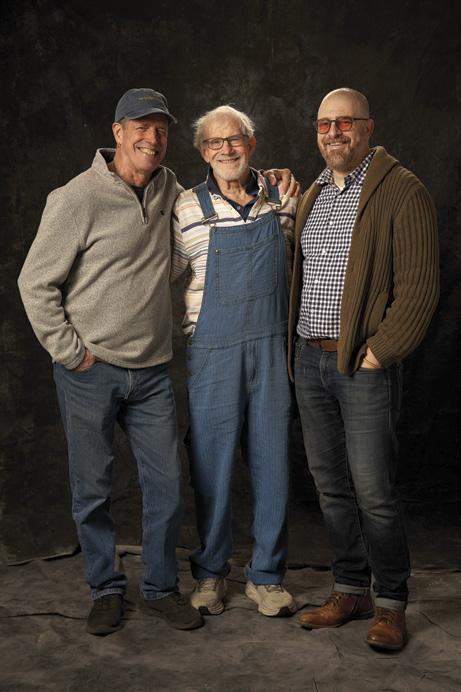
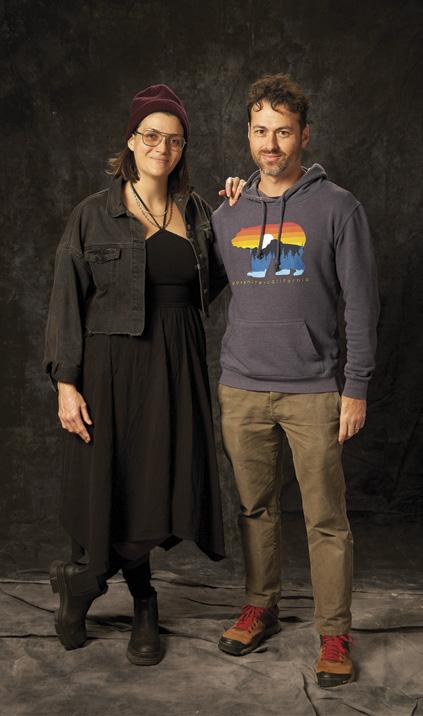
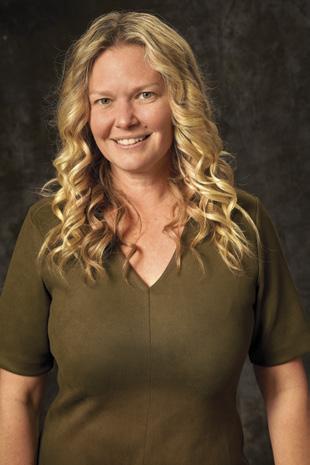
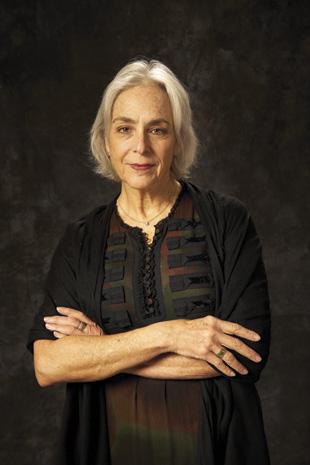
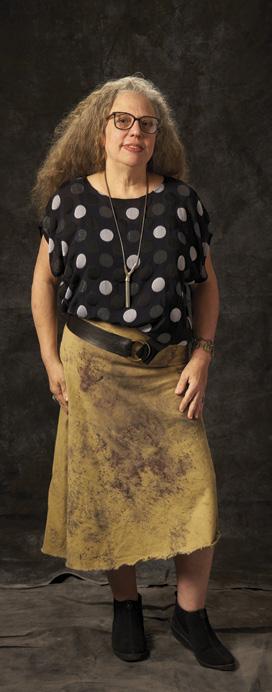
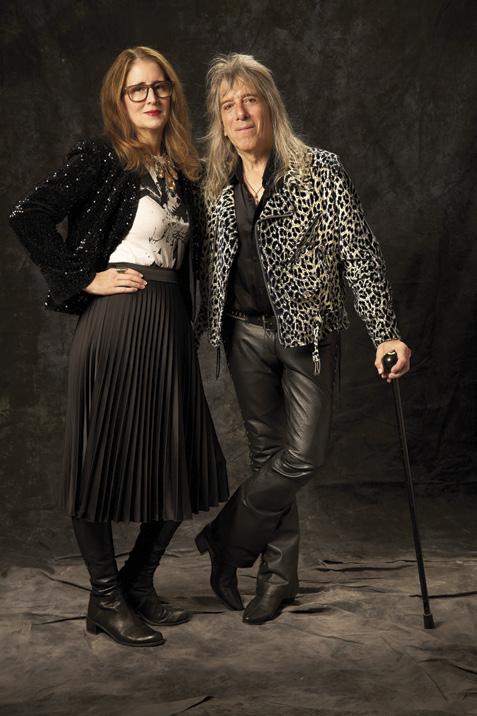
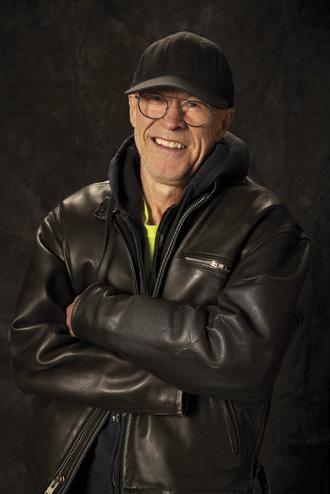
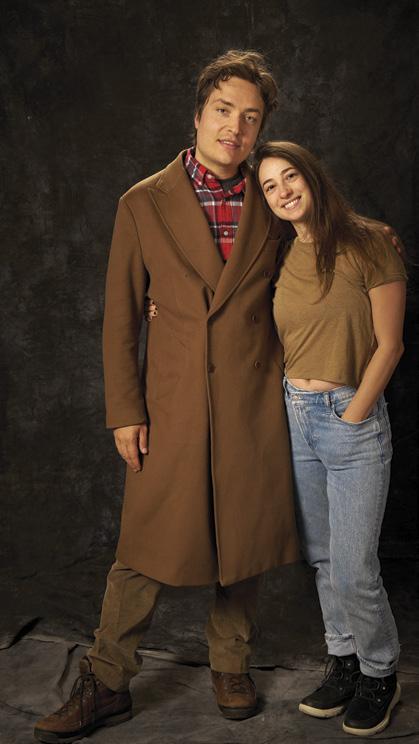
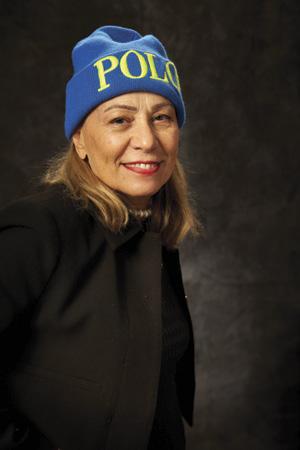
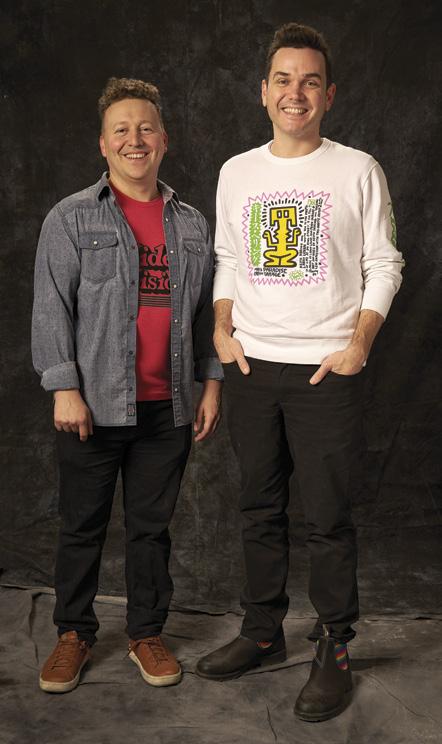
52 Catskill Pop-Up Portraits by David McIntyre
Trivia Time Newsletter
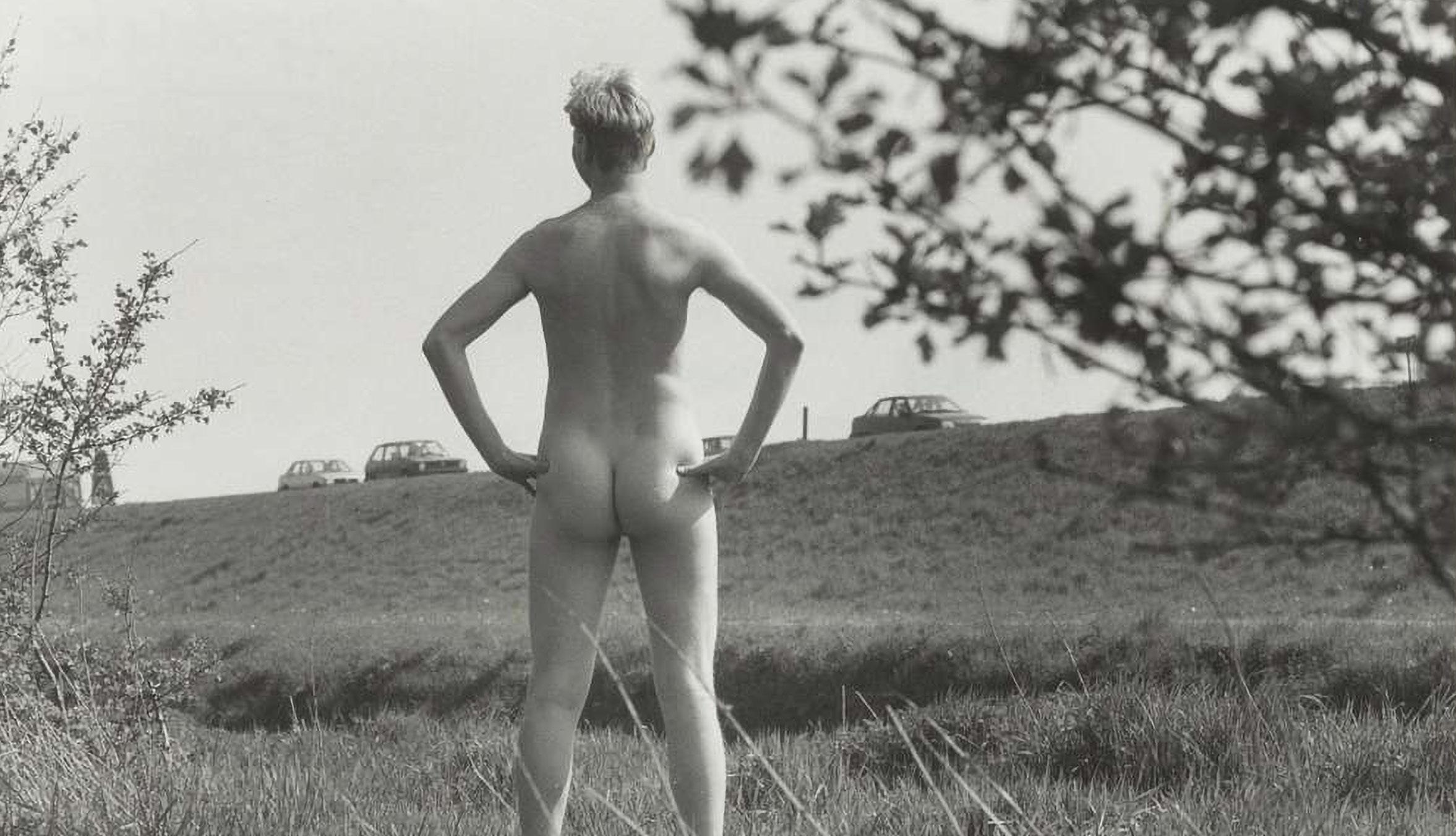
Which Hudson Valley town was once home to one of the country’s first nudist colonies?
B. Monticello
C. Esopus
D. Millbrook
december 12 25
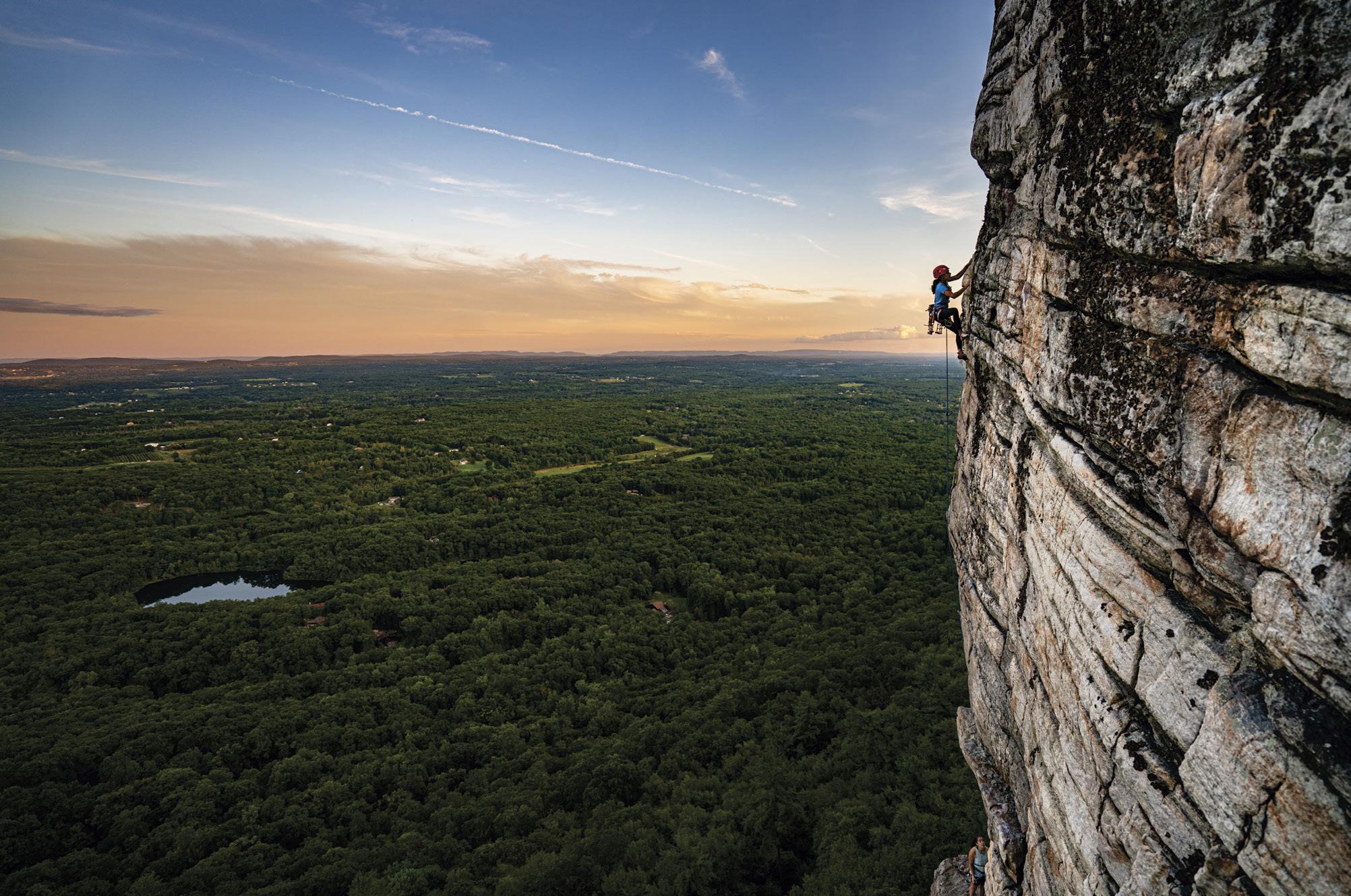
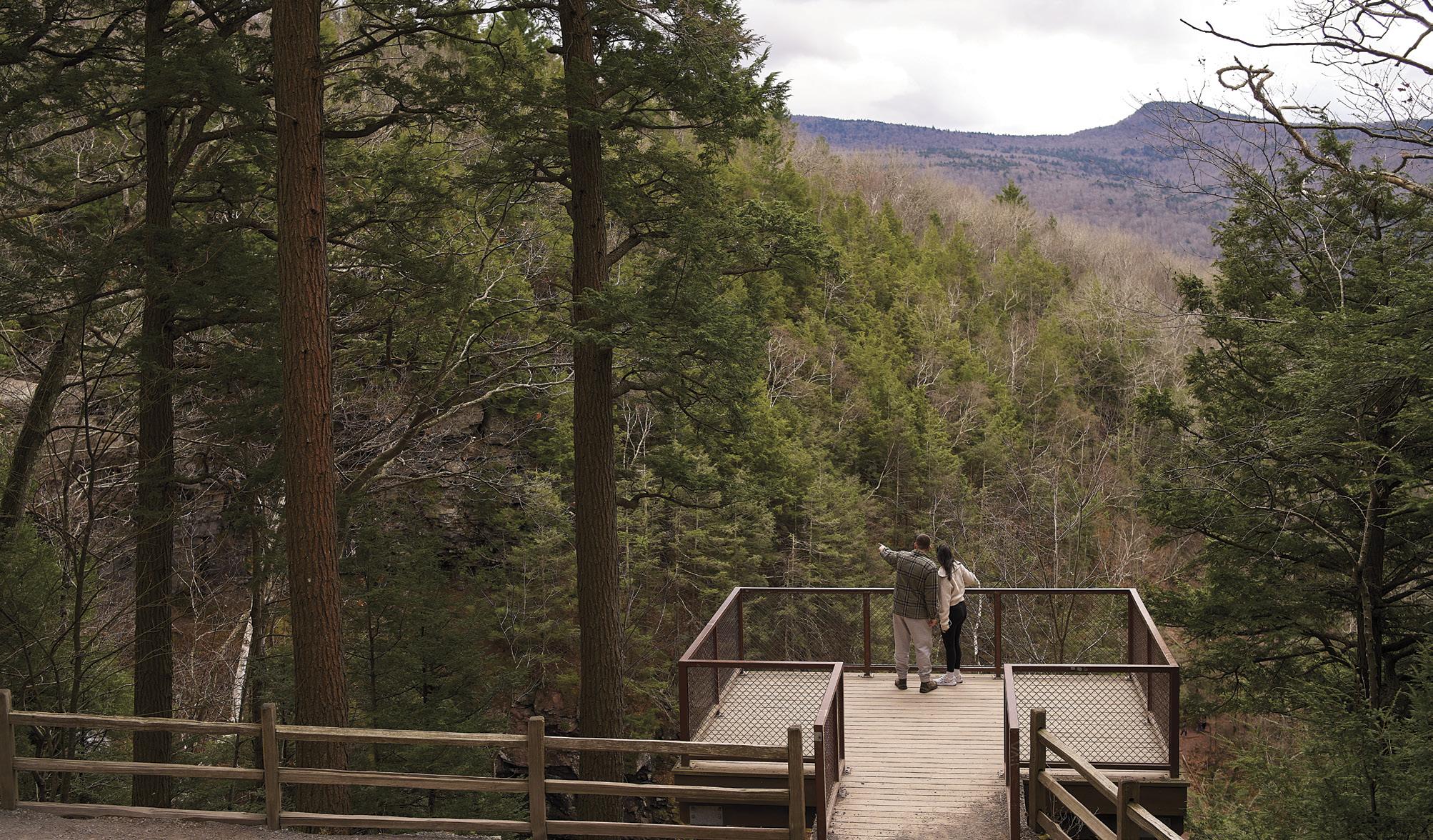
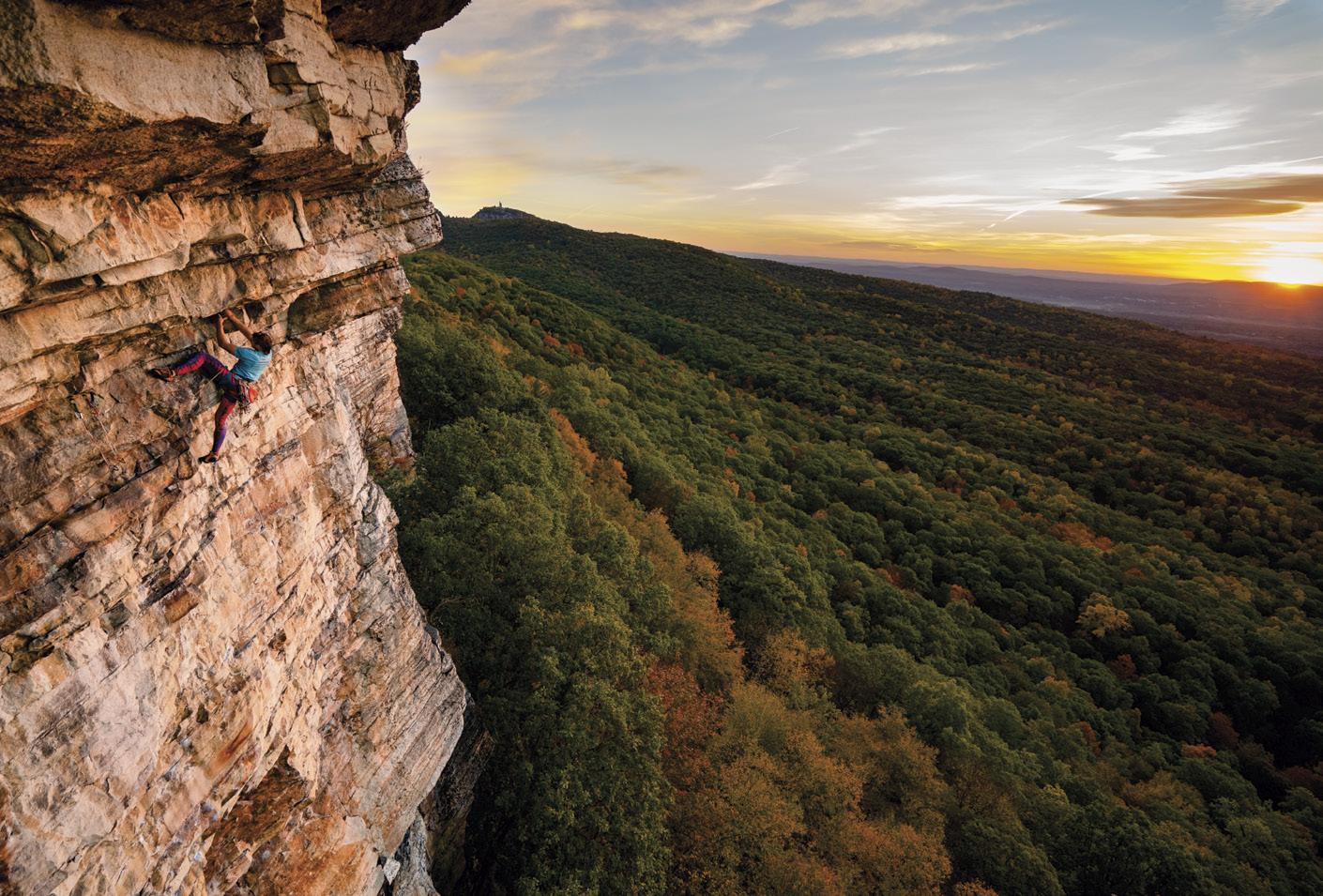
High Exposure, a photograph by Chris Vultaggio of Gowri Varanashi climbing in the Gunks.
ART EXHIBITS, PAGE 72
RURAL INTELLIGENCE
58 Holiday Season Round-up
A collection of festive winter happenings—from light shows and village strolls to concerts, parades, and holiday traditions across the Rural Intelligence region.
ARTS
60 Music
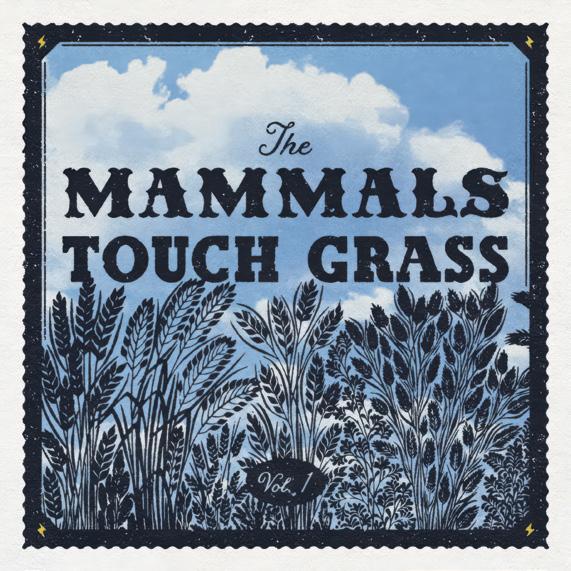
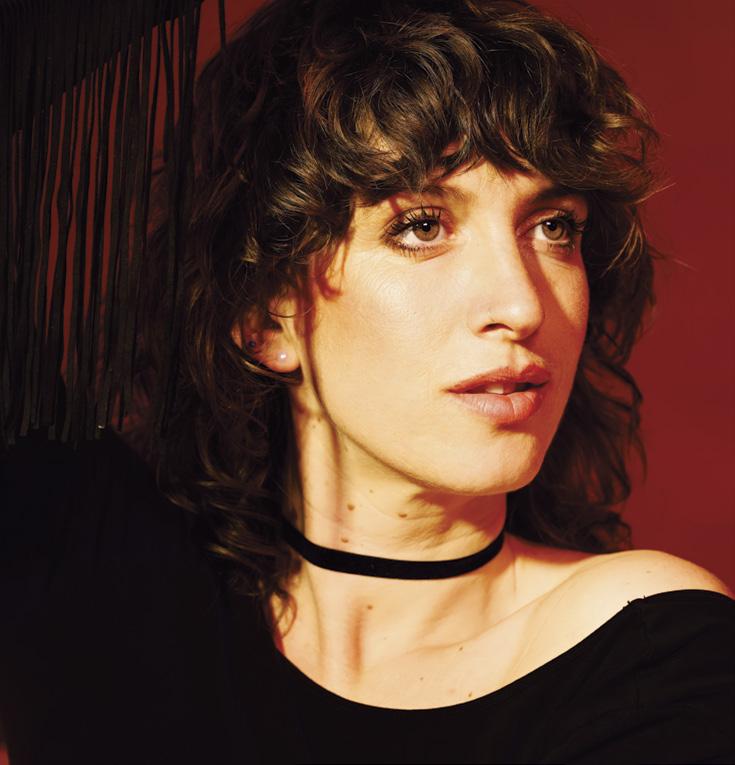
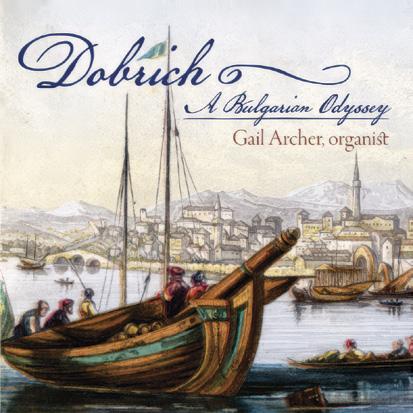
Michael Eck reviews Touch Grass Vol. I and II by The Mammals. Tristan Geary reviews Panic Joy by Architrave. Seth Rogovoy reviews Dobrich, A Bulgarian Odyssey by Gail Archer. Plus listening recommendations from Kendra McKinley, whose new EP is Music for Smoking Weed with Your Bra Off
61 Books
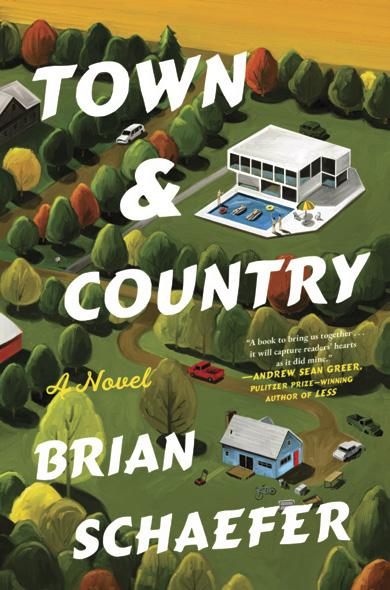
Susan Yung reviews Brian Schaefer’s Town & Country, a sharply observed novel where politics, class, and queerness collide as locals and newcomers learn the art of coexistence.
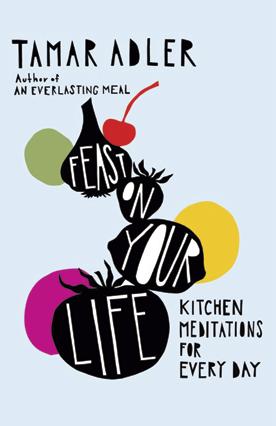
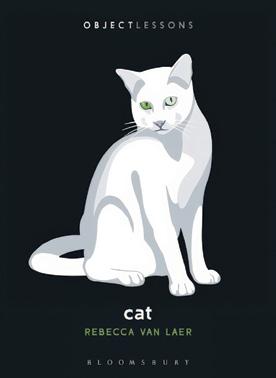
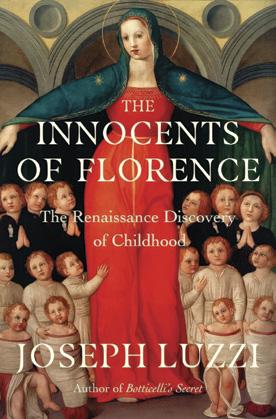
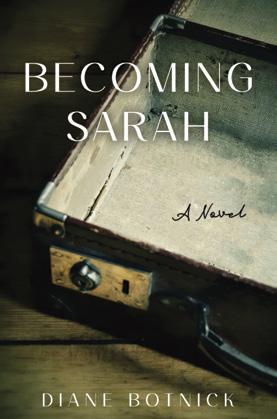
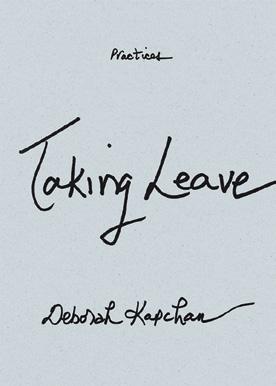
Plus short reviews of Feast on Your Life by Tamar Adler; Cat by Rebecca van Laer; The Innocents of Florence: The Renaissance Discovery of Childhood by Joseph Luzzi; Becoming Sarah by Diane Botnick; and Taking Leave by Deborah Kapchan.
62 Poetry
Poems by Nana T. Baffour-Awah, Jerric J Baptiste, Jean Churchill, Liz Fraser, William Keller, Mayueroa, Emily Murnane, Will Nixon, ooznooz, George Cassidy Payne, Christopher Porpora, Craig Roberts, Diana Waldron, and Rosa Weisberg. Edited by Phillip X Levine.
GUIDE
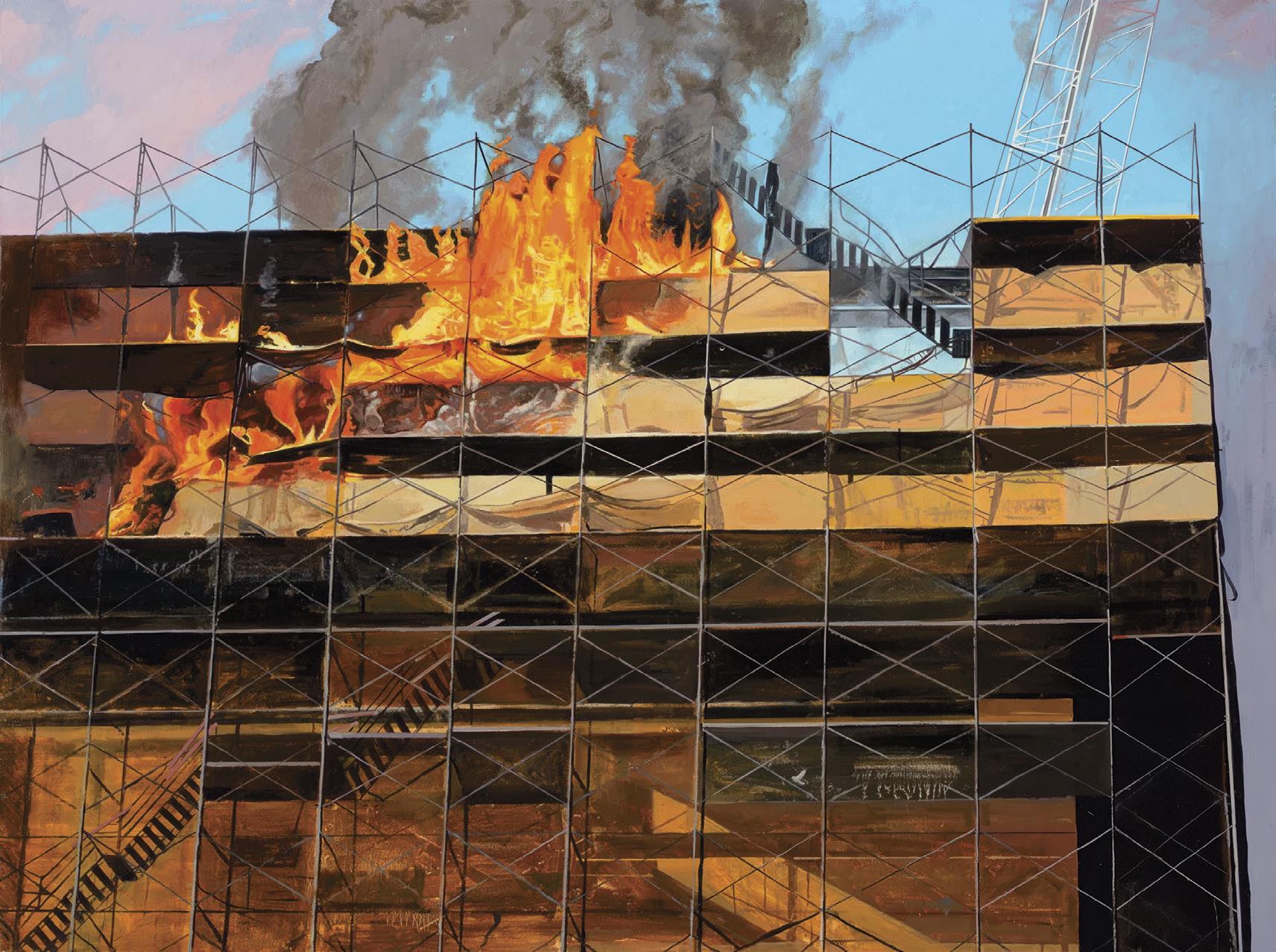
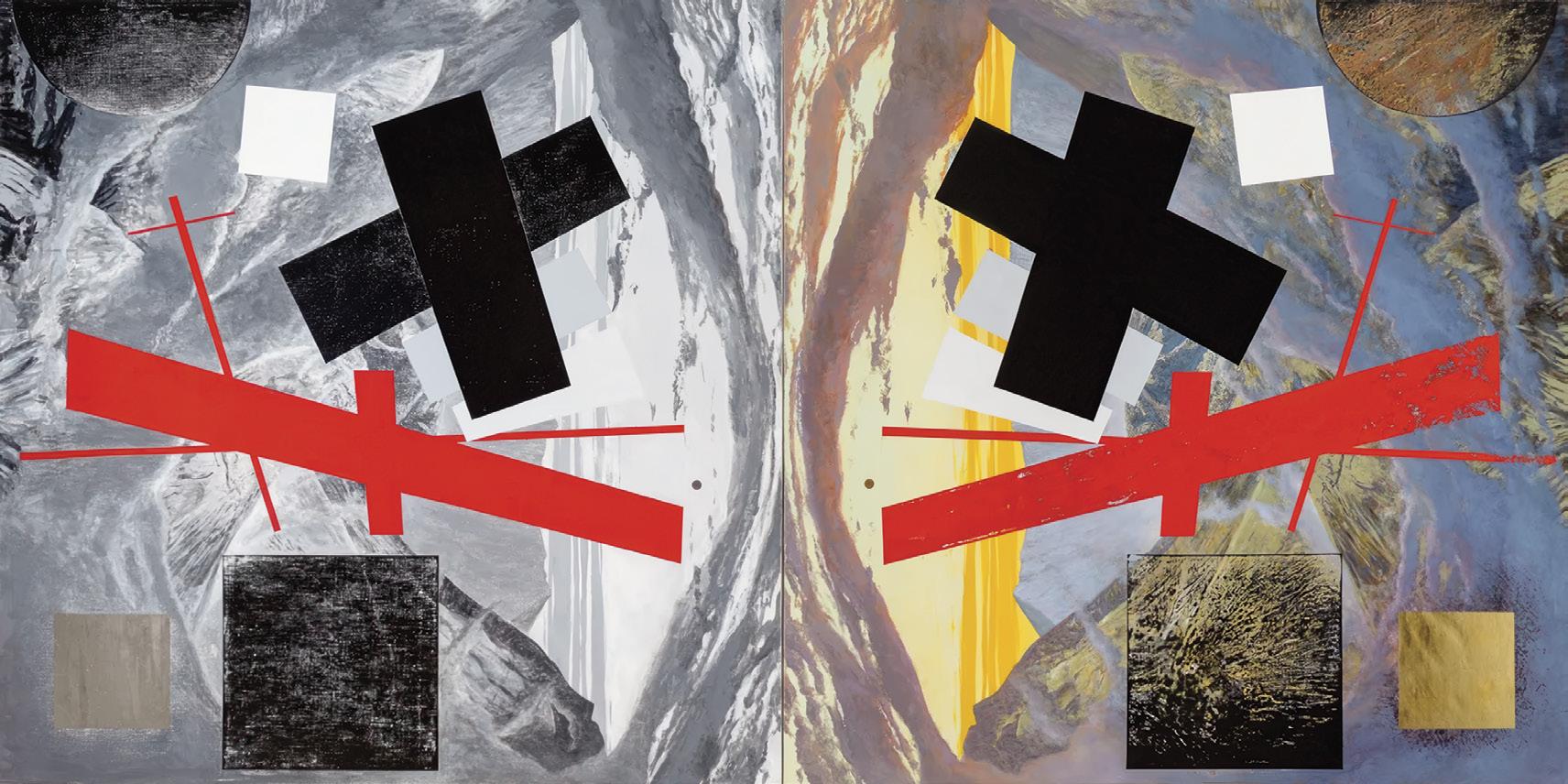
64 Jim Denney’s paintings confront climate crisis and memory through fiery landscapes at Philip Douglas Fine Art.
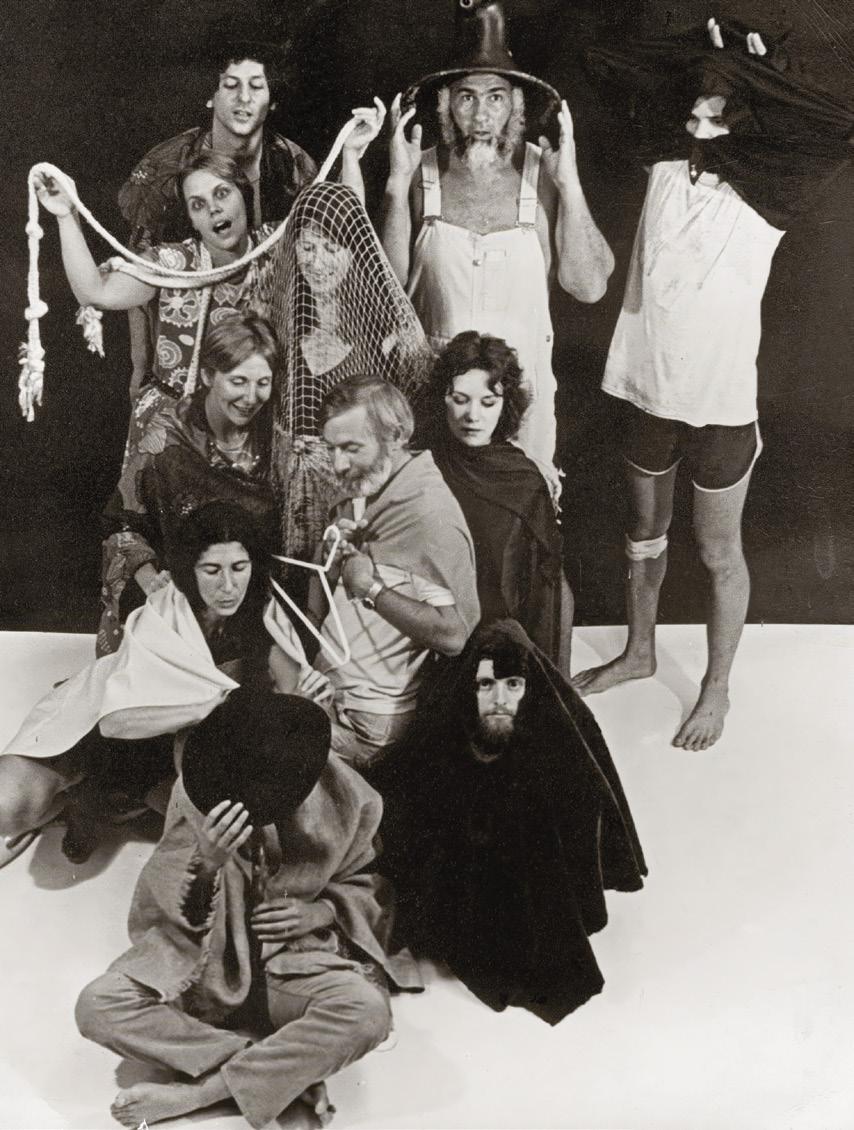
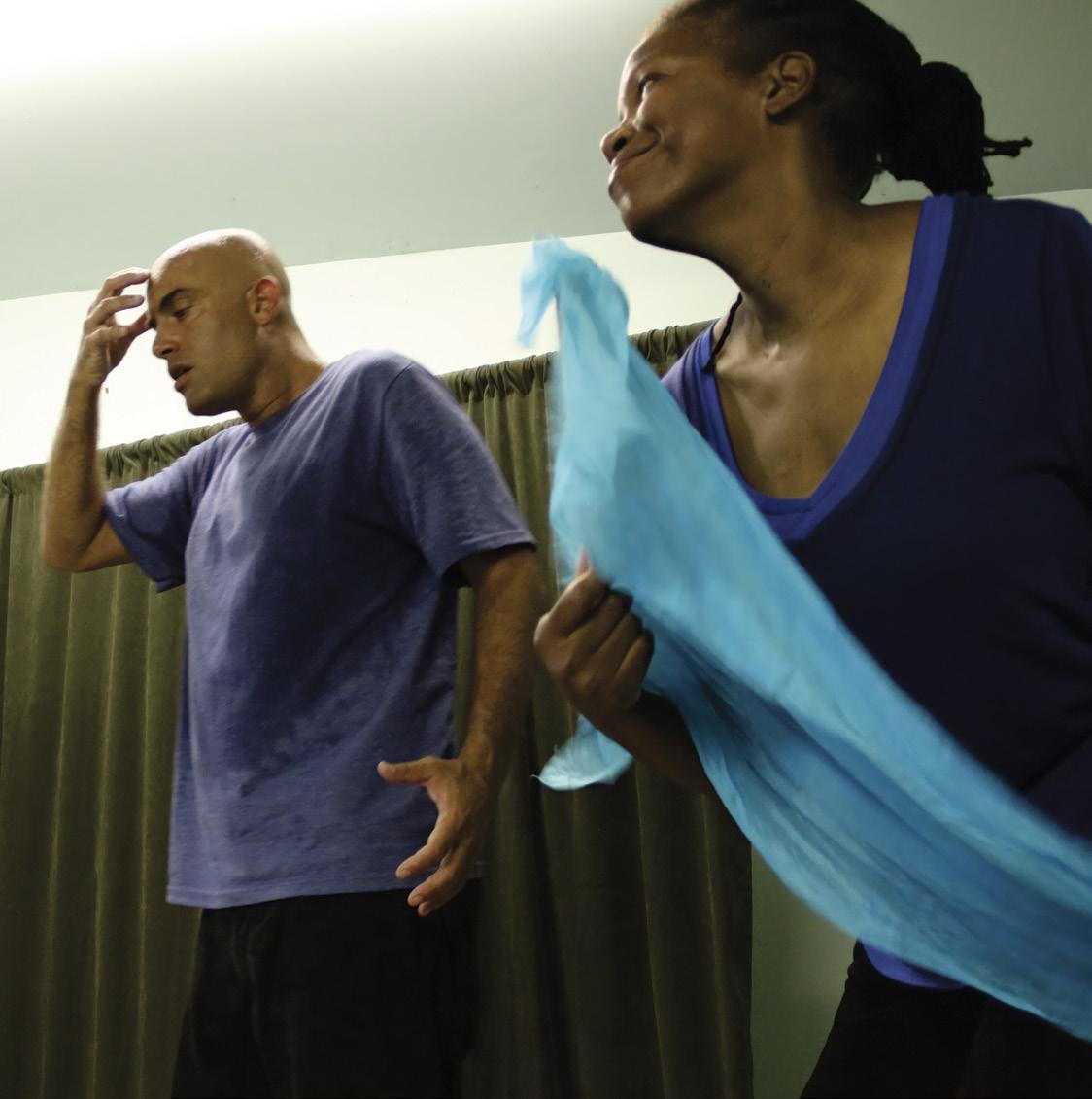
66 Playback Theatre celebrates 50 years of empathetic improv with a performance at the Muse in Rosendale this month.
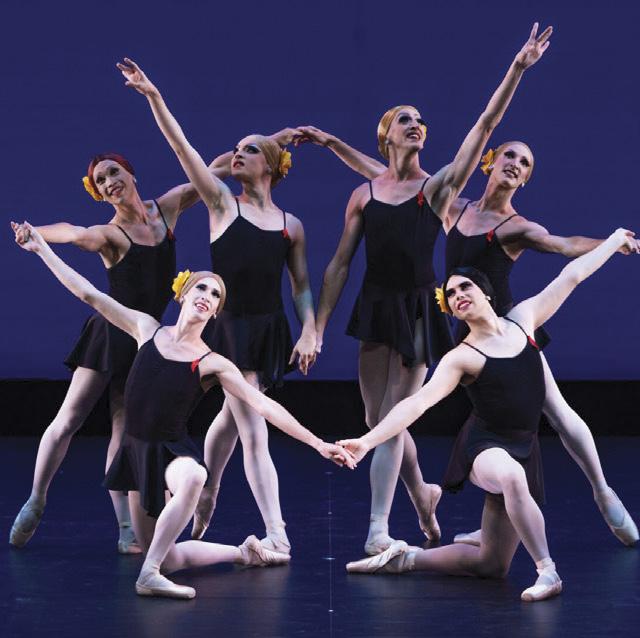
67 Here’s some of the events on our Short List this month: Winter Walk in Hudson, “Nut/Cracked” at Kaatsbaan, and An Evening with Ron Carter at the Orpheum Theater.
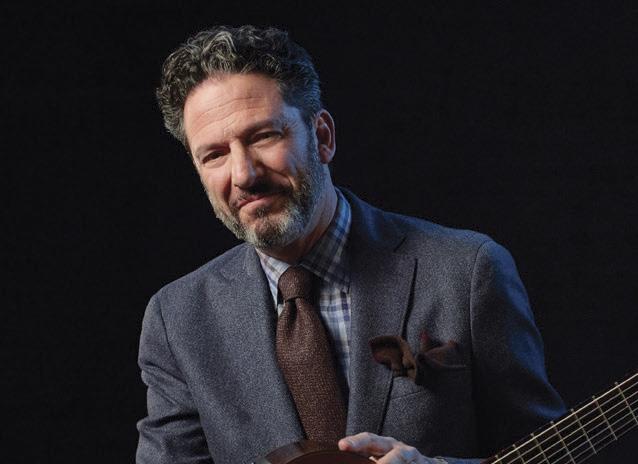
69 Songwriter Jules Shear performs a rare show at the Byrdcliffe Theater in Woodstock on December 6.
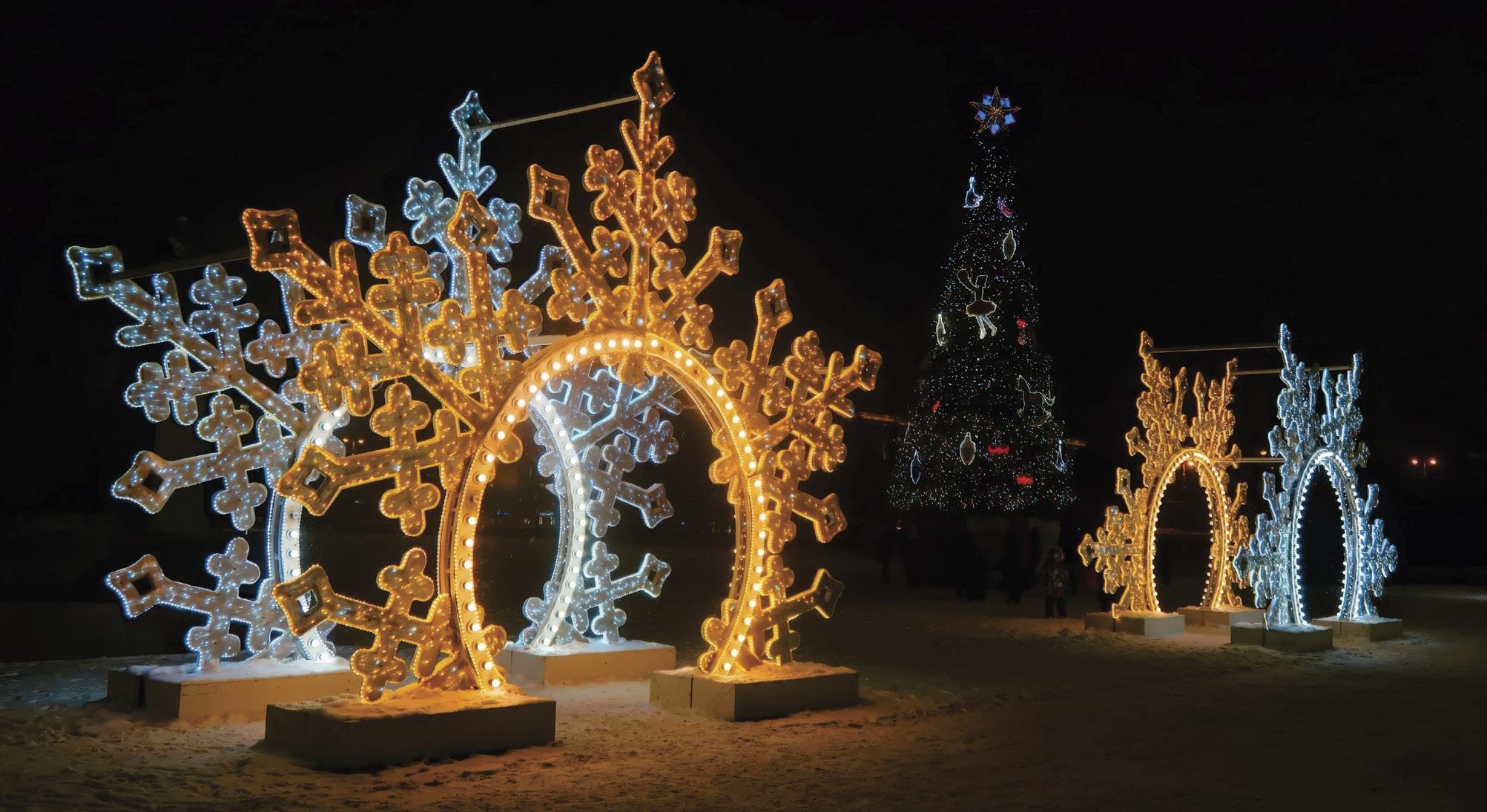
71 Live Music: “ An Amarcord Christmas” at Caramoor, Isle of Klezbos at the Emelin Theater, Robyn Hitchcock at the Bearsville Theater, and Thalia Zedek Band at Tubby’s.
72 Listings of art exhibits across the region, including “The Language of Things” at Wired Gallery in High Falls and “Recreation and Violence” at Turley Gallery in Hudson.
HOROSCOPES
76 If Fishes Were Wishes Cory Nakasue reveals what the stars have in store for us.
PARTING SHOT
80 Beacon’s Vanished Utopia
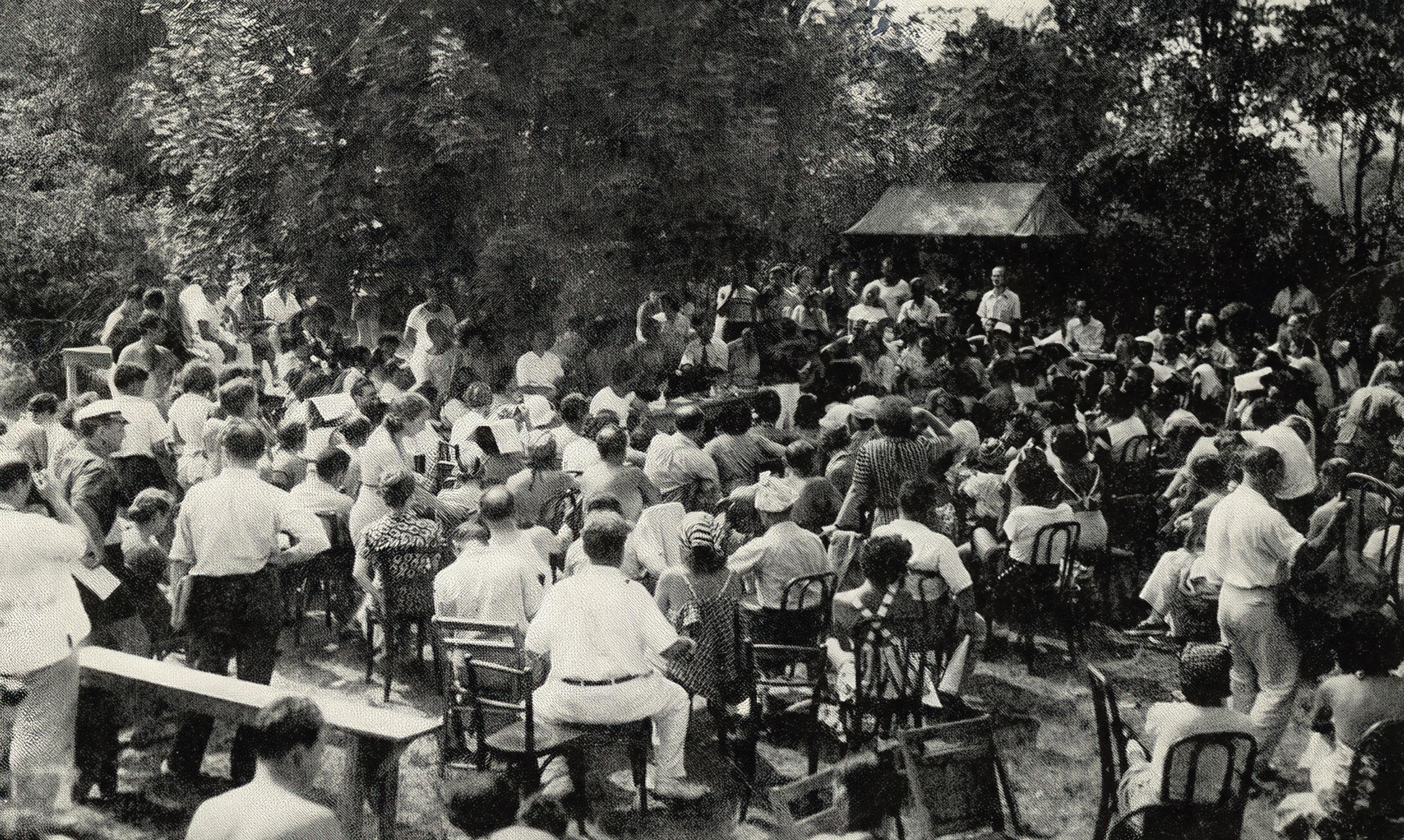
The exhibition “Beacon’s Camp Nitgedaiget: A Vanished Utopia” at the Beacon Historical Society examines the radical workers’ summer colony that once thrived on the riverfront.
The Shape of Looking
"Unconventional Perspective: Works
by Julia Leaycraft
1885-1960" at the Woodstock Artists Association & Museum
If you ever wanted proof that the Hudson Valley has been harboring future cult artists in attics, carriage houses, and wintered-in studios for a century, meet Julia Leaycraft. The Woodstock Artists Association & Museum is currently exhibiting “Unconventional Perspective: Works by Julia Leaycraft 1885–1960”—the first time in 75 years her work has been assembled. The show, containing over 30 paintings, lithographs, and drawings, will be up through January 6. This month’s cover features her painting Village in Winter, a snow-globe scene from the POV of a benevolent surveillance drone.
Born in 1885 and raised in Kingston, Leaycraft was not the type to wait for permission. Vassar class president, magazine editor, art columnist, advocate, mother, former Dalton School art department chair, Theosophist, public intellectual, and eventually a single woman building a life in Woodstock when that was still more declaration than lifestyle choice. She studied at the Art Students League, learning from William Merritt Chase and Frank DuMond, and fell under the colony’s creative spell during formative summer sessions in Woodstock between 1907 and 1910.
That Leaycraft then chose an unconventional orbit feels almost redundant. Her mother was
a novelist and suffragist connected to Susan B. Anthony. Leaycraft gravitated naturally toward women’s networks and built some of her own, founding the Intercollegiate Bureau of Business Occupations to help place collegeeducated women into careers. She wrote for the Theosophical Society’s Beacon and penned weekly art dispatches for the Ulster County News
Leaycraft also worked at The Delineator, which began in the 19th century as the house organ of Butterick sewing patterns and ended up, improbably, as a national engine of feminism, fiction, and social reform. Think Vogue if it unionized, discovered modern art, and occasionally tried to save the republic.
But it’s the paintings where city grit meets country radiance—that make her legacy undeniable. Her work is representational, but not obedient. Brushstrokes roam. Perspective wanders. Village in Winter is classic Leaycraft: a familiar place made unfamiliar by choices that prioritize mood over realism. It’s Woodstock, but Woodstock after a long simmer in the imagination—rooflines bumped, roads tilted, trees placed by narrative instinct instead of surveyor precision.
To call her palette “American Scene” is accurate in the way calling Joni Mitchell “folk”
is accurate—technically correct, spiritually insufficient. She painted garages, baseball games, apple trees, studios, children at play, Manhattan speedways, Haitian markets, and snowy turnoffs on Rock City Road. She painted not for documentation but revelation.
Her life split productively between New York City dynamism and Woodstock’s rural wilds, she made both vibrate with life in her work. In East River, Manhattan’s infrastructural optimism coils outward from above, traffic arteries braided toward steel bridges. Woodstock Baseball is a crowd scene rendered loose and sunwashed—children swinging by a cemetery, the American pastime played cheek-by-jowl with eternity.
Then Haiti, 1953. In her late 60s, Leaycraft traveled with artist Zulma Steele, painting markets, villages, families, and mountains in tones both structural and ecstatic. By the time she painted her late self-portrait, in 1950, she holds three brushes in one hand, canvas in the other, hair faceted into cubist geometry. She looks less like she’s capturing reality than negotiating terms with it.
The story here isn’t rediscovery, exactly. It’s recognition that Leaycraft knew exactly what she was doing, long before the rest of us caught up.
—Brian K. Mahoney
Village in Winter, Julia Leaycraft, oil on canvas, circa 1940
EDITORIAL
EDITORIAL DIRECTOR Brian K. Mahoney brian.mahoney@chronogram.com
CREATIVE DIRECTOR David C. Perry david.perry@chronogram.com
DIGITAL EDITOR Marie Doyon marie.doyon@chronogram.com
ARTS EDITOR Peter Aaron music@chronogram.com
HOME EDITOR Mary Angeles Armstrong home@chronogram.com
POETRY EDITOR Phillip X Levine poetry@chronogram.com
CONTRIBUTING EDITOR Anne Pyburn Craig apcraig@chronogram.com
contributors
Winona Barton-Ballentine, Maggie Baribault, Susan Brearley, Michael Eck, Melissa Esposito, Tristan Geary, Jamie Larson, David McIntyre, Cory Nakasue, Seth Rogovoy, Sparrow, Susan Yung
PUBLISHING
COFOUNDER Jason Stern jason.stern@chronogram.com
COFOUNDER & CEO Amara Projansky amara.projansky@chronogram.com
45 Pine Grove Avenue, Suite 303, Kingston, NY 12401 • (845) 334-8600
Ready for The Holida ys?
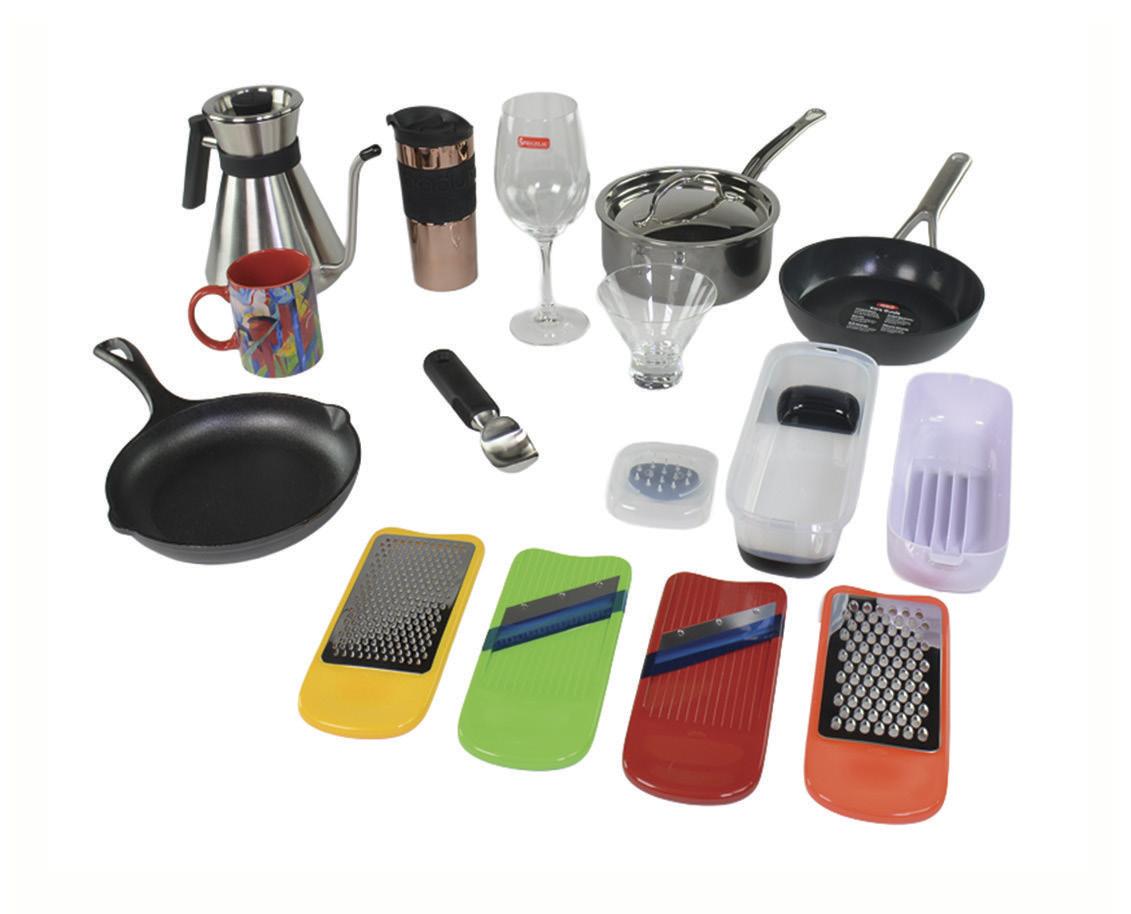
We’re coming to the season for celebrating and great food. That’s why we stock the best selection of kitchen tools in the area— More than any other kitchen store offers. It’s why more chefs come to Warren Kitchen & Cutlery for their kitchen tools! For them, it’s personal. It’s also the reason our customers keep coming back year after year. WK&C carries and stocks the Hudson Valley’s best selection of fine cookware, cutlery, appliances and accessories! Where else would anyone shop for for their kitchen?
Founded in 1993, Chronogram offers a colorful and nuanced chronicle of life in the Hudson Valley, inviting readers into the arts, culture, and spirit of this place.
ChronogramMedia.com •Unique and rare knives from around the world.
bakeware and barware.
MID VALLEY WINE & LIQUOR
esteemed reader by
Jason Stern
When my son was nine, he asked, “Dad, when is the end of the world?”
He was studying the myths of the Torah, as is customary for third graders in the Waldorf school curriculum. They were immersed in the story of Noah and the cataclysm of the flood that swept away all living creatures.
My son was also going through what Rudolph Steiner’s model of stages of development calls the nine-year change. This is a time of leaving behind the dreamy and imaginative paradise of early childhood and beginning to feel oneself as an individual. Steiner calls it the Rubicon, crossing a threshold with no possibility of return.
The question wasn’t one of curiosity; rather my son was feeling the imminent end of a world, and the immanent presence of another.
“Why do you ask?” I asked him.
“Because I feel like the end of the world is coming,” he said.
“What does that feel like?” I asked him.
“Like endless emptiness.”
I felt sympathy for the boy, who by ordinary standards would have been classified as depressed. I could also see that feeling the emptiness was precisely what he needed. A few weeks later he emerged into robust and vital enthusiasm as though having shed old skin, with no memory of the darkness he felt earlier.
The end of the world is a perennial concern. Diverse and much-promoted existential threats have come and gone in the 50 years I have been aware of the phenomenon. I have come to see the preoccupation with imminent catastrophe as an externalization of the extinction event that awaits each of us, death.
Concern with cataclysmic events is not about the fate of humanity, destruction of species, or other considerations so vast as to be rendered abstract. Rather the fear is for ourselves, feeling the necessity to develop beyond the stages afforded automatically by nature and continuing an evolution that may only be conscious and intentional.
The step of a personal annihilation—the end of a world (or worldview)—is a recurring theme in spiritual traditions. In this sense, the focus is on an inner event, sometimes referred to as dying before you die. This is a regular refrain in the teachings of Jesus, and expanded by St. John of the Cross, with the terms “dark night of the soul” and “dark night of the spirit.” These deaths of self are, at the same time, a kind of rebirth.
Islamic and Sufi traditions speak of fana or “annihilation” in four stages, a process of letting go of attachment and identification with progressively deeper levels of self. It points to the possibility of relinquishing the illusion of separate self, and opening to a more transpersonal consciousness that lies within. Each of these stages represents a death and rebirth within the span of the life of the body.
Carlos Castaneda gives a similar theme in his telling of the Yaqui shamanic worldview. According to his teacher, or nagual, Don Juan, the whole work of shamanic practice is a preparation to “leap into an abyss” and make a crossing to another mode of life free of preoccupation with self from which there is no possibility of return.
The current dominant religion, which my friend, the Egyptologist John Anthony West called the Cult of Progress, is characterized by inventing technological simulacra of liberation. With every new invention human beings further “transcend” contact with the material and natural world. With transportation, we are relieved of the need to walk; our appliances perform every kind of technical and manual labor; our devices stimulate our imagination and hunger for music and rhythm. Finally, large language models relieve us of the need to think.
The Cult of Progress makes human capabilities and capacities vestigial. Even the possibility of genuine identity and individuality is subsumed into the iPhone and the YouTube. These could be seen as the signs of the senescence of a species. At the same time, it is an imbalanced hunger for transcendence and liberation from denser strata of reality.
Compared to the religious traditions of yore, the current worldview lacks any possibility of rebirth in a more robust “unknown country.” The best we can hope for is uploading our meshwork of associations to a computer and continuing a banal and petty existence for eternity.
The journey to ourselves begins at every moment we make contact with our wish to be. I see that in order to take a step into a larger, more liberated world, I have to make a sacrifice; to let go of something I feel attached to and make room for a new state—even in a single, conscious breath. Exhaling, I let go of everything and become empty. I die to be filled with new life, born again with the next breath.
by Brian K. Mahoney
A Good Life in the Rubble
Igrew up on a steady diet of American individualism, not as a political theory but as pop-cultural scripture. Saturday afternoons were filled with lone gunslingers riding in from nowhere to save the helpless town (Shane, High Noon); one righteous man filibustering the rot out of Washington (Mr. Smith Goes to Washington); one incorruptible lawyer standing against a whole county’s worth of hatred (To Kill a Mockingbird). Even the darker stuff carried the same lesson: that the solitary figure—maverick cop, private eye, wronged veteran, the lone voice of reason—was the only dependable unit of moral force in a chaotic world. Entire genres conspired to teach us that community was unreliable, institutions suspect, and that salvation, when it came, arrived wearing boots, muttering “I’ll handle it,” and, preferably, carrying a sidearm.
The longer I live, the more convinced I am that the myth of the solitary human is, at best, a polite fiction and, at worst, the root of much of our present mess. It’s an attractive bit of makebelieve: the lone thinker in the cabin, the rugged individual who needs nothing, the homeowner who imagines his property sealed-off and sovereign. (History, it should be noted, is not kind to this fantasy. Follow it to its logical end, and you don’t get a sage on a mountaintop, you get the Unabomber in his shack.)
The fact is that we are entangled. Nervous systems tuned to each other. Fates shared and futures braided. And if the past few years have felt like a great unraveling, it’s only sharpened the underlying reality: There is no life worth living that isn’t built together.
I keep returning to something Beaconbased filmmaker Seth Porges said in our recent conversation about SantaCon, his documentary about the anarchic, DIY celebration that began as an anti-commercial art prank and metastasized into exactly the thing it once mocked. (Find my article on the film at Chronogram.com.) Porges described the original San Francisco group, the same artists and oddballs who had started Burning Man, as trying to forge “a good life in the rubble.” He meant the ruins of late-stage capitalism, but the phrase feels more universal right now.
It’s a reminder that even dysfunctional systems contain pockets of communion. That we build meaning—create events, festivals, art—precisely because we need one another. SantaCon’s later
descent into a debauched bar crawl is lamentable, sure, but never preordained. Seeded into its earliest incarnation was a small truth: People crave connection, even when they don’t yet know how to handle it.
This burning question—How do we handle each other?—threads through much of this month’s issue.
Take group singing. Maggie Baribault’s piece on Hudson Valley choruses (“Harmony Heals,” page 38) is nominally about the wellness benefits of singing, but it is really about interdependence. When you sing in a group, you surrender to a communal instrument. You match pitch, blend tone, share breath—literally share breath. The science is startling: Coordinated inhalations and exhalations synchronize heart rates and regulate the nervous system. Choral singing reduces stress, increases emotional regulation, and encourages that elusive state of coregulation, where bodies settle together into something like harmony. “The whole is greater than the sum of its parts,” one vocal teacher explains. “When we practice singing with a chorus, we are honing our abilities to listen, sense ourselves better, express, and communicate.” It’s hard not to read that as an instruction manual for our societal moment.
Another version of this appears in my conversation with Brian Schaefer about his novel Town & Country, which sidesteps the easy binaries—old-timer versus newcomer, rural stalwart versus urban emigre—that dominate so much of our regional discourse. (Find my profile of Schaefer on Chronogram.com; Susan Yung’s review of the novel is on page 61.) Schaefer’s characters, in their stubborn, flawed attempts to understand one another, offer a corrective to our current appetite for clean divides. They are not symbols of factions but humans whose lives overlap in messy, necessary ways. In a landscape like the Hudson Valley, where population churn and cultural change is constant, Schaefer’s gentler point is worth underlining: There is no future here—or anywhere—that doesn’t depend on the uneasy alliances we form with the people we didn’t choose.
The most distilled example of this interdependence, though, comes from the piece on Playback Theatre that appears in this issue (“The Script Is You,” page 66.) Fifty years ago, Jo Salas and Jonathan Fox invented a form of improvisational theater that depends entirely on the stories offered by audience members. It
is built on what Salas calls “deep listening”— not Pauline Oliveros’s sonic practice, but a kindred attentiveness to the lived experience of others. Playback is theater, but it’s also social intervention. Its premise: To witness a story well, you must listen without judgment, expectation, or premature interpretation. You have to let someone else’s narrative arrive unfiltered.
“We always give the teller the last word,” Salas told me. “We want them to feel that they have been heard.” What the performers create onstage is a mirror—sometimes crystalline, sometimes funhouse—of the teller’s experience. It’s not therapy, precisely, though many people experience it that way. It is, instead, a collective act of meaning making, where strangers co-author a temporary community simply by sharing what happened to them.
In an era increasingly defined by performative antagonism, the idea of listening as a radical act feels subversive in its empathy. But Playback, like group singing, reroutes us back to our evolutionary wiring. We are social primates. We learn by imitation. We settle our nervous systems by proximity.
It is not lost on me that all these practices— DIY art gatherings, community choirs, participatory theater, even the shared world imagined by a novelist—are not purely nostalgic refuges from polarization. They are forms of rehearsal. They train the muscles of cooperation in a moment that desperately needs them. Because outside these spaces, the centrifuge of contemporary life continues to spin. The incentives for division have never been more lucrative. Social media takes our instinct for connection and feeds it synthetic sugar until the crash becomes the defining sensation. National politics has settled into ritualized combat, more intent on drawing blood than drawing consensus. Even here in the Hudson Valley, the story of who belongs and who doesn’t can be weaponized quicker than you can say “zoning meeting.”
The world may be cracked in a hundred places, but cracks aren’t only signs of damage— they’re invitations. In kintsugi, the Japanese art of mending broken pottery with lacquer mixed with gold, the break becomes the feature, the place where repair blossoms into beauty. Interdependence isn’t optional; it’s the binding agent that holds the shards together long enough for us to make something new—and maybe even luminous—out of what’s been fractured.
Spread Your Wings
By Peter Aaron
Gail Ann Dorsey’s Solo Flight
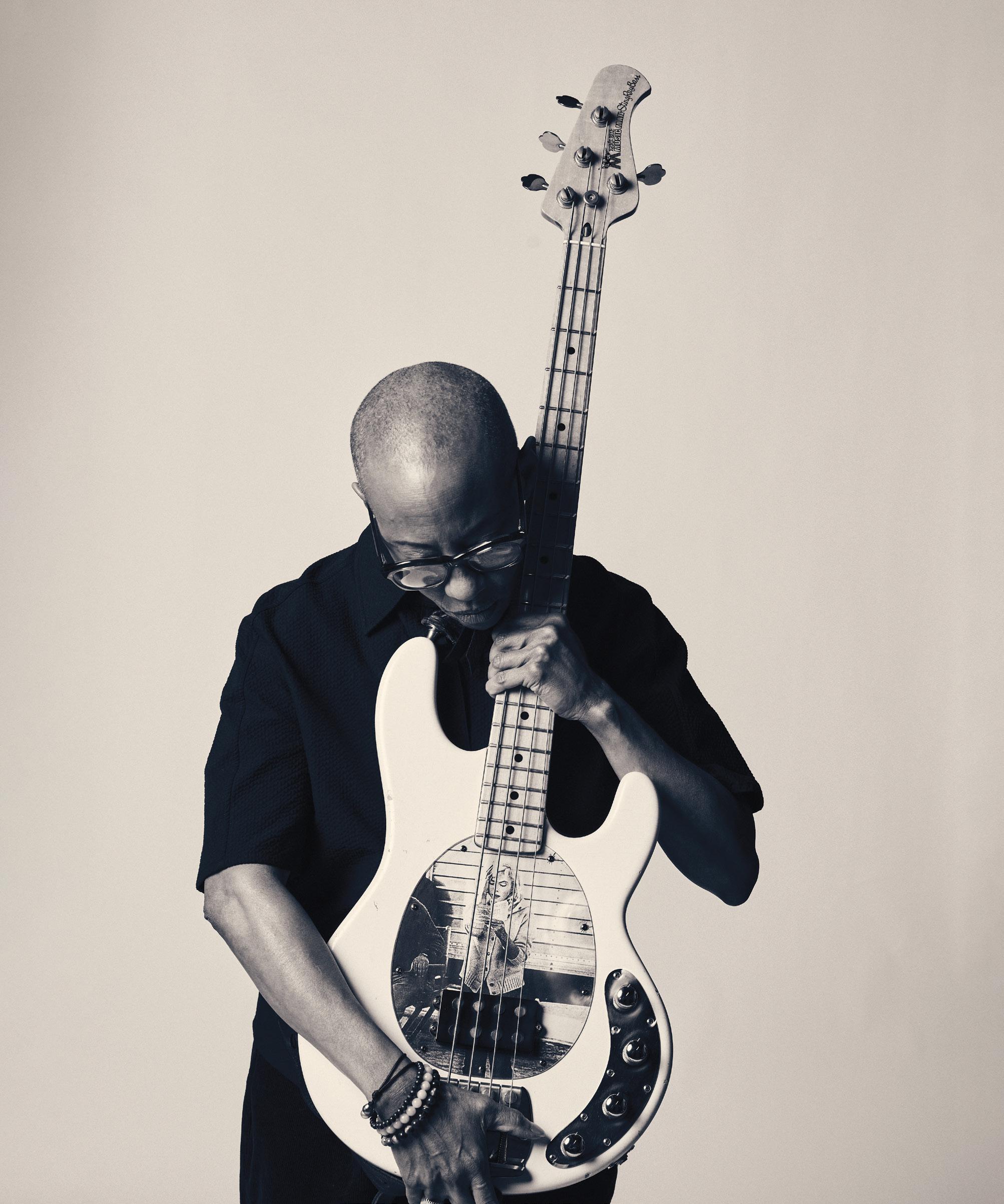
Opposite: Gail Ann Dorsey, the
formidable bassist and singer who grew up idolizing Queen and went on to share stages with rock icons around the world is set to release a solo album in the spring.
Photo by Jimmy Fontaine
Often overlooked within the music of the 1970s hitmaking powerhouse Queen are the contributions of the quartet’s rocksolid bassist, John Deacon. Take, for example, his baroque arpeggios on “The Millionaire Waltz” from the album A Day at the Races. Or, from The Game, his jaunty, swinging rockabilly lines on “Crazy Little Thing Called Love” and, of course, his pumping, snapping funk pulse on “Another One Bites the Dust.” Deft, robust, and deliciously melodic, Deacon’s playing is an indispensable element of Queen’s magical music. It’s a signature feature that carries and embellishes the tunes while somehow also staying out of their way.
Most listeners during Queen’s 1970s heyday, however, were more fixated on the gloriously over-the-top pomp of the band’s late front man Freddie Mercury or the sizzling flash of its heroic guitarist, Brian May. But not all of them.
One, a little girl in urban Pennsylvania was laser focused on the understated Deacon and what he did. And her attentions would eventually have her soaring to heights in the music world that few, least of all herself, could have imagined. “Queen was my favorite group,” recalls Gail Ann Dorsey over coffee and a cookie in Kingston. “I totally loved Freddie Mercury. As a performer, he was the greatest to me. But I really loved John Deacon’s playing, how he always served the song.”
On bass Dorsey has served the songs of many big names very well herself. Among them: Bryan Ferry, Lenny Kravitz, the B-52s, Tears for Fears, the National, Gang of Four, the Indigo Girls, Ani DiFranco, Jane Siberry, and, most famously, from 1997 to 2013, David Bowie.
She thanks her family for igniting her passion for music. “My mom would always have AM radio
on in the kitchen,” says the musician, who was the youngest of five children. “I’d hear the Carpenters, the Fifth Dimension, Dr. John, Gladys Knight, Olivia Newton John, Donny Hathaway, people like that. My siblings were all older, and they were into Jimi Hendrix, Rare Earth, Cream, and the more ‘FM’ artists. [The late 1960s and early 1970s were] a brilliant time for music.”
Philly Soul
Dorsey grew up in West Philadelphia. “It was very segregated, something like 98 percent Black,” she says. “The [racial boundary] lines were clear, it was street to street. But the irony I learned early in life was that while Black communities are always painted out as being ‘dangerous,’ they’re really the most welcoming communities. One of my best friends was a white girl—we bonded over our love of Queen. She was always welcome at my family’s house, but I wasn’t welcome at hers. I was angry about [segregation] because it was robbing me of so many basic human things. I’ve never understood why it’s an issue, all over the world, that kind of conditioning.” Yet such regressive conditioning wasn’t powerful enough to hold Dorsey back.
At age nine, she decided she wanted to play guitar, and some of her chief contemporary influences—Queen’s May, Grand Funk Railroad’s Mark Farner, Chicago’s Terry Kath, Heart’s Ann Wilson—were white guitarists. “I always knew I wanted to play music, even before I got a guitar,” she remembers. “I’d go to Sam Goody to buy records, and I’d see the bulletin-board ads there and at music stores by local bands looking for musicians. I noticed that 90 percent of the ads were from guitar or keyboard players looking for
people who played other instruments, and a lot of them were looking for bass players. So I said to my mom, ‘Mom, will you buy me a bass?’ And she got me one. I’m totally self-taught, I still don’t read music, but when I was 14 I got into this Top 40 band. I was underage and they played at bars, so I’d come on, do a 20- or 30-minute set with them, and then just go hide.”
Scene Change
Despite her early success as a professional musician, by the time she’d reached college age Dorsey had been drawn to a different creative medium: movies. The screenplays and Super 8 shorts she’d made to accompany some of the music she’d begun composing earned her a full scholarship to the California Institute of the Arts to study film and video. But the cinematic spell didn’t last. “I couldn’t deal with the Hollywood movie world,” she says. “I had given my bass away when I went to college, but I got another one, and a four-track tape machine, and I moved to New York to try to do music again.”
She spent a year there, writing songs and paying her rent with record store jobs—but making little headway as a musician. In 1983 Dorsey figured she’d try London. “I had a friend there who I’d met in film school,” says the bass player, who emigrated that August. “He played music as well and had a space where I could live.”
The pair formed a duo called 20To, a partial reference to Dorsey’s age at the time, 22, which soon brought a development deal with CBS Records. Next came studio and live work with Boy George, French singer Anne Pigalle, Donny Osmond, and others. Her first big break, though, would not be as a bassist.
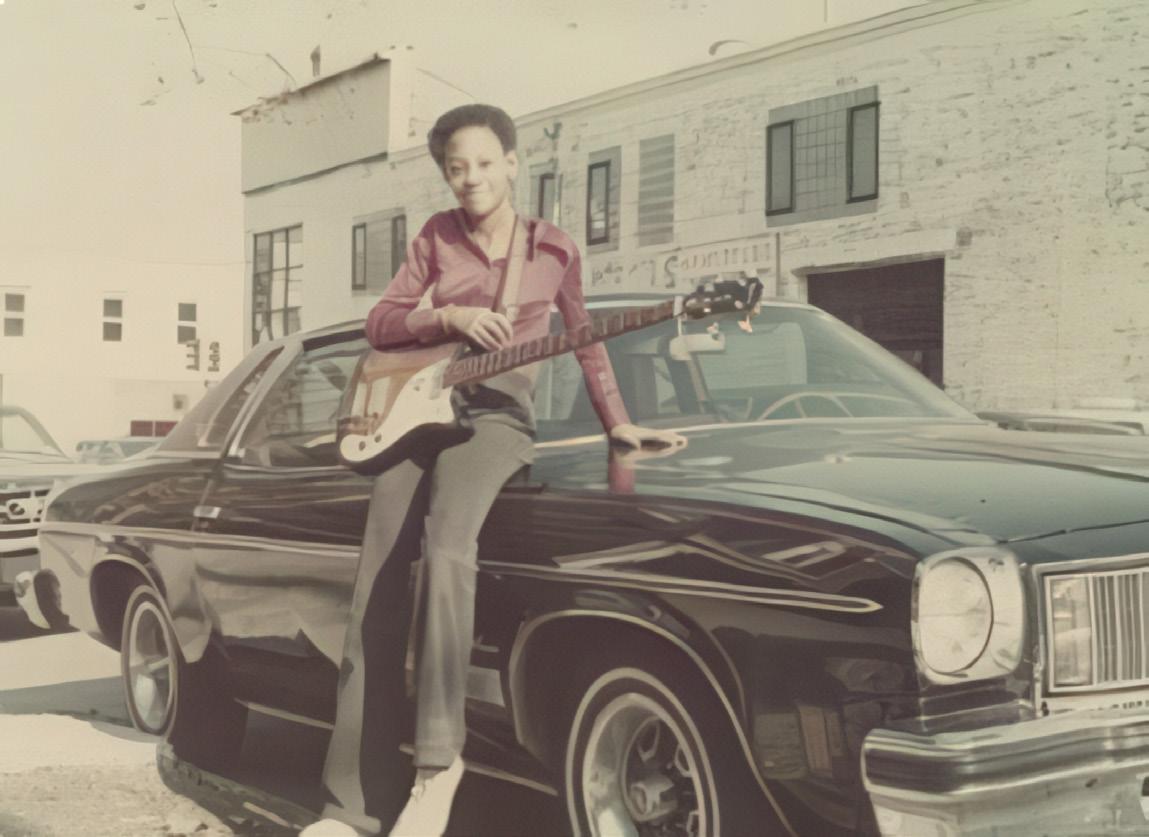
Gail Ann Dorsey on the block she grew up on in Philadelphia in 1977.
quietly
“He saw things in me I didn’t know I had. Bowie was so good at inspiring the people around him to reach deeper, to be better.”
—Gail Ann Dorsey on David Bowie
Open Mic
In 1985 she got a call from percussionist John Stevens, who was assembling the Charlie Watts Orchestra, a big band led by the Rolling Stones drummer, ahead of its premiere at famed London jazz club Ronnie Scott’s. “Charlie had planned to just do instrumental jazz standards, but John pointed out to him that they should have some vocal numbers to break up the set,” Dorsey remembers. “John liked my singing, so he asked me to sing with the band.” The high-profile gig led to a soulful solo performance of Bobby Womack’s “Stop on By” on BBC-TV’s music program “The Tube.” Watching were reps from Warner Music Group, who signed her for her 1987 debut The Corporate World, its title a barely veiled dig at her newfound environment. “There were a lot of executives asking me, ‘Where’s the single?’ when I was recording it,” she says about the album, which featured Eric Clapton and Gang of Four guitarist Andy Gill but did not sell well. “After a while, I just got fed up.” Released from Warner, Dorsey took a year off from performing but kept writing. Island Records founder Chris Blackwell snapped her up for
1992’s Rude Blue, a set that boasts players from James Brown’s horn section. “We had a lot of fun making that album,” she says, although, in a familiar scenario, her eclectic style confused the company’s marketing wing, and she got out of her contract. A free agent again, she became a member of Tears for Fears in 1993 and opted the following year to return to the US to tour with the Indigo Girls.
Mountain Move
“I wanted to be near New York, but I didn’t want to live in the city,” Dorsey says. “One of my friends, Louise Goffin [the daughter of Carole King and Gerry Goffin and herself a singersongwriter], said, ‘Hey, you should come to Woodstock!’ Another of my closest friends [fellow erstwhile Gang of Four, B-52s, and Indigo Girls bassist], Sara Lee, was there.” In 1994 she found a place in Glenford that proved to be transitory. “I spent a year there but I’m a still kind of a city girl, and I wanted to be somewhere that had sidewalks and coffee places,” she explains. “So I got a loft in Uptown Kingston. Uptown was deserted then; it was so beautiful, I saw so much possibility. I
ended up living there for 22 years, it was the best apartment I ever had. I’d say to everybody back then, ‘Someday Kingston’s going to be really happening,’ and they’d laugh.” While recording 1995’s Raoul and the Kings of Spain with Tears for Fears, Dorsey got another call that would change her life—dramatically.
“I was staying with [Tears for Fears] leader Roland Orzabal and Roland’s wife came running over to us. She said David Bowie was on the line, and he’d asked if I could call him in five minutes. I called the number, thinking it was a joke. But it was really him. He said he was about to do a tour with Nine Inch Nails and asked if I’d like to be in his band. I told Roland and he said, ‘Go!’”
What followed were nine magical years with Bowie. Dorsey was an integral collaborator of the rock icon for his studio albums Earthling, Heathen, Reality, and The Next Day, and she became his on-stage vocal foil. “It was surreal,” says the artist, who released another solo album, I Used to Be…, in 2004. “Every time a tour ended, I wasn’t sure if I’d ever get called [by Bowie to tour] again, but he kept calling me back.” Perhaps the most wonderfully surreal moment, though, came when her boss asked if she’d sing the lines
originally sung by her departed idol Freddie Mercury for performances of his and Queen’s 1981 hit “Under Pressure.” “I couldn’t believe it,” she recalls, her eyes welling with emotion at the memory. “But he just put it out there nonchalantly, a challenge: ‘You’ve got two weeks [to get ready].’ He saw things in me that I didn’t know I had. He was so good at inspiring others around him to be better.
Ashes to Ashes
Yet it was Dorsey who would inspire something in Bowie: his latter-day love of, and eventual move to, the Hudson Valley. “I’d be in New York recording or rehearsing with him and when we were done, he’d joke, ‘Now Gail’s gotta go back to be with the pot-smoking hippies up in Woodstock,” she says. “But then we worked on some of [2002’s] Heathen at Allaire Studios outside of Woodstock and he fell in love with the area.” The singer bought land on an adjacent mountain and lived there until he died in 2016. His ashes were scattered on the property after his passing.
Now with the impending spring release of The Appearance of Life, Dorsey’s first album under her
own name in 21 years, she’s stepping back into the solo limelight. “I have witnessed Gail’s growth as a musician, a songwriter, and, most especially, as a singer, deepen and mature,” says Sara Lee. “Gail has the ability to connect with her audience on a very deep level.” One of the album’s tracks, the tender “Maybellene,” addresses the difficult topic of suicide and was first performed at a benefit for teen mental health organization the Maya Gold Foundation. Its first single, the optimistic “(It Takes All Kinds) To Make a World,” references one of her mother’s favorite sayings. “I feel like I’ve settled into the music that’s deepest in my heart, ’70s AM music like Carly Simon, Jackson Browne, and Carole King,” says Dorsey. “I hope the songs give people something that they can relate to and find comfort and joy in.”
“Gail’s talents more than measure up to some of the great artists she has accompanied over past decades,” offers Lee. “And now could not be a better time for her to share them with the world.”
Gail Ann Dorsey will perform as part of ‘Mavens of Melody’ at City Winery New York on December 1 at 6pm. The Appearance of Life is planned for release in spring 2026. Gailanndorsey.com.
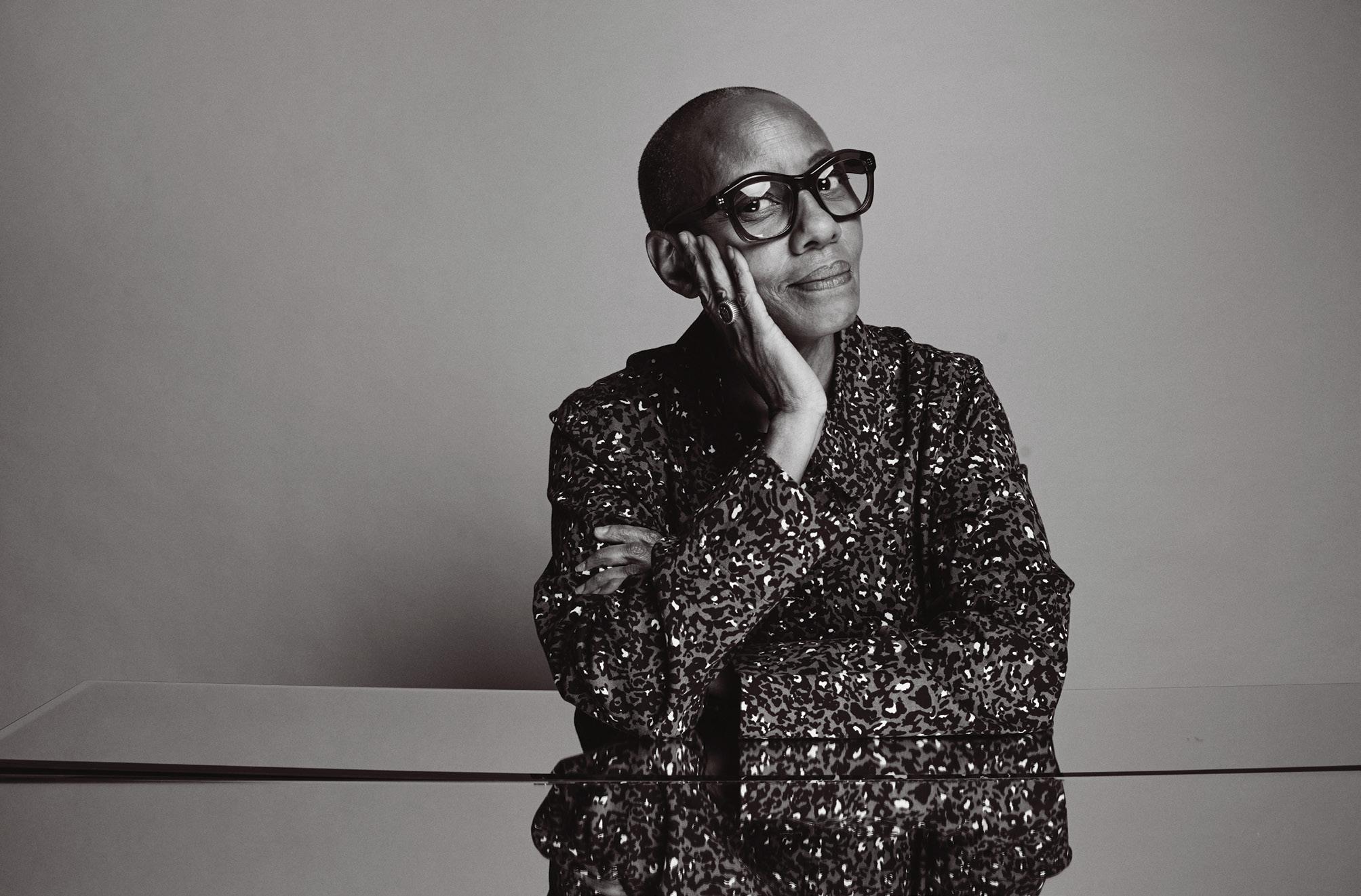
Gail Ann Dorsey in 2025
Photo by Jimmy Fontaine
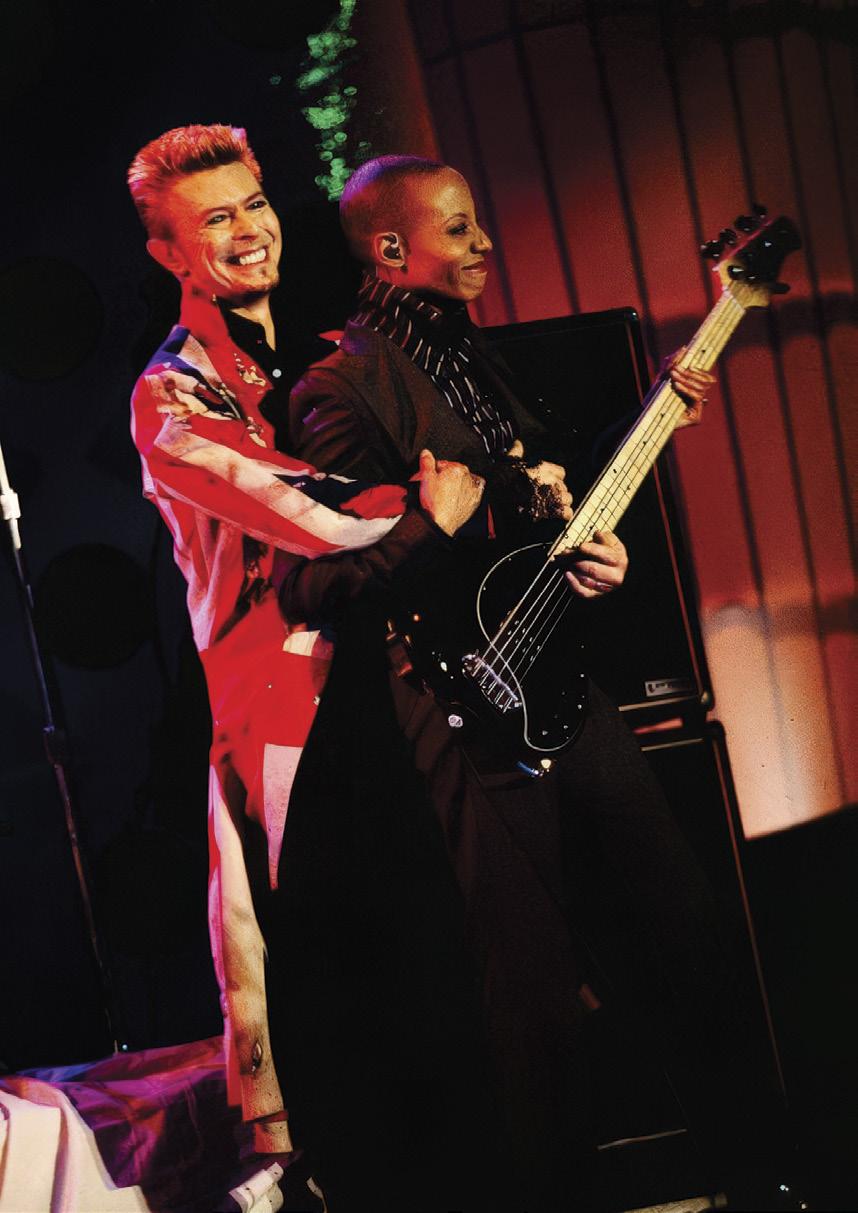
Opposite, from left: David Bowie and Gail Ann Dorsey performing in New York City in 1996.
Photo by Frank Micelotta
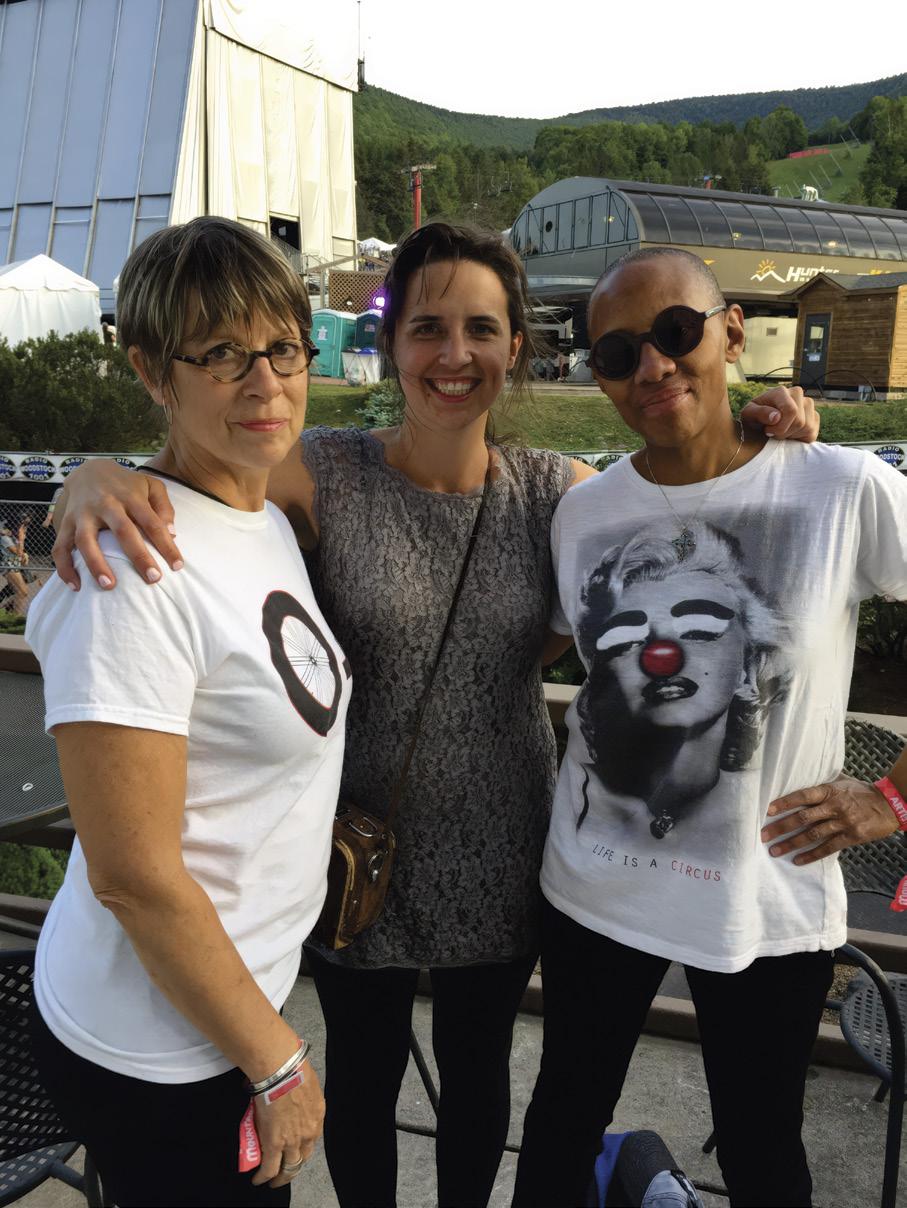
Three bassists backstage at Mountain Jam 2015: Sara Lee, Bridget Kearney, and Gail Ann Dorsey.
The Secret on Raymond Avenue
TWISTED SOUL’S GLOBAL KITCHEN HIDING IN PLAIN SIGHT
By Susan Brearly
When you order delivery from most restaurants, the food arrives cold, flat, diminished—a shadow of what left the kitchen. Twisted Soul, on Raymond Avenue near Vassar College in Poughkeepsie, breaks this rule so thoroughly it becomes the ultimate proof of culinary excellence. When food tastes the same after a DoorDash journey as it would inside the cafe, you know something extraordinary is happening in that kitchen.
If you do choose to dine in-house, the unmarked storefront offers no neon signs, no flashy flags announcing its presence. This is the kind of place locals guard like a personal secret. For years, families with kids at a nearby fencing studio (now closed) would make Twisted Soul their post-practice ritual—a running joke about who went without telling the others, because everyone always wanted in. And with the restaurant’s business being 70-percent takeout, it would be easy to miss this gem.
Step inside the inconspicuous glass doors that lead to a few cafe tables and featuring an alwayschanging art gallery of local artists on the walls, and you’ll recognize by the eager energy of the staff and customers alike, something different is happening here.
Owner and head chef Ira Lee started Twisted Soul in 2007, built around a simple but ambitious concept: bring the soul cuisine of every country to Poughkeepsie, all for under $15. Lee travels extensively, hitting the open-air markets, alleys, and food stalls of different countries, then translates what he discovers into dishes that honor their origins while making them accessible to the Poughkeepsie community. The result is a menu that reads like a passport—Colombian arepas beside Vietnamese banh mi, Malaysian curry meeting Argentine empanadas, each dish executed with the kind of precision that makes serving them side by side actually work instead of becoming a confused mess.
The Vassar Noodle Bowl ($14.75) demonstrates exactly why this place has become legendary among college students and townies alike. Barbecue pulled pork meets Malaysian curry coconut sauce—spicy, rich, complex—topped with sour cream, peanuts, green onions, and fresh mint. It’s the restaurant’s most popular dish, and one bite explains the fanfare. The pulled pork alone deserves recognition: smoky, tender, the kind of barbecue that makes you forget every mediocre version you’ve ever encountered. But swap that pork for their grilled tofu, and the dish transforms without losing any appeal—the tofu takes on the same barbecue treatment—or sometimes an Ethiopian-inspired sauce building on the flavors of berbere, tamarind, coffee, and ginger—proving Lee’s commitment to making every option genuinely delicious rather than treating vegetarian dishes as afterthoughts.
That philosophy extends across the menu. The banh mi injects the flavors of Vietnamese street
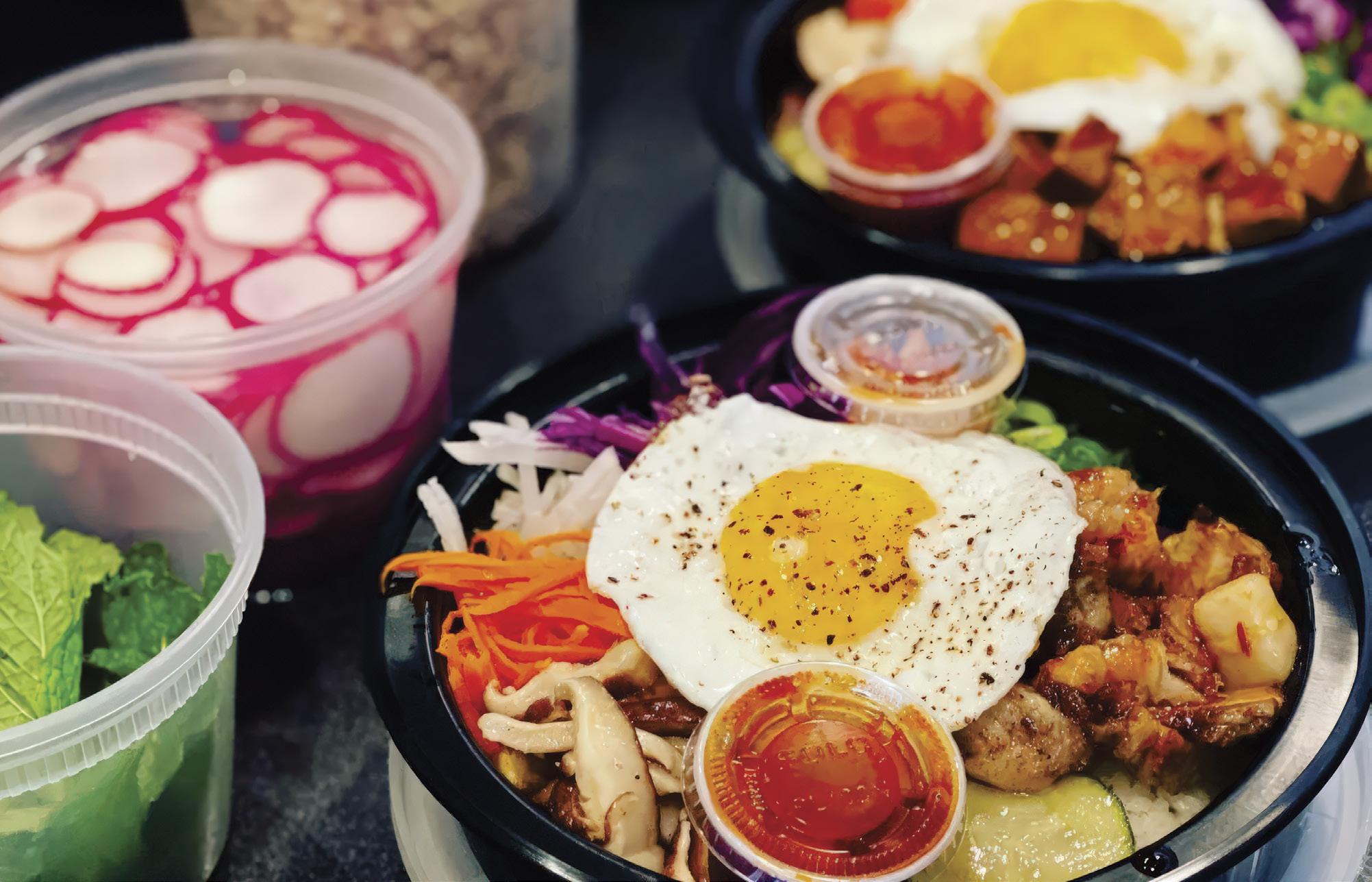
From Malaysian curry noodles to Argentine-inspired empanadas, Twisted Soul’s dishes channel markets around the world through a Poughkeepsie kitchen.
food into daily Hudson Valley life: your choice of barbecue pulled pork or grilled tofu topped with pickled carrots and daikon, jalapenos, cucumbers, spicy mayo, and cilantro on bread that keeps its structural integrity despite the sauce ($14.25).
The Kool Noodles #85 features lo mein noodles in spicy hoisin peanut sauce with barbecue grilled tofu, available gluten-free with glass noodles or sweet potato noodles ($7.75).
Then there are the empanadas—Argentinestyle with an Asian twist—with traditional fillings like chicken and beef, as well as not-so-trad options like corn and goat cheese and sweet potato samosa (one for $3.95 or a dozen for $45). The Colombian arepas, made using a naturally glutenfree corn flour, come stuffed with a choice of the four barbecue offerings (all $14.50). The chickpea fries ($7.50) arrive light and crispy, unlike anything else masquerading as fries, served with tamarind-Medjool date chutney that sounds unlikely but tastes inevitable.
The Bad Ass Rice ($12.95) remains Lee’s original creation and personal favorite, though he is also partial to the recently created Fried Chicken Katsu Noodle Bowl ($14.75), particularly popular
with Vassar students who make up 60 to 70 percent of the restaurant’s clientele. Lee credits the college community with shaping the menu. “We didn’t start out with so many vegetarian or vegan options,” he says, “but that developed over time, as we came to understand their needs.”
The salad bar offers globally inspired combinations: North African ($9.25) features carrots, toasted almonds, dried apricots, Kalamata olives, and chickpeas with carrot-ginger vinaigrette. The Mexican ($9.25) brings black beans, corn, tomato, red onions, and feta with sweet chipotle vinaigrette. Each salad tells a story about a different region’s approach to fresh ingredients.
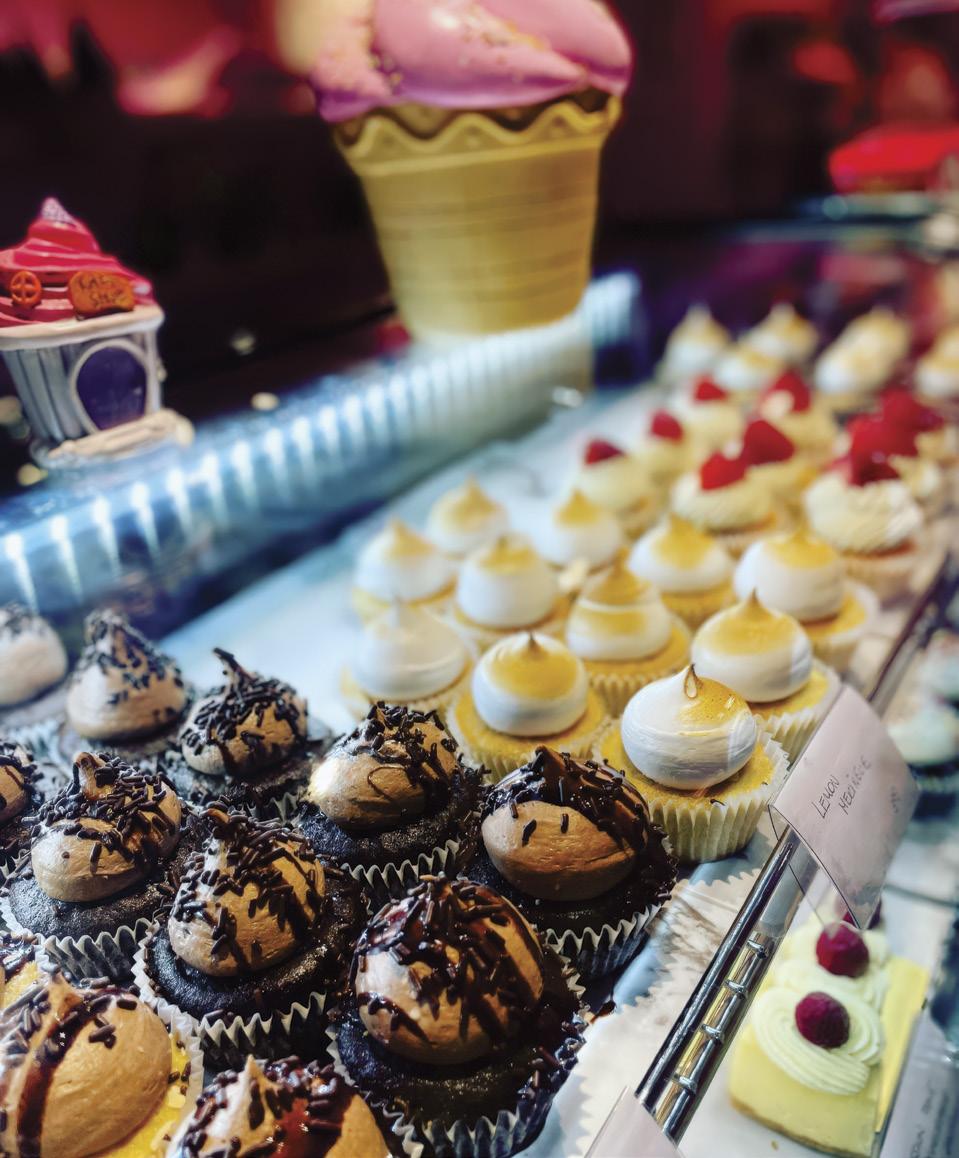
Then there are the cupcakes ($4.50 each)— award-winning creations so popular that Lee and his wife, Brenda Black, opened a dedicated operation across the street, Twisted Soul Cupcakes. “The cupcakes are all Brenda,” Lee credits. “The secret is vigorous tasting of each element—the cake, the icing, the dulce de leche.” Follow their Instagram for hours; they announce openings there.
The lavender lemonade ($4.50)—inspired by infusion experimentation during a trip to Ireland 12 years ago visiting Black’s family—provides unexpected refreshment alongside bubble tea ($5.50) and fresh fruit smoothies ($6.50), making Twisted Soul a complete destination for any time of day rather than just a lunch stop.
What makes this all work—beyond the flavor combinations and accessible prices—is the team Lee has built. “I love that this business is a success
because I have the most phenomenal all-woman team supporting the vision and the work, and they are loyal,” Lee explains. “I have very little turnover. Sometimes someone will leave, but they come back.”
When asked how his food survives delivery when most doesn’t, Lee’s answer is refreshingly simple: “Everything is fresh and made on demand. There’s nothing sitting around waiting. That’s the secret.”
That commitment to freshness pairs with constant innovation. Lee, a Culinary Institute of America graduate, just returned from four days in Italy. “When the restaurant is having a slow time, I will travel just for inspiration,” he says. Recent menu additions include bibimbap ($13.95) and chicken katsu ($14.25) from trips to Korea and Japan. “I believe in always learning,” he says. “A carrot is a carrot, and everyone knows carrots, but surround it with peppers from one country or region, and now the dish is something new.”
Twisted Soul is street food elevated without losing its soul—accessible, affordable, genuinely global. In a city that often gets overlooked for is food scene, Twisted Soul is one of those places that nudges you to admit Poughkeepsie’s got more going on than outsiders tend to give it credit for.
Twisted Soul
47 Raymond Avenue, Poughkeepsie
Twisted Soul is open Monday, Wednesday, Thursday, and Friday 11am-8pm and Saturday, 12-8pm. Closed Tuesday and Sunday.
sips & bites
Ambos
549 Washington Street, Hudson
The newly opened boutique hotel Pocketbook Hudson revives an 1800s-factory complex with 46 guest rooms three blocks from Warren Street. The hotel’s ground floor houses Ambos, the restaurant led by Argentine-born chef Norberto Piattoni. A disciple of Francis Mallmann, Piattoni is known for his elemental approach to food, one that celebrates both fire and fermentation. His menu centers on local produce, meat, and seafood, transformed by live-fire cooking. Piattoni’s dishes feel both grounded and experimental, familiar and yet untamed like the scallop crudo topped with sour corn, charred hot sauce, cilantro oil, and habanada ($29). For the table, order the Raven & Boar pork chop with charred Asian pear, Mad River blue cheese, and chili crisp ($85). Pocketbookhudson.com/dining
Union Street Brewing Taproom
36 Broadway, Kingston
Hudson-based Union Street Brewing has built a reputation in Hudson for its wide range of beers: hop-forward IPAs, crisp lagers, and hearty stouts, many brewed with local ingredients. In early November, the brewery opened an outpost in the former Half Moon Donuts spot in Kingston’s Rondout district. There are a dozen beer options here, ranging from a nitro oyster stout, brewed in collaboration with nearby Montauk Catch Club, to a sea salt-and-coriander gose and all the farmhouse ales and IPAs in between. There’s also local wine from Fjord and cider from Brooklyn Cider House. Don’t expect a full menu of pub fare, but beer-friendly bites like chips and dip ($8) and soft pretzels ($12) are joined by slightly more elevated offerings like whipped feta and olives served with toasted pita ($14) and a pesto burrata flatbread ($16) to keep your tummy content while you wet your whistle. The crisply redesigned interior with its royal blue ceiling, includes plenty of bar seating, a handful of two-tops, and a separate street-facing bartop for top-tier people watching. Unionstreetbrewing.com
Franzel
47 West Main Street, Goshen Franzel is a heartfelt ode to German home-cooking, reimagined through a modern lens. Chef-owner Franz Brendle channels his German heritage into a menu that’s meticulously scratch-made. The culinary concept fuses comforting German classics— like slow-braised sauerbraten with red cabbage and potato dumplings—with inventive modern twists: think a schnitzelwich (pork or chicken schnitzel on house-made pretzel roll, $15) and a German bologna salad ($16). Appetizers include classic potato and cheese pierogies ($14), frikadellen (German meatballs), and obatzda, the traditional cheese spread ($12). Don’t skip the Spaghetti Ice for dessert—vanilla ice cream pressed like spaghetti, drizzled with strawberry sauce and chocolate shavings. The interior maintains a cozy but contemporary vibe, blending German-themed decor with a warm, communal room that encourages lingering over a pint of German beer or even a round of Das Boot Game.
Franzelrestaurant.com
El Jalapeno
48 Eastdale Ave N, Poughkeepsie
The offerings in Eastdale Village’s gastronomic scene continue to expand with the latest opening: El Jalapeno. The new taco and tequila bar balances casual in-house dining with takeout and delivery. Beyond the mezcalitos and mojitos, the house margaritas come in a range of flavors, from watermelon and tamarind to spicy jalapeno and more innovative offerings like blueberry coconut or Mai Tai margarita. Mexican street food classics like yuca fries ($12) or elote ($13 for three) are a solid bet to start. Tacos come in both corn and flour tortillas and range from shrimp tempura to fish, plus all the classic Mexican protein offerings ($14-16) and slow-cooked, beef short rib birria tacos for something a little extra ($18). For a heartier meal, mains include pechuga en salsa verde, grilled chicken breast topped with salsa verde, melted cheese, sour cream, onions, and cilantro ($20); and carne asada, grilled steak served with rice, beans, grilled onions, mushrooms, and potatoes ($30).
Eljalapenony.com
San Mul
1109 Main Street, Fleischmanns
For over two decades, Kimchee Harvest has been growing vegetables on East Branch Farms in Roxbury and turning out delicious, probiotic kimchi for sale in local shops and farmers’ markets. The family-run operation recently joined a tide of entrepreneurs opening or expanding businesses in the small Delaware County village of Fleischmanns with their new eatery San Mul. The spot brings a quiet, soulful warmth to Main Street, offering Korean comfort food in a dining room that is simple and cozy, with sunlight pooling across wooden tables. With a focus on nutritious and probiotic foods, the rotating selection of dishes feature farm-fresh ingredients and include offerings like doenjang stew, banchan, chive pancakes, and bibimbap for lunch and to-go. A small market section sells fermented foods and medicinal products made from local farms and forests. The shop also hosts workshops on fermentation, foraging, and food preparation. @sanmulkimch
—Marie Doyon
WEDDINGS
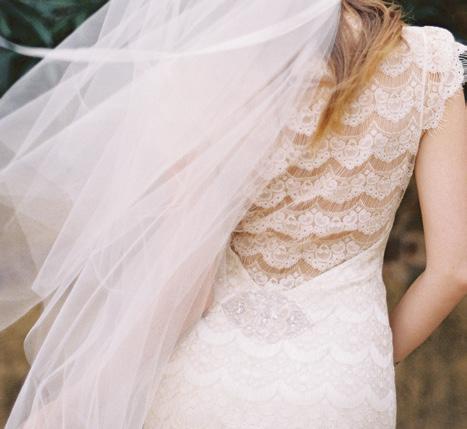
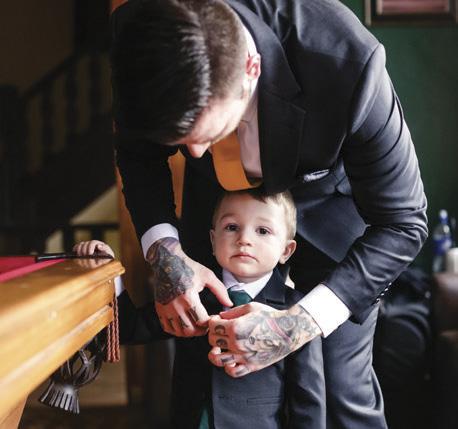
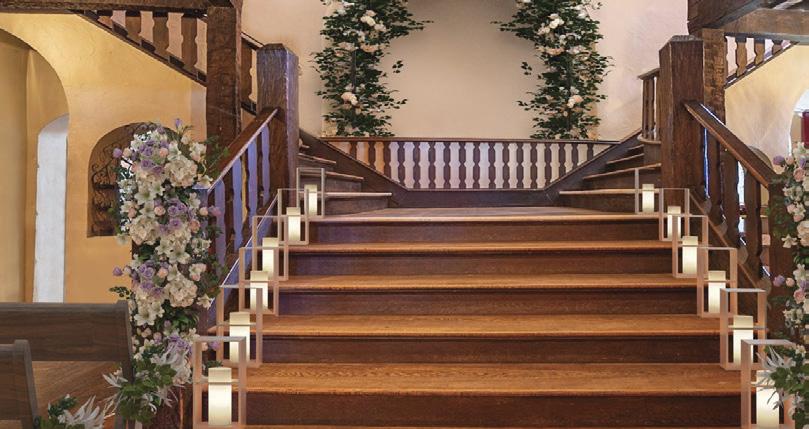
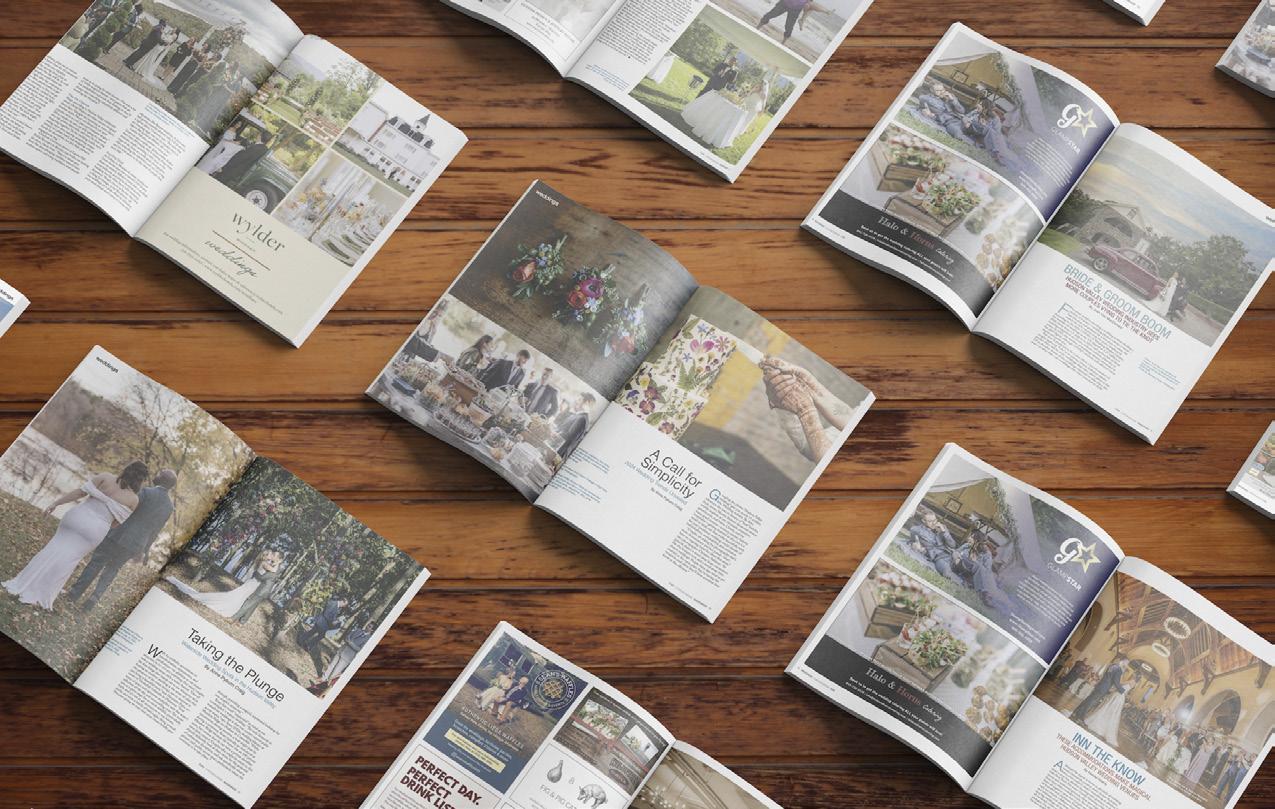
A Woodstock wedding that’s uniquely yours. The Colony exudes the ambiance of a bygone era, offering your wedding a casual elegance unlike anywhere else.
22 Rock City Rd, Woodstock, NY | 845 679 7624 | colonywoodstock.com
43 N FRONT STREET
THURS–TUES: 9AM-6PM
TANNERSVILLE
5932 MAIN STREET
FRI–TUES: 10AM-5PM
KATIE ANELLO
KATIE ANELLO
Midlife Chrysalis
A WEEKEND FARMHOUSE BECOMES A FULL-TIME CATSKILLS VILLA
By Mary Angeles Armstrong
Photos by Winona Barton-Ballentine
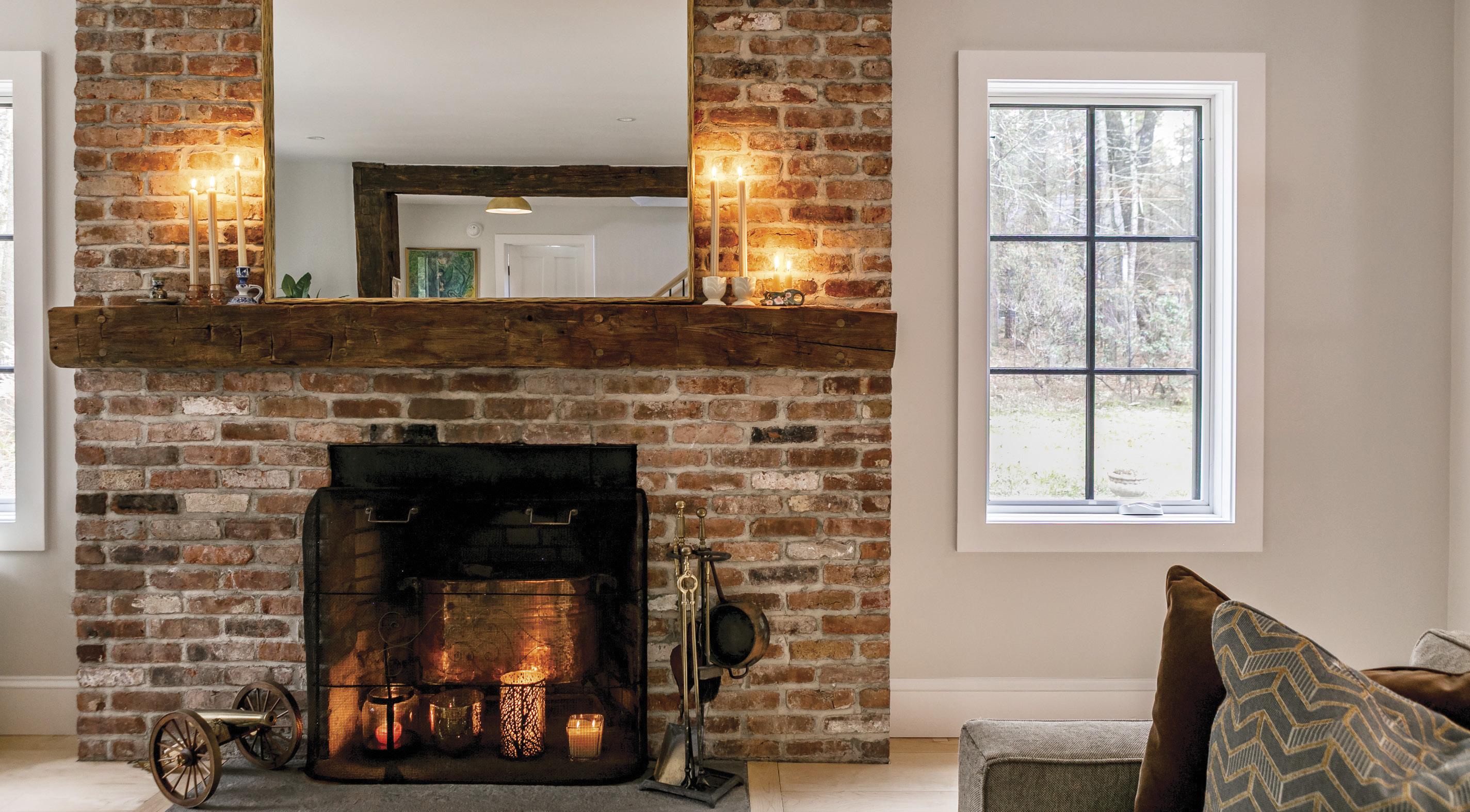
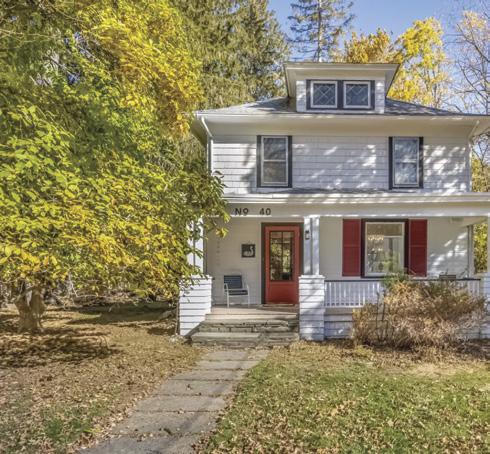
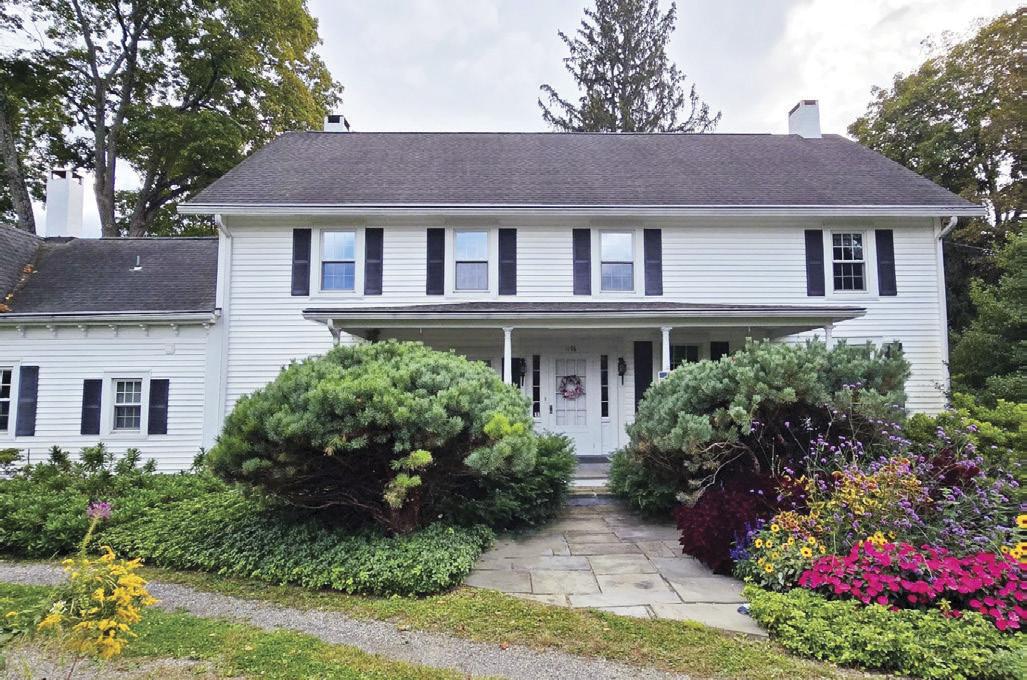
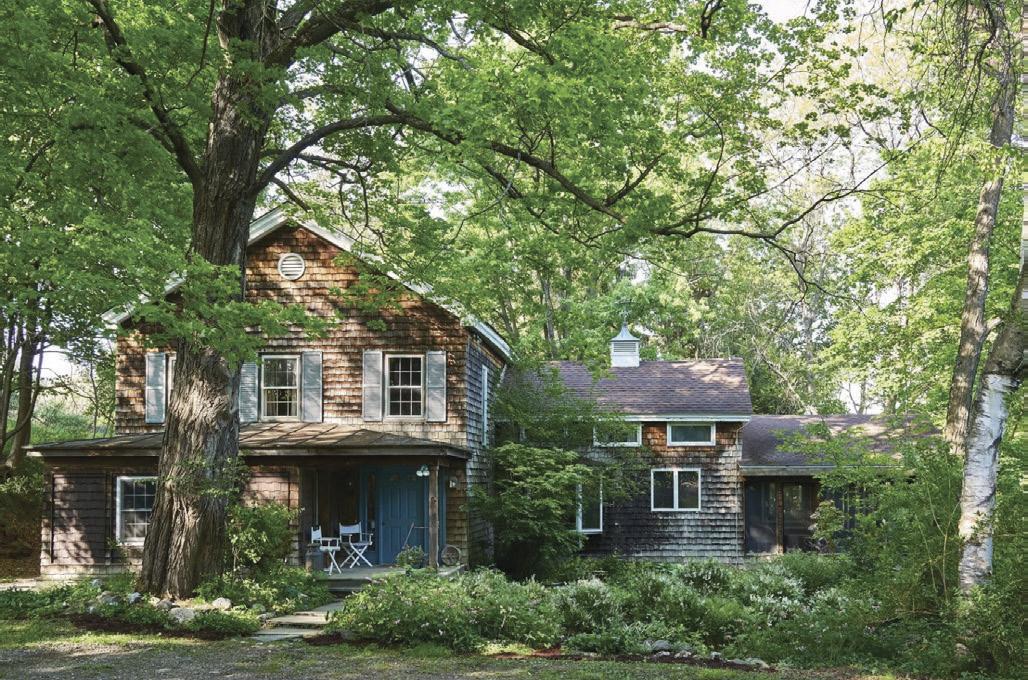
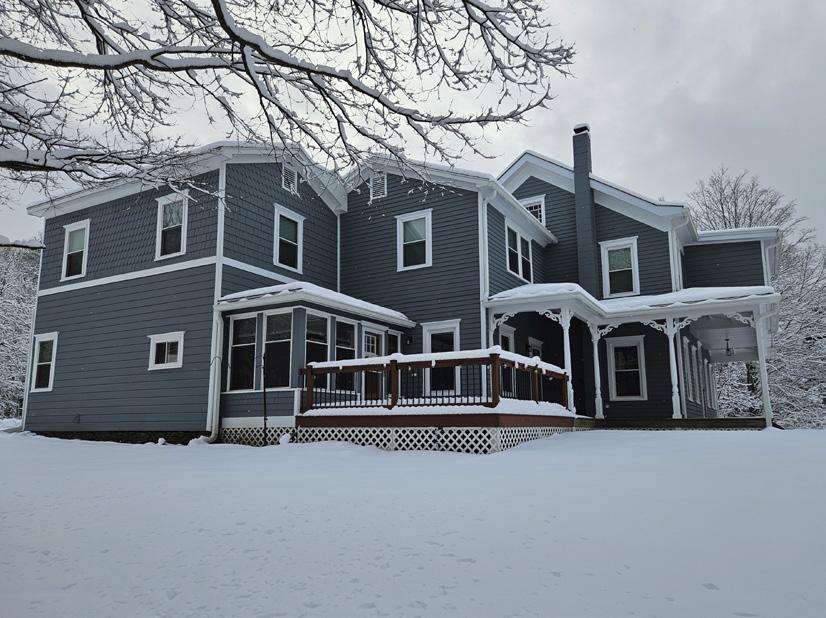
At the turn of the millennium, Audrey Issacs and Michelle Iacolina bought the perfect Catskills retreat. Set on three acres in bucolic Marbletown, the two-story farmhouse was compact—at just under 1,300 square feet, it was big enough for the New York City-based couple to bunk on weekends, but small enough that they wouldn’t waste precious Saturdays or Sundays on home maintenance. “ We bought it just to get outside,” says Issacs, of the base camp from which the two launched countless adventures kayaking, hiking, biking, or snowshoeing. “It was two hours from the city but felt worlds away.” “When we were up here, we were always out doing things,” explains Iacolina. “It was really a place to crash, but not a place to live.” Then the 2020 lockdown hit. The two decided to decamp to the Hudson Valley full-time, where Iacolina, a biologist, pivoted to full-time remote work, and Issacs took a job at Hutton Brickyards. The only problem was the house. “ We realized just how small it actually was,” remembers Issacs. “It was torturous being on top of each other all the time.” The idyllic farmhouse started to feel cramped.
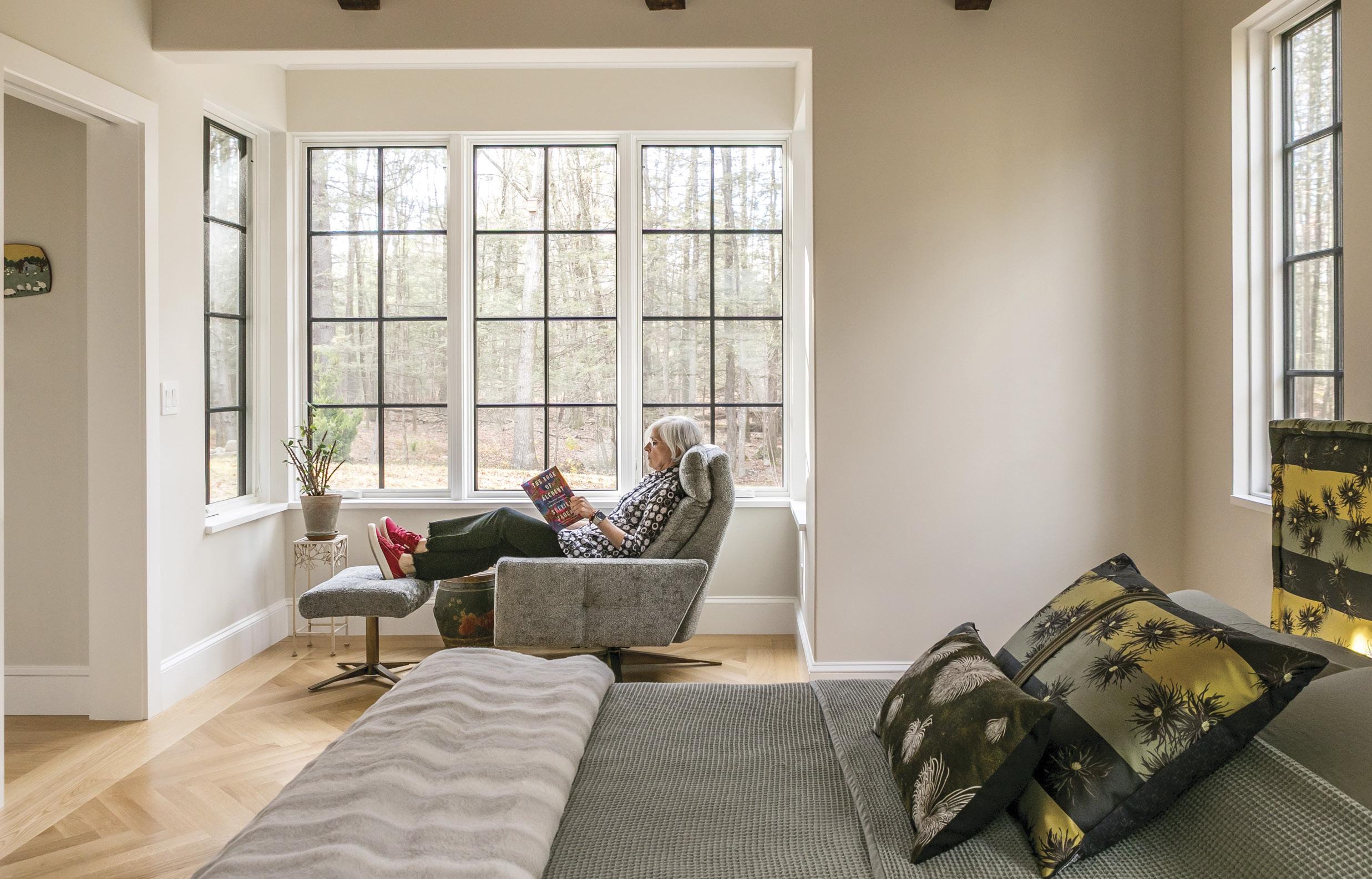
Audrey Issacs enjoying a quiet moment in her bedroom reading nook. When Issacs and her wife, Michelle Iacolina, settled in Marbletown full-time, their compact farmhouse began to feel claustrophobic. Their desire for a bit of extra space quickly turned into a gut renovation that doubled the home’s size. The primary bedroom suite features a nook, ample storage, and a full bathroom, all tucked into the woodlands. “When I wake up and look out these windows—especially this time of year—I feel like I’m in a snow globe with all the leaves falling,” says Issacs.
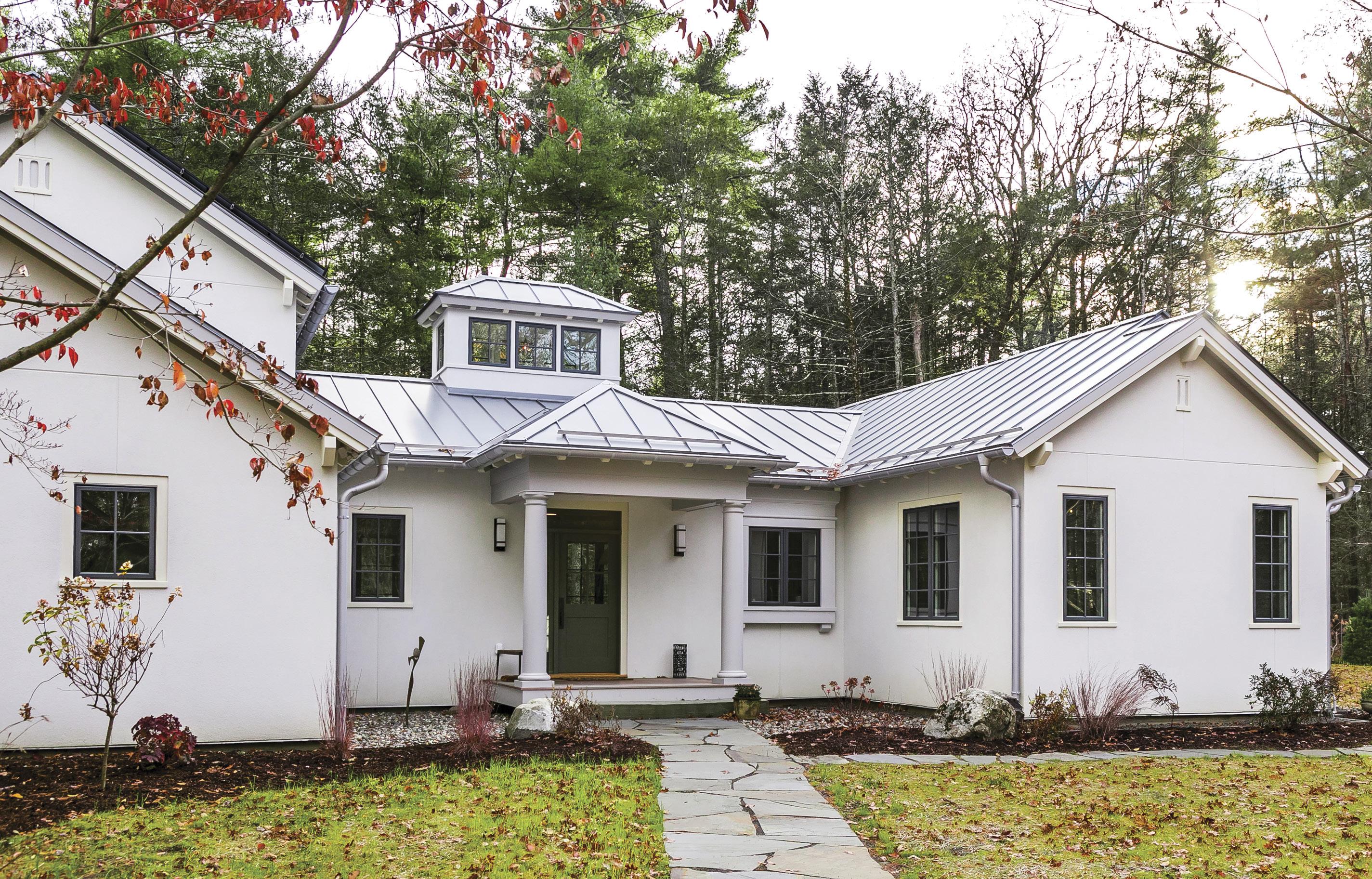
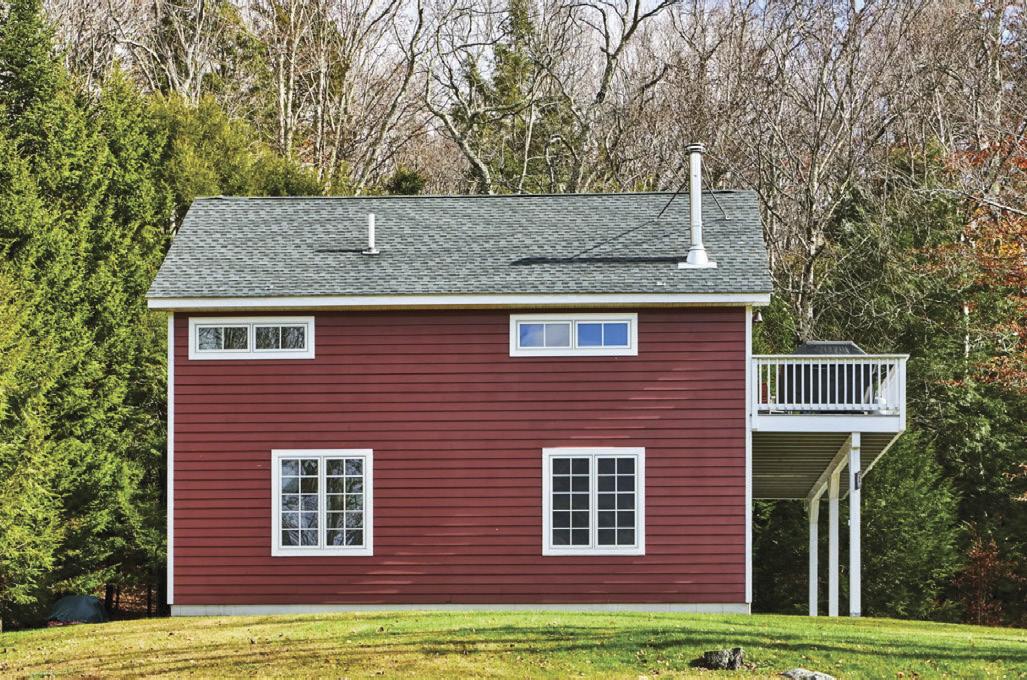
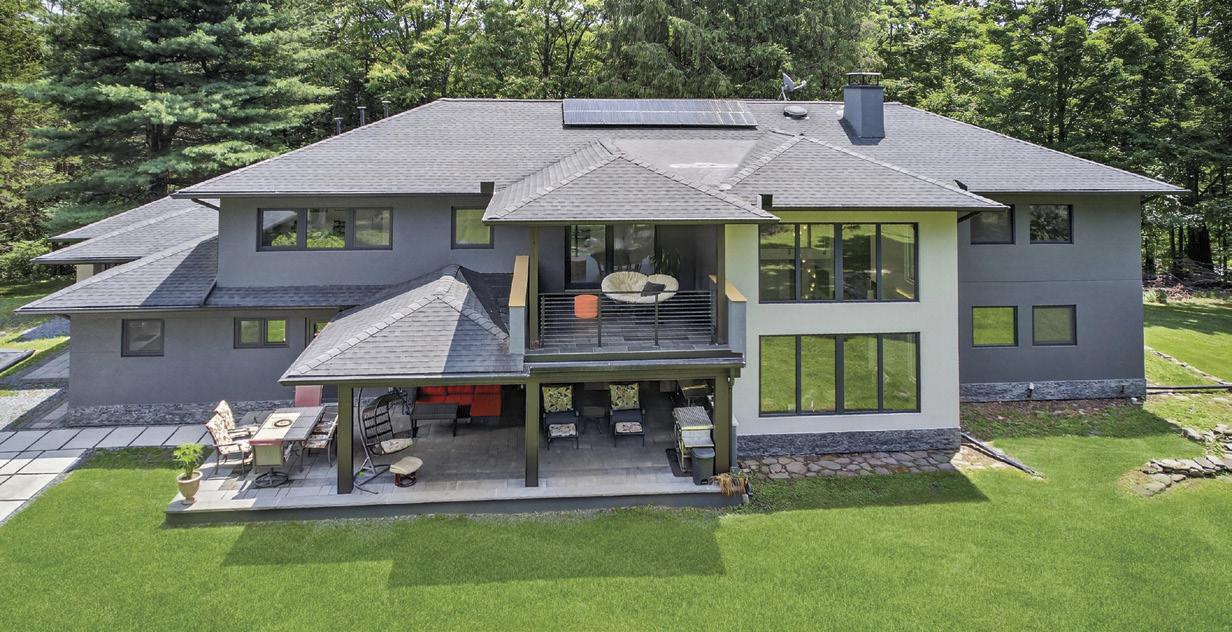
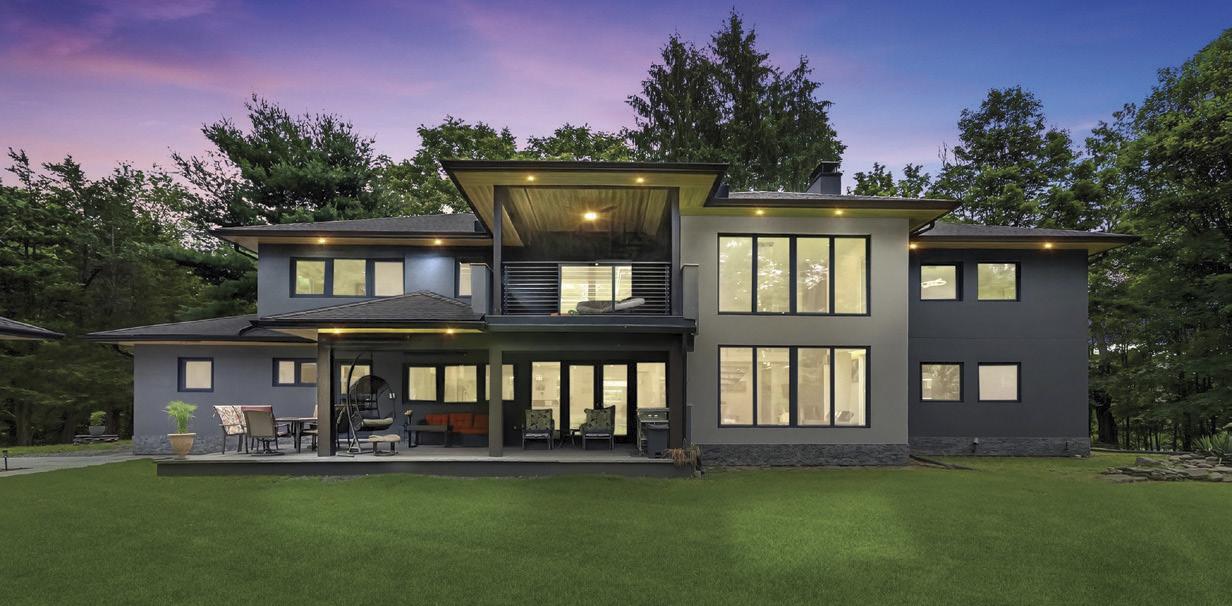
Opposite, top Although the renovation began small, the couple eventually saw it as an opportunity to tailor the redesign to their individual quirks. To expand the home’s footprint, they had to clear encroaching woods and tear the western edge of the house down. After adding insulation to the home’s exterior, they replaced the original clapboard siding with a stucco-like wall cladding engineered for weather resistance. A solar array and heat pumps ensure the couple’s energy costs will remain low over the ensuing decades.
Bottom The couple preserved the home’s original living room, but added new floors and windows. “Our pre-renovation style was warm and homey,” says Issacs. “We didn’t want our home to look like a showroom. Now I’d say it’s cozy-modern, new-mixedwith-old eclectic.”
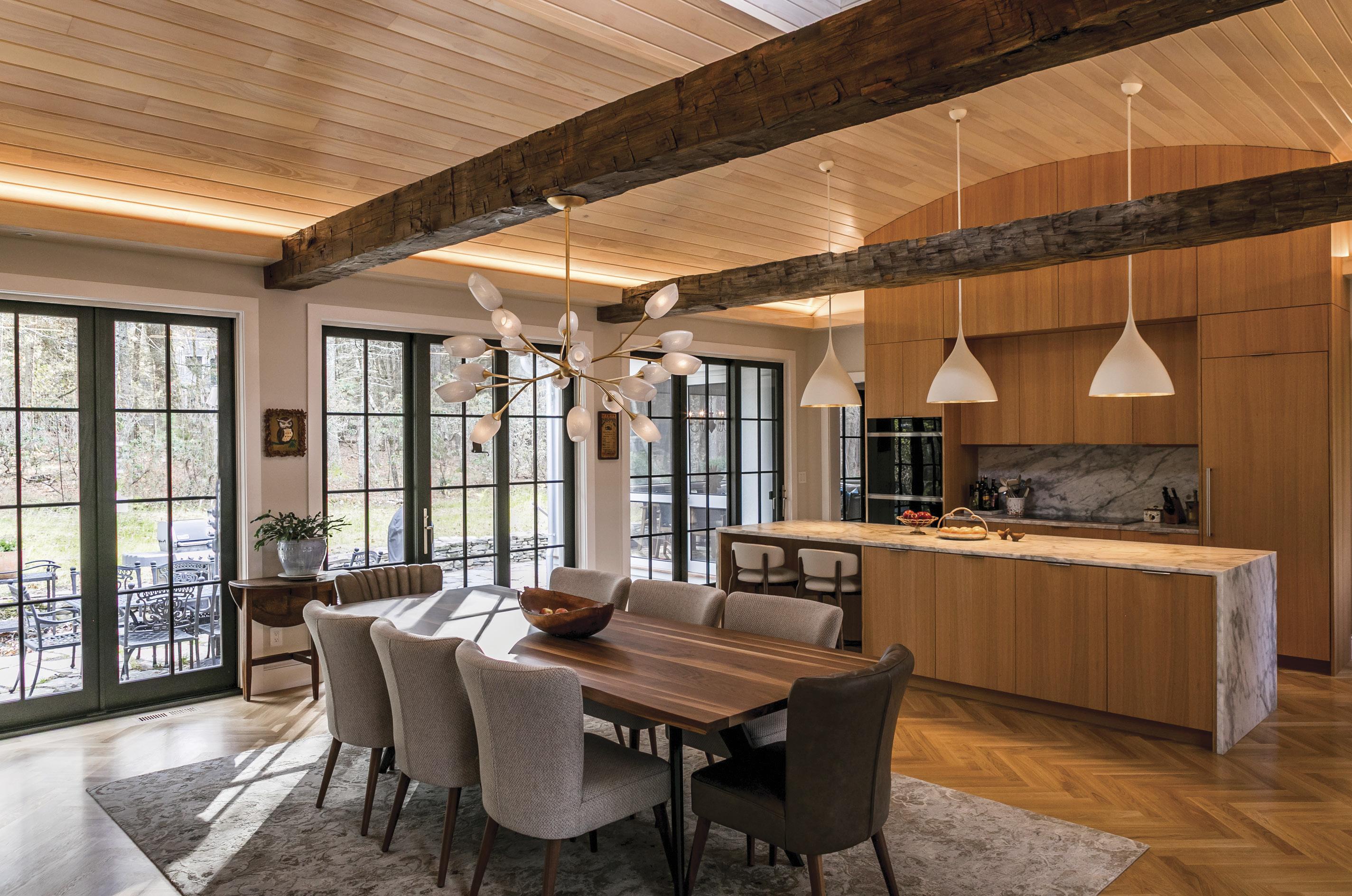
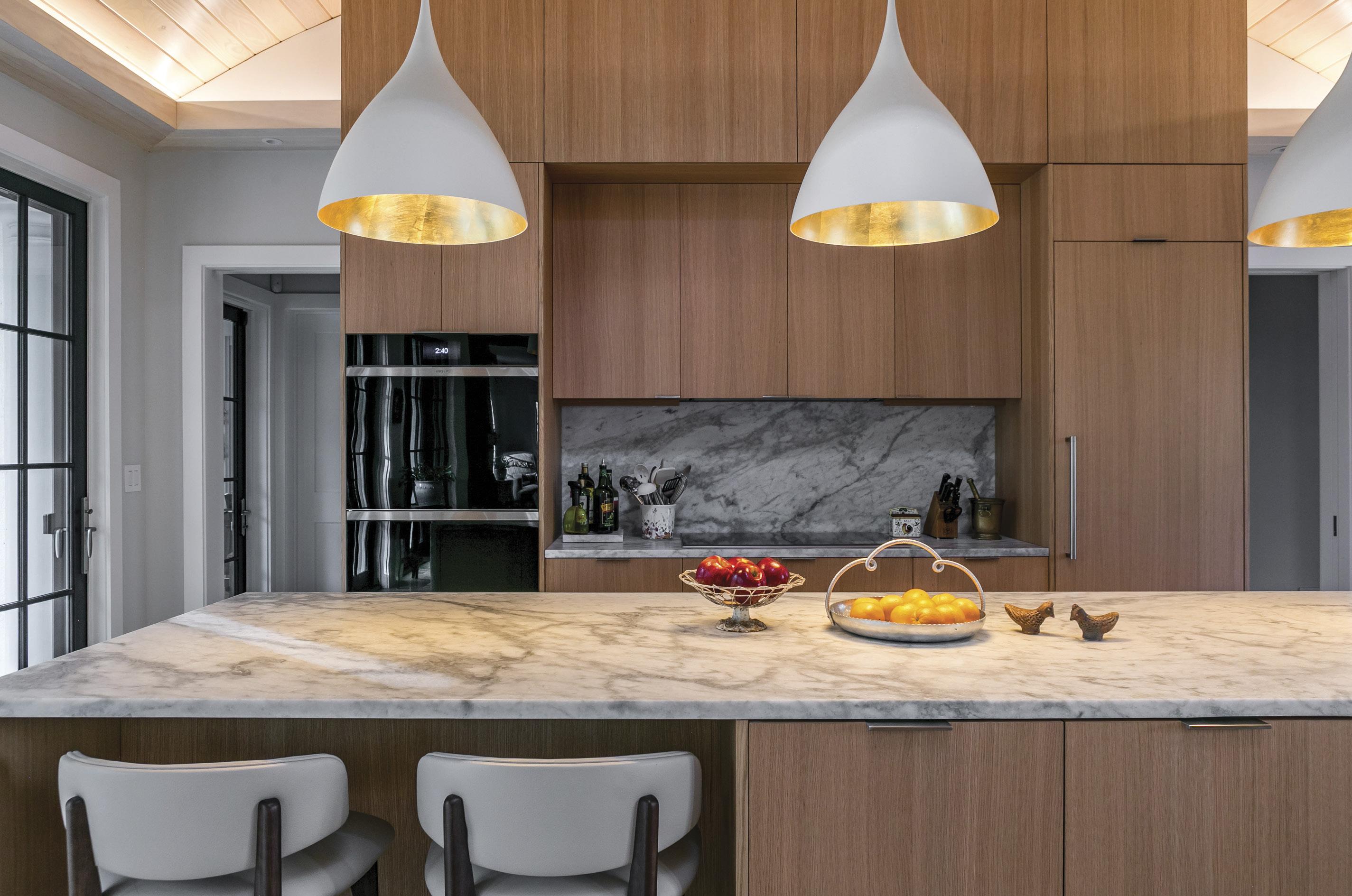
To create cohesion between the original structure and the modern addition, the team expanded the first floor’s exposed beams throughout the new space and matched the wood-plank flooring in both old and new volumes. The couple drew inspiration from the rocky Shawangunk landscape, incorporating wood and stone into the design. “We selected the marble for the island and backsplash because it reminded us of the color and striations of Gunk rock,” says Issacs. “The house is our love letter to living here.”
They began considering an upgrade, looking for a home in the area that was better suited for full-time living or even some buildable land. “Unfortunately, so was everyone else,” explains Issacs. “ We looked at a ton of houses and many plots of land, but we kept getting squeezed out.” One cold afternoon in February, after months of searching, the two realized they ’d been beat. “ We’d gone to see undeveloped land in Sundown on the first day of its showing,” says Issacs. “ While we were slipping on the ice and snow, the realtor ’s phone was already blowing up with offers, sight unseen.” Competing in the hot market wasn’t for them, so Issacs and Iacolina turned their sights back to the farmhouse, wondering if they could adapt the structure for their next phase.
Issacs, who has enjoyed a long career in the field of high-end catering and event planning, admits she’s most comfortable in charge. “ The way my brain works is by always anticipating the next step and asking, ‘ What ’s the contingency plan?’” explains Issacs. “I have a tendency to overthink. I don’t trust the process; I’ve got to be in the middle of it.” The two wondered if their relationship could survive a remodel, and they didn’t want to ruin the charming cottage, enveloped by woodlands and ancient orchards, they ’d grown to love.
Serendipity intervened, encouraging the couple to dream big and take a longer view. With the help of local artisans, Issacs and Iacolina preserved the bones of the original farmhouse while transforming the space into a newly expanded habitat that would shelter them for the next phase of their lives. In the process, they didn’t just renovate a home but put down new roots. In the long process of metamorphosis, Issacs and Iacolina realized they ’d been right at home all along.
One and Done
The couple first approached Stone Ridge-based architect James Lyman Reynolds 15 years earlier when Iacolina wanted to build a screened-in porch. The scope of the project was too small for Reynolds, but when they approached him again in 2023, they had something bigger in mind: an entirely new firstfloor primary suite. Reynolds pushed them even further, suggesting a renovation plan that included knocking down the home’s existing kitchen. They were immediately overwhelmed. “ We’d never said a word about wanting a new kitchen,” remembers Iacolina. “It felt like it was getting out of control very quickly.” Then a conversation with Isaac’s mother changed their minds. “She told us we were being short-
sighted,” recalls Issacs. “ The kitchen was already out of date. How many times did we want to do this?” Their answer was an emphatic, “ just once.” They took a longer view, considering how they wanted to spend the next phase of their lives and what modern amenities and sustainability features would become appealing and even necessary over time.
The 25-Year Plan
Issacs and Iacolina devised what they call their 25year plan. “It became the overarching theme of every decision,” says Issacs. “ We weren’t going to do a major renovation again, and we weren’t ever going to spend money like this. We didn’t want to look back and think, ‘ Why didn’t we do this or that when we had the chance?” The two began to write down everything that had ever bothered them about the home, as well as everything they loved and hated about home design in general. Then they tried to visualize what might become important over the next 25 years. “It was all about use cases,” explains Iacolina. “ What activities did we love and how did we want to utilize the home in the future?”
Together, they came up with a design that wasn’t about curb appeal but rather completely tailored to their lifestyle and quirks. Issacs wanted to add as much
light and as many windows as possible. “I wanted the feeling of nature coming inside,” she explains. “If we could have, we would have built an entirely glass house.” Besides, her long-coveted screened-in porch, Iacolina wanted the home’s new addition to blend with the original farmhouse. “I didn’t want it to look like a tumor grew on the house,” she explains. “I wanted the addition and original home to feel balanced. “ Along with the first-floor primary suite, both wanted to expand the kitchen and dining area for hosting. “ We cook and entertain a lot,” says Issacs. “ We wanted a space that was easy to move and work in.” Both loved the 30-year-old farmhouse’s wood trim and beams, and wanted to preserve and extend that motif into the new construction. “ When entering the house, there was a sense of calm and good energy from the natural finishes,” says Issacs.
Good Hands
Reynolds transformed their wish-list into a highly particular, detail-oriented plan. Then he introduced them to master builder Austin Sweeney, who thrives on the opportunity to solve highly individualized design challenges for clients. Raised in Rosendale and Accord, Sweeney apprenticed with a local carpenter before
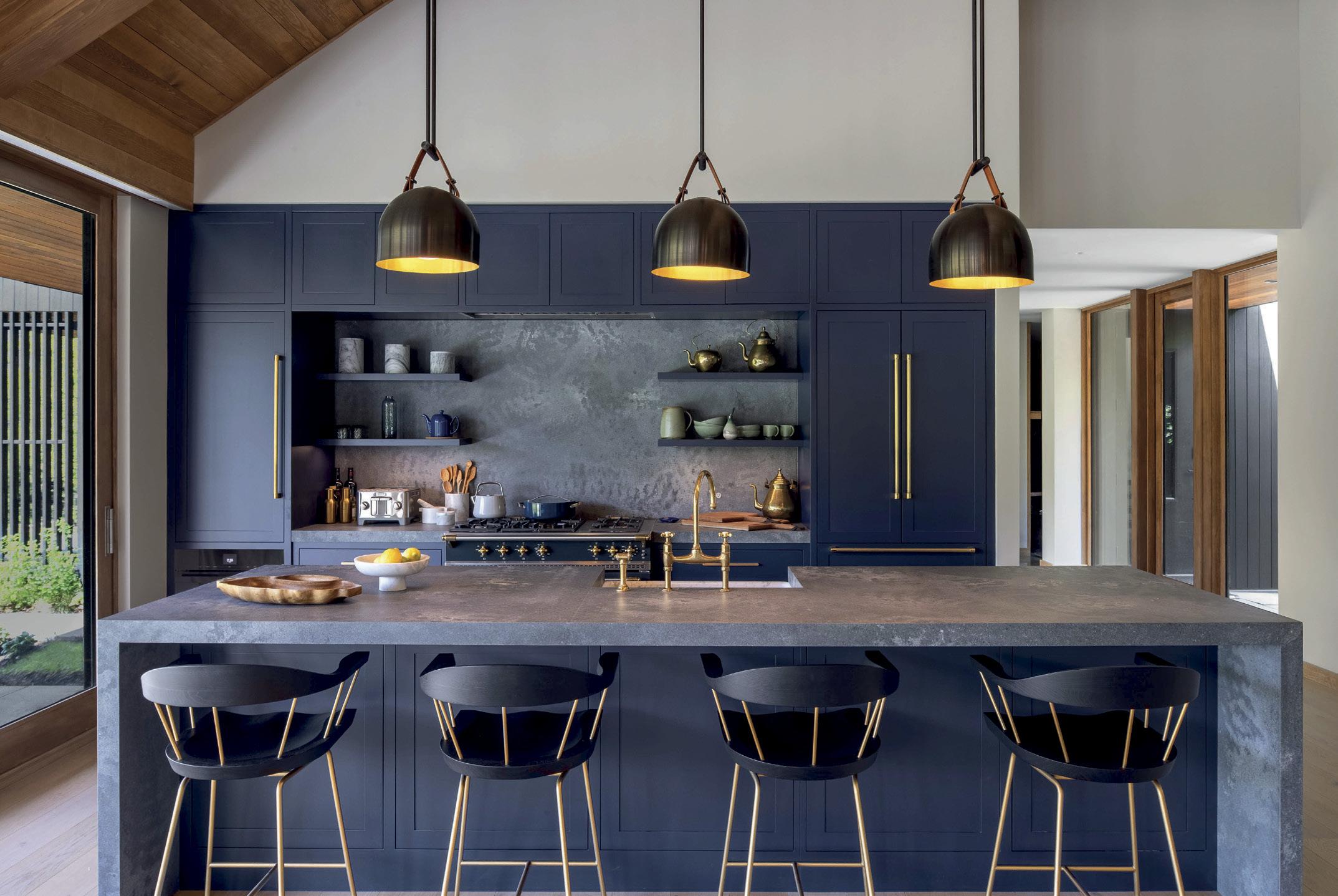
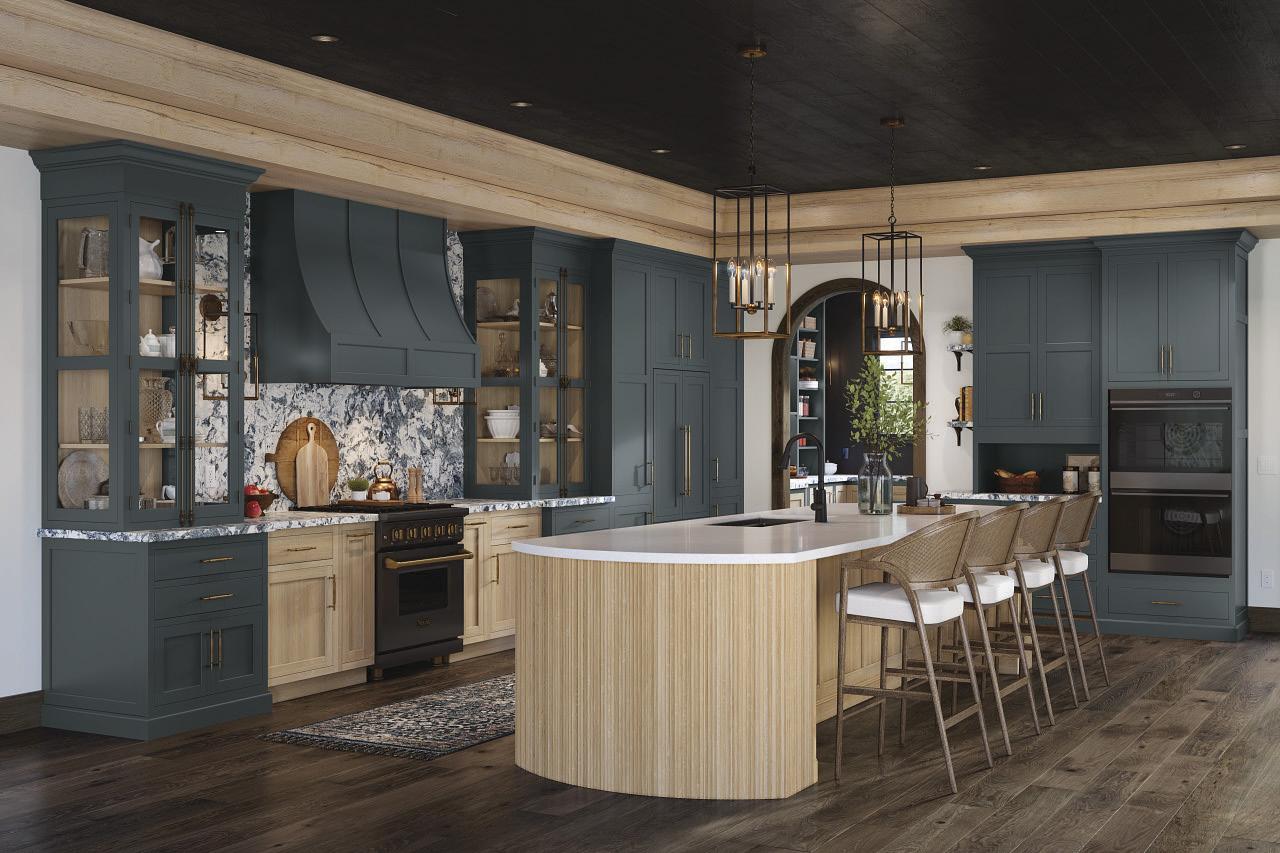
Architect James Reynolds designed the cooktop and range hood to echo a traditional farmhouse hearth. “We loved the inspiration of families cooking their food in a big open fireplace,” says Iacolina. “So we decided to have the cabinetry appear to go to the ceiling as if it were a chimney.” The couple loves the open, expanded kitchen space. “We cook and entertain a lot— the flow is a subconscious joy,” says Issacs.
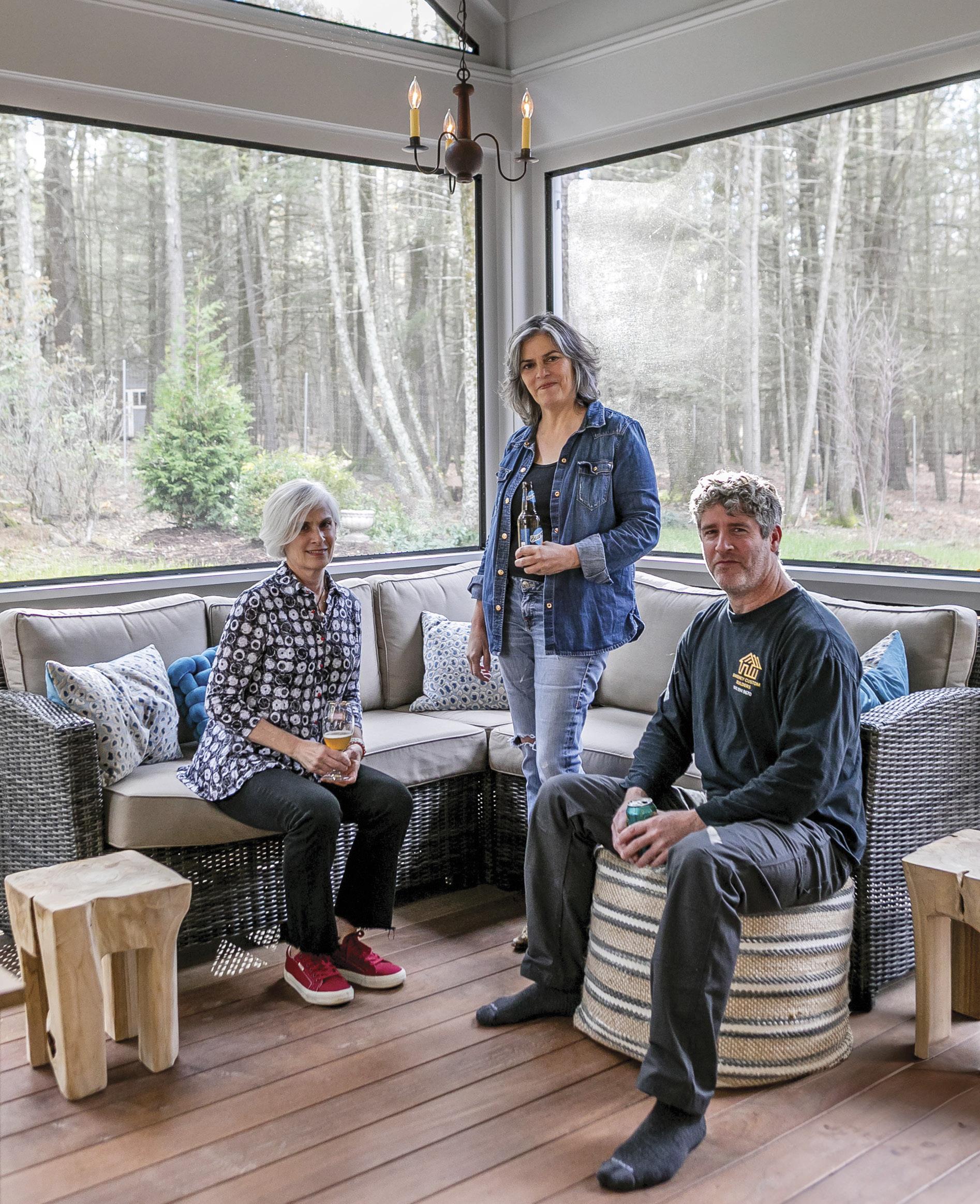
and Iacolina are enjoying their new screened-in porch with builder Austin Sweeney. Issacs and Iacolina were apprehensive about taking on such a large project and loved their original house. However, after the total overhaul, they were delighted with the results. “Architect James Reynolds came up with a detailed plan and Austin executed it so well,” says Iacolina. “Austin is a magician.”
Issacs
starting Sweeney Custom Builders in 2007. The scope of the project—and the couple’s now-or-never approach— didn’t intimidate him. We take on a lot of custom work where skill and patience are a necessity,” says Sweeney. “Problems come up with every project. Issues arise, and I have to come up with sound solutions—sometimes on the fly—but that ’s something I think I’m pretty good at.”
“ The minute we met Austin, we felt, yeah—he’s terrific,” remembers Iacolina. “Every time we went to fill out a new permit or drop off paperwork in town, people would tell us, ‘ You’re in such good hands with Austin. Everything is going to be fine.’ He has such a great reputation that we felt better.” With their plan in place, they began construction in June of 2023.
A Seamless Transition
To expand the home while maintaining symmetry, Reynolds designed an addition that almost mirrors the original farmhouse, effectively doubling the space. The home’s new primary bedroom suite, which features cathedral ceilings peaked to mimic the original structure’s second floor, sprawls across the new addition and includes a west-facing bedroom, a reading nook, and a walk-in closet.
After finding a slab of Cristallo Fire quartzite in a local stone yard, the two decided to incorporate it into
their primary bathroom. “ We loved the pink colors in the stone,” explains Issacs. “It reminded us of wildflowers.” After conducting intensive research, Sweeney devised a way to backlight the stone with LED lights, which they incorporated as the back wall of their shower.
Connecting the new addition with the original farmhouse, the open-concept kitchen and dining area is finished with local stone. Above, a cupola infuses the space with light. The curved wood-trimmed ceiling required particular attention to detail. “ Trying to figure out the best way to transition the wood ceiling into the cupola space took a lot of planning,” explains Sweeney. He concealed engineering components and steel tension rods behind the antique exposed beams, which were added to match the original interior. “Finding clever ways to hide structural components is part of the fun of building,” he says. Out back, Iacolina finally got her screened-in porch. Overlooking the woods and a new patio, the outdoor room features cathedral ceilings and exposed wooden beams that carry forward architectural details from the interior design. Like the rest of the house, the porch was worth waiting for. “ We loved our house, but we were willing to walk away because it was too small,” says Issacs. “Then we did what we needed to love it even more. The end of this story is: There’s no place like home.”
Throughout the re-design, no personal detail or quirk—from the shiplapping on the ceilings to hiding the electrical outlets— was left unattended. After finding an eight-by-four-foot slab of Cristallo Fire quartzite, the couple asked Sweeney to incorporate the stone into their shower design. Sweeney added the slab to the shower and backlit the stone with 32 LED lights. The effect is stunning. “There are aspects of this build that stand out in my mind: the shiplapped ceiling, the antique beams, and the porch,” says Sweeney. “Last, but certainly not least, was using the stone as the rear wall of the shower. The stone glows, especially at night. It looks like a giant night light.”
HOLIDAY SHOPPING GUIDE
With so many independent creators and curators across the Hudson Valley, Catskills, and Berkshires, it’s never been easier to buy bespoke. From locally sourced herbal remedies to fine jewelry, gourmet provisions, well-designed decor, and more, here’s a roundup of thoughtful holiday gifts that are sure to surprise and delight.
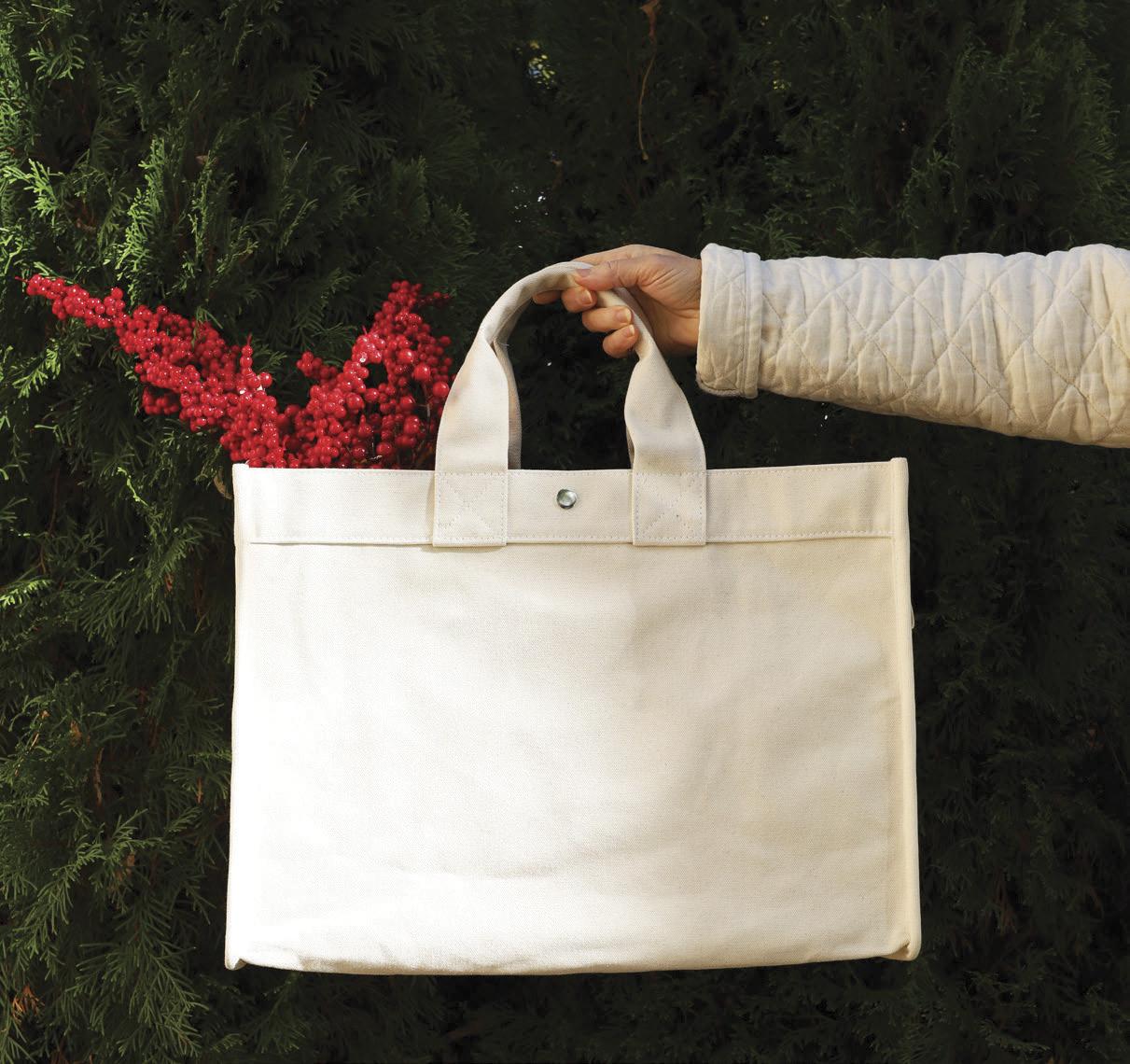
Gift a year of outdoor experiences with an annual membership to Mohonk Preserve. Members have access to their six trailheads throughout the Shawangunk Ridge. In addition to a year of walks, adventures, and memories for the recipient, support conservation, education and stewardship efforts that make the Preserve what it is. While supplies last, receive a limited-edition tote with all gift memberships. Visit mohonkpreserve.org for more information!
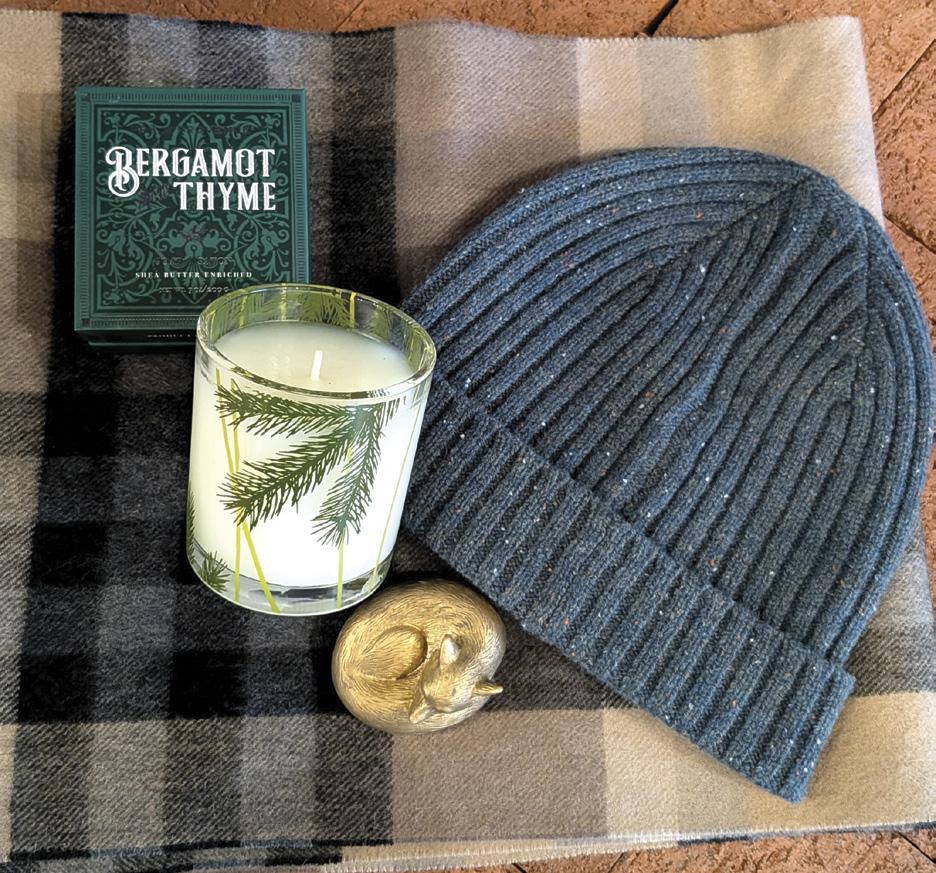
Road to Nowhere Clothing
270 Fair Street Kingston; Roadtonowhereclothing.com
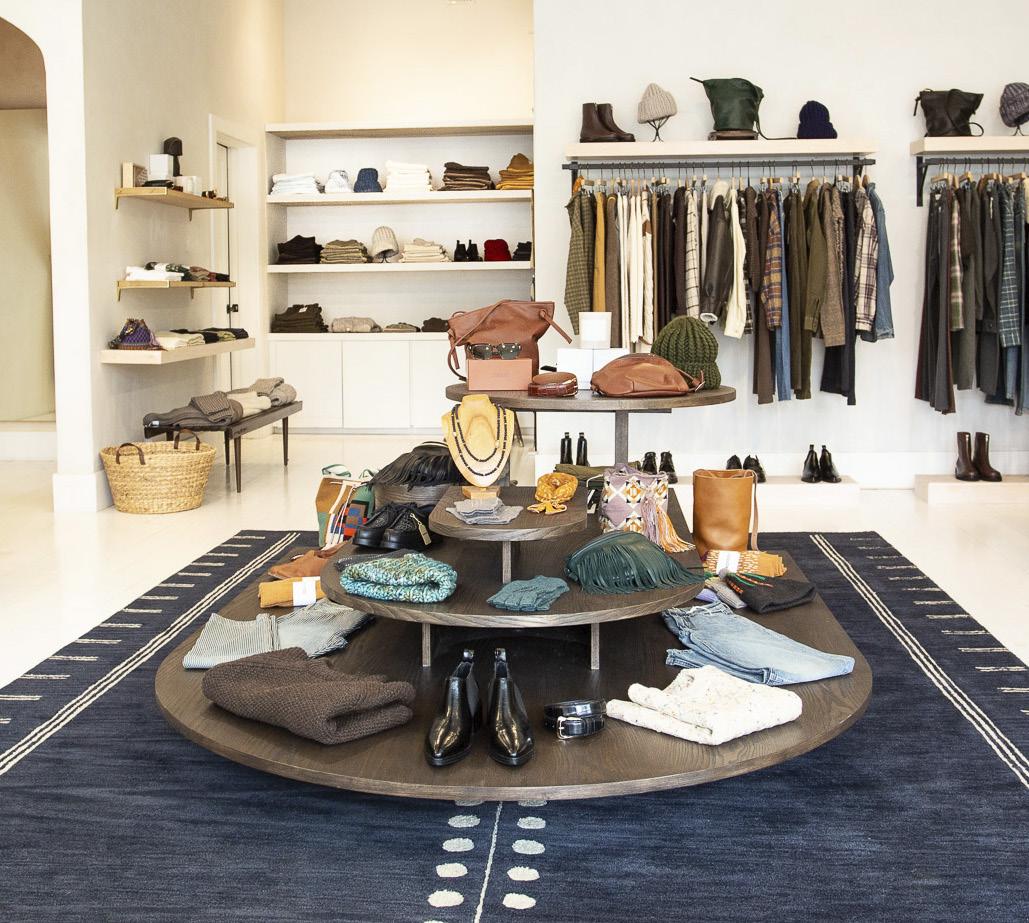
In the heart of Uptown Kingston, Road to Nowhere offers timeless, travel-inspired clothing for men and women. Each piece is crafted from natural, sustainable fabrics and designed for everyday adventure—moving easily from weekday to weekend, city to countryside. With cozy knits, elevated basics, and beautifully made wardrobe staples, the shop embodies effortless style and thoughtful design—an ideal stop for distinctive, wellcrafted gifts this holiday season
Photo by Volunteer Photographer June Archer
Clubhouse Vintage
416 Main Street, Rosendale NY; (845) 244-0243
Clubhousevintageny.com
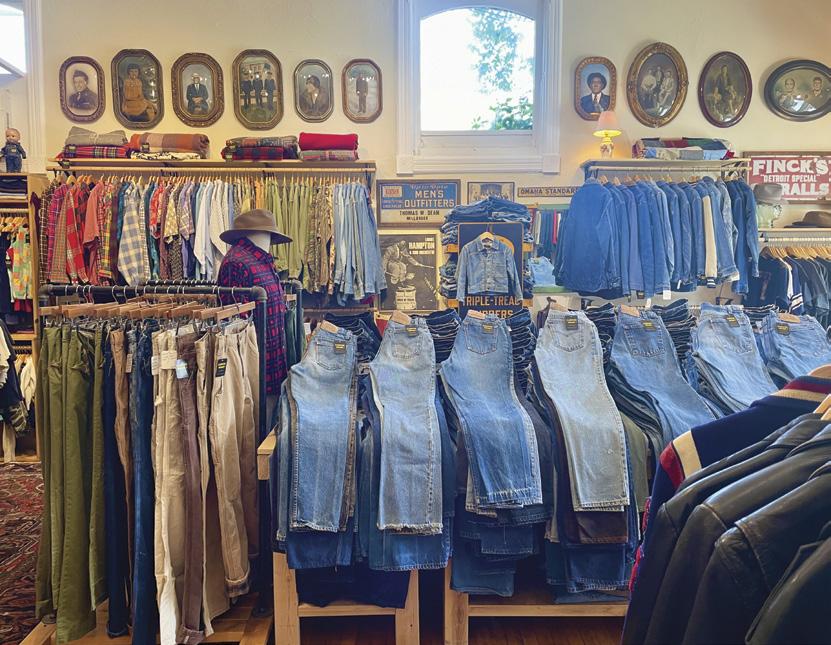
Clubhouse Vintage offers a lovingly curated collection of vintage Americana clothing for people of all ages and sizes. The shop in Rosendale stocks a constantly evolving selection of vintage denim, tees, workwear, kidswear, outerwear, military, dresses, accessories, and footwear. With over 500 pairs of vintage jeans in store, Clubhouse offers the largest selection of vintage USA-made Levi’s in the Hudson Valley. Gift certificates are available —perfect for any vintage lover. See more on Instagram @clubhouse_vintage_ny.
Lightfoot Woods
@lightfoot_woods, Lightfootwoods.com
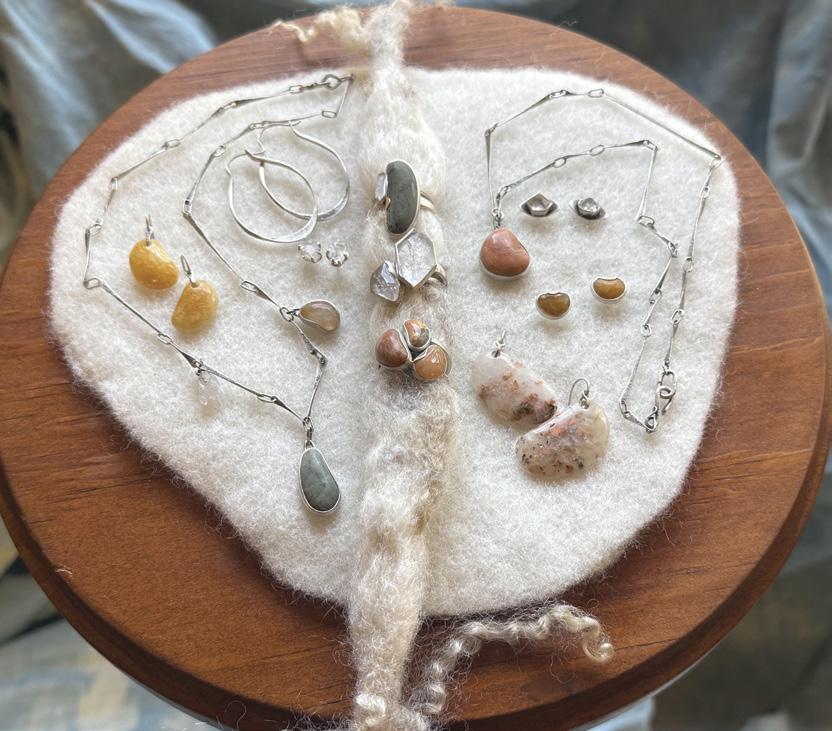
Along the edge of beloved waterways, Caitlin Lightfoot gathers stones that speak. They tell her about glaciers dissolving into dreams, rivers keeping every secret. From their stories, she coaxes jewelry—small monuments of recycled metal and reverence. Each piece vibrates with a quiet invitation of belonging on this spinning earth.
Discover Lightfoot Woods online, at her studio in The Chocolate Factory by appointment, or at VERSE at 35 W Market St in Red Hook. The earth keeps its quiet treasures, just waiting to be noticed.
Adel Chefridi Fine Jewelry
47 East Market Street, Rhinebeck; Chefridi.com; @adelchefridi
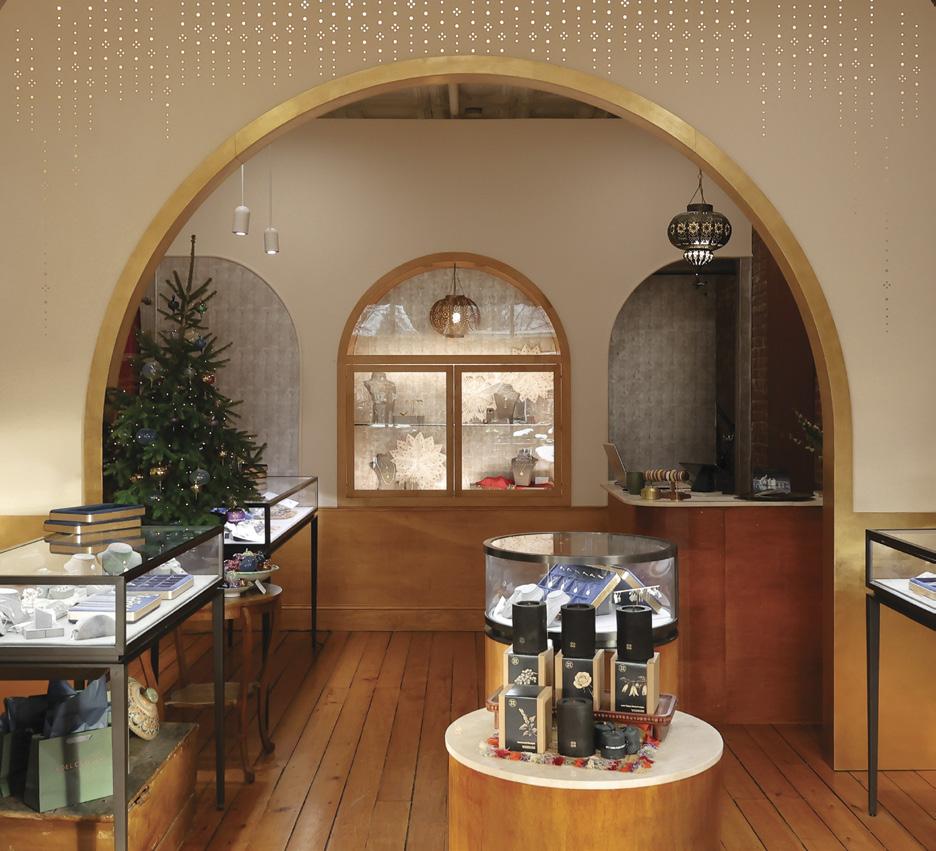
Nestled in a historic building in the heart of Rhinebeck, Adel Chefridi Fine Jewelry has become a destination for those seeking gifts that carry meaning and artistry. Designer Adel Chefridi approaches jewelry as a vehicle for connection and emotional resonance, making it the perfect gift for the holiday season.
Their collection offers a wide variety for every budget, from wearable everyday designs to one-of-a-kind engagement rings featuring hand-selected diamonds and gemstones. Every piece is carefully handcrafted, blending traditional techniques with modern aesthetics, making each gift not only beautiful but an enduring heirloom.
Voted “Best Jewelry Store” by Chronogram readers two years in a row, the Rhinebeck Flagship gallery, which also houses The Adel Chefridi Design Studio, invites visitors into a warm, welcoming space. Guests can expect concierge-level service from a team of expert jewelers and jewelry professionals.
This year, Adel Chefridi celebrated 25 years of their design studio. Their original designs remain a favorite among Hudson Valley locals and visitors alike. Many collectors make shopping at Adel Chefridi a yearly holiday tradition.
Visit their Flagship Gallery in Rhinebeck, shop online at Chefridi.com, or from 100 stockists nationwide.
Eleish Van Breems Home
11 Main Street, New Preston, CT
Additional locations in Westport, Roxbury, and Nantucket @eleishvanbreems
Evbantiques.com
Childhood friends Rhonda Eleish and Edie van Breems founded Eleish van Breems as a fine antiques gallery in Woodbury, Connecticut in 1997. The duo’s fresh take on Gustavian formal and country Swedish folk antiques mixed with the latest accessories from Scandinavia quickly became a go-to resource, earning them an international following and resulting in two best-selling design books.
For almost 30 years, their mission has been to bring good design to everyone, with a focus on a clean, elegant, and fresh approach to interiors—all with a Scandinavian influence. Their storefront in New Preston is a sophisticated-yet-whimsical shop filled with many beautiful designs for the home including antiques, furniture, porcelain, pottery, textiles, giftable items, and beyond. All items are sourced from small international and domestic companies and artists whose work resonates with the Eleish Van Breems brand in terms of quality and design.
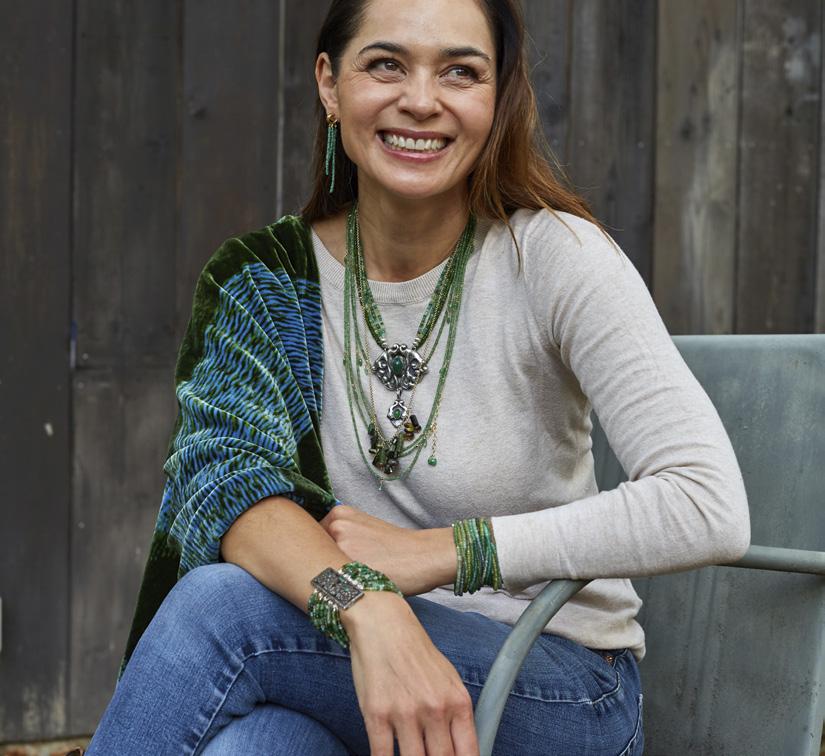
Elizaville, NY (518) 537-6799 Teecetorre.com
Teece Torre crafts original, one-of-a-kind jewelry that blends timeless elegance with modern edge. Each piece is composed with an eye for gemstone, color, and quality—bracelets and necklaces that feel personal, sculptural, and effortlessly chic. Whether it is a custom piece, repurposed estate jewelry, or curated vintage, Teece Torre offers wearable art for collectors who value originality, personal service, and quiet luxury.
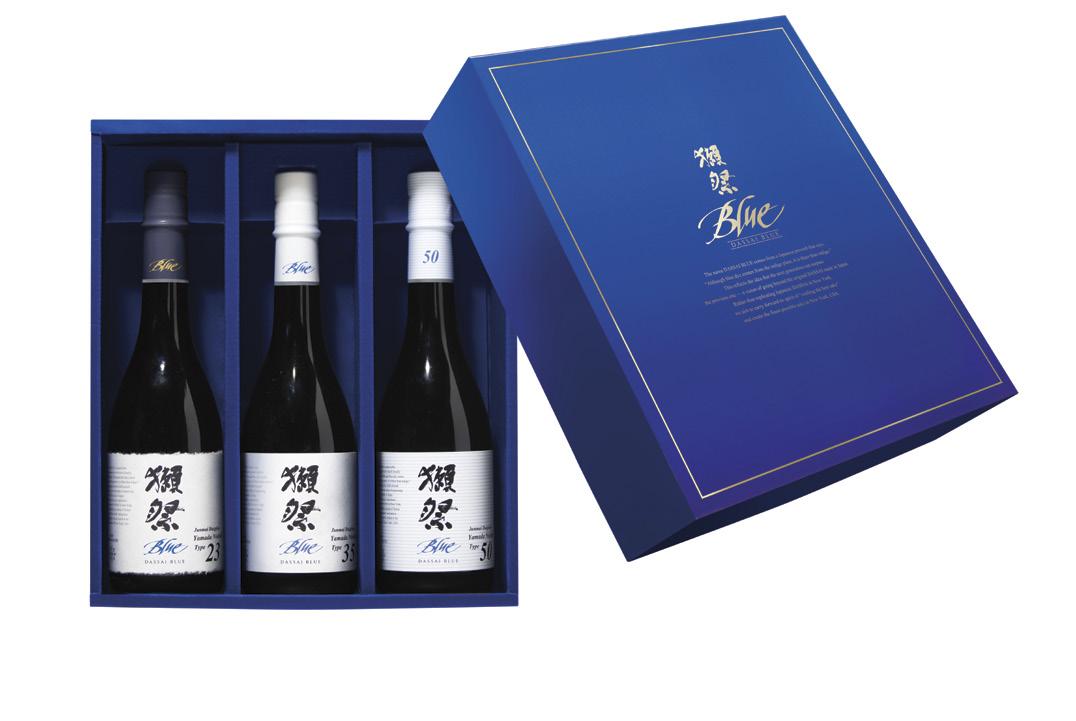
5 St Andrews Road, Hyde Park; Dassai-blue.com
This beautifully packaged set includes three premium sakes, Type 23, Type 35, and Type 50, all handcrafted in the Hudson Valley! Type 50 offers a full-bodied and sweeter profile, while Type 23 presents a delicate taste and dry finish. Packaged in a special box, it’s the perfect gift for both curious beginners and sake lovers. Free shipping with orders over $90 using this code on Dassai-blue.com: GIFTLIST
Teece Torre
Dassai Blue Sake Brewery
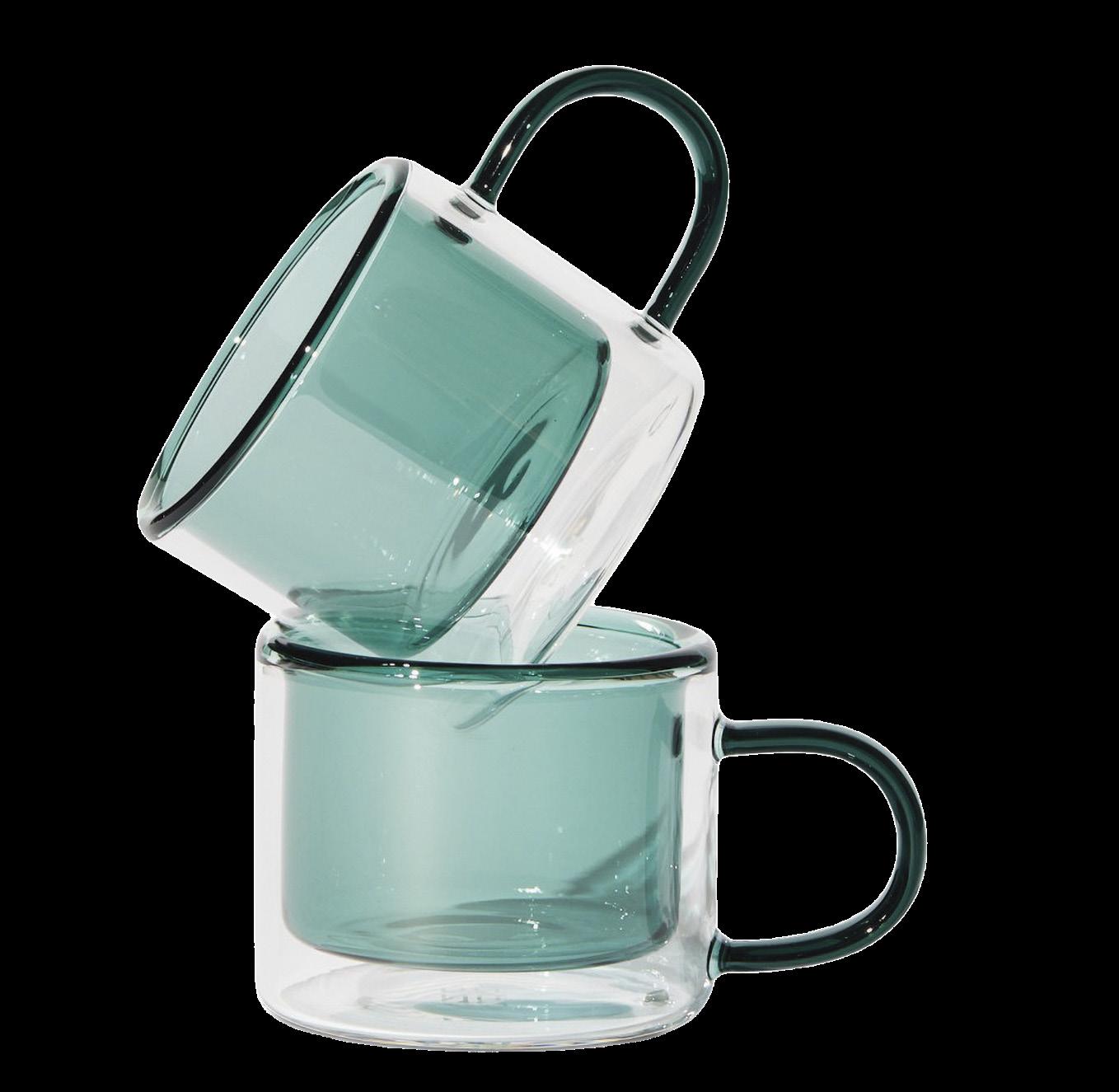
Shorty Espresso Cups, Set of 2 shown in Teal, $70 (also available in Amber, Green, Pink, and Blue)
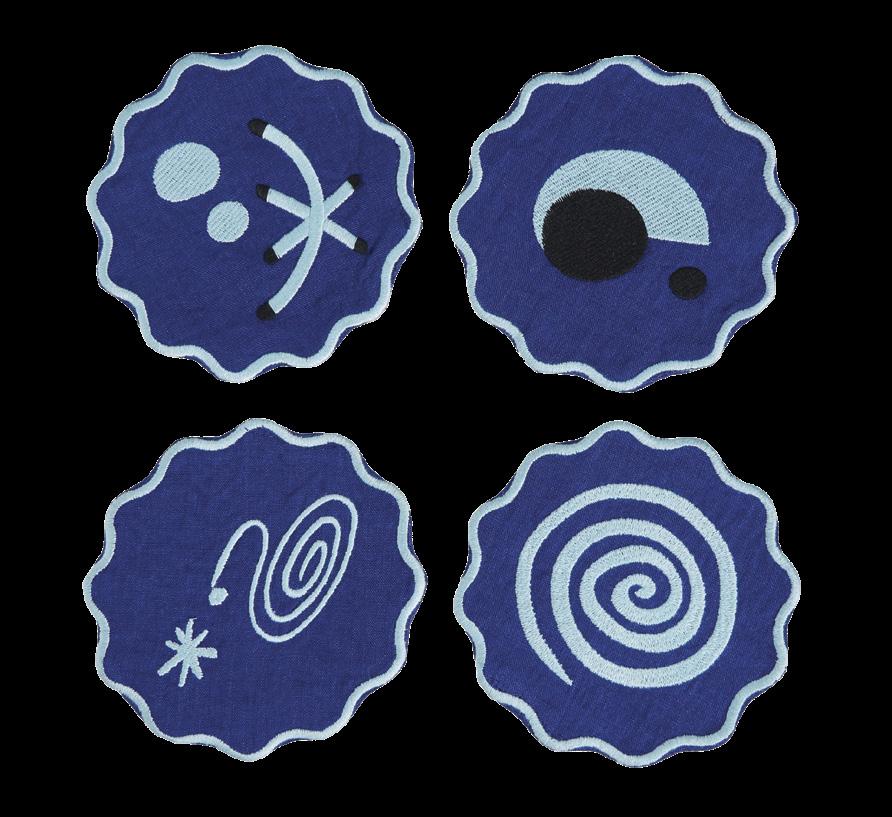
Celestial Embroidered Linen Coasters in Blue, Set of 4, $160
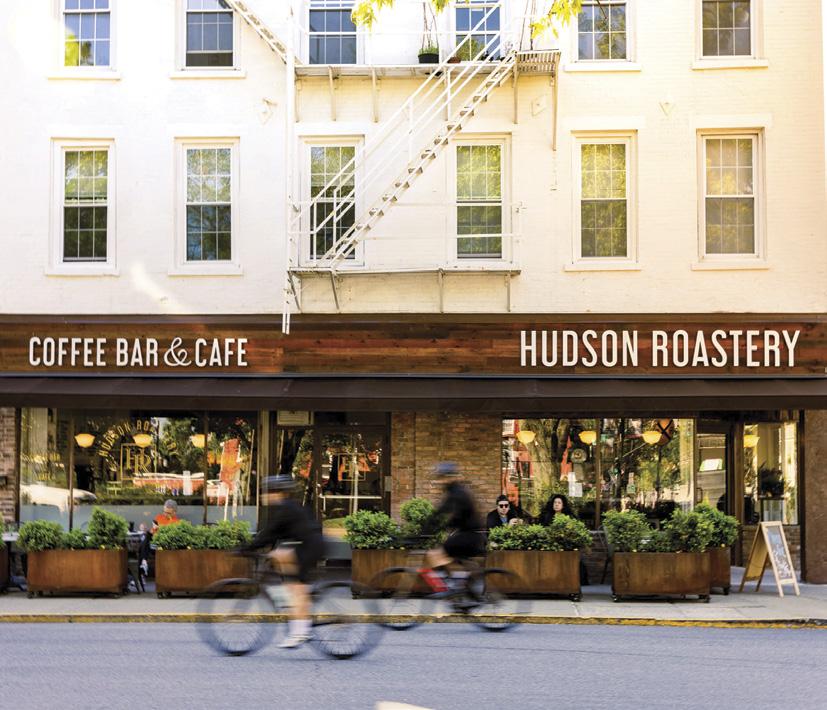
Hudson Roastery Café and Coffee Bar
4 Park Place, Hudson (518) 697-5633 Hudsonroastery.com
Hudson Roastery Café and Coffee Bar has become a destination where locals and visitors gather for conversation, freshly roasted coffee beverages, daily baked goods, and a chef-inspired breakfast and lunch menu.
This holiday season, the perfect gift awaits at Hudson Roastery—whether it’s a gift card or a Coffee Experience and Tasting purchased through their website. The experience includes a live coffee roasting demonstration, a guided tasting, and light snacks. Coffee beans are also sold by the bag— choose from nine different varieties. Open 7 days a week: weekdays 7am–3pm, weekends 7am–5pm.
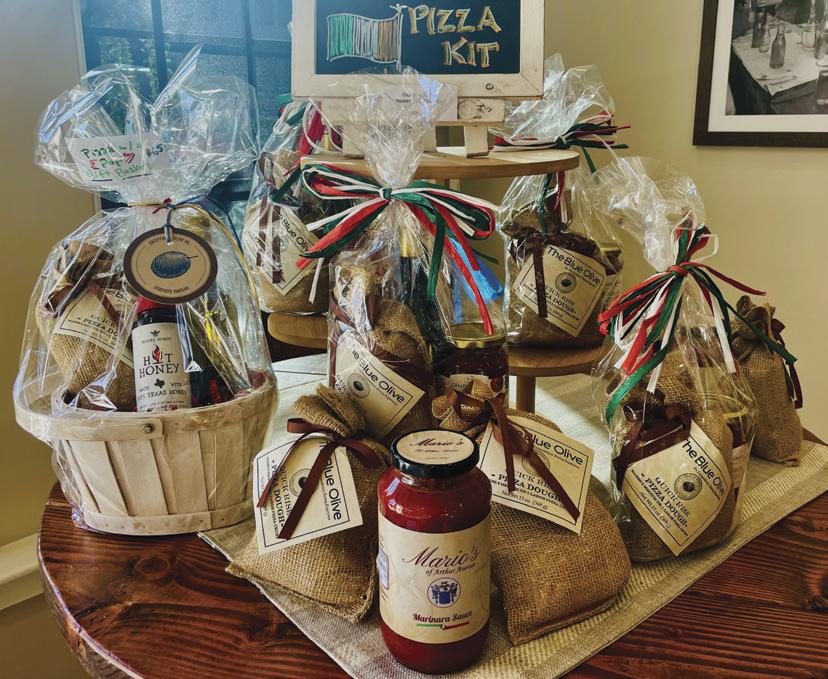
The Blue Olive Shop
26 Charles Colman Boulevard, Pawling; 125 Main Street, Cold Spring; 24 Eastdale Avenue South, at Eastdale Village, Poughkeepsie Theblueoliveshop.com
The Blue Olive Shop is a family-owned olive oil and vinegar tasting room and gourmet store featuring numerous infused and varietal extra virgin olive oils, traditional and infused balsamic and specialty vinegars, bread and cake mixes, pizza kits, local jams and spices, sea salts, pastas, Italian sauces and risotto, olives, tapenades, olive oil soaps made in house, and much more.
Emerson Resort & Spa
5340 Route 28, Mt Tremper; Emersonresort.com
It’s not often that shopping itself feels like a holiday all on its own. Housed in a beautifully restored 19th-century dairy barn, The Shops at Emerson offers an atmosphere that’s as magical as the holiday season itself. From exposed beams to the gentle clinking of the drylaid brick floor to a grain silo that’s been transformed into the World’s Largest Kaleidoscope, shopping here is a one-of-a-kind experience for the senses.
Explore a curated mix of boutiques featuring home decor, designer apparel, kitchen gadgets, bath and body products, games, puzzles, gifts for pets, baby gear, and plush toys. Looking for local products? Find keepsakes, gourmet foods, books, Catskills hoodies, art, and more.
With easy parking, indoor shops, and a scenic setting, shoppers can relax, browse, and find something special for everyone on their list. Holiday shopping doesn’t have to feel rushed and chaotic. At The Shops at Emerson, it feels like part of the celebration.
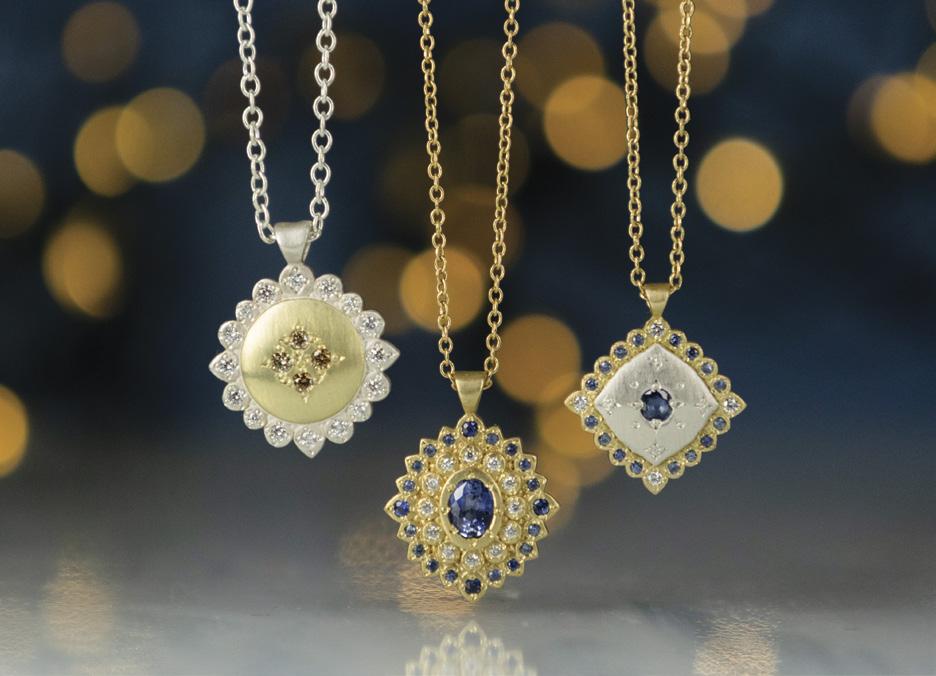
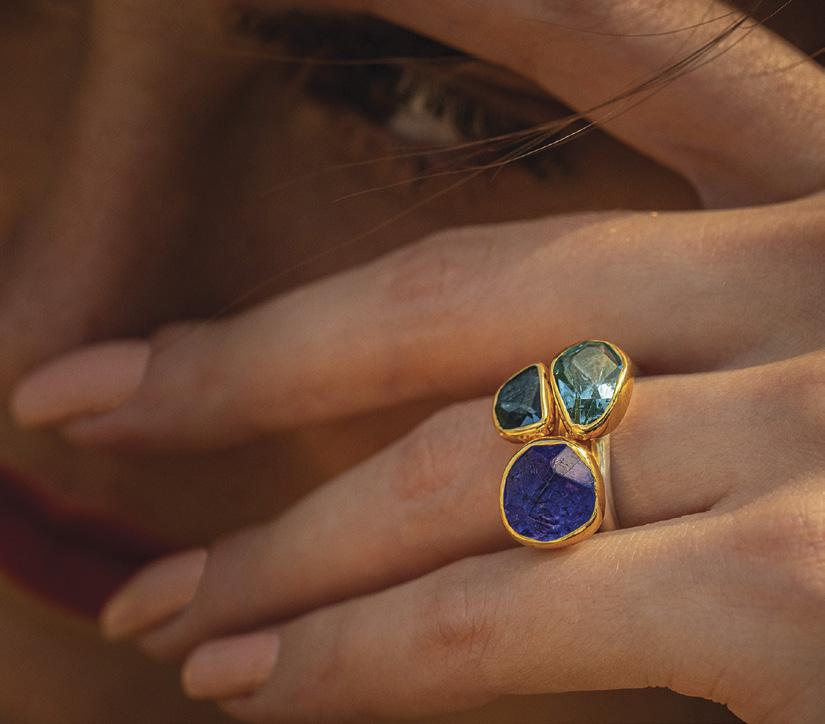
Hummingbird Jewelers
23A East Market Street, Rhinebeck (845) 876-4585
Hummingbirdjewelers.com
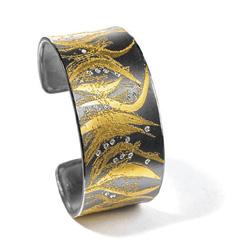
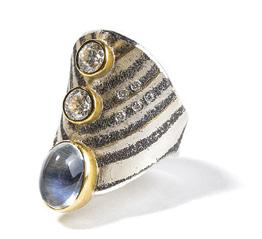
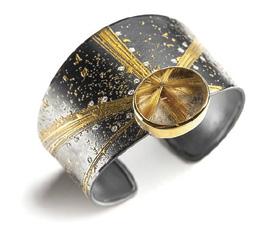
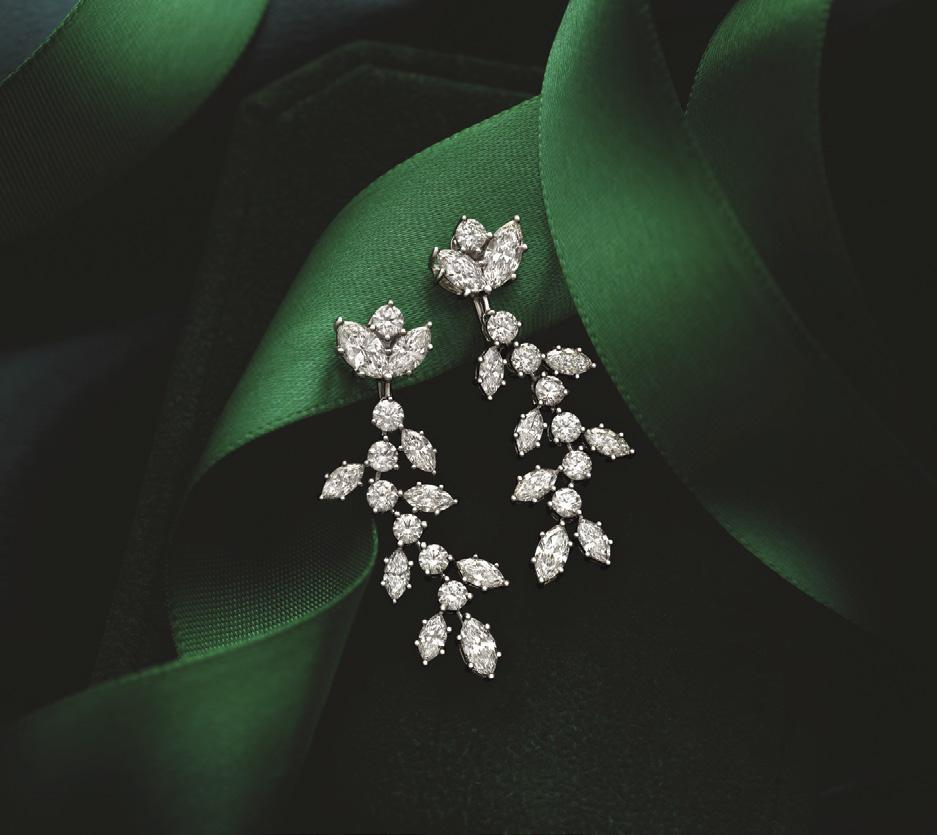
Hummingbird Jewelers is grateful to celebrate over 48 years as Rhinebeck’s full-service jewelry store. This holiday season, they have curated a collection of fine designer jewelry from around the globe. Whether it’s repair, restoration, repurposing of family heirlooms, or the creation of a new piece of fine jewelry, Hummingbird Jewelers is there to satisfy all their customers’ needs.
Newhard’s —The Home Source
39 Main Street, Warwick (845) 986-4544
This is the season of thanks and gratitude, a time to enjoy the company of friends and family and nature’s surrounding beauty. There is no better time of year to visit the Warwick Valley! Newhard’s—The Home Source has been called the “Emporium of Everything” and is filled with treasures to make one’s home a little bit warmer, more beautiful, gracious, and happy. Take a moment to discover the town and the Village of Warwick, its history, wonderful restaurants, and friendly stores. Find Newhard’s on Facebook and Instagram.
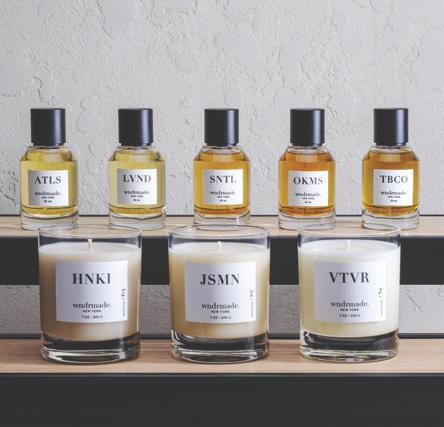
Wndrmade
Kerhonkson
Wndrmade.com
Born from a love of nature and mindful living, Wndrmade creates one-of-a-kind botanical perfumes, candles, and incense made only from plant ingredients, wood, and resins. Designed for those drawn to purity and who are sensitive to synthetics, each piece makes a thoughtful, grounding holiday gift.
Birch Spa & Boutique
73 Crown Street, Kingston (845) 331-7139
Birchkingston.com
Self-care at its absolute best, right in the heart of Uptown Kingston. Massage, facials, and reiki are all available, and couples massage too! Shop the boutique for distinctive and fun finds, skincare, gifts, and simple luxuries. Full menu, gift certificates, and online booking at Birchkingston.com.
Haven Spa
6464 Montgomery Street Rhinebeck (845) 876-7369
Havenrhinebeck.com
Give the gift of beauty and relaxation this holiday season! Haven Spa is a self-care sanctuary where relaxation and pampering meet aesthetic and skin health. Day spa services include rejuvenating massages, luxurious body treatments, relaxing facials, manicures, pedicures, waxing, eyebrow/lashes, and more. Med spa services include Botox, micro-needling, fillers (Juvéderm, Restylane), and more. Annual gift card promotions are available for the months of November and December. Follow Haven Spa on social media for details.
100 Main
100 Main Street, Falls Village, CT 100mainst.com
Acclaimed interior designer Bunny Williams and Director Anita van de Ven handpick a curated selection of goods from 40+ local artisans. From handbuilt furniture to handwoven textiles to fine jewelry and ceramics, 100 Main represents the best of what the local artist community has to offer. Open Thursday–Sunday, 11-4pm. Special Holiday Pop Up December 7, 12-4pm.
Compas Life / Upstate of Mind
33 Second Street, Troy (518) 212-7742
Upstateofmind.com
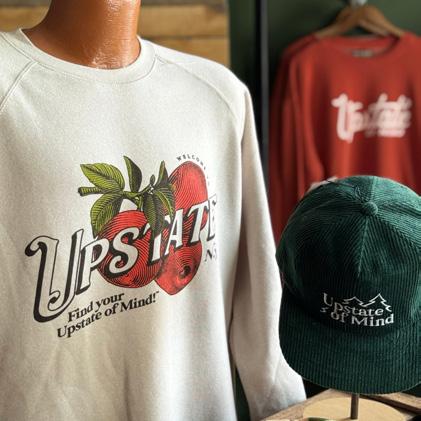
Find an Upstate of Mind this holiday season! Shop local and spread Upstate cheer with gifts from Upstate of Mind— thoughtfully curated with comfort, style, and hometown pride. Visit them in Historic Downtown Troy, or shop online at Upstateofmind.com.
Kingston Social
237 Fair Street, Kingston (845) 202-0078
@kingstonsocialny
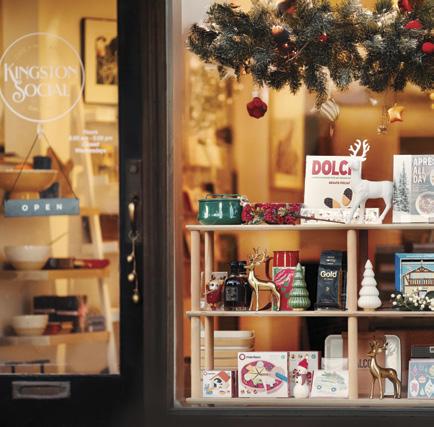
This holiday season, discover Uptown’s favorite authentic Italian cafe and modern mercantile, also home to Pinkwater Gallery. At Kingston Social, find gifts for everyone, from cookbooks and cookware to Italian specialities like panettone plus an array of wonderful games and toys for kids.
Phoenicia Diner
Pancake Mix
5681 Route 28, Phoenicia (845) 688-9957
Phoeniciadiner.com
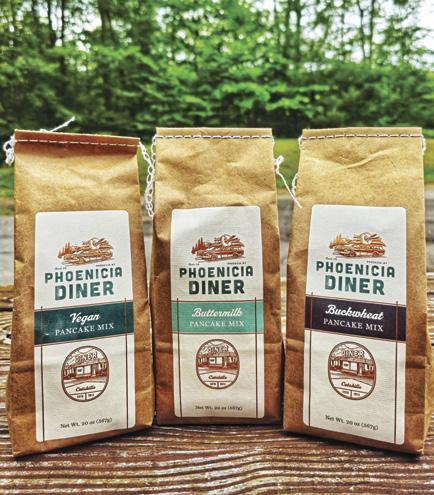
Bring the heart of the Catskills home! Available in classic Buttermilk, Buckwheat, and Vegan varieties, Phoenicia Diner’s famous pancake mix is a perfect gift for foodies. Crafted from whole, GMO-free ingredients and produced in New York, these mixes are available from specialty stores throughout the region and at Phoeniciadiner.com.
Woodstock
Wine & Liquor
70 Tinker Street, Woodstock (845) 679-2669
Woodstockwineandliquor.com
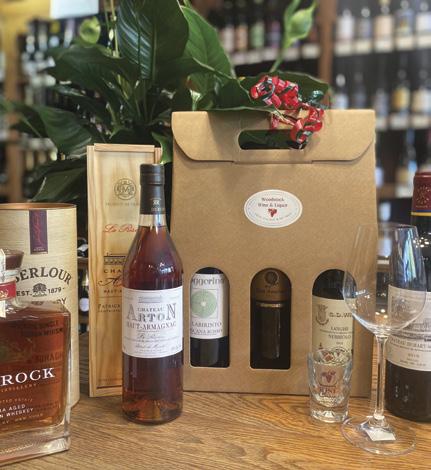
Whether shopping for wine lovers, Scotch collectors, or Cognac connoisseurs this holiday season, Woodstock Wine & Liquor is the boutique wine and spirits shop in the heart of historic Woodstock with just the right gift for them all. Gift packaging and free local delivery is available, and ordering online is easy on their website.
Hudson Valley Goldsmith
71 Main Street, New Paltz; (845) 255-5872
Hudsonvalleygoldsmith.com
In a season built on giving, few gifts carry the meaning and longevity of fine jewelry. At Hudson Valley Goldsmith, each piece is crafted in-house by skilled designers and jewelers who blend traditional techniques with modern artistry, creating jewelry that’s made to last a lifetime.
Whether dreaming up a custom engagement ring or selecting something special from the cases, every piece is designed to tell a story. From first sketch to final polish, the workshop blends oldworld craftsmanship with modern design to create pieces meant to be worn and loved every day. The team specializes in custom design, repairs, and restyling, transforming unworn or inherited jewelry into something that feels truly personal.
From classic diamond tennis bracelets to one-of-a-kind gemstone rings and minimalist pendant necklaces, each original piece makes every gift shine with meaning. Visit the New Paltz showroom to experience jewelry made by hand, right here in the Hudson Valley, and find a gift that truly sparkles, inside and out.
Visit the studio in downtown New Paltz, or explore more work on Instagram @hudsonvalleygoldsmith and at Hudsonvalleygoldsmith.com.
Pigalle
4374 NY-9G, Germantown
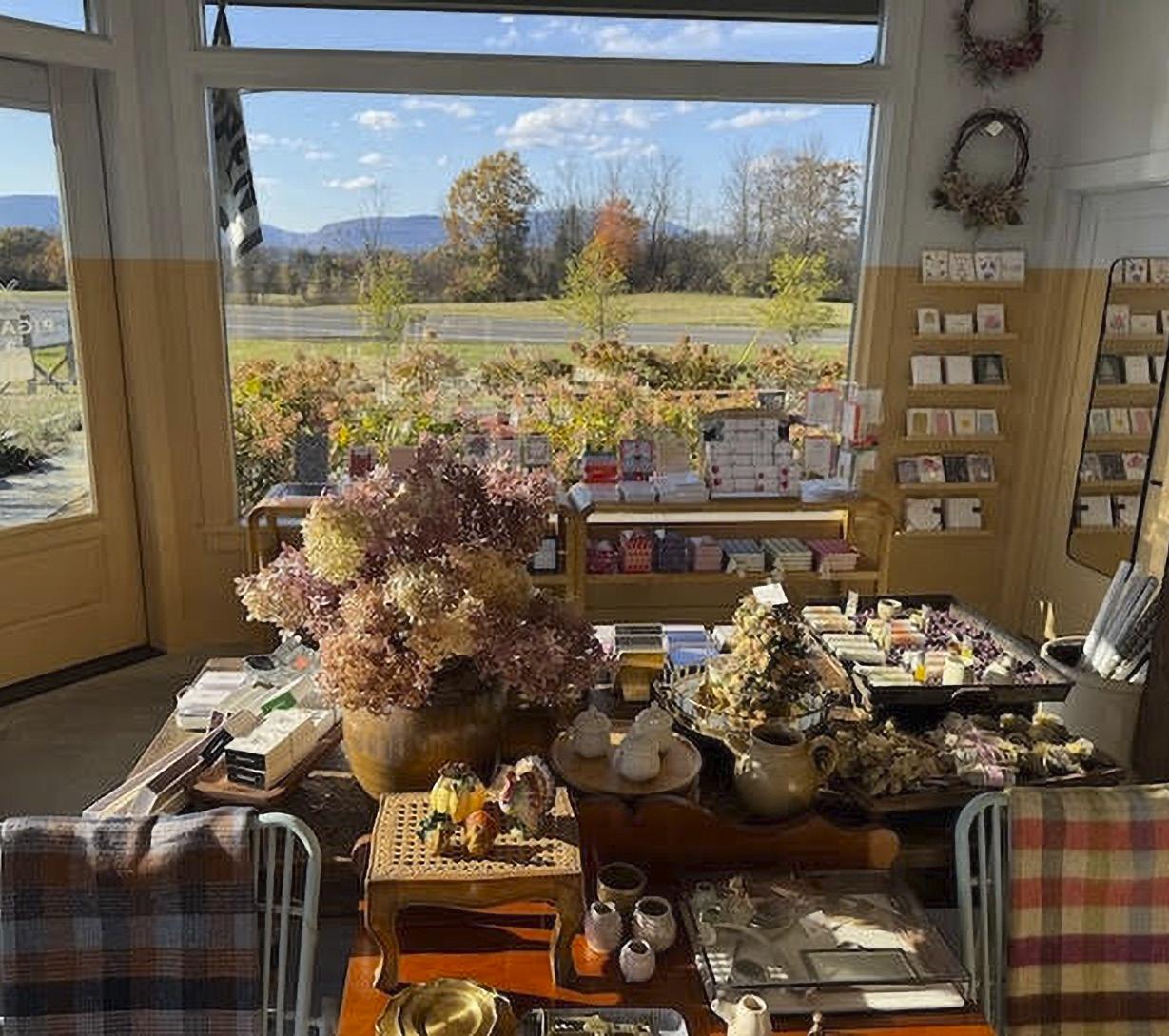
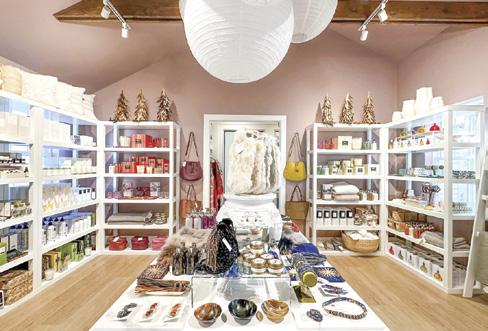
Pigalle is the perfect place to shop for holiday gifts! Recently opened in the Hudson Valley, it is conveniently located next to Cups Coffee Germantown, midway between Rhinebeck and Hudson. This charming store features new and vintage items and one-of-a-kind finds for the home. Shoppers will find something special for everyone on their list among the carefully curated assortment of candles, soaps, skincare, stationery, gift wrap, sweet treats, home decor, accessories, and more.
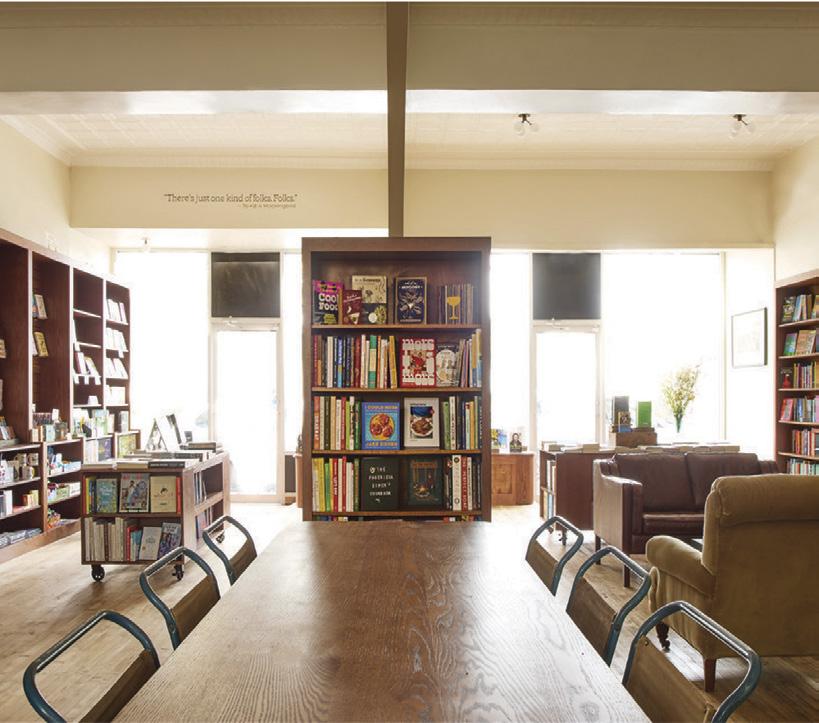
The Common Good believes in the power of stories! Nestled in the scenic foothills of the Shawangunk Mountains, this bookstore, cafe, and bar, offers a diverse selection of fiction, non-fiction, and children’s titles along with games, journals, candles, bookish gifts and more. Stop in for a coffee, sandwich, or a cocktail and find something for everyone on this year’s holiday list—or shop online
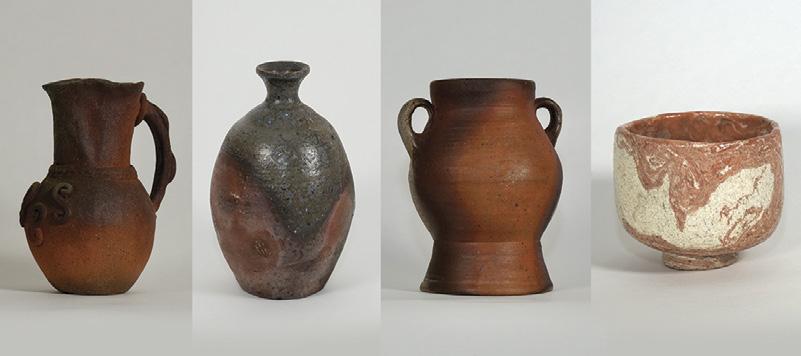
Michelle Rhodes Pottery
By appointment (845) 417-1369 or deepclay@mac.com
Michellerhodespottery.com
American Made Alpaca
21 Moore Road, Pleasant Valley
Americanmadealpaca.com
American Made Alpaca, based in Dutchess County and online, is the destination for cozy, thoughtful holiday gifts. From durable alpaca socks to warm throws and yarn, they will help people find something special for everyone on their list—one-of-a-kind, USA-made comfort that makes gift-giving easy.
Little Sister Wine Shop
5 North Clover Street, Poughkeepsie (845) 204-6465
Littlesister.wine
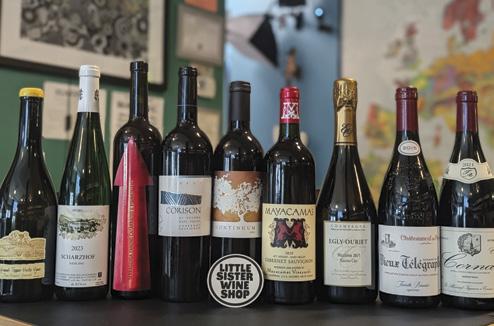
This Mid-Hudson Valley shop stocks a broad selection of rare, organic, biodynamic, and smallproduction wines, sakes, and ciders. Offering the largest selection of Champagne in the area, Little Sister Wine Shop is ready to fulfill any holiday gifting and celebratory needs. Free street parking. Right by the Poughkeepsie train station!
Subscribe to Chronogram Home Delivery
Chronogram.com/subscribe Chronogram magazine offers a colorful and nuanced chronicle of life in the Hudson Valley in all its vitality and complexity. Support us now so we can support the Hudson Valley community later. Get a 12-month subscription for only $36.
Atina Foods
4464B Route 32, Catskill
Atinafoods.com
Discover the bold, irresistible flavors of Atina Foods. Rooted in Ayurvedic and South Indian traditions, Atina’s fermented and preserved “pickles and jams” adapt Hudson Valley produce with global inspiration. Feel good while enjoying them! Give—or get—a taste adventure this holiday season with Atina’s new under-$50 gift bundles, available online and at their honor-system HomeStore.
The Spa at Litchfield Hills
407A Bantam Road
Litchfield, CT (860) 567-8575
litchfield-spa.com
Step into the enchanting atmosphere of The Spa’s annual Holiday Boutique, where a world of thoughtful gifting awaits!
Board and Bevel Framing
96 Mill Hill Road, Woodstock (845) 402-0343
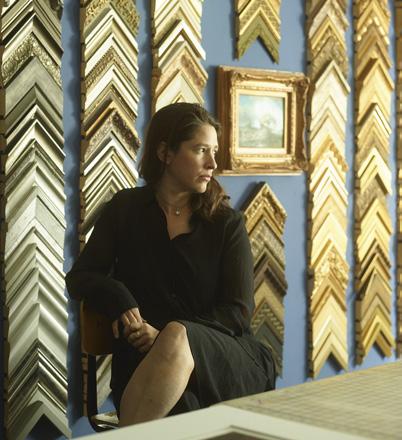
Longtime local picture framer, Emily Roberts, recently opened the doors to her first brick-andmortar frameshop. Specializing in quality conservation, she offers a detailed eye to preserve everything from precious heirlooms and photos to fine art and collectables. A custom framed piece is a priceless gift for any occasion!
Shop a curated selection of clean beauty, wellness, and luxury lifestyle gifts that will bring cheer to loved ones this giving season.
Let Daffodils make holiday shopping effortless! Discover Jellycat, Brighton, and one-of-a-kind gifts for baby, home, and her. Enjoy complimentary gift wrapping and shop ahead on Daffodils’ new website for easy pickup or shipping. As the premier destination for Jellycat in the Hudson Valley, the team proudly welcomes everyone to its beautiful shoppe. They’re always honored to help new and returning guests find their perfect gifts.
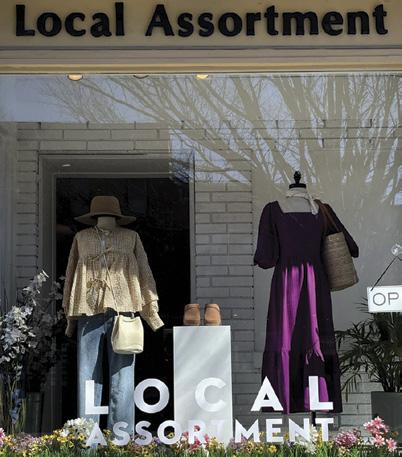
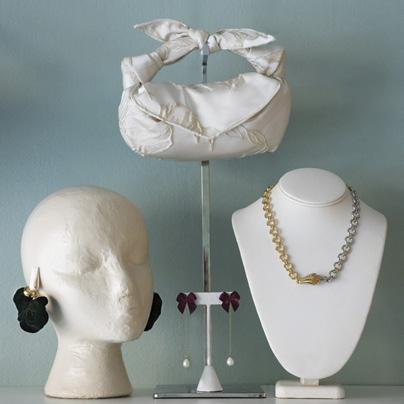
Local Assortment
436 Main Street, Beacon Localassortment.com
Local Assortment is a women’s boutique in Beacon, featuring modern clothing, accessories, and sustainable finds from local and womenowned brands. Check out Per Lei New York, an in-house line of artisan bags and hats. Swing by for a great gift or a little something special.
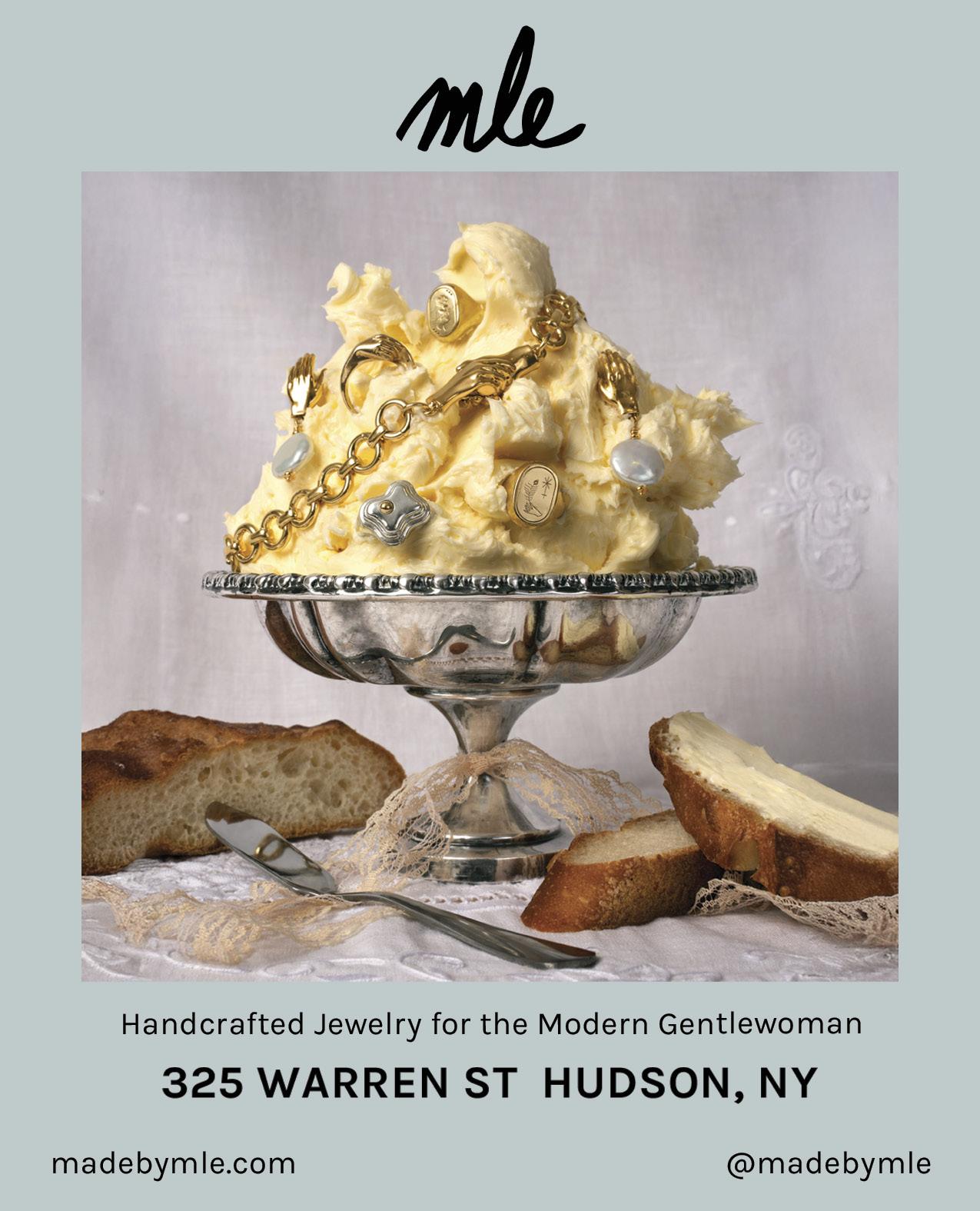
MLE
325 Warren Street, Hudson (347) 850-4767
Madebymle.com
MLE is a sustainable accessories brand for the modern gentlewoman. The majority of MLE pieces are made-toorder in studio by a small team of skilled and experienced craftspeople. In an effort to manufacture as sustainably as possible, they use remnant, upcycled, and eco-friendly materials. Find MLE jewelry, handbags, hair accessories, and leather goods online or visit their store in Hudson.
Photo by Pinball Party Productions
Harmony Heals
Hudson Valley choruses reveal how group singing supports physical, mental, and social wellness
By Maggie Baribault
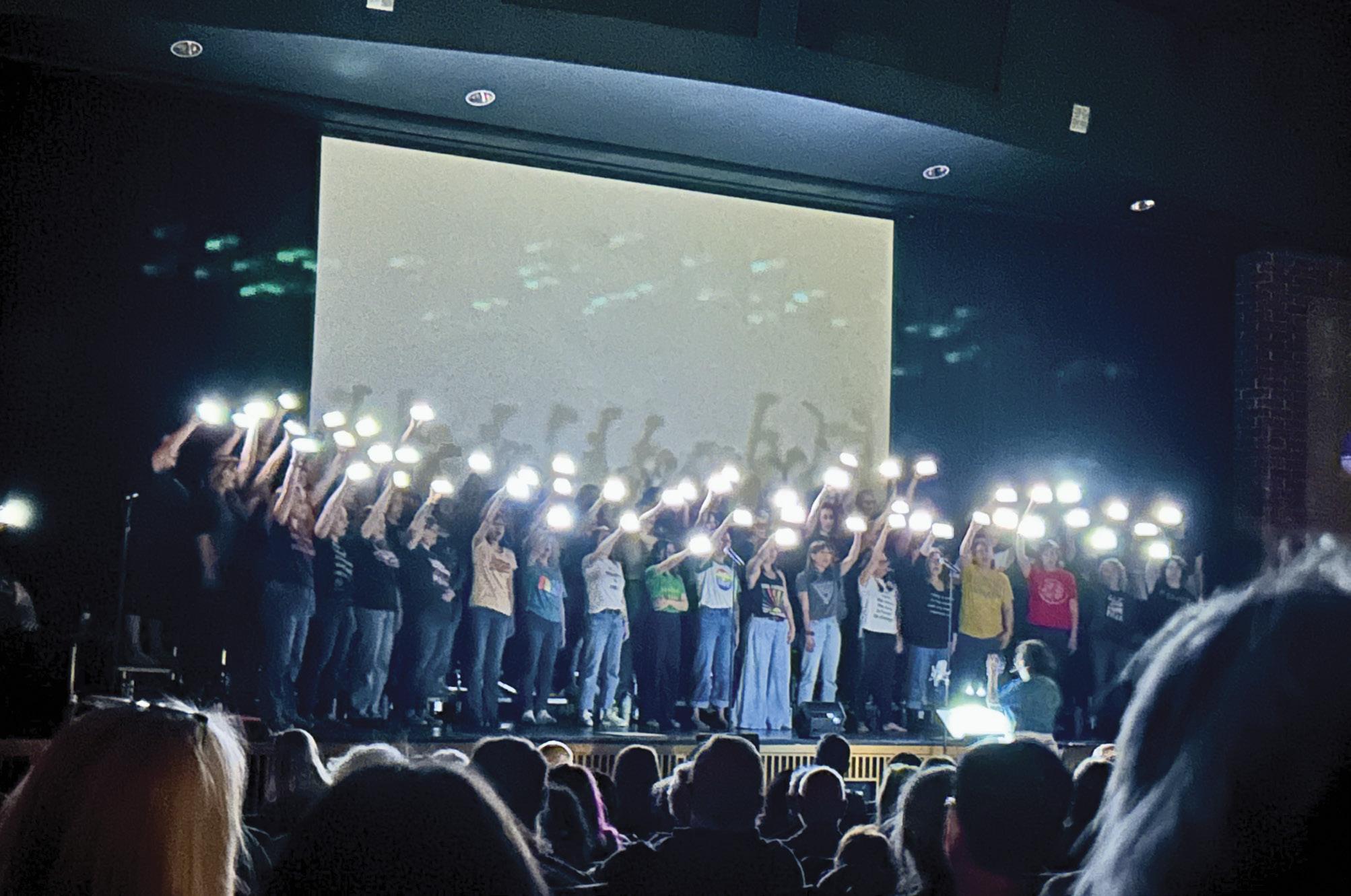
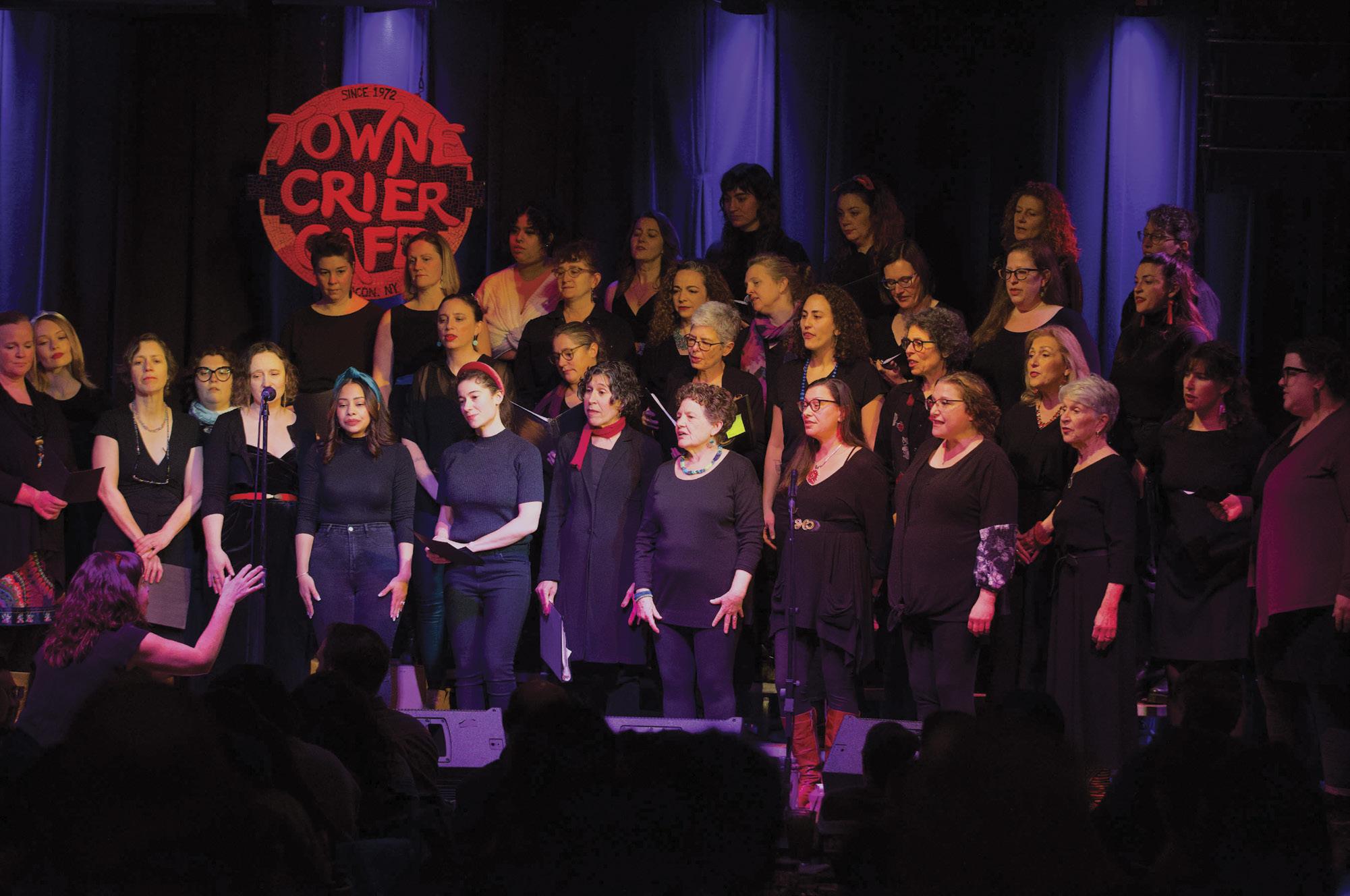
The day after the Women’s March in 2017, Gina Samardge was scrolling through social media when a video stopped her. Singer-songwriter MILCK and a group of women were flash-mobbing at the DC march, singing her defiant anthem “Quiet.” The harmonies, collective breath, and sense of shared purpose struck deep. “I immediately knew I had to sing this song in a community with women,” Samardge says.
Samardge, the founder of Compass Arts in Beacon, put a call out to the women she knew, and word spread. At the first rehearsal, 35 women showed up. By October of that year, the Beacon Rising Choir was born. What started with 13 women performing at a Newburgh fundraiser has grown to 87 members. “I am in love with this
choir,” the now-director says. “It’s life-giving. I’m in my element when I’m there.”
Each week, Beacon Rising singers trickle into the rehearsal room early, greeting one another with hugs and easy laughter as they shed coats and settle in. Voices mingle softly as people catch up before rehearsal begins. Soon, the chatter gives way to stillness. Samardge invites the group to close their eyes and take a long, steady breath. The sound of inhaling and exhaling fills the room. A few gentle notes follow, mantra singing that eases the body into sound. Then, the group gears up to prepare their repertoire for the next concert.
Science of Singing
That shared breath does more than create music. Coordinating diaphragmic inhalations,
standing with good posture, aligning tempo, and listening closely to others activates systems deep in the body. “Singing your heart out” is more than an expression of joy; it’s physiological. Studies show that group singing synchronizes heart rates and breathing patterns, helping regulate the nervous system and lower stress. A 2013 study published in Frontiers in Psychology found that choral singing increases heart rate variability, a measure linked to cardiovascular health, and the Harvard Health Letter reported that singing shifts the body toward its rest-andrecovery state, easing stress.
“Singing is a full brain and body activity,” says Kevin Murphy, a New York City-based vocal teacher. “We read music off a page and translate that visual information into movement, breath,
Beacon Rising performing at the Beacon High School in 2025.
expression, and sound.” Group singing boosts cardiovascular function, improves cognition, memory, and executive function, reduces stress hormones, and supports lung and brain health, he says.
Murphy has seen the benefits firsthand with clients recovering from neurological conditions. One man with Parkinson’s disease came to him on his speech pathologist’s recommendation, struggling with a weak, tremoring voice. Through singing familiar Elvis tunes, he began to stabilize his tone and project more easily. Murphy believes that singing worked in part because it regulates the autonomic nervous system.
He explains that extending the exhale when singing a musical phrase increases carbon dioxide levels in the bloodstream, opening tissue in the lungs and blood vessels, leading to better respiratory health and regulating the nervous system. This idea can be seen in a variety of modalities, including Pranayama yoga breath work and the Buteyko breathing technique, which involves taking deep breaths in through the nose while keeping the mouth closed.
Emotional Resonance
At Beacon Rising, that physiological shift blends seamlessly with emotional release.
“We’re not here for perfection,” Samardge says, “but for the process of singing in community.”
The group’s shared agreements—“Be present,”
“This is a learning space,” and “It’s okay to cry”—set the tone for a rehearsal space that feels emotionally safe.
Their repertoire spans songs by BIPOC, LGBTQIA, and women composers, often reflecting current events and social movements.
“We don’t shy away from complex emotions or social justice themes,” Samardge says. “We’re here to explore the human experience through music— to protest, to grieve, to heal.”
That vulnerability sometimes surfaces midsong. Samardge recalls a young singer who began crying during a piece that reminded them of a lost grandparent. “Other chorus members went to comfort them immediately,” she says. “The conversation afterward wasn’t about how to get them to sing the song; it was about what felt safest in that moment.” In that space, the music
becomes a kind of therapy, where emotion is met with compassion rather than correction.
A study published in Frontiers in Human Neuroscience in 2015 supports what choruses like Beacon Rising know intuitively: Group singing releases endorphins and oxytocin, the same bonding hormones that promote trust and joy. Research published in The Oxford Handbook has linked these biochemical shifts to increased empathy and emotional regulation.
“There’s a cathartic experience in singing your rage, grief, and joy,” Samardge says. “There’s a deep need for us to connect to these emotions, to move through them, and doing this in community is powerful and healing.”
“When I don’t sing, I don’t feel like myself,” says Beacon Rising member Elizabeth Greenblatt. “It’s such an important stress relief for me, a way to be in my body again. The experience of sound moving through me impacts all my cells and changes my whole mood and sense of self.”
Greenblatt joined the chorus in its first year, newly relocated to Beacon and looking for connection and a consistent space to sing. Now
Beacon Rising performing at Towne Crier in Beacon in 2023.
Photo By Ross Corsair
it’s become a ritual for her. “Every week, I leave rehearsal in a different state—lighter, grounded, more myself.” Greenblatt describes the music as both social and spiritual. “It’s this time I get to fully drop into myself. It impacts how I move through the rest of my life, how I show up in relationships. It’s powerful.”
Samardge sees those shifts every week: the nervous first-timers relaxing, the shared tears, the spontaneous hand squeezes after a solo. “The way folks look at each other while they’re singing, the way they lift each other up, it’s palpable,” she says.
Together in Tune
Community choruses like Beacon Rising often become what sociologist Ray Oldenburg termed “third places,” spaces of belonging beyond home and work that are crucial to a balanced, happy life. In Beacon, those connections take tangible form: meal trains for members who are sick, rides to rehearsal for those without transportation,
getting matching tattoos, and chorus members singing at weddings and funerals. “There’s a craving for connection and meaning in people’s lives, and choirs meet that need,” Samardge says. “I’ve had people tell me this choir saved their lives.”
“Singing together is a tremendous source of stress relief, especially when the world outside feels heavy,” agrees Jen Paull, artistic director of Hudson Valley LGBTQIA chorus Key of Q. “People often leave rehearsal in a much better mood than when they arrived. The music we sing gives us a way to process the world and find joy. The act of gathering every week to sing, to breathe together, to listen closely creates a rare kind of social bond.”
A study published in Sage Journals found that adults who participated in community choruses reported significantly higher social connectedness and lower feelings of loneliness than non-singers. “When a group of people are singing together,
beneath the level of awareness, our nervous systems are sensing one another,” Murphy says. “Each person contributes to and is affected by the group. This synergy of coregulation encourages a sense of social connection, a sense of belonging to something bigger than oneself. The whole is greater than the sum of its parts. When we practice singing with a chorus, we are honing our abilities to listen, sense ourselves better, express, and communicate.”
“Humans are made up of a complex, dynamic system of systems,” Murphy says. “We have a circulatory system, a musculoskeletal system, a respiratory system, a nervous system, and you could even say a vocal system. All of these are constantly in conversation with one another, so changes to one affect the others. What’s important is that we spend the limited time we have on this Earth doing things we enjoy, and to me, there are few things better than singing with other humans.”
The Key of Q chorus performing at the Howland Cultural Center in Beacon.
ANDROGYNY
NEW PALTZ, NY unique personalized styling consultations by appointment home of the carving razors and System 4 HaiR® Sylvia Zuniga, Designer 845.256.0620
Take Back Your Health with Acupuncture, Detox, Nutrition, Herbal Medicine, Biofeedback, Bioenergetics, Frequency Healing Specializing in Nervous System Balancing, Gut/Digestive Disorders, Hormone Balancing, Migraines, Pain/Injury, Neurological Disorders, Skin Issues
Dr. Erika S. Gabriello DACM L. A c www.holisticnaturalmedicine.com 347.988.0178 | 169 Main Street, New Paltz
Helping Families and Professionals work and stay in the U.S. Immigration Attorney - 6 Eliza Street, Beacon, NY http://www.beaconimmigration.net +1 845-288-2435
HIGH SOCIETY
The culture of cannabis, from Chronogram
and more.
SUBSCRIBE TO THE NEWSLETTER Chronogram.com/highsociety Sign up today
New Year, New You
The New Year is the quintessential time to start fresh and renew commitments to bettering the mind, body, and soul. Whether it’s health, finances, spirituality, or new hobbies, there is a wealth of local resources in the Hudson Valley to start those resolutions right.
Dr. Roxanne Partridge
Embodyperiod.com
When self-trust falters or the longing for more won’t quit, depth psychologist
Dr. Roxanne Partridge offers a soul-centered path to embodied sovereignty for women and femalebodied souls. Mentorships, workshops, and 1-to-1 sessions provide deeply supported pathways of return. Through life’s thresholds—loss, change, awakening—she guides creative transformation. Reclaim desire. Restore cyclical wisdom, sexual aliveness, and wholeness on one’s own terms.
Whole Sky Yoga
3588 Main Street, Stone Ridge Wholeskyyoga.com
Step into the new year with intention. Whole Sky Yoga offers dynamic classes taught by skillful teachers and a community that feels like home. Explore yoga, Pilates, Barre, enriching workshops, community gatherings, and a comprehensive 200-hour Yoga Teacher Training. Discover a sanctuary to move, breathe, and belong.
New York School of Esthetics
239 Central Avenue, 3rd floor, White Plains (914) 631-4432
Newyorkschoolofesthetics.com
For estheticians eager to elevate their career, the New York School of Esthetics now offers a unique opportunity to further develop their expertise. The Paramedical program spans three weeks and comprises 120 instructional hours for professionals seeking to advance their skills, such as permanent hair reduction, dermaplaning, and chemical peel.
Rebecca Bruck
Licensed Clinical Social Worker (845) 251-4046
Culinarytherapist.org
Helping individuals and couples overcome trauma, depression, and disconnection to live more fulfilled lives. With 18 years of experience, Rebecca specializes in PTSD, couples counseling, and sex therapy—guiding clients toward healing, self-love, and deeper intimacy. Private practice based in the Hudson Valley.
Ride for Mental Health
Rideformentalhealth.org
Join The Ride for Mental Health and help “Ride Away the Stigma”! This annual event is not only a cycling journey through the stunning Hudson Valley, but also a powerful movement to support mental health research, treatment resources, and efforts to end the stigma associated with mental illness. Riders of all ages and skill levels are welcome. With routes ranging from the scenic Rail Trail to challenging climbs, there’s an option for everyone, whether it’s a family-friendly day or a rewarding challenge. The funds raised make a tangible impact by supporting organizations like McLean Hospital, global leaders in mental health care, research, and education, as well as support for local non-profit organizations like the New Paltz Youth Program and the Maya Gold Foundation. Participant involvement directly contributes to expanding resources and support systems for individuals and families facing mental health challenges. Join as a rider or volunteer to be part of this passionate community working toward meaningful change. Register today and bring friends, family, and colleagues to be part of this impactful journey. Visit rideformentalhealth.org to sign up, learn more, and pedal forward together.
Punching Above Its Weight Catskill
By Peter Aaron Photos by David McIntyre
It’s a crisp, sunny afternoon on the first day of November in Catskill. At the center of the modestly sized municipality—population 11,298 in the town at large, with 3,700 in its central village—there’s a party going on. The 400 block of Main Street has been closed off at both ends, and hip-hop plays at a comfortable volume over a portable PA system. Families frolic and mingle, local fixture Village Pizza has set up a covered stand to sell hot slices, and coffee shop/bookstore/gift emporium/art gallery Citiot has a steady stream of customers. Erected temporarily in the middle of the block is a small stage, upon which sits the guest of honor. Mike Tyson has come home.
Born in Brooklyn, the boxing icon landed in Catskill as a problematic 13-year-old in 1980. Here, he was coached by Cus D’Amato at the legendary trainer’s KO Boxing Gym at 422 Main (on the third floor of the police station) and went on to become heavyweight champion of the world. Today, 40 years after the death of D’Amato, who also trained champs Floyd Patterson and Jesse Torres, Tyson is here to
host “Celebration of Cus,” an event commemorating the legacy of his late mentor and the town that nurtured them both. Having such athletic royalty in the normally sedate Greene County village may feel like an outsized honor to unwitting visitors, but it tracks: Catskill seems poised to become the Hudson Valley’s Next Big Thing. And much like its favorite son Tyson, it’s taken a beating to get here.
On the Ropes
Like another famous figure associated with the area, folk character Rip Van Winkle—who’s immortalized by a statue at the top of Main Street as well as the eponymous bridge connecting Catskill to Columbia County—the once-slumbering town’s reawakening has been long in coming. Settled in 1680 by Derrick Teunis van Vechten, it was formally established in 1788 and enjoyed a booming economy until the newly built Erie Canal began rerouting trade to other regions early the next century. From the 1850s through the late 19th century, tourism and local industry
Mike Tyson onstage at Celebration of Cus on November 1, an event to celebrate the memory of Cus D’Amato, who trained Tyson in the 1980s in Catskill.
Opposite, above: Emily Carroll, hair stylist and owner of Creature of Habit salon. Carroll produced a map of Catskill to give to her clients, who often ask for recommendations of where to eat and shop.
Oposite below: Catskill Creek Condominiums at Waters Edge is a gated, waterfront community within walking distance of the village.
Opposite, top: Kendra McKinley performing with her band at Avalon Lounge on November 6 for the release of her EP Music for Smoking Weed with Your Bra Off.
Volunteers packaging meal at the Catskill Food Pantry, located in St. Luke’s Episcopal Church on William Street. The pantry provides 250 meals a week to the community. Since the start of the year, the pantry has provided over 155,000 pounds of food to a weekly average of 115 households.
brought prosperity back, but with the Great Depression the town once again saw a downturn. Manufacturing during World War II revived it, but in the 1980s outsourcing prompted its industries to leave again, setting the stage for a dire situation that was compounded by the 1990s crack epidemic.
Yet the tough little town, whose core is bisected by the Catskill Creek, never threw in the towel. With nearby Hudson steadily turning glitzier and pricier since the 2010s, Catskill’s walkable Main Street retail corridor and charming—and measurably cheaper—older homes, only minutes from the Thruway and the Amtrak station across the river, have made it, arguably, the brightest spot between Kingston and Albany. During the Covid exodus New York transplants with simmer wallets looking for a new life and opportunities upstate, noticed Catskill’s affordable potential and began trickling in.
Artistic Streak
“It’s been a cool year,” says Liam Singer, the owner of music venue, bar, and homestyle Korean restaurant the Avalon Lounge, which opened in 2019. “The food service industry is very difficult right now due to the tariffs, but the club had a great summer and a steady fall season. There are always new people coming in, and a lot of great new businesses have opened in town.” Among the hot live acts the Avalon hosted
in 2025 were indie rock luminaries Yo La Tengo; this month promises the Ladybug Transistor (December 6) and others. Singer, who with his wife, Laura, moved to Catskill from New York in 2016, helped Catskill’s artistic community thrive by giving it a consistent gathering place with the opening of the Hi-Lo Cafe in 2017; the coffeehouse was eventually rechristened Cafe Joust by its current owners. But the roots of Catskill’s once-dormant arts scene stretch much farther back. Overlooking the Hudson is the Thomas Cole National Historic Site, also known as Cedar Grove, a National Historic Landmark and the former home and studio of the movement-founding Hudson River School painter Thomas Cole. Built in 1816, the household was occupied by Cole from the mid-1830s until his death in 1848. Today it serves as a museum, open on Saturdays and Sundays, that enshrines Cole’s legacy and shows art by others as well (“On Trees: Georgia O’Keeffe and Thomas Cole” is on view through December 14).
Opened in 2004 by artists Dina Bursztyn and Julie Chase on Main Street in a former fried chicken restaurant, Open Studio gallery and shop offers handmade art by emerging Hudson Valley artists, global crafts, jewelry, used books, and more. “Catskill was very depressed and empty when we started,” says Chase, whose partner died in 2023. “The first 10 years were lean for business and making friends. We saw a lot of turnover when
Luca Pearl Khosrova in the photography studio she opened recently on Main Street.
the housing bubble burst, back around 2006. But now there’s a really nice mix of young creative types and new merchants here.” Although the fate of the former Lumberyard Center for Film and Performing Arts site has been in limbo since its 2023 closure, its Water Street neighbor Foreland, an art studios/event center housed in a historic mill complex, continues to operate.
It’s Showtime
The biggest news to hit the Catskill commercial landscape this year was September’s reopening of the gloriously renovated Community Theatre movie house. The restored, 800-seat, bilevel theater, which dates to 1888 (it was rebuilt in 1920 after a fire), screens first-run mainstream movies as well as art-house and classic repertory films, hosts live events, and features a concessions counter and bar. Recently opened within its lobby is Sleepover Trading Co., a collector-run shop specializing in VHS, DVD, and Blu-ray sales and rentals, comics, vintage toys, and more fantastic fare. Also on Main Street are Kirwan’s Game Store, vinyl mecca Spike’s Record Rack, antique emporium Sister Salvage, Magpie bookstore, Kaaterskill Market gift and decor outlet, sustainability-driven boutique Made X Hudson, and other retailers.
More interested in pedaling than peddlers? Head to Catskill Bicycle Supply Co., at 347 Main. “Our customer base is primarily Greene County residents and secondhome owners,” says Lee Herchenroder, who grew up in nearby Round Top and opened the shop in 2023 with his
brother Mountain Laurel. “We do a solid rental and retail business for folks who are visiting the area. Being from the area and involved in the cycling scene for as long as we have helps a lot. Folks know who we are, what we’re about, and that their bike is in good hands when they bring it in for service.” Biking and browsing will work up an appetite, and Catskill is a fine place to dine. Its popular eateries include Hemlock (cozy cocktail bar serving smash burgers and snacks), Piccolo Trattoria (classic Italian family menu), Catskill Chocolate Co. (fresh pastries and coffee), Creekside (American classics and bar with a patio and creek views), and Phos (newly opened Greek American bistro).
Grants and Growth
In 2022 and 2023 Catskill applied for Downtown Revitalization Initiative (DRI) funding from the state—and was denied both times. But last March came the supremely welcome news that the governor had selected the village to receive a $10 million DRI grant, whose monies will be allocated to address the local affordability crisis by creating new homes at a range of price points and improving existing homes; investing in the assets of the downtown area, its businesses, and Catskill Creek; expanding and improving accessible, affordable community spaces; and beautifying streetscapes while improving wayfinding and accessible pedestrian infrastructure. “Catskill is a village, but we are mighty and more like a small city being the county seat,” says Natasha Law, Catskill village board president and owner of The Juice Branch juice bar. “We have close to
Lumberyard, a state-of-the-art performing arts center that was the former home of the American Dance Institute, sits empty on Catskill’s waterfront and is listed for sale for $6.2 million.
Opposite, top: Upgrading the town’s water infrastructure is ongoing, with construction on Main Street continuing at least through the spring.
Bottom: Instructor Margot Becker with a student at Catskill Weaving School, an artist-run school offering weaving and textile classes at its location inside Foreland and also online.
Comfortable silent sitting on chairs or cushions. Nothing to memorize or know. No beliefs, no special words, just a quiet gathering with an experienced Zen teacher. Find out something about yourself.
• Monday evening 6 to 7 pm
• Tuesday morning 9:30 to 10:30 am
• Thursday morning 9:30 to 10:30 am
For beginning instruction please arrive 15 minutes early.
25,000 people driving through, coming to shop, work, eat, and go to school daily. Affordable housing is lacking across the village. We have had boardrooms packed with residents looking for help. The village of Catskill adopted Good Cause Eviction [legislation] and became a pro-housing community to try to combat the affordable housing crisis head on. We adopted new zoning regulations to allow accessory dwelling units and created short-term rental regulations.”
The most cosmetically visible manifestation of the DRI award so far is the work that’s being done on downtown streets and sidewalks, and what lies beneath them. “The streetscape improvements align perfectly with the timeline for the completion of our waterline project,” says Law. “We broke ground in late spring on Main Street to replace the aging main waterlines and remove all lead connections. Our vision includes beautifully paved roads, which are long overdue, as well as new sidewalks featuring bump-outs designed to slow traffic and enhance safety.”
Fighting Spirit
But while housing and infrastructure are receiving monetary aid, many in the community are struggling with hunger and inadequate wages, especially in the face of the
recent federal jeopardizing of SNAP and related programs. “Greene County in general is much poorer than its neighboring counties,” says Neva Wartell, executive director of the Catskill Food Pantry, one of five such organizations in the town. “There’s been a big uptick [in pantry clients] over the last few weeks, with so much continuing need. Our physical facility is a ‘client choice’ model, set up like a grocery store. We try hard to have more fresh and healthy food options, and we deliver to a lot of people who are in emergency housing in rural former motels or are isolated or infirm; some are paraplegics or quadriplegics. People ask about donating food or volunteering, which definitely helps. But financial donations are the most effective help.” Despite their town’s challenges, though, Catskillians are up for the fight. “Catskill is my favorite place on Earth,” Law says. “It is where I graduated. Where I chose to raise my family. Where I chose to open my first business and where I chose to become a public servant and run for office. We are a community. We look out for each other. When something happens big or small we pull together. We are diverse. We are creative. And we are strong. I am always proud to say I am from Catskill. I look forward to being a part of the growth but keeping Catskill’s small-town charm and making sure it’s a place for everyone.”
Clockwise from left: The team behind the recently reopened Community Theater on Main Street: Zach Lewis, Brian Whitney, Greag Mills, and Jordan Landsman.
Maura O’Shea, the new executive director of the Thomas Cole National Historic Site, at the property on Spring Street.
Julie Chase inside Open Studio, the creative hub on Main Street she opened in 2004 with Dina Bursztyn.
Catskill
Thanks to all who joined us at the Community Theater on Saturday, November 1 to represent Catskill.
Pop-Up
Portraits by David McIntyre
Cultivate Catskill: Meg Nowack, Dottie Pickens, Shelly Pulver, Robin Smith, Amanda Lion, Jean Byers and Floris.
and
Top row: Jeanne Byers and Bruce Byers, Hill Street Gallery gallery owner/photographer; Nicole Madden, development manager, the Olana Partnership; Bridge Street Theatre: Steven Patterson, cofounder, John Sowle, cofounder and artistic director, Mark Perry, managing producer; Cheryl Cross, chef/owner La Conca Doro; Rivertide Center: Arielle Herman, yoga therapist, teacher, and owner and Patrick Gaucher, personal trainer, teacher,
owner, with Bijou.
Middle row: Craig in the Catskills and Haluk Oz, community curators; Lauren Tanchum, chef/owner Cafe Joust and Devin Tanchum, filmmaker and cafe owner; Joe Stefko, Meat Loaf drummer and Liz Shaw, designer/ creative consultant, Liz Shaw Design; Catskill Bicycle Supply Co.: Lee Herchenroder and Mountain Ellis.
Bottom row: Dorothy Brodhead, retired teacher/library clerk; Chelsea Streifeneder, owner Body Be Well Pilates; Debra Trebitz, photographer/educator; Margaret DiStefano, visitor services and publications coordinator at Thomas Cole Site; Brian Dewan, artist and musician; Jesse Bransford, artist, NYU art professor.
Top row: Abbie Zuidema, creative arts therapist; Alyson and Patrick Milbourn, M Gallery; Jamie Esperance, business owner and Julie Kim, software engineer; Pim Zeegers, owner of Citiot; Zach Lewis, writer and manager at Community Theater and Melinda Abercrombie, archivist; Nancey Rosensweig, Catskill Holistic GYN/Midwifery and Dan Arshack, Lawyers for the Rule of Law.
Middle row: Natasha Law, Village of Catskill president, Juice Branch owner; Nina Bird Lawrence, podcast producer; Beth Swanstrom, Seven Inn with Peaches; Grace Cain, potter, ceramics instructor at Cone Zero; Mark McKennon, Kingart Pictures LLC: screenwriter, locations, production.
Bottom: Lyndsey Alexander, interior designer with Lonny; Amanda Malmstrom, associate curator, Thomas Cole Site; Carrie Dashow, Atina Foods, business owner, artist; Jesse Goon, senior manager of events, marketing, and visitor operations, Thomas Cole Site; Alison Wedd, portrait photographer and herbalist.
Inset: Susan Anthony, photographer with Poquito.
Opposite, top row: Alexis Johnson, human resources and JD; Rob Ribar and Guido Sanchez, owners of Sleepover Trading Co.; Liam Singer and Laura Singer, co-owners of Avalon Lounge with Naomi Singer; Victor Deyglio, musician, record
producer, president of Heart of Catskill Association and Lex Grey, musician, yogi, historian.
Middle row: Marietta Fagan, barista at Citiot and hairstylist; Thomas Boomhower, Catskill Village Trustee; Lizbette Martinez, artist, MHACG, Catskill Food Pantry; Joseph Kozloski, retired; Daniel Ward, Village of Catskill Trustee; Taganyahu Swaby, Yaad Wellness.
Bottom: Ukulele Catskill: Siouxzanne Harris, Michael Della Rocco, Barb Saxe, Dana Everts, Donna McGrath, Fred Cristiani, Christina Dietmann.
All throughout the Holidays, there’s one thing you should know— Shopping in Greene County is the best place you can go. You’ll find all the things you need for underneath your festive tree. There’s so much to be seen, when you choose to Buy In Greene.
Our Shops and Eateries are welcoming and bright. The decorations, they are certainly a sight. And what you’ll find inside brings smiles you just can’t hide. Stroll, browse, take in the scene—
You’ll feel great when you Buy In Greene!
Greene County businesses abound across our 14 Catskill Mountain, Rural Valley, and Historic Hudson River towns. From gi s & decorations to Holiday Parties, amazing cuisine, cra beverages, and scenic beauty, you’ll find it all right here.
Plan a shopping getaway day to any of our walkable downtowns and country shops. You’ll find the unexpected, the exceptional, and experience the best of this festive season.
Find gear and apparel for outdoor adventurers like snowshoeing, hiking, and world-class skiing & boarding. Warm up by the fire in a cozy bistro. Sample great brews and ciders at any of over 20 cra beverage venues. Enjoy the holiday season along quaint village streets, and witness for yourself how our communities embrace it. Don’t forget your furry friend as most establishments are pet-friendly!
To help you get started, you’ll fi nd over 1,000 of our local businesses on BuyInGreene.com. Just scan the QR Code and fi nd out exactly what our communities have to offer!
Greene County Spotlight
The northern periphery of the Catskill Mountains blends breathtaking scenery with the quiet bustle of village life. With two family-friendly ski mountains, there is always wintertime outdoor adventure to be had, and its vibrant, close-knit communities offer a wealth of cultural experiences, shopping, and locally inspired dining.
Windham Fine Arts
5380 Main Street, Windham (518) 734-6850 Windhamfinearts.com
A Catskills destination for fine art for over 20 years. Located on Windham’s Main Street, the gallery features an exceptional collection of original paintings, photography, sculpture, and distinctive art objects. Experience Barry DeBaun’s award-winning landscapes and explore works by distinguished regional, national, and international artists. Open 12–5pm; Commissioned work by appointment.
4 Seasons Realty Group
(518) 468-0411; RedShuttersCatskill.com
For sale in Catskill, A historic treasure with six bedrooms, three full baths and 4,370 square feet on two park-like acres. A no-expense spared renovation, turn-key home with high-efficiency mechanicals and large sunlit rooms. Ideal for first floor living, weekend getaway, multi-generational, live/work, Airbnb, income, or a buyer seeking both space and flexibility that can grow with their needs. Two separate units can be combined with use of original restored interior stairway. Two hours to New York City, minutes from Exit 21, and close to skiing in Hunter and Windham, Amtrak’s Hudson station, and all Hudson Valley offerings! Priced at an astonishing $171 per square foot.
“Winter Woods” by Barry DeBaun 2025 World Art Awards Winner, Realism–Landscape (2nd Place); Multiple 1st Place honors in national fine art competitions.
Photo by David Mcintyre
rural intelligence
Season’s Gleamings
As winter settles in, the RI region comes alive in new ways. From twinkling light displays to cozy village festivals, every town celebrates in its own way, offering festive markets, seasonal feasts, brilliant performances, and cultural traditions to make the season bright. Below is our guide to some of this month’s must-see holiday events to fill your calendar with warmth and wonder.
Festival of Trees: “Barn to Be Wild” Through December 28, Hancock Shaker Village, Pittsfield, MA
This year the Berkshire Museum’s annual Festival of Trees goes on the road, partnering with Hancock Shaker Village for a whimsical exhibition titled “Barn to Be Wild.” Dozens of artists and organizations have decorated fantastical Christmas trees with farm and barnyard themes. Stroll past evergreens festooned with handcrafted ornaments and rustic touches that honor the Shakers’ agricultural heritage. The displays glow against the Round Stone Barn backdrop, creating a uniquely Berkshire holiday atmosphere. Timed-entry tickets are required.
Wonderland of Lights at Dutchess County Fairgrounds
Select nights through December 28, Rhinebeck Pile into the car for an enchanted drive through the Wonderland of Lights at the Dutchess County Fairgrounds. This two-mile light show transforms the fairgrounds into a glowing winter fantasy, with shimmering displays, giant ornaments, and festive arches illuminating the night.
Litchfield Holiday Stroll and Parade of Lights
December 7, Litchfield, CT
The historic Litchfield Green buzzes with holiday joy as Santa and Mrs. Claus greet children outside the Hotel Abner while local scouts serve cocoa and marshmallows. Downtown shops host cookies, crafts, and ornament-making before a glittering Parade of Lights of decked-out fire trucks and tractors leads Santa back for the 5pm tree lighting. 3-5pm.
Carl Bozenski’s Christmas Village
December 11-24, Torrington, CT
A Litchfield County institution since 1947, Torrington’s Christmas Village brings Santa’s workshop to life. Families tour the throne room, Mrs. Claus’s cozy kitchen, and the elves’ bustling toy shop, all festooned with vintage holiday decor. Outside, Santa’s sleigh and reindeer await as hot chocolate warms visitors in this timeless, free community celebration.
Chatham WinterFest
December 13, Chatham
Chatham’s annual WinterFest offers the best of Columbia County’s holiday charm: local shops, carolers, cider, and artisan gifts. Families can catch a free screening of The Polar Express at the Crandell Theatre before the town tree lighting at dusk. 11am-4 pm.
“Music of Midwinter” at the Stissing Center
December 13, Pine Plains
Vocal ensemble Windborne brings its acclaimed
“Music of Midwinter” program to Dutchess County, filling The Stissing Center with rich harmonies and seasonal songs from folk and classical traditions. Drawing on material from their album To Warm the Winter Hearth, the group weaves together carols, solstice tunes, and global coldweather jams into a cozy, candlelit concert. 7-9pm
Valatie WinterWalk and Winter Parade
December 13, Valatie
Valatie’s festive WinterWalk begins with Santa’s fire-truck parade through downtown, followed by live music, street performers, and extended shop hours. Stop by the Valatie Community Theatre for kids’ crafts and performances before the grand tree lighting. 5-8pm.
Old Crow Medicine Show’s Holiday Hootenanny
December 19, Warner Theatre, Torrington, CT
Grammy-winning roots band Old Crow Medicine Show brings its first-ever Holiday Hootenanny to Torrington, turning the Warner into a raucous, fiddle-fueled Christmas party. Expect a mix of the band’s originals like “Wagon Wheel” and country-bluegrass takes on holiday standards, with special guest Bronwyn KeithHynes adding virtuosic fiddle solos. 7:30pm.
Kwanzaa Umoja Celebration
December 20, Hudson Hall, Hudson
Operation Unite NY and Hudson Hall present a Kwanzaa Umoja Celebration filled with drumming, dance, storytelling, and a candlelighting ceremony honoring the seven principles of Kwanzaa. A free community feast follows. 4pm.
Wonderland of Lights is a driving tour of holiday illuminations at the Dutchess County Fairgrounds.
David Myintyre
The Mammals Touch Grass Vol. 1
The Mammals Touch Grass Vol. 2
(Humble Abode Music)
What’s the difference between a pop song and a folk song? Who cares? The Mammals certainly don’t seem to worry about the difference. They just get on with the business of making beautiful music on a new pair of discs, Touch Grass Vol. 1 and 2. Leaders Mike Merenda and Ruth Ungar both possess remarkable vocal instruments, rich in nuance, clarity, and emotion. When they harmonize, all bets are off, in the best sense of that cliche. The Pete Seeger-like mantra of Vol.2’s “Heal Our Heart,” with other band members joining in on the chorus, is the kind of uplifting song that seems to stem uniquely from the Hudson Valley—a genteel hippie anthem to be sure, but steeped in rugged Catskills strength. A pinecone and a smooth stone from the Esopus, rather than flowers and beads. Vol.1’s lead track, “Unpopular Ideas,” similarly puts the power in the people’s hands, but it does so without veering into new age wash. “One Good Friend” offers a sultry soul strut, all the way from Phoenicia, rather than Memphis. Ungar’s singing on the brief-but-essential “Do Good” at once channels Patti Smith, Syd Straw, and Ronnie Gilbert. Talk about not caring about the line between pop and folk. And, on “When You Love Let Go,” she’s just Ungar, through and through. Could this be a single disc? Probably…certainly. But, especially given the tenor of these streaming times, splitting it into two feels like an artistic choice, not a commercial one. Recommended—both volumes.
—Michael Eck
Architrave Panic Joy (Independent)
What’s the closest thing to Berlin techno temple Berghain in Ballston Spa?
Whatever it is, Architrave, the Ballston Spahailing electropop band, should headline there. Tracks like “Parthenogenesis,” from their latest album, Panic Joy, are probably best enjoyed in a dark underground club, preferably surrounded by dancing, halfnaked bodies. But the duo, consisting of Jennifer Maher Coleman and bassist Paul Coleman, don’t go full electro all the time. The opening track, “Autofill,” has some punkish, loose-stringed bass lines overlaid with vaporwave synth chords that dissipate into a mist. Some tracks are vocal-forward; Jennifer’s singing on “Aurora” shines in an uncrowded spotlight while glitchy, techno tendrils dart around her. Things get danceable on “Unconditional Love,” with its gelatinous, stabb-y synth chords and reverb-soaked vocals there to be smothered, rather than discerned, creating an upbeat but serious dance track. The title track combines it all together, with triumphant darkwave synths, heartfelt vocals, and moody instrumental riffs all layered over self-programmed and, as the album artwork depicts, spiraling drum loops.
Tristan Geary
Gail Archer
Dobrich, A Bulgarian Odyssey (Meyer Media)
You don’t have to be a fan of classical organ music or have a fluency in contemporary Bulgarian music to appreciate Vassar College organist Gail Archer’s latest album, Dobrich, A Bulgarian Odyssey. While the music is striking and unusual, it is always accessible, and I, for one, enjoy listening to it from a place of appreciation for organ and keyboard music by the likes of Garth Hudson of the Band, Keith Emerson of Emerson, Lake and Palmer, and John Medeski of Medeski Martin and Wood. Archer’s interpretations of these seven works by modern Bulgarian composers emphasize their dynamism and drama. As with most Eastern European music, these Bulgarian compositions incorporate a wider variety of scales and modes than aficionados of Western classical music are used to hearing. Likewise, rhythms and meters are not always stable, adding elements of tension and surprise.
—Seth Rogovoy
SOUND CHECK | Kendra McKinley
Each month we ask a member of the community to tell us what music they’ve been digging.
D’Angelo has long been one of my greatest musical heroes, and in the wake of his passing, we’ve had his records on repeat in my house. One night in particular, I had my partner, Dan, who is a drummer, teach me to play Questlove’s iconic beats from the album Voodoo. Playing along made me extra appreciative of how spacious the song arrangements are, and in that spaciousness how you can hear how deeply the players are listening to each other.
Speaking of legends passing, I’ve also been listening to Jack DeJohnette, particularly his work with Miles Davis and the Keith Jarrett trio record Standards. My favorite track from Standards is “God
Bless the Child,” which has the most satisfying gospel feel. I love watching the video of this trio playing the track live because you can observe how elegant and relaxed DeJohnette’s technique is, all the while being in total command of his instrument.
And for contemporary releases, one of my favorite albums from this year is Bleeds by Wednesday. This album has a sound that oscillates between ’90s grunge and American Beauty-era Grateful Dead, and it sounds totally fluid. I love Karly Hartzman’s melodic sensibility and how her songwriting feels both immediate and nostalgic. I love how the lyrics romanticize the mundane; they inspire me to write more about incidental moments. Kendra McKinley lives in Kingston. Her new EP, Music for Smoking Weed with your Bra Off, is out now. Kendramckinley.com
Photo by Catskill Photography Studio
Feast on Your Life
Tamar Adler
SIMON & SCHUSTER, 2025, $29
In Feast on Your Life, Adler offers a year of gentle kitchen meditations—small rituals, sudden delights, and the quiet alchemy of ordinary meals. Structured as short lyrical entries, the book turns everyday cooking and eating into an intentional practice of noticing and gratitude. Though she now lives in Spain, Adler wrote the book while she was living in Hudson. She draws on her deep-rooted sense of place and culinary history to show how the act of feeding becomes a gateway to living more thoughtfully. Whether you’re stirring soup or breaking bread, this is a reminder that every meal holds the possibility of quiet ceremony.
Cat
Rebecca van Laer
BLOOMSBURY, 2025, $14.95
In Cat, Kingston-based writer Van Laer uses her own feline-filled household as a springboard into deeper questions of companionship, loss, and belonging. With two senior cats at her side, she traces her move to the Hudson Valley and explores how these quietly inscrutable animals mirror the rhythms of home, partnership, and longing. Interweaving memoir with cultural history and ecological reflection, the book considers what a cat teaches us about independence, care, and the nature of being “domestic.” For anyone who’s ever watched a cat nap in sunlight and felt something stir—a reading experience both gentle and sharp.
The Innocents of Florence:
The Renaissance Discovery of Childhood
Joseph Luzzi
W. W. NORTON & COMPANY, 2025, $29.99
In The Innocents of Florence , Bard professor Luzzi uncovers how a pioneering orphanage in 15th-century Florence not only rescued thousands of abandoned children but also reshaped the very idea of childhood. Starting in 1445, Ospedale degli Innocenti defied prevailing norms by embracing education, care, and dignity for society’s youngest. Its famed Renaissance architecture, philanthropic founders, and arts-rich environment belie a complex story of hope, neglect, and social change. Luzzi’s insightful narrative connects these early efforts to modern conceptions of children’s rights and upbringing—and offers a gripping portrait of how Renaissance Italy helped birth a new way of being young.
Becoming Sarah Diane Botnick
SIMON & SHUSTER, 2025, $17.99
In Becoming Sarah , Cold Spring resident Diane Botnick traces a haunting multigenerational saga, beginning with Sarah Vogel—born in Auschwitz, yet carrying little memory of the place. As Sarah reinvents herself from war-waste in Europe to America’s promise of self-creation, she passes a legacy of silence, survival, and longing to daughters and granddaughters. Botnick sketches four women bound by trauma, reinvention, and the quiet will to endure—as each woman strains under the weight of what was left unsaid and what must now be spoken. A lyrical, sharp exploration of identity and inheritance.
Taking Leave
Deborah Kapchan
DUKE UNIVERSITY PRESS, 2025, $19.95
In Taking Leave, Beacon-area resident Kapchan traces a spiritual and geographic journey from New York and Paris to Casablanca, Jerusalem, and Abu Dhabi. With a Christian childhood, Jewish roots and a later embrace of Islam, she invites us into the liminal spaces where faith, identity, and belonging overlap and unravel. As she examines the shape of “taking leave”—of homeland, of tradition, of the selves we inherit—she offers a plea for coexistence beyond borders of dogma and culture. Lyrical, probing, and unflinching, the book is a meditation on presence, absence, and what it means to live between.
—Brian K. Mahoney
Town & Country
Brian Schaefer ATRIA BOOKS, 2025, $28
We’re living at a time when everything seems politicized, from big issues such as reproductive rights to seemingly insignificant ones, like the redesigned (and since shelved) Cracker Barrel logo. Everything is weaponized, every relationship litmus tested for political compatibility, from relatives to next-door-neighbors. Neutral zones don’t exist—you’re either for something or against it.
Brian Schaefer’s debut novel, Town & Country, examines this widening chasm through the filter of a congressional election being contested by two upstate archetypes, both residents of the fictional town of Griffin. Chip, longtime resident and owner of a local bar, the Lucky Buck, and husband to real estate broker Diane, is running against Paul, who recently moved to town with his older, wealthy (and primary donor) husband, Stan.
This particular campaign emerges as a minefield for both candidates. Turns out Diane once fervently opposed same-sex marriage, but the recent wave of often-gay new clients (called “Duffels”) required a change in attitude, at least externally. Add to that, one of her sons, college student Will, is dealing with coming out, while her other son, Joe, is an addict who has stooped to looting the medicine cabinets of friends. Chip’s old friend Gerald runs a failing dairy farm; he has come to blows with Chip, who, in his current post as town supervisor, is leading an effort to install a town sewer system but needs to take, through eminent domain, some of the resistant Gerald’s property in order to do so. Gerald’s son Dalton does the brunt of the farm work, and in his spare time reads Middlemarch and has trysts with Eric, one of the Duffels in an open gay marriage to Alex, an Asian with a cutting wit and one of the book’s more vivid characters.
Some locals resent Paul (also tagged a “Carpetbugger”) for moving to Griffin only a year prior, and for symbolizing the wave of gay men buying old houses and fixing them up. This dreaded gentrification then drives up the price of real estate, sometimes boxing out long-time residents with low incomes like Maren, who tends bar at the Lucky Buck and turns to moonlighting as a drug dealer to make ends meet. Paul’s husband Stan routinely throws lavish pool parties, hiring a local catering company for which Will works on occasion. Will’s on duty at one of Stan’s bacchanals, finally glimpsing an aspirational social scene, and the high life as an openly gay man. Reluctant to reveal himself as the opposition’s son, he adopts a pseudonym.
The book marches through the six months leading up to Election Day, a clever demarcation of chapters and the temporal account of the seasonal upstate environment, and, of course, the ups and downs of election campaigns. A few of the book’s characters act as outsiders looking in (or an insider pulling aside the curtain) such as Celia, a local reporter, and Leon, who not long ago divorced his husband and who lacks youth, wealth, and beauty and must settle for a lackluster apartment and scrounge for last-minute, serendipitous party invitations. At a debate moderated by Celia, accusations fly between the candidates, who begrudgingly realize that all factions contribute to the town’s health, often in a codependent way. Will is accused of betraying his father by working at events for Paul and socializing with his crowd, while his mother Diane has profited nicely off of many real estate sales to the Duffels.
The abundance of gay male characters consolidates as a growing voting bloc, but they’re often defined in stereotypical terms, like wearing bright or pastel colors and Speedos, frolicking at debaucherous pool parties, and ogling one another. In general, the novel has few female characters of depth. Diane, the most prominent woman, has evolved from a cutout judgmental conservative to pragmatic business woman and mother of two sons seeking desperately to find themselves. Through investigative journalism, Celia acts as a social conscience, threatening to reveal secrets. Maren, so close to Chip’s family that she drops in for family dinners, winds up dealing drugs to her friends, in one case resulting in an OD. There are mentions of some stray town characters called the Hummingbird Sisters and the liquor store lesbian.
Some gaps in plausibility raise questions—Will becomes his father’s assistant campaign manager, but there is almost no mention of his job demands in terms of time and public appearances, at odds with the fact that he is also moonlighting as a cater-waiter and social gadabout for the opposition. But through an election season, Schaefer (a part-time resident of Ancram) paints an entertaining picture of a gentrifying community undergoing change—one that dances very close to believable.
—Susan Yung
Toddler Tutor
Isaiah, who’s two, wears his boots again shining blue, hoping for rain... even if his pants are gone, two blue boots must stay on
He looks up. His face asks “Who are you?”
He’s wary; I’m new. But He doesn’t know how to Other. Yet.
Other better than me Other ugly Other amazing Other skinny Other stupid Other scary Other confusing Other gorgeous
That Other has another god That one’s lost a limb That Other one seems really odd. That one? Is that a he, or a she?
Isaiah’s wide brown eyes simply say “Who are you?”
My Other is too fat or so thin, so perfect, or so strange... That one so sad, that one, likely, has no future
Can I be like him?
Can I, just, open-eyed, look?
Please, Isaiah, be my tutor
—Jean Churchill
Glimpse
A deer slips across the trail— at least, that’s what I think at first, then sense a different shape, fluid motion, tilted grace, sly beauty in a spotted coat. All summer, I’ve been tantalized by videos of backyard romps, lethal eyes peering from the brush. I find no paw prints in the dirt, no confirmation of my dream, just trees reclaiming rolling ground, lichen targets on their backs. Bobcats want to stay unseen, and today, I might have done my part, but I’ll run the route again, hoping for a better glimpse of this animal so secretive an encounter is as rare as love, to be able to say, I saw you. I saw you and won’t forget.
—William Keller
Ready
“It’s not fair,” I say.
“It’s the work of God,” she replies.
My mind rejects quickly and head turns to look at fuchsia leaves on trees wavering in the wind. If I call on the Goddess Tara and offer my plumped figs, inner pink guavas, place the golden bowls filled with water just right on the red satin tablecloth, light the candles and burn the passion fruit scented incense, all of Dahlia’s suffering might stop. What can I say?” I ask. “I’m going to heaven,” she says with a bright smile. “I bought my ticket early,” she teases. “I’m going to be with the lord.” My eyes float over the pond surrounded by weeds and mossy rocks. Paprikacolored leaves float in it, and the fresh scent of the new season enters my nostrils. Dahlia asks the nurse for ice chips to suck on before the physical therapist enters the room at the rehab center. “Are you ready?” she questions with a jolly tone. The kind that gives hope to patients. Dahlia answers, “Yes, I’m ready,”
—Jerrice J Baptiste
Moon
Outside, a fractured moon dreams softly unexposed.
Slanted light falls through the window, silver on cotton sheets.
A marble girl lies with her spine on the edge of her bed. Her fingers trace porcelain veins of a lover she stopped loving long ago.
Ruby lips dive into pale mouth while empty gray eyes stare vehemently into darkness and radiate nothing—
—Diana Waldron
“...all the time. All. The. Time.”
Calling him a sociopath feels so plain, Like stating water falls from rain, In currents strong that never cease, A flood of thoughts that bring no peace.
He’s like piss—perpetual, unceasing, and raw. A relentless tide that wears and erodes, the truth so clear, it hardly bears to be told.
—ooznozz
Resilience, you think is not a hard thing
A small moth drifts past its wings catching the last trace of something confident each drop holding the world inverted sky below, earth above the creeping, generous climb of the sun
You stand there ankle-deep in pasture and realize that nothing in this field is asking to be eternal
—George Cassidy Payne
Deep Mutual Concurrence
I’ve been meaning to write you dear as things are not what they seem; truthfully dear you’ve been appearing in my dreams and just last night in one tossing gravity aside we stepped toward one another, wildness in our eyes and becoming one
we began to shake and gasp—
suddenly I found myself startlingly awake
—Christopher Porpora
Full submission guidelines: Chronogram.com/submissions
What You Were
Two glossy pages in full color,
The thickest slice of bread, A fountain in a courtyard, A Wednesday visit to the cemetery With no shade and cicada song, The piano solo in “Rhapsody in Blue,” The empty space between two olive trees, The third glass of wine, A corridor with all the doors open Except for one, at the far end, The sun at noon in July, The falling of an arc, or its highest assent, Or both, like a bridge between two shores, The deepest part of the river, Raspberry jam, peach pits, flowers in a vase, And not the pearl in the ring on my third finger, But the grain of sand inside it.
—Emily Murnane
On My YouTube
The avalanche has melted into a techno rave babe in a thong
An ice dam has broken to release Tom Cruise parachuting into a fist fight for a midtown parking spot
A gorilla wears a “Try Me” T-shirt advertising understanding Thomas Pynchon in 20 minutes
The sunrise over Lake Ontario is the same as Guillermo drinking a tequila shot on a water slide On my YouTube I learn who I truly am Dr. Dribble behind the back and through the legs of the sad-faced Bigfoot having sex behind a mossy log If I click now, my new bath towels arrive tomorrow Jon Ossoff wants $5 to save America from the camera that fell from space filming all the way
—Will Nixon
Sweet Solstice
The day stretches its legs like a golden pup ready to fetch and meet and discover.
It has grown impatient in spring’s wings of waxing and waning and waiting.
So now it yips, bright and open-mouthed and leaping up into a rainbow.
And that is when I seize it, grateful for the promise that licks my face.
—Nana T. Baffour-Awuah
Graffiti on a Tenement
Gray walls breathe— yeah, they breathe— like old lungs full of dust and memory. And then—boom— color explodes. Red screaming against rust, blue cutting through the smoke, yellow daring the sun to come back.
This is not art school. This is survival. A shout in the silence, a mark that says, “I exist.”
Glass windows— eyes gone blind, still watching the street hum below. Fire escapes— those crooked ribs of the building— climb like questions,
metal lines sketching escape that never quite arrive.
But look— beauty doesn’t need permission. It drips, it runs, it bleeds down the walls, turning decay into rhythm, concrete into heartbeat.
Because sometimes color is the only language left. And this— this riot of paint— is the tenement remembering it’s still alive.
—Craig Roberts
Haiku Musings
Maybe I’m jaded
Sipping on the same syrup Until it bitters
Down in my foxhole
I hear voices of reason
But war keeps me safe
When love meets patience And patience overrides fear Is trust a given?
Ships in my harbor
Untethered thoughts colliding Wreak havoc at sea
—Liz Fraser
Saratoga Springs
morning dew and sky blue just starting anew spring came about after winter was through all about to blossom but then i met you it all seemed real true but oh sometimes i’d lie and up in the glistening, sparking sky there were flowers and sunshine and cupcakes, all kinds
down on earth the rain fell but oh i’d never tell so you never quite knew all the things that i felt
now i’m pleased to be at home by myself as the snow out my window melts straight down to hell
i know that someday i’ll fall for someone else but tonight i’ll hear your love at my doorbell ring
god bless these winters, i miss saratoga springs
—Rosa Weisberg
Lifesaver
Tis my lucky day— ice forms on my cracked window
—Mayueroa
Today, I Drank With My Foreign Friends
Today, I drank with my foreign friends. They were funny, talk loud, drink strong. We had good time. I laughed a lot. But when I walk homesuddenly, quiet.
Street is empty. My heart too. I don’t wanna go home yet.
So I stop here.
Small place. One bowl of ramen. Hot soup, simple taste, steam hit my face. Feels . . . peaceful.
Maybe this is me.
Korean man, 50s, little drunk, just eating noodles before home.
—Woody Shin
The Fire This Time
“THE LANDSCAPE IS A CONVEYOR” AT PHILIP DOUGLAS FINE ART IN HUDSON
Through January 11
Philipdouglasfineart.com
“Fires are just emblematic of a larger crisis,” Jim Denney says. Fire appears in many of his oil paintings in “The Landscape Is a Conveyor,” a two-person show with Jennifer Wynne Reeves at Philip Douglas Fine Art in Hudson. The first painting in the exhibition, Burning Observation, is ironic: A fire tower, built to detect forest fires, is itself aflame. Denney’s work is a quiet protest against global warming, inspired by his reading: Bill McKibben, Elizabeth Kolbert, Richard Powers.
Denney worked more than 20 seasons as a wildland firefighter for the US Forest Service in the central Cascade Mountains of Oregon.
Perhaps Denney’s paintings exorcise his own fire trauma. I can’t think of another artist who was a former firefighter, but Denney points out that a number of writers have been fire watchers: Jack Kerouac, Gary Snyder, Philip Whalen, and Edward Abbey among them. Some of the images include distant columns of smoke, such as Hives and Fire: a phalanx of beehives
stands in a meadow as smoke billows in the distance (perhaps symbolizing the endangered lives of honeybees?).
Trojan depicts a cooling tower of the Trojan Nuclear Power Plant near Rainier, Oregon, which was permanently closed in 1992. The smoke in this work isn’t from fire, but from the tower’s demolition in 2006. The structure itself is dying.
One canvas shows a wigwam burner, a steel cone atop a sawmill where waste products were burnt: bark, sawdust, the butt ends of wood. “Every town had a mill, and every mill had a wigwam burner,” Denney says. “When I grew up, they were really scary—big, huge towers that always had flames coming out of them.” Wigwam burners, once a fixture of the sawmill landscape, were phased out as air-quality regulation and environmental scrutiny increased.
Denney bought a house in Hudson in 2017. “When I started doing these paintings, one of my models was Frederic Church,” he says, “and here I am two miles from Olana [Church’s ornate mansion]!” Denney is inspired by the Hudson River School painters, but instead of the celestial light they invoked, his fire paintings emit an infernal glow.
Minidoka Guard Tower seems to be a fire lookout, but is actually a reconstructed observation tower from the Minidoka War Relocation Center in Idaho where Japanese-Americans were interned during World War
II. Two of Denney’s most influential art teachers, Roger Shimomura and Frank Okada, were imprisoned at that camp during World War II. Minidoka is now a national interpretive center explicating the history of the racist mass imprisonment. Denney often stops there on his yearly trips back to Oregon.
“Is the guard tower on fire?” I ask.
“Well, I’ve still got a few days,” Denney replies, chuckling. “I’ve been thinking that this would have a little fire, erasing history”—a dig against Donald Trump’s penchant for revising the texts in historical museums.
Fire is a multiple metaphor. According to Symbolism: A Comprehensive Dictionary by Steven Olderr, it can stand for “spiritual energy; libido; fecundity; creation; destruction: purification of evil; the soul; the creator god; essence of life…” The list goes on. Of course, the first association with fire is Hell itself. A raging fire unifies a landscape, revealing that almost everything we know— even the human body—is flammable.
The African-American spiritual from which James Baldwin extracted a memorable title includes the lines: “God gave Noah the rainbow sign: / No more water; the fire next time.” In this case, fire is the ultimate apocalypse.
Also in the show are five works by Jennifer Wynne Reeves (1963-2014): near-abstract, dancerly acrylic paintings influenced by Krazy Kat cartoons. —Sparrow
Paintings by Jim Denney. Above: Burning Down Our House, oil on canvas.Opposite, from top: Stairway To Heaven, oil on canvas; Ghost Shirt (Silver & Gold) oil, silver, gold leaf on linen and canvas.
The Script Is You HUDSON RIVER PLAYBACK THEATER AT THE MUSE IN ROSENDALE
December 7 at 7pm Hudsonriverplayback.org
Fifty years ago in Beacon—back when the Hudson Valley was still emerging from its post-industrial chrysalis—a scrappy collective of young dreamers began treating theater less as a script to be mastered and more as a vessel to be shared. Their experiment had a radical premise: What if the audience was the source material? What if theater wasn’t something you watched, but something you gave?
Playback Theatre began as a dare, a hunch, a leap toward communion. “We wanted a theater where ordinary people would tell stories from their lives and other ordinary people would enact them on the spot,” recalls cofounder Jo Salas. “We didn’t know what we were doing. We discovered by trial and error what worked, what didn’t work. But we jumped in.”
The year was 1975. America was jittery and searching. Vietnam’s shadow still stretched long. Empire was buckling. Feminism was in full bloom. Art collectives sprouted in lofts and living rooms. Salas and her husband, Jonathan Fox, were young, idealistic, English-lit majors who’d come to the region “with some combination of idealism and an impulse to be artists.” They assembled a “motley group” of performers, most without formal theater training, but all united by curiosity and a belief that “we wanted to make the world a better place, naive as we were.”
Out of that alchemy emerged a form unlike anything on conventional stages—because the central text wasn’t written. It was spoken. Live. By the person who lived it.
If improv comedy is jazz, Playback Theatre is the blues: call-and-response, testimony, catharsis, reckoning. It can be uproarious one minute, devastating the next. And while it shares improv’s spontaneous electricity, it diverges sharply in intent. “It’s not comedy improv,” Salas says. “It can be hilariously funny, but it can also be deeply serious, moving, astonishing. It can be the whole gamut of human emotion.”
What makes Playback singular isn’t just invention— it’s listening.
“Mainstream theater doesn’t concern itself with listening,” Salas observes. “It’s about interpreting a highly formed scripted text. The audience watches, but their reaction has very little impact on what happens on stage.” Playback inverts that power dynamic. The teller’s story is the score. The performers listen—deeply, actively, without judgment—and transform those testimonies into movement, music, and embodied metaphor in real time.
That listening, she says, is its own discipline. “We’ve learned how challenging it is to just listen and not judge, not plan, not interpret, but just open ourselves to what we’re hearing. And then trust that our creativity will allow us to bring it into aesthetic form.”
The results can feel uncanny: Strangers sharing truths they didn’t know they were ready to tell; a room discovering itself stitched together by shared longing, grief, humor, or wonder. Salas calls it “narrative reticulation”—stories weaving into something larger than themselves. “By the end, you realize we— performers and audience together—have co-created something cohesive and meaningful. People feel that something has happened, that they’re connected to each other in ways they were not when they entered the room.”
The form spread fast. What began in a Hudson Valley rehearsal room now thrives in more than 70 countries, from refugee camps to village squares to government agencies. There have been anniversary celebrations across the globe this year, including conferences in
Spain and the Philippines, plus the release of a new documentary, Living Stories. Though the original company quietly retired in the ‘90s, Salas and Fox never stopped teaching, writing, and evangelizing the form they midwifed into existence.
Locally, the lineage is strong. Salas founded Hudson River Playback Theatre, now 35, which has staged “Immigrant Stories,” a 100-plus show bilingual series, and “No More Bullying,” a school-based initiative that has reached tens of thousands of Hudson Valley students. Fellow early Playback pioneer Judy Swallow leads Community Playback Theatre out of Boughton Place in Highland, itself celebrating 40 years.
Which brings us to Sunday, December 7, 7pm, at The Muse in Rosendale, when Hudson River Playback Theatre presents “Whose Story? Your Story!” a golden-anniversary celebration and living demonstration of the form. There will be an empty teller’s chair. There will be attentive bodies ready to transform a stranger’s memory into theater. There will be music, metaphor, silence, laughter, flinches of recognition.
Playback is built on empathy, an endangered currency in the age of atomization. “There are so many forces that drive us apart like a centrifuge,” Salas says.
“This is one way that counters those forces.” Unlike social media’s ghost anatomy of connection, Playback is analog, disarmingly intimate, unamplified. A human voice in a room of real faces. A story offered, received, given shape, and returned like a gift.
Fifty years in, Salas is still surprised by the moment a teller speaks. “When someone opens their mouth, it’s a surprise. And that keeps me engaged. I have that curiosity we all share about other human lives.”
Playback survives because curiosity survives. Because stories survive. Because listening—real, unfiltered, embodied listening—is an act both artistic and revolutionary. In Rosendale this month, that revolution will whisper, sing, and take shape—one person, one story, one astonished room at a time.
—Brian K. Mahoney
Left: The original Playback Theatre company in 1979. Photo by Joe Murphy
Right: Hudson River Playback Theatre actors Matteo Undici and Jody Satriani performing at a migrant labor camp. Photo by Marjorie Berman
“Georgiana & Kitty: Christmas at Pemberley”
December 5–21 at Shadowland Stages, Ellenville
The final installment of the “Christmas at Pemberley” trilogy brings Georgiana Darcy and Kitty Bennet to center stage, where Austen-era decorum meets holiday warmth. Letters, secrets, and musical interludes glide through the Pemberley estate just after Pride and Prejudice, creating a tale that tips its bonnet to tradition while steering its own sleigh.
“A Christmas Story”
December 5–21 at the Center for Performing Arts, Rhinebeck
Ralphie’s quest for a Red-Ryder BB gun returns in all its 1940s glory. Leg lamps glow, tongues freeze to metal, and pink bunny pajamas make their annual appearance. Centerstage Productions dusts off the nostalgia without losing the grit, delivering a crisp, affectionate rendition of the holiday classic.
Winter Walk
December 6 in Hudson
Hudson’s 29th annual Winter Walk once again turns Warren Street into a mile-long holiday diorama. Live music, circus flourishes, illuminated storefronts, and fireworks fill the corridor as food trucks and performers mingle with crowds. With the road closed to cars, the city becomes its own open-air stage.
“Tantalus”
December 6 at St. Rita’s Music Room, Beacon Don Romaniello brings mythic yearning into the improv realm with “Tantalus,” a philosophical, off-kilter riff on spontaneous theater. Romaniello and his Prometheus Studios ensemble—Jaime Fallon, Maya Gottfried, David Schwartz, Amalia Truglio, Halle Sarner, Jonathan Connolly, Alec Vanacore, and Isabel Allegrucci—pursue the unattainable with brainy mischief and tightly tuned instincts.
“Fools Mass”
December 6–7 at the Old Dutch Church, Kingston Dzieci Theatre’s long-running “Fools Mass” once again transforms a 14th-century plague village into a place of cracked holiness. A band of “holy fools” conducts its own mass after losing its priest, blending chant, slapstick, and devotional chaos. The result is a peculiar, poignant alchemy: ritual unraveled and re-stitched.
An Evening with Ron Carter
December 11 at Upstate Films’ Orpheum Theater, Saugerties
Jazz titan Ron Carter joins tenor saxophonist Javon Jackson for a rare appearance in Saugerties. Film clips and conversation trace Carter’s path from the Miles Davis Quintet to thousands of studio sessions. The night unfolds as both history lesson and master class— played, naturally, in impeccable time.
Holidelic!
December 12–13 at Kaatsbaan Cultural Park, Tivoli Everett Bradley’s alter ego “Papadelic” returns in a cloud of funk and tinsel. Holidelic! mashes up P-Funk swagger with seasonal sparkle, spinning original grooves and remixed classics into a full-tilt holiday pageant. With its neon-bright ensemble and dance-floor energy, this is Christmas with a bassline.
Ariel Elias
December 12 at the Mahaiwe, Great Barrington
Ariel Elias brings her dry, precise comedy to Great Barrington. Drawing on her Southern Jewish upbringing and everyday absurdities, Elias pairs sly observational wit with crisp timing. After a nowlegendary onstage moment vaulted her into national view, she has continued refining a voice equal parts sharp and inviting.
“Into the Light”
December 13–14 at the Rosendale Theater
The Vanaver Caravan and Arm-of-the-Sea Theater revive “Into the Light,” a Hudson Valley solstice staple. Lucia’s quest to brighten her dimming village becomes a multicultural celebration of Kwanzaa, Diwali, Yule, and more, carried by giant puppets, global dance, and guest artists from Ubaka Hill to Fei Tian College students.
“Nut/Cracked”
December 19–21 at Kaatsbaan Cultural Park, Tivoli
The Bang Group’s “Nut/Cracked” loosens the collar of “The Nutcracker” and lets it dance. David Parker’s 22-scene collage swaps narrative for invention—tap, ballet, disco, modern fragments, and straight-up silliness stitched into a witty, musical, and unexpectedly tender holiday romp.
Handel’s “Messiah”
December 20 at First Presbyterian Church, Hudson River Valley Baroque brings a full-bodied “Messiah” to one of Hudson’s most resonant sanctuaries. The Burlington Baroque Festival Singers, l’Harmonie des Saisons, and standout soloists deliver a historically informed reading that leans into both grandeur and intimacy. The “Hallelujah” chorus lands with cathedralsized force.
Polar Express Train Ride
Through December 30 at Kingston Plaza
Catskill Mountain Railroad’s rolling tribute to The Polar Express mixes storybook nostalgia with real-world charm: hot chocolate from dancing chefs, golden tickets, and a North Pole encounter complete with Santa and elves. A silver sleigh bell seals the trip—a small object with a large ring of wonder.
—Brian K. Mahoney
Dzieci Theatre returns to the Old Dutch Church in Kingston with its "Fools Mass" on December 6-7.
Photo by Nathan Tucker
Woodstock-based songwriter Jules Shear plays a rare gig this month at the Byrdcliffe Theater.
Photo by Dion Ogust
Let’s Get Small JULES SHEAR AT THE BYRDCLIFFE THEATER IN WOODSTOCK
December 6
Woodstockguild.org
“The small things that go on in people’s lives, I guess; the little things,” said singer-songwriter Jules Shear to Dick Clark in 1985 when the “American Bandstand” host asked him what his songs were about. “You know, you’ve only got three- [or] three-and-half minutes in a song, so you don’t want to write about something big.” Shear’s run as a recording artist echoes that philosophy; despite his spending more than five decades in the game he’s never recorded any Top 40 hits himself, and in recent years he’s kept his live performance schedule on the diminutive side. And yet over the course of his career, in a way, he’s reached massive heights, penning huge hits for the likes of Cyndi Lauper, the Bangles, and others. On December 6 the reclusive local musician will reemerge for a rare, intimate solo concert, this one at the Byrdcliffe Theater.
“I’d rather write songs than perform live,” says Shear via phone. “I’m not planning to play in New York or anywhere else any time soon. [The Byrdcliffe date] is just a one-off, there isn’t any tour. It’s just…a gig, you know?”
Born in Pittsburgh in 1952, Shear landed in 1973 in Los Angeles, where he and future Eagles/Don Henley songwriter Jack Tempchin put together a band called the Funky Kings, who made an album for Arista Records but disintegrated after being dropped by the label for poor sales. Next he formed Jules and the Polar Bears, a critically lauded quartet that signed to Columbia and made two albums of solid new wave/power pop, 1978’s Got No Breeding and 1979’s Fenetiks; the band made one more album for the imprint but were likewise let go before it could be released (titled Bad for Business, the long-lost set came out in 1996).
After the Polar Bears went south, Shear struck out as a solo artist with 1983’s Watchdog. The debut disc’s 10 originals didn’t bring its maker any hits under his own name, but its “All Through the Night” was rerecorded by Cyndi Lauper for a Top Five smash, and “Whispering Your Name” was remade by Alison Moyet for the UK Top 20. The Bangles’ 1985 version of “If She Knew What She Wants,” the opening cut of Shear’s sophomore album, The Eternal Return, was a Top 30 single; The Eternal Return also contained Shear’s only sizeable personal hit,
the Lauper collaboration “Steady,” which went to number 48 in the US.
Amid more solo recording and composing for others— he cowrote for Cars guitarist Elliot Easton’s 1985 Change No Change—Shear led two more short-lived outfits, Reckless Sleepers and Raisins in the Sun, and lived in Boston in the early 1980s when he and Aimee Mann, then with ’Til Tuesday, were an item. He relocated to New York to host MTV’s “Unplugged” for 13 episodes but was soon drawn to Woodstock, having been smitten by the town while recording his first album there with producer Todd Rundgren. “I thought, ‘You know, I could probably live here, that would be cool’,” he recalls. “I figured that having a place with a writing room, a whole setup, would be great.”
Shear and his wife, singer-songwriter Pal Shazar, have been Woodstockers since the mid-1980s and released a duo album, Shear Shazar, in 2013. His last solo effort was 2022’s well-named Slower, and right now he’s finishing up a new, yet-to-be-titled album. “Byrdcliffe is a great place to play; this will be my third time there and I’m going to do some new songs and some songs that people already know,” he says, adding, when asked about the potential dilemma of his songs being, via their versions by others, better known than he is. “Anybody can do my songs, that’s fine with me.”
Peter Aaron
WINTER GIFT MAKING FAIR
Mountain Laurel Waldorf School 16 S Chestnut Street, New Paltz, NY 12561
SUNDAY, DECEMBER 7 11am-4pm
Looking for the perfect gift to warm the hearts of those you love? You’re likely to find it - or create it - at this fun-filled whole-family community event!
Robyn Hitchcock plays the Bearsville Theater on December 27.
Minibeast
December 6 at No Fun in Troy Ex-Mission of Burma, Volcano Suns, and Kustomized member Peter Prescott brings his current outfit, Minibeast, back to the area for another postpunk blowout. The trio’s Bandcamp bio lays out their sonic trip in an appealing, bullseye-nailing way: “We gratefully accept influences from Fela Kuti, Can, and the Stooges.” Based in Rhode Island, they recently released their sixth album, The Maze of Now, an experimental and rocking excursion. Opening acts TBA. (Anthill Annihilator rages December 18; Pony in the Pancake plays December 20.) 7pm. See website for ticket price.
“An Armarcord Christmas”
December 7 at Caramoor in Katonah
Part of the Rosen House Concert Series that takes place in the music room of the historic Rosen House at Caramoor, this intimate concert presents acclaimed German vocal ensemble Armarcord in a program of holiday songs that highlights the quintet’s rich harmonic blend and dazzling dynamic range. The group is widely renowned for their masterful interpretations of both classical and contemporary choral works. (Roseanne Cash performs to benefit Caramoor programming December 6.) 3pm. $49.
Isle of Klezbos
December 7 at the Emelin Theater in Mamaroneck New York’s soulful-and-swinging sextet Isle of Klezbos has been fusing klezmer, jazz, and world music since 1998. The band’s music has been featured on HBO, NPR, “CBS Sunday Morning,” PBS, and Showtime’s “The L Word” and has been praised by The New York Times for its “intoxicating mix of tradition and irreverence.” This special holiday concert celebrates Jewish musical heritage while joyfully pushing its boundaries. (Storm Large sings Christmas classics December 5; Martin Sexton does Abbey Road December 6.) 2pm. $35-$47.
Thalia Zedek Band/Chris Brokaw Rock Band
December 11 at Tubby’s in Kingston
In a too-perfect pairing, this bill at Kingston’s steady home of forward-thinking sounds brings together two founding members of 1990s Boston indie icons Come. Both are singer-songwriters and multi-project jugglers outside of that occasionally reuniting band, and here they share the evening with their current extra-curricular aggregations; Brokaw’s band includes Mission of Burma’s Clint Conley on bass. Will the two guitarists share the stage on some Come classics? Only one way to find out before the answer— perhaps—hits the interwebs: Get thee there. (The Bug Club buzzes by December 4; Steve Gunn takes aim December 13.) 7pm $19.06.
Old Crow Medicine Show’s “Holiday Hootenanny”
December 17 at Troy Savings Bank Music Hall in Troy
The Grammy-winning Americana band Old Crow Medicine show lands at this 1875 venue and registered National Historic Landmark for a hootin’, hollerin’, freewheelin’ night of jubilant and timely tunes, many of them from the beloved string band’s brand-new holiday album, OCMS XMAS. For this one-of-a-kind seasonal celebration, they’ll be joined by special guest fiddler Bronwyn Keith-Hynes, who’ll bring some festive fire to this family-friendly holiday hoedown. (Morgan Jay makes merry December 6; Albany Pro Musica presents “The Many Moods of Christmas” December 21.) 7:30pm. $45-$239.50 VIP.
Robyn Hitchcock
December 27 at the Bearsville Theater in Bearsville
The Soft Boy himself brings it all back home for this event, which has him interpreting all of Bob Dylan’s 1968 album John Wesley Harding. “The songs on this LP were all written by Dylan up in Woodstock, where he was living at the time, wearing a black hat and staying well away from the world,” Hitchcock says. “[T]his was a key record in ushering rock music down from the psychedelic peaks of 1967 into the more reflective approach sometimes known as Americana.” Emma Swift opens. (Marky Ramone’s “Holiday Blitzkrieg” hits December 6; the Whiskey Treaty Roadshow rolls in December 12.) 7pm. $46.65-$80.15. —Peter Aaron
510 WARREN ST GALLERY
510 WARREN STREET, HUDSON
“Tunnel Visions: New Works by Stephan Marc Klein.” Through December 28.
68 PRINCE STREET GALLERY
68 PRINCE STREET, KINGSTON
“A Glimmer of Change.” Work by Julie Evans, Murray Hochman, and Catherine Howe. Through December 21.
ALBANY INSTITUTE
OF HISTORY & ART
125 WASHINGTON AVENUE, ALBANY
“For Liberation and For Life: The Legacy of Black Dimensions in Art.” Through December 31.
“Jacob Lawrence: Three Series of Prints.” A solo exhibit featuring three series of silkscreen prints created between 1972 and 2000. Through December 31.
ART GALLERY 71
71 EAST MARKET, RHINEBECK
“Inspired by Pollock.” Work by Mark Grimaldi. show Inspired by Pollock. December 20-January 30.
ART POD 66
66 ROCK CITY ROAD, WOODSTOCK
“The Crack in the Cosmic Egg.” Work by Carmela Tal Baron. Through December 21.
ARTS SOCIETY OF KINGSTON
97 BROADWAY, KINGSTON
“Scenes from Life.” Group show. December 6-31.
ATHENS CULTURAL CENTER
24 SECOND STREET, ATHENS
“Small Works: Fall Members’ Exhibition.” Through December 14.
AZART GALLERY
40 MILL HILL ROAD, WOODSTOCK
“Ahmed Gaafary.” New work. December 1-January 4.
BAU GALLERY
506 MAIN STREET, BEACON
“Letters to a Troubled Planet.” Work by Ilse Schreiber-Noll.
“Structure.” Ceramics and paintings by Joel Brown and Alaina Enslen.
“Linda Lauro-Lazin.” Abstract works. All shows December 13-January 4.
THE BEACON BUILDING
427 MAIN STREET, BEACON
“Beacon Reimagined.” Photos by Scott Lerman presented as eight-by-four-foot banners. Through December 31.
BILL ARNING EXHIBITIONS
17 BROAD STREET, KINDERHOOK
“Seeking Complexity.” Work by David Becker, Deborah Bright, Jane Fine, Bo Joseph, Brian Kenny, A. J. Liberto, Andy Ness, and Harrison Tenzer. Through December 21.
CARRIE HADDAD GALLERY
622 WARREN STREET, HUDSON
“Earth Endures, Stars Abide.” Work by James Bleecker, Sue Bryan, Tracy Helgeson, Robert Moylan, and Thomas Sarrantonio. Through January 18.
CATSKILL ART SPACE
48 MAIN STREET, LIVINGSTON MANOR.
“Kat Chamberlin, Mia Brownell, and Lexa Walsh.” Painting, installation, ceramics, and social practice. Through December 28.
CONVEY/ER/OR GALLERY
299 MAIN STREET, POUGHKEEPSIE
“A Gathering of Sticks.” Works by Loren Eiferman. December 6-January 19.
CORNELL CREATIVE ARTS CENTER
129 CORNELL STREET, KINGSTON
“Circle of Friends.” Exhibition of work by Penny Dell and friends. Through December 5.
CPW (CENTER FOR PHOTOGRAPHY AT WOODSTOCK)
25 DEDERICK STREET, KINGSTON
“Everyday Culture: Seven Projects by Documentary Arts.” An exhibit featuring seven projects by Documentary Arts that brings together four decades of work by Documentary Arts. Through January 11. “Kinship & Community.” An exhibit featuring selections from the Texas African American Photographers Archive. Through January 11.
CREATIVE LEGION
7 FAIRVIEW AVENUE, HUDSON
“Hard Palate.” Work by Becca Van K, Kelsey Renko, June Glasson, Lexa Walsh, John Desousa, Daria Irincheeva, ransome, Gracelee Lawrence, and Ace Lehner. Through December 5.
DAVID ROCKEFELLER CREATIVE ARTS CENTER AT POCANTICO
200 LAKE ROAD, TARRYTOWN
“Still/Moving.” Work by Shen Wei. Through April 19.
DESMOND-FISH LIBRARY
473 ROUTE 403, GARRISON
“Picture Us.” Work by Alia Ali, Esperanza Cortés, John Ebbert, Patty Horing, Jordin Isip, JaFang Lu, Beverly McIver, Michael Pribich, ransome, Dylan Rose Rheingold, Nadine Robbins, and photobooth portraits from the collection of Oliver Wasow. Through March 29.
Scary Area, a photograph by Chris Vultaggio of climber Jon Polonez, from his solo show "High Exposure: Climbing in the Shawangunks" at the Mohonk Preserve Visitor's Center.
DIA BEACON
3 BEEKMAN STREET, BEACON
“Tehching Hsieh: Lifeworks 1978-1999.” Retrospective of performance artist. Long-term view.
DISTORTION SOCIETY
155 MAIN STREET, BEACON
“Intangible Devotions.” New paintings by Laura Bochet. Through January 31.
ELIJAH WHEAT SHOWROOM
195 FRONT STREET, NEWBURGH
“Unfixxxed.” Group photo show about impermanence. Through December 15.
EXPOSURES GALLERY
1357 KINGS HIGHWAY, SUGAR LOAF
“In the Garden of Eden.” Featuring photographs of Central America by Nick Zungoli. Through December 31.
FENIMORE ART MUSEUM
5798 STATE HIGHWAY 80, COOPERSTOWN
“Looking Back: Fritz Vogt’s Drawings at 125.” “Romare Bearden: Artist-Activist-Visionary.” “Exploring Calvin and Hobbes.” All shows through December 31.
FIGUREWORKS GALLERY AT GREEN
92 PARTITION STREET, SAUGERTIES
“Figureworks Collective—25 at 25.” Group show. Through December 21, 2025.
FRONT ROOM GALLERY
205 WARREN STREET, HUDSON
“Notions.” New sculptural and mixed media works by Beth Dary. Through December 28.
GALLERY40
40 CANNON STREET, POUGHKEEPSIE “Nautical Wheeler.” Recent works by Monica Church.
“Reimagining an Image.” Recent collages by Sylvia Mueller.
Both shows December 6-January 4.
GARRISON ART CENTER
23 GARRISON’S LANDING, GARRISON
“Holiday Pottery Show and Sale.” Group show. December 6-14.
GEARY CONTEMPORARY
34 MAIN STREET, MILLERTON
“Fun.” Work by Ethan Greenbaum and Sun You. Through December 7.
THE GOOD GALLERY
23 SOUTH MAIN STREET, KENT
“Wild Elegance”. Work by Copper Tritscheller. Through December 31.
GRIT WORKS | GRIT GALLERY
115 BROADWAY, NEWBURGH
“Inside the Mind of Tommy Chan.” Impressionist paintings. Through December 31.
INTERNATIONAL MUSEUM OF DINNERWARE DESIGN
524 BROADWAY, KINGSTON
“Picnic.” Sixth biennial national juried and invitational exhibition. Through January 17.
Vacuums & Attachments, Catherine Buchanan, acrylic on canvas, from the solo exhibition "The Language of Things" at Wired Gallery.
JANE ST. ART CENTER
11 JANE STREET, SAUGERTIES
“Sky, Land, Sea.” Monotypes by Suzanne Stokes. Through December 13.
KENISE BARNES FINE ART
7 FULLING LANE, KENT, CT
“Assemble (Cut, Burn, Stitch) with Care.”Work by Laura Petrovich-Cheney, Tristan Fitch, and Carolyn Millstein. Through December 21.
KINOSAITO
115 7TH STREET, VERPLANCK
“Kikuo Saito: Reminiscence in Color.” Curated by Mikiko Ino Saito. Through December 21.
“The Unknown and Its Poetics.” Group show. Through December 21.
KLEINERT/JAMES CENTER FOR THE ARTS
36 TINKER STREET, WOODSTOCK
“5 by 7 Show.” Group show of small works. December 5-21.
THE FRANCES LEHMAN LOEB
ART CENTER
124 RAYMOND AVENUE, POUGHKEEPSIE
“Chronostasia.” Select acquisitions 2020-2025.” Through February 1.
“For Maria: Rose B. Simpson and Pueblo Pottery.” Work by Rose B. Simpson. Through February 15.
“My Brain Finally Broke: Between Truth and Fiction.” Photography exhibition curated by Jessica D. Brier. Through January 4.
LONGYEAR GALLERY
785 MAIN STREET, MARGARETVILLE
“Holiday Invitational Exhibit.” Group show. Through January 4.
MAD ROSE GALLERY
5916 NORTH ELM AVENUE, MILLERTON
“Ebb & Flow.” Work by Eric Hilton, Lisa Sacco, Steven Weinberg, and Natalie Tyler. Through December 31.
“Through a Lens, a Painting.” Work by Lorenzo Minoli. Through December 31.
MAGAZZINO ITALIAN ART
2700 ROUTE 9, COLD SPRING
“Yoichi Ohira: Japan in Murano.” Retrospective of the Japanese-born, Venice-based glass artist’s work in the United States. Through December 31.
“Piero Manzoni: Total Space.” Two installations by Piero Manzoni. Through March 23.
MARK GRUBER GALLERY
13 NEW PALTZ PLAZA, NEW PALTZ
“Holiday Salon Show” Group show. Through January 24.
MASS MOCA
1040 MASS MOCA WAY, NORTH ADAMS, MA
“Just a Dream…”. Vincent Valdez retrospective. Through April 5.
MILDRED I. WASHINGTON ART
GALLERY, DUTCHESS COMMUNITY COLLEGE
1 GALLERY CIRCLE, POUGHKEEPSIE
“Looking Through.” Photographs by Jason Torres from 1997-2025 in New York. Through December 12.
MOHONK PRESERVE VISITOR CENTER
3197 ROUTE 44/55, GARDINER
“High Exposure: Climbing in the Shawangunks.” Climbing photographs by Chris Vultaggio. December 4-31.
MONTGOMERY ROW
6423 MONTGOMERY STREET, RHINEBECK
“Visual Perspectives.” Group show of artists of Rhinebeck Fine Art. Through December 28.
MUROFF-KOTLER VISUAL ARTS
GALLERY AT SUNY ULSTER
491 COTTEKILL ROAD, STONE RIDGE
“Time Again.” Work by Marie Mastronardo and B. Robert Johnson. Through December 4.
O+ EXCHANGE
334 WALL STREET, KINGSTON
“In Someone’s Shoes.” Photos by Mark Hogancamp. Through December 13.
OLIVE FREE LIBRARY
4033 ROUTE 28A, WEST SHOKAN
“Animalia.” Eighth annual small works show. Through January 3.
ONE MILE GALLERY
475 ABEEL STREET, KINGSTON
“Temporal Motion.” Paintings by Julie Hedrick. Through December 13.
Henoko (Self Moving Barriers), Aya Rodriguez Izumi, archival inkjet prints, paper, and adhesive from "Recreation and Violence" at Turley Gallery.
PHILIP DOUGLAS FINE ART
545 WARREN STREET, HUDSON
“The Landscape Is a Conveyor.” Work by Jim Denney and Jennifer Wynne Reeves. Through January 11.
PRIVATE PUBLIC
530 COLUMBIA STREET, HUDSON
“Here, Elsewhere.” Paintings by Kylie Heidenheimer. Through January 11.
ROBIN RICE GALLERY
234 WARREN STREET, HUDSON
“Winter Salon.” Group show. Through December 31.
ROHMER GALLERY
84 PARTITION STREET, SAUGERTIES
“PopColor.” Photos by Elliot Landy. Through December 8.
RUTHANN
453 MAIN STREET, CATSKILL
“Alone with the Moon.” Work by Biff Elrod, Kathryn Lynch, and Enrico Kiley. Through December 6.
SAMUEL DORSKY MUSEUM OF ART
1 HAWK DRIVE, SUNY NEW PALTZ
“Bodies of Knowledge.” An exhibit by Jean Shin featuring work made of textile and communication technologies. Through December 7.
BANK ART GALLERY
94 BROADWAY, NEWBURGH
“The Shape of Memory.” Group exhibition exploring time, emotion, and reflection. Through December 13.
THE SPARK OF HUDSON
502 UNION STREET, HUDSON
“Hudson 1997-2003: Portraits by Phyllis Hjorth.” Paintings of Hudson residents. Through December 19.
STERN CONTEMPORARY
250 MAIN STREET, SAUGERTIES
“Five Contemporary Artists.” Group Exhibition. Through December 8.
SUNY WESTCHESTER CENTER FOR THE DIGITAL ARTS GALLERY
27 N DIVISION STREET, PEEKSKILL
“Katherina Jesek: Venus in Vectors.” Multimedia exhibition. Through December 9.
‘T’ SPACE
120 ROUND LAKE ROAD, RHINEBECK
“New Hudson Valley Houses.” Work by Stan Allen, Garrick Ambrose, Steven Holl, Toshiko Mori Architect, and MOS. Through December 31.
THOMAS COLE HISTORIC SITE
218 SPRING STREET, CATSKILL
“On Trees.” Work by Georgia O’Keefe and Thomas Cole. Through December 14.
TIME AND SPACE LIMITED
434 COLUMBIA STREET, HUDSON
“Home and Work.” Work by Nancy Shaver, Maximilian Goldfarb, and George Liu. Through December 14.
TIVOLI ARTISTS GALLERY
60 BROADWAY, TIVOLI
“Holiday Show.” Group show. Through December 21.
TREMAINE ART GALLERY AT THE HOTCHKISS SCHOOL
11 INTERLAKEN ROAD, LAKEVILLE, CT
“Wish You Were Here.” Work by Fern Apfel and Colleen McGuire. Through January 25.
TURLEY GALLERY
609 WARREN STREET, HUDSON
“Recreation and Violence.” Work by Aya Rodriguez-Izumi. Through December 21.
“Optic Nerve.” Work by Kevin Cobb. Through December 21.
TYTE GALLERY
3280 FRANKLIN AVENUE, MILLBROOK
“Gilded Impermanence.” Work by Janine Lambers. Through January 10.
WALLKILL RIVER CENTER FOR THE ARTS
232 WARD STREET, MONTGOMERY
“Watercolor.” A regional exhibition juried by Betsy Jacaruso. Through December 22.
WINDHAM FINE ARTS
5380 MAIN STREET, WINDHAM
“Winter’s Gaze.” Work by Loreen Oren. December 6-28.
WIRED GALLERY
11 MOHONK ROAD, HIGH FALLS
“Encounter | Encuentro.” Group show curated by Elisa Pritzker. Through April 30.
“The Language of Things.” Paintings and photographs by Catherine Buchanan. Through April 19.
WOMEN’S STUDIO WORKSHOP
722 BINNEWATER LANE, KINGSTON
“Workshopping.” New work by Emily Larned. Through December 12.
WOODSTOCK ARTISTS ASSOCIATION AND MUSEUM
28 TINKER STREET, WOODSTOCK
“Unconventional Perspective: Works by Julia Leaycraft (1885-1960).” Paintings by Julia Leaycraft. Through January 4.
Horoscopes
By Cory Nakasue
If Wishes Were Fishes
December always marks the transition of Sagittarius to Capricorn, or, more plainly, possibility to actuality. The ruling planet of Capricorn is Saturn, who’s known for hard limits, reality checks, and consequences. This month is characterized not only by three planets entering Capricorn but also by four planets (Mars, the Sun, Venus, and Mercury) squaring Saturn between December 8 and 30. A square aspect describes two planets that are at cross purposes. Square aspects are fricative, challenging, and highly creative. They compel us to take action because we’ve hit a snag, or, what might feel like a road block. It would be very easy to feel demoralized if we’re getting stopped at every turn, but square aspects beg us to be productive instead. Take that “no” and turn it into a lesson that helps you make things better! Saturn’s job is to make sure our dreams can survive the harsh demands of the three-dimensional, material world.
It all starts innocently enough with a full Moon in Gemini on the 4th, though we may finally feel the effects of too much information, communication, and unnecessary busyness. On the 11, Mercury’s re-entrance into Sagittarius pours gasoline on an already wild verbal fire. On the 15th, Mars enters Capricorn to cut through the noise and take effective actions. A new Moon in Sagittarius (square Saturn and Neptune) on December 19 kicks up the confusion between what’s real and what’s fabricated. Luckily, the Sun enters Capricorn (winter solstice) on the 21st to offer grounding. Finally, Venus enters Capricorn on the 24th. Love either turns cold or gets serious, and we’ll all need to reassess our values and budgets in favor of necessities. Think of December as a stern and caring teacher who wants you to be an active participant in the realization of your wishes.
ARIES (March 20–April 19)
Most of the time our self-undoing originates on a subconscious level. Self-sabotage is so sneaky, we usually don’t even think we’re the ones who are doing it. We’ll blame others, rotten luck, or the universe itself. Oftentimes, we hold core beliefs that we don’t see as problematic, but are actually the foundation of repetitive experiences. Rigorously question why you hold certain beliefs. Challenge and test those beliefs. Accept the falseness of the ones that don’t stand up. Discard as needed, and dare to believe something new. Watch your “luck” change. Whether you believe you can or you can’t, you’re right.
TAURUS (April 19–May 20)
Your colleagues and community might have issues with who you’re building an intimate relationship with. This could be a romantic, business, or family relationship, and the issues might revolve around a depth of involvement. Your social sphere might think you’re being foolish with a monetary investment, or they may be skeptical about the level of emotional and psychic devotion this other entity is receiving. Are your friends looking out for you, or are they upset that they’re getting less of your energy and attention? This a great time to get real with yourself about the true motivations of your generosity toward others.
GEMINI
(May 20–June 21)
Are your ambitions and responsibilities to the work you do in the world getting in the way of a relationship? Are there certain professional restrictions that conflict with the way you want to work with your clients, students, or patrons? Your task this month is to reconcile obligations and societal demands with your need to engage with the people in your life in a wilder and freer way. Try not to psych yourself out here. You won’t be able to perfectly satisfy both desires, but there is the potential for creativity. Also, you might be imagining restrictions that don’t really exist.
CANCER
(June 21–July 22)
There’s a mission that’s dear to your heart, and you possess the energy and enthusiasm to realize your ideals. Your quest is noble and high-minded. As a parent, educator, or activist, you’ll be required to break down your grand vision into bite-sized tasks or create building blocks of information. If you aspire to better organize your own life around a set of principles, your job is to devote yourself to ritualistic action, pilgrimage, or a program of study. Whether you’re the mentor or the mentee, the road to a liberated mind is paved by consistent, measured efforts.
LEO (July 22–August 23)
There is some dynamic creativity getting stirred inside you. The ideas are coming almost too quickly to catch. A collaborator could help you ground and deepen the enormous generativity flowing from you. You could also find yourself stirred in another way—sexually. The problem is, the object of your desire might have something more serious in mind. Could you work with that? In any case, it would be helpful to ask the question, “Do I just need to off-gas some energy, or do I want to turn that energy into something substantial?” In either case, you’re probably not going solo this month.
VIRGO (August 23–September 23)
If your emotional fire has been on a low flicker for a while, get ready for some gasoline. Only you know what feelings have been flagging: desire, wonder, or maybe even joy! It’s time for these pent-up feelings to surface. Someone close to you can help you give structure and direction to repressed energy that now wants to run wild. Our loudest, most urgent impulses are seldom our wisest. Yes, you need more emotional freedom, but you’re not going to find it anywhere “out there.” Those who are truly free, feel free no matter where they are.
LIBRA (September 23–October 23)
The desire to change your daily routines might feel overwhelming, but you’ve been so good about being disciplined as of late, and you’re loving the results. Do you fight the urge for adventure, and keep your nose to the grindstone, or do you make a hard left? Perhaps you can split the difference. For example, instead of writing at the same cafe, at the same time every day, take a notebook to the nature preserve. Instead of following the same procedures during your weekly project meetings, ask a provocative question that will get your friends and colleagues to see a bigger picture.
Horoscopes
SCORPIO (October 23–November 22)
When is it investing, and when is it gambling? You might be looking at your bank account, your paystubs, or your apartment and feeling a desire for more, bigger, or better. All of a sudden, stability and regularity don’t feel so important. But before you play the stock market, barge into your boss’s office and demand a promotion, or sign a lease on a swankier abode, ask yourself if you can afford it. Your heart wants to feel the thrill of a gamble. No harm in that—if you can afford to lose. There are more creative ways to scratch your itch for growth.
SAGITTARIUS (November 22–December 22)
Does your body feel too small for your energy? Does your home feel too small for your body? Are your relationships too small for your feelings? Is your role at work too small for your ideas? You get the picture. The containers that you’re in don’t feel like they can hold all of you, and there’s no way that you’re shrinking. Like a plant that’s grown too big for its pot, you either need to be repotted, planted in the wild, or take root in a foundation that has more flexibility. Think elastic waistbands and open-ended agreements.
CAPRICORN
(December 22–January 20)
Though you’re generally fond of limits and structures, there’s another part of you that just feels hemmed in. You might even feel a little guilty for wanting experiences that seem impractical, whimsical, or wasteful. Give in to some daydreaming and lazing about. There are ideas, memories, and inspirations that can only come through to your conscious mind when you relax. With Mars passing through your first house, you might have lots of physical energy, and in typical Capricorn fashion, you’ll want to be industrious. Let your mind expand during the first part of the month. Sharpen your focus during the second.
AQUARIUS
(January 20–February 19)
There are many group activities to be excited about. Can you personally afford to participate in them? From a financial perspective, money might be a confusing issue that you’ll want to deal with by not dealing with it. It could feel far more liberating to lose yourself in the excitement of a community project. But the best groups are made of secure individuals. This might also show up as a set of personal values that conflicts with a set of values held by the collective. How can you honor your needs for stability and still engage with others enthusiastically?
PISCES
(February 20–March 19)
Sky’s the limit, if you don’t get in your own way. A path stretches out before you that offers no guarantees but lots of freedom. Maybe too much freedom. You could be highly ambivalent, because, like the ocean, it almost seems too vast. How do you navigate the miles of unending sea before you? Do you build a boat? Do you learn to be an expert swimmer? Maybe you drop an anchor inside yourself, and stop worrying about your location in the outside world. Focus on your inner structure. Make sure your foundations can float.
Ad Index
100 Main 32
4 Seasons Realty Group 57
68 Prince Street (Art Gallery) 75
Adams Fairacre Farms Back Cover
Adel Chefridi Fine Jewelry 29
Albany Institute of History & Art 75
Always There Cleaning 50
American Made Alpaca 34
Androgyny 41
APEX Contracting and Remodeling Solutions Inc. 24
Art Gallery 71 75
Atina Foods 37
Azart Gallery 75
Beacon Immigration PLLC 41
Beacon Natural Market 16
Berkshire Food Co-op 16
Better Homes & Gardens
Real Estate - Green Team 24
Birch Spa & Boutique 32
Bistro To Go 17
Blue Olive Shop 31
Board and Bevel Framing 37
Brava 59
Buy in Greene 56
Cabinet Designers, Inc 23
Canvas + Clothier 27
Catskill Ballet Theatre 75
Catskill Yoga Sanctuary 50
Catskill Zen Circle 50
Clubhouse Vintage 29
Colony Woodstock 17
The Common Good 34
The Community Theater 70
Compas Life 33
Custom Window Treatments 23
Daffodils Gift ShoppeEastdale Village 37
Dassai Blue Sake Brewery 30
The Designery Hudson Valley 24
Dr. Roxanne Partridge 43
Eleish Van Breems Home 30
Emerson Resort & Spa 31
Farmers Choice Dispensary 1
Fenimore Art Museum 1
Four Seasons Sotheby’s International Realty 20
Friends of Clermont 2
Garrison Art Center 70
Garvan’s Gastropub 16
Glenn’s Wood Sheds 27
Green Cottage 27
H Houst & Son 27
Harmonious Development 79
Haven Spa 32
Herrington’s 23
Holistic Natural Medicine: Integrative Healing Arts 41
Hotchkiss School 75
Hudson Roastery 31
Hudson Valley Airporter 27
Hudson Valley Goldsmith 33
Hudson Valley Trailworks 24
Hummingbird Jewelers 2, 32
J&G Law, LLP 77
Kingston Social 33
Lagusta’s Luscious 16
Lightfoot Woods Handmade Jewelry 29
Little Sister Wine Shop 34
Local Assortment 37
Lucky Catskills 17
Made by MLE - MLE Hudson 2, 37
Mahaiwe Performing Arts Center 59
Mark Gruber Gallery 70
Menla 41
Michelle Rhodes Pottery 34
Mid Valley Wine & Liquor 8
Misskarret 35
Mohonk Preserve 28
Mountain Laurel Waldorf School 70
New York School of Esthetics & Day Spa 43
Newhard’s 32 Oblong Books 2
59 Phoenicia Diner 33 Pigalle Hudson Valley 34
Bruck 43
Owl Collective 35
for Mental Health 43 Riverbend Dispensary 35 Road to Nowhere Clothing 28 Shadowland Stages 70
The Spa at Litchfield Hills 37 Sullivan Catskills Inside Back Cover
Beacon’s Vanished Utopia Inside the World of Camp Nitgedaiget
At the Beacon Historical Society this month, a radical summer flickers back to life. “Beacon’s Camp Nitgedaiget: A Vanished Utopia,” curated by local historian Diane Lapis, resurrects a 225-acre experiment in collective escape, worker solidarity, and unapologetic idealism that thrived on the slopes of Mount Beacon a century ago—and then vanished almost without a trace.
Camp Nitgedaiget (pronounced Nish-guh-die-get, Yiddish for “no worries”) began in 1922, born from the United Workers Cooperative Association, a mutual-aid collective of Jewish garment workers on the Lower East Side. “Their goal was to provide services to immigrants working in terrible conditions,” Lapis explains. “They weren’t unionized. They lived in tenements. They wanted to create something better—at work, but also in life.” The solution was audacious: pool resources, buy land, and build a rural refuge where workers could breathe pine instead of factory air.
Funded in part by the Communist Party USA, the camp was explicitly political. The aim, Lapis says, was to cultivate “strong and healthy mind-and-body workers that would unite to put down management.” In its earliest years, thousands arrived—first sleeping in platform tents, then filling a 200-room hotel, dining hall, and bungalows that bloomed along both sides of
Route 9D. Within three years, the collective purchased land in the Bronx and built the famous “coops”—a worker-owned housing complex that became culturally and logistically intertwined with the camp. “The housing became integral to the camp, and the camp integral to the housing,” Lapis says.
Daily life at Nitgedaiget was equal parts summer idyll and political incubator. Mornings brought megaphone calls to communal meals in a dining hall that seated 900. Days alternated between wrestling, baseball, handball, swimming, boating, and socialist pedagogy in the form of lectures, street-theater, choir, and Marxist dramaturgy. “They’d sing ‘The Internationale,’ stage plays about workers exploited while the wealthy got wealthier, and devour newspapers like The Daily Worker,” Lapis says. “It was about strong bodies and strong minds.” And yet it was hardly grim. There was dancing. Counseling only with fresh air. Mischief, too. “One local resident told me he’d ride his bike in and hide behind the trees at the pool to watch what he called ‘the ladies in various states of undress,’” she says with a laugh. “It was an open community. A pure escape.”
That openness drew suspicion. Neighbors derided “the Jewish commies.” The Ku Klux Klan sent threats. McCarthy-era paranoia later pushed many to burn
pamphlets, photographs, and affiliation records. “People were frightened to lose their jobs,” Lapis says. “The evidence nearly disappeared.”
The camp limped into the 1950s, was sold twice, and succumbed to arson in 1963. Today it sits beneath Hudson Highlands State Park, where hikers can still stumble upon the pool’s stone dam, dining-hall pillars, and glinting shards of glass. Lapis’s decade-long excavation—of both land and memory—now fills the museum’s galleries.
Highlights include mismatched camp dishware from an archeological dig, postcards in Yiddish, Communist songbooks, and the recorded revival of the original camp anthem. “I found the sheet music, gathered a singer and pianist, booked a studio, and brought it back to life after a hundred years,” she says.
The result is less nostalgia than revelation.
“Everything’s been paved over, and people forget there was history there,” Lapis reflects. “Uncovering this small slice of a tumultuous time, and sharing it—it’s been the joy of a lifetime.”
“Beacon’s Camp Nitgedaiget: A Vanished Utopia” runs December 1-20 at the Beacon Historical Society, 61 Leonard Street in Beacon, open Thursdays and Saturdays, or by appointment. Beaconhistorical.org
—Brian K. Mahoney
Lecture hour at Camp Nitgedaiget in Beacon: a glimpse of the camp’s mission to pair outdoor escape with the intellectual and political life of its working-class patrons.