BEAUFORT COUNTY PUBLIC LIBRARY
Designing public libraries to improve literacy rates in rural communities.
WINTER 2025

CHRISTIN ROBERSON
Designing public libraries to improve literacy rates in rural communities.
WINTER 2025
Emad. (2021, March 30). 10 Inspiring quotes on International Literacy Day. Learning Time. https://learningtime. co/2020/12/10/10-inspiring-quotes-on-international-literacy-day/
Concept
Characters
Theme
Low levels of literacy costs the US up to 2.2 trillion per year
The U.S. ranks 36th in literacy, worldwide.
of U.S. adults nationwide are

% read BELOW a 6th-grade level
% read BELOW a 5th-grade level
% of adults lacking proficiency were born outside of the U.S. nearly two-thirds of the approximately 781 million globally illiterate adults are female of U.S. adults nationwide are
Haynes, Ingrid PhD. (2024, March 7). Literacy Statistics 2024- 2025 (Where we are now). National Literacy. https://www.thenationalliteracyinstitute.com/post/literacy-statistics-2024-2025-where-we-are-now#:~:text=On%20average%2C%2079%25%20of%20U.S.,to%202.2%20trillion%20per%20year.
Literacy is no longer simply defined as the ability to read and write. Literacy has expanded to include the ability to understand and produce digital and non-digital texts that combine various modes of expression, ‘soft skills’ needed in the workplace such as collaboration, communication, creativity and problem solving as well as literacies required for specific school disciplines, trades and professions.
VERNACULAR LITERACY The tangible skills of reading and writing.
DIGITAL LITERACY Making use of technology to find, use and disseminate information.
HEALTH LITERACY Literacy that includes knowledge and understanding of individuals with regards to health and well-being.
FINANCIAL LITERACY The ability to understand and effectively use various financial skills, including personal finance management, budgeting and investing.

Kapur, Radhika. (2019). Types of Literacy Mills, K., Unsworth, L., & Scholes, L. (2023). Literacy for digital futures: Mind, body, text. Routledge. What are literacy skills?. K. (2018, July 25). https://k12.thoughtfullearning.com/FAQ/what-are-literacy-skills.
“While schools and school libraries are the official institutions responsible for educating our future generations, public libraries are one of the best community resources that schools can partner with to improve students’ literacy outcomes.”
-Marjeta Bejdo
Bejdo, M. (2024, July 3). Students are struggling with literacy. The Public Library can help (opinion). Education Week. https:// www.edweek.org/teaching-learning/opinion-students-are-struggling-with-literacy-the-public-library-can-help/2024/07
“Literacy programs at public libraries help adults improve their reading and writing skills so they can reach personal goals as workers, parents, and community members. Libraries provide a free, neutral atmosphere for learners and their families.”
Massachusetts Libraries Board of Commissioners. (n.d.). Why library-based literacy? MBLC. https://mblc.state.ma.us/programs-and-support/adult-literacy/ library-based-literacy.php
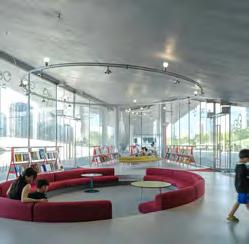
In 2022, only 33% of 8th graders performed at or above the National Assessment of Educational Progress (NAEP) “proficient” level in literacy skills.
US States with the lowest literacy rates are concentrated in the south.
US Literacy Rates by State. U.S. literacy rates by state 2024. (n.d.). https://worldpopulationreview.com/state-rankings/us-literacyrates-by-state
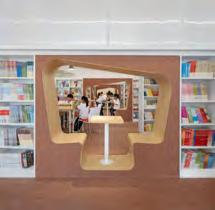
“Public libraries play a key role in these literacy efforts by providing a variety of free programs and rich resources for children and families from all backgrounds.”
Guven, O., & Haddad, Y. (2023, September). Research on Motivation, Literacy, and Reading Development: A Review of Best Practices Final Report for the Institute of Museum and Library Services. Arlington, Virginia; Advancing Evidence Improving Lives.
“As gateways to knowledge and culture, libraries play a fundamental role in society. Foundational in creating opportunities for learning, as well as supporting literacy and education, the resources and services each library offers all work towards helping to shape new ideas that are central to building a creative and innovative society.”
Joson, Jullia. (2022, June 26). The important role libraries play in building a creative and Innovative Society. ArchDaily. https://www.archdaily.com/984145/ the-important-role-libraries-play-in-building-a-creative-and-innovative-society?ad_medium=widget&ad_name=related-article&ad_content=1019881.
“The connection with play, the integration of other uses, or even the incorporation of new technologies typically play a central role in the interiors of contemporary libraries designed for a young audience.”
Iñiguez, Agustina. “Libraries for Children: Dynamism, Flexibility, and Adaptability in Interiors” [Bibliotecas para la niñez: dinamismo, flexibilidad y adaptabilidad en interiores] 18 Aug 2024. ArchDaily. (Trans. Piñeiro, Antonia ) Accessed 25 Sep 2024. <https://www.archdaily.com/1019881/libraries-for-children-dynamism-flexibility-and-adaptability-in-interiors> ISSN 0719-8884.
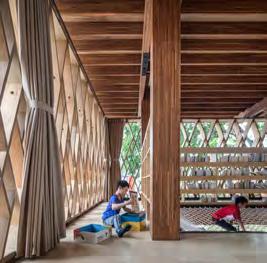
“Libraries are synonymous with education, providing countless resources, namely books, internet access, printing facilities, and educational and professional training programs that can fuel economic, social, and cultural development.”
Joson, Jullia. (2022, June 26). The important role libraries play in building a creative and Innovative Society. ArchDaily. https://www.archdaily.com/984145/ the-important-role-libraries-play-in-building-a-creative-and-innovative-society?ad_medium=widget&ad_name=related-article&ad_content=1019881.
“The pandemic’s disruption created new momentum for libraries to evolve. As today’s libraries transform from being solely places for books to taking on new roles in society, they are becoming multi-use destinations, allowing users to reclaim new and unique experiences.”
Gensler. (2019). A New Model for the Public Library. In https://www. gensler.com/gri/a-new-model-for-thepublic-library. Retrieved October 16, 2024, from https://www.gensler.com/ gri/a-new-model-for-the-public-library#doc|29c|3687592452|UmVzZWFyY2ggLSBBIE5ldyBNb2RlbCBmb3IgdGhlIFB1YmxpYyBMaWJyYXJ5


























If you could choose any general services that the public library could provide what would your top 3 be and why?
1. Make resources available to those who are unable to access due to transportation issues, such as a book mobile.
2. Provide digital devices through a lease, “low-rent” program with free wi-fi.
3. Incentive programs for families that would encourage the use of the public library.
1. Programs to educate caregivers of preschool aged children providing information regarding what children should know prior to entering Kindergarten and how to teach these skills at home.
2. Reading to young children.
3. Programs to provide adults and caregivers with literacy skills so they may in turn help their children.
What is the current role of the public library in improving literacy skills within the community?
Provide access to books.
Offer story time for children and book clubs for adults.
In your professional opinion, what interventions are helpful for students outside of the classroom to improve their literacy skills?
Language rich family environment to include conversation, opportunities for reading, and speaking using a high level vocabulary. One of the simplest to implement is adults reading aloud to children.
Nightly reading at home with a caregiver, tutoring services if needed and immersive opportunities for reading.
What gaps are currently in the school library system that can be filled by the public library?
Time restraints, behavior management, funding and parental involvement.












Gaps exist primarily due to lack of staffing and financial support. Public school libraries have had recent budget cuts removing funds for assistants and materials purchase as well as removal of technology teachers and school media specialists. Public libraries should be able to help with resources for parents and caregivers as they fill the gap with material resources that are not able to be purchased at schools.






A. Langston, personal communication. October 10, 2024. J. Henderschott, personal communication. October 1, 2024.


"Revitalizing the Local Library: Diverse Functions to Drive Community Engagement" 06 Oct 2024. ArchDaily. Accessed 21 Oct 2024. <https://www.archdaily.com/1021710/revitalizing-the-local-library-diverse-functions-to-drive-community-engagement> ISSN 0719-8884

available financial means.
How are designers re-imagining library spaces as vital community facilities with new demands and tighter financial constraints?

Rural communities throughout the southern United States are often overlooked and under funded. The shift to industrial agricultural practices and urban renewal programs moved small town jobs, people and financial urban resources away from small population municipalities and into the city suburbs leaving an epidemic of poverty. Low income families face many challenges in addition to financial struggles including limited access to resources, poor physical health, increased stress levels, poor work life balance, and limited educational opportunities.
Lack of educational opportunities in poverty-stricken regions makes further limits people’s ability to break the cycle of poverty. The relationship between poverty and poor literacy skills is pronounced, often with the two challenges intimately intertwined. Individuals lacking the ability to read and write have very limited job opportunities and are generally employed in entry-level, low skilled jobs. Many families are forced to choose between sending their children to school (this includes middle school, high school or college) and immediate income production leading to higher drop out rates.
Individuals with literacy skills have access to more career possibilities, many of which are highly skilled and wellpaying. Literacy skills are also associated with positive health outcomes, enhanced communication, improved personal well being, critical thinking skills, and self esteem.
One of the best ways to empower these communities is to give them the tools to improve their literacy skills. The following proposal for the Beaufort County Public Library will be a resource providing innovative tools to improve will be a community literacy.
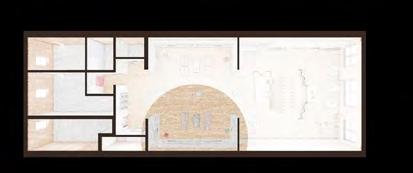
Centrally located at 106 West Main Street, the library’s literacy annex will occupy the entire structure, utilizing 13,000 square feet spread over four levels to provide unique opportunities for community engagement, social academic opportunities, play and learn spaces,creative story-telling and inventive technology interfaces. The project will be funded by LTSA grants and the Historic Preservation Fund.
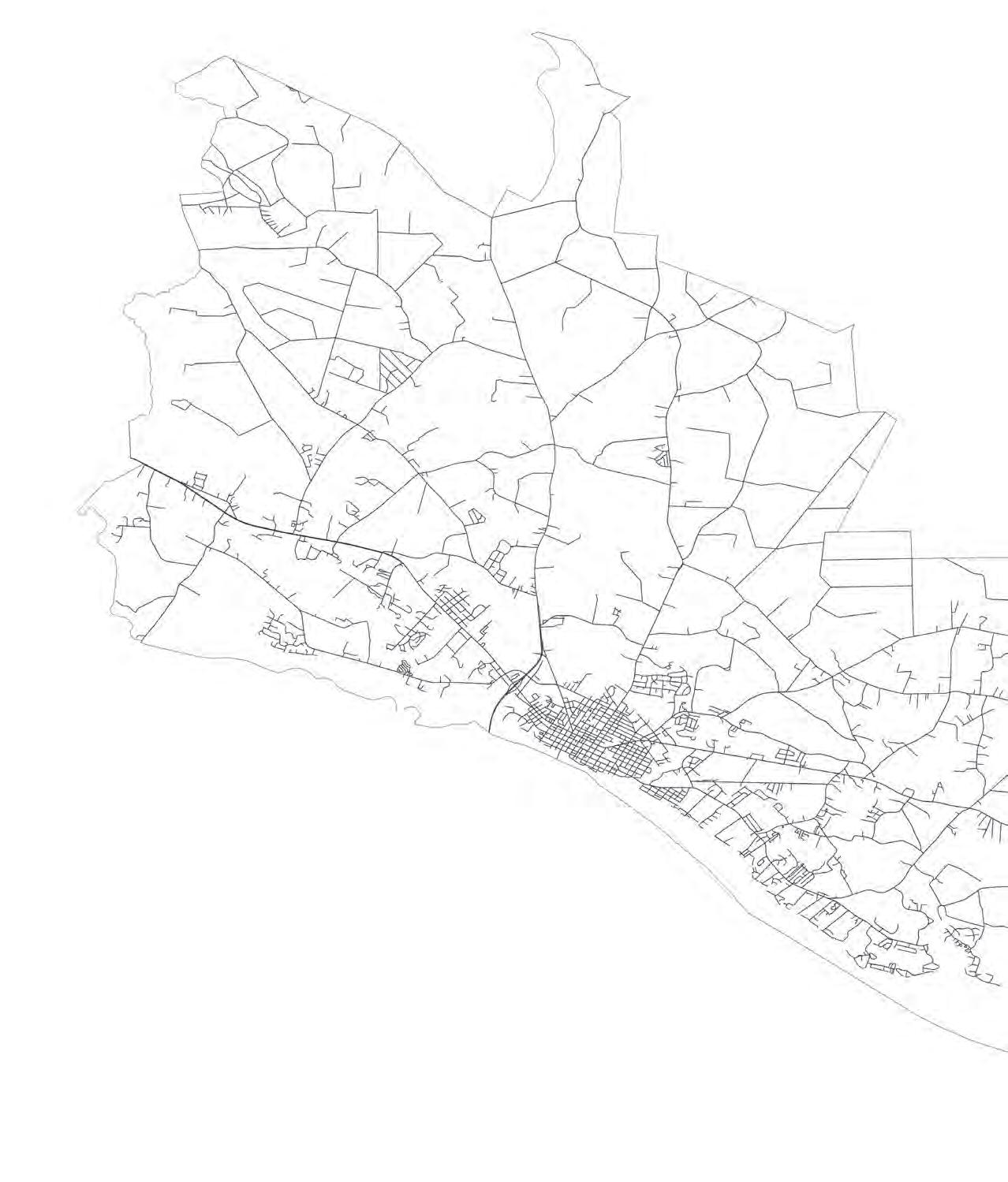
The first English explorers visited the area that would become Washington as early as 1585, however, it wasn’t until the 1690s that the first settlements appeared. In 1705, Bath, located 15 miles to the east of present-day Washington was founded and became the first town in North Carolina. The region was called a number of names until 1712, when the county was named Beaufort after the Duke of Beaufort, Henry Somerset. The settlement that would be called Washington appeared in the 1770s, when James Bonner started a town on his farm, which bordered the Pamlico and Tar Rivers. Initially called Forks of the Tar, the name was changed in 1776 to Washington in honor of General George Washington, making the “Original Washington the first town to be named after our First President.
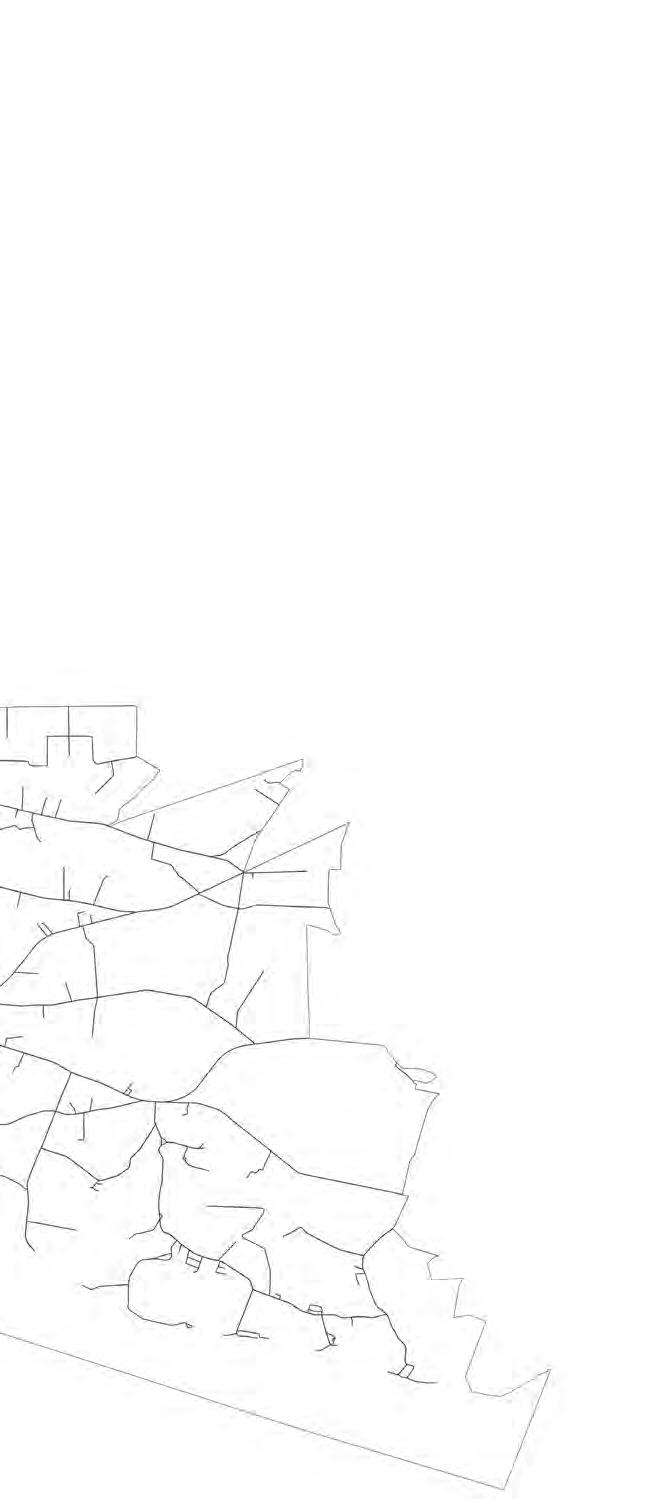
Washington played a pivotal role during the War for Independence. With Savannah, Charles Town, and Wilmington besieged by British forces, the Continental Army relied on Washington as a crucial supply port. After the war, the town gained significance as a commercial and cultural hub, thanks to its prime location along navigable waterways. Washington emerged as the economic heart of Beaufort County, thriving in agriculture, fishing, and trade. By the late 18th century, the county seat of government moved from Bath to Washington, offering a more central location in a county divided by the Pamlico-Tar River.
During the War Between the States, Washington fell to Federal troops early on, which curtailed its role in the conflict. The aftermath was devastating; Federal forces set fire to naval stores as they evacuated under pressure from the Confederate Army, resulting in the destruction of many early buildings of historical and architectural importance.
Residents rebuilt the town, only to face another disaster on September 3, 1900, when a faulty stove flue ignited a fire that ravaged much of the newly reconstructed central business district. Much of the downtown area’s late Victorian architecture was rebuilt in the following decade and remains one of the most well-preserved and historically significant commercial districts in eastern North Carolina.
In 1969, Washington embarked on a major renovation project that included the construction of Stewart Parkway, a road and park along the waterfront. This initiative featured a 1,500-foot walkway and bulkhead designed for both pedestrians and boats. In 1978, the Washington Historic District was established and listed on the National Register of Historic Places, encompassing over 600 properties in the central business and residential areas. While most structures date from the late 1800s and early 1900s, a few from the late 1700s and early 1800s survived the two major fires. A revitalization effort that began in the early 1990s continues today, bringing new shops and restaurants to the historic downtown area overlooking the Pamlico River. In 2002, the city completed Renaissance and Storm water Management projects, enhancing access to the waterfront and improving traffic flow and parking while strengthening the connection between the waterfront, Historic District, and downtown.
Today, Washington plays a vital role in Eastern North Carolina. With a population of about 10,000 and a broader community of around 26,000, it serves as the economic, cultural, recreational, and medical center for Beaufort County and beyond. While the rivers are no longer central to shipping, they provide valuable recreational, ecological, and aesthetic benefits. With a renewed focus on historic preservation and downtown revitalization, Washington embodies its motto: “Pride in the past, faith in the future.”
City of Washington, NC. (n.d.). https://www.washingtonnc.gov/residents/community_information/history.php
The library is right on Main Street! This means our visitors will be both locals and tourists. Our storefront should be easy to spot from the street. There’s ample parking in the area: spots on main street, a lot by the visitors center and even a parking lot behind the building. Most guests will be driving into town. There’s always something interesting happening downtown. The Washington Harbor District Alliance has great marketing of events such as Christmas Market and Food Truck Crawl. Surrounded by local restaurants and artisan shops, the library will be a great literary addition to the growing cultural community.
I’ve been doing some research on the new library site to better understand how we will fit into the community. Let me tell you a few interesting things I’ve found.
Gallery — West Main. (n.d.). West Main. https://www.thewestmain.com/ gallery?itemId=nthfysbomqqpobwffzskcgma89k6mc
Purvis, K. (2022, August 23). Best restaurants in Washington, North Carolina. Eater Carolinas. https://carolinas.eater.com/2022/8/23/23318052/ where-to-eat-washington-north-carolina
TURNAGE THEATER — CLEARSCAPES. (n.d.). CLEARSCAPES. https://www. clearscapes.com/turnage-theater
WHDA. (n.d.). WHDA. https://whda. org/
The local Underground Railroad Museum, the NC Estuarium and the historic Turnage Theater will make great community partners.
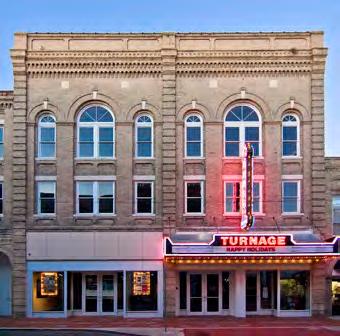
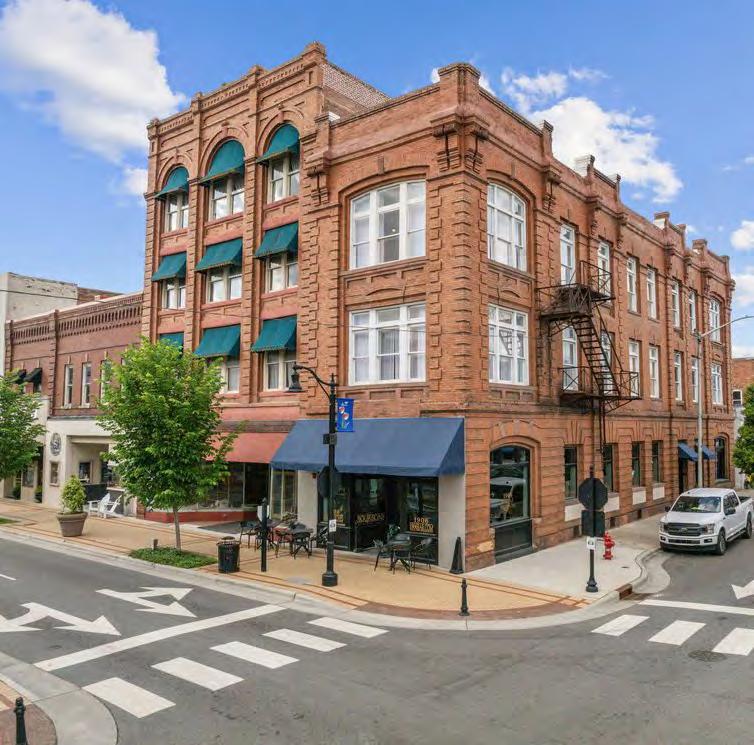
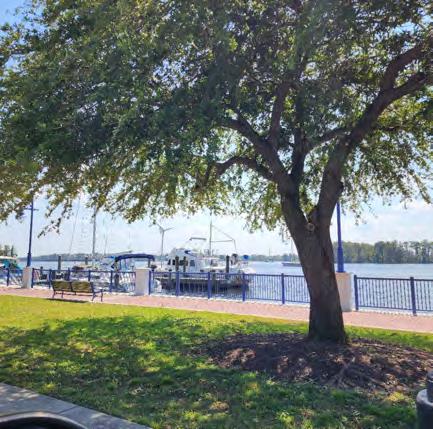
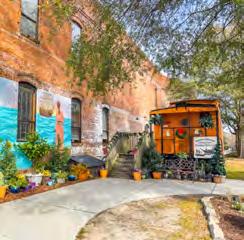
Rich architectural history with an emphasis on historical preservation creates the perfect opportunity for creative design with an emphasis on place and storytelling.
Everything is oriented towards the riverfront or Main Street. The urban landscape is structured in a grid patter allowing for easy way finding and a concentration of commercial structures.
Colorful downtown.
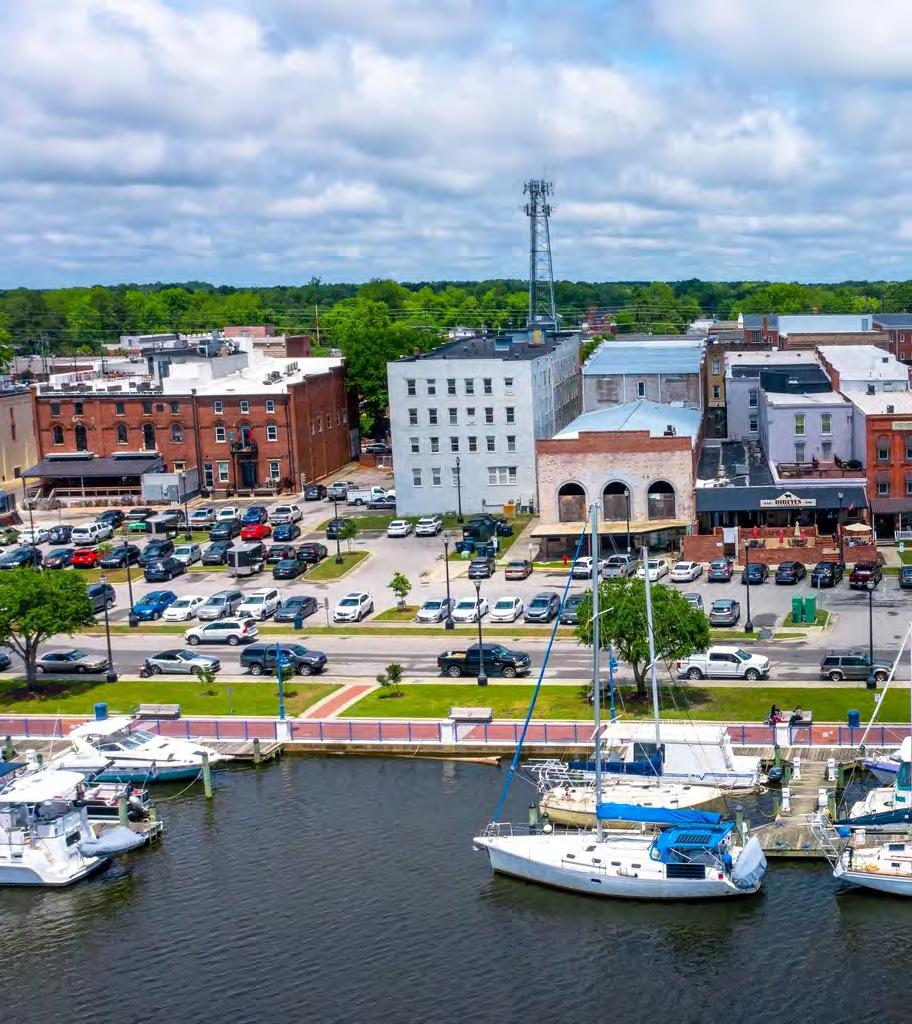
Many public events take place along the waterfront park providing opportunities for collaboration, space for community gathering and increased foot traffic due to ancillary attractions.
Lots of green public space.
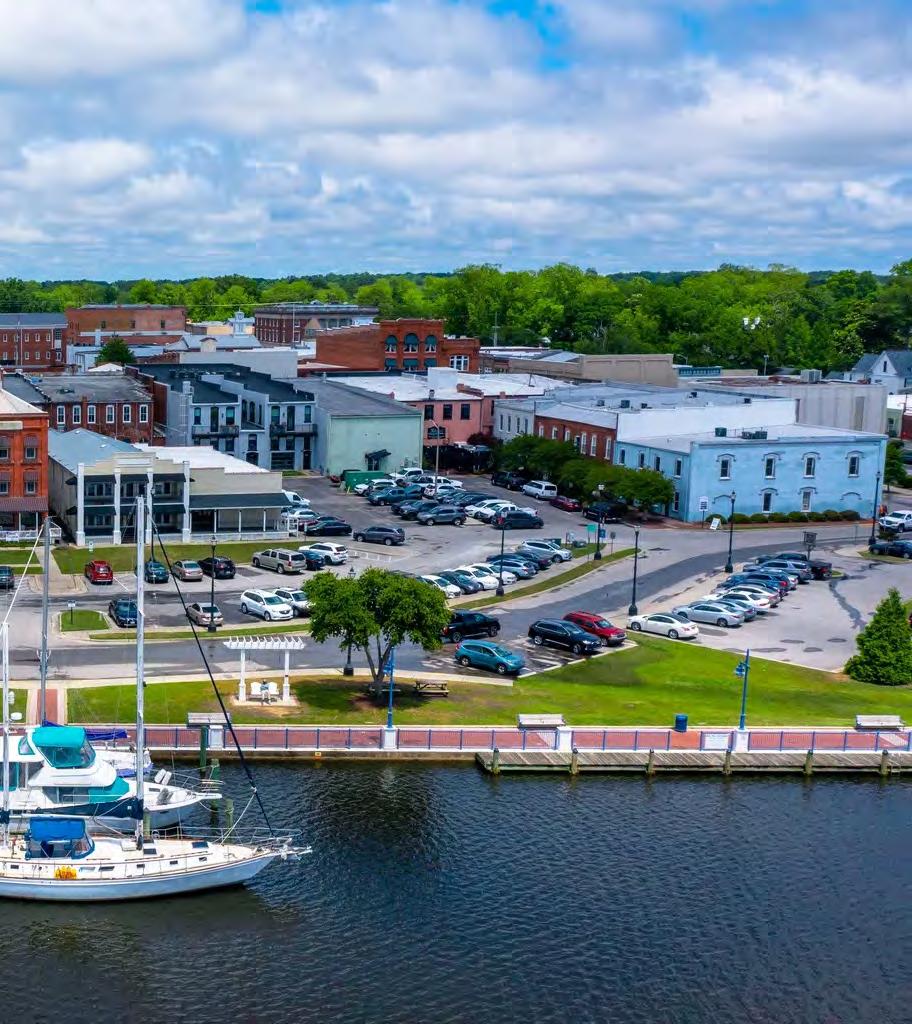
Library site is one of the tallest buildings in downtown. Views from the second and third floor will be limited to the building across the street, but the fourth floor has open views towards the riverfront.
SW windows receive the most light and are the hottest. As the only source of natural light for the structure, this light will need to be harvested for the rest of the building’s interior.
Facade faces southwest.
Lots of parking for cars and boats nearby with the majority of parking located on Main Street and the Waterfront. Guests will approach the Library on Main Street with first impression being the store front.
Adjacent residential areas provide easy access for both low and high income families.
10,439,388 TOTAL POPULATION
59.5% EMPLOYMENT RATE
$70,804 MEDIAN HOUSEHOLD INCOME

DEGREE OR HIGHER
1,118,596 HISPANIC OR LATINO

AMERICAN INDIAN & ALASKA NATIVE ASIAN BLACK OR AFRICAN AMERICAN HISPANIC OR LATINO NATIVE HAWAIIAN / OTHER PACIFIC ISLANDER NOT HISPANIC OR LATINO SOME OTHER RACE TWO OR MORE RACES: WHITE 130,032 343,052 2,140,217 1,118,596 8.518 6,312,148 617,390 711,721 6,488,459
EDUCATION ATTAINMENT, (POPULATION >25) PERCENTAGE OF POPULATION
U.S. Census Bureau. (n.d.). Explore Census data. https://data.census.gov/profile/ North_Carolina?g=040XX00US37
44,652 TOTAL POPULATION 52.2% EMPLOYMENT RATE

INCOME
U.S. Census Bureau. (n.d.-b). Explore Census data. https://data.census.gov/profile/ Beaufort_Co. . .?g=050XX00US37013
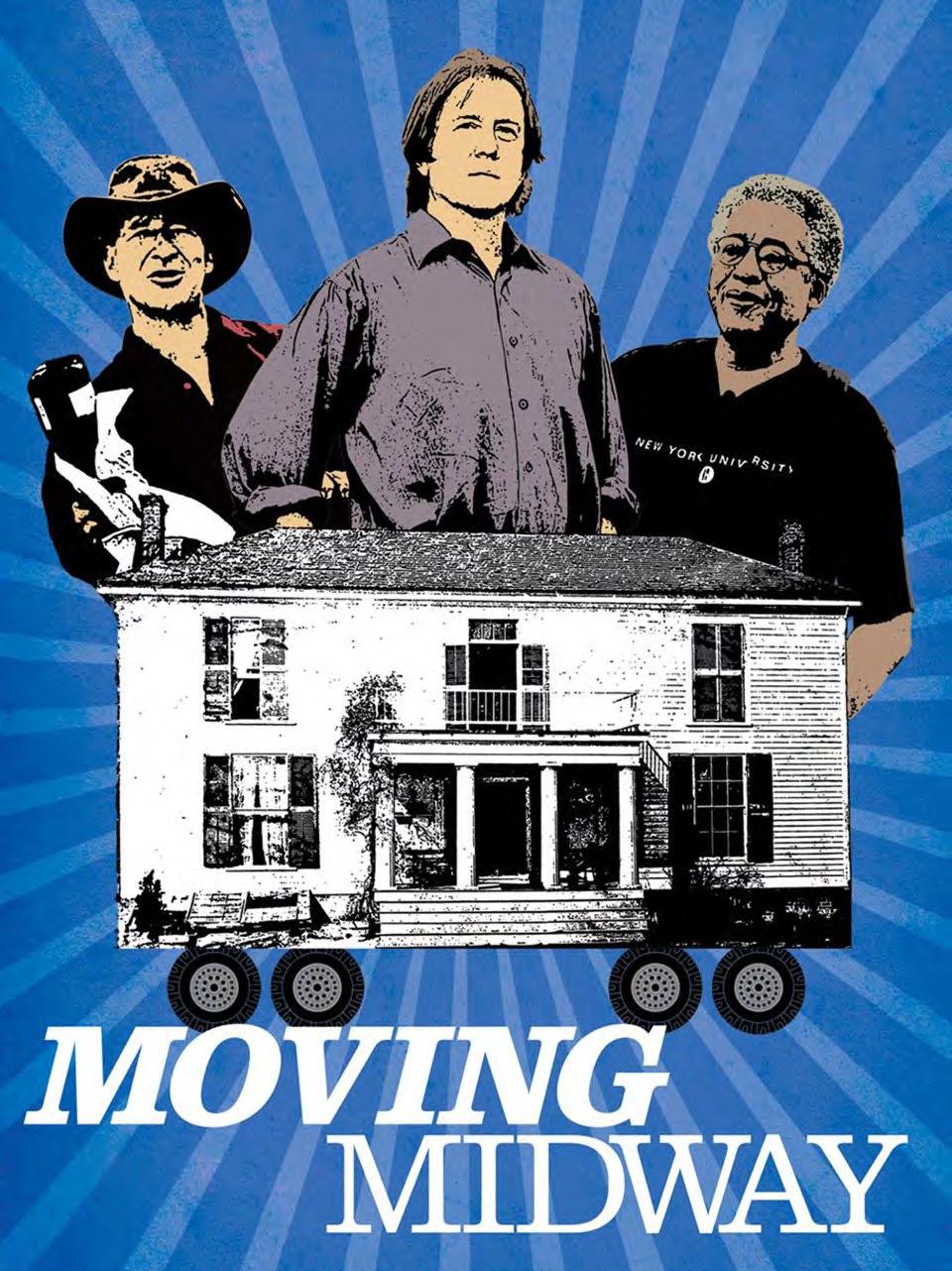
Moving Midway, a 2007 American documentary film directed by film critic Godfrey Cheshire tells the story of Cheshire’s cousin Charlie’s moving the Midway Plantation House and Outbuildings to a new location. The documentary explores what Midway means to the family and other community groups addressing key cultural issues of the American south
What social, political or cultural issues are integrated into the structural framework of urban systems in North Carolina? Southerners have a long history of seeing themselves as having a distinct culture. That culture was created to resemble that of nobility with families, especially the wealthy, often attempting to connect family bloodlines to that of royalty or nobility and building large estates to display their wealth. Currently, those large estates can be found in suburbs across America, but those communities were inspired by the idealized Southern Plantation Home. With large discrepancies in cost, access, and quality of life between suburbia and urban subsidized housing, one is challenged to question the dark history of the plantation, segregation and other racial disparities and their role in the current cultural landscape.
Are there common core values for the residents of North Carolina? If so, what are they?
Common core values for North Carolinians found throughout the film include integrity, resourcefulness and the value of freedom. As an agrarian society, the long held belief that land ownership allows you to control your own destiny remains prevalent among citizens. Many, regardless of race or socio-economic status, recognize the home as central to family life highlighting the importance of family connections maintained over multiple generations. Also integrated into daily life is the act of storytelling. For many, storytelling is a way to preserve memories, family history, and lineage that without storytelling, would be lost to time.
How has the turbulent history of the south shaped the current cultural landscape of North Carolina? The turbulent history of the south has absolutely shaped the current cultural landscape of NC with many residents’ lineage being unknowingly intimately intertwined. Looking to the future, North Carolinians must view the south as a mixed-race society, allowing improved equity and representation.
What architectural elements are key cultural symbols in rural southern communities?
Architectural elements that have become key cultural symbols of rural southern communities includes large Plantation Homes as well as smaller farm houses and their outbuildings. Most historical structures utilized timber framing far exceeding current standards creating sturdy and strong structures that remain in use today.
What role does historical preservation play in the current architectural landscape of rural communities? There are different opinions between black and white Americans regarding the role of preservation in the south. Much of the state’s history lies within rural communities that are slowly dieing or being taken over by the suburbs. Architecture and landscapes that previously preserved memories and told stories of the past are now being replaced with parking lots and shopping malls. While some are glad to see historically oppressive cultural constructs fading from view, one must question their role in influencing both cultural and individual identity. Humanity must preserve a sense of self, a form of identity to be healthy. In order to do so, one must have the opportunity to make sense of where they are from. Will future generations have this opportunity if the past is erased?





Beaufort County Public Library
User Profiles
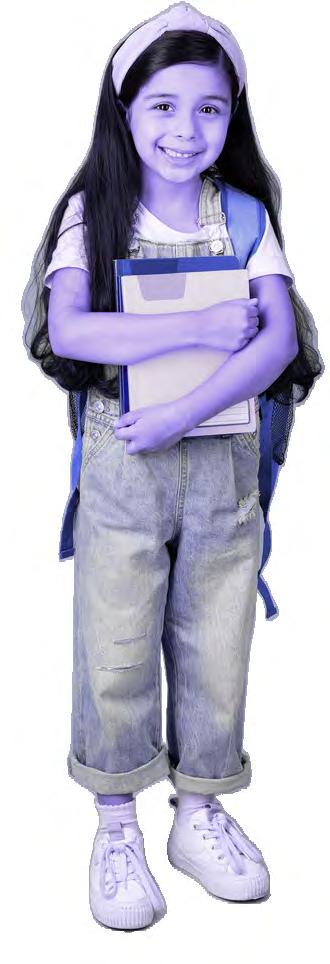
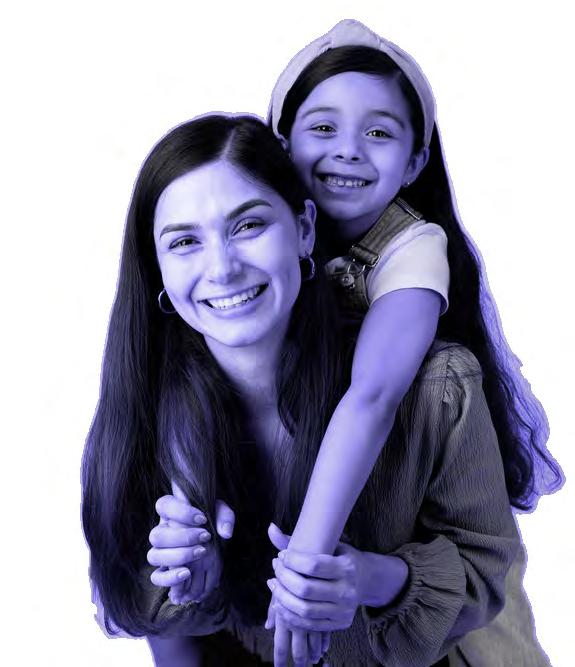
Mi nombre es Sofía y esta es mi madre, Sara. Tengo 8 años y vivo en Washington, Carolina del Norte. Mi mamá y yo nos mudamos aquí desde Veracruz, México, el mes pasado. Fui a mi primer día en mi nueva escuela esta semana. Es mucho más pequeña que mi última escuela y no hay profesores que hablen español. Algunos de mis compañeros de clase hablan español, ¡pero su inglés es mucho mejor que el mío! Espero poder aprender inglés rápido, para no quedarme atrás en la escuela. Mis clases favoritas son ciencias y matemáticas y los fines de semana me encanta ir a la biblioteca y al parque con mi mamá.


I see you have already met my Sofia. We moved in with my parents a few short weeks ago. They moved to the United States 10 years ago. When my husband passed away last year, Sofia and I decided to join them. Family is the best support system in times of tragedy and heartbreak. My parents have so graciously welcomed us into their home to help me care for Sofia while I go to Nursing School. I worked in the hospitals in Mexico but am required to have a nursing license to practice in the United States. The public-school systems in Beaufort County are not the best, but it’s where our family resides. I am hopeful that there are opportunities for learning outside the classroom. In Vera- cruz, Sofia and I spent many weekends at the public library reading books, meeting authors, making crafts, and volunteering. I hope this small town has similar community programs, and I could really use a quiet place to study away from my parents’


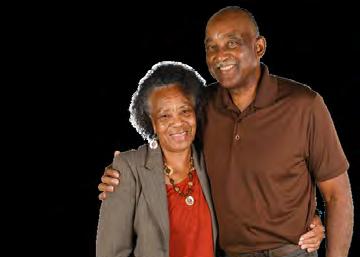
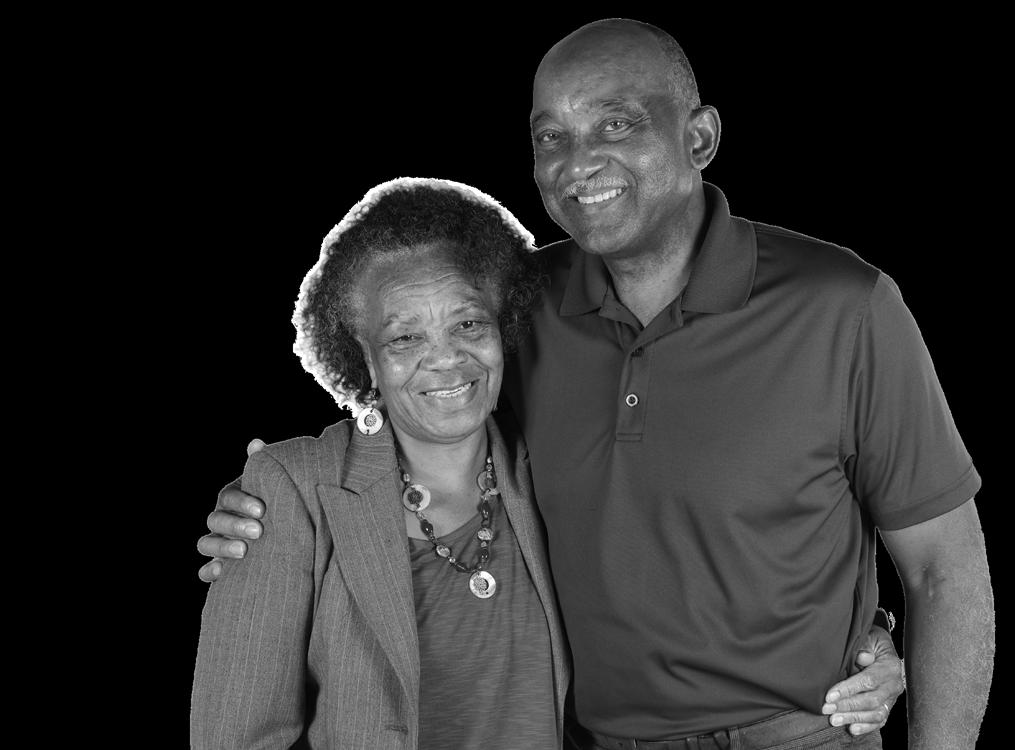
years of marriage! Can you believe it? Ella and I got married at the ripe young age of 16. Times were different back then. Ella was a pregnant teenager and I loved her so we tied the knot and started growing our little family. We were blessed with 3 children, Isaiah, Ruth and Booker Jr. Our kids are all grown up now, with kids of their own so now it’s time for Ella and I to do some things we didn’t have time for as young parents. We both dropped out of high school to care for Isaiah. I got my GED a few years back, but Ella was too busy helping take care of the grand babies to study. We are so grateful that our public library has excellent resources for obtaining your GED. Ella can take the grandkids to the library for read alouds and arts and craft events where they have real great childcare so she can get help from the librarian and her study group with GED practice tests. They even started holding events for seniors! Sometimes we go down to the library with our friends to socialize with other people our age, learn about community happenings, and meet local authors. We really love our little town.
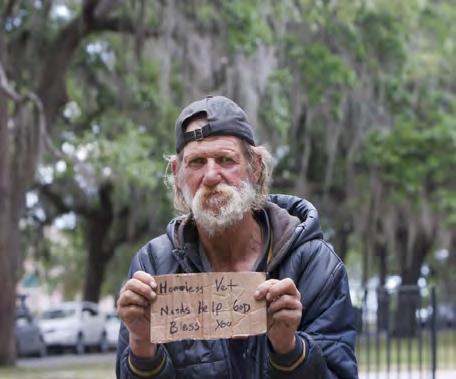
How y’all doing today? My name is Beau. I am a Vietnam Vet and I’m currently homeless.
I have PTSD and had a hard time finding work in the high stress conditions post pandemic.
I’m not from NC, but I was living in Raleigh when I lost my job as a cook during the COVID pandemic.
I like to visit the library when I’m not farming to read and get a break from the elements.
I traveled east to rural communities hopeful for a job working on a farm. I love my new community.
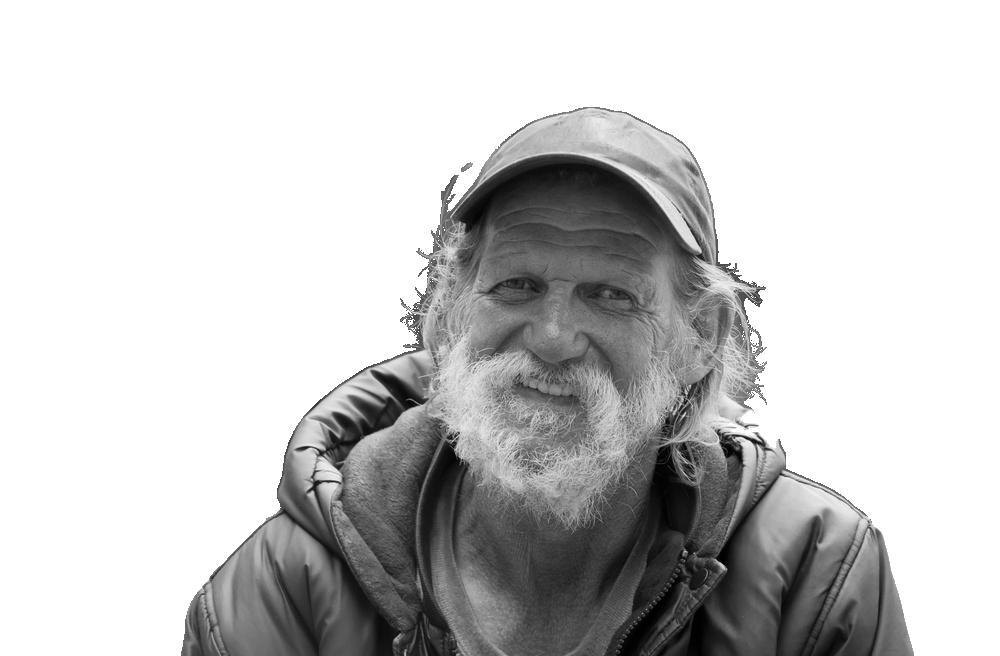
Maybe I can use the library’s computers to job hunt. I’m feeling better and would like another restaurant job.
Hello everyone. My name is James and I’m your new librarian. I graduated from North Carolina Central University with a Masters in Library Services in 2022. I’ve spent the last two years working at the New York Public Library where I met my wife, Mary. Mary is an elementary school teacher specializing in literacy. Our mutual love of books and the art of storytelling set the stage for rapid romance. We were married one short year after we met. Unfortunately, life in New York City is expensive, and with the current social issues and safety concerns the city has faced post pandemic, Mary and I decided to head down south to my hometown of Washington, NC. The NC Public Library system was just awarded a substantial grant to re-imagine what rural public libraries look like. Mary and I hope to make lasting changes to our community. Literacy rates in the rural south are on a steady decline. We jokingly call ourselves the dream team - literacy expert and librarian. We can’t wait to flex our creativity muscles and challenge current norms.
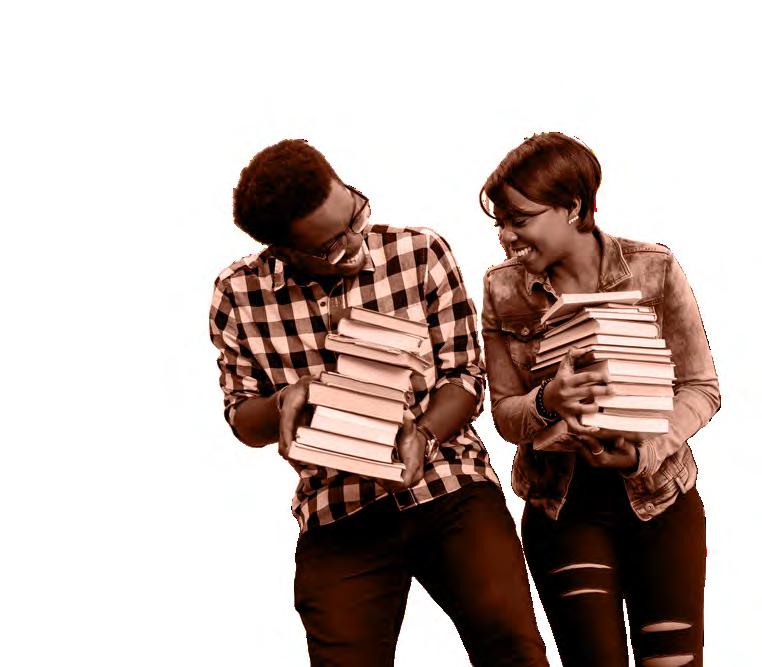
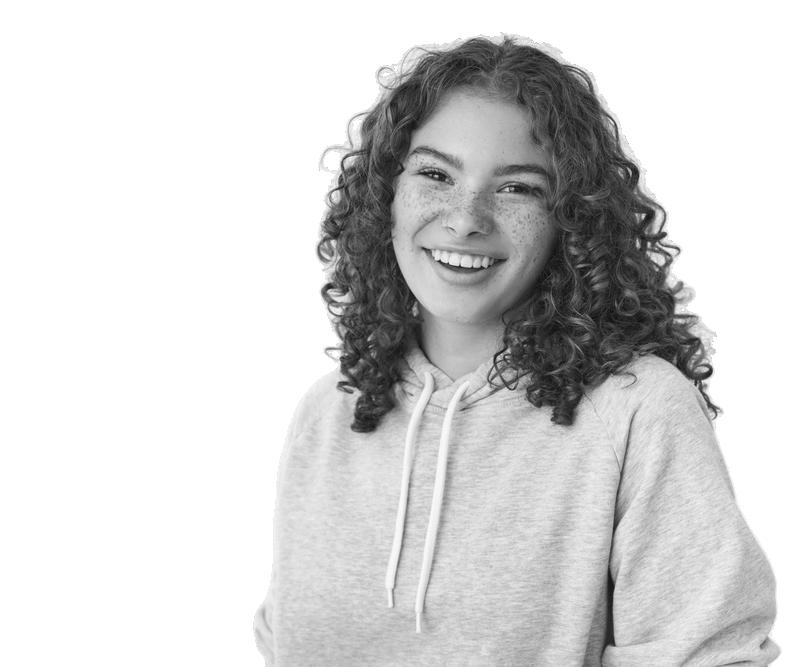
Hi guys. I’m Casey. I’m a senior at Washington High School. After graduation in June, I plan on attending East Carolina University in the fall where I plan on studying biology. I’ve always wanted to be a doctor and ECU has a pretty good program. Plus, I don’t have to go far from home! As a firstgeneration college student, I’m nervous and want my family close by for support.
I volunteer at the Beaufort County Public Library library during the summer and once or twice a week during the school year. They have tons of resources for high school students. They were able to help me study for my SATs, complete my college applications, and find scholarships that weren’t advertised at school.
Some of my volunteer responsibilities include organizing the books, leading readalouds for the kids,decorating for holidays and special events as well as helping the staff create events for local teens. Recently they’ve even asked for my input on curriculum develop ment for preschoolers!
I’m really going to miss my library family when I go to college next year, but I’m so grateful for their positive influence in my life and investment in my future.

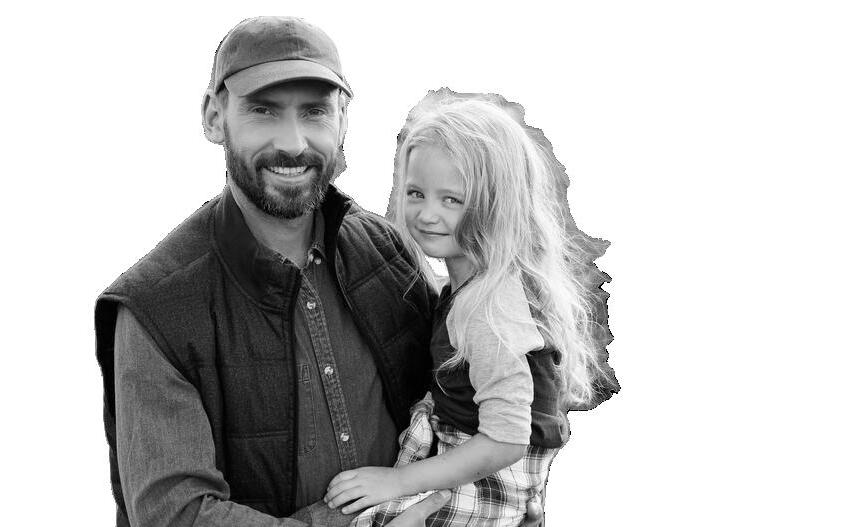
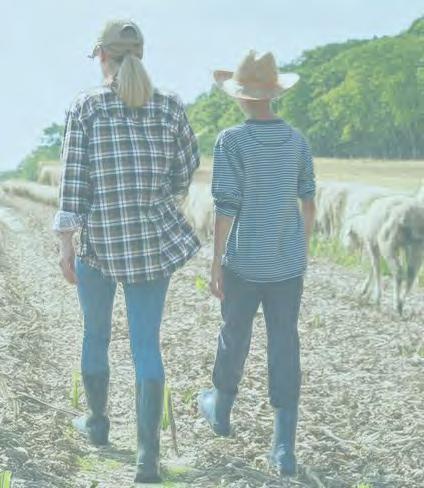
Did you know Beaufort County, North Carolina has some of the most productive soils in Eastern NC? Our county consists of just under 140,000 acres of farmland with the average farm size of 540 acres. We’re the Hoggard family and we’ve been farming this land for 6 generations. Our main crops are soybeans and corn. We also have free range chickens and sheep! My wife, Helen, and I inherited the farm several years ago and have been overhauling our farming practices ever since.
Helen is a Registered Nutritionist and I studied agriculture at NC State University. We’ve always been passionate about food, but once we had our two kids, Sam and Harper, our passion turned into a mission.
We love our hometown and believe in the importance of having a sense of place. Investing in our community is imperative for the success and wellbeing of future generations. One way we like to do this is by participating in local events at the public library. Several of the kids’ classmates get involved too! It’s a great time for us to get to know their peers, spend time with our friends, and meet other parents in town.
Harper loves to read and Sam has a great time digging up local myths and legends with his friends. We are so grateful they still love doing things with their parents and we hope our strong family bonds help create strong personal identities in our children.
Hofmann, C. (2021, January 28). Beaufort County ranks top in the state for soybean and corn production - Washington Daily News. Washington Daily News. https://www.thewashingtondailynews.com/2021/01/28/beaufort-county-ranks-top-
NURSING HOMEWORK
Follow some of our key personalities as they interact with various reading materials throughout their day. The size of the bubble represents the level of difficulty each user had with the specified literacy task. The bigger the bubble, the bigger the struggle.
READING FOR FUN
SCIENCE HOMEWORK NOVEL
SPANISH NOVEL
SPANISH HOMEWORK
SOFIA’S

SPANISH SUBTITLES ON TV NUTRITION LABEL
DIRECTIONS
FINE PRINT FOR PRODUCT RETURNS
HOMEWORK WRITTEN IN ENGLISH
SOCIAL MEDIA
BIOGRAPHY OF JFK
SCHOOL SIGNS
CITIZENSHIP APPLICATION/ PAPERWORK
CHEMISTRY HOMEWORK
COLLEGE ACCEPTANCE
FINANCIAL AID PACKAGE
YOU-TUBE SUBTITLES
APPLICATION
REPORT PRIMARY PROVIDER MEDICAID APPLICATION

CHILDREN’S BOOK
MEDICARE BENEFITS DOCUMENT
TEXTS
EMAILS
MENU MATH PROBLEMS
COLOR FLASHCARDS IN ENGLISH
VA BENEFITS PAPERWORK
NUTRITION LABEL
W2 FORM
BUDGET
CHALKBOARD AT SCHOOL
STREET SIGNS
MEDICAL INSURANCE COVERAGE DOCUMENTS
RENTAL CONTRACT
BUDGET SPREADSHEET
HW HW
MENU AT SCHOOL CAFETERIA
SUBTITLES ON TV NOTES FROM FRIENDS
FINANCIAL BUDGET
STREET SIGNS
WEEKLY BUDGET
NOVEL IN ENGLISH
DRIVER’S LICENSE TEST
JOB APPLICATION
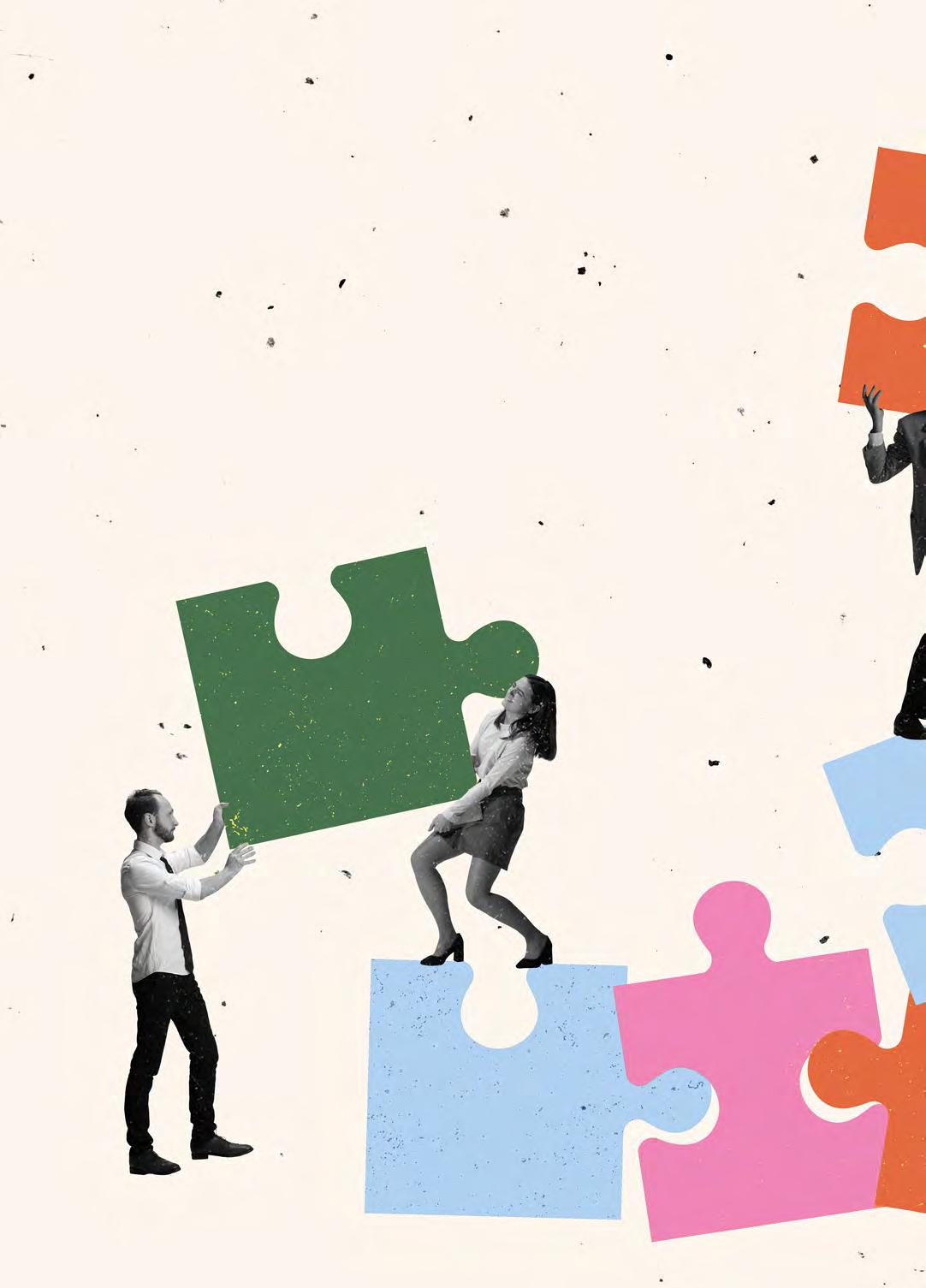
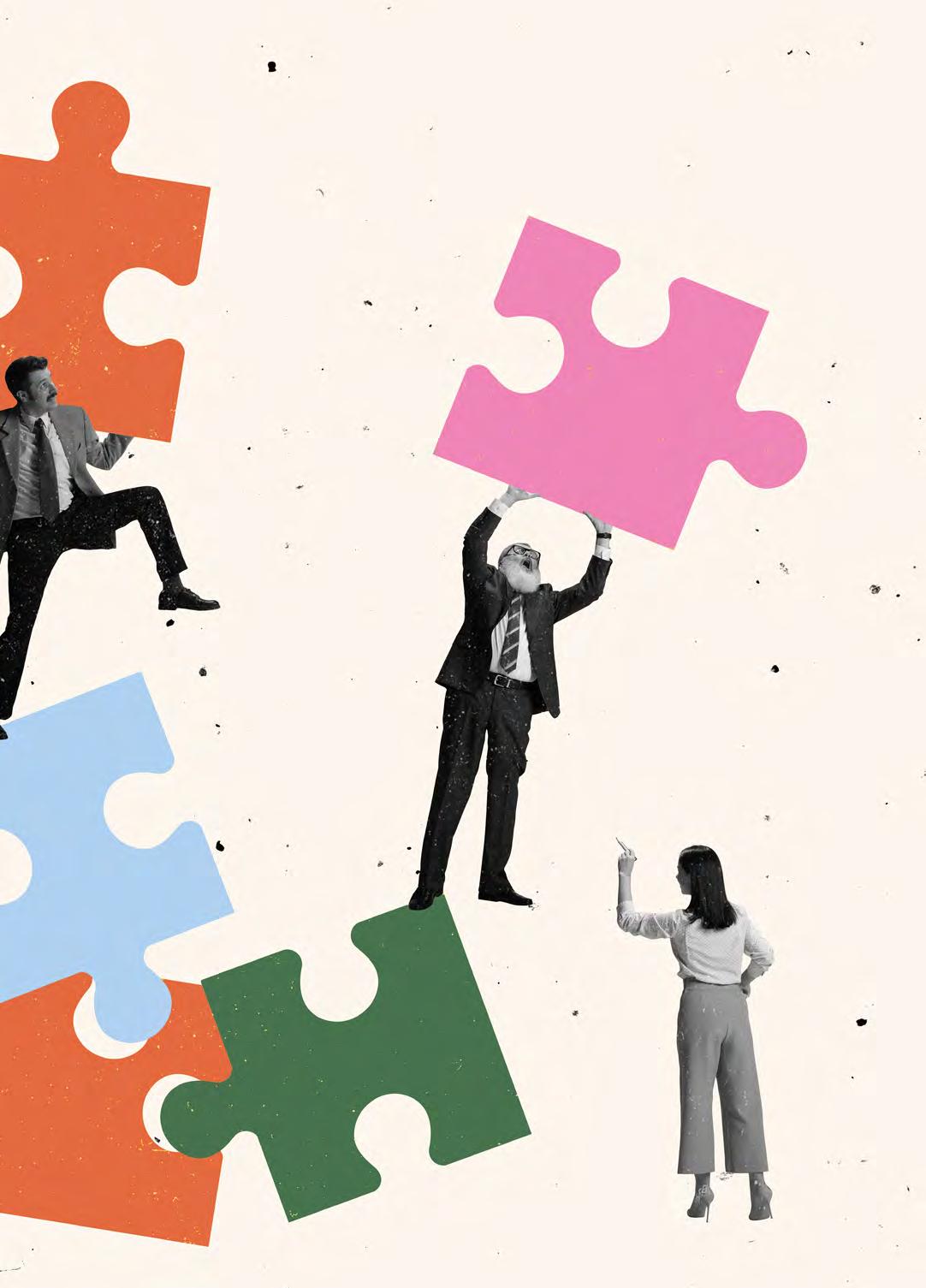
Story. Best way to learn literacy skills. Regardless allow for both. Written and Spoken word. Literacy. Auditory/ create supportive environment for learning? How can visual Comic Book. Digital Media. Other forms of storytelling of knowledge. Before written story there was oral story. American culture. “Keeper of Stories.” WE all have a they are. Story as a way of personal expression mental wellbeing. Ability to personalize. Self expression. connection. Place informs story. Provides context. All place. Curiosity killed the cat. Individual v. group. Individual informed by place. Story and Identity. What are interactive. Experience differently each time. Agriculture. senses. QR Codes. Scan for information. Extroverted v. story. Storytelling - welcoming. What makes people want to discover ourselves. Read to discover world. Everyone reads different books. Imagination. for transportation to these worlds. Expand Horizons. Open dream. Take you to new places. Learn new skills. Transition between worlds. Requires participation. safe spaces. Retreats? Longing. Imagination. Curiosity. Transport. New worlds. Portals. Floating. Light. Sleep and dreams. Dreams and ambition. Evening dreams the day. Element of reality plus something not based on reality.
Otherworldly. Altered perspective. Portals
Regardless of age. Oral storytelling as a skill set. Space needs to Auditory/ Visual. needs Both. What visuals visual media tell story and aid in literacy? Movies. Visual. storytelling. History of storytelling. Library as a holder story. Story to pass down knowledge. Folklore. Native a story. Acknowledge Individuality. Meet people where expression and self exploration. Explore story and expression. Individuality. Acknowledge place. Place and story All stories are influenced by, dependent on, connected to, Individual story combined to make collective story. Story What makes people come back? Experiences, events that Agriculture. Teach about things of interest. Engage the 5 v. Introverted. Characters of story. Different parts of want to finish a story? What is a writers process? Read discover other worlds. Books transport to another Imagination. Exploration. Story is the machine, tool, vehicle Open eyes. Journey. Reading allows you to Create. Explore. Develop. Opportunities. Open doors. participation. Requires vulnerability. Design must include Curiosity. Awe. Joy. Hope. Secret longing. Things unspoken. Airy. Wistful. Wishful. Light. Day v. night. Daydream. still have airy quality with glowing light, soft during reality. Has not happened yet. Defies rules of this world. Portals as spatial organization/transition between spaces.






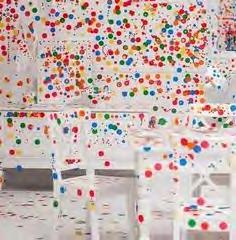


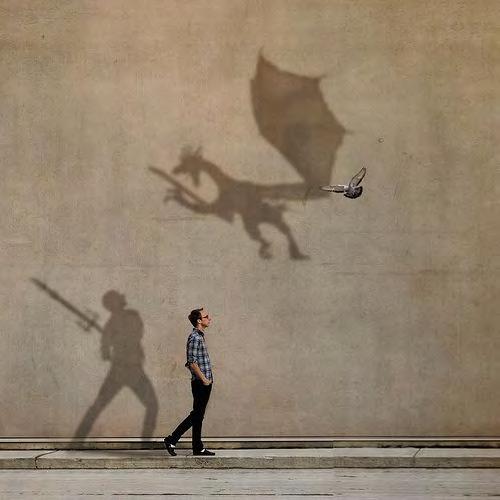

Blurringthe lines between reality and imagination, this multi-sensory immersive environment invites visitors to explore both among flowing spaces, soft lighting and dynamic architectural elements. Interactive zones, art installations and flexible reading areas inspire creativity, spark curiosity and encourage discovery allowing storytelling and imagination to take center stage. The Library will serve as both a sanctuary for reflection and a portal to limitless possibilities where each visitor can unlock new potential at every turn.
Rising Action Climax
Falling Action
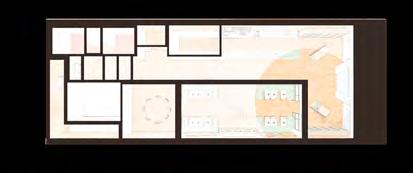
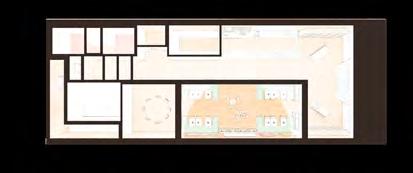
Total Square Footage of building: 13,100 S.F.

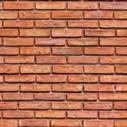
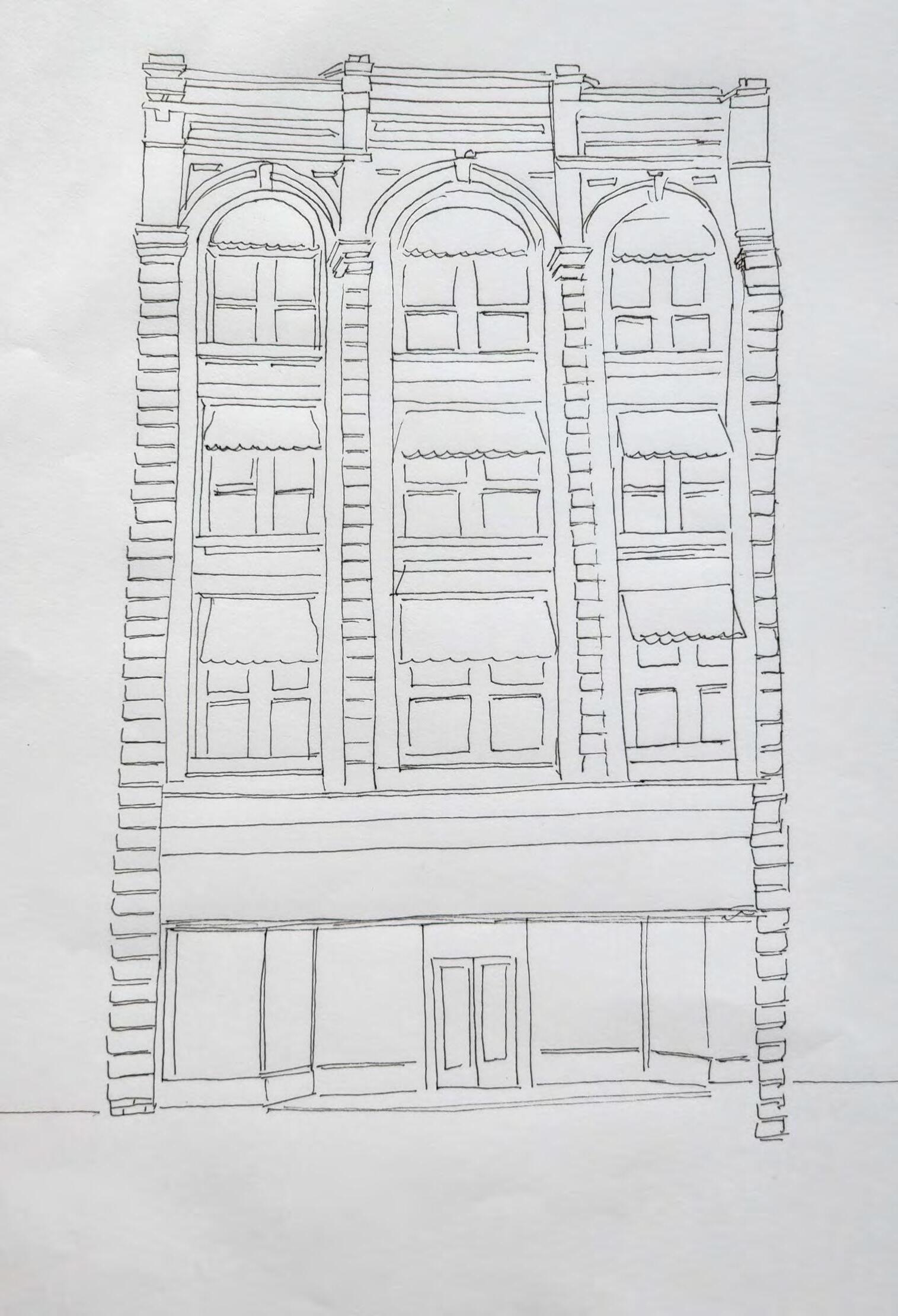
Existing brick to remain.
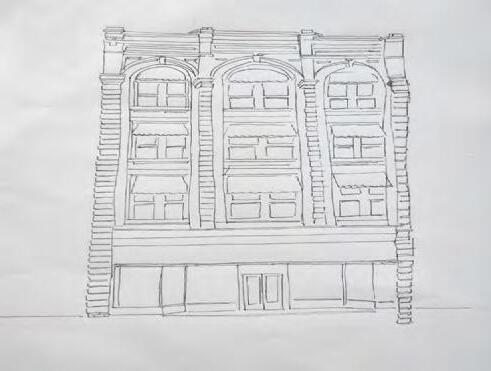
Yellow heightens awareness, implies intellectual energy, sparks curiosity and creates clarity. (Sea, 2022)
Paint this area a bright and engaging color compliant with historic preservation requirements.
Sign / language to inform guests what’s inside.
Glass storefront creates opportunity for community engagement with decorating contests.
DESIGN INTENT: Activate the facade utilizing the sidewalk and front entrance to act as the first portal, transporting visitors from the public street into the ground floor which will contain a cafe, small retail space and an information desk.
Remove awnings to allow for more natural light.
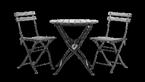
Outdoor seating on the sidewalk.
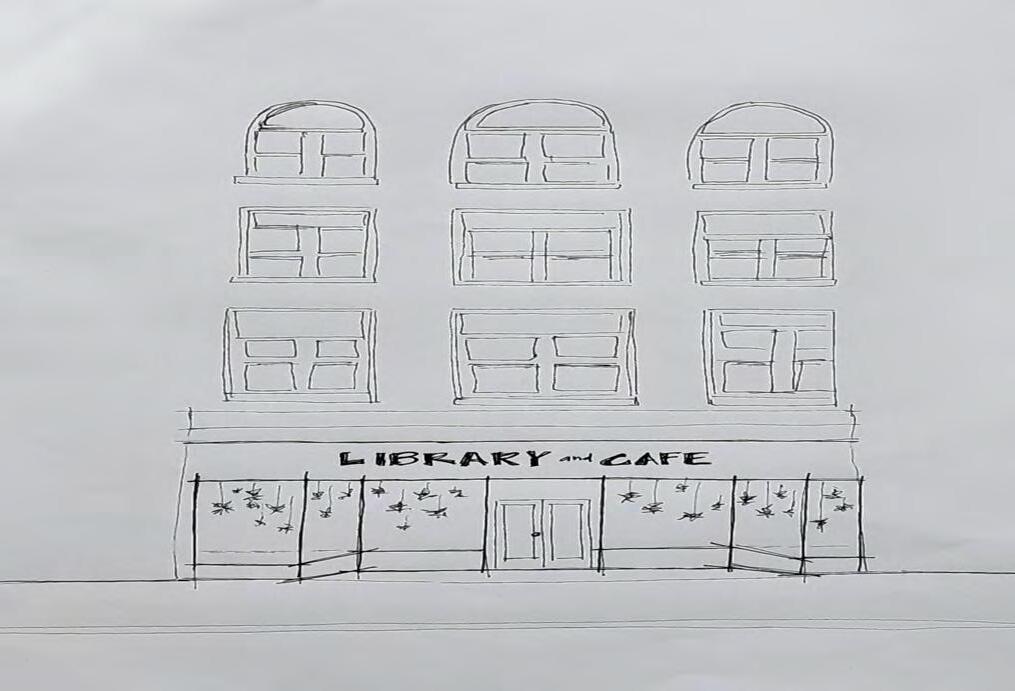
Contrasting door color.
DESIGN INTENT: Ensure equitable access to information and resources provided within the library.
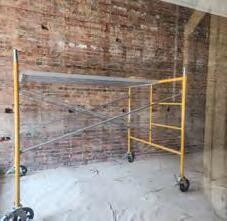
Incorporate existing exposed brick interior to connect to place / building’s history.
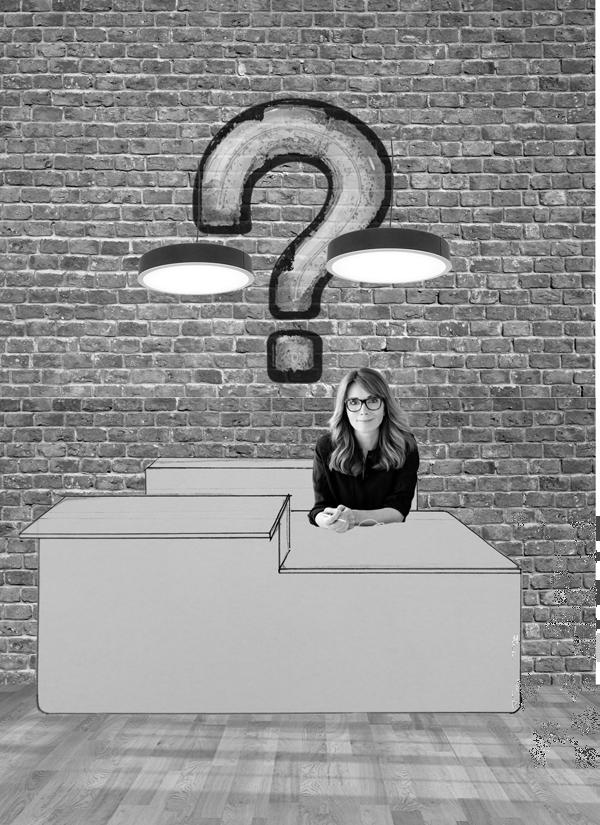
Use of symbols to communicate information desk location instead of words to allow for easy identification regardless of literacy level or primary language spoken.
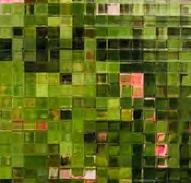
Cross reeded glass creates pixel like effect creating blurred images connecting information desk to concept of blurring the line between reality and imagination.
Self-checkout kiosk allows for flexible user experience.
Bright color so it’s easy to find without instruction/assistance.
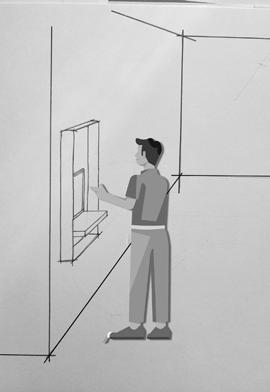
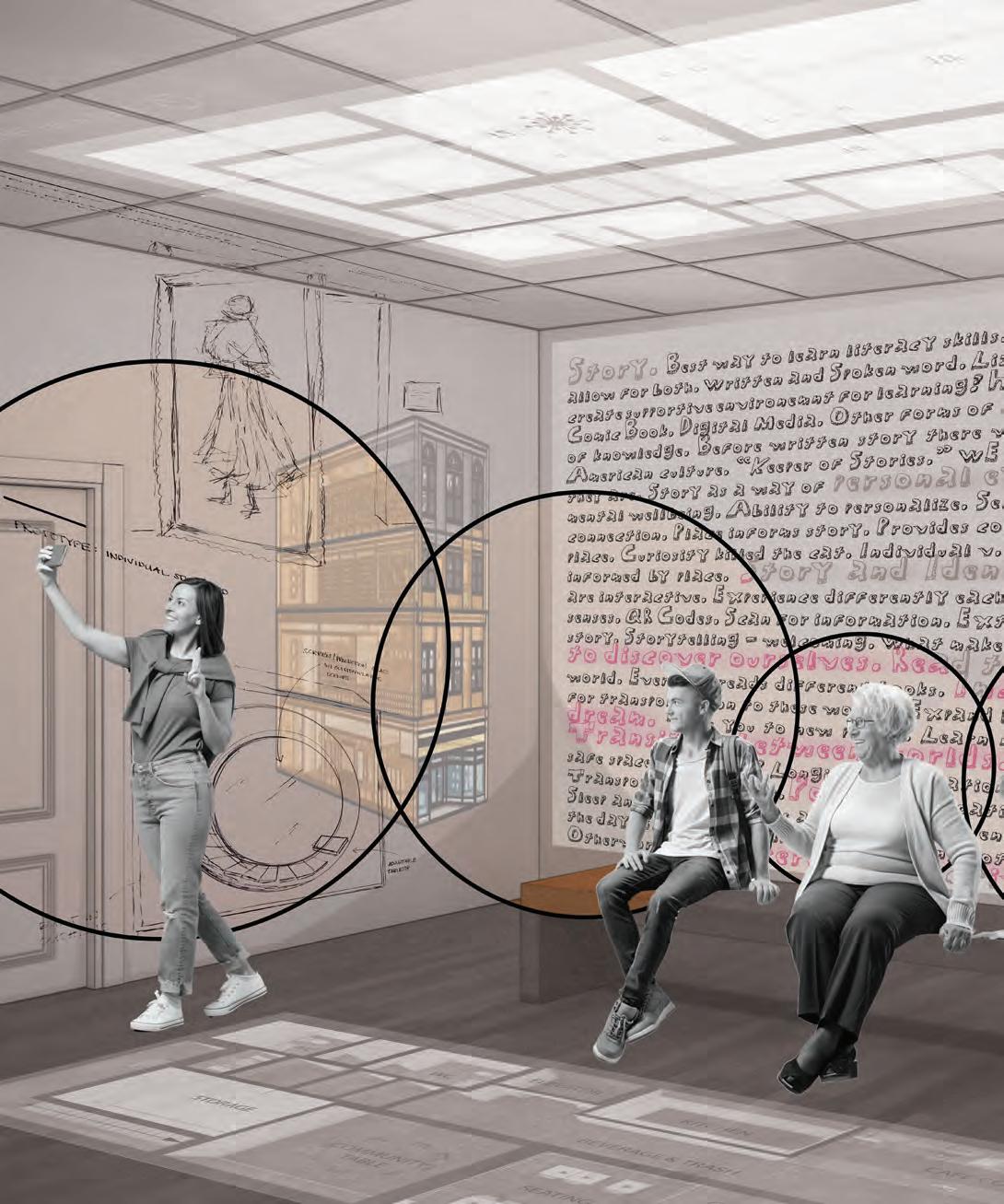
DESIGN INTENT: Create an immersive storytelling space where children and adults could become fully immersed in story. Inspired by Immersive Van Gogh and other projection based experiences, the space would be multifunction at its core, but would allow for read alouds at the public library to become a more dynamic and engaging event.
Projections could also go into the walls creating a more dynamic experience. Walls would need to be painted white or possible use of fabric that retracts when not in use for projection surface.
Could create floating frames where art is projected into the frames when story time is not happening.
Hanging fixtures that allow for projection but could also be utilized as a light source when not in “story mode.”
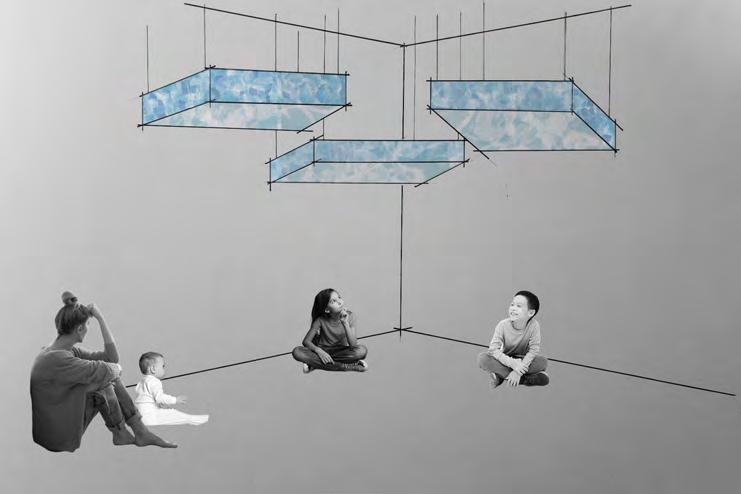
Need to think about flexible seating for both adults and children that allows for a pleasant experience.

Should the floor also be engaged? Should it be an additional projection surface? If so, how to design so that projection quality is maintained. Solid surface, neutral color. Is carpet an option?
Secondary function for open space include children’s play/read area OR large meeting space with stackable / storage friendly furniture.
Should this space have a secondary function or should it always be an immersive, imaginative space?
Window seating to allow for reading or enjoying the sunlight.
Lighting visible and unique OR integrated into architecture? Should unique lighting only be in areas without book stacks?
Integrated lighting. Potential opportunity for unique material application for book stacks.
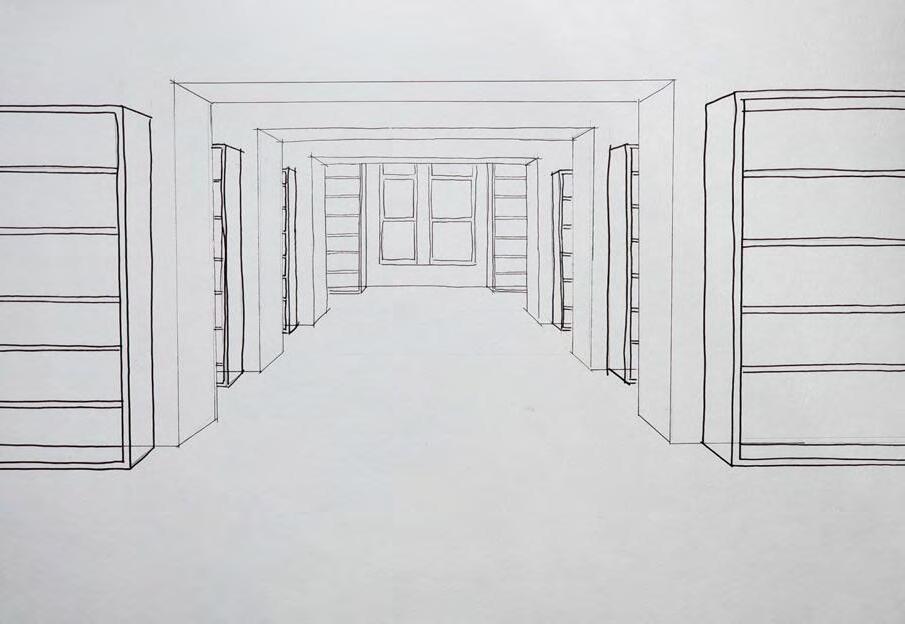


Opportunity for change in materiality / pattern.
Option to wrap book stacks OR add seating / workspaces.
Cased openings frame window and natural light source creating “portal” like experience, not fully revealing what’s at the end of the “hallway” and allowing for acoustic separation between working area and book stacks.
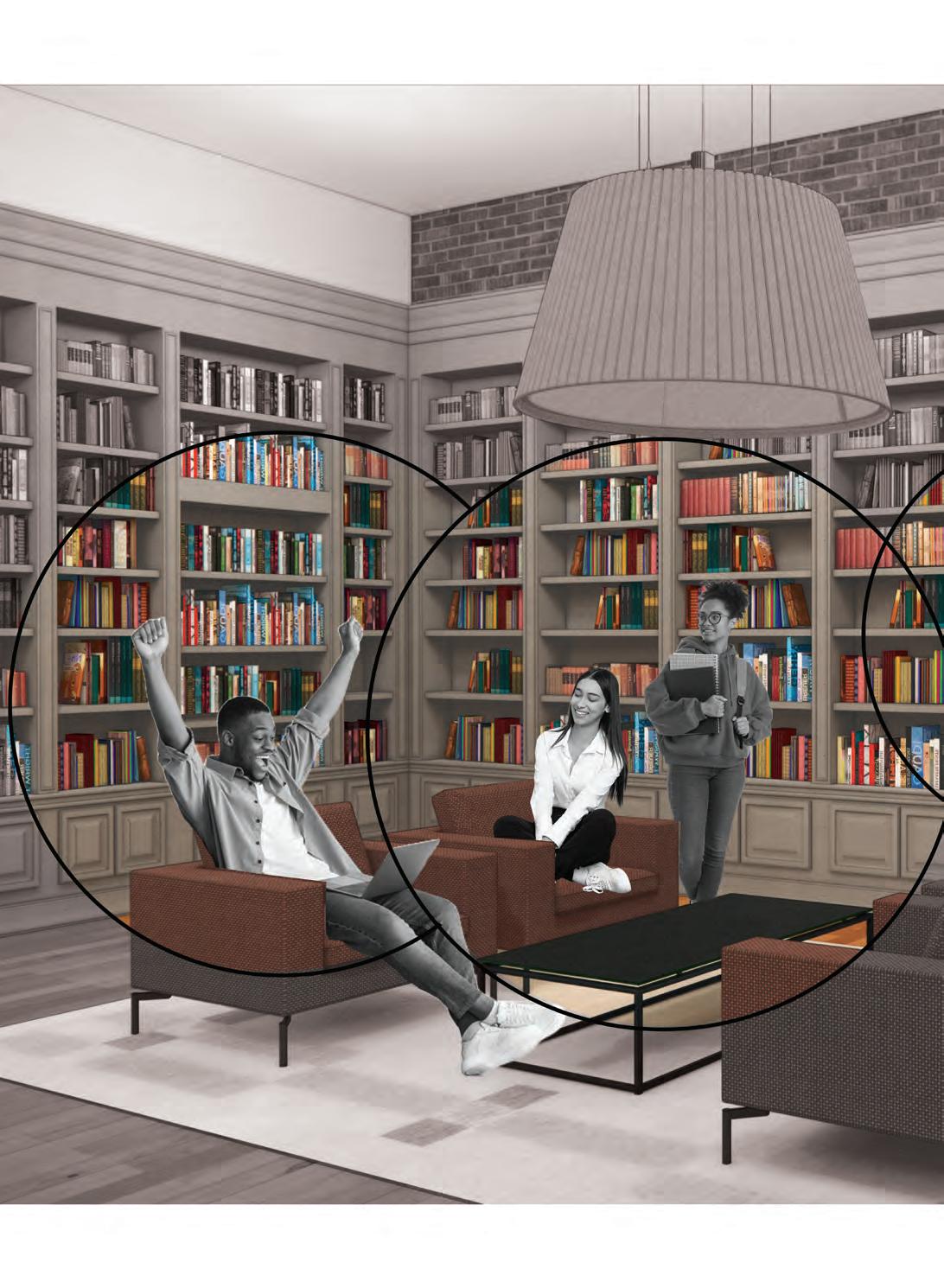
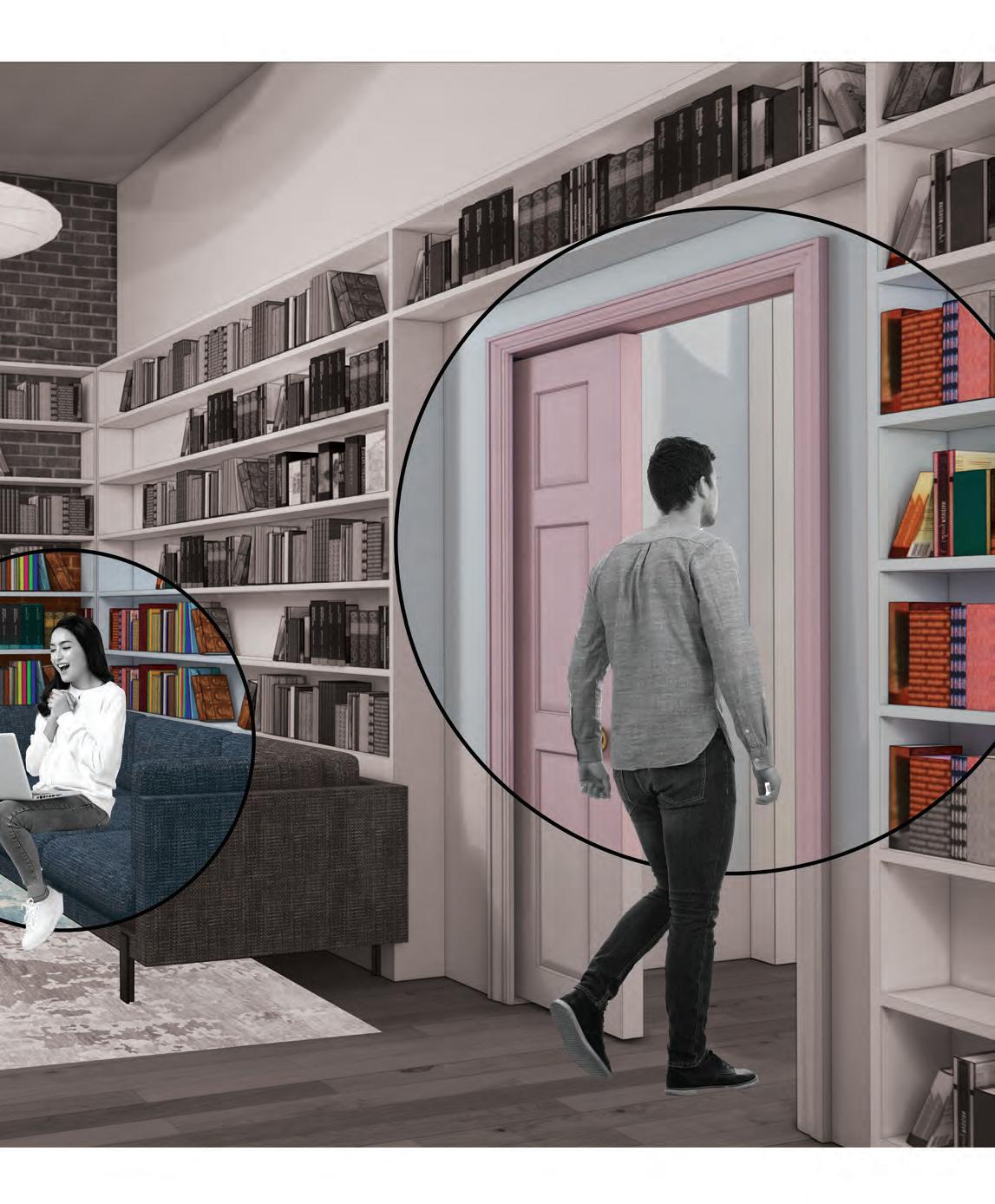
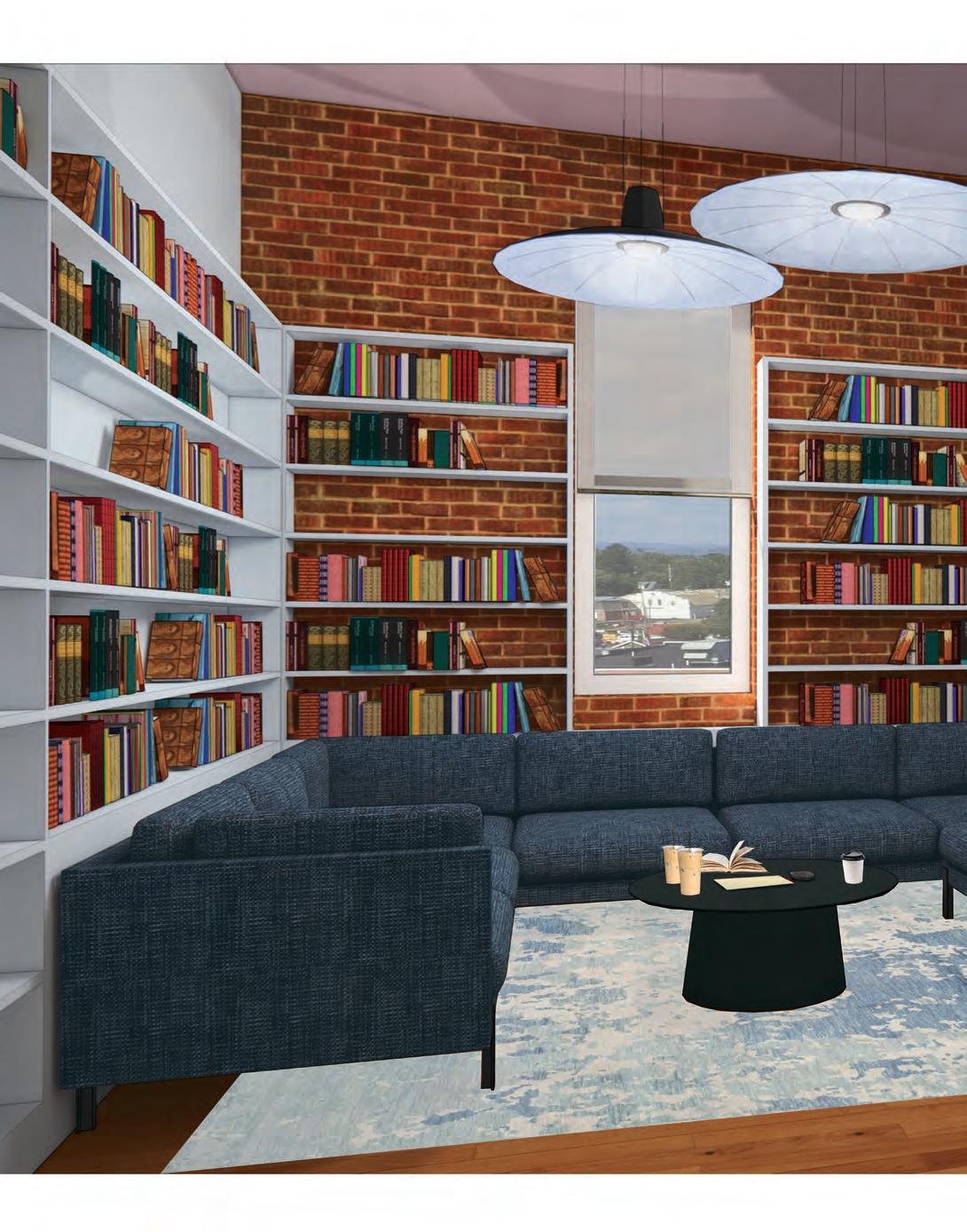
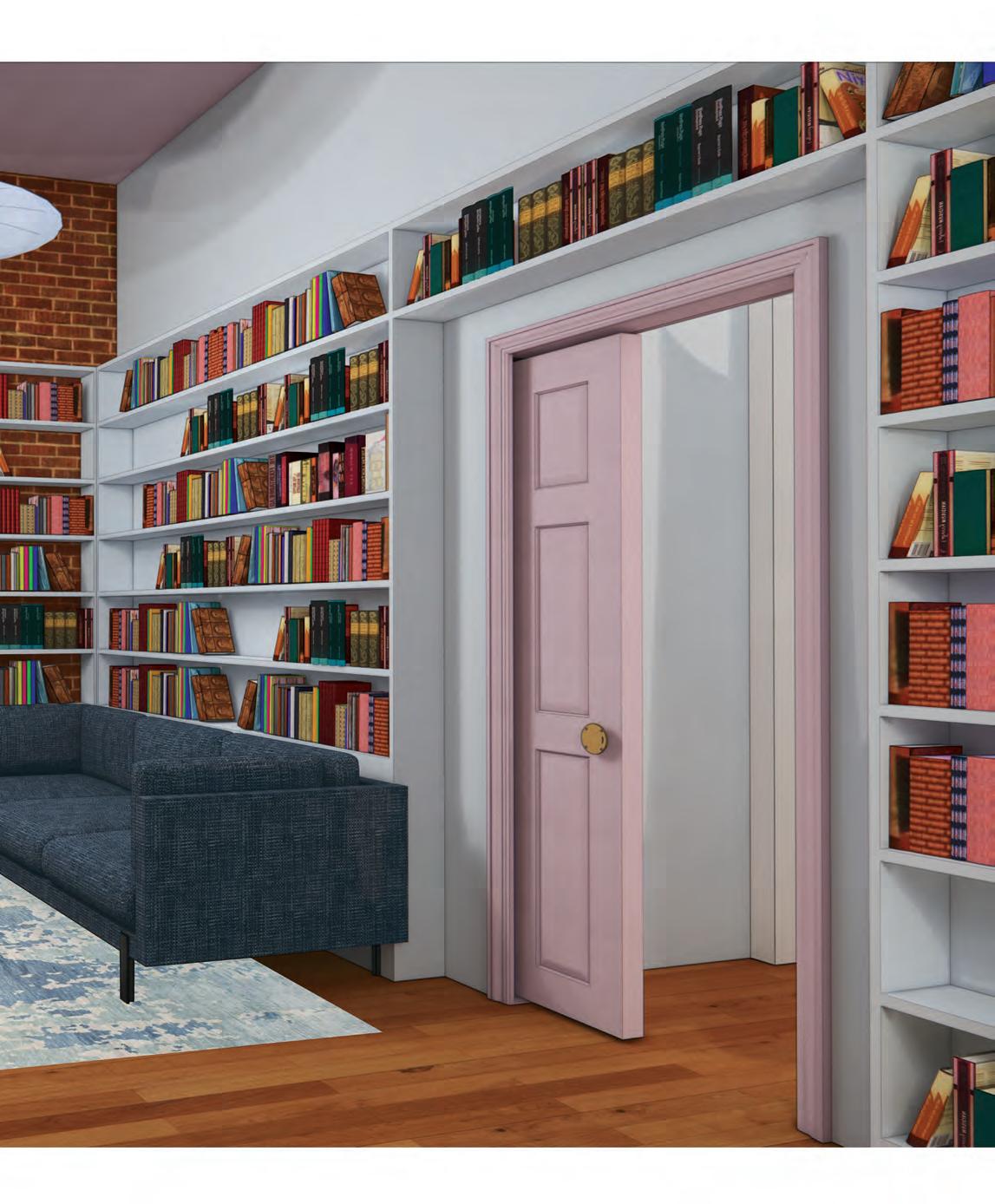
DESIGN INTENT: To create a variety of spaces in which individuals, small groups or large groups can gather to share information. These spaces can exist more as formal seating arrangements as featured below or could be as simple as the bench seating shown under the window. Book stacks will hold a variety of literature types appealing to as many users as possible. The book stack area is designed to allow users to easily explore new topics of interest or find familiar favorites while being creatively inspired by their immediate surroundings.
Need to include transparent material like 3Form to allow for visibility for safety reasons, but still provide some acoustic and visual privacy.

Open gathering spaces for group study, book clubs, small workshops, tutoring sessions, etc. to be located in various places throughout library plan.
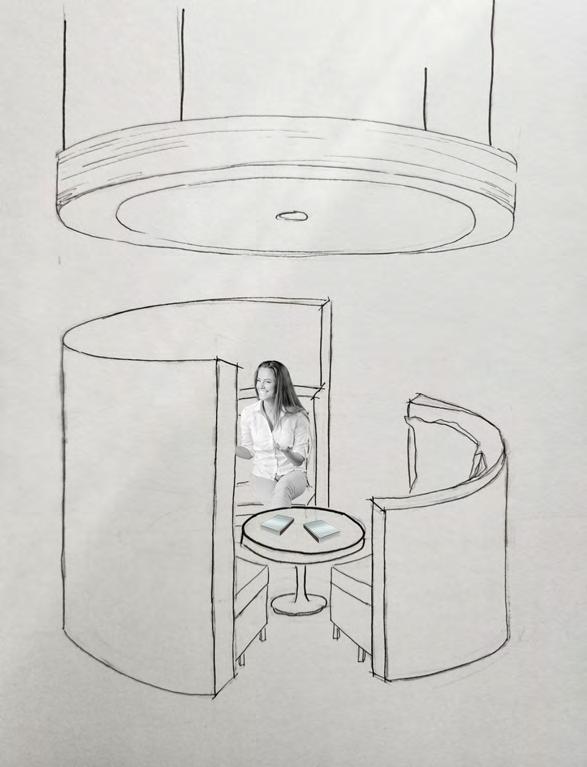
Acoustic light. Could be adjustable per user preference in regard to color / dimming capabilities.
Possible use of height adjustable table so can be coffee table height OR cafe table hight to allow for conversational use or work station use.
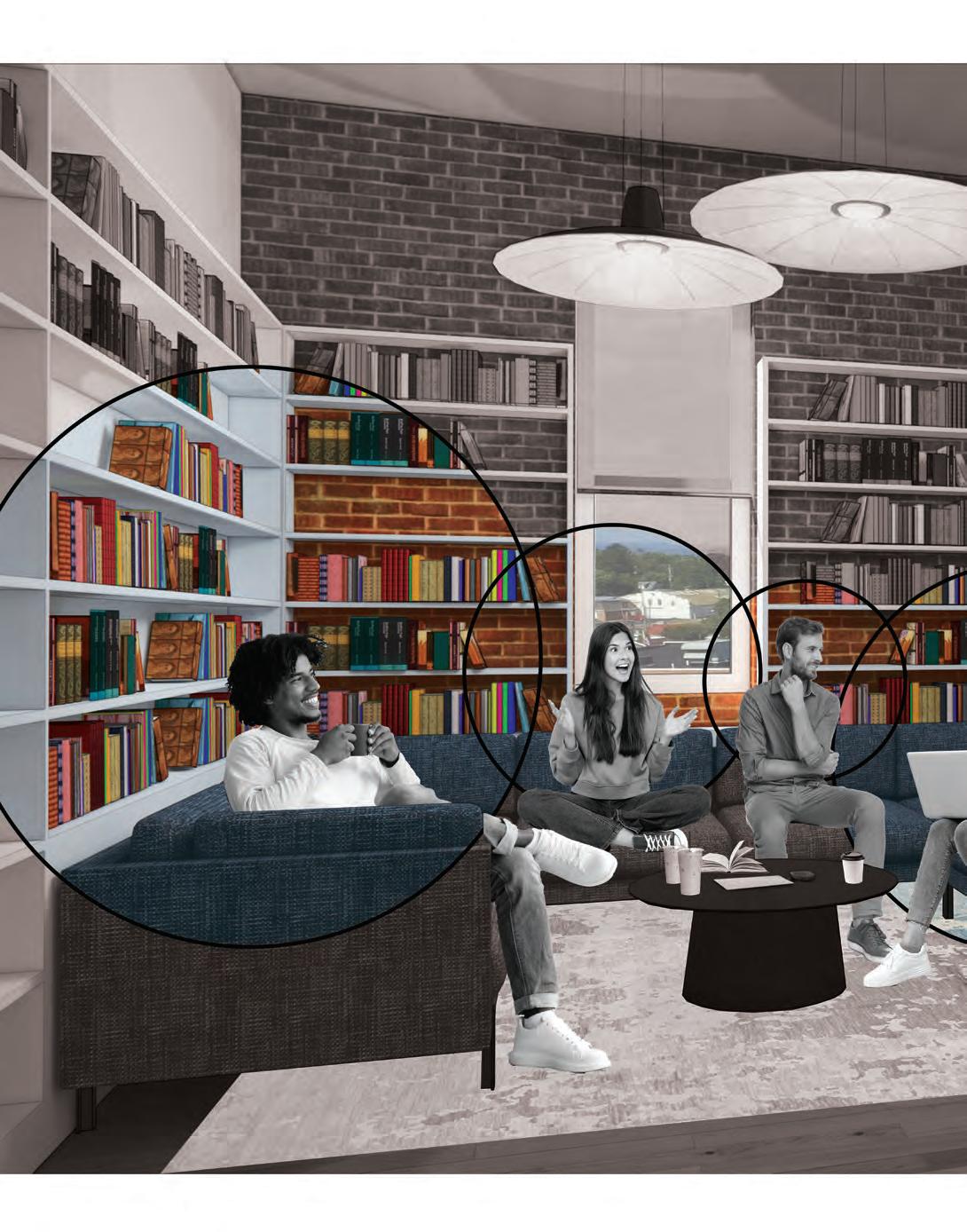
Seating intended for groups of 4-6.
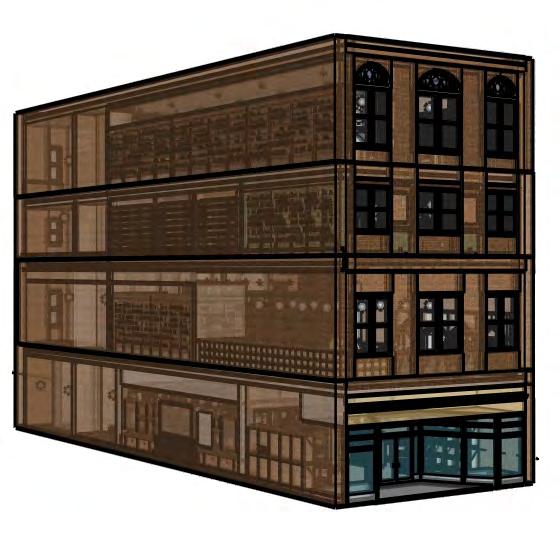
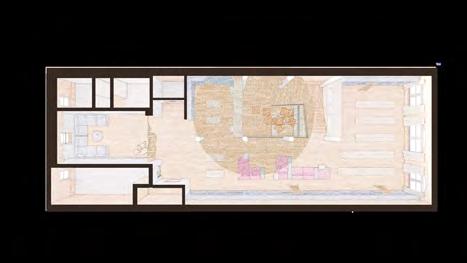
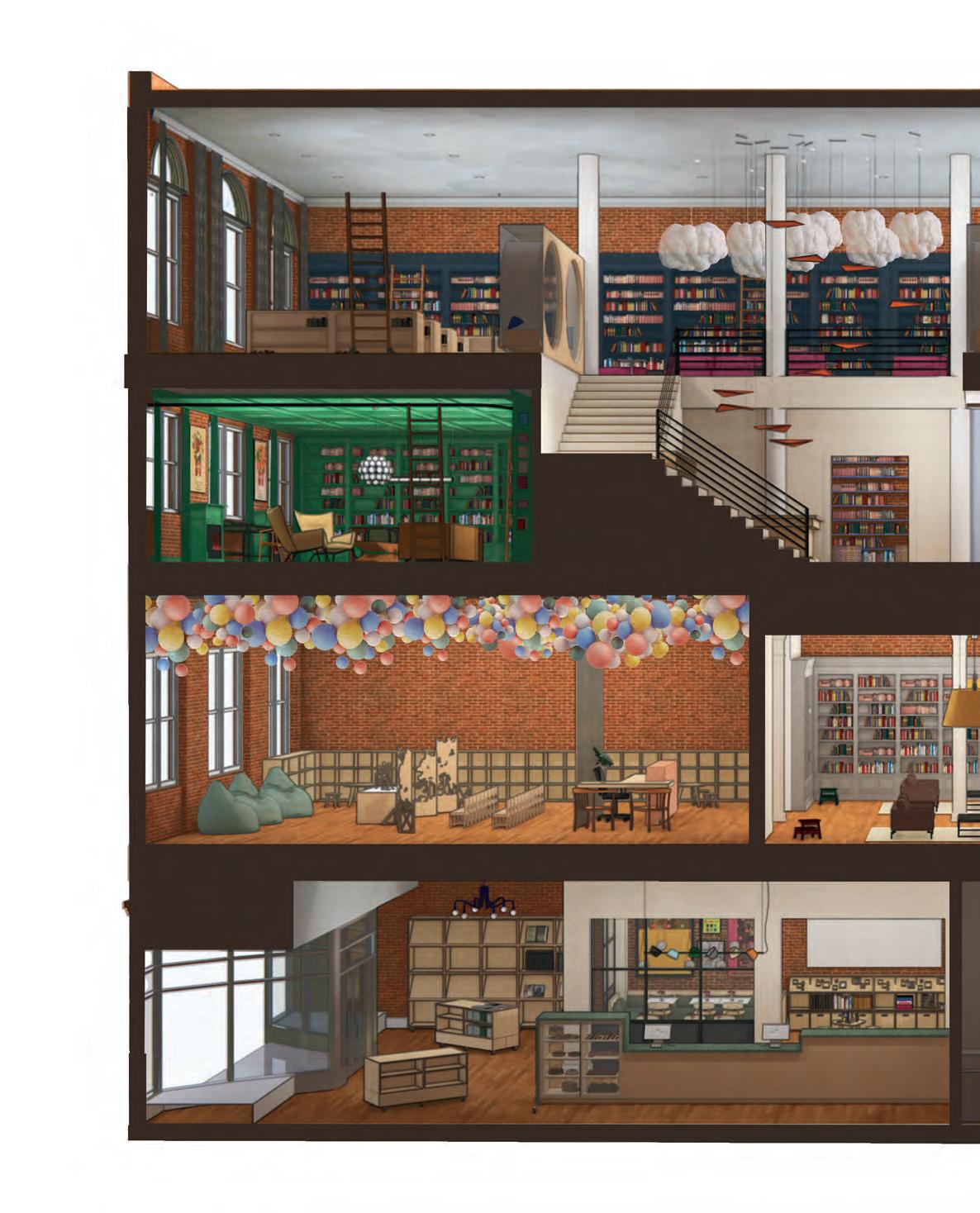
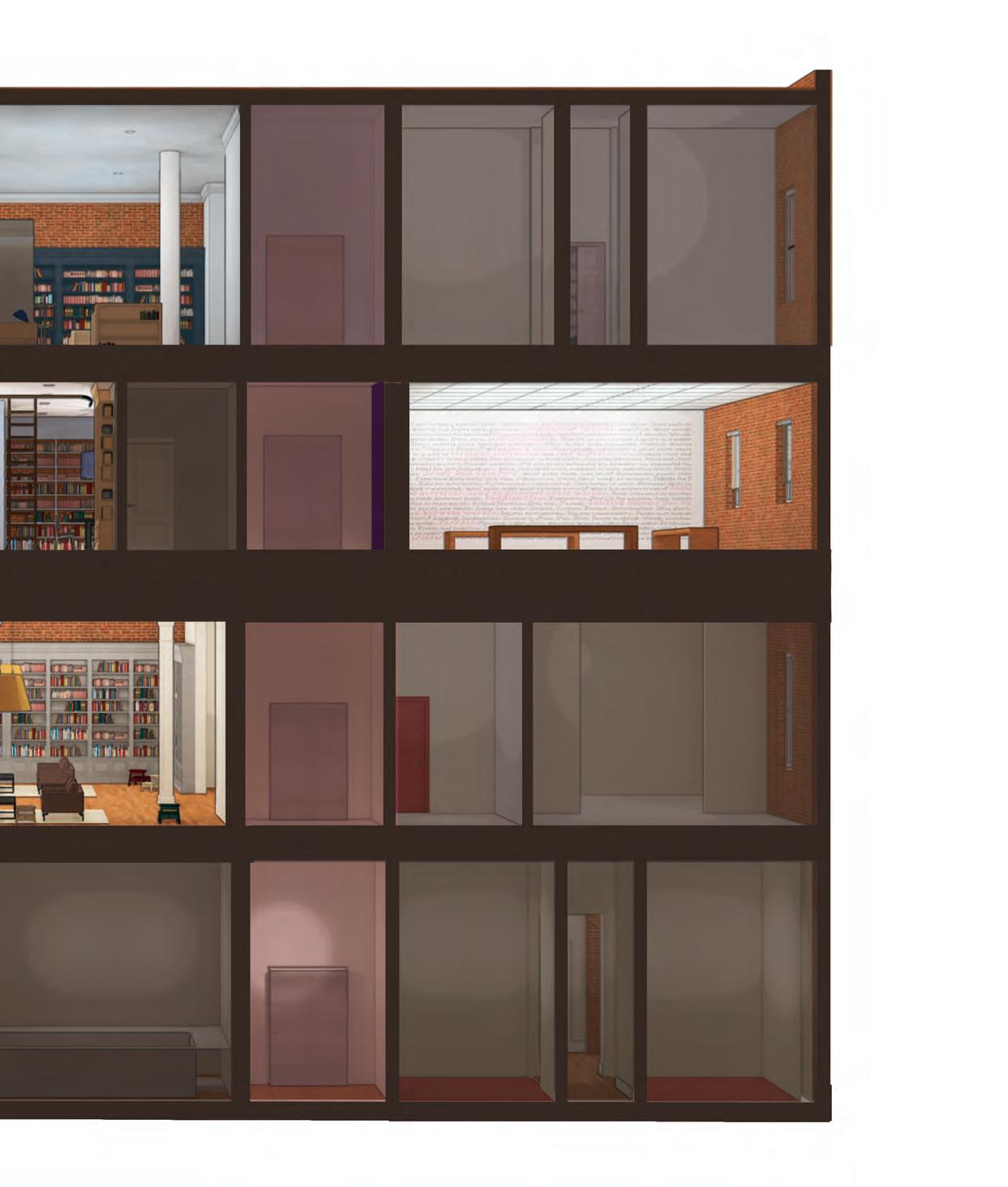
Storytelling is the thread that binds humanity across generations, cultures, and experiences. It is also the most effective literacy learning tool utilized outside of the classroom. In the design of the Beaufort County Public Library, storytelling serves as the organizational framework where each floor represents a unique facet of storytelling’s impact on our lives: connecting us to one another, unlocking imagination, fostering self-understanding and offering escape.

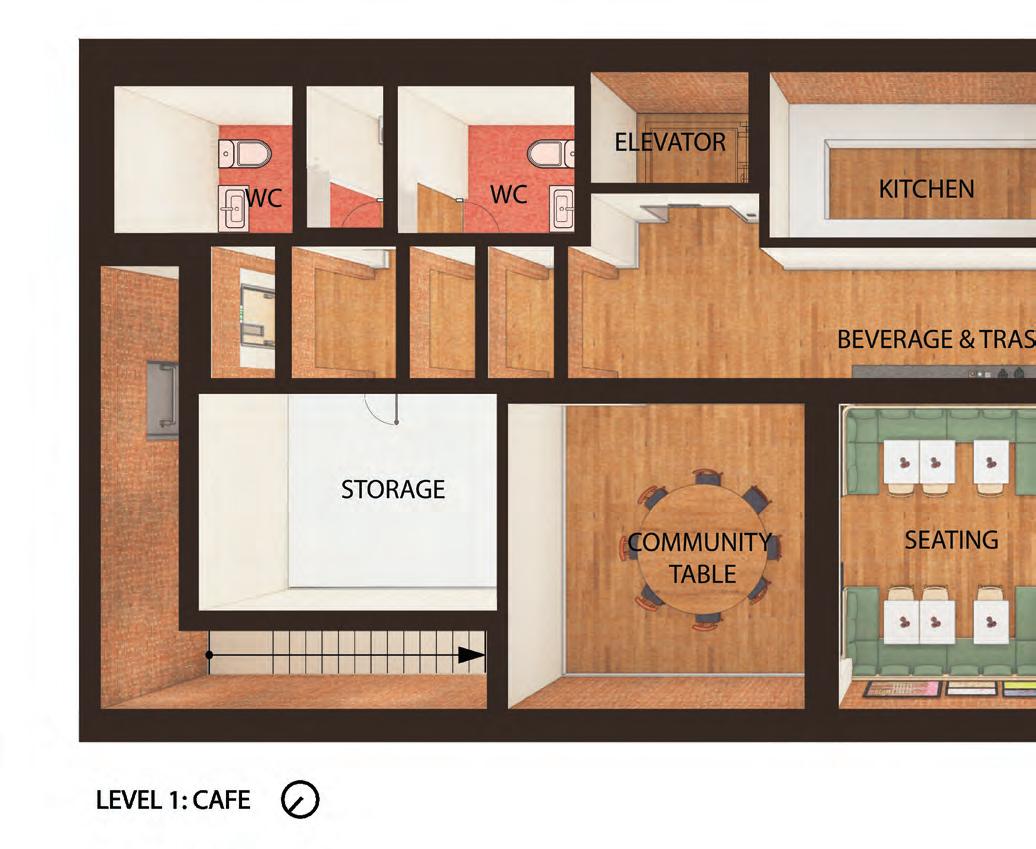
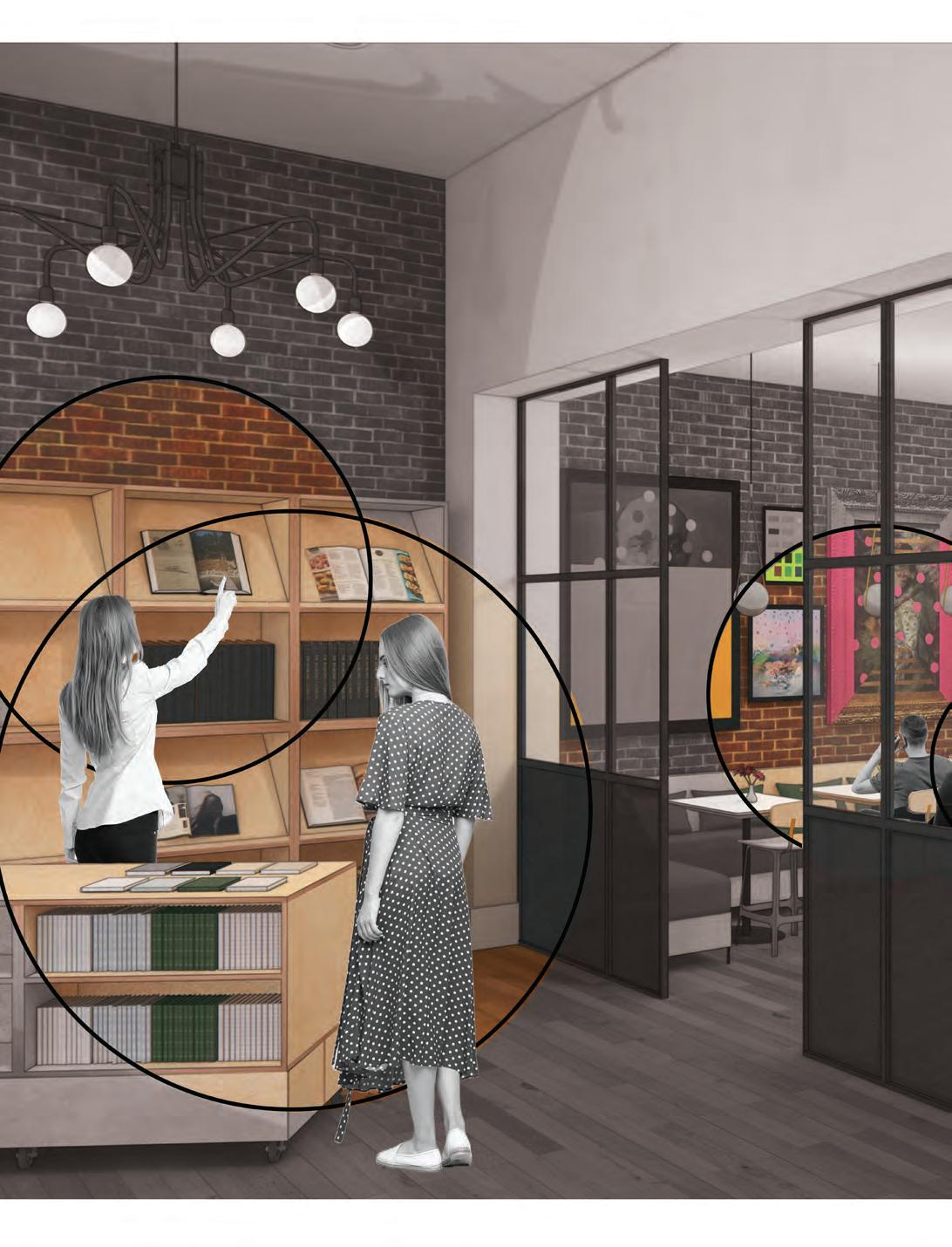
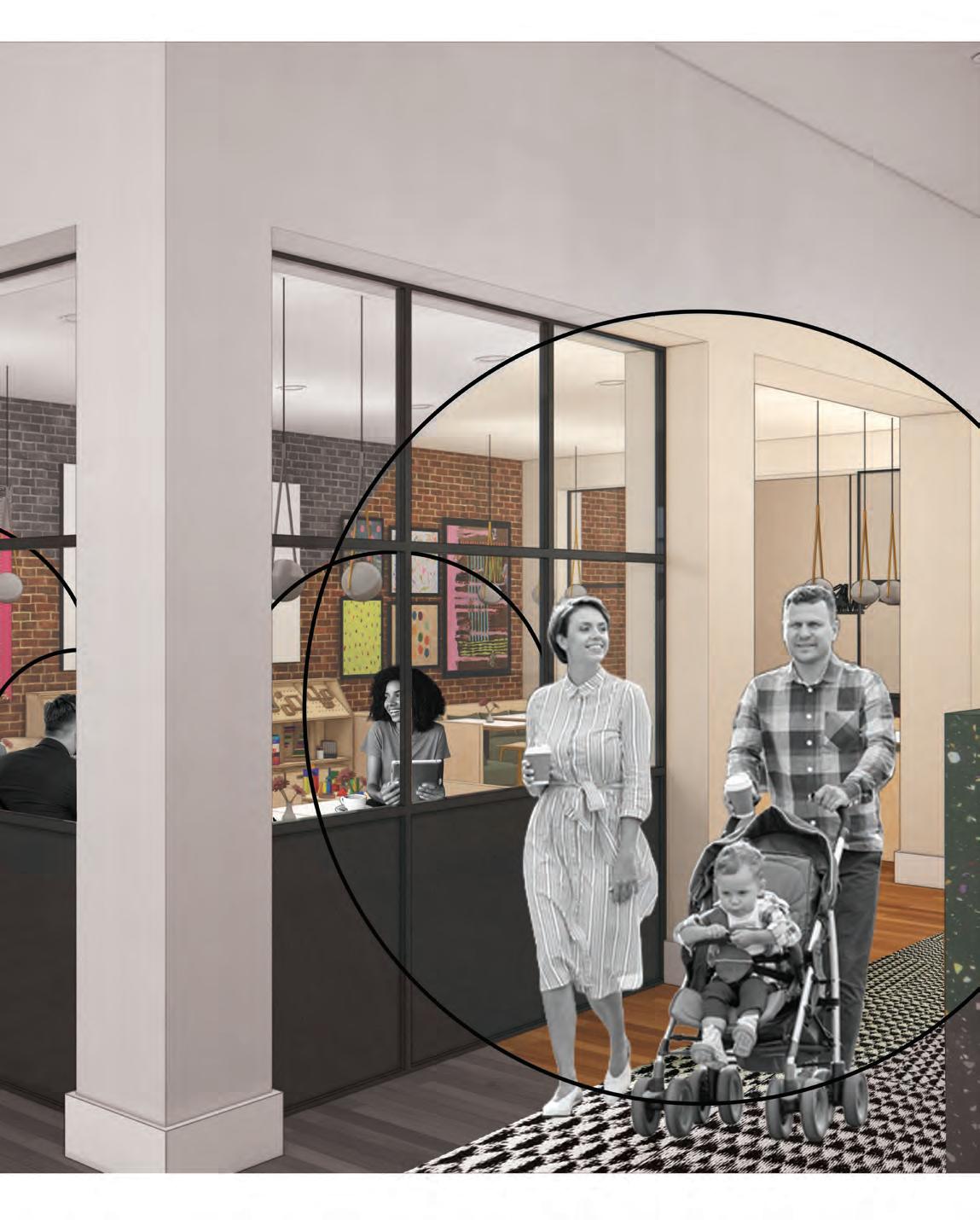
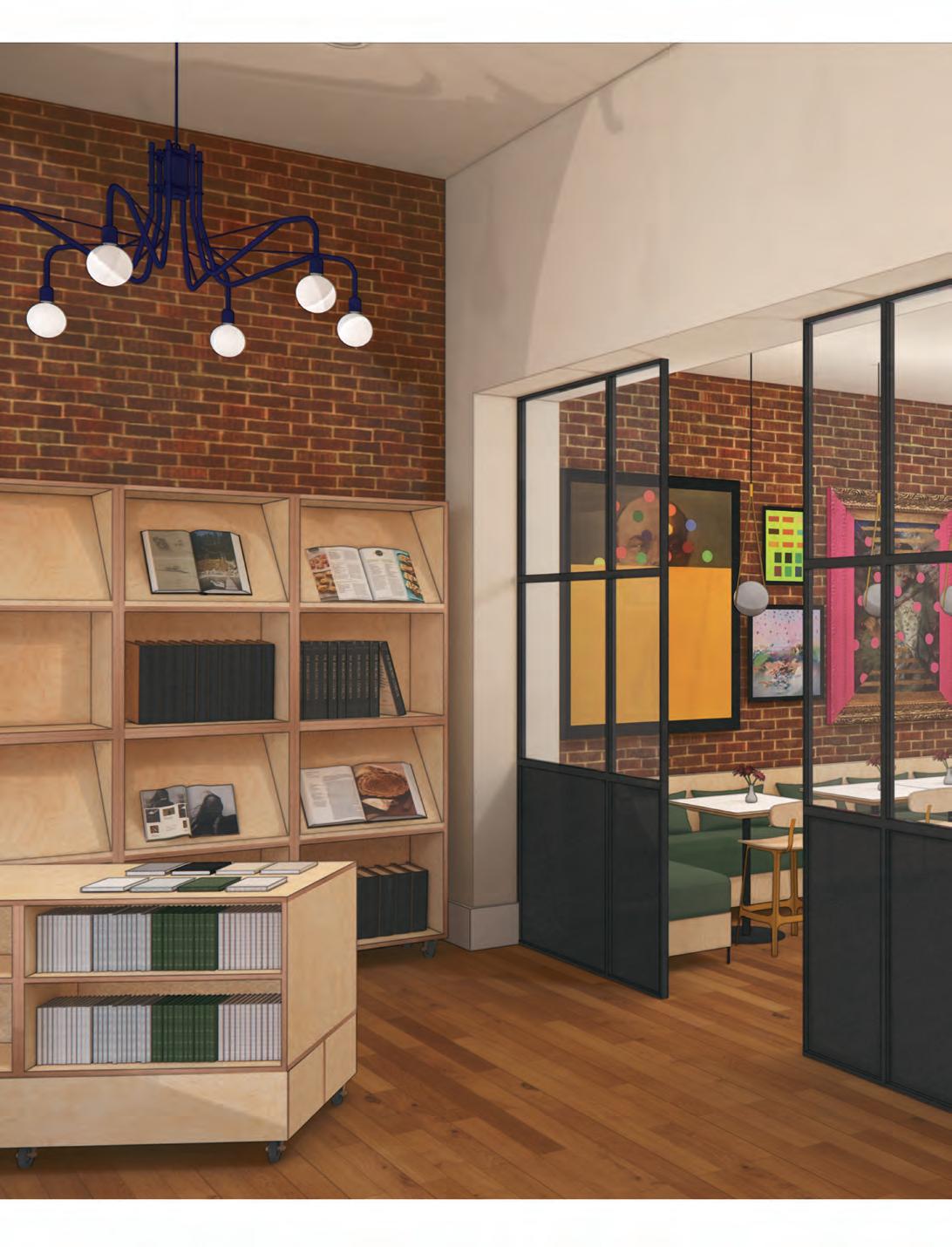
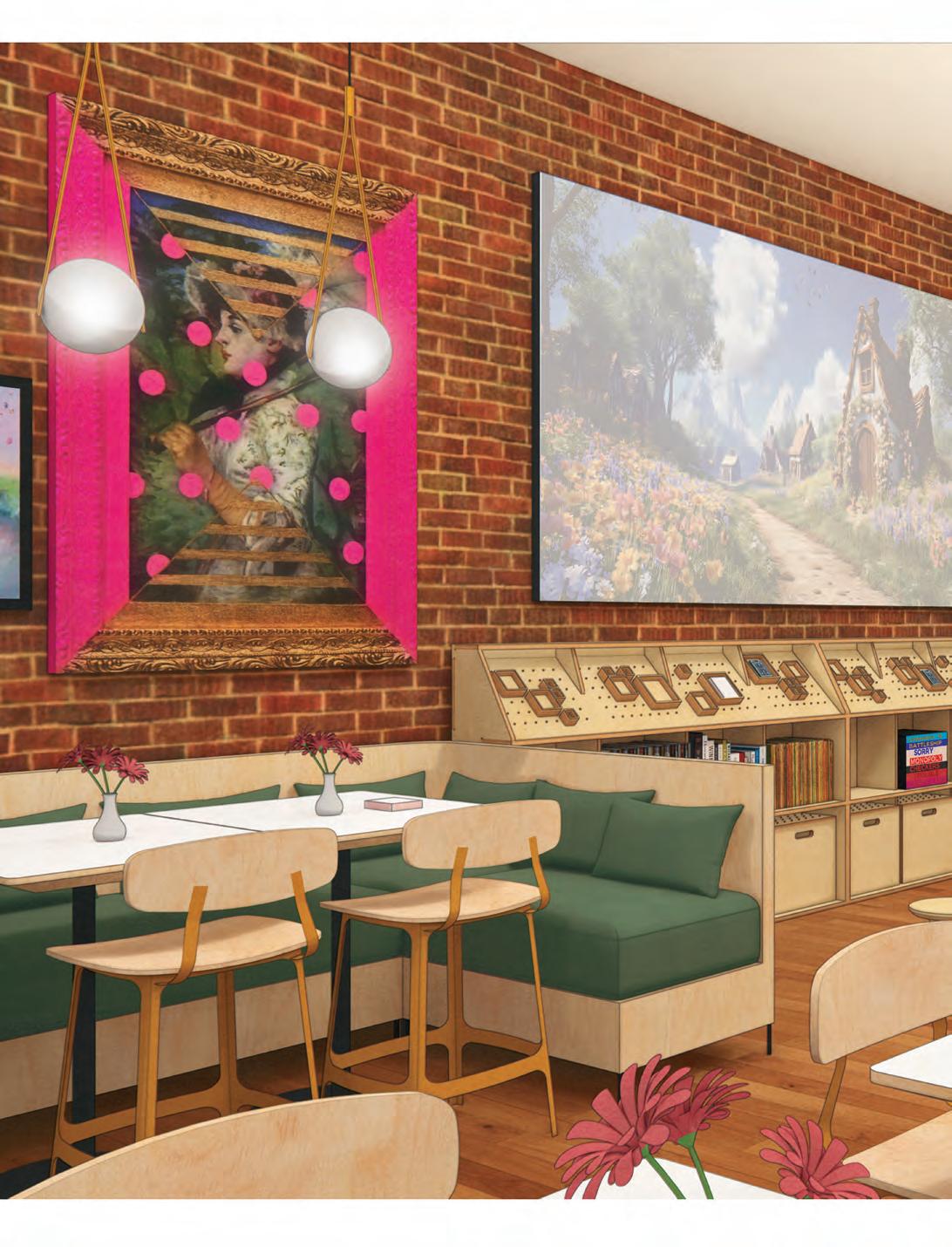
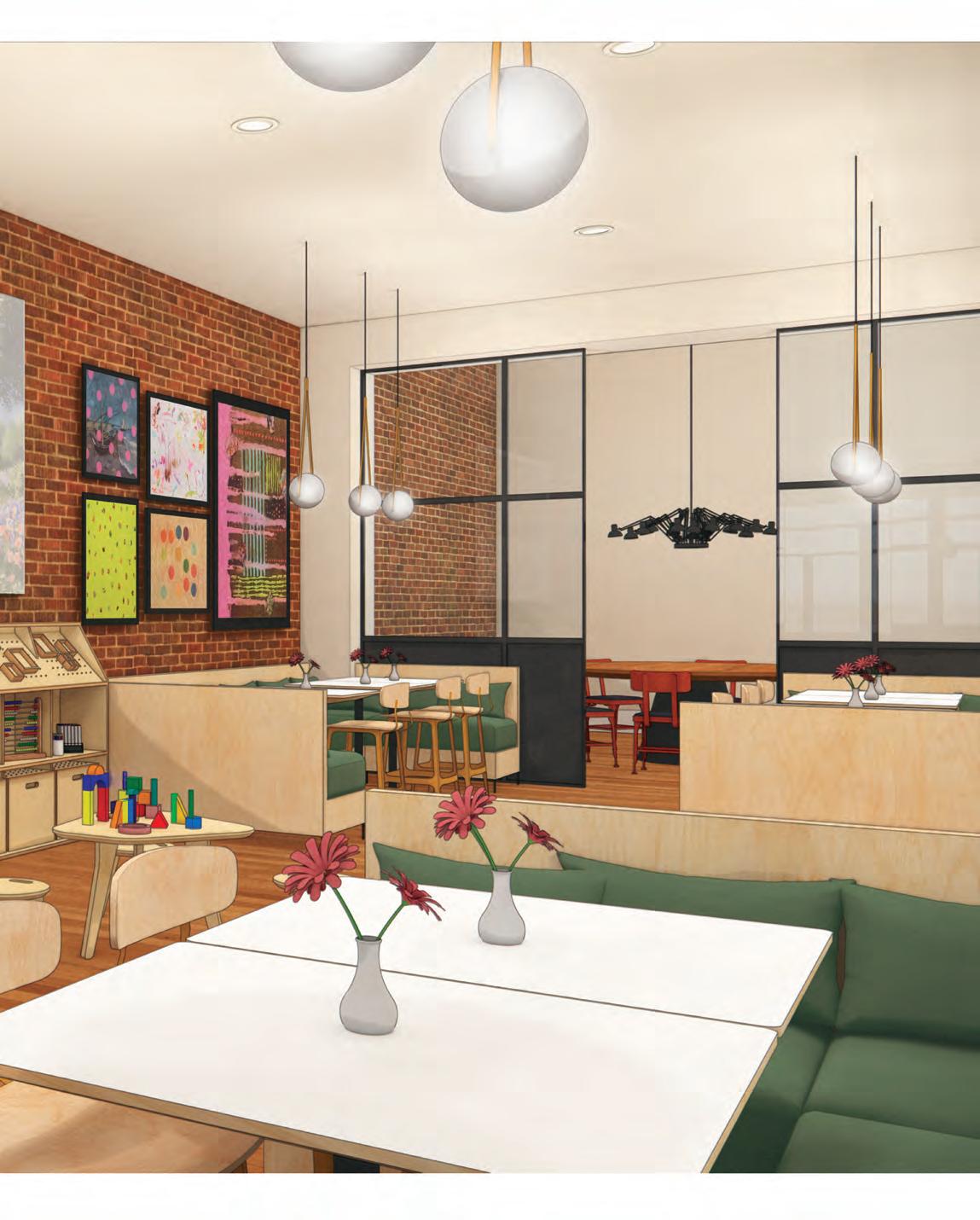
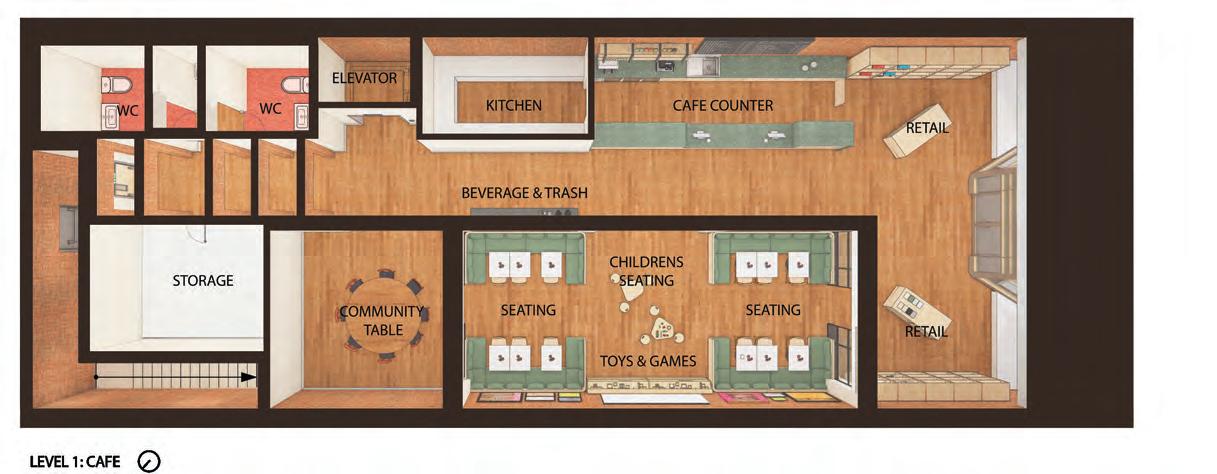
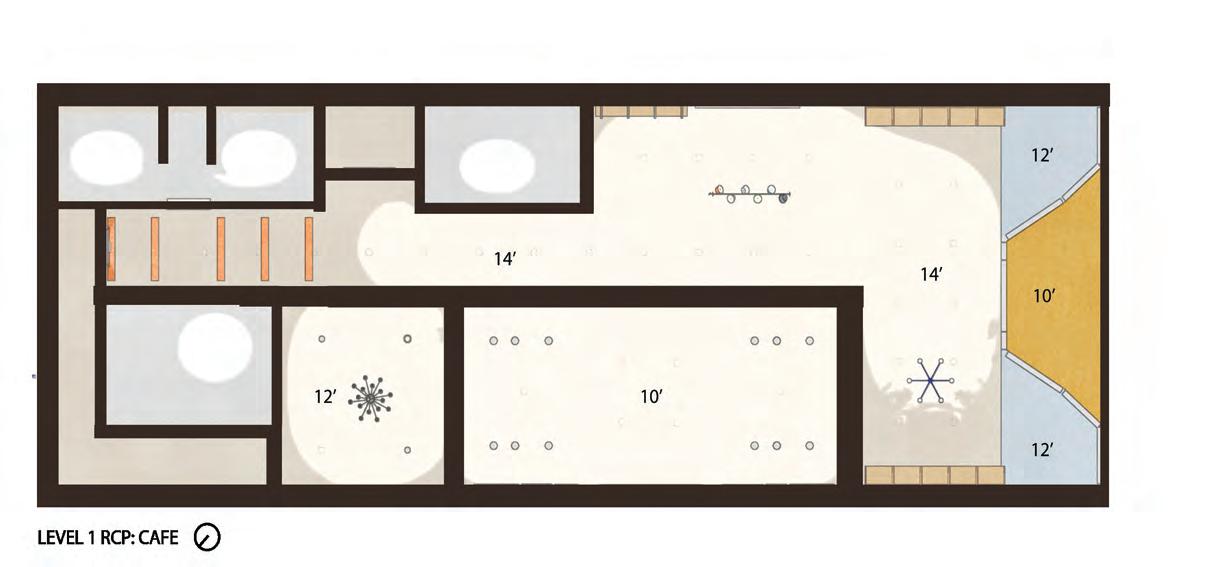
The cafe space within the Beaufort County Public Library is designed to be more than just a place for coffee; it is a hub for storytelling. By integrating local history, personal narratives, and interactive elements, the cafe becomes an animated space where stories are exchanged, relationships are formed, and deeper community engagement is cultivated.
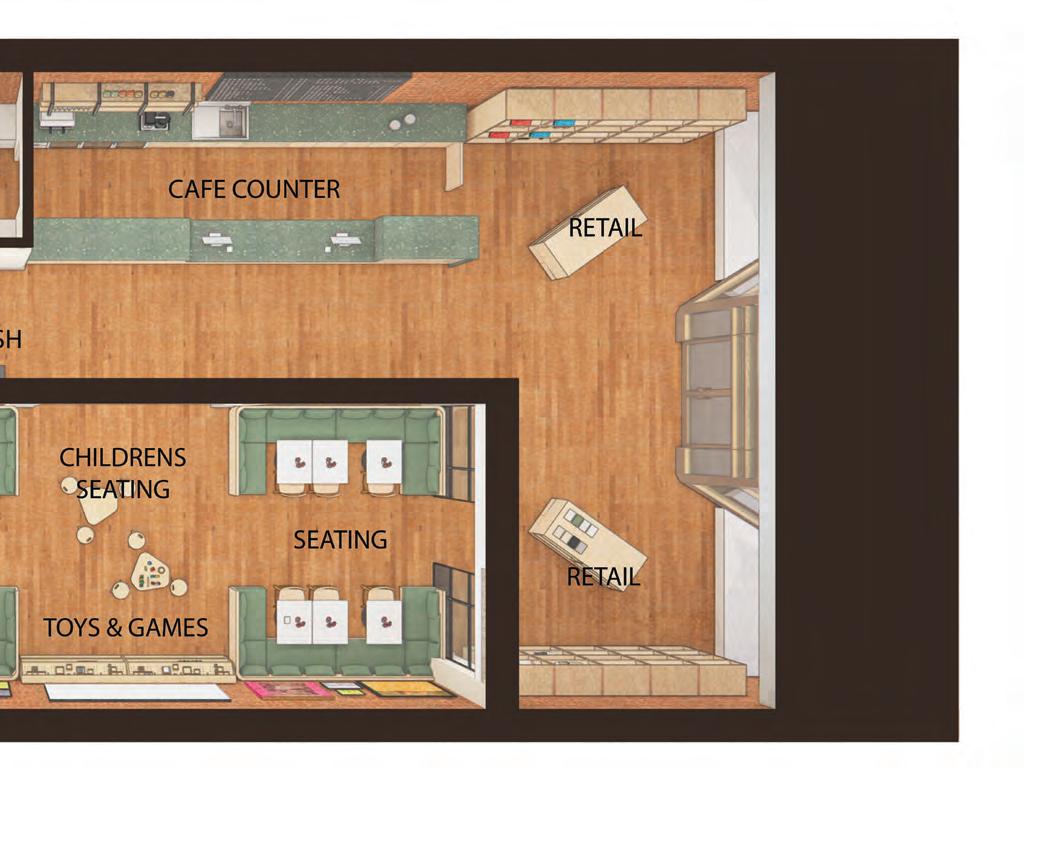
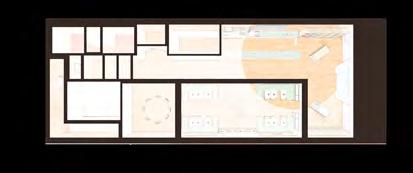
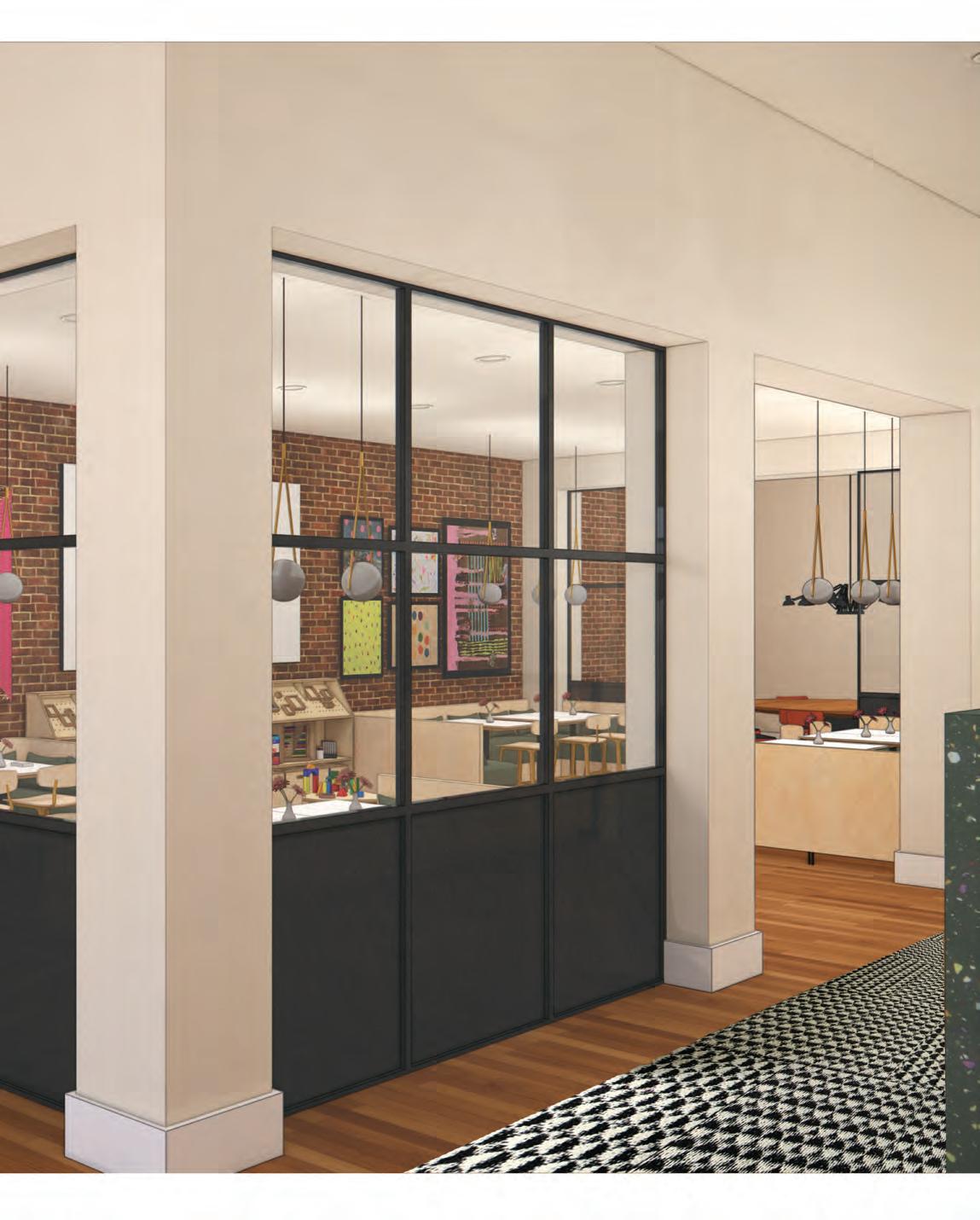
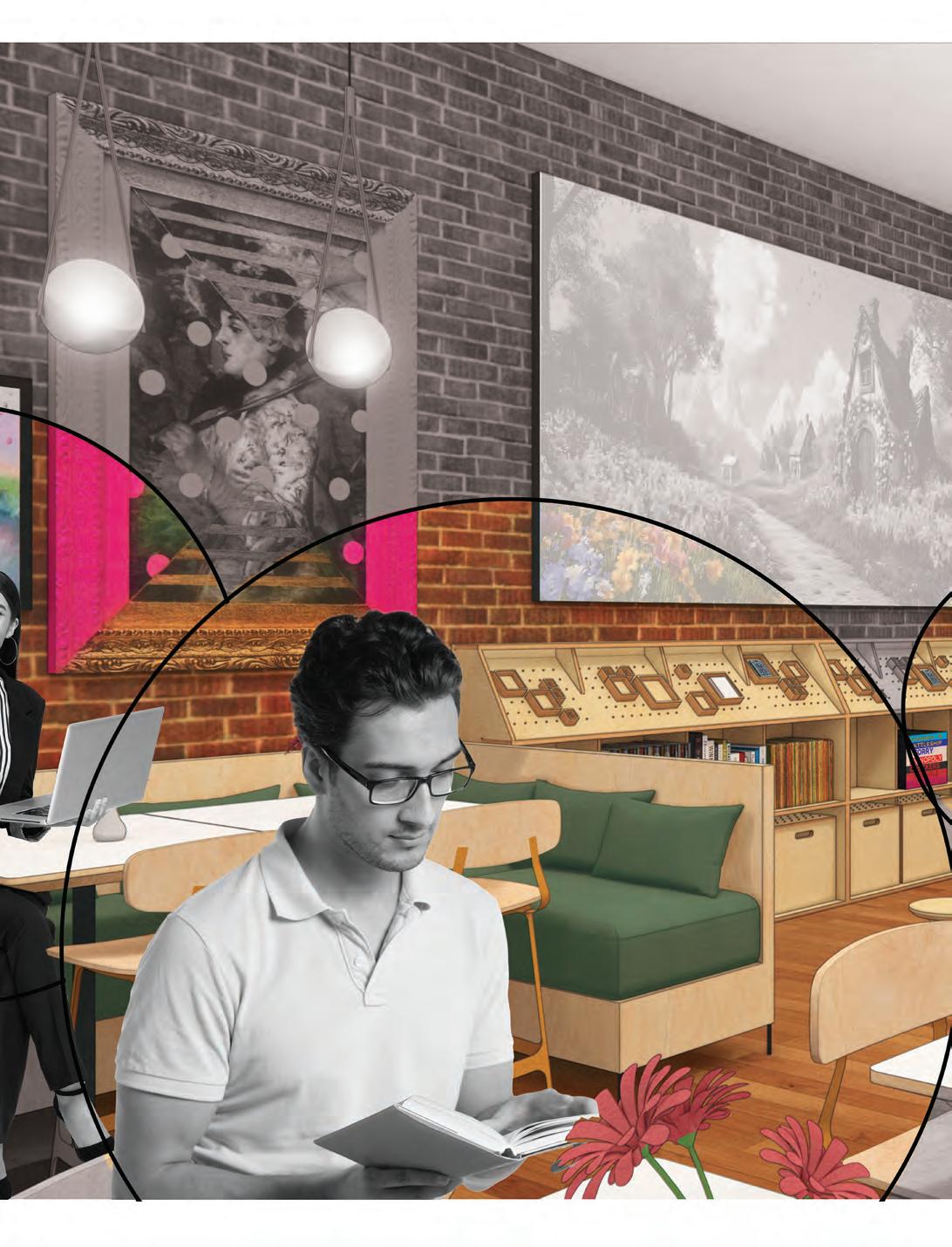
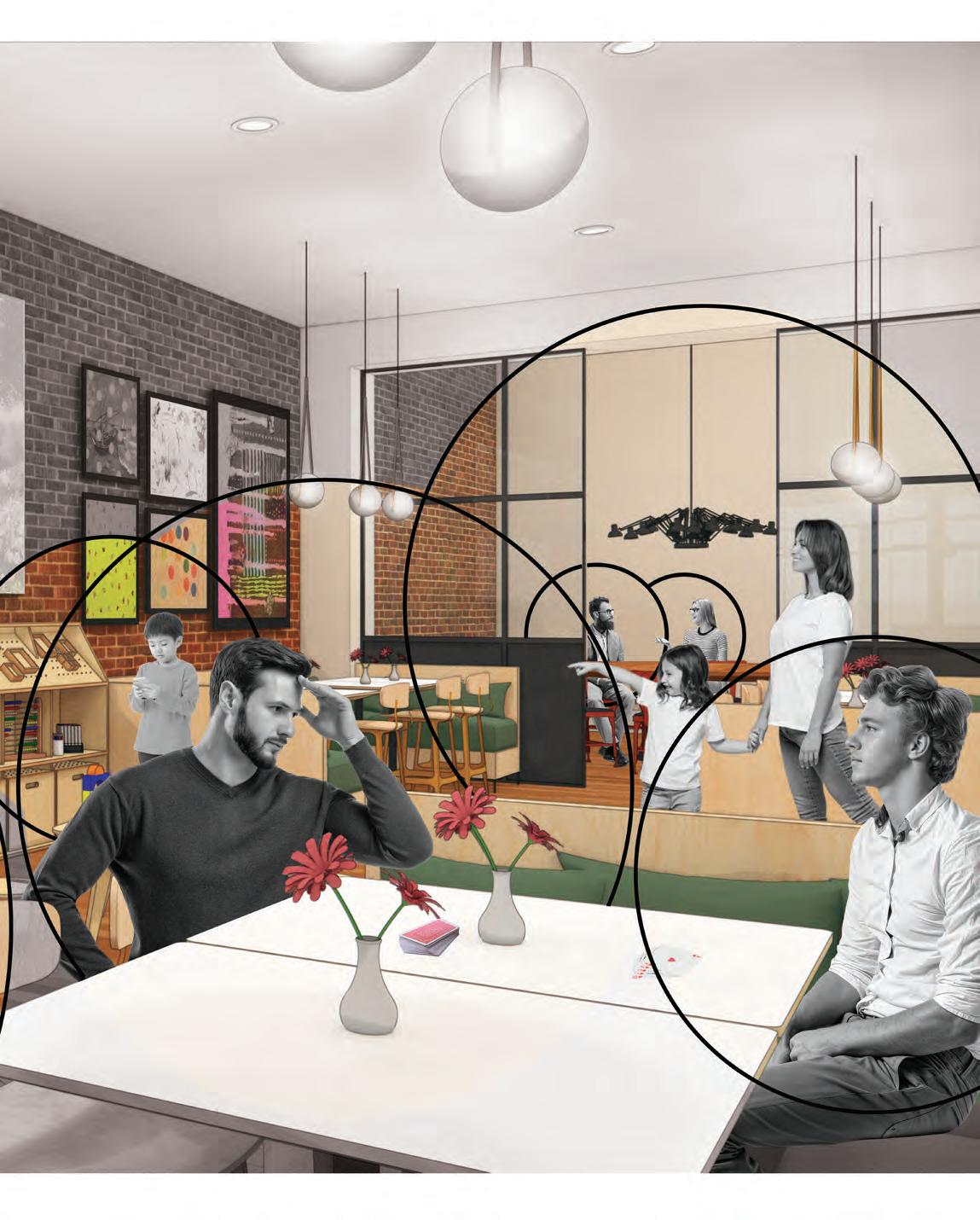
Retail spaces visible from the sidewalk attract cafe patrons, library visitors, and tourists alike. Selling unique library branded goods, specialty coffee, and books by local authors, the retail space helps fund the public library. A variety of seating options encourage both intimate and group conversation while open access to board games, children’s’ toys and art supplies encourages guests to stay awhile. Art adorning the walls of the seating area changes seasonally and features non-local artists exposing patrons to alternate views and perspectives. The community table, surrounded by local art, provides a place for meetings, group gatherings, or the opportunity to engage with new friends.

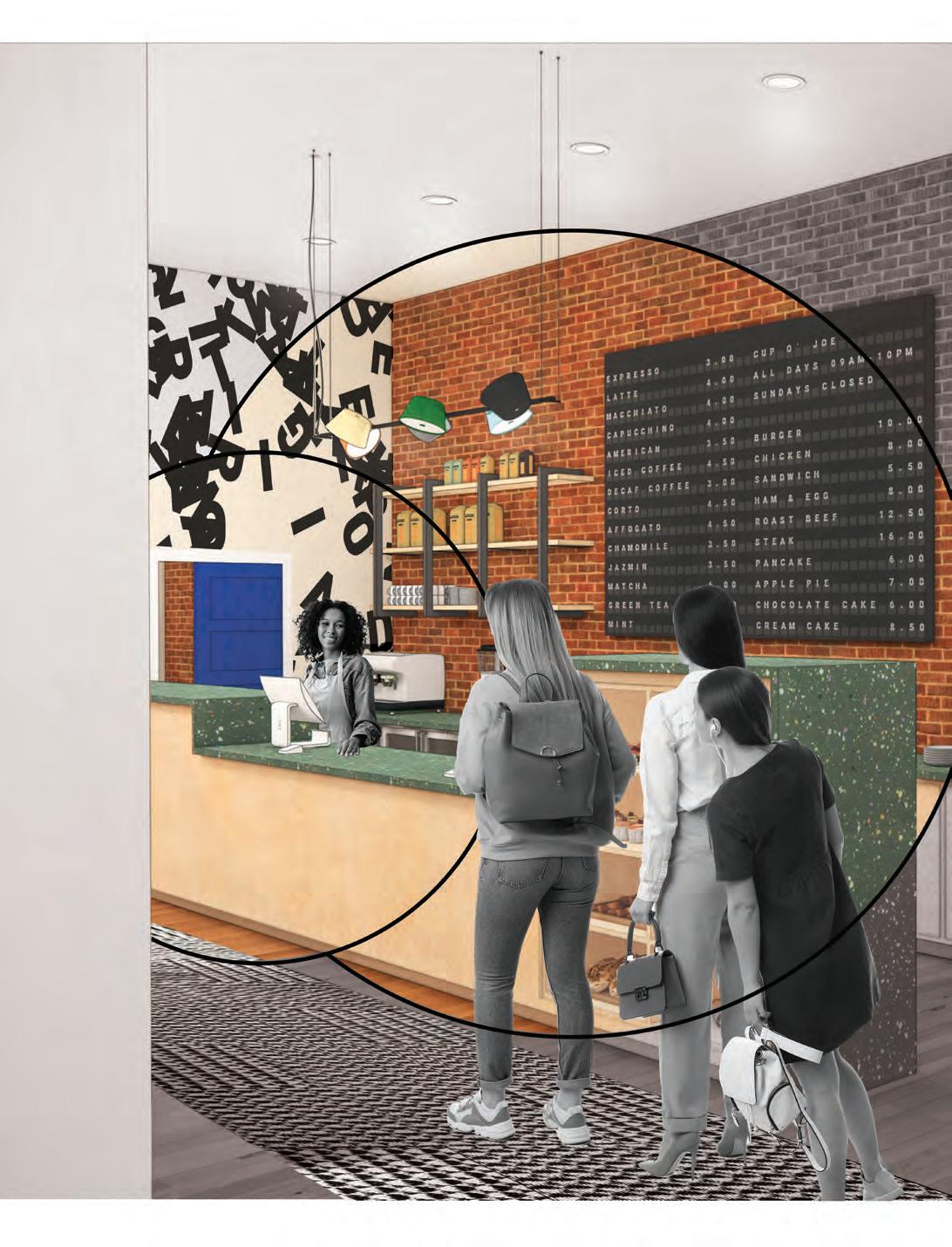
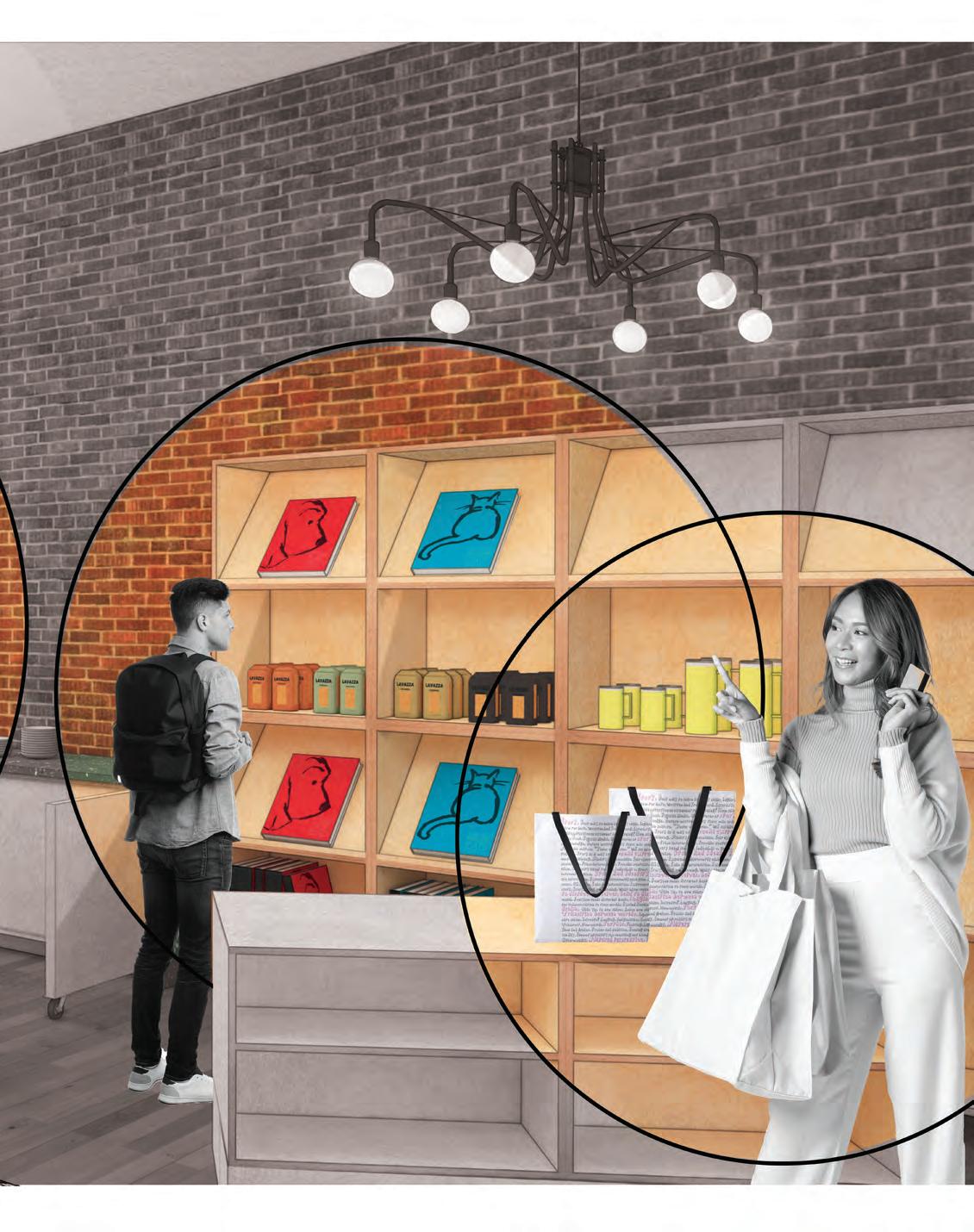
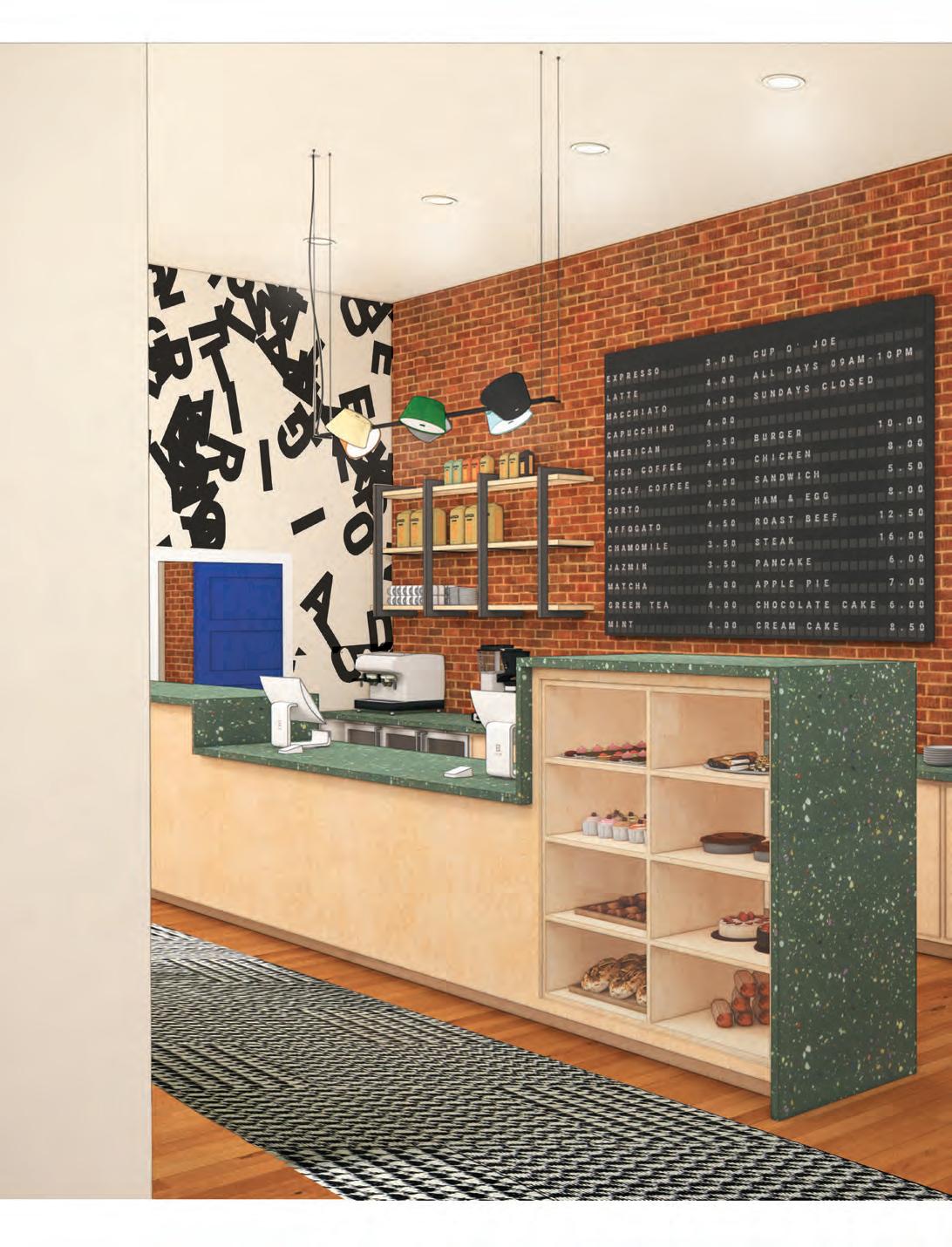
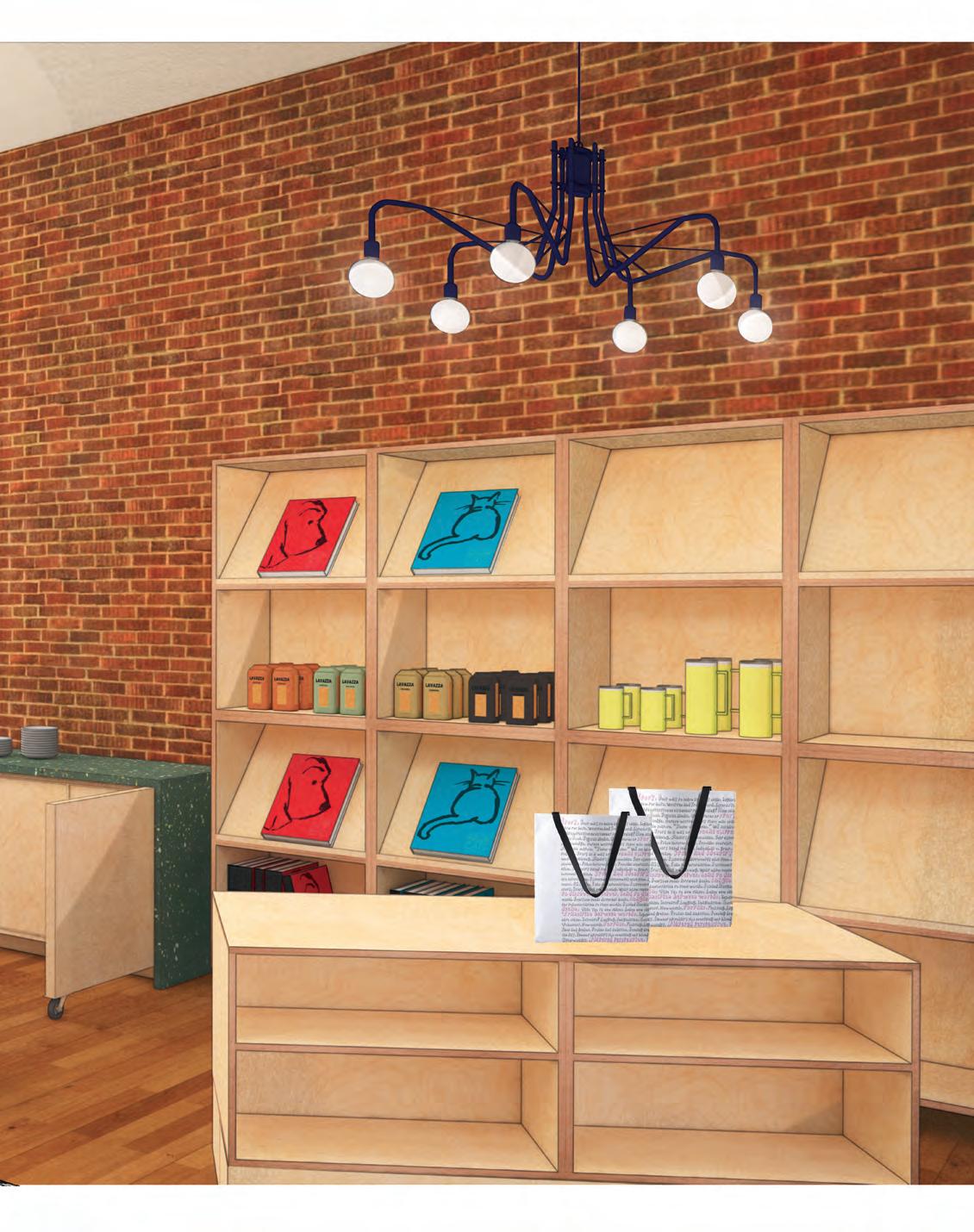
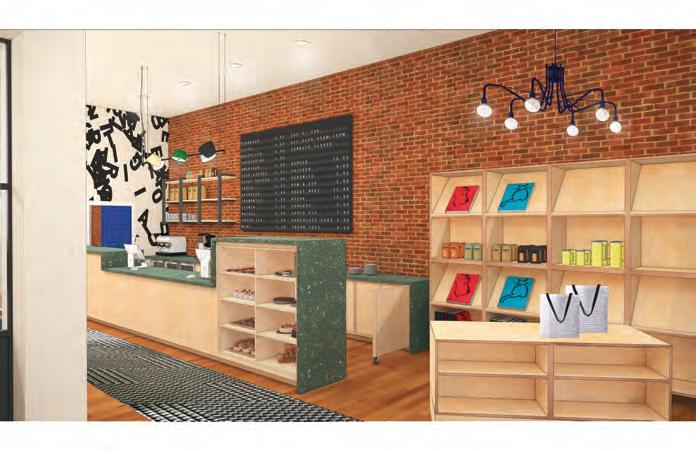
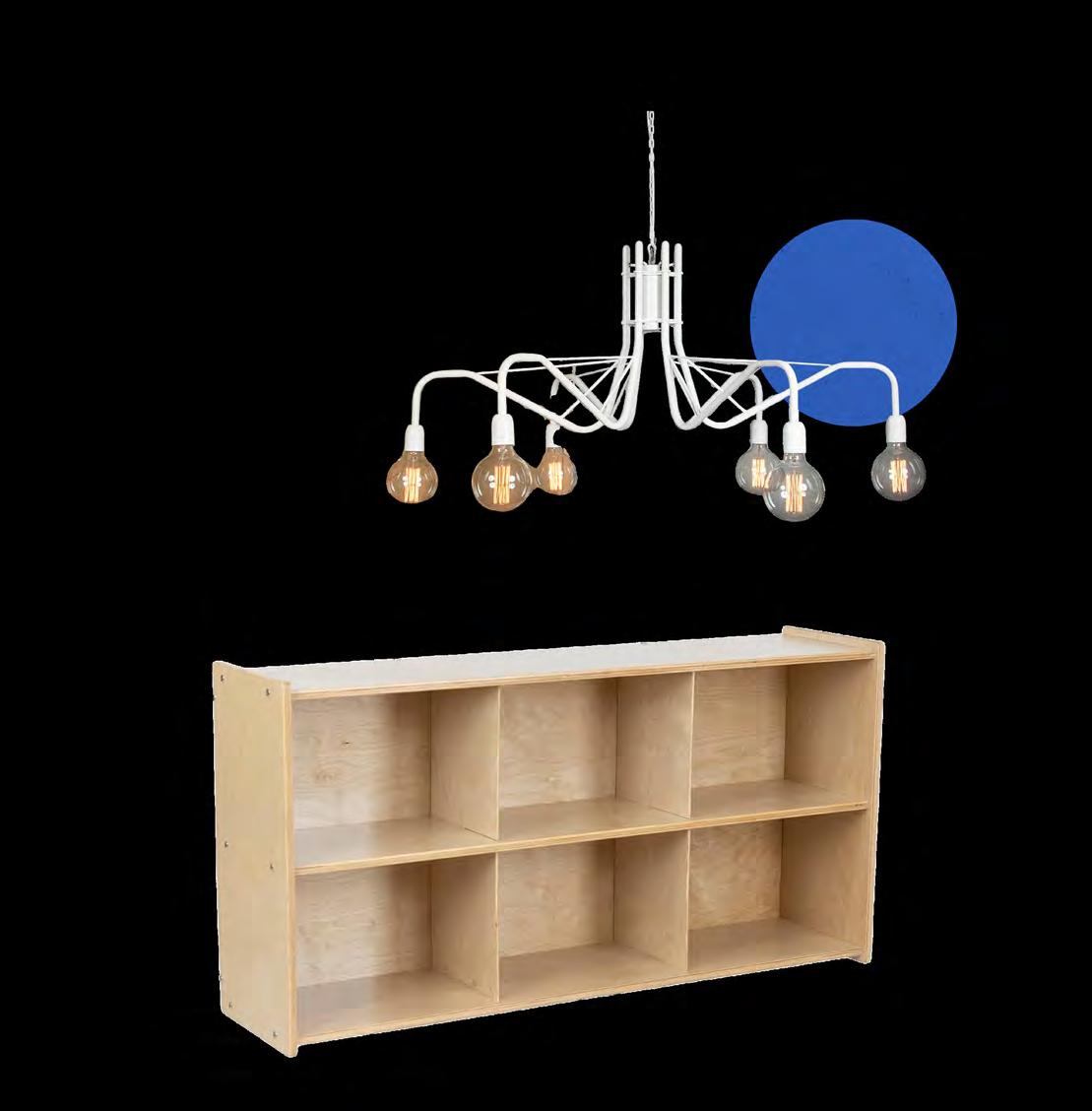
RETAIL DISPLAY MODULAR DESIGN FOR INCREASED ADAPTABILITY
JUMBLED ALPHABET WALLCOVERING
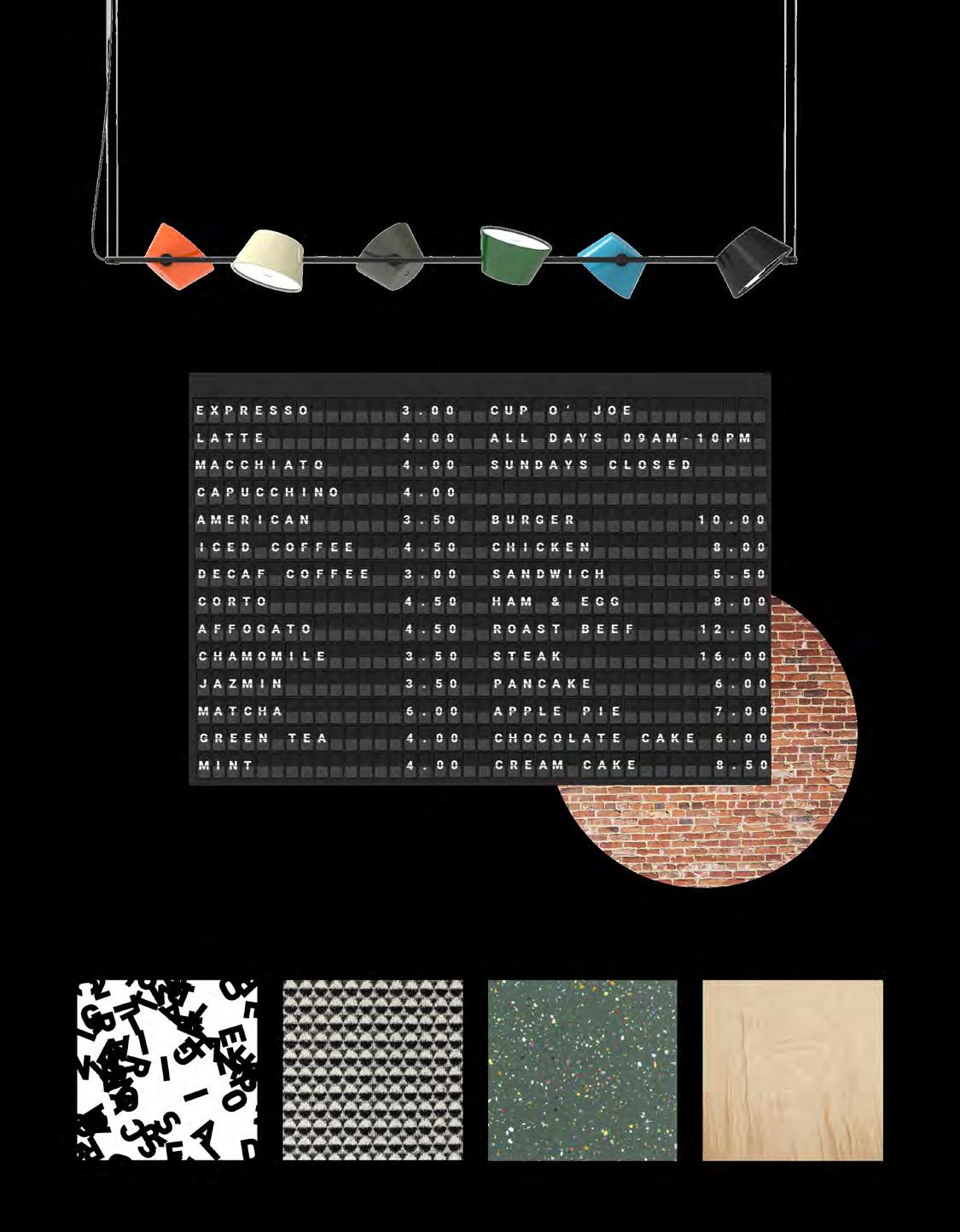
RECYCLED CONTENT
SOLID SURFACE
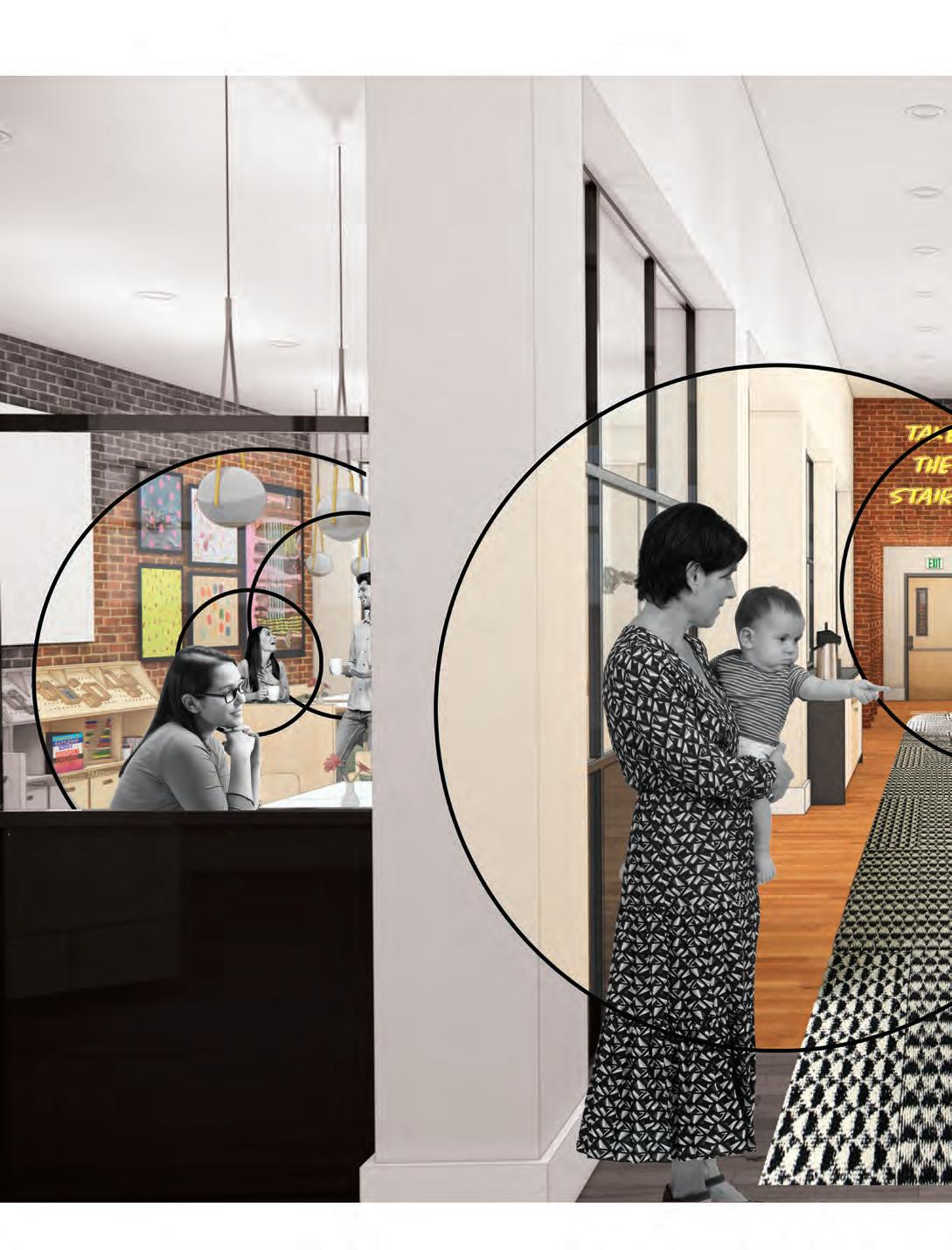
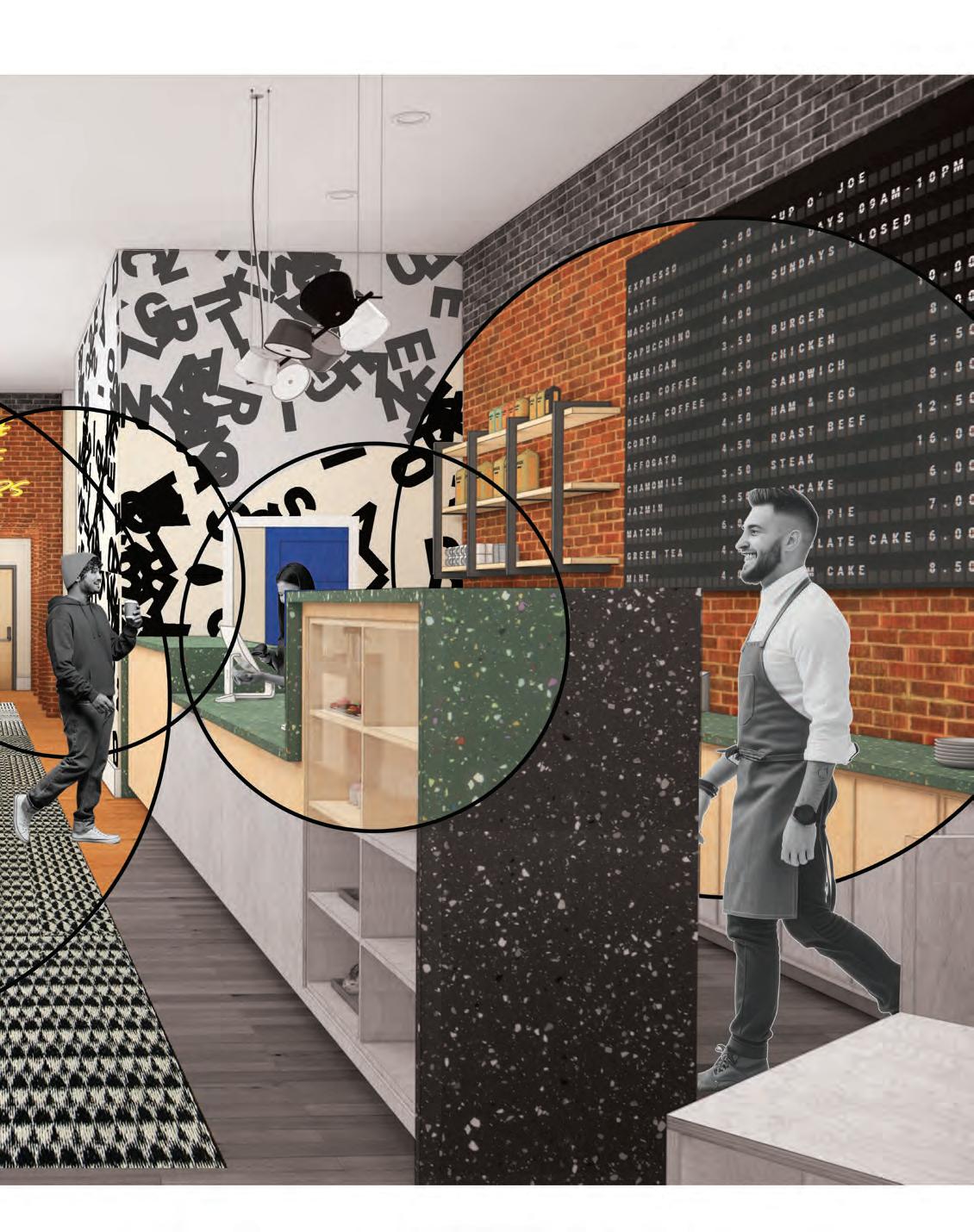
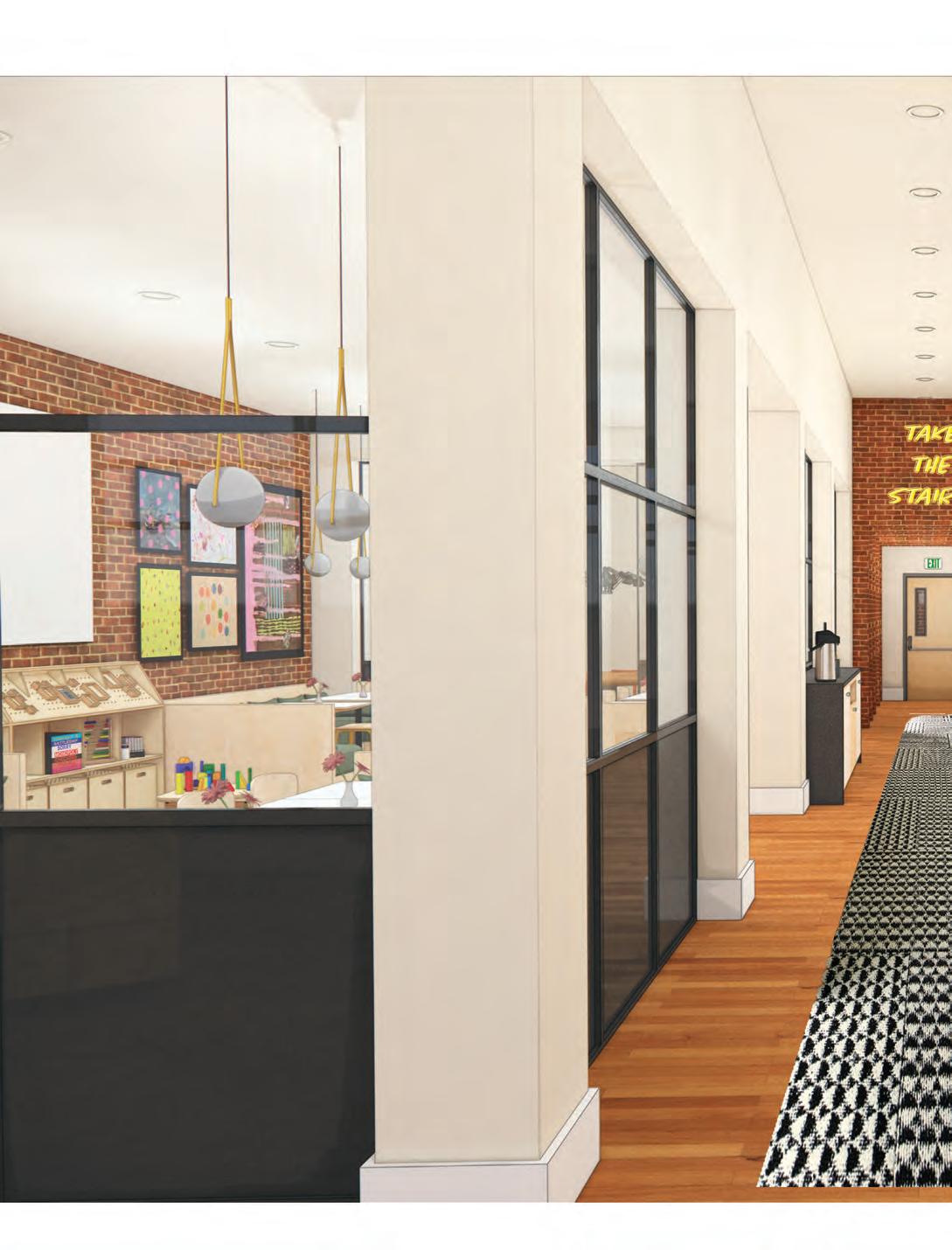
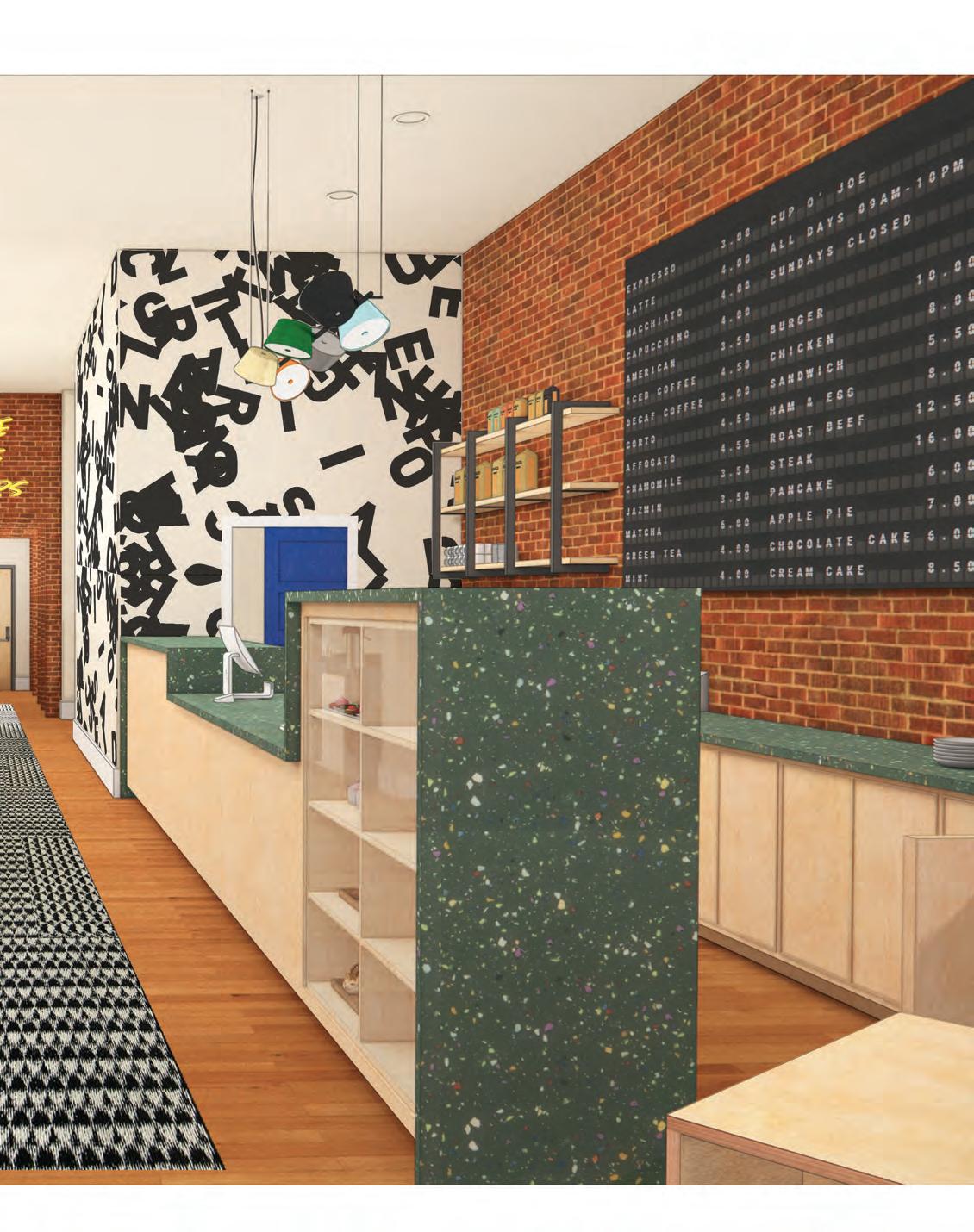
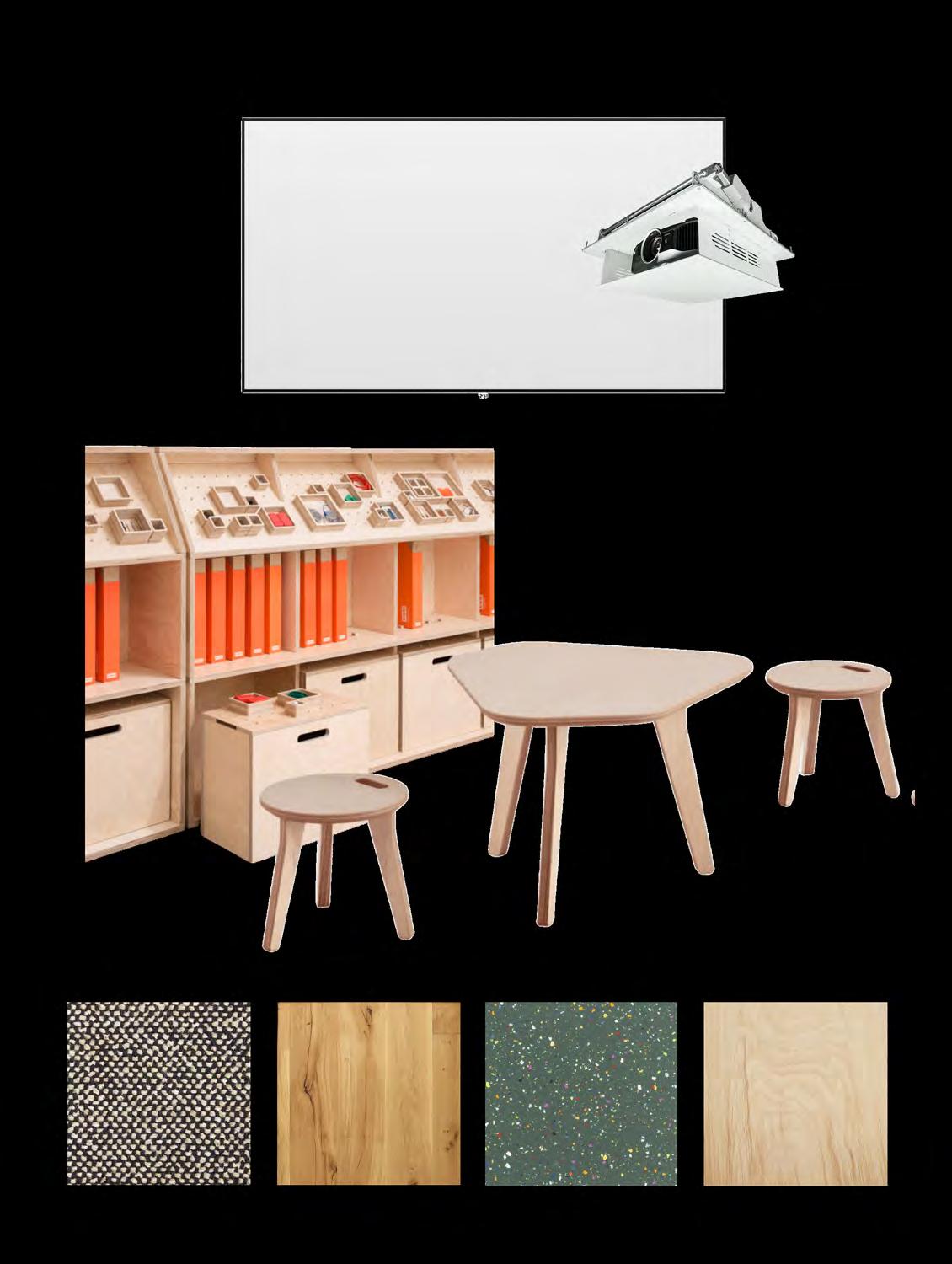
PROJECTOR & SCREEN FOR DAILY USE AND SPECIAL EVENTS.
MODULAR DESIGN ACTIVITY STORAGE.
ACTIVITY TABLES FOR CHILDREN
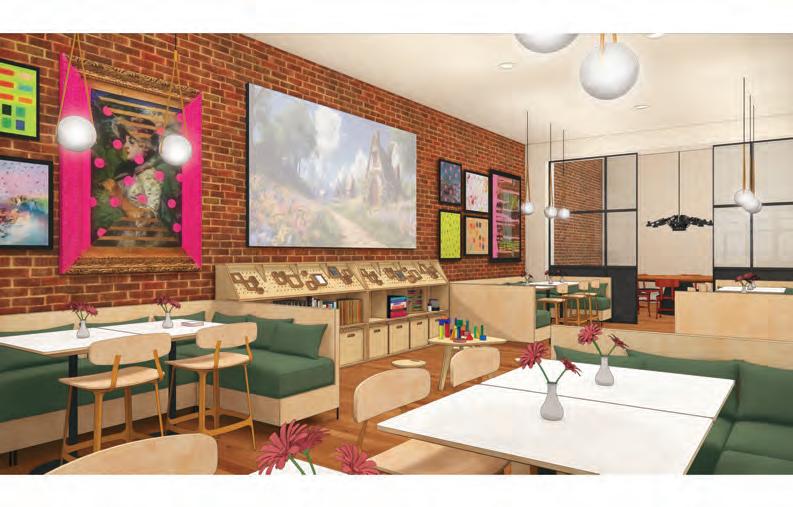
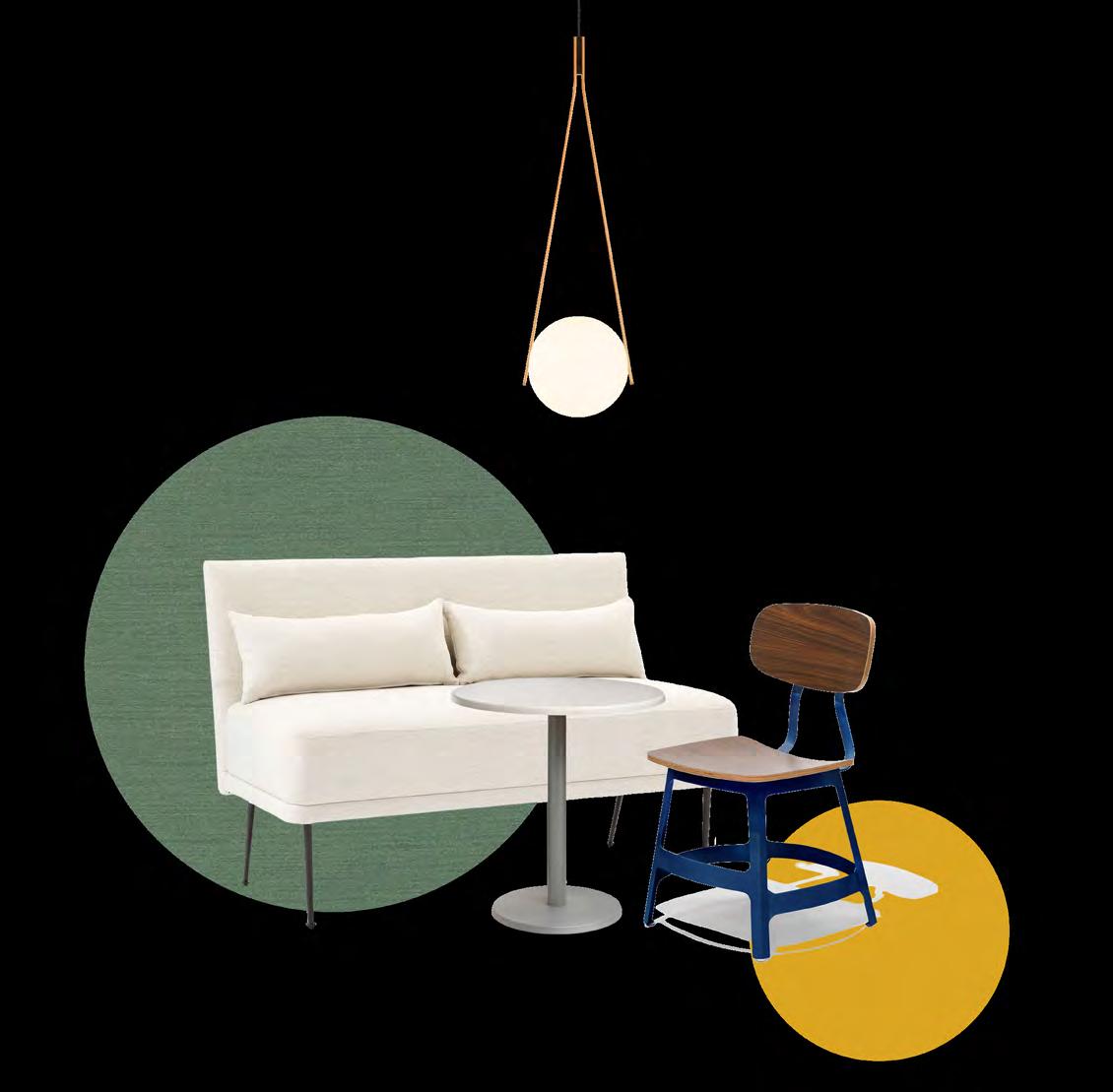
INDUSTRIAL ELEMENTS PAY HOMAGE TO THE BUILDING’S ORIGINAL FUNCTION / DESIGN.
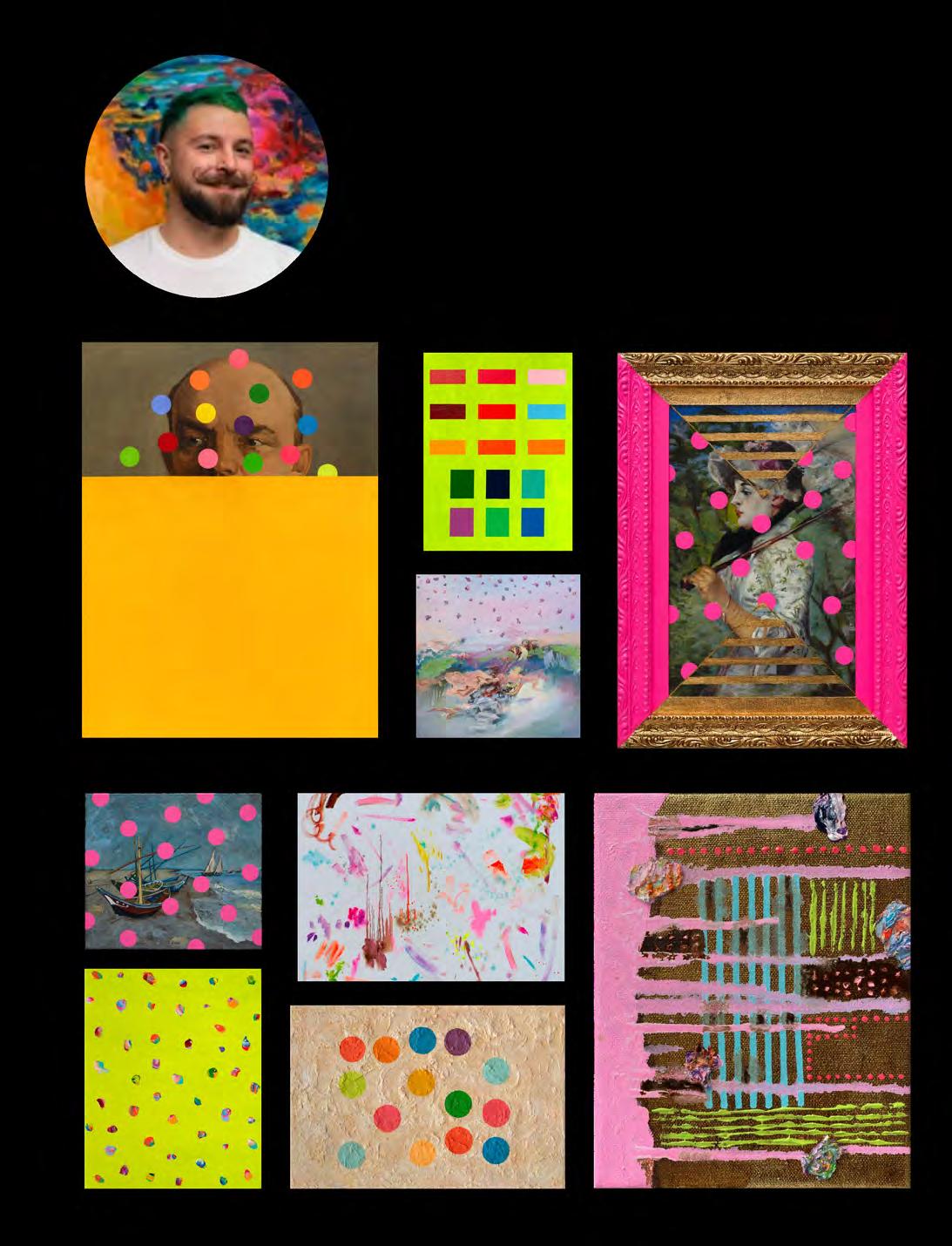
NON-LOCAL ART ENCOURAGES UNIQUE PERSPECTIVES AND BROADENS HORIZONS
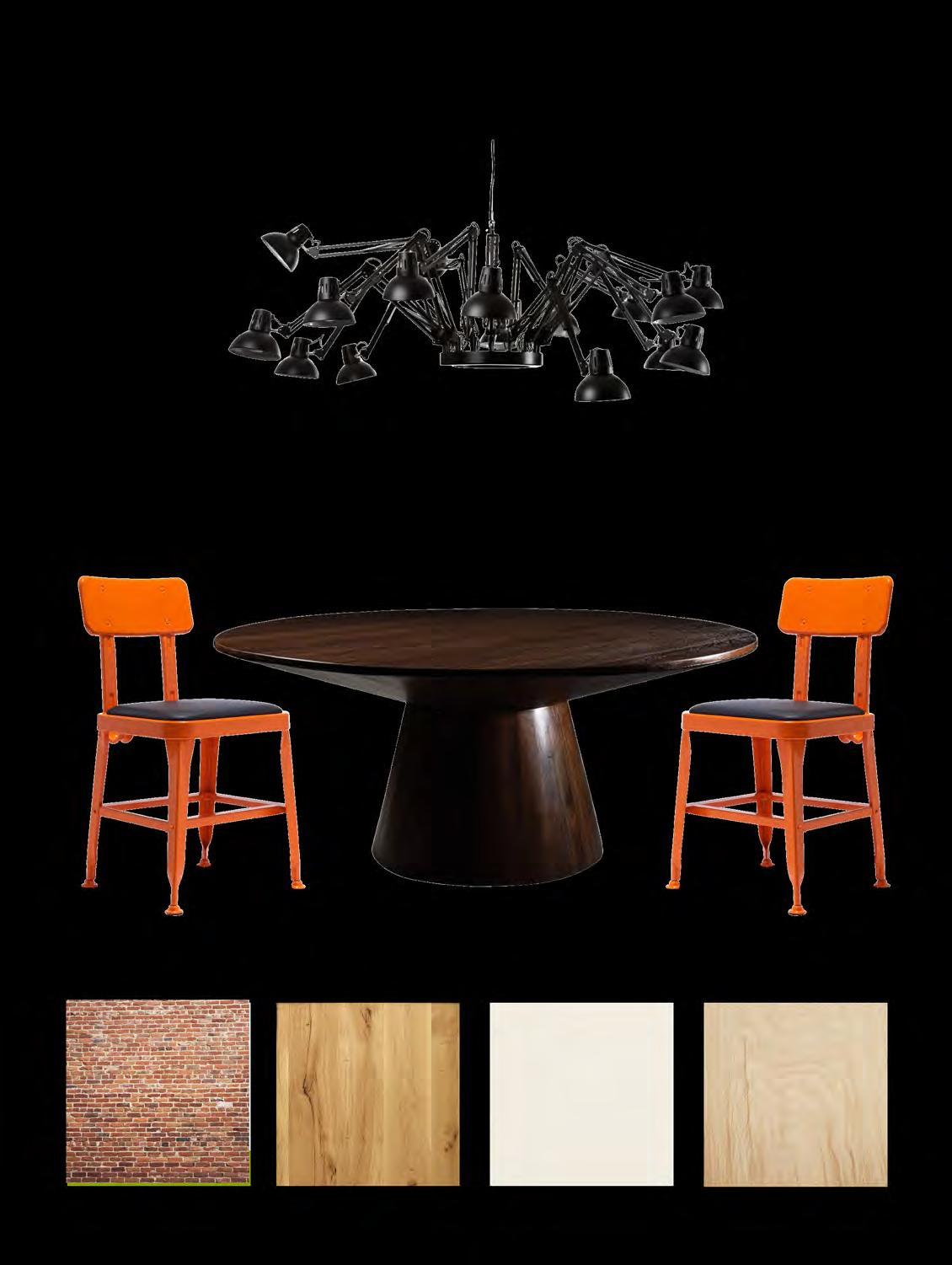
LARGE COMMUNITY TABLE SURROUNDED BY LOCAL ART TO CONTRAST WITH SMALL GROUP SEATING OPTIONS OF MAIN CAFE SPACE
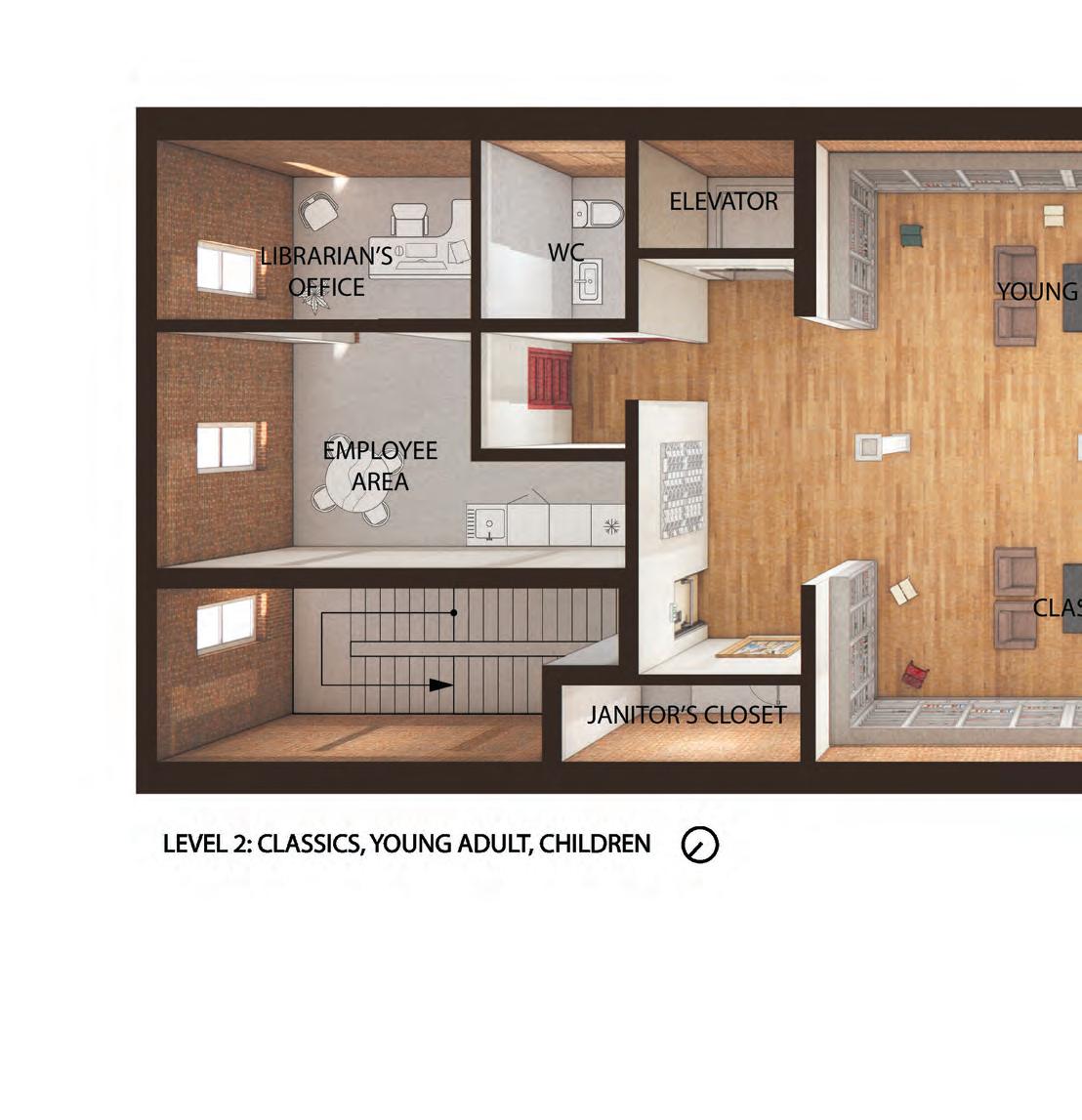
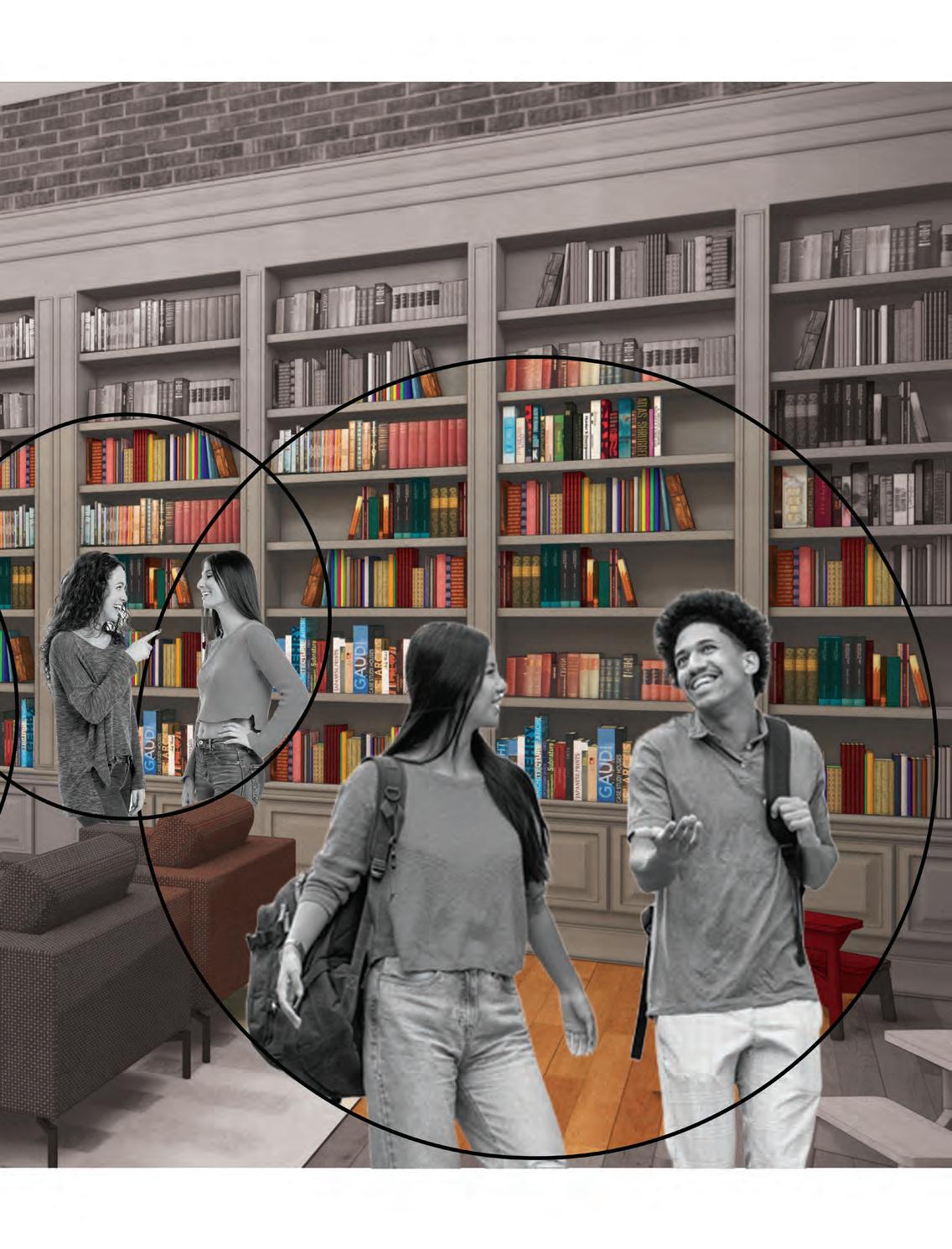
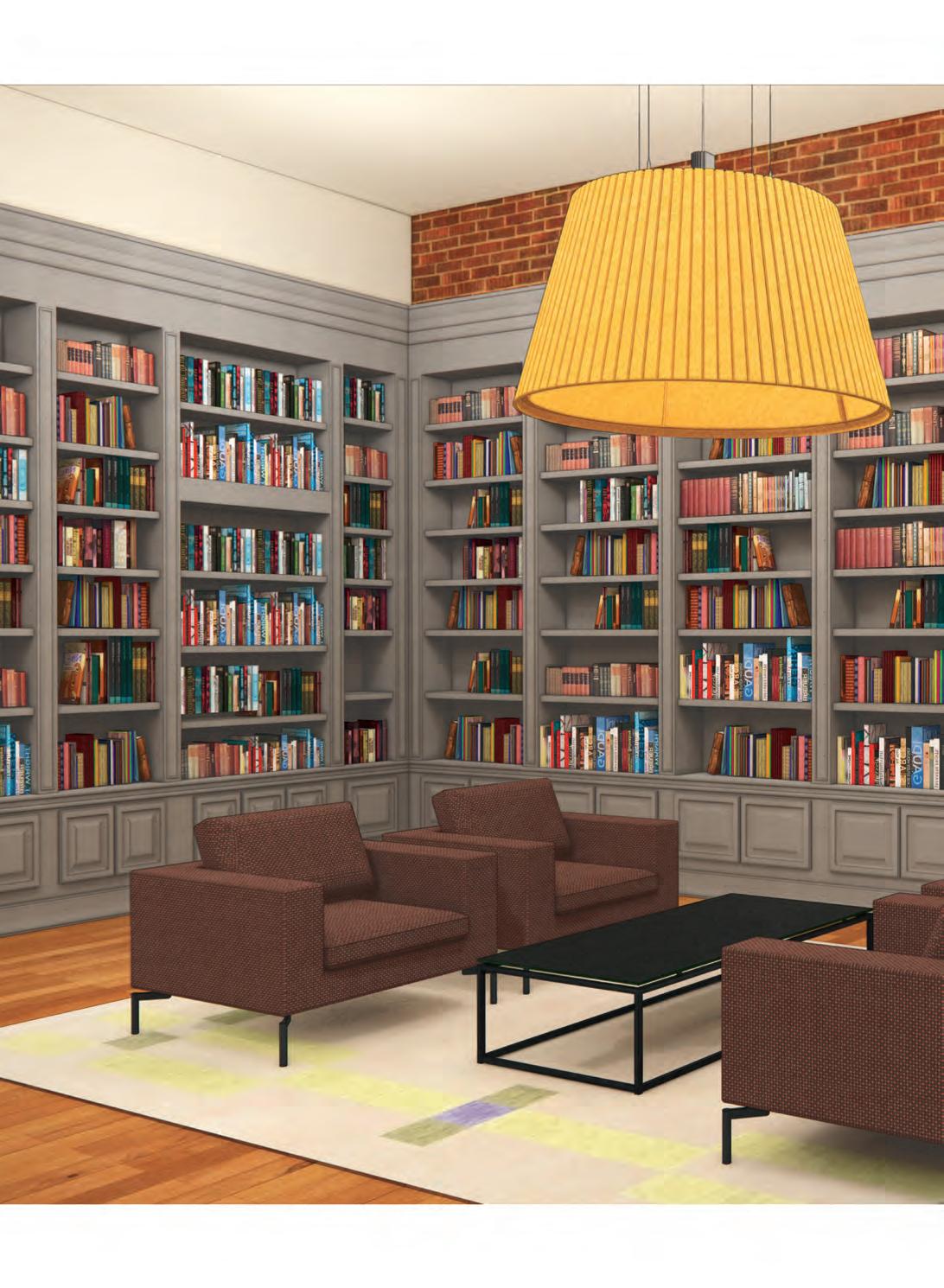
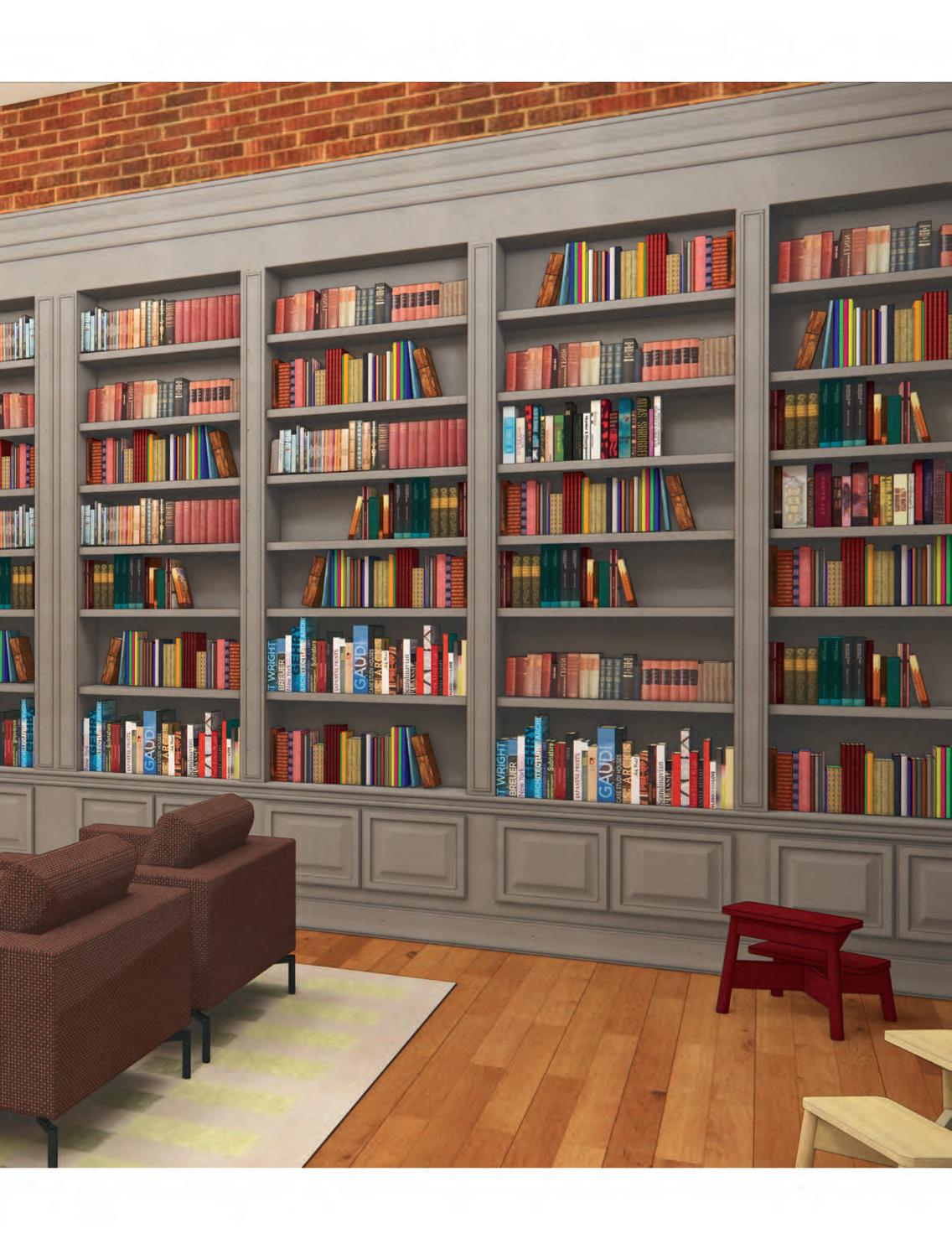
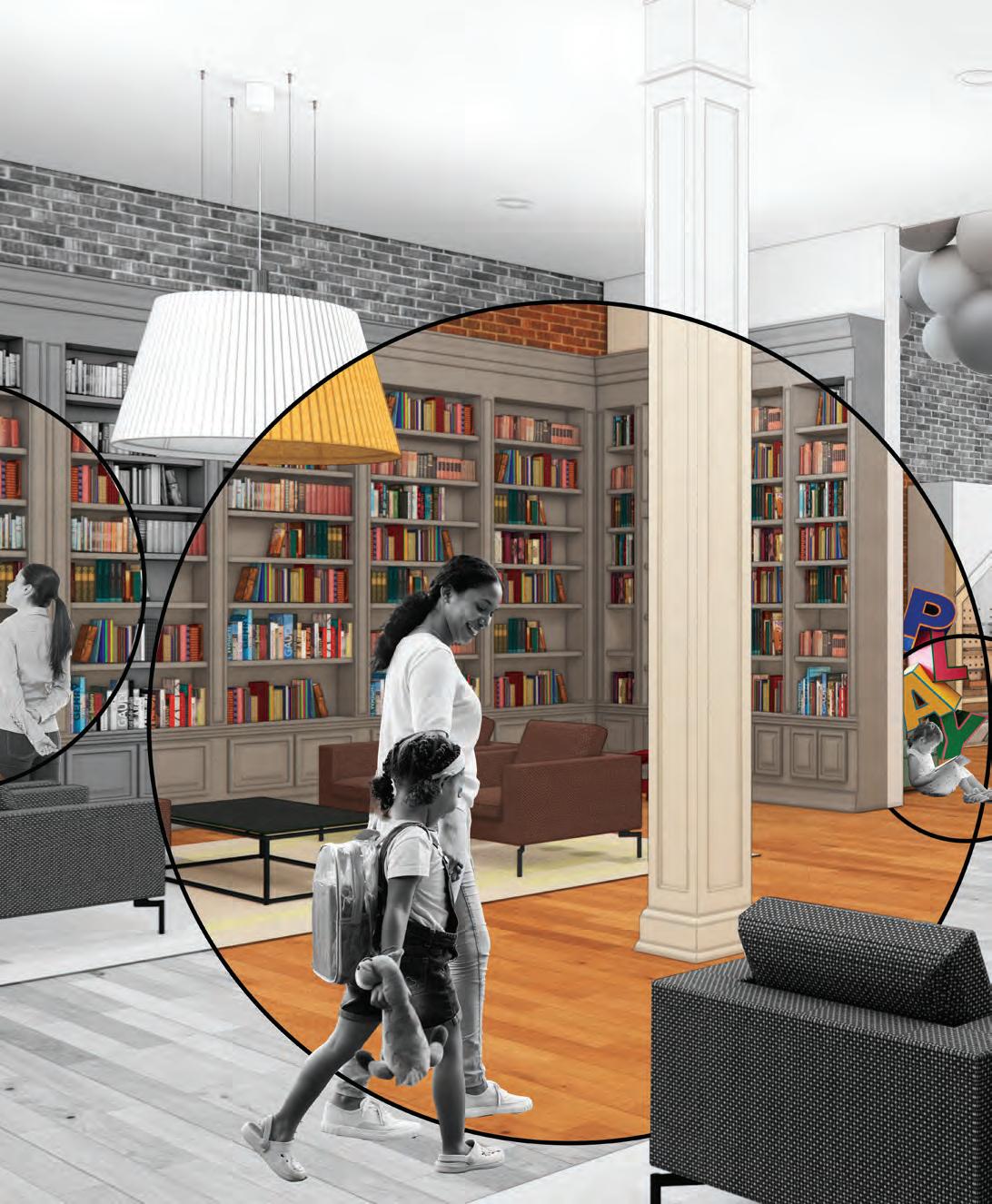
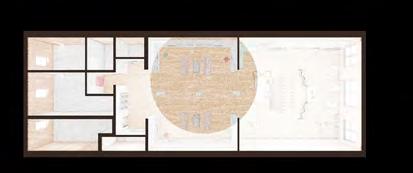
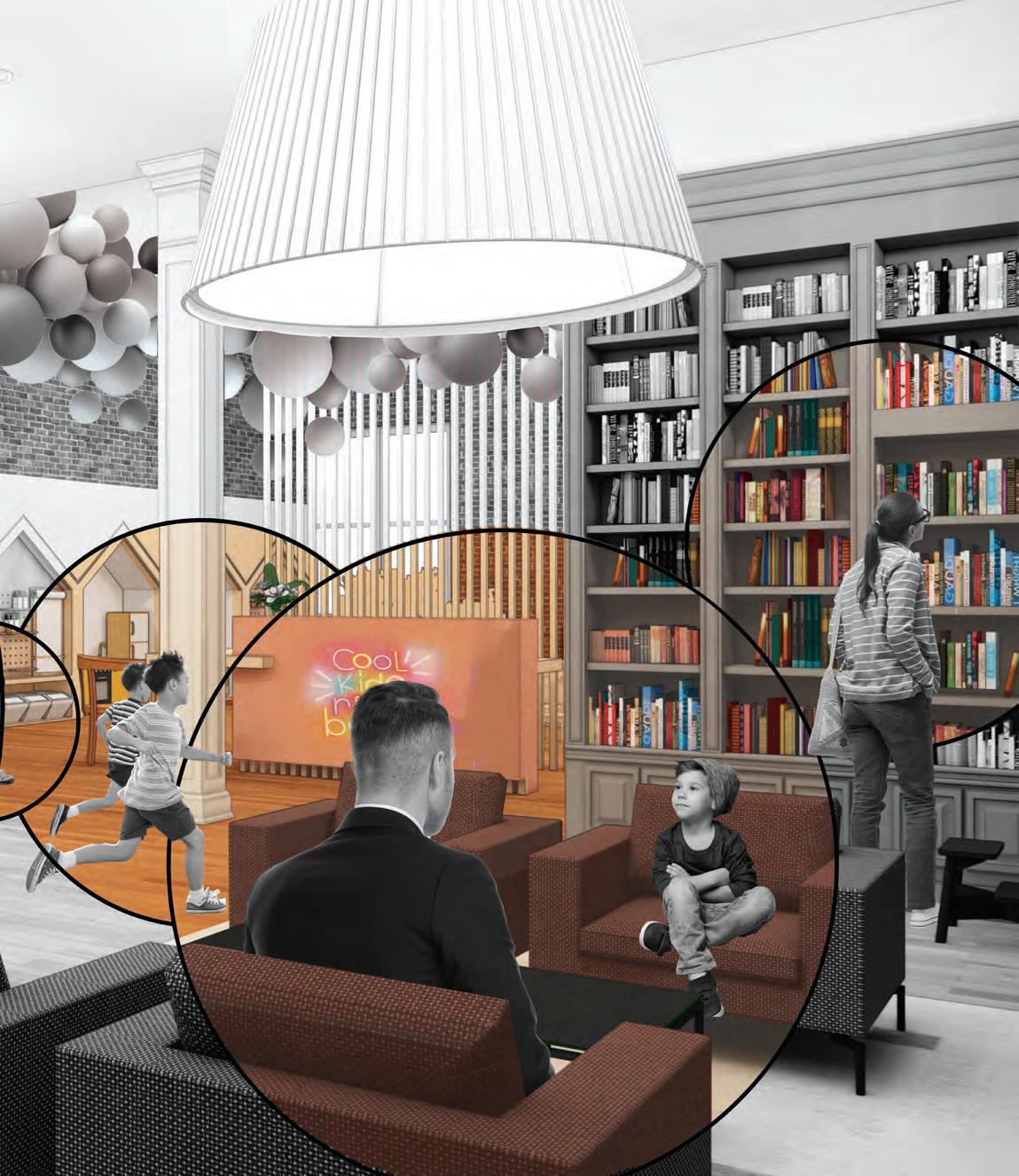
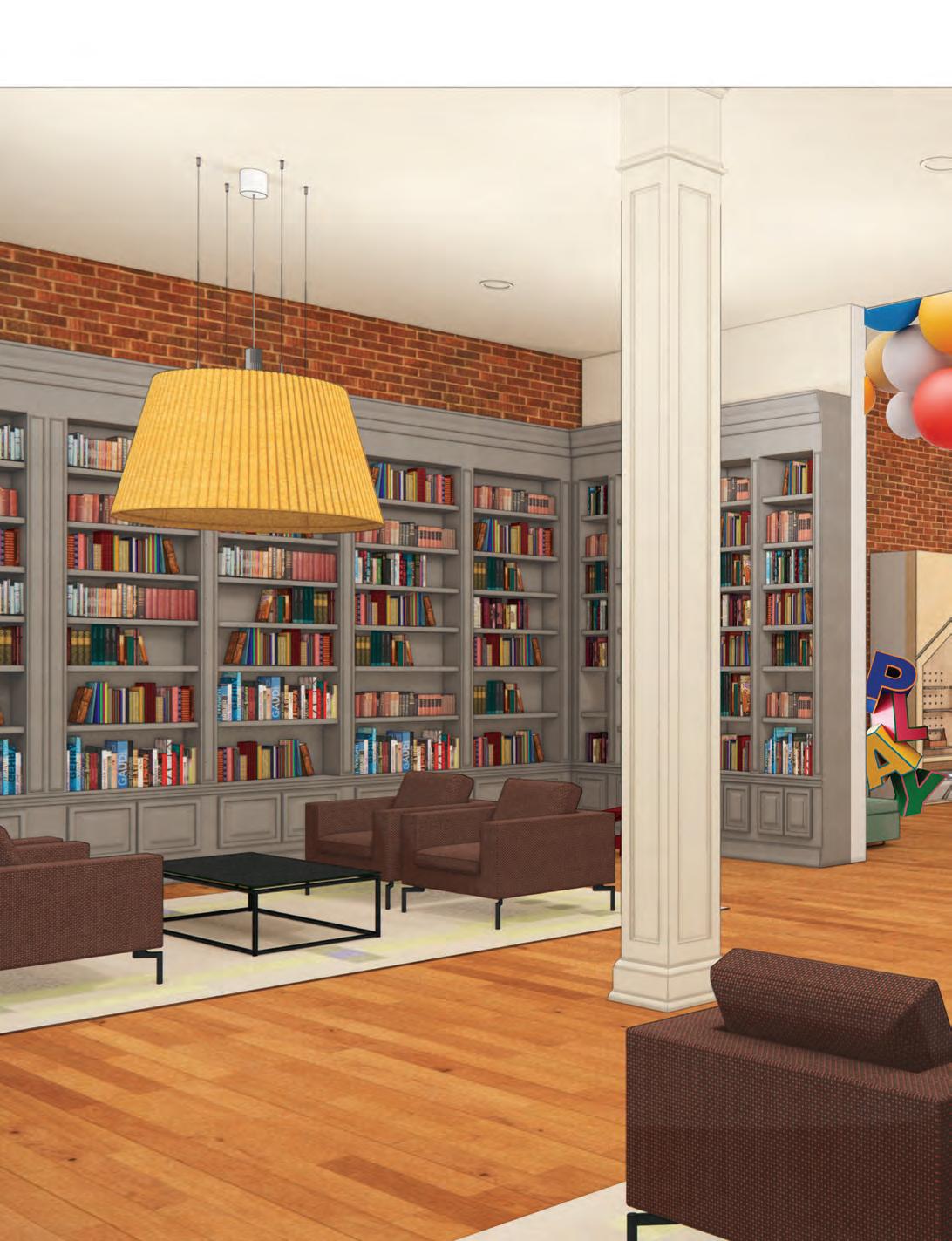
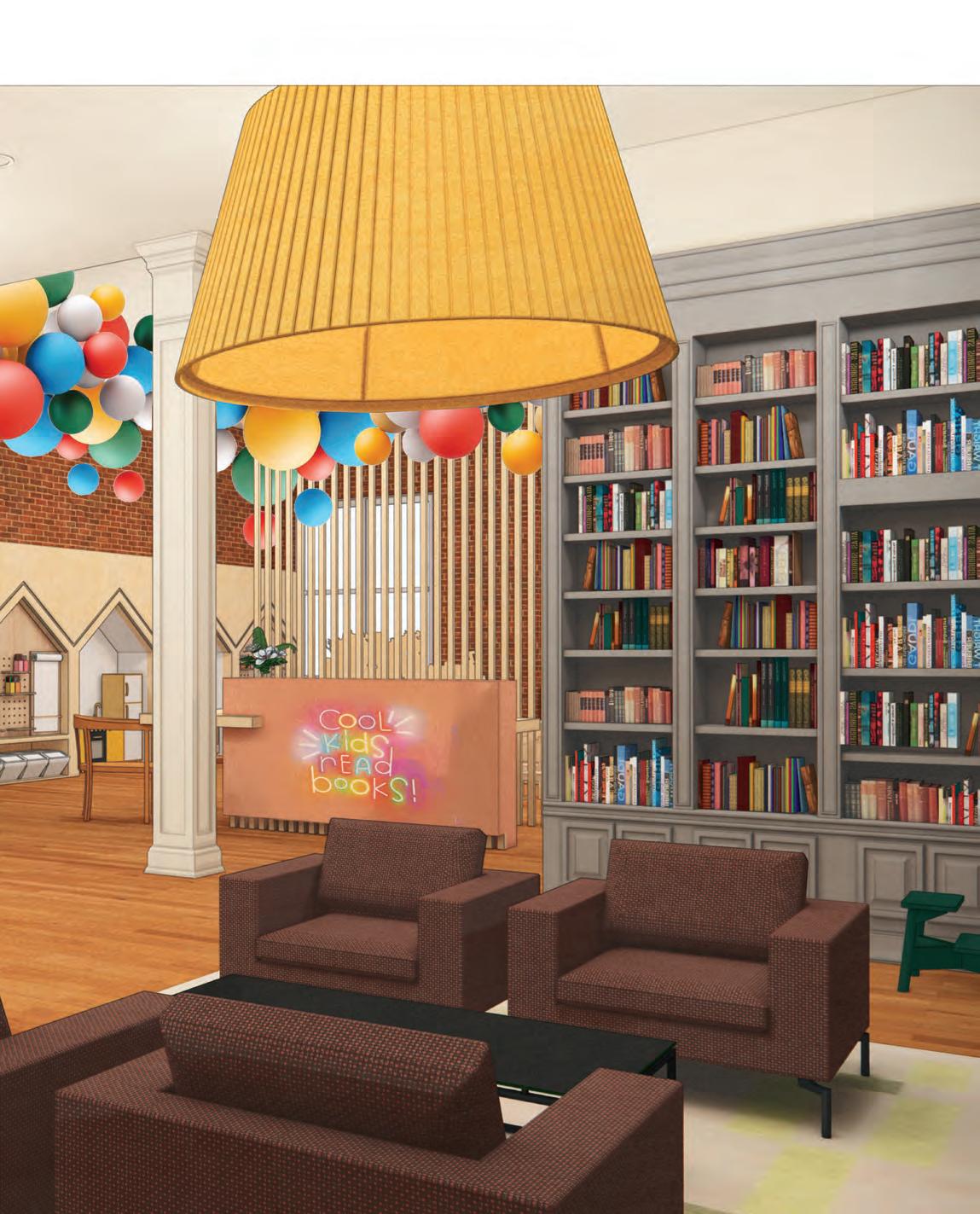
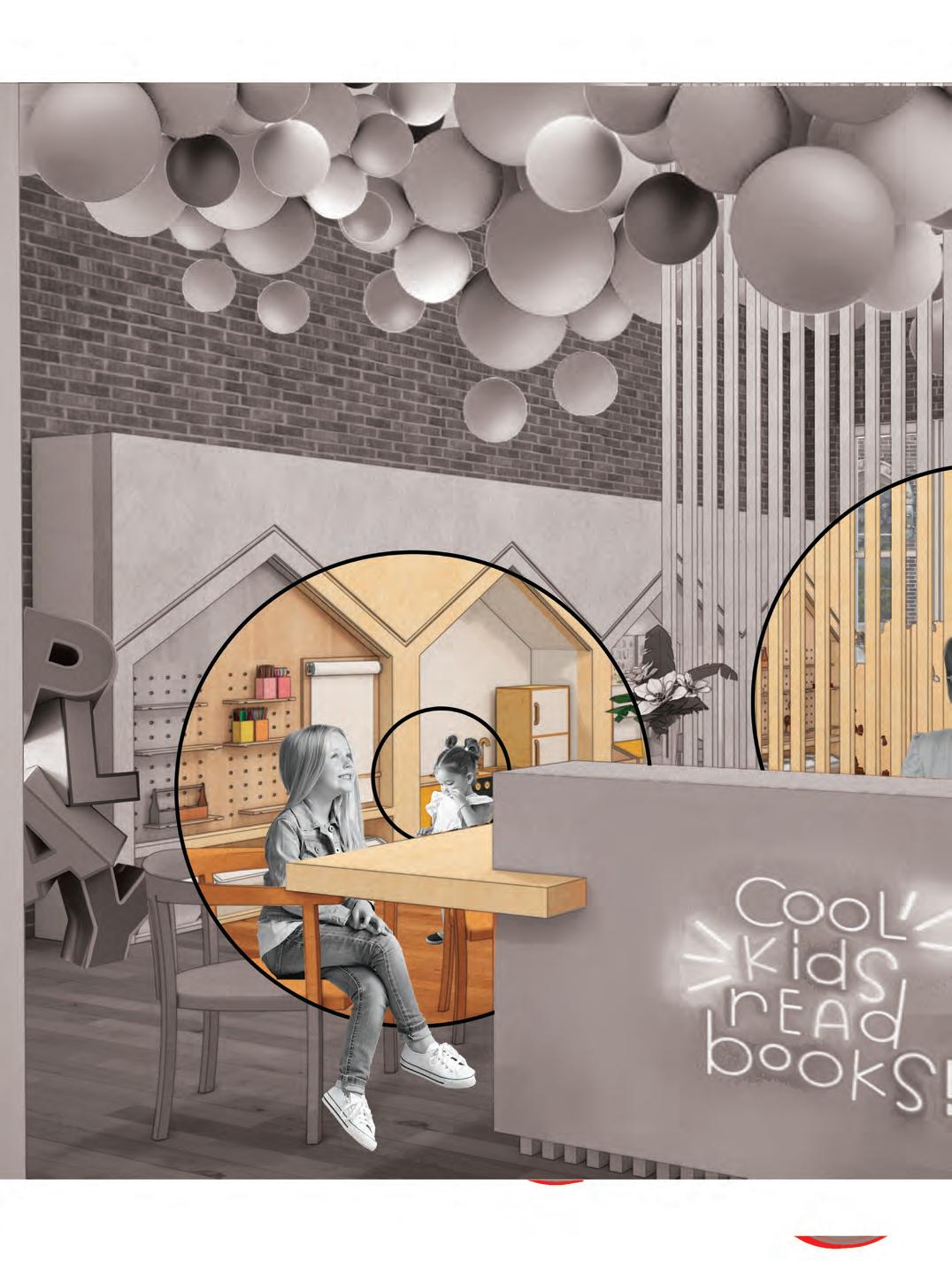
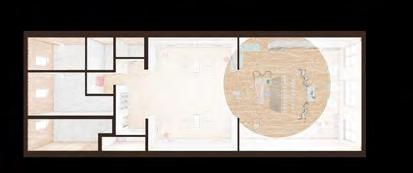
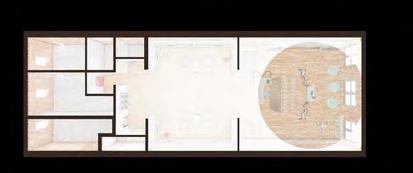
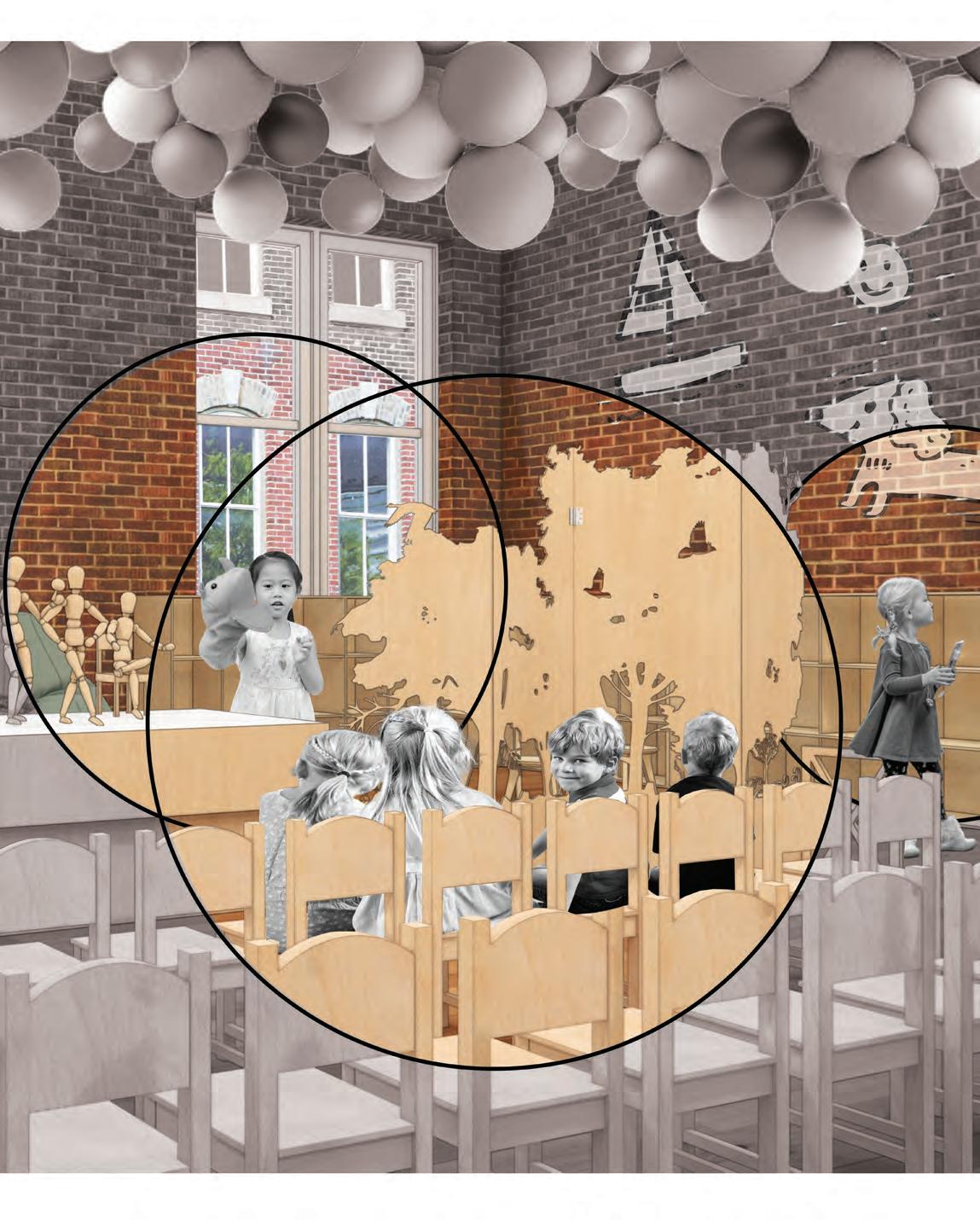
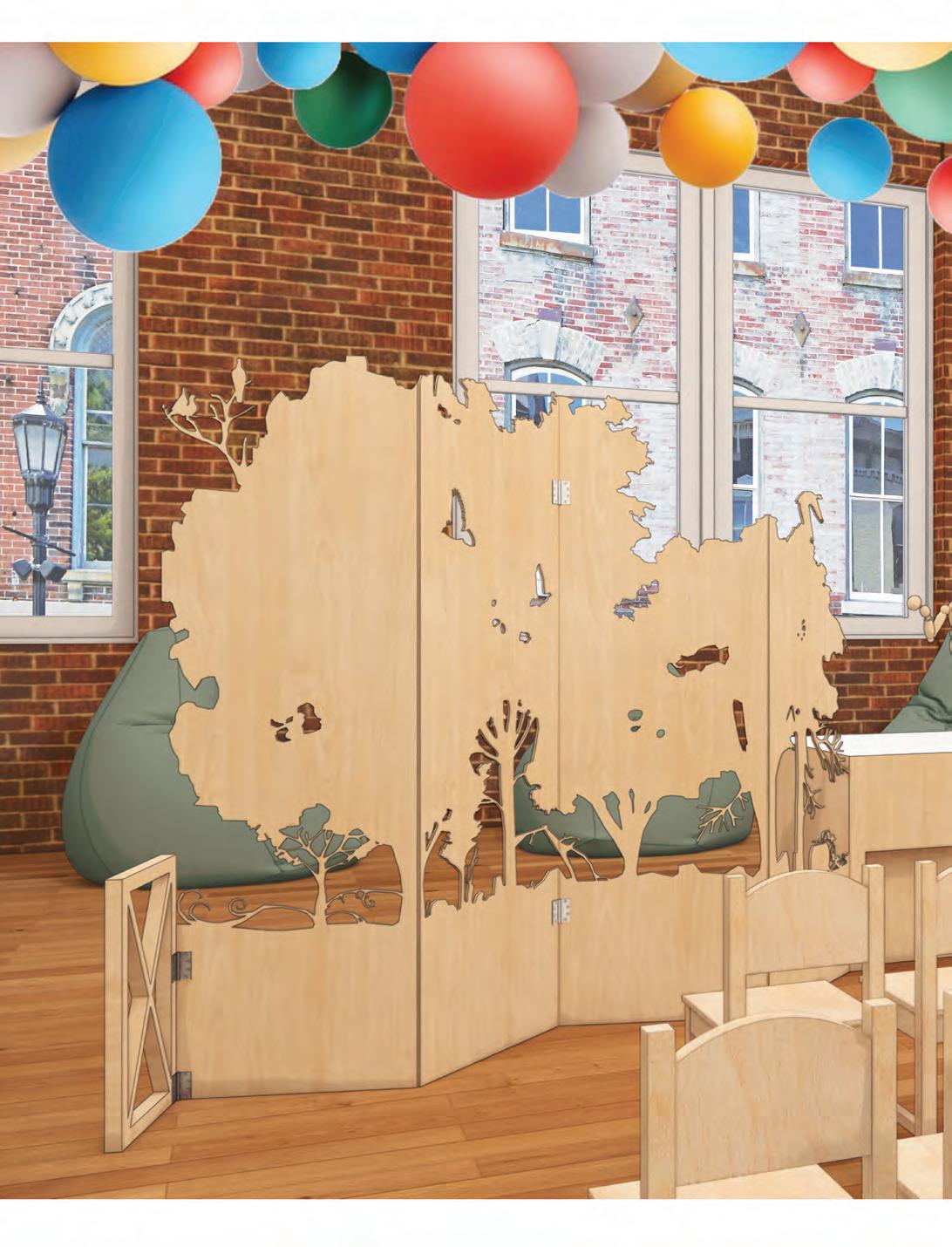
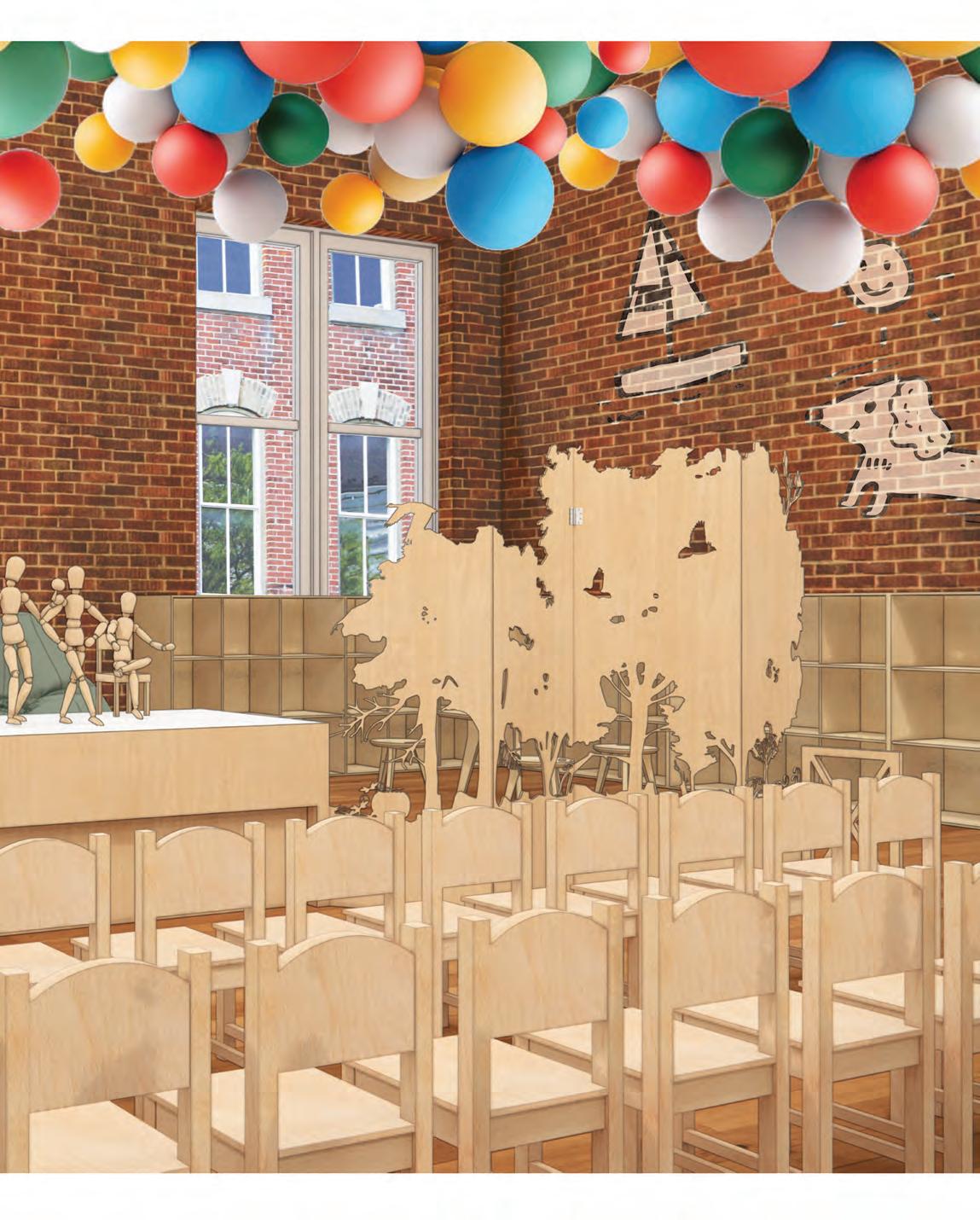
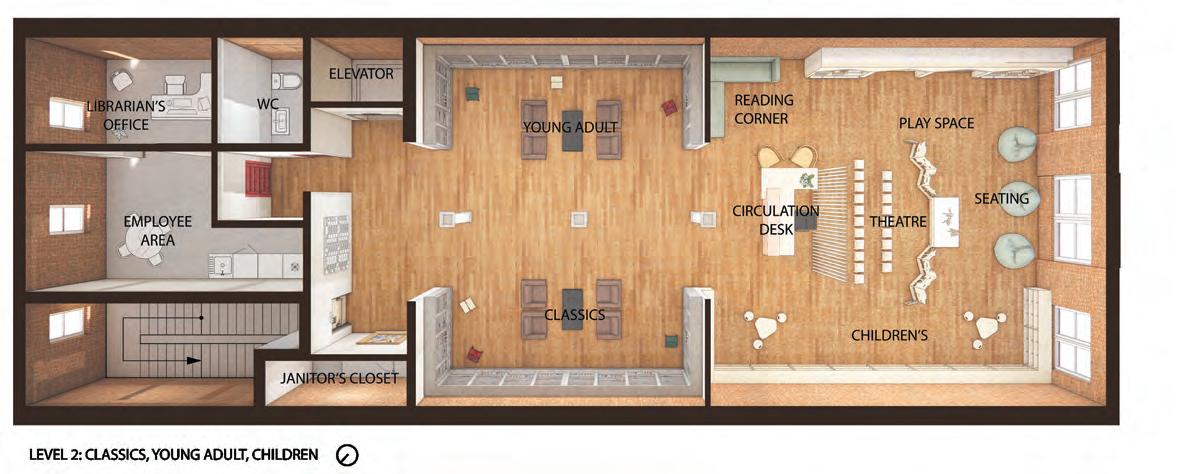
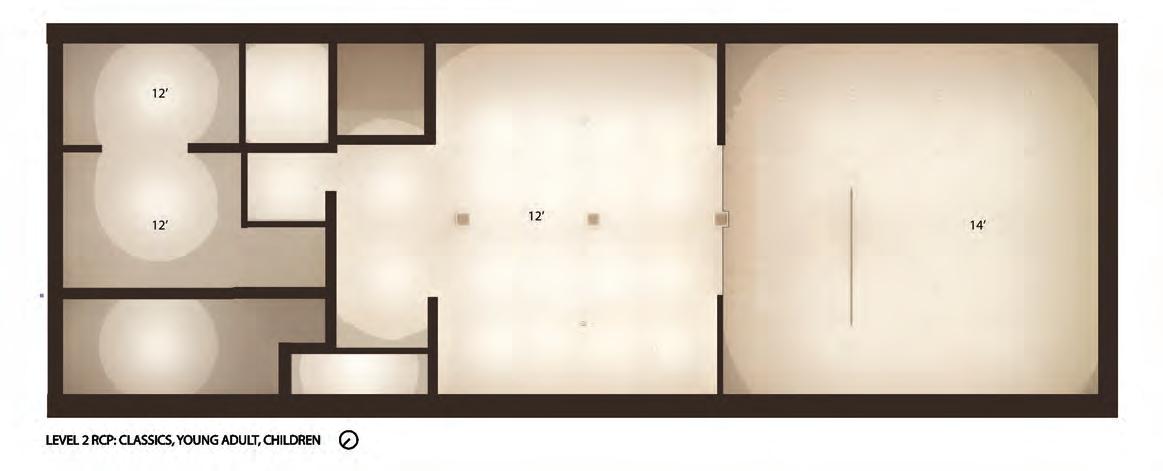
Storytelling through play enhances communication, encourages creativity, and improves comprehension. Utilizing play as a learning tool allows exploration in an active, hands-on way, reinforcing literacy concepts through role-playing, puppet shows, and interactive games. When children act out stories, they internalize character development, plot structure and language patterns which further strenghtens their reading and writing abilities. They children’s area of the Beaufort County Public Library provides childrenthe opportunity to engage with story in many forms. Quiet reading corners invite self exploration while the centrally located theatre space encourages group play.

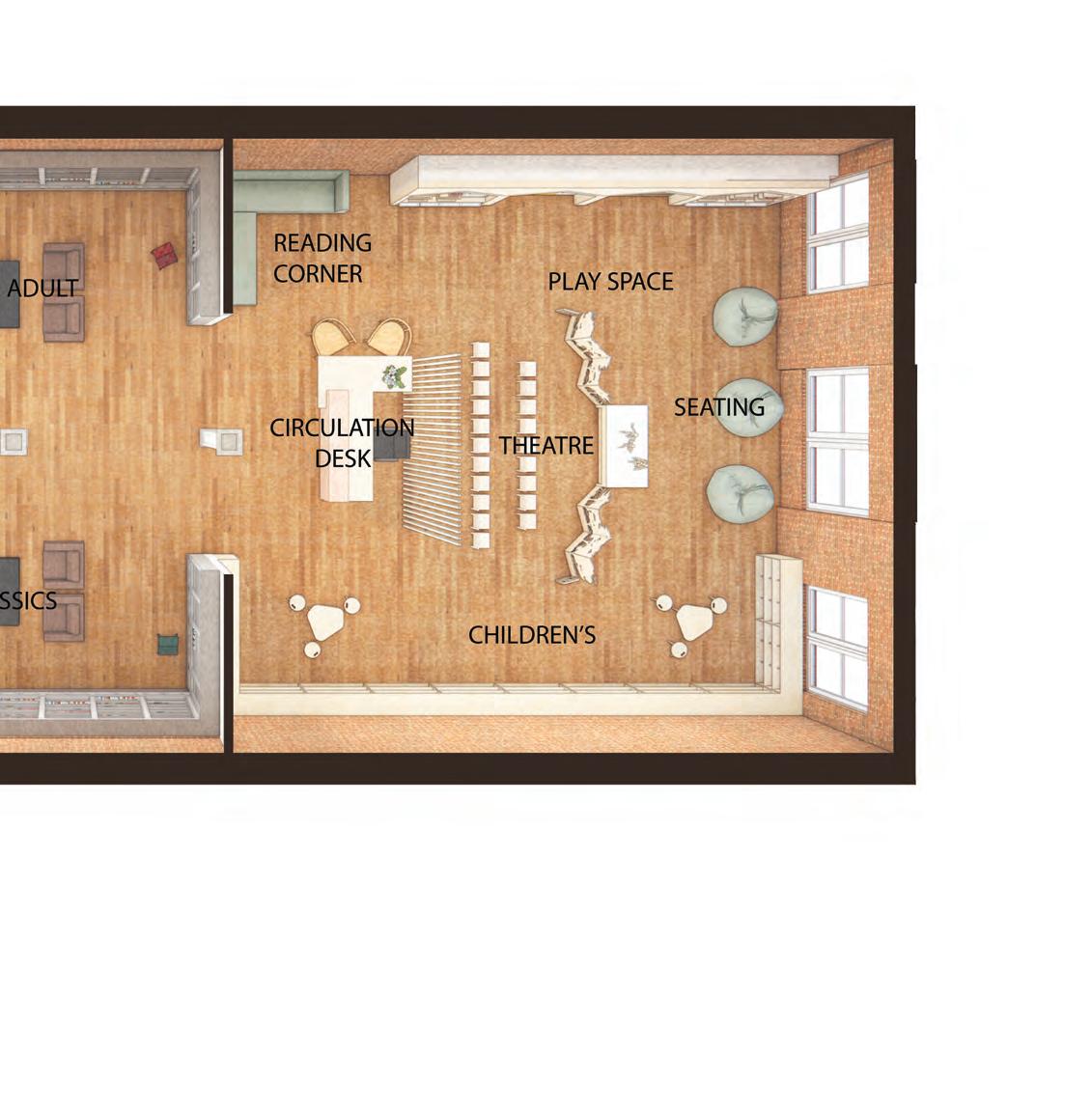
Although learning through play is the focus of the children’s area, parents and young adults are also provided opportunities to engage with this space. The Classics and Young Adult Sections are located on this floor. Providing an adult like space adjacent to the children’s area allows for easier transition for young readers wanting to advance their literacy skills. Many classics are read in the school system and by adults alike encouraging parents to participate in literacy learning with their children while also providing them a comfortable space to read while their children play.

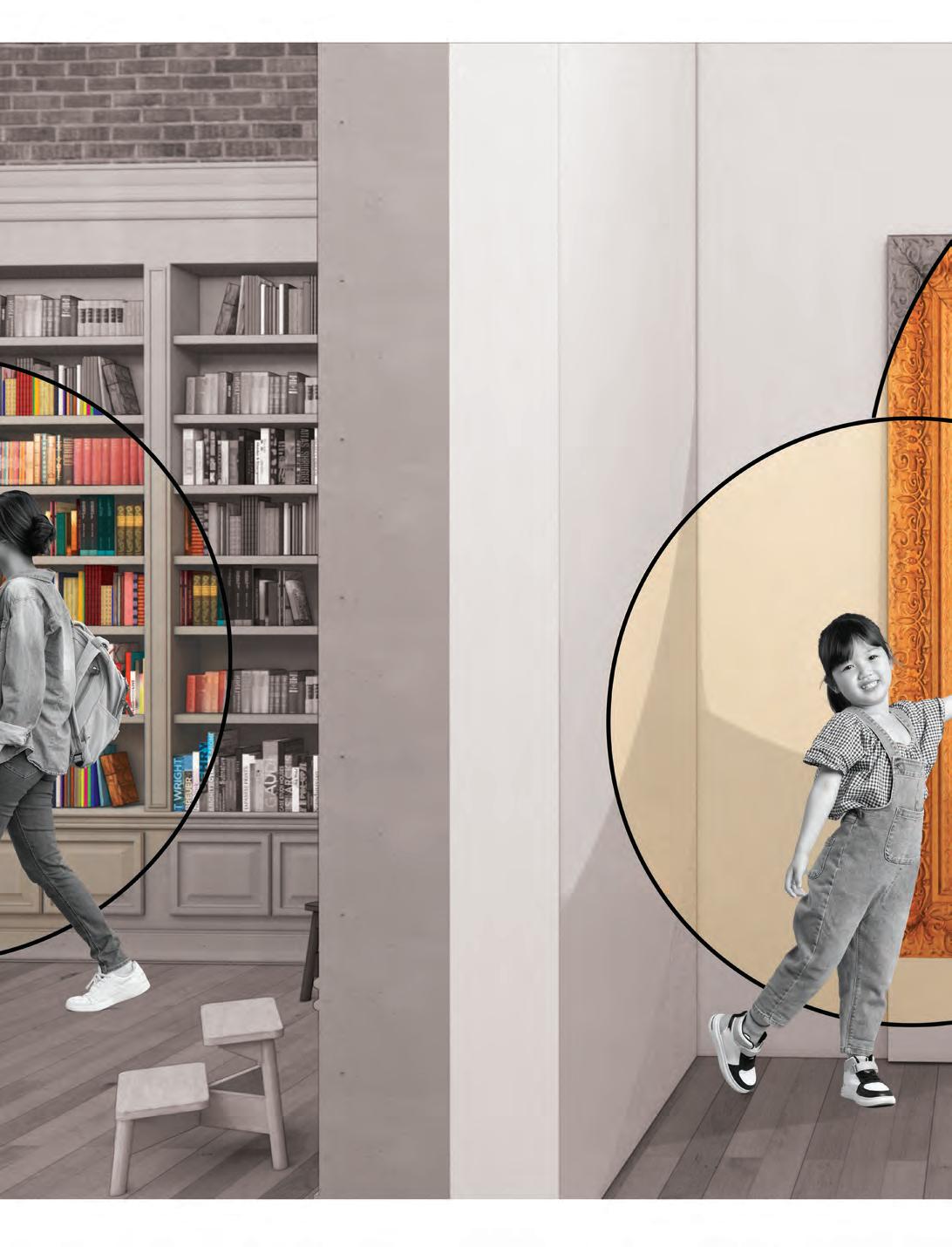
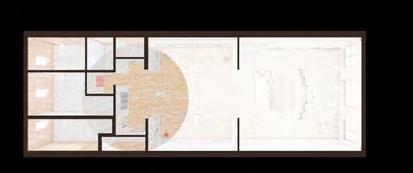
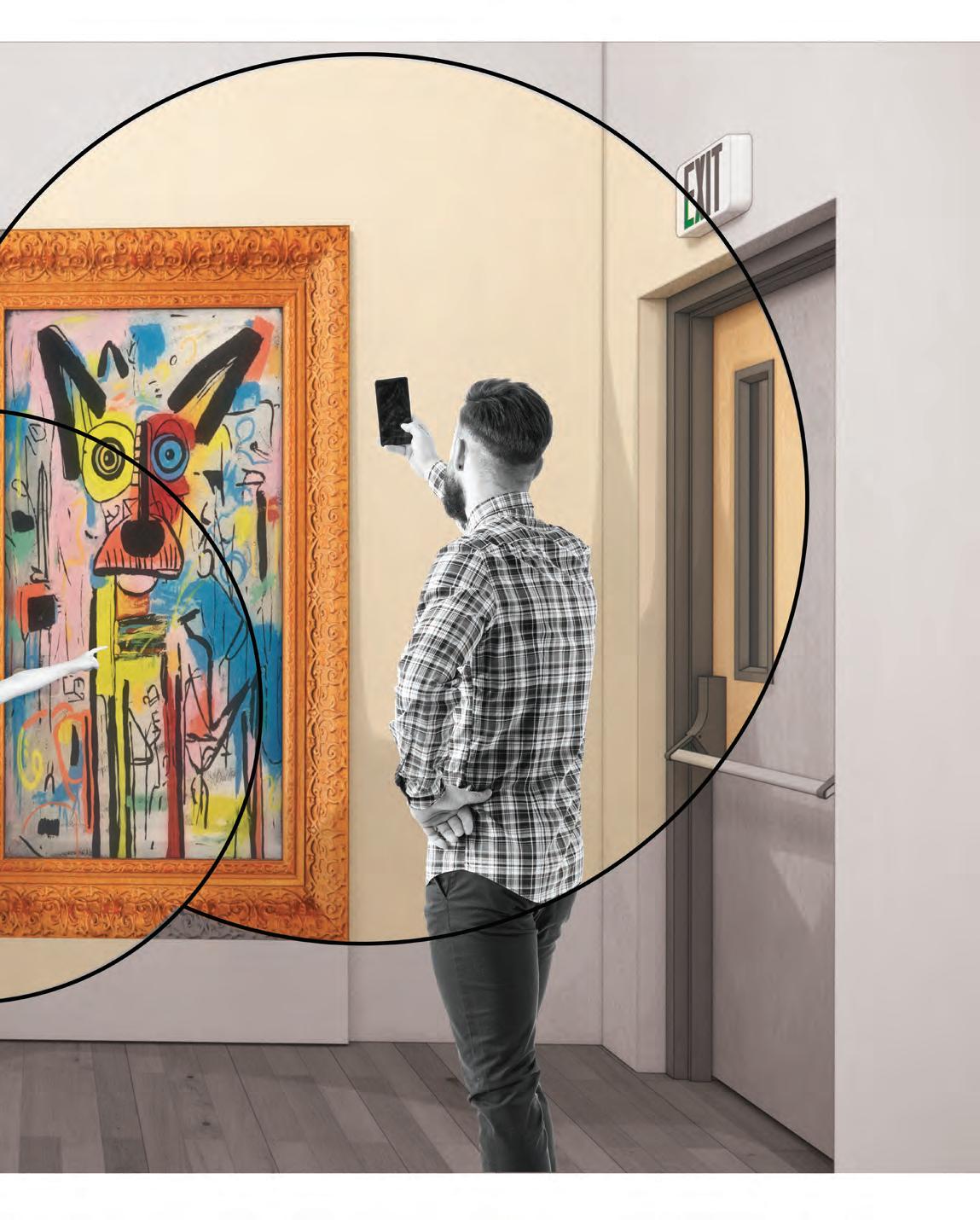
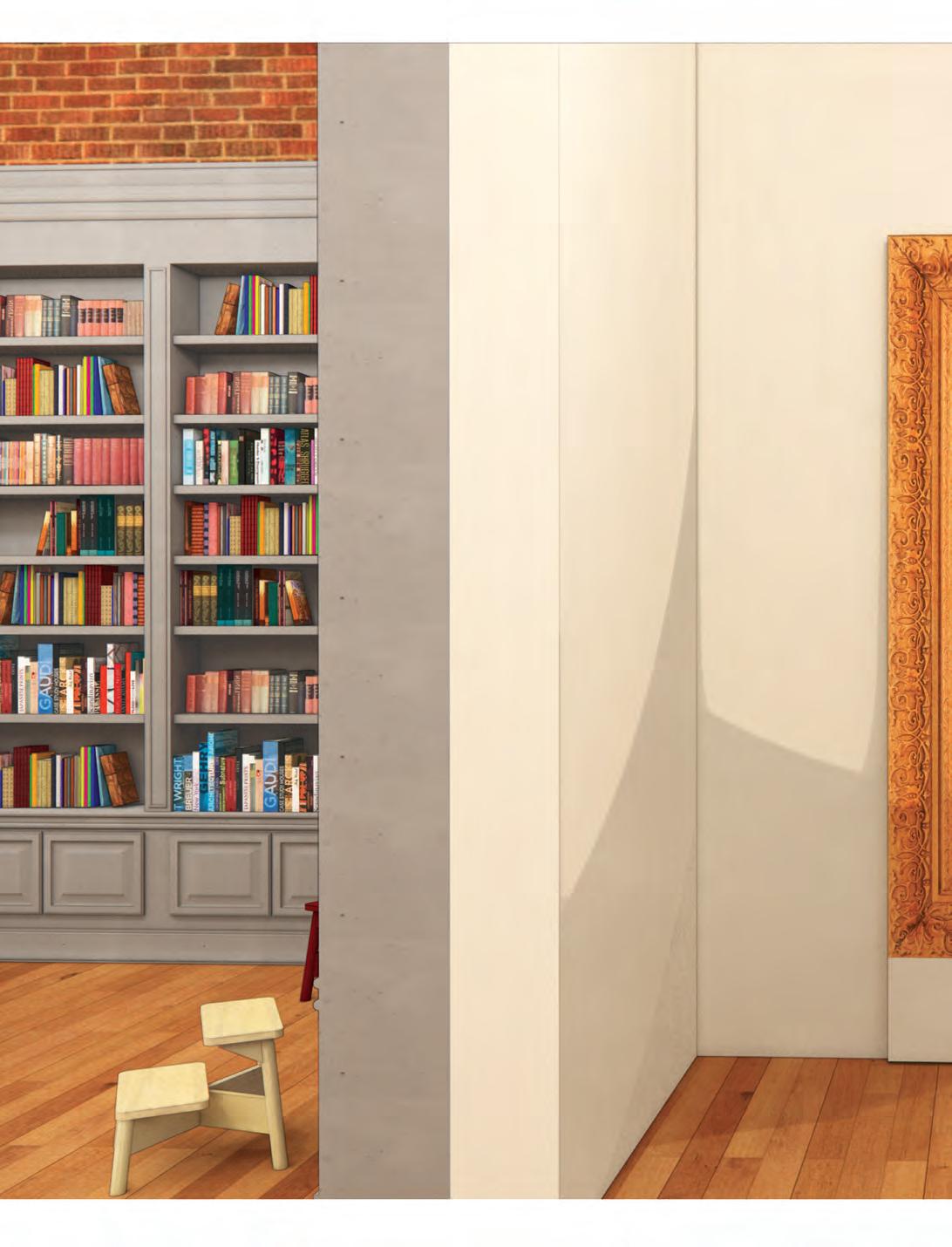
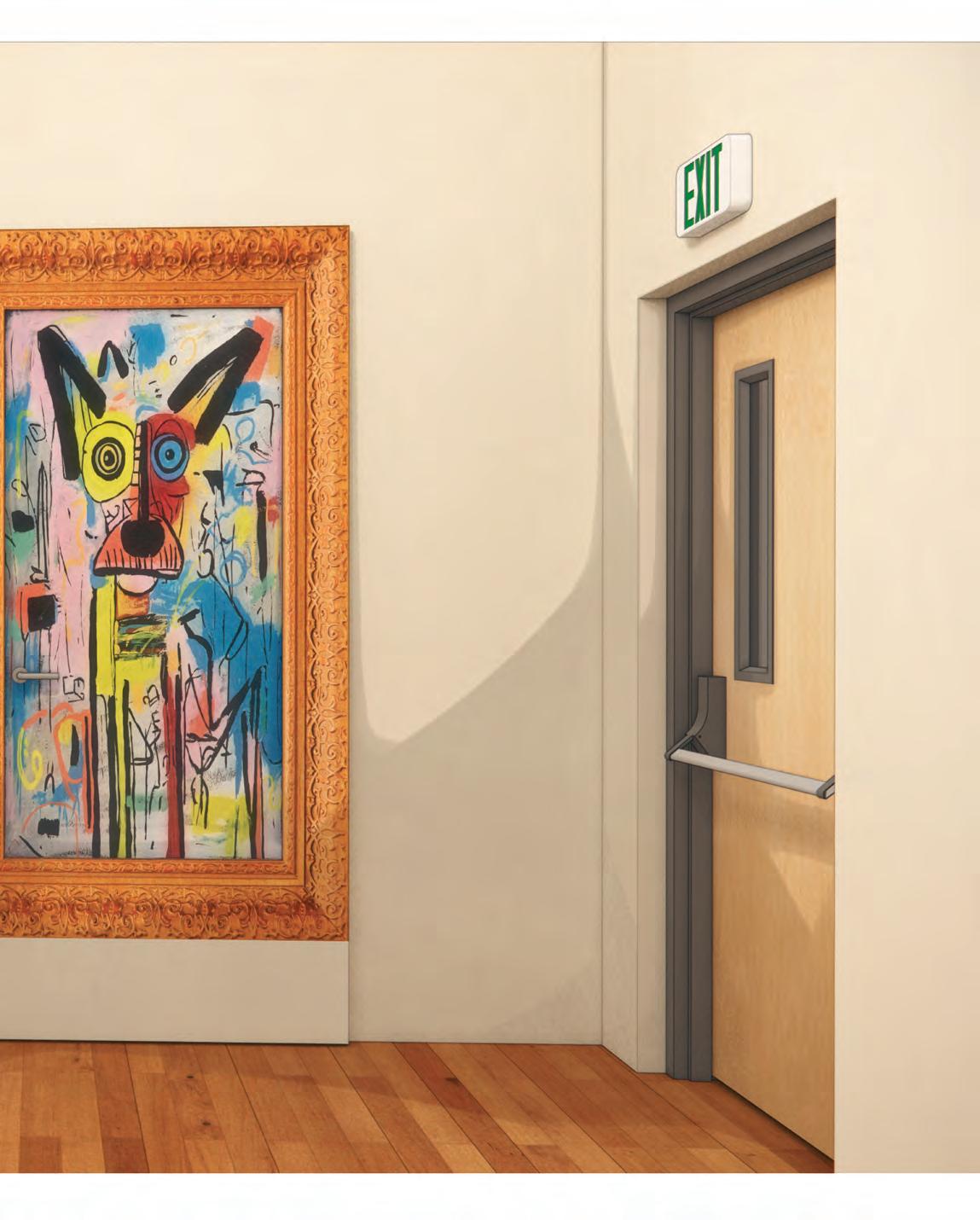
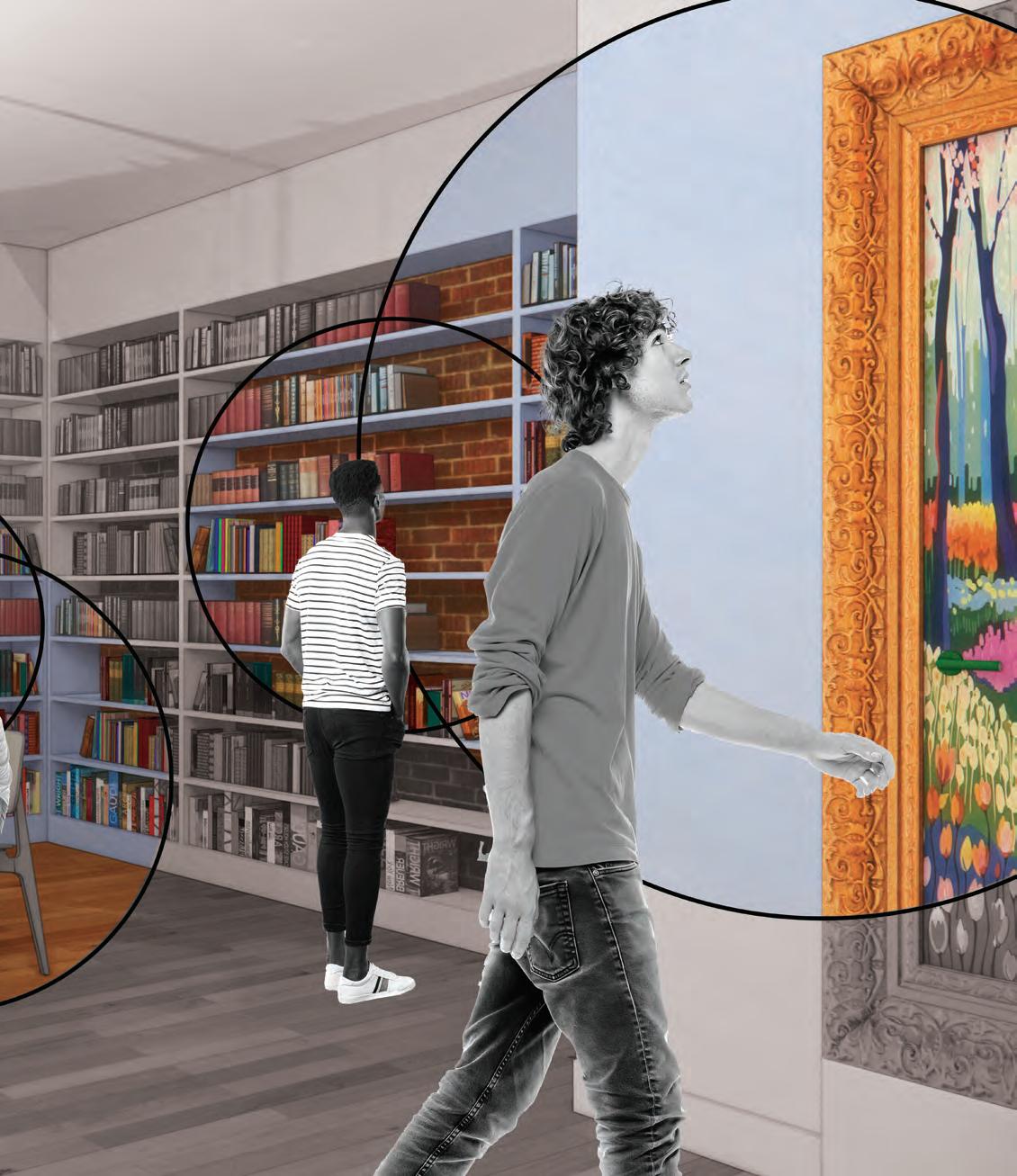
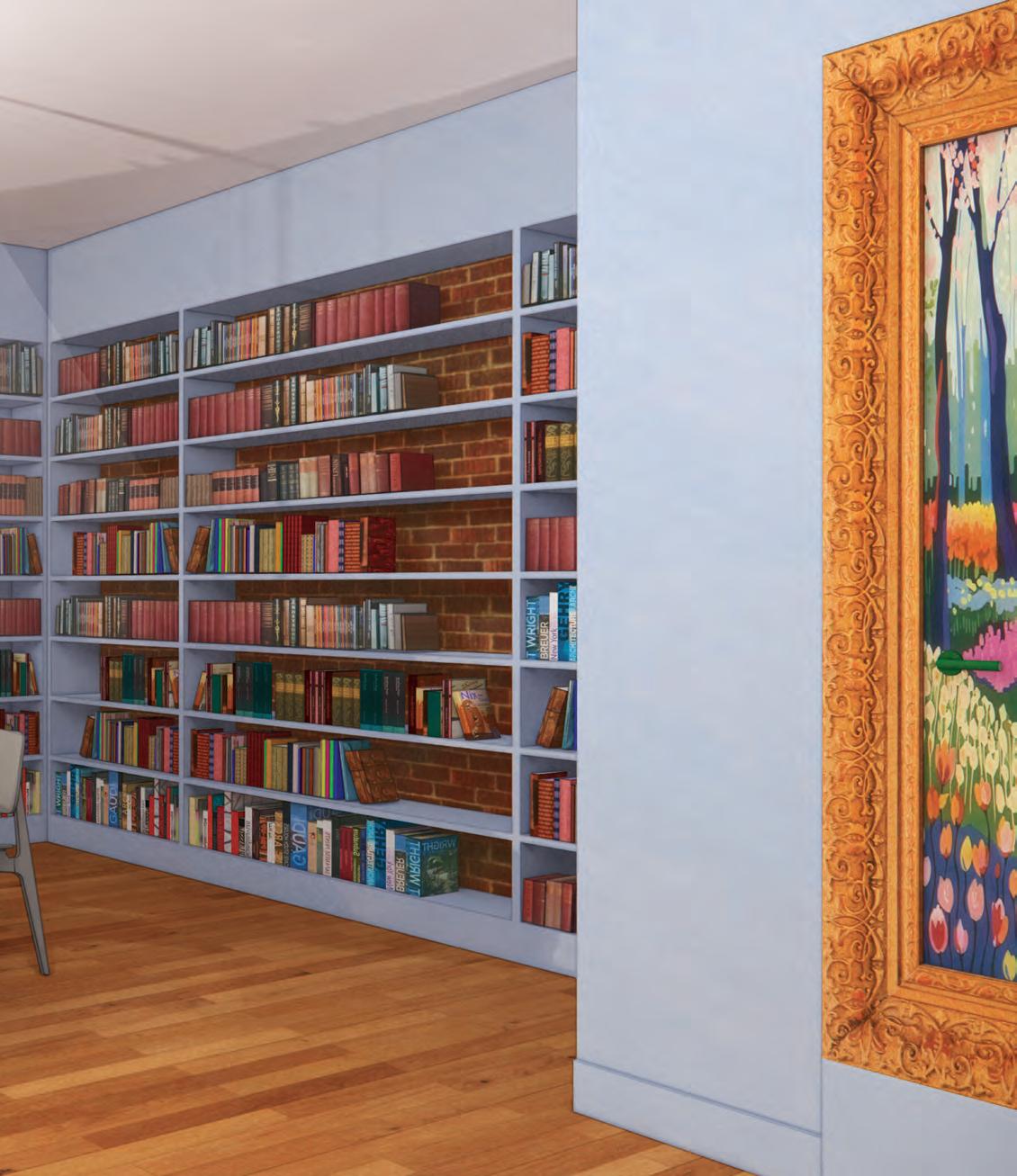
UNIQUE ARTWORK BUILT INTO HIDDEN DOOR TO JANITOR’S CLOSET CREATING UNIQUE ENTRY POINTS FOR EACH FLOOR
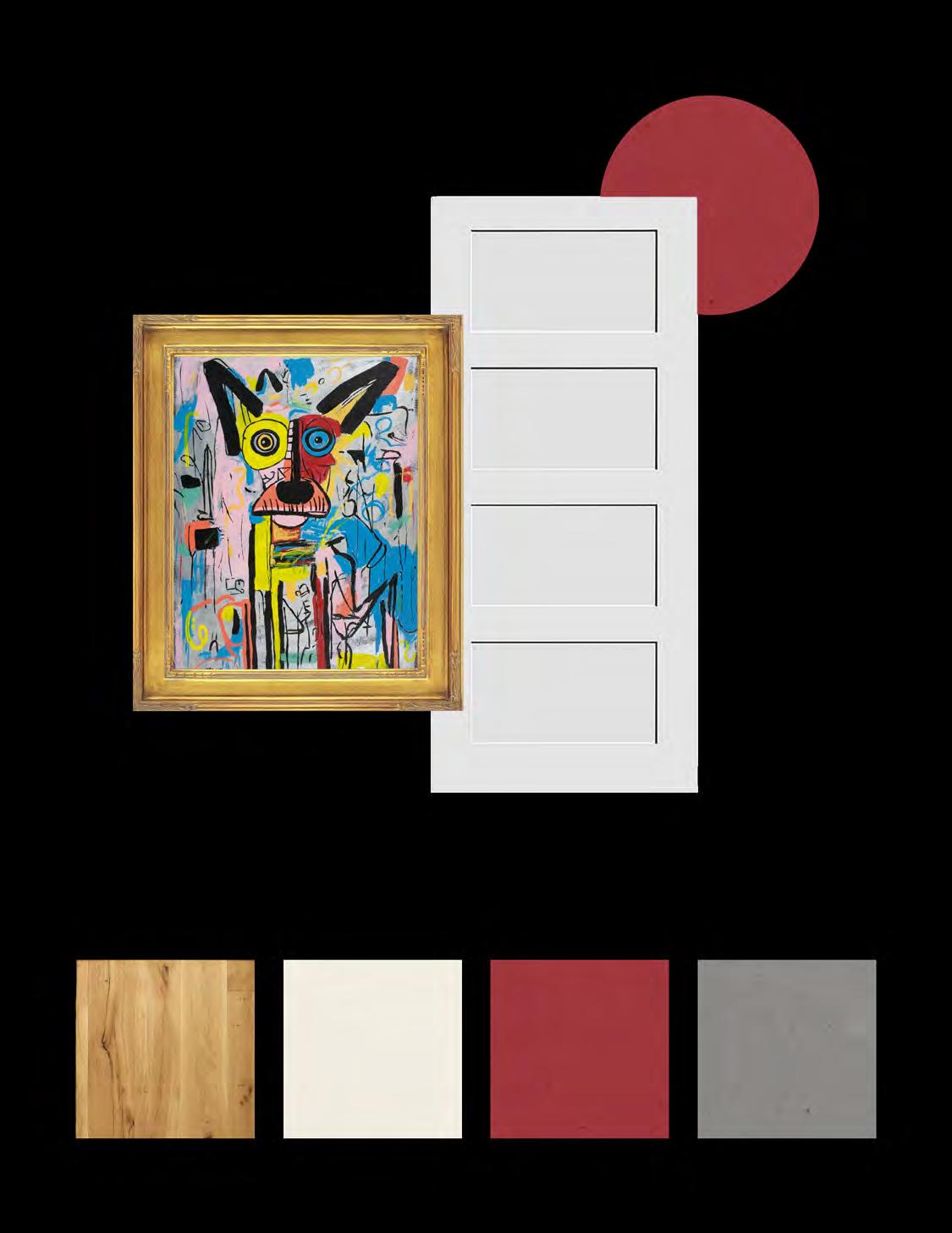
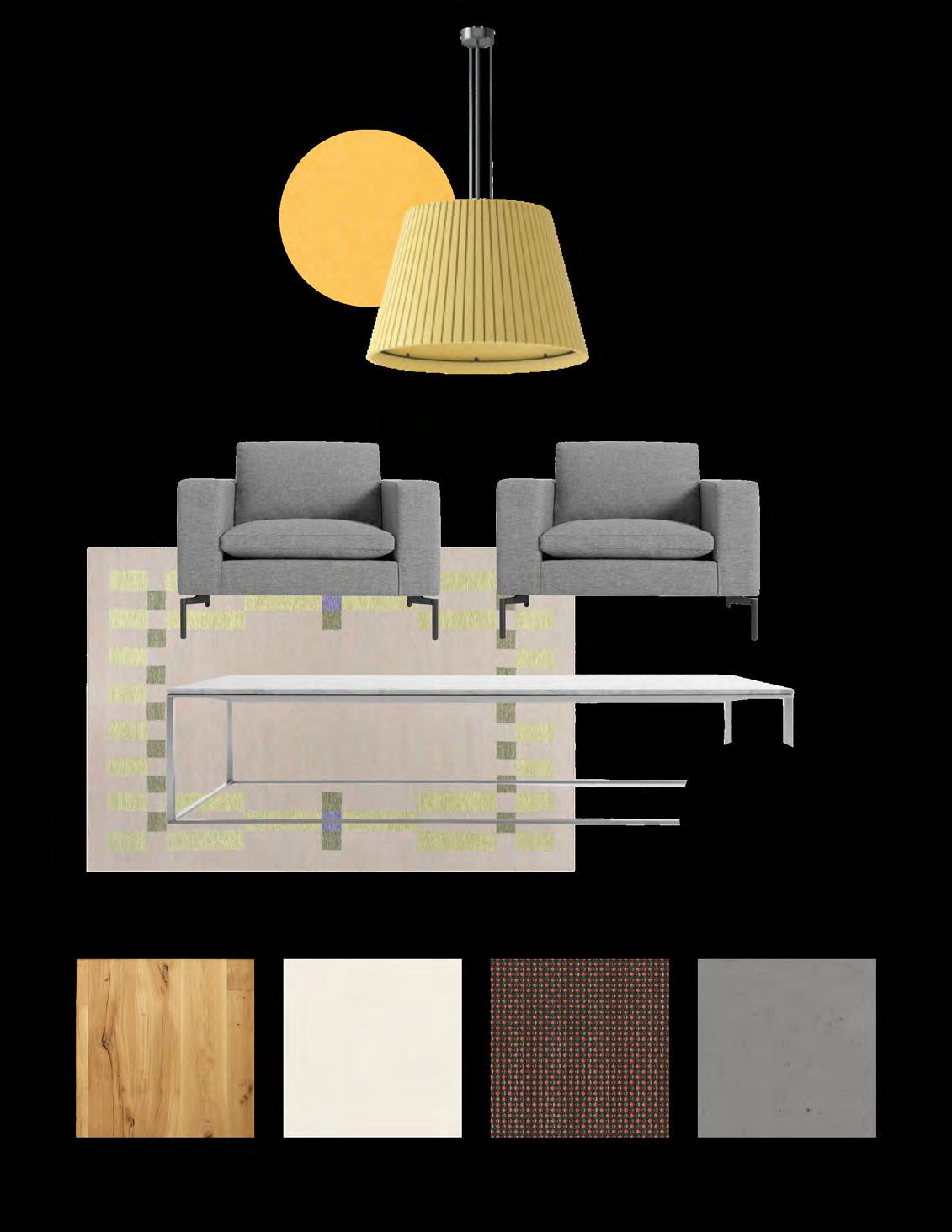
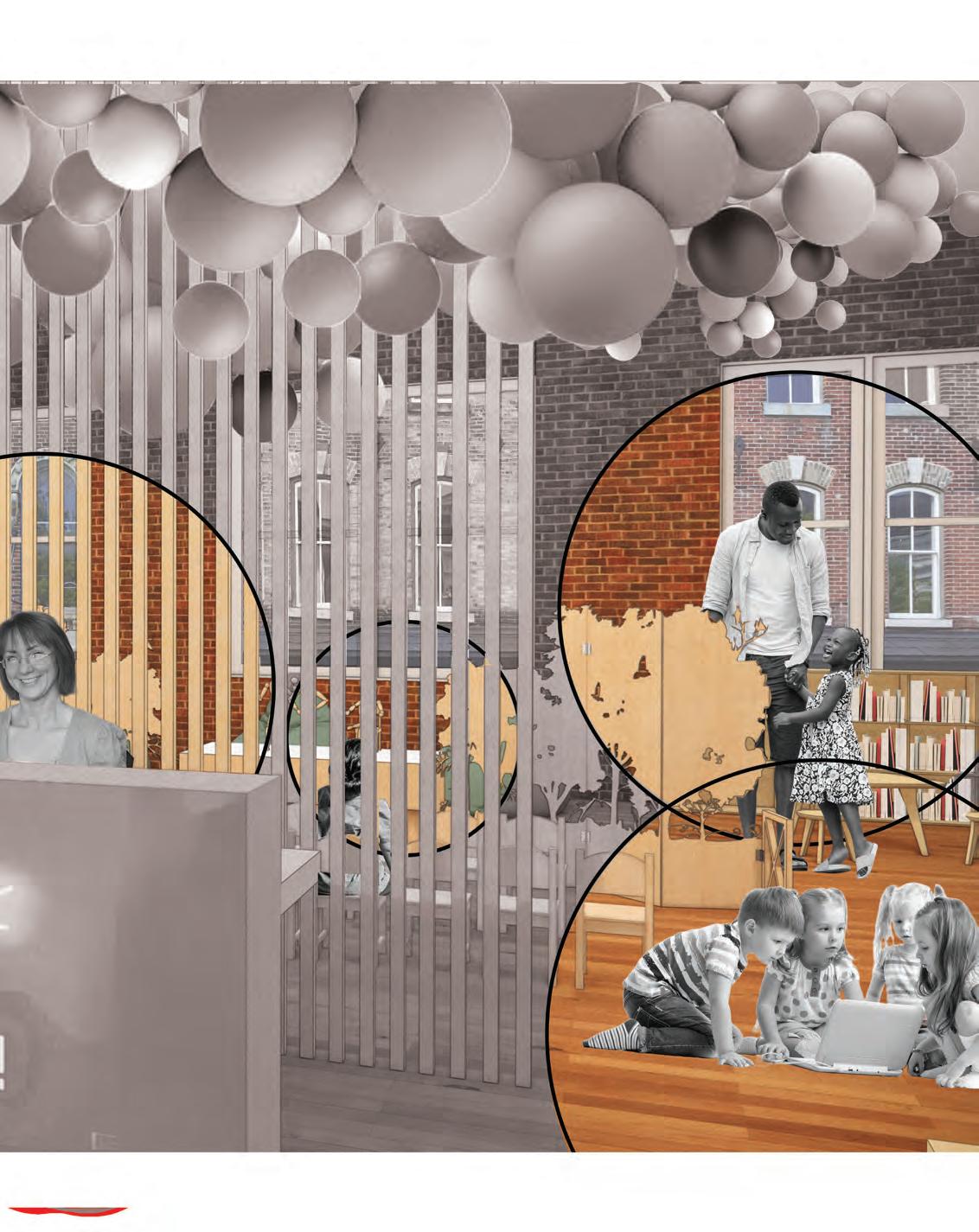
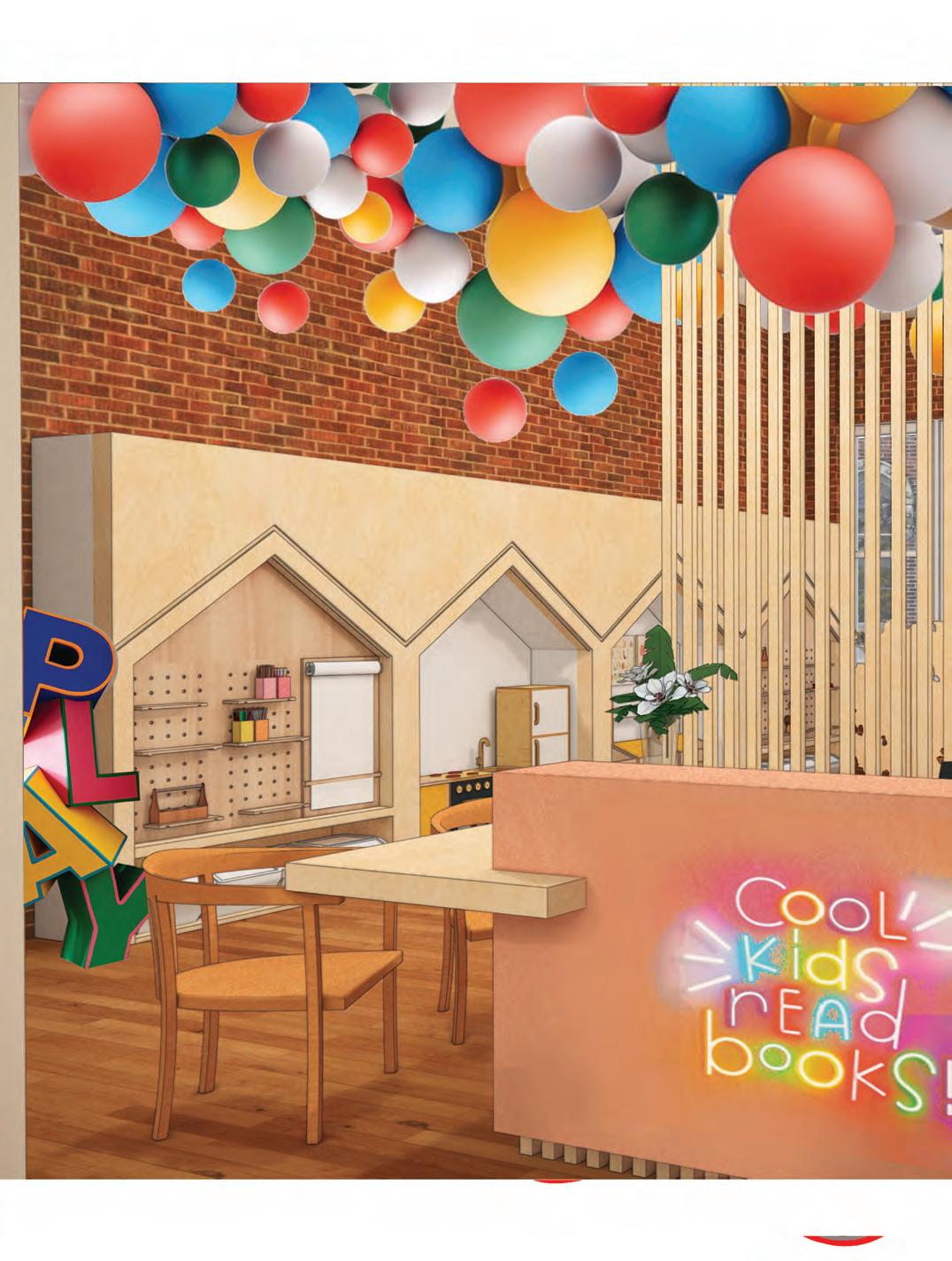
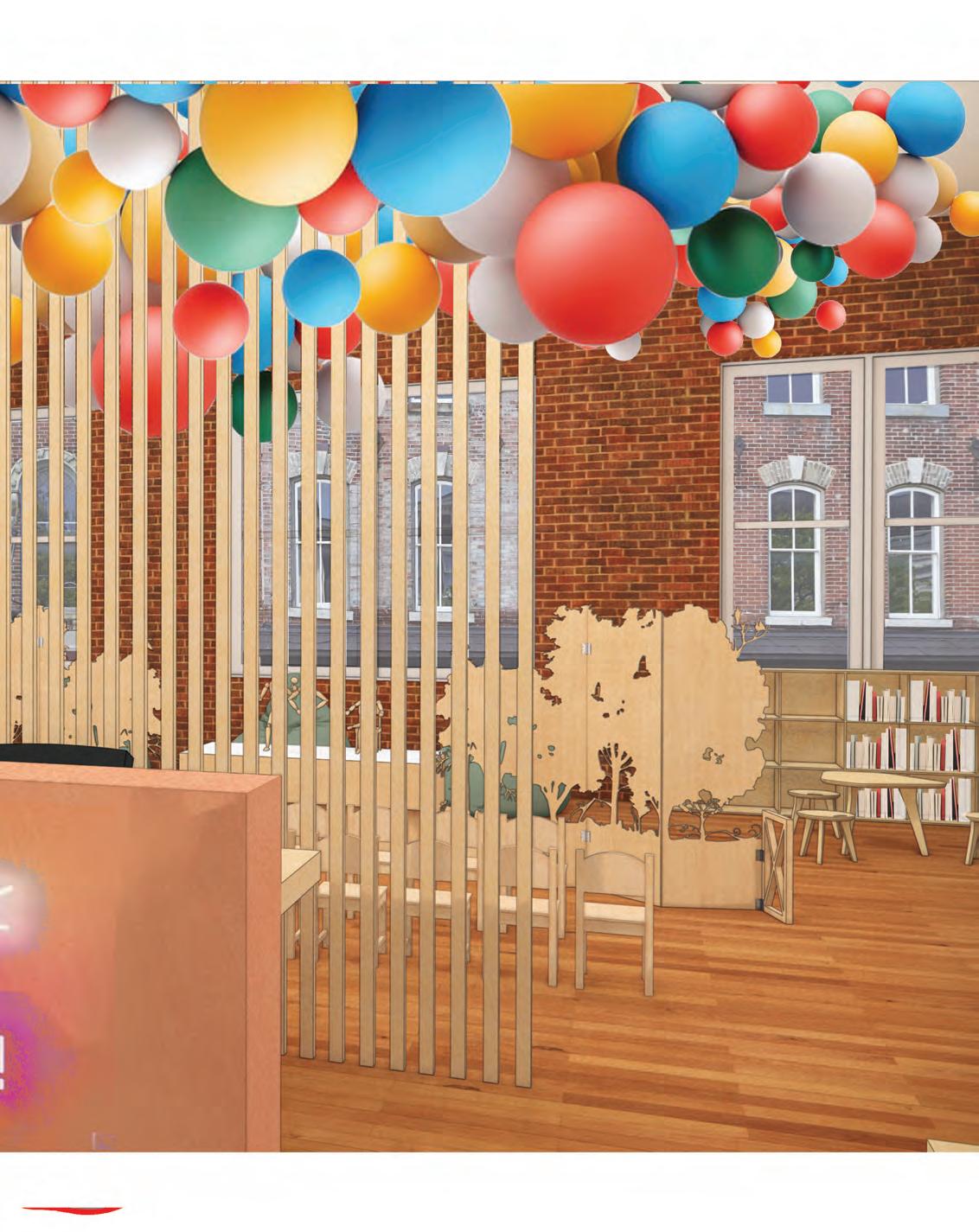
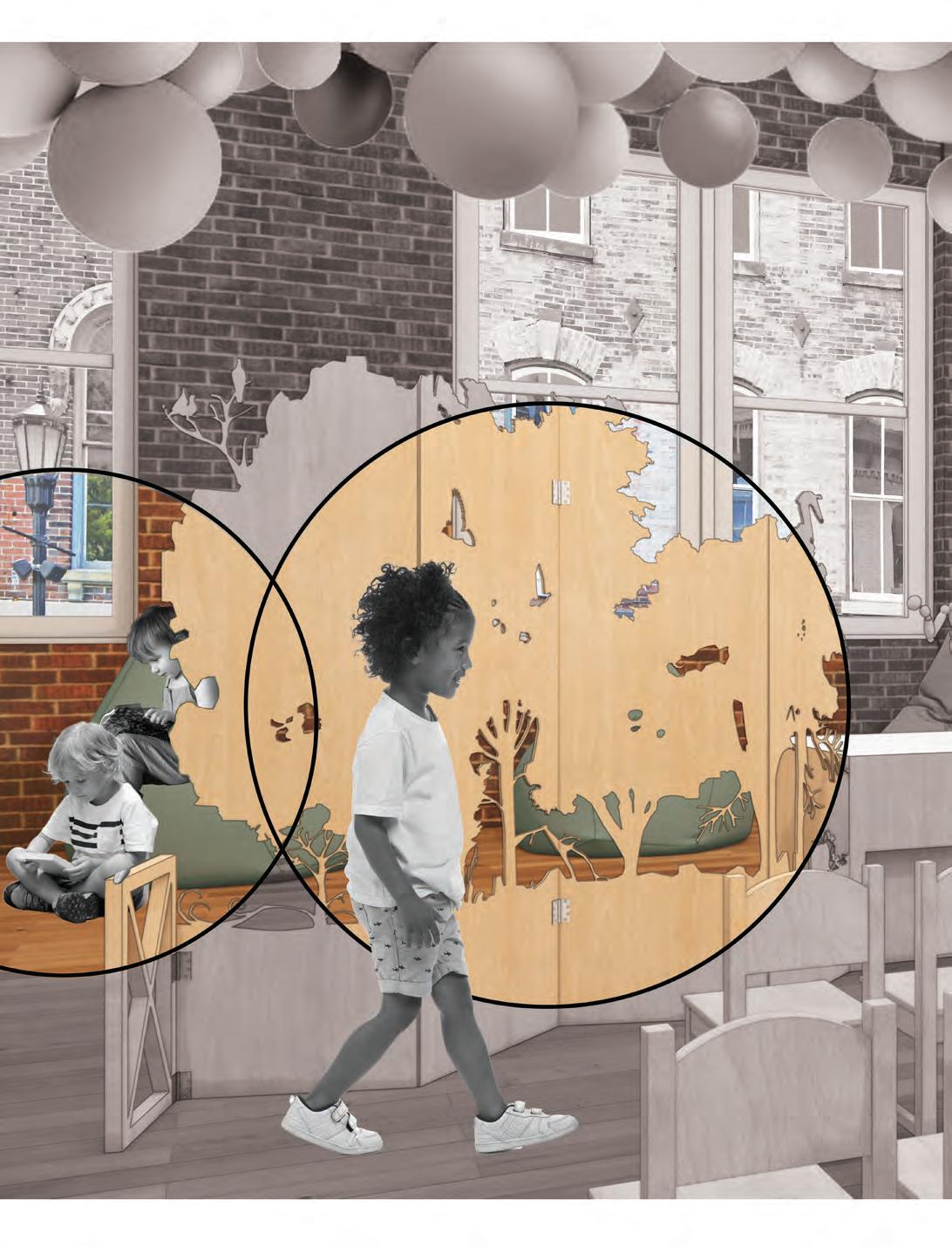
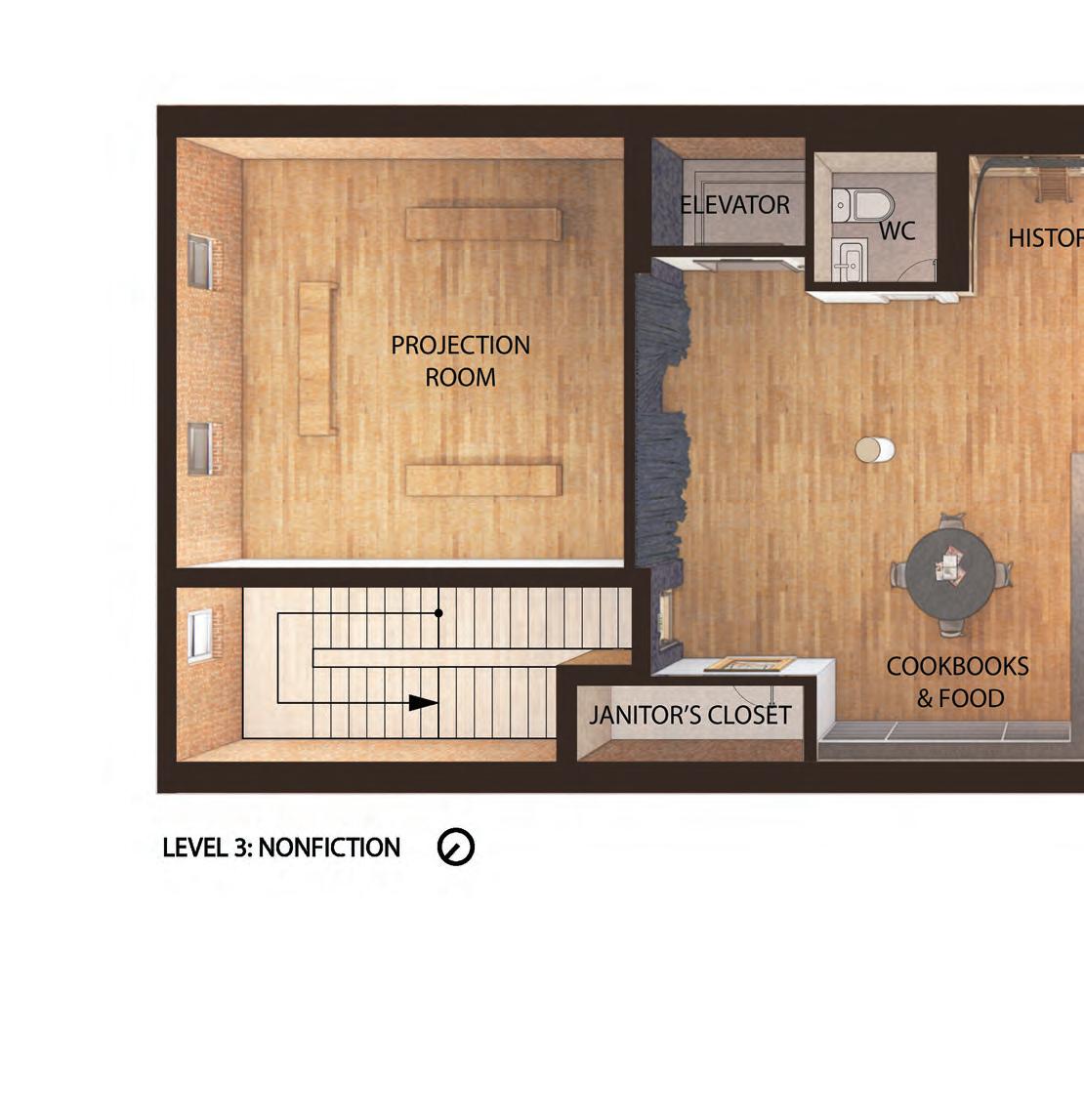
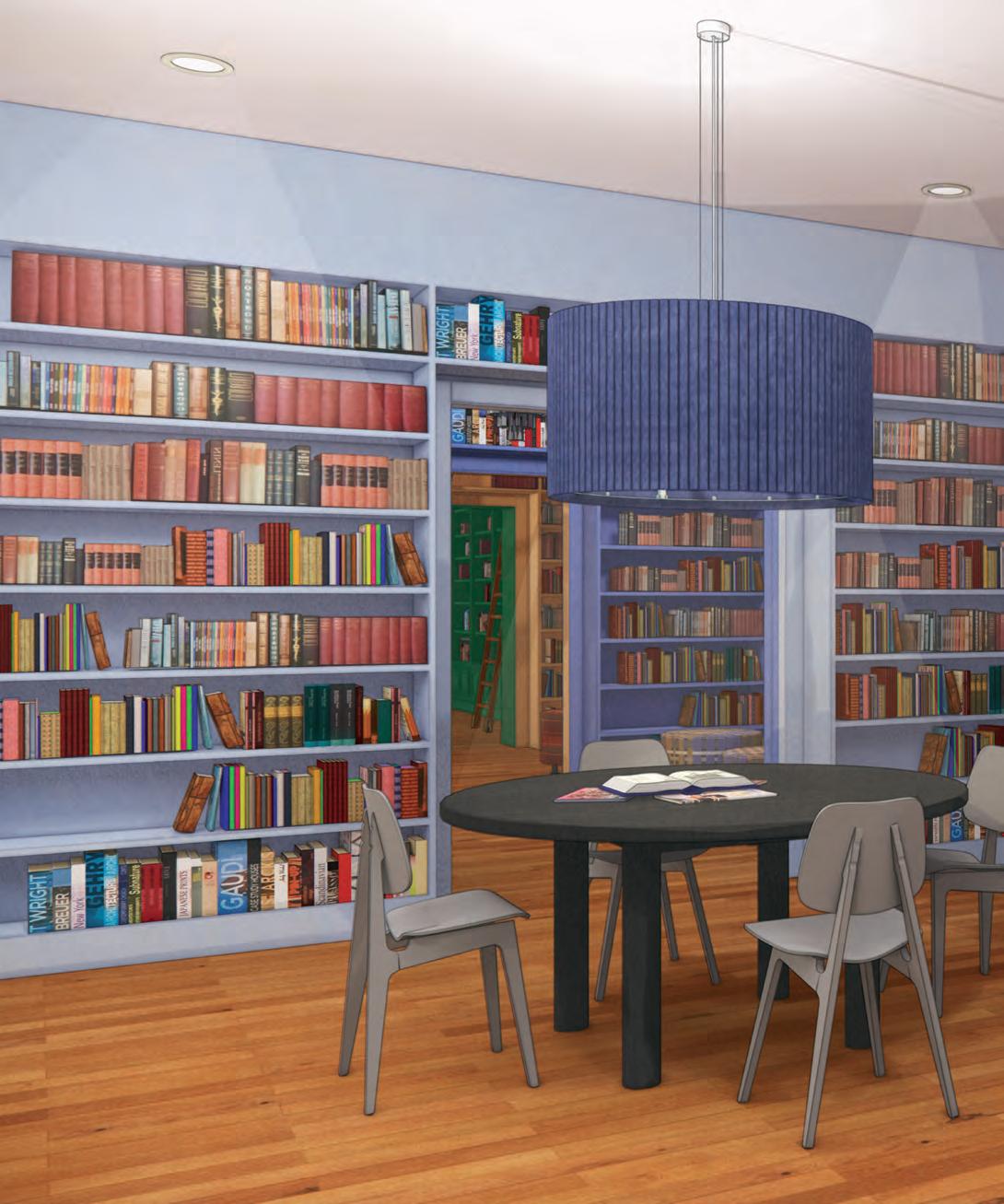
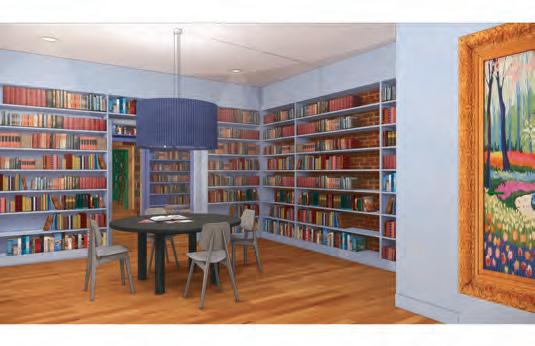
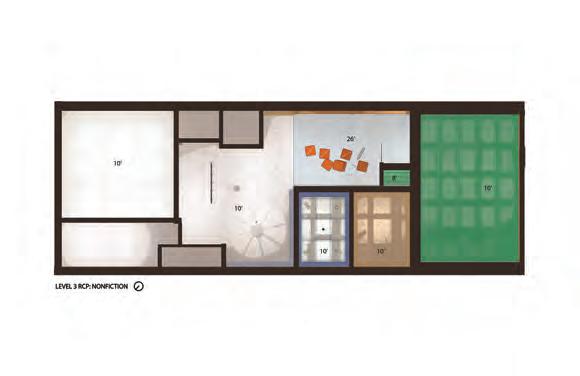
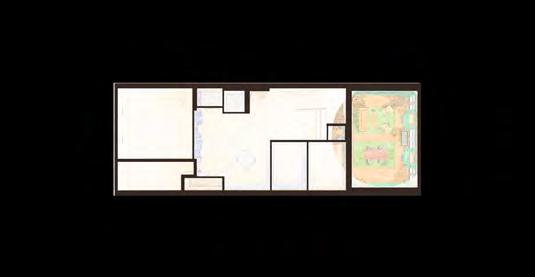
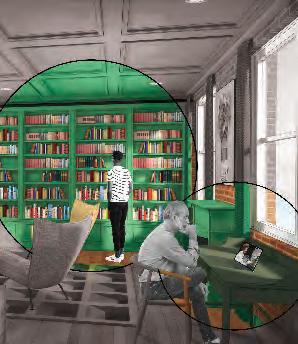
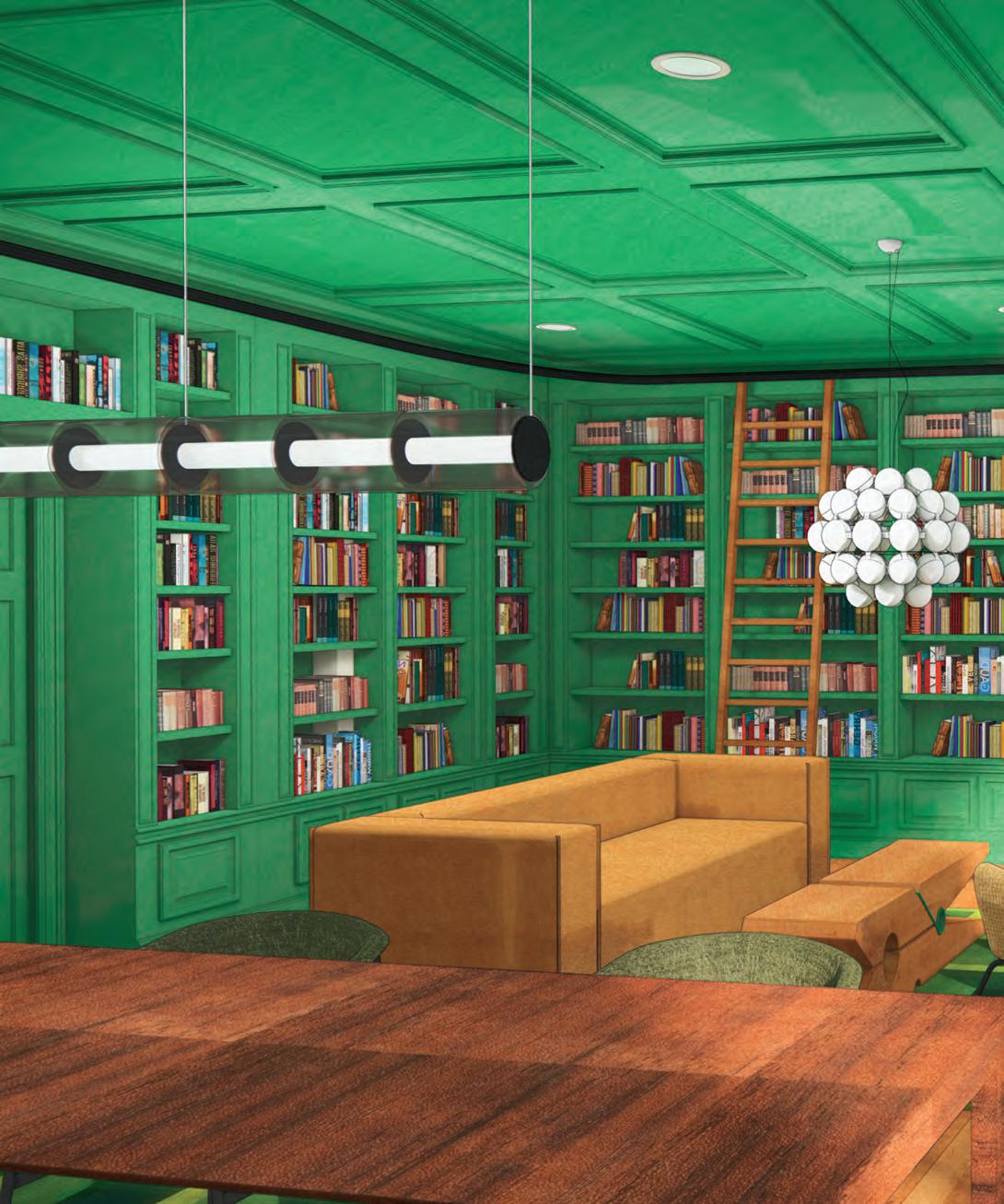
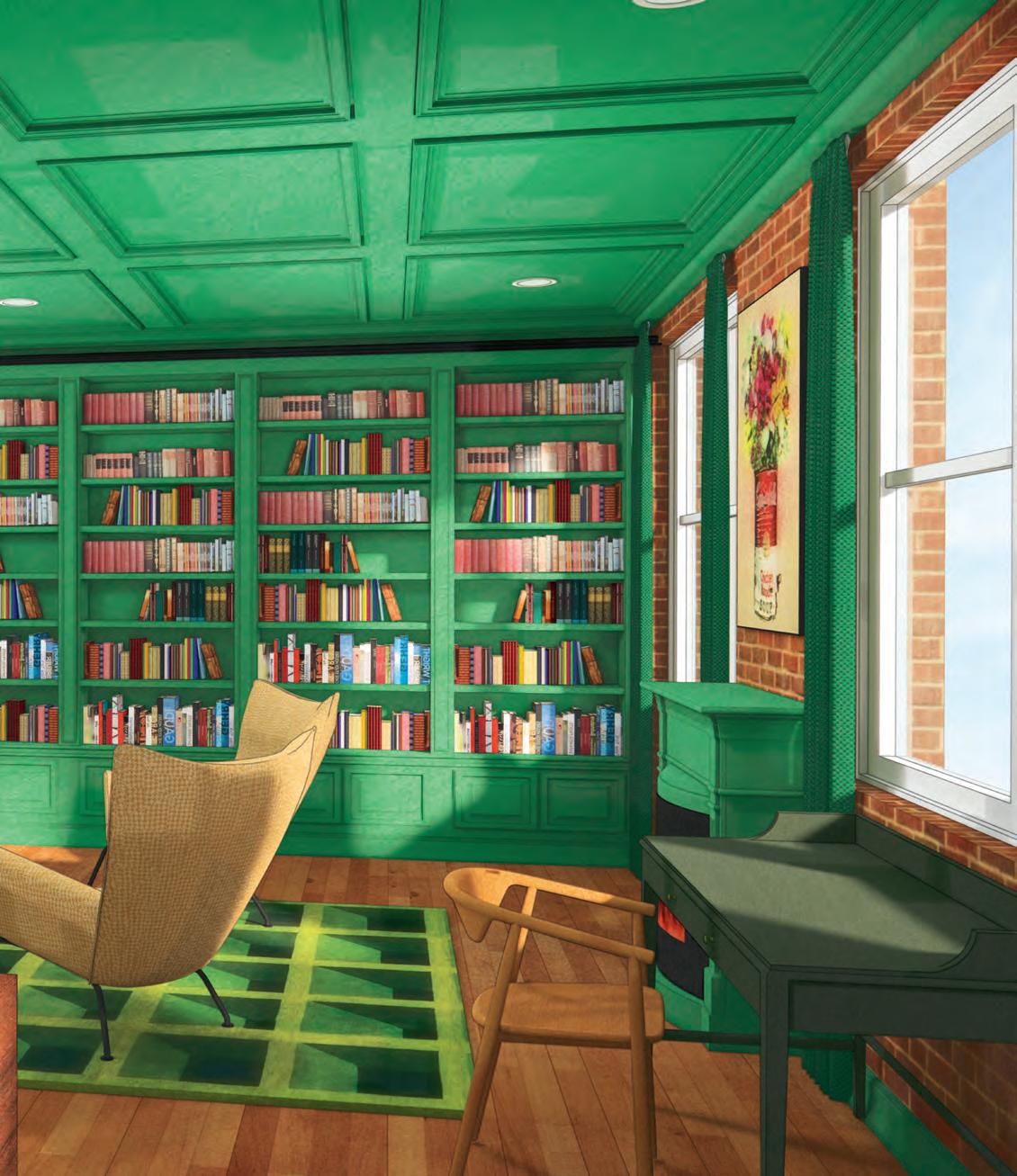
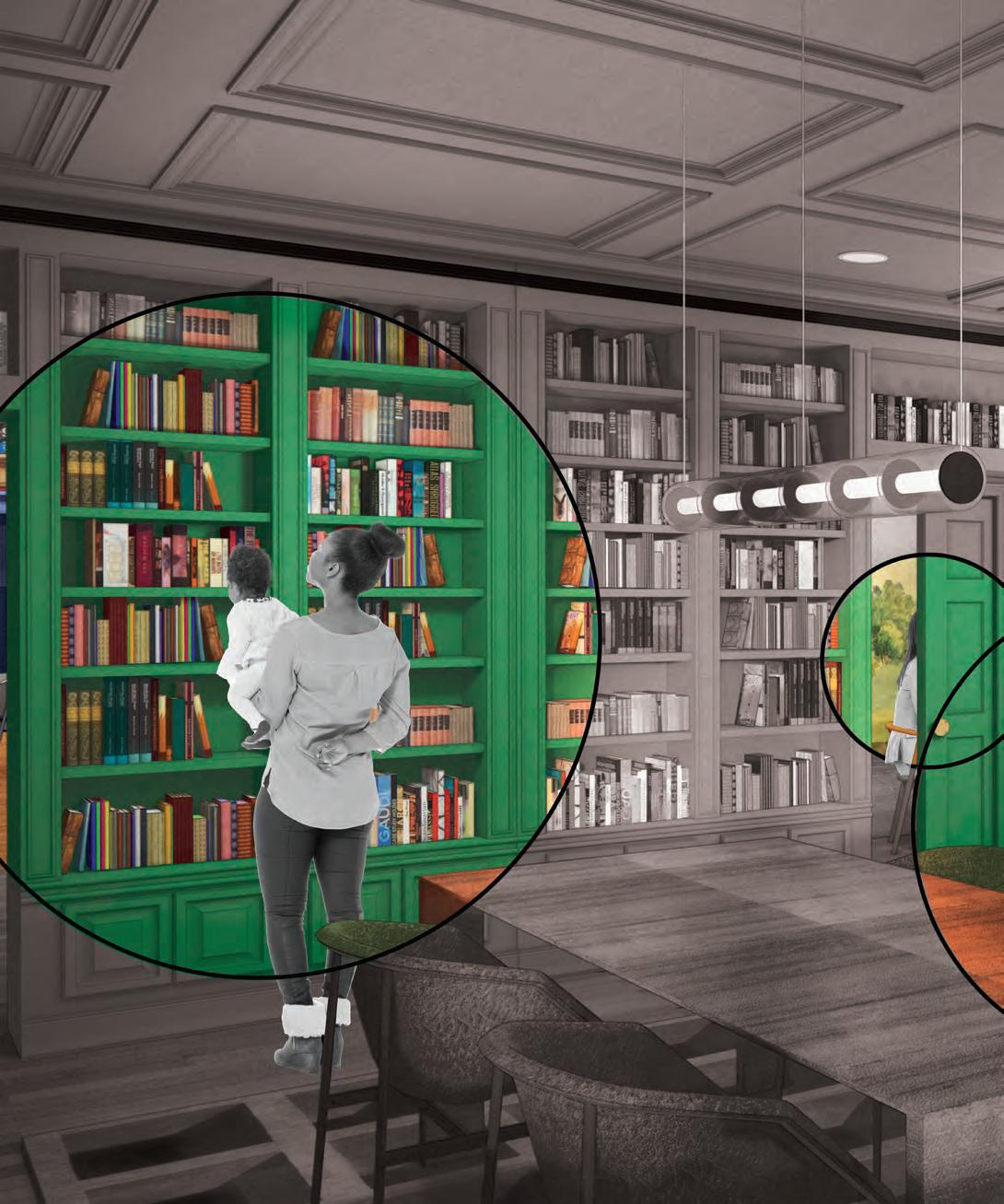
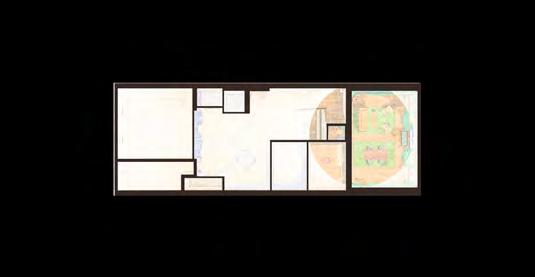
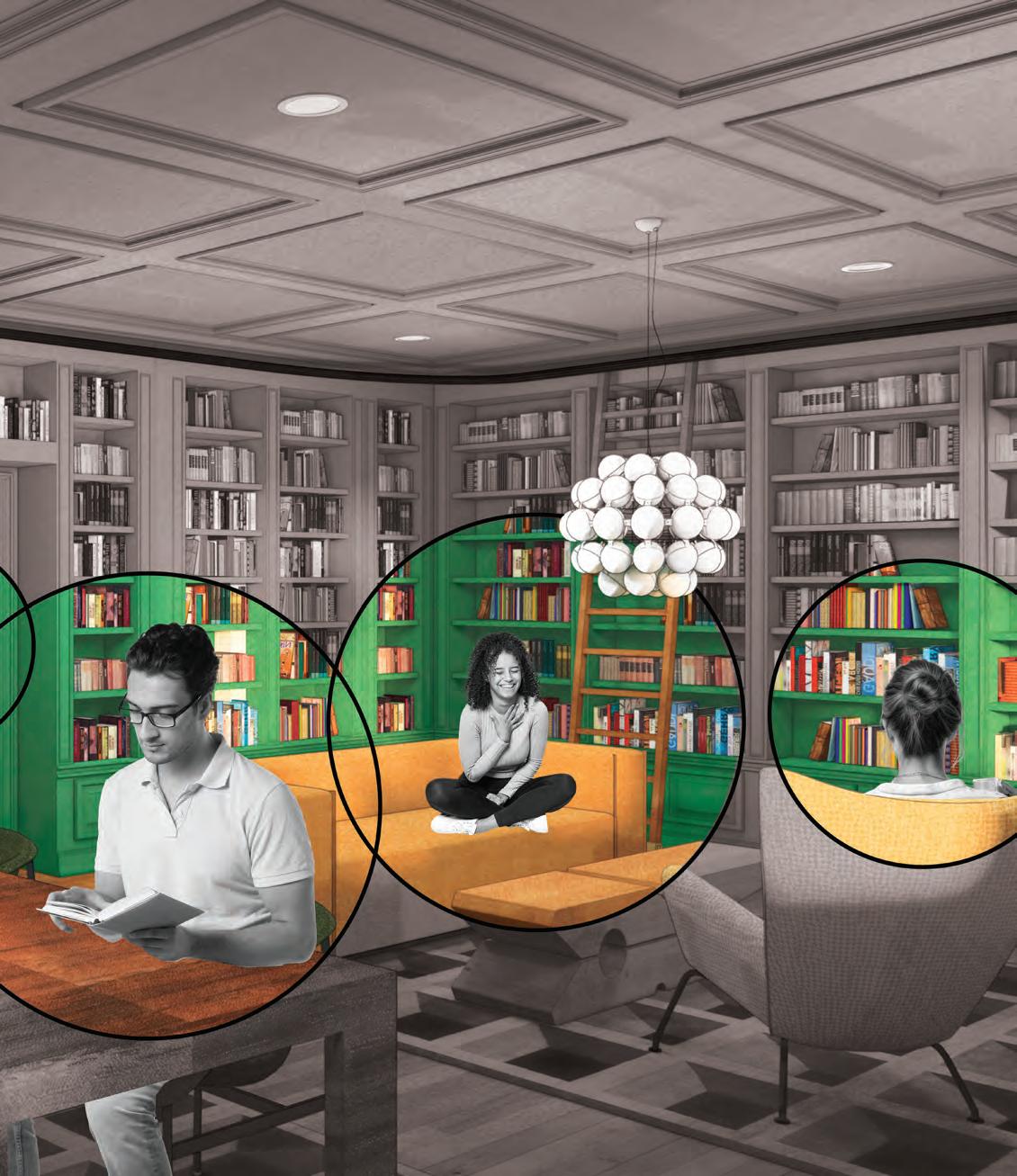
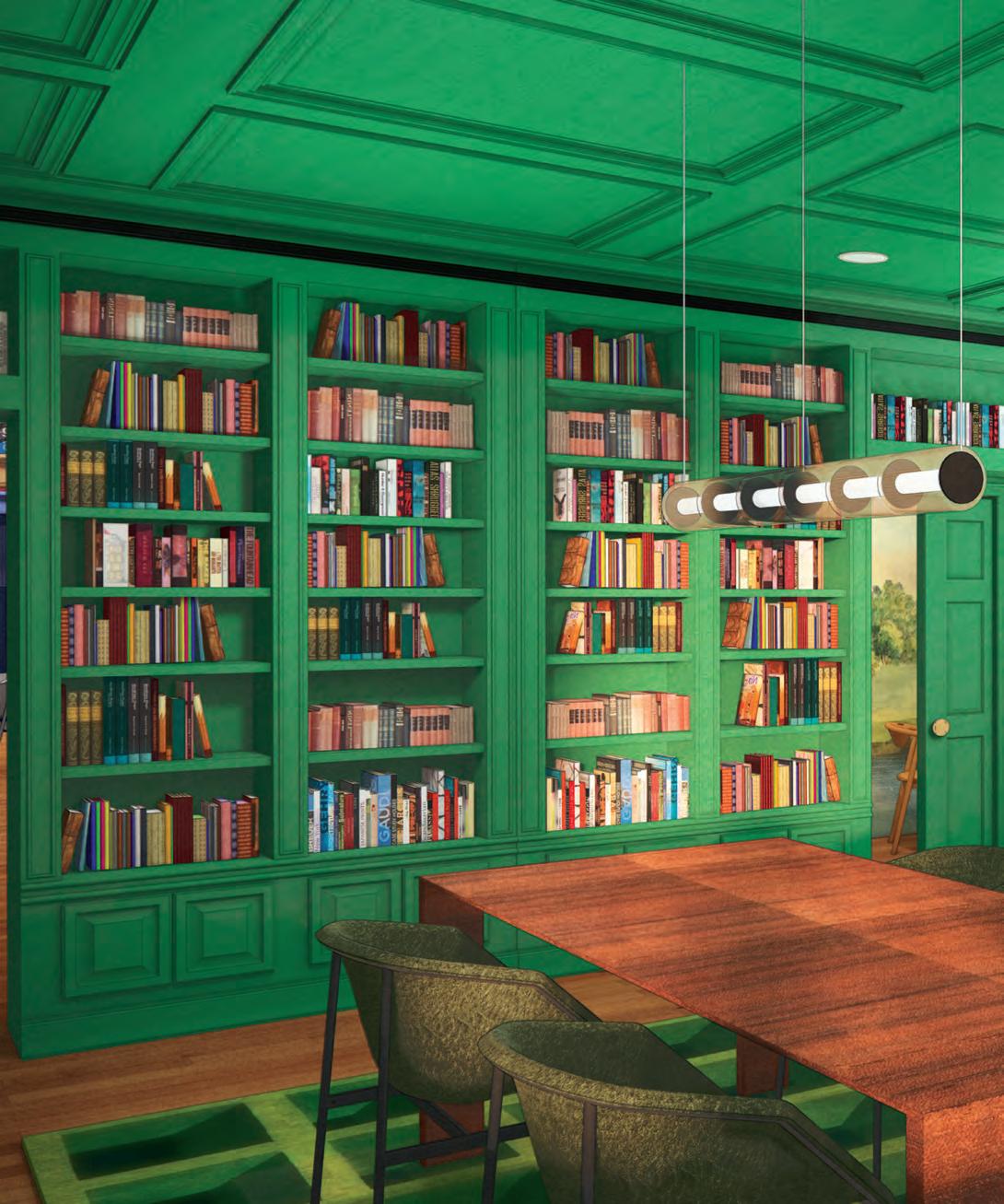
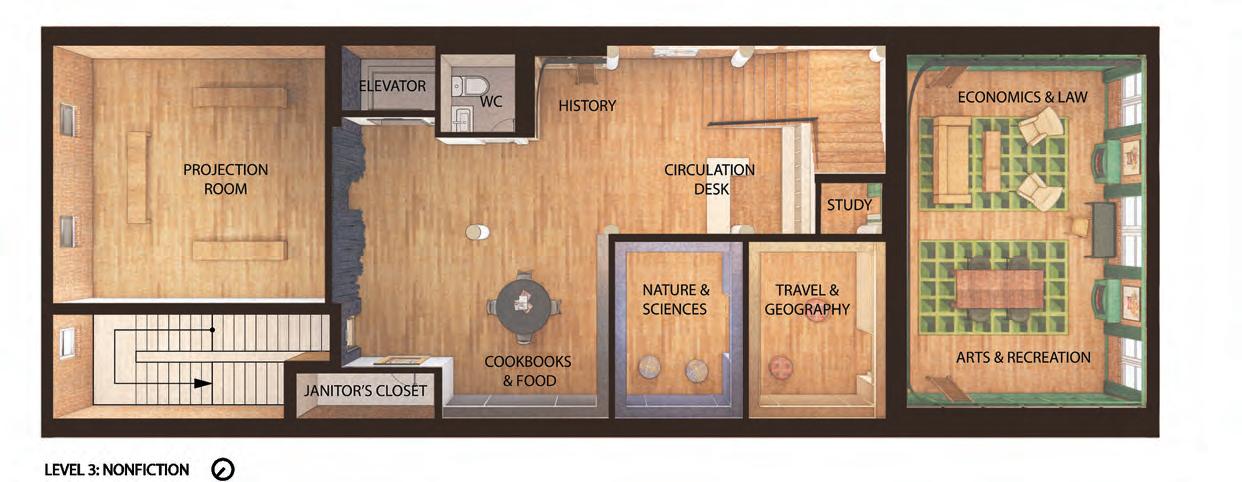
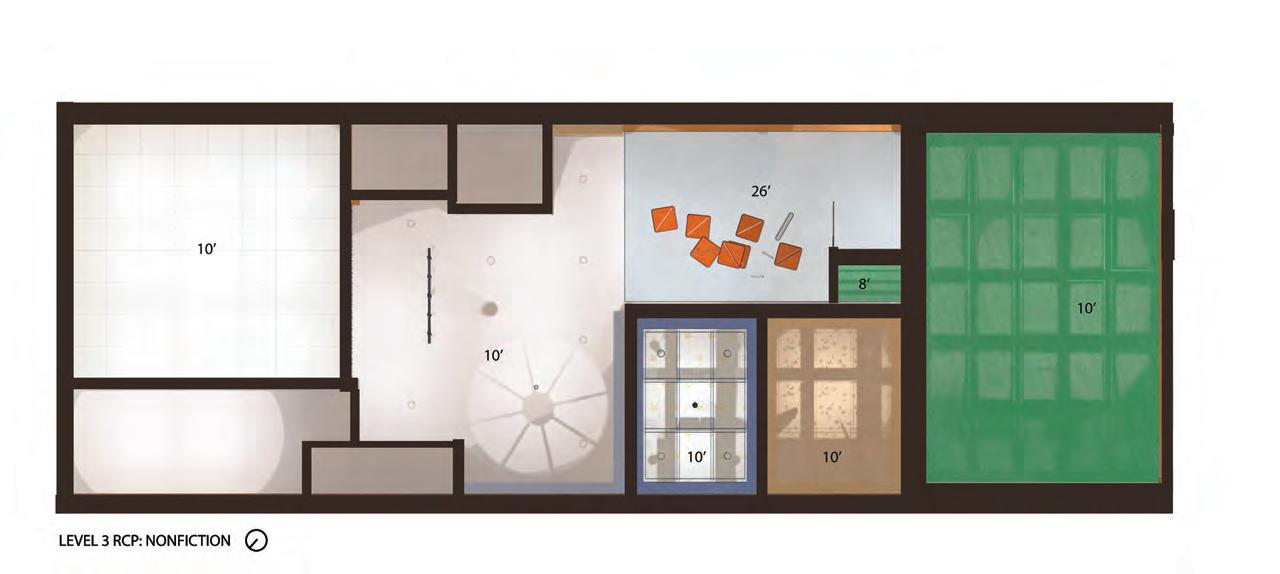
The nonfiction section of the Beaufort County Public Library fosters self-discovery, reflection and connection through the power of storytelling and knowledge. In this section, each book represents a gateway to deeper understanding of onself, of others, and of the world. Drawing inspiration from the diverse range of non-fiction topics, the design creates an environment that encouragesexploration and introspection, where visitors can discover new perspectives, uncover hidden truths, and build a deeper connection to their own identity.
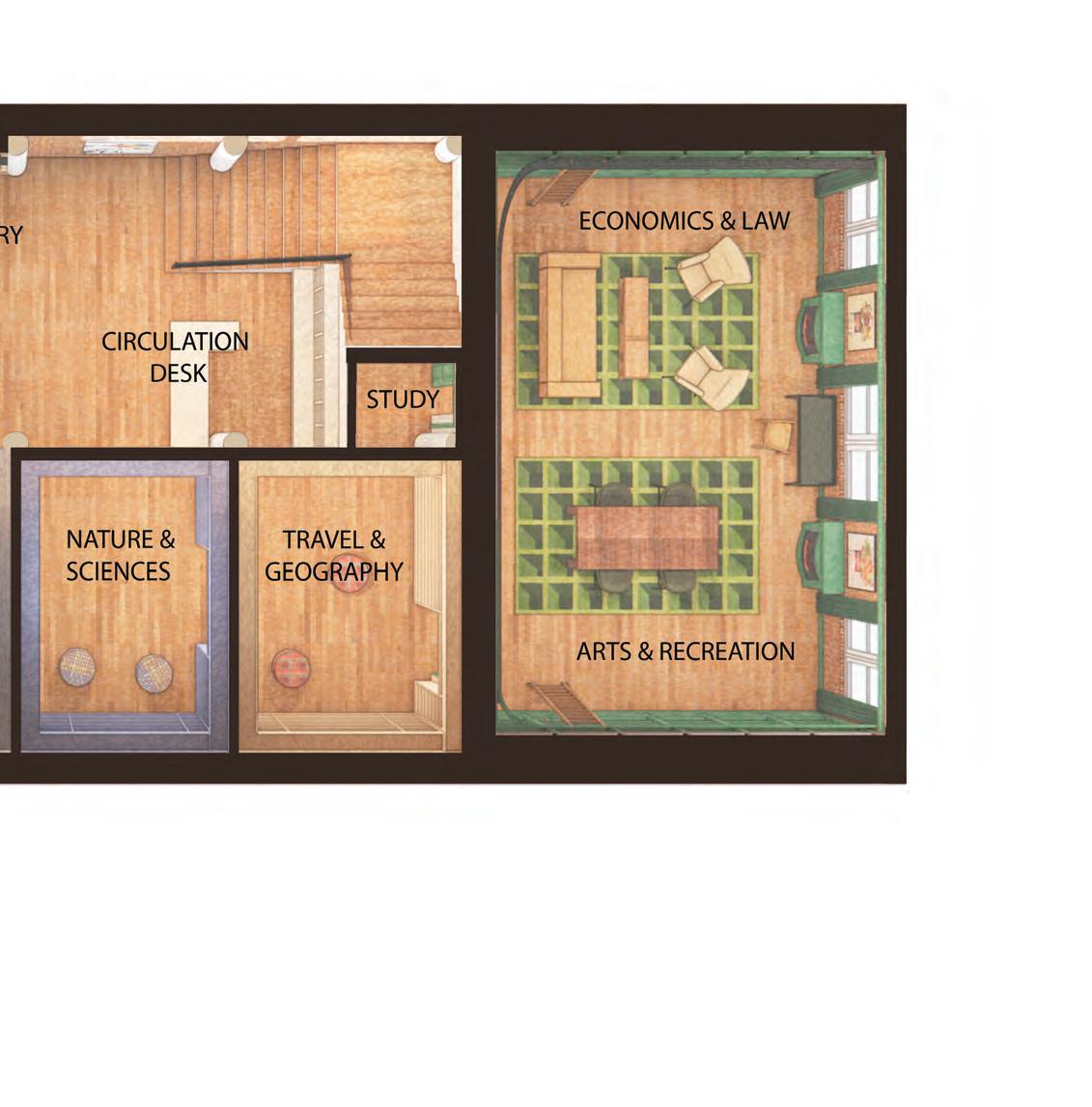
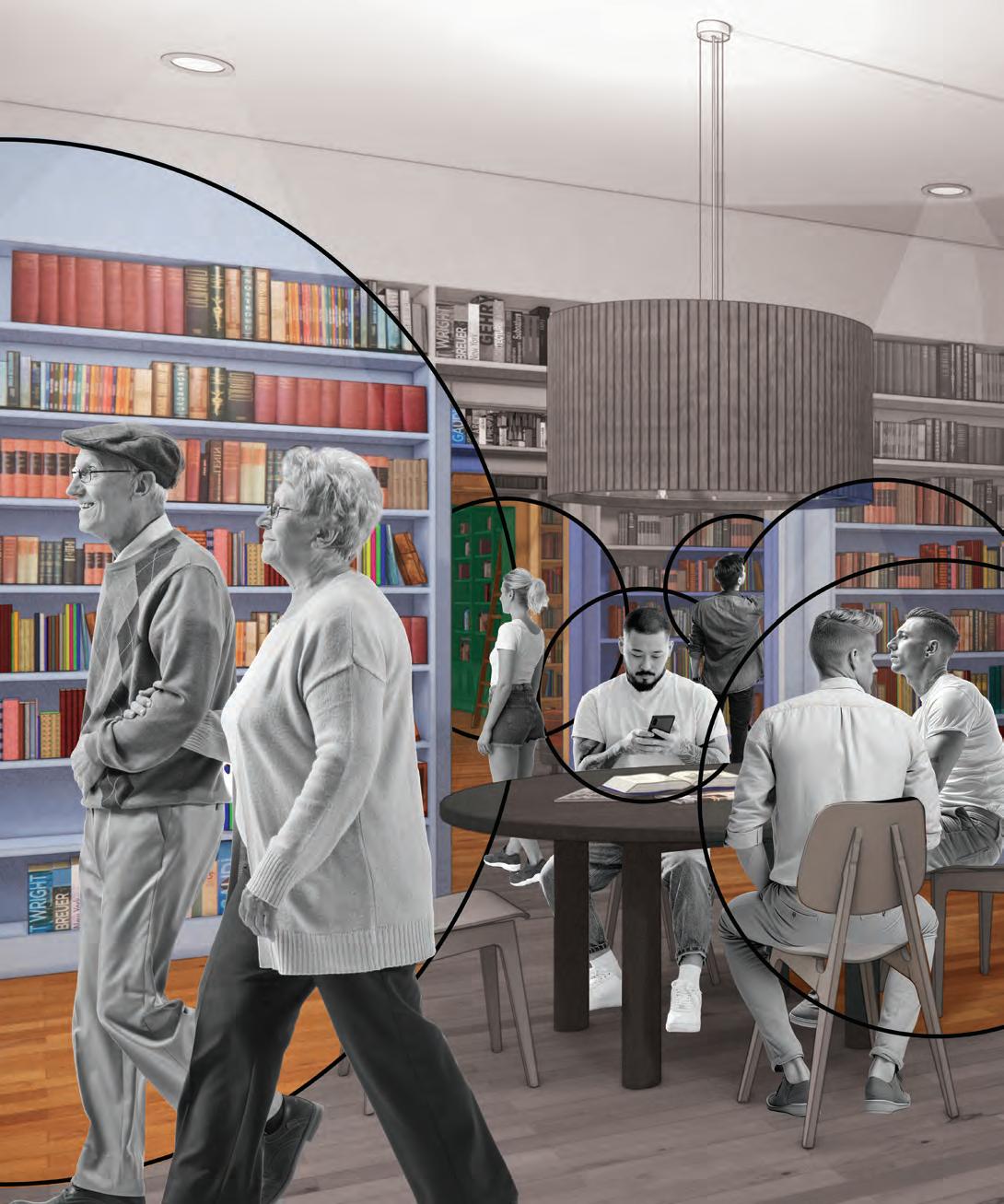
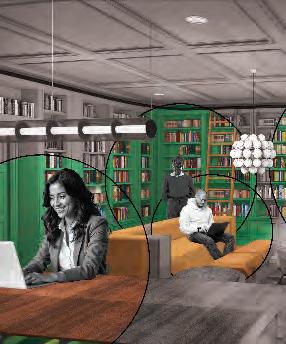
Comfortable reading areas are strategically placed to offer quiet, reflective moments where visitors can immerse themselves in the stories of others while contemplating their own life’s journey. Room organization invites curiosity and encourages exploration. A hidden projection room provides a space for rotating exhibitions, immersive storytelling, and community gatherings. The design celebrates knowledge as a tool for empowerment, understanding and empathy. A space where storytelling meets self reflection helps individuals uncover the richness of their own lives while connecting them to the world around them.
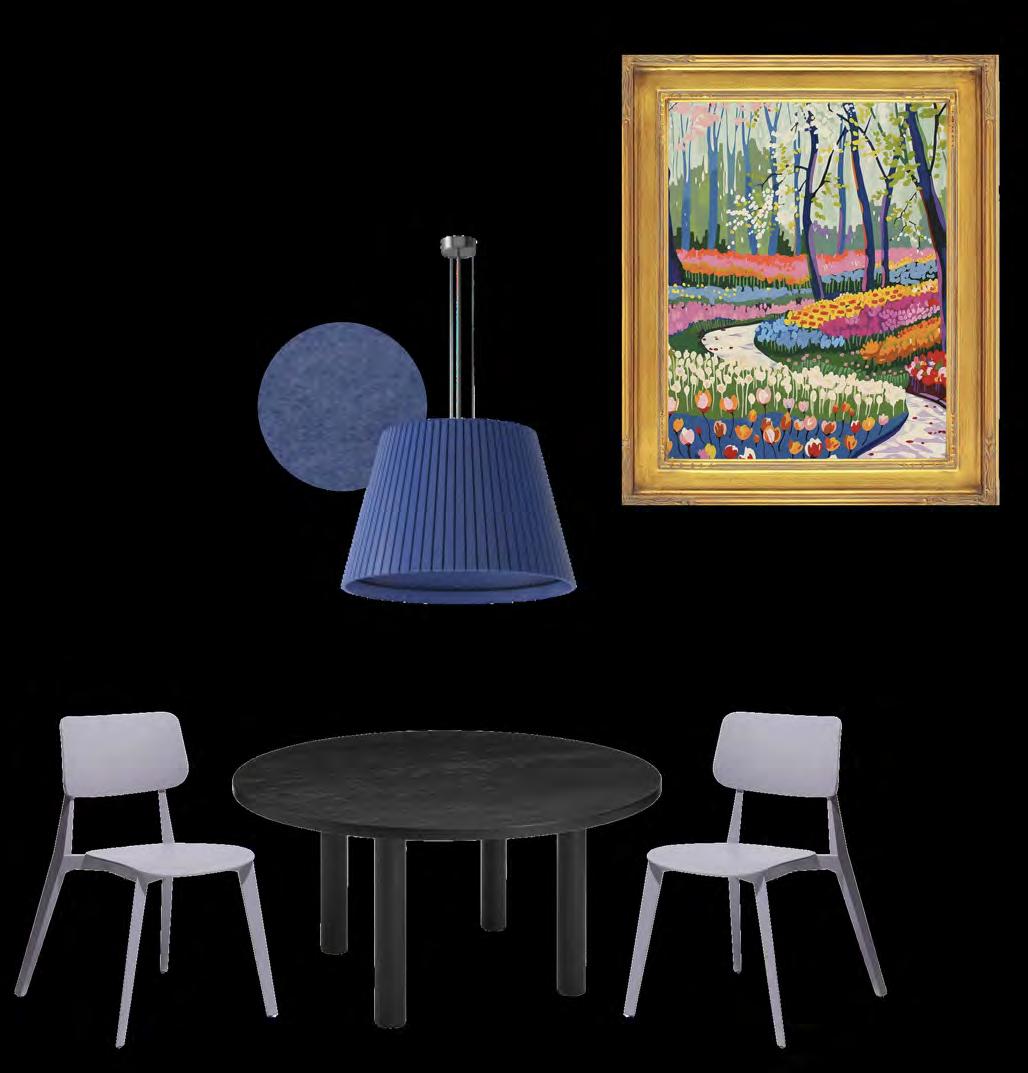
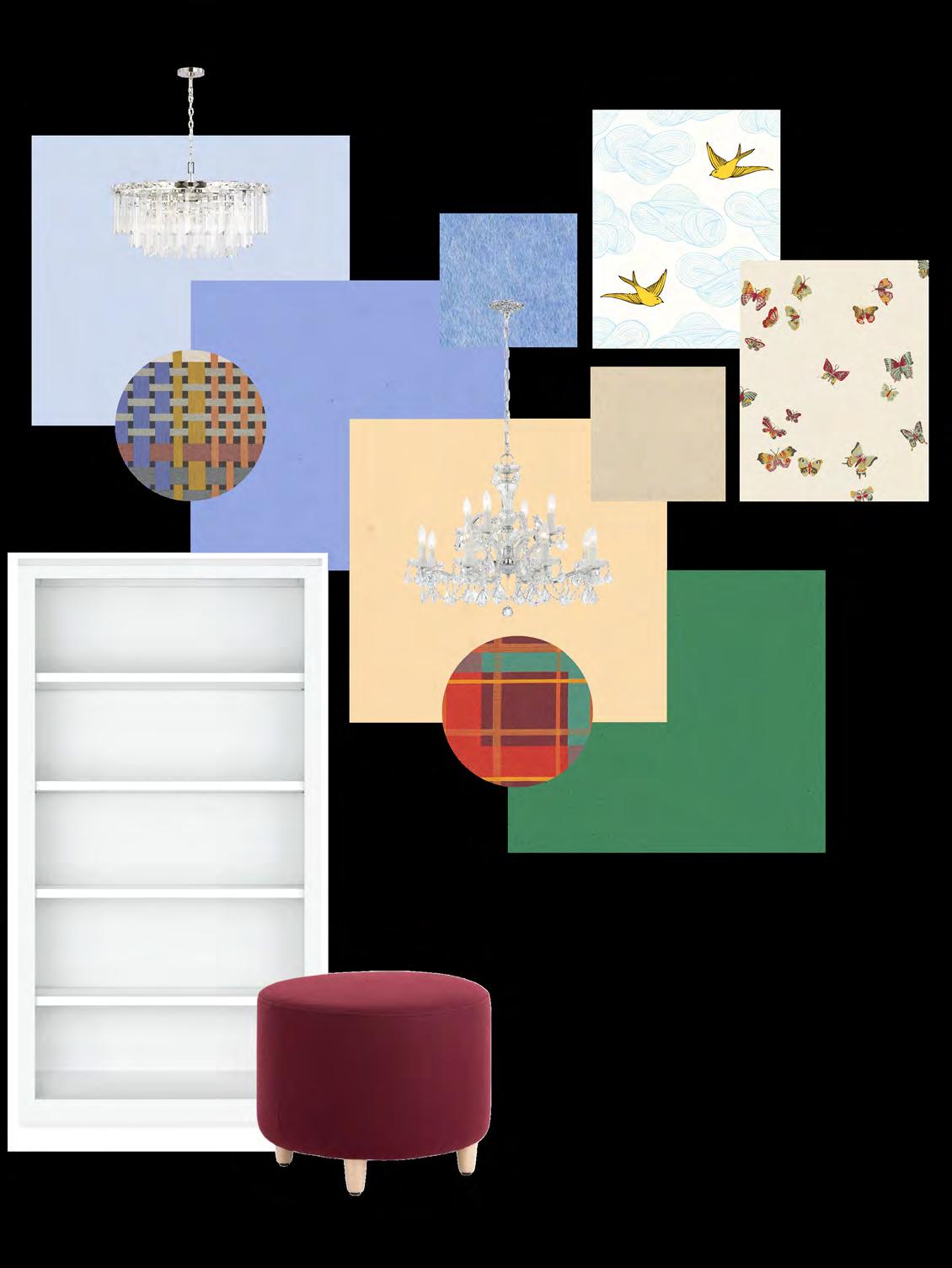
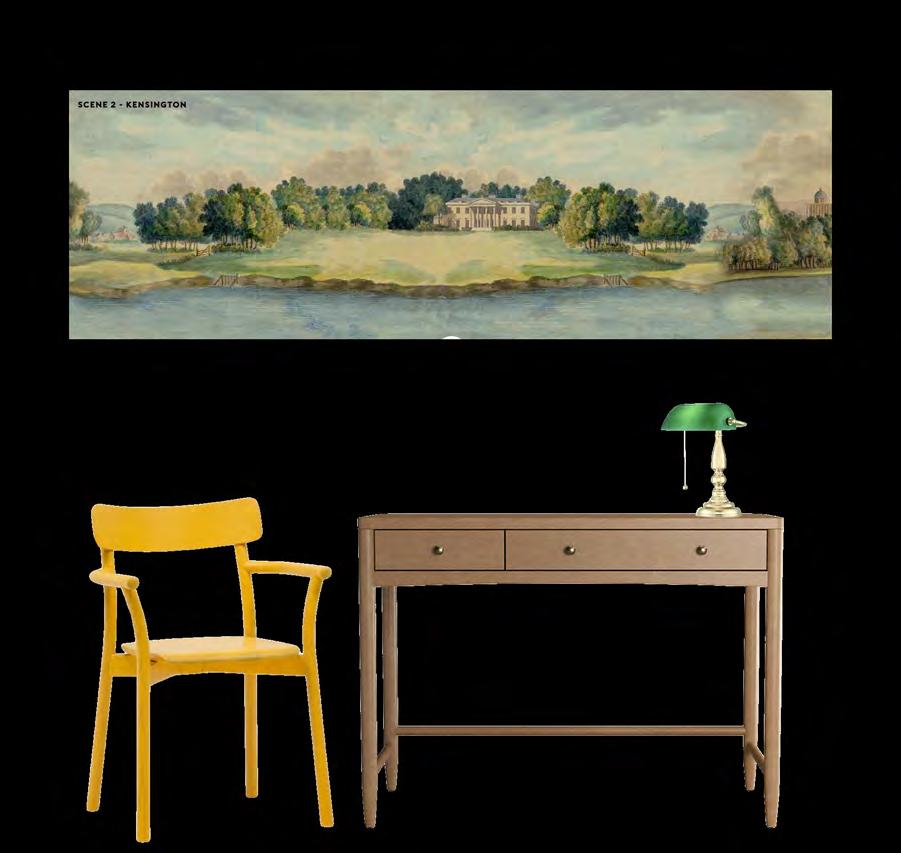
TRADITIONAL WALLCOVERING
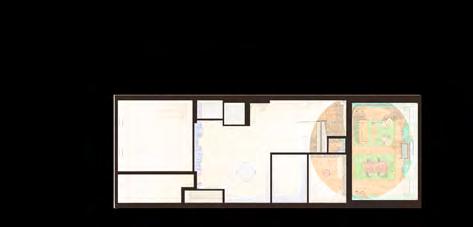
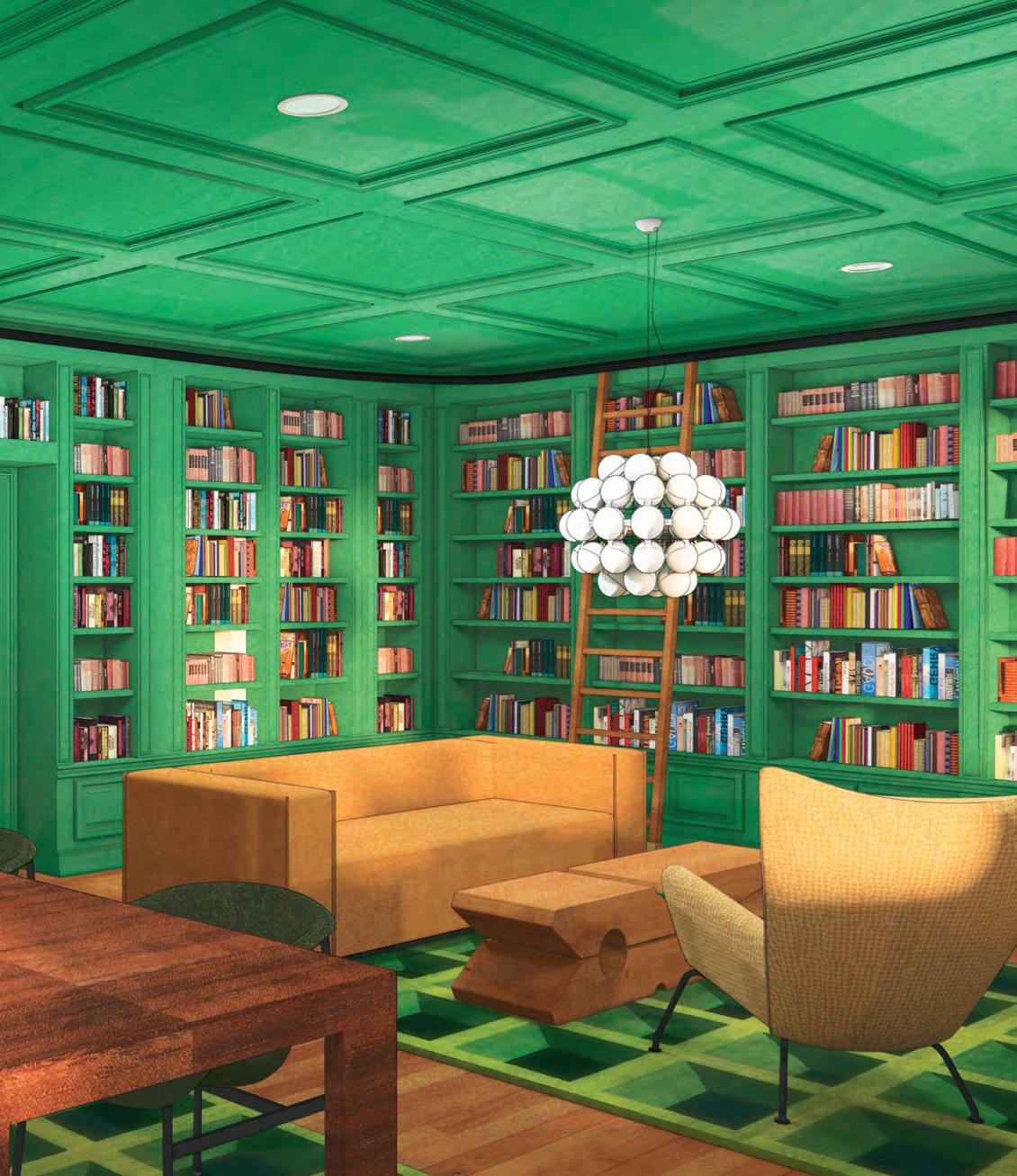
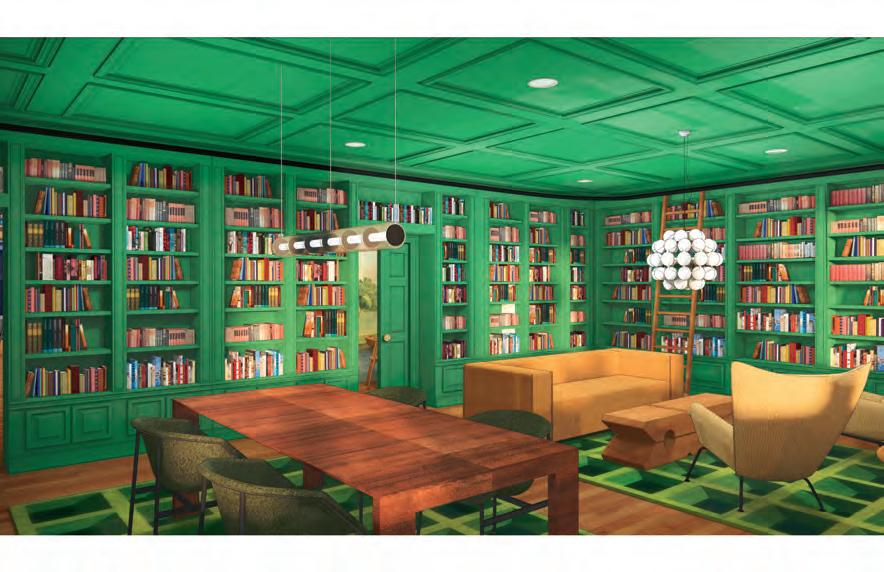
SECRET STUDY ROOM
OFTEN ASSOCIATED WITH NATURE, GROWTH, AND HARMONY. GREEN EVOKES FEELINGS OF TRANQUILITY, BALANCE, AND SAFETY, AND IS LINKED TO CONCEPTS LIKE HEALTH, WEALTH, AND REBIRTH.
DUAL ELECTRIC FIREPLACES REPLACE ORIGINAL SMALL WRITING DESK FOR INDEPENDENT STUDY
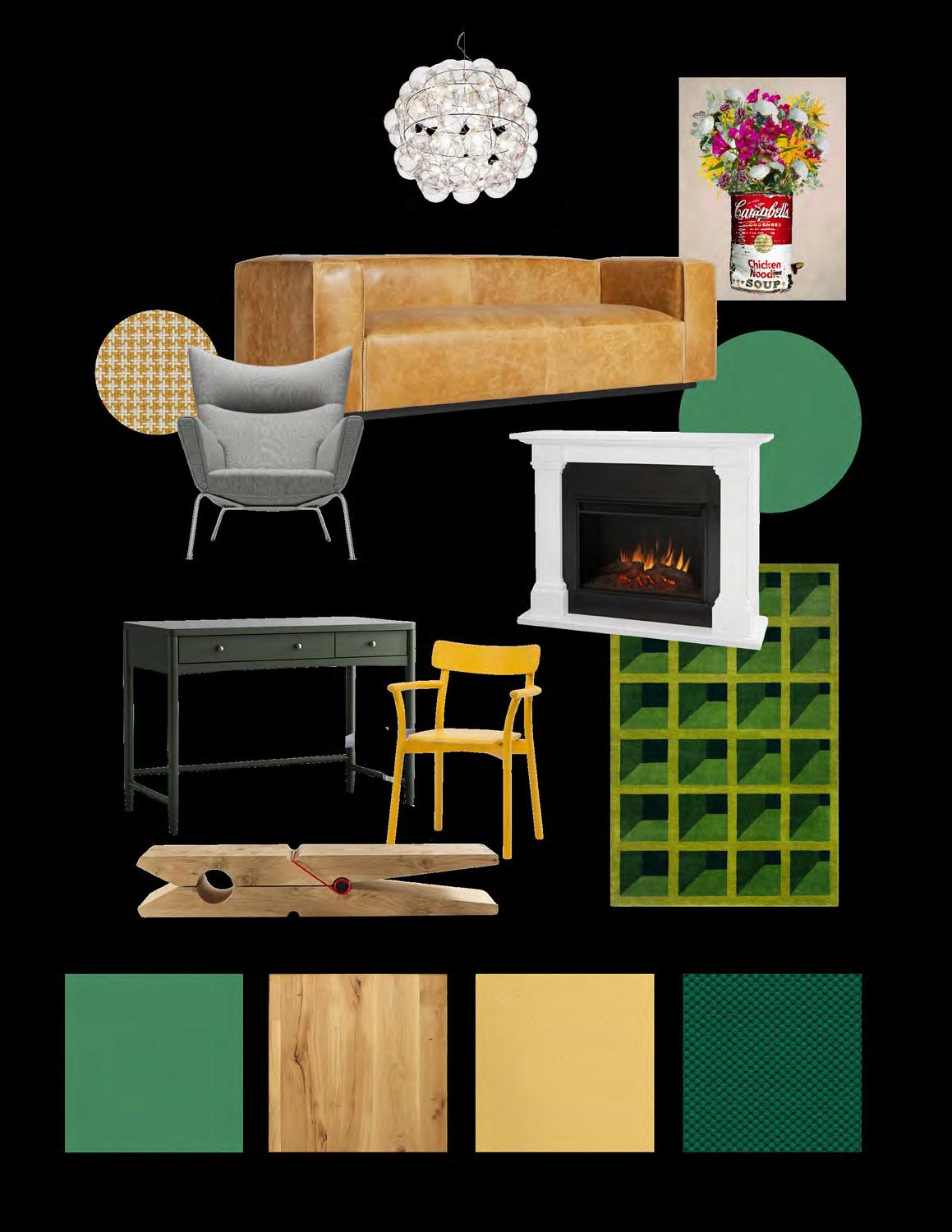
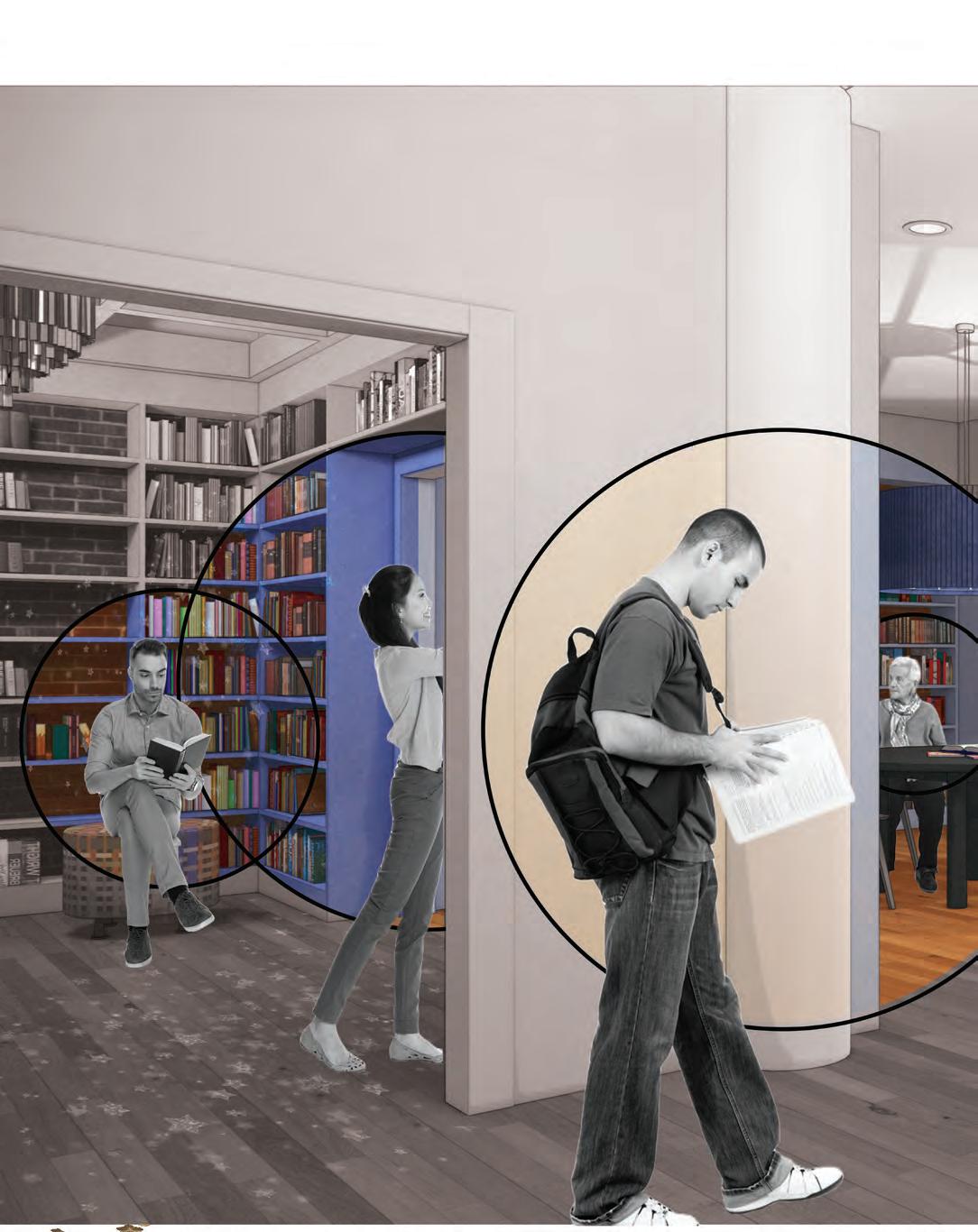
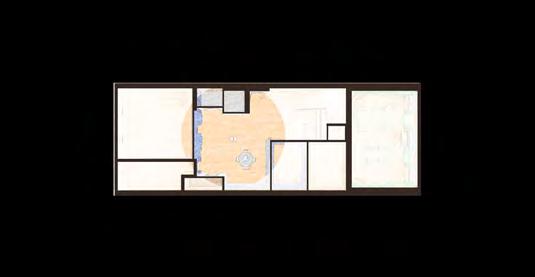
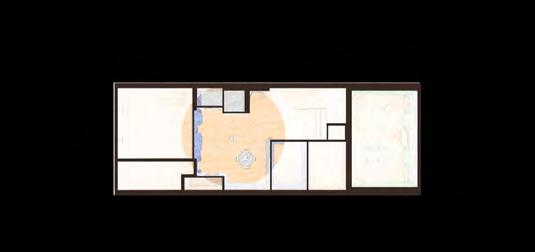
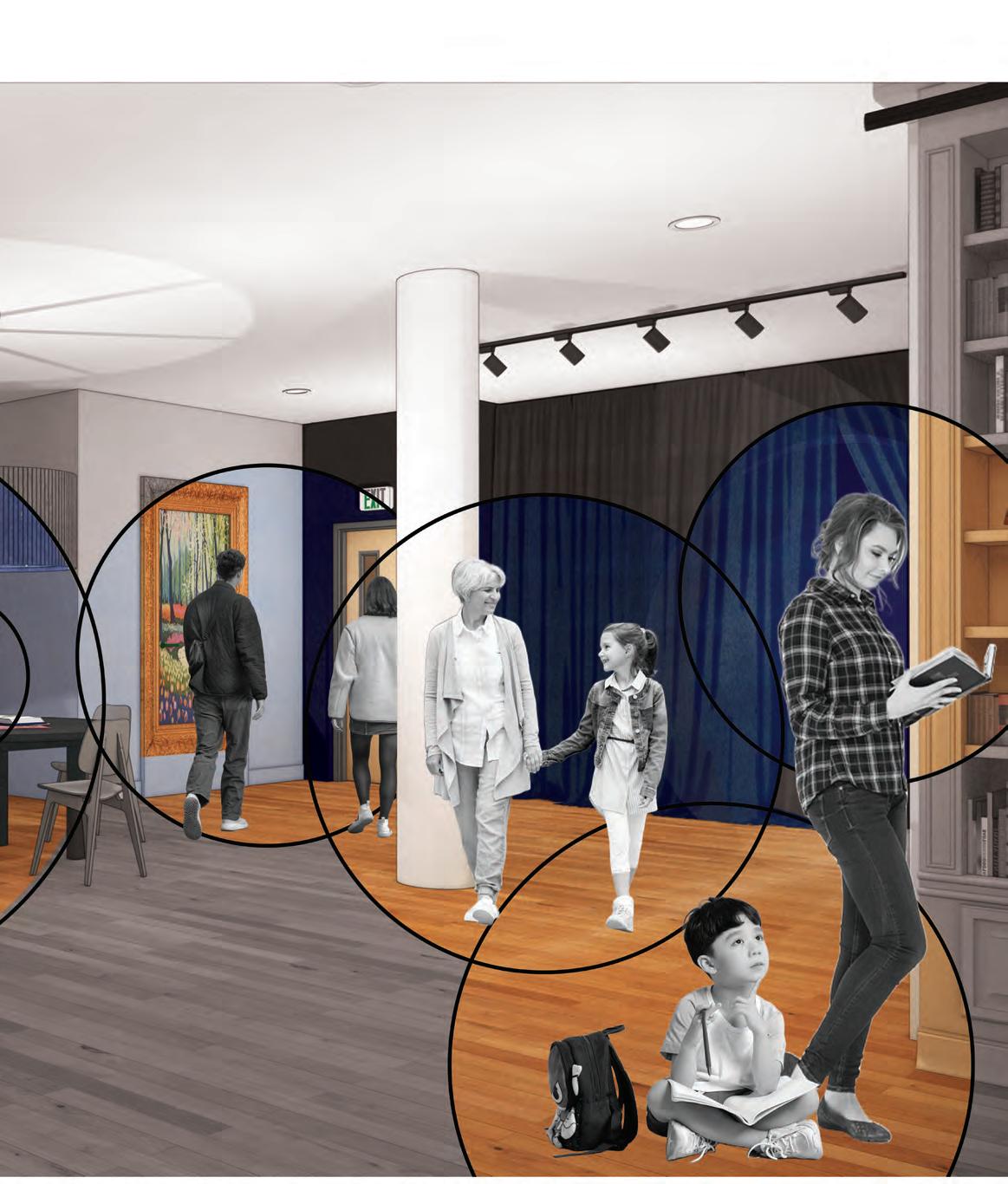
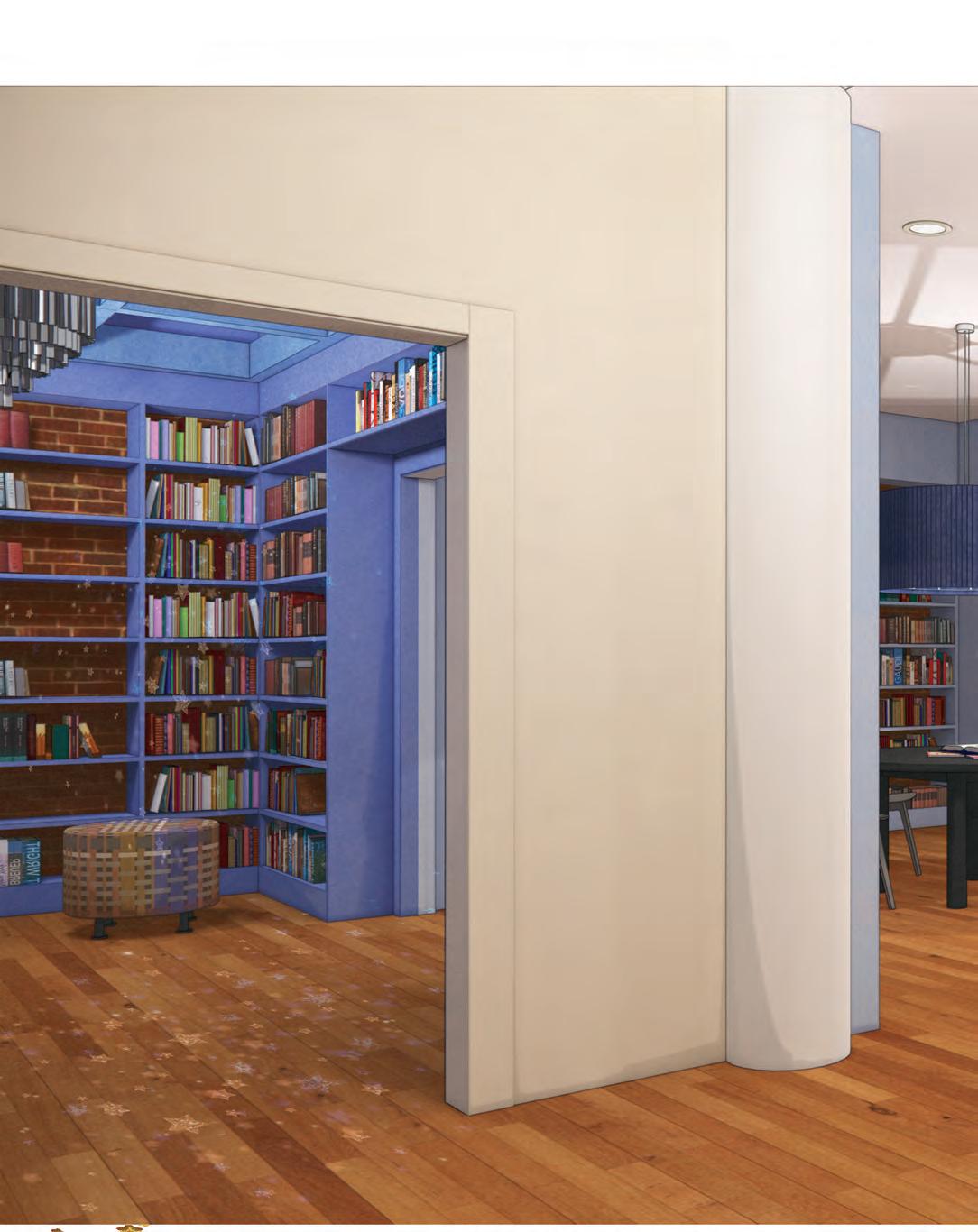
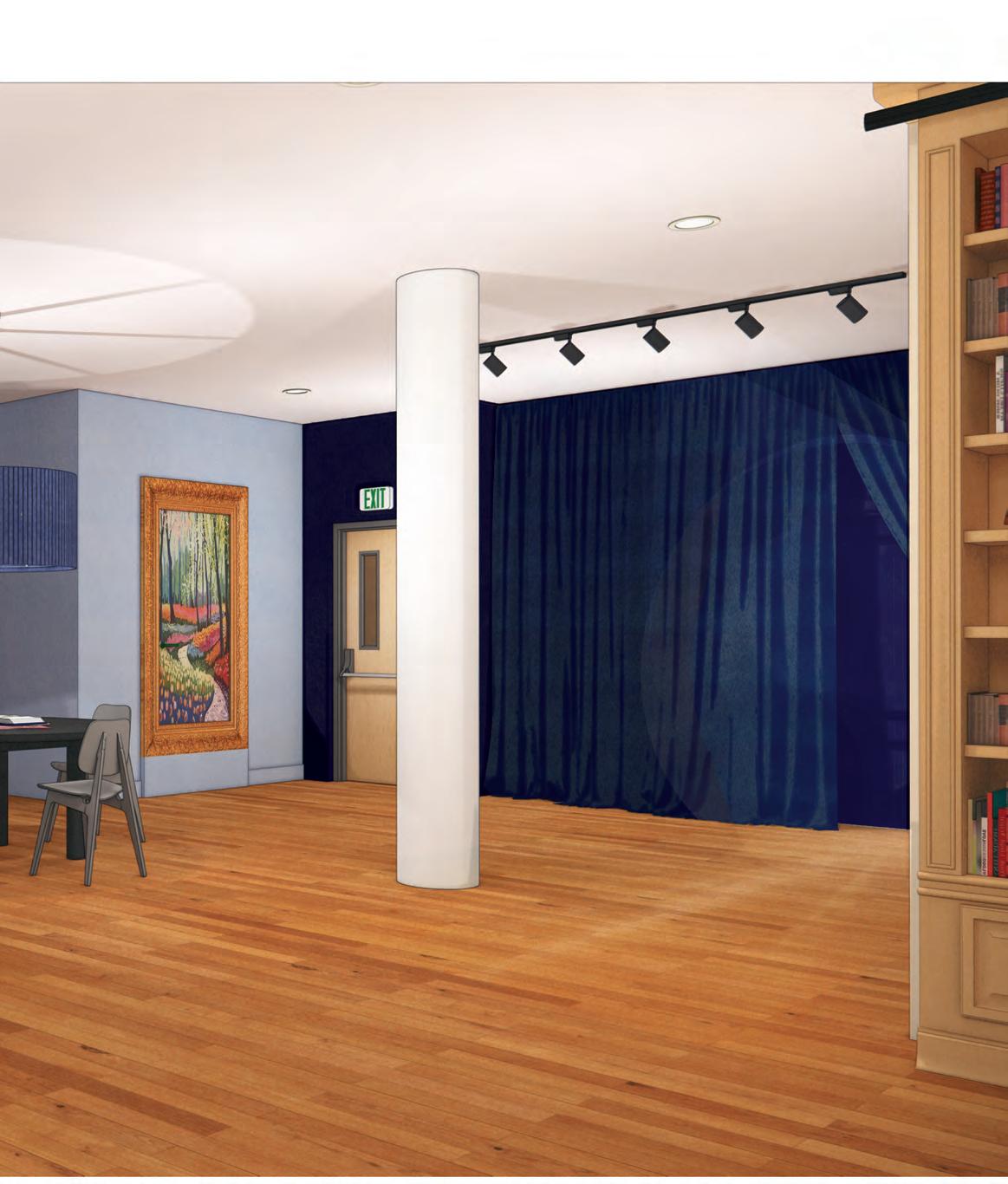
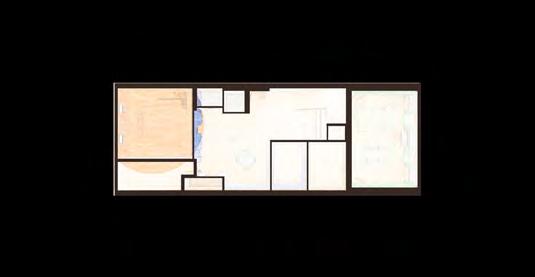
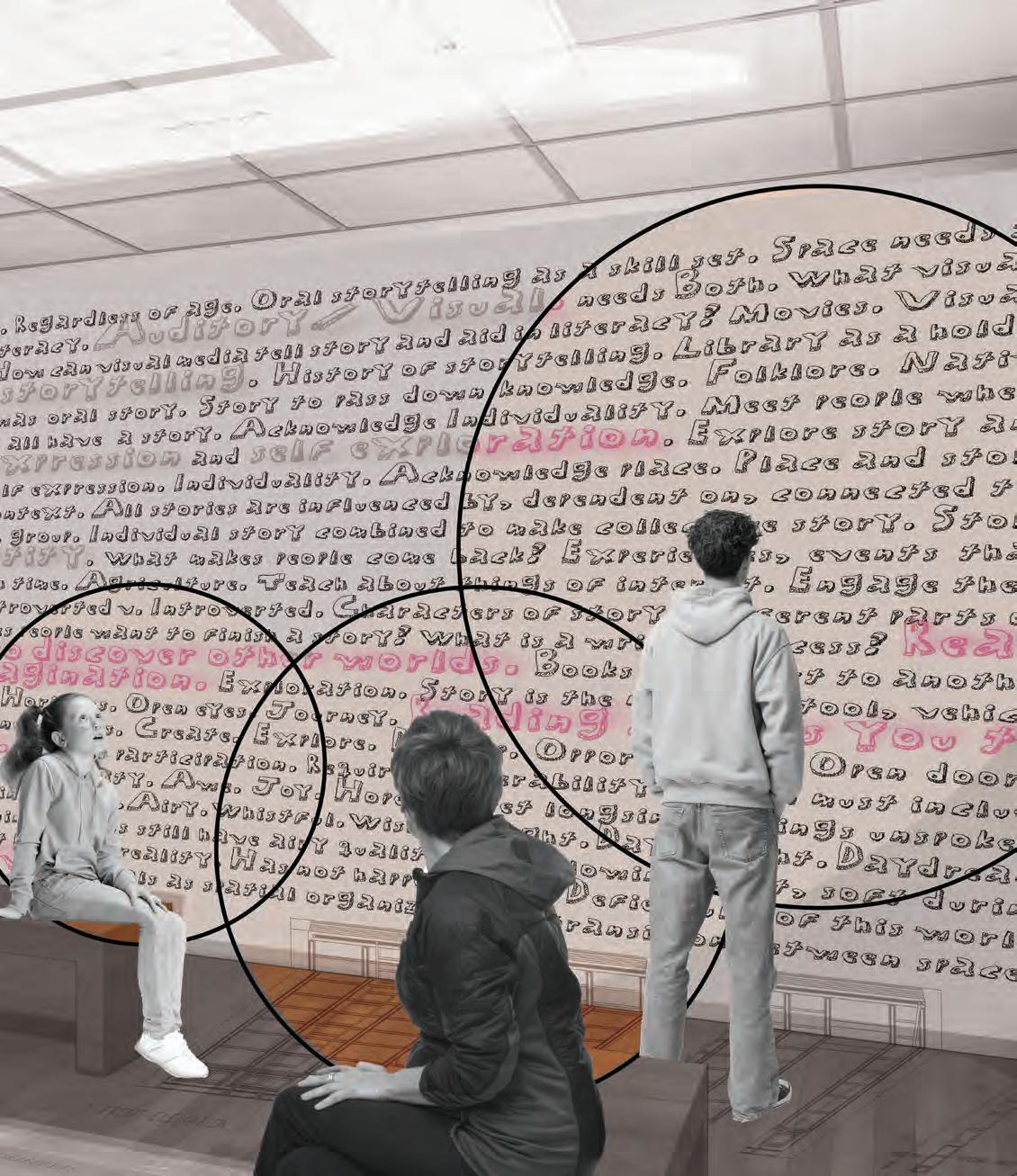
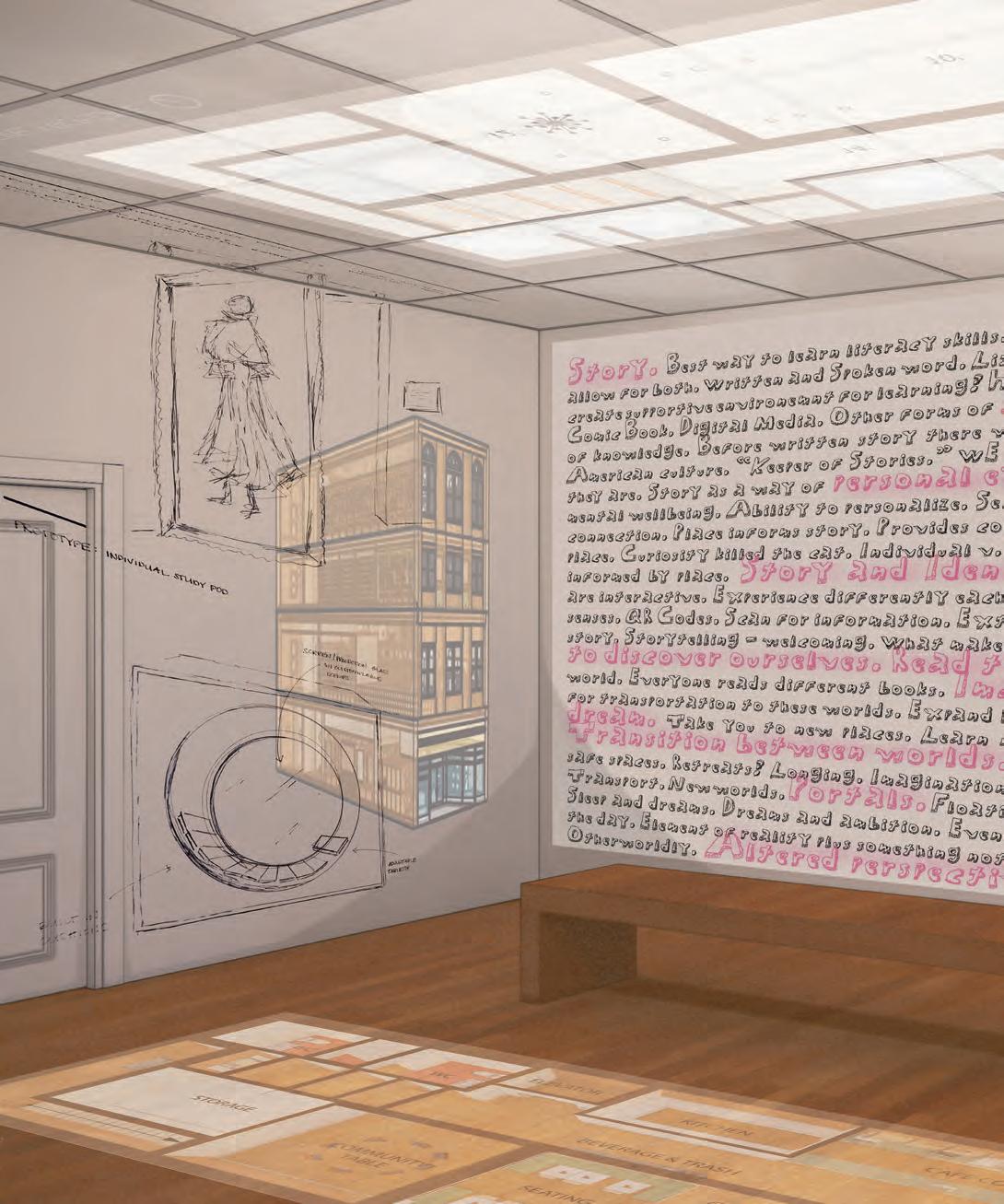
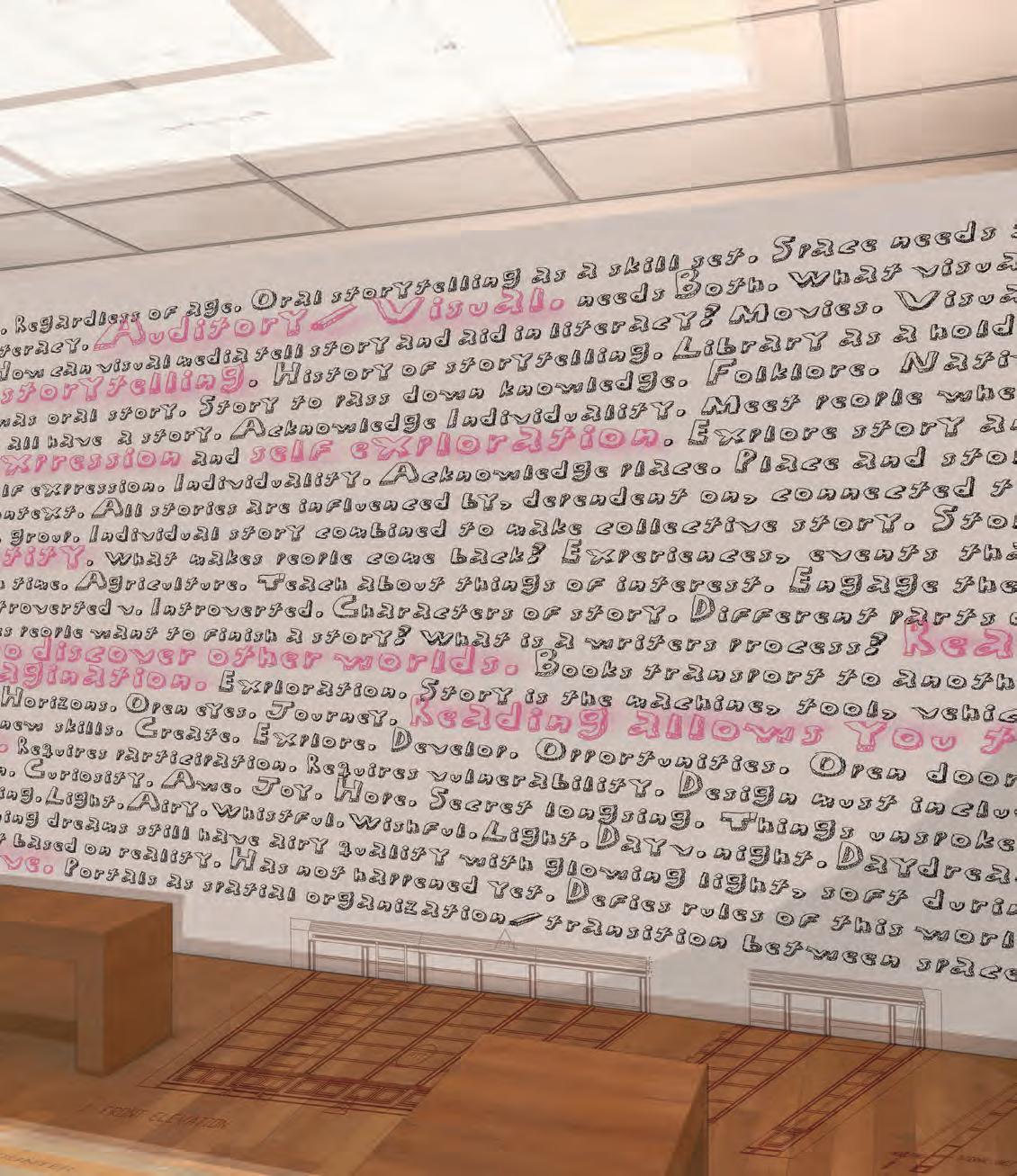
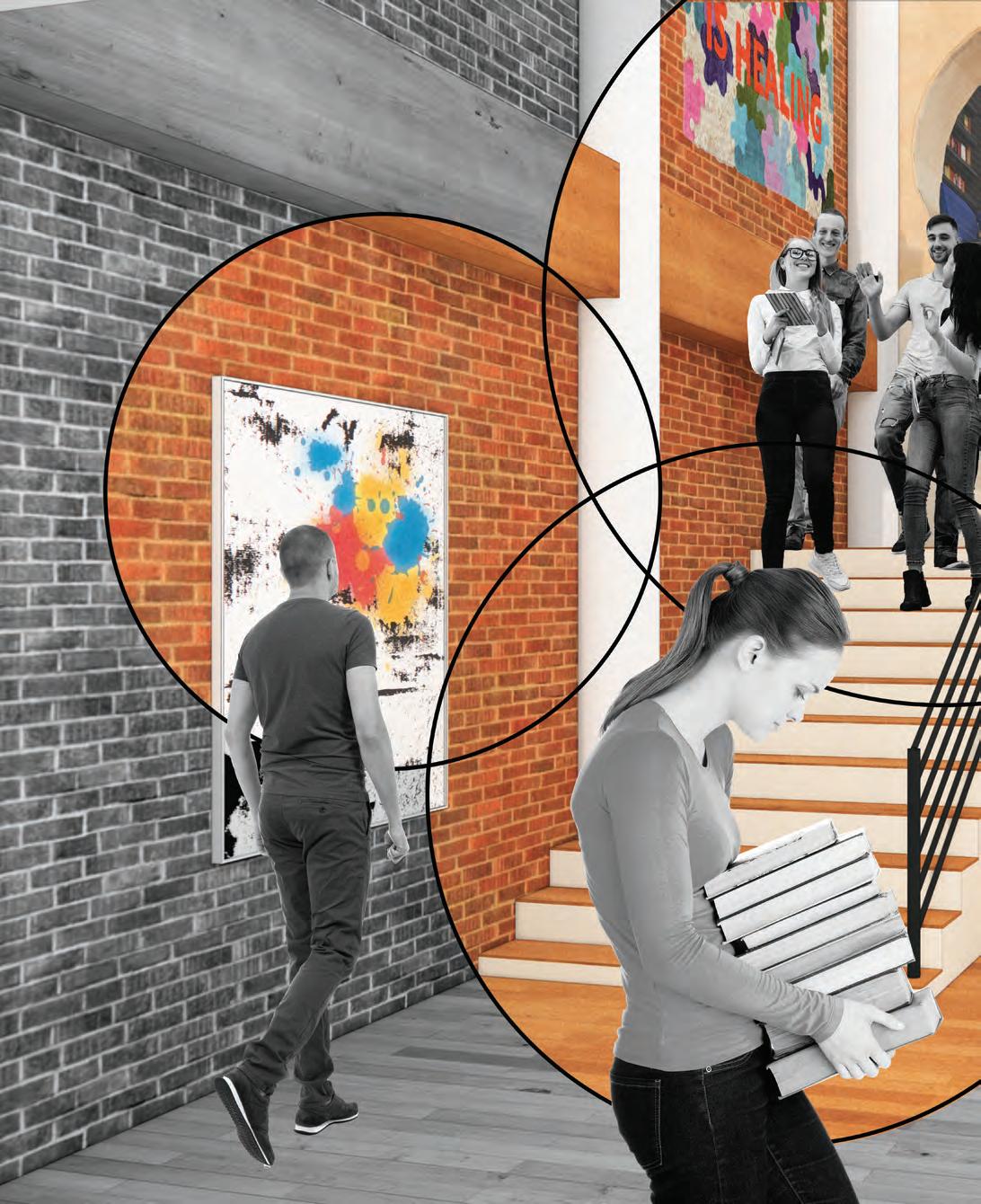
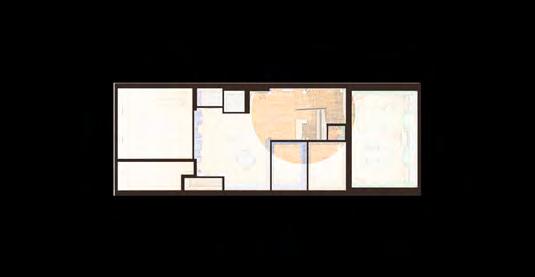
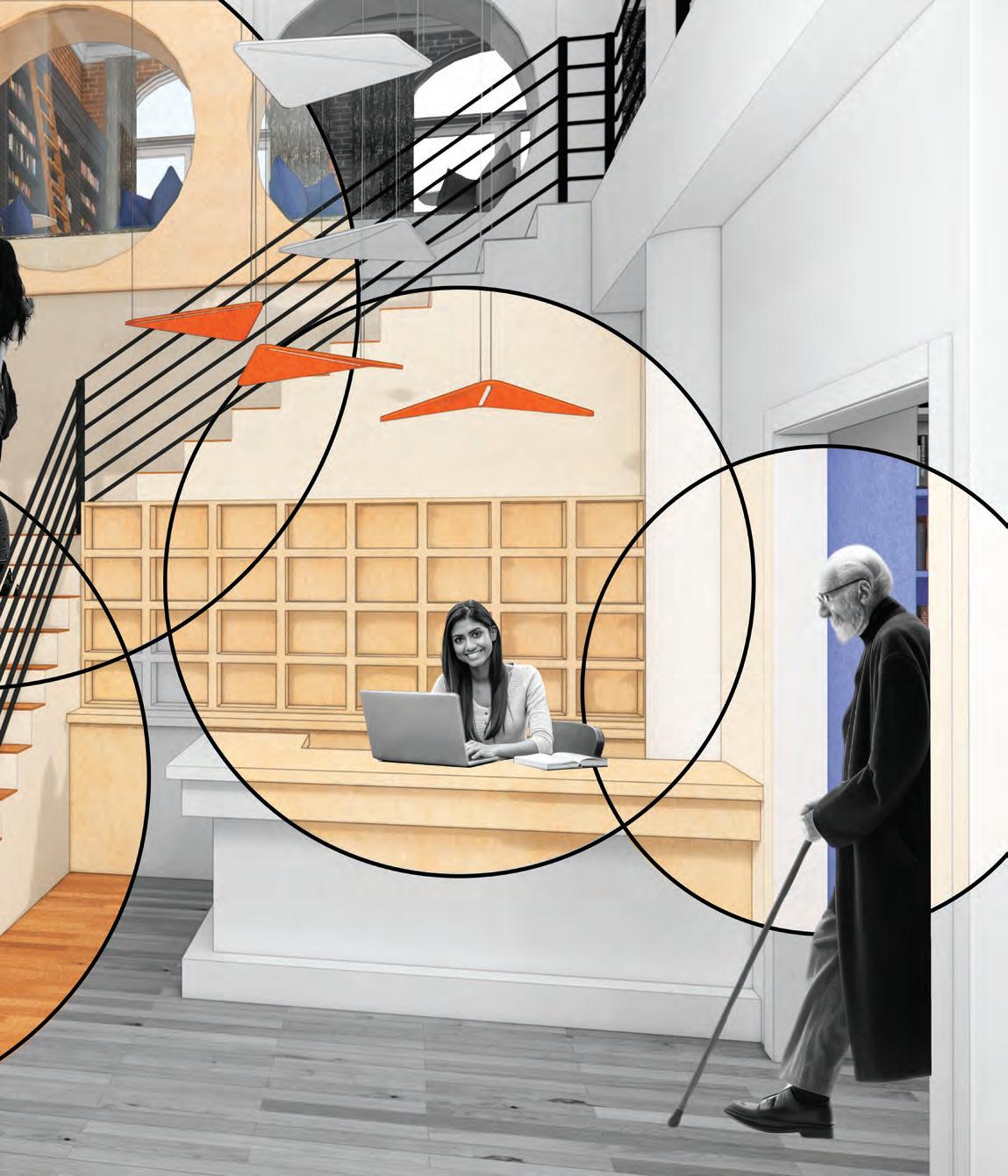
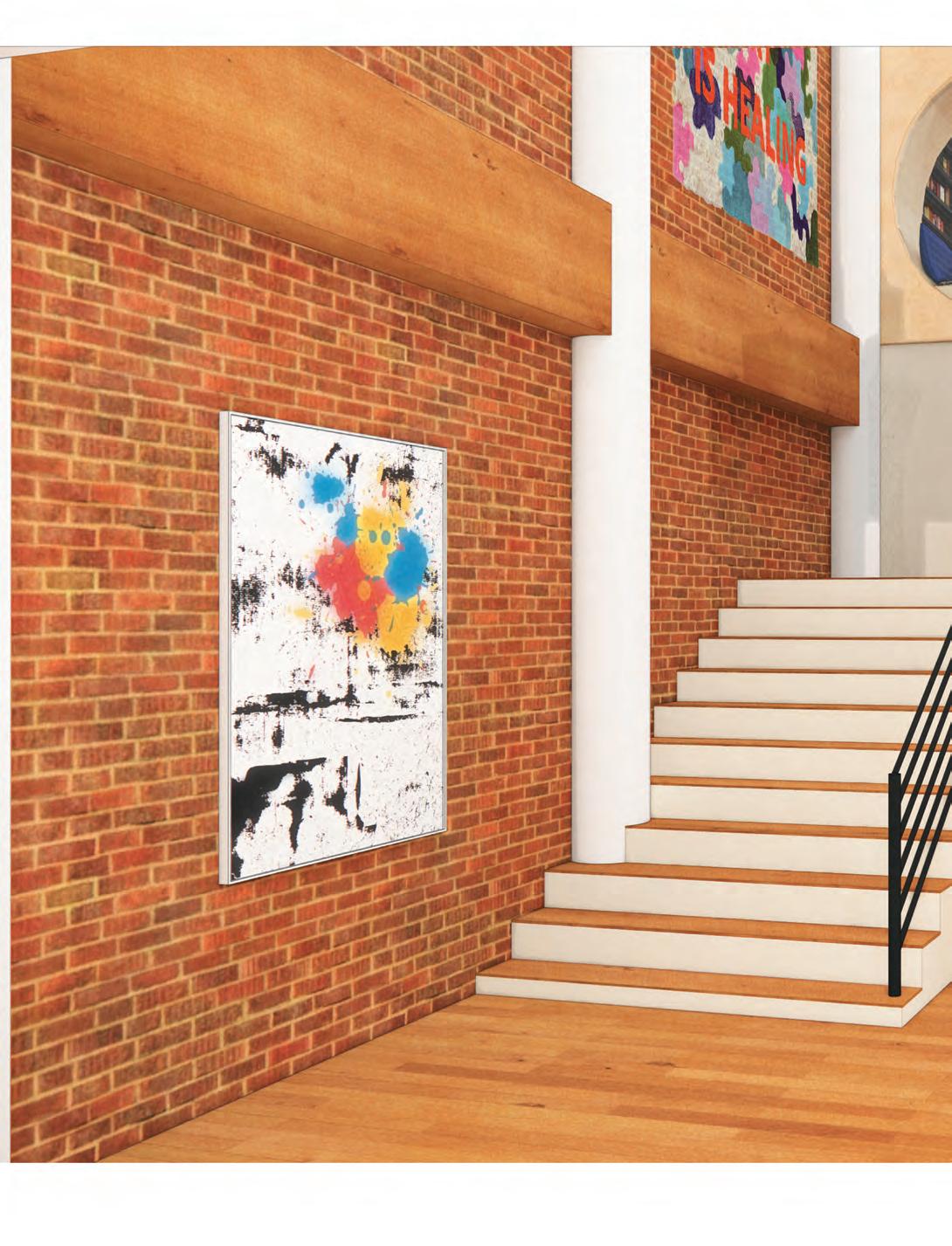
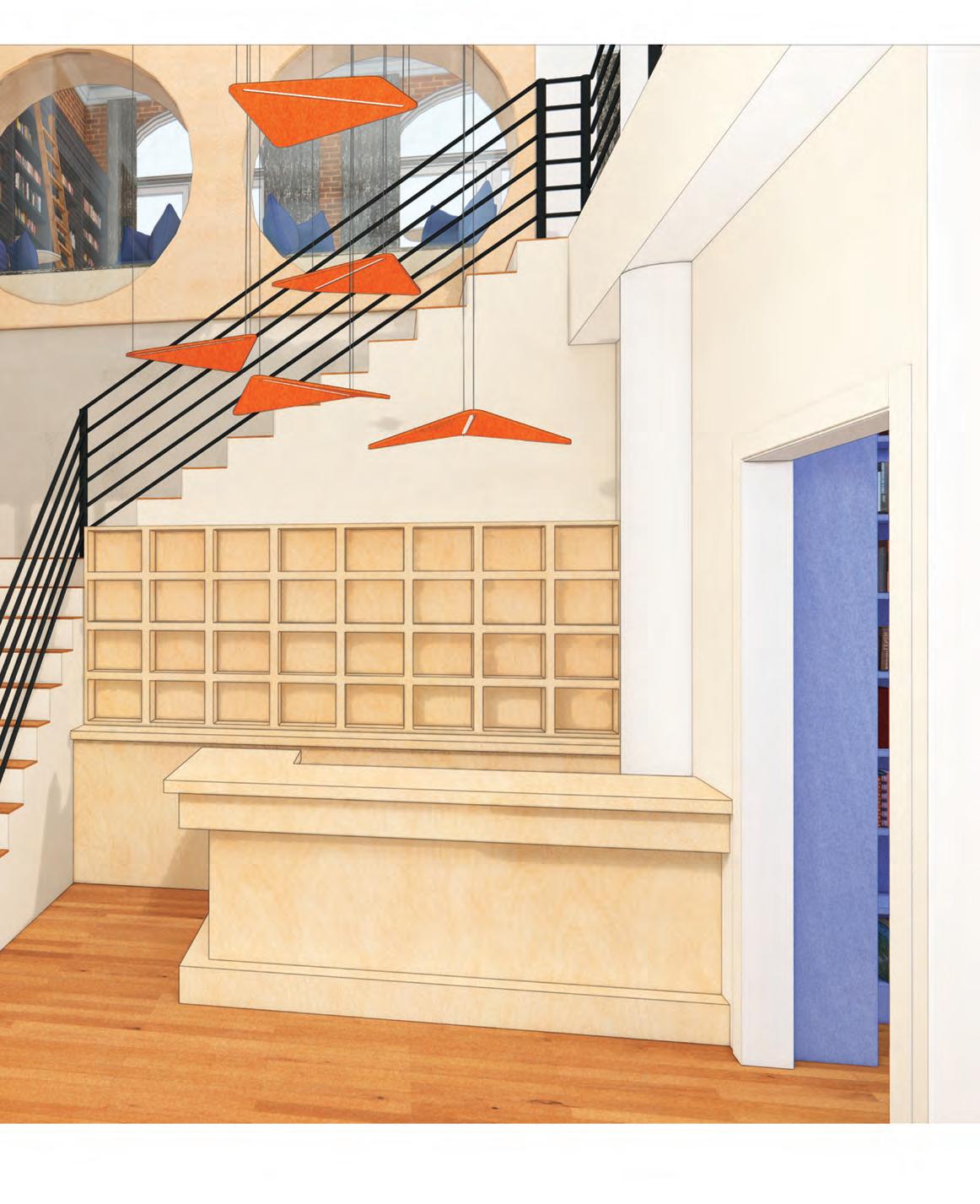
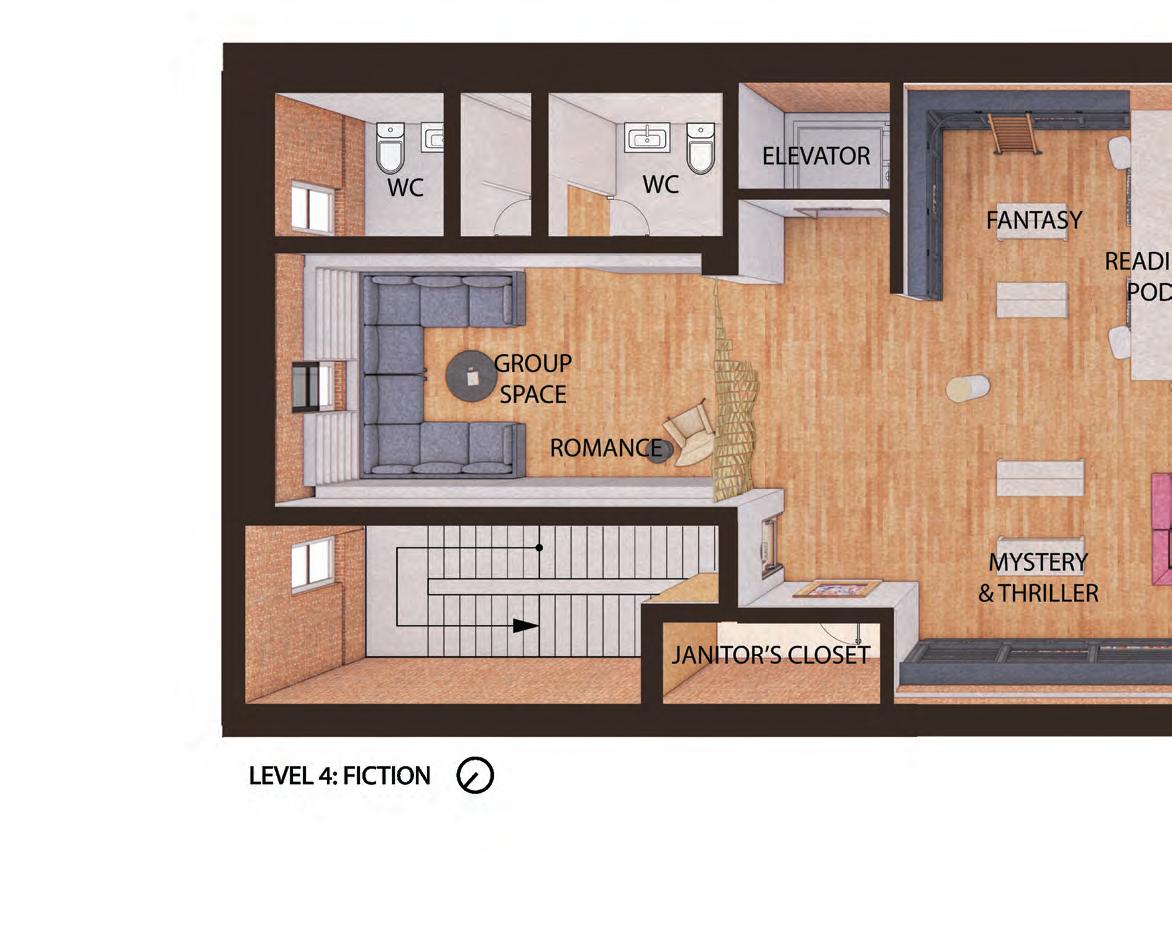
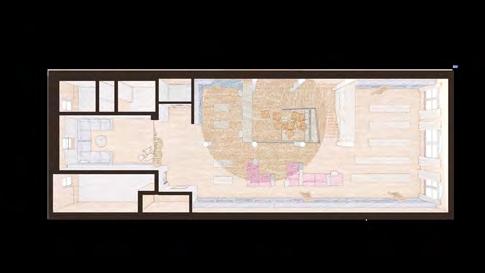
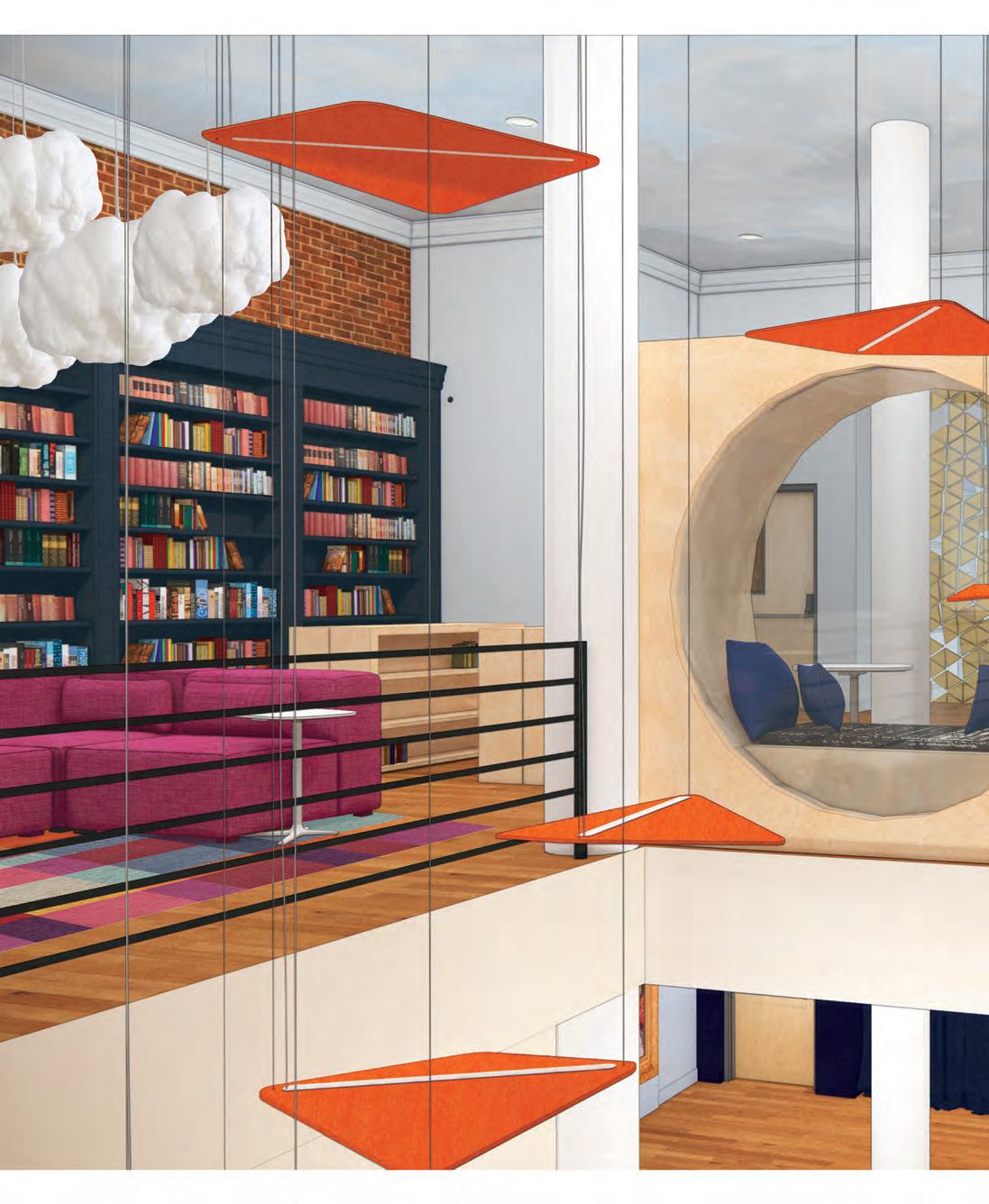
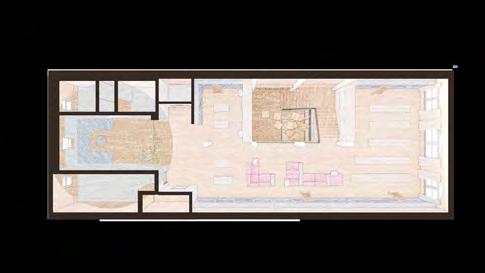
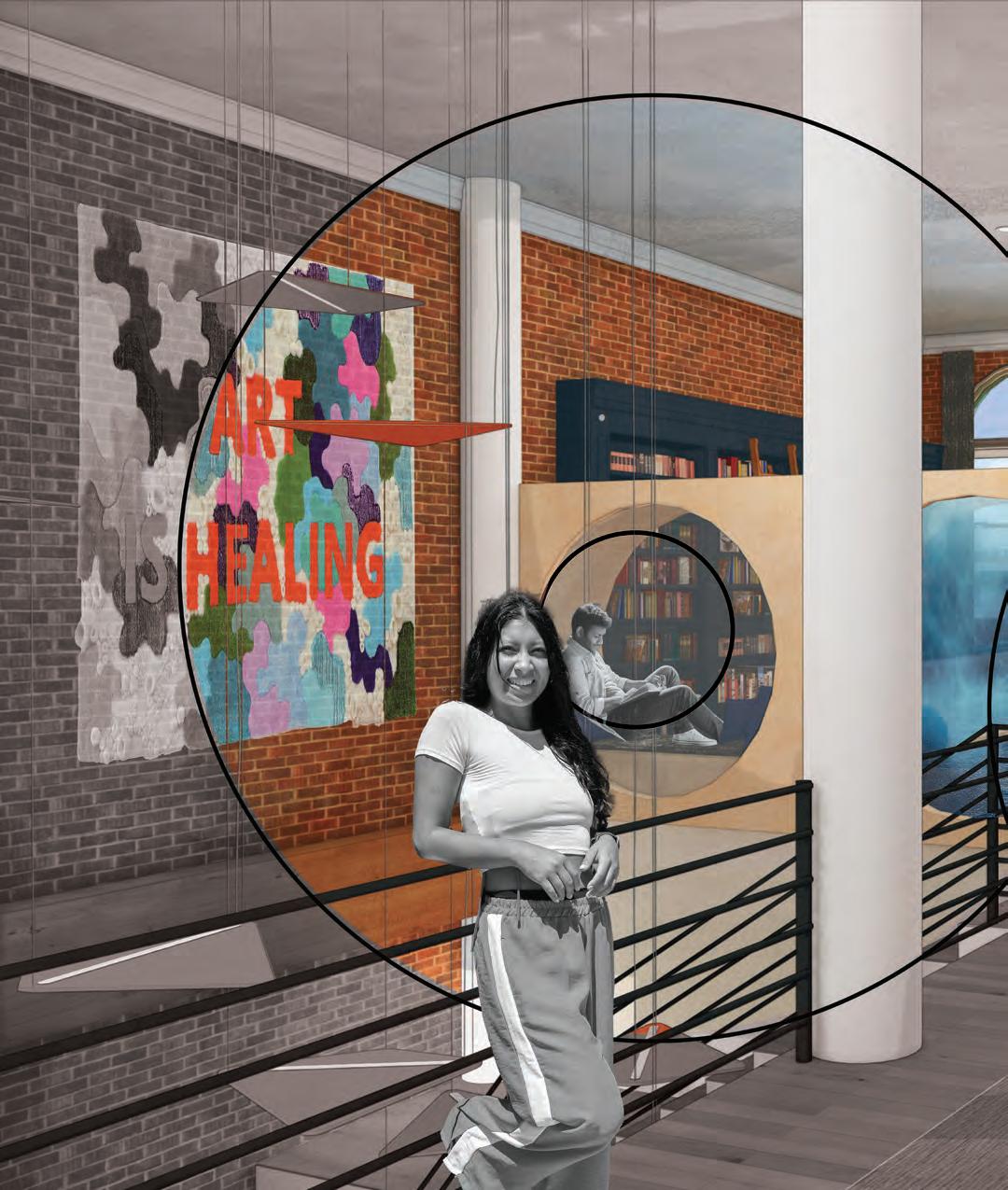
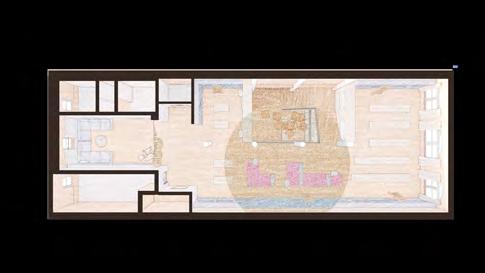
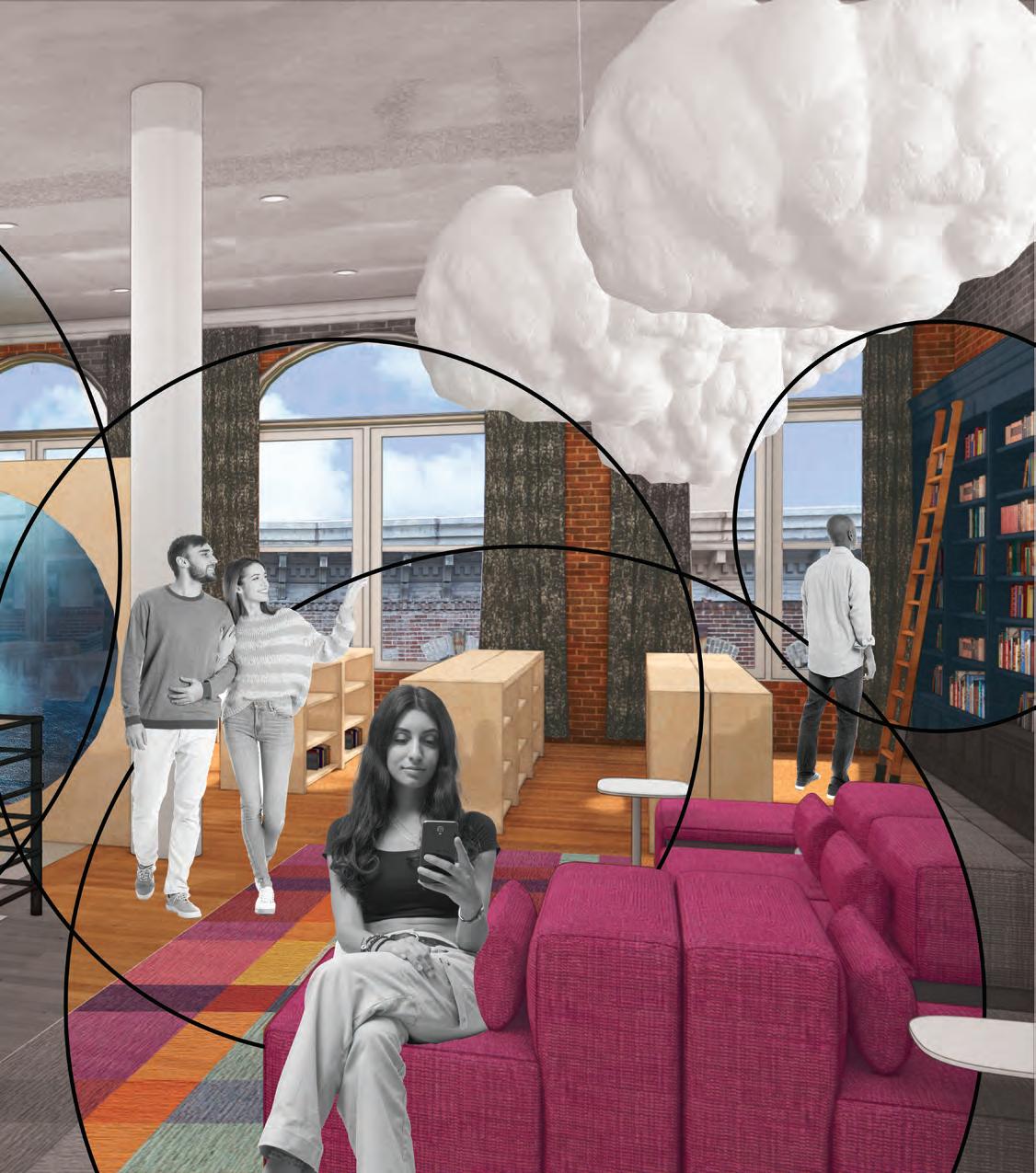
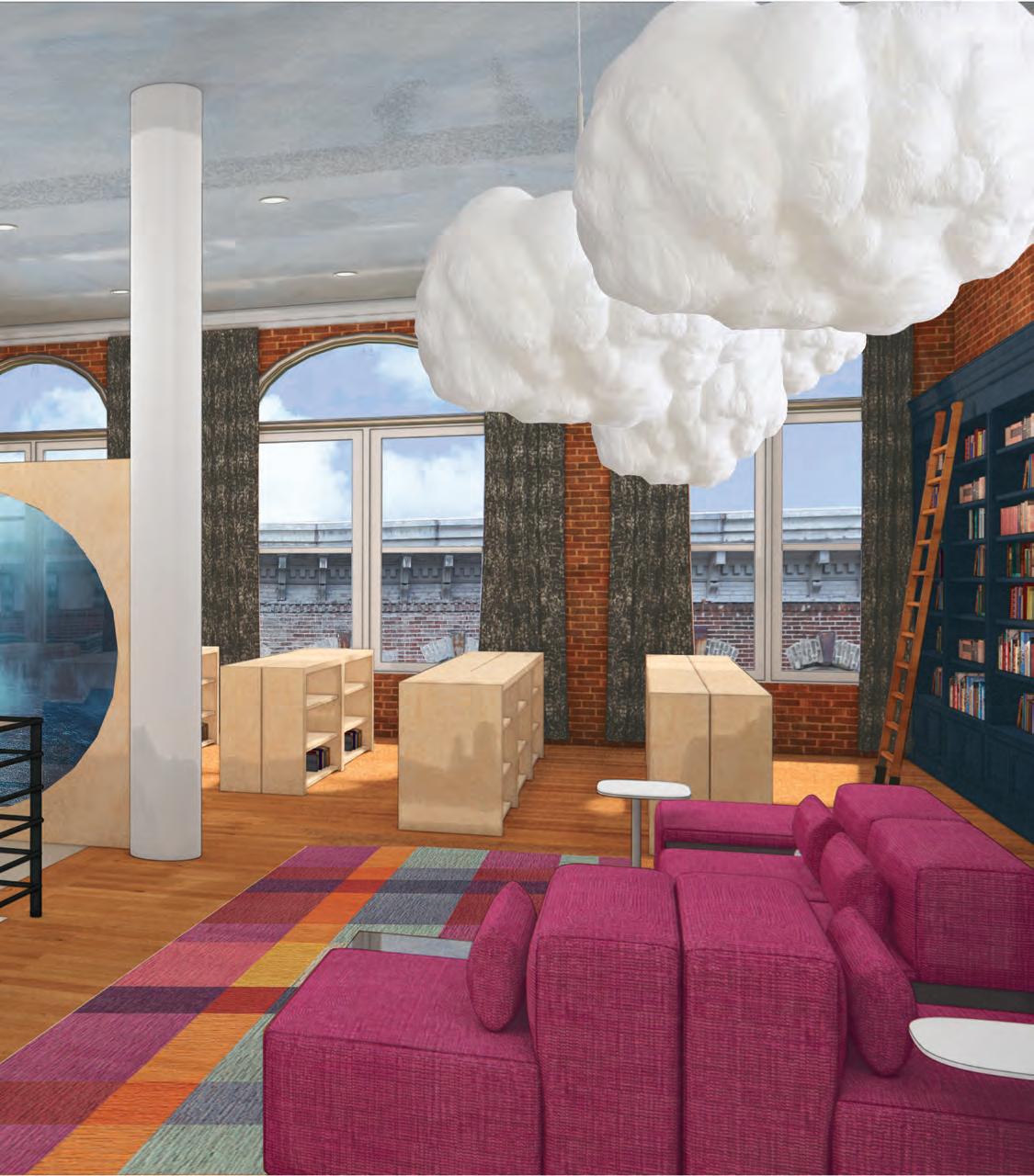
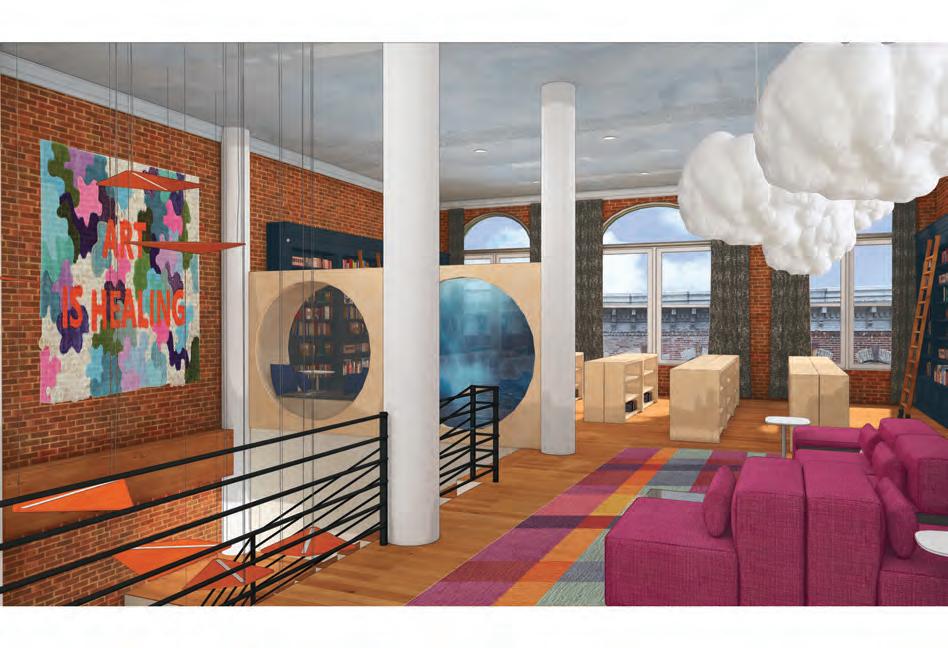
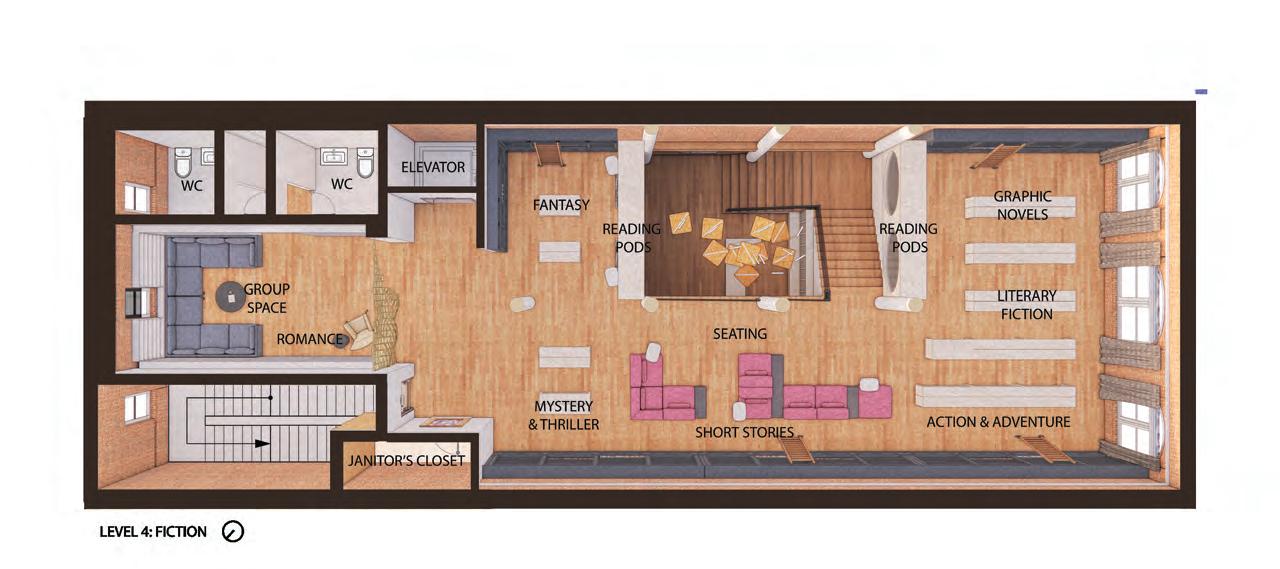
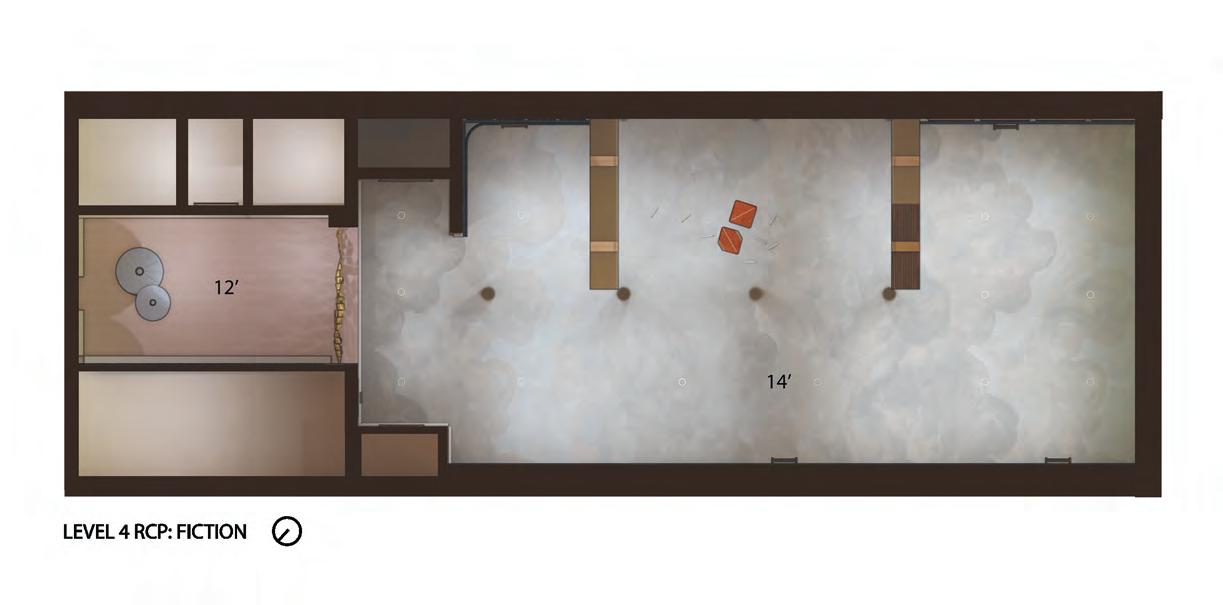
Located on teh fourth floor, the fiction section is designed to be a sanctuary for the imagination, offering visitors a place where stories can serve as both an escape and a means of exploration. In this space, books become portals to new worlds, allowing readers to temporarily step away from teh routines and challenges of daily life and immerse themselves in adventure, fantasy, mystery, and profound emotional journeys.
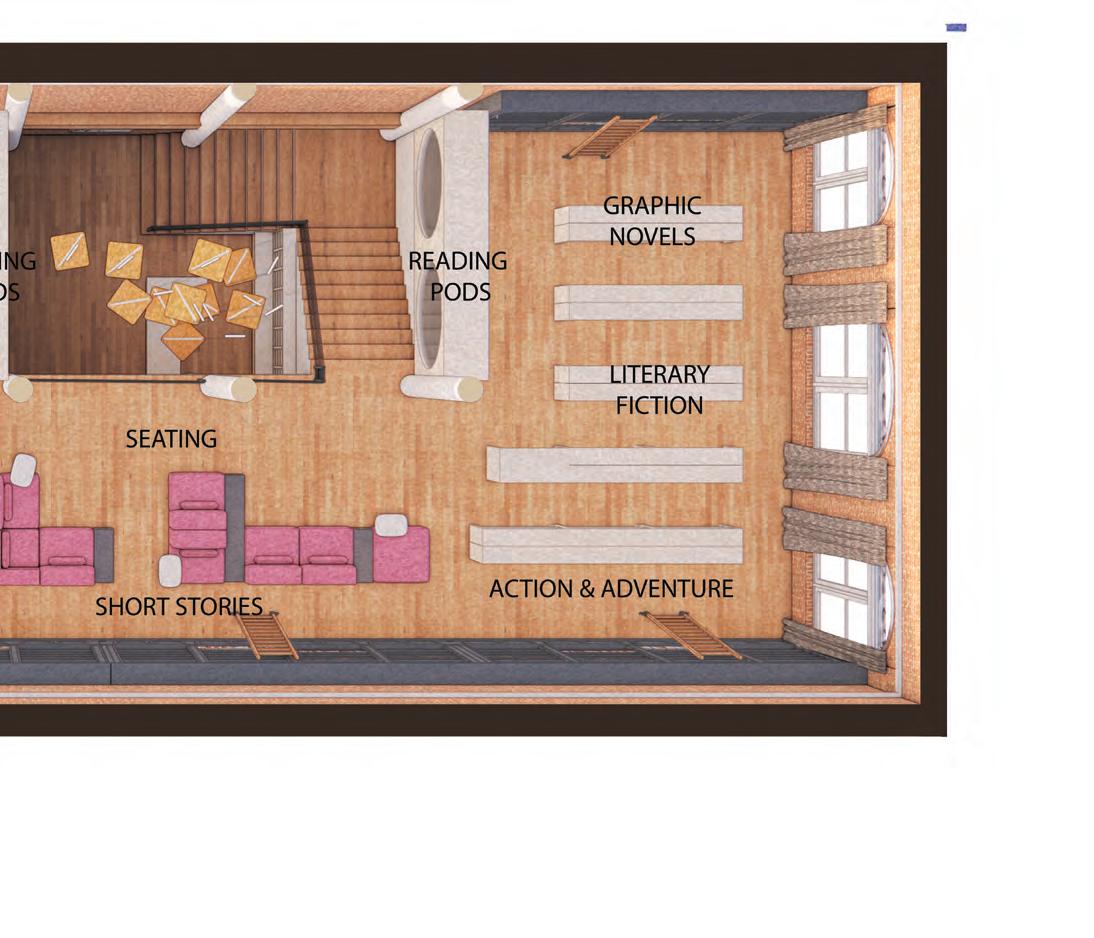
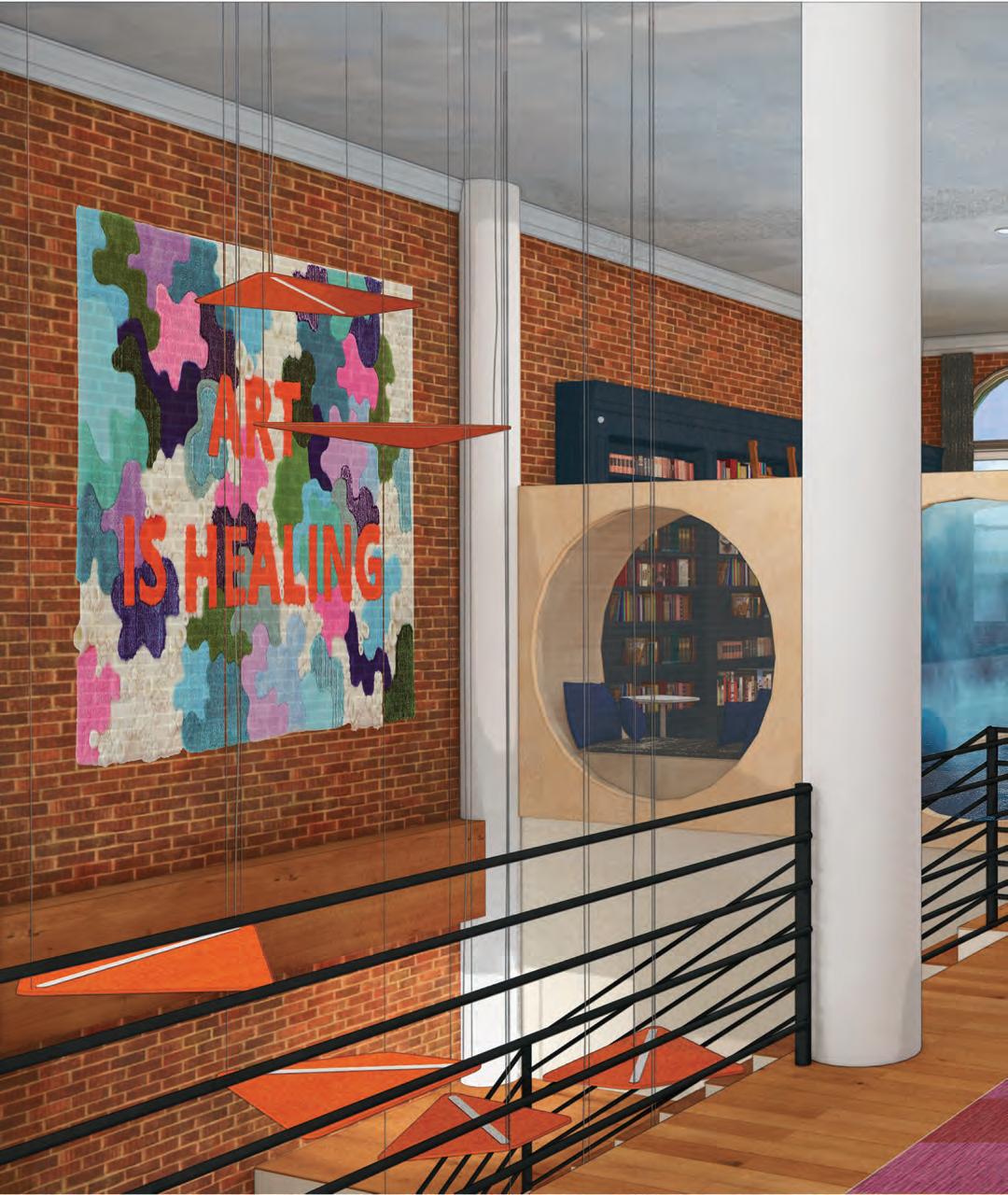
Individual reading pods allow visitors to create personalized reading environments that are shared with other visitors through the dual sided LED screens. Groups can meet for book clubs or other discussion in a comfortable, private space with ocoustic modification. Clouds on the ceiling expand the space and highlight expansive view from the large windows. By creating an environment that sparks curiosity and supports relaxation, the space allows individuals to reconnect with thier sense of wonder and imagination, encouraging them to embark on the endless advetures that only a good story can provide.
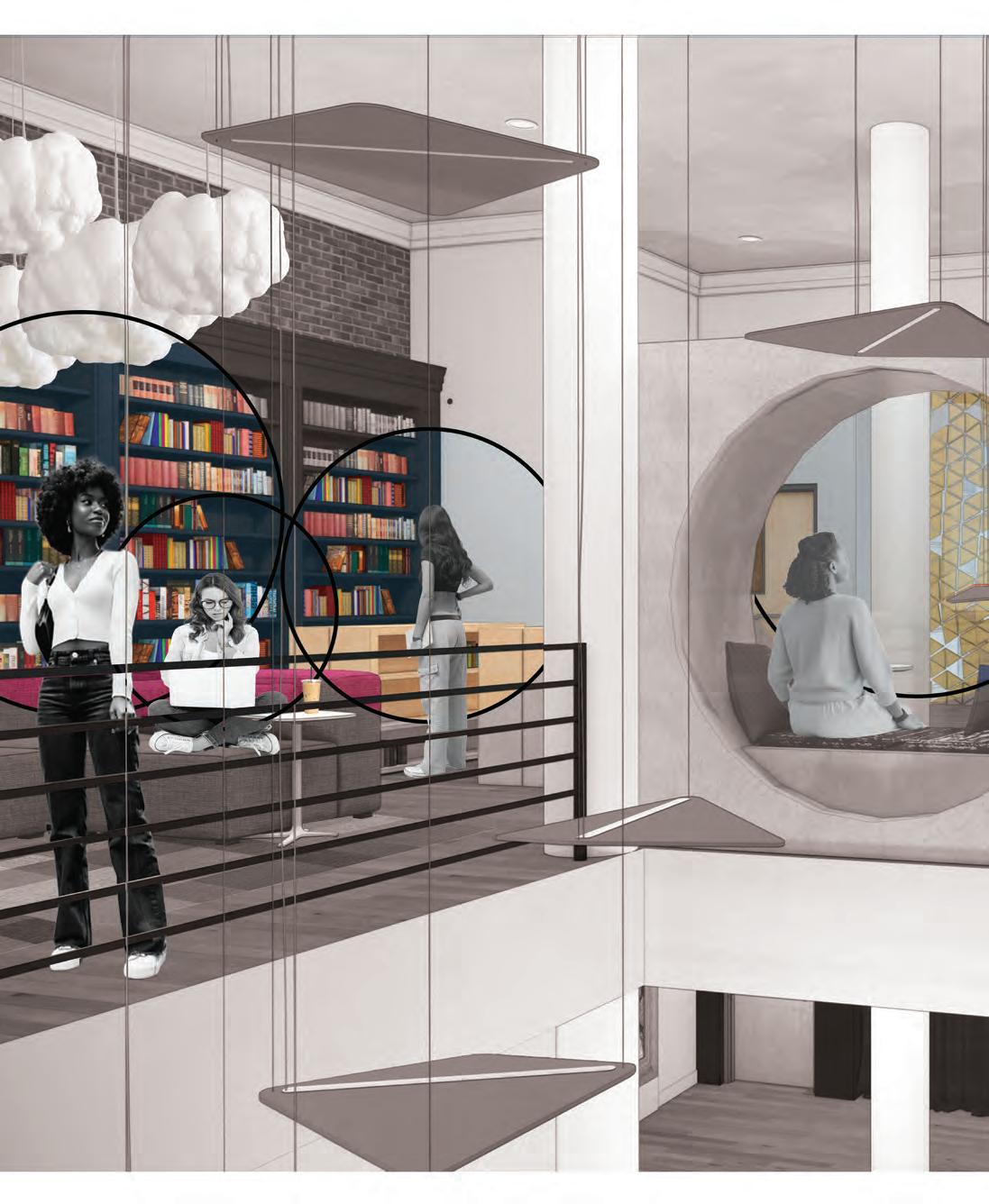
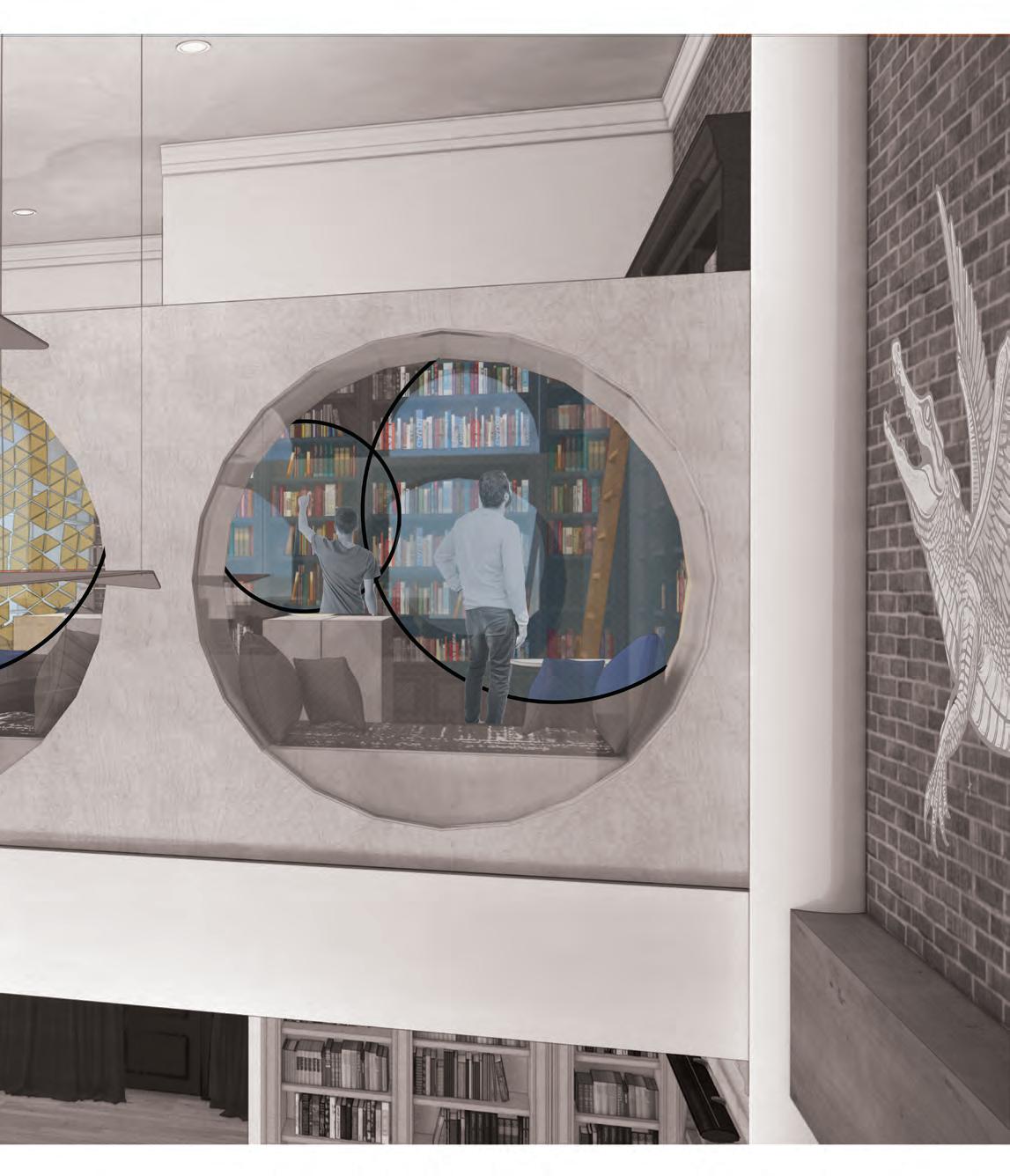
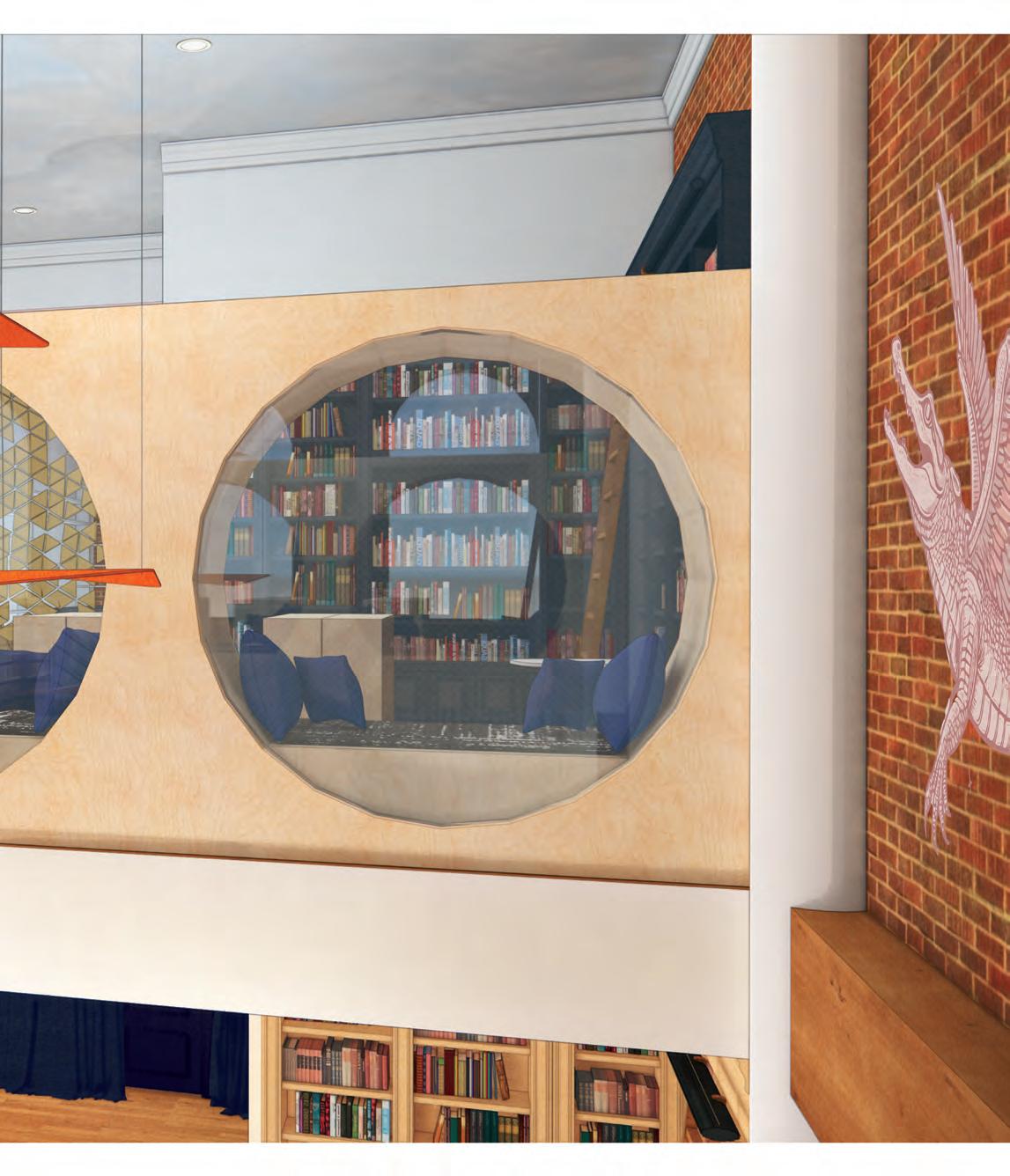
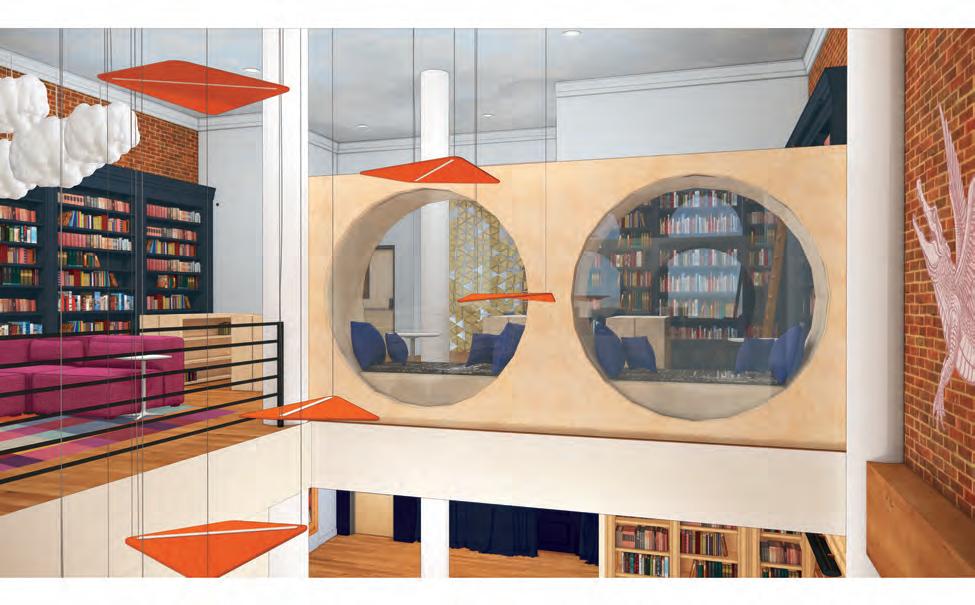
ART PROJECTED ON WALL IN STAIR BETWEEN LEVEL 3 AND 4
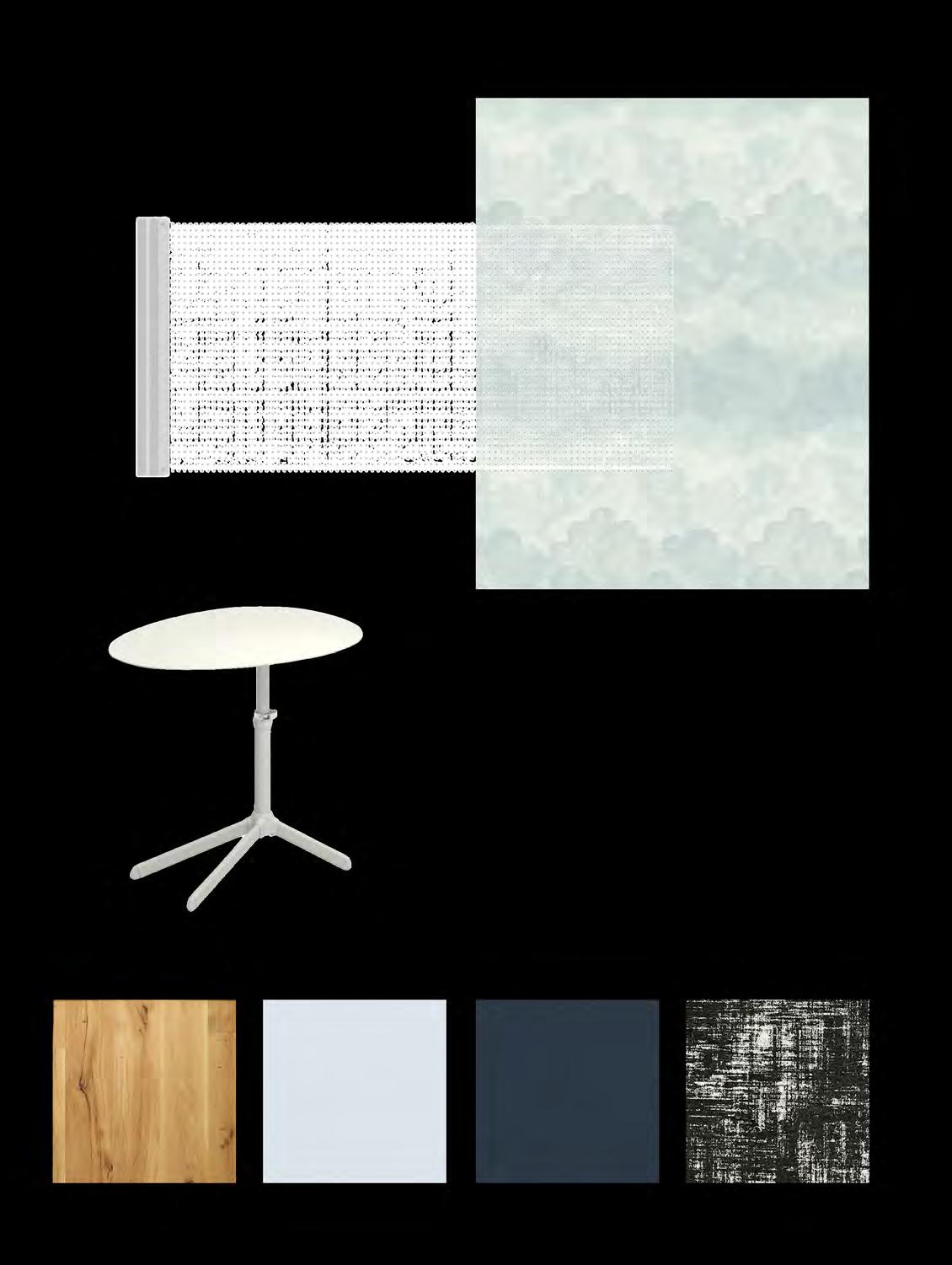
READING POD LED SCREEN
CEILING WALLCOVERING CLOUDS EXPAND SPACE AND INVITE IMAGINATION
HEIGHT ADJUSTABLE TABLE
ACOUSTIC SPACE DIVIDER
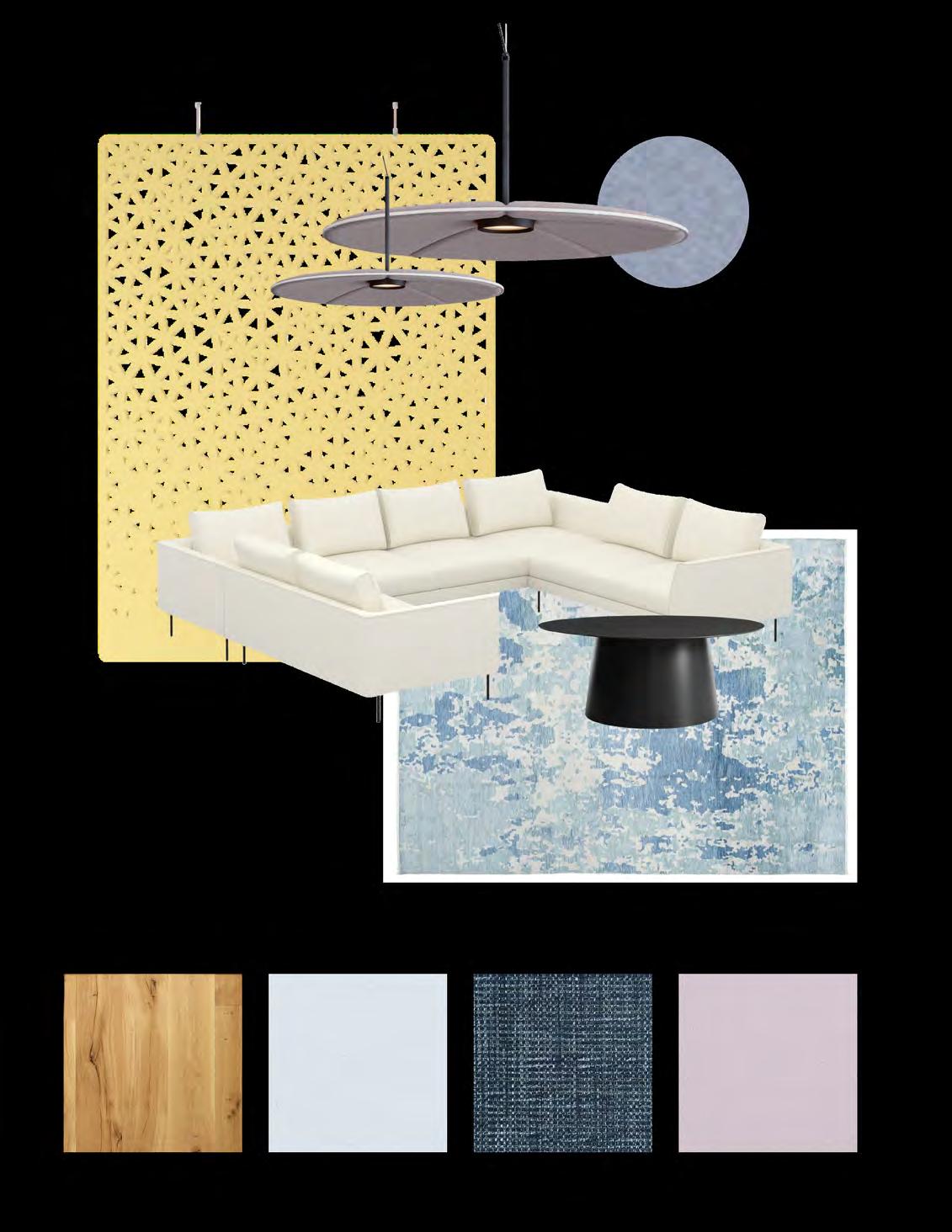
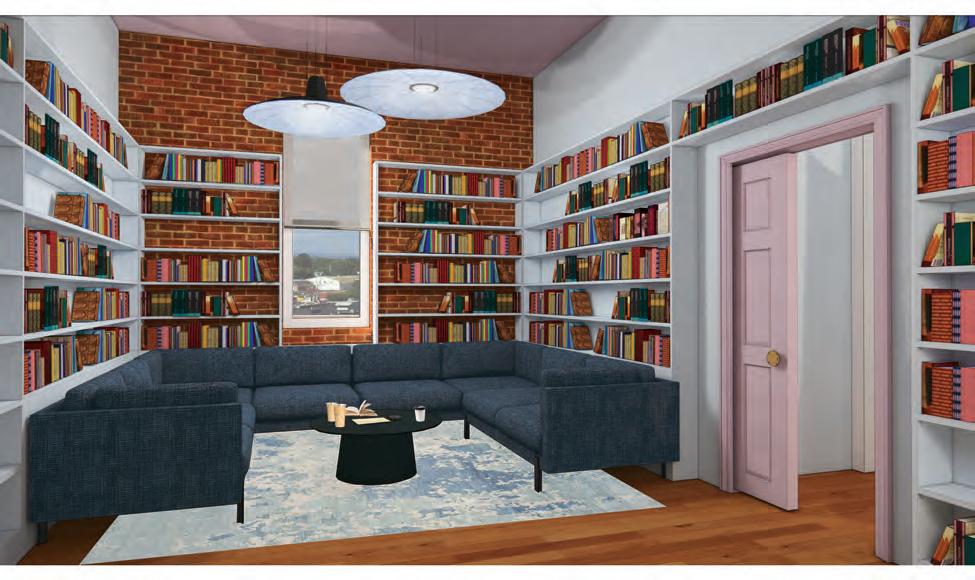
SECTIONAL SOFA ENCOURAGES GROUP CONVERSATION
SPACE INTENTED FOR BOOK CLUBS
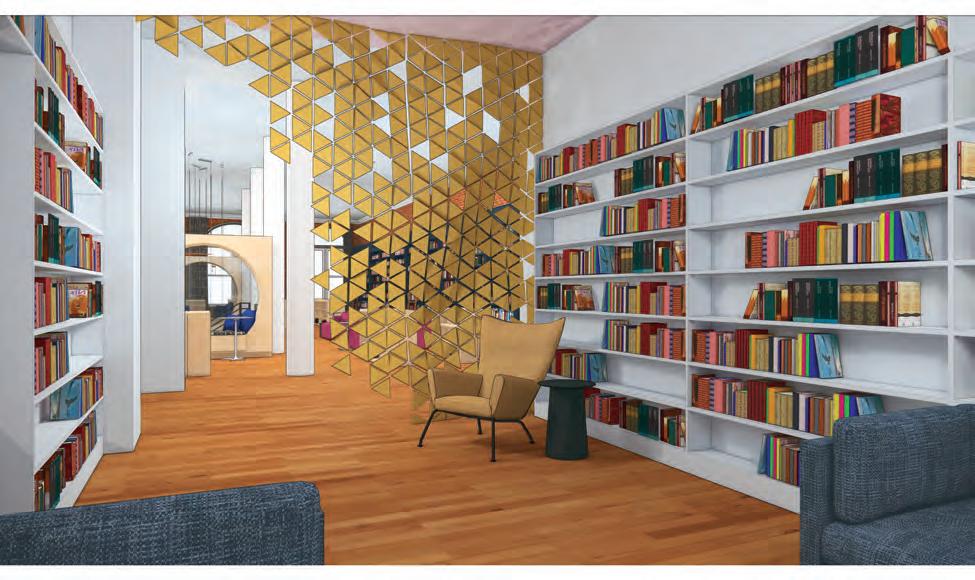
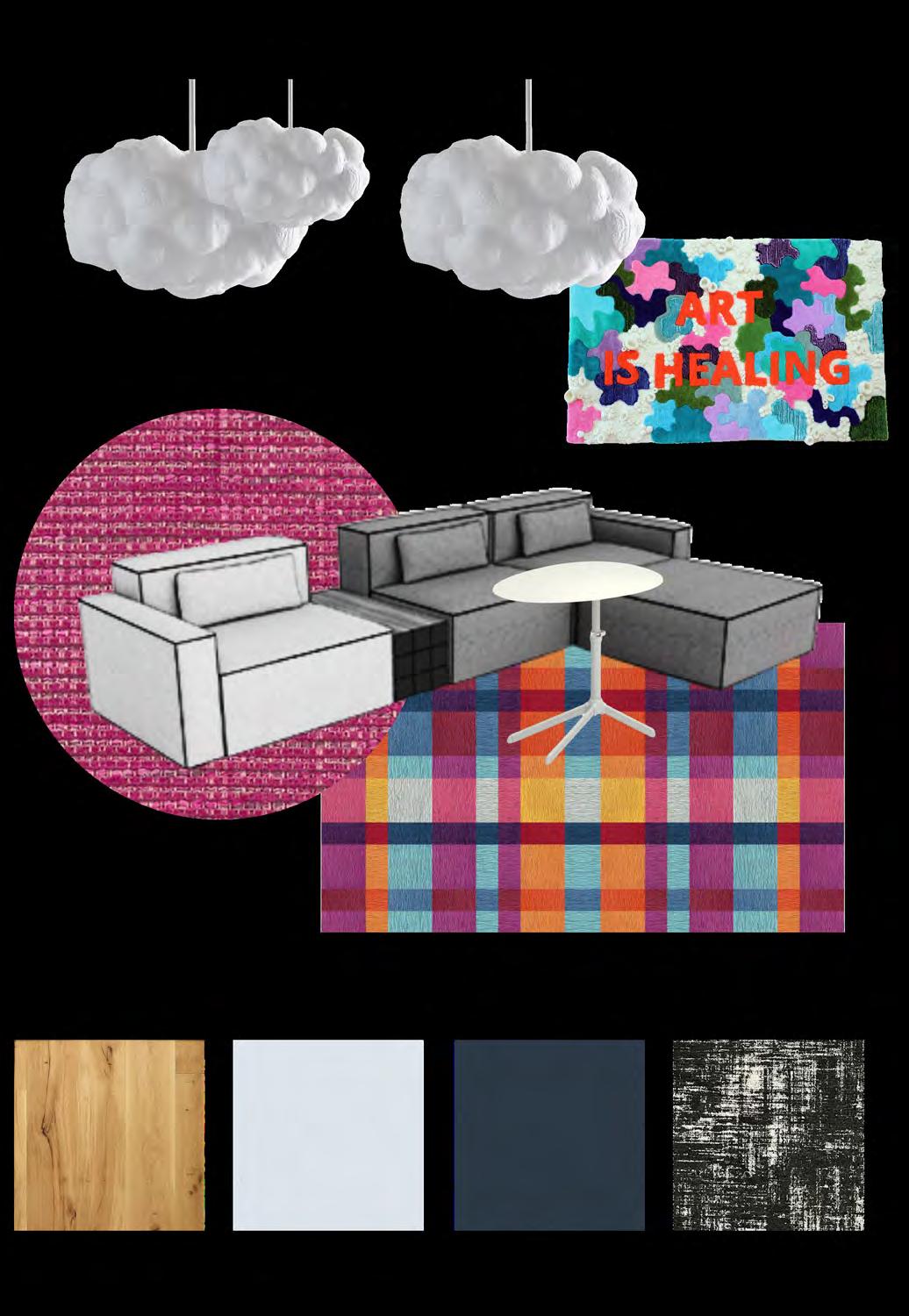
MODULAR SEATING FOR FLEXIBLE DESIGN

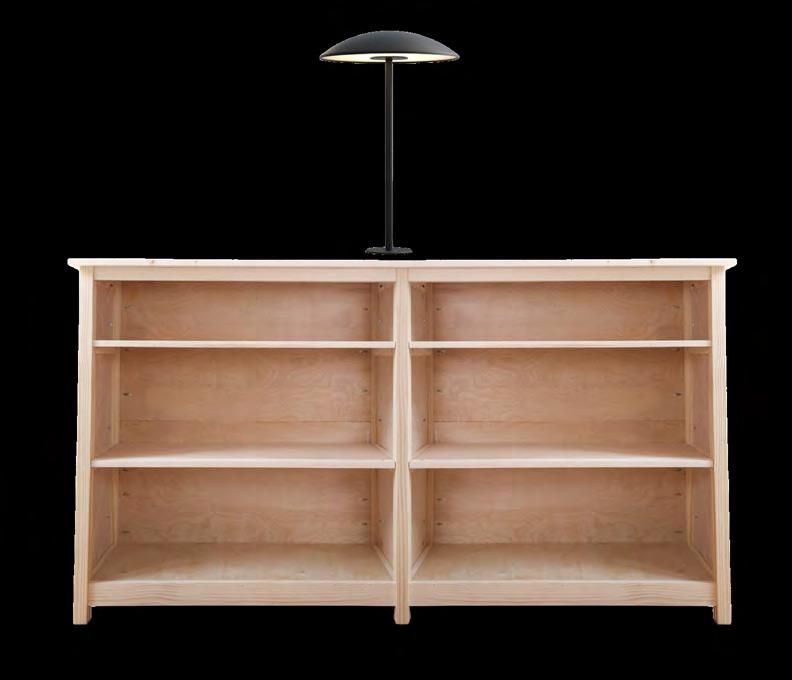
INTEGRATED LIGHTING
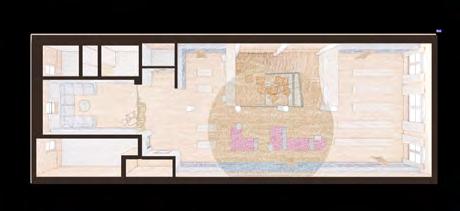
LOW BOOK STACKS ALLOW SPACE TO FEEL EXPANSIVE AND ALLOW VIEW TOWARDS RIVER.
STACKS CAN BE EASILY REARRANGED TO MEET THE NEEDS OF THE SPACE
“The library is a place where imagination begins, where every book is a doorway, and every reader becomes both a student, and a storyteller.”
- Anonymous






Glossary
Drawings
Literature Review
Research Theories
Library Funding
Graphic Standards
AI LITERACY
The ability to use printed and written information to function in society, to achieve one's goals, and to develop one's knowledge and potential beyond secondary school.
Commonly shorted to AI, the term artificial intelligence refers to computer systems designed to perform tasks that typically require human intelligence. These systems analyze data, understand language, recognize images, make predictions, and take actions. Unlike traditional programs with fixed rules, AI systems learn and adapt based on the information they process.
This term refers to the knowledge and skills needed to understand, interact with, and evaluate AI technologies and responsible usage of intelligent machines. An AI-literate person can explain what AI is, discuss how it impacts society, and make informed decisions about AI tools. Key aspects include understanding AI concepts such as machine learning algorithms, data use, and bias; recognizing real-world AI applications; evaluating AI systems fairly; and using AI ethically and safely.
BILINGUAL Complete competence and mastery in two or more languages (i.e., knowledge and control over the language so as to sound native). It also refers to people who possess enough competence to have the ability to understand a second language but who cannot speak it or whose abilities to speak it are inhibited by psychological barriers.
BILINGUALISM
Use of two languages by an individual. Use of and proficiency in two languages may change depending on the opportunities for use. It is dynamic and fluid.
BILITERACY

CANON
COMMUNITY LITERACY
The ability to proficiently read and write in two languages. A biliterate is a person who is proficient in two different languages.
A recognized and culturally agreed upon list of works in literature or other media that some believe should be required components of the curriculum, on the basis of their quality and influence.
The development of literacy and learning skills for any individual or group of individuals outside of the formal education system. Learning that happens in the context of home and community. Learning with a collective approach.
COOPERATIVE LEARNING
CULTURALLY RESPONSIVE EDUCATION
Group teaching strategy that involves students with different skills and levels of knowledge working together on a common task to expand their understanding of the subject.
The deliberate recognition and inclusion of all forms of student diversity as a pool of resources from and toward which curriculum, instruction, and all aspects of school policy should be designed. In practice, it means the alignment of curriculum and instruction with students’ backgrounds, life experiences, and cultures.
Encompass the socially mediated ways of generating and interpreting online content through multiple modes (e.g., still and moving images, sounds, gestures, performances). Being digitally literate requires readers and writers to examine how the texts they consume, produce, and distribute on line advocate for certain views while silencing other ideas. The American Library Association refers to digital literacy as “the ability to use information and communication technologies to find, evaluate, create, and communicate information, requiring both cognitive and technical skills.”
DUAL LANGUAGE
A form of education in which students are taught literacy and content in two languages.
Includes a range of targeted services designed to identify reading difficulties that might interfere with learning. Providing early intervention services helps children acquire these missing skills and knowledge and increases their chances for future learning success.
The home literacy activities of families. The term is also used to refer to literacy education programs that focus on developing the literacy skills of parents and children simultaneously.
An Understanding of basic financial principles to be an informed consumer and manage one’s finances.
The Frayer model (Frayer, Frederick, & Klausmeier, 1969) is a technique used to teach vocabulary. It involves students completing a four-quadrant graphic organizer with the target term in the center. The first quadrant is where the definition is written. The second quadrant involves providing examples. The third quadrant is for including either non examples or nonessential characteristics. The fourth quadrant can be used for adding a sentence that expands the meaning or for drawing a picture that illustrates the meaning of the word.
Small-group reading instruction for students at their assessed instructional reading level. The focus of instruction is on specific comprehension, phonics, and fluency needs. It is designed to provide differentiated teaching to help students expand their reading competencies.
Involves skill for managing one’s own health and well-being, including making effective decisions and partnering with healthcare providers to live a full, productive life.
ILLITERACY
Inability to read or write using the conventions of written language (phonics, encoding, decoding, comprehension, etc.)
INCLUSION In education, the placement of students of all abilities in the same classroom. The term inclusion captures, in one word, an all-embracing societal ideology that involves securing opportunities for students with disabilities to learn alongside their peers without disabilities, in general education classrooms.
INFORMATION LITERACY
The ability to recognize when information is needed and to locate, evaluate and use effectively the needed information. The be information literate, therefore, one needs skills not only in research but also in critical thinking.
KWL, KWS+ A learning framework used in exploring information when using expository texts and integrated units of instruction. Initially, the teacher leads the group in brainstorming what they think they know (What We Know); this discussion leads to questions that become the purpose for reading (What We Want to Know). Then students record what has been learned
LANGUAGE ACQUISITION
LITERACY
The process by which humans obtain competence in the use of language. (Note: Contemporary theories and studies of language acquisition, especially by young children, are foundational in current conceptions of literacy development in and out of school.)
The ability to identify, understand, interpret, create, compute, and communicate using visual, audible, and digital materials across disciplines and in any context. Over time, literacy has been applied to a wide range of activities and appears as computer literacy, math literacy, or dietary literacy; in such contexts, it refers to basic knowledge of rather than to anything specific to reading and writing.
LITERACY PRACTICES
Diverse forms of interacting with text that enable individuals to accomplish a range of purposes and attain personal benefits in ways that are shaped by cultural contexts and language structures.
LITERATURE CIRCLE

MAKER SPACE
MEDIA
Small-group gathering of students for the purpose of discussing a piece of literature in depth with minimal teacher guidance or supervision.
An area that offers library patrons an opportunity to create intellectual and physical materials using resources such as computers, 3D printers, audio and video capture editing tools and traditional arts and crafts supplies.
Means of communication, especially of mass communication, such as books, newspapers, magazines, radio, television, motion pictures, Internet, audio/video recordings, and recordings.
MEDIA LITERACY
MULTI LITERACIES
The ability to compose and analyze using all forms of communication; an expanded notion of literacy that provides a framework for evaluating message, meaning, and the relationships between medium, audience, information, and power.
The ability to compose and analyze using all forms of communication; an expanded notion of literacy that provides a framework for evaluating message, meaning, and An instructional framework that supports an awareness of how new communications media are shaping the way we use language in a highly diverse and globally connected world. Its four components are (1) learning that takes place in the same context in which it is to be applied; (2) interactive teaching and learning that involves both instructors and students; (3) questioning what counts as “truth” for whom under what conditions, and with what consequences; and (4) transformed practice, which equates to applying what was learned in the three previous components. the relationships between medium, audience, information, and power.
MULTI MODAL LITERACIES
MULTIMODAL TEXT
Systems of representation that use different ways of expressing one’s self and different forms of media, such as print, drawing, photography, and audio and video recording.
A text design that incorporates various modes (language, images, sounds) and media to communicate or teach information.
PHONICS

READABILITY
An approach to teaching reading that emphasizes the systematic relationship between the sounds of language and the graphemes (i.e., letters or letter combinations) that represent those sounds. Learners apply this knowledge to decode printed words.
READ-ALOUD
The ease with which a reader can understand a written text. A text’s readability is predicted on the basis of quantitative analysis of text features, such as vocabulary and syntax. A reader’s prior knowledge, interest, and familiarity are nontextual factors that also affect one’s reading of text.
A read-aloud is the practice of a teacher or designated reader orally reading a text with large or small groups. Pictures or text may be shared visually with the students whose primary role is to listen and view the illustrations. The intent is to model proficient reading and language, promote conversation, motivate, and extend comprehension and conceptual understandings.
READERS THEATRE
REALIA
An activity in which students in the practice of oral reading perform parts of a script adapted from literature. No sets, costumes, props, or memorizing is involved.
Three-dimensional concrete objects that represent real-life icons, artifacts, specimens, animals, textiles, and so forth. They are used to build background knowledge and teach vocabulary. Often used to support emerging language users and early readers.
A matter of creating meaning from the real activities of daily living. This notion suggests that learning takes place through social relationships, within a cultural milieu, and by connecting prior knowledge to new contexts.
A matter of creating meaning from the real activities of daily living. This notion suggests that learning takes place through social relationships, within a cultural milieu, and by connecting prior knowledge to n Non cognitive development including a wide range of affective or behavioral functions such as emotional regulation, prosocial behavior, positive character traits, or mind-sets. It is important in terms of literacy education because many of these abilities are correlated with learning and reading achievement. ew contexts.
STACKING AREA The space requirement for bookshelves.
A strengths-based framework that is responsive to the impact of trauma, emphasizing physical, psychological, and emotional safety for both service providers and survivors and that creates opportunities for survivors to rebuild a sense of control and empowerment.
VISUAL LITERACY
The ability to interpret and communicate with visual images and graphic formats; this includes those in printed texts and other media, as in interpreting art, television shows, and nature.
Activity used in word study instruction that involves students grouping words into categories by sound, pattern, and meaning.
The representation of language through a writing system that corresponds with specific symbols and structures that govern and organize usage.
ZINE
Self-published magazines by adolescents and adults to provide specialized or unconventional content not found in more mainstream magazines.
Literacy Glossary. (2023). International Literacy Association. Retrieved October 11, 2024, from https://www.literacyworldwide.org/get-resources/literacy-glossary


Researches have spent decades focused on children’s experiences within school settings to address educational inequities. However, children from families experiencing poverty enter formal schooling already behind their peers in language development, reading readiness and spatial skills. Therefore, school based efforts are not enough to close the achievement gap. 80% of children’s time is spent outside of school. To address educational inequities, communities must offer a variety of opportunities for children to develop their academic and social competencies, both in and out of school. This study suggests leveraging typical daily experiences of caregivers as fun learning engagement opportunities.
Research suggests that conversations targeting literacy or mathematics topics facility children’s cognitive development.
“Libraries are one “everyday space” involved in transforming families' everyday experiences into high quality learning and engagement opportunities.”
“Libraries are re-imagining their spaces as more than just repositories for books. They are morphing into community and activity centers.” - For example, recent literature has discussed the implementation and evaluation of library maker spaces, collaborative workspaces that feature high tech to no tech equipment, as a way that libraries can encourage learning and creativity.
“Public health researchers have also noted the potential of libraries for reducing health disparities as a community-level resource (Philbin, Parker, Hirsch, & Flaherty, 2019).”

Hassinger-Das, B., Zosh, J. M., Hansen, N., Talarowski, M., Zmich, K., Golinkoff, R. M., & Hirsh-Pasek, K. (2020). Play-and-learn spaces: Leveraging library spaces to promote caregiver and child interaction. Library & Information Science Research, 42(1), 101002. https://doi.org/10.1016/j.lisr.2020.101002.

94% caregivers surveyed by the Pew Research Center in 2012 believed that libraries are vital for their children. Of that 94%, 79% expressed that libraries are important because they provide safe spaces, meaning free from violence and other dangers, for children, and 81% said libraries offer children resources that they do not have at home (Pew Research Center, 2012). Caregivers experiencing poverty are more likely than caregivers from higher income backgrounds to view library services as important, particularly in offering services that are non-traditional, like digital media labs (Pew Research Center, 2012).
This suggests that library spaces could be uniquely positioned to help boost potential for the children and families who need the most support.
Play-and-Learn Spaces project was created by a collaborative process of design including architects, librarians, and scientists spearheading an initiative to infuse powerful high-quality caregiver-child interactions into everyday spaces
Based on librarians' participant counts, the installation of the Play-andLearn Spaces was associated with significant increases in children's programming attendance at all three library branches (Fig. 2). Library A saw a 190% increase, when comparing the nine months prior to the Play-andLearn space installation versus the three months immediately after installation. Library B experienced a 158% increase, while Library C demonstrated a 201% increase in participation.
The Play-and-Learn Spaces project maintained the essence of a library, as a space for information creation and sharing, while enhancing the interactive and engaged components of play.
Two functions of visual design in education are to support learners ability to cognitively process materials and to influence learners’ attitudes and motivation effectively.
Influences both cognition (the way learners perceive, pay attention, remember, understand and think) and emotions. The things affect cognition – complexity of the materials, how information is presented, learner’s efforts to process and comprehend.
Creating memories happens in stages. When information reaches the sensory memory, information is analyzed for its physical and sensory characteristics and then moved to short term memory for recognition and labeling. Once further analyzed, information will move to long term memory for permanent storage.
When we pay attention to certain information we are selecting what should be cognitively processed. Colors help learners increase their attention therefore assisting with determining which information should be transferred from short term memory to long term memory.
WARM COLORS – increase learners’ attentions and stimulate active participation in activities.
In contrast to monochromatic information, color-coded information visualizations better support knowledge acquisition.
Goal of good design is to decrease the cognitive overload in the information-processing systems (verbal, visual and spatial).
To decrease cognitive load, information must be presented as both verbal (text) and pictorial.
Chang, B., Xu, R., & Watt, T. (2018). The Impact of Colors on Learning. Adult Education Research Conference. https://newprairiepress.org/aerc/2018/papers/30 test="theme.id eq '2020').


Convinced that the future of literacy will be shaped by digital technologies, authors of this book surveyed a wide range of technologies’ application, from interactive graphics, animation software and video games, to the latest virtual reality and mixed reality technologies, and an equally wide range of educational applications of these technologies, from teaching reading and finding information, to understanding and producing science info-graphics and story structures. Reading on line involves a loss of multi-sensory of books, their smell, tangible materiality, solid durability. Online reading can also be very distracting, limiting information processing. Algorithms create echo chambers providing information of interest on what you already know or believe. Limited POV. Research shows that words are better understood and remembered when their meaning is also enacted by bodily movements or when they are written by hand. EX: making flying gestures when learning the word fly Multi modal education - in the science classroom students can learn to produce effective connections between words and images in info graphics or in English class, learning and implementing concepts such as characterization, plot development and point of view can be enhanced with producing short animations.
PART I
Mind and Materiality 21
2 Mind and Materiality of Digital Reading 25
3 Critically Evaluating Multiple Sources for Digital Futures 45
4 Why Video Gaming is an Important Digital Literacy Practice 64
PART II
Body and Senses 85
5 Embodiment, Literacies, and Digital Media 89
6 Haptics and Motion in Literacy Practices with Digital Media 107
7 Virtual, Augmented, and Mixed Reality: New Literate Bodies 125
PART III
Texts and Digital Semiotics 147
8 Info graphics and Scientific Literacy 151
9 Advancing Animated Story Composition through Coding 176
10 Digital Interactive Literature 196
Mills, K., Unsworth, L., & Scholes, L. (2023). Literacy for digital futures: Mind, body, text. Routledge.
International perspectives on digital media and early
: The impact of digital devices on learning, language acquisition and social interaction.
Early learning environment is no longer characterized by paper-based books and games. Tablets, smartphones, apps and software are shaping young lives by conveying media experiences and modified access to early literacy. Book aims to provide insights into current research on impact of digital devices on language and literacy learning. Book pursues 2 hypotheses: (1) the use of digital media is changing the ways in which humans interact, and this is affecting adult-child practices and (2) combining the use of digital media and social interaction with adults will promote (early) literacy and learning more successfully than letting children use digital devices by themselves.
CHAPTER 1 (P1): Some specific cases in which interaction with digital devices might be more beneficial than interaction with traditional picture books.
CHAPTER 2 (P1): Familiar interaction formats, such as traditional picture book reading, are changing through the increasing use of digital media. Study demonstrates that traditional media (books) generally seem to have more beneficial effects for early literacy than e-books and iPad apps used by older children because they focus on interactive scaffolding in the form of emotional attunement.
CHAPTER 3 (P1): Digital media in the form of tables create occasions for communication in which different abled children initiate attempts to engage in mutual play. Important to note this makes greater demands on educators due to their need to ensure they create and foster inclusive play settings.
CHAPTER 4 & 5 (P1): Interactive roles are being transformed by the use of digital media. Show that when interacting with a robot, caregivers have an important role to play in encouraging the child and explaining the technology. Studies in child-robot interaction need to include adults as interpreters of what is currently nonadaptive technology. Important because robots have still not been adjusted to the way children communicate in social interactions. Children’s multi modal communication and alert us to the fact that if technology is becoming too inclusive, adaptive and accessible to young children, it needs to be designed to better perceive the multi modal ways in which they interact.
Rohlfing, K. J., & Müller-Brauers, C. (Eds.). (2020). International perspectives on digital media and early literacy : The impact of digital devices on learning, language acquisition and social interaction. Taylor & Francis Group.


CHAPTER 6 (P2): Second part of book aims to disclose how the use of digital media can be modified for language teaching and learning as well as have an inclusive potential for all children in kindergarten settings. Digital media offers access to target groups that are more difficult to reach with printed media.
CHAPTER 7 (P2): EU project on social robots and children’s language learning – systemically compare digital devices in terms of their learning effects. New devices such as social robots, virtual peers and tangible user interfaces offer novel possibilities of interaction, especially for children with special needs.
CHAPTER 8 (P2): Provides concrete guidelines that designers need to consider when developing digital products to promote children’s (second) language learning.
CHAPTER 9 (P2): A theoretical model for the analysis of picture-book apps according to their potential for story comprehension. Authors demonstrate ways of promoting language more systematically and discuss both potentials and limitations when designing digital literature for children.
CHAPTER 10 (P2): Report on web page that has been developed for cross-situational language learning by providing educators with pictures across different contexts.
All information encourages consideration not only of children’s individual skills but the settings and types of social interaction in which digital media should be applied.
Social learning theory proposes that learning occurs though observation, imitation and modeling and is influenced by factors such as attention, attitudes and emotions. It accounts for interaction of environmental and cognitive elements that affect how people learn and suggest that learning is a result of people observing the consequences of other people’s behaviors. According to Albert Bandura, people observe behavior either directly through social interactions with others or indirectly by observing behaviors through media. Actions that are rewarded are more likely to be imitated, while those that are punished are avoided. Simply put, Bandura suggested that learning can occur simply by observing the actions of others.
There are three basic models of observational learning: LIVE MODEL involves an actual person demonstrating or acting out a behavior.
SYMBOLIC MODEL involves a real or fictional character displaying behaviors in books, films, television programs, or online media.
VERBAL INSTRUCTIONAL MODEL involves descriptions and explanations of a behavior.
Bandura also recognized that external reinforcement was not the only factor influencing learning and behavior, but that ones own mental state and motivation play an important role in determine if a behavior is learned or not. This phenomenon is called intrinsic reinforcement and it encompasses internal rewards such as pride, satisfaction, and a sense of accomplishment.
Factors that affect the success of observational learning include attention, retention (ability to store information), reproduction (perform the behavior observed) and motivation (reinforcement and punishment).
Classroom strategies that incorporate social learning theory are encouraging children and building self-efficacy.
Three core concepts: people can learn through observation, internal mental states are an essential part of this process, just because something has been learned does not mean it will result in a change in behavior.
Cherry, K. C., MSEd. (2024, July 15). How social learning theory works. Verywell Mind. Retrieved September 23, 2024, from https://www.verywellmind.com/social-learning-theory-2795074#a-few-applications-for-social-learning-theory.
Any interior design space directs human behavior.
A behavior setting links the effects of the physical environment with the behavior patterns of the people utilizing the space. By knowing the activity of the space and how the users react, the designer can develop programmatic concepts of the project.
Components include proxemics and territoriality.
Proxemics – how people use a space based on circumstance and cultural aspects. There are 4 distances: intimate, personal, social and public.
Territoriality – means on non-verbal communication in claiming ownership of a space.
“People live out their lives in a sequence of environmental units. What they do in these units and what is done to them, is life.”
If the quality of experiences is good, life expands; if it is bad, life diminishes.
A specific behavior setting attribute has a variety of consequences for inhabitants and the designer should look for consequences beyond those which are intended by the design.
League, L. (2023, June 28). Human Behavior and the Designed Environment. QPractice.com. Retrieved September 26, 2024, from https://www.qpractice.com/human-behavior-designed-environment/#:~:text=A%20behavior%20setting%20links%20the,components%20include%20proxemics%20and%20territoriality.
Gump, P. V. (1971). The Behavior Setting: A Promising Unit for Environmental Designers. Landscape Architecture, 61(2), 130–134. http://www.jstor.org/stable/44665211
Stimulation theory considers the physical environment an important source of sensory information.
Variables for environmental stimuli: simple, complex, amount, intensity, duration, frequency, number of sources, and meaning.
Environmental stimuli vary in response to a person’s unique interpretation of the stimulus.
Branch of stimulation theory is adaptation-level theory which states that individuals adapt to specific levels of stimulation in certain environmental contexts with a focus on the fact that no particular amount of environmental stimulation is good for everyone at all times and that stimulation levels that differ from our adaptation levels can often change perceptions and behaviors in particular settings. EXAMPLE: ability to study in a coffee shop v. a library.
Branch of stimulation theory is arousal theory which states that our behaviors and experiences are related to how physiologically aroused we are by our environmental stimuli.
Overload theory concentrates on the effects of too much stimulation.
Psychological responses to environmental stressors involve cognitive appraisal (our ability to assess the seriousness of a situation and cope with the stressor). AKA – the meaning of the stressor is important in how we respond to it.
Place-based meanings is one of the ways people remember environments they encounter and how humans bond with their settings (and indication of how they will treat their environment over time). Linking importance of sense of place.
McCunn, L. J., PhD. (2015, January 25). Returning to the theory of things. Psychology Today. https://www.psychologytoday.com/intl/blog/environment/201501/environmentalstimulation-and-environmental-psychology
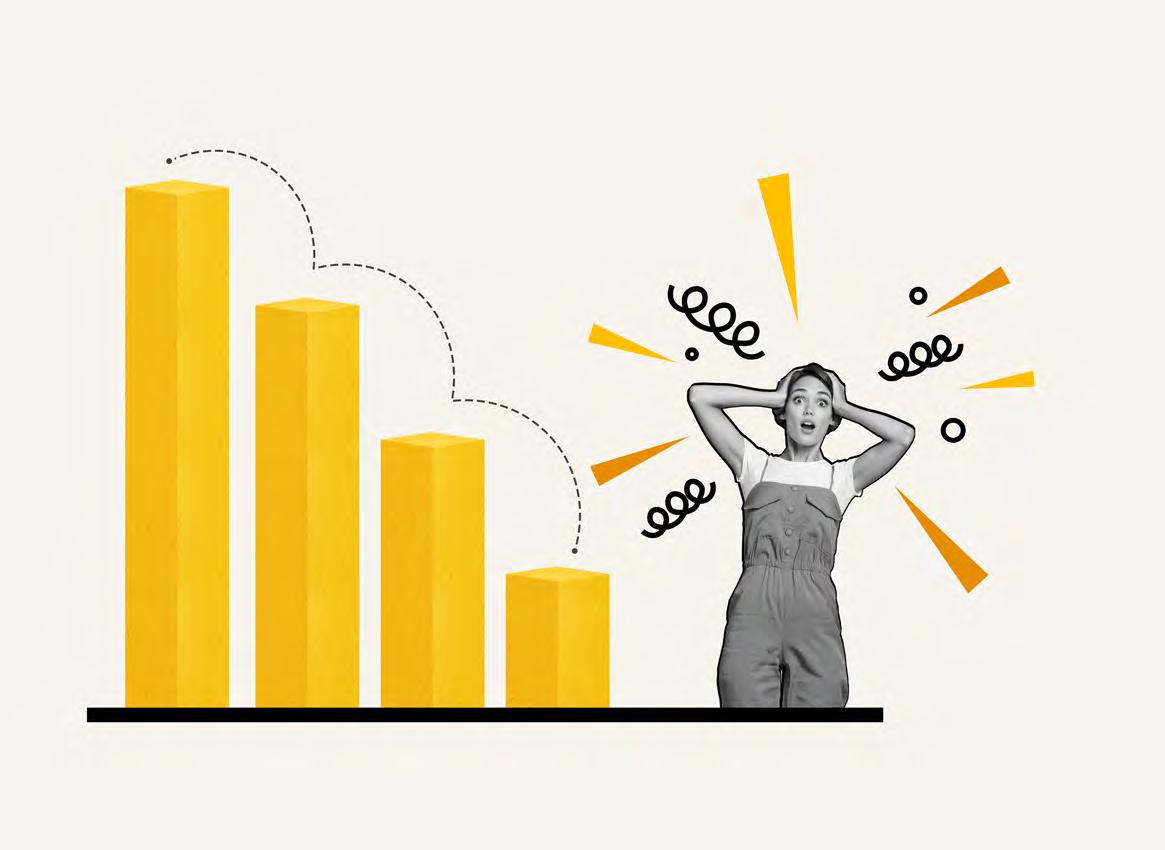
LOCAL FUNDS: staff salaries, books, office supplies and utilities
STATE FUNDS: inconsistent and unreliable
FEDERAL FUNDS: minor renovations or one-time improvements
DONATIONS: programs like children’s activities, adult wellness classes, and computers
Shoemaker, J. (2021, November 11). Who pays for your library, anyway? Bozeman Public Library Foundation. https://www.bozemanlibraryfoundation.org/who-pays-for-the-library-anyway/
body text
Lorem ipsum dolor sit amet, consectetur adipiscing elit, sed do eiusmod tempor incididunt ut labore et dolore magna aliqua
body text
Lorem ipsum dolor sit amet, consectetur adipiscing elit, sed do eiusmod tempor incididunt ut labore et dolore magna aliqua
citation text
Lorem ipsum dolor sit amet, consectetur adipiscing elit, sed do eiusmod tempor incididunt ut labore et dolore magna aliqua