THE MAGAZINE OF U.S. MENNONITE BRETHREN
What a national convention and redesigned magazine have in common
Ilove family gatherings. My husband and I host a monthly family meal, and I get a thrill when the date is set, the menu is in place and my house is prepared (although, that last part doesn’t always happen—don’t look in the front closet!).
That word gathering is intentional. This is not “come and go”—it’s “stay and be.” It’s an invitation to pull up a chair, pour a cup of coffee and settle in. This isn’t fast food, friends—I’ve been slow-cooking that roast all day!
Now I’m excited for another get-together—my first U.S. Mennonite Brethren Gathering—the national convention where folks across the country join in one place to say, “We’re in this thing together.”
Redesigning a magazine is more than changing fonts and color schemes. It’s about revisiting purpose.
This year’s event is a return to our roots and a recommitment to the mission that unites us.
So, what does this gathering business have to do with a redesigned magazine? Well, I’m so glad you asked. Redesigning a magazine is more than changing fonts and color schemes. It’s about revisiting purpose. We ask why and retrace our steps to vision and mission while keeping an eye on the horizon of the future.
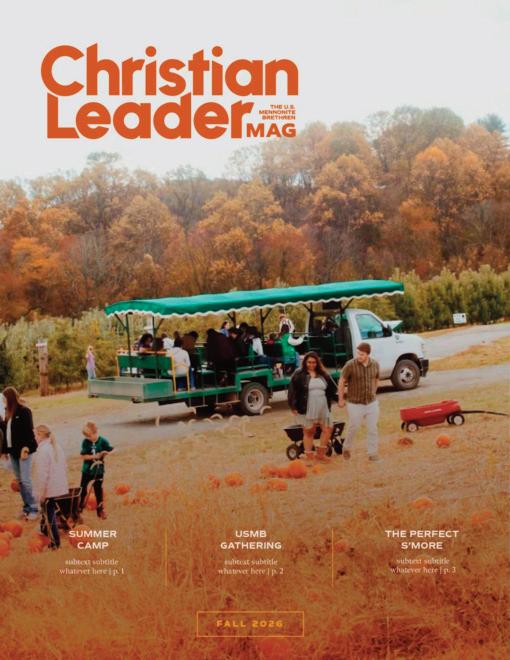
We have big plans for the Christian Leader in 2026. We'll be launching a redesign of the magazine this summer, just in time for Gathering in Salt Lake City, Utah (Register now!). Take a look at some of our previews on the next page to get a taste of what to expect, and please pray for wisdom as we carefully turn the page to this next chapter.
In addition, we're changing the cadence of our publication to a quarterly instead of bimonthly while also planning to add eight more pages to each issue. Here’s our new delivery schedule:
• Summer issue (July 2026); Fall issue (October 2026); Winter issue (January 2027); Spring issue (April 2027)
A quarterly publication schedule allows us to invest more time in telling the stories that matter. This shift also helps us better steward our finances and resources while maintaining the magazine’s quality. We’ll continue to share timely stories via email, web and social media as well.
On the newly designed pages of Christian Leader, I hope you will see our recommitment to the core values of the U.S. Mennonite Brethren—making disciples, developing leaders and multiplying churches. This publication is committed to cheering you on, lifting you up and running the race alongside you.
In this issue, we bring you stories about why we gather (pg. 10) and living on witness (pg. 14) while also featuring speakers who will be at Gathering 2026 (Aaron Halvorsen, pg. 12; A.J. Swoboda, pg. 16). As we look to that mission that reunites us this summer, I pray that you will sense that commitment on the pages of this publication.
Be sure to find me in Salt Lake, and let me know what you think! I’m always up for a gathering.
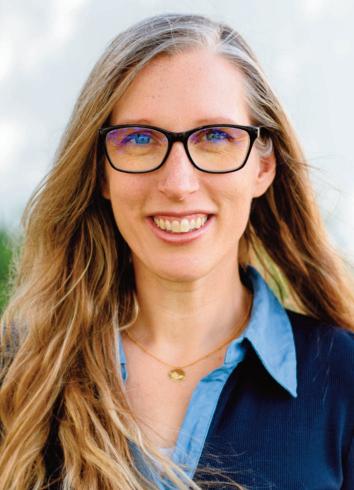
Lacey Scully Editor
Publisher: United States Conference of Mennonite Brethren Churches/ISSN 0009-5149 | Editorial Committee: Matt Ehresman, Michele Fiester, Ryan Loewen, Tony Petersen, Shelly Spencer | Review Committee: Aaron Box, Jordan Ringhofer, Daniel Rodriguez, Brent Warkentin | Disclaimer: The content and viewpoints expressed do not necessarily reflect the views, beliefs and/or viewpoints of USMB as a whole. | Copyright: Articles are owned by the Christian Leader or the author and may not be reprinted without permission. | Unless noted, Scripture quotations are from the New International Version. | Subscriptions: $10 for one year, $20 for two years ($15, $30 in Canada, all other countries $25 for one year) | Correspondence: Christian Leader, PO Box 20200, Wichita, KS, 67208. Phone: 620.947.5543. Email: editor@usmb.org | Membership: Evangelical Press Association and Meetinghouse | Postmaster: Send address changes to Christian Leader, Box 20200, Wichita, KS, 67208. | Periodical postage paid at Wichita, Kan. Vol.
■ Lacey Scully, EDITOR
■ Janae Rempel Shafer, ASSOCIATE EDITOR
■ Shelley Kallsen, GRAPHIC DESIGNER
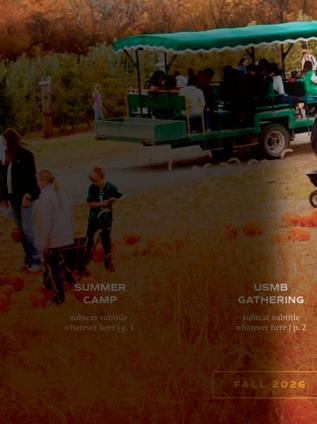
Look for the redesigned Christian Leader in your mailbox each quarter, starting in July.












Why your attendance in Salt Lake is important
Ipersonally want to invite you to Gathering 2026 in July in Salt Lake City. I recognize you may be asking why your attendance is important or maybe even why we gather at all.
Those are fair questions, and they are not new ones.
“Gathering 2026…is an opportunity to be encouraged, challenged and resourced alongside others who share a common calling.”
Mennonite Brethren churches in the United States began gathering together nearly 150 years ago, only a few years after arriving as immigrants. These early congregations were busy settling into a new land, forming communities and establishing churches. Yet they sensed a deep need to come together. Their purpose was not merely social connection or organizational governance—it was mission. The primary reason they gathered was to seek God together and to discern how best to live faithfully into the call God had placed on them.
The earliest gatherings, dating back to 1878, look surprisingly familiar. Churches worshiped together, shared meals, discussed pressing issues and devoted time to prayer. What stands out, however, is the clarity of their focus. From the beginning, these gatherings were deeply shaped by a shared commitment to mission.
That same missional heartbeat has guided our plans for Gathering 2026.
A central feature of those early conferences was the funding and sending of traveling ministers and missionaries, some serving locally and others traveling as far as Russia. By 1880, churches were encouraged to begin taking weekly offerings for missions, which would be gathered at the next conference. Soon after, India was identified as a mission field, resources were mobilized and the groundwork was laid for gospel fruit that would emerge in the years ahead.
When we gather this summer, we will celebrate and pray for new workers and work together to ensure they are resourced.
The driving question I return to again and again is simple: How can we, as MB churches, more effectively carry out the Great Commission together? How do we cultivate faithfulness to God’s call in a rapidly changing world?
When we gather in July, our focus will be on cultivating effective mission—both nationally and globally. Together we will lean into disciple-making, leadership development and church multiplication. We will celebrate what God is already doing in and through our churches, and we will seek fresh wisdom and courage to live on mission with Jesus.
Gathering 2026 is not merely an event on a calendar. It is an opportunity to be encouraged, challenged and resourced alongside others who share a common calling. I invite you to join us as we continue a long tradition of gathering—not for our own sake, but for the sake of God’s mission in the world.
Aaron Box National Director


Pupusas for a
Praying in the margins
Easter events light up the neighborhood
Choosing surrender
drive to share the Good News


Compiled by Janae Rempel Shafer
USMB Gathering 2026 will begin July 21-23 with the pastors’ conference for all ministry team leaders.
The event will feature both in-house and guest speakers. Jon Annin, Aaron Halvorsen and Aaron Box will speak from 1 Corinthians 3, with the themes of “Planted,” “Watered” and “Growth,” while A.J. Swoboda will share wisdom about faith after doubt.
Attendees will also engage in round-table discussions and a Q&A with district ministers. Plus, attend an optional, free luncheon July 23 hosted by MB Foundation to celebrate more than two decades of ministry in Utah.
The schedule includes free time for rest, relaxation and relationship-building to help ministry leaders leave encouraged, refreshed and resourced.
Learn more or register at usmb.org/gathering2026.—USMB
For the first time, USMB NextGen’s annual high school summer camp will take place at The Crossing Retreat Center in Lexington, Neb., June 27-July 1.
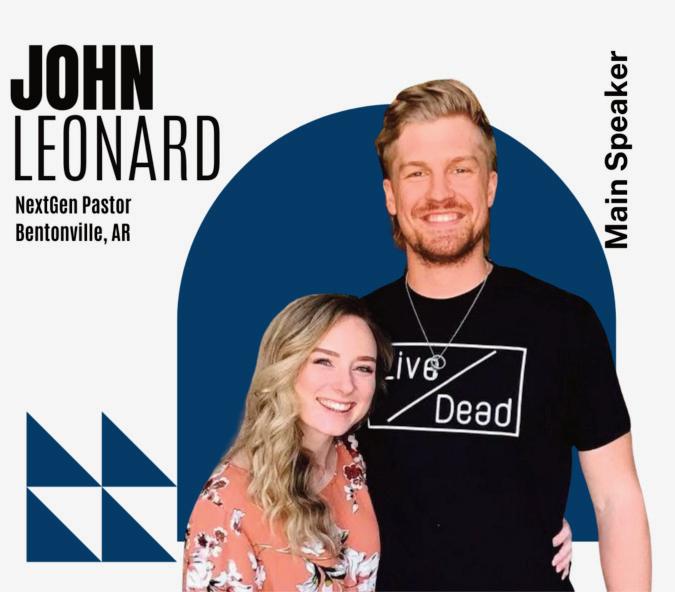
John Leonard, NextGen Pastor at Northwest Church in Bentonville, Ark., will serve as speaker. Leonard previously served as youth pastor at Mountain View Church in Clovis, Calif.
Generation Worship, Portland, Tenn., will return to lead youth in singing.
Theme nights, designed to bring fun, creativity and community include tourist, neon, dress-likeyour-youth-pastor and dynamic duo.
The cost is $365 per student and $200 per adult. The early bird deadline is April 30. Each church in the national Youth Worker Network receives one free adult ticket. Register by April 1 to qualify.
Learn more or register at usmbnextgen.com/ascent.—USMB NextGen
Fresno Pacific University has received a grant of $9,998,251 from Lilly Endowment Inc. The grant will feature collaboration with the U.S. Conference of Mennonite Brethren Churches, the Center for Community Transformation, Vineyard USA, Lead from Transformation (a coaching organization), the Bridge to Ministry Program at Fresno Pacific University and Messiah University.
The work will focus on five key areas intended to strengthen the development of congregational ministers and church leaders:
1. A new online hybrid Master of Arts degree designed for training co-vocational pastors.
2. Hiring of a generalist Bible and theology faculty member who will serve both English- and Spanish-speaking communities. This shared faculty role will span the collaborating organizations, teaching within the seminary and creating training resources that strengthen and equip leaders across all partner ministries.
3. Developing training materials and programs to train co-vocational pastors with the partnering organizations.
4. Enabling USMB and Vineyard USA to make strategic hires that will strengthen their capacity for ministry formation, leadership development and support of co-vocational pastors as part of the collaborative grant initiatives.
5. Launching an endowment to offer significant scholarships for seminary ministry students.
The grant to Fresno Pacific University is one of 45 that was approved in this round of funding. The grant process was led by Brian A. Ross, associate professor of pastoral ministries.
Lilly Endowment launched the Pathways for Tomorrow Initiative in 2021. Since then, it has provided grants totaling more than $700 million to support 163 theological schools.—FPU
Grace Slavic Church, a Central District congregation in Eagan, Minn., caught fire on Dec. 19. No injuries were reported, according to a Dec. 20 report from Fox 9 Minneapolis-St. Paul.
The district requests prayer for Pastor Paul Afanasiev and congregational leaders as they determine next steps.
“(Paul) is grateful and feels the hand of God close to him and the church in the way that people have responded to their need, prayed for them and offered help,” says Central District Minister Daniel Rodriguez. “The church is grieving the loss of the building that they had many memories in and at the same time being united in this process and praying to God to lead them in the next season of ministry.”
More information on ways to help is expected at a later time.—CL

Churches planning to host a summer intern may sign up for USMB’s Leadership Pipeline for resources to help invest in the next generation of leaders.

The pipeline provides resources for churches interested in engaging emerging leaders through hands-on ministry experience, coaching and spiritual formation.
Visit leaderpipeline.net to learn more or sign up.—USMB NextGen
192 junior high youth and 64 adults from 17 churches gathered Jan. 31 for worship, games and messages at Ridgepoint
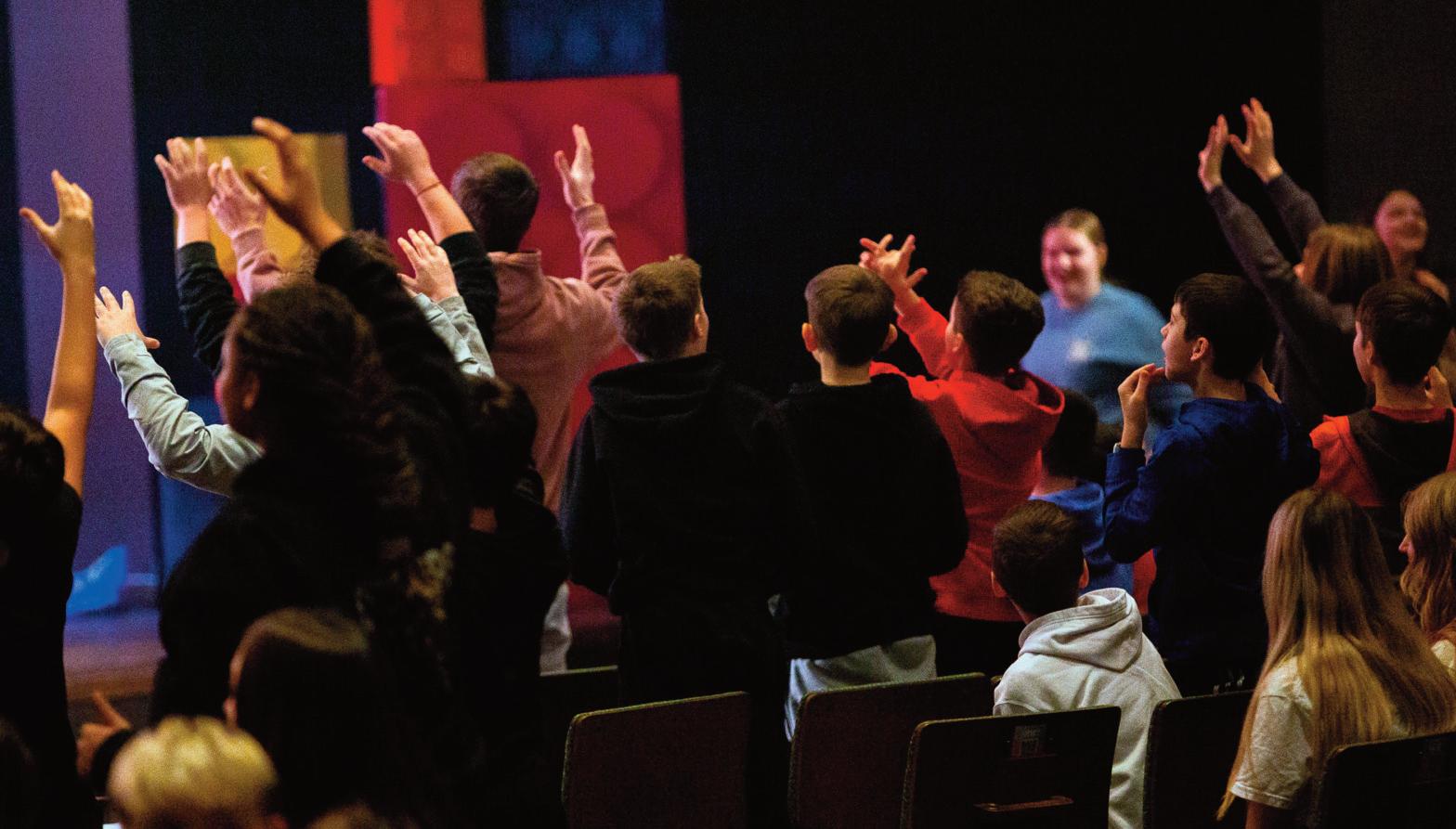
Church in Wichita, Kan., for the Southern District Junior High Youth Conference.
Cord Werth, youth pastor at Parkview MB Church in Hillsboro, Kan., spoke on the theme “Connect,” based on 1 Thess. 5:11. During two sessions, Werth directed students to consider how they are wonderfully made by God for connection with him and with others. The Christian life is meant to live in community and friendship as we spur one another to deep and personal relationship with Father, Jesus and Holy Spirit.
The schedule also included rally games, workshops, breakout groups and free-time activities, including nine square, gaga ball, extreme bingo, a Lego creation station and games.
An offering of $1,173.50 was collected, enough to provide more than 75 chickens for King’s Kid Farm in Uganda, a project of Multiply workers Kyle and Danae Schmidt.
Andy Kinser led students in singing.
“It is inspiring to see a couple hundred sixth, seventh and eighth graders from across the district worshiping, praising, learning and having fun together,” says Russ Claassen, Southern District youth minister. “We pray this event gives them a boost here at the beginning of the year and encourages these students and adults to connect more deeply with God and one another.”—CL
Multiply will host four SOAR events in coming months, including one in California open to any USMB church, one in Nebraska open to any Central District church and two regional events.
SOAR is designed to bring church teams together on mission to engage their local communities. The program includes orientation, a local assignment and debrief.
SOAR Bakersfield (Calif.), planned for June 8-14, is open to participants from all USMB districts and will be an opportunity to serve cross-culturally, build relationships and be a witness for Christ while walking alongside young people growing in faith and discerning God’s call on their lives. The application deadline for SOAR Bakersfield is June 1.
SOAR Omaha (Neb.) will take place Aug. 6-9, hosted by Iglesia Agua Viva and open to 80 participants from Central District Conference churches to attend. The registration deadline is July 1.
Meanwhile, SOAR Los Angeles (Calif.) will take place March 13-15 for MB churches in Southern California, and SOAR Hillsboro (Kan.) will take place March 14-17 with participating youth and families from the three MB churches in that city.
For more information, visit multiply.net/soar or contact Heidi Quiring at heidiq@multiply.net (East of the Rockies) or Silvia Lopez at silvial@multiply.net (West of the Rockies).—Multiply
Christian Leader, the magazine of the U.S. Mennonite Brethren National Conference, is getting a new look and new print schedule beginning this summer.
The CL team is working to redesign the layout, reimagine how stories are told and keep content fresh and engaging. The magazine will shift to a quarterly print publication, which will begin July 2026. The team will skip the May/June issue to prepare for the move to a quarterly schedule.
Christian Leader will continue to provide stories and share news and content online between print issues.
“I’m eager to see how God can use these changes to resonate with our readers,” says Lacey Scully, editor.—CL
The “A CORD commitment” article by Janae Rempel Shafer on page 23 of the Jan/Feb 2026 issue did not accurately represent MB Foundation’s involvement in CORD funding.
It should read: “The CORD initiative was funded primarily by MB Foundation, who offered a 50% match for the first congregation and fully funded the second, as well as by USMB congregations and individual partners.”
Read the updated version at christianleadermag.com/a-cord-commitment.—CL
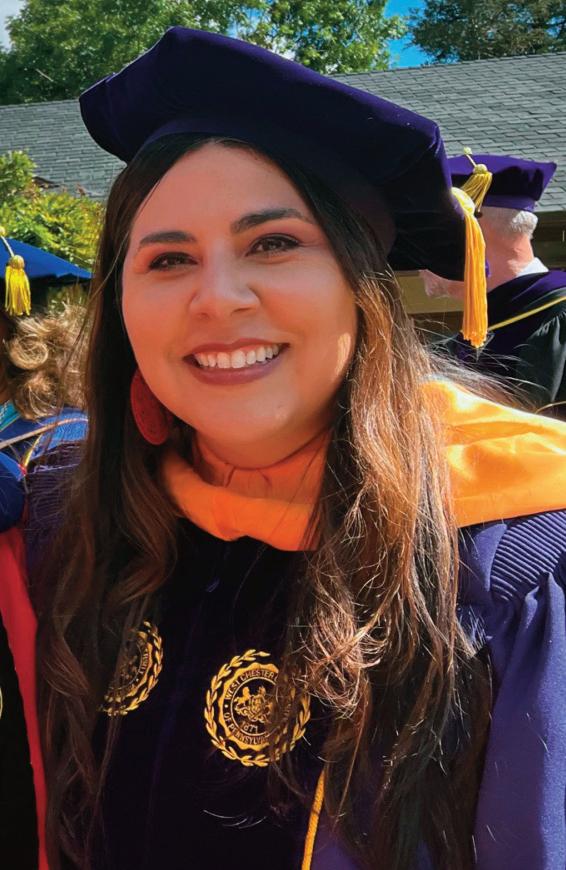
The California State University system’s 23 universities stretch from Humboldt in the north to San Diego near the Mexican border. Dr. Yammilette Rodriguez, from the Common Ground congregation at Butler Church in Fresno, has visited them all. Rodriguez is four years into an eight-year appointment as a trustee for the CSU system, whose reach extends across the country. CSU graduates make up one in 20 Americans with a college degree. Rodriguez was able to slip in a quick conversation with Christian Leader just before a scheduled conference call with one of the university presidents.
How did you come to be a CSU trustee?
By the grace of God, my life’s journey has been pretty incredible. My first job right out of college was working for a state assembly member here in Fresno County. I also worked at Fresno Pacific University for several years, and for the past 16 years, I’ve worked uplifting and advocating for young people at the nonprofit Youth Leadership Institute. These have all come together to help me be a decisionmaker for the CSU system. The governor appointed me in 2022.
What are some of your priorities as a trustee?
I want to ensure that all young people have full access to education. Being from a very rural community and a very traditional Latino family, this was my own story. It was a huge step for me to pursue a bachelor’s degree. If it wasn’t for Fresno State, I probably would not have gotten a bachelor’s degree myself. The CSU is so important to youth who lack financial resources. I chair the trustees’ government relations committee, which advocates in the state capitol and Washington, D.C., giving voice to these students
and making sure that higher education is available to whoever wants to pursue it.
What do you find most satisfying in this role?
I love getting on the campuses and meeting the students, and then taking all their learnings and ideas and really process what it means to govern this system. The other thing that is just so rewarding is taking part in the graduations, putting on the regalia and marching in with these students, many of whom I have come to know, giving all the handshakes and hugs as they walk across the platform.
How does your personal background impact your decisionmaking?
It’s important for me to keep top of mind that many of our students are also children of immigrants. So many of them are being impacted by the political environment we are in and are immensely fearful. I have to make sure that I lead with integrity and compassion. I remember that I’m on the shoulders of my mom and dad and others who sacrificed so much, and now God has given me this role to fulfill.
Interview by Kathy Heinrichs Wiest
The older woman stepped over to me. “I haven’t smoked in four months.”
Excuse me? I thought.
“I started smoking when I was 8 years old, but I haven’t touched a cigarette in four months. I don’t know why I’m telling you this, but I felt I should.”
Tears came to my eyes—catching me off guard—and all I could reply was, “Praise the Lord.”
I paused.
“Can I touch you?” I asked this lady I had never met before, as I put my hand down on her shoulder with a soft touch. “That’s beautiful. Thank you for sharing that with me.”
She smiled and stepped back to her seat. Seat 3 between us again.
Side by side we sang and worshipped. No more words exchanged until a number of songs later.
“Open your hand.”
What?
She leaned closer, this woman I didn’t know—with purple and pink short cropped hair, two large gemstone necklaces draping her neck, wrinkled skin, flowy shawl and every finger—with long, filed-to-a-point nails—sporting some bling.
“Open your hand.” It wasn’t a question; it was a gentle command. So I did.
She placed one weathered hand under mind, and with the other— stiletto nails safely tucked in—she firmly placed an object into my palm.
“You are a treasure,” she said with a squeeze as she looked straight into my eyes. I heard her voice clearly over the united voices roaring out praises at the outdoor concert at the Oregon State Fair. She stepped back to her seat with a nod.
I looked into my hand and saw it held a ring.
Real gold? Are those real diamonds along the side? A deep purple gemstone cut into a hefty, curvy triangle.
Why did she do that? Why me? Does she carry around spare jewelry to give to strangers? Did she pluck this ring off her own hand? Should I give her something now? How do I thank her?
I sat in the darkened stadium, warm stagnant summer air surrounding me along with the voices of a thousand worshippers—hands and voices lifted in worship to the Lord.
And I felt seen. Chosen. Loved.
Hello peace, hello joy, hello love.
With more concert to go, she gathered her purse and red carnival slushie and stood to leave.
I stepped into empty space Seat 3
between us, leaned down to her height and shared a long, firm hug. What would I say?
“Blessings upon you.”
And she left.
“You are a treasure,” she said with a squeeze as she looked straight into my eyes. I heard her voice clearly over the united voices roaring out praises at the outdoor concert at the Oregon State Fair.
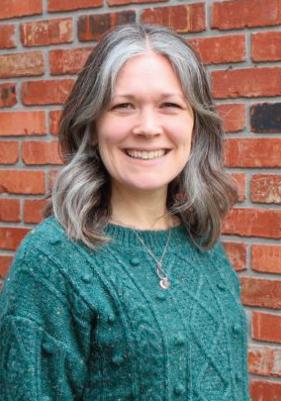
Kelsey Ensz and her husband, Nathan, pastor of Kingwood Bible Church, live in Salem, Ore. They share 26 years of marriage and three children. She values discipleship, mentorship and growth with women of all ages through various online and in-person avenues.
By Aaron Box
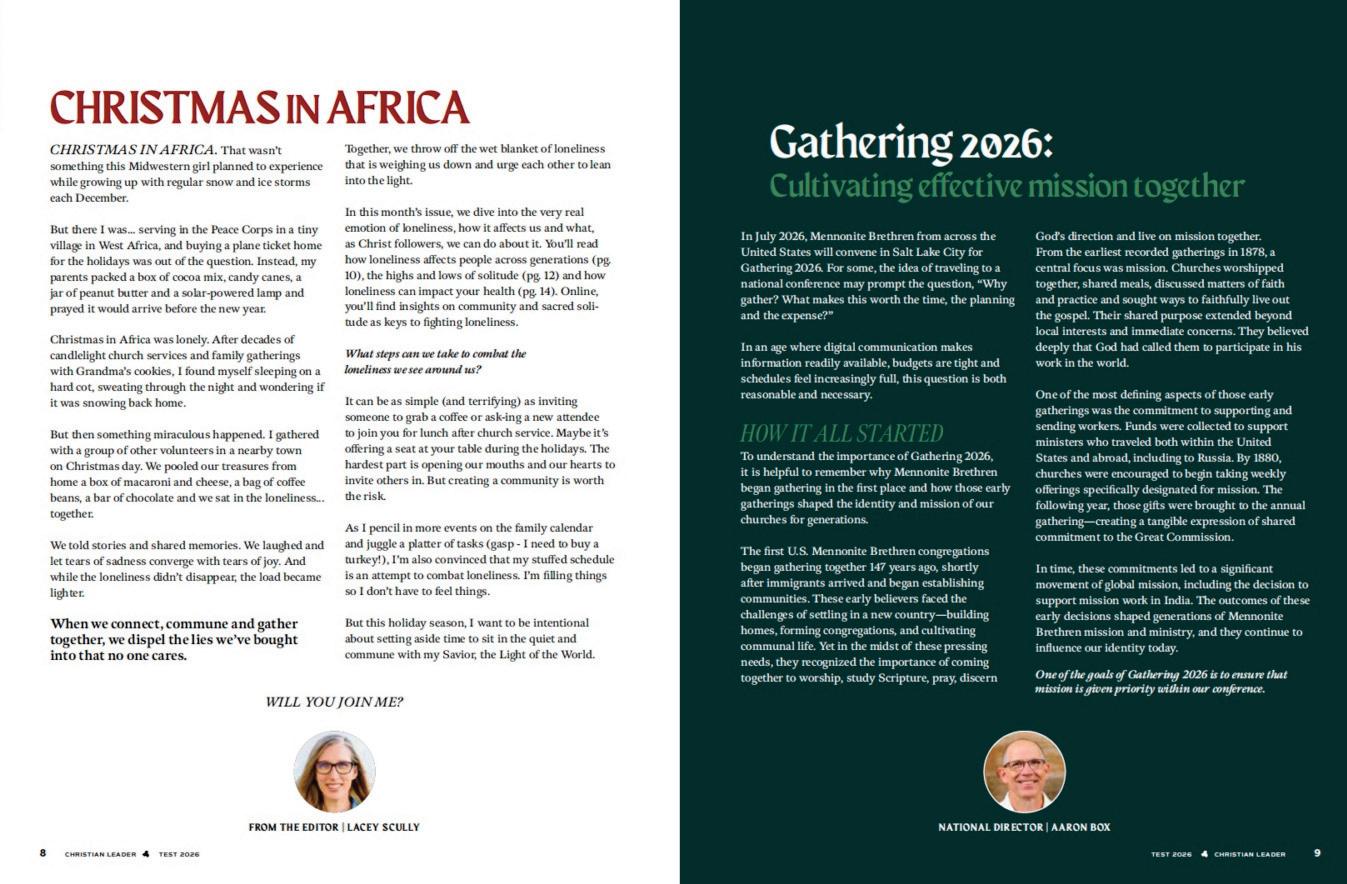
In July 2026, Mennonite Brethren from across the United States will convene in Salt Lake City for Gathering 2026. For some, the idea of traveling to a national conference may prompt the question, “Why gather? What makes this worth the time, the planning and the expense?”
In an age where digital communication makes information readily available, budgets are tight and schedules feel increasingly full, this question is both reasonable and necessary.
To understand the importance of Gathering 2026, it is helpful to remember why Mennonite Brethren began gathering in the first place and how those early gatherings shaped the identity and mission of our churches for generations.
The first U.S. Mennonite Brethren congregations began gathering together 147 years ago, shortly after immigrants
arrived and began establishing communities. These early believers faced the challenges of settling in a new country— building homes, forming congregations and cultivating communal life. Yet in the midst of these pressing needs, they recognized the importance of coming together to worship, study Scripture, pray, discern God’s direction and live on mission together.
From the earliest recorded gatherings in 1878, a central focus was mission. Churches worshipped together, shared meals, discussed matters of faith and practice and sought ways to faithfully live out the gospel. Their shared purpose extended beyond local interests and immediate concerns. They believed deeply that God had called them to participate in his work in the world.
One of the most defining aspects of those early gatherings was the commitment to supporting and sending workers. Funds were collected to support ministers who traveled both within the United States and abroad, including to Russia. By 1880, churches were encouraged to begin taking weekly offerings specifically designated for mission. The following
year, those gifts were brought to the annual gathering—creating a tangible expression of shared commitment to the Great Commission.
In time, these commitments led to a significant movement of global mission, including the decision to support mission work in India. The outcomes of these early decisions shaped generations of Mennonite Brethren mission and ministry, and they continue to influence our identity today.One of the goals of Gathering 2026 is to ensure that mission is given priority within our conference.
The same foundational conviction that guided the earliest MB gatherings remains at the heart of Gathering 2026: cultivating effective mission together.
In a cultural landscape marked by rapid change, increasing isolation, shifting beliefs and new ministry challenges, the question remains: How can we, as MB churches, more effectively carry out the Great Commission together?
This question is critical. It shapes the everyday realities of local churches seeking to make disciples, develop leaders and deploy them into the world to make more disciples.
It reflects the lived experiences of pastors who are faithfully shepherding, congregations who are discerning how best to engage their neighbors and denominational leaders committed to strengthening shared mission.
Church planting and global mission have been central to the Mennonite Brethren identity. We will celebrate current multiplication efforts and explore opportunities to expand this work through collaboration, training and shared vision.
These areas are not isolated. They work together to strengthen a culture of mission within and across our churches.
Gathering 2026 is not merely an event; it is an opportunity for renewal. It is a space to listen together for what God is doing in our communities and around the world. It is a chance to share stories of transformation, encourage one another in faith and recognize the ways God continues to move among us. Most of all, this is a chance for our churches to commit to mission together in a fresh way.
Those who attend can expect to:
• Be encouraged through worship and biblical teaching.
Gathering 2026 is not merely an event; it is an opportunity for renewal.
Gathering 2026 will provide space to address this question together. Through worship, teaching, training, conversation and prayer, we will be encouraged and equipped to deepen our shared commitment to mission.
The work of mission is not accomplished through programs alone. It is cultivated through relationships, intentional discipleship and shared learning. At Gathering 2026, we will focus on three core areas that support mission both locally and globally:
We will explore how churches can cultivate environments where people grow in Christlikeness. This includes practical tools for teaching, mentoring, spiritual formation and relational evangelism.
Sustainable mission requires healthy, equipped leaders. Gathering sessions will highlight pathways for identifying, mentoring and supporting emerging leaders—both lay leaders and pastors.
• Engage in meaningful conversations about mission and ministry.
• Hear stories of God’s work across various MB contexts.
• Participate in collaborative learning experiences.
• Be challenged to live more intentionally as disciples of Jesus.
While the setting, format and logistics of Gathering 2026 reflect our present moment, the purpose remains consistent with the earliest MB gatherings: to strengthen the shared mission God has entrusted to us.
As we look ahead, the call remains clear: We are people who follow Jesus together. We believe that God has called us to live on mission not individually, but in community. Gathering 2026 is an opportunity to lean into this calling—to be reminded that our shared mission is larger than any one congregation and that the work we do together multiplies impact.
Join us in Salt Lake City. Mark your calendar, begin the conversation in your church and consider who you might bring with you—leaders, emerging leaders, volunteers, youth leaders or others called to help cultivate mission.
Gathering 2026 is more than an event—it is a moment to reaffirm who we are and what God has called us to do.
Aaron Box is the national director of the U.S. Conference of Mennonite Brethren Churches and lives in Eugene, Ore. He and his wife have two children and attend North Park Community Church in Eugene.
By Aaron Halvorsen
Kansas weeds are different. I possess no data or evidence to justify that claim, but lived experience testifies that Kansas weeds are particularly pernicious. As novice homeowners, and overtired parents of young children, my wife and I watched as successive summers multiplied weeds and brown patches on our lawn. We wondered what the great secret was to cultivating healthy grass. We asked a few sages and tried to observe the routines of our neighbors (most hired lawncare services).
After some trial and error, I believe we have found the secret to growing grass, which I share happily and free of charge. Here it is: We watered it. We scattered a lot of seeds, put some dirt and straw on top to hold them in place, then regularly watered. I’m sure experts and advertisers would tell me I’m missing key steps, like applying the right fertilizer at the right amounts at the right time. They may be right. But abundant planting and regular watering seem to be the uncomplicated, essential keys to cultivating healthy grass.
Just as we might overcomplicate the key to growing a healthy lawn, we often overcomplicate what is essential to healthy spiritual growth. Or should I say “who” is essential to spiritual growth. To put it simply, growth is God’s work. It all rests on him.
The church in Corinth missed this truth. Division plagued the body as the believers claimed spiritual superiority by virtue of their preferred minister. Some followed Paul. Some followed Apollos. Some Cephas. All were convinced their personal allegiance to their favorite leader was vital to spiritual maturity. They misdiagnosed the key to spiritual cultivation.
Paul writes to set the record straight and isolate what is essential. “I planted the seed, Apollos watered it, but God has been making it grow” (1 Cor. 3:6). Paul may have done the initial work of scattering gospel seed in Corinth. Apollos may have followed and watered with the Word. But the growth was God’s. God himself is the key to cultivating spiritual health because growth is singularly his work.
One might forgive the Corinthians for their misplaced emphasis on personality. Greco-Roman culture made a big deal of having friends in high places. In the Roman social and political structure, wealthy and powerful patrons provided material support, legal protection and other benefits for lower-class clients. Clients, meanwhile, gave political allegiance and public adulation to augment the reputation of the higher-class patron. This symbiotic relationship was built upon personal allegiance, and one may wonder if that affected the Corinthian believers. Their culture valued alignment with important individuals.
Are we any different? We may not claim allegiance to Paul or Apollos. But we often suffer from the same celebrity speaker syndrome. We place ultimate value in who is gifted, who is published, who is drawing numbers, who is doing “great work.” We make much of lofty individuals, assuming they possess some secret to spiritual growth that escapes the rest of us mortals. If only we might swim in their orbit and capture some of their excellence, we might see some real spiritual progress in our midst!
What secret do these luminaries have that so eludes us? Is it a ministry program? A style of rhetoric? A leadership philosophy? What is the key to cultivating spiritual growth?
Paul demystifies the celebrated minister. Yes, Apollos was a gifted orator, and he watered the church well. Yes, Paul was a devoted man of God and instrumental in scattering the gospel in Corinth. But it was not their genius that built the church. The growth was God’s work.
You might say these gifted leaders were hardly needed at all. According to 1 Corinthians 3:7, “...neither the one who plants nor the one who waters is anything, but only God, who makes things grow.” A humbling assessment. We may (or may not) seem quite impressive standing beside our fellow minister. But relative to the living God, we are nothing. Under God, we are all entirely dispensable.
Our “nothingness” emphasizes the sinfulness of the Corinthian division. It also reveals how wrong we are when we believe church growth rests on our giftedness. To be blunt, it is idolatry. We remove God from his throne and take the pedestal for ourselves, thinking we are the key ingredient.
This is not to say we don’t aim to be useful. Scripture has much to say about laboring for the Lord and utilizing the gifts and roles given to us. However, Scripture never allows us to confuse such stewardship with idolatrous self-exaltation. We are all mere servants, utterly dependent on the God of the harvest. He is essential to growth. We are not.
In fact, kingdom growth happens quite apart from our direct effort. According to Jesus’ parable of the growing seed in Mark 4, the kingdom of God is like a man who scatters seed on the ground, then goes to bed. Day after day, he wakes up and finds that seed sprouting and growing, producing a crop all by itself. He didn’t do this work. He doesn’t even really know how it happened. He certainly can’t take credit for it.
To stretch the parable, I suppose if you were to ask the man the secret to seed’s growth, you might receive a disappointing answer. (Not unlike the answers I’ve sometimes received from older parents when asked how they got through the early years of child-rearing.) He would simply shrug. Who knows? The Lord must have done it. And the Lord will keep doing it until the crop is ready and the time for the harvest has come.
This ought to be our response should anyone ask how we account for growth in our midst. A simple shrug. Who knows? We put some gospel seed down. We watered it with the Word. Then God did the work according to his will.
If you are seeking spiritual growth, take care not to overcomplicate things. We so often look to peripheral priorities
that are bonuses at best. We think it’s all about a style of speech, the look of a leader, the reputation of a church or the slickness of a program. We pay great attention to our preferred servants, putting humans in the place of God, as if the key to growth is the watering can and not the water. Think less of the vessel. Think far more of the Word with which God waters. Then go where the water of the Word is, and drink.
If you are a minister, think less of yourself. There is freedom in it. I am confronted routinely with my own frustrating limitations and weaknesses. Even as I write this, I wish I had a more clever or insightful word. But my limitations are no impediment because my strengths are not the key ingredient. Just like any other gospel minister, I am, by God’s grace, a servant and vessel through which seed is planted and watered.
I am often encouraged by the sentiment of Charles Spurgeon, who was remarkably gifted in his own right. But he put his gifts in proper perspective when he said, “Whitefield and Wesley might preach the gospel better than I do, but they could not preach a better gospel.” It’s not about our talents; it’s about our Lord. To cultivate growth, we simply play the role of John the Baptist, who looked to Christ and said, “He must increase, but I must decrease” (John 3:30 ESV).
Point people to the gospel of Jesus Christ, and growth will happen. Often surprisingly and mysteriously so. Because the secret to spiritual growth is simple, obvious and repeatable. Spread the gospel. Water with the Word. And God gives growth as he wills.
Aaron Halvorsen is lead pastor at Community Bible Church in Olathe, Kan. He and his wife, Maggie, have five children.
By Silvia Lopez
What does it mean to be a living witness?
Jesus prayed for us, not just to survive the world, but to transform it through his Spirit living in us. In John 17:18-21, we see Jesus interceding for his disciples and all future believers, praying that they would be unified with him and the Father:
“As you sent me into the world, I have sent them into the world. For them I sanctify myself, that they too may be truly sanctified. My prayer is not for them alone. I pray also for those who will believe in me through their message, that all of them may be one, Father, just as you are in me and I am in you. May they also be in us so that the world may believe that you have sent me.”
Identity in Christ is found acknowledging the greatest sacrifice given to mankind. Jesus being blameless became sin, tearing the veil in the temple that separated humanity from God, as he was sacrificed on the cross for the forgiveness of our sins. By consecrating himself, we are sanctified, obtaining salvation and a righteous identity in him. This identity compels us to capture humanity through our testimony, becoming living witnesses of redemption.
This identity in Christ is characterized and witnessed by:
• Love: An agape love that is selfless, sacrificial and unconditionally committed to the well-being of others, rooted in God's nature and exemplified by Jesus Christ.
• Joy: A gladness and delight deepened by faith, God's presence and salvation, rather than by circumstances.
• Peace: A state of wholeness and completeness that brings inner tranquility from God's Holy Spirit, allowing for peace even amidst adversity.
• Patience: An endurance of difficult circumstances with steadfast, active trust in God's timing, rather than passive resignation.
• Kindness: A disposition of moral goodness, mercy and love that actively seeks the well-being of others, even the undeserving, exemplified by God's character and Christ's actions.
• Goodness: Striving for excellence, righteousness and kindness, reflecting the character of God, who is the source of all goodness.
• Faithfulness: Steadfast allegiance to God and a commitment to him through all circumstances.
• Gentleness: A Spirit-produced meekness, humility and controlled strength that treats others with kindness, patience and care, reflecting the gentle character of Jesus.
• Self-control: The ability to regulate emotions, thoughts and behaviors, seen as a divine virtue and a
key part of Christian character. It is cultivated through the Holy Spirit and involves mastering desires and impulses.
“The Word became flesh and made his dwelling among us. We have seen his glory, the glory of the one and only Son, who came from the Father, full of grace and truth” (John 1:14).
Jesus not only lived in his identity as the Christ but also took on our humanity—seen in works whether divine (miracles, forgiving sins) or human (eating, suffering, dying)—and was manifested in the flesh as the Son of God. He predestined us for adoption to sonship through Jesus Christ. Now, we are one with the Father, just as our Lord and Savior Jesus Christ is one.
We have the opportunity not only to witness the signs of Christ in the world but also to embody those signs and respond. In a time when grace, mercy, kindness, patience and love seem less prevalent, we are given a chance to make a difference.
We can respond with empathy, genuinely seeking the best for those around us by fostering meaningful relationships. We can also respond by pursuing God's justice in the world, refusing to accept the status quo of how we treat our neighbors, and in-
stead changing our own perspective to seek Christ in everyone we encounter.
The essence of our calling is to be living witnesses, fueled by passionate hearts that are truly mission-minded. This means actively engaging with the living Word of God, not just in study, but by allowing it to activate and guide our daily lives. As we do this, we bear witness to the transformative power of God, proclaiming the good news of salvation not just with our words, but through the very way we live.
We have been chosen, appointed and commissioned to actively be on mission to demonstrate God’s redemptive love to a world in need of a Savior. In John 15:16 it says, “You did not choose me, but I chose you and appointed you so that you might go and bear fruit—fruit that will last—and so that whatever you ask in my name the Father will give you.”
“You did not choose me, but I chose you...” It's a powerful reminder that each of our lives has a distinct purpose, a deliberate design rather than a random occurrence.
Jesus goes on to say, “...and appointed you so that you might go and bear fruit—fruit that will last.” This speaks to our calling to make a lasting impact, not just through temporary achievements, but through eternal fruits like love, kindness, justice and peace. These are the contributions that truly resonate through time.
The promise that follows, “so that whatever you ask in my name the Father will give you,” assures us that when our prayers align with his purpose, our loving Father hears and answers.
Finally, Jesus delivers a simple yet revolutionary command in the following verse: “Love each other” (John 15:17b). This is not merely a suggestion but a fundamental directive for believers. Love is presented as the very
fruit, evidence and mission of our faith. Therefore, let us remember that we are chosen, appointed and empowered. And above all, we are called to love.
What fruit is my life bearing today? Where can I show Christ’s love more intentionally this week? Am I living like someone chosen with a purpose? As Jesus became flesh to reveal the Father, we now walk as his living witness, empowered by the Spirit, appointed to bring light, truth and love into a broken world.
Cultivating a heart of mission as the ultimate posture of gratitude is vital as we live out our faith … “so that the world may believe that you have sent me.”
Silvia Lopez serves as the Mission Training Program Coordinator with Multiply, the mission agency of Mennonite Brethren churches in North America.
By A.J. Swoboda
Jesus had just risen from the grave. In just one of the bodily appearances Jesus made to the disciples that are recorded in the New Testament, he meets his disciples at a mountain (or “hill”) where “Jesus had told them to go” (Matt. 28:16). The disciples will now ascend to behold the very Christ who would himself ascend to the right hand of the Father in heaven. On this hillside, the disciples worship their beloved Rabbi, who had conquered death by his own death. Still, this little mountaintop worship gathering was grittier than one might assume. Matthew ominously comments: “but some doubted” (Matt 28:17). Matthew is the only Gospel writer to detail this “doubt” of some disciples who’d come to worship the resurrected Jesus.
In the years since I published “After Doubt”—my humble attempt at composing a pastoral and spiritual theology for those walking through the experiences of doubt and deconstruction—I’ve been afforded the opportunity to walk alongside countless individuals who are experiencing what the book intimately details. Pondering and reflecting on the role doubt and deconstruction might play in our lives with Christ, more and more I’ve become convinced that we’ve vastly under-appreciated the transformative power these experiences can have in our lives. In other words, what too many have assumed to be the mark of apostasy may actually be a pathway toward Christlikeness and gospel faithfulness. This isn’t some way of encouraging anyone to doubt or deconstruct their faith. In fact, I hope my reader never has to en-
dure it. Instead, this is my way of saying that we can be better at walking alongside those who experience these realities in their everyday discipleship.
Because Jesus cares so well for the doubter.
And he made room for them. Undoubtedly, part of discipleship to Jesus is choosing to follow faithfully even when our faith isn’t perfectly intact or clear. Part of following Jesus entails entrusting our faith to Jesus even when we can’t tell up from down or don’t know how to believe. Matthew’s willingness to reveal to us that some of these faithful disciples doubted is profoundly transformative for our moment.
First, the doubt of these disciples speaks, I believe, to the authenticity of the New Testament. One, I suppose, could argue that the New Testament serves as little more than propaganda—writings by those in religious power as a means of keeping religious power. The only problem with arguments like these is that if it were true that these writings were, indeed, written by the powerful as a way to protect their own power, then they did themselves no favors by portraying themselves as foolish, incompetent and, in this case, doubtful. One of my students pointed out to me after class this week that she has been struck over and over at how honest the biblical authors are about their own crises of faith. A point, she confessed, that made her take the truthfulness and au-
thenticity of these writings more seriously. How could we call these propaganda writings if Matthew appears so willing to let us in on the humiliating secret that those tasked with believing in Jesus are the first ones who struggled to do so?
Propaganda never includes self-critique. Little authenticates one’s faith more than actually a faithful journey through the struggle. I can usually tell if someone is serious about their life with God when they embody a willingness to give details to the struggles that keep them up at night and occupy their days. Pain and toil have a way of validating one’s deeply held commitments. This is always how you can tell a true story: It zooms into the nitty gritty. The sign of an authentic faith is that it is causing our lives great disturbance and difficulty. This is what love often is: being willing to be displaced by one’s commitments. Struggle, difficulty and, yes, I would say, “doubt,” can often be a sign of the presence of faith rather than its absence. Again, I’m not seeking to turn doubt into a virtue. Rather, I’m seeking to say that doubt can very well be a sign of deep faith.
Secondly, one can wade through doubt even as they are remaining faithful to what Jesus has told them to do. That is, obedience and doubt can often go hand-inhand. Weeks earlier during Jesus’ arrest in Gethsemane, he had instructed his disciples to meet him in Galilee up North after his resurrection.¹ They have come to this mountain precisely because they were told to do so. In short, obedience sets up the story of doubt. In other words, the very ones who obeyed the words of Jesus would still have to wrestle with their own doubts.
The language backs this up. It’s critical to note that the word for “doubt” that Matthew chooses to use is the Greek word “distazo”—not the normal word used for “doubt” in the New Testament.² It is a word only used twice. Both in Matthew. Here. And as Jesus calls Peter to walk on the water to himself. Peter obeys, only to focus on the wind and the waves. Jesus then speaks to him, “You of little faith...why did you doubt?” (Matt 14:31, emphasis added). This, then, is not the “doubt” of disbelief or unbelief. That would be another word. Instead, this is the doubt of not being able to put all the pieces together of what one is seeing. As one commentator has wisely written, this is the kind of doubt that says, “It’s too good to be true,” or “Pinch me, I’m dreaming.”³
In both instances that Matthew uses distazo, the experience of “doubt” is immediately preceded by an act of “obedience.” There is a point to this. Matthew’s two stories undermine any line of thinking in ourselves which says: My doubt must be the result of my disobedience. Or, that people only walk through doubt because they are sinning. In fact, this has become one of the most virulent lines of attack by those who have made a cottage industry of bashing and belittling God’s sheep who are walking the crucible of doubt or deconstruction. This line of thinking says that they are probably just doing so because they merely want to sleep around, smoke weed or get their Sunday mornings back. These can undeniably be realities for some. But this is not the case for all. When Matthew is given the mic, it is clear that there is an experience of doubt grounded in scripture, which arises precisely among those who are being faithful to Jesus.
Third, and finally, the doubt that these disciples are experiencing is allegedly not done away with because of their experience of seeing the resurrected Jesus. Incidentally, the disciples had already seen Jesus resurrected before—twice, in fact. To say nothing of having spent three years walking with him as he performed un-
deniable and wondrous miracles. Doubt, then, is not to be seen as the absence of experience. They had experience. A ton of it, in fact.
In my own Pentecostal and charismatic tradition, there can often be a wrong-headed assumption that the only thing we need to get for those struggling with doubt is more experiences of the supernatural or the miraculous—as though we could control these things at the waving of the hand. No. Experience is not a vaccine for doubt. Neither is the supernatural or the miraculous. I believe in the supernatural. I’ve experienced it! But long gone are the days when I thought that these experiences could help us side-step our disillusionment. Our text shows this. We must not forget even the story of Judas Iscariot who himself had three years of faithful witness of the life of Christ and still ends his journey in disbelief and self-destruction. One can have profound experiences and yet still walk through deep existential longing and doubt.
In the end, those three words “but some doubted” have, I believe, given the church profound reason to give pause to any way of thinking that says all doubt is a vice. A few months ago, my colleague and podcast cohost Dr. Nijay Gupta vulnerably shared a story with me about how his daughter had endured years of chemotherapy when she had cancer as a child. Reflecting on this painful season, Gupta confessed that chemo had both destroyed his daughter’s body and, paradoxically, saved her life. Of course, chemo could kill a person. And it very well may—if it is never stopped being given. Gupta suggested, I believe brilliantly, that this may be one way to consider the transformative power that doubt can have in our lives. Indeed, doubt can kill
one’s faith. But, it very well may save it too. The difference is how it is used.
Matthew’s account concludes with Jesus giving these very disciples—including the ones who “doubted”—the Great Commission. They were then commanded by Jesus, after this mountaintop worship experience, to go into the world and share the story of Jesus and his commandments to the world. The connection must not be missed. For Jesus, these commandments to go and bear Jesus to the world were given to the very ones who had been described as doubting. When I talk on these matters, I have grown used to ending with a statement:
We need to stop seeing the doubter as a problem. What if we started seeing them as our future missionaries?
Thank our good Lord that he did.
A.J. Swoboda is the associate professor of Bible and theology at Bushnell University in Eugene, Ore., and lead pastor of Faith Center. This article by Swoboda was originally featured on The Low-Level Theologian substack on March 14, 2024. It has been edited for length and style and is reprinted with permission.
1 See Matt 26:32, 28:10, and Mark 16:7
2 The more commonly used Greek word for “doubt” in the New Testament is “diakrino.” Though lexically connected, they are significantly different concepts.
3 I like this wording—and borrow it—from a quiet blog entry by Tim Chaffey titled, “But Some Doubted: Studying an Intriguing Response to the Resurrection of Jesus.” Read it, seriously! It’s a fabulous little article and one that’s shaped some of my thinking here.
The history of Gathering:Where it started, what makes it special and why you should consider attending by Lacey Scully
Learn the origins of the U.S. Mennonite Brethren's meetings, starting in the 1880s, and how these large gatherings have developed into what we experience today. Peggy Goertzen, director and archivist of the Center for MB Studies at Tabor College, unpacks the early years and the sacrifice required to attend. Donna Sullivan, former U.S. Mennonite Brethren administrative secretary, bookkeeper and event planner, shares memories of what made the meetings fun. J.L. Martin, current USMB bookkeeper and event and social media coordinator, details what it takes to pull off this national program every two years.
Scan to read “The history of Gathering” online

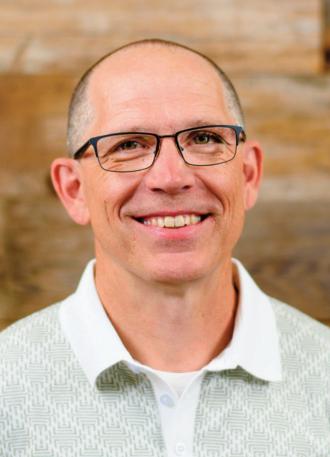
What law enforcement taught me about serving others
“I
am not responsible for how people treat me, but I am responsible for how I treat people.”
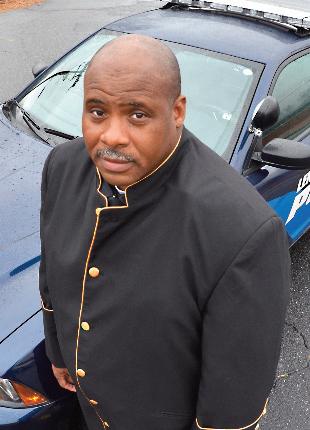
I was a police officer for over 28 years when I came up with this thought. I learned that being an officer was like being a servant.
Most people don’t call the police until something has happened or they are in a crisis. I always felt that no matter the person, I must always give the same respect and treat the individual with dignity. In Romans 2:11 it says, “For there is no respect of persons with God” (KJV). In other words, God treats everyone the same.
Being a police officer often made me think about what Jesus said in Mark 10:45: “For even the Son of Man did not come to be served, but to serve, and to give his life as a ransom for many.”
Now that I am a pastor, I appreciate the Scriptures even more and better understand them. It is one thing to know something, but when it becomes alive in you, then you know the Scriptures are real. I look at these two occupations—police officer and pastor—as working together. Upon reflecting on both service-oriented professions, I see that you must focus on three points to have a successful ministry in your church.
Ready for the call. Church life can be hard at times for pastors. People don’t call unless a tragedy or crisis has happened. But we need to be ready when they call. The person who needs us might not be a part of our congregation or might not have a pastor. But because we carry that responsibility of serving, we must be ready to do what God has called us to do. No matter who the person is or their status, we must be willing to give our best attention to them. Show respect, not favoritism. As pastors, we must show the same level of respect to all people. Sometimes, it is necessary to favor one over the other based on ability or need, but as pastors, we learn that it is not a good practice to favor one person over another. Eventually, it causes discord.
Meet people where they are. As a pastor, you must be willing to meet people where they are in their lives. People are not going to always meet you with a hug and a smile all the time. We don’t know what is going on with them, but we must be ready to meet the need if possible.
We come to serve and not be served. We look for ways to help others so they can help build up the kingdom of God. Life is not all about us.
Let us follow the commands in Matthew 22:37-39 to “Love the Lord your God with all your heart and with all your soul and with all your mind” and “Love your neighbor as yourself.”
“Now that I am a pastor, I appreciate the Scriptures even more and better understand them. It is one thing to know something, but when it becomes alive in you, then you know the Scriptures are real.”
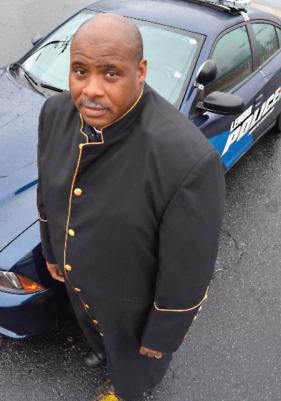
James Moore is district minister of the Eastern District Conference and pastor of West End MB Church in Lenoir, N.C.
Central District churches raise funds to support a fellow congregation
Different languages. Different cultures. Different congregations. But differences aren't keeping one church in the Central District from helping another in need.
At first glance, these two churches—New Jerusalem Temple and Iglesia Manantial de Agua Viva—may seem to have more differences than similarities.
New Jerusalem Temple is a Congolese congregation of more than 100 in Sioux Falls, S.D., while Agua Viva is a Spanish-speaking church in Omaha, Neb., with fewer than 20 attendees on a regular basis. However, the common mission of sharing the gospel and reaching people in their communities overcome these cultural and practical differences.
In August 2025, New Jerusalem Temple purchased its own church building for the first time since being founded by Claude Tambatamba in 2015. Despite its small size, Agua Viva raised over $400 to contribute to furnishing the new space.
Finding a place to meet has always been a challenge for the Congolese church, which began in Tambatamba’s apartment. In the intervening years, congregants have met in several different locations, including renting from fellow CDC churches Christ Community Church (Harrisburg, S.D.) and, most recently, International Ethiopian Christian Fellowship (Sioux Falls, S.D.).
“Their dream has always been owning a building, and an opportunity came up,” says Daniel Rodriguez, Central District minister. “It seemed that was going to be a very good location for them.”
The congregation raised $50,000 toward a down payment and secured a loan for the remainder through MB Foundation, with the district promising to guarantee the loan.
Rodriguez says the district recognized New Jerusalem Temple had needs beyond the building. Since the congregation had previously used what was available in rented spaces, it needed to obtain furnishings and equipment such as audio visual equipment, chairs and a pulpit.
The district gave a $5,000 grant to help meet these needs and challenged other churches in the conference to
Guerra,
and
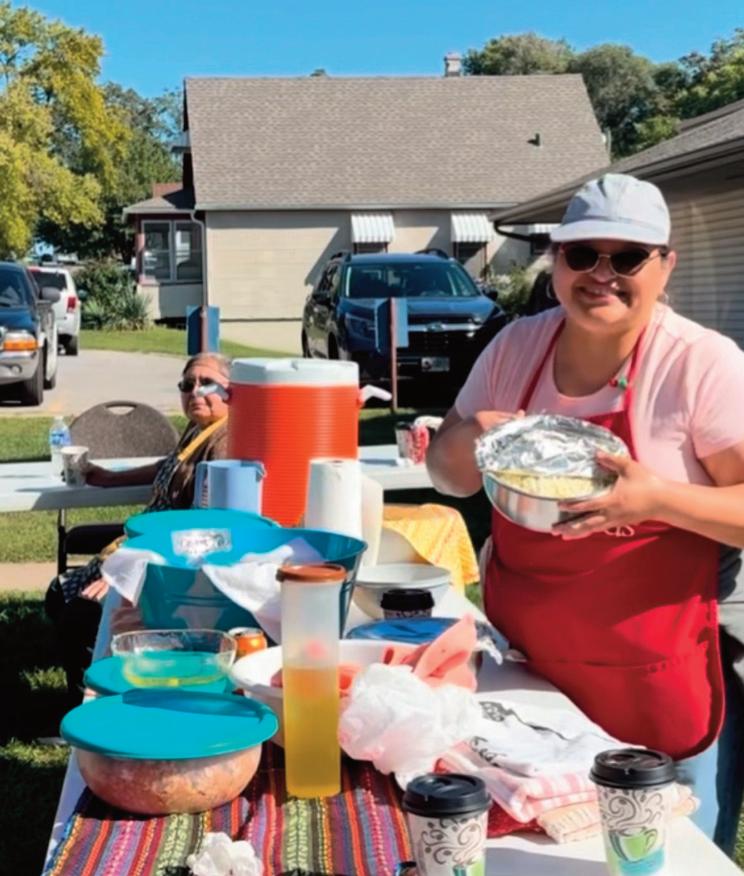
pupusas at Iglesia Manantial de Agua Viva in Omaha. The church raised over $400 selling this Salvadorean food to benefit the new building fund of New Jerusalem Temple in Sioux Falls. Photo: Central District
donate to match those funds. In total, the district and churches raised nearly $10,000.
Yanira Lopez and her husband, Jose Guerra, have been the pastoral couple at Iglesia Manantial de Agua Viva since it was planted in 2010. The church saw its growth greatly impacted by the COVID-19 pandemic, but Lopez says they are continuing to focus on community outreach and looking for ways they can help meet others’ needs.
“Our focus right now is trying to see what we can do to help people and bring them to Christ because it’s more important than any job or anything material that they can
get,” says Lopez. “We are just a very small group trying to do mission and reach the needy.”
When she saw an email from the Central District about the need to help New Jerusalem Temple raise funds for the new building, she presented the idea to the congregation. Members immediately agreed to help.
Agua Viva makes and sells food as a primary way to reach out in the community and raise funds for various needs.
Pupusas, a local dish in Lopez’s native El Salvador, are a type of tortilla filled with cheese, beans and vegetables. Lopez does much of the prep work for the pupusas ahead of time in her home. On the day of the sale, the pupusas are cooked on a griddle outside the church building.
“We make them right there when people come so they’re fresh,” says Lopez. “Some people will stay and eat, and that’s when we have time to talk with them about anything that they need or any prayer they might need.”
She adds that members of another Central District church, Faith Bible Church, with whom they share a building, attended the sale benefiting New Jerusalem Temple to purchase pupusas and support Agua Viva.
Rodriguez highlights the importance of Agua Viva’s willingness to serve regardless of its size.
“It’s just amazing how they jump at opportunities,” says Rodriguez. “They have a really neat prayer ministry. Every time I’ve been to their church to visit, I
see petitions that they saw from other churches’ bulletins, and they’re aware of those needs so they put it on their prayer list.”
He adds that it is vital for the district to include churches of different cultural backgrounds in order to reach more people.
“We have two churches with the same goal, the same mission, and so each church can accomplish the mission of sharing the gospel with their own ethnicity and language,” he says.
Lopez also emphasizes the importance of churches not letting those cultural differences become a barrier to working or fellowshipping together.
“We need each other,” says Lopez. “And we know other different congregations, we all struggle, we all have difficulties. It doesn’t matter what race, color, language, anything; we see each other as Christians, so we need to help each other.” Jessica Vix Allen

At Zoar MB Church in Inman, Kan., diplomas aren’t the only thing students receive to mark their high school graduation. They also get Bibles filled with prayers, illustrations and handwritten messages from their church family.
Former member Andrea Wood introduced Bible journaling to Zoar after discovering the practice online. The church had a long-standing tradition of gifting Bibles to graduates, and Wood saw an opportunity to make those gifts more personal after journaling in her own daughter’s Bible.
“I thought, ‘Why don’t we do this as a church?’” Wood says. “Instead of giving a Bible that has never been opened, why don’t we give Bibles to the kids that show we are praying for them?”
Church members can write prayers for the graduates in the Bibles and add illustrations alongside meaningful verses. The goal is simple: Create Bibles that draw students deeper into the Word and connect them with an entire support network.
Tami Garst took over leadership of the program after Wood’s family moved to Texas. She tries to make the process as unintimidating as possible, even for those who don’t feel artistic.
“It’s not about artistic talent,” Garst says. “It’s about sharing your favorite scripture with kids.”
The process functions like a mobile library. At the beginning of each school year, the program team puts a Bible in a tote bag, along with colored pencils and markers. Church members can sign out kits and keep them for a week at a time before passing them along.
Each Bible receives contributions from multiple people throughout the school year. Before graduation, Garst creates a bookmark for each graduate, listing all the journaled verses so they can easily find the personalized sections.
The church presents the Bibles on the Sunday before graduation, with the pastor calling each graduate to the front of the church to receive their gift.
In 2025, Zoar prepared 16 Bibles for graduating seniors, including one for a student serving as a missionary in Uganda. Exchange students who attend Zoar’s youth
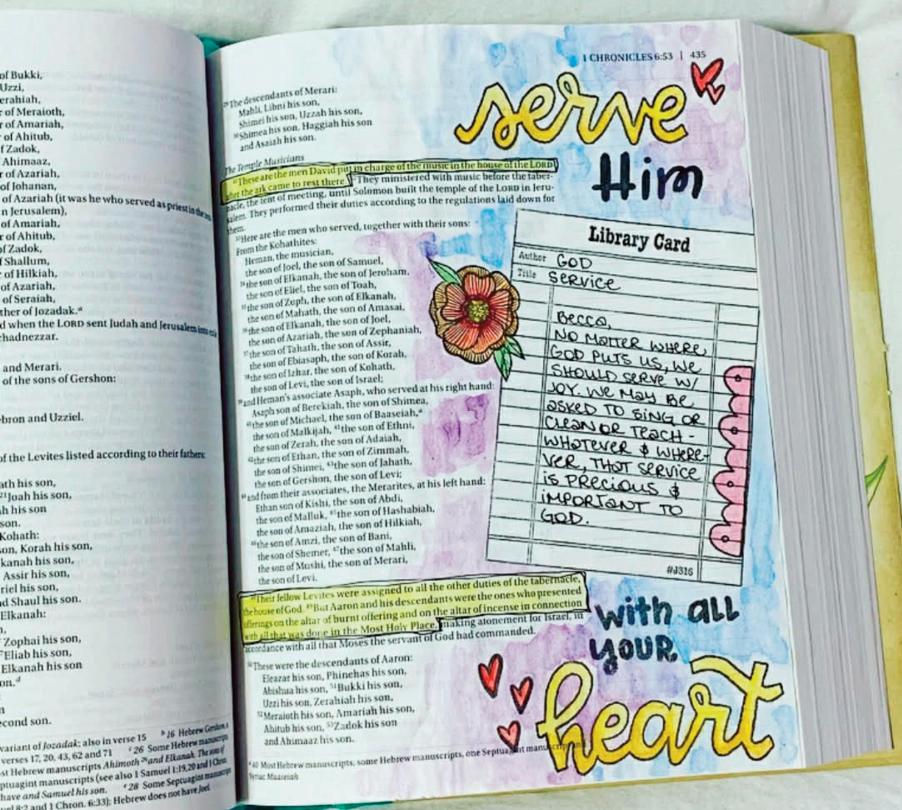
group also receive a personalized Bible to take with them to their home countries.
One unexpected benefit has been permission to mark up Scripture. Garst noted some people hesitate to write in pristine Bibles. “Receiving one that’s already filled with notes and highlights shows graduates it’s OK to make their Bible their own,” she says.
The Bibles represent months of prayer, creativity and intentional connection across generations. For graduates, the highlighted verses and handwritten prayers become permanent reminders that their faith community continues to support them, wherever life takes them next.
“I loved receiving a Bible my senior year of high school,” says Lexi Milne, 2022 graduate. “It’s such a special way to recognize seniors for their accomplishments. My favorite thing is that every time I open it, it reminds me how many people care for me and my walk with Christ.”
Wood says, “It’s really about God’s Word. The important part is that they’re opening God’s Word and learning it and knowing it.” Amy Ragland
Four Fresno churches collaborate on Easter activities for local outreach
In an 8-by-12 block neighborhoodd of 923 homes in Fresno, Calif., Pastor Joe White and Neighborhood Church live out Jesus’ command to love your neighbor.
“We see our neighborhood like a geographical area of spiritual responsibility,” White says.
As different neighbors face educational, economic, political, spiritual or relational issues, Neighborhood Church seeks to address needs by proclaiming the good news, as Jesus does himself when he reads from Isaiah 61 in Luke 4:18-19.
Since 2016, one way Neighborhood Church does this is through a community-wide Easter celebration, which came about through a desire to be public for Jesus.
“We wanted to not be a light hidden under a bowl,” White says. “But we wanted to be a light on a hill so everything we do is because we love Jesus.”
This has led Neighborhood Church to collaborate with other churches located nearby to host an Easter-weekend celebration event.
In this collaborative effort across different denominational and theological lines, White acknowledges the opportunity for churches to show their neighbors that the churches love each other.
One aspect of the celebration is a stations of the cross display throughout the neighborhood. On different light poles are art pieces and written liturgies, taking the reader through the life of Jesus, heading into his crucifixion on Good Friday.
On Saturday, the churches host a party at Jackson Elementary, located half a mile from Neighborhood Church.
“We as a host, as a group of churches, really focus on providing an environment where people can be around Jesus in a party atmosphere,” White says.
The event includes gospel presentations, Easter-egg hunts and food vendors. Community nonprofits also provide resources on financial literacy, food stamps and government services.
Several nonprofits, including Neighborhood Church’s own Jackson Community Development Corp., join in, creating a space where families can connect with local leaders—from school administrators to city council members,
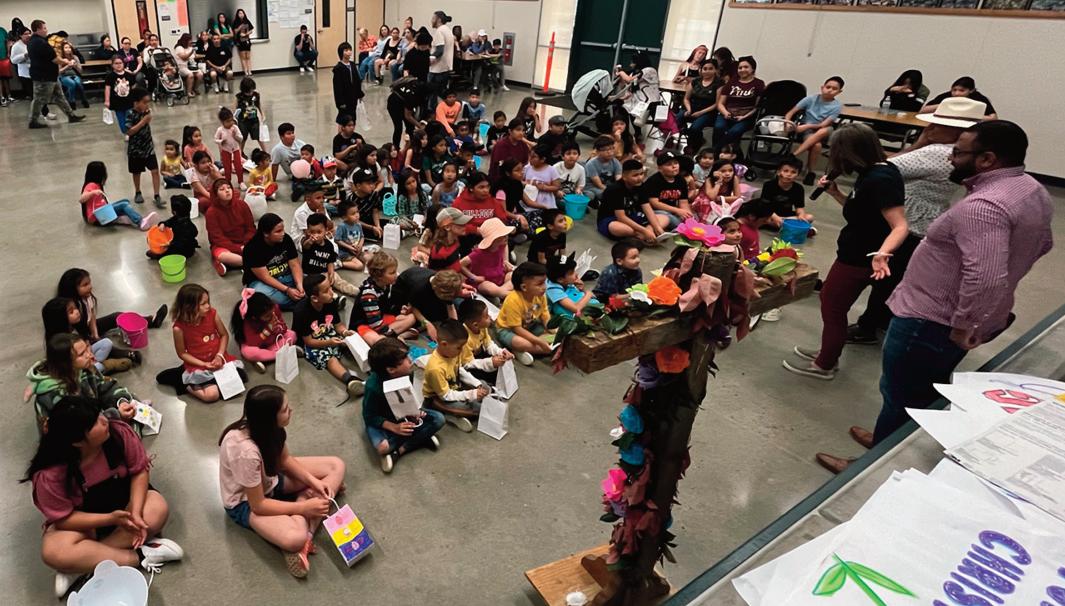
Kids and families gather in the school cafeteria for a lesson about Jesus. Photo: Neighborhood Church
firefighters and police—under joyful circumstances rather than crises.
In 2025, about 200 neighbors attended the celebration.
“We pray that folks will make connections with our neighborhood churches, feel the love of Christ and enjoy being together as a community,” says Rhonda Dueck, executive director of the Jackson Community Development Corp.
On Sunday, Neighborhood Church holds an outdoor Easter gathering. The service allows neighbors to meet Jesus and features baptisms for those who make that profession of faith.
The gathering then moves from the backyard to the front yard, where the church enjoys a picnic, celebrating Jesus by being together.
This celebration, among other events, has become a regular rhythm for Neighborhood Church as they seek to invest in their community.
“Our neighbors have come to depend on us to be a light in the neighborhood—because there’s so much dark,” White says.
Rather than trying to solve every problem, Neighborhood Church seeks to flip on some light, focusing not on the output, but what they are providing to the community.
“Are we actually telling people about Jesus?” White asks. “Are we doing things to actually get to know our neighbors?”—Cody Meyer
“The first one scared me, but later, it became almost like a game,” says Maricela Chavez of the 176 scorpions she and her family have found in their house. “We thank God that none have harmed us. It’s true—living like this is uncomfortable, but it’s part of our reality.
“It’s what we chose.”
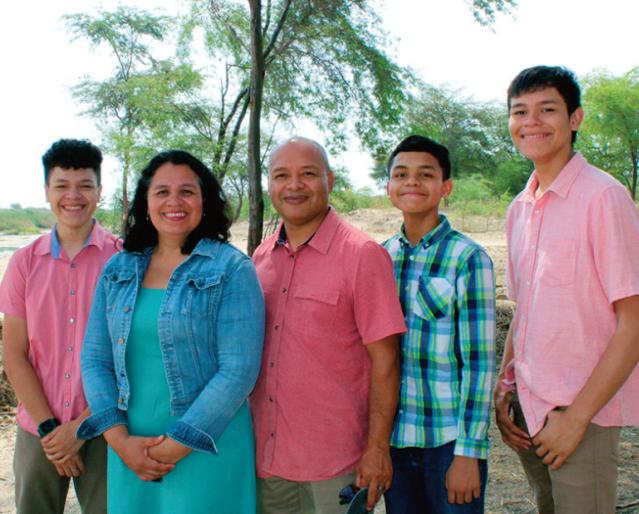
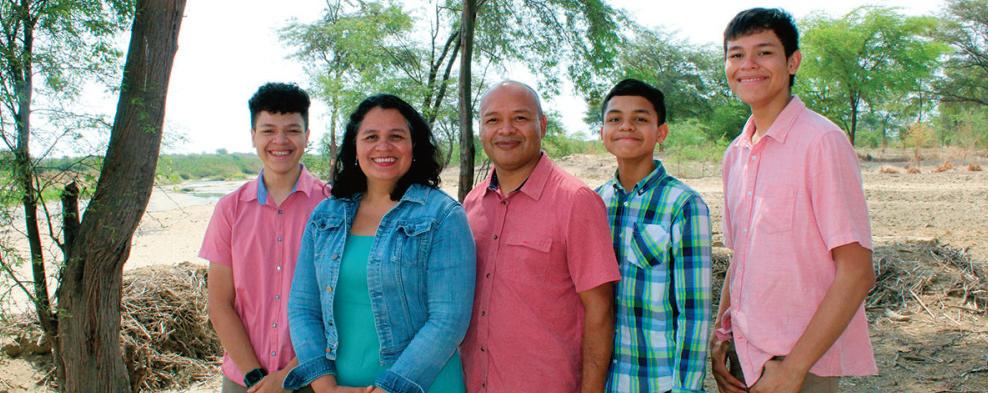
Maricela and Pablo Chavez—former pastoral couple at Iglesia El Buen Pastor in Orange Cove, Calif.,—and their three boys chose to leave their home in California in 2022 for a life on mission with Multiply in Peru. They faced criticism for this choice; those who knew what it had cost for their families to immigrate from Mexico and settle in the United States in the first place challenged their decision, even calling them ungrateful. Watch the story of their journey into global mission in the video, “God is Calling” (multiply.net/god-is-calling).
“We left behind a comfortable lifestyle and weren’t sure what to expect,” Maricela says. “For example, we had been told that Almirante was a land of rich agriculture. It is a desert. Everywhere you look, there’s sand. The heat is almost unbearable.”
When Pablo and Maricela arrived in Almirante, Peru, it soon became evident that the true beauty was in the people: They were kind, caring and welcoming.
“They received us at the airport, (and) they received us in their churches,” Pablo says. “It took a little longer for them to receive us in their hearts, though.”
This reluctance came as somewhat of a surprise to the Chavez family. Being of Mexican descent, they had assumed that the transition to life in Peru would be relatively easy. To their chagrin, they faced a chasm of difference.
“Even our Spanish wasn’t the same,” Maricela says. “We had many of the same words but with completely different meanings. I had to pay very close attention to what people were trying to say. That was a shock for me—I had expected communication to be easy.”
Pablo agrees.
“It was crazy,” he says, shaking his head. “Sometimes they would be speaking to me in Spanish, and I would just stand there with my mouth open, thinking, ‘What on earth are you guys saying?’”
Being relegated to the status of language learners was only one of the humbling realities of life in Peru.
“One time there was an event that required food preparation, and I offered to help,” says Maricela. “They told me that I was peeling the potatoes wrong. I have been
peeling potatoes my whole life.”
She laughs at the memory.
“In the end, I just handed over the knife and asked them to teach me how to do it right.”
Taking a humble posture of learners was critical in building relationships in the community.
“We had to remember that our role as missionaries was not to come and be in charge of things,” Pablo says. “It’s not up to us to make decisions for Peruvians or to direct them, but to see what God is doing and to walk with them on their journey.
“Learning their way of speaking Spanish, learning their way of peeling potatoes—all those things were needed for trust to be built, before they would open up and tell us about their real needs, the conflicts in their churches, the problems in their marriages, the brokenness in their families.”
Trust was a two-way street, the couple realized. Even as the church leaders began to invite Pablo to help with conflict resolution on a conference level, addressing issues of moral failure and sin, he also shared his own struggles with them.
“On a personal level, I went through a period of depression in the ministry,” he says. “I lost the joy of serving, and I needed their compassion and support.”
While life in Peru has been challenging for the Chavez family, it is also difficult for Peruvians.
“The level of suffering we witness is terrible,” Maricela says. “At least one person is dying every week. There are always so many who are sick and need-
ing prayer. Sometimes I think that the only things that can thrive in this desert are the flies, mosquitos, lizards and scorpions. But somehow, the Peruvians persevere and grow crops here.” She pauses, pensive. “In a way, that shows their heart. They don’t give up; how could we?”
Pablo says, “These last three years have not been easy, but we didn’t choose Peru because it is easy or pretty or comfortable; we chose it because of the people. We chose to surrender, we chose to follow Jesus, we chose to serve the ones he loves.
“By God’s grace, this is what we still choose.”—Nikki White
This article was first published in the Fall 2025 issue of Witness magazine and is reprinted with permission.

Acres raises funds to carry Bibles to remote churches in the Congo
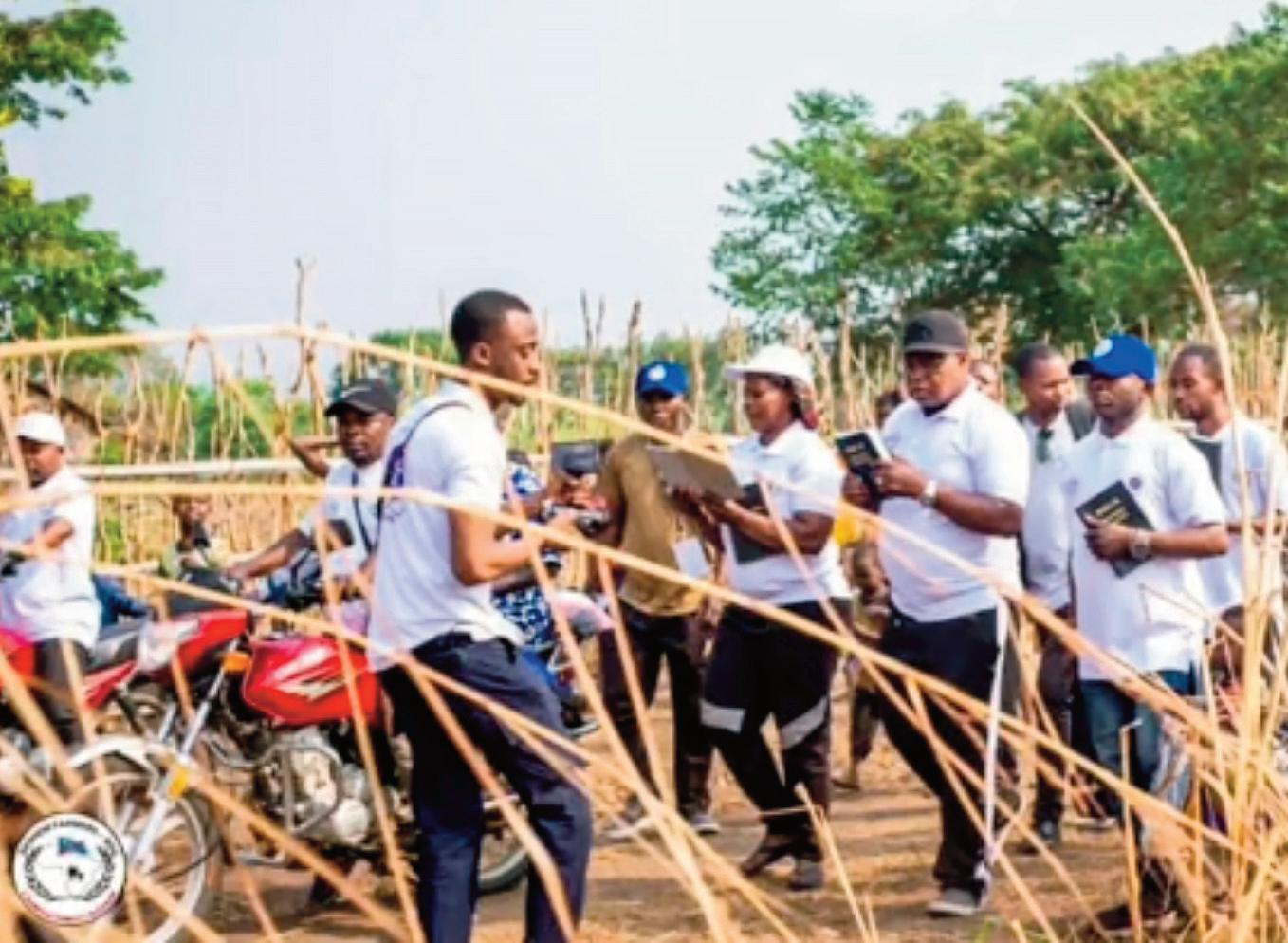
One rainy day in the Congo, the Holy Spirit moved over 20 people to be baptized.
“All of us, no one even thought it was raining that day,” says Henri Ngolo, who served as integrated immigrant coordinator for the U.S. Mennonite Brethren national conference from 2022-2023. “We were out to celebrate. We were out there praising the Lord. We were out there singing, and we had the whole evening. And early in the morning, 22 people then accepted Jesus Christ, and we baptized them before we even left the village.”
Ngolo’s work in Bible distribution led to this moment. Every summer, he loads Bibles onto motorcycles and into rented vehicles and goes to the most inaccessible areas of the Congo to fulfill the need for the gospel.
The need for physical Bibles is critical—Ngolo sees pastors in the Congo share individual pages with each other just to write their sermons. With the resources available in the 21st century, Ngolo says this shouldn’t be the case.
“If anything should be the priority, it’s really distribution of the gospel like Jesus has done,” Ngolo says. “Then foods for their souls and food to nourish their body. Just like in the prayer of our Father in heaven. The daily bread should not only be for the physical needs—it should be also for the souls.”
Physical needs must be filled, but Ngolo says, “I have many stories of pastors who say, ‘Me and my church, we don’t have a roof. But the most important thing for us first is to have a Bible. Then the rest of the things that will come with it, God knows.’”
Pine Acres Church in Weatherford, Okla., is partnering with Ngolo to fill the need for spiritual food. The church took on a six-month project to raise $25,000 to purchase a new vehicle to help distribute Bibles in the Congo and support Ngolo’s work. They hoped to reach their goal by the end of March, but according to Tim McDonald, Pine Acres missions committee chair, the church exceeded their fundraising goal by the beginning of February. McDonald was surprised by the church’s generosity in such a short time:
“We thought we had a pretty lofty goal and didn’t know how long it would take,” he says. “We thought some might want to make a monthly pledge and give over time.”
Pine Acres has completed other projects to assist Ngolo and this mission. Two years ago, the church raised about $18,000 to purchase two motorbikes and many Bibles to be sent to the Congo.
About this first fundraiser, McDonald says, “The initial goal involved a lot of participation on the part of our children’s and youth ministries, and they raised a fair portion of the initial goal of $8,000. That part of it was something that really was churchwide. We had a lot of good buy-in from the kids. It was really neat to see the kids involved in promoting and wanting to see Bibles purchased.”
Both Pine Acres and Ngolo look ahead to the work that remains to be done. Ngolo says that people are coming to faith as they see the love attached to what churches and Christians across the world are doing:
“We are united globally as Christians for Jesus Christ.”—Aliya Ayers
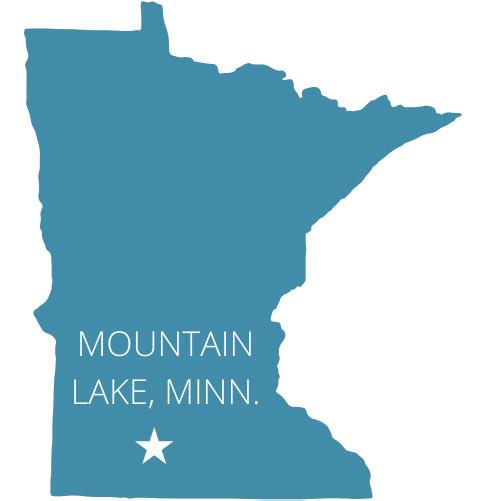
Established:1890 (second location of Carson MB Church, est. 1877); joined USMB 1879
Attendance: 25
Lead Pastor: Alex Janzen
Our congregation in three words: Meals, supportive, flexibility
Connect with us!
cbcmountainlake.com youtube.com/@cbcmountainlake7516/streams
Our mission:
Gather as God’s people. Grow in the gospel. Give of what God’s given. Go to the world.
How can you pray for us?
Pray for our efforts to start a sober-living house in town. Pray for our ministry already to those recovering from addiction. Pray for existing members to grow in courage following Jesus.
What is your church’s biggest need right now?
We need people. In particular, we need trustworthy disciples who can help teach new disciples and keep the church running when older saints can’t anymore.
A recent highlight:
Last summer, we had our first three baptisms in over a decade!
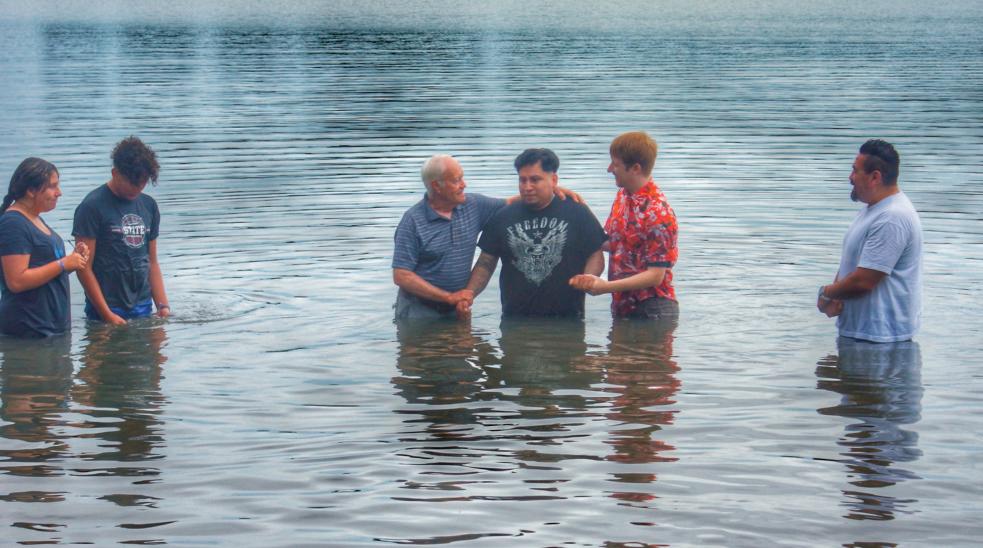
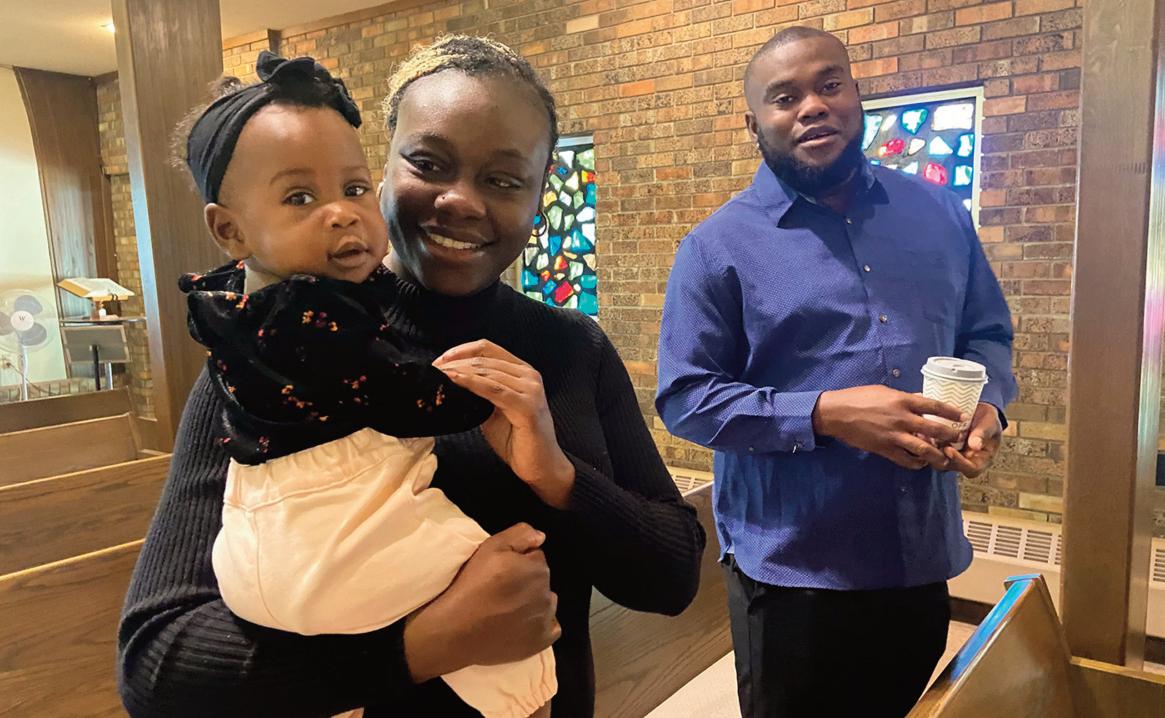
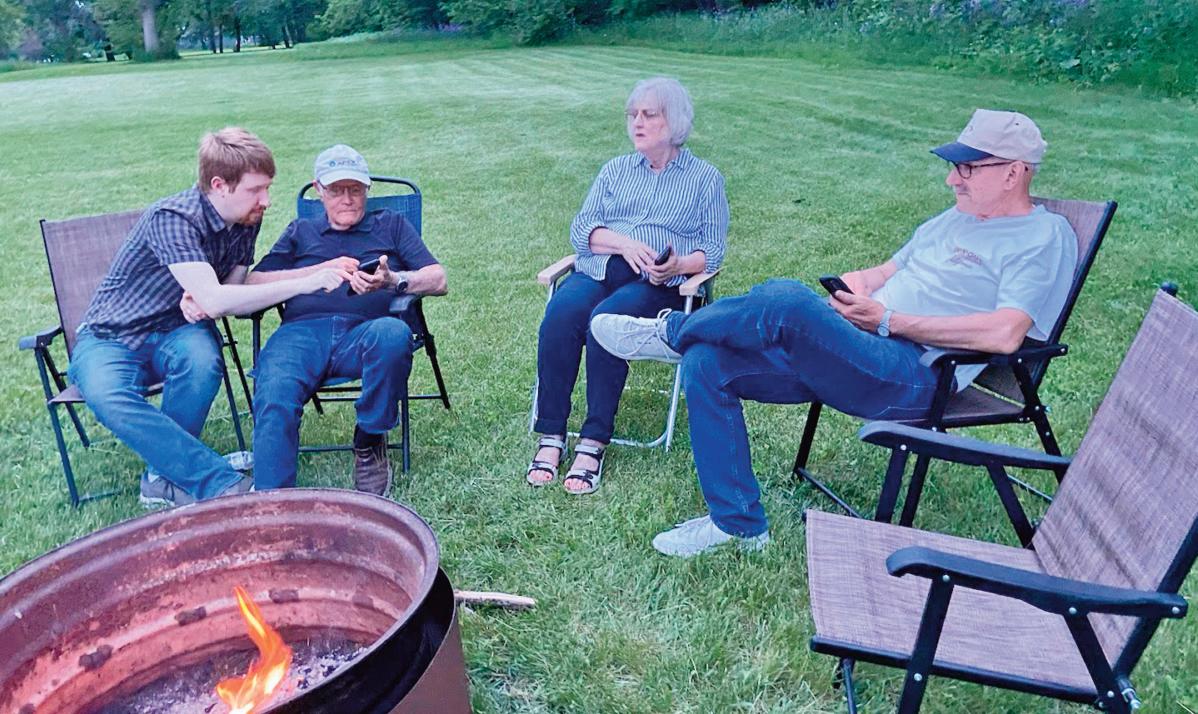
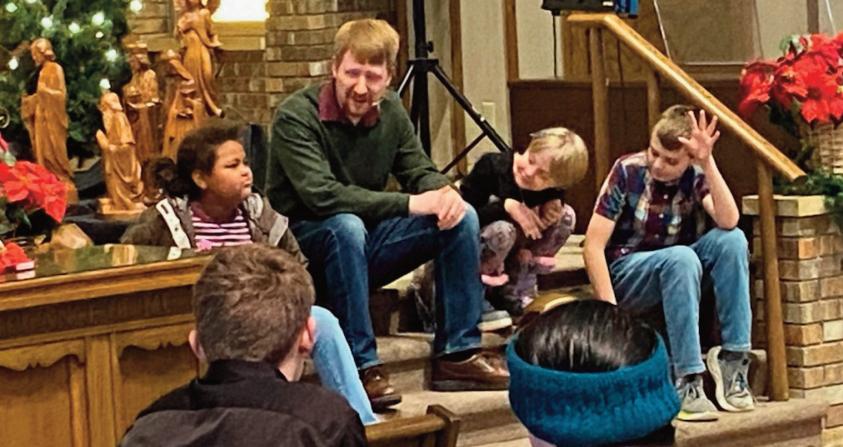
Top: The church celebrated its first baptisms in a decade in August 2025. Second: A family dedicated their child at Community Bible Church in February 2025. Third: Church members enjoy a Wednesday night fire-pit fellowship in summer 2025. Bottom: Pastor Alex gives a children’s message. Photos: Community Bible Church
Compiled by Janae Rempel Shafer
Baptism/Membership
Nine people were baptized in January at Bethany Church, Fresno, Calif.
Hunter Prentice and Matthew Johnson were baptized and received as members Dec. 7 at Bethesda Church, Huron, S.D. Kate Janzen, Donavon Smith, Maddie Smith, Sally Stansfield, Tristan Wieting and Carmen Wieting were also received as members. Andy and Anna Burau were received as members Jan. 1, and Zach and Sarah Schweinsberg were also received as members Feb. 1.
Nic Mozingo was baptized Dec. 28 at Community Bible Church, Olathe, Kan.
Joshua Knop and Emily Knop were received as members Jan. 4 at Corn (Okla.) MB Church. Brandon Evetts was baptized.
Fourteen people were baptized at Greenhouse Community Church, Saratoga Springs, Utah.
Eva Hofer, Dalton McCloud, Weston McCloud and Landon Spencer were baptized Dec. 7 at Hesston (Kan.) MB Church.
John Hein, Katie Hein, Lauryn Turner and Ryker Regier were baptized and received as members Nov. 16 at Hillsboro (Kan.) MB Church. Crystal Holmes, Aleya Ediger and Nathaniel Dewey were also received as members.
Marty Montez, Nick Green, Kalen Hull, Mario Gutierrez, Sade Bravo and Roy Benner were baptized Oct. 12, 2025, at Madera Avenue Bible Church, Madera, Calif.
Madux N. was baptized Dec. 24 at North Fresno (Calif.) Church
Dani Miranda and Ben Kauffman were baptized Dec. 14 at North Park Community Church, Eugene, Ore.
Landon Mowles and Charles Sanders were baptized Dec. 21 at Pine Acres Church, Weatherford, Okla. Lyndea Bilbrey and Naomi Jones were baptized on Jan. 18.
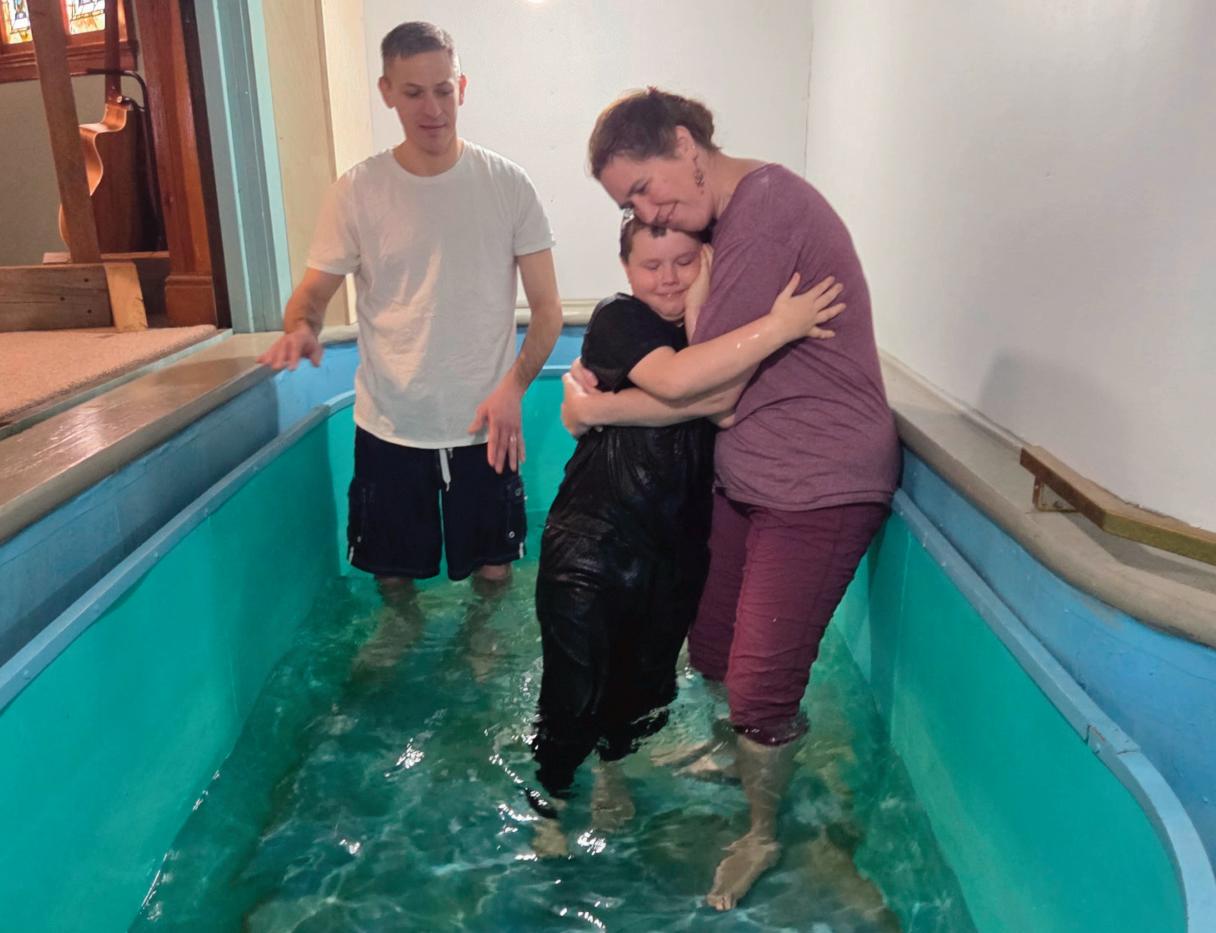
Emily Bartel, Brandon and Saira Bell, Walker and Kara Dupree, Zach and Sarah House, Natalie Hutchings, Megan McAusland, Denise Morsey, Cara Penner and Teresa Savage were also received as members.
Ed Thayer, Katherine Geiger, Quentin Walsh and Kailan Smith were baptized Jan. 11 at Redemption Church, Owatonna, Minn.
Audrey Gutierrez, Steve Gutierrez and Trista Welty were baptized Dec. 28 at Ridgepoint Church, Wichita, Kan.
James Svitak, Britany Pond, Hailee Kluge, Jayden Tiner, Alisha Frehner, Karrlie Maynes, Ashley Dunn, Whitney Vandeutekon, Rudy Vandeutekon and Jessi Haro were baptized Jan. 11 at South Mountain Community Church, South Jordan (Utah) Campus. Reed Primosch, Brittany Pate, Caleb Mckean, Chloe DeBrine, Terek Pate, Kenzie Duran, Ashley Johnson, Alexa Johnson, Aria Johnson, Mason Johnson, Lydia Lovell, Winston Lovell, Kaprie Gonzalez Makuakane and Brody Lee were baptized Dec. 14 at Lehi (Utah) Campus. Tabitha Kidrick, Joey Kidrick, Seanna Colligan, Jackson Roybal, Casey Jensen and Heather McClure were baptized Nov. 30, and Jack Padilla, Tayiah Fuller, Edward Fuller, Mollee Feroah, Ayden Wood, Jade Anderson, Jennifer Scott and Ilya Scott were baptized Jan. 11 at Draper (Utah) Campus. Dee Ann Anderson, McKinley Barker, Megan Barker, Scarlette Barker, Brendan Castillo, Kailyn Colindres, Charles Gallegos, Matt Robbins, Gracie Ross, Jaron Ross, Oran Watts and Marki Wolff were
baptized Feb. 8 at St. George (Utah) Campus
Andy Burau began serving as discipleship pastor at Bethesda Church, Huron, S.D.
Carmen Reimer began serving as church secretary at Corn (Okla.) MB Church, Jan. 16. Renee Kliewer concluded her service in that role.
Courtney Frey began serving as secretary at Hesston (Kan.) MB Church.
Dave Loewen concluded his service as visitation pastor at Parkview Church in Hillsboro, Kan.
Larry Albright retired after 48 years of service at Lincoln Glen Church, San Jose, Calif.
Ryan Morriss was installed as associate pastor Oct. 1 at Redemption Church, Owatonna, Minn.
Geoff Graves concluded his service as director of operations at Ridgepoint Church, Wichita, Kan.
Bartel, Doris June, Fairview, Okla., member of Fairview MB Church, March 24, 1932— Jan. 2, 2026. Parents: Peter J. and Eva E. (Regier) Cornelsen. Spouse: Willard Bartel (deceased). Children: Patty Harvey, Larry, Randy; six grandchildren, nine greatgrandchildren, seven greatgreat-grandchildren.
Booth, Bennie Carol, Wichita, Kan., member of Ridgepoint Church, Wichita, Dec. 2, 1942—Dec. 18, 2025. Parents: Benton M. Scott and Norma E. Jones. Spouse: John
Booth. Children: Daylene Strickland, Paula Guynn, Kristi Gutierrez, Cheri; eight grandchildren, 11 great-grandchildren.
Dick, Lotti Marlene, Fresno, Calif., member of North Fresno Church, Oct. 29, 1947—Dec. 8, 2025. Parents: William J. and Katherine (Janzen) von Niessen. Spouse: John Dick. Children: Kevin, Randy; four grandchildren.
Ediger, Evelyn Fay, Topeka, Kan., member of Cornerstone Community Church, Topeka, June 28, 1934—Dec. 29, 2025. Parents: Cornelius and Martha Janzen. Spouse: Robert D. Ediger (deceased). Children: Mark, Joan Felling, Daniel; seven grandchildren, five great-grandchildren.
Fast, Harold Eugene, Hillsboro, Kan., attender of Hillsboro MB Church, July 10, 1931—Dec. 19, 2025. Parents: David D. and Elizabeth (Suderman) Fast. Spouse: Anna. Children: Steven, Michael; four grandchildren.
Frantz, Joanne Bertha, Shafter, Calif., member of Shafter MB Church, Jan. 30, 1927—Dec. 9, 2025. Parents: Otto and Regina Becker. Spouse: Daniel W. Frantz (deceased). Children: Karen Enns, Terry, Brenda Putnam, Elinor Rossi, Julia Weis; 10 grandchildren, 18 great-grandchildren.
Franz, Robert George, Hillsboro, Kan., member of Hillsboro MB Church, Oct. 19, 1933—Jan. 28, 2026. Parents: George and Mary (Wiens) Franz. Spouse: Darlene Faye Becker. Children: Cheryl Hagen, Kimberly Walker; four grandchildren, two great-grandchildren.
Hall, Mary Ellen, Butterfield, Minn., pastor’s wife of Butterfield Community Bible Church, Sept. 3, 1974—Dec. 26, 2025. Spouse: Tim Hall. Children: Beth, David; two grandchildren. Bonus child: Luciá Havličková.
Henry, Lori Dawn, Pawnee, Okla., member of Fairview (Okla.) MB Church, Aug. 5, 1977—June 20, 2025. Parents: Don and Marva Wohlgemuth. Spouse: John Henry. Children: Laney, Haley, Lawson.
Hildebrand, Paul Ray, Inman, Kan., member of Zoar MB Church, March 4, 1947—Jan. 23, 2026. Parents: Art and Edna (Froese) Hildebrand.
Spouse: Vickie Nikkel. Children: Stephanie Baird, Andrea Unruh; four grandchildren.
Hostetler, Karen Deanne, Newton, Kan., member of Ridgepoint Church, July 13, 1955—Jan. 19, 2026. Parents: Dewey and Bernice Hostetler. Children: Nicolas Moseley, Leia Girard, Abby Christenson, Alex Moseley; nine grandchildren.
Jost, Rowena “Janice”, Henderson, Neb., member of Living Hope Church, Feb. 25, 1933—Jan. 23, 2026. Parents: George and Sarah (Goertzen) Kornelson. Spouse: LeRoy Jost (deceased). Children: Steve, Garry, Mark; seven grandchildren, 15 greatgrandchildren.
Kleinsasser, Sharon Kay, Huron, S.D., member of Bethel MB Church, Yale, S.D., Oct. 21, 1937—Dec. 6, 2025. Parents: David H. and Josie (Schroeder) Toews. Spouse: Leland “Butch” Kleinsasser (deceased). Child: Brent; three grandchildren, six great-grandchildren.
Kroeker, Eunice Mae, Shafter, Calif., member of Shafter MB Church, Feb. 19, 1936—Jan. 6, 2026. Parents: Samuel and Mary Bartel. Spouse: Arnold Kroeker (deceased). Children: Galen, Shirla Willems, Byron; eight grandchildren, one greatgrandchild.
Kyle, Joyce Lynn, Hillsboro, Kan., member of Hillsboro MB
Church, April 8, 1946—Dec. 30, 2025. Spouse: Richard Kyle (deceased). Children: Brent, Bryan (deceased); multiple grandchildren.
McGillivary, Dean Filmore, Hillsboro, Kan., member of Ebenfeld MB Church, March 18, 1926—Jan. 23, 2026. Parents: Archibald and Mattie (Potter) McGillivary. Spouse: Eva Clarabelle McMinn (deceased). Children: Kathline, Marline; two grandchildren, six great-grandchildren.
Nickel, Lenora, Fresno, Calif., founding member of Butler Church, Aug. 2, 1928—Jan. 25, 2026. Spouse: Eugene Nickel (deceased). Children: Douglas (deceased), Debra Moster; two grandchildren, five great-grandchildren.
Pembrook, Travis Wayne, Fairview, Okla., member of Fairview MB Church, Jan. 19,
1974—Aug. 22, 2025. Parents: Lonnie and LaDonna Pembrook. Spouse: Beth Murphy. Children: Bret, Bryson.
Schmidt, Carol Elizabeth, Rockwall, Texas., member of Fairview (Okla.) MB Church, Nov. 12, 1935—Aug. 9, 2025. Parents: Dan C. and Mary Jantz. Spouse: Kenneth Lloyd Schmidt (deceased). Children: Kenneth Jr., Gregory, Steven; 10 grandchildren, 16 great-grandchildren, two greatgreat-grandchildren.
Schultz, Theodore “Teddy” William, Okeene, Okla., member of Okeene MB Church, Jan. 20, 1948—May 22, 2025. Parents: Ted and Marcelious Redding Schultz. Spouse: Jana Patzkowsky. Children: Bruce, Brandon, Brada Unruh; eight grandchildren.
Seaman, Maynard Maurice, Bel Air, Md., former MB mis-
sionary, Nov. 11, 1929‚—Jan. 8, 2026. Parents: Millard Phillip “Phil” and Clara Mae (Ruckle) Seaman. Spouse: Dorothy Mae Woerz (deceased). Children: Dawn Bove, Dianne Mathews, Darlene Silliman, David; six grandchildren, five greatgrandchildren.
Silva, Karen, Fresno, Calif., member of Butler Church, Fresno, April 19, 1952—Dec. 17, 2025. Spouse: Theodore Silva Sr. (deceased). Children: Theodore Jr., Troy Hall.
White Face, Diggo Cadence Jr., Porcupine, S.D., of Lakota Mennonite Church, Porcupine, Feb. 16 2010—Dec. 10, 2025. Parents: Diggo White Face Sr. and Cheryl CrossWhite Face.
Wichert, James “Jim” Lee, Enid, Okla., of Fairview (Okla.) MB Church, Sept. 5,
1963—Jan. 15, 2026. Parents: Ray Lee and Helen Wichert. Spouse: DeeAnn. Children: Erica (Richard) Mooers, Neil; two grandchildren.
Neighborhood Church, Fresno, Calif., celebrated its 10th birthday.
Mountain View Church, Fresno, Calif., had an Equipping Workshop on salvation Jan. 24-25.
The Central and Southern Districts plan to launch MB Equip, new online classes to equip pastors, elders and believers on a deeper understanding of the Bible, beginning March 10.
Worship Ministry Leader: New Life Community Church in Dinuba, Calif., is seeking a part-time worship ministry leader to serve a Jesus-centered, diverse and multi-generational congregation. This role focuses on leading weekly worship gatherings, developing and supporting volunteer musicians and vocalists and collaborating with pastoral staff to create worship environments that help people encounter Jesus and participate fully in the life of the church. Full job description and application instructions are available at newlifedinuba.org/job-openings.
Associate Pastor of Youth and Family Ministry: Cross Timbers Church in Edmond, Okla., is excited to announce that we are seeking a full-time associate pastor of youth and family ministry. This position’s primary responsibility is to provide leadership to the church’s youth and kids ministries. The successful candidate will have a heart for discipling the next generation to become mature followers of Jesus. The associate pastor of youth and family ministry will work closely with the senior pastor, serving as a key partner in integrating youth and kids into the larger church community. Visit timbers.church/job-opportunities for more information.
Worship Leader: Cross Timbers Church in Edmond, Okla., is seeking a part-time worship leader to support the continued growth and development of our worship ministry. The successful candidate will lead weekly contemporary services and oversee all aspects of the worship ministry. The applicant should be a gifted musician who can lead vocally and ideally lead with guitar or another primary instrument. Visit timbers.church/job-opportunities for more information.
Pastor of Student Ministries: Shafter Mennonite Brethren Church in Shafter, Calif., is searching for a full-time pastor of student ministries. Responsibilities include overseeing junior high, high school and college-aged ministries. The community of approximately 20,000 is located in the southern San Joaquin Valley of California. A full job description and additional information is available at shaftermb.org/psm/.
Loan Officer: MB Foundation is seeking a loan officer to contribute to our Loan Program by providing underwriting, relationship and servicing support to churches, nonprofits and ministerial staff. The successful candidate will be responsible for timely cultivation and processing of loan requests, while also providing loan servicing support to ensure a healthy loan portfolio. This position will office out of Hillsboro, Kan., and report to the Chief Development Officer. Training is available. If interested, visit mbfoundation.com/employment.
Director of Financial Discipleship: MB Foundation is seeking a Director of Financial Discipleship to champion biblical stewardship, serve churches and pastors, encourage generosity and promote MB Foundation and the services we provide to pastors, churches and ministries throughout the MB family. This position will office out of Hillsboro, Kan. If interested, visit mbfoundation.com/employment.
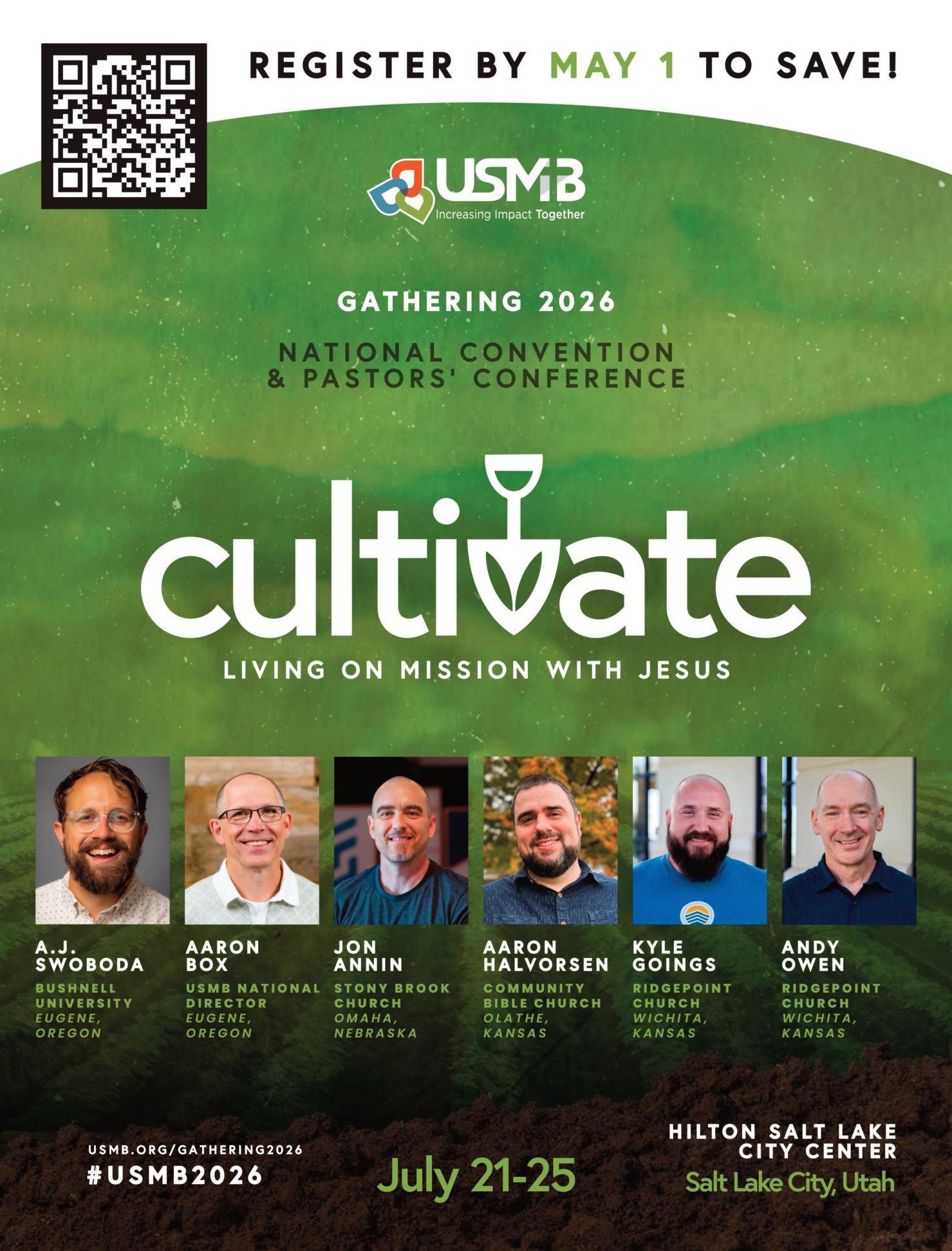

ADDRESS SERVICE REQUESTED