HEART TO HEART: FACULTY MENTORING STUDENTS
DIOCESE CONSIDERS VANDER WOUDE CANONIZATION CAUSE
HONORING THE LEGACY OF ST. JOHN HENRY NEWMAN
AN ALUMNUS’ JOURNEY TO BUSINESS
HEART TO HEART: FACULTY MENTORING STUDENTS
DIOCESE CONSIDERS VANDER WOUDE CANONIZATION CAUSE
HONORING THE LEGACY OF ST. JOHN HENRY NEWMAN
AN ALUMNUS’ JOURNEY TO BUSINESS
Published three times yearly by the Communications and Marketing Office.
Editor & Design Director: Niall O’Donnell
Assistant Editor: Zach Smith
Design Assistant and Illustrator: Julie Wells
Publications Coordinator: Lianna Youngman
Photos: Paul Aguilar, Agnes Blum, Thomas Brehany, Juliana Criste, Niall O’Donnell, Julie Wells, Anna Marie West, Brielle Youngman, Lianna Youngman
Contributors: George Harne, Christopher Lane, Rose Llera, Abigail Miller, Zach Smith, Alex Taylor, Gregory Townsend, Lianna Youngman
Christendom College
134 Christendom Drive, Front Royal, VA 22630 540-636-2900 | www.christendom.edu
Copyright © 2025. Permission to reprint in whole or in part is hereby granted, provided the following credit line is used: “Reprinted by permission from INSTAURARE , the official magazine of Christendom College (christendom.edu).” SUBSCRIPTION FREE UPON REQUEST.
INSTAURARE magazine (pronounced “in-sta-rar-ay”) receives its name from the Latin in the college’s motto “Instaurare Omnia in Christo,” or “To Restore All Things in Christ.”
Christendom College does not discriminate against any applicant or student on the basis of sex, race, color, age, national origin, religion, disability, genetic information, marital status, pregnancy, or veteran status, or any other status protected by applicable law.
BOARD OF DIRECTORS
Mr. Matthew Akers ’03
Mr. Guy Amisano Sr.
Mr.
Mr. Gregory Bodoh ’94
Mr. Timothy Halisky ’01
Mr. Julian Heron
Mrs. Karla Hester ’99 (Treasurer)
Mr. Richard Hough
Mr. Stephen O’Keefe ’93 (Chairman)
Mr. Mark Swartzberg
Mrs. Michele Velasco ’90 (Vice Chairman)
Mr. Thomas C. West Jr.
ADVISORS
THE COVER
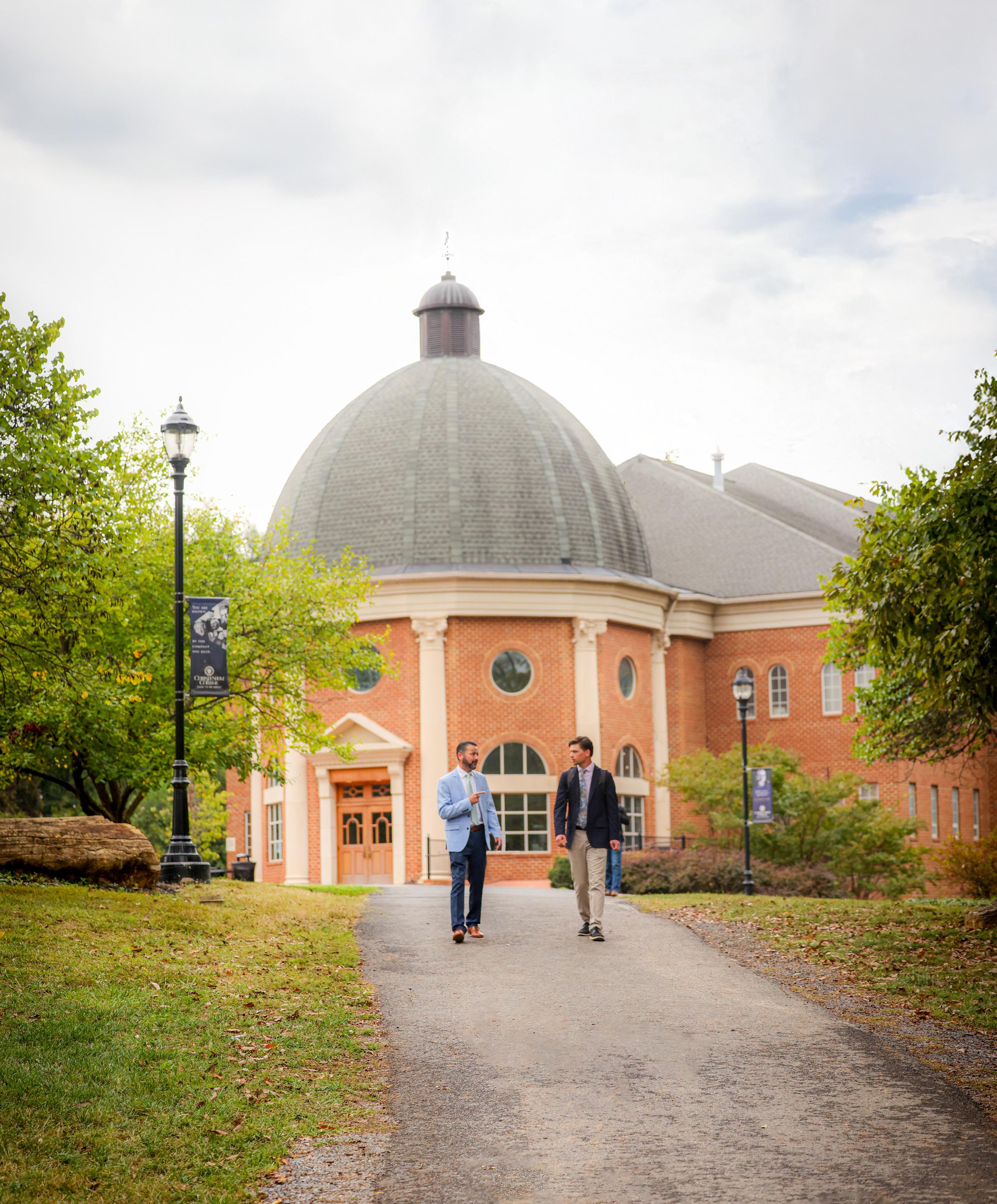
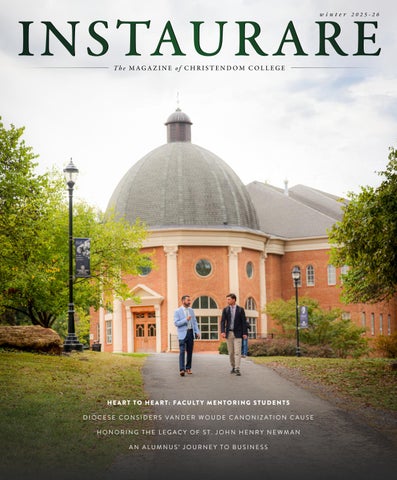
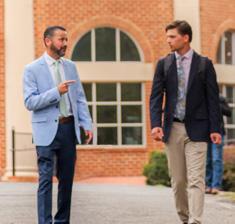
Theology professor Dr. Owen Vyner walks with sophomore Edward Menke from St. John the Evangelist Library.
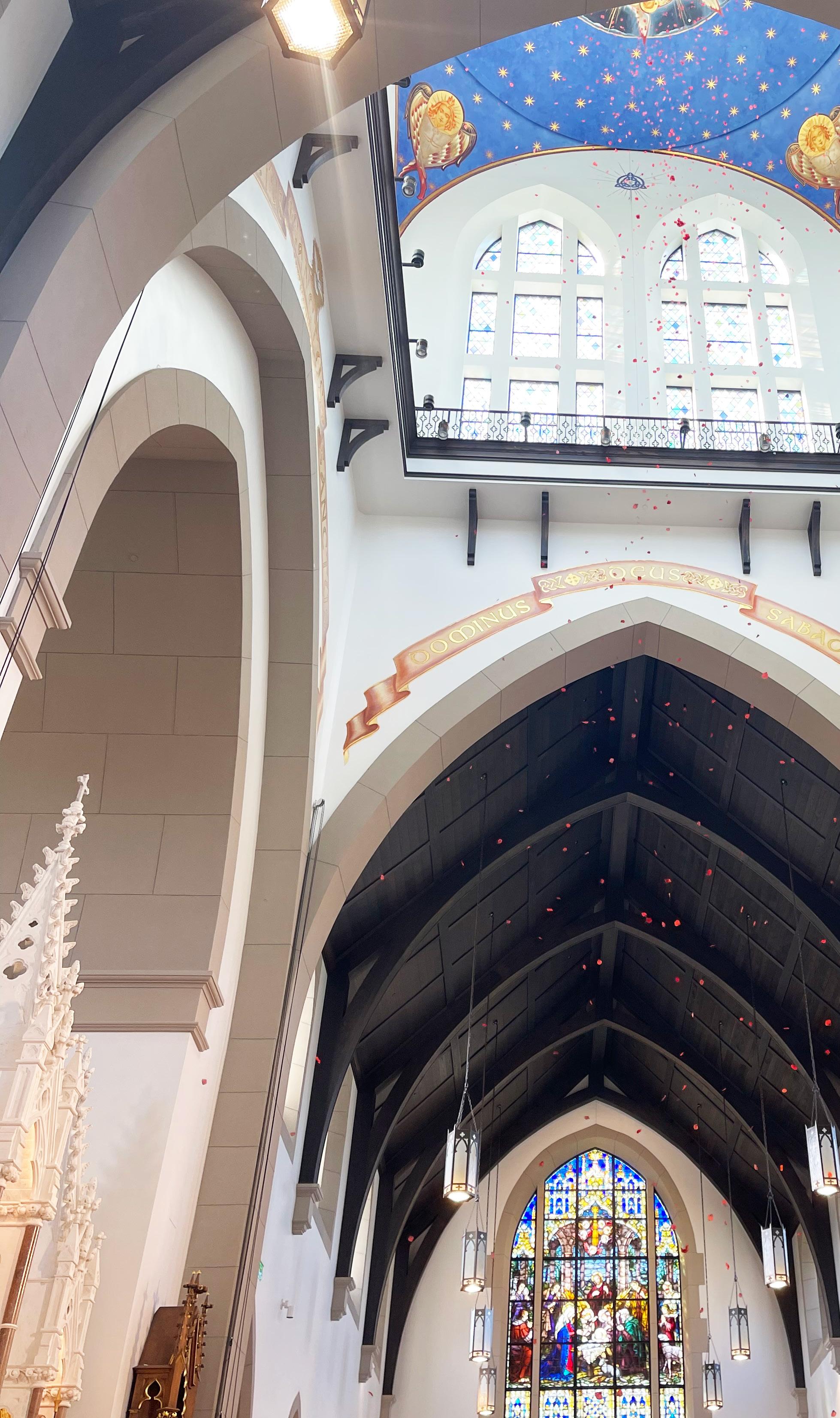
The College honored St. Thérèse of Lisieux by dropping rose petals from the crossing tower in Christ the King Chapel at the conclusion of Mass on her feast day on October 1, 2025.
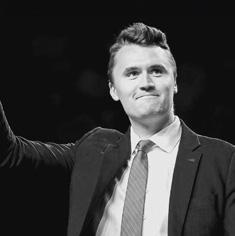
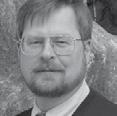
Christendom professor Dr. Alex Taylor reflects on the divided world that led to the Charlie Kirk assassination.
The Mentor's Path
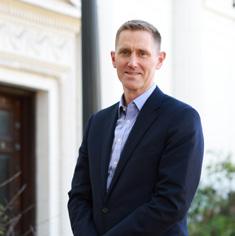
Business consultant and alum Greg Polley ’00 speaks of his journey to his current practice and the Christendom foundation that got him there.
Newman: The North Star of Education
President George A. Harne, Ph.D., writes on the educational legacy left by St. John Henry Newman.
Cor ad Cor Loquitur
A look at the faculty of Christendom College as mentors, and its unique effect on the student body.
One Man Can Make a Difference
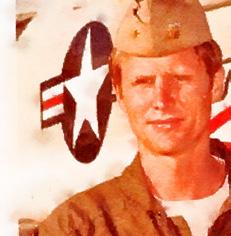
Christendom reflects on the life and legacy of former Athletics Director Tom Vander Woude in the wake of his considered cause for canonization.
Seeing Creation Clearly
Stan Skowronski is interviewed about his decision to support Christendom's Natural Science endeavors.
Omnia
GEORGE A. HARNE, PH.D.
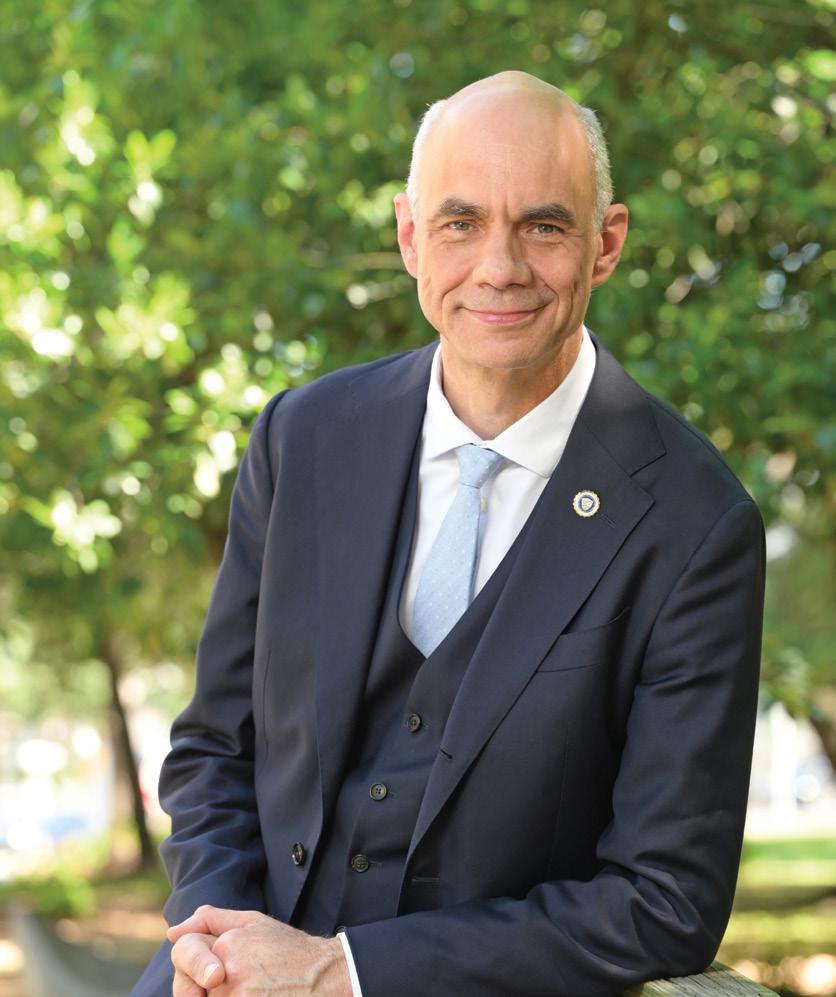
“ Let us all, during this season, seek the manger and then, upon finding it, kneel in silent adoration.”
As Christmas approaches, our thoughts at Christendom inevitably return to the words of our founding president, Dr. Warren Carroll, words inscribed above the doors of our chapel: “Truth exists. The Incarnation happened.” Here the timeless and the temporal as well as the knowable and the unknowable meet in the mystery of our Savior’s birth. These seeming contradictions, born from an elusive unity, also stand as a paradox at the heart of the formation we offer our students every day.
In his book Learning the Virtues, Romano Guardini speaks of the Incarnation in this way: “Here revelation tells us of a mystery which is as comforting as it is incomprehensible. In Christ, God laid aside this unapproachability. Through the Incarnation, He stepped into the space which forms a single chain of destiny for him who lives in it. God stepped into history. When the eternal Son became man, He did so in reality, without protection or exception, vulnerable by word and act; woven, like us, into the stifling web of effects that proceed from the confused hearts of men.”
Inspired by Guardini, we respond to the Incarnation both with our minds, as something that is “incomprehensible,” and with our hearts, as a source of extraordinary comfort.
Intellectually we know that through the Incarnation, God “stepped into history.” This leads to the question: How are we to seek out and contemplate timeless truths while simultaneously living out these truths in time?
At most colleges and universities, a common response to this question would be to posit “my truth” and “your truth,” an answer born from relativism. In still other academic contexts the search for answers can lead to pride in the partial knowledge we believe that we have achieved through our own intellectual acuity—failing to see our knowledge as a gift. Or ultimately, an easy-going nihilism can lead to a pride of the pseudo-courageous, believing that unlike common mortals, we can accept the hard “truth” that nothing is knowable and everything is meaningless. Though each of these views are common at other colleges and universities, because Christendom believes that “the Incarnation happened,” we know there is a better way.
At Christendom we believe that this counterpoint of incommensurables—the temporal and the timeless, the knowable and the unknowable—find their harmony at the manger in Bethlehem. With divine assistance, we avoid skepticism, relativism, pride, and despair masked as courage. We do not label the mystery of the Incarnation as “irrational.” Rather we see it as transcending reason’s natural capacities while still being true to the powers of created reason.
And we see the Incarnation as ultimately redeeming the particular through the particular. For those of us who have come to love ancient Greek philosophy, it can be tempting to think of growth in wisdom solely as an
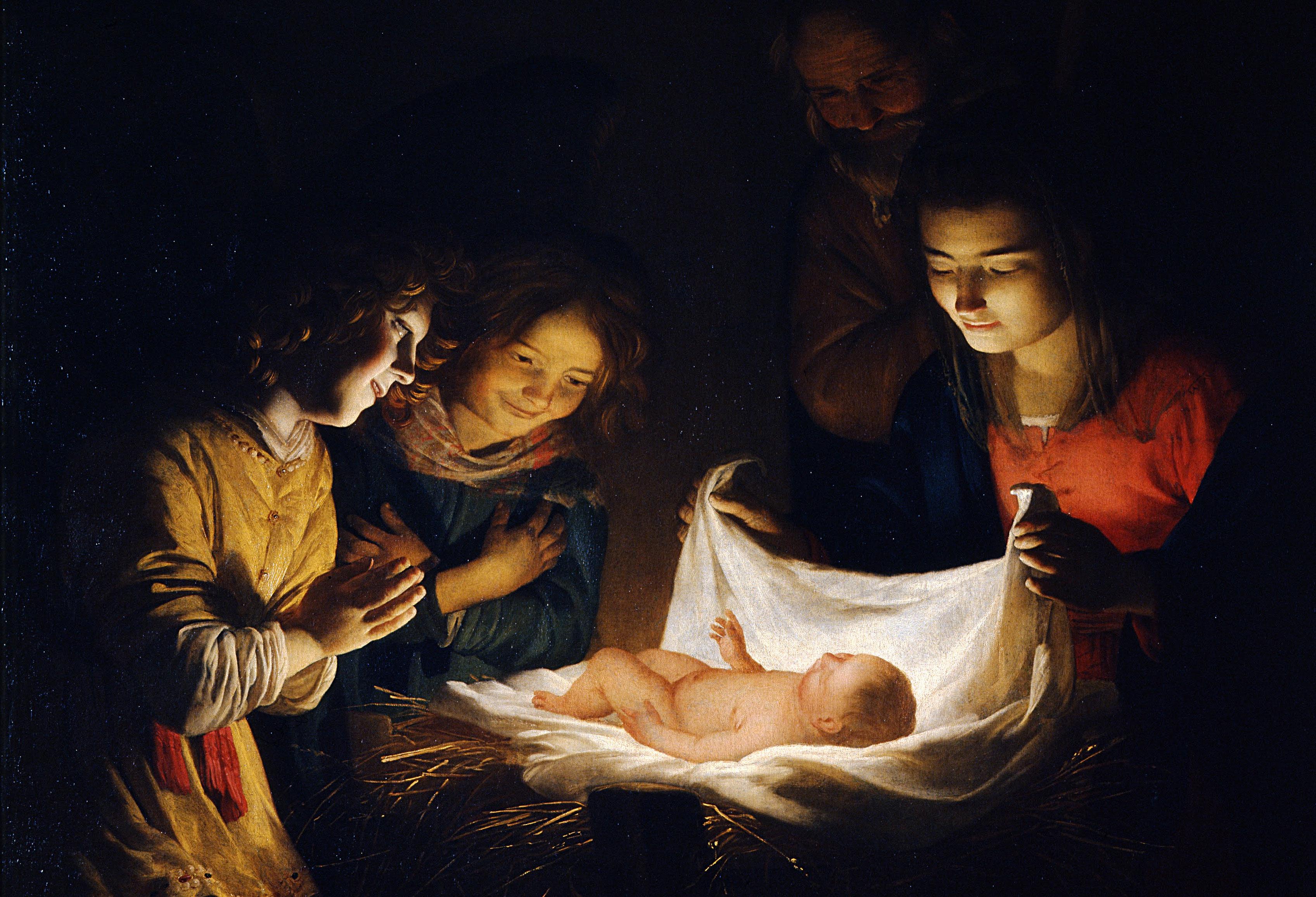
ascent to greater and greater abstraction. In this view, as things become more and more “real” in this ascent, they also become in a sense more distant from the messy realities of particular places, particular times, and particular persons with particular needs. But studying the Greeks in a Catholic context reminds us that at the ultimate destination of this ascent we find One who is paradoxically particular, One who entered into space and time out of love for us. He who heals this blind man, who forgives this sinner. We find that the ascent leads us to the manger.
But our hearts respond to this mystery as well as our minds. Guardini speaks of the consequences of “the confused hearts of men” that too often lead to suffering, isolation, and despair. These words—and those of Dr. Carroll—lead us not only to an intellectual vista but to a place of comfort, communion, and hope.
All of these gifts are experienced by our students as they receive the goods that our Christendom community can give. We do not deny the reality of suffering, isolation, and despair woven into
our lives, but rather insist that these are not the final word. The Babe in Bethlehem changes everything, making them temporary, contingent, and ultimately destroys them in His final triumph.
And so it is to Bethlehem that we are called to go and stand silently, contemplatively worshiping the God who became man, worshiping with our hearts and our minds. There we worship the One who is the source of all that is true in the Incarnation, the source of all lasting comfort.
At Christendom, our search for Wisdom leads to the mystery that is “as comforting as it is incomprehensible” and the union with our God who lays aside his “unapproachability” to unite us to Himself.
Let us all, during this season, seek the manger and then, upon finding it, kneel in silent adoration.

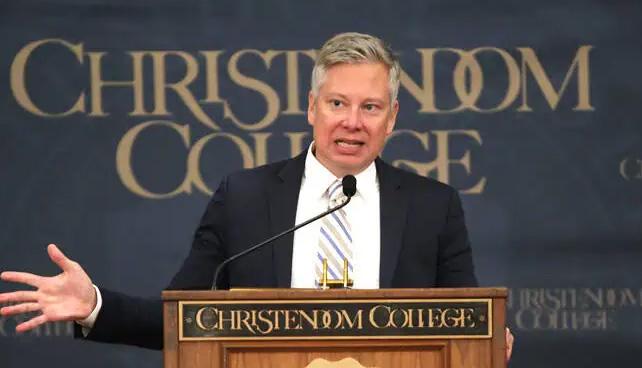
Christendom College welcomed acclaimed poet and critic James Matthew Wilson back to campus as part of the college’s Collegiate Lecture Series, with Wilson delivering a thoughtprovoking lecture titled “The Part the Muses Give Us: Poetry as First Art.” The lecture explored the power and nature of poetry, with Wilson arguing that poetry done correctly can be a “share in divine inspiration.”

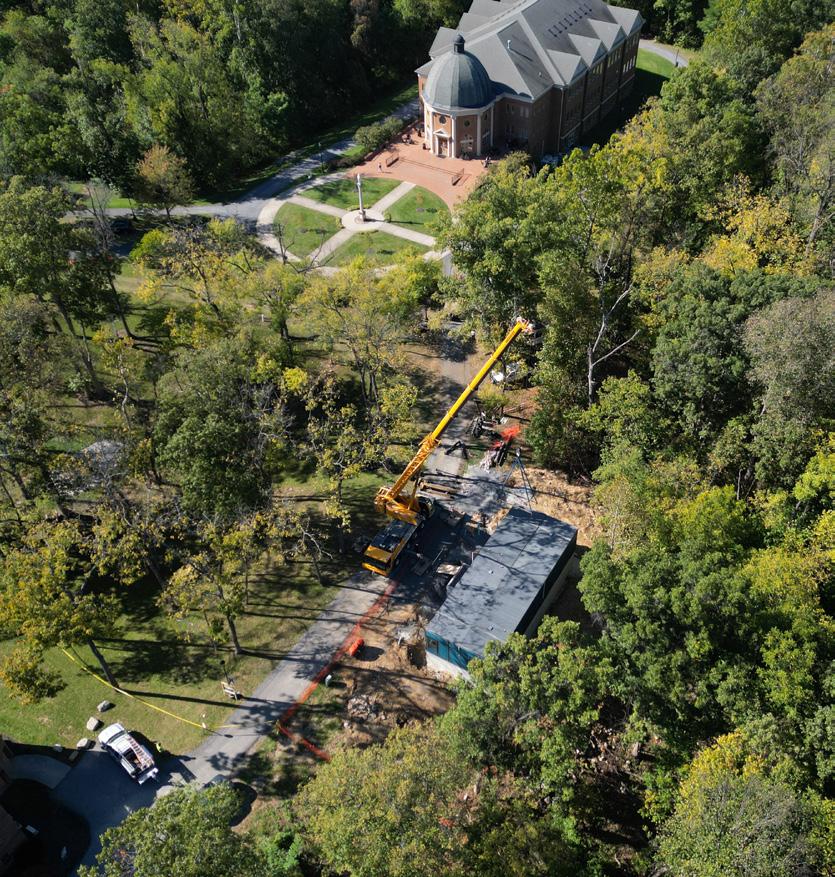
Christendom College has begun construction on two major campus projects: the Madonna Hall Faculty Office Expansion and the Venerable Jerome Lejeune Hall Science Lab. The faculty office expansion is being constructed behind the college’s Regina Coeli Hall main administrative building, adding onto the existing Madonna Hall faculty office space. Meanwhile, the science lab is being constructed near the college’s St. John the Evangelist Library. These developments mark an exciting new chapter in the college’s ongoing investment in academic excellence and community life, with both projects expected to be completed within the next year.
Christendom College President Emeritus Dr. Timothy O’Donnell and Anne Carroll, wife of late Christendom College founder Dr. Warren Carroll, were both honored by Pope Leo XIV with special papal awards this summer. O’Donnell was awarded the Cross Pro Ecclesia et Pontifice, one of the highest honors the Holy See grants to clergy and laity. The award recognizes O’Donnell for his decades of distinguished service to the Catholic Church, with the Diocese of Arlington’s Bishop Michael Burbidge conferring the award to him at a private ceremony. Carroll, meanwhile, was honored with the Benemerenti Medal by Pope Leo XIV in recognition of her decades of service to the Catholic Church. The Papal Honor, which has been awarded to laity and clergy for the past century, recognizes Carroll’s enormous contributions to the Catholic Church in America, including being instrumental in the founding of Christendom College and founding both Seton School and Seton Home Study.
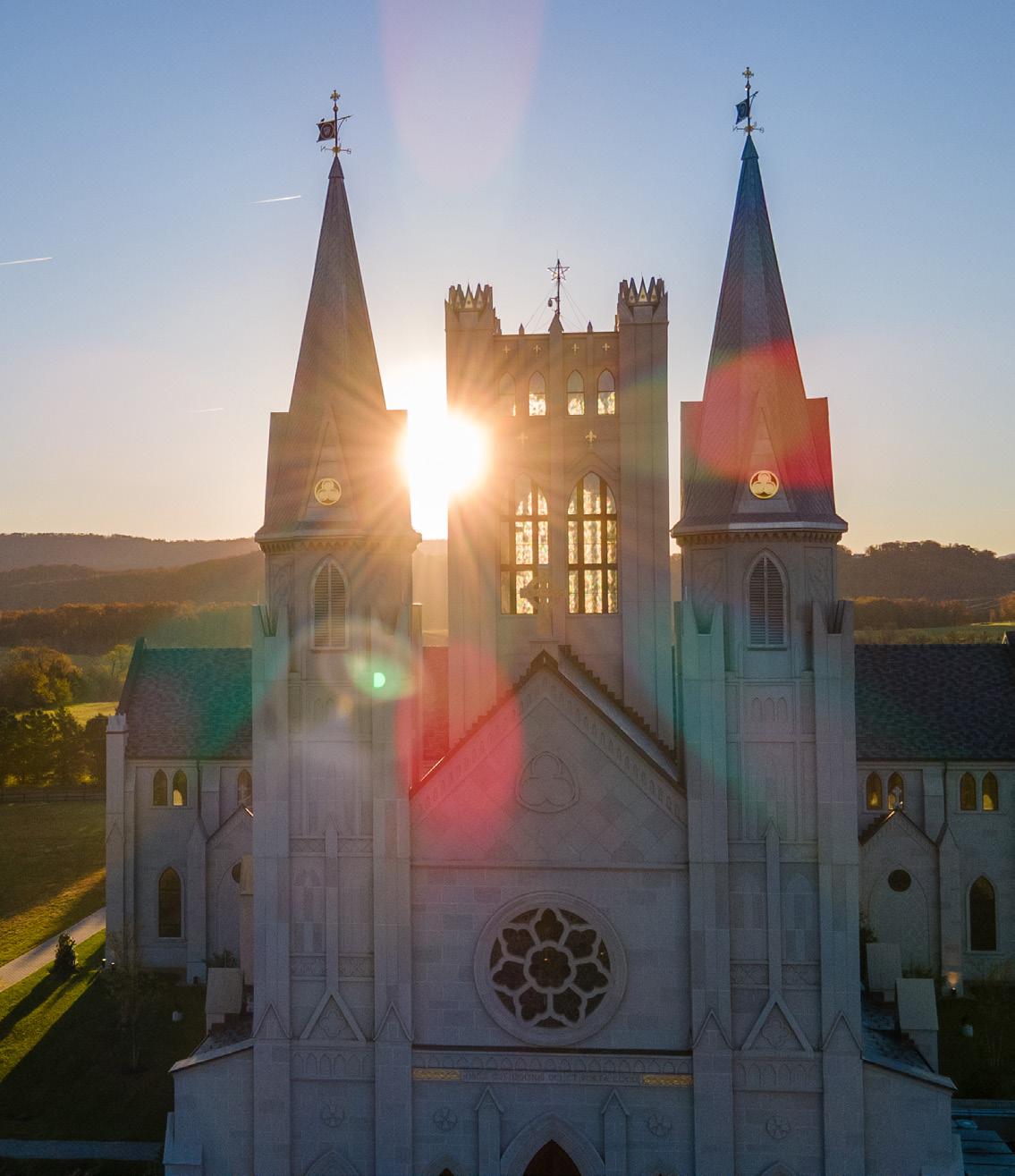
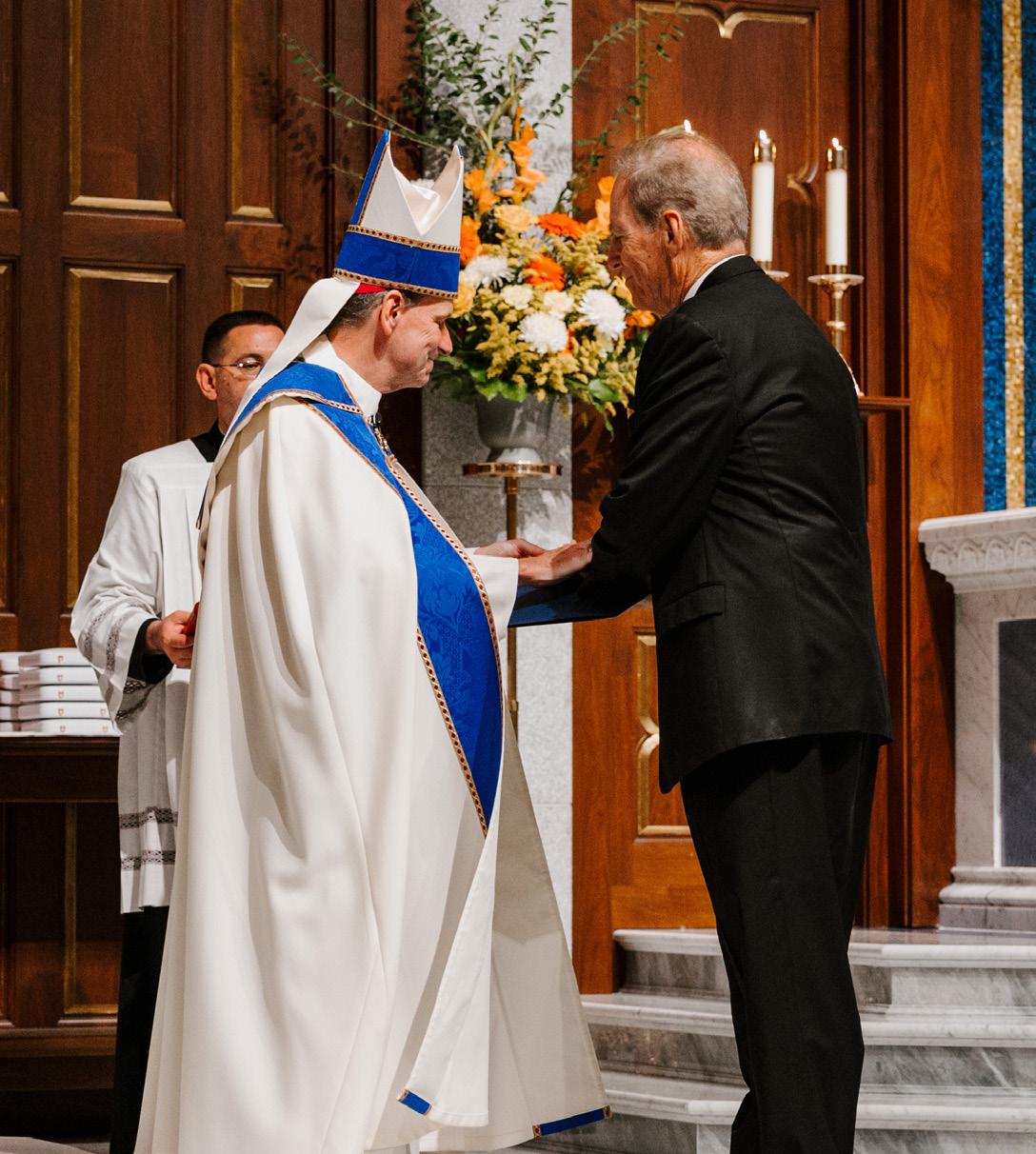
Christendom College received official approval from the Southern Association of Colleges and Schools Commission on Colleges (SACSCOC) to begin offering doctoral degrees, marking a historic moment in the life of the college. This accreditation milestone affirms Christendom’s academic strength and cleared the way for the college’s new Center for Educational Philosophy and Leadership to begin offering doctoral degrees this year. “This is a tremendous moment for Christendom,” says College President George A. Harne, Ph.D. “For decades, we have formed undergraduates to be leaders in the Church and society. Now, with this next step, we can provide even deeper intellectual and spiritual formation for those leading the renewal of Catholic education in America.” In conjunction with this news, the college also announced two new fully funded scholarships supporting the Center for Educational Philosophy and Leadership. Named in honor of College Founder Dr. Warren Carroll and his wife, Mrs. Anne Carroll, these scholarships will help form the next generation of Catholic educators and leaders.
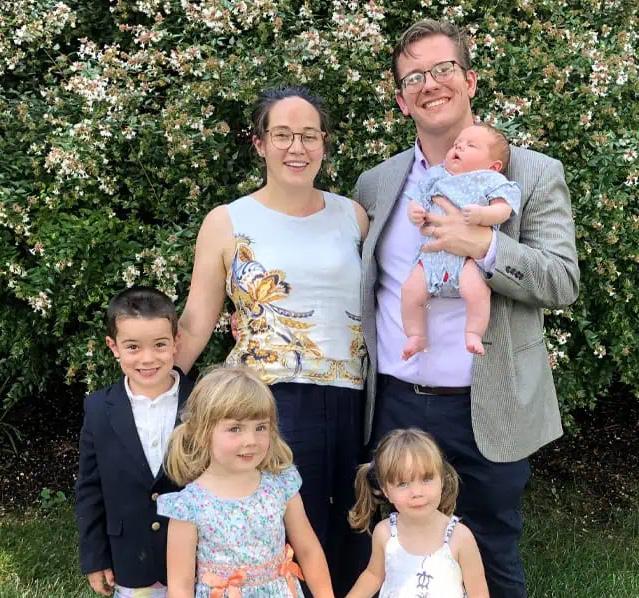
Alumna Jane (née Adams) Maschue ’18 has received the John Tracy Ellis Award from the American Catholic Historical Association (ACHA) for her academic dissertation, “Saint, Scholar, Martyr: Boethius in the Margins, 800–1500.” Her work, based on years of manuscript research, was praised by the ACHA for “breaking new ground,” bringing to light a millennium of tradition about the sixth-century philosopher. Maschue, who graduated from Christendom in 2018, is currently a Ph.D. candidate at the Catholic University of America, with her project on Boethius serving as the culmination of all her years of study. Throughout her academic journey, Maschue’s greatest partner has been her husband, Luke ’18. An accomplished scholar himself, Luke was recently awarded a Weaver Fellowship from the Intercollegiate Studies Institute to support the writing of his own dissertation. Together, the two have shared the workload of raising their children and pursuing scholarship.
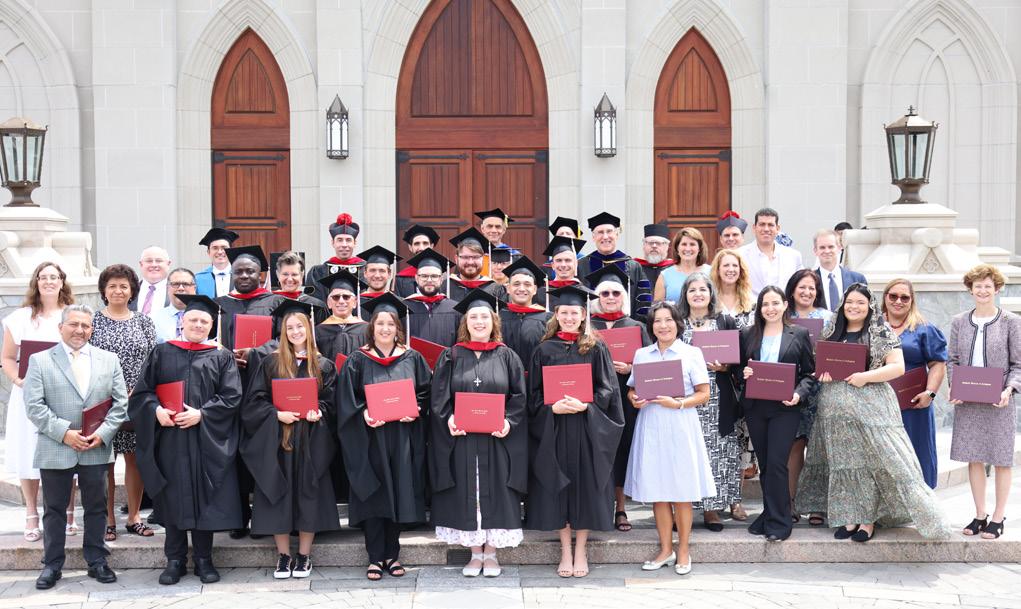
Christendom College celebrated the achievements of sixteen students this summer, awarding Master of Arts degrees in Theological Studies during its Graduate School of Theology’s commencement ceremonies. In addition, seven graduates received Advanced Apostolic Catechetical Diplomas, while 38 Master Catechists from the Diocese of Arlington were recognized with advancedlevel catechetical certification.
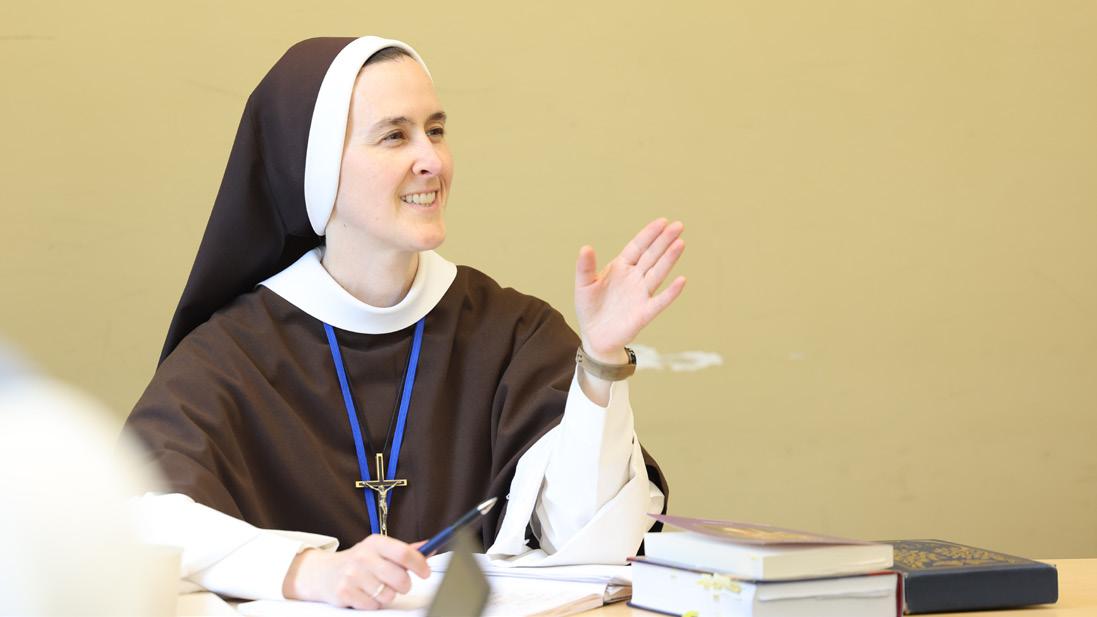
Christendom’s new Institute for Liturgical Formation welcomed its first cohort of students to campus this summer to study and grow in their faith over several weeks in the Shenandoah Valley. Over a dozen students from across the United States participated in the inaugural summer session, including priests, religious, and lay liturgical leaders, deepening their understanding of the Church’s liturgy both intellectually and spiritually.
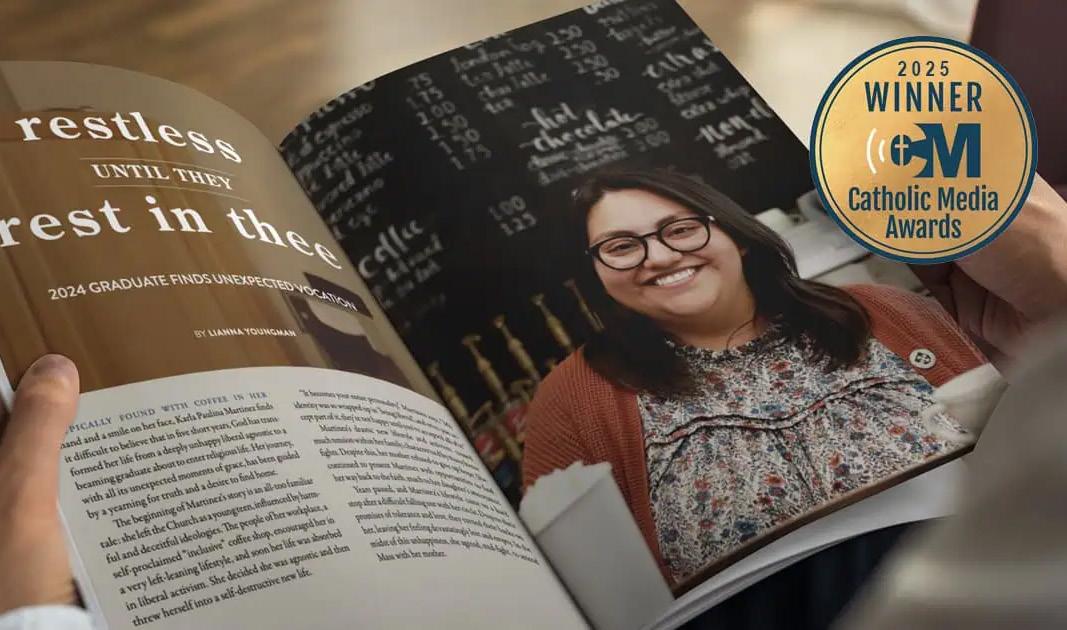
Christendom College’s Communications and Marketing Office has won a prestigious First Place award from the Catholic Media Association as part of its 2025 Catholic Media Awards. The awards, which honor excellence in Catholic journalism and communications, recognized the feature article “Restless Until They Rest in Thee: 2024 Grad Finds Unexpected Vocation” as one of the best of the year, showcasing how Catholic education can transform lives and communities for the better.
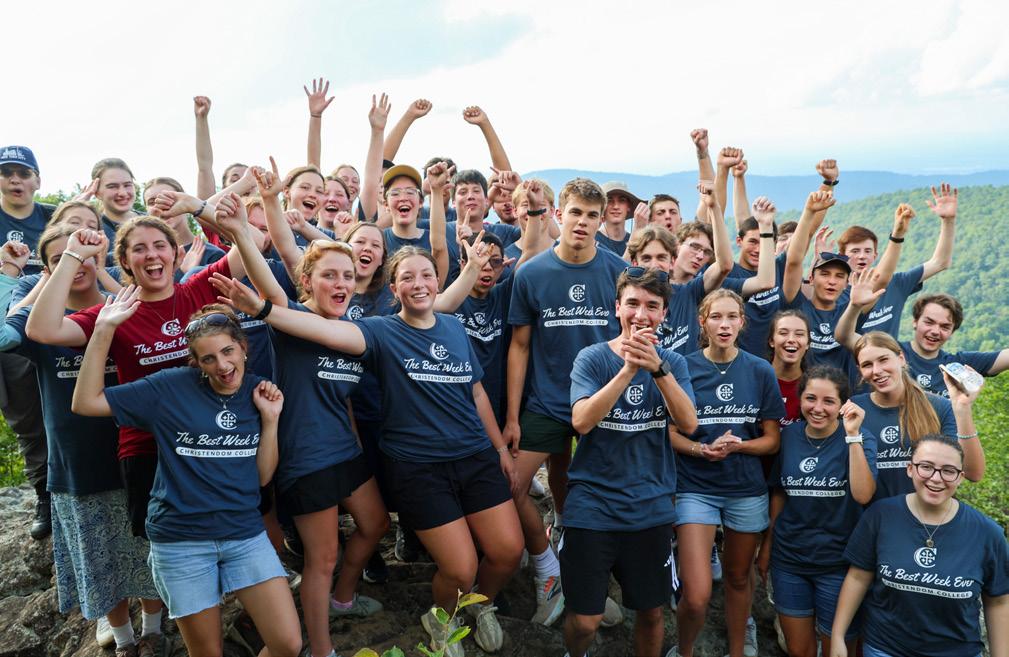
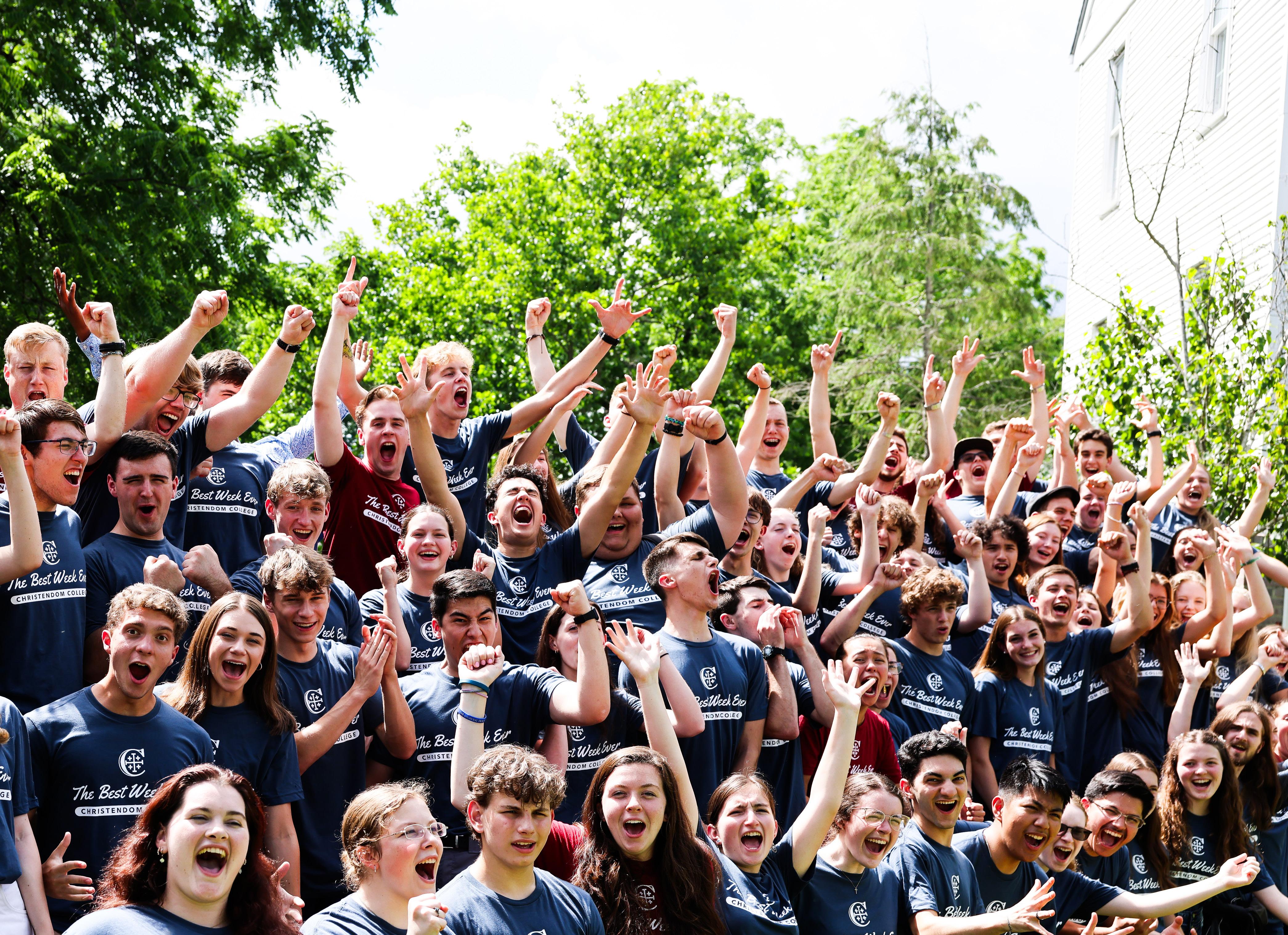
Christendom College hosted a record-breaking summer for its Best Week Ever high school program (BWE), with 330 rising high school seniors coming from 38 states as well as from Canada, Mexico, Brazil, and Spain. The most popular, well-attended, and highly ranked program of its kind, each of the five week-long sessions immersed students in Christendom’s academics, spiritual life, and vibrant Catholic culture, with each session offering students a chance to learn the Truth, live the Faith, and thrive with like-minded young Catholics.
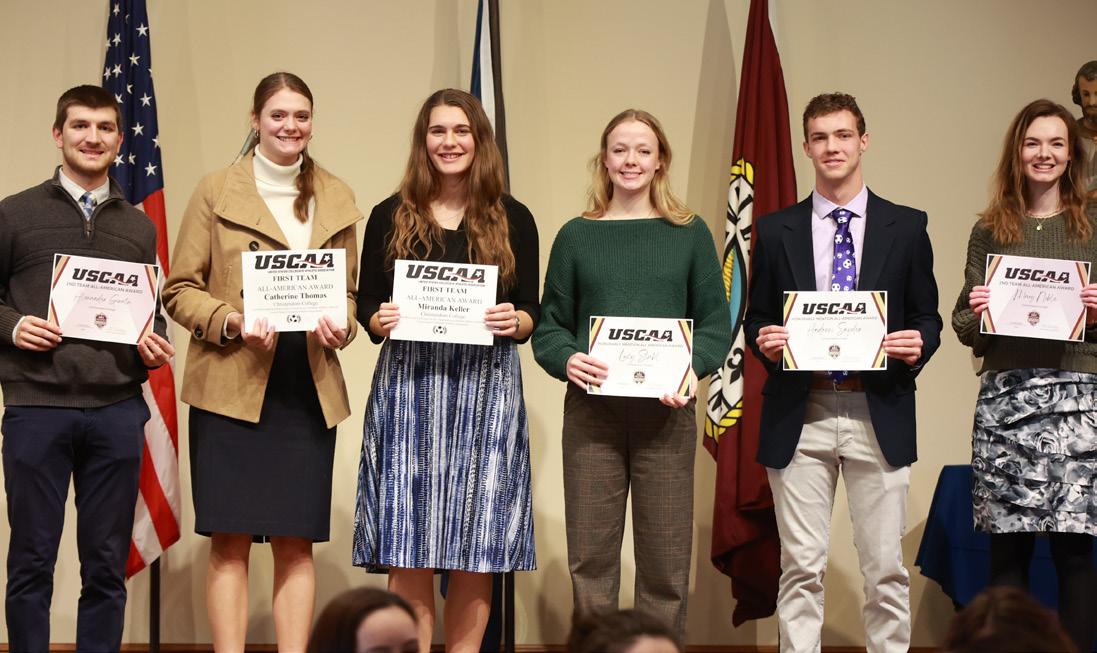
Christendom College is the winner of the USCAA’s 2025 President’s Cup, as announced by the collegiate sports organization this summer. The award, which is given to the athletic department that scores the best in academic performance in the association, is Christendom’s fourth in the past six years. Over the course of the past academic year, Christendom’s student-athletes worked hard to achieve success both on and off the field. Overall, Christendom’s varsity sports teams achieved a cumulative GPA average of 3.51 for the 2024-25 season, with the senior class leading the way with an average GPA of 3.61.
Beginning in 2026, Instaurare will publish twice yearly. To remain up to date on Christendom news, subscribe to our weekly email update CHRISTENDOM NOW at christendom.edu/now or scan the code.
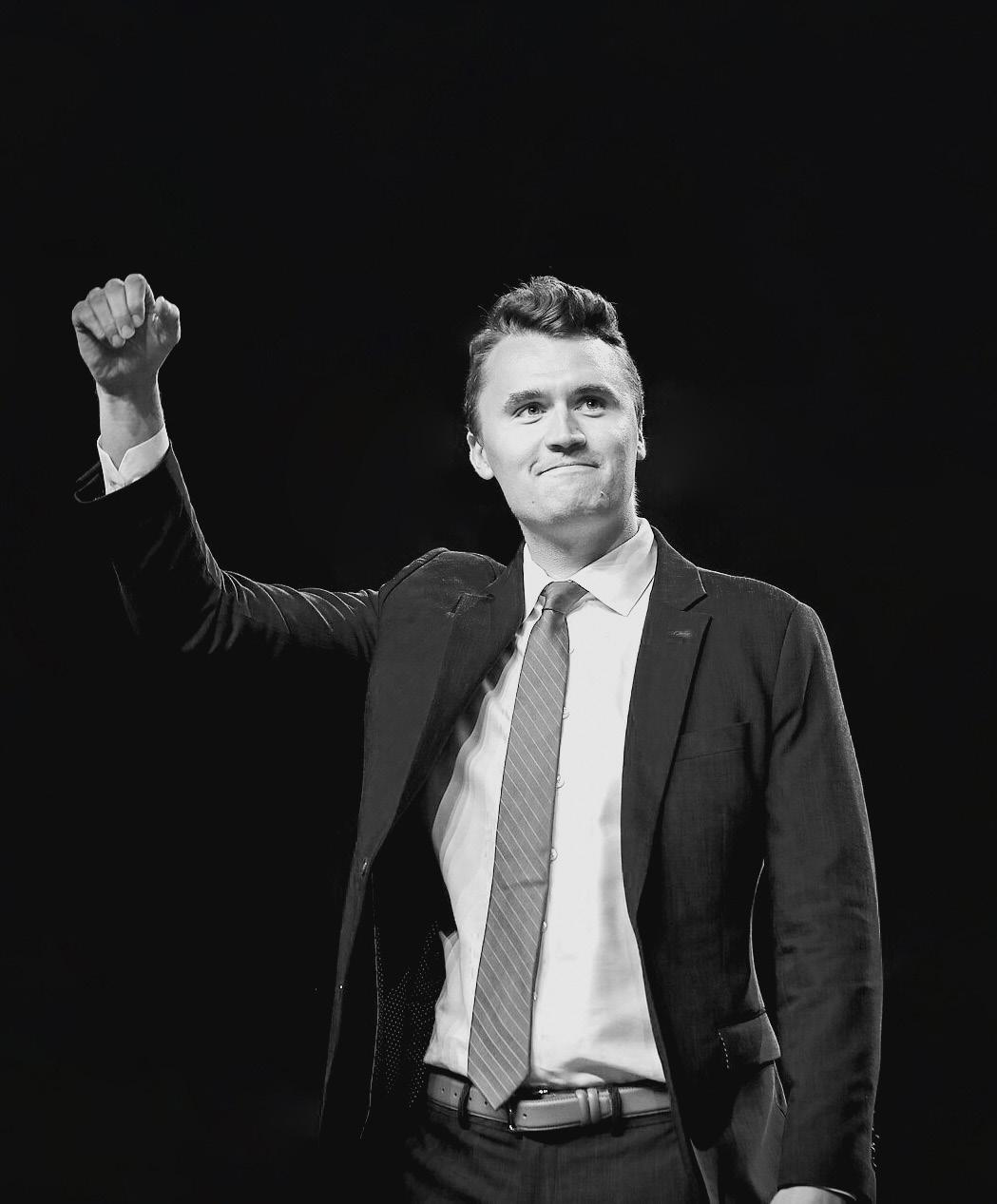

BY ALEX TAYLOR, PH.D.
Much has been said in the past few months since his assassination to remember the man whose body has now been returned home after a murderer’s bullet removed him from our sight. Much will be said in the days ahead about the suspect in custody and his motives. But in the wake of the politically-motivated killing of conservative activist Charlie Kirk, the worst act of its kind since the killings of Martin Luther King Jr. and Robert F. Kennedy, what must be discussed is the culture of sophistry whose proponents openly justify such acts of violence and what can be done in response to rebuild the culture of free speech oriented towards the truth in which Kirk flourished, taking stock of new political realities. Almost nine years ago, Kirk wrote, tellingly, that “you can tell a lot about a person by how they react when someone dies,” and what we see after his death is the best and, unfortunately, so much of the worst of our society emerging into the light.
In the age where podcasting and social media have become for many people sources of news considered more reliable than standard broadcast news networks, many pundits and influencers aspire for an audience, but few have become as much of a meme and as much of a mentor to so many young conservative Christians as Charlie Kirk. His “Prove Me Wrong” signs are a thing of legend, but more shocking is the sensation many encountered while engaging him, that this was truly a mind opened to being changed, if he encountered in his opponent the truth which St. Augustine wrote is not the
property of any particular person, but the “common bounty of all lovers of truth.” This understanding of truth is radically opposed to that espoused by the secular anti-culture which has been growing for the last century in America, which Pope Benedict XVI accurately described as the “dictatorship of relativism.” The phrase is apt, because the dictatorship evident in not only the violent (successful) attempts to shut down debates and lectures on college campuses, in the most extreme cases, sometimes resulting in takeovers of the whole campus, but now also an assassination, depends on a conviction that common truth between all human beings is unattainable, and that one’s mind should be changed by the force of force, rather than by the peace of truth attained through the force of reason.
The contemporary academy bears a great deal of guilt for this anti-culture. Its lineage can be traced back, in part, to Jacques Derrida’s criticism of the ‘logocentrism’ of the West (the privileging of rational argument, particularly through speech), which itself has roots in Immanuel Kant’s rejection of the possibility of metaphysical knowledge (i.e. of the idea that we can know things as they truly are and not merely how they appear to be), but such anti-rational academic ideologies as feminist standpoint theory (the claim that so-called marginalized groups have a privileged relationship to knowledge) and the historicist epistemology of Michel Foucault which, in the words of Roger Scruton, “argue[s]—by the old nominalist sleight of hand that was surely invented by the Father of Lies—that ‘truth’ requires
inverted commas, that it changes from epoch to epoch, and is tied to the form of consciousness, the episteme, imposed by the class that profits from its propagation.” Such falsehoods about truth pervade the halls of universities, funded by taxpayers directly, in state university systems, and indirectly, by federal student loan dollars.
If the truth is not attainable by anyone who enrolls in our institutions of higher learning and works diligently at his or her studies, what could the purpose be of funding such institutions so extravagantly as we do but as engines for social change? Karl Marx set the agenda when he argued in his 1845 Theses on Feuerbach that “The philosophers have only interpreted the world, in various ways. The point, however, is to change it.”
The role of the university is not, in this post-Kantian, Marxinflected frame of mind, to provide a venue wherein students may be brought into the company of other inquirers, where, in the words of Catholic philosopher Josef Pieper, “everything can be discussed—[and] not just discussed, but known as true or false,” but as places for what Italian Marxist Antonio Gramsci called “war of position,” the encouraging of subversion of the predominant culture which he thought must proceed the “war of maneuver,” or “the physical overcoming and deposing of the ruling class.”
Thus the theory and practice of much of the contemporary academy has become part of what Noelle Mering has called “a violence-justifying movement.” While she rightly relates this to Marxist intellectuals in the United States behind much of the cultural revolution that took place in the 1960s, such as Herbert Marcuse and Theodor Adorno, to fully understand the unreal situation which our country finds itself in, we have to turn farther back in history to Plato’s Greece. In perhaps the most astute short book to discuss the dilemma of the West today, Abuse of Language—Abuse of Power, Josef Pieper argues that “Plato recognized, identified, and battled in the sophistry of his time a danger and a threat besetting the pursuits of the human mind and the life of human society in any era.”
What is that danger, that threat? According to Pieper, the essence of sophistry is the “corruption of the word,” language very carefully designed and used contrary to its own two-fold purpose, to “convey reality” “for someone.” Such words are what he calls flattery, words used not to present the truth, a common good, to another, but for an “ulterior motive,” such that “the other . . . ceases to be my partner. Rather, he has become for me an object to be manipulated, possibly to be dominated,
to be handled and controlled.” While these words may seem shockingly strong, one can recall two examples: how Michael Knowles was treated in his Jubilee debate by LGBTQ activists, and the interview which in hindsight seems the beginning of Jordan Peterson’s popularity, his interview on Channel 4. In the former, the genial and intelligent podcast host and cigar salesman is treated as an illogical antagonist by provocateurs looking for their 15 minutes of YouTube fame, and in the latter, the clinical psychologist is egregiously misinterpreted repeatedly so much that it spawned a popular meme.
This misuse of language, the faculty fundamental to the reason that separates man from beast, is why the best of the Western literary tradition has recognized that sophistry is not simply equivalent to physical violence, but in fact, worse. It is for this reason that Dante places the circle of the fraudulent counselors lower in his Inferno than the violent towards their neighbor, even those merciless tyrants such as Attila the Hun and Dionysius of Sicily. While this may shock us, another example helps us see the truth of this judgement. In Shakespeare’s tragedy Othello, although the play’s title character commits the play’s physical act of tragic violence, it is the villain Iago who, by manipulating Othello, leads him to murder his own wife. Shakespeare’s depiction of the two men leaves no doubt about who the greater sinner is, the malicious deceiver that despises the idea of human nature and virtue, preferring to exercise his will to power over his fellow man by the strength of his rhetorical subtleties.
These kinds of verbal dehumanization lead to the anticulture Pieper prophesied and with which we are all too familiar, that full of “the obsession with slander, the frenzy to destroy, and the readiness to accept radical answers.” Pieper recognized that this flattery can infect “even philosophy, theology, and the humanities,” such that the academy and the mass media together produce a “public discourse,” which, when “separated from the standards of truth, creates on its part, the more it prevails, an atmosphere of epidemic proneness and vulnerability to the reign of the tyrant.” The corruption of such a debased public discourse depends on, as both Pieper and philosopher D.C. Schindler recognize, in the latter’s words, “epistemological relativism,” which Schindler finds Plato confronting in his dialogue Theaetetus. “By denying the difference between perception and knowledge, epistemological relativism makes the individual perspective infallible,” Schindler argues, but rather than this leading to an individualist, libertarian utopia, it leads to the
What is to be done to confront the anticulture that has supported and even celebrated the murder of a husband and father for the grave crime of searching for the truth and encouraging others to do likewise is not a question which can be answered easily.
strongest individual enforcing his opinions on all those whom he can conquer by force without any recourse to justice and objective truth on their side. Thus the apparent rhetorical force to the argument from so-called “lived experience” (what other kind is there?), even though, as the eminent literary critic Louise Cowan argued, “people do not learn from experience; they learn from reflection and interpretation.”
What is to be done to confront the anti-culture that has supported and even celebrated the murder of a husband and father for the grave crime of searching for the truth and encouraging others to do likewise is not a question which can be answered easily. Surely, our first answer as Catholics has to be prayer and fasting, because these are political actions, actions which remind us of our dependence on the City of God in heaven. But being so reminded, we must go forth, strengthened in our resolve to search for the truth and to help others do so, supporting those Catholic institutions of higher education like Christendom College which prioritize the truth rather than post-modern ideology, encouraging our legislators to reform our public universities, founding worthy civics and liberal arts programs (particularly Ph.D. programs which supply the next generation of faculty, prime targets for leftist ideological colonization), and supporting such paraacademic institutions which are oases in the ideological desert of mainstream campus life.
Merely writing a donation check or a letter to a Congressman is not enough, as useful and necessary as these things might be, however. We need also to go forth with a greater commitment to the truth, to being more attached to it, to Him, than what we think we know but may be wrong about, and seek to raise our children, mentor our students, encourage our colleagues, younger and older, in that search for Christ which is the pursuit of Truth, confident that in humility, Christ will not allow us to be taken away from Him by that search, in which if we are steadfast, He will only lead us closer to Himself, Who is, as the Byzantine Catholic prayer to the Holy Spirit, the Spirit of Truth, has it, “everywhere present and filling all things.” For us the living, then, the task remains to mourn, to pray, to take stock, and then to act to restore the culture in which Charlie Kirk changed minds, including his own.
A shorter version of this article was originally published by Word on Fire’s Evangelization and Culture Online in September.
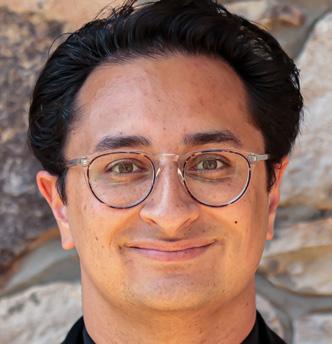
Dr. Alex Taylor is an Assistant Professor in the Department of English Language & Literature at Christendom College.
BY LIANNA YOUNGMAN
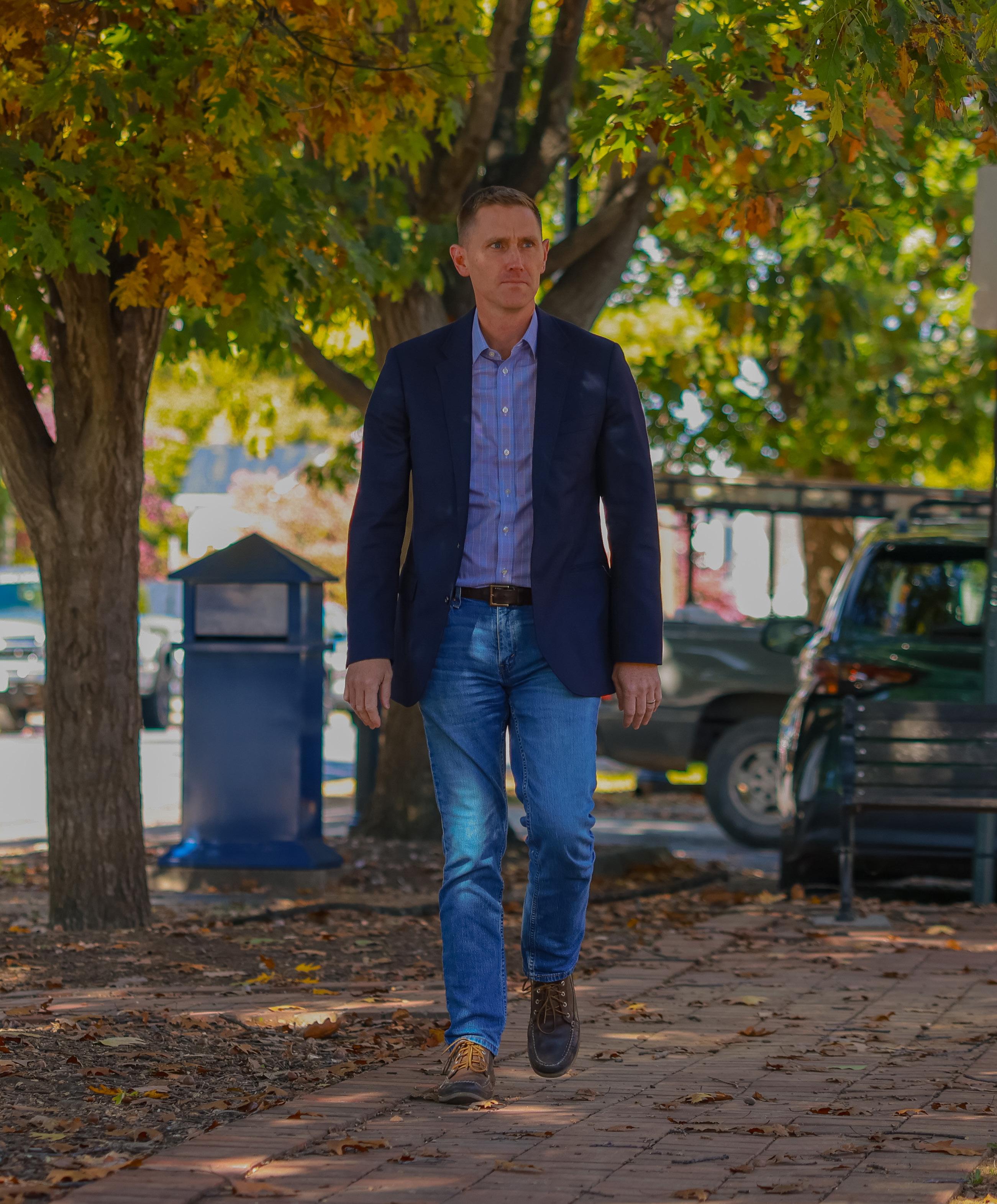
HOW ONE CHRISTENDOM ALUMNUS HELPS LEADERS THRIVE
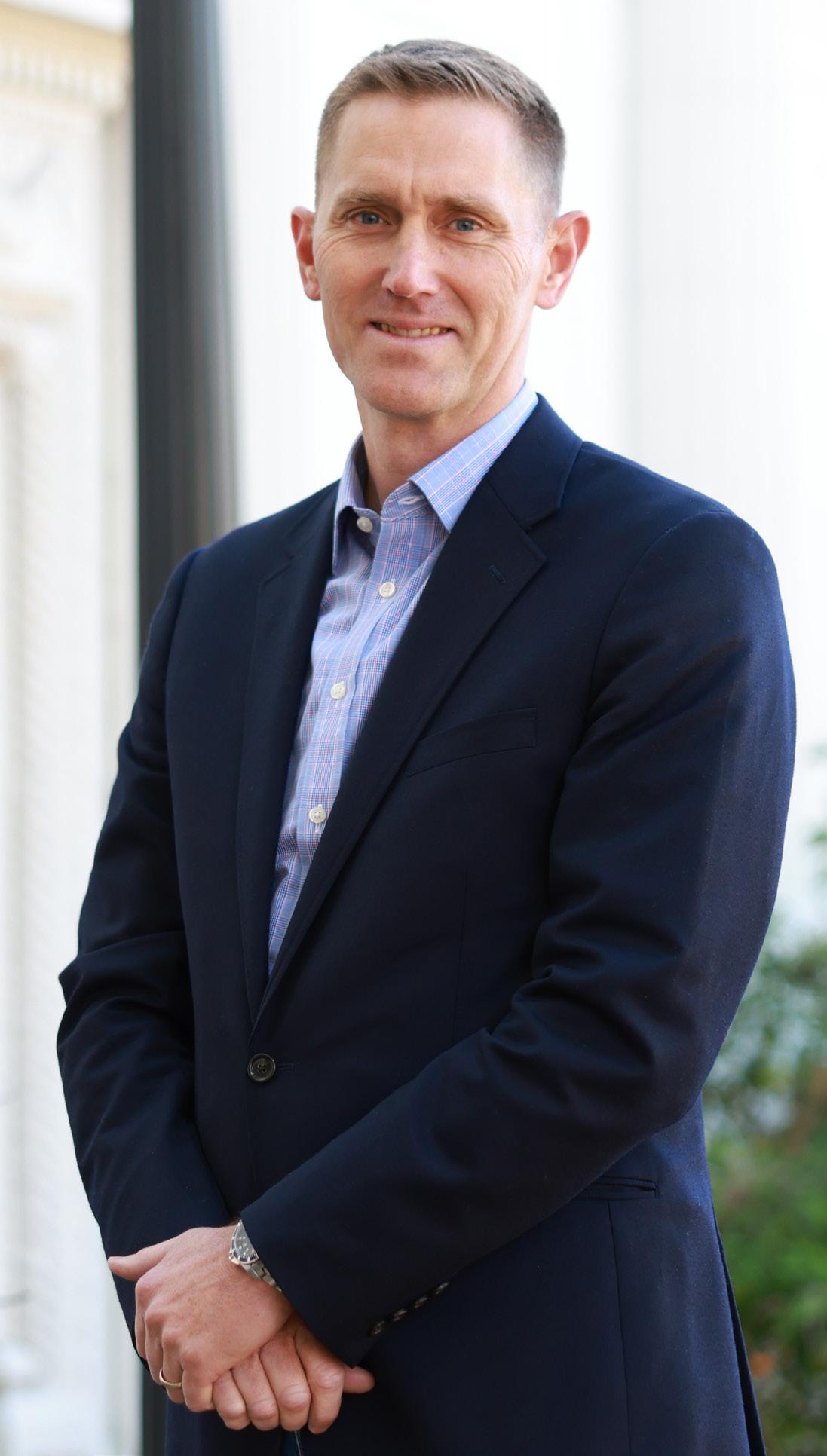
In a world where leaders often chase results over relationships, true mentorship has become something of a lost art. Yet, behind every thriving organization lies someone who can see beyond profit margins—someone who builds people as much as systems. For Christendom alumnus Greg Polley ’00, that mission has become the heart of his life’s work.
Polley’s path didn’t begin with a master plan. As an intern fresh out of Christendom, navigating the historic streets of Washington, D.C., he had no idea that 25 years later, he would be helping business and nonprofit leaders find clarity, purpose, and success through mentorship and organizational transformation.
His career began at Charles Schwab’s government affairs office in Washington, D.C., where his work ethic and curiosity quickly earned him promotions to senior manager and lobbyist. There, Polley learned firsthand how corporations and government intersect—gaining insights that would later shape his holistic approach to leadership.
After several years on Capitol Hill, managing policy and appropriations issues, Polley pursued new challenges: first as a business president while earning his MBA from Christian Brothers University, then as Chief Development Officer at the Augustine Institute, where he discovered the inner workings of nonprofit leadership.
It was during this time that Polley encountered the Entrepreneurial Operating System (EOS), a framework designed to help organizations align vision, execution, and team health. With his deep understanding of what makes teams thrive—or falter—Polley recognized a calling.
“An EOS Implementer,” he explains, “helps organizations clarify their visions, execute effectively, and foster team health through open communication. We act as teacher, facilitator, and coach—helping entrepreneurs create better lives for themselves.”
Today, as a professional EOS Implementer, Polley guides leaders across industries, drawing on both experience and formation rooted in his Christendom education.
“The education I received at Christendom College provided critical thinking skills essential for navigating various environments,” he reflects. “It equipped me with the tools and courage to pursue a more unconventional career path.”
That formation went beyond academics.
“Our personal core values that guide us are essential to all aspects of life,” he says. “A strong connection to the truths of natural law and our Creator is fundamental to achieving success.
Living with integrity and a commitment to serving others will ultimately lead to a meaningful career.”
Mentorship, Polley believes, is where this formation finds its fullest expression.
“Mentorship is ultimately an investment in another person,” he says, “and it is critical for all of us at any stage in life. Throughout my career journey, I’ve been fortunate to have several mentors who made a significant impact on me.” These mentors include family members, a college board member, even his first boss from Washington, D.C., whom Polley still turns to for advice.
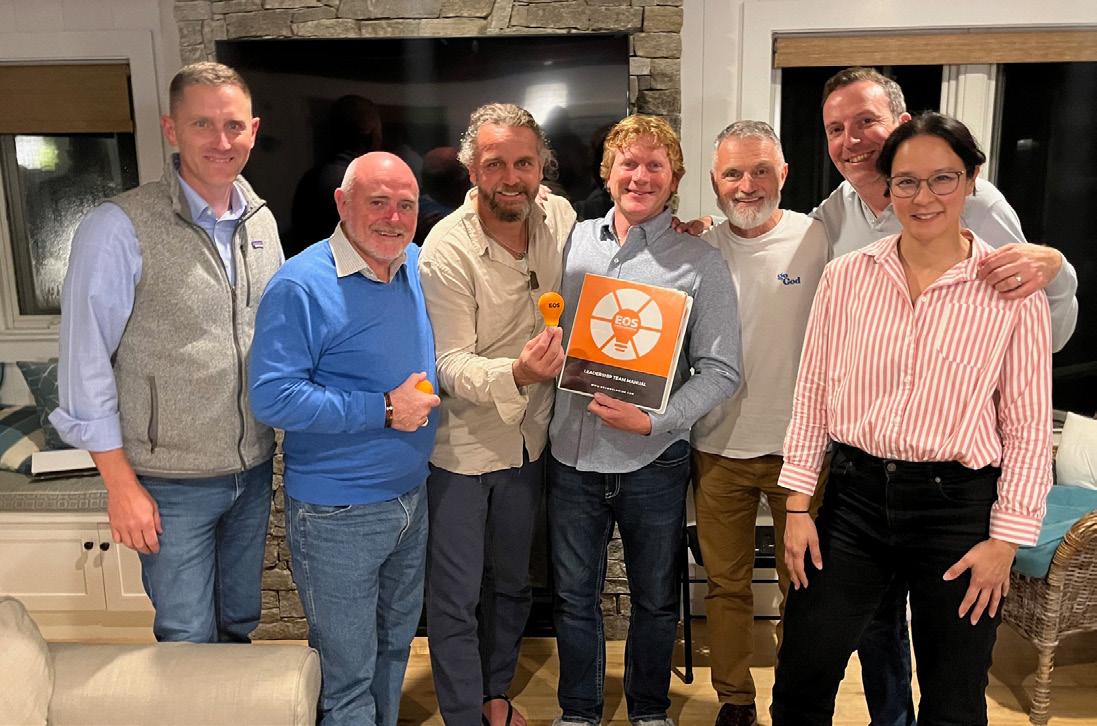
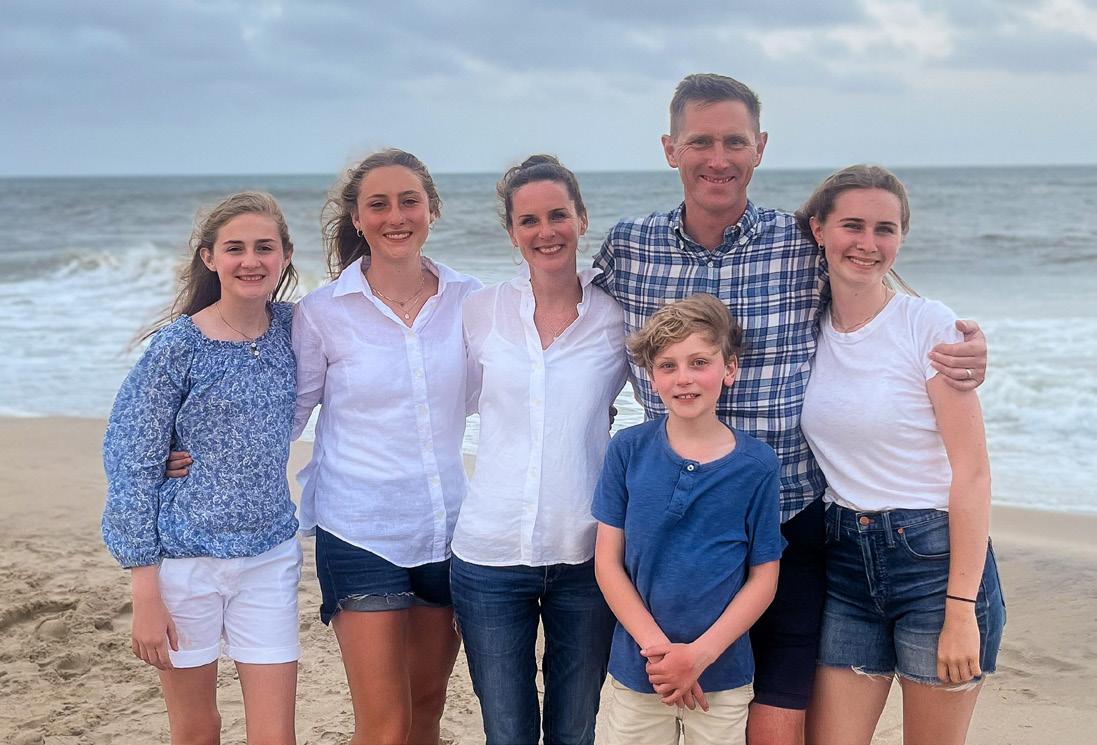
Reflecting on those experiences, Polley recalls long conversations with Christendom professors over coffee or lunch, discussing class topics as well as current events.
“Reflecting on these relationships reminds me of the profound impact mentorship had in my life,” he notes. “I hope this tradition continues at Christendom. It’s one of the unique strengths of a small college—nurturing the next generation of leaders for our world and the Church.”
At heart, Greg Polley remains a doer—but more profoundly, a builder: of people, systems, and futures. Whether mentoring a new entrepreneur, advising a nonprofit, or guiding his daughter through her own Christendom journey, Polley embodies what Christendom hopes for every graduate—a life of purpose, integrity, and service that turns vision into action.
The education I received at Christendom College provided critical thinking skills essential for navigating various environments. It equipped me with the tools and courage to pursue a more unconventional career path.

BY GEORGE A. HARNE, PH.D.
On November 1, Pope Leo XIV declared St. John Henry Newman a doctor of the Church. For many of us who labor in the vineyard of education, Newman has been our primary teacher for years. Indeed, for most of us, he has been our North Star.
The themes in Newman’s writings from which we draw our sustenance are many. And countless books and articles have been written on these themes. Yet from the plenitude of Newman’s works and the commentary on them, at least five principles may be highlighted as a kind of constellation, principles that are inexhaustible sources for reflection. Each can be further investigated in Newman’s The Idea of a University and his less well-known but equally important Rise and Progress of Universities, works that should be read in conjunction. And though these works are devoted to education at the level of the college and university, the principles drawn from these books can easily be transposed to earlier stages of education.
First, while many institutions speak of “forming the whole person,” there is usually little depth or substance supporting these claims. In contrast, Newman’s coordination of what he calls the “university principle” with what he calls the “collegiate principle” provides a rich and dynamic starting point for how to think about and articulate a meaningful approach to the
integrated formation of students. Newman shows us how the dynamism of the accomplished and inspiring teacher—who embodies the university principle—must be brought into a thoughtful coordination with the collegiate principle, embodied in personal formation through mentors—who attend to the intellectual, moral, and spiritual formation of their students— and dedication to deep and sustained study at a humane scale. If either of these principles is implemented by an institution in isolation, students will be led to ruin or die a slow intellectual death through stagnation.
Second, Newman teaches us why we must integrate the disciplines in a comprehensive way. While other authors, such as Boethius and Thomas Aquinas can provide guidance in how this can be done, Newman memorably gives us an image— the circle of the disciplines—and a mandate. The circle of the disciplines must include theology and potentially every legitimate discipline, all ordered in proper relation to one another. Newman teaches us that if theology is absent, another discipline—which by its nature lacks the needed qualifications to be the primary ordering principle—will rush in to usurp theology’s place. If theology doesn’t teach us about God and the highest forms of human flourishing in relation to God, then psychology, sociology, politics, or some other discipline will seek to take its place and inevitably lead us astray, teaching us to accept secondary goods as primary. This usurpation will in turn distort the usurping discipline and all others as well.
A third principle, closely related to the first, is expressed in the motto Newman adopted when he was elevated to Cardinal in 1879: Cor ad cor loquitur or “heart speaks unto heart.” Here we see the emphasis on interpersonal communion at the heart of education. Christians understand that the interpersonal reality within the Trinity marks every meaningful dimension of what exists. And this relation—whether it is between teacher and student, student and student, or author and student—forms the animating spirit of all fruitful dialogue that leads us— teacher and student alike—to a view of the whole of reality, to a transcendent vision. Our institutions and the activities that take
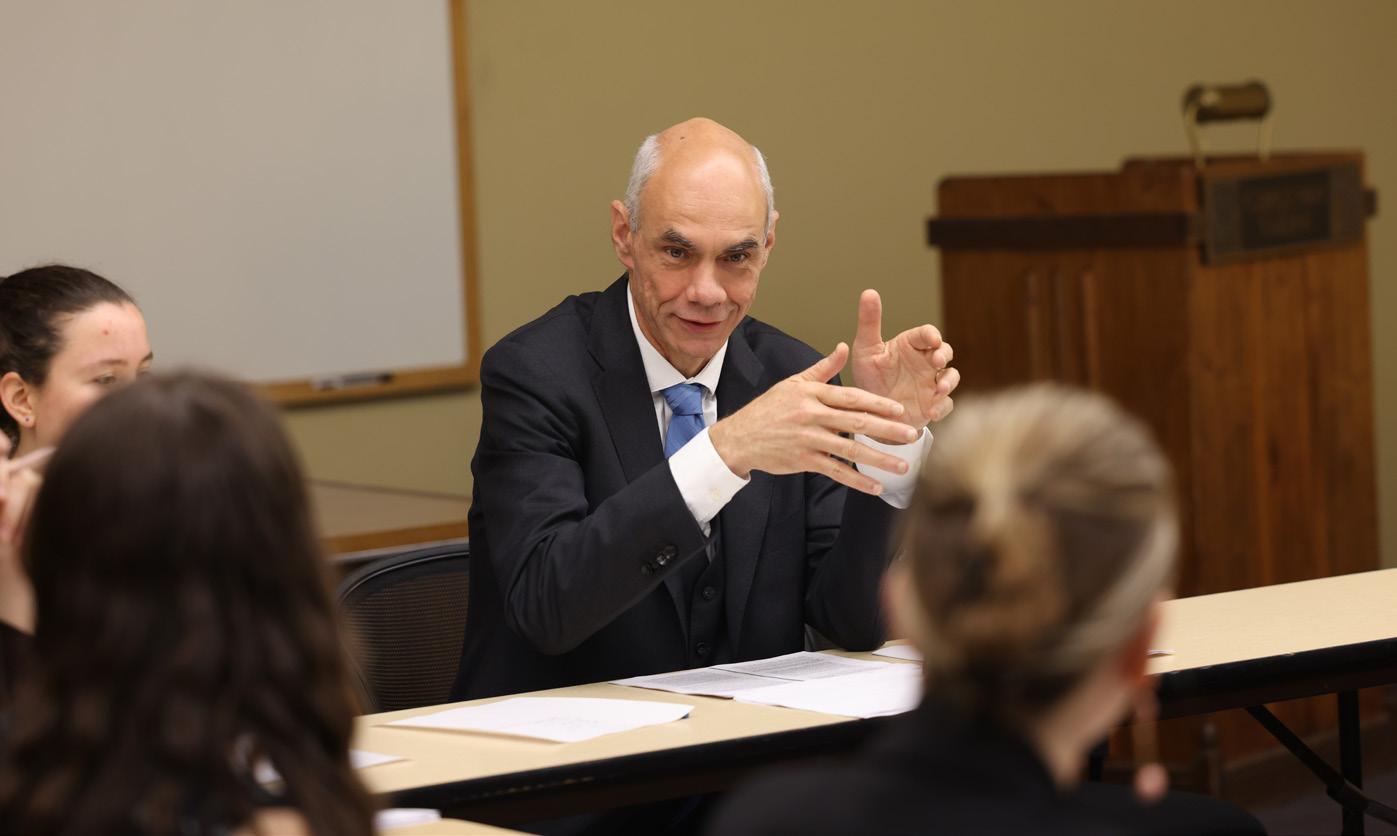
place within them must be interpersonal and carried out at the scale of the human person. There is no technological substitute.
Fourth, while Newman teaches us a great deal about the “Idea” of a university, understood as a body of students and teachers pursuing a comprehensive view of reality, and emphasizes that the university must resist instrumentalization and the logic of technocracy, he also teaches us that a university or college is incomplete, i.e., lacking in integrity, if it is not nurtured in cultus, born from and held steady by the Church. If even Plato’s academy, according to Josef Pieper, acknowledged its relationship and duty to the gods, how much more should a Christian school be in close relation to the Ecclesia from which it was ultimately born and to whose highest mission it should contribute?
Fifth, from Newman (and MacIntyre) we can learn that we exist within a tradition that has definite origins, a continuing stream of development, and a future to which we are called to contribute. Though not a Thomist-of-the-strict-observance, Newman was formed in the tradition of Aristotle and the thinkers that followed him, giving him freedom both to think within the great Aristotelian-Thomistic tradition while effectively engaging the thought of his own age. There was nothing sterile or dry-as-dust about Newman’s scholarly inquiries or writings, they are alive and engaging because they participate in receiving, cultivating, extending, and—when appropriate—applying the tradition he had received. And we can emulate Newman by engaging authors that have come after him and contributed to our understanding of education, authors such as Josef Pieper, Christopher Dawson, C.S. Lewis, T.S. Eliot, John Paul II, and Benedict XVI. We too, if we are docile and courageous enough, can follow Newman’s example of flourishing within a living tradition, inviting our students to join us in the conversation that stretches from Plato to our own day.
Sixth, Newman anticipates other thinkers, e.g., Josef Pieper, in his commitment to seeking to achieve a “philosophical habit of mind” as the goal of education. This involves the arduous journey to obtain a view of the whole of reality, one that is as integrated and comprehensive as possible while at the same time not being reductive. A colleague of mine suggests that such a vision would be analogous to what a person obtains when he
grows up in a town that he knows thoroughly, then climbs a nearby mountain from which the town may be seen as whole and from a completely new perspective. This mountain-top view allows for the town to be seen not only integrated in itself but within the whole of a new horizon. Our climber sees other towns and other mountains and furthermore sees the limits of what can be seen. Then, when this person descends and returns to his town, he will see it with new eyes and in a new way. From that point on, every view of the part will be mediated by a view of the whole. That mountain-top vision will always inform the day-to-day view of the one who has returned. This is a vision of what true education looks like, the vision of one who has escaped the cave—and moved, in Newman’s words, ex umbris in veritatem, from shadows into truth.
Finally, Newman teaches us to rejoice in the truth (gaudium de veritate) and in such a way that draws others into communion both with what is true and with the One who is the author of all that is true. This is the Oratorian spirit, one that is disciplined but not overly ascetic, one that cultivates a deep interior life but never forgets the call to engage with those beyond the community, and one marked by friendships ordered to flourishing. And through this engagement with friends pursuing truth together—an activity mysteriously described in Plato’s Seventh Letter—joy marks each word, action, and decision.
Yes, for many of us, Newman, his teachings, and his example constitute our North Star. For many years he has been our doctor. And now he becomes the doctor of us all.
This essay originally appeared in the Education Review, a new journal published by Christendom College. The Education Review is the official journal of the Center for Educational Philosophy & Leadership. The journal's mission is to recover the wisdom of tradition, engage the pressing issues of our time, and contribute to the great renewal of education.

Subscribe to the Christendom College Education Review Substack by scanning the code or visiting www.christendom.edu/review
Yes,
for many of us, Newman, his teachings, and his example constitute our North Star. For many years he has been our doctor. And now he becomes the doctor of us all.
MENTORSHIP THAT’S PERSONAL BY DESIGN
MADE POSSIBLE BY A COLLEGE COMMITTED TO A HUMANE SCALE
BY LIANNA YOUNGMAN
"Christian education is a collective endeavor: no one educates alone."
–
Pope Leo XIV, Apostolic Letter Gravissimum Educationis
We are living in an age of unparalleled access to knowledge. Most people carry with them the entry to millions of websites, videos, and sources that can, with a simple search or push of a button, provide them with truly endless sources of information. Beyond that, in the past five years alone there has been unprecedented growth in AI technology, not only able to answer questions, but proving more every day that it is capable of far more. What does this technological boom mean for education? What society is seeing is a strange countereffect to this extreme technological success, which is that education is suffering greatly.
"I answer, that [Christianity] has been upheld in the world not as a system, not by books, not by argument, nor by temporal power, but by the personal influence of such men as have already been described, who are at once the teachers and the patterns of it."
- St. John Henry Newman
Our society has been fast discovering over the past few decades that allowing technology to take the lead in education has had adverse effects on attention, learning retention, and engagement in the classroom. It has been found to be a cold, impersonal, detached way to learn, and the rising generations are suffering from it. What society is seeing is that modern universities are projecting lessons to halls filled with hundreds of students, but the students are not learning. They are not prepared for the workforce, for life; they are not being formed as whole persons.
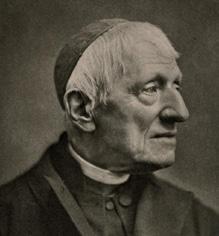
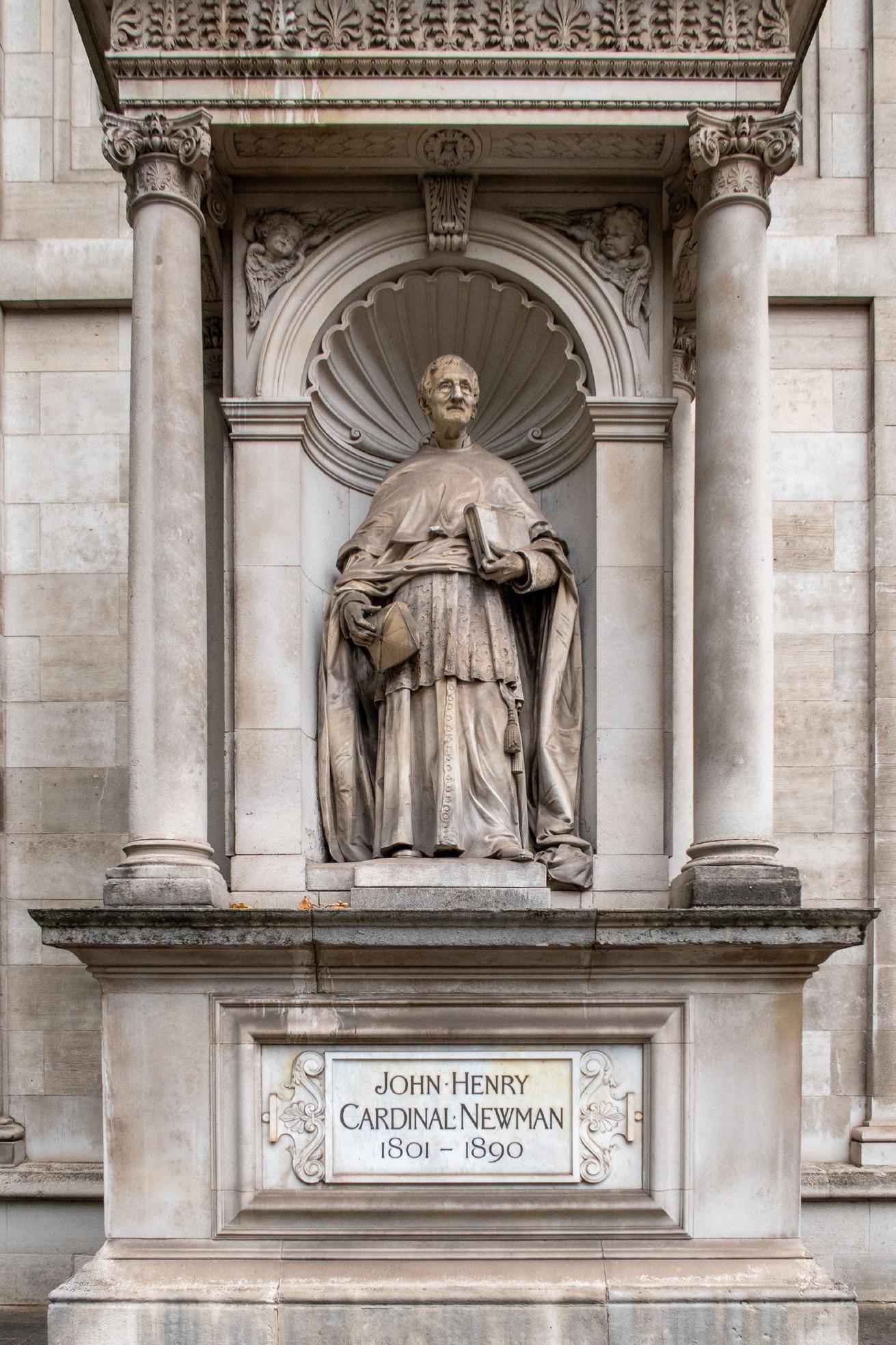
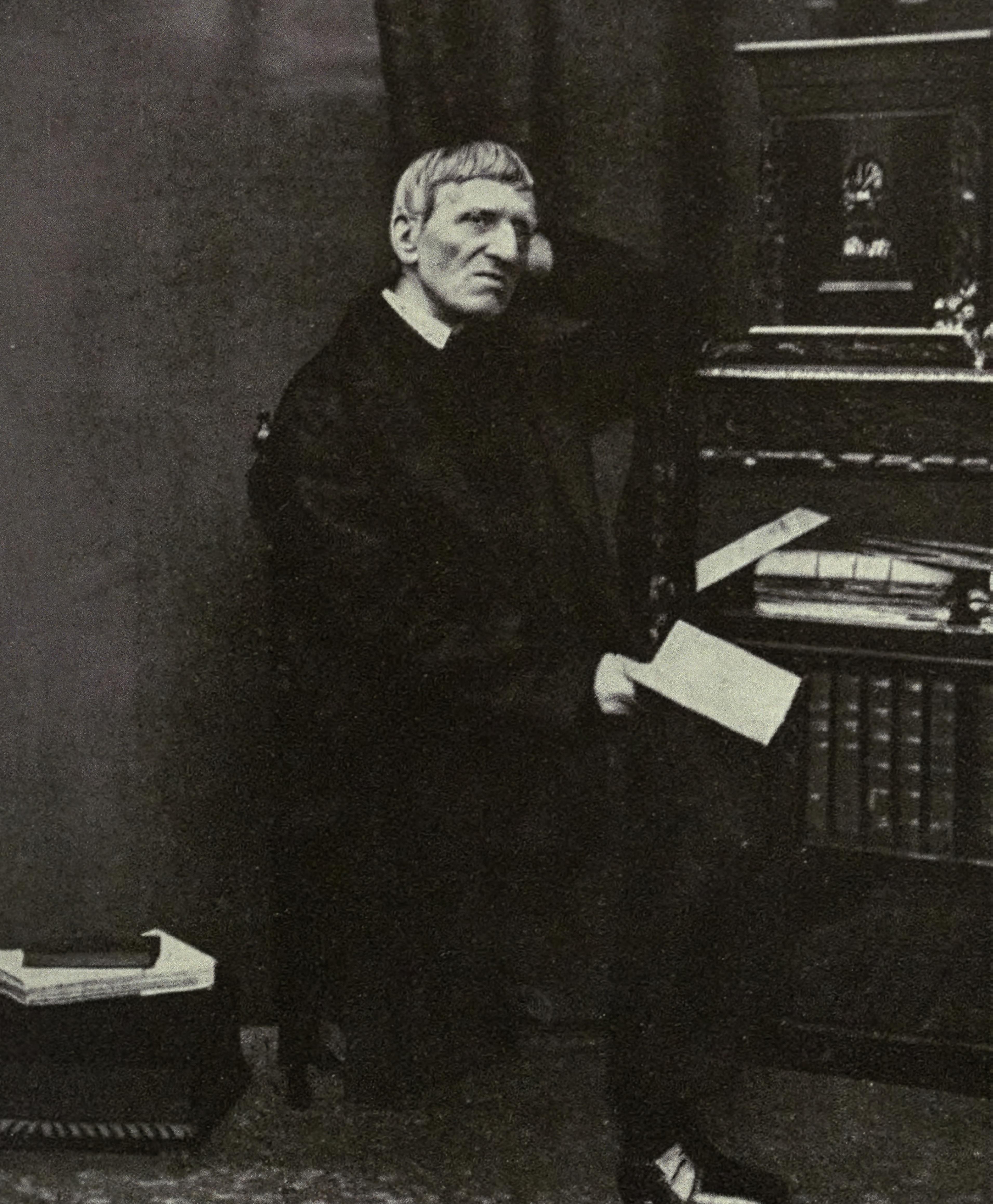
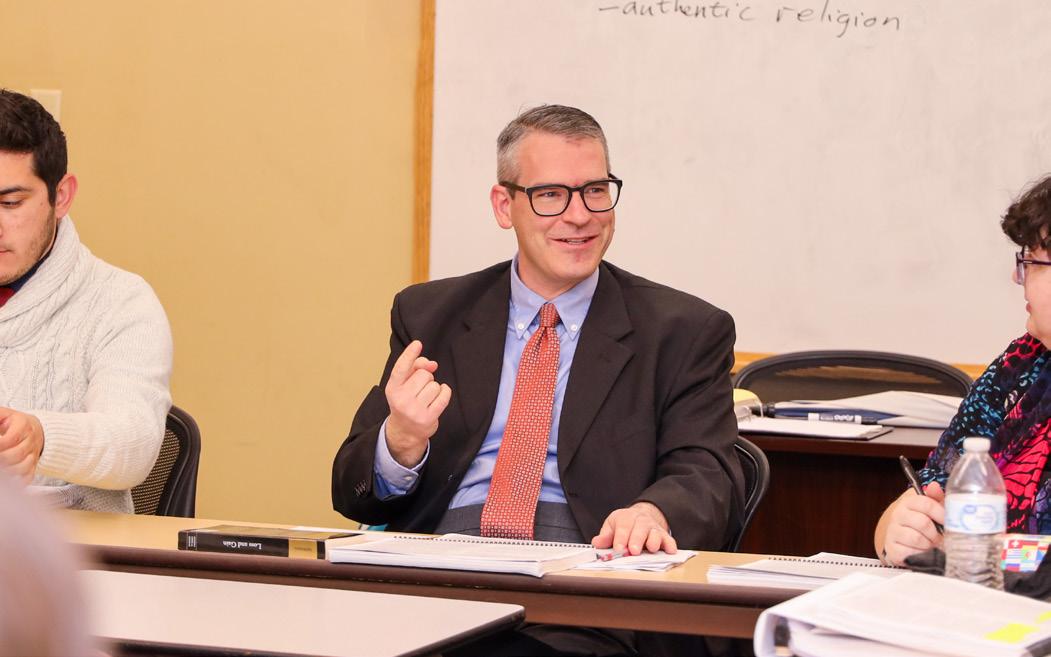
Both the problem and solution are layered and nuanced, and Christendom College is tackling the problem head-on by responding with an educational approach that resonates with St. John Henry Newman’s famous declaration of "Cor ad cor loquitur", or "heart speaking unto heart." Upon becoming cardinal in 1879, Newman (pictured left) chose the phrase to promulgate his belief that personal influence and authentic human connection are the most effective and lasting approaches to education. As time proves again and again, students thrive in a personalized approach, where the faculty members are approached as mentors to the students, as opposed to unreachable figures.
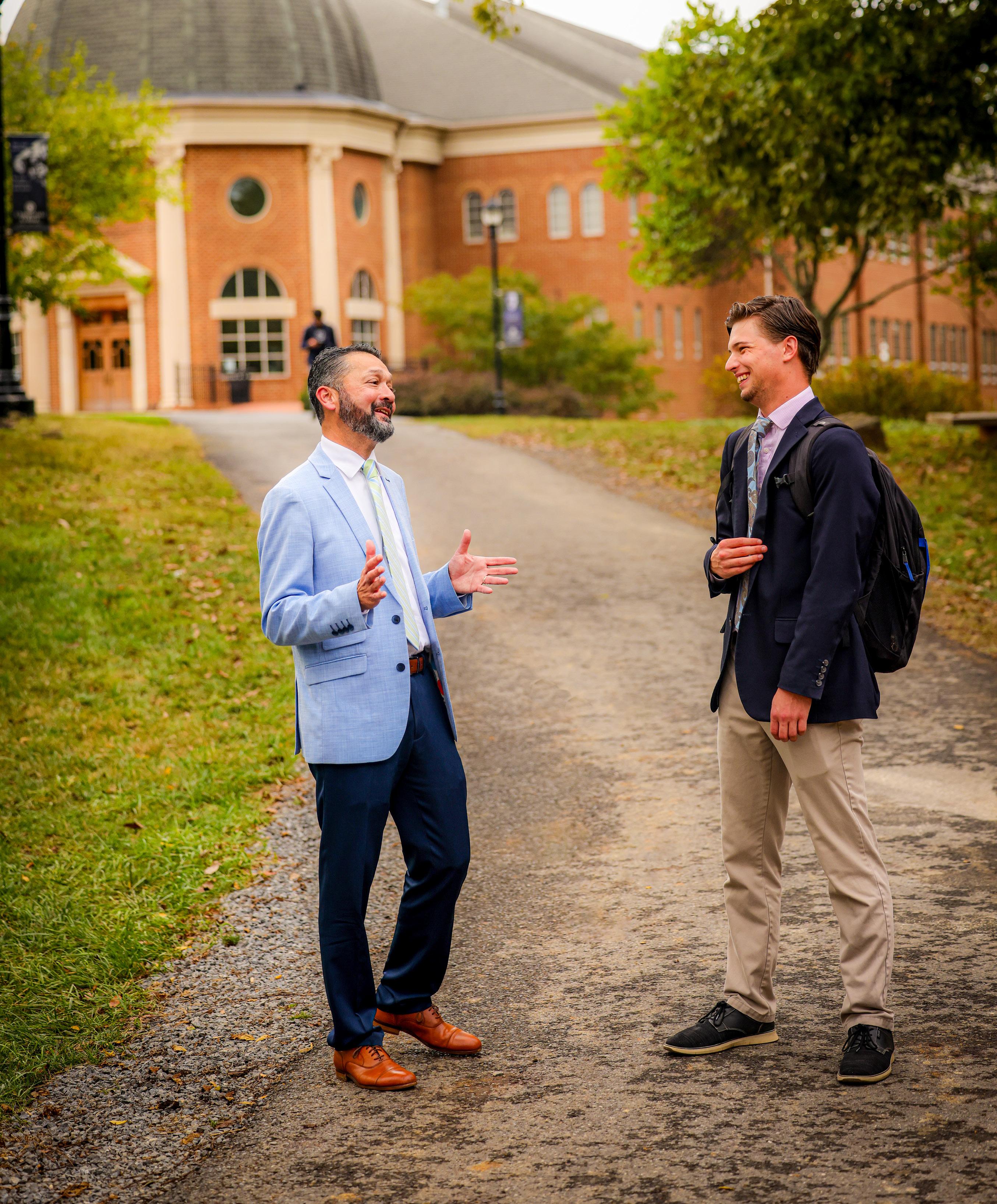
As College President George A. Harne, Ph.D., states: “At Christendom, because of our mission and our size, faculty are able to live out Newman’s understanding of true education—heart speaking to heart. In practice, this involves faculty seeing students as whole persons, not simply as numbers or as grades.”
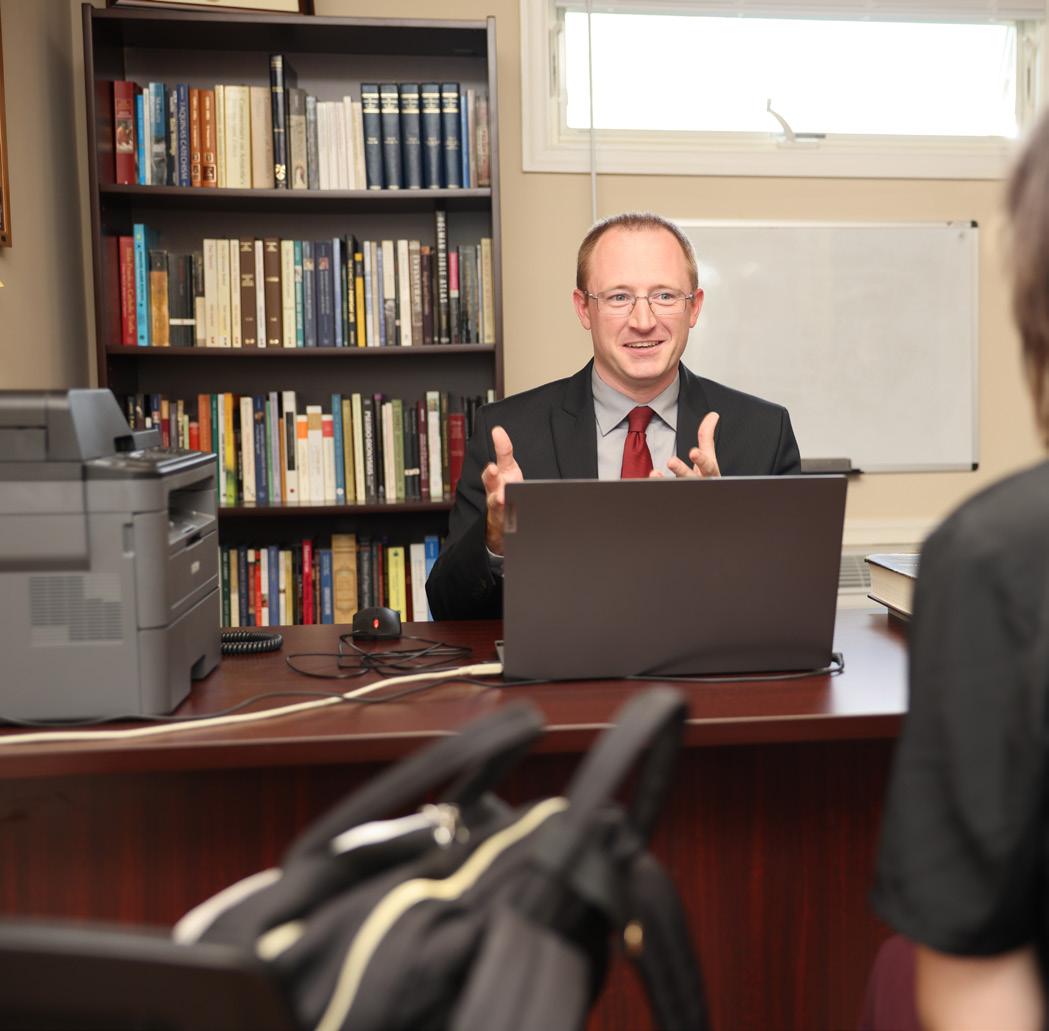
This approach requires an enormous amount of effort by the faculty, one they have taken on and embraced in Christ. It involves not only a concentrated effort to build connection with their students on a large scale, but also on an individual scale, being present in the small moments.
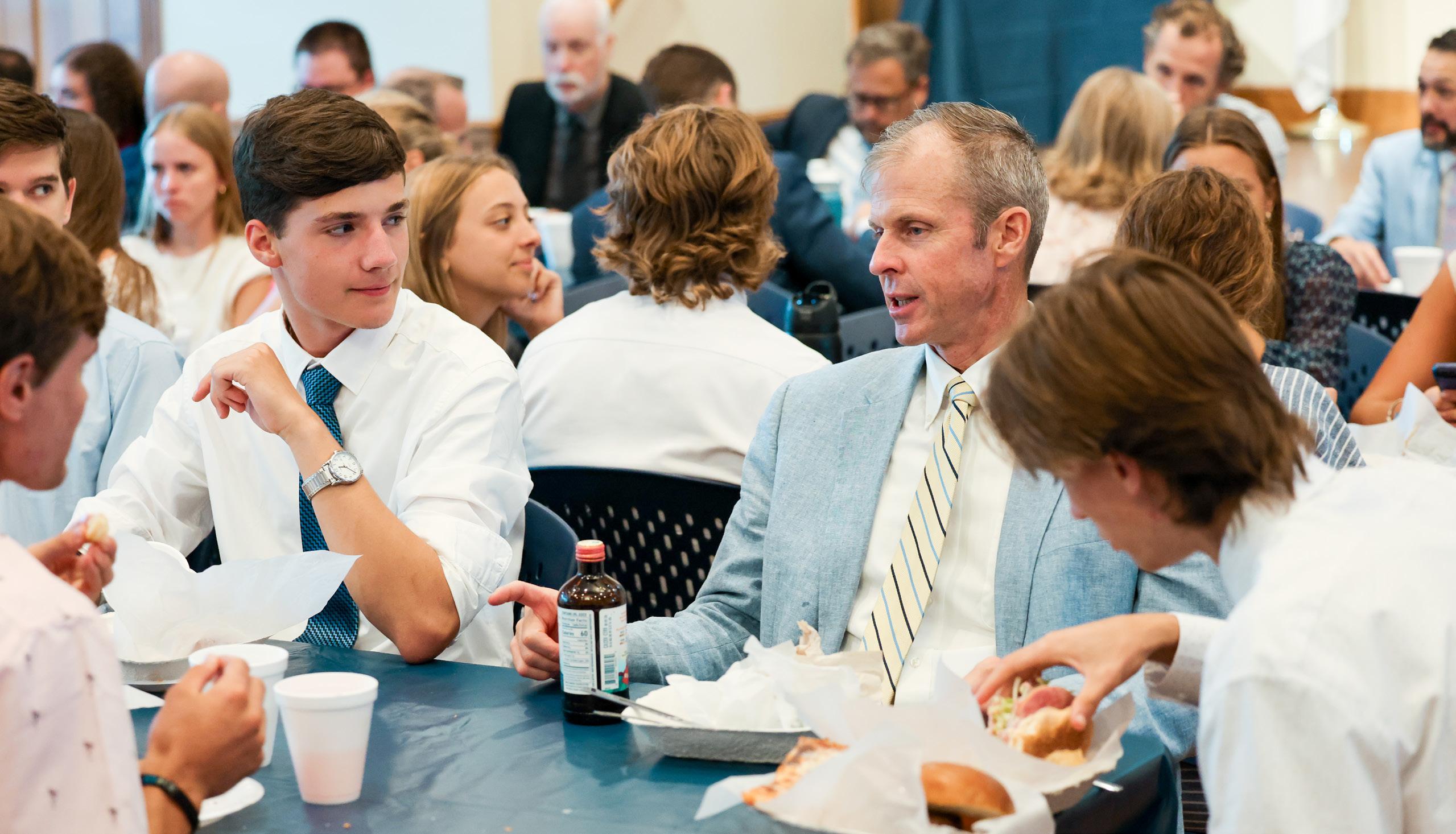
“It means that when faculty meet with students during office hours, walk across campus, or share a meal, that they enter a communion of persons, sharing not only in banter about everyday events but also in the more serious dimensions of human life,” Harne says.
Faculty and college staff undertook a concentrated effort to combat the impersonal nature of university
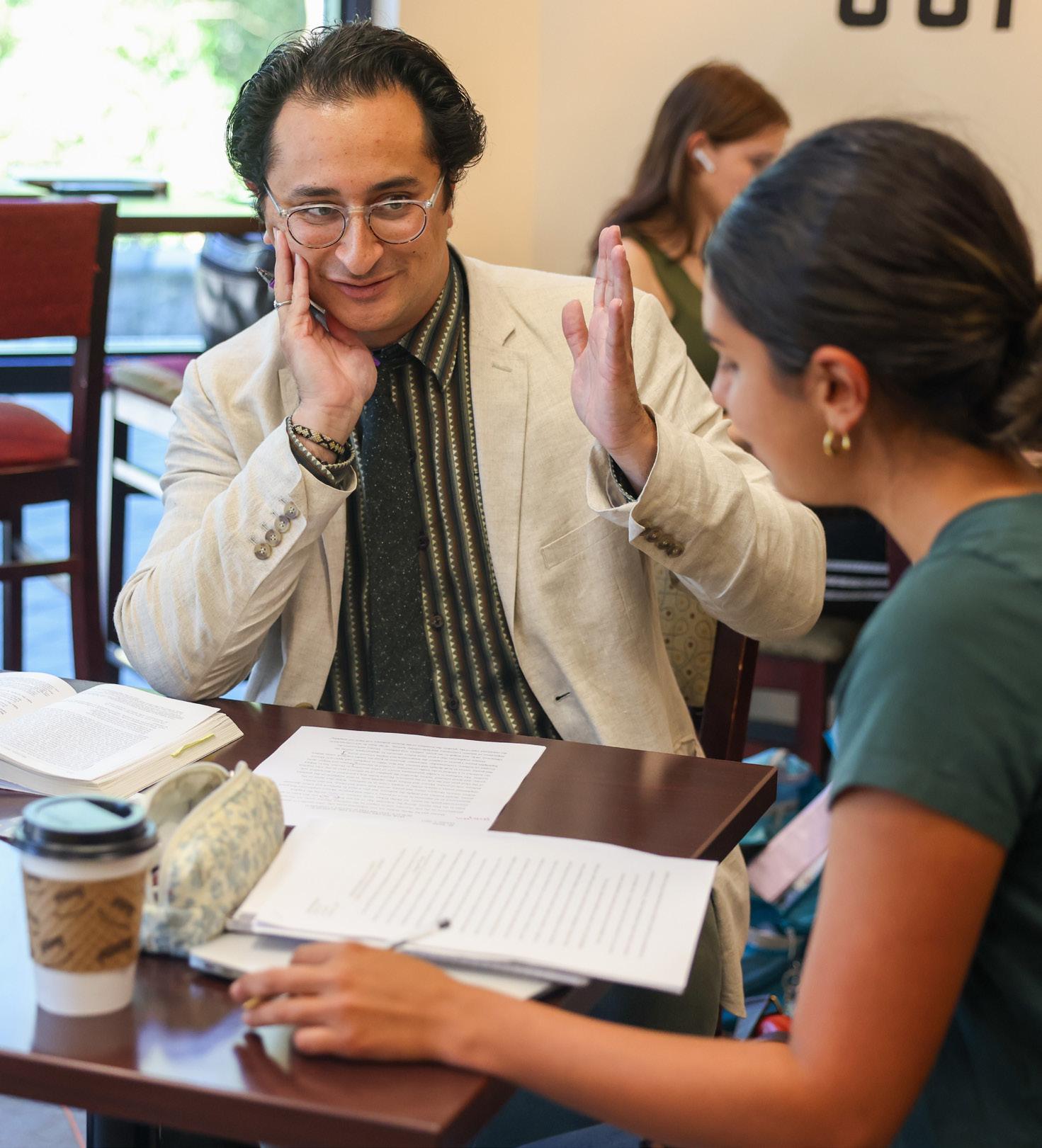
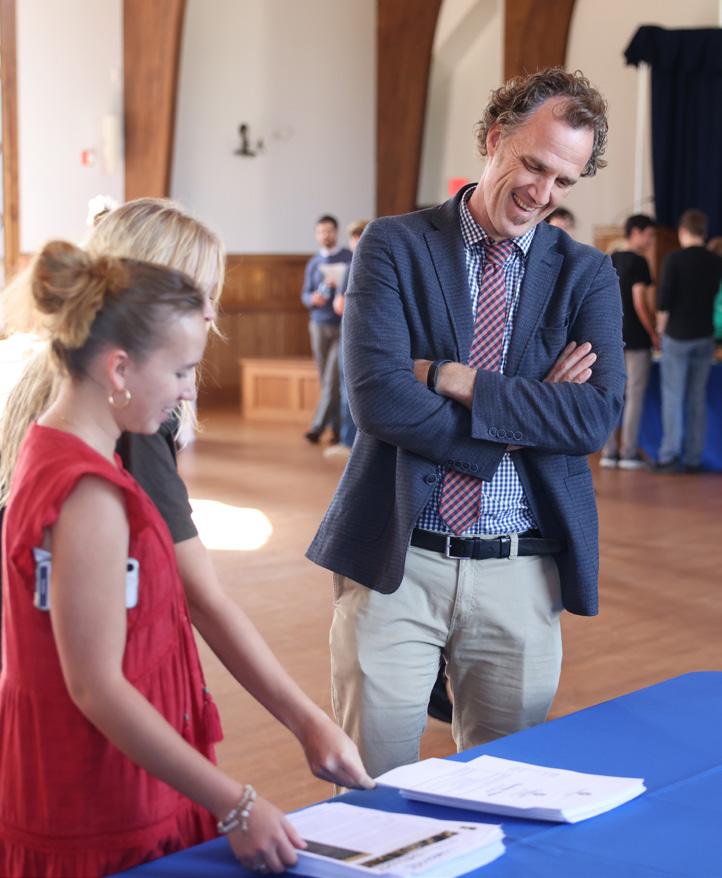
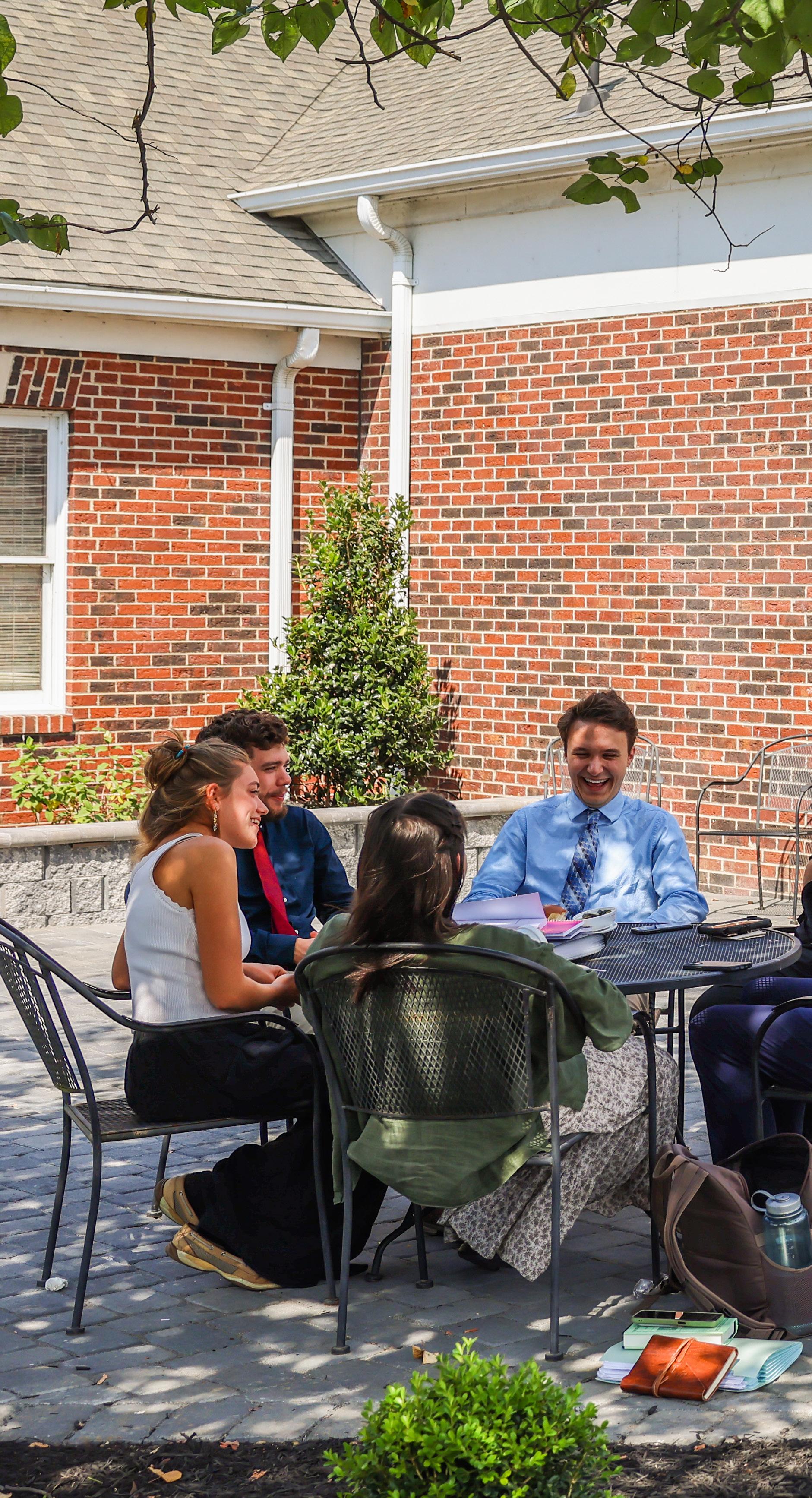
education, starting two years ago, when various groups met with the goal of restructuring how they would get more integrated and involved in campus life, born out of a desire to cultivate better relationships with the student body. As a result, there has been an increased effort in creating more spaces on campus where both students and faculty can be present. Examples of this include new patio spaces outside the Sacred Grounds Coffee Shop, a beautiful courtyard on both sides of the St. Lawrence Commons, and a sand volleyball court in front of St. Kilian’s Café. Faculty also increased their office hours
At Christendom, because of our mission and our size, faculty are able to live out Newman’s understanding of true education—heart speaking to heart. In practice, this involves faculty seeing students as whole persons, not simply as numbers or as grades.
and their time spent on campus, with many of them attending the students’ sports games, events, and performances.
“Christendom College takes very seriously the student-professor relationship,” says Academic Dean Dr. Andrew Whitmore. “Our newly revamped advising system is structured around more contact hours between students and their advisors, as well as ensuring that students have consistent advisors, so that the advisor relationship can develop into a mentoring relationship. In addition, faculty are frequently happy to lead Advanced Studies projects,
lunchtime academic groups, and student life clubs as further ways to help form students in a mentoring relationship. Of course, office hours are also always a time when faculty look forward to discussing course content as well as students' other interests in the field.”
This approach enables success, providing greater opportunities for students outside of the classroom. Professors have taken initiative to lead their own events, providing incredible enrichment and opportunities for students through events such as the newly launched Friday Colloquium talks, individualized Advanced Studies, and the very popular
I know that I am part of a community that genuinely cares. Everyone here takes the time to get to know us as individuals, wants us to succeed, and uplifts and encourages us daily.
Thomistic Tuesdays luncheons, where students enjoy a meal together while dissecting a section of the Summa with faculty.
The faculty each took to heart this call to be a mentor rather than impersonal instructor. This personalized approach to the students also led to the faculty examining the core curriculum to see if the students could be better served through improvements made to the required courses. The result of this discernment process led to the reduction of the core course load by three courses.
“While the form of the curriculum has been refined, its substance remains unchanged in the most essential respects,” Harne says. “Philosophy, theology, history, literature, and the study of classical and modern languages continue to form the bedrock of our students’ education. Some content has been thoughtfully consolidated to avoid repetition, and certain courses have been revised or retired to make space for deeper engagement within and across disciplines.”
This new core will be put into effect in the fall of 2026, and the faculty will continue with their commitment to
making the Christendom educational experience the best it can be. By reducing the redundancies within classes and cultivating greater depth within the curriculum, students can better balance their workload, enjoy a more integrated core, and better retain the principles that make up the heart of Christendom’s academics.
The results of this personalized approach to education speak for themselves. Christendom alumni enjoy success in a wide variety of fields, with 99.2% of the class of 2024 having employment within six months of graduation, as opposed to the national average of 66%.
Beyond just career success, each of the faculty strives to be seen as something beyond an instructor, but a role model as well. This personal approach does not stop at friendly conversation, but rather shapes every aspect of the role that faculty fill at Christendom.
“Because we are a Catholic college, faculty are able to offer spiritual support as well as intellectual guidance,” Harne says. “And both within and beyond the classroom faculty and students share a common journey toward an ever-growing engagement with reality in the pursuit of wisdom. Faculty and students travel toward wisdom together. In these ways, Newman’s vision lives at Christendom.”
Student Body Vice President Felicity Schmidt echoes the sentiment through her own experience, reflecting on her nearly four years at Christendom.
“Since coming to Christendom, I have experienced the warmth of the faculty and staff more times than I can count,” she says. “Christendom is so much more than a college: it is a vibrant community full of staff who deeply care about the students. There are countless opportunities to get to know the faculty and staff, and they find ways to connect with the students every day.”
Schmidt is no stranger to a busy schedule, kept very busy with the Student Activity Council, schoolwork, and a hundred other responsibilities. Despite this, she feels continuously supported by the faculty on campus, knowing she can go to them for help whenever needed.
“Every day, I walk past faculty and staff on campus, and they greet me by name with a smile. Interactions like these are small but powerful: I know that I am part of a community that genuinely cares. Everyone here takes the time to get to know us as individuals, wants us to succeed, and uplifts and encourages us daily,” she says.
Senior Benjamin Tutwiler agrees. He reflects that the student body has benefited greatly from the faculty being present in their campus life, and how the shared conversations and interests have helped the students feel welcome in going to the professors for both academic assistance as well as just to approach them in day-to-day conversations and activities.
“My experience with Christendom professors is that they are not dry academics that one thinks of in ‘higher education,’ but vibrant people who are truly alive. In our community, there are so many opportunities to encounter the faculty as people,” he says. “One professor joined us in a beach volleyball game one day after classes, another shares his love of obscure chess variants with students over lunch, and all of them will share a conversation about any topic, academic or personal, and truly care about the people with whom they converse. The faculty are
examples that academics do not make a person dry and dull, but richer and more complete.”
Even beyond graduation, alumni will still state the faculty to have had lasting influences in their lives, reflecting that they are true role models of character, integrity, and virtue. This attitude is one that is truly unique in today’s culture. In a world of fast-paced, impersonal, search-enginedriven learning, students can feel lost, overwhelmed, and unengaged. Christendom’s faculty is taking a stand, defending an education of care, of mentorship, and of heart speaking to heart.
“The faculty and staff are an integral aspect of Christendom,” Schmidt says, “and I am truly blessed to be a part of such an impactful community.”
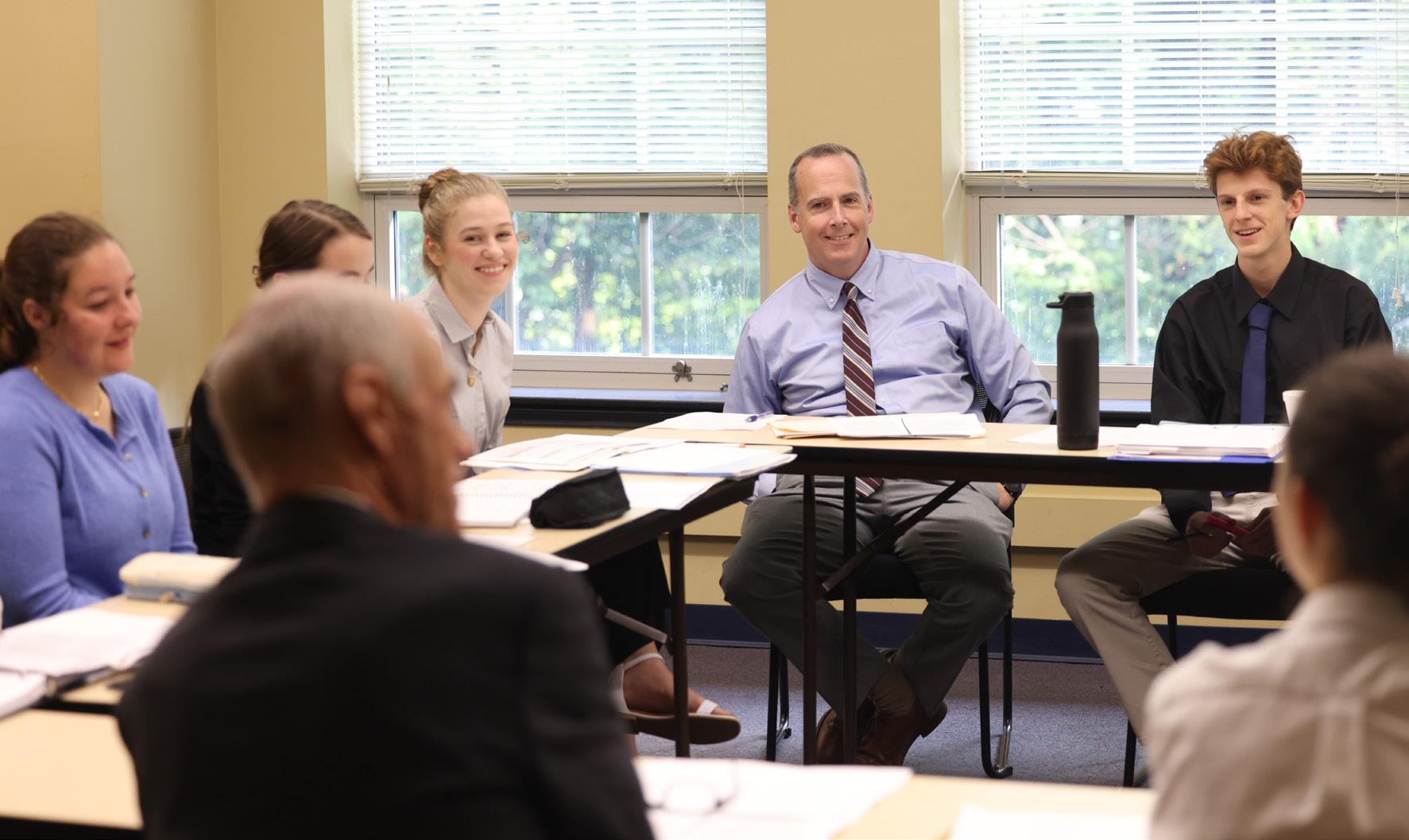
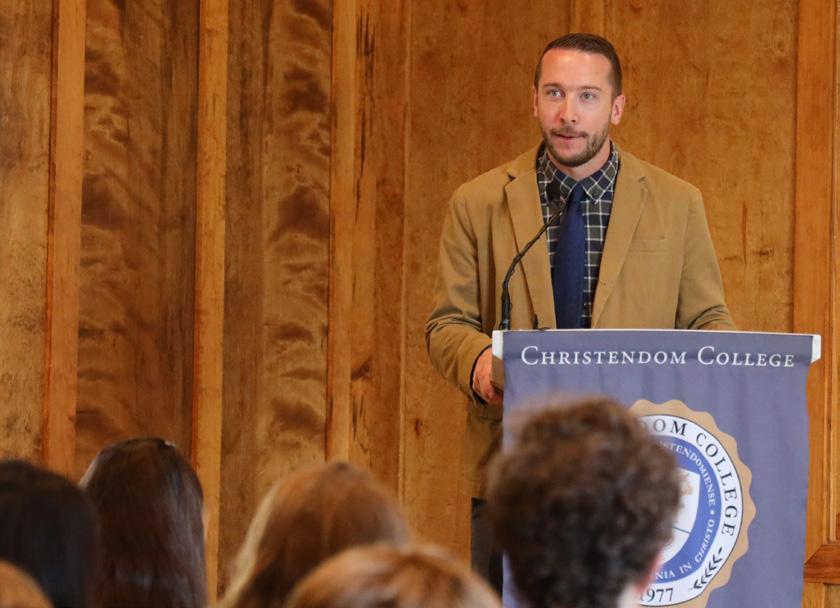
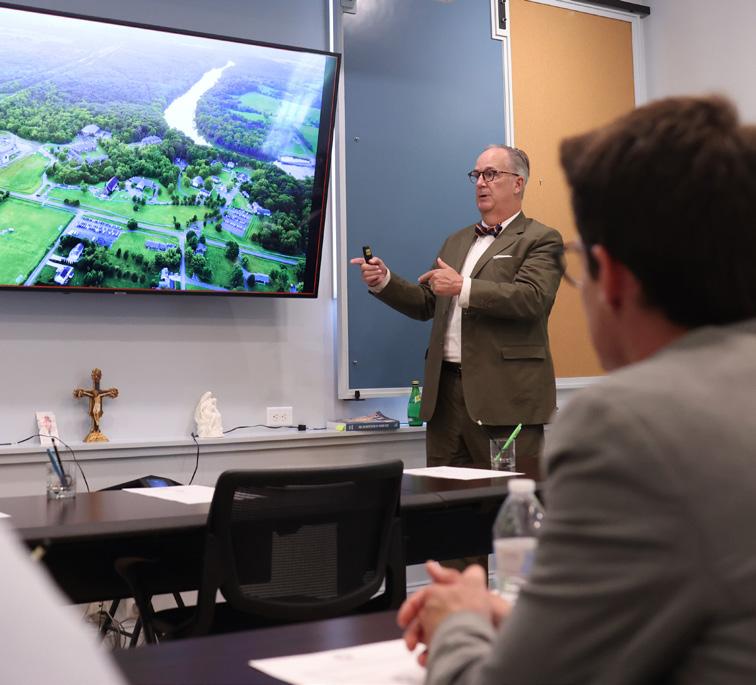
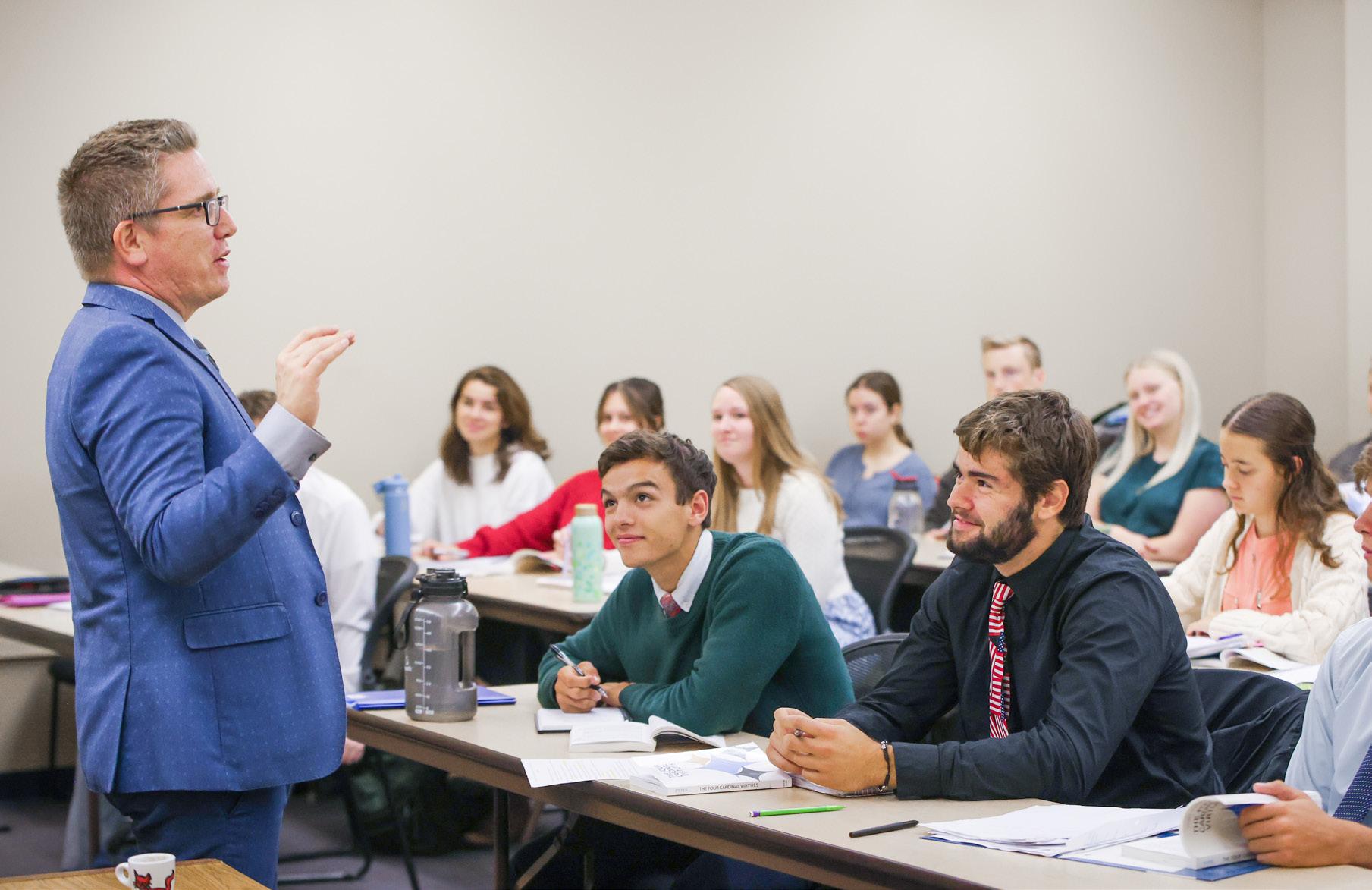
1. College President George A. Harne, Ph.D., co-taught an Advanced Studies Seminar with Dr. Kevin Tracy this semester, introducing freshmen to great thinkers like Plato, Aristotle, Cicero, Lewis, Pieper, Gilson, Weil, and more.
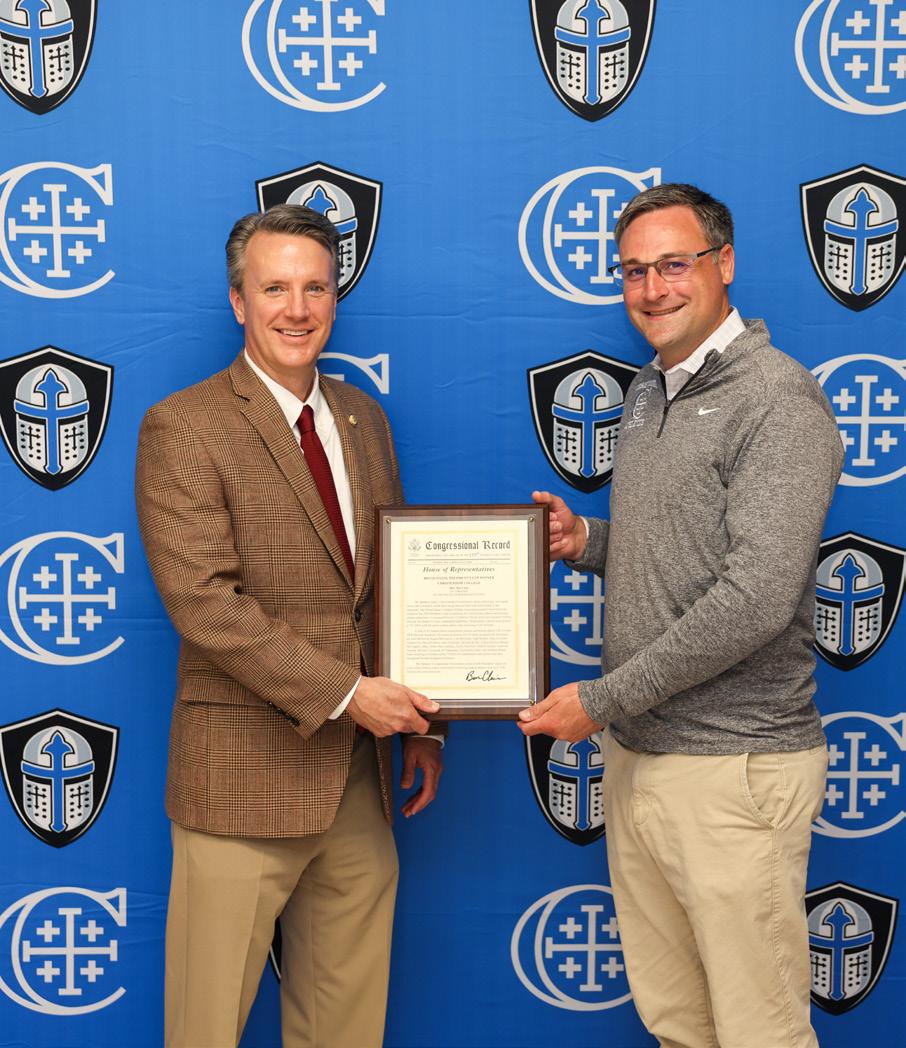
2. Congressman Ben Cline visited the Athletics Department to present plaques recognizing the achievements of the student athletes.
3. Students attended an electoral mandates and American Constitutionalism lecture given by Dr. Zach German.
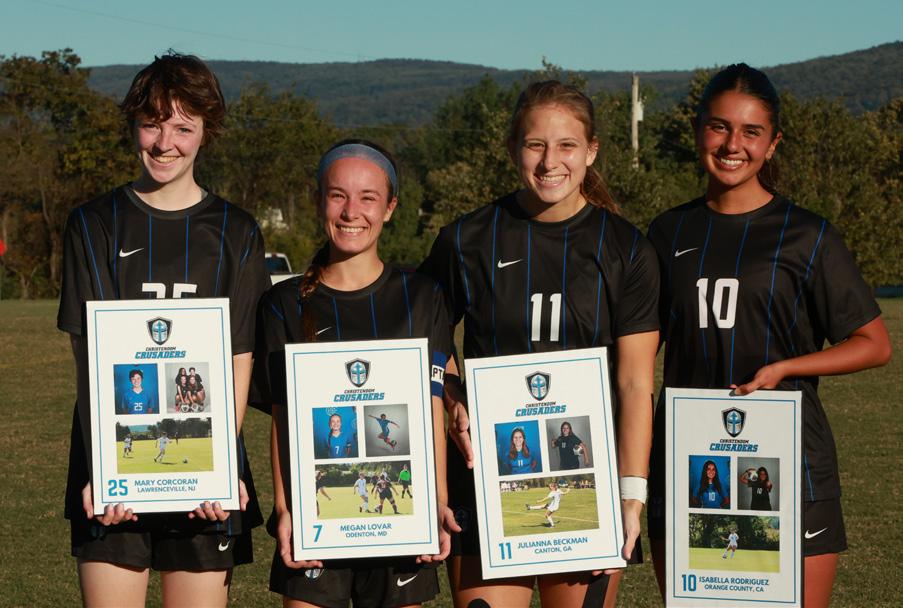
4. The women's soccer team recognized its senior athletes with commemorative plaques at their Senior Night game in October.
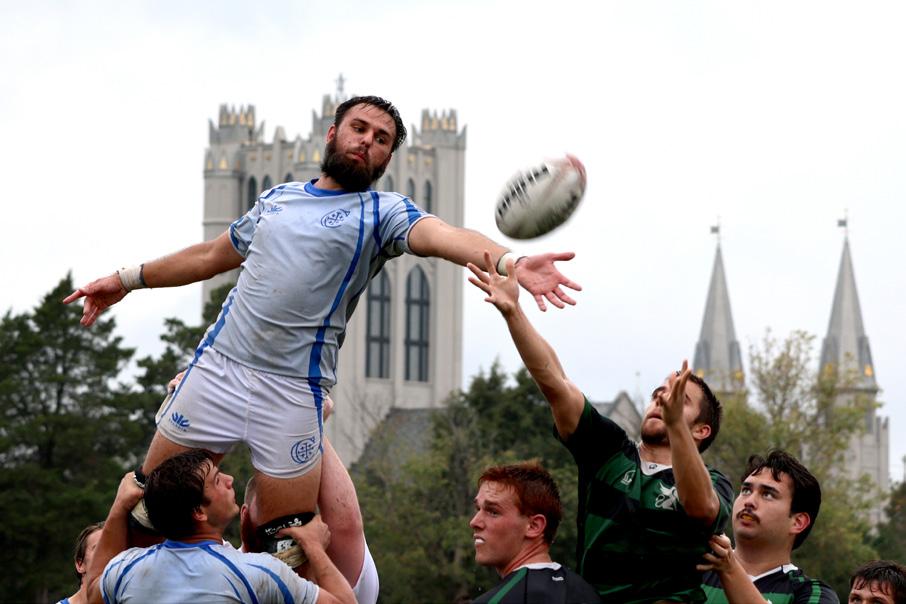
5. The rugby team fought hard this season, gaining victories over Hampden-Sydney and William & Mary.
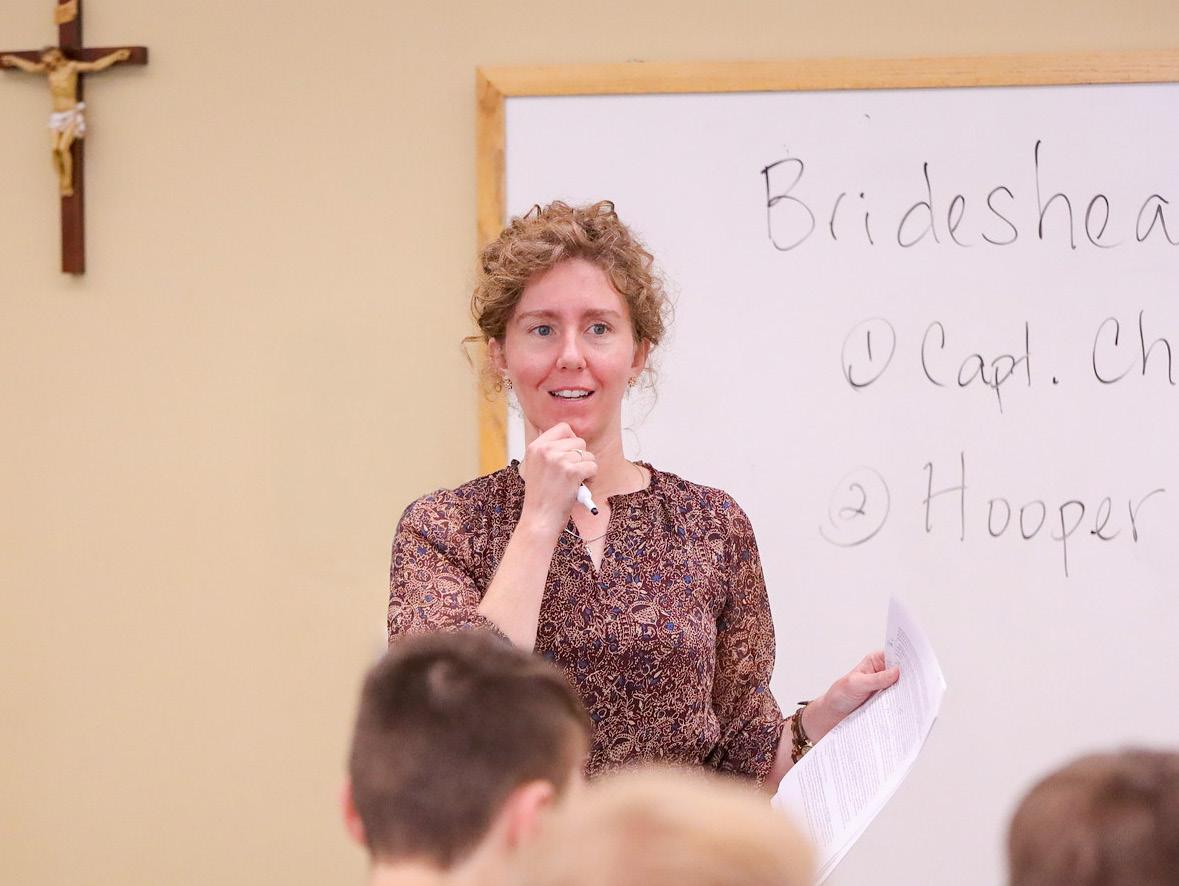
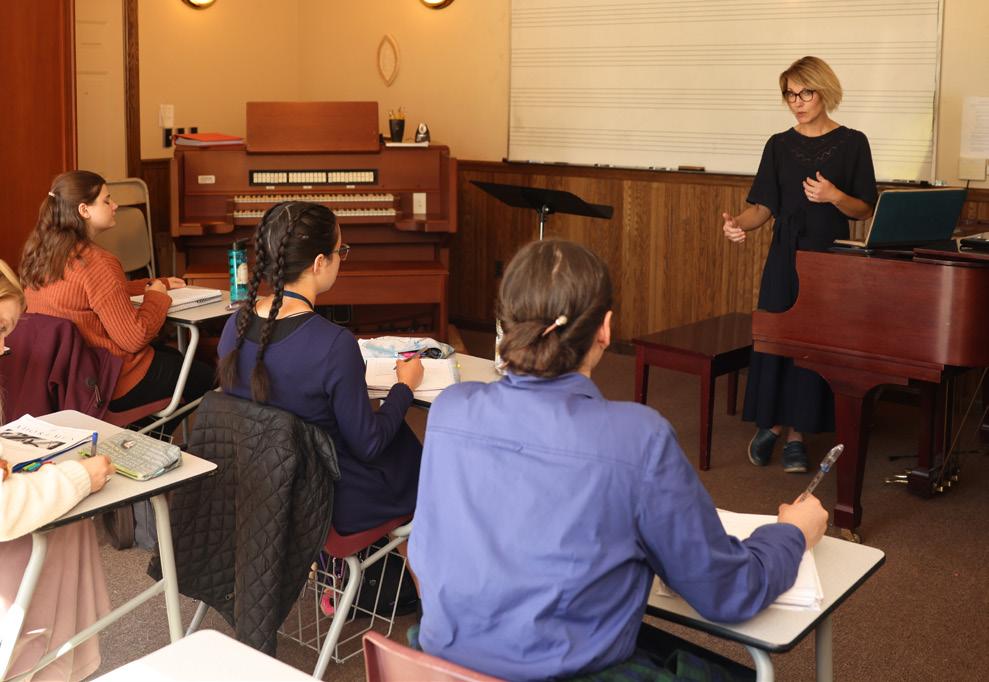
6. Dr. Sara Pecknold engaged students in a lecture during her MUSC 303 class, which focuses on the Theology of Worship and its Music.
7. The college was honored to welcome architect James McCrery to campus to meet with the Master Planning Committee. McCrery, whose architecture firm was recently hired by the White House to design a new ballroom, is working closely with Christendom to craft a new Campus Master Plan.
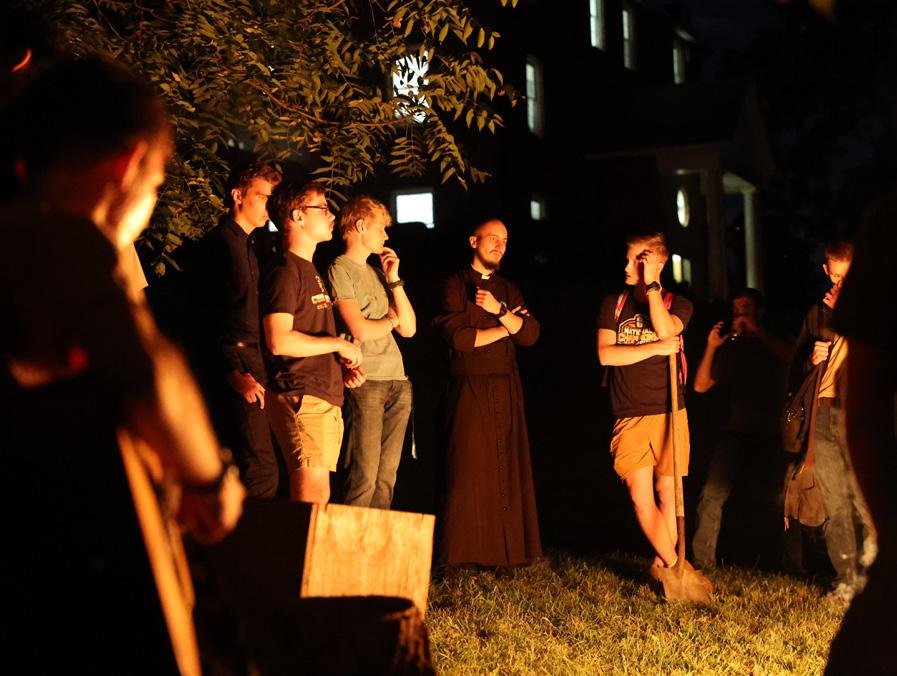
8. Young priests from the Fathers of Mercy visited campus to lead a retreat on Divine Mercy. During their stay, they hosted bonfires for the men and women on campus.
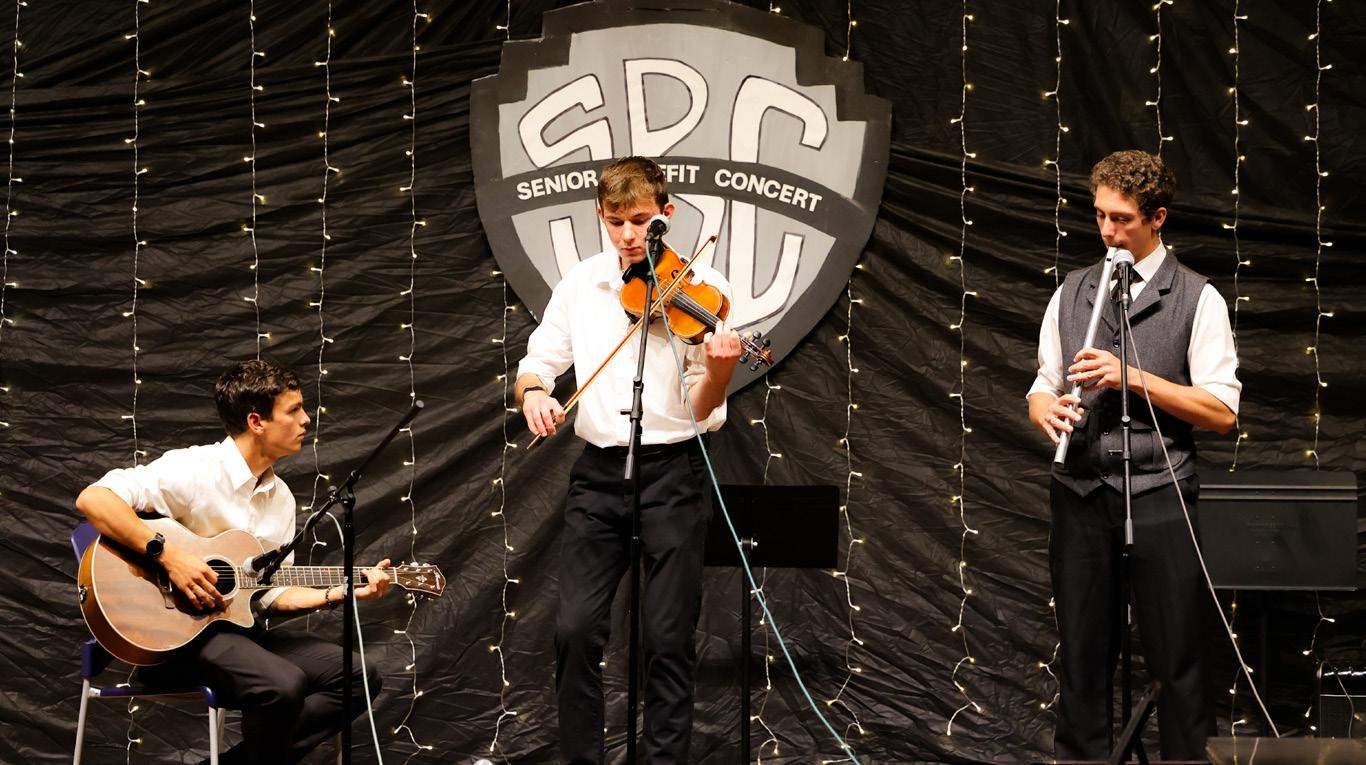
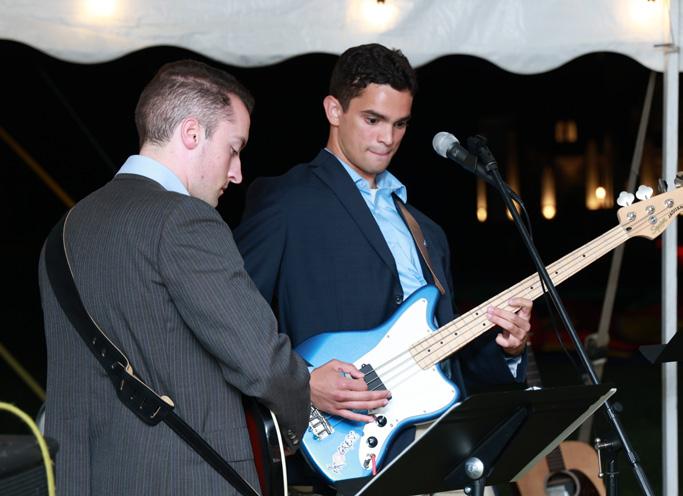
9. The annual Senior Benefit Concert drew many talented performers, helping to raise funds for the senior class gift.
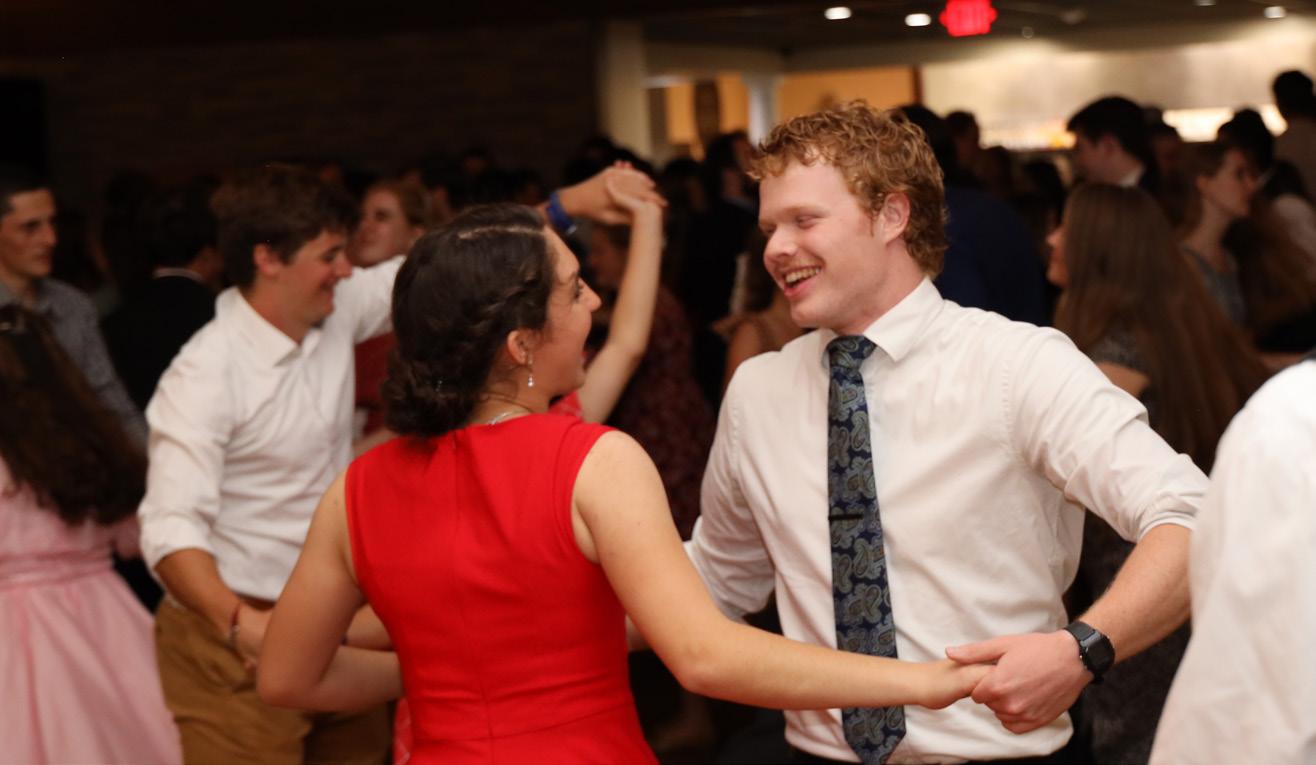
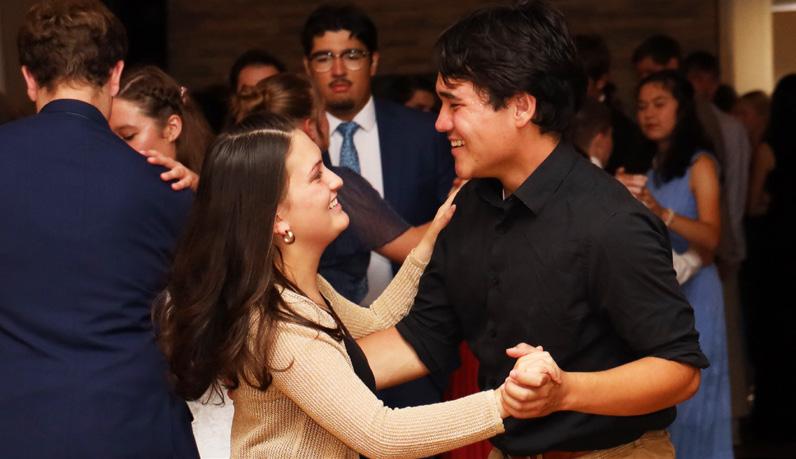
10. Students enjoyed a dance at Homecoming 2025, accompanied by a live orchestra.
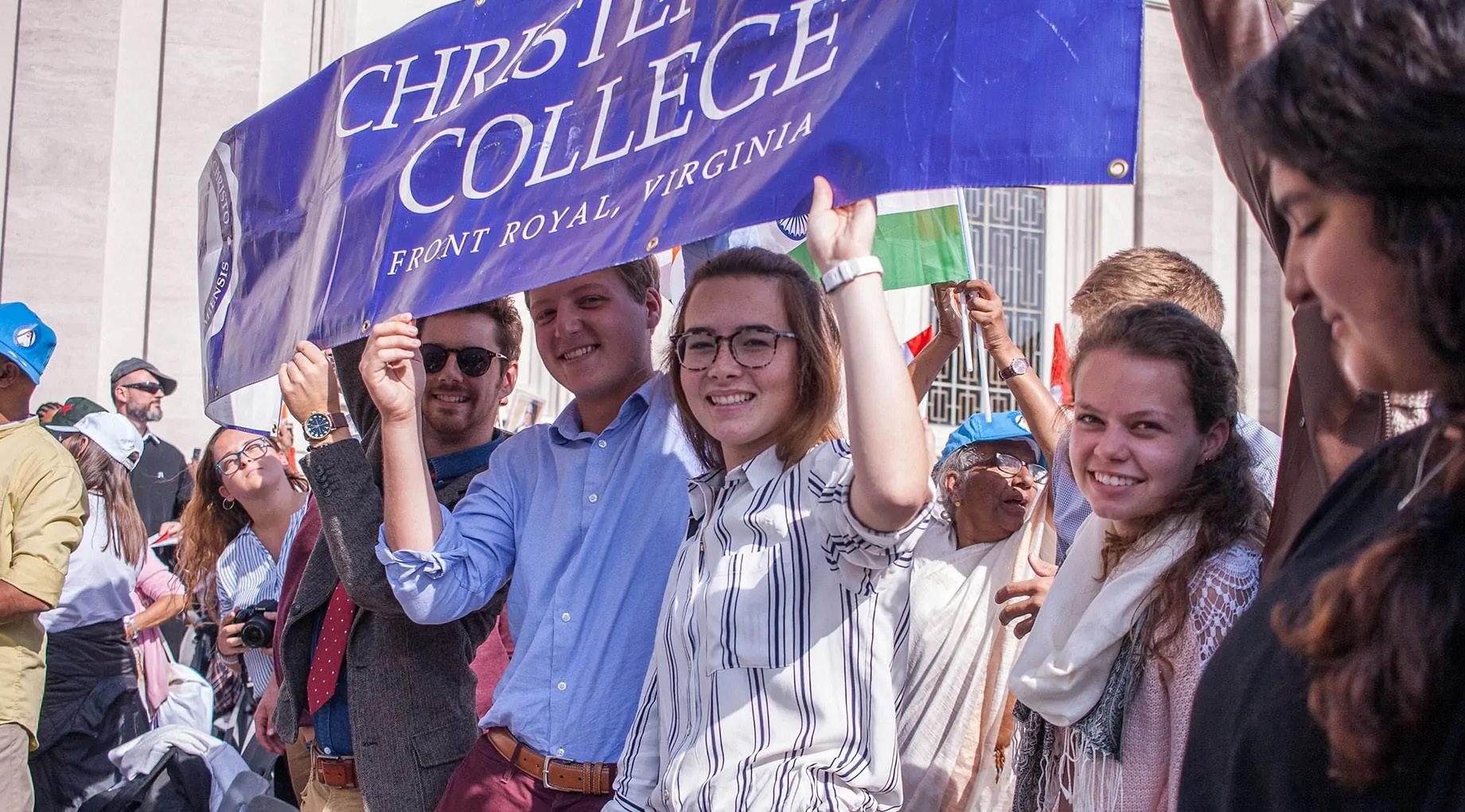
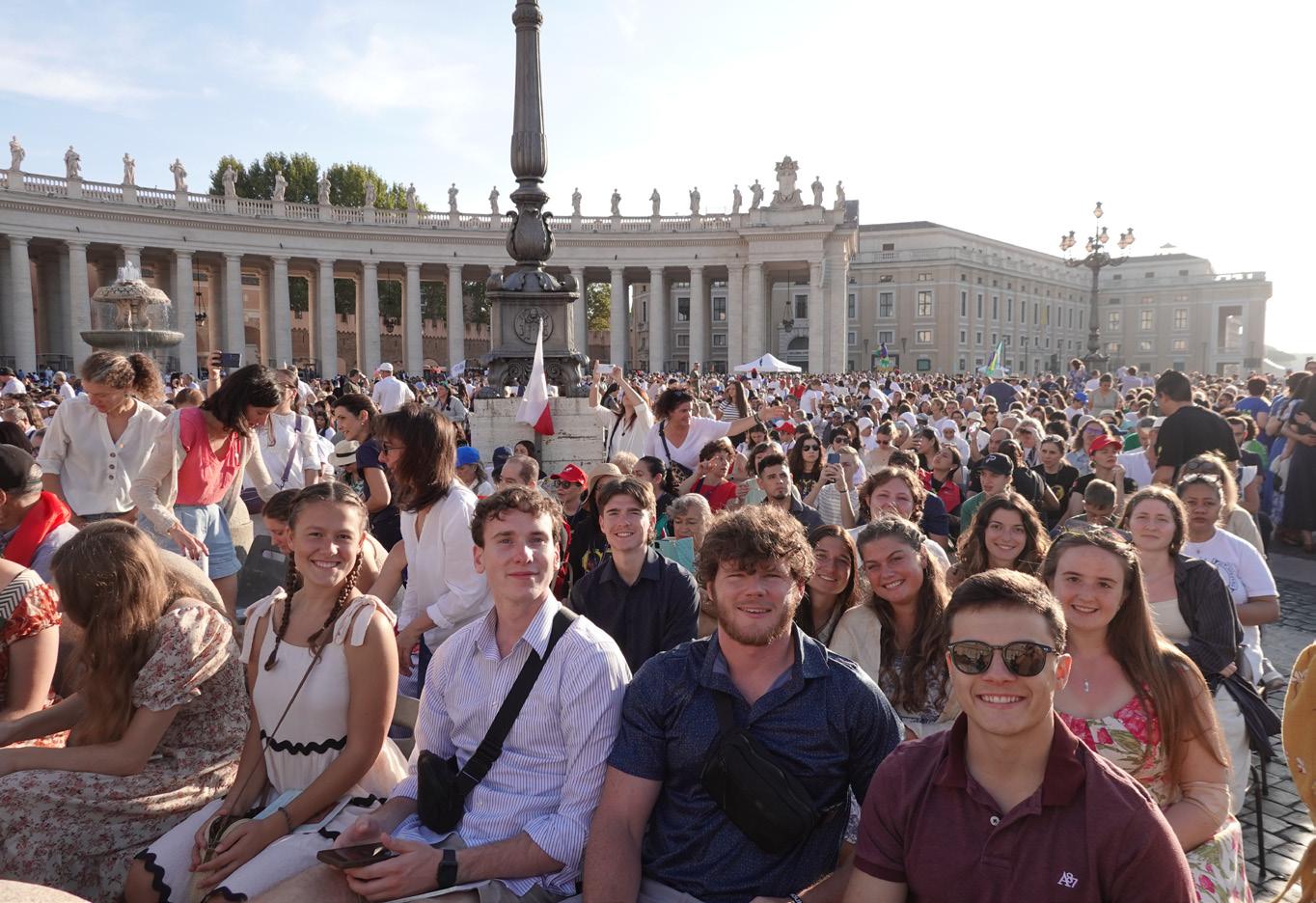
11. Students studying abroad in Rome attended the canonization of St. Carlo Acutis and St. Giorgio Frassati.
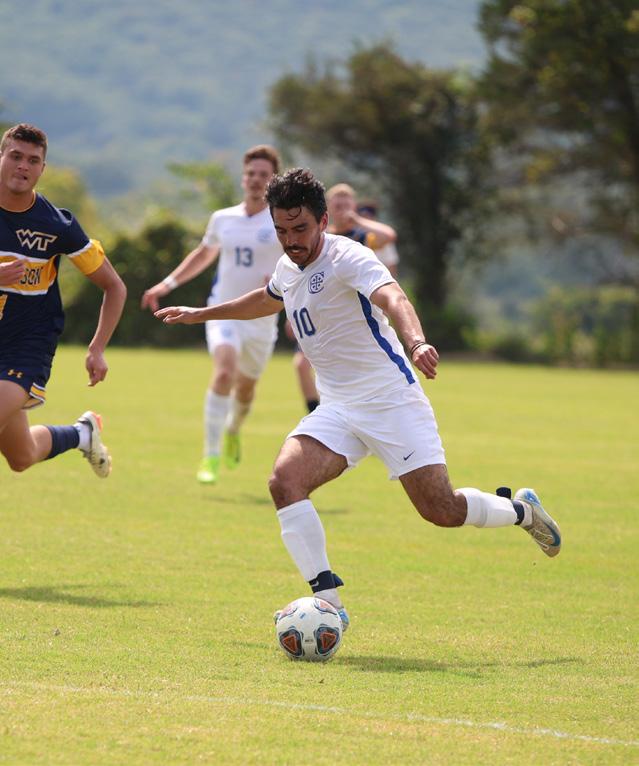
12. The men's soccer team had a season showing great promise for the future, with wins over Central Penn, Manor, and PSU Mont Alto.
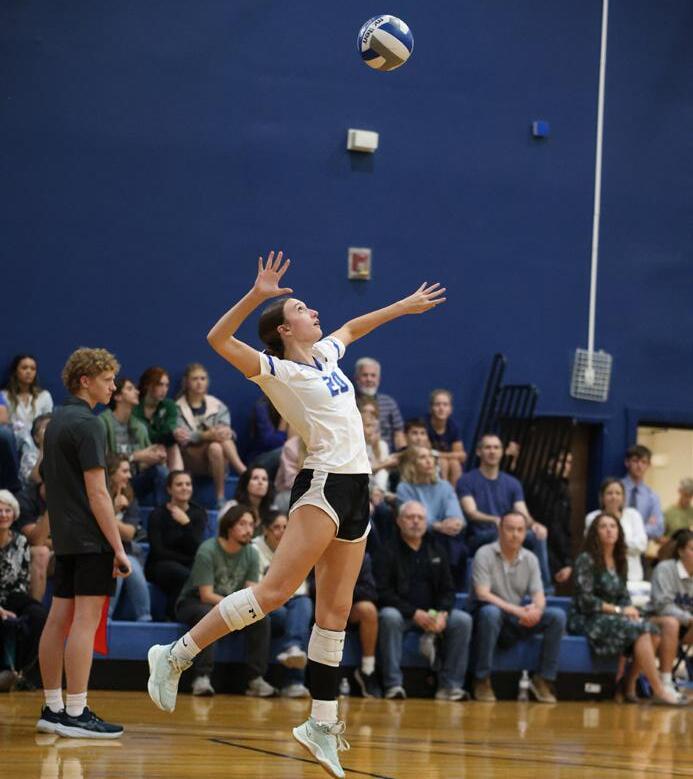
13. Freshman Serenity Fedoryka served during a home game at St. Louis the Crusader Gymnasium.
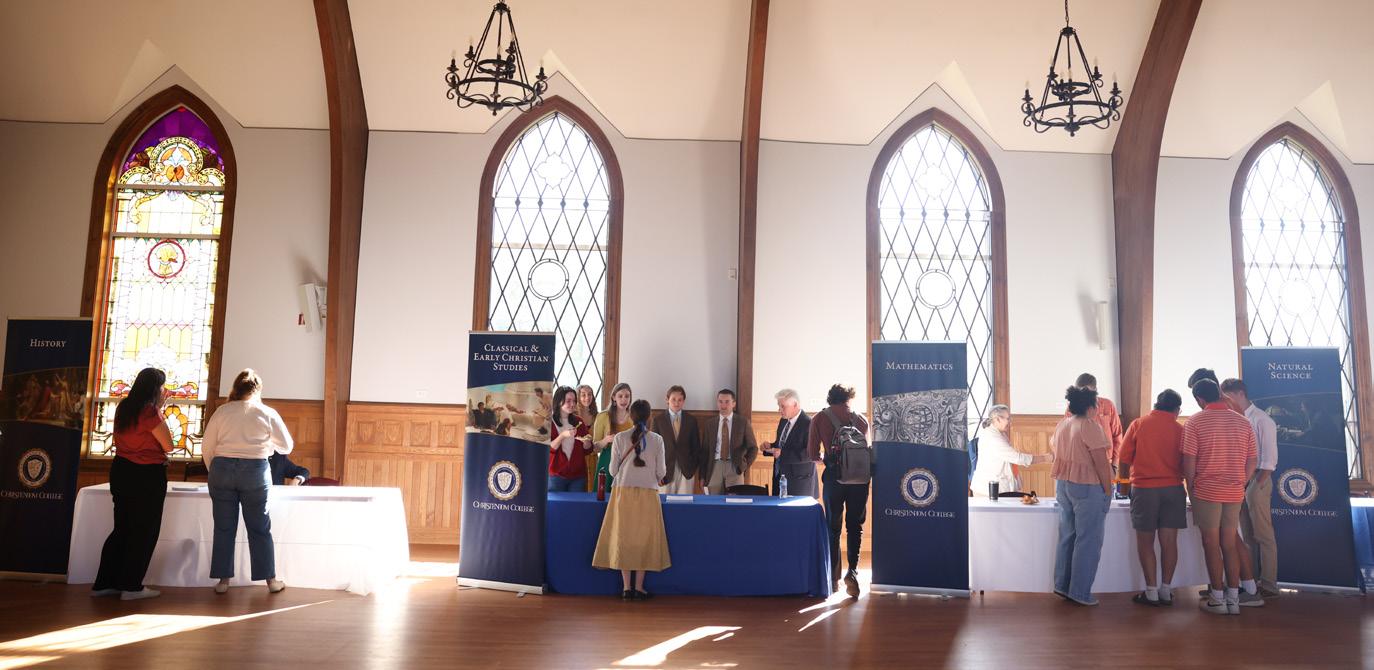
14. The second-annual Majors Expo took place during Spirit Week this year, encouraging students to learn more about the available majors and minors that Christendom has to offer and engage with their professors and seniors in that major.
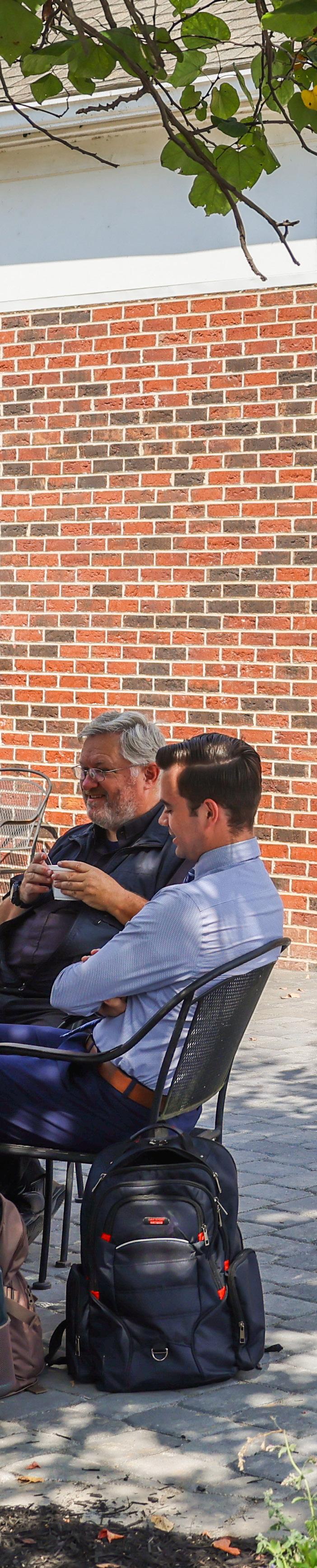
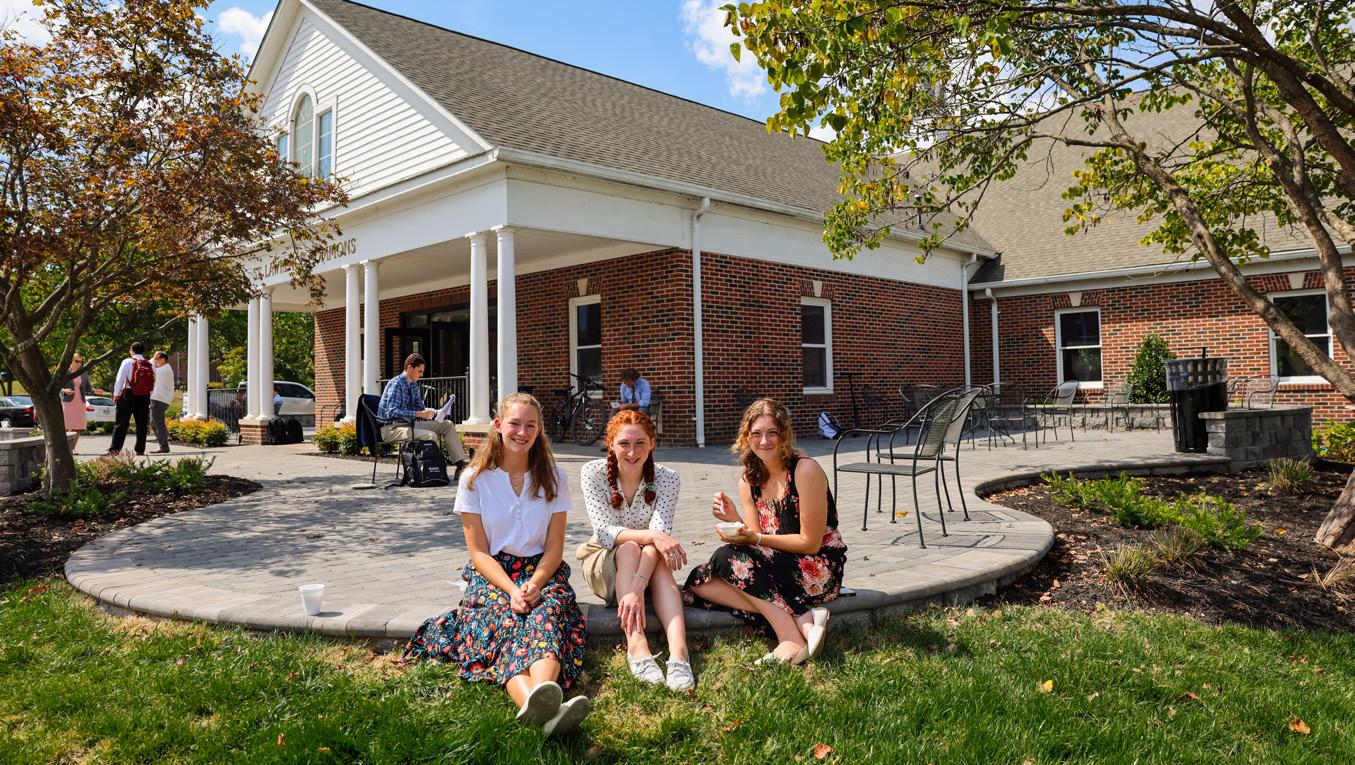
15. Students enjoyed the beautiful new patios installed near the St. Lawrence Commons, providing more outdoor space for studying, sharing meals, and meeting with professors.

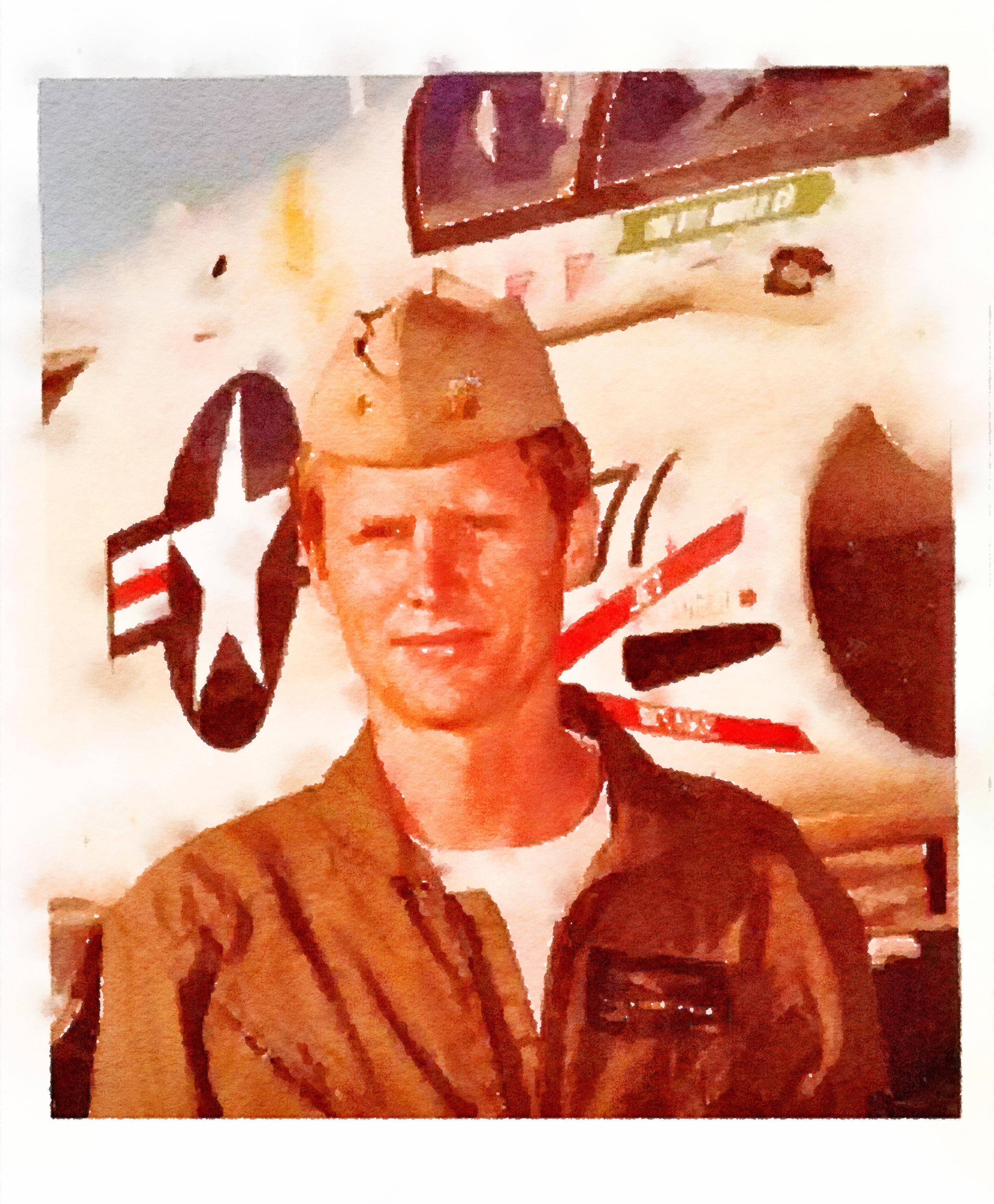
A MAN OF FAITH AND FATHERLY LOVE WHOSE HEROIC LIFE MAY ONE DAY LEAD HIM TO SAINTHOOD

BY ZACH SMITH
Eleven-thirty a.m. Mass in Christ the King Chapel was just getting out in September of 2008 when word quickly spread across Christendom College’s campus: Coach Tom Vander Woude was gone. In one final, selfless act, the man who had spent his life raising others up, both on the basketball court and off, had given his life to save his son.
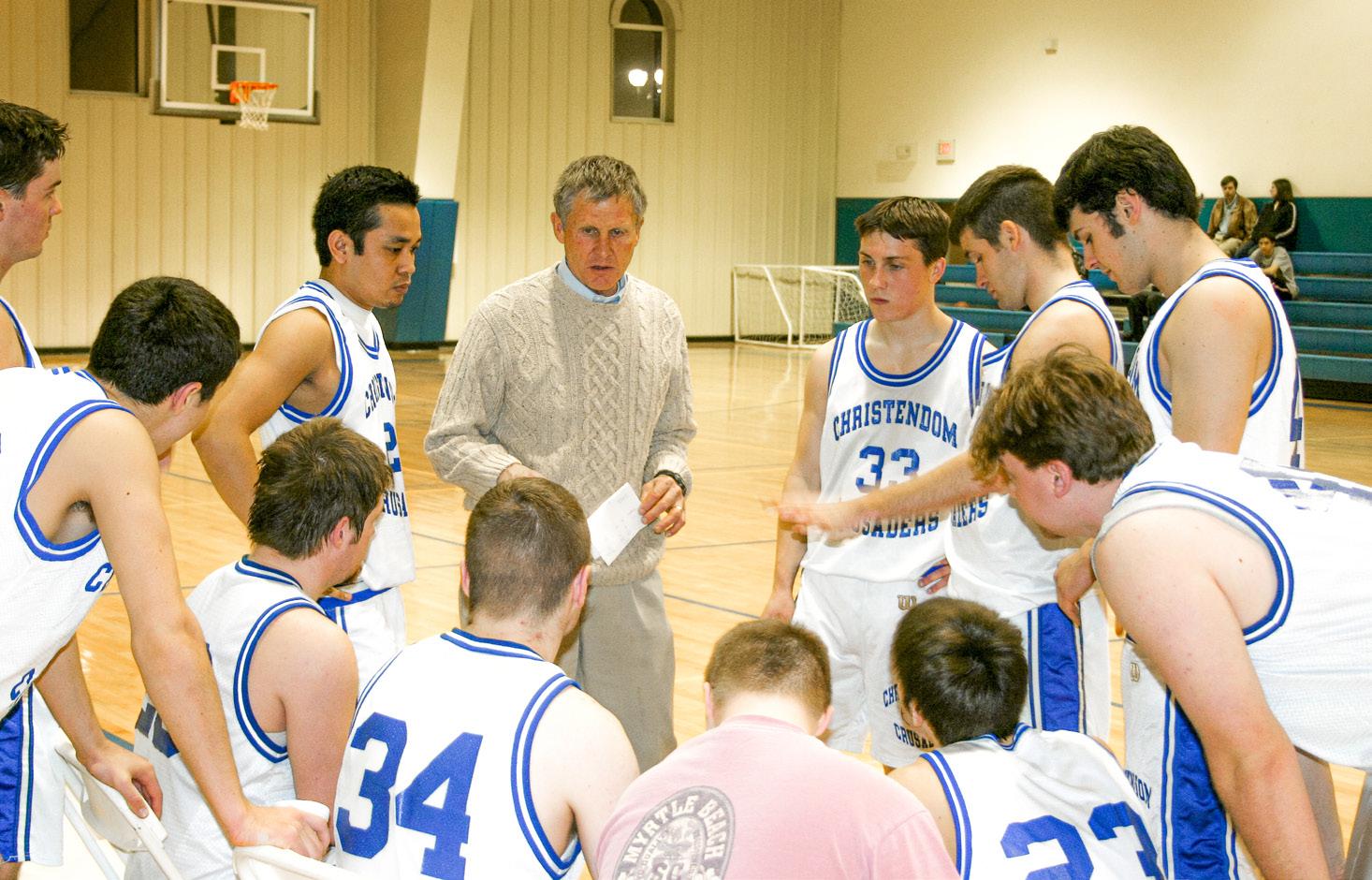
Nearly two decades after his death, the memory of the college’s former athletic director still echoes in the Christendom gym where he once spent so much of his time — in the way players huddle for prayer before games, in the sign above the gym entrance, in the quiet reverence of those who knew him.
Now, the college’s home Diocese of Arlington has begun the consideration process of opening up Vander Woude’s cause for canonization, the first step toward formally recognizing what his family and community have long believed: that Tom Vander Woude lived—and died—with saintlike virtue.

Vander Woude’s friends and family all describe him the same way: as a humble, gentle, joyful and hardworking man who gave a tremendous example of sacrificial love throughout his life —not only to his family but to those he touched through his coaching and professional life as well.
“He was a tremendous leader and guardian of our family,” says Chris Vander Woude, the fifth of Tom's seven sons.
“He did this first and foremost by leading the family towards Christ through frequent reception of the sacraments, generously giving of himself for his family and exercising tremendous virtue day in and day out, especially in the quiet hidden areas like temperance and courage. In many ways, he was a tremendous example of what true Catholic manhood should be, dedicated to always giving of himself especially when it came to leading his family towards Christ and protecting and helping those that needed help.”
A Vietnam War veteran, Vander Woude began coaching out of love for his sons. When asked to lead his son’s soccer team at Seton School in Manassas, Virginia, he accepted the challenge—even though he knew nothing about the sport.
In addition to soccer, he also volunteered as Seton’s basketball coach, all while managing a demanding career as a commercial airline pilot and maintaining a small farm. Together with his wife, he raised a large and active family, with five of his sons going on to attend Christendom College.
After retiring from US Airways in 2002, Tom followed in their footsteps, continuing his lifelong dedication to youth and athletics by becoming Christendom’s athletic director.
As a coach and mentor at Christendom, Vander Woude touched so many lives, most especially the student-athletes he came into direct contact with on a daily basis. He would often say a simple phrase, but one that resonated deeply with students: “just do the right thing.”
His gentle demeanor, which was always ready to help and to listen, allowed many young people to grow into men and women of virtue through both his authentic example and wise counsel.
“As a coach, he showed to all that interacted with him how ‘sports properly directed’ can and should be developed and fostered with character based on the virtues. I think Dad was, for many young men especially, the most influential man in their life besides their own fathers,” says Chris.
That desire to always help those who most needed it would find its fullest expression on that fateful September morning in 2008.
When his youngest son, Joseph (Josie), who has Down syndrome, fell into a septic tank on the Vander Woude family farm on September 8, 2008, Vander Woude did not hesitate. Without a thought for himself, he jumped in to save him— lifting Josie above the surface while his own lungs filled with toxic gases. He called out to a farmhand who was trying to pull Josie out.
“You pull, I’ll push,” he said.
By the time rescuers finally pulled them out of the almost 7-foot-deep tank, Josie was still alive. Vander Woude, however, was dead at the age of 66, leaving behind his wife, his seven sons, and a legacy of heroic virtue that continues to move, to inspire, and to raise up others to this day.
It was this legacy of heroic virtue that inspired a group of Catholics to begin working with the Diocese of Arlington to open his cause for sainthood.
The recently founded Tom Vander Woude Guild is hard at work, sharing Vander Woude’s story across the country. Vander Woude’s son, Chris, has even taken off work for the next two years to share his father’s story, speaking in cities across the nation to spread the powerful and hopeful story of his father and in turn to assist in laying the foundation for Vander Woude’s possible cause.
Their efforts helped lead the Diocese of Arlington to take several preliminary steps into opening his cause, including naming a postulator and vice postulator, who are investigating and promoting the cause. In the Catholic Church, three things can put a person on the path to sainthood: martyrdom, heroic virtue, and, following a 2017 move by Pope Francis to expand sainthood, an offer of life or the offer of one’s life. Vander Woude falls most especially under this third path, leading to the initial steps being taken by the diocese.
For Chris, seeing these steps taken by the diocese is both deeply humbling and exciting, and he hopes that more people are inspired by his father’s example and legacy as a result.

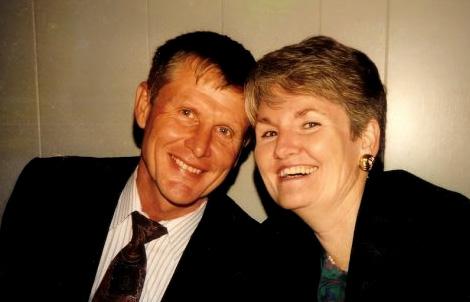
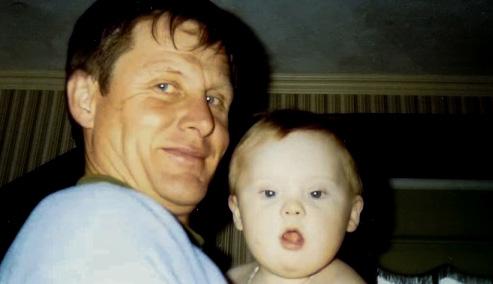
“To me, this investigation into opening his cause for canonization means that there is hope in living a life of virtue even if it is hidden or simple,” says Chris. “Dad’s story is so powerful, inspirational and full of hope. I hope that many people who learn about his life and his death will be inspired to live holy and virtuous lives in their vocation. Dad was such a wonderful man to anyone that got to meet him. Through learning about his life, I hope people are inspired to be the best versions of themselves, which in many ways is what my dad sought for everyone he interacted with.”
Seventeen years after Vander Woude’s sacrificial death, his beloved son, Josie, is alive and well, taking care of Vander Woude’s now 81-year-old wife on the family farm. Vander Woude’s name and portrait are emblazoned above the doors leading into the basketball court at Christendom College, inspiring students daily to emulate his heroic virtue. And the investigation into his cause for canonization is well underway, with Chris traveling across the country to speak at parishes in Virginia, Indiana, Ohio, Texas, New York City, and at the San Francisco Walk for Life, sharing his father’s story wider than ever before.
For Chris, he hopes that his father’s life and legacy will inspire and lead others to live similar lives of heroic virtue, changing the culture for the better.
“Not only did Dad positively impact the communities he was a member of, but those communities positively impacted Dad and our family,” concludes Chris. “Dad’s possible cause being opened is a credit to the communities that he and our family have been blessed to be a part of. Undoubtedly, Dad’s example of how to live a virtuous yet simple life lives on in our family and communities through his memory and the lives of those whom he has touched in life and in death.
"I also believe that it is a profound aspect of Dad’s life that the institutions and groups he touched have continued to thrive after him, especially Seton Home Study, Christendom College, Seton High School, and Holy Trinity, especially the altar boys that he taught and led. He made everyone around him better. The ordinary day in and day out of striving to do God’s will, especially through giving and sacrificing, which he fully exemplified in giving his life to save Josie, should give us all hope.”
As the Diocese of Arlington now begins to investigate his life, those who knew Tom Vander Woude need no convincing of his saintlike virtue. They saw holiness up close on a daily basis — in the calloused hands of a father, the humility of a coach, and the love of a man who gave everything for his son, simply by striving, every day, to “do the right thing.”
To learn more about the investigation into the cause for Tom Vander Woude’s canonization, visit tvwguild.org.

CHRISTENDOM’S NATURAL SCIENCE MAJOR UNITES RIGOROUS STUDY WITH A CATHOLIC VISION OF THE WORLD
BY ABIGAIL MILLER

In a world increasingly shaped by scientific discovery and innovation, there is a growing need for students to engage deeply with the natural sciences through rigorous, well-rounded study. Responding to this need, Christendom College launched its new Natural Science major in 2024. Students in the program explore chemistry, physics, microbiology, anatomy & physiology, and bioethics, gaining a comprehensive understanding of the natural world. Guided by Christendom’s distinguished faculty, they are well prepared for careers in healthcare or the sciences. Among the program’s strongest supporters is long-time friend of the college, Stan Skowronski.
For Skowronski, it’s incredibly important for Catholics to understand that religious faith and scientific fact are not in conflict with each other, but rather complementary. He is frustrated by the myth that the Church is anti-science when in fact she has nurtured scientific discovery throughout the centuries. After all, Copernicus—the astronomer who proposed that the sun is the center of the solar system—had a doctorate in canon law, and Gregor Mendel—the father of modern genetics—was a priest. The new Natural Science major at Christendom is a testament to the harmony of faith and science.
Skowronski has been a member of the Christendom family for decades, after his mother introduced him to the college. He remembers her as a deeply pious woman, raising thirteen children and working tirelessly for the pro-life cause. One of the bells in Christendom’s Christ the King Chapel is even dedicated to her memory, a testament to her love for authentic Catholic education and her friendship with the college.
He also points back to the deepening of his own faith while he was an undergraduate at Harvard University. At the time, he was dating a young woman from an Episcopalian background. She was studying history and Skowronski majored in physics, but they both enrolled in a series of theology courses in order to get to the root of their religious differences. Skowronski remained Catholic and she is still a member of the Episcopal church, but he came away with a deep conviction about the importance of Catholic education.
Years later, after pivoting to a career in computer science and founding a successful company, Skowronski decided to support Christendom after visiting the campus and seeing firsthand that it was something special. He could tell immediately that the
students were in love with Jesus Christ. He remembers that he was moved by their “serious but joyous faith” and by the strong community they were clearly rooted in. He also liked the mentorship professors provided for students. Here was a place where the Catholic faith was not only taught, but lived zealously and joyfully. Since then, he has enjoyed getting to know Christendom more deeply, especially through conversations with President George A. Harne, Ph.D.
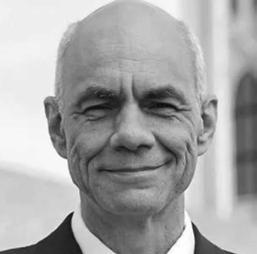
Stan Skowronski
Far from being opposed, the beauty revealed in the sciences can enhance one’s faith and appreciation for the Creator.
In Skowronski’s view, there are two major reasons to support the burgeoning science program at Christendom. He believes that a solid scientific education increases the intellectual credibility of Christendom graduates as they make their way in the world. But even more fundamentally, he knows through his own experience in the sciences that they reveal God’s creation and care of the world to man in a special way. Far from being opposed, the beauty revealed in the sciences can enhance one’s faith and appreciation for the Creator.
“Is the world, fundamentally, something that we can understand?” Skowronski asks.
For the Catholic and for the scientist, the answer is yes. Christendom students know this, and thanks to Skowronski’s generosity, they continue to learn about the natural world—and the supernatural one—in the classroom and the laboratory, glorifying God in His work.
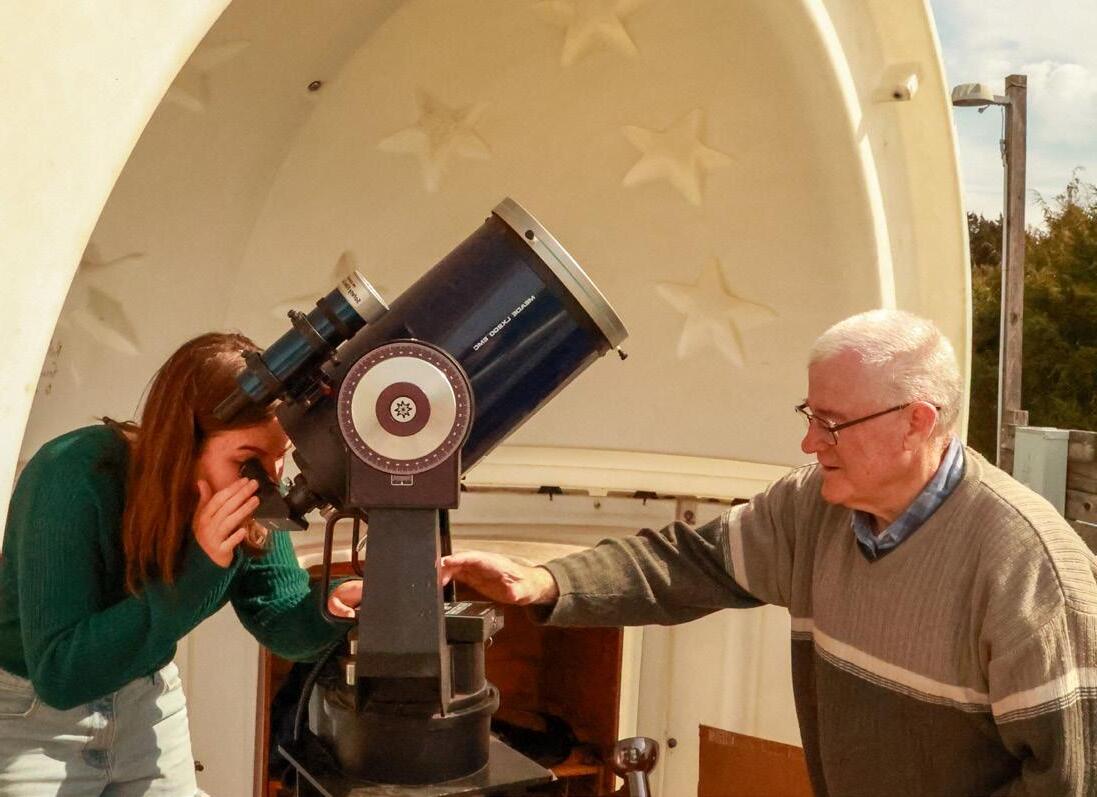
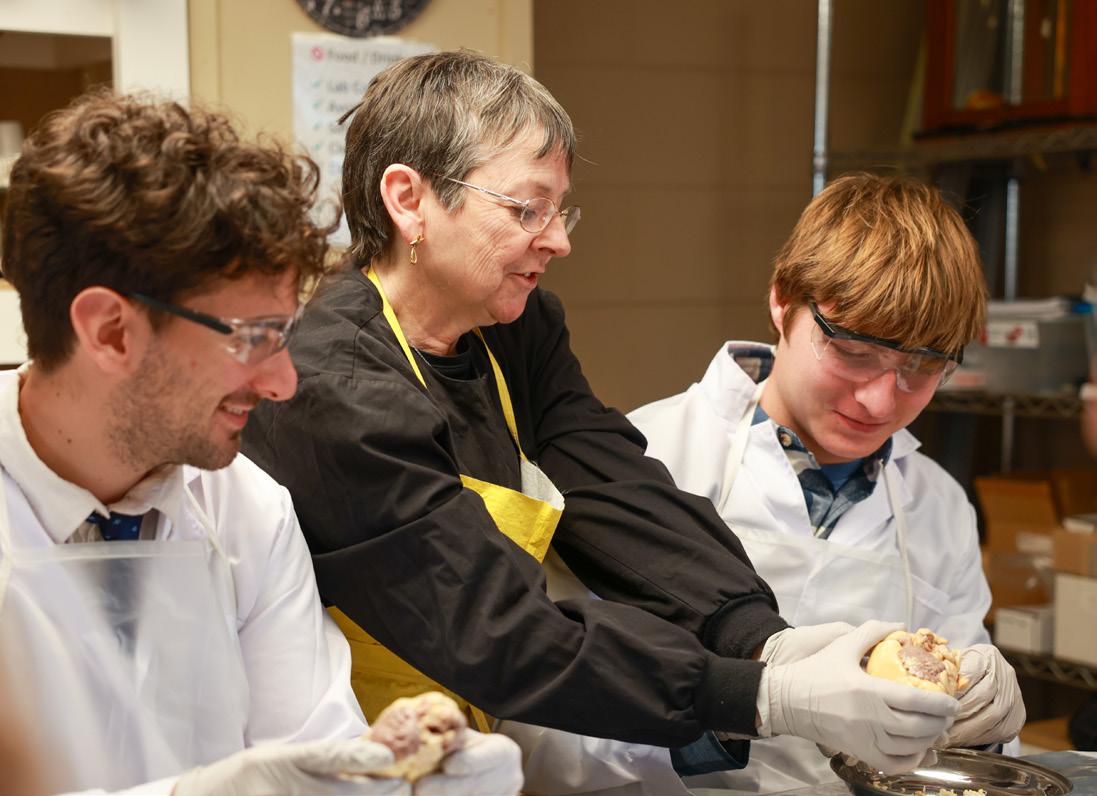
Opposite page, top-left: students observing a solar eclipse from Christendom's observatory; Top-right: students in a biology class with Dr. Aileen Foeckler; Below: An artistic rendering of the new science lab, Ven. Lejeune Hall.
HIGHLIGHTING A COURSE FROM OUR RICH CURRICULUM
IN THE CLASSROOM: HIST 499: ST. JOHN HENRY NEWMAN SEMINAR
BY DR. CHRISTOPHER LANE
Many people have vaguely heard about the newest Doctor of the Church, St. John Henry Newman (1801-1890): he was an Anglican who came into full communion with Rome; he had something to do with college education; he wrote some important books. Yet he deserves not to be admired vaguely but to be read deeply. My seminar on Newman, a history elective, challenges juniors and seniors to imbibe hefty portions of his words, learning both from him and about him.
Students tackle some of Newman’s most influential works. A few examples:
• His autobiographical Apologia Pro Sua Vita explores his efforts at Catholic-oriented reform within the Church of England and his unintended path to full communion with Rome.
• The Idea of a University, at the foundation of Christendom’s mission, defends a vision of Catholic liberal education that values the distinct role of each discipline in forming the mind.
• His Letter to the Duke of Norfolk exemplifies careful thinking about the Church’s teaching authority in a theologically anxious age.
• An Essay on the Development of Christian Doctrine transformed Catholic theology by showing its need for historical method and its compatibility with the messiness of history.
It was Pope Leo XIII who made Newman a cardinal in 1879, signaling gratitude for such writings. And now Pope Leo XIV, in declaring him a doctor, signals that these writings are of lasting value in the life of the Church.
But Newman was no disembodied intellect. He was a man who continually emphasized persons and concrete realities over abstract ideas. To see this real man and his world, students follow his dictum that “a man’s life lies in his letters.” He was a prolific correspondent, and the scholarly edition of his Letters and Diaries runs to 32 volumes. Student reading of his published books is thus interspersed with a chronological selection of his letters.
These letters reveal the full lifetime of a saint who honestly protested, “I have no tendency to be a saint. . . . Saints are not literary men, they do not love the classics, they do not write Tales.” This saint grew up, suffered through college exams, sought a career, wrote novels, loved his family, got annoyed with his family, made friendships, lost friendships, grieved over deaths, was misunderstood, misunderstood others, changed his mind, disagreed with other saintly men, and experienced the many losses that come with age.
This course, however, is not just about one man. As a primary source for historical study, Newman serves as a keen eyewitness to the dynamic changes of the nineteenth century. Through his eyes, students explore the transition to industrial labor, the rise of railroads and steamships, revolutions on the European Continent, political reform in Britain, the massive expansion of the British Empire, and global Catholic revival and reform.
Ultimately, my hope is that many students will experience this course as the beginning of a lifelong project of reading and returning to the wisdom of St. John Henry Newman, a wisdom still so desperately needed in the life of the Church and the world.
Caitlin and Bryan Hadro ’04 welcomed Tristan Anthony on June 4, 2025. 1
Kate (née McMahon) Leonard ’02, together with Franciscan alumna Annie Surine, opened a new Catholic shop— The Catholic Coterie—in Front Royal, Virginia, July 2025.
Sarah Antonio ’02 partnered with Catholic publishing company, Word on Fire, to produce stamped leather covers for Bishop Barron's Liturgy of the Hours subscription book.

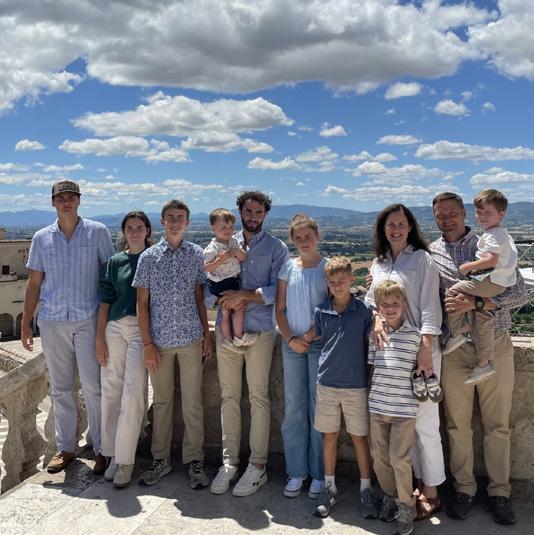
Amy (née Wright) ’01 and Hugh Wingate and their nine children, including Hugh, ’24, Mary ’26, and Andrew ’29 made a pilgrimage to Assisi, Italy, this summer while their house in Atlanta, Georgia, flooded. 2
Nick Petersen ’11 and his wife moved to Guatemala (where she is from). The lessons and experiences from Christendom College have become all the more invaluable there.
Therese (née Fetsko) ’10 and John Zakelj were married on July 20, 2024, at

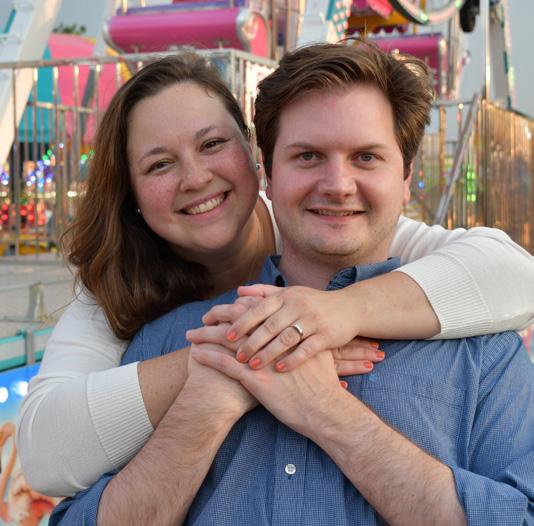
Holy Resurrection Byzantine Catholic Church in Euclid, Ohio. 3
Julie Wells ’15 and Joey Funkhouser were engaged on July 27, 2025. They will be married at Christ the King Chapel in May 2026. 4
Benjamin and Amy (née Marter) Eriksen ’16 welcomed Damien John Paul on May 18, 2025. Damien was baptized in Christ on June 7, 2025. 5 Fr. Linus M. Martz, O.P., ’18 was ordained to the priesthood of Jesus Christ on June 5, 2025. On May 16,
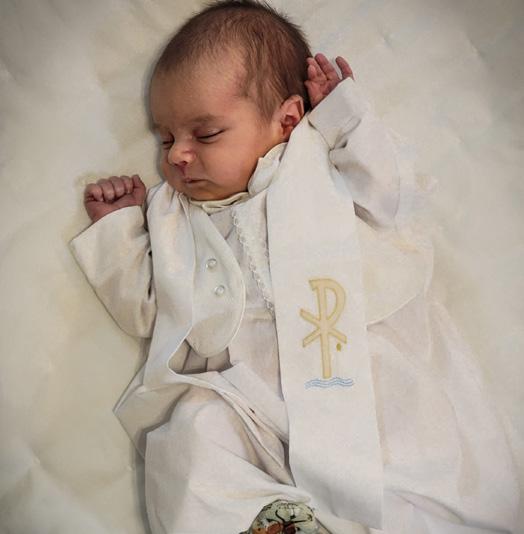

2025, he graduated from the Dominican House of Studies, earning the Licentiate of Sacred Theology (S.T.L.).
Madeline (née Gomez) Stevenson ’17 and Patrick Stevenson welcomed baby Alma Guadalupe Stevenson on March 26, 2025. 6
Peter ’17 and Clare (née McDermott) Tapsak ’18 welcomed Darya Elizabeth on June 22, 2025. Older siblings Olivia (4) and Theo (2) are very excited. 7
Daniel Jost III ’19 married June Ochieng on July 16, 2025, at Stella Maris Church on Sullivan's Island, South Carolina. 8


Joseph ’18 and Hannah (née Brezinsky) Cummings ’17 welcomed Liliana “Lily” Mae, on September 6, 2025. 9
Dominic and Mary (née Storey) Carolla ’18 welcomed Vivien Mara Rose on September 4, 2025. 10
Henry Love ’19 and Molly Fitzgerald were engaged on July 25, 2025. They will be married on May 23, 2026. 11
Ben ’19 and Erin (née Ginter) Marsh ’22 welcomed their first child, Clara Felicity, on August 16, 2025. 12
James ’20 and Emily (née Guza) Foeckler ’21 welcomed baby James


Robert Casimir on March 4, 2025. Older brother, Leo, loves his new little brother, Jimmy! 13
Audrey (née Altmanshofer)
Williams ’24 and Peter Williams ’24 were married on June 28, 2025, in Greensboro, North Carolina. 14
Pablo Boada ’22 graduated from Baylor Law School. He will be working in-house for a Fortune 500 company in Jacksonville, Florida, after the July Bar Exam.
Anthony ’22 and Molly (née deTar) Van Alstine ’23 welcomed their second daughter, Kara Ann, on July 18, 2025. 15
Gerard Adams ’23 and Gwyneth (née Sawicki) Adams ’23 welcomed Adeline Thérèse Majella Adams on May 16, 2025. 16
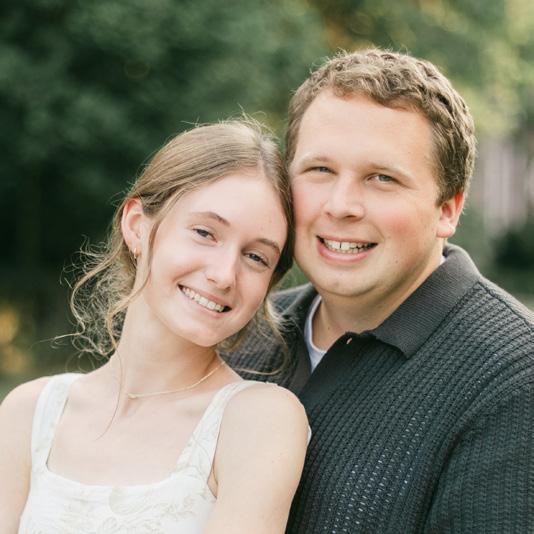
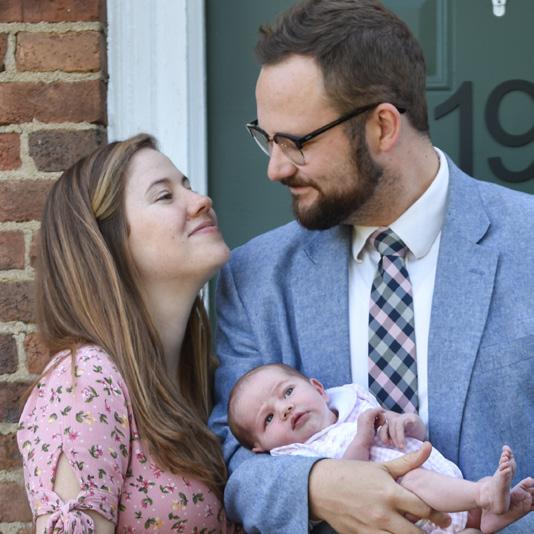


Brendan Hichborn ’25 and Merideth Lilley ’25 were engaged on August 10, 2025, and will be married on May 31, 2026.
Harry S. Cole ’22 and Therese Cruz ’23 were married on July 26, 2025, at Our Lady of the Rosary in San Diego, California. 17
This January, Jared Plasberg ’25 will begin running across the United States—from California to the coast of North Carolina—to raise funds for the Front Royal Pregnancy Center. Every mile is for mothers, babies, and families in need. Visit charity.pledgeit.org/ jaredsamericanrun/@jared to support this mission.
Compiled by the Alumni Relations Office.
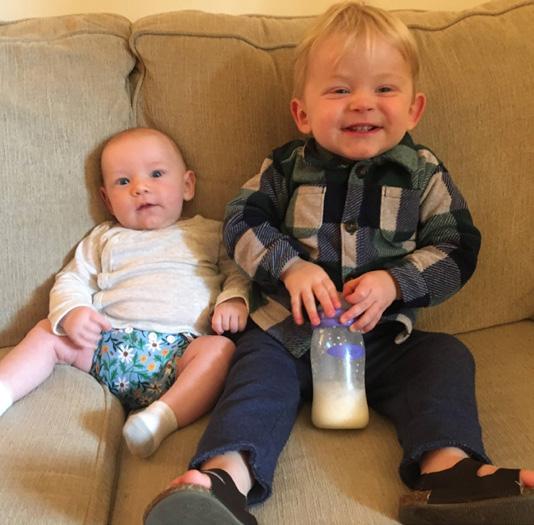



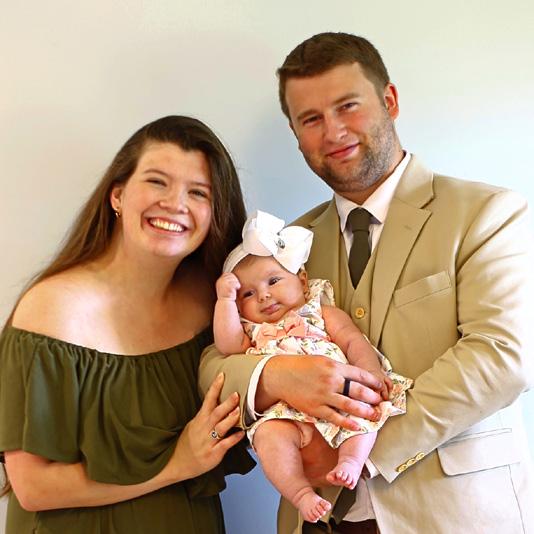
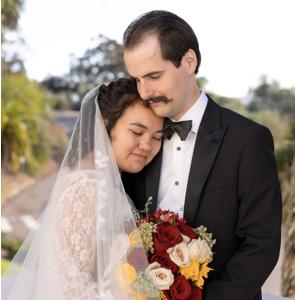

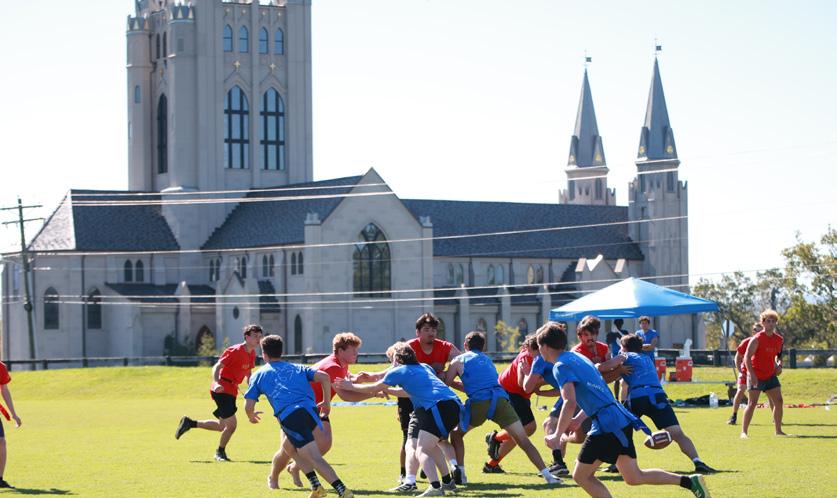
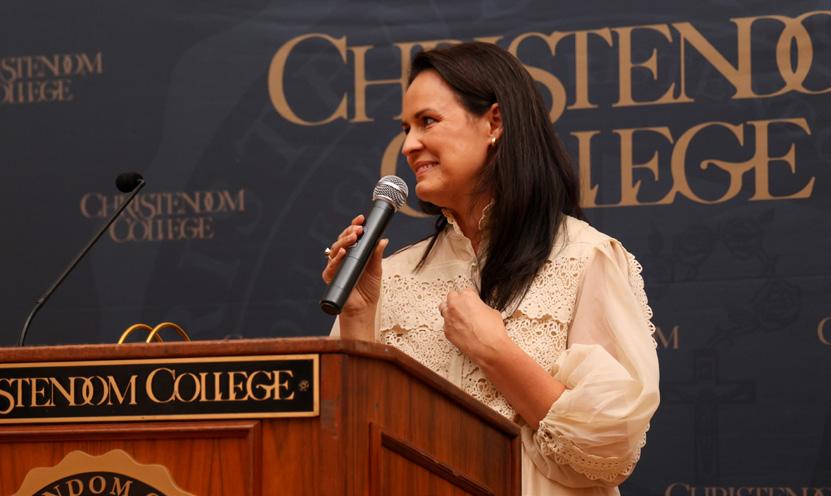
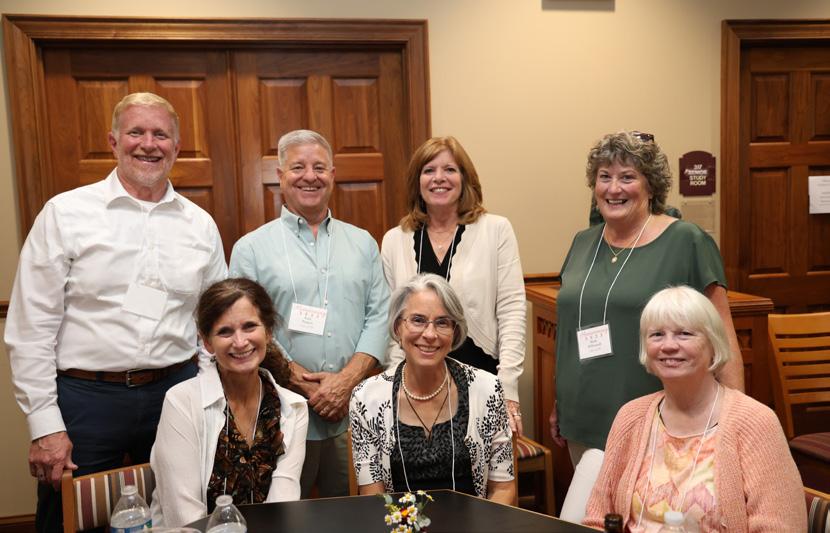
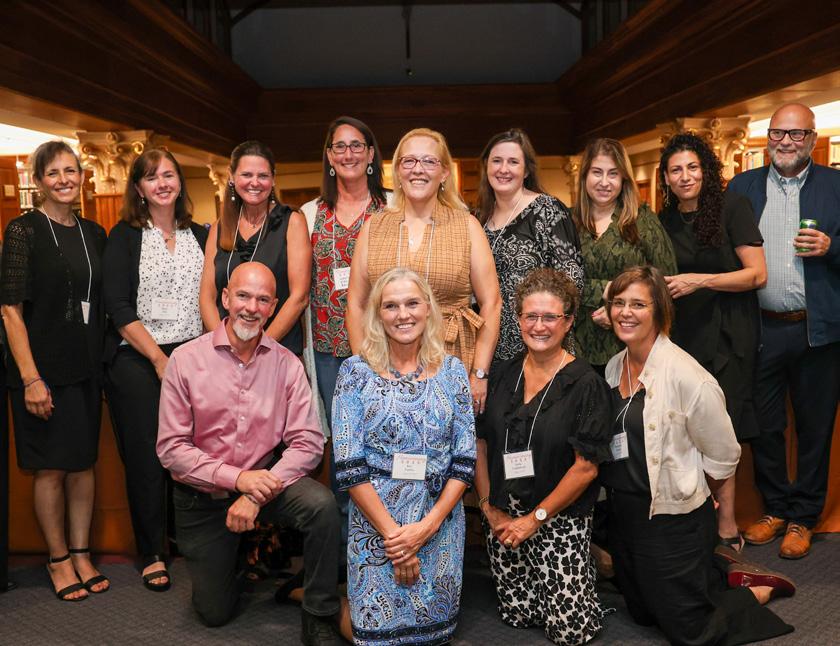
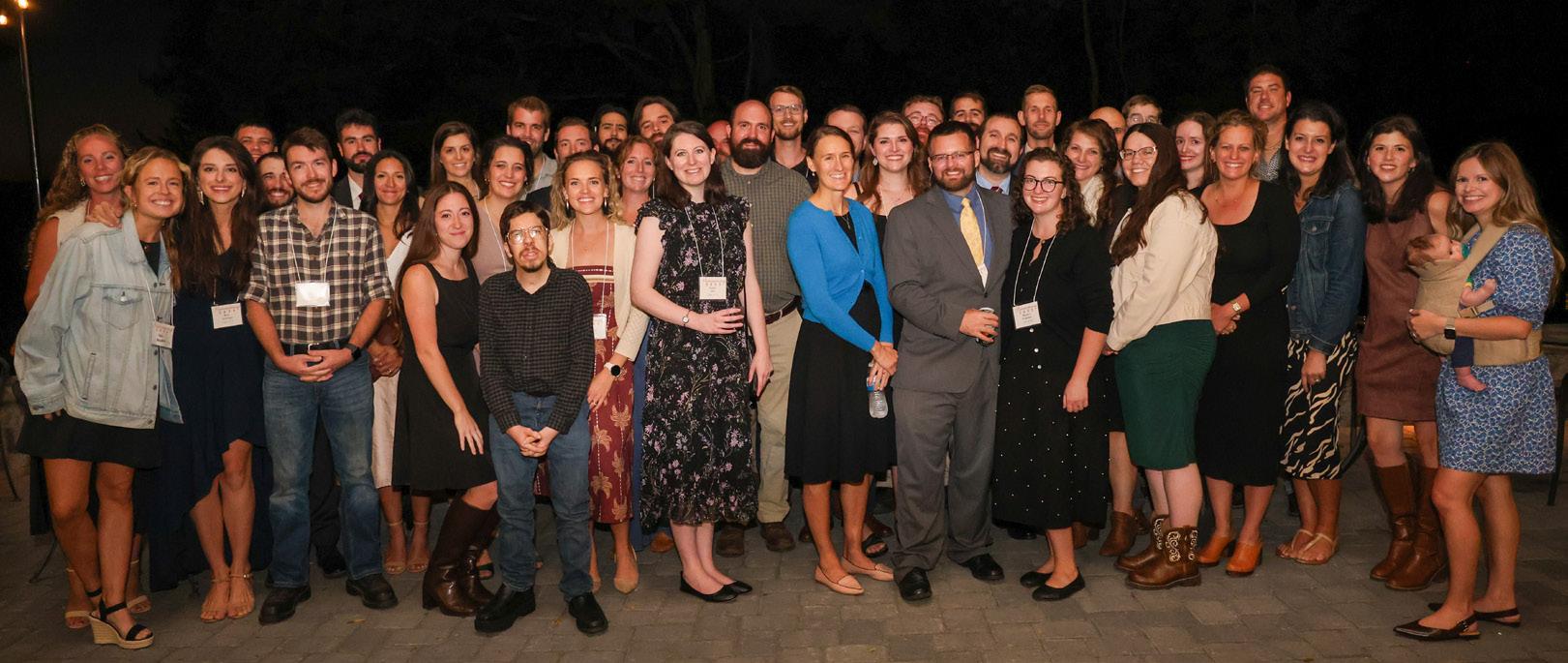
Homecoming 2025, held October 3-5, began with the First Friday Holy Hour followed by a panel discussion on “Extending the Christendom Vision in New Ways." Dr. Jon Kirwan, Dr. R.J. Matava, Mr. Adam Wilson, and Dr. Kevin Tracy shared exciting new initiatives at the college, including free online courses and new master's and doctoral programs in Education. Saturday sports games accompanied Family Fun Day and a wine tasting, making for an enjoyable day for the whole family. That evening, the classes of ’85, ’95, ’05, and ’15 congregated in the beautiful St. John the Evangelist Library before joining their fellow alumni for the Warren H. Carroll Alumni Reception in Old Chapel Hall, where Mary-Rose Verret ’04 was given this year's St. Pius X Award for her non-profit, Witness to Love.
BY DR. GREGORY TOWNSEND
The Church's teaching is contained in the Creed and Ten Commandments which are expounded in the Catechism of the Catholic Church (CCC). The first article of the Creed deals with the relation between God and Creation and the CCC in #306 notes that God grants His creatures not only their existence, but also the dignity of acting on their own, of being causes and principles for each other, and thus of cooperating in the accomplishment of His plan.
The disciplines of the Natural Sciences (Physics, Chemistry, and Biology) are based upon an analysis of “created things” acting according to their natures, and in #306 the Church indicates that it is valid to consider “created things” as causes and principles of the changes in other created things. The disciplines built on this view yield valid analyses of change within the causal framework they develop, and they are free to develop their concepts using an appropriate methodology. So we can truly attribute the motion of the planets about the Sun to the gravitational effects of the Sun and the properties of the planets; the capacity to produce these effects is part of the nature of the Sun and planets. There is no need to invoke the causality of the Angels to account for the motion of the planets— they are acting as on their own, being the cause and principle of their motion.
The causal framework developed does not impact on the Faith because there is a studied exclusion of the non-material. Kepler—a contemporary of Galileo—expressed the aim of the scientific enterprise well when in 1605 he wrote in a letter to his patron Herwart von Hohenburg:
“My aim is to show that the heavenly machine is not a kind of divine, live being, but a kind of clockwork… insofar as nearly all the manifold motions are caused by a most simple, magnetic, and material force, just as all motions of the clock are caused by a simple weight. And I also show how these physical causes are to be given numerical and geometrical expression.”
Taken from the college’s motto, “Instaurare Omnia in Christo,” this section features an essay or excerpt from a recent paper or talk by one of Christendom’s distinguished faculty.

In his letter to Fr. Coyne in 1987, written on the 300th anniversary of the publication of Newton’s Principia, late Pope St. John Paul II expressed the relationship between Religion and Science this way:
"To be more specific, both religion and science must preserve their autonomy and their distinctiveness. Religion is not founded on science nor is science an extension of religion. Each should possess its own principles, its pattern of procedures, its diversities of interpretation and its own conclusions. Christianity possesses the source of its justification within itself and does not expect science to constitute its primary apologetic. Science must bear witness to its own worth. While each can and should support the other as distinct dimensions of a common human culture, neither ought to assume that it forms a necessary premise for the other."
What is really interesting is the existence within the Natural Sciences of questions which suggest that its analysis is limited. Simply put, the existence of material effects which need a cause beyond the causal framework developed by the Natural Sciences.
So if a person seeks to think that an analysis of Reality by means of the Natural Sciences is sufficient, there are questions that actually require an answer in terms of an immaterial cause since any attempt to explain in terms of a material cause is insufficient. These are questions that cannot be ignored because they are associated with real material phenomena.

The most startling of these are:
What is the nature of the human mind?
Scientists recognize the uniqueness of the human mind and strive to explain it in material terms but such explanations always fall short: the Lucas-Penrose argument claims that the Human Mind cannot be a computer; the Wigner Peierls argument indicates that the Human mind must be transphysical. So what is its nature?
What is the Origin of the Big Bang?
Evidence points to the fact that the Universe originated in a Big Bang about 13.7 billion years ago; the universe then expanded from an initial state of high density and temperature. The question is what was the source of this Bang?
These questions are a wonderful development in the Natural Sciences because they provide a basis for their interaction with the higher disciplines of Philosophy and Theology. Such an interaction is mutually beneficial, for as St. John Paul II wrote in the letter mentioned above: “Science can purify religion from error and superstition; religion can purify science from idolatry and false absolutes. Each can draw the other into a wider world, a world in which both can flourish.”
AUGUST 8, 2026 | FRONT ROYAL, VIRGINIA Conference with Optional 3-Day VIP Experience
Contemplate
FEATURING STEPHEN BARR, FR. TAD PACHOLCZYK, HARRISON SCHMITT, DAVID DEAVEL, GEORGE HARNE, AND MORE.

conference.christendom.edu
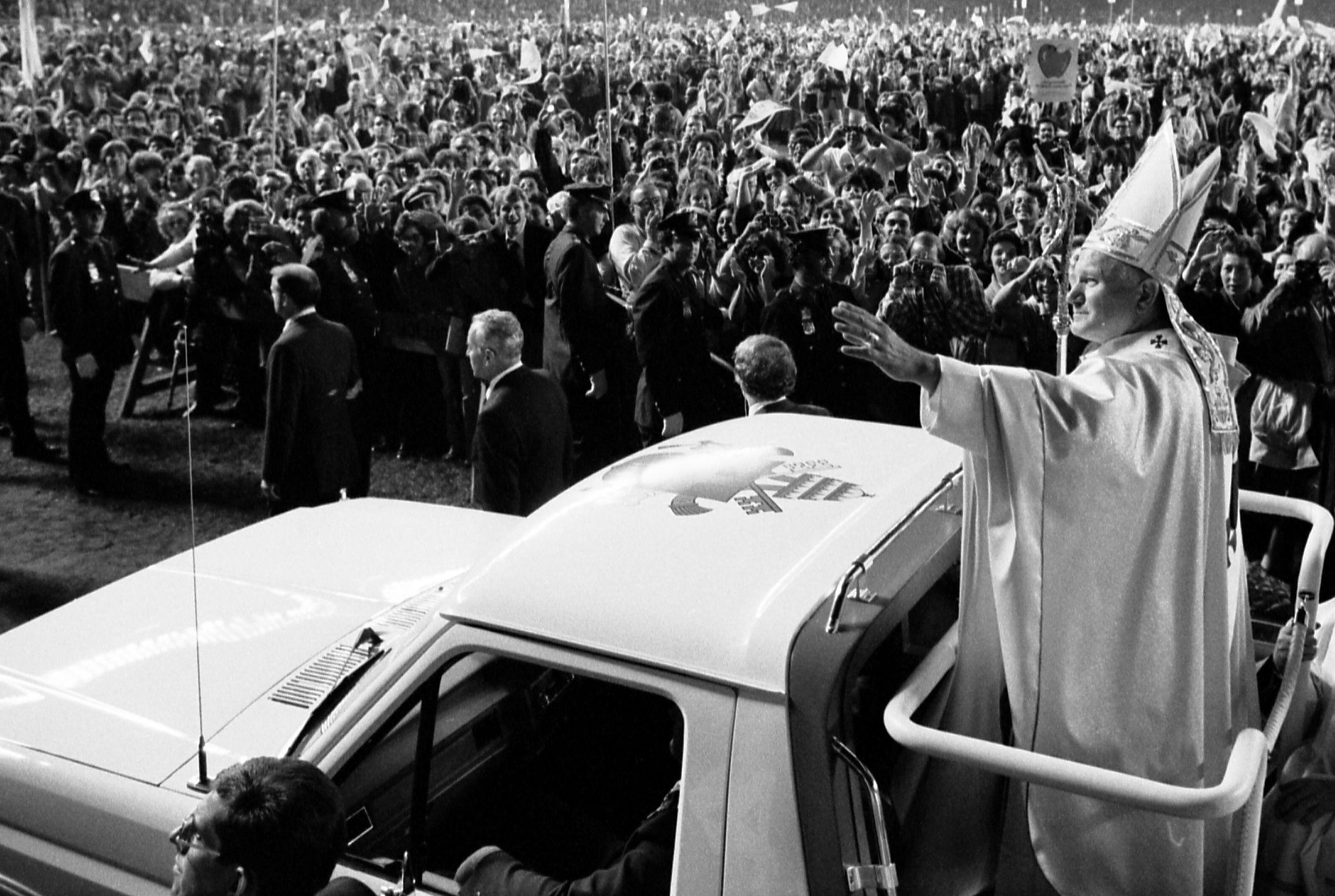
Pope St. John Paul II devoted his pontificate to renewing the Church, placing special emphasis on the vital role of education in forming future generations.
The Pope St. John Paul II Legacy Society honors those who include Christendom College in their estate plans. By following his example, members ensure that faithful Catholic education continues to flourish—forming students who will lead, serve, and strengthen the Church for years to come.