Piper
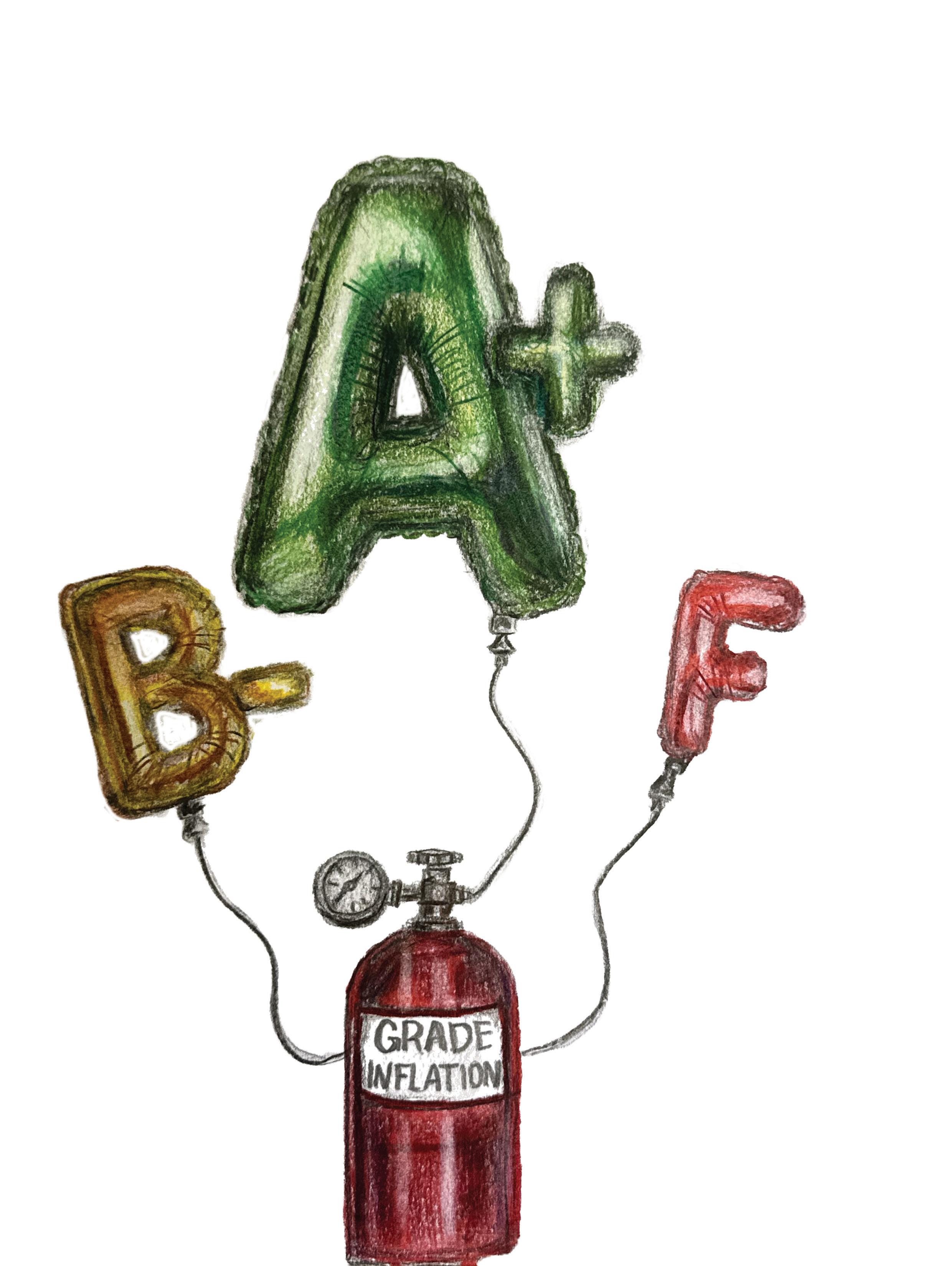

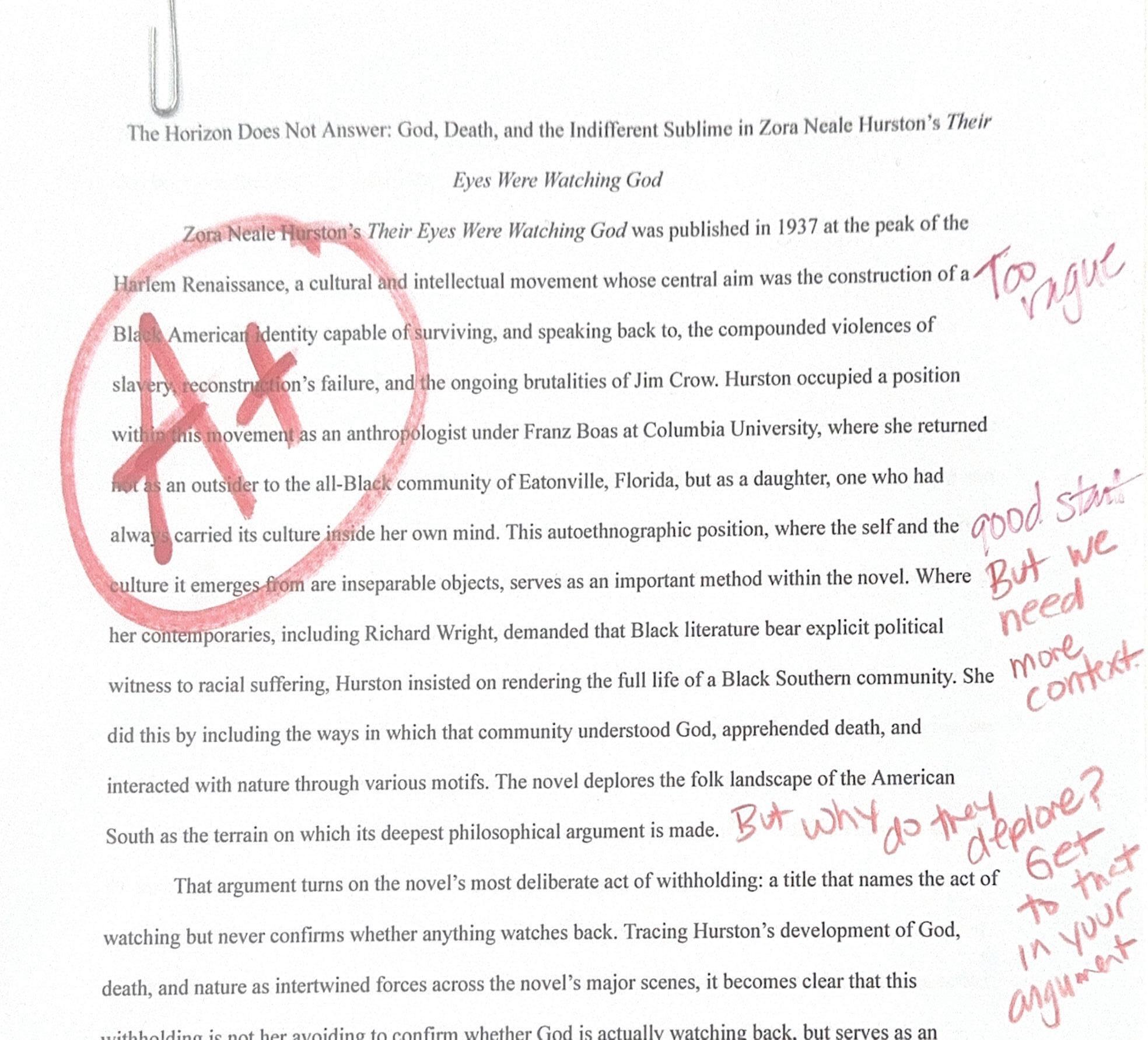
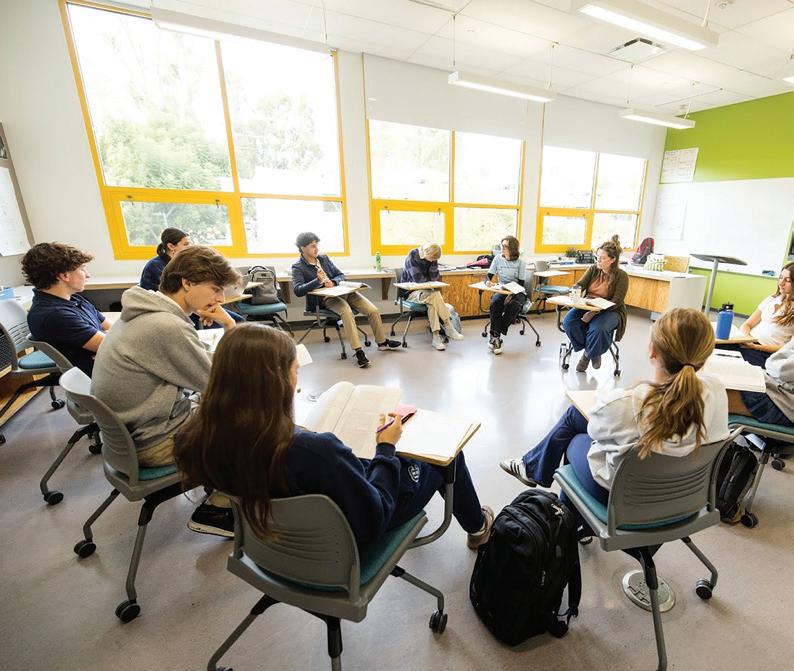
An ‘A’ used to signify mastery of a study. Now, as elite prep schools compress the grading scale, it’s no longer an academic achievement but a baseline transaction. According to a January 2018 John Hopkins University Press research publication by Jason Hurwitz, students in private high schools were three times more likely to experience grade infation than public schools students. Rising class GPAs have raised questions about whether Campbell Hall is an exception to grade infation.
Hannah Brown,* a veteran teacher at Campbell Hall, has seen frsthand the intensity of Campbell Hall’s academic culture. She believes most students follow the notion that prestige correlates with success, creating high stakes around improving one’s academic profle.
“Campbell Hall is a college prep school, so there’s already the expectation of going to college,” Brown said. “Beyond that, the expectation isn’t just going to [any] college, but going to a competitive college with a lower acceptance rate. [Students begin to believe that] if you go to a certain college, you haven’t succeeded.”
PAGE 05
A breath of fresh air
They marched through the Catalina Mountains in a single fle line, soaking in all the beauty that surrounded them. The afternoon sun glistened across the running creeks as the rushing water echoed faintly throughout the canyon. With every step, the group climbed higher and higher into the mountains. Their heavy breathing blended with the constant laughter as they pushed through the challenging terrain together.
For some students, the outdoors is the last place they want to be. But research suggests there may be more value in it than many realize. According to a November 2024 American Psychiatric Association article, a study found that among students with signifcant mental health struggles, spending just two hours a week in a natural environment reduced emotional distress. Teachers also reported that students were calmer and more attentive in class afterward.
PAGE 16
According to a 2023 report by Major League Baseball (MLB), Asian players make up only 3.2% of the league–yet one of the most dominant faces of the sport is Japanese player Shohei Ohtani. As Ohtani continues to break records and globalize America’s pastime, many Asian people see his rise as something bigger: breaking stereotypes, challenging who people believe belongs in professional sports and redefning baseball culture on a global scale.
One of those athletes is Owen Snyder ‘28, who started following Ohtani his rookie season in 2018. Though uncommon for the MLB to draft international players, Snyder remembers he and his dad watching Ohtani play, seeing how quickly he was able to compete at the highest level and stand out in a league dominated by American athletes. He believes that prior to Ohtani, many MLB fans didn’t respect foreign players, but now, he sees that narrative changing.
STORY IDRIS FLOWER, KATE WILLIAMS & DANI LECHTER
PHOTO DENISSE ZELAYA
Students at Campbell Hall and across the country now believe that a near-perfect transcript is the key to college and, thus, success later in life. That pressure has coincided with a national pattern of infated transcripts. A 2022 study by the U.S. Department of Education found that the average high school GPA rose from 3.0 in 2009 to 3.11 in 2019, all while national test scores declined or remained the same. Brown acknowledges the reality of grade infation and that, over three decades of teaching, she has seen the upward trend of average grades.
“In the frst few years I was teaching here, I would say the average grade was somewhere between 81 and 83 percent,” Brown said. “Then it crept up to an average of a solid B, 83 to 85 percent. And now, the average is defnitely a B plus or A minus.”
Similarly, Campbell Hall Associate Head of School Dr. Chris Dennis acknowledges the upward trend in secondary grades nationwide. Dennis notes that Campbell Hall must do its part to ensure that rising GPAs are outcomes of a stronger student work ethic, students using more efective study strategies and more abundant instructional resources.
“From the data, we have seen that in some courses, over the last 15 years, the scoring has [increasingly] favored students,” Dennis said. “We need to ask deeper questions to understand the reasons behind this trend, as it may indicate that students are genuinely improving without any grade infation. That could be the reality.
It could mean students are better prepared. It could mean students are stronger [academically], but the data does show that grades have crept up.”
Student Jack Wilson* experiences this shift daily, noting that minor assignments and classwork act as automatic GPA boosters, making high grades easier to achieve. How-
ever, Wilson believes this doesn’t entirely skew the grading system, as high-stakes assignments like tests, presentations and essays still force students to prove their mastery.
“It's still a challenge,” Wilson said. “Especially in the diference between an A minus and a solid A. I still truly believe getting an A proves your hard work and [ability to apply] knowledge rather than just going through the motions with classwork.”
While alumnus Nathan Engman ‘25 has felt a connection between his grades and his actual achievement and learning at both Campbell Hall and during his frst year at the University of Michigan, this is not always the case. According to a May 2024 MLive research report by Matthew Miller and Aya Miller, more than 74 percent of all undergraduate grades in the fall of 2022 fell in the A-range (including A+, A, and A-). Engman recognizes that this infation has inadvertently made receiving high grades a baseline transaction for many students.
“I think we all understand A's should be exemplary work, and I think there's a little bit of a disconnect in that expectation,” Engman said. “I found in my personal experience, it feels a little bit contractual. Students show up to class, and feel like we’re deserving of a perfect grade, and if we don't receive that perfect grade, then we get upset at the teacher, which is defnitely not fair.”
Engman attributes the clear upshot in grades to parental pressure and the competitiveness of college admissions; the evidence is there. According to an Aug. 2017 K-12 Dive news brief by Roger Riddell, Harvard Graduate School of Education Human Development and Psychology program director Richard Weissbourd attributes grade infation in private and suburban public schools to pressure from aggressive parents concerned about their child’s chances at being admitted to selective colleges. For Engman, that pressure has a human cost on both sides of the classroom.
“In an ideal world, the expectation of getting perfect grades wouldn't exist,” Engman
said. “The [excessive] pressure creates that expectation. I felt the pressure of my parents expecting me to get into what is considered a prestigious university. [Which is] one of the reasons grade infation [exists]. On the other hand, it pushes these teachers into an unfair expectation where if their students don't get straight A's, then the teacher is considered a failure, all while creating feelings of failure in the students [as well].”
Brown, who has watched that cycle play out many times over, believes that the consequences extend far beyond Campbell Hall. She feels that infated grades, although meant to favor students in their college admissions, are a disservice to their professional and academic growth.
“It is happening across the country, and probably across the world because it's motivated by college admissions,” Brown said. “I do empathize with students who feel an incredible amount of pressure to have exceptional grades [such as] A’s and A pluses. However, in the long run, grade infation is hurting them.”
Suburban, private school grade infation more acutely harms urban students’ posthigh-school opportunities. According to Hurwitz, high schools with the largest increases in GPA over time also had the lowest percentages of students who were Black or Hispanic and of students eligible for free or reduced-price lunch; students whose parents had the lowest levels of education experienced the least grade infation. Dennis condemns grade infation as a practice; he believes that prep schools should prioritize preparing students for higher education through rigorous coursework over embellishing students’ academic profles.
“We shouldn’t be trying to appease people or please them with grades,” Dennis said. “We should create the most rigorous course oferings we can and then prepare students to be able to engage in the curriculum. If we give softened grades, going to college would be a very hard transition, and you will not be successful.”
STORY DANI LECHTER
PHOTO PERMISSION ELI
REYBLAT
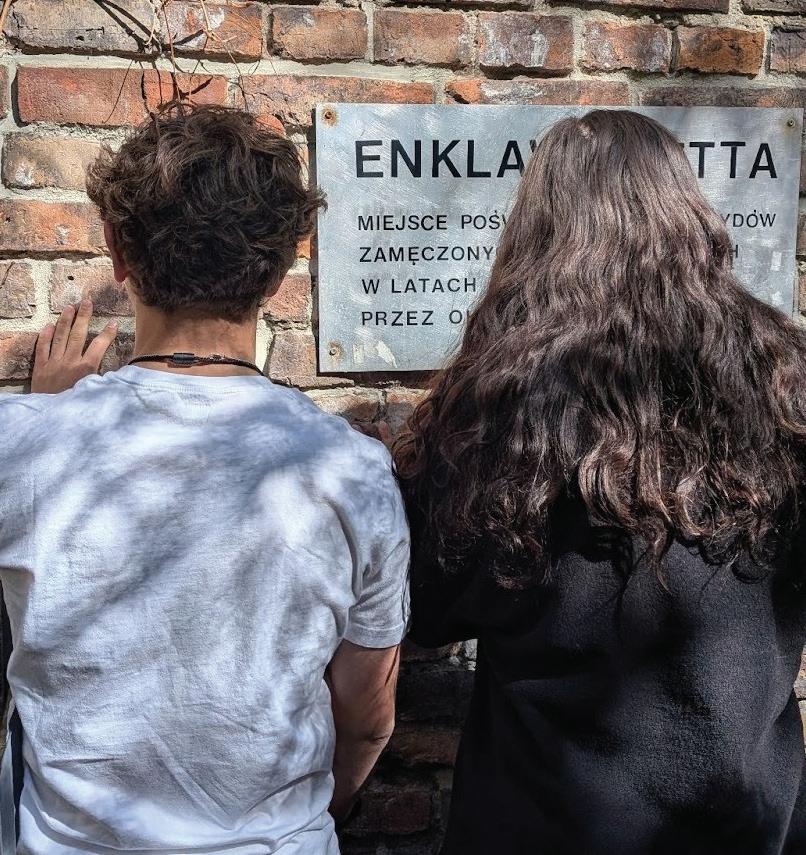
Walking through the grounds of Auschwitz, hearing the horrifc stories and standing where they took place. Walking the paths that took people to their deaths, they understood how horrible Auschwitz was.
Three students Franny Leon ’26, Asher Avisar’ 26 and Eli Reyblat ‘26 are doing an independent study on the Israel Palestine confict with Elena Malone To deepen their understanding of their independent study, they went to March Of The Living which is a trip that is meant for Jewish students and adults that all spend a week at Auschwitz and in Poland. Usually, the March Of The Living trip goes to Israel but because of the ongoing conficts with Palestine and Iran, the group was unable to go this year. The independent study didn’t have a large focus on the Holocaust, but the trip reinforced topics that have come up in the study.
During the trip, Reyblat began to understand how integrated the Jews were into German culture before the Holocaust started. Seeing this, Reyblat realized how important Israel is for the Jewish people since they were prosecuted in German which connects to the independent study: Israel and Palestine.
“It made me realize why the world needs Israel because you see what happens when you don't have a safe place,” Reyblat said. “The Jews in Germany and Poland were incredibly integrated into their societies. If you asked any of them, they would consider themselves German frst. Despite that integration, they still got persecuted, and it made you realize that this is why you need an Israel.”
Along with Reyblat, Malone had new realizations during the trip about how horrifc the Holocaust was. Malone has been teaching the Holocaust for the last 25 years, but the stories and images never get less powerful. Still, Malone feels there are new things for her to learn about the Holocaust.
“[The trip] made me realize that I will never know everything about the Holocaust," Malone said. “There's always more to learn. And also, it's never really gotten less horrifc.
You know, you think about something you've talked about, and maybe you get kind of cynical about it or less engaged, but the stories are still really powerful to me, and I still was crying, even though I know the story”.
The trip conveyed strong emotions for the group and deepened their understanding of the topic. Leon feels that the emotions she experienced on the trip she would have never felt through a textbook in a classroom. Although Leon knew a lot about the Holocaust, the trip gave her a whole new meaning about the Holocaust from seeing where everything took place.
“I think the biggest thing that the trip conveyed is the emotional component of the Holocaust,” Leon said. “There are certain things that you can't understand or wrap your head around when you are learning in a classroom. You have to actually be there, and it sort of hits you in a very personal and emotional way. So I would say that that's the thing that really resonated with me from the trip, that I don't think you can even convey it to somebody who isn't there.”
STORY GRACE URUN
PHOTO PERMISSION DANI BAKER, EPIC IMAGERY
Campbell Hall hosted the visiting committee in their last stretch of the California Association of Independent Schools (CAIS) accreditation cycle from May 3rd to 6th. After the school submitted their research paper to prove their ability to be a high-performing educational institution, a visiting committee evaluated the school according to those self study standards.
During the visitation, a team of eight people observed Campbell Hall, talking to community members such as students and faculty. After their visit, the committee writes a report giving recommendations on improvements for the school. The verbal presentation was available on the last day of the visit, and the written report will come out at the end of June. Head of School Julian Bull was familiar with the process, having gone through it at Campbell Hall and having served as a visiting team leader at other schools.
“The [visiting committee] spend the most time looking at the academic program, looking at how we're organized, what the scope and sequences in each department are and how it will measure success,” Bull said. “Like, how do you know you're doing a good job in any particular subject, and that's diferent per division. Then there's a lot of one-of meetings, with the Chief Financial Ofcer, with the Director of Development, with the admissions team, with the communication staf, just to make sure all those operations are of standard.”
After the team's visit, the next steps towards improving campus in places Campbell Hall fell short start taking place. While it isn’t necessary for schools to make every adjustment the team recommends, since Bull feels that the team’s observations align closely with the self-study report they submitted, they will be making those adjustments. Each school has to follow up with the CAIS, giving a midterm update on the measures the school has taken in the meantime.
Following changes made by the school after the accreditation cycle, Campbell Hall must submit a written report stating the specifcs of what had been done in response. Though the school doesn’t have to follow every recommendation, Bull feels that the suggestions this cycle aligned closely with Campbell Hall’s.
As part of the verbal report, the committee presented fve themes: defning academic excellence, alignment across divisions, operations across divisions and parking. The mission statement of being a community of inquiry was apparent to the visiting team, even though they felt the school is working to connect inquiry and academics.
“The [visiting committee] still doesn't feel like we have totally defned what a community of inquiry is academically,” Bull said. “That's ongoing work, and what it means is that we still have work to do to defne, or to really operationalize, our unique academic philosophy. Creating the CHAI classes was a huge step in that direction. But we have more work to do.”
Bull is already brainstorming ways to make classes more student centered in hopes of connecting academics and inquiry.
“It means both looking at classroom practice, curriculum and programs,” Bull said. “All the time, we are working to improve the school. Every teacher is dedicated to improving their practice. Each administrator is dedicated to improving our systems and supporting our teachers in this difcult work.”
Seniors refect upon how they've dealt with discouraging results in college admissions
STORY IDRIS FLOWER &
KATE WILLIAMS
ART CLIO SPIEGEL
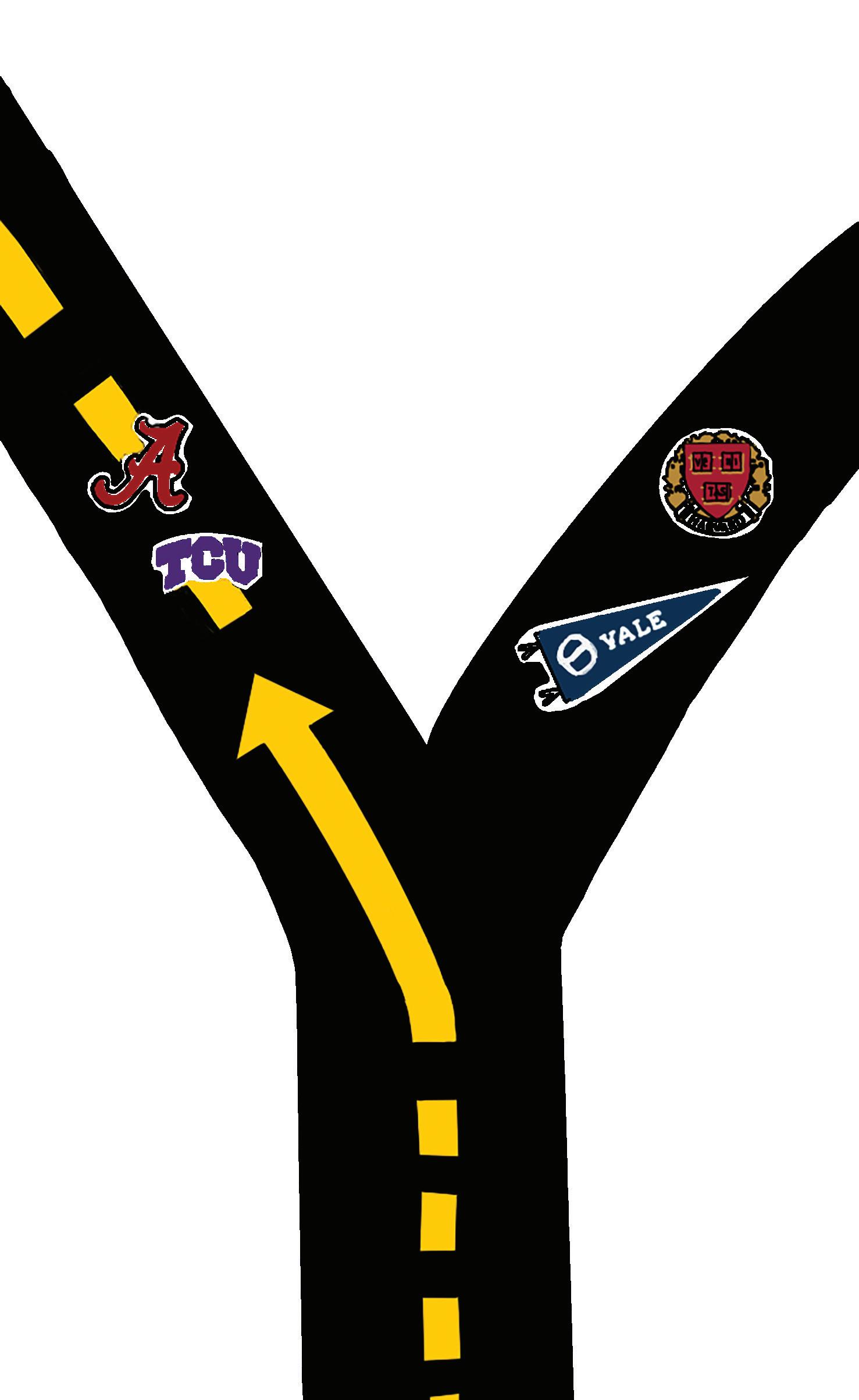
For most high school juniors, the college process begins not with spreadsheets or campus visits, but with a name: one that surfaces at a dinner table, appears on an older sibling's sweatshirt or simply sounds right. The research comes later, if at all.
That gap between instinct and information is where the real work of college counseling begins and where, for many students, expectations frst collide with reality. AccordCommon App’s 2025–2026
Update released in March 2026, dents applied to a record averof 6.59 colleges each, a trend driven by a 5% total increase in application volume that has pushed the likelihood of admission at selective "reach" schools to historic lows. For 20 years, John Corona, Campbell Hall’s Associate Director of College Counseling, has redirected hundreds of students’ expectations. He believes that at frst, students’ college lists are shaped solely by pres tige, and to help them balance their list, he tries to get them to imagine a world where their dream school says no.
"I ask students to imagine what would hap pen if those schools that they want didn't work out," Corona said. "If they can identify what ap peals to them, I can say, ‘Here are 10 or 15 other schools that have many of those same qualities.’"
That exercise does not always land right away. Ellis Friday ‘26 went into senior year with a list that included 10 reach schools. After a campus visit, he switched his top school from Northwest ern University to Harvard University just two weeks before the restrictive early action deadline. He feels that his college counselor supported his decision without hesitation. However, by the end of March, Friday hadn’t gotten into any of his target or reach schools.
"I kept telling myself, 'You'll probably get one,'" Friday said. "I was prepared for a lot of rejections, but I wasn't mentally prepared to get rejected from every school I actually cared about."
Friday eventually committed to Duke Univer sity after coming of its waitlist. He believes the
experience reshaped his thinking about ambition and he acknowledges the importance of college counselors in balancing it with practicality.
“If you saw my college list, there's way more red than green,” Friday said. “Some people don't apply out of fear, and I fully understand that, but I'm proud I didn't fall into it. If your counselor supports your decision, don't be the one to talk yourself out of it. And sometimes counselors can be wrong, so if you genuinely believe something can happen, you still might
"I have a million friends who didn't get into their dream schools, and all ended up incredibly happy," Brown said. "Everybody has a different path, and nobody's path is completely smooth."
STORY FIORE CHUNG
PHOTO WES VARAHDIAN
Swimming through the warm turquoise waters of Bali, Avery Taylor ‘27 absorbs the breathtaking nature and admires the Earth. Her mother, who has always felt connected to nature, brought her and her younger brother on this trip when she was in third grade. However, while Taylor admires the beautiful scenery, she is abruptly confronted with the reality of the fve gyres and sees beaches littered with plastic and debris. Ever since then, she believes seeing the physical impacts of pollution on a grand scale has changed the way she lives her life.
Olivia Greene ‘26 has also grown up going to beaches with her family, hiking and enjoying nature itself. Turning her love of nature into a tangible result by joining the Green Team in her freshman year, she hoped to help alleviate plastic pollution on the planet. She believes that some
Corona tries to instill the perspective that multiple schools can be the right ft for his students early in the process. He feels that the students who handle rejection best are those who expanded their lists before applying. Clive O’Meara ‘26 felt rejected before he applied; though fxated on Brown University and Wesleyan, his chances of admission to both schools were rated ‘unlikely’ by College Kickstart, a program that analyzes students’ academic profles against schools’ admission data to evaluate acceptance odds. He ultimately got into there was luck put everyCollege KickI was pretty consolable,” O’Meara said. “It felt so real, like ‘This is my life now; I'm never getting in anywhere.’ It all worked out, but if I hadn't gotten into Wesleyan, I was probably in trouble. I wasn't prepared for that possibility.” Jake Bash '27 is still in the middle of that uncertainty. With Vanderbilt University at the top of his list, Bash feels his counselor’s support, yet he recognizes them steering him towards schools with higher acceptance rates. Namely, Syracuse’s strong sports management program, Bash’s feld of study. "[She] doesn't say no," Bash said. "She just steers me and helps me with other schools I may not even be thinking about."
Bash said he would be disappointed but not lost without Vanderbilt University. That composure present before decisions arrive is what Corona spends each cycle trying to build.
"Be open, know yourself and be ambitious," Corona said. "Those are the three most important things to have a really
people hold back from protecting the environment because it seems easier.
“I think it's a lack of education and not knowing about the future and current efects on our planet,” Greene said. “Also, being at a school where janitors clean up after us, it's easy to be careless. When you go out to a park, there's no one to pick it up — a lot of people don't realize that.”
Although it may seem unimportant to discard trash and be sustainable, Taylor acknowledges the importance of caring about the environment and why students should care about each individual action they take that afects the world. She presented her fndings in one of the frst Earth Day chapels.
“In Earth Day Chapel, we were talking about how we aren't necessarily the generation that created this problem, but we are the generation that's left to fx it,” Taylor said. “I think a lot of people underestimate the fact that little things that you do can have a really serious impact, like just simply monitoring what you buy and limiting your consumption.”
Taylor also feels that there are many online resources and documentaries, such as those on landflls in Ghana or the impact of fast fashion. Without actually seeing the impact, she fnds it difcult to understand and visualize the efects of our waste.
“If you don't expose yourself to it, then you're not necessarily gonna realize the importance of the work you could actually do,” Taylor said.
"For other people, pollution is their entire lives;
it impacts everything. It's really important to step out of our privileged bubble and remember that this is our planet. It's not just something where, ‘it's their problem, it's not mine’. It's all of our problems."
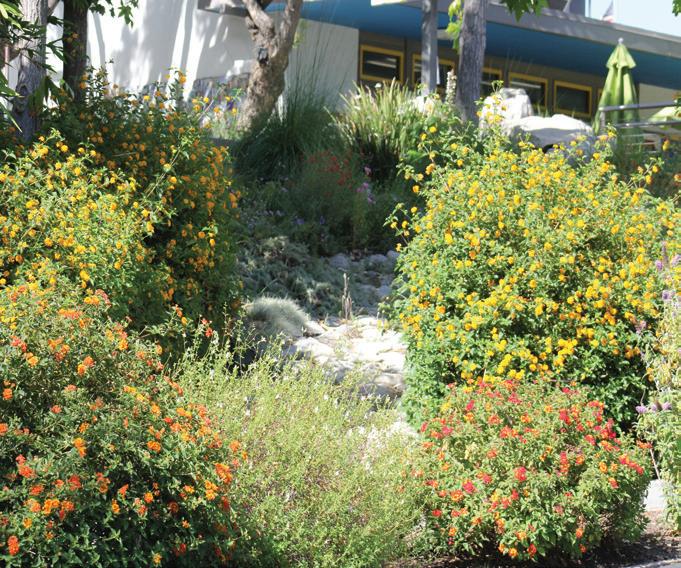
Elizabeth Tremante is a high school art teacher and has been involved in gardening projects at Campbell Hall. For example, in 2023, she, along with families and friends, planted a garden in front of the Ahmanson Library. Additionally, she has been working with Antonio Sandoval, Campbell Hall’s head gardener, to plant native plants in areas around the campus. Her work has led to rooftop gardens where there are plentiful native plants and grasses, hummingbirds and butterfies fying around, birds nesting outside classroom windows, native plants under the street sign on Landale and large white Matilja Poppies visible when students exit campus, which will grow to be seven feet tall and fll the space under the sign in about a year. Her love of nature started when she grew up on a farm, and fnds that we should all care about the environment.
"If we're just being really transactional, if we want to survive, we can't kill all the insects and birds, because they're integral to our survival,” Tremante said. “We just have to look around and see the level of environmental disasters that are happening and the way that's shifting migration of people. Even if we stop using fossil fuels today, those things aren't going to change in our lifetime. But they could be slowed down and made better for your children."
As the school year winds down, seniors look back on the bonds and personal growth that defne their time before college
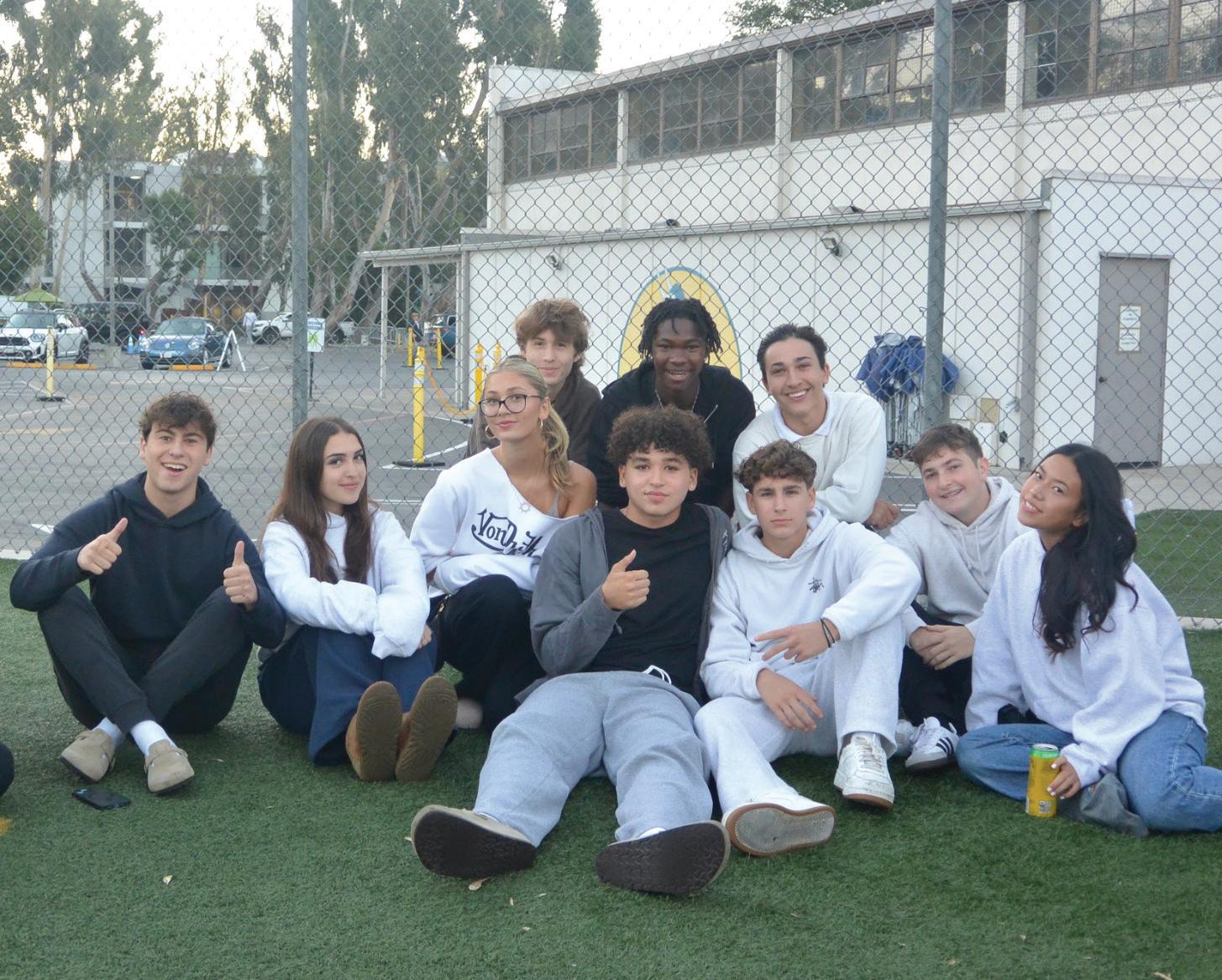
Senior sunrise, ditch day, senior assassin. These are three of the many traditions that the senior class at Campbell Hall enjoys.
Students use these traditions to bond with their classmates one last time before heading of to colleges all over the United States. Wyatt Kehoe '26 hosted the senior class ditch day, where everyone enjoyed fun music, time by the pool and a bite of Kehoe's renowned burgers. He acknowledges that ditch day was his favorite senior-year tradition because he'd looked forward to it since his older brother had it years ago.
"I remember thinking, I wanted to be able to have that party and have all my friends over to
have that kind of experience where you can just ditch school and hang out with all your friends," Kehoe said. "It really is such a bonding day, because it's only your senior class, and it's kind of the start of all these major senior traditions with your class."
Kehoe also loves the Senior Patio, because it serves as a great anchor for the senior class, as they see each other after every passing period, lunch and after school. Whether it's asking about a classmate's day or complaining about a class, the Senior Patio serves as a conversation starter with people one isn't necessarily close to. It's the place where seniors spend their fnal moments of high school together, as they prepare to go to college. For many, it becomes less a physical space and more a ritual, a daily reminder that time is running short
We get so close and then we have to split, but you get so close to your friends near the end, and it's such an interesting thing. Especially during the retreat where you can kinda just do whatever you want, you can hang out with anybody, it's so comfortable because it feels like everybody around you is your best friend.
Wyatt Kehoe '26
"and that these ordinary moments with friends are worth paying attention to.
"After having Senior Ditch Day and all these traditions where it's just your grade living it out together," Kehoe said. "Knowing that in a month we're not gonna see each other every day is scary, but it brings people together."
While Kehoe is nervous about going to college, he notices that other schools in Los Angeles don't bond with their senior class towards the end of the year, out of fear of missing them. He likes that Campbell Hall, on the contrary, bonds even more to really enjoy their last moments together before separating.
"I feel like other schools know that the end is coming, so they try to kind of hide away from each other, but I think Campbell Hall is the complete opposite," Kehoe said. "We get so close and then we have to split, but you get so close to your friends near the end, and it's such an interesting thing."
Like Kehoe, Lily Goldberg '26 realized that she needed to enjoy her high school years with her friends. Goldberg looks back on the senior retreat as the tradition that meant the most to her, as receiving letters from friends and spending time together without phones brought everything full circle. She notes that the Joshua Tree retreat freshman year was the frst time she truly bonded with her grade, shifting how she felt about her classmates for the rest of high school. Goldberg also believes that retreats throughout all four years of high school play a role in forming new friendships, even among people who have known each other for a long time. The vulnerability that comes with being away from campus, away from the noise of
STORY LILY SCHAFLER
PHOTO PERMISSION NORMAN HULL
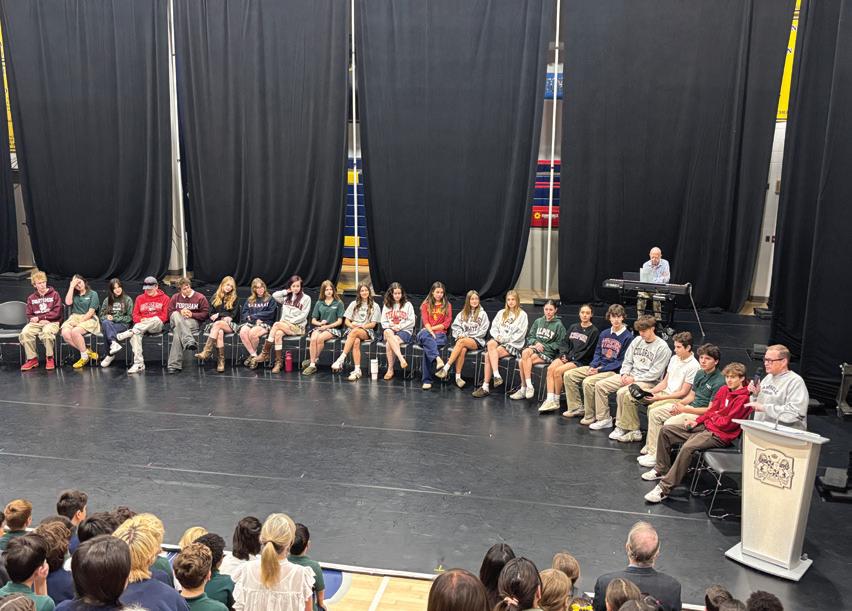
High school seniors visited the elementary chapel as part of a meaningful annual tradition, refecting on their early years while connecting with the younger students. The gathering provides an opportunity for graduating seniors, who have been at Campbell Hall since kindergarten, to look back and for current elementary students to gain perspective on the future.
The custom has been part of school life for at least 24 years. Elementary and middle school Chaplain Norman Hull inherited the tradition when he started his role and has continued it ever since. The chapel serves as a bridge across generations, allowing seniors to carry forward cherished memories while showing younger students the lasting value of their current moments. The event highlights how shared rituals strengthen community ties and create a sense of belonging.
"The tradition is important because it allows the seniors an opportunity to reflect on their elementary years and take those memories with them as they leave," Hull said. "Both the seniors and elementary students leave the chapel with an understanding of how traditions are woven through our community and bind us together."
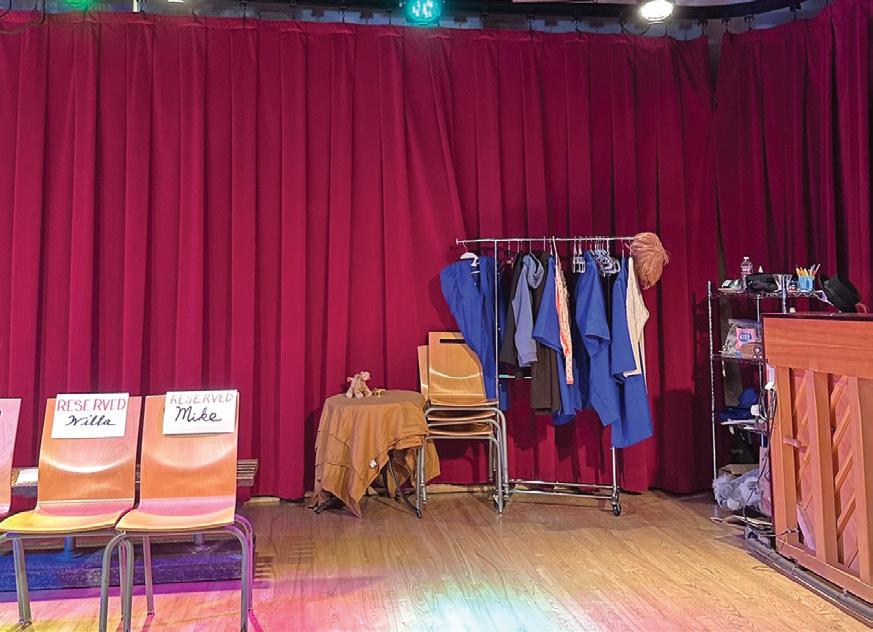
Campbell Hall's Drama Lab Experiment (DLE) is an eight-week after-school program that functions as a semester-long class. 18 students each write one scene, direct another's, and act in four to fve others, resulting in a 90-minute showcase of entirely original work. The DLE features a wide variety of genres, ranging from sketch comedy and family drama to mystery, sci-f and romance, refecting the creative freedom students are given throughout the process.
Stella Hart '25, a second-time DLE participant, found the program to be the best creative outlet she has received at Campbell Hall outside of the Morning Show. Unlike the school's plays and musicals, the DLE gives students full creative ownership from the ground up, challenging them to collaborate, lead and ultimately trust others with their own work.
"It's so much fun to make the whole thing from scratch, come up with characters and brainstorm with other people," Hart said. "You get to learn how to lead, but you also get to learn how to relinquish control of your own piece, which has been the hardest thing. All of those skills, especially if you want to be in any kind of creative industry, are so important."
classes and social media, creates a kind of honesty between students that is harder to fnd in the regular school day.
"I would tell the underclassmen to go on all the retreats and to do everything, like go do Ditch Day, do Senior Assassin," Goldberg said. "Make the end of your senior year the best."
Not every senior arrived at Campbell Hall with a tight-knit friend group or an easy sense of belonging. For some, senior year traditions served as a kind of second chance — an opportunity to connect with classmates they'd shared hallways with for years but never truly known. Senior Assassin throws students into playful competition that crosses social circles, forcing interactions that wouldn't otherwise happen. What begins as a game of strategy quickly turns into something more genuine: laughter, trash talk and inside jokes that outlast the competition itself. Senior sunrise, too, strips away the usual social dynamics — standing together in the dark before dawn, watching the sky change colors, there's a quiet equality to it that the regular school day rarely ofers. Seniors believe this unexpected intimacy woven throughout these traditions makes the fnal stretch of high school feel less like an ending and more like a long-overdue beginning.
Like Goldberg, Kehoe believes that growth is immense in your senior year. He realizes that what he once thought were big issues, like distancing from friends or getting a bad grade, starts to matter less as his perspective matures. He thinks this shift begins in senior year, when students are forced to face college applications, new people and the reality of moving out. The pressure of those milestones, rather than pulling the class apart, seems to draw them closer — a shared understanding that everyone is navigating the same uncertain, exciting leap forward at the same time.
"You grow a lot in your freshman and junior year but I think you grow the same amount in your senior year," Kehoe said. "I think that's because no one judges anybody, and it feels less cliquey. I think that we're all just more mature and almost adults, and we all stop to really care about smaller problems because we have our own wants and feelings about the world."
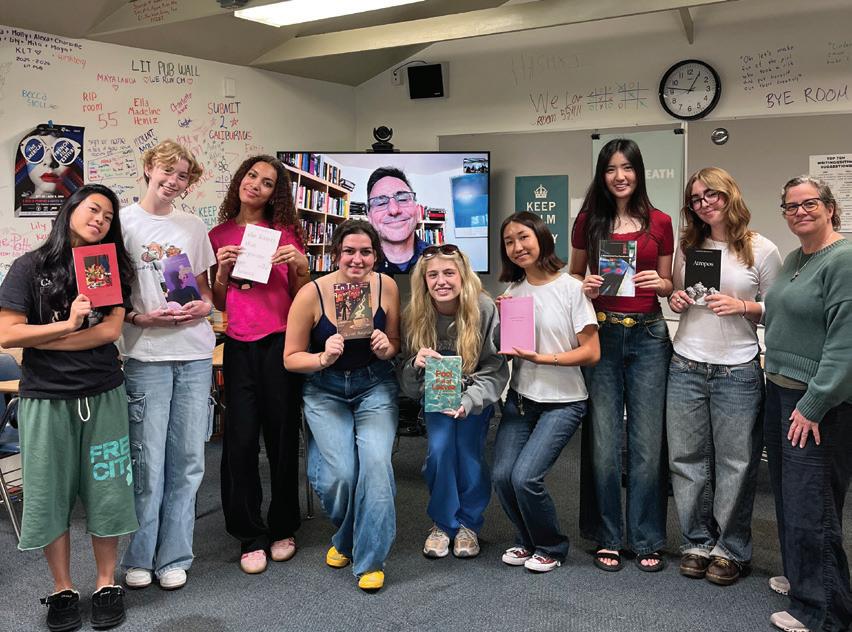
Campbell Hall's Creative Writing Fellowship pairs seniors with founder Glen Hirshberg for two semesters of independent study. Fellows meet with Hirshberg bi-weekly to develop their individual projects and gather weekly as a group, culminating in a published chapbook of each fellow's best work. Hirshberg designed the program to give passionate writers the time and space to discover their own creative rhythms — something the typical school day rarely allows. He hopes students leave with the confdence that they have something valuable to say and the power to construct a life built around it.
Jungah Kimlevine '26 writes poetry about her personal experiences, relationships and observations, and values both Hirshberg's mentorship and the tight-knit community of fellows. The fellowship gave her a concrete goal to work toward, a structure for balancing creative writing alongside her other commitments, and the reassurance that pursuing writing seriously was worthwhile.
"It's like having a creative writing major built into high school — you get real one-on-one time to actually grow, which you just don't fnd anywhere else," Kimlevine said. "It helps me fnd motivation and practice the skill of balancing my time to make time for creative writing."
STORY CAYDEN DERMAN
PHOTO PERMISSIONS
CHARLEE CORRA
Charlee Corra '09, Campbell Hall’s Experiential Education and Outdoors Service Learning director, shares a connection to nature that isn’t just backed by data: it's personal. His passion was sparked at age eight through camping, hiking and climbing, eventually shaping the educator he has become today. Now, he brings that same experience back to the Campbell Hall community.
"Nature creates awareness in a way that's hard to replicate anywhere else,” Corra said. “There's a lot of research showing that being outside reduces anxiety and depression. Beyond that, students learn practical skills, independence, creativity — sometimes they just learn how to have fun again."
Astrid Zamora’s August 2021 Public Health research study found that access to nature and its many benefts does not require extensive travel or spending–contrary to what many tend to believe. Corra has made it his mission to ensure students experience the outdoors schoolwide through Campbell Hall’s outdoor program. He has led experiential trips to places like Catalina, Big Sur, Joshua Tree and Moab. Corra guides trips running from day excursions to week-long expeditions. No phones, no city noise, just pure isolation in nature. Some trips are open to the entire grade, while others are more selective, drawing in students who are willing and ready to take on backpacking and camping in places far outside the casual Los Angeles bubble.
"There is so much pressure in the school setting, but getting outside and connecting with people in person can really reinvigorate hope,” Corra said. “You learn new things, grow and start seeing the world diferently. It reminds us that we're part of something much bigger than ourselves — and it can bring purpose, meaning, wonder and passion."
Nate Koosh’s ‘29 gravitation toward nature started somewhere unexpect-
05
Students and faculty experience the benefts of spending time outdoors
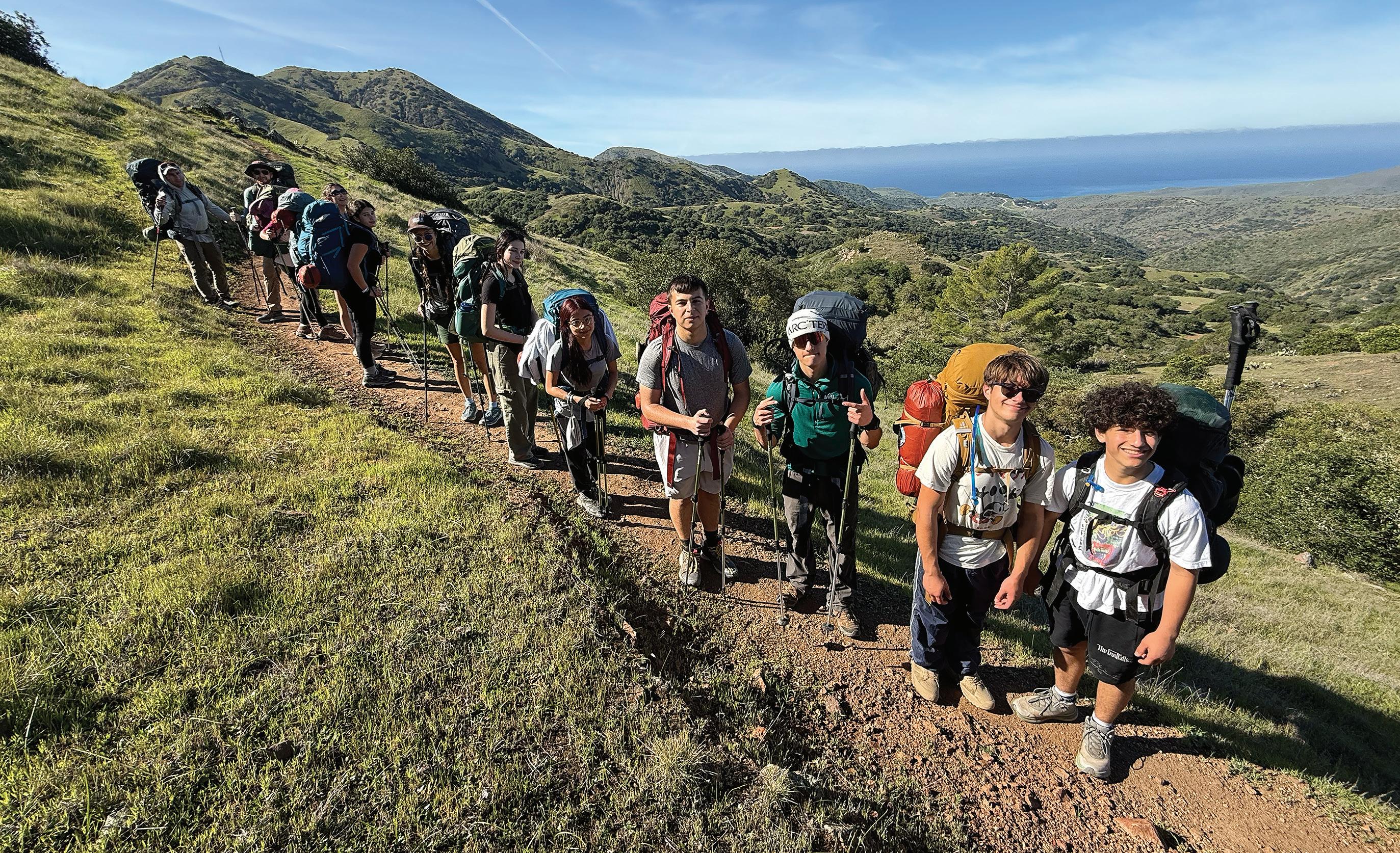
until curiosity turned into action. Koosh immediately fell in love with hiking and even started bringing his friends along to explore. When the Catalina trip came around this year, Koosh immediately signed up, and the experience only deepened his passion for the outdoors. He began to realize that the moments he’d actually remember weren’t the ones spent alone on his phone but the ones that let him feel like a kid again, outside exploring all new places.
“The world is kind of your playground,” Koosh said. “Nature is one of the only gifts you get just by being alive—you don’t really have to pay for it, and there’s so much beauty out there, so why not go experience it? I don’t really remember scrolling on TikTok, but I’ll always remember the times I went hiking with my friends.”
According to a Child Mind Institute study published in November 2024 by Danielle Cohen, researchers found that spending time in nature builds confdence, teaches responsibility, and promotes
overall creativity, allowing adolescents to think more freely. Similar to Koosh, Pyper Shepherd ‘28, found her passion unexpectedly as it started at a sleep-away camp; what stuck with her wasn’t the campfres or marshmallows. It was the discomfort of trying something entirely new. She found that pushing through something difcult but so beautiful was a feeling she had never experienced before. She became addicted to the exhaustion, difculty and moments where quitting felt tempting. But within that pain, she felt her most proud. "I come back [from camp] exhausted — but extremely proud of myself,” Shepherd said. “There's something about doing something difcult in nature and knowing you got through it. It makes me feel healthier, more active and more confdent. When I'm outside, my mind feels clearer — hiking helps my mental health just as much as my physical."
Corra has seen it happen time and time again: a student goes on a trip expecting a few days away, or maybe just to follow a friend, and comes back a diferent person entirely. Someone who never considered being in nature as a hobby ends up planning their next hiking trail. Someone who had never camped or backpacked wanted to go back. For many students, nature has a way of opening doors that many didn’t know existed.
"These trips plant seeds,” Corra said. “Students come back wanting to explore on their own, continuing activities they never would have tried otherwise, and for a lot of them, that's where
High levels of constant green space presence during childhood were related to lower risk of a wide spectrum of psychiatric disorders in adult life
Exposure to natural environments has a tendency to reduce cortisol levels
Increased exposure to greenness is associated with a lower risk of high depressive symptoms
Source: National Library of Medicine
new passions start."
For Emerson Mulvihill ‘27, that door opened a long time ago. Mulvihill loved growing up in the noise of the city, saying it gave him relationships he would never forget. However, even with that love, he fnds that nature ofers him something the city never could: a chance to fully disconnect and escape from the everyday noise.
An April 2025 New York Times current events conversation explored how teenagers who stayed connected in nature experienced stress relief, mental health improvements, deeper emotional connections, and an overall greater appreciation for the outdoors.
“Not only does it make me feel like I’m escaping from my day-to-day agenda, but it also feels like I’m doing something that not a lot of people get to experience,” Mulvihill said. “When I'm in nature, I’m fully in the moment because the things I’m doing demand my attention. It gives me experiences and challenges that you just don’t really get in a typical Los Angeles social setting.”
He clif jumps, swims across lakes, tackles intense hikes and takes on just about anything he puts his mind towards. What started as a curiosity grew into a lifestyle built around seeking experiences most people would never even consider. For Mulvihill, the challenge is a part of the appeal even if the task sounds dangerous. But beyond the adrenaline, he sees his passion as something bigger than just nature itself.
"It doesn't even have to be nature specifically,” Mulvihill said. “People should just do whatever genuinely makes them happy. A lot of people do things for approval, but even if something looks stupid to everyone else, if it makes you happy, that's what matters."

“...You get one life, and not everyone gets to live it all, so make it beautiful.”
- Cosmo Silverman

STORY LILY SCHAFLER
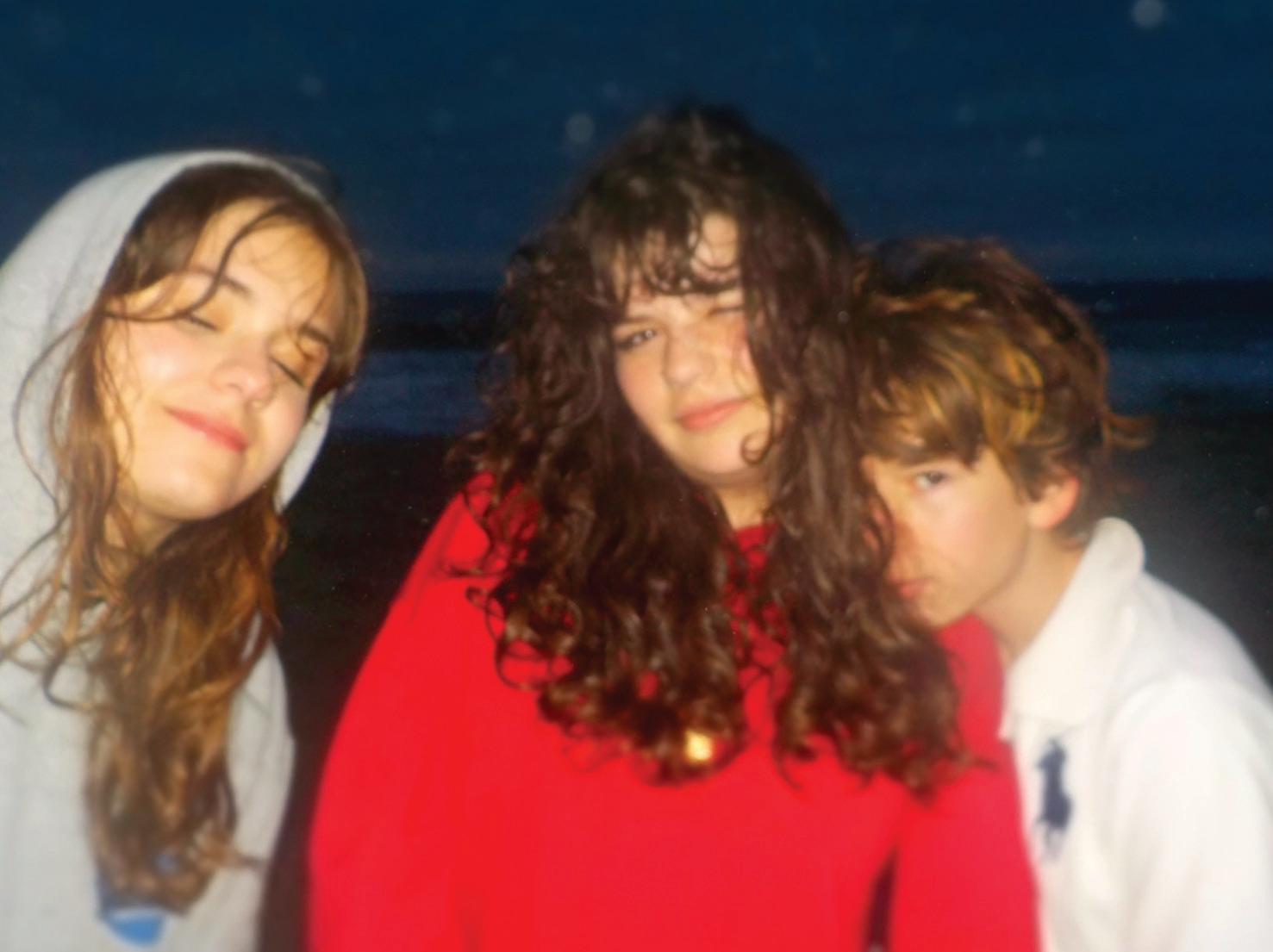
Cosmo had a great laugh. I know everyone says that about someone they’ve lost, but his was diferent. It felt like it came out of nowhere – loud, sudden, completely unguarded. It made you feel like whatever you’d just said was the funniest, smartest or best thing anyone had ever said, even when it was nothing at all. Being on the receiving end of that laugh, over and over, changed me. It made me braver. It made me bolder. I kept reaching for it because nothing felt better than knowing I was the reason he was laughing like that.
I haven’t heard that laugh in a year. And I’m losing it. The exact pitch of it. I used to be able to close my eyes and hear it perfectly, and now when I try there’s just – almost. Almost his voice. Almost that sound. I’m terrifed that one day I’ll reach for it and hear nothing at all.
We were each other’s people. It was always me, Sadie, Cosmo, and we were happy like that. That’s the simplest truth I know. He knew what I would order at every restaurant. He knew which songs I would skip and why. He could tell when something was wrong before I said a word – I was convinced he could read my mind. I have never felt so com-
pletely seen by anyone, before or since. I would give anything to be known like that one more time.
We met in eighth-grade history class, sitting in the back row. Halfway through the year we realized we were neighbors in an area where almost none of our friends lived. We had been circling the same streets for years without realizing it. After that, we were inseparable. I knew from the frst time we hung out that I had found a home in him, and I’d like to think he found one in me too.
Before Cosmo came into my life, I walked around with a quiet fear that I was doing everything wrong, that everybody seemed to understand something I didn’t. I lived my life waiting for the other shoe. He never said anything to “fx” me. He just loved me so completely, so comfortably as himself, that my fear grew smaller in his light. With him, I could fnally set it down. With him, I could breathe.
I’ve found that grief lives in the smallest rooms. The way he texted back in seconds. The silence in the passenger seat on my way home. The shirt that he left in my room that still smells like him. A song he would have loved that he will never hear. A joke I saved for him that I’ll carry forever now.
We bickered constantly about everything and nothing–what movie to watch, which route to take, what to eat, who got to pick the music. Our fghts were loud and stubborn, but they always ended in laughter. Even when we fought, it felt like love, because it really was love. Every moment with him was.
I keep coming back and rewriting this. Not because I don’t have anything to say, but because nothing I say can really hold even a fraction of the weight of him being gone. There is no language big enough for what it means to lose someone like Cosmo. There is only what remains: the shape of the absence where he should be.
I’m not writing this because I have something wise to say, I don’t think I do. I’m writing this because I loved him with every piece of my heart, and I am so frightened of the day when people who didn’t know him stop asking. I’m afraid of the day when his name becomes something I only say in the quiet, to no one, just to keep it alive some-
where. He was extraordinary. Radiant. Funny. Completely and stubbornly himself. He was here, and he was so alive. And now he isn’t. And I don’t know how to explain what that does to a person –to hold all that love and have nowhere left to put it. But on days where I can feel the ache physically in my chest, and it feels like my world is crumbling again, here is what I hold onto: I am still becoming the person he believed I was before I could see it in myself. And I think maybe that’s how we carry the people who we’ve lost: by growing into the version of ourselves they saw so clearly.
If there is any lesson I’ve learned in this frst year of loss, it is this: the pain is the fnal echo of our love. To wish the pain away completely would be to wish away the love, and I will never do that. So I carry both now – the love and the loss – woven together. Some days the weight of both is almost unbearable. But I let myself laugh when something reminds me of him, and I let myself cry when I feel his absence. Both feel like honesty. Both feel like my way of loving him still. All I can do for Cosmo now is try to live with the openness and courage he brought out in me. To not hide in my grief. To still notice the small, ordinary moments that make up a life. Because that’s what he did so beautifully. He showed me how to be fully here. I want to be here too, the way he taught me to be, even when here is so much smaller and quieter without him in it. And on the days when the sadness feels too heavy to breathe through, I try to remember his laugh. I let it pull me forward and remind me that I am still here, still carrying him with me in every bit of life I manage to live.
I love you, Cosmo. I loved you then and I love you now. I will love you in whatever comes after this – in the long quiet future where you are not, in every room I walk into for the rest of my life that you should have been in too. You are not small. You never were. And neither is this love. Neither is this loss. It is as vast, and raw, and endless as you were. And I would give anything just to hear you laugh one more time.

STORY SADIE THURNAUER
From the frst time I met Cosmo in fourth grade, I knew he was special. He had this radiant energy where no matter what, you’d want to be his friend, or get to know him at least. This was because he was so interesting and hard to understand. You never knew what would happen next with Cosmo. One minute he could be laughing with you and the next he would
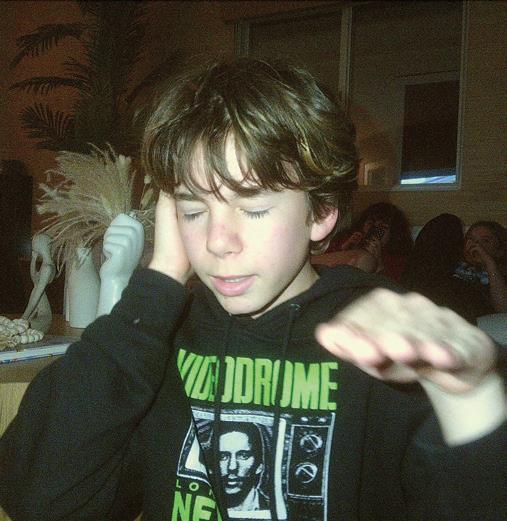
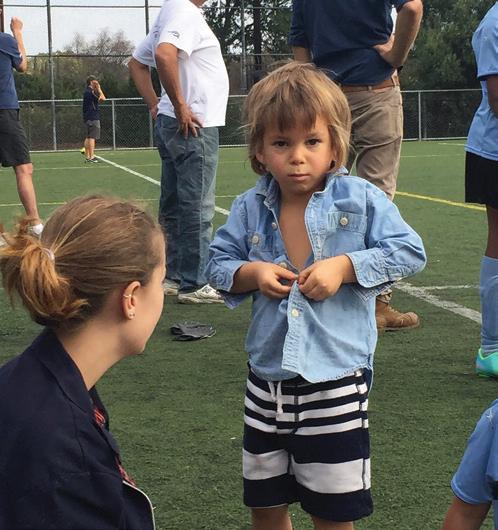
be furious. Though it annoyed me so much at the time, I fnd myself missing that feeling of not knowing what would happen next. Not knowing whether he would yell at me for liking the same clothes as him, or whether I would say something stupid and he would laugh so much harder than I ever expected.
Cosmo’s opinion is what mattered most to me. I remember once, after class, just before the bell rang, telling him to listen to the song Cherry Blossom Girl by Air. I was so worried he wouldn’t like it, but later that day when he came up to me telling me he loved it, it was the best feeling in the world. Because Cosmo was the coolest, if he liked something I liked, it meant I was cool. It was a sense of validation and verifcation that assured me: yes, I am cool because Cosmo said I was.
With a name like Cosmo, you’re born special. The world knew from the minute he was born that he was special, special enough to make such a big impact on so many lives, including my own. Cosmo had and forever will have an impact on everything I do. Whether it’s what I wear, what I think is funny, or what music I listen to, it’ll always be for Cosmo.
Recently I’ve been listening to the song Waltz #2 (XO) by Elliott Smith, and a line from that song sticks with me: “I’m never gonna know you now, but I’m gonna love you anyhow.” I feel that way about Cosmo. I’ll never know him now. I’ll never know what he would wear right now, listen to, what he would paint, what we would like; but no matter what, I’ll always love him. I’ve always loved him, and I still do, no matter where he is.
Now, I often fnd myself worried: worried I don’t remember what Cosmo looked like, or
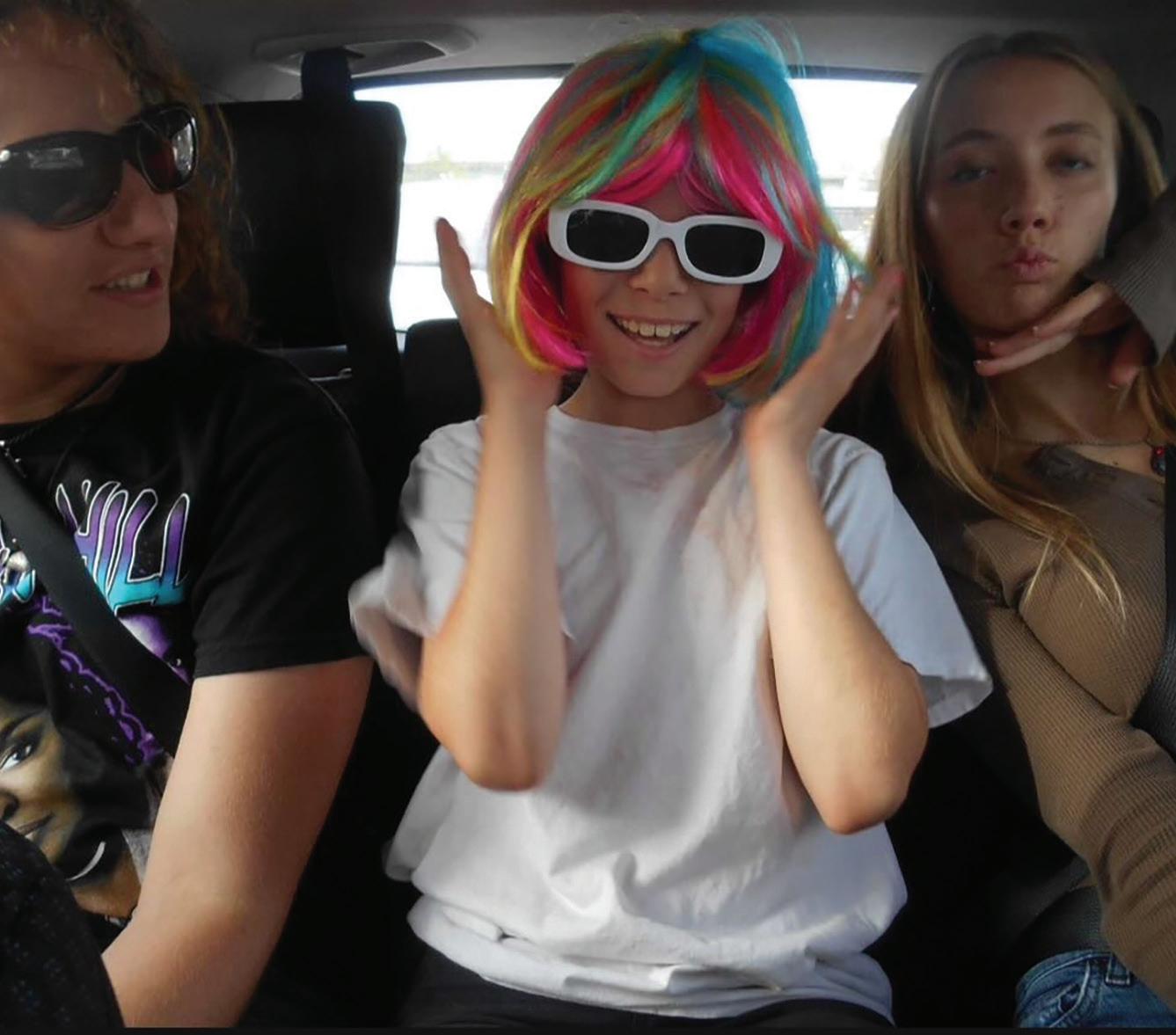
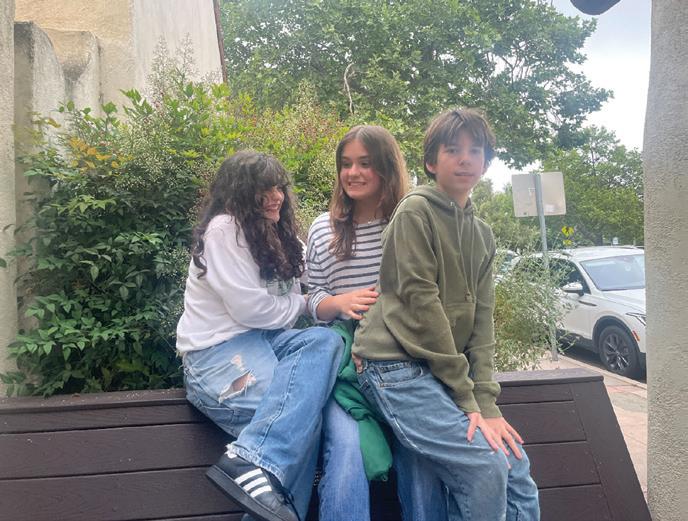
sounded like. Cosmo was such an important part of me. It felt like no matter what, we would always be friends, and we always will. It felt like that even if we hadn’t spoken in years, everything would go back to how it was in a second. And now, I fnd myself hoping for that. Hoping that Cosmo will come back from whatever “trip” he’s on and everything will go back to normal. We’ll sit in our old spot, hangout at the same places, and everything will be back to normal at some point.
Except that feeling of normalcy will never come, because after Cosmo died, nothing will be back to how it was.
Sometimes I wonder where Cosmo is, because it’s not possible that he’s gone. It doesn’t make sense in my head that he’s anywhere but here, that there will forever be an empty spot at the table, open for him. That we will never walk around his neighborhood or school together again, that he’ll never text me again, or that I’ll never hear his laugh again. Because Cosmo was such a big part of my life. He was a constant. No matter what, I always had Cosmo. We went from elementary school to middle school to high school together. He was the one person who went with me through these changes and stayed by my side no matter what. We were going to be together no matter what; because Cosmo was and forever will be, my best friend.
The thought that Cosmo watches over me comforts me. I like to think that a bird fying nearby or watching me is him, or a colorful butterfy fying near Lily and me as we sit in a park. It’s comforting to think that he knows what I’m doing, what I’m laughing at, what I’m wearing or listening to. I like to think that even though he’s gone, a part of him still stays with me in the quiet moments of my life.
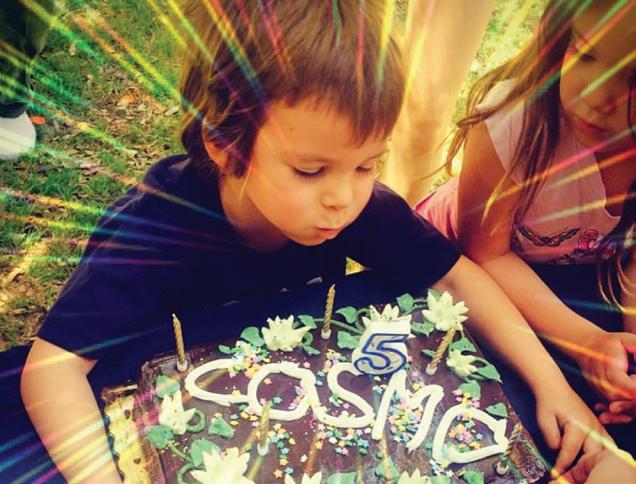
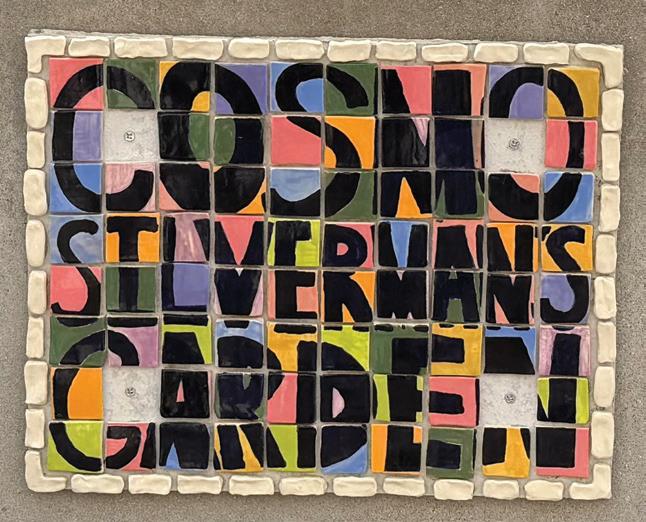

I miss Cosmo all the time, and so much reminds me of him. If it’s seeing something I know he’d laugh at, or something that would make him so annoyed, it all reminds me of Cosmo. And even though it’s hard, I never want that feeling to go away. Because if it goes away, that means a piece of me is gone too.
What I’m really trying to say through incoherent paragraph splices, is that Cosmo was someone special – someone so special that if you met him even once, you’d already know what kind of person he is. The kind of person that makes you feel understood just by one conversation with him. I see myself in Cosmo, and I see Cosmo in me. We were so similar, and so diferent. Even now, after everything, he still shapes how I look and move through the world. I catch myself wanting to show him a song, tell him a joke, or just hear his opinion on something so small and ordinary. That’s what it means to truly know someone: they don’t really ever leave you. Cosmo may not be here anymore, but a small part of him exists in every version of me, and he always will.
What hurts me the most about losing Cosmo is also what makes knowing him so meaningful. I don’t think that kind of connection ever really disappears. It doesn’t ever end, it becomes part of how I think, what I notice, and the way I carry him with me through everything I do. I will never stop missing you Cosmo, and I’ll always love you no matter what. You will forever be my best friend, Cosmo.
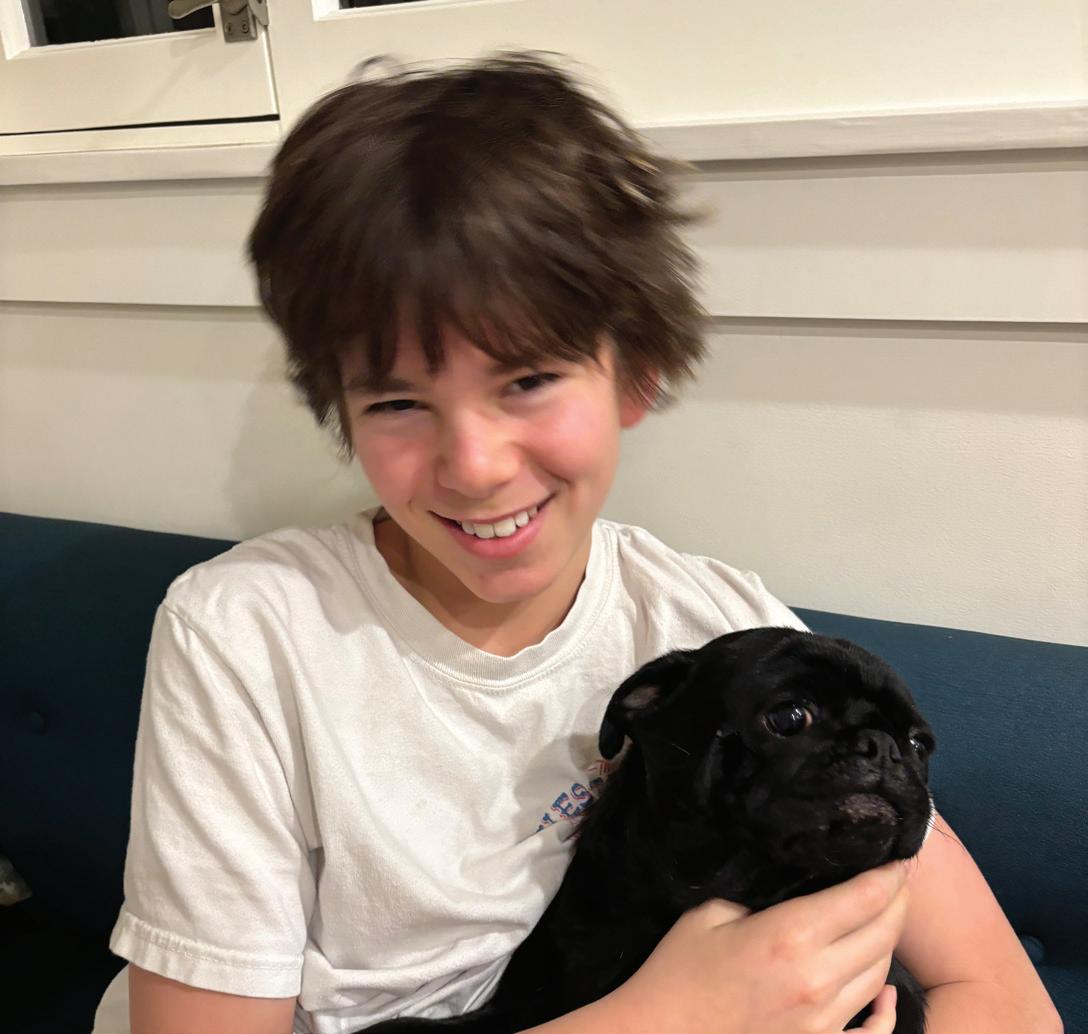
“His impact continues to ripple through so many lives, and the love people

Since Niko’s passing, green heart pins have become a symbol of the immense love his friends and family carry for him every day of their lives. Kelly Mijailovic recalled that the green hearts pins started when her friend asked her Niko’s favorite color, to which K. Mijailovic replied green and her friend would then send K. Mijailovic green hearts. “At his celebration of life, all of his best friends arrived wearing suits with the green hearts on their lapels in honor of him, and from that moment on, the green heart became something so much bigger,” K. Mijailovic said. “It became a symbol of Niko’s love and the love everyone carries for him. Over the past year, especially last summer, while many of his friends were traveling, we would receive photos from all over the world of green Niko hearts in the most beautiful places. Seeing those little green hearts appear across oceans, cities and countries has been such a beautiful reminder that Niko’s love and spirit continue to reach far beyond us all and it has meant the world to us that all his friends continue to carry him in their hearts.”
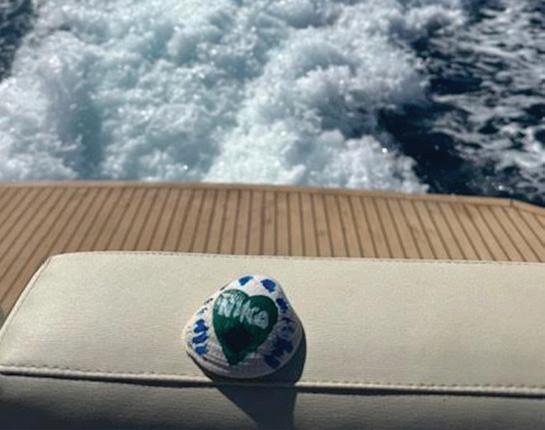
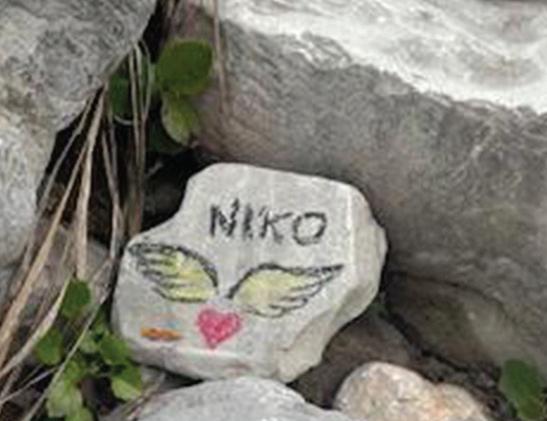
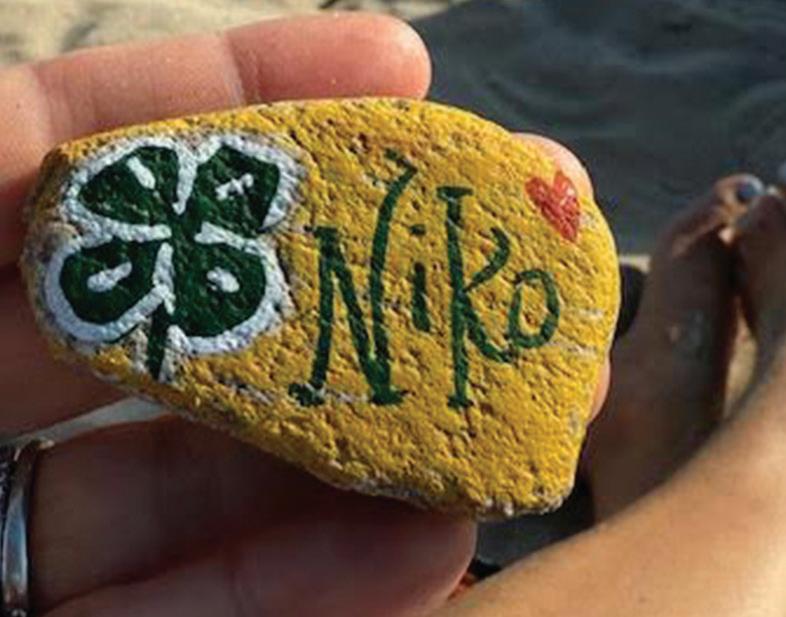
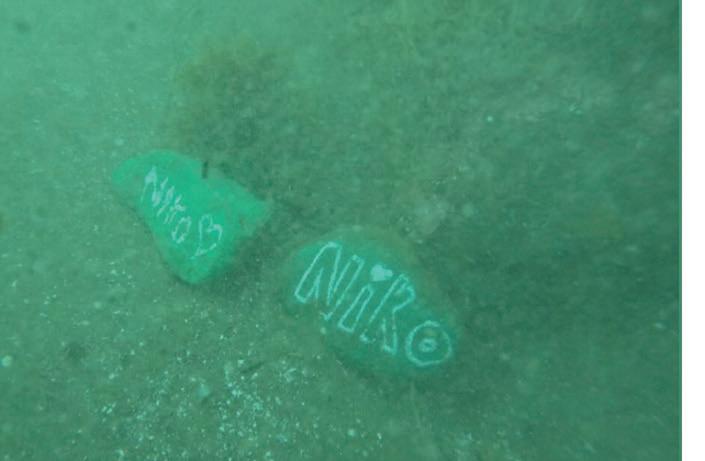
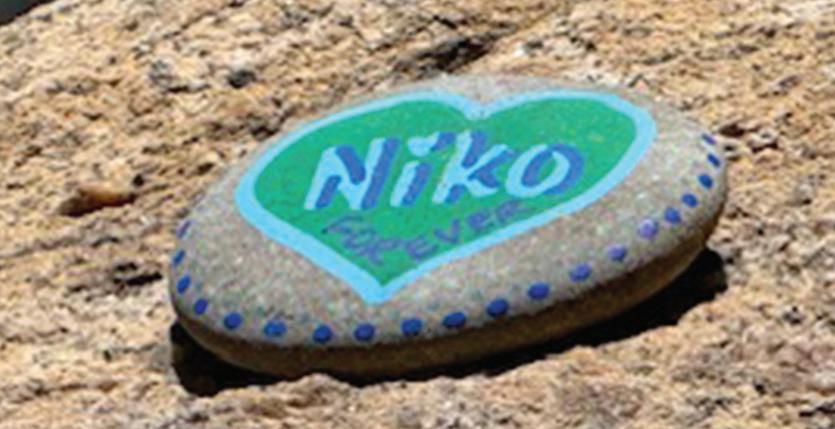
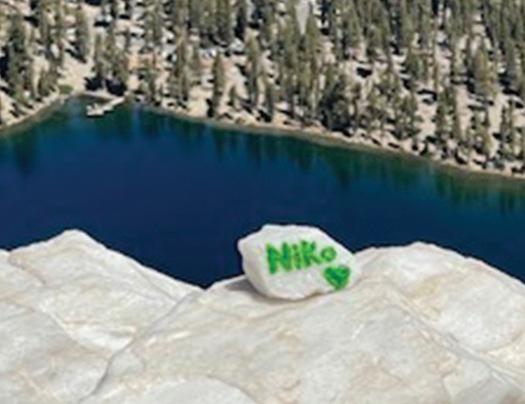
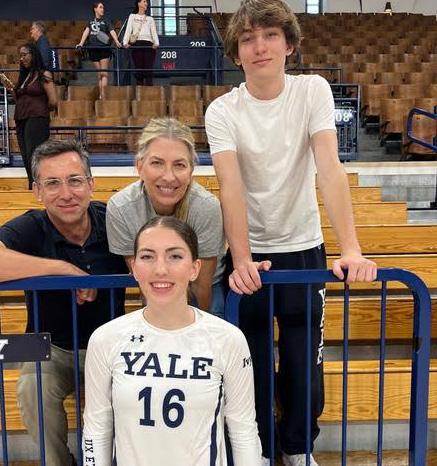

He had this beautiful way of lighting up a room without even trying. He made the world feel softer, warmer and more alive just by being in it,” Kelly Mijailovic said. “To me, he was my sweet boy with the kindest heart and the brightest spirit. I think about his smile, the sound of his voice, his laugh and the comfort of hearing his footsteps in the house. I miss the way he made life feel fuller, happier and more beautiful simply by being here.”
A year after his passing, Niko Mijailovic’s family and friends continue to honor his legacy and celebrate his beautiful life. For 15 years, Niko lived fully and brought so much joy to the people around him. His impact is everlasting to those who knew him, and his legacy lives on through those who love him.
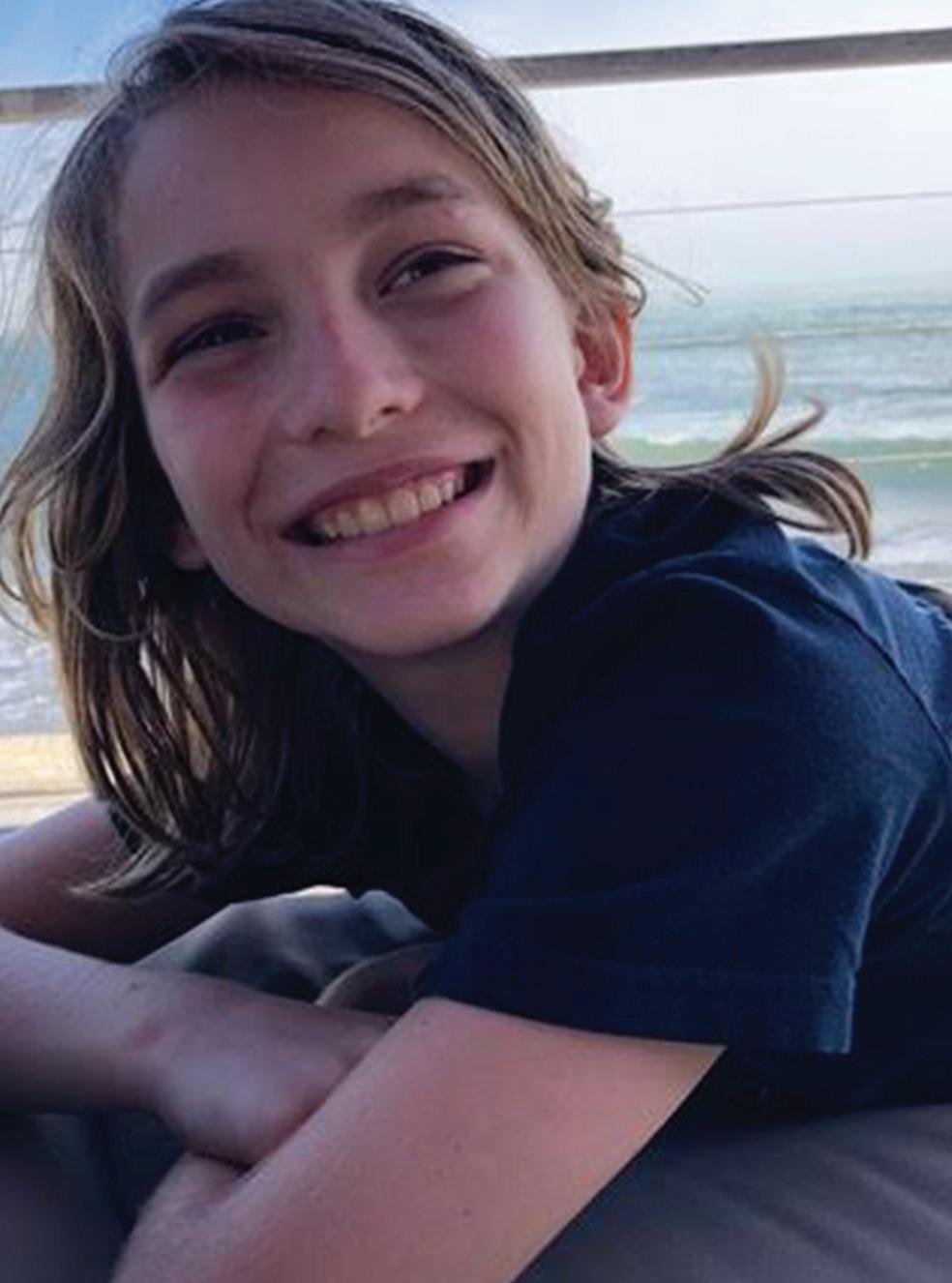
“Whether he was with family, friends, teammates or strangers, he had a way of connecting with people that was genuine and unforgettable,” K. Mijailovic said. “He was magnetic and full of life. He was funny, afectionate, caring and deeply loved by so many people. He was very smart, driven, and worked so hard to accomplish his goals and dreams.
Niko and his older sister, Mila Mijailovic ‘24, shared a unique bond that surpassed the typical brother-sister relationship. From the time they were little, K. Mijailovic noticed that Niko always looked up to his sister, and they were always each other’s biggest cheerleaders. As M. Mijailovic continues to grapple with the loss of her best friend and brother, she hopes he knew the powerful impact he had on her and many others.
“To me, Niko is all the best parts of who I am. Even though the time I had with him was far too short. In 15 years, he has made me what I am and shaped the person I have become. I would not be half the person I am today without him,” M. Mijailovic said. “Even though not having him here with me is physically devastating in more ways than I could ever possibly describe, he will be a part of me always. It both warms and breaks my heart [seeing people talk about the impact Niko had on them] because while I never for one second was surprised by the amount of love people had for Niko, I wish he could be here to witness all the amazing things people have done in his name. I hope he is able to see the impact he has had on the life of every single person around him.”
M. Mijailovic describes her relationship with Niko as a bond that felt easy and light. The energy that Niko exuded was pure happiness that refected of onto whoever he was with. M. Mijalovic remembers the endless laughs and unforgettable feeling of Niko’s radiant presence.
“When I picture Niko, the two most vivid things for me are his smile and his laugh,” M. Mijalovic said. “We had an amazing and very funny relationship. Simply being around him made me happy. He was always joking around and could make me laugh at anything. He never took me too seriously and made sure I didn’t either. It didn’t matter what silly thing had me stressed out or frustrated; he had a unique gift to make everything feel okay. In the least cliche way possible, he was my rock. He was someone who was always on my side, no matter what, and would even let me give him sufocating hugs and jump on his bed

still carry for him says everything about who he was.“ - Kelly Mijailovic
while he pretended to hate it.”
Carter Ryan ‘28 and Niko met in fourth grade and instantly formed a connection that later turned into a brotherhood. Whether it was going to summer camp together, spending the summer with their families, or simply just being in Niko’s presence, Ryan will forever miss the friend that Niko was to him. He continues to honor Niko’s legacy every day and misses the positive light that Niko brought into his life.
“[Something I miss most about Niko is] how energetic he was, but serious to a level,” Ryan said. “He’d always be down for anything and any activity. He had unlimited social battery, which was really fun. He was also really good at meeting new people; he would introduce me to a lot of his volleyball friends, which I loved.”
Niko was the type of friend who made his friends feel like they could talk about anything and everything.
Jonas Diamond ‘28 misses their deep and meaningful conversations where he felt comfortable opening up to Niko while sharing and receiving advice from each other.
“Niko was very calm, patient and a good teacher,” Diamond Said. “ [I mostly miss] talking about stuf that we didn’t talk about with other people, like secretive stuf. We would give each other a lot of advice.”
Grifn Katz ‘28 and Niko frst met when they were only two years old, and their bond remained strong. Katz is grateful he was able to know Niko so well and to have found not only a friend, but a brother, in Niko.
“My friends almost feel like brothers, especially Niko,” Katz said. “I’ve really known him since I can remember, so to me he is like a brother and best friend.”
Jane Emerson, Niko’s English teacher, misses his gentle and kind presence. She remarks that Niko was highly intelligent and thoughtful in class, but beyond that, a kind person.
“When I think about Niko as a student and person, I think of two things: he was fercely intelligent and he was kind to everyone,” Emerson said. “He had a very gentle, unassuming way about him, he had zero arrogance or attitude. He was very generous with his ideas and always made some of the most interesting and sophisticated comments during discussion. He didn’t speak up unless he had something important to say, so when he did, his classmates really listened.“ Being around Niko was something Logan Nakano
To me, Niko is all the best parts of who I am. Even though the time I had with him was far too short. In 15 years, he has made me what I am and shaped the person I have become. I would not be half the person I am today without him.”
Mila Mijailovic ‘24
‘28 holds close to his heart. Similar to Diamond, Niko was not only a friend to Nakano but also a role model and someone he could be his best self around.
“He was a really caring guy who was like a big brother to me because he was like a year older than me,” Nakano said. He was just someone I looked up to. I just miss having someone who knew me so well and just being able to talk to someone when I need to.”
Maddie Potts ‘27 grew up with Niko since kindergarten. She misses his easy-going personality, humor, work ethic and thoughtfulness. She misses his jokes and laughing with him.
“His memory lives in such a positive light,” Potts said. “It always just feels really positive when he’s brought up in conversation at school or amongst our friends. His legacy is something really special.”
Niko’s life will be remembered as one full of enormous love and laughter. He left the people who loved him most with the most amazing memories. He will live on through their lives and will continue to be deeply missed.
“Being his parent was the greatest privilege of my life,” K. Mijailovic said. “I think about him every minute of every single day…not only because of how deeply we miss him, but because of how deeply he was loved. His impact continues to ripple through so many lives, and the love people still carry for him says everything about who he was.”

Niko

One day when he was a little down after school I door-dashed him Wingstop while I was away at college across the country. My mom was in the middle of making actual dinner but he was so excited we all just laughed.

We were dorm shopping at target and Niko and my dad made it their mission to search the store for increasingly ridiculous items and trying to put them in the cart (my personal favs were the training toilet, four massive bulk containers of cheese pufs, children’s pool foaties, and boxing gloves that they proceeded to pretend fght with in the middle of the target aisle.
We would pepper with a volleyball in his room and almost broke his PC and three windows.
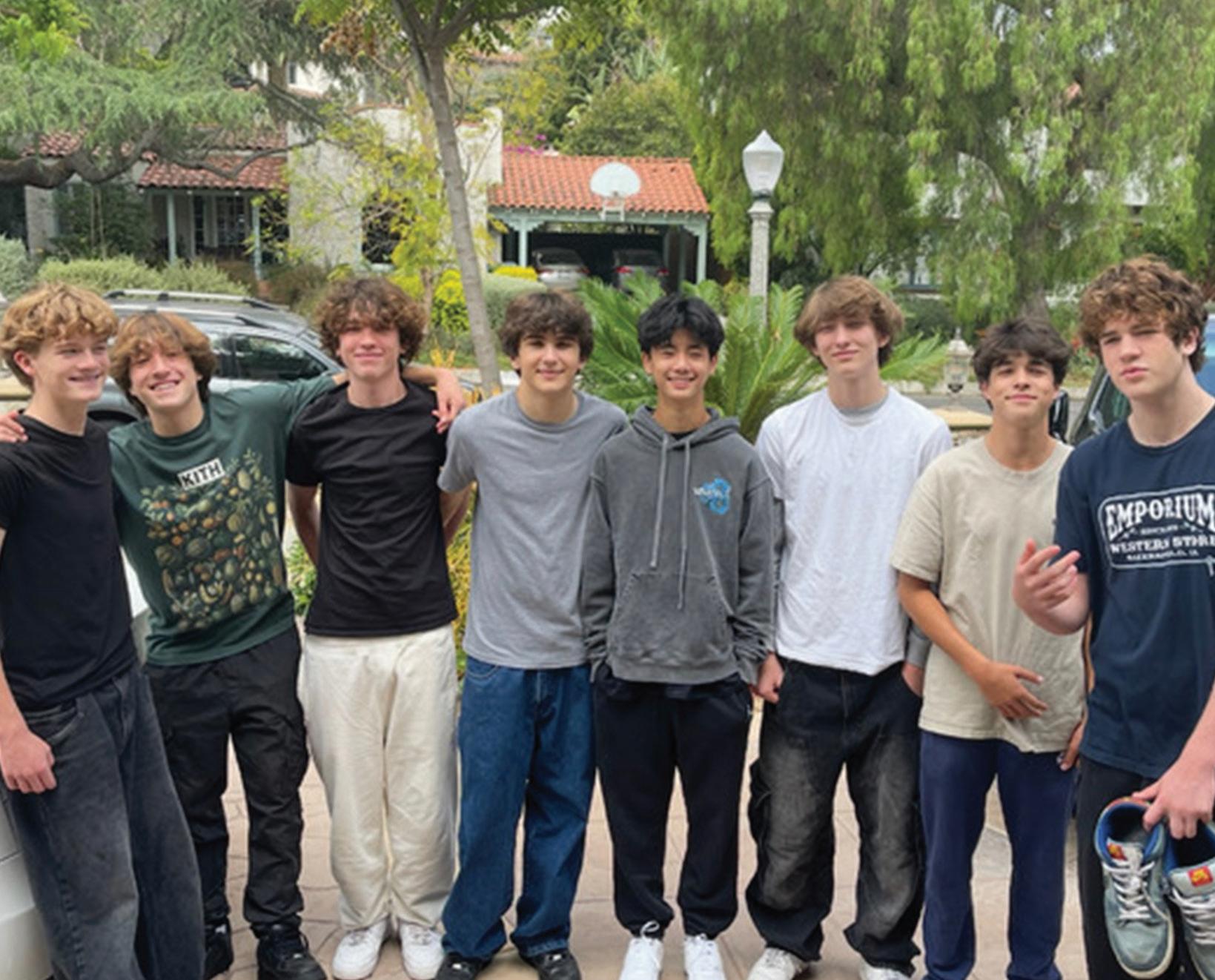
Stealing him on fun feld trips in the car to get snacks (his favorites were Heavy Handed, Canes, and Erewhon).
If I ever was locked away in my room on my bed doing homework for too long he would come visit and jump on me.

Support Mila Mijailovic and her partnership with Huddle For Hearts to raise awareness for Sudden Cardiac Arrest

It is 10 o’clock on a school night, and David Park ‘26 fnally peels his apron of. He has been at his parents' restaurant, spending hours stir-frying and deep-frying in an unventilated food court, taking orders
Students and faculty share how translating for their families shaped their identity
and flling in for employees who didn’t show up. His homework sits on his desk, untouched.
Before he can even pick up a pencil, his mom slides a fle across the table. She doesn’t say anything. Park pulls up a chair and begins translating tax forms from English to Korean, with words he had never even seen be-
Being tasked with the responsibility of translation not only gave Park independence but also a deeper and precocious understanding of the adult world. From an early age, Park was integrated into his family business. The work was monotonous and strenuous, often leaving him annoyed at his situation and ultimately, his parents. Yet, seeing them work every day of the week gave him empathy for their determination and grit, turning resentment into gratitude.
“Learning to grapple with translating and helping from a young age gave me really good experience of understanding how to budget,” Park said. “I think
I had to learn from a young age to be very pragmatic, and thinking about, ‘if I buy something, what's the most efcient thing I can buy,’ or at a restaurant, I would think about, ‘how can I get the most out of the money that I had? Or the best meal that I can get.’ I learned budgeting and a lot of vocabulary that I think will help me in my adult life.”
Having to translate for his Chinese-speaking parents, Jefrey Liu ‘26 feels the responsibility has given him a sense of independence. Unlike his friends, who had the privilege of not having to fgure things out on their own, Liu learned at a very young age — under the infuence of his older brother — that helping his parents translate would soon become his duty. Despite having to navigate alone, he still has much respect for his parents, who came to the United States solely so that his brother and he could have a better opportunity when applying for college.
“It really challenges you to be independent,” Liu said. “Sometimes I feel like I'm my own parent, because I have to deal with all this by myself. A lot of people now, when they're turning 18, say, ‘Oh my God, how do I do this? My parents help me all the time.’ And then I'm like, ‘Oh, I've done this for myself my whole life.’”
For Mila Ghielmetti ‘26, translating between languages has always felt like an inheritance rather than a burden. Raised by a Colombian mother who refused to speak anything but Spanish to her children, Ghielmetti grew up switching between two languages
How sleepaway camp shapes students lives
STORY CHARLOTTE WEINBERGER PHOTO PERMISSION EMMA WEINBERGER
Gathered around the campfre, campers share scary stories and enjoy the company of their closest friends. Without their phones, parents or familiar routines campers at sleepaway camps spend weeks away from home learning how to live on their own. For Noah Sonbolian ‘29, Sam Rather ‘26 and Emma Weinberger '24 camp means way more than just spending a few weeks across the country. For many kids, sleepaway camp is a place where they build independence, confdence and friendships that last a lifetime.
Although sleepaway camp has shaped many kids’ lives, not everyone has access to these programs. According to the American Camp Association, millions of children go to camps across the United States each year, yet overnight camps make up only a portion of that population. Despite the expenses, many families view the experience as an investment for their child’s growth.
When Sonbolian was 10 years old, he spent his frst summer away from home at Camp Ballibay in Pennsylvania, which is known as the number one arts summer camp in the country. Although he was homesick at frst, he soon met really good friends and fell in love with camp. After his frst summer, he went back for fve more. While Sonbolian has always loved drumming, his time at Camp Ballibay amplifed this passion. Not only did he make music, he also learned a lot about himself at sleepaway camp.
“Living in Pennsylvania, super far from home and my family, camp made me a lot more independent and less reliant on other people,” Sonbolian said. “I would wake up every morning, and then I could choose what I was going to do for the day. I had a lot of freedom to pick how I wanted to spend each day at camp. I usually would choose to go with my friends to the music studio and then I would have my own rehearsals.”
so naturally that she can no longer identify a clear line between them. She believes that fuidity is its own kind of superpower, but one that has to be practiced to be maintained. When she’s with her cousins, who were never taught Spanish, she notices something is missing. The shared language isn’t there, and neither is the connection it would have carried.
“My cousins don't speak [Spanish], and I think that's a regret that I have, even though it wasn't my choice,” Ghilmetti said. “I wish my aunts had taught that, because I think it's a bonding and connecting opportunity that was missed.”
To Ghielmetti, translation isn’t just a linguistic habit; it’s access. Spanish is a direct line to her Colombian culture, to a version of herself that only exists in that register. Without the ability to switch, this door closes, which is why she plans to pass it to her own children the same way her mother passed it to her, so they never have to choose between two worlds.
Dr. Carlos Castellanos, the eleventh-grade dean, learned early what it meant to translate between worlds.
Raised in a traditional Mexican household where Spanish flled every memory that mattered, he was given the responsibility of translating important English documents for his parents: a task that required him not just to convert words but to inhabit two registers simultaneously.
“I remember being in third grade, and my mom would have me read mail, letters, things that she never really understood,” Castellanos said. “That's a

Similarly Sam Rather attended sleepaway camp every summer growing up for years just like Sonbolian. He would attend Winona Camp for Boys in Maine. Rather’s dad grew up being a counselor at this camp in the 90s which is how he learned about it. At frst, he too felt nervous and homesick, but then he grew to love the camp experience; he even went back to be a counselor last summer.
“My camp is a complete outdoors and rural camp so there is zero exposure to technology and cell phones,” Rather said. “Learning how to have fun in the outdoors and being able to meet new people really helped shape me into who I am today. Also I think autonomy and just being able to take care of yourself is taught at sleepaway camp.”
Emma Weinberger ‘28, sophomore at the University of Virginia and Campbell Hall alum, had to say goodbye to her camp before she aged out. Weinberger grew up spending her summers at Cape Cod Sea Camps located in which shut down four and a half years ago due to Covid-19. Following her mother who attended as a little girl, Weinberger spent her frst summer there when she was eight
years old.
“Camp defnitely gave me the biggest impact on who I am today because I used to be really shy but I feel like my frst summer really opened me up,” Weinberger said. “ Especially at camp, I learned to get out of my comfort zone. It helped me be open to everything and be independent. So especially now in college, I feel like I adjusted very quickly and was prepared to be away from my parents and family.”
Although her camp shut down, Weinberger is grateful for the time she got to spend there. She is a huge advocate for sleepaway camp over day camp and believes sleepaway camp prepares you more for the future.
“I think everyone should try out sleepaway camp if given the opportunity. If you go to day camp, obviously it's fun and you're doing activities, but you're still getting picked up and you're going home,” Weinberger said. "You're not really learning the independence that you do at sleepaway camp when you have to wake up and get ready yourself and clean up your area and you're living with so many diferent people, so you have to acknowledge that.”
“It really challenges you to be independent,” Liu said. “Sometimes I feel like I'm my own parent , because I have to deal with all this by myself. A lot of people now, when they're turning 18, say, ‘Oh my God, how do I do this? My parents help me all the time.’ And then I'm like, ‘Oh, I've done this for myself my whole life.’”
really young age to be translating some pretty adult things. But I liked it. And looking back, I think, man, how special that was, for young me to be able to [switch] with language at such an early age and [provide] this valuable service to my family.”
What began as duty became close to identity. For Castellanos, translating was about survival and learning which version of himself each room required. As a frst-generation student at a predominantly white high school, that awareness was constant and exhausting. It was only later, while attending his doctoral program at UCLA and surrounded by Latinos navigating the same adversities, that the switch began to feel more like an asset to his career.
“Before, it was like a survival technique,” Castellanos said. “It was about playing the part to prove to people that I deserve to be in a space. Now I'm more comfortable in my skin. Before, [translating] felt like a chore, but when it stops feeling like [one], it really can be a superpower. Because we can be all of these things at the same time.”


STORY LAURA GAUTREY
ART SADIE THURNAUER
It is exhausting to be the understanding one. To always give the beneft of the doubt, always see their side, always make excuses for people who wouldn’t do the same for you. Empathy is beautiful until it becomes self-neglect. There is a certain kind of exhaustion that comes from constantly being the person who forgives frst, listens the longest and tries hardest to see every side of a situation. At frst, it feels like kindness. I tell myself that people are stressed, struggling, or doing the best they can. I excuse hurtful behavior because I understand where it comes from. As time goes on, constantly prioritizing everyone else’s emotions can start to feel draining. Empathy becomes unhealthy when it turns into self-neglect. There is a diference between understanding someone and continuously sacrifcing your own peace for them. Too often, people are praised for being endlessly patient while their own feelings are ignored. I absorb other people’s problems so deeply that eventually, my mind starts treating every conversation like emotional labor. Every phone call feels heavy. Every text notifcation carries invisible pressure. The people I once loved being around make me feel as though I’m a personal therapist rather than a friend. Without setting up boundaries, my compassion for others begins to feel like work. I internalize every breakup, every depressive episode and every family confict
11
Laura Gautrey '28 navigates the ups and downs of being the empathetic friend

people trust me enough to confde in. I stop knowing where other people’s emotions end and where mine begin. Something in me has shifted. Instead of answering messages, I avoid them. Instead of making plans, I isolate myself. Instead of checking in, I disappear for days or weeks because every interaction with my friends feels like opening a foodgate of stress. I no longer have the strength to hold back. From the outside, it can seem selfsh
WHAT HAVE YOU HEARD ON CAMPUS THIS MONTH?
Is it IMpossible or INpossible?
Wait I have a question about your perm... are you just gonna wake up one day and it's gonna be curly?
I'm starving for water.
is is delicious water.
Sometimes I'm just like ugh it's so weird that we have birds.
Which way is clockwise?
What's the di erence between autumn and fall?
So do we use fan ction as a source for our history?

Tell us what you overhear on our website here!
or uncaring. People may assume I’m ignoring them, pulling away or becoming emotionally unavailable. But internally, I’m overwhelmed and desperate for silence. I’m not trying to abandon anyone; I’m trying to recover from carrying too much for too long. The hardest part is that people often praise sensitivity until they experience the exhaustion that comes with it. Being deeply empathetic means I notice everything, the change in someone’s
tone, the sadness hidden behind a joke, the tension in a room no one else acknowledges. I carry conversations with me long after they end. I replay them in my head, wondering if I said enough, cared enough. Eventually, constantly absorbing everyone else’s emotions leaves very little room for my own, so I retreat. Not because I stop loving people, but because I no longer know how to stay connected without drowning in their feelings.
Being deeply empathetic means I notice everything, the change in someone’s tone, the sadness hidden behind a joke, the tension in a room no one else acknowledges.
Laura Gautrey '28 "
While having compassion for others is important, there is also pressure to emotionally absorb everything happening around us. Sometimes it feels like people are expected to always be available, always supportive and always understanding, no matter how exhausted they already are. What bothers me most is the idea that setting boundaries is somehow selfsh. I don’t think protecting your emotional well-being makes you uncaring. I believe boundaries are necessary for empathy to stay healthy. People should be allowed to say, “I cannot handle this right now,” or “I need to prioritize myself too,” without feeling guilty for it. To me, empathy should never require someone to lose themselves. Caring about other people is important, but so is caring about yourself. Relationships should involve mutual efort and support, not one person constantly carrying the emotional weight for everyone else. Empathy is still beautiful. I just think it works best when it is balanced with self-respect. Otherwise, what begins as kindness slowly becomes resentment for my friends.
Sadie Thurnauer '28 looks back on how art has a strong and lasting affect on people
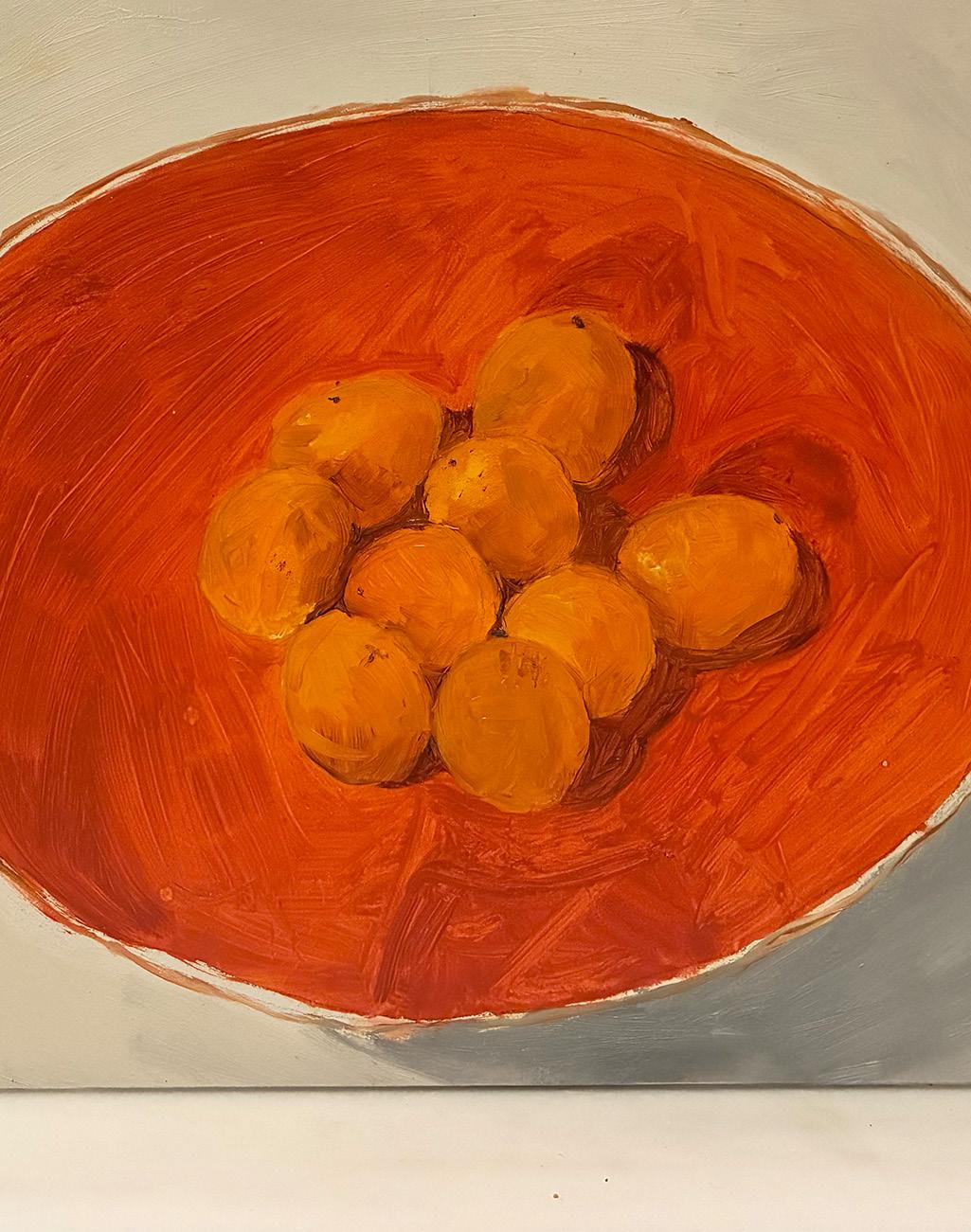
STORY SADIE THURNAUER
ART SADIE THURNAUER
Since I was little, I've loved art, and recently, I’ve begun to notice the power it has on me and those around me. Ever since I was little, I have been making art. Whether I was fngerpainting, sculpting something with my hands, or scribbling on a piece of paper, I was always working on something. Only recently have I noticed how quickly it can afect my mood. On days when I feel especially stressed or in a bad mood, art has a way of calming me down and helping me clear my mind. And though that is likely an obvious fact about art, I have also noticed that even just looking at and experiencing it also helps to calm me down.
According to a study done by Doctor Anjan Chatterjee with the American Psychological Association, looking at meaningful or symbolic art activates the brain’s default mode network, a region of the brain associated with introspection, emotion and self-refection. Though I’ve always felt that going to museums was boring, now I realize I had mistaken a diferent feeling for boredom. Standing in front of meaningful art made me feel quiet, refective and emotionally overwhelmed in a way I didn’t yet understand, so I interpreted those feelings as disinterest. I didn't fully understand that when I looked at art, I wasn’t just looking at it, but experiencing it. This has made me realize the power and importance of art in our world today.
We have to realize the true importance of art as a whole and the power it can have over people. With AI “art” becoming so popular and normalized now, we have to remember that art is one of the most original human forms of expression and emotion – the frst cave paintings date back over 50,000 years. Unlike something created by technology, human-made art carries personal meaning, experiences and feelings that allow people to truly connect with it and each other. Art has the power to make people comfortable, uncomfortable, and inspired, as well as bring people together in a way machines will never be able to replicate. When I really think about it, the paintings on cave walls from 50,000 years ago and the art we see today share a similar purpose: both allow people to express emotions, tell stories and connect with others across time.
Even in such a fast-moving world flled with technology and artifcial intelligence, people still turn to art to feel understood, express themselves, and connect with one another in ways technology cannot replace. Art is one of the most deeply human things about us, and to lose appreciation for it would mean losing an important part of ourselves. Whether someone is creating a painting, listening to music, or standing quietly in front of a sculpture, art ofers a way to understand ourselves and others more deeply. I felt this personally while walking through the museum because, for the frst time, I found myself emotionally connected to artwork in a way I had never expected.
I now realize that art is not simply decoration, or entertainment, or something boring to look at in a museum, but something powerful enough to infuence emotions, experiences and perspectives. The more I make and experience art, the more I understand why it has remained such a central, powerful point of human life for thousands of years.
Engrossed in the media and fxated on beauty standards, many fail to realize the fatal consequences of tanning until it's too late
STORY AUDREY PARK
ART AUDREY PARK
There are no bounds when it comes to beauty. For centuries, women have done anything for the sake of vanity: constricting ribs, ingesting arsenic skin-bleaching tablets and injecting oil into the face. While the cosmetic and wellness industry has evolved, a continuous pattern threads through each fad: beauty trends that not only inconvenience the body but quietly harm it.
Tanning is one of the most prevalent forms of women destroying their bodies due to cultural assimilation. According to Sophie Wilkinson’s February 2012 Guardian article, Coco Chanel democratized tanning after a Mediterranean cruise in the 1920s; the image she left behind — of her bronzed, sun-kissed skin — never left. By the 1970s, tanning became accessible within mere minutes — indoors — removing the inconvenience of sunshine. What people did not anticipate was the widespread decline in public health, something that researchers to this day are still trying to examine.

The science no longer resides in a gray area; in 2009, the International Agency for Research on Cancer, a division of the World Health Organization, classifed tanning beds as a human carcinogen. Researcher Alexander J. Stratigos attributes the beds to underlying legislative, climatic and cultural issues in modern society. And yet, the indulgence of tanning has persisted, exposing how culture — one tied to personal image — is
far more persuasive than a cancer warning. What is more alarming is the rate at which tanning-induced cancer sets into the body — how long it takes for people to realize before it is too late. Melanoma is the deadliest form of skin cancer, mainly because of how rapidly it metastasizes after settling below the surface of the skin’s outermost layer. Generally, by the time people are diagnosed, the damage
STORY KATE WILLIAMS
PHOTO KATE WILLIAMS
The question I often get asked as a high school athlete is, “Are you planning on going D1?” I found that my answer to this question would sometimes be yes and sometimes be no. I couldn't fgure out exactly why this was. With June 15 coming up soon, all anyone can talk about is college. June 15 is the frst day division one colleges can reach out to athletes. At such a well-known and respected club, the expectation that all their athletes go to Division I is a given. Growing up in this environment, I would always say that was what I wanted to do, because at the time, that was the only path I thought I had.
During my 15s season, I met two coaches, Sammy and Derek. They were the frst coaches I ever had who I thought truly believed in my potential. That year, I
the priority above all else, especially their own well-being. The association between tanning beds and Melanoma has statistically remained constant. In other words, mounting evidence and research have proven that beauty ideals are simply more important.
This very phenomenon is the crux of dangerous beauty standards: that vain logic always overrides medical knowledge. Skin cancer did not emerge from obliviousness, nor did the behaviors that caused it. We deliberately chose these behaviors — regardless of whether they were harmful or not — as they ft into the culture, one that made it seem desirable and the consequences fctitious. In the language of today’s beauty, a tan creates vitality to the skin, and Melanoma is not borne from the sun.
— often an accumulation of years under harsh ultraviolet (UV) rays — is done and irreversible. Ironically, the tan that was publicized as a marker of health was, in reality, only the beginning of its unraveling.
Moreover, the problem is not independent of UV exposure. It is confated beauty standards that convince the masses that their appearance is
trained harder than I ever had in my life to achieve my goal at the time of playing D1 volleyball. Their belief in me helped me to start believing in myself. I started to love competing and realized I do want to have a career in volleyball beyond high school. At the end of the season, I got the news that Sammy and Derek were both going to coach at new clubs. It was the frst time I found myself sad that volleyball season had ended rather than feeling relieved. I was crushed because I knew next season would be diferent. This year, as I entered my 16s season, I went through a difcult transition. The new coaching and environment didn't work for me. I had taken for granted how much efort Sammy and Derek put into me, so that when they were gone, I struggled to enjoy practice. Since June 15 is during everyone's 16s year, my new coaches took over my college recruiting.
Ever since I was little, one of my dream schools has been NYU. I found out mid-season that they were very interested in recruiting me. I immediately met with my coaches to talk about how excited I was about the opportunity to play there. Instead of being excited for me all they had to say was that since it was a division three program, they didn't advise that I chose to play there. They told me I was wasting my potential. After that conversation, I felt stuck and didn't know what to do. I found myself choosing to train with Sammy and Derek in my free time. They encouraged me and told me that I shouldn't let others determine decisions about my future. I went back and forth, trying to decide whether to stay at my current club or move to their new one. I knew I wanted to make a change, but the weight of letting my current club team down made it hard to make a decision.
I decided to put myself frst and leave. Sammy and Derek took over my recruiting and helped me to navigate college options for me. As I continue to train with them now, I am reminded how much of an impact coaches have on their players. They shaped me on and of the volleyball court, and have helped me love the sport I thought I was ready to give up.
The issue is not that people did not know the sun could cause permanent damage; that information has been made aware to the public for decades. The fact is that this conscious awareness was not enough to overcome desire. As people say, ‘to look good is to feel good.’ Beauty has been packaged for society and women in particular, at the expense of their health. Thus, the question is not who is falling prey to this, but who the predator is.
The tanning bed industry knew something that public health organizations continue to struggle with today: beauty is purely emotional, not rational. It is only when people recognize that we may prevent further cosmetic fatalities before it is too late — before it metastasizes.
As college decisions are releasing and students are committing, the fnal days of school nears. On decision day, senior students wear sweaters with the college they will be attending in the fall. This day is a bittersweet way of closing their high school chapter and starting new one: college.
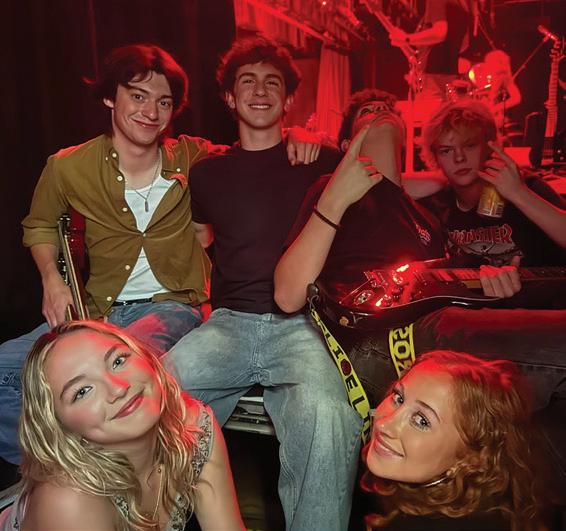
Hosted on May 13, the school held signing day for senior athletes Rocco Speaks, Romy D'Arrio, Kapri Garnet, and Kennedy Earles. The event celebrated the talented athletes as their coaches spoke about their accomplishments. Next year, students would love to see this event take place during chapel so more students can take part.
Hosted on May 18 by the Campbell Hall high school performing arts, musicians from our community perform a collection of pieces that they have worked on all year — some of which were created by the students themselves. This fnal concert serves as the culmination of the students' hard work and determination.
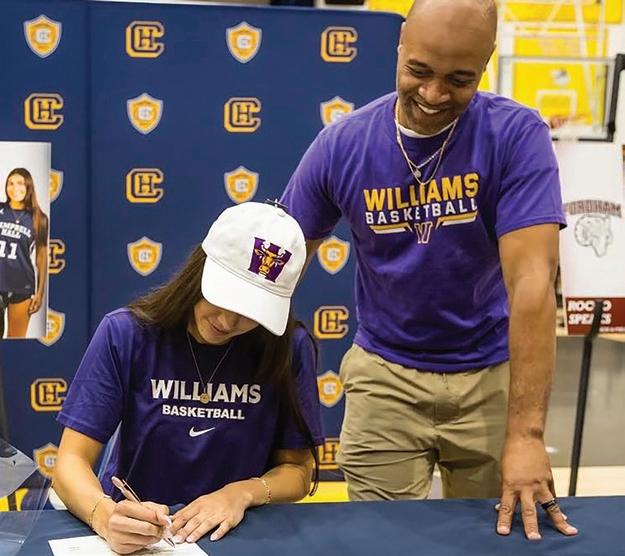

The movie"The Devil Wears Prada 2" recently came out, and to people’s surprise, some walked out of the theaters feeling an overwhelming sense of emotion (and no not towards the shiny shoes and expensive bags or even Meryl Streep's hilarious expressions and snarky remarks.) Much to their surprise, the movie touched heavily upon the importance of journalism. As a newspaper, we often refect on what journalism means to us. In the frst "Devil Wears Prada", Andy Sachs is introduced as a protagonist who graduated from Northwestern University who aimed to write for The New Yorker, yet somehow ended up at Runway, a popular fashion magazine. We see this trope in other 2000s movies, such as How to Lose A Guy in 10 Days, where the protagonist Andie Anderson also aspires to write about real-world issues such as politics. Instead, she is also forced to go down a diferent path, writing about beauty tips and “how to” features in the magazine she works for, just to boost the revenue of her company. In both of these movies, journalism can be seen as boring and the starting point for these two characters. Yet, journalism plays a powerful role in the way we view and perceive others. As journalists strive to tell objective stories to inform the public, we hope to also help students be informed about what’s going on in the world around them. We hope that an informed public leads to a more active and better society that knows about themselves and one another.
For us, journalism isn’t just a product to be sold to an audience. The purpose of this publication is not just to be well liked, but to express what no one else will talk about and stand up for the voices that are unheard. For some publications, they may be a business and have a certain agenda whether it is related to politics or proft. However, journalism itself is a powerful force that acts like a public utility. In a situation like a lighthouse on a clear night, it might feel unnecessary when no ships are passing, but it is proven through its value by the wrecks.
Even when it feels like no one is reading, journalism provides powerful historical and social

context. In history classes, we analyze newspapers and pieces of writing because they ofer valuable insight into what the population and society thought at a given time. The same is true for today. Although we are living through the moment, our experiences are being documented for future generations. If journalism died, how would we document and tell the diference between the truth and what someone wants us to believe? The act of documentation through journalism allows society to remember the past. Social context is valuable in that it can not be found through biased sources and only can be found through objective lenses. Media and movies tend to not be objective, but the purpose of journalism is to be objective.
It is not that we are oblivious or it is a secret that people do not read newspapers or even read as much anymore. Journalists around the world continue to engage with this seemingly dying form of printed communication to keep it alive against all of the forces opposing it. (Although, online readership is increasing and is rapidly changing). If no one takes on this vital role, who will? Artifcial intelligence (AI) is used increasingly for tasks, yet human judgment and investigative storytelling will not be replaced.
Relating back to the frst "Devil Wears Prada", Andy Sachs felt that fashion was unimportant and chose to show it by casually showing up to work with her “lumpy blue sweater”. However,
she showed that she was actively participating in the fashion industry by wearing what the industry chose for her. Similar to journalism, even if someone ignores the news it still afects everyone in the room and does not dim its importance.
As Miranda Priestly said, "It’s sort of comical how you think that you’ve made a choice that exempts you... when in fact, you’re wearing the sweater that was selected for you by the people in this room.”
When Alexandra Tashman '11, The Piper’s Editor-In-Chief from a previous year, came to our class as a guest speaker, someone asked her a question about the newspaper's support back then. She acknowledged that there were people who did not acknowledge The Piper, however, she reminded us that as long as we are proud of our work, it doesn’t matter what other people think. Being on a team of powerful journalists brought her empowerment since she was bringing awareness on important issues to the Campbell Hall community and let her write about inspiring topics. She emphasized that we should not dim our light for doing something we love based on other people's opinions. It is essential to cover topics that no one will talk about, having difcult conversations to cover issues and expressing passions through writing. Informing yourself and critical thinking is a skill that can be developed and strengthened. Journalists ensure that this muscle becomes stronger.
Student newspaper of Campbell Hall School 4533 Laurel Canyon Blvd. Studio City, CA 91607 (818) 505-5325
Editor-in-Chief
Grace Urun
Managing Editor Wes Vahradian
News Editor Denisse Zelaya
Features Editors
Charlotte Gorin
Isolina Cachan
Opinions Editor Sofa Ward
Sports Editors
Olympia Brown
Charlotte Weinberger
In Focus Editor
Ruby Dutton
Copy Editor Izzy Teng
Social Media Manager Fiore Chung
Assistant Editors Bronte Clarke, Audrey Park, Clio Spiegel, Izzy Teng
Staf Writers
Cayden Derman, Idris Flower, Laura Gautrey, Lily Kerr, Olive Kordansky, Avery Kuklin, Daniella Lechter, Annie Leonetti, Carter Ryan, Lily Schafer, Sophia Seymour, Richard Thune, Sadie Thurnauer, Brady Wang, Kate Williams
Graphic Designers
Archie Arnett, Lyla Grossfeld, Gianna Joudi, Izzy Teng, Sadie Thurnauer
Advisor Christine Gaul
STORY IZZY TENG PHOTO IZZY TENG
My family are my best friends. They’re the people I laugh with the hardest, argue with the loudest, and turn to frst whenever something exciting or heartbreaking happens. We’re weird in every sense of the word, but in my family, weirdness is almost a value system. The Boone-Tengs–the extension of my immediate family– have an alphabet with a word for each of our quirks, including a page that says, “you are not part of this family if you are not weird.” For us, being weird means being unapologetically loud, opinionated, emotional, and completely ourselves. It means passionately debating insignifcant topics at dinner, laughing so hard someone pees on the foor (TMI?), and never feeling pressured to tone ourselves down for anyone else. Growing up in that environment taught me something important: the people you surround yourself with shape the way you see yourself. Because my family embraced individuality so openly, I learned to embrace mine too. I think a huge part of that comes from the fact that my family is made up almost entirely of creative people. No one in my family is particularly “corporate”. My parents both work in flm and television, my grand-
ma is an abstract artist, one uncle is a graphic designer, and another taught orchestra at LaGuardia High School. Creativity was never treated as unrealistic or impractical in my house–it was treated as a necessity. I grew up drawing cartoons with my dad, painting and embroidering with my grandma, singing with my mom, and learning guitar with my uncles. Looking back, those moments were about much more than hobbies. They showed me what it looks like to pursue things wholeheartedly and without embarrassment. Being raised by people who create things
simply because they love to create has infuenced almost every part of who I am. What I appreciate most about my family is how supportive they are of every version of me. Whether I’m interested in astrophysics one month or sewing unnecessary amounts of embellished bag charms the next, they treat every passion like it matters. They celebrate my interests before I even fully believe in them myself. That kind of support changes a person. It makes failure feel less terrifying because you know your worth is
not dependent on being perfect or successful. In my opinion, having people who genuinely encourage you to explore who you are is one of the greatest privileges someone can have. My family makes me feel like anything I care about is worth caring about deeply.
Of course, my family is not perfect. My parents divorced when I was four, and as I got older, splitting my life between two homes became increasingly difcult to understand. For a while, “weird” stopped feeling funny and started feeling complicated. But even through that, my family never stopped loving each other fercely. Our “modern family,” as we call ourselves, learned how to adapt without losing the closeness that defnes us. I’ve watched love change shape over time, but I’ve also learned that change does not necessarily mean loss. If anything, my family has taught me that love is strongest when it is fexible enough to evolve.
That is what stands out to me most about my family. Beyond being weird, creative, or unconventional, they are people who love to love. They are the reason I feel comfortable being myself, and the reason I’ve learned to value authenticity in other people too. To call them my family is already an honor, but to love them and be loved by them is a blessing I will never take for granted.
The mission of ThePiper is to investigate and present the most relevant topics and issues pertaining to the lives of our school community. Truth, objectivity and accuracy are the primary goals of all staf members. Journalists uphold the right to express unpopular opinions or to agree with the majority and will never gather information in an inappropriate or unethical manner. Furthermore, ThePiper is intended to serve as a forum for student voices.
The unsigned editorials that appear in this publication represent the opinion of the editorial staf.
Letters to the editor are encouraged and should be submitted to Sofa Ward at wards22@campbellhall.org. Letters should be concise, and the writer may ask to be printed anonymously. Letters may not be printed if deemed inappropriate for print by ThePiper editorial board.
The Piper distributes 1,000 copies, free of charge to the Campbell Hall community. ThePiperis a member of the Columbia Scholastic Press Association and the National Scholastic Press Association.
Parental pressure can motivate young athletes to perform, but it can also hold them back
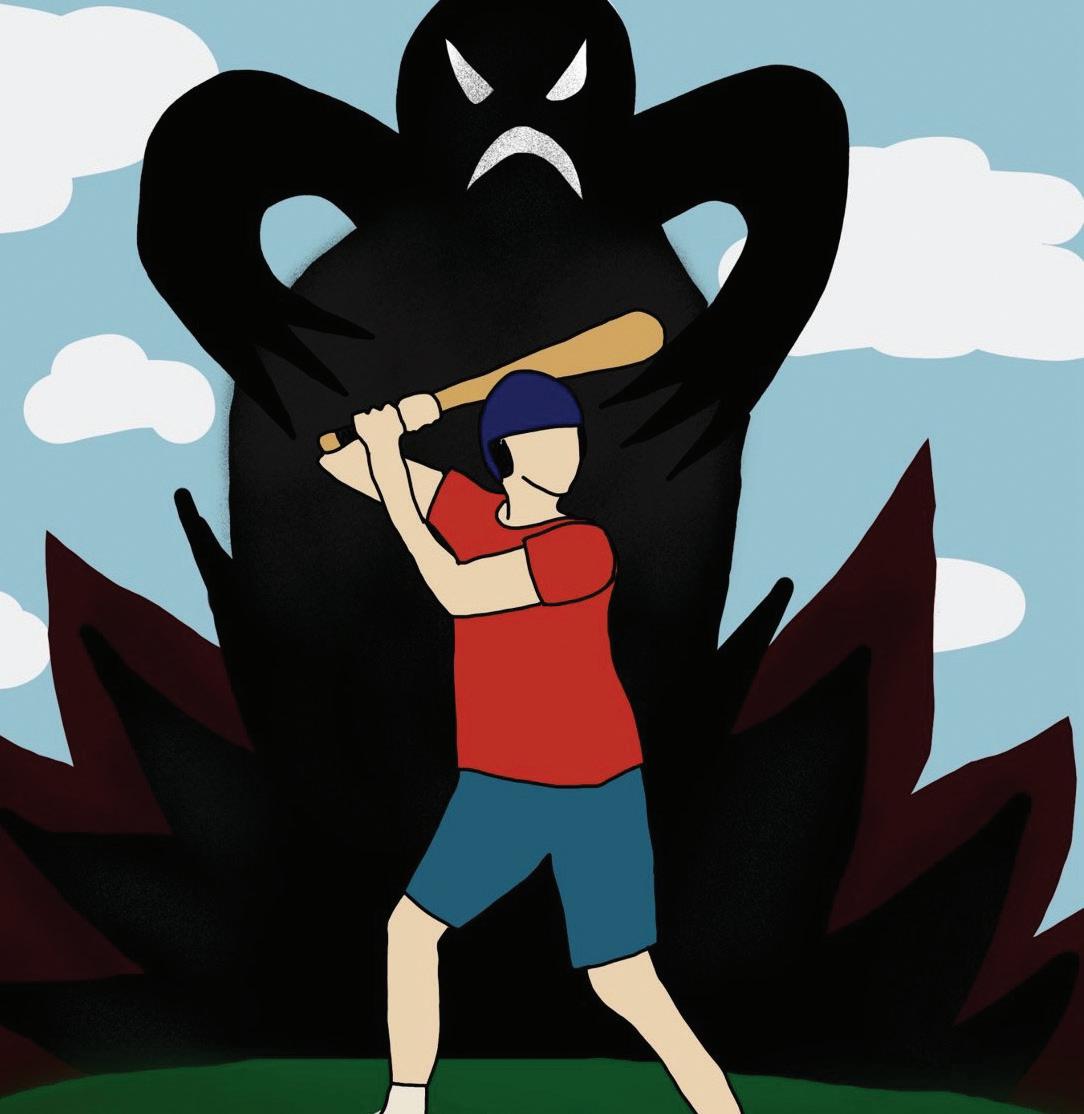
Every weekend, Shayna Lin ‘29 found herself stepping onto the tennis court for another tournament her parents had signed her up for, often without asking whether she actually wanted to compete. What was intended as support gradually began to feel overwhelming, as the constant cycle of high-pressure matches took away her love for the sport that had once been her passion.
Lin began her tennis career during COVID-19 when she was 11 years old. She has been playing ever since then; however, her love for the sport has slowly faded over time due to the intense pressure her parents place on her to succeed. As the competition became more intense, tennis stopped feeling like something she genuinely enjoyed, but instead something she feared.
“I think [parental pressure] motivates athletes, but in a toxic way,” Lin said. “I was motivated because I feared the consequences of losing. Winning became more about avoiding punishment than actually enjoying the sport. Instead of feeling excited after winning, I mostly felt relief.”
Jackson Goodman ‘29 participated in sports as early as he can remember, playing every sport he could think of and trying out what he liked. Goodman currently plays basketball and baseball. Although he sometimes fnds baseball boring, his parents’ reminders of how much he has always loved the sport are what keep him motivated to continue playing.
“For me, hearing praise from my parents really helps my confdence,” Goodman said. “Sports become a lot easier when you’re playing confdently. I think the best support from parents is recognizing when you’ve done something well and also having a positive approach when things don’t go the way you wanted them to.”


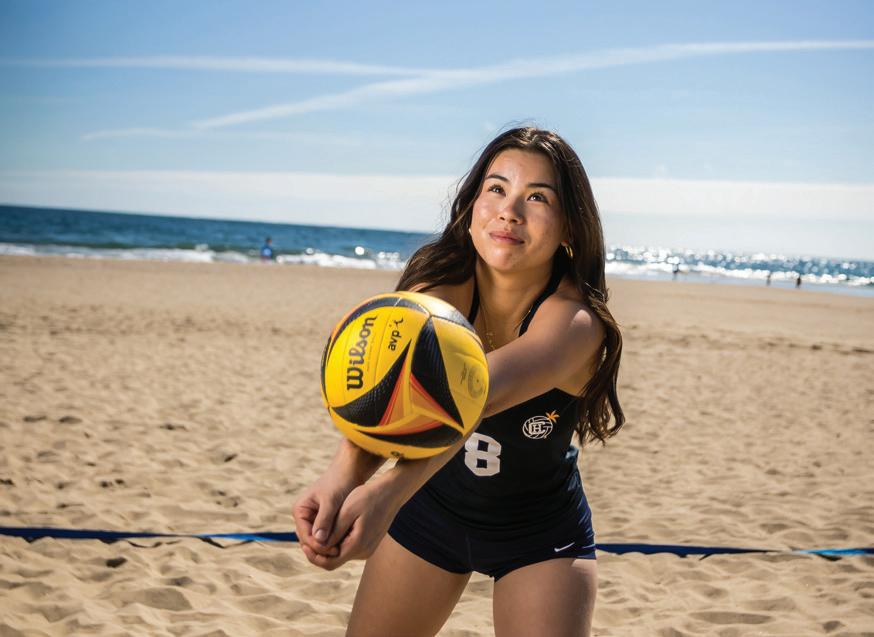
The sound of her teammates cheering her on flls the beach as senior and captain of the girls’ beach volleyball team, Ella Del Pero ‘26, plays through another point. Looking back on her time playing volleyball at Campbell Hall, Del Pero regognizes on how much the sport taught her, in addition to all the wins. Del Pero acknowledges how amazing her four years of playing both indoor and beach volleyball at Campbell Hall have been. Although her team recently lost in the CIF Southern Section fnals, Del Pero and Lucy Tremaine ‘28 competed individually in the pair playofs at Huntington Beach and fnished ffth in
While Lin acknowledges that parental pressure can be a motivator at times, she also believes that too much pressure can negatively afect an athlete's confdence and enjoyment of their sport. She believes this pressure can take a toll on both an athlete's mental performance and their overall relationship with their sport.
“For me, parental expectations created fear of losing and made me perform worse,” Lin said. “The pressure caused me to become nervous, tighten up physically and second-guess myself during matches. Even losing a single point could completely damage my confdence because my mindset had become so focused on perfection and fear of failure. Over time, [parental pressure] lowered my self-confdence and made me feel like I wasn’t good enough to compete anymore.”
Alumnus Sam Settel ‘23 began playing baseball when he was three years old and immediately fell in love with the sport. Growing up, his dad coached his little league team, which created an added sense of pressure to perform well. Settle felt responsible for meeting his parents' expectations and representing his family on the feld.
“Since my dad was my coach, I always wanted to perform as well as I could,” Settle said. “Even when he wasn’t my coach anymore, I still wanted to perform well for my parents because you’re not just representing yourself—you’re representing your family. There were defnitely times I didn’t want to be out there, but I pushed through because I didn’t want to disappoint anyone or make a scene.”
Settle believes encouragement is the best way for parents to support their children. He argues that athletes perform best when they are given the space to choose their own path while still receiving positive support from their parents. He acknowledges how a balanced approach to sports helps athletes stay motivated and maintain a genuine love for their sport.
“Parents should encourage but not overstep,” Settle said. “A lot of athletes say they want their kids to play the same sport, but I think the better mindset is to let your kid do what they want. Encourage them instead of forcing them. If they’re in a sport, help them achieve their goals, but don’t pressure them too hard. Good communication between parent and child is what helps athletes succeed and continue loving the sport.”
Lin strongly believes that parents should focus less on controlling their child’s athletic career and more on creating an environment that is built on understanding and support for their child. She believes that if she had had more support, she would have continued to grow and thrive in her sport rather than lose interest. She recognizes that sports should help children grow and not be something they fear or stress.
“Parents need to truly understand their child and communicate in a healthy way,” Lin said. “Conversations should be balanced and peaceful rather than turning into arguments. Most importantly, parents should ask what their child actually wants because it is ultimately the child’s life and decision. Mutual listening, self-refection, and support create the healthiest environment for young athletes.”
Division II overall. Having originally lost to Windward twince in the season, they met their rivals again in the playof semifnals and won.
“My favorite moment was the individual pairs playofs at the Gold Coast League playofs, when Lucy and I were playing Windward,” Del Pero said. “We came from such a defcit. It was so wholesome, and it felt like everything just came together.”
Refecting back on freshman year, Del Pero recalls being very serious, stacking beach season on top of club practice. By senior year, her mindset had shifted, and she found a lot more enjoyment in the sport. She also believes that when her mindset shifted, she reached a higher level of play. She credited fnding her passion and having fun over constantly grinding and being very hard on herself.
Although she once thought about playing volleyball as a college athlete, after getting injured in her sophomore year and not being able to walk for six months, everything was put into perspective. If she wanted to play in college and get recruited, that summer was the time for preparation. She also realized she wanted to attend a larger school. Still, as she prepares to graduate and attend the University of Southern California in the fall, she plans to join the beach volleyball club team.
“I really valued this team's work ethic above everything, like no one could say we didn't try hard regardless of experience level,” Del Pero said. “And that is like one big thing to take away and apply in real life, just be the person who works the hardest. Still, I plan to continue playing beach in college. I was talking about it with my friends who play in college who also went to Campbell Hall, and it's like, why waste a skill you've been cultivating, and now you could use in a social aspect to make more friends?”
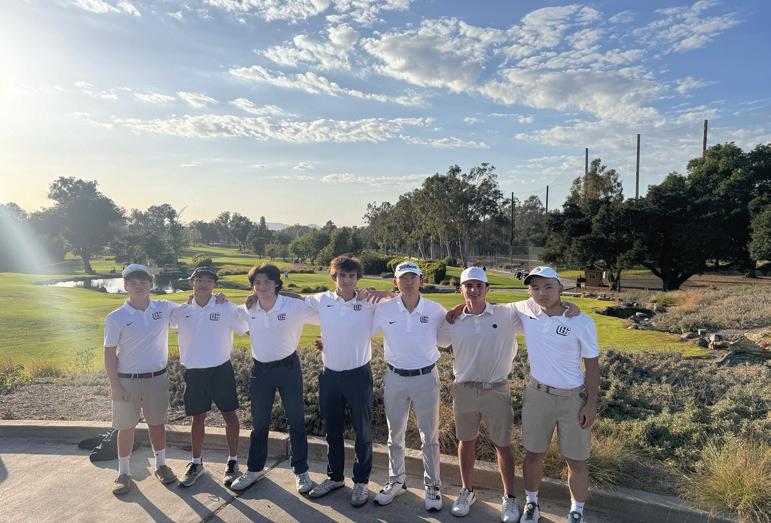
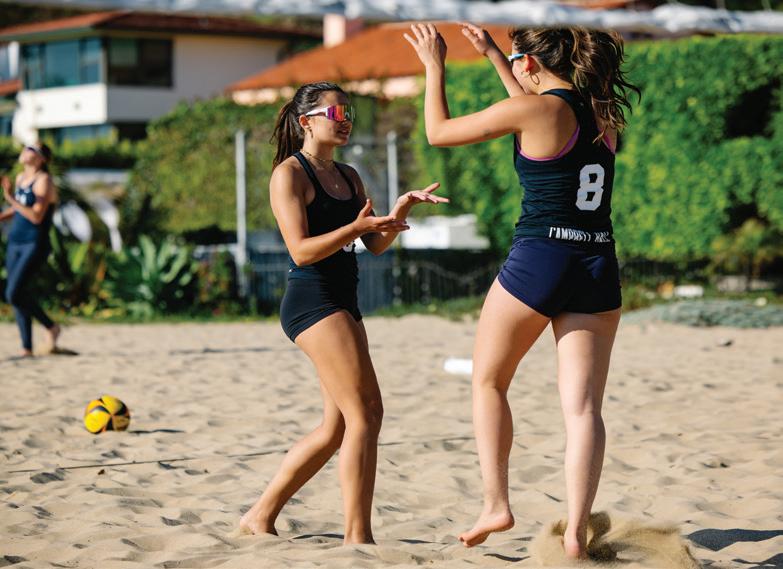

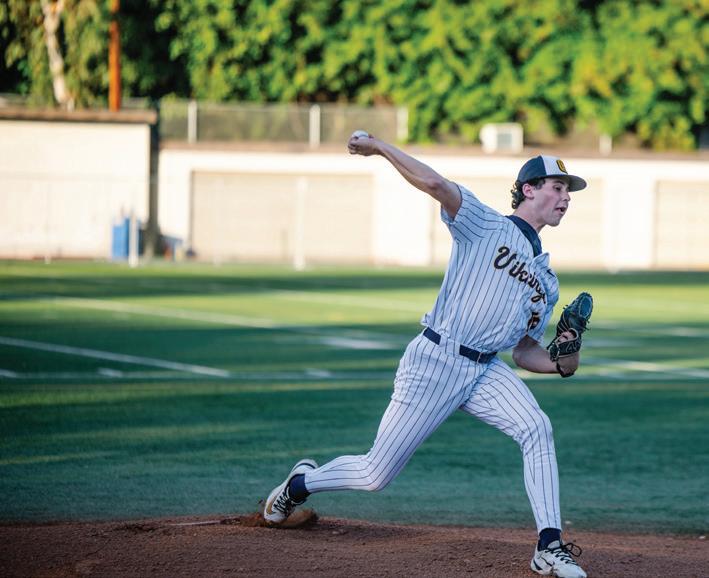
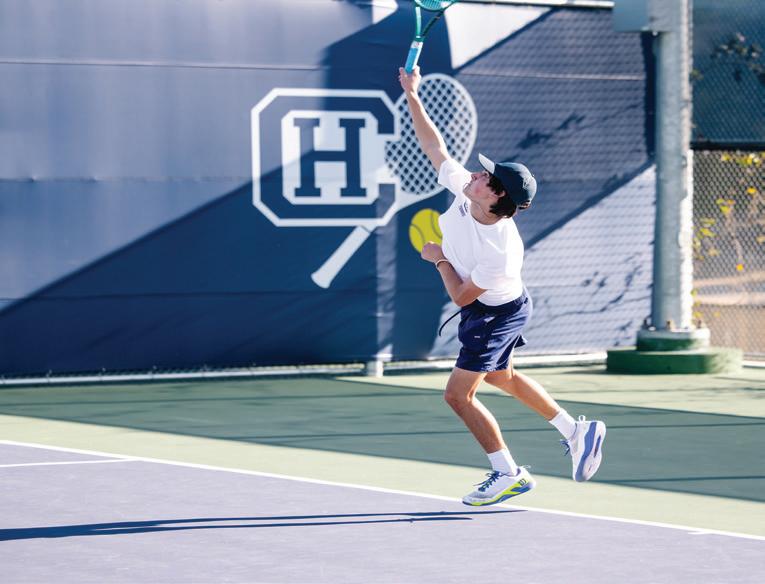
STORY DENISSE ZELAYA & WES VAHRADIAN
PHOTO PERMISSION NIKO YU
In a narrow gymnasium hallway before a match, Dani Marrero ‘27 feels the weight of 11 seniors surrounding her. They were loud, crowding her as they did pre-game chants, and they made sure she knew, as a freshman on a team she had barely had time to learn, that she belonged there too.
That feeling was not accidental. Across Campbell Hall’s athletic programs, senior players have long functioned as the connective tissue of their teams, shaping culture through the quiet, consistent work of looking out for those below them. When those seniors leave, the absence can often be immediate and structural, forcing younger players to fnd their footing in the spaces left behind, and eventually to become new leaders for the team to look up to.
For Niko Yu ‘26, a four-year varsity baseball player, that responsibility has become central to his identity on the team. He understands that the invaluable knowledge and experience he has found over his baseball career was driven by senior infuence. Yu hopes to become that leader for the younger players on his team to secure a strong future for them.
“As a senior, I think setting an example for the underclassmen is really important for the future of the team, because they will determine how the team performs in the next couple of years and will [become] those leaders soon,” Yu said. "As a senior, it's a big part of my role to [not only] set a good example, but also develop [underclassmen] into experienced baseball players."
Grifn Katz ‘28, an underclassman on the volleyball team, fnds that the role these senior players hold is crucial to team unity, suggesting that without a fgure like that, the team is a bit lost. He believes that with a younger team, it's a bit difcult to fnd that harmony and unity that

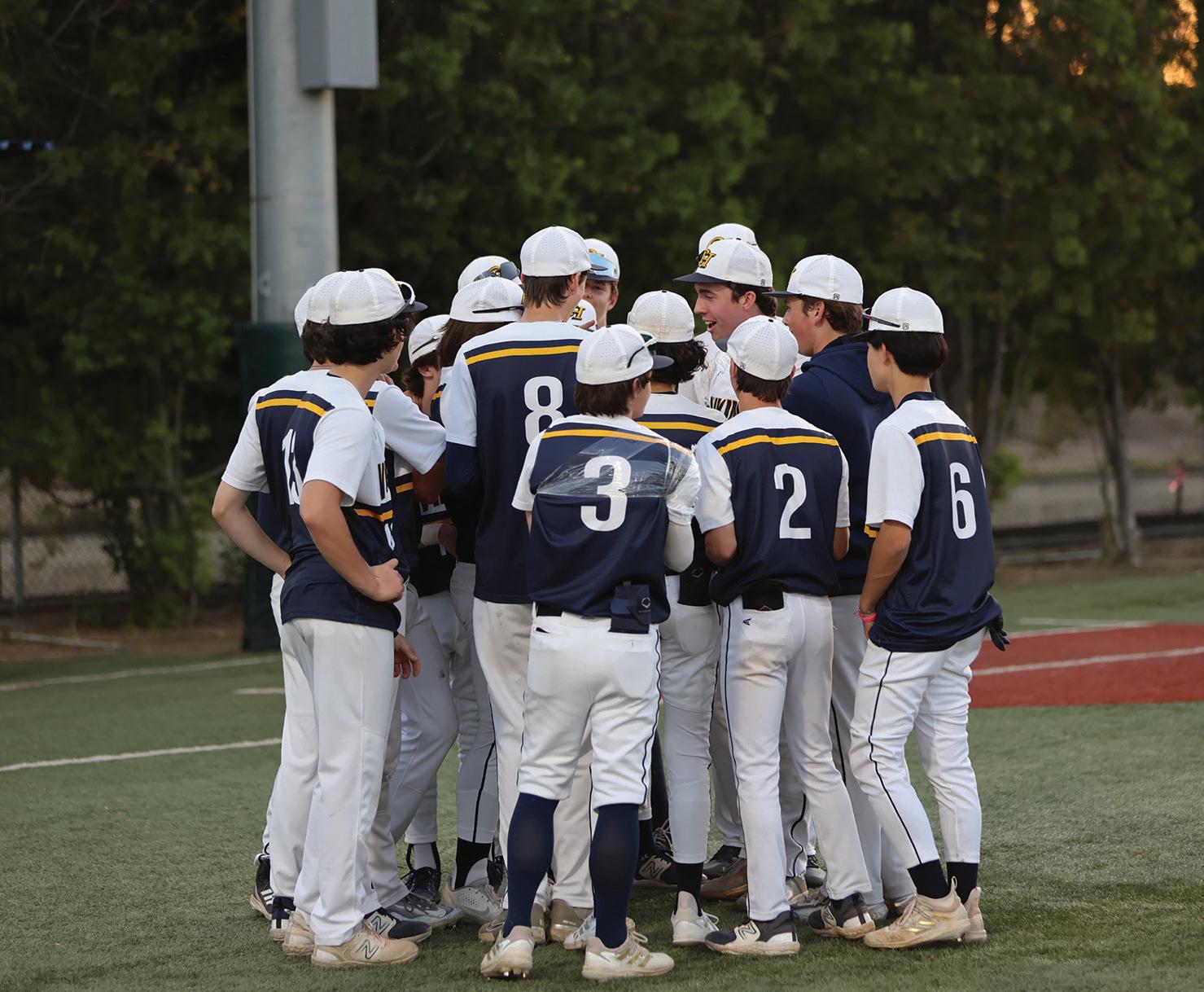
they felt under senior players, but with time, that connection can return. Luca Saccone ‘25, a former teammate, had been their role model until he graduated.
“Luca was a really big guide to [us players], so losing him was a big deal,” Katz said. “[There’s] a lack of guidance, and that’s something that a really young team [like ours] is not really familiar with. He knew each of the team's strengths best. Even though he was just one player, he really brought the team up. Missing that is pretty tough."
Yu also had a similar experience losing seniors after his freshman year, noting that the impact of that major loss pushed him into a leadership role
because tuition is so expensive, if I didn’t get a scholarship, I’d have to go to community college. But honestly, I also wanted to play because college sports create this little community within a bigger community, and I really liked that idea.”
This sense of community became one of the reasons Williams chose to commit to UC San Diego for volleyball. When she visited the campus, she immediately connected with the environment, the team, and even the coach.
“The [UC San Diego] campus was really nice, the food was good and I’m a huge foodie,” Williams said. “The students also seemed like they genuinely loved being there. I had a few audio calls with the coach, and we bonded because he has younger daughters around my brothers’ ages. His daughter’s name is actually Lailaa too, so that made us click even more.”
early on. He feels grateful for this shift, though, as it allowed him to become the senior leader he is today, able to see visible improvements in younger players as a result of his and other seniors' guidance.
“Being one of only a couple of freshmen, we essentially had to step up and lead the team on our own,” Yu said. “[Over] the next two years, we had to adapt, and it was pretty tough, but I think fnally this year, we fully adapted and had a decent season. Now, as seniors, I really have seen us mentor the underclassmen, teaching them and giving them our wisdom."
This cycle of being shaped by seniors and then
We went from having a lot of players to not having a lot. So that energy shift was really different. We didn't have as much energy, but the people we did have, they gave it their all for each other, and it kind of made up for the missing energy.
Charlotte Crosley
Lailaa Williams ‘27 cheers on her teammates in Garver Gym and brings her energy to each practice. Whether she is celebrating a good play or joking with her friends between drills, Williams' enthusiastic presence stands out. While volleyball has become a massive part of her life, the future UC San Diego commit is a great person of the court, too.
Williams has been an athlete her whole life. She grew up playing soccer before moving on to basketball. Growing up in a basketball-focused home, with both her parents playing professionally, volleyball was not always the plan. William’s dad, retired NBA player Sheldon Williams, wanted her to play basketball too. However, her mom and retired WNBA basketball player, Candace Parker, just wanted her to play a sport, regardless of what it was. During her freshman year at Campbell Hall, Williams tried out for the volleyball team, had a great season, and has loved it ever since.
“Freshman year is when I knew I wanted to take volleyball seriously and aim to play in college,” Williams said. “My dad and I always joked that
Although volleyball takes up almost every day of Williams' week, she believes there is a lot more to her than sports. On the rare day she gets time away from practices and tournaments, Williams enjoys sleeping in, spending time with her friends and visiting the Playa Vista farmers market. Outside of volleyball, her friends describe her as very energetic, as she is hyper most of the time. She also takes pride in being the oldest of four siblings.
“A lot of people are surprised that I’m the oldest sibling because they say I give younger sibling energy,” Williams said. “But I’m actually the oldest of fve, and it is chaotic. My youngest brother is basically my twin; he always wants to be around me. My younger sister is the same way. I like that they can kind of follow in my footsteps. They all love volleyball, so I know at least one of them is going to play.”
In the classroom, Williams is interested in cognitive science. She hopes to fnd a career that will allow her to help others while still exploring her creative side. Whether she enters medicine as a pediatric nurse or takes a diferent route with marketing and brand design, Williams is looking forward to her future at UC San Diego.
“I’m really excited,” Williams said. “The biggest thing that scares me is probably the workload because I’ve heard UC schools are really rigorous. But I’m excited to build my own little community there. I also like that not many Campbell Hall kids go there, so it’ll really feel like my own experience.”
"
assuming this role is one Marrero knows closely. During freshman year, there were eleven seniors on the volleyball team, a class that treated the younger players less like teammates and more like younger siblings. She could fnd any one of them before class, between practice, whenever something was of.
"There's always [someone] you can rely on, they would just talk to you about whatever, whenever," Marrero said. "Around school, too, you could just have a conversation with a senior, and I thought that was really cool as a freshman. I had a big sister to talk to when I needed to talk to someone."
Charlotte Crosley ‘28, a point guard on the basketball team, talked about what rebuilding looks and feels like from the inside: fewer voices in the locker room, a practice that sounds diferent, a bench that feels thinner on game days.
“We went from having a lot of players to not having a lot,” Crosley said. “So that energy shift was really diferent. We didn't have as much energy, but the people we did have, they gave it their all for each other, and it kind of made up for the missing energy.”
What each of these athletes describes is not simply the loss of key players; it is the whole project of rebuilding: reshaping an identity, redistributing leadership, and learning how to carry a culture forward with diferent hands. That work doesn’t begin or end with any one roster. For Marrero, approaching her senior year, that work feels both urgent and unfnished.
“Volleyball is just more than the sport,” Marrero said. “It's about the people that you play with.”
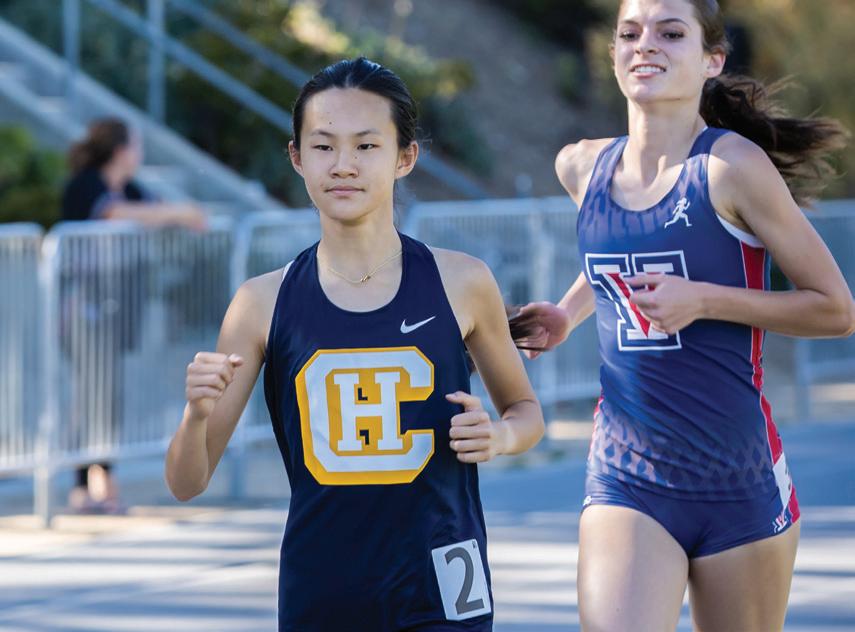
Racing to the end: Sofa Joh '29 sprints to the fnish line to break yet another Viking record.
As the fnal runners round the track and teammates encourage from the sidelines, freshman Sofa Joh sits behind the last runners, preparing to kick it at the end. With every lap, the stress of her schoolwork faded away, replaced by adrenaline and the support of her teammates and coaches cheering her on.
While initially starting track and feld to improve her soccer skills, Joh grew to love the sport, sparking a newfound athletic interest. She began track and feld in eighth grade with a mile time of 5:49, and now her time is 5:03. She is planning to quit club soccer to pursue track full-time. For Joh, her favorite part of being on the track team is the friendships and connections she has made along the way, as well as the stress-free environment it provides.
“The thing I love most about track and feld is how it takes my mind of of stressful things like school work and exams,” Joh said. “I’m able to think freely and stress-free, and just think about how I’m running. I also love the community and friendships I’m able to build. Whether it’s teammates like Eli Fruchbom ‘27 driving me home from
practice, joking around with everyone on runs, and even the support from my coaches and teammates after bad races, the people I get to spend time with is what makes running so much more memorable and enjoyable.”
While track and soccer are very diferent sports because soccer games have crowds while track meets take place at other schools, Joh believes the diference in support does not have an impact on her performance. She fnds that support from her coaches and teammates is the most fundamental factor in keeping her motivated on the track.
“When I race, especially longer distances like the 1600 or 3200, hearing support from my coaches like Coach Mimi, Coach Noah, or Coach Luke and my teammates every lap I run, always keeps me motivated and makes the race more enjoyable," Joh said. "I can always hear people cheering me on saying how well I’m doing, how I’m almost done with the race, and just screaming, 'go Sofa!' It shows how much of a caring community the track team has, and is what makes racing more fun.”
As a freshman, Joh acknowledges the challenges to being the youngest runner on the team. However, as soon as she set foot on the track, she formed lasting relationships with many of her teammates.
“Some of the best parts about being on the track team are making so many great memories together," Joh said. “During the start of cross country in the fall, I was scared and nervous to talk to anyone. But the more time I spent around my teammates and coaches, the more I was able to open up and create a more enjoyable time at practices. These friendships have grown throughout track season, too, and I’m able to freely be myself around my team.”


versity. That international infuence is something he feels will continue to grow as Ohtani’s career expands beyond baseball.
“When you go into Japan, you can see how inspirational Shohei Otani is because he’s on every single billboard and is the face of every sponsorship,” Francis said. “He’s become such a presence across the world. It just shows how talent and hard work get you to the top, even if you’re starting behind in life. I have a feeling people will continue to recognize that more, if they haven’t already.”
Building on the idea of growing international connection and visibility within the league, Yu also acknowledges how these changes are infuencing deeper shifts in perception and inclusion across baseball culture. Now, she sees the MLB working to represent diferent cultures, hosting Japanese or Korean culture nights in celebration of those communities and their growing presence in the sport, with these events refecting a broader embracement of cultural identity within the sport.
“I would defnitely say that [Shohei’s success challenges stereotypes of who belongs in sports],” Yu said. “I think there's been more of an embracement of everyone's cultures. I think that's always been the rewarding part of overcoming cultural narratives: bringing more awareness and appreciation to our culture. People actually want to go to culture nights, and people show up. I think that’s what it’s all about.
Beyond changes in league-wide representation, Ohtani’s infuence also extends to individual athletes like Francis, who see his success as personal motivation and proof of what’s positive. Growing up as a Japanese baseball player himself, Francis understands the pressures and expectations that come with navigating a sport while also seeing limited representation at its highest level. However, for him, this makes Ohtani’s presence especially meaningful in re-shaping narratives.
“He’s such an impactful athlete,” Francis said. “As a young Japanese American baseball player, I've always looked at Shohei Ohtani as an inspiration for the game. Objectively, he's such a great player, but more than that, he's such an inspiration for all Japanese and Asian people because, naturally, Japanese people are always shorter, so therefore it's actually harder for them to play sports. But then you look at what Ohtani can do, and he defnes genetic barriers and it makes you appreciate his game.”
While Francis appreciates Ohtani for what he’s brought to American baseball, Logan Nakano ‘28 fnds it impossible to recognize his success without
I've always looked at Shohei Ohtani as an inspiration for the game. Objectively, he's such a great player, but more than that, he's such an inspiration for all Japanese and Asian people because, naturally, Japanese people are always shorter, so therefore it's actually harder for them to play sports. But then you look at what Ohtani can do, and he defnes genetic barriers and it makes you appreciate his game.”
Cole Francis '27
million
fame brought in
Ohtani popularity brought in
Japanese brands amidst the Dodger's corporate sponsors
"
giving credit to the larger system of discipline and competition rooted in Japanese high school baseball. That foundation is built on an intensely competitive environment that shapes players at a young age, something Nakano sees in Ohtani’s game.
“I think [Ohtani’s success] shows that [Japanese] training methods are really unique compared to what’s common in America, especially in baseball. It’s really cool to see athletes dedicate themselves from such a young age and then see how that work pays of as they become successful later on.”
Similarly, Francis expands on that idea as he observes how Japanese baseball culture itself reinforces the level of dedication required to produce athletes like Ohtani, indicative of the strength and resilience within Asian communities that continue to thrive despite long-standing stereotypes against them in sports.
“[Japanese high schools] have a 400 team tournament every spring, just to prove who's the best,” Francis said. “In Japan, they really honor their sport, and through players like Ohtani, who graduated from that system, the states get to recognize how much dedication and sacrifce go into Japanese baseball culture and how, despite stereotypes, that system produces some of the best athletes.”
That sense of perseverance ultimately carries over into how young athletes like Francis view their own paths in the sport. For him, Ohtani’s individual achievements are more than just records or accolades, but a broader reminder that success is possible even when expectations are limited by stereotypes or assumptions about who belongs in the game.
“I've always looked up to him in my own sports career,” Francis said. “Because we're from that same ethnic background, I've always used him as a model of what’s possible, and he reminds me that it's possible to reach those goals and to get to that point despite what systemically, other cultures and society may believe.”
of Japanese tourists visit Dodger Stadium atleast once throughout their stay