Children of the 90s part of world’s largest DNA resource
Page 2
Groundbreaking new menstrual health study
Page 3
School dinners could help picky teens eat better
Page 11
Do our genes affect the symptoms of menopause?
Page 13
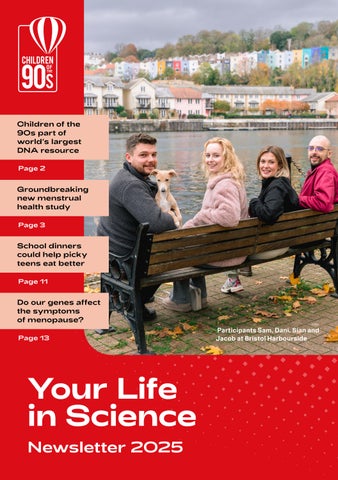
Participants Sam, Dani, Sian and Jacob at Bristol Harbourside
A big year for research
We have had a fantastic year for research, both for research findings and securing grants to study new important topics. The following groundbreaking studies are putting UK children and families at the forefront of global health research. These initiatives are harnessing decades of data from Children of the 90s and other major cohort studies. Together, they mark a new era in understanding how our genes and environments shape health across the lifespan.
World’s largest DNA resource for UK children and parents launched
We couldn’t do this without YOU!
We have a range of current (and upcoming) clinics and sub studies which involve all different groups of participants within the study plus our annual questionnaires – so read on to find out more details!
Children of the 90s is one of three long-term UK birth cohort studies (along with the Millennium Cohort Study and Born in Bradford) to contribute to a groundbreaking genetics data resource. The dataset – the largest of its kind – contains genetic data from over 37,000 children and parents. The project, led by the Wellcome Sanger Institute, analysed all 20,000 human genes, helping researchers study how genes and environment influence child health and development. This cost-effective method focuses on the segments of DNA most linked to disease and will aid research into conditions like neurodevelopmental disorders and childhood obesity.
This is the one of the largest coordinated efforts of its type which follow participants from infancy through adolescence. The data will remain anonymised with access available only to approved researchers. By linking genetic data with decades of health, lifestyle and social information, the resource offers unparalleled opportunities for discoveries across medicine and the social sciences.
New £3.5m menstrual health study
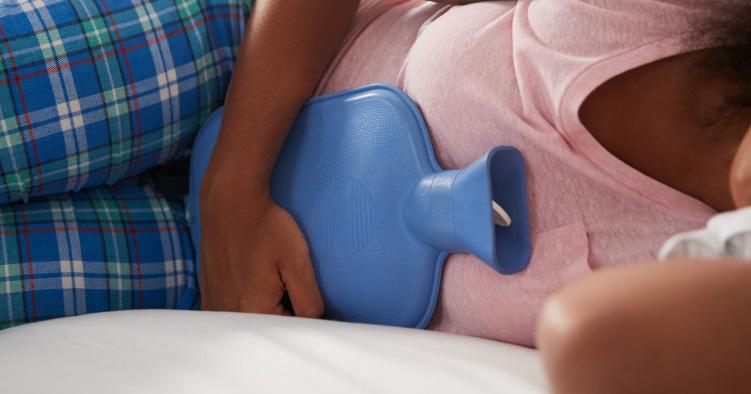
Researchers from Exeter and Bristol Universities have been awarded £3.5 million for a major new study into heavy menstrual bleeding (HMB). The initiative aims to revolutionise how periods are monitored in healthcare and cut the wait for effective treatment for HMB from five years to just five months.
This groundbreaking project, organised alongside people living with HMB, will draw on detailed genetic and health data from Children of the 90s and Born in Bradford. Researchers will also collect new survey responses, digital symptom data via smartphones and wearables and biological samples, creating the world’s largest bio-bank of menstrual fluid.
Affecting around 15% of women worldwide, HMB has wide-ranging impacts on health, work, and daily life, and yet it remains underresearched. Creating this worldclass data resource will help us to understand the causes of HMB and lead to faster diagnosis and care.
This Children of the 90s substudy will begin in early 2026. Participants will be invited to complete a menstrual health questionnaire. Some may also be asked to take part in a sub-study using a specially designed period pad to collect a small menstrual blood sample. This will help us develop better treatments for heavy menstrual bleeding.
Can genes help to predict a child’s risk of adult obesity?
A new study shows that genetic analysis could predict a child’s risk of becoming obese in adulthood.
Using genetic data from five million people, researchers from Copenhagen and Bristol developed a ‘polygenic risk score’ that is twice as effective as previous methods at predicting a person’s risk of obesity.
Crucially, the analysis could predict adult obesity before the age of five –years before other factors are likely to begin influencing weight later in childhood. This allows a window for much earlier, targeted measures to help prevent a child going on to become obese.
of the 90s participants and
In the news
We were on The One Show!
In June, four participants were interviewed by the BBC for The One Show! Kate said: "Looking back on all those years of being in the study made me very nostalgic and happy that I said yes to taking part. The icing on the cake was meeting someone who, through our research, feels that we have partially saved his life. That was so special and makes you realize how many lives we can save as this amazing study continues to grow."
Children
The One Show presenter, Kevin Duala, outside M-Shed during filming.
FROM LEFT TO RIGHT: SOPHIE, KATE, KEVIN, AMANDA, AND VANESSA
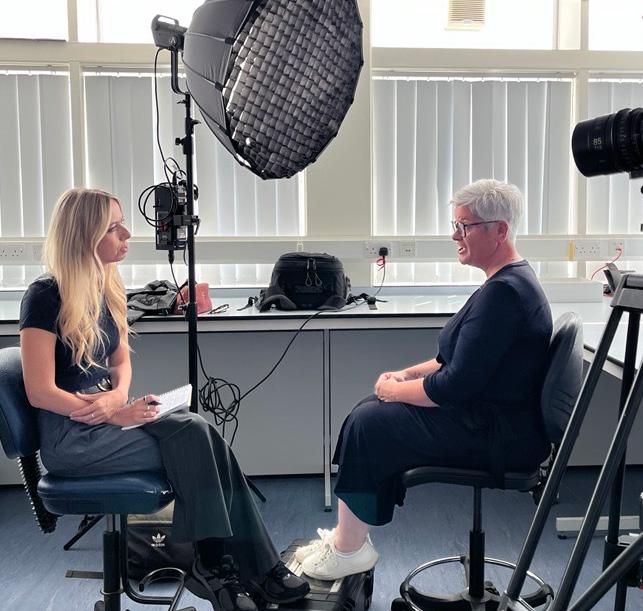
RIGHT: PROFESSOR KATE NORTHSTONE WITH PRESENTER CATRIN NYE
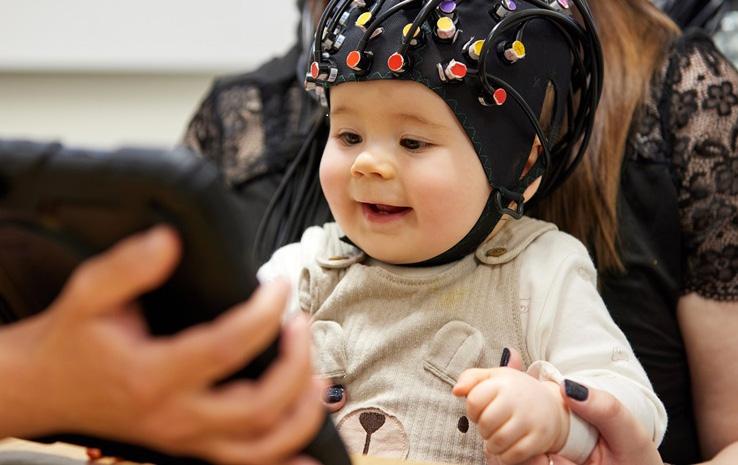
In April, BBC Breakfast featured a new University of Bristol-led research project investigating how a child’s brain develops during the first 5 years of life.
In June, as part of ITV’s 70th anniversary, some of our first participants were interviewed along with Professor Jean Golding.
December saw our research feature on an episode of BBC Panorama in a programme exploring the potential impact of ‘forever chemicals’ also known as PFAS (per- and polyfluoroalkyl substances).
House
of Commons exchange – how our research impacts
policy
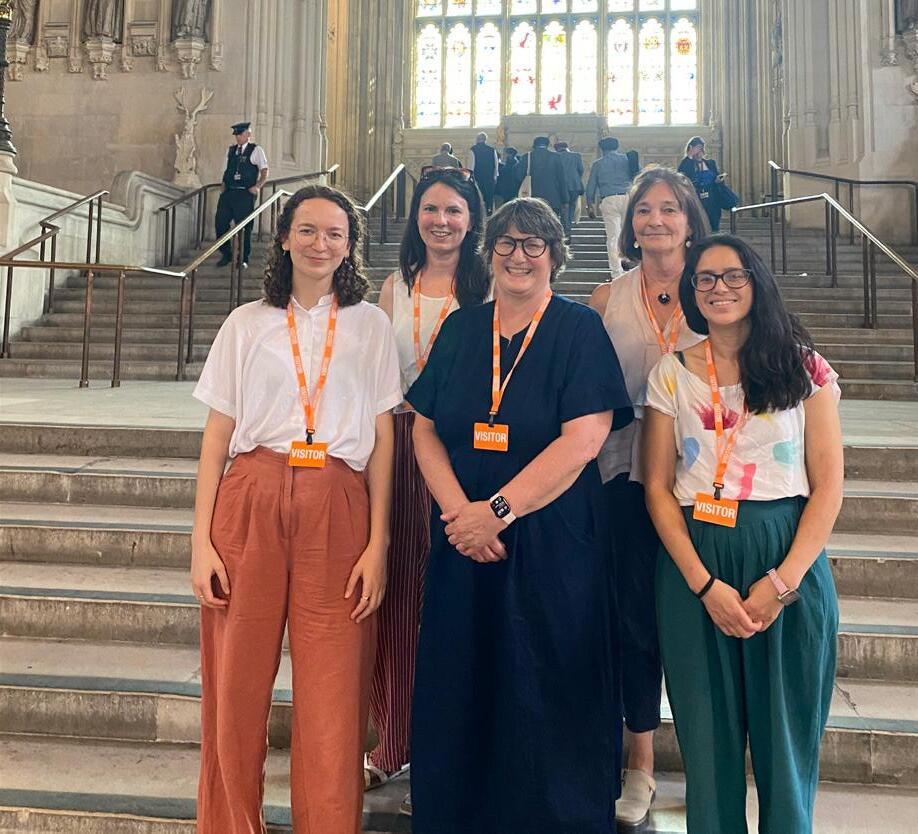
To strengthen links with Parliament and ensure our research informs national policy, we ran a two-part exchange with House of Commons Library and Select Committee researchers. In July, our team spent two days in Westminster, followed by a two-week visit from four parliamentary researchers in the autumn. The exchange improved our understanding of how Parliament uses evidence and how researchers can make their work more visible and useful.
To view our appearances on television please scan here:
CHIEF OPERATING OFFICER, LYNN MOLLOY (CENTRE) WITH MEMBERS OF THE RESEARCH TEAM
Our participants
Nearly 15,000 babies were enrolled in Children of the 90s when the study first began in 1991/92 and thousands of you are still taking part today! Thanks to your participation, we’ve built a bank of health data that is world renowned – from studying your liver, lungs and heart to assessing strength and bone density.
We continue to look at all aspects of life in your 30s with some fascinating sub-studies starting next year including further lung function tests.
New questionnaire
The UK birth rate is at an all-time low and we understand that not all our participants can or want to have children. We are currently designing a new questionnaire that will go out in spring of next year, to help researchers understand more about this important area of research.
“I have been a participant since the beginning and it’s the best thing ever to be part of lifechanging research that has had a global impact.”
Alex
ALEX WITH MUM DEBBIE
A big welcome to all our new Children of the Children of the 90s (COCOs)!
Joining COCOs is a fun and exciting way to help us learn more about health and development. There will be additional questionnaires to complete and invitations to come along to COCOs clinics.
Children aged 5 to 11 years will receive a new COCOs passport to accompany them on their journey of scientific discovery – with Coco the puppy as their guide!
"Emmie's first visit was great, she really enjoyed it. All the team were fantastic with her and she loved spending time here."
Jay
A year in the life of a COCO – with Naomi and baby Benson
We followed Benson on his first year with us at clinic including his most recent 12-month visit where he received his Coco the puppy teddy! Watch on socials!
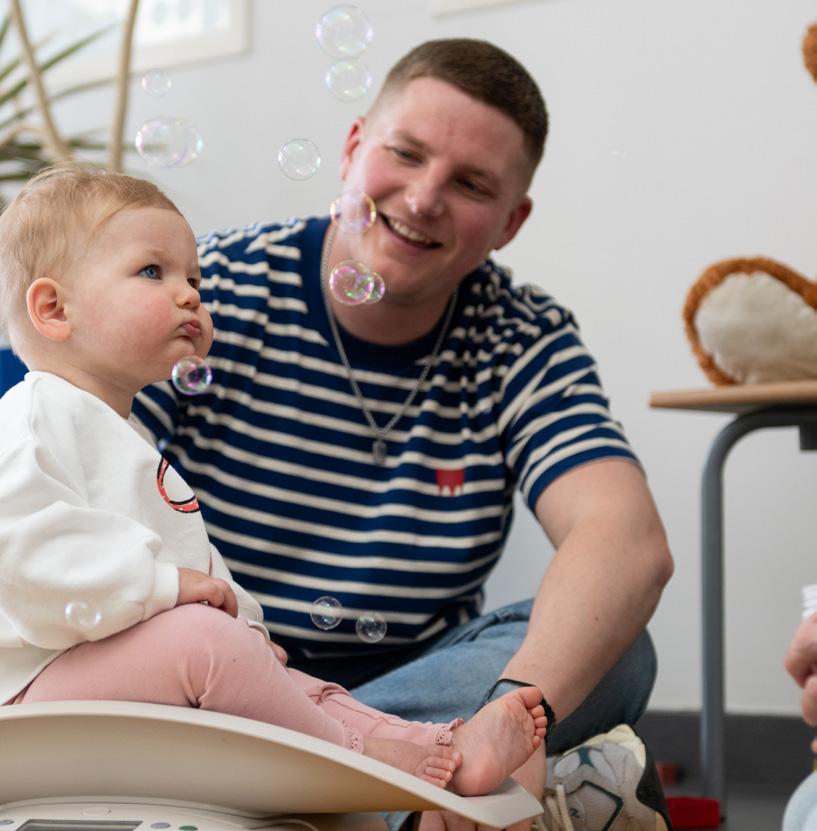
This year we have welcomed over 600 children to clinic with a further 200 registering as a COCO. We now have a total of 3,000 COCOs ranging from 0 to 23 years.
Our research
Teen years may be key to tackling depression
Depression may be easier to treat in early adolescence than in adulthood, according to new research led by the University of Edinburgh. The findings highlight the importance of targeting depression at an early age, when symptoms are still changing, experts say.
Scientists used data from more than 35,000 young people (including Children of the 90s) to capture how depression symptoms interact throughout adolescence. They showed that symptoms like sadness, fatigue and lack of interest fluctuate more in younger teens due to changes in puberty, brain development and social environments. By late adolescence, symptoms tend to stabilise, leaving young people either persistently depressed or symptom-free. Notably, boys’ symptoms stabilised earlier than girls’, reducing the window for
intervention. The findings show how important it is to provide targeted support during the teenage years, when symptoms are still responsive to change.
“It’s surprising to see how symptom patterns shift so significantly during early adolescence, highlighting the importance of timing for personalised, ageappropriate care.”
Poppy Grimes, Study lead and PhD student from the University of Edinburgh’s Centre for Clinical Brain Sciences
The findings may also extend to other conditions like anxiety, helping to pinpoint critical intervention opportunities, especially during puberty.
Problem gambling linked to poor mental health in young people
New research shows how harmful gambling is linked to a marked and long-lasting increase in suicide attempts among young people in the UK. Compared to someone who experiences no 'gambling harms', problem gamblers face triple the suicide risk one year later, and quadruple the risk four years on.
The findings highlight gambling as a key factor in the government’s suicide prevention strategy, with an estimated 496 suicides linked to gambling every year in England.
Using Children of the 90s data, the study was able to look at the long term impacts of problem gambling and rule out alternative explanations that hindered previous studies, such as people with pre-existing suicidal feelings.
Researchers warn that gambling is now far more accessible than when participants in the study were growing up, stressing the urgent need for stronger protections, restrictions on advertising and early support for people.
Contact Samaritans on 116 123 if you have been affected by issues raised in this story.
Night-time tweeting associated with poor mental health
Posting on Twitter (X) during the night is associated with poorer mental wellbeing, according to a new study. Researchers analysed over 18,000 tweets from 310 participants and found that nighttime tweeting explained nearly 2% of variation in mental wellbeing – similar to the impact of binge drinking or smoking marijuana.
The study suggests late-night social media use disrupts sleep, reducing both quality and quantity of rest. It also worsened anxiety and depression symptoms, particularly among women and older adults. The researchers have called for more regulation and guidance for nighttime use of social media.
Watch the news item on BBC Points West
Suspended children face a higher risk of violence
Children who are suspended or excluded from school are over twice as likely to be involved in violence and more than four times more likely to commit a crime, according to a new report by researchers from the Universities of Bristol and Hull.
The study used linked data from the official records of Children of the 90s participants. It highlights suspensions, exclusions, and persistent absence as significant risk factors for later involvement in crime – after adjusting for behavioural and contextual factors.
Suspensions in England are at a record high, with nearly 787,000 issued in 2022–23 – up from 438,000 before the pandemic. Yet many schools fall short in providing support for affected pupils: only 30% of pupils are set work during suspensions, 9% offer academic catchup and just 7% provide a mentor.
The Youth Endowment Fund, who commissioned the report, is calling for urgent action. This includes £100m
of targeted funding, stronger school inspections and increased evidencebased interventions like mentoring, sports and cognitive behavioural therapy.
“Linking Children of the 90s data with education and police records we can see a connection between offending and being out of school, even after other factors are considered.”
Drs Alison Teyhan and Rosie Cornish, Bristol Medical School
Case studies show that with tailored programmes, excluded pupils can successfully re-engage with education and thrive.
The study only used linked data from those who gave consent.
Heavy or painful periods linked to lower GCSE grades
In the largest study of its kind, researchers found that heavy or painful periods in teenage girls are linked to more school absences and lower GCSE grades.
They discovered that girls with heavy bleeding missed an average of 1.7 extra school days a year and were 27% less likely to achieve five GCSE passes. Those experiencing period pain missed 1.2 additional days and had a 16% lower chance of similar attainment compared to those who didn’t.
PhD researcher Gemma Sawyer said the findings highlight the need for better education and support around menstrual health to reduce barriers to learning. Researchers hope it will help address stigma and improve provision of period products and support in schools.
School dinners could help picky teens eat better
Teenagers who eat school dinners may have a more varied diet than those with packed lunches, especially if they were picky eaters as young children, according to new research. Using data from over 5,300 participants, the study found that 13-year-olds who were picky at pre-school age ate a wider range of foods at school dinners than in packed lunches. While packed lunches for picky eaters often lacked meat, fish, fruit and salad, school meals encouraged them to make choices more similar to their peers.
Picky eating often peaks around age three, but some children continue these habits into adolescence. Researchers stress that while school dinners can help broaden diets, most children still don't eat enough vegetables, highlighting the need for ongoing encouragement at home.
Lead researcher Dr Caroline Taylor added: “School dinners offer increased variety but family meals, role-modelling healthy eating and involving children in cooking also make a difference.”
Changes as we age
Online tests to study brain health
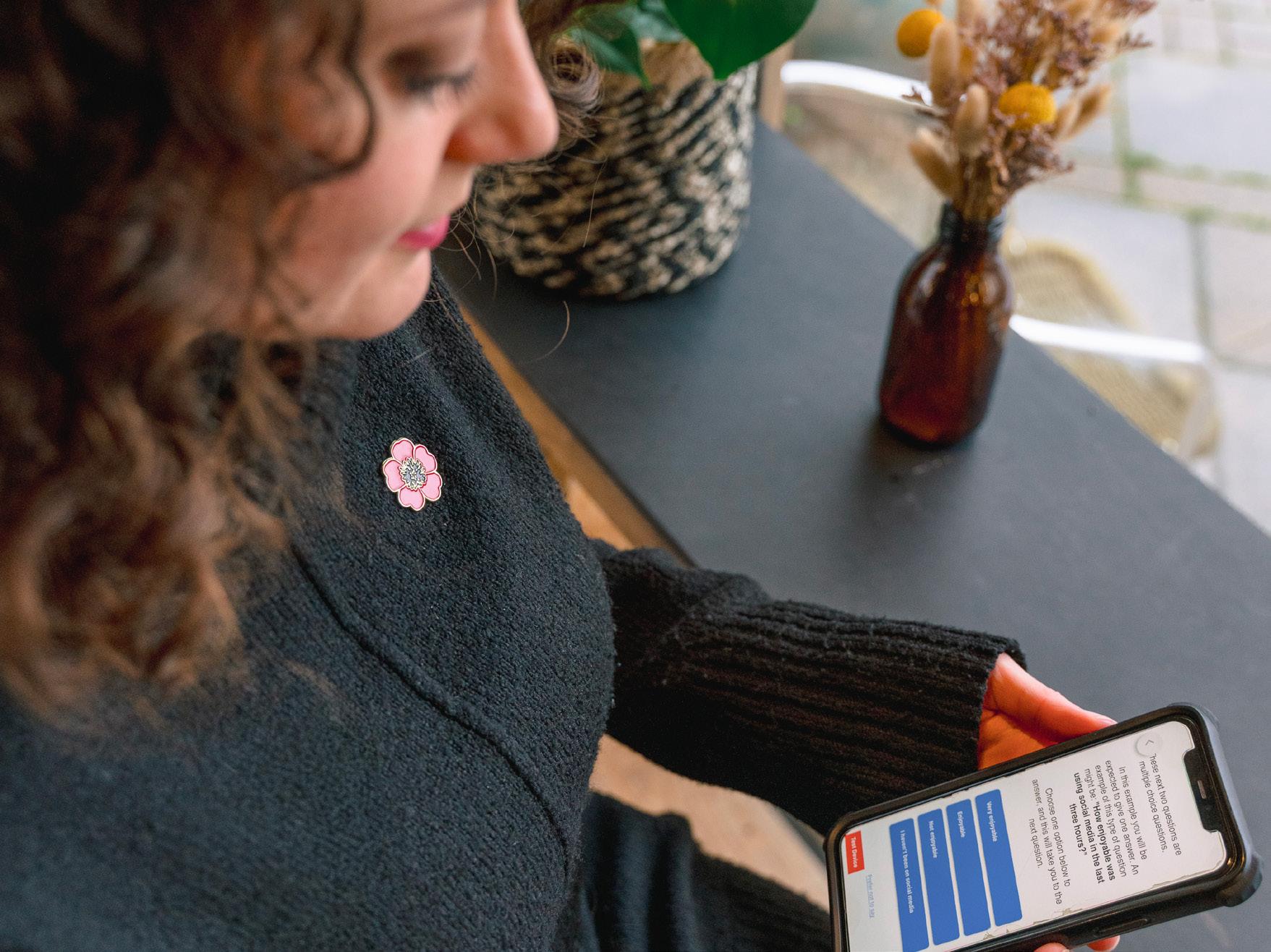
We call the pregnant women and their partners who originally signed up in the 1990s our Generation 0 (or G0s). All G0 participants will soon be asked to take part in a study about memory and thinking skills. We will ask you to complete a series of simple brain games each year, using a new online test. This new ageing study will measure things like memory, attention, and reaction speed. Together, the tests take about 30 minutes to complete and can be done on a phone, computer or tablet.
Scientists hope to discover how our thinking skills change over time and reveal what might keep our brains healthy as we age.
Learning more about memory, vision and
hearing
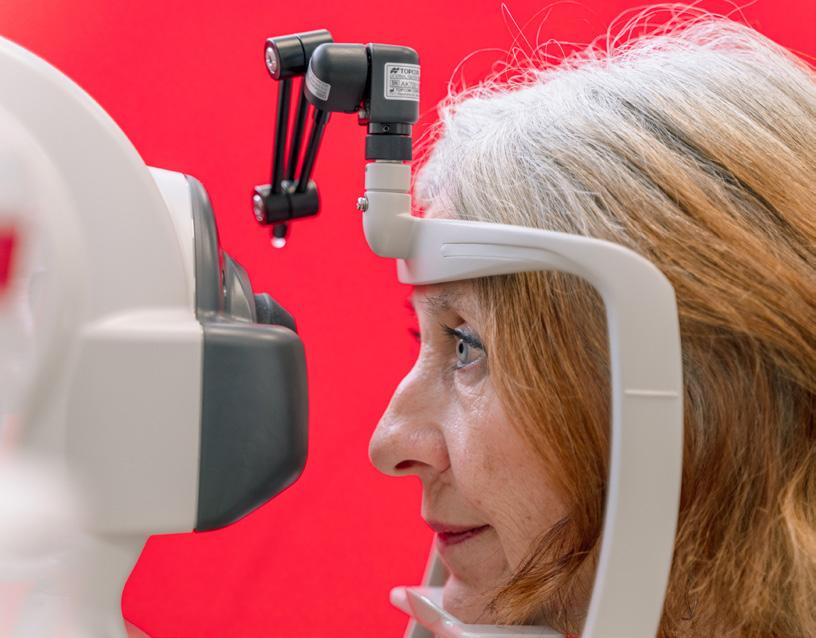
This year we've been exploring how our memory, vision and hearing change as we age. So far, over 1,000 G0 mothers have taken part – repeating tests they completed over a decade ago in the Focus on Mothers clinic.
Researchers want to find out how memory changes over time to see how we can slow down memory decline. They will look at how responses compare with previous tests. The tests include:
→ Vision: Detailed eye imaging and tests for long and short-sightedness.
→ Hearing: Headphone tests for tone detection and speech recognition in noise.
→ Memory: Tasks involving story recall, number repetition, symbol matching, word generation, and recognition.
In this study, scientists aim to learn more about how our senses and thinking skills change over time and what might help protect them.
Do our genes affect the symptoms of menopause?
Around 70% of women experience symptoms during menopause such as hot flushes, sleep disturbance, mood changes, and sexual dysfunction – yet the causes remain poorly understood.
Professor Anna Murray from the University of Exeter will investigate the genetic basis of these symptoms.
Using an online focus group, she’ll ask our G0 participants to share their experience of menopause symptoms and their severity.
These discussions will shape a new questionnaire on menopause symptoms to be shared with all G0 women. Responses to this questionnaire will then be combined with our rich genetic and health data to better understand the causes of menopause symptoms.
New research
New smartphone study aims to better understand depression
Our latest research will explore depression using smartphones and smartwatches. Depression is one of the most common mental health problems and often begins early in life.
It can have a major impact on education, work and relationships so researchers want to take a closer look at what depression feels like “in the moment.” Around 200 G1 (Generation 1) participants in their thirties will use a smartphone to answer short daily surveys about their mood and wellbeing.
Half of the group will also wear smartwatches to track sleep, steps and heart rate. The aim is to explore how everyday factors – like a bad night’s sleep or lack of exercise – can influence our mood the next day, and how patterns can build up over time.
By capturing these experiences as they happen, the study aims to avoid the memory gaps and inaccuracies that come with traditional questionnaires. Researchers believe the results could help find better ways to prevent and treat depression in the future.
How do toddlers’ brains develop?
Why do some children thrive at school while others struggle? A major new project will investigate how children’s brains and thinking skills develop in the first five years of life.
The £4.5m study, led by the Bristol Longitudinal Study of Childhood Cognition from Infancy to School, will follow 300 COCOs children aged six months to five years old. Researchers will combine developmental tests with MRI scans to explore how language, concentration and problem-solving skills grow alongside brain changes during these crucial years.
Researchers will explore how the brain develops and look at key learning or cognitive skills to understand more about why some children struggle when they start school. Led by Professor Karla Holmboe, this is the first study to track both brain development and cognitive skills in the same children over time. We hope this research will lead to better ways to support those children who face difficulties at school.
How do children’s diets shape their health?
Studies from around the world have shown that young children’s diets affect their health throughout their life, but there is still a lot more to learn.
Researchers from the Universities of Bristol, Edinburgh and Aberdeen want to look at how food and drink affect children's development.
→ Do children who eat lots of plantbased foods get enough protein and other nutrients to grow well?
→ How do convenience foods aimed at young children affect diet quality?
→ Are children who eat more sugary snacks and drinks more likely to develop tooth decay, become overweight, or face high blood pressure as they grow older?
To develop their research plans, they will hold focus groups on feeding young children. These will inform future dietary advice and help families make healthier choices.
Hello there!
It’s been another year of fascinating research – studies that began with you and your health data. Your study continues to reveal many important discoveries about health and wellbeing, so thank you!
One thing that makes Children of the 90s so valuable is that it can tell the stories of entire lives. This means that all ages and stages of life can be studied – including people in their thirties who are often missed, which creates a blind spot for research.
This is partly because health and wellbeing research is normally targeted at studying people who are suffering – naturally focusing on the problems we can see. However, we are now more aware that understanding whole lives of health is very important – to improve health outcomes in future years.
Get back in touch
To get back in touch simply send your full name and date of birth to:
info@childrenofthe90s.ac.uk Phone 07772 909090
If you’ve not done anything for a while, you could get £20 to say thanks. Perhaps you have a friend or family member who used to be part of the study – be sure to share this with them too!
What is great is that Children of the 90s’ data – from pre-birth to adulthood – can really help us to unpick and understand the factors that cause illness and disease. This is so important if we want to stop people becoming ill or developing conditions like heart and liver disease and more.
2026 will be another exciting year for us and we have big plans. We are now working hard to ensure our research findings get to policy makers both in Westminster but also locally. For instance, your @30 clinic data can be used to enable local NHS and Councils to look to encourage healthier lifestyles.
We love hearing and sharing your stories and news, so please do follow our social media channels - including our new LinkedIn page - and engage with us.
Professor Nic Timpson Principal Investigator, Children of the
Have a great festive period and thank you again for your remarkable contribution to science; you really do something very special indeed. Say hi on socials!