The process

Details of the youth-led process of research, analysis and imagining of new welfare systems are on our website, and we’d be happy to discuss it in full with anyone who gets in touch. The Young Leaders have presented their research to various audiences and a video recording is available online too. There are just a couple of features we’d like to explain here to give context to the chapters you’re about to read.

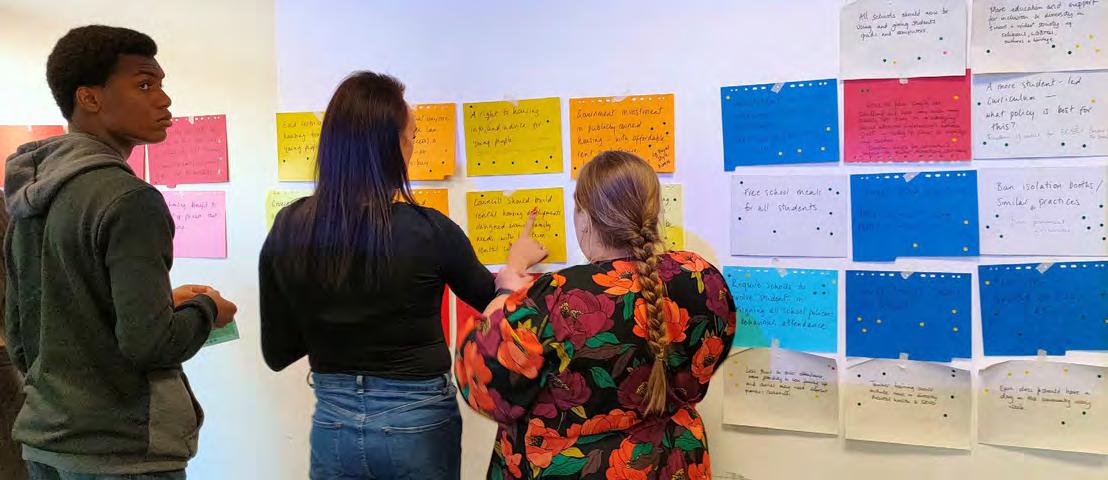
Instead of an expert board of commissioners to direct the work, we invited a range of adults with relevant expertise to become the Sounding Board - literally a group of knowledgeable people the Young Leaders could test ideas on and ask for advice when they wanted. We were very clear that the Sounding Board would support, rather than direct, the young people’s work, and every Sounding Board member took on their role with complete commitment to that relationship. It worked particularly well at our online ‘summit’, two days over which the Young Leaders and the Sounding Board discussed the research findings and used provocations and hypothetical characters to test new ideas for a welfare state of 2030.
Starting in late 2019, the ChildFair State research inevitably had to change ways of working when the pandemic hit the UK shortly after. We’re extremely lucky that the Young Leaders had already formed a brilliant team and carried out their first few focus groups and workshops with other young people in person around the country. Thanks to their commitment and Leaders Unlocked’s flexibility, the project moved online smoothly and has been largely online ever since.
Almost all our original 26 Young Leaders gave us a year or more of their time, despite the pressures of lockdown, and many of those 26 have stayed on to present the work to external audiences and to develop the policy proposals you’ll read here. As Kathy and Lauren mention elsewhere, the Young Leaders have discussed their research with groups from NHS leaders in London to peers in a House of Lords committee, and being able to meet online has been a significant enabler of that.
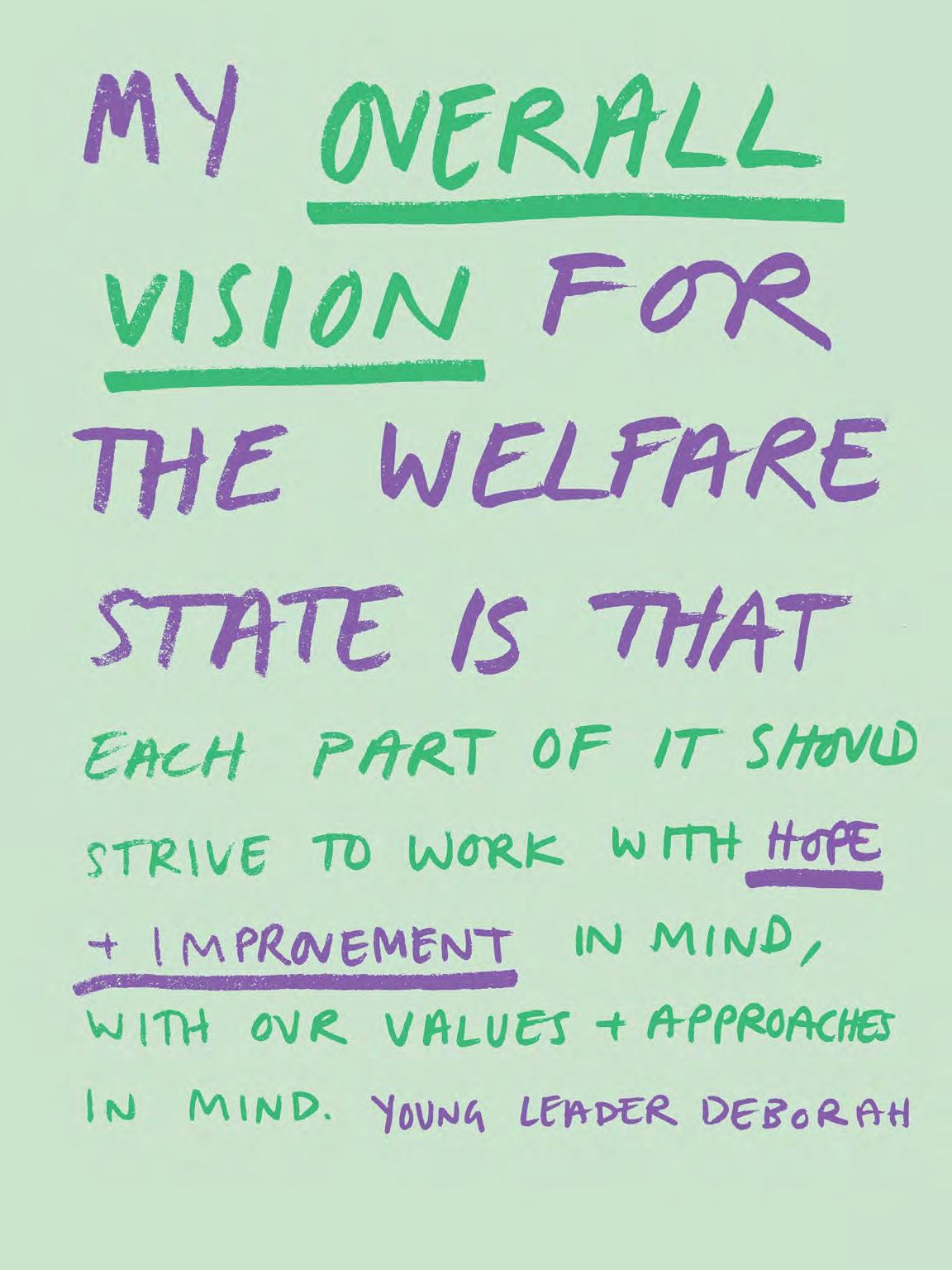
overall vision of the welfare state is that each part of it should strive to work with hope and improvement in mind, with our Values and Approaches in mind.
Young leader
Deborah
 Young leader
Lauren J
Young leader
Lauren J
5 Vision for A ChildFair State: Introduction
My
All people are important, not just certain people. Judging people isn’t a good way to be.
Socialjustice
Equityand equality
Citizenship -weall havethesamerights andentitlements
Collective responsibility
Preventionisbetter thancure
Interdependencebetweeneachother andbetweenservices
betweenConnectivitypeopleand decision-makers
Aholisticapproach toindividualneeds
Communities inthelead
Values and Approaches
Shift:from dignity,punishmenttofromscarcitytouniversality
Neighbourliness andmutualaid
Listenandtake action/enable otherstoact
After completing their peer research and analysis of the five branches of the welfare state, the Young Leaders and the Sounding Board discussed a set of principles they collectively felt should inform a new vision for the welfare state. These became the ‘Values and Approaches’ you’ll see at the top of every chapter here - many of them beliefs and ways of working already being put into practice in certain organisations, services and communities, but few of them currently embedded into policy or whole systems. To us, and hopefully to you, they will feel instinctive and logicalbut too often we hear professionals say the system gets in the way of making these principles a reality. Whatever you do with the policy proposals in these chapters, we hope you’ll try putting these values and approaches into practice at the highest level you can.
Vision for A ChildFair State: Intro Vision for A ChildFair State: Introduction 6
Livedexperiencesare mutuallyvalid
Loveand kindness
What next
The Young Leaders have always been clear that their goal is to make genuine changes to welfare systems, both at local and national level. We hope to expand the team of Young Leaders and support them to turn the ChildFair State Vision into a national campaign for policy change and one or more local trials of ‘ChildFair’ approaches. They are also keen to keep the research up to date, by creating an online community where young people can continuously share their experiences of services and systems, and decision-makers can see what young people feel is ‘ChildFair’ on an ongoing basis.
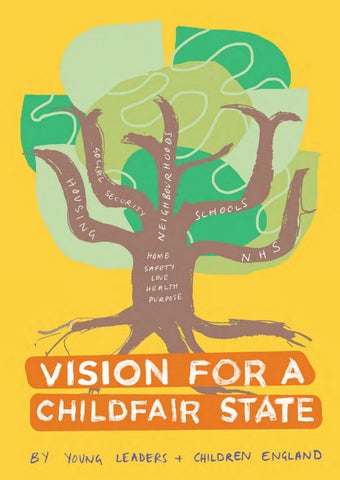
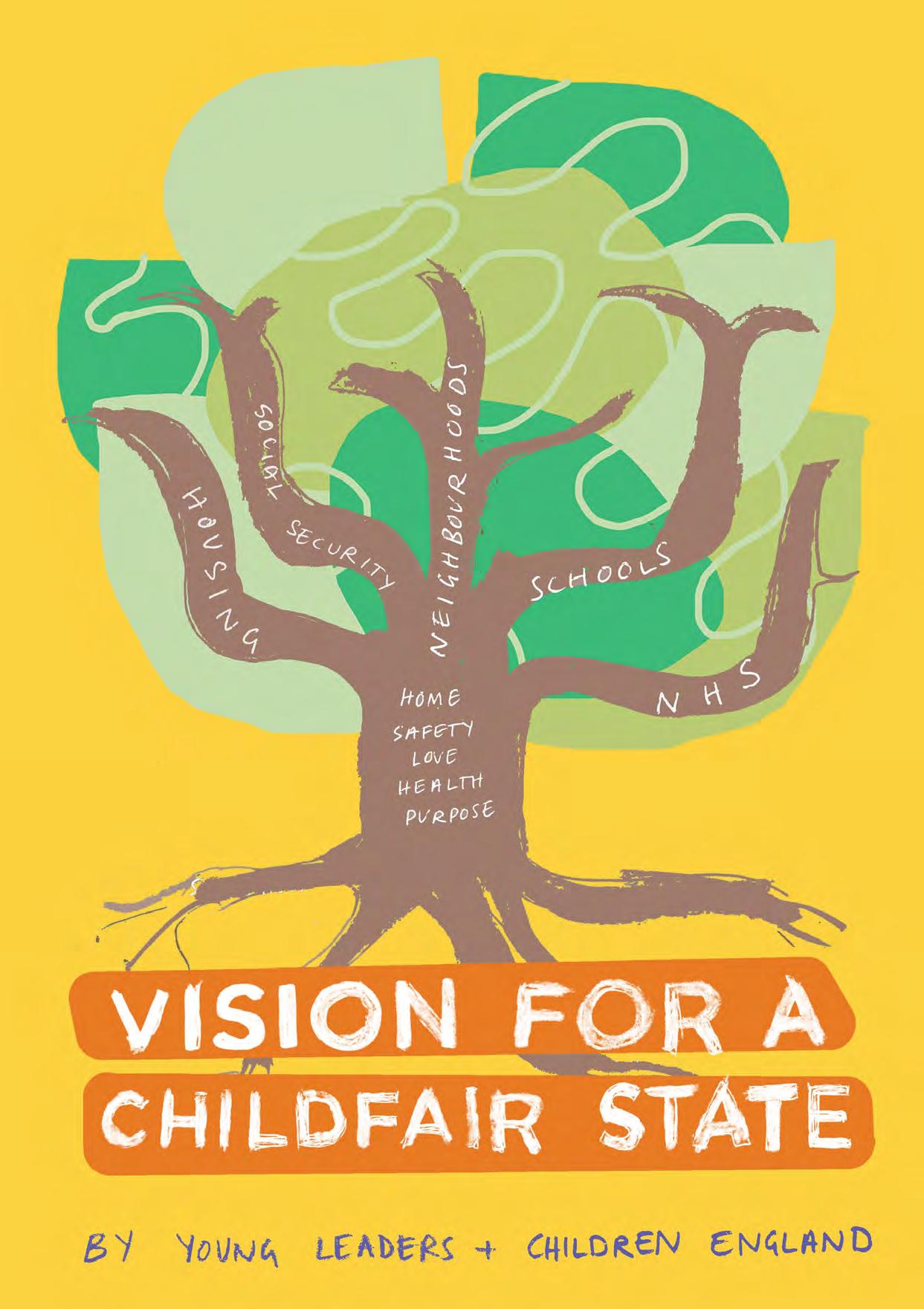
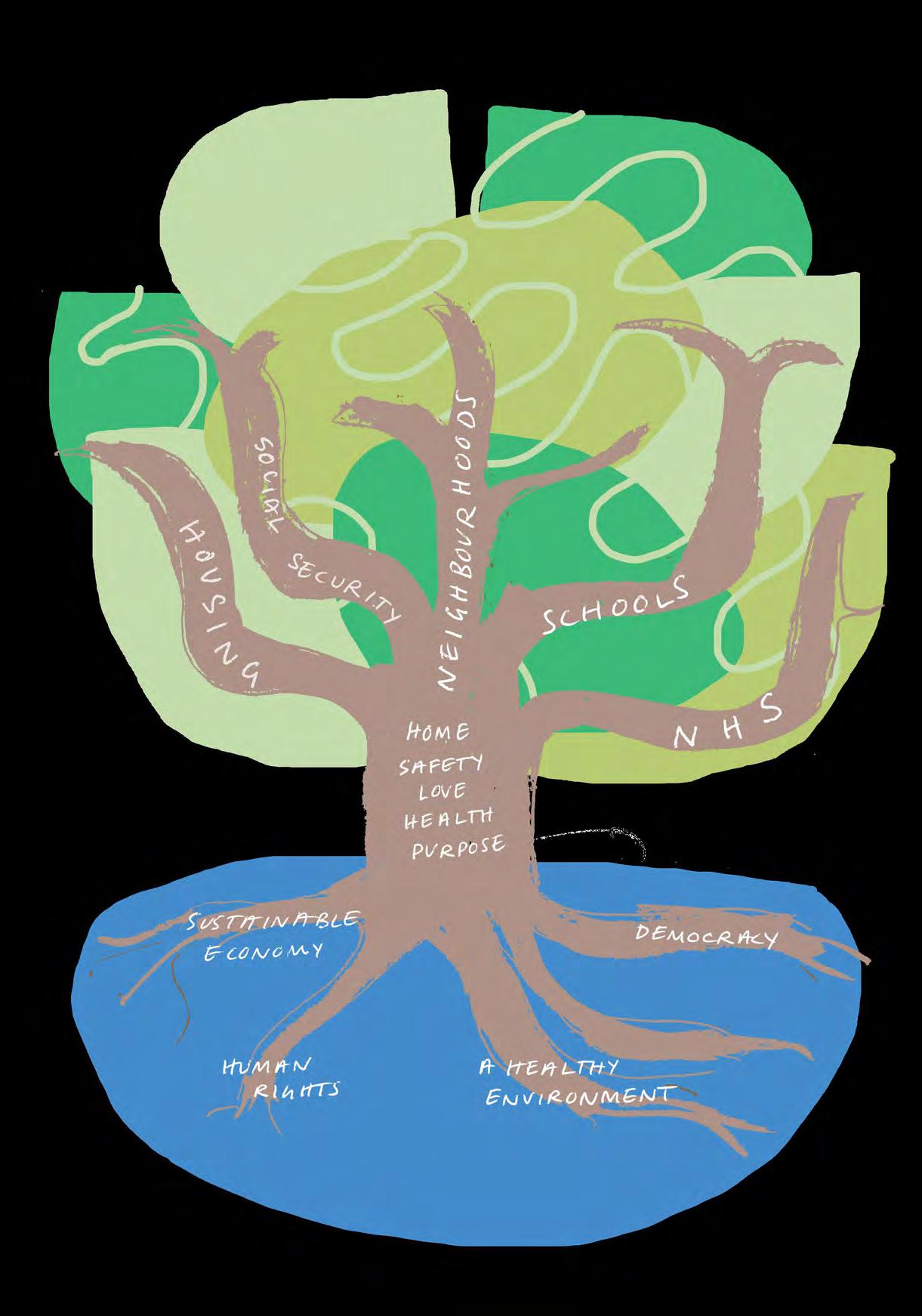
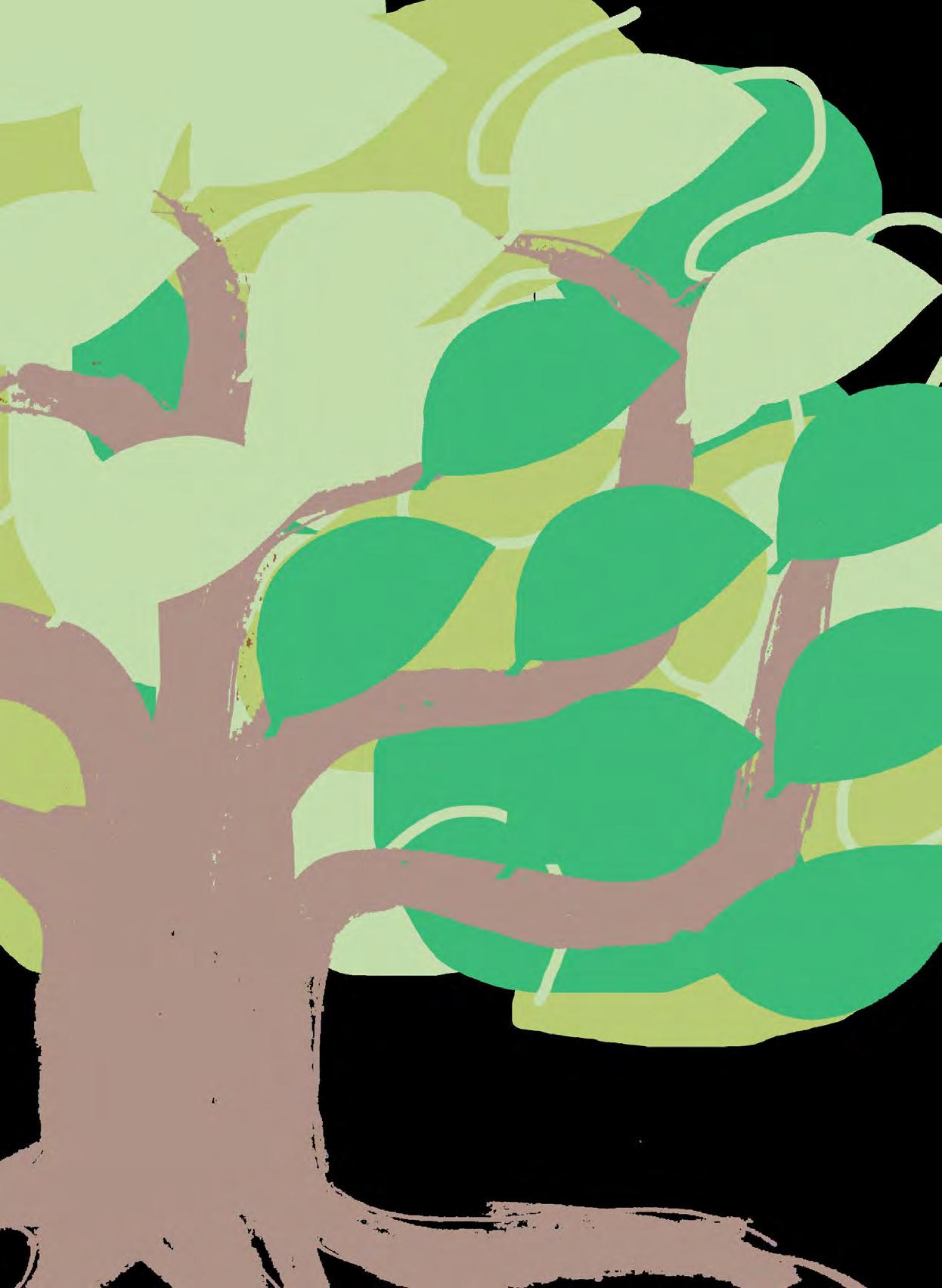
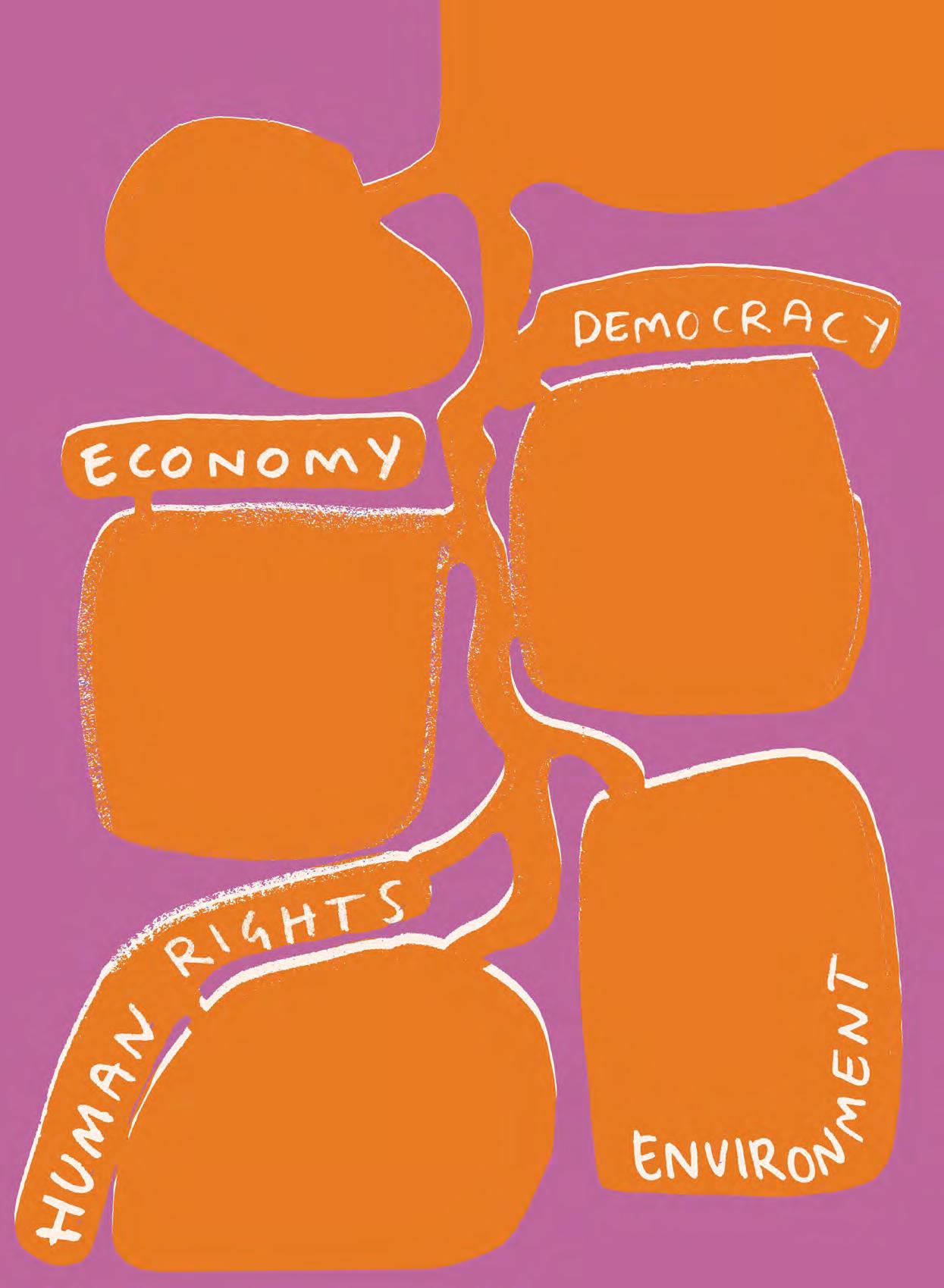
Wherever you are in the tree, there are ways you can help the ChildFair endeavour: perhaps by helping us recruit more young people passionate about our social safety net; perhaps by talking to your local school or council about how they could implement a ChildFair approach; or perhaps by helping us amplify the Young Leaders’ voices to national policy-makers and politicians. Just drop us a line and we’ll make sure we contact you with any opportunities to be involved.
The principle that came up repeatedly through the Young Leaders’ work was interdependence - between services, between people, and between people and services. They saw immediately how siloed decision-making and specialised roles often deny or undermine interdependence in society, and unintentionally support one aspect of a person’s life while ignoring or harming another. Their visions for change try to break down these institutional walls and replace hierarchies with equity and agency for everyone, and have much in common with the philosophy of Human Learning Systems (which we encourage you to read about if you aren’t familiar with it).


Beyond the branches of the tree, however, they all have a similar overarching message: children and young people must be involved in all levels of decision-making, on a sustainable and systematic basis, so that as the welfare
The most important change the ChildFair State project needs to make is to involve more young people in the important decisions that are being made on all parts of the welfare tree. Also to view young people and children as partners.
influence and make sure that the UK is a better place for young people and make sure that all young people feel listened to in our society. The most exciting thing about the ChildFair state is the broad amount of partners that are involved in it.
My main wish for the welfare state is that it will view all children and young people’s (CYP) experiences as individually valid while also complex and seeing CYP as experts in their own lives. This is when it comes to suggesting improvements and making decisions around key policies on services that affect them.
 Young leader Shuheb
7 Vision for A ChildFair State: Introduction
Young leaderTommy
Young Leader Shaniqua
“In the months since the project began the social security landscape of Britain, and indeed the world, has been laid bare in ways that were unimaginable when I and the other Young Leaders of the project first met in an unremarkable function room in London. As the pandemic ravaged the globe, states all around the world were forced to step in with huge support packages previously unseen in peace time. This reinventing of the possibilities of the role of the state, combined with the strain Covid-19 placed and is continuing to place on our public services, has given the ChildFair State team the potential to push for radical change. Indeed, as huge swathes of the UK look to build back better, it is clear a precedent for a radical and transformative reset has been created out of the devastation wreaked by the virus.”

This is an opportunity we have seized with open arms. From contributing to a build back better publication by Compass and talking to both national and foreign research bodies during the lockdown, to sharing our research with interested parties from Save the Children to the House of Lords, we are doing as much as possible to make the voices of children and young people heard and begin our work of creating a modern Welfare State that truly allows all to thrive. We have used the temporary hiatus of much of the country during the pandemic to sound out our ideas with related organisations such as Children England’s members and NHS leads. Through this we have started to develop the asks that will deliver us the change this country and its children and young people desperately need to see.
Vision for A ChildFair State: Intro Vision for A ChildFair State: Introduction 8
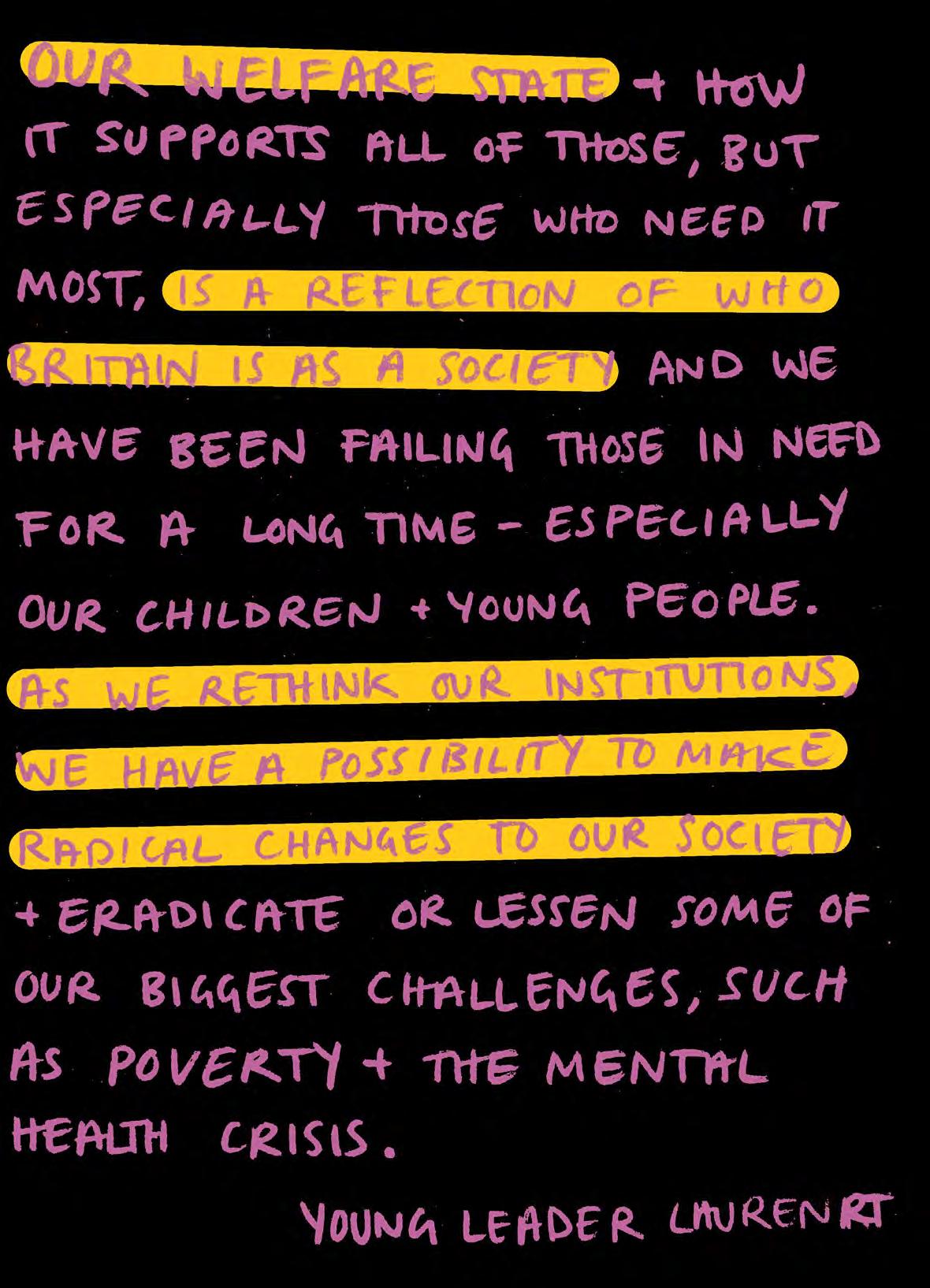
Finally, Young Leader Lauren R-T describes the timeliness of The ChildFair State vision:
I’m involved in the ChildFair State project because it’s a great opportunity for me to converse with people with similar motivations, to broaden my own mind and to seek new ideas from all these other people. The most important change for the ChildFair State to make is for children to be more aware of their own care, to be treated with respect and to give them more chances to be heard.
Young leader Sheridan

• Citizenship - we all mutually valid Social justice


What children & young people want to change
• Security is very important, and housing insecurity significantly affects mental health
• Young people don’t know where to turn to find out about their housing rights, and how to deal with landlords, which means they can feel powerless and ill-informed when they need to manage housing situations
• Many reported poor quality housing, for themselves or relatives, that was very difficult to rectify, and could make them feel unable to invite friends home
• Housing should be tailored to individual needs, not only in the building itself but in the surrounding spaces and the people who live there, so that young people feel that they’re part of a safe, welcoming community
What children & young people said about these issues
om punishment to dignity, from scarcity to universality


• Communities in the lead
• Connectivity between Prevention is better than cure

• Neighbourliness and mutual aid

I’ve come to realise that I won’t own a house in my lifetime, but even rent is crazy. As a young person, having that instability of not knowing whether you’ll be able to pay rent each month, that affects your mental health.

If housing worked for wheelchair users there would be open plan houses with automatic doors, Alexa to help turn control the lights and TV, close the curtains. It wasn’t until we got referred to ‘environmental services’ that we found out that this was even an option. I think families should be given more help and made aware of services available.
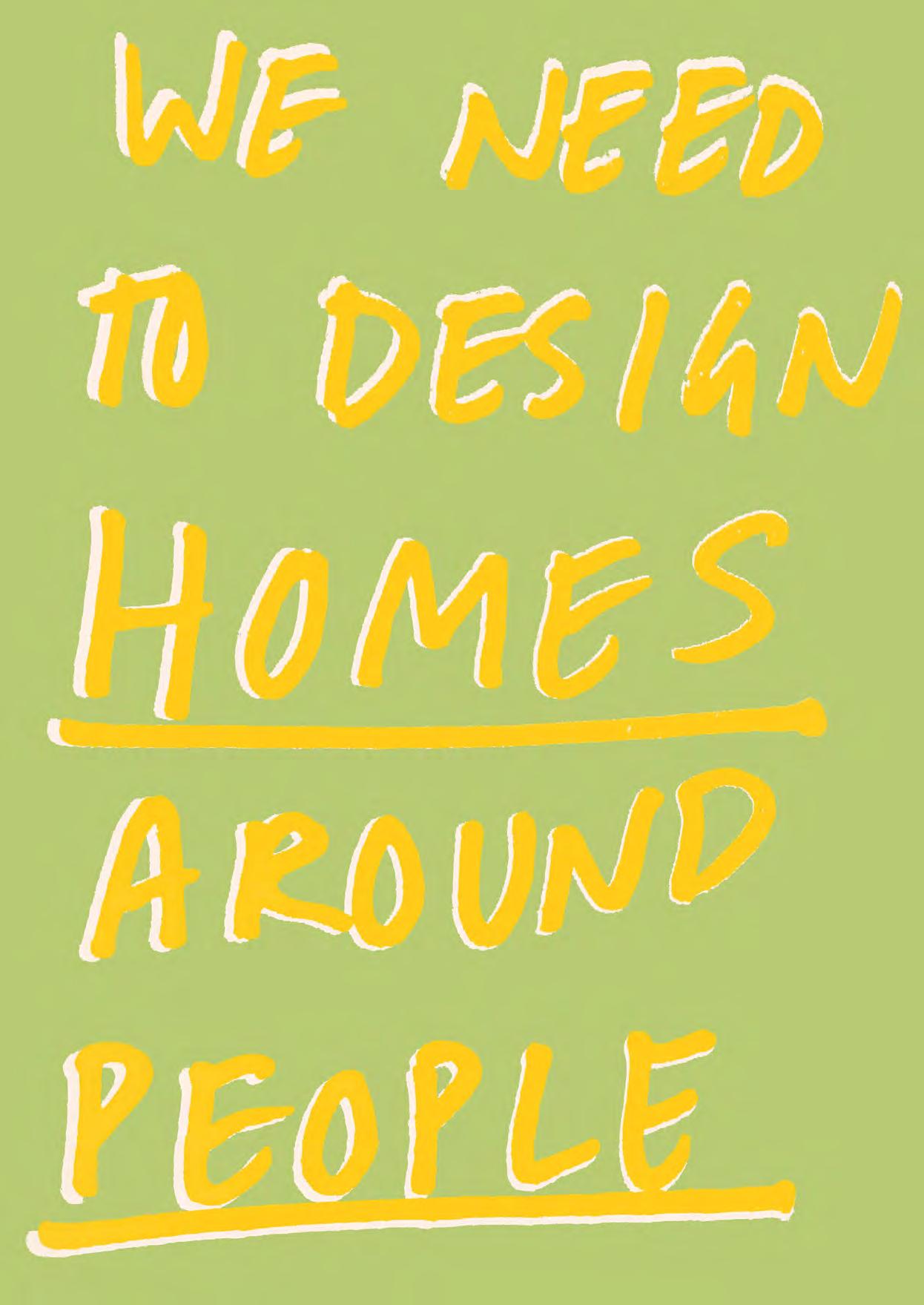
We need to design homes around people. Home is different for everybody and we can’t prescribe that.
Vision for A ChildFair State: Housing Vision for A ChildFair State: Housing 10
established, there was a big investment in public housing, owned by councils, and made available to citizens at affordable rents. Today most housing is privately owned, by families or by landlords who rent it as a private business, not a public service. People who can’t afford to buy homes or rent privately may be able to live in what’s called ‘social housing’ homes owned and managed by councils or by Housing Associations but there are often long waiting lists for social housing, and many families with children, and young adults, find themselves homeless.
Every single child in the country needs a home that feels safe, warm and somewhere they know they can stay, and have a sense of belonging – but the current system has no legal or practical commitment to achieving that. Because of their age and legal status, no child can choose to meet their own housing needs either, so whether they can have a safe, warm, secure home depends on how their parent(s) are treated, and what they can or can’t afford. When they reach adulthood the ways of finding and getting a home for themselves are chaotic and difficult to understand and access for young people. No housing authorities or developers have any special duty to ensure, plan or build sufficient housing that is suitable for children to live well with their families. Children are ignored in public housing policy
and varied size of growing families are far too rarely planned and built for. In the private rental sector children are sometimes worse than invisible; they can be seen as the unwanted arrival or the noisy, messy person attached to their parent’s tenancy that private landlords can use as the reason for an eviction or to exclude people as new tenants. Over 150,000 families with children are currently in temporary accommodation in England because they are homeless, and the places they have to live in as temporary accommodation aren’t designed or safe for children to grow up in.
Public housing policy is viewed as a ‘demand and supply’ issue by most politicians – all about the buildings, land, and prices of housing – with no real sense that housing is a matter of human rights with lifelong consequences for every human being.


The need for a decent, secure home should be a human right, and a more ChildFair State would make housing more accessible and affordable for every young person starting adult life, as well as every person who is (or about to become) a parent. Attention needs to be paid to the inequality of some people being homeless while others have more than one home, and thousands of homes are left empty.

Vision for A ChildFair State: Housing Vision for A ChildFair State: Housing 12
Young Leaders’ vision for homes
The Young Leaders believe everyone should have a secure home that is tailored to their needs. Children and young people should learn about their rights to housing, including as tenants and mortgage payers, early on, because young people start living independently at different ages and may not be able to stay living with their family whilst they wait for the perfect housing situation to come up. There should be types of homes tailored specifically to young people, with safety and support available.
Much more social housing should be built, with infrastructure such as health hubs, housing advice and a democratic structure for giving residents power over their housing complex. Buildings should be designed to accommodate the varying needs of households, including disability and health needs. Affordable housing should be distributed around the country so that young people can move to be near the jobs and training they want, or stay near family.
If government policy and strategy on housing were to become more ChildFair, it would focus on the importance of home in every child’s life, and the sense of safety and security it takes for a house to feel like a home, not just on the ‘demand and supply’ in the market for flats and houses.
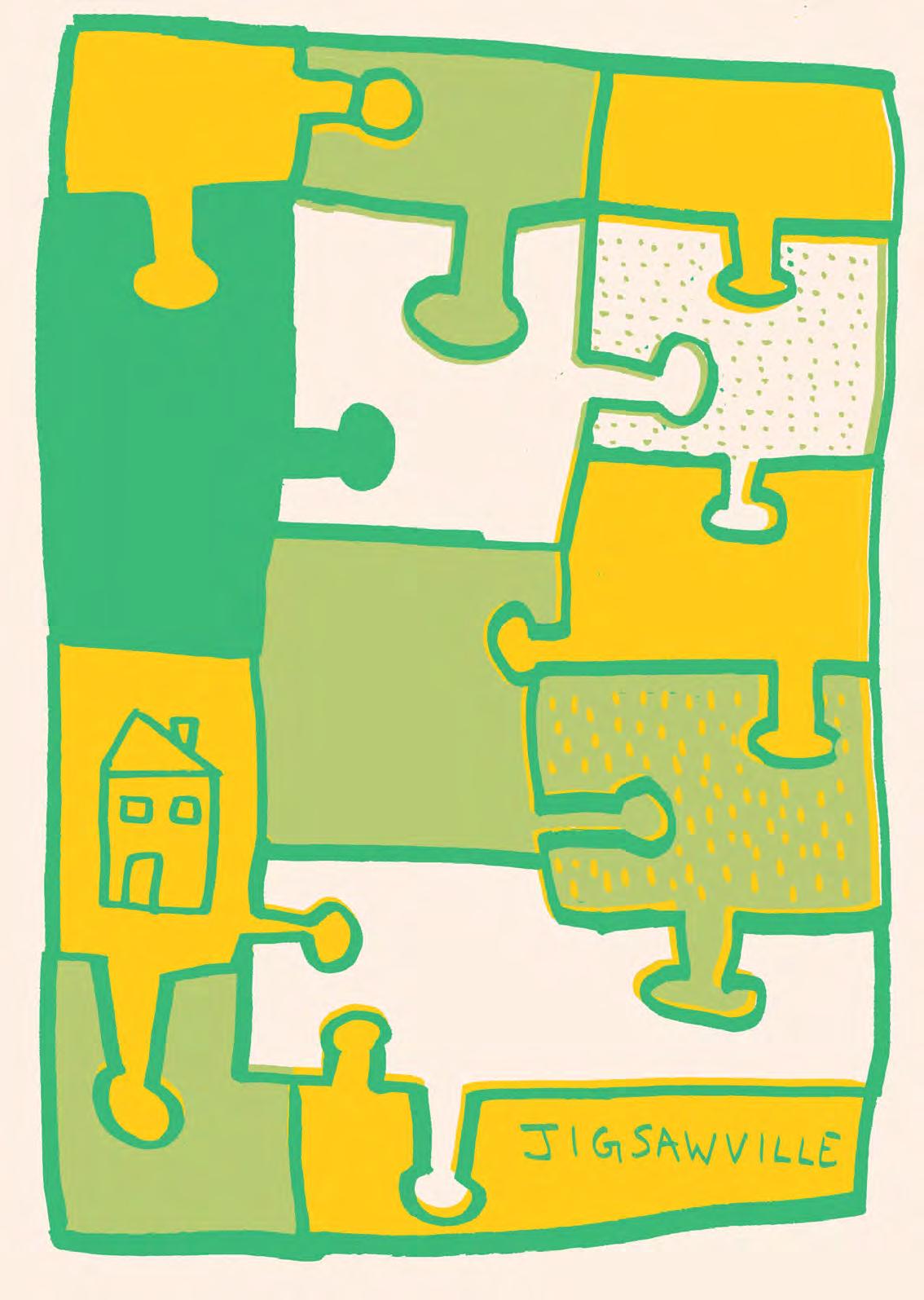
Jigsawville Shubz’s housing proposal
“Imagine the year 2030. A home is a human right and can be obtained smoothly, with equal access for all...


Housing developments foster individuality, trust, safety and confidence in living in a place that you can call home. They are multi-purpose, dense housing sites with recreation facilities, a local GP surgery, home health checks as part of the local health and care service, a school, nursery and a park that is in public ownership.
Zooming in, Sasha and Stuart live in a social housing area called Jigsawville, in a beautifully rectangular shaped house. Each house in Jigsawville has a unique identity, shape and size according to the different needs of each family, which breaks down hierarchies. The sibling pair live with their mother and love their home, seeing it as part of the family.
Jigsawville is recognised as one of the most embracing and thriving housing communities in England, supporting residents to rent or buy affordably and to maintain their home with a wraparound approach. The council co-operates positively with residents, listening to what younger and older people have to say about their homes and helping them to manage any health or safety issues.

From their window, Sasha and Stuart can see a square-shaped community centre called the Jigsaw people’s centre, which they consider a haven: it’s always open, and has a space for young people to do workshops and learn about their housing rights and entitlements as well as other skills. Sasha and Stuart go there to do their homework sometimes, and see it as their second home.
There is no homelessness.”
13 Vision for A ChildFair State: Housing
Vision for A ChildFair State: Housing Vision for A ChildFair State: Housing 14
Removing harmful features of the current system
End the restrictions on housing benefit for young people under 25 so that they can access the same range of housing as older people
End segregation of housing by wealth or class (for example abolish separate entrances and playgrounds for different statuses of resident)
Building in better features
information, advice and help - available through schools and community health hubs or other community services (this could also be part of the ‘independence’ package of information young people have a right to under the Social Security system)


eate a legal housing duty expressed towards children themselves – that no child should ever be homeless
15 Vision for A ChildFair State: Housing
Creating ChildFair homesnot just houses
vernment should invest in more publicly owned housing (that cannot be sold to the private sector) for affordable rent and secure tenancies, including housing in the locations and designed around the needs of particular groups such as young care leavers who are making the transition to independence (for example Foyer-style accommodation) and parents with young children
tandards of decency and safety in social and private rented accommodation (such as the Decent Homes Standard) should be enforceable and enforced, and tenants should have proper ‘customer’ rights and protections including to long-term contracts if they choose
entral government should encourage building of new homes with safety, accessibility and decency as standard
he Young Leaders’ “Jigsawville” principles should be used for development of new social and rented housing:
volving communities and prospective residents in designing housing schemes according to their needs
• incorporating the services and amenities residents want, and involving them continuously in decisions about the area
• providing locally accessible advice and support with housing issues so residents have power to get issues addressed
housing developments should incorporate spaces for young people
ond Homes Tax should be introduced, which could fund the building of good quality new homes
Vision for A ChildFair State: Housing Vision for A ChildFair State: Housing 16
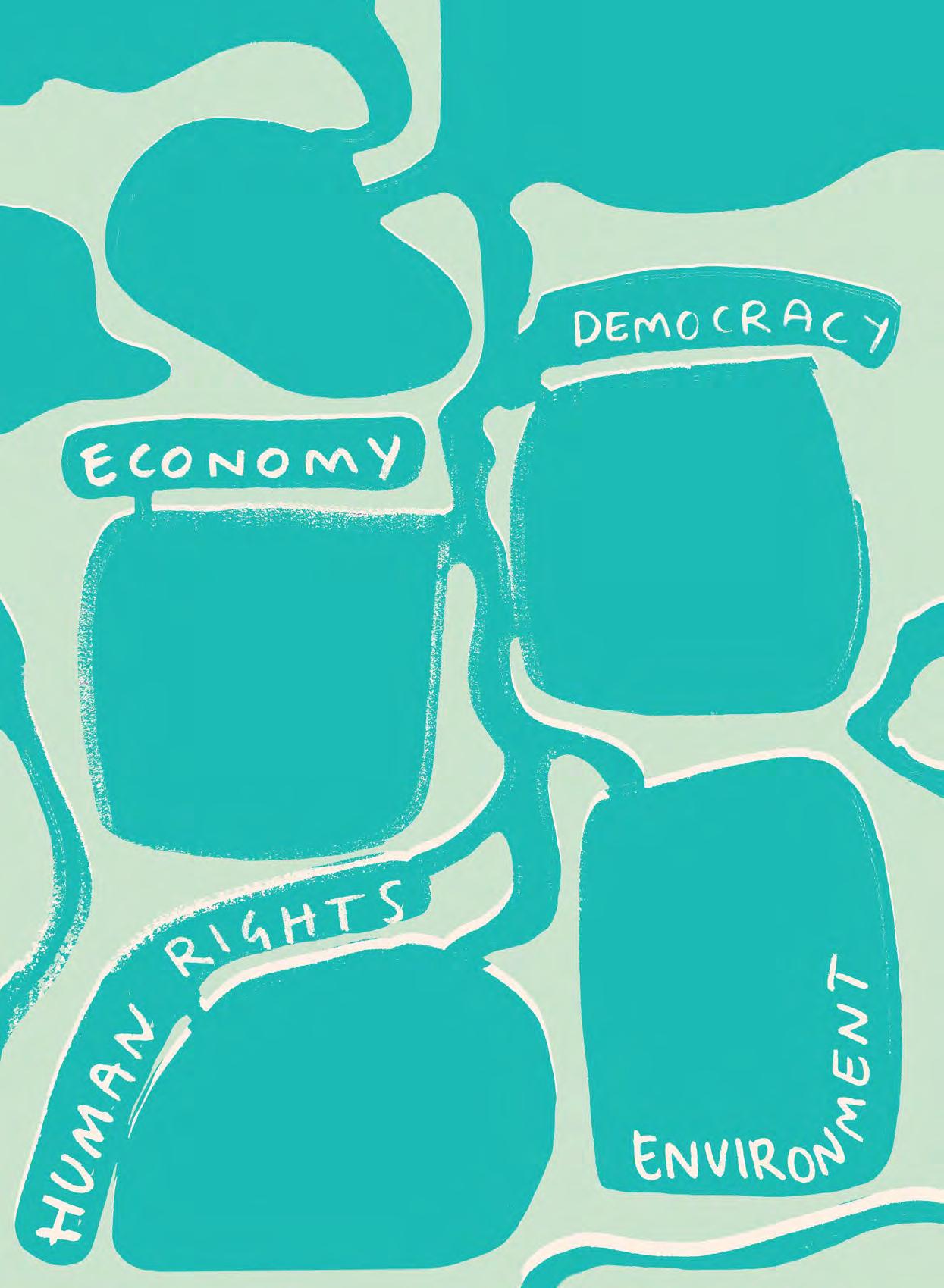
How could the roots of the tree relate to a ChildFair housing system?
Our economic inequalities between richest and poorest are partly rooted in housing market inequalities – more equal access to housing could lead to more economic equality?
People with secure housing that they aren’t frightened of losing could feel more able to participate in local community and democracy, feel more invested in who represents them and what they will do for their area.
Understanding housing as a human right (instead of a property market) could be a foundation stone for making other human rights more achievable (eg rights to dignity, education, family life etc)?
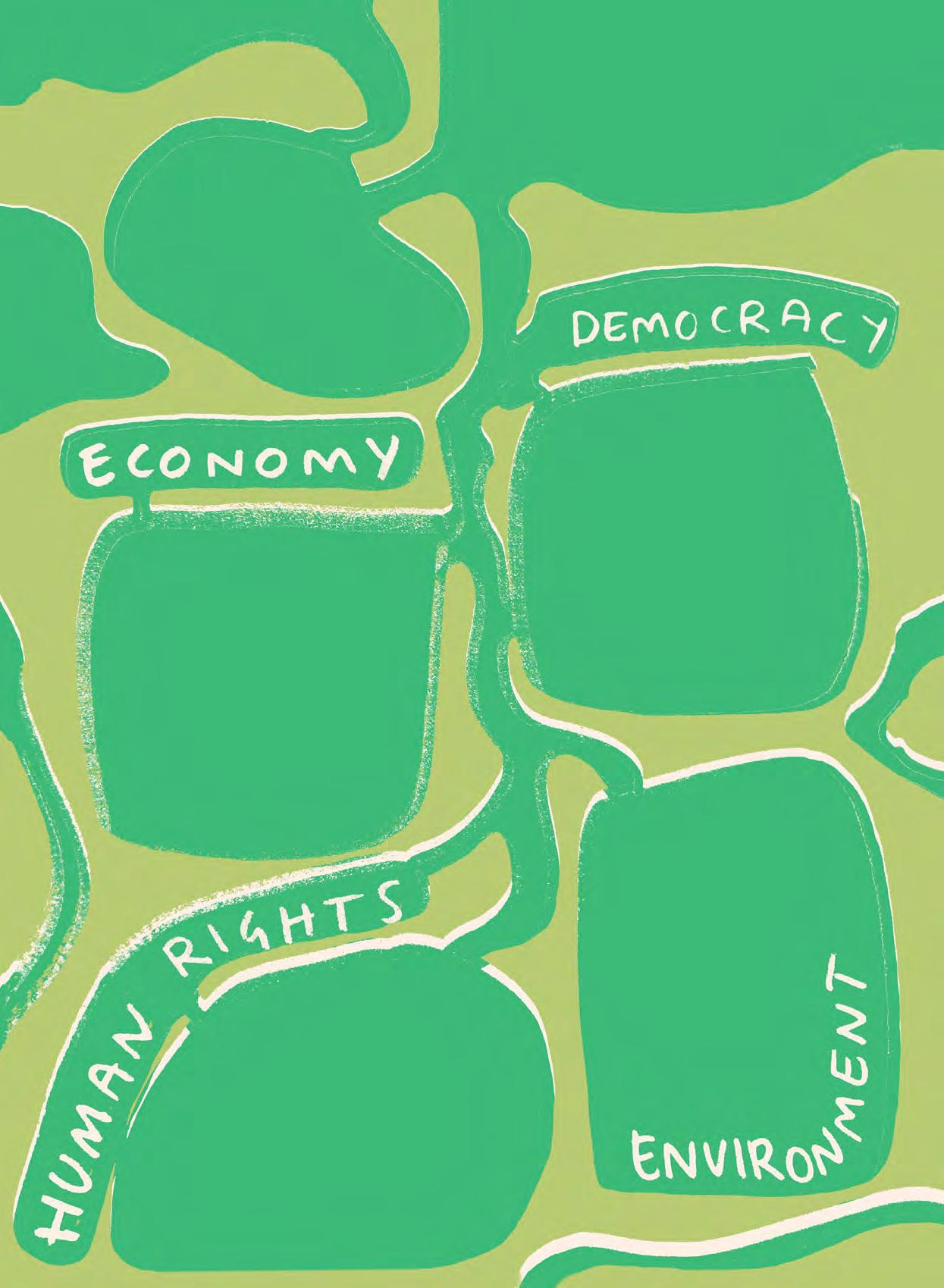
The building of more public housing will affect the built and natural environment, and should be environmentally sustainable…
17 Vision for A ChildFair State: Housing
Emergency housing to be sorted faster
I would like to see housing and job-seeking improved for people who have low-incomes or single parents who struggle to handle things on their own
Want to live in my own flat, want more access and contact to my daughter and I want a trade career
Rights and respect with the lower class and homeless
Less homeless people on the streets
[I would change] Homelessness

I want politicians to actually vote for the things that will mean people are looked after
More support and accommodation for young people to help them with options of what they can do. To make sure they aren't neglected
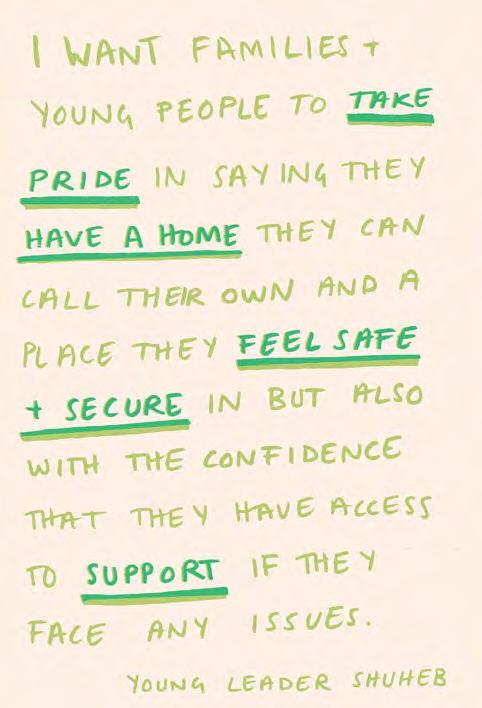
More council housing for people who cannot afford much
I wish that they don’t have a lot of questions to answer, because there’s so many questions from lawyers, from workers, from Home Office, it’s hard. I think two questions, one for lawyers and one for Home Office. They can have the interview but not every single place where you go because just for me I get questioned every time and I am tired, it’s hard
I want people to be looked after. Landlords should be made to make their properties meet a decent level. I want food banks to be closed because people don't need them anymore.
Vision for A ChildFair State: Housing Vision for A ChildFair State: Housing 18
That they don’t have to grow up in a world where things like housing isn’t available to everyone

and between services
• Equity and equality
• Lived experiences are mutually valid
• Social justice
• Love and kindness
• Collective responsibility
What children & young people want to change
• The benefits system is unnecessarily complicated and difficult to access

• It discriminates on the basis of age against younger people


• There is no sense of purpose in the system - either financially or through advice and support - to help young people develop, aspire and fulfil their potential

• People relying on state support are stigmatised, which disincentivizes people from asking for help

• There is no sense of trust and dignity, just punishment and scarcity
What children & young people said about these issues
I would have to complain about the problems and intricacies around accessing help. You can get the help you need, but then if you get work or a job, then the benefits won’t help you and you can be worse off. You get taxed back into poverty.
• Connectivity between people and decisionmakers
• A holistic approach to individual needs
• Listen and take action / enable others to act
• Prevention is better than cure
• Neighbourliness and mutual aid
Giving 18-25yrs old the same Universal benefit pay as the over 25yr olds because our housing, food and wages are exactly the same. I think they assume that because we’re young, we have families who will help us, but if you’re on Universal Credit, then you obviously need it and don’t have help from elsewhere.
You’re able to apply for help in order to access mainstream education, but if you’re not someone who works well in mainstream education, then there is no support out there for you. Benefits don’t help you achieve your goals if you want to go down an alternative route.
Vision for A ChildFair State: Social Security Vision for A ChildFair State: Social Security 20
21 Vision for A ChildFair State: Social Security
The current system takes a punitive approach to people who need help from the state, providing the minimum amount of support, usually in arrears, with frequent sanctions and minimum trust in the person claiming the help. Levels of support aren’t linked to real costs, especially for young people whose living costs are the same as older people’s but who aren’t entitled to as much in terms of benefits or wages. It’s an almost purely financial system, with very little wraparound support for young people’s ambitions and personal development. It takes a one-size-fits all approach instead of a holistic one. There is no sense of collective responsibility and entitlement - that social security is there for everyone when they need it, and we’re all paying into it.
Instead of a computer system that cannot see an individual’s circumstances and cannot, by nature, ‘trust’ them, people need a personalised system in which a young person can talk to an advisor or a range of people who can inspire them and help them work out how to develop the skills and experiences they want.


Levels of support must match both the universal costs of living (for instance by matching rising costs of energy and food) and the costs an individual will incur because of their own unique needs (for example support for the number of children they have, or adjustments they need to make for disability). This would be both equal and equitable. The social security system must be available and easy to access at any time of life, for anyone who needs it, on the basis that everyone in the
country has the human right to a dignified life, and that society can only flourish when all its citizens’ needs are met . There can be no place for caps or sanctions, because these deliberately withdraw support for people’s basic needs.
Social security should be interdependent with the broader economy, playing its part in redistribution and enabling individuals and families to find meaningful work, and also to carry out valuable but unpaid activities that clearly benefit society, such as caring for relatives, volunteering and protecting the environment. It should not have as its only goal getting people into work, and into a job at any cost. Its goal should be the individual and collective flourishing of the population, including supporting young people to discover and fulfil their ambitions.
I joined the ChildFair State Inquiry because I’m very passionate about creating positive change and improving the general wellbeing of all people, and also being a voice for under-represented young people.
The most important change the ChildFair State project needs to make is to involve more young people, especially experienced young people and children, in the important decisions that are being made on all parts of the welfare tree. Also to view young people and children as partners, as opposed to just young people.
Young leader Shaniqua

Young Leaders’ vision for a new social security system
The Young Leaders believe that the social security system should not discriminate against young people, either through lower benefits or lower wages. They believe a full social security system should extend to helping young people discover and fulfil their purpose, which could include having a personal advisor or mentor. Young people’s choices between further study, work or training and apprenticeships should not negatively affect theirs and their families’ entitlement to benefits - they should have genuine choice unconstrained by purely financial considerations.
The Young Leaders’ recommendations in other branches such as Community Days through school and Growth Spaces in neighbourhoods will also help young people develop skills and aspirations beyond school, and to make connections to volunteering and employment opportunities.
They want to change perceptions of social security so that there is no stigma attached to claiming help - instead public discourse should recognise that it’s there for all of us, we may need it at any time and it is of universal benefit to society to support each individual citizen. Benefits that are paid more readily and at a more realistic rate will help to give dignity to people claiming them, both in their own eyes and the eyes of others.
The Young Leaders’ preferred system is Universal Basic Income, complemented by separate housing benefits (varying according to geography, rent rates etc) and disability benefits that are tailored to the individual. It would not be means tested.

23 Vision for A ChildFair State: Social Security
Removing harmful features of the current system

Abolish the lower minimum wage rates for under 18s and under 25s and make the national minimum wage a Real Living Wage
Abolish all benefit sanctions and caps including the two-child limit
Building a ChildFair social security system
linked to the real cost of living (including for children, going to their parents / carers until they turn 16)
e young people the right to person-centred advice on money, training, employment, housing - all the things a young person needs to become independent and find purpose in life

Disability allowances should be designed to reflect the real cost of living, for each person’s needs. Assessments of entitlement and calculation of allowances should be made by people who are trained in health needs or trained to trust an existing health diagnosis by the NHS
Link housing benefit to the cost of private rent within a predetermined geographical area

Vision for A ChildFair State: Social Security Vision for A ChildFair State: Social Security 24
How could the roots of the tree relate to a ChildFair social security system?
UBI would have many implications for the economy, including giving people more choice about how they work, spend time and spend money, with longlasting effects on jobs and industries…
Should we have a new charter / social contract laying out the agreement between citizens and state about everyone’s equal right to support from the state, and everyone’s responsibility to contribute?
UBI could deliver on people’s right to afford the necessities of a decent standard of living. It should ensure that no child has to grow up in poverty.
UBI could give people the support to make more sustainable choices - eg to re-train in a green career, or buy healthier food, or choose sustainably produced clothes over ‘fast fashion’.
25 Vision for A ChildFair State: Social Security
Vision for A ChildFair State: Social Security Vision for A ChildFair State: Social Security 26
The benefits system is so careless that it leaves people homeless or without an income for several weeks. People live in fear of reliance on the state and it shouldn’t be like that
For the next generation I wish that they could explore what it’s like to be out of work in the year, maybe two weeks or three weeks you don’t have to pay rent, you don’t have to work, it’s just for the planet to give it a break and then everyone can go back to their reality
I wish the next generation to have freedom because we’re working for them, now. We work for them so I wish that one day nobody will need money. I wish for them, money will become a tree, you can take the money from the tree. Maybe one day we will use chocolate instead of money
My one wish for the next generation is that everyone can be equal within race, gender, pay gap etc. Equality!
I think the welfare state are the people who make sure people are being treated the way they should be treated
My one wish for the next generation of young people is that barriers / financial obstacles to young people’s paths into the future are eliminated
That their individual circumstances are taken into account when changes happen
The welfare state should give you the resources to be independent and be free to live your life how you want (within reason).
My wish for the next generation is that everything is free for them, they don’t need to go to work only eat and relax… It’s freedom you can do whatever you want and go wherever you like, it’s free you don’t have to pay transport you don’t have to pay nothing
My one wish for the next generation of young people is that you can get support easily, that everybody should be able to get the help they need, whether it’s at school, with benefits… They just need to be listened to, it should be easier to access. The harder you try to get help, the longer you go without it
For them to be supported if they are struggling in any aspect of life - they know who they can go to for support if they need it, and this support will be effective and not a postcode-lottery
27 Vision for A ChildFair State: Social Security
More food banks
More support for people who do have disabilities and are able to do some stuff by themselves. Yes I can walk but no you cannot see the physical pain I am in because I have been in it for that long I know how to hide it. You don’t see my everyday life and struggle and it shouldn’t be decided how disabled I am based on a 30 minute interview
I’d like for the government, and other organisations, to take into account individual circumstances within people, rather than just having a “one shoe fits all” criteria, because life isn’t that simple, and everyone is different
The amount of help that isn’t provided to those who really need it is disgusting - I want that changed. I grew up with just my mom on benefits and at 15 I struggle with most things and asking for help always seems worthless

I want to see a more efficient method of determining the help the government needs to give to certain families. Contexts are different for everyone and sometimes people are not given what they need while others manipulate the system to receive more than needed
The welfare state is support and help. It’s not just being given to you as a present but it’s to help you function and live your life. It’s about allowing everybody to have a baseline opportunity to live their life to their full potential. It gives people independence, but it’ll always be there when you need it
I feel like the state needs to experience a seismic shift towards more socialist ideas of welfare, there needs to be more funding for everything, ideally with something in place such as universal credit to help those who can’t find work and give everyone an equal footing
The support and help for young people who are classed as vulnerable to be improved and make them feel that they are just as equal as everyone else and that they are still able to achieve their dreams despite any personal issues / challenges they are experiencing
Vision for A ChildFair State: Social Security Vision for A ChildFair State: Social Security 28
29 Vision for A ChildFair State: Neighbourhoods
• Citizenship - we all have the same rights and entitlements

• Interdependencebetween each other
What children & young people want to change
• Children and young people are worried about their safety
• While they may feel part of the social life of the community, they don’t feel part of decisions made about it
• There aren’t enough spaces, activities and resources for young people, and for different generations to interact - including accessible ones
• The potential for collective action and mutual aid is shown in times of crisis, but young people worry it fades away once the crisis is over
• Social justice
• Love and kindness
• Collective responsibility om punishment to dignity, from scarcity to universality


What children & young people said about these issues
It’s not working for people from poorer communities, it’s rich people running everything and they don’t necessarily understand things.
individual needs
• Listen and take action / enable others to act
• Prevention is better than cure Neighbourliness and mutual aid
Relationships in communities. There are so many things that are out there and people don’t realise. For example, now with Coronavirus people are saying “Be kind, share your resources”, but people aren’t going to be sharing resources when there’s not a crisis happening in the country.

I don’t usually go outside, but the people who live here can be dangerous, and it’s hard to feel safe when you’re alone and disabled.

VisionforAChildFairState: Neighbourhoods Vision for A ChildFair State: Neighbourhoods 30
- whether because it didn’t exist or hadn’t emerged until a crisis hit - was pervasive throughout the Young Leaders’ research. Their analysis suggests a few things could be driving this, including a sense of scarcity (in terms of public spaces, resources and amenities), and therefore competition between certain groups, and lack of security leading to fearbecause people don’t know each other, don’t have opportunities to build relationships, and don’t feel they have a say in decisions. Whilst a neighbourhood isn’t a manmade ‘system’, it is an ecosystem which needs nourishment and stewardship. Austerity has starved communities, obliging councils to cut many of the services and amenities that support community life. Housing costs have driven families to move to where accommodation is cheapest rather than where they will have the best amenities and strongest connections to work, school, and support networks.


This hollowed-out vision of neighbourhoods is particularly important to change because it’s at community level that young people see the main potential of the welfare state - the level where interdependence and holistic approaches can be truly realized. Young people want their area to feel safe and plentiful with things to do, places to interact and services that are not only connected to each other but include local citizens as volunteers, decisionmakers and service designers and providers. Having agency is extremely important to young people.
become ChildFair ecosystems, in which everyone can participate at democratic, practical and social levels to the extent that they want, and children and young people have as much agency as older people. In order for this to become a reality, people need to feel that there is enough for everyone, and that their own needs and views are genuinely respected and have influence.
Councils need the freedom to be able to work in partnership with their communities and to invest in the things people want and need (as well as fulfilling collective national priorities such as environmental sustainability). This requires sufficient resources, and genuine power for communities to decide how those resources are used. Scarcity and inequality are significant barriers to people (both to professionals and residents) feeling that they can make changes and that everyone belongs equally in the process. Equitable redistribution of money between areas is therefore essential, as are new mechanisms for local decisionmaking that bring the process to people where they are, rather than requiring residents to enter a professionalised space.
A sense of universality, rather than scarcity, would enable people to feel that the neighbourhood can serve and suit everyonerather than some at the expense of others. The more different groups and generations interact with each other, the more they will feel safe, that they belong, and that decisions are being made based on, and properly accountable to, the full range of citizens including themselves.
VisionforAChildFairState: Neighbourhoods Vision for A ChildFair State: Neighbourhoods 32
Young Leaders’ vision for local neighbourhoods
Young Leaders believe much more investment in local communities would break down the barriers and mistrust that have arisen. They anticipate a snowball effect from: investment in neighbourhoods - to improved spaces and opportunities to interact and build relationships and confidence - to a greater level of care for the shared environment - to less anxiety and a greater sense of safety and belongingwhich perpetuates positive relationships and participation in the community.
They want children and young people to be involved in all local decisions, both through parallel youth-focussed mechanisms and seats at the table for younger people in multi-generational forums. Processes should be accessible and inclusive.
Physical spaces and local venues and amenities should be designed to be accessible to children and young people with disabilities, and support should be available to help young people participate safelyincluding from community police officers and carers / assistants (who could be based at Community Health Hubs; see below).

“Growth Spaces” - multi-purpose sites for services, socials and the interactive life of the community - could host the main intergenerational discussions, having fostered a sense of shared goals and mutual respect for lived experiences through informal interactions in the space.


Community Days by each school each week, where a class of students chooses and takes up activities out and about in the community, will help to build relationships around the area, and a sense of agency and purpose about community development.
“Annual Neighbourhood Days” would give everyone a national holiday to spend in their neighbourhood. Activity throughout the year thanks to Growth Spaces and Community Days, plus ‘community’ being part of the school curriculum, could give residents ongoing connections and opportunities for discussion and idea development so that there would be plenty to celebrate and get involved in on Neighbourhood Days. Joint decision-making on what should change about the community is important to young people, and all the above would give them a sense of agency in bringing those about. School Councils should be able to submit proposals to their local council.

33 Vision for A ChildFair State: Neighbourhoods
Neighbourhoods would be the sites for Community Health Hubs (see the Health chapter), which would not only change individuals’ experience of health and social care, but play a significant role in the community including:
• Providing a range of roles from voluntary to professional, with individuals able to fulfil more than one - meaning people’s perceptions of themselves and their purpose at community level would change and barriers between service users and professionals would be reduced.
• A knowledge hub - not only of health data, but information on all the community’s assets and support networks, including charities and community groups - so that no one is excluded by lack of information from connecting with the support and opportunities they need.

• These or Growth Spaces could be where various community roles are located and accessed, including police, home carers, disability buddies, YIAG-style services.
Young people want more free, outdoor spaces where they can be playful, active and social including green spaces. The building of community-owned social housing with local amenities would also make a big difference to neighbourhood life.
VisionforAChildFairState: Neighbourhoods Vision for A ChildFair State: Neighbourhoods 34
Well-resourced ChildFair neighbourhoods
Re-open youth centres: there should be one in every neighbourhood
Sustainable funding for local authorities as the creators and governors of ‘places’ and neighbourhoods, including for Growth Hubs as spaces that the community can use

Free public transport for all children and young people, everywhere in the country, and duties to ensure all public transport arrangements connect regularly with schools and colleges across the authority
More power for residents including children and young people
The creation of child-owned trusts gives community assets (including properties) to local children and young people to own, run and use in perpetuity
Disused local land is offered to young people first, possibly via the local child-owned trust
A requirement for local authorities to fund (but not control) the creation of a local youth board (which could also steer the child-owned trust) with constitutional representation on the council’s departmental committees

New powers for residents of all ages in community development, council spending and a say in how companies invest in the area

35 Vision for A ChildFair State: Neighbourhoods

VisionforAChildFairState: Neighbourhoods Vision for A ChildFair State: Neighbourhoods 36
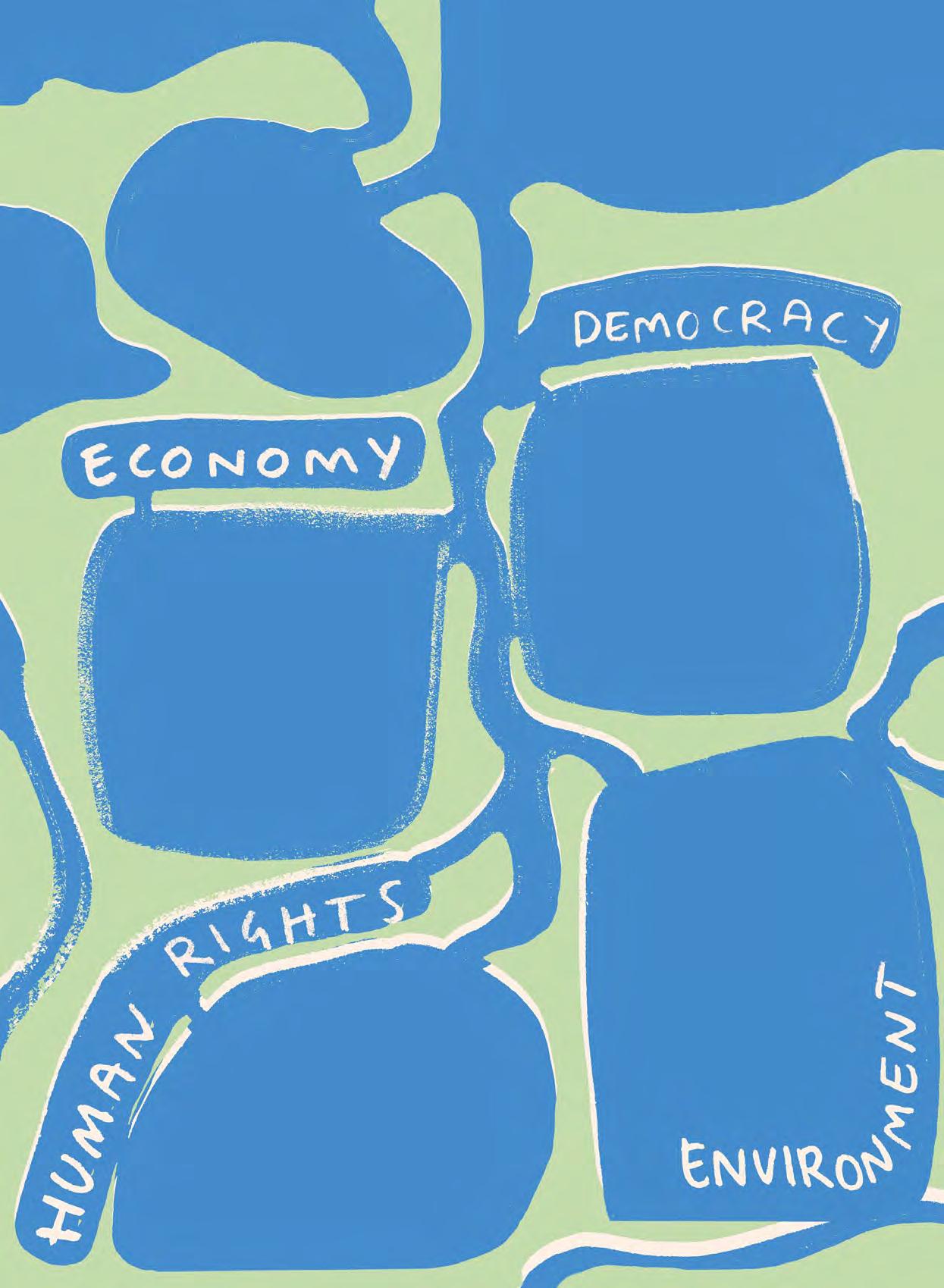
How could the roots of the tree relate to a ChildFair neighbourhood?
• A new system of local youth boards is needed - designed locally but legislated for nationally.
More local funding, with obligations to involve the community in how it’s spent, would nurture local economies. Most ways of spending money locally would boost skills, employability and support networks for increased participation (not only in paid roles).
• Young Leaders suggest local youth board representatives could feed into the existing UK Youth Parliament.
• National participation would likely rise if community action thrives?
Human rights offer a basis for new local decisionmaking processes and community development - especially in the areas of inclusivity and accessibility, eg for children, asylum seekers or people with disabilities.
The environment could benefit considerably from local communities being empowered to take action. Particularly with younger people involved, areas could prioritise clean air, active travel and pushing councils to make more sustainable decisions (especially if austerity is not a constraining factor).
37 Vision for A ChildFair State: Neighbourhoods
Higher tolerance of our multicultural society, so that one day it will become a welcome and fully accepted part of life by everyone here
Acceptance of others in people’s communities and lifestyles. If we all came together the world would be a better place for all

There should be more active activities for young people, it helps your physical and mental wellbeing. This should be at school, but also at home and out in the community at the weekends, instead of just staying sat on our phones
General attitude of people towards helping others, particularly strangers, in any way, big or small. I feel that in this country we often overlook others to protect our own interest, over that of a stranger, particularly one of an ethnic minority
More activities for young people
That kids understand what knife crime is all about.
Make sure they know that it’s not good to stab people
More football pitches, more activities for children and young people, safer roads, so I can have more options and opportunities to do and achieve my best in life
I think strong community is very helpful especially when you have problems in your family so you can always have someone to hold you
I want children to always have a space in which they can feel safe
To care for those around them
Transport needs to be re-nationalised as it is far too expensive and limits social mobility
I believe teenagers are forgotten about, there is nothing for them and the government don’t supply any money for such things as youth services or youth buildings. The volunteers at the club my mum set up are really informative and helpful and we need more of these, however with no buildings available it cannot be provided, they keep building houses but with no provision for youths anywhere on the new estates
Less pollution in the environment and more areas in the community for children to enjoy
More action towards knife crime within cities, although many people do not use their knives, the fact that some people carry them on their person just to feel safe in case an attack happens is pathetic. If people can’t feel safe within their own city then it’ll have an impact on their mental health too, making them feel unable to leave their house in some areas
I want a connected country with excellent public transport and lownonexistent poverty
A more green environment. Both aesthetically and with the technology and policies being carried out
VisionforAChildFairState: Neighbourhoods Vision for A ChildFair State: Neighbourhoods 38

39 Vision for A ChildFair State: Education
• Citizenship - we all have the same rights
What children & young people want to change
• Young people feel expected to conform to a narrow academic stereotype, and aren’t supported to develop as individuals with their own unique strengths
• Young people from families on lower incomes were struggling to afford the transport and equipment they needed for school, and that all resources and trips should be available for free
• Even where support with emotional and mental health is available at school, it isn’t always clearly offered or of good enough quality
• The focus on academic subjects is not giving them the skills and knowledge they need for jobs in the real world
• Collective responsibility

What children & young people said about these issues
Within education it’s very much ‘You’re gonna do it this way’. I think they should’ve said ‘You could do it this way…’ cos not every person will learn the same way.


Teachers are always telling you “You know you can talk to us” but then they don’t actually help you, they don’t actually do anything. If a student does something bad, teachers don’t try to understand the reasons behind this, they don’t necessarily know the back story. Sometimes people cry inside, but they don’t wanna act weak in front of other people.
Taking children on trips empowers them, it shows them what other skills they’re capable of. In year 6 we went camping and we learnt not to give up, you have to try again. We learnt in a fun way, but it was educational too. We sit down too much, our generation does too much sitting.

Vision for A ChildFair State: Education Vision for A ChildFair State: Education 40
41 Vision for A ChildFair State: Education
The Young Leaders commented often that school is a system where children have to conform to fit into it - rather than school shaping itself around the child. Too many children feel they have to hide their own identity and, if they want to be successful in school, fit the model of academic success. Support for their broader wellbeing, and for the stress that school itself creates, isn’t prioritised, and teachers don’t have the time or training to provide the truly supportive relationships that they and students would like to benefit from. This means relationships are transactional, and students don’t feel their views and needs are really valued.
Although individual schools take different and often more positive approaches, schools (especially secondary schools) in England are designed to teach students to pass exams, and schools are judged on their success in doing so. This leads to a culture of standardisation and a prioritisation of subjects that can be assessed against a standard - instead of individualised learning and progress judged by the student and teacher themselves. Although government policy aims to prepare students for the industries that might employ them, this restrictive and academic environment doesn’t actually give them the wider range of skills and confidence in communicating, collaborating and understanding the world that employers are looking for - and it fails to fully prepare students for being active citizens who know their rights and responsibilities.
Whilst school leaders and Ofsted are trying to take a wider view of students’ development and success, and individual government policies do emphasise the importance of extracurricular activity and individual wellbeing, continuing pressure on timetables and budgets, plus the demands of standardised testing, mean it’s almost impossible to make a school truly child-centred.


We need to move to a system where the objective of education is not measured by exam grades (although these may still be made) but by children and young people’s own reports on their skills, confidence and wellbeing. School culture and resources must support staff and students to develop positive relationships, and to communicate effectively with other parts of the welfare state so that children’s needs can be seen and met holistically. Children and young people’s needs must be central to teaching styles, curriculum content and school policies on wellbeing and behaviour.
Vision for A ChildFair State: Education Vision for A ChildFair State: Education 42
I want young people to feel like they have agency over their learning including the education system to create a bridge to the local community.
Young leader Shuheb

Young Leaders’ vision for schools


Young Leaders would like schools to be well connected to the wider community, making themselves hubs for the enrichment of all residents. Through their campuses and their activities and curriculums, they could be inclusive of local skills and volunteering, and also enable students to go out and develop skills and links with other initiatives locally.
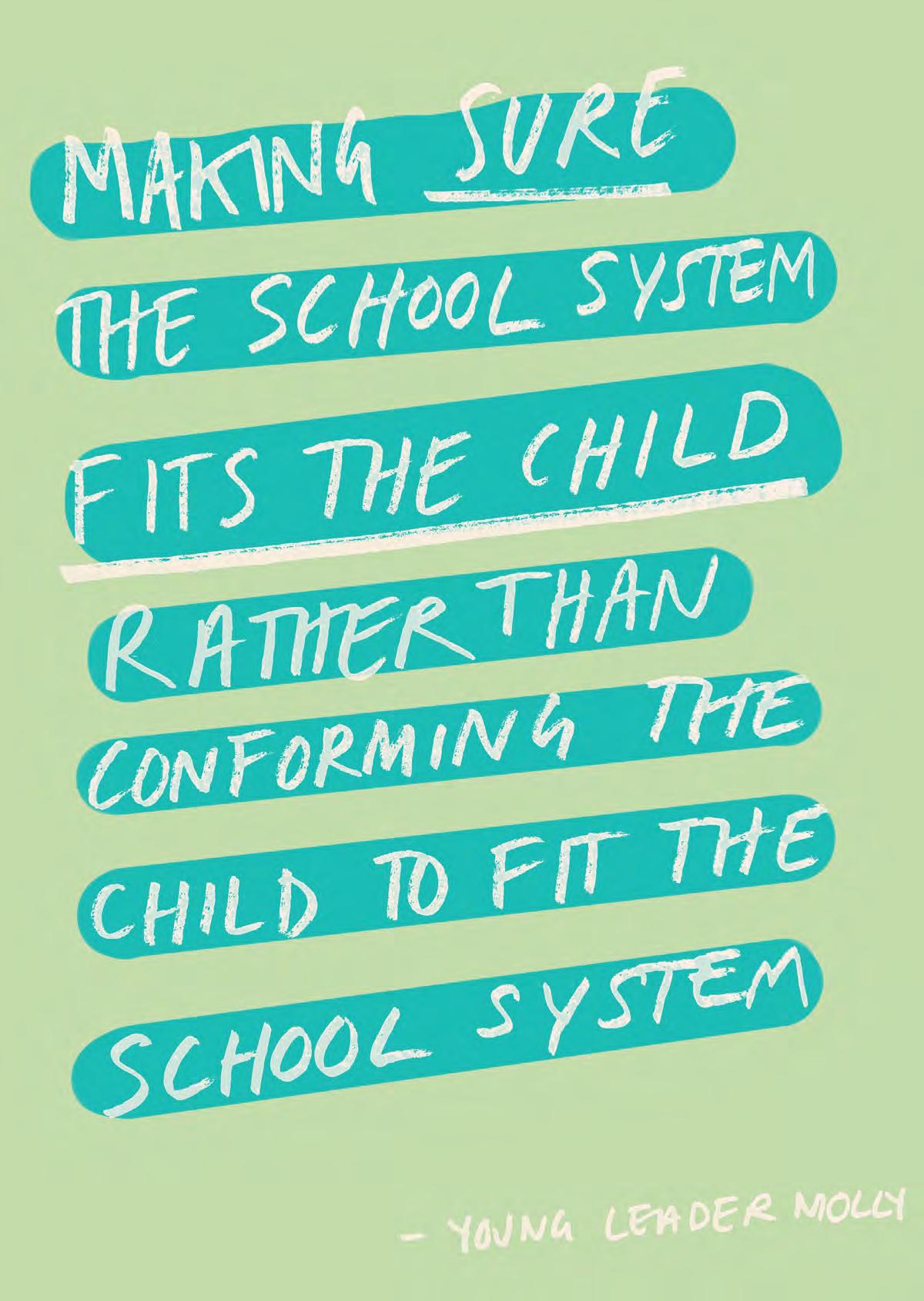
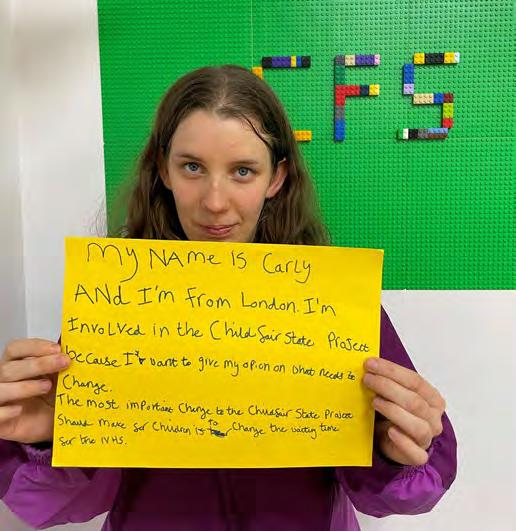
I’m involved with the ChildFair State because I feel education has become a method of competition for the best school rather than being for the kids. The most important change the ChildFair State should make for the children is making sure the school system fits the child rather than conforming the child to fit the school system.

Young leader Molly
Staff, timetables and overall school culture should be able to ‘see’ the individual student, to understand the issues that may be going on in their home lives, and have policies and teaching approaches that are flexible enough to support each child and young person to learn and develop at their own pace and with their needs met. It’s important that each school thinks carefully about the fine balance between raising awareness of issues students may have and respecting individuals’ privacy when dealing with and seeking help for them. Schools could learn from the ‘welfare protocol’ of some employers where, rather than a one-size-fits-all policy for behaviour or attendance, they develop a protocol for each individual that respects their unique needs and circumstances.
43 Vision for A ChildFair State: Education
In the school system as you get more independence they care less about you and your welfare. They should care more. Schools could introduce a welfare protocol like you have in some jobs where you can make changes to your hours or your work based on your own circumstances, for example in school you could arrive an hour later if you had to do family stuff first.
Young leader Shaniqua
Young Leaders want to see an education system in which:
• Teacher training includes more on diversity, mental health and SEND
• Students can direct their own curriculum beyond the core subjects
• Different learning methods are available, informed by students’ needs



• Schools have non-classroom areas where students can go - including spaces to be safely alone, and spaces to be with other students in a supportive environment
• Schools are supported to be open all week and host sessions from external professionals, local residents and other volunteers to offer a broad curriculum to students and also local residents
• These longer opening hours give students more flexibility with when they study, in case Monday - Friday 9am - 3.30pm doesn’t work for their family
I’m involved in the ChildFair State project because I have young people at heart and I want to make a change for the better. No child should suffer. The most important change for the ChildFair State to make is for children to have the right education and support / equipment for their needs. Every young person matters: please help us make a change for the better.
Young leader Tia
• “Community Days”: Each class has a day in the community every week, undertaking activities and action on local issues they’ve chosen and supporting intergenerational relationships
• Mental health is a much more prominent feature in both curriculum content and the school’s overall culture
• School nurse and counselling services are fully resourced so that help is available whenever students need it
Removing harmful features of the current system

Ban permanent exclusions in favour of interventions that support children to stay in education and address underlying issues
Ban isolation booths, internal exclusions and other punitive forms of removal of students from the

45 Vision for A ChildFair State: Education
Building a ChildFair school culture
Schools take an empathetic, not punitive, approach to student behaviour


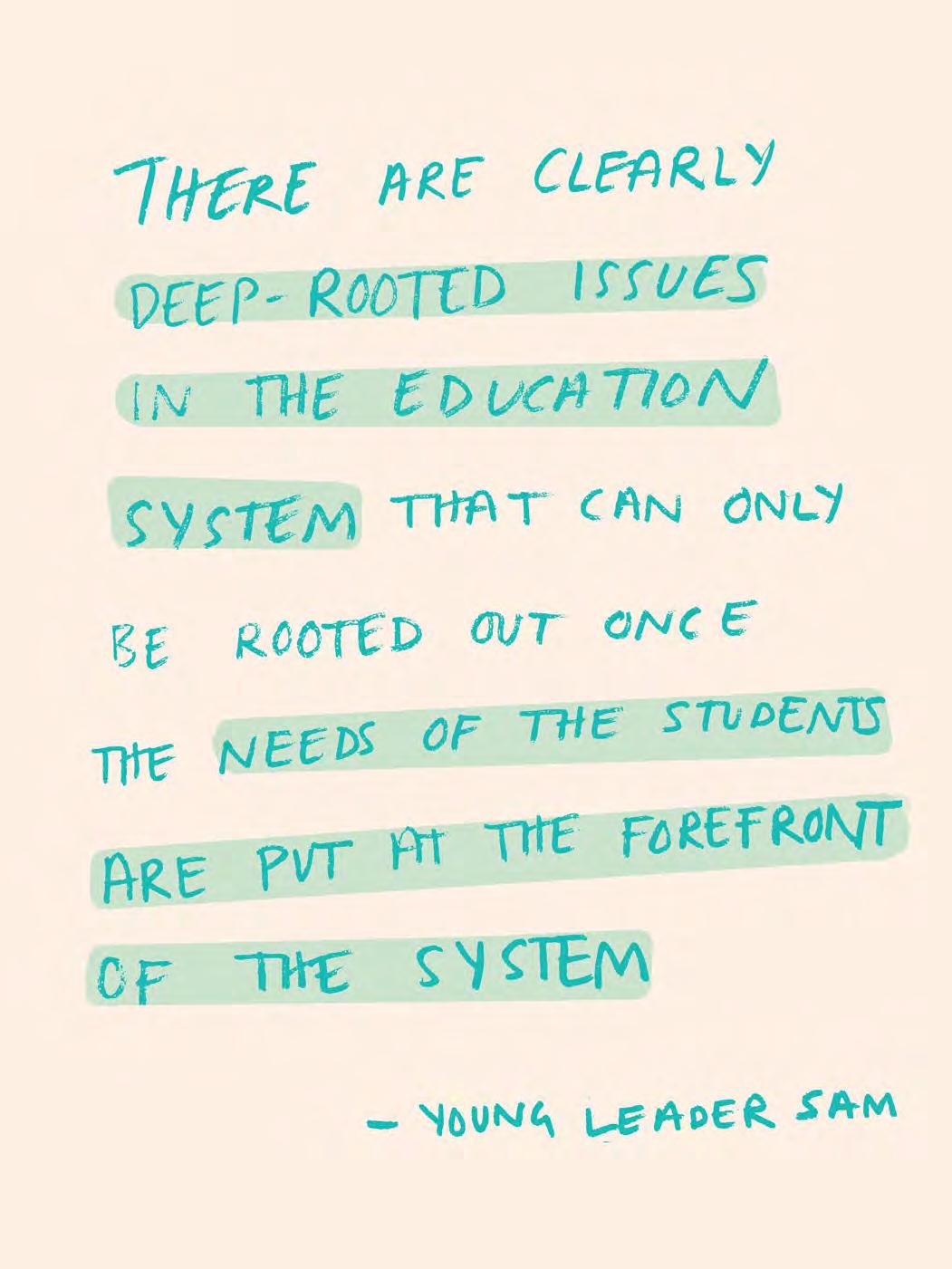
There clearly are deep-rooted issues in the education system that can only be fully rooted out once the needs of the student are put at the forefront of the system: after all, it is predominantly young people who are an indispensable part of education. Only then can there truly be an education system, in the words of those we spoke to, “perpetuating a more welcoming environment at school,” where young people are actually happy to learn.
Young leader Sam
Teacher training includes more on SEND, diversity, mental health and behaviour - as the basis of an empathetic rather than punitive approach to understanding young people
The curriculum is more student-led, keeping core GCSE subjects but giving more choice in subjects and activities students want such as life skills, finance, creativity, play, mental health and wellbeing
Schools are required to involve students in the design of all policies including behaviour, and to use a rights-based approach
Government invests in schools becoming hubs for the community including a Community Day for each class every week
Inspection and measurement of schools is re-designed so that it’s not competitive between pupils or schools, but collaborative and puts students’ own views and experiences at its heart. The new system judges the school on what it does (which might be unique) rather than comparison with other schools
Look at other models including internationally for how this could be done
Every school has at least one Mental Health First Aider who isn’t a teacher (preferably a team), with proper training, who can refer students to a local Community Health Hub or similar communitybased services equipped to support mental health

Vision for A ChildFair State: Education Vision for A ChildFair State: Education 46
How could the roots of the tree relate to a ChildFair education system?
A broader curriculum and more experiences outside the classroom should give young people more of the skills employers are looking for.
Citizenship and democracy could be part of a more ‘real world’ curriculum, and give students the chance to learn about and actively participate in local decisionmaking, including through new bodies like Child Owned Trusts and local youth boards.
The United Nations Conventions on the Rights of the Child could be used as the basis for school democracy and students’ involvement in developing policies.
Local and global environmental issues could be an important part of Community Days, visits from external experts and a more studentdirected curriculum, boosting young people’s knowledge and sense of agency in their daily life and career choices.
47 Vision for A ChildFair State: Education
Vision for A ChildFair State: Education Vision for A ChildFair State: Education 48
The school playground is kinda where you are made in a way… you’re sort of established at home but the school playground is sort of where you have your first experience with ‘real’ people, so right now that would be the priority, to tell young people it’s alright if they’re different, to tell young people it’s alright if they’re shy
Education is stressful, they should make it less stressful
Free university Education is a privilege
A better curriculum, a school of life. A more rounded approach e.g. mental health, taxes, politics, how to deal with money, nutrition, better life skills
More options for work experience or more support in the education system without having to get a tutor
Knowledge is power. The more knowledge you have, the better you can fight for your rights.
My wish for the next generation is about education and the college, four days a week instead of five day full days would be better
I want you to really focus on student finance and giving equal opportunity to people from different backgrounds
My brother went to boarding school so he had to do activities at the weekend, I think that should be provided for children who aren’t at boarding school too
Education needs to have less pressure and more creativity as I feel this contributes to the Mental health of teens
More current school curriculum employment taster days
For our schools to be funded more so our parents aren’t paying so much money and our teachers aren’t going to buying stuff for the classroom
I would like to see more emotional support for students in schools and more teacher training to make them feel understood. The more emotionally safe students feel, the happier they are and more ready to learn
I want the next generation to feel they have the confidence to do what they want, but also exploring and finding out what they want to do in their life Young people need guidance and a little push to help find out what they want
My one wish for the next generation of young people is a caring atmosphere and an understanding that there’s more to the world than school

49 Vision for A ChildFair State: Education
My one wish for the next generation of young people is that no matter what opportunities they’ve had in life or what their background is or what sort of inequalities they’ve faced, that they’re all equal, they all have something to give to society and everyone’s as important as everyone else
I want people to acknowledge that everyone has the potential to do something… because if someone’s not good at education it doesn’t mean they can’t still succeed in another thing like sports or maybe they want to become an artist or something that isn’t really focused in education
My wish for the next generation is for them to be treated like actual humans and people rather than machines or kind of things that just need to keep getting the best grades or be the best product or be the best people or always be on our A game, just to be treated normally
For them not to be screwed over constantly, by everything, or not to have that feeling that they’re constantly having big changes thrown in their face, particularly in education
Where schools could afford everything they needed to enrich our education

Student loan system. Would prefer graduate tax and/or loans given not based on parents’ income. We are adults in every other way, why should our parents’ income matter???
I want the next generation to feel they have the confidence to do what they want, but also exploring and finding out what they want to do in their life
My one wish for the next generation of young people is for them to get properly educated on different gender identities and sexualities rather than having to learn it all by yourself like I did because my school did nothing on it. So then people who feel different can understand what it means and understand themselves, and people who don’t feel different can understand people who do and so aren’t so ignorant and rude
I want to see an education system that is extremely supportive and effective for making people into model citizens but also free thinkers, one that will render prisons obsolete because at the moment our schools are not supported. Too many people are being bullied, too many people are falling into crime in school, too many people idealised this lifestyle of a 'gangsta' and schools cannot do enough about this at the moment
To have diversity in every aspect of life and I think that that comes from eradicating all labels and equal opportunities for everyone whether that be in education or access to healthcare or benefits

Vision for A ChildFair State: Education Vision for A ChildFair State: Education 50
Young people need guidance and a little push to help find out what they want
51 Vision for A ChildFair State: Health
• Citizenship - we all have the same rights
What children & young people want to change
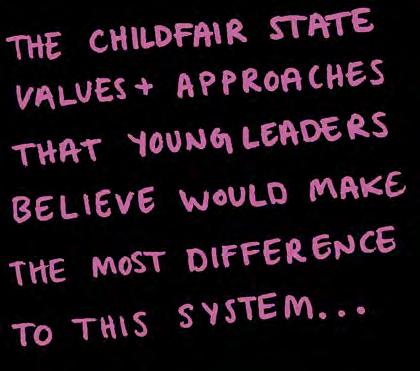
• Services are complex and aren’t well connected; young people have to repeat themselves to various professionals and get passed from one service to another. They struggle to understand and therefore navigate the ‘system’.
• Young people are very aware of pressures on the NHS and feel like a burden (whilst also appreciating the NHS hugely)
• Young people’s views on their health and treatment aren’t respected enough and it can be difficult to get heard if you aren’t articulate / don’t get a sympathetic professional

• Waiting times and treatments for mental health are dangerously long / limited
• Transitions between services / from youth to adult services are difficult and can be badly handled
• Collective responsibility
What children & young people said about these issues
If you wanna see a doctor you just have 10 minutes to talk. If you spend more than ten minutes you have to rebook an appointment. When you go to a doctor you are gonna tell them something that concerns you, something important and you are probably worried about that and you might need to stay twenty minutes but I think sometimes the system is very robotic.
I attempted suicide last year and I was in hospital, I then waited 5 months to get the counselling I needed, it was a long wait. I didn’t get support while I was in hospital.
I’m transitioning to adult services which is really difficult. I’m used to the way children services work. For years I’ve spoken to the same people, and now I need to get used to completely new people.


Vision for A ChildFair State: Health Vision for A ChildFair State: Health 52
53 Vision for A ChildFair State: Health
basically identical units - striving for equality when what people need is equity, as one young respondent to the research pointed out. People’s physical and mental health needs are reduced to a prescribed list of symptoms and treatments so that everyone is treated the same - rather than approached with curiosity in a holistic way, with the expectation that the person’s situation will be unique to them (and therefore they will be experts in their own health experiences). Pressure on budgets and staff time only exacerbates this conveyor belt process.
Children and young people’s needs are recognised as distinct from older people’s, but resources and training are not universal enough to ensure that each one is treated appropriately - hence dangerously long CAMHS waiting times and a lingering distrust of what young people say about their own needs (although this happens to all age groups of patients to a large degree). The system is extremely complex and professionalised, making it difficult for individual patients to navigate - but especially for young people, who have less power within it, less control over when and where they can access it, and less experience dealing with professionalised services.
Crossing thresholds such as age, location and diagnosis or severity of condition entails jarring changes in treatment that can be counterproductive to young people’s wellbeing. Links between different localities and between general and specialised medicine are not designed with the patient’s experience at the centre, meaning policies can be inconsistent between different Clinical Commissioning Groups and between local General Practice and national specialised practice (eg access to support for disability). Links to social care
individual hospitals and GP surgeries to forge partnerships with local charities, youth services, police etc out of necessity or desperation. These can work well, but are far from universally available.
Health services - as well as all other branches of the welfare state - need to be able to take a holistic approach, seeing the whole child and also their family, home situation and history as well as their hopes for the future. Whilst ‘health’ is seen as the responsibility of hospitals and GPs only, we will continue to have a reactive approach rather than a preventative or asset-based approach. Children and young people need healthy environments and communities to thrive, and as they’ve told us, they want their first ports of call with early wellbeing issues to be local and informalnot a big leap into ‘the system’.
For this to work:

• Professionals need time and freedom to build sustained relationships with each child and young person, founded on trust and respect for the young person
• Health services need to be connected to schools, children’s services and other sectors
• Mental health needs genuine parity with physical health, including in terms of funding, research and range of treatments

• Other branches of the welfare state should have health and wellbeing built in to their purpose, for example in schools, job centres, social security systems and housing
• Investment is needed in these and other sectors that keep people healthy and can provide non-medical support for health issues
• Children and young people’s views of their own health should be central to all systems’ responses, especially at first contact

Vision for A ChildFair State: Health Vision for A ChildFair State: Health 54
Young Leaders’ vision for local ecosystems
Young Leaders have noted that there are strong correlations between the NHS constitution and the ChildFair State vision, including equity and dignity for patients, dissolving the boundaries between primary and community care, and more personalised care.
There are certain features of the Young Leaders’ proposals that would mark a significant shift away from the historical vision for NHS services:
• Services would be local and informal by default - thereby feeling universal and nonstigmatising
• The gap between professionals and patients would be shrunk - by intermediary roles (like advocates and volunteers) and by more equal relationships and trust between people
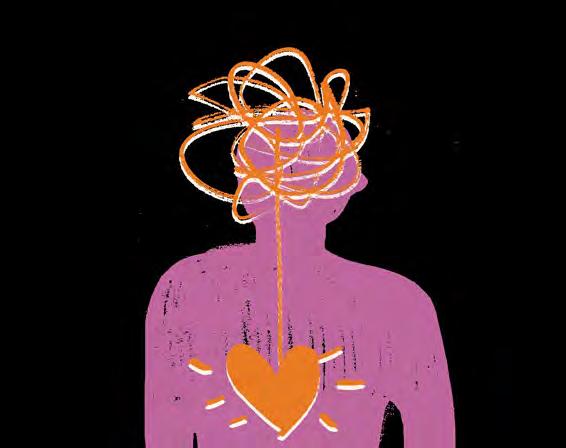
• The individual child or young person’s views on their own wellbeing would be at the centre
• This would result in much more agency for young people, and more choice and flexibility in the type of support they get.
Community Health Hubs
This new model for local healthcare was designed by Young Leader Morgan and supported by the rest of the group.
• There should be one in every community with a free, drop-in approach
• They would be networked to GP surgeries, pharmacies and health workers in the area
• The base for a new role: Community Health Workers who provide services such as home visits, cooking and nutrition information, exercise classes, support groups, and mental wellbeing classes and advice
• Community Health Workers could be recruited and trained to bridge social and cultural gaps, providing an informal connection to services and the rest of the community that is lacking for many people
• Community Health Workers could also help young people navigate the complexities of the health system and make referrals to other services
• The Hubs would also be the site of activities run by and for young people, with young people able to lead, volunteer and attend classes in life skills like cooking to help with the transition to independence
• Young people could get involved in befriending, mentoring and assisting or apprenticing Community Health Workersbuilding skills and relationships and public wellbeing
• Community Health Hubs would be particularly beneficial for young carers and young people with disabilities, being a source of additional support and having connections to local schools, businesses etc to guide them in inclusive and accessible practices
• They could also ensure continuity of support when a young person comes out of hospital or goes through another transition in their wellbeing, for example liaising with school to get the right support in place for the young person
55 Vision for A ChildFair State: Health
Health workforce
Many young people are concerned about the pressure on health staff, including working hours, pay and training. They want improved working conditions which would benefit existing staff and attract a bigger workforce so that more time can be taken around each patient / service user. Staff should feel valued, and able to put care and relationships at the heart of all they do. Young people also want staff to have specialised training in listening to children and young people.
Mental health
Young people want everyday institutions and services to promote wellbeing and mental health, on the understanding that their wellbeing is interdependent with the whole of the welfare state, and that reducing poverty, stress, and discrimination in all aspects of life will reduce mental health issues and therefore demand for health services, as well as knock-on effects for employment, housing, relationships etc. School is a key driver of mental health - both good and ill - and changes are needed to make schools mentally healthy and increase support available for the issues that will naturally arise.
Specifically within health services the Young Leaders would like to see:
• Waiting times for CAMHS drastically reduced
• Support made available whilst a young person is waiting for a prescribed treatment
• Investment made in community services that are free, universal, discreet, nonstigmatising, and designed for and with young people
Information and navigating the system
Young people want an individual’s journey through health services to be smoother, with less need for repetition and better information sharing. This would be helped by both professionals communicating better with each other about an individual patient, and better shared data (with the young person’s needs and preferences driving what happens to their data). Young people also want information on what help they’re entitled to and what is available - and reassurance that they will get that help if they ask or are referred. Currently, routes to help can be complicated and inadequately communicated.
Two roles have been suggested: a single point of contact for each young person, with all their health information to hand, so that the young person can understand and navigate the system; and an advocate to accompany and speak for anyone under 18 / 25 to ensure the system understands the young person.
Outreach: health services and staff going to where young people are, rather than expecting them to navigate the gatekeeping of the NHS, works well where it happens and young people would like to see more of it - for example better resourced school nurses; health workers going to youth centres; and youth workers being trained in basic health support.

Vision for A ChildFair State: Health Vision for A ChildFair State: Health 56
In a ChildFair NHS
Every child and young person is entitled to:
• A named contact (a specific central NHS professional) to help them navigate and interpret the health system
• An advocate, to accompany the young person to each healthcare setting and speak for them if necessary

There are personalised health plans for all young people, with flexibility and review points to keep the young person’s changing needs at the centre Health tests including gene testing are automatically available for adopted children and any other children leaving their birth parents or arriving in the UK without their birth parents - to understand the child’s family history and support their ongoing health and treatment
A requirement of governance of Clinical Commissioning Groups to include representation from young people
Scrap or limit prescription charges
A flexible, humane person-centred approach to transitions from childfocussed to adult-orientated services - especially for people with disabilities and lifelong conditions - with much better communication from services and the option to stay with youth services for longer or have continuity of certain professionals
• Don’t wait till a young person is turning 18 to put them on the adult service waiting list - put them on it early enough that they’ll receive the service at 18


here is mandatory training for health professionals in communicating health issues and processes to young people so that young people can be properly involved in their health and decisions about it
Mental health in the NHS receives as much investment and attention as physical health and the interdependence of physical and mental health is recognised by the NHS
57 Vision for A ChildFair State: Health
eating and exercise advice, support groups, counselling, and volunteering opportunities health of our entire population. This would


Vision for A ChildFair State: Health Vision for A ChildFair State: Health 58
How could the roots of the tree relate to a ChildFair health system?
Would young people like to protect the NHS and how it’s run with a new constitutional measure?
Healthier citizens, with more power over their own health, will contribute more to the economy, and more community-based support should reduce the cost to the NHS.
Importantly the economy could drive better national decision-making on health by prioritising wellbeing above GDP growth…
Do we need a new mechanism for accountability to children and young people for health services and authorities?
Children’s right to health, development and play should be the basis of investment in a healthy environmentincluding in green spaces, active travel and to protect school amenities and equipment for sports, arts, music etc.
Legislation on clean air would be beneficial to everyone.
What about the mental health impact of climate anxiety? Giving young people a sense of agency could contribute to resilience, as well as actual action on climate issues, which may help reduce anxiety.
59 Vision for A ChildFair State: Health
Vision for A ChildFair State: Health Vision for A ChildFair State: Health 60
I would like to see social media change drastically. I worry some of the content is not right. I feel it is depleting the confidence of many… It creates hate and stress when people troll others. It’s an opportunity for faceless bullies and it stops real people talking
My one wish for the next generation is that suicide doesn’t exist

Make healthier food cheaper rather than fatty foods
Effective mental health support - it basically doesn’t exist
If I could change one thing about the world it would be the people who are revolting against lockdown and going out partying or walking close to elderly people, they’re the ones who are spreading it. The police should be a lot stricter on those people
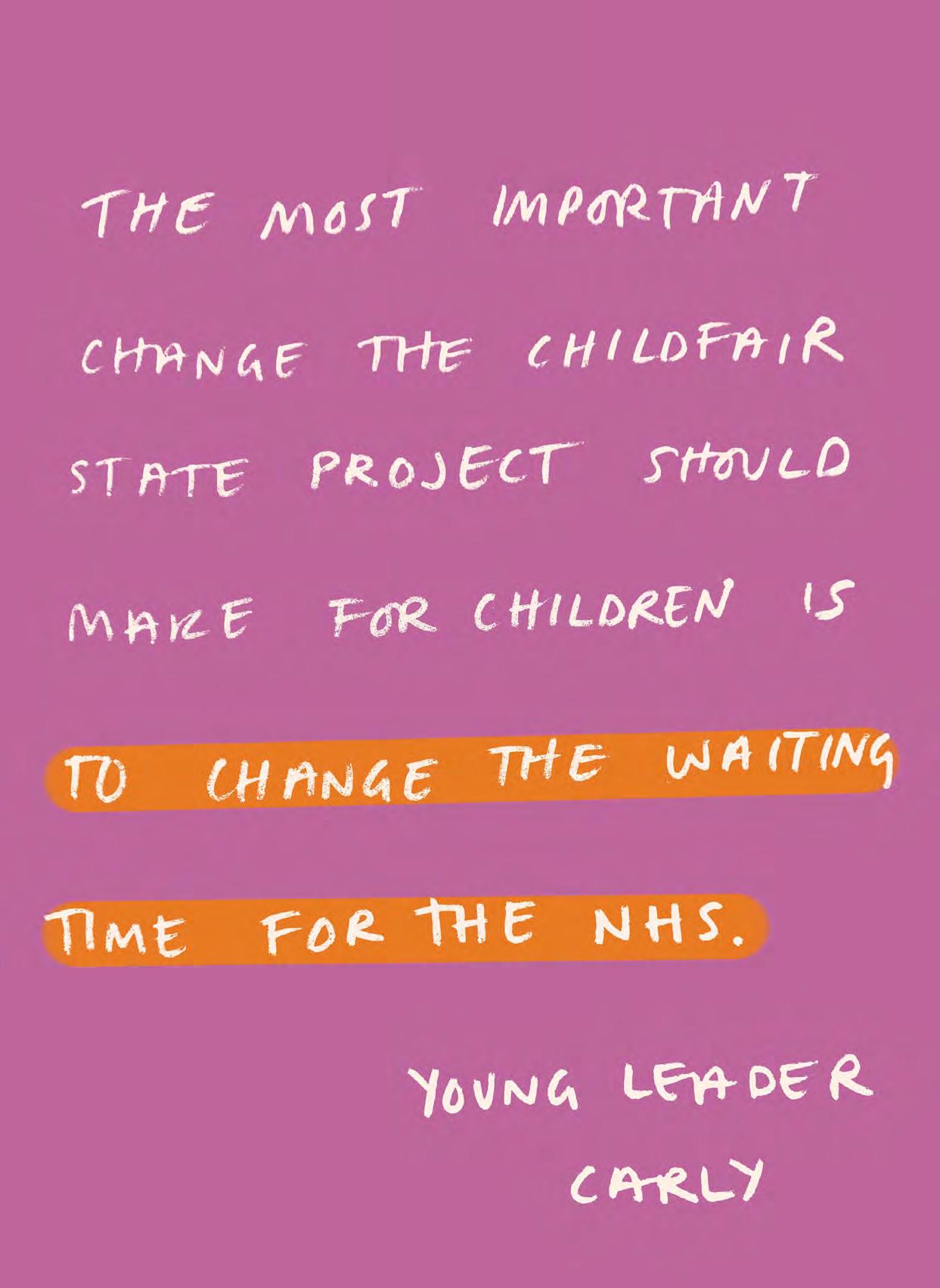
Better funding and help for mental health and transgender citizens. The current waiting time for the NHS gender clinic is extortionate
Dealing with mental health and addiction help and how fast it is and easy to access
I want to see the kids of the future not have to use that word ‘mental health’ not have to use the word ‘depression’ that would be amazing, to not see another person commit suicide. The suicide rate just drop, that would be amazing
I would wish for the next generation to have a healthy life and a life with more equality. There’s no need to have labels, there’s only one race, the human race
If I could change one thing about the world it would be that the hospitals would be bigger because it would help more people
61 Vision for A ChildFair State: Health
If I could change one thing about the world it would be to get people to be more open with each other because that’s how you meet people and you become friends. A lot of people won’t be open with you, they might lie about their past and I don’t think that’s very good. Also in families, some people might be depressed, so it’s important to talk to each other about how you feel
Improvements to mental health support services as it’s a problem that affects so many
Greater resources to help the NHS because all their staff are put under too much pressure
It’s nice to talk to someone about my experiences and explain how I feel without being judged
More education on invisible illnesses Technology detox and learning how to use technology safely
More mental health facilities / quicker waiting list
I feel like male representation is missing. We’ve spoken about women’s rights, children’s rights but in terms of education boys are underachieving massively at the moment and like their sense of identity is slowly being lost, you know there’s masculinity crisis and we don’t really have open conversations about male mental health and what they’re going through so I think it’s an important thing to take note
More open conversations around mental health / selfharm

Better mental health services for ALL. Nurses getting paid more and less waiting times in A&E
Better pay for those in healthcare jobs
More help for working class families not just poor families. More anonymous mental health counsellors
More funding to the NHS as it’s slowly breaking down and having an American style healthcare system would be a nightmare
Vision for A ChildFair State: Health Vision for A ChildFair State: Health 62
THE YOUNG LEADERS
Abigail
Carly
Conner
Deborah
Emilian
Jessika
Lauren J
Lauren RT
Millie
Natalya
Nia
Ronaldo Sam
Shaniqua
Sheridan
Shuheb (Shubz)
Sophie
Tia
Tommy Zaynab
Children England
Gregory House, Coram Campus
48 Mecklenburgh Square, London, WC1N 2NU
www.childrenengland.org.uk
info@childrenengland.org.uk
kathy.evans@childrenengland.org.uk