
25 26 SEASON
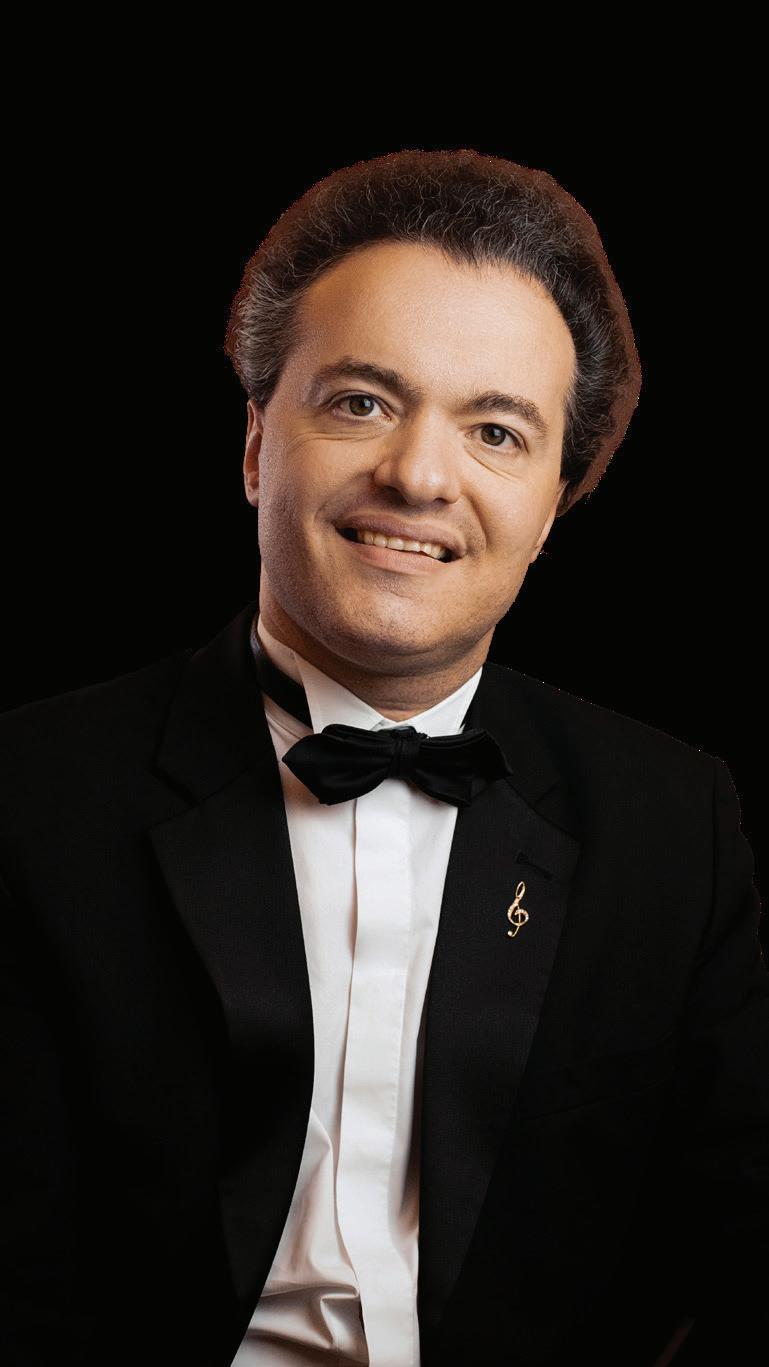
MAR 5-6
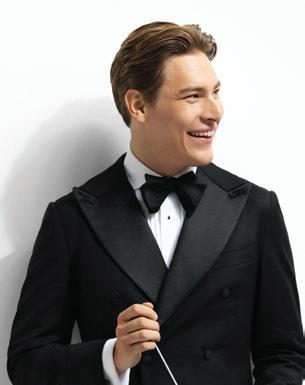
Mäkelä Conducts The Rite of Spring
APR 16-18
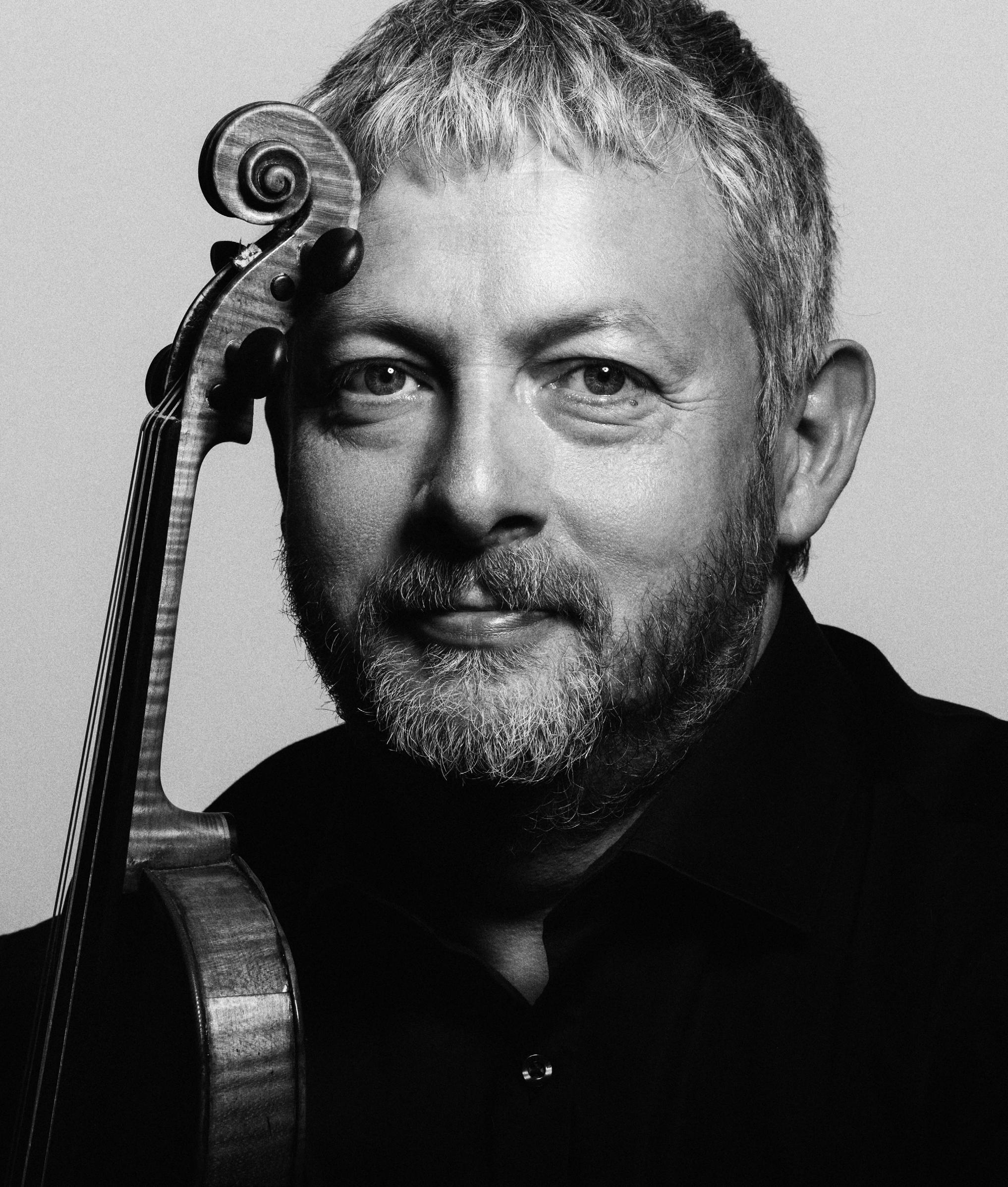
Evgeny Kissin with the CSO
APR 23-26
Hisaishi Conducts Hisaishi

ONE HUNDRED THIRTY-FIFTH SEASON
CHICAGO SYMPHONY ORCHESTRA
KLAUS MÄKELÄ Zell Music Director Designate | RICCARDO MUTI Music Director Emeritus for Life
Thursday, March 5, 2026, at 7:30 Friday, March 6, 2026, at 7:30
Klaus Mäkelä Conductor
MILHAUD Le Boeuf sur le Toit, Op. 58
GERSHWIN An American in Paris
INTERMISSION
STRAVINSKY The Rite of Spring The Adoration of the Earth The Sacrifice
This concert is generously sponsored by Robert H. Aland and Family in loving memory of Fraida N. Aland. Bank of America is the Maestro Residency Presenter. The Chicago Symphony Orchestra Association acknowledges support from the Illinois Arts Council.
The Chicago Symphony Orchestra Association thanks
Robert H. Aland and Family for generously sponsoring this performance in memory of Fraida N. Aland, beloved wife, mother, and grandmother.
DARIUS MILHAUD
Born September 4, 1892; Marseilles, France
Died June 22, 1974; Geneva, Switzerland
Le Boeuf sur le Toit, Op. 58
In 1921, the year after the premiere of the score Darius Milhaud named for an imaginary bar called Le Boeuf sur le Toit (The Ox on the Roof), a restaurant of the same name opened in Paris. It quickly became the talk of the town, particularly one night in 1934, when a Chicago woman who had once lived quietly in the Webster Hotel on Lincoln Park West made international headlines for instigating a madcap, late-night riot there with an unloaded gun. That same year, a nightclub called Le Boeuf sur le Toit opened on North Dearborn Parkway in Chicago, on the lower floors of a row house once owned by Henry Field, the brother of celebrated retailer, Marshall. Milhaud’s colorful score, which celebrates the thrills of rowdy urban nightlife, has outlasted both establishments.
It was once thought that Milhaud’s title was inspired by a Parisian legend of a man who lived on the top floor of a building with a pet calf that grew into a full-grown ox. The composer said that the title evoked Brazilian folk dance. The true roots of the title and the music date to 1915, when the writer Paul Claudel invited Milhaud to Brazil to be his assistant as French ambassador in Rio de Janeiro. Milhaud stayed two years, but the enchantment of the country, its culture, and its music
COMPOSED 1919–20
FIRST PERFORMANCE
February 21, 1920; Paris, France
INSTRUMENTATION
2 flutes (2nd doubling piccolo), oboe, 2 clarinets, bassoon, 2 horns, 2 trumpets, trombone, percussion, strings
APPROXIMATE PERFORMANCE TIME
15 minutes
FIRST CSO PERFORMANCES
March 2, 3, 5, and 7, 1989, Orchestra Hall. Christopher Keene conducting
MOST RECENT CSO PERFORMANCES
April 10, 11, and 13, 2025, Orchestra Hall. Joffrey Ballet in Les Boeuf oons (Ashley Wheater, artistic director; Nicolas Blanc, choreographer). Harry Bicket conducting
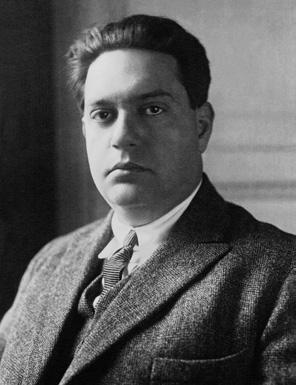
from top: Darius Milhaud, portrait, 1923, Agence Meurisse. Gallica Digital Library, Bibliothèque nationale de France
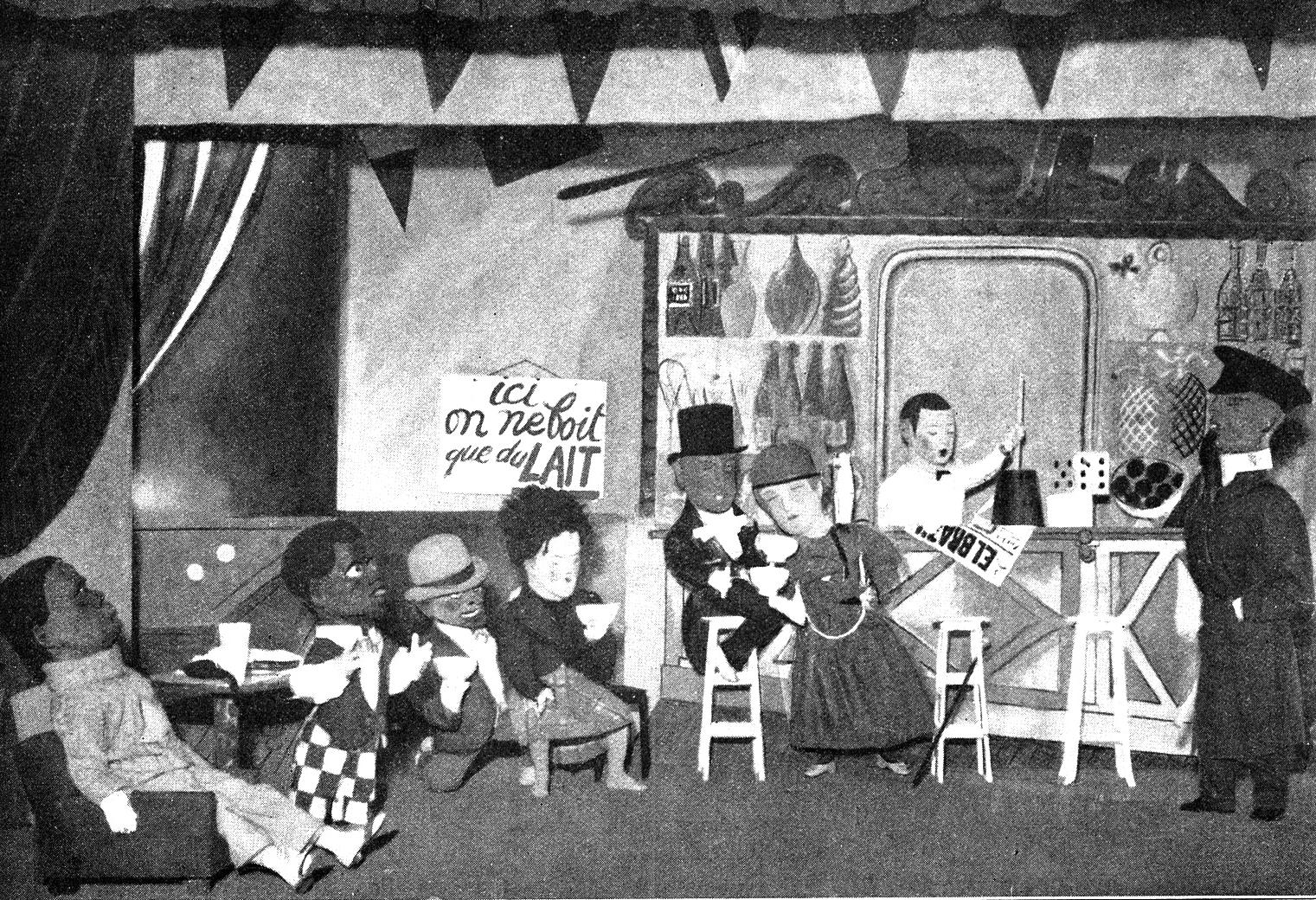
Scene from Le Boeuf sur le Toit or The Nothing Doing Bar, 1920, surrealist ballet with music by Milhaud, choreography by Jean Cocteau (1889–1963), and decor by Raoul Dufy (1877–1953). The Fratellini brothers were among the cast: from left to right, in oversized cardboard heads, the Boxer, the Jockey, the Billiard Player, the Red-Haired Lady, the Man in Evening Dress, the Lady in Décolleté, the Barman, and the Policeman. Photo by Delphi, published in the arts journal Comoedia Illustré, March 15, 1920. The notice on the back wall reads “Here, we only drink milk.”
stuck with him. “Haunted by my memories of Brazil,” he recalled when he was back in France, “I assembled some popular melodies—tangos, maxixes, sambas, and even a Portuguese fado—and transcribed them with a rondo-like section recurring between each successive pair.” One of the tunes he heard was called “O Boi no Telhado” (The Ox on the Roof), and that was the title he picked for the piece he wrote on his return to Paris after the Armistice. (The version for two pianos he wrote later is subtitled Cinema Symphony on South American Airs.)
What he intended, he said, was to compose “fifteen minutes of music, rapid and gay, as a background to any Charlie Chaplin silent movie.” (Later, Milhaud said that his rousing score accompanied movements that suggested “a slow-motion film.”) In reality, Le Boeuf sur le Toit was the soundtrack for a surrealist ballet by Jean Cocteau, performed by clowns and acrobats from the Cirque Médrano and the Fratellini family. (Cocteau had already ruffled the establishment with his madcap plot for Eric Satie’s Parade in 1917.) The ballet’s scenario was set not in Brazil, but in a New York bar in the new Prohibition era: when a policeman enters, the establishment transforms into a dairy bar, and its
GEORGE GERSHWIN
Born September 26, 1898; Brooklyn, New York
Died July 11, 1937; Hollywood, California
An American in Paris
George Gershwin made his first appearance in Chicago in June 1933—the hottest June the city had known. The concert, given by the Chicago Symphony on the fourteenth, the night before the historic premiere of Florence Price’s first symphony, was part of the Orchestra’s Century of Progress series at the Auditorium Theatre.
dancing patrons suddenly drink milk. Eventually the policeman is decapitated by the ceiling fan. When the place empties, the bartender hands the bill to the policeman, who has been resurrected. Oddly, the ballet was a hit. (It was staged at the Théâtre des Champs-Élysées, seven years after the riotous premiere there of Stravinsky’s Rite of Spring.) Milhaud later remembered that the opening night of Le Boeuf sur le Toit was the hottest ticket in Paris, “with the Shah of Persia paying 10,000 francs for a front seat from which he could not see a thing but was himself in full view of everyone.”
A note on the title. In December 1921 Louis Moysès moved his Paris bar, La Gaya, which was frequented by Milhaud and his circle of friends during the composition of the ballet, to a new location near the Place de la Concorde, the scene of Gershwin’s traffic jam in An American in Paris. He decided to call it Le Boeuf sur le Toit, capitalizing on the ballet’s success. For many years, it was the heart of Parisian cabaret society— Pablo Picasso and Sergei Diaghilev are said to have gone there the night it opened and Igor Stravinsky later visited. In time, as its popularity grew, people assumed Milhaud named his ballet after the bar and not the other way around.
Gershwin performed his Concerto in F and Rhapsody in Blue. “I have never played before in Chicago, and am not well known here,” he told a reporter when he got to town, ignoring the fact that Rhapsody in Blue was the most talked-about piece of American music at the time. The Auditorium was filled to the last row on June 14, and the crowd was thrilled to hear Gershwin’s music played as it should be—forcefully, brilliantly, and with a grand sense of style—by the man who wrote it. “He seems never to have cast
the eye of desire in the direction of the music being done on the other side of the Atlantic,” the Tribune said. The Chicago American wrote simply: “He is the music of America.”
Gershwin’s music has always been so popular that it’s easy to overlook his classical roots. His first musical memory was of an automatic piano, in a penny arcade on 125th Street, playing Anton Rubinstein’s Melody in F—one of those rare pieces that had become a popular classic, giving Gershwin the idea at an early age that serious and commercial music could be one and the same. As a teenager, Gershwin attended recitals by celebrity soloists such as Josef Lhévinne and Efrem Zimbalist. He played piano in the Beethoven Society Orchestra at Public School 63 and studied music theory as well as piano. Even after George quit school at fifteen to become “probably the youngest piano pounder ever employed in Tin Pan Alley,” he didn’t forget his greater ambitions.
In the early 1920s, while Gershwin was turning out a steady stream of hits (and making the kind of money that is unheard of in the classical-music business), he was more determined than ever to write serious music that was equally popular. The historic premiere of Rhapsody in Blue, at New York’s Aeolian Hall in 1924, announced to the music world that Gershwin was a far more complex and ambitious musician than a mere songwriter. During the mid-1920s, while he enjoyed the life of a rich celebrity, collecting modern art and moving his family out of their dreary apartment into a five-story townhouse on the Upper West Side, Gershwin began to compose a piano concerto, three piano preludes, and this tone poem—a love song to
COMPOSED
1928
FIRST PERFORMANCE
December 13, 1928, New York City
INSTRUMENTATION
3 flutes (3rd doubling piccolo), 2 oboes and english horn, 2 clarinets and bass clarinet, 3 saxophones, 2 bassoons, 4 horns, 3 trumpets, 3 trombones, tuba, timpani, percussion, celesta, strings
APPROXIMATE
PERFORMANCE TIME
17 minutes
FIRST CSO PERFORMANCES
June 14, 1933, Auditorium Theatre. William Daly conducting (Chicago World’s Fair: A Century of Progress International Exposition)
July 25, 1936, Ravinia Festival. William Daly conducting February 13, 1945, Orchestra Hall. Désiré Defauw conducting
MOST RECENT
CSO PERFORMANCES
July 11, 2014, Ravinia Festival. Robert Moody conducting May 31, 2025, Orchestra Hall. James Gaffigan conducting
CSO RECORDING
1990. James Levine conducting. Deutsche Grammophon
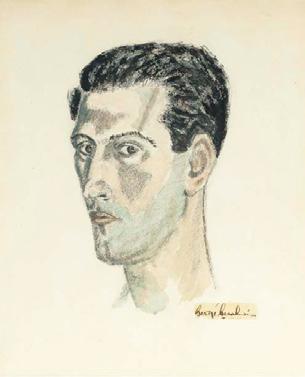
opposite page: George Gershwin, self-portrait, charcoal and watercolor on paper, 1930s
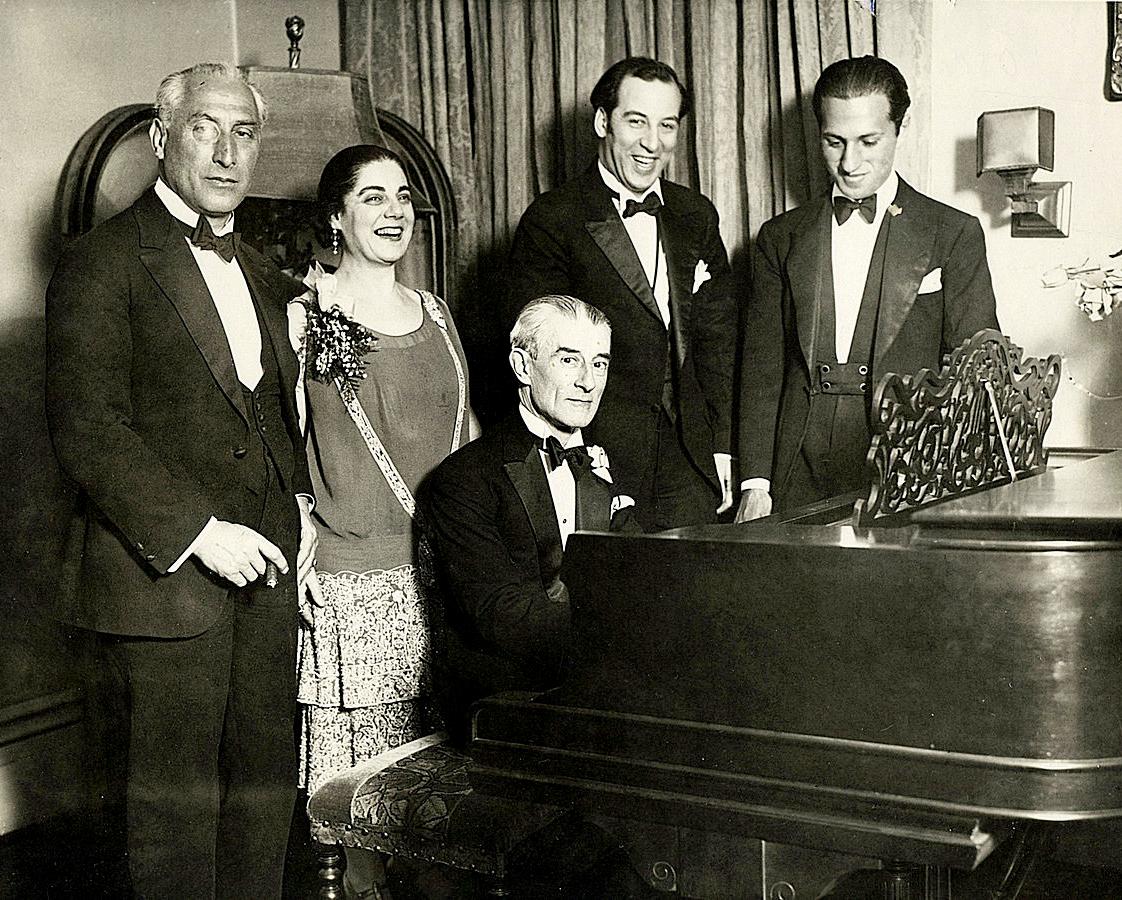
this page: Birthday party in honor of Maurice Ravel (1875–1937), New York City, March 8, 1928. Left to right, conductor Oskar Fried (1871–1941), mezzo-soprano and host Éva Gauthier (1885–1958), Ravel at the piano, composer-conductor Manoah Leide-Tedesco (1894–1982), and George Gershwin (at Ravel’s request)
Paris—while still maintaining his roles as pianist, tunesmith, and conductor.
In January 1928 Gershwin accepted an invitation to visit friends in Paris. Recognizing the need for a change from the frenetic New York scene—he currently had two hit shows, Funny Face and Rosalie, running simultaneously— Gershwin immediately started thinking about a “rhapsodic ballet” that would become An American in Paris. (He had already scribbled a four-bar sketch of the opening theme on the back of a thank-you note when he was in Paris two years earlier, labeling it “An American in Paris.”)
Gershwin arrived in Paris that spring as famous as any living musician. A dyed-in-thewool New Yorker, he was dazzled by this great cosmopolitan city; looking down from the top of the Eiffel Tower, he was positively dizzy. To Gershwin, Paris had always been a city of music, and now, in his mind, it was Ravel’s city. These two famous, successful composers had recently met at Ravel’s fifty-third birthday party in New York City, only days before Gershwin left for Paris. (Ravel, who had conducted the Chicago Symphony in his music that January, at the start
of his American tour, specifically asked that Gershwin be invited.) They hit it off at once; Gershwin played the piano until 4 a m , and Ravel stayed to the very end. Another night, the two went off to hear jazz in Harlem.
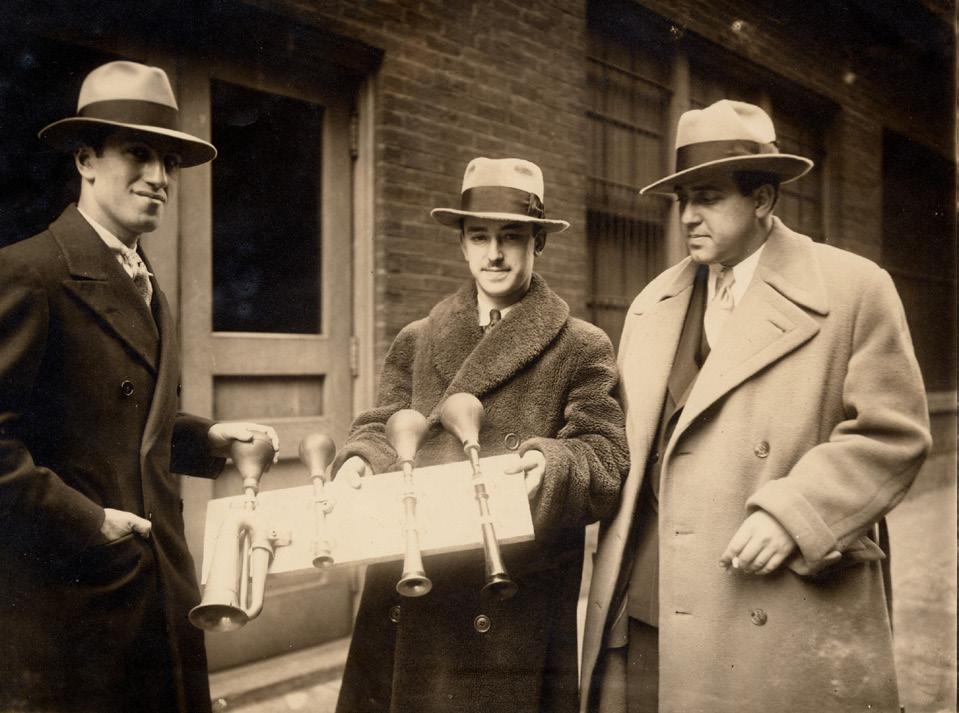
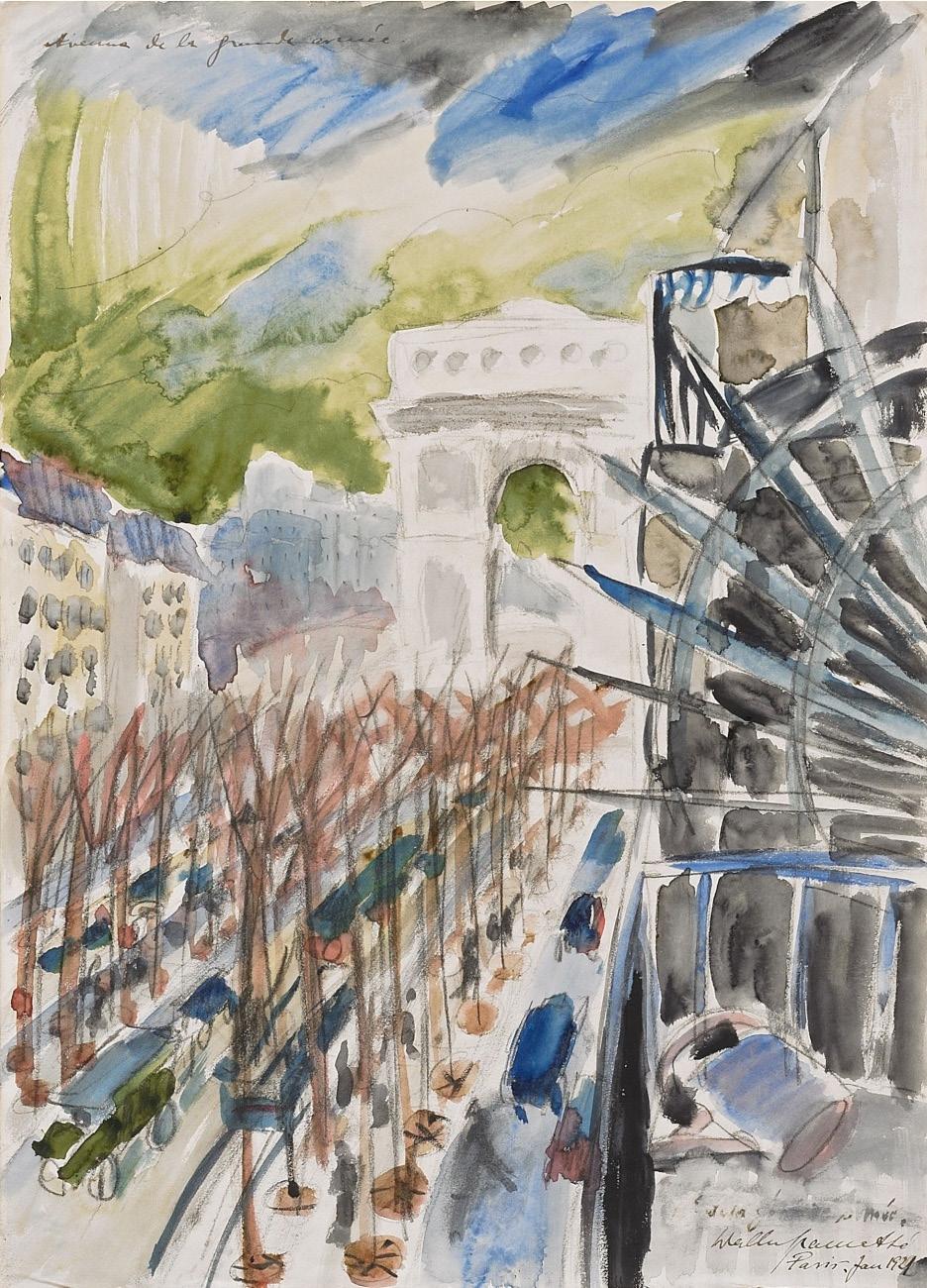
In Paris, Gershwin continued to work on the score of his new piece, and he spent one entire afternoon shopping the auto supply stores on the Avenue de la Grande-Armée in search of the ideal car horns for the rush-hour scene at the Place de la Concorde that he had in mind—a bracing touch of modern-day realism that echoed Gershwin’s belief that music should reflect the time in which it is written. (Gershwin wanted horns with specific pitches;
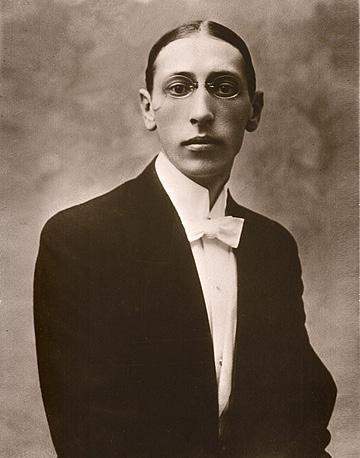
this page, from left: Gershwin, left, pictured with his four taxi horns, February 28, 1929. Photo taken in conjunction with performances of An American in Paris by the Cincinnati Symphony Orchestra on March 1 and 3 with Fritz Reiner conducting. With Gershwin are Cincinnati Symphony percussionist James Rosenberg (center, he later changed his name to James Jerome Ross and was a member of the CSO from 1954 to 1967; he also was the father of former CSO Percussion James Ross) and tenor Richard Crooks, right. Photo courtesy of the Ira and Leonore S. Gershwin Trusts. | Avenue de la Grande-Armée, watercolor over graphite pencil drawing by German expressionist artist Walter Gramatté (1897–1929), 1922 | opposite page: Igor Stravinsky, portrait, ca. 1905–10
he eventually purchased some twenty horns and took four of them home with him for the New York premiere.) Gershwin told a reporter that An American in Paris was “written very freely and is the most modern music I’ve yet attempted.” It’s certainly Gershwin’s most accomplished and ambitious orchestral work to date. For the first time, Gershwin’s trademark jazzy rhythms, bluesy harmonies, and unforgettable melodies are all woven into a big, sophisticated work of symphonic dimensions. By 1928, Gershwin had developed a fine ear for orchestral color and a sense of cinematic panorama. (To refute the persistent rumor that he wasn’t skilled enough to score his own music, the title page of the manuscript says “Composed and orchestrated by George Gershwin.”) Although Gershwin said the music was programmatic only in a general way (the play-by-play scenario printed in the score and often quoted is by Deems Taylor, not
IGOR STRAVINSKY
Born June 17, 1882; Oranienbaum, Russia
Died April 6, 1971, New York City
Gershwin), the work is unforgettably descriptive, from its opening walking music (think Gene Kelly, Hollywood, 1951) to the car-honking traffic jam. But Gershwin clearly had a broad storyline in mind: an American visiting Paris walks around the city, is overcome by homesickness (triggered by hearing a trumpet’s bluesy tune), and then returns to the city’s intoxicating streets. An American in Paris was a hit at its New York premiere in December, just months after Gershwin came home, and, inevitably, was soon loved in Paris too.
Note: At these performances, Klaus Mäkelä uses the critical edition of the restored final version of An American in Paris preserved in the composer’s handwritten score that was recorded under Gershwin’s supervision on February 4, 1929, and published in 2017, edited by Mark Clague.
The Rite of Spring (Scenes of Pagan Russia in Two Parts)
In 1911 Stravinsky began the score that would create the biggest riot in the history of music. He was already famous, just as Sergei Diaghilev had predicted— during rehearsals for The Firebird he pointed to Stravinsky and said, “Mark him well; he is a man on the eve of celebrity.” But Le sacre du printemps put him at the very forefront of the avant-garde and spread his name to corners of the world where news of the latest styles in French ballet rarely traveled. (Although when the score was suggested to Walt Disney for his film Fantasia, he asked “The Sock?,” clearly never having heard of Le sacre. He used it anyway: the longest segment in the film, it
depicts the creation of the earth and the age of dinosaurs.)
First, a word about the title. Stravinsky called his ballet Vesna svyashchennaya, Russian for “holy spring.” The painter Léon Bakst was the one who suggested Le sacre du printemps during rehearsals. The standard English version, The Rite of Spring, first used by Diaghilev for a London revival in 1921, was quickly sanctioned by a public tired of trying to get the French pronunciation right.
May 29, 1913, the night The Rite of Spring opened at the Théâtre des Champs-Élysées, is one of the dates historians cite as the start of the modern age, like 1907, the year Picasso painted Les demoiselles d’Avignon; or 1922, when The Waste Land and Ulysses were published. As Pierre Boulez has written,
The Rite of Spring serves as a point of reference to all who seek to establish the birth certificate of what is still called “contemporary” music. A kind of manifesto work, somewhat in the same way and probably for the same reasons as Picasso’s Demoiselles d’Avignon, it has not ceased to engender, first, polemics, then, praise, and, finally, the necessary clarification.
The premiere is engraved in all the music-history textbooks, first because of the outrage it provoked—in time, it has become the most notorious scandal in music and one of cultural history’s most cherished riots. The principal players, in addition to Stravinsky, were Sergei Diaghilev, the impresario; Pierre Monteux, the conductor; and Vaslav Nijinsky, the dancer who was making his debut as a choreographer.
The scene has often been retold: the audience grew restless and noisy almost as soon as the music began, and when the dancing started, it erupted. “I have never again been that angry,” Stravinsky later wrote. “The music was so familiar to me; I loved it, and I could not understand why people who had not heard it wanted to protest in advance.” There were catcalls and fistfights; one fight victim called out for a dentist. According to the artist Valentine Hugo, who was there (and made the four books of drawings that helped the Joffrey Ballet reconstruct the original production in 1987), the entire theater “seemed to be shaken by an earthquake.” Diaghilev flipped the house lights off and on to quiet the crowd. Nijinsky, recognizing imminent disaster, stood on a chair in the wings shouting numbers, directions, and general encouragement to his dancers. And all the while Pierre Monteux continued conducting. “He stood there apparently impervious and as nerveless as a crocodile,” Stravinsky remembered. “It is still almost incredible to me that he actually brought the orchestra through to the end.”
The spectacle of the premiere has always overshadowed the fact that at the dress rehearsal, before an invited audience that included Debussy and Ravel, and at the subsequent performances, The Rite of Spring didn’t cause any commotion. And most reports of opening night fail to point out that, despite the revolutionary nature of Stravinsky’s music, it was the dancing that provoked the audience. (After the opening moments, it would have been difficult even to hear the orchestra. “One literally could not, throughout the whole performance, hear the sound of music,” Gertrude Stein later commented, with characteristic poetic license because, after all, she wasn’t there.)
As Stravinsky was fond of remembering, after the first concert performance almost a year later, the crowd cheered, and he was
COMPOSED
1911–12
FIRST PERFORMANCE
May 29, 1913; Paris, France
INSTRUMENTATION
3 flutes, 2 piccolos and alto flute, 4 oboes and 2 english horns, 3 clarinets, E-flat clarinet and 2 bass clarinets, 4 bassoons and 2 contrabassoons, 8 horns, 2 wagner tubas, 4 trumpets, high trumpet and bass trumpet, 3 trombones, 2 tubas, timpani, percussion (bass drum, tambourine, cymbals, antique cymbals, triangle, tam-tam, guiro), strings
APPROXIMATE PERFORMANCE TIME
35 minutes
FIRST CSO PERFORMANCES
November 7 and 8, 1924, Orchestra Hall. Frederick Stock conducting
July 21, 1962, Ravinia Festival. Robert Craft conducting
MOST RECENT
CSO PERFORMANCES
November 16, 18, and 19, 2023, Orchestra Hall; November 17, 2023, Edman Memorial Chapel, Wheaton. Philippe Jordan conducting
July 11, 2025, Ravinia Festival. Marin Alsop conducting
CSO RECORDINGS
1968. Seiji Ozawa conducting. RCA
1974. Sir Georg Solti conducting. London
2000. Daniel Barenboim conducting. Teldec
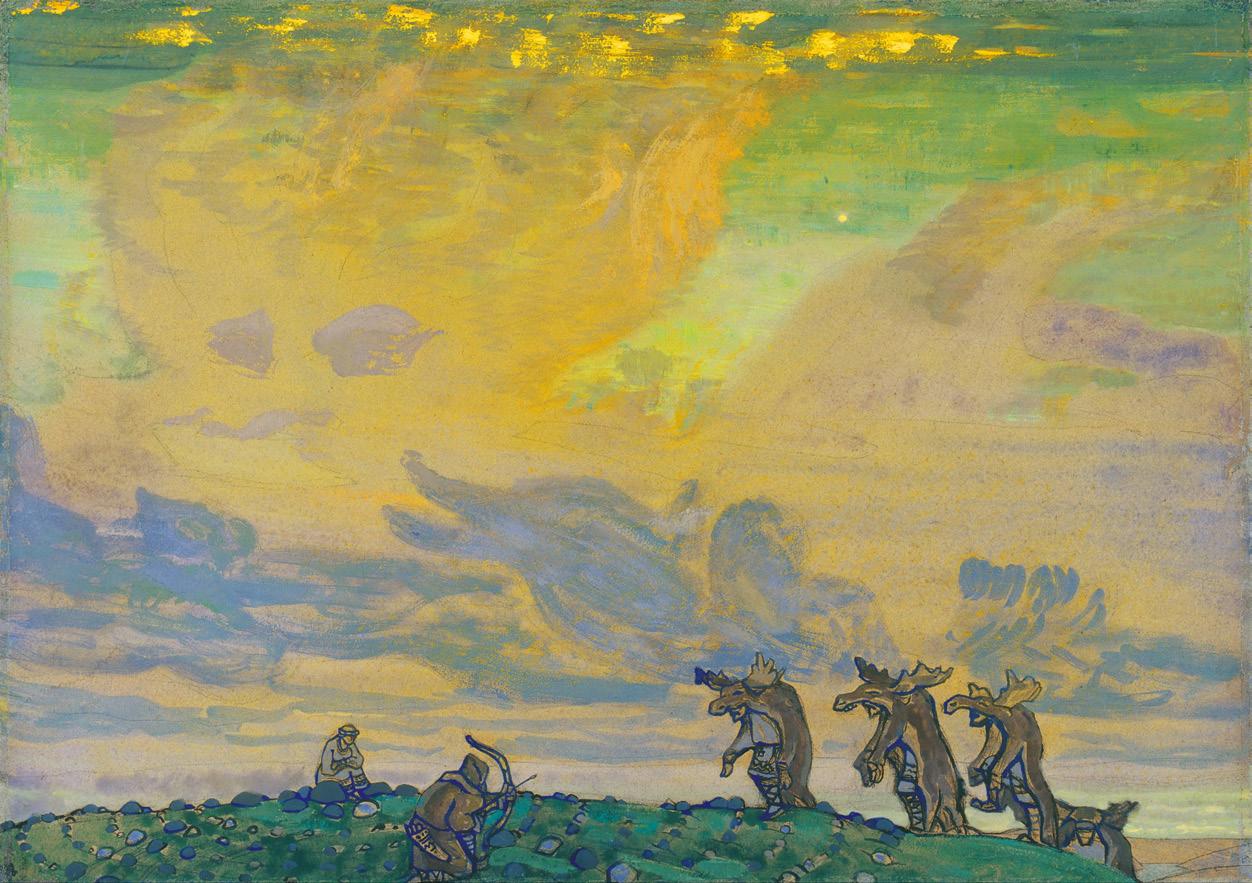
opposite page: The Great Sacrifice, tempera on paper, stage design by Russian artist Nicholas Roerich (1874–1947) for the ritual sacrifice in part 2 of The Rite of Spring. State Boris Kustodiev Art Gallery, Astrakhan, Russia. Photo by Art Images via Getty Images
carried aloft through the theater and into the Place de la Trinité.
It’s impossible today to imagine the shock of a score that, like Beethoven’s Fifth Symphony (written just over a century earlier), has had its freshness and daring dimmed by familiarity. When the Chicago Symphony played it for the first time in 1924, its notoriety had certainly preceded it, and the Orchestra did everything in its power to lead audiences safely through it, including the onstage use of cue cards, lettered like movie subtitles, to announce the subdivisions of the score. Frederick Stock, the Orchestra’s second music director, spoke from the stage before he began: “This is no typical Chicago spring,” he said. “For once, modern music conquered on first hearing,” the Tribune reported. The audience sat in dead silence during the brief intermission. “Perhaps they were stunned. At any rate, they were impressed.” The Herald and Examiner critic characterized the score aptly as “Dissonant, barbaric, complex, rhythmically new.”
The most audacious of the musical innovations are certainly rhythmic. In the Augers of Spring, the famous section near the very beginning, a single massive chord, repeated like a fast pulse, is shot through with irregularly spaced, unpredictable accents. It was murder on
Nijinsky’s dancers, just as it is for listeners today who must prove their musicality by beating time. That section, at least, Stravinsky could notate in conventional 2/4, with accents landing wherever they fell. But the final sacrificial dance was so new in its rhythmic conception that he couldn’t even find a way to put it on paper at first—even though he could play it at the piano. He eventually juggled bar lines and time signatures to correspond to what his hands wanted; the meter changes in nearly every measure (it begins 3/16, 2/16, 3/16, 3/16, 2/8, 2/16, 3/16).
There are many celebrated passages. Stravinsky layers different strict, ticking ostinato patterns—the orchestra sounds like a clock shop gone mad—to create a tension unknown in music. There is that famous pounding chord itself, the heartbeat of the Augers of Spring, a prophetic mixture of two unrelated tonalities, with an F-flat chord on the bottom and an E-flat seventh chord on top. It’s tempting to regard The Rite of Spring as an anthology of brilliant effects, from the opening solo for very high bassoon (quoted in all the textbooks on orchestration) to the giant whoosh with which the furious final dance collapses. But it’s the cumulative sweep of rhythmic energy that gives the score a life all its own. The Rite of Spring is as tight and shrewdly paced as a Hitchcock thriller; it still leaves audiences gasping more than a hundred years after it was written.
Afew words about the genesis of the music. Stravinsky claimed his first “fleeting vision” of this piece came to him in the spring of 1910, as he was finishing The Firebird. “I saw in my imagination,” he later recalled, “a
solemn pagan rite: sage elders, seated in a circle, watched a young girl dance herself to death. They were sacrificing her to propitiate the god of spring.” The scenario was planned in collaboration with the Russian painter and archeologist Nicholas Roerich, in the summer of 1910, before a note was written.
Stravinsky began to compose the music in Clarens, Switzerland, in the fall of 1911, at a small upright piano wedged into a room just eight feet square. It was in that room—with the piano, mercifully, muted for composing—that he hit upon the pounding chords of the Augers of Spring. Part 1 was finished early in January 1912, and he played through it for Pierre Monteux. “Before he got very far,” the conductor remembers, “I was convinced he was raving mad.” Early in June, Stravinsky persuaded Debussy to play through
the four-hand arrangement of the score with him at a party. It was hardly typical party music, and when they were done, one guest recalls, “We were dumbfounded, overwhelmed by this hurricane which had come from the depths of the ages, and which had taken life by the roots.” Stravinsky completed the entire score in sketch on November 17, “with an unbearable toothache.” Rehearsals for the ballet lasted six months; Stravinsky uncharacteristically stayed away until the very end. Despite the dancers’ difficulties with the music’s uncountable rhythms, rehearsals went on without incident. Stravinsky walked into the theater on May 29 unprepared for what would soon follow.
Phillip Huscher has been the program annotator for the Chicago Symphony Orchestra since 1987.
THE RITE OF SPRING (SCENES OF PAGAN RUSSIA IN TWO PARTS)
Here is the synopsis Stravinsky furnished for Serge Koussevitzky’s 1914 performance:
Holy Spring is a musical-choreographic work. It represents pagan Russia and is unified by a single idea: the mystery and great surge of the creative power of spring. The piece has no plot, but the choreographic succession is as follows:
First Part: The Adoration of the Earth. The spring celebration. It takes place in the hills. The pipers pipe and young men tell fortunes. The old woman enters. She knows the mystery of nature and how to predict the future. Young girls with painted faces come in from the river in single file. They dance the spring dance. Games start. The Spring Khorovod [a round dance]. The people divide into two groups, opposing each other. The holy procession of the wise old men. The oldest and wisest interrupts the spring games, which come to a stop. The people pause, trembling before the great action. The old men bless the spring earth. The Adoration of the Earth. The people dance passionately on the earth, sanctifying it and becoming one with it.
Second Part: The Great Sacrifice.
At night the virgins hold mysterious games, walking in circles. One of the virgins is consecrated as the victim and is twice pointed to by fate, being twice caught in the perpetual circle. The virgins honor her, the Chosen One. They invoke the ancestors and entrust the Chosen One to the old wise men. She sacrifices herself in the presence of the old men in the great holy dance, the great sacrifice.
PART 1: THE ADORATION OF THE EARTH
Introduction—
The Augers of Spring— Dances of the Young Girls— Mock Abduction— Spring Round Dances— Games of the Rival Tribes— Procession of the Sage— Adoration of the Earth— Dance of the Earth
PART 2: THE GREAT SACRIFICE
Introduction—
Mystical Circles of the Young Girls— Glorification of the Chosen One— Summoning of the Elders— Ritual of the Elders— Sacrificial Dance of the Chosen One
The Chicago Symphony Orchestra Association is grateful to Bank of America for its generous support as the Maestro Residency Presenter.