25 26 SEASON

MAR 5-6
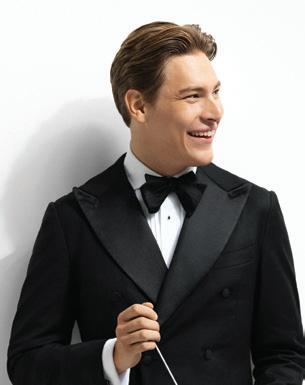
Mäkelä Conducts The Rite of Spring
APR 16-18
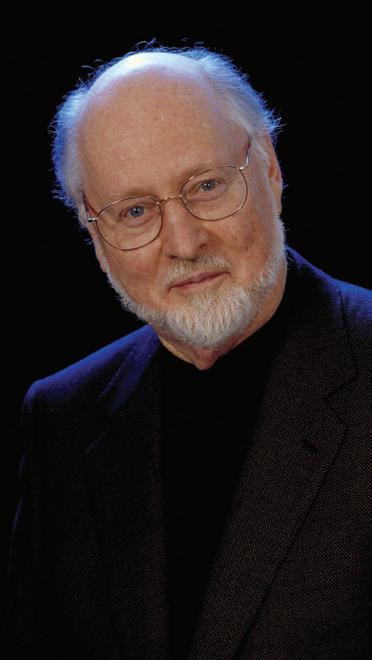
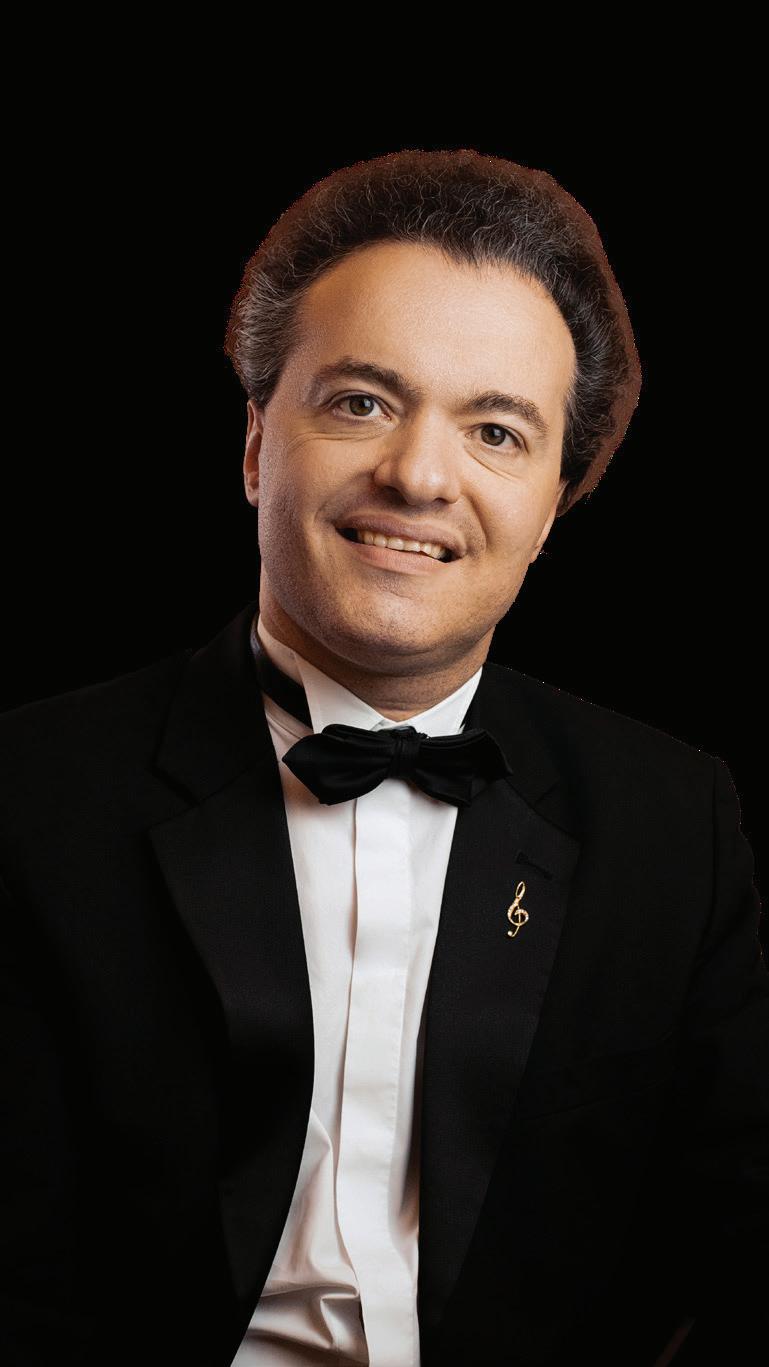
Evgeny Kissin with the CSO
APR 23-26
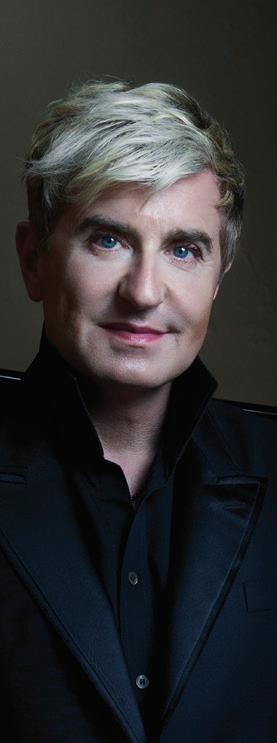
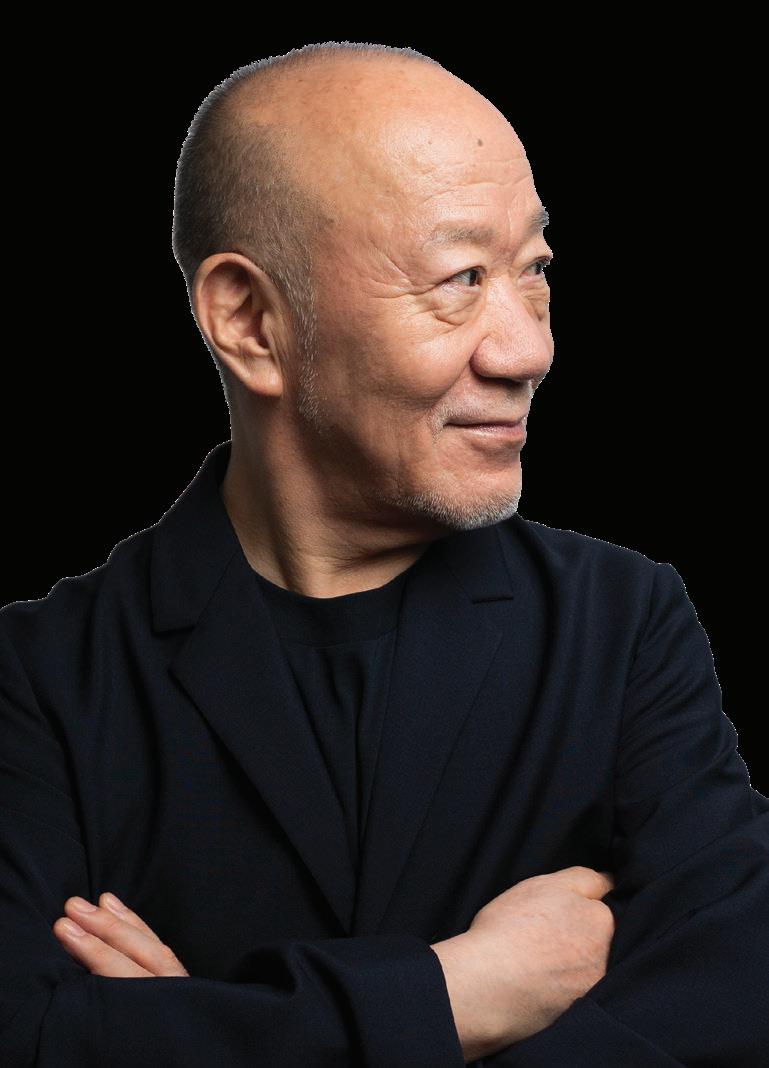
Hisaishi Conducts Hisaishi

CHICAGO SYMPHONY ORCHESTRA
KLAUS MÄKELÄ Zell Music Director Designate | RICCARDO MUTI Music Director Emeritus for Life
Thursday, February 19, 2026, at 7:30 Friday, February 20, 2026, at 7:30 Saturday, February 21, 2026, at 7:30
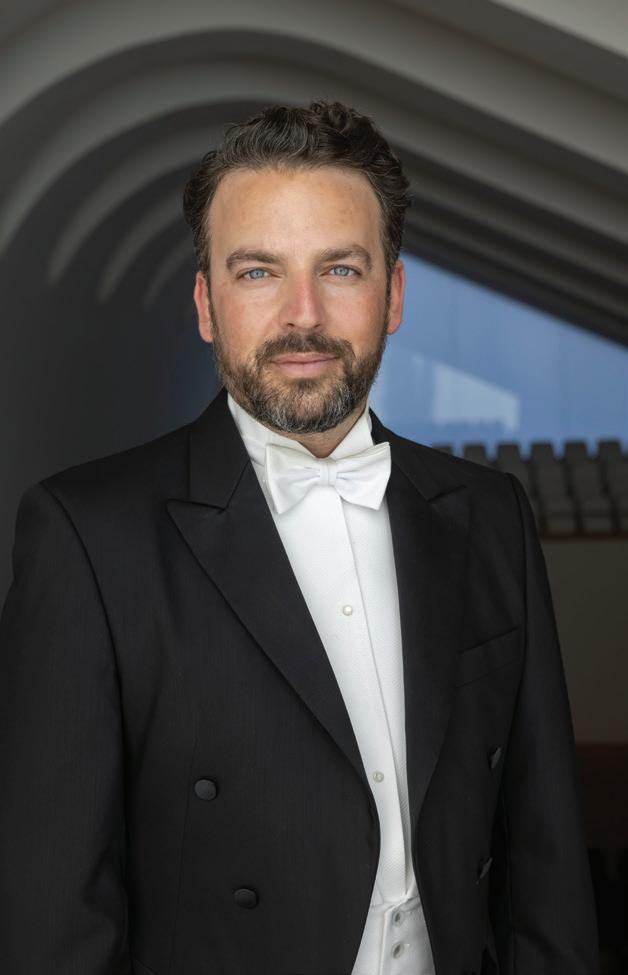
Klaus Mäkelä Conductor
SIBELIUS Lemminkäinen, Op. 22
Lemminkäinen and the Maidens of Saari
The Swan of Tuonela
Scott Hostetler, english horn Lemminkäinen in Tuonela Lemminkäinen’s Return
INTERMISSION
STRAUSS Ein Heldenleben, Op. 40
Robert Chen, violin
These concerts are generously sponsored by Zell Family Foundation. Bank of America is the Maestro Residency Presenter.
The Chicago Symphony Orchestra Association acknowledges support from the Illinois Arts Council.
The Chicago Symphony Orchestra thanks Zell Family Foundation for sponsoring these performances.
This evening’s concert pairs music by two composers, Jean Sibelius and Richard Strauss, that the Chicago Symphony played before any other American orchestra. It takes us back to the turn of the twentieth century, when our orchestra—then called the Chicago Orchestra—introduced many of the most exciting new works of music to the United States under the baton of its founder and music director, the visionary conductor Theodore Thomas. In the 1890s, the Chicago Orchestra gave the U.S. premieres of Strauss’s dazzling new tone poems Till Eulenspiegel’s Merry Pranks, Also sprach Zarathustra, Don Quixote— and then in March 1900, Ein Heldenleben, the work that closes this concert. Less than two years later, Thomas led the first performances in this country of two of the Lemminkäinen pieces played on the first half of tonight’s concert—works that introduced Sibelius’s orchestral music to America. Both Lemminkäinen and Heldenleben—written in the mid-1890s by two composers born a year apart—owe their popularity in this country to the early pioneering spirit of of Theodore Thomas and Chicago’s orchestra.
JEAN SIBELIUS
Born December 8, 1865; Tavastehus, Finland
Died September 20, 1957; Järvenpää, Finland
Lemminkäinen, Op. 22
The Chicago Symphony was the first American orchestra to embrace the music of Jean Sibelius. In 1901, during its ninth season, at a time when it was widely known for championing important new German music, the Orchestra gave the U.S. premieres of two of Sibelius’s Lemminkäinen pieces. The New York Philharmonic and the Boston Symphony—the only older orchestras in the country—had not yet played a note of Sibelius’s music. It was a stunning surprise from a little-known part of the musical world at a time when distant lands did indeed seem far away. “To the majority of us Finland was till a year ago merely a wee western bit of that great splash of yellow that represents Russia in the geographies—up there where the yellow borders on the pink that makes the Scandinavian
COMPOSED 1893–96
FIRST PERFORMANCE
April 13, 1896; Helsinki, Finland
INSTRUMENTATION
2 flutes and 2 piccolos, 2 oboes and english horn, 2 clarinets and bass clarinet, 2 bassoons, 4 horns, 3 trumpets, 3 trombones, tuba, timpani, triangle, tambourine, bells, bass drum, cymbals, harp, strings
APPROXIMATE
PERFORMANCE TIME
46 minutes
peninsula,” the Chicago Tribune said late in 1902. “We went, listened, and he conquered,” the Tribune continued, “for the two compositions of his that the orchestra played proved of a quality that had in it something unusual, something that smacked a bit of that wondrously rare thing in music nowadays—originality.”
Unexpectedly, Sibelius’s unconventional and hypnotic music struck a chord with the Chicago public: only months after they were premiered in Chicago, both Lemminkäinen pieces were voted spots on one of the Orchestra’s popular request programs. If the 1890s had been highlighted by historic Strauss premieres in Chicago, the beginning of the new century now admitted Sibelius. In just four seasons, Music Director Theodore Thomas and the Orchestra introduced five of Sibelius’s major works to this country, including his Second Symphony, which was played just once, on the afternoon of January 1, 1904, before all of the city’s theaters were shut down in the wake of the historic Iroquois Theatre fire in downtown Chicago that killed more than six hundred people.
The Chicago Symphony’s interest in Sibelius began where the composer himself began, with music inspired by the Kalevala, the Finnish national epic poem. When Sibelius first read the Kalevala as a young student, he found the inspiration for much of the music that would one day make him famous and also label him unfairly as a nationalistic composer. In fact, Sibelius’s first major composition, the expansive Kullervo, based on the Kalevala, was such a success in 1892 that, from that point on, Finland looked no farther for its leading composer. (The impact of Sibelius’s exposure to the Kalevala on the rest of his career is closely paralleled by Bartók’s famous discovery of Hungarian folk song a decade later.)
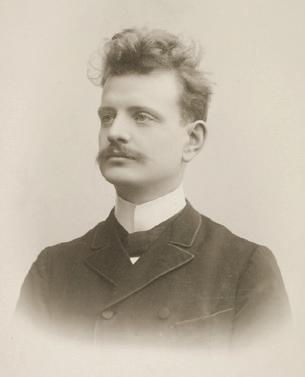
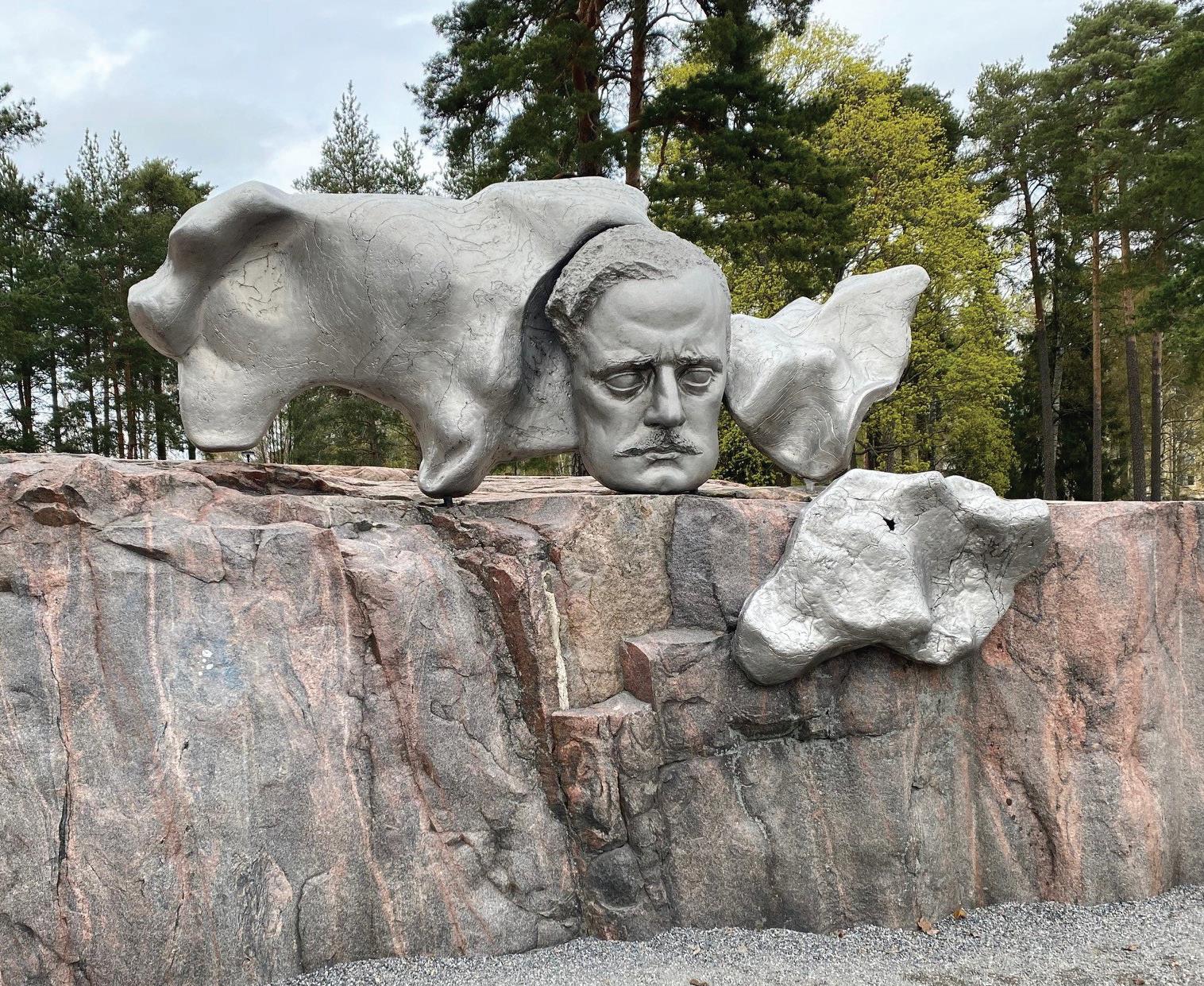
Sibelius’s absorption in the Kalevala was only possible because his family made the forward-looking decision to transfer him, at the age of seven, from a popular Swedish-language preparatory school to the brand-new, first-ever Finnishlanguage grammar school, the Normaalilyseo. (Until it was founded, Swedish and Latin were the standard languages of the Finnish school system.) Although Sibelius didn’t master Finnish until he was in his twenties, this exposure to the sounds and previous page: Jean Sibelius as photographed by Norwegian Finnish artist Daniel Nyblin (1856–1923), ca. 1896. Atelier Daniel Nyblin, Helsinki, Finland | opposite page, from left: Izhorian runic singer and folklorist Larin Paraske (1833–1904), ca. 1891. Photograph by Daniel Nyblin. Finnish Heritage Agency, Helsinki, Finland | Bust of the composer—part of the Sibelius Monument, an abstract steel sculpture, Passio Musicae, by Eila Hiltunen (1922–2003), unveiled in 1967—in Sibelius Park, renamed in his honor on his eightieth birthday in 1945. Helsinki, Finland
FIRST CSO PERFORMANCES
December 6 and 7, 1901, Auditorium Theatre. Theodore Thomas conducting (The Swan of Tuonela and Lemminkäinen’s Return) (U.S. premieres)
August 8, 1937, Ravinia Festival. Fritz Reiner conducting (The Swan of Tuonela)
April 5, 6, and 7, 1984, Orchestra Hall. Henry Mazer conducting (Lemminkäinen and the Maidens of Saari)
November 14, 15, and 16, 1996, Orchestra Hall. Robert Spano conducting
MOST RECENT
CSO PERFORMANCES
July 6, 1950, Ravinia Festival. Eugene Ormandy conducting (The Swan of Tuonela)
April 3, 5, and 8, 2014, Orchestra Hall. Esa-Pekka Salonen conducting
February 16, 17, and 18, 2023, Orchestra Hall. Klaus Mäkelä conducting (The Swan of Tuonela)
CSO RECORDINGS
1940. Robert Mayer as soloist, Frederick Stock conducting. Columbia (The Swan of Tuonela) 1991. Grover Schiltz as soloist, Herbert Blomstedt conducting. CSO (From the Archives, vol. 15: Soloists of the Orchestra II) (The Swan of Tuonela)
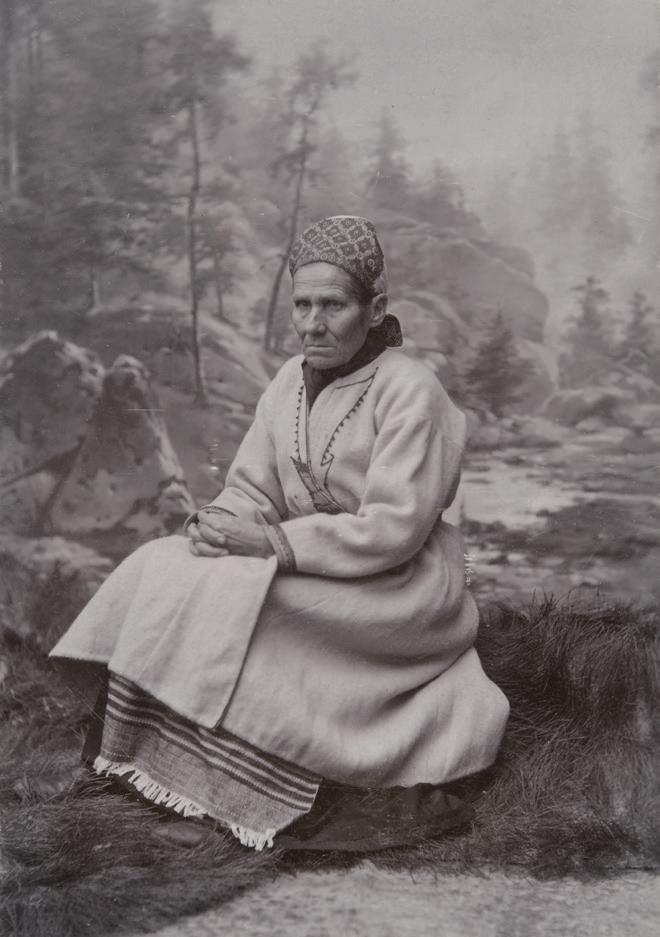
rhythms of the language fired his imagination at an early age and sparked his ongoing project of reading and rereading the Kalevala. By 1891 his interest in the epic was so consuming that he made a special trip to hear Larin Paraske, a well-known runic singer, perform episodes from the Kalevala, carefully observing the inflections of her singing in ways that would influence his own musical style. “All my moods derive from the Kalevala,” he wrote to his future wife, Aino, that year as he was conceiving his monumental, highly original Kulervo. The next year, Sibelius extended their honeymoon in order to travel to Karelia, the district that is ground zero for the Kalevala legend, where he wrote down folk melodies in his notebook.
The four Lemminkäinen pieces he composed over the following years established the full Sibelius style. In place of textbook regulation and historic symphonic conventions, his music followed its own rules: folklike, ancient-sounding modal melodies of a distinctly Finnish origin move, sometimes stubbornly, in a unique landscape of repetition, obsessive drive, dark colors, jarring juxtapositions, savage rhythmic patterns, and slowly building cycles of immense power. Sibelius had become one of
the rare composers for whom the normal rules no longer apply. It is a language unlike any other, yet one that speaks with a force that needs no translation.
The two works with which Theodore Thomas introduced Sibelius’s orchestral music to American audiences were The Swan of Tuonela and Lemminkäinen’s Return. In 1900 Sibelius had revised both and published the two as a concert pair. When the composer led them in Heidelberg in June 1901, to great public success, Richard Strauss attended a rehearsal and spoke glowingly of them. (Ein Heldenleben was just three years old at the time.)
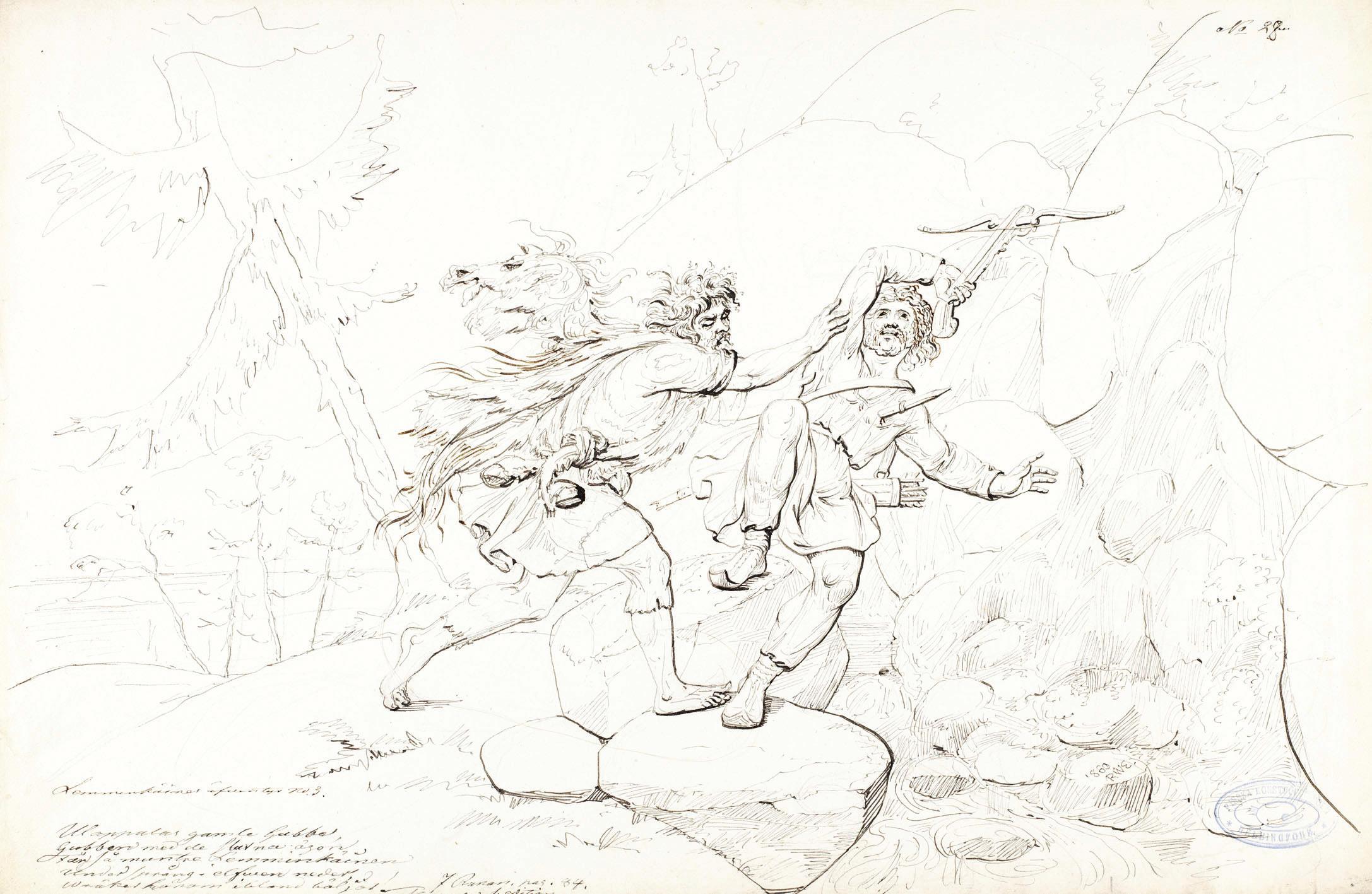
The four legends from the Kalevala all revolve around the figure of Lemminkäinen, a young and powerful hero—not unlike Wagner’s Siegfried or the star of Strauss’s Heldenleben—and very much of a Don Juan, dashing and seductive. Each of the four tone poems captures a decisive moment in Lemminkäinen’s adventures—hunting, seducing, fighting, and, through his mother’s magical powers, even surviving his own death. (Her magic powers allow her to stitch together the shreds of his mutilated body and bring him back to life.) Sibelius wasn’t interested in following a
COMMENTS
straight narrative arc—the four pieces don’t attempt to tell the story in “order.” In fact, Sibelius changed the sequence of the pieces over time. When he conducted the first performance in 1896, he placed The Swan of Tuonela third. It was only with the long-delayed publication of the complete Four Legends in 1954 that the standard order of the two middle movements used in these performances was established.
In the first of the legends, Lemminkäinen and the Maidens of Saari, Lemminkäinen leaves his homeland and sails on the open sea to arrive at a distant island. This is a brilliant atmospheric piece, from the mysterious opening measures that offer our initial sighting of an ancient, unknown land slowly coming into view. Musically, this is prime Sibelius territory, with its frenetic energy of spinning woodwind melodies and stirring strings, and with its long stretches of dancing activity over low, longheld pedal notes. There are also passionate lyrical themes that suggest Lemminkäinen’s erotic adventures.
THE KALEVALA, FINLAND’S NATIONAL EPIC
The Kalevala was originally published in 1835 and then enlarged for a second edition that came out in 1849, which is now considered the standard version. It has fifty runos or cantos, totaling 22,795 lines. This edition was compiled by Elias Lönnrot (1802–1884), whose structural ideal was the Iliad by Homer. In the beginning, the poetry was sung (the word runo originally meant sung).
The meter of the Kalevala, like that of most ancient Finnish poetry, is trochaic tetrameter, which is best known to the English-speaking public from Longfellow’s The Song of Hiawatha:
By the shores of Gitche Gumee / By the shining Big-Sea-Water
In fact, Longfellow wanted to convey the impression of an oral poetry, and he settled on a meter for Hiawatha after reading a German translation of the Kalevala.
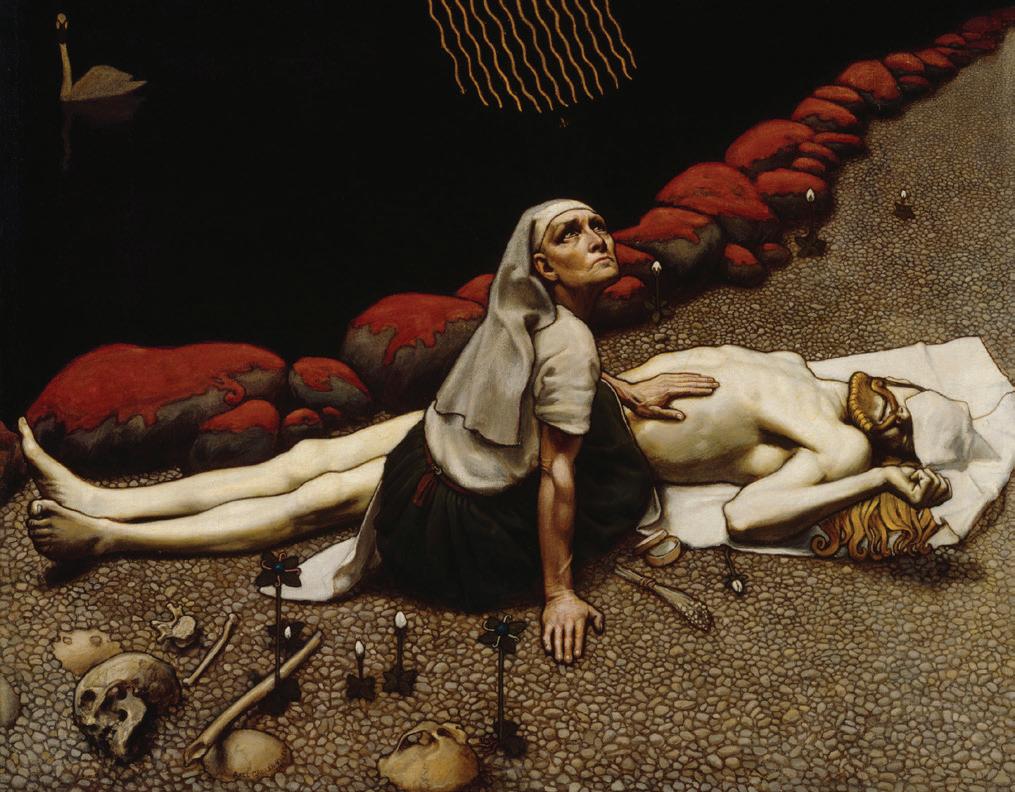
above: Lemminkäinen’s Mother, tempera on canvas, by Akseli GallenKallela (1865–1931), 1897. A scene from the Kalevala in which the warrior Lemminkäinen is killed, hacked to pieces, and thrown into the river that flows through the underworld, Tuonela. His mother—having collected the body parts and sewn them back together—holds his lifeless form, awaiting a bee sent to fetch life-restoring honey from the god Ukko. Finnish National Gallery, Helsinki, Finland
The origins of The Swan of Tuonela date to 1893, when Sibelius began his first opera, The Building of the Boat, inspired by the Kalevala. The next summer, he went to Bayreuth, where he attended multiple performances of at least seven of Wagner’s operas, falling entirely but only briefly under the spell of the intoxicating music. Realizing the competition he would face if he pursued an operatic career, he abandoned The Building of the Boat
almost as soon as he returned home. “I think I really am a tone painter and a poet,” he told Aino. (The trip to Bayreuth was also motivated by the chance to see how another composer had chosen to deal with a great national epic, the Nibelungenlied.)
The Swan of Tuonela is what Sibelius salvaged from The Building of the Boat—music so striking that one cannot help but wonder about the operatic career that Wagner, in effect, cut short. Sibelius conceived this dark and moody music as the prelude to his opera, and, although it makes an unconventional operatic opening, it is close to perfection as a small tone poem. At the top of the score Sibelius wrote:
Tuonela, the land of death, the hell of Finnish mythology, is surrounded by a large river of black waters and a rapid current, in which the swan of Tuonela glides majestically, singing.
The music vividly paints the scene: a plaintive english horn melody rides serenely over deep string sonorities. (The strings—con sordino, or muted, throughout—are divided into seventeen separate lines; these, in turn, are sometimes yet further subdivided to allow solo lines to emerge.) There is a glimpse of sunlight, signaled by the
harp, as the music reaches C major. But the swan sails off again into the darkness. Sibelius’s sense of mood and color is keen. His understanding of sonority, even at this early stage in his career, is singular: listen, for example, to how the swan’s song fades over a quietly beating drum as an icy chill sweeps through the strings (playing tremolos col legno, or with the wood of the bow).
Lemminkäinen in Tuonela begins with the unforgettable sound of the turbulent, dark waters of the River of Death, which will carry Lemminkäinen’s body to Tuonela, after he is killed, his corpse thrown in pieces into the river. (The surging strings are especially ominous.) The middle section, primarily scored for strings, is one of the composer’s finest effects; eventually it is dominated by long, sinuous melodies (revolving, recitation-like, around just a few pitches)—the runic singing of Larin Paraske brought to life. Lemminkäinen’s mother collects his remains from the river and pieces them back together. The end is cold and bleak.
above: The Death of Lemminkäinen, pencil on paper, from the fourteenth song of the Kalevala, where Märkähattu kills Lemminkäinen by the river of Tuonela. Finnish artist Robert Wilhelm Ekman (1808–1873), 1860. Ateneum Collection, Helsinki, Finland
The finale of the set, Lemminkäinen’s Return, is triumphant music of homecoming. Sibelius quotes from the poem:
Then the lively Lemminkäinen started on his homeward journey, saw the lands and saw the beaches. Here the islands, there the channels, saw the ancient landing-stages, saw the former dwelling places.
Sibelius writes music of extraordinary thrust, generated by the galloping rhythm suggested by the bassoon at the outset. Through the use of ostinato patterns and the continual ripple of sixteenth notes, he never lets momentum flag. Neither of Sibelius’s first two symphonies has a finale to match the excitement and suspense of this music. Within a matter of years, he would leave the world of the symphonic poem behind
RICHARD STRAUSS
Born June 11, 1864; Munich, Germany
and find ways to achieve comparable effects— and still maintain his stunning originality—within the traditional form of the symphony, but he never surpassed the brilliant drama and color of the music he composed under the spell of the Kalevala.
A word about the title. At their first performances, these four pieces were titled (in Finnish and Swedish) Lemminkäinen, symphonic poems (subject from the Lemminkäinen tale). Even then, the critics often referred to the set simply as Lemminkäinen. A new subtitle, Four Legends, emerged early in the twentieth century and the set is still often billed as Four Legends from the Kalevala. Subsequently the work has also been called the Lemminkäinen Suite. But Lemminkäinen still remains the simplest and most authentic way to refer to the score.
Died September 8, 1949; Garmisch-Partenkirchen, Germany
Ein Heldenleben, Op. 40
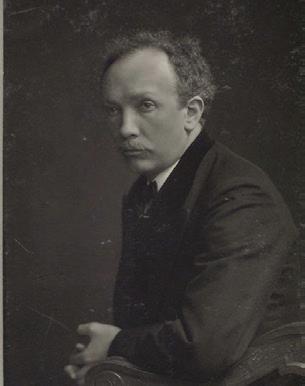
In 1898, after lending music of lasting brilliance to heroes taken from the pages of Shakespeare, Nietzsche, and Cervantes, and to two great legendary characters— Don Juan and Till Eulenspiegel—Richard Strauss could think of no other subject more suitable than himself. At the top of his last great tone poem he wrote “Ein Heldenleben” (A Hero’s Life, or A Heroic Life), leaving little doubt of the title character’s identity. As Strauss told Romain Rolland, “I do not see why I should not compose a symphony about myself; I find myself quite as interesting as Napoleon or Alexander.” The mention of Napoleon was no coincidence, for Ein
Heldenleben was Strauss’s response to the Eroica, Beethoven’s Napoleon-inspired symphony— “admittedly without a funeral march, but yet in E-flat, with lots of horns, which are always a yardstick of heroism.”
Those who knew Strauss thought him an unlikely hero. There was nothing about him— apart from his own dazzling music—to compare with the bold and fearless character who throws open the first page of this score and then holds our attention for one enormous paragraph of music—the 116 measures of nonstop orchestral exhibitionism that Strauss labels The Hero. The moment of silence that follows is broken by the squabbling of the woodwinds, introducing The Hero’s Adversaries. This is Strauss’s depiction of his critics, and it is rendered with such hatred (Strauss requests “snarling” oboes and “hissing”
cymbals) that we would think he had never received a good review in his life. (In fact, aside from his first opera Guntram, Strauss probably had read more glowing reviews of his music than any major composer of the day.)
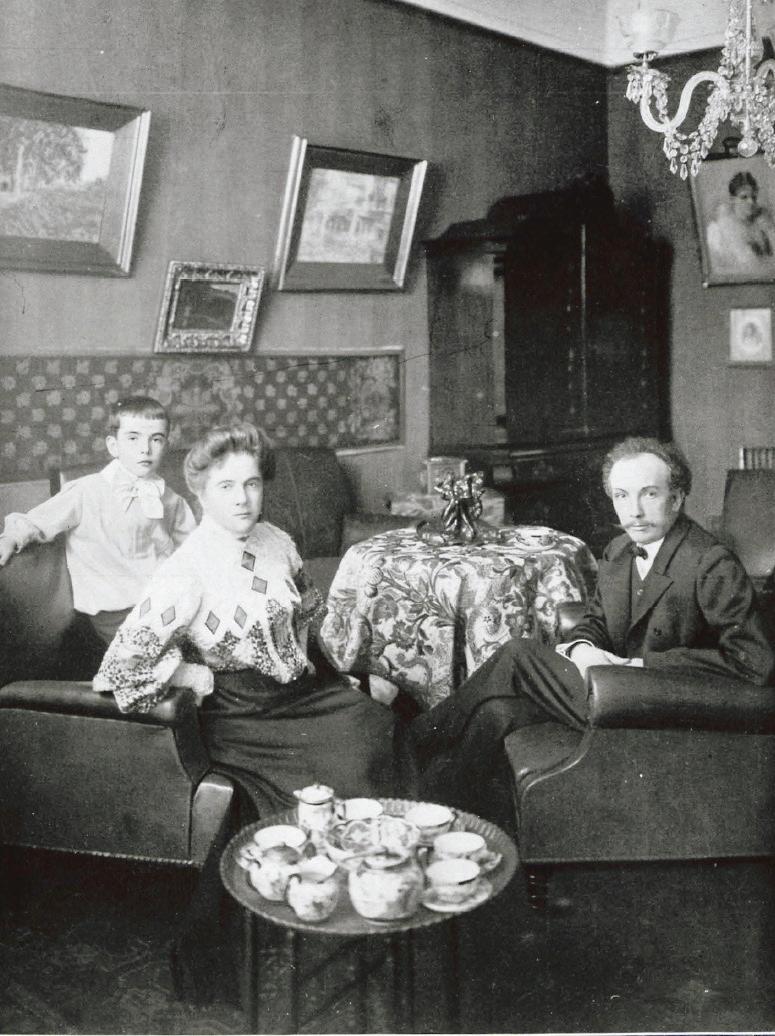
Next we meet Strauss’s wife, Pauline Strauss de Ahna, an accomplished soprano who sings here with the voice of a solo violin. Richard had met Pauline de Ahna in the summer of 1887, when his uncle suggested he give lessons to the neighbors’ daughter, a young woman with a generous voice and a boisterous temperament. She needed coaching and discipline; she found romance instead. Pauline was a complex woman—wildly impetuous and often fractious and stubborn—but Richard quickly realized he couldn’t live without her. She gave him advice and encouragement, and she was the only critic who mattered to him. “She is the spice that keeps me going,” the composer later told his son Franz. As Strauss admitted, Pauline was a “very complicated” subject to portray, “different each minute from what she was a minute earlier.” The Hero’s Companion, as Strauss calls this mercurial section, is a fulllength portrait, and it is not always complimentary. Certainly, Pauline noticed that her husband painted himself in a warm, flattering light, while “her” violin solo is marked, at various points: “flippant,” “angry,” and “nagging.” But no one who knew Pauline ever took issue with Richard’s appraisal, though many wondered why she put up with such treatment. (Years later, when she was portrayed in an even less complimentary way in the opera Intermezzo, she told the soprano Lotte Lehmann, who sang her role, “I don’t give a damn.”) Nevertheless, theirs was a great love match, and sumptuous love music soon overpowers her voice and encompasses the entire orchestra.
The hero’s adversaries again raise their sharp voices, and he prepares to attack. The Battle Scene is noisy and thrillingly chaotic for a very long stretch, and for many years, this was one of the most notoriously difficult passages in all music; the technical advances of the ensuing decades have scarcely softened its impact. Gradually, the hero is strengthened by thoughts of love, and he rises above his adversaries. A broad ascent to victory is marked by the return of the opening theme, now at full cry, and the Eroica horns Strauss promised. (The way they dart around the big tune is particularly bold.) At the climax, the horns let loose with the great, vaulting signature tune from Don Juan, prompting the appearance of other themes from Don Juan and Also sprach Zarathustra before the music gradually fades.
In a quiet daydream (a gently swaying barcarole), Strauss recalls music from his previous tone poems as well as many of his songs, and even (or perhaps most pointedly) the failed Guntram. These are The Hero’s Works of Peace. (“Of course I
COMPOSED
1897–December 1898
FIRST PERFORMANCE
March 3, 1899; Frankfurt, Germany. The composer conducting
INSTRUMENTATION
3 flutes and piccolo, 4 oboes (4th doubling english horn), 2 clarinets, E-flat clarinet and bass clarinet, 3 bassoons and contrabassoon, 8 horns, 2 piccolo trumpets and 3 trumpets, 3 trombones and tenor trombone, tuba, timpani, percussion (tam-tam, triangle, cymbals, snare drum, tenor drum, bass drum), 2 harps, strings (including a prominent violin solo)
APPROXIMATE
PERFORMANCE TIME
46 minutes
FIRST CSO PERFORMANCES
March 9 and 10, 1900, Auditorium Theatre. Theodore Thomas conducting (U.S. premiere)
August 3, 1939, Ravinia Festival. Artur Rodziński conducting
MOST RECENT
CSO PERFORMANCES
July 24, 1998, Ravinia Festival. Edo de Waart conducting
May 19, 20, 21, and 22, 2022, Orchestra Hall. Karina Canellakis conducting
CSO RECORDINGS
1954. Fritz Reiner conducting. RCA 1990. Daniel Barenboim conducting. Erato 2008. Bernard Haitink conducting. CSO Resound
opposite page: Richard Strauss, portrait by Albert Meyer (1857–1924). Tucker Collection, New York Public Library Archives
next page: Strauss at home with his son, Franz (1897–1980), and wife, Pauline, née de Ahna, (1863–1950). Photo by Albert Zander (1864–1897) and Siegmund Labisch (1863–1942) from Berlin Life, 1904
haven’t taken part in any battles,” Strauss wrote to his publisher years later, “but the only way I could express works of peace was through themes of my own.”) The critics reappear briefly; Strauss rises up against them in one last tirade. The final section is labeled The Hero’s Escape from the World and Fulfillment. The music now slips into a simple pastorale, with an english horn calling out over a quiet drum tap. The violins repeatedly hint at a new theme, which finally rises from total silence—a melody so noble and disarming that we do not recognize it as the same sequence of notes first uttered rather ineloquently by Pauline. It’s one of Strauss’s greatest themes, all the more moving for coming so near the end, like a grand benediction. There is one last, disruptive assault from the critics, and then the loving voice of Pauline, obviously quite undone by some of her husband’s most sublime music.
Ein Heldenleben wasn’t the last of Strauss’s family portraits. Five years later, with the Domestic Symphony, he became the twentieth century’s first great realist painter, depicting life at home with Pauline—bathing the baby, making love, quarreling—with surgical precision and in painstaking detail. (Strauss boasted that he had reached the point where he could differentiate musically between a knife and a fork.) And with the operatic comedy Intermezzo, even Strauss wondered if he had gone too far, blurring the line between public and private in ways that made audiences uncomfortable and angered his own family.
Today, of course, it’s easier to view Ein Heldenleben as an innocent orchestral fantasy— simply to enjoy its abundant musical pleasures. Strauss’s hero and his companion are still vividly real, but they aren’t real-life people to us. As the art historian Ernst Gombrich wrote, “The consummate artist conjures up the image of a human being that will live on in the richness of its emotional texture when the sitter and his vanities have long been forgotten.” Both Richard and Pauline Strauss have now been dead for more than three-quarters of a century. Their son Franz and his two children are also all gone, leaving virtually no one who would care how the family is portrayed in Ein Heldenleben. For the rest of us, this music holds the same fascination as any great portrait—for a few moments we feel we actually know these people, we enjoy the thrill of peering into another time and place, and then we return to our own lives.
Phillip Huscher has been the program annotator for the Chicago Symphony Orchestra since 1987.
Lemminkäinen the Disruptor
Directly after the concert on February 21, join Professor Thomas Dubois for a presentation and audience Q&A about the story and artistic influences of the fabled folk hero Lemminkäinen on Sibelius’s composition. This event is open to all ticket holders and will take place in Grainger Ballroom with limited seating.
The Chicago Symphony Orchestra Association is grateful to Bank of America for its generous support as the Maestro Residency Presenter.