ONE HUNDRED THIRTY-FIFTH SEASON
Sunday, February 22, 2026, at 3:00
Anderson Chapel, North Park University
CSO Chamber Music Series
CIVITAS ENSEMBLE
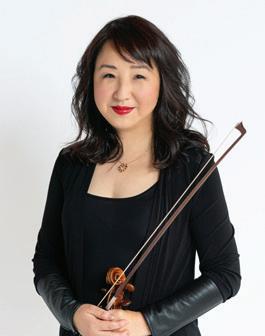
Yuan-Qing Yu Violin
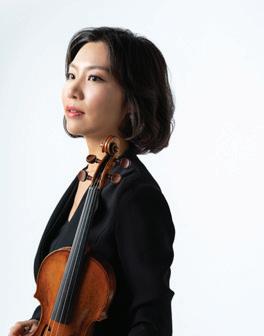
So Young Bae Violin
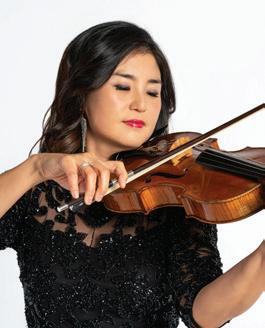
Sunghee Choi Viola
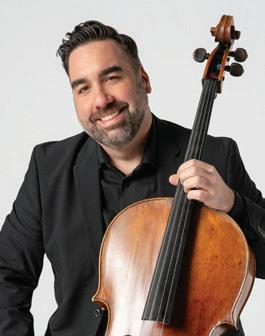
Kenneth Olsen Cello
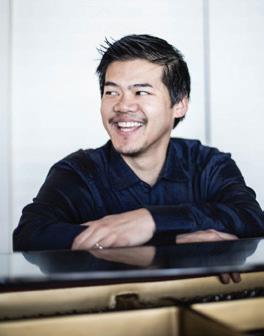
Winston Choi Piano
FAURÉ
Piano Quintet in C Minor, Op. 115, No. 2
Allegro moderato
Allegro vivo
Andante moderato
Allegro molto
INTERMISSION
BARTÓK Piano Quintet in C Major
Andante—Allegro Vivace (Scherzando)
Adagio—
Poco a poco più vivace—Vivace
The Chicago Symphony Orchestra Association acknowledges support from the Illinois Arts Council.
Special thanks to North Park University for hosting this concert.
COMMENTS
by Richard E. Rodda
GABRIEL FAURÉ
Born May 12, 1845; Pamiers, Ariège, France
Died November 14, 1924; Paris, France
Piano Quintet in C Minor, Op. 115, No. 2
COMPOSED 1919–21
Gabriel Fauré was among the most important musical personalities of fin de siècle France. Though it was nearly a decade after he produced the lovely requiem in 1887 before his music began to receive widespread attention, he came to enjoy a solid reputation during his later years as a composer as well as in other musical fields. Like his teacher, Camille SaintSaëns, Fauré was a master organist who held some of the most important church positions in France. In 1896 he was appointed professor of composition at the Paris Conservatory, where he helped train distinguished musicians such as Ravel, Enesco, Koechlin, Florent Schmidt, and Nadia Boulanger. He succeeded Théodore Dubois as director of the conservatory in 1905, a post he held until ill health and almost complete deafness forced him to resign in 1920. He also wrote music criticism for Le Figaro for the two decades after 1903. The compositions for which he is known today are, according to Milton Cross, exquisite examples of “the art of understatement. The pure and classic beauty that pervades his greatest works
is derived from simplicity, restraint, delicate sensibility, refinement, and repose. It is the kind of beauty that lends itself best to smaller forms and the more intimate mediums of musical expression.”
Fauré’s later years were plagued by increasing deafness and infirmity. He tried to keep his ailments secret, especially his loss of hearing, fearing that their discovery would endanger his post as director of the Paris Conservatory. He was surprisingly successful at his deception for several years, but by 1920 his condition had become obvious enough that he was asked by the French Ministry of Fine Arts, with all possible tact, to resign his position. Through the efforts of Paul Léon, the fine arts minister, a small pension was arranged for him, but his financial outlook still offered a troubling insecurity. To aid his situation, friends and students sponsored concerts and publications in his honor, and he was assigned a number of editing jobs by the publisher Durand, including a new edition of Bach’s organ works in collaboration with Joseph Bonnet. Durand also encouraged Fauré to continue composing for chamber ensembles, and during the months surrounding the end of his duties at the conservatory, in October 1920, he wrote the splendid Quintet no. 2 for Piano
and Strings. The work was premiered with excellent success at a concert of the Société Nationale on May 21, 1921, and given again as the finale of an all-Fauré program at the Sorbonne in June 1922, which the presence of Alexandre Millerand, president of the republic, elevated to a national tribute honoring the composer’s contributions to French music.
Fauré captured in his second quintet both the maturity and repose of his seventy-six years and the vitality of a creativity that remained fresh throughout his long life—the noted French music scholar Jean Roy called the work “both a nostalgic poem and an affirmation of eternal youthfulness.” The lovely, arching main theme of the opening movement is presented by the viola above insistent repeated figures in the piano. This melody spreads through the rest of the ensemble before the complementary subject, a bold motif in full chords, is introduced by the strings alone. The development treats both themes. The main and second themes
are returned quickly in the recapitulation, but the movement continues for some time with a spacious consideration of both motifs, ending with a vigorous, major-key coda. Though the scherzo moves at a tripping gait that recalls the elfin music of Mendelssohn, its rich, subtle harmonic language is distinctly French. It alternates two strains, one vivacious and continuously in motion, the other more expansive and lyrical. The exquisite Andante, music of tender, twilight emotions, is based on a close-interval theme initiated by the strings at the outset and a slow, dreamy scale-step melody presented later by the piano. These two themes are heard once separately, then again with some changes of scoring, and finally together. The movement closes with a peaceful coda drawn from the second theme. The finale, like the earlier movements, is remarkable for the ease and inventiveness with which it transforms its thematic materials, the first an anxious rising motif given by the strings over a shifting-accent pattern in the piano, the second a flowing piano melody.
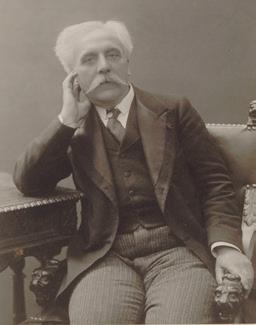
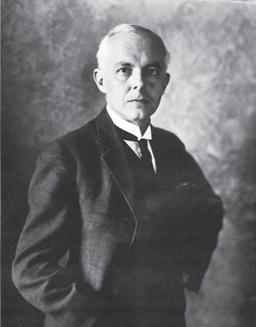
opposite page: Gabriel Fauré, portrait by Eugène Pirou (1841–1909), ca. 1905. Bibliothèque nationale de France | next page: Béla Bartók, The Budapest Bartók Archives
BÉLA BARTÓK
Born March 25, 1881; Nagyszentmiklós, Hungary
Died September 26, 1945; New York City
Piano Quintet in C Major
COMPOSED
1903–04
Bartók showed remarkable gifts as both a pianist and composer as a youth. By 1898, when he was seventeen, there was no question that he would follow a career in music, but there was a question about which school he would attend. He was admitted on scholarship to the Vienna Conservatory, an excellent school but also a bastion of Germanism, but his friend Ernst von Dohnányi convinced Bartók to join him at the recently opened Budapest Academy. Bartók’s intention when he entered the academy was to become a concert pianist with composition as a sideline, though he was thoroughly trained in the latter discipline by Hans Koessler and immersed himself in studying the music of Brahms, Liszt, and Wagner. Dedication to his piano studies, Koessler’s disapproval of some faux Brahms pieces that he wrote for composition class, and a bout of serious ill health discouraged Bartók from composing, however, and it was not until he attended the Budapest premiere of Richard Strauss’ Also Sprach Zarathustra in February 1902 that he again became excited about creative
work. He began an intensive study of Strauss’s scores and made a piano transcription of Ein Heldenleben, which he inflicted upon his professors, who considered such extravagant flamboyance and expressive intensity almost diabolical and corrupting. (Strauss, it must be remembered, was among music’s most controversial modernists in 1902.) Paralleling this new stream of influence on Bartók’s creativity was another one, flowing from the rising tide of Hungarian nationalism that demanded full independence of the nation from Habsburg Austria. Bartók, who for a time took to wearing national dress and criticized his family’s everyday use of German, consolidated the Straussian and the Hungarian aspects of his creative nature in the tone poem Kossuth, inspired by the hero of the Hungarian revolt of 1848. His next important work, begun soon after he graduated from the Budapest Academy in the summer of 1903, was the quintet for piano and strings.
Bartók’s Piano Quintet was written during the winter of 1903–04, when his career as both pianist and composer had begun to spread beyond Hungary with appearances in Vienna, Manchester, and Berlin, and he considered it to be the closing document of his apprenticeship—he gave the
designation of op. 1 to his next work, the Rhapsody no. 1 for Piano. He introduced the quintet with the Prill Quartet in Vienna on November 21, 1904, but the scheduled Budapest premiere two weeks later had to be postponed because the local string players could not master their parts in time. The work was not heard in Budapest until 1910, on an all-Bartók concert that also included the first performance of the String Quartet no. 1. Bartók was upset, however, when conservative critics rated this early quintet above his more recent works and furious when he faced a similar reaction following a performance in 1920. (“It’s a pity that Bartók abandoned this artistic trend,” Izor Béldi railed. “Why can’t he be cured of his adoration of musical ugliness?”) It was thought for some time that he had destroyed the score in anger after the 1920 concert, but he kept it in his files and carried it with him to America when he immigrated in 1940. In 1963 it was discovered by Denijs Dille, when he was researching his thematic catalog of Bartók’s early compositions and published in 1970.
The Piano Quintet in C major summarizes the training and sympathies of Bartok’s youth: its ambitious scale, motific development, and full textures may be traced to the chamber music of Brahms; its cyclical procedures and thematic transformation to Liszt’s tone poems and piano sonata; its opulent harmonies to
Strauss (and even in a few passages to Debussy); and its folkish melodies to the Roma fiddlers of Budapest’s cafés and the small towns of his childhood. The introduction presents three musical threads from which much of the music of the following movements is woven: a rising string phrase in chromatic harmonies, a heroic motif supported by the piano’s first entry, and a soulful melody in the viola buoyed upon wide piano arpeggios. The main body of the opening movement follows a thematically rich and continuously unfolding sonata form whose main elements are a principal theme of descending shape and strong, continuous rhythms and a subsidiary subject in close harmony begun by the lower strings. The scherzo derives its theme from the soulful melody of the introduction. The central trio is occupied by a gentle waltz and a fiery dance that is also a transformation of the introduction’s soulful melody. The outer sections of the Adagio’s three-part form (A–B–A) are based on a variant of the introduction’s chromatic phrase, while yet another reworking of the soulful melody, this a brooding, highly decorated one for piano, is heard in the center. The finale, which follows without pause, turns the introduction’s heroic motif into a vibrant czardas.
Richard E. Rodda, a former faculty member at Case Western Reserve University and the Cleveland Institute of Music, provides program notes for many American orchestras, concert series, and festivals.