
25 26 SEASON







We’ve



25 26 SEASON
We’ve


We’re honored they’ve done the same for us.

















Ranked














We believe the connection between you and your advisor is everything. It starts with a handshake and a simple conversation, then grows as your advisor takes the time to learn what matters most–your needs, your concerns, your life’s ambitions. By investing in relationships, Raymond James has built a firm where simple beginnings can lead to boundless potential.




NINETY-FIFTH SEASON
SYMPHONY CENTER PRESENTS
Tuesday, December 16, 2025, at 7:30
CHICAGO SYMPHONY ORCHESTRA BRASS
Michael Mulcahy Conductor
BERLIOZ Hungarian March from The Damnation of Faust, Op. 24 (arr. Pollard)
ESCAICH Old Song
U.S. premiere
POULENC Sonata for Trumpet, Horn, and Trombone
Allegro moderato: Grazioso—Plus lent
Andante: Très lent
Rondeau: Animé
POULENC Quatre petites prières de Saint François d’Assise (arr. Higgins)
Salut, Dame Sainte
Tout puisant, très saint
Seigneur, je vous en prie
Ô mes très chers frères
RAVEL La valse (arr. Boyd)
INTERMISSION
CHABRIER España (arr. Boyd)
RAVEL Alborada del gracioso (arr. Allen)
TOMASI Fanfares liturgiques
Annonciation
Evangile
Apocalypse (Scherzo)
Procession du Vendredi-Saint
Timothy Higgins, trombone
This concert is generously sponsored by the Schmidt Family Fund.
The Chicago Symphony Orchestra Association acknowledges support from the Illinois Arts Council.
This concert is generously sponsored by the Schmidt Family Fund.
by Richard E. Rodda
Born December 11, 1803; Côte-Saint-André, France
Died March 8, 1869; Paris, France
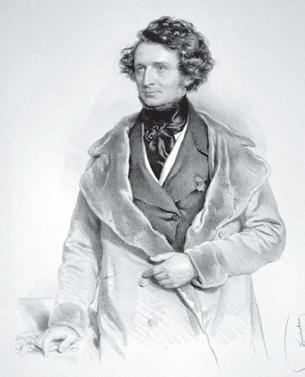
COMPOSED 1845–46
Berlioz was twenty-four and consumed by the fit of raging passion for the English actress Harriet Smithson that flared into the Symphonie fantastique when Gérard de Nerval published his French translation of Goethe’s Faust in 1828. “This marvelous book fascinated me from the very first moment,” he wrote. “I could not put it down. I read it incessantly at meals, in the theater, in the street, everywhere. This translation in prose contained some versified fragments, song, hymns, etc. I yielded to the temptation of setting them to music.” The result was the Eight Scenes from Faust for voices and orchestra of 1829, which Berlioz had printed (“foolishly,” he later admitted) at his own expense. Berlioz’s Faust then lay fallow until 1845, when he was on a concert tour of Austria, Hungary, and Germany. He collected some scraps from the earlier Eight Scenes, concocted his own text on the Faust tales, and worked on his “dramatic legend” while bouncing along in a coach between eastern European
cities. The piece, titled The Damnation of Faust, was completed in Paris the following year and first heard at the Opéra-Comique in December.
Berlioz related the background of the Rákóczy March in his Memoirs: “The night before my departure from Vienna for Hungary, a Viennese amateur well up on the ways of the country I was to visit came to see me, bringing a volume of old airs. ‘If you want the Hungarians to like you,’ he said, ‘write a piece on one of their national tunes.’ ” Berlioz chose the song written in 1809 by John Bihari to honor the Rákóczys, a noble family long active in the Hungarian struggle for freedom from Austria. The piece Berlioz erected on Bihari’s theme was received tumultuously by the Hungarian patriots when the composer premiered it in Pest on February 15, 1846. Such was the success of this piece that Berlioz made room for it in the finished Damnation of Faust by incongruously transporting his German hero to a Hungarian plain to witness a charge of the national cavalry.
The arrangement of the Hungarian March for brass is by Shawn Pollard, professor of instrumental music at Arizona Western College in Yuma and director of the AWC Community Band.
THIERRY ESCAICH
Born May 8, 1965; Nogent-sur-Marne, France
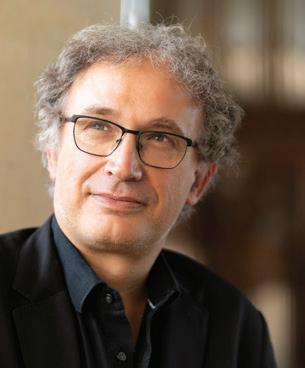
COMPOSED 2024
Composer and organist
Thierry Escaich began his musical studies at the Montreuil Conservatory and won first prizes in harmony, counterpoint, fugue, organ, improvisation, analysis, composition, and orchestration during his professional training at the Paris Conservatory from 1983 to 1990; he was appointed to the school’s composition and improvisation faculties in 1992. In 1997 Escaich succeeded Maurice Duruflé as organist at Saint-Étienne-du-Mont in Paris and has since established an international reputation as a performer with appearances throughout Europe and America.
Escaich first gained recognition as a composer when he won the Blumenthal Prize in 1989, and his compositions—for organ, orchestra (two symphonies, a dozen concertos, many smaller pieces), chamber ensembles, piano, film, opera, ballet, and chorus—have since been performed by leading ensembles and artists internationally. His additional distinctions include the Prix des Lycéens, Diapason d’Or de l’Année Award, Grand Prix de la Musique Symphonique from SACEM (the French performing rights society), and Victoires de
la Musique Composer of the Year Award (five times), appointment to the Academy of Fine Arts in Paris, and residencies with the Orchestre National de Lille, Orchestre de Bretagne, Orchestra National de Lyon, Radio France Présences Festival, Ensemble Orchestral de Paris, Dresden Philharmonic, and Frankfurt Radio Symphony. In 2025 he was appointed one of the titular organists at Notre-Dame de Paris and composed the Te Deum pour Notre-Dame for the cathedral’s reopening in June 2025.
Old Song originated with a 2024 recording by the German brass ensemble Salaputia, titled Chansons sans paroles (Songs Without Words) that included arrangements of three dozen French vocal pieces from the Renaissance to the twentieth century. Among the oldest works on the album is “Puisque vivre en servitude” by the early-sixteenth-century French composer and singer Pierre Sandrin, which expresses a typical courtly metaphor for unfulfilled love: Since I live in servitude, I should be sad and grieving, but I consider myself happy to be in such an excellent situation. My pain is violent, but Love demands it. Please have mercy
To open Old Song, Escaich created a dialogue between the phrases of Sandrin’s original chanson and his responses to their music and text and filled the rest of the piece with his own music, into which he wove fragments of Sandrin’s timeless love song.
FRANCIS POULENC
Born January 7, 1899; Paris, France
Died January 30, 1963; Paris, France
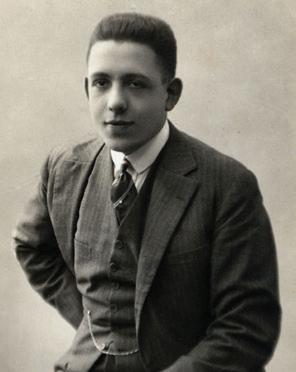
Of Poulenc’s thirteen chamber works for various instrumental combinations, only three are exclusively for strings. “I have always adored wind instruments,” he explained, “preferring them to strings, and this love developed independent of the tendencies of the era. Of course, L’Histoire du soldat and Stravinsky’s solo clarinet pieces stimulated my taste for winds, but I had already developed the taste as a child.” The Sonata for Trumpet, Horn, and Trombone was composed in 1922, when Poulenc was studying harmony and counterpoint with Charles Koechlin and just beginning to establish himself on the international music scene. “Poulenc was, indeed, a brash young composer during those years,” wrote Keith W. Daniel, “intentionally shocking the public, becoming a member of the provocative Les six, and earning a reputation as the mauvais garçon [bad boy] of new French music.”
Though Roger Nichols found the Sonata for Trumpet, Horn, and Trombone to be “acidly witty, garnishing plain triadic and scalar themes with spicy dissonances,” Poulenc later placed the work within the historical context of French music and art: “We must not forget that Debussy had just revived the tradition of the eighteenth-century sonata as a reaction against the post-Franckian sonata. Written for [the bright colors of] winds, this sonata maintains a certain youthful vitality that links it to Raoul Dufy’s early canvases.” The sonata follows the traditional fast–slow–fast progression for its three movements. The opening Allegro moderato contains four distinct sections: A (a snappy street song led by the trumpet)—B (something slow and a little melancholy)—C (a chattering, staccato variant of A)—A. The Andante traces its mood and thematic material to the slow episode of the first movement. The closing rondeau would approach banana-peel funny were it not for the deft harmonic shading that hints at a variety of moods and its precise control of instrumental colors.
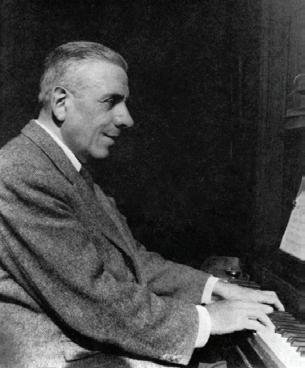
Poulenc was raised in a home that valued religion deeply. His father was thoroughly committed to the beliefs and practice of Catholicism, “but,” the composer added, “in a very liberal way, without the slightest meanness.” However, when Francis left home for military service in 1918, a year after his father died, and later jumped into the heady life of artistic Paris, his interest in religion declined. “From 1920 to 1935, I was very little concerned with the faith,” he admitted. In 1936, though, he underwent a rejuvenation of his religious belief when his fellow composer PierreOctave Ferroud was killed at the age of thirty-six in an automobile accident in Hungary. Poulenc, deeply shaken, wrote, “The atrocious extinction of this musician so full of vigor left me stupefied. Pondering on the fragility of our human frame, the life of the spirit attracted me anew.” He rejoined the Church and thereafter expressed his faith frequently and unashamedly. “I am religious by deepest instinct and heredity,” he said. “I feel myself incapable of ardent political conviction, but for me, it seems quite natural to believe and practice religion. I am a Catholic. It
is my greatest freedom.” During the last three decades of his life, a series of wonderful musical works on religious themes, including the Mass, the Stabat mater, the Gloria, The Dialogues of the Carmelites, and several luminous compositions for unaccompanied chorus sprang from his ardently renewed vision.
Poulenc composed his Quatre petites prières de Saint François d’Assise (Four Short Prayers of Saint Francis of Assisi) in 1948 for the Franciscan monastery choir at Champfleury, where his grand-nephew Jérôme was a lay brother. “Certainly, I venerate Saint Francis,” said Poulenc, “but he intimidates me a bit. In any case, in setting his marvelously touching little prayers to music, I wished to perform an act of humility. Thus, in the fourth piece, for example, a simple solo is heard at the beginning, like a monk leading his brothers in prayer.”
1. Hail, Holy Lady, queen most holy, Mother of God. 2. Almighty, most holy, most high and sovereign God; may we render to You all praise. 3. Lord, I pray to You that the burning and gentle force of Your love consume my soul. 4. Oh, my very dear brothers and my children, listen to Me, hear the voice of your Father.
This arrangement of Poulenc’s motets for brass is by Timothy Higgins, recently appointed principal trombone of the Chicago Symphony Orchestra.
Born March 7, 1875; Ciboure, France
Died December 28, 1937; Paris, France
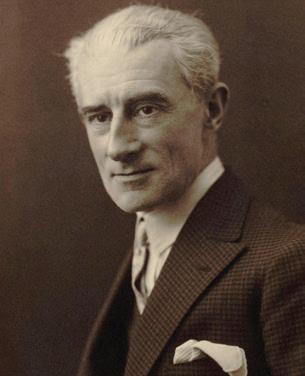
Ravel first considered composing a musical homage to Johann Strauss, Jr., as early as 1906. The idea forced itself upon him again a decade later, but during the years of World War I, he could not bring himself to work on a score he had tentatively titled Wien (Vienna), and it was not until January 1919 that he was immersed in the composition of his tribute to Vienna—“waltzing frantically,” as he wrote to a friend. He saw La valse both as “a kind of apotheosis of the Viennese waltz” and as a “fantastic and fatefully inescapable whirlpool.”
The “inescapable whirlpool” was World War I, toward which Vienna marched in three-quarter time, salving its social and political conscience with the luscious strains of Johann Strauss. Ravel completed La valse in piano score by the end of 1919 and then made a piano duet version and undertook the orchestration, which he finished in the spring of the following year.
A surrealistic haze shrouds the opening of La valse, a vague introduction from which fragments
of themes gradually emerge. In the manner typical of the Viennese waltz, several continuous sections follow, each based on a different melody. At the half-way point of the score, however, the murmurs of the introduction return, and the melodies heard previously in clear and complete versions are now fragmented, played against each other, and unable to regain the rhythmic flow of their initial appearances. The musical panacea of 1855 cannot smother the reality of 1915, and the music becomes consumed by the harsh thrust of the roaring triple meter transformed from a seductive dance into a demonic juggernaut. At the peak of tension, the dance is torn apart by a violent five-note figure, a gesture so alien to the triple meter that it destroys the waltz and brings this brilliant, forceful, and disturbing work to a shattering close.
This arrangement of La valse for brass is by Geoffrey Boyd, who was born in Australia, where he played double bass in the Melbourne Symphony and the Orchestra of the Australian Opera. Since taking advance training at the Mozarteum in Salzburg, Boyd has conducted widely in Germany and England, served as music director for London’s Opera Nova, and worked extensively as an arranger and orchestrator.
Born January 18, 1841; Ambert, Puy de Dôme, France
Died September 13, 1894; Paris, France
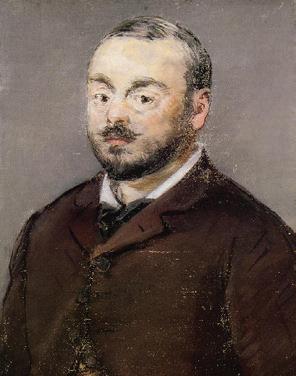
COMPOSED 1883
“Every night finds us at the bailos flamencos [sic], surrounded by toreros in lounge suits, black felt hats cleft down the middle, jackets nipped in at the waist, and tight trousers revealing sinewy legs and finely modeled thighs. And all around, the Roma women singing their malagueñas or dancing the tango.” Thus ran an excited report from the French composer Emmanuel Chabrier to some Parisian friends concerning his trip to Spain in 1882. Chabrier transcribed Spain’s indigenous music at every stop, and he told the conductor Charles Lamoureux, director of the Société des Nouveaux Concerts in Paris, that he planned to write a new work on the themes he collected, “una fantasia extraordinaria, muy española . . . my rhythms, my tunes will
arouse the whole audience to a fever pitch of excitement; everyone will embrace his neighbor madly.” Chabrier set to work on España as soon as he arrived home in December. He played the original piano version early the next year for Lamoureux, who was so impressed that he encouraged the composer to orchestrate the piece so that it could be programmed at the Nouveaux Concerts later that season. España created a sensation when it was premiered in November 1883—it was Chabrier’s first unqualified success and overnight established him among the leading creative figures of French music.
Chabrier noted that the chief characteristic of España is the manner in which it juxtaposes and blends the fierce, rough strains of the jota with the sensuous, dreamy undulations of the malagueña, both sections based on songs he had collected in Spain. To these motifs he added a melody of his own invention, first heard in the work’s middle section.
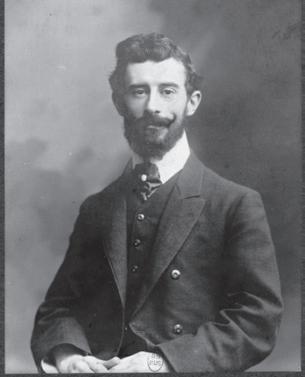
COMPOSED 1905
The alba, or song at dawn, is one of music’s most ancient forms—the earliest extant example, from the repertory of the troubadours of Provence in southern France, dates from the eleventh century. These poems dealt with a lover’s departure in the early
morning after a night spent with his beloved and are often cast in the form of a dialogue between the lover and a watchman who warns of approaching danger. (Wagner revived the form in the second act of Tristan and Isolde, where Brangäne alerts the fated couple of King Marke’s return.) As the alborada, it was later taken over by the musicians of Galicia in northern Spain, who made of it a type of dance played on a rustic oboe, called a dulzaina, accompanied by a small drum. Ravel, a native of the Basque region of
southern France that shares many aspects of its cultural heritage with its Spanish neighbors, knew the alborada and other Spanish music, and he incorporated its spirit and style into several of his important works, including the Alborada del gracioso (Morning Song of the Jester), the fourth of five pieces written in 1905 for the piano suite Miroirs. In 1918 he made a glittering orchestral transcription of the Alborada, first heard the following year at a concert of the Pasdeloup Orchestra.
“The title Miroirs,” Arbie Orenstein wrote, “implies an objective, though personal, reflection of reality, and each composition is pictorial to some extent.” The picture Ravel painted in the outer sections of Alborada del gracioso is one of thrumming guitars ringing across a sun-baked landscape: vibrant rhythms shifting with subtle allure between complementary metric patterns;
Born August 17, 1901; Marseilles, France
Died January 13, 1971; Paris, France
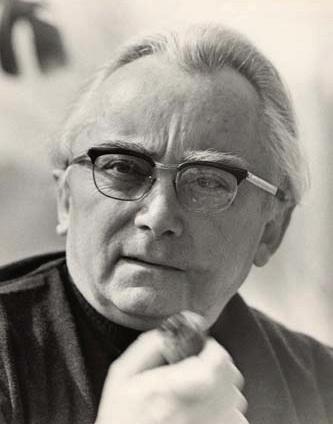
COMPOSED 1941–44
Composer and conductor
Henri Tomasi, born into a working-class family of Corsican descent, began studying music at age seven at the Marseilles Conservatory and progressed so rapidly on piano that he complained about feeling “humiliated to be on show like a trained animal” when his father introduced him at social gatherings as a child prodigy. Young Henri supplemented the family’s finances during World War I by playing anywhere there was work, from fancy hotels to
harmonies full of spice and color; orchestral sonorities evoking the guitar’s steely brilliance. However, the central section of this miniature tone poem calls forth another image—the gracioso, or Spanish clown or jester. The gracioso was a popular character in the Spanish theater who was depicted by Calderón and Lope de Vega as the fool in love in the household of a nobleman. The jester soon forgets his love, however, and the music of the opening returns to bring Ravel’s Alborada del gracioso to a scintillating conclusion.
This virtuosic arrangement of Alborado del grazioso was done for Summit Brass in 2004 by Michael Allen, principal tuba of the Central City Opera Orchestra, Colorado Ballet Orchestra, Opera Colorado, a founding member of the Boulder Brass, and faculty member of the University of Colorado Boulder.
brothels and movie houses. In 1921 he received a scholarship from the city of Marseilles to attend the Paris Conservatory to study composition with Georges Caussade and Paul Vidal and conducting with Philippe Gaubert; he also studied privately with Vincent d’Indy. Tomasi established parallel careers as composer and conductor soon after leaving the school, and from 1930 to 1935, he worked for the French National Radio as music director of its programs beamed to Indochina and other Asian lands, an experience that stimulated his interest in world music and influenced the settings and style of several of his compositions. Tomasi was inducted into the French army in 1939 and served as a band director near Nice until the Germans
opposite page, from top : Chabrier, detail of a portrait in oil by Édouard Manet (1832–1883), 1880. Ordrupgaard Museum Collection, Denmark | Ravel, as photographed by Pierre Petit (1831–1909) in 1907 | this page: Henri Tomasi
overran the country the following year. He continued to compose during World War II and conducted the Orchestre National, which had been moved from Paris to Marseilles because of the hostilities. Tomasi was named principal conductor of the Monte Carlo Opera in 1946 and enjoyed considerable success conducting many of France’s finest orchestras until the loss of hearing in his right ear forced him to retire from the concert stage in 1957. He thereafter devoted himself to composition until his death in Paris on January 13, 1971.
Tomasi adapted the Fanfares liturgiques from his opera Don Juan de Mañara, based on a spiritual “mystery play” from 1913 by the French-Lithuanian playwright and diplomat Oscar Vladislas de Lubicz-Milosz, in which the legendary libertine Don Juan renounces his dissipated ways to find redemption in the monastic life. Tomasi composed the opera between 1941 and 1944, when he found a quiet workplace and solace from the stresses of the war and a troubled marriage in long residencies at the Dominican Monastère de la Sainte-Baume, near Marseilles. Don Juan de Mañara was first heard in a concert performance in Paris in 1952 and finally staged in 1956 in Munich. The Fanfares liturgiques, which in the opera accompany Don Juan’s visionary acceptance into the monastery, were extracted from the complete score for their concert premiere in May 1947 by the Orchestra of the Monte Carlo Opera under the composer’s direction.
Each of the four movements is associated with a significant aspect of Christian belief. Annonciation (Annunciation) evokes the visit by the Archangel Gabriel to the Virgin Mary to announce that she has been chosen to be the mother of Jesus Christ: bold summons at beginning and end accompany his arrival and departure, a hushed strain for horns at the center suggests his profound message. In Evangile (Gospel), trumpet fanfares herald a priestly oration from the solo trombone, which receives a hymnlike response from the assembled brass choir. The jogging rhythms of Apocalypse
suggest the fearsome descent upon the world of the prophesied Four Horsemen, while the noble Procession du Vendredi-Saint (Good Friday Procession), based on a repeating, chantlike phrase rolling inexorably though the ensemble’s lowest registers, seems to offer the hope of redemption.
Esteban Batallán, born and educated in Galicia, Spain, became principal trumpet of the Chicago Symphony Orchestra in 2019 after having served as principal trumpet with the Hong Kong Philharmonic and Granada City Orchestra and guest principal with the Orchestra del Teatro alla Scala, Filarmonica della Scala, and Royal Symphony Orchestra of Seville. Batallán shared this first-hand report of a performance of Tomasi’s Fanfares liturgiques in Seville:
In May 2012, Claude Tomasi, Henri Tomasi’s son, attended a performance of the Fanfares liturgiques by the Royal Symphony Orchestra in which I was performing. Claude spoke to the brass section at the dress rehearsal and told us that his father had been inspired to compose the piece while visiting Seville during the Easter season. During his stay, Henri Tomasi witnessed the Procession du Vendredi-Saint (Good Friday Procession) at the chapel of the Hospital de la Caridad, founded by Don Juan de Mañara, subject of the opera from which the Fanfares were derived; Tomasi’s musical evocation of the procession became the last of the Fanfares liturgiques. The hospital is directly across the street from the Teatro de la Maestranza where the concert took place, and Claude confided to us that he wanted to hear the Fanfares performed right by the place that had inspired his father.
Richard E. Rodda, a former faculty member at Case Western Reserve University and the Cleveland Institute of Music, provides program notes for many American orchestras, concert series, and festivals.
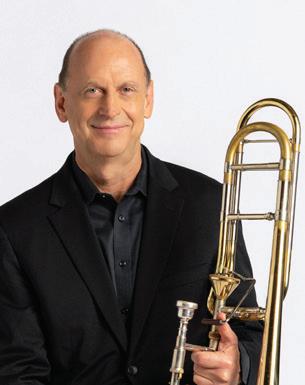
Chicago Symphony Orchestra trombonist
Michael Mulcahy appears worldwide as a soloist, conductor, and teacher. He was appointed to the CSO by Sir Georg Solti in 1989, having been principal trombonist of the Tasmanian and Melbourne symphony orchestras and solo trombonist of the WDR Radio Symphony Orchestra Cologne.
He made his solo debut with the Orchestra under Daniel Barenboim in 2000 and subsequently performed as soloist under Pierre Boulez in music by Elliott Carter. In October 2016, Mulcahy gave the world premiere of Carl Vine’s Five Hallucinations for Trombone and Orchestra, a joint commission of the Chicago Symphony and the Sydney Symphony Orchestra. In February 2018, he gave the world premiere of Jennifer Higdon’s Low Brass Concerto, a CSO commission that the Orchestra subsequently took on its East Coast tour.
Mulcahy is the winner of several international competitions, including the Australian Broadcasting Corporation Instrumental Competition, ARD International Music Competition in Munich, Viotti International Competition in Italy, and the International
Instrumental Competition in the former East German city of Markneukirchen.
Mulcahy has been principal trombonist of Chicago’s Music of the Baroque and of the Grand Teton Music Festival since 1992. He is also principal trombonist of the Australian World Orchestra, performing under conductors Alexander Briger, Zubin Mehta, Sir Simon Rattle, and Riccardo Muti. He was a founding member of the National Brass Ensemble in 2014. Michael Mulcahy’s interest in conducting was sparked by an invitation from the West German Radio Orchestra to direct a concert of music by Arvo Pärt. He serves as director of the CSO Brass, conducts annually for the Grand Teton Musical Festival, and makes guest appearances with the Sydney, Tasmanian, and New World symphonies, as well as the Royal Danish Orchestra. He has also served as music director for National Music Camp in Australia.
Born in Sydney, Australia, Michael Mulcahy began studying trombone with his father, Jack Mulcahy, and completed his studies with Baden McCarron of the Sydney Symphony and with Geoffrey Bailey at the State Conservatorium of New South Wales. He became a senior lecturer at the Canberra School of Music at the Australian National University in 1987. He currently leads the trombone studio at Northwestern University’s Bienen School of Music and is a visiting artist at the Australian National Academy of Music.
Chicago Symphony Orchestra Brass 2025
Michael Mulcahy Conductor
TRUMPETS
Esteban Batallán
John Hagstrom
HORNS
Mark Almond
Oto Carrillo
Susanna Gaunt
David Griffin
James Smelser
TROMBONE
Timothy Higgins
BASS TROMBONE
Charles Vernon
TUBA
Gene Pokorny
Houston Symphony Orchestra
TRUMPET
Richard Harris
University of Miami
TRUMPET
Craig Morris
University of Michigan
TRUMPET
Robert Sullivan
National Symphony Orchestra
HORN
Robert Rearden
Detroit Symphony Orchestra
TROMBONE
David Binder
Lyric Opera of Chicago
TROMBONE AND TENOR TUBA
Mark Fisher
TIMPANI
David Herbert
PERCUSSION
Cynthia Yeh
LIBRARIAN
Carole Keller
SYMPHONY CENTER PRESENTS
Jeff Alexander Chicago Symphony Orchestra Association President
Cristina Rocca Vice President for Artistic Administration
The Richard and Mary L. Gray Chair
James M. Fahey Senior Director, Programming, Symphony Center Presents Lena Breitkreuz Artist Manager, Symphony Center Presents Michael Lavin Director of Production
Joseph Sherman Associate Director of Production, SCP and Rental Events
Civic Orchestra of Chicago
TUBA
Chisjovan Masso
DePaul University
PERCUSSION
Ian Ding
Lyric Opera of Chicago
PERCUSSION
Eric Millstein
National Book Critics Circle Awardwinning author Sam Quinones traces the rich history of the tuba, the determined musicians who master it — including CSO legend Arnold Jacobs — and the transformative power of shared joy and humble achievement.
#perfecttuba
Available now at the Symphony Store!
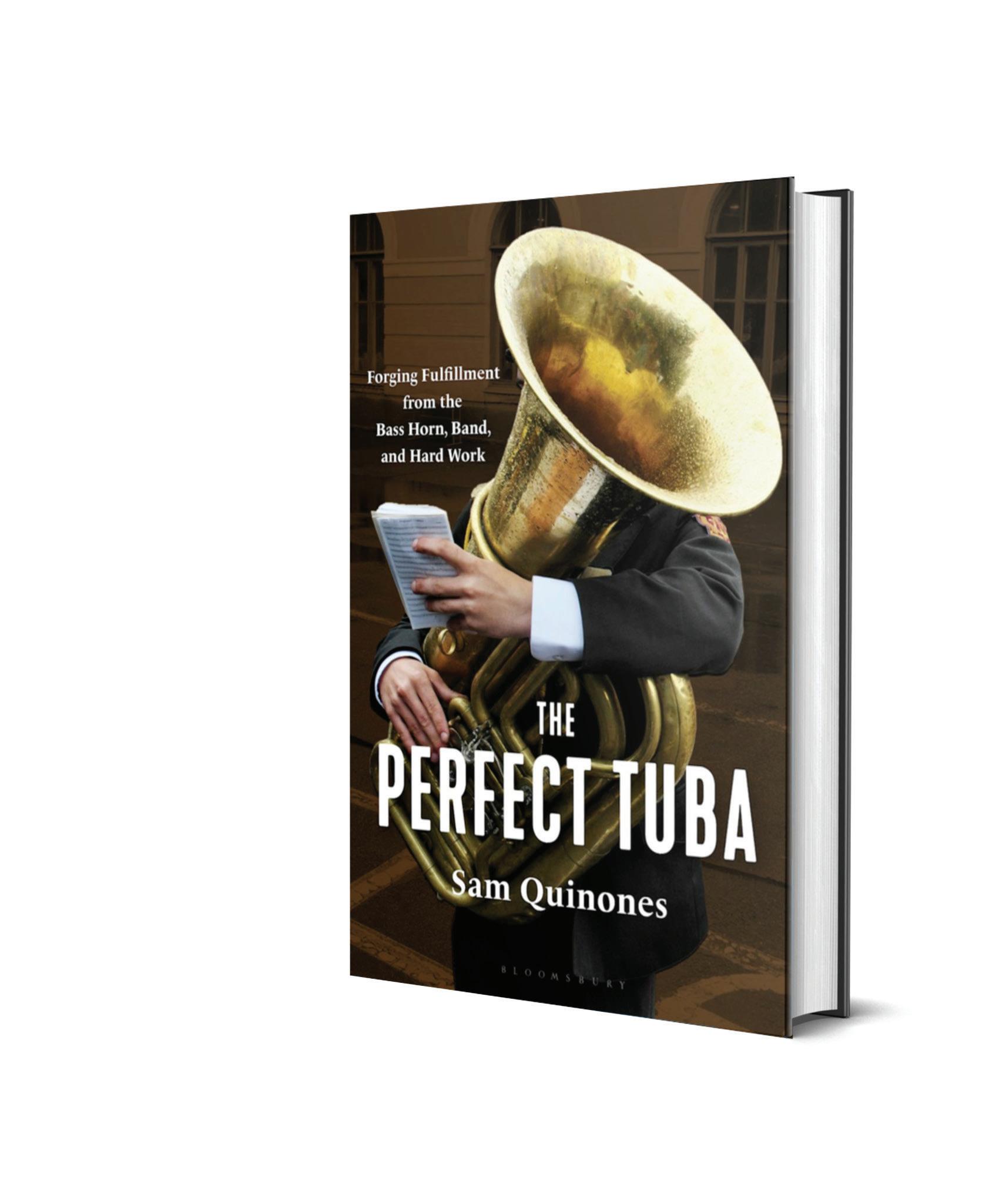
After tonight’s concert, join members of the CSO brass section and author Sam Quinones in the first-floor Rotunda for an informal meet and greet and book signing. The Perfect Tuba will be available to purchase at the event.
THIS EVENT IS FREE AND OPEN TO ALL TICKETHOLDERS. TICKETS ARE NOT REQUIRED.
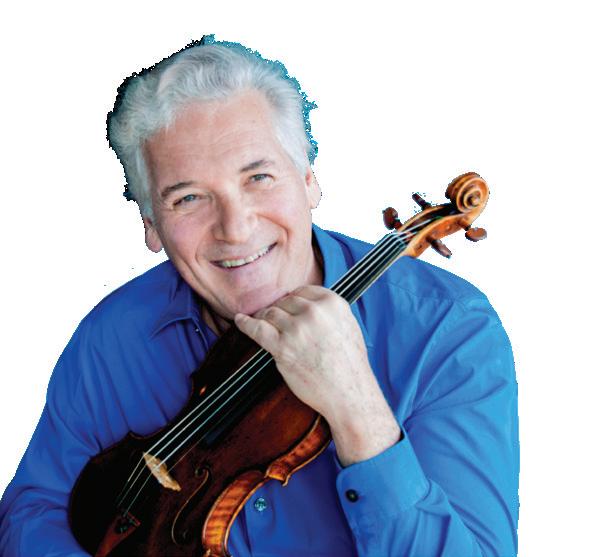


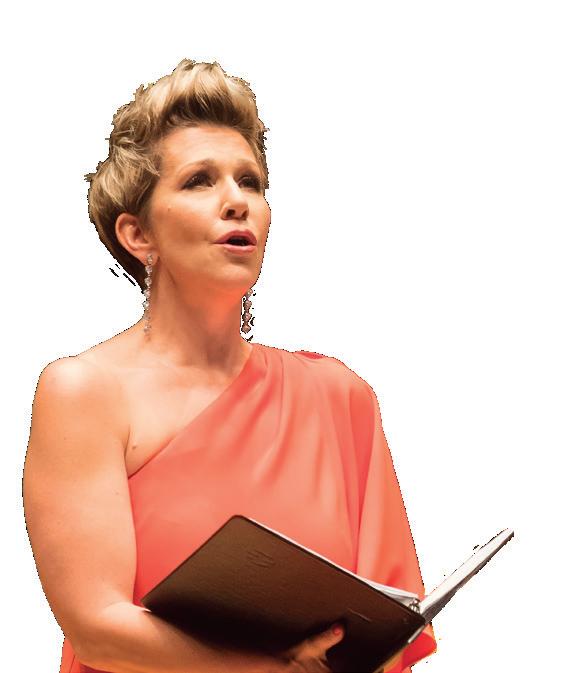
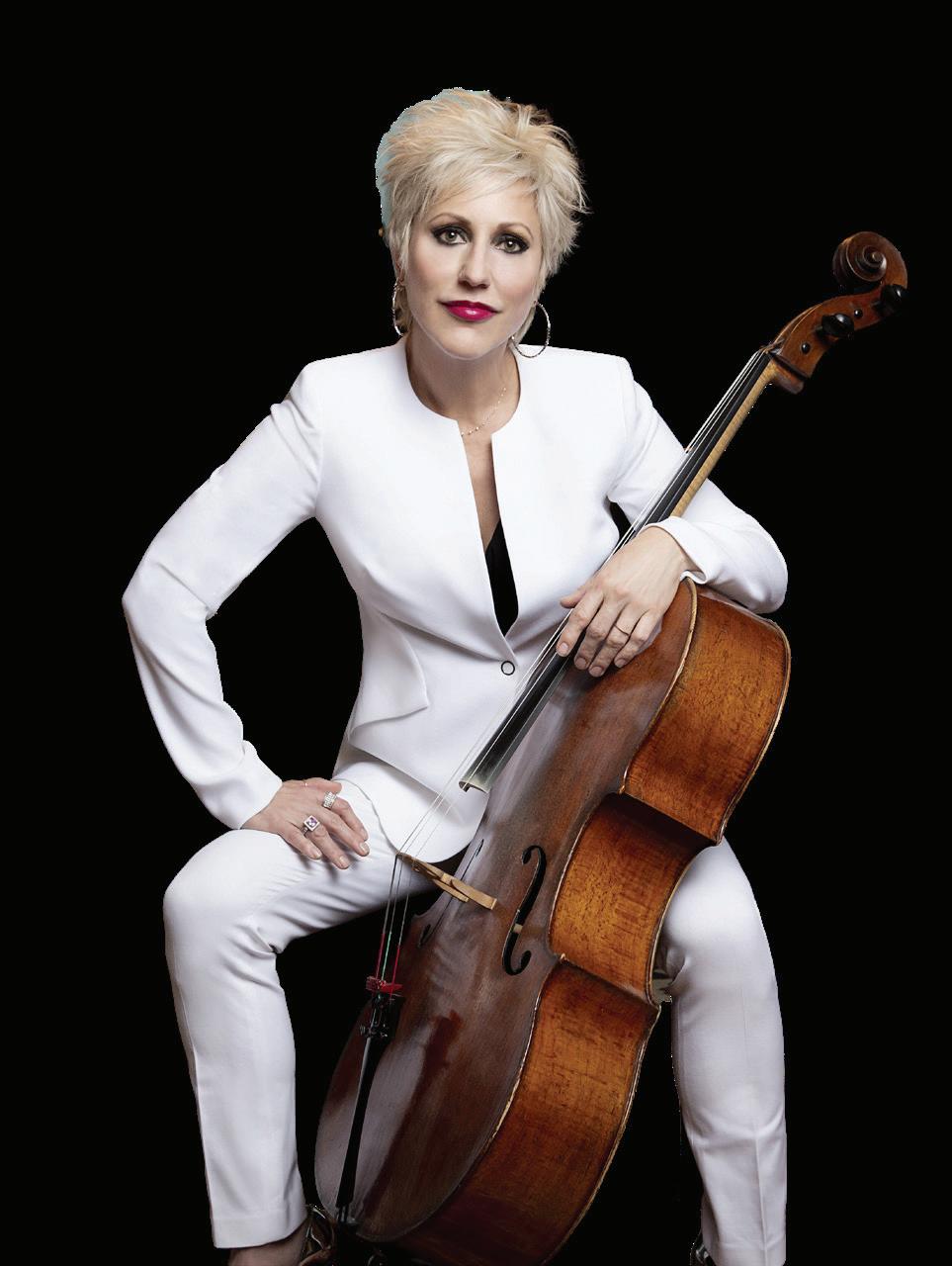

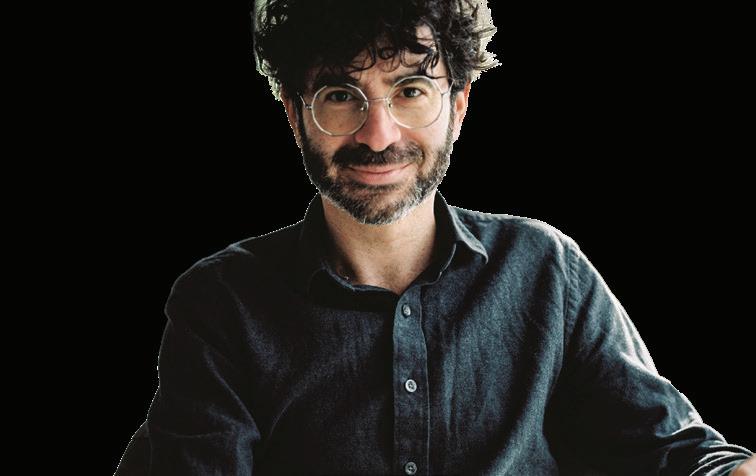

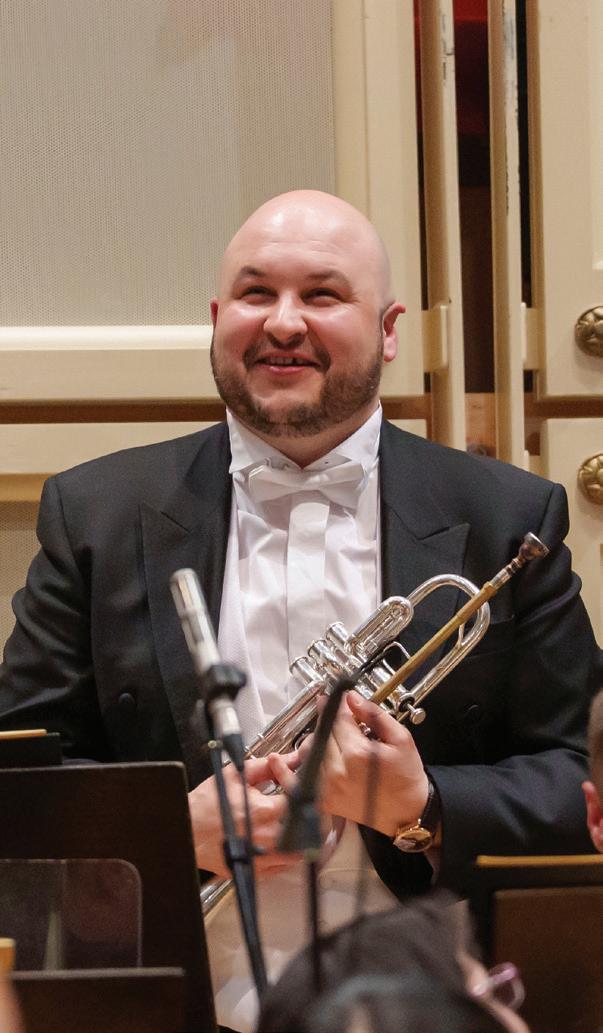
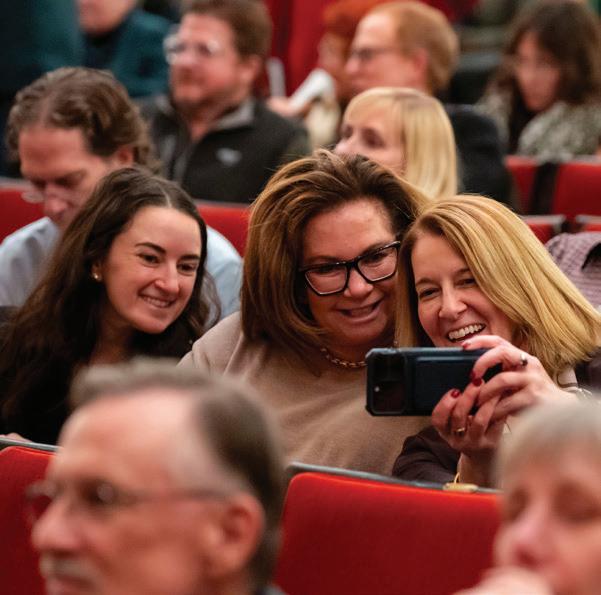
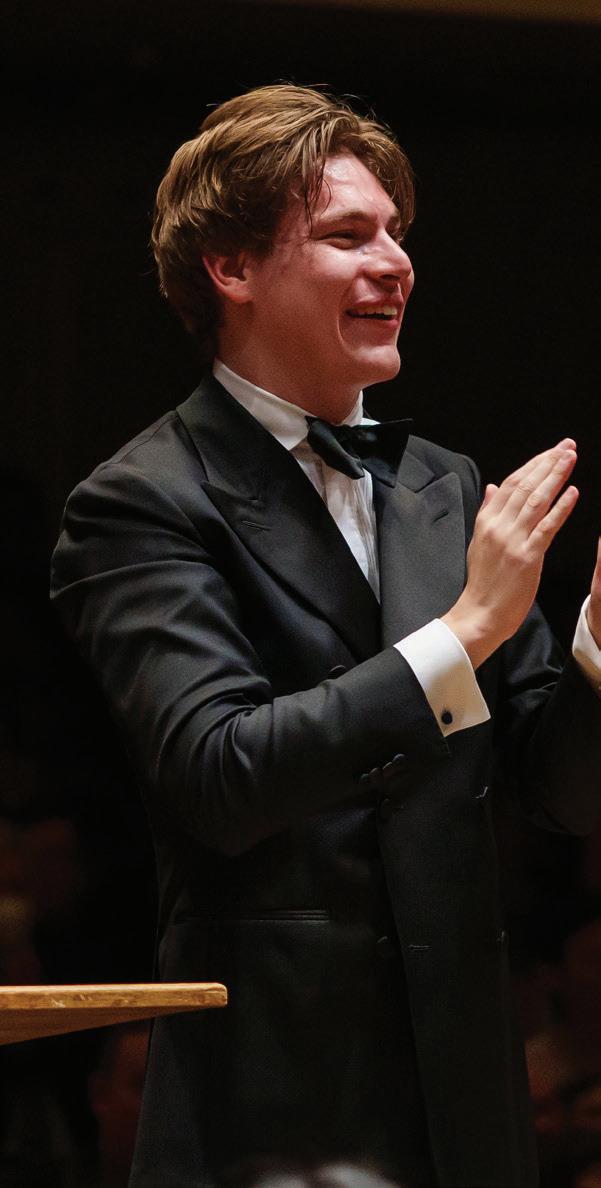
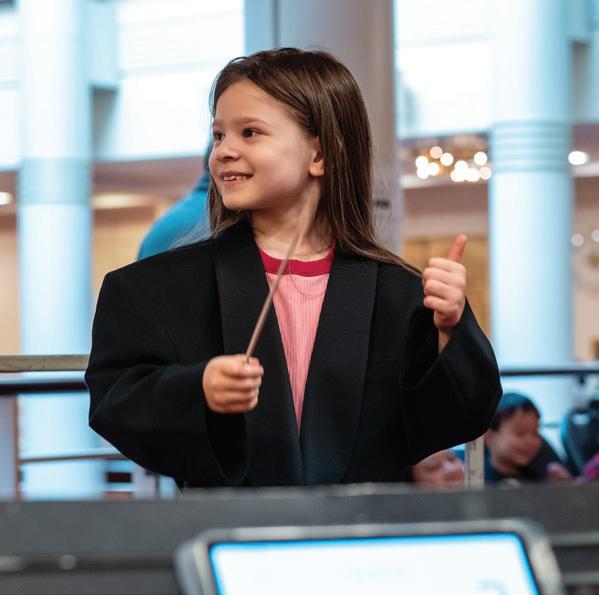
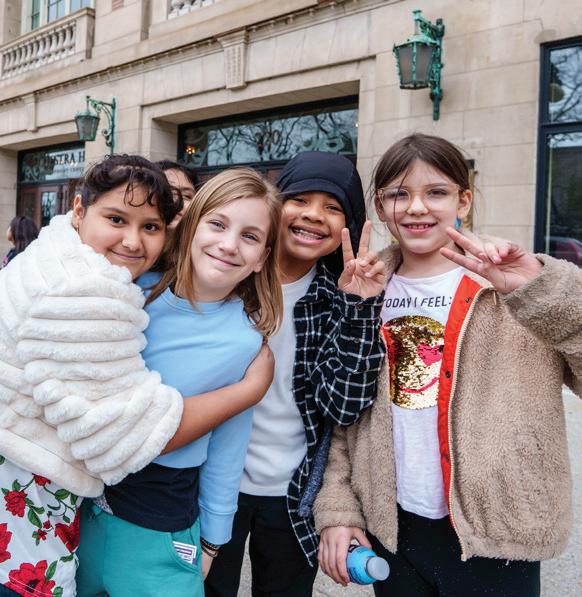
Tax-deductible donations do more than support the concerts you love — they impact more than 200,000 people through education and community engagement programs each year. Thanks to a generous matching grant, all gifts to the CSOA will be doubled. Make a difference with your gift today.
Discover more about the musicians, concerts, and generous supporters of the Chicago Symphony Orchestra Association online, at cso.org.
Find articles and program notes, listen to CSOradio, and watch CSOtv at Experience CSO.
cso.org/experience
Get involved with our many volunteer and affiliate groups.
cso.org/getinvolved
Connect with us on social @chicagosymphony

Chicago Symphony Orchestra Association Board of Trustees
OFFICERS
Mary Louise Gorno Chair
Chester A. Gougis Vice Chair
Steven Shebik Vice Chair
Helen Zell Vice Chair
Renée Metcalf Treasurer
Jeff Alexander President
Kristine Stassen Secretary of the Board
Stacie M. Frank Assistant Treasurer
Dale Hedding Vice President for Development
Chicago Symphony Orchestra Association Administration
SENIOR LEADERSHIP
Jeff Alexander President
Stacie M. Frank Vice President & Chief Financial Officer, Finance and Administration
Dale Hedding Vice President, Development
Ryan Lewis Vice President, Sales and Marketing
Vanessa Moss Vice President, Orchestra and Building Operations
Cristina Rocca Vice President, Artistic Administration
The Richard and Mary L. Gray Chair
Eileen Chambers Director, Institutional Communications
Jonathan McCormick Managing Director, Negaunee Music Institute at the CSO
Visit cso.org/csoa to view a complete listing of the CSOA Board of Trustees and Administration.
For complete listings of our generous supporters, please visit the Richard and Helen Thomas Donor Gallery.
cso.org/donorgallery

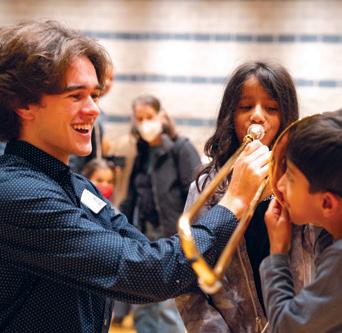
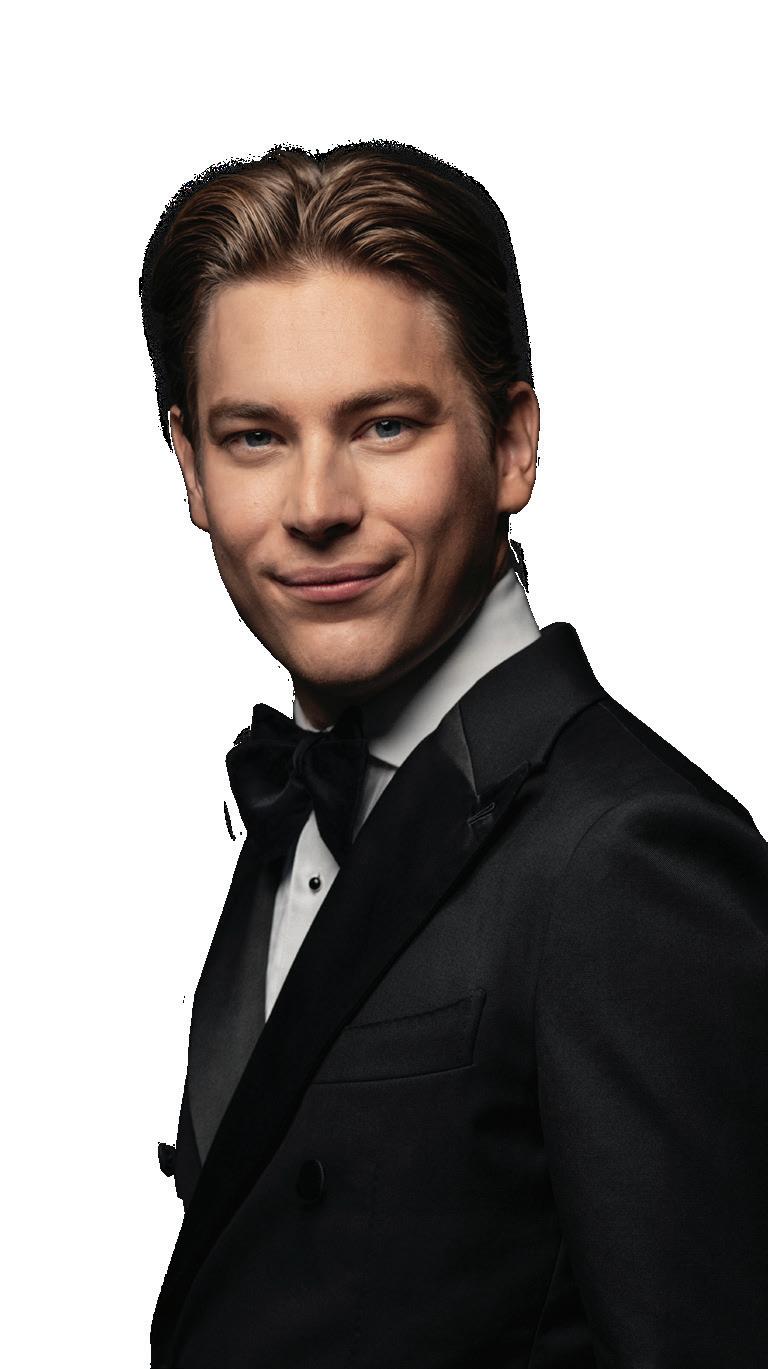
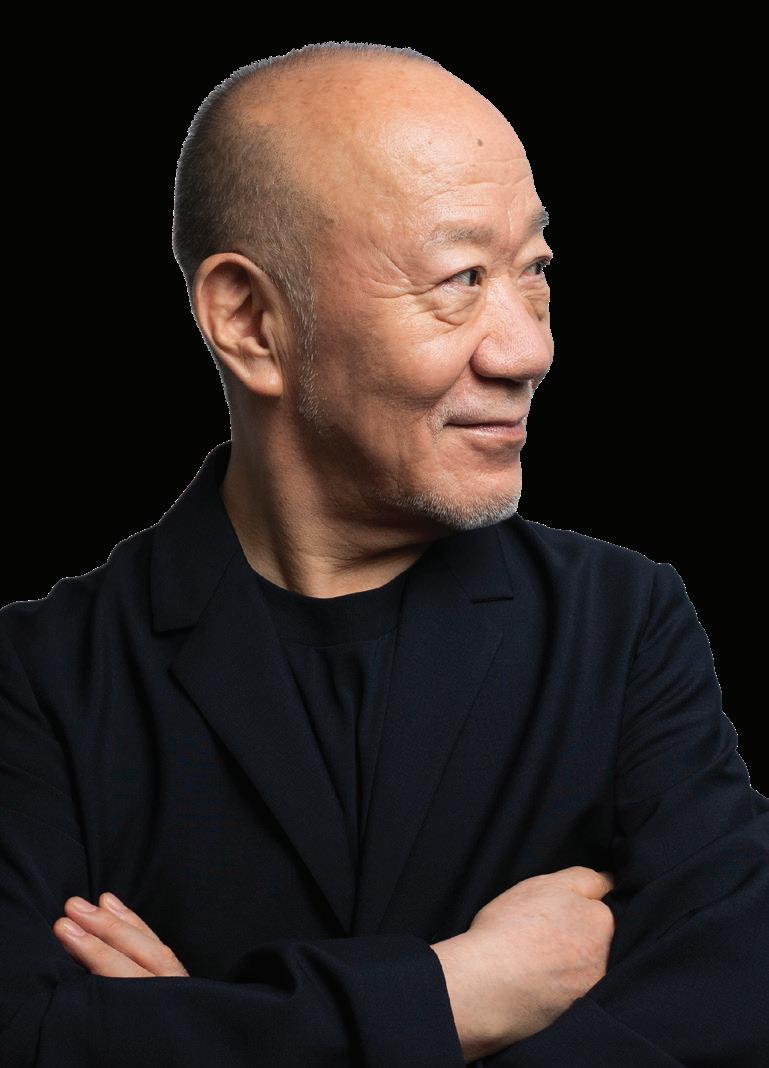

MAR 5-6
Mäkelä Conducts The Rite of Spring
APR 16-18
Evgeny Kissin with the CSO
APR 23-26
Hisaishi Conducts Hisaishi
MAY 12
Samara Joy & the CSO
JUNE 23