NINETY-FIFTH SEASON
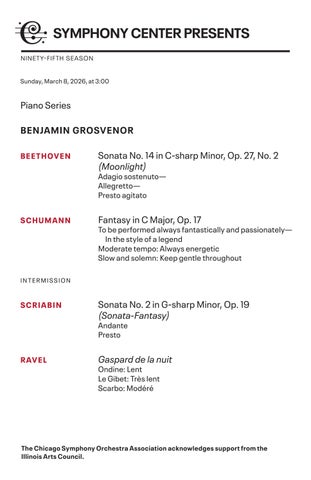
Sunday, March 8, 2026, at 3:00
Piano Series
BENJAMIN GROSVENOR
BEETHOVEN
SCHUMANN
Sonata No. 14 in C-sharp Minor, Op. 27, No. 2 (Moonlight)
Adagio sostenuto—
Allegretto—
Presto agitato
Fantasy in C Major, Op. 17
To be performed always fantastically and passionately— In the style of a legend
Moderate tempo: Always energetic Slow and solemn: Keep gentle throughout
INTERMISSION
SCRIABIN
Sonata No. 2 in G-sharp Minor, Op. 19 (Sonata-Fantasy)
Andante
Presto
RAVEL Gaspard de la nuit
Ondine: Lent
Le Gibet: Très lent
Scarbo: Modéré
The Chicago Symphony Orchestra Association acknowledges support from the Illinois Arts Council.
COMMENTS
by Richard E. Rodda
LUDWIG VAN BEETHOVEN
Born December 16, 1770; Bonn, Germany
Died March 26, 1827; Vienna, Austria
Sonata No. 14 in C-sharp Minor, Op. 27, No. 2 (Moonlight)
COMPOSED
1801
Beethoven fell in love many times but never married. The source of his infatuation in 1801, when he was thirty and still in hope of finding a wife, was the Countess Giulietta Guicciardi, who was thirteen years his junior. She seems to have been flattered by the attentions of the famous musician but probably never seriously considered his intimations of marriage; her social station would have made wedlock difficult with a commoner such as Beethoven. For his part, Beethoven was apparently thoroughly under her spell at the time and mentioned his love for her to a friend as late as 1823, though by then she had been married to Count Wenzel Robert Gallenberg, a prolific composer of ballet music. A medallion portrait of her was found among Beethoven’s effects after his death. The C-sharp minor sonata was contemporary with the love affair with
Giulietta and dedicated to her on its publication in 1802, but the precise relationship of the music’s nature and the state of Beethoven’s heart must remain unknown; he never indicated that the piece had any referential intent. It was not until five years after his death that the work’s passion and emotional intensity inspired the romantic German poet and music critic Ludwig Rellstab to describe the sonata in terms of “a vision of a boat on Lake Lucerne by moonlight,” a sobriquet that has since inextricably attached itself to the music.
The classical model for the instrumental sonata comprised three independent movements: a fast movement in sonata form, an adagio or andante arranged as variations or a three-part structure, and a closing rondo in galloping meter. In the Moonlight Sonata, Beethoven altered the traditional fast–slow–fast sequence in favor of an innovative organization that shifts the expressive weight from the beginning to the end of the work and made the cumulative effect evident by instructing that the movements be played without
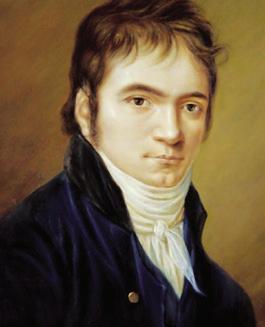
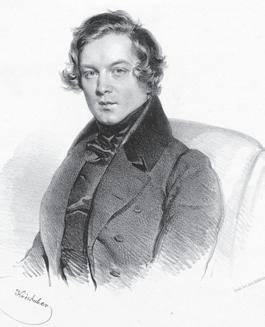
this page: Ludwig van Beethoven, portrait on ivory by Christian Horneman (1765–1844), 1803. Hans Conrad Bodmer Collection, Beethovenhaus-Bonn, Germany | opposite page: Schumann, 1839, in a sketch by Josef Kriehuber (1800–1876) | next spread: Lithograph of Robert and Clara Schumann by Eduard Kaiser (1820–1895), Vienna, 1847; inscribed to their Zwickau friend, composer and writer Emanuel Klitzsch (1812–1889)
pause. Instead of opening with a large symphonic-style, sonata-form essay, the Moonlight initially falls upon the listener with a somber, minor-mode Adagio of the greatest introspection. Next comes a subdued scherzo and trio whose delicacy is undermined by its off-beat syncopations. The expressive goal of the sonata is achieved with its
closing movement, a powerful essay in full sonata form filled with tempestuous feeling and dramatic gesture about which John N. Burk wrote, “It is the first of the tumultuous outbursts of stormy passion that Beethoven was to let loose through the piano sonatas. It is music in which agitation and urgency never cease.”
ROBERT SCHUMANN
Born June 8, 1810; Zwickau, Germany
Died July 29, 1856; Endenich, near Bonn, Germany
Fantasy in C Major, Op. 17
COMPOSED
1836 and 1838
He called it Ruins, “the most passionate thing I have ever written—a deep lament for you.” Thus did Robert Schumann explain the content and genesis of the Fantasy in C major to his beloved Clara Wieck following a bitter period of separation imposed by the girl’s tyrannical father in 1836. Friedrich Wieck of Leipzig was one of the most renowned piano pedagogues of his day, eagerly sought out by talented students for the discipline and efficacy of his teaching, including Schumann, who placed himself under Wieck’s stern gaze in 1829. Schumann showed such promise that Wieck took him into his household for full-time
instruction, and there the twenty-yearold musician worked up not only the obligatory scales and etudes but also an infatuation for young Clara, whom Wieck was grooming for the life of a piano virtuoso. Love developed slowly but steadily between the couple—Clara was nine years younger than Robert— and it was sufficiently advanced by the mid-1830s to cause Papa Wieck serious concern. Schumann, by that time, had abandoned hopes of a career as a concert pianist and had turned instead to composing and editing the fledgling music journal Neue Zeitschrift für Musik (New Journal for Music), endeavors that Wieck judged offered slim prospects for producing an appropriate marriage partner for his daughter, who was just then beginning to establish her international reputation.
COMMENTS
Early in 1836 Wieck shipped the still-underage Clara off to Dresden to get her away from Schumann, but Robert followed his beloved there and won a declaration of mutual love from her. When Wieck learned of this development, he retrieved Clara to Leipzig and forbade her further contact with Schumann in person or even by letter; Wieck filled the void by spawning unfounded rumors of new liaisons intended to make the lovers distrust each other. Schumann, referring to the volatile emotions that troubled him throughout his life, later wrote to Clara about those days, when he was afraid not just of losing her but even his reason:
Being unable to learn anything about you, I wished, with all my might, to forget you. It was at that time that we had become strangers to one another. I was resigned. Then my old suffering burst out afresh and made me wring my hands. Often at night, I would implore God: “Grant me at least one night of tranquility in which my mind would not give way.”
Despite the unsettling anxiety of those months, Schumann’s creativity was fiercely fired by the mingled pain and hope, and in June 1836, he began the Fantasy in C major, into whose opening movement he wove a quotation from Beethoven’s song cycle
An die ferne Geliebte (To the Distant Beloved) to summon the vision of the cloistered Clara. He inscribed a poem
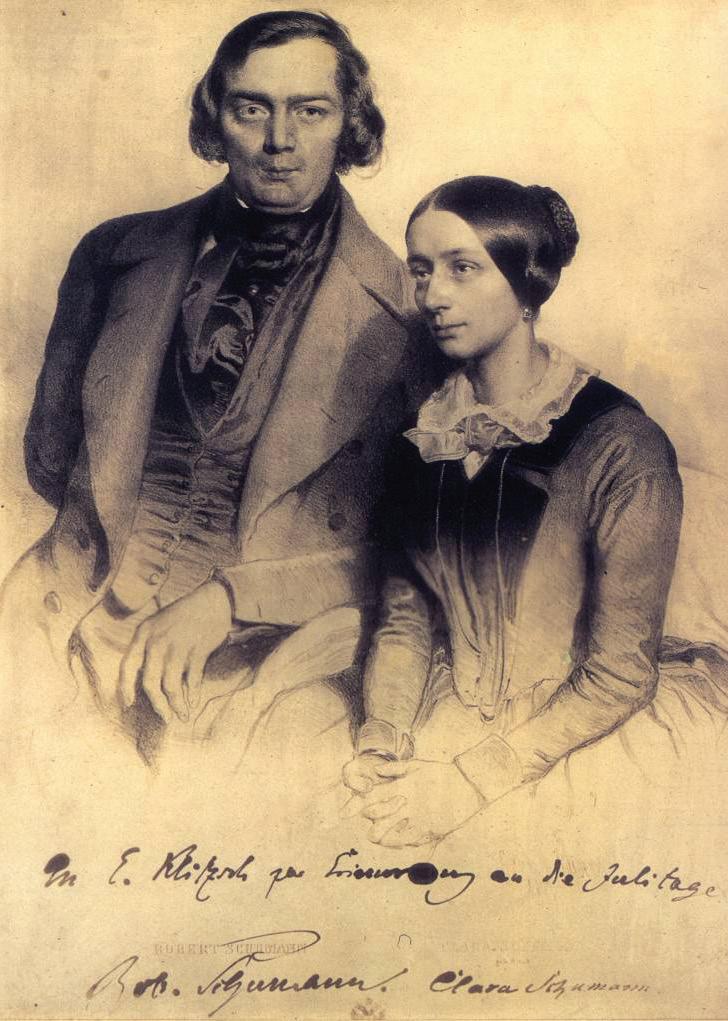
by Friedrich Schlegel at the head of the score as a message to her: Through all the tones / In earth’s many-colored dream / There sounds one soft long-drawn note / For the one who listens in secret. Clara and Robert remained faithful and determined through those difficult months, and by early the next year, they had resumed their correspondence. They were engaged in August 1837—by surreptitious letter—and finally married three years later, on the eve of Clara’s twenty-first birthday, having weathered Friedrich Wieck’s ceaseless barrage of litigation to keep them apart.
Though it was his infatuation with Clara that provided the spark to begin the C major fantasy, it was another powerful influence in Schumann’s creative life that helped bring the work
to fruition—Ludwig van Beethoven. In 1835, eight years after Beethoven’s death, the administrators of the composer’s hometown, Bonn, organized a subscription to erect a monument commemorating the city’s most famous son. Calls went out to the German musical community to offer support for the project, and Schumann reprinted the monument committee’s request in the April 1836 edition of the Neue Zeitschrift für Musik and authored a four-part essay titled “Monument for Beethoven” for the journal two months later, at just the time that he was undertaking the fantasy. By the end of the summer, the work had transcended its original personal, confessional purpose and become associated with the campaign for the Beethoven memorial. By December, Schumann had added to the original opening movement, Ruins, two others, which he called Trophies and Palms to note the heroic stature Beethoven’s successors accorded to him; he later changed the names to Triumphal Arch and Constellation. In 1837 Schumann proposed to two publishers, Kistner and Haslinger, that his “Sonata for Beethoven” be issued in a special edition as a fundraiser, but got nowhere. He finally placed the piece with Breitkopf and Härtel, and made some final revisions to the score in January 1838; it was published in March or April of the following year. Though the fantasy did not generate any revenues for the Beethoven memorial, Schumann did dedicate the score to Franz Liszt, whose time and money were essential to completing the monument. The statue
was finally unveiled in Bonn in August 1845, the seventy-fifth anniversary of Beethoven’s birth. Schumann was too ill to attend the ceremony.
Though the opening movement of the fantasy, which Schumann instructed should “be interpreted in a fantastic and passionate manner,” is founded on traditional sonata form, the distinguished pianist and scholar Charles Rosen noted in his book The Romantic Generation a revolutionary structural/emotional process here that moves beyond the customary dynamics and balances of the traditional classical form:
[The movement] begins with great tension, descends toward resolution, and, frustrated, moves to a point of greater tension, initiating the process over and over again. The structure is like a series of waves, starting with the climax, losing momentum each time, and then beginning again. . . . Schumann’s radical innovation was a new large sense of rhythm conceived as a series of waves, crucial to later composers like Wagner and Strauss.
The second movement is an assertive and technically demanding march, which Liszt greatly admired and Clara said made her feel “hot and cold all over. . . . Many images are evoked. . . . It strikes me as a victory march of warriors following a battle, and the [more subdued] central theme makes me think
COMMENTS
of young maidens in a village, all dressed in white, each with a wreath in her hand to crown the warriors kneeling before them.” The finale is a spacious, serene,
ALEXANDER SCRIABIN
Born January 6, 1872; Moscow, Russia
Died April 27, 1915; Moscow, Russia
slow movement of exquisitely subtle light and shadow that seems to suspend time itself.
Sonata No. 2 in G-sharp Minor, Op. 19 (Sonata-Fantasy)
COMPOSED 1892–97
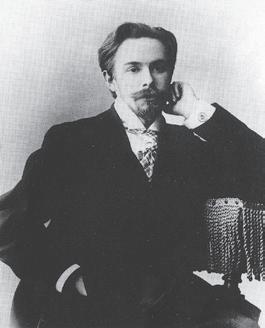
Brilliance and eccentricity seem to have been Alexander Scriabin’s birthrights. According to the old-style Julian calendar then in effect in Russia, he was born in Moscow on Christmas Day 1871 (January 6, 1872, in the modern Gregorian calendar); his mother, a gifted pianist, died from tuberculosis before his first birthday. His father remarried and spent most of his life abroad in the diplomatic service, so Alexander was brought up (and thoroughly spoiled) by a grandmother and an aunt whose piano lessons revealed an exceptional musical talent in the boy. The family deemed a military career appropriate for him, so Alexander was duly enrolled at the local cadet school when he was nine. However, piano lessons with the noted Moscow theorist and composer Georgi Conus
and with Tchaikovsky’s student Nikolai Zverev (at whose resident music school Sergei Rachmaninov was then a pupil) kindled his musical ambitions, as did theory lessons with Sergei Taneyev, and Scriabin began to compose and to plan for a life as a virtuoso. He gave up on the military at eighteen to enter the Moscow Conservatory and found in the school’s director, pianist, and conductor, Vasili Safonov, a supportive and influential mentor. (Scriabin flunked Anton Arensky’s fugue class, however, and he never received a degree.) Soon after leaving the conservatory in 1892, Scriabin began appearing as a concert pianist and had some of his piano pieces issued by Jurgenson, Tchaikovsky’s publisher. In 1894 the rival publisher Mitrofan Belaiff heard Scriabin play some of his own music and secured the rights to issue his Piano Sonata no. 1. Belaiff supported the promising pianist-composer generously during the following years by rewarding him with high publishing fees and competition
prizes and by underwriting the European debut tour in late 1895 that culminated in a triumphant recital of Scriabin’s own works in Paris in January. Soon after returning to Moscow, Scriabin began a piano concerto, his first work with orchestra, as a vehicle for his own performances. He completed the score early in 1897 and successfully gave its premiere in Odessa on October 23; Safonov conducted. Scriabin joined the faculty of the Moscow Conservatory the following year.
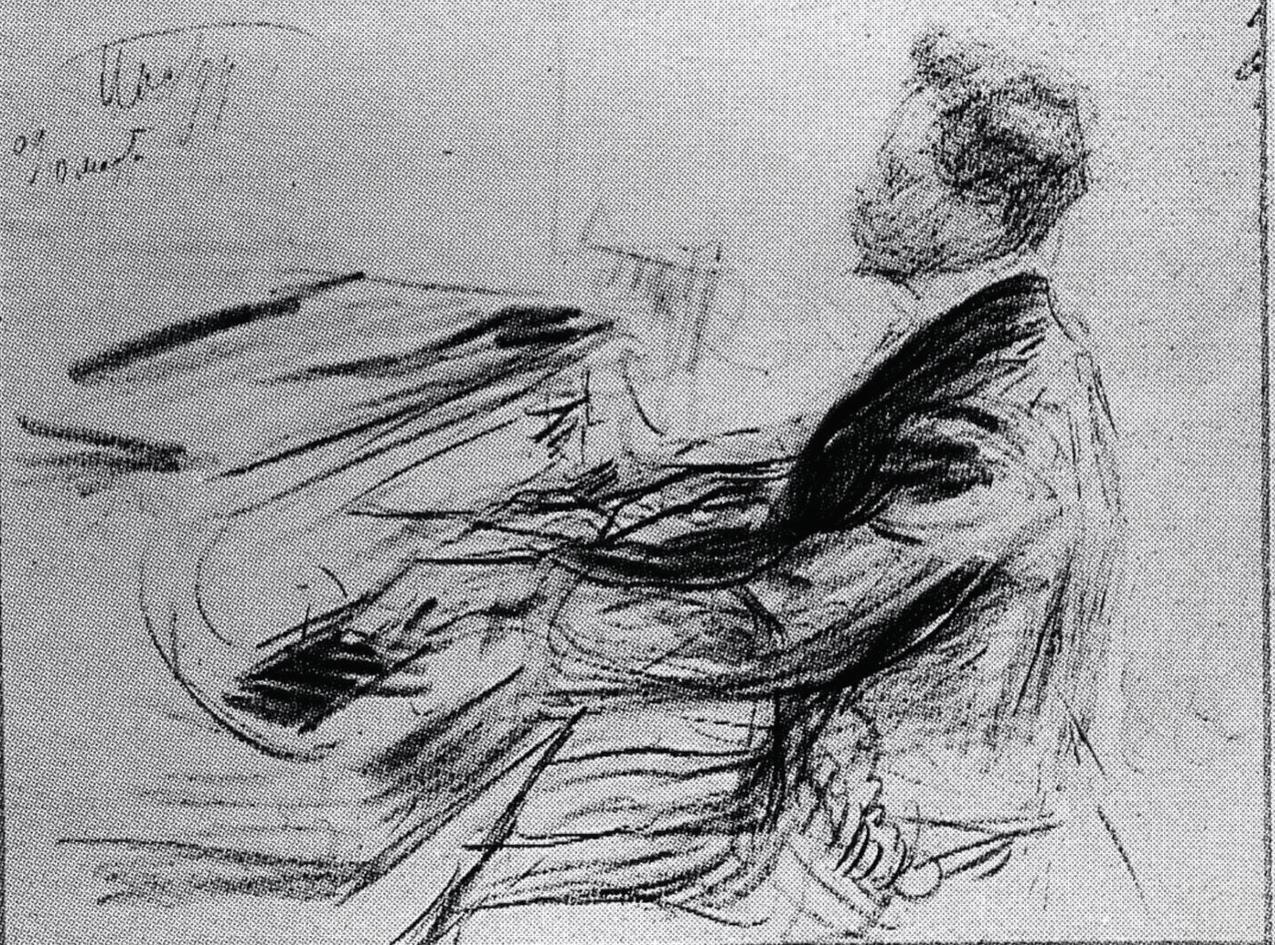
Scriabin began sketching his Sonata no. 2 in 1892, around the time he graduated from the Moscow Conservatory. During those early years of his career, before his dizzying world vision had settled fully on him, Scriabin was still heavily under the influence of Frédéric Chopin (he slept with scores of Chopin’s music under his pillow) and composed many waltzes, preludes, mazurkas, and etudes built on Chopin’s models. By the time he completed the two-movement Sonata no. 2 five years later, however, after returning to Russia from a tour that established his reputation in Europe and broadened his world view, he had begun to attribute a greater expressive power to his music—in this sonata, that expressive power becomes an evocation of the sea:
The first movement represents the quiet of a southern night by the seashore; the development section is the dark agitations of the deep, deep sea. The E major section [recapitulation] shows caressing moonlight coming after the first darkness of night. The second movement represents the vast expanse of the ocean, stormily agitated.
The opening Andante follows sonata form, with a quietly ominous main theme in unsteady rhythms, a lyrical second subject, and a broad closing theme. A brief development section treats the first and second themes before a truncated recall of the opening subject begins the recapitulation. The two remaining themes are given in luminous settings to round out the movement. The Presto is in a free sonata form that takes a roiling melody
opposite page: Alexander Scriabin, ca. 1899 | this page: Scriabin at the piano, portrait by Leonid Pasternak (1862–1945), 1909 | next page: Ravel, as photographed by Pierre Petit (1831–1909) in 1907
as its main theme and a noble strain as its complementary subject. Wrote Scriabin’s early biographer A. Eaglefield Hull of the Sonata no. 2, “The composer
MAURICE RAVEL
Born March 7, 1875; Ciboure, France
Died December 28, 1937; Paris, France
Gaspard de la nuit
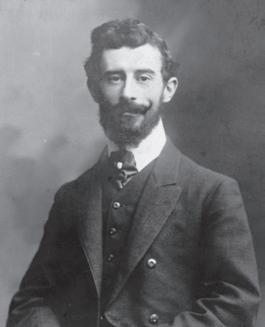
COMPOSED 1908
Aloysius Bertrand was a master of the macabre, a sort of French Edgar Allan Poe. Bertrand (1807–1841), born in Paris, published a set of spectral tales in 1835 titled Gaspard de la nuit (Gaspard [Kaspar] of the night) in which he sought to recreate in literary terms “the manner of Rembrandt and Callot.” (Jacques Callot was a seventeenthcentury French etcher and engraver whose masterpiece is a series of grotesque engravings depicting the Miseries of War.) Ravel’s biographer Scott Goddard noted,
[Bertrand] had the uncanny ability of writing intimately and precisely of people who lived, and of things that were done, in the dim, irreclaimable past. Gaspard de la nuit consists of a number of minute tales of life in medieval Europe,
has here thrown off the reflections of the musical giants who preceded him and has manifested the full individuality of his own brilliant personality.”
and never was the raconteur’s art used with a more certain skill than in those paragraphs, where, in ten lines, often in as many words, the atmosphere of a moment is caught and the quality of a mood crystallized. Gaspard is the personification in human form of the Prince of Darkness.
Ravel, who had a pronounced taste for the exotic, came to know Bertrand’s poems through his longtime friend and musical ally, the pianist Ricardo Viñes, and during the summer of 1908, he created musical analogues of three of them. Bertrand’s extravagant verses inspired from Ravel music that the composer said requires “transcendent virtuosity” to perform, and which is, according to the esteemed French pianist Alfred Cortot, “among the most astonishing examples of instrumental ingenuity ever contrived by the industry of composers.”
The first piece, Ondine, one of musical impressionism’s greatest aquatic
evocations, concerns the legendary water nymph who falls in love with a mortal, is disappointed by him, and then returns beneath the waves. In Le Gibet (The Gallows), a solemn belltone sounds throughout. “It is the clock that tolls from the walls of the city beyond the horizon,” explains Bertrand’s poem, “and the corpse of a hanged man that is reddened by the setting sun.” Scarbo, a tour-de-force of piano virtuosity,
depicts a fantastic dwarf who, wrote Bertrand, “shines in the sky . . . hums in the shadow of my alcove . . . scratches the silk of my bedcurtains with his nail . . . and pirouettes on one foot.”
Richard E. Rodda, a former faculty member at Case Western Reserve University and the Cleveland Institute of Music, provides program notes for many American orchestras, concert series, and festivals.