A community like no other
At the Montreal Children’s Hospital (MCH), there is something special that goes beyond our walls, our programs and even our remarkable clinical outcomes. It is something you feel the moment you walk through the doors. It lives in our hallways, our units, our offices and in the quiet moments behind the scenes. It is our sense of community.
Every day, we witness extraordinary people doing extraordinary work — often under pressure, often unseen and always with deep compassion. What makes the MCH truly exceptional is not only the expertise of our teams, but the way we show up for one another, and for the children and families who place their trust in us.
Across disciplines and departments, our staff, physicians, learners, volunteers and support teams work together with a shared purpose: to care, heal and advocate for children. Collaboration here is not a slogan — it is a lived experience. Whether in moments of crisis or celebration, we step in, lift each other up and move forward together.
The past years have reminded us just how resilient, creative and generous this community is. We have adapted, problem-solved and supported one another through challenges that tested us professionally and personally. Through it all, the strength of the MCH has been its people — your dedication, your kindness, your willingness to go the extra mile, even when it was hard.
What truly sets this hospital apart is the culture of care that extends not only to our patients and families, but to each other. A helping hand offered without being asked. A moment taken to teach, listen or simply check in. These acts, big and small, are what create the fabric of our community.
To every member of the MCH family: thank you. Thank you for the expertise you bring, the compassion you show and the humanity you carry into your work each day. You are the heart of this hospital, and it is because of you that the MCH remains a place where children receive exceptional care and where people feel they belong.
We are deeply proud to lead alongside you.

Dr. Tanya Di Genova
Associate Director of Professional Services
Montreal Children’s Hospital

Cindy McCartney
Associate Director of Nursing
Montreal Children’s Hospital and Women’s Health Mission of the MUHC
New Discharge Coordinator helps ease families’ return home
By Maureen McCarthy
The Montreal Children’s Hospital (MCH) has introduced a new staff position which is greatly improving how patients and families prepare to head home after a hospital stay. As Nurse Discharge Coordinator, Adriane Provost, BNI, is providing muchneeded support to the units and preparing families with confidence to embark on the next steps in their child’s care.
Adriane has been at the MCH for about seven years, most of which was spent working on the B9 Unit as a bedside nurse. It’s an experience that provided her with a real foundation to begin her new role as Discharge Coordinator last July.
Dr. Mylène Dandavino, Program Head, Medical Inpatient Services at the MCH, first proposed the idea of a discharge coordinator in October 2022 and worked with Catherine Bouchard, Manager
of Clinical Operations and Access to Care at the MCH, to develop the position.
Dr. Dandavino was aware that the position existed in other large hospital centres and saw its potential benefit for the B9 Unit. Discharge planning involves both assessing individual patient healthcare needs and the integration of hospital and community services. Inefficient discharge planning is associated with prolonged
continued >
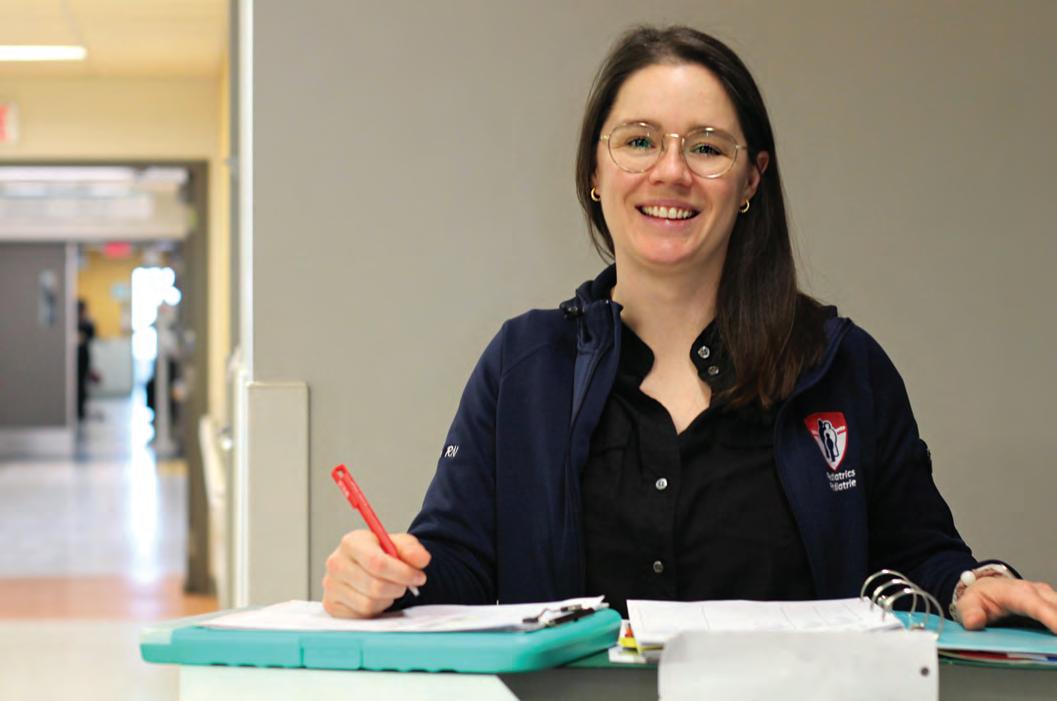
u Above: Adriane Provost is the new Nurse Discharge Coordinator at the Montreal Children’s Hospital.
hospital stays, late-day discharges and poor patient satisfaction with the overall process.
A discharge coordinator ensures safe and timely transitions back into the community or other hospitals and institutions, while at the same time, reducing the workload for unit nurses and medical teams in surge periods.
“All the details and logistics surrounding a patient’s discharge require a lot of system knowledge and most of our medical trainees are on a short cycle so there’s not a lot of continuity of how it works. This is where Adriane plays an important role: she is there when a new patient arrives and there when they leave, even if it’s months later,” explains Dr. Dandavino.
THERE EVERY STEP OF THEIR STAY
For Adriane, her previous experience on B9 helped her hit the ground running. “In the first few weeks there was a lot happening, the role was evolving quickly,” she says. “I created a checklist to identify the patients/ families that might need my services and from there I started to develop the work tools I use.”
Adriane meets with a family as soon as their child is admitted to the unit to start working on their discharge planning. “If a child is hospitalized for asthma, for example, it’s part of my role to discuss with the nursing and medical teams to see if the child will need a pump or other equipment at home, if the family will require training, etc., and then coor-
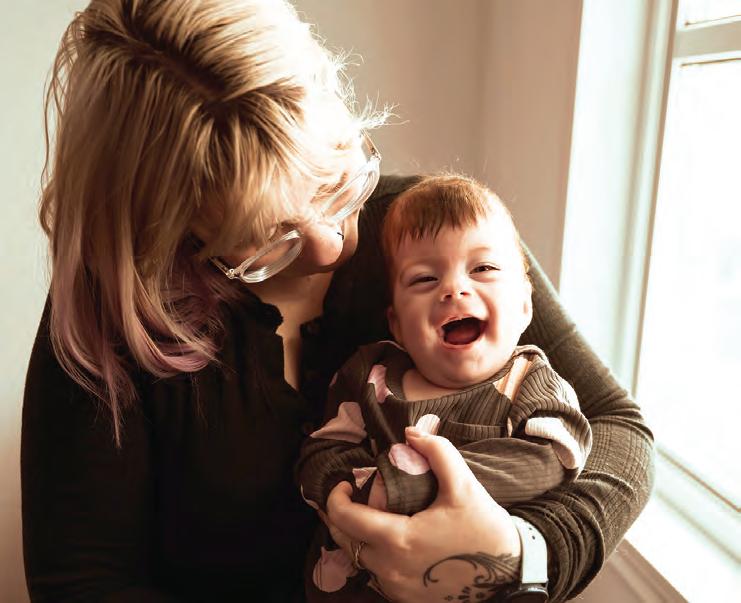
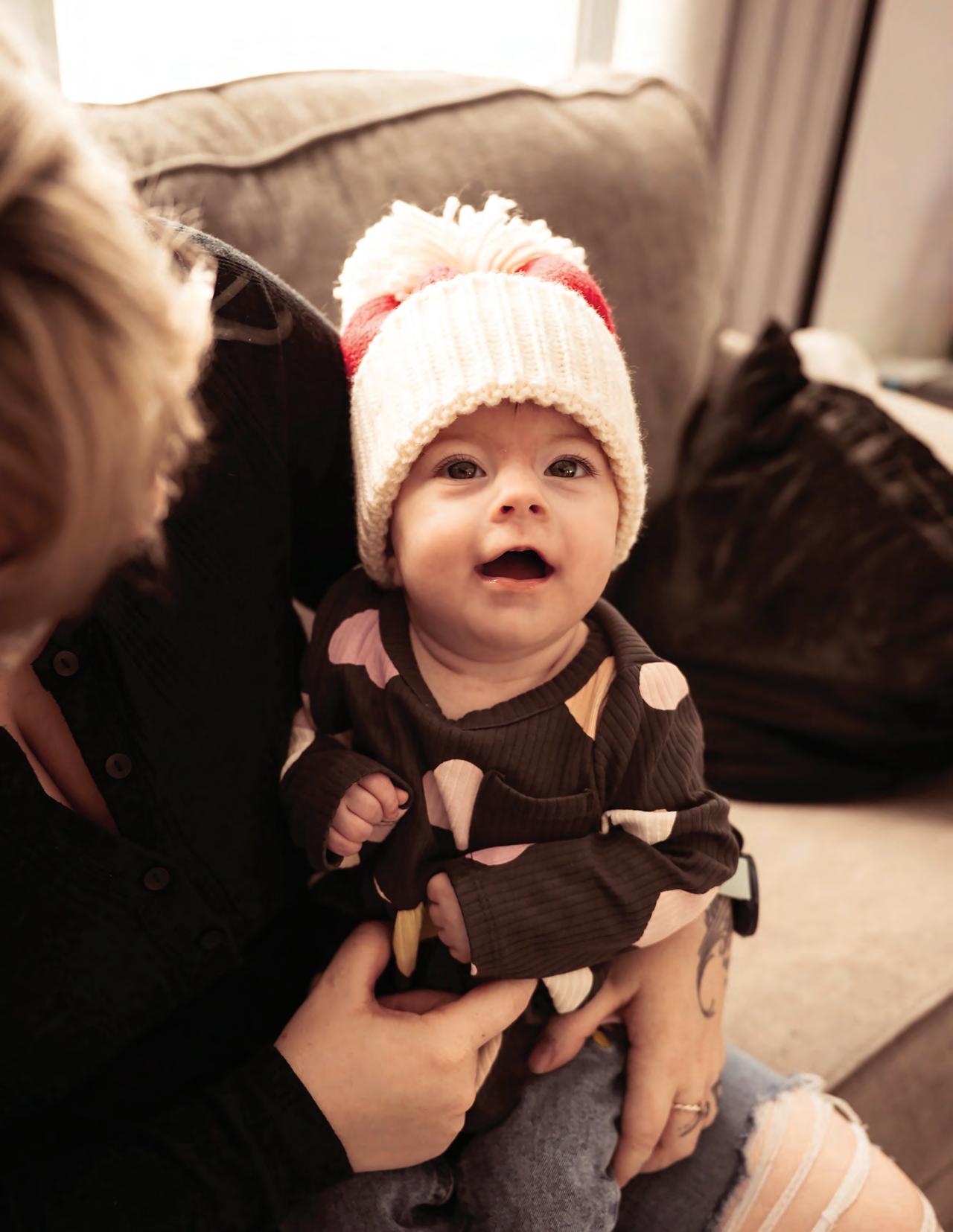
u Kim Ross and her daughter Nora benefited from Adriane’s services last July when Nora was hospitalized for difficulties with drinking and breathing.
dinate with the right people to get everything started.”
Sometimes when a family has been on the unit for a much longer period, Adriane may deal with their concerns about not feeling ready to go home and leaving the security of the hospital.
“Part of the goal of having the Discharge Coordinator is to better prepare parents to look after their child at home and reduce the chance of them coming back to Emergency,” adds Catherine Bouchard.
NO DAY IS THE SAME
A regular week for Adriane involves working with 10 to 20 families. It varies from week to week but on average, half the cases are fairly complex and the others are easier to get ready for discharge.
Each morning when she arrives on the unit, she checks the tableau des lits
“I have an Excel file that I can share with colleagues,” she says. “I identify patients by colour coding; looking at which patients would be ready to leave in a few weeks or in a few days. Patients who have already received their permission to go home are part of another colour-coded system. When I come in on Monday, if a patient was discharged on the weekend, I make sure to update myself on their info. Essentially, it’s a triage system that I’ve gradually developed.”
When she started, she met with other services such as neonatal follow-up and northern health to get a sense of how she could help them. The idea is not to replace their services, but rather act as a liaison for their patients with complex needs who are being discharged.
continued >
“For example, when I look at the tableau des lits and I see that a patient has Guillain-Barré syndrome, it’s possible they might need a reference to the Centre de réadaptation Marie-Enfant, so I can start planning according to their needs. Sometimes the triage is more subjective than objective but when I do rounds with the medical team a few times a week, I get a sense of which patients are ready for the next steps.”
Her many other responsibilities include requests for follow-up at a CLSC for patients who need close monitoring, injections, medications, etc., as well as post-natal follow-up. She also organizes transport for patients who are transferring to hospitals in the region or even for patients who leave the MCH to go home.
“I also help organize primary care for those patients who don’t have a family doctor, so I can identify a clinic near their home where they can go.” She adds that for patients with complex needs, she communicates with a pediatrician in their area who can take charge of their care.
Dr. Dandavino adds that Adriane’s work allows the medical teams to focus more on their teaching and clinical work.
“There are some aspects of Adriane’s work that we all need to know to understand the discharge process, but now we can better focus on training students and residents for the work they need to do as physicians.”
Dr. Dandavino says that Adriane is excellent in her role. “She came in knowing B9 very well. She’s extremely good at troubleshooting, finding solutions and she’s super proactive. One of my colleagues said on day one that Adriane’s work was already changing things. And I hear it constantly across the board from physicians on the unit.”
A PARENT’S PERSPECTIVE
Kim Ross spent three weeks at the MCH last July with her daughter Nora who was hospitalized for difficulties with drinking and breathing, causing her to turn blue and become oxygen deprived. She also experienced a drop in her blood oxygen levels while sleeping. Their stay at the MCH happened during Adriane’s first few weeks on the job.
“Near the end of our stay, Adriane arranged transportation by medical plane and transfer to the hospital in Val-d’Or, closer to our home,” says Kim. “She also prepared supplies for us to take home, as Nora was still being fed through a nasogastric tube. We didn’t have to organize anything, just wait for transport.”
Kim says Adriane was a very valuable resource. “We didn’t have to worry about anything. Adriane answered all our questions and was available at all times. All my partner had to do was get on the road to meet us at the hospital.”
When it came time for a follow-up appointment for Nora at the end of August, Kim wasn’t sure about transport since Nora was still on oxygen. “Once
again, Adriane took care of everything and contacted us with the time and date of our flight on the medical plane.”
THE BENEFIT OF A MULTIDISCIPLINARY APPROACH
Adriane not only takes part in the daily medical team huddle but she does rounds with the nutrition, social work and northern module teams.
“With these existing huddles I can gather quite a lot of information that I need on any patient issues and developments. There’s also a core meeting every two weeks for all staff on the unit to discuss patients who have been there longer term, who may need support for more complex needs. I also frequently meet with the nurse in charge in a less official capacity.”
For Adriane, the job is turning out to be everything she expected. “Coming from a bedside nurse background I had an idea what it would look like and the reality is pretty close to it. I really like the position, coordinating all these teams and care, and I still have contact with the family and patient which is very important for me.
“I feel like the multidisciplinary work at the Children’s has always been amazing and it’s the main reason why I came back [after maternity leave]. There’s such a family sense when you work here and you are really included as part of a big team so I feel that my role is just so much a part of that vision. I’m really enjoying it.” i
Transforming the emergency experience: when Child Life makes a difference
By Caroline Fabre
When a child arrives at the Montreal Children’s Hospital (MCH) Emergency Department (ED), they often face their first encounter with the hospital system, an experience that can be overwhelming and maybe a little frightening. Since late August, two Child Life Specialists have been working to transform these challenging moments for children into opportunities for empowerment and positive coping.
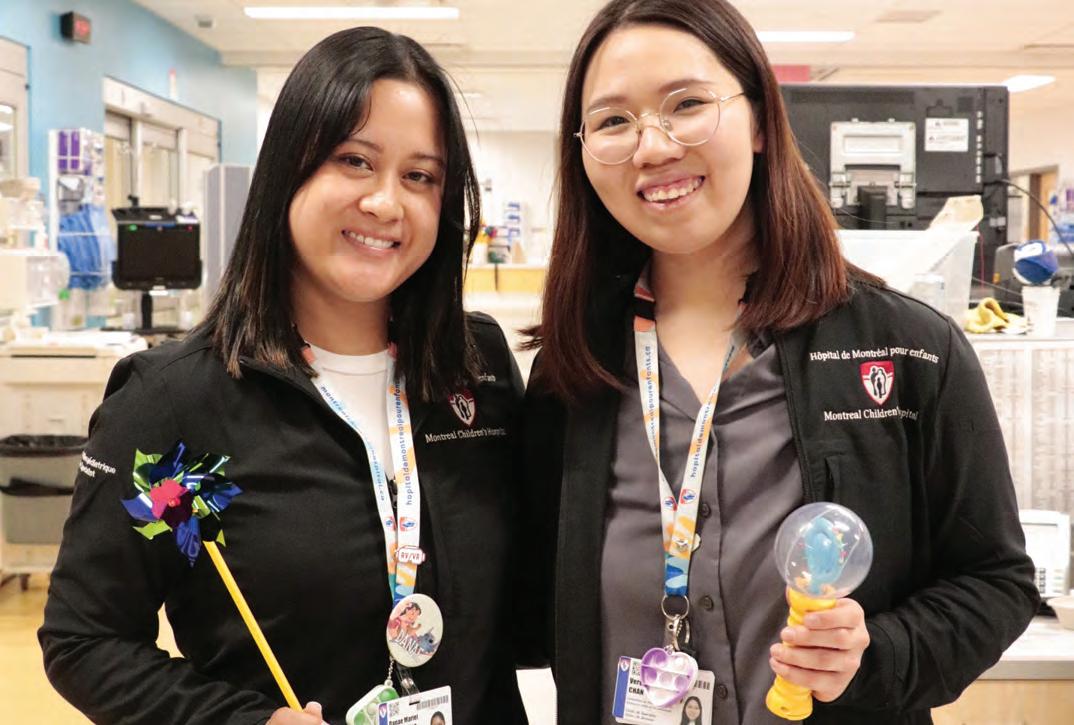
Veronica Chan and Danae Lim-Cesario now provide seven-day coverage in the ED, from 1 p.m. to 9 p.m. Their presence marks the return of a service that was first established in the Emergency Department at the MCH legacy site in 2001.
“An ED visit can be a child’s first hospital experience,” explains Child Life Professional Coordinator Sabrina Drudi, who worked in the ED at the beginning of her career. “As child life specialists,
u Above: The presence of Child Life Specialists Danae Lim-Cesario and Veronica Chan helps reduce patient stress during emergency visits. continued >
we are part of the psychosocial team. We work with the doctors and nurses to help minimize stress, maximize coping and help children understand what’s happening in age and developmentally appropriate ways.”
After the position was discontinued for five years, the decision to reinstate the role was driven by the significant impact Child Life had made and the recognition of its importance when benchmarking with other Canadian hospitals, and thanks to the generous support of a donor to the MCH Foundation.
MEETING CHILDREN WHERE THEY ARE
Both Veronica and Danae bring unique backgrounds to their roles. Veronica studied psychology and previously worked as a child life assistant in the ED before pursuing her studies to become a child life specialist. Danae came from a therapeutic recreation background and worked as a child life assistant for a year and a half before transitioning to her current position.
Each ED shift begins with an important routine: looking through the patient list, having a clinical discussion with the ED
team about care plans and prioritizing who needs support. From there, the child life specialists meet families, get a sense of what each child is feeling and tailor their approach based on age, special needs and what the day holds.
“For me, the moment I walk into a room and see a child who is anxious about an upcoming procedure is the moment I know I can make a difference,” says Veronica. “Helping them feel empowered and giving them tools they can use now and in the future is what this job is all about.”
The child life specialists arrive with distraction bins filled with age-appropriate tools: light spinners, stress balls, fidget toys and more. But the work goes far beyond keeping kids busy. With medical dolls called “shadow buddies”, preparation books and hands-on demonstrations, they help children understand what’s happening to their bodies and, more importantly, why, in a way that feels safe and empowering.
Veronica recalls one particular intervention with a young patient facing his first surgery. After assessing his needs,
she sat down with him to review what would follow, familiarize him with the operating room environment, and walk him through the process using a shadow buddy and an anesthesia mask. Together, they explored the different scents available for the anesthesia and read through a surgery preparation book with pictures.
“He told me that it really, really helped him to know more about the surgery process and his mother appreciated our support,” shares Veronica.
SUPPORTING FAMILIES AND MCH STAFF TOGETHER
The impact of Child Life extends throughout the Emergency Department, helping patients, families and staff alike. Parents experiencing apprehension about their child’s medical situation often find support and reassurance from the child life specialists, who recognize that parental stress can be transmitted to children. Siblings also receive attention during these uncertain times.
“There’s a lot of movement that happens in the Emergency Department,” notes Danae. “When children meet so continued >
Editor: Christine Bouthillier
Contributors: Caroline Fabre, Maureen McCarthy
Design: Vincenzo Comm Design inc.
Photography: Christine Bouthillier, Caroline Fabre, Spencer Halickman


To submit story ideas or texts to Chez nous, contact the Communications office at ext. 24307 or send an email to mchpr@muhc.mcgill.ca.
Production of Chez nous is made possible thanks to funding from the Montreal Children’s Hospital Foundation.

Follow us on facebook.com/hme.mch youtube.com/thechildrens x.com/hme_mch tiktok.com/@hme_mch instagram.com/hme.mch linkedin.com/company/hme-mch


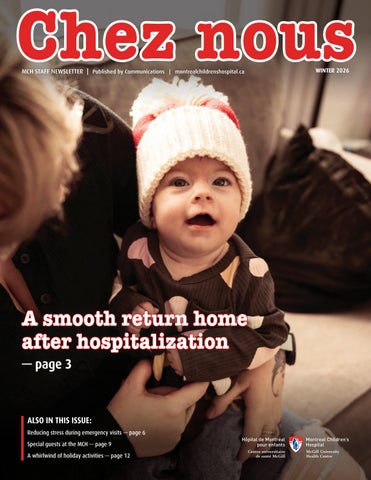
On the cover: Kim Ross and her daughter Nora benefited from the services of the new MCH Nurse Discharge Coordinator.
Kim Ross
Chez nous is published by the MCH Communications office.
Cover photo: Courtesy of
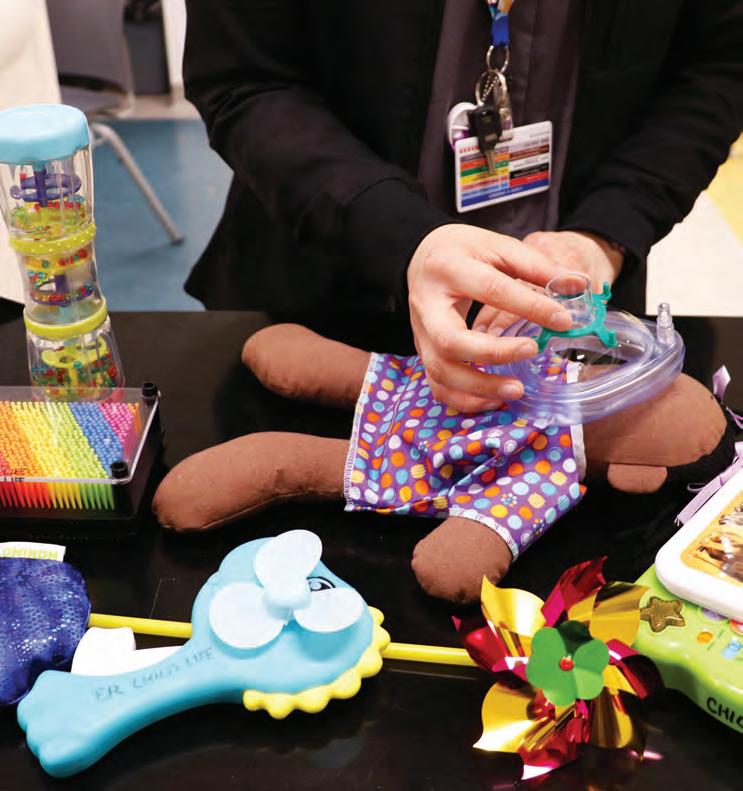
u Using medical dolls, child life specialists explain to children the procedures they are about to undergo.
many clinicians at once, it can be overwhelming for them. Our role is really to make sure that not only the patient but also the families feel as comfortable as possible.”
Collaboration with ED staff has been essential to the program’s success. The child life specialists work closely with nurses and doctors, offering procedural support during intravenous insertions, blood work and sutures, while also serving as resources for developmental questions, supporting co-regulation through therapeutic play and building coping skills during moments of stress.
Kelly Cummins, Nurse Manager in the ED, has observed firsthand how this partnership enhances care delivery: “Veronica and Danae’s presence has significantly improved the experience for our pediatric patients and families by reducing anxiety, supporting coping during procedures and helping children better understand what to expect during often stressful visits. The assistance they provide also strengthens our team’s ability to deliver care more efficiently. By providing procedural support and de-escalation, Child Life allows clinicians to focus on medical care while ensuring children’s emotional and developmental needs are met.”
The feedback has been overwhelmingly positive. Parents appreciate the support when their children are becoming impatient during long waits. Staff members welcome the additional help and the teamwork that has developed.
As Kelly notes: “Feedback from families and staff continues to reflect the value of this service, reinforcing how essential Child Life is to high-quality, familycentred care in the Emergency Department.”
The afternoon and evening shift timing, chosen because ED activity peaks between 3 p.m. and 11 p.m., allows the child life specialists to be present during the department’s busiest hours. When they are not available, nurses have access to positive reinforcement tools.
CREATING LASTING IMPACT
Beyond immediate comfort, the work of child life specialists has long-term effects. When children are well-prepared and supported through their medical experiences, they develop positive coping strategies that serve them in future healthcare encounters. The emergency visit, rather than becoming a source of trauma, can represent a moment when they felt heard, understood and empowered.
For Danae, the most rewarding aspect is simply being present: “It’s mainly being there for the patients and the family and supporting them. It’s so meaningful to see children smiling when they’re discharged and hearing from parents that they appreciate the support provided.” i
A visit that scores points: the Canadiens at the MCH

By Christine Bouthillier
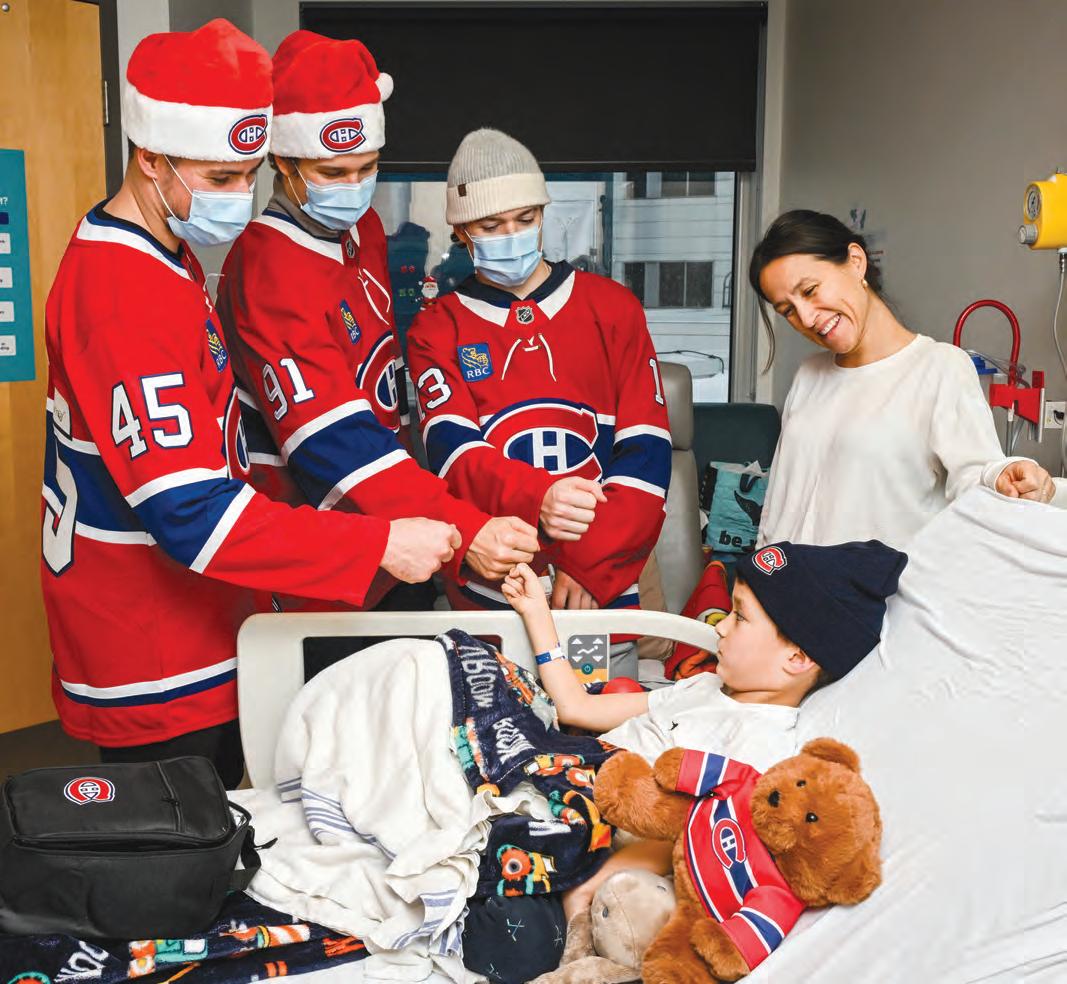
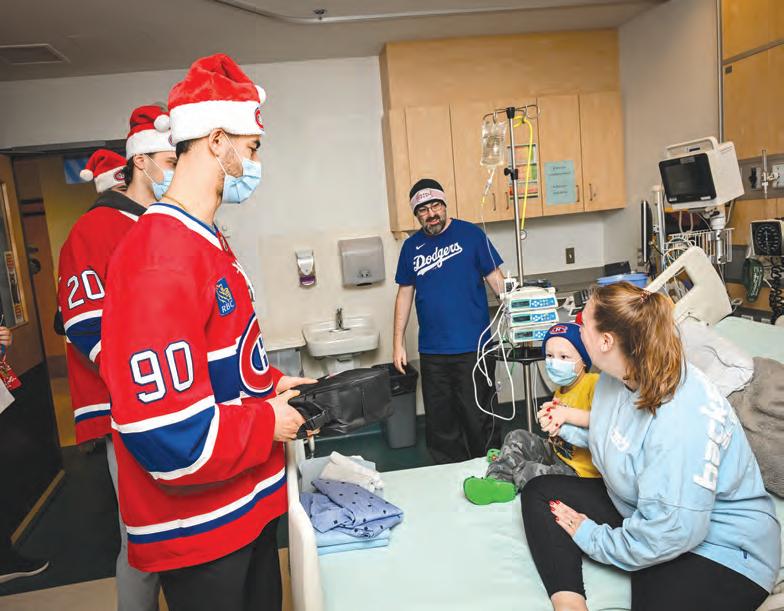
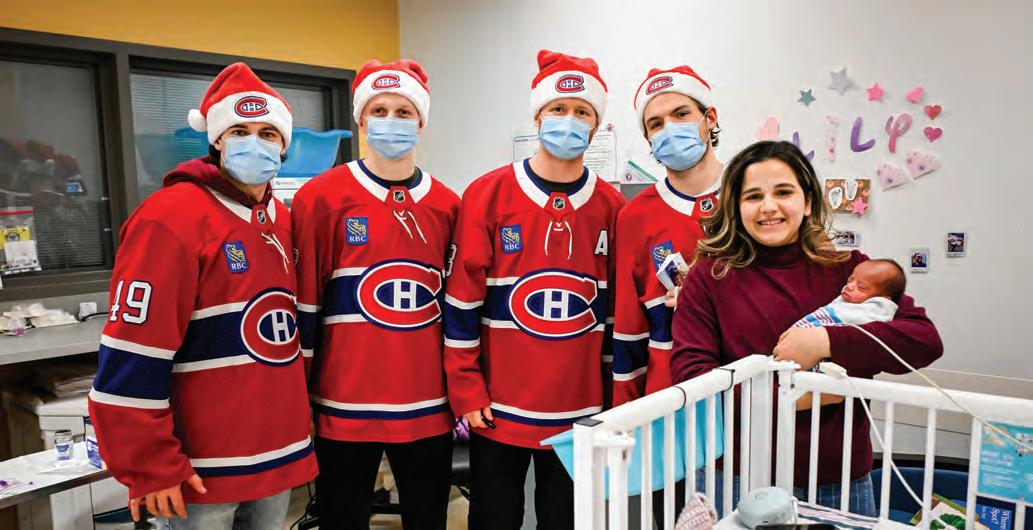
On December 17, the Montreal Canadiens hockey players brought the spirit of the holidays to the Montreal Children’s Hospital, delighting young patients and their families with their annual visit. This cherished tradition, now in its 60th year, began in the 1960s and has become a beloved event that patients and staff eagerly anticipate.
continued >
u Above: Little Henri won’t forget his encounter with players Alexandre Carrier, Oliver Kapanen and Cole Caufield.
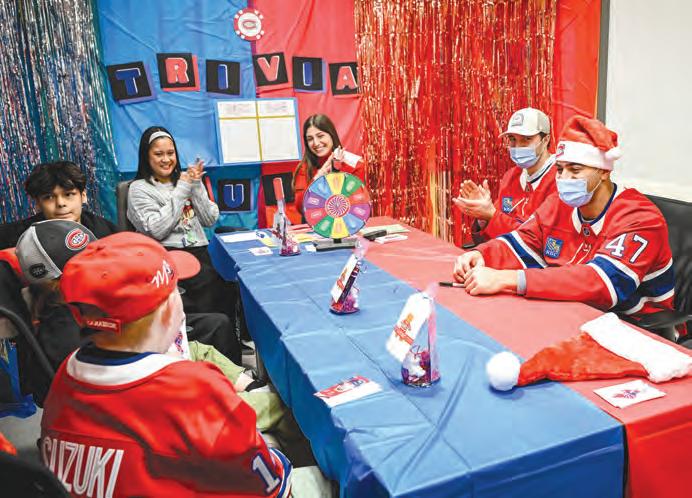
Players made their way through the different floors at the hospital, delivering gifts, signing autographs and sharing uplifting moments with the children and their loved ones. For those in isolation, the Canadiens participated in an online trivia game, ensuring everyone could take part in the festivities.
“It’s pretty cool to give back and inspire these kids a little bit, and put a smile on their face. It definitely inspires us,” says Cole Caufield, winger for the team.
Events like this undoubtedly create unforgettable memories for all participants. We thank the Canadiens for their ongoing dedication and for making this holiday season extra special for the patients at the Montreal Children’s Hospital. i
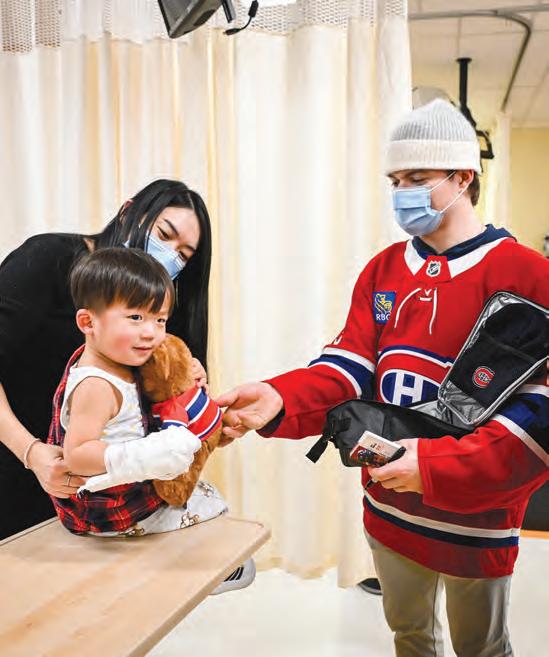
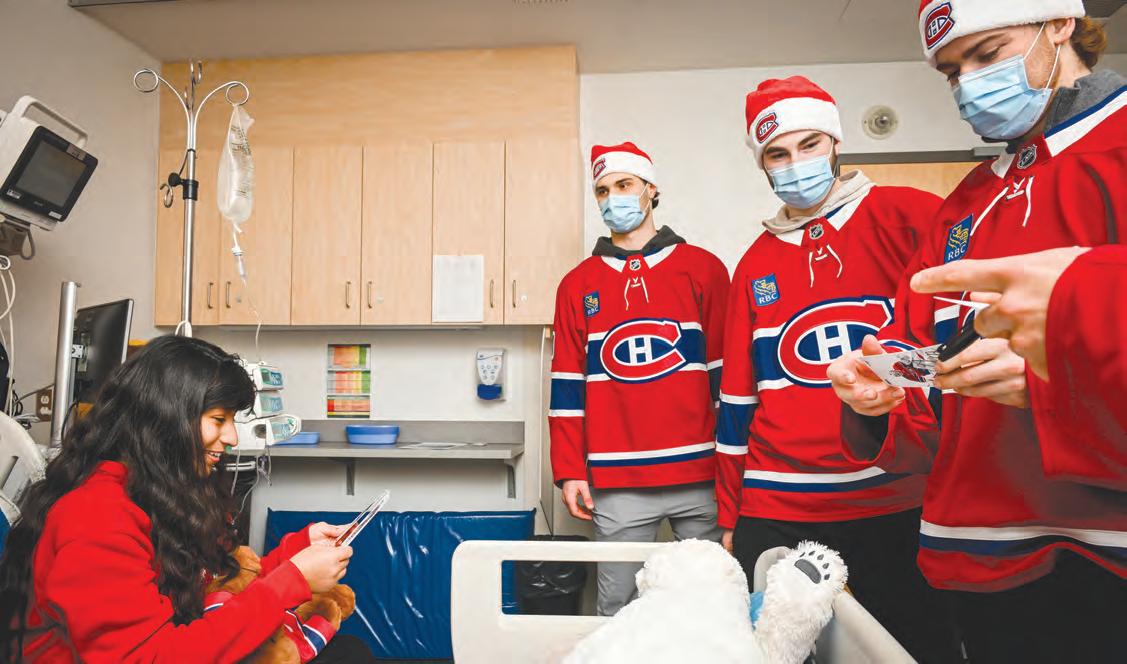

u The players signed autographs, much to the delight of the patients.
u Patients in isolation were able to participate in an online trivia game with the athletes, hosted by the Child Life team. A few children also attended in person.
u Newborns hospitalized in the Neonatal Intensive Care Unit also had some special visitors!
u A number of families waited for the players dressed in the colours of the Bleu-blanc-rouge.

TCelebrating the holiday season together
By Caroline Fabre
he holiday festivities at the Montreal Children’s Hospital (MCH) proved once again that just because we are in a hospital doesn’t mean we can’t celebrate the joys of the season. December brought visits from very special guests, including Santa Claus, the Grinch, talented musicians and dancers, as well as presents and other surprises for both patients and staff members.
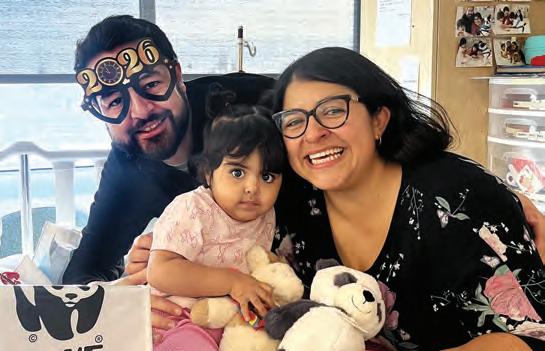
With the help of our Child Life team, patients and their families had the chance to celebrate the New Year while in hospital with fun activities and delicious treats. What a way to start 2026!
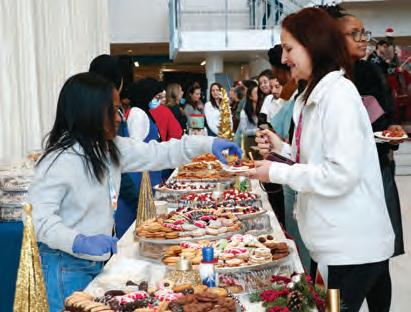
Mid-December, MCH staff members gathered for a holiday celebration to enjoy delicious snacks and hot drinks, and participate in festive activities, such as a gingerbread house contest and a photo booth. They then enjoyed a performance offered by two dancers from Les Grands Ballets Canadiens, followed by a concert by Contracello.



The MCH had the privilege of welcoming four musicians from the Orchestre Métropolitain, visiting several hospital units and offering performances of beloved holiday classics. At lunchtime, the artists then made their way to the P.K. Subban Atrium for a one-hour concert.
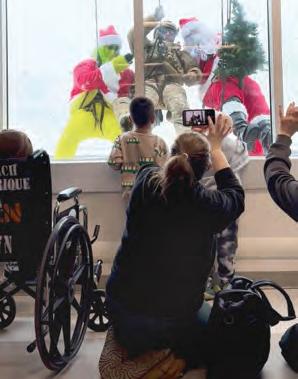
This year, Santa Claus rappelled down the hospital’s facade before the Grinch attempted to steal the presents meant for our patients! Fortunately, members of the Groupe tactique d’intervention from the Service de police de la Ville de Montréal (SPVM) were here to support him. After the descent, Santa was joined by Flik, the SPVM mascot, along with a few officers to distribute gifts to our patients.
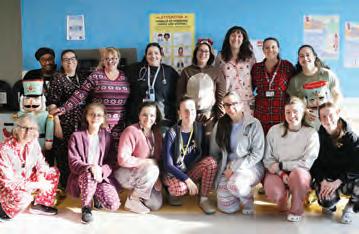
MCH staff members swapped their usual scrubs and gowns for cozy pajamas, fluffy slippers and festive prints for a day, helping create a relaxed, welcoming atmosphere during the holidays.