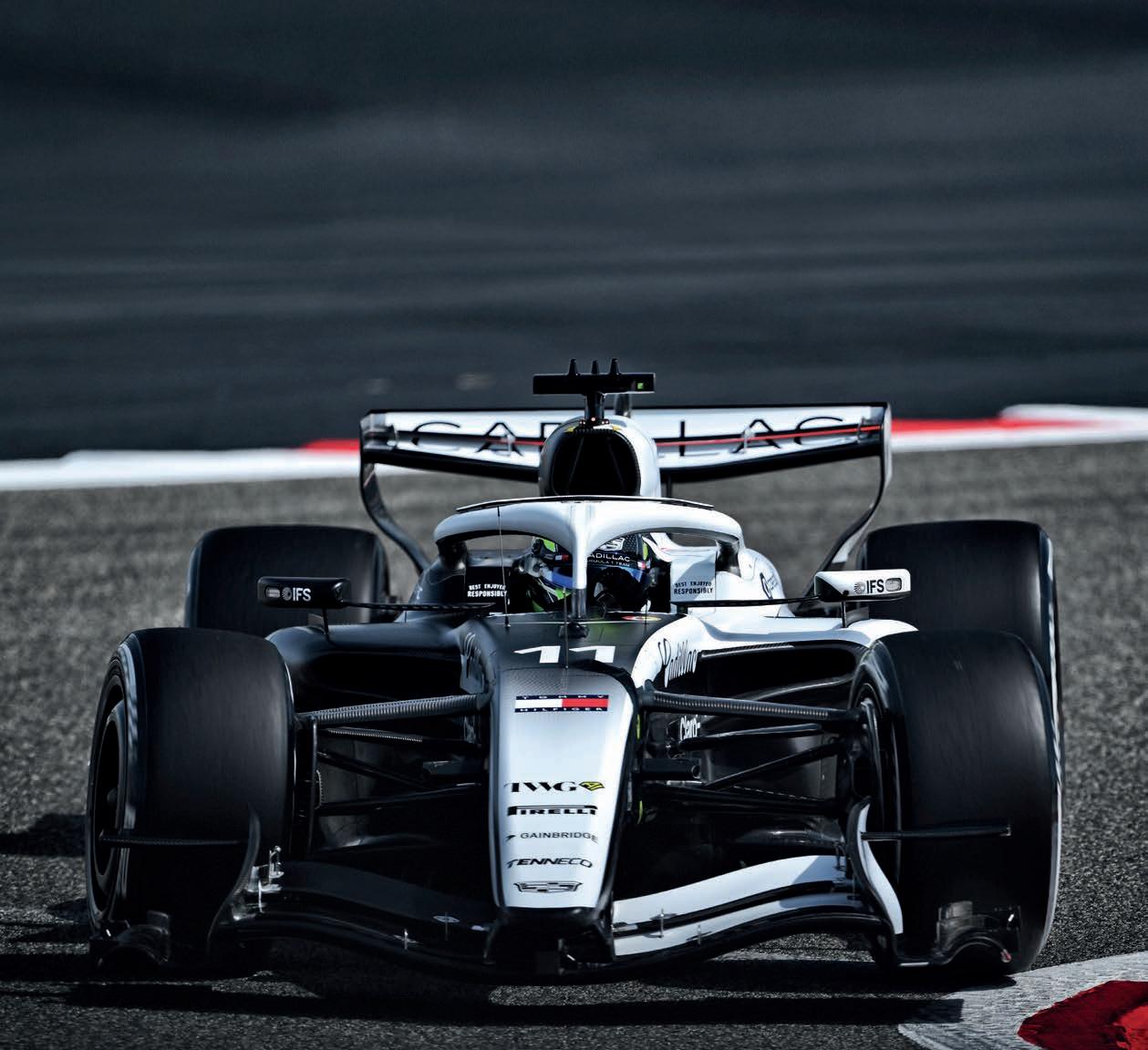
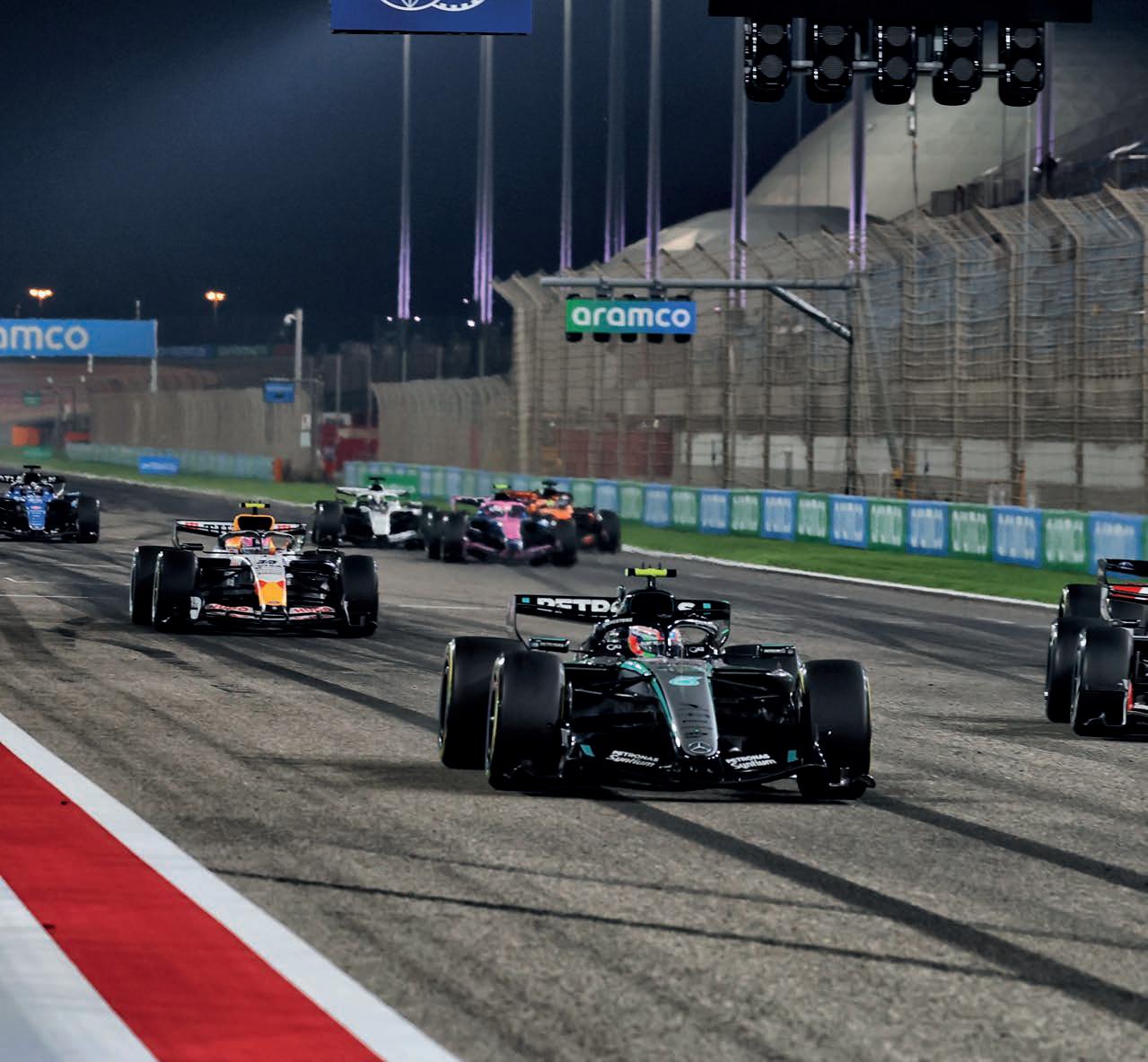
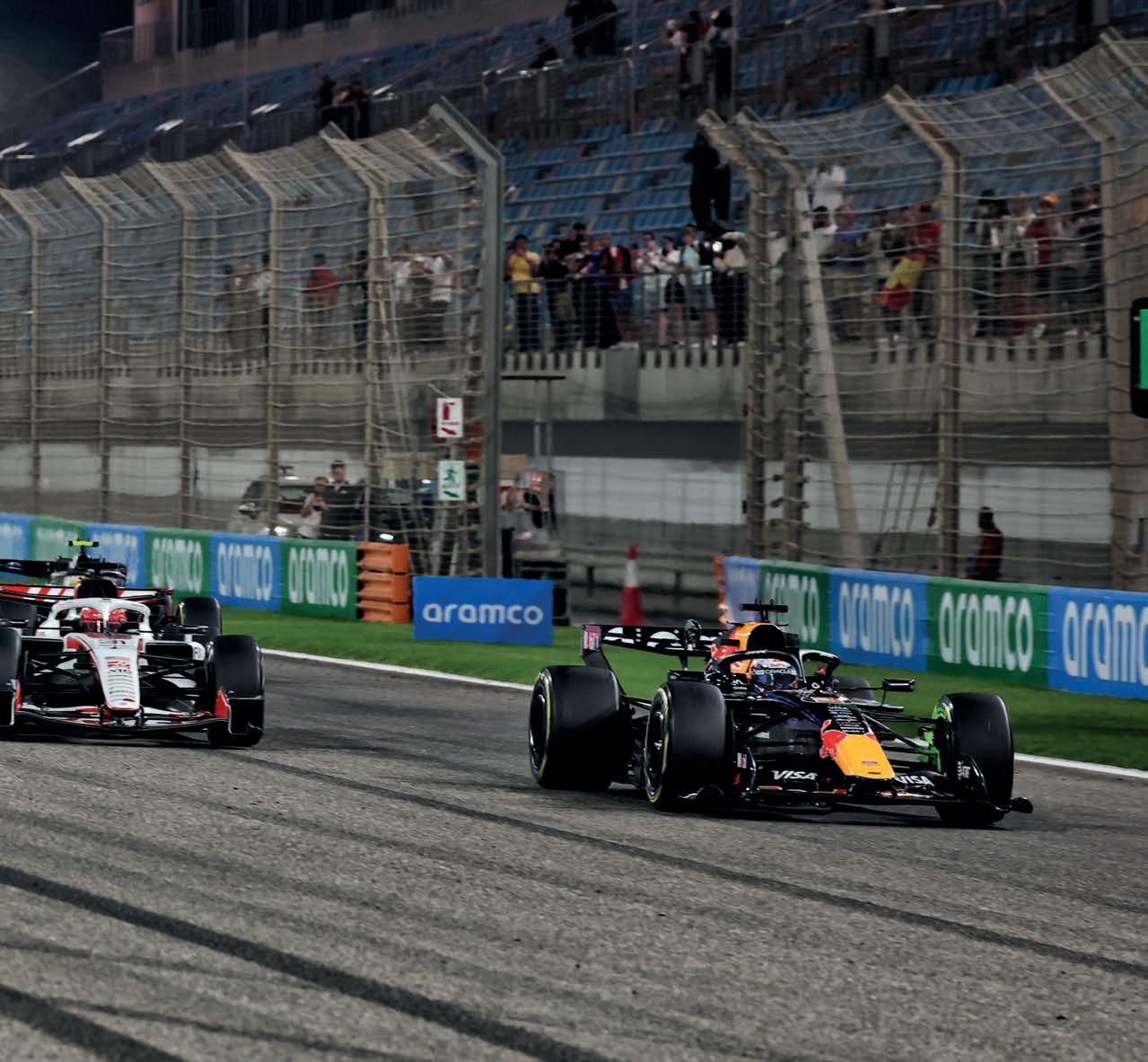
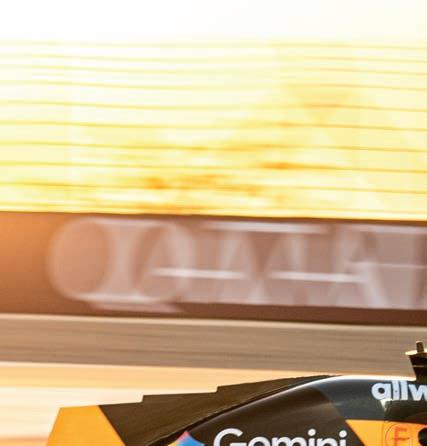
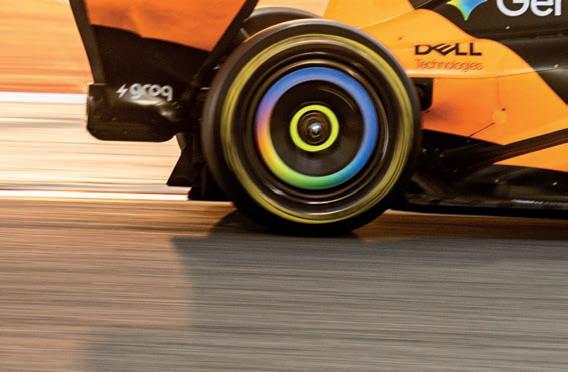
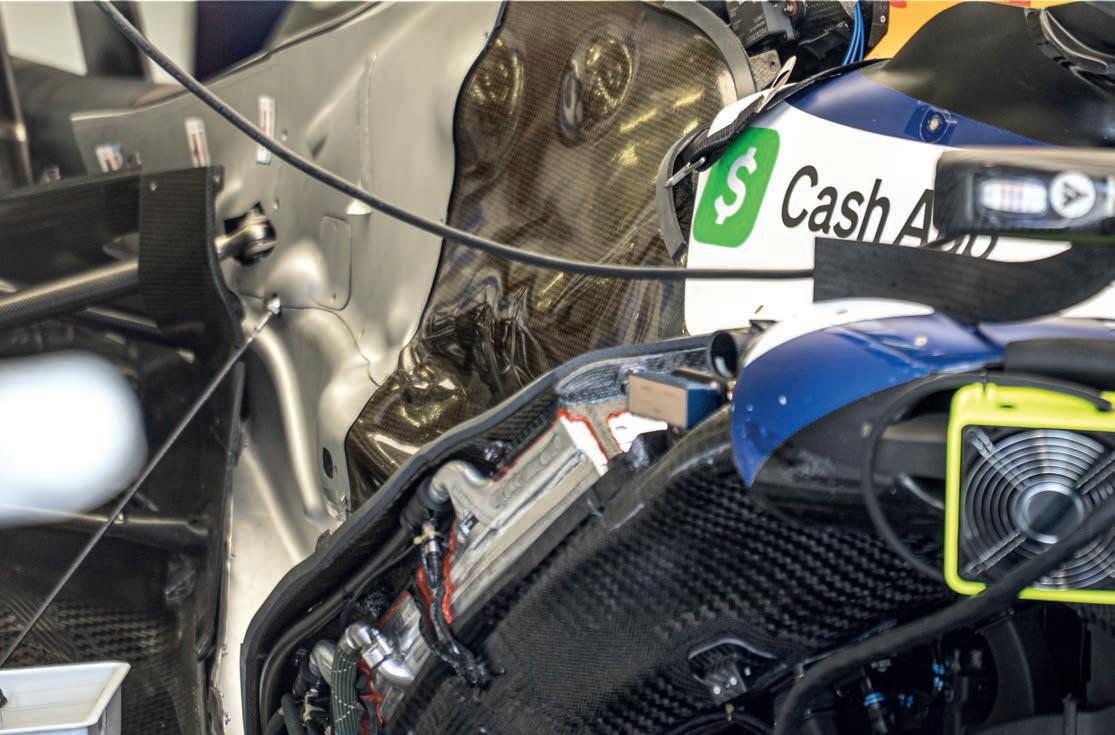
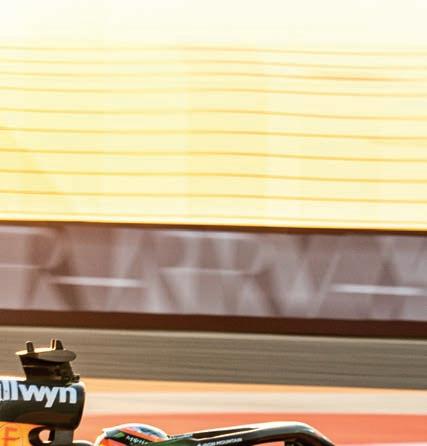
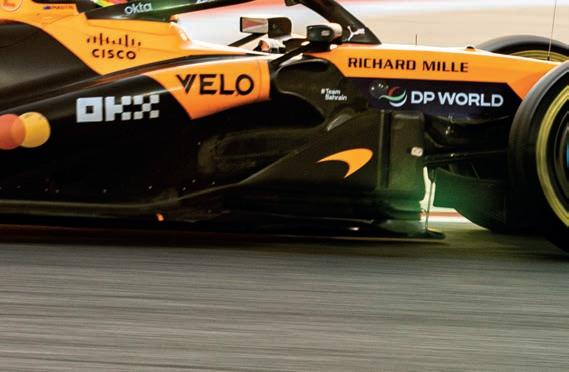
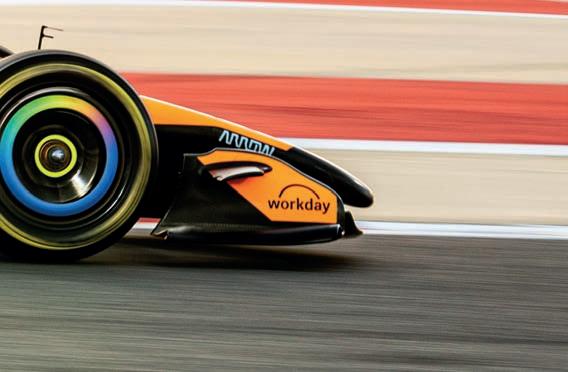
The open tests featured practice starts which proved more complicated than first expected. Performance and reliability testing were paramount throughout the two Bahrain tests, but procedures also came under scrutiny as teams and the FIA grappled with the new hybrid technology
Spinning
plates
Teams have a lot to wrap their heads around at the start of F1’s new technical era. Racecar was there to see how things unfolded at the first open test
By DANIEL LLOYD
After years of anticipation and discussion – plus the tease of a behind closed doors shakedown – the 2026 fleet of Formula 1 machinery was finally revealed to the world in mid-February. A pair of three-day tests at Bahrain International Circuit gave teams an opportunity to learn more about their cars, which are unlike anything F1 has seen before.
The electric element of the powertrain, the MGU-K, is now more potent, accounting for 350kW (around half) of the total output, up from 120kW. However, each car is restricted to 4MJ of battery capacity, meaning that regeneration and deployment strategies must be carefully thought through. New chassis regulations have been crafted to make the cars nimbler through slow corners and to generate less outwash. Downforce
For every driver, team and engineer, the combination of new items, and their interaction with other parts of the car, has been a massive technical undertaking
levels have also been reduced significantly, by around 25 per cent.
For every driver, team and engineer, the combination of new items, and their interaction with other parts of the car, has been a massive technical undertaking.
All but one outfit, Williams, ran their cars at the official Barcelona shakedown in late January so, for everybody else, the Bahrain sessions were about building on that experience. At the first test, held in warm but windy conditions, the focus was largely on accruing as much mileage as possible, and solving any issues that arose quickly.
Williams made up for lost time, logging 422 laps (2283.8km) to top the distance chart in the first test, proving that their car is capable of running reliably. The second test saw teams place greater emphasis on
exploring the current performance of the cars, rather than outright speed, so it’s fair to say their true potential is yet to be realised.
Harvest season
The biggest change for the drivers has been the amount of work now required to harvest and deploy much larger amounts of electrical energy (see F1 powertrains feature on p16). Early onboard videos showed Max Verstappen downshifting to first gear for some corners in his Red Bull RB22. This puts tremendous strain on the transmission.
Downshifting was the biggest thing the Racing Bulls team had to get on top of during early track running, according to its team principal, Alan Permane. ‘The driver doesn’t want to feel the downshift – that’s the Nirvana,’ he says. ‘There are several things that can
happen. One is that the engine pushes the car in the downshift so it’s not quite synced. The other thing – which is almost worse – is the rear wheels lock a bit as you do that. That has two effects: it is detrimental to lap time because the driver can’t lean on the car as they would like; secondly, it hurts the tyres. So in a long run, you make the tyre degradation worse. Those are the two specific areas we’ve been working on.’
A popular topic in paddock talk during Bahrain testing was compression ratio, referring to allegations that Mercedes has pioneered a way of negating a reduction in the maximum compression ratio, from 18:1 to 16:1. The Mercedes power unit passed the FIA’s ambient tests at the regulation 16:1, but its engine is said to have been designed in such a way – understood to be achieved with
Drive to deploy
The 2026 rule set brings with it a raft of powertrain changes. Racecar investigates how teams are approaching the huge challenges that F1’s new era presents
By RACECAR STAFF
If there is one area that will de ne the 2026 Formula 1 season, it is the power units. February’s test in Bahrain brought this into stark focus, as almost every team struggled to get a handle on the power delivery and energy harvesting characteristics of their cars. Hardly surprising given the sport has not seen such sweeping rule changes this century, with both chassis and power unit regulations given a complete overhaul.
On the power unit front, the core V6 ICE architecture remains, but that is about it. With the loss of the MGU-H, engine manufacturers have had to entirely revise their approach to combustion. Capacity is still set at 1.6-litres, with a maximum bore of 80mm, which dictates a stroke of around 53mm.
The regulations have been tightened up to prevent teams doing anything too outlandish with the ICE, and the location of certain ancillaries that were previously free is now dictated. For example, the positioning of the turbocharger is locked down, with split arrangements such as those used by Honda and Mercedes in the last era now outlawed.
[At Bahrain testing] almost every team struggled to get a handle on the power delivery and energy harvesting characteristics of their cars
According to Hywel Thomas, managing director at Mercedes AMG High Performance Powertrains, these rules are ‘just to try and cut down people having to do endless re-layouts and engines because someone’s done a cleverer job than anybody else.’
All change
On the electrical side of the power units, it is all change. As a reminder, in 2025, the V6 was augmented by a 120kW MGU-K, and an MGU-H running on harvested exhaust gas energy (with around 90kW of power).
In Bahrain, drivers were making drastic changes to their driving styles, braking more aggressively and taking corners in lower gears and at lower speeds than before. It is clear the 2026 powertrains are going to take some getting used to
These were married to a 4MJ battery pack. Engine manufacturers were pretty much free to choose the architecture of these systems, and most, with the exception of Ferrari,
Although the core architecture of the ICE V6 remains, major changes elsewhere in the powertrain mean the PU manufacturers have had to dramatically revise their approaches
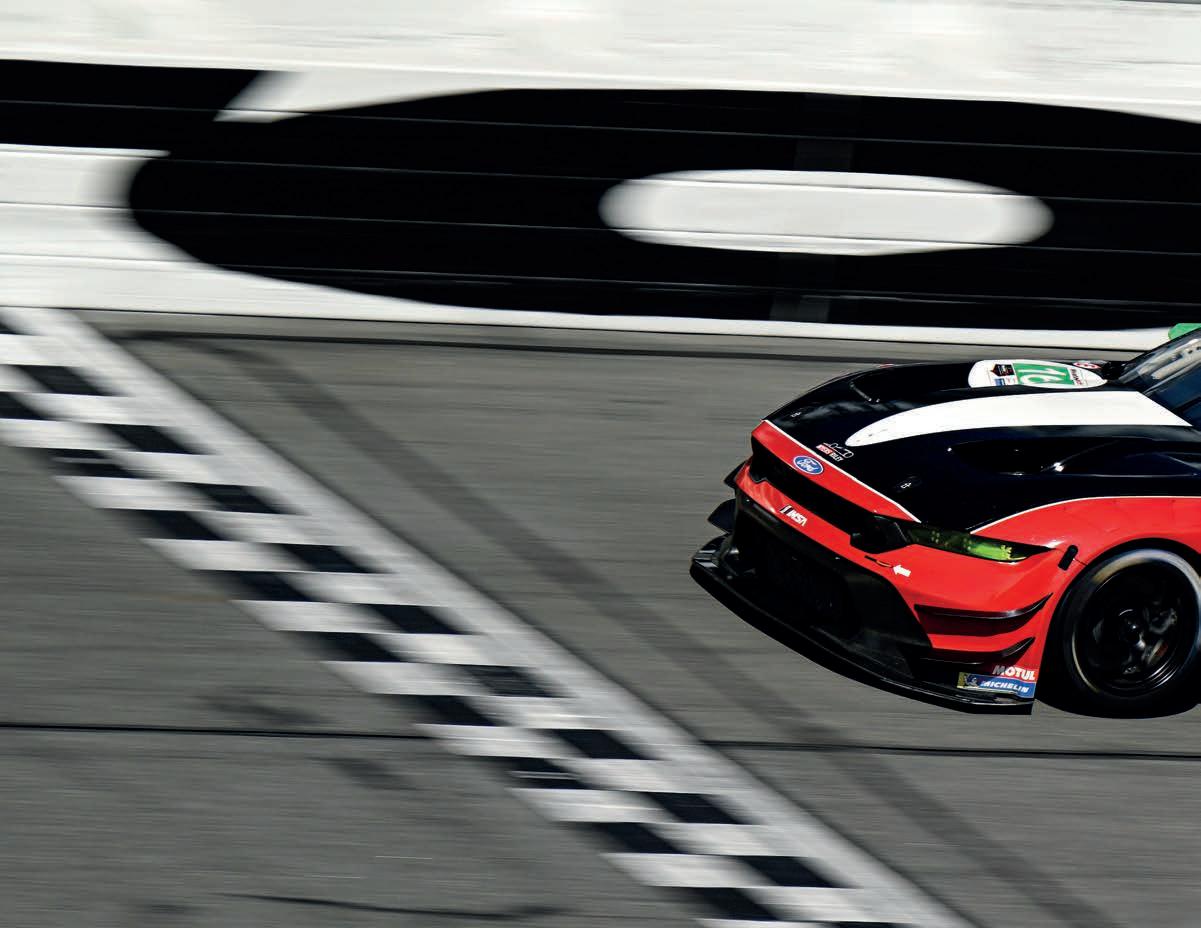
Ford Multimatic ran a pair of cars, the best of which finished seventh in the GTD Pro class.
More recent testing of the ‘Evo’ kit, which is available to customer teams as well as the factory Multimatic squad, took place through 2025 at Portimão in Portugal, and Laguna Seca and Watkins Glen in the United States.
Key improvements
Ford had identified key areas it wanted to improve, notably performance on the brakes. For that reason, it has changed supplier to Brembo, altered the frontal aero to make the car less sensitive to pitch, and updated the design of the front and rear suspension for the same reason.
The team’s engineers also used the experience of two seasons’ racing on different tyre suppliers to tune the car’s kinematics.
There have been other smaller changes made too, such as a new alternator from Motion Applied, which forms part of an endurance lighting package to better help drivers competing at night.
When the Mustang GT3 was introduced, it proved immediately controversial. Not only was it one of the highest priced GT3 cars ever, but it had its racing activities limited from the start. The fear was it could be one of those cars that destroys the category. However, despite the wins, Ford has not dominated. The company is building up its support network around the world, including in Europe and Australia, to enable further expansion of its customer racing programme.
Although the Mustang GT3 hasn’t become any cheaper since it was first introduced, it now races in the GT World Challenge, DTM, ADAC GT Masters, FIA World Endurance Championship and IMSA, in both the GTD Pro and GTD classes of the latter.
Ford had identified key areas it wanted to improve, notably performance on the brakes
Adding to that, Ford has also launched the Mustang Challenge, for lower-spec Dark Horse R variants to compete together in a one-make series. One of the crowning achievements of that programme was to hold a support race at the 2025 running of the 24 Hours of Le Mans, which saw an entry of more than 40 Dark Horse Rs. It’s a measure of Ford’s commitment to GT racing that it should launch such a series, while also developing the Mustang GT3.
Although the GT3 version of the car has achieved success in some series, such as IMSA and GT Masters where it won the 2025 title, it has so far struggled in the WEC, the DTM and GTWC Europe. Ford hopes the updates will increase its competitiveness.
‘It’s a constant development,’ says Ford’s global motorsports director, Alex Allmandinger. ‘No matter how hard you worked on the first one, there are always going to be improvements and things you can make better, not only for a factory team with all professional drivers, but also highlighting
Developments have occurred both on the skin and under it, with revised aero, updated brake package and suspension and an improved electrical package
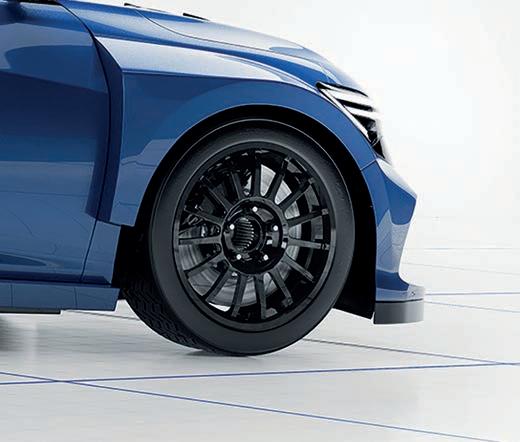
Wheel supplier has been switched from American Racing to BBS. Not only are the new rims more drag efficient, they offer more space inside for the brakes
Staging break
The FIA World Rally Championship’s new era is less than a year away. Here’s how things currently stand
By DANIEL LLOYD
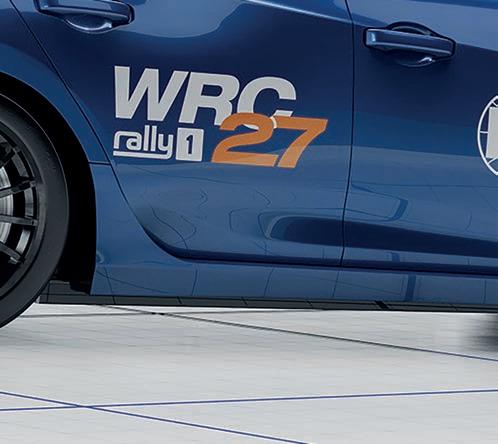
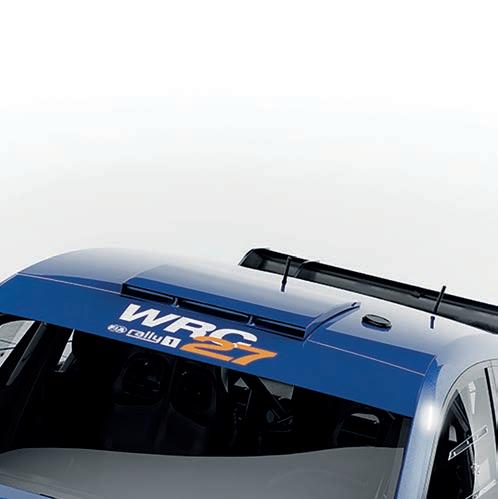
Sometimes you have to take one step back to take two forward. That is what the FIA’s approach to new regulations for the World Rally Championship (WRC) feels like. We are now less than a year away from the introduction of the new WRC27 cars, which will be technologically less complex than the current Rally1 crop, but cheaper to run and more accessible for young drivers. By reducing costs, the FIA hopes more competitors will be drawn to entering WRC events with the goal of outright victory.
Since 2022, Rally1 has been the WRC’s headlining class. Yet only three manufacturers have built cars to these regulations: Hyundai,
Toyota and M-Sport, which runs the Ford programme. Rally1 cars were originally equipped with a 100kW (134bhp) hybrid boost system, making them extremely potent out of corners, but that feature was dropped ahead of the 2025 season.
having initially approved them in late 2024. However, it has been possible to glean some of the important facts and gures prospective car builders and component suppliers have been ruminating over.
The non-hybrid iteration of Rally1 is still quick, and the category has some interesting aerodynamic features that make it stand out from the slower Rally2 and Rally3 classes. However, Rally1 failed to attract any new manufacturers to the WRC, prompting the rethink of the pointy end of the rally pyramid.
The WRC27 rules are not yet publicly available, despite being at a highly mature stage, the FIA World Motor Sport Council
The fundamentals
First though, it is worth reiterating the fundamentals, which have been open knowledge for a while. Every car will use the same FIA-designed steel spaceframe chassis. The 1.6-litre, inline-four engine formula will be adopted from Rally2, replacing the 2.0-litre inline-four Rally1 architecture. Bodywork design will be policed by regulatory boxes that each aspect needs to sit inside.
New cars will have less downforce than current Rally1 machines, and the same engine architecture as Rally2. Essentially, some performance is being sacri ced to make the cars cheaper to run and more accessible to a wider customer base
The Rally1 moniker will continue to be used for the WRC’s top class, in which cars built to the WRC27 and Rally2 regulations will be eligible, at least until the former has enough interest to stand on its own
The idea behind the boxes is to strike a compromise between curbing aerodynamic complexity and giving constructors design freedom to pomote their brands.
Flexibility is a key pillar of the 2027 rules. So it is theoretically possible to have something that resembles a Tesla, a Land Rover or a pure prototype, as long as the box boundaries are respected.
manufacturers’ titles. The other is Project Rally One, a startup Belgian tuner led by former FIA rally director, Yves Matton, and experienced engineer, Lionel Hansen.
State of play
Cars will be closer in performance to today’s Rally2, while the two platforms will initially be allowed to coexist in the same class. A complete car must be sold for no more than €345,000 (approx. $409,400).
The WRC wants the regulations to be attractive for both high volume automotive manufacturers and specialist car builders, referred to colloquially as ‘tuners’. These two types of customer now exist under a single umbrella term – constructors – as that is exactly what both will be doing.
So far, two constructors have publicly committed to building new cars for the 2027 season. One is Toyota, winner of the last ve
Approval of the draft regulations in December 2024 con rmed the price point and the common chassis concept. Over the following 12 months, the FIA worked to ll in some details and de ne the homologation requirements that all constructors must follow. In December 2025, it con rmed the need for each one to build at least 10 cars within two years of the model’s homologation date. A week later, Project Rally One announced its commitment.
At the 2026 season-opening Monte Carlo Rally, the FIA revealed that at least 10 constructors had expressed interest in building cars to the new regulations. Converting as many of those maybes into rm commitments as possible is high up on the federation’s agenda.
The cutting edge
To make cutting tools good enough for Formula 1 requires diamonds, lasers and decades of experience, as Racecar discovered on a visit to Exactaform’s facility in Coventry, UK
By MIKE BRESLIN
Top-tier motorsport is all about those tiny measurements. The thousandth of a second shaved off a lap time, the wisp-like fraction of a point of downforce found in CFD, or the microns that might mean the difference between a tight tolerance part fitting, or not. The latter is where specialised cutting tools come to the fore, and the technology and materials that go into these are as impressive as anything else seen in Formula 1.
One of the companies at the forefront of high-end tool making is Exactaform, a UK-based concern that’s been around since John Inglis set it up in 1979. From that one man, one grinder operation, the company has grown to a point where it is now employing 120 heads across the group, has a state-ofthe-art manufacturing facility in Coventry
and is supplying Formula 1 teams and other high-level motorsport operations, plus the automotive and aerospace industries. It also has a facility across the Atlantic in Tennessee.
Jamie White, Inglis’ grandson, is now the managing director and runs day-to-day operations at Exactaform, but Inglis is still the owner and, even at the age of 81, remains actively involved in the business.
The company started out making steel tools for the UK automotive industry, of which Coventry is at the very heart, but by 1985 it had moved on to a far more advanced material, polycrystalline diamond (PCD); an extremely hard, man-made diamond. Exactaform now manufactures cutting tools made from a range of other materials too, including carbide, and it generally works in round shank tooling, which basically means
tools with a cylindrical body where they connect to the machine.
‘We’re a specialist in custom PCD tooling, the UK’s largest,’ says Neil McKinnell, product manager at Exactaform. ‘It’s drills, end mills, reamers, step drills, countersinks, and it’s predominantly for CNC milling machines. We do also make tools for lathes, but much less of this kind of product.’
Race base
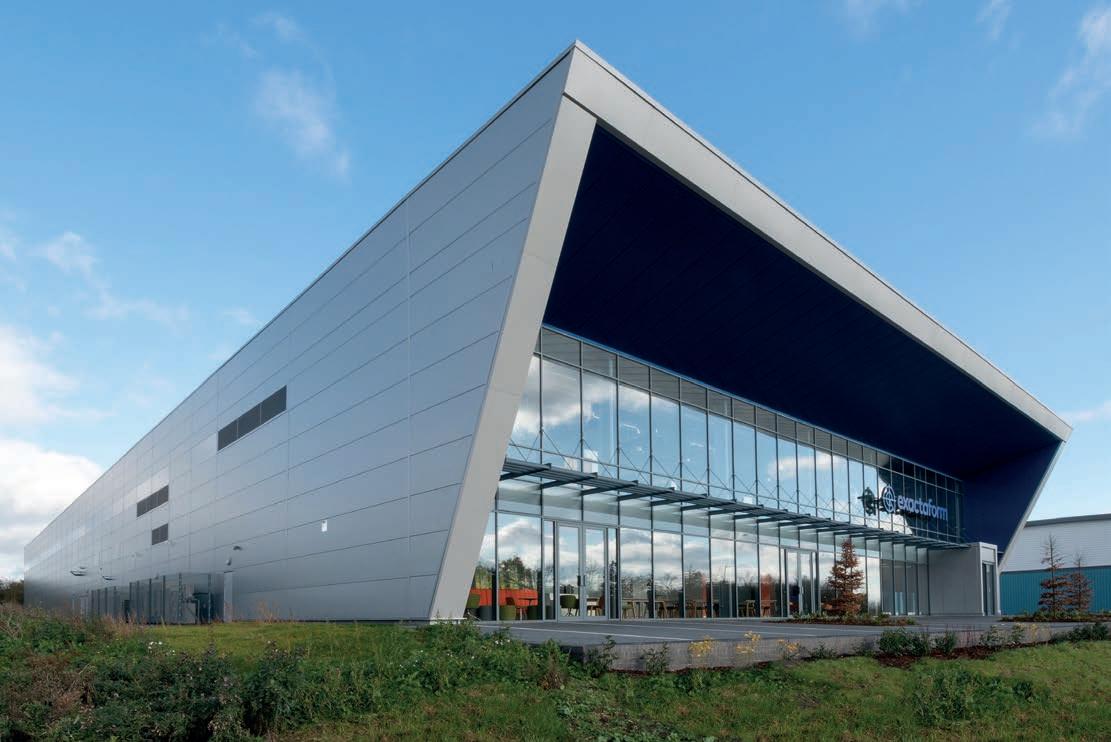
One of the more visible signs of Exactaform’s success is its purpose-built, 43,000sq.ft manufacturing facility, which it moved into in 2017. This was the brainchild of Inglis, White and Peter Raynor, who now heads up the operation in the US, and all three were involved in the design of the factory, which is perhaps why its façade resembles a PCD tip.
Exactaform operates out of this 43,000sq.ft hi-tech manufacturing facility in Coventry, right at the heart of the UK’s automotive industry and close to Motorsport Valley