Is a Wine Refrigerator Necessary for Your Kitchen?
Is a wine fridge the next logical step in upgrading your kitchen? If you like wine or even just want to relax with a glass every now and then, it very well may be! This article will assist you in determining whether a wine refrigerator is necessary for your household. Let's take a closer look at the most important factors to think about when purchasing a wine cooler. After all, you're probably wondering, "Do I really need a wine fridge?"
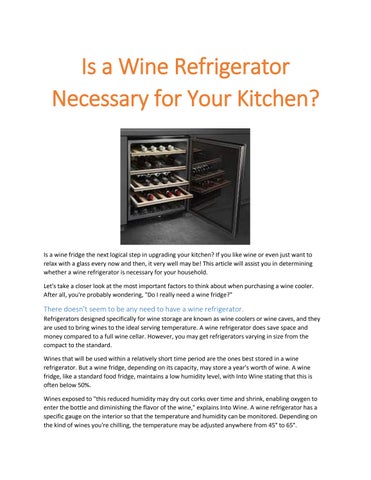
There doesn't seem to be any need to have a wine refrigerator. Refrigerators designed specifically for wine storage are known as wine coolers or wine caves, and they are used to bring wines to the ideal serving temperature. A wine refrigerator does save space and money compared to a full wine cellar. However, you may get refrigerators varying in size from the compact to the standard. Wines that will be used within a relatively short time period are the ones best stored in a wine refrigerator. But a wine fridge, depending on its capacity, may store a year's worth of wine. A wine fridge, like a standard food fridge, maintains a low humidity level, with Into Wine stating that this is often below 50%. Wines exposed to "this reduced humidity may dry out corks over time and shrink, enabling oxygen to enter the bottle and diminishing the flavor of the wine," explains Into Wine. A wine refrigerator has a specific gauge on the interior so that the temperature and humidity can be monitored. Depending on the kind of wines you're chilling, the temperature may be adjusted anywhere from 45° to 65°.
To keep your wine at its optimal serving temperature, a wine fridge is a handy appliance to have. The temperature in your ordinary refrigerator may vary since it is opened and closed so often. Wine bottles may be damaged by extreme temperature changes. Furthermore, wine refrigerators serve a dual purpose that is distinct from that of a standard kitchen fridge. The primary function of a standard refrigerator is to cool and dry perishables. Wine is too delicate to withstand the rigors of this temperature. Are looking to buy the best Wine Chiller Singapore at best price deal then you at right place click the link and buy it.
The Value of a Wine Refrigerator One major benefit is that they are more affordable than a dedicated wine storage facility. Wine cooling units, which are necessary to maintain the cellar's temperature and humidity at appropriate levels for your wine, may cost anywhere from $1,000 to $10,000 or more, as reported by estimates that a Wine Cooler or wine freezer that can store anywhere from 20 to 120 bottles of wine might set you back anywhere from $200 to $2,000. A second benefit is that your wine will keep for a longer period of time. WineEnthusiast.com explains that the main features that set wine refrigerators apart from other fridges are their ability to control temperature, humidity, and vibration. You run the danger of your wine losing flavor if you reside in a very cold or warm environment. Regular refrigerators are designed to swiftly decrease temperature and force out humidity. Both wine vaults and wine refrigerators have special care for their bottles. For the sake of preserving the wine's flavor, a wine fridge gradually reduces the temperature of its contents while keeping the humidity at just the right amount. Third, wine has to be stored in a wine refrigerator since conventional refrigerators may cause harm due to humidity. Temperature and humidity are both enemies of your wine. According to Blog Your Wine, standard home refrigerators are built to dehumidify the air within the appliance.
The fourth benefit is that they are safe for the planet. A wine freezer or wine cooler might be an useful purchase if you care about maintaining a sustainable household. An alternative to compressor-based wine coolers is thermoelectric medium cooling, as reported by New Air. The owner of a wine cooler may contribute to environmental protection by reducing domestic energy use. More importantly, according to New Air, no harmful emissions or chemicals are used in the cooling process. Instead, heat is transferred from the chamber to the outside air using a "simple mechanism" involving a metal rod, as described by New Air. This means that wine coolers are more environmentally friendly than any other similar product on the market. Fifth, they are effective in blocking out offensive odors. Wines are not designed to withstand the odours of a regular refrigerator. Because of the low humidity in a standard refrigerator, wine may absorb off-flavors from its environment (and tastes). When the cork in your wine bottle shrinks and gets porous, this is what occurs. We don't find it to be particularly tasty.
Sixthly, it's not limited to wine use. The contents of a wine cooler are not limited to wine. Having a designated space in your wine fridge for storing high-quality oils and vinegars is a great idea. Any drinks that won't fit in a standard refrigerator can be stored in a wine cooler. If you often have parties, this might come in quite handy.