Skip the lines at iconic sights and uncover hidden gems with a Local Specialist.
One-of-a-kind Experiences
Dine with locals in our signature Be My Guest experience and stay in accommodations with stories as rich as the destinations.
Responsible travel
Every
Welcome
CEO Gary Marshall
EDITOR Chris Head
GENERAL MANAGER/MANAGING
PUBLISHER Tim Charlton
EDITORIAL MANAGER Tessa Distor
PRINT PRODUCTION EDITOR Vienna Verzo
JOURNALISTS Marga Manlapig Kanchan Nath Megha Paul
GRAPHIC ARTIST Simon Engracial
COMMERCIAL MEDIA TEAM Jenelle Samantila Dana Cruz Danielle Goh
AWARDS awards@traveldailymedia.com
ADMINISTRATION billing@traveldailymedia.com
EDITORIAL press@traveldailymedia.com
SINGAPORE
160 Robinson Road #14-04 Singapore (068914)
HONG KONG
Room 1006, 10th Floor, 299 QRC, 287-299 Queen’s Road Central, Sheung Wan, Hong Kong +852 3972 7166
MIDDLE EAST
FDRK446, Compass Building, Al Shohada Road, AL Hamra Industrial Zone-FZ, Ras Al Khaimah, United Arab Emirates
PRINTED BY Midas Asiapac Pte Ltd
10 Admiralty Street, #06-22 North Link Building, Singapore 757695 +65 6383 5290
Can we help?
Editorial Enquiries: If you have a story idea or press release, please email our news editor at press@traveldailymedia.com.
Media Partnerships: Please email press@traveldailymedia.com with “Partnership” in the subject line.
Travel Daily Media is published by Charlton Media Group. All editorial is copyright and may not be reproduced without consent. Contributions are invited but copies of all work should be kept as Travel Daily Media can accept no responsibility for loss. We will however take the gains.
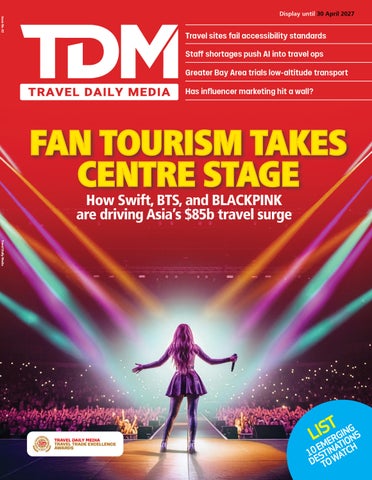
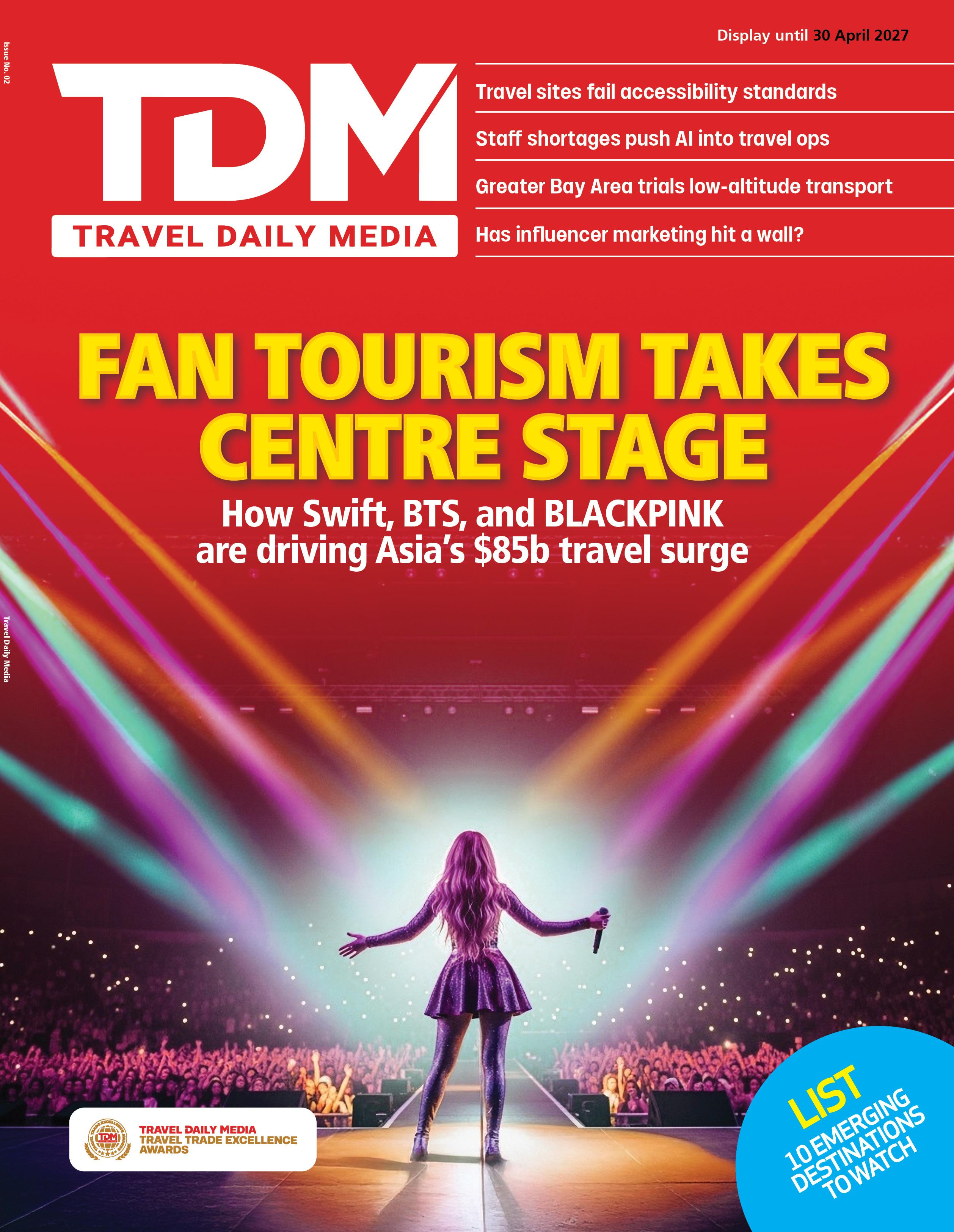
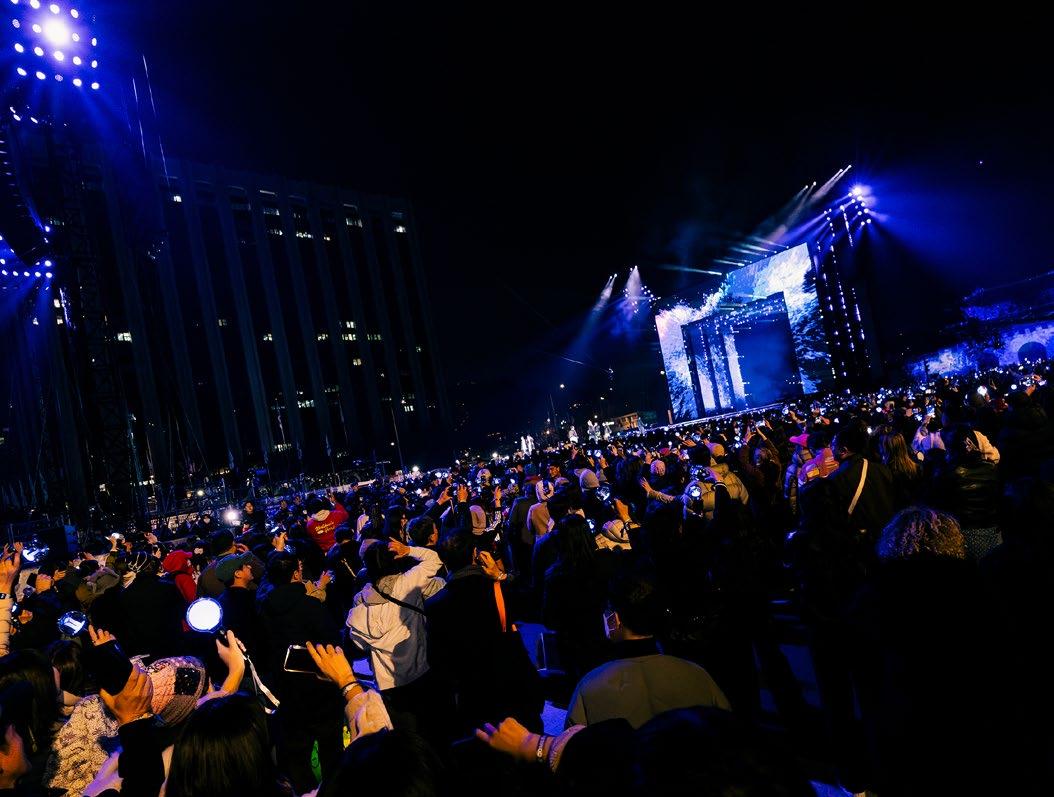
Concerts now move travellers as much as tickets. Our cover story on pages 18 and 19 tracks how global tours are translating into real demand, with destinations and travel players racing to capture fans following their favourite acts across borders.
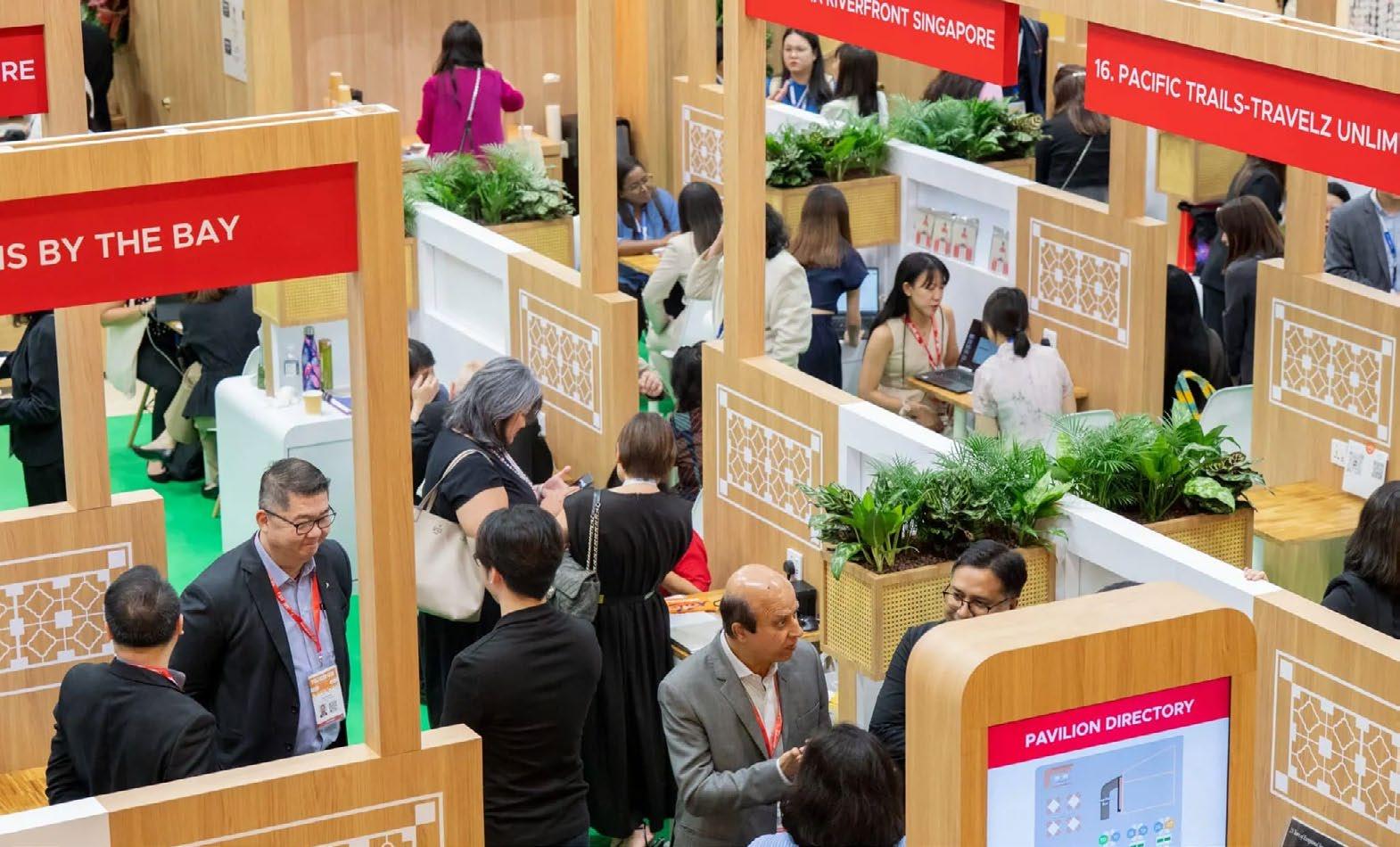
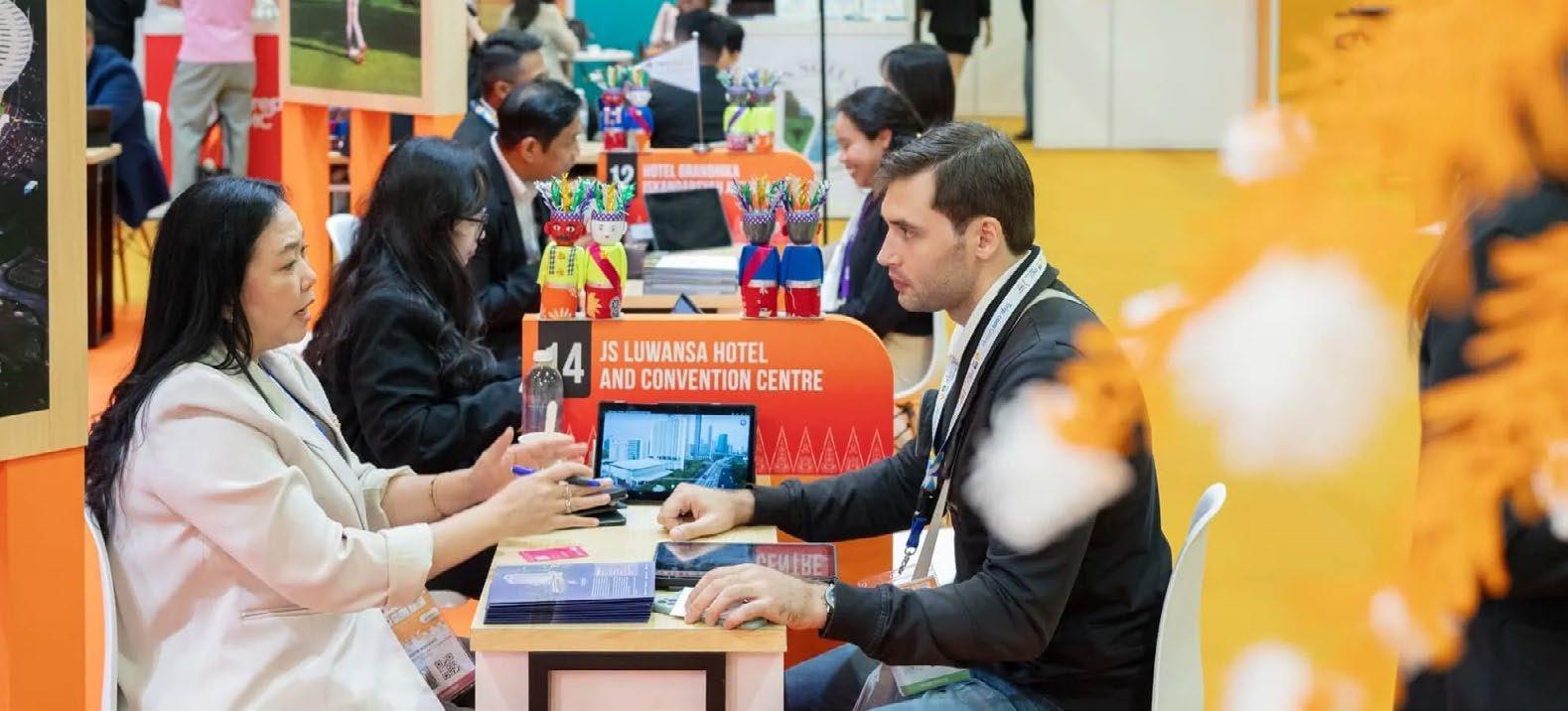
Technology, meanwhile, is moving from pitch to practice. At ITB Asia, companies showcased how AI is being deployed to manage costs and streamline operations, even as labour shortages continue to strain service delivery. Turn to page 20 to see how operators are balancing both pressures.
Travellers are also becoming more deliberate. Google’s Hermione Joye explains why trips are getting shorter, planning cycles more fragmented, and spending more focused on value and wellbeing. Read more on page 22.
Airlines are also back on the front foot. On page 16, Travel Daily Media sits down with Thai Airways Chief Commercial Officer Kittiphong Sansomboon to discuss the carrier’s return to the market and fleet expansion plans as it rebuilds capacity and sharpens its product.
Also featured are the TDM Travel Trade Excellence Awards, recognising companies raising the bar in innovation, service, and leadership across the region.
Travel Daily Media is a proud media partner and host of the following events and expos:
Most read
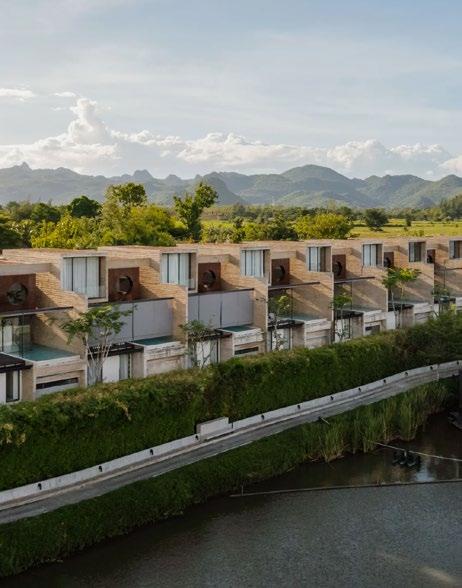
River Kwai redefines luxury stays in Thailand
Those behind The Xcape River Kwai see it as the accommodation equivalent of a rebel with a cause. That cause being to redefine luxury on the banks of the Kwai Noi River, and to do so with cutting-edge architecture, bold design, and a vibe that blends historic charm with modern swagger.
dnata taps Marwan Essa as managing director of operations
APPOINTMENTS
dnata has appointed Marwan Essa as its new managing director for operations in Zanzibar. Essa will manage dnata Zanzibar’s business performance and development, overseeing ground handling and cargo operations whilst driving service for airline customers and airport partners.
Middle East cancellations spike as US travel budgets rise
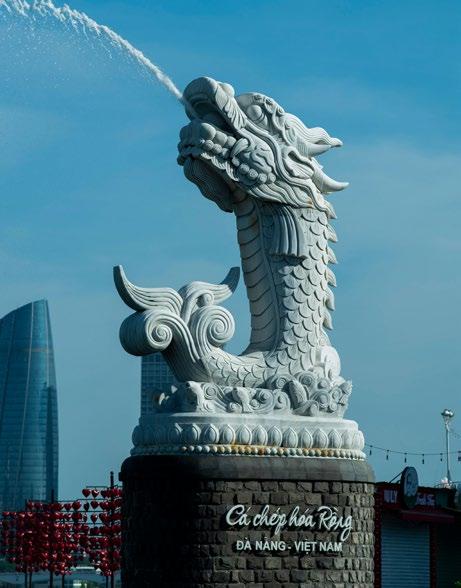
Vietnam ranks most affordable for backpackers in SEA
REPORTS
HYROX Singapore expands to three-day event HOTELS & RESORTS
Can US corporate travel keep growing when geopolitical shocks, route instability, and cost volatility are becoming part of everyday planning? The latest evidence suggests yes — but with an important qualifier: growth is becoming more selective, intentional, and operationally complex.
Omio data revealed that the most affordable South-East Asia destination is Vietnam. The country also offers cheap domestic travel, with the average one-way public transport ticket costing as little as $0.31 and cheap accommodation prices, starting from as little as $1.35.
Michelin expansion signals shift towards food-led travel
For over a century, the Michelin Guide has helped travellers find the best places to eat, drink, and stay, impacting global tourism. Originally created as an indirect way of selling tyres and putting more cars on roads, the guide has become synonymous with the good life and leisure travel.
HYROX is set to return to Singapore with an expansion, changing its event into a threeday affair for the first time. Scheduled from 3 to 5 April at the Singapore National Stadium, the AIA HYROX Singapore 2026 will host over 14,000 athletes from 58 countries.
Xcape
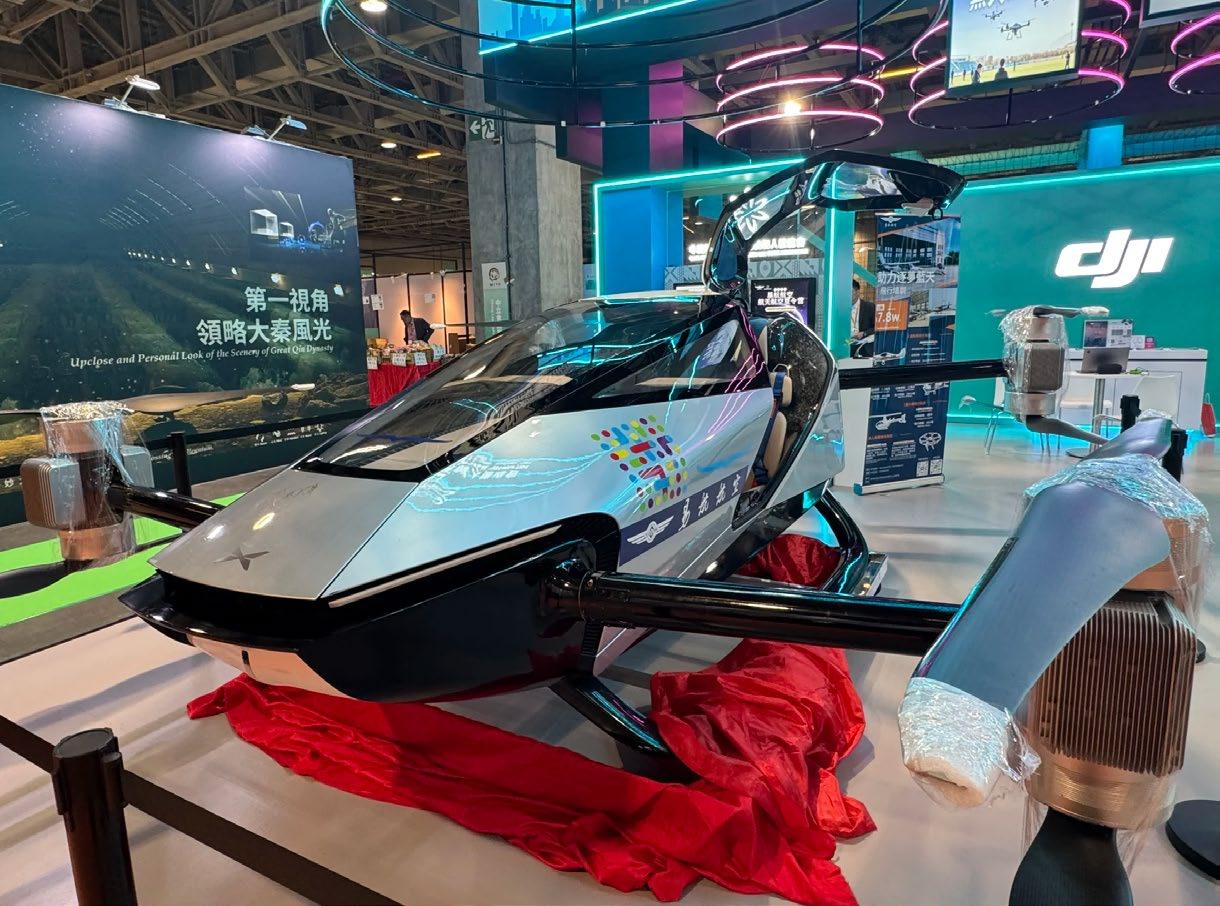
Greater Bay Area trials low-altitude transport to cut travel times
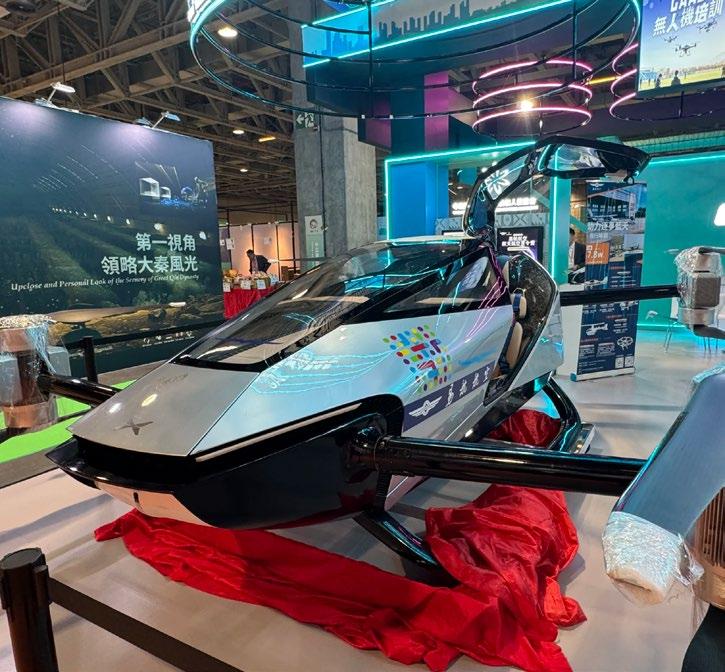
Low-altitude transport is being developed as a way to reduce travel time and congestion across China’s Greater Bay Area (GBA), with early applications focused on mobility and tourism.
At the Macao International Travel (Industry) Expo (MITE), industry participants discussed how electric vertical take-off and landing (eVTOL) aircraft and drones could support faster movement between Hong Kong, Macao and cities in Guangdong.
One example highlights the potential. Travel between Shenzhen and Zhuhai, which currently takes around two hours by road, could be reduced to about 20 minutes using eVTOL services.
For travellers, shorter transfer times could make cross-city trips more practical. For operators, low-altitude services may support new types of experiences, including aerial routes that offer direct access to selected attractions.
Two-seater eVTOLs could be used for guided flights, allowing a pilot or guide to take travellers along customised routes without the need to follow fixed group itineraries. This supports more personalised travel experiences, which remain a focus for the sector.
The concept also addresses spatial limits in Hong Kong and Macao. With constrained airspace and land availability, the use of shared low-altitude airspace with neighbouring mainland cities could allow operators to extend itineraries across the Greater Bay Area.
Development is already underway in parts of the region. Guangdong launched a government-run drone management platform in December 2025, supported by a unified flight network system that manages demand coordination and airspace allocation.
However, implementation across the GBA remains uneven. According to Lin Yutian, board director at Guangdong Low Altitude Economy Development Co Ltd, the main challenge lies in aligning airspace, legal systems and regulatory requirements across jurisdictions.
“What companies care about most is not a single technical issue, but a systemic alignment of airspace, legal frameworks and regulatory regimes,” he said. Hong Kong and Macao are still working through these requirements, and timelines for wider rollout remain unclear.
For now, low-altitude transport is moving beyond concept stage, with further progress dependent on coordination across the region.
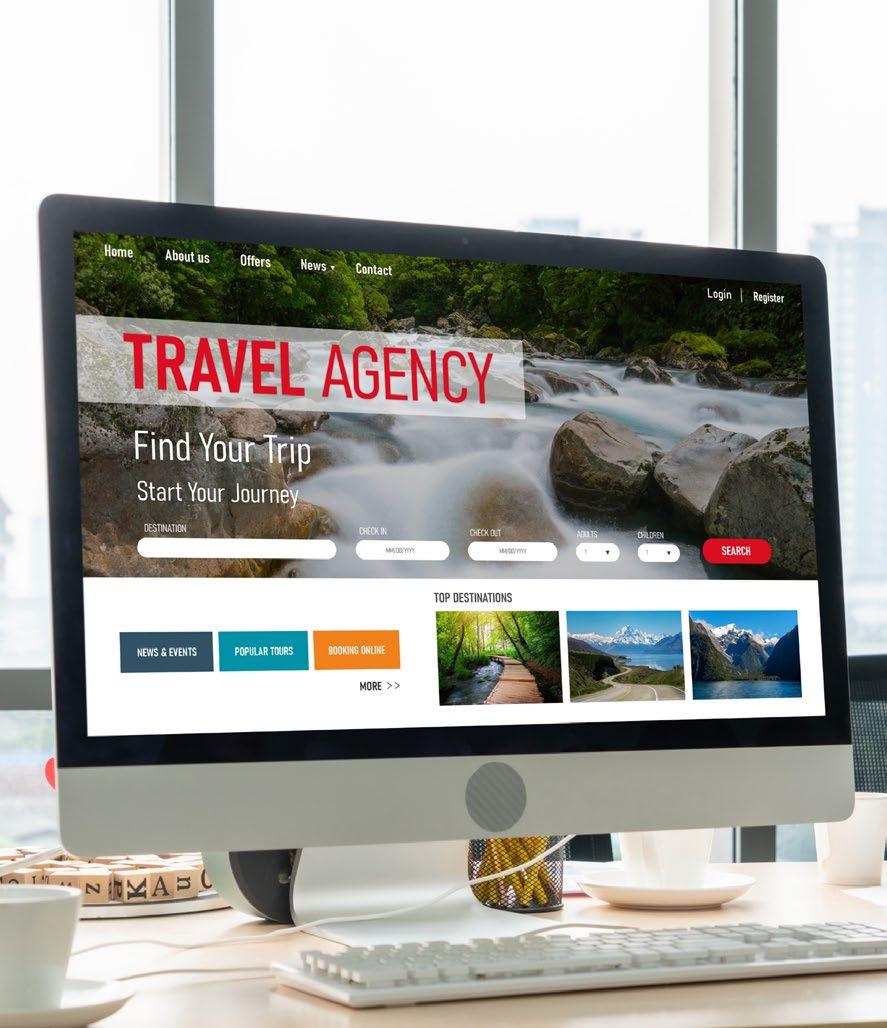
Travel websites fail accessibility standards
Travel websites are grappling with digital accessibility issues, according to the WebAIM Million Report 2026. The report, which analysed the homepages of the world’s top one million websites, found travel sites average 61.9 accessibility errors per page, compared to the overall average of 56.1. This marks a notable increase from the previous year’s average of 51 errors per page.
The report revealed that 95.9% of pages across all sectors fail to meet basic accessibility standards, such as the Web Content Accessibility Guidelines (WCAG) 2 A or AA. Travel websites, in particular, struggle due to their heavy reliance on imagery, search tools, and complex booking processes.
Common issues include low-contrast text, missing alternative text for images, unlabelled form inputs, and empty links or buttons, which hinder users from independently researching destinations and completing bookings.
Nexer Digital’s Hidden Journey study supports these findings, revealing that 79% of disabled users encounter difficulties browsing options, 81% struggle with selecting services, and 81% find completing transactions challenging. Hilary Stephenson, managing director of Nexer Digital, commented, “Booking travel should be exciting, but for many disabled users it becomes exhausting.”
The report also noted a rise in homepage complexity, with an average of 1,437 elements per page, a 22.5% increase in one year. With legislation like the European Accessibility Act now in force, businesses are urged to prioritise accessibility to ensure all travellers can plan and book journeys confidently and independently.
Travel sites average 61.9 accessibility errors per page
The two-hour travel time between Shenzhen and Zhuhai can be cut to 20 minutes
REPORTS
Could VR/AR tech change the game for travellers?
Virtual reality (VR) and augmented reality (AR) are moving beyond theme parks and flight simulators to take on more practical roles across travel and tourism.
Long used in pilot training, immersive simulation tools gained wider traction during the pandemic when airlines and hospitality groups relied on them to train crew and staff remotely. At ITB Asia 2025, ACI HR Solutions chief executive Andrew Chan said the technology had since expanded into broader operational use, particularly as companies looked for alternatives to conventional training and visitor engagement formats.
Exhibitors at BE @ Penang 2025 demonstrated how immersive environments could support the meetings, incentives, conferences and exhibitions (MICE) sector, allowing organisers to test layouts and visitor flow before events went live.
In destinations such as Macau, augmented reality has been used to enhance guided tours and digitally reconstruct heritage sites, offering historical context without physical alteration to landmarks.
Industry players are also assessing applications in wellness tourism, where immersive environments may support meditation and relaxation programmes. Airports have explored VR-enabled calm rooms to assist neurodivergent travellers, whilst medical tourism providers are studying how simulation tools could help patients better understand procedures before travelling.
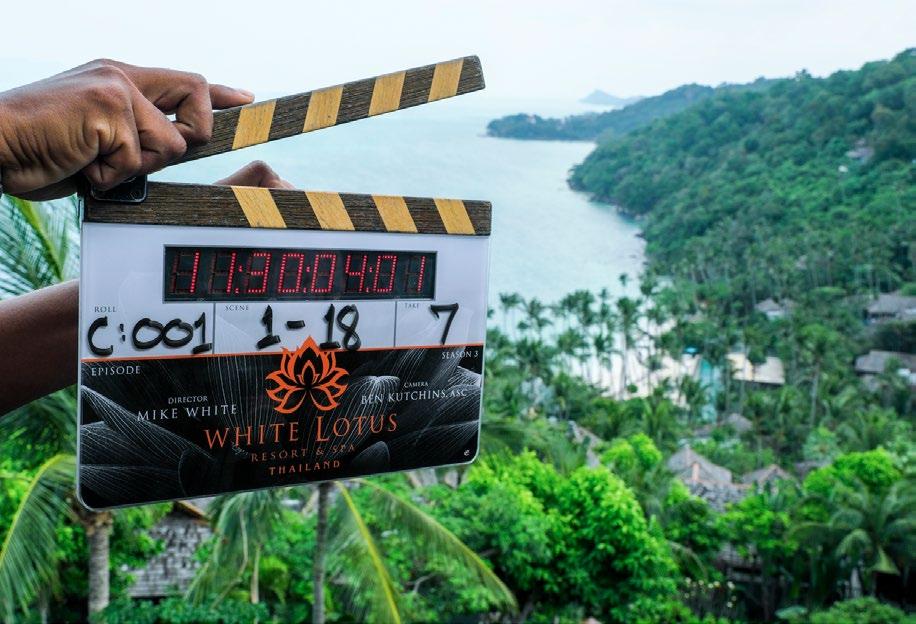
The White Lotus dictates 75% of fans’ travel decisions
Set-jettingis gaining traction as viewers travel to locations featured in hit series and films, turning on-screen exposure into measurable demand.
HBO’s The White Lotus is a key driver. Filmed at luxury resorts in Hawaii, Italy, and Thailand, the series features real properties that can be booked, linking content directly to travel decisions and accommodation demand.
A survey by travel experience marketplace GetYourGuide found that 75% of fans said The White Lotus influenced their travel more than any other show. Around 31% have already visited one of the filming locations, whilst 68% plan to do so. A further 93% said they would consider booking themed experiences or tours linked to the series.
The level of engagement is feeding into market growth. The global film tourism sector is projected to expand from $66.2b in 2025 to $145.9b by 2035, at a compound annual growth rate of 8.2%, according to Future Market Insights.
Travel operators and tourism boards are responding by packaging filming locations into bookable products. These include guided tours, curated itineraries and accommodation tied to specific productions. In established destinations, agencies are repositioning filmrelated offerings as structured visitor experiences, combining location access with hospitality and storytelling to extend visitor stays and increase spend.
The White Lotus Season 3 was filmed in Bangkok, Phuket, and Ko Samui
The White Lotus and K-pop star Lalisa Manobal (Photos from Warner Brothers)
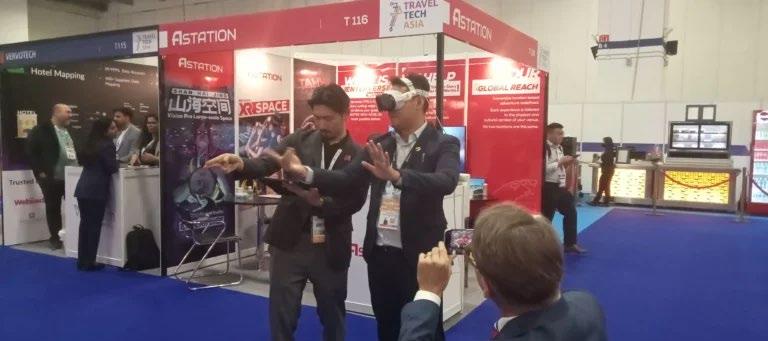
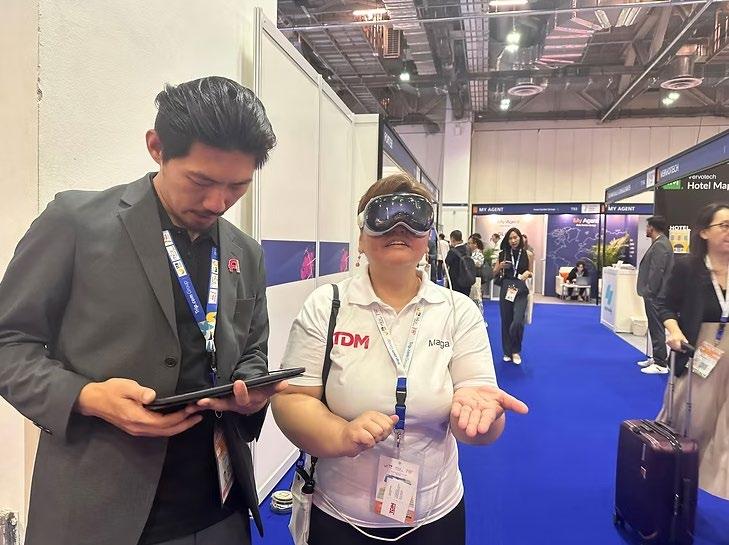
Travel Daily Media testing VR/AR technology
Exhibitors at BE @ Penang 2025 MEDIA & MARKETING
Travellers avoid hotspots for remote valleys
India’s Tawang tops the list.
As travel across the world continues to grow, many destinations are facing the pressures of overtourism. In response, a new kind of traveller is emerging—one that seeks peaceful, authentic, and lesser-known places instead of crowded hotspots. Asia, with its immense geographical and cultural diversity, is home to several such destinations that remain largely untouched by mass tourism.
The future of travel in Asia is not visiting the old popular crowded destinations but exploring the unknown ones. These 10 destinations offer something increasingly rare: space, silence, and sincerity. Whether it’s trekking through Arunachal’s hidden valleys, exploring Vietnam’s underground worlds, or island-hopping in untouched Indonesian archipelagos, the real luxury today is escaping the crowd. If you’re planning your next trip, now is the time to explore these destinations—before the world catches on.
1 Tawang, India
Nestled in the Eastern Himalayas, Tawang is a tranquil destination known for its ancient monasteries, breathtaking mountain scenery, and high-altitude lakes. Its remote location and permit requirements naturally limit visitor numbers, helping preserve its peaceful atmosphere.
2 Mechuka Valley, India
Mechuka is one of Northeast India’s best-kept secrets. Surrounded by lush hills and rivers, this quiet valley offers a glimpse into indigenous tribal life and untouched natural beauty. With minimal commercialisation, it is perfect for those seeking solitude and authenticity.
3 Phong Nha–Ke Bang, Vietnam
This UNESCO World Heritage site is famous for its extraordinary cave systems, including some of the largest caves on Earth. Despite its global importance, the region remains relatively uncrowded compared to Vietnam’s more popular destinations, making it ideal for adventure seekers.
4 Northern Laos (Beyond Luang Prabang)
Whilst Luang Prabang attracts visitors, the surrounding northern regions of Laos remain quiet and underexplored. Here, travellers can experience riverside villages, dense forests, and a slower pace of life rooted in tradition and sustainability.
5 Sumba Island, Indonesia
Often compared to Bali decades ago, Sumba offers rugged coastlines, traditional villages, and an unspoiled cultural landscape. Limited development and accessibility have kept it away from mainstream tourism, making it a top choice for offbeat island experiences.
6 Koh Yao Noi, Thailand
Situated between Phuket and Krabi, Koh Yao Noi provides a refreshing alternative to Thailand’s busy beach destinations. The island is known for its calm environment, eco-friendly resorts, and traditional fishing communities.
7 Almaty & Tien Shan Mountains, Kazakhstan
Almaty combines urban comfort with easy access to stunning natural landscapes, including alpine lakes and mountain ranges. As Kazakhstan gradually opens up to tourism, it offers a unique mix of modernity and wilderness—without overwhelming crowds.
8 Shikoku, Japan
Shikoku is Japan’s least-visited main island, making it a perfect destination for travellers who want to explore the country beyond its famous cities. Known for its 88-temple pilgrimage route, it offers a deeply spiritual and culturally rich experience.
9 Mrauk U, Myanmar
Mrauk U is an ancient archaeological site featuring temple complexes spread across scenic hills. Often compared to Bagan but far less crowded, it offers a more intimate and atmospheric experience of Myanmar’s historical heritage.
10 Coron (Lesser-Known Areas), Philippines
Whilst Coron is becoming popular, many of its surrounding islands and hidden lagoons remain untouched. Exploring beyond the main tourist areas reveals pristine beaches, crystal-clear waters, and vibrant marine ecosystems.
The future of travel is not visiting the old destinations but exploring the unknown ones
Bhutan opens five-star digital detox retreat
Each stay begins with a traditional Bhutanese medicine consultation.
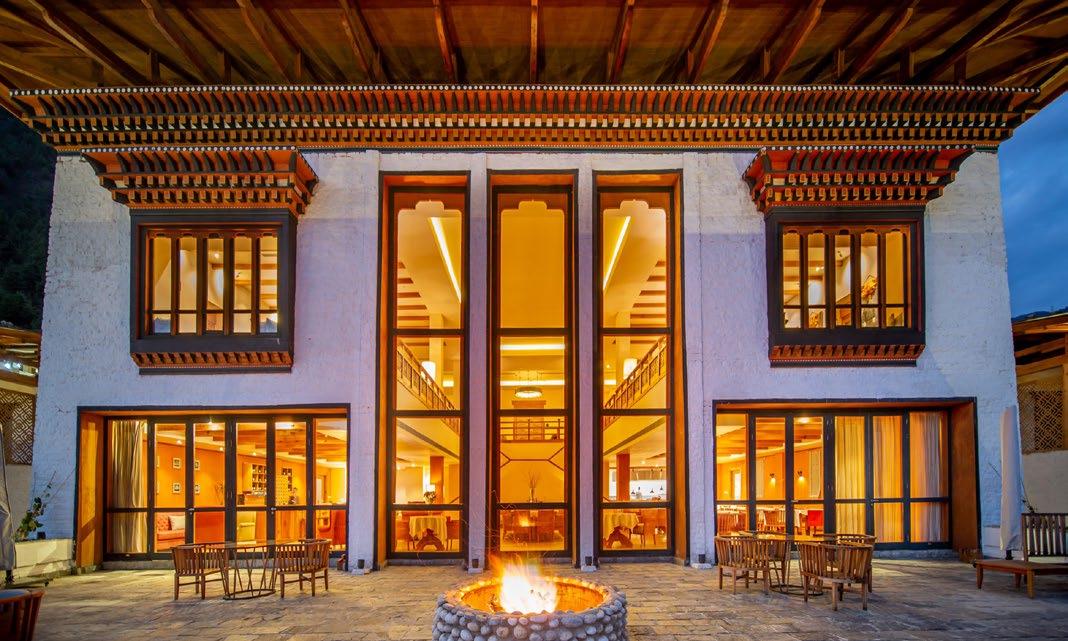
Bhutan Spirit Sanctuary has opened in Paro as the country’s first five-star, all-inclusive wellness retreat, offering programmes rooted in Traditional Bhutanese Medicine and nature-based activities.
Located in the Neyphu Valley, the property targets travellers seeking structured wellness stays. Each stay begins with a consultation with an in-house Bhutanese medicine doctor, who prescribes a personalised programme combining treatments, diet, and daily activities. Therapies are entirely herbal-based, including hot stone baths, Ku Nye massages, moxibustion, and compression treatments.
A structured reset
Facilities include six treatment rooms, a heated indoor pool with valley views, saunas, steam rooms, and a fitness centre. Daily programming covers yoga, meditation, and herbal garden tours, alongside access to more than 60 locally used medicinal herbs.
Outdoor and cultural experiences form a key part of the offering. Guests can take guided hikes or visit nearby monasteries such as Eutok Goenpa, whilst the property also arranges trips to sites including Tiger’s Nest and Punakha Valley. Cultural activities such as cooking classes, pottery, and archery are integrated into the stay.
All packages are fully inclusive, covering meals, wellness treatments, yoga sessions, and itinerary planning. Menus are built around locally sourced ingredients. The retreat positions itself as a longer-stay wellness product, combining medical consultation, cultural immersion and nature-based activities to attract travellers seeking structured recovery programmes.
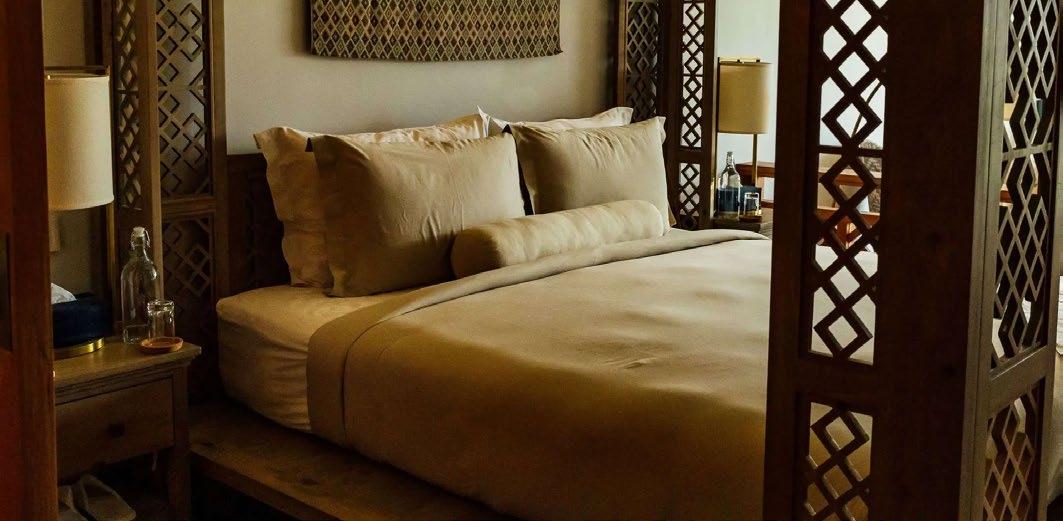
The sanctuary is designed to help overstimulated urban travellers slow down
BHUTAN
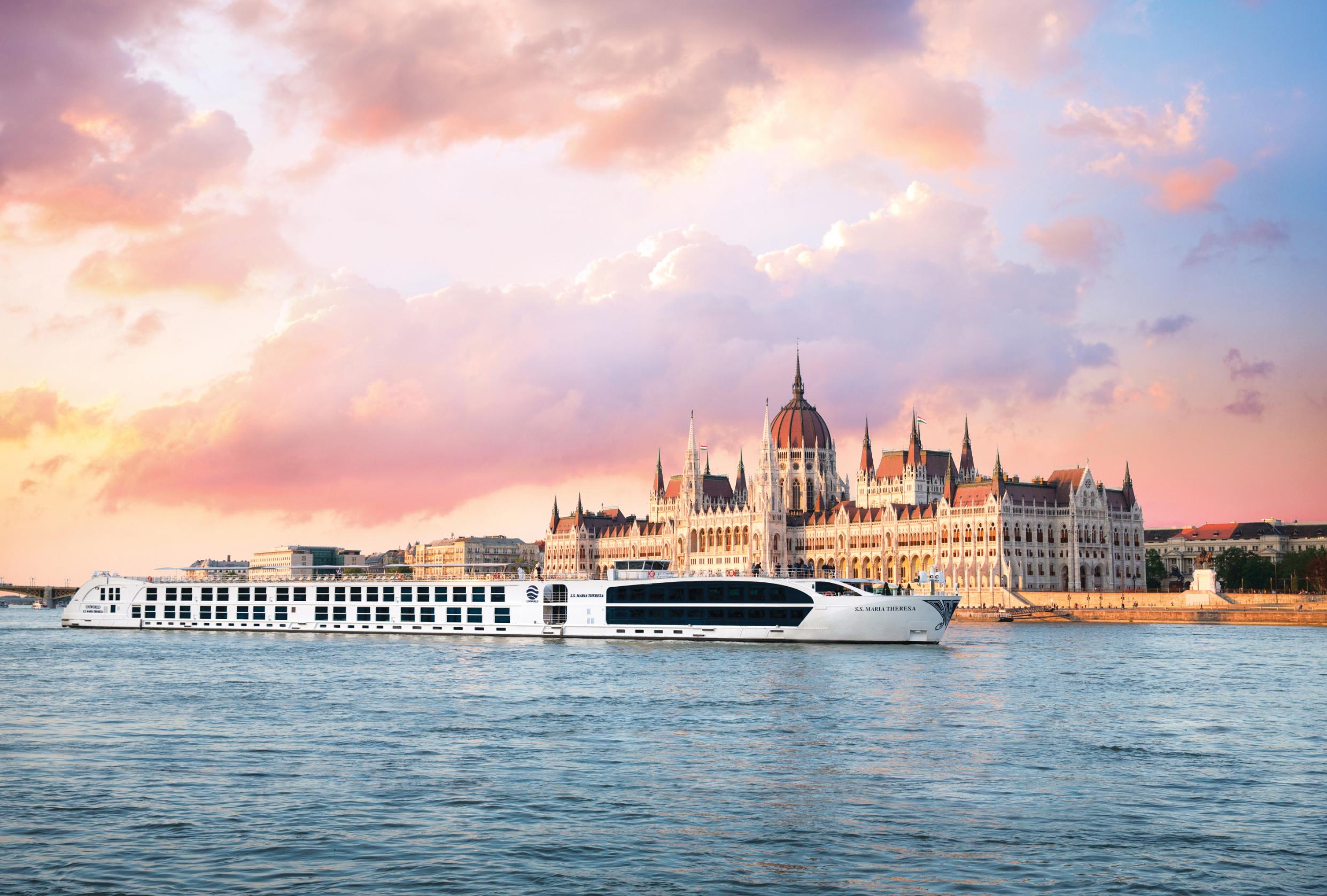
50 YEARS OF RIVER CRUISING
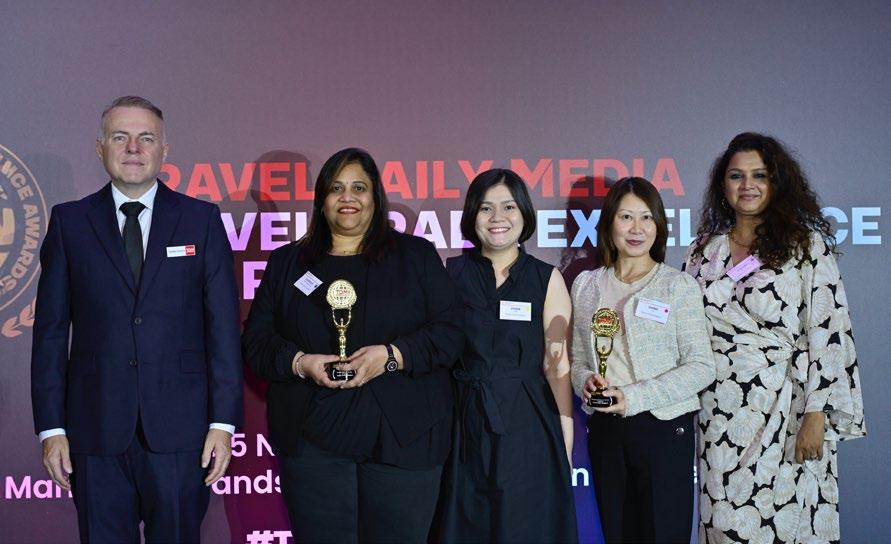
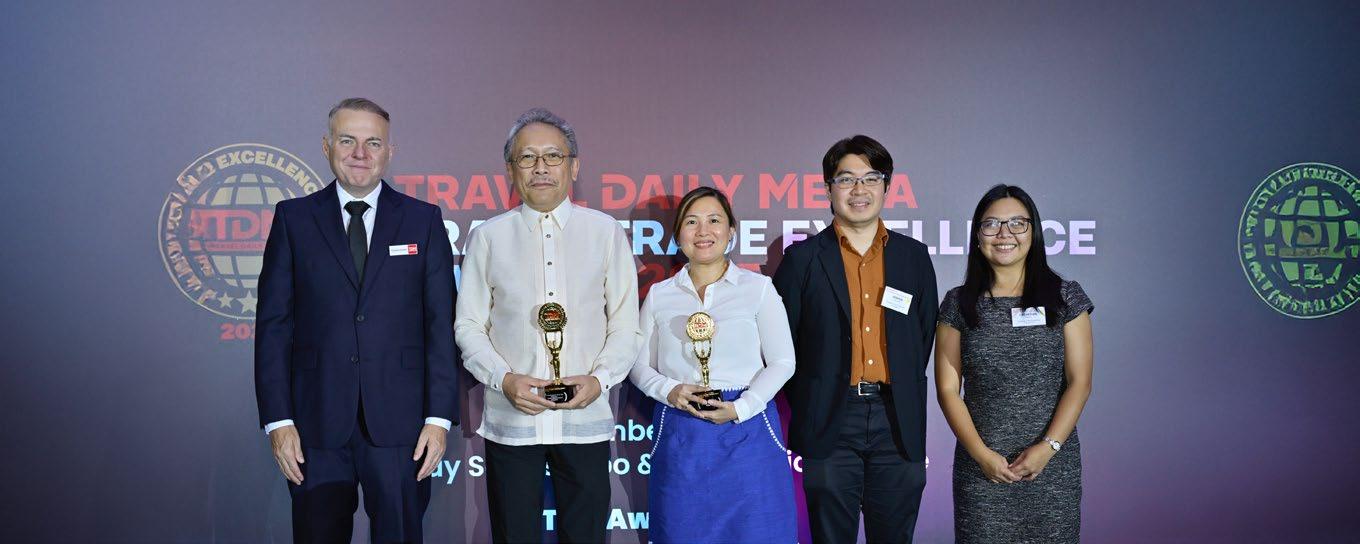
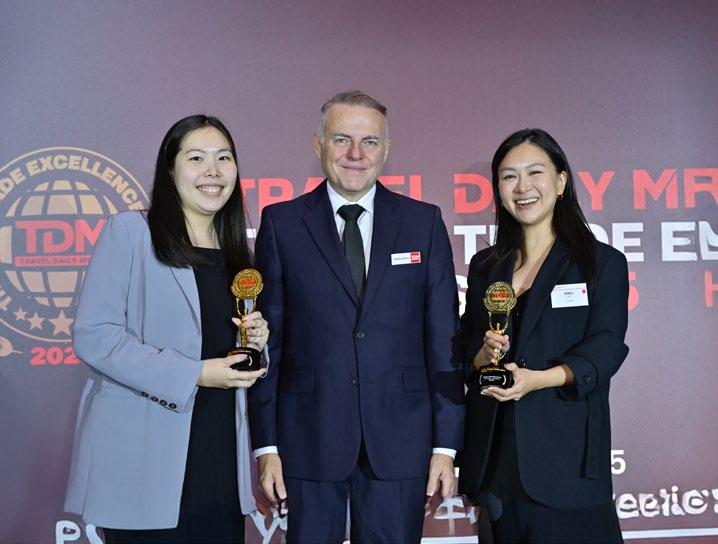
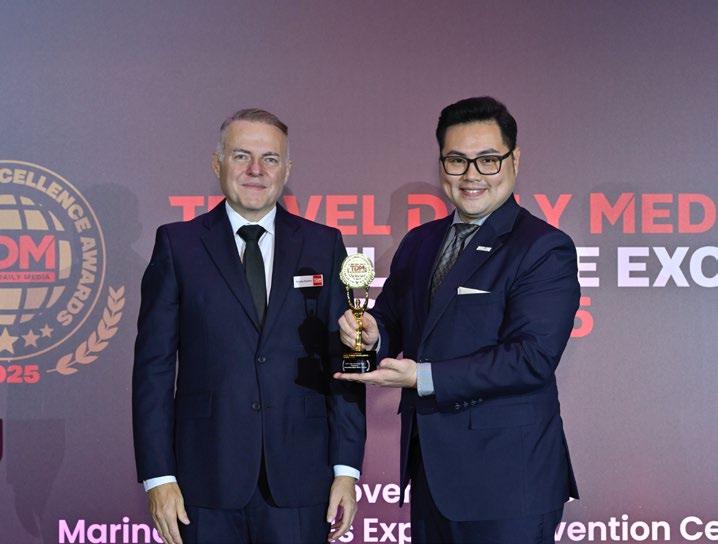
TDM Travel Trade Excellence Awards 2025
River Cruise Line of The Year — Uniworld Boutique River Cruises
One-of-a-kind boutique ships
Unmatched guest-to-staff ratio of 2.4 to 1
Unlimited beverages, including fine wines & premium spirits
Award-winning farm-to-table cuisine
Carefully curated daily excursions
All onboard gratuities
Shipwide Wi-Fi
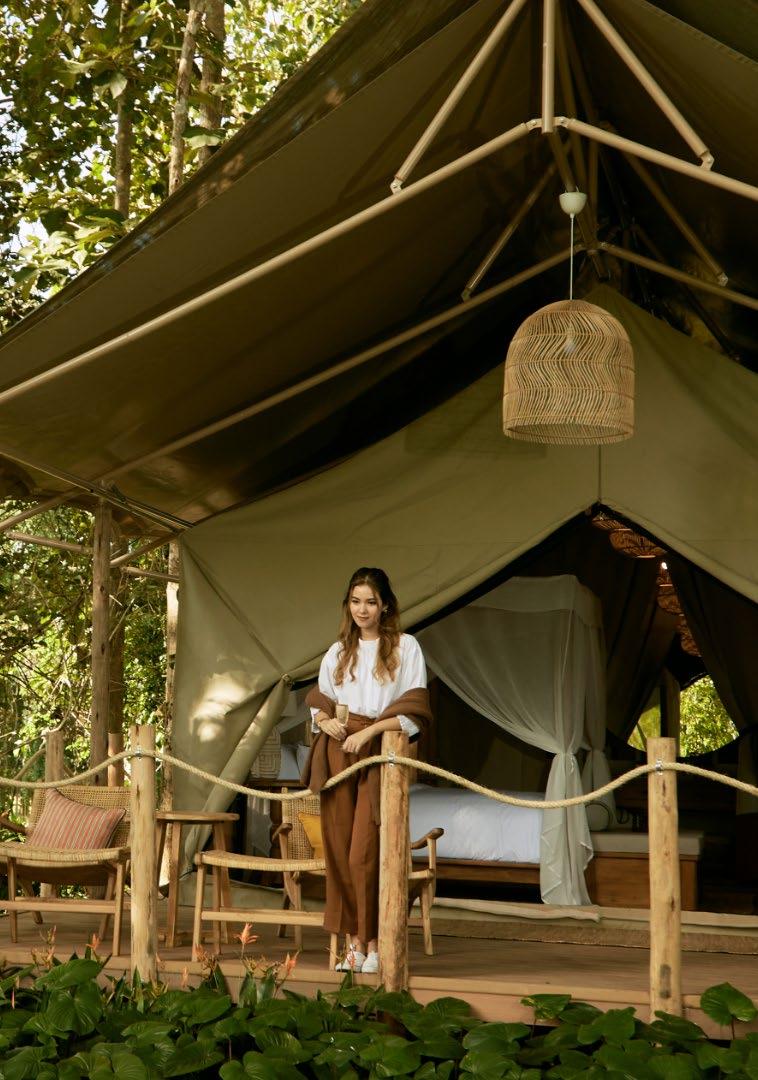
The property has ten safari-style tents, catered to small groups and couples
We want to make your vacations really wonderful; we at Dusit are very good at doing that
Dusit taps glamping demand in Chiang Rai
The
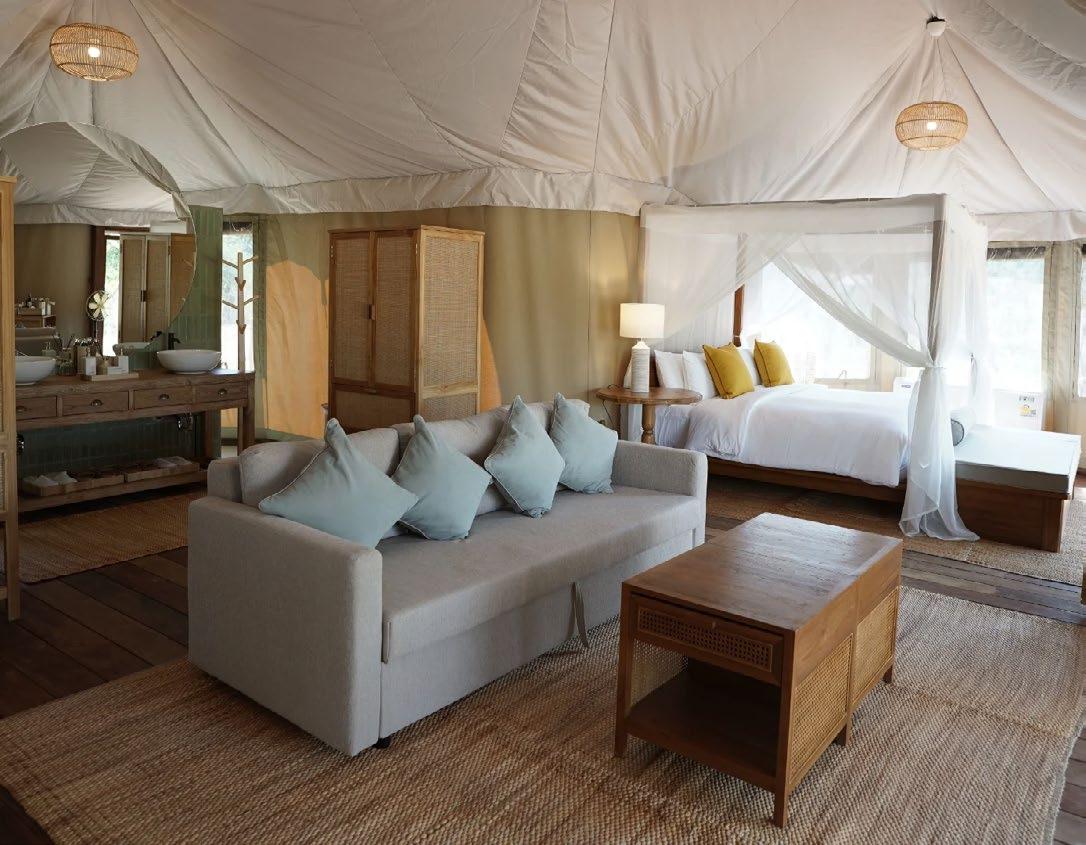
interiors blend handcrafted elements with modern amenities.
Dusit International is betting on premium glamping as demand shifts towards experience-led travel, partnering with Tantawan Tented Camp in Chiang Rai to capture travellers seeking nature without compromising on comfort.
Set near the Thailand–Myanmar border, the camp blends safaristyle accommodation with Thai design, positioning itself within a growing segment that sits between luxury hotels and outdoor adventure. For Dusit, the project forms part of its Tree of Life programme, which integrates sustainability into operations whilst expanding its footprint beyond primary cities.
The move reflects a wider push by hospitality groups into secondary destinations, where land availability and natural assets allow for more differentiated offerings. Chiang Rai, long overshadowed by larger Thai hubs, is increasingly being positioned as a quieter alternative for high-value travellers.
“This is an opportunity to be a part of a hotel that will be offering high-end eco-friendly accommodations with great service that will pamper you whilst you’re here. We want to make your vacations really wonderful; we at Dusit are very good at doing that,” said Titiya Xuto, Dusit’s vice-president of operations and pre-opening services. Camp co-founder and co-owner Jane F. McBride said the vision was to create an accessible yet refined retreat in nature.
“We built Tantawan Tented Camp to provide a beautiful place in nature for guests coming from overseas or from Bangkok or from even local areas; as well as an experience of excellent dining in a casual, comfortable setting,” she said.
Accommodation consists of ten safari-style tents, ranging from two-bedroom units designed for families or small groups to a more intimate suite suited for couples.
Each tent incorporates Thai-inspired décor alongside contemporary comforts typically associated with full-service luxury hotels. The interiors balance handcrafted elements with modern amenities, aiming to deliver both immersion and convenience. Shared facilities are designed to encourage both privacy and social interaction. A central pool framed by palms overlooks the surrounding hills, whilst an open-air amphitheatre hosts film screenings and evening gatherings. Guests can also convene around a firepit, reinforcing the camp’s emphasis on communal experiences within a natural setting.
THAILAND
Why are Indians ditching summer trips?
Higher disposable incomes fuel demand for experience-driven itineraries.
INDIA
Indian outbound travel is peaking in winter, driven by younger travellers and a growing appetite for experience-led trips.
The November-to-February window is no longer a shoulder season. Data from Atlys shows visa applications rising sharply for the 2025–2026 period, with Millennials accounting for 54% of applicants.
Gen Z made up a further 25%, marking the fastest-growing segment in the market.
“Winter has firmly established itself as India’s favourite travel season, and the reasons are clear that it’s a time for celebration, connection, and exploration,” said Santosh Hegde, head of marketing at Atlys, citing demand driven by holidays, celebrations, and extended breaks.
This demand is expanding beyond traditional metros. Tier 2 cities such as Lucknow, Ludhiana,
Winter has firmly established itself as India’s favourite travel season, and the reasons are clear that it’s a time for celebration, connection, and exploration
and Surat are gaining momentum alongside Delhi, Mumbai, and Bengaluru, broadening the base of outbound travellers and signalling deeper market penetration.
The year-end calendar is playing a key role. Christmas, New Year, and school holidays are aligning to create a longer travel window, allowing families, couples, and groups to plan more extended trips during the period.
The ‘cool-cation’ pull
Cold-weather destinations are seeing the strongest gains.
Agoda data shows a 30% year-onyear rise in interest amongst Indian families during the winter period.
In Asia, South Korea recorded the highest growth at 226%, followed by China (+105%) and Kazakhstan (+68%). Japan (+41%) and Taiwan (+44%) continue to attract steady demand.
These destinations combine snow-based activities with cultural experiences, from ski resorts and ice festivals to heritage towns and hot springs. Europe remains a key long-haul corridor, reports said.
Austria led growth at 82%, followed by Germany (+43%), Finland (+33%), Italy (+27%), and France (+20%).
Christmas markets, seasonal events, and winter landscapes continue to anchor demand in the region. Travellers are also making fuller use of visa access.
Multi-country itineraries across Schengen Europe are becoming more common, with some travellers adding the UK to extend their trips and maximise time abroad.
Operator mandate
The outbound market reflects wider demographic and behavioural changes.
Women accounted for 34% of visa applicants, showing stronger demand for destinations such as Sri Lanka, whilst male travellers showed a greater inclination towards Schengen markets.
India’s wedding season continues to support outbound demand. With approximately 4.6 million weddings scheduled during the period, honeymoon travel remains a key driver, particularly for Europe-bound trips.
Despite the rise of “cool-cations”, warm-weather destinations continue to hold ground.
Bali, Dubai, and Sri Lanka remain popular for travellers seeking beach holidays and outdoor experiences, whilst shorthaul markets such as Vietnam, Thailand, and the United Arab Emirates continue to attract quick seasonal getaways.
For travel platforms and operators, the data signalled a necessary shift in strategy.
The rise of the “experience-led” traveller required more than just a basic flight and hotel bundle.
Region report
UK travellers swarm APAC as visas ease
PATA reports consistent engagement with British trade partners throughout WTM London 2025.
Asia-Pacific destinations are holding steady interest from the UK market, even as some operators flag softer shortterm demand across Europe.
At WTM 2025, members of the Pacific Asia Travel Association (PATA) reported consistent engagement with UK trade partners, supported by ongoing product development and improved connectivity.
Sandra Kwan, UK trade sales and marketing manager at the Okinawa Convention & Visitors Bureau, said the prefecture drew strong attention during the show, particularly from operators less familiar with the destination.
“Strong interest in Okinawa was evident, we connected with new travel companies, some of whom were unfamiliar with the prefecture and were pleasantly surprised by its diverse offerings beyond beaches, as well as its convenient connections to
Given that the UK is their top European source market, the trade could benefit from having someone to promote their destination
nearby destinations such as Taiwan, South Korea, and China.”
The marketing manager added that some partners were exploring ways to feature Okinawa more prominently within Japan itineraries.
Strong arrivals
Elsewhere, Sabah continued to see strong arrivals, particularly in September, said Gavin Dixon, PATA committee member and product manager at Freedom Holidays.
However, discussions also touched on the United Kingdom Foreign, Commonwealth & Development Office advisory covering parts of the region, with hopes for a future safety review.
He added that talks with the Vietnam Tourist Board focused on the potential reopening of a UK office in 2026.
“Given that the UK is their top European source market, the trade could benefit from
having someone to promote the destination,” Dixon said.
The product manager also cited product developments, including Bhaya Cruises’ launch of a new luxury vessel, Soul, with a wellness focus. After several years of growth, some operators reported a moderation in bookings over the past quarter.
Sam Collins of Best at Travel said demand for Thailand, Vietnam, Cambodia, and Laos remained steady, supported by new air routes and visa-free access for UK travellers. Cambodia’s increased presence at WTM was seen as a signal of further expansion plans.
Flight routes
Air connectivity continues to underpin demand.
Norse Atlantic launched services from London Gatwick and Manchester to Bangkok in October 2025, whilst British Airways expanded capacity on key Asia routes. Virgin Atlantic announced its first direct Heathrow– Phuket route, due to begin service in October 2026.
Cathay Pacific introduced its “Aria Suite” business class on the London–Hong Kong route, whilst Gatwick maintained links to Singapore, Shanghai, and Baku.
Malaysia, particularly Sarawak and Sabah, also reported solid demand from the United Kingdom and projected further expansion.
Helen Wheat, PATA committee member and destination manager at Travelbag, said WTM 2025 reflected renewed activity.
She noted stronger participation from secondary destinations but observed that some national tourism boards were less visible, leaving destination management companies and hoteliers to lead engagement.
She added that flexibility and partnership would remain important as travel budgets tighten globally.
There is a strong interest in Okinawa, Japan in particular
Thai Airways exits rehab, plans fleet expansion
The flag carrier also resumed trading on the Stock Exchange of Thailand in August 2025.
Thai Airways International PLC emerged from restructuring in 2025 and returned to the stock market as it prepared for fleet expansion, Chief Commercial Officer Kittiphong Sansomboon said at last year’s World Travel Market in London.
The carrier marked its 65th anniversary, exited its rehabilitation programme, and resumed trading on the Stock Exchange of Thailand in early August 2025.
“We turn 65 this year, and the good news is we have successfully exited from the rehab plan and gone back to the stock exchange as of early August,” Sansomboon told Travel Daily Media at the time.
Fleet expansion formed a key part of that reset. The airline committed to acquiring 32 Airbus A321neo aircraft to strengthen its regional operations. The first two were scheduled for delivery by the end of 2025, with a further 15
or 16 expected to join the fleet the following year.
“As we speak, we’re receiving the first two by the end of the year. Next year, there will be around 15 or 16 aircraft coming into our fleet. That will be a very good way for us to spread our wings all over Asia,” he said in an exclusive interview.
The additional aircraft were intended to increase capacity across Asian routes whilst improving fuel efficiency and scheduling flexibility.
Alongside network growth, Thai Airways continued to emphasise service quality. Sansomboon described the airline’s philosophy as centred on what it called the “six senses”.
“We’re all about customer experience, particularly what we like to call the six senses: seeing, hearing, smelling, tasting, touching, and feeling from the heart. Whatever we do, we have to make sure that it will be fulfilled by the six senses.”
He said the airline balanced operational upgrades with attention to passenger experience.
Whatever we do, we have to make sure that it will be fulfilled by the six senses
“We consider both the functional benefit, as well as the emotional benefit. With the functional benefit, that takes time and money, and you can see that in how we try to modernise our fleet. But we also put effort into the emotional benefit our passengers get on every flight, and we’re always looking out for areas for improvement,” he continued.
Inflight catering featured prominently in that approach. Thai Airways sourced many ingredients domestically, linking its menus to community-based initiatives in Thailand.
“The meals that we serve in flight feature ingredients that come from Thailand, and it’s our way of offering good taste for a good cause. It’s beyond delicious as it’s also about our community-based initiatives, so it’s also good for society.”
The airline incorporated locally produced coffee and chocolate into its service. Coffee was sourced from the non-profit organisation Royal Project Foundation in northern Thailand, whilst chocolate was made from Thai-grown cacao, including products from artisanal chocolatier Kan Vela from Chiang Mai.
“We carry the coffee from the Royal Project in the north, and this means we help create jobs for people in the region, encouraging them to grow coffee rather than relying on seasonal fruit jams. Also, the chocolate carried on our flights is 100% home-grown in Thailand, made with top-quality cacao from the southern part of the country.”
The Kan Vela partnership received international awards for quality and supported local producers.
“When you create jobs, you give people opportunities, and people love it,” Sansomboon said.
Thai Airways also introduced its “Street to Sky” initiative, bringing Thai street food concepts to Economy Class cabins.
“When we bring Thailand’s famous street food aboard Thai Airways, we also provide opportunities for local chefs: we treat them well and show them the proper respect as local heroes.”
He added that sharing the stories behind onboard products helped passengers connect more closely with Thailand.
“At least they know that Thai Airways tries to do something good for others,” he continued.
THAILAND
Kittiphong Sansomboon, CCO at Thai Airways
Concert boom drives Asia travel
Partnerships are bundling early ticket access with flights and accommodation.
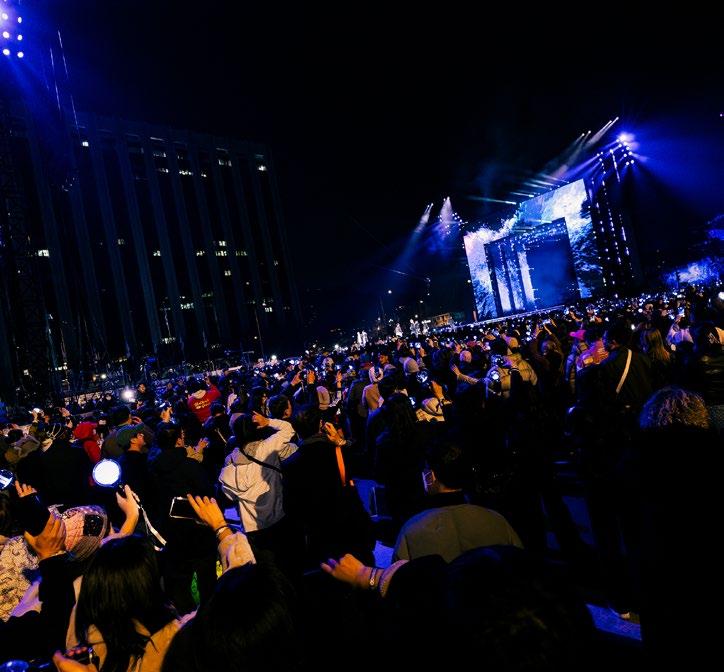
Concert tourism in Asia is expanding, with the market projected to grow at a 17.8% compound annual growth rate (CAGR) through 2030, according to Grand View Research. The sector generated $19.9b in revenue in 2024 and is expected to reach $85.5b by 2033.
Growth is linked to global tours from artists such as Coldplay, Taylor Swift, and BLACKPINK. Their multi-city performances have coincided with increased cross-border travel activity, alongside higher demand for flights, accommodation, and related services. The uptick began in 2023 as borders reopened and has been supported by a pipeline of major tours scheduled through 2027. Concert-linked travel is becoming a more visible component of booking activity across key Asian markets.
Partnerships aim to capture demand
Travel platforms and concert promoters are working more closely to respond to this demand.
Partnerships such as Live Nation Asia and Trip.com combine early ticket access with flights and accommodation, enabling fans to arrange travel ahead of general ticket sales. These bundled offerings are being positioned as a way to streamline planning for concertgoers travelling across borders.
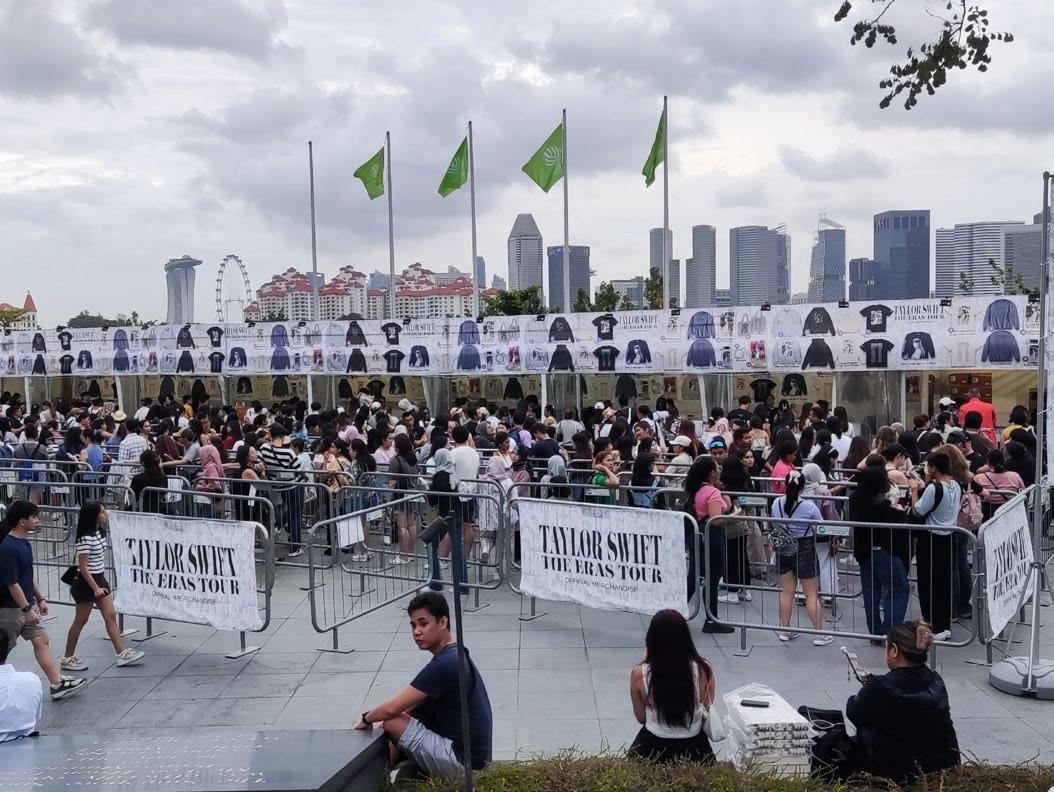
Governments are also seeking to attract major events. Thailand’s “Grand Tourism and Sports Year” in 2025 helped draw large-scale festivals, whilst Singapore secured exclusive rights to host Taylor Swift’s Eras Tour in Asia, generating over $450m in tourism receipts.
Indonesia and the Philippines have also secured stops on BTS’ upcoming world tour scheduled through 2027, reflecting efforts to capture inbound travel associated with these events.
Infrastructure supports expansion
Asia’s established meetings and events infrastructure continues to support concert tourism. Large-capacity venues such as Singapore’s National Stadium and the Philippine Arena enable destinations to host large-scale performances, whilst existing transport networks facilitate regional access.
BTS’ world tour could generate $1.8b (Photo by @bts_bighit)
The sector generated $19.9b in revenue in 2024 and is projected to reach $85.5b by 2033
Short-haul travel and visa-free entry are also supporting crossborder concert trips. Around 63% of travellers in the region are willing to travel internationally to attend concerts and similar events, indicating a broad base of potential demand.
Airlines, hotels, and ticketing platforms are introducing bundled offers and early access promotions targeting concertgoers.Strong fan bases across Japan, South Korea, and Southeast Asia continue to support demand for both regional and international acts.
Capacity pressures emerge
Large-scale tours are placing pressure on accommodation and transport capacity in some markets.
BTS’ world tour could generate $1.8b or KRW2.7t, potentially exceeding Swift’s $2.1b from the Eras Tour, said Kim Yu-hyuk of IBK Investment & Securities in Seoul. Search data shows interest in key tour stops such as Jakarta and São Paulo, Brazil has surged by more than 600%, whilst early ticket sales indicate that total attendance could reach up to six million across the tour.
In Japan, Arashi’s farewell tour has coincided with university entrance exam season, contributing to accommodation shortages in several cities. Room rates have risen in some locations, with properties booking out weeks in advance.
Operators have introduced temporary measures to manage demand. Event venues have been repurposed as dormitory-style accommodation, whilst railway operator JR Kyushu has offered overnight train stays in Fukuoka to address shortfalls.
Pipeline supports continued activity
Tour schedules from major acts now extend well into 2027, supporting continued booking demand across the region.
Strong fan engagement, established infrastructure, and coordinated promotions between travel and entertainment players are expected to sustain activity.
However, capacity constraints are becoming more evident. Limited accommodation supply in key cities, combined with concentrated event dates, is pushing up prices and creating operational pressure for local operators. Destinations are responding by expanding venue capacity, improving transport links and competing more actively for major events.
For operators, concert tourism offers access to highspending travellers, but also needs tighter coordination across inventory, pricing and logistics. With tour calendars filling through 2027, competition for headline acts is likely to intensify, even as supply constraints continue to shape pricing and availability in major markets.
Staff shortages push AI into travel ops
ACI HR Solutions CEO Andrew Chan says a severe talent shortage is weighing on the sector.
GLOBAL
Labour shortages and shifting traveller behaviour are forcing travel companies to rethink how services are delivered, even as demand continues to recover.
At ITB Asia 2025, operators pointed to mounting pressure on staffing and costs, with execution emerging as a key concern across aviation, hospitality, and travel services.
Technology is being deployed to address these gaps.
Artificial intelligence, once positioned as a long-term investment, is now being used to manage immediate operational needs.
Exhibitors showcased realtime translation tools, automated customer service systems and facial recognition aimed at reducing friction across the travel journey.
Supporting human roles
However, the focus remains on supporting, not replacing, human roles. Companies are using automation to handle repetitive tasks whilst preserving front-line service where it matters most.
Immersive technology is also gaining traction.
Virtual and augmented reality are being used for training, planning and customer engagement.
Some platforms are exploring digital access to destinations that are environmentally sensitive or difficult to reach, allowing operators to extend reach without increasing physical strain on sites.
At the same time, traveller behaviour is shifting. Demand is moving away from fixed group itineraries towards more flexible, self-directed travel.
“The biggest growth and the most important changes in key travel markets are coming in the independent sector,” according to Gary Bowerman of High-Yield Tourism. “Young people, older people, middle-aged people who want to travel their way,” he added.
This shift is prompting changes across the value chain. Travel platforms are expanding modular
booking systems, whilst hotels and tour providers are adjusting pricing and product design to cater to solo travellers and smaller groups.
Experiential travel is also becoming more structured.
The biggest growth and the most important changes in key travel markets are coming in the independent sector
A dedicated Experience Zone at ITB Asia brought together attractions, cruises and activity providers, reflecting demand for trips built around activities rather than destinations.
Despite these developments, labour constraints remain a key challenge. Andrew Chan, chief executive of ACI HR Solutions, said staffing shortages continue
to weigh on the sector.
“The industry has rebounded strongly, but there is still a severe talent shortage,” Chan said, noting that many workers who left during the pandemic have not returned.
“There’s still a big gap in the talent pool, and increased competition across skill sets and borders,” he added.
Taken together, discussions at ITB Asia point to a sector investing in technology and product development whilst managing structural workforce gaps. Demand is returning, but the ability to deliver consistent service remains uneven.
Operators pointed to mounting pressure on staffing and costs, with execution emerging as a key concern
In response, travel platforms are expanding modular booking systems
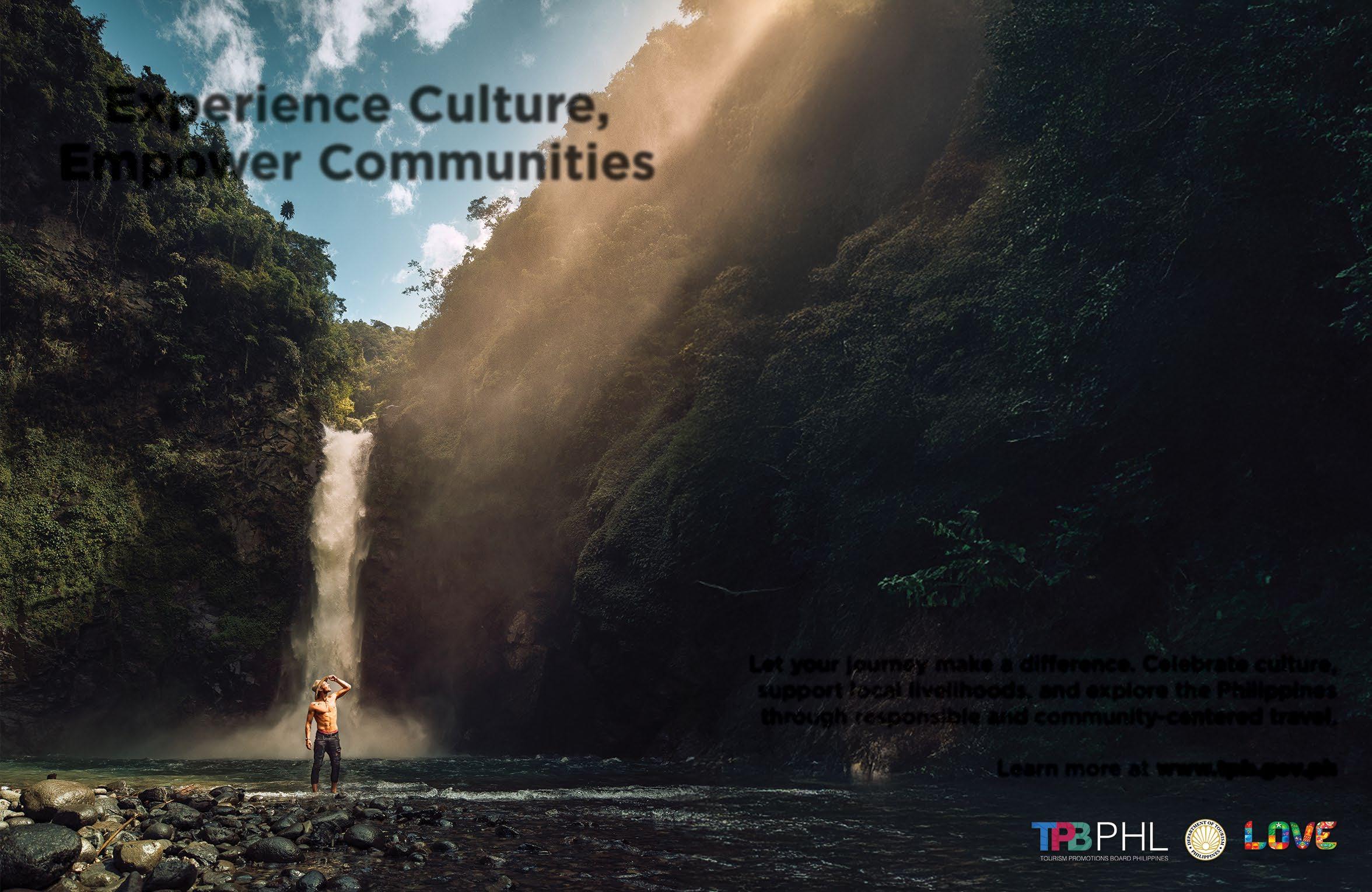
Experience Culture, Empower Communities
APAC trip lengths fall from 14 to 10 days
Travellers now spend five hours researching holidays in 4.5-minute bursts.
SINGAPORE
Travellers across Asia-Pacific are taking shorter trips, researching more intensively, and placing greater emphasis on value and wellness, said Hermione Joye, sector lead, Travel & Vertical Search, APAC, at Google.
Speaking at the TDM Global Summit Singapore 2025 on 24 November, Joye said the perception of travel has shifted significantly since the pandemic. What was once considered discretionary spending has become embedded in how consumers prioritise their lives.
“When we came out of the pandemic in 2022, it was a luxury. By 2024, it was seen as a reward. Today, in 2025, it’s become a necessity,” she said.
Travelling for wellbeing
Consumers, she noted, may prioritise essential living costs first, but many still allocate funds for travel, viewing it as integral to wellbeing and personal fulfilment.
That shift is reflected in how trips are planned. Travellers now spend an average of five hours researching a holiday, but in short bursts of approximately 4.5 minutes at a time.
“For the brands in the room, it’s micro-moments,” Joye said, describing a fragmented decisionmaking process spread across devices, platforms and content formats. Rather than a single extended planning session, travellers dip in and out of research, comparing destinations, prices and experiences before committing.
Trip duration is also contracting. In APAC, the average trip length has fallen from 14 days to 10.
Within the region, journeys now average around six days. Travel outside the Asia-Pacific averages closer to nine days.
“[Trip durations] are being reduced, on average,” Joye said. Higher living costs and economic uncertainty have not eliminated demand, but they have reshaped how consumers structure their travel. Instead of cancelling
There’s a definite desire to do something unique and different, but price also matters
plans, many are shortening stays or travelling during off-peak periods.
She characterised this as a form of “smart sacrifice”. Consumers are trimming other discretionary spending whilst protecting travel budgets, prioritising quality and meaning over length of stay.
Destination choices are also evolving. Travellers are increasingly considering secondary cities and locations beyond major urban centres, balancing distinctiveness with affordability.
“[Travellers] might choose Chiang Mai versus Bangkok, in order to be able to still travel, still have a unique experience, but do it a little bit more cost-effectively,” Joye said.
This shift is driven by both price sensitivity and a desire for individuality. Referencing recent Kantar research, Joye said travellers want experiences that feel unique and personally significant.
“There’s a definite desire to do something unique and different… but price also matters,” she said.
Wellness travel continues to gain traction. Consumers are seeking breaks that allow them to rest, reset and invest in personal development, whether mental,
physical, or educational.
“When we talk to consumers, we see that they’re definitely looking to escape, to rest, to have a wellness break, and invest in themselves,” Joye said.
Social media remains a powerful influence, particularly amongst Gen Z and Gen Alpha. Travelrelated content ranks amongst the most shared categories online, reinforcing its role in identitybuilding and social connection.
“If you take a good look at all the people who came straight out of the pandemic, their core desire is to connect with friends and connect with family,” Joye said.
Travel, she added, remains one of the most effective ways to create shared memories.
At the same time, destination decisions are fluid. On average, travellers change their intended final destination at least three times before booking.
“They might have a view of the Maldives but they’ll end up somewhere in the Philippines. It’s still a beach destination; it still ticks the box for wellness, but it’s actually a much more affordable trip,” Joye told the summit attendees.
Hermione Joye, sector lead, Travel & Vertical Search, APAC, at Google
Accor ties design to local sourcing
Recycled materials and community crafts reduce the environmental footprint.
India’sregional diversity is increasingly influencing hotel design and sustainability strategies, said Reema Diwan, vice president –design and technical services at Accor India & South Asia. She said local sourcing supports both environmental goals and guest experience, whilst energy- and water-efficient systems help reduce operating costs. In an interview with Travel Daily Media, Diwan outlined how sustainability and design innovation are reshaping hospitality across the region.
Here’s the rest of the interview.
How is sustainability being integrated into Accor’s new greenfield projects in India?
Sustainability is a non-negotiable core pillar for Accor, and in India, we ensure it is seamlessly integrated into every stage of our greenfield projects—from design to operations. We focus on maximising energy efficiency through smart building orientation, façade design, and high-efficiency MEP systems, whilst also incorporating renewable energy where feasible. In our recent projects, we have adopted innovative paints, finishes, and materials that support sustainability, and collaborated with local communities—an approach that not only empowers them but also brings authentic, sustainable value to the project. Notable examples include the LEED-certified Pullman
Chennai; Novotel Goa, Candolim, where initiatives such as a live façade showcase sustainable design; and ibis Mumbai BKC, which features art created entirely from recycled materials. We also emphasise the use of low-impact, locally sourced materials, robust waste management systems, and guest-facing initiatives such as smart room controls and reduced single-use plastics.
This holistic approach supports environmental responsibility, enhances long-term cost efficiency, enriches the guest experience, and strengthens community impact.
What is being done in terms of redesigning and renovation for Accor hotels in India?
We are committed to strategically planning the refurbishment of our hotels, embedding new initiatives that reinforce sustainability whilst enhancing the overall guest experience.
For instance, many properties now feature intelligent dashboards to monitor and guide resource consumption, helping us optimise energy, water, and waste management.
Renovation efforts also focus on incorporating energy-efficient MEP systems, locally sourced and low-emission materials, and sustainable design elements that reduce the environmental footprint. Beyond operational efficiency, these initiatives significantly improve asset value, modernise public and guest spaces, and reposition our brands strongly in the market. Additionally, we integrate local culture and art wherever possible, creating unique, authentic experiences for our guests whilst supporting local communities and ensuring longterm sustainability benefits for both the hotel and its surroundings.
How do local sourcing and culture fuel sustainable design?
India has evolved significantly and offers a wealth of innovative products, allowing us to rely heavily on local procurement. This approach not only brings local nuances into each project, making it deeply tied to its location, but also helps build a compelling story for guests as part of the overall design experience.
Current trends in hospitality design are focused on creating spaces that not only look good and feel good, but also do good
A great example is the ibis Styles Mysore, where we embraced the theme of the city’s rich heritage and wove it throughout the entire design. All materials and finishes were sourced locally, making the hotel truly unique to its location. India’s cultural diversity means that each destination has its own distinctive elements to offer. By sourcing locally, we not only encourage sustainable practices but also deliver an authentic and memorable guest experience that reflects the true spirit of the region.
What are the current trends in sustainable design and innovation?
Current trends in hospitality design are focused on creating spaces that not only look good and feel good, but also do good. Biophilic design is at the forefront, bringing nature indoors through careful study of light and wind, creating tactile, sustainable materials that enhance guest well-being. This wellness-centric design goes beyond spa areas, integrating comfort, air quality, ergonomics, and mindful spatial layouts into every corner of the hotel.
INDIA
Reema Diwan, vice president - Design & Technical Services at Accor India & South Asia
Protect Group lauded at TDM Travel Trade Excellence Awards 2025 - Asia with 2 accolades
The company earned recognition for its exemplary initiatives in transforming travel protection and ancillary revenue with AI innovation.
Protect Group was honoured at the TDM Travel Trade Excellence Awards 2025 - Asia, securing wins in the Emerging Technology Initiative of the Year - Australia and AI Initiative of the Year - Australia categories with its Pulse Technology.
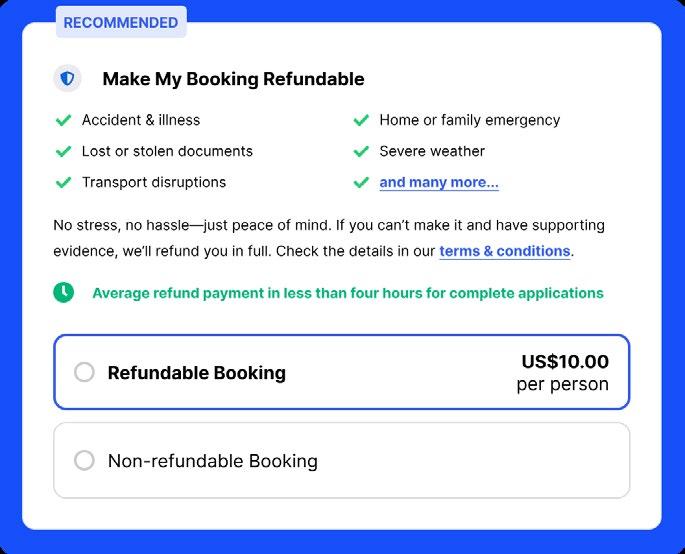
Protect Group’s Pulse Technology uses artificial intelligence, automation, and customer-centric design to help travel providers unlock new revenue streams and improve customer experience. It integrates refundable ticket upgrades and smart ancillary products such as Refund Protect, eSIM Solutions, Carbon Offsetting, Lounge Access, Flight Delay Compensation, and Delayed Baggage Compensation directly into booking flows.
Flexible and tech-driven
Pulse Technology uses an AI engine that personalises ancillary offerings in real time by analysing traveller behaviour, booking data, and external factors like seasonality or flight disruptions. Pulse recommends the right products at the right time and price. One of its most innovative features is
Refund Protect, which allows travellers to upgrade to fully refundable tickets instead of purchasing traditional insurance. Additionally, the platform employs automated claims verification using machine learning, speeding up refunds by up to 80%.
Moreover, Pulse Technology’s modular integration makes it easy for travel providers to adopt, as it uses a single API for partners to instantly access a full suite of ancillary solutions. This plug-and-play model empowers airlines, OTAs, hospitality platforms, event ticketing companies, and payment service providers to enhance their offerings.
With Pulse Technology, Protect Group puts travellers first and technology at the centre to create the future of travel protection.
Pulse recommends the right products at the right time and price
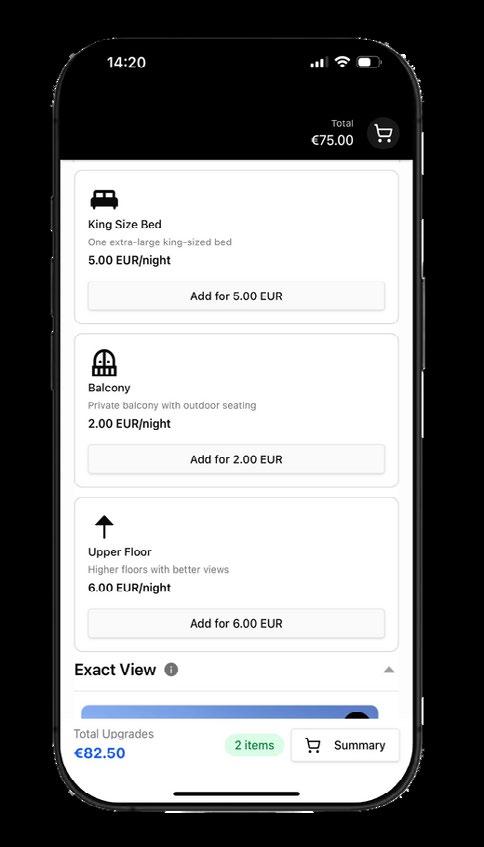
An example of Protect Group’s product in a booking flow
Your destination before departure
SCAN HERE TO READ OUR SUSTAINABILITY STATEMENT
How Tropicana Builds Sustainable Townships
#TropicanaGoGreen
At Tropicana, we are committed to fostering a greener, healthier, and more inclusive future. Guided by our three ESG pillars and aligned with United Nations Sustainable Development Goals (“SDGs”), we strive to create a positive impact for the people, planet, and our partners.
To date, 20 of our developments across Malaysia have achieved Green Building Index ("GBI") and GreenRE certifications, reflecting our ongoing e orts to reduce environmental impact and promote responsible urban development.
Today, our latest and ongoing signature and green certified developments are:
1. Tropicana Miyu @ Petaling Jaya
2. Hana Residences @ Tropicana Aman, Kota Kemuning
The travel and tourism industry continues to play a key role in driving economic development and fostering innovation across the Middle East.
This progress is driven by companies that champion sustainability, digital advancement, and customer-focused solutions, setting global standards in service and experience.
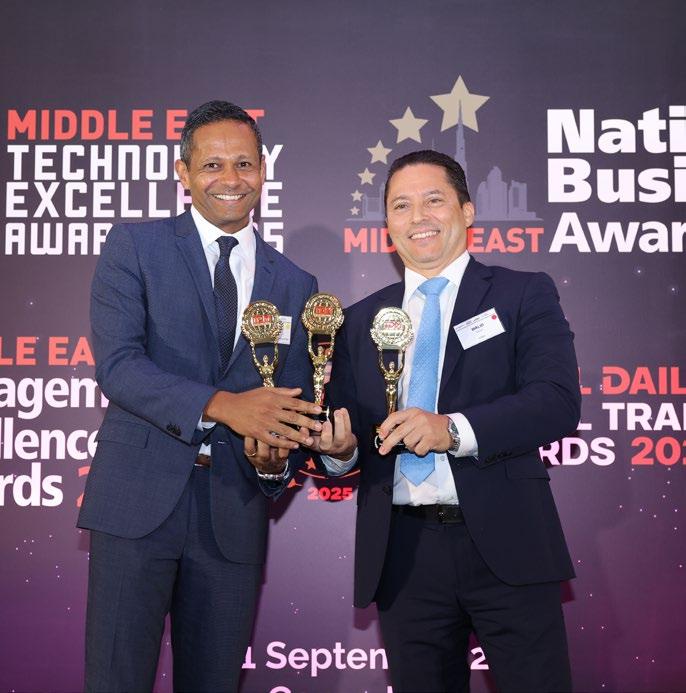
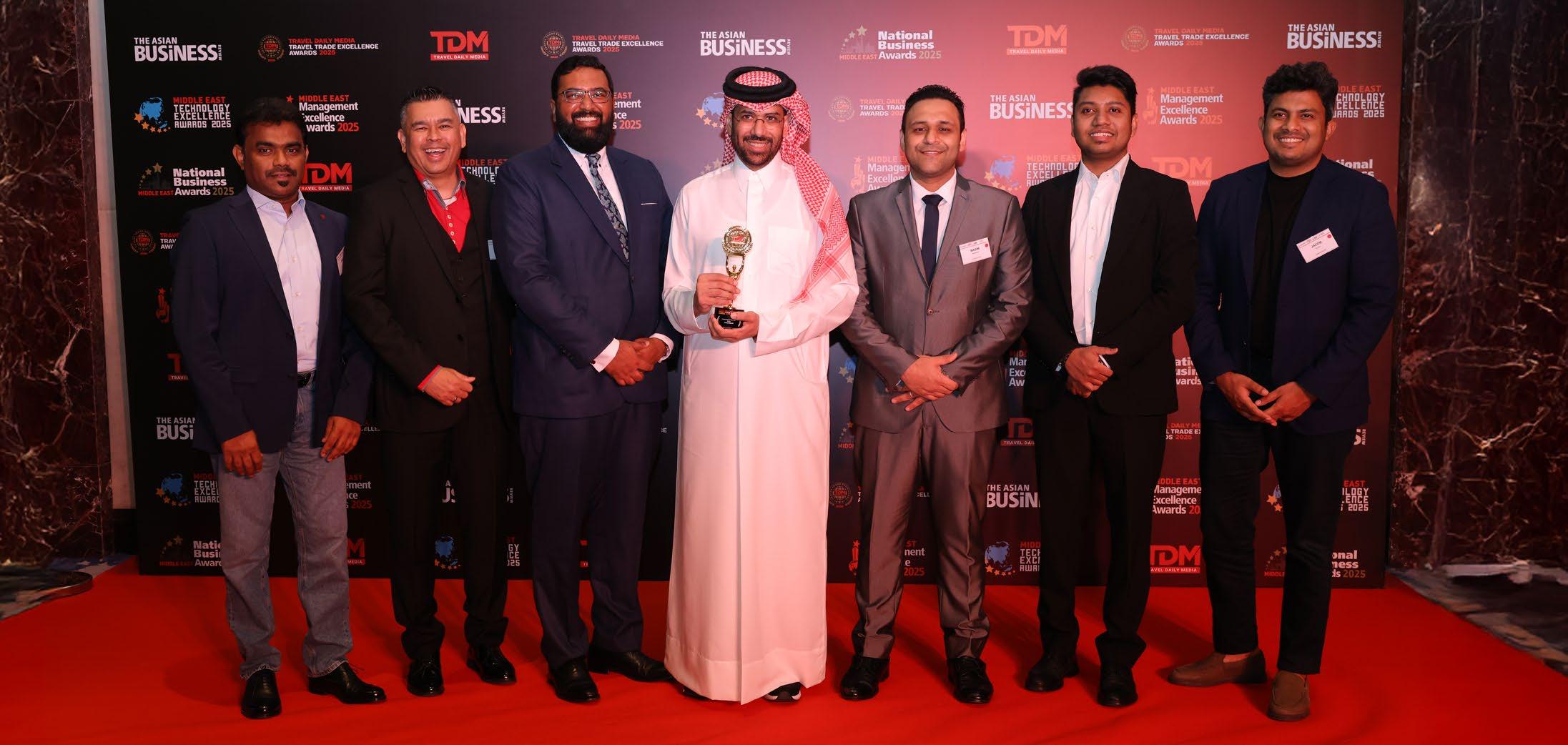
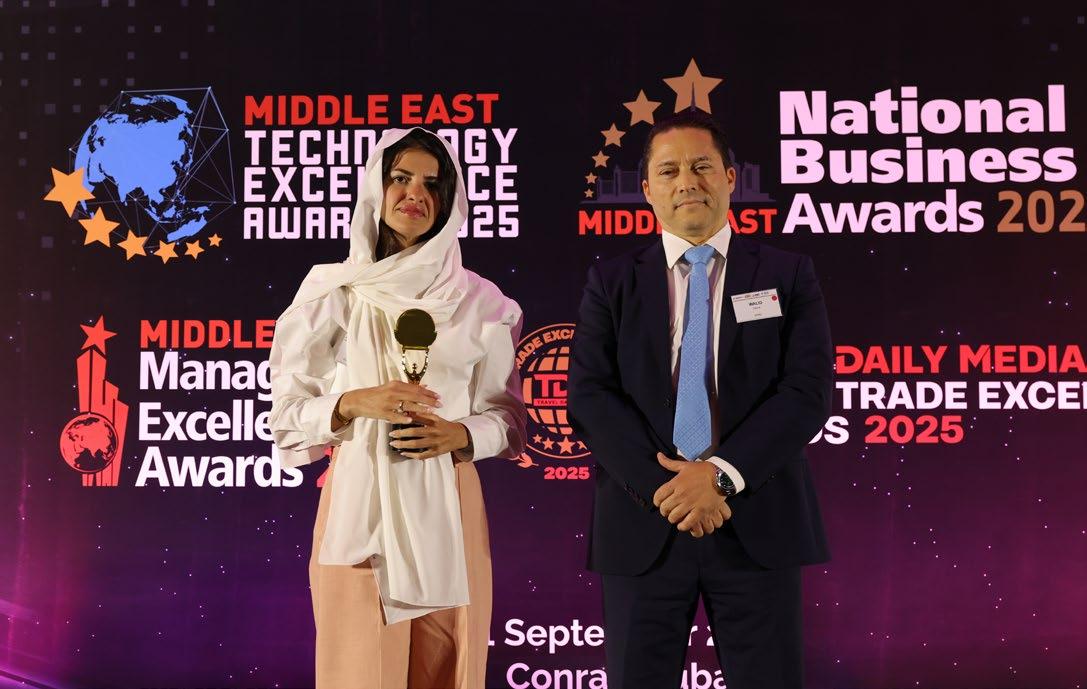
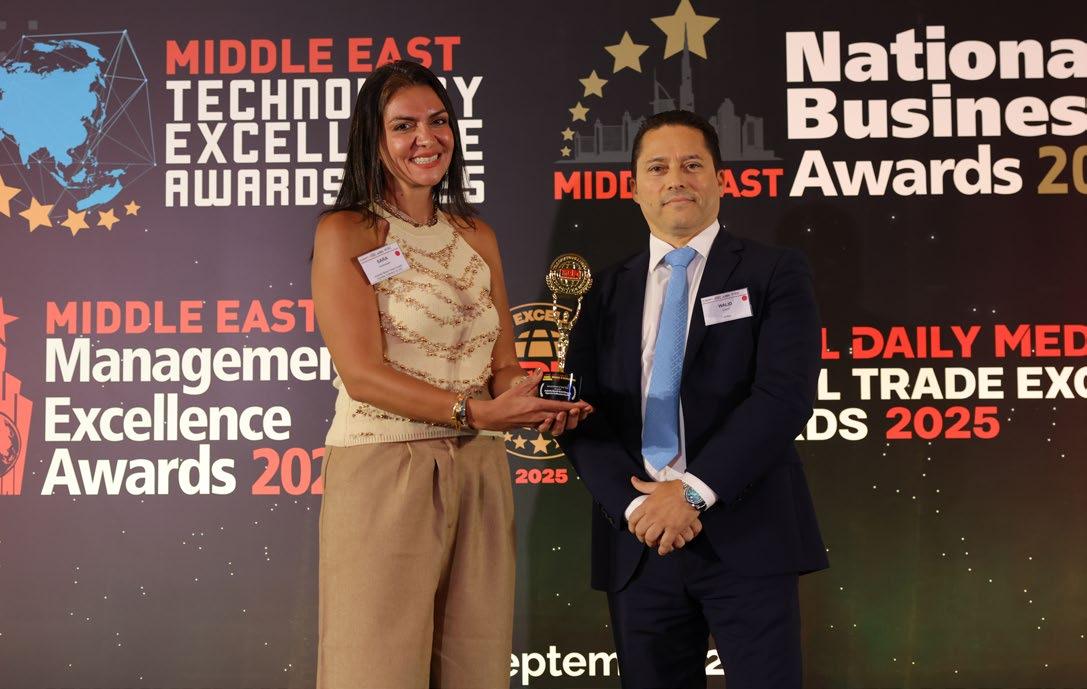
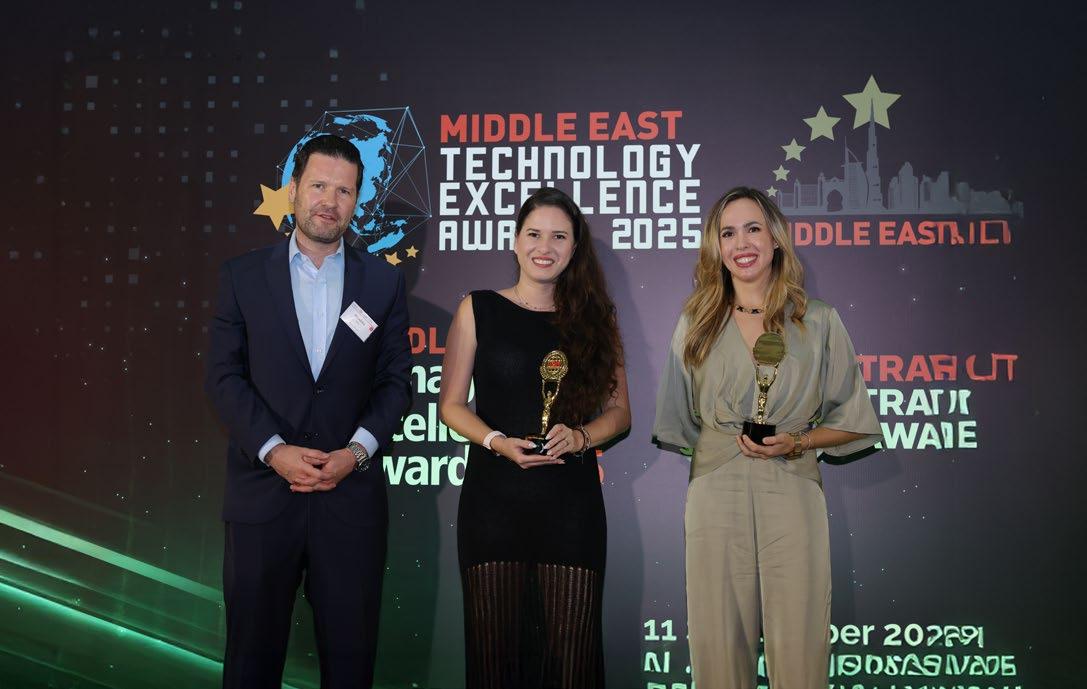
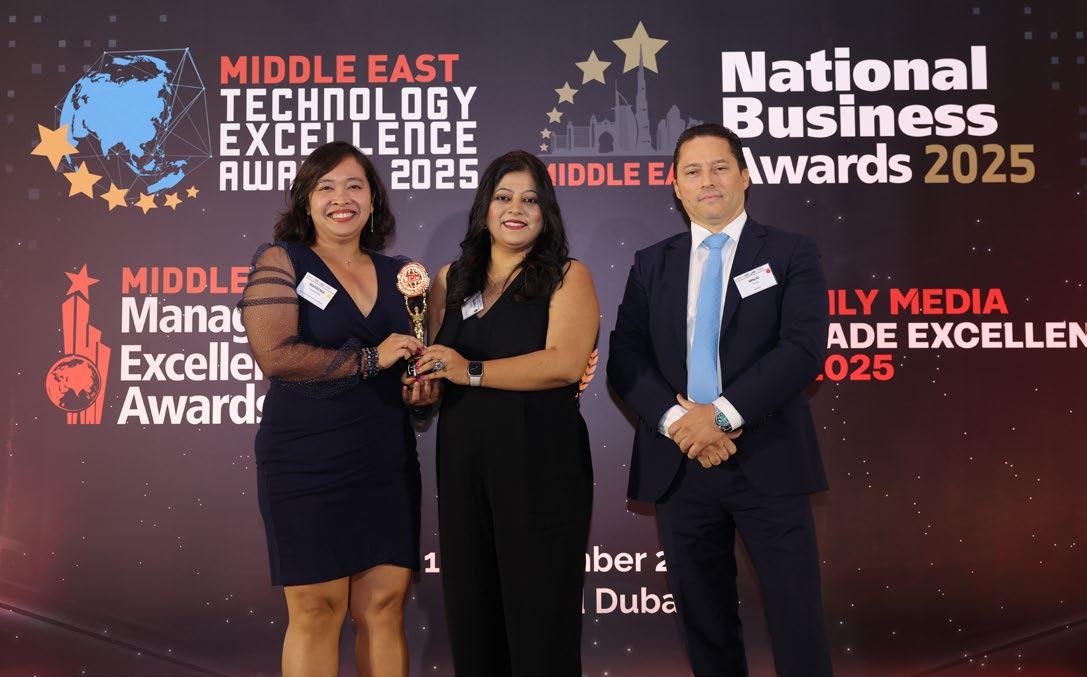
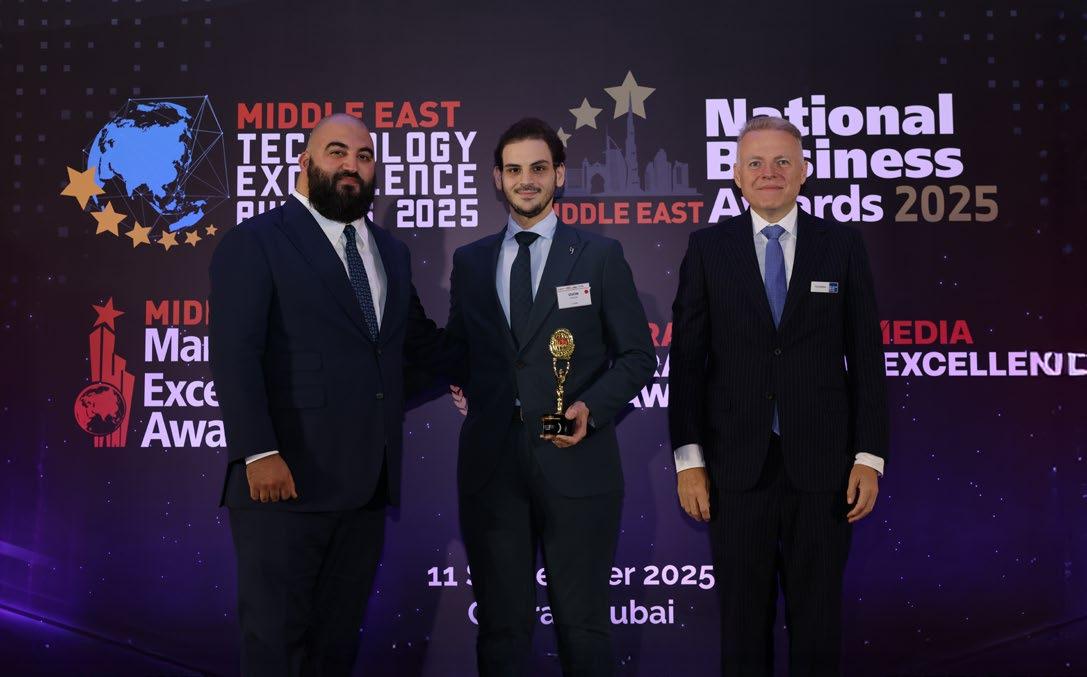
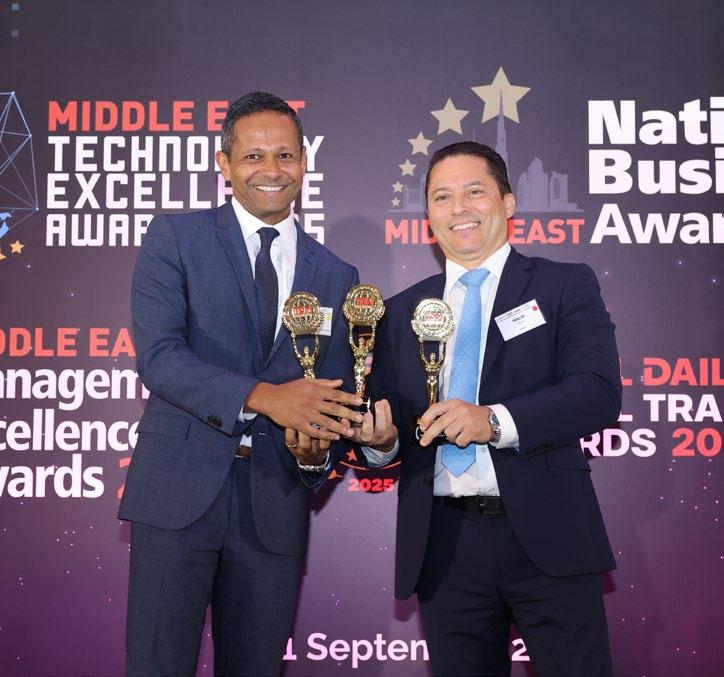
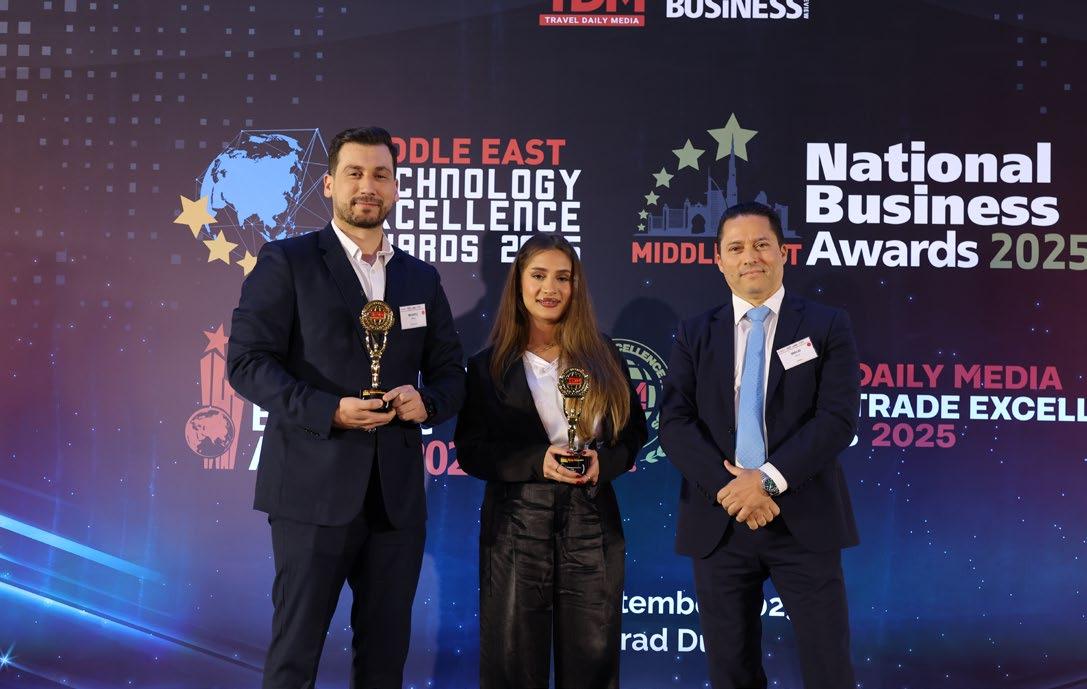
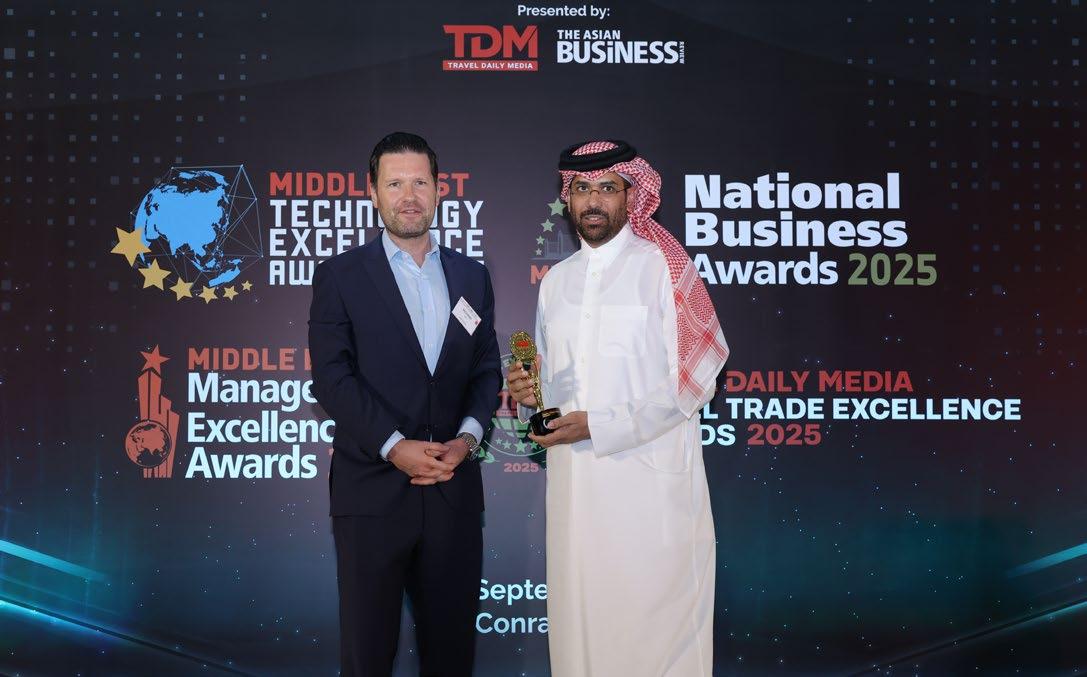
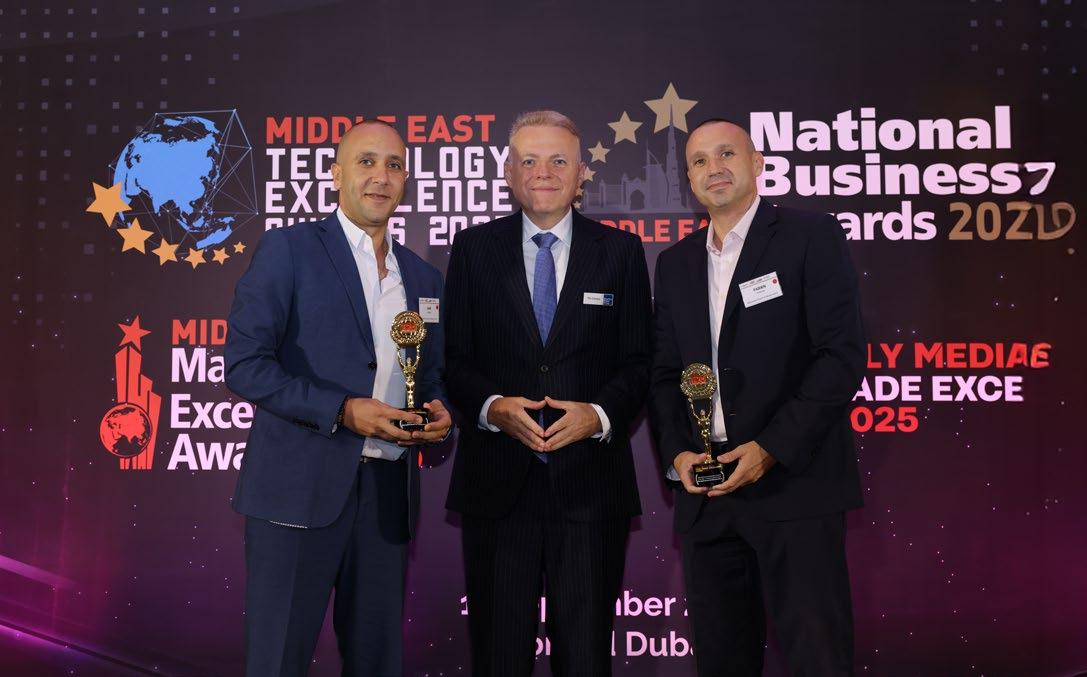
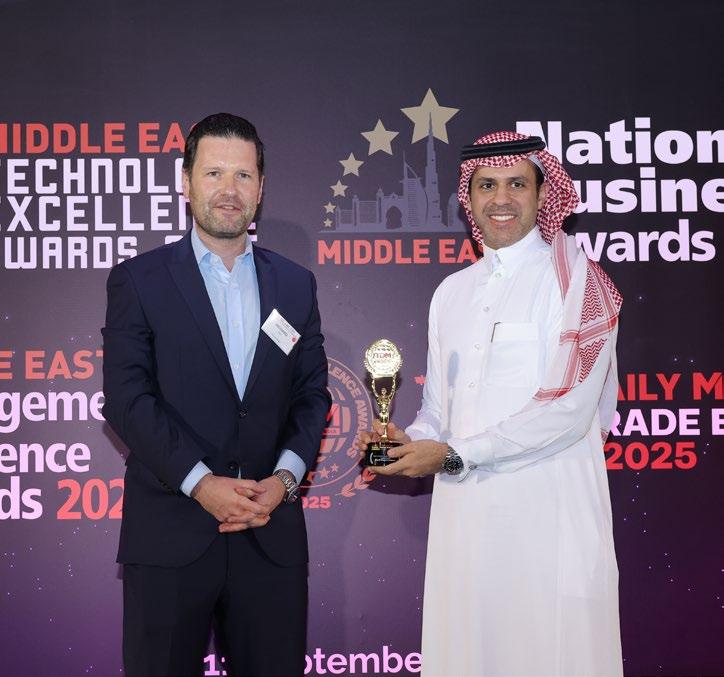
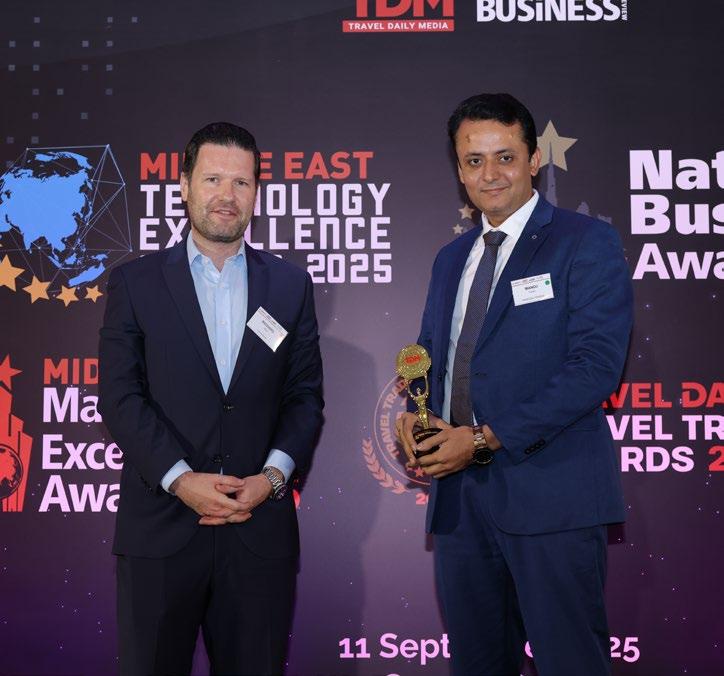
The TDM Travel Trade Excellence Awards 2025 - Middle East proudly honoured the region’s most exceptional contributors to the region’s travel industry, recognising the outstanding achievements of those who continue to redefine excellence across travel, tourism, and hospitality. Hosted by Travel Daily Media, the event brought together key industry players for an evening of recognition held on
• Affinity & Collaboration of the Year - United Arab Emirates
• Beach Resort of the Year - United Arab Emirates
Air Arabia
• Low-Cost Airline of the Year - United Arab Emirates
Al Raha Beach Resort & Spa
• Hotel Facilities Upgrade of the Year - United Arab Emirates
ALTANFEETHI COMPANY
• Guest Experience of the Year - Saudi Arabia
Arabella Beach Hotel Kuwait, Vignette Collection by IHG
• Luxury Hotel of the Year - Kuwait
Blacklane
• Destination Service of the Year - Saudi Arabia
• Sustainable Travel Technology of the Year - Saudi Arabia
dnata Representation Services
• PR & Representation Company of the Year - United Arab Emirates
• General Sales Agent (GSA) of the Year - United Arab Emirates
Doha Oasis
• Guest Experience of the Year - Qatar
• Social Media Campaign of the Year - Qatar
Element by Westin West Bay Doha
• Serviced Apartment of the Year - Qatar
Emirates Park Zoo and Resort
• Nature Destination of the Year - United Arab Emirates
Fairmont Dubai
• Business Hotel of the Year - United Arab Emirates
• Sustainable Hotel of the Year - United Arab Emirates
11 September 2025 at the Conrad Dubai, Dubai, UAE.
From world-class hotels and airlines to cruise lines, airports, tour operators, booking platforms, and cutting-edge travel technology, the awards programme celebrated those who lead the way in innovation, sustainability, and customer experience. The esteemed panel of judges who shared their invaluable expertise and thoughtful evaluation in selecting the winners included Walid Daoud, Partner, KPMG Lower Gulf; Ali Manzoor, Head of Hospitality, Hotels & Tourism, CBRE; Nimish Makvana, Senior Partner, Crowe UAE; and Richard Stolz, Partner - Tourism, Travel & Leisure, Roland Berger.
Congratulations to all the winners!
FORM Hotel
• Lifestyle Hotel of the Year - United Arab Emirates
• Mid-sized Hotel of the Year - United Arab Emirates
Grand Mercure Majlis Residences
• Serviced Apartment of the Year - United Arab Emirates
Hero Experiences Group
• Destination Product of the Year - United Arab Emirates
Ibis One Central
• Economy Hotel of the Year - United Arab Emirates
InterContinental Dubai Marina
• Hotel Renovation of the Year - United Arab Emirates
Leisure World
• Theme Park of the Year - Qatar
Luban Travel and Tourism
• Specialty Travel Agency of the Year - Qatar
Lunajets
• Air Charter of the Year - United Arab Emirates
Makkah Hotel & Towers
• Luxury Hotel of the Year - Saudi Arabia
Marriott Executive Apartments, Doha Le Mirage City Walk
• Hotel Facilities Upgrade of the Year - Qatar
Mercure Khamis Mushait
• New Hotel of the Year - Saudi Arabia
Mövenpick Doha Hotel
• MICE Hotel of the Year - Qatar
• Sustainable Hotel of the Year - Qatar
Mövenpick Hotel & Apartments Ghala Muscat
• New Hotel of the Year - Oman
Mövenpick Resort Al Marjan Island
• Family Resort of the Year - United Arab Emirates
• Outstanding Achievement Award of the Year - United Arab Emirates
Myazu Riyadh
• Destination Restaurant of the Year - Saudi Arabia
NH Collection Dubai The Palm
• Sustainability Initiative of the Year - United Arab Emirates
Novotel World Trade Centre
• Midscale Hotel of the Year - United Arab Emirates
Riyadh Airports Company
• International Airport of the Year - Saudi Arabia
Rosewood Abu Dhabi
• Luxury Hotel of the Year - United Arab Emirates
SAMA TRAVEL and TOURISM
• Destination Management Company (DMC) of the Year - Oman
Sofitel Bahrain Zallaq Thalassa sea & spa
• Wedding Hotel of the Year - Bahrain
TIME Oak Hotel and Suites
• Hotel & Resort Management of the Year - United Arab Emirates
Twine
• Hotel Restaurant of the Year - United Arab Emirates
W Doha Hotel & Residences
• Lifestyle Hotel of the Year - Qatar
WAHEGURU TRAVELS
• Travel Management Company of the Year - United Arab Emirates
Wedded Wonderland
• AI Initiative of the Year - United Arab Emirates
Award winners
ALTANFEETHI COMPANY
Arabella Beach Hotel Kuwait, Vignette Collection by IHG
Event: Travel Trade Excellence Awards - Middle East
Blacklane
Doha Oasis
Emirates Park Zoo and Resort
Leisure World
Lunajets
Mövenpick Resort Al Marjan Island
Ibis and Novotel World Trade Centre
Riyadh Airports Company
WAHEGURU TRAVELS
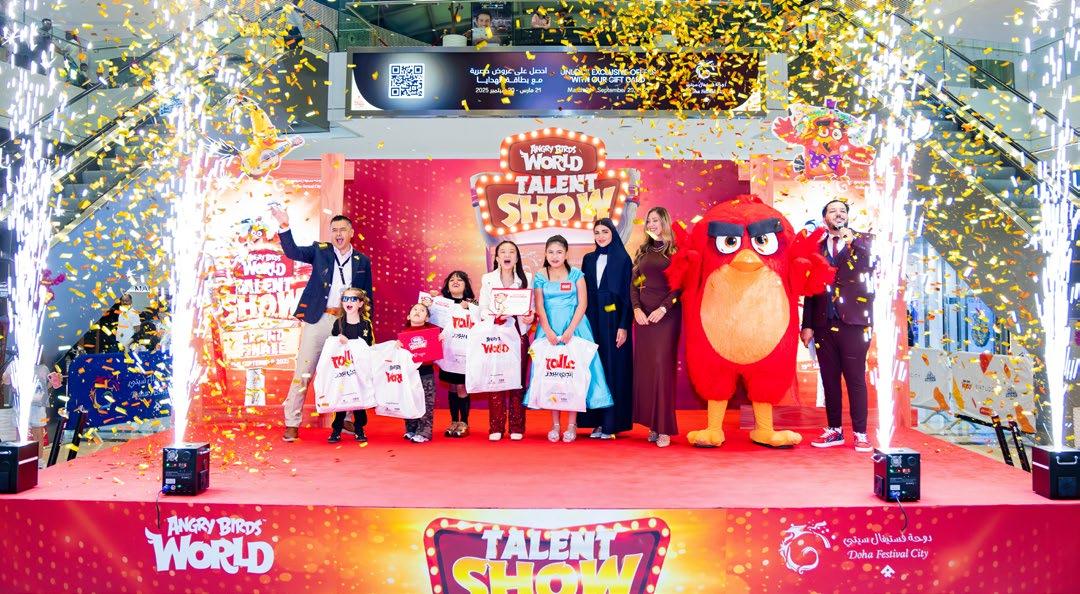
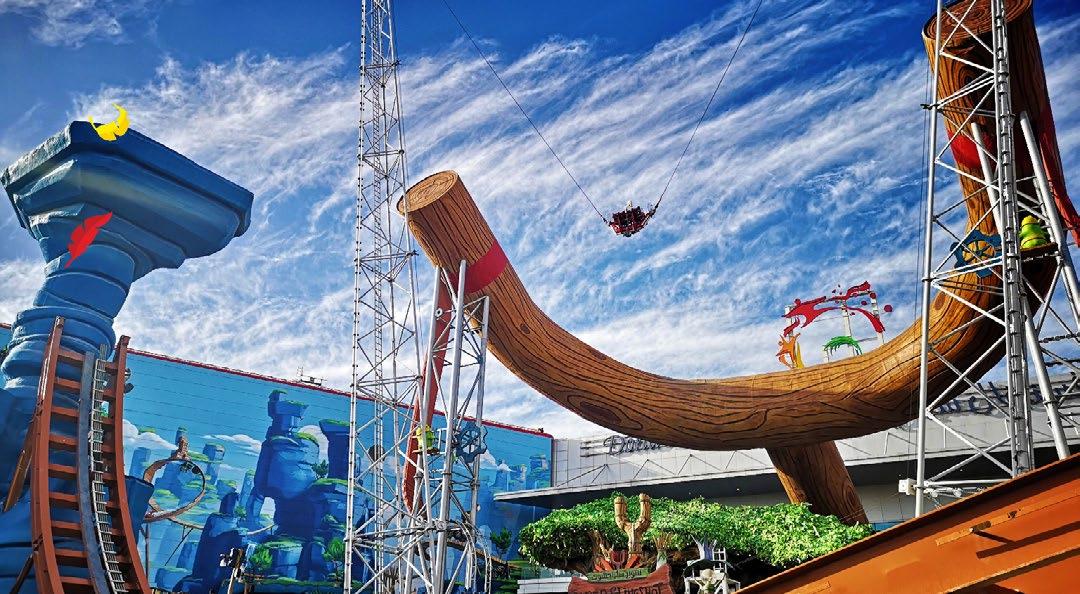
Leisure World’s Angry Birds World Doha sets a new standard for profitable play
The theme park was recognised at the TDM Travel Trade Excellence Awards 2025 - Middle East.
In the world of theme parks, joy is the product, but revenue is the oxygen. This delicate balance is everything. Financial instability can trigger a vicious cycle: stressed employees struggle to deliver magic, guests flee from declining brands, and innovation stalls. To thrive, today’s industry must look beyond building bigger rollercoasters. The true challenge lies in strategically aligning unparalleled guest delight with rock-solid financial health.
The battle for guest spending is fierce. Whilst promotions have their place, the most potent strategies weave value directly into the experience itself. This leads to a powerful approach: Strategic Premiumisation. By
introducing innovative offerings like the VIP Experience package, the theme park bundle perks can significantly increase perceived value and average spending.
Guests enjoy a superior, hassle-free day, whilst the park efficiently captures revenue across multiple parks at Leisure.
Affluent guests, in particular, don’t respond to hard sales. They connect with authentic service, anticipation of their needs, and a sense of exclusivity. This requires a new breed of talent: exceptionally trained and empowered staff who act as Emotional Connection Architects.
At Leisure, this is the new role of the Park Experience Ambassador team, a
group dedicated to orchestrating hyperpersonalised moments that build revenue, loyalty, and brand prestige simultaneously. Agility and innovation, however, require a foundation of empowered talent. This is supported by “Theme Park Playbook,” a dynamic set of refreshed operational manuals that codifies best practices, safety protocols, and the art of guest interaction into accessible, living documents for their team.
A new standard of fun & funds
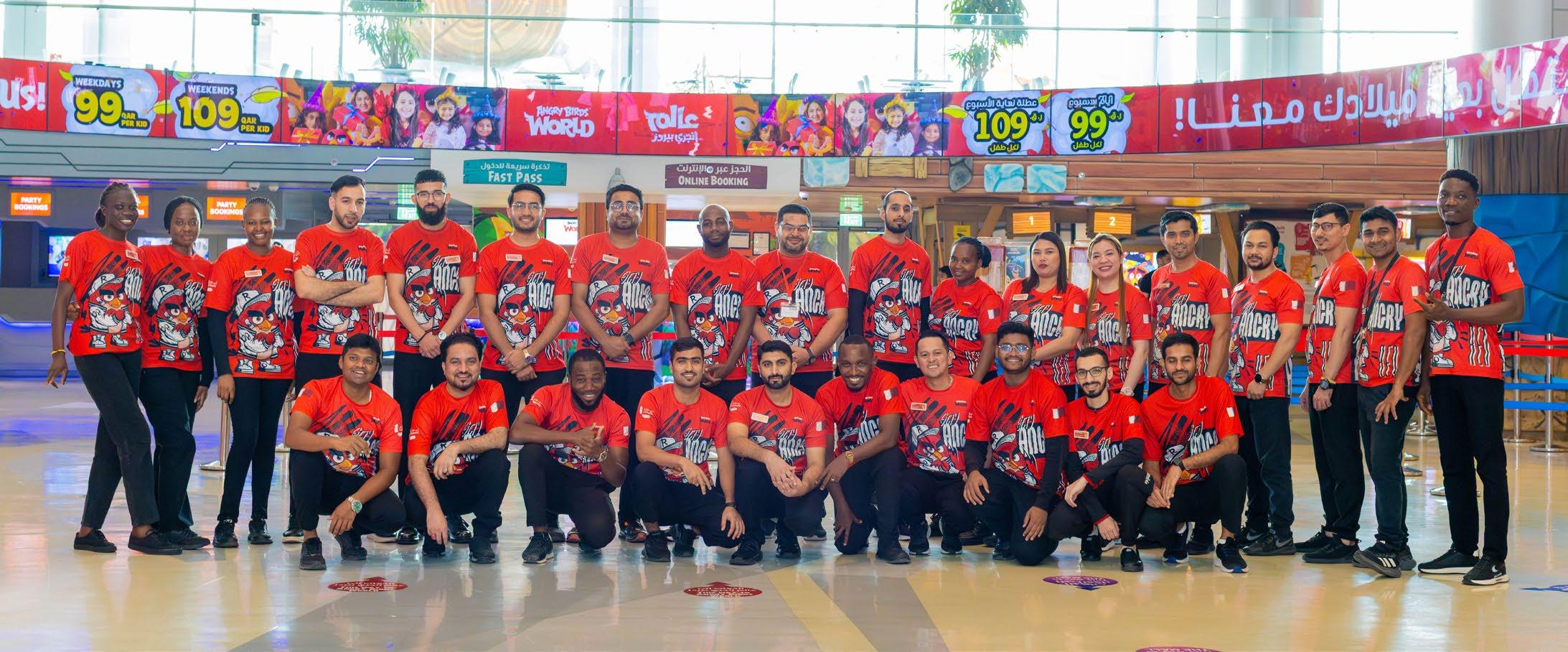
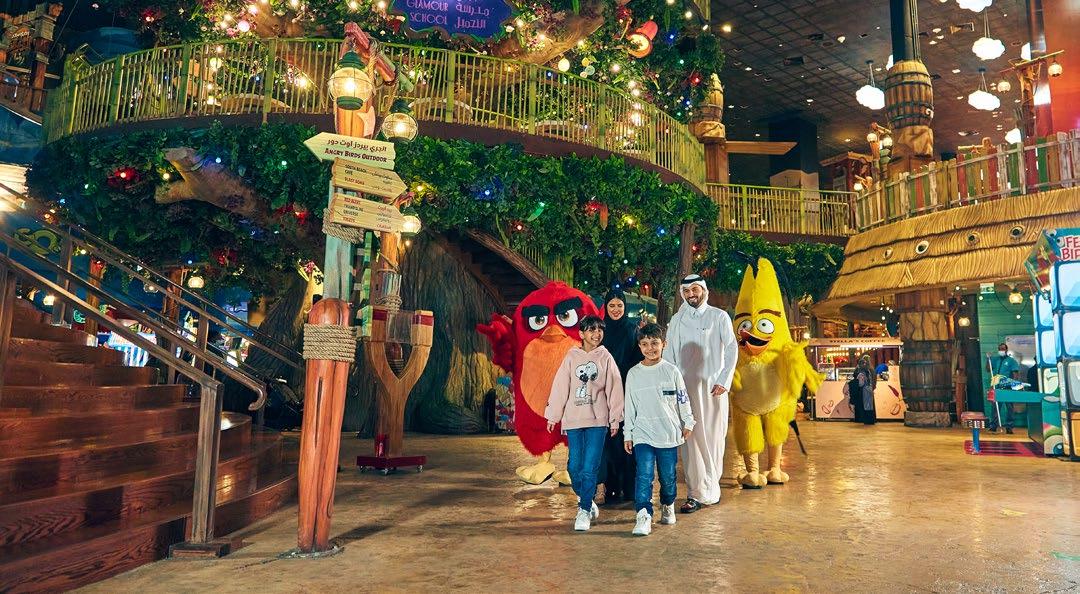
These strategies come to life at Angry Birds World in Doha, an immersive entertainment destination and the world’s only iconic franchise of its kind. Every corner is meticulously designed to transport visitors into the vibrant, playful universe of Angry Birds, ensuring full engagement from the moment they arrive. This commitment to excellence has not gone unnoticed. Angry Birds World was named Theme Park of the Year - Qatar at the TDM Travel Trade Excellence Awards 2025 - Middle East. Built on the powerful principle of edutainment, the park seamlessly integrates STEAM learning into its attractions. Climbing structures, obstacle courses, and trampolines promote physical activity, whilst interactive challenges foster problem-solving, teamwork, and creativity in young minds. A customised summer and winter camp was a great success for its parks. Besides the Funtastic Monday,
Angry Birds World Doha team
Guests with mascots at Angry Birds World Doha
Snowy Tuesday, and Wacky Wednesday packages, Angry Birds World also offers corporate packages like team building and birthday parties. The most popular activities for corporate team building are the Angry Birds Go as well as the Obstacle Course at Studio City.
Angry Birds World’s major success is further proven by blockbuster events. Flock Fest, its inaugural winter festival, achieved remarkable results: 99,000 visitors, 105 million impressions, and a 20x return on ad spend. Having run from November 2024 through February 2025, Angry Birds World is establishing itself as a must-visit Doha winter tradition. The guests come from all parts of the MENA region.
Similarly, Angry Birds World Got Talent,
launched in September 2025, has become Qatar’s largest kids’ talent competition. Open to children aged 6-14, it is awarded over QAR20,000 in cash prizes across singing, dancing, and poetry categories. Its success promises an even larger venue next year.
A new standard of safety and inclusion
Beyond the fun, Angry Birds World is an inclusive attraction designed for guests of all ages and abilities. Its technical team leverages the proprietary “FEC Smart Maintain” app, which is a regional first that monitors ride availability and guest safety in real time.
Furthermore, the park is distinguished by its in-house certified Duty Manager programme.
Developed in accordance with IAAPA and TUV safety best practices and curated by an IAAPA
Global Subject Matter Expert on their team, this programme underscores an unwavering commitment to safety that allows the magic to thrive, worry-free.
At Angry Birds World Doha, they are proving that the future of themed entertainment lies in this powerful synergy, where strategic business models, empowered people, and groundbreaking creativity unite to create unforgettable moments.
At Angry Birds World
Doha, they are proving that the future of themed entertainment lies in this powerful synergy
Travel and tourism remain a driving force of global connection, cultural exchange, and economic growth.
The industry continues to evolve through innovation, sustainability, and service, shaped by those who consistently set new standards of excellence.
The TDM Travel Trade Excellence Awards 2025 - Thailand proudly celebrated the organisations and individuals who elevate global travel, recognising achievements across hotels, airlines, airports, cruise lines, tour operators, travel agencies, booking platforms, and travel technology providers. The awards programme highlighted trailblazing projects, transformative
initiatives, and meaningful contributions that support sustainable industry growth.
Hosted by Travel Daily Media, the awards ceremony brought together industry leaders, innovators, and visionaries for an evening of recognition held on 16 October 2025 in Bangkok.
The esteemed panel of judges for this year’s awards programme consisted of Jon Cannon, Senior Vice President – Hotel Asset Management, Thailand and Vietnam, JLL; Kulit Kiartsritara, Principal, Roland Berger; and Eric Levy, Managing Director, Tourism Solutions International.
Congratulations to all the winners!
Holiday Inn Resort Phuket Karon Beach
• Leisure & Family Hotel of the Year
Hotelverse
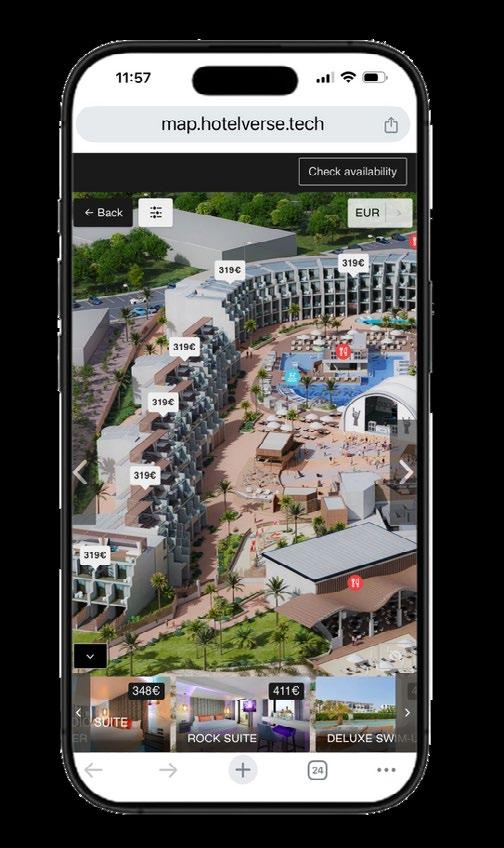
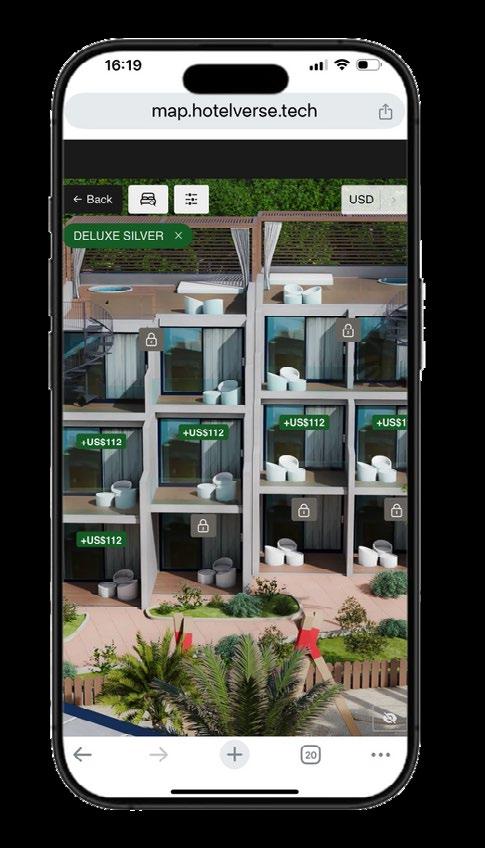
• Digital Transformation of the Year
InterContinental Hua Hin Resort
• Community Engagement Program of the Year
JW Marriott Phuket Resort & Spa
• Family Resort of the Year
KhaoSok Boutique Hideaway
• Boutique Hotel of the Year
Khiri Travel
• Destination Management Company (DMC) of the Year
Kora Beach Resort Phuket
• Themed Hotel of the Year
Krungsri Auto, under Bank of Ayudhya PCL
• Digital Travel Solution of the Year
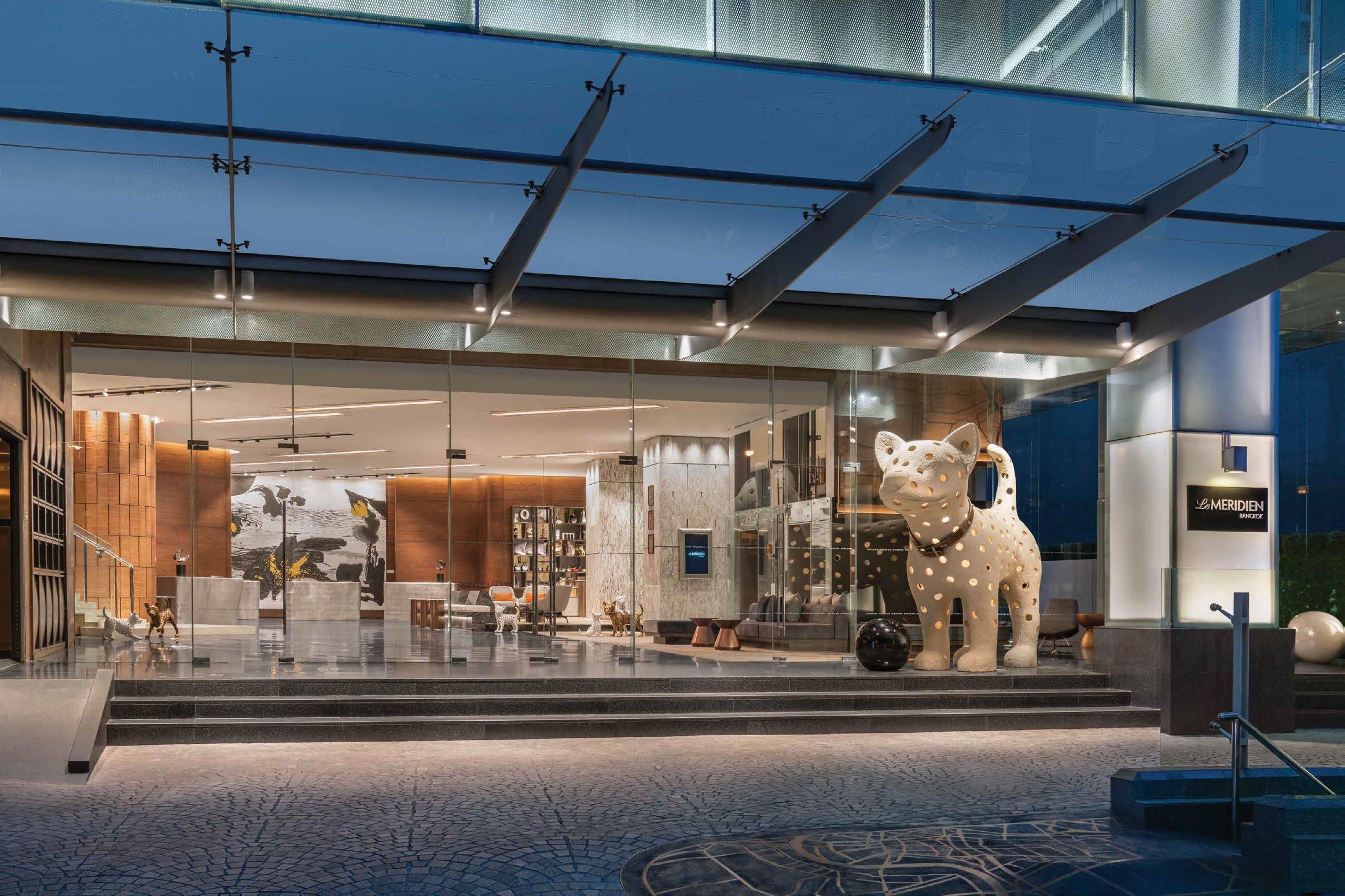
Le Meridien Bangkok
• City Centre Hotel of the Year
Le Méridien Phuket Beach Resort
• Resort Hotel of the Year
LH Mall & Hotel Co., Ltd. (Grande Centre Point Lumphini)
• Business Hotel of the Year
Minor International PCL
• Hospitality Group of the Year
Montara Hospitality Group
• Hotel Restaurant of the Year
• Community Initiative of the Year
Mountain Beach Resort & Convention Center, Pattaya
THE LEGEND CHIANG RAI BOUTIQUE RIVER RESORT AND SPA
• Content Marketing of the Year
The Naka Island, a Luxury Collection Resort & Spa, Phuket
• Lifestyle Hotel of the Year
Tourism Authority of Thailand (TAT)
• Marketing Initiative of the Year
• Tourist Board of the Year
Trip.com
• Online Travel Agency (OTA) of the Year
Warehouse Restaurant
• Innovative Dining Concept of the Year
White Sand Patong Hotel Co.,Ltd.
• Hotel & Resort Management of the Year
YAANA Ventures (Anurak Community Lodge)
• ESG Initiative of the Year
ZUZU Hospitality Solutions
• AI Initiative of the Year
Columbia Pictures Aquaverse
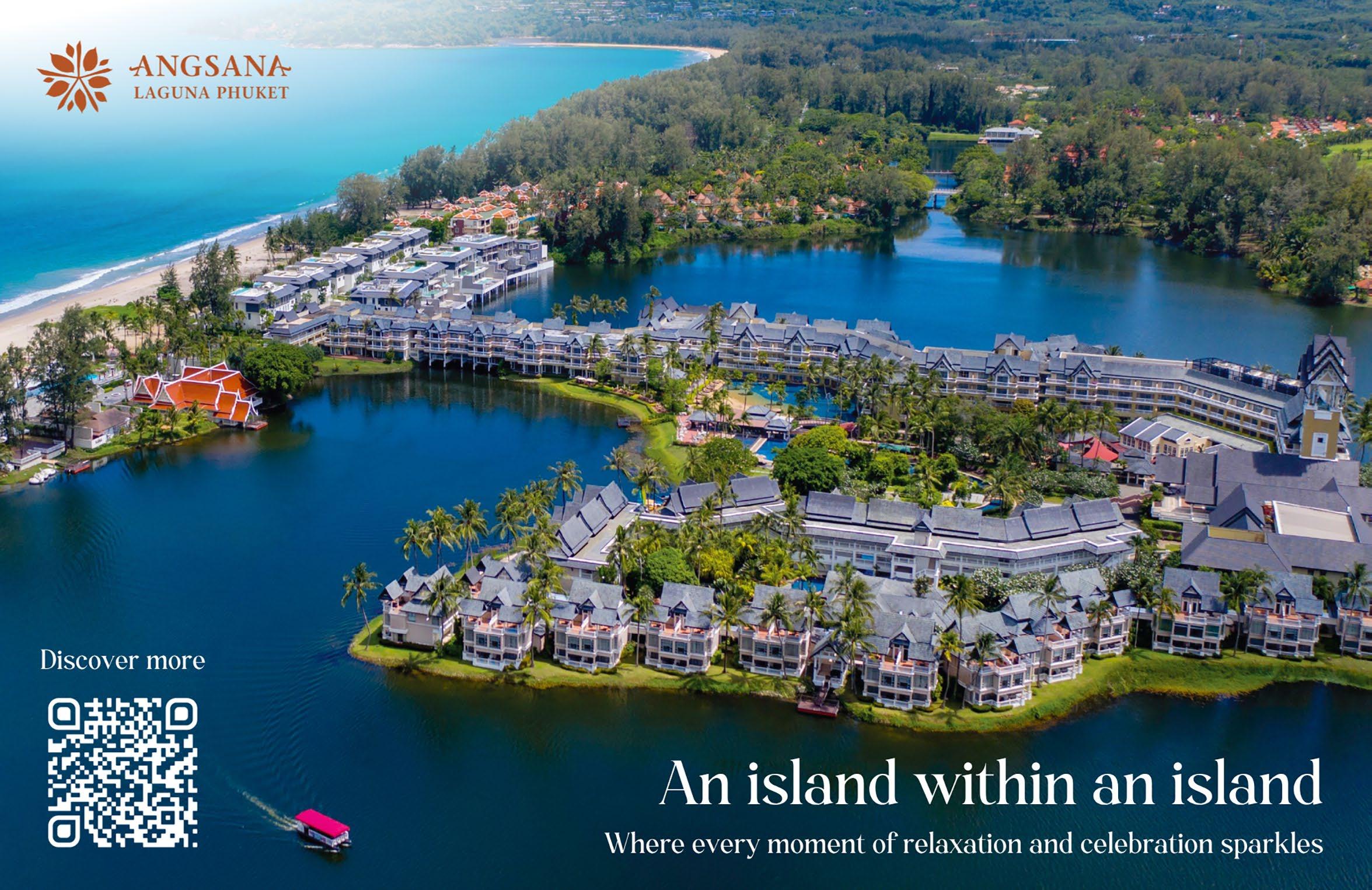
Angsana Laguna Phuket
Arawana Group
Chiang Mai Marriott Hotel Dida
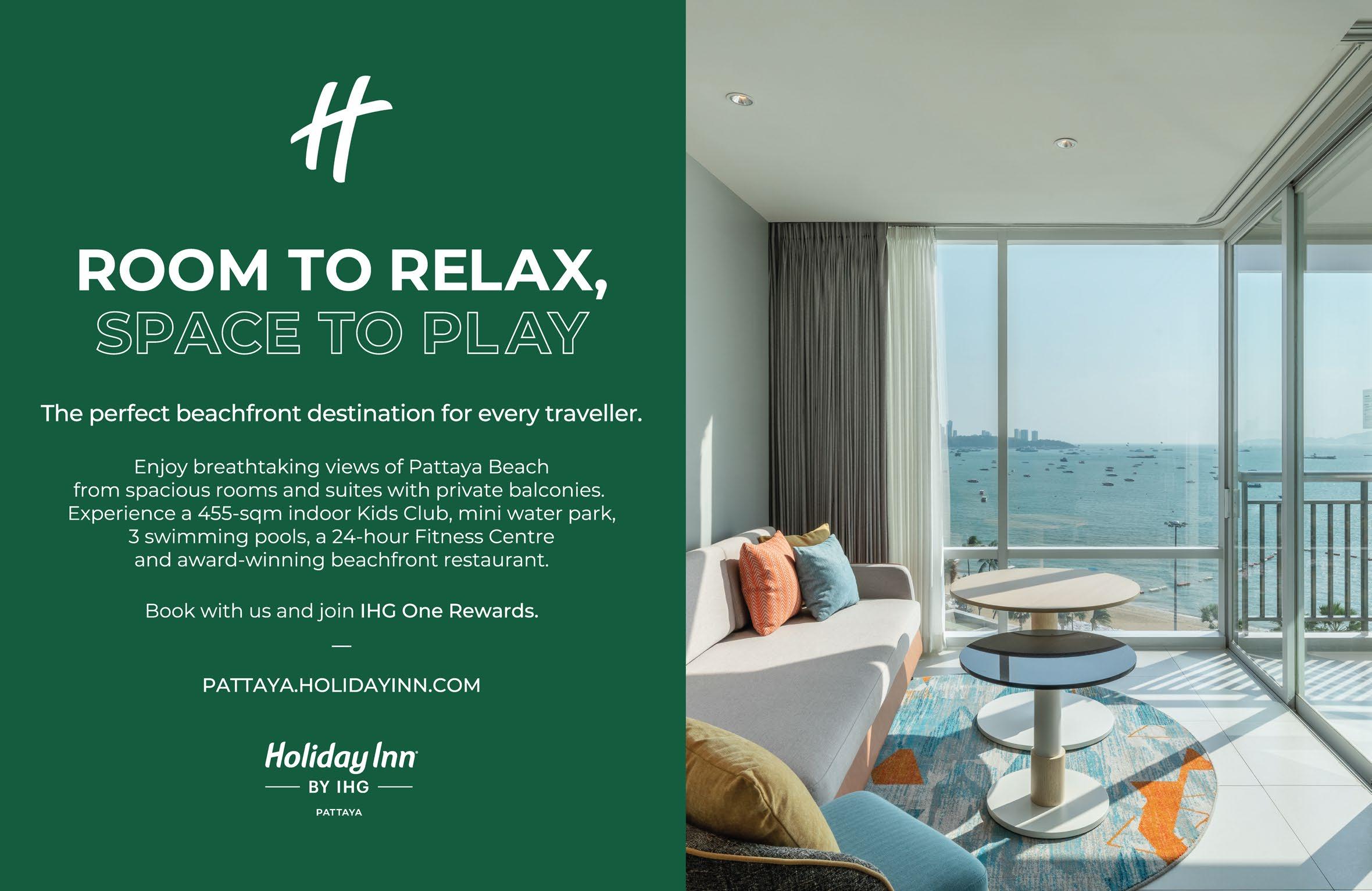
Holiday Inn Pattaya & The Collective
Event: Travel Trade Excellence Awards - Thailand
Khiri Travel Kora Beach Resort Phuket
LH Mall & Hotel Co., Ltd. (Grande Centre Point Lumphini)
Mountain Beach Resort & Convention Center, Pattaya
Protect Group
Radisson Hotel Group
Radisson Red Phuket Patong Beach
Le Méridien Phuket Beach Resort
Holiday Inn Resort Phuket Karon Beach
Hotelverse
Radisson Resort and Spa Hua Hin
Smiling Albino
Le Meridien Bangkok
Thai Airways International Public Company Limited Trip.com
Warehouse Restaurant YAANA Ventures (Anurak Community Lodge)
ZUZU Hospitality Solutions
Holiday Inn Phuket Surin Beach
CHIANG MAI MARRIOTT HOTEL
THE ULTIMATE MICE DESTINATION
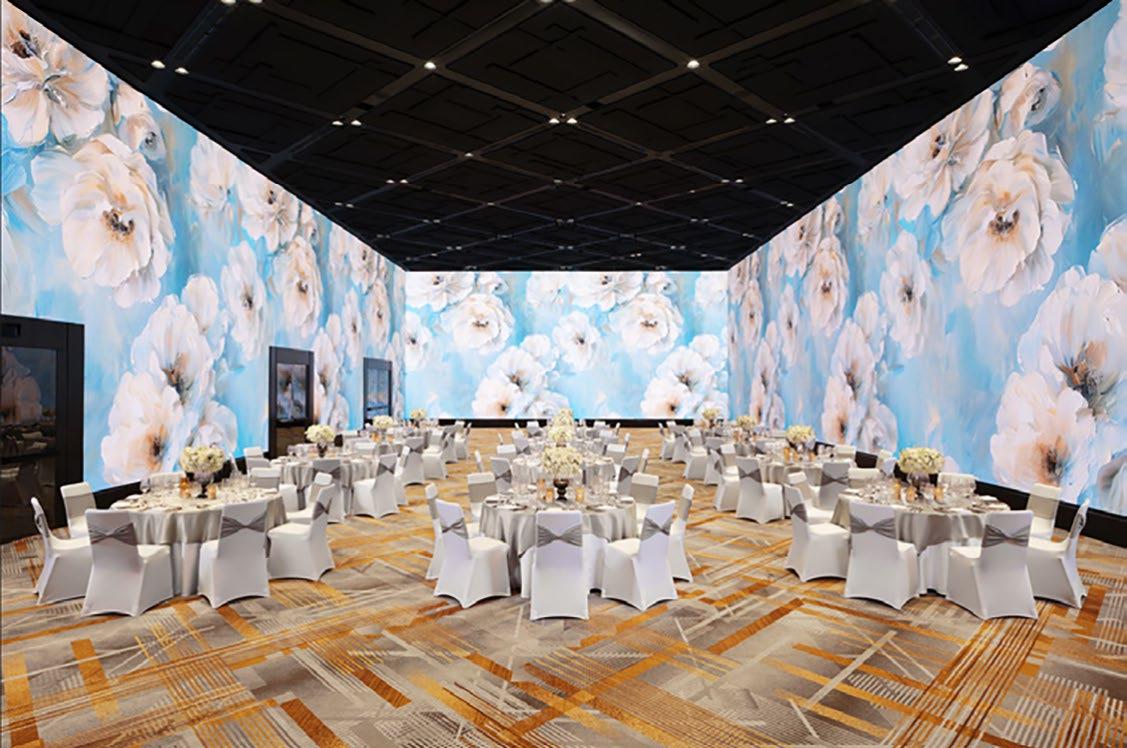
THAILAND’S FIRST 360° IMMERSIVE BALLROOM
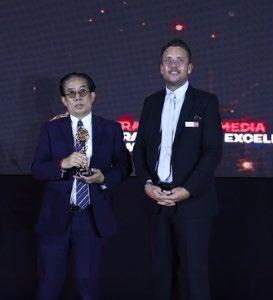
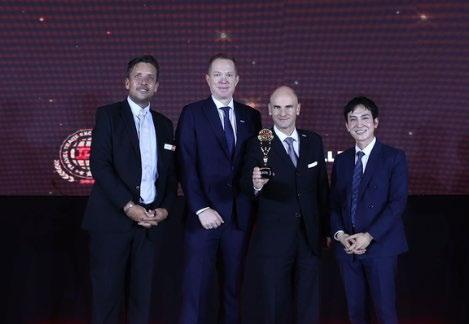
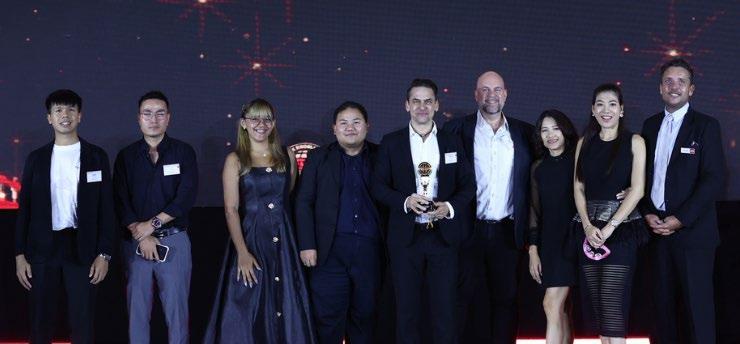
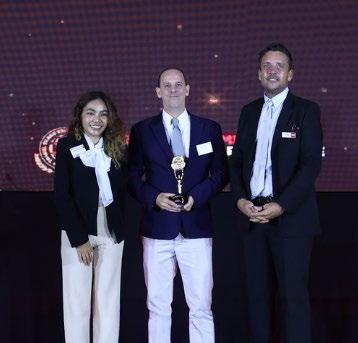
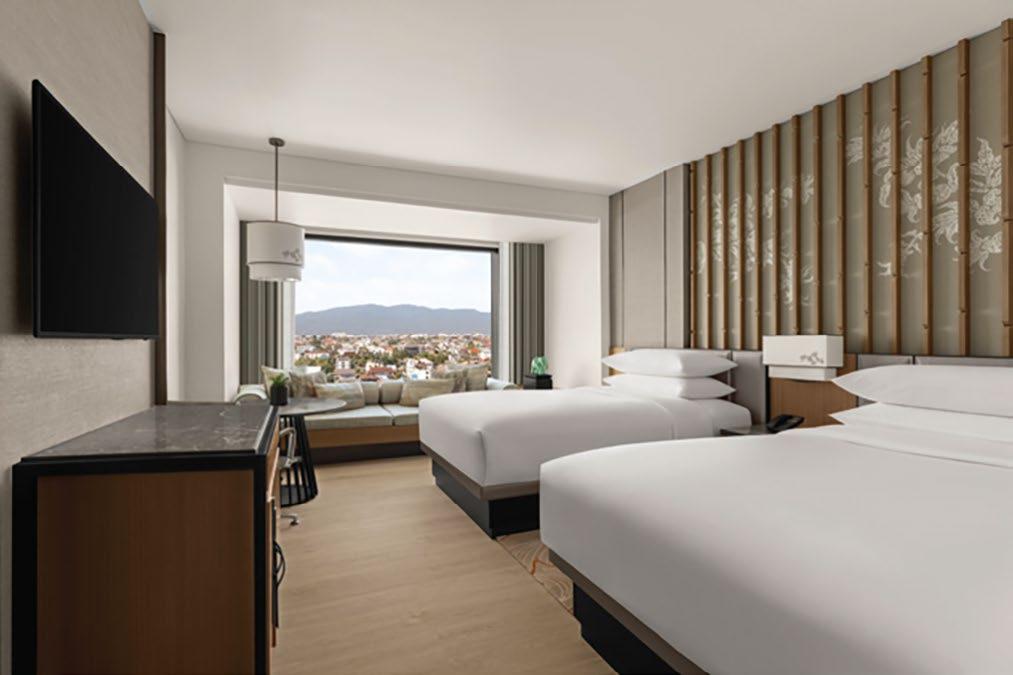
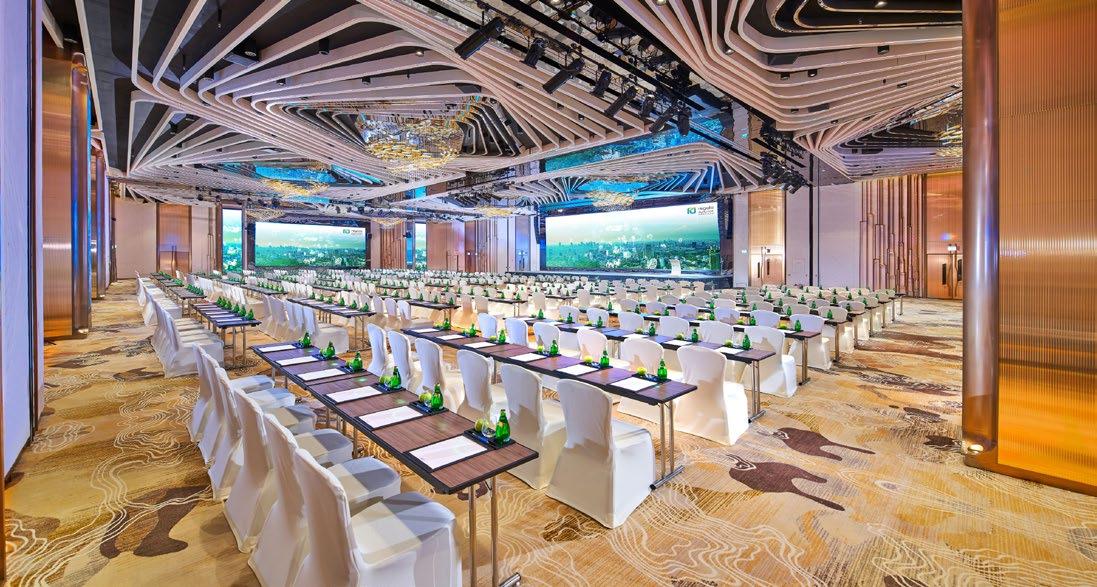
Located in the heart of the city, Chiang Mai Marriott Hotel showcases the innovative Plaii Ballroom ― Thailand’s first 360-degree immersive LED ballroom spanning 400 sqm ― alongside the expansive 1,032 sqm pillarless Suthep Hall and 20 state-of-the-art meeting and event spaces. Guests can unwind in private golf simulator rooms, karaoke lounges, or at the vibrant Wang Bar.
Featuring 383 spacious guest rooms and suites with stunning Doi Suthep mountain and city views, including over 100 twin rooms, as well as award-winning dining, an infinity pool, and exceptional amenities, the hotel offers the perfect destination for both business and leisure travelers.
Travel visionaries take the spotlight at TDM Travel Trade Excellence Awards
Malaysia’s
travel and tourism industry stands strong as one of the nation’s most dynamic sectors, led by companies that continually elevate the standards of innovation, service, and exceptional guest experiences.
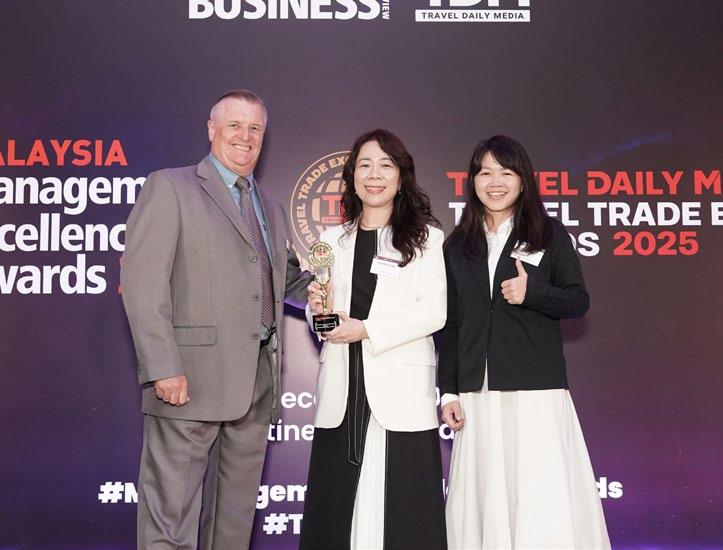
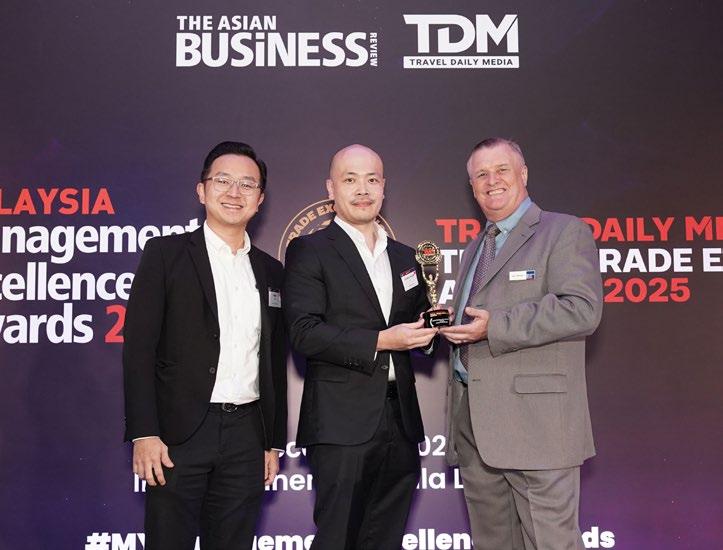
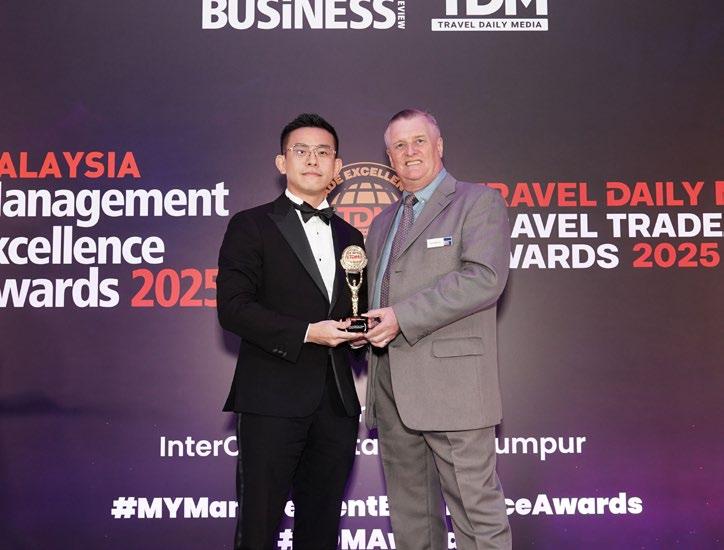
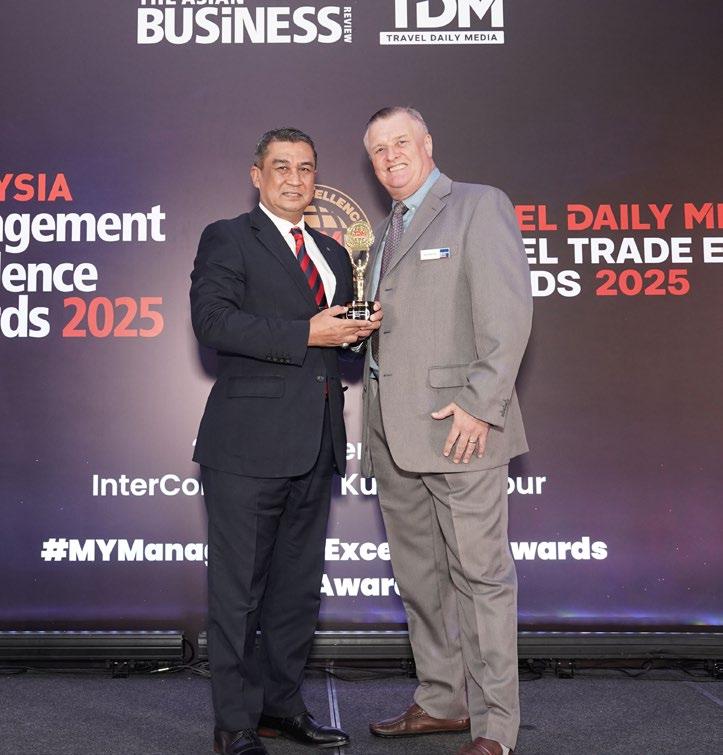
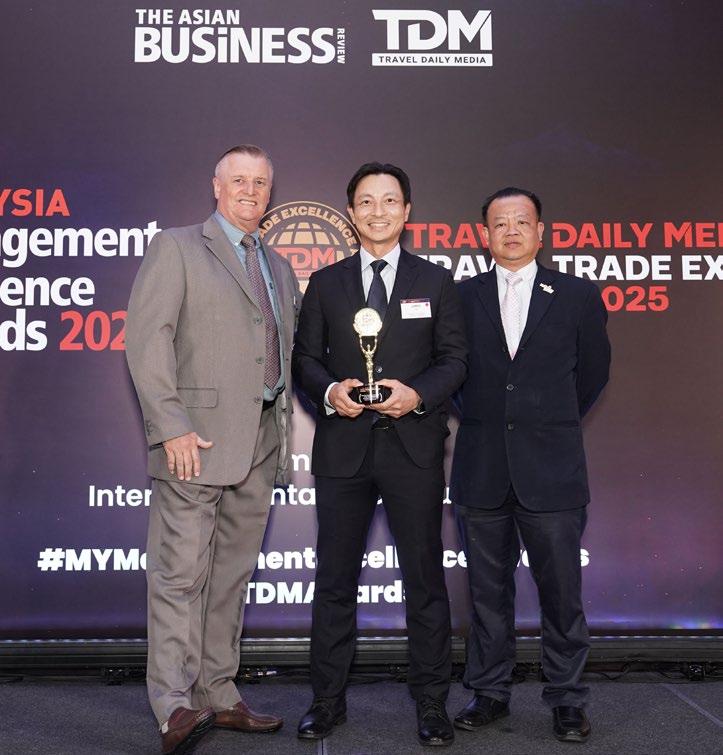
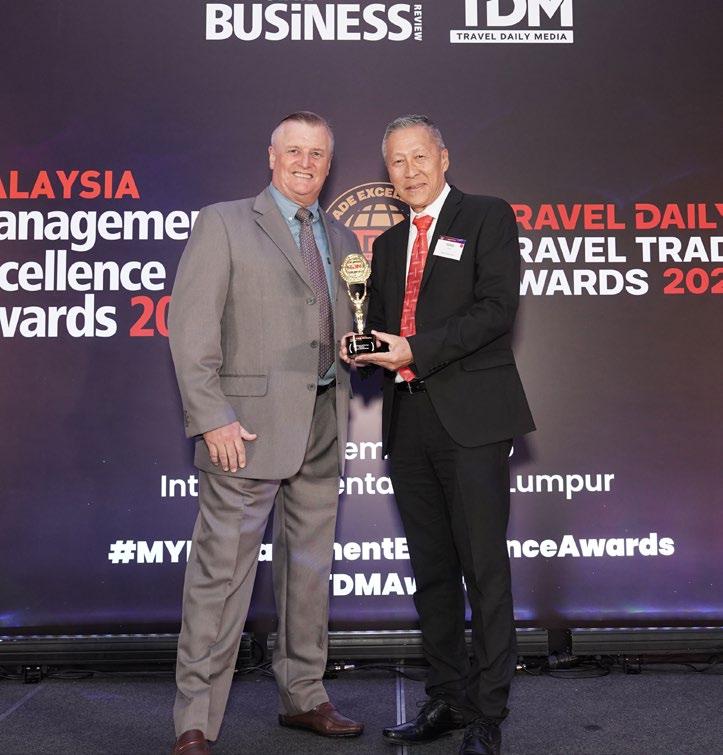
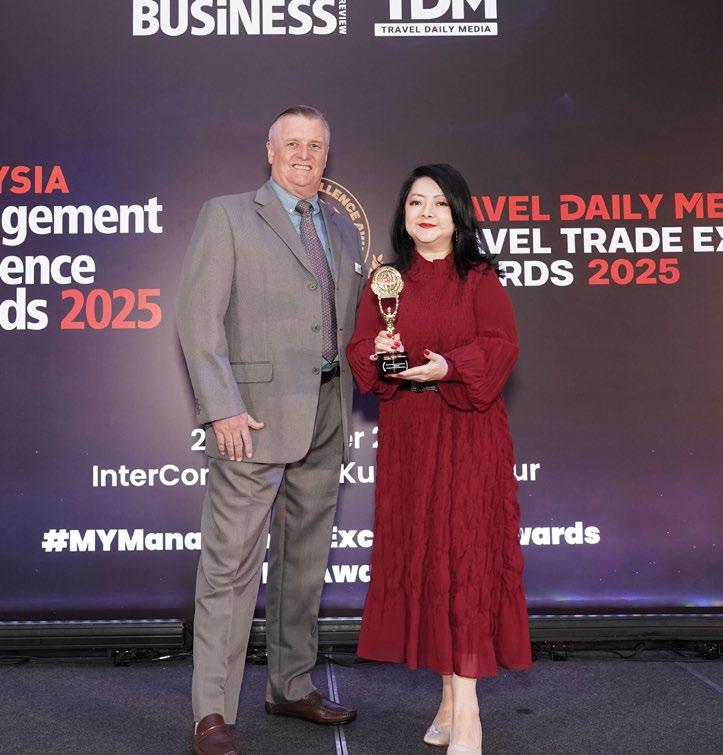
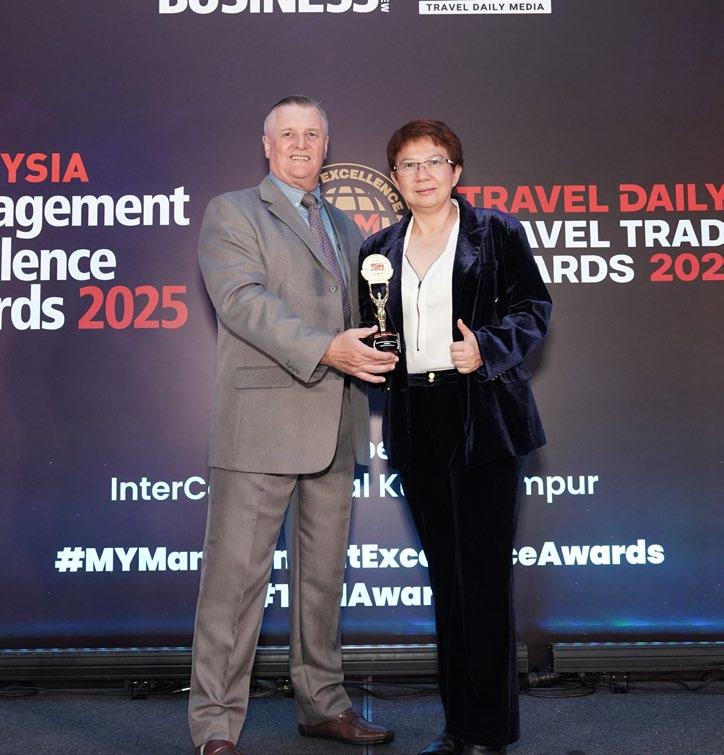
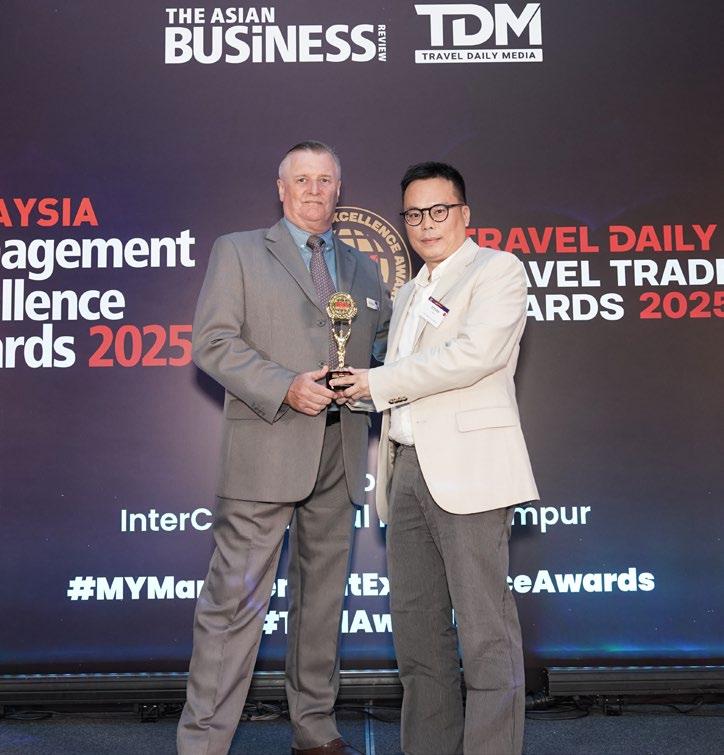
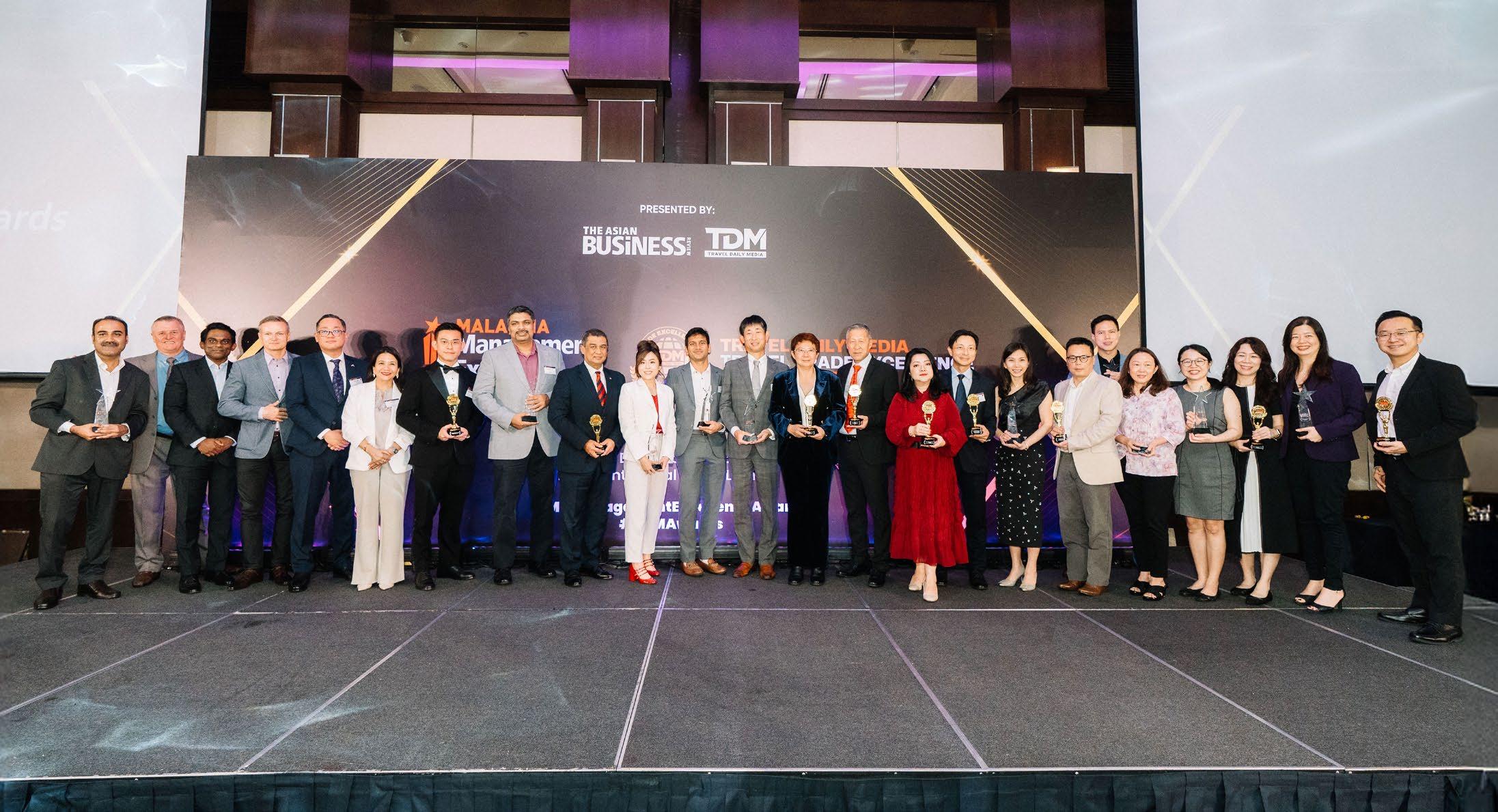
The TDM Travel Trade Excellence Awards - Malaysia 2025 took centre stage, recognising outstanding achievements across hotels, airlines, airports, cruise lines, tour operators, travel agencies, booking platforms, and travel technology.
The prestigious awards programme celebrates those who push boundaries, set new standards, and continually enhance customer experiences through sustainable practices, service excellence, and forward-thinking initiatives.
Hosted by Travel Daily Media, the Awards Dinner took place on 2 December 2025, at the InterContinental Kuala Lumpur, Malaysia, showcasing the outstanding talent and dedication of the industry in an evening of celebration.
The esteemed judges for this year’s awards included John Low, Senior Partner, Managing Partner Southeast Asia, Roland Berger; Pierre Marechal, Vice President, Advisory & Asset Management, Hotels & Hospitality Group, JLL; Florian Kittler, Managing Director, Executive Search-Europe & Asia Pacific, HVS; and Eric Levy, Managing Director, Tourism Solutions International (TSI).
Congratulations to all the winners!
Sabah Tourism Board
• Accessibility Initiative of the Year
Shangri-La Tanjung Aru, Kota Kinabalu
• Resort Hotel of the Year
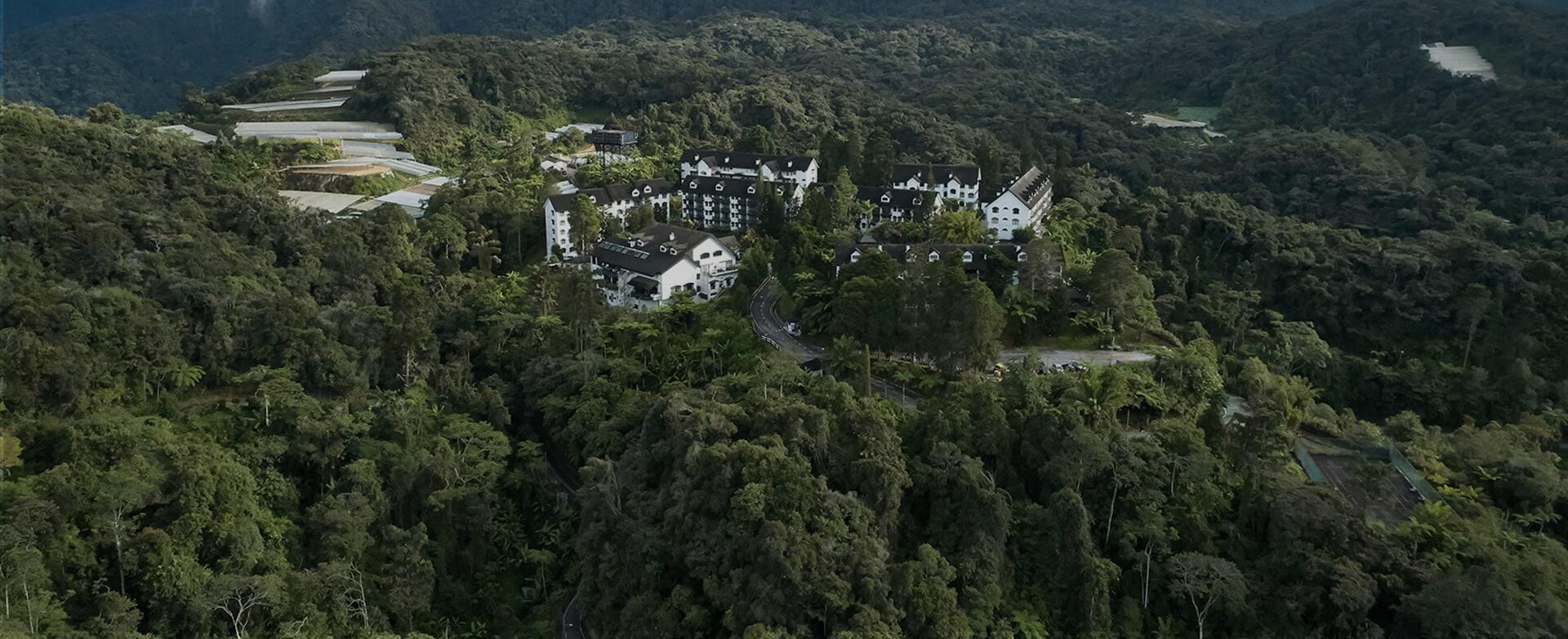
Strawberry Park Resort, Cameron Highlands
• Employee Engagement Initiative of the Year
Sutera Sanctuary Lodges
• Community Engagement Program of the Year
• Nature Destination of the Year
• Tourist Attraction of the Year
The St. Regis Kuala Lumpur
• Meetings & Conferencing Property of the Year
• Sustainable Hotel of the Year
• MICE Hotel of the Year
Tropicana Corporation Berhad
• Serviced Apartment of the Year
Tune Protect Group Berhad
• Travel Insurance Initiative of the Year
W Kuala Lumpur
• Luxury Hotel of the Year
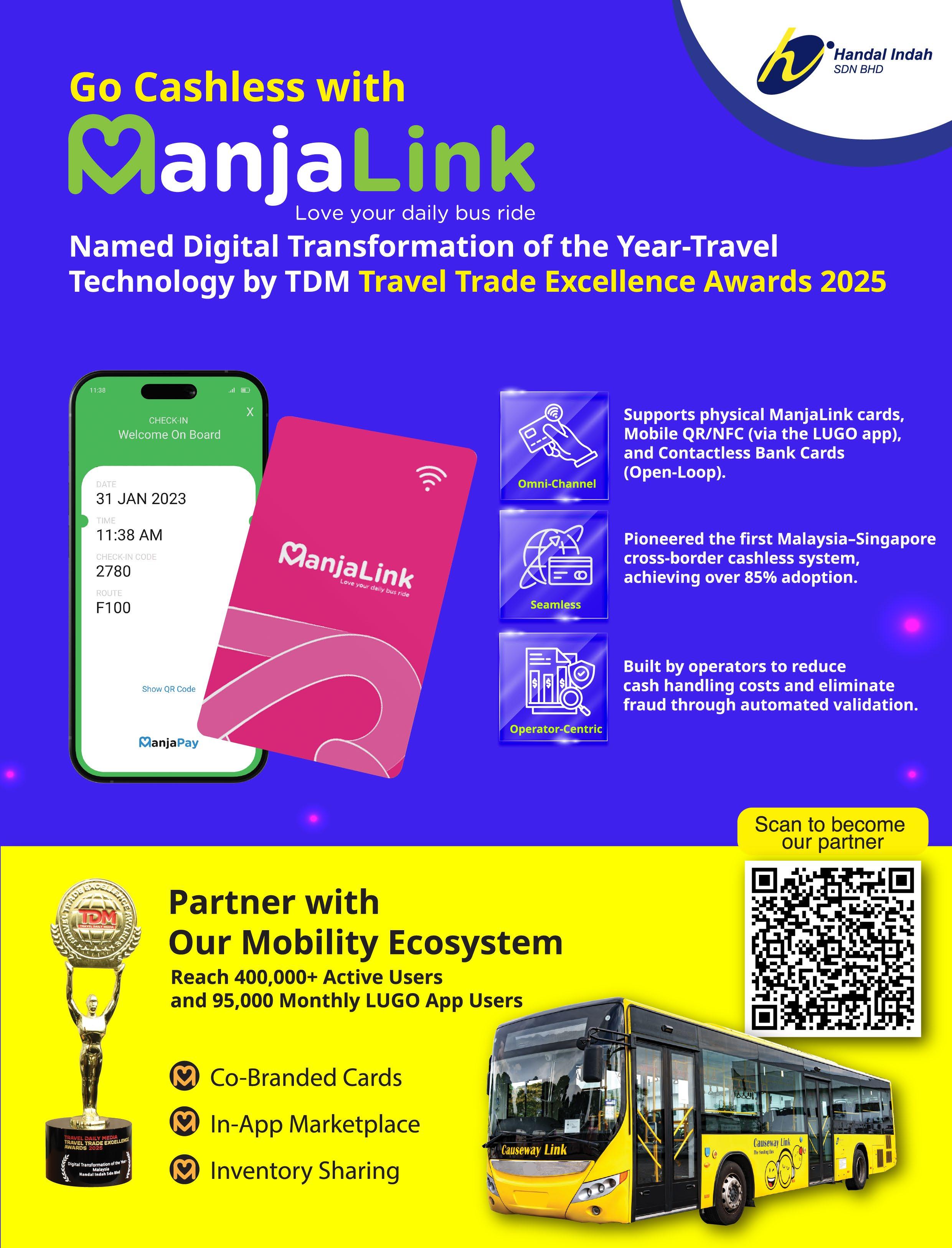
Causeway Link Holidays Sdn Bhd
Handal Indah Sdn Bhd
Monkeys Canopy Resort
Plaza Premium Lounge Malaysia Sdn Bhd
Resorts World Awana
Sabah Tourism Board
Strawberry Park Resort, Cameron Highlands Tropicana Corporation Berhad
Tune Protect Group Berhad
Event: Travel Trade Excellence Awards - Asia
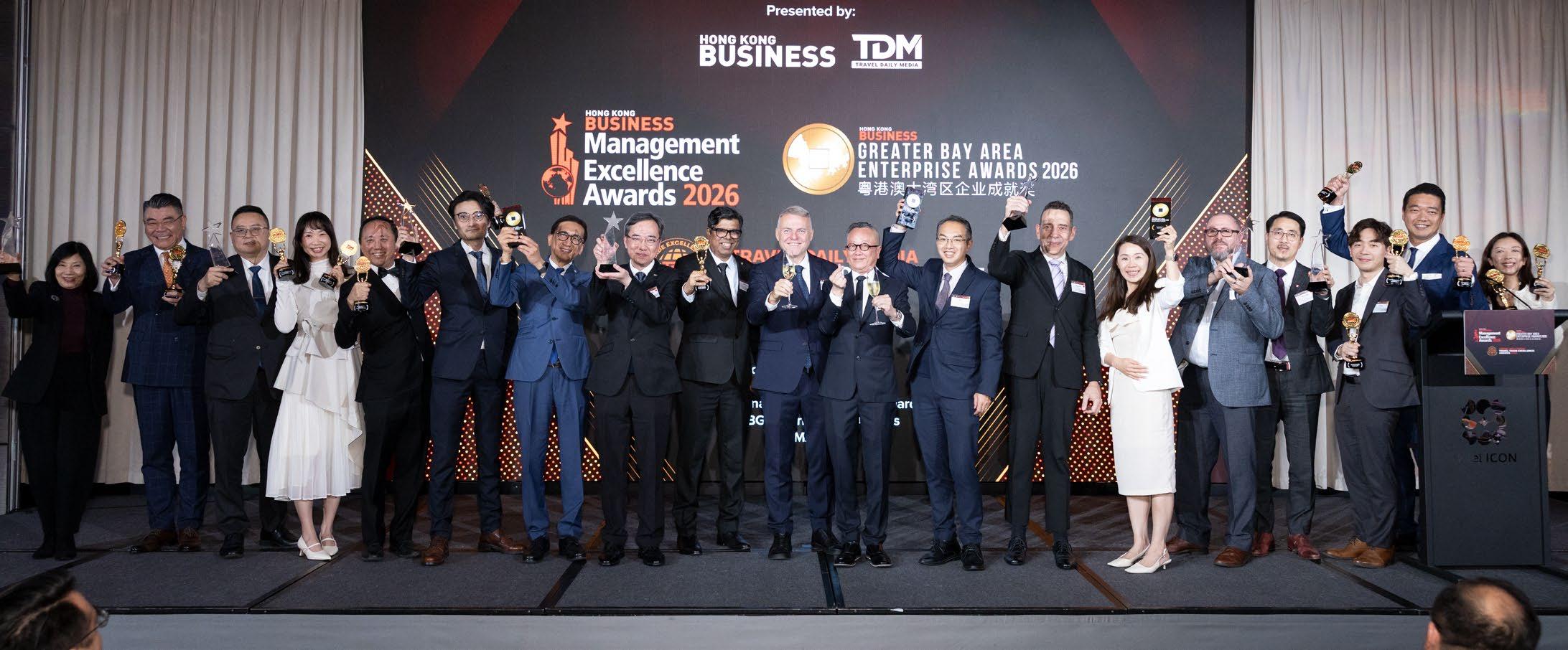
Top initiatives celebrated at TDM Travel Trade Excellence Awards - Asia
As travel across Asia continues to evolve, industry players are accelerating innovation and service delivery to support sustainable, seamless journeys for modern travellers. In recognition of those setting new standards in the sector, the TDM Travel Trade Excellence Awards - Asia once again honoured the most distinguished companies driving excellence across the region.
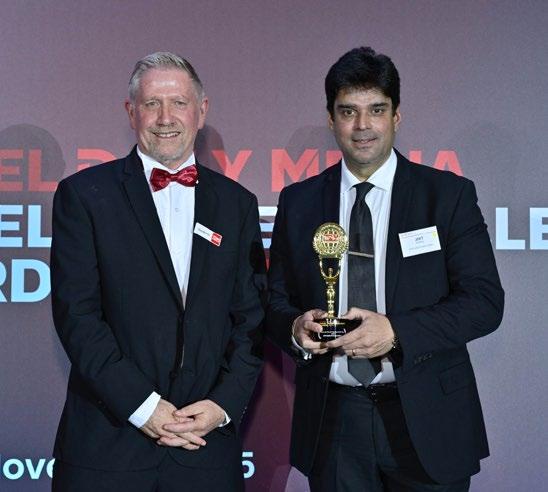
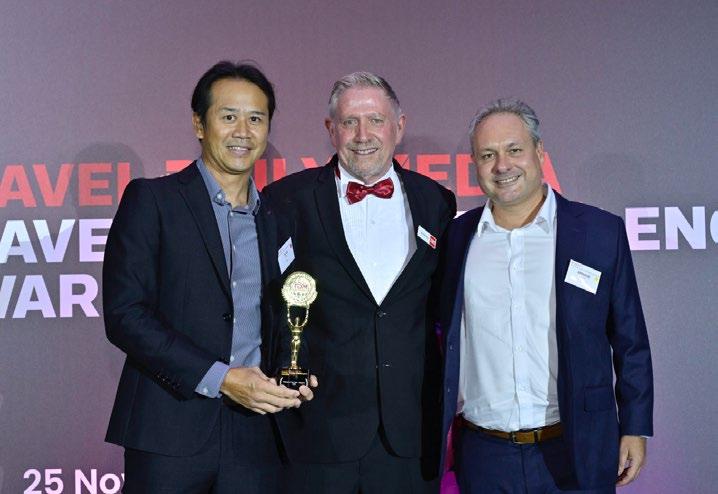
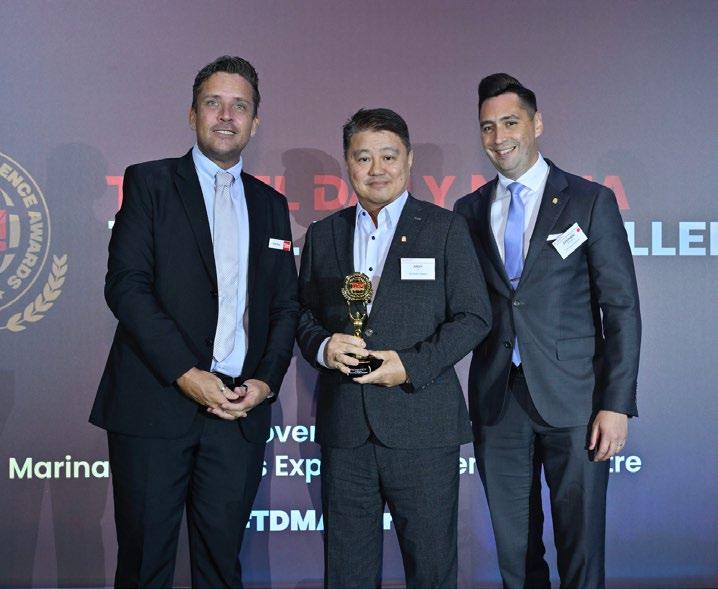
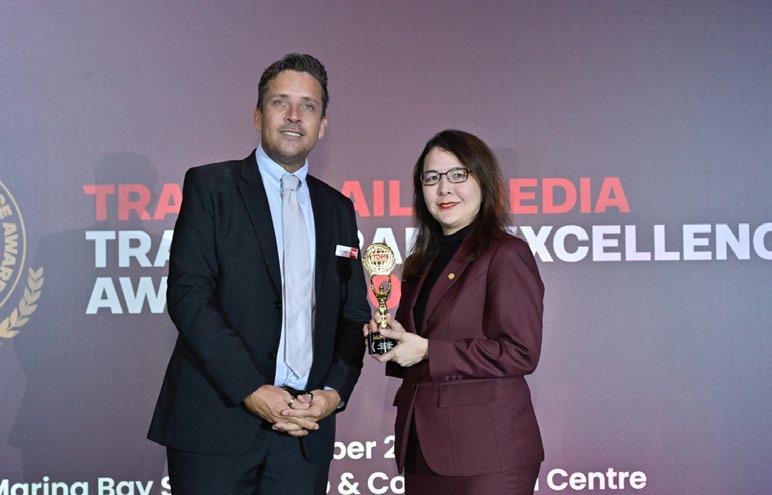
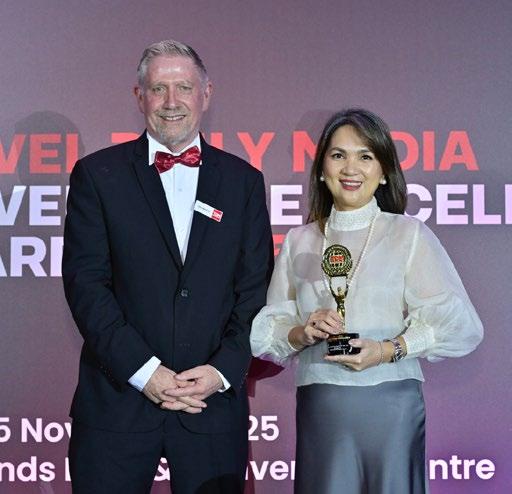
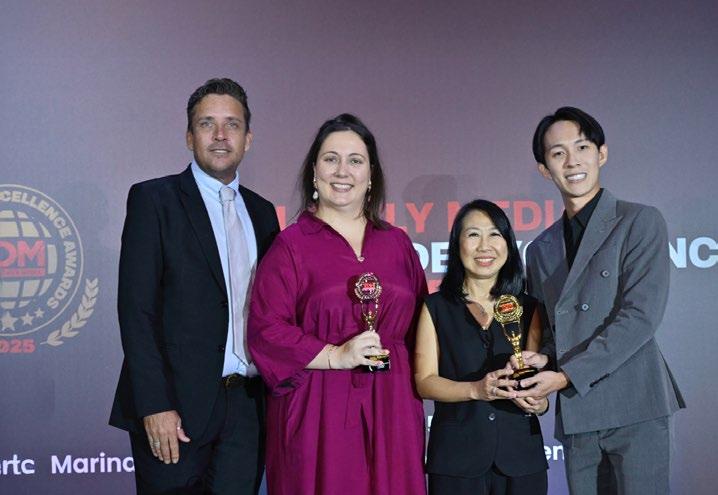
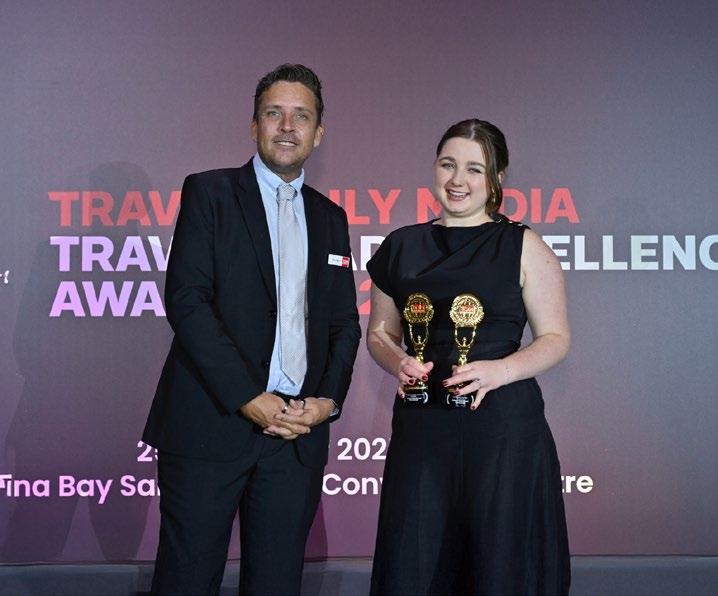
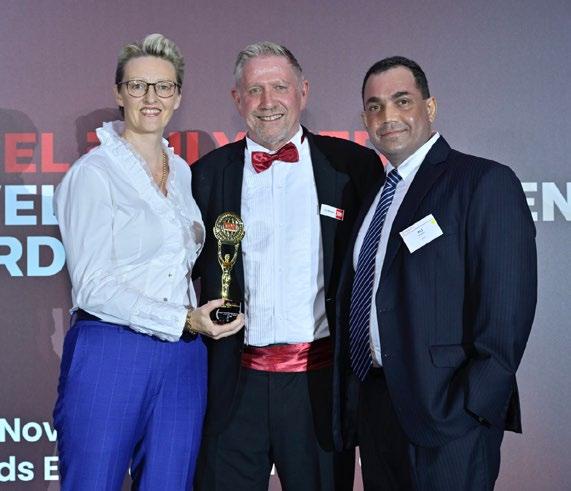
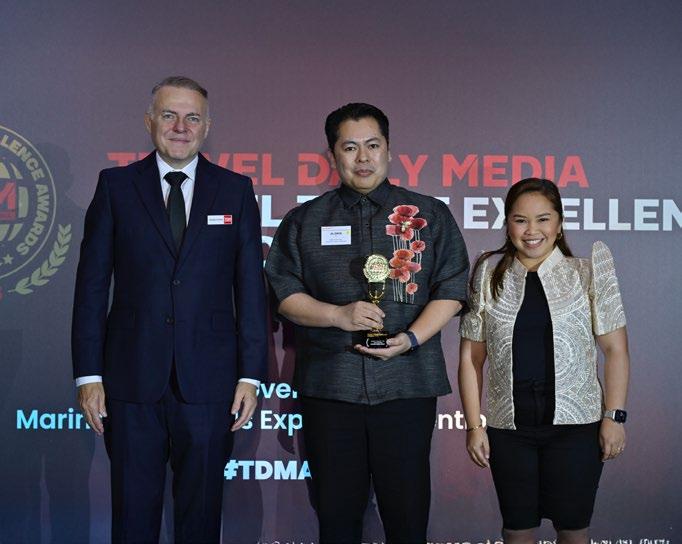
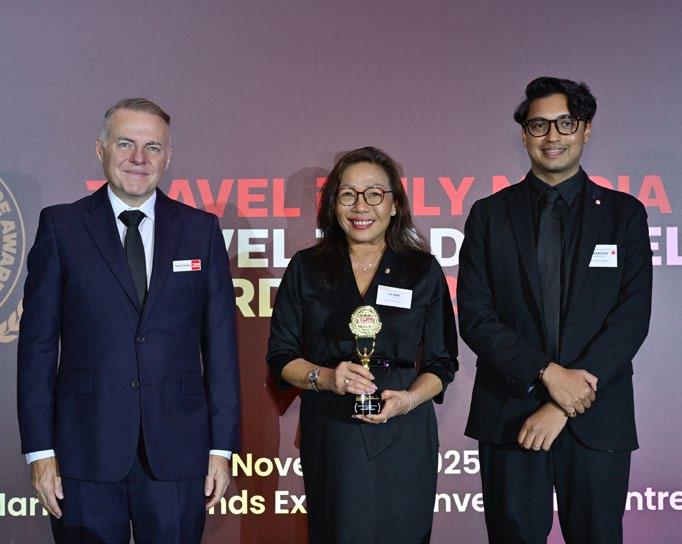
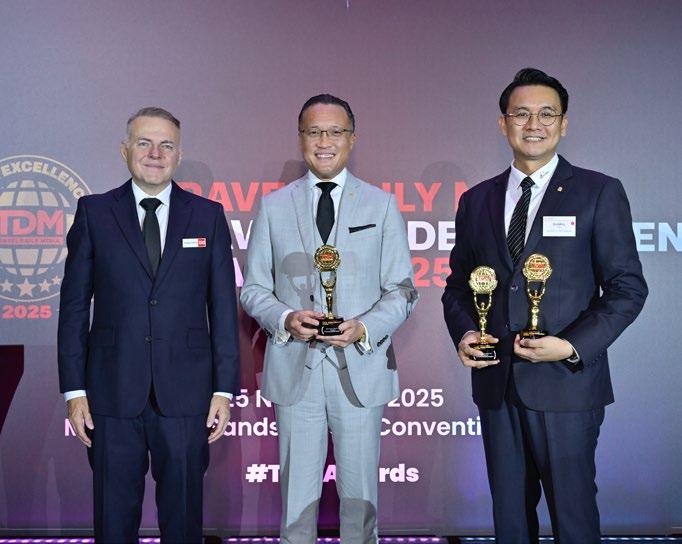
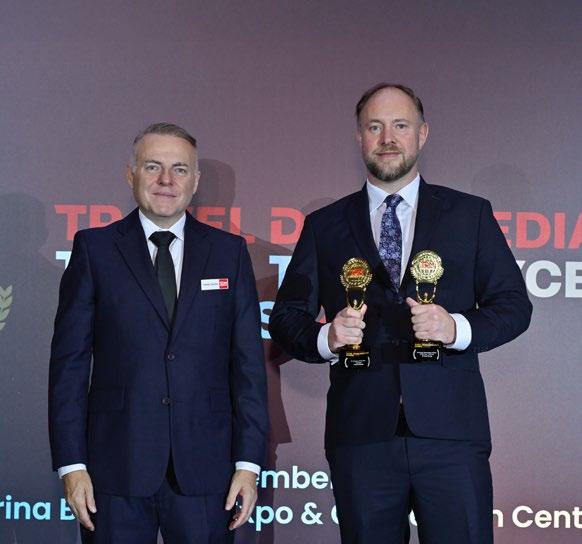
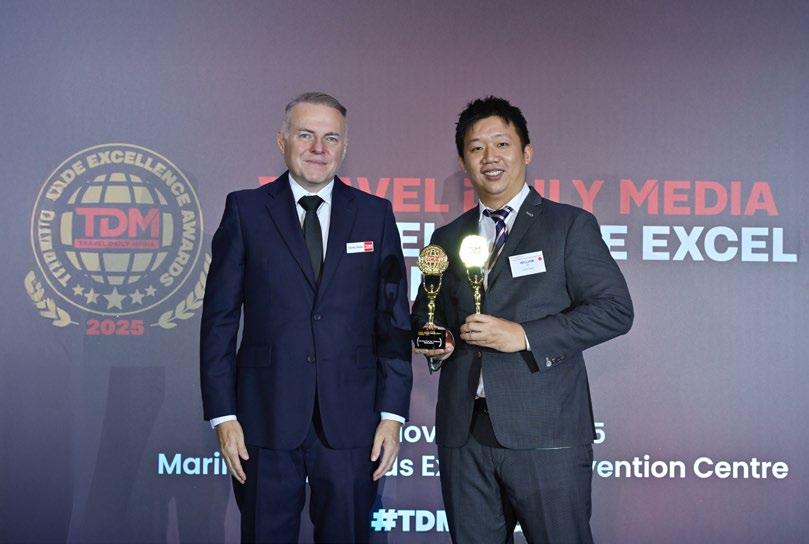
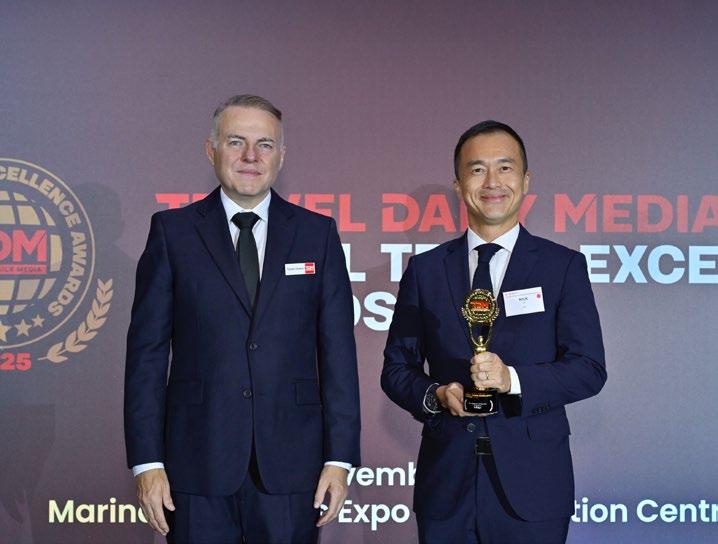
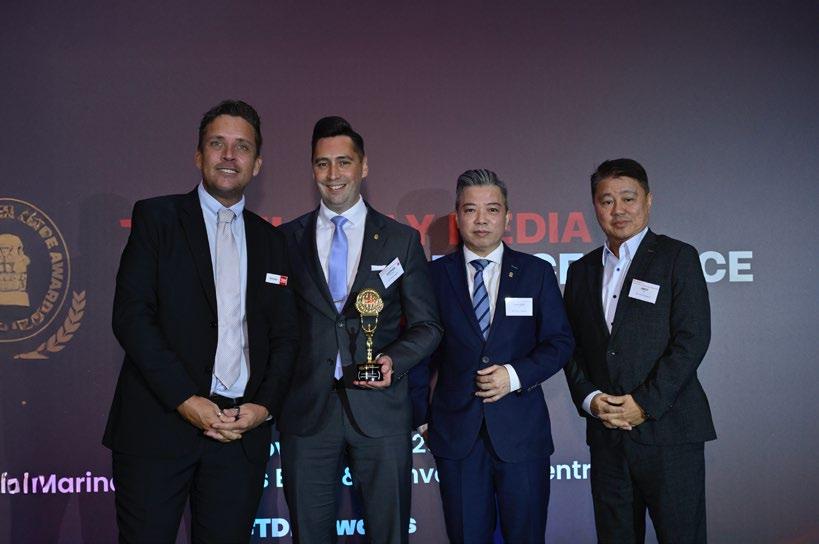
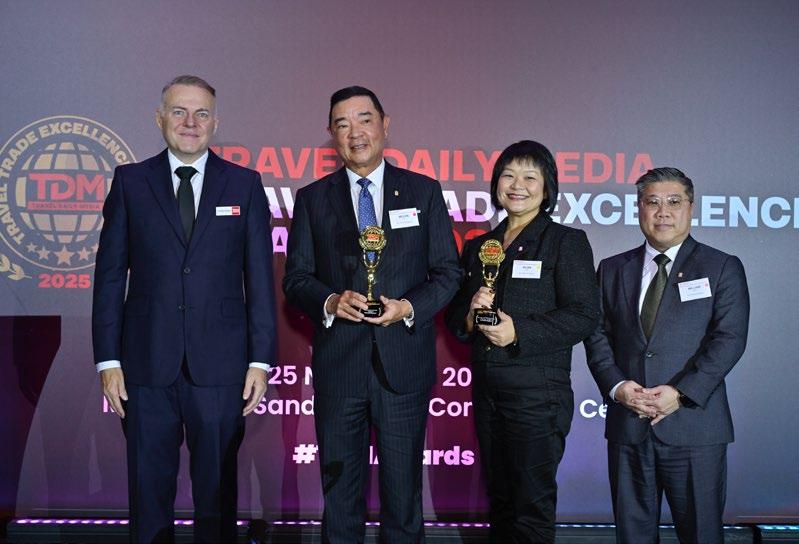
Presented by TravelDailyMedia, the event proudly celebrated the achievements of top travel brands at the prestigious Awards Dinner on 25 November 2025 in Singapore.
The awards ceremony shone a spotlight on Asia’s leading hotels, airlines, airports, cruise lines, tour operators, travel
TDMTRAVELTRADE EXCELLENCEAWARDS 2025 -ASIAWINNERS
2GO Travel (2GO Group, Inc)
• Community Engagement Programme of the Year - Philippines
• Cruise Ship Entertainment of the Year - Philippines
Aabas Pokhara Pvt.Ltd
• Budget Hotel of the Year - Nepal
Acai Travel
• AI Initiative of the Year - India
ACCOR
• Advertising Campaign of the Year - Singapore
• Content Marketing of the Year - Singapore
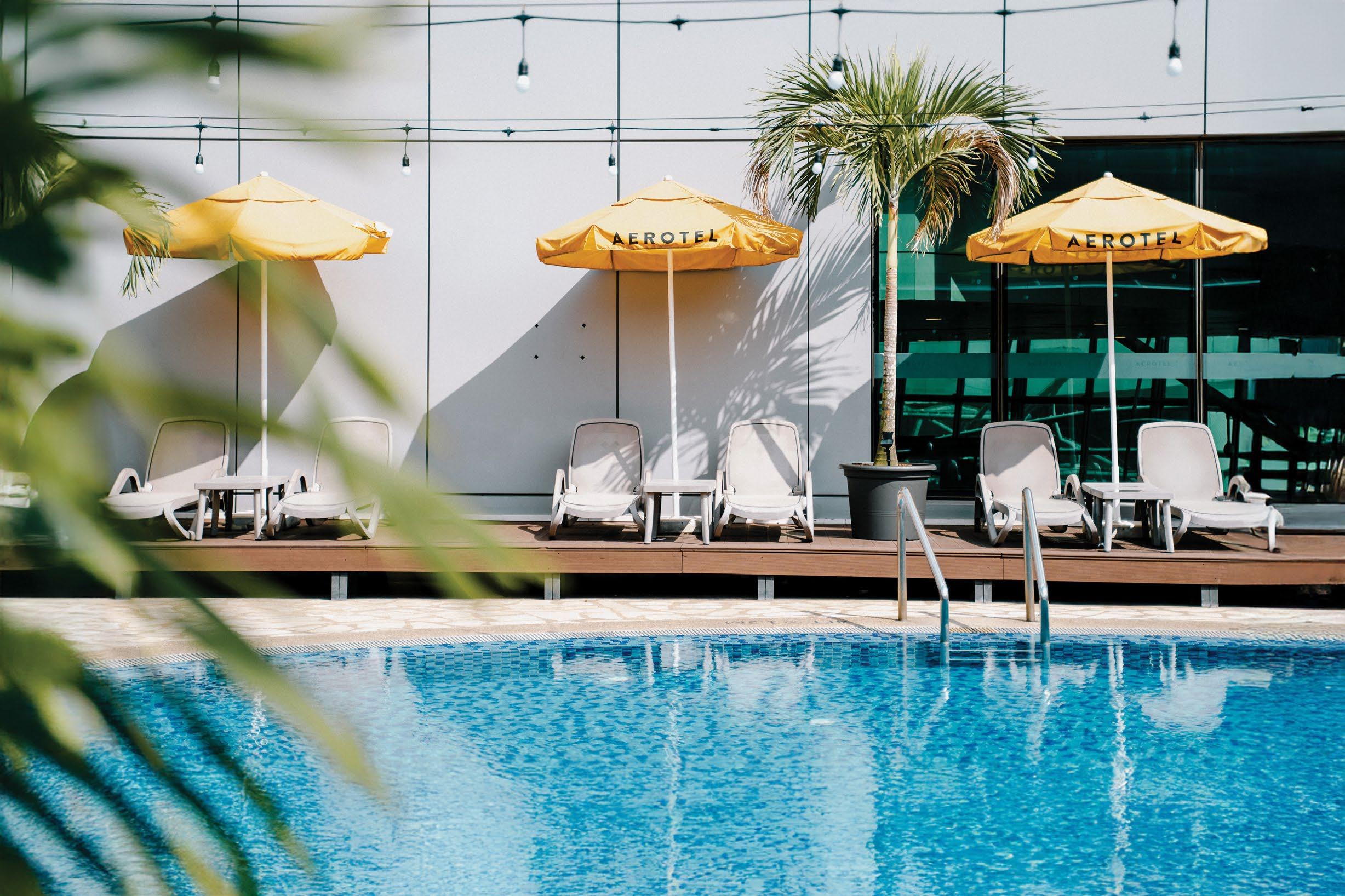
Aerotel Singapore
• Airport Hotel of the Year - Singapore
ALL ACCOR
• Loyalty Programme of the Year - Singapore
Aqua Expeditions
• Expedition Cruise Line of the Year - Cambodia
• Luxury Cruise Line of the Year - Cambodia
ARCTIC TRAILS TRAVEL CORPORATION
• Travel Management Company of the Year - Philippines
Asia Pay
• Technology Innovation of the Year - Singapore
ATPI
• Global Travel Management Company of the Year - Singapore
ATPI India Private Limited
• Corporate Travel Agency of the Year - India
ATPI Travel Philippines, Inc.
• Specialty Travel Agency of the Year - Philippines
Barahi resort PVT.LTD
• Villa Resort of the Year - Nepal
agencies, booking platforms, and travel technology providers, recognising their outstanding contributions to the region’s travel, tourism, and hospitality landscape.
The esteemed panel of industry experts that served as this year’s judges included Eric Levy, Managing Director, Tourism Solutions International; John Low, Senior Partner, Managing Partner Southeast Asia, Roland Berger; Pierre Marechal, Vice President, Advisory & Asset Management, Hotels & Hospitality Group, JLL; and Florian Kittler, Managing Director, HVS Executive Search-Europe & Asia Pacific, HVS.
Congratulations to all the winners!
BCD
• Employer of the Year - Singapore
Bedsonline
• Travel Agent Tech Provider of the Year - Singapore
Capri by Fraser, China Square, Singapore
• City Centre Hotel of the Year - Singapore
Casobe
• Lifestyle Hotel of the Year - Philippines
Century Cruises
• Cruise Itinerary of the Year - China
• River Cruise Line of the Year - China
Chroma Hospitality Inc.
• Hotel & Resort Management of the Year - Philippines
Cocotel International, Inc.
• Emerging Technology Initiative of the Year - Philippines
Crowne Plaza Vientiane
• MICE Hotel of the Year - Laos
• Sustainable Hotel of the Year - Laos
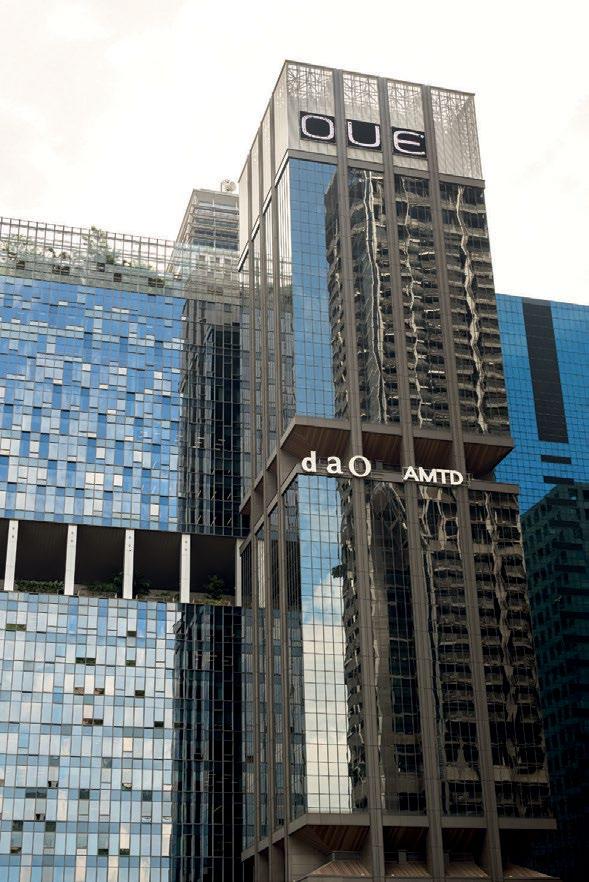
Dao by Dorsett AMTD Singapore
• Extended Stay Hotel of the Year - Singapore
• Serviced Apartment of the Year - Singapore
Edge at Pan Pacific Singapore
• Dining Concept of the Year - Singapore
EMPYREAN HOTEL
• Boutique Hotel of the Year - Bangladesh
Europcar Australia and New Zealand
• Advertising Campaign of the Year - Australia
• Car Rental of the Year - Australia
Finolhu, a Seaside Collection Resort
• Family Resort of the Year - Maldives
• Sustainability Initiative of the Year - Maldives
Fusion Original Saigon Centre
• Boutique Hotel of the Year - Vietnam
Grand Copthorne Waterfront Hotel Singapore
• Hotel & Resort Management of the Year - Singapore
Halal Tour Co ltd
• Tour Operator of the Year - Vietnam
HBX Group
• AI Initiative of the Year - Singapore
Horana Plantations PLC
• Employee Wellness Programme of the Year - Sri Lanka
Hotel Barahi Pvt. Ltd
• Sustainable Hotel of the Year - Nepal
HotelPlanner
• Group Travel Booking Website of the Year - Singapore
HYGEE TRAVEL CONCIERGE
• Specialty Travel Agency of the Year - Singapore
InterContinental Halong Bay Resort
• Luxury Hotel of the Year - Vietnam
• New Hotel of the Year - Vietnam
Island Life - Sri Lanka
• Hospitality Group of the Year - Sri Lanka
Japan Ski Experience
• Specialty Travel Agency of the Year - Japan
John Keells Information Technology (Pvt) Ltd
• Airline Tech Provider of the Year - Sri Lanka
Keyaki at Pan Pacific Singapore
• Hotel Restaurant of the Year - Singapore
Lighthouse
• Hotel Tech Provider of the Year - Singapore
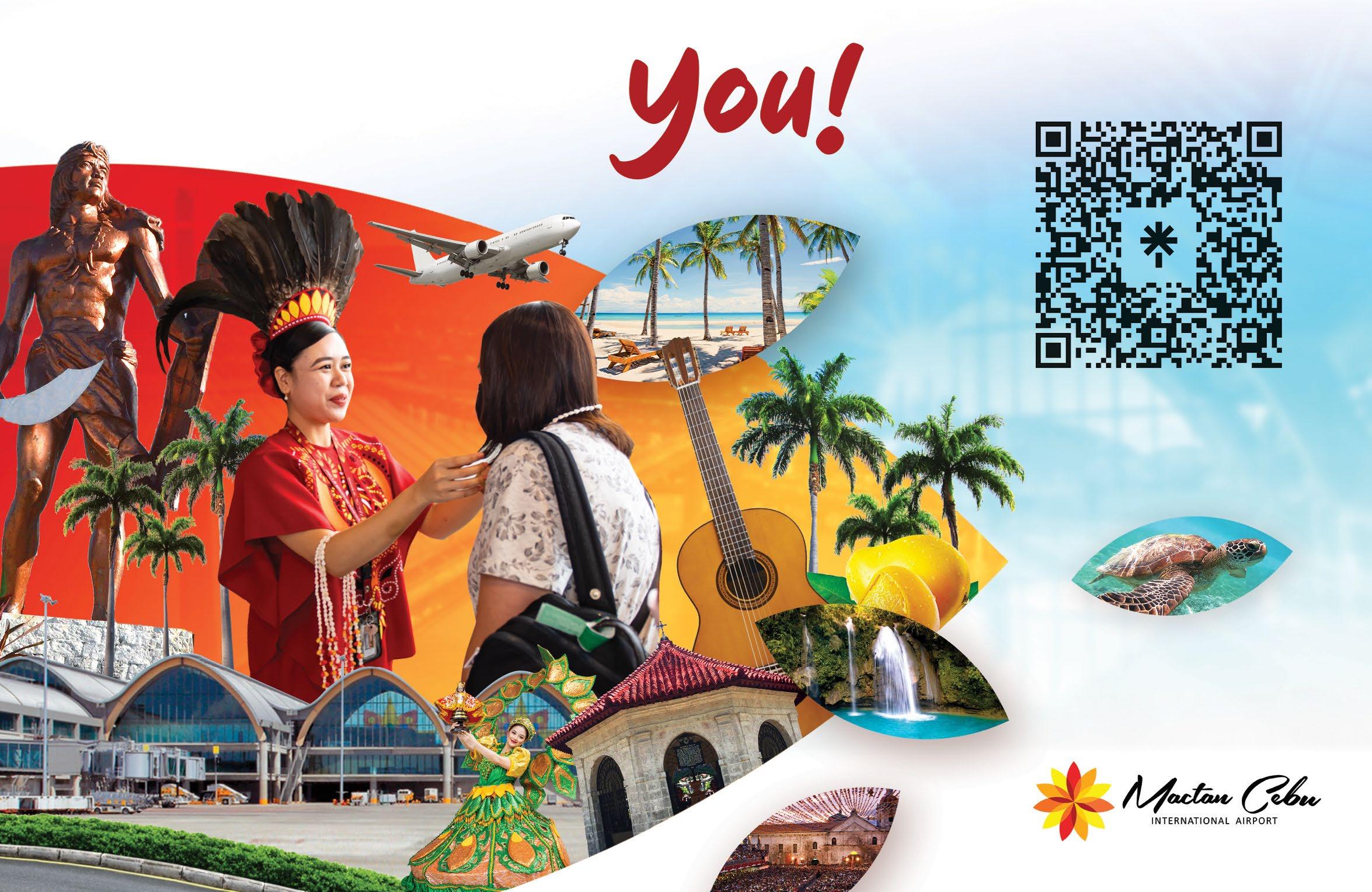
MACTAN-CEBU INTERNATIONAL AIRPORT
• Airport of the Year - Asia
Mercure Almaty City Center
• Themed Hotel of the Year - Kazakhstan
Mountain Lodges of Nepal
• Community Engagement Programme of the Year - Nepal
• New Hotel of the Year - Nepal
Nepal Airlines Corporation
• Full-Service Airline of the Year - Nepal
Nomad Hotel Pvt.Ltd
• Bed and Breakfast (B&B) of the Year - Nepal
Pan Pacific Orchard, Singapore
• MICE Hotel of the Year - Singapore
• Sustainable Hotel of the Year - Singapore
• Themed Hotel of the Year - Singapore
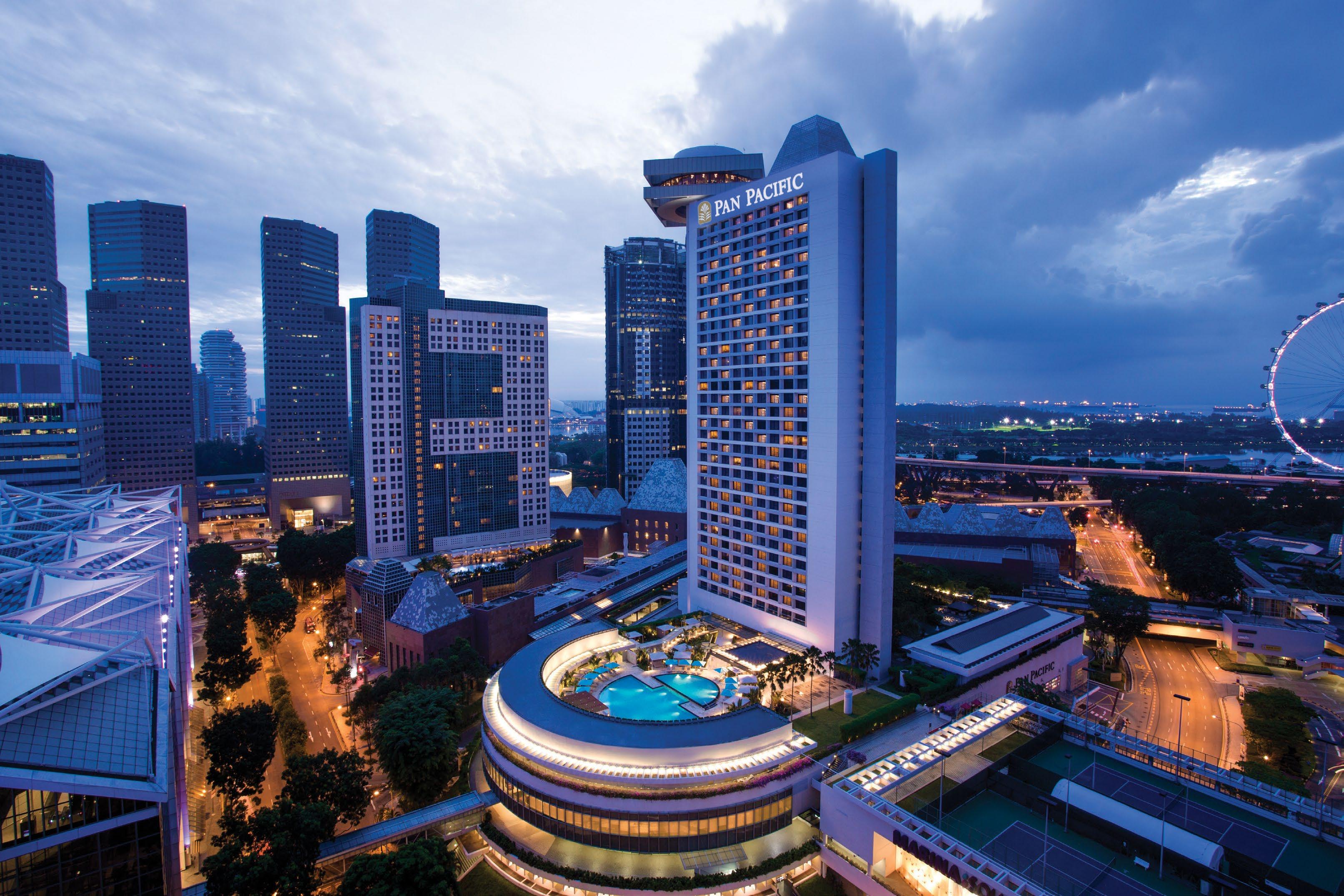
Pan Pacific Singapore
• Business Hotel of the Year - Singapore
• Marketing Initiative of the Year - Singapore
• Meetings & Conferencing Property of the Year - Singapore
Pandaw Cruises
• Cruise Itinerary of the Year - Vietnam
Piano Piano Restaurant
• Hotel Restaurant of the Year - Nepal
Premier Village Phu Quoc Resort Managed by Accor
• Destination Restaurant of the Year - Vietnam
• Sustainable Hotel of the Year - Vietnam
Protect Group
• AI Initiative of the Year - Australia
• Emerging Technology Initiative of the Year - Australia
Quest Hotel & Conference Center Cebu
• Diversity and Inclusion Initiative of the Year - Philippines
• MICE Hotel of the Year - Philippines
Regent Phu Quoc
• Beach Resort of the Year - Vietnam
Rydges Sydney Airport
• Airport Hotel of the Year - Australia
Sailing Club Signature Resort Phu Quoc
• Villa Resort of the Year - Vietnam
Sarangkot Mountain Lodge
• Honeymoon Resort of the Year - Nepal
Science Centre Singapore
• Data Analytics of the Year - Singapore
• Destination Product of the Year - Singapore
Shinta Mani Mustang
• Luxury Hotel of the Year - Nepal
• Sustainability Initiative of the Year - Nepal
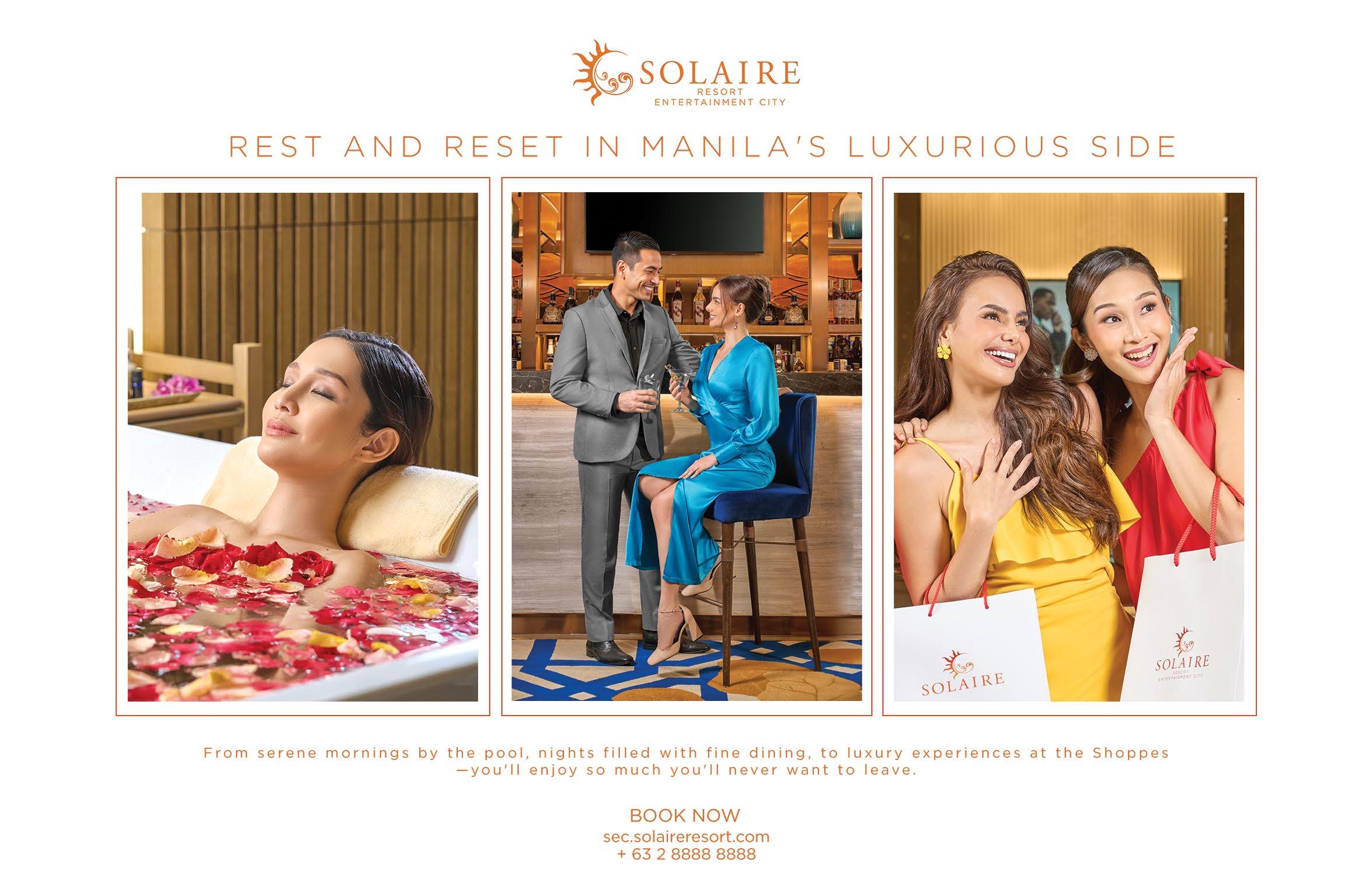
Solaire Resort
• Casino Hotel of the Year - Philippines
• Resort Hotel of the Year - Philippines
Tall Ship Adventures PTE LTD
• Cruise Onboard Dining of the Year - Singapore
Thamserku Trekking
• Destination Management Company (DMC) of the Year - Nepal
• Travel Management Company of the Year - Nepal
The Grand Luang Prabang Affiliated by Melia
• Heritage Hotel of the Year - Laos
The Leela Palace Bengaluru
• Luxury Hotel of the Year - India
The Royal Sands Koh Rong
• Luxury Hotel of the Year - Cambodia
• Sustainable Hotel of the Year - Cambodia
Tourism Promotions Board Philippines
• Community Initiative of the Year - Philippines
• Tourism Board Campaign of the Year - Philippines
Event: Travel Trade Excellence Awards - Asia
Tourism Western Australia
• Tourism Board Campaign of the Year - Australia
Trafalgar
• Tour Operator of the Year - Singapore
Travel Sense Asia
• Inbound Tour Operator of the Year - Vietnam
Trip.Biz
• Business Travel Booking App of the Year - Singapore
• Business Travel Booking Platform of the Year - Singapore
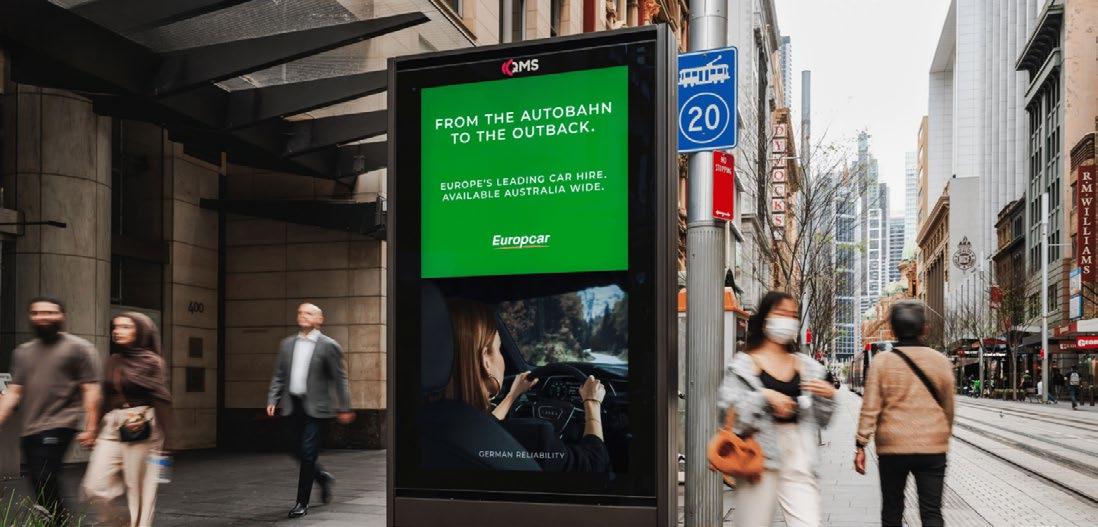
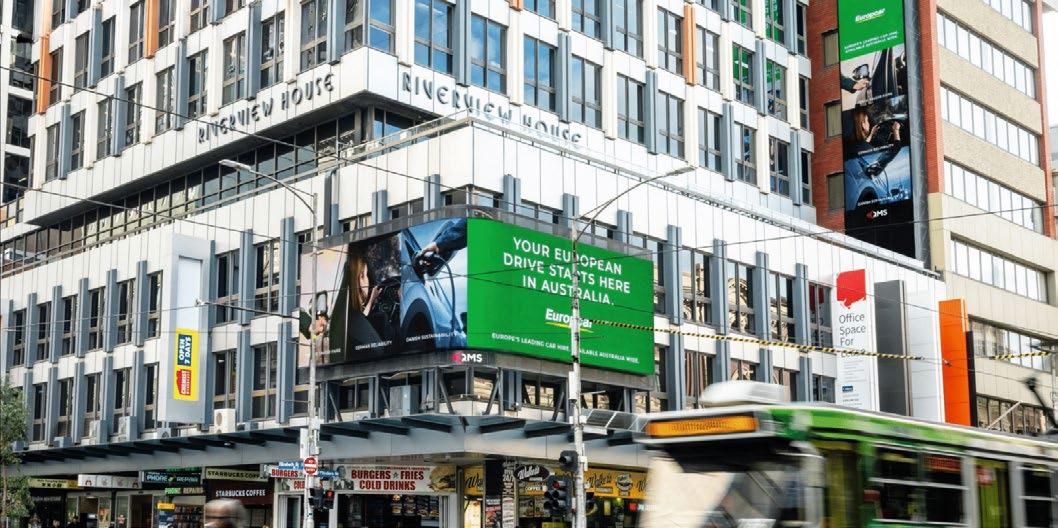
As local travel surges, Europcar Australia and New Zealand is redefining exploration through its awardwinning “Best of Europe” campaign and a seamless, customer-first digital platform.
In a travel landscape shaped by evolving habits and a renewed appreciation for local discovery, Europcar Australia and New Zealand is redefining what it means to explore. With its award-winning “Best of Europe” campaign and a seamless, customer-first digital platform, the brand continues to set the pace for smarter, more flexible mobility.
Bringing the essence of Europe home
As travellers increasingly look closer to home for meaningful experiences, Europcar identified a powerful insight: the magic of Europe isn’t confined to one continent. From gastronomy and architecture to scenic road trips, many of the experiences Australians and New Zealanders love about Europe can be found right in their own backyards.
This idea inspired the launch of the “Best of Europe” brand campaign.
Rather than focusing on traditional destination marketing, the campaign reimagined iconic European moments across local landscapes. Think charming coastal drives, vibrant food scenes, as well as picturesque escapes, all with no passport required. By translating Europe’s most recognisable moments into local settings across Australia and New Zealand, Europcar reinforced its role as the gateway to rediscovering what’s close to home.
A campaign built for connection
To bring “Best of Europe” to life, Europcar rolled out a comprehensive multi-channel strategy spanning out-of-home (OOH), Connected TV, digital, and social media. OOH placements across Australia and New Zealand drove widespread brand awareness, with approximately 300 placements delivering exceptional reach. Premium video environments such as 9Now and Samsung TV connected Europcar with travel-intent audiences in high-quality viewing settings,
whilst display retargeting supported performance and conversions.
Strategic content partnerships added further depth and authenticity. In collaboration with Urban List, Europcar developed the “Parallel Paradise” digital hub, featuring 34 immersive stories and videos designed to inspire exploration. A partnership with Secondz delivered nine engaging Instagram Reels and interviews tailored to digitally native audiences, creating content that was both shareable and saveable.
The magic of Europe isn’t confined to one continent
The results were outstanding across every channel. OOH impressions exceeded 150 per cent of target, generating 3.8 million plays. Content partnerships drove more than one million video views, whilst display activity produced close to 10 million impressions.
More than an advertising campaign, “Best of Europe” tapped into nostalgia and wanderlust. The campaign encouraged travellers to see familiar places through a fresh lens, positioning Europcar not just as a car rental provider, but as the passport to Europeanstyle experiences, right at home.
Seamless booking, built around you Beyond inspiring exploration, Europcar has streamlined the rental journey to make every step effortless. When booking through europcar.com.au, customers benefit from an intuitive online platform that combines digital booking, flexible rental options, and transparent pricing.
Real-time vehicle availability, secure payments, and a streamlined interface make the booking process effortless from start to finish. Customers can lock in discounted rates
through prepaid bookings or choose flexible options such as myEuropcar subscriptions, long-term rentals, and easy extensions, tailoring mobility to suit anything from personal to business needs.
For corporate clients, Europcar.Biz offers a 24/7 business portal with instant booking confirmation, live tracking, and simplified administration, ensuring efficiency at every step of the booking process.
Through one integrated platform, customers can access a wide range of reliable vehicles equipped with advanced safety and technology features. The website also highlights hybrid and electric vehicle options, supported by smart tools that provide range insights, charging access information, and emissions data, empowering customers to make informed choices.
A commitment to transparency and value What sets Europcar apart is its unwavering focus on customer care.
Clear coverage options provide transparency and peace of mind, whilst the Privilege For You loyalty programme rewards members with priority service, year-round discounted rentals, and surprise benefits. Every element of the experience, from inspiration, to booking, to pick-up, is designed with simplicity and flexibility in mind.
By consistently putting customers first, Europcar continues to raise the benchmark for mobility solutions across Australia and New Zealand. Whether it’s rediscovering local landscapes through a European-inspired lens or booking a vehicle in just a few clicks, the journey is seamless.
With inspired storytelling and intuitive technology working hand in hand, Europcar isn’t just helping people get from A to B, it’s empowering them to explore with confidence, convenience, and style.
OOH placements across Australia
OOH placements across Australia
Event: Travel Trade Excellence Awards - Hong Kong
TDM Travel Trade Excellence Awards – Hong Kong lauds standout travel
Hong Kong remains a leading travel destination, where industry players continually innovate to enhance experiences, drive growth, and advance technology. The TDM Travel Trade Excellence Awards 2026 - Hong Kong took centre stage, celebrating these achievements and recognising organisations and initiatives that consistently set the benchmark for excellence across the travel, leisure, and hospitality sectors.
Presented by Travel Daily Media, the Awards Dinner brought together the industry’s finest in a showcase of outstanding performance and innovation held on 11 February 2026 at Hotel ICON in Hong Kong.
The prestigious programme shines a spotlight on the best hotels, airlines, airports, cruise lines, tour operators, travel agencies,
TDMTRAVELTRADE EXCELLENCEAWARDS 2026 - HONG KONGWINNERS
Hong Kong Convention and Exhibition Centre (Management) Limited
• Meetings & Conferencing Property of the Year - Hong Kong
• Diversity and Inclusion Initiative of the Year - Hong Kong
Hong Kong Tramways Limited
• Tourist Attraction of the Year - Hong Kong
• Marketing Initiative of the Year - Hong Kong
Kowloon Shangri-La
• Hotel Restaurant of the Year - Hong Kong
Langham Hospitality Group
• Hotel App of the Year - Hong Kong
• AI Initiative of the Year - Hong Kong
Ngong Ping 360
• Content Marketing of the Year - Hong Kong
• Social Media Campaign of the Year - Hong Kong
booking platforms, and travel technology projects and initiatives, highlighting those that deliver exceptional service, solutions, and sustainable practices that elevate the traveller experience.
The panel of judges this year consisted of John Low, Senior Partner, Managing Partner Southeast Asia, Roland Berger; Pierre Marechal, Vice President, Advisory & Asset Management, Hotels & Hospitality Group, JLL; Florian Kittler, Managing Director, Executive Search-Europe & Asia Pacific, HVS; Eric Levy, Managing Director, Tourism Solutions International (TSI); Esther Zong, Head of Sales (Partnership), Allianz Partners Hong Kong; and Shaman Chellaram, Senior Director | Hotel Advisory, Colliers International.
Congratulations to all winners!
Plaza Premium Group
• Technology Innovation of the Year - Hong Kong
Regal Hotels International Limited
• Active Wellness Hotel of the Year - Hong Kong
• Sustainable Hotel of the Year - Hong Kong
Regent Hong Kong
• Luxury Hotel of the Year - Hong Kong
• Hotel Renovation of the Year - Hong Kong
Sino Jet
• Air Charter of the Year - Hong Kong
Virtuoso
• Global Travel Management Company of the Year - Hong Kong
• Guest Experience of the Year - Hong Kong
Hong Kong Convention and Exhibition Centre (Management) Limited
Hong Kong Tramways Limited
Langham Hospitality Group
Ngong Ping 360
Plaza Premium Group
Regal Hotels International Limited
Regent Hong Kong
Reimagining luxury through AI
Langham Hospitality Group’s new Experience AI Agent brings intuitive, multilingual, always-on intelligence across 31 properties—freeing colleagues to focus on what matters most, our guests.
When The Langham, London opened in 1865, it changed expectations of what a grand hotel could be. Electric lighting, hydraulic lifts, and hot and cold running water were once radical ideas; today, they are reminders that Langham Hospitality Group (LHG) has always been willing to embrace the future to better serve its guests.
Now, as the travel industry gathers for the Travel Daily Media Awards to celebrate those redefining excellence, Langham is again at the forefront – this time with intelligence rather than infrastructure. Its latest breakthrough Experience AI Agent, is reshaping how guests, colleagues, and commercial teams access information and build great memories.
Experience AI: Intelligence with intuition Launching across a portfolio of 31 properties on four continents and four brands, Langham’s AI toolkit addresses a simple reality: the way people seek information has changed. Guests now expect answers on their own terms, in their own language, and on their preferred channels. Colleagues expect tools that empower them to act quickly and confidently. Commercial teams expect insights that arrive in real time, not in hindsight.
“Personal and intuitive guest care has always been central to how we operate,” explained SVP Sean Seah. Experience AI Agent is the group’s answer to this new landscape: specialised agents designed not to replace people, but to free them to focus on what matters most – meaningful, unscripted human connection.
Experience AI Agent is reshaping how guests, colleagues, and commercial teams access information and build great memories
Experience Agent: A new digital concierge For guests, the Experience AI Agent is where the future of service comes to life. This multilingual interface allows travellers to ask questions through familiar text-based channels such as WhatsApp, WeChat, Instagram, and email, in more than 50 languages. From confirming airport transfers to seeking local restaurant tips, guests receive instant, accurate responses whilst retaining the option to speak directly with hotel staff whenever they choose.
What makes the Experience AI Agent so powerful is how naturally it fits into the rhythm of modern travel. A guest might message the hotel from the back of a taxi, on the way to the airport, or between meetings, and still receive the same prompt, considered reply they would expect at the concierge desk. There is no app to download, no portal to navigate – just the channels guests already use every day, now connected to the heart of the hotel.
Over time, Experience AI Agent will evolve from a reactive problem-solver to a proactive concierge: understanding intent, suggesting services, routing enquiries to the right teams and, ultimately, helping guests
design their stays before they even check in. Voice capabilities, richer trip planning, and anticipatory service are all on the horizon, signalling a future where the guest journey is supported seamlessly from inspiration to return flight.
Imagine a stay where a pre-arrival question about running routes leads to a customised map and a suggestion to book a post-run spa treatment, or where a latenight enquiry about dining options offers not only room service favourites but also insider recommendations nearby for the following evening.
The Experience AI Agent enables this kind of intuitive, joined-up service at scale, whilst still leaving space for colleagues to add their own local flair and personality.
Quiet strength behind the scenes
By handling routine questions and logistics, the Experience AI Agent frees on-property teams to focus on what cannot be automated: a warm welcome, an empathetic response to a disrupted journey, and a thoughtful gesture that turns a stay into a story. In this way, Langham’s AI strategy is not about replacing human touch, but about protecting it – giving colleagues more time and space to deliver the kind of crafted, personal experiences that define true luxury.
A legacy of innovation, a future of experience
Experience AI Agent is the latest chapter in a story of innovation that began when The Langham, London was first hailed as Europe’s original Grand Hotel.
Then, it was electric lighting and running water; today, it is intelligent heating and cooling, smart check-in, top-tier property management systems, and now an integrated AI toolkit that amplifies the warmth and craft of true hospitality.
As the TDM Travel Trade Excellence Awards and Travel Daily Media shine a spotlight on projects that set new benchmarks for innovation, sustainability, and guest experience, Langham Hospitality Group’s Experience AI Agent stands as a compelling example of what the future can look like when technology is guided by a human heart. In a world where information is everywhere, Langham’s vision is clear: make it intuitive, make it intelligent, and, above all, make it personal.
The Langham
Sean Seah, SVP Strategy Technology Innovation, Langham Hospitality Group
Regal Hotels International: Pioneering wellness and sustainability in Hong Kong
The company has set a new standard in holistic active wellness and sustainable urban hospitality, reinforcing Hong Kong’s position as a world-class travel destination.
Regal Hotels International is redefining urban hospitality by seamlessly weaving holistic wellness with responsible sustainability. As a double winner at the TDM Travel Trade Excellence Awards 2026 - Hong Kong, the group has been honoured with Hospitality - Active Wellness Hotel of the Year and Hospitality - Sustainable Hotel of the Year, a testament to its visionary approach to meaningful, future-forward travel experiences.
Active wellness reimagined
At Regal Hotels International, wellness is more than an amenity – it is a living philosophy. The group’s approach draws deeply from authentic Chinese traditions whilst embracing contemporary innovation, creating immersive experiences that appeal to today’s travellers seeking balance, restoration, and cultural connection.
In collaboration with the School of Chinese Medicine at one of Hong Kong’s leading universities, the group has crafted seasonal wellness menus guided by the principle of “Medicine and Food Homology”. These menus blend natural herbs and functional ingredients into refined Cantonese cuisine crafted to support the body’s shifting needs throughout the year. Complementing this is a programme of mindful Tai Chi classes led by renowned Martial Arts Master Li Fai, offering guests opportunities to realign physically and reconnect mentally.
The group further extends this holistic ethos through its Regal Living wellness product line. Guest rooms feature premium amenities infused with Chinese herbs such as goji berries and fallopia multiflora, whilst thoughtfully crafted herbal teas and cookies
– made using innovative mushroom extract to replace butter – provide guilt-free indulgence that nourishes from within.
For guests seeking deeper rejuvenation, the Mindfulness & Holistic Wellness Retreat Packages offer a sanctuary for stillness and renewal. Dedicated Mindfulness Rooms incorporate singing bowl therapy, whilst curated hikes to scenic spots like Sunset Peak encourage guests to reconnect with nature and restore their inner flow.
These initiatives have been matched with enthusiasm – retreat offerings achieving strong occupancy, retail wellness products showing rapid uptake, and free online mindfulness sessions reaching thousands of viewers. Together, they position Regal Hotels International as a leading advocate of next-generation active wellness hospitality.
Sustainable urban hospitality
Equally integral to the group’s vision is a commitment to sustainability that moves beyond compliance and becomes an active part of each guest’s stay. Through hands-on conservation initiatives, environmentally conscious operations, and low-carbon event solutions, Regal Hotels International is cultivating greener urban ecosystems.
By partnering with leading ecological experts, Regal Hotels became the first and only hotel group in Hong Kong to achieve a dedicated butterfly biodiversity accreditation.
The group’s Green Meeting initiatives,
developed with the Hong Kong Quality Assurance Agency (HKQAA), empower corporate clients to host sustainable events with confidence. From proprietary carbon accounting reports and low-carbon menu options to event-specific expertise, Green Meetings have seen growing adoption amongst businesses seeking to reduce their environmental footprint without compromising impact.
Operationally, the group’s commitment is anchored by ongoing EarthCheck Certification compliance, ensuring continual improvements in energy efficiency, water conservation, and waste reduction. Partnerships with Food Angel help redirect surplus food to local communities, whilst the Green Reward programme encourages guests to opt out of daily housekeeping in exchange for loyalty rewards.
Shaping conscious travel
Together, these award-winning initiatives underscore Regal Hotels International’s leadership in elevating Hong Kong’s hospitality landscape. By blending cultural heritage, mindful living, and sustainability, the group is shaping a new model of conscious travel – one that nurtures individuals, enriches communities, and protects the planet.
Regal Hotels International invites travellers to rediscover urban hospitality through experiences that restore, inspire, and make a lasting positive impact.
At Regal Hotels International, wellness is more than an amenity – it is a living philosophy
Regal Hotels’ Green Meeting setup with sustainable greenery, highlighting its commitment to carbon-neutral events
Guests experiencing mindful Tai Chi amidst serene hotel surroundings, embodying Regal Hotels’ holistic wellness philosophy
Event: Travel Trade Excellence Awards - Indonesia Travel innovators lauded at TDM Travel Trade Excellence Awards 2025
Indonesia’s travel and tourism sector continues to be a major driver of economic growth, offering a rich combination of cultural heritage, stunning natural landscapes, and worldclass hospitality. Industry leaders are transforming the travel experience through innovations in service, technology, and sustainable practices. This year’s nominations highlighted key trends in the sector, including experiential travel, responsible and guest-focused hospitality, advanced MICE infrastructure, and adventure-driven tourism.
The TDM Travel Trade Excellence Awards 2025 - Indonesia, hosted by Travel Daily Media, held on 9 October 2025 at ShangriLa Jakarta, celebrated the nation’s most remarkable projects
BALI GOLDENGATE INTERNATIONAL | Hotel & Asset Management
• Positive Hospitality of the Year - Indonesia
and initiatives, recognising those that are raising the bar in travel, leisure, and hospitality.
The distinguished panel of judges that evaluated this year’s nominees consisted of: Lenita Tobing, Managing Director & Partner, SEA lead for the Transport, Travel, Tourism, Cities and Infrastructure (TCI), Boston Consulting Group (BCG); Pierre Marechal, Vice President, Advisory & Asset Management, Hotels & Hospitality Group, JLL; Dick Bernardi, Head of Projects, Project Management, Indonesia, CBRE; Florian Kittler, Managing Director-Europe & Asia Pacific, Frankfurt, HVS; and Matt Gebbie, Director, Jakarta, Indonesia, Horwath HTL.
Congratulations to the award winners!
Indonesia Convention Exhibition
• Facilities Upgrade of the Year - Indonesia
• Meetings & Conferencing Property of the Year - Indonesia
InterContinental Bali Resort
• MICE Hotel of the Year - Indonesia
• Resort Hotel of the Year - Indonesia
Mason Adventures
• Touring & Adventure Operator of the Year - Indonesia
TAI, media, and influencers hit plateau
DR KARINE LOHITNAVY-FRICK Founder MidasPR
he coming year will not be defined by dramatic disruption or groundbreaking innovation. Instead, we will enter an era of stagnation with a gradual settling of the industry into a plateau across almost every major dimension.
The most realistic prediction for 2026 is that professionals should better prepare for a landscape in which the absence of motion becomes the number one dominant trend.
The first and perhaps most visible form of stagnation is technological, seeing how artificial intelligence (AI) has been the centrepiece of industry conversations for a number of years.
But the hype cycle has peaked, and AI is getting routinely integrated into daily workflows.
Its capabilities (as well as its limitations) are widely understood: AI excels at automating low-level tasks, accelerating drafting, summarising information and generating endless volumes of content.
Yet everyone working with AI by now realises that it has also contributed to a flood of derivative and superficial outputs also known as “PR slop.”
I would not expect AI to deliver exponential breakthroughs in 2026; the technology is entering a phase of small incremental refinement. We will see fewer hallucinations and mistakes, but no revolutionary transformation.
Ethical debates and calls for human oversight will continue, but these function more as stabilisers than catalysts.
Arrested development
The media landscape reflects a similar pattern of arrested development: after years of contraction, traditional newsrooms have followed the footsteps of printed media and radio.
They have shrunk to what is likely their minimum sustainable size and cannot realistically cut more without risking structural collapse. At the same time, social platforms, which once were the engines of cultural evolution, have reached saturation. User growth has slowed, formats have homogenised across platforms, and behavioural patterns have stabilised.
No new disruptor has emerged capable of reshaping how audiences engage with information, as the last truly transformative shift (TikTok and short video format) occurred years ago, and since then the ecosystem has settled into a kind of monotony. Practitioners will continue to rely on familiar playbooks not because of a lack of imagination, but because the environment itself is no longer offering new strategic ground.
Quo vadis, influencers?
Another space where stagnation is becoming obvious is the influencer economy.
Although the sector still grows in scale, it is not evolving in substance: influencers continue producing the same formats, using the same monetisation structures, and operating within the
same behavioural patterns.
“Authenticity,” once the poster child of the creator economy, has become a formula to satisfy the algorithm.
Even the most successful influencers operate within an increasingly predictable rhythm of brand partnerships, affiliate promotions and curated personal narratives.
The ecosystem still functions effectively, but I do not see much innovation there either. This connects directly to a broader stagnation shaping the communications field. For all the tools and platforms available, the creative outputs of brands and agencies feel repurposed.
I see a lot of familiar story arcs, aesthetics, and narratives: content across industries increasingly echoes the same templates with empowerment journeys, authenticity confessions, and lots and lots of nostalgia.
Even campaigns positioned as bold or boundary-breaking tend to recycle earlier concepts.
This is not the problem of public relations and corporate communication only: our culture is stagnating. It has grown repetitive and risk-averse, shaped by rapid backlash cycles, politicised discourse, and intense public scrutiny.
As a result, creative teams operate within narrower boundaries, and conceptual experimentation has been replaced by caution. I do not remember when was the last time I saw a really bold campaign.
Where has the purpose gone?
The stagnation of brand purpose further reinforces this creative stagnation. The purpose movement, once an important pillar, has lost its energy. CSR, ESG, and DEI narratives now feel tired and outdated, predictable and often insincere to audiences who have become more sceptical.
Brands that genuinely aspire to lead with purpose find themselves trapped in an environment where overuse has diluted the impact of meaningful commitments.
Of course, brands still need to have a purpose, but they also need a new storyline that has yet to emerge. Audience behaviour has also plateaued: consumers are fatigued, they are overtargeted, overstimulated and overwhelmed by constant content. They still scroll, but the process is not exciting any more, seeing how words like “doom-scrolling” and “brain-rot” have firmly entered our vocabulary. There is no excitement about being on social media, it is more of a shameful guilty pleasure, and I do not see any emerging behaviour pattern that will revitalise content engagement.
Economic conditions further entrench stagnation: as the global economy continues to operate in a state of sluggishness, there is literal stagnation with low growth and lingering inflation.
As a result, corporate decision-makers remain cautious, and funds are directed towards efficiency.