HONG KONG Room 1006, 10th Floor, 299 QRC, 287-299 Queen’s Road Central, Sheung Wan, Hong Kong +852 3972 7166
MIDDLE EAST
FDRK4467, Compass Building, Al Shohada Road, AL Hamra Industrial Zone-FZ, Ras Al Khaimah, United Arab Emirates
www.charltonmedia.com
PRINTED BY Times Printers Limited 18 Tuas Avenue 5, Singapore 639342 www.timesprinters.com
A member of Times Publishing Limited +65 6383 5290
Can we help?
Editorial Enquiries: If you have a story idea or press release, please email our news editor at editor@asiantelecom.com. To send a personal message to the editor, include the word “Tim” in the subject line.
Media Partnerships: Please email editor@asiantelecom.com with “partnership” in the subject line.
Asian Telecom is published by Charlton Media Group. All editorials are copyrighted and may not be reproduced without consent. Contributions are invited but copies of all work should be kept as Asian Telecom can accept no responsibility for loss. We will, however, take the gains.
*If you’re reading the small print you may be missing the big picture
FROM THE EDITOR
Nearly 80% of B2B customers now expect telecom operators to move beyond connectivity into areas such as cloud and cybersecurity, raising expectations on what telcos must deliver to stay relevant. On page 6, we examine how this shift is shaping enterprise demand.
That pressure is playing out unevenly across markets. More than 600 million people across India, Vietnam, and the Philippines remain offline, with device affordability continuing to hold back adoption despite broader network availability.
Operators are responding in different ways. MyRepublic Indonesia’s CTO Hendra Gunawan discusses the company’s push into 5G fixed wireless access, highlighting how broadband is being extended to areas where fibre rollout remains costly or slow, and where speed of deployment is becoming a key differentiator. Read the full story on page 12.
At the inaugural Asian Telecom Summit, Globe Telecom's President and CEO Carl Cruz outlined its move to integrate low-earth-orbit satellite connectivity into its network. On page 14, the company details how it is building redundancy across mobile, fixed wireless, and satellite layers in a disaster-prone market.
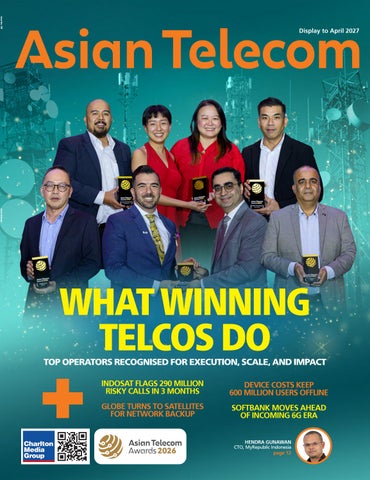
In this issue, we also introduce the winners of the Asian Telecom Awards 2026 on pages 20 to 23, recognising operators and partners delivering measurable results across the region.
Tim Charlton
Asian Telecom is a proud media partner and host of the following events and expos:
News from asiantelecom.com
Daily news from Asian Telecom
MOST READ
Singapore-US
Keppel has received approval for its Bifrost Cable System, a subsea cable system it is jointly developing with Edge Cable Holdings (Meta) and PT Telekomunikasi Indonesia International. Keppel said the subsea cable landing licence was granted by the United States Federal Communications Commission.
Pakistan has officially entered the age of 5G, authorising cellular mobile operators Jazz, Ufone, and Zong to begin offering next-generation mobile services across the country. During the three-round allocation stage of the NGMS/5G spectrum auction, 190 MHz went to Jazz; 180 MHz to Ufone; and 110 MHz to Zong.
Indosat converts clients’ waste into mobile credits
Indosat Ooredoo Hutchison has collected 23,000 plastic bottles from customers under a reward programme that converts their waste into mobile load credits. The company’s waste-forcredit initiative, which started in 2022, has helped collect 437 kilos of plastic waste, reducing carbon emissions by 1.5 metric tons.
Philippines' Globe Telecom looks beyond telco to be No. 1
Globe is expanding its portfolio beyond mobile and finance amidst diminishing returns from its telecom business, as it tries to become Philippines’ biggest telco by revenue. “The long-term goal is to be the largest, most profitable telco operator in the country,” CEO Carl Raymond Cruz said.
OTT voice apps and free calls drive revenue decrease
Mobile users in Japan are turning to over-the-top (OTT) voice apps like LINE and Viber, bypassing traditional phone calls in favour of internet-based options. This shift is cutting mobile voice service revenues, which are projected to drop 7% yearly through 2028. This is due to OTT apps offering more engaging features.
Singapore caps postpaid SIMs at 10 to crush ‘mule’ scams
The Infocomm Media Development Authority, in consultation with the police, will limit individuals to 10 postpaid SIM cards across all telcos/ The new limit will apply only to new subscriptions. Existing users who already hold more than 10 postpaid SIM cards may keep them, but will not be allowed to add more.
First
subsea cable system gets green light
Pakistan enters 5G era
SUBSEA CABLES
MOBILE
CEO INTERVIEW
CEO INTERVIEW
MOBILE
SIMs
WHAT KEEPS 600M PEOPLE OFFLINE IN ASIA?
More than 600 million people living in India, Vietnam, and the Philippines “cannot afford to join the digital economy” and are still offline, according to the inaugural B-Gap Barometer report released by cloud and mobile technology firm CloudMosa.
Explaining the term “B-Gap” in its study, CloudMosa pointed to the necessary elements in setting digital inclusion targets. It said: “Achieving digital inclusion requires A) connectivity plus B) affordable devices capable of accessing the modern internet and app ecosystem.
“In many markets, connectivity has advanced, with 2G and 3G networks being phased out. But without affordable, capable devices, millions are locked out of progress. This is the heart of the B-Gap: the missing link between existing infrastructure and the people who can’t afford to use it.”
Major issues
The report, which cited affordability as “the most persistent obstacle,” published the following findings based on responses from senior telecom executives in the three countries: In India, 41% of the population remain offline; in the Philippines, 26%; and in Vietnam, 21%.
More than half (58%) of telco leaders in the Philippines see consumer affordability on devices as a major issue in transitioning users from 2G; 54% in India; and 51% in Vietnam.
When it comes to the affordability of data plans, 66% of those polled in the Philippines consider the consumer cost a top concern, followed by Vietnam’s 57% and India’s 51%.
CloudMosa also found that aside from the availability and affordability of devices, key barriers to growth similarly include cybersecurity threats and data privacy concerns, competition from new market entrants, and shifting consumer demand and digital behaviour.
telecom solutions
B2B clients push telcos beyond connectivity
There are growing expectations amongst business-to-business (B2B) customers in terms of what telecom operators should be offering under an expanded mandate.
A global study by McKinsey & Company found that telcos face substantial growth opportunities in domains outside their traditional scope, including cloud-enabled services and cybersecurity.
“We surveyed more than 3,000 B2B decision-makers from enterprises of all sizes, and nearly 80% of these customers surveyed indicated they believe telecom operators should play a larger role beyond core connectivity,” stated McKinsey. “This demand is especially strong among small businesses, with 36% wanting operators to become full-service providers for technology and telecom solutions.
“Whilst large enterprises prefer operators with specialised expertise that can accommodate complex needs and existing vendor relationships, smaller and mid-sized businesses seek simplicity, integration, and comprehensive support.”
McKinsey said businesses are
actively looking for technology and telecom partners that can assist in navigating what continues to become a more complex and digital environment.
“For telecom operators, this means there is both demand and expectation to expand their role,” McKinsey said. “However, capturing this opportunity requires moving beyond traditional offerings and delivering a broader, more integrated value proposition.”
The Global Technology and Telecommunications B2B Pulse Survey featured the following options regarding the expected role of telcos in the future: core connectivity focused, core and selected domains, and TMT (technology, media, and telecommunications) one-stop shop.
The biggest percentage for TMT one-stop shop came from Spain, where 53% of respondents believe this is the way forward for telecom operators. Only 9% picked the traditional route of being focused on core connectivity.
In Japan, 32% of respondents went for core; 38%, core and selected; and the rest, one-stop shop. In India, 46% chose core and selected; 32%, core; and 22%, one-stop shop. In South Korea, only 17% think core is the way to go; 19%, one-stop shop; and the majority, core and selected.
Increasing expectations
“Even with some geographical differences, B2B decision-makers clearly want operators to play a broader role in the industry,” McKinsey reported.
“The regional variances that our survey found are largely explained by proven successes that have already occurred in markets where telcos have successfully branched out into domains beyond connectivity.
“In those countries, where telecom providers have begun moving into adjacent technology domains such as cybersecurity, cloud, or IT services, customer expectations have followed suit,” the firm continued.
Regional variances are explained by successes in markets where telcos have branched out
McKinsey added: “[Customers] no longer view operators merely as resellers or infrastructure providers. Instead, they increasingly see telcos as uniquely positioned to serve as integration partners and end-to-end solution providers.”
For the expectations to be met, McKinsey said telecom operators should be ready to make “bold, decisive moves” that are backed by a combination of a long-term strategic vision and a differentiated value proposition.
Almost four in ten want operators to become full-service providers for tech and
TELCOS
SoftBank trials first 7GHz band for 6G in Japan rollout
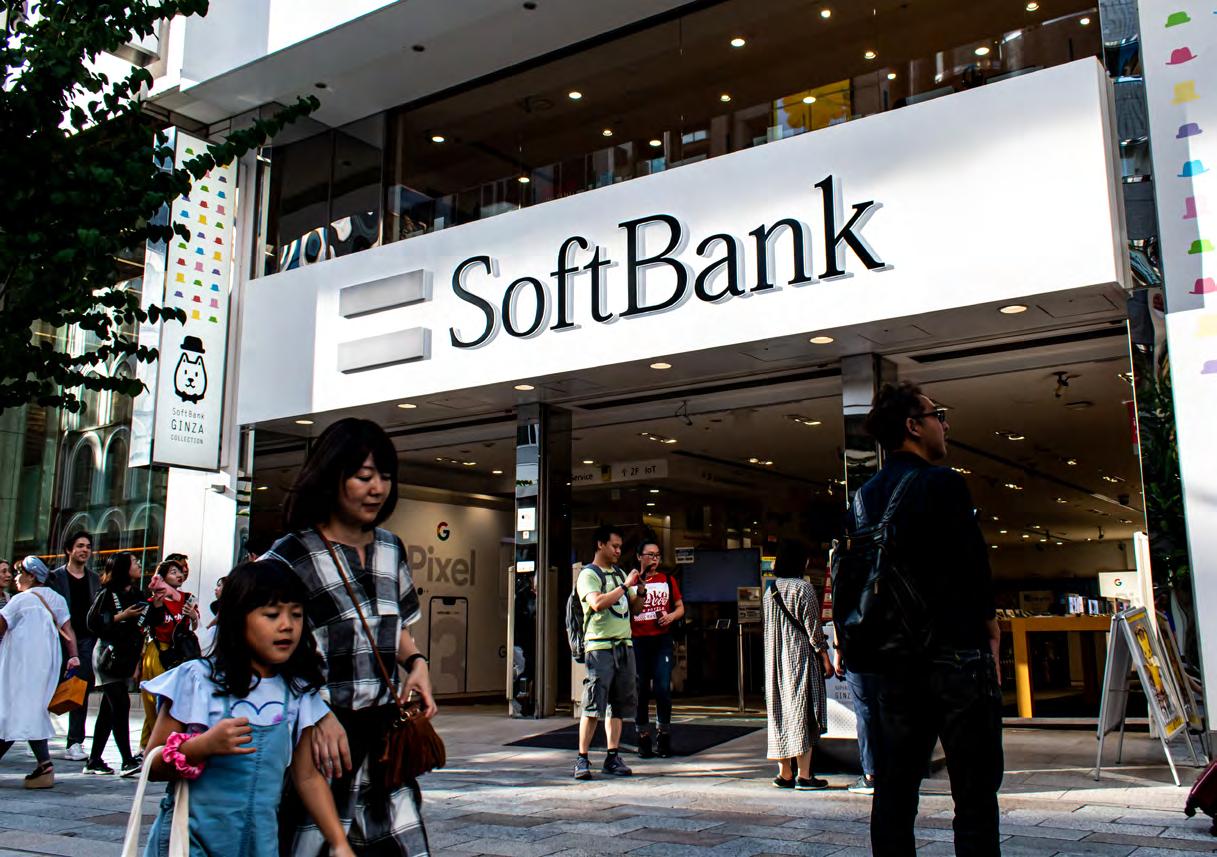
SoftBank has become the first telecommunications carrier in Japan to launch an outdoor trial of the 7GHz band for 6G.
In partnership with Nokia, SoftBank is using three 7GHzcompatible pre-commercial base stations in the Ginza district in Tokyo for the field trial.
The goal is to validate communication performance with the use of Massive MIMO (multiple input, multiple output) technology.
“Centimetre waves are radio waves with wavelengths between 1–10 cm (frequencies of 3–30
CGHz). Within this range, the 7–24 GHz band, known as FR3 by 3GPP (Third Generation Partnership Project) standards, is emerging as a candidate for next-generation mobile networks,” SoftBank said.
“The specific band used in this trial – 7,125 to 8,400 MHz – is scheduled to be discussed at the ITU-R’s World Radiocommunication Conference 2027 (WRC-27) as a potential 6G frequency, and is therefore gaining global attention.”
The Japanese telecom carrier pointed out that the 7GHz band offers
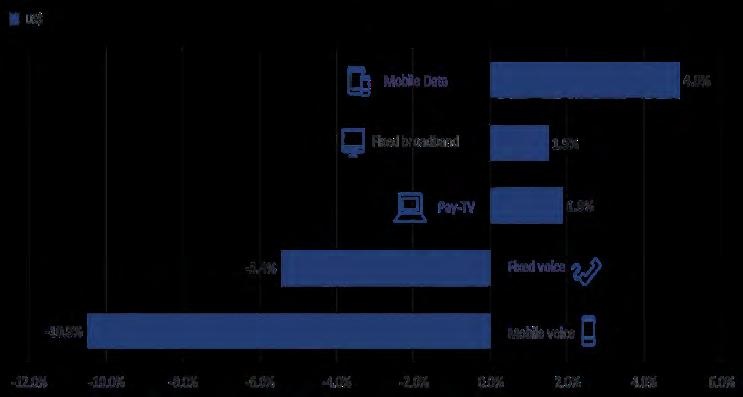
hina’s telecom and pay-TV services revenue is expected to grow, albeit at a modest compound annual growth rate (CAGR) of 0.5%, to $483b in 2029, according to GlobalData.
The report said this will be driven by mobile data service increasing at a CAGR of 5.3% due to an increase in 5G subscriptions and mobile data average revenue per user (ARPU).
Pay-TV services revenue will also increase, supported by the subscription gains in the IPTV segment and a marginal increase in overall pay-TV ARPU. Additionally, machineto-machine (M2M) and Internet of Things (IoT) subscriptions will grow at a CAGR of 8.5% by 2029, as the enterprise adoption of M2M/IoT led solutions grows supported by 5G technology advancements.
“5G subscriptions accounted for 70.2%
Its propagation characteristics are similar to Sub-6, making it well-suited for high-speed communication and reliable area coverage
“significantly broader” bandwidth compared with 5G’s Sub-6 bands.
“When combined with the already defined 6,425–7,125 MHz 5G band (Band n104), it enables nearly 2GHz of contiguous spectrum,” it noted.
“Its propagation characteristics are similar to Sub-6, making it well-suited for high-speed communication and reliable area coverage.”
Seen as “a promising 6G solution,” the 7GHz band is expected to balance both capacity and coverage in dense urban settings.
Anticipated 6G era
To compare the coverage and radio characteristics of the 7GHz band with commercial 5G Sub-6 (3.9GHz), the trial co-located 7GHz pre-commercial base stations next to existing 5G base stations on building rooftops.
“Future testing will include both indoor and outdoor measurements within the trial zone, contributing to ongoing research and development for the commercialisation of 6G,” according to SoftBank.
Meanwhile, in anticipation of the so-called “6G era,” SoftBank aims to roll out pre-commercial High Altitude Platform Station (HAPS) stratospheric telecommunications services in Japan in 2026.
“HAPS, also referred to as ‘base stations in the sky’, operate in the stratosphere at an altitude of approximately 20 km to provide wide-area communications coverage,” explained SoftBank, which recently invested in HAPS specialist Sceye.
share of the total mobile subscriptions in 2024 and will remain the dominant mobile technology over the forecast period,” Sarwat Zeeshan, Telecom Analyst at GlobalData, said.
The analyst said the growth will be driven by the Chinese government’s support for 5G infrastructure development, the ongoing 5G network expansions by mobile network operators, and wider availability of affordable 5G plans.
“As of Q1 2025, China deployed nearly 4.4 million 5G base stations,” he added.
However, mobile voice service revenue will decline significantly at a CAGR of 19% due to consumer shift towards OTT communication platforms and the decline in mobile voice ARPU.
Moreover, in the fixed communication services segment, fixed voice service revenue will also fall due to losses in circuit-switched subscriptions and declining fixed voice ARPU.
Source:
China: Revenue CAGR by Service Type, 2022-2028
GlobalData
MARKET REPORT: SINGAPORE
Zero-day exploit bypasses telco firewalls
Device and cloud security are emerging weak spots.
Cyberattacks on Singapore’s four main telecommunication operators in 2025 underscore how digital threats have shifted beyond traditional perimeter defences, forcing critical infrastructure providers to secure systems end to end.
The incident showed how mature operators can be vulnerable once attackers penetrate initial defences.
“As organisations expand into Internet of Things (IoT), 5G, and cloud-enabled services, security has to extend beyond the network perimeter,” Syed Natashrul, Asia-Pacific head at Wireless Logic Group Ltd., told Asian Telecom in an exclusive interview.
He cited device authentication, certificate-based identity management, and cloud data protection as growing weak points.
Coordinated campaign
In February, Minister for Digital Development and Information Josephine Teo said M1 Ltd., Simba Telecom Pte. Ltd., Singapore Telecommunications Ltd., and StarHub Ltd. were compromised in a coordinated campaign linked to advanced persistent threat (APT) group UNC3886.
According to authorities, attackers used a zero-day exploit to bypass perimeter firewalls and gain access, exfiltrating a limited amount of network-related technical data.
Core systems such as the 5G network were not breached, and no sensitive customer data was accessed.
APT-style intrusions were amongst the most prevalent attack types in the city-state, often supported by phishing or credential theft at the point of entry, according to ThreatBook Pte. Ltd.’s 2025 Singapore Threat Intelligence Report.
UNC3886, first publicly identified in mid-2025, has a history of cyber-espionage targeting telecommunications, defence and critical infrastructure across the United States and Asia.
Robert Pizzari, Asia group vice president at Splunk Services Singapore Pte. Ltd., said the attacks illustrate how threat actors
increasingly avoid noisy assaults on external defences.
“Advanced attackers increasingly compromise network components such as routers or authentication systems, where they can quietly observe activity and remain undetected for extended periods,” he said in a separate interview.
Layered protections
As a result, security priorities are shifting towards continuous monitoring and internal visibility rather than one-off perimeter controls.
Natashrul said organisations need layered protections such as behavioural analytics and anomaly detection to identify suspicious activity that traditional tools may miss.
Executives are also being urged to reconsider how cybersecurity investments are evaluated.
Rather than focusing on upfront costs, firms should assess total cost of ownership, factoring in long-term maintainability, resilience, and
compliance with global standards.
Pizzari said telecommunication operators need stronger detection through artificial intelligence-driven analytics, closer integration between security, information technology, and operation teams, and faster response via automation.
Preserving trust
Wai Kit Cheah, chief information security officer and connected ecosystem leader for Asia-Pacific at Lumen Technologies Singapore Pte. Ltd., said expanding critical infrastructure obligations and deeper public-private coordination will be key to preserving trust as networks modernise.
“The question is not whether Singapore can prevent every future intrusion, but whether it can consistently reduce attacker dwell time, constrain lateral movement, and preserve public trust under sustained pressure,” the chief information security officer said.
Authorities said attackers used a zero-day exploit to bypass perimeter walls
Wai Kit Cheah
Robert Pizzari
Syed Natashrul
MARKET REPORT: INDONESIA
Indosat flags 290 million spam calls in 3 months
IIts AI-driven system has shielded 11.5 million customers a month from fraud. We're building a network that protects people as much as it connects them
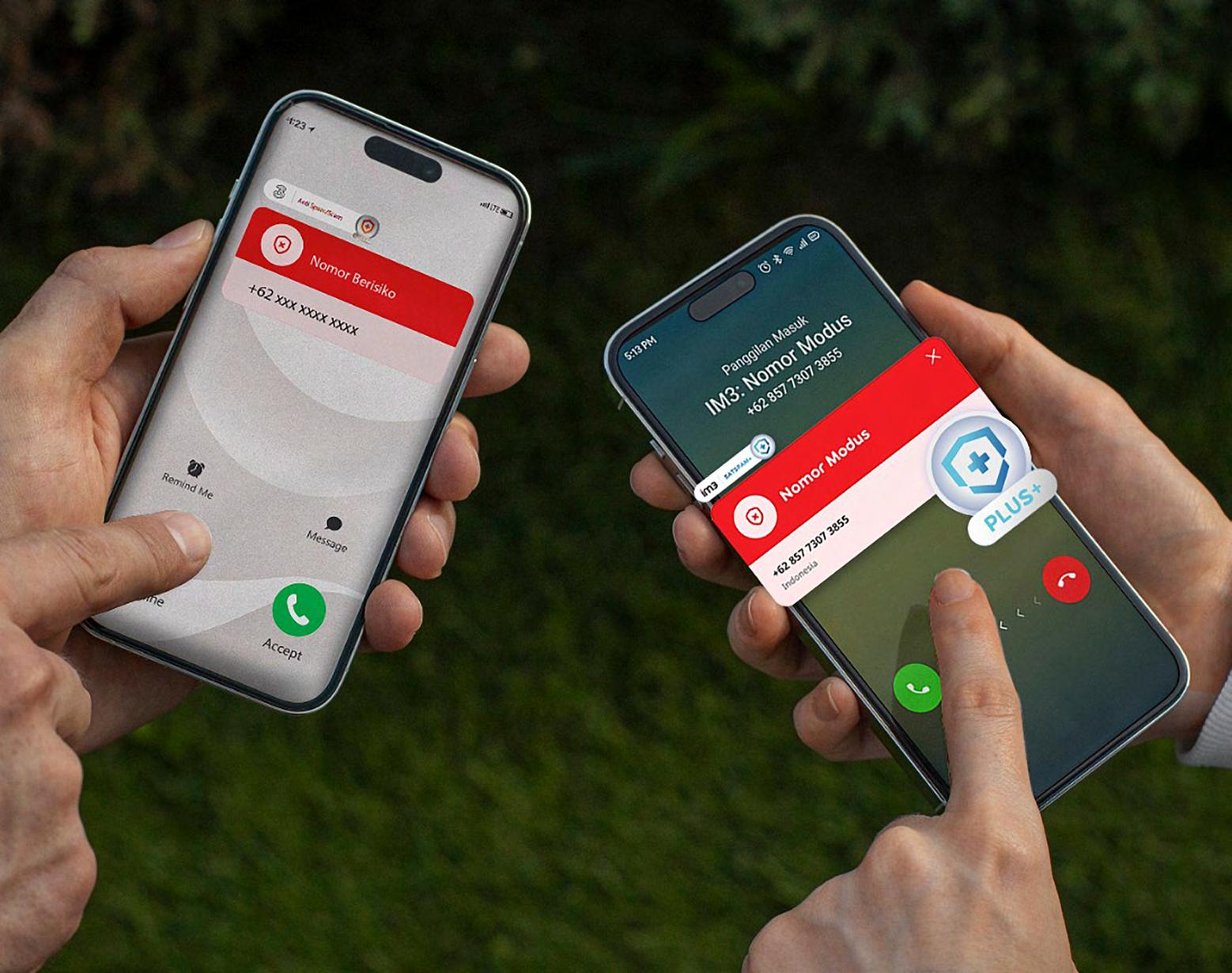
ndosat Ooredoo Hutchison has identified 290 million risky calls and flagged 90 million suspicious messages within three months of rolling out its artificial intelligence (AI)-driven anti-spam and -scam system, marking one of Indonesia’s biggest telecommunication-led efforts to counter digital fraud.
The feature, launched on 7 August, has shielded an average of 11.5 million customers a month by detecting malicious activity before damage occurs. Indosat said the system forms part of its broader AIvolusi5G strategy, which integrates AI into its 5G network to improve safety and reliability.
“The rise of digital scams has made protection a necessity, not an option,” Bilal Khazmi, director and chief commercial officer at Indosat, told Asian Telecom. “This feature was built to give users peace of mind—to let them connect, communicate, and transact without fear.”
The system operates at the network
level, removing the need for separate apps or hardware. It screens and flags suspicious communications before they reach Indosat subscribers.
Rebuilding trust
Two in three adults faced fraud attempts in the past year, the Global Anti-Scam Alliance said in a recent report. About 14% suffered financial losses totalling $2.9b (IDR 49t), whilst more than half reported emotional stress after being targeted.
“Behind every data point is a person who lost not just money, but also confidence in the digital world,” Khazmi said in an exclusive interview.
“We see it as our responsibility to rebuild that trust through intelligent, proactive protection.”
The tool issues early warnings even when it can’t fully block a threat, giving users time to avoid financial harm.
“Our goal is not only to stop threats but to make people more aware of how scams work,” Khazmi said. “Awareness is the first defence.
Technology is the second.”
The company applies a zero-trust approach, verifying all activity rather than assuming legitimacy.
Alongside its technical measures, Indosat is expanding digital literacy efforts to help users identify scams before they engage.
Democratising safety
Under Indosat’s IM3 brand, protection is offered in two versions—one that is activated automatically for prepaid users, and another that adds URL risk detection.
Under the Tri brand, customers receive anti-spam and -scam alerts that use a colour-coded system— turquoise for safe numbers, yellow for unknown callers, and red for high-risk contacts.
Users of both brands can access broader protections through the myIM3 and bima+ apps.
“This is about democratising safety,” Khazmi told the magazine.
“You don’t need a premium phone or expensive service to stay protected. Every customer, regardless of what device they use, deserves the same level of security.”
Indosat sees the AI feature as central to its broader mission to build trust in digital services as online fraud grows more sophisticated.
“Connectivity should empower, not endanger,” Khazmi said.
“We’re building a network that protects people as much as it connects them,” he added.
Five months on, Indosat has scaled the system significantly as scam activity intensifies across Indonesia, Chief Executive Officer Vikram Sinha said. Indosat said it has detected more than 2 billion scam attempts within six months of launch, reflecting the growing volume and sophistication of threats.
The operator's internal data shows the most common risks include one-time password fraud, phishing, and fake lottery schemes, typically delivered via SMS and voice calls, with activity peaking during religious holidays, major online sales, and social assistance disbursement periods. The system also draws on user input, with more than 2.5 million subscribers activating protections via Indosat’s apps and submitting over 124,000 reports of suspicious numbers.
About 14% of fraud victims suffered financial losses totalling $2.9b (Photo from Indosat)
Bilal Khazmi
MyRepublic debuts 5G wireless broadband
The service aims to extend broadband beyond fibre coverage.
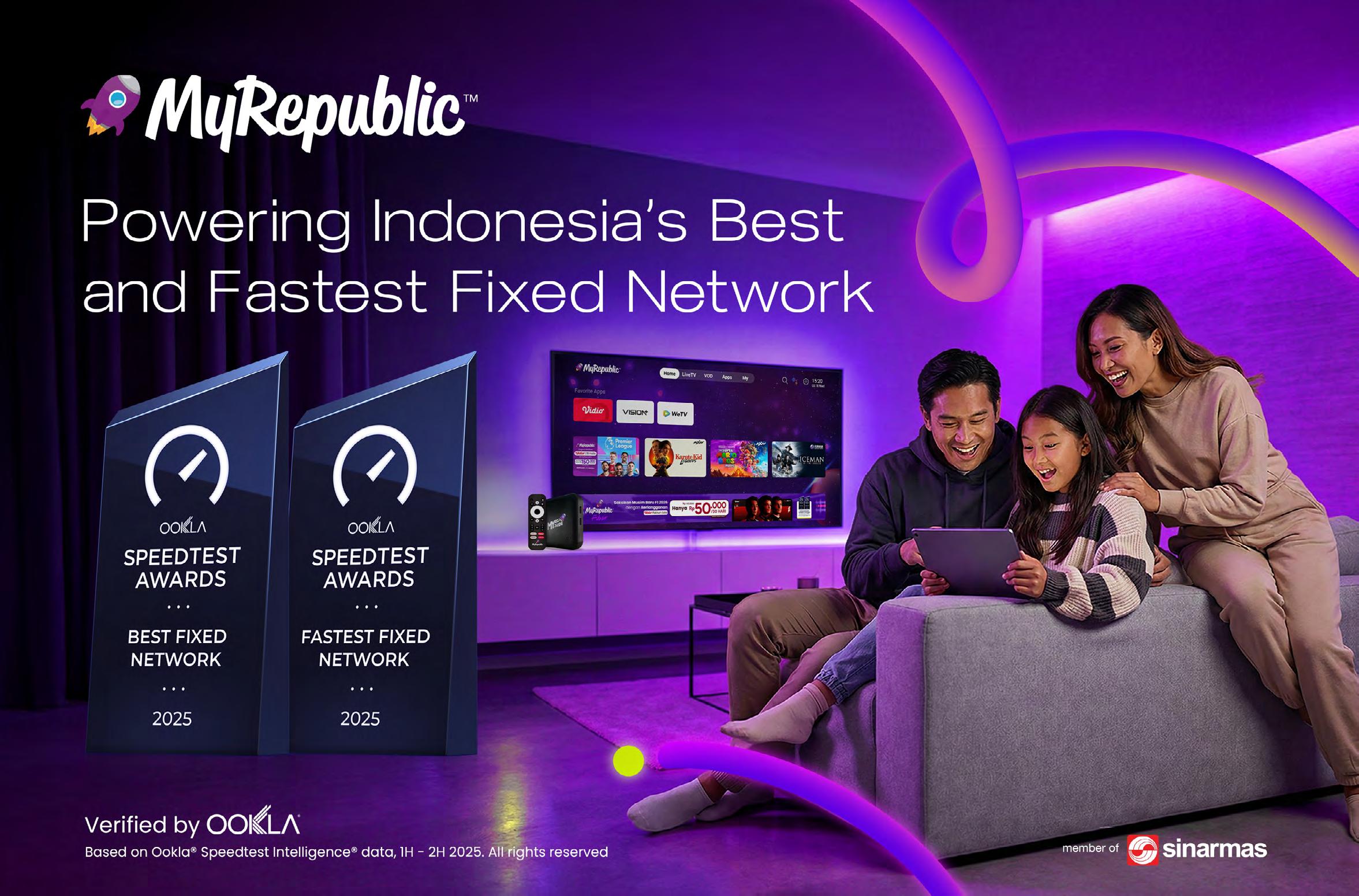
MyRepublic Indonesia has launched MyRepublic Air, a 5G fixed wireless access service aimed at expanding broadband coverage in areas where fibre networks are harder to build.
The service debuted in Jakarta on 19 February as part of the company’s effort to widen its reach beyond the footprint of its fibre-to-the-home network, which already spans 162 cities and regencies.
According to TeleGeography, fibre accounts for nearly 89% of fixed broadband subscriptions. However, overall fixed broadband penetration in Indonesia remains modest, at just over 20% as of June 2025. This is largely due to the country’s geographic structure, with a population spread across more than 17,500 islands, making fibre deployment both logistically complex and costly.
The wireless rollout marks MyRepublic Indonesia’s first large-scale push into fixed wireless broadband.
By using the 1.4 GHz spectrum secured in a government auction, the operator is targeting mid- to low-density locations where fibre installation can be costly or slow.
Accelerating deployment
The spectrum band offers a balance between coverage and capacity, making it suitable for suburban and semi-rural deployment. This strategy aligns with a broader national roadmap. The Ministry of Communication and Digital Technology (Komdigi) plans to auction the 700 MHz and 2.6 GHz frequency spectrums in 2026.
The 700 MHz band is crucial for broadening mobile broadband coverage, as its lower frequency allows signals to penetrate difficult terrains and buildings better, supporting 5G deployment nationwide. Meanwhile, the 2.6 GHz spectrum will complement capacity needs, improving mobile broadband quality in urban centres.
Komdigi aims to achieve an average mobile broadband speed of 100 Mbps by 2029, a jump from 63.51 Mbps in 2025.
With national 5G coverage reaching 6.33% in 2025, Komdigi is now targeting 8.5% for 2026, largely driven by the 700 MHz spectrum.
“Broadband is no longer a luxury; it is essential infrastructure for economic opportunity, education, and social inclusion,” Chief Technology Officer Hendra Gunawan told Asian Telecom
“Through MyRepublic Air, we aim to deliver reliable and affordable high-speed access to communities that have not been optimally served,” he continued.
Unlike mobile 5G networks designed for smartphones, fixed wireless access delivers home internet through wireless equipment installed at the customer’s premises.
The device connects to nearby 5G base stations, providing broadband without the need to lay fibre to every home.
“With 5G fixed wireless access, we can accelerate deployment timelines whilst maintaining network performance and scalability,” Gunawan said.
“This allows us to complement our fibre backbone and expand into areas where fixed infrastructure rollout would take significantly longer,” he added.
Initial expansion targets regions across Sumatra, Kalimantan, Sulawesi, Bali, and Nusa Tenggara.
The expansion supports Indonesia’s push to widen internet access beyond major cities, particularly for education, small businesses, healthcare, financial, and government services.
The expansion is further supported by MyRepublic Indonesia’s merger with Mora Telematika Indonesia, with the combined entity operating under the name Ekamas Mora Republik from 22 April 2026.
The companies aim to strengthen operational capabilities and improve service delivery nationwide.
Broadband is no longer a luxury; it is essential infrastructure for economic opportunity, education, and social inclusion
“Through this merger, we are strengthening MyRepublic Indonesia’s commitment to continue growing alongside our customers,” said Timotius M. Sulaiman, chief executive of MyRepublic Indonesia. “Going forward, we will focus on strengthening infrastructure, improving service quality, and driving continuous innovation to deliver a more seamless and reliable digital experience in every home and business we serve,” he continued.
The company emphasised continuity for existing customers, with all ongoing agreements, partnerships, and services remaining unchanged following the merger's effective date. Billing processes will also stay intact, with no adjustments to invoicing or bank account details despite the corporate name change.
Hendra Gunawan, chief technology officer at MyRepublic Indonesia
INDONESIA
Globe, Starlink to fortify network against disaster risks
The group is the first in Southeast Asia to integrate LEO satellite technology.
Philippines’ Globe Telecom has entered a direct-to-sell partnership with Starlink to embed low-earth-orbit (LEO) satellite connectivity into its broader network strategy, citing the need for infrastructure resilience in one of the world’s most disaster-prone countries.
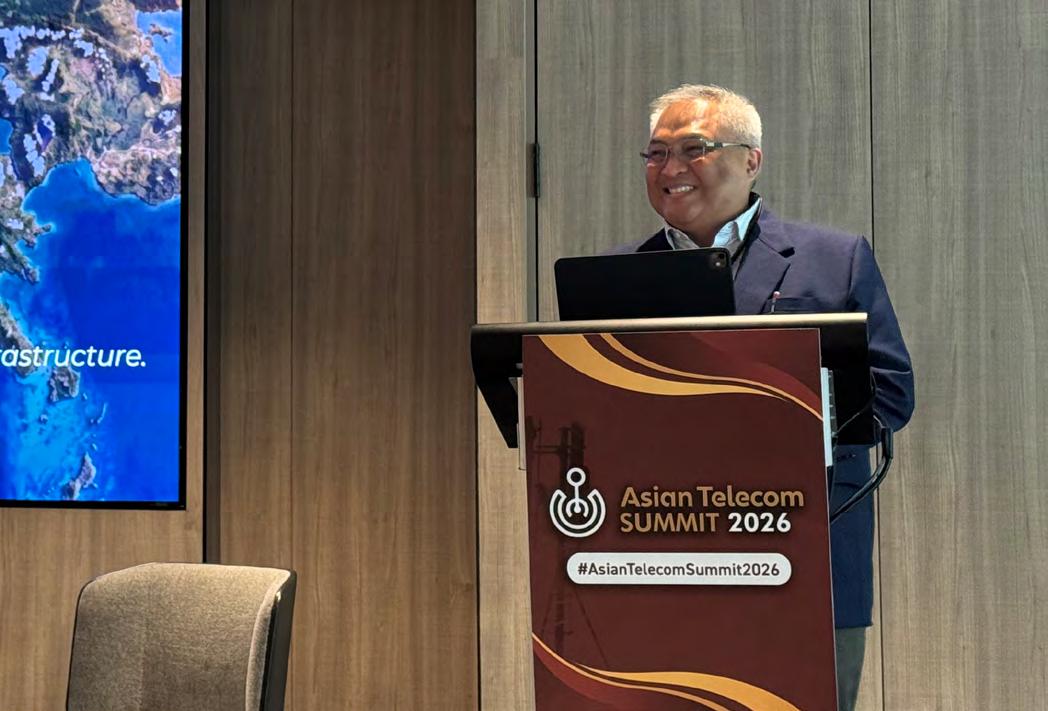
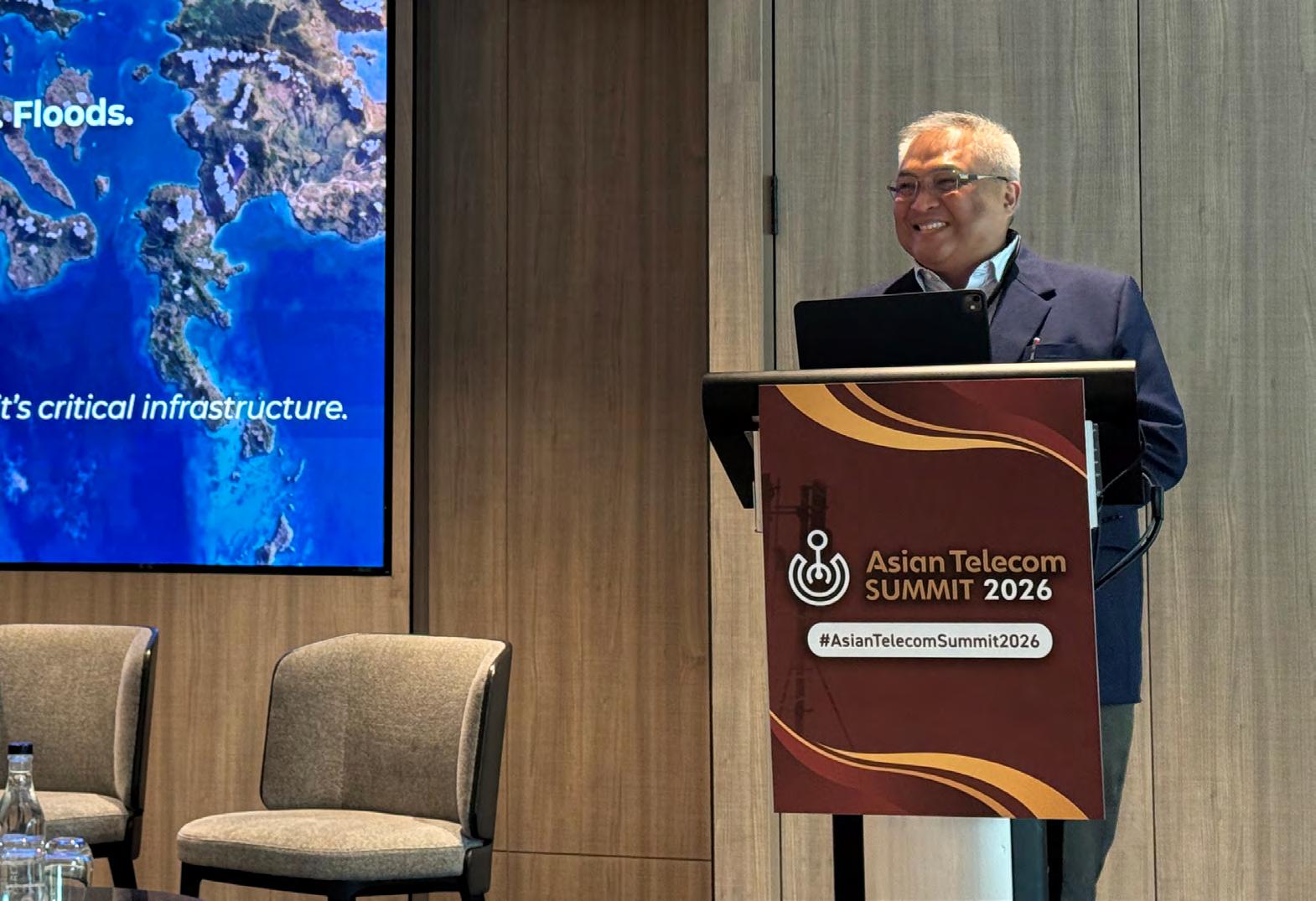
The group has become the first operator in Southeast Asia to adopt LEO satellite technology, and second only in Asia after Japan, Globe Telecom President and CEO Carl Cruz said during the 2026 Asian Telecom Summit in Singapore.
“We deliberately designed the architecture to be intelligent and provide a seamless network, adapted to the unique real-world conditions of the Philippines,” he added.
The country’s geography, with over 7,600 islands, and disaster exposure shape the company’s network strategy. “[The Philippines] carries a risk index of 46.6.”
In 2025 alone, it faced over 21 typhoons that resulted in damages of close to $1b. The frequency and intensity of extreme weather events have increased network downtime
In an archipelago such as the Philippines, there is no silver bullet technology to build a truly resilient network
risks, particularly in geographically isolated and disaster-prone areas.
“In an archipelago such as the Philippines, there is no silver bullet technology to build a truly resilient network,” Cruz said.
Industry data underscored the country’s ongoing connectivity challenges. According to Ookla, the Philippines recorded median download speeds of 109.86 Mbps for fixed broadband and 58.24 Mbps for mobile as of March 2026.
Multi-network ecosystem
In response, the group has built a multi-network ecosystem that integrates cell sites, fibre, fixed wireless and satellite technologies.
Each plays a specific role—fibre delivers capacity in urban centres, mobile networks extend reach in rural areas, and satellites provide secure redundancy for critical services.
The CEO described connectivity as critical infrastructure. “We have entered an era where connectivity is no longer a privilege; it is the fifth utility, as essential to national progress as water and electricity.”
The telecom’s terrestrial network covers about 96% of the Philippine population. Cruz said urban areas rely on fibre for capacity, rural areas on mobile for reach, and critical services on satellites for backup.
“We are not just building towers; we are weaving a hybrid fabric of cell sites, fibre, fixed wireless, and space tech,” he added.
The group has entered the top 10 strongest telecom brands worldwide in the 2026 Brand Finance Telecoms 150 report, with an AAA brand rating and a Brand Strength Index score of 86.4 out of 100.
Earlier this year, Globe also formalised a partnership with the government focused on emergency telecommunications in Metro Manila, the country's capital.
Under the agreement, the group integrates its infrastructure into the government’s master plan for a major earthquake scenario, commonly referred to as “the big one”.
“We are ready to deploy our network-in-a-box and cell-on-wheel solutions, capable of activation in hard-hit areas within hours,” Cruz told the summit attendees.
Other initiatives
The Philippine telco company has also launched initiatives in provinces with limited connectivity, in partnership with the government and other industry partners.
These initiatives are aligned with national connectivity initiatives aimed at expanding access in geographically isolated and disadvantaged areas, according to the Globe chief executive.
The telecom recently donated international mobile subscriber identity (IMSI) catcher detectors to government agencies, including the National Telecommunications Commission and cybercrime units, to help identify and track unauthorised signal activity linked to mobile fraud and scam operations.
Beyond infrastructure, Cruz said that the group is also collaborating with Nokia Corporation to roll out network application programming interfaces (APIs) via a Network Exposure Platform.
The APIs enable network-ondemand capabilities, including higher priority or enhanced security for specific transactions.
Carl Cruz, CEO at Globe Telecom
SINGAPORE
EVENT NEWS: ASIAN TELECOM SUMMIT 2026
Data demand pushes SEA telcos to team up
Smartphone users in the region currently consume over 20 GB of data every month.
SINGAPORE
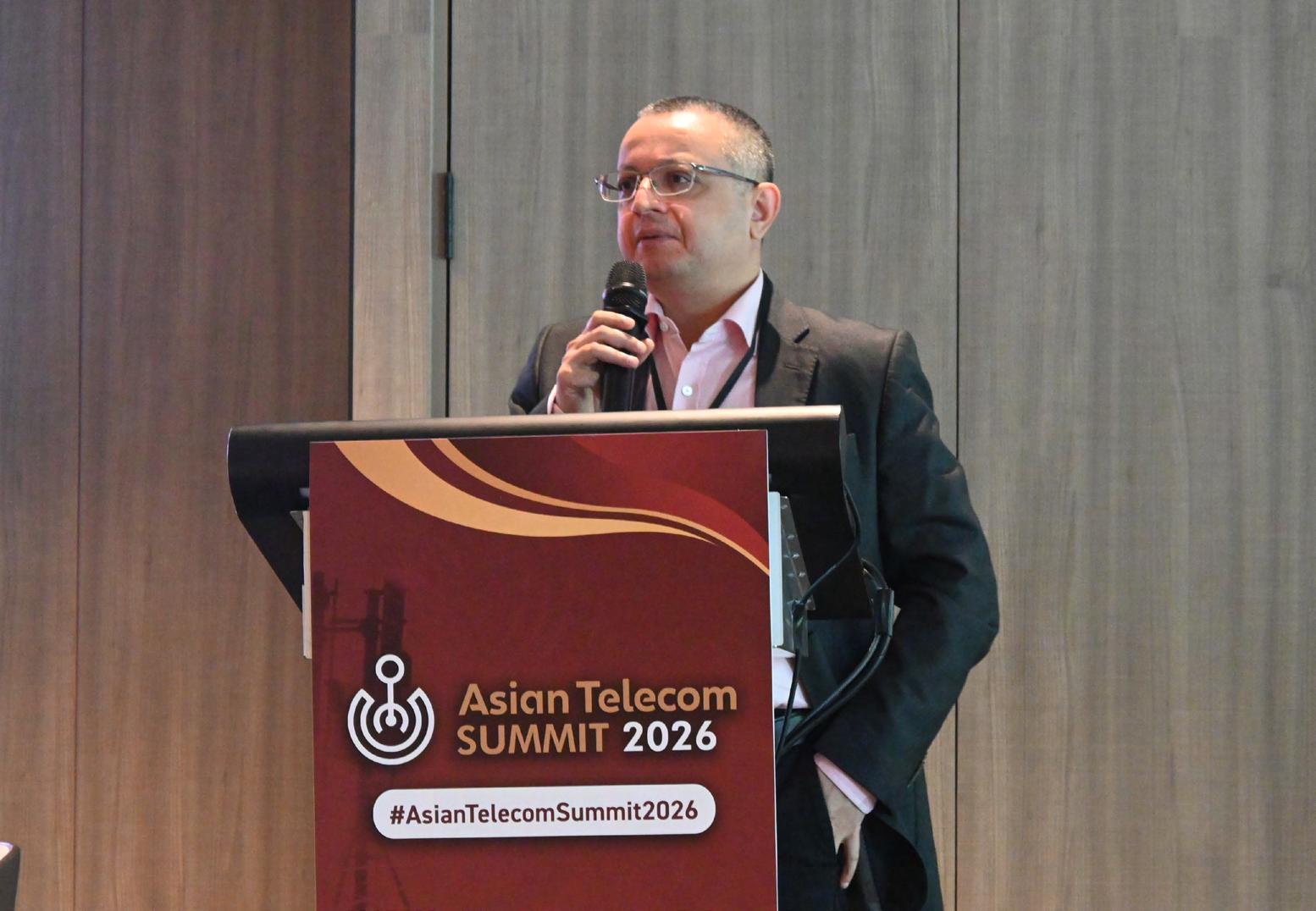
The telecom sector in Southeast Asia is turning to consolidation and digital ecosystems as it faces rising data demand and cost pressures, according to Himanshu Sahasrabudhe, director for Southeast Asia at Monitor Deloitte.
“Over the last five years, across our region, there has been a lot of activity in terms of market consolidation,” Sahasrabudhe told the Asian Telecom Summit 2026 in Singapore in February, linking past mergers to future opportunities in investments, partnerships, and growth for telecom players.
Consumer smartphone data usage is already over 20 gigabytes (GB) per month and could nearly double to 40 GB per month by 2030, he said.
Sahasrabudhe also noted strong interest in home broadband, including fibre-to-the-home (FTTH) and fixed wireless access (FWA).
“Most of the telecom operators are looking at this as the battle for the home,” he said, noting opportunities in smart homes, Internet of Things devices, and digital ecosystems.
Key drivers and pressures
Sahasrabudhe highlighted that “almost 1.7 trillion worth of payments will pass through the digital payment system by 2030,” noting interoperability amongst national quick response (QR) codes across borders, such as Indonesia’s QRIS and Singapore’s PayNow.
Enterprise demand is another key driver. “Most of the companies are looking for how to become [artificial intelligence] (AI)-native, how to embed AI in their operations, and for that, they’ll require a lot of storage and compute,” Sahasrabudhe said, pointing to a surge in demand for data centres across Singapore, Malaysia, and Indonesia.
He added that governments are also emphasising network resilience, sovereign AI, and data residency.
Despite strong demand, Sahasrabudhe said telecom operators face cost pressures.
Average revenue per user is stagnating, and competition from over-the-top platforms is intense.
Most of the telecom operators are looking at this as the battle for the home
“It really boils down to how do telecom operators then make money? How do they get their return on investment? And that has kind of driven the whole move towards consolidation,” he said.
Recent regional mergers include Indosat in Indonesia (2021), TrueDTAC in Thailand, and CelcomDigi in Malaysia. “These mergers show that most markets are now restricting themselves to two or three players,” Sahasrabudhe noted.
Consolidation also extends to mobile and fibre convergence, allowing operators to create scale and unlock synergies.
“Almost all mergers have given around 400 to 500 million worth of synergies to the shareholders,” Sahasrabudhe told the summit attendees, noting that these enable reinvestment into infrastructure, cyber, AI, and data centres.
Sahasrabudhe said this approach “is helping, not as a cost-cutting exercise, but rather a growth-focused exercise, because it is allowing us to create a scale that we will be able to play with.”
Enterprise services are becoming a larger focus, with operators providing AI, cybersecurity, cloud, and network slicing, he added.
With consumer revenues plateauing, operators are shifting toward enterprise services offering AI, cybersecurity, cloud, and network slicing, Sahasrabudhe said.
Hyper-ecosystem
On the consumer side, telecoms are consolidating digital offerings into “super apps” or hyper-ecosystem apps. “Two to three years ago, all the apps started to be consolidated into one,” he said, citing True in Thailand and Telkomsel in Indonesia as examples.
Sahasrabudhe cited the importance of pursuing mergers and acquisitions and complementary partnerships, highlighting Indosat’s mobile-mobile merger, where the company later acquired 350,000 home connections to expand its ecosystem.
He also recommended separating infrastructure and services businesses to enhance market valuation and operational focus. Additionally, Sahasrabudhe highlighted the need to build enterprise ICT and cloud capabilities to provide connectivity-plus solutions. The director also urged telecoms to embrace AI internally, becoming “customer zero” before selling AI solutions externally.
Recent regional mergers include Indonesia's Indosat, Thailand's True-DTAC, and Malaysia's CelcomDigi
We empower communications-driven businesses intelligent, connected ecosystems. Combining European engineering expertise with global scale, we deliver cut costs, increase revenue
Since 1993, our solutions have powered connectivity across telecommunications, critical infrastructure, satellite industry Trusted by global leaders such as Deutsche Telekom, LG U+, and Orange, we help organizations move faster, operate smarter, and stay competitive in an increasingly connected world. Visit
EVENT NEWS: ASIAN TELECOM SUMMIT 2026
Telco network APIs hit million-dollar revenue surge
China dominates this rising sector with over 90% of global adoption volume.
Telecommunications executives said network application programming interfaces (APIs) are beginning to generate revenue in the millions of dollars, but scaling them will require deeper operator collaboration and structural change.
Speaking at the 2026 Asian Telecom Summit in Singapore, industry leaders discussed whether Network-as-aService (NaaS) and APIs could unlock new revenue streams for telcos. They emphasised collaboration, ecosystem partnerships, and practical use cases as critical to scaling adoption.
“Traction is there,” said Jawwad Zaki, Information Technology Director at Telenor. “Numbers go into millions of USD already.”
“In Asia, the global market— though reaching around a billion USD—may seem small compared with the overall telecom business, but for NaaS, it represents a significant increase,” he added.
However, Zaki noted that adoption remains concentrated. “Looking at figures from around one to one and a
Customers do not look for APIs. They look for a solution to the fraud that they have
half years ago, over 90% came from a single market, China.”
The panellists stressed that exposing APIs alone will not drive scale.
“It’s good to say that I have 1000 APIs which I can open up,” said Saurabh Ohri, vice president and general manager for Asia at Circles.
“But you have to solve some real industry problem,” he continued.
Ohri cited real-time risk checks for banks and fintechs as a potential use case, where telcos could leverage network data to support onboarding and fraud detection.
ShuFen Lin, head of enterprise mobility product and Internet of Things at Singtel, said customers are not seeking APIs themselves.
“Customers do not look for APIs. They look for a solution to the fraud that they have,” she said.
“Telcos can extend the ecosystem northbound, partnering with independent software vendors and solution providers, and embed these APIs within practical use cases.”
In addition, Lin said speed and scale
will be critical as enterprise demand grows across markets.
“Telcos with scale will have an advantage, as AI is set to accelerate the regionalisation of many enterprise customers’ businesses,” she said.
Lin told the attendees that operators must demonstrate capability beyond connectivity.
“A right to play has to be earned first,” she said, pointing to the need to orchestrate cloud, connectivity and enterprise systems.
Executives also acknowledged legacy constraints within telecom organisations.“How can we orchestrate business decisioning real time and not wait for weeks before my platforms can come out with some kind of tangible view?” Ohri asked.
Zaki said scaling APIs will require more than technology upgrades.
“This change is not about bringing in a tech stack or just engaging the developer community,” he said, adding that telcos must open up core capabilities that have historically been closed.
Collaboration over competition
Rather than competing directly with hyperscalers, the panel favoured collaboration. “Winning formula may not be essentially competition,” Zaki said, adding that telcos should expose capabilities through platforms where developer communities already operate.
Opening up core network capabilities requires a cultural shift, he added. “Change is not about bringing in a tech stack or just engaging the developer community,” Zaki said.
“It is also about encouraging an ecosystem where telcos’ core, which has always been locked, is now open for certain capabilities to be used by people that we didn’t know before.”
Timotius Max Sulaiman, chief executive officer of MyRepublic Indonesia, said consolidation can also support scale. “Collaboration is key.”
“My company focuses solely on the FTTH layer,” Sulaiman said.
“We are currently in the process of merging with the largest backbone provider in Indonesia, Moratel.”
Whilst MyRepublic focuses on business-to-consumer, Moratel specialises in business-to-business. The merger enables the group to serve both segments and expand network access to other players in Indonesia.
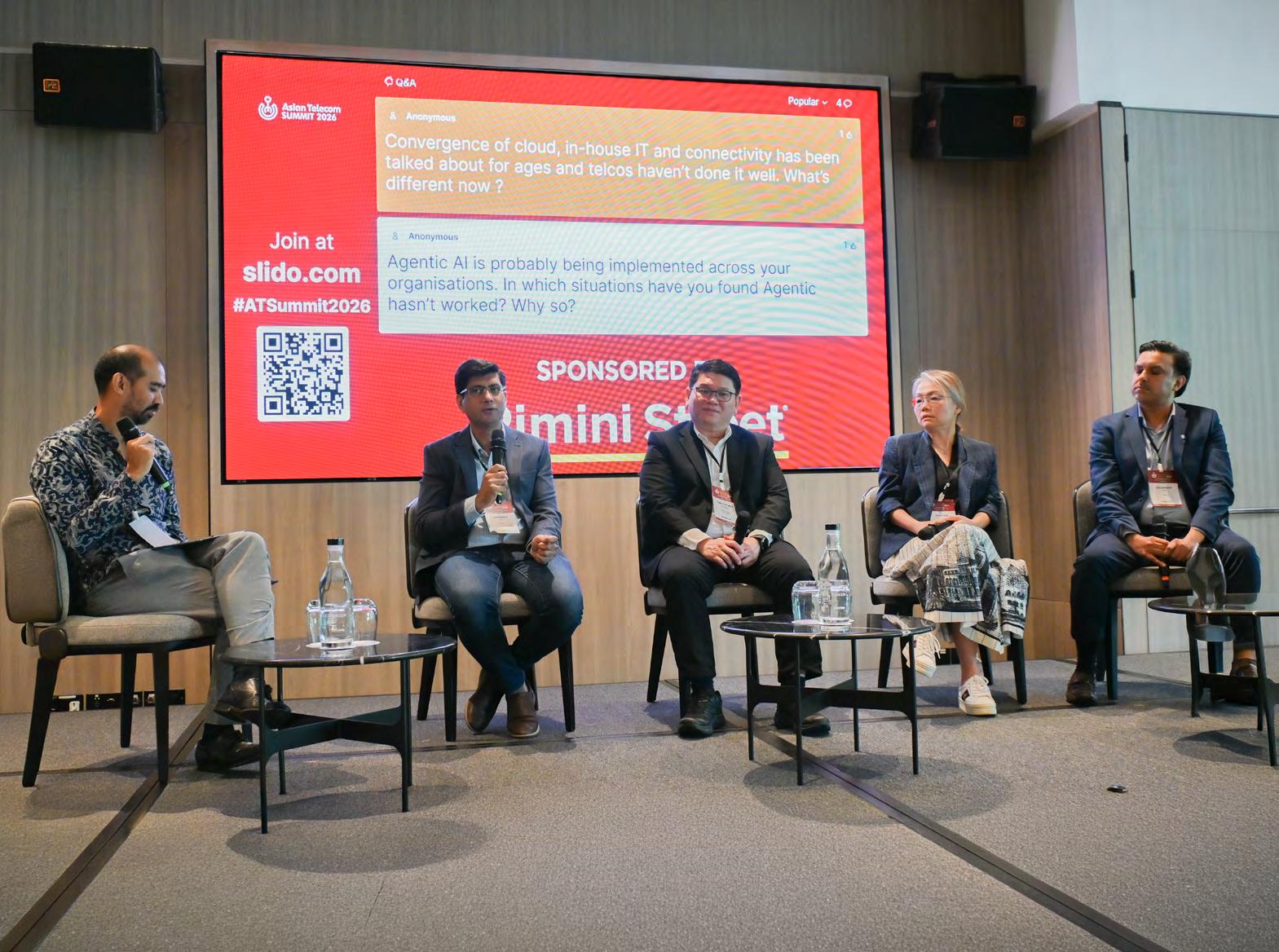
Zaki, Sulaiman, Lin, and Ohri on a panel moderated by Roland Berger's Ahmad Ridhwan Azizan
SINGAPORE
TELECOM COMPANY OF THE YEAR - KUWAIT CEO OF THE YEAR
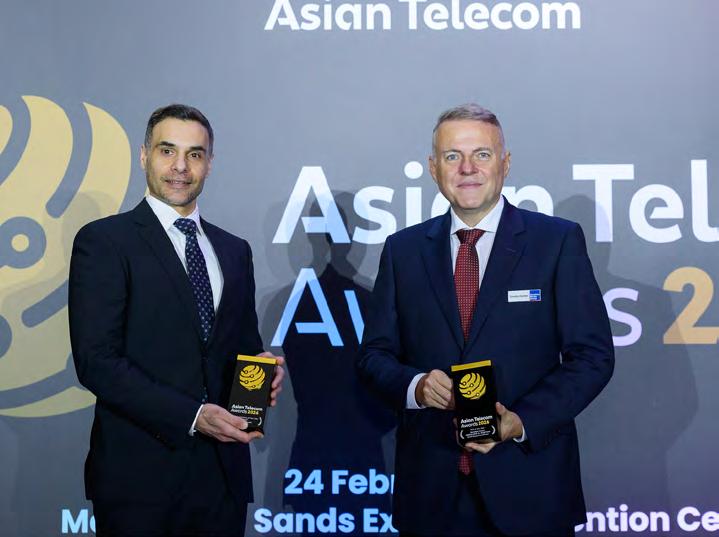
Ooredoo Kuwait named Telecom Company of the Year - Kuwait for the third time
The recognition highlights the company’s strong financial performance, digital innovation, and leadershipdriven strategy, reinforcing its position as a key player in the evolving telecommunications landscape.
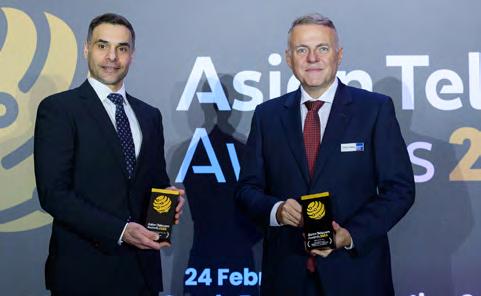
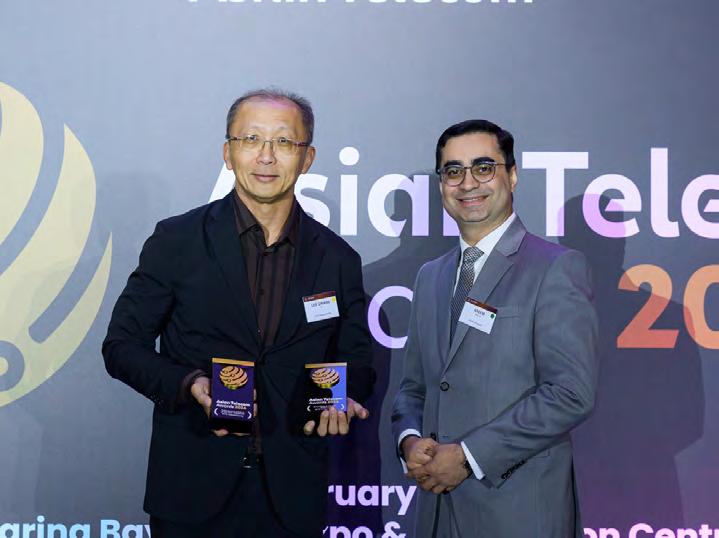
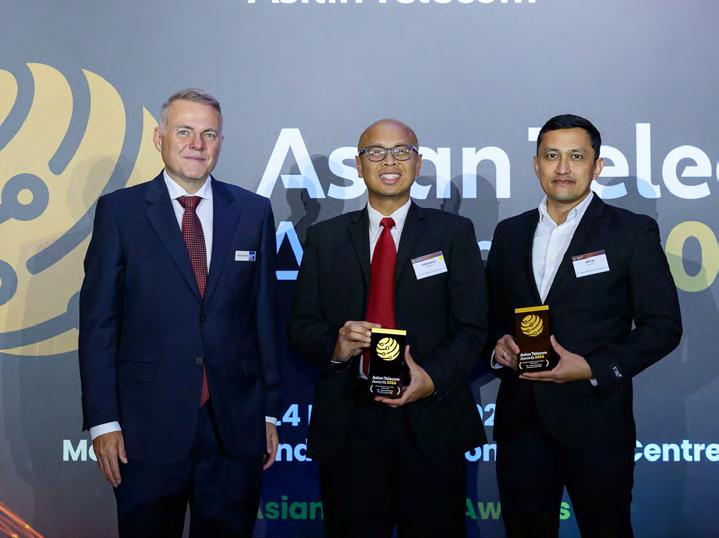
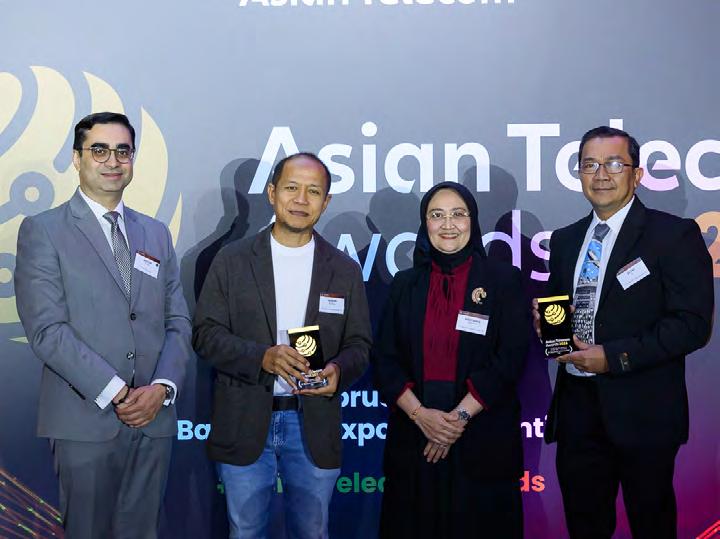
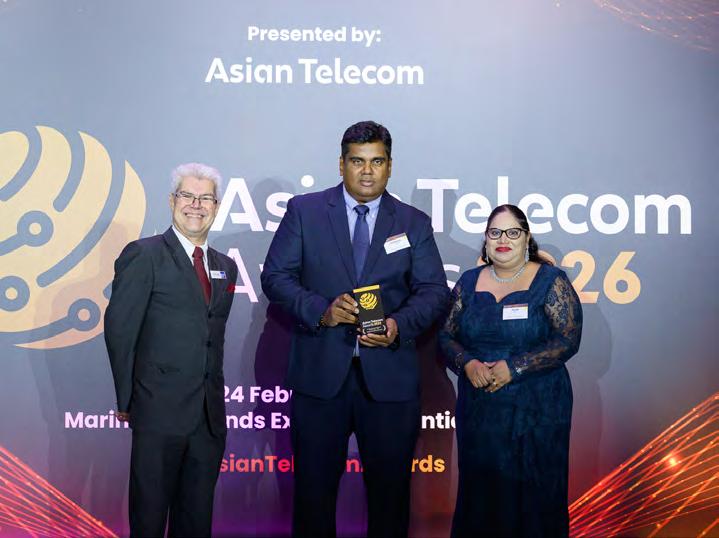
In a new milestone reflecting its continued leadership and excellence, Ooredoo Kuwait has proudly announced that it has won two prestigious accolades at the 2026 Asian Telecom Awards. The company was named Telecom Company of the Year - Kuwait for the third consecutive time, whilst its Chief Executive Officer, Abdulaziz Al-Babtain, was honoured with the title of CEO of the Year.
Issa Haider, Chief Technology Officer at Ooredoo Kuwait, accepted the awards on behalf of the company before an audience of global industry leaders. The moment reflected the company’s growing regional prominence and expanding international footprint, positioning Ooredoo Kuwait as a competitive and
distinguished player on the global stage, whilst reinforcing Kuwait’s standing as a regional hub for digital transformation and innovation.
International recognition for a transformational year
The recognition in Singapore marks the culmination of an exceptional year for Ooredoo Kuwait, led by CEO Abdulaziz Al-Babtain, whose strategic vision has focused on sustainable growth and stronger institutional integration.
Throughout 2025, Ooredoo Kuwait invested significantly in upgrading its networks and operational technologies. Under Al-Babtain’s leadership, Ooredoo Kuwait has established impactful partnerships with major national entities aimed at expanding its digital services and strengthening integration between the telecom sector and other vital industries.
These collaborations included initiatives to
support and develop local content through the “51” platform, in partnership with organisations such as Kuwait Oil Company and Kuwait Airways.
Investing in people and future talent
The company has adopted a comprehensive approach focused on empowering national talent and youth by nurturing a new generation of digital leaders through advanced leadership programmes, academic partnerships, and specialised training initiatives aligned with the latest developments in the technology sector. This commitment extends beyond the organisation itself, reaching into the broader community through support for youth initiatives, environmental sustainability, entrepreneurship, and active community engagement. These efforts aim to strike a careful balance between sustainable growth, operational excellence, and social responsibility.
Ooredoo Kuwait has established impactful partnerships with major national entities
Ooredoo Kuwait took home double recognition at the Asian Telecom Awards 2026
EVENT: ASIAN TELECOM AWARDS
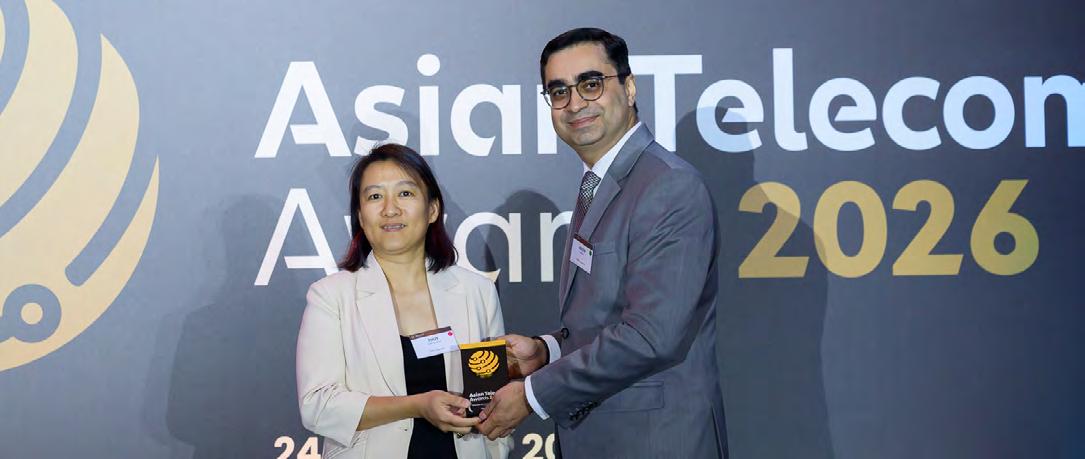
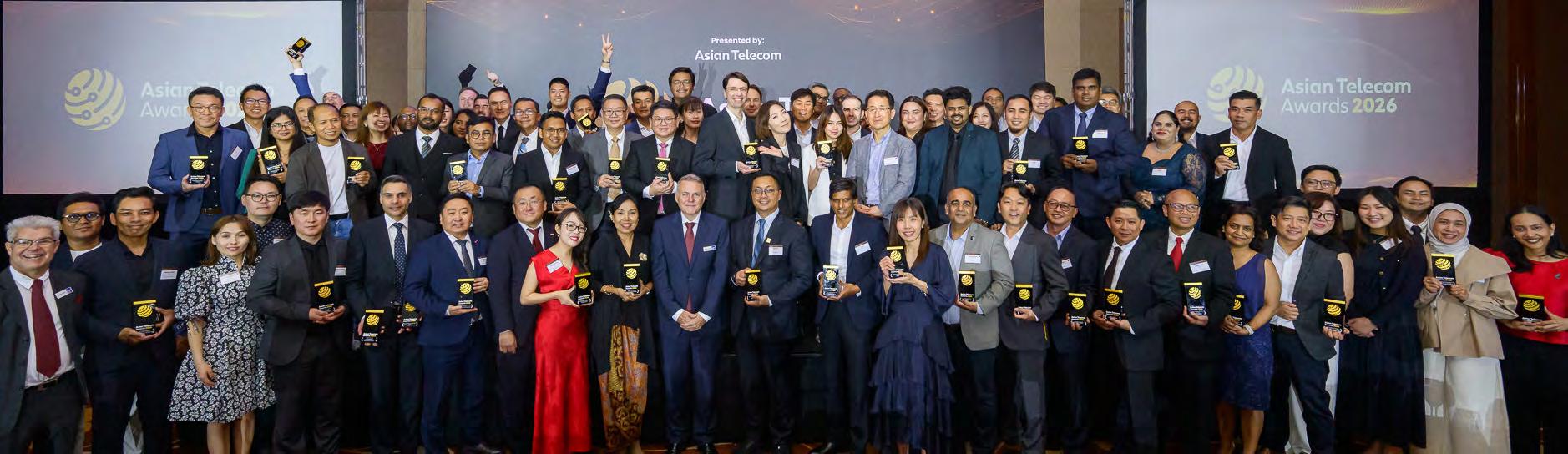
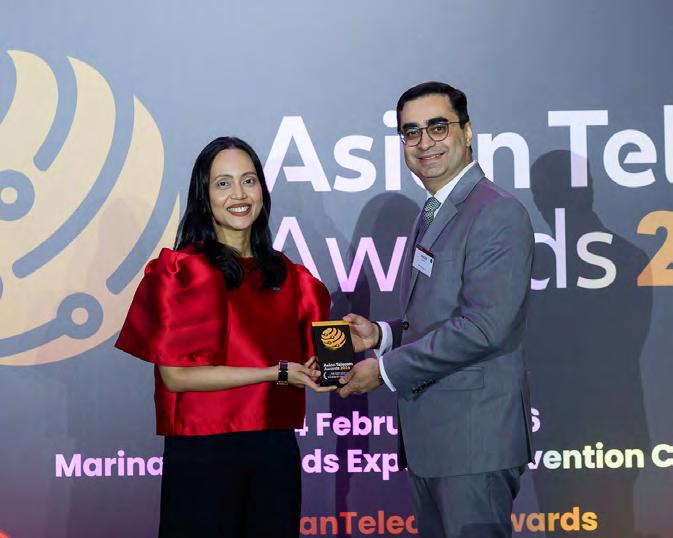
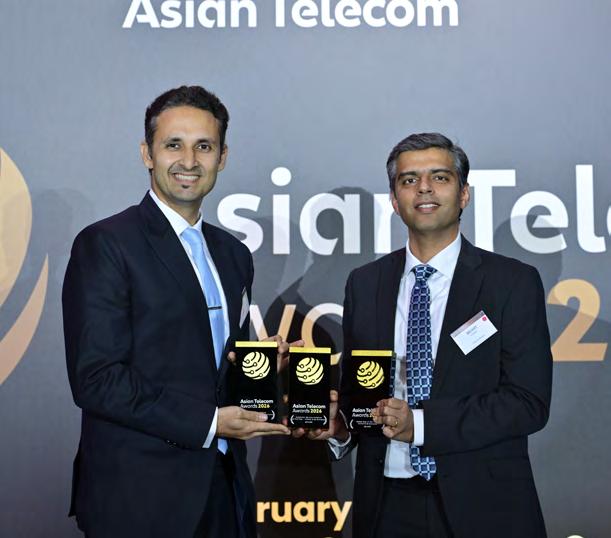
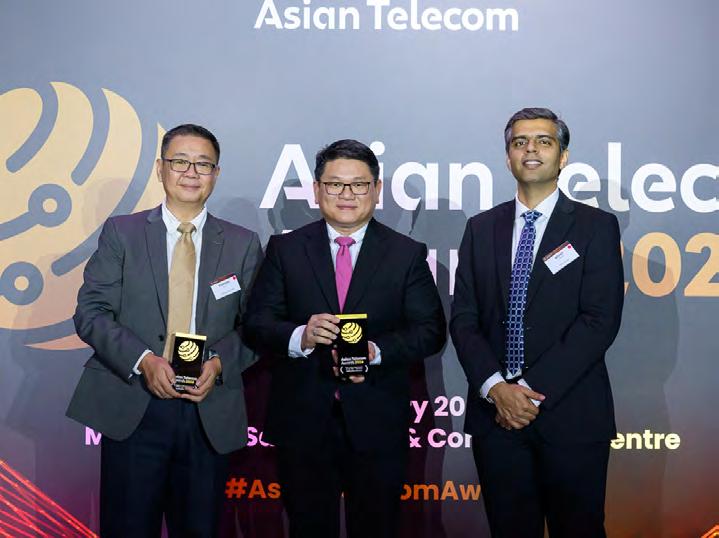
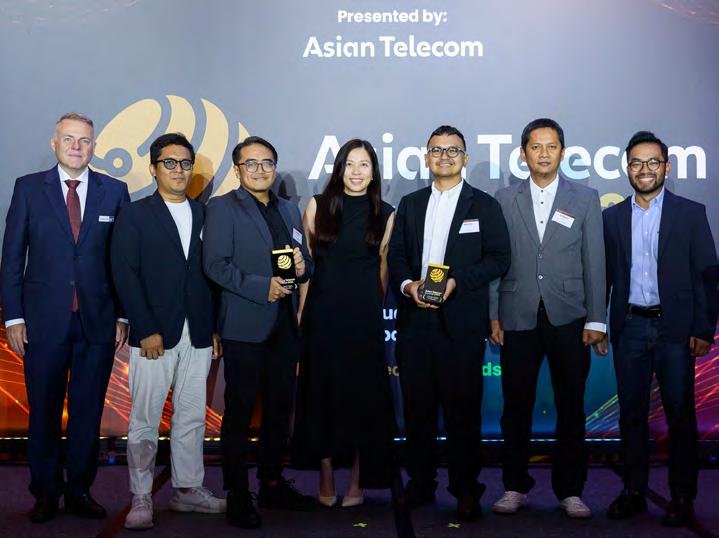
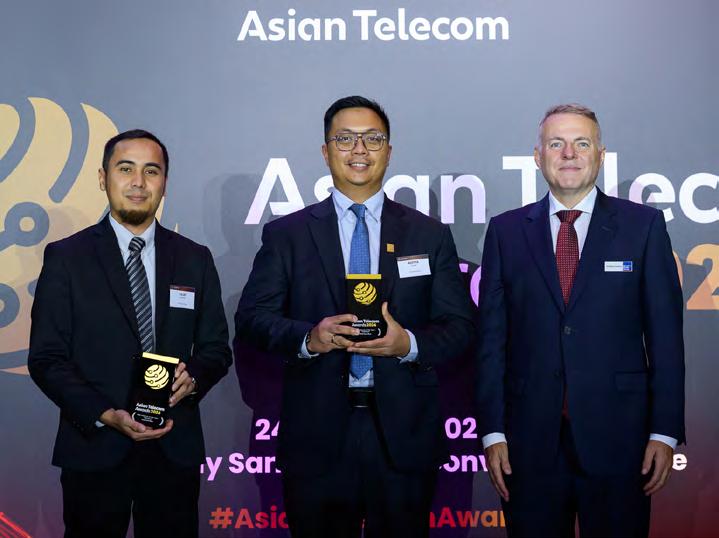
Exceptional industry leaders honoured at Asian Telecom Awards 2026
Regarded as one of the most dynamic and rapidly evolving markets globally, the Asia Pacific region’s telecommunications industry houses key players that have supported digital economies with significant advancements.
The Asia Telecom Awards 2026 recognised these companies and their exemplary contributions, highlighting their journeys in driving progress within the sector.
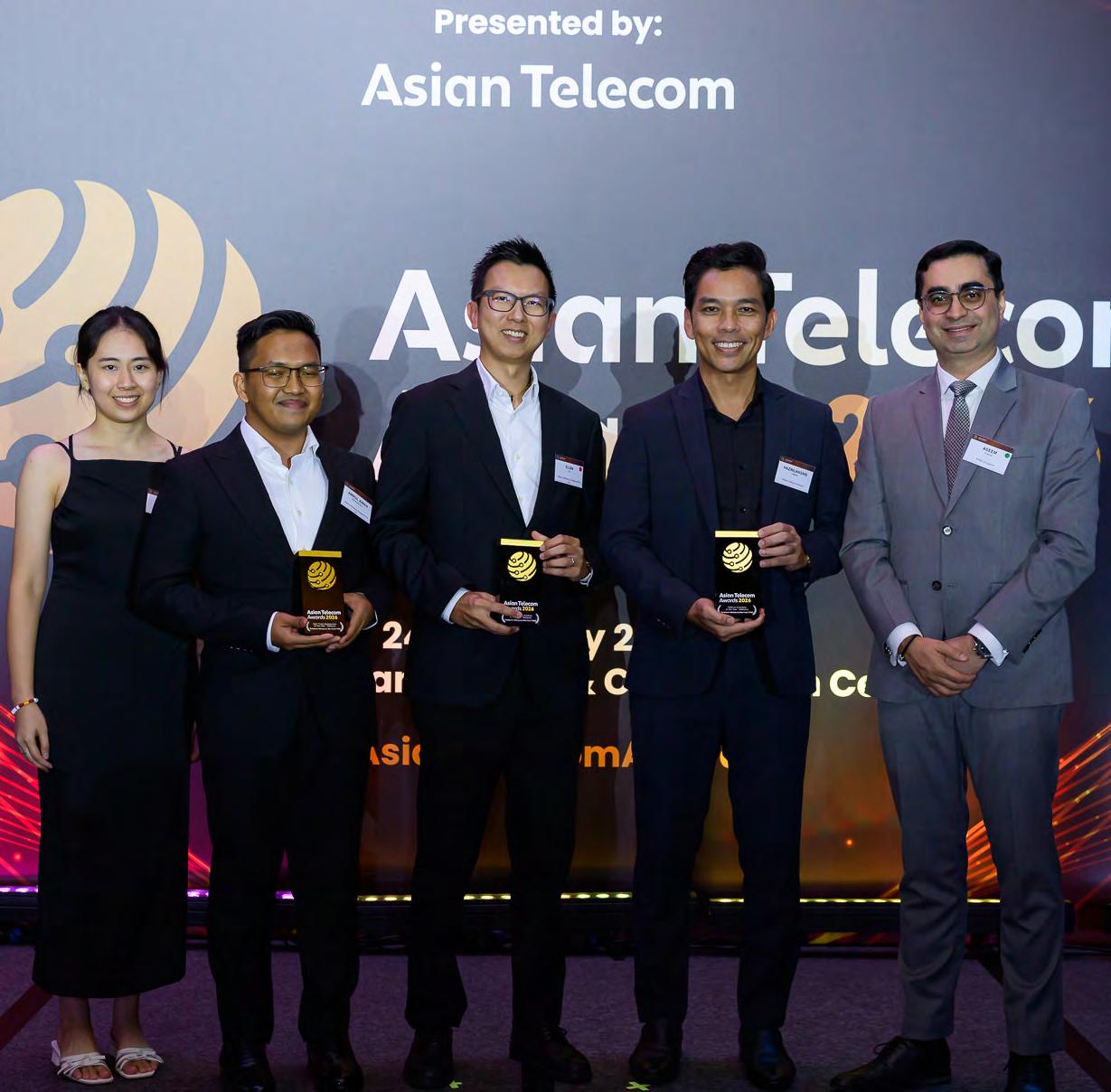
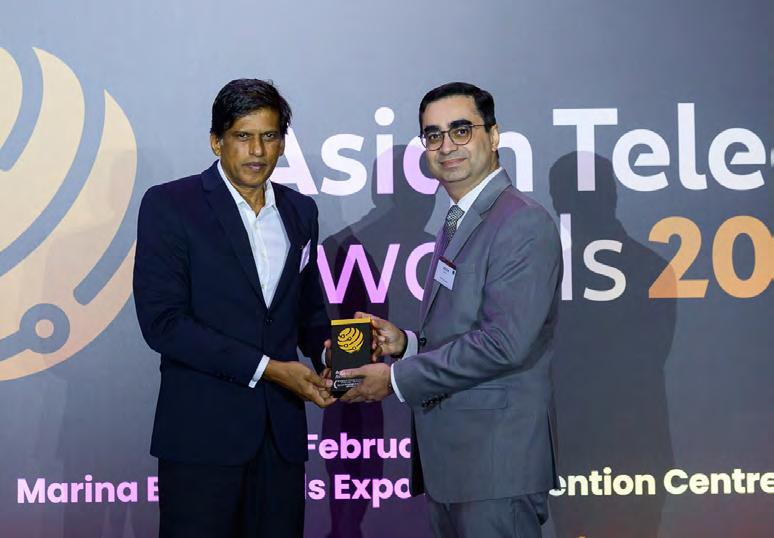
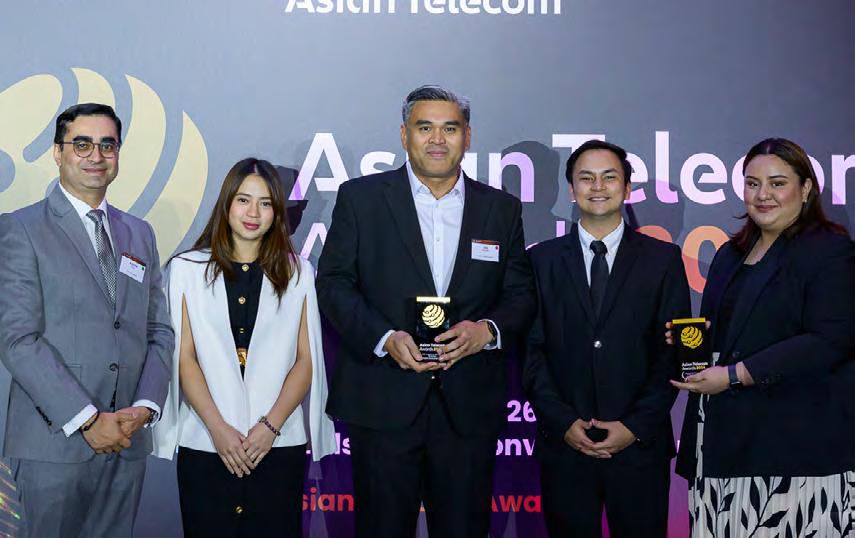
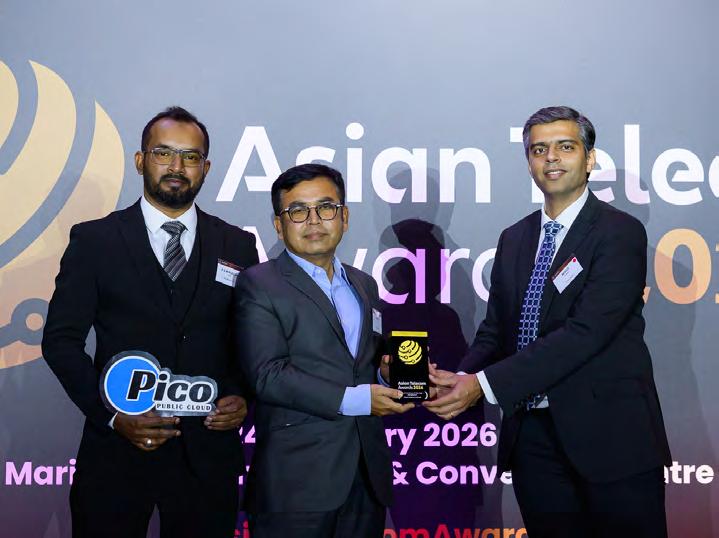
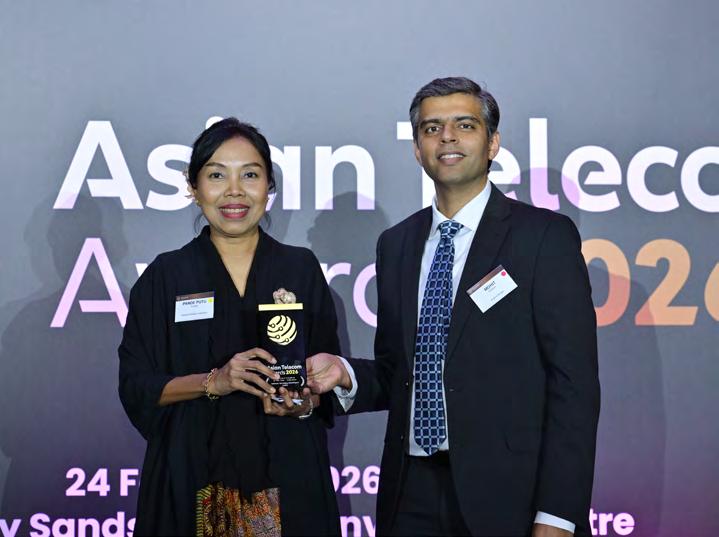
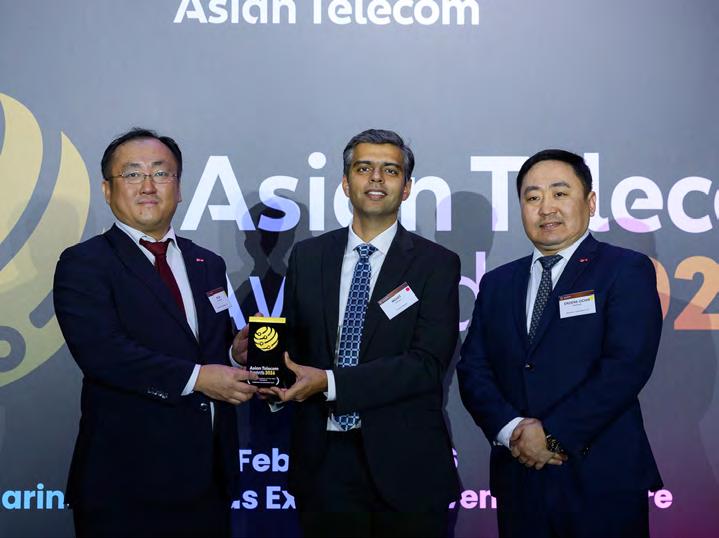
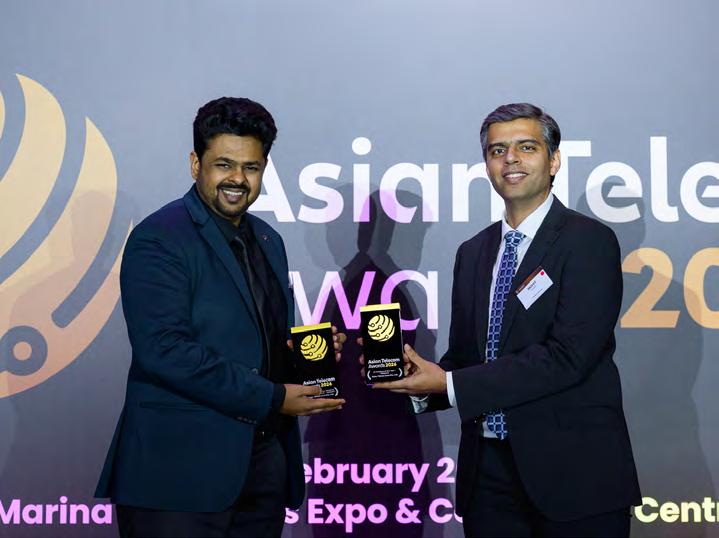
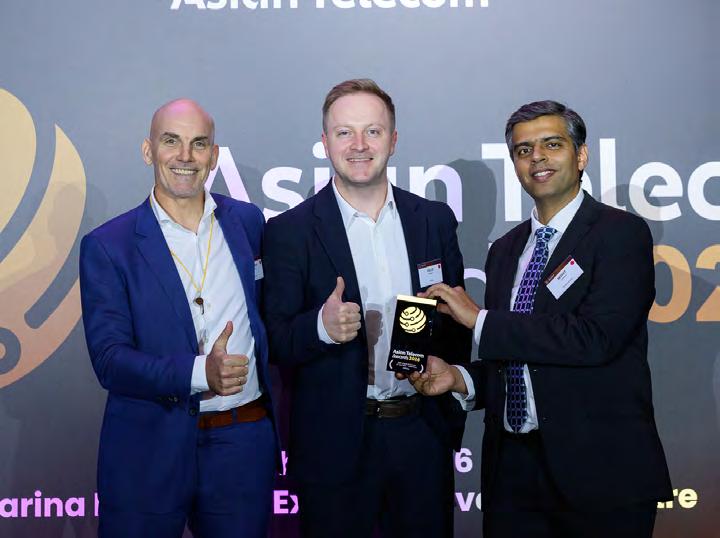
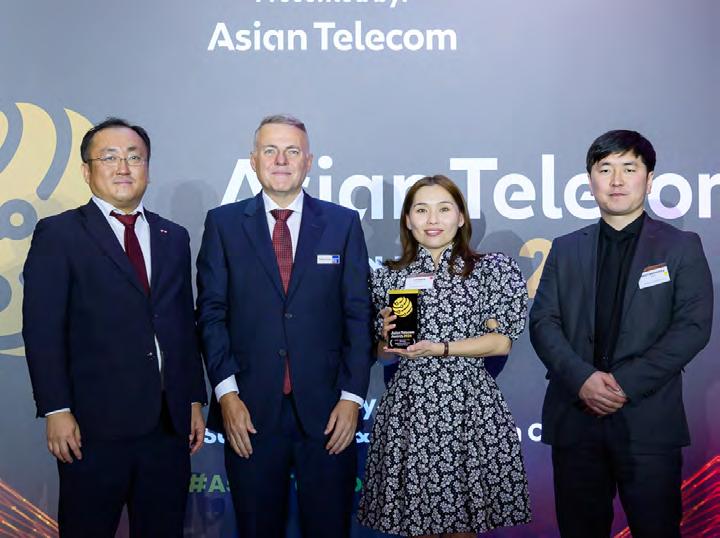
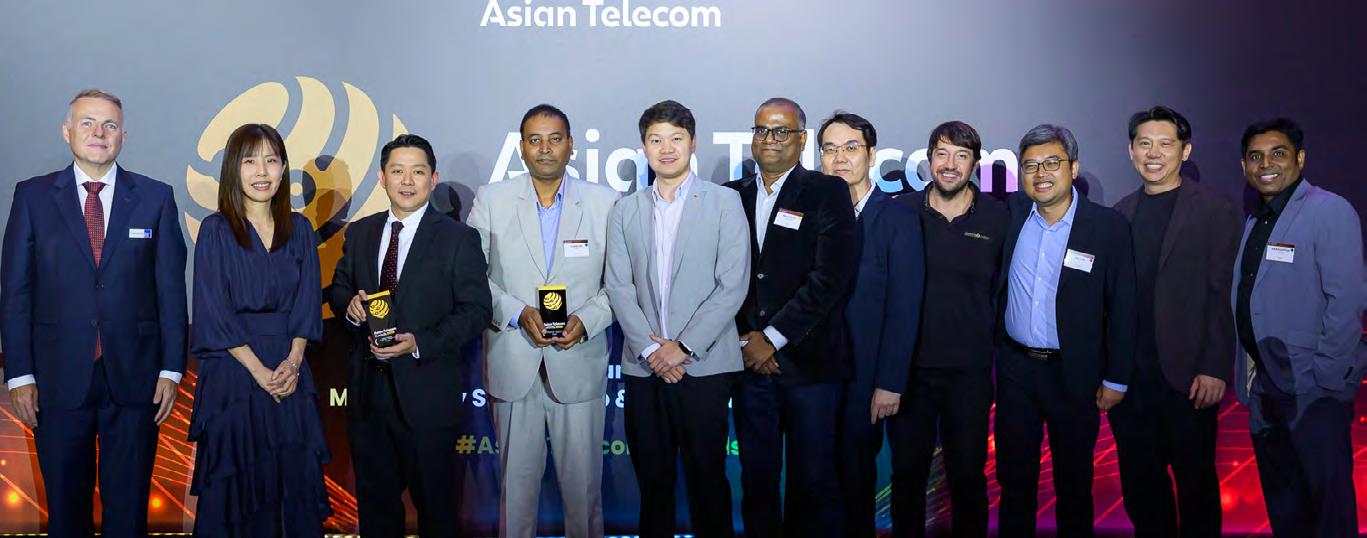
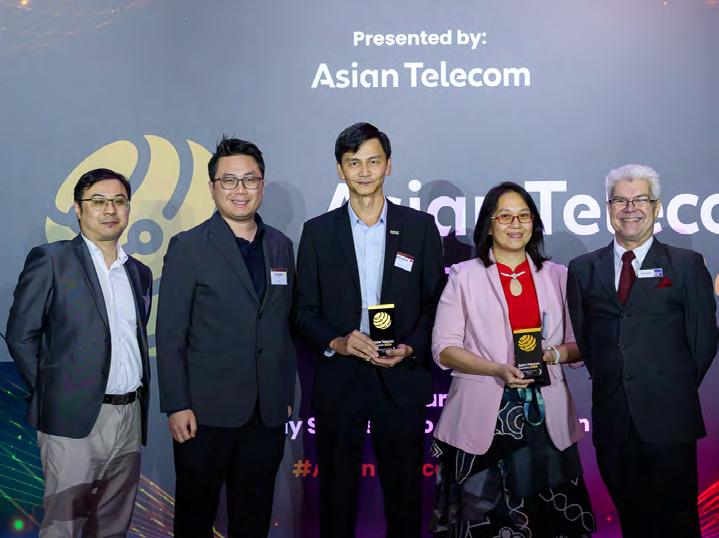
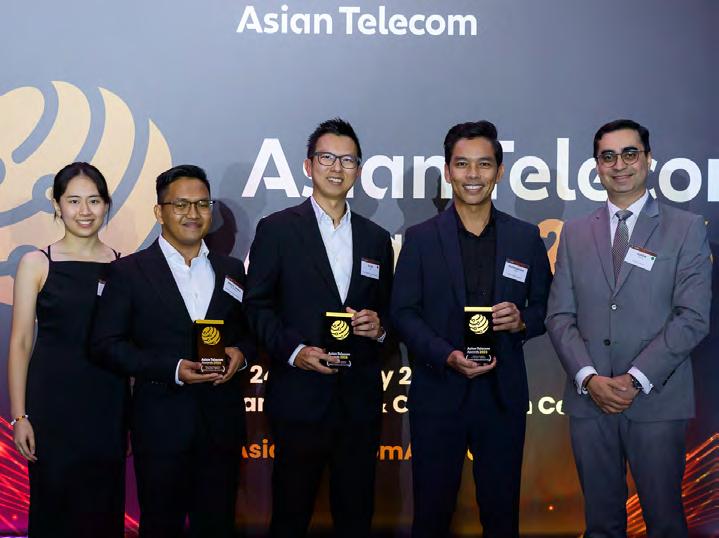
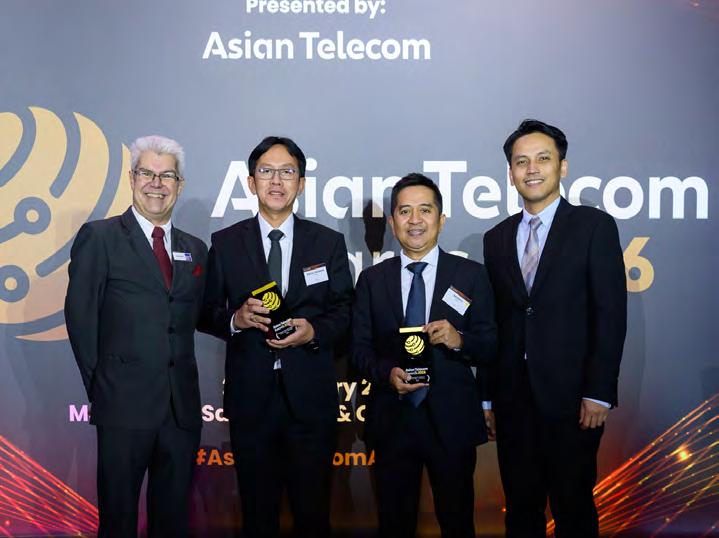
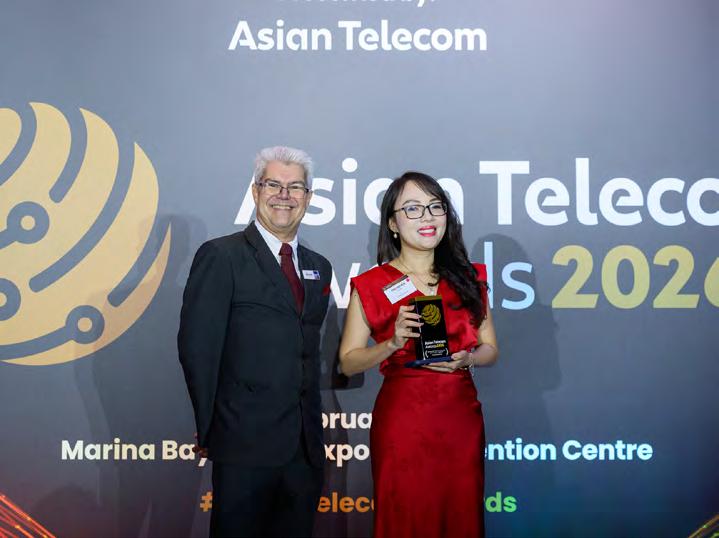
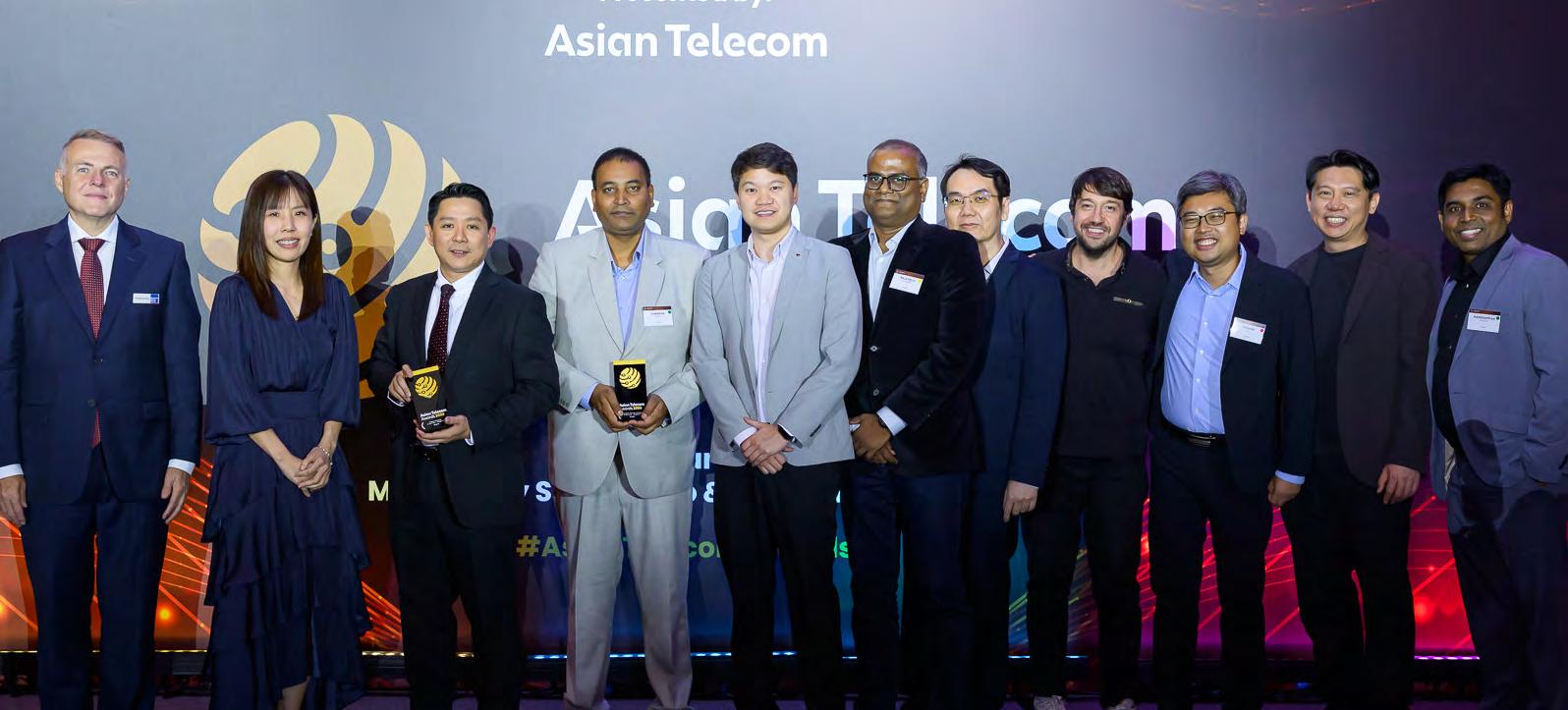
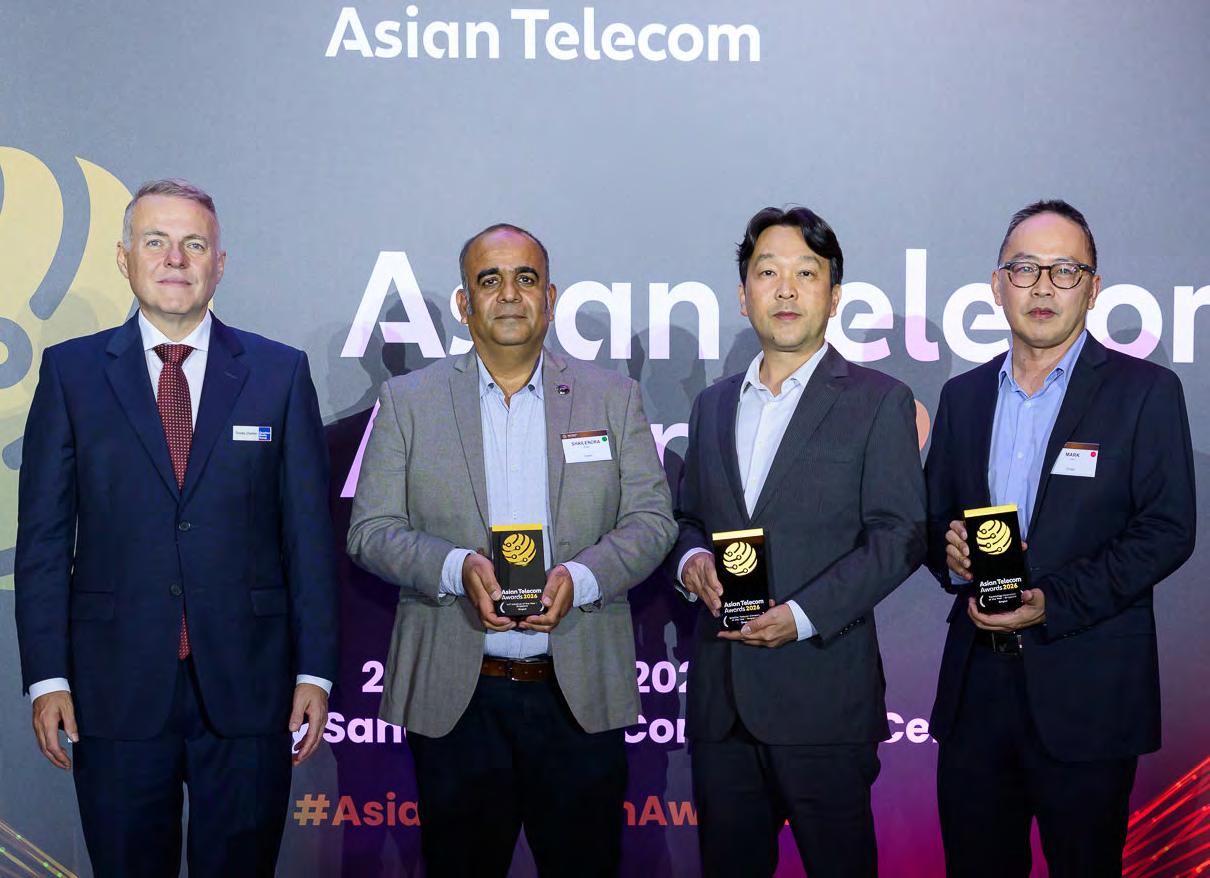
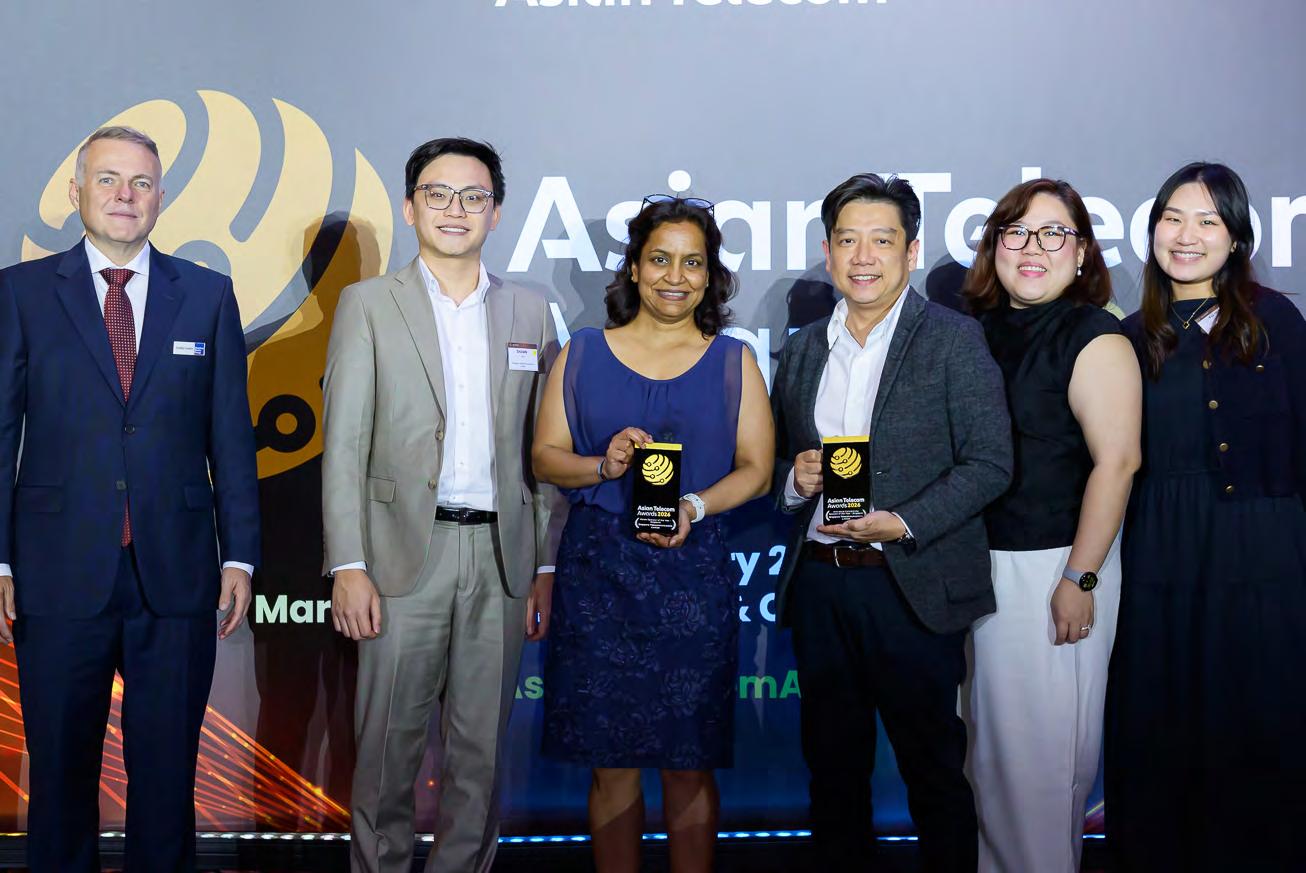
Now in its fifth year, the Asian Telecom Awards 2026 was held on 24 February 2026 at the Marina Bay Sands Expo and Convention Centre. The event was more than just a celebration of achievements but also a platform for the region’s visionary leaders to further introduce their initiatives.
The winners emerged after a meticulous evaluation process led by judges Kiran Karunakaran, Partner and Head of TMT Practice, Southeast Asia, Bain & Company; Joongshik Wang, Asean Technology, Media & Entertainment and Telecommunications
ASIANTELECOMAWARDS 2026WINNERS
6D Technologies
• Digital Initiative of the Year - India
8x8 International Pte Ltd
• Cybersecurity Initiative of the Year - Singapore
Advanced Info Service (AIS)
• B2B Client Initiative of the Year - Thailand
Batelco By Beyon
• Telecom Company of the Year - Bahrain
Beyon
• ESG Initiative of the Year - Bahrain
China Mobile International (Singapore) Pte. Ltd.
• B2B Client Initiative of the Year - Singapore Circles.Life
• Marketing & Brand Initiative of the Year - Singapore
CMC Telecom
• Telecom Company of the Year - Vietnam
Converge ICT Solutions, Inc.
B2B Client Initiative of the Year - Philippines
Cypress Telecom Limited
• Innovative Connectivity Solution of the Year - Hong Kong
Dhiraagu
• Broadband Telecom Company of the Year - Maldives
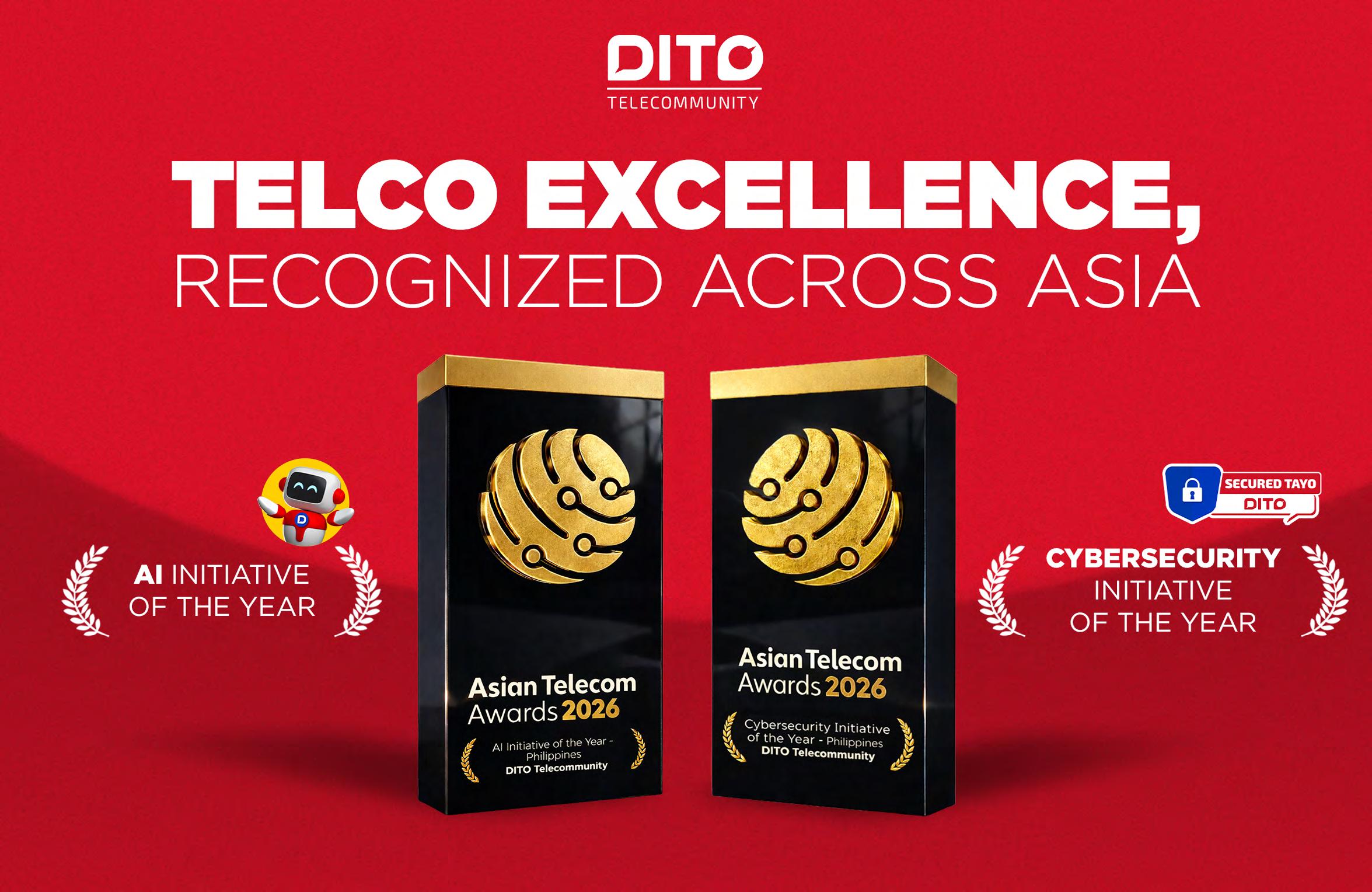
DITO Telecommunity
• AI Initiative of the Year - Philippines
• Cybersecurity Initiative of the Year - Philippines
e& UAE
• B2B Client Initiative of the Year - United Arab Emirates
• Customer Service Initiative of the Year - United Arab Emirates
• Mobile App of the Year - United Arab Emirates
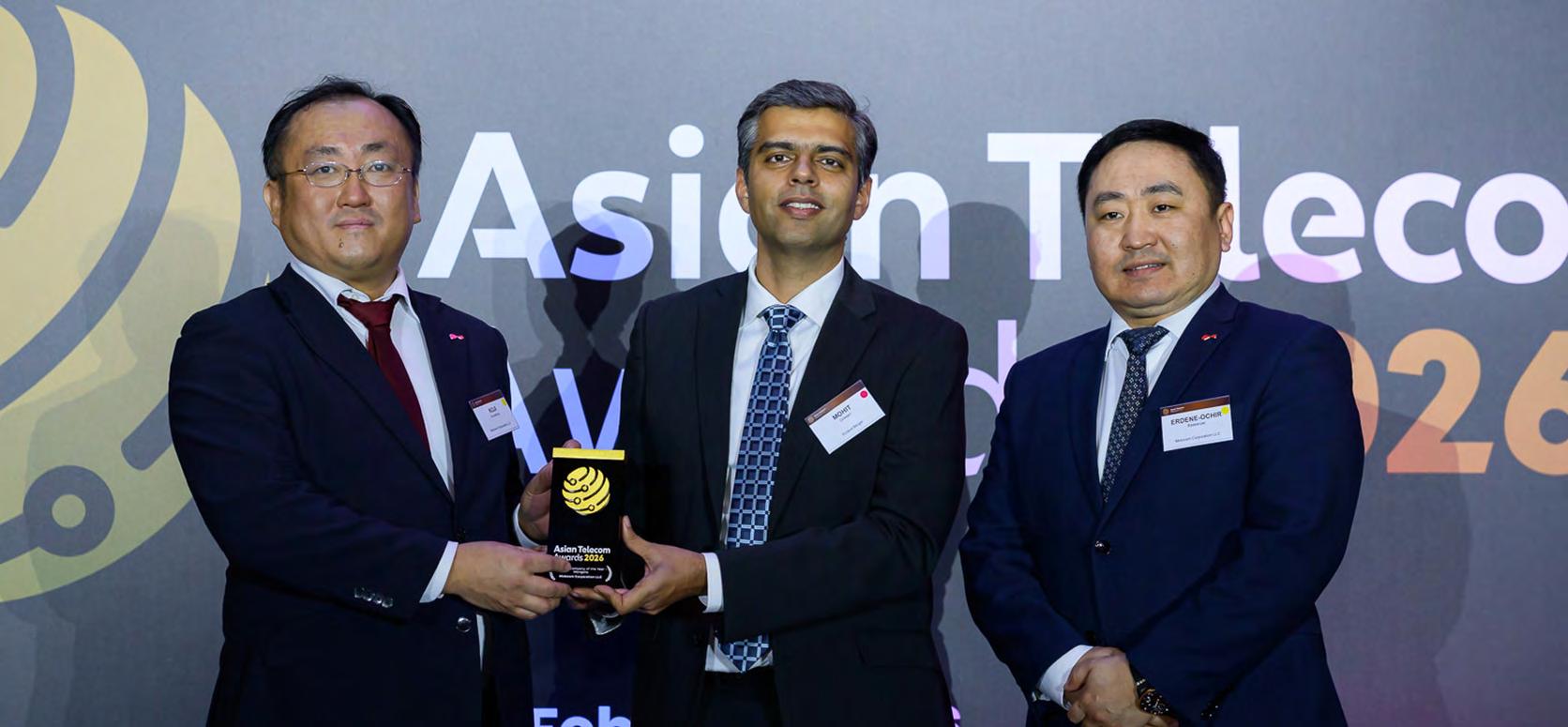
Leader, EY; Aseem Sharma, Partner, KPMG Singapore and Head of Telecom sector, KPMG Asia Pacific; Loretta Fong, Partner and Telecommunications Leader, PwC Hong Kong; and Mohit Gidwani, Partner, TMT, Roland Berger.
Gidwani discussed the key qualities that define leading telco companies as he addressed the winners at the awards programme.
"Telco industry today is at a very interesting, very complex paradigm. On one hand, you have networks and technology getting more and more complex. It's faster, it's smarter, it's in a way more expensive to deploy, and you have continuous new cycles of investments that are required. On the other hand, from the customers’ perspective across B2C and B2B, the questions are very simple: Does it work? Is it easy? Is it cheap? Frankly, can I forget about it? In this case, we really are at a very interesting paradigm, and the winners tonight have demonstrated that they clearly get this paradigm,” he said.
Below is the full list of this year’s winning companies:
Eastern Communications
• ESG Initiative of the Year - Philippines
• Marketing & Brand Initiative of the Year - Philippines
eight telecom
• B2C Client Initiative of the Year - Singapore
• Telecom Company of the Year - Singapore
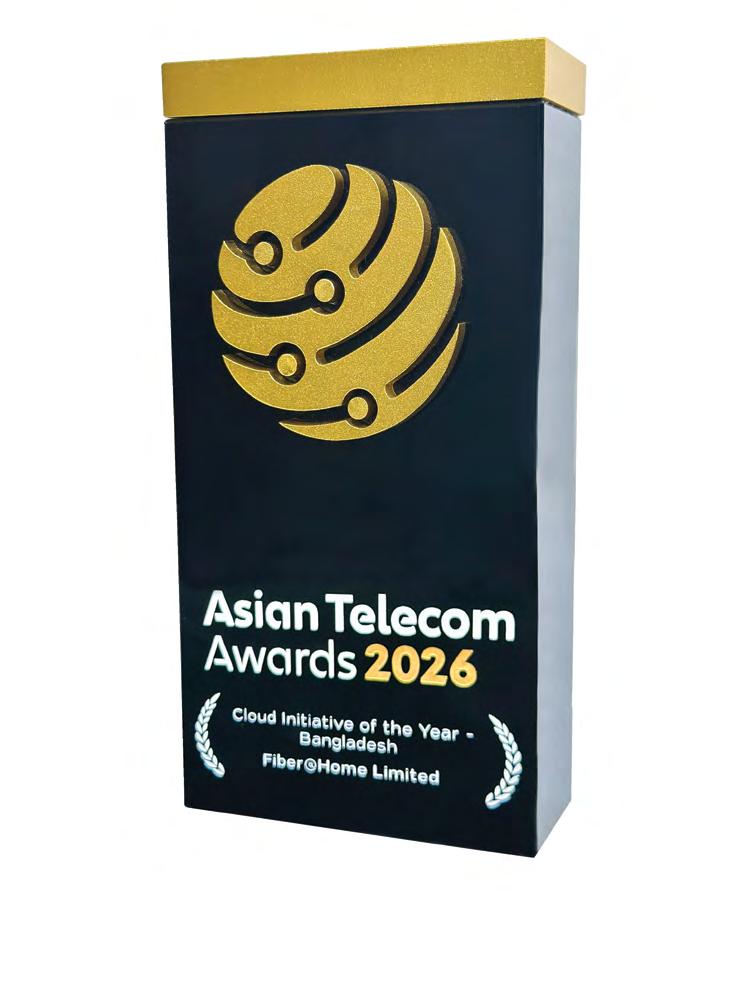
Fiber@Home Limited
• Cloud Initiative of the Year - Bangladesh
Globe Teleservices Pte. Ltd.
• AI Initiative of the Year - Malaysia
• Telecom Technology Solutions Provider of the Year - Malaysia
Grameenphone Limited
• AI Initiative of the Year - Bangladesh
• Mobile App of the Year - Bangladesh
• Marketing & Brand Initiative of the Year - Bangladesh
Imagine Sdn Bhd
• Broadband Telecom Company of the Year - Brunei Darussalam
• Marketing & Brand Initiative of the Year - Brunei Darussalam
Indosat Ooredoo Hutchison (IOH)
• B2B Client Initiative of the Year - Indonesia
Infobip
• B2C Client Initiative of the Year - Indonesia
Kcell
• B2C Client Initiative of the Year - Kazakhstan
Kerala Fibre Optic Networks Pvt Ltd
• Broadband Telecom Company of the Year - India
LG U+ and Comarch
• Digital Initiative of the Year - South Korea
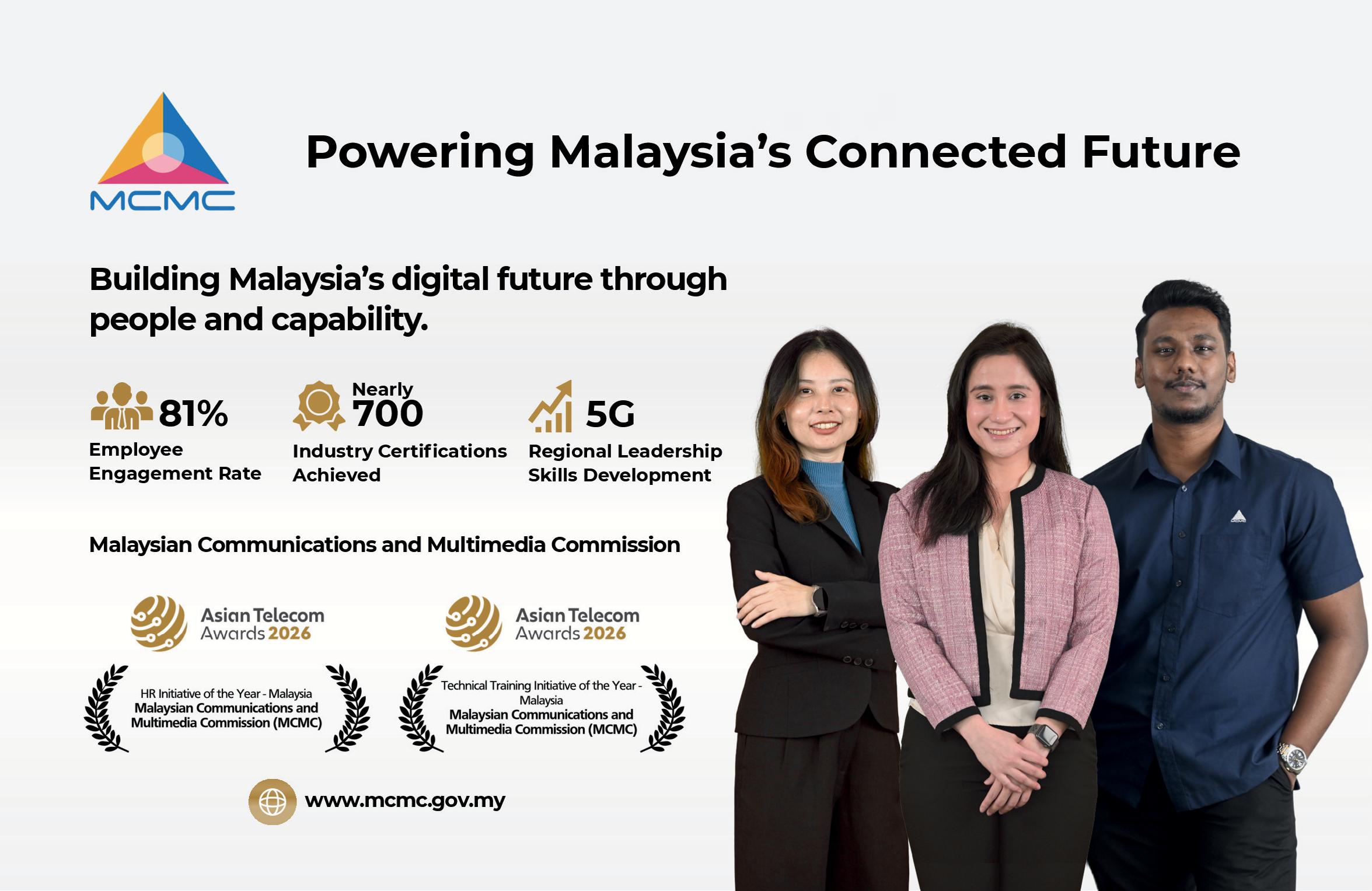
Malaysian Communications and Multimedia Commission (MCMC)
• HR Initiative of the Year - Malaysia
• Technical Training Initiative of the Year - Malaysia
Mobicom Corporation LLC
• Telecom Company of the Year - Mongolia
Mobifinance NBFI LLC, Mobicom Group
• Mobile App of the Year - Mongolia
MyRepublic Indonesia
• Broadband Telecom Company of the Year - Indonesia
• Fast-Track Deployment of the Year - Indonesia Ooredoo Kuwait
• Telecom Company of the Year - Kuwait
Plintron
• Cloud Initiative of the Year - India
• Wholesale Client Initiative of the Year - India
PLN Icon Plus
• ESG Initiative of the Year - Indonesia
• HR Initiative of the Year - Indonesia
PT Dayamitra Telekomunikasi Tbk
• Infrastructure Initiative of the Year - Indonesia
• Wholesale Company Initiative of the Year - Indonesia
PT. TELKOMSEL
• Technology Innovation of the Year - Indonesia
• Telecom Company of the Year - Indonesia
PT. Tower Bersama Infrastructure Tbk
• AI Initiative of the Year - Indonesia
• Digital Initiative of the Year - Indonesia
Robi Axiata PLC
• Digital Initiative of the Year - Bangladesh
Singapore Telecommunications Limited
• Innovative Connectivity Solution of the Year - Singapore
• Mobile Operator of the Year - Singapore
Singtel
• Customer Service Initiative of the Year - Singapore
• Digital Initiative of the Year - Singapore
• IoT Initiative of the Year - Singapore
• Satellite Telecom Company of the Year - Singapore
• Technology Innovation of the Year - Singapore
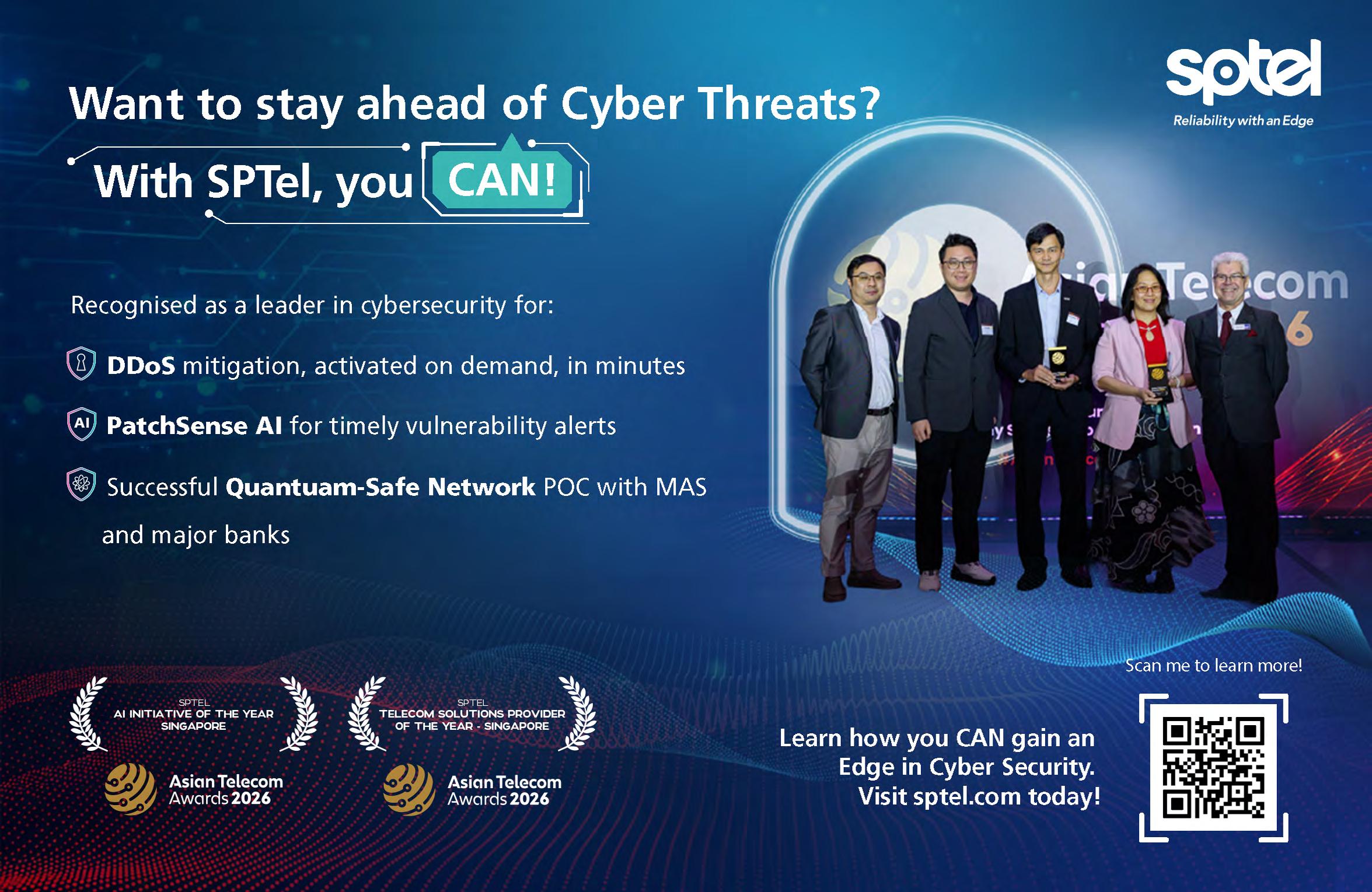
SPTel
• AI Initiative of the Year - Singapore
• Telecom Solutions Provider of the Year - Singapore
Tech Mahindra
• AI Initiative of the Year - India
Tecnotree
• AI Initiative of the Year - United Arab Emirates
• Digital Initiative of the Year - United Arab Emirates
Telecom (Fiji) Pte Limited
• Infrastructure Initiative of the Year - Fiji
Telekom Malaysia Berhad (TM)
• Fast-Track Deployment of the Year - Malaysia
• Infrastructure Initiative of the Year - Malaysia
• Telecom Company of the Year - Malaysia
Telin
• Cybersecurity Initiative of the Year - Indonesia
• Submarine Telecom Company of the Year - Indonesia
Vi Business
• Innovative Connectivity Solution of the Year - India
CUSTOMER SERVICE INITIATIVE OF THE YEAR - SINGAPORE DIGITAL INITIATIVE OF THE YEAR - SINGAPORE
INNOVATIVE CONNECTIVITY SOLUTION OF THE YEAR - SINGAPORE
Singtel Group is biggest ever winner at Asian Telecom Awards 2026, sweeping seven accolades
Singtel wins top awards in mobile, innovation, IoT, customer service, digital, and satellite telecom excellence.
Singtel
Group emerged as the biggest ever winner at the recent Asian Telecom Awards 2026, underscoring the Group’s formidable capabilities and leadership in Singapore. Its operating companies Singtel Singapore and Singtel Digital InfraCo clinched seven accolades spanning mobile performance, IoT connectivity, AI-powered customer service, digital transformation, satellite innovation, as well as 5G and multiinfrastructure AI orchestration. These awards recognise the breadth and depth of both operating companies’ capabilities. Together, they reflect the Singtel Group’s ambition to be an AIfirst technology company, embedding intelligence across its networks and platforms whilst enabling enterprises to harness AI securely and at scale.
SINGTEL SINGAPORE
Mobile Operator of the Year - Singapore & Innovative Connectivity Solution of the Year - Singapore
Singtel Singapore was conferred the awards for Singapore’s Mobile Operator of the Year - Singapore and Innovative
Connectivity Solution of the YearSingapore. The latter recognised its nationwide 5G+ rollout in May 2025, which translated next-generation network capabilities into tangible improvements in customer experience and network performance, consistently proven at large-scale public events and high-traffic transport hubs.
The company sustained its leadership through operational discipline and quality execution, using infrastructure innovation to achieve meaningful customer outcomes across every touchpoint – from retail and digital platforms to customer care and device access.
IoT
Initiative of the Year - Singapore
Singtel Singapore’s Multi-Domestic Connectivity platform won the IoT Initiative of the Year - Singapore award for enabling enterprises to manage cross-border device deployments through a single, unified interface. The platform, which supports advanced SIM configurations, policy controls, real-time
diagnostics and usage analytics across multiple markets, allows companies to operate connected devices globally with greater reliability, visibility and cost efficiency. This simplifies the management of IoT devices across different networks and regulatory environments. This capability is underpinned by Singtel Singapore’s founding membership of Bridge Alliance, which provides local network breakout, regulatory support and coverage in over 190 countries. Automotive partners, including XPENG, have already deployed nearly one million EV SIMs globally, benefiting from improved reliability, lower operating costs and faster market entry.
Customer Service Initiative of the YearSingapore
Singtel Singapore received the Customer Service Initiative of the Year - Singapore award for its AI Contact Centre, which transformed customer support across voice and digital channels by
Singtel wins top awards in mobile, innovation, IoT, customer service, digital, and satellite telecom excellence.
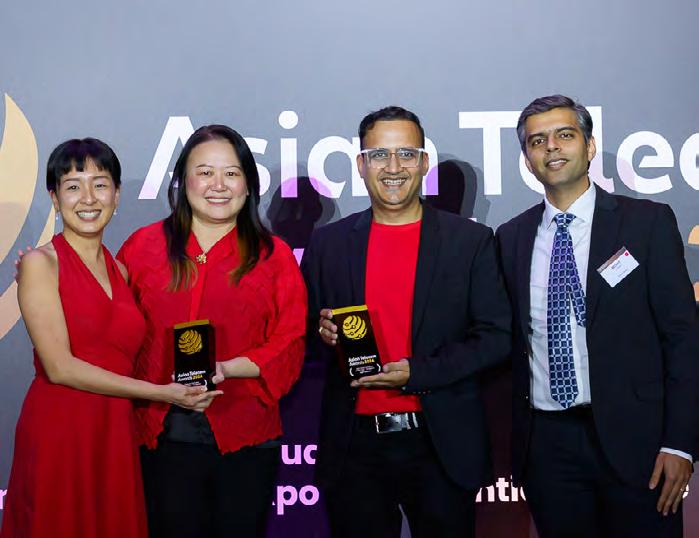
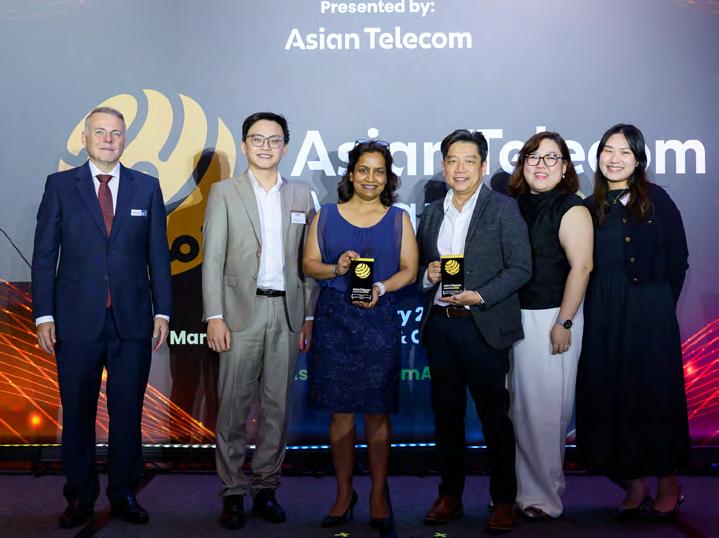
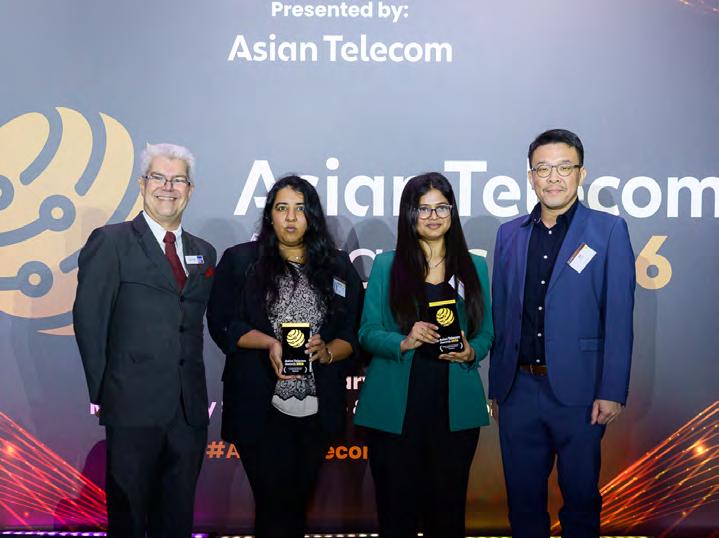
Singtel receives trophies for Digital Initiative of the Year - Singapore and Customer Service Initiative of the Year - Singapore
introducing an omnichannel generative AI framework that unified chat, voice, and agent-assist capabilities within a single operating model. A multilingual virtual assistant handles enquiries across messaging platforms and phone channels, whilst speech-to-text and voice synthesis capabilities support more complex interactions, including appointment scheduling and transaction processing. By automating routine enquiries, it freed live agents to focus on more complex customer needs. Following deployment, live agent case volume fell by 10%, resolution times for multi-turn interactions improved by 25%, call containment increased by 8% (approximately 120,000 fewer calls annually), and customer satisfaction scores rose to above 80%.
Digital Initiative of the Year - Singapore
Singtel Singapore’s FusionCore was awarded the Digital Initiative of the Year - Singapore. It is a cloud-native, low-code platform developed in-house to simplify the company’s product and service management systems, integrating previously fragmented systems that supported product launches, billing, and customer management separately. The consolidation streamlined the process, shortening time-to-launch and reducing operational overheads. As a result of FusionCore, Singtel Singapore saw a 49% increase in handset purchases
and 14.2% improvement in website conversion rates.
SINGTEL DIGITAL INFRACO
Satellite Telecom Company of the YearSingapore
Singtel Digital InfraCo received the Satellite Telecom Company of the Year - Singapore award for its Satellite Earth Stations at Bukit Timah and Seletar. These stations connect satellites in both GEO (geostationary) and LEO (low-Earth orbit) constellations in space through modern multi-orbit digital infrastructure. The stations’ operations are AI-enabled and feature electronically steered arrays, as well
as multi-band antenna systems, which have enabled Singtel Digital InfraCo to reduce service activation timelines from weeks to days whilst maintaining over 99.9% uptime. With line-of-sight to more than 30 satellites and seamless integration into Singtel's fibre core, the stations deliver broadband, emergency communications, cloud connectivity, and secure government services. The stations are Tier 4 certified from the World Teleport Association, which is the highest level awarded to teleport infrastructure demonstrating exceptional performance across uptime, security, and operational excellence.
Technology Innovation of the YearSingapore
Singtel Digital InfraCo won Technology Innovation of the Year - Singapore for the Singtel Paragon™, a platform developed in-house to unify 4G and 5G lifecycle management, edge computing, and multi-infrastructure AI orchestration. Paragon enables advanced capabilities – such as network slicing, private cloud, AI cloud services, and GPU-as-a-Service – to be deployed commercially with greater ease. Paragon also serves as the orchestration engine behind RE:AI, Singtel Digital InfraCo’s sovereign AI cloud service that enables AI workloads to scale whilst maintaining performance, latency, and data sovereignty. The platform also supports CAMARA API adoption across Asia Pacific and is patented in eight countries, making it one of the most broadly deployed and legally protected AI orchestration platforms in the region.
Singtel receives trophies for IoT Initiative of the Year - Singapore, Satellite Telecom Company of the Year - Singapore, and Technology Innovation of the Year - Singapore
Why real-time prevention is becoming a strategic priority for telecom leaders and how 8×8’s Omni Shield embeds control at the infrastructure level.
AcrossAsia’s telecommunications landscape, SMS remains missioncritical infrastructure. It powers one-time passwords (OTPs), financial alerts, logistics updates, marketing campaigns, and customer engagement at scale. In mobilefirst economies across Southeast Asia, SMS underpins banking, e-commerce, super apps, and digital public services.
Yet the ubiquity that makes SMS indispensable also makes it a prime target.
In 2023, SMS fraud cost businesses an estimated US$2.1b globally, driven by Artificially Inflated Traffic (AIT), smishing, spoofing, and fraudulent OTP triggering. For telecom operators and communications platform providers, these attacks do more than inflate enterprise messaging bills. They distort traffic flows, strain interconnect agreements, degrade delivery performance, and erode ecosystem trust. The issue is no longer detection alone – it is response speed. Fraud identified hours or days later has already caused financial and reputational damage.
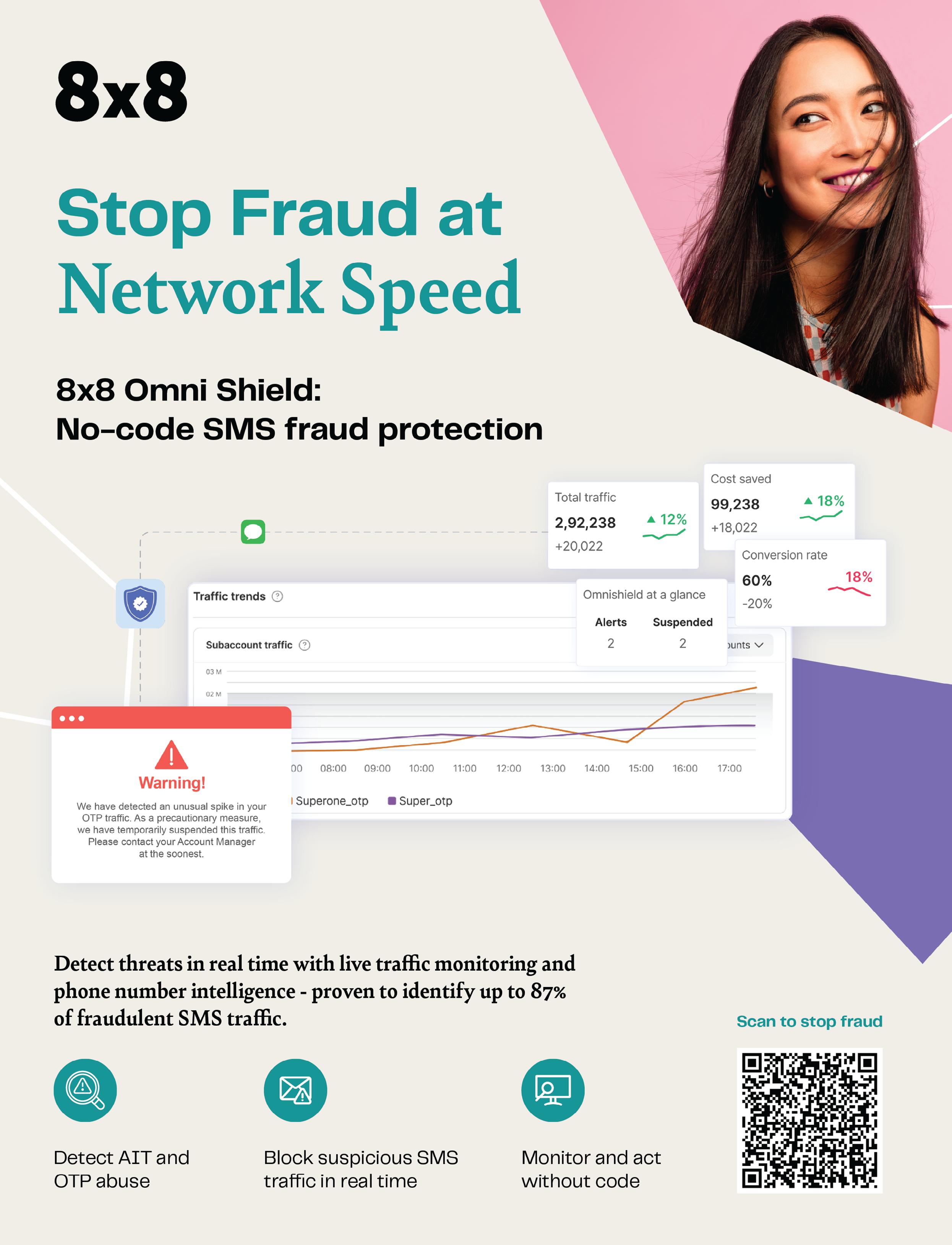
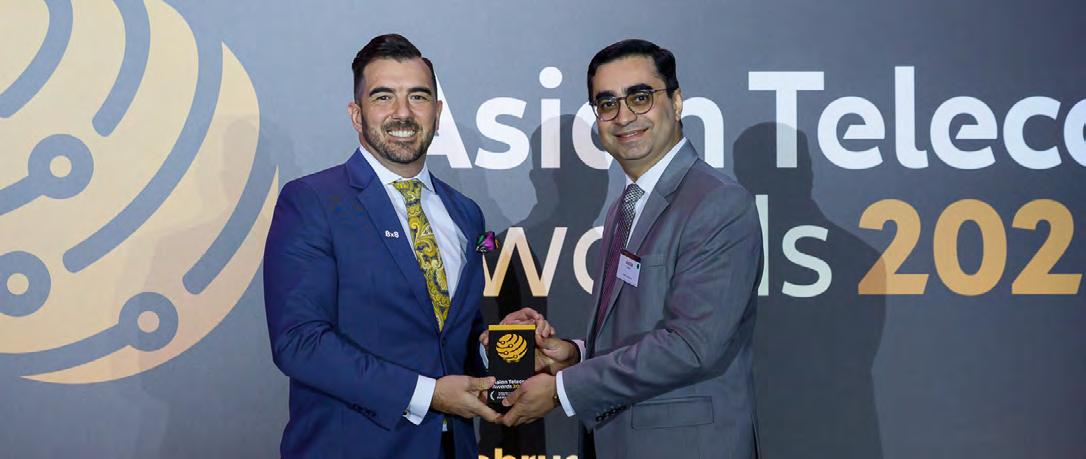
This is the context behind Omni Shield, developed by 8×8, Inc. (NASDAQ: EGHT), a global provider of integrated cloud communications and customer engagement solutions. Omni Shield was recognised as Cybersecurity Initiative of the YearSingapore at the Asian Telecom Awards 2026.
From reactive controls to real-time intervention
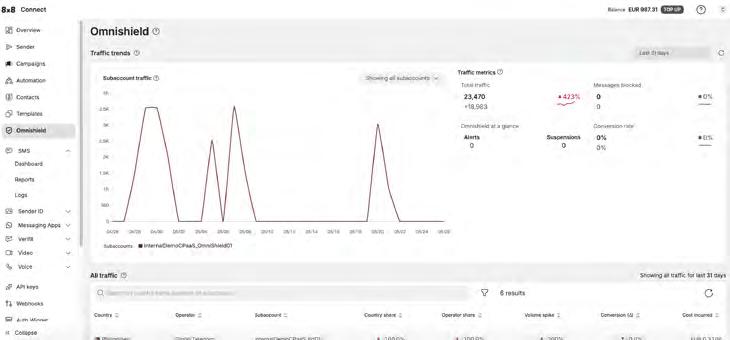
Omni Shield is embedded within 8×8 Connect, 8x8’s no-code communications platform that enables enterprises to manage global messaging campaigns. By integrating fraud prevention directly into the messaging layer, 8×8 shifts defence from reactive remediation to real-time control.
As SMS traffic flows through the platform, Omni Shield’s Traffic Anomaly Detector continuously analyses behavioural signals, including sudden spikes in volume, repeated OTP requests, irregular routing patterns, and abnormal delivery failures. Phone-number intelligence validates number legitimacy whilst operator behaviour is dynamically risk-scored.
When anomalies are detected, alerts are immediate. Organisations can trigger autosuspend or apply a one-click block within the dashboard.
“For telecom providers and enterprises alike, trust in messaging infrastructure is non-negotiable,” said Sylvain Chaperon, General Manager of 8×8. “Fraud moves at network speed, and protection must move faster. Omni Shield gives organisations realtime visibility and control, so they can stop abuse before it impacts customers, costs, or brand reputation.”
For executive leadership, this represents a structural shift: fraud control embedded at the infrastructure level rather than layered on after losses occur.
Operational control without engineering bottlenecks
A defining feature of Omni Shield is its no-code design.
Historically, fraud mitigation has relied on engineering teams, specialised analysts, or external monitoring systems. Escalation processes can delay action when speed matters most.
Omni Shield removes that constraint. Delivered through an intuitive interface within 8×8 Connect, the platform enables product, operations, and security leaders to monitor live traffic behaviour, review anomaly trends, assess operator and country risk scores, and adjust policies instantly – without custom integrations or development cycles.
Fraud defence becomes an operational governance capability. Real-time dashboards provide visibility into anomalies, message health, and conversion metrics, enabling informed decisions under pressure.
For telecom providers serving enterprise customers, embedding prevention into messaging infrastructure strengthens service assurance, protects margins, and
reinforces trust in markets where SMS underpins digital identity and financial authentication.
A layered defence architecture
SMS fraud rarely occurs in isolation. Messaging abuse intersects with identity compromise and account takeover attempts.
To address this, 8×8 positions Omni Shield within a broader protection ecosystem. Integration with a customer identity and access management (CIAM) platform enables organisations to configure secure authentication workflows using passwordless methods such as passkeys and magic links, whilst dynamically reducing reliance on SMS verification during attack scenarios.
Silent Mobile Authentication adds SIM-based network verification to confirm device possession without exposing onetime passwords, mitigating SIM-swap fraud and OTP interception.
Together, these capabilities link messaging intelligence, authentication flexibility, and network-level validation into a cohesive defence framework.
Security as infrastructure discipline
SMS volumes across Asia will continue to grow alongside regulatory scrutiny and fraud sophistication. Embedding realtime detection, operator risk intelligence, and automated intervention within the messaging layer reflects a necessary shift: fraud management must operate at infrastructure speed.
For telecom leadership, the priorities are clear: limit AIT exposure before costs accumulate, prevent OTP abuse before customers are compromised, and maintain delivery integrity as traffic scales. Real-time control and executive visibility are requirements of a resilient communications infrastructure.
For telecom providers and enterprises alike, trust in messaging infrastructure is non-negotiable
Sylvain Chaperon, General Manager of 8×8
OmniShield dashboard
Let’s Change the Way We Connect by Powering and Protecting Asia’s Digital Arteries with Advanced Cybersecurity Innovation.
Indosat Ooredoo Hutchison drives operational efficiency and elevates customer experience
The company is modernising its commercial backbone to better serve enterprise customers across Indonesia.
Indosat
Ooredoo Hutchison is reshaping how it serves enterprise customers across Indonesia, strengthening operational performance and customer experience through a comprehensive modernisation of its commercial backbone.
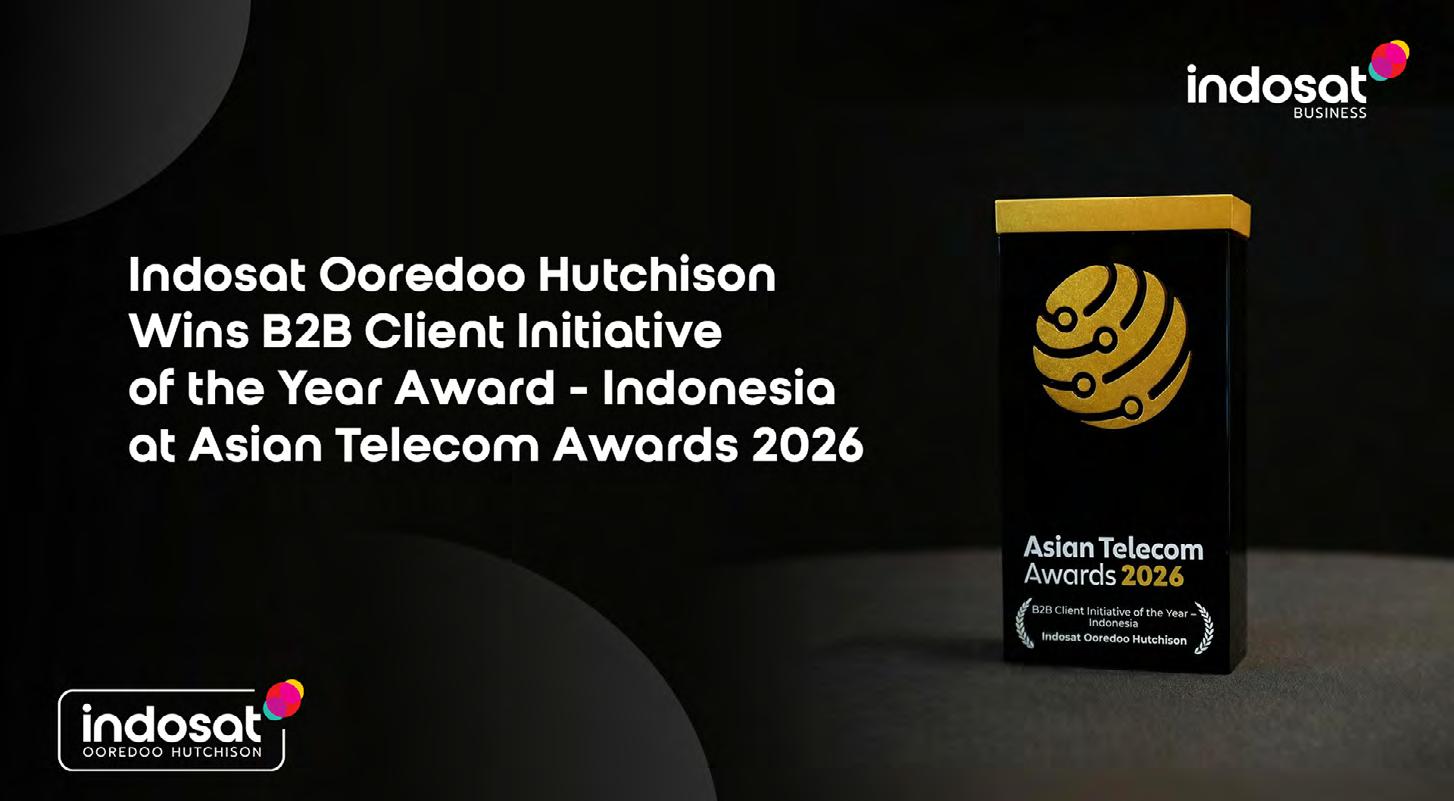
The transformation recently earned regional recognition at the Asian Telecom Awards 2026 in Singapore, where the company was named B2B Client Initiative of the Year - Indonesia. The recognition reflects a broader shift underway within the organisation, one focused on speed, scalability, and disciplined execution.
Redesigning the lead-to-order journey
As Indonesia’s digital economy expands, enterprise clients expect more than connectivity. They demand integrated solutions, faster response times, pricing transparency, and reliable delivery. In such an environment, operational complexity can become a constraint on growth. Indosat Ooredoo Hutchison chose to address that complexity directly.
The company redesigned its Lead to Order journey, the process that moves an opportunity from initial engagement to quotation and service activation. At the centre of the change is a modern Configure Price Quote platform integrated with an upgraded Order Management system.
In practical terms, sales teams can now generate structured and accurate quotations more quickly. Products are standardised within a centralised catalogue,
and pricing logic is embedded into the system. Approvals that once required repeated coordination are now governed by automated workflows. This reduces delays while strengthening commercial discipline.
Delivering tangible results for enterprise clients
The results are tangible. Quotation turnaround times have shortened, enabling enterprise clients to move faster in their decision-making. Product launches are executed more efficiently. Order accuracy has improved as automated validation reduces manual errors and rework. Internal coordination across sales, product, finance, and operations is now more transparent and accountable.
For enterprise customers, these improvements translate into greater certainty. Businesses investing in digital transformation operate on defined timelines and budgets. Delays or inconsistencies in commercial proposals can disrupt strategic initiatives. By strengthening its internal execution model, Indosat Ooredoo Hutchison aligns sales commitments with operational readiness.
“This initiative is not merely about upgrading systems,” said M. Danny Buldansyah, Director and Chief Business Officer of Indosat Ooredoo Hutchison. “It is about building a stronger operational
foundation so we can serve enterprises with speed and reliability. When our processes are structured and scalable, our customers can focus on growth rather than coordination.”
The modernisation also reinforces Indosat’s broader TechCo ambition. Enterprise demand increasingly spans connectivity, mobile, data centre and cloud, cyber security, data analytics, IoT, and enterprise applications. Delivering integrated solutions across these domains requires a commercial engine capable of managing complexity without slowing execution.
The new ecosystem provides that foundation. It enables structured bundling of services, consistent governance across product lines, and greater visibility throughout the customer journey. This strengthens Indosat’s ability to scale enterprise business sustainably.
Collaboration behind the transformation
The transformation was executed through close collaboration across B2B leadership, digital teams, IT, product management, finance, and operations, supported by Deloitte as a strategic partner. It reflects leadership commitment to ensuring that operational excellence becomes a growth enabler rather than an internal constraint.
In a competitive digital landscape, differentiation is increasingly defined by execution. Enterprises value partners who can respond quickly, price accurately, and deliver consistently. Operational efficiency and customer experience are therefore interconnected drivers of long-term value. Recognition at the regional level affirms the impact of this journey. More importantly, it signals that Indosat Ooredoo Hutchison is building the capabilities required to support Indonesia’s evolving digital economy. By strengthening its commercial backbone and elevating service delivery standards, Indosat Ooredoo Hutchison is not only improving internal performance. It is positioning itself as a trusted enterprise partner capable of delivering technology that enables sustainable growth.
It is about building a stronger operational foundation so we can serve enterprises with speed and reliability
Mobicom Corporation LLC wins at Asian Telecom Awards 2026
The company drives nationwide 5G adoption and AI-powered digital services for Mongolia.
MobicomCorporation LLC won Telecom Company of the Year - Mongolia in the Asian Telecom Awards 2026, recognising its leadership in next-generation connectivity, digital services, and sustainable impact. The company is Mongolia’s leading communications service provider, serving 1.7 million mobile subscriptions in a population of 3.4 million.
As the nation’s first and largest telecommunications group, Mobicom Corporation LLC delivers mobile, fixed broadband, enterprise ICT, fintech, and digital lifestyle services nationwide.
From telco to techco
Over the past two years, the company has accelerated its transition from a traditional Telco to a TechCo, expanding next-generation connectivity, scaling digital platforms, and embedding AI across operations. During this period, its digital customer base has doubled, with digital services now contributing 70% of total revenue, reflecting
a significant shift in customer behaviour and business model.
In 2025, the company launched Mongolia’s next-generation 5G NSA network, covering all nine districts of Ulaanbaatar, 21 provincial centres, 12 soums, and major mining regions. Mobicom Corporation LLC now operates the country’s fastest and most resilient mobile network, validated by Ookla, achieving 12.5% 5G data offload within six months, amongst Asia’s strongest earlystage adoption levels. The network maintains 90% VoLTE penetration and a nationwide MOS score of 4.2.
Improved digital infrastructure
Home connectivity improved through nationwide fibre expansion and advanced services, including Mongolia’s first 100 Mbps and 1000 Mbps home internet offerings and Wi-Fi 6 adoption. Private 5G pilots,
Tier-2 data centres, and enterpriseready platforms such as NB-IoT and VoWiFi further strengthen the nation’s digital infrastructure. Sustainability and social impact are core to Mobicom Corporation LLC’s strategy. Its Smart Education Program reached 37,000 students, improving attendance and teaching efficiency. Renewable-energy systems across 120 sites prevent 3,000 tons of carbon dioxide annually, whilst inclusion initiatives and high-speed connectivity enhance digital access and community resilience nationwide.
The Asian Telecom Awards is a premier awards programme that recognises telecom companies across the Asia Pacific for their contributions to industry advancement, technological innovation, and digital infrastructure development.
The company has accelerated its transition from a traditional Telco to a TechCo
Mobicom Corporation LLC
https://www.linkedin.com/
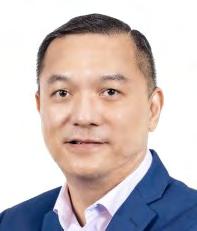
Why ISP collaboration is reshaping video delivery in Asia
Live online events in Asia have entered a new era. What were once exceptional digital streams are now national-scale moments capable of attracting tens of millions of concurrent viewers. Across the region, premium sports matches, entertainment finales, esports tournaments, and cultural celebrations are streamed at a scale that rivals traditional broadcast television.
According to the Asia Video Industry Report 2026, the Asia-Pacific online video sector was projected to generate around $70b in revenue by the end of 2025. Five markets – China, Japan, Australia, South Korea, and India – account for the vast majority of this value, with China alone contributing nearly half. Growth is being driven not only by subscriptions and advertising, but by rising investment in premium live content that commands simultaneous, mass audiences.
These moments carry uncompromising expectations. Viewers demand instant start-up, uninterrupted playback, and broadcastgrade quality across any device and network.
When performance falters during a major live event, the impact is immediate and highly visible. What might once have been considered a technical issue now becomes a reputational risk for both the content platform and the network delivering it.
Why traditional delivery models are under strain
This transformation is forcing a rethink of how streaming infrastructure is designed. Traditional centralised delivery models, heavily dependent on global third-party Content Delivery Networks (CDN) and long-haul transit routes, often struggle to cope with the sharp and predictable traffic spikes generated by national-scale events. In densely populated markets, where millions connect simultaneously, congestion can escalate quickly if delivery remains detached from the local network fabric.
Video today represents most of the internet traffic across many regional networks. Without closer coordination between content platforms and network operators, scaling capacity becomes increasingly reactive and cost-intensive. Simply adding bandwidth is no longer sufficient; performance must be engineered with precision, particularly for live content where there is no margin for delay or buffering.
Collaboration as a strategic imperative
Against this backdrop, collaboration between Internet Service Providers (ISP) and delivery partners is moving from a technical enhancement to a strategic necessity. Integrating delivery capabilities directly within operator networks enables content to be cached and served closer to end users, reducing reliance on external transit and improving latency stability during peak demand.
Deeper technical coordination also allows operators to anticipate major live events and align network resources accordingly. Rather than responding to congestion after it appears, capacity can be managed proactively to maintain consistent performance at scale.
This approach strengthens the quality of experience whilst improving the efficiency of the existing infrastructure.
Importantly, it also redefines the operator’s role. ISPs are no longer
IAN FRANKLYN Chief Revenue Officer MainStreaming
positioned purely as connectivity providers, but as active participants in the performance of premium digital services.
By gaining visibility into traffic flows and optimising how content moves across their networks, they can increase infrastructure productivity and build stronger partnerships with content platforms.
From cost pressure to commercial opportunity
The implications are not only technical but economic. As streaming dominates data consumption, unmanaged traffic growth can erode margins and increase transit dependency. When operators are structurally involved in delivery ecosystems, however, traffic becomes more predictable and commercially aligned.
Capacity-aware frameworks make it possible to better match network resources with high-value live events. Premium content that demands guaranteed reliability can be supported through structured performance agreements, opening space for new revenue models and deeper strategic alignment between operators and platforms.
Why APAC’s growth amplifies the need
The urgency of this model is particularly evident in fast-scaling Southeast Asian markets such as Indonesia, Vietnam, and the Philippines. These countries combine rapid digital adoption, high mobile video consumption, and growing investment in local premium content. At the same time, the region faces a parallel and increasingly sophisticated challenge: piracy.
In several markets in the Asia-Pacific region, piracy rates exceed 50%, and the problem is evolving beyond traditional torrent sites towards social media platforms, messaging apps, and over-the-top (OTT)-like pirate services.
For operators and content platforms, this is not only a rights issue but a network and economic one. Illegitimate streams consume bandwidth, distort traffic patterns, and directly undermine the monetisation of premium live sports and entertainment.
Addressing this threat requires more than regulatory intervention or site blocking alone. As pirate services rapidly migrate across domains and applications, visibility at an infrastructure level becomes critical. Closer coordination between ISPs and delivery partners enables better detection of traffic anomalies, faster response to unauthorised redistribution, and more intelligent traffic management overall.
When protection mechanisms are embedded within the delivery architecture itself, enforcement becomes more scalable and resilient.
The convergence of accelerating video demand, infrastructure complexity, and evolving piracy tactics is reshaping the region’s digital landscape. In high-growth APAC markets, deeper ecosystem collaboration represents a structural evolution in how streaming networks are designed, governed, and protected.
By aligning network operators, delivery partners, and content platforms around shared performance and protection objectives, the industry can transform exponential traffic growth from a structural strain into a long-term strategic advantage.