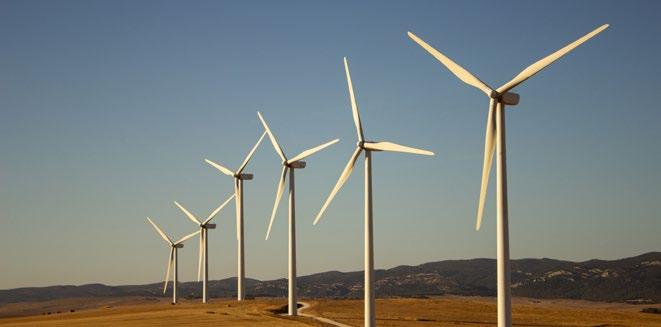
We move big things to zero with future-fuel engines.
Our experts design and engineer efficient electricity generators running on synthetic natural gas (SNG), biogas and biofuels. Our gas engines already operate with up to 25% hydrogen. Full hydrogen combustion is coming soon. We’re also scaling up green hydrogen production. Together, we can create clean energy.
everllence.com
PERMIT NO. MDDI (P) 038/07/2025
PUBLISHER & EDITOR-IN-CHIEF Tim Charlton
EDITORIAL MANAGER Tessa Distor
PRINT PRODUCTION EDITOR Vienna Verzo
LEAD JOURNALIST Vincent Mariel Galang
JOURNALISTS Alec Maquiling-Cruz Ibnu Prabowo Miguel Dumlao
GRAPHIC ARTIST Cathlyn De Raya
EDITORIAL ASSISTANT Dylan Afuang
COMMERCIAL MEDIA TEAM Jenelle Samantila Dana Cruz Danielle Goh
AWARDS Julie Anne Nuñez-Difuntorum awards@charltonmediamail.com
EDITORIAL ap@charltonmediamail.com
SINGAPORE
Charlton Media Group 101 Cecil St. #17-09 Tong Eng Building Singapore 069533 +65 3158 1386
HONG KONG Room 1006, 10th Floor, 299QRC, 287-299 Queen’s Road Central, Sheung Wan, Hong Kong +852 3972 7166
MIDDLE EAST
FDRK4467,Compass Building,Al Shohada Road, AL Hamra Industrial Zone-FZ,Ras Al Khaimah, United Arab Emirates
PUBLISHED BY Charlton Media Group Pte Ltd
PRINTED BY Times Printers Private Limited 18 Tuas Avenue 5, Singapore 639342 www.timesprinters.com A member of Times Publishing Limited
Can we help?
Editorial Enquiries: If you have a story idea or press release, please email our news editor at ap@charltonmedia.com. To send a personal message to the editor, include the word “Tim” in the subject line.
Media Partnerships: Please email ap@charltonmedia.com with “Partnership” in the subject line.
For subscriptions, please email: subscriptions@charltonmedia.com
Asian Power is published by Charlton Media Group. All editorial is copyright and may not be reproduced without consent. Contributions are invited but copies of all work should be kept as Asian Power can accept no responsibility for loss. We will however take the gains.
Sold on newstands in Singapore, Malaysia, Hong Kong, London, and New York.
FROM THE EDITOR
Power demand is rising faster than systems can adapt, forcing policymakers and operators to prioritise reliability alongside expansion. Indonesia is already acting on that shift. It has committed to a 2032 nuclear launch, returning firm baseload to the centre of its energy mix. Read more on page 12.
That same priority is shaping decisions elsewhere. In Singapore, policymakers are locking in long-term LNG supply and centralising procurement to manage volatility and support an expanding renewable mix. See full story on page 16.
On page 18, Concord New Energy is committing over $1b to expand wind, solar, and storage across high-growth markets.
But new capacity is exposing structural limits. Power demand is rising faster than grid infrastructure, increasing pressure on utilities to upgrade networks and deploy new technologies. See full story on page 14.
As systems stretch, operators are turning to controllable sources. Tuas Power is converting its Tembusu plant to run fully on biomass, reinforcing its role as stable, dispatchable power. Read more on page 10.
Finally, we reveal the winners of this year’s Asian Power Awards, alongside the Asian Oil & Gas Awards, Asian Water Awards, and the Asian Waste Management Awards. Pages 22 to 29 highlight the top performers leading change in the energy industry.
Tim Charlton
Asian Power is a proud media partner and host of the following events and expos:
News from asian-power.com
Daily news from Asia
power grid investment reaches $359b in 2024: report
Investment in power grids grew by 14% in 2024 to hit $359b, or 1.9 times short of the $671b annual investments needed to be reached between 2025 and 2030. The growth was 14% up the average from 2022 and 2023, and the investments were made to support renewables, EVs, and heat pumps.
Energy Development Corp. (EDC) is planning major upgrades to its geothermal power facilities in Leyte, Philippines, to improve their efficiency, extend plant life, and ensure sustainable operations. EDC operates three geothermal plants in the Tongonan Geothermal field.
Japan should build its RE supply chain including boosting sourcing ties with key players to lower costs, as it aims for as much as 50% clean power generation by 2040 under its updated roadmap, an energy consultant said. Building it locally could raise energy costs and create jobs.
Australia's State Electricity Commission has confirmed major steps forward on the Delburn Wind Farm, Victoria’s first publicly owned, utility-scale wind project, to be built near the Latrobe Valley. Once operational in 2028, the wind farm will generate up to 205 megawatts of electricity.
SG-based Vanda RE is in talks with potential buyers for the clean energy it expects to generate from its 2 GWp solar and 4.4 GWh energy storage project in Indonesia’s Riau Islands. The project is amongst several granted conditional import licenses by Singapore’s Energy Market Authority.
SG’s EDB has issued a closed call for proposals to look into biomethane’s potential for power generation and industrial use. “Biomethane enables emissions abatement without costly retrofits, as it can make use of the current natural gas infrastructure in Singapore,” EMA noted.
Global
Victoria’s Delburn project could power 130,000 homes by 2028
Energy Development Corp. to upgrade Leyte geothermal plants
Vanda RE seeks SG energy buyers for Indonesia solar-storage project
Japan faces renewable energy supply chain conundrum
Singapore eyes biomethane for energy sector decarbonisation
Serentica powers India’s hard-to-abate industries with reliable, round-the-clock renewable energy, through wind, solar, and storage. We deliver performance, precision, and sustainability.
INDIA DEPLOYS LOCAL REACTORS TO SCALE NUCLEAR
India has laid out its strategy to achieve its goal to develop 100 gigawatts (GW) of nuclear energy generation by 2047.
India’s Department of Atomic Energy said achieving the goal has a two-pronged strategy. This includes establishing large reactors such as 700 megawatt (MW) indigenous Pressurised Heavy Water Reactors (PHWRs) and large capacity imported reactors at green field sites for rapid expansion.
Expanding capacity
Also part of the strategy is building small reactors, such as 200 MW Bharat Small Modular Reactor (BSMR-200) and 55 MW Small Modular Reactor (SMR-55), which are being designed and developed for brown field sites.
“Necessary technology for deployment of these reactors is available in the country and majority of equipment are within manufacturing capability of Indian industries with technological handholding by Bhabha Atomic Research Centre (BARC),” the department said in reply to a parliamentary question.
“The mission is further supported by R&D with objective to develop indigenous advanced reactors comprising safety features, its fuel cycles, and hydrogen production for decarburising transport sector & process industry,” it added.
India is looking into opening its nuclear energy sector to the private sector as it eyes expanding its capacity to 100 GW.
“Just as we opened space innovation to the private sector, we are now taking steps in another very important sector. We are moving toward opening the nuclear sector as well,” said Indian Prime Minister Narendra Modi.
SG turns to regional grids for clean power
Energy opportunities in landconstrained Singapore are shifting away from adding generation capacity towards improving system flexibility, as the city-state works towards importing about 6 gigawatts of low-carbon electricity by 2035.
“With limited domestic resources but strong financial capacity, Singapore’s most attractive opportunities lie in enabling regional supply and system flexibility rather than expanding local generation,”
Alnie Demoral, Asia energy analyst at independent think tank Ember, told Asian Power.
Singapore has moved from cautiously exploring solar power to actively shaping Southeast Asia’s cleanenergy ecosystem, she said.
As electricity demand rises and the country eases its reliance on gas, momentum has built around crossborder imports of solar, wind and hydropower, alongside large gridinterconnection projects.
That shift has triggered a wave of activity in neighbouring markets, especially Indonesia, where developers are advancing utility-scale solar-plusstorage projects and subsea cables
designed to supply a meaningful share of Singapore’s future clean electricity, she said in an exclusive interview.
The Energy Market Authority has issued conditional approvals to 11 projects to import low-carbon power from Australia, Cambodia, Indonesia, Sarawak in Malaysia, and Vietnam.
To support these efforts, Singapore Energy Interconnections Pte. Ltd. was established in April 2025 to develop and operate cross-border transmission infrastructure.
For lenders, the vision of a regional power network represents a long-dated but important opportunity.
“The ASEAN Power Grid is certainly a longer-term play from an investment financing point of view,” said Kelvin Wong, global head of energy, renewables and infrastructure at DBS Bank Ltd. “We are happy to be advising our clients on some of these projects.”
Wong cited the Energy Market Authority’s (EMA) conditional award to Sembcorp Utilities Pte. Ltd. and Sarawak Energy Berhad to import 1 GW of hydropower from Sarawak.
“That could be catalytic in terms of the broader vision of forming an ASEAN power grid,” he told the magazine.
Cross-border power flows
Momentum is also building around offshore wind exports. Sembcorp is working with partners in Vietnam and Malaysia, including Tenaga Nasional Berhad, Petroliam Nasional Berhad, and PetroVietnam Technical Services Corp., to explore crossborder power flows using Vietnam’s offshore wind resources.
The projects reflect growing confidence that a more integrated regional grid can move from concept to execution. Beyond transmission, carbon capture and green ammonia are emerging as additional areas of focus.
Wong said banks are advising companies involved in carboncapture initiatives, whilst green ammonia is being promoted by government agencies including the EMA and Maritime and Port Authority of Singapore, particularly for maritime and industrial use.
Despite the opportunity set, challenges remain. Demoral said cross-border projects are slowed by lengthy negotiations, uneven regulations, and the risks associated with subsea infrastructure, all of which raise financing costs.
Sembcorp is set to import 1 GW of hydropower from Sarawak (Photo from Sarawak Energy)
The ASEAN Power Grid is certainly a longer-term play from an investment financing point of view
Alnie Demoral
Kelvin Wong
PROJECT
Rao, Segadelli, Susanto, Roseli, Kerkwijk, and Chowdhury
Energy titans demand $700b for ASEAN power grid
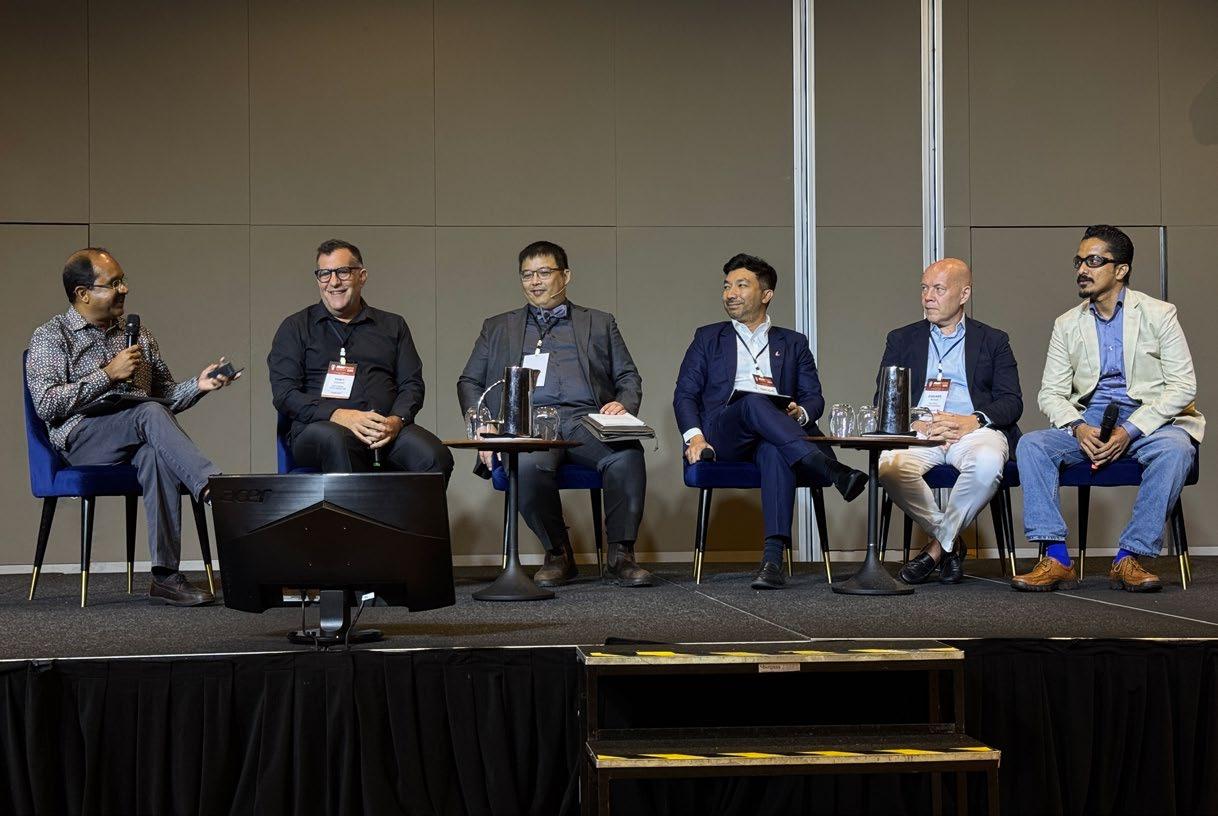
Energy leaders have debated the long-delayed ASEAN Power Grid (APG), highlighting both the potential and the persistent obstacles of regional power integration.
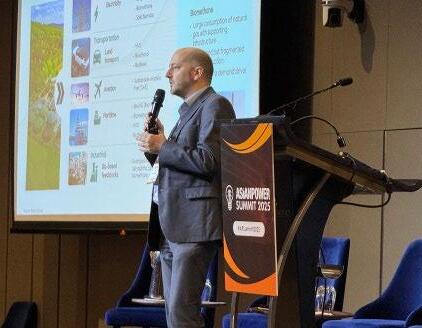
During the Asian Power Summit 2025 in Singapore, Tony Segadelli, chief engineer and managing director of Owl Energy Consultants, noted that the vision dates back decades.
“It was supposed to be finished by 2020. It’s now 2025, and the current plan is for it to be completed by 2045,” he said in a panel.
Segadelli stressed that progress will depend on institutional alignment:
“The power grid would need to have an ASEAN-wide power grid authority that promotes integration… Singapore will have to financially lead it.”
Edgare Kerkwijk, board member of the Asia Wind Energy Association, meanwhile, said, “The world is going to double its energy consumption… so who’s going to sell energy to their neighbour if they need it themselves?”
“In the EU, it works because they have a lot more regulation in common. In Asia, there’s so much diversity… it’s going to be very tough to make a regional power grid,” Kerkwijk continued.
It's going to be an awful lot of bilaterals, and by the end, it's going to have sewn a beautiful quilt
Imran Chowdhury, deputy director (PIM) of Ibvogt APAC, pointed to South Asia as a model. Bangladesh started importing power from India in 2013, it began small—200 megawatts—because there was lack of trust.
This later on gained support from the government, which helped increase the scale.
Chowdhury suggested forming “an Asian Power Grid Council” to improve coordination, similar to how regional councils aided South Asia’s energy trade.
Leader Energy director of Business Development Tawfique Roseli took a balanced view, noting the success with the LTMS project—hydropower wheeled from Laos through Thailand and Malaysia to Singapore.
But the challenge is the energy trilemma: supply-demand and regulatory imbalance.
He added that technical instability from renewables must be addressed, saying, “Battery technology has to be put into the picture.”
Quantum Power Asia Pte Ltd CTO Andre Susanto proposed a new approach by looking at the APG not as a fully integrated grid, but as a backbone transmission system.
“Countries that want it can tap in and buy…. It’s an IPP business model,” the CTO noted.
Despite the differences, Segadelli concluded that gradual progress is likely. “It’s going to be an awful lot of bilaterals, and by the end, it’s going to have sewn a beautiful quilt,” he said.
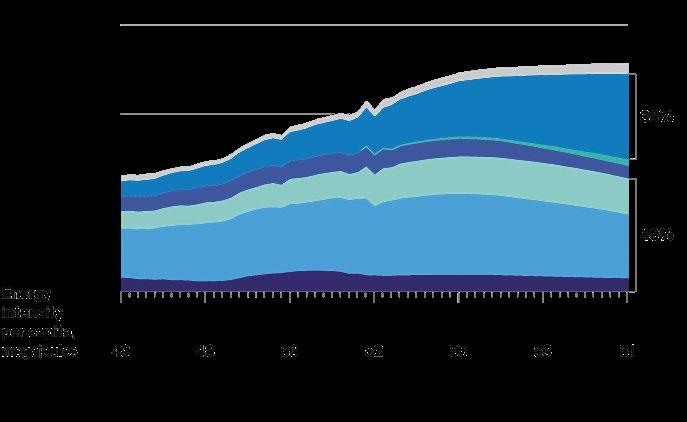
THE CHARTIST: FOSSIL FUELS TO SUPPLY UP TO 55% OF ENERGY BY 2050
Fossil fuels are projected to account for 41% to 55% of global energy consumption by 2050, according to the 2025 Global Energy Perspective published by McKinsey & Company.
The report outlines three long-term scenarios, namely Slow Evolution, Continued Momentum, as well as Sustainable Transformation. It assesses their implications for energy supply, demand and emissions through the mid-century.
The report states that all three scenarios point to long-term warming between 1.9°C and 2.7°C by 2100, which is insufficient to keep global warming within 1.5°C.
Electricity demand could more than double by 2050 as transport, heavy industry, data centres, and buildings electrify.
Natural gas is positioned as a long-term
backbone of the global energy system.
Coal and oil are expected to decline but continue supplying demand in heavy industry, aviation, and petrochemicals.
Global energy demand is expected to rise, driven largely by emerging economies.
Asia is forecast to contribute a disproportionate share of new demand as population growth, rising affluence and industrialisation accelerate consumption.
The report also found that cost competitiveness and a practical, economically grounded energy transition remain paramount.
Energy affordability and reliability alongside emissions reduction continue to shape policy and investment decisions.
However, it cautioned that large-scale deployment of emerging low-carbon technologies will stall without affordability.
Global final energy consumption for Continued Momentum scenario, by fuel, millions of terajoules
Source: McKinsey & Company
at the Asian Power Summit 2025
Sarulla drills new wells to restore geothermal output
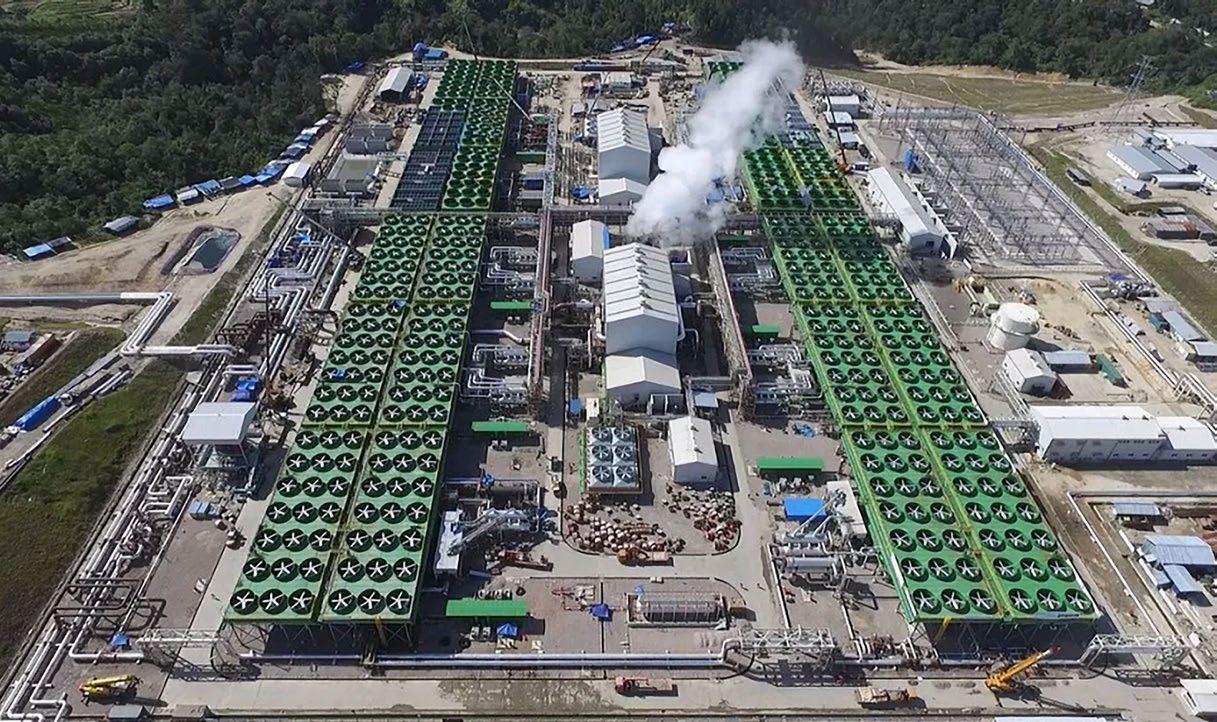
Sarulla Operations Ltd., which operates Indonesia’s biggest geothermal plant, plans to drill more wells to bring its 330-megawatt (MW) capacity back to full strength after output dropped to 240 MW six years ago due to problems with acidic wells in North Sumatra.
Sarulla’s three units—commissioned in 2017, 2017, and 2018—draw steam and brine from the NamoraI-Langit (NIL) and Silangkitang (SIL) reservoirs. Whilst SIL continues
SoKor builds largest offshore wind farm
to reliably generate 110 MW, NIL’s wells suffered acidification (pH < 3.2) and rapid reservoir pressure decline, which triggered accelerated corrosion, safety risks, and falling production starting in 2019.
Rather than abandoning the field, the company deployed corrosion inhibitors and installed acid-resistant CR2507 Super Duplex casings across affected wells. These alloy-lined wells remained operable, though smaller diameters reduced flow rates and
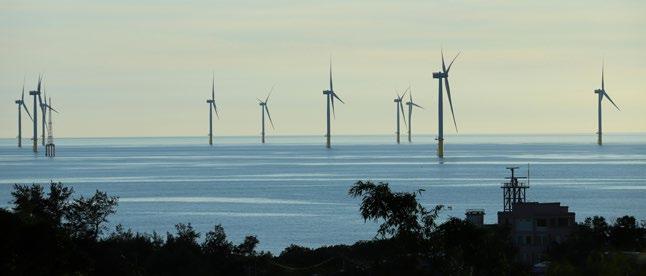
South Korea has completed the 100 megawatt Hanlim Offshore Wind Power Complex in Jeju Province.
According to the Ministry of Climate, Energy and Environment (MCEE), the offshore wind complex is located in the offshore waters of Suwon-ri, Hallim-eup, Jeju. It is currently the largest offshore wind power complex in commercial operation in the country.
The project was invested in by public power generation companies such as Korea Electric Power Corporation, Korea Midland Power, and KEPCO Engineering & Construction, which led the entire process from development to operation.
contributed to the decline to 240 MW.
The company is deploying another production well in 2026, apart from using acid-resistant alloy casings, proprietary chemical clean-out systems, and soon, artificial intelligence (AI)-based predictive maintenance to boost generation. It previously tested caustic neutralisation but discontinued it due to severe silica scaling inside the wellbore and pipelines.
Sarulla’s shift to digital operations involves using real-time monitoring and predictive analytics.
“I can check turbine temperature and well pressure directly from my laptop or phone,” Chief Operating Officer Riza Pasikki said in an interview with Asian Power. “The next step is AI integration—using data to tell us when to replace oil, tune turbines, or optimise performance automatically.”
“Geothermal is a complex, living system,” he told the magazine.
The potential beneath the surface is vast, but our current production remains below what the reservoir can actually deliver
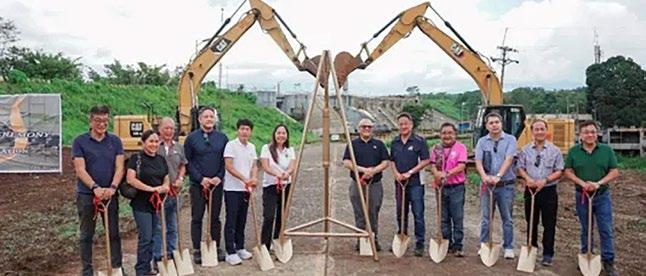
REDC breaks ground on 25 MW Pulangi IV hydropower
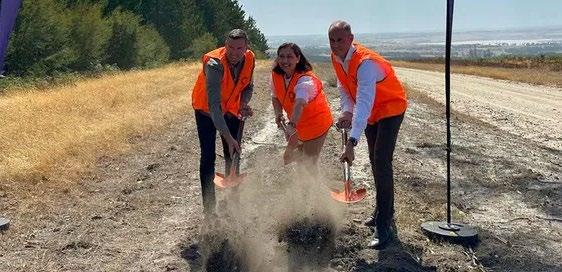
Repower Energy Development Corporation’s (REDC) unit has broken ground for its 25 megawatt Pulangi IV Hydropower Project in Mindanao.
The company said its subsidiary Maramag Hydropower Corporation held a groundbreaking ceremony for its $107m (PHP 6.3b) project. The Pulangi IV project is a run-of-river hydropower development that will harness the downstream portion of the Pulangi River, which also powers REDC’s recently commissioned upstream Pulangi plant facility located at the border of the city of Valencia and San Fernando. This hydropower facility will bolster Mindanao's renewable energy capacity.
“The potential beneath the surface is vast, but our current production remains below what the reservoir can actually deliver.”
“Our main focus now is to maximise what’s already available in our concession area so that both our stakeholders and the country benefit from it,” he added.
Aboitiz Power consortium wins nod for CBK takeover
A consortium led by Aboitiz Power Corporation has secured regulatory approval for the acquisition of the 797-megawatt Caliraya-BotocanKalayaan Hydroelectric Power Plant Complex (CBK HEPP).
In a bourse filing, Aboitiz Power said it was informed by its wholly-owned subsidiary Aboitiz Renewables, Inc. (ARI) that the Philippine Competition Commission has approved the acquisition by the Thunder Consortium, composed of ARI, Sumitomo Corporation, and Electric Power Development Co., Ltd.
The turnover was set by late February this year, the company said.
Namora-I-Langit reservoir (Photo from Sarulla)
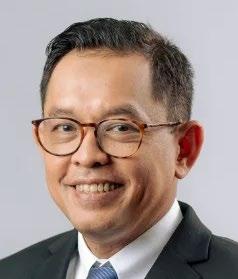
Riza Pasikki
Empowering a Net Zero 2050 Future Together.
TNB leads the nation's digital transformation through Smart Grid innovation, leveraging digitalisation, artificial intelligence, and machine learning to strengthen grid reliability, boost efficiency, and align with Malaysia's National Energy Transition Roadmap (NETR).
As we progress towards Net Zero 2050, these innovations power smarter networks, cleaner energy, and a more resilient energy future for generations to come.
Together, let us ignite change and empower a smarter, brighter future.
PLANT WATCH
Tuas Power to end coal at TMUC by 2028
It will lower emissions by a million tonnes yearly and cut carbon-tax expenses.
Singapore can use biomass more strategically to meet its power needs whilst supporting its plan to phase out coal by 2050, according to Tuas Power Ltd., one of the country’s biggest energy providers.
“The good thing about biomass generation is that it is 24/7,” Tuas Power Chief Operating Officer Michael Wong told Asian Power. “It can form a baseload, and we can control when and how much we generate, making it more predictable and controllable versus other alternative renewables.”
A biomass power plant converts the chemical energy in organic feedstock into electricity. The process is similar to conventional coal or gas plants, except biomass is used as fuel.
This allows the facility to run continuously, unlike solar, which depends on daylight and requires storage systems.
“Biomass will have a role to play because compared with other potential renewables—even when we are importing solar, hydro, or wind power from neighbouring
countries—those are intermittent sources. They depend on the weather,” Wong said.
Singapore aims to reach net-zero emissions by 2050 and is pursuing several measures, including importing 6 gigawatts of low-carbon electricity by 2035 and deploying at least 2 gigawatt-peak of solar by 2030.
Accelerating the shift
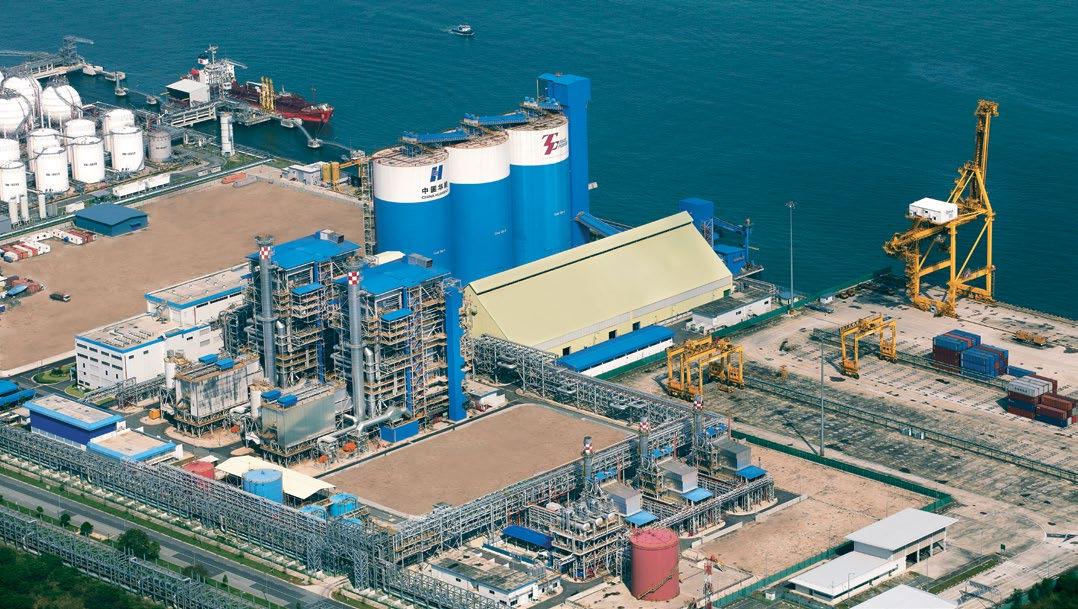
To support the national target, Tuas Power plans to convert its Tembusu Multi-Utilities Complex (TMUC) on Jurong Island to run entirely on renewable biomass by 2028. This would advance the company’s shift from coal by 22 years.
Built in 2013, TMUC is Singapore’s largest steam generation plant. It produces 133 megawatts (MW) of electricity and 900 tonnes per hour of steam.
The good thing about biomass generation is that it is 24/7
The plant was designed for an 80:20 coal-to-biomass mix, using imported wood pellets and palm kernel shells, along with locally sourced waste wood chips.
Wong said the conversion would
be gradual and require maintaining operational reliability whilst redesigning fuel logistics.
“The efficiency of the generation must still be maintained at a high level,” he said. “So we need to ensure that the boiler conversion—from coal to biomass—will maintain high efficiency for our customers.”
Handling biomass also requires different storage and transport systems. Coal is less affected by rain, but wood pellets absorb moisture, meaning warehouses and logistics processes must be upgraded to meet safety standards.
Depending on the type of feedstock, the 133-MW plant will need 500,000 to 1 million tonnes of biomass per year.
Materials will be sourced locally and from nearby countries.
Aside from lowering emissions by roughly 1 million tonnes of CO₂ equivalent annually, switching to biomass will also reduce carbontax expenses. Singapore’s carbon tax is $19.25 per tonne today and will rise to $34.65 in 2026.
Michael Wong
TMUC is set to run on 100% renewable biomass by 2028
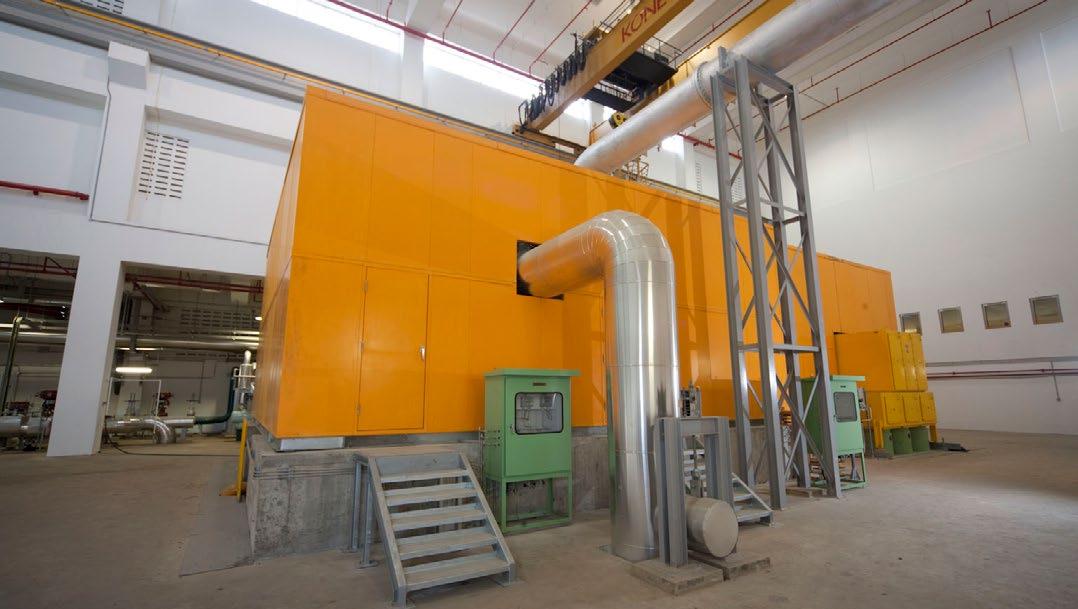
Steam turbine generator converting thermal energy from pressurised steam into electrical power
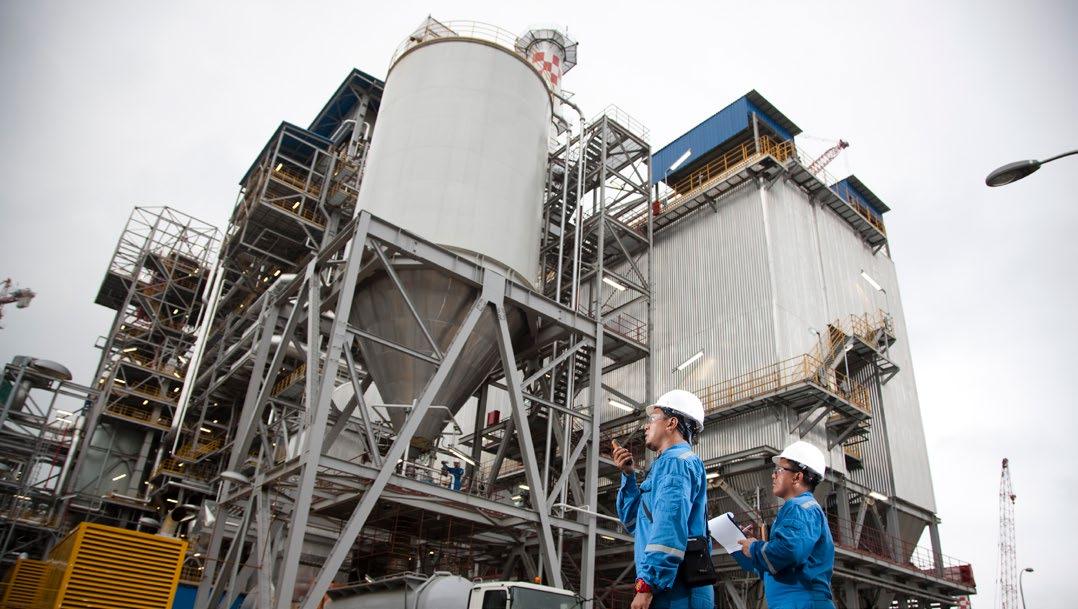
Bag filter system and fly ash tank capture and store fine ash particles for recycling
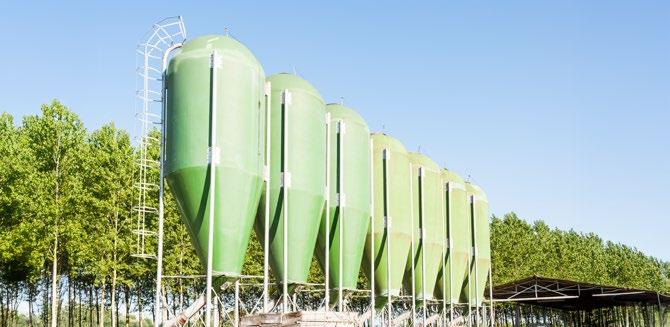
The unloader transfers solid biomass fuel from incoming vessel to the storage silos and warehouses (Photos from Tuas Power)
MARKET REPORT: INDONESIA
Indonesia sets 2032 target for first nuclear power plant
The plan assigns 35 GW to electricity and 9 GW to hydrogen.
Indonesia closed out 2025 with its most significant shift yet towards nuclear power, as the government puts the technology into its formal energy strategy for the first time and locks in a 2032 target for the country’s debut reactor.
The policy update ends decades of stop-start exploration and aligns national planning behind a single pathway. Nuclear is now embedded in Indonesia’s long-term energy mix, supported by a government roadmap outlining 45 gigawatts (GW) of capacity through 2060.
The plan allocates 35 GW for electricity and 9 GW for hydrogen and confirms that the first 250-MW unit will start operating in 2032, followed by a second plant of similar size. To support the supply chain, the government has also set up an agency to manage uranium, thorium, and other strategic minerals.
PT Perusahaan Listrik Negara (Persero), the state-owned power generator and distributor, is weighing several core factors as it studies
whether nuclear power could be added to Indonesia’s electricity system, focusing on system readiness rather than technology choice alone.
Didik Fauzi Dakhlan, executive vice president of asset management, engineering, and integrated management system, said nuclear power has characteristics that could support the country’s energy transition.
He cited its low emissions compared with coal and its ability to provide steady power, unlike solar or wind, which depend on weather conditions.
This is not simply about choosing technology, but ensuring that our system is strong and ready to accommodate it
“When we talk about nuclear, there are many variables that must be considered,” he told Asian Power. “This is not simply about choosing technology, but ensuring that our system is strong and ready to accommodate it.”
Indonesia expects electricity demand to reach 1,813 terawatthours by 2060, requiring 443 gigawatts of net-capable capacity.
Renewables are projected to
supply 42% of output, backed by 34 GW of storage, a structure that officials say requires firm baseload to maintain reliability.
“This is no longer optional,” Tony Susandy, a senior official at the Ministry of Energy and Mineral Resources, told a forum in Jakarta in November 2025. “Nuclear is becoming one of the tools that will balance Indonesia’s energy mix and support our net-zero pathway.”
Scientific groundwork is advancing. The National Research and Innovation Agency reaffirmed that Indonesia must deliver at least 500 MW of nuclear capacity by 2032.
PLN added nuclear power to its official generation outlook for the first time in 2025, including a 250MW plant for Sumatra in 2032 and another for Kalimantan in 2033.
Renewables, storage, and nuclear account for 76% of its planned capacity additions.
Challenges
Nuclear power’s steady output makes it attractive for Indonesia’s push towards cleaner energy, but its use depends on whether the power grid could safely absorb it, not on technology alone, Didik said.
One key limit is grid strength, which determines how much new generation can be added without causing instability. Didik said the 250-MW reactor size being studied reflects conditions in Sumatra and Kalimantan, where grid strength is about 300 MW per hertz. Plants larger than that could disrupt the system.
Indonesia’s power network is also fragmented. Java–Madura–Bali is the largest and strongest grid, whilst Sumatra and Kalimantan operate as separate systems.
As a result, only Java–Madura–Bali can handle very large nuclear plants for now. Bigger reactors in Sumatra or Kalimantan would need interconnections linking those grids to Java.
Beyond technical limits, Didik said the main hurdles are policy and institutions. “What is most urgent now is a presidential regulation to speed up nuclear development and the creation of a dedicated nuclear body, because nuclear power is as much about geopolitics and public acceptance as it is about technology,” he added.
Indonesia expects electricity demand to reach 1,813 terawatt-hours by 2060
Didik Fauzi Dakhlan
ANALYSIS: GRID-FORMING INVERTERS
Grid-forming inverters stabilise Asia’s power grids
Electricity demand is rising faster than the physical networks that deliver it.
Grid-forming inverters, which help electricity systems maintain steady voltage and frequency, are becoming essential in Asia as demand for electricity outpaces grid upgrades.
Utilities across East, South, and Southeast Asia are turning to these inverters to support networks strained by growing renewable energy, large digital loads, and industrial expansion.
“We’re moving from converters that follow the grid to converters that can lead the grid,” Dr Matthias Foehr, vice-president of product management for grid technologies at Siemens Energy AG, told Asian Power.
Electricity consumption in the region is rising rapidly due to artificial intelligence (AI) data centres, electric vehicles, and energy-intensive industries like semiconductor and battery manufacturing. At the same time, governments are expanding solar and wind power, which makes electricity supply less predictable. Traditional grids, built for steady demand from coal, gas, and hydropower, are struggling to handle these changes.
Investment in new transmission and distribution infrastructure has lagged behind demand growth for years, leaving utilities to manage concentrated loads with ageing
Electricity demand is rising faster than the physical networks that deliver it
networks, according to S&P Global’s Horizons Top Trends 2026 report.
“Electricity demand is rising faster than the physical networks that deliver it,” Foehr said.
“We are seeing more variable power generation, more sensitive industrial demand, and a need for much tighter system control.”
New transmission lines and substations can take a decade or more to build because of land constraints, regulatory hurdles, and financing challenges. As a result, utilities are focusing on strengthening existing systems rather than relying solely on physical expansion.
Grid-forming tech is already having an impact across transmission, distribution, and renewable integration, said Mike Bowman, vice president - chief product and technology officer at GE Vernova, Inc.
“In several regions, energy storage systems with grid-forming inverters are being connected to transmission networks to help stabilise the system,” told the magazine in a separate interview.
Renewable projects are increasingly paired with grid-forming capability, whilst distribution networks benefit from improved stability and the ability to operate independently during disruptions, he added.
Grid-forming inverters differ from
conventional inverters, which rely on a strong existing grid signal.
Instead, grid-forming inverters can establish voltage and frequency, allowing renewable energy and battery storage systems to stabilise the grid as conventional fossil fuel power plants retire. They also let local energy systems run on their own during power failures, making the grid more resilient.
They can provide a stable reference for the grid, support blackstart operations when the main grid is down, and help maintain system stability during spikes in electricity use from AI data centres and electrified industries.
Challenges
Despite these advantages, integrating grid-forming inverters into existing grids remains challenging. Legacy infrastructure was not designed for inverter-based power sources, requiring upgrades to protection systems, operator training, and new modelling techniques, Bowman said.
The cost and complexity of gridforming inverters are also higher than traditional systems, which can slow adoption, he pointed out.
Digital control systems are becoming more important to manage multiple inverters and local energy sources.
Advanced platforms allow nearreal-time monitoring, automated responses to changing demand, and more accurate forecasting of electricity needs.
Whilst these technologies help utilities manage congestion and improve stability, they can’t fully replace physical grid expansion.
Analysts warn that without faster grid modernisation, Asia could face higher electricity prices, longer delays in connecting new industrial facilities, and greater risk of blackouts.
Utilities need to pursue both digital upgrades and physical expansion in parallel to keep pace with rising electricity demand.
“There is a significant learning curve,” Foehr said. “But as renewable use increases, these technologies move from optional to necessary.”
How quickly utilities adopt these technologies may determine whether the region’s electricity systems support economic growth or constrain it in the coming years.
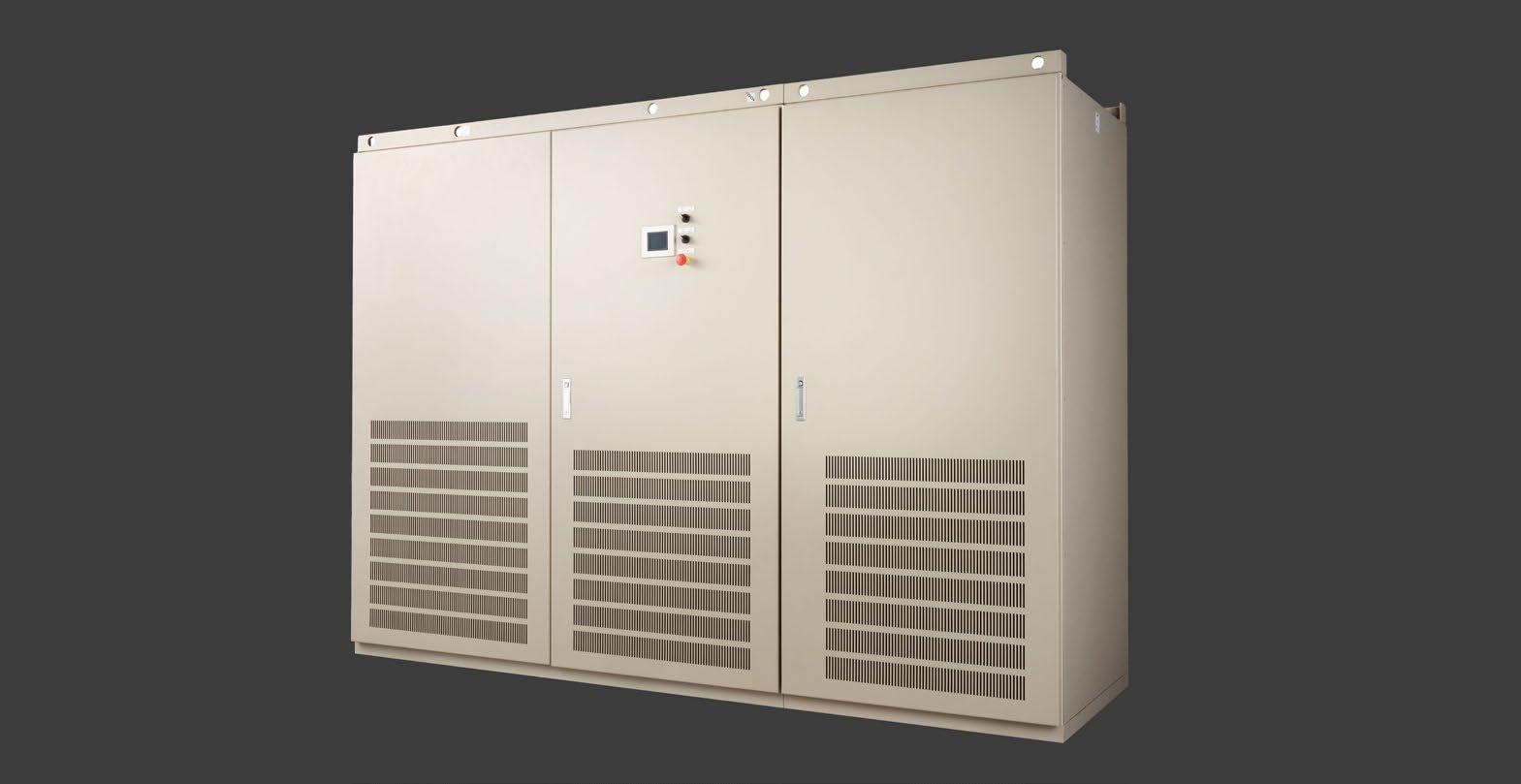
Grid-forming tech is already impacting transmission, distribution, and renewable integration (Photo from Fuji Electric)
Matthias Foehr
Mike Bowman
APAC
Singapore plans long-term LNG supply deals
Contracts from the US and Qatar will support the nation’s RE shift.
Singapore plans to secure long-term liquefied natural gas (LNG) supply contracts for its power sector starting early 2026 to support its low-carbon energy goals through 2035.
“We will be going out into the international market to procure long-term LNG,” Singapore GasCo Pte. Ltd. Chief Executive Officer Alan Heng told Asian Power.
“We anticipate starting this process in the first quarter of 2026. Once we issue our request for proposals, we will build a portfolio tailored for Singapore.”
Singapore GasCo is a fully government-owned entity established in May 2025. Its primary purpose is to centralise the procurement and supply of natural gas, which accounts for 93.1% as of the first half of 2025, to the power sector.
Puah Kok Keong, chief executive of the Energy Market Authority, has said that Singapore GasCo’s “aim is to secure more diversified sources of natural gas and strengthen Singapore’s bargaining position.” It will also focus on ensuring gas infrastructure can meet future demand.
Heng said the city-state’s renewable energy efforts necessitate increasing the availability of renewable sources like solar and wind.
Given Singapore’s land constraints, however, this green transition will inherently rely on importing clean electricity from neighbouring nations.
During the LNG2026 Qatar’s Spotlight Session on Trading Places: How Buyers are Redefining the LNG Landscape, Heng noted that “buyers and sellers face the same uncertainties — from geopolitics to shipping and supply chain disruptions.”
“We can’t design portfolios for every scenario, but closer collaboration, flexibility and partnership are how we mitigate risk together,” he added.
Tapping neighbours
Singapore is already tapping Indonesia, Vietnam, Cambodia, and Malaysia to import low-carbon power, with a target of 6 gigawatts by 2035. The intermittency of renewable imports, however, makes reliable gas supply critical.
“The role of Singapore GasCo is to help with the energy transition and enable gas-fired generation to support green energy,” Heng told the magazine.
Before, power generators contracted gas independently under the Energy Market Authority’s supervision.
Centralising supply allows Singapore GasCo to aggregate demand, negotiate better deals, and secure flexible contract terms.
“It does not just improve price competitiveness, but it also enables us to secure terms that may be more suited and more flexible to our requirements today and into the future,” the chief executive officer said.
The role of Singapore GasCo is to help with the energy transition and enable gas-fired generation to support green energy
“By doing this, we hope that it will actually enhance the overall stability of supply and ensure that prices are affordable over time,” he added.
The company plans to diversify LNG sources to manage geopolitical and market risks: 35% from the US, 35% from the Middle East—mainly Qatar—and the remaining 30% from other regions.
Singapore also imports 35% to 40% of its gas via pipelines from Indonesia and Malaysia, which will continue to supplement LNG supplies.
“We need to find a way to create sufficient diversity through different geographic regions and take into account not just the dynamics of pricing, but also the potential geopolitical challenges ahead of us,” Heng said in an exclusive interview with the magazine.
Singapore GasCo is working with Southeast Asian neighbours like Thailand and the Philippines to build a shared emergency gas supply network.
“Singapore’s current framework has to transition to the new one,” Heng said. “Existing contracts will be grandfathered, so we need to work with them whilst adding value to the overall generators.”
Critical function
Aside from diversifying, Heng told the magazine that the company will also contract downstream with generators and ensure that they get a value proposition that is better than what they can currently get.
“At the same time, we recognise that we play a critical function in the system, and we want to make sure we are able to respond to any emergencies or supply disruptions rapidly and efficiently,” he said.
“So part of our goal will also be to make sure we set ourselves up to deal with these potential supply disruptions and volatility in the market,” he added.
Alan Heng, CEO at Singapore GasCo
XiZang Development and Investment Group wins at Asian Power Awards 2025
The company’s project demonstrates how advanced technology can deliver stable, flexible power in extreme conditions
XiZang
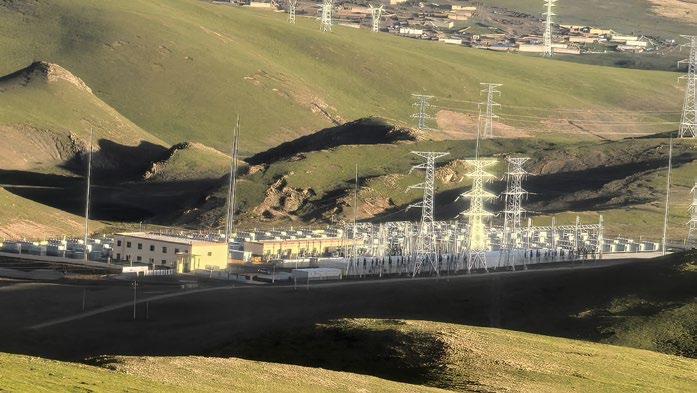
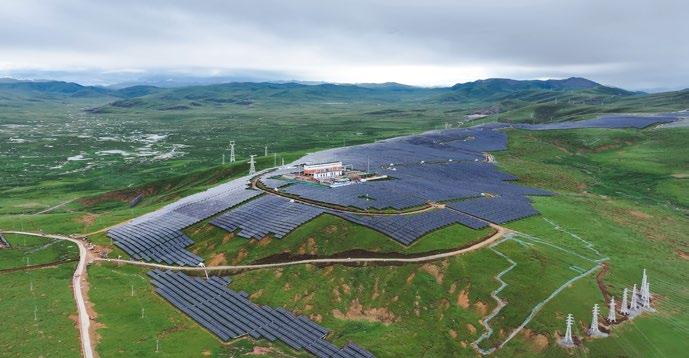
Development and Investment Group won Innovative Power Technology of the Year - China in the Asian Power Awards 2025 for its Dagapu Stand-alone Grid-Forming Energy Storage Project. The project stands as the highestaltitude and largest-capacity operational independent grid-forming energy storage facility in the world.
The Dagapu project has a total installed capacity of 100MW/400MWh and delivers an average of 180 million kWh annually. Over its operational lifespan, it will save 1.8688 million
tonnes of standard coal and cut 468,600 tonnes of CO2 emissions, significantly reducing the region’s carbon footprint.
The project applies independent gridforming energy storage technology optimised for high-altitude conditions. It comprises 80 energy storage battery containers, 40 converter-transformer integrated containers, and a complete grid support system. Its grid-forming control technology allows the storage system to remain stable even under N-1/N-2 fault conditions, offering inertia-like response and short-term overload capability. High-altitude adaptive designs, such as liquid cooling, anti-condensation systems, and enhanced insulation, ensure reliable operation amidst extreme temperature variations and low air pressure.
Beyond its technical merits, the Dagapu
facility plays a vital role in strengthening Naqu’s local power grid. It addresses an electricity supply gap of 1 million kWh and contributes to grid stability as Naqu’s maximum load reaches 250MW. The system’s operation generates an estimated annual revenue of RMB43.28m and RMB6.5m in local taxes. By improving local load balancing, it is also expected to reduce grid investment needs by over RMB100m. Constructed in just 82 days through modular and prefabricated methods, the project overcame unique environmental challenges such as low oxygen levels, cold temperatures, and logistical constraints at a very high altitude. Despite these hurdles, it achieved timely completion and has been operating within expected performance parameters since commissioning.
The project applies independent grid-forming energy storage technology optimised for high-altitude conditions
Dagapu Stand-alone Grid-Forming Energy Storage ProjectPlant
CNE plans over $1b push into Asian renewables
It’s working with banks on financing and will issue REITs to diversify funding sources.
Singapore-based Concord New Energy Group Ltd. (CNE) plans to spend more than $1b over the next five years to expand its renewable energy footprint across Asia, targeting wind, solar, and storage projects amidst rising power demand in the region.
The investment will support project development and financing partnerships in several Asian markets, Owen Chen, the company’s chief technical officer and vice president, told Asian Power.
“We are developing partnerships across multiple countries and will conduct project financing through banks and financial institutions,” he said in an exclusive interview. “In addition, we are actively preparing to issue real estate investment trusts (REIT).”
Asia’s renewable energy capacity climbed to 2.37 million megawatts (MW) in 2024 from 1.96 million MW a year earlier, according to a July 2025 report by the International Renewable Energy Agency.
CNE has invested nearly $4b in renewable energy projects in Asia. Its portfolio in the region includes 4 gigawatts of wind power, 700 megawatts of solar power, along with a 530 megawatt-hours of utility-scale battery energy storage system (BESS).
Chen said CNE’s key markets include South Korea, Japan, Singapore, Malaysia, Indonesia, the Philippines, and Vietnam—“markets that are particularly attractive for energy project development due to the rapidly growing electricity demand, stable political environments, and well-established legal frameworks.”
Rapid expansion
Power demand in Southeast Asia, wherein the majority of the markets mentioned are located, is rising by 2.6% annually, based on the International Energy Agency’s latest World Energy Outlook.
Over the past year, CNE has launched solar farm construction in South Korea and Singapore and started wind and storage projects in the Philippines, Vietnam, and Japan.
Whilst wind remains central to its pipeline, the company expects to accelerate investments in solar and battery systems. Pairing storage with solar improves participation in peakvalley arbitrage and ancillary service markets, boosting internal rates of return, Chen said.
“Participation in peak-valley arbitrage and ancillary service markets can improve the project's internal rate of return (IRR). This will significantly improve the solar project's return rate. Going forward, CNE will invest in more solar projects with energy storage systems,” the executive said.
To fuel its expansion, CNE has completed its listing on the main board of the Singapore stock exchange.
“Our secondary listing on the Singapore Exchange represents a key step in advancing our global business strategy. It reflects our long-term commitment to strengthening corporate governance and actively engaging with international capital markets,” said Liu Shunxing, chairman of the board of CNE.
Rapid expansion across diverse markets also brings challenges. Chen cited shifting policies, localisation rules,
and regulatory uncertainty as key risks. Several Southeast Asian governments require developers to source a share of equipment locally and mandate the participation of domestic utilities in new energy ventures.
“CNE also faces trade barriers and geopolitical risks,” he told the magazine. “These include significant fluctuations in some countries, underdeveloped financial markets, and limited financing channels, all of which can affect project viability and returns,” he continued.
CNE collaborates with local enterprises to meet localisation requirements and sign long-term agreements
CNE is working with local partners to navigate procurement rules and is signing long-term supply agreements to manage cost and delivery risks.
“To address these risks, CNE collaborates with local enterprises to meet localisation requirements and sign long-term agreements to secure a reliable supply of equipment,” according to Chen.
“Furthermore, we aim to enhance our revenue through initiatives such as green certificate sales and carbon asset arbitrage,” the vice president added.
Owen Chen, chief technical officer and vice president at Concord New Energy Group
The company has invested nearly $4b in renewable energy projects (Photo from CNE)
Shenzhen Energy Dongbu Power Plant honoured at Asian Power Awards 2025
The project achieved high efficiency, compact design, and advanced environmental performance.
Shenzhen
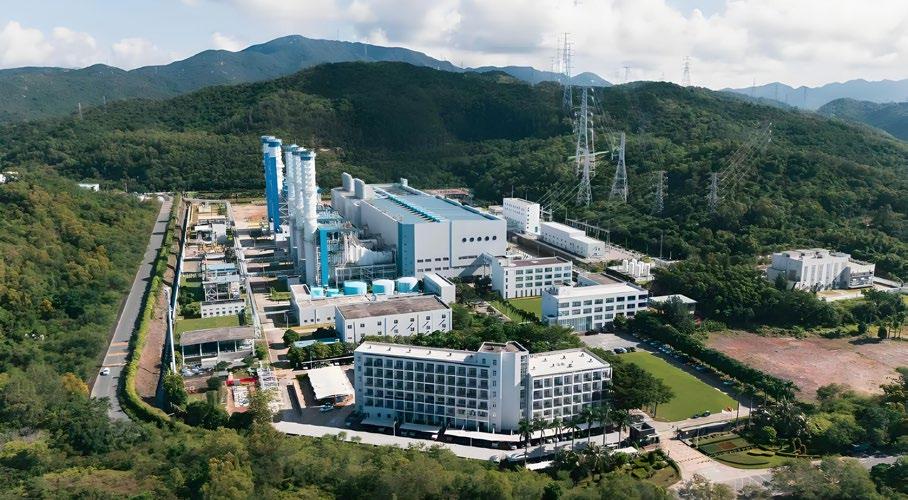
Energy Dongbu Power Plant won in the Asian Power Awards 2025, highlighting the success of the Shenzhen Energy Group Dongbu Power Plant Phase II Project. With a total installed capacity of 1.34 million kilowatts and a designed efficiency of 62.14%, the project demonstrates Shenzhen Energy Dongbu Power Plant’s strong technical capability and contribution to green, low-carbon energy development.
The Phase II project introduced two sets of
Siemens SGT 8000H gas-steam combined cycle units. It operates at an emissions level below 7.50 mg per standard cubic metre, figures that meet international standards and advance the development of cleaner gas power generation in China.
Built under the concept of “compact space, high capacity,” the project overcame significant spatial constraints by installing an H-class unit in the site previously reserved for an F-class one. Through a low-position layout and topinlet air technology, the plant reduced its height by more than four metres and nearly doubled its installed capacity.
The project applied Siemens’ top-inlet
single-shaft H-class turbine configuration, optimising equipment layout and construction efficiency whilst maintaining top operational standards. Its innovative use of closed cooling water to heat natural gas recycled cold energy, improving unit efficiency and achieving circular energy utilisation.
Shenzhen Energy Dongbu Power Plant further enhanced system reliability with a double insurance architecture that interconnected its 220KV bus with the Phase I system. This ensured safe and stable power transmission for the China Southern Power Grid and the Greater Bay Area Power Grid.
Complementing its technical achievements, the project features digital management systems, intelligent control applications, and 3D digital handover tools to improve data integration and operational automation.
Built under the concept of “compact space, high capacity,” the project overcame significant spatial constraints
Shenzhen Energy Dongbu Power Plant
Singapore takes lead in Southeast Asia’s biomethane transition
Data centres and a new sandbox programme are driving demand for renewable gas imports.
Singapore is emerging as the trigger for biomethane development in Southeast Asia, “given the higher willingness to pay” and the government’s move to support imports through the new Biomethane Sandbox programme.
“Biomethane has the same characteristics as natural gas,” Dieter Billen, partner and head of Energy & Sustainability Practice for Southeast Asia at Roland Berger, said during his keynote speech at the Asian Power Summit 2025 held in Singapore.
“You can use this biomethane in the same applications, the same infrastructure, the same transport infrastructure.” He noted that this makes it possible for Singapore to decarbonise existing gas-based power plants without building new systems.
The biggest opportunity, according to Billen, will be in the power sector. “There’s the opportunity to produce electricity using the existing gas-based power plants in Singapore using biomethane,” he said.
“That electricity can then be sold with a premium because it’s basically renewable electricity produced in Singapore, even though the biomethane is imported.”
Accelerated adoption
The Singapore Economic Development Board has also issued a closed call for proposals to look into biomethane’s potential for various power generation and industrial applications.
According to the Energy Market Authority (EMA), biomethane is a renewable fuel produced by upgrading biogas from organic waste or residues to almost pure methane, and is chemically identical to fossil-derived methane.
“Biomethane enables emissions abatement without costly retrofits, as it can make use of the current natural gas infrastructure in Singapore,” EMA noted.
This opportunity is being accelerated by Singapore’s data
centre industry. “For upcoming tenders for new data centre capacity, there will be strong mandates to encourage applicants to move towards green energy pathways,”
Billen said. “Amongst those green energy pathways, biomethane is the most viable one," he added.
He shared that data centres are already negotiating with generation companies (gencos) in Singapore to secure renewable electricity sourced from biomethane.
companies offset carbon taxes.
“The Singapore government has actually also announced a programme called the Biomethane Sandbox to encourage the Gencos to import biomethane into the country,” Billen said. “The idea is that biomethane replacing natural gas can be used to offset the carbon footprint,” he added.
The idea is that biomethane replacing natural gas can be used to offset the carbon footprint
“At this point, what’s happening is that we have the data centres that want to participate in new capacity tenders negotiating with some of the gencos,” he said. “Those gencos are also negotiating import agreements with various types of players because of that opportunity to produce power from biomethane and sell it to companies like data centres.”
The Biomethane Sandbox supports these efforts by allowing imports that replace natural gas, helping
Billen acknowledged the cost challenge, saying biomethane “can be typically double the price of natural gas,” but he emphasised that it remains more cost-competitive than other alternatives.
“When you compare it to importing green hydrogen or ammonia into Singapore, biomethane is still significantly more cost-competitive,” he said.
He concluded that Singapore’s leadership will have a broader regional impact. “Biomethane was never a major type of fuel or decarbonisation in the region,” he said in the summit.
Dieter Billen, partner and head of Energy & Sustainability Practice for Southeast Asia at Roland Berger
Huadian Jinsha River Upstream Qamdo New Energy Co. Ltd wins at Asian Power Awards 2025
The 2,600MW solar project showcases how large-scale clean energy can flourish in the extreme altitudes of the Tibetan Plateau.
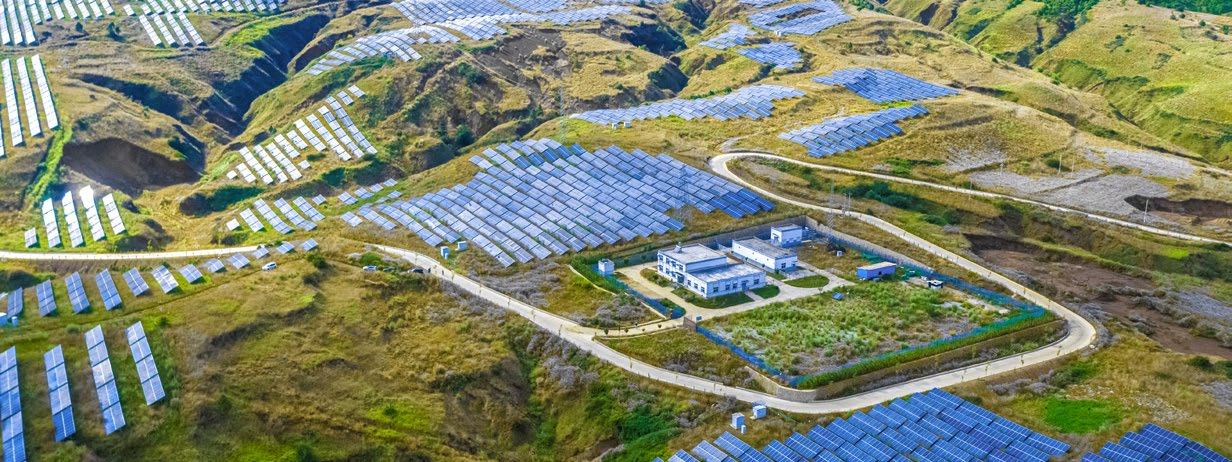
Huadian Jinsha River Upstream Qamdo New Energy Co.Ltd was recognised at the Asian Power Awards 2025 for its Jinsha River Upper Reaches Clean Energy Base 2,600MW Photovoltaic Power Generation Project.
The project is the world’s largest under-construction single photovoltaic farm. It comprises two sites, both situated between 4,200 and 4,800 metres above sea level, making it the highest-altitude pasture-photovoltaics complementary project in operation.
To overcome the demanding environmental
conditions of high-altitude construction, the company adopted a range of technical innovations. The project uses N-type doublesided dual-glass photovoltaic modules, which provide higher efficiency and enhanced durability against ultraviolet radiation, snow, and temperature fluctuations. The modules’ coatings and optimised structure reduce snow accumulation, ensuring stable generation during winter.
Supporting the modules is a flexible aluminium alloy mounting structure designed to adapt to uneven, rocky terrain and withstand strong winds and seismic activity. Meanwhile, the inverter systems use advanced cooling and control technologies to ensure reliable operation in lowtemperature, low-pressure environments typical of the Tibetan Plateau.
The combined power output of both project
sites will reach about 5.1 billion kilowatthours annually, helping reduce carbon dioxide emissions by 3.74 million tonnes and saving 1.67 million tonnes of standard coal every year.
Beyond its economic and environmental benefits, the project demonstrates a commitment to sustainability and ecological preservation. The company implemented a “repair first, then construct” principle, carrying out vegetation restoration and real-time ecological monitoring throughout construction to minimise disturbance to the local environment.
On-site oxygen supply stations, medical teams, and health monitoring were established to protect personnel from altitude-related risks. The project also addressed logistical challenges through creative transport methods, including helicopter lifts and muleassisted deliveries of essential equipment.
The project demonstrates a commitment to sustainability and ecological preservation
Huadian Jinsha River Upstream Qamdo New Energy Co. Ltd
Exceptional leaders lauded at Asian Power, Asian Water, and Asian Oil & Gas Awards 2026
Across Asia, companies in the power, oil & gas, and water sectors continue to shape the region’s growth by embracing innovation, resilience, and sustainable practices in addressing challenges and meeting rising customer demand.
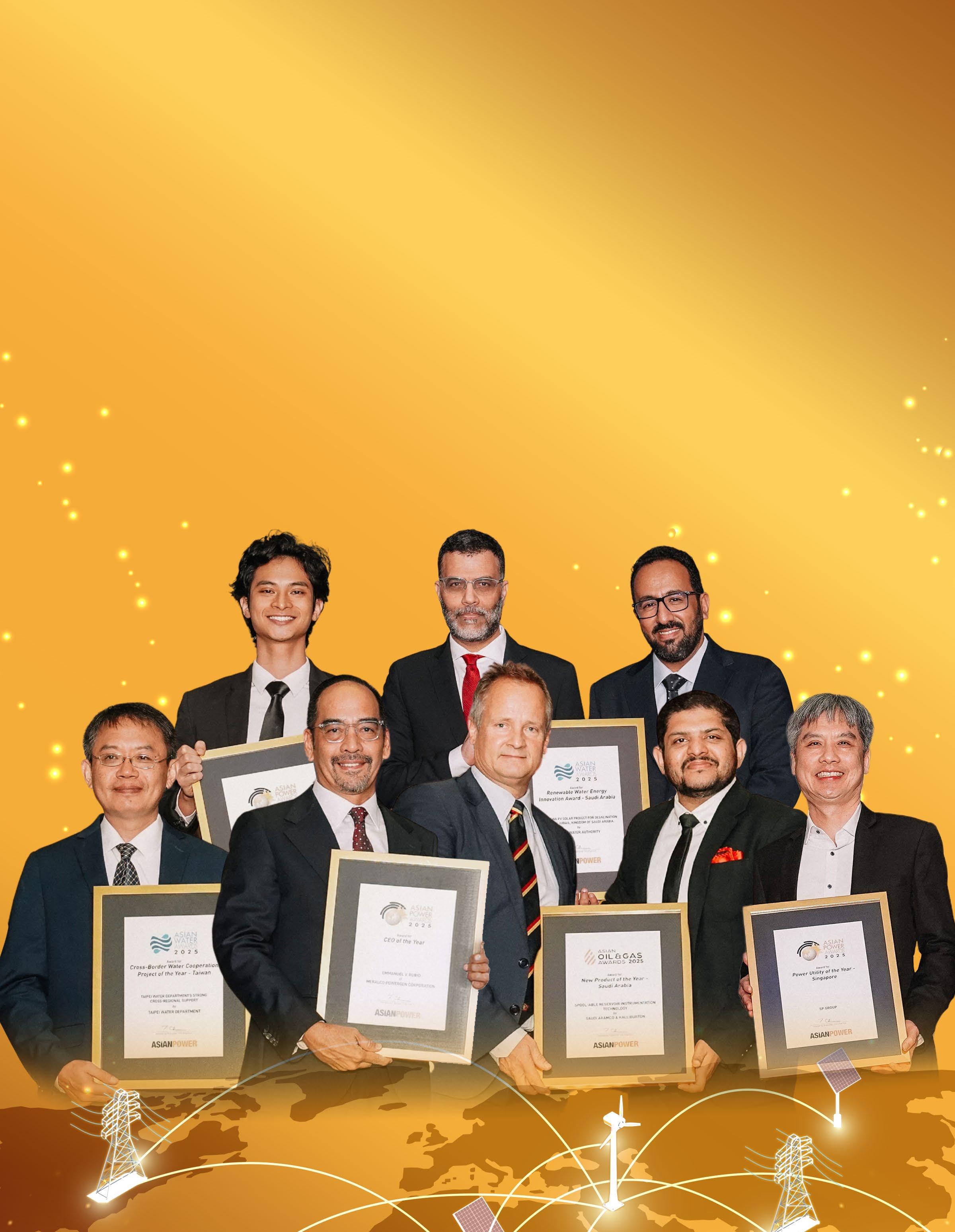
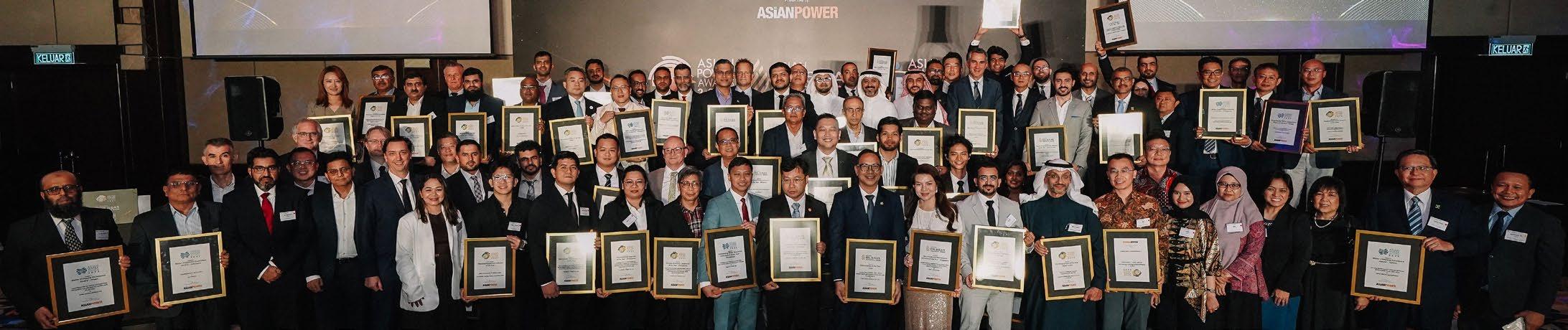
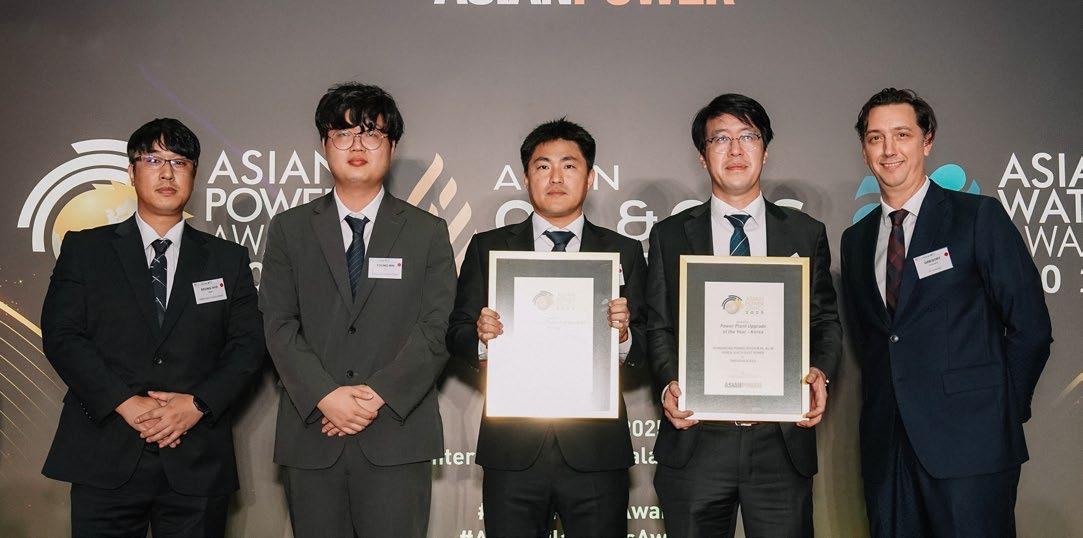
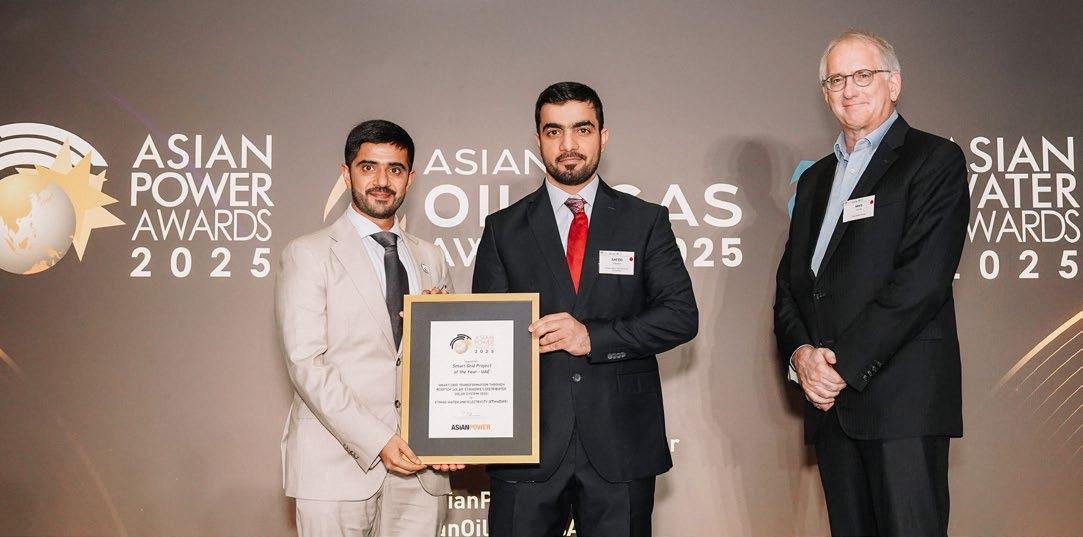
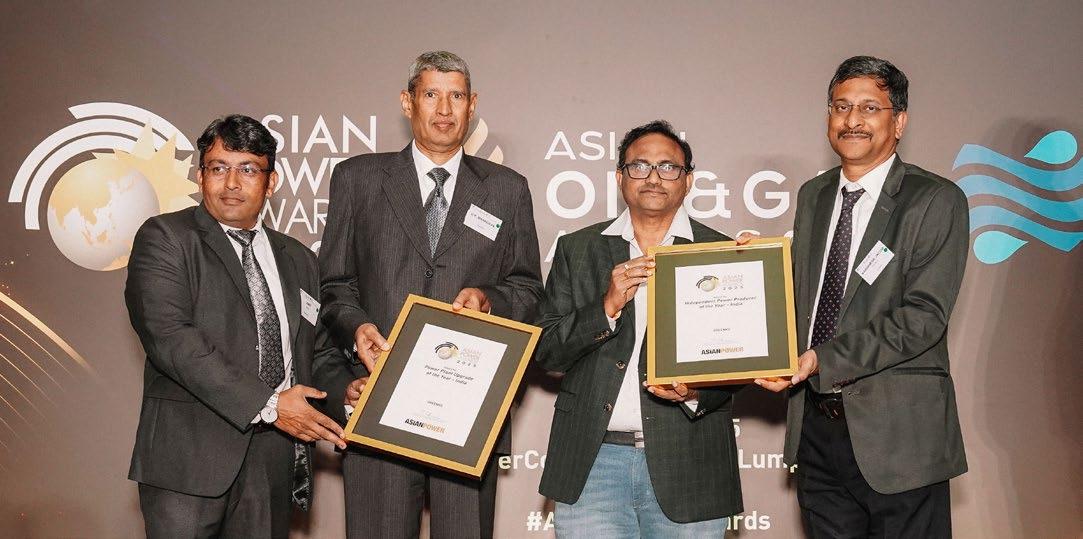
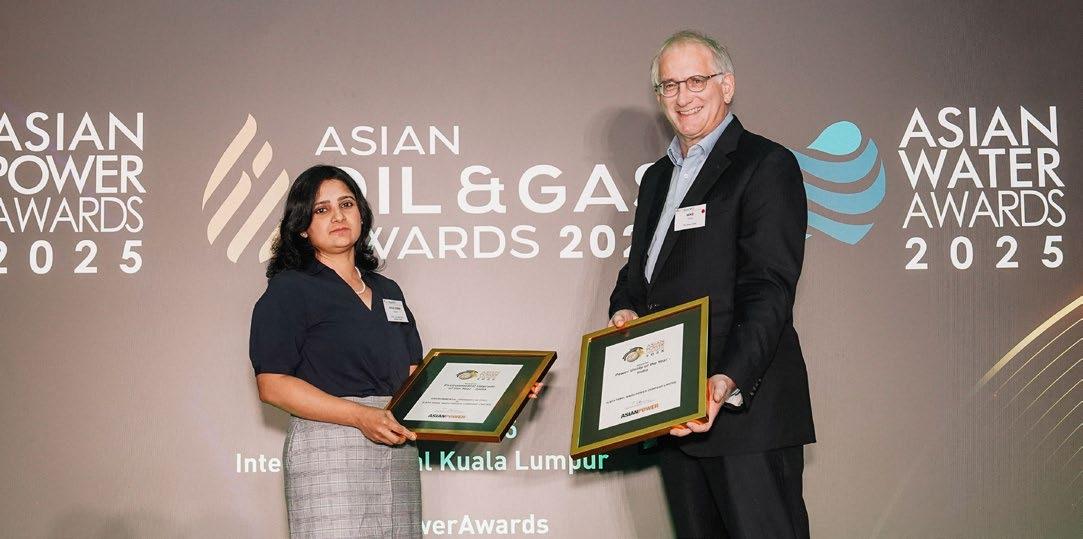
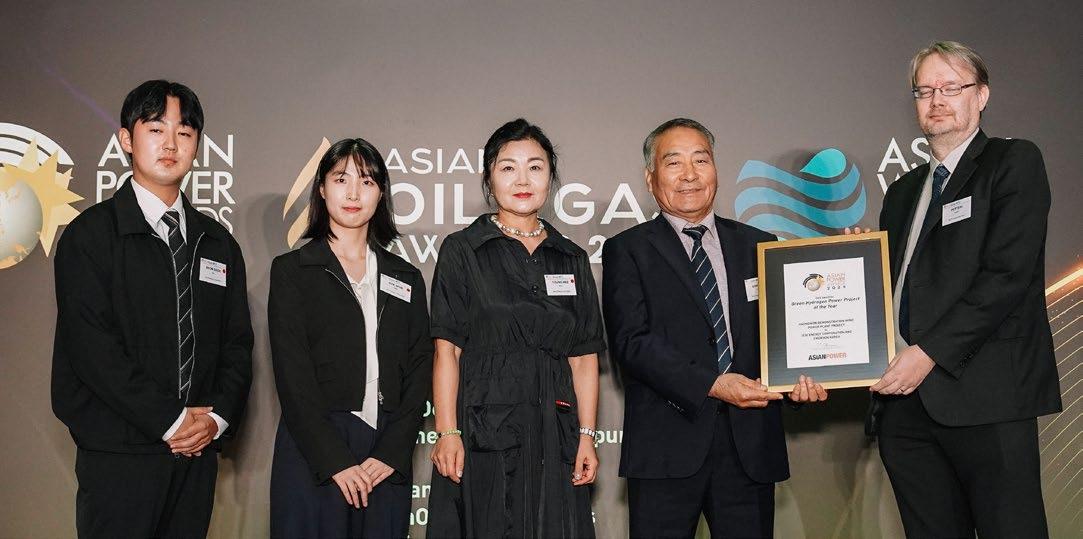
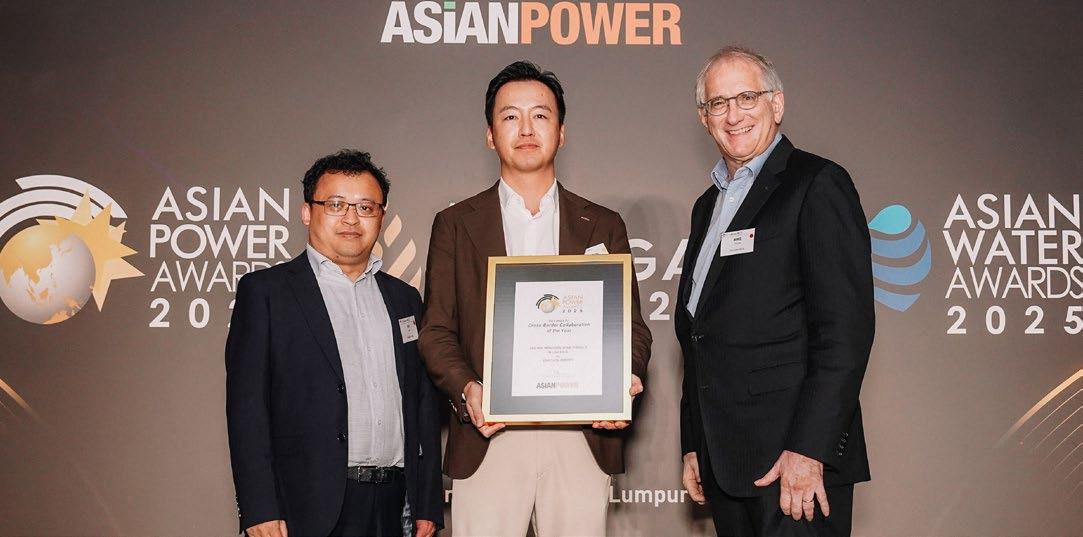
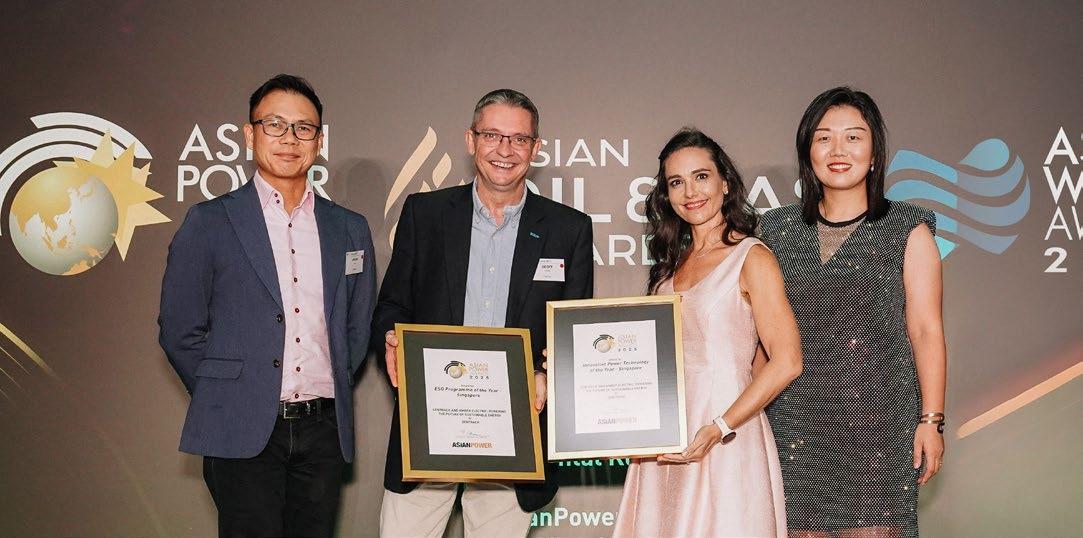
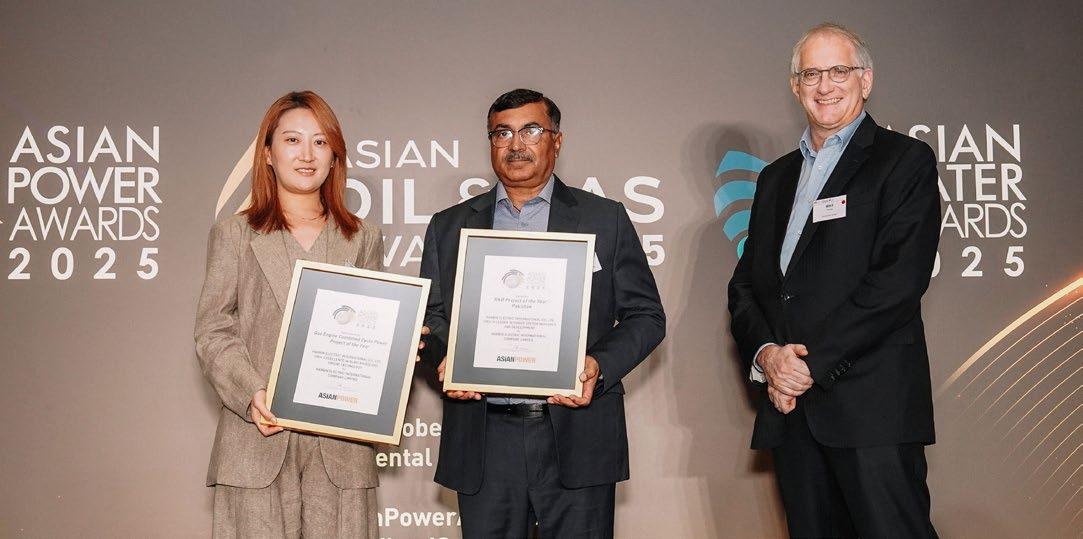
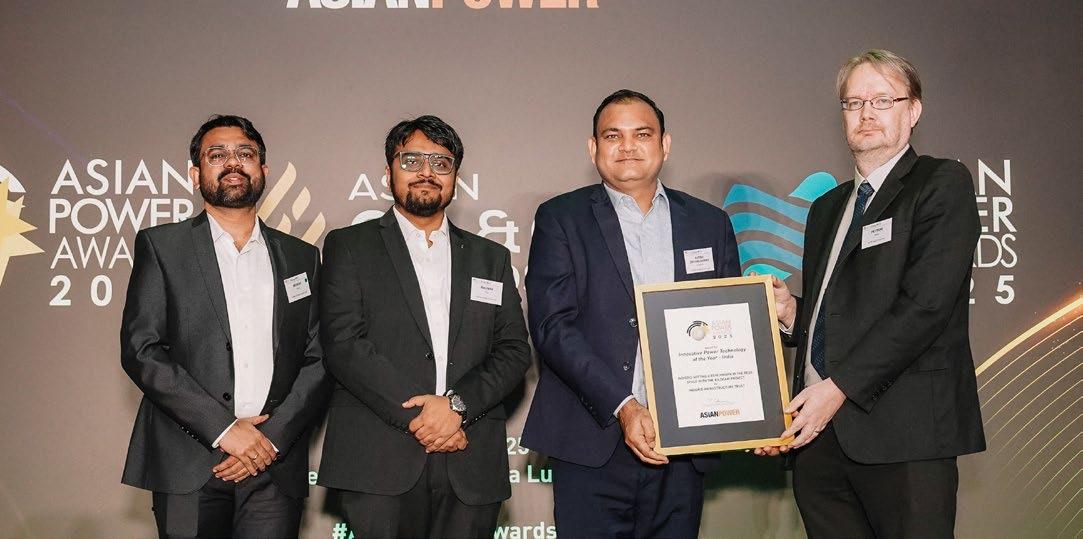
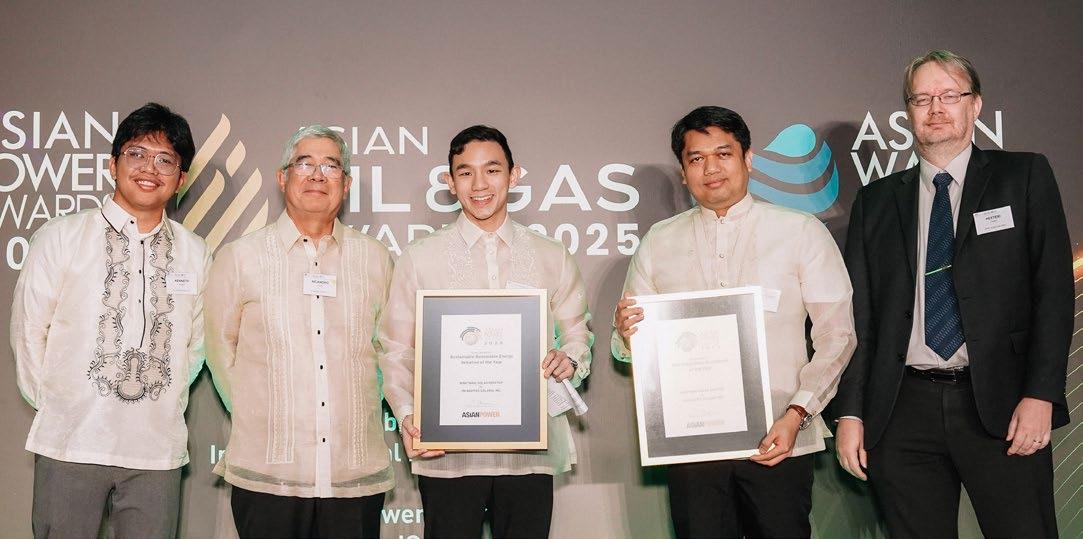
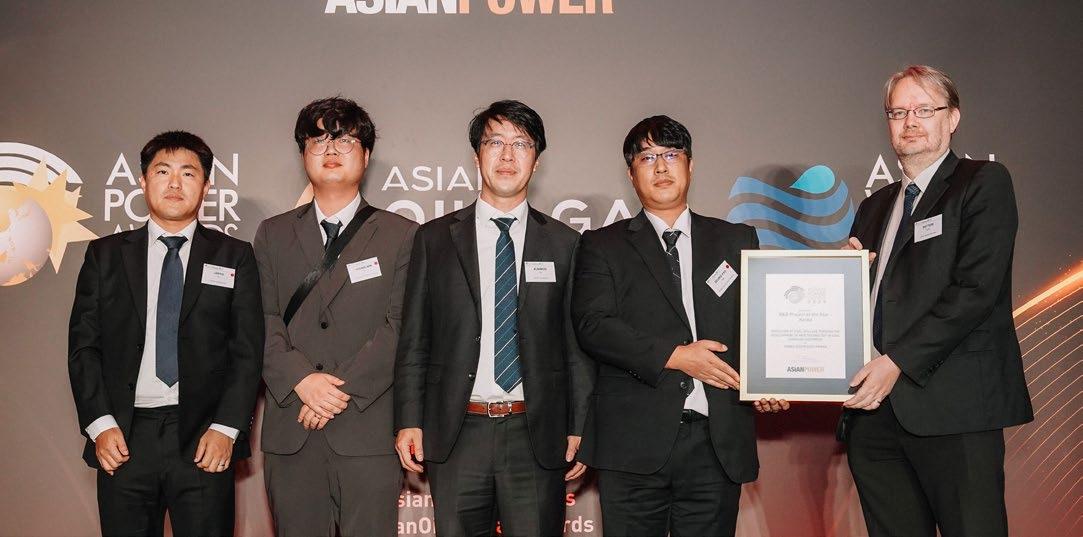
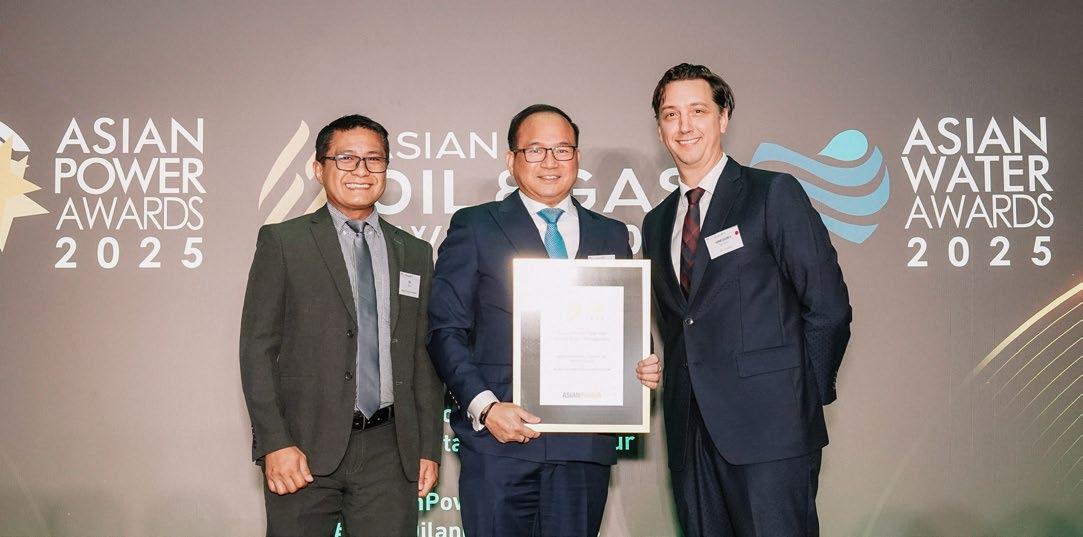
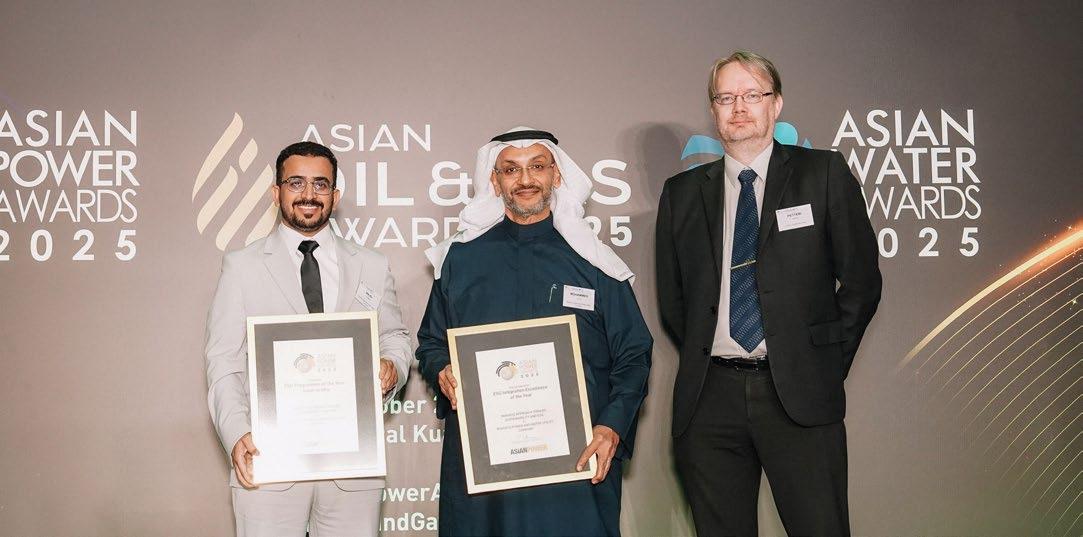
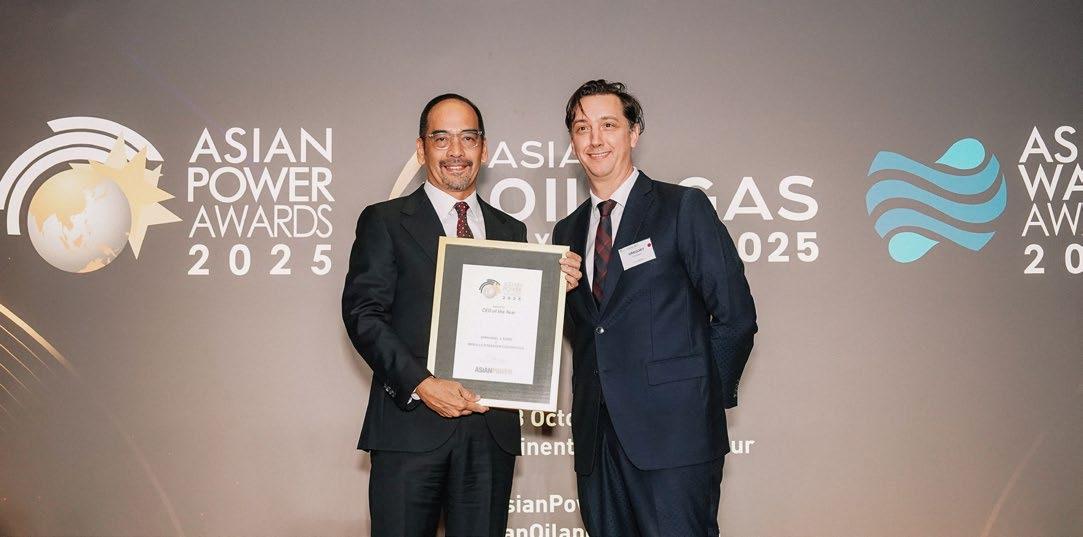
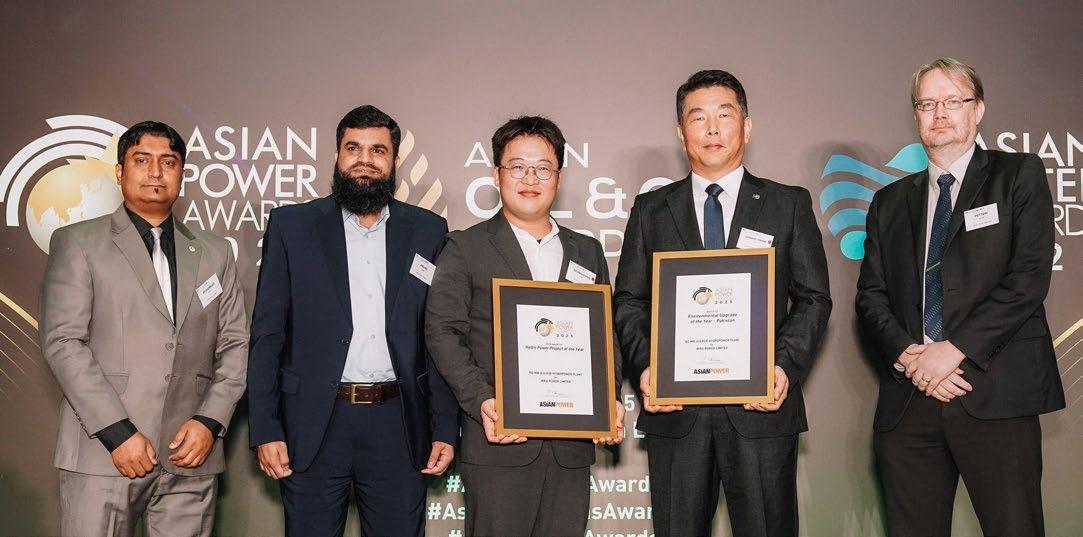
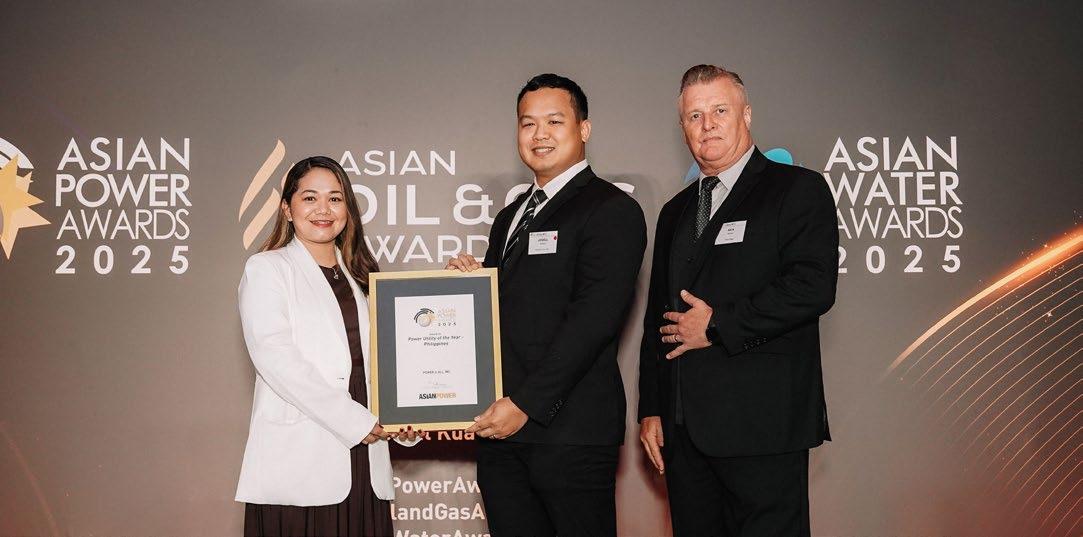
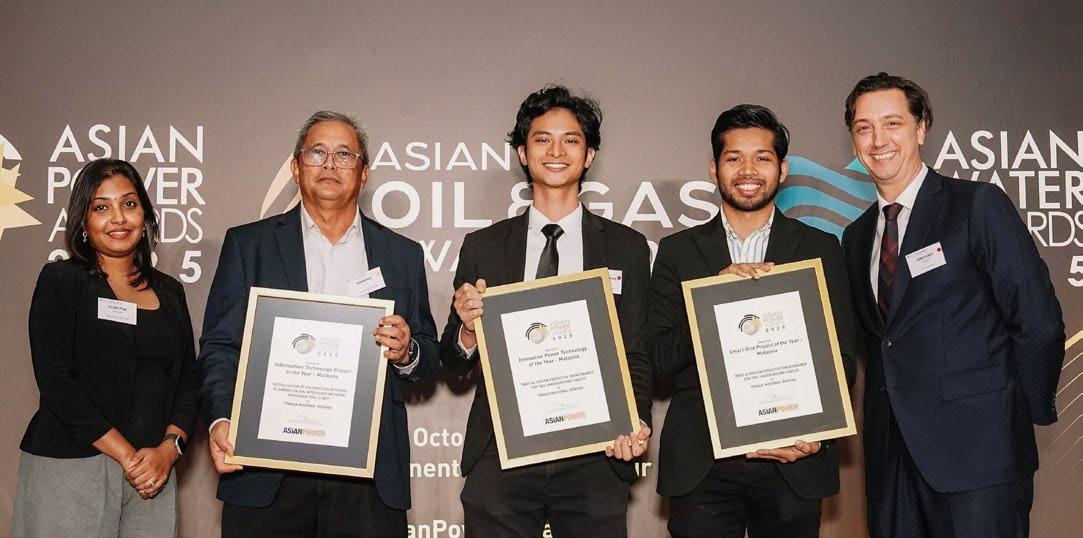
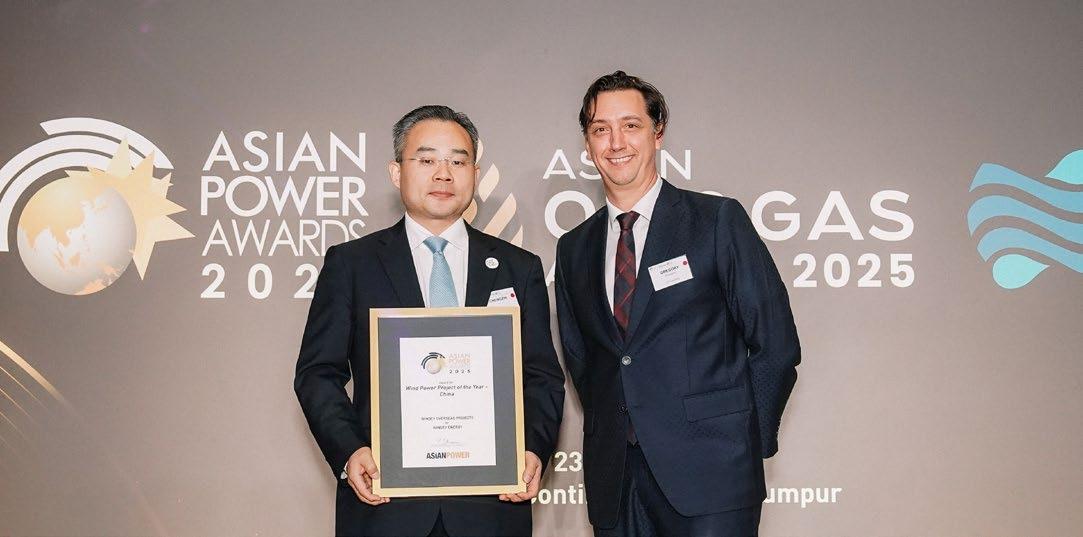
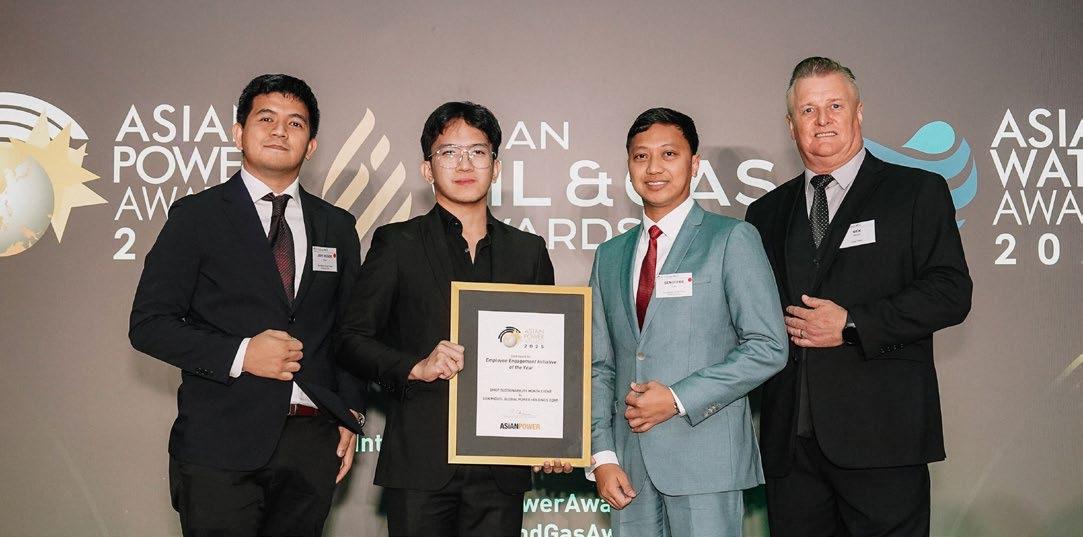
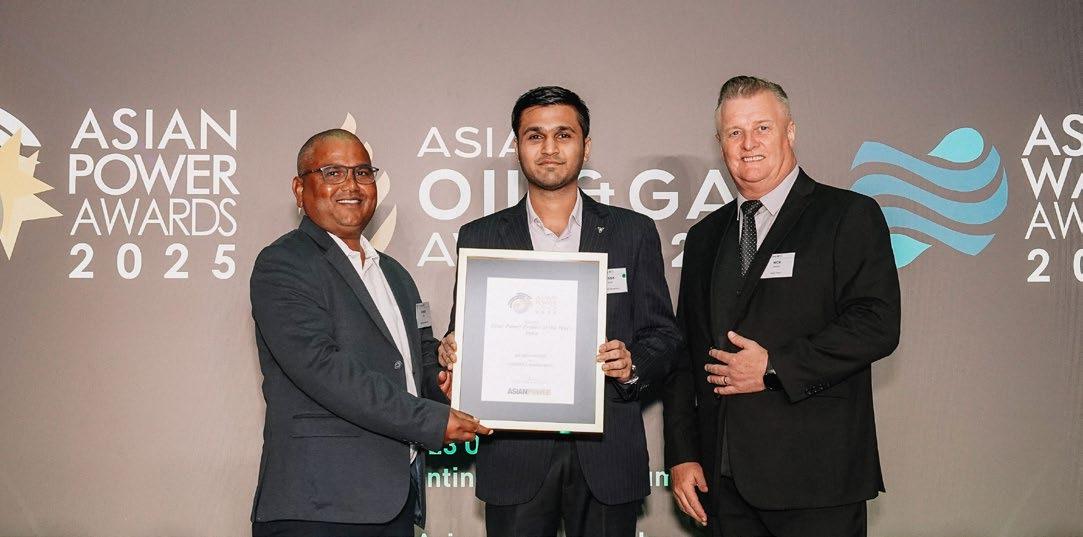
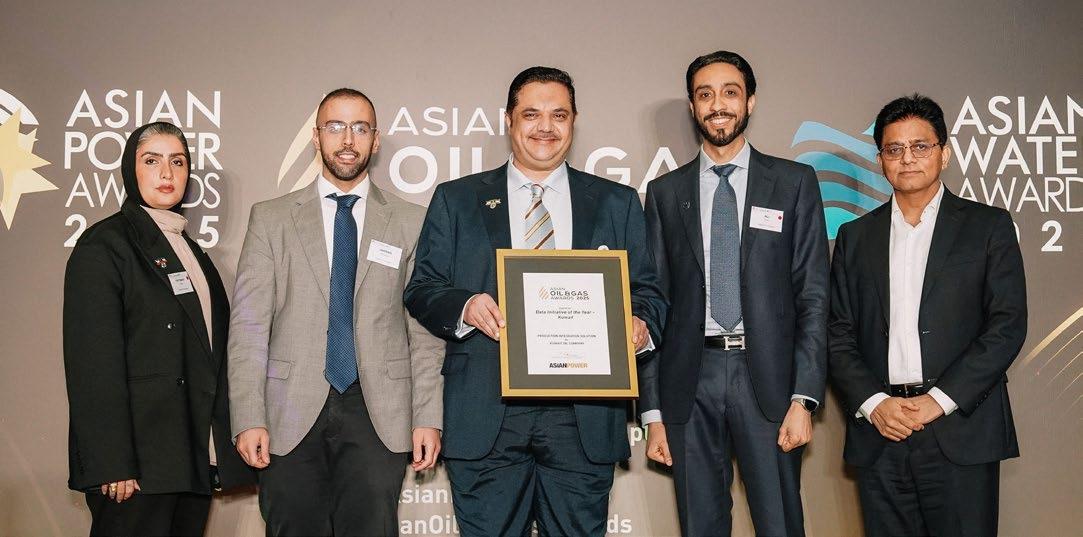
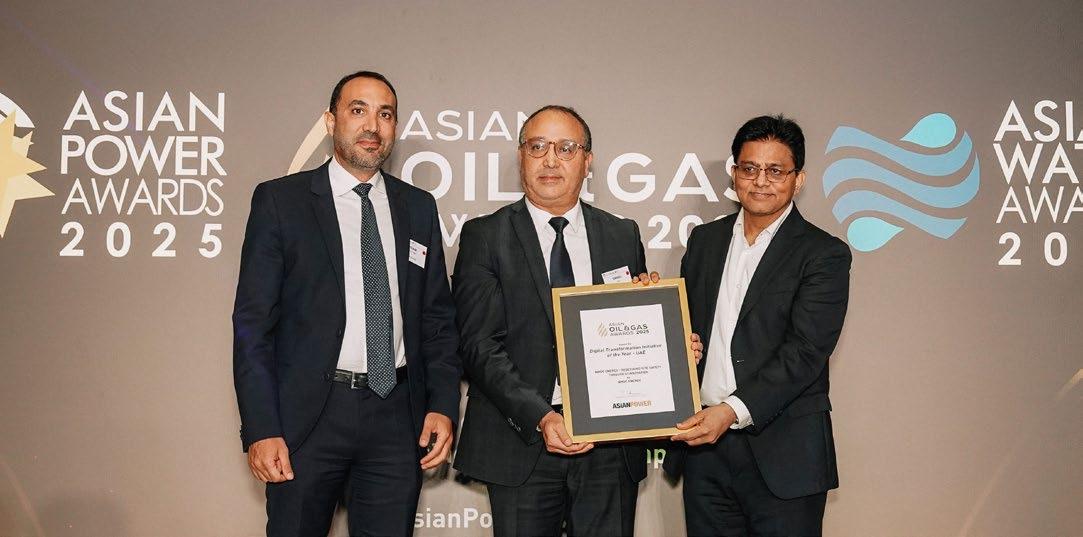
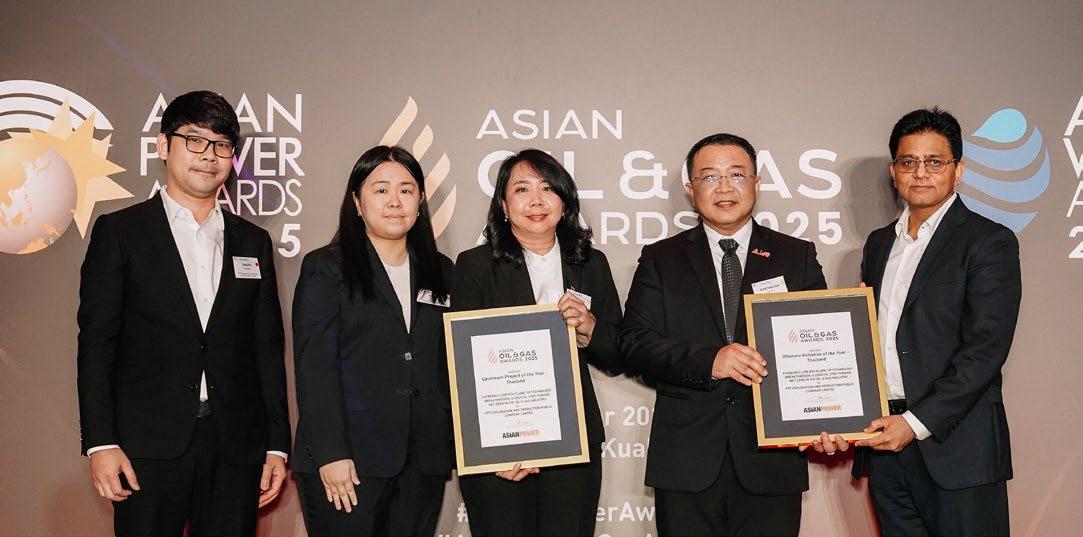
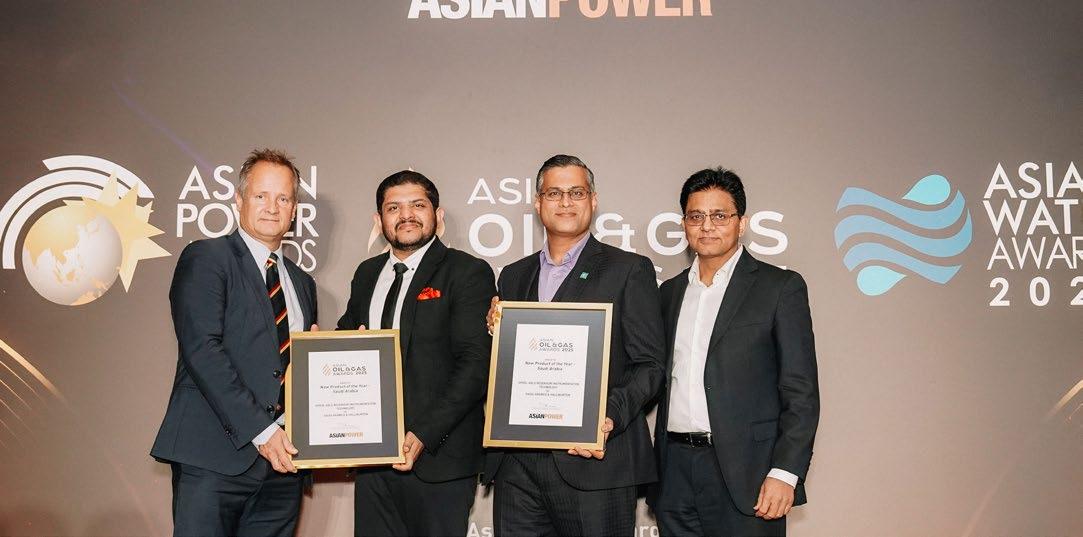
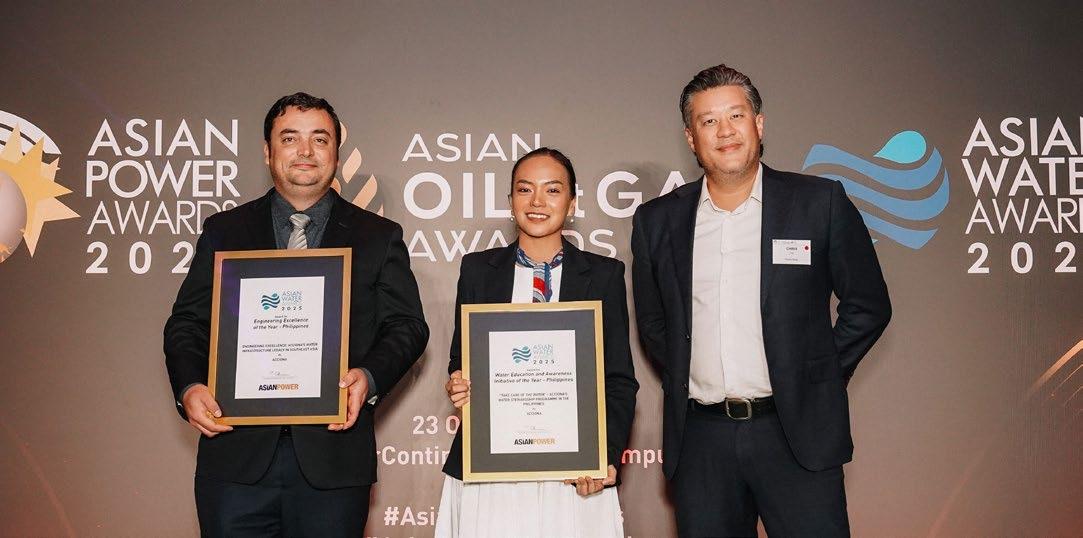
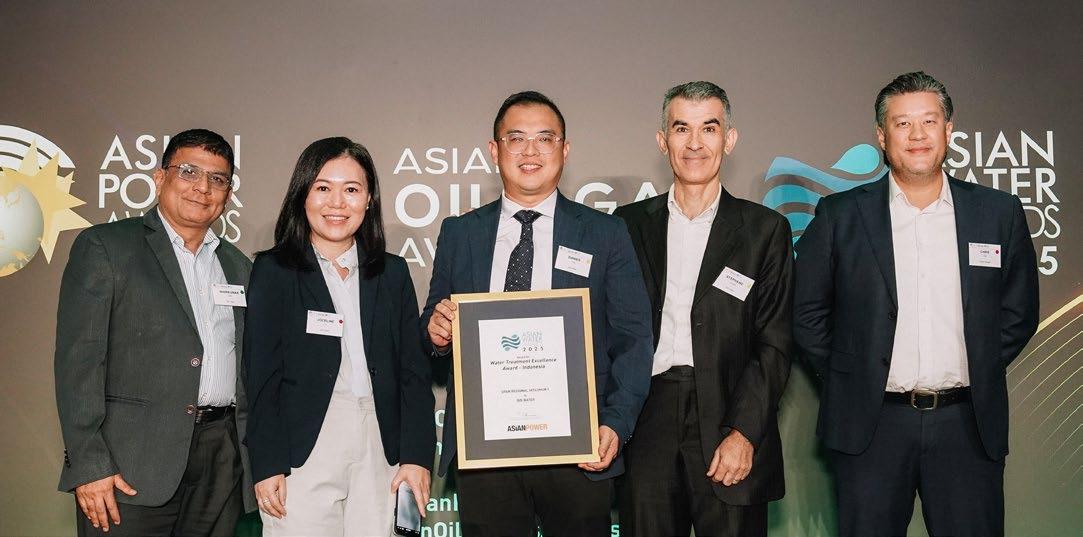
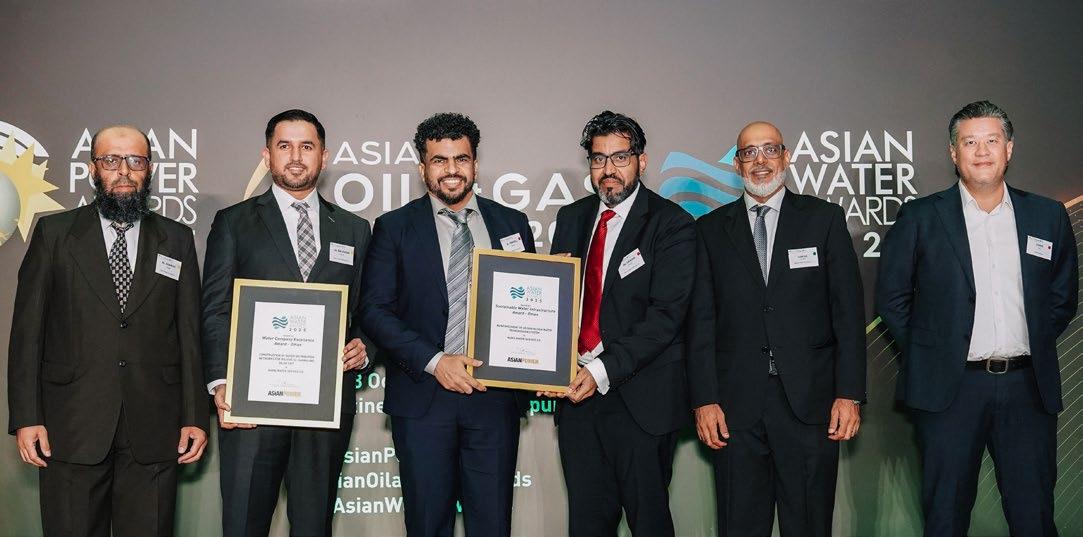
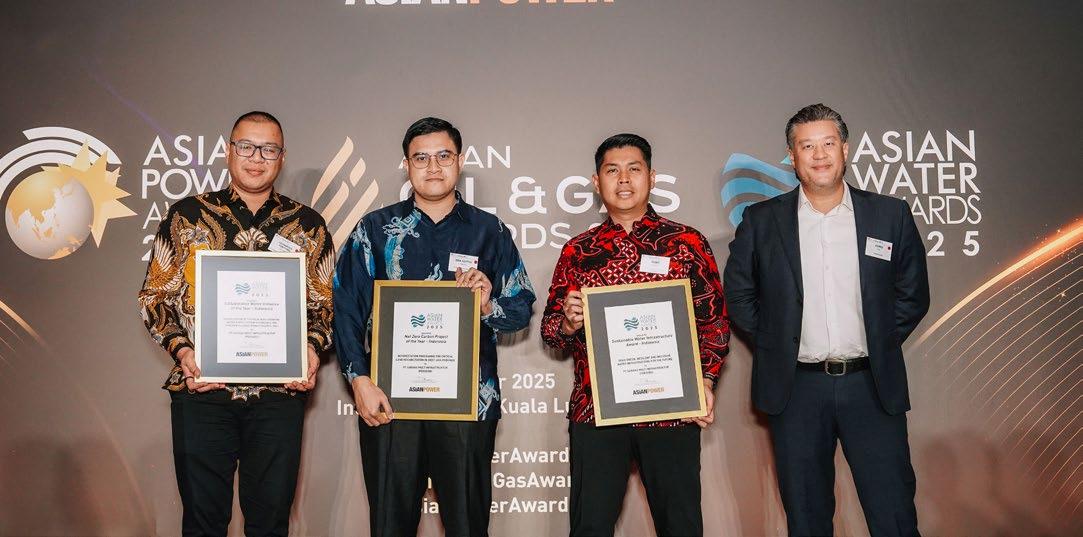
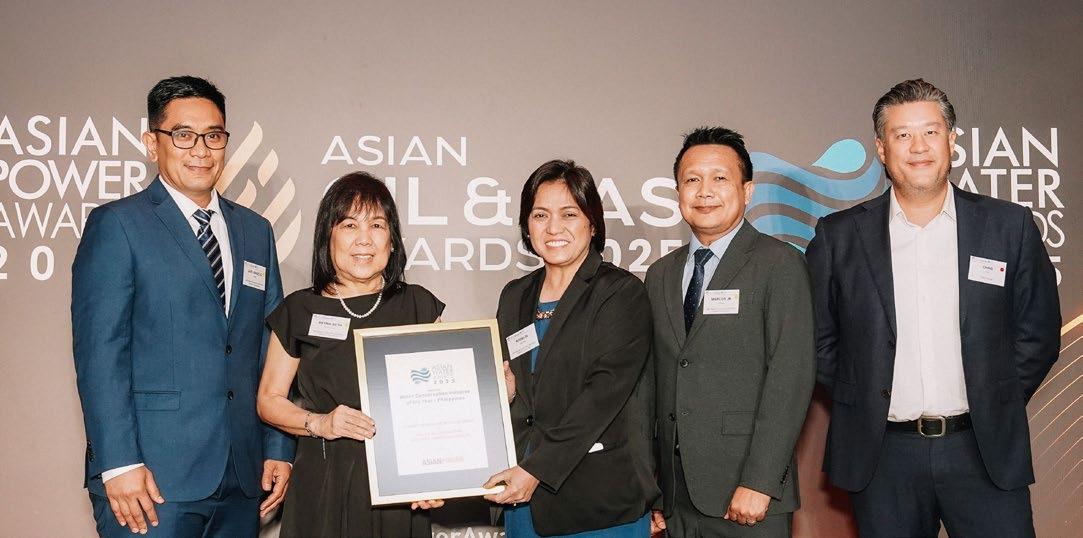
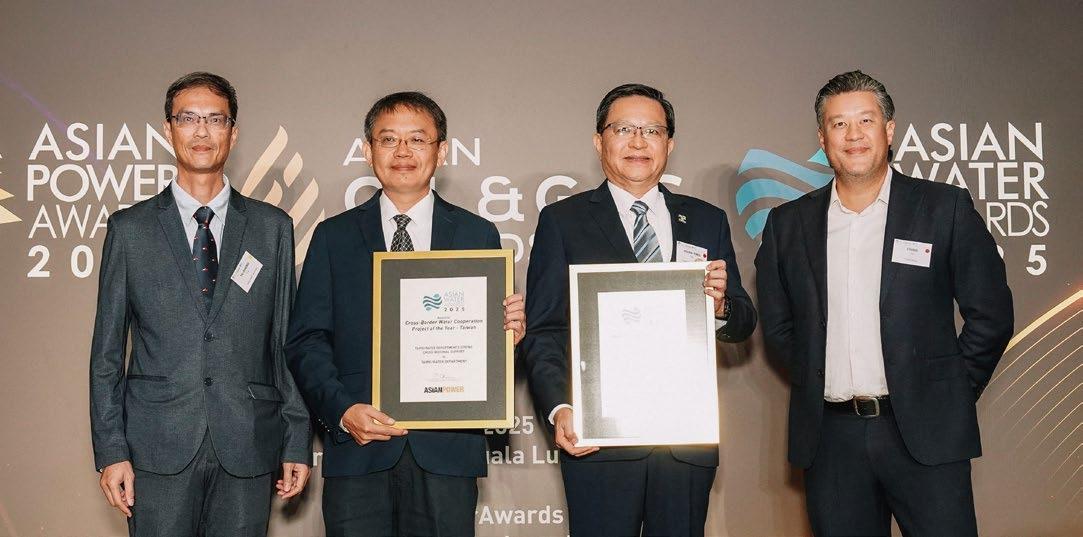
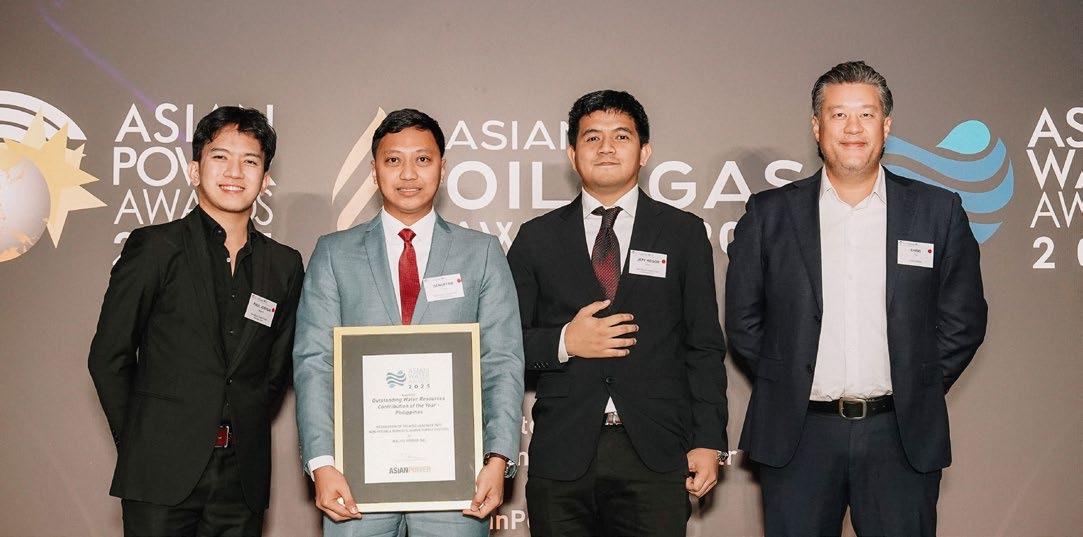
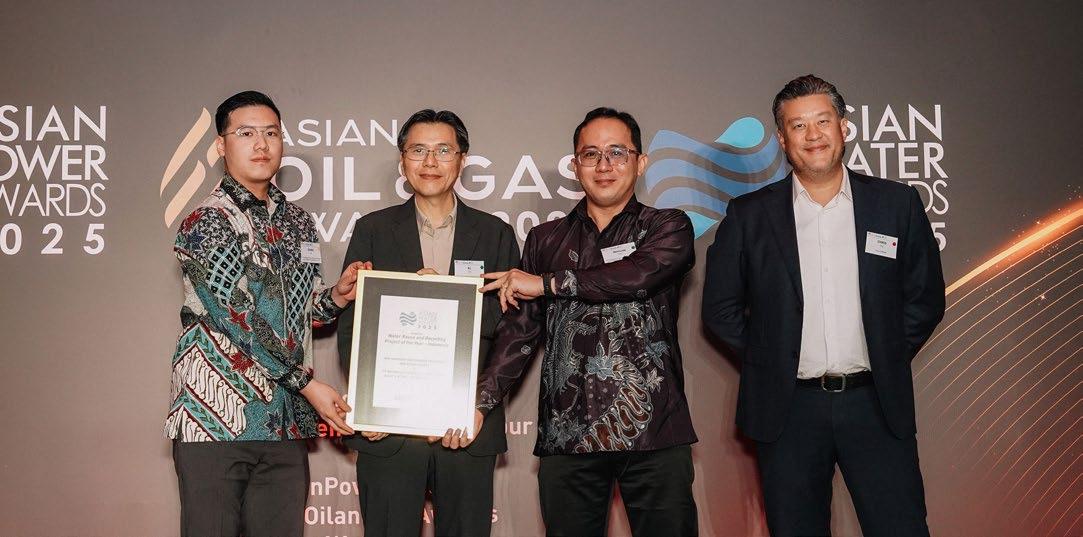
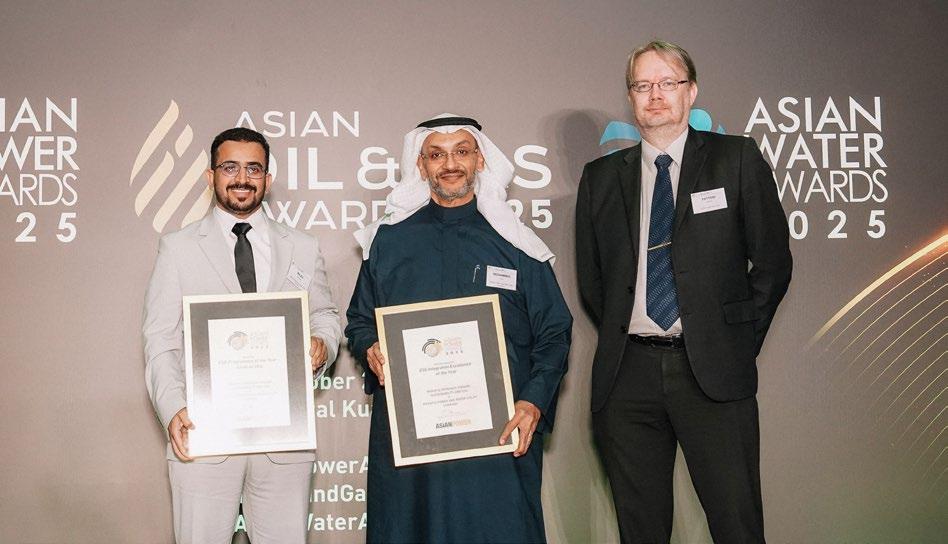
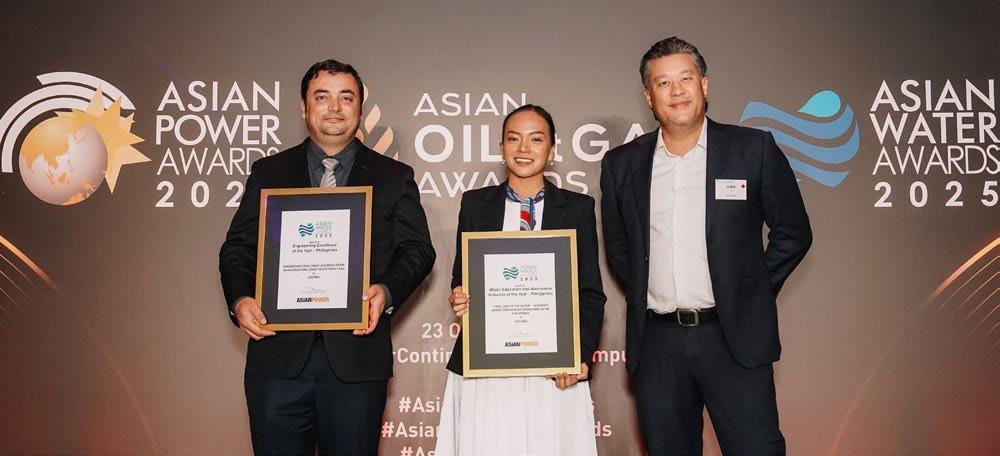
Recognising these achievements, the Asian Power Awards, Asian Oil & Gas Awards, and Asian Water Awards gathered the region’s most outstanding leaders and projects at the Awards Dinner, held on 23 October 2025 in Kuala Lumpur, Malaysia.
The awards programmes honoured companies and initiatives that advanced clean and sustainable energy, demonstrated resilience in overcoming complex challenges, and delivered impactful contributions in conservation, water management, and long-term sustainability.
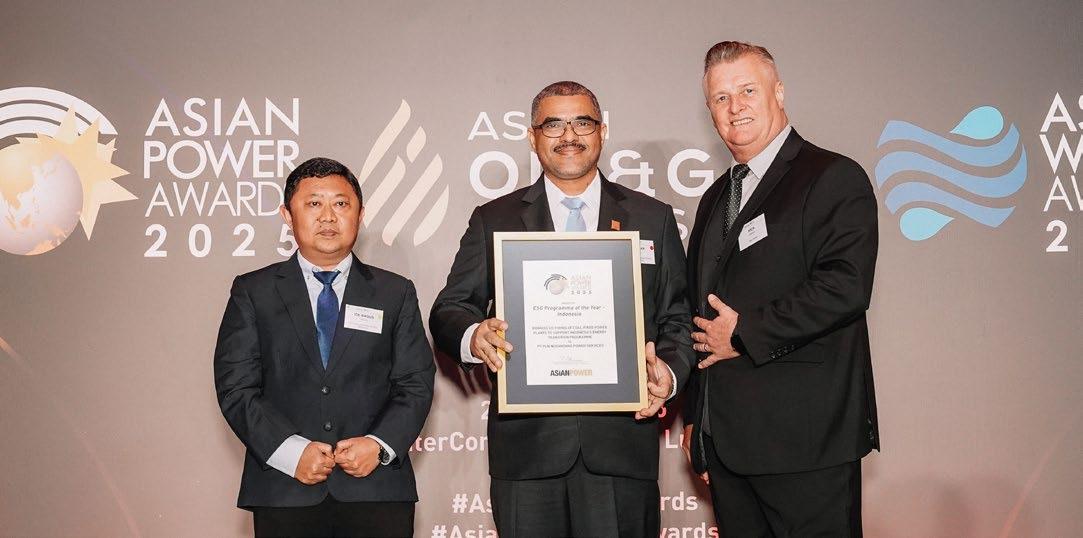
ASIAN POWERAWARDS 2025WINNERS
Biogas-Fired Power Project of the Year
• Gold - Ipoh Lahat 2 MW Landfill Biogas-to-Energy Project by Teraju Sepadu Sdn Bhd
Circular Economy Leadership of the Year
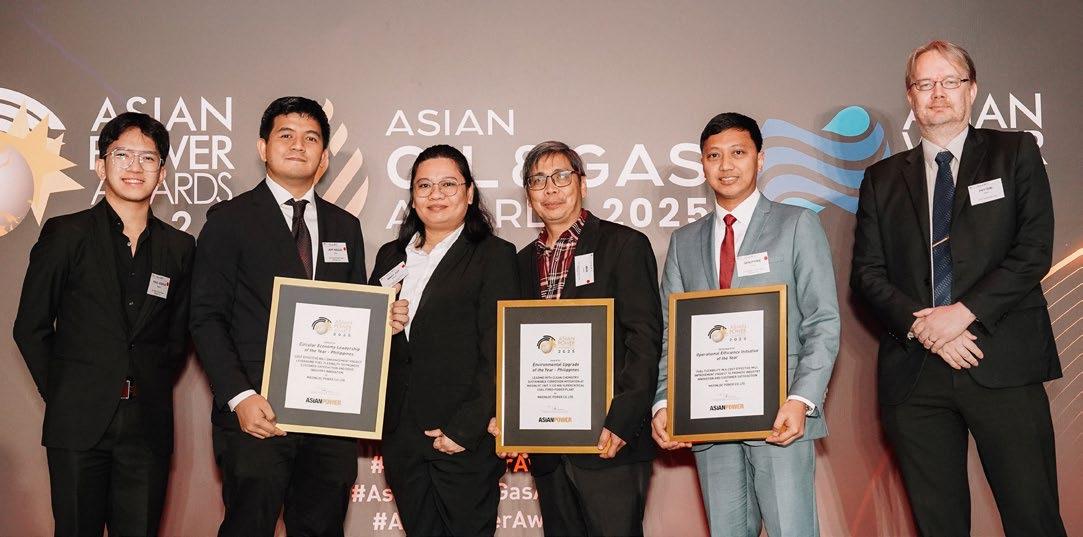
• Philippines - Cost-Effective Mill Enhancement Project Leveraging Fuel Flexibility to Promote Customer Satisfaction and Drive Industry Innovation by Masinloc Power Co. Ltd.
Cross-Border Collaboration of the Year
• Gold - 600 MW Monsoon Wind Project in Lao P.D.R. by Envision Energy
Dual Fuel Power Plant of the Year
• Gold - Development of an Integrated Waste Management Ecosystem to Support the Green Energy Transition at PLN Indonesia Power UBP Suralaya
Employee Engagement Initiative of the Year
• Gold - SMGP Sustainability Month Event by San Miguel Global Power Holdings Corp.
Environmental Upgrade of the Year
• Australia - Groundlink Energy - North Efate Geothermal Project by Groundlink Energy Pty Ltd
• China - Research on Key Technology Innovation and Engineering Application of the "Three-Reform Linkage" of Coal-Fired PowerUnits under the Background of New Power System by China Resources Power Dengfeng Co., Ltd.
• India - Environmental upgrades in ITPCL by IL&FS Tamil Nadu Power Company Limited
• Pakistan - 102 MW Gulpur Hydropower Plant by Mira Power Limited
• Philippines - Leading with Clean Chemistry: Sustainable Corrosion Mitigation at Masinloc Unit 3 335 MW Supercritical Coal-Fired Power Plant by Masinloc Power Co. Ltd.
ESG Integration Excellence of the Year
• Gold - NING*NING Solar Rooftop by Jin Navitas Solaris, Inc.
• Saudi Arabia - Marafiq Approach Toward Sustainability and ESG by Marafiq
The esteemed panel of judges for this year's Asian Power Awards consisted of Petteri Härkki, Managing Director, AFRY SouthEast Asia Ltd; Gregory Poussardin, Partner, Power & Utilities, EY Consulting; Imanol Arbulu, Partner and Head of Energy Practice, Southeast Asia, Kearney; and Mike Thomas, Managing Director,
The Lantau Group. The judges for the Asian Oil & Gas Awards 2025 include Sanjeev Gupta, Asean and Singapore Energy Leader, EY-Parthenon, and Mike Thomas, Managing Director. Meanwhile, the judges for the Asian Water Awards 2025 consisted of Josette Soh, Sustainability & Emerging Assurance Partner, Deloitte Singapore, and Chris Ong, Principal, Roland Berger.
Congratulations to all the winners!
Power and Water Utility Company
• Singapore - Gentrack and Amber Electric: Powering the Future of Sustainable Energy by Gentrack
• Taiwan - SF6 Reduction Methods and Results in Power Equipment by Taiwan Power Company
• UAE - Utilities For Net Zero Alliance by Abu Dhabi National Energy Company (TAQA)
Fast-Track Power Plant of the Year
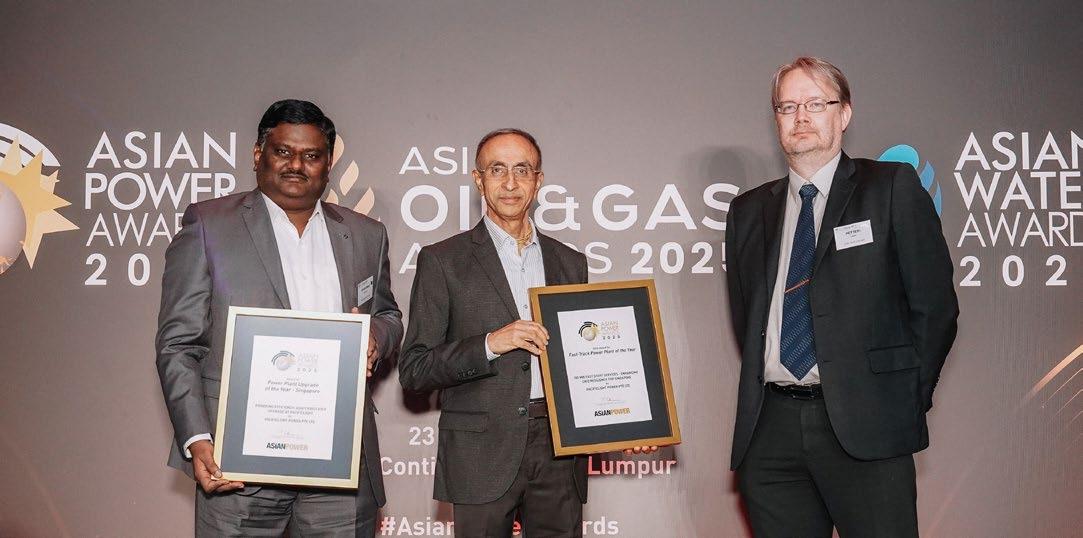
• Gold - 100 MW Fast Start Services - Enhancing Grid Resilience for Singapore by PacificLight Power Pte Ltd
• Silver - Shenzhen Energy Dongbu Power Plant
Flexible Gas Power Project of the Year
• Gold - Shenzhen Energy Dongbu Power Plant
Gas Engine Combined Cycle Power Project of the Year
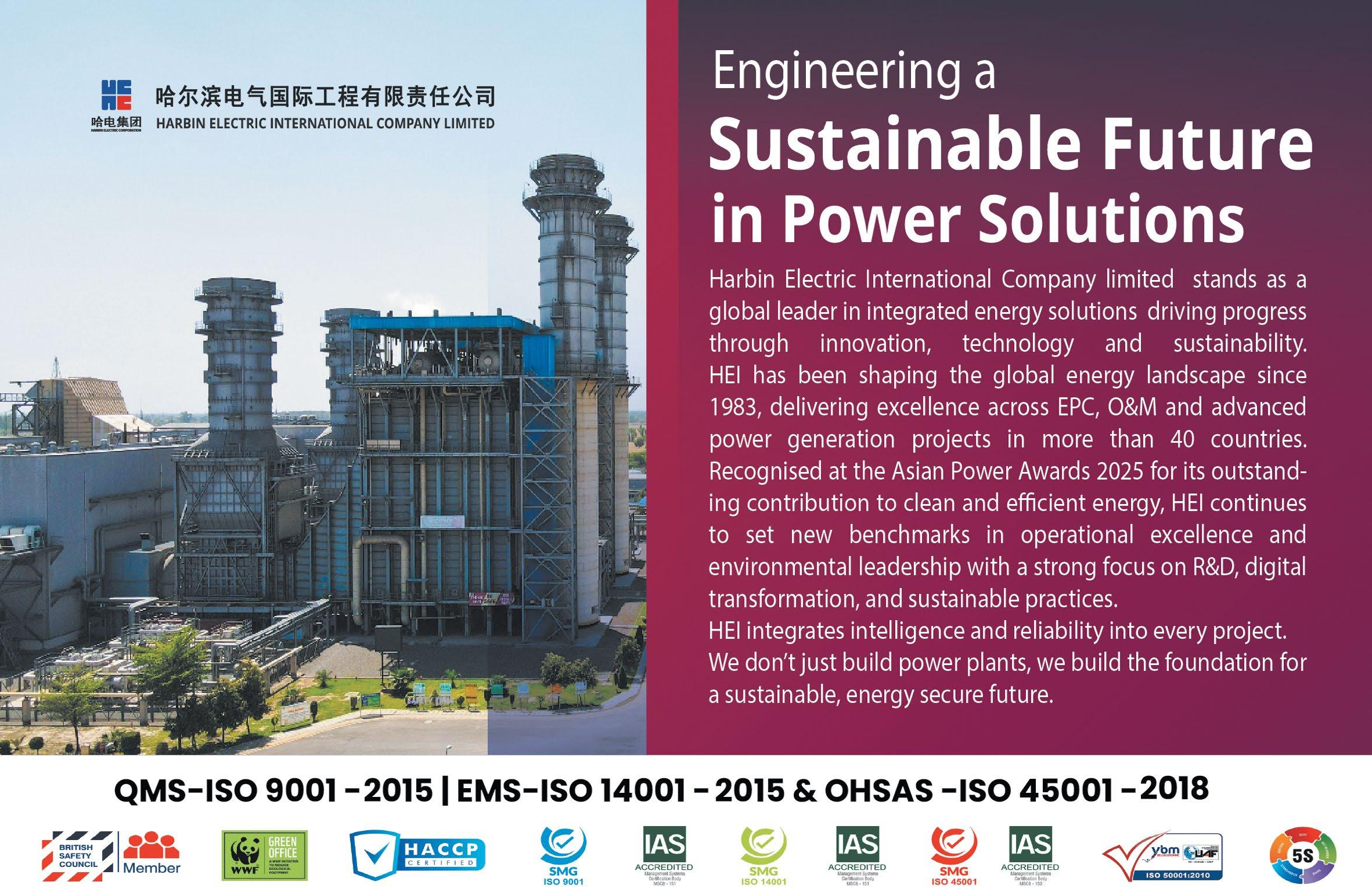
• Gold - Harbin Electric International Co., Ltd. (HEI): Excellence in RLNG-Based Gas Engine Technology by Harbin Electric International Company Limited
• Silver - Shenzhen Energy Dongbu Power Plant
• Bronze - Gas power plant of the year - KOMIPO Incheon by Korea Midland Power Co., LTD. Incheon Power Generation Site Division
Gas Power Project of the Year
• Uzbekistan - ODAŞ: Shaping Asia’s Energy Future with Unrivaled Pride and Purpose by ODAŞELEKTRİK ÜRETİM SANAYİ TİCARET A.Ş.
Green Hydrogen Power Project of the Year
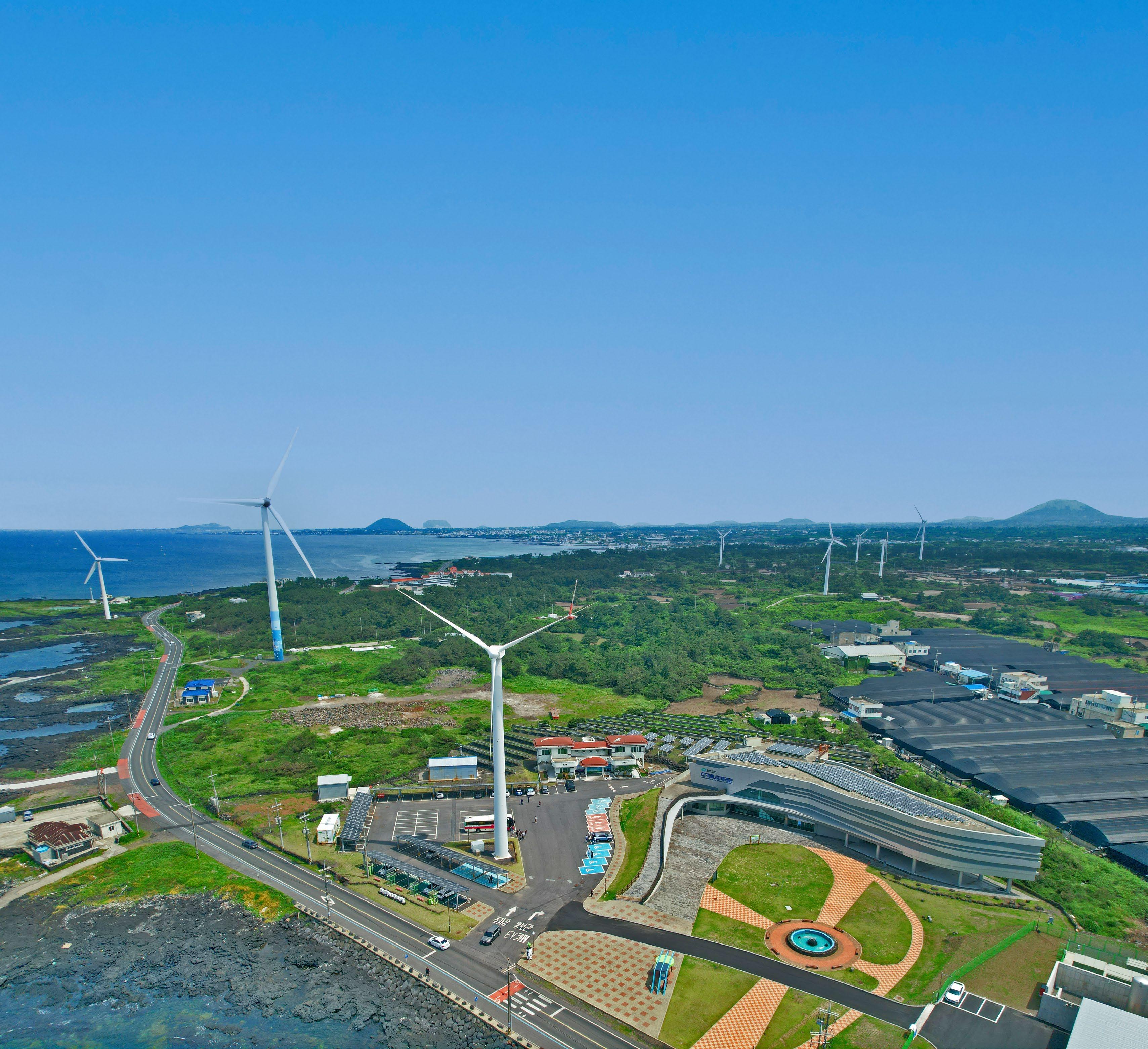
• Gold - HaengWon Demonstration Wind Power Plant Project from JeJu Energy Corporation by Emerson Korea
Hydro Power Project of the Year
• Gold - 102 MW Gulpur Hydropower Plant by Mira Power Limited
Independent Power Producer of the Year
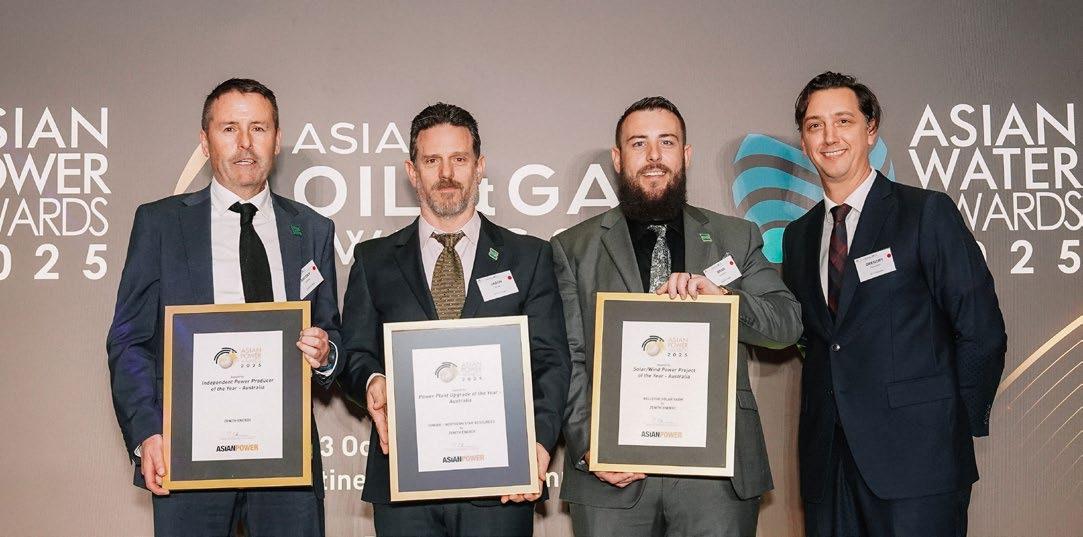
• Australia - Zenith Energy
• India - Greenko
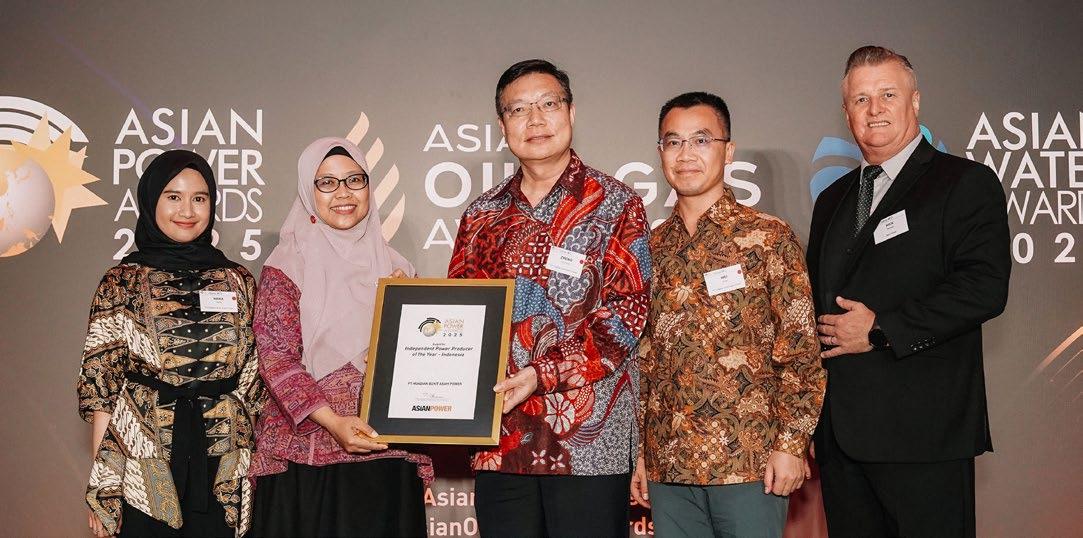
• Indonesia - PT Huadian Bukit Asam Power
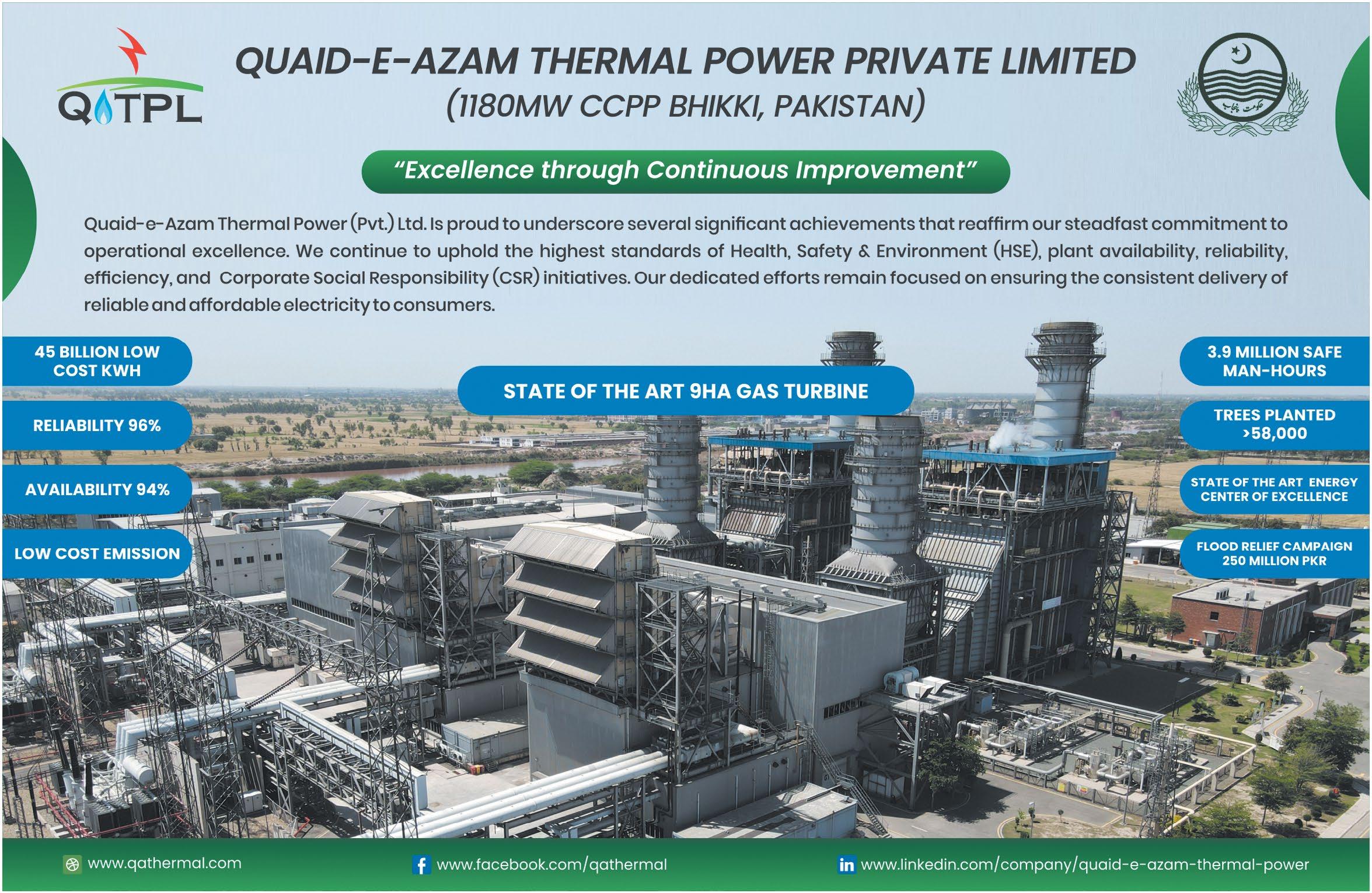
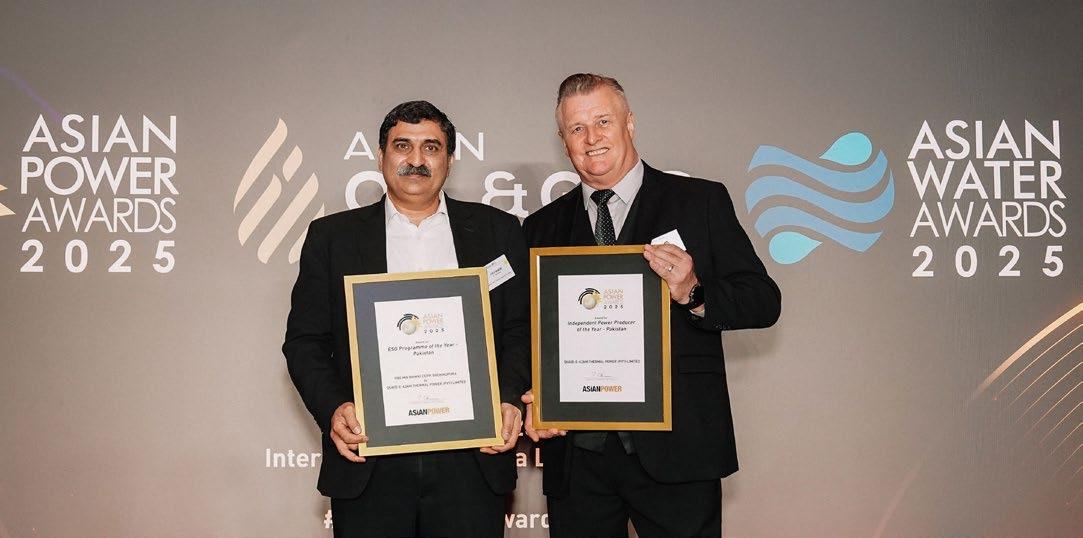
• Pakistan - Quaid-e-Azam Thermal Power (Pvt) Limited
• Philippines - Aboitiz Renewables Inc
Information Technology Project of the Year
• Malaysia - Digitalization of Distribution Network Planning via the Integrated Network Expansion Tool (i-NET) by Tenaga Nasional Berhad
• Philippines - SNAP Data Science and AI Program: Powering People, Powering Performance by Aboitiz Power Corporation
Innovative Power Technology of the Year
• China - Xizang Development & Investment Group Seni District Dagapu 100mw/400 mwh Stand-alone Grid-forming Energy Storage Project
by Xizang Development & Investment Group, Naqu River Hydropower Development And Investment Co., Ltd./ Xizang Development & Investment Group, New Energy Industry Development Co., Ltd./ POWERCHINA HUADONG ENGINEERING CORPORATION LIMITED (HDEC)
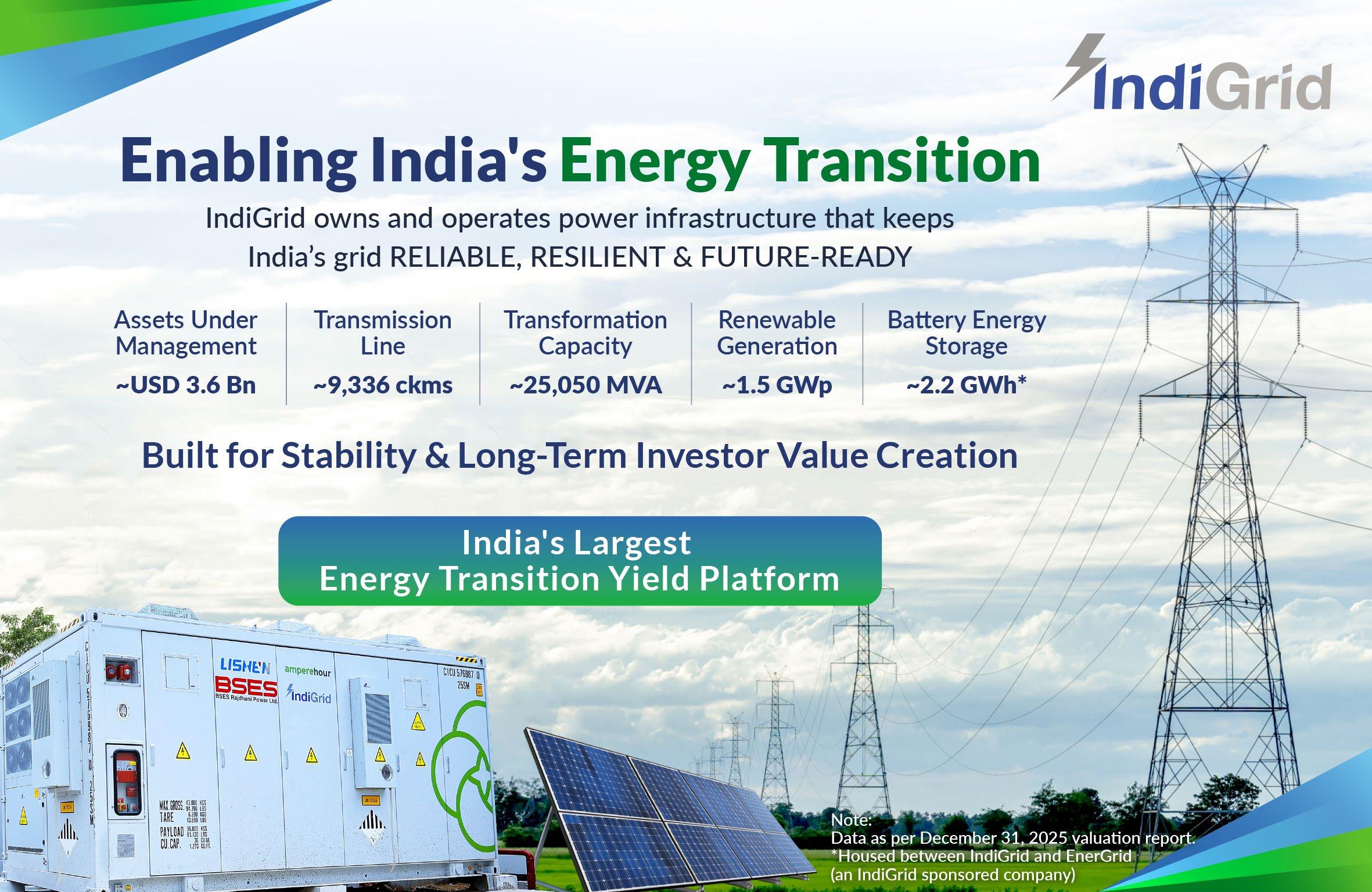
• India - IndiGrid Setting a benchmark in the BESS space with the Kilokari project by IndiGrid Infrastructure Trust
• Indonesia - Innovative Energy Efficiency Through Biomass Implementation by PT PLN Indonesia Power Jawa Barat 2 Pelabuhan Ratu
• Malaysia - TNB's AI-Driven Predictive Maintenance for 11 kV Underground Cables by Tenaga Nasional Berhad
• Philippines - Magat Turbine Efficiency Prediction Tool: From Intuition to Intelligence by Aboitiz Power Corporation
• Singapore - Gentrack and Amber Electric: Powering the Future of Sustainable Energy Gentrack
• UAE - DERASAT (Arabic Name means Studies) by Dubai Electricity & Water Authority [DEWA]
Lighting Innovation of the Year
• Philippines - Solar Tower Lights - Albus by EEI Power Corporation
Operational Efficiency Initiative of the Year
• Gold - Fuel Flexibility in a Cost-Effective Mill Improvement Project to Promote Industry Innovation and Customer Satisfaction by Masinloc Power Co. Ltd.
• Silver - Semirara Mining and Power Corporation’s efficiency innovation using the Micro-Oil Burner System in SCPC Unit 2 by Semirara Mining and Power Corporation
Power Plant Upgrade of the Year
• Australia - Jundee – Northern Star Resources by Zenith Energy
• India - Greenko
• Korea - Financing Kebithigollawa Solar Power Plant of Windforce PLC by Yeongheung Power Division
• Philippines - MGEN Renewable Energy Inc (Baras Solar) by Meralco PowerGen Corporation
• Singapore - Powering Efficiency: Asia’s First ATEP Upgrade at PacificLight by PacificLight Power Pte Ltd
• Thailand - A.T. Biopower Co., Ltd.
Power Project Finance House of the Year
• Gold - Financing Kebithigollawa Solar Power Plant of Windforce PLC by Amana Bank
Power Utility of the Year
• China - HUADIAN JINSHA RIVER UPSTREAM QAMDO NEW ENERGY Co. LTD
• India - IL&FS Tamil Nadu Power Company Limited
• Indonesia - PT PLN Indonesia Power Jawa Barat 2 Pelabuhan Ratu
• Malaysia - Sabah Electricity Sdn Bhd
• Philippines - POWER 4 ALL, INC.
• Singapore - SP Group
• Thailand - A.T. Biopower Co., Ltd.
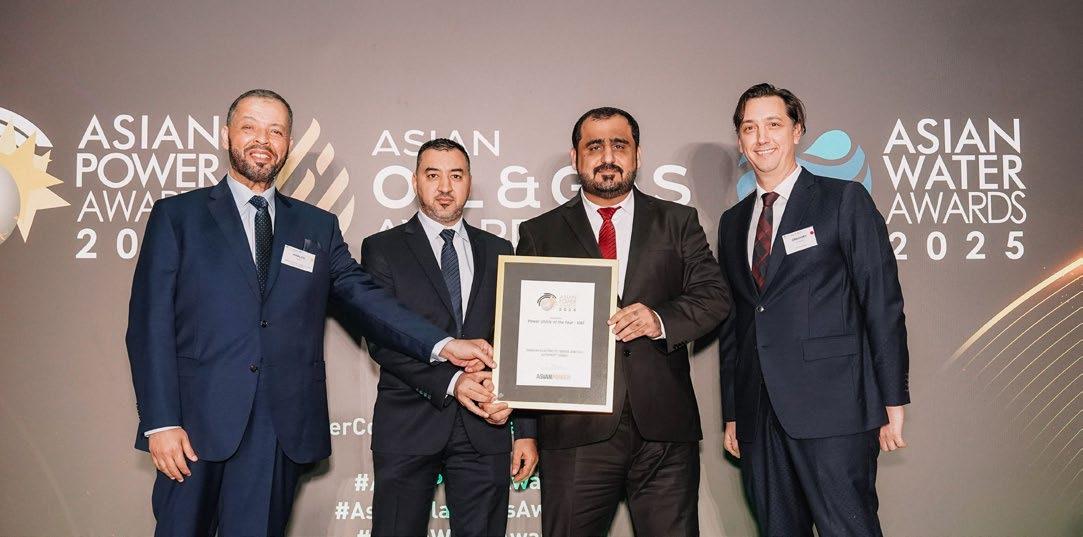
• UAE - Sharjah Electricity, Water, and Gas Authority (SEWA)
R&D Project of the Year
• China - Virtual Power Plant Platform of China Resources Smart Energy by China Resources Smart Energy Co., Ltd.
• Korea - Reduction of Coal Spillage Through the Development of New Technology in Coal Handling Equipment by KOREA SOUTH-EAST POWER
• Pakistan - Harbin Electric International Co., Ltd. (HEI): A Leader in Power Sector Research and Development by Harbin Electric International Company Limited
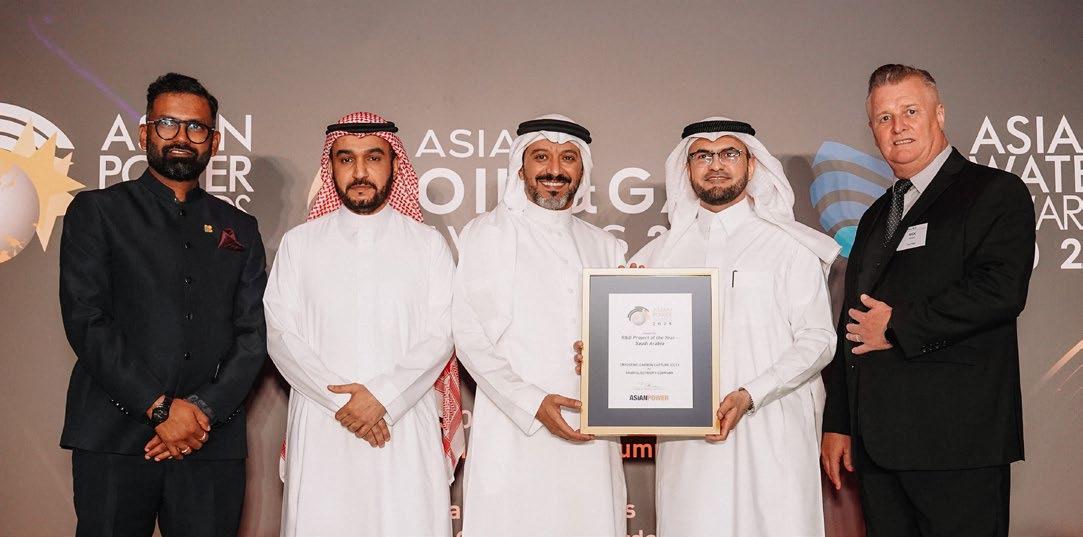
• Saudi Arabia - Cryogenic Carbon Capture (CCC) by Saudi Electricity Company
Smart Grid Project of the Year
• India - Smart Grids aiding infrastructure development in 100 villages in India by OMC Power Private Limited
• Malaysia - TNB's AI-Driven Predictive Maintenance for 11 kV Underground Cables by Tenaga Nasional Berhad
• Singapore - Building the Energy Metaverse by SP Group
• Sri Lanka - Sri Lanka’s largest Battery Energy Storage System (BESS) powered by Solar PV by Hayleys Solar
• Taiwan - Estimation of System Real-time Frequency Regulation Ancillary Service Demand Using Wide Area Measurement System by Taiwan Power Company
• UAE - Smart Grid Transformation through Rooftop Solar: EtihadWE’s
Distributed Solar System (DSS) by Etihad Water and Electricity (EtihadWE)
Solar Power Project of the Year
• Bangladesh - Sirajganj 68 MW (BCRECL) Solar Power Plant by Infrastructure Development Company Limited (IDCOL)
• China - HUADIAN GROUP JINSHA RIVER UPPER REACHES CLEAN ENERGY BASE 2600 MW PHOTOVOLTAIC POWER GENERATION PROJECT by HUADIAN JINSHA RIVER UPSTREAM QAMDO NEW ENERGY Co. LTD
• India - Solar Power Project of the Year – Bikaner Project by Serentica Renewables
• Indonesia - Saguling Floating Solar PV Power Plant by PT INDO ACWA TENAGA SAGULING
• Sri Lanka - Sri Lanka’s Largest Single-Roof Solar Installation with First-Ever Smart Transformer Technology by Hayleys Solar
Solar/Wind Power Project of the Year
• Australia - Bellevue Solar Farm by Zenith Energy
Standby Power Plant of the Year
• Gold - Regional Power Grid Battery Storage Project – Regional Power Supply Planning and Implementation by Taiwan Power Company
Sustainable Renewable Energy Initiative of the Year
• Gold - Amanpulo: A Sustainably-Powered Paradise by Upgrade Energy Philippines, Inc. (UGEP)
• Silver - NING*NING Solar Rooftop by Jin Navitas Solaris, Inc.
Transmission & Distribution Project of the Year
• Gold - Beneath the City: Singapore and Southeast Asia’s First Large-Scale Underground 230 kV Substation by SP Group
• Silver - Power Supply Planning For Advancing Semiconductor Advanced Process Technologies by Taiwan Power Company
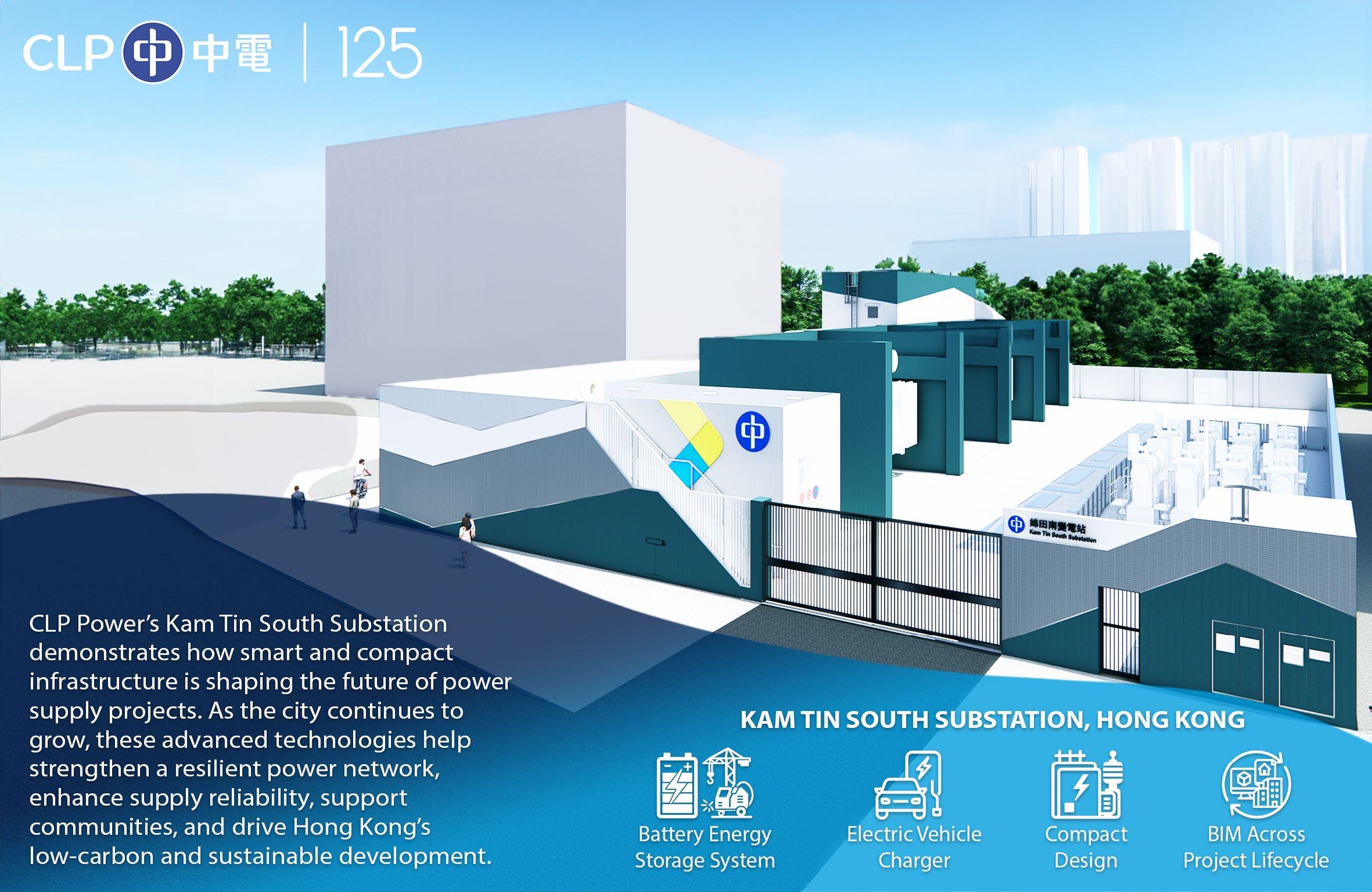
• Bronze - Kam Tin South Substation by CLP Power: Powering the Community with Innovation and Sustainability by CLP Power Hong Kong Limited
Wind Power Project of the Year
• China - Windey Overseas Projects by Windey Energy
• Korea - Renewable Power of the Year - Wind Power Generation Park Phase 2 of Yeongheung Power Division, Korea South-East Power by Emerson Korea
CEO of the Year
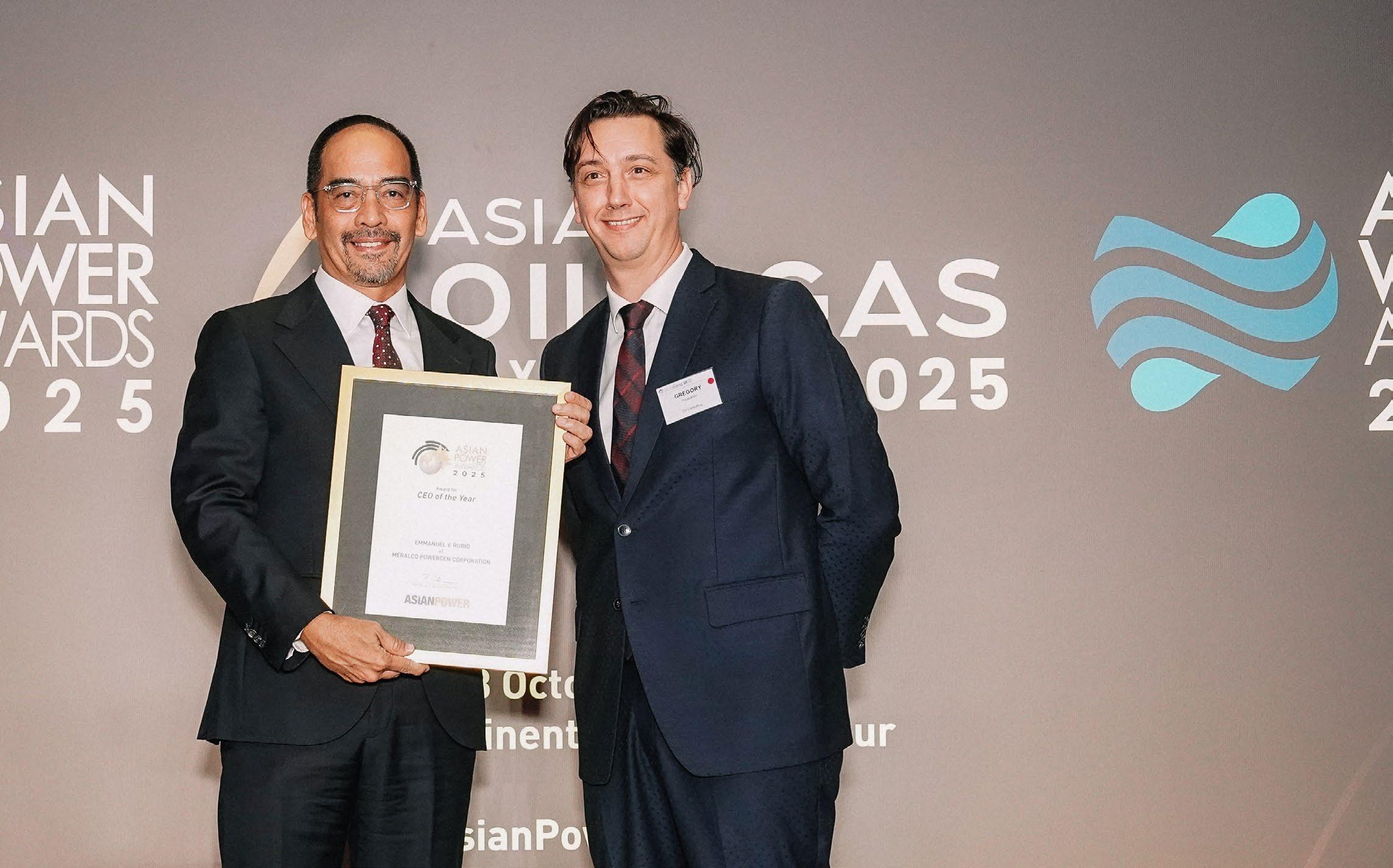
• Emmanuel V. Rubio of Meralco PowerGen Corporation
ASIAN OIL & GASAWARDS 2025WINNERS
ADNOC Offshore
• Innovative Technology Initiative of the Year - UAE
• Offshore Initiative of the Year - UAE
• People Development Initiative of the Year - UAE
Bharat Petroleum Corporation Limited
• Digital Transformation Initiative of the Year - India
• Operations and Maintenance Initiative of the Year - India
Bharat Petroleum Corporation Limited CRDC
• Refinery Project of the Year - India
Borouge
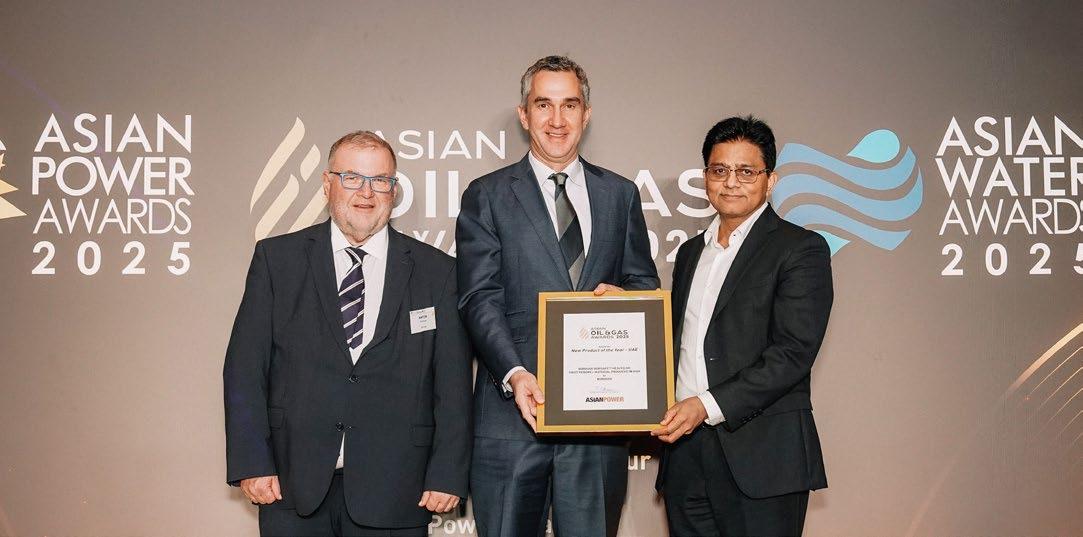
• New Product of the Year - UAE
ENOC RETAIL LLC
• Downstream Project of the Year - UAE
• Plant/Facilities Upgrade of the Year - UAE
GAIL (India) Limited
• Plant/Facilities Upgrade of the Year - India
Kuwait Oil Company
• Data Initiative of the Year - Kuwait
McDermott
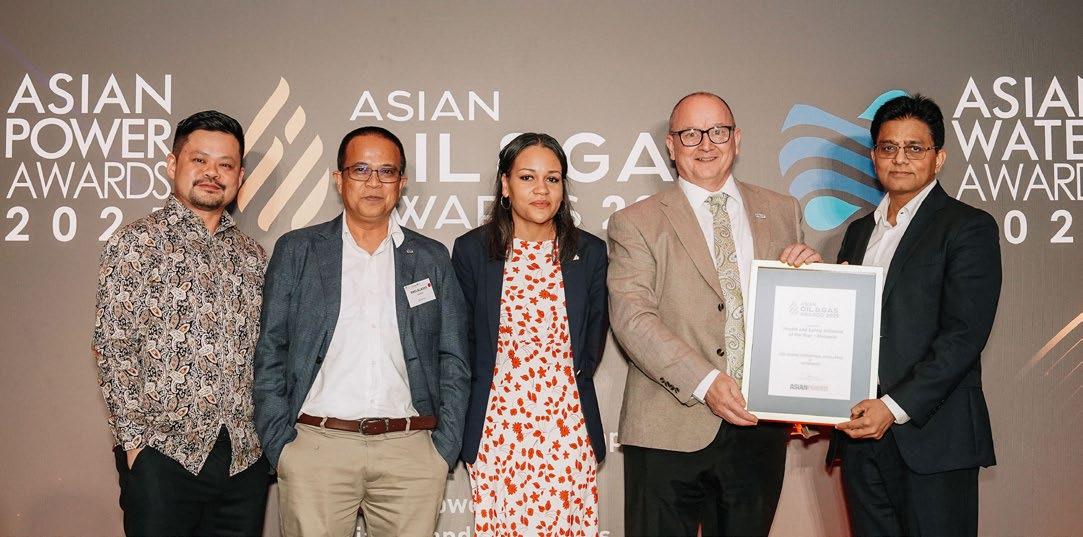
• Health and Safety Initiative of the Year - Malaysia
EVENT: ASIAN POWER, ASIAN WATER, AND ASIAN OIL & GAS AWARDS
NMDC Energy
• Digital Transformation Initiative of the Year - UAE
• ESG Initiative of the Year - UAE
• Onshore Initiative of the Year - UAE
Pertamina Drilling Services Indonesia
• People Development Initiative of the Year - Indonesia
Pertamina International Shipping (PIS)
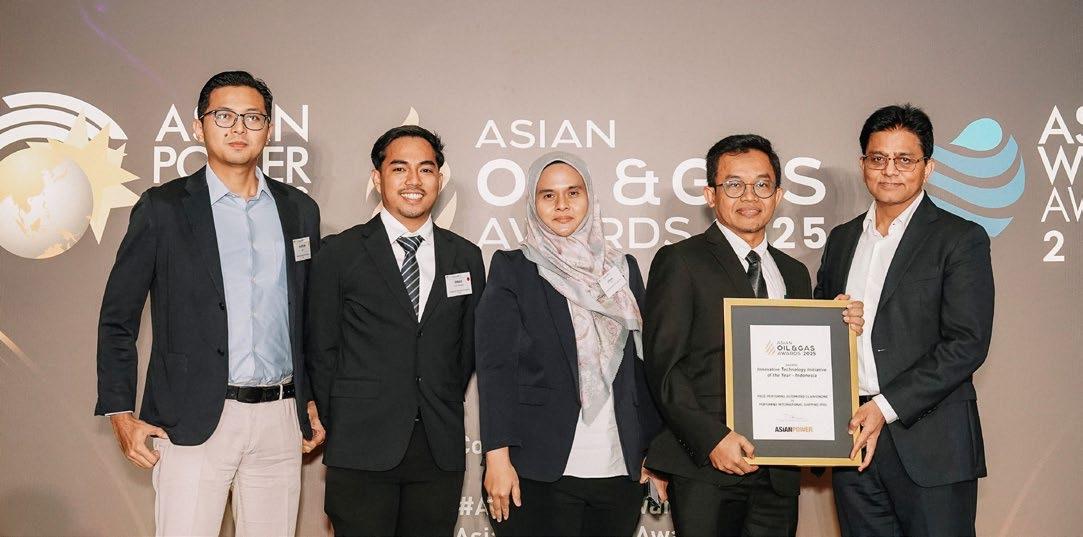
• Innovative Technology Initiative of the Year - Indonesia
PHUC SANG MINH GAS ENGINEERING CO.,LTD
• LNG Project of the Year - Vietnam
Pivotree Pty Ltd
• Innovation Award - Australia
PTT Exploration and Production Public Company Limited
• Offshore Initiative of the Year - Thailand
• Upstream Project of the Year - Thailand
Reliance Industries Limited
• Innovative Technology Initiative of the Year - India
Saudi Aramco - OSPAS
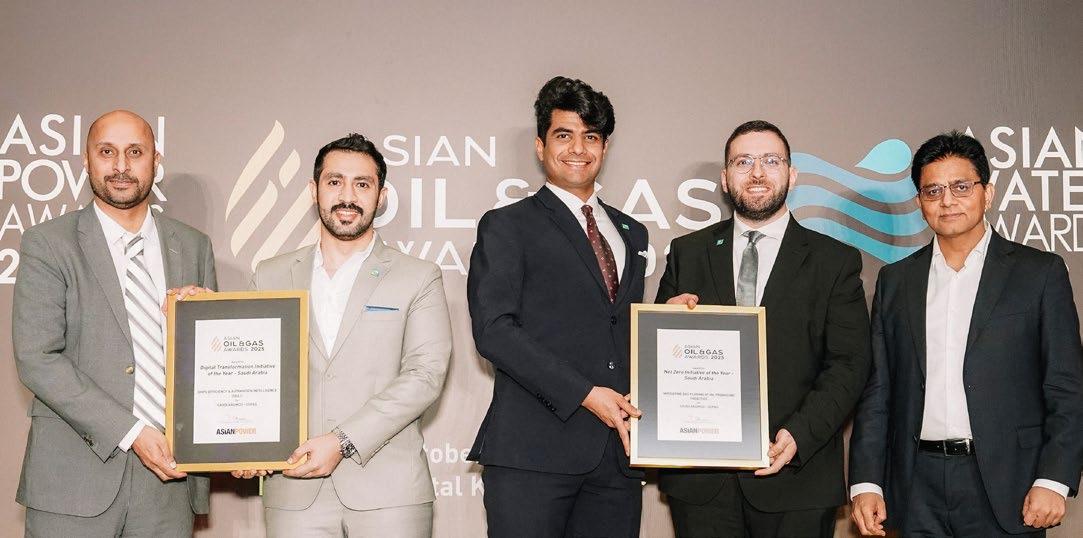
• Digital Transformation Initiative of the Year - Saudi Arabia
• Net Zero Initiative of the Year - Saudi Arabia
Saudi Aramco
• Innovation Award - Saudi Arabia
Saudi Aramco & Halliburton
• New Product of the Year - Saudi Arabia
Shell India Markets Pvt. Ltd.
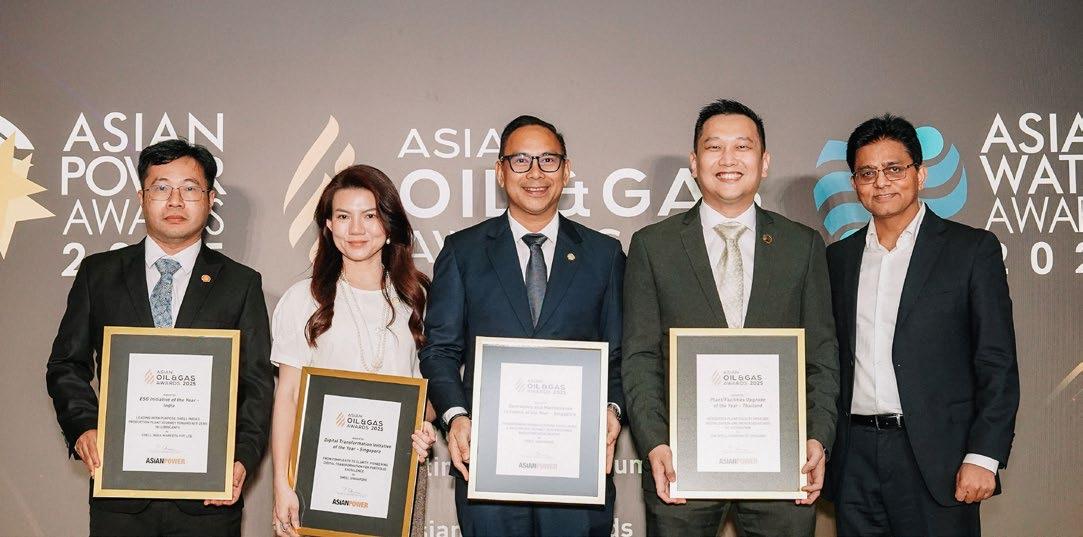
• ESG Initiative of the Year - India
Shell Singapore
• Digital Transformation Initiative of the Year - Singapore
• Operations and Maintenance Initiative of the Year - Singapore
The Shell Company of Thailand
• Plant/Facilities Upgrade of the Year - Thailand
ASIANWATERAWARDS 2025WINNERS
ACCIONA
• Engineering Excellence of the Year - Philippines
• Water Education and Awareness Initiative of the Year - Philippines
Aumsat Technologies LLP
• Water Company Excellence Award - India
BW Water
• Water Treatment Excellence Award - Indonesia
L&T Technology Services
• Engineering Excellence of the Year - India
Malita Power Inc.
• Outstanding Water Resources Contribution of the Year - Philippines
Maynilad Water Services, Inc.
• Water Reuse and Recycling Project of the Year - Philippines
Metito Utilities
• Outstanding Water Treatment Plant Design Award - Saudi Arabia
Nama Water Services Co.
• Sustainable Water Infrastructure Award - Oman
• Water Company Excellence Award - Oman
NXTLVL Water Technology Inc.
• Water Company Excellence Award - Philippines
PT Indonesia Ruipu Nickel and Chrome Alloy & Besino Environment Co., Ltd.
• Water Reuse and Recycling Project of the Year - Indonesia
PT Metichem Indonesia
• Water Company Excellence Award - Indonesia
PT PLN INDONESIA POWER UBP SURALAYA
• Engineering Excellence of the Year - Indonesia
PT Sarana Multi Infrastruktur (Persero)
• Collaborative Water Initiative of the Year - Indonesia
• Net Zero Carbon Project of the Year - Indonesia
• Sustainable Water Infrastructure Award - Indonesia
Puerto Princesa Water Reclamation and Learning Center, Inc.
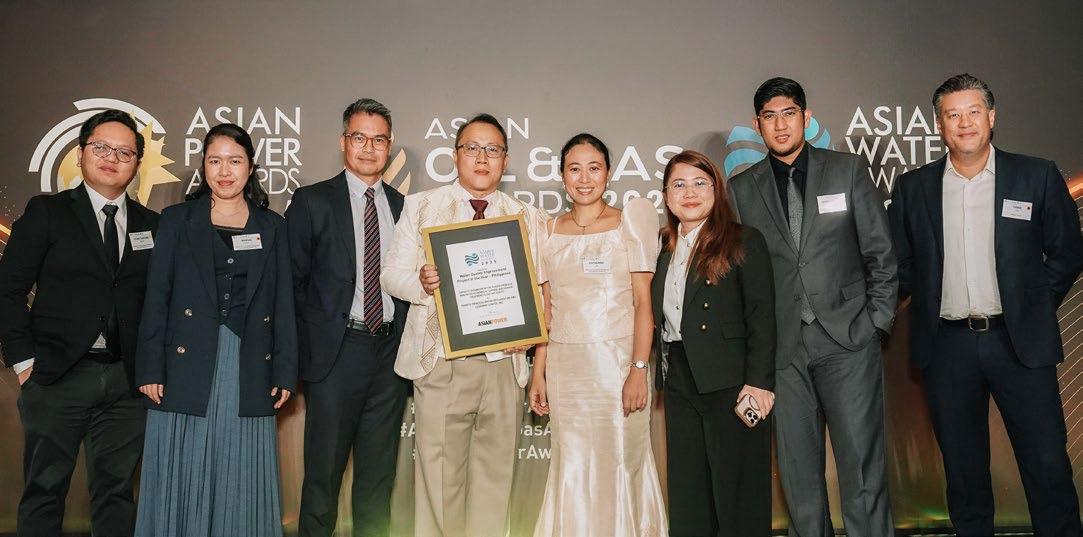
• Water Quality Improvement Project of the Year - Philippines
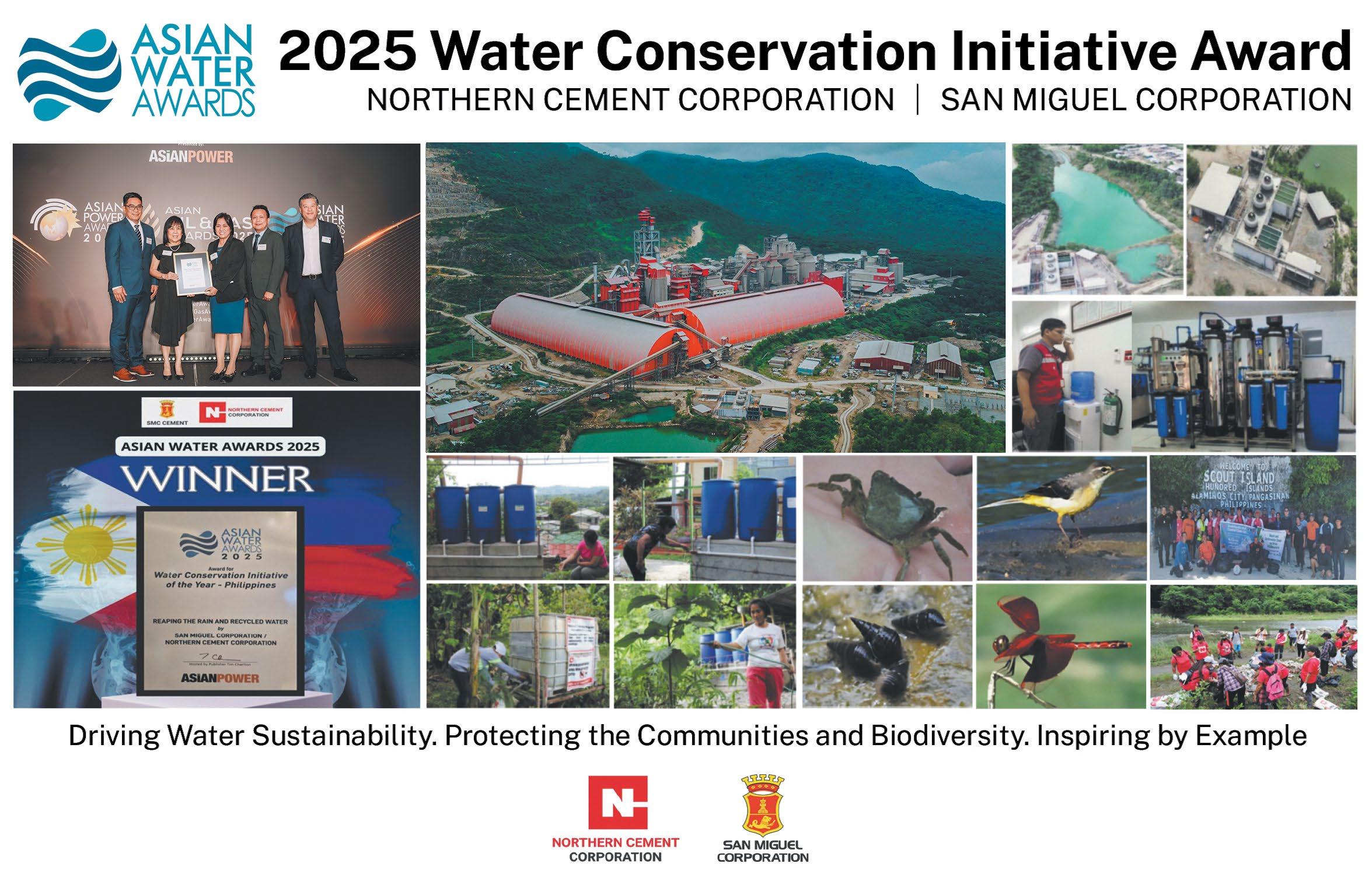
San Miguel Corporation/Northern Cement Corporation
• Water Conservation Initiative of the Year - Philippines
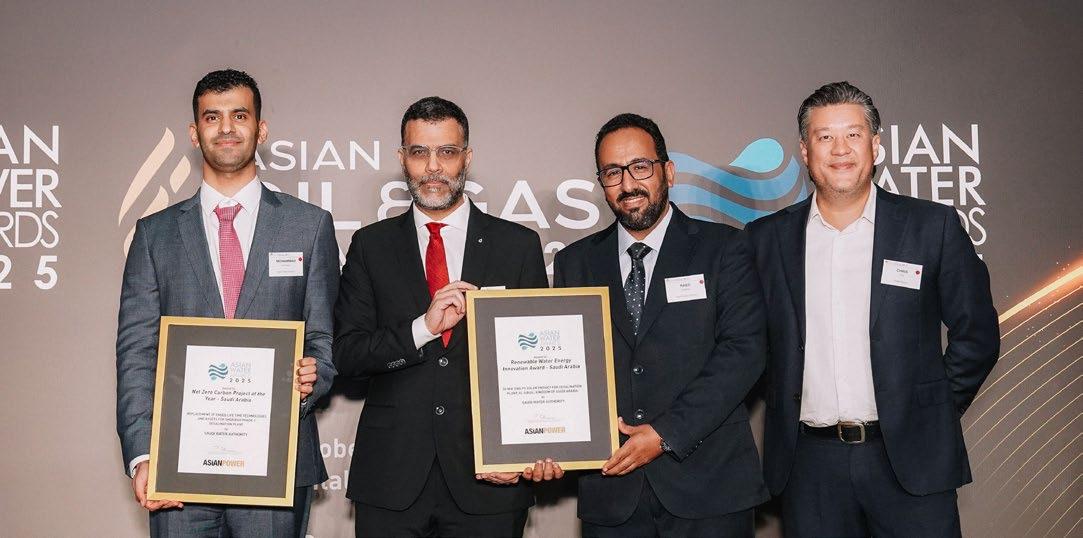
Saudi Water Authority
• Net Zero Carbon Project of the Year - Saudi Arabia
• Renewable Water Energy Innovation Award - Saudi Arabia
Sydney Water
• Environmental Conservation Excellence Award - Australia
• Sustainable Water Infrastructure Award - Australia
Taipei Water Department
• Cross-Border Water Cooperation Project of the Year - Taiwan
• Water Company Excellence Award - Taiwan
URS Scott Wilson India Private Limited (An AECOM Company)
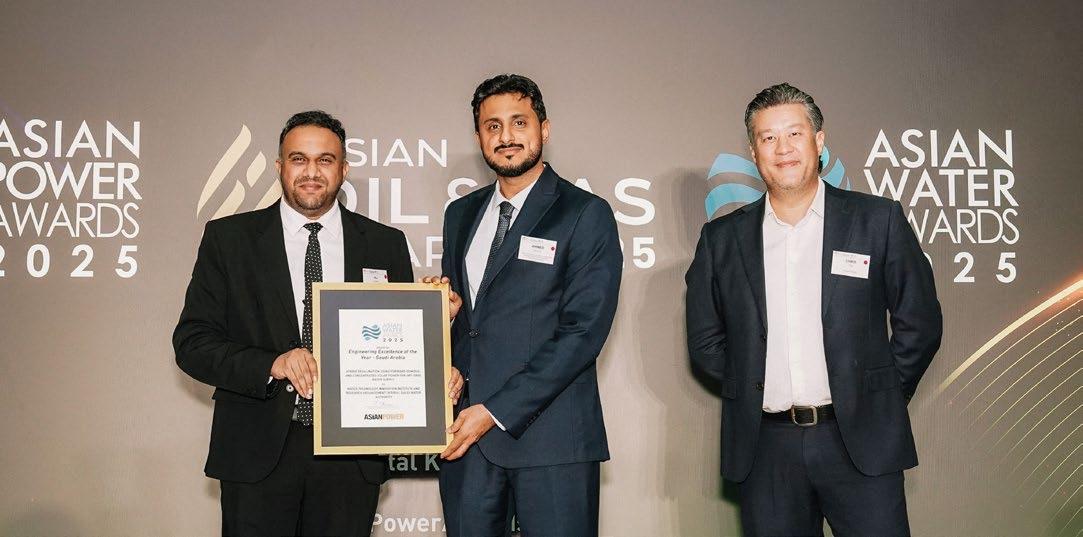
• Safe Drinking Water Initiative of the Year - India Water Technology Innovation Institute and Research Advancement (WTIIRA), Saudi Water Authority
• Engineering Excellence of the Year - Saudi Arabia
Wipro Water a div of Wipro Enterprises Pvt. Ltd.
• Sustainable Water Infrastructure Award - India
IL&FS Tamil Nadu Power Company Limited
JeJu Energy Corporation
Jin Navitas Solaris, Inc.
Emerson - Yeongheung Power Division
Etihad Water and Electricity (EtihadWE)
Envision Energy
Greenko
Gentrack
Harbin Electric International Company Limited
IndiGrid Infrastructure Trust
KOREA SOUTH-EAST POWER
Masinloc Power Co. Ltd.
Meralco PowerGen Corporation
PacificLight Power Pte Ltd
PT Huadian Bukit Asam Power
Marafiq Power and Water Utility Company
Meralco PowerGen Corporation
Mira Power Limited
Quaid-e-Azam Thermal Power (Pvt) Limited
Saudi Electricity Company
Sharjah Electricity, Water, and Gas Authority (SEWA)
Tenaga Nasional Berhad
Windey Energy
San Miguel Global Power Holdings Corp.
Serentica Renewables
SP Group
TERAJU SEPADU SDN BHD
Zenith Energy
Borouge
McDermott
Pertamina International Shipping (PIS)
Saudi Aramco - OSPAS
Shell India Markets Pvt. Ltd., Shell Singapore, and The Shell Company of Thailand
Kuwait Oil Company
NMDC Energy
PTT Exploration and Production Public Company Limited
Saudi Aramco & Halliburton
ACCIONA
BW Water
Nama Water Services Co.
PT Sarana Multi Infrastruktur (Persero)
San Miguel Corporation/Northern Cement Corporation
Taipei Water Department
Malita Power Inc.
PT Indonesia Ruipu Nickel and Chrome Alloy & Besino Environment Co., Ltd.
Puerto Princesa Water Reclamation and Learning Center, Inc
Saudi Water Authority
SP Group clinches triple wins at the Asian Power Awards 2025
The company was recognised for delivering world-class grid reliability, advancing smart grid innovations, and building Southeast Asia’s first large-scale underground substation.
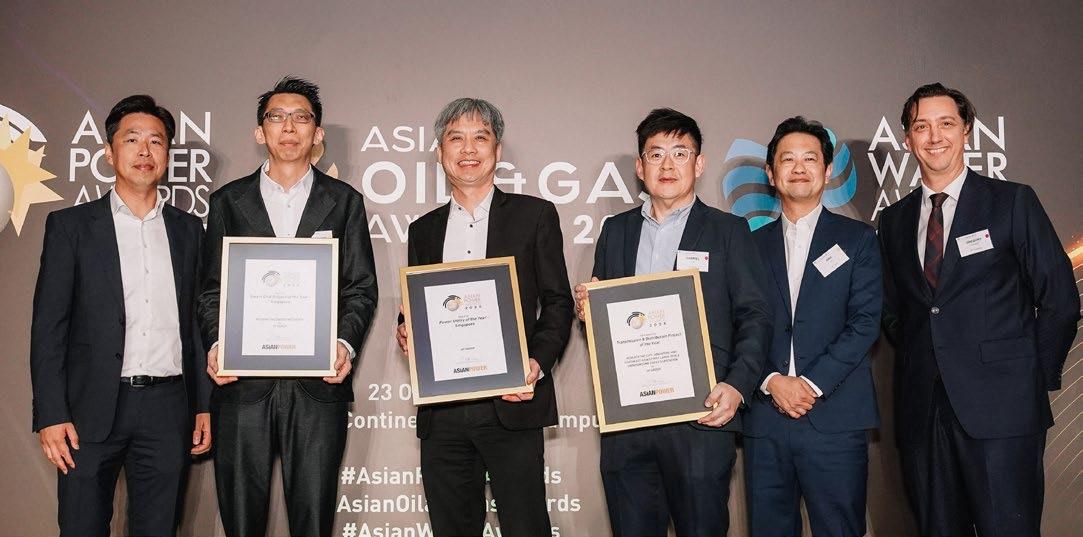
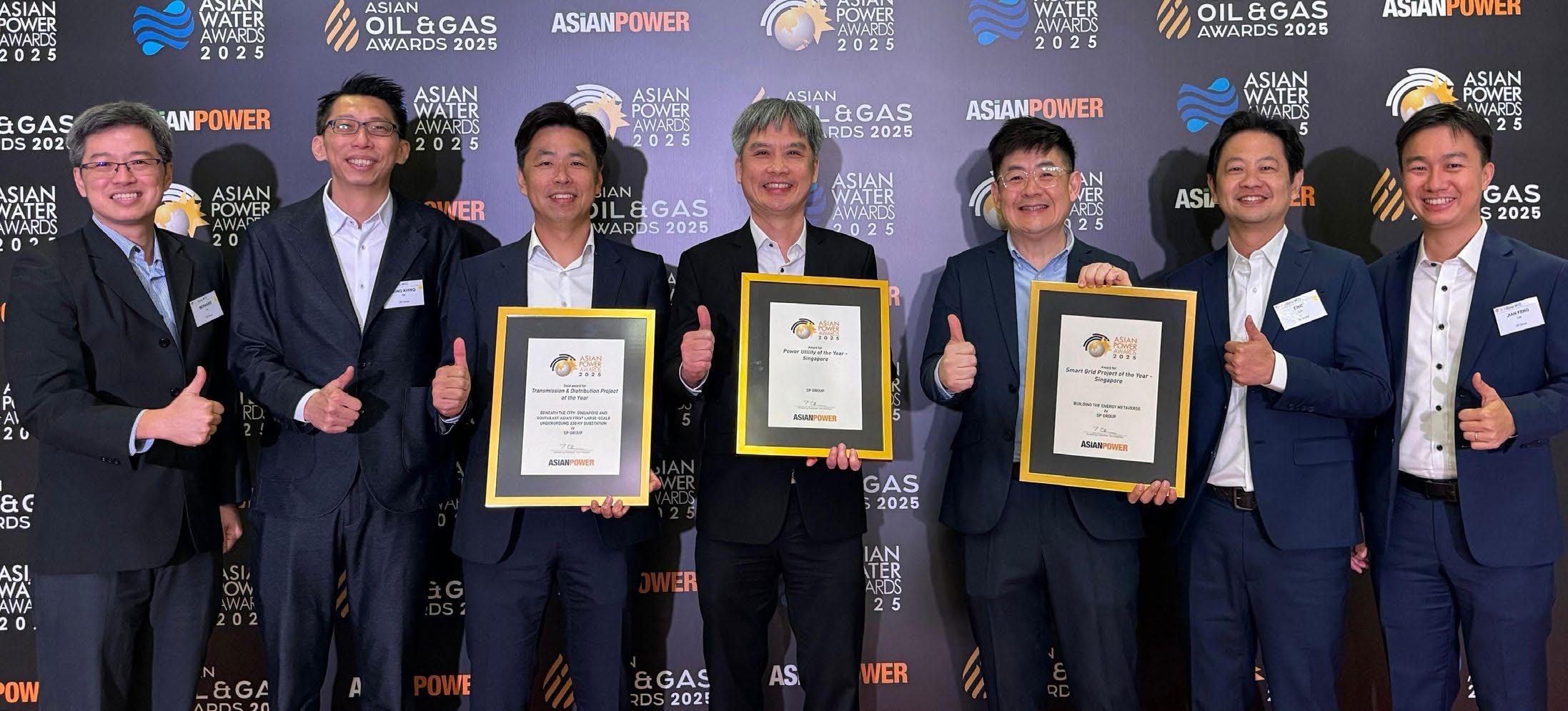
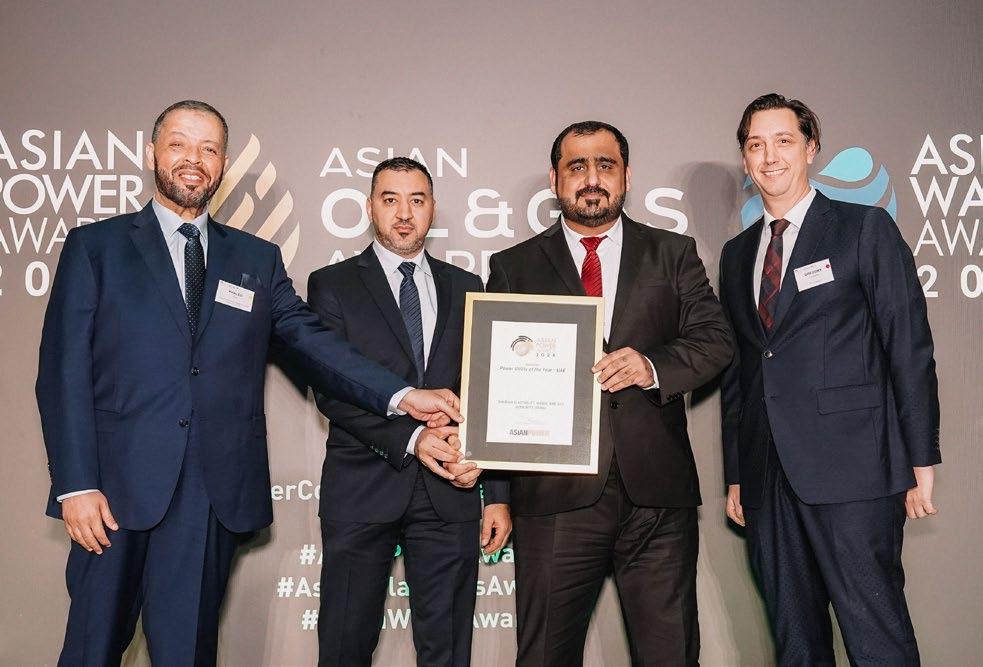
Atthe Asian Power Awards held on 23 October 2025, SP Group (SP) brought home the Power Utility of the Year - Singapore, Transmission & Distribution Project of the YearGOLD, and Smart Grid Project of the Year - Singapore.
These awards reflect SP's strategic roadmap in building its grid for the future, ensuring that it is resilient, smart and sustainable. With the integration of renewables into the energy mix, SP focuses on how the grid must evolve and transform. In its roadmap, grid modernisation, innovative technology, and artificial intelligence are deployed for a smart, agile and responsive system. Through investment in digitalisation and innovation, and a commitment to decarbonisation, SP is shaping the energy landscape to meet Singapore’s increasing energy needs and climate goals.
“The consistent efforts to ensure reliable services, deliver smart energy solutions and be at the forefront of engineering practice put us on the map in our nation’s grid performance. I am proud of our team’s drive in proactively shaping our networks for our future
energy needs,” said Stanley Huang, SP’s Group CEO.
Delivering world-class grid reliability SP was awarded Power Utility of the Year - Singapore for maintaining one of the most reliable electricity networks globally. In 2024, the company achieved a System Average Interruption Duration Index of 14.2s per customer. This means that a customer in Singapore experienced an average disruption of 14.2 seconds in electricity supply, which places SP amongst the world’s best. SP’s performance is backed by robust asset planning, watchful safety and monitoring protocols, meticulous project management and operations, and round-the-clock vigilance of its engineering and technical specialists. Such an elevated level of reliability is critical for essential services such as data centres, financial institutions, healthcare, and transport systems.
In addition to upholding high reliability standards, SP supports Singapore’s
energy transition by deploying smart meters nationwide, piloting residential demand response programmes, and expanding solar integration and EV charging infrastructure. All these efforts are aimed at preparing the grid for the future.
“We’re honoured to be named Power Utility of the Year. Achieving and sustaining such high standards doesn’t happen by chance – it’s the result of relentless commitment. I would like to thank our teams for their dedication and consistency in ensuring a reliable power supply for households and businesses across Singapore every single day,” said Leo Ding Yuen, General Manager, Electricity Operations, SPPG.
Reimagining substations
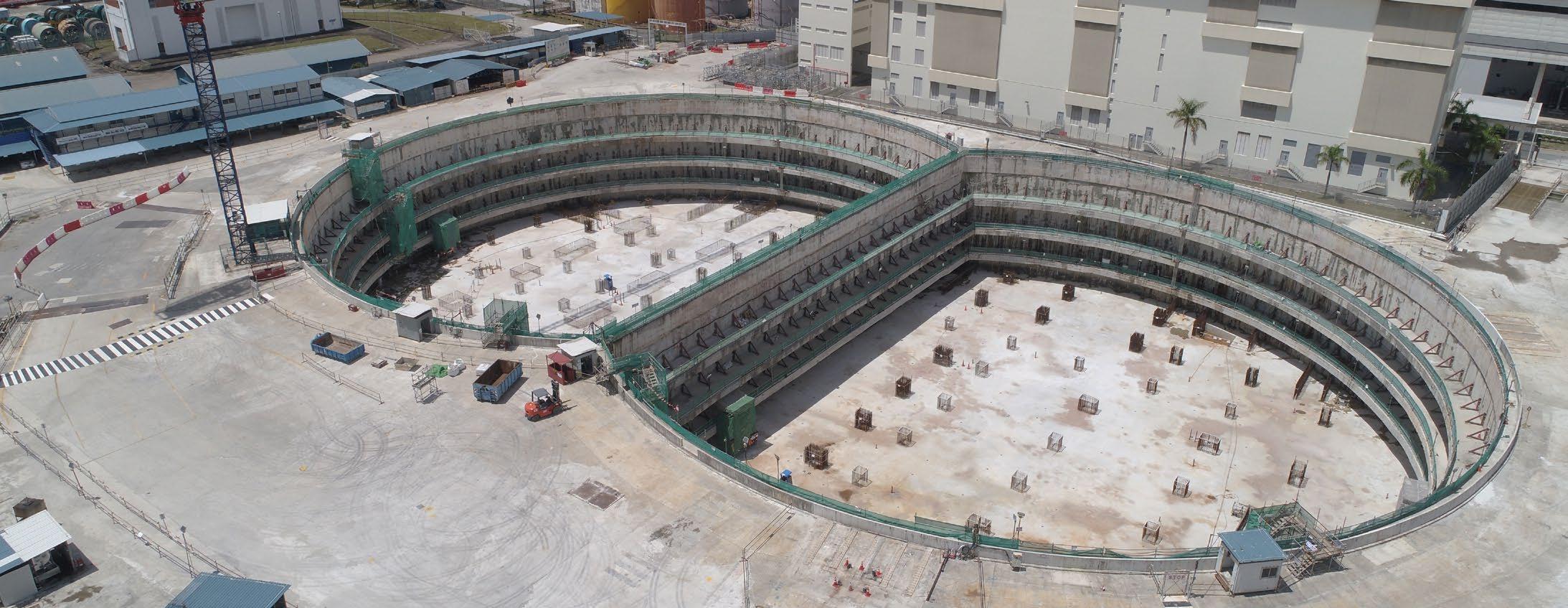
SP was also awarded Transmission & Distribution Project of the Year - GOLD for delivering Southeast Asia’s first large-scale underground 230kV substation at Labrador. With deep urban excavation, water-tight
‘I am proud of our team’s drive in proactively shaping our networks for our future energy needs’
SP Group at the Asian Power Awards 2025
construction, and beamless floor innovation, it unites cutting-edge engineering and sustainable design. The substation supplies power to key districts in the southwest of the nation, whilst enabling the construction of the 34-storey Labrador Tower, a Green Mark Platinum Super Low Energy commercial building. Engineering innovations included advanced geotechnical modelling for excavation, integration of utility and property systems using BIM models, and layered waterproofing and safety systems for long-term underground operation.
“Delivering this underground substation in a dense urban environment was a complex yet rewarding challenge. We’re proud to have pushed engineering boundaries to create a future-ready solution for Singapore’s power needs,” said Ryan Wong, General Manager, Special Projects, SPPG.
“This award celebrates the ingenuity and teamwork behind a landmark project. It’s a proud moment for everyone who contributed to the planning and development of the underground substation that redefines engineering excellence,” added Tan Hung Khing, General Manager, Projects, SPPG.
Building a metaverse for the grid
SP’s digital twin project earned recognition as Smart Grid Project of the Year - Singapore for pioneering a smart grid initiative that virtualises substations and assets. Similar to a metaverse, the digital twin is a platform that simulates Singapore’s grid and its
components. This creates a real-time 3D environment where engineers and operators can collaborate, visualise, and optimise grid operations.
Digital Twin empowers comprehensive and near-realtime insights into asset condition. It integrates asset health data, operational systems, and geospatial intelligence. In addition to enabling proactive maintenance and decisionmaking, it also applies AI and machine learning to forecast degradation, extend asset lifecycles, and stress test the grid. By combining engineering expertise and digital innovation, it can help enhance grid resilience with the
increasing integration of renewables and system complexity.
Singapore’s energy landscape is evolving rapidly, shaped by a growing mix of distributed energy sources such as solar, energy storage systems, and cross-border electricity imports. To meet rising energy demand and support the shift toward renewables, the grid must be transformed into being smart, flexible, and resilient. SP remains steadfast in powering progress through engineering excellence. The initiatives that were recognised in the Asian Power Awards are examples of how SP has shaped today’s electricity grid for tomorrow’s needs and opportunities.
Southeast Asia’s first large-scale underground substation during construction
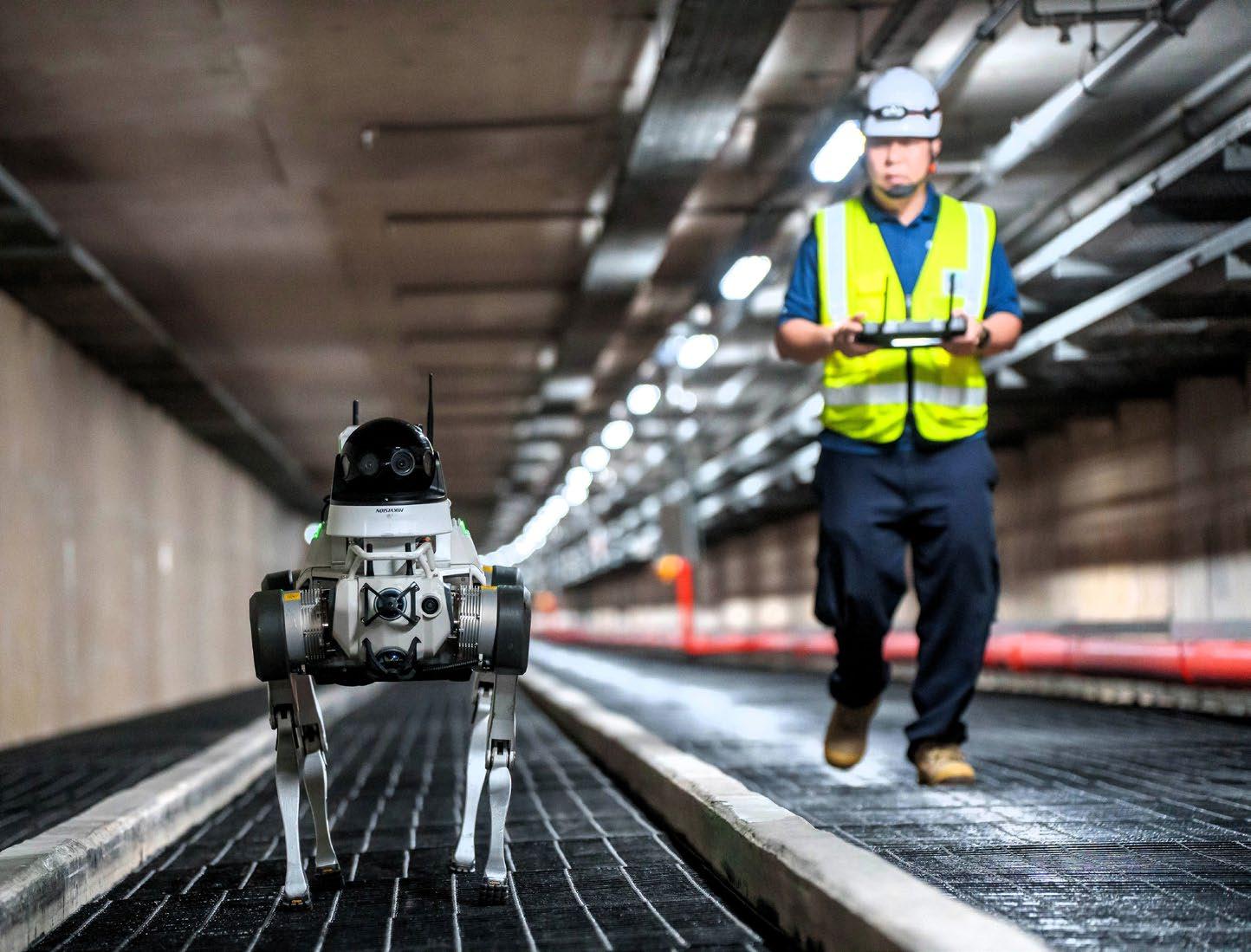
Electricity cable tunnel inspections 60 metres underground, has improved using the robotic dog for operational efficiency and safety
Teraju Sepadu Sdn Bhd’s landmark 2MW biogas project in Ipoh wins Gold at Asian Power Awards
This milestone underscores Malaysia’s growing leadership in landfill gas-to-energy innovation, transforming waste emissions into clean, renewable power for a more sustainable future.
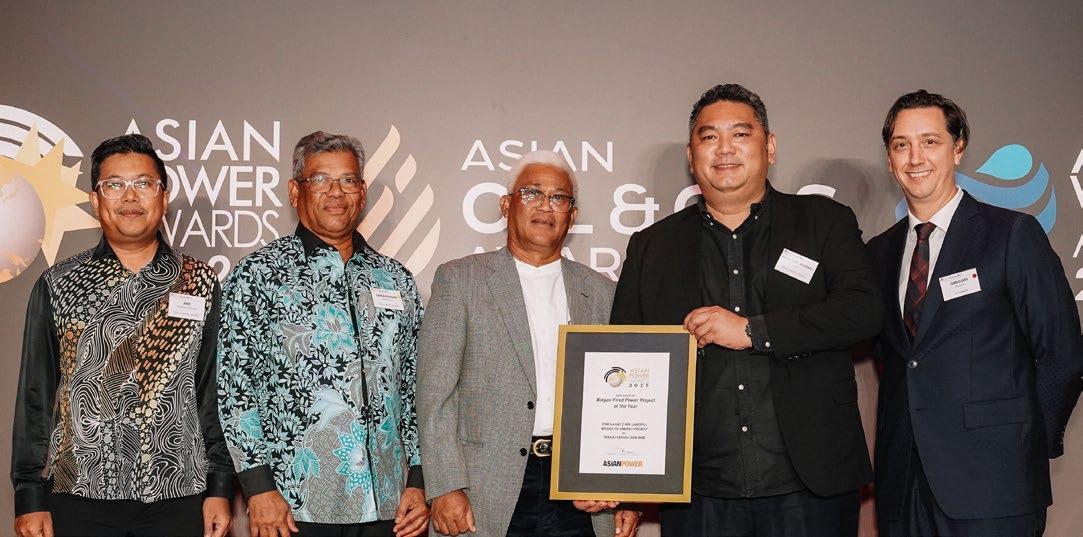
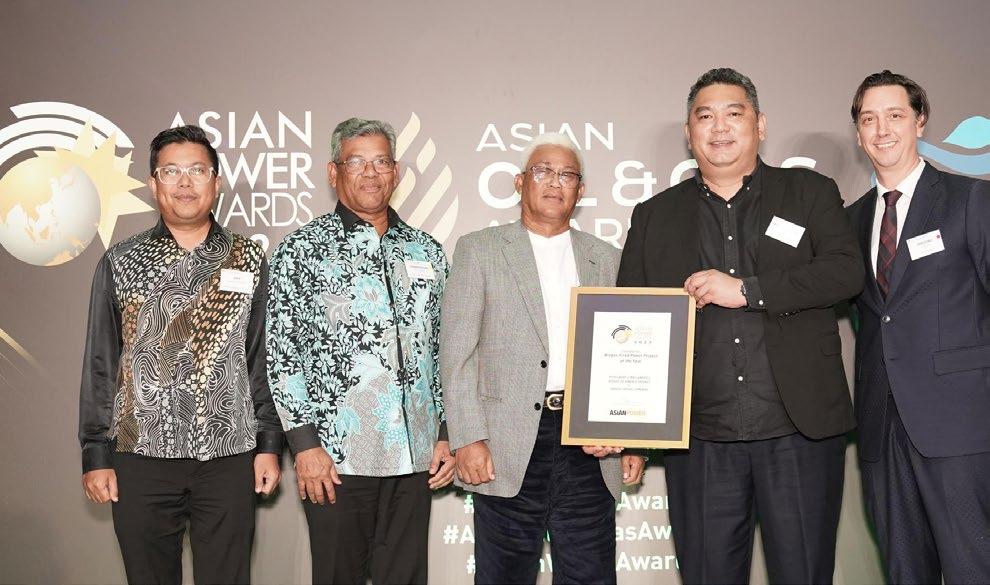
TerajuSepadu Sdn Bhd, a leading Malaysian renewable energy developer, has proudly earned the Biogas-Fired Power Project of the YearGOLD award at the Asian Power Awards 2025, recognising its outstanding contribution to sustainable energy through the Lahat Sanitary Landfill Biogas-to-Energy Project located in Ipoh, Perak, Malaysia.
This recognition marks a major milestone in Malaysia’s renewable energy landscape, as the project stands as the first sanitary landfill biogas-to-energy facility in Northern Peninsular Malaysia. With an installed capacity of 2 megawatts (MW), the project demonstrates how innovative engineering and environmental stewardship can transform landfill waste into a valuable source of clean, renewable electricity.
Pioneering landfill gas recovery in Malaysia
The Lahat Sanitary Landfill Biogas-toEnergy Project captures and utilises methane gas — a potent greenhouse gas — generated from decomposing municipal waste and converts it into renewable electricity. This process not only mitigates methane emissions but also contributes directly to Malaysia’s clean energy transition and climate mitigation goals.
Landfill gas recovery projects remain relatively new in Malaysia due to their technical complexity and environmental constraints. Teraju Sepadu’s success in commissioning and operating this facility underscores its strong
technical capabilities, achieved through close collaboration with government agencies, local authorities, and industry partners.
“Our goal has always been to turn environmental challenges into renewable energy opportunities,” said Michael Ng, Executive Director of Teraju Sepadu Sdn Bhd. “This achievement reflects the dedication of our team and partners who believe in advancing sustainable waste management through innovation.”
Collaboration
and technology at the core
The Lahat project was made possible through strong institutional support and effective collaboration amongst various stakeholders — including the Ipoh City Council (MBI), the Ministry of Housing and Local Government (KPKT), the Sustainable Energy Development Authority (SEDA) under the Feed-in Tariff (FiT) programme, and Tenaga Nasional Berhad (TNB) as the power off-taker.
Teraju Sepadu also recognises the vital role of its technical partner, Henan BCCY Environmental Energy Co. Ltd., whose extensive experience in landfill gas recovery technology and power generation formed the backbone of the project’s success.
Advanced gas extraction systems, highefficiency gas engines, and continuous emissions monitoring were integrated into the plant’s design to ensure optimum power generation performance and environmental compliance. The project serves as a model of how local expertise combined with international technology can produce sustainable, high-impact results.
A sustainable solution to waste challenges Malaysia continues to generate millions of tonnes of solid waste annually, most
of which ends up in landfills. As these waste materials decompose, they emit methane — a greenhouse gas with a global warming potential over 25 times greater than carbon dioxide.
By capturing and converting this gas into electricity, the Lahat project provides an immediate and effective solution that aligns with Malaysia’s long-term vision of sustainable waste management.
“Whilst many look toward future wasteto-energy incineration technologies, landfill gas recovery is a practical and readily deployable solution that addresses existing waste emissions,” Michael added. “It allows us to reduce environmental impact today whilst paving the way for more integrated waste management systems tomorrow.”
Driving regional sustainability
Beyond national impact, the success of the Lahat project positions Malaysia as a regional leader in landfill gas-toenergy development. The 2MW facility demonstrates how landfill sites — often viewed as environmental liabilities — can be transformed into reliable sources of renewable power and long-term community benefit.
This accomplishment also provides a replicable model for other municipalities and private developers in Southeast Asia, where waste management and renewable energy integration remain pressing challenges.
Teraju Sepadu aims to continue expanding its renewable energy initiatives through strategic partnerships, technology innovation, and sustainable practices. The company envisions a future where every landfill across Malaysia contributes to the nation’s clean energy mix whilst creating environmental and social value for local communities.
“We are deeply honoured by this recognition from the Asian Power Awards,” added Michael. “It motivates us to continue pushing boundaries and to play our part in turning Malaysia’s sustainability vision into reality — one project at a time.”
‘Our goal has always been to turn environmental challenges into renewable energy opportunities’
Teraju Sepadu Sdn Bhd receiving the Biogas-Fired Power Project of the Year - Gold Award at the Asian Power Awards 2025
Sharjah Electricity, Water and Gas Authority wins at Asian Power Awards 2025
UAE utility leader delivers pioneering AI-powered digital transformation, setting new global standards in customer experience, sustainability, and operational excellence.
Sharjah
Electricity, Water and Gas Authority (SEWA) has been awarded the Power Utility of the Year – UAE at the prestigious Asian Power Awards 2025, widely known as the “Oscars of the Power Industry.” This recognition not only highlights SEWA’s holistic AI-powered digital transformation but also reflects its unique status as the only utility authority in the region that delivers all three essential services—electricity, water, and gas—under one umbrella. This has enabled SEWA to build a truly integrated and future-ready model of public service delivery, cementing the UAE’s leadership in innovation and sustainability. SEWA provides electricity, water, and gas services to over 530,000 customer accounts across all nine cities of the Emirate.
Zero Bureaucracy vision
The UAE’s national Zero Bureaucracy vision has been central to SEWA’s digital transformation initiatives. It shaped the redesign of customer journeys, reduced service time from days to seconds, and guided SEWA’s commitment to making customers the true focus of every process. Through its fully integrated digital transformation programme, SEWA processes more than 1,250 service requests daily via multiple digital channels, including its 4.5-star-rated Smart App, web portal, and UAE Pass login.
NAFFA’A
At the core of this transformation is NAFFA’A, the first AI-powered virtual
agent for utilities in the Middle East and Africa. NAFFA’A has already managed more than 1.3 million interactions, offering 24/7 multilingual support on billing, payments, usage queries, and emergency response. Using natural language processing and machine learning, NAFFA’A—developed with our partner SEW.AI—provides personalised solutions, automates complex workflows, and reduces the load on call centres.
SEWA has also enhanced customer payments with digital wallets, secure online services, and strategic partnerships with Tabby and Tamara. These collaborations enable customers to pay large bills in instalments whilst ensuring the Authority maintains strong financial liquidity and operational continuity.
SEWA’s digital-first approach has delivered measurable sustainability outcomes. By digitising workflows and promoting paperless billing, the Authority has significantly reduced its carbon footprint. Between 2022 and 2025, SEWA successfully closed six out of its ten customer service branches—the most recent on 1 September 2025—whilst still achieving record-high customer satisfaction scores. This milestone demonstrates how technology-driven innovation can enhance both environmental stewardship and service quality.
On the operational side, SEWA’s workforce of 200 field employees uses SEW’s advanced meter reading app to capture more than 1.2 million meter readings each month across four daily cycles. Supported by real-time dashboards and
performance tracking, this initiative has improved accuracy, location-based efficiency, and operational effectiveness.
Ongoing impact
Since the launch of its transformation, SEWA has processed more than 660,000 digital utility payments, totalling AED650m during the last year. SEWA also sent over 242,000 SMS messages and 288,000 emails to customers each month. These achievements are fully aligned with SEWA’s three strategic pillars: sustainability, digital transformation, and customer-centricity.
Ongoing initiatives include smart metering, the “Ways to Save” programme, and future personalised conservation insights, ensuring that every customer can play a role in grassroots sustainability. These achievements are based on the foundational principles of Public-Private partnership, where SEWA brings its Utility leadership and works with partners who bring global experiences and cutting-edge expertise to make these programmes a success.
SEWA’s recognition at the Asian Power Awards 2025 cements its role as a trailblazer in AI-driven public utilities. It underscores Sharjah’s—and the UAE’s—ability to lead globally in reimagining energy, water, and gas services for a smarter, greener, and more sustainable future.
The win showcases SEWA’s role in representing the UAE at a major continental platform.
SEWA provides electricity, water, and gas services to over 530,000 customer accounts
Sharjah Electricity, Water and Gas Authority at the Asian Power Awards 2025
Nama Water Services Co. recognised at Asian Water Awards 2025
The company is driving excellence in sustainable water infrastructure and service delivery.
Nama Water Services Co. was honoured with two prestigious recognitions at the Asian Water Awards 2025: Sustainable Water Infrastructure Award - Oman and Water Company Excellence Award - Oman.
These accolades reflect the company’s continued leadership in executing largescale, strategic water projects that directly contribute to Oman’s national development goals and long-term water resilience.
Al Dakhiliyah Transmission System (Phase II)
The Sustainable Water Infrastructure Award - Oman was conferred for the successful delivery of the Reinforcement of Al Dakhiliyah Water Transmission System Phase II, a project designed to significantly enhance supply capacity and strengthen national water security, which increased water supply capacity to 60 million gallons per day. The project value is over 126 MOR (US$327,689,787).
The project built 173 kilometres of transmission pipelines, five pumping stations, and 15 reservoirs, including four in Samail with a total storage of 440,000 cubic metres. It incorporated environmentally safe disinfection systems through the latest technology, hypo-chloride solution plants generated at the site to safeguard long-term reliability and water quality.
The initiative also created 195 employment opportunities for Omanis, awarded OMR9m in contracts to small and medium enterprises, and procured OMR24.5m in local materials and services. It implemented smart SCADA systems
for real-time monitoring and gravity-based distribution, reducing operational energy consumption. Integration with existing reservoirs improved transport efficiency and supported future national network connections.
Distribution networks in Al Hamra and Bilad Sait
The Water Company Excellence AwardOman recognised the construction of water distribution networks for Wilayat Al Hamra and Bilad Sait, a flagship project addressing long-term water supply challenges in mountainous regions whilst extending reliable service to rural communities.
The project benefited more than 81,000 residents across 82 villages. Valued at over
OMR35m (US$91,024,000), it included 94 km of transmission pipelines and 350 km of distributions networks, supported by 22 pumping stations and a central reservoir with 18,000 cubic metres of capacity.
The project was designed to remain resilient amidst mountainous terrain, ensuring reliable and uninterrupted water access. It is integrated with the National Control Centre in Muscat through advanced automation, enhancing operational oversight. Environmentally safe disinfection systems and integration with desalination plants further strengthened long-term reliability and water quality. The project supported local populations by stabilising water access, supporting rural settlements, and enhancing community well-being.
The project was designed to remain resilient amidst mountainous terrain, ensuring reliable and uninterrupted water access
Nama Water Services Co.
Nama Water Services Co.
Nama Water Services Co.
ESG INTEGRATION EXCELLENCE OF THE YEAR -
PROGRAMME OF THE YEAR -
Marafiq wins 2 accolades at Asian Power Awards 2025
In continuation of the efforts made in the field of sustainability, and following up on the previous awards achieved locally, it is time for the honour to be global through the Asian Power Awards.
TheAsian Power Awards 2025 honoured Marafiq with the ESG Integration Excellence of the Year - BRONZE and ESG Programme of the Year - Saudi Arabia, in recognition of its comprehensive approach to integrating sustainability into its operations in the energy and water sectors. The award was received on behalf of Marafiq’s President and CEO,
Mohammed Berki Al-Zuabi, by Mohammed Othman Fada, Senior Director of Environmental Affairs and Laboratories, and Majdi Al-Harbi, Director of Asset Performance and Integration.
Receiving these international awards underscores Marafiq’s ongoing commitment to environmental responsibility, operational efficiency, and alignment with Saudi Vision 2030. Marafiq’s approach to sustainability and its Environmental, Social, and Corporate Governance framework set clear goals for achieving its objectives of
decarbonisation, resource efficiency, and governance transparency.
The Asian Power Awards celebrate innovative and pioneering projects and initiatives in the energy sector. These awards are considered the Oscars of the energy industry.
The progress Marafiq has achieved is not the result of individual efforts alone. Rather, it is a collective achievement that reflects the power of the company’s shared values and is a significant addition to the concrete steps Marafiq has taken in the field of sustainability, which have become closely aligned with its strategy. Marafiq works to confront challenges and transform them into opportunities for growth, whilst continuing to provide highly reliable services.
The progress Marafiq has achieved is not the result of individual efforts alone
ENGINEERING EXCELLENCE OF THE YEAR - PHILIPPINES WATER EDUCATION AND AWARENESS
ACCIONA recognised at Asian Water Awards 2025
The company earned distinction for its climate-resilient water infrastructure and youth-focused stewardship programme in the Philippines.
won two honours at the Asian Water Awards 2025, securing the Engineering Excellence of the Year - Philippines and the Water Education and Awareness Initiative of the Year - Philippines. The recognition highlights achievements in advancing water infrastructure and promoting long-term sustainability through education.
Building climate-resilient water systems
ACCIONA received recognition for its contributions to water infrastructure
projects in Southeast Asia, particularly in the Philippines. One example is the Laguna Lake Drinking Water Treatment Plant (LLDWTP) in Metro Manila. The facility treats 150,000 m3/day of raw lake water and now supplies safe water to more than 1.2 million people.
The company is also developing the East Bay 2 Drinking Water Treatment Plant in Laguna. The facility is designed to produce 200,000 m3/day and will serve more than 2 million residents. In Hong Kong, ACCIONA completed the Tseung Kwan O Desalination Plant in 2023. With a capacity of 135,000 m3/day, it provides water to more than 850,000 people. The facility
applies reverse osmosis and energy recovery technology to reduce environmental impact.
Inspiring youth through water education
The company was also recognised for “Take Care of the Water,” an education programme launched in Metro Manila with PAREF Southridge and PAREF Woodrose schools. The initiative introduced water conservation to children aged 7 to 10 through storytelling, classroom activities, and interactive kits. More than 200 students joined the pilot run, and each one received a water kit with materials to continue the lessons at home.
ACCIONA’s technical and sustainability teams created the programme in-house and shaped it to combine scientific accuracy with cultural relevance. The initiative is now being expanded to schools in the Philippines, Vietnam, and Hong Kong.
The facility applies reverse osmosis and energy recovery technology to reduce environmental impact
ACCIONA at the Asian Water Awards 2025
Marafiq at Asian Power Awards 2025
Strengthening Regional Energy Capabilities:
NMDC Energy’s Ras Al Khair Yard
NMDC Energy’s Ras Al Khair fabrication yard embodies UAE-Saudia Arabia cooperation by strengthening regional energy capabilities.
TheUAE and Saudi Arabia share long-standing economic ties and a strong track record of collaboration across key sectors. This partnership continues to evolve as both countries pursue sustainable growth and industrial development. At the heart of the relationship is the conviction that both countries can work together in the development of their economies and in ways to solve global challenges.
One critical area where this cooperation can take on a special new meaning is in energy. The UAE and Saudi Arabia are unmistakably two of the world’s biggest energy leaders, especially when you combine their vast hydrocarbons capacity, the scale of their megaprojects, and the investments made in technologies and infrastructure.
Both countries produce around 15% to 20% of the world’s oil, so the impact that they have on global energy is far-reaching, shaping markets, policies, and the future direction of the industry. It’s also from this unique position of strength that both nations have an important stake in the energy transition.
Strategic energy synergies take shape in Ras Al Khair
With so much in common, it makes sense for the two regional partners to explore synergies in energy and to uncover ways to maximise potential in energy and the transition towards alternative sources. This
is the very reason why NMDC Energy, the UAE’s largest engineering, procurement, and construction (EPC) player, officially inaugurated an advanced fabrication yard in Ras Al Khair in Saudi Arabia in 2024.
Now operational, this 40,000 sqm state-of-the-art yard provides fabrication, maintenance, rigging, and erection services for Saudi Arabia and the wider region. Whilst the yard will play a prominent role in deepening NMDC Energy’s project portfolio, it serves an important purpose in meeting increasing regional energy and manufacturing demand.
On a practical basis, the development of these major facilities enables NMDC Energy to support new and existing clients. On one level, its Ras Al Khair presence means NMDC Energy can boost engagement with Saudi partners, bringing deeper meaning to these relationships by ensuring they extend beyond mere operational necessity. More specifically, this is about enhancing the agility and value of NMDC Energy’s operations so that it can more closely support Aramco with its broader objectives.
Global partnerships, regional impact
With its colossal facilities, Ras Al Khair will be an engine room for energy projects. Today, the yard is already active and steadily growing, as NMDC Energy has welcomed major offshore EPC projects from Aramco.
More recently, at ADIPEC, NMDC Energy penned collaborations with international players with the objective of ramping up activities and capturing opportunities with Hyundai Heavy Industries, Baker Hughes, and Engineers India Limited (EIL).
In terms of output, it is expected that the yard will power priority industries across the energy value chain. When you consider the residual benefits, these are also vast – take, for instance, the opportunity for knowledge transfer and skills development. Since the yard became operational, skilled
Emirati and Saudi engineers have been working shoulder to shoulder in complex operational scenarios, with state-ofthe-art technologies, and increasingly on exciting alternative energy projects.
Investing at scale for long-term impact
In terms of investment, NMDC Energy has already injected AED 200 million across the facility, targeted towards improving offshore and modularisation capabilities alongside embedding cutting-edge technologies to improve safety, productivity, and environmental performance. As a central part of NMDC Energy’s Saudi strategy and localisation roadmap, over the past five years, NMDC Energy has reinvested billions of riyals into the Saudi economy and is on track to increase its In-Kingdom Total Value Add (IKTVA) score.
When we turn our attention to the future of energy transition, Ras Al Khair is enhancing the capabilities of both nations by creating a regional manufacturing and engineering hub capable of delivering complex offshore structures, subsea systems, and clean energy infrastructure. Going forward, the yard is expected to welcome more activities related to the local fabrication of components needed for offshore wind, hydrogen facilities, and low-carbon energy projects, reducing supply chain bottlenecks and improving project speed, quality, and cost efficiency. By unlocking greater energy potential through Ras Al Khair NMDC Energy is serving as a vital enabler of regional energy development and cross-border industrial collaboration.
Ras Al Khair will be an engine room for energy projects
Ahmed Salem Aldhaheri - CEO NMDC Energy
NMDC Energy Ras Al Khair Fabrication Yard KSA
ENRICHING EVERYDAY LIVES WITH INNOVATIVE SUSTAINABLE SOLUTIONS
Borouge is at the forefront of innovation with solutions that add value to businesses and society worldwide. We are committed to creating a brighter and more sustainable tomorrow.
PTTEP Reinvents Flare Technology to Reduce GHG emissions with the Extremely Low BTU Flare Tip
The company’s technology is proven to reduce GHG emissions by up to 170,000 tCO2e per year, contributing an additional pathway to reduce GHG emissions across the oil and gas sector.
Nowadays,petroleum remains a key source of energy that powers daily life and drives economic growth. As energy demand continues to rise in the digital era, PTT Exploration and Production Public Company Limited (PTTEP), Thailand’s national petroleum exploration and production company, is committed to ensuring the country’s energy security whilst contributing to greenhouse gas management efforts.
Building on this commitment, PTTEP places great importance on developing and applying advanced technologies and innovations that enhance petroleum production efficiency and reduce greenhouse gas emissions, mitigating the climate impacts of this energy source, which remains essential during the energy transition period.
The Extremely Low BTU Flare Tip, in collaboration with John Zink, a global leader in industrial combustion, is one of the notable initiatives demonstrating tangible benefits in greenhouse gas emissions reduction.
A long-standing industry challenge
In oil and gas production, the gas sweetening process often employs membrane separation technology to remove CO2 from the feed gas. This process results in a continuous stream of low BTU flare gas containing high CO2 with very low heating value (<130 – 160 BTU/scf), making ignition and stable combustion difficult.
A conventional flare tip is a simple pipe flare without any mechanisms to enhance combustibility, relying solely on the hydrocarbon content in the flare gas. When the hydrocarbon content is insufficient, resulting in a low heating value, the flame may extinguish, posing operational and safety concerns. To maintain flame stability, high-value hydrocarbon gas (assist gas) is often injected to raise the heating value to 200–300 BTU/scf, which in turn increases greenhouse gas emissions.
Technical breakthrough
The Extremely Low BTU Flare Tip overcomes these limitations through a combination of advanced engineering and fundamental combustion principles. Thanks to the cutting-edge designs of assist air system, rimfire gas system, and top hat component, the self-igniting combustion radicals at high temperature can be generated whilst significantly reducing the use of assist gas. As a result, the optimal
combustion conditions at the flare tip are achieved, flare performance is consistent, and combustion is steady even at very low BTU levels and under adverse offshore conditions. This leads to a 40% improvement in combustion efficiency compared to conventional counterparts, whilst reducing greenhouse gas emissions through the reduction of assist gas.
Deployment and impact
After 6 years of development with successful prototype validation in collaboration with John Zink, the Extremely Low BTU Flare Tip was ready to be scaled up for offshore application. The first full-scale deployment in the Gulf of Thailand was completed in July 2024 and has achieved an estimated annual GHG emissions reduction of up to 170,000 tons of CO2 equivalent (tCO2e). With over 100 membrane units in operation and more to be expected from greenfield development of high-CO2 reservoirs, adopting the Extremely Low BTU Flare Tip offers a significant opportunity for reducing global greenhouse gas emissions whilst improving efficiency across the oil and gas industry. This accomplishment serves as a testament to PTTEP’s decarbonisation efforts. The Extremely Low BTU Flare Tip also demonstrates that, with the right innovation, the oil and gas industry can enhance operational efficiency to reduce emissions whilst maintaining energy security.
The Extremely Low BTU Flare Tip overcomes these limitations through a combination of advanced engineering and fundamental combustion principles
Extremely Low BTU Flare team members
What $500b could mean for India’s refineries and thermal power plants
RUPAM SAIKIA General Manager
Integrated Global Services India
As India Energy Week shines a spotlight on the country’s energy trajectory, scrutiny on oil refiners and coal-fired thermal plants is intensifying rapidly.
India is expected to deliver the largest increase in global oil consumption over the coming decade, with energy consumption growth forecast to outstrip that of any other emerging or developing economy.
This expansion comes at a time when emissions are under heightened global attention and energy transition efforts are accelerating worldwide.
At the same time, a planned $500b investment push into India’s energy sector is accelerating capacity expansion and infrastructure development. The investment aims to take the country’s refining capacity from 260 million tonnes per annum to beyond 300 million tonnes.
As the industry waits for the new capacity to come online, existing refineries will likely need to operate harder and more reliably.
India’s coal-fired thermal power plants are also facing similar challenges to run at high utilisation whilst managing ageing assets and short maintenance windows during transition.
Together, these forces place refiners and power plants in a difficult position: deliver higher output whilst improving efficiency and cutting emissions. This creates a structural tension, as higher throughput typically drives higher energy use when many refineries are already operating near their efficiency limits.
As a result, the commercial focus is doubling down on protecting existing assets. Avoiding unplanned shutdowns, maintenance backlogs, and extending equipment life are still amongst the most effective ways to control costs and deliver progress without disruption.
Stretched to the limit
India’s oil market is one of the fastest-growing globally, with consumption set to rise to 8.2 million barrels per day (mbpd) by 2050.
Policies such as Make in India 2.0, aimed at boosting domestic production and energy self-sufficiency, are adding further pressure on refiners and power producers to meet rising demand.
At the same time, global uncertainty and geopolitical events introduce further complexity to the industry.
To keep pace, many Indian refineries and power plants are already operating near full capacity, leaving minimal room for unexpected disruptions. When disruptions do occur, the knock-on effects are immediate, driving up costs and often increasing emissions as operations become less efficient.
In a system operating with very little flexibility, reliability is a strategic priority to safeguard margins.
Practical implications
As fired heaters and other high-temperature assets age, corrosion and material degradation reduce thermal efficiency, forcing units to burn more fuel and operate under greater stress to maintain throughput. Over time, this speeds up wear and tear, increases the risk of
unplanned shutdowns drives up costs.
Left unaddressed, declining efficiency becomes a big problem where fuel spend rises, emissions intensity increases, and margins are squeezed.
Unplanned disruptions often stem from degradation of these assets. When failures occur, units are forced into shutdowns or less efficient operating modes, all of which increase fuel use and raise emissions intensity.
For many refiners, restoring efficiency and extending asset life offers one of the fastest ways to cut costs and emissions without major capital investment, particularly in India, where refiners are marked by high utilisation.
This reality is reshaping how maintenance is viewed across the industry. What was once focused on safety and uptime is now central to emissions performance and profitability.
Proven technologies are already delivering results
A range of established solutions is already helping refiners address asset degradation whilst limiting disruption.
Solutions such as fired heater online refractory repair, highemissivity ceramic coatings, and process vessel advanced alloy cladding allow critical equipment to be protected and run optimally whilst units remain in service or during short, planned shutdowns.
By keeping assets protected and operating consistently, these interventions help maintain efficient heat transfer and slow processes that increase fuel inefficiency.
Just as importantly, they reduce the need for major turnarounds and emergency repairs, resulting in fewer shutdowns, lower restart emissions, and more stable operations at higher utilisation rates in the long term.
Many leading operators are pursuing proactive, technology-led asset strategies. By combining inspection, monitoring, and targeted protection, operators can address degradation early to protect costs and lower emissions.
This proactive shift not only improves the day-to-day performance but also strengthens resilience across the refining system, supporting more consistent and lower-carbon operations over the long term.
A pivotal moment for India’s energy sector
India Energy Week comes at a defining point. Refiners and power plants are being asked to do more with less room for disruption.
Demand continues to rise, emission expectations are tightening, and existing assets are carrying an increasing share of the burden.
In this environment, keeping equipment running efficiently is a crucial way to cut emissions whilst maintaining steady fuel supplies, whilst also waiting for large new projects to come online.
Whilst the success of India’s energy transition will be partly dependent on new investment, keeping existing refineries must be kept reliable throughout the journey.