AUTHOR


The Centre for Historical Analysis and Conflict Research is the British Army’s think tank and tasked with enhancing the conceptual component of its fighting power. The views expressed in this In Depth Briefing are those of the author, and not of the CHACR, Royal Military Academy Sandhurst, Ministry of Defence or the British Army. The aim of the briefing is to provide a neutral platform for external researchers and experts to offer their views on critical issues. This document cannot be reproduced or used in part or whole without the permission of the CHACR. www.chacr.org.uk
ON the 4th February 2022, during a visit by President Vladimir Putin to Beijing for the opening of the Winter Olympics, the leaders of Russia and China issued a joint statement declaring that their ‘friendship had no limits’.1 What this declaration meant exponentially grew in importance 20 days later when Russia invaded Ukraine. Western policymakers were left wondering, in the light of the statement, what warning had Beijing been given and what support would it provide to Moscow. However, a slightly chaotic and disjointed initial response from Beijing regarding the invasion and apparent compliance with US-led sanctions have indicated that the relationship between Russia and China likely does have
limits, despite over a decade of increasingly convergent views on what the global order should look like and how a domestic political system should be run.
RUSSIA: CHINA’S ‘ELDER BROTHER’ Russia and China share the sixth-longest land border in the world, which has led to significant interactions between the two nations since the 17th century. From its role in the ‘unequal
1Russian Federation, and The People’s Republic of China. “Joint Statement of the Russian Federation and the People’s Republic of China on the International Relations Entering a New Era and the Global Sustainable Development.” February 4, 2022. en.kremlin.ru/supplement/5770
2Alexander Gabuev, “Unwanted but Inevitable: Russia’s Deepening Partnership with China Post-Ukraine,” in Sino-Russian Relations in the 21st Century, ed. Bobo Lo and Jo Inge Bekkevold (Palgrave Macmillan, 2019), 41–66.

treaties’ and the ‘century of humiliation’, to its backing of Communist forces in the Chinese Civil War, Russia has consistently viewed itself as China’s ‘elder brother’ and a superior European power,2 leading to significant fictions between the two nations. Despite a rapprochement following the Communist’s victory in China, come 1969 RussiaChina relations had begun to sour again. It wasn’t until 2008 and the financial crisis – when Russia and China both saw the US as in decline – that serious convergence in norms and values became apparent, however, this period of convergence has also seen a radical shift in power and influence away from Russia and towards China.
At the diplomatic level, China and Russia have increasingly
worked together in multilateral institutions such as the United Nations to refocus international norms away from liberal ideas such as universal human rights and democracy, to the ideas of non-interference and national sovereignty – concepts that are more illiberal and autocratic.3 They have worked together on the UN Security Council over the conflict in Syria, the Iran nuclear programme and the genocide in Myanmar to challenge Western narratives, and within organisations such as the UN Human Rights Council and World Health Organisation, to prevent investigations into human rights abuses, as well as hamper investigations into the origins of the COVID-19 pandemic.
Regional institutions such as the Shanghai Cooperation Organisation have also offered opportunities for Russia and China to develop recognised international groupings that have a basis in challenging liberal norms. The Shanghai Cooperation Organisation’s focus on defeating the ‘three evils’ of terrorism, extremism and separatism is a thinly veiled justification for domestic oppression and the suspension of human rights. The organisation has even led on petitioning the UN to adopt norms on ‘internet sovereignty’, challenging the concept of a ‘free and open internet’.4
However, the Shanghai Cooperation Organisation has also demonstrated the increasing loss of influence Russia has over China. Russia has been unsuccessful at turning the institution into a more militaryfocused anti-US bloc, facing opposition from both China and other Central Asian states who see the organisation primarily as a vehicle for economic growth.5
Despite China’s unwillingness to promote the Shanghai Cooperation Organisation as a
militaristic organisation within Central Asia, it has still started to play a greater role as a military and security power in the region. This has been at the expense of Russia which has traditionally been the primary military and security partner of Central Asian nations through the Collective Security Treaty Organisation, with China being viewed as a predominantly economic actor in the region. Given the resources taken up by the invasion of Ukraine – and the failure of the Collective Security Treaty Organisation to mediate the conflict in Nagorno-Karabakh – it is increasingly likely China’s influence as a security actor in the region will continue to increase at the expense of Russia.
The economic relationship has seen an attempt by both sides to reduce dependence on the dollar and increase trade in rubles and yuan – a mutually beneficial move as both countries seek to see a move from a dollardependent international financial system. Trade has also increased between the two nations, although this again has shown an increasing Russian reliance on China. In 2018, China comprised 15.5 per cent of Russia’s total trade – by far its single largest trading partner – but Russia only comprised 0.8 per cent of
total Chinese trade.6 Whilst both sides have developed a fear that they will be dependent on each other – Russia for the Chinese export market and China for Russia’s natural resources – only the Russian fears appear to be coming to fruition. Despite this, the trading relationship remains mutually beneficial, albeit with increasing Chinese economic leverage over Russia.
Militarily, Moscow and Beijing have traditionally pursued their relationship through policies of defence-industrial cooperation, military exercises and high-level military contacts.7 The defenceindustrial cooperation has mainly been in the form of arms sales from Russia to China, with Russia historically not selling its advanced systems to China due to fears of reverse engineering. Despite this, in 2015 Russia sold China SU-35 combat aircraft and the S400 air defence system, with the sale predominantly a response to sanctions placed on Russia following the annexation of Crimea and its desire to secure economic and diplomatic support.8 However, it’s likely that Moscow also recognised that it is losing ground to China in the arena of military technological development with weapons sales to Beijing having a limited shelf life even if reverse-engineered.
Moscow’s ability to profit from weapons sales is also rapidly reducing, as China’s domestic arms industry matures to a similar level to that of Russia. Despite this the emphasis is still mostly on selling defensive capabilities, suggesting Moscow is still worried about giving a potential adversary increased offensive capability. China has also chosen to integrate the equipment purchased from Moscow into counterintervention forces aimed at the US, likely showing it understands these concerns, focusing the equipment on a shared adversary.9
Joint military exercises have also been a platform for Russia and China to demonstrate increased
3Olaf Wientzek, “Cooperation between Russia and China in Multilateral Organizations: A Tactical or a Strategic Alliance?,” in Russia-China Relations: Emerging Alliance or Eternal Rivals?, ed. Sarah Kirchberger, Svenja Sinjen, and Nils Wörmer (Open Access, 2022).

4People’s Republic of China et al., “Letter Dated 9 January 2015 from the Permanent Representatives of China, Kazakhstan, Kyrgyzstan, the Russian Federation, Tajikistan and Uzbekistan to the United Nations Addressed to the SecretaryGeneral,” United Nations Digital Library, January 22, 2015, digitallibrary.un.org/ record/786846?ln=en
5Stephen Blank, ‘Making Sense of the Shanghai Cooperation Organization,’ Georgetown Journal of International Affairs 14, no. 2 (2013): 39–49, jstor.org/ stable/43134410
6Jonathan Hillman, “China and Russia: Economic Unequals,” CSIS, July 15, 2020, csis.org/analysis/china-and-russiaeconomic-unequals
7U.S.-China Economic And Security Review Commission, “China-Russia MilitaryTo-Military Relations: Moving toward a Higher Level of Cooperation,” U.S.-China Economic and Security Review Commission (U.S.-China Economic and Security Review Commission, March 20, 2017), uscc.gov/ research/china-russia-military-militaryrelations-moving-toward-higher-levelcooperation
8Paul N. Schwartz, “The Changing Nature and Implications of Russian Military Transfers to China,” CSIS, June 21, 2021, csis.org/analysis/changing-nature-andimplications-russian-military-transfers-china 9Ibid.
“THEY [CHINA AND RUSSIA] HAVE WORKED TOGETHER ON THE UN SECURITY COUNCIL OVER THE CONFLICT IN SYRIA, THE IRAN NUCLEAR PROGRAMME AND THE GENOCIDE IN MYANMAR TO CHALLENGE WESTERN NARRATIVES.”Picture: kremlin.ru
cooperation. Russia and China represent the largest players in the Shanghai Cooperation Organisation ‘peace mission’ exercises. Despite these exercises being stated as focusing on anti-terror operations,10 they include equipment such as fighter aircraft, tanks and attack helicopters, with scenarios that see combined arms manoeuvre and attacks against secessionist movements or peer enemies. These observations – combined with the fact the exercises are highly scripted – mean it is likely they act more as a show of force to potential foreign and domestic adversaries and provide little military value. The scenarios also demonstrate the circumstances that Russia and China would employ military force; often when defending the
10Ministry of Defence of the Russian Federation, “Peace Mission-2021 Exercise,” Ministry of Defence of the Russian Federation (Ministry of Defence of the Russian Federation, 2021), eng.mil.ru/en/mission/ practice/more.htm?id=12384912@egNews
11Bobo Lo, “Introduction,” in Sino-Russian Relations in the 21st Century, ed. Jo Inge Bekkevold and Bobo Lo (Palgrave Macmilan, 2019), 1–17.
12Vincent Ni, “‘It Came Too Late’: Chinese Students Who Fled Ukraine Criticise Embassy Response,” The Guardian, March 8, 2022, sec. World news, theguardian.com/ world/2022/mar/08/chinese-students-fledukraine-condemn-embassy-response
13Reuters, “China Calls U.S. ‘Main Instigator’ of Ukraine Crisis,” Reuters, August 10, 2022, sec. World, reuters.com/ world/china-calls-us-main-instigator-ukrainecrisis-2022-08-10
14Vladmir Putin, “Meeting with PRC President Xi Jinping” (SCO Summit, September 15, 2022), en.kremlin.ru/events/ president/news/69356
illiberal and autocratic values they increasingly share.
Joint naval exercises likely have a greater impact in terms of improving interoperability, however, their real utility is their ability to be conducted in a wide range of sensitive geographic areas. Russia and China have conducted naval exercises in the Mediterranean, Sea of Japan and the South China Sea, all areas of competition with the US, and have included partners both hostile to the US and nations the US would like to see not fall into China or Russia’s orbit. Iran took part in naval exercises in 2020, and in 2023 South Africa’s inclusion was used as a
particular concern for Moscow, which since the invasion of Ukraine has seen its dependence on China dramatically increase and its leverage decrease.
If China was aware of the invasion of Ukraine, which remains doubtful, it is likely that they expected it to be the lightning campaign that Russia thought it would be. China’s evacuation of its students from the country was chaotic and indicated little pre-planning12 and its initial rhetorical response was unusually disjointed. However, as the expected overthrow of the government in Kyiv failed to
has forced it to diverge from Russia. China only abstained on a UN Security Council resolution condemning Russia’s invasion of Ukraine and Putin was forced to acknowledge the ‘questions and concerns’ China had over the invasion at the 2022 Shanghai Cooperation Organisation Summit.14 This measured approach from China will likely continue. Given rising tensions with the US – particularly in the Indo-Pacific – China will be eager to reinforce narratives that make Western-led security alliances appear aggressive, whilst at the same time look to fiercely defend its belief in state sovereignty; seeking to protect itself from criticism over its treatment of the Uigurs and policies towards Taiwan, an issue it views as internal. China’s position was borne out in the Ukrainian ‘peace plan’ it proposed. Its first point was ‘respecting the sovereignty of all countries’ – something that could be interpreted as a criticism of Russia’s violation of Ukraine’s

“CHINA IS CLEARLY PRIORITISING ITS ECONOMY OVER SUPPORTING MOSCOW, AND GIVEN RUSSIA’S ECONOMIC SITUATION, CHINA IS IN A STRONG POSITION TO BENEFIT FROM THE SALE OF CHEAP HYDROCARBONS WITHOUT HAVING TO NEGOTIATE THE SUPPLY OF SANCTIONED GOODS.”
criticism of the US and European security order.15 Moscow may wish for more universal backing from Beijing, but it has little choice but to accept criticism when it comes given China is the only major power willing to support it on the international stage.
Economically Russia has become even more reliant on China due to international sanctions. Whilst Russia has stopped reporting trade data, Russia now accounts for three per cent of China’s total trade,16 with the increase a reflection of Russia diverting sales of oil and gas from the EU to China, and an increase in the import of Chinese goods, particularly dual-use technologies such as semiconductors. Whilst Putin may laude the increase in trade between the two countries as mutually beneficial,17 Russia is clearly increasingly reliant on China to keep its economy afloat, with its policies dictated by necessity rather than prudent economic planning. China has also been largely compliant with US-led economic sanctions with many Chinese companies ceasing trade with Russia. China is clearly prioritising its economy over supporting Moscow, and given Russia’s economic situation, China is in a strong position to benefit from the sale of cheap hydrocarbons without having to negotiate the supply of sanctioned goods.
This compliance with sanctions also appears to have included not supplying Russia with weapons. Whilst there is likely debate on the subject in China – which has led to intelligence reports that have given Western leaders cause for concern18 – apart from potential dual-use technologies, China does not appear to be supplying Russia directly with arms. The exception to this may be supplying Russia through third parties such as North Korea or Iran; there are reports that China may look to sell rocket fuel to Iran that can be subsequently transferred to
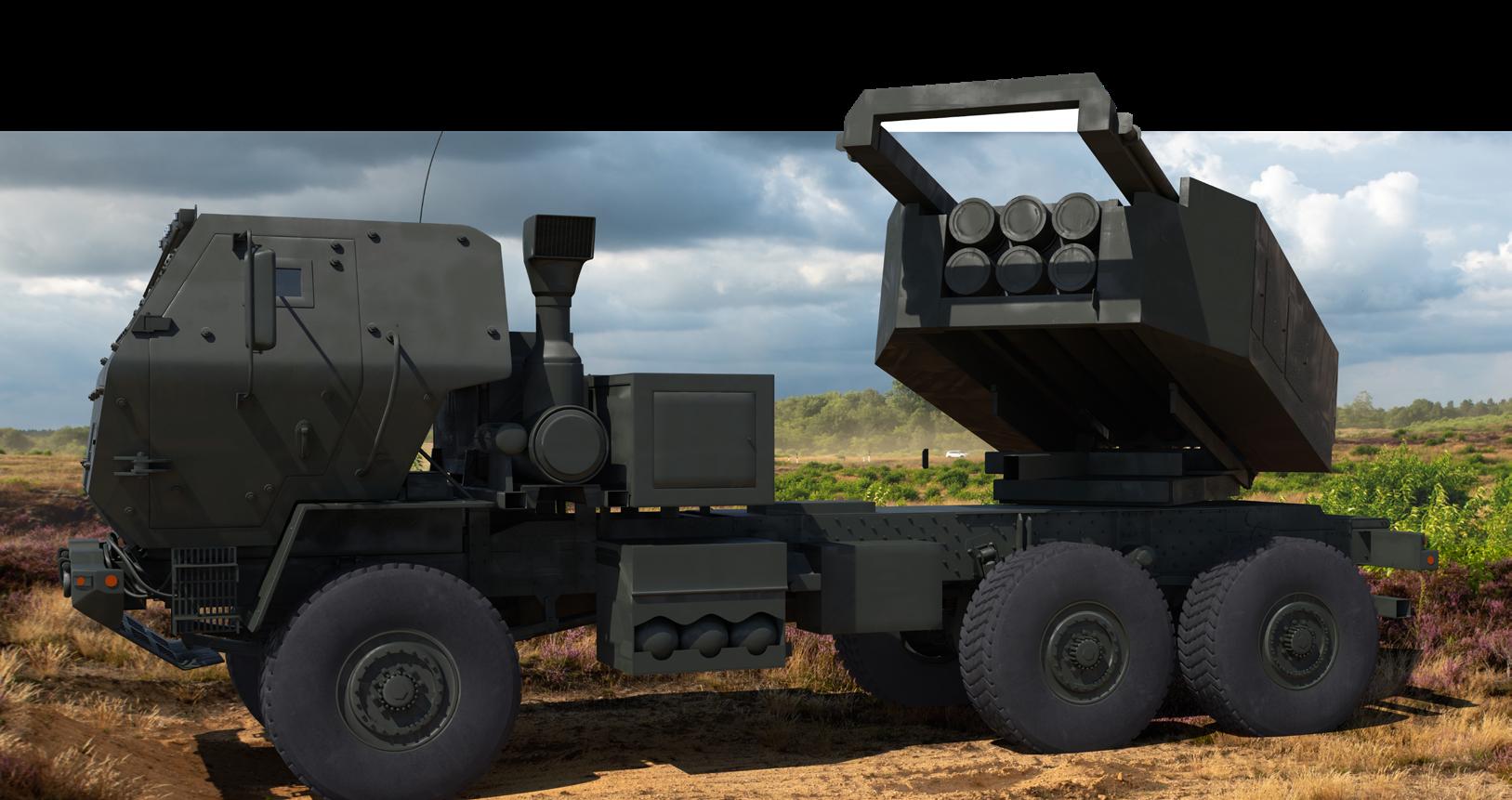
Russia to help it replenish missile stocks,19 although these covert arms transfers limit how much equipment China can supply Russia with. China has also continued military exercises with Russia – likely more as a sign of diplomatic rather than military support. However, there is an increased possibility of intelligence sharing between the two nations. China is likely interested in the performance of US weapons systems, given that the likes of HIMARS [high-mobility artillery rocket system] are also used by the Taiwanese, and Russia would welcome any intelligence support to its operations.
Since 2008, the relationship between Russia and China has developed into more than just a marriage of convenience, with an increasingly shared set of values and norms regarding the international order and domestic political practices. However, given China’s policy towards Russia since the invasion, it is clear that Beijing is very much driven by self-interest rather than ideological alignment. China is happy to benefit from cheap oil but won’t threaten its economic well-being by providing the sanction-busting support Russia wants. Despite the strength of the personal relationship between Xi and Putin, who appear to have a genuine close personal connection routed in similar ideological views,20 China has broader issues of concern that have limited even
its full-throated rhetorical support for Russia.
Ultimately, each state has a different relationship with the international system. China has benefited from the liberal order, and whilst it wants to reform it, it seeks to do so through evolution. Russia and Putin seek change through revolution; it is an ‘arsonist of the international system’21 that sees the liberal order as the reason for its downfall, a worldview that means Russia does not always act in China’s interest. China has even started to look like it is moving away from the era of ‘Wolf Warrior’ diplomacy. Along with its ‘peace plan’ for Ukraine, China was involved in brokering a deal that will see diplomatic relations established between Iran and Saudi Arabia for the first time since 2016. While China’s moves towards taking a more active role in global diplomacy should be seen as an attempt to challenge US hegemony, it provides some limited credence to the idea that China can be a responsible actor, something even Beijing knows Russia isn’t. However, a defeat for Russia in Ukraine is not in Beijing’s interest, particularly if this were to lead to a post-Putin Russia that had the potential to see Moscow become more democratic or Western-leaning. Russia remains China’s most important ally, and China’s approach to Ukraine may change should a catastrophic defeat for Russia start to emerge. However, for now, China benefits from
taking a stance of pro-Russian neutrality. It keeps the US tied up in Europe, Russia on side, and ensures Beijing doesn’t suffer the consequences that overt military and sanction-busting economic support would bring.
15Ministry of Foreign Affairs of the People’s Republic of China, “China’s Position on the Political Settlement of the Ukraine Crisis,” Ministry of Foreign Affairs of the People’s Republic of China, February 24, 2023, fmprc.gov. cn/mfa_eng/zxxx_662805/202302/ t20230224_11030713.html
16Chelsey Dulaney and Georgi Kantchev, “Russia Boosts China Trade to Counter Western Sanctions,” Wall Street Journal, January 30, 2023, wsj.com/articles/russiaramps-up-china-trade-to-counter-westernsanctions-11675079584
17Vladimir Putin, “Russian-Chinese Talks,” President of Russia, March 21, 2023, en.kremlin.ru/events/president/news/70748
18Nancy A. Youssef, Vivian Salama, and William Mauldin, “U.S. Considers Release of Intelligence on China’s Potential Arms Transfer to Russia,” Wall Street Journal, February 23, 2023, wsj.com/articles/u-sconsiders-release-of-intelligence-on-chinaspotential-arms-transfer-to-russia-8e353933
19Matthew Karnitschnig, “Iran in Secret Talks with China, Russia to Acquire Sanctioned Missile Fuel,” POLITICO, April 12, 2023, politico.eu/article/vladimir-putinukraine-war-xi-jinping-china-russia-in-secrettalks-to-supply-iran-missile-propellant
20Marcus Walker and Lingling Wei, “Xi Jinping Doubles down on His Putin Bet. ‘I Have a Similar Personality to Yours.,’” Wall Street Journal, December 14, 2022, wsj.com/articles/xi-jinping-putin-chinarussia-relations-11671030896?mod=hp_ lead_pos5
21Ryan Hass, “Ukraine Presents Opportunity to Test China’s Strategic Outlook,” Brookings, March 1, 2022, brookings.edu/blog/orderfrom-chaos/2022/03/01/ukraine-presentsopportunity-to-test-chinas-strategic-outlook