


0930-0940 Keynote
General Sir Roly Walker, Chief of the General Staff
0940-1055
Chair
Panellists
Panel 1 – The Global Storm
Professor Andrew Stewart, Head of Conflict Research CHACR
Dr Andrew Monaghan (Ukraine/Russia/North Korea); Dr Sebastian Raj Pender (India/Pakistan); Dr Brandon Friedman (Middle East); Professor Michael Clarke (The global rise of nationalism)
1055-1125 Break
1125-1220
The Era of Drone Warfare
Illya Sekirin, Ukrainian drone instructor
1220-1345
Chair
Panellists
1345-1400
Panel 2 – Facing The Storm
Professor Matthias Strohn, Head of Historical Analysis CHACR
Major General Ollie Kingsbury (NATO Regional Plans/US Army in Europe); Lieutenant General Jürgen-Joachim von Sandrart (The coalition of the willing); Professor Kerry Brown (The China conundrum and what it means to the West); Major General Alex Turner (The challenges facing the UK/British Army)
Concluding Remarks
Major General (Retd) Doctor Andrew Sharpe, Director CHACR
GENERAL SIR ROLY WALKER
General Sir ‘Roly’ Walker was commissioned into the Irish Guards in 1993. He commanded the Grenadier Guards in 2009, promoting to the General Staff four years later. He has commanded at company, battle group, and brigade levels, variously in Northern Ireland, Afghanistan, Iraq, as well as joint command of global operations. On the Staff he has served in brigade, divisional, army and strategic HQs. He was the Deputy Chief of Defence Staff (Military Strategy & Operations) at the MOD from April 2021, during which time he was responsible for advising on and directing new operations to support the government’s response to Covid, the death of the late Duke of Edinburgh, the withdrawal from Kabul, the full-scale invasion of Ukraine by Russia, the death of the late Queen Elizabeth II and coronation of King Charles III, numerous evacuation operations and most recently the Hamas attacks on Israel. In December 2023 it was announced that General Walker was to be appointed as the new Chief of the General Staff, succeeding General Sir Patrick Sanders. He assumed the appointment on 15 June 2024.
MAJOR GENERAL (RETD) DOCTOR ANDREW SHARPE
Andrew Sharpe left the British Army as a Major General. His service included operational commands across the globe. His final posts included Assistant Chief of Defence Staff for Concepts and Doctrine, and running the Chief of Defence Staff’s Strategic Advisory Panel. He holds an MA in International Studies from King’s College London and a PhD from Trinity College Cambridge in Strategic Leadership. He is the Director of the CHACR.
PROFESSOR ANDREW STEWART
Andrew Stewart is Head of Conflict Research at CHACR. Previously Director of Academic Studies at the Royal College of Defence Studies and Principal at the Australian War College, he is an Honorary Professor at the Australian National University and a Visiting Professor at King’s College London. He is a widely published author with a focus on military history, diplomacy and international security and conflict.
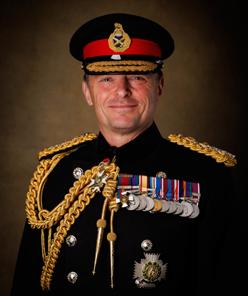
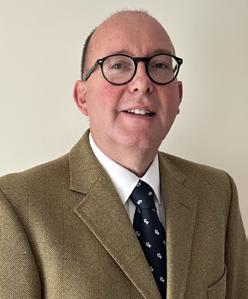
DOCTOR ANDREW MONAGHAN
Andrew Monaghan works on Russia’s evolving grand strategy and Moscow’s thinking about the future in the new age of Great Power competition. He has directed research on Russia at the NATO Defence College in Rome, and at Oxford University’s Changing Character of War Centre, and held research positions at the UK’s Defence Academy, and Chatham House. Retaining his connection with the NATO Defence College, he is now also with the Royal United Services Institute in London and the Wilson Center’s Kennan Institute in Washington, D.C.
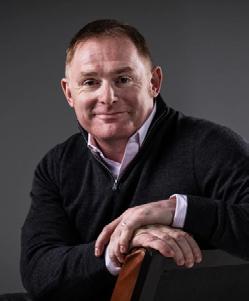
DOCTOR SEBASTIAN RAJ PENDER
Sebastian Raj Pender is a Research Fellow at the CHACR, working on the shifting dynamics of the Indo-Pacific Region. He is particularly interested in India’s emerging role in the region, and the geopolitical implications of India’s evolving maritime security strategy. Before joining CHACR, Sebastian held research appointments at Balliol College, University of Oxford; the School of Advanced Studies, University of London; and the International Centre of Advanced Studies in New Delhi. He was awarded a PhD in Modern Indian History from the University of Cambridge and holds degrees from the University of Oxford and Aberystwyth University in Contemporary South Asian Studies and International Relations respectively.
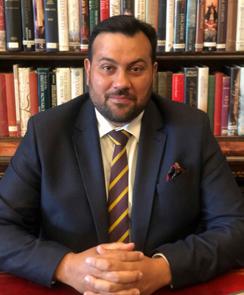
BRANDON FRIEDMAN
Brandon Friedman is the Director of Research and a Senior Research Fellow at the Moshe Dayan Center (MDC) for Middle Eastern and African Studies, Tel Aviv University. He is a historian of the contemporary Middle East and the author of Saudi Arabia: Becoming a Nation?, which appeared in the Routledge Handbook of Religion and Nationalism (2025) edited by Jeffrey Haynes. Brandon has been active in “Track II” initiatives on Middle East regional security issues since 2007.
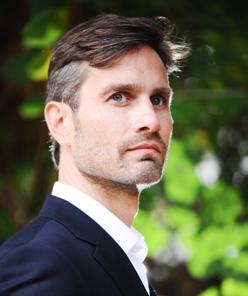
PROFESSOR MICHAEL CLARKE
Michael Clarke is former Director General of the Royal United Services Institute and Visiting Professor of Defence Studies at King’s College London.
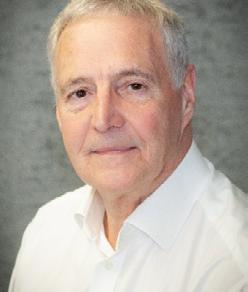
ILLYA SEKIRIN
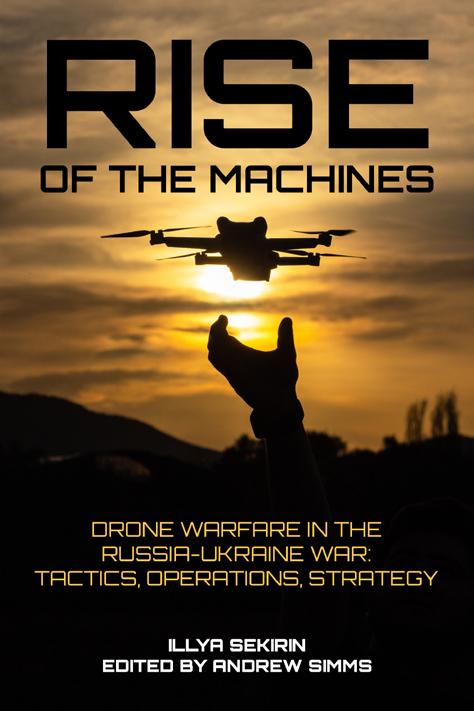
In March 2022, Illya Sekirin – a Ukrainian born, naturalised Canadian citizen –volunteered to fight for Ukraine and, with a degree in cybernetics, was trained as a small tactical drone operator. In addition to front-line service, he worked as a translator for the Ukrainian General Staff and, from early 2024, became an unofficial advisor to several members of the Stavka [Ukrainian High Command], a body chaired by President Volodymyr Zelensky and composed of government ministers and military generals. He advised on operations in Avdiivka, Kursk, Pokrovsk, Kostiantinivka and Kupiansk; on general drone strategy and tactics; and authored a paper that informed Zelensky’s decision to create Unmanned Systems Forces as a separate branch of the Armed Forces of Ukraine. Illya is the author of Rise of the machines – Drone warfare in the Russia-Ukraine War: Tactics, Operations, Strategy, which is available to pre-order today at the discounted rate of £20 (usually £25).
PROFESSOR MATTHIAS STROHN
Matthias Strohn is Head of Historical Analysis at CHACR. He is also a Visiting Professor in Military Studies at the Humanities Research Institute, University of Buckingham. In his military role, he serves as Head of the German Military Delegation in the UK (R.).
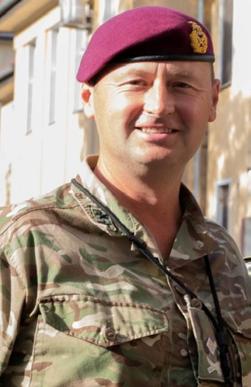
MAJOR GENERAL OLLIE KINGSBURY
Major General Kingsbury commissioned into the Parachute Regiment in 1997. He served his early years with 1 and 2 PARA, with a tour as ADC to General Officer Commanding Northern Ireland. As a junior officer he deployed on operations in Northern Ireland, Macedonia and Kabul; and to Helmand as brigade Chief of Staff in 19 Light Brigade in 2009, and commanding C Company 3 PARA in 2010-11. Major General Kingsbury commanded 2 PARA from 2013 to 2016. As a Brigadier, he was the UK’s Deputy Commanding General (DCG) in the US Army’s 82nd Airborne Division. In August 2023, he promoted to 2*, as DCG-Manoeuvre in the US Army’s V Corps, based in Poland. He will start as Director Land Warfare at the British Army’s Land Warfare Centre in December 2025. He has attended the US Army Command and General Staff College and the School of Advanced Military Studies in Fort Leavenworth, and the Higher Command and Staff Course in the UK. In 2024, he was appointed as Colonel Commandant of The Parachute Regiment.

The Centre for Historical Analysis and Conflict Research (CHACR) exists to gather and present a wide range of views and perspectives to inform the British Army. It contributes to decisions concerning future strategy, capability, and operations whilst challenging conventional wisdom and testing evolving concepts. We do this by conducting and sponsoring research and analysis (both in-house and through a wide network of associates and colleagues across the globe) into the enduring nature and changing character of conflict on land. At the same time the CHACR is an active hub of scholarship, professional enquiry and debate to help to sustain and develop the British Army’s conceptual component of fighting power. Importantly CHACR acts not just as a champion for individual ‘soldier-scholars’, but the promotion of a ‘brains-based’ approach throughout the Army. In short, CHACR promotes the notion that it’s as important to ensure that the army is not out-thought as it is to ensure that it is not out-fought. chacr.org.uk
LIEUTENANT GENERAL JÜRGEN-JOACHIM VON SANDRART
Jürgen-Joachim von Sandrart began his military career in 1982. As a tank officer, he served the first years in the heavy armoured cavalry. As a General Staff officer, he was stationed at the Eurocorps in Strasbourg and as Chief of Staff of the 7th Armored Infantry Brigade. His service included multiple deployments abroad, particularly in the Balkans, where he participated in SFOR, KFOR, and EUFOR missions. In 2011, von Sandrart deployed to Afghanistan as part of NATO’s International Security Assistance Force Afghanistan. As a Senior Mentor he trained and advised the 209th Corps of the Afghan National Army and accompanied them in numerous operations and combat missions. From November 2021 to November 2024, von Sandrart, as a Lieutenant General, commanded the Multinational Corps Northeast, NATO’s frontline warfighting corps in Szczecin, Poland. The headquarters of the Multinational Corps Northeast leads allied operations on NATO’s northeastern flank and ensures rapid response and defence in the Baltic region.
PROFESSOR KERRY BROWN
Kerry Brown is Professor of Chinese Studies and Director of the Lau China Institute at King’s College, London. He is an adjunct of the Australia New Zealand School of Government in Melbourne, and the co-editor of the of Current Chinese Affairs, run from the German Institute for Global Affairs in Hamburg. He is President of the Kent Archaeological Society and an Affiliate of the Mongolia and Inner Asia Studies Unit at Cambridge University. From 2012 to 2015 he was Professor of Chinese Politics and Director of the China Studies Centre at the University of Sydney, Australia. Prior to this he worked at Chatham House from 2006 to 2012, as Senior Fellow and then Head of the Asia Programme. From 1998 to 2005 he worked at the British Foreign and Commonwealth Office, as First Secretary at the British Embassy in Beijing, and then as Head of the Indonesia, Philippine and East Timor Section.
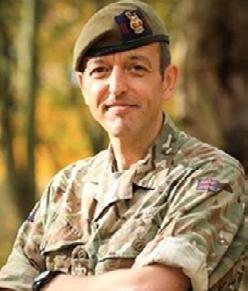
MAJOR GENERAL ALEX TURNER
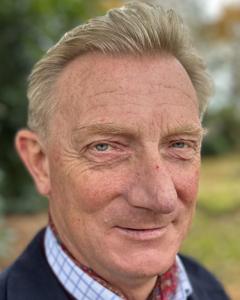
Major General Alex Turner commissioned into the Irish Guards in 1998. At regimental duty he deployed on operations to Kosovo, Northern Ireland, the Iraq invasion of 2003 and Afghanistan. Beyond the regiment he served as an infantry instructor, an observer with the United Nations on the Kuwait/ Iraq border in 2002/3, as an analyst with the MoD’s Defence Intelligence Staff and a stint with the Directorate of Training (Army) where he designed individual training for operations. He returned to Afghanistan for a year in 2013/14 to assist with the creation of an Afghan National Army Officer training academy in Kabul. He commanded 1st Battalion Irish Guards from 2014 to 2017, whereupon he promoted to the General Staff and was employed as an operational planner in the Permanent Joint Headquarters Northwood. After completing the Higher Command and Staff Course, he spent a short period in MoD’s strategic communication unit before promoting into the role of Head of Strategy for the Army. From 2020 to 2022 he commanded 77th Brigade, the Army’s information activities formation, before assuming the role of Director Army Futures. A published military historian, he has lectured and broadcast about the First World War and is an active member of an organisation that explores and surveys Western Front tunnel systems.

CONFERENCE SPECIAL: PRE-ORDER FOR £20
The war being waged in Ukraine is like no other before it. For the first time in the history of armed conflict, the lion’s share of battlefield losses – both human and hardware – cannot be attributed to the use of artillery, aviation, armoured forces, long-range missiles or infantry small-arms fire. Instead, bragging rights belong to a capability that, until only recently, was considered a niche military asset, but now appears in myriad forms and sizes and monopolises the battlespace. Warfare’s ‘most improved player’ is, of course, the drone. A first-hand account of the evolution of unmanned systems during the Russia-Ukraine war, Rise of the Machines charts the technology’s rapid ascension through the author’s journey from volunteering to fight to advising the Ukrainian High Command on the deployment of drone forces.
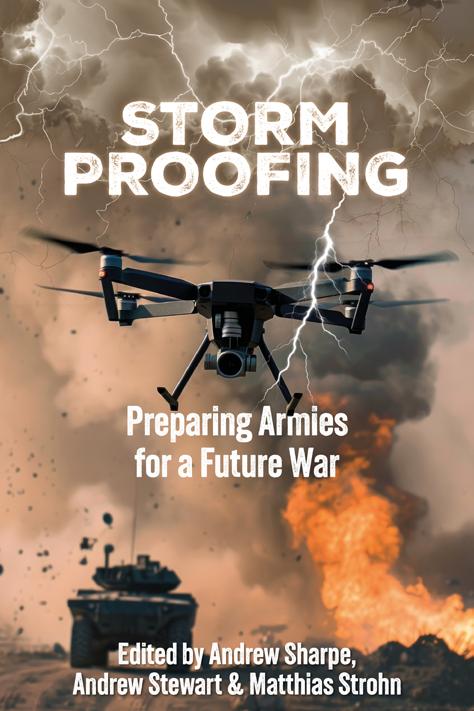
The world is less safe than it has been for more than half a century – there is a storm coming. The first duty of any nation’s government is to secure the safety of its people, and therefore the first duty of any nation’s army is to be ready to fight and win the nation’s wars. It would be both naive and irresponsible to assume that anyone can accurately predict the character, scale or timing of the security problems that are approaching, and war has been (mercifully) distant from the capitals of western officialdom. Economic circumstance combined with social demands have meant that increasingly little resource has found its way into nations’ security preparations. But there are too many indicators and warnings that simply can no longer be ignored. So, what is being done to be ready for the coming storm?