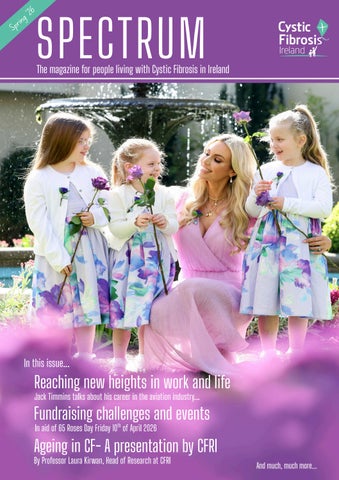
The magazine for people living with Cystic Fibrosis in Ireland
In this issue...
Reaching new heights in work and life
Jack Timmins talks about his career in the aviation industry...
Fundraising challenges and events
In aid of 65 Roses Day Friday 10 of April 2026 th
Ageing in CF- A presentation by CFRI
By Professor Laura Kirwan, Head of Research at CFRI
And much, much more...
Jack Timmins: Reaching new heights in work and life
Member Services Update:
Understanding Social Welfare Payment and Taxation in Ireland The HSE Fertility Scheme
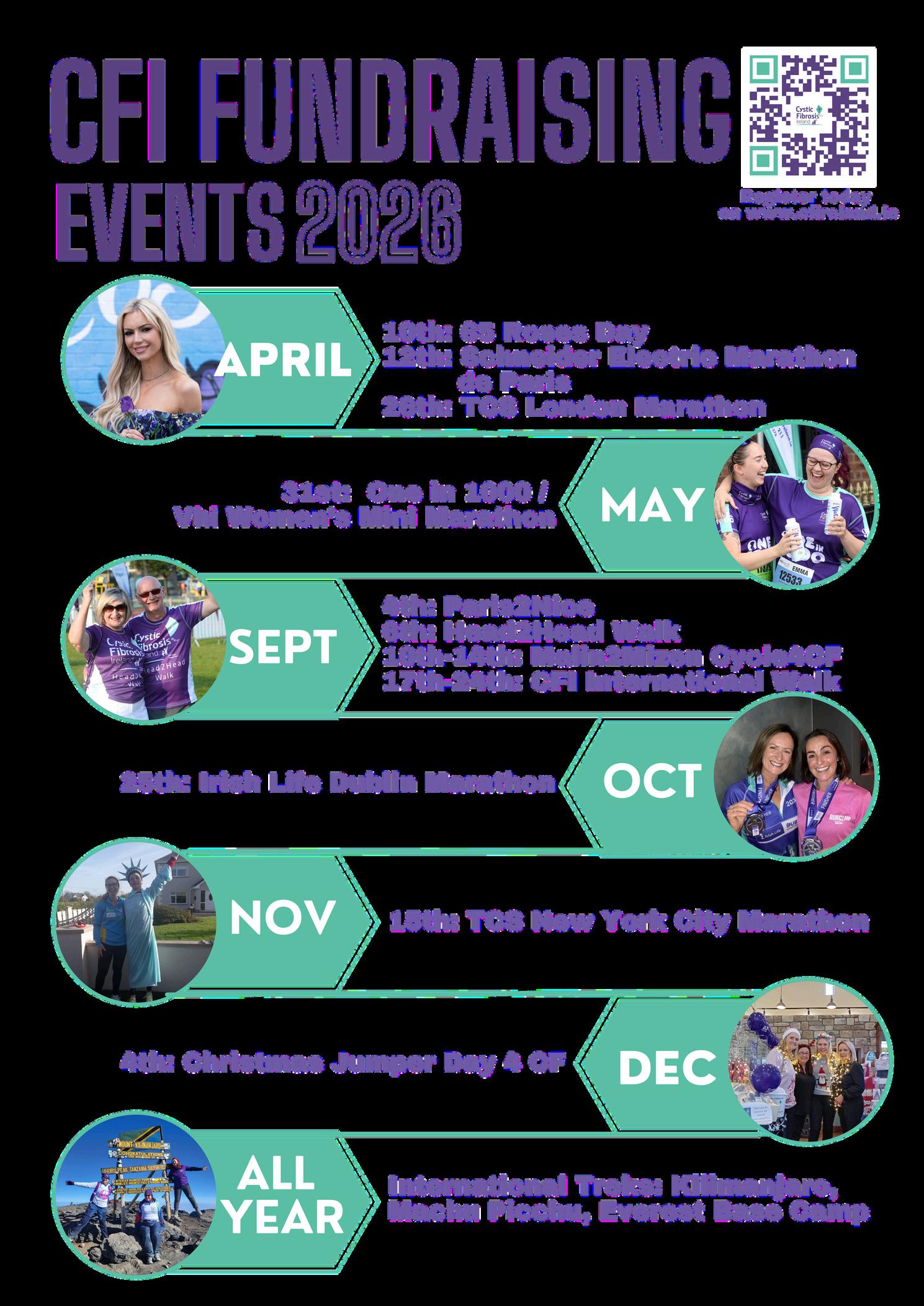
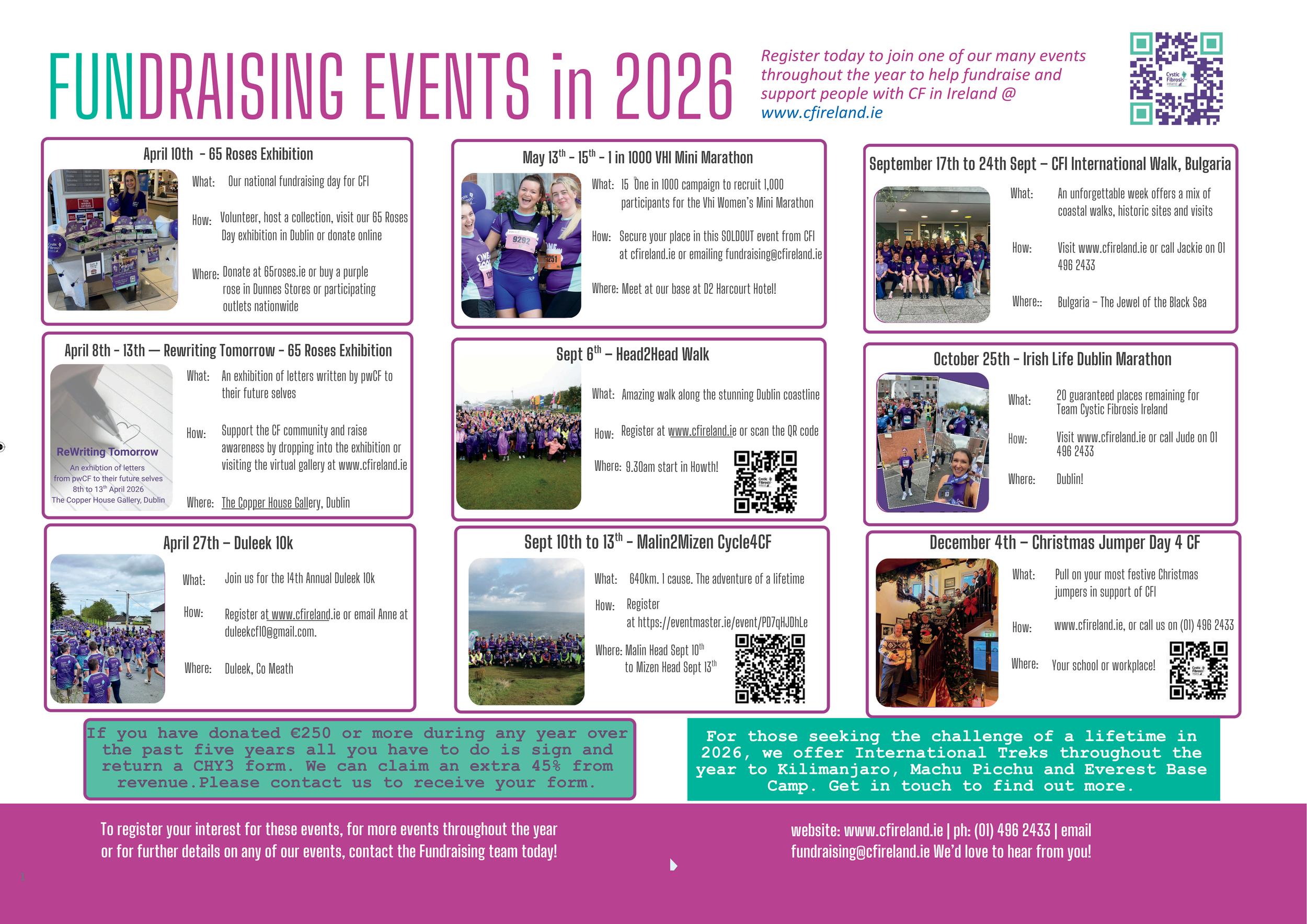
Fundraising Events
Fundraising Features 65 Roses Day Thank You!
Brendan’s Doodles
Research Update: Living Well with CF - Dr Cian Greaney
CFI Community Conference
CFRI Update Ageing in CF
We hope you have been enjoying more regular updates from CFI in our monthly newsletter To sign up, give our team a call on 01 4962433
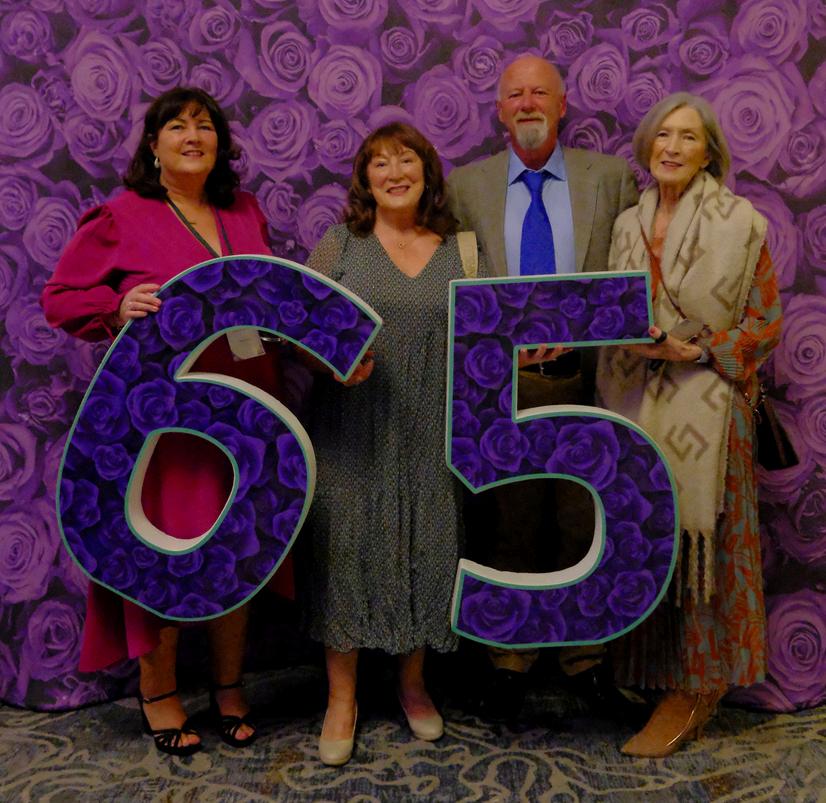
As we approach 65 Roses Day on Friday the 10th of April, a huge thank you to all our volunteers and supporters who make the day such a success We look forward to seeing many of you again as you buy a purple rose from Dunnes Stores and other outlets nationwide or donate online at 65roses ie This year, we would also like to invite you to come and visit the 'ReWriting Tomorrow' exhibition as part of 65 Roses Weekread more on page 18
In this edition you can read a summary of our community conference which was held in Limerick and there's an opportunity to watch back any sessions you may have missed Professor Andrea Gramegna gave the keynote talk and presented the updated standards of care for CF representing a major shift in focus towards managing a longer, more complex life and focussed on the hopes and aspirations of people with CF and their families as they grow older
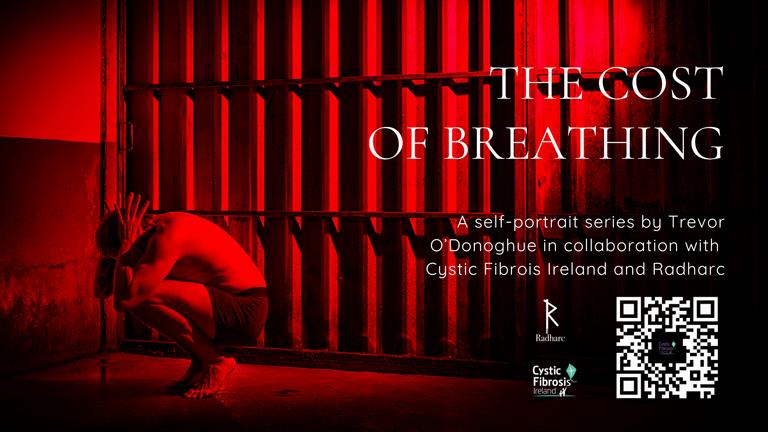
Our "Cost of Breathing" exhibition is touring Ireland highlighting the financial impact of living with CF In the coming weeks we will be launching our asks for government to tackle some of the financial burden that CF can bring Please join us in calling for support
Thank you, Sarah and all the team in CFI
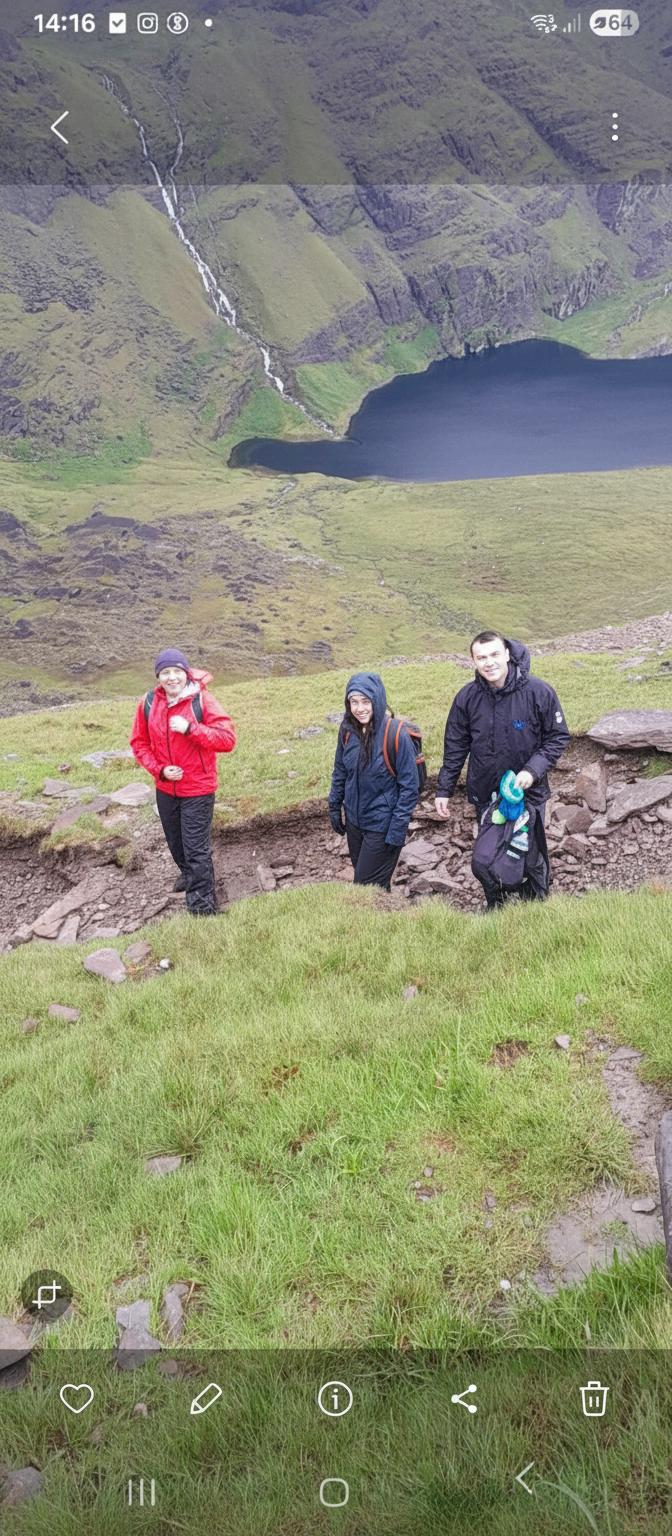
Jack Timmins (26) was diagnosed with Cystic Fibrosis (CF) at 10 months old. His parents, Andy and Sarah, were concerned about recurring chesty coughs and when they brought him to Temple Street, the team recommended a sweat test. When the results came back positive for CF, they were both shocked and worried.... 26 years on, Jack is an ATSEP (Air Traffic Safety Electronics Personnel) in Airnav Ireland, with not one, but two degrees under his belt.
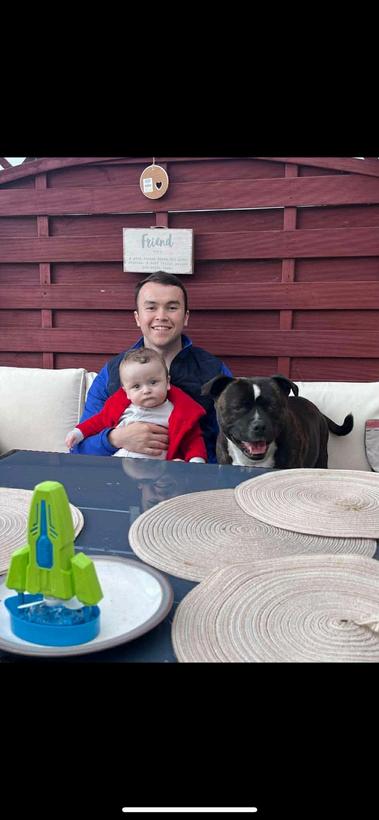
The internet was still relatively new when Jack was diagnosed, so on a small desktop Andy used for work, they researched this new label they knew nothing about What they discovered was bleak However, the team in Temple Street were quick to explain everything and help inform and educate and as the years rolled on, the Timmins family found great strength and friendship in the CF Community in Ireland, fundraising, advocating and supporting each other. 26 years on, Jack is an ATSEP (Air Traffic Safety Electronics Personnel) in Airnav Ireland, with not one, but two degrees under his belt. He lives with his partner, Sara, travels as often as he can, trains regularly with his Dad and leads a full life with his family, Mum - Sarah, sisterShannon, and godson and nephew, Senan
When looking back on his journey, Jack reflects on how he was drawn to practical subjects in school He studied woodwork and metalwork for Junior Cycle and construction and engineering in Senior Cycle Not only did he have an interest in these subjects, he found they were the subjects he most enjoyed. “When sixth year came around and the CAO opened, me being a typical 17-year-old, didn’t know what to put down. I was filling in all engineering stuff at level 8, but I had some gaps in the level seven options, and we said sure we’d just stick in a few other options there,” Jack explains “I sent it in and was in Beaumont Hospital at an appointment when the offers came out One of the offers was for Aviation Technology – one of the ones Mam stuck down just to fill up a gap and the other offer was a level eight in Mechanical Engineering”
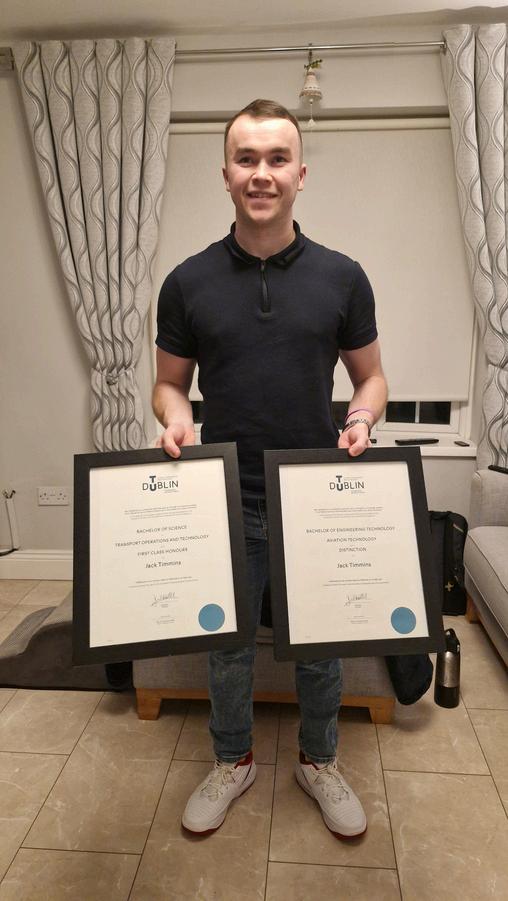
Jack chose his study path based on his interests, rather than the qualification When he delved down into the modules, this path turned out to be Aviation Technology - a three-year course in Dublin Although Jack was due to graduate in 2020, due to the pandemic, the college allowed students to join the last year of the level 8 Transport Operations and Technology degree as some of the modules overlapped. This final year gave Jack a deeper knowledge of the field and he found there was a good balance between subjects he needed for example maths, and the subjects he enjoyed such as aviation legislation Having entered third level on a three-year course, Jack graduated with a Level 7 degree in Aviation Technology and a Level 8 degree in Transport Operations and Technology.
Jack recalls how he then put a last-minute application into the Irish Aviation Authority graduate programme and was delighted to discover he was successful. He moved to Limerick for eight months whilst training in Shannon His first time moving out of home, he came back every weekend, catching up with family, playing matches and meeting friends Once qualified, Jack moved back to Dublin to begin work at Dublin Airport where he works closely with electricians, engineers, air traffic controllers and many others. Jack is part of a team which manages the data side of air traffic management systems. He has worked shift and regular hours. As with most jobs, there are weekly meetings and maintenance, but the role itself is varied. There is no such thing as a typical day, and Jack could find himself working on anything from a blown fuse to fixing a radar dish
When asked about disclosure of his CF during the applicat process, Jack explains that because he has been lucky to have been mostly well since his diagnosis, he wouldn’t usually feel the need to disclose his condition unless it ca up in conversation However, as the ATSEP role is a safety critical role, he had to undergo a medical examination and because of this, he was obliged to disclose it.
"The medical process meant I had to disclose my CF but it didn’t impact the medical at all It doesn't impact my wor my role or anything like that The way it worked out, you know applying to the CAO, working in Limerick, now worki so close to home, passing the exams at the end of the graduate programme, it’s turned out to be a great fit and really enjoy it,” Jack explains.
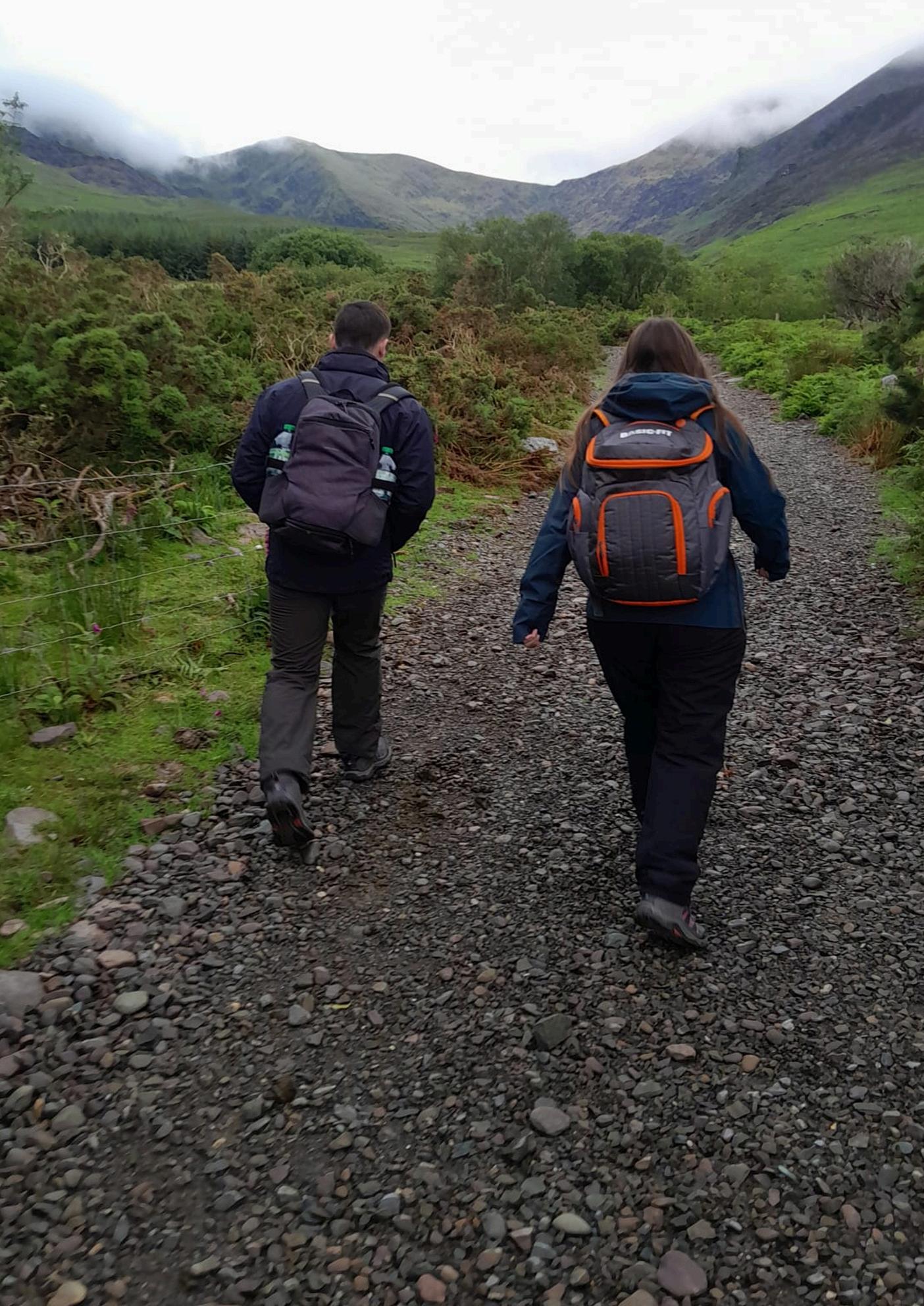
Outside of work, Jack admits he never sits still Whether is reading, going to the gym, learning new skills like playi guitar, Jack is incredibly active and his parents say, he alw has been.
From a young age, as young as 5, Andy focused on keeping Jack as active as possible for his health and Sarah was in charge of his medicines and hospital appointments. Sharing a love of GAA and fitness, Andy and Jack have been training partners for as long as Jack has been training They joined Erin’s Isle GAA Club in Finglas together and while Jack trained, Andy coached
When Jack stepped back from hurling in early 2025, he joined a running club with Sara, his partner, but continued to train with Andy. Since then, Jack has ran two marathons and with his father - a half marathon
Sport has not only helped Jack physically, but it has supported his mental wellbeing too. When Jack transitioned to adult services in Beaumont, his parents were advised that it was time for Mam and Dad to sit back, and for Jack to step forward Despite finding the transition a challenge – they knew Jack was ready for the next step In the years that followed transitioning to adult services, Jack’s knowledge and information bank grew while he learnt to become more independent in his care – from remembering all the details of his medical care to getting himself to appointments. As he took charge of his own care, Jack found that at times, if he did experience a period of ill-health, he could ‘ go in on himself’
“For the longest time, I had not thought of CF as something I had. Because I was always as fast as the other kids, was able to play with them, I was always keeping up. And then it got to the stage where it is something you can’t forget you have It’s something you eventually have to accept you have And that's why I always keep myself fit and busy I find if my mind sits still; I find I begin to start overthinking about things as well,” Jack explains.
“A couple of years ago, over the course of about 6 months, I had chest infection after chest infection, going from one lull to another and that was probably when I got a bit down I was having bad headaches and wasn’t in a great place mentally Thankfully one of the team in Beaumont spotted what I was going through, asked me the question and started the conversation with me. That’s when I started with the counsellor in Beaumont. Over a year later, I was still going there every week ”
He admits he is very driven and if he has a couple of quieter days, he can be hard on himself, but he has learned to be kinder to himself while keeping himself active and well
Being aware of his own mental health, meant that Jack was able to make informed decisions on how to maintain good mental wellbeing during shift work when he could find himself with more quiet days, where he could begin to get in on himself. Giving it the same focus as he put on his physical wellbeing, he reduced his alcohol intake, decided to improve his sporting performance and focused on the things he enjoyed most He admits he is very driven and if he has a couple of quieter days, he can be hard on himself, but he has learnt to be kinder to himself while keeping active and well
Jack’s story is entwined with the story of community. From the tight bond of his family to the GAA Club, from the hospital teams to the CF community, every connection around him has helped shape his strength But it is Jack’s own determination, self-awareness, and persistence that have brought him to where he stands today And it will be that same resolve that continues to guide his path in the years ahead – and we are looking forward to seeing what comes next!
Has your young child recently been diagnosed with Cystic Fibrosis?
We know this maybe an overwhelming and emotionally challenging time and can provide support, resources and information to parents.
Newborn Care Pack
This pack offers resources, information and tools to help parents better understand and manage their child’s Cystic Fibrosis.
Parent Connect Team Online Support Group
Fostering community for all parents of children with Cystic Fibrosis in their early years. This group meets the first Wednesday of each month.
This is a peer led service - by parents for parents. If you would like a call back from one of the team, contact us on parentconnect@cfireland.ie
To get in touch or find out more, scan the QR code or contact us on memberservices@cfireland.ie
Payments and Taxation in
Many members receive, or may in the future, need to claim social welfare supports. While these payments provide vital financial assistance, it is important to understand how they work, how they are taxed, and your responsibilities as a claimant. Below is an overview of three common supports: Disability Allowance, Carer’s Allowance, and Incapacitated Child Tax Credit. We also outline important residency rules and taxation considerations. As with all tax credits, you are responsible for ensuring that your claim remains valid and up to date. Failure to report changes can result in overpayments and recovery action If you are unsure of your entitlements, reach out to www citizensinformation ie for more information or give one of the team a call and we can direct you accordingly
Disability Allowance
Disability Allowance is a weekly means-tested payment for people with a disability who are aged between 16 and 66 and who are substantially restricted from undertaking suitable employment. It is administered by the Department of Social Protection.
Residency Requirement
To qualify for Disability Allowance, you must: Be habitually resident in Ireland
Continue to reside in Ireland while receiving the payment
If you leave Ireland for example, to travel or live abroad you must inform the Department In most cases, Disability Allowance is not payable while you are outside the State, other than limited temporary absences
Taxation of Disability Allowance
Disability Allowance itself is not taxable. You must notify the Department if: You return to full-time work
Your means increase significantly
You move abroad
Your medical condition improves to the extent that you are no longer substantially restricted from work
Carer’s Allowance
Carer’s Allowance is a means-tested payment for people on low incomes who are providing full-time care and attention to a person who requires significant support due to age, disability, or illness
Residency Requirement
To qualify, you must:
Be habitually resident in Ireland
Provide full-time care (with limited exceptions for work, training, or education up to permitted weekly hours)
If you leave the country, even temporarily, you must notify the Department. Extended absences may affect entitlement.
Taxation of Carer’s Allowance
Carer’s Allowance is a taxable source of income
When Might You Need to Stop Claiming?
You must inform the Department if:
You stop providing full-time care
The person you are caring for moves into long-term residential care
Your income increases beyond the means threshold
You move abroad
The person you are caring for passes away (a bereavement period may apply)
Incapacitated Child Tax Credit
The Incapacitated Child Tax Credit is a tax credit claimed through the tax system and administered by the Revenue Commissioners. It is available to a parent or guardian of a child who is permanently incapacitated, either physically or mentally, and who is unlikely to be able to support themselves financially.
To qualify the child must be under 18 years of age and permanently incapacitated or over 18 years of age, have become permanently incapacitated before 21 years of age and be unable to support themselves
Taxation Treatment
It reduces the amount of income tax you pay
It does not count as taxable income
It is claimed through your annual tax return or via your Revenue online account.
Because it is a tax credit rather than a direct payment, it only benefits those who have an income tax liability
When Might You Need to Stop Claiming? You should review your entitlement if:
The child is no longer considered permanently incapacitated
The child becomes financially self-supporting
Custody arrangements change
You cease to be tax resident in Ireland
Remember, it is your responsibility to report any changes in circumstances as outlined above.
Failure to report changes, can result in overpayments and recovery action.
with CF
For people living with Cystic Fibrosis (CF), starting a family can present unique challenges. CF can affect fertility, particularly in men, and may also impact the timing and approach to conception for women The HSE Fertility Treatment Scheme provides a valuable pathway for eligible individuals and couples, helping to make assisted reproductive care more accessible and for those looking to start their parenting journey should be the first port of call
Fertility treatment can be emotionally and financially demanding and the governments introduction of publicly funded IVF represents a significant step forward in improving access to reproductive healthcare
Under the scheme, eligible applicants can access:
One publicly funded cycle of IVF (In Vitro Fertilisation)
Associated consultations, scans, and diagnostic tests
Necessary medications linked to the treatment cycle, when clinically indicated
These treatments are delivered through participating public and private clinics, working in line with HSE guidelines For people with CF, clinics may collaborate with your CF care team to ensure treatments are safe and appropriately timed.
Eligibility is based on specific medical, age, and clinical criteria set by the HSE. Key points include:
Applicants must meet defined age limits: be over the age of 18, under 43 for females and 60 for males
BMI
A confirmed diagnosis of infertility is required.
Applicants must be ordinarily resident in Ireland and hold a valid PPS number.
Referral from a GP or relevant hospital consultant is required.
It may take between 3 and 6 months after your referral to be seen by a specialist in a regional fertility hub.
For the most up-to-date eligibility criteria and details of participating clinics, members are encouraged to visit the HSE website or speak directly with their GP or hospital team. Getting IVF and other specialist treatment through the HSE
If you would like support or guidance in navigating this process, please contact our team and if you are not candidates for the HSE Fertility please reach out to our Member Services here at CFI to chat through further options. We are here to help!
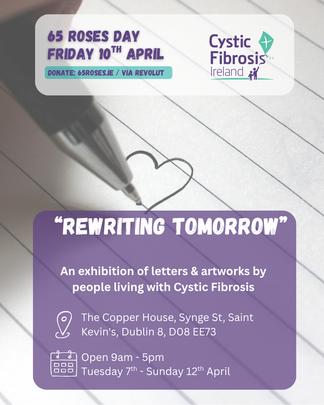
7th - 12 April th April 10th - 65 Roses Day
To register your interest for these events, for more events throughout the year or for further details on any of our events, contact the Fundraising team today!
Join the CF community this 65 Roses Day, 10th April, and help ‘Rewrite Tomorrow’
65 Roses Day returns on Friday, 10th April, and we need your support more than ever.
Every year, 65 Roses Day brings communities across Ireland together in solidarity with people living with cystic fibrosis and their families By giving just a few hours of your time, you can make a real and immediate difference We are seeking volunteers to help collect at participating Dunnes Stores locations and selected shopping centres nationwide. Your presence on the day raises vital funds and spreads awareness where it matters most.
If you can’t join an existing collection, you can still get involved by hosting your own in your local community, workplace, or school Every collection, big or small, helps us provide essential services, advocate for better care, and support families facing the daily challenges of CF Sign up at www.65roses.ie/volunteer
Visit the 65 Roses Exhibition: Rewriting Tomorrow
As part of this year ’ s 65 Roses Campaign, we invite you to experience Rewriting Tomorrow, a powerful exhibition featuring letters written by people with CF to their future selves These letters reflect the hopes, dreams, and challenges within this remarkable community The exhibition is beautifully balanced with drawings from children with CF, sharing what they hope to become when they grow up.
We extend our heartfelt thanks to everyone who contributed. Your willingness to share your story so openly is deeply appreciated The exhibition will be hosted at the Copper House Gallery, just off Camden Street, Dublin, from 7th–12th April, and we would love to welcome you there
This 65 Roses Day, stand with the CF community. Volunteer, host a collection, raise awareness— and stand with people with CF in Ireland as they shape a stronger future.
Thank you
It is not possible to list all of the Fundraising Events that have been organised since our last edition of Spectrum, but we would like to take this opportunity to thank everyone that has volunteered and raised money on behalf of people with Cystic Fibrosis. Every cent raised helps provide a better quality of life for people with Cystic Fibrosis and please keep up the great work. Here is a short summary of some of the remarkable efforts of our Volunteers.
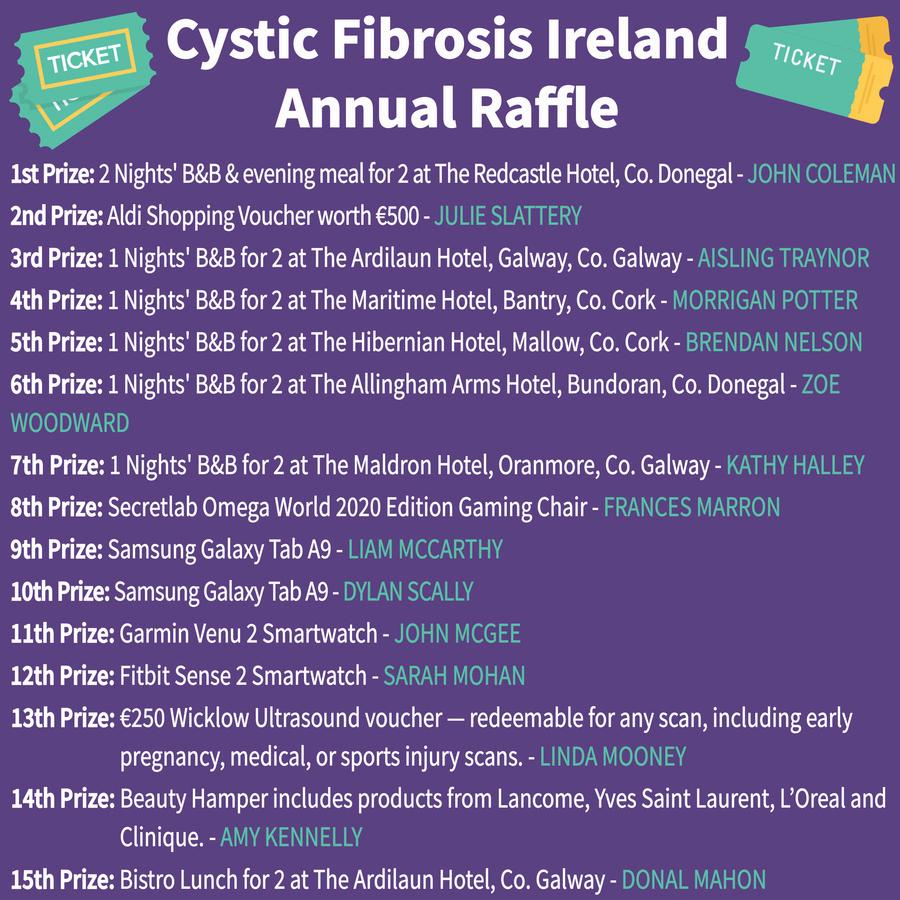
Annual Raffle
A massive THANK YOU to everyone who purchased tickets for our Annual Raffle in support of Cystic Fibrosis Ireland and our generous sponsors of all the lovely prizes
Thanks to your generosity, we raised an amazing €6,350 to help us continue providing vital services to people with CF across Ireland The raffle took place at our Annual Conference on Saturday, 7th February and congratulations to all our prizewinners! From all of us at Cystic Fibrosis Ireland, thank you for making this raffle such a success Your support truly makes a difference
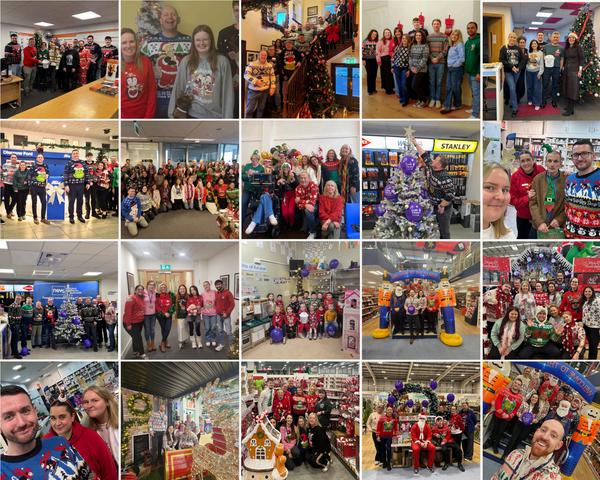
Christmas Jumper Day 4 CF
We are overjoyed by the wonderful support for Christmas Jumper Day 4 CF in December! Thank you so much to everyone who participated and donated, supporting people with Cystic Fibrosis in Ireland We absolutely loved seeing all of your #CJD4CF2025 pictures with your amazing selection of Christmas Jumpers See if you can spot yourself in one of our collages of the day posted on our Social Media and website!
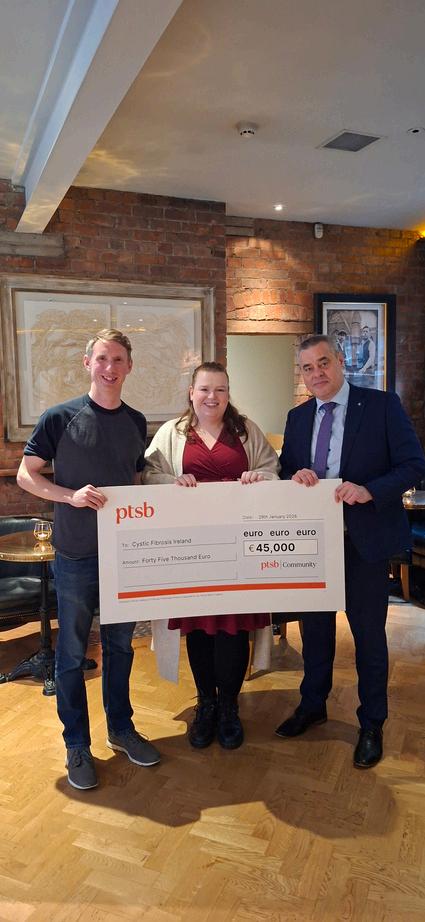
PTSB
We were honoured to attend the PTSB Community Luncheon in January to accept a cheque for €45,000 raised by PTSB staff, as we were one of their chosen charities to support last year
We are incredibly thankful to PTSB Ireland and their staff for their fantastic fundraising efforts over the last year
Their generous donation of €45,000 will help Cystic Fibrosis Ireland continue to provide essential supports and services to people living with cystic fibrosis and their families. Thank you all for making such a meaningful impact
If your workplace offers fundraising opportunities, CSR opportunities, or selects a Charity Partner each year, we would be so grateful if you would consider nominating Cystic Fibrosis Ireland or applying on our behalf. For further details, please contact fundraising@cfireland ie!
Brendan's Doodles
Rethinking Nutrition in the Modulator Era
By Dr Cian Greaney, Registered Nutritionist (RNutr)
Dr Cian Greaney is a Registered Nutritionist (RNutr) who completed his PhD in January 2026 at the School of Allied Health, University of Limerick. Supervised by Prof Audrey Tierney and Prof Katie Robinson, his research explores nutrition, diet quality, and lived experience among adults living with cystic fibrosis in the modulator era. His work aims to support more person-centred, practical nutrition care by combining research evidence with the voices of people living with CF.
What the study is and why it is important
For decades, nutrition has been a cornerstone of CF care. Traditional advice focused on eating as much energy and fat as possible to support weight, lung function, and survival This approach saved lives and remains important However, CF care has changed dramatically in recent years, particularly with the introduction of highly effective CFTR modulator therapies. Many people living with CF are now living longer, healthier lives. With this welcome change comes a new challenge: how to support long-term health, wellbeing, and quality of life, not just weight gain. Diet-related conditions such as cardiovascular disease, CF-related diabetes, and overweight / obesity are becoming more relevant, yet nutrition advice has not fully caught up with this new reality
How we conducted the study
My PhD research explored what adults living with CF are actually eating, how diet quality relates to health and wellbeing, and how people experience food and nutrition in everyday life in the modulator era. The goal was not to take away from what has worked in CF care, but to ask whether nutrition support now needs to evolve. This research used a mixed-methods approach, meaning it combined different types of studies to give a fuller picture. First, we reviewed international research to understand what is already known about diet quality and nutrient intakes in adults living with CF.
We then carried out studies with adults living with CF in Ireland, including detailed dietary assessments, questionnaires about health-related quality of life, and in-depth interviews and focus groups exploring personal experiences of food, body image, and changing dietary needs.
Importantly, people living with CF were involved throughout the research process Their input helped shape the questions asked and ensured the research focused on what matters in day-to-day life, not just clinical outcomes.
Who was involved?
Adults living with CF from across Ireland took part in this research. Many were attending specialist CF centres / clinics, and most were using CFTR modulator therapies. Dietitians, clinicians, and patient representatives also contributed through public and patient involvement (PPI) through the help of Cystic Fibrosis Ireland
Above all, the voices of people living with CF were central Participants generously shared not only what they eat, but how they feel about food, weight, body image, and the pressure, past and present, surrounding nutrition.
What we discovered
Across studies, a consistent pattern emerged: diet quality was generally poor, even when calorie intake was adequate or high. Many participants relied heavily on energy-dense, nutrient-poor foods, with low intakes of vegetables, fruit, and whole foods Fat intake was often very high, exceeding even CF-specific recommendations
Gastrointestinal symptoms, anxiety / depression, and low energy levels remained common, even in the modulator era. Diet quality was related to health and wellbeing, but this relationship was closely tied to clinical factors such as lung function and gastrointestinal symptoms. The qualitative interviews added important context Many people described growing up with strict messages around “eating more at all costs” While modulators brought a sense of freedom, with some describing it as feeling “normal” for the first time, they also created confusion People were unsure whether old food rules still applied, how to manage weight gain, or how to balance enjoyment of food with long-term health.
What this means for CF
Body image emerged as a key issue Experiences ranged from long-standing concerns about being underweight to new worries about weight gain and appearance These changes are not always well captured by existing assessment tools, highlighting a gap in CF care.
The findings suggest that nutrition in CF needs a shift in focus. Energy intake still matters, but diet quality now matters too.
As people living with CF live longer, the goal of nutrition support should expand beyond preventing malnutrition to supporting overall health, gut health, metabolic health, and quality of life This includes helping people navigate changing bodies, changing expectations, and the emotional relationship with food that often develops over a lifetime of CF care
Importantly, this does not mean abandoning high-energy diets where they are still needed. Rather, it means tailoring nutrition advice to the individual and their stage of life, treatment, and health goals.
What this means for the future
This research highlights the need for updated, flexible, and person-centred nutrition guidance in CF. Future care should support people in improving diet quality in realistic and achievable ways, while acknowledging treatment burden, symptoms, time pressures, and personal preferences There is also a need to rethink how we assess outcomes like diet quality and body image, ensuring tools reflect the realities of living with CF today Listening to lived experience must remain central as CF continues to evolve. Most importantly, nutrition should support adults living with CF not only to live longer, but to live well, helping food become a source of health, confidence, and everyday quality of life.
Funding
This research was supported by the Health Research Charities Ireland / Health Research Board Joint Funding Scheme in partnership with Cystic Fibrosis Ireland [HRCI-HRB-2020-025], and by the Taighde Éireann – Research Ireland Government of Ireland Postgraduate Scholarship [GOIPG/2023/4258]. These organisations made this work possible.
Full-text Articles Associated with this PhD.
Greaney C, Doyle A, Drummond N, King S, Hollander-Kraaijeveld F, Robinson K, Tierney A What do people with cystic fibrosis eat? Diet quality, macronutrient and micronutrient intakes (compared to recommended guidelines) in adults with cystic fibrosis–A systematic review Journal of Cystic Fibrosis 2023;22(6):1036-47 https://doi org/10 1016/j jcf2023 08 004
Greaney C, Bohan K, Tecklenborg S, Casserly B, Green J, Van de Ven P, Robinson K, Tierney A Diet quality in cystic fibrosis – associations with patient reported outcome measures and enablers and barriers to eating a healthy diet: A protocol paper for a mixed methods study [version 2; peer review: 2 approved] HRB Open Research 2025;5:33 https://doi org/10 12688/hrbopenres 13533 2
Greaney C, McCarthy E, O'Brien L, Tecklenborg S, Howlett C, Cronin K, Landers C, Connolly M, O’Sullivan D, Whiston A, Robinson K, Tierney A Dietary intakes and quality of Irish adults with cystic fibrosis: Comparisons to nutrition guidelines and HEI-2020 Journal of Cystic Fibrosis 2025;24(6):1073-80 https://doi org/10 1016/j jcf2025 07 004
Greaney C, McCarthy E, O'Brien L, Tecklenborg S, Howlett C, Cronin K, Landers C, Connolly M, O’Sullivan D, Whiston A, Robinson K, Tierney A Interrelationships between diet quality and health-related quality of life in Irish adults living with cystic fibrosis European Journal of Nutrition 2025;64(6):248 https://doi org/10 1007/s00394-025-03766-y
Greaney C, Bohan K, Tecklenborg S, Howlett C, Cronin K, Landers C, Connolly M, O’Sullivan D, Tierney A, Robinson K “I gained a superpower is this how normal people feel”: A qualitative exploration of dietary perceptions and experiences amongst adults living with Cystic Fibrosis in the modulator era medRxiv 2025
https://doi org/10 1101/2025 10 26 25338844
Greaney C, Cichy N, O’Sullivan G, Sills D, Cahalan R, Tierney A Evolution of body image across treatment eras – a systematic review in young people and adults living with cystic fibrosis European Respiratory Review 2026 (Note this paper should have a DOI by the time of magazine deadline submission)
Conference Supplement 2026
The CFI Community Conference
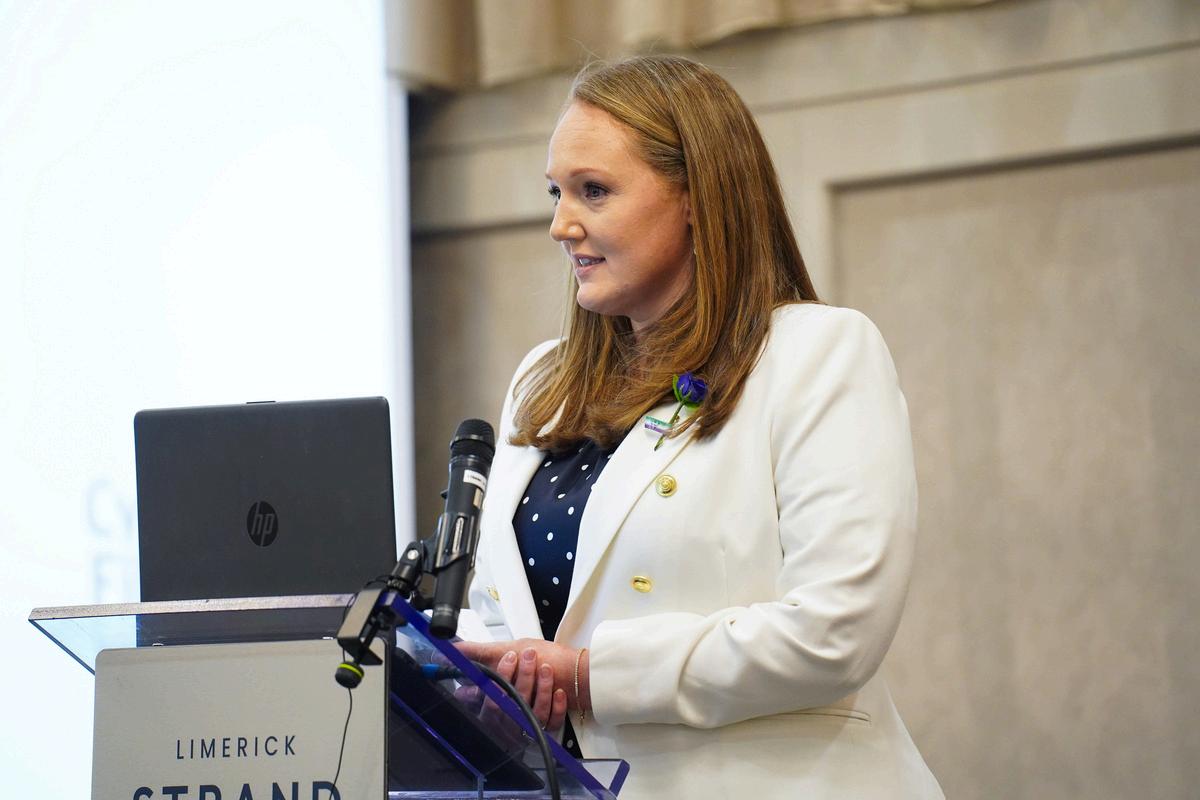
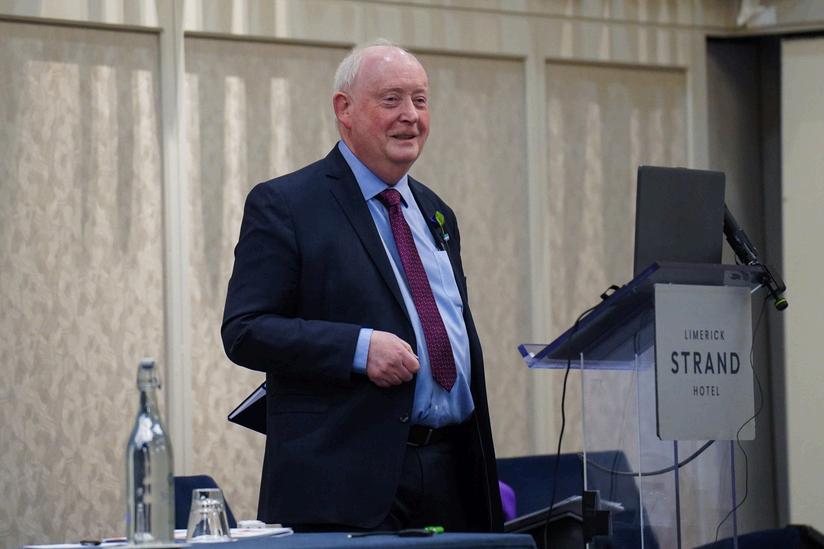
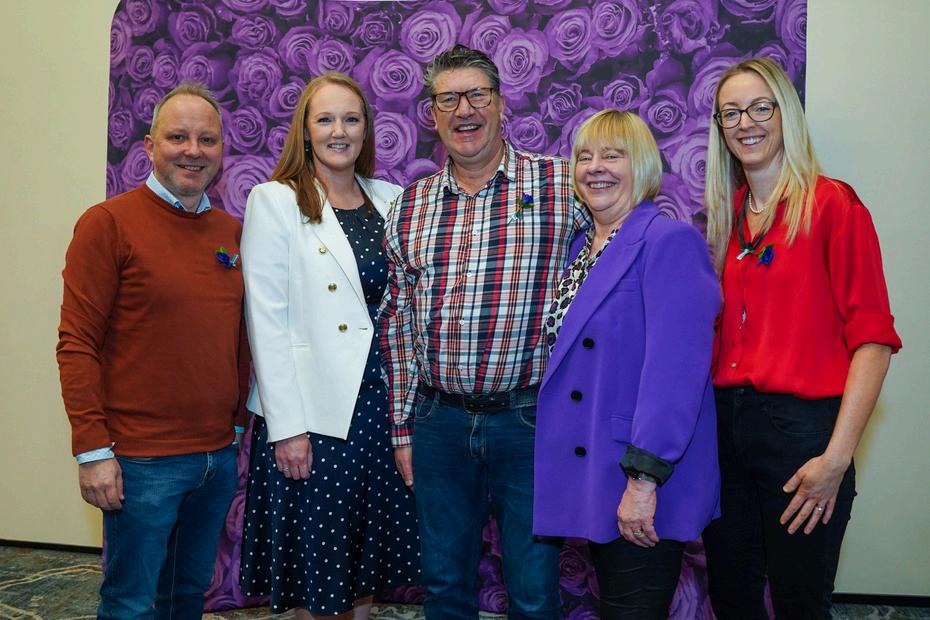
The Cystic Fibrosis Ireland Community Conference was held at the Strand Hotel Limerick on Saturday 7th February 2026. In a changing landscape of CF health, CFI Chairperson Bernie Priestley and CFI CEO Sarah Tecklenborg spoke of the importance of community and connection in the CF Community While CFTR modulator therapy has brought great health benefits to many people with CF in Ireland there are still those with CF for whom modulator therapy is not possible CFI remains committed to research priorities and community supports for all pwCF
Support for Members
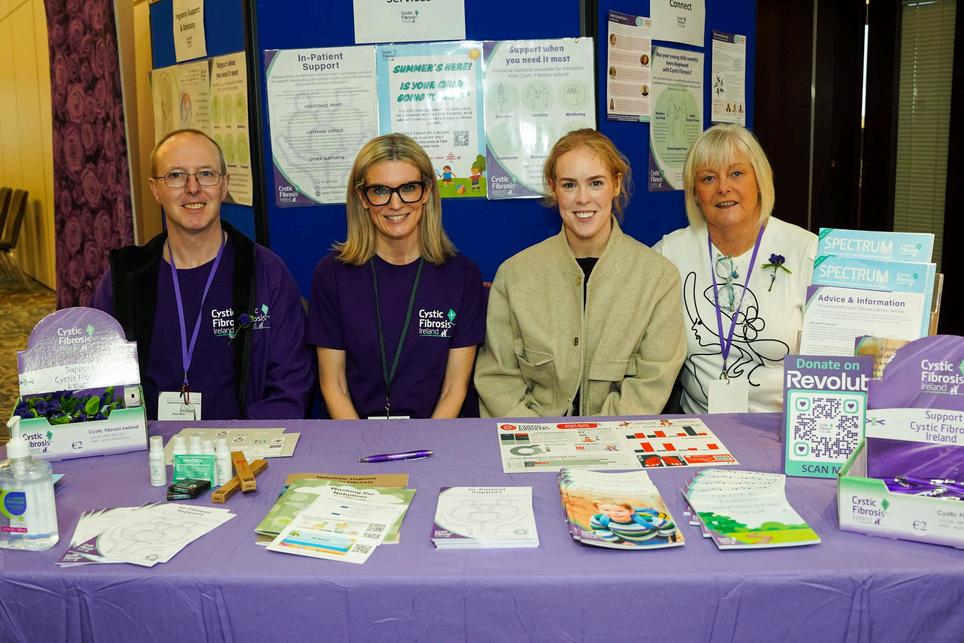
Sarah reminded delegates that CFI supports, including financial assistance, for families and pwCF are available to members An overview of our Member Service support shows that over 13,000 minutes of calls were made and over 2100 emails were sent in 2025 The support desk is open 9-5 Mon-Fri and can be contacted 01 4962433/ info@cfireland.ie / memberservices@cfireland.ie. Should we dare mention this service desk includes over 100 years lived CF experience between our two CF advocates (but we won't mention any specific ages!)
The Cost of Living Survey
The 2025 Cost of Living Survey identified significant financial burden for families and people living with CF. 44.9% of pwCF who responded struggled to pay their monthly bills. 30% of those in full time employment experience enforced deprivation and 60% of those on disability allowance experience enforced deprivation. Respondents reported loss of earnings, loss of earning potential and limited employment opportunities Many reported inflexibility, inability and difficulty in accessing disability payment supports when vitally needed CFI is now calling on the government to provide:
Access to mortgage and mortgage protection products for pwCF
Removal of means testing for disability payments
Greater flexibility in access to and re-accessing welfare supports as personal circumstances change
A cost of disability payment to offset the significant costs of living with CF
The launch of the Cost of Breathing exhibition
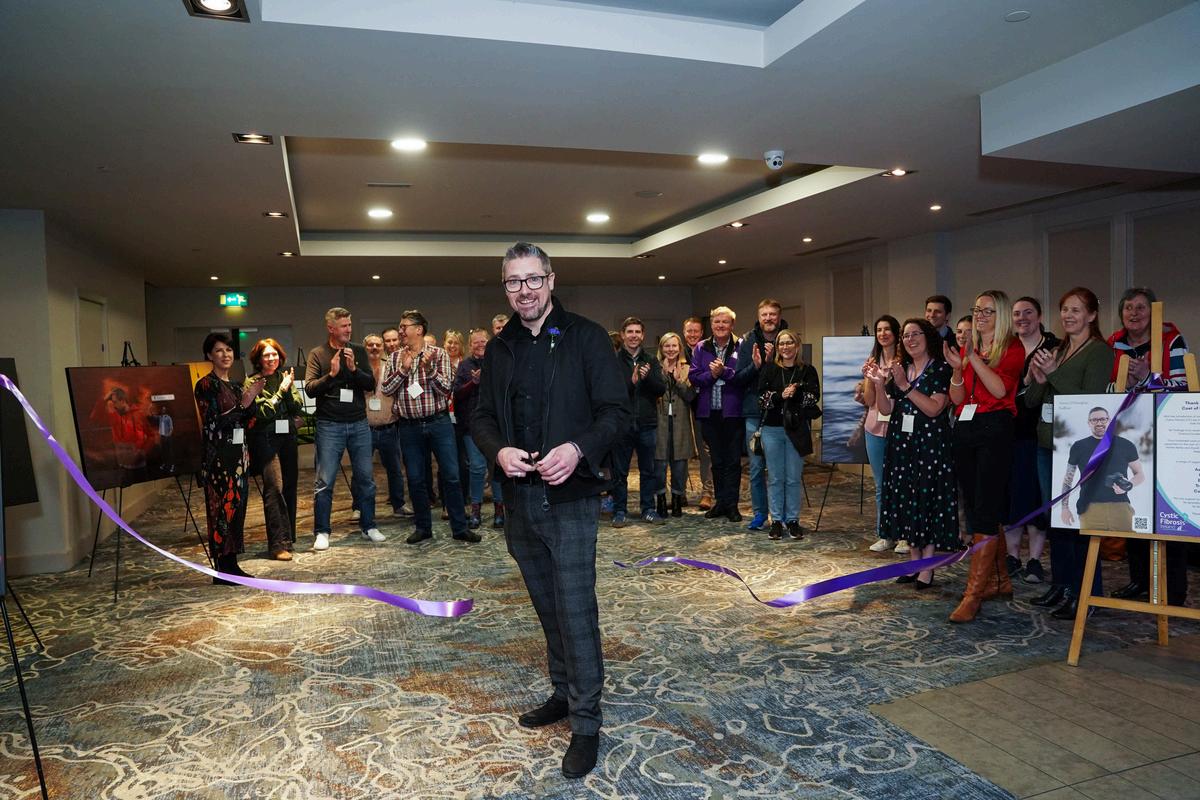
There is a real added personal and financial cost of living with CF. CFI launched the visually stunning photo exhibition by photographer and pwCF Trevor O’Donoghue on the “Cost of Breathing”. The exhibition explores the spectrum of deep emotions experienced living with CF as a chronic condition, expressed through colours and emotions of the chakra system The exhibition will be touring the country over the next few months so keep a watch out for this in your locality soon If you can’t visit in person, you can take a virtual walk through the online gallery by visiting: https://www cfireland ie/support-resources/members-events/the-cost-of-breathing
Guest Speakers
Speakers at the event included Gastroenterologist Dr Susanne O’Reilly who highlighted the importance of the role of the gastroenterologist in the CF multidisciplinary team and gave an overview of approaches for the treatment and management of CF-specific gastro intestinal complications. Dr O’Reilly also noted the increased risk of colorectal cancers in people with CF and the importance of regular, earlier screening.
Dr Daryl Butler, Paediatric CF Consultant at UHL discussed cross infection in the era of modulator therapies Noting a paucity of evidence to support any current easing of infection prevention and control measures, Dr Butler emphasized the importance of infection prevention for pwCF and discussed data that shows infection and bacterial colonisation persist even after starting CFTR modulators Dr Zina Alfahl, presented data from her paediatric study in UHG which demonstrated that PCR sputum analysis detected pathogens missed by standard culture over a 12 month period.
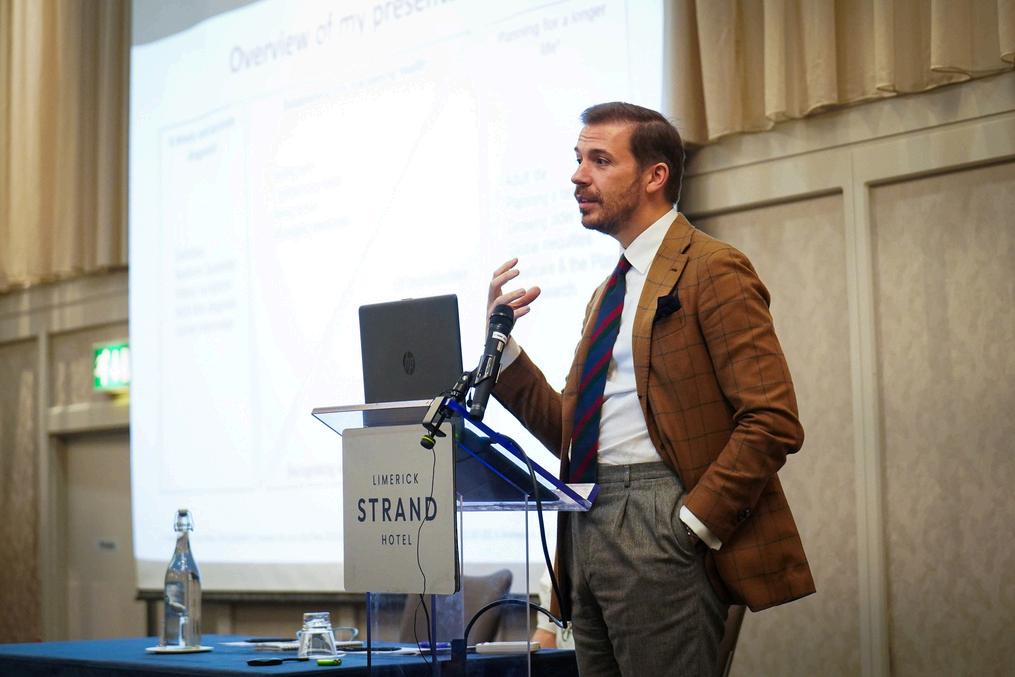
Professor Andrea Gramegna, an adult CF pulmonologist in Milan, gave the keynote talk on aging and CF. Professor Gramegna detailed the updated standards of care for Cystic Fibrosis representing a major shift in focus towards managing a longer, more complex life for people with CF The new standards, published in a series of four papers in 2024, address the evolving needs of people with CF as they age, focussing not only on emerging medical challenges, but on the hopes and aspirations of people with CF and their families as they grow older, noting the new standards reflect the wishes of people with CF to enjoy the full potential of a healthier life
Dr Laura Kirwan presented data from the Cystic Fibrosis Registry of Ireland’s most recent annual report which highlighted how people with CF are ageing. Dr Godfrey Fletcher, CEO of CFRI discussed the future of registries in Ireland and called on the Government to support the need for an independent centralised registry body Many of the talks demonstrated the importance of registry data in driving research and innovation and Dr Fletcher appealed to anyone who has not registered to participate in the CF registry to do so
In addition to the excellent medical talks, attendees had the opportunity to participate in a range of workshops including
Life Coach Lee Daly exploring techniques that may be helpful to navigate difficult conversations
Barry Mooney of Bellwether who provided an overview of personal financial management strategies
And Helen Gibbons who explored how to manage pillswallowing challenges commonly observed in children with CF.
Visit our website to learn more and watch recordings of the conference sessions
Online Conference Report
As in previous years, CFI ensured that those who could not attend the conference in person were able to join online and dip into the talks, as well as take part in several lunchtime hybrid workshops. To make sure online attendees were as well looked after as those attending in person, they were provided with dinner vouchers. A full day of online sessions can be long and demanding, and CFI wanted to encourage a sense of connection and allow those at home to enjoy a dinner together
The audience was also treated to a screening of SALT This award‐winning short film by Director Alice Ward is an autobiographical exploration of the role that salt and the ocean have played in her life as a filmmaker, surfer, and person with Cystic Fibrosis. Calming, reflective, and beautifully shot with contributions from Alice and her parents the film offered a gentle and grounding start to the conference. SALT will be available for general release in the coming months
A highlight of this year ’ s event was the hybrid “Lunch and Learn” session, which allowed online attendees to grab a cup of tea and something to eat while joining a financial advice workshop with Barry Mooney Barry is a Qualified Financial Advisor (QFA), Specialist Investment Advisor (SIA), and Certified Financial Planner™ with Bellwether. Barry delivered a whistle‐stop but highly practical and sensitive introduction to financial planning. He covered the foundations of budgeting, income and mortgage protection, savings, investments, pensions, inheritance, and more. The workshop concluded with clear, actionable steps that attendees could take immediately to begin making savings and planning for the future
Lee Daly—award‐winning speaker, life coach, and leading authority on “Mental Mastery”—facilitated a hybrid workshop for both in‐person and online attendees on the theme of having difficult conversations. He encouraged participants to reflect on the conversations they needed to have but were currently avoiding.
Despite the potentially heavy topic, Lee skilfully broke down the theory and offered practical, focused tips to make the material feel manageable. The session was interactive, and attendees left with concrete strategies for approaching difficult conversations Engagement on the StreamYard platform was excellent Online attendees were able to ask questions to in‐person speakers in real time and hear the responses immediately, with opportunities for follow‐up questions They also had access to dedicated online Q&A sessions after the workshops. This brought a strong sense of inclusivity to the event and highlighted the power of connection across both physical and virtual spaces.
Ageing in CF Insights from the CFRI
What is the Cystic Fibrosis Registry?
The Cystic Fibrosis Registry of Ireland (CFRI) is the patient registry for those living with Cystic Fibrosis in Ireland A patient registry is a secure, centralised database, containing specific health data on people with a particular diagnosis or condition. The role of CFRI is to collect and record information on the health status of people with Cystic Fibrosis (CF) in Ireland who agree to participate. By collecting and analysing information on people with CF in Ireland, the registry can help better understand their health and wellbeing, and the treatments they receive We analyse this data for different purposes, all with the wider aims of strengthening Cystic Fibrosis research, improving CF care, and ultimately of improving the health outcomes for those living with CF
Ageing in CF – insights from the CFRI presentation at INCFC26
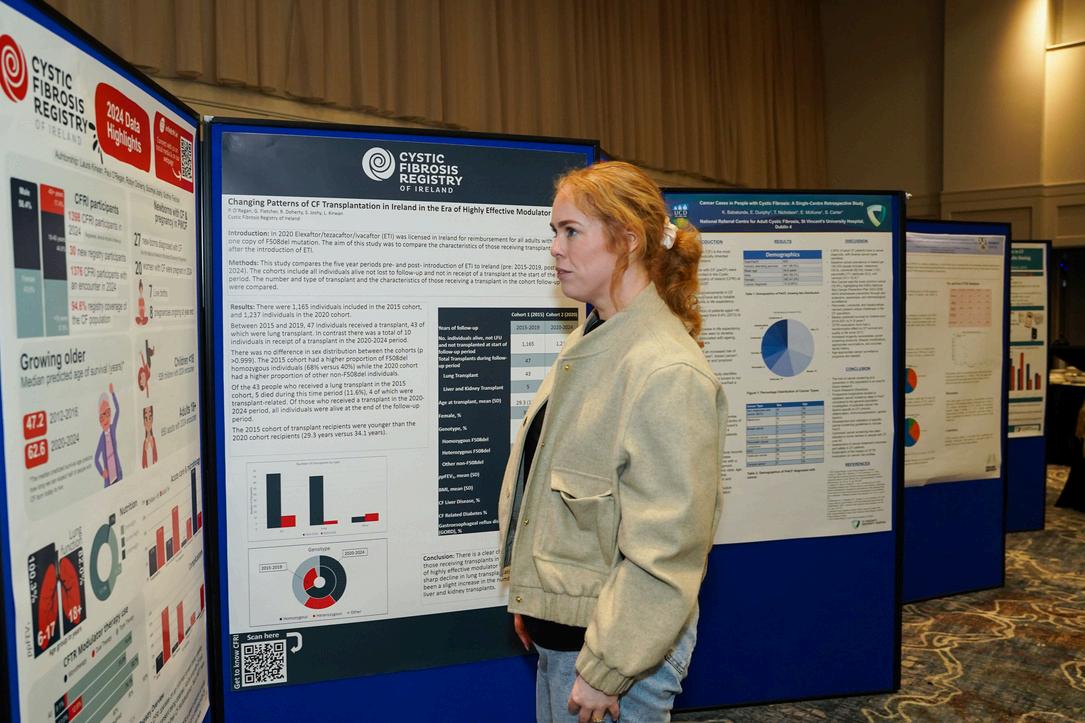
Prof Laura Kirwan (Head of Research, CFRI) delivered a presentation at the Irish National CF Conference 2026 The presentation was titled “Mapping the CF journey in Ireland: what Irish Registry data reveals” and aimed to set the scene for the rest of the day This was a fantastic opportunity to highlight the insights generated by the registry to the clinical teams in Ireland and to provide context for the rest of the presentations for the day.
One of the main areas of focus in the presentation was ageing in CF, particularly looking at the data on the Irish over 40s CF population In 2024, there were 578 adults aged 18-<40 and 202 adults aged 40+, with encounters recorded in the registry and who had not received a transplant There were some differences in clinical outcomes between these 2 groups:
The younger group had over 10%-point higher average lung function (80% versus 70%)
The 40+ group had mean 1.5-unit higher BMI
The 40+ group has higher prevalence of CF-related Diabetes and Osteoporosis/Osteopenia
There were a higher proportion of 40+ cohort receiving ivacaftor, and lower proportion receiving kaftrio
The over 40 cohort were prescribed more inhaled antibiotics, inhaled steroids, azithromycin, and proton pump inhibitors.
The over 40 cohort were prescribed less hypertonic saline, pulmozyme and pancreatic enzymes.
The presentation also explored the characteristics of the over 40s pre- and post- the introduction of kaftrio.
The number of people aged 40+ living with CF in Ireland has almost doubled since 2018 (109) to 2024 (202) This reflects longer life expectancy and overall improvements in care and treatment
Compared to 2018, adults over the age of 40 in 2024 had improved lung function, increased BMI, fewer chronic Pseudomonas infections and fewer pulmonary exacerbations Interestingly, there was no change observed in the prescription of regular medications other than CFTR modulator therapies, implying the burden of treatment remains high.
In 2024 there were 41 people aged 40+ with encounters recorded in the registry who had received a transplant (lung, kidney or liver). Next, the presentation compared the characteristics of the adults aged 40+ who had received a transplant (41), with those who had not received a transplant (202)
Those who had received a transplant had a higher prevalence of CF-related diabetes and CF liver disease, and double the proportion of osteoporosis
Those who had received a transplant also had a lower use of regular inhaled medications, but were prescribed more azithromycin, pancreatic enzymes and proton pump inhibitors
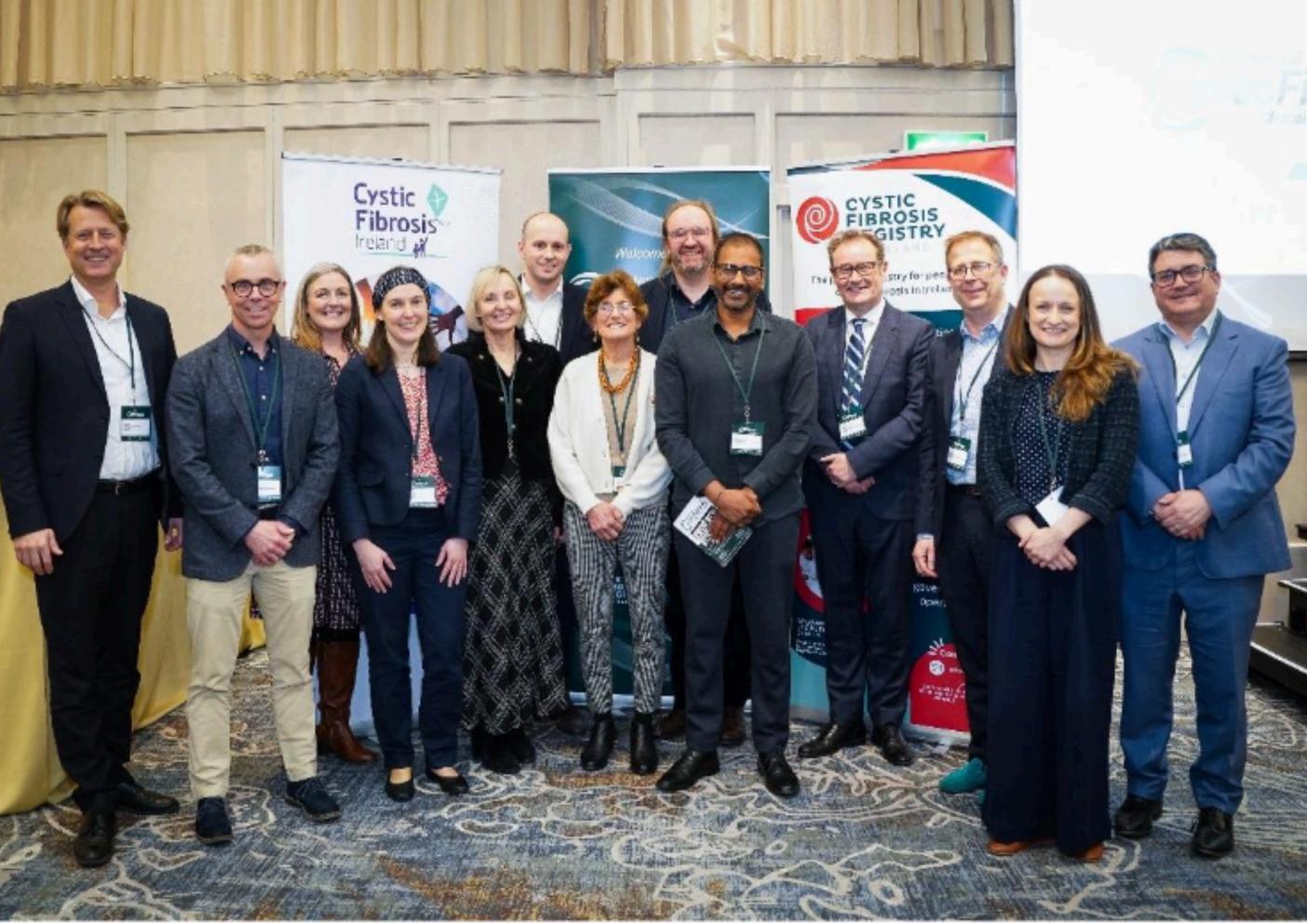
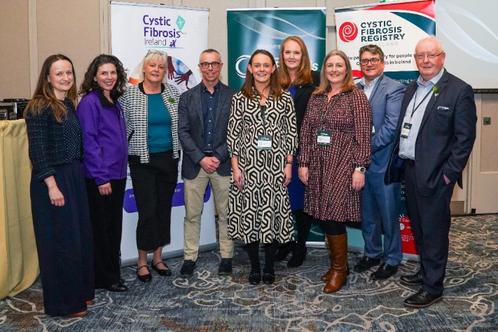
Prof Laura Kirwan with speaker delegation at INCFC26
Prof Laura Kirwan, Dr Robyn Doherty & Mr Godfrey Fletcher from CFRI at INCFC26
Prof Kirwans presentation finished up looking to the future and the plans the registry has to ensure the characteristics and outcomes of a growing adult CF population is accurately captured in the registry. In the short-term, we are looking to update our pregnancy outcomes data and physiotherapy exercise tolerance testing data In the near future, we aim to look at using better definitions for CF Liver disease as well as the use of Patient Reported Outcome Measures in the registry
Would you like to participate in the registry?
If you would have any questions or would like information about participating in the registry, please contact your CF Centre or the CF Registry at info@cfri.ie. Participation is entirely voluntary. You are free to revoke your consent and withdraw from the registry at any time
Want to learn more about what CFRI do?
We would love if you could follow us on social media or via our website We post updates on our work and on the exciting projects we are working on Scan the QR code below to learn more & access the latest data & reports