ANNA TUORI
Strawberries, High berries, Scrambled Eggs and Pudding
FOREWORD
BY XXXXX
“I haven’t seen anything that has impressed me so much in many years, she is the real thing (the real deal?).” I read these lines in an email that Julie Sylvester sent me in late summer 2025. She was referring to Anna Tuori, the Finnish artist I had heard about some time ago. The email went on to say, “(S)he is also a wonderful, brilliant, and funny person.”
Since Julie is a true veteran of the art world, this piqued my interest. With one foot in Finland and the other in Bermuda, Julie was always a little bit elsewhere, always involved with contemporary art. For decades, she has been close friends with artists such as Günther Förg, Louise Bourgeois, and Cy Twombly, and has been Associate Curator of Contemporary Art at Hermitage Museum in St. Petersburg. When someone with such experience talks about an artist with genuine enthusiasm, as Julie does about Anna, one becomes curious. I certainly did.
The first meeting with Anna was simple and straightforward. It took place on October 10, 2025, in London at Hazlitt’s, the oldest hotel in Soho. From there, we went on to Bar Italia. Anna ordered a blueberry muffin. The moment sparked an entertaining association: I had to think of the scene in Pulp Fiction where Butch returns to his girlfriend Fabienne on his motorcycle. 1293 merkkiä + ots
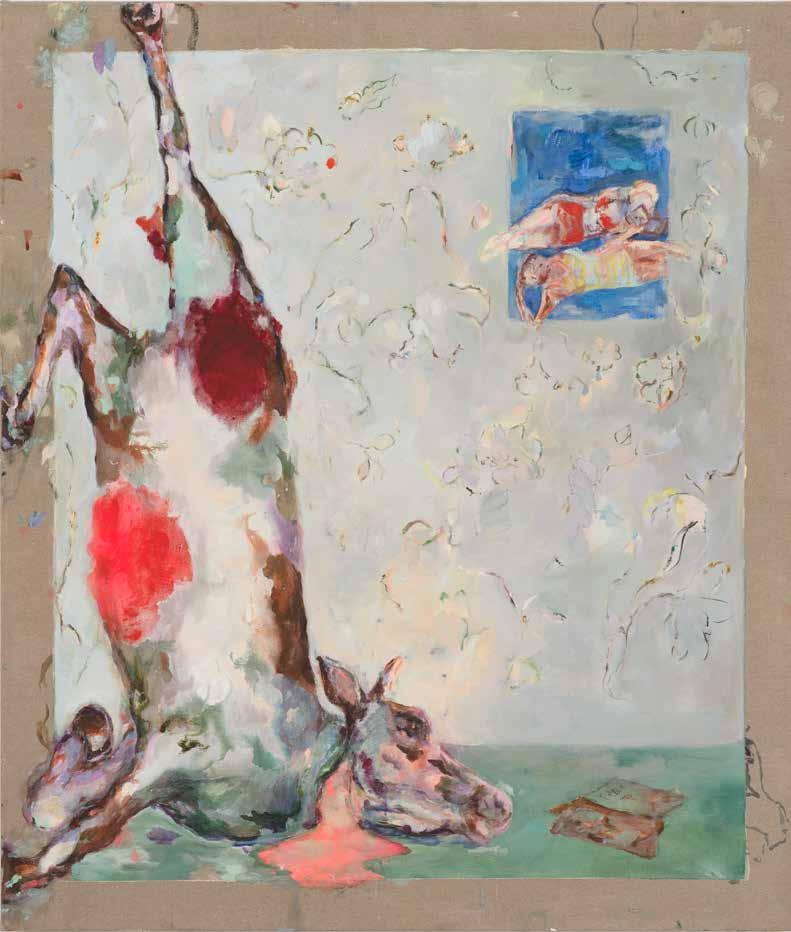
140 x 120 cm | 55.2 x 47.25"
Noble and Tragic, 2025
acrylic and oil on canvas
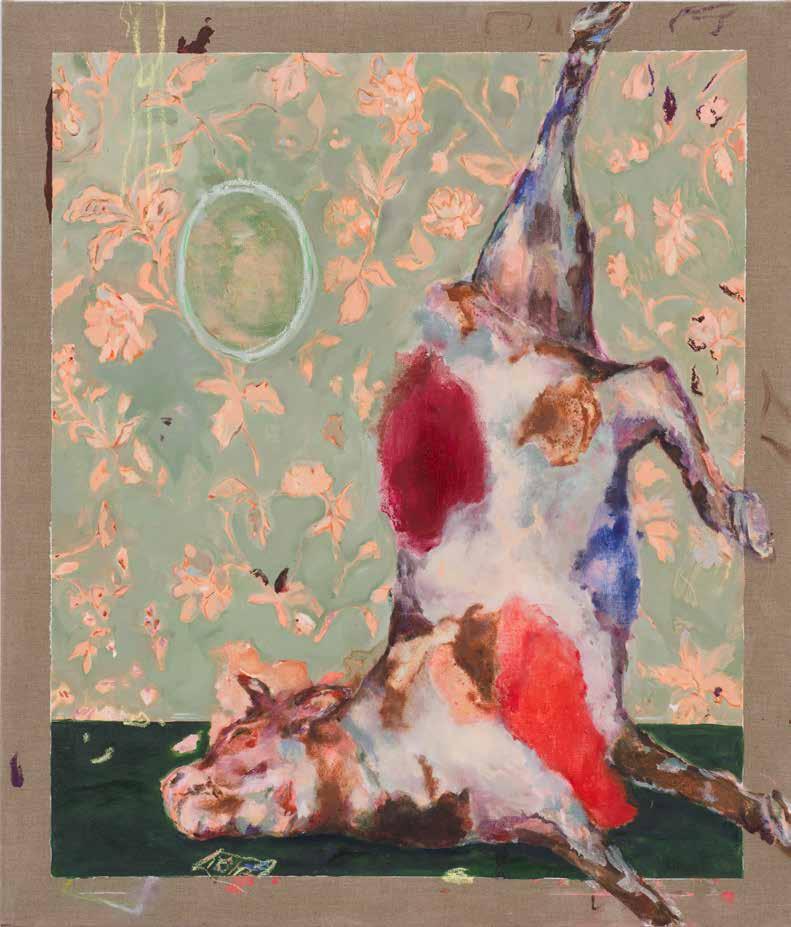
Lay Your Head Down, 2025
acrylic and oil on canvas
140 x 120 cm | 55.1 x 47.25"
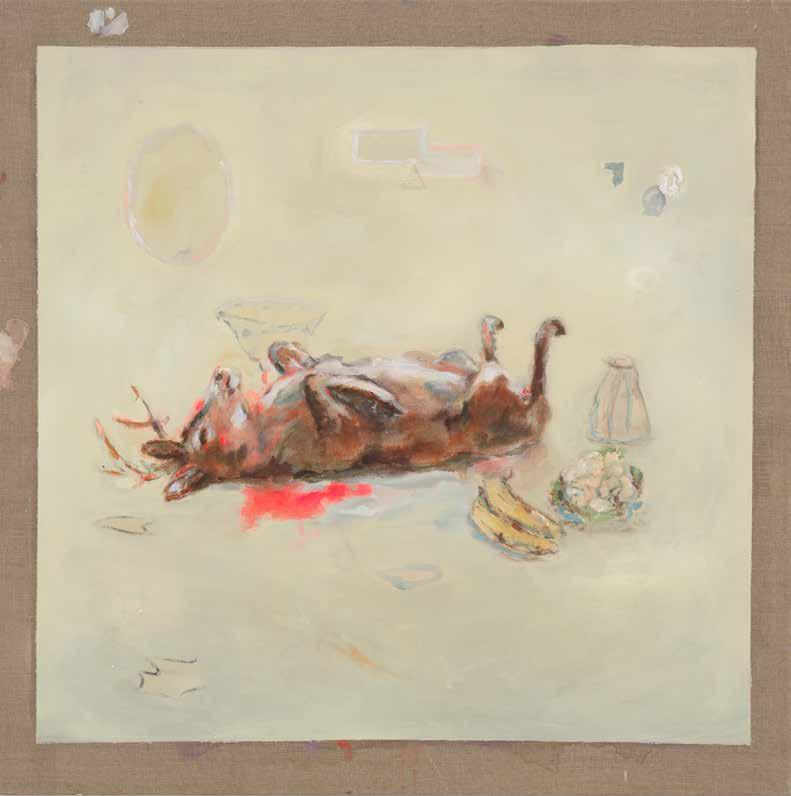
Off On an Adventure, 2025
140 x 120 cm | 55.1 x 47.25"
acrylic and oil on canvas
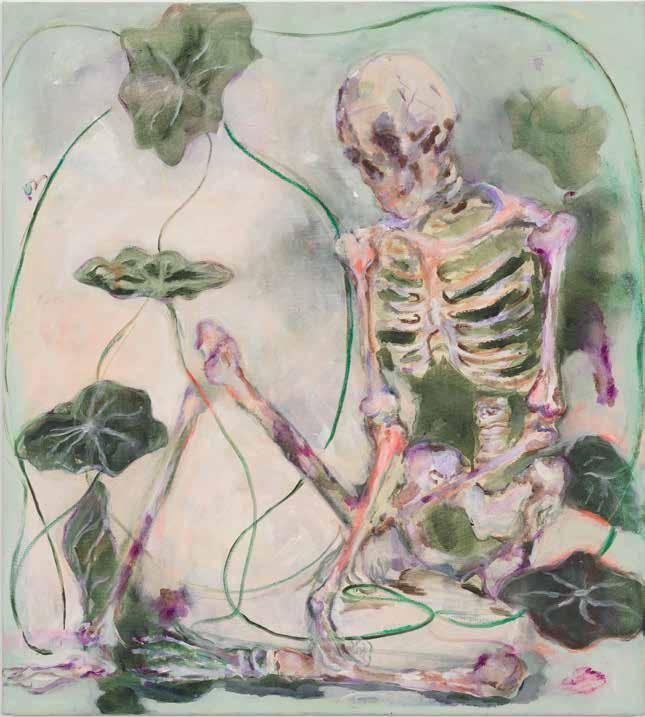
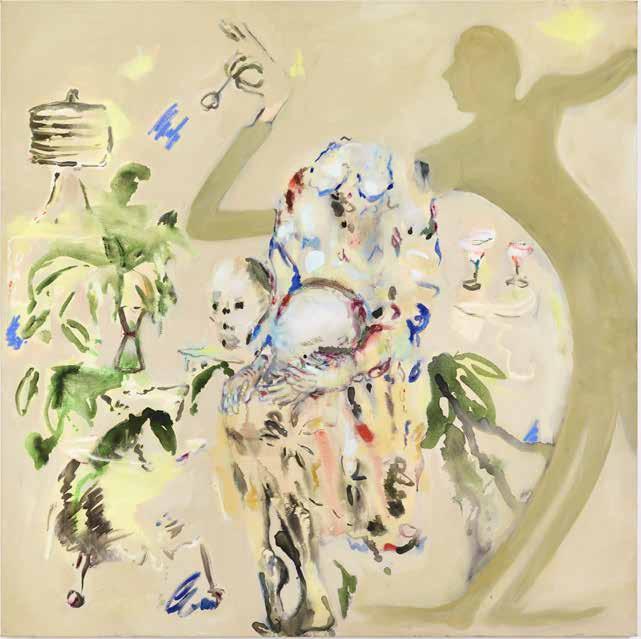
Lidless Stars, 2025 acrylic and oil on canvas 120 x 120 cm | 47.25 x 47.25"
GIMME SHELTER
TOLD BY BRUNO BRUNNET, WRITTEN DOWN BY FELICITAS BERLIN
“I haven’t seen anything that has impressed me so much in many years, she is the real thing (the real deal?).” I read these lines in an email that Julie Sylvester sent me in late summer 2025. She was referring to Anna Tuori, the Finnish artist I had heard about some time ago. The email went on to say, “(S)he is also a wonderful, brilliant, and funny person.”
Since Julie is a true veteran of the art world, this piqued my interest. With one foot in Finland and the other in Bermuda, Julie was always a little bit elsewhere, always involved with contemporary art. For decades, she has been close friends with artists such as Günther Förg, Louise Bourgeois, and Cy Twombly, and has been Associate Curator of Contemporary Art at Hermitage Museum in St. Petersburg. When someone with such experience talks about an artist with genuine enthusiasm, as Julie does about Anna, one becomes curious. I certainly did.
The first meeting with Anna was simple and straightforward. It took place on October 10, 2025, in London at Hazlitt’s, the oldest hotel in Soho. From there, we went on to Bar Italia. Anna ordered a blueberry muffin. The moment immediately sparked an entertaining association: I had to think of the scene in Pulp Fiction where Butch returns to his girlfriend Fabienne on his motorcycle.
BUTCH: “Fabienne! Fabienne! Fabienne! Come on, baby. Come on, get your shit. We gotta go right now.”
FABIENNE: “Butch, I was so worried! ... Are we in danger?”
B: “Come on, honey!”
F: “You’re hurt?” ...
Fabienne starts crying.
B: “Oh baby, I’m sorry. Come here, come here. I’m sorry. I’m so sorry.”
F: “You were gone so long, I started to think dreadful thoughts.”
B: “I’m sorry, sweetie. I didn’t mean to worry you. Everything’s fine. How was breakfast?”
F: “It was good.”
B: “Did you get the pancakes?
The blueberry pancakes?”
F: “No, they didn’t have blueberry pancakes, I had to get buttermilk – are you sure you’re okay?”
B: “Honey, since I left you, this has been, without a doubt the single weirdest fuckin’ day of my life. Come on, hop on. I’ll tell you all about it. Come on, get on. Gotta go! Gotta go! Come on.”
F: “Whose motorcycle is this?”
B: “It’s a chopper, baby.”
F: “Whose chopper is this?”
B: “Zed’s.”
F: “Who’s Zed?”
B: “Zed’s dead, baby. Zed’s dead.”
IMAGE?
Well in this case, it was not the single weirdest fuckin’ day ever, but an entirely ordinary morning. And we got along well right from the start. She and the meeting itself settled naturally with me. This is significant, because a first meeting is a kind of test: how does someone behave when you meet them for the first time at eleven in the morning? I realized that Anna didn’t feel out of place in any way. Quite the opposite, in fact. Everything felt just right.
We met again in Turin to attend an opening of the collection of the Fondazione Sandretto Re Rebaudengo. Afterwards, we went out for dinner to a nice restaurant – which is always good. That evening, only the second time we met, was a continuation of our first meeting: easygoing and confident.
Four days later, I visited her studio in Helsinki. Here, too, everything felt right. Compared to many artists’ studios today, hers is very close to the city and thus close to the rhythm of everyday life, only a ten-minute drive from the well-known restaurant Kosmos. This central area – lively and culturally rich – appealed to me immediately. I believe that art is being produced intensively in such interesting and dense places. The paintings I saw in her studio made sense to me. I rely on my intuition, my gut feeling. The moment itself plays an important role for me. And the moments spent in her studio were fun.
Beyond that, I felt an affinity for the paintings Anna showed me because of her choice of motif. In her depictions of animal carcasses – with their focus on the depersonalized, once massive and vulnerable body – one can see parallels
to Francis Bacon’s depictions of carcasses and fleshy bodies, in which the organic hovers between presence and dissolution. Chaïm Soutine’s still lifes and Rembrandt’s Slaughtered Ox of 1655, also came to mind.
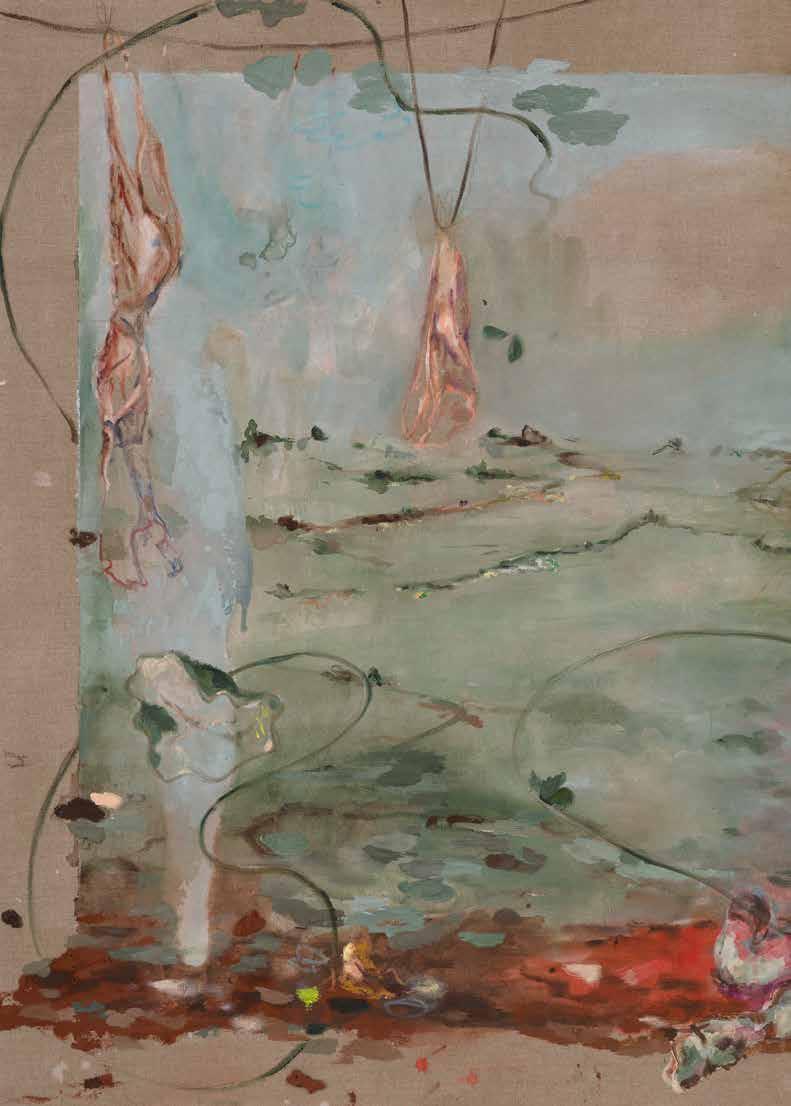
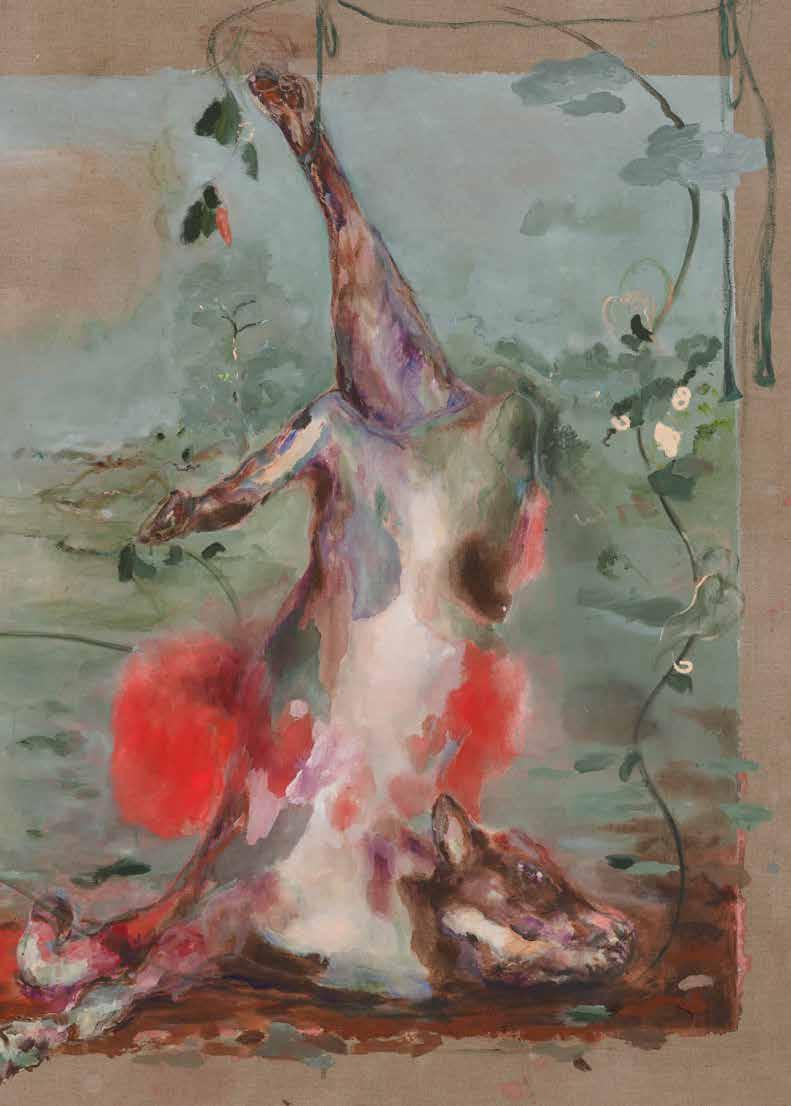
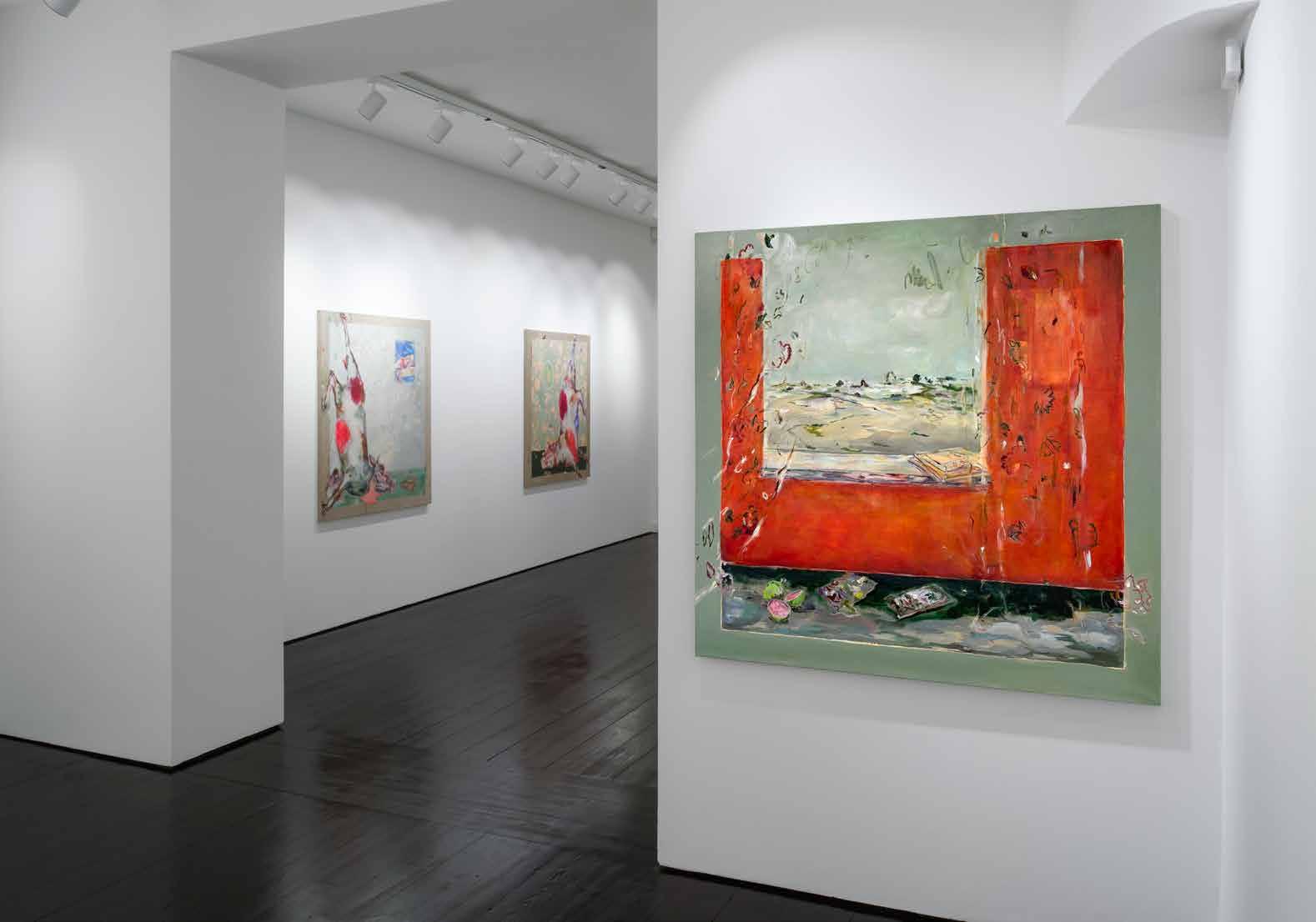
While her male predecessors mostly revealed the rupture of the carcass, and thus employed “the brutal” directly, the experience of brutality in Anna’s carcasses is of a different nature. It is a contemporary painter’s lens on the motif of the dead body, with a nuanced, open meditation on death, on finitude, on vulnerability, on reality.
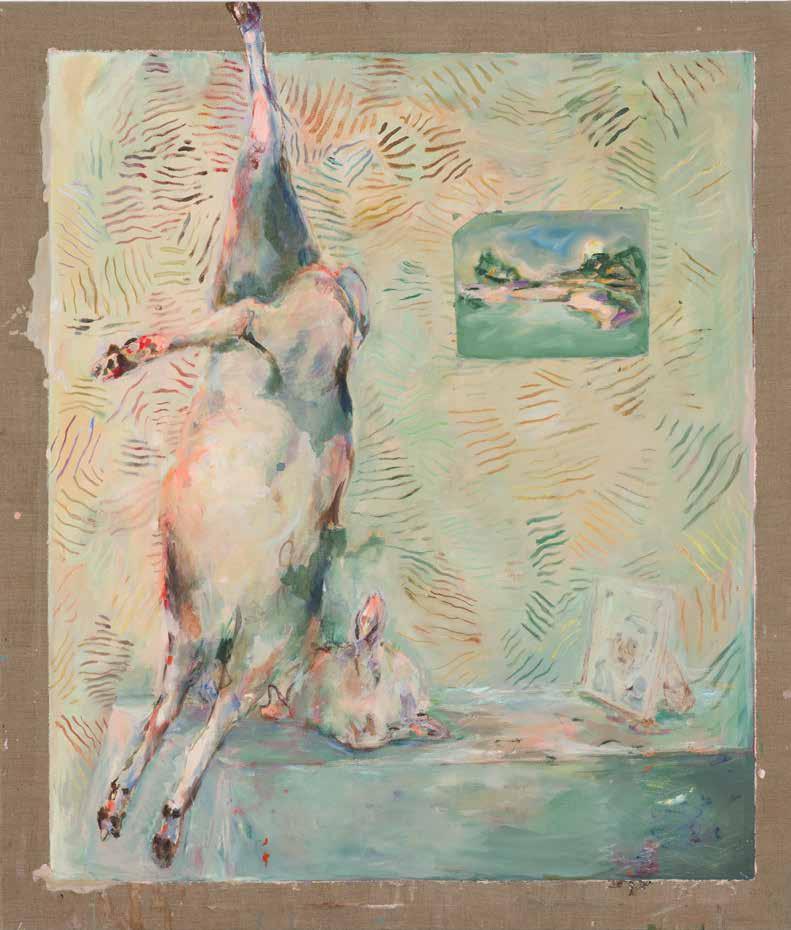
Anna’s paintings hold back as much as they show. I perceived this field of tension between visibility and concealment. Reality, in her works, is not clearly defined. She does not try to explain anything, in order to lecture you how terrible reality is. Instead, she allows ambiguity to remain. The dead animals hang like at the butcher’s, but she gives them grace by propping their heads up with something underneath, decorating them with floral tapestries, and using colors that are the opposite of death. I thought the paradox of death and beauty, the way she balances that fine line, was pretty cool.
Anna has a remarkable authenticity that stems from her natural manner. You immediately understand her warm and – in the best way –weird temperament, and the charm of her slight absent-mindedness. She behaves and shares her thoughts in a completely unfiltered way. There is nothing staged about her. No false interest, no false laughter, no false doubt or suspicion, no false politeness. What she thinks is what she says and does.
Smell of Green, 2025 acrylic and oil on canvas
100 x 90 cm | 39.4 x 35.4"
In the way I experienced her as a person, I quickly understood that her relationship to art is just as straightforward as her character. I realized that art is something natural for her, something that is anchored in her personality. And in my experience, that is always the best attitude for an artist. Art is a 24/7 way of life, an entire life concept. Anyone who thinks that way is already halfway there.
While still in her studio, we agreed on a joint exhibition in Berlin, which was to open on January 13, 2025. We called it Paradise News, after the title of one of the many books lying around in her studio.
One ordinary Monday morning in February, I received a call from Anna. There was nothing in specific, just her joyfully telling me about how she had just listened to Crimson & Clover (1968) by Tommy James &the Shondells on the radio. We agreed: “What a great song!” Why? None other than Rolling Stones legend Keith Richards describes it as one of his favorite songs in his autobiography Life. Their hit Gimme Shelter –a song whose lyrics are astonishingly relevant today – was inspired by the tremolo guitar intro to Crimson & Clover. And after talking a bit about the song, we got inspired and decided to name Anna’s next show with us at our gallery in Basel (which opens on April 16, 2026), Crimson & Clover.
IMAGE?
Caring, 2025
acrylic and oil on canvas
110 x 100 cm | 43.3 x 39.4"
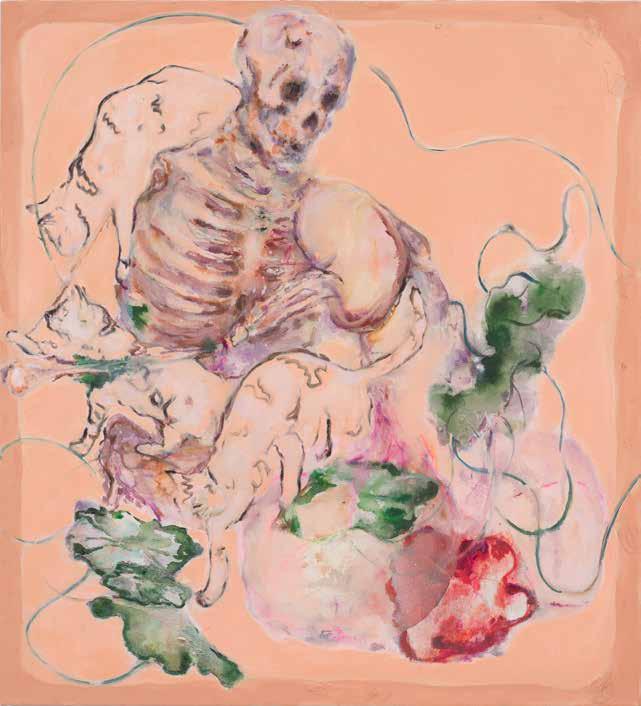
x 100 cm | 43.3 x 39.4"
Caring II, 202x acrylic and oil on canvas
110
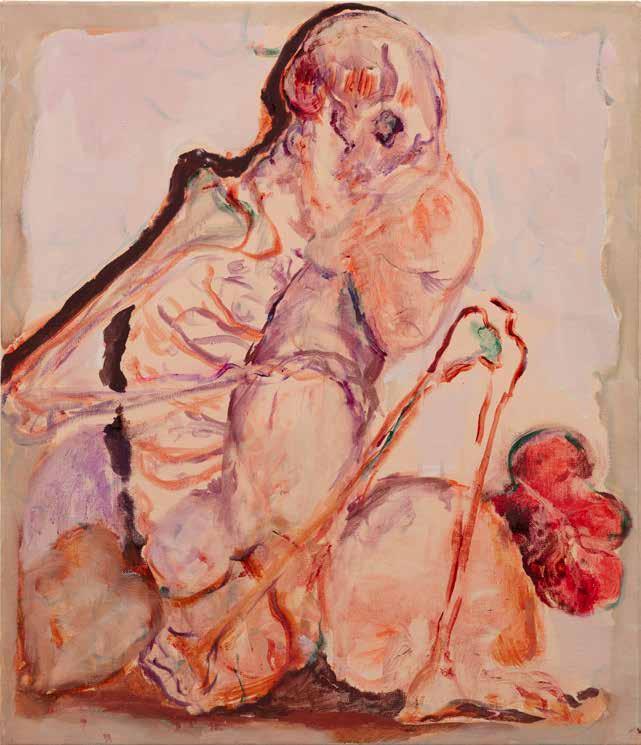
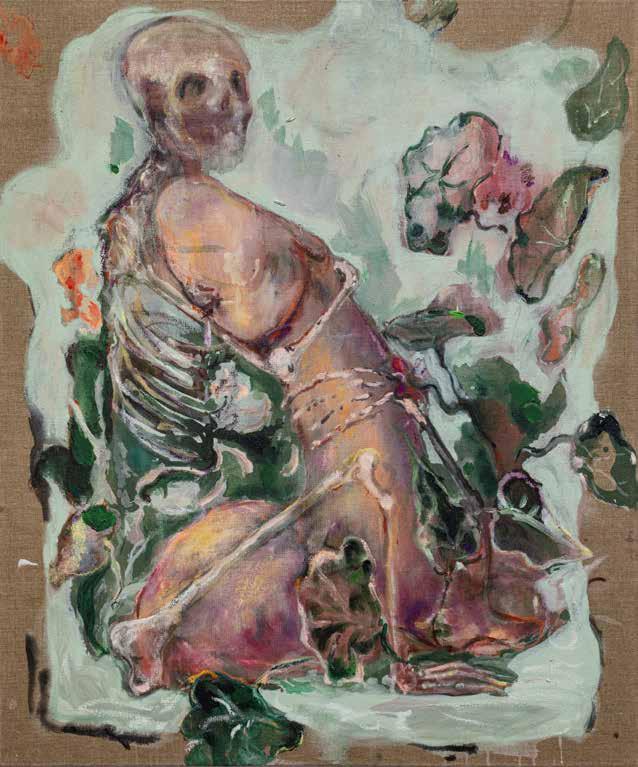
Fraises, Fraises, Fraises, 2024–2025 acrylic and oil on canvas 120 x 100 cm | 47.2 x 39.4"
When It Happened Again, 2025
101.5 x 235 cm | 40 x 92.5"
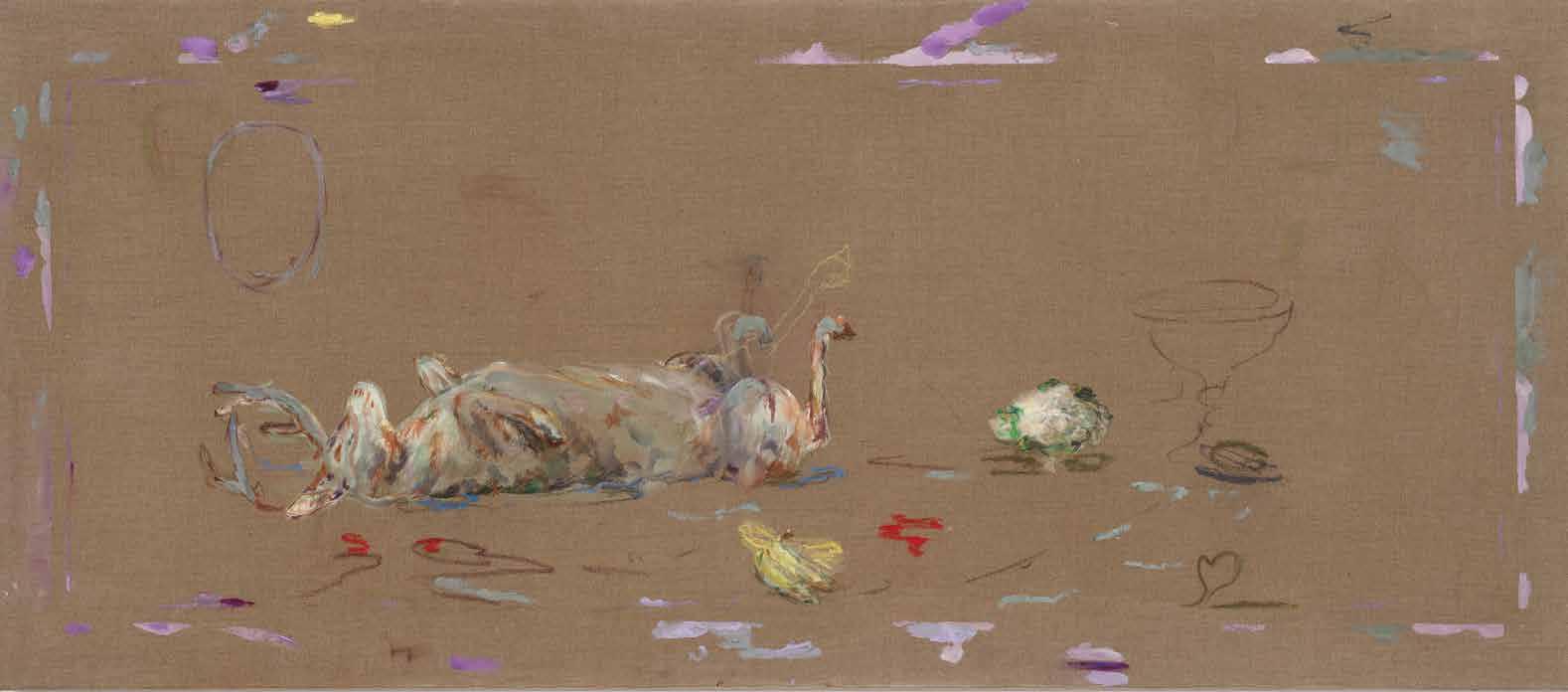
acrylic and oil on canvas
Paradise News, 2025
acrylic and oil on canvas
140 x 120 cm | 55.1 x 47.25"
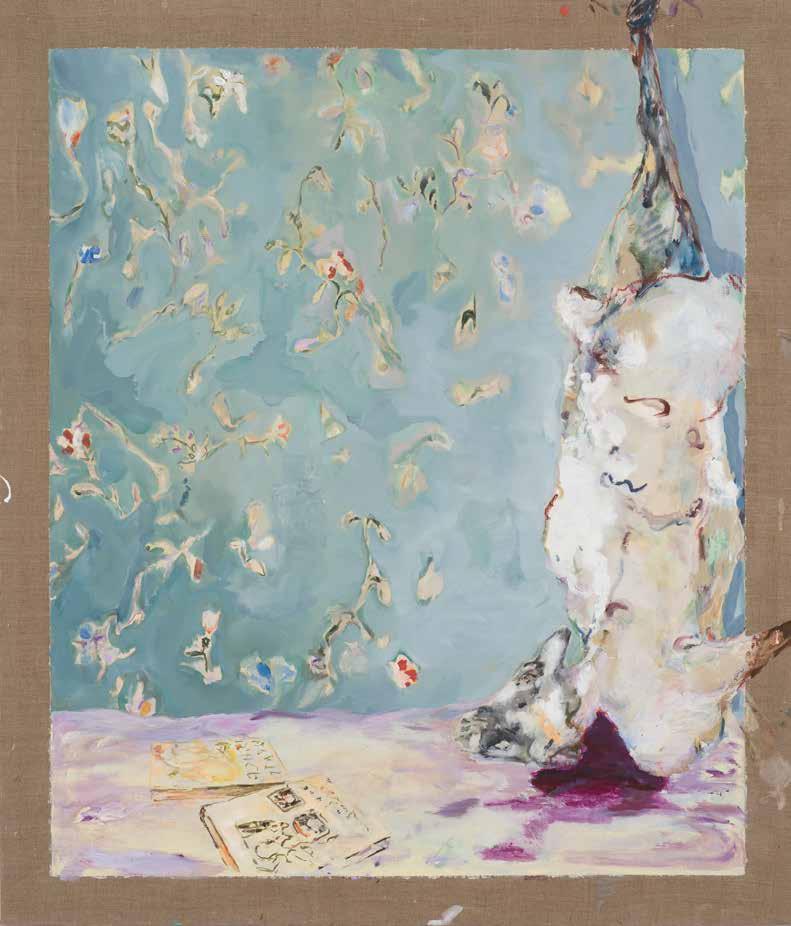
110 x 120 cm | 43.3 x 47.25"
Guilty, 2025 oil on canvas
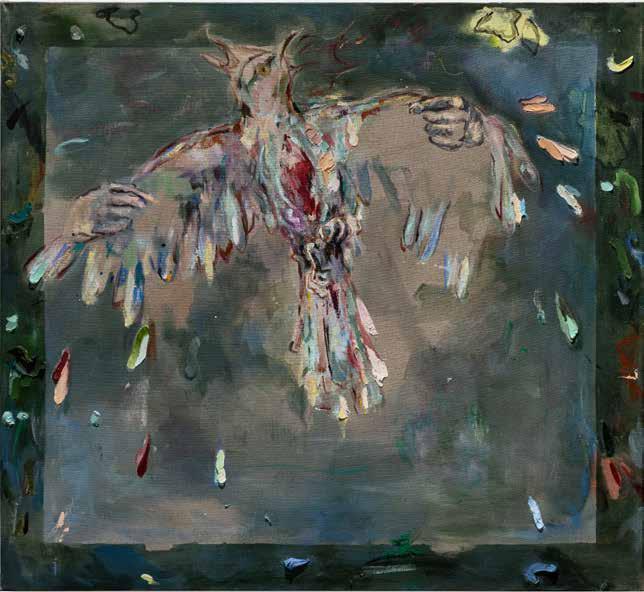
Comme si je le voyais pour la première fois, 2024–2025 oil on canvas
130 x 130 cm | 51.2 x 51.2"
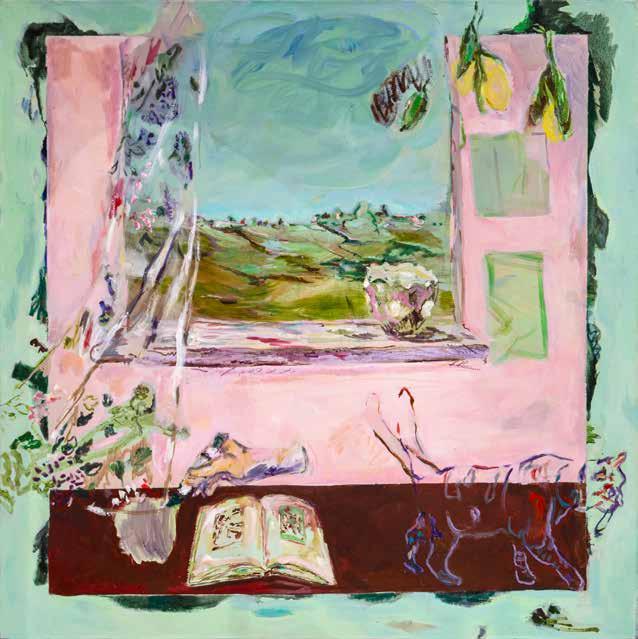
Simply Another Sunday Morning, 2025 acrylic and oil on canvas 150 x 150 cm | 59 x 59"
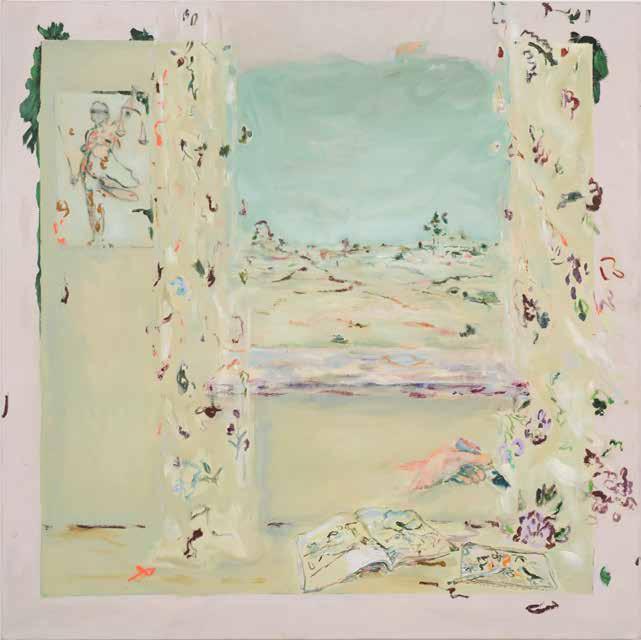
Ombre de boomerang, 2024
acrylic and oil on canvas
140 x 120 cm | 55.1 x 47.25"
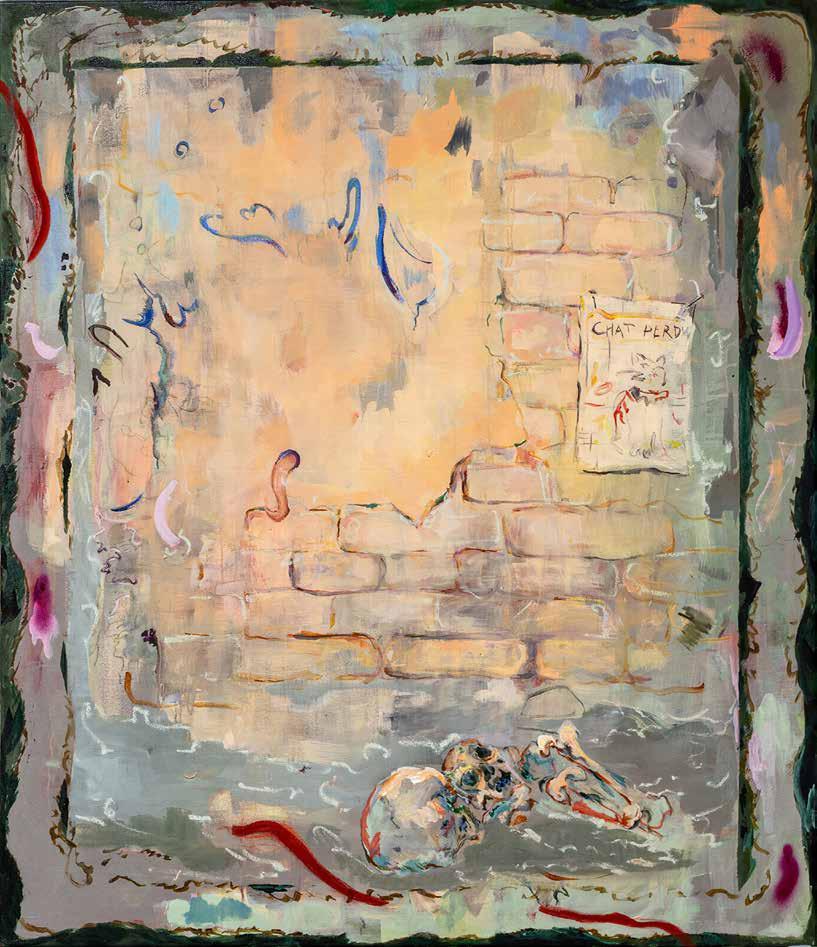
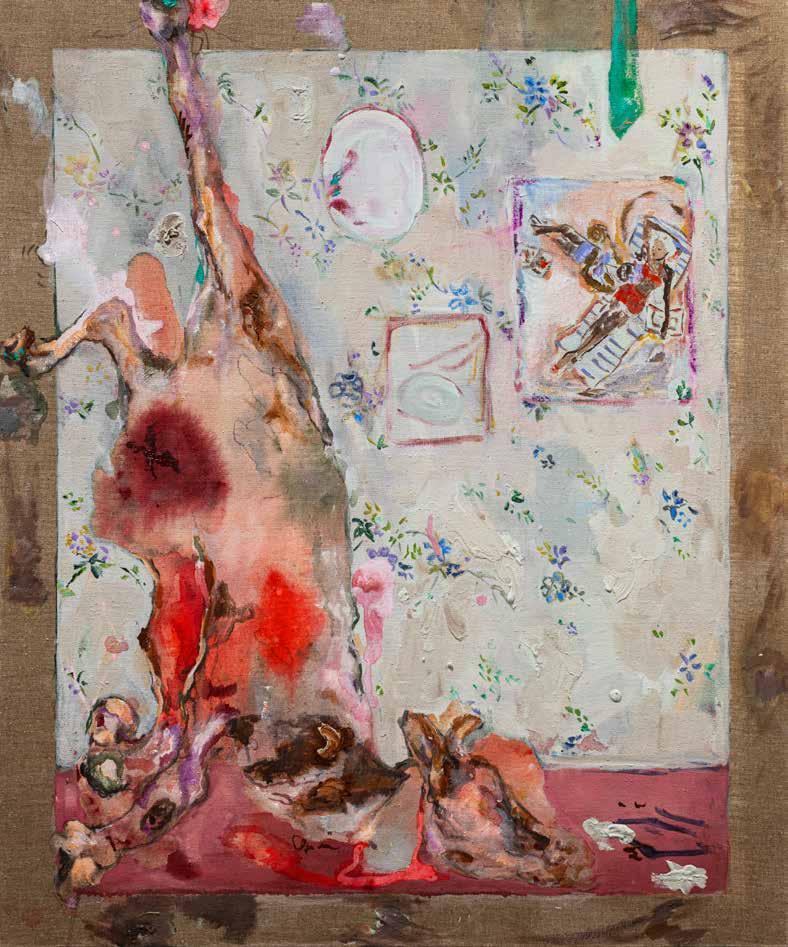
Irréprochable, 2024–2025 acrylic and oil on canvas 120 x 100 cm | 47.25 x 39.4"
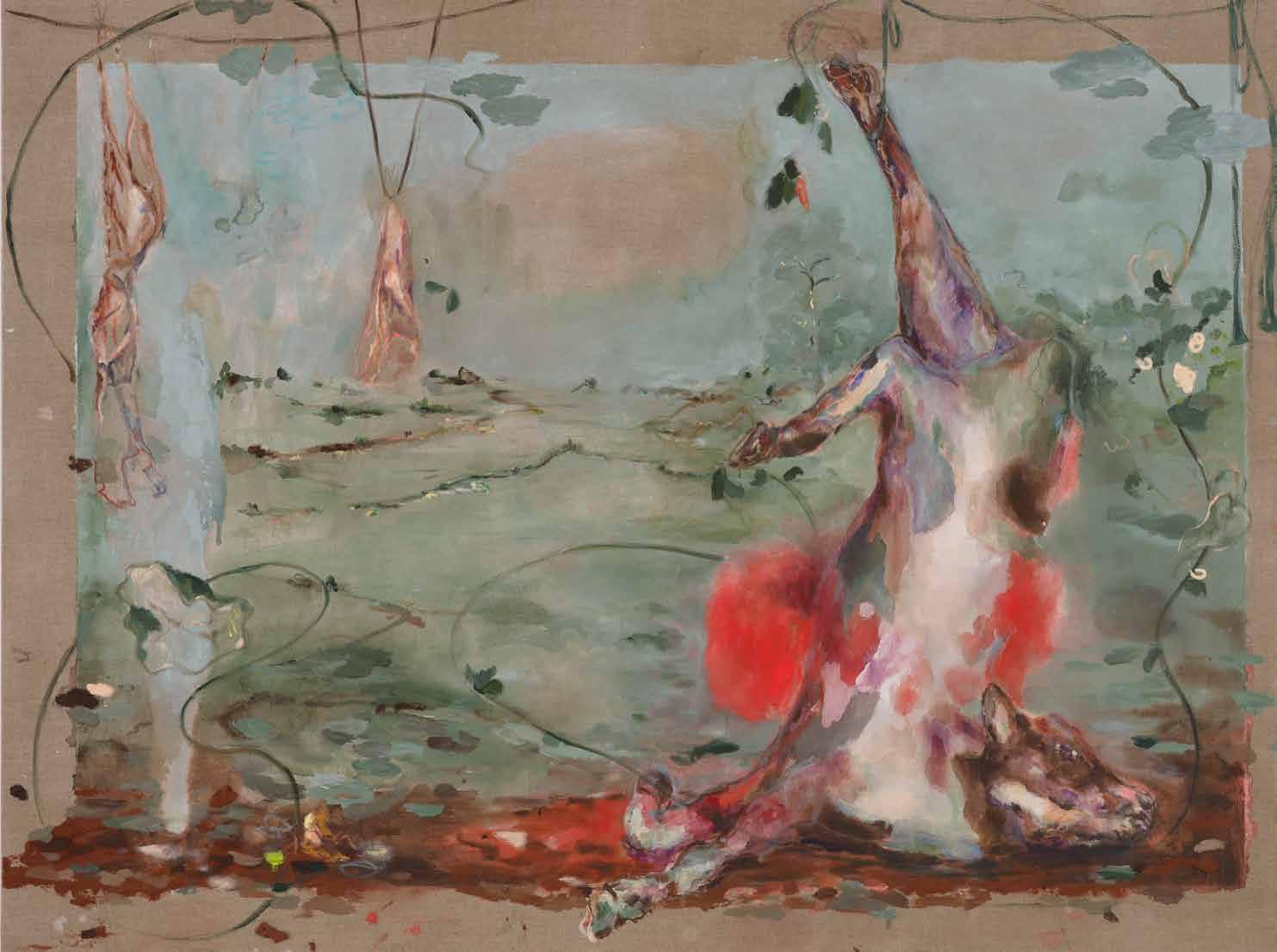
The Milk Train Doesn't Stop Here Anymore, 2025 , acrylic and oil on canvas, 155 x 210 cm | 61 x 82.7"
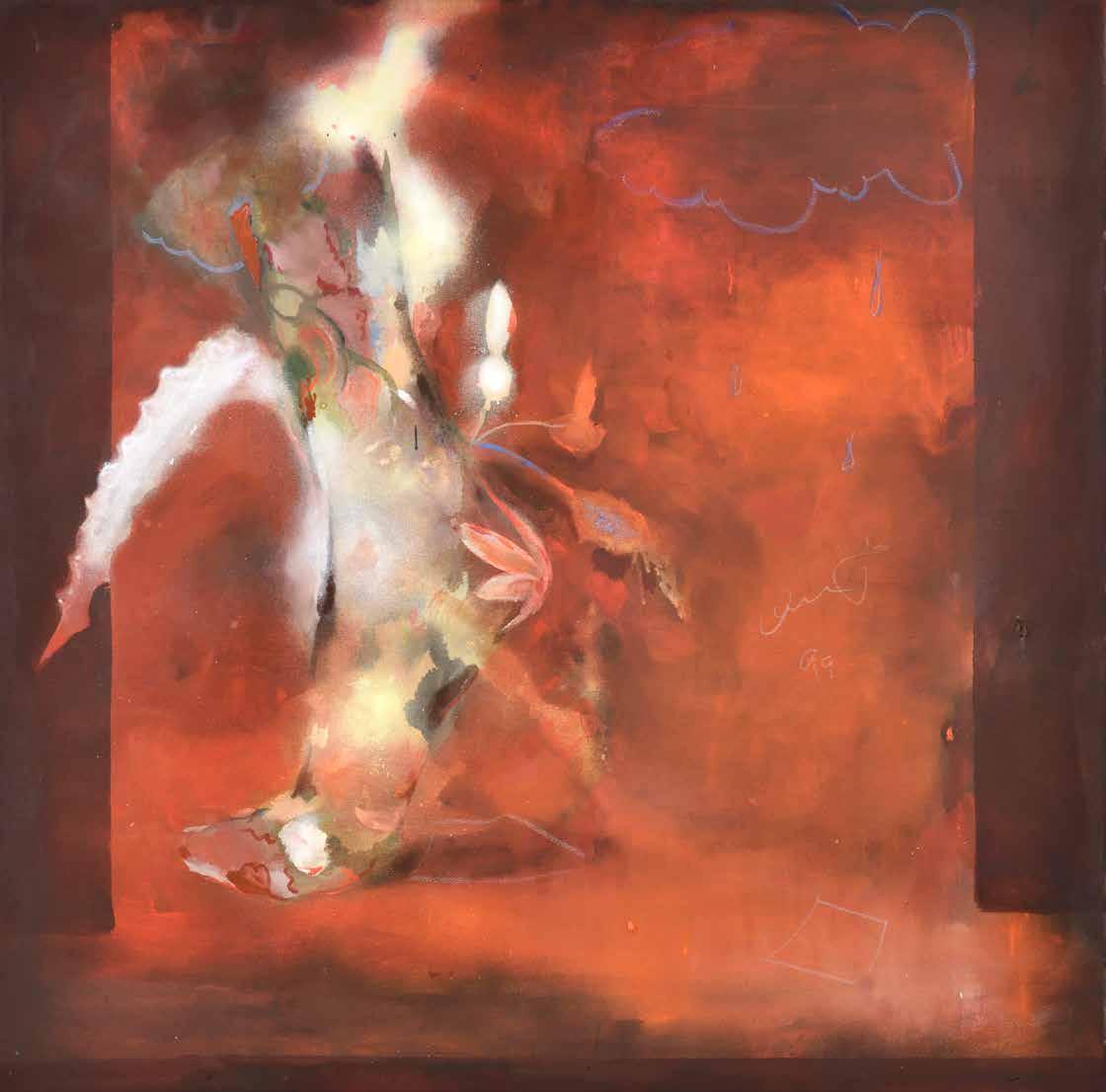
Voiles, 2023
acrylic and oil on canvas
120 x 120 cm | 47.25 x 47.25"
Les feux d'été (ex nihilo, nihili fit), 2023
acrylic and oil on canvas
130 x 120 cm | 51,2 x 47.25"
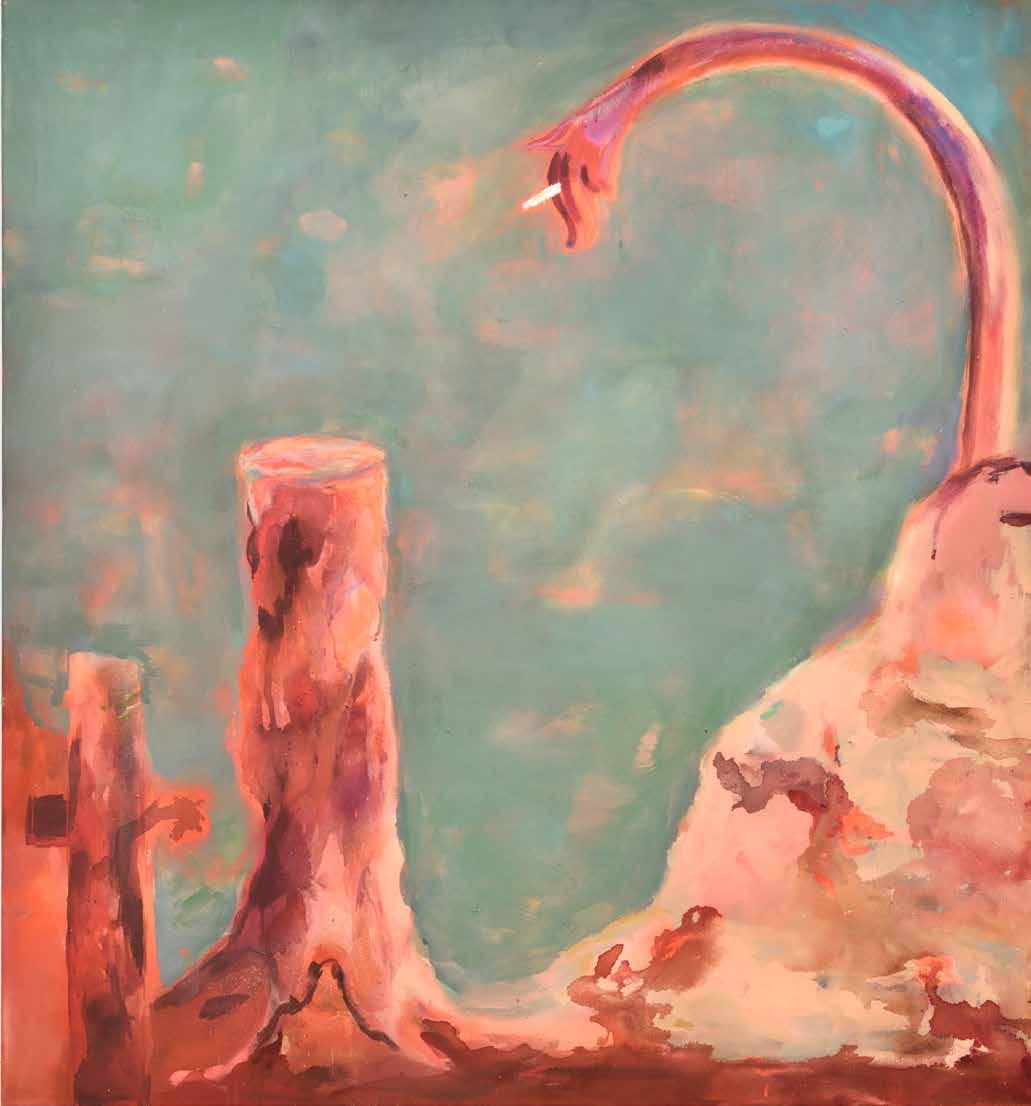
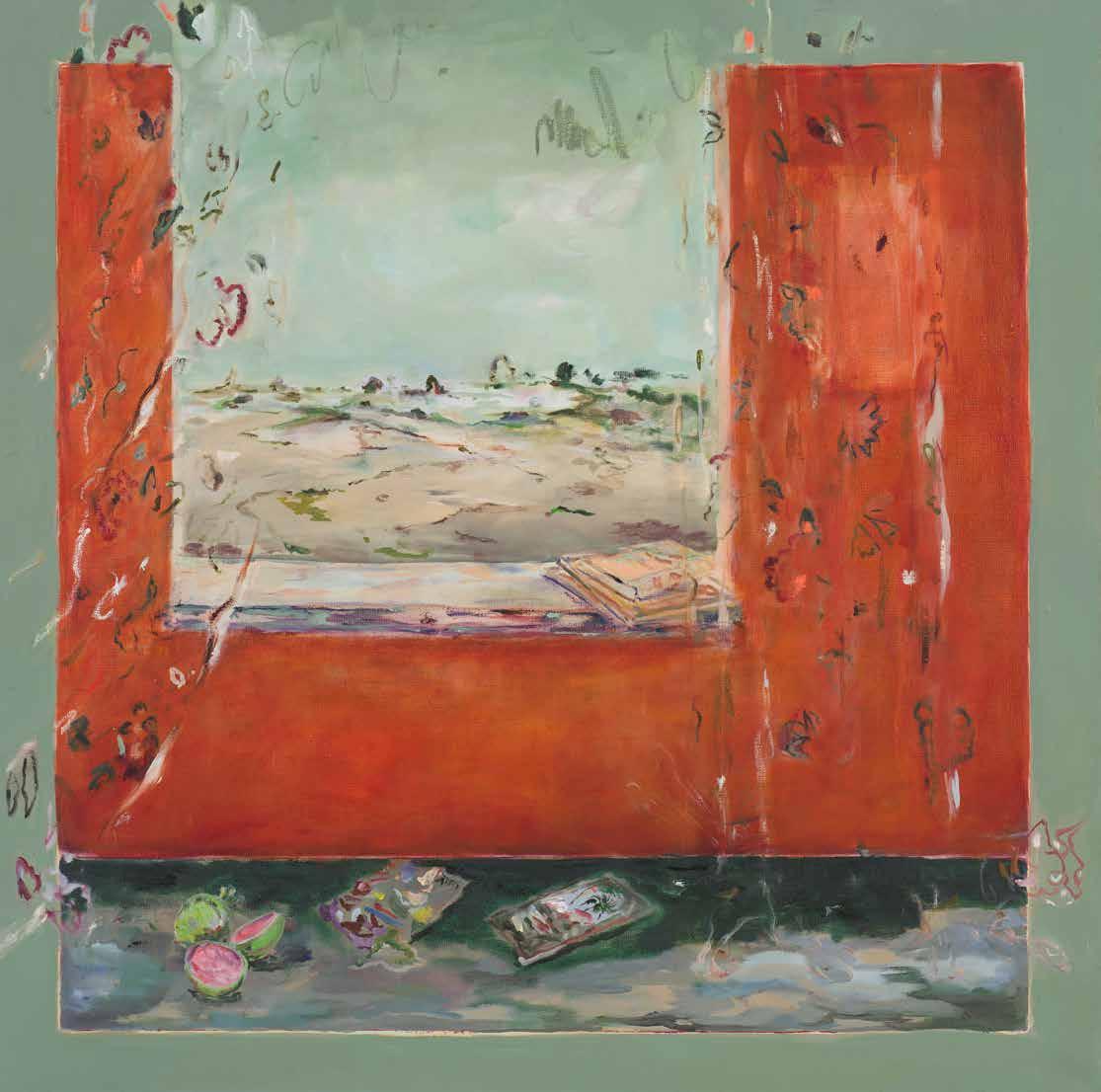
Getting the Wind Back, 2025 acrylic and oil on canvas 140 x 140 cm | 55.2 x 55.2"
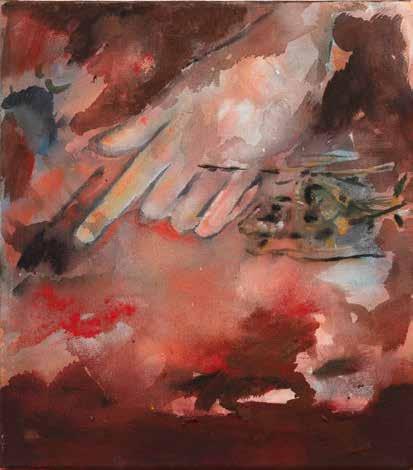
45 x 40 cm | 17.7 x 15.7"
C’est trop, 2023 oil on canvas
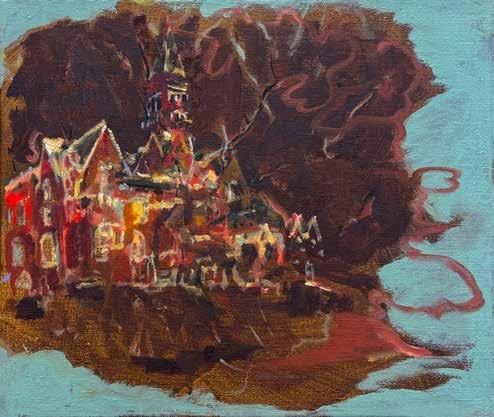
St. Coletta Institution, Jefferson, 2025 oil
40 x 47 cm | 15.7 x 18.5"
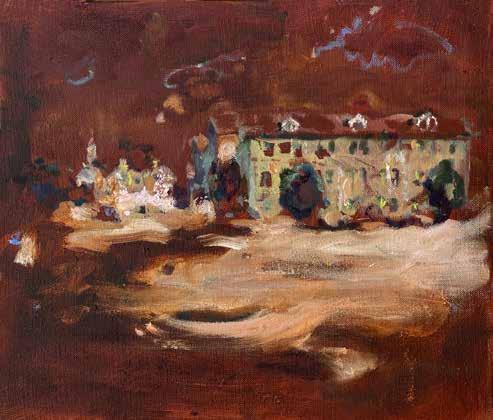
on canvas
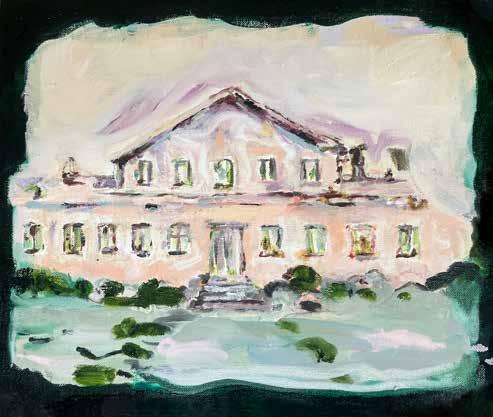
Danvers State Hospital, 2025 oil on canvas
40 x 47 cm | 15.7 x 18.5"
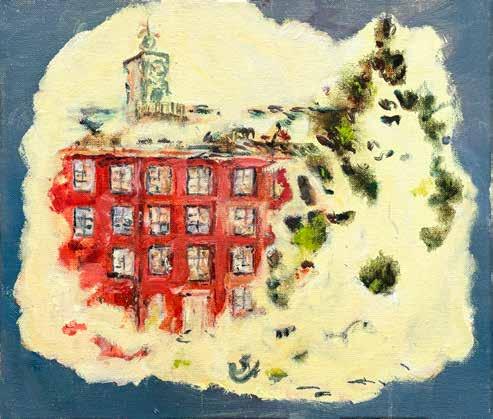
The Hospital Island Seili, 2025 oil on canvas
40 x 47 cm | 15.7 x 18.5"
Beckomberga Hospital, 2025 oil on canvas
40 x 47 cm | 15.7 x 18.5"
Once Again, 2026
100 x 190 cm | 39.4 x 74.8"
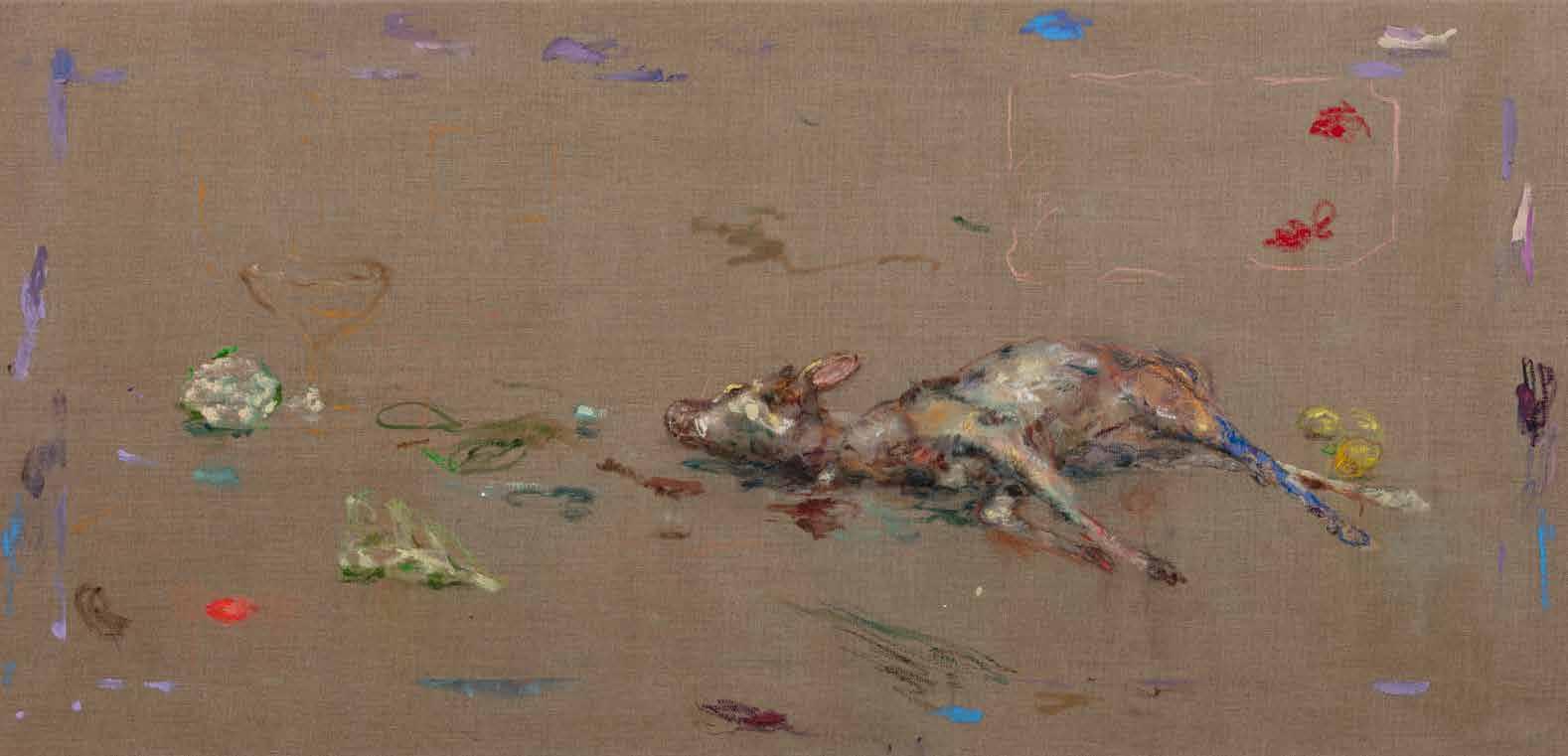
acrylic and oil on canvas
Not Even Past and a Plan
(Burnt and Raw Umbra with Caput Mortum), 2019
acrylic, oil and pastel on canvas
130 x 120 cm | 51.2 x 47.25"
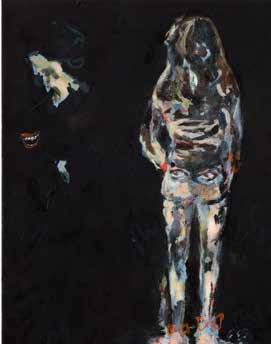
Not Even Past (Black), 2019 oil on canvas
50 x 43 cm | 19.7 x 16.9"
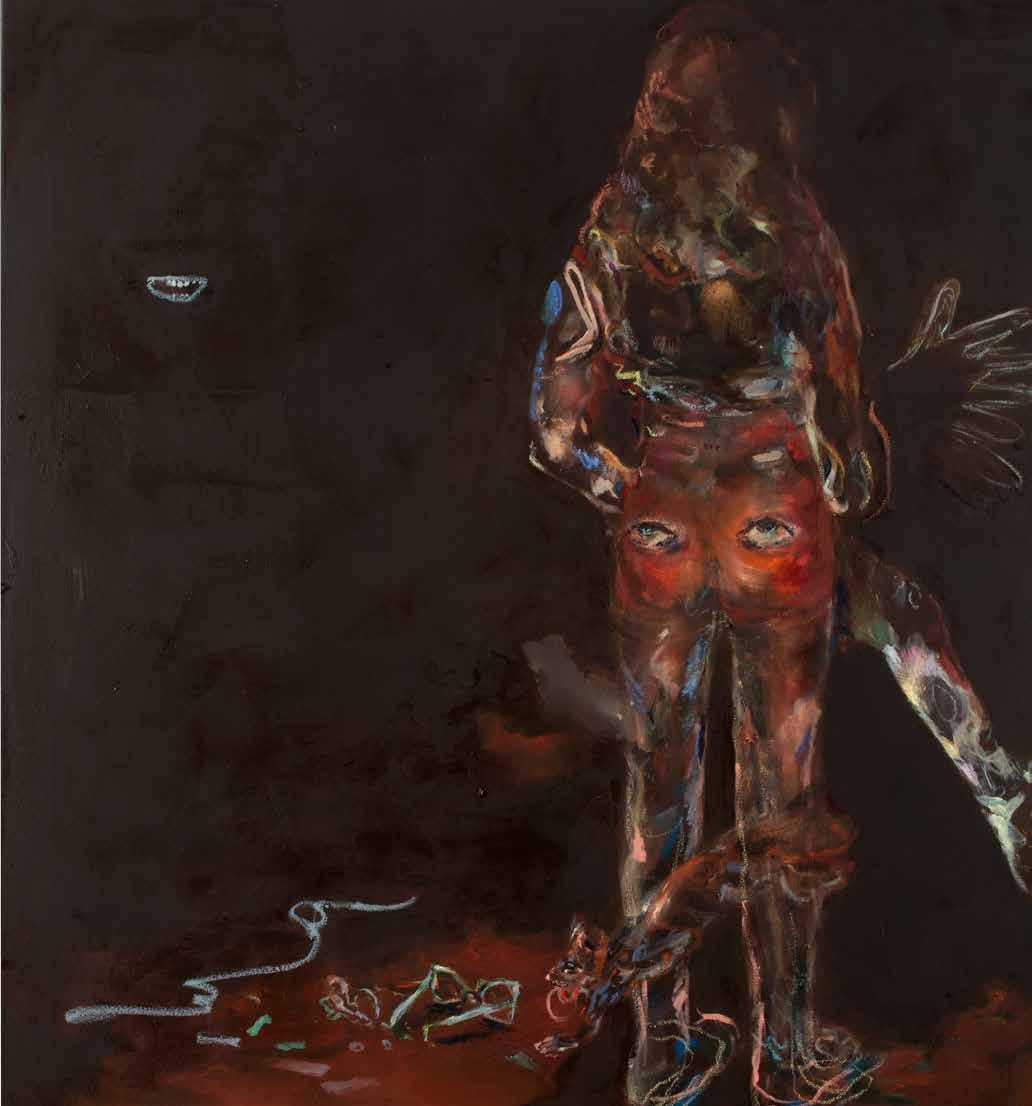
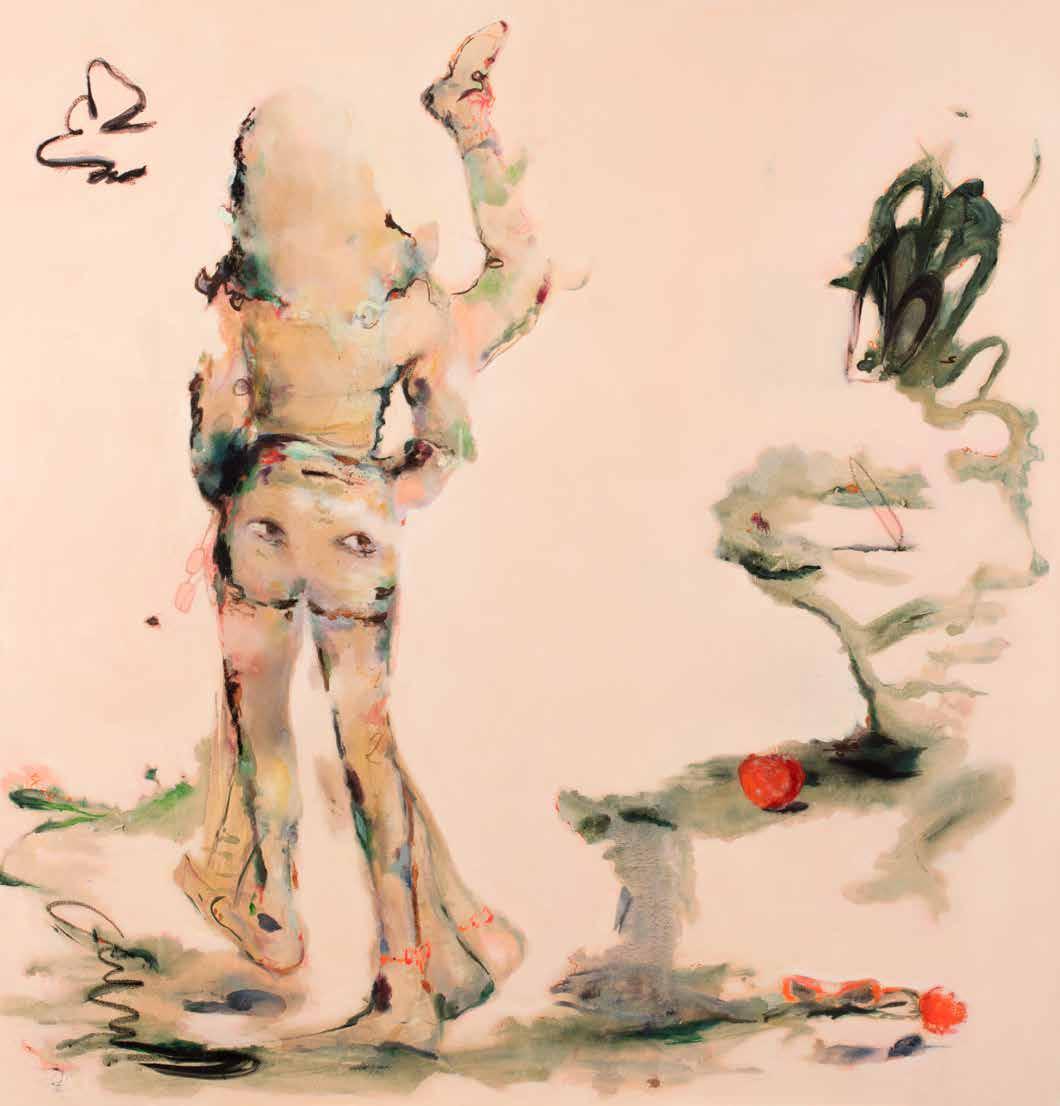
Not Even Past (Incarnat with Golden Shell), 2020 acrylic and oil on canvas 160 x 150 cm | 63 x 59"
Once Again (with Carrots), 2026, acrylic and oil on canvas, 100 x 160 cm | 39.4 x 63"
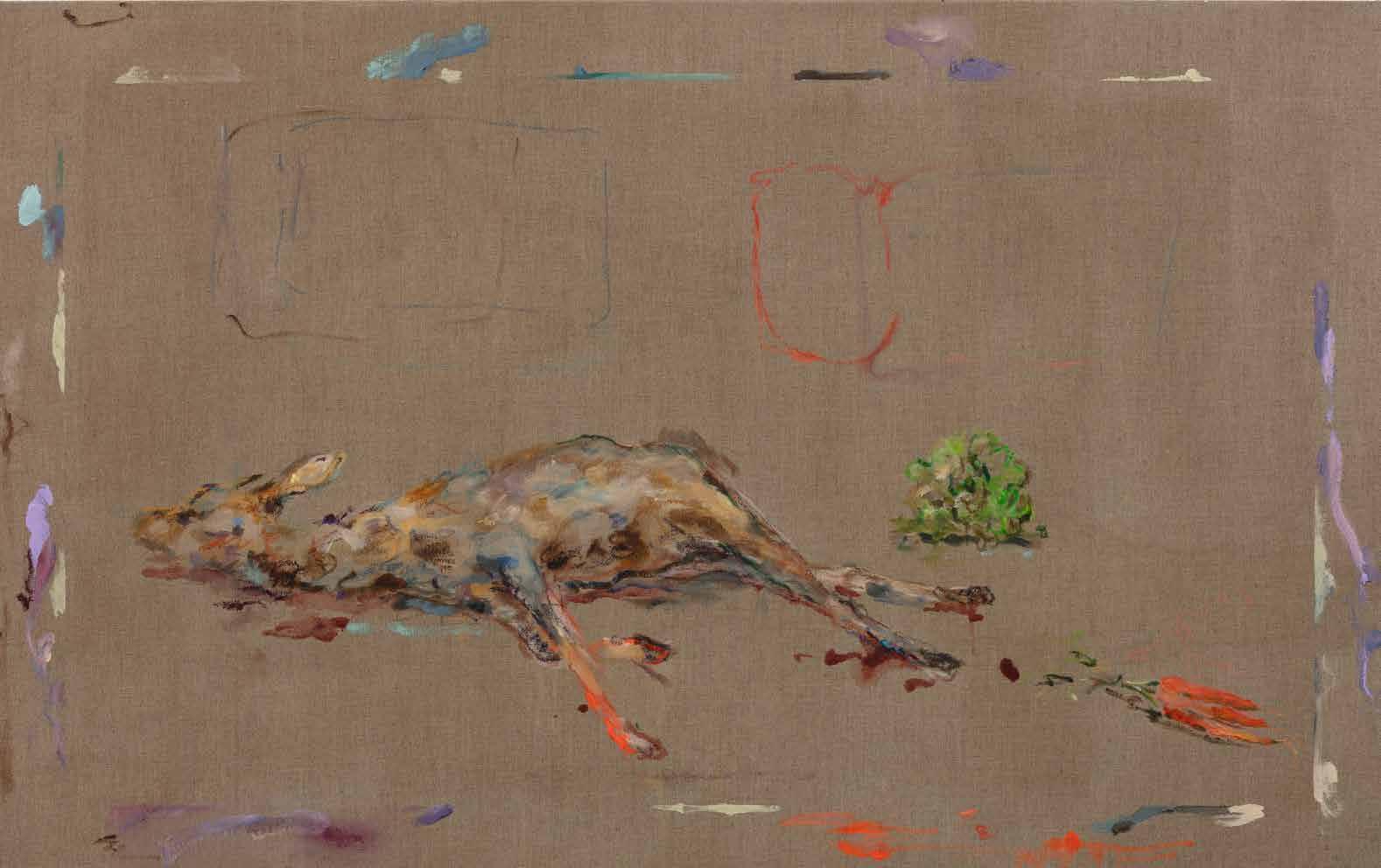
Ein Sternbild des Weggelassenen, 2025
140 x 140 cm | 55 x 55"
acrylic and oil on canvas
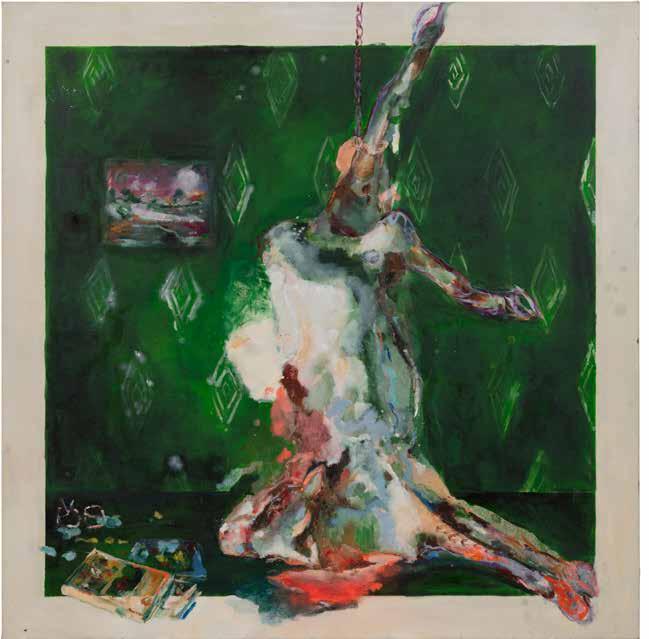
INTERVIEW WITH ANNA TUORI
BY ANAËL PIGEAT
We met a few years ago through our shared interest in Suzanne Valadon, who has inspired several of your paintings, such as Never Seen a Bag Exploding (2019–20). Valadon’s L’Acrobate, ou La Roue (1916) – clumsy, disconcerted, yet full of energy, legs akimbo, in her red outfit –made a particular impression on you. How do you engage with the work of painters who came before you?
As a painter, grasping and absorbing the traditions of painting can grant you a certain degree of freedom. She is an independent artist. You can get that feeling also in her painting La Chambre bleue (1923), which depicts a woman lying in bed, in pyjamas, a cigarette between her lips.
Was art important to you as a child?
I was born in Helsinki. My mother, who worked at the university library, was interested in art. She often took me to see exhibitions. We went to Stockholm almost every month. We always went to the Moderna Museet: when I was very young, I was particularly fond of Rauschenberg’s goat, Monogram (1955–59), and Mud Muse (1968–71). My mother raised me alone, and she often worked weekends, so I spent a lot of time on my own, drawing and painting. At the “Ars ‘83” exhibition in 1983, I discovered a work Avaar (1976) by James Turrell that fascinated me. That was when I realized that art is something that cannot be explained.
Did you always know that you wanted to become an artist?
When I was 7, I started oil painting, in a class taught by artists. I soon got used to expressing myself that way. But I thought I’d become a magician, or the president! In high school, I was particularly fond of cinema, but freeze frames and film analysis destroyed the magic of my experience: I preferred to remain a spectator. I spent a year at a small school for artists, then enrolled at the Helsinki Academy of Fine Arts. Painting immediately became my focus.
What does the concept of the uncanny mean to you?
The uncanny is a huge cliché in art, and yet it perfectly describes a fundamental feeling I know well, when the reassuring and the familiar tip over into the strange and the unsettling. I see it everywhere, all the time. I’ve been experiencing it my whole life. On the other hand, Das unheimliche is fast becoming das heimliche. I feel like things are changing so quickly and in such an incomprehensible way that we might need a different concept.
Have you looked closely at Cy Twombly’s work? Whose work were you looking at when you first started out?
Like many painters I went through the history of art. And I still do that. It is hard to say where I first started, because I have been looking at art all my life. I looked at Cy Twombly’s work of course. Particularly his use of the sign, but also of negative space. Early in my studies, Sigmar Polke, Joan Snyder, and Martin Kippenberger were also important, as were Wolfgang Tillmans and Gillian Wearing, to name just a few. I remember the liberating sensation I felt at a Tillmans exhibition, looking at an anus against a blue sky; his ability to use such an image with such joy attested to the non-hierarchical nature of perception and experience that we’ve been discussing.
You’ve also taken a keen interest in works by female artists. What have you learned from them?
Later, in the 1990s, discovering contemporary painters like Karen Kilimnik and Laura Owens was an important turning point. Their work blended Post-Expressionism, abstraction, and -conceptualism. It also shed light on a bias that was already apparent: when a painting seemed associated with the feminine, it could be devalued – unless those same elements were used by a man. Magazines like Parkett were beginning to feature images that broke away from this macho tradition. For example, Elizabeth Peyton’s loose brushstrokes were almost vulgar in their elegance – like a defiant middle finger directed at the old Expressionists, whom I nevertheless admire. For many of us, this opened up space to move between subjects and modes of representation. Even though it
is extremely artificial to speak separately of female and male artists, I could also mention Lee Krasner, Georgia O’Keeffe and Lee Lozano. And my respect to the contemporary ones like Dana Shutz, Ella Kruglyanskaya and Maja Ruznic. I could continue this with my Finnish colleagues of course. What they have in common is the ability to connect their own worlds to the formal language of their paintings.
What about Peter Doig – his use of color and light, the political dimension that emerges in his images of Trinidad, and his relationship to carnival masks?
Of course – he influenced the entire generation of artists who came of age at the turn of the millennium. He is undoubtedly one of those painters who have mastered all the classical elements of painting – light, color, surface –while incorporating elements drawn from their own experience and environment. He knows how to paint.
Expressive painting had become a sort of cliché and a joke, where the competition was about who could swing the biggest brush the fastest. You could always go bigger, with more power and faster brushstrokes. Think of the artist played by Nick Nolte in Martin Scorsese’s part of New York Stories (1989) – you immediately recognize the stereotype. So he also transformed tradition. He made it possible to be openly romantic, sensitive, and ironic, while still being powerful.
Did your time at the École Nationale Supérieure des Beaux-Arts in Paris, in 1999–2000, change the way you paint?
As a student in Paris I saw lots of exhibitions; the one dedicated to Vuillard continues to influence my work to this day. I spent a year in Joël Kermarrec’s studio. I chose a multimedia program because I didn’t want to limit myself to painting. We talked a lot about the subjects of our paintings, but very little about painting itself, which was the opposite of my experience in Helsinki, where the brushstroke mattered more than the subject matter. In France, people think that artists should communicate, whereas in Helsinki, the prevailing view was that artists are beings of emotion rather than reason. I tried to find a synthesis between these two positions. I approach colour intuitively. It’s a dialogue that’s hard to explain. In the painting process, I usually start with color, without any symbolic dimension – I avoid sentences with what I’m doing so that I won´t start to illustrate the sentences. People aren’t very aware of colors on their daily lives. So it’s the same in painting. They are the essentials. Some areas simply have to be red because they can’t be yellow.
Some of your paintings reveal a tension between abstraction and figuration. In the large triptych Conspiring Smile with Spring Light (2020), the presence of a feather, an animal, or a leaf draws us back to figuration, but the eye is primarily drawn to the color. Are you tempted by abstraction?
This painting comes from an exhibition in galerie Anhava titled “Window” 2020. What draws me to painting is the relationship between surface and space, between the material and the concrete on the one hand, and illusion and the imagination on the other… I wanted to work with the rhythm of the composition. The large dimensions of the canvas gave me the opportunity to create such a space.
What is your relationship to abstraction, in the end?
For me, painting is never either abstract or figurative. Painting has to function as a composition of forms and colors – meaning, as an abstraction. Some call it post-abstraction. The return to the word, or to figuration, is only one aspect of it. The content is the sum of everything: colored surfaces, patterns, traces, and composition.
But you never became an abstract painter. In the painting Claus and Lucas (2024), we find that sense of forms slipping away. Most of the painting is obscured by a screen, like a projection surface. But a horse and a dog peek out from behind a wall. And here and there we can make out a profile, a banana, a face, some writing, a flying leaf… What does a canvas like this represent to you?
I consider myself an abstract painter
The painting Lucas et Klaus (Lettres volées) (2023) depicts a surface suggesting the presence of something simultaneously behind and in front of it – perhaps nothing more than brown paint. Here it’s fairly obvious – you see a horse – but it could be something else. I think there is always a landscape behind the walls
You’ve made a series of paintings of mental asylums: why did you choose this subject?
I remember, as a child, admiring those buildings; When realizing that people were closed inside, hidden from the public, it changed my perception of them. The knowledge changes the way we see things. We often imagine things just from the surface: the inside only seeing the outside.
Could you say a few words about your recent drawings, with their black backgrounds and muted colors, since you don’t draw very often? They seem to be works in their own right rather than preparatory sketches.
I do draw. And, like you said my drawings are works in their own right. It is possible to express different kind of fragility or strength. I try to get the flow when nothing is superfluous. Since drawing is based on a line. It’s a completely different approach from painting.
These drawings strike a particularly introspective tone. What do they mean to you? Why make these today?
I think it’s more possible for me to use narrative fragments in my drawings. They contain fears, possibilities, and hopes.
In recent works, such as Noble and Tragic, Lay Your Head Down, and Off On an Adventure (all 2025), you present memento mori with a darker tone than the works we discussed earlier. Why these variations on such a theme?
I wanted to repeat the subject to reveal different nuances. It was also a way of giving myself the serenity and concentration necessary for painting. I sought to create a contrast between a disturbing theme and a warm, domestic atmosphere. The violence of the scene is aestheticized, which strikes me as far harsher than a simple image of violence. It’s a way of seeing and looking at the current world – so terrible, and one I don’t understand.
What is your relationship with nature? Is it important to you?
Nature is so vast. It can give a painting an organic rhythm. It can serve as a foundation for form. It can reflect a person. To say that it is the foundation of everything is an understatement. I won’t say any more about nature’s current condition, because it’s too obvious and we’re all aware of it. And when it comes to the animal figures in my paintings, they are associated with the victim’s innocence and often with anonymity.
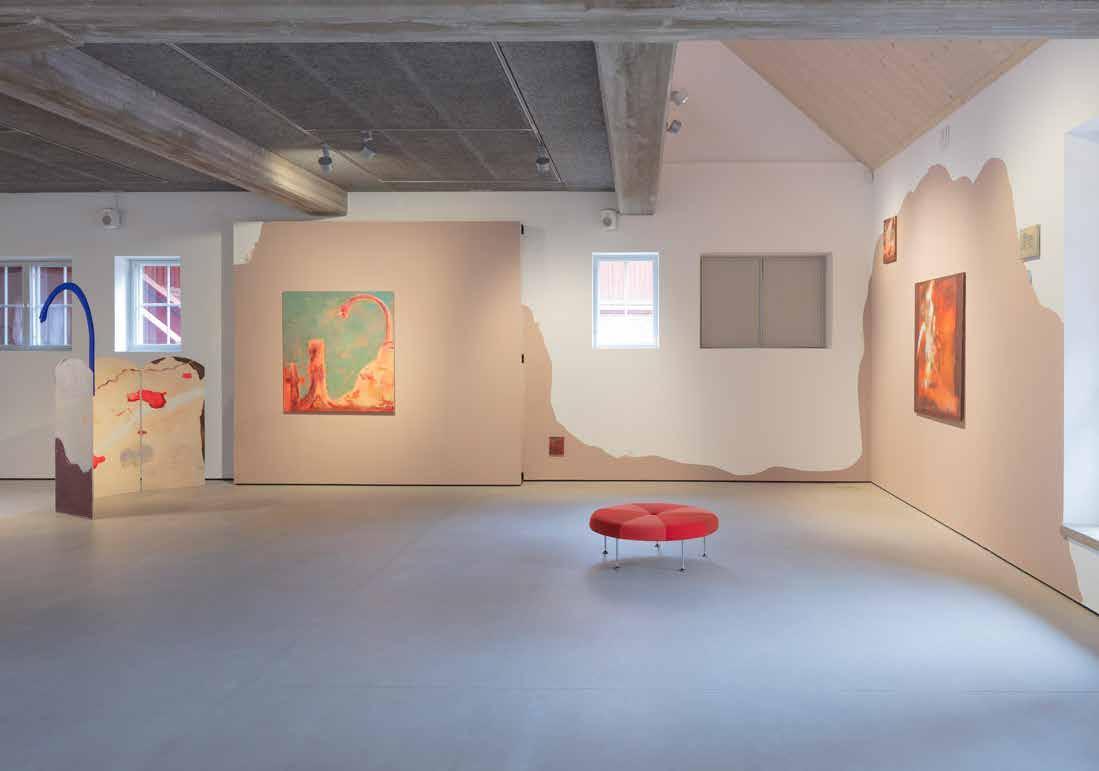
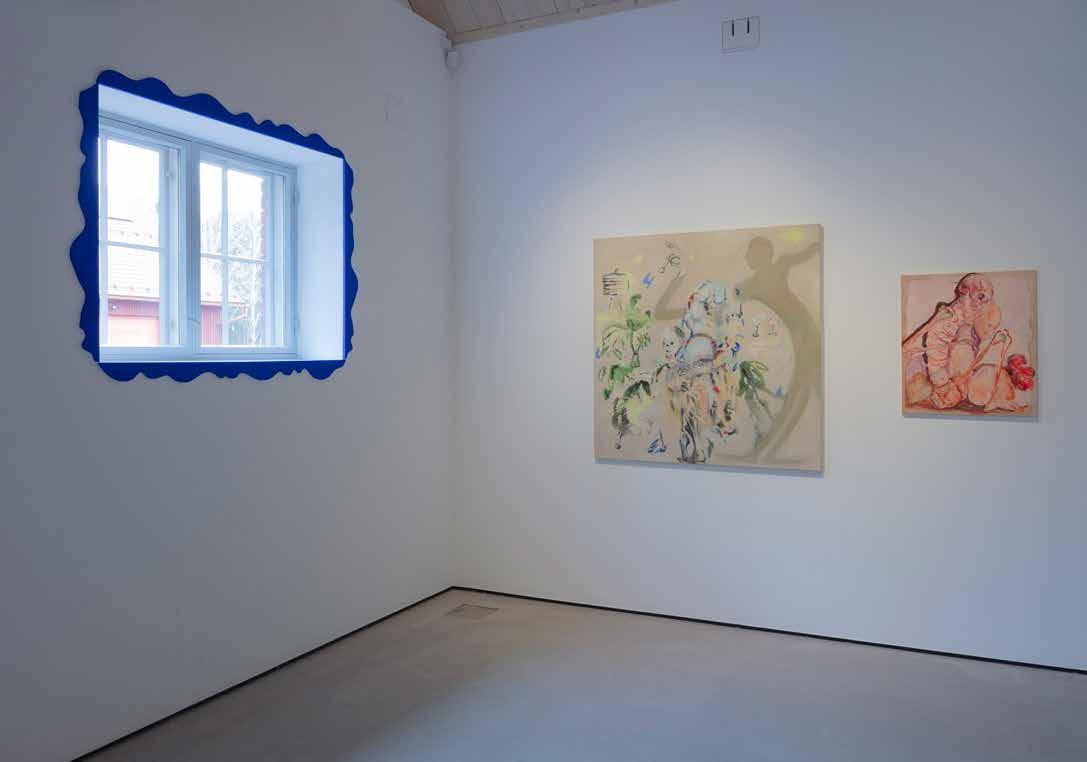
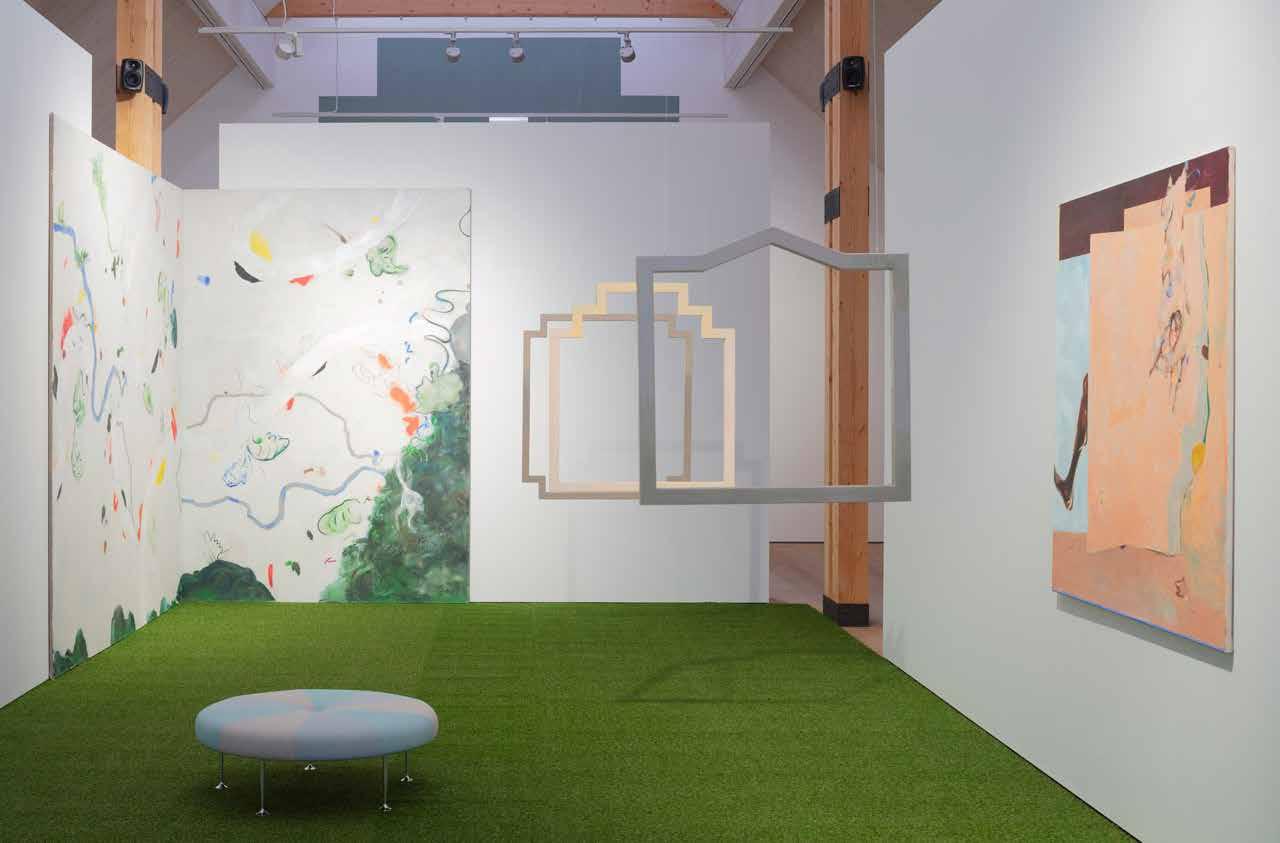
Some of your paintings seem to step off the canvas and become almost like installations. Is that an approach you’d like to continue exploring?
Yes, I’ll continue doing that. It comes naturally to me when I start planning certain exhibitions. I start creating a dialogue between the paintings and the space.
How do you finish a painting?
A painting is finished when nothing is missing and nothing distracts the viewer. That’s very clear to me.
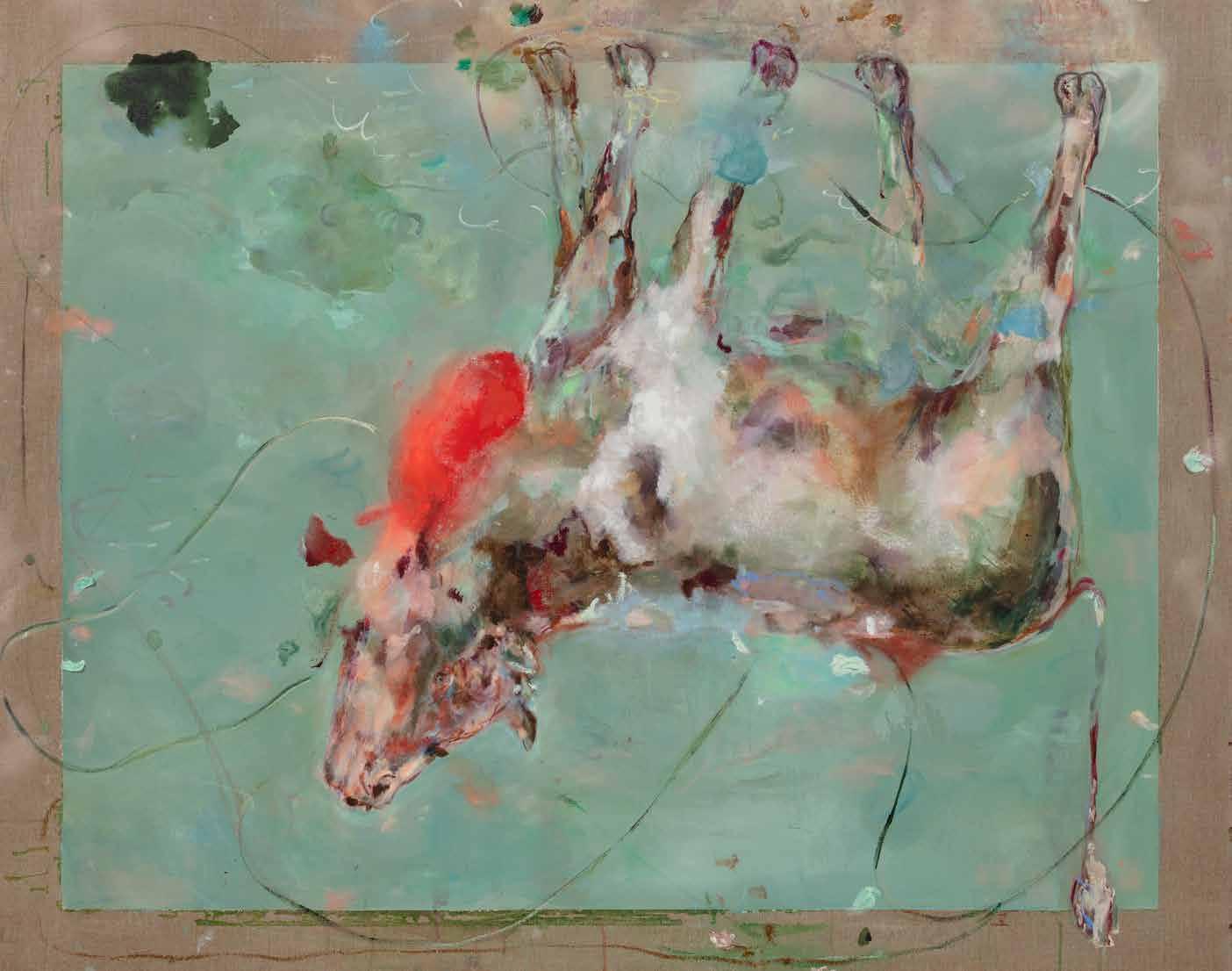
The Wave Will Fling Again, 2025 , acrylic and oil on canvas, 155 x 210 cm | 61 x 82.7"
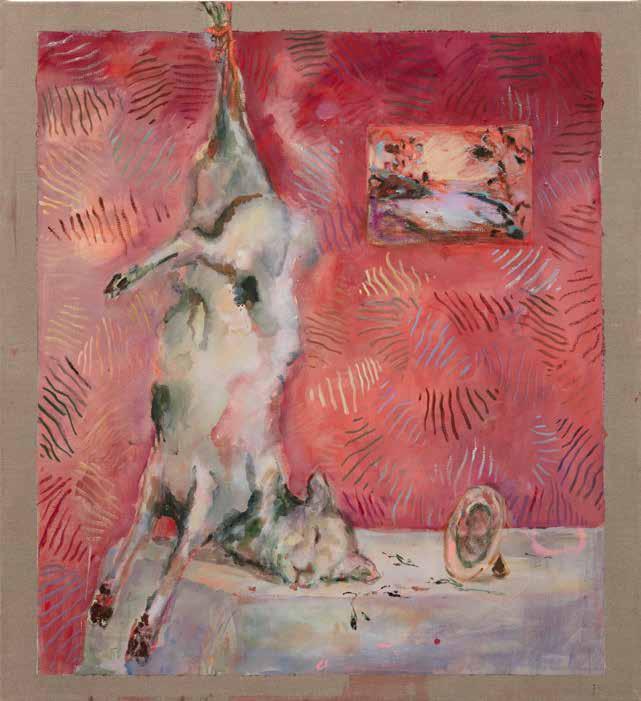
Spendour in the Grass, 2025 acrylic and oil on canvas
110 x 120 cm | 43.3 x 47.2"
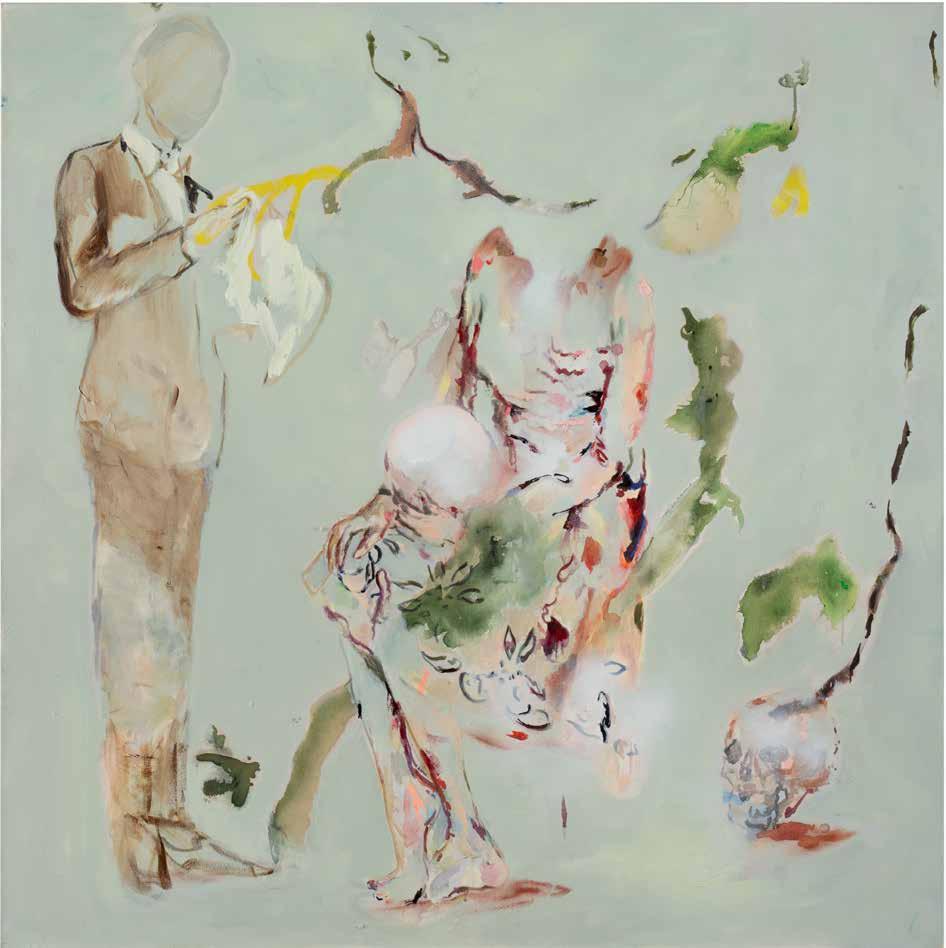
Herbarium (with a serviette), 2024 oil on canvas
130 x 130 cm | 51.2 x 51.2"
PUDDING
BY KAI ALHANEN AND ANNA TUORI
I don’t want to ask how you would describe your own painting style. Instead, I’m curious whether you have any “guidelines,” “principles,” or “standards” that guide your painting? There probably are. Of course, I don’t always think about them very consciously, because I make choices by analyzing what I see – that is, what I do –during the painting process. It’s often about looking at how tensions arise.
If I paint everywhere with the same intensity, the relationship between the mark and the subject disappears, but so does the tension in the work. I seek rhythm and often a dialogue, for example between fragile or almost immaterial paint, a watercolor-like touch, and strong or material paint marks; also between quick and confident versus hesitant, messy, or erring marks. Right now I have a painting in my studio that looks somehow too correct and too confident; I need to go stumble over it a bit.
I don’t have any method, though. I experiment; I’m not just trying to show what I can do.
Boite de botaniste II, 2022 acrylic and oil on canvas 130 x 130 cm | 51.2 x 51.2"
In your paintings, there is often a disturbance or a twist. They depict things or elements that, from some conventional perspective, could not be present there simultaneously. Sometimes, in the depicted space, the “outside” (land-scape) and the “inside” (room) blend or slip into each other. Often the overall composition of the painting is disrupted by some figurative or abstract element that doesn’t seem to “belong” in the situation depicted in the work. How do such “disturbances” appear in your works? I think through the painting, so they somehow belong there. Or conversely, they are missing from it before I have painted them in. They are not constructed signifiers in the sense that I would think, “this means this, and these together produce such meaning.” In a painting, things can be shown simultaneously. Actually, one could consider it also as conventional. You can be inside, but still see everything happening outside through the window. We carry previous experiences inside us when we look, for example, through a window, and they reflect on what we see. In a photograph, they just don’t appear unless you do some tricks.
You have said that in a painting we are simultaneously “here” and “there.” How would you describe this in your painting?
I think the viewer might see the painter’s trace on the painting’s surface and know that it is (often) a flat surface. The painting is in the here-and-now space where the viewer is. On the other hand, the ability to imagine or project space into a painting is quite natural for humans. This happens for me already: if there are a few stains on the wall, I can see the space behind them. Many people have tried to move away from this quality, especially in the 20th century. For me, the emergence of space has always been fascinating, even though I also play with flatness and surfaces in addition to space. I don’t construct perspective spaces or spatial illusions; I am more interested in the space that emerges as the color recedes, through the mark, and through the viewer’s seeing or projection.
It is staggering to think in front of old paintings that there is someone’s touch there. That Watteau’s hand from 300 years ago makes the work happen now, brings it to life in the here and now. Painting is an absolutely miraculous thing. And yet it can depict something that reminds us of the time when the painting was made (or many works of historical events before the moment of the painting). And at the same time, the painting cuts itself free from time into the present moment. There are many temporal layers in it.
“Here and there” can thus also be a temporal matter in addition to the spatial.
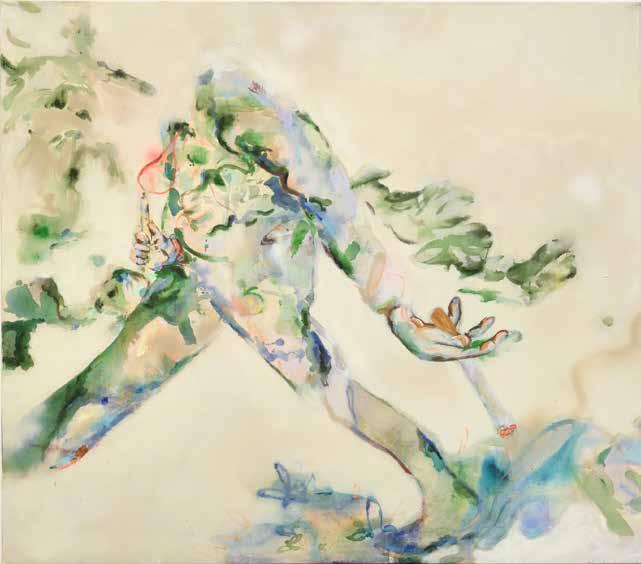
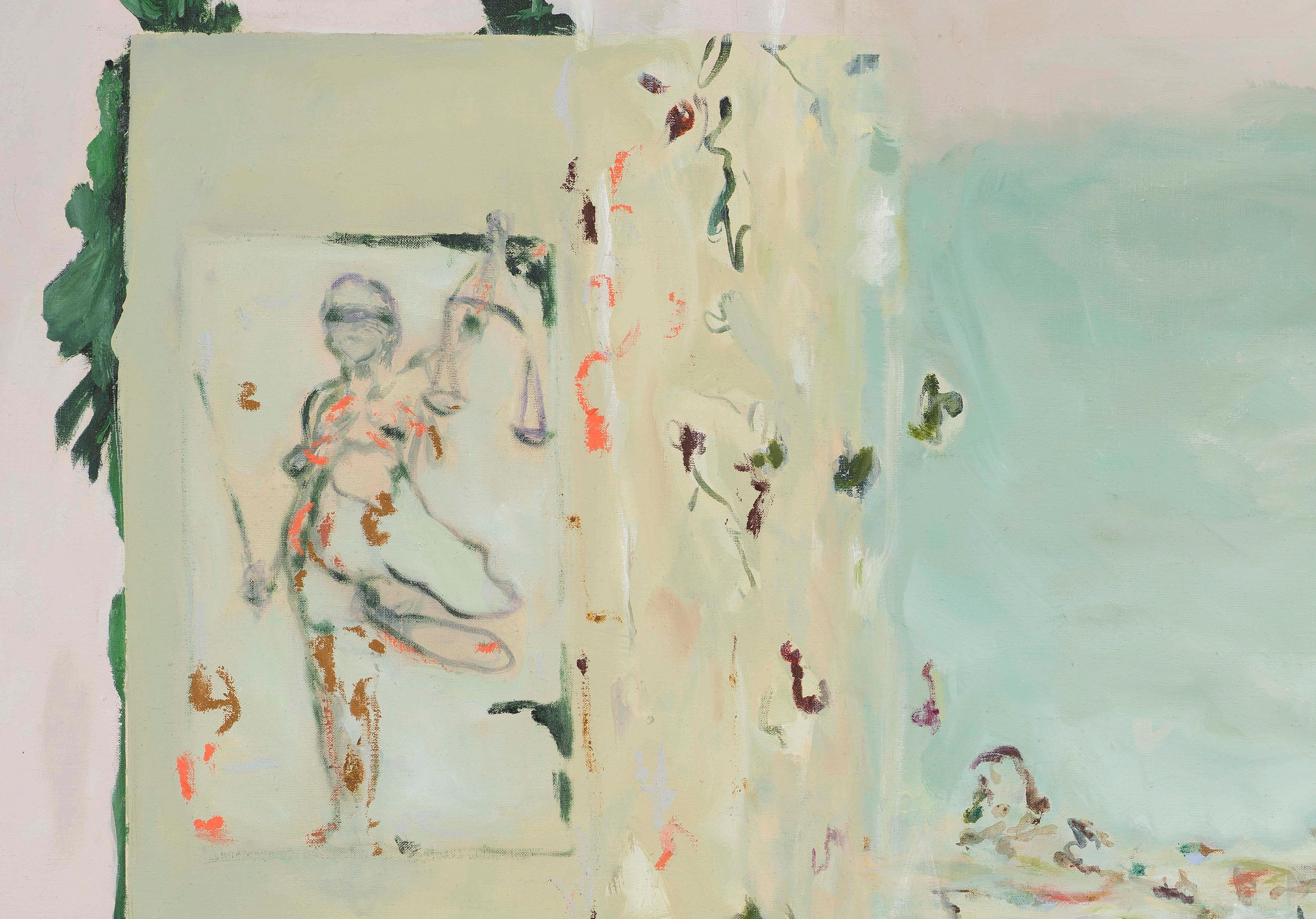
LÖYTYISIKÖ TÄSTÄ VARSINAISTA TEOSKUVAA, TÄMÄ RAJATTU ISTALLAATIOSTA. SINÄLLÄÄN OK, MUTTA MIELUUMMIN KUITENKIN TEOSKUVA, JOS LÖYTYY..
We have also talked about literature. You have said that especially Proust but also Faulkner have been important. I know you don’t like to talk publicly about Proust, but I will ask anyway. What has been his, or other writers’, influence on your work as a painter?
I can’t really separate the influences. But I think that in painting, different temporal layers are indeed simultaneously present. That is natural for painting. And of course, there is the multiplicity and non-hierarchy of perception and experience. Also, presence as a kind of recording and a new presence, when the recorded is kind of recalled, is very close to painting. Or the ability to make the imagined real, to inhabit the possible future, or to relive the past in experience can be more significant than the actual moment of the event. For Faulkner, the past is inseparable from the present, as for Proust, but in addition, I am obsessed with Faulkner’s rhythm of language. That he can describe a whole person in rhythm. And he can be consistent in a fragmentary way. He was, of course, very interested in Bergson, whom you have talked about a lot. But equally, everything influences painting. They can be Masha Gessen’s analyses of Russia, Uspensky’s Uncle Fedya and the cat and dog, or Agota Kristof’s fascinating, violent, and strange world.
Seulement somnambule II, 2021 oil on canvas 140 x 150 cm | 55 x 59"
In painting, indeed, the past, the present, and the future (memory, perception, imagination) can be simultaneously present and flow into each other. You say that you are interested in the multiplicity of experience, but what do you mean by that in painting? Why is it a meaningful theme for you?
I mean that the content of a painting, like experience itself, is formed from everything that is present simultaneously. It is of course the mixing of the internal and external, but there are many other factors as well, which you don’t name or that don’t even have a name. In painting, the background is as important as the so-called subject. Rhythm, color, size, the shape of the support (if we speak of an ordinary object), the support material, and their combinations, the touch and painting materials. It also depends on whether there is a lot at the top, on the left, and in the center, how full it is, how fast or slow the mark is. How you experience the painting is also influenced by the subject, attitude, the maker, illogicality, or overlap, whatever happens to be there at any given time.
If you are in a room whose wallpaper has a restless pattern with both green and violet, and your chair has no backrest. And an unfamiliar person is wearing pleasantly scented perfume, but you are annoyed by their habit of repeating a certain word… the chair cover is synthetic. Your experience of the situation is the sum of all that and many other things. You cannot direct or confine it.
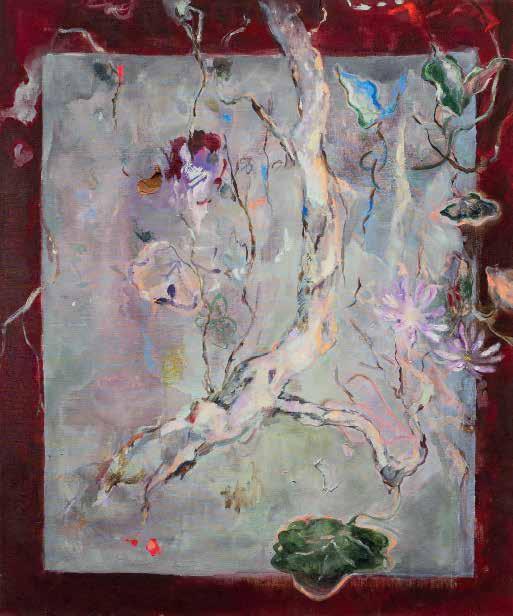
For me, the non-hierarchy of experience is fundamentally related to human freedom, our ability to look at the world, others, and ourselves in new ways. It also relates to the uniqueness of individual experiences and the dialogue of different experiential perspectives. Can painting be a way of working through experiential freedom?
What you describe makes it sound like a kind of openness. What you said also sounds perhaps too refined or solemn for me. I am more fascinated by seemingly trivial things like holes, debris, smells, groans, temperatures, materials, color, light, or similar. But if using them as ingredients in a painting can be called working through experiential freedom, then the answer is yes.
Experience is free. Many people remember this from school: even when told to listen and watch the teacher, one might notice and record something entirely different. I think that art is fundamentally free as well. But art also allows for lying, for constructing fantasies about things that have not been experienced.
Henry Darger’s works come to mind, when he drew and painted girls he saw, for example, in ordinary magazine clippings and catalog images. The girls often run away or fight, sometimes dressed and sometimes naked. Probably lacking better knowledge of the girls, Darger always drew genitals for them. I believe there is still a lot of experiential quality in his work, but perhaps more obsessive-compulsive and traumatic than free. The form is still free, at least from the viewer’s perspective.
Le Silphium, 2024–2025 acrylic and oil on canvas 120 x 100 cm | 47.2 x 39.4"
One of the topics we have discussed is the relationship between art and politics. The idea of art being fundamentally harnessed to serve politics or morality is repulsive to both of us. At the same time, art can function as a meaningful social and often political force. How has your thinking about the relationship between art and politics evolved? How do societal events and changes reflect in your artistic work?
True. We have talked a lot about this. Many things depend on context, time, and place. It would be strange if artists didn’t react at all to what is happening in the world. Some do it directly, others indirectly. When a country is drifting toward authoritarianism, slogans have a different place and meaning in such a country’s urban space than in a wealthy democracy’s art space, where they easily remain gestures. We have talked about political performance, and it is surprisingly common in the art field.
Art’s role in society is unpredictable, and unpredictability is a good political force. (Unlike the unpredictability of a political leader.) It is a space for thinking, expressing, and acting, which is necessary.
Art that teaches is quite difficult, especially in visual arts. There are exceptions, which is also interesting. Sometimes an artist takes over the most banal area in an exciting way. But I couldn’t be an artistic educator myself.
As a painter, I also operate quite far from slogans. Sometimes it is even annoying, because sometimes you feel like shouting something in the clearest sentence. Since I have always closely followed social and world events, something always filters through from them. However, I avoid sentences while painting; I don’t paint comments. My paintings are tied to this time and my experience of it. Societal and political events are not separate from that.
Astragalus baionesis, 2024 pastel on paper
65 x 50 cm | 25.6 x 19.7"
Looking at your recent works, they reflect societal developments. One of these themes is the relationship between open and closed space, for example in the works Comme si je le voyais pour la première fois, Ombre de boomerang, and Claus & Lukas. I think about the current lack of perspective. What do you think about such an interpretation?
Well, I guess it’s a bit difficult to know how far ahead one can see. Sometimes I try to create views a little further. Even for me, it can be unclear whether we have the ability to imagine open space. On the other hand, paintings are a bit like a stage, and I guess there is always open space behind their walls. We just don’t see it.
(Irréprochable, Coupable, and Fraises, Fraises, Fraises). Framed by edges, at the center is a dead creature, its suffering and beauty, which simultaneously spills over the edges. I see in them condensations of an inability to handle destruction and suffering. Have such experiences been somehow on your mind in front of these paintings?
I think in many works it recurs, what is hidden inside someone. Or what remains outside and in knowledge. But yes, these last ones perhaps somewhat reflect my experiences. I often use internal contradiction to my advantage when painting. Something that bothers me. Something that doesn’t settle. And perhaps in these paintings it is simply the simultaneity, that everything terrible and good is happening constantly, and here we just are. I probably won’t say more than that.
Your works often contain humor. Does it arise spontaneously, or do you consciously try to look at things from a humorous angle? Sometimes humor relates to the “dark” things that appear in the works. What does humor bring to the works?
It is sometimes self-irony, sometimes multidirectionality, which is natural for me. The world is also completely absurd, so I guess it belongs there. In art, there can be conflicting emotions side by side; they don’t have to be set as opposites. And I have never been interested in dogmatism or stylistic purity. So I probably also paint reactions inside the work.
Tell me something about the book and exhibition title “Stwawberries, high berries, scwambled eggs, pudding”?
Those words came from the sleep-talk of Sigmund Freud’s 19-month-old daughter. The girl had not eaten for one day due to vomiting, and at night she cried in her sleep, hungry: “Give me Fweud, stwawbewlries, wild stwawbewlries, omblet, pudden!” In her dream, she expressed her desire to get food, everything she considered a delicious meal. The caregiver blamed her illness especially on too many strawberries. We can soothe ourselves by imagining what we don’t have.
The work exists in the object created by the artist but also in the viewer’s experience. You have talked about wanting to protect the viewing, experiencing, and interpreting of the work from being locked down too much. How does this guide your painting? When do you think you have succeeded in making the work both engaging to the viewer and sufficiently open to interpretation?
I don’t like being underestimated, so I also don’t want to underestimate the viewer; I’d rather overestimate.
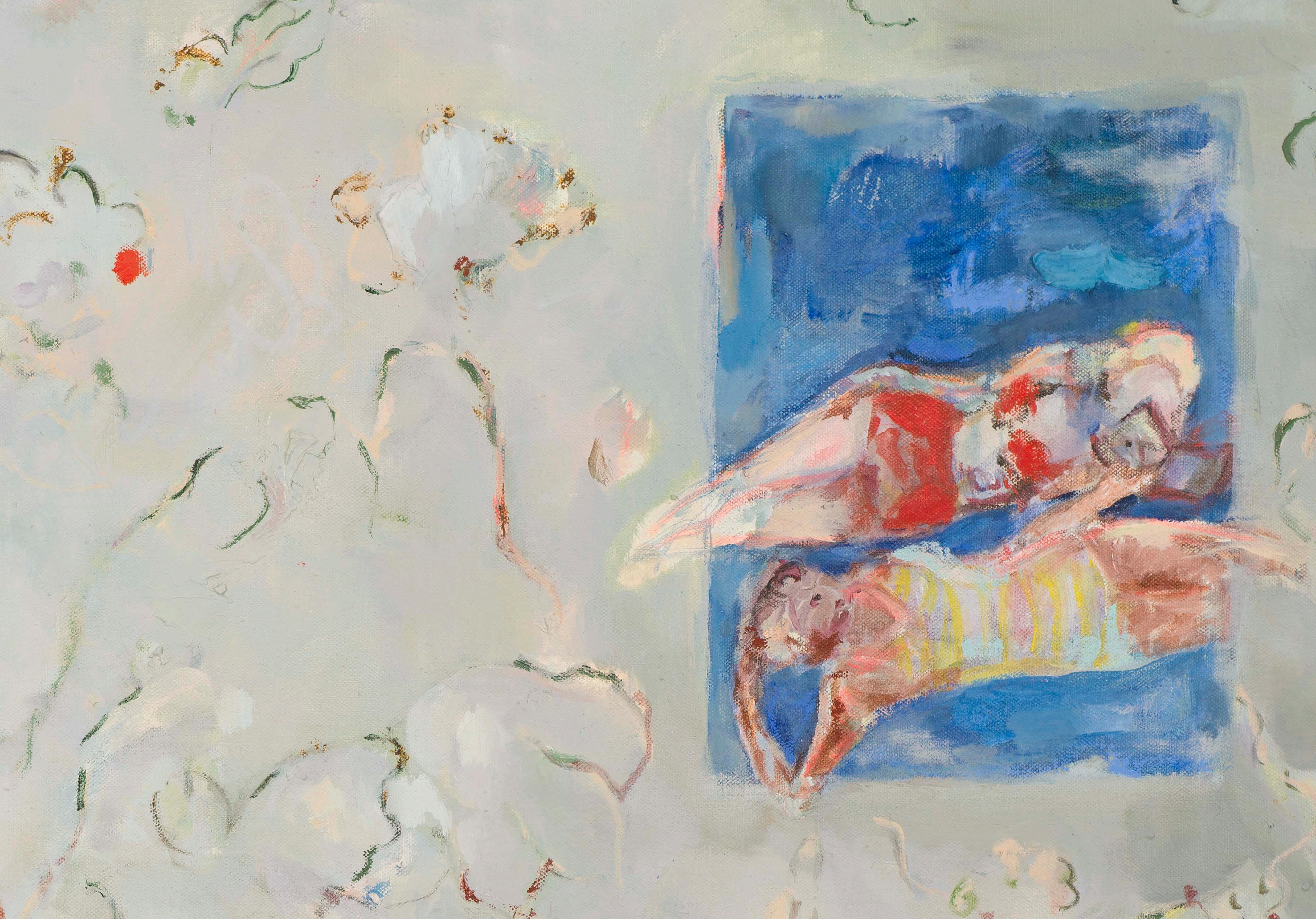
This means that when I notice that a painting develops a one-way reading, I change directions or throw a somersault. I want to use the possibility offered by the medium to guide focus somewhere, but leave certain things open. It is a way to involve the viewer by giving them space. Just one person can see different things in the same painting depending on their life situation. Different people can fill in the painting in different directions in their minds, and they are all right. Magic, 2024 pastel on paper
INTERVIEW WITH ANNA TUORI
BY ANAËL PIGEAT
We met a few years ago through our shared interest in Suzanne Valadon, who has inspired several of your paintings, such as Never Seen a Bag Exploding (2019–20). Valadon’s L’Acrobate, ou La Roue (1916) – clumsy, disconcerted, yet full of energy, legs akimbo, in her red outfit –made a particular impression on you. How do you engage with the work of painters who came before you?
As a painter, grasping and absorbing the traditions of painting can grant you a certain degree of freedom. She is an independent artist. You can get that feeling also in her painting La Chambre bleue (1923), which depicts a woman lying in bed, in pyjamas, a cigarette between her lips.
Was art important to you as a child?
I was born in Helsinki. My mother, who worked at the university library, was interested in art. She often took me to see exhibitions. We went to Stockholm almost every month. We always went to the Moderna Museet: when I was very young, I was particularly fond of Rauschenberg’s goat, Monogram (1955–59), and Mud Muse (1968–71). My mother raised me alone, and she often worked weekends, so I spent a lot of time on my own, drawing and painting. At the “Ars ‘83” exhibition in 1983, I discovered a work Avaar (1976) by James Turrell that fascinated me. That was when I realized that art is something that cannot be explained.
Did you always know that you wanted to become an artist?
When I was 7, I started oil painting, in a class taught by artists. I soon got used to expressing myself that way. But I thought I’d become a magician, or the president! In high school, I was particularly fond of cinema, but freeze frames and film analysis destroyed the magic of my experience: I preferred to remain a spectator. I spent a year at a small school for artists, then enrolled at the Helsinki Academy of Fine Arts. Painting immediately became my focus.
What does the concept of the uncanny mean to you?
The uncanny is a huge cliché in art, and yet it perfectly describes a fundamental feeling I know well, when the reassuring and the familiar tip over into the strange and the unsettling. I see it everywhere, all the time. I’ve been experiencing it my whole life. On the other hand, Das unheimliche is fast becoming das heimliche. I feel like things are changing so quickly and in such an incomprehensible way that we might need a different concept.
Have you looked closely at Cy Twombly’s work? Whose work were you looking at when you first started out?
Like many painters I went through the history of art. And I still do that. It is hard to say where I first started, because I have been looking at art all my life. I looked at Cy Twombly’s work of course. Particularly his use of the sign, but also of negative space. Early in my studies, Sigmar Polke, Joan Snyder, and Martin Kippenberger were also important, as were Wolfgang Tillmans and Gillian Wearing, to name just a few. I remember the liberating sensation I felt at a Tillmans exhibition, looking at an anus against a blue sky; his ability to use such an image with such joy attested to the non-hierarchical nature of perception and experience that we’ve been discussing.
You’ve also taken a keen interest in works by female artists. What have you learned from them?
Later, in the 1990s, discovering contemporary painters like Karen Kilimnik and Laura Owens was an important turning point. Their work blended Post-Expressionism, abstraction, and -conceptualism. It also shed light on a bias that was already apparent: when a painting seemed associated with the feminine, it could be devalued – unless those same elements were used by a man. Magazines like Parkett were beginning to feature images that broke away from this macho tradition. For example, Elizabeth Peyton’s loose brushstrokes were almost vulgar in their elegance – like a defiant middle finger directed at the old Expressionists, whom I nevertheless admire. For many of us, this opened up space to move between subjects and modes of representation. Even though it
is extremely artificial to speak separately of female and male artists, I could also mention Lee Krasner, Georgia O’Keeffe and Lee Lozano. And my respect to the contemporary ones like Dana Shutz, Ella Kruglyanskaya and Maja Ruznic. I could continue this with my Finnish colleagues of course. What they have in common is the ability to connect their own worlds to the formal language of their paintings.
What about Peter Doig – his use of color and light, the political dimension that emerges in his images of Trinidad, and his relationship to carnival masks?
Of course – he influenced the entire generation of artists who came of age at the turn of the millennium. He is undoubtedly one of those painters who have mastered all the classical elements of painting – light, color, surface –while incorporating elements drawn from their own experience and environment. He knows how to paint.
Expressive painting had become a sort of cliché and a joke, where the competition was about who could swing the biggest brush the fastest. You could always go bigger, with more power and faster brushstrokes. Think of the artist played by Nick Nolte in Martin Scorsese’s part of New York Stories (1989) – you immediately recognize the stereotype. So he also transformed tradition. He made it possible to be openly romantic, sensitive, and ironic, while still being powerful.
Did your time at the École Nationale Supérieure des Beaux-Arts in Paris, in 1999–2000, change the way you paint?
As a student in Paris I saw lots of exhibitions; the one dedicated to Vuillard continues to influence my work to this day. I spent a year in Joël Kermarrec’s studio. I chose a multimedia program because I didn’t want to limit myself to painting. We talked a lot about the subjects of our paintings, but very little about painting itself, which was the opposite of my experience in Helsinki, where the brushstroke mattered more than the subject matter. In France, people think that artists should communicate, whereas in Helsinki, the prevailing view was that artists are beings of emotion rather than reason. I tried to find a synthesis between these two positions. I approach colour intuitively. It’s a dialogue that’s hard to explain. In the painting process, I usually start with color, without any symbolic dimension – I avoid sentences with what I’m doing so that I won´t start to illustrate the sentences. People aren’t very aware of colors on their daily lives. So it’s the same in painting. They are the essentials. Some areas simply have to be red because they can’t be yellow.
Some of your paintings reveal a tension between abstraction and figuration. In the large triptych Conspiring Smile with Spring Light (2020), the presence of a feather, an animal, or a leaf draws us back to figuration, but the eye is primarily drawn to the color. Are you tempted by abstraction?
This painting comes from an exhibition in galerie Anhava titled “Window” 2020. What draws me to painting is the relationship between surface and space, between the material and the concrete on the one hand, and illusion and the imagination on the other… I wanted to work with the rhythm of the composition. The large dimensions of the canvas gave me the opportunity to create such a space.
What is your relationship to abstraction, in the end?
For me, painting is never either abstract or figurative. Painting has to function as a composition of forms and colors – meaning, as an abstraction. Some call it post-abstraction. The return to the word, or to figuration, is only one aspect of it. The content is the sum of everything: colored surfaces, patterns, traces, and composition.
But you never became an abstract painter. In the painting Claus and Lucas (2024), we find that sense of forms slipping away. Most of the painting is obscured by a screen, like a projection surface. But a horse and a dog peek out from behind a wall. And here and there we can make out a profile, a banana, a face, some writing, a flying leaf… What does a canvas like this represent to you?
I consider myself an abstract painter
The painting Lucas et Klaus (Lettres volées) (2023) depicts a surface suggesting the presence of something simultaneously behind and in front of it – perhaps nothing more than brown paint. Here it’s fairly obvious – you see a horse – but it could be something else. I think there is always a landscape behind the walls
You’ve made a series of paintings of mental asylums: why did you choose this subject?
I remember, as a child, admiring those buildings; When realizing that people were closed inside, hidden from the public, it changed my perception of them. The knowledge changes the way we see things. We often imagine things just from the surface: the inside only seeing the outside.
Could you say a few words about your recent drawings, with their black backgrounds and muted colors, since you don’t draw very often? They seem to be works in their own right rather than preparatory sketches.
I do draw. And, like you said my drawings are works in their own right. It is possible to express different kind of fragility or strength. I try to get the flow when nothing is superfluous. Since drawing is based on a line. It’s a completely different approach from painting.
These drawings strike a particularly introspective tone. What do they mean to you? Why make these today?
I think it’s more possible for me to use narrative fragments in my drawings. They contain fears, possibilities, and hopes.
In recent works, such as Noble and Tragic, Lay Your Head Down, and Off On an Adventure (all 2025), you present memento mori with a darker tone than the works we discussed earlier. Why these variations on such a theme?
I wanted to repeat the subject to reveal different nuances. It was also a way of giving myself the serenity and concentration necessary for painting. I sought to create a contrast between a disturbing theme and a warm, domestic atmosphere. The violence of the scene is aestheticized, which strikes me as far harsher than a simple image of violence. It’s a way of seeing and looking at the current world – so terrible, and one I don’t understand.
What is your relationship with nature? Is it important to you?
Nature is so vast. It can give a painting an organic rhythm. It can serve as a foundation for form. It can reflect a person. To say that it is the foundation of everything is an understatement. I won’t say any more about nature’s current condition, because it’s too obvious and we’re all aware of it. And when it comes to the animal figures in my paintings, they are associated with the victim’s innocence and often with anonymity.
Some of your paintings seem to step off the canvas and become almost like installations. Is that an approach you’d like to continue exploring?
Yes, I’ll continue doing that. It comes naturally to me when I start planning certain exhibitions. I start creating a dialogue between the paintings and the space.
How do you finish a painting?
A painting is finished when nothing is missing and nothing distracts the viewer. That’s very clear to me.
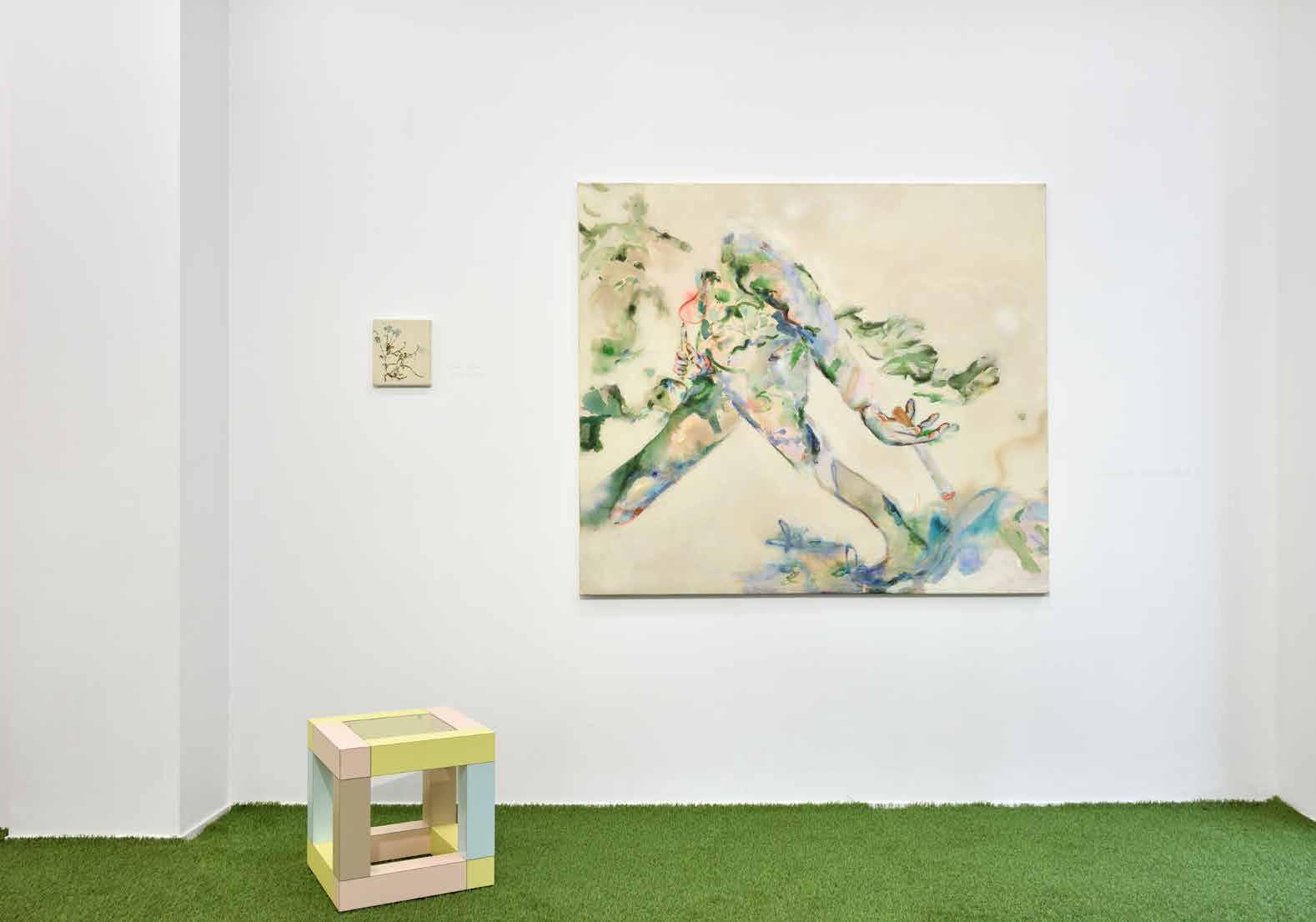
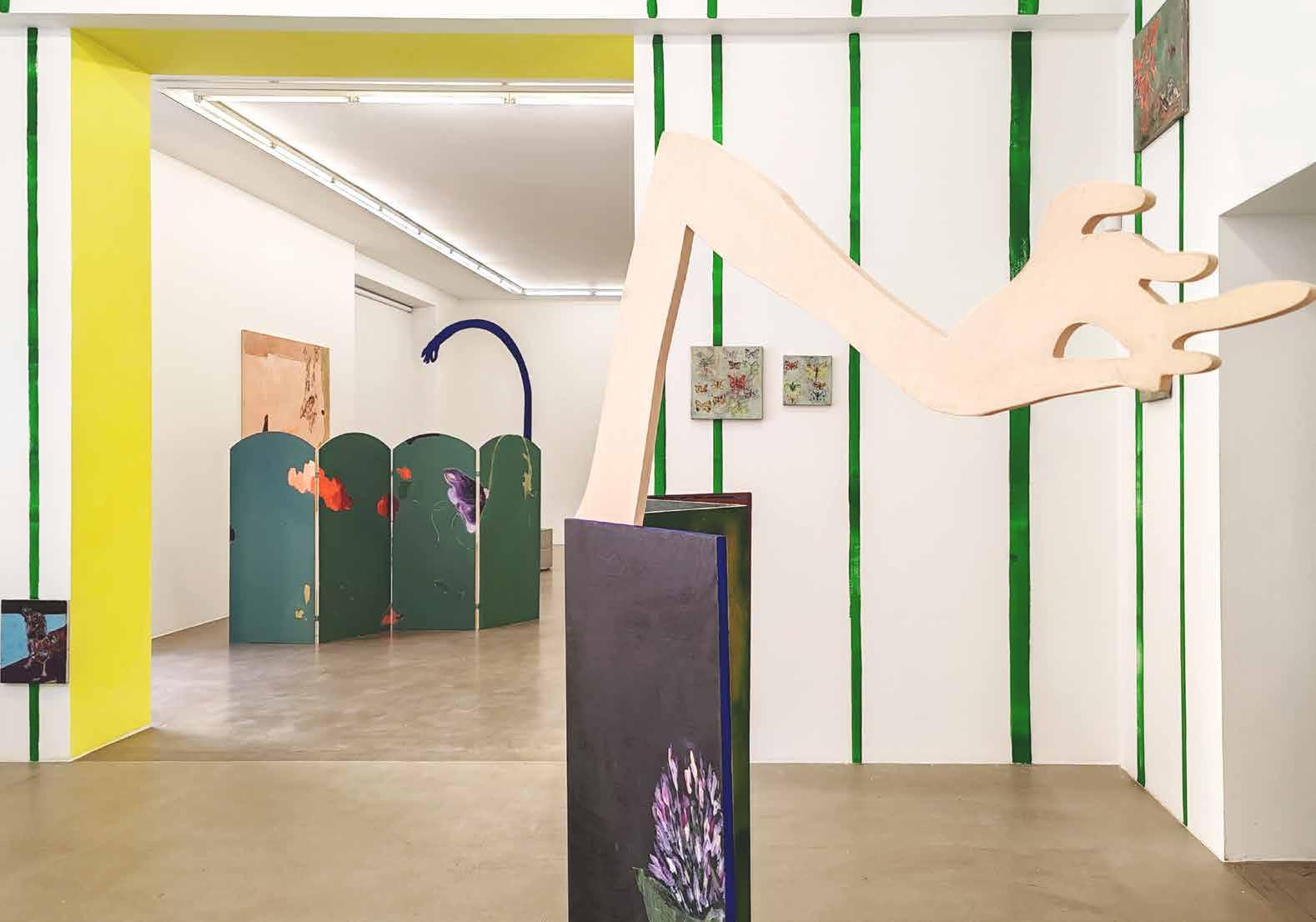
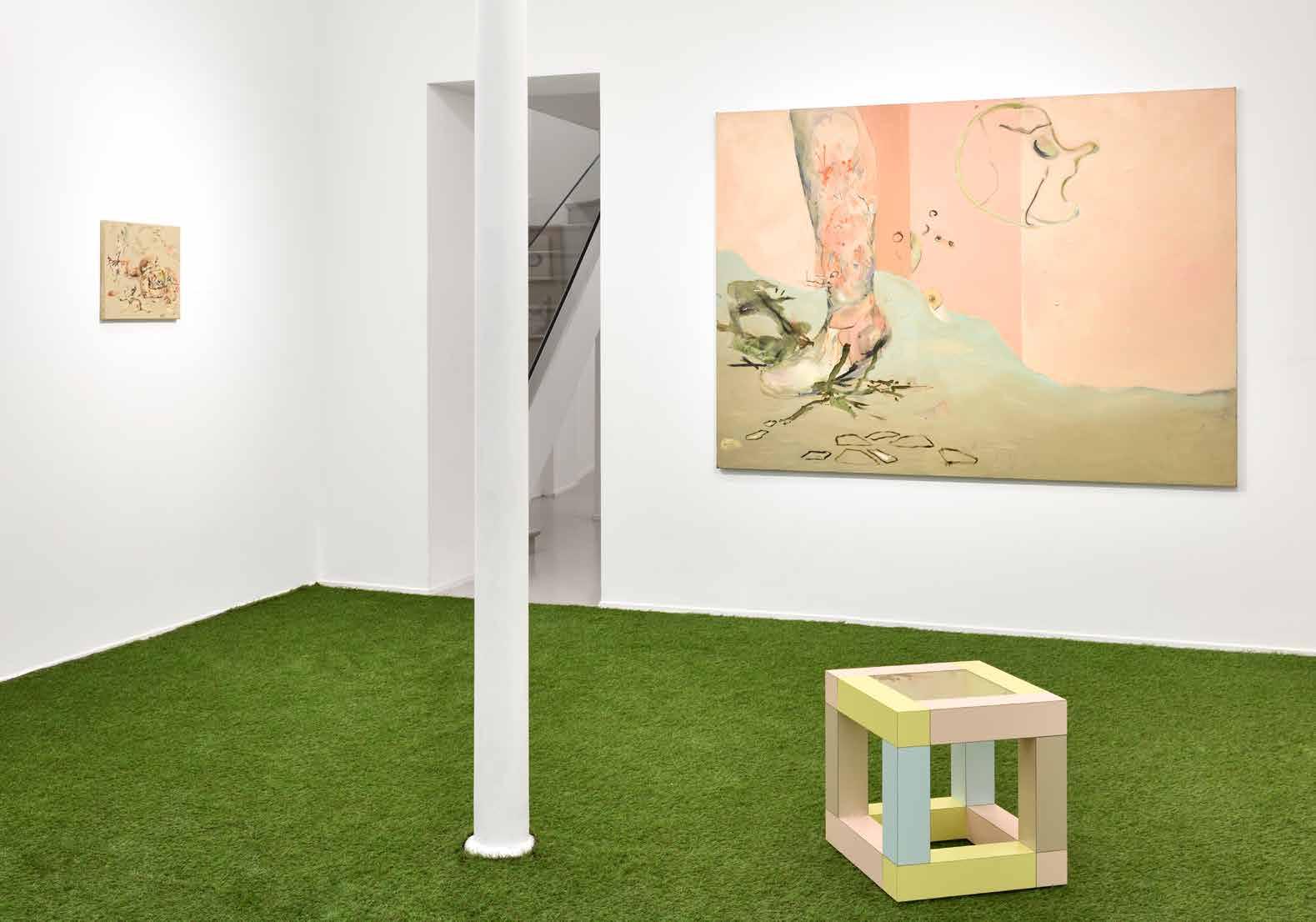
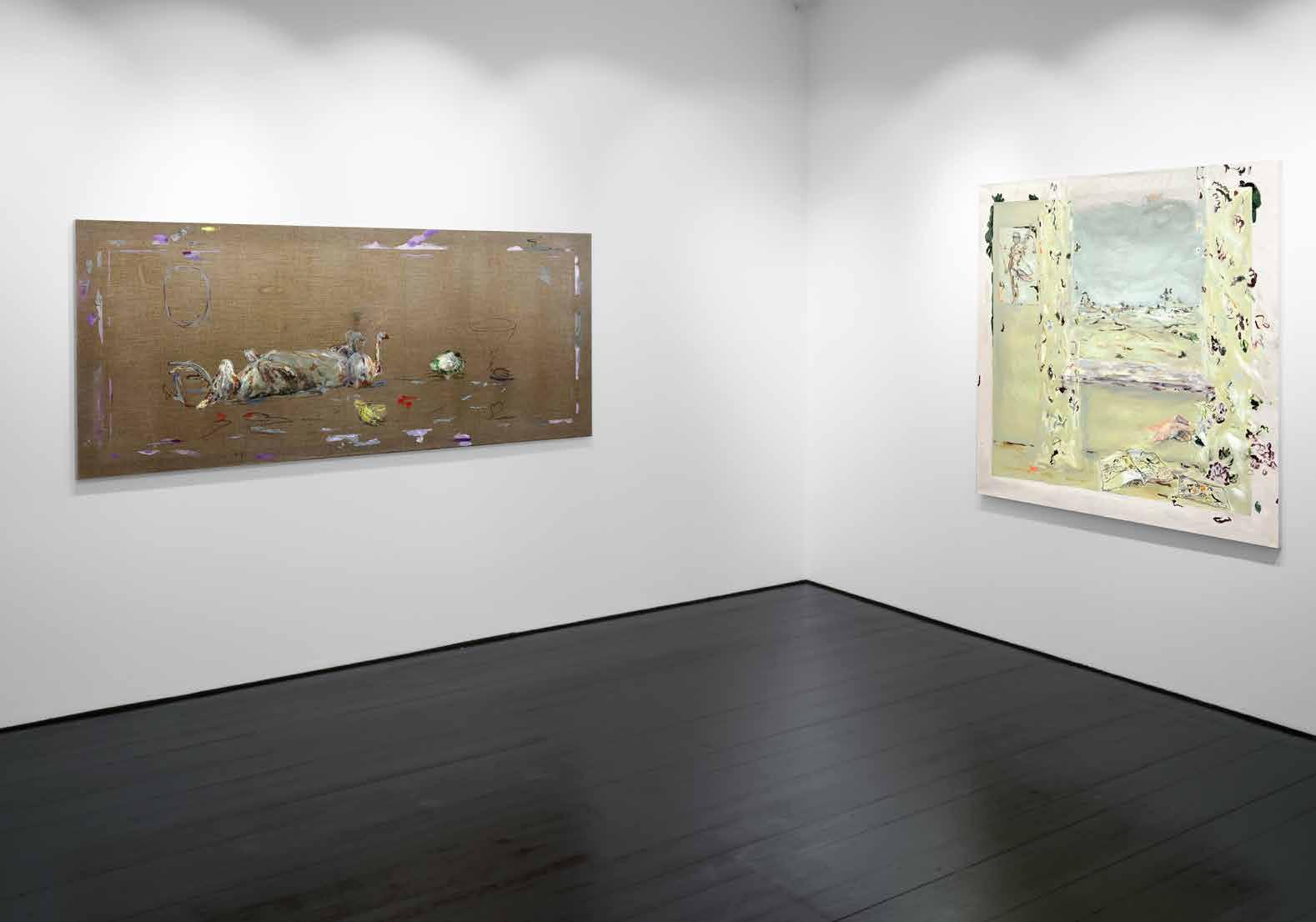
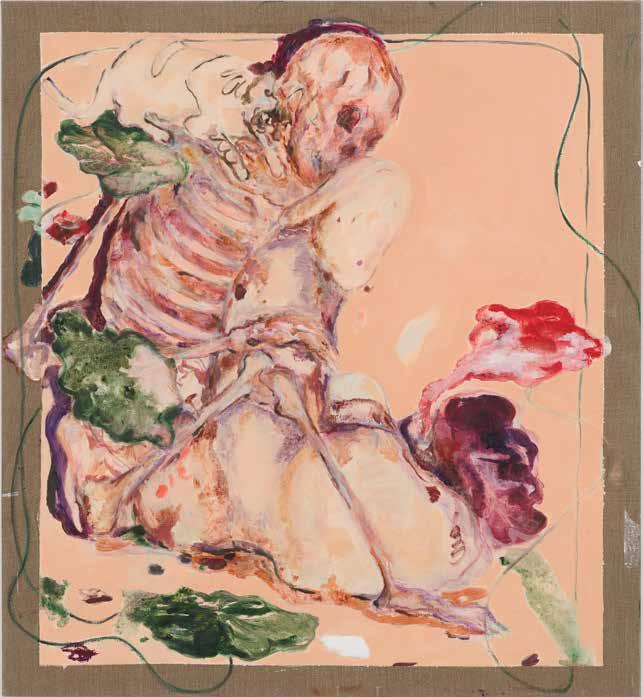
Till I End My Song, 2025 acrylic and oil on canvas
120 x 110 cm | 47.3 x 43.3"
ANNA TUORI
Born in 1976 in Helsinki
Lives and works in Helsinki
STUDIES
1997–2003 MA, Academy of Fine Arts, Helsinki, Finland
1999–2000 École nationale supérieure des Beaux-Arts, Paris, France
SELECTED SOLO EXHIBITIONS
2026 Paradise News, Contemporary Fine Arts, Berlin
2025 Art Brussels, Solo projects, Galerie Suzanne Tarasieve, Paris, France WOMA, Wanantaka Art Collection, Wananaka Manor, Finland
2024 Calling for the Future to Return, Galerie Anhava, Helsinki, Finland
En appellant l’avenir à revenir, Galerie Suzanne Tarasieve, Paris, France
2020 Window, Galerie Anhava, Helsinki
Never Seen a Bag Exploding, Galerie Suzanne Tarasieve, Paris, France
2017 Hard, Get Up, Galerie Anhava, Helsinki, Finland
2014 There is No Place Like Home, Galerie Anhava, Helsinki, Finland
2012–13 Paintings, Aboa Vetus & Ars Nova, Turku, Finland
Some Remain So, Galerie Suzanne Tarasieve, Paris, France
Paintings, (Finnish Instititute in St.Petersburg 20 years)
Repin-Institute; Tizian hall, St.Petersburg, Russia
2011 Blow Out Your Candles, Laura, Tampere Art Museum, Tampere, Finland and Helsinki City Art Museum,Helsinki, Finland
Tell You Later, Dear, Galerie Anhava, Helsinki, Finland
2009 Lisa, the Dear, NO.5 Bergen Kunsthall, Bergen, Norway
2008 I Can’t Imagine Tomorrow, Taidesalonki Husa, Tampere, Finland
2007 Nurses and Patients, Galerie Orton, Helsinki, Finland
2006 Thursday Perhaps, Galerie Anhava, Helsinki, Finland
2004 Flow, Kluuvi gallery, Helsinki City Art Museum, Helsinki
2003 Private Space, (with Maiju Salmenkivi), Bergen Kunsthall, Bergen, Norway
Paintings, Gallery of Finnish Academy of Fine Arts, Helsinki, Finland
SELECTED GROUP EXHIBITIONS
2025-26 Nordic noir: works on paper from Edvard Munch to Mamma Andersson, British Museum, London, UK
2025 Anhava + Archives, Galerie Anhava, Helsinki, Finland
2024 Paréidolie, Galerie Suzanne Tarasieve, Marselle, France
Piknik, Måll, Karjaa, Finland
2023 Summer exhibition, Galerie Anhava, Helsinki
A Home Near the Precipice – Painting Practices in Finland Today, Napa gallery, Rovaniemi
2022 Oui, la peinture, Galerie Suzanne Tarasieve, Paris, France
2021 Selected works from Galerie Anhava artists, Galerie Anhava, Helsinki
2019 Finnish Aalto, Busan Museum of Art, Busan, South Korea
2018 Content is a Glimpse, cur. Jurriaan Benschop, Efremidis Gallery, Berlin
2017 Augmented Reality, Norrköping Art Museum (NAM), Norrköping, Sweden
Extension.Fi: End of the World in the Mysterious Forest, Triumph Gallery, Moscow, Russia
2016 Freehand, Purnu Art Center, Orivesi, Going Commando, Mänttä Art Festival, Finland
In Other Worlds, Gegenwartskunst aus Finnland, Städtische Galerie, Bietigheim-Bissingen, Germany
2015 Dark Days, Bright Nights: Contemporary Paintings from Finland, Kemper Museum of Contemporary Art, Kansas City, USA
2014 In Other Worlds, Kunst aus Finalnd, Stadtgalerie Kiel, Germany
You Imagine What You Desire, 19th Biennale of Sydney, Sydney, Australia
2013 Ab Origine, Z2O Sara Zanin, Rome, Italy
Black Market Pleasure Principle, Berlin, Germany
Collected Works, Turku Art Museum, Finland
2012 Tartuntapintoja, Oulu Art Museum, Finland
Beauty, Vantaa Art Museum, Finland
2010 Trial and Error, Galleri Bo Bjerggaard, Copenhagen
2009 Human Traces, Oulu Art Museum, Oulu, Finland
Annorlunda verkligheter, The Royal Academy of Fine Arts, Stockholm, Sweden
Oulu Art Museum, Oulu, Finland
Sara Hildén Art Museum, Tampere, Finland
Classics and Contemporary, Sara Hildén Art Museum, Tampere, Finland
2007–09 Carnegie Art Award: Helsinki, Oslo, Reykjavik, Copenhagen, London, Stockholm, Gothenburg
2007 The Third Beijing Art Biennial, Beijing, China
Mänttä Art Festival, Finland
La Position de la Terre, CRAC, Alsace, France
Kokoelmien kesä, Sara Hildén Art Museum, Tampere, Finland
Ars Fennica: Finnish Art Now, Scandinavia House, New York, USA
Ars Fennica: Finnish Art Now, Finnish Embassy, Washington DC, USA
Zoo, Galerie Anhava, Helsinki, Finland
2006 Songs of Freedom and Love, Platform Contemporary Art Center, Istanbul, Turkey
Ars Fennica 2007, Kiasma Museum of Contemporary Art, Helsinki, Finland
Seven Sisters Contemporary Finnish Painting, Galerie Christian Roellin, St. Gallen, Switzerland
Intersection – Between Past and Present, Pori Art Museum, Pori, Finland
2005 Prague Biennale 2, Prague, Czech Republic
Painted into Air, mediatheque, Kiasma Museum of Contemporary Art, Helsinki
Summer Exhibition, Art Center Purnu, Orivesi, Finland
Peinture Fraiche, Kerava Art Museum, Kerava, Finland
2004
Peinture Fraiche, Le Triage, Paris, France
Cocooned, Huuto Gallery, Helsinki, Finland
2003 Summer exhibition, Huuto Gallery, Helsinki, Finland
2002 Enter – Painting, Finnish Embassy in London, UK
Working Title: Memory Project, gallery Q, Copenhagen, Denmark; Trondheim, Norway
Masters of Art, Academy of Fine Arts, Helsinki, Finland
2001–02 Working Title: Memory Project, gallery Q, Copenhagen, Denmark; Trondheim, Norway
2001 Xanadu, group project with Tal R, Forum Box, Helsinki, Finland
Working Title: Memory Project, The Jetty Barracks, Helsinki, Finland
Young, 107th Annual Exhibition, Kunsthalle, Helsinki, Finland
FREE, VR Storehouses, Helsinki, Finland
1998 Young artists from ‘New Yourk’, Down Patrick Artcenter, Ireland
WORKS IN COLLECTIONS
Aboa Vetus Ars Nova Museum, Turku, Finland
Amos Anderson Art Museum, Helsinki, Finland
British Museum, London, UK
The Heino Art Foundation Collection, Helsinki, Finland
Helsinki City Art Museum, Finland
Henna and Pertti Niemistö Art Foundation, Hämeenlinna Art Museum, Finland
Kellokoski Hospital, Finland
Kemper Museum of Contemporary Art, USA
Kuopio Art Museum, Finland
Kiasma Museum of Contemporary Art, Helsinki
University of Oulu, Finland
Oulu Art Museum, Finland
Paavo and Päivi Lipponen Foundation, Kiasma, Helsinki, Finland
The Paulo Foundation, Finland
E.W.Ponkala Foundation, Finland
Saastamoinen Foundation Art Collection, Emma – Espoo Museum Of Modern Art, Espoo, Finland
Salon Dahlmann, Berlin, Germany
Sara Hildén Art Museum, Tampere, Finland
Finnish Art Association
Tampere Art Museum, Finland
City of Tampere, Finland
Turku Art Museum, Finland
Uppsala Municipality, Sweden
Jenny and Antti Wihuri Foundation Art Collection, Rovaniemi Art Museum, Finland
The Collection of The State Art Commission, Finland
Private Collections
AWARDS AND NOMINATIONS
2011 The Young Artist of the Year Award, Tampere Art Museum
2007 Ars Fennica Award Nomination, Henna and Pertti Niemistö Art Foundation
2007 Carnegie Art Award Nomination
BIBLIOGRAPHY
2022 Why Paintings Work, Jurriaan Benschop, Garret Publications, Helsinki
2020 Anna Tuori – Never Seen a Bag Exploding, exhibition catalog, Ed. Galerie Suzanne Tarasieve, Paris
2017 Paintings, Ed. Anna Tuori, Gareth Hayes, Garret Publications, Helsinki
2016 Anssi Kasitonni: Going Commando: XXI Mänttä art festival: 12.6.–31.8.2016, (21: 2016), Mänttä: Mäntän kuvataiteen ystävät ry
2015 Mika Hannula: Maalauksesta: esseitä ja keskusteluja, Helsinki: Parvs Publishing
2014 Dark Days, Bright Nights: Contemporary Paintings from Finland, Ed. Peter MacKeith et al., Kansas City: Kemper Museum of Contemporary Art
2014 Maria Hirvi-Ijäs: 22 ways: on artistic thinking in Finnish contemporary art, Parvs Publishing, Helsinki
2014 19th Biennale of Sydney: You Imagine What You Desire, catalogue, Ed. Juliana Engberg, Woolloomooloo: N.S.W. Biennale of Sydney
2011 Anna Tuori: Young Artist of the Year 2011, Ed. Laura Köönikkä, Tampere: Tampere Art Museum
2010 Trial & error: Maiju Salmenkivi, Janne Räisänen, Tommi Toija, Anna Tuori, Copenhagen: Galleri Bo Bjerggaard
2009 Annorlunda verkligheter: målningar av Elina Merenmies, Nina Roos, Mari Sunna, Anna Tuori, Helsinki: Galerie Anhava
2008 Mänttä art festival (13:2008), Ed. Veikko Halmetoja & Johanna Mattila, Mänttä: Mäntän kuvataiteen ystävät ry
2008 Galleria ORTON esittää 7, Ed. Seppo Seitsalo, Helsinki: Invalidisäätiö ORTON
2007 Carnegie art award, Ed. Ulrika Levén, Stockholm: Carnegie Art Award cop
2006 Ars Fennica 2007: Elina Brotherus, Markus Kåhre, Elina Merenmies, Anna Tuori, Ed. Kirsti Karvonen, Helsinki: Henna and Pertti Niemistö Art Foundation Ars Fennica
2006 Thursday Perhaps: Anna Tuori 6.4.–7.5.2006, Helsinki: Galerie Anhava
2005 Kari Kenetti: Purnu, Orivesi
2005 Prague Biennale 2: Expanded Painting, Ed. Valentina Sansone, Milan: Giancarlo Politi
2004 Vasta maalattu/ Peinture fraiche: la jeune creation finlandaise, Paris: Ambassade de Finlande, Institut finlandais
2002 Working title: Memory-project: a joint exhibition by five Nordic art academies, Helsinki: Academy of Fine Arts
2001–04 Pinx – Maalaustaide Suomessa, Ed. Helena Sederholm et al, Porvoo: Weilin+Göös
KIRJAN TIEDOT TÄHÄN XXXXXXXX
Strawberries, High berries, Scrambled Eggs and Pudding