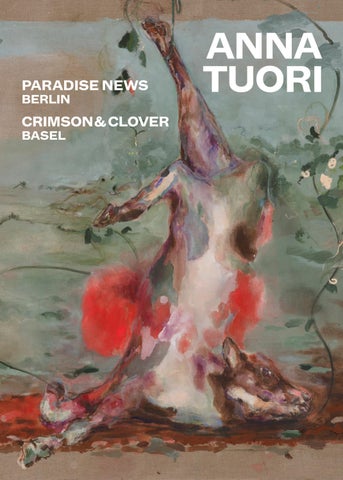
PARADISE NEWS
BERLIN
CRIMSON & CLOVER BASEL
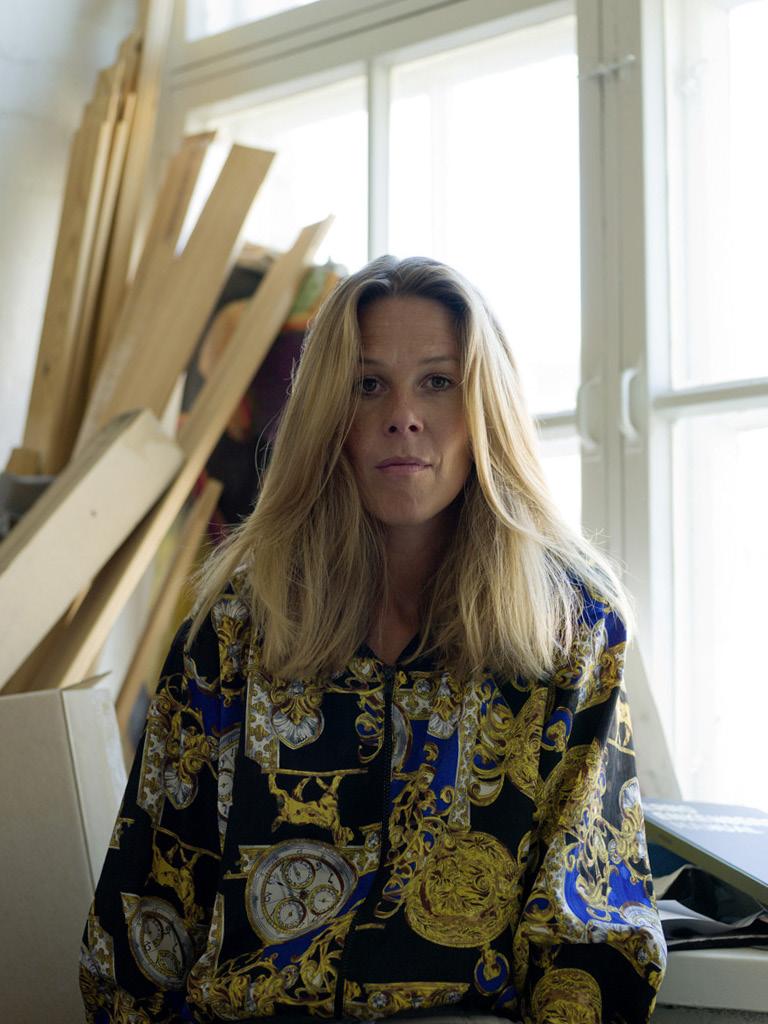
“I haven’t seen anything that has impressed me so much in many years, she is the real deal.” I read these lines in an email that Julie Sylvester sent me in late summer 2025. She was referring to Anna Tuori, the Finnish artist I had heard about some time ago. The email went on to say, “She is also a wonderful, brilliant, and funny person.”
Since Julie is a true veteran of the art world, this piqued my interest. With one foot in Finland and the other in Bermuda, Julie was always a little bit elsewhere, always involved with contemporary art. For decades, she has been close friends with artists such as Günther Förg, Louise Bourgeois, and Cy Twombly, and has been Associate Curator of Contemporary Art at Hermitage Museum in St. Petersburg. When someone with such experience talks about an artist with genuine enthusiasm, as Julie does about Anna, one becomes curious. I certainly did.
The first meeting with Anna was simple and straightforward. It took place on October 10, 2025, in London at Hazlitt’s, the oldest hotel in Soho. From there, we went on to Bar Italia. Anna ordered a blueberry muffin. The moment immediately sparked an entertaining association: I had to think of the scene in Pulp Fiction where Butch returns to his girlfriend Fabienne on his motorcycle.
Butch: “Fabienne! Fabienne! Fabienne! Come on, baby. Come on, get your shit. We gotta go right now.”
Fabienne: “Butch, I was so worried! ... Are we in danger?”
B: “Come on, honey!”
F: “Where did you get this motorcycle?”
B: “It’s not a motorcycle, baby. It’s a chopper. Come on, let’s go.” ....
F: “You’re hurt?” ...
Fabienne starts crying.
B: “Oh baby, I’m sorry. Come here, come here. I’m sorry. I’m so sorry.”
F: “You were gone so long, I started to think dreadful thoughts.”
B: “I’m sorry, sweetie. I didn’t mean to worry you. Everything’s fine. How was breakfast?”
F: “It was good.”
B: “Did you get the pancakes? The blueberry pancakes?”
F: “No, they didn’t have blueberry pancakes, I had to get buttermilk – are you sure you’re okay?”
B: “Honey, since I left you, this has been, without a doubt the single weirdest fuckin’ day of my life. Come on, hop on. I’ll tell you all about it. Come on, get on. Gotta go! Gotta go! Come on.”
Well in this case, it was not the single weirdest fuckin’ day ever, but an entirely ordinary morning. And we got along well right frmo the start. She and the meeting itself settled naturally with me. This is significant, because a first meeting is a kind of test: how does someone behave when you meet them for the first time at eleven in the morning? I realized that Anna didn’t feel out of place in any way. Quite the opposite, in fact. Everything felt just right.
We met again in Turin, where we visited the Museo Nazionale dell’Automobile together to attend the second opening of the collection exhibition of the Fondazione Sandretto Re Rebaudengo. Afterwards, we went out for dinner to a nice restaurant with white tablecloths – which is always good. That evening, only the second time we met, was a continuation of our first meeting: easygoing and confident.
Four days later, I visited her studio in Helsinki. Here, too, everything felt right. Compared to many artists’ studios today, hers is very close to the city and thus close to the rhythm of everyday life, only a ten-minute drive from the well-known Helsinki restaurant Kosmos.
The paintings I saw in her studio made sense to me. I rely on my intuition, my gut feeling. The moment itself plays an important role for me. And the moments spent in her studio were fun.
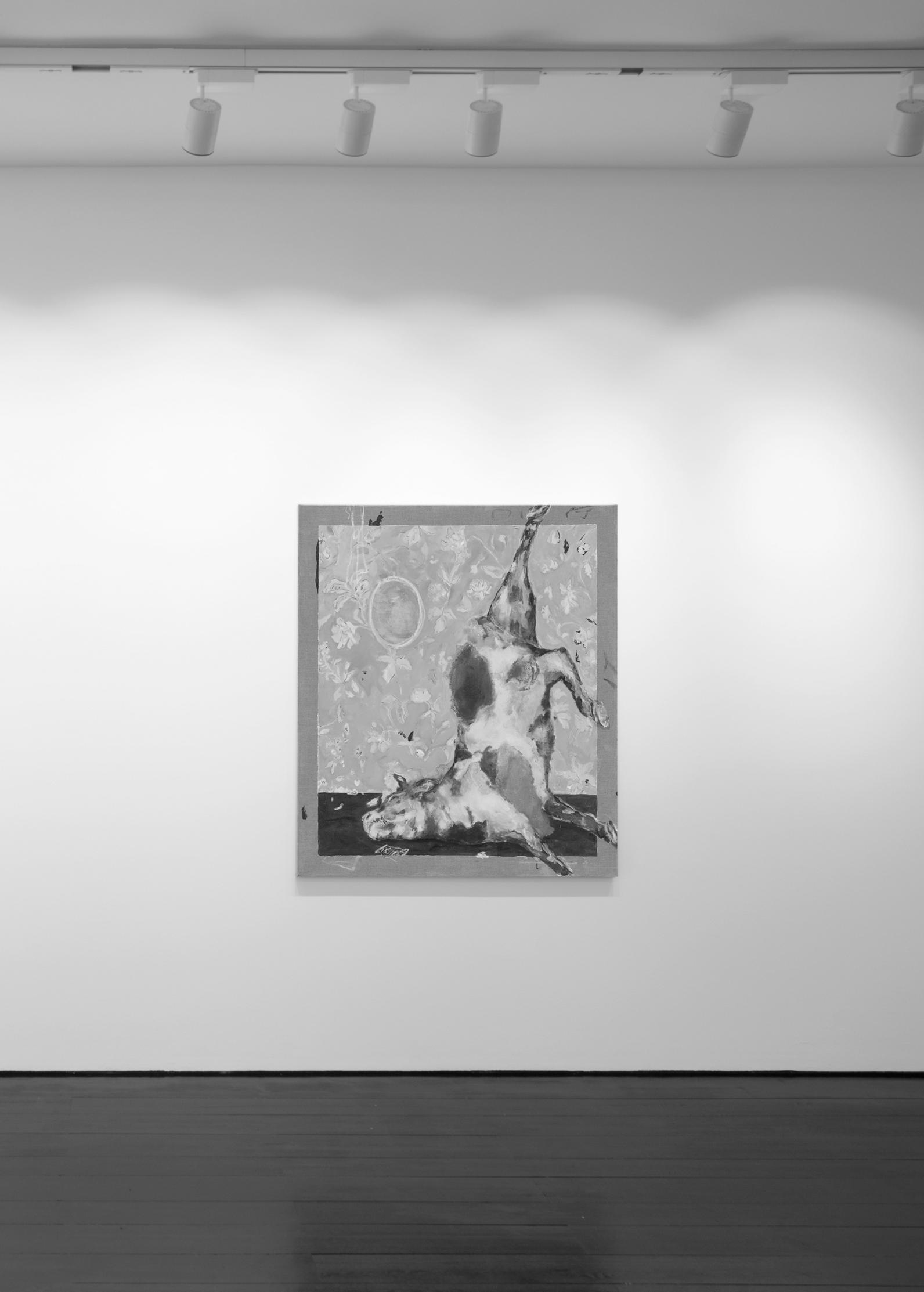
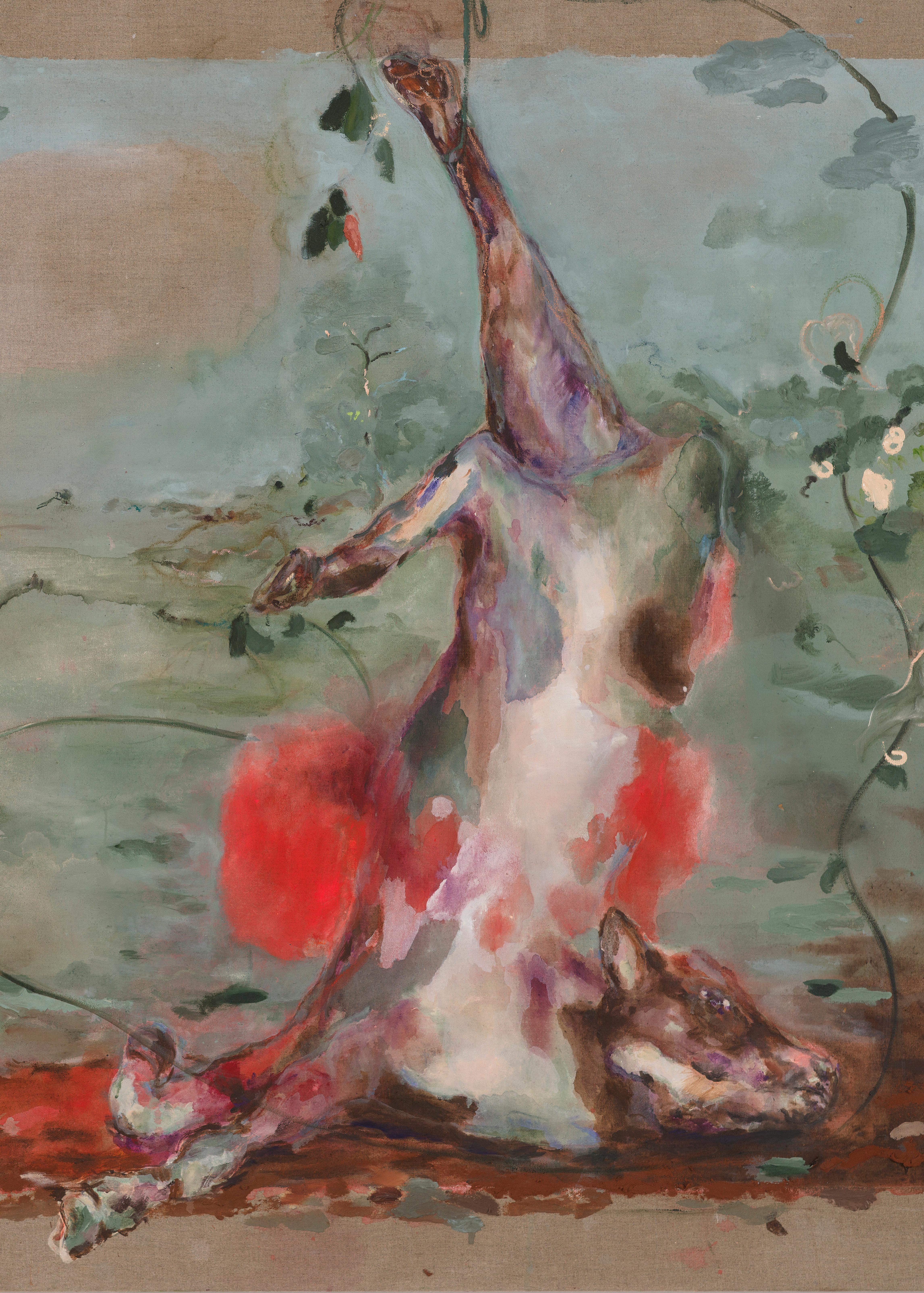
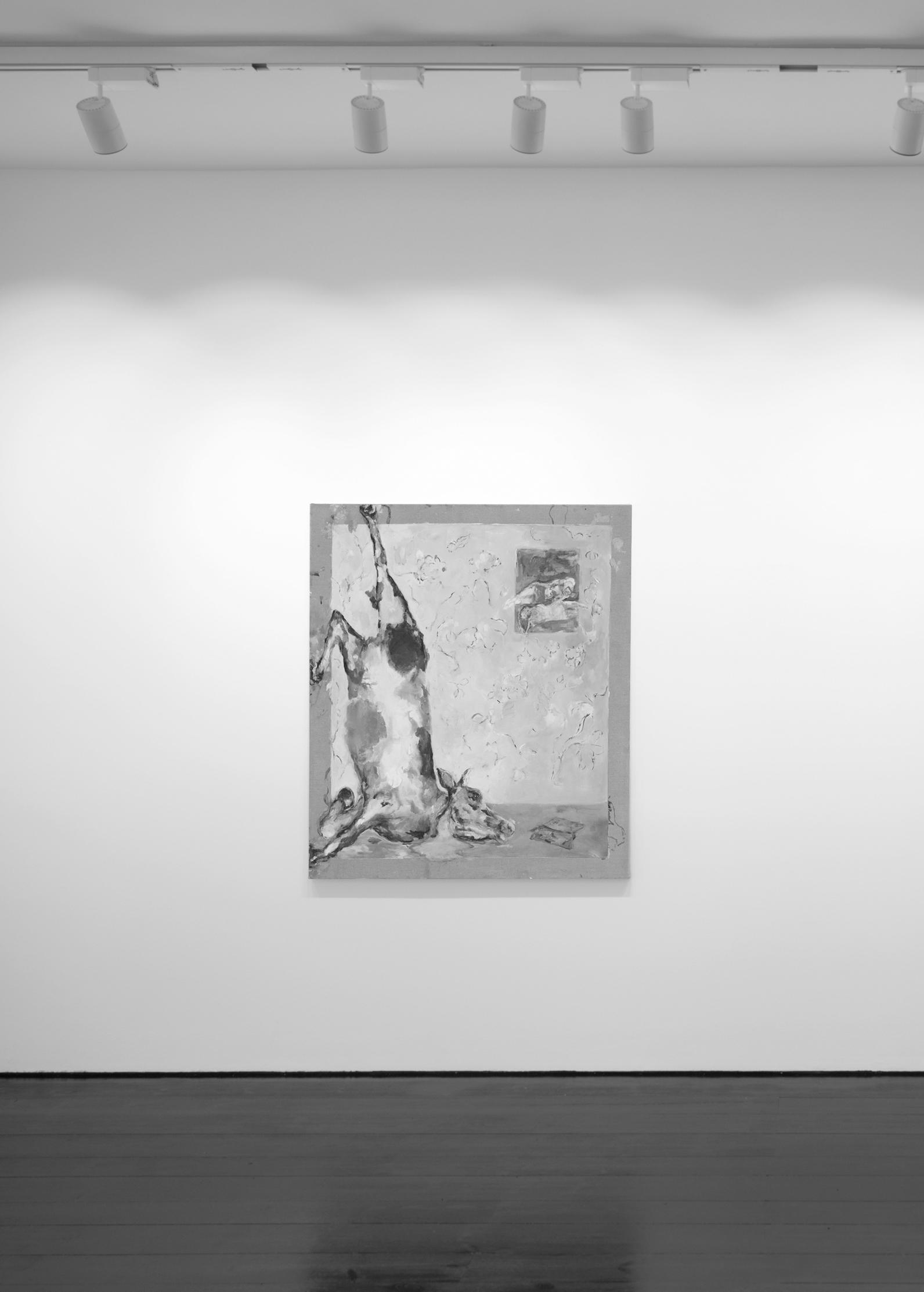
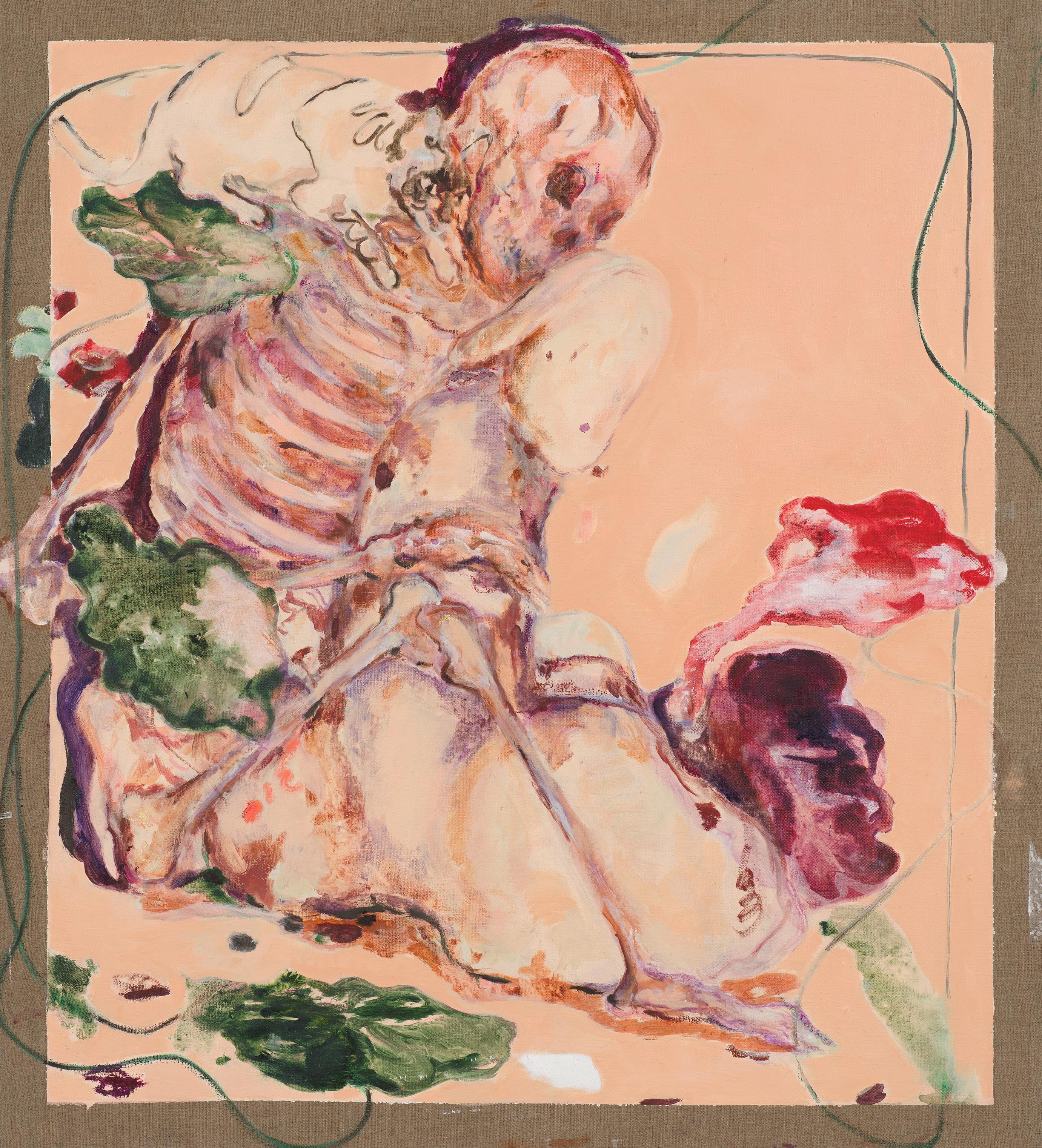
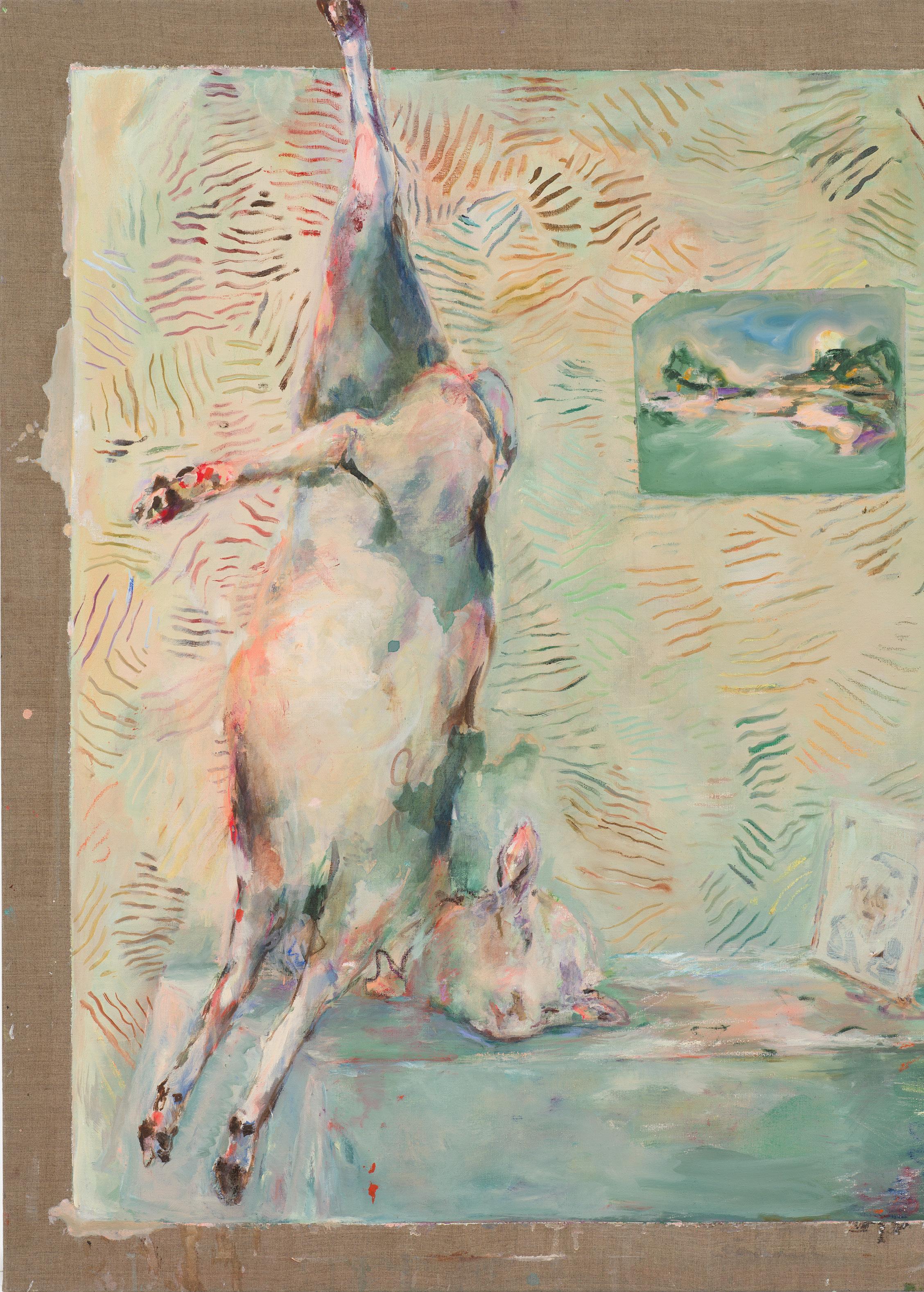
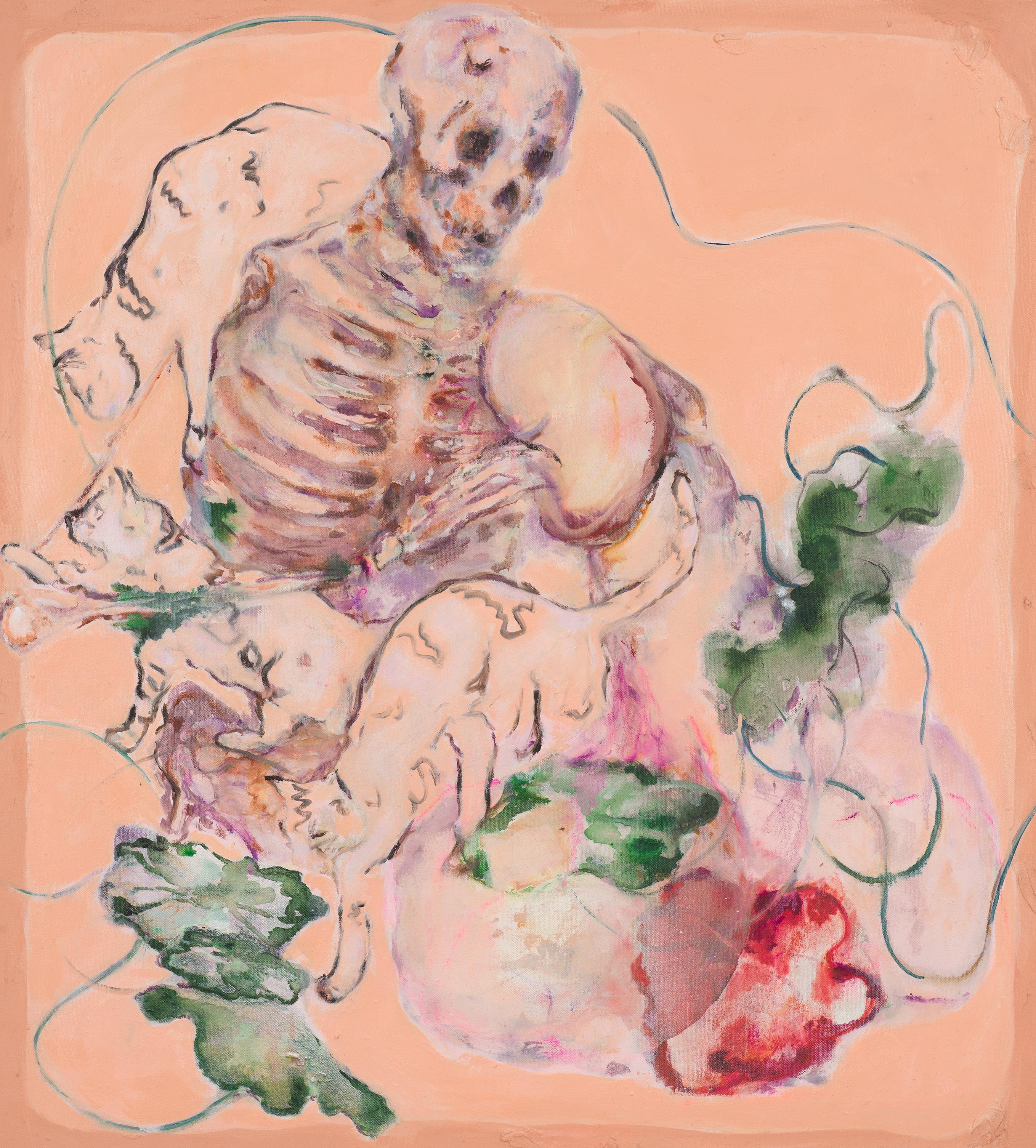
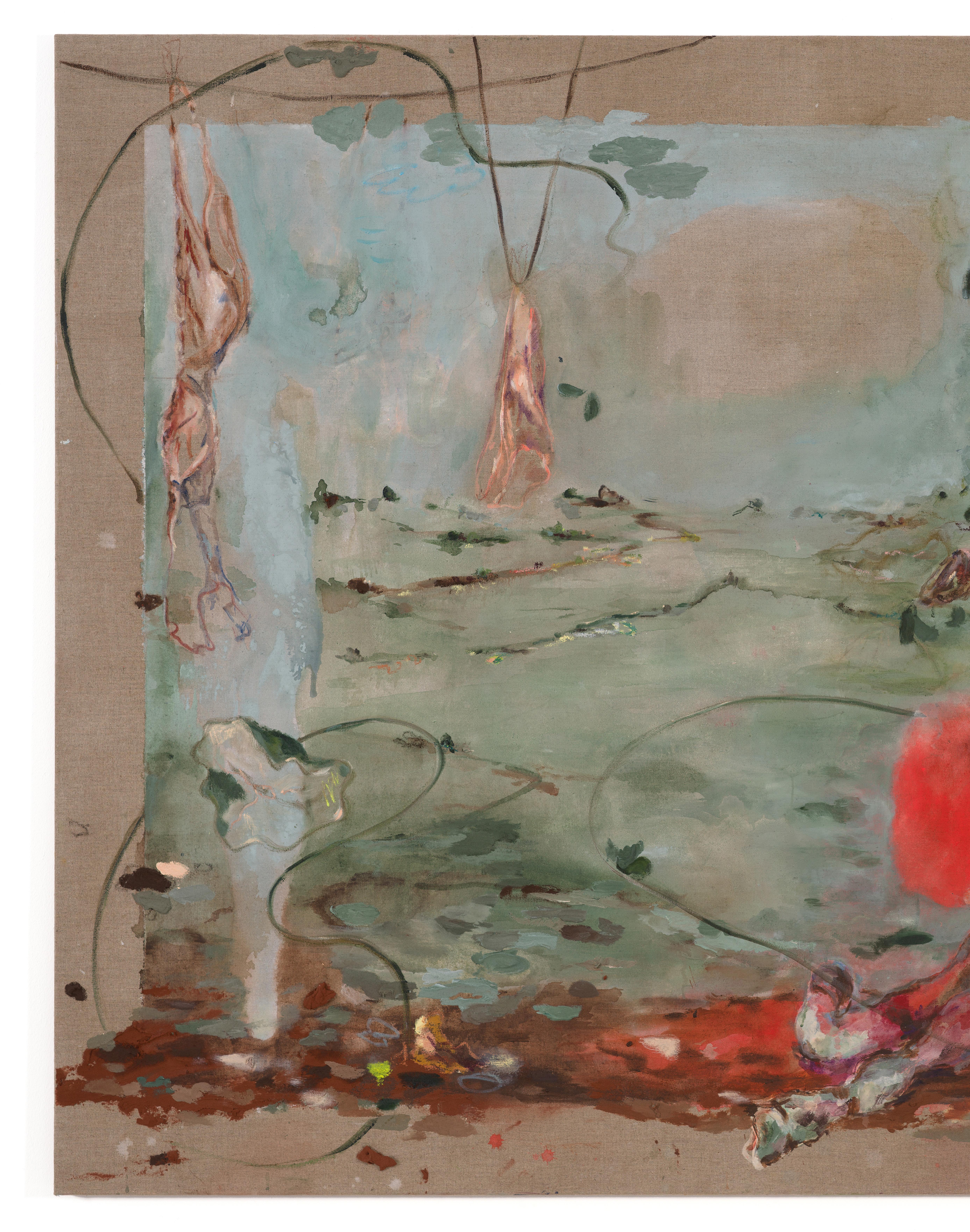
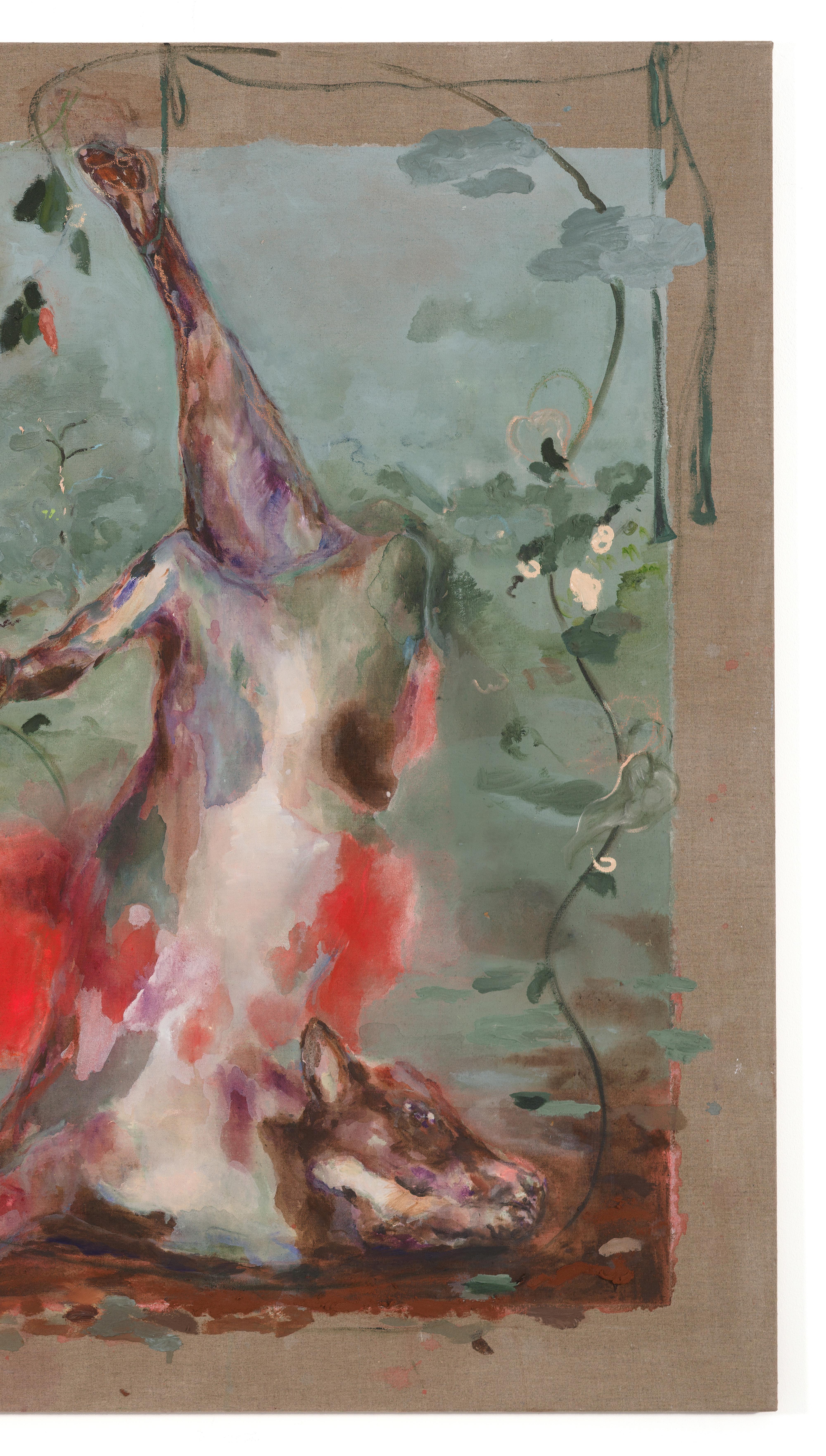
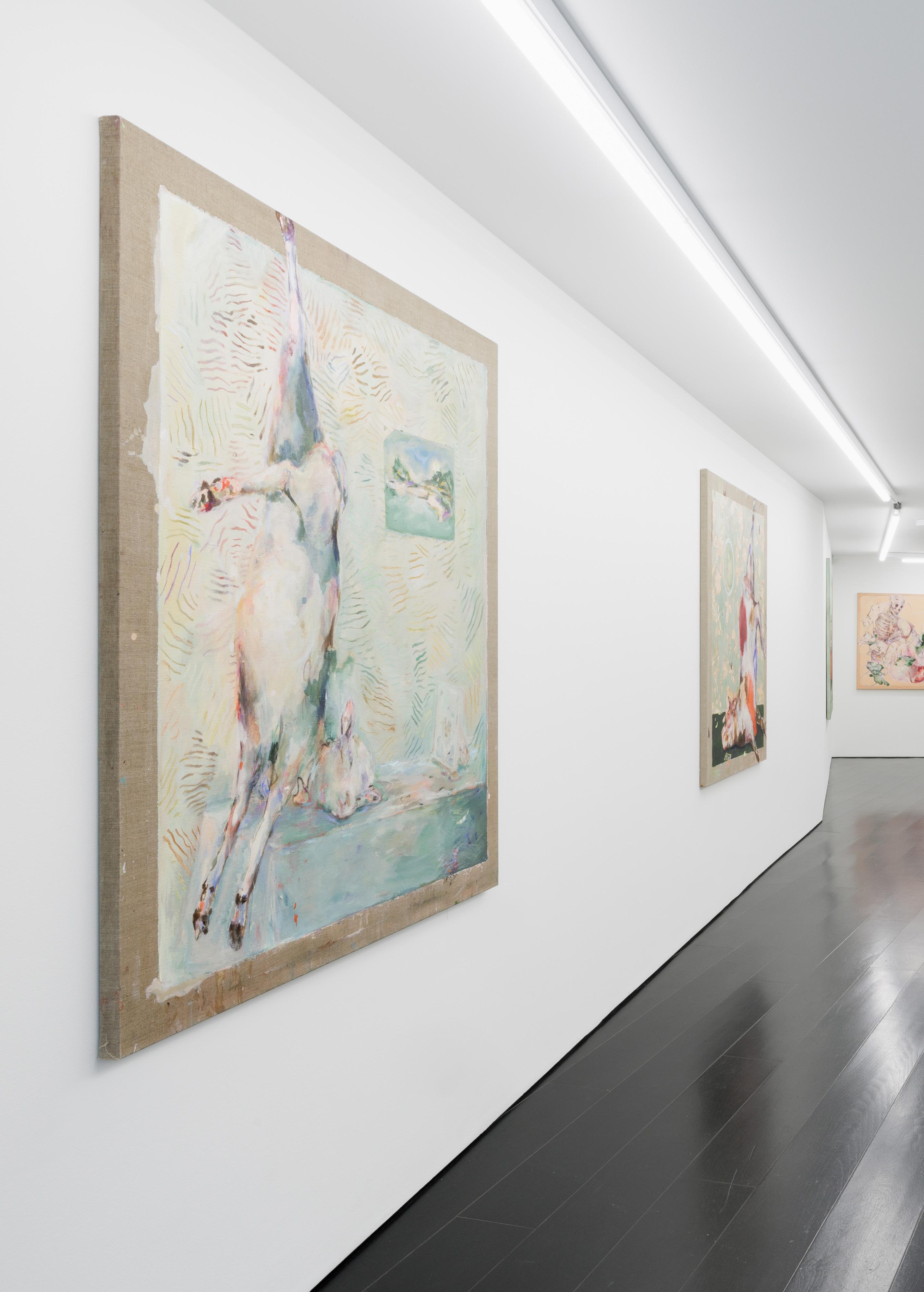
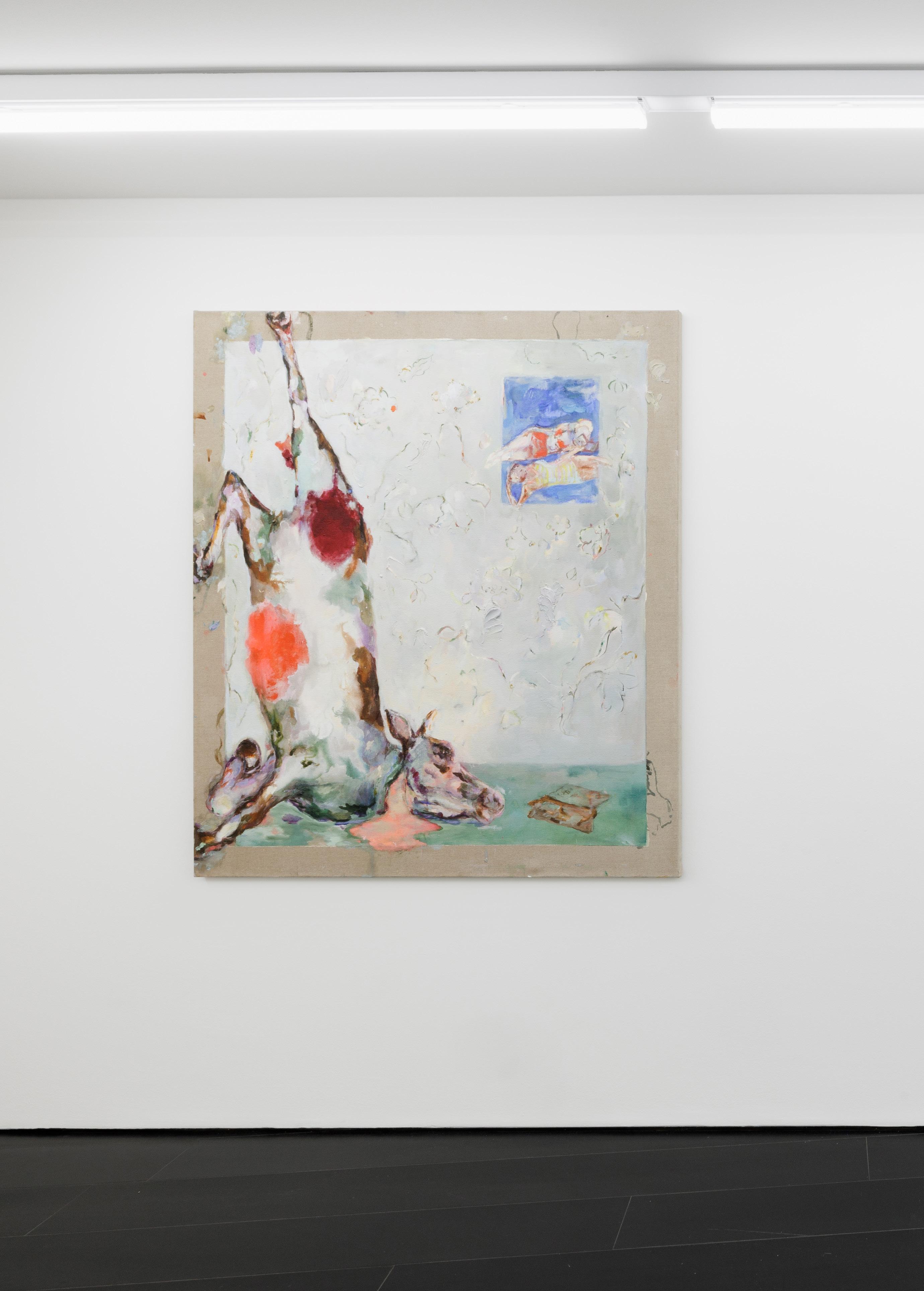
Beyond that, I felt an affinity for the paintings Anna showed me because of her choice of motif. In her depictions of animal carcasses one can see parallels to Francis Bacon’s paintings. Chaïm Soutine’s still lifes and Rembrandt’s Slaughtered Ox of 1655, also came to mind.
While her male predecessors mostly revealed the rupture of the carcass, and thus employed “the brutal” directly, the experience of brutality in Anna’s carcasses is of a different nature. It is a contemporary painter’s lens on the motif of the dead body, with a nuanced, open meditation on death, on finitude, on vulnerability, on reality.
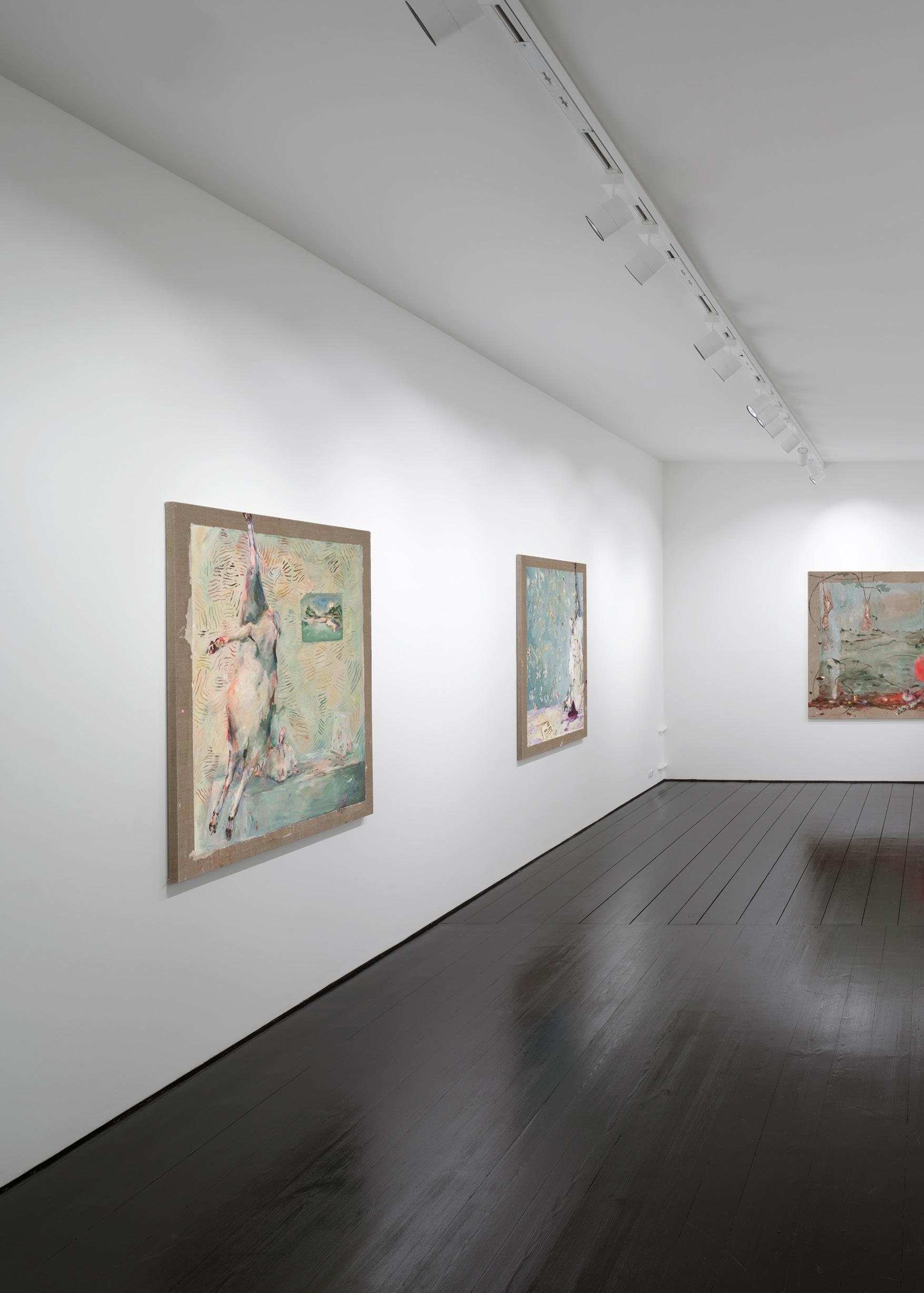
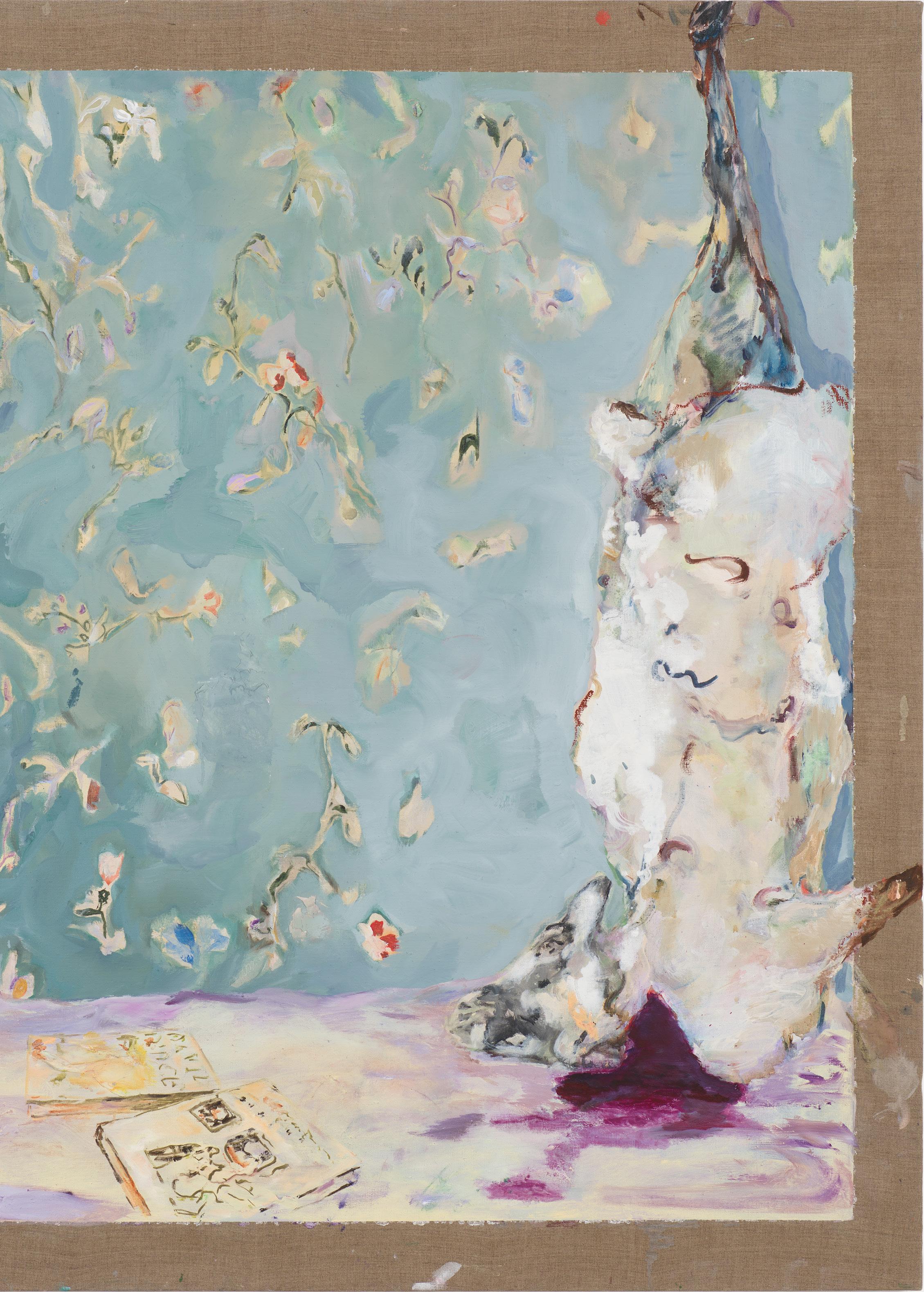
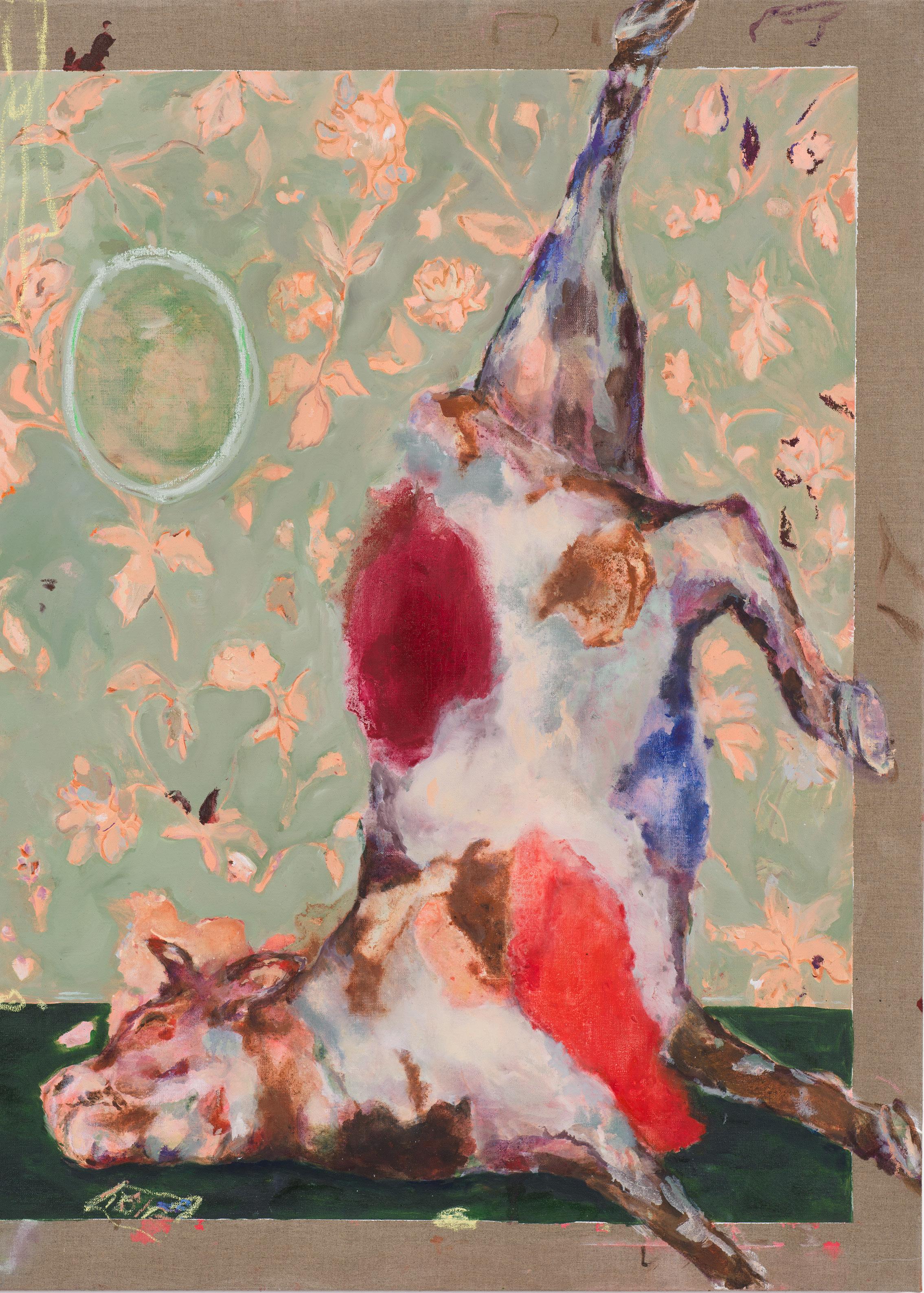
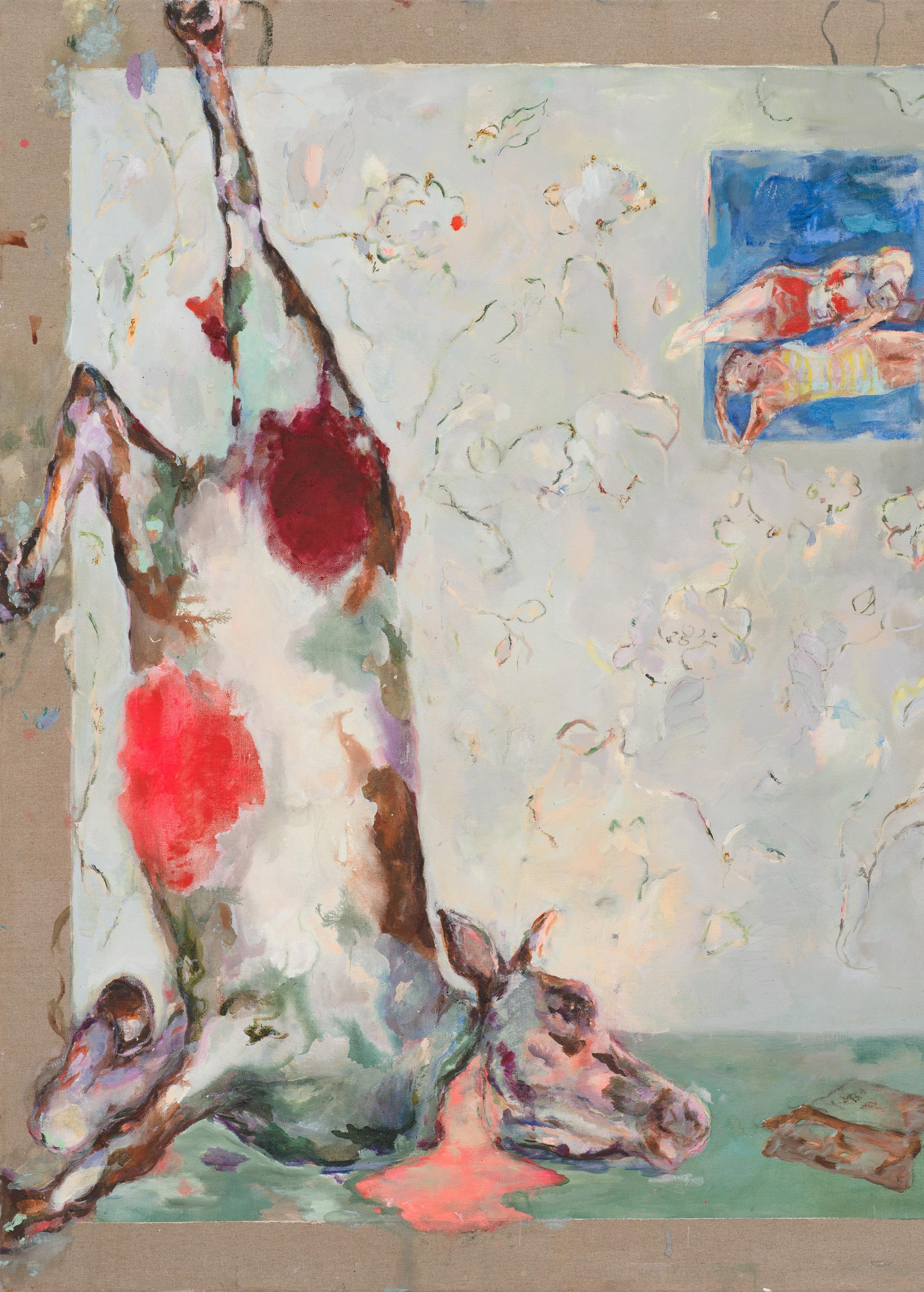
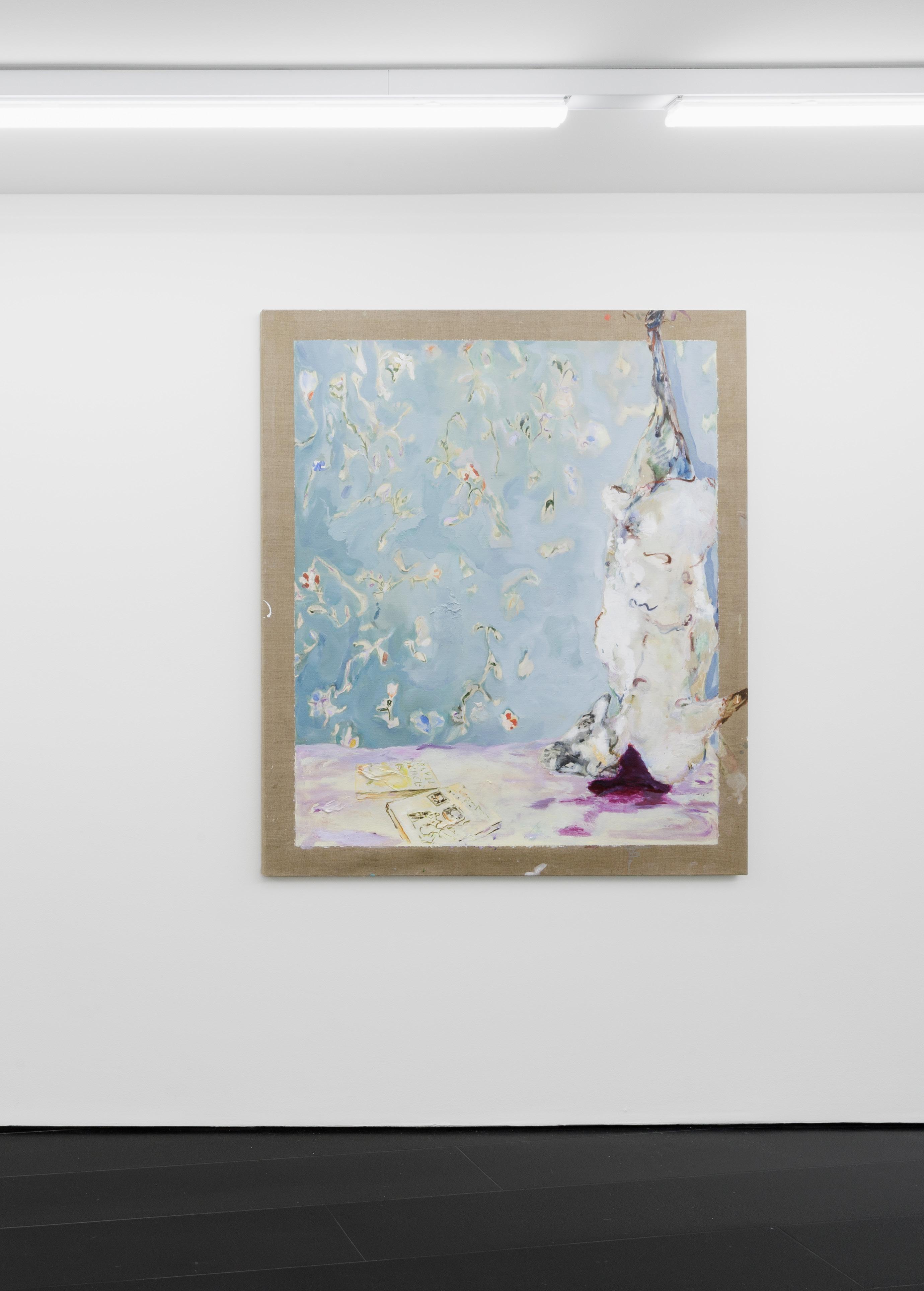
Anna’s paintings hold back as much as they show. I perceived this field of tension between visibility and concealment. Reality, in her works, is not clearly defined. She does not try to explain anything, in order to lecture you how terrible reality is. Instead, she allows ambiguity to remain. The dead animals hang like at the butcher’s, but she gives them grace by propping their heads up with something underneath, decorating them with floral tapestries, and using colors that are the opposite of death. I thought the paradox of death and beauty, the way she balances that fine line, was pretty cool.
Anna has a remarkable authenticity that stems from her natural manner. You immediately understand her warm and – in the best way – weird temperament, and the charm of her slight absent-mindedness. She behaves and shares her thoughts in a completely unfiltered way. There is nothing staged about her. No false interest, no false laughter, no false doubt or suspicion, no false politeness. What she thinks is what she says and does.
In the way I experienced her as a person, I quickly understood that her relationship to art is just as straightforward as her character. I realized that art is something natural for her, something that is anchored in her personality. And in my experience, that is always the best attitude for an artist. Art is a 24/7 way of life, an entire life concept.
While still in her studio, we agreed on a joint exhibition in Berlin, which was to open on January 13, 2025. We called it Paradise News, after the title of one of the many books lying around in her studio.
One ordinary Monday morning in February, I received a call from Anna. There was nothing in specific, just her joyfully telling me about how she had just listened to Crimson and Clover (1968) by Tommy James & the Shondells* on the radio. We agreed: “What a great song!” Why? None other than Rolling Stones legend Keith Richards describes it as one of his favorite songs in his autobiography Life . The Stones’ hit Gimme Shelter – a song whose lyrics are astonishingly still relevant today – was inspired by the tremolo guitar intro to Crimson and Clover. And after talking a bit about the song, we decided to name Anna’s next show with us at our gallery in Basel (which opens on April 16, 2026,) Crimson & Clover.
Told by Bruno Brunnet, written by Felicitas Berlin
*CLICK HERE for Crimson and Clover by Tommy James & the Shondells


„Ich habe seit vielen Jahren nichts mehr gesehen, was mich so beeindruckt hat, sie ist ‚the real deal?‘.“ Diese Zeilen las ich in einer E-Mail, die mir Julie Sylvester im Spätsommer 2025 schickte. Sie bezog sich auf Anna Tuori, die finnische Künstlerin, von der ich schon vor einiger Zeit gehört hatte. In der E-Mail hieß es weiter: „Sie ist außerdem ein wunderbarer, brillanter und witziger Mensch.“
Da Julie eine echte Veteranin der Kunstwelt ist, weckte dies mein Interesse. Mit einem Fuß in Finnland und dem anderen auf Bermuda war Julie immer ein bisschen woanders, immer mit zeitgenössischer Kunst beschäftigt. Seit Jahrzehnten ist sie eng befreundet mit Künstlern wie Günther Förg, Louise Bourgeois und Cy Twombly und war stellvertretende Kuratorin für zeitgenössische Kunst am Hermitage Museum in St. Petersburg. Wenn jemand mit solcher Erfahrung mit echter Begeisterung über eine Künstlerin spricht, wie Julie es über Anna tut, wird man neugierig. Ich war es auf jeden Fall.
Das erste Treffen mit Anna verlief schlicht und unkompliziert. Es fand am 10. Oktober 2025 in London im Hazlitt’s statt, dem ältesten Hotel in Soho. Von dort aus gingen wir weiter in die Bar Italia. Anna bestellte einen Blaubeermuffin. Dieser Moment löste sofort eine amüsante Assoziation aus: Ich musste an die Szene in Pulp Fiction denken, in der Butch auf seinem Motorrad zu seiner Freundin Fabienne zurückkehrt.
Butch: “Fabienne! Fabienne! Fabienne! Come on, baby. Come on, get your shit. We gotta go right now.”
Fabienne: “Butch, I was so worried! ... Are we in danger?”
B: “Come on, honey!”
F: “Where did you get this motorcycle?”
B: “It’s not a motorcycle, baby. It’s a chopper. Come on, let’s go.” ....
F: “You’re hurt?” ...
Fabienne starts crying.
B: “Oh baby, I’m sorry. Come here, come here. I’m sorry. I’m so sorry.”
F: “You were gone so long, I started to think dreadful thoughts.”
B: “I’m sorry, sweetie. I didn’t mean to worry you. Everything’s fine. How was breakfast?”
F: “It was good.”
B: “Did you get the pancakes? The blueberry pancakes?”
F: “No, they didn’t have blueberry pancakes, I had to get buttermilk – are you sure you’re okay?”
B: “Honey, since I left you, this has been, without a doubt the single weirdest fuckin’ day of my life. Come on, hop on. I’ll tell you all about it. Come on, get on. Gotta go! Gotta go! Come on.”
Nun, in diesem Fall war es nicht der fucking seltsamste Tag aller Zeiten, sondern ein ganz gewöhnlicher Morgen. Wir haben uns von Anfang an gut verstanden. Sie und das Treffen selbst haben sich für mich ganz natürlich angefühlt. Das ist wichtig, denn ein erstes Treffen ist eine Art Test: Wie verhält sich jemand, wenn man ihn um elf Uhr morgens zum ersten Mal trifft? Mir wurde klar, dass Anna sich in keiner Weise fehl am Platz fühlte. Ganz im Gegenteil: Alles fühlte sich einfach richtig an.
Wir trafen uns erneut in Turin, um an einer Vernissage der Sammlung der Fondazione Sandretto Re Rebaudengo teilzunehmen. Danach gingen wir in einem netten Restaurant essen – was immer gut ist. Dieser Abend war eine Fortsetzung unseres ersten Treffens: locker und selbstbewusst.
Vier Tage später besuchte ich ihr Atelier in Helsinki. Auch hier fühlte sich alles richtig an. Im Vergleich zu vielen heutigen Künstlerateliers liegt es zentral in der Stadt und damit nah am Rhythmus des Alltags, nur zehn Autominuten vom bekannten Restaurant Kosmos entfernt.
Die Bilder, die ich in ihrem Atelier sah, ergaben für mich Sinn. Ich verlasse mich auf meine Intuition, mein Bauchgefühl. Der Moment selbst spielt für mich eine wichtige Rolle. Und die Momente, die ich in ihrem Atelier verbrachte, haben mir Spaß gemacht.
Darüber hinaus fühlte ich aufgrund ihrer Motive eine Affinität zu den Bildern. In ihren Darstellungen von Tierkadavern – lassen sich Parallelen zu Francis Bacons Bildern entdecken. Auch Chaïm Soutines Stillleben und Rembrandts Geschlachteter Ochse von 1655 kamen mir in den Sinn.
Während ihre männlichen Vorgänger meist den Zerfall des Kadavers offenbarten und somit „das Brutale“ direkt einsetzten, ist die Erfahrung von Brutalität in Annas Kadavern anderer Natur. Es ist der Blick einer zeitgenössischen Malerin auf das Motiv des toten Körpers, verbunden mit einer nuancierten, offenen Auseinandersetzung mit dem Tod, der Endlichkeit, der Verletzlichkeit und der Realität.
Annas Bilder verbergen ebenso viel, wie sie zeigen. Ich habe dieses Spannungsfeld zwischen Sichtbarkeit und Verborgenheit wahrgenommen. Die Realität ist in ihren Werken nicht klar definiert. Sie versucht nicht, zu erklären, wie schrecklich die Realität ist. Stattdessen lässt sie die Mehrdeutigkeit bestehen. Die Kadaver hängen wie beim Metzger, doch sie verleiht ihnen Anmut, indem sie ihre Köpfe mit etwas unterlegt, sie mit floralen Wandteppichen schmückt und Farben verwendet, die das Gegenteil von Tod sind. Ich fand das Paradoxon von Tod und Schönheit, die Art, wie sie diese Gratwanderung meistert, ziemlich cool.
Anna besitzt eine bemerkenswerte Haltung, die aus ihrer natürlichen Art herrührt. Man versteht sofort ihr warmes und – im besten Sinne – schräges Temperament sowie den Charme ihrer leichten Zerstreutheit. Sie verhält sich auf eine völlig ungefilterte Weise. An ihr ist nichts inszeniert. Kein vorgetäuschtes Interesse, kein vorgetäuschtes Lachen, keine vorgetäuschten Zweifel oder Verdächtigungen, keine vorgetäuschte Höflichkeit. Was sie denkt, ist das, was sie sagt und tut.
So wie ich sie als Mensch erlebt habe, wurde mir schnell klar, dass ihr Verhältnis zur Kunst genauso geradlinig ist wie ihr Charakter. Mir wurde bewusst, dass Kunst für sie etwas ganz Natürliches ist, etwas, das fest in ihrer Persönlichkeit verankert ist. Und meiner Erfahrung nach ist das immer die beste Einstellung für einen Künstler. Kunst ist eine Lebensweise rund um die Uhr, ein ganzes Lebenskonzept.
Noch in ihrem Atelier vereinbarten wir eine gemeinsame Ausstellung in Berlin, die am 13. Januar 2025 eröffnet werden sollte. Wir nannten sie Paradise News, nach dem Titel eines der vielen Bücher, die in ihrem Atelier herumlagen.
An einem ganz normalen Montagmorgen im Februar erhielt ich einen Anruf von Anna. Es ging um nichts Bestimmtes, sie erzählte mir nur freudig, dass sie gerade Crimson and Clover (1968) von Tommy James & the Shondells im Radio gehört hatte. Wir waren uns einig: „Was für ein toller Song!“ Warum? Kein Geringerer als Rolling Stones Legende Keith Richards beschreibt ihn in seiner Autobiografie Life als einen seiner Lieblingssongs. Der Stones Hit Gimme Shelter – ein Song, dessen Text heute noch erstaunlich aktuell ist – wurde vom Tremolo-Gitarrenintro von Crimson and Clover inspiriert. Und nachdem wir ein wenig über den Song gesprochen hatten, beschlossen wir, Annas nächste Ausstellung in unserer Galerie in Basel (die am 16. April 2026 eröffnet wird) Crimson & Clover zu nennen.
Erzählt von Bruno Brunnet, geschrieben von Felicitas Berlin
*LINK zum Song Crimson and Clover by Tommy James & the Shondells
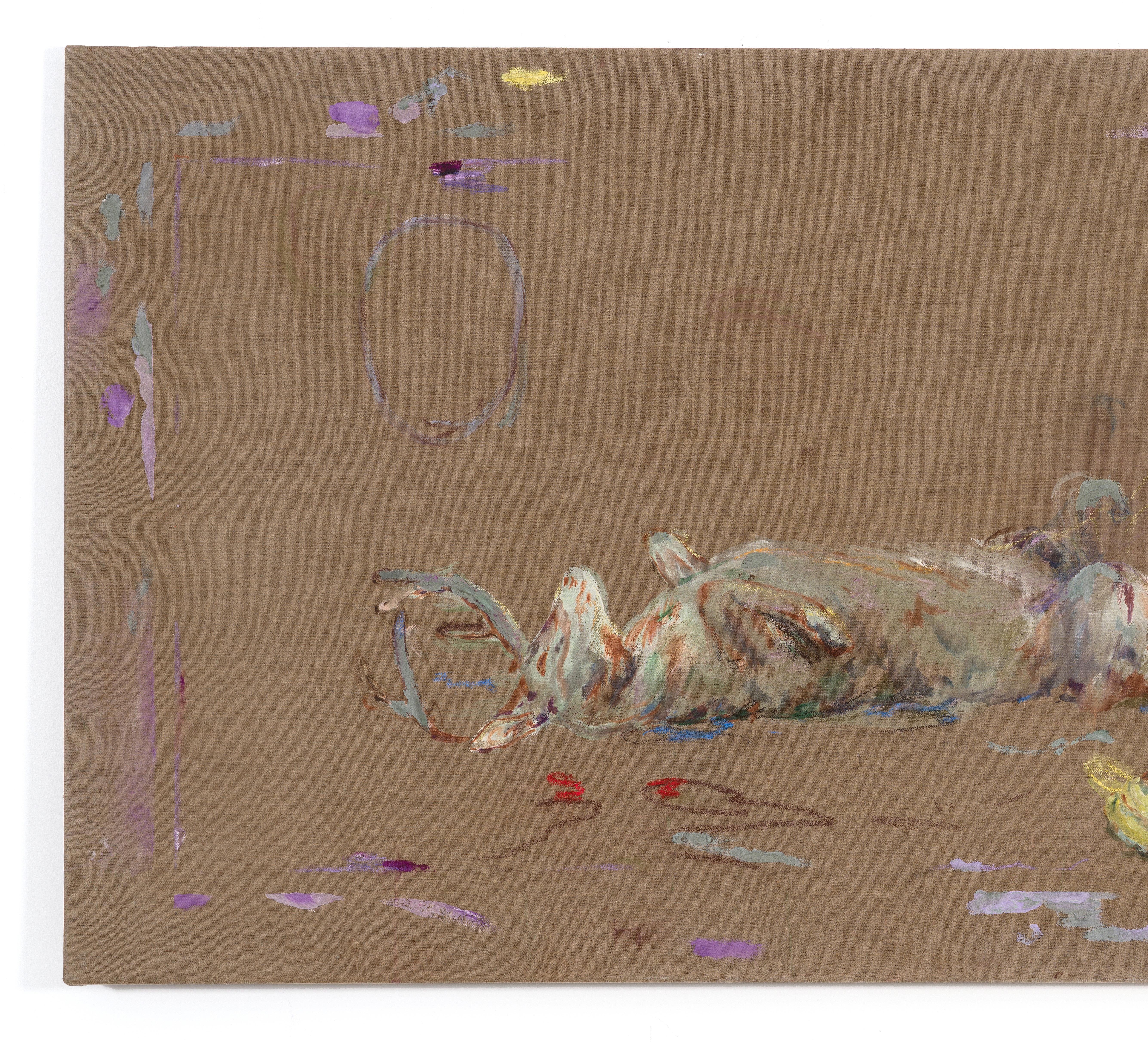
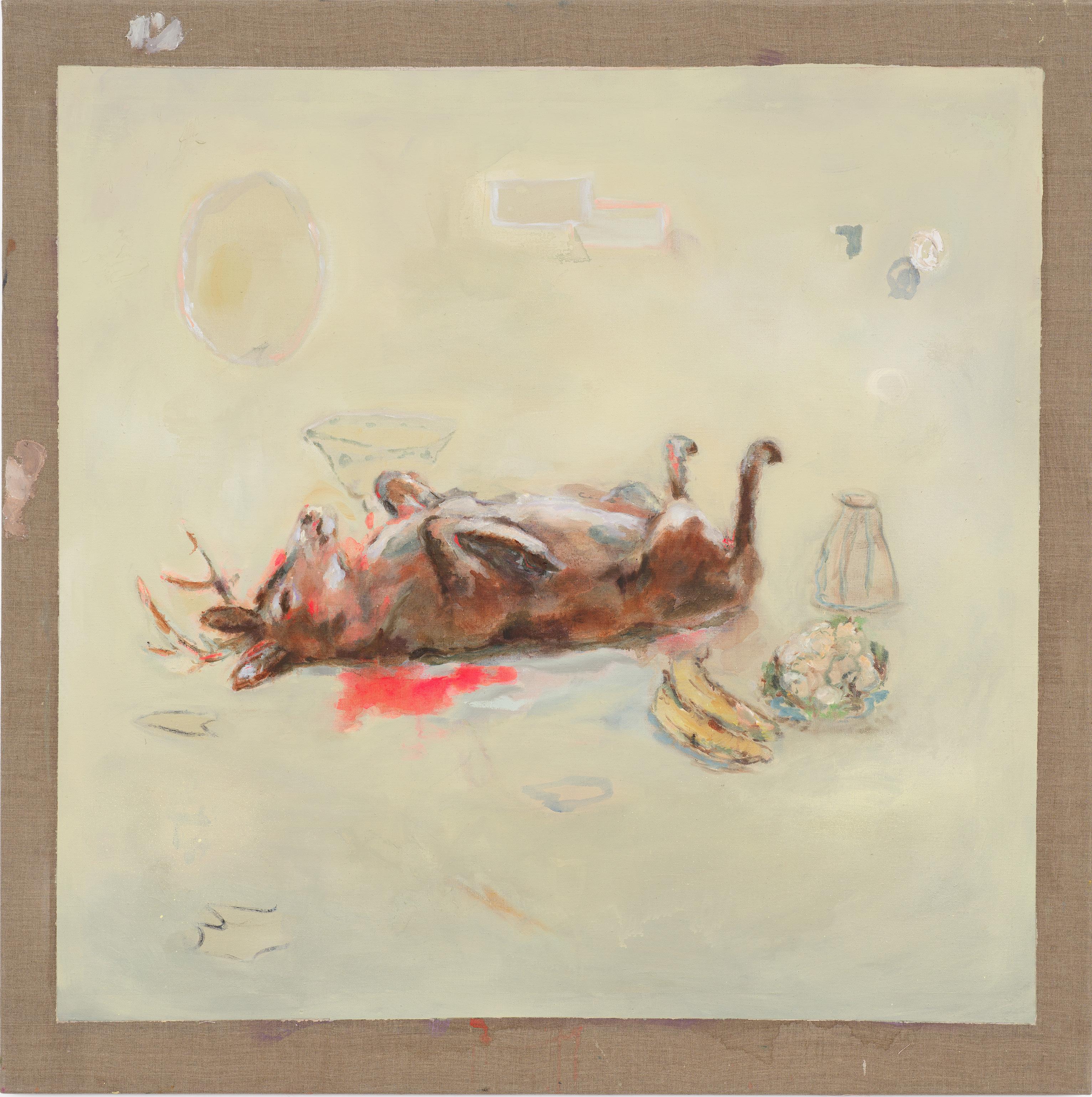
8. When It Happened Again 2025
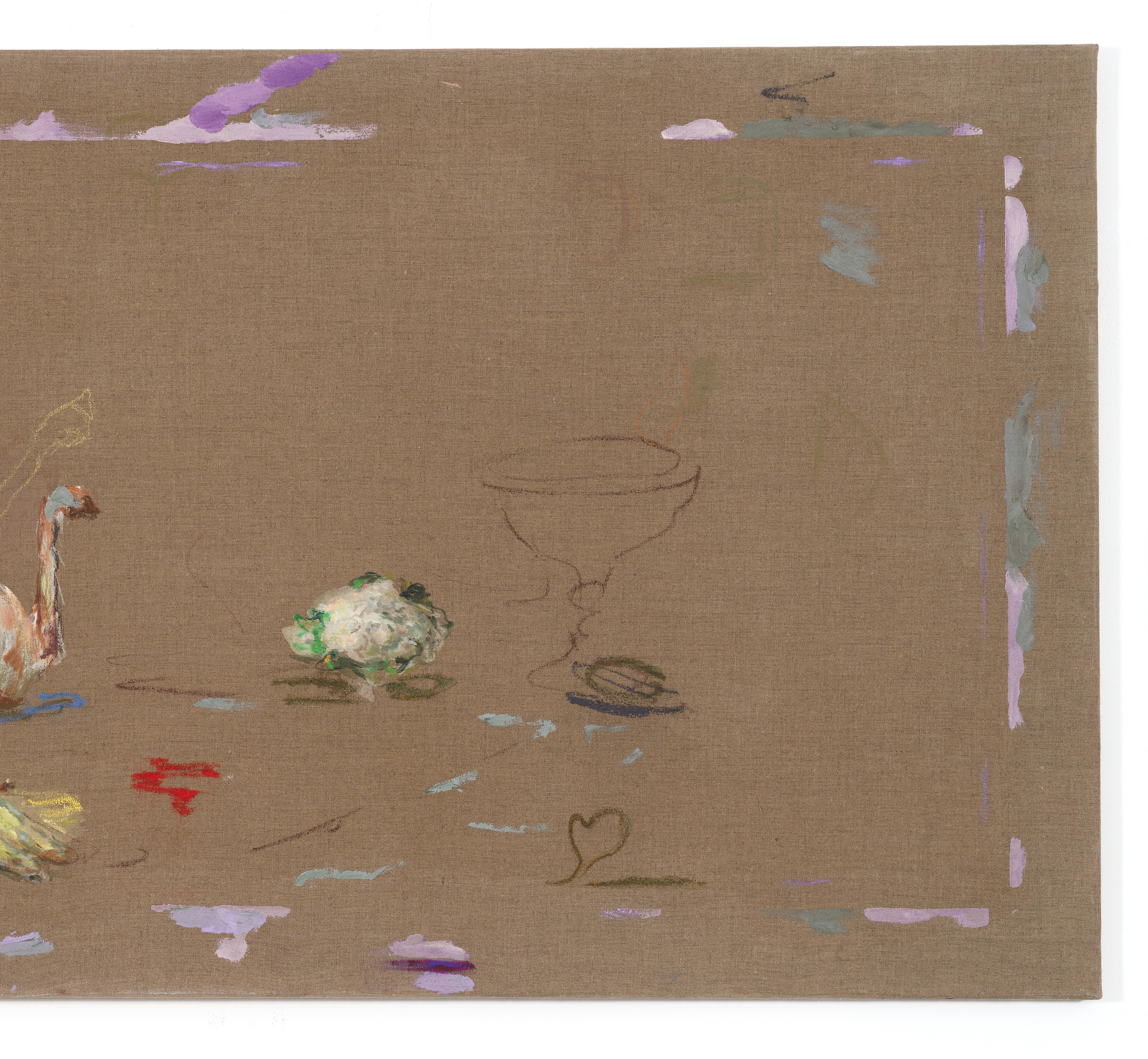
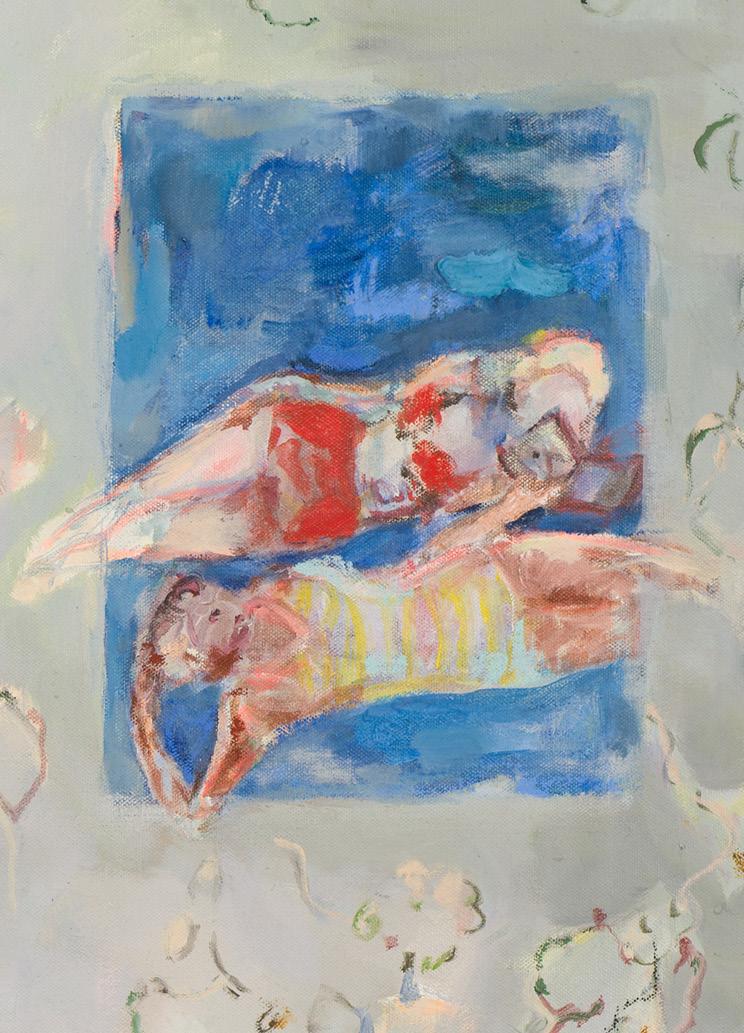
Off On an Adventure 2025


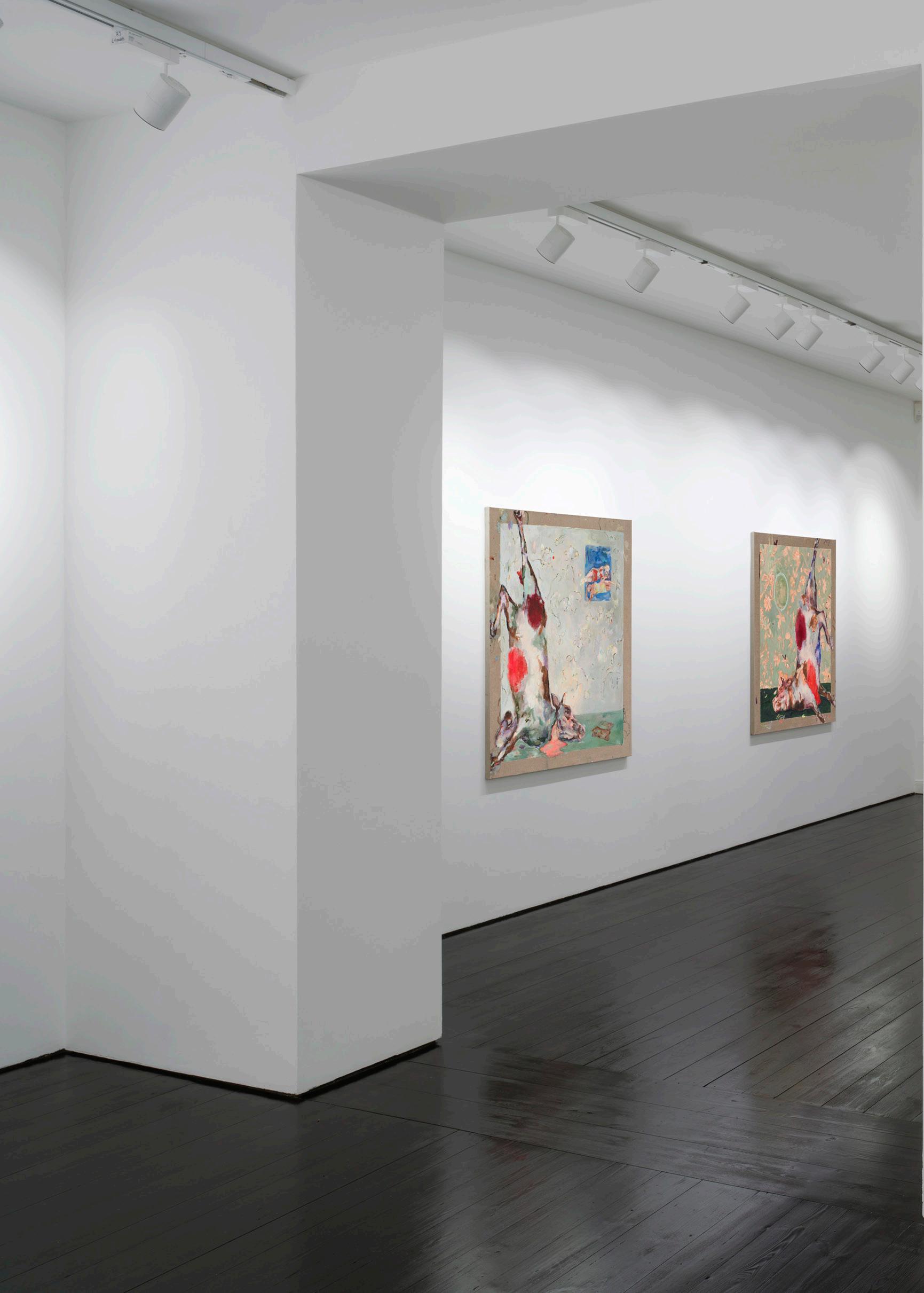
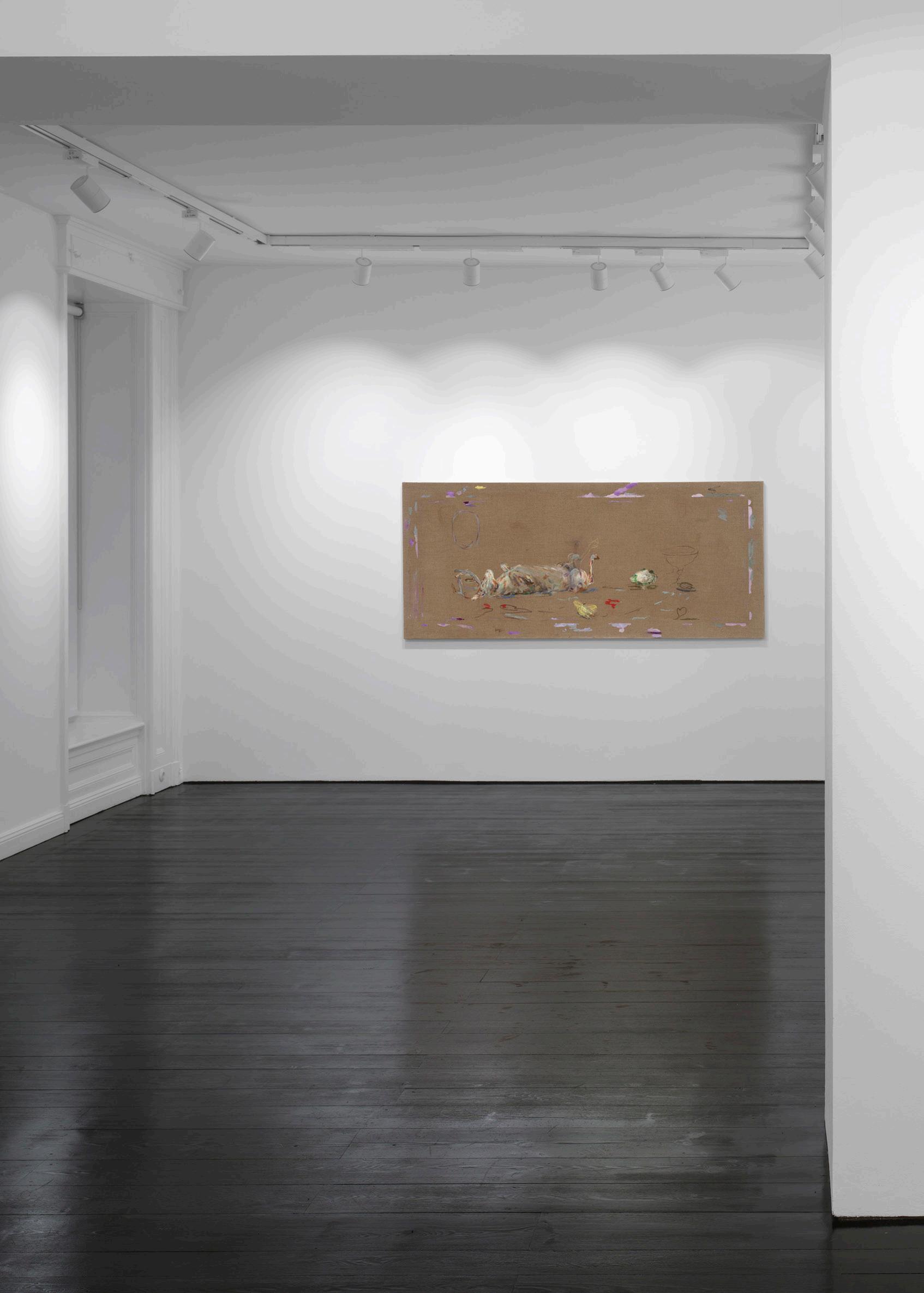
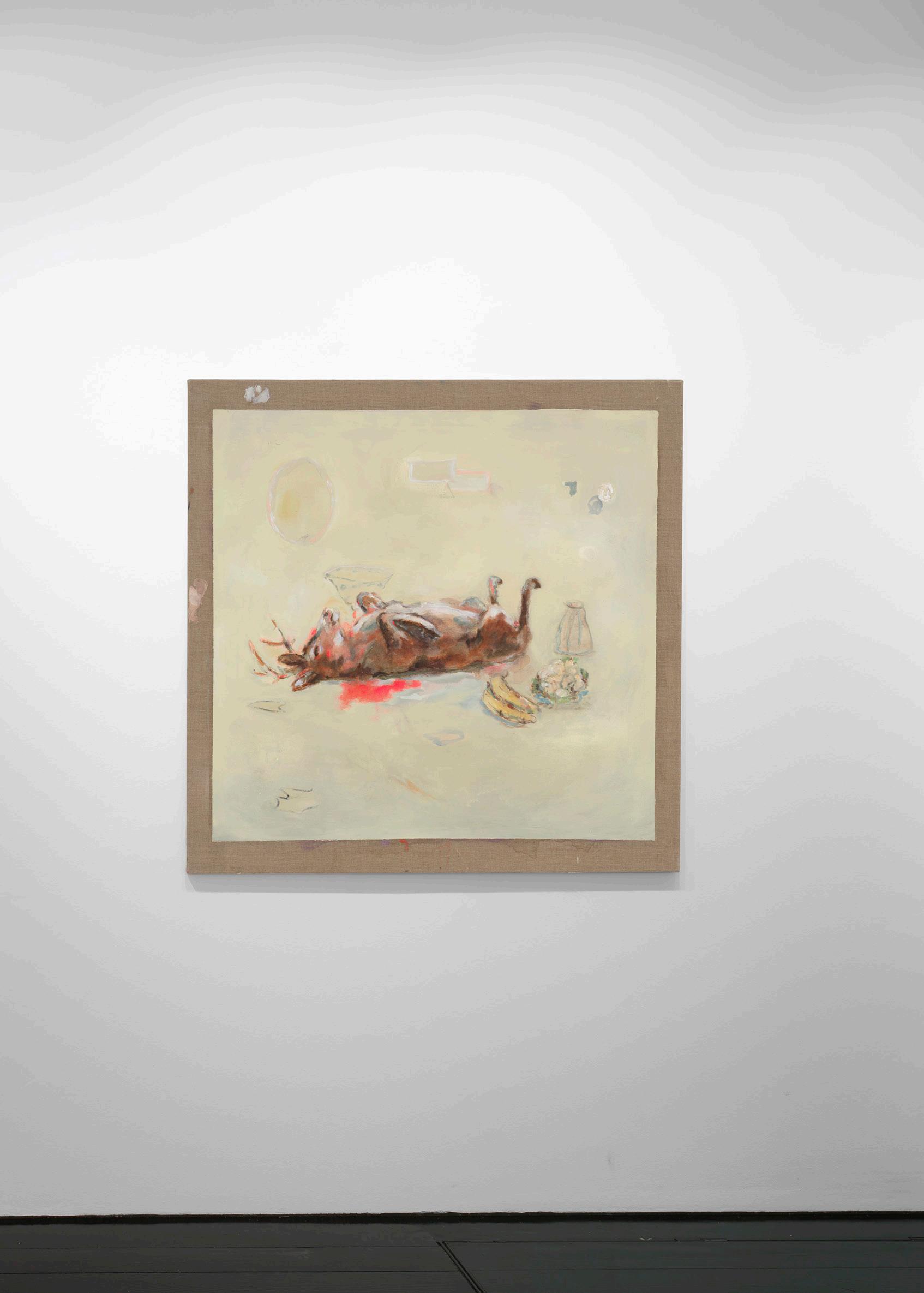
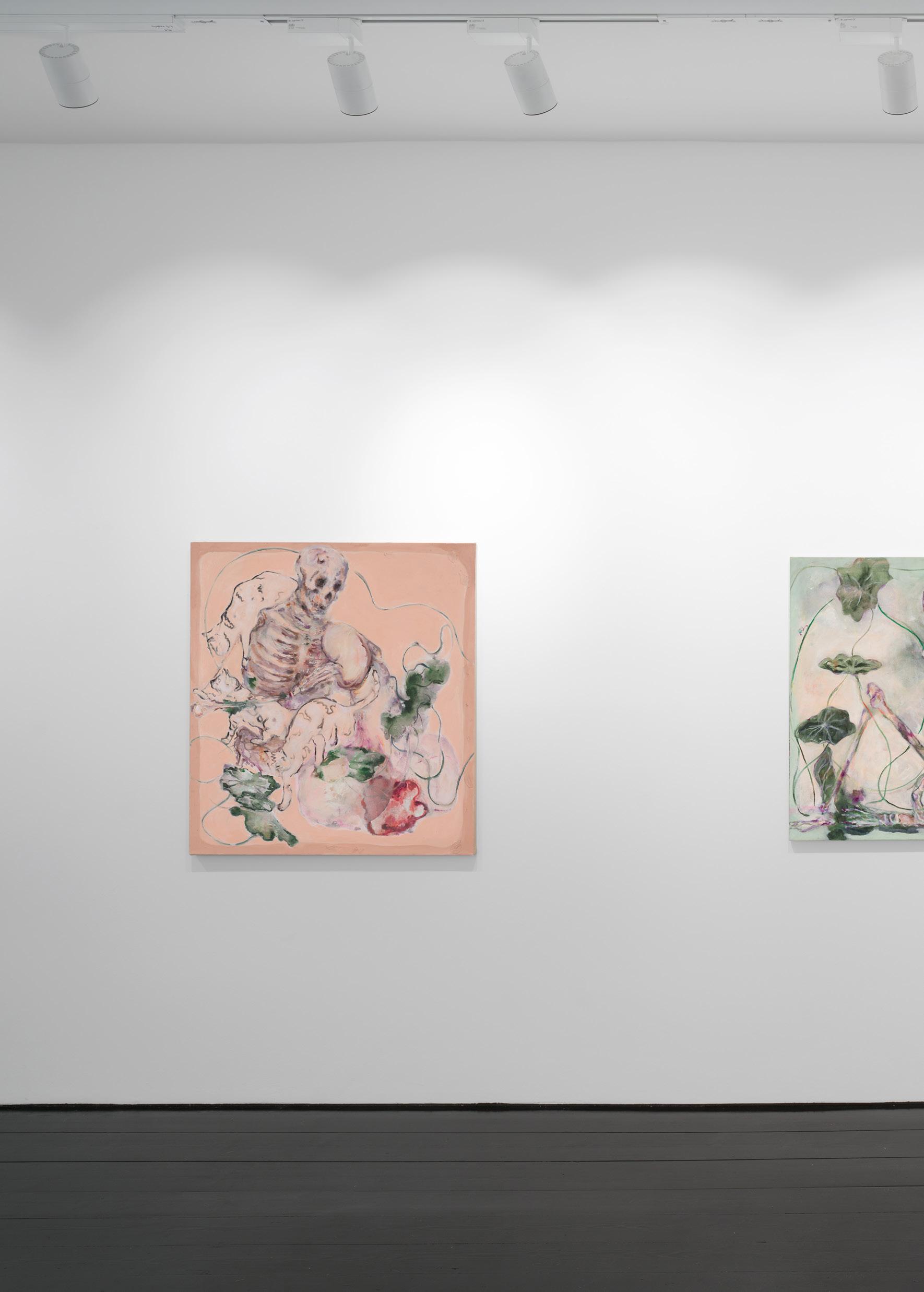
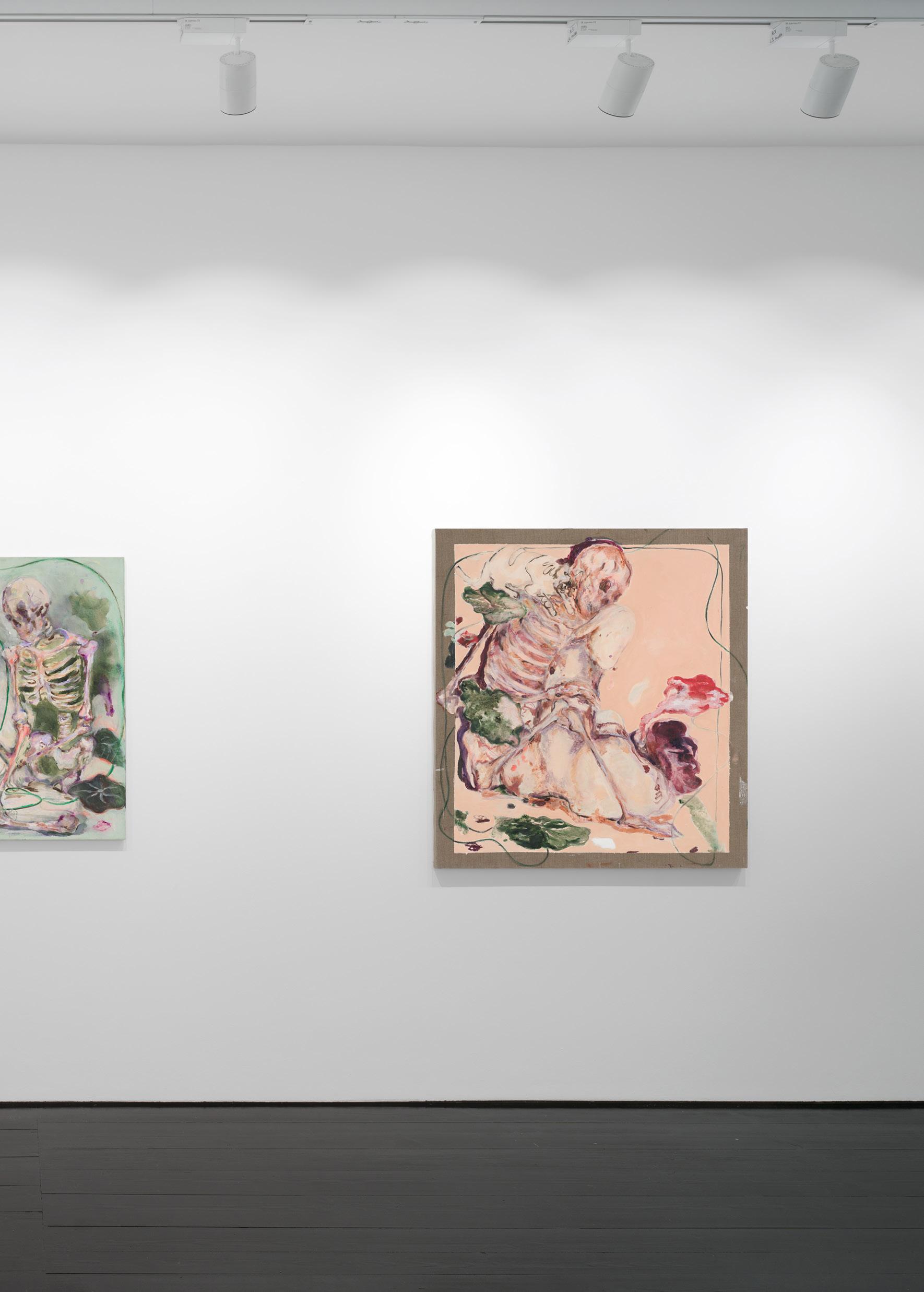
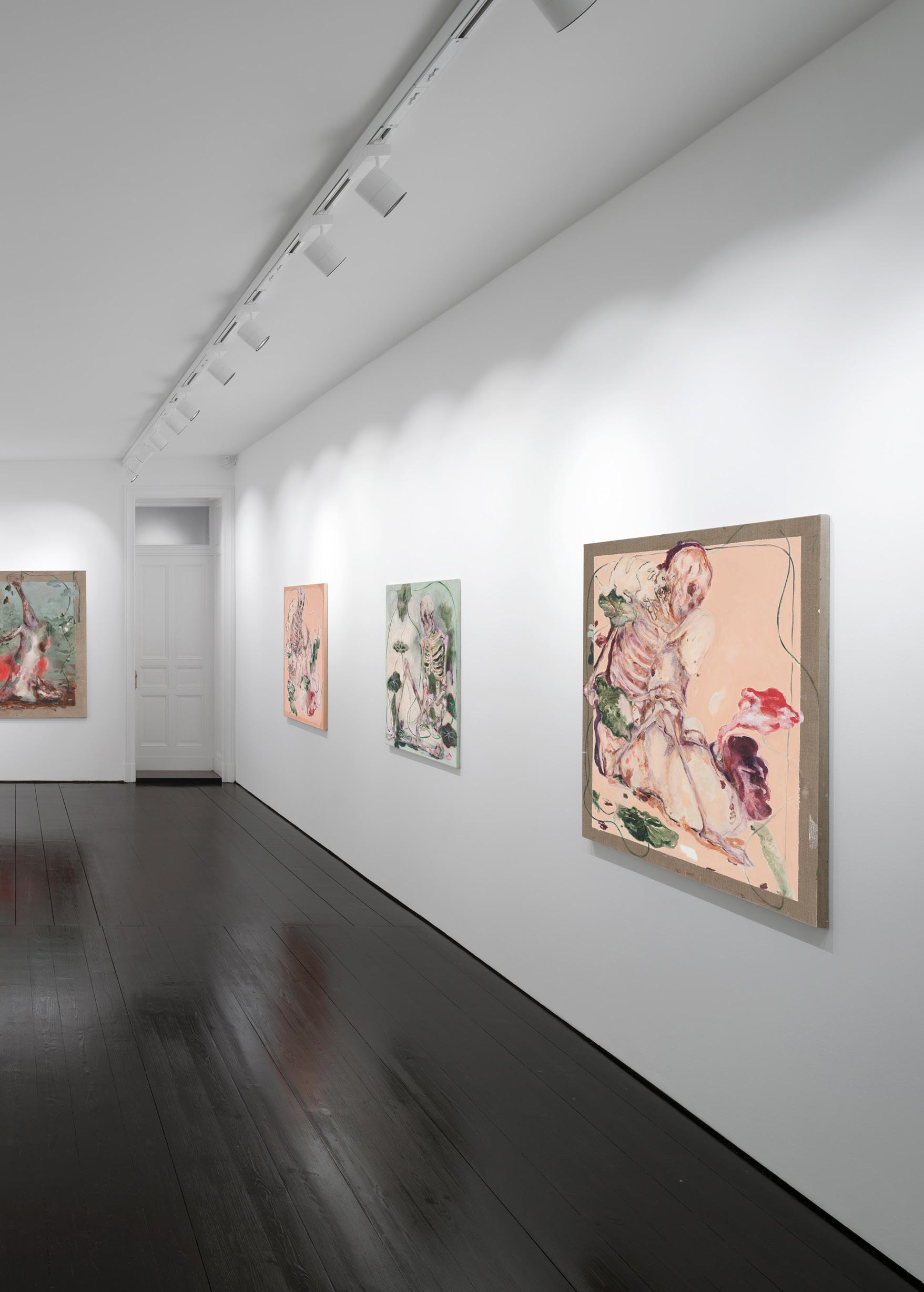
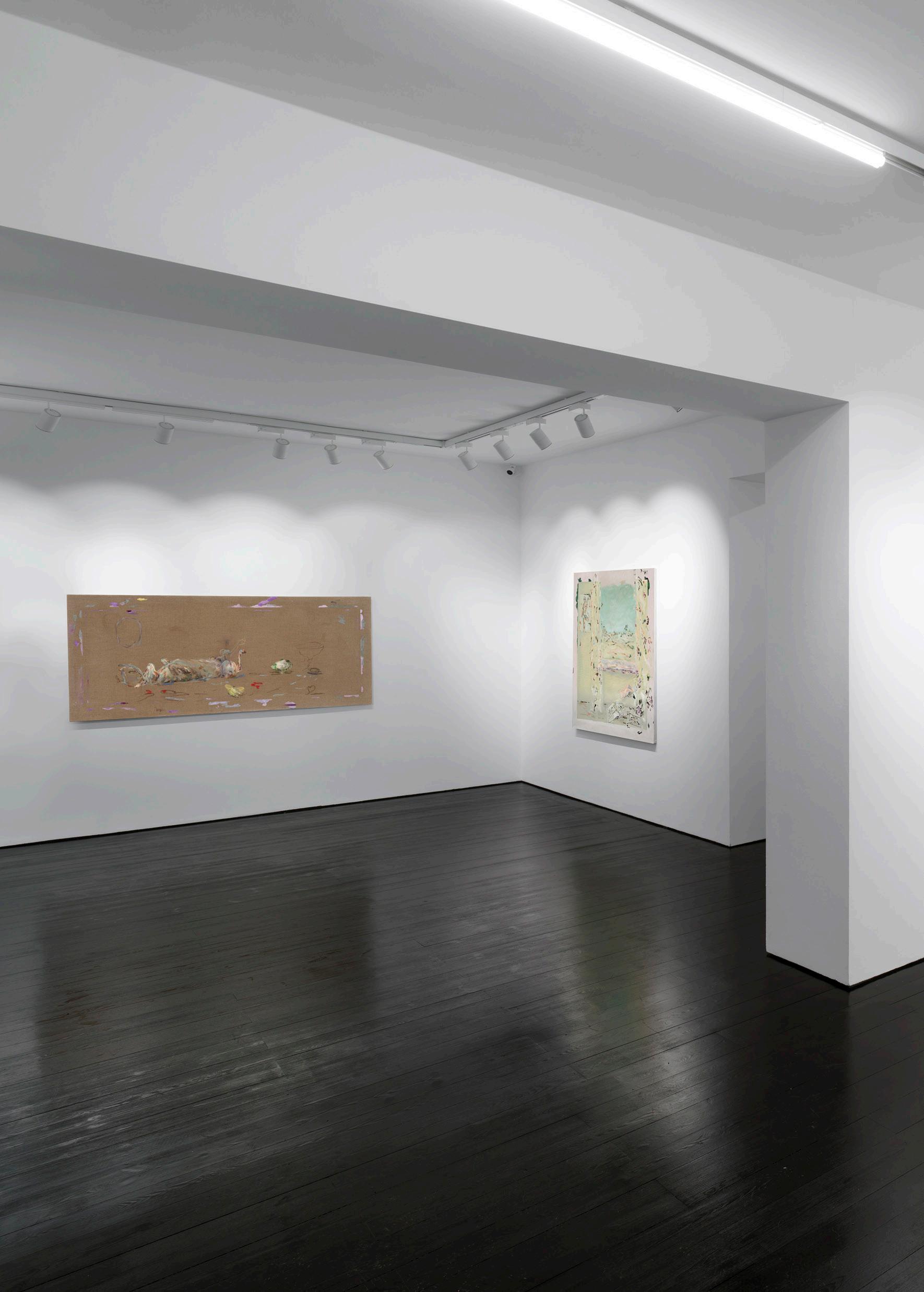
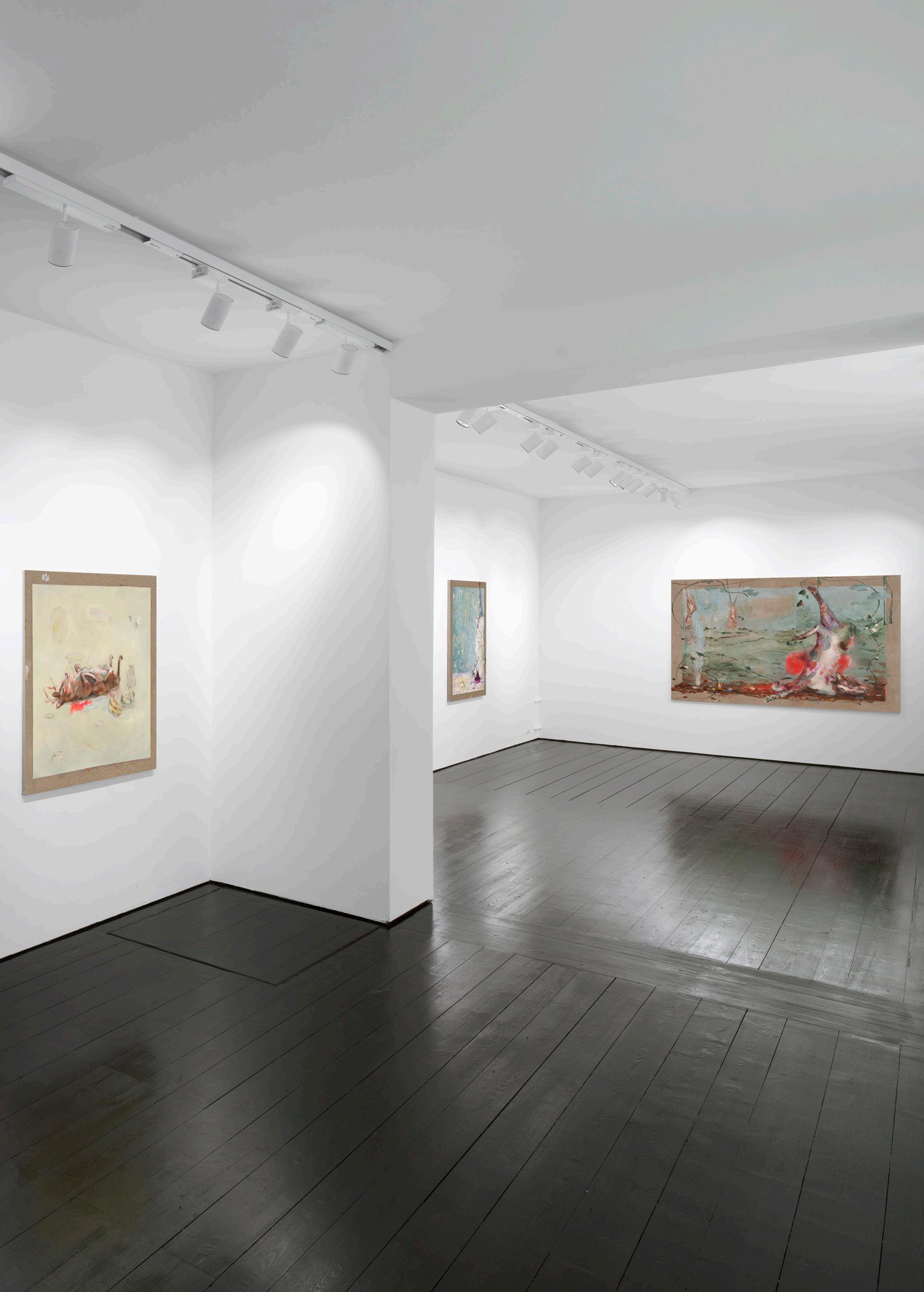
Contemporary Fine Arts presents Crimson & Clover, the first solo exhibition by Finnish artist Anna Tuori at the Basel gallery. Its title borrows from the 1968 song by Tommy James and the Shondells, carrying a note of sweetness touched by tension. That tone is close to Tuori’s practice, where warmth never comes without unease and beauty is often shadowed by disturbance.
Tuori’s work begins from the unstable texture of the present. She follows the news and absorbs what surrounds her, letting that pressure settle before it finds form. “The world is so absurd that it feels like fiction.” This sense of distance, where reality slips toward illusion, is not translated literally. It is the condition from which the image takes shape. Painting offers a way to hold conflict without resolving it too quickly. Wit, violence, intimacy, and fragility coexist without settling into a single meaning.
Her process begins with color and composition rather than with a statement. She approaches painting in a more abstract mode, allowing rhythm to guide the work before figures or objects come into view. Restlessness lingers, yet resists explanation. Colour sinks into the canvas, creating an immaterial depth, while thicker layers of oil push outward with tactile density. Each work emerges through a subtle negotiation: one movement withdraws, another insists.
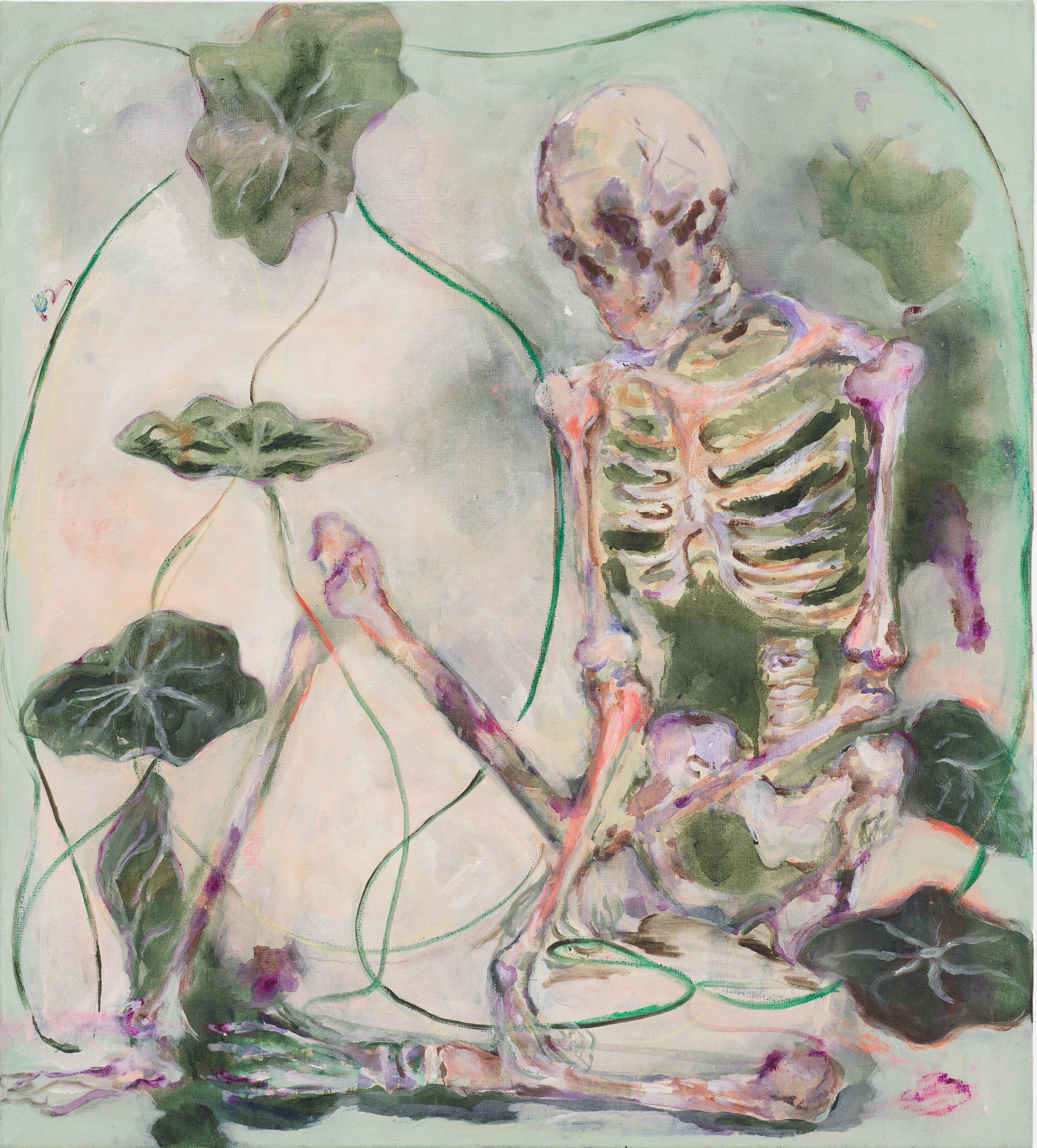
A dialogue with the history of painting runs through the exhibition. Tuori is attentive to still life, especially the memento mori, yet she does not construct direct vanitas quotations. Her relation to tradition is broader and more organic. It emerges through weight, atmosphere, and the emotional temperature of each scene. Her paintings ask how mortality inhabits ordinary life, and how one lives with that knowledge amid comfort. There is an existential undertow here, but also empathy. The works retain tenderness even when they address harsh subjects.
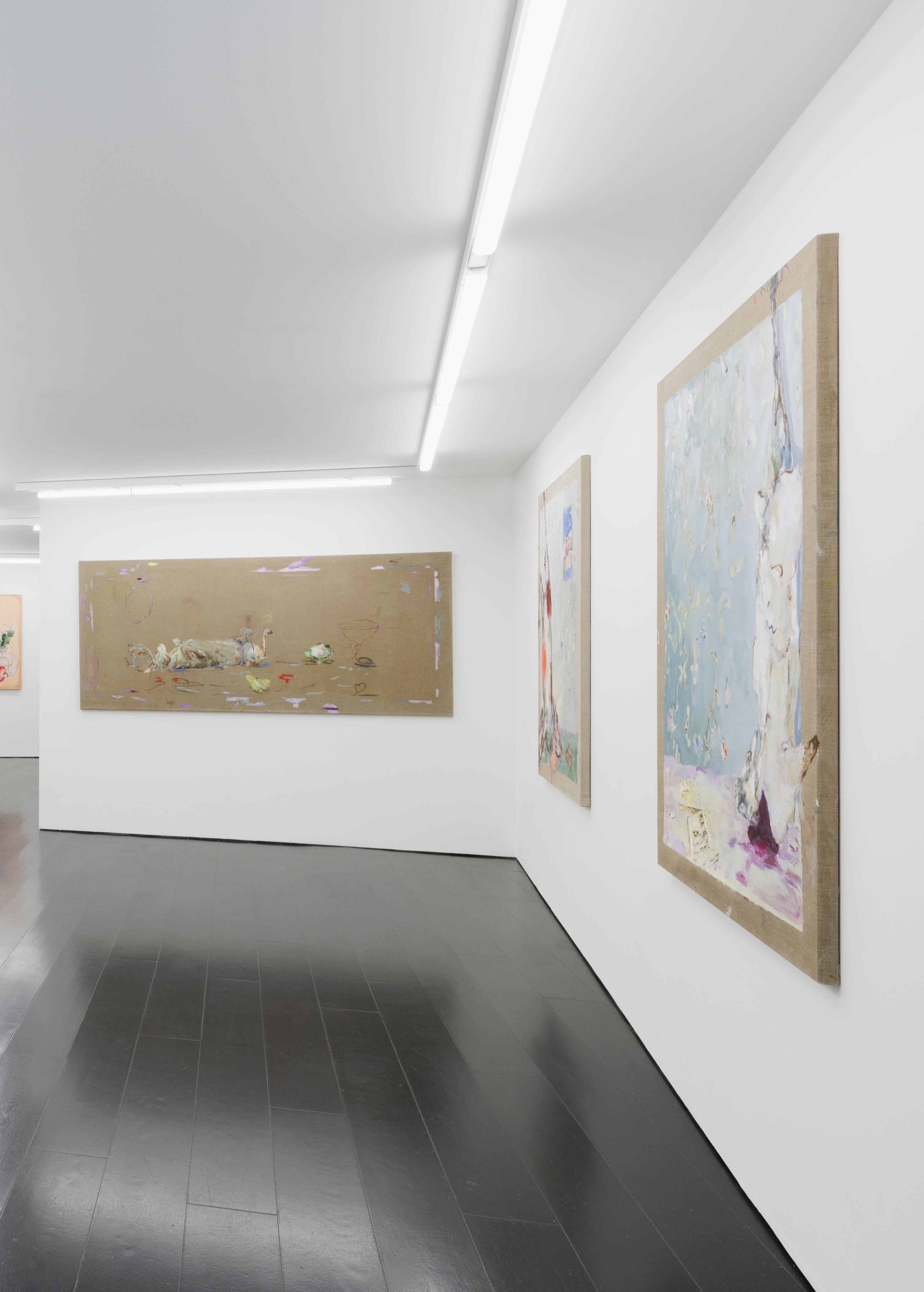
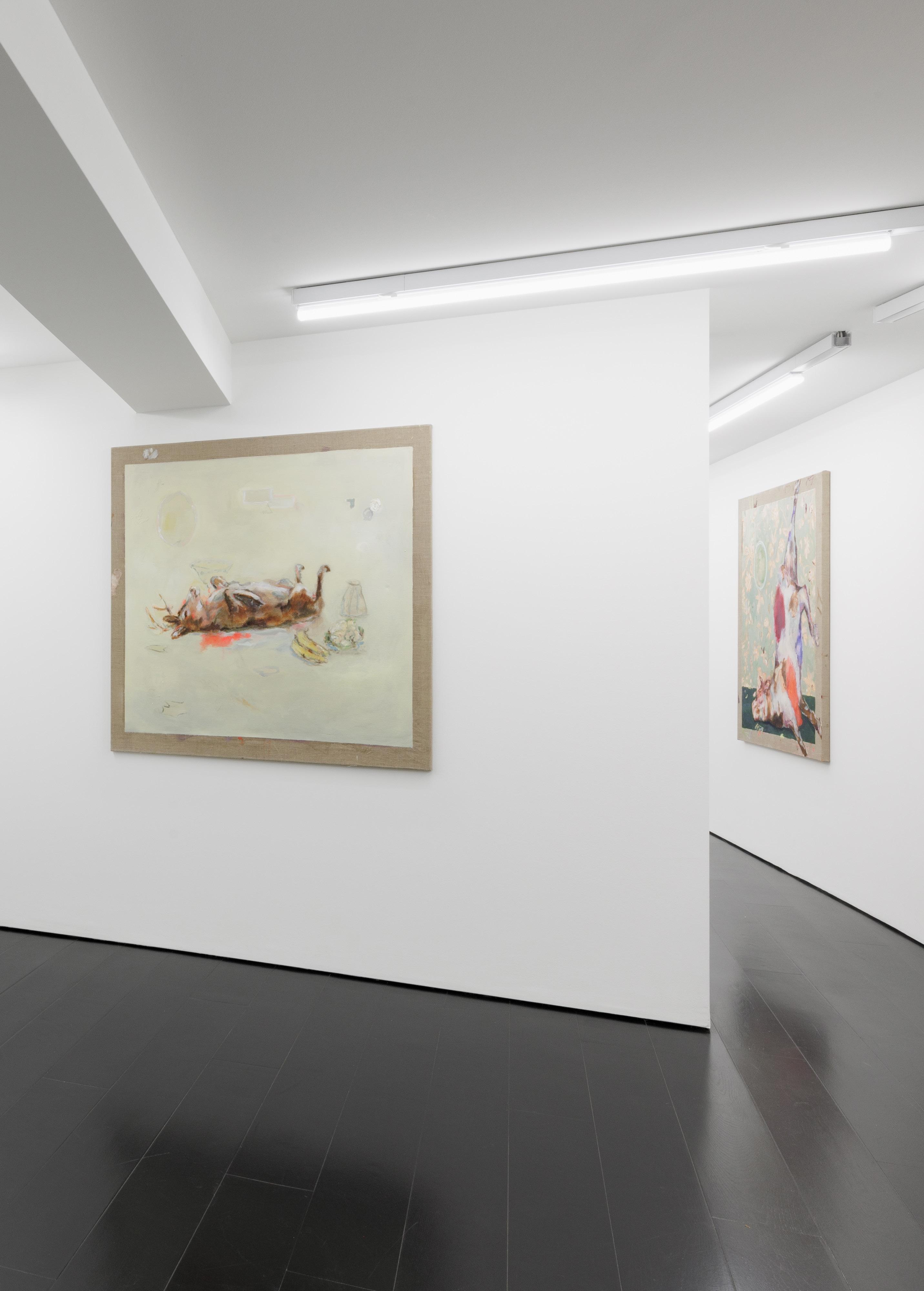
Animals such as cows, deer, and cats recur in these paintings. They stand in for the human body, though in a depersonalized way. Through them, vulnerability becomes easier to share. This leaves space for projection without directing us toward a fixed identity. The animals appear lifeless, suspended upside down. Their carcasses hang with full mass, making gravity visible. This arrangement recalls classical still life while intensifying the emotional charge.
In Noble and Tragic (2025), the motif is brutal, but the palette and framing feel intimate, almost domestic. This tension is central to the artist’s vision. Horror sits within a setting of care. Other objects and decorative elements complete the staging,
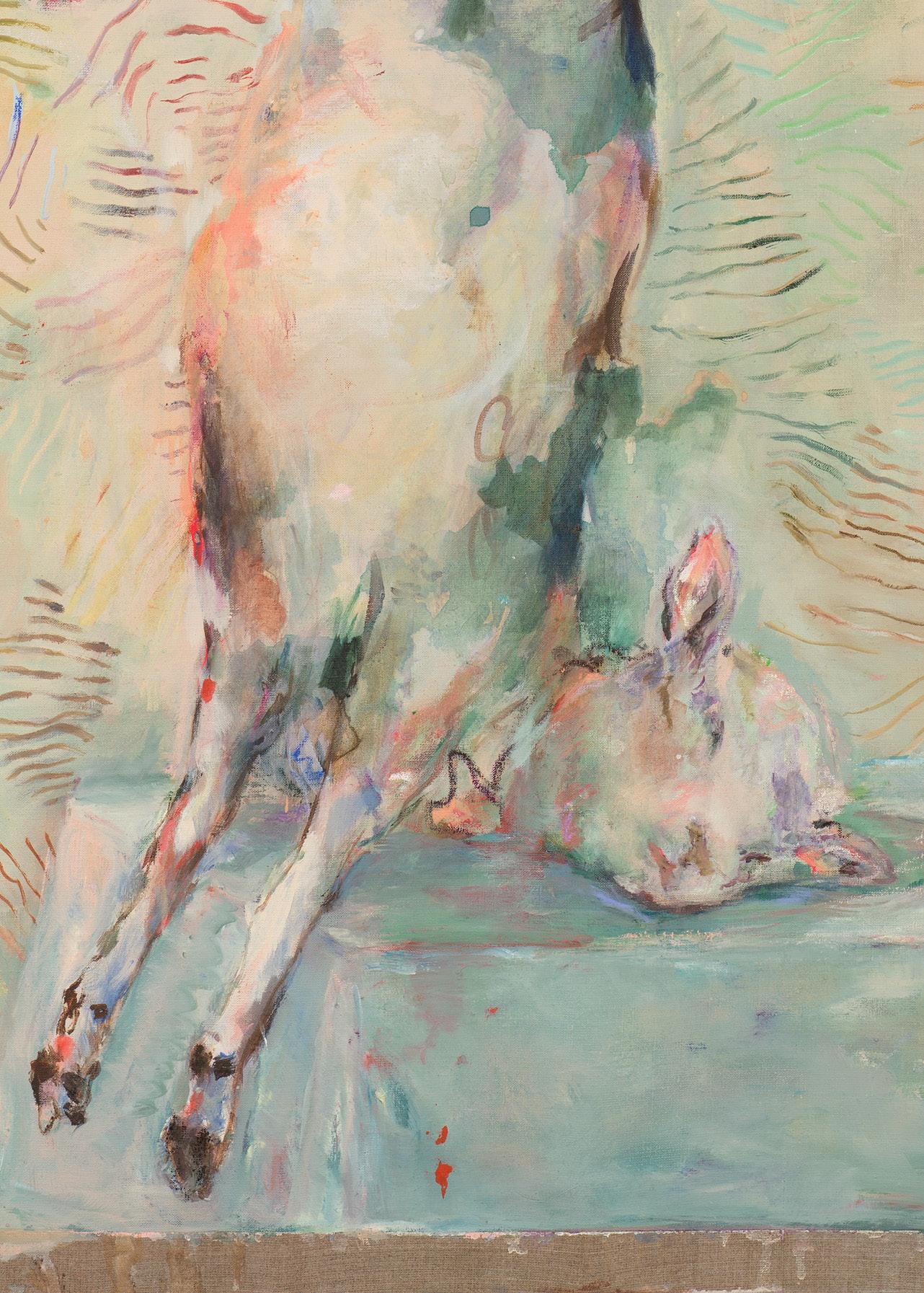
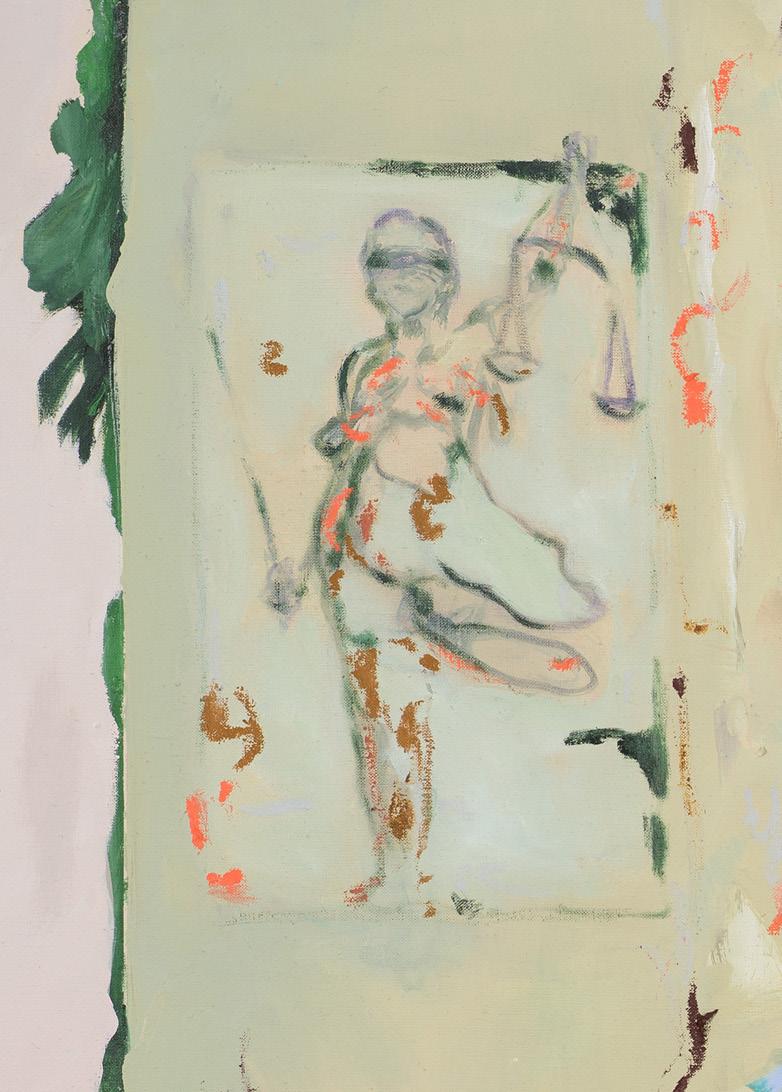
as if fragments of different times had gathered in one place. We follow these clues without being told what conclusion to reach. Even the bare borders mark a limit, reminding us that this is only one way of seeing.
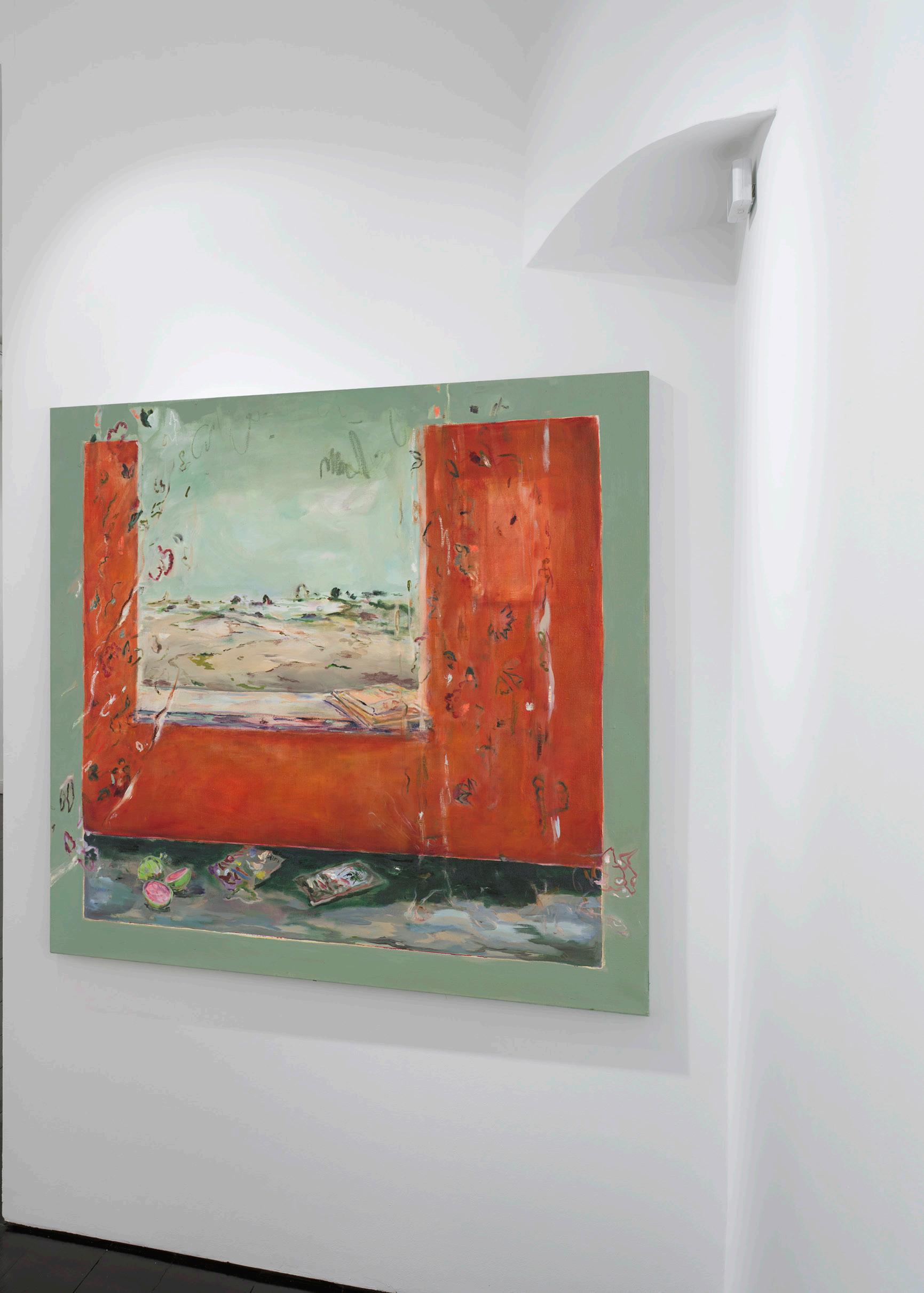
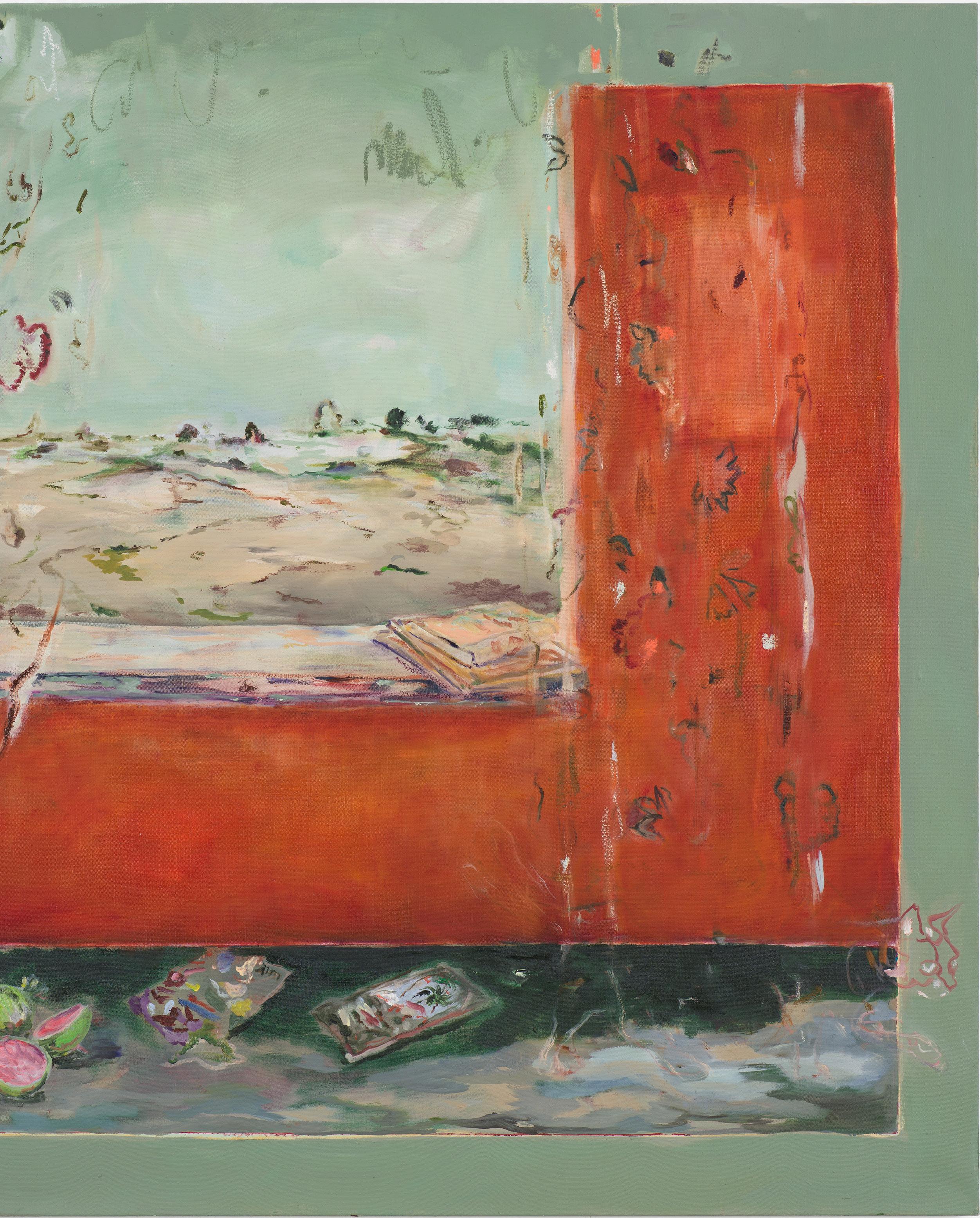
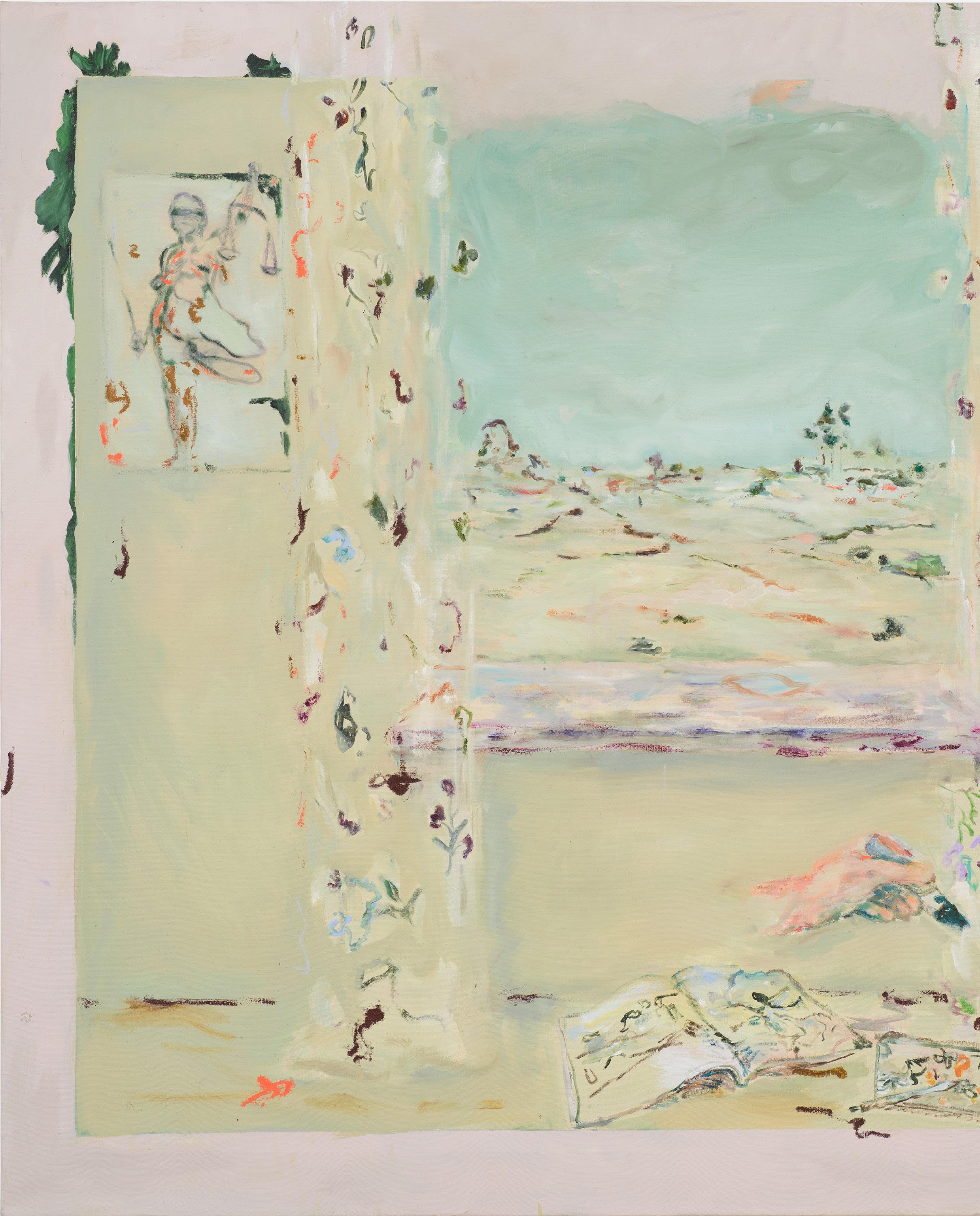
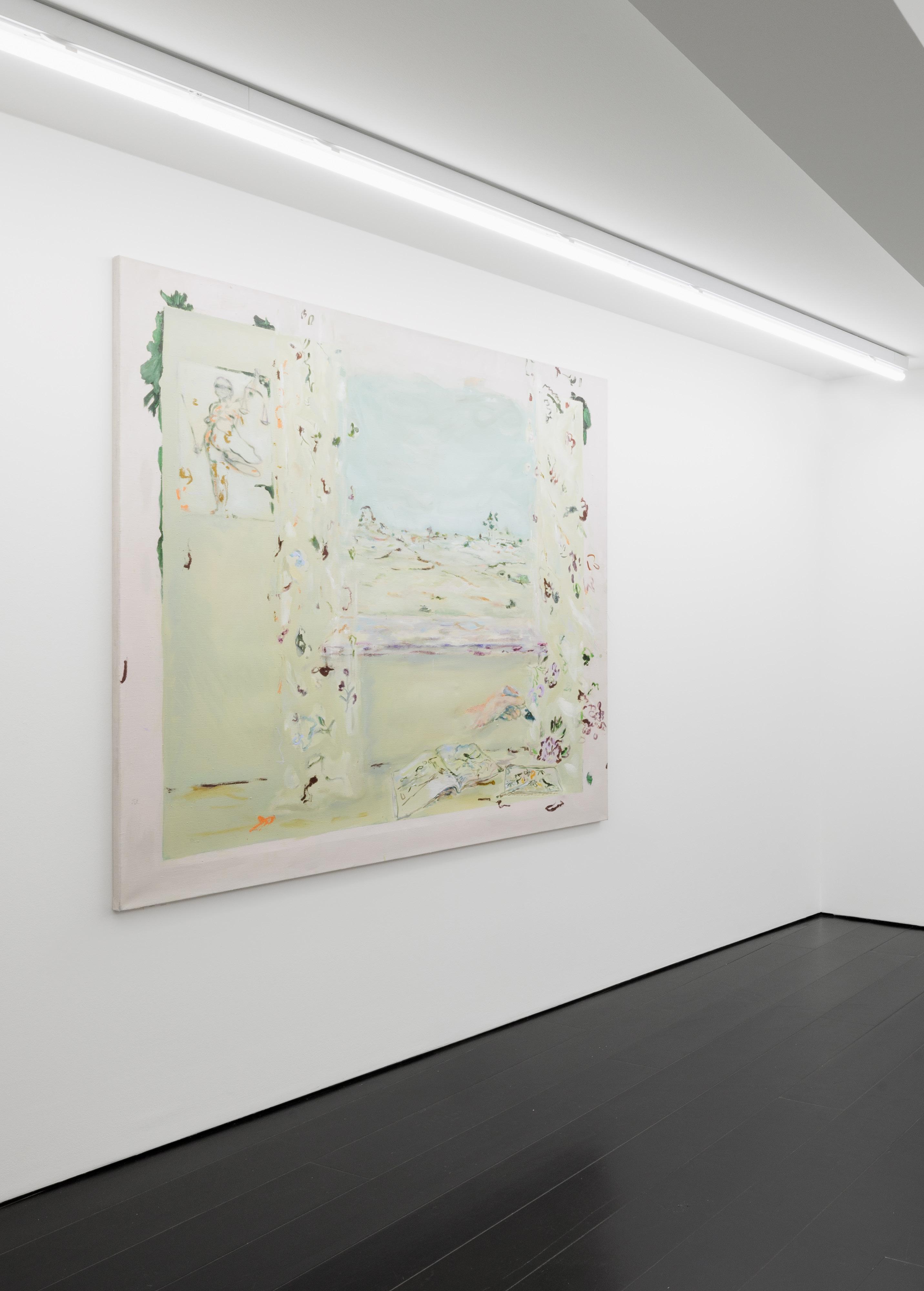
When It Happened Again (2025) shows a deer rendered through minimal brushstrokes, as if whispering across the linen. Its title suggests a loop in which the past returns because it was not fully learned. Finally, Simply Another Sunday Morning (2025) faces the world through a window. Nature seems to enter the room. A floating hand paints, while Lady Justice hovers between witness and hope. It is an image of longing, and of possibility.
Crimson & Clover invites reflection without closure. What matters here is not the isolated detail, but the larger constellation each work holds in play, where what can be named meets what still exceeds language.
Nicolas Vamvouklis
Contemporary Fine Arts präsentiert mit Crimson & Clover die erste Einzelausstellung der finnischen Künstlerin Anna Tuori in der Basler Galerie. Der Titel ist dem Song Crimson and Clover (1968) von Tommy James and the Shondells entlehnt und evoziert eine Lieblichkeit, die zugleich von Spannung durchzogen ist. Dieser Unterton entspricht Tuoris Schaffen, in dem Wärme stets mit Unbehagen einhergeht und Schönheit oft von Unruhe überschattet wird.
Ihre Arbeit geht von der instabilen Beschaffenheit der Gegenwart aus. Tuori verfolgt die Nachrichten und nimmt ihre Umgebung in sich auf, lässt diesen Druck erst einmal sacken, bevor er Gestalt annimmt. „Die Welt ist so absurd, dass sie sich wie Fiktion anfühlt.“ Dieses Gefühl der Distanz, bei dem die Realität in die Illusion übergeht, wird nicht direkt übersetzt. Es ist der Zustand, aus dem das Bild Gestalt annimmt. Die Malerei bietet eine Möglichkeit, Konflikte zu festzuhalten, ohne sie zu voreilig zu lösen. Witz, Gewalt, Intimität und Zerbrechlichkeit koexistieren, ohne sich auf eine einzige Bedeutung festzulegen.
Tuoris Schaffensprozess beginnt eher mit Farbe und Komposition als mit einer Aussage. Sie nähert sich der Malerei auf abstrakte Weise und lässt sich vom Rhythmus leiten, bevor Figuren oder Objekte sichtbar werden. Eine Unruhe schwebt im Raum, entzieht sich jedoch jeglicher Erklärung. Die Farbe versinkt in der Leinwand und schafft eine immaterielle Tiefe, während dickere Ölschichten mit ihrer greifbaren Dichte nach außen drängen. Jedes Werk entsteht durch ein subtiles Wechselspiel: Eine Bewegung zieht sich zurück, eine andere drängt nach vorne.
Ein Dialog mit der Geschichte der Malerei zieht sich durch die Ausstellung. Tuori widmet sich dem Stillleben, insbesondere dem Memento mori, ohne jedoch direkte Vanitas-Zitate zu konstruieren. Ihr Verhältnis zur Tradition ist umfassender und organischer. Es zeigt sich in der Schwere, der Atmosphäre und der emotionalen Stimmung jeder einzelnen Szene. Ihre Bilder fragen danach, wie Sterblichkeit das alltägliche Leben durchdringt und wie wir mit diesem Wissen leben, während wir von Behaglichkeit umgeben sind. Hier liegt eine existenzielle Tendenz zugrunde, aber auch Empathie. Die Werke bewahren ihre Zärtlichkeit, selbst wenn sie sich mit harten Themen auseinandersetzen.
Tiere wie Kühe, Hirsche und Katzen tauchen in diesen Gemälden immer wieder auf. Sie stehen stellvertretend für den menschlichen Körper, wenn auch auf entpersonifizierte Weise. Durch sie lässt sich Verletzlichkeit leichter mitteilen. Dies schafft Raum für Projektionen, ohne uns auf eine bestimmte Identität festzulegen. Die Tiere wirken
leblos, kopfüber aufgehängt. Ihre Körper hängen in ihrer ganzen Masse herunter und machen die Schwerkraft sichtbar. Diese Anordnung erinnert an klassische Stillleben, während sie gleichzeitig die emotionale Wirkung verstärkt.
In Noble and Tragic (2025) ist das Motiv brutal, doch die umgebende Farbpalette und die Bildkomposition wirken intim, fast schon heimelig. Diese Spannung steht im Mittelpunkt der künstlerischen Vision. Der Horror ist eingebettet in eine Atmosphäre der Fürsorge. Weitere Objekte und dekorative Elemente vervollständigen die Inszenierung, als hätten sich Fragmente verschiedener Zeiten an einem Ort versammelt. Wir folgen diesen Hinweisen, ohne dass uns gesagt wird, zu welchem Schluss wir kommen sollen. Auch die blanken Ränder markieren eine Grenze und erinnern uns daran, dass dies nur eine Sichtweise ist.
When It Happened Again (2025) zeigt ein Reh, das mit minimalen Pinselstrichen dargestellt ist, als würde es durch die Leinwand hindurch flüstern. Der Titel deutet auf eine Endlosschleife hin, in der die Vergangenheit wiederkehrt, weil aus ihr keine vollständigen Lehren gezogen wurden. Schließlich blickt Simply Another Sunday Morning (2025) durch ein Fenster auf die Welt. Die Natur scheint in den Raum einzutreten. Eine schwebende Hand malt, während „Lady Justice“ zwischen Zeugin und Hoffnung steht. Es ist ein Bild der Sehnsucht und der Möglichkeiten.
Crimson & Clover wirft Fragen auf, ohne abschließende Antworten zu geben. Was hier zählt, ist nicht das einzelne Detail, sondern die übergeordnete Konstellation, die jedes Werk in sich birgt – dort, wo das Benennbare auf das trifft, was die Sprache noch übersteigt.
Nicolas Vamvouklis
Getting the Wind Back 2025


1
Lidless Stars
2025
Acryl & Öl auf Leinwand
Acrylic & oil on canvas
120 x 120 cm
AT/M 4
2
Smell of Green 2025
Acryl & Öl auf Leinwand
Acrylic & oil on canvas
100 x 90 cm
AT/M 3 3
Till I End My Song 2025
Acryl & Öl auf Leinwand
Acrylic & oil on canvas
120 x 110 cm
AT/M 12
4
Paradise News
2025
Acryl & Öl auf Leinwand
Acrylic & oil on canvas
140 x 120 cm
AT/M 2 5
Noble and Tragic 2025
Acryl & Öl auf Leinwand
Acrylic & oil on canvas
140 x 120 cm
AT/M 1 6
Caring 2025
Acryl & Öl auf Leinwand
Acrylic & oil on canvas
110 x 100 cm
AT/M 11
7
The Milk Train Doesn’t Stop Here Anymore 2025
Acryl & Öl auf Leinwand
Acrylic & oil on canvas
155 x 210 cm
AT/M 8 8
When It Happened Again
2025
Acryl & Öl auf Leinwand
Acrylic & oil on canvas
101,5 x 235 cm
AT/M 5
Off On an Adventure
Acryl & Öl auf Leinwand
Acrylic & oil on canvas
140 x 120 cm
AT/M 10
10
Lay Your Head Down 2025
Acryl & Öl auf Leinwand
Acrylic & oil on canvas
140 x 120 cm
AT/M 9 11 Getting the Wind Back
Acryl & Öl auf Leinwand
Acrylic & oil on canvas
140 x 140 cm AT/M 7
Simply Another Sunday Morning 2025
Acryl & Öl auf Leinwand
Acrylic & oil on canvas
150 x 150 cm
AT/M 6
Dieser Katalog erscheint anlässlich der Ausstellungen
This catalogue is published as part of the exhibitions
Anna Tuori
Paradise News
17. Januar – 28. Februar 2026 17 January – 28 February 2026
Contemporary Fine Arts, Berlin Grolmanstraße 32/33 10623 Berlin, Germany gallery@cfa-berlin.de
Anna Tuori
Crimson & Clover
17. April – 6. Juni 2026 17 April – 6 June2026
Contemporary Fine Arts, Basel
Totengässlein 5 4051 Basel, Switzerland gallery@cfa-basel.ch
www.cfa-gallery.com
© 2026
Contemporary Fine Arts, die Autoren und Fotografen the authors and the photographers
Text
Bruno Brunnet
Felicitas Berlin
Nicolas Vamvouklis
Gestaltung
Design
Imke Wagener
Fotografie
Photography
Nick Ash
Installation Views Basel
Gina Folly