











We’re here for you, with much more than plasterboard.
On-Time Delivery
Keeping your programme on schedule
Expert Technical and Sales Support
Helping you avoid costly delays or callbacks


Scan to learn more or visit gib.co.nz




We’re here for you, with much more than plasterboard.
Keeping your programme on schedule
Expert Technical and Sales Support
Helping you avoid costly delays or callbacks
Scan to learn more or visit gib.co.nz

WELCOME TO THE first issue of InHouse for 2026. It’s another good read with our lead article a deep-dive into what health and wellbeing means for the building and construction industry today.
As it happens, this focus couldn’t be better timed, given the wild weather the country has endured over the past couple of months. We’ve been in touch with members over the course of January and February offering support for those affected by these weather events; remember we offer a range of benefits such as EAP counselling designed to help you get through tough times like these.
It’s been a busy end to 2025 and start to 2026 on a policy front, with Minister of Building and Construction Chris Penk announcing a move to proportional liability for new builds and major renovations (the announcement was hosted on an NZCB site in Auckland). This garnered a huge amount of attention from the media and homeowners alike, and the announcement was a significant policy shift for the industry.
This marked the culmination of seven months of NZCB and Halo engagement with the Minister and officials on the role the Halo Guarantee will play in supporting this ambitious regulatory change. The good news for members is that the Halo Guarantee meets all the requirements of the new legislation, which is due to be introduced this year and to take effect in 2027.
As we get ready for these changes, we’re expanding the Halo Guarantee, with the rolling out next month of new loss of deposit and non-completion cover as add-ons to a Halo Guarantee (see page 30 for more details). If you haven’t already undertaken the NZCB Learn online training on how the Halo Guarantee works, now is the time to tick this off your to-do list – and perhaps to revisit it as this learning module is updated to include training on the new cover.
On the vocational education front, another big change took effect on 1 January when BCITO moved out of the government’s mega polytechnic Te Pūkenga, and into industry ownership, with NZCB being one of
the owners. This was a move we advocated for strongly over the past two years, and we’re very pleased with the outcome. At the same time, former BCITO Executive Director Greg Durkin stepped down from his role, and we have a great interview with him on page 16 as he looks back on his tenure and what the future of vocational education looks like.
While these policy moves had been signalled for some time, the government’s proposed changes to the Building Research Levy came as a surprise. Since 1969 the country has had a Building Research Levy collected from building consent applications and given to BRANZ, providing the industry with a dedicated research agency.
The government is now proposing changes not only to the way the Building Research Levy is collected but also that a government agency – rather than industry stakeholders like NZCB – determine what industry research should be undertaken. Under this model, BRANZ would shift from being a facilitator of industry research to being a research provider, contesting for government-tendered research projects against universities and other research organisations.
More details are still to come, although we’re concerned about undermining our industry’s dedicated research agency and eroding the knowledge base it has amassed over nearly six decades. Combined with the relatively recent closure of the governmentowned Callaghan Innovation, which was active in the construction R & D space, this proposal needs careful consideration and NZCB will be watching this space closely.
As we look forward to the second quarter of 2026, we’re keeping a close eye on our Building Contracts and Employment Agreements. Not only have these been updated recently, we’re also seeing a significant increase in downloads of these contracts. This increased activity is a good indication that members are building their forward work pipelines and have the confidence to recruit new talent into their businesses. These represent early signs that the economy is starting to improve.









Resene 1/2 Black White PLASTERING
PROFESSIONAL Render Design







InHouse magazine, including the wrap, is 100% recyclable. InHouse is printed on PEFC-certified paper, supporting the growth of responsible forest management worldwide. The press used to print InHouse utilises a UV light drying system (LED), meaning there is no solvent to evaporate, and no environmental pollutants are formed. It also uses less power than traditional technology, which helps reduce overall CO2 emissions.



InHouse
Published quarterly in print and online, InHouse is the official magazine for New Zealand Certified Builders Association (NZCB). InHouse aims to educate and inform our members and their staff of the latest news from the Association and the Building and Construction Industry.




The contents of InHouse may not be reproduced in any form, either in whole or in part, without written permission of the Editor. All material received will be assumed to be intended for publication unless clearly labelled 'Not for Publication' and will be published at the discretion of the Editor. Views expressed in articles in InHouse are not necessarily those of New Zealand Certified Builders Association. While every effort has been made to ensure the accuracy of the information included in this publication, the designers, publishers, and Editor take no responsibility for errors, omissions or for any consequences of reliance on this information. Articles are not intended to be relied upon as legal advice.


New Zealand Certified Builders PO Box 13405, Tauranga Central, Tauranga 3141 10 Marsh Street, Tauranga 3110
07 927 7720 0800 237 843 nzcb.nz
EDITOR
Andrew Smith andrew.smith@nzcb.nz
NZCB PARTNERSHIPS AND SERVICES
Nicola Airey nicola@nzcb.nz
ADVERTISING
Linda Moody linda@nzcb.nz
DESIGNERS
School Road Publishing
PRINT AND DISTRIBUTION
Kale Print Ltd kaleprint.co.nz
MAILING LIST
If you have received a copy of InHouse and wish to opt out, you would prefer to receive it via email, or would like to update your details please email membership@nzcb.nz


Proudly supporting the construction industry for over 50 years with the experience and scale that keep your projects moving.

Our team of experts can support you with:
Huge range
From kitchen and laundry to tech and appliances, we have the range for every space you create.
Wraparound services
Delivery, install, and packaging waste services that work around your build schedule.
Specialist team
Tailored support from 50+ local account team committed to keeping your project moving.

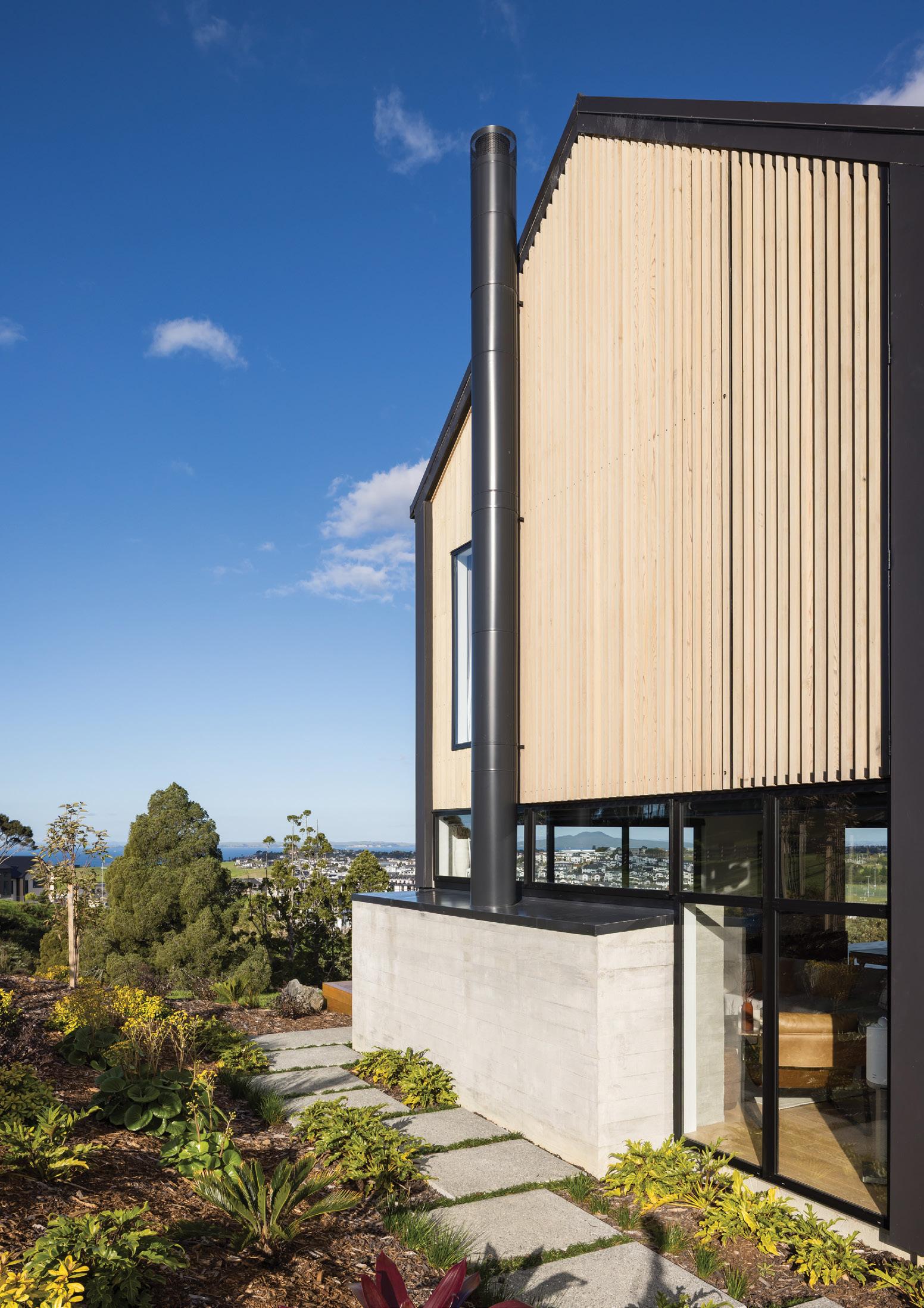




On a ridge with wrap-around views of the regional park and a kilometre of golden sand, this Long Bay property enjoys a slice-of-Kiwi-paradise location: close to the city but a million miles away.

BUILDER: Mike Imrie IBL Residential iblbuilding.co.nz
LOCATION: Long Bay, Auckland
Read more at nzcb.nz/revere
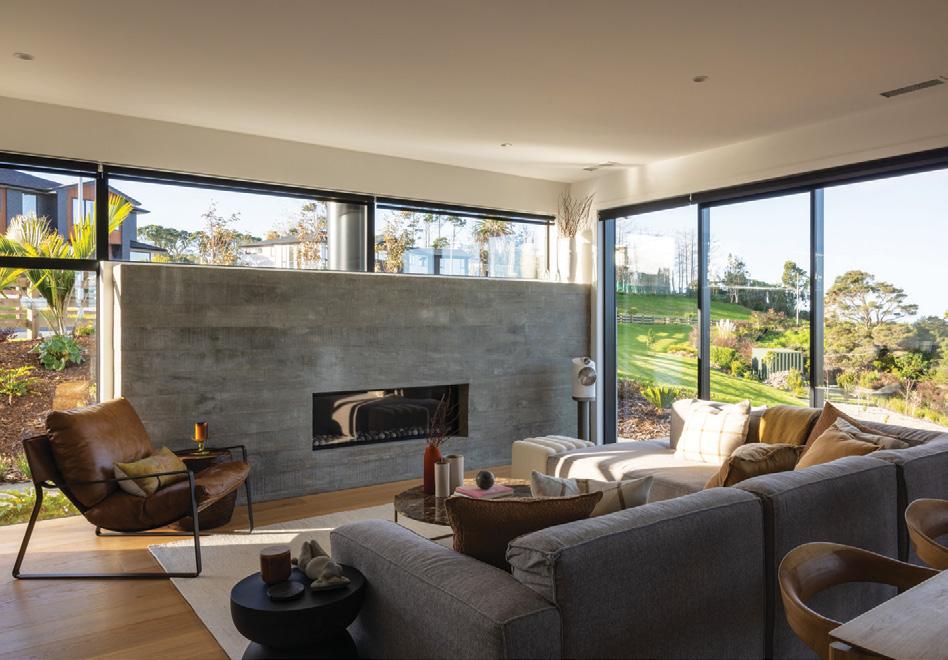


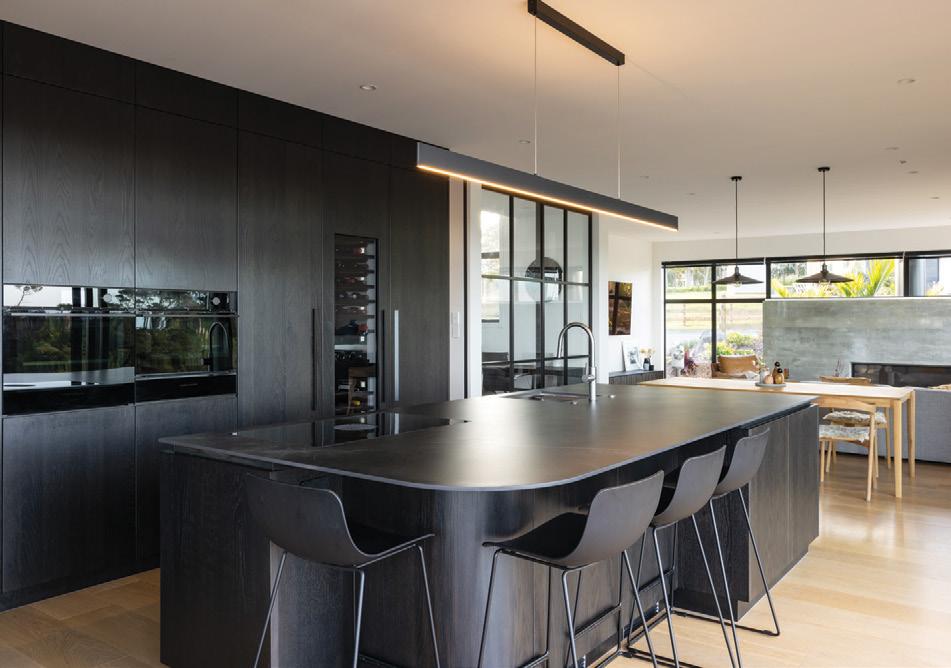
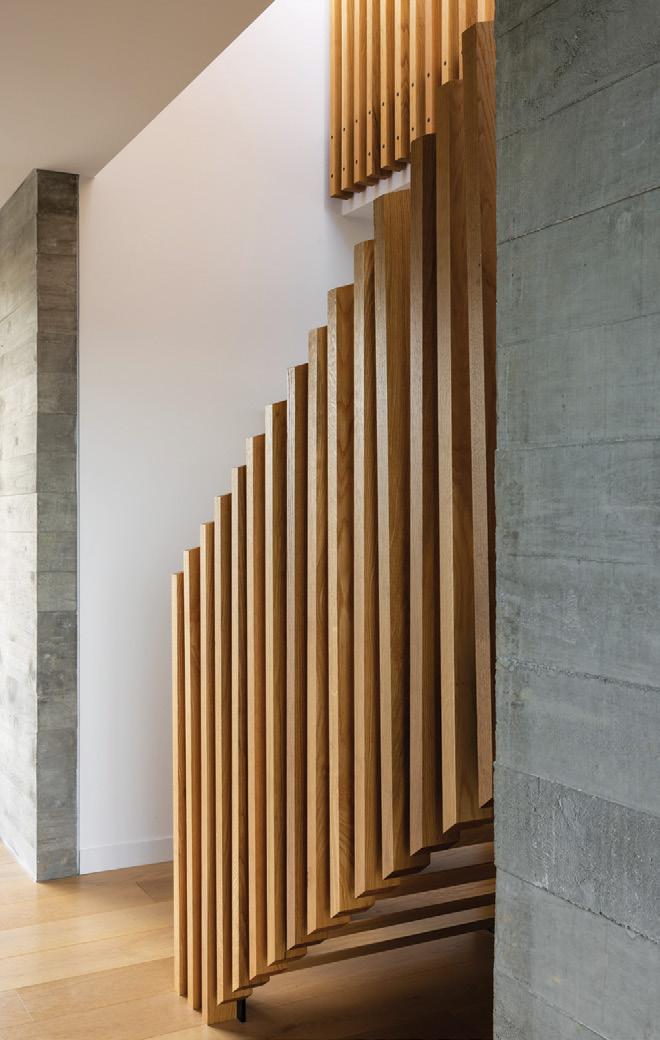
THIS LIFESTYLE BLOCK called for a modern farmhouse, where traces of the rural vernacular in shed-like forms met a contemporary palette of durable materials. The problem for builder Mike Imre of IBL Residential was that this land on a sub-divided farm had once been used as a dumping ground. As soon as he started cutting into the site, years of junk began to appear. “That put us on the back foot for a while,” he says. Today, two gabled pavilions – one tall, one small – are connected by a central entry link. The exterior mixes precast concrete with cedar, vertical shiplap and batten details. An outdoor living area with louvres is a sheltered space to sit and contemplate the view. Inside, the living zone is anchored by a mammoth concrete fireplace – robust against the lightness of floor-to-ceiling glazing. “We used a crane to lower its precast panels into place and then clad around it,” explains Mike. The client, a pilot who spends frequent periods away, experiences a sense of homecoming every time he returns to Aotearoa. “From the beginning, Mike and his team were understanding, flexible and easy to work with—especially as we continued to refine design ideas throughout the build,” says the owner. “Every decision was thoughtful and in line with our vision. The result is a home we’re incredibly proud of.” He isn’t the only one who feels satisfied. “We like the difficult jobs,” says Mike. “I enjoy a challenge.”

From prevention to support, health and wellbeing awareness is becoming increasingly recognised as an essential tool in the construction industry.
WRITER: COURTNEY WHITAKER




CONSTRUCTION HAS ALWAYS been synonymous with grit.
Early starts. Long days. Tight deadlines. Getting stuck in and pushing through, whatever the weather or the workload.
But that resilience can come at a cost.
Across the industry, more people are recognising that the very mindset that helps builders push through can also lead to burnout, injuries and silent struggles that show up in accidents, lack of motivation and, sometimes, far worse outcomes. Fatigue clouds judgement. Stress slows reaction times. Small aches become chronic problems. What feels like “just part of the job” can quickly snowball into something much bigger.
Health and wellbeing are fast becoming core business risks to manage – because a tired, stressed or isolated worker isn’t just having a bad day. They’re a safety risk.
And the data is starting to make that link impossible to ignore.
For Rafael Caso, Programme Lead of Live Well Build Well, the shift started with frustration.
Working in site management and health and safety, he regularly attended mental health presentations alongside contractors. But something didn’t sit right.
“A lot of the messaging was negative,” he says. “It focused on the worst statistics – suicide rates, crisis stories – and it almost felt like we were telling tradies they were broken.”
While those conversations are certainly important ones to be having, Rafael felt there was a gap in the messaging.
“We weren’t talking enough about prevention. About what you can do every day to stay mentally strong before you hit a crisis.
“I wanted to focus on being able to work on yourself, educate yourself in areas where you can actually create some resilience and be able to reach out to people to support you.”
That thinking connected him to Live Well Build Well – a programme that
reframes mental health as “mental fitness”.
“When people hear the word ‘fitness’, that conveys the idea that mental health can be very strengths-based and it can be improved just like your own physical fitness can,” says Rafael.
“It means improving weak habits into stronger habits, and having good self-awareness to be able to pinpoint areas in your life that need improvement.”
Instead of focusing solely on warning signs and intervention, the programme promotes practical, everyday habits through its online platforms.
“With time and consistency, you can make lifestyle changes that help –connecting with people, exercising a little bit each day, socialising with people whose company you enjoy,” Rafael says.
“Things like communicating with people on site, not just getting stuck behind your phone at breaks ... these little habits can make a very big improvement in your confidence.”
A key part of the approach is peer storytelling. Rather than experts lecturing tradies, Live Well Build Well shares real stories from builders and apprentices themselves.
“Builders are a lot more likely to follow the advice from a peer than what they would be from a health professional who may never have had any experience being on a construction site. Live Well Build Well provides storytelling, relatable content, and amplifies the voice of real-life tradies and what they do.”
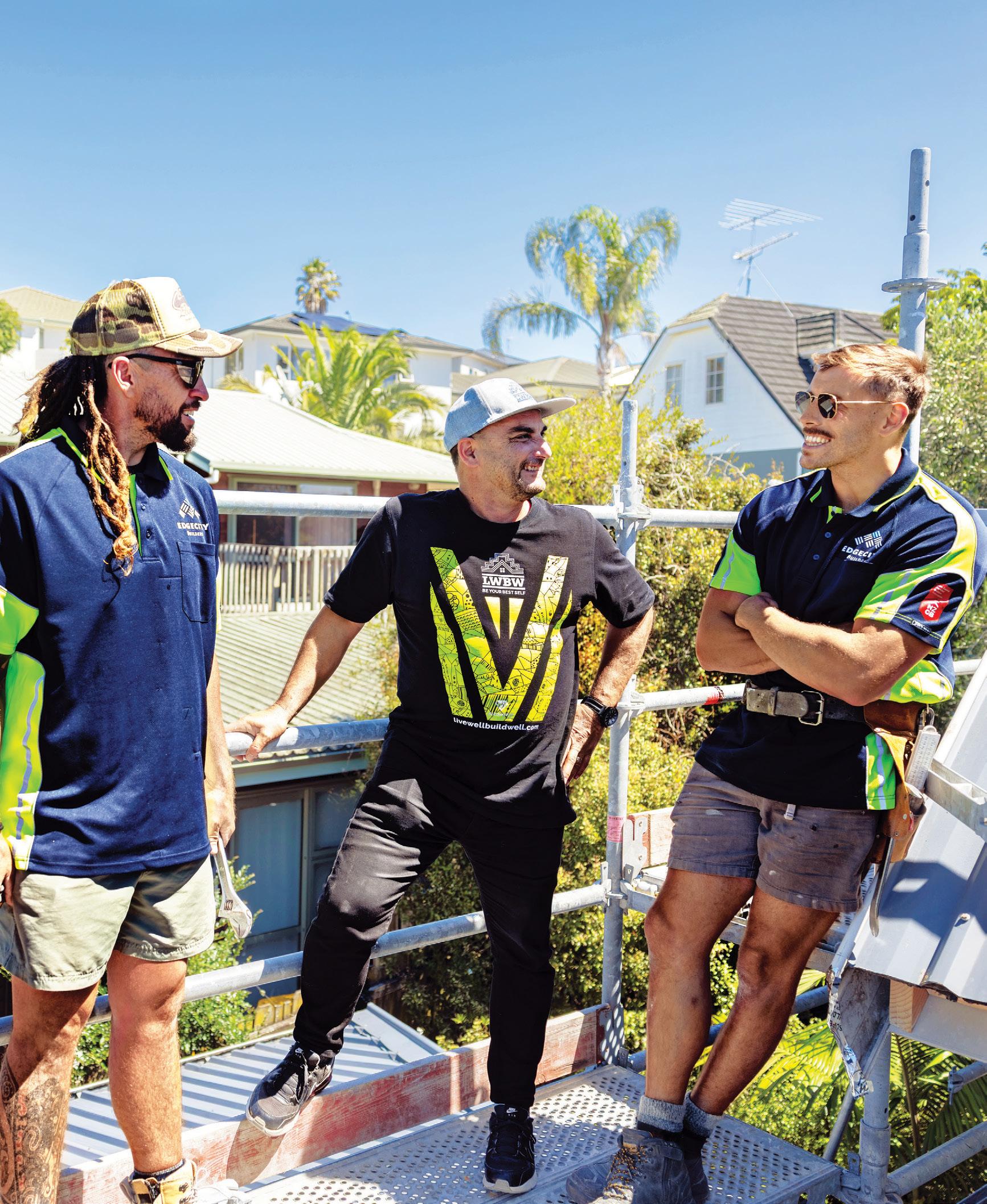
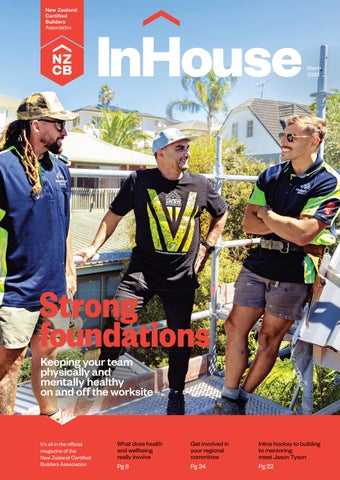
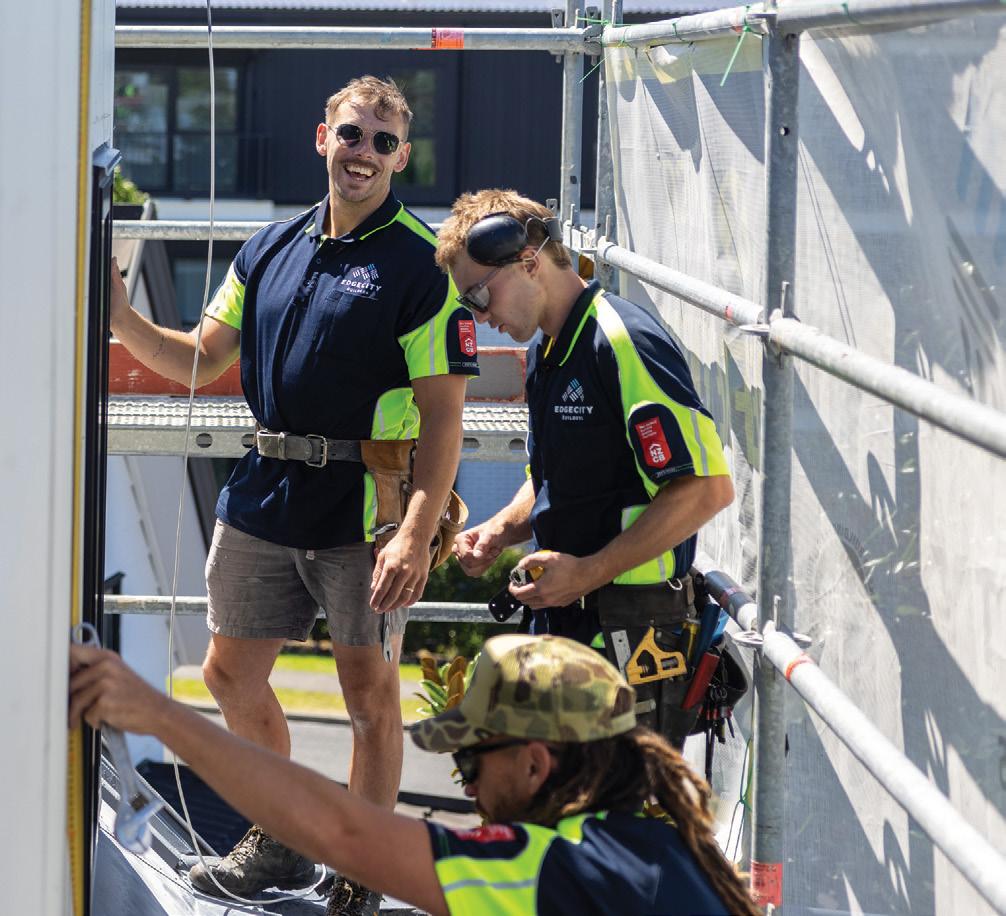
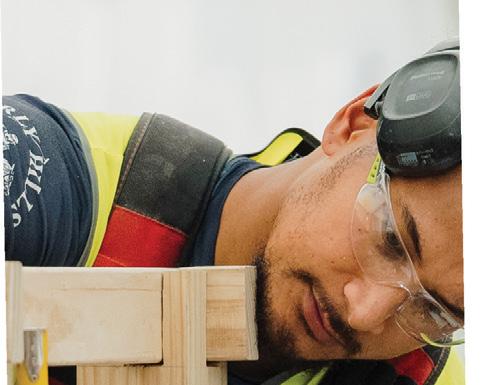
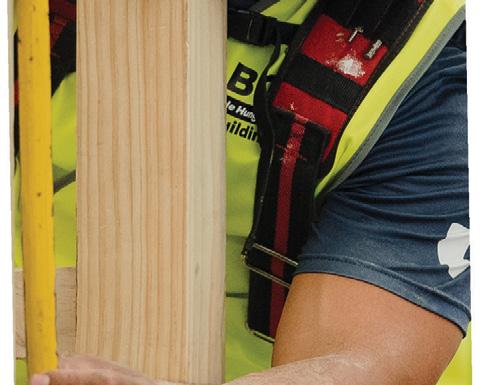
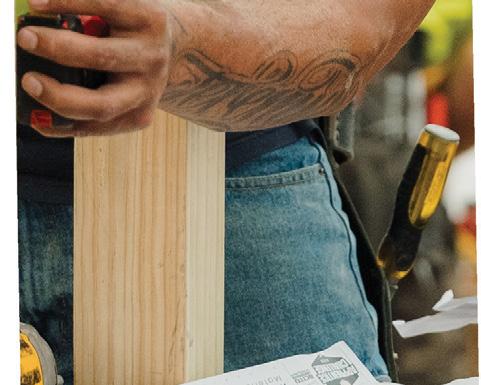
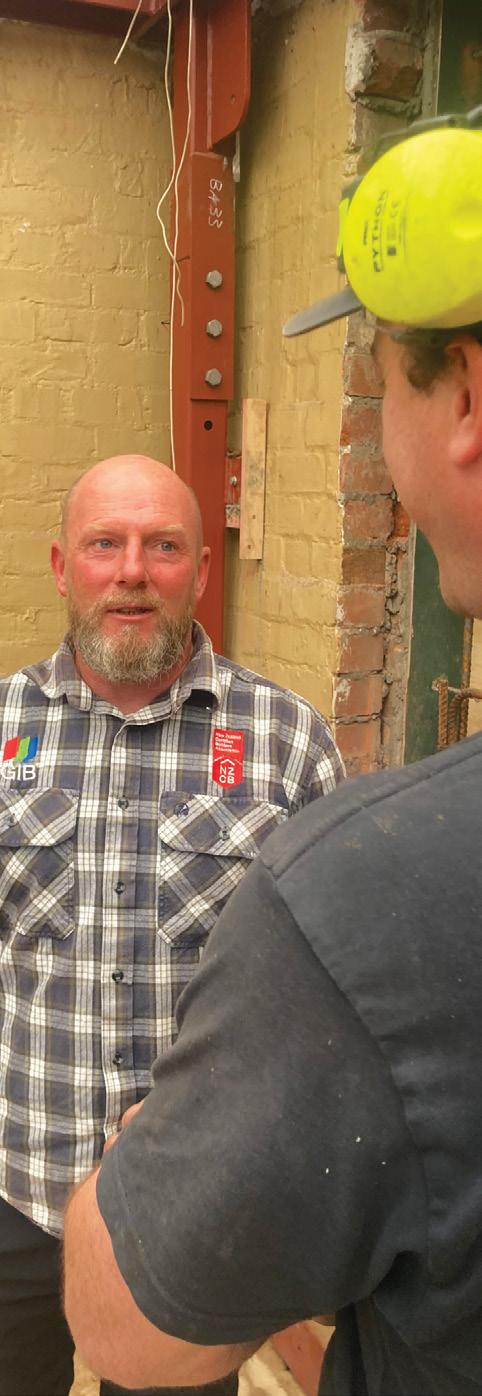
The programme now partners with organisations such as ITM, Site Safe and NZCB, delivering free resources, online learning and in-person toolbox talks, such as those Rafael has run at NZCB member Edgecity Builders (featured in this story’s images). It’s also backed by ACC as an accident prevention initiative – recognition that psychological health directly affects physical safety.
“In construction, especially in residential construction, the ACC claims year to year are in the millions and millions of dollars, and most are the result of accidents,” says Rafael.
“And accidents, a lot of the time, are caused through workers feeling


t overwhelmed, a lack of concentration, or poor decision-making because of not being able to work under pressure very well.”
Recent industry surveys show signs of progress, with stress levels slowly improving thanks to better dialogue around coping, and stronger workplace relationships.
And Rafael’s number one piece of advice for tradies looking to improve their mental fitness?
From a hazard management perspective, the link between wellbeing and safety is equally clear.
At HazardCo, Head of Group Health and Safety Evette McClure says health, wellbeing and safety shouldn’t be treated as separate conversations.
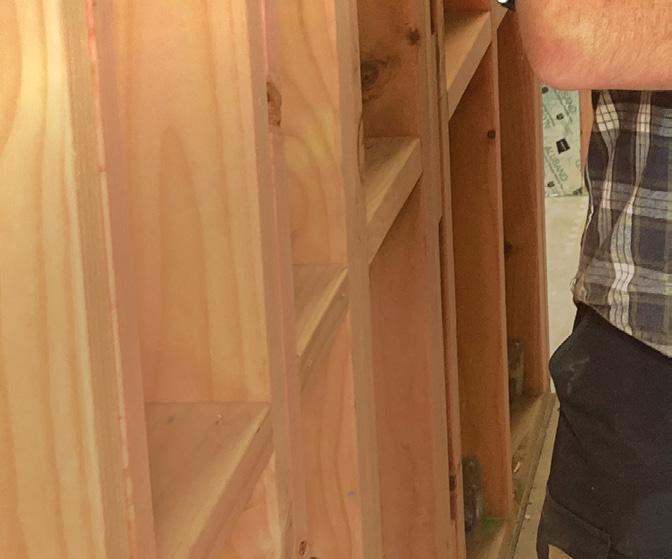
ABOVE: Regular chats with your team at smoko help build a healthy culture.
ABOVE RIGHT: Safety checks might take a minute or two but can prevent major, long-term injuries.
“Self-awareness,” he says. “Being able to catch yourself at any time. If you’re feeling low, ask yourself why you think that is. Identify activities you enjoy that make you feel well, then understand that’s what you need to continue to do.”
“Our data shows one of the biggest problem areas with tradies is isolation. Lock in time to go and socialise with others in the industry. That’s really important, too.”
“A builder or tradie who’s barely slept, stressed about deadlines, or carrying a niggling injury isn’t going to be at their sharpest on site. That’s when mistakes happen and risks get taken.”
While the industry often focuses on visible hazards – falls, tools, machinery – the bigger picture tells another story.
WorkSafe estimates that 750 to 900 New Zealanders die each year from work-related illness, compared to around 50 to 60 from acute injuries.
“The slow-burn issues like dust exposure, noise damage, fatigue, and mental strain are killing far more
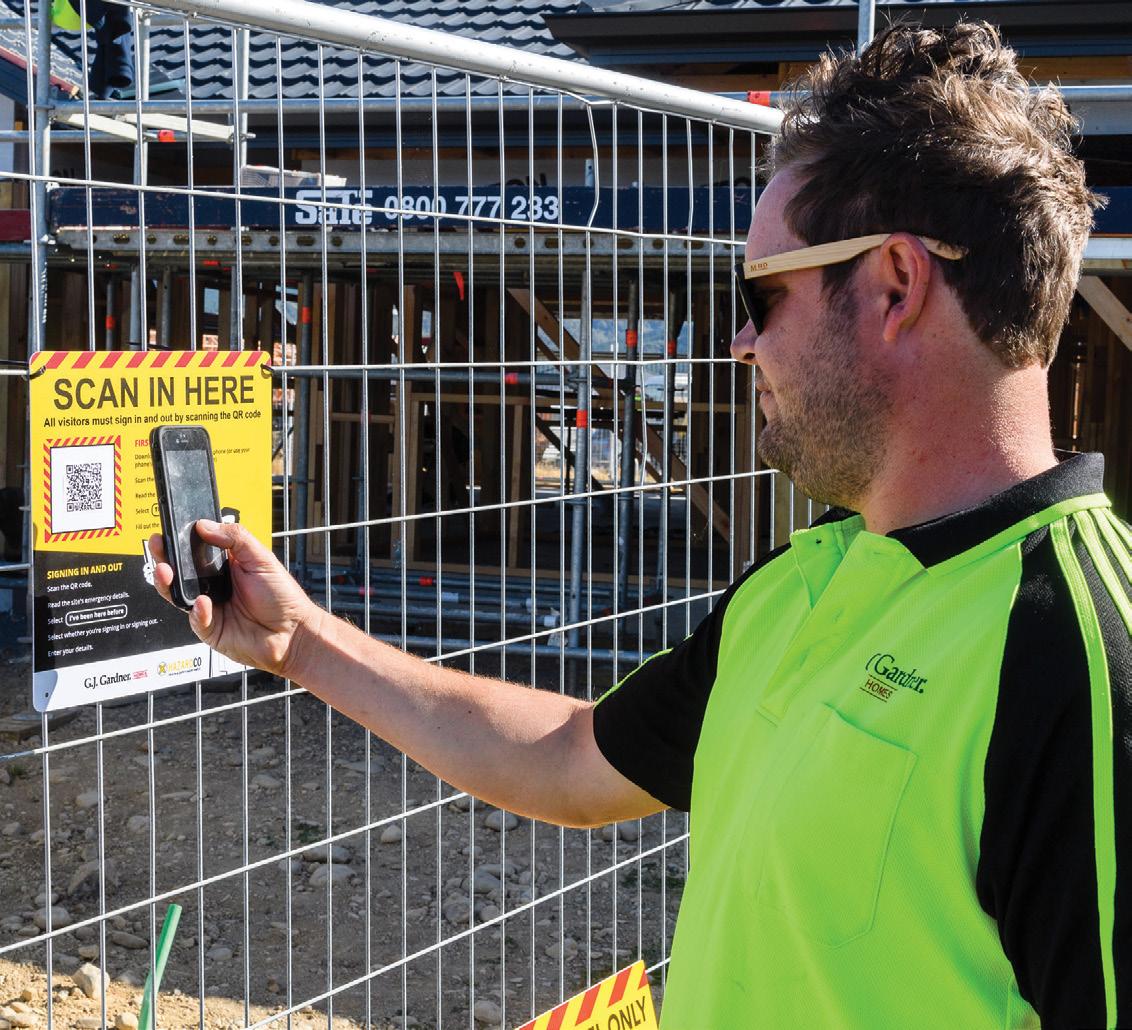
“As a country, we still haven’t built a culture where workers see mental health as something you report alongside a cut hand or a rolled ankle, but it is something that can really help a team to foresee where things could go wrong before they do.”
There are positive signs though. More businesses are reporting hazards, engaging with safety systems and having open conversations. But Evette says the industry still has work to do.
“Risk factors like body stress [strains, sprains, and overexertion] are
u workers than the incidents we traditionally focus on. HazardCo’s own data reflects that gap. Thousands of physical incidents are logged each year, but mental stress is rarely reported – not because it isn’t there, but because culturally, people still don’t see it as something to raise,” says Evette.
often reported, while we see far less reporting of chronic harm risks like silica, wood, and general dust,” she says.
“Too often, health and safety is treated as a compliance exercise rather than something that genuinely protects people.”
With new health and safety reforms on the horizon and a stronger focus on “critical risks”, she encourages builders to focus on what really matters.
“We regularly talk with our members about moving beyond the ‘tick-box’ approach. That means challenging attitudes like ‘that’s the way it’s always been done’ or ‘it hasn’t happened to me yet, so it won’t’,” says Evette.
“Start with the things that could seriously harm someone – falls, dust, fatigue, someone who’s clearly not coping. Then build real conversations into your toolbox talks. That’s where change happens.”

“Your body is your main tool. If you want that tool to last until retirement, you need to look after it.”
STEPHVEN KOLOSE
While mental fitness is vital, physical wellbeing on site is equally critical.
Dr Stephven Kolose (CNZHFE), an ergonomist with Construction Health and Safety New Zealand, oversees the Work Should Not Hurt programme, which focuses on preventing musculoskeletal injuries –one of the most common and costly claims in the industry – and implementing changes to the way work is done.
“In New Zealand, most ACC claims in construction are musculoskeletal in nature,” Stephven says.
“Our main role is to raise awareness for tradies on how to look after themselves, prolong their careers on the tools, and prevent injuries. We also encourage them to disseminate their knowledge to the rest of their colleagues in the industry.”
The programme’s approach is straightforward but effective. Toolbox talks, presentations, research trials, social media engagement, and
workshops show workers practical ways to apply ergonomics techniques to protect their bodies - without making the sessions dull or overly clinical.
“We try to keep it informative, evidence-based, light-hearted, but also really practical,” says Stephven.
“People respond well to that.
Participatory ergonomics is all about co-designing solutions based on the workers’ experiences and knowledge.”
Businesses play a crucial role in setting the tone for wellbeing. Stephven notes that when leadership prioritises health and safety (and not just ‘safety’ or productivity), it filters down through the workforce.
Simple practices, such as morning toolbox talks reiterating the need to report issues early and be cognisant of tasks that may injure them or their mates, are already making a difference.
The key ergonomics-based messages are clear: get work off the ground where possible, reduce working overhead, and find practical, safer ways to move tools and materials. These principles may seem small, but they apply throughout the industry.
“Your body is your main tool,” Stephven says. “If you want that tool to last until retirement, you need to look after it.”
“Speaking up is another thing we’ve noticed that people don’t really do that well in New Zealand, especially in construction. There is a kind of a macho or ‘she’ll be right, my knee’s fine, I’ll keep working’ attitude among our people. And then it gets worse.
“Small changes now – such as putting equipment on a table instead of bending down – can prevent major injuries in the future. Even better, the ability to ‘designout’ potentially injury-inducing tasks or equipment will have significant effects on reducing injury down the line.”
He also stresses the importance of looking out for colleagues.
“Mental health is such a big thing in construction. And a lot of people kind of have this way of internalising their pain.
“We say, just be open and be honest and look out for your mates. But most of all, look after your most important tool, which is your body.”



We're proud to be a New Zealand owned and operated manufacturer and importer/distributor of quality thermal and acoustic insulation; ranged and stocked to support building designers, specifiers, and the wider construction industry to create a healthy and energy-efficient built environment.
Our safe and friendly 100% Polyester Insulation is proudly manufactured in our production and warehousing facility in Ngaruawahia, using a minimum 45% previously recycled fibre Our Glasswool range is imported from our trusted long-term manufacturing partner in Taiwan, and is made from up to 90% recycled glass.
We distribute the Premier Insulation brand through a nationwide network of independent Premier Insulation branches, specialising in thermal and acoustic solutions for residential and commercial buildings We offer a wide range of Glasswool and Polyester insulation solutions, wrapped up in a commitment to provide nothing less than outstanding customer service.

We offer expert design and technical advice, backed by 30 years of industry experience. Our services include free H1 calculations and compliance certificates, as well as H1 modelling for complex builds. We offer specification support, writing your specs to ensure consistency and save you time We can also help with value engineering and brand substitutions to save you money.
We understand the importance of creating healthy and energy-efficient homes and buildings. Whether it’s a new build or a retrofit, we’re here to help!
Get in touch with us today!
0800 467 855 | sales@premierinsulation.co.nz | premierinsulation.co.nz






























As he steps down after nearly three decades in vocational training, outgoing BCITO Executive Director Greg Durkin reflects on people, pride and purpose in the industry.
WRITER: COURTNEY WHITAKER
AFTER 29 YEARS connected to BCITO and industry training, Greg Durkin is moving on.
His tenure as Executive Director at BCITO might have finished, but when asked what he’ll miss most about the role, Greg doesn’t talk about policy, funding or reform first, he talks about people.
“What makes construction great is its people.
“And people have been a phenomenal part of my experience inside of BCITO – both apprentices and employers. BCITO has graduation ceremonies across the country, and it’s been my honour to attend many of those and to acknowledge the dedication the employer has given to their apprentice, and the dedication that apprentice has given to their employer,” says Greg.
“I will certainly miss the contact with those people, but I’ve developed a number of close friendships over the years, and I’ll be continuing with those.”
Long before leading one of the country’s largest industry training organisations, Greg was on the tools himself – completing an apprenticeship, running a business and training apprentices during the first 15 years of his career.
He remembers realising early on just how unique the industry was.
“In construction, we don’t sort of open a container and a house pops out.
“As far as the consumer is concerned, you are a trusted professional. You are someone who’s going to take their ideas, their dreams, and you’re going to make those dreams come true. That’s an exceptional role,” says Greg.
“Builders are the ones that build the schools where our children go to realise their dreams. They are the people that build the hospitals and the shops and all the other things that enable us as a society to live well.”
At its heart, construction is about transformation: raw materials turned into homes, schools, hospitals and workplaces
that shape entire communities. But Greg believes the industry has, in the past, focused too heavily on the materials side of the equation – the cost of timber, the price of paint –rather than the people using them.
“We need to be investing far more in the talent of our people. Because, if we put great products in the hands of people who don’t know what they’re doing, then the outcome is at risk.”
That belief became the foundation of his career in training and education – and his “why” at BCITO.
“My focus has been making sure that our industry has the people who have the right skills, in the right place, at the right time. And we get that by investing in who we train and how we train. We get that by attracting really good-quality people to our industry.”
Industrial evolution
Greg’s connection with NZCB members has always been a natural fit. He instantly felt an alignment between the association’s position, and that of BCITO.
“One of the things that I think Certified Builders has been exceptional at, is they have put being qualified as one of the critical thresholds or measures of membership.
“Their expectation is not that we’re getting people who just know how to build stuff. We’re getting people who know how to build stuff and work with clients, work with each other, understand how to work with councils and architects, designers, and the whole breadth of all of the moving parts of the industry.”
In his nearly three decades in the construction sector – including time leading predecessor industry training organisations that later merged into BCITO – Greg has seen it change dramatically. Now, he says, it is more complex, more regulated and more valuable than ever before.
“I think that our expectations of the




“The person who is studying or working through an apprenticeship at the moment to be a carpenter has to learn and know significantly more than the person who was training 20 years ago.”
environment have increased markedly, both in its complexity and the expectation that it responds to a number of different factors. Some of those are about compliance, some about the economics, and the significance that it has in people’s lives.
“There has been a shift in terms of people’s expectations around the fashionable nature of homes –that now they are places of architectural excellence.
“What we expect in terms of the performance of a building has changed incredibly. The building industry is far more complex than it has ever been before, and I can’t see it becoming less complex in a hurry,” says Greg.
That complexity also has a direct impact on apprentices.
“The person who is studying or working through an apprenticeship at the moment to be a carpenter has to learn and know significantly more than the person who was training 20 years ago.
“So that puts pressure on that learner. And it’s very easy for people that have been in the industry for a long time to pull up the first rung of the ladder behind them and say, ‘oh well, back when I was a lad we just did this and this and it was easy...’ Well, it’s not like that anymore, and it is challenging.”
Workplace learning itself has also evolved. While recent reforms have created uncertainty, Greg
NZCB Chief Executive
remains pragmatic.
He says he has always been a strong supporter of regional polytechnics and believes industry must continue to have a clear voice in how apprentices are trained.
“If the industry wants to have a blend of learning that happens in the workplace and possibly externally, maybe through digital means, night classes or block courses, then they are the best people to be making that decision, as long as that decision is informed.”
Although he’s stepping away from the Executive Director role at BCITO, Greg isn’t slowing down. He’s continuing to work across the sector in advisory and strategic roles, staying connected to the industry he’s spent his career supporting.
And for those just starting out? His advice is simple.
“Be inquisitive, be respectful, be loyal, and try to understand, or get your head around the purpose of the business, and what drives the business as soon as you possibly can.
It’s a mindset Greg encourages employers to adopt, too.
“Remember that with people who are joining the industry as apprentices, you’re not just giving them a job, you’re inducting them into a career – and that career is a lifetime.
“It’s a lifetime of usefulness. It’s a lifetime of contribution.”
Greg took the helm at BCITO at a disruptive and challenging time for vocational training, as the incoming National-led government set about reversing the previous government’s Te Pūkenga ‘super polytechnic’ model, into which BCITO had been absorbed only a few years previously.
Across this period of great uncertainty, BCITO retained its focus on its most important stakeholders – enrolled apprentices and those who employ them – so that BCITO’s ‘customers’ received consistent service. Greg was integral to that, as he was in working closely with the sector and government officials to ensure BCITO transitioned into becoming an industry-owned organisation, which we strongly support.
Along the way the relationship between NZCB and BCITO has strengthened considerably, in no small part to Greg’s leadership. Speaking personally, and on behalf of the Association, I’m very grateful for Greg’s efforts, and wish him all the very best for the future.

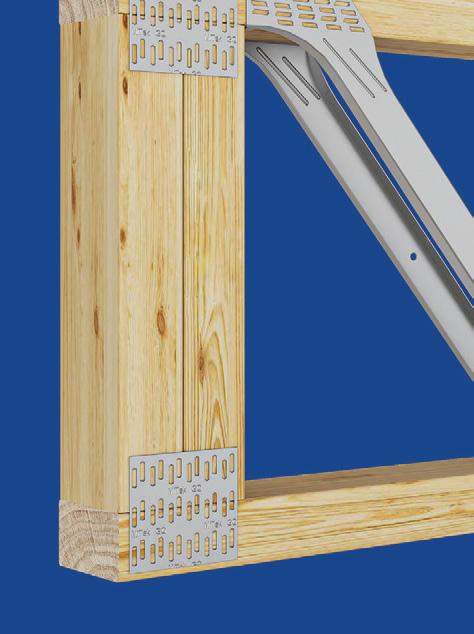
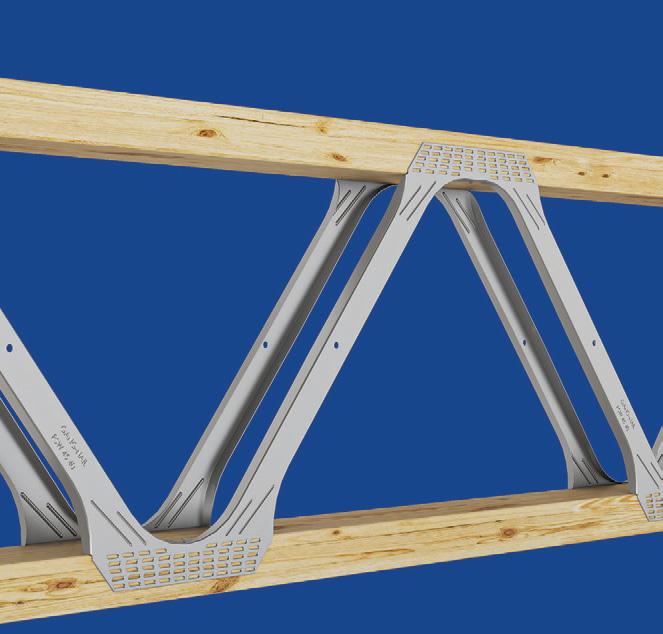

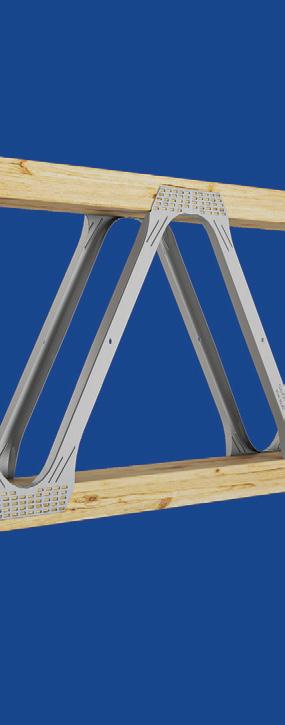
Posi-Strut® has always delivered design flexibility - for services, spans and performance. Now, with PS24 & PS29, that flexibility goes further, while keeping floor depths consistent.
The expanded Posi-Strut® range makes it easier to standardise floor design across a project - without compromising on span capability, load performance or layout complexity.
The result:
→ Fewer design compromises
→ Consistent floor zones across levels
→ Easier coordination with structure and services
→ Greater freedom without redesign
Rather than designing around limitations, Posi-Strut® now enables a more streamlined, repeatable and efficient approach - from concept through to fabrication and installation.
With PS24 & PS29 now available, rethinking floor design just got simpler.
Talk to us today or contact a MiTek Licensed Fabricator www.mitek.co.nz
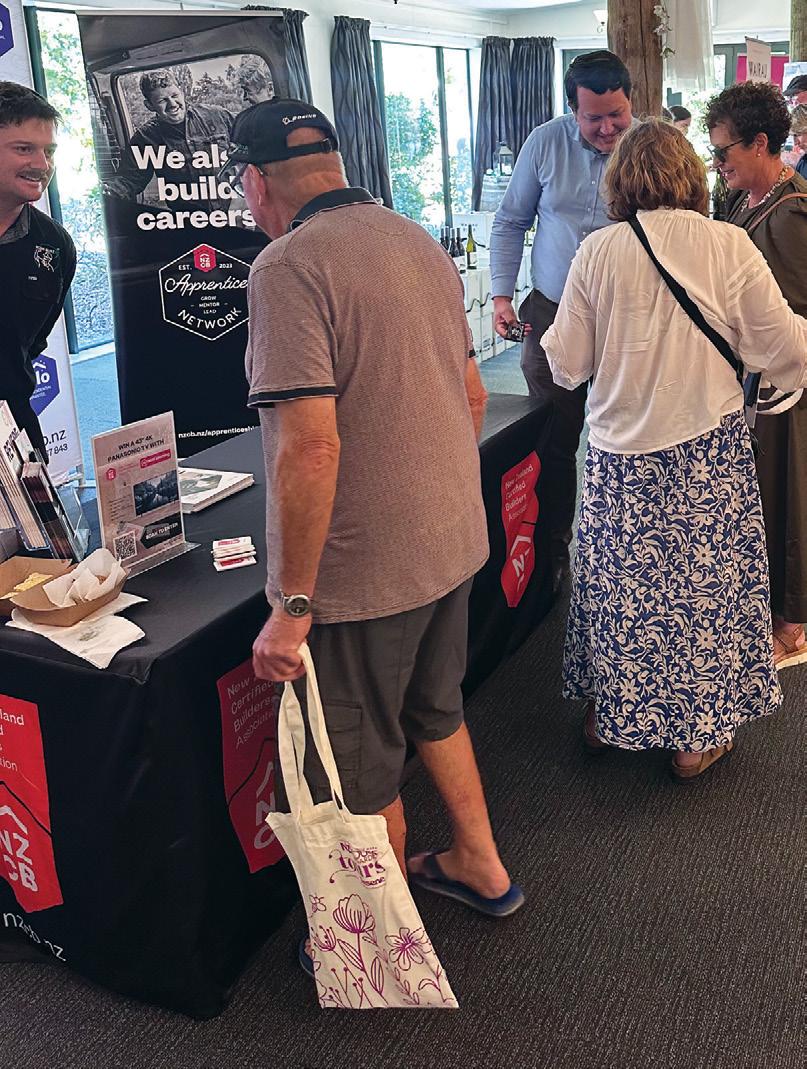
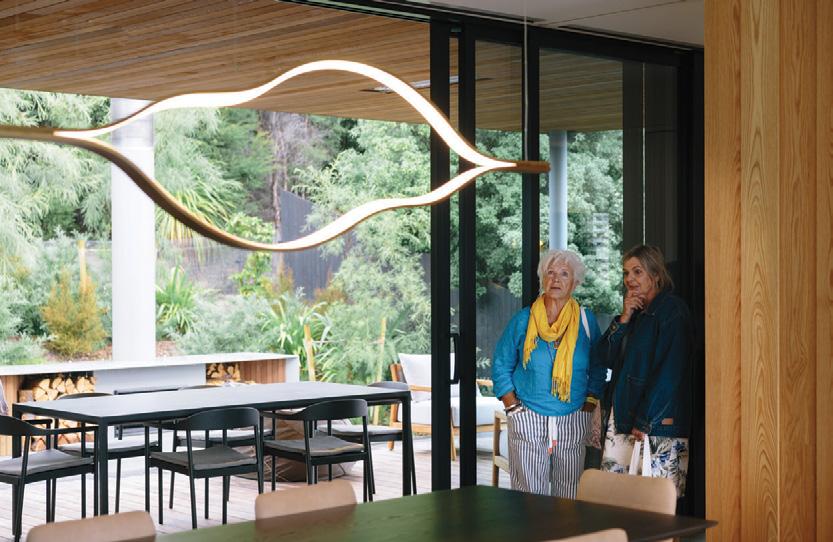
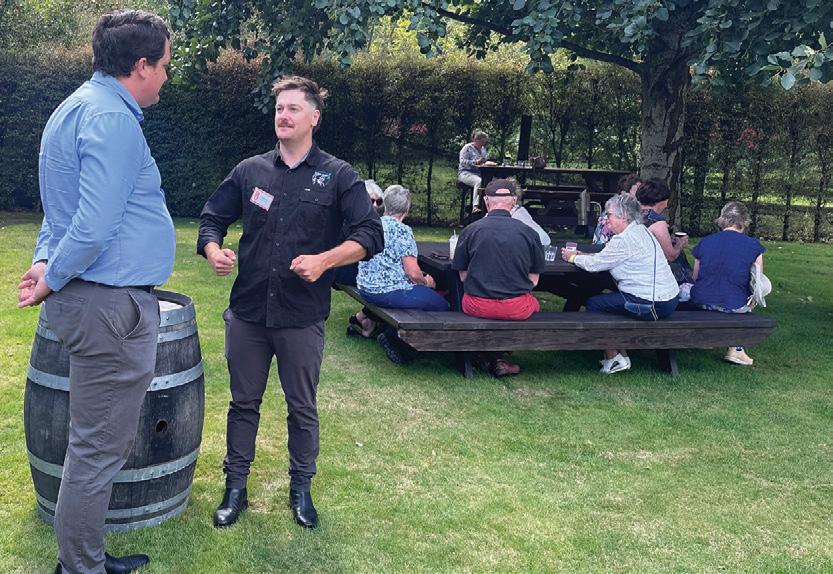
NZCB has partnered with NZ House & Garden Tours for 2026, with opportunities for members to showcase our brand around the country.


THE EVER-POPULAR NZ House & Garden Tours are back for 2026, and given the popularity of these tours with people actively considering building or renovating a home, the tours have been a great way to get NZCB and our members in front of prospective clients.
With four tours between mid-February and late March around the country (Wānaka, Christchurch, Taupō and Auckland), each tour was organised around a central hub. We put up stands at each one of these hubs, and invited members in each centre to act as NZCB ambassadors.
We were overwhelmed with the response to our call for volunteers in December and January, and we’re very grateful to those who gave up some or all of their weekends to help.






After more than 30 years on the tools, Jason Tyson has swapped site boots for the open road as a Territory Manager for NZCB.
WRITER: COURTNEY WHITAKER



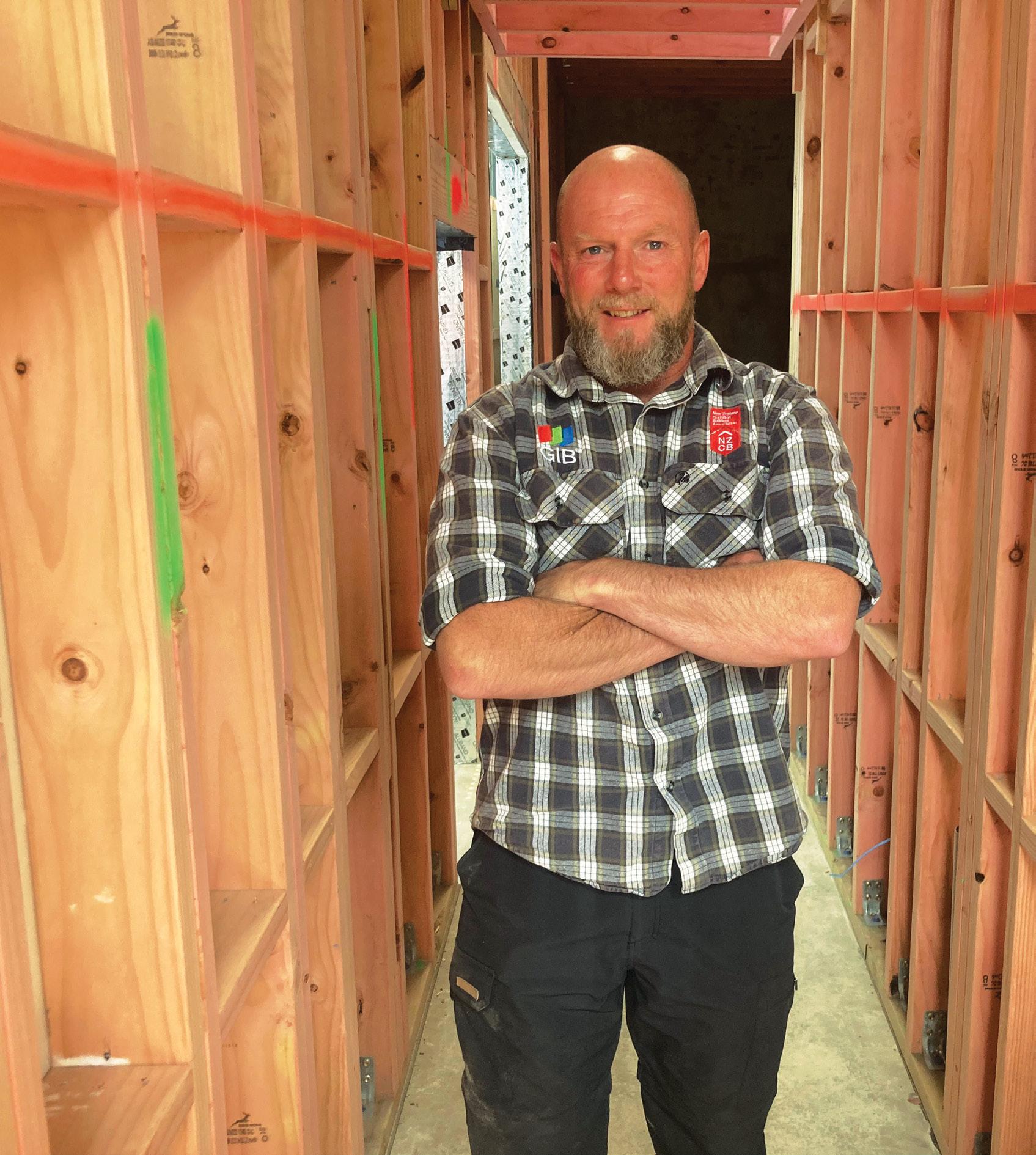
TWO WEEKS INTO his new role with New Zealand Certified Builders, Jason Tyson was already on the move.
He’d barely had time to settle in before heading straight to a conference and, since then, the kilometres have stacked up fast. In just over a year, he’s clocked more than 40,000km travelling between regions, meeting members and signing up new ones.
As NZCB’s Central North Island Territory Manager, Jason covers 11 regions from the Bombay Hills to Wellington. His days are spent talking to builders, assessing applications, and making sure prospective members are trade qualified. But for Jason, the job is about far more than paperwork.
“I enjoy learning about people’s journeys,” he says. “Because everyone has had a different journey to get to where they are now - through the highs and the lows.
“I also try to engage them once they become a member. I encourage them to share ideas and talk to others in the industry – learning from mistakes, learning from their wins.”
A life in construction
It’s a perspective shaped by his own three decades in the industry.
Jason started his pre-trade course at 17 and never really left construction. He built his career the traditional way – learning from experienced tradesmen and working his way up through the ranks from apprentice to foreman, site manager
and eventually project manager across both residential and commercial projects. He also ran his own business and later moved into training, teaching at WelTec.
Mentoring, he says, has always been the most rewarding part.
“I love it,” he says. “Helping others achieve what they want, based on where I’ve been and my own experiences.
“It’s having something that I never had. It’s really important for apprentices to start out and have a mentor that actually cares about their journey and paying it forward.”
That focus became personal a few years ago when Jason’s son began his own building qualification. Watching him bounce between sites and struggle under pressure – with little guidance or support – made Jason reassess.
“My son was doing his building qualification, and he’d been thrown around different sites. And he was struggling in the industry emotionally and mentally just because of the pressures at work and not being shown how to do stuff. He was just thrown in the deep end.
“So I found a company that would employ me back on the tools. And then I got them to employ him under me, and I spent two-and-a-half years training him one-on-one.
“I wanted to show him why we build: because we enjoy it. And you have to be in the right culture and the right environment to appreciate that.”
That experience helped steer him toward his next chapter.


ABOVE: You’ve
got
to look after yourself – physically and mentally, says Jason. Staying active has always been part of that balance.
“It’s a high every day, to be honest. It’s a privilege to have a job like this, where I can see people’s journeys evolve with the tools we give them to help them succeed.”
The physical toll of decades on site was also starting to add up, so becoming a Territory Manager offered Jason a way to stay connected to the industry while supporting others from a different angle.
“The body was not good. I didn’t want to be one of those builders who couldn’t walk after a time, so I needed to create a five-year plan of what I wanted to do.”
Now, instead of running projects, he helps builders build better businesses. He pre-qualifies new members, guides them through the application process, and connects them with the wider NZCB community. Just as importantly, he checks in.
Sometimes that means a quick chat. Other times it’s an hour on the phone, talking through challenges that go beyond the job itself.
“Mental fitness is something I promote because a lot of us builders will grind and grind.
“We’re taught to just suck it up. But you’ve got to look after yourself –physically and mentally. It takes a certain type of person to be a builder.”
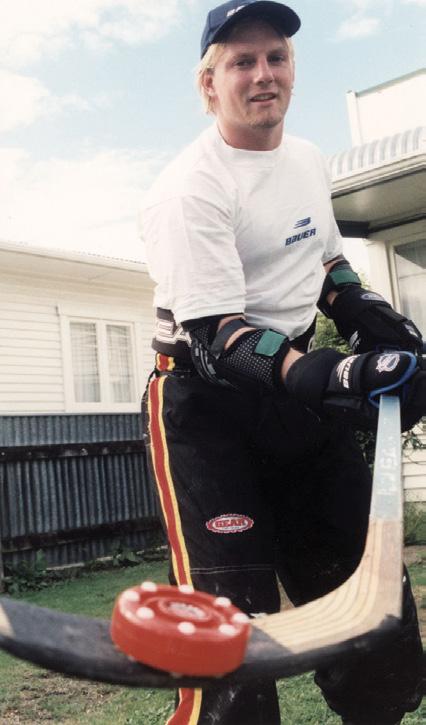
Staying active has always been part of that balance. Jason has represented New Zealand in inline hockey, coached national teams, played ice hockey, dives and surfs whenever he can. It’s not just about fitness, he says – it’s about keeping perspective.

“Some guys work seven days a week, and you need to have a work-life balance, otherwise everything suffers.”
After more than 30 years in the trade, he’s also seen plenty of change. Technology, systems and sustainability have all shifted the way sites operate. There’s more diversity in the workforce and, he believes, a healthier appetite for learning from those who’ve come before.
And the challenges?
“There aren’t major things that challenge me now because of where I’ve been. I guess I bring a lot of experience to the job, so I have seen things over the years. And I’ve realised that the knowledge I’ve gained can be quite beneficial to others.
“I was never part of NZCB years ago. I wish I was, during my career, because it would have made my life a bit easier, being part of a community that cares.”
After decades on the tools, Jason hasn’t really left building behind. He’s just swapped the site for the road.
“It’s a high every day, to be honest. It’s a privilege to have a job like this, where I can see people’s journeys evolve with the tools we give them to help them succeed.”
Although the industry has evolved over the years, the fundamentals haven’t changed.
“At the end of the day,” Jason says, “you still need a builder to put your house in the right spot.”


The experts in trade since 1981







Stay up-to-date with the latest news from NZCB’s National Support Office.
The AGM for 2026 will be held on Saturday 6 June in Auckland, alongside the NZCB Conference.
All members and directors of NZCB Business members are most welcome.
THE NEW ZEALAND Certified Builders Annual General Meeting for 2026 will be held on Saturday 6 June in Auckland, at the New Zealand International Convention Centre (101 Hobson Street). The AGM will begin at 8:15am. All members and partners/directors of NZCB Business Members are eligible to attend the AGM. There will be an election for two board members this year, with one incumbent board member advising they will not be seeking re-election. We will make a separate Call for Nominations for these positions in early April, with information about what the role entails and how the election will be conducted. The results of this election will be announced at the AGM. Members who wish to ask questions of the CE and Board at the AGM can do so from the floor, while those who are unable to attend in person, can submit questions in writing to the Chief Executive, no later
than Friday 29 May 2026. Meeting apologies and advice of proxy votes should be submitted, via email, no later than 5:00pm on Friday 29 May 2026. Please email any items for discussion, meeting apologies and advice of any proxy votes to New Zealand Certified Builders Chief Executive, Malcolm Fleming (malcolm@nzcb.nz).
1. Welcome and Apologies
2. Minutes from last Annual General Meeting, Saturday 7 June 2025
3. Chairperson’s Report
4. Chief Executive’s Report
5. Presentation of the Annual Financial Report for the year ending 31 December 2025
6. General Business
7. Announcement of 2026 New Zealand Certified Builders Board Election results
WE HAVE SET our membership fees for 2026, which will involve a 3% increase on last year (between $30 and $90 extra, depending on your business turnover).
We realise things are tight for our membership at the moment but after holding our fees steady for the past year or two, we have had to make this small increase to cover our costs.
These fees came into effect on 1 January but will only apply to you when your membership comes up for renewal during the year.
In addition, we are increasing the cost of the building contract templates we offer via the Toolshed.
As with membership fees, these contract prices have not increased in several years, remaining steady at $20 each. At the same time, we have carried out considerable legal work over the past year or two updating them to account for new offerings, and IT support in making them user-friendly. From 1 March, they will increase to $50 each.

THIS IS THE ONE CONFERENCE YOU CAN’T AFFORD TO MISS!
Here’s your opportunity to:
✅ Stay updated on industry innovation
✅ Grow your business and leadership edge
✅ Connect with peers and decision-makers
Don’t be the one hearing about it later – be the one leading it.
5-6 June 2026
NZ International Convention Centre, Auckland
www.nzcbconference.nz


Two new partners set to boost support for members nationwide.


NZCB has welcomed PIL Group Ltd (Premier Insulation) as our sixth strategic partner.
Strategic partnerships are NZCB’s highest partnership tier, and these organisations provide major support for our membership work. Quite simply, we couldn’t provide our members with services and events to the extent we do without the help of organisations like Premier Insulation.


Premier Insulation is a privately owned and operated New Zealand company, specialising in manufacture, importing, and distributing quality thermal and acoustic insulation to residential and light commercial new builds through builders.
Premier Insulation manufactures 100% polyester insulation in a state-ofthe-art production and warehousing facility in Ngāruawāhia, and imports a range of glasswool insulation products. Premier Insulation’s network offers nationwide direct supply and installation.
Quite simply, we couldn’t help our members with services and events to the extent we do without the help of organisations like PIL Group.
Premier Insulation provide free quoting, and free H1 value-engineering and H1 calculation services.
In a separate agreement, NZCB has also welcomed ACC as a National Partner (Professional). Everyone in New Zealand is covered by ACC’s no-fault scheme if they are injured in an accident. ACC is committed to working with our members to provide education, advice, and support that helps prevent injury, build safer workplaces, and ensure workers get home to their whānau safe and injury-free. ACC is also invested in helping leaders in construction to support their workers recover at work after they’ve been injured.
Thank you to all our partners for their ongoing support of NZCB and our members. For more information on all our partners, and the range of deals and benefits you receive from them as an NZCB member, visit nzcb.nz/our-partners

Jeremy Corbett MC
Get Inspired by World-Class Keynotes
Big names. Big insights.

Gilbert Enoka High-Performance Mindset Coach

Eaqub Practical Economic Expert
Stay Ahead of the Curve
Practical learning, shared by members
Hear directly from NZCB members, industry leaders, and subject-matter experts who are doing the work every day. These sessions are grounded in real experience, real challenges, and real solutions, with ideas you can take straight back to site or the office.
Network Like Never Before Connect, collaborate, and celebrate.
Mix and mingle at panel sessions, our Friday Happy Hour, and the epic Saturday Night Apprentice Challenge Awards and Gala Dinner. The best builders in the business will be there - will you?
Built by Members, Powered by Experience
Work smarter, not harder.
This year’s conference puts NZCB members front and centre sharing lessons learned, ideas tested, and insights gained from real projects, businesses, and teams. Whether you’re just starting out or well established, there’s value in learning from those walking the same path.
Explore What’s New
Hands-on with the latest gear.
Discover fresh tools, tech, and products in the exhibition area. All breaks and catering happen right there — no distractions, just action.

New optional Deposit and Non-Completion Cover enhancements will give homeowners added financial protection.

SHAUN RILEY Chief Executive Halo Guarantees Ltd

IN THE DECEMBER 2025 issue of InHouse magazine, we shared an overview of important enhancements to the Halo 10-Year Residential Guarantee. Since then, we’ve put the finishing touches on the features ahead of their launch on 1 April.
Here’s an overview of what’s new, and what you need to know when offering these options to your clients.


The Halo Guarantee has been developed in conjunction with and is tailormade for and exclusively available to members of New Zealand Certified Builders Association (NZCB)
We are introducing Deposit Cover as an optional add-on to the Guarantee. This provides protection of 5 percent of the contract price, up to a maximum of $50,000.
This cover begins when the contract is signed and the deposit is paid, and ends when substantive works start on site.
In simple terms, it bridges the gap between signing the contract and work
getting started. It gives homeowners added reassurance that their deposit is protected during that early stage, when planning is complete and anticipation is high, but construction has not yet begun.
For members, it’s a practical way to demonstrate professionalism and accountability right from the outset.
The other new feature is NonCompletion Cover, which provides protection of 10 percent of the contract price, up to a maximum of $250,000.
This cover begins when substantive works start on site and ends at practical completion, when the existing 10-Year Halo Guarantee takes over.
From the start of construction through to completion, there is now a clearly defined safety net in place before the structural and workmanship protections of the 10-Year Guarantee commence.
What members need to do
If you wish to offer Deposit and Non-Completion Cover, there are some important requirements:
You must select the Deposit/ Non-Completion option on the Halo application before the build starts. Retrospective applications will not be accepted.
You must supply a list of suppliers and subtrades as part of the application.
You must use a standard payment schedule. If you are using a non-standard schedule, it must be pre-approved. If the client chooses not to take up this option, they must formally acknowledge that they are opting out. It’s also important to note that these covers do not apply to spec builds or multi-unit developments of more than two units.
At a time when clients are looking more closely than ever at risk, transparency and financial protection, these enhancements provide even more confidence in the Halo Guarantee. This will only become more important as new regulations come into force, requiring new builds and significant renovations to have a building warranty in place.
If you haven’t already, we encourage you to familiarise yourself with the updated application process and consider how these options could support your business conversations in 2026.
Check out the NZCB Learn Halo Guarantee online training on the Toolshed for more information.
At a time when clients are looking more closely than ever at risk, transparency and financial protection, these enhancements provide even more confidence in the Halo Guarantee.



Each member is entitled to one free 15-minute call per month, with all queries responded to within 48 hours.

A world-class team passionate about business advisory in New Zealand. Whether you’re looking to streamline operations, expand your market reach, or improve profitability, Anderson is here to help. Visit nz.anderson.com
NZCB MEMBERS NOW HAVE access to a dedicated accounting and tax helpline, thanks to NZCB’s new partnership with Andersen New Zealand.
The helpline provides quick, practical support for everyday accounting and tax questions, helping members get timely, reliable advice without the pressure of unexpected costs. Whether it’s a GST query, help interpreting an IRD notice, or understanding Xero reports, the helpline is here to assist.
Each member is entitled to one free 15-minute call per month, with all queries responded to within 48 hours. More complex questions may take 3–4 business days for a comprehensive response. A dedicated mailbox ensures member queries are prioritised and tracked.
If a query requires more time, extended support is available at a rate of $60 (excluding GST) per additional 15-minute block, billed directly to the member.
This helpline is designed to encourage early advice-seeking and to prevent small issues from becoming bigger problems. All you need is your NZCB membership number and your business name before you call.
In addition to this helpline, Andersen also offers NZCB members bookkeeping support at competitive rates, accounting and tax compliance services, and tailored advisory and business coaching pathways for members who require more in-depth assistance. These services are structured to be scalable, allowing members to engage at a level that suits the size and complexity of their business.
The partnership also supports member education through workshops, presentations, and financial resources focused on topics relevant to the building industry, such as cashflow management, tax planning, structuring, and succession. These initiatives aim to strengthen financial capability across the membership base and provide members with tools they can apply immediately in their business.
All services are delivered by a team with strong experience in the construction sector and are designed to be practical, accessible and aligned with the realities of running a building business. Through this partnership, NZCB is investing in stronger financial capability for its members, supporting sustainable businesses and better long-term outcomes across the industry.
The helpline is (09) 971 2122 and is open from 9am to 3pm Monday – Friday.
Or you can email either Niketa Naran (niketa.naran@nz.andersen.com) or Surbhi Luthra (surbhi.luthra@nz. andersen.com).

































New elections and fixed terms aim to strengthen regional committees and encourage more members to get involved.

this year. If you have served on regional committees or as president in the past, this previous experience will not count towards the term limits that we are now introducing.
Presidents and committee members must be based in the region they are looking to represent.


Committee members play a crucial role in the success of the local membership and the Association as a whole.
REGIONAL COMMITTEES are the backbone of NZCB’s membership, helping support local members, build a sense of community, and maintain a connection between local members and the National Support Office.
It’s a big job but a rewarding one. As well as gaining valuable leadership experience, committee members play a crucial role in the success of the local membership and the Association as a whole.
In 2026, we’re formalising the process for electing members to regional committees, to encourage more members to consider this opportunity. Here’s what you need to know.
We will run regional elections every two years, starting in 2026.
Presidents will be elected for two-year terms, and will generally only be able to serve two terms (i.e. four years in total). In special circumstances, the NZCB Board may agree to extend a president’s term.
Committee members will also be elected for two-year terms, and can seek reelection twice (for a maximum of six years).
New committees take office at the mid-year Presidents’ Forum, which in 2026 will be held on 4 June.
These term limits only take effect from
Nominees must not be subject to any formal censure or reprimand.
Non-NZCB members are eligible to stand for regional committees.
A nominee for President must be an individual member of the association (that is an Individual Member, the complimentary Individual Member related to a Business Member, an Associate Member, or a Trainee Member).
Non-NZCB members are only eligible to stand for president if they have served at least one term on the regional committee.
If no President is nominated, the elected committee elects the President.
The elected committee appoints a Vice-President from within the elected committee.
Regional committees can structure their committee in the way that best suits them and their region, including the number of committee members required. However, the region’s Trainee membership must be represented in some way on the committee.
Nominations were advertised through the first few editions of InTouch this year, and closed on 13 March.
Elections for President will only be held if there is more than one candidate. Elections for committee members will only be held if there are more candidates standing than there are vacancies available.
Keep an eye out for information about elections (if required) via InTouch over the coming months.


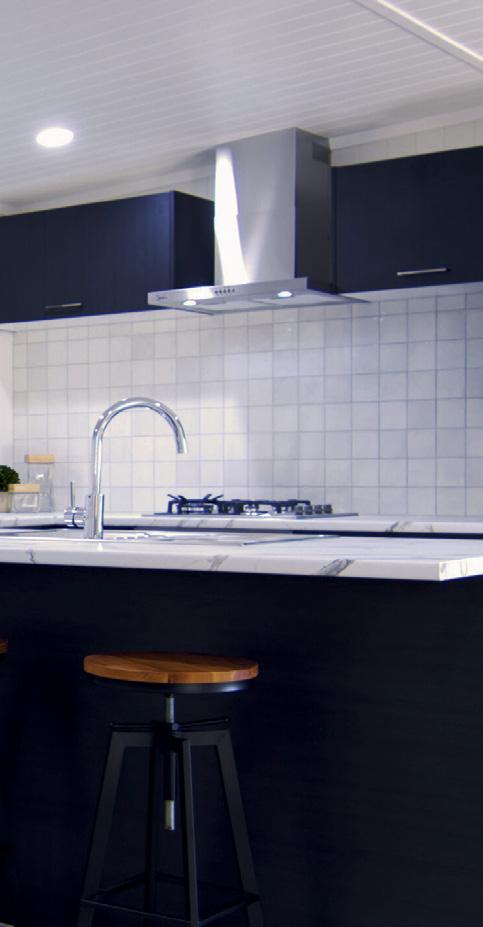


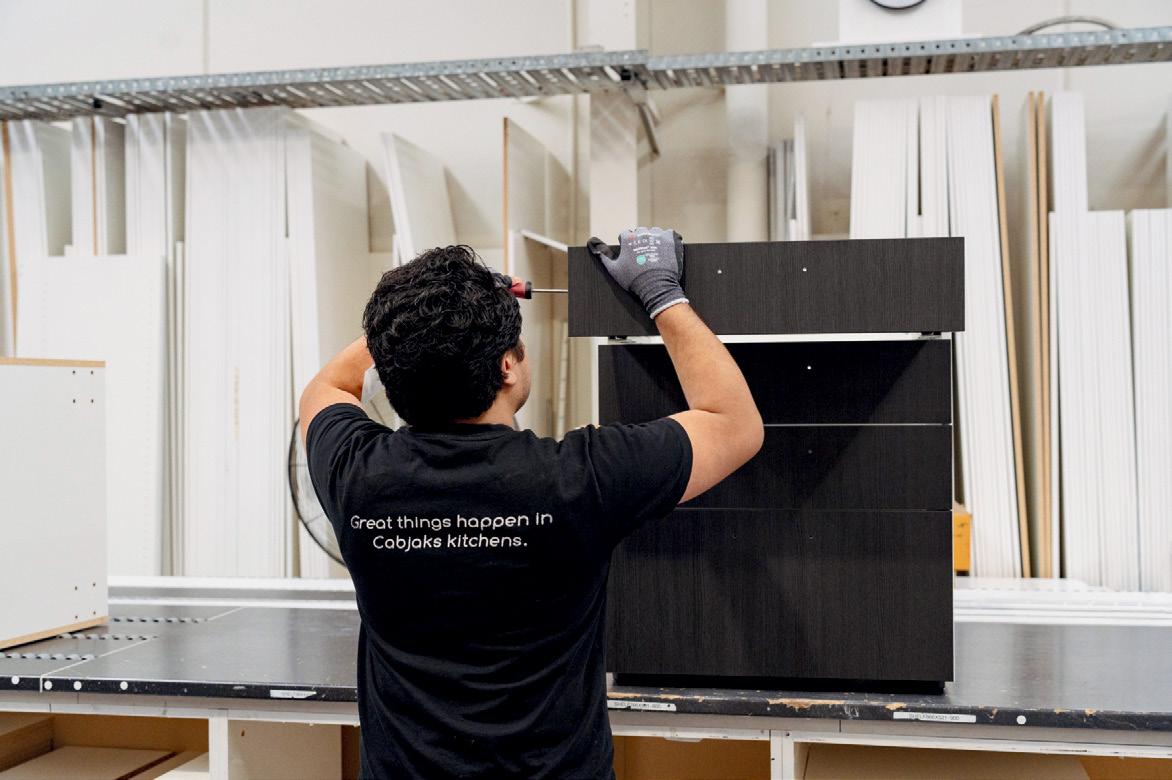
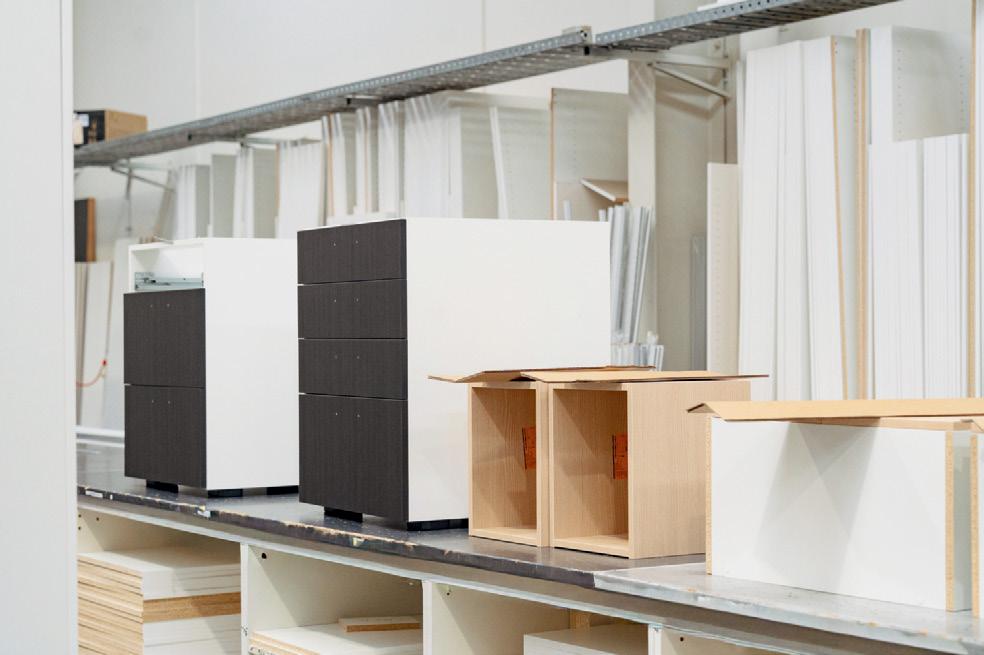
Offer extended to 30 April 2026, exclusively for NZCB members th
Get 40% OFF premium colour upgrades. Stack with your exclusive NZCB trade discount for unbeatable value on your next project.
Use code NZCBCOLOUR at checkout to redeem.
New to Cabjaks? Sign up at cabjaks.co.nz/accounts/register, select NZCB, and we'll email your exclusive discount code.
Preparing for the unexpected doesn’t have to be complicated.

MICHAEL JAMIESON Manager of Commercial Contracts at the ADR Centre also manages the Building Disputes Tribunal (BDT)

ALEXANDER LYALL Resolution Specialist at BDT

WITH THE HUSTLE and bustle of on-site work, it can sometimes be difficult to prepare for worst-case scenarios. Everybody hopes that disputes won’t arise, but even mild ones can impact cash flow and your precious time.
Below, we have put together four key techniques to mitigate the risk of disputes.
1
Keep good records
The BDT provides guidance to parties and their advisers as to the most appropriate dispute resolution process for their dispute. Call 09 486 7143 or 0508 284 534, email registrar@buildingdisputestribunal.co.nz or visit buildingdisputestribunal.co.nz
Many disputes could be resolved or advanced by better recordkeeping and clear documentation. The ability to document progress has never been easier with everyone having a camera in their pocket and the ability to confirm discussions by a simple text, email, or message.
Yet we still see many disputes where there is no documentation, or the records are sparse, unclear or inconsistent. This can prove extremely problematic when a contractor is trying to support a claim for payment and needs to prove what happened and when. Simple records like site meeting minutes and a site diary can provide a clear picture of what happened, rather than an individual’s perhaps faulty recollections sometime later.
2
Deal with issues early Differences don’t need to become disputes. When a difference or disagreement arises, putting your head in the sand is not going to help. The problem won’t go away or get better by ignoring it.
Instead, early, clear and accurate communication should be the go-to for contracting parties. Giving a client an early warning that something might go wrong, take longer, cost more, or fail to meet objectives can support early resolution and course correction toward successful project completion.
Setting aside disputes until the end of the project is a recipe for disaster. The final washup turns into a dust-up. Payment will be withheld, and you will be on the back foot as all the work has been done, and your workers, subbies and suppliers will all be clamouring to be paid.
Deal with disputes early and informally, or, if necessary, get into a dispute resolution process early while the project continues.
3 Communication is king It all comes back to communication.
Make sure that you communicate clearly and effectively. For example, if a variation needs to be claimed, do it promptly at a time when the owner, principal or the engineer to the contract can actually look at the item. Give them adequate information to prove entitlement and quantum. Keep in contact with the owner or principal and give them regular updates.
4 Keep programmes up to date
Often there is a contractual requirement to have a programme at the start, but then it is not updated as the project advances. An up-to-date programme is a crucial tool for managing a project, and dealing with issues like force majeure or other delay
events and supply chain problems.
Even if the contract doesn’t require it, a programme is still a good idea. For small projects, this can be something relatively simple. For bigger projects, it may be a good investment to engage a programming expert to update it regularly. This could be money much better spent upfront rather than down the track in a dispute where an expert is trying to recreate what happened.
The Building Disputes Tribunal is ready to help
The BDT administers alternative dispute resolution (ADR) procedures such as adjudication under the Construction Contracts Act, arbitration and expert determination for parties looking for a quicker and cheaper alternative to the courts. For those new to ADR, the BDT’s team of dedicated registrars can work with you through your dispute and recommend a procedure that best fits your unique situation.
BDT has a 30-year record of managing construction disputes, and is recognised as the leading independent, nationwide provider of specialist dispute resolution services to the building and construction industry. The BDT does not provide legal advice.
Disclaimer: Information published in this article is not intended to be comprehensive. No person should act in reliance on any statement in the article and the Building Disputes Tribunal accordingly does not accept any responsibility. Readers are advised that specialist legal advice should be sought in relation to all matters covered in this article.











Think a spec build is covered by standard insurance? Think again. Here’s how to avoid the hidden gaps.

That means that if you try to use standard building insurance policies, you may not have the cover that you need, especially to meet the ‘insurance gap’.
Mind the gap between completion and sale
Before you start any build, you need a robust Contract Works policy. Most Contract Works policies have a ‘Cessation of Cover’ clause that ends after one of two events: Practical completion – when the house is ready for its intended use. Possession/occupation – when the buyer moves in or starts occupation of the space.
When you are building a spec house, there may be a large gap between the build completion and a buyer taking possession.
In the current market, the average national sale time is around 40 days, not including the time needed to take photos and get the property listed.
It is this gap that is often overlooked and where the property is at a higher risk, with unoccupied houses particularly at risk for burglaries and malicious damage.
ICIB Brokerweb is the trusted insurance broker for NZCB and is proud to be celebrating 50 years of doing business in New Zealand. For a review of your commercial vehicle cove, call us on 0800 644 444 or visit icib.co.nz
DID YOU KNOW that when you build a spec house, you are not just seen as a builder but as a property developer as well?
This matters from an insurance perspective: a builder only needs to insure their work, whereas a developer must insure the asset itself because you own the land and the project.
Getting the right policies in place
As long as you advise your broker in advance, they can arrange the right insurance for you, which can include guidance and advice on transitionary cover.
This early notification is essential because the temporary cover is
normally always a separate policy, since the property is no longer a construction risk once complete.
In most cases, the insurer who provided the Contract Works insurance will also provide the temporary cover to span the period while the development is up for sale. If your insurer only provides Contract Works, this can complicate obtaining the transitionary cover at the end.
As well as selecting an insurer who can cover you for both the build and the sale period, you also need to make sure you research the specific policy covers.
There are some insurers who, even if they do offer home insurance,
have offerings for spec homes that are not that great.
It is therefore your broker’s industry knowledge that will come into play here and help you choose the best policy for your needs.
simple heads up means a better result
The sooner you contact your broker before you start the build the better. That means your broker can help get you the best cover possible for the job.
ICIB Brokerweb is the trusted insurance broker for NZCB and has been helping to insure Kiwi businesses for over 50 years.
Want to have a chat about your next spec build? Give us a call on 0800 644 444. icib.co.nz




When you are building a spec house, there may be a large gap between the build completion and a buyer taking possession... It is this gap that is often overlooked and where the property is at a higher risk.


Employers should review their policies and prepare now to stay compliant.

Mitchell McGregor
BIG CHANGES FOR workplace law will be made in 2026, with the Government promising to prioritise this pre-election.
In 2025, the minimum wage increased, parental leave expanded, privacy obligations tightened, and pay transparency became law. Immigration rules shifted and KiwiSaver changes were locked in too.
Ashcroft Mitchell McGregor operates the NZCB Employment helpline, offering specialist advice, representation and support across employment, immigration and health and safety law, to businesses throughout New Zealand. Visit ammlaw.co.nz
Our view is the changes so far are creating a lot of “noise” for employers, and compliance with these significant changes will be a focus for 2026. However, not much has happened that really “moves the needle” for employers in terms of making managing workplace obligations
easier, which is surprising given the current government’s composition.
At a high level, we recommend employers stay informed on the laws which will be enacted and take effect in 2026, because the signalled shifts really are in the need-to-know category, and employers will need advice about what this means for their workplace and to ensure they have a strategy to address the changes.
Top highlights for employment are: Changes to the contractor gateway test are progressing which is great news for the construction industry. This will
mean all contractor arrangements need review and updating.
A new Employment Leave Act is on the horizon, with draft legislation expected early in 2026, likely allowing a two-year implementation window. This will affect all employers with changes to leave types and calculations for all employees.
The compulsory KiwiSaver contribution increases to 3.5% from April 2026, and impacts the 75% of employers who do not take a “total remuneration” approach.
A bill focused on allowing employers and employees to negotiate to end employment by agreement now includes strict regulations as to when and how this can occur. If this law passes, employers will need to carefully work through how they can take lawful advantage of having direct discussions about ending employment with employees.
Immigration
The Immigration Amendment Act introduced broader levy settings and compliance powers.
Ministers now have authority to cancel residence visas for security threats and grant visas in exceptional cases.
Deportation liability for residence visa holders convicted of crimes was clarified, and a new offence prohibits charging migrants premiums for employment. Beyond this, immigration policy is evolving.
Skilled Migrant Category changes will shorten work periods and create new pathways for those without bachelor’s degrees (policy due early this year).
The Business Investor Visa offers residence for those investing at least NZD$1 million and meeting tax residency requirements.
Active Investor Plus Visa applications reached 491 by December and are expected to grow.
Accredited Employer Work Visa rules shifted to market rates, with redesigned Job Check forms, increased compliance
checks, and new NOL roles for future ANZSCO transitions.
Last but not least, a bill has been introduced to Parliament proposing broad changes to health and safety legislation, including:
New definitions of “critical risks”, where PCBUs and WorkSafe will be expected to focus their efforts;
A plan to have more Approved Codes of Practice providing guidance on how to meet legal requirements; and
Carve-outs for small employers with less than 20 staff, for obligations outside “critical risks”.
We expect changes to the bill as it progresses, and will provide updates on what this means for business.
As we prepare for the changes and have greater clarity on the laws to be passed, we recommend:
Auditing current policies, employment and contractor agreements;
Updating payroll and compliance systems;
Auditing the immigration policies and clauses;
Seeking legal advice to inform strategy to deal with the changes;
Providing training for staff on what these mean for them and their roles.
If you have specific questions about how these changes affect your business, contact the NZCB helpline on 0800 354 821. Ashcroft Mitchell McGregor delivers specialist advice, representation and support across employment, immigration and health and safety law to businesses throughout New Zealand. We can provide advice and guidance pertaining to any of the changes mentioned above. Visit ammlaw.co.nz to subscribe to our newsletter, gain access to our free webinars, receive invitations to our workshop and seminar series and stay up to date with the latest developments.
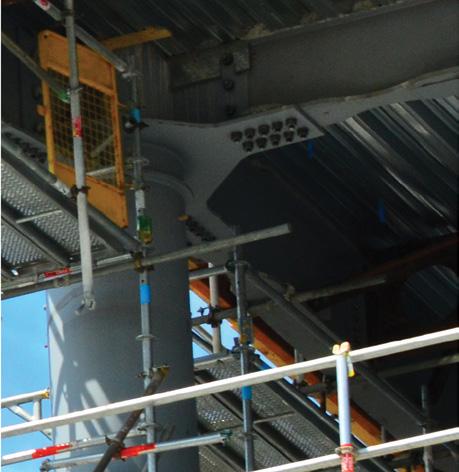
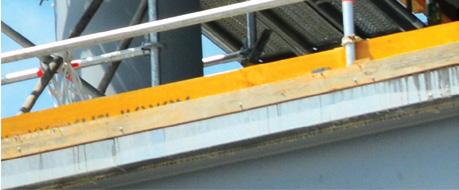

Smart tech is powerful but it still needs human judgement to get the job done right.


HAVE YOU HEARD the latest buzzword in business and tech circles?

FreeUp/Released is a NZCB National Partner (Starter) and tech advisor for builders – making the process quick and easy, from selecting the right software to setting up the system to training staff. FreeUp/Released also operates the NZCB Technology and Software helpline for members. Contact us at 09 887 9950 or hello@freeup.co.nz or visit freeup.co.nz
Human-in-the-loop (HITL) is the concept of keeping a real person involved in a tech system, whether that’s a large-scale AI platform or something a little smaller - like the job management platform you’re using to run your trades business. It’s about bridging the gap between techassisted speed and human nuance and judgement so that you can benefit from both.
The problem: tech takeover
For trades companies, a good job management software with its automation, processes, and templates makes life easier. It can minimise admin time, help you to communicate with your clients, and keep you organised and accurate most of the time. However, digital tools such as ServiceM8, Fergus, Simpro, and others can be “confidently wrong”. Without
the perfect input, they won’t achieve the perfect output. They might not have updated pricing info, and can’t look at a building site and identify any variations required or challenges it poses. Human wisdom is needed.
Sometimes, the limitations of your JMS will cause very small and surmountable road blocks. However, when they are tasked with important things like putting together quotes, contacting customers, writing emails, and adding important dates to a schedule, letting tech take sole control leaves room for major errors.
The solution: a human in the loop
It’s essential to have human oversight. This will look different for different organisations, and for trades businesses it often means having someone with local and trade-specific knowledge check quotes, keep an eye on automated messaging, and be
ready to adjust your templating and other automations as necessary. If your software is a jet plane to get you somewhere faster on autopilot, the “pilot” is the person keeping watch to make sure you fly safely and land in the right destination.
Having a human in the loop starts right at the beginning, too. That’s what FreeUp offers: an expert pilot setting up your autopilot to minimise errors and maximise efficiency. Many of our clients spend thousands on high-end and very powerful job management software but without a knowledgeable pilot to get it off the ground, they’re only using 10% of its capacity. Our team can help tradies put together a workflow that works, with an HITL built in to make sure that the tech isn’t operating alone.
Our software audit and tech strategy services will set you on the right trajectory, whether you’re starting
from scratch or sifting through your current tech toolbelt to decide what works and what is surplus. Further down the track, our “ask us anything” will help you to course correct as necessary, and targeted software product training upskills your own team in how to take the controls for a smooth landing, every time.
Going without tech-based systems is fast becoming untenable for trades businesses; the right job management software can give you a real competitive edge. Real people, however, are just as invaluable. FreeUp can help with setting up your software to maximise benefits, and also with creating a system that uses tech to its full potential while also looping in the humans that will ensure that autopilot doesn’t run you into the ground.
Head to freeup.co.nz to book a 15-minute chat or enquire about any of our services.
If your software is a jet plane to get you somewhere faster on autopilot, the “pilot” is the person keeping watch to make sure you fly safely and land in the right destination.












Planning ahead will ease you into the silly season without the financial pressure.


THE CHRISTMAS SHUTDOWN is meant to be a well-earned break, but for many builders it comes with financial stress instead of relief. Cash gets tight, wages and holiday pay stack up and the new year starts under pressure rather than with momentum. The good news is that Christmas shutdowns happen every year and this makes them easy to plan for.
Don’t let December knock your cash flow


My Smart Office can help you get more done in less time. Then you can focus on what matters: growing your business. Amanda Chisholm runs a successful residential building company with her husband and has over 20 years of experience working with customers, sales and marketing, bookkeeping and administration. For more advice contact MySmartOffice on 021 886 120 or visit: mysmartoffice.co.nz
Smaller building firms often rely on steady cash flow. When income slows or stops for a few weeks, it exposes gaps very quickly. Wages still need to be paid, leave balances come into play, and statutory holidays stack up over the shutdown period.
If these costs haven’t been allowed for throughout the year, December can arrive with a nasty surprise.
The costs that don’t take a holiday
Even when the team is on leave, business owners still need to be paid and expenses don’t stop. Most businesses are still responsible for covering:
Annual leave and public holidays; KiwiSaver and PAYE on wages paid; Vehicle costs, rent, insurance and subscriptions; Fixed loan or hire purchase repayments.
Wage-related liabilities are the leave and holiday entitlements your team earns as they work. Annual leave and public holidays don’t suddenly appear at Christmas, they build up steadily across the year. However, many business owners treat these costs as a future problem and when December rolls around, it puts immediate pressure on cash flow.
Under the Holidays Act 2003, if your business shuts down for more than one week, there are rules around how employees with less than 12 months’ service must be paid. Getting this wrong can create compliance issues and unexpected costs.
As a business owner, it’s your responsibility to plan for these entitlements and ensure employees are paid correctly. Using a good payroll system is critical, as they’re not all created equal. Systems like Smartly or

Pay Hero handle all leave calculations and stay aligned with current legislation. If you’re unsure about the rules, working with a payroll specialist can help you stay compliant and remove a lot of stress.
Putting aside a portion of the business revenue for leave accruals every week or month smooths cash flow, removes the panic factor and gives you a much clearer picture of what your business can actually afford. You don’t need complex systems; even simple payroll reports or software makes tracking leave accruals easy, accurate and effective. Make sure to:
Factor leave costs, KiwiSaver and ACC payments into your charge-out rates;
Check accrual balances regularly, not just at year end;
Put aside accruals for leave, KiwiSaver and ACC each week or every time you receive payment;
Keep funds for leave in a separate account and don’t touch them.
Get ready before tools down In the lead-up to Christmas, finalise progress claims earlier than usual, follow up overdue invoices and make sure enough cash is in the bank to cover wages and leave.
Relying on January payments to cover December costs is risky. Some builders take out short-term loans just to get through the break. While this provides temporary breathing space, it also creates longerterm pressure through interest costs and repayments that linger well into the new year.
The Christmas shutdown happens every year but with the right preparation, you can step away knowing your team is paid correctly, your obligations are covered and your business is compliant. That peace of mind is what turns Christmas into a genuine break, not a financial headache waiting to happen.




Annual leave and public holidays don’t suddenly appear at Christmas, they build up steadily across the year.











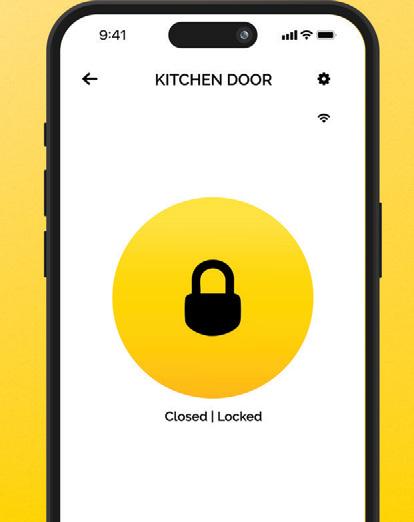
Free, member-only courses from NZCB will help you stay informed.


THE GOVERNMENT HAS made a couple of big changes affecting the industry this year and it’s important you understand what these reforms mean for you.
The NZCB Learn team has pulled together some great resources to make sure you’re ready to take advantage of these new rules.
Remember: all NZCB online learning is free for members, available when it suits you, and we can issue evidence of learning on request, making it easier to renew your LBP licence.

First up are the exemptions to consenting rules for granny flats. These exemptions have been generating a lot of interest from homeowners and have the potential to flow through into a steady income stream for residential builders. We step you through the new rules in the Granny Flat Consent Exemption course.
Another major reform around building warranties was announced late last year, requiring builders to offer warranties for all new residential
buildings three storeys and under and for renovations $100,000 and above. Although these rules won’t come into effect until 2027, homeowners are already asking about the Halo Guarantee and whether it complies (good news: it does!).
Make sure you understand the Halo 10-Year Guarantee with our online course, so you can talk through the process with confidence with your clients. It only takes 30 minutes of your time, and will give you the edge over your competitors. This course will also be updated in the coming months as the new regulations are finalised, so watch this space.
Check out both these courses on the Toolshed (nzcb.nz/members/ courses).
As always, the NZCB Learn team is here to help you take your business to the next level. As well as our online courses, we have our Coach the Crew workshops, and can also design bespoke or group training to meet your needs. Please get in touch with Marcia (021 365 947) to find out more.

Competitors nationwide will put their skills to the test for a place in the final.

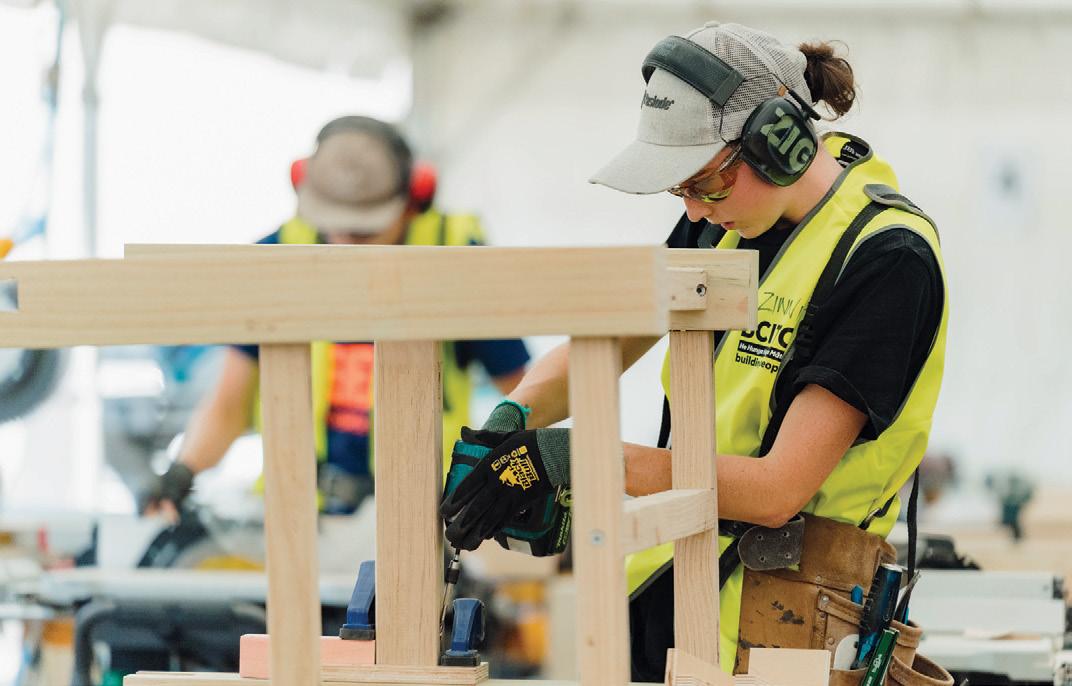
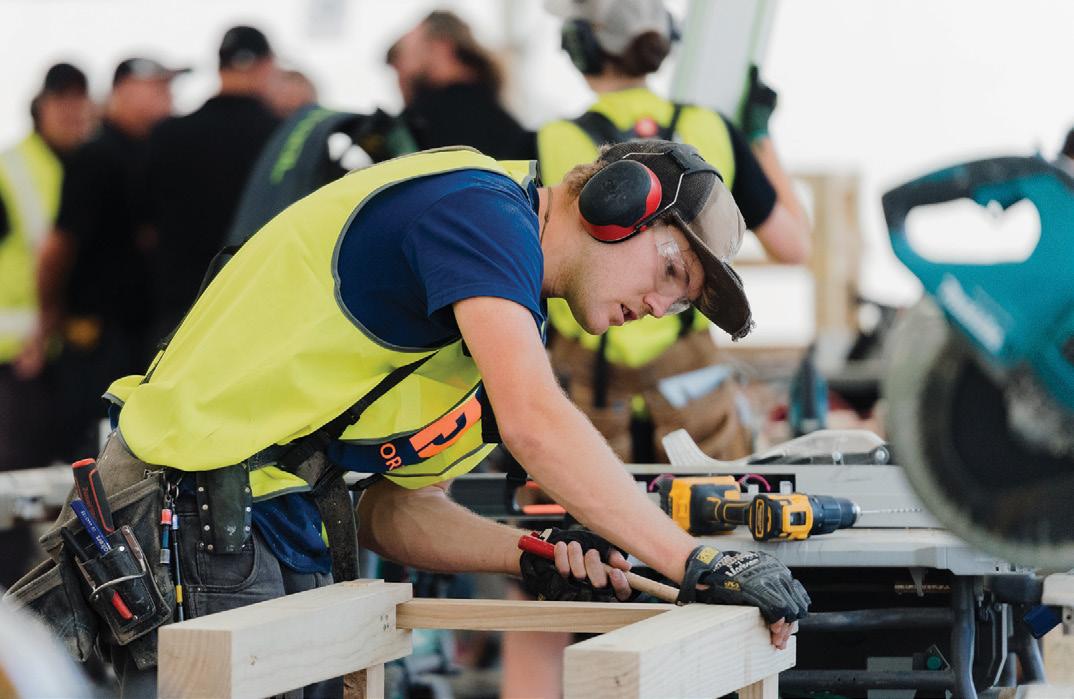
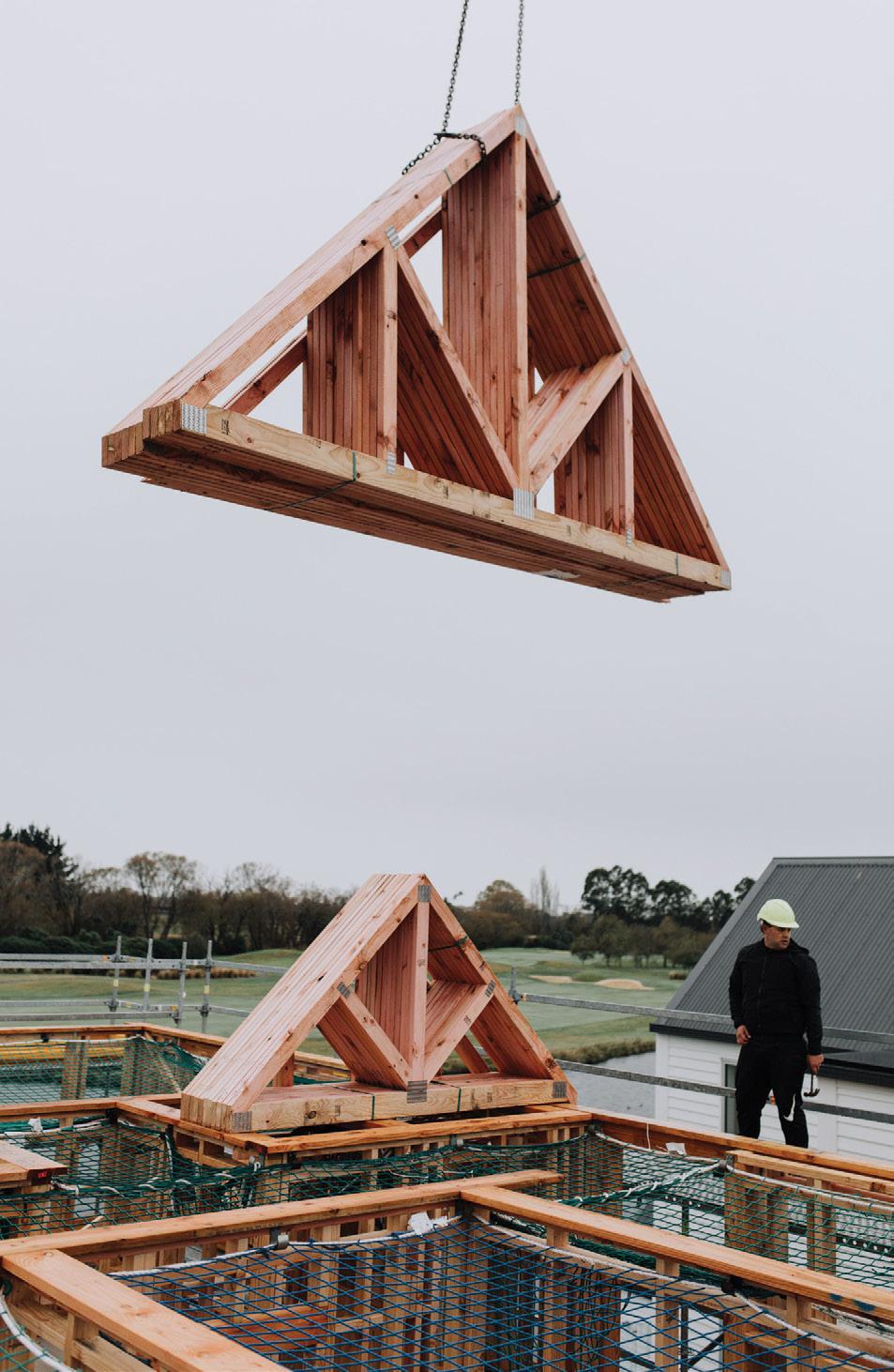
NOW IN ITS 16th year and delivered in partnership with BCITO and Mitre 10 Trade, the NZCB Apprentice Challenge is one of the biggest events on the construction calendar. With entries now closed for the challenge, the focus turns to the regional heats to be staged on 18 April 2026 at locations across around the country.
Apprentices will put their practical skills and time management to the test, having eight hours to complete a build project that they will donate to their local community.
This year, apprentices at the regional heats will be tasked with building a Pātaka community sharing cupboard that can hold books, toys or food. The design for the Pātaka was created by ADNZ student Matt Brown, who is studying for a Bachelor of Architectural Studies. The construction drawings were prepared by ADNZ member Steve Brown of 3DR Design & Draughting.
The top-performing apprentices at the regional will go on to compete at the national final, held at the NZCB Conference in Auckland on 5 and 6 June 2026. Finalists will compete for the national title and a prize package valued at $10,000.
For more information on the NZCB Apprentice Challenge, visit apprenticechallenge.nz


The
NZCB Apprentice Trust is on the hunt for two trustees.

The NZCB Apprentice Trust was established to support and foster the next generation of builders in New Zealand. When the building industry does well, New Zealand does well.
ARE YOU PASSIONATE about making a difference in the not-for-profit sector? We’re looking for two trustees to join the board of the NZCB Apprentice Trust, and contribute to its strategic direction and oversight.
The NZCB Apprentice Trust was established to support and foster the next generation of builders in New Zealand. When the building industry does well, New Zealand does well. We support construction trainees and others, removing barriers that would otherwise prevent them from pursuing their training and gaining the qualifications they need to succeed. The Trust does this by providing grants for those going through tough times, as well as scholarships and other support for the personal development and growth of building apprentices employed by NZCB members.
Who we’re looking for
The Trust is looking for two trustees who can bring a combination of the following skills and perspectives:
u Building industry knowledge and perspective. Whether you’re early in your career or a highly experienced professional, with wide ranging community and industry connections and insights, we need both.
u Experience in events and fundraising in the not-for-profit sector, with a proven ability to lead successful working groups, would be welcomed.
u As a group of volunteers, all Trustees need to demonstrate initiative and a willingness to roll up their sleeves to make things happen.
u We welcome trustees from all over the country as we look for both metro and smaller regional community reach.
u Connections to diverse communities and perspectives will be a significant asset.
u Governance experience is not essential but a passion to develop governance skills is required.
Please note these are voluntary positions.
You don’t need to be a member of NZCB, and we encourage applications from outside the NZCB network. Whether you’re new to governance or an experienced trustee, we want to hear from you. Applications close 31 March 2026.
To find out more, email the Apprentice Trust General Manager Nicola Airey (trust@nzcb.nz) or check out the full job description at nzcb.nz/ members/apprentice-trust



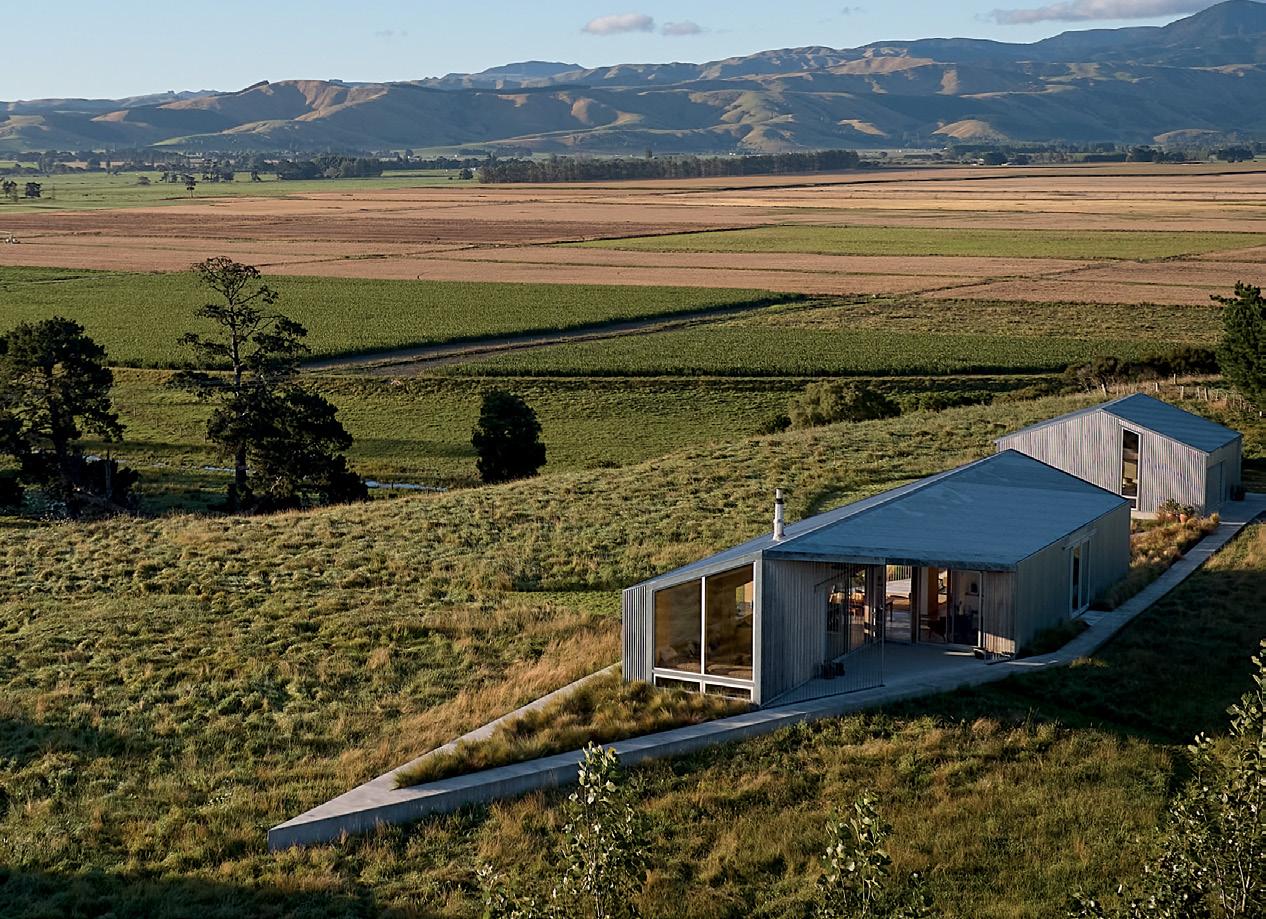
For over 50 years, APL have made windows and doors right here in New Zealand. But why should being ‘NZ Made’ matter?
In Part Two of our ‘Made here, for you’ podcast series, HERE editor Simon Farrell-Green speaks with Gommers Construction and Richard Davidson Builders about working with NZ made products. From better build outcomes to a more resilient construction industry, they explain the value of strong local partnerships.

Part 2, Episode 1 - APL Window Solutions

Listen on Spotify and Apple Podcasts aplnz.co.nz/nzmade/made-here-for-you-part-two
Exclusively available through:

Rafael Caso is helping tradies build mental fitness through simple, practical habits to manage stress on and off site.


WHEN YOU FIRST MEET Rafael Caso, the programme lead of Live Well Build Well (LWBW), he does not come across as someone trying to impress you. He speaks plainly. He listens carefully. And he is quick to admit he is still figuring things out himself. That honesty is exactly why his message is landing with builders and tradies across New Zealand.
LWBW was created to support the mental fitness of tradies and residential construction teams. Its goal is simple: help builders build better coping skills so they can handle the ups and downs of the job, improve their health, and strengthen the entire residential construction sector. Rafael says the starting point is not toughness. It is self-awareness.
“Self-awareness is the beginning point,” he explains. “You have to know what triggers stress for you. Once you know your triggers, you can start managing them instead of just reacting.”
He also talks about understanding what helps you recover.
“Each of us needs a certain combination of activities day to day to rest and recharge. For some it is exercise. For others it is time with family. For some it is
quiet time alone. If you do not know what refuels you, you end up running on empty.”
That strengths-based approach sits at the heart of LWBW. It is not about diagnosing problems. It is about helping builders recognise what they already do well and building from there.
Interestingly, Rafael admits he struggled with confidence in the early days of leading the programme.
“I felt like an imposter,” he says. “I am just an average guy. I feel stress. I feel uncertainty. I would look online and see these incredibly impressive people talking about the extreme challenges they had overcome. I thought I was no match for them, why will people listen to me?”
He mentions the legendary Navy Seal David Goggins, known for completing 4,030 pull ups in 17 hours and running ultramarathons.
“I am certain I will never be like David Goggins. He is the godfather of health and mental resilience. But that was the turning point for me. I realised improving mental fitness does not require you to be a Navy Seal.”
A few years into leading LWBW, Rafael had a sudden shift in thinking. The

breakthrough was simple but powerful.
“It is about small improvements. Small habits. One step at a time. Going to bed a bit earlier. Getting a short walk in. Having an open conversation. Locking in time with the people who matter to you. Those things add up.”
He now describes himself as a work in progress.
“I am prepared to commit to making small improvements every day. I will never be perfect. But I can be a slightly improved version of myself each day.”
For construction business owners, that message resonates. The pressure to deliver projects on time and on budget is real. So are the responsibilities of leading a team and supporting a family. Mental fitness in this context is not about dramatic stories. It is about steady, practical habits that help you stay clear-headed when things go wrong.
LWBW delivers short, practical
sessions on site, shares real stories from tradies, and equips teams with tools to manage stress before it becomes overwhelming. The focus is on building coping skills, strengthening communication, and encouraging daily habits that support physical and mental health.
Rafael believes that when builders are healthier and more self-aware, the whole sector benefits.
“Strong people build strong companies. Strong companies build strong communities. If we can improve how tradies cope with pressure and uncertainty, we lift the standard of the entire residential construction industry.”
For Rafael, it is not about being extraordinary. It is about being consistent.
“I see myself as a work in progress. And I think most builders can relate to that.”
To learn more about Live Well Build Well or to arrange a session for your team, contact Rafael at rafael@livewellbuildwell.com or visit livewellbuildwell.com







“I am certain I will never be like David Goggins. He is the godfather of health and mental resilience. But that was the turning point for me. I realised improving mental fitness does not require you to be a Navy Seal.”






Designed for professional long term results, RepairCare Dry Flex is a 2-part, 2-pack epoxy resin repair system for repairing rot, cracks, and other damage in timber without the need for full replacement - making it a sustainable and cost-effective choice for window repairs. Dry Flex 1, 4,16 and SF offer varying levels of repair options from split timber to corner repairs up to 50mm deep.
Dry Flex remains permanently flexible throughout its lifetime, meaning it will not split or crack and is guaranteed to maintain its bond with the timber.
RepairCare Products are available throughout New Zealand through the Resene ColorShop network and online shop.resene.co.nz




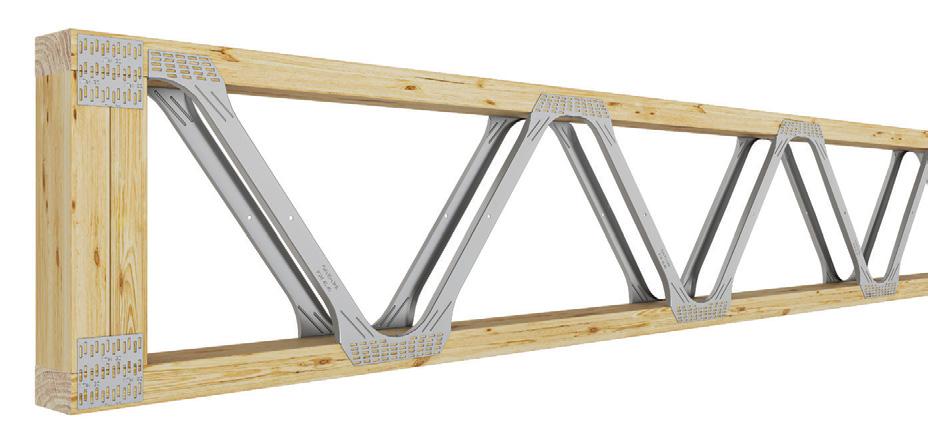
MiTek has expanded its Posi-Strut range with two new web sizes, PS24 and PS29, developed specifically for New Zealand construction practices. When used with standard 45mm timber chords, the new sizes deliver floor truss depths of exactly 240mm and 290mm, aligning seamlessly with common solid timber joist dimensions. This allows existing architectural floor depths to be maintained while gaining the benefits of integrated services and longer spans. The lighter weight of Posi-Strut floor systems improves on-site handling for installers, while the 90mm width provides greater stability during construction. Designed and certified using MiTek SAPPHIRE Structure software, PS24 and PS29 deliver confidence in compliance alongside greater design flexibility. To learn more, speak to your local MiTek fabricator or visit MiTekNZ.co.nz







This modern front- or topmounted vertical aluminium slat balustrade system provides options for contemporary designs where detailing is a prominent feature of a building’s look. Its top-fixed fin balusters eliminate the need for posts, creating an engaging front-on view and a comb-like profile from the side. Supported nationwide by HomePlus® and custom-made and powder-coated in NZ, Stecca® is available with a PS1 confirming its suitability for deck and balcony barriers, stairways and pool fencing. The structural engineering design meets the Building Code requirements for B1 Structure, B2 Durability, F2 Hazardous material, F4 Safety from falling and F9 Pool Fencing. Scan QR code for more information or visit homeplus. co.nz/balustrades/steccaaluminium-fin-balustrade/



Eliment insulation is designed for a wide range of wall, ceiling, mid-floor and skillion applications. It is manufactured using recycled glass and employs a phenolic resin-based binder that incorporates a natural anti-formaldehyde ingredient. Eliment insulation is available to order nationally from ITM, PlaceMakers and professional installers.
New Zealand Certified Builders (NZCB) would like to thank our Strategic Partners who play a vital part in assisting in supporting our Association and the wider building community. Their contributions enable us to deliver key initiatives for members, including training, professional development, new programmes, marketing, and communications. They also bring valuable expertise and support at a national level, with opportunities to engage directly with members through a wide range of activities.


NZCB is proud to partner with the following companies, who are aligned with the Association to bring our members discounted services and products.











New Zealand Certified Builders (NZCB) is proud to partner with the following companies who align with our Association and give NZCB members access to a wealth of expertise and support throughout New Zealand.
NATIONAL PARTNER (PREMIUM)
APL Window Solutions aplnz.co.nz
Carters carters.co.nz
Enveloped Solutions Ltd enveloped.co.nz
MiTek New Zealand miteknz.co.nz
Red Stag Timber redstag.co.nz
Resene Construction Systems reseneconstruction.co.nz
NATIONAL PARTNER (PROFESSIONAL)
ACC
acc.co.nz
ASSA ABLOY Opening Solutions New Zealand assaabloy.co.nz
James Hardie New Zealand jameshardie.co.nz
Milwaukee Tool New Zealand milwaukeetools.co.nz
PlaceMakers placemakers.co.nz
Resene Paints Ltd resene.co.nz
Utecture New Zealand Ltd utecture.com
NATIONAL PARTNER (STARTER)
Altus NZ Ltd altus.co.nz
Bowers Brothers Concrete Ltd bowersbrothers.co.nz
Builda Price (2016) Ltd buildaprice.co.nz
Comfortech Building Performance Solutions pinkbatts.co.nz
Connected Spaces connectedspacesjoinery.co.nz
CS Cavity Sliders cavitysliders.com/nz
CSR Building Products (NZ) Ltd csr.co.nz
FMI Building Innovation aslnz.co.nz
FreeUp/Released freeup.co.nz
Glass Vice Products glassvice.com
Independent Building Supplies ibs.co.nz
Juken New Zealand Ltd jnl.co.nz
JSC Premium Architectural & Building Solutions jsc.co.nz
Kingspan Thermakraft Ltd thermakraft.co.nz
Laminex New Zealand laminexnewzealand.co.nz
Marley New Zealand Ltd marley.co.nz
Marshall Innovations Ltd mwnz.com
Masada masada.co.nz
Metro Performance Glass metroglass.co.nz
My Smart Office Ltd mysmartoffice.co.nz
New Zealand Panels Group nzpanels.co.nz
Open2view open2view.co.nz
Paslode New Zealand paslode.co.nz
Productspec Ltd productspec.net
Proven Systems Ltd (DVS) dvs.co.nz
Rave Build Management ravebuild.co.nz
Red LBP Ltd redlbp.co.nz
Schneider Electric pdl.co.nz
Simx Ltd simx.co.nz
Soudal Ltd soudal.co.nz
Viking Roofspec vikingroofspec.co.nz
Your QS Ltd yourqs.co.nz

As one of New Zealand’s largest trade merchants with over 80 stores nationwide, there’s a Mitre 10 Trade near you, open seven days a week. With a range of purchasing options including in-store, online, delivery or ready to collect, you’ll get everything you need, when you need it.