

Dear seafarers,
In this issue there is a strong emphasis on best practices. The Technical section weighs in with the importance of maintaining anchoring systems while Marine Operations addresses bunkering challenges. In addition the Crew Department provides valuable information about the Nipah virus (NiV) and the best preventive measures associated with it.
There are also best practices put forward in the Mental Well-Being and Physical Health section, so it may be concluded that everyone is on the same wavelength when it comes to enhancing the safety of our Seafarers and maintaining our vessels. However, as illustrated in the HSQE submission, there is always the pervasive risk normalization intruder waiting in the wings. And when it is allowed to worm its way into daily tasks and operations, the consequences can be grave as described in the section. This incident exemplifies why any deviation from best practices must be eradicated at all costs.
Of course, the effectiveness of having best practices incorporated into policy depends on implementation, which in turn depends on onboard culture. Without a strong onboard culture, policies become insipid, so it is necessary to ensure that the culture on board all our vessels is resilient enough to withstand any threats posed by compromising sound procedures. The piece on Respect, Authority and Speaking Up lays out measures and behaviours which guarantee that best practices are adhered to and not compromised. So, please heed all the safeguards and policies provided by our Company, which unwaveringly prioritizes your safe return home.
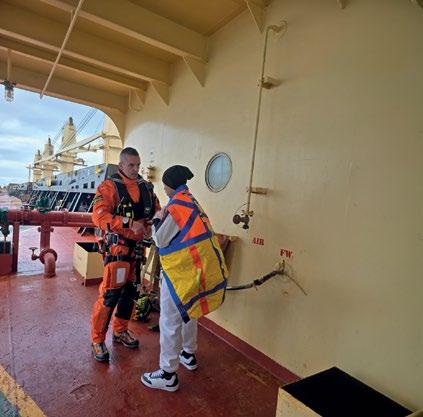
Oiler John Carl Durilag, who joined the Company in 2021 as an Engine Trainee, began experiencing persistent headaches on 29 January 2026 while serving on board M/V Apageon. At the time, the vessel was drifting in the Gulf of Cadiz, with Aughinish, Ireland as the next port of call.
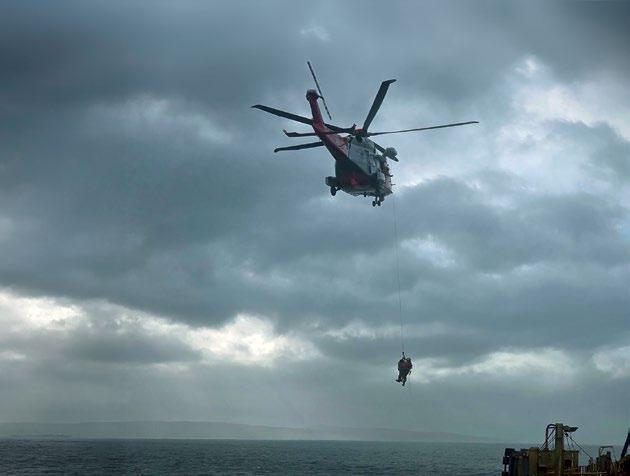
The Company’s medical provider was immediately contacted for guidance. In accordance with medical advice, pain relief medication was administered and the Seafarer was assigned lighter duties while being closely monitored. 'During monitoring,
Best
wishes, Nick Seaman
additional symptoms were observed, which meant that a proper medical evaluation should be conducted ashore.
Considering the progression of symptoms and unfavourable weather conditions for a launch boat transfer as well as prioritizing his health and well-being, the decision was made to arrange his disembarkation by helicopter for further medical assessment and treatment.
Disembarkation was carried out safely by helicopter on 10 February 2026, and John Carl Durilag travelled back to Manila on 11 February 2026 for a comprehensive medical follow-up. Upon his arrival in the Philippines he visited the Company’s designated clinic for further treatment and he is recovering well. We look forward to welcoming him back once he is fully fit for duty.
I would like to thank all the contributors for their excellent submissions, which I sincerely hope you enjoy and appreciate. If you have any comments, suggestions or questions regarding the content, please do not hesitate to contact me at contact@wavelength.gr. Disclaimer: The contents provided herewith are for general information purposes only and are not intended to replace or otherwise contradict the detailed instructions and procedures issued by the owners, managers, flag etc. The articles presented and the views expressed in the bulletin do not necessarily reflect those of the publishers. Editor: Nicholas Seaman • Email: contact@wavelength.gr • Design-Production: www.remdesign.gr
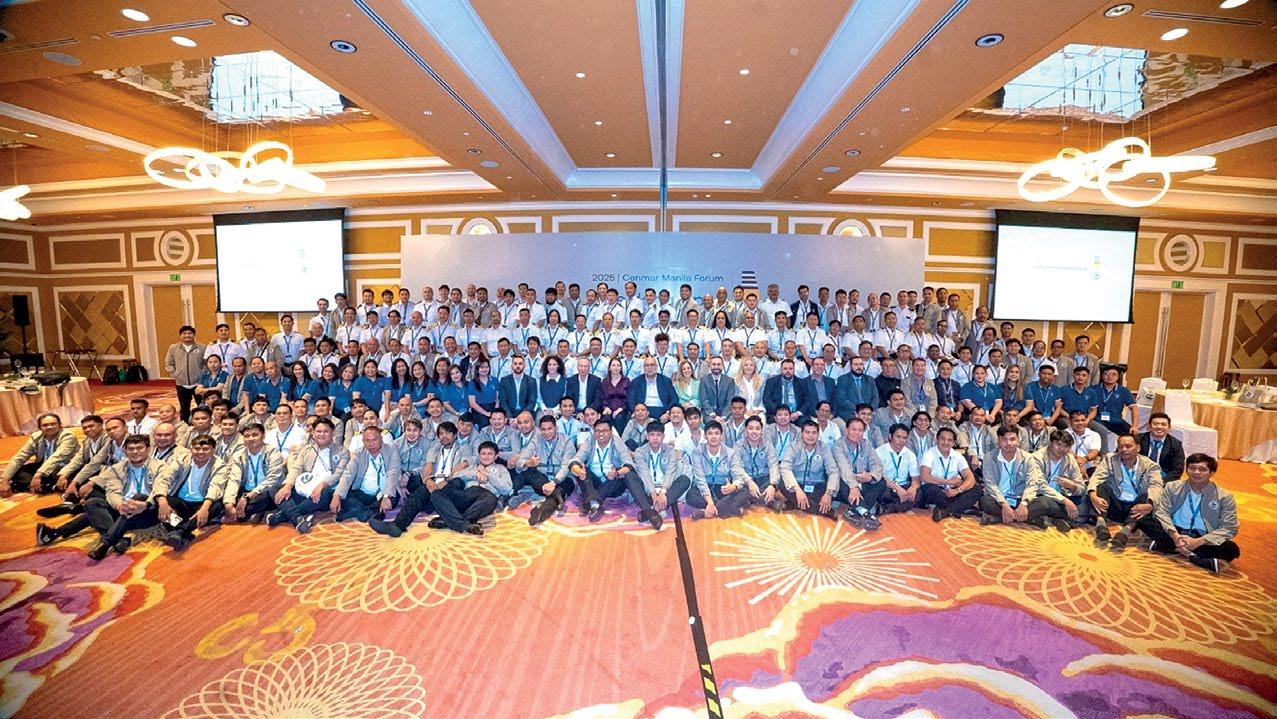
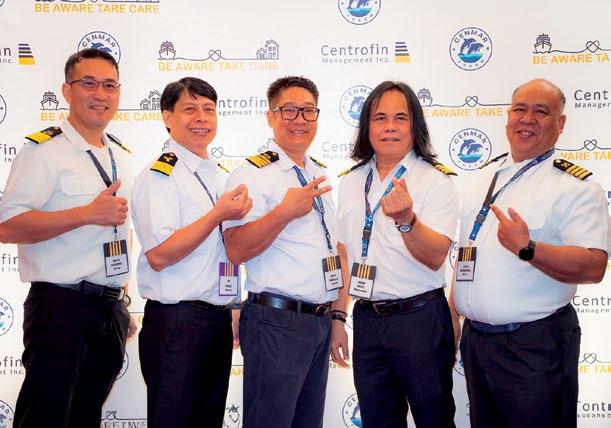
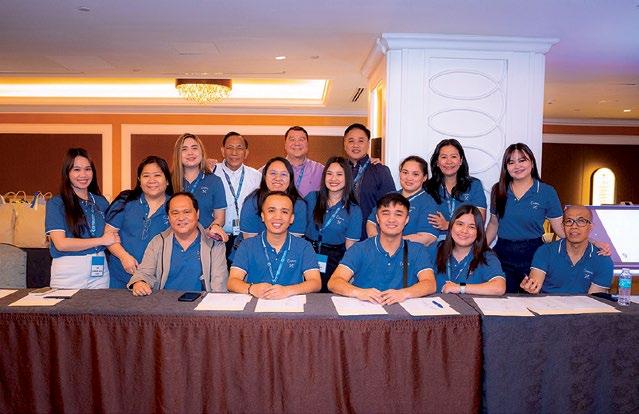
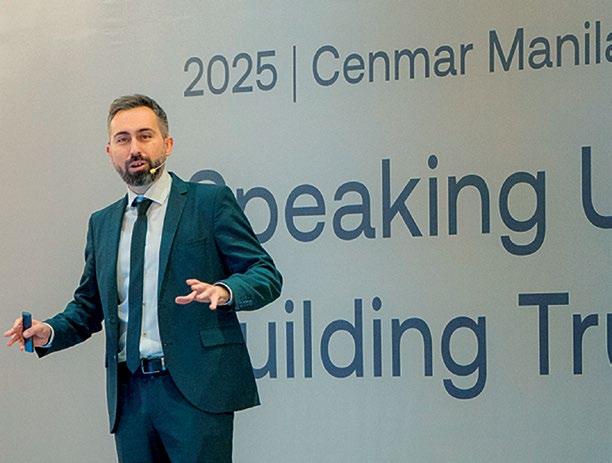
Held on 19–20 November in Manila, the 2025 Officers’ Forum successfully brought together our shore-based and sea-going teams under the central theme “Speaking Up, Building Trust.” Over two engaging days, the Forum delivered a comprehensive and forward-looking agenda, combining leadership messages, technical expertise, and interactive dialogue. Key discussions covered PSC inspections, vetting evolution, energy efficiency, enclosed spaces, emergency preparedness, sustainability and ESG, as well as the Company’s expansion and modernization plans—reinforcing our commitment to operational excellence and continuous improvement. The event’s dynamic format, featuring workshops, open table discussions, breakout sessions, and live audience participation encouraged meaningful engagement across all ranks. Highlights included the Mooring Scenario Workshop, plenary thinktank discussions, and interactive “Speak Up” sessions, all designed to strengthen collaboration between ship and shore. The Forum concluded on a high note with a friendly basketball tournament, which was greatly enjoyed by all participants and further strengthened the spirit of teamwork and camaraderie that defines our organization.

By Andreas Chandris
This time we will take a look at the history of CENMAR Forums, which were initiated in 2008. As part of a TMSA requirement, it was of paramount importance for the office staff to have contact and face-to-face discussions with our Seafarers about many crucial topics.
Since 2008 many things have changed but some have remained the same. No one knows this better than Mr. Andreas Chandris, Forum Chairman and MarOps Fleet Supervisor for our Bulk Carriers.
Q1: Andreas, when was your first experience of Forums? How did you feel during your first attendance and presentation?
My first participation in the CENMAR Officers Forum was in Manila in 2017. I was very excited about the opportunity, and it was truly an honour to represent the Marine Operations Department to our Seafarers. Naturally, I felt some anxiety ahead of my first two presentations; however, my enthusiasm for the event and the realization of its importance quickly disposed of any initial nervousness. Overall, it was a very rewarding experience that strengthened my appreciation of the value of a forum.
Q2: Who typically participated in the forum in the earlier years? How does that compare to the range of participants we see today?
In the earlier years, the Company was primarily represented by colleagues from the Marine Operations, SQE, Technical, and Crew Departments. As the Forum evolved, and particularly following the establishment of the Forum Committee in 2018, it was recognized that broader departmental involvement would add further value. Consequently, participation gradually expanded to include additional departments presenting their respective topics. Moreover, attendance is no longer limited to senior office personnel, as was previously the case; today, newer members of the shore team are also encouraged to participate, fostering greater engagement across our organization.
Q3: How has the number of attending seafarers changed from then to now?
The growth in participation over the years has been significant. In the earlier editions, the forum was mainly attended by senior officers and followed a more traditional classroom-style format. Today, we aim to include as many seafarers and ranks as possible to promote the exchange of experiences and collective improvement. To illustrate this progression, attendance has increased from approximately 30 participants in 2008 to around 150 of our Seafarers in 2025, including both officers and ratings.
Q4: Which topics used to be the main focus in earlier years, and what subjects seem to capture the greatest interest today?
Initially there was a lot of focus on technical and operational topics. They were typically longer presentations, aiming at training people via passing on knowledge. Navigation, Cargo Operations, Enclosed Spaces, H2S concentrations, and Critical Equipment were very common topics. Over the years, there has been a gradual shift towards the human element and behavioural issues. In the

By Vaia Kyrodimou
same way that the industry evolved, so did our Forum. For example, newer topics have included diversity & inclusion, leadership, speaking up, active listening and the generation gap. The format has also shifted towards shorter presentations, aimed mostly at raising awareness.
Q5: How has the structure or format of the Forum changed— such as session types, interactivity, or the use of digital tools?
One of the most notable changes has been the structure of the agenda. In the past, sessions typically consisted of longer presentations—often exceeding 45 minutes per topic—spread over approximately two days. Since 2018, presentations have been streamlined to approximately 15 minutes each, making the content more accessible and easier for participants to follow. In addition to presentations, the Forum now incorporates workshops, panel discussions, and interactive experience-sharing sessions, which enhance engagement and improve participants’ understanding of the topics discussed.
The COVID-19 pandemic also played a significant role in shaping the Forum’s evolution. During that period, the event was delivered remotely for approximately two years, which provided valuable experience in virtual engagement. Building on this, we have since adopted a hybrid approach, enabling both our Seafarers and shore-based colleagues to join the Forum live from various locations whenever local facilities permit, through real-time streaming of the event.
Q6: What are your aspirations for the forum in the coming years?
Our Committee’s aspiration is for the forum to continue maintaining its high standards while expanding its reach to engage as many seafarers as possible. We strongly believe that the core purpose of this event is to strengthen the connection between our shore-based and sea-going teams. By fostering collaboration and open dialogue, we can collectively enhance our practices and ensure that safety remains a shared and uncompromising priority across the organization.
Q7: What feedback do you commonly receive from attendees, and how has it shaped the event?
The Forum consistently receives very positive feedback from both internal and external participants. One of the most frequently highlighted aspects is the significant technological advancement of the event, which has exceeded our initial expectations and has been widely appreciated by attendees. In addition, the diversity of topics and the dynamic, well-structured agenda are often mentioned as key strengths. This feedback has encouraged us to continue investing in innovation, maintaining high-quality content, and ensuring the programme remains engaging and relevant to our audience.
Q8: From your point of view, what were the most memorable discussions or presentations from the early editions of the Forum?
From my perspective, some of the most memorable presentations in the early editions of the Forum were delivered by senior office representatives as well as distinguished external speakers from P&I Clubs and Classification Societies. These individuals brought extensive knowledge and valuable industry experience, which resonated strongly with the audience. Their ability to present complex subjects in an engaging and practical manner kept attendees highly focused and interested. This contributed significantly to the overall impact and success of the Forum.
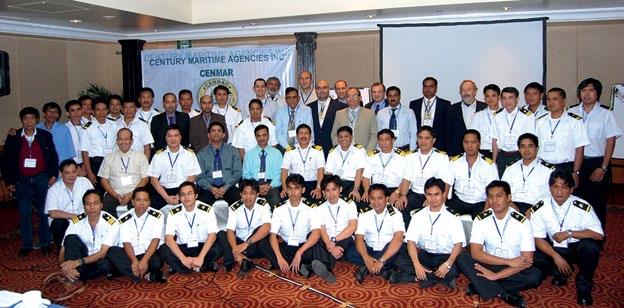
1st CENMAR Officers Forum 12-13 Nov 2008, Manila: compare this with the group photo on page 3
There were thirty nine promotions across the fleet in the final quarter of 2025. Once again, our Seafarers have shown that they have what it takes to progress in their respective careers, which reflects their willingness to cooperate with both fellow Seafarers and shore staff alike. The list of those ratings and officers who received a promotion along with their vessels and details of their advancement in chronological/alphabetical order appears in the table below.
09.11.25 Gaurav NINEMIA C/O to MSTR 11.11.25 JYOTI Jayant SEMERU 3/O to 2/O
12.11.25 SOMCHENKO Victor POPI P. 3/E to 2/E
Christian Joey PSERIMOS WPR to ASE 14.10.25 KUJUR Praveen POPI P. 3/O to 2/O 15.10.25 Aumik Arun CE-HAMILTON TNO to 3/O 15.10.25
VINAYAKAN Anish CE-HAMILTON 4/E to 3/E
16.10.25 GUTIERREZ Jikiris LENI P. ASD to PMAN
16.10.25 SORIANO Rico CAPTAIN A. STELLATOS OS to ASD
16.10.25 VERZOSA Vandolph CAPTAIN A. STELLATOS WPR to ASE
21.10.25 GARCIA Anjelo CASTA DIVA 4/E to 3/E
26.10.25 ROSALES Rolan APAGEON 3/E to 2/M
27.10.25 FERNANDEZ Marfanz CORAL ISLAND C/TR to MMN
27.10.25 JARABEJO Piolo SMYRNA D/TR to OS
29.10.25 GALENO Dominic PSERIMOS D/TR to OS
30.10.25 ARSENAL Jhonne SUNDORO A/C to C/CK
01.11.25 LINDUGAN Chino RUBY 3/O to 2/O
03.11.25 ITULID Jerry NIRIIS C/O to MSTR
07.11.25 CALAGOS Victorioso IV PHILIPPOS A. OS to AB
07.11.25 SERVIDAD Jose PHILIPPOS A. WPR to OLR
19.11.25 SINGH Ratnesh Kumar MERAPI 3/O to 2/O
20.11.25 KATORE Namdeo Dattatray AGIOS NIKOLAOS 4/E to 3/E
22.11.25 NINO Tobias LENI P. OS to ASD
24.11.25 KUMAR Ankit CE-BERMUDA TME to 4/E
26.11.25 ETANE Omkar Dattatray SUNDORO TME to 4/E
26.11.25 TESORO Christian PHILIPPOS A. STWRD to C/CK
28.11.25 KUMAR Ray AGIOS NIKOLAOS TNO to 3/O
28.11.25 VICTORIANO Arnold LENI P. AC to C/CK
01.12.25 CUIBILLAS Jester POLYMNIA OS to AB
03.12.25
03.12.25
BARCENA Mark Angelo MERAPI AC to C/CK
DUENAS Robin ANDONIS WPR to OLR
04.12.25 MALIT Herdee POLYMNIA WPR to OLR
08.12.25
18.12.25
CUSTODIO John NIRIIS MMN to STWRD
MELINDO Pio NIRIIS 3/O to 2/O
19.12.25 TAGLE Richard SERENO C/Tr to AC
24.12.25
KHARE Nishad Rajendrakumar NINEMIA TNO to 3/O
Congratulations are deservedly offered to all our Seafarers on the list, but a special mention should be given to newly promoted Captains Itulid and Gaurav aboard M/V Niriis and M/T Ninemia respectively. Likewise, the Company’s newest chief cooks need to be singled out. These are Jhonne Arsenal on board M/T Sundoro, Christian Tesoro on M/V Philippos A., Arnold Victoriano aboard M/T Leni P., and Mark Angelo Barcena on M/T Merapi. I am sure these masters of culinary delights will provide the respective crews with nutritious, tasty meals. Lastly, two of our Seafarers have reached the second to top rung as second engineers. They are Eric Valde and Victor Somchenko aboard M/T Kapsali and M/T Popi P.
The Company’s emphasis on a promotion from within policy means that commitment, ability and loyalty all play a pivotal role in the advancement of our Seafarers. Therefore, everyone on the list has shown that they possess the traits necessary to progress to the next rung of the ladder, or in the case of those who have reached the top, have the opportunity to mentor others who wish to follow in their footsteps.

By Natassa Sakellariou

Anchoring operations are one of the more frequently carried out shipboard operations but, despite this or possibly because of it, they result in a significant number of incidents, the majority of which are readily avoidable. Incidents have included equipment failure and anchor dragging, and injuries to personnel have occurred, including fatalities.
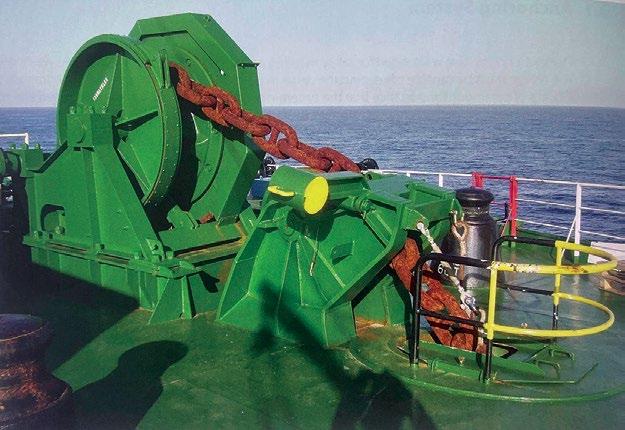
In most cases, such incidents can be attributed to the following:
• a lack of understanding of the limitations of the vessels’ anchors and associated equipment
• anchoring depths that exceed the windlass capability
• disregarding weather warnings
• remaining at anchor in unsuitable weather
• heaving the anchor in poor weather, without using the engine to reduce cable tension
• failure to consider in advance any navigational hazards, likely tidal flow in the anchorage or swing radius required
• lack of proper anchor procedures, including associated bridge procedures
• failure to follow procedures
• inadequate briefing of anchor parties or the use of inexperienced staff
• lack of recognition that it is safer for a ship to heave to or drift in a safe location than for it to attempt to anchor in weather or sea conditions that are outside the anchor system’s operating limits
• the anchor sustaining damage through being dropped from inappropriate heights above the seabed
• excessive use of the same anchor leading to equipment deterioration
By ignoring the pending arrival of weather that is outside the normal operating limits of the anchors and associated equipment there is an increased risk of the vessel dragging anchor that could
result in:
•damage to the chain stopper or other parts of the anchoring system
• loss of the anchor and/or part of the cable
• collision with other vessels at anchor
• dragging into traffic lanes
• dragging across submarine cables and or pipelines
• dragging into shallow water and possibly grounding
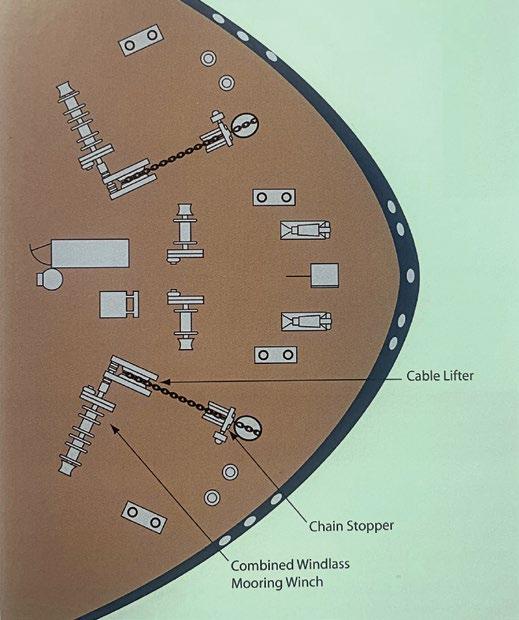
The anchoring system is one of the main safety systems on board. In the event of loss of power it should still be possible to lower the anchor and pay out the necessary chain under controlled conditions.
Due to this safety aspect, Classification Societies have developed specific rules for the design, installation, testing and survey of anchor windlasses. During the lifetime of the vessel the anchoring system will be subject to Class Surveys. Regular inspection and maintenance in accordance with the manufacturer’s instructions are necessary to ensure safe operation.
The safe release of the anchor should be possible under all conditions, including total loss of vessel power, and the windlass brake system has to be designed accordingly. The main purpose of the windlass brake is to stop the anchor safely during a normal free drop of the anchor and chain. When used in this way, as a dynamic brake, the brake system should be able to absorb the kinetic energy released without overheating and causing brake fading or other failures.
To facilitate dropping the anchor at any time, the stowage should

be arranged in such a way that the anchor will start falling under its own weight when the brake is released.
Limitations of the Anchoring System
Typically, a windlass is required to heave in the weight of an anchor and chain from a depth of between 82.5 and 100 metres, depending on individual Class requirements. The windlass is not designed to break out the anchor from the seabed and may not be designed to lift chain lengths in excess of Class minimum requirements.
Windlasses are typically designed to lift a maximum weight of an anchor and three free-hanging shackles (shots) of cable.
The normal pulling force of the windlass is limited, and in deeper water it is usually not possible to lift the whole chain length with the anchor hanging free in the water.
It should also be noted that existing Classification Society rules are based on anchoring in sheltered waters. While wind and current forces are considered, dynamic forces associated with waves and swell are not. As anchorages are moved further offshore, these forces have an increasing influence and they should be taken into account when specifying equipment.
The weakest component in most anchoring systems is the windlass motor. The two main failure modes of motors are associated with heaving when there is too much weight on the cable and walking-out the cable with excessive way on the vessel. When attempting to recover anchors in extreme conditions, the windlass will heave until its pulling force is exceeded by the tension in the chain. At that time, the windlass may start to render and such rendering may lead to damage to the motor’s components. This could result in catastrophic failure and the associated risk of personal injury.
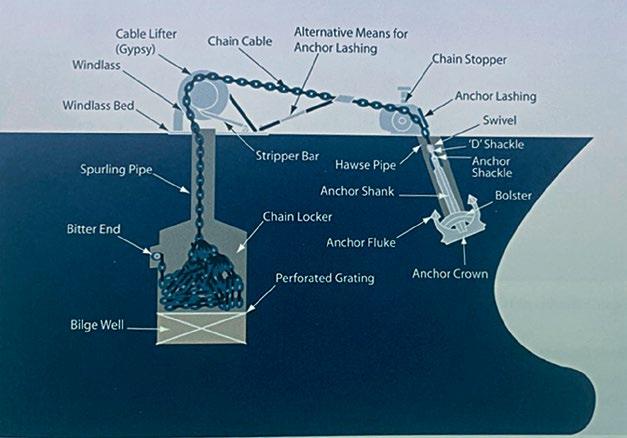
It is recommended that anchoring systems should be inspected and tested on a preventative basis as specified in the vessel’s planned maintenance system, taking into account the manufacturer’s recommendations. Components such as the brake lining should also be subjected to condition-based maintenance. All spare parts for the windlass and associated equipment, including replacement brake linings, should meet the manufacturer’s specification.
Inspection routines should cover the machinery components, together with adjacent areas and spaces, including windlass foundations. Shell plating in way of the anchor and hawse pipe
should be inspected for corrosion, deformation and possible fracture due to the movement of an improperly stowed anchor. The structure in the chain locker is also liable to heavy corrosion due to mechanical damage to the protective coating caused by contact with the chain cable.
It is recommended that lubrication routines within the planned maintenance system are strictly adhered to.
It is recommended that open gears and bearings are lubricated before and after each operation as the lack of lubrication of open gears can significantly increase the load on bearings, risking damage to both gear and bearing, adversely impacting on windlass efficiency.
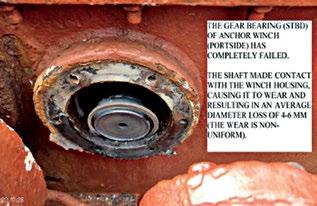
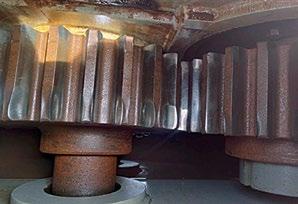
It is important that brake operating mechanisms are kept well lubricated and free to operate over their full range.
Sump oil for enclosed gears should be checked regularly and the oil renewed if its condition deteriorates appreciably. Any water accumulation should be drained off.
It is recommended that routine checks of filters and the quality of the hydraulic oil are undertaken.
Grease and gear oil used for lubrication and the oil used in hydraulic systems should conform to the manufacturer’s recommendations. Insufficient greasing can cause even bushes damage and shaft diminution.
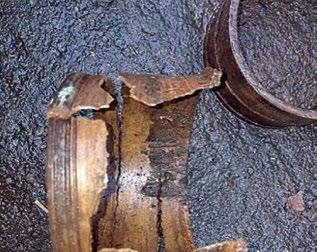
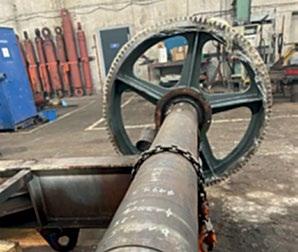
In order to restore the sustained damage, extensive repairs are required including shaft build-up, machining and NDT testing and fabrication of new bushes.
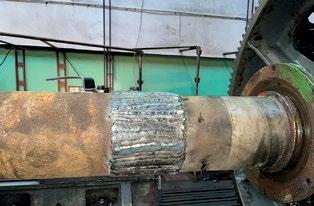
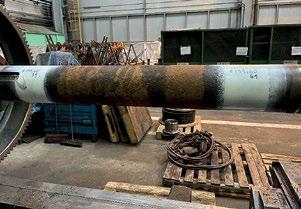

All windlass components, including clutches, gears and the stripper bar, should be regularly inspected. It is recommended that windlass clutches are checked for free operation and inspected for wear, deformation or pitting. Any damage or excessive wear should be reported so that arrangements can be made for repair. Inspections should include ensuring that clutch securing pins are available and used.
Windlass gears and chain lifters should be routinely inspected and any damage found reported.
Stripper bars should be inspected to ensure that they are intact and undamaged.
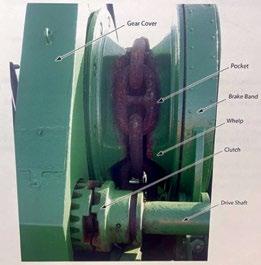
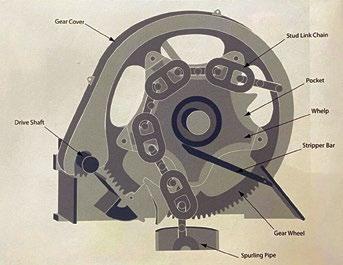
A lack of adjustment for brake lining wear is the most frequent cause of failure in the brake system, with the subsequent potential loss of the anchor and chain.
To achieve an optimal setting of the brake, the working length of the brake screw should be used to tighten the brake. As the brake lining wears, the working length of the brake screw required to fully apply the brake will increase. To compensate for this increase and to return the travel of the brake screw to its normal length, a brake setting adjustment screw is typically included in the brake mechanism for both manually and hydraulically operated brakes. It is also important to check the adjustment of the brake band support. This adjustment is used to maintain the gap between the brake band support and the brake band, which should be 1-2mm when the brake is applied. A correctly adjusted brake band support ensures that the brake is completely free when released.
Oil or heavy rust on the drum can significantly reduce the brake holding load capacity. The same applies to the presence of moisture on the drum.
Brake operating mechanisms and linkages should be proven to be free and greased. The operating mechanisms should also be checked for any elongation of pivot pin housings, and cracking around the housings. It should be ensured that all split pins are sound and break operating spindle threads are in good condition.
An inspection should be carried out after long sea passages to ensure that brake bands are free to move. Bearings should be greased and the chain should be moved.
During routine inspections, the brake mechanism, brake lining and drum should be inspected and the drum should be checked for signs of excessive rust and scale. It is recommended that brake linings are replaced when they are 50% worn or more. When replacing brake linings it is important that the coefficient of friction of the new lining material meets the manufacturer’s specification.
It should also be noted, that the material of brake drum in the majority of fleet vessels is stainless steel in order to avoid corrosion issues.
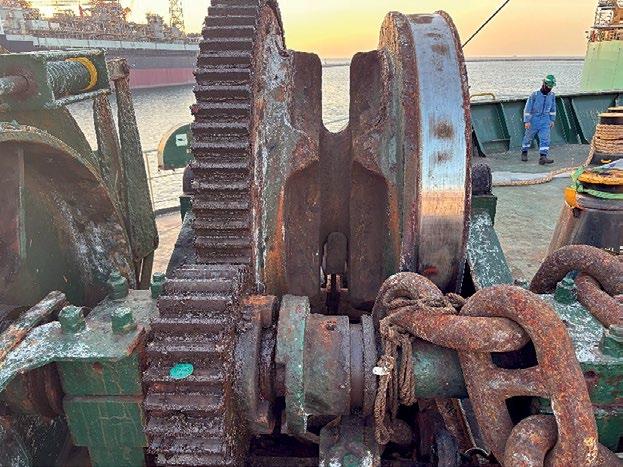
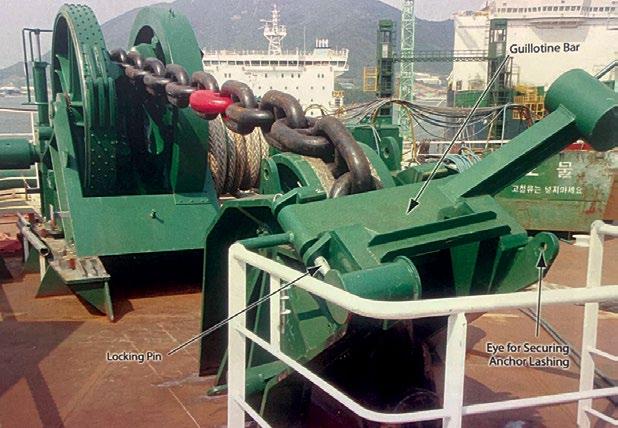
The chain stopper should be inspected by operating it through its full range of travel, checking for cracks, scale and any visible signs of stress. If adjustable, it should be checked for setting and adjusted as required.
Stopper securing pins should be examined for any signs of distortion or defects. Where necessary, they should be replaced with a manufacturer’s approved spare or a pin of equivalent material and strength.
The chain cable should be inspected regularly in service and the security of shackles should be checked during chain recovery. The chain should be inspected for missing and loose studs and the absence of markings. If studs are found to be missing, or a significant number of loose studs are present, the owners and Class should be informed. If a stud needs to be repaired by welding the proposal should be sent to Class for evaluation and approval.
Kenter shackles should be inspected and checks made to confirm that lead pellets are in place.
Markings on chains should be checked and any worn markings repainted.
Chain wash systems should be regularly checked for proper operation.
Company’s preventive actions
Considering the significant impact of anchoring and mooring equipment on vessels’ operations and seaworthiness, the Company has implemented several preventive actions and best practices to ensure their good condition and proper operation. These are as follows:
• Mechanical Maintenance
Routine Inspection of the winches and cable lifter at regular intervals (during anchoring operations, once each week / each 3 months / each year, as per PMS)
oLubrication oil / greasing to be sufficient at all times
Yearly jack-up tests for all windlasses/mooring winches bearings and the recording of clearances
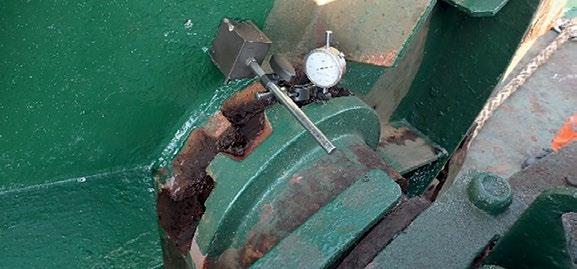
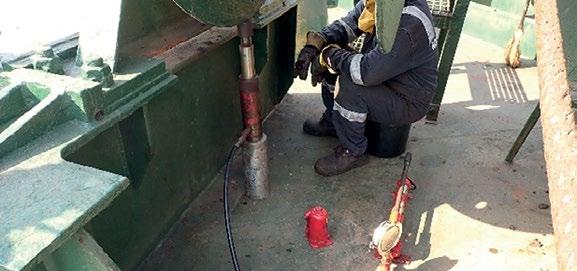
A 6-monthly Lube Oil test analysis (by laboratory) of the gearbox oil of windlasses
A thorough inspection of the hydraulic system of deck machinery and condition of bearings will be carried out by the Maker’s service engineer 2 months prior to the commencement of Special/Intermediate Surveys
Lube Oil charts must be reviewed and revised to identify CERAN XM 220 as the most suitable grease
Automatic Greasers have been installed on a trial basis on one tanker
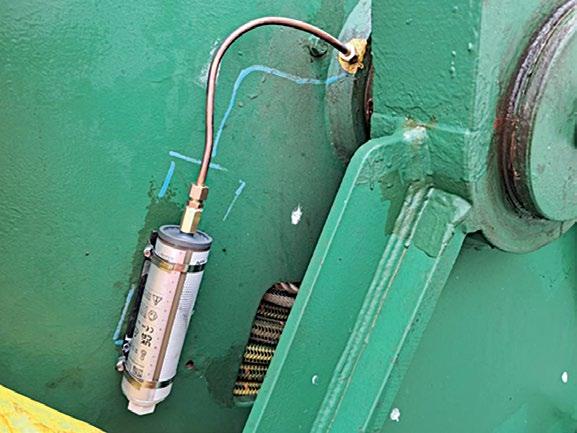
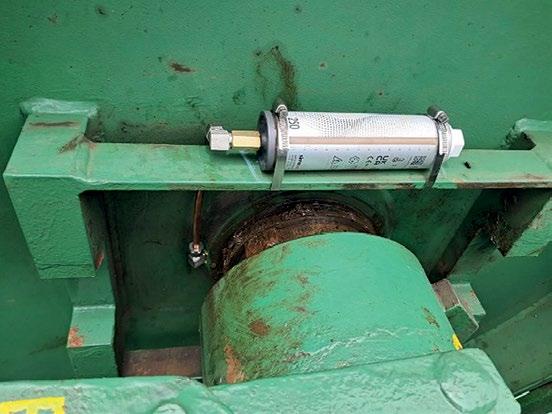
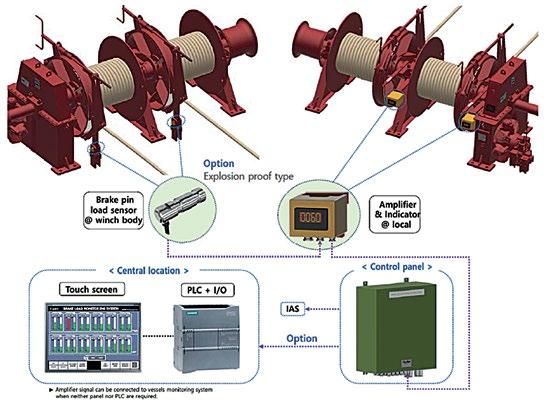
Brake load monitoring system installation in newbuilding vessels as per Mooring Equipment Guidelines (MEG4)
Drums are equipped with brake pin load measuring sensors, which measure brake load when the band is holding the line load.
All brake tension data are monitored on the amplifier at local and central locations.
The system can be also equipped with brake force visual and audible alarms when actual brake forces exceeds the set value.
Manual operation on deck is required to adjust rope tension.
• Proper Operation
Do not drop the anchor with the winch at high speed.
Heave up the weight of an anchor and chain from a depth of between 82.5m and 100m.
When anchored the cable lifter brake shall always be applied and the clutch disengaged.
Avoid pulling the anchor beyond the maximum pulling capacity of the windlass to avoid gears and hydraulic motor failures
Never use the windlass to move the ship – propulsion may assist.
Monitor existing and forecast meteorological conditions. / Maintain an anchor watch.
An increase in tension in the anchor chain is the best indicator that the vessel should get under way.
Recently articles have been circulating in the news about the Nipah Virus. Although the virus only occurs in particular regions and countries, to a minimal number of victims, and is far from becoming a pandemic, all Masters and crew should be aware of it.
Following the recent reports of laboratory-confirmed cases in West Bengal, India (January 2026), the World Health Organization (WHO) has issued updated guidance to strengthen public health awareness. While the global risk remains low, the virus’s high case fatality rate—estimated between 40% and 75%—necessitates proactive communication.
Nipah virus is a highly pathogenic zoonotic virus (transmitted from animals to humans). Its natural hosts are fruit bats (Pteropus genus). The virus can also cause severe disease in domestic animals such as pigs.

Pteropus vampyrus (large flying fox), one of the natural reservoirs of Nipah virus. Source: https://en.wikipedia.org/
Transmission occurs through:
• Direct Contact: Touching infected bats, pigs, or their body fluids (blood, urine, or saliva).
• Contaminated Food: Consuming fruits or raw date palm sap contaminated with secretions from infected bats.
• Human-to-Human Spread: Close contact with the secretions or excretions of an infected person, often occurring in household or healthcare settings.
The incubation period typically ranges from 4 to 14 days, though it can extend up to 45 days.
• Initial Symptoms: Fever, headache, muscle pain (myalgia), vomiting, and sore throat.
• Advanced Stages: Dizziness, altered consciousness, and neurological signs indicating acute encephalitis (brain swelling). Some patients may also experience severe respiratory distress or atypical pneumonia.

Colorized transmission electron micrograph of a mature extracellular Nipah Virus particle (purple) near the periphery of an infected VERO cell (brown). Image captured and color-enhanced at the NIAID Integrated Research Facility in Fort Detrick, Maryland. Source: https:// en.wikipedia.org/
4.
As there are currently no licensed vaccines or specific therapeutics available, prevention is the primary tool for safety:
• Food Safety: Wash and peel fruits thoroughly before consumption. Avoid eating fruits that show signs of being bitten by animals.
• Boil Raw Sap: Do not consume raw date palm sap; ensure it is boiled or treated before use.
• Hand Hygiene: Practise regular handwashing with soap and water after visiting farms or caring for those who are ill.
• Clinical Safety: Healthcare workers should strictly adhere to standard infection control precautions (masks, gloves, and gowns) when handling suspected cases to prevent nosocomial transmission.

Early supportive care is vital for managing symptoms and increasing the chances of recovery.
Masters should be vigilant at all times, guiding the crew, observing the above precautions and reporting any suspected cases to the Company’s medical advisors without delay.
For hygiene and food safety precautions please refer to the vessel's OMP (Outbreak Management Plan).
Source: World Health Organization
2025
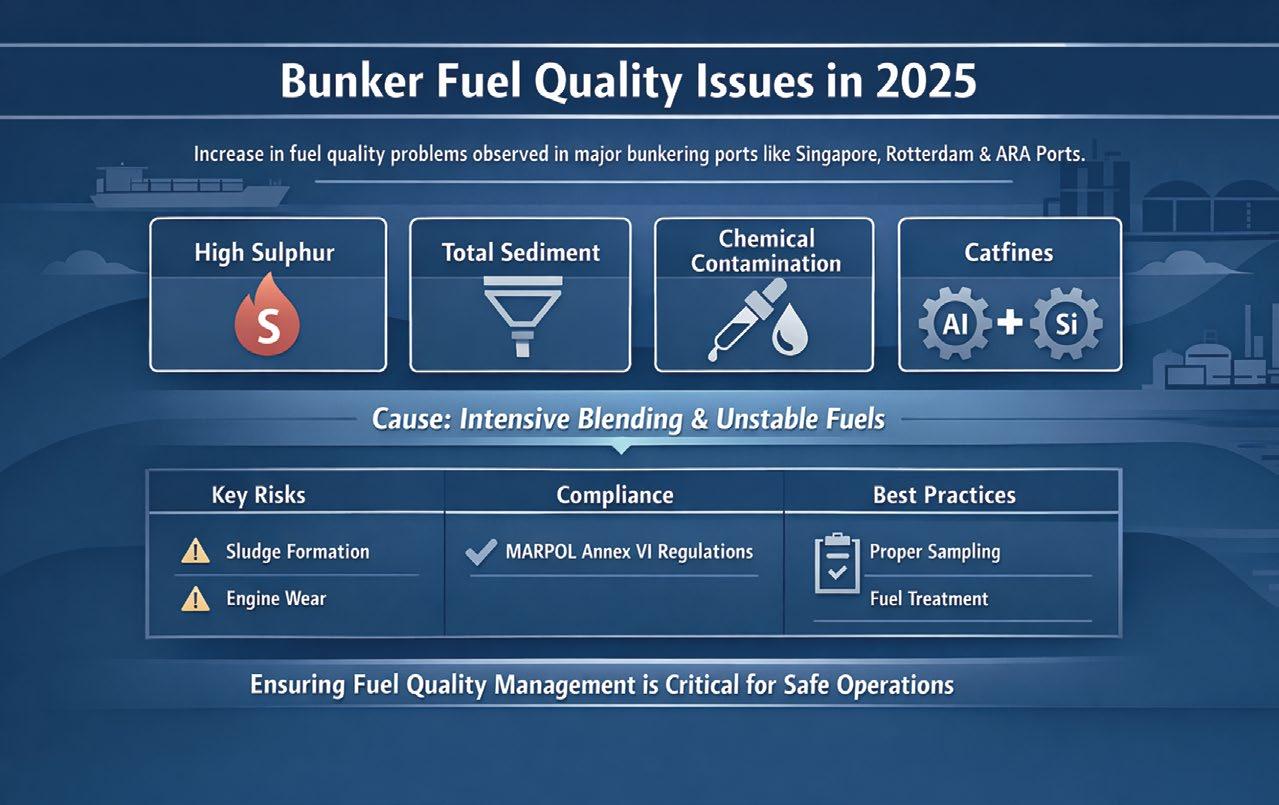
proved to be a challenging year for the bunkers industry worldwide. While routine off- specification parameters such as sulphur, water, and viscosity persisted in line with established patterns over the past several years, 2025 showed a remarkable increase in the frequency and severity of quality failure to meet such parameters.
Repeated incidents of high sulphur and catalytic fines were observed in major bunkering hubs such as Singapore and Rotterdam, while elevated sediment and water content were experienced in major ARA ports. The main reason for this is the intensive blending by the Supplier in order to cover global demand, resulting in the production of potentially unstable fuels with a large variation in quality specifications.
The main off-spec parameters for the fuels encountered from fuel analysis reports are summarized below.
Sulphur depends on the trading region and whether the vessel operates inside an Emission Control Area (ECA) as different sulphur limits apply. Compliance with the applicable limits is important to ensure compliance with MARPOL Annex VI.
Total Sediment continues to be one of the most significant challenges associated with residual fuels. Increased Total Sediment results are due to asphaltene instability caused by the blended components and can lead to sludge formation and filter clogging.
Acid Number measures the concentration of acidic components in the fuel. Naturally occurring naphthenic acids pose no concern since they are a result of naphthenic crude distillation. However, there are cases where high levels can be a result of contamination by chemicals that can cause severe damage and corrosion.
Catfines (Aluminum and Silicon) remain one of the most common and serious fuel-related risks in residual fuels. These are highly abrasive particles which originate from the refinery catalytic cracking process. If not treated and removed effectively, they can pose a risk of serious wear and damage to various Main Engine and Diesel Generators parts such as cylinder liners, fuel pumps, piston rings and injectors. Their impact on the fuel system and vessel’s engines (M/E and D/Gs) depends on both particle size (measured in μm) and concentration (measured in mg/kg)
Small size Catfines (<10 μm) have a low settling tendency, are hard to remove through the separator and have a smaller contribution in terms of wear in the cylinder liner, piston rings, fuel pumps and injectors.
a fuel with a relatively low concentration of Catfines (20 mg/kg) can be problematic in the case of the purifiers underperforming (concentration after purification 18 mg/kg).

By Fivos Christopoulos
In many cases it is not only the concentration of Catfines that causes damage to the engines, but also the size of the particles. In some cases, purifiers underperform so the large size Catfines end up in the engine inlet causing damages to the Cylinder liner, pumps, piston rings and injectors.
Conversely, a Company vessel was recently bunkered with a fuel containing Catfines on the ISO8217 limits (60 mg/kg). However, optimum purifier efficiency resulted in the fuel being safely consumed and without issues by reducing the Catfine levels to as low as 6-7 mg/kg.
Main Engine manufacturers typically recommend Catfine concentrations of 10 mg/kg max at the engine inlet. In order to meet these requirements, the fuel treatment plant must be properly maintained and operated in order to be in position to eliminate the larger particles in size (>10 μm) and also reduce the concentration of Catfines from 60 mg/kg (max allowable limit as per ISO8217) to a maximum of 10 mg/kg at the engine inlet. Catfines management should therefore be treated as a total system issue, from bunkering analysis to engine inlet protection. In order to properly assess the quality of the bunkers received on board, it is of the utmost importance that properly documented representative samples have been drawn.
As per the IMO recommendation, representative samples from each bunkering should be drawn at the receiving vessel’s manifolds. Experience has shown that there is often a considerable difference between the results from fuel samples taken at the receiving vessel manifold during bunkering, to the samples later tested as part of a joint analysis with fuel suppliers. The reasons behind this could vary, but the best practices given below will contribute to taking correct and representative samples during all bunkering operations:
- Ensure that the continuous drip sampler is installed correctly at the ship’s manifold.
- Continuous drip samples should be taken for each grade. The flow should be properly adjusted to ensure sampling throughout the operation and that the cubitainer is full on completion of bunkering.
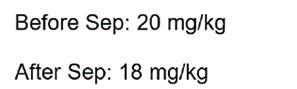
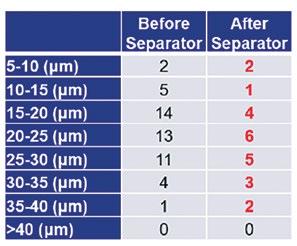
Large size Catfines (>10 μm) generally have a greater settling tendency and may accumulate in storage, settling and service tanks. They are more easily removed by an efficient separator, but if they reach the engine inlet they can become embedded in running surfaces and cause rapid abrasive wear and serious operational problems.
As an example (table on the right courtesy of BV Verifuel),
- Inspect the sampling point and drip sampler to ensure that they are both clean and in good working order.

- Ensure that a clean cubitainer (sample bladder) is attached to the drip sampler.
Once proper representative samples have been taken, they should be clearly identified, sealed, recorded and referenced on the official Bunker Delivery Note (BDN) and where applicable, on the Bunker information Form (BIF).
Once samples are dispatched for analysis, the vessel’s crew should await the bunkers analysis prior to consumption. Where operationally feasible, consumption of the newly received
from the Fleet Compiled and Explained by Chara
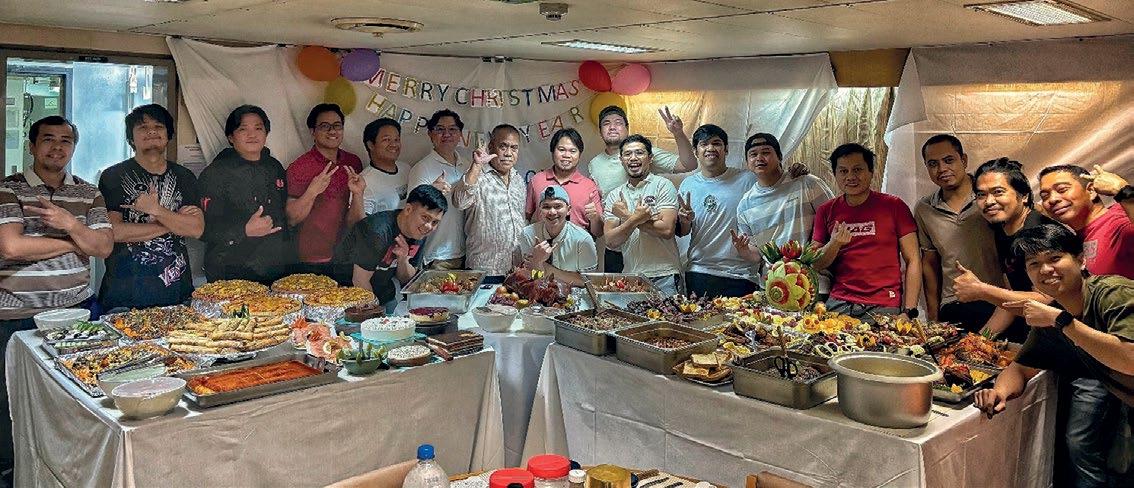
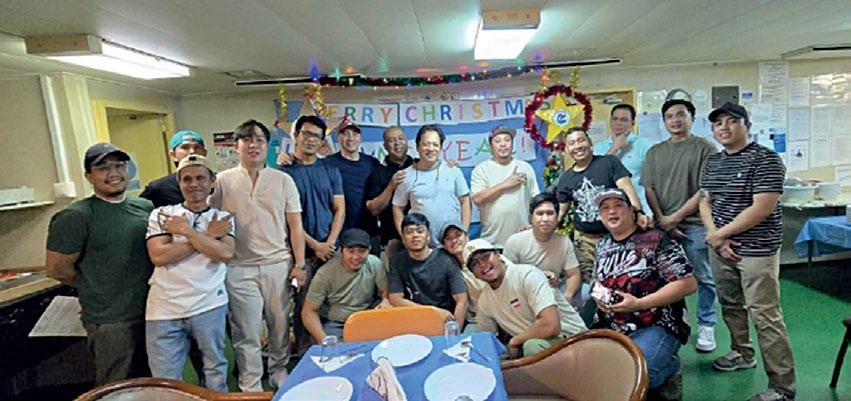
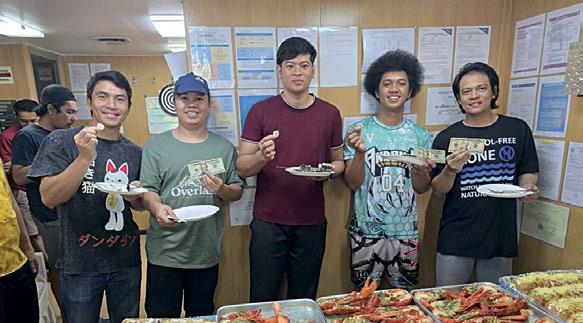
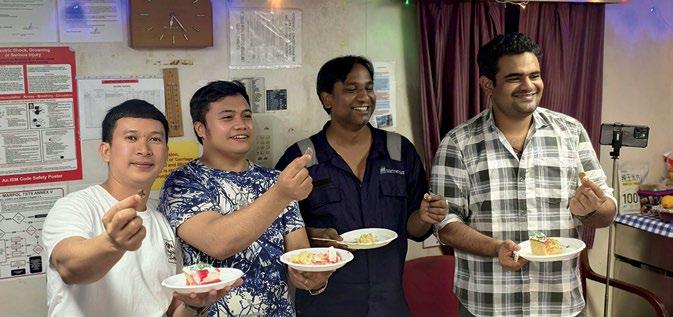
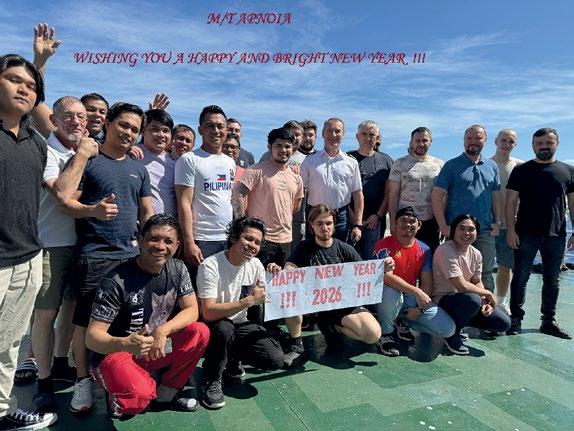
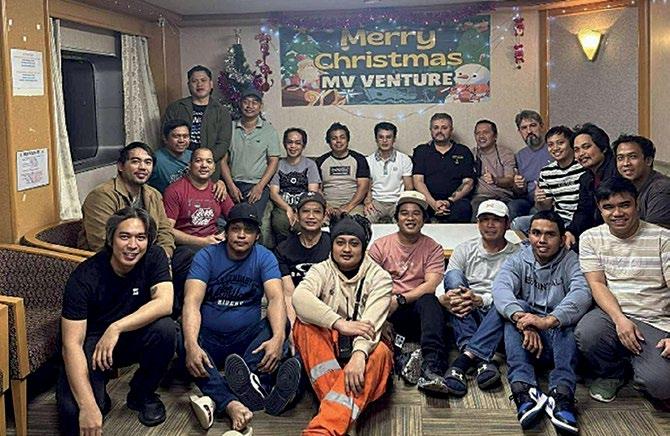
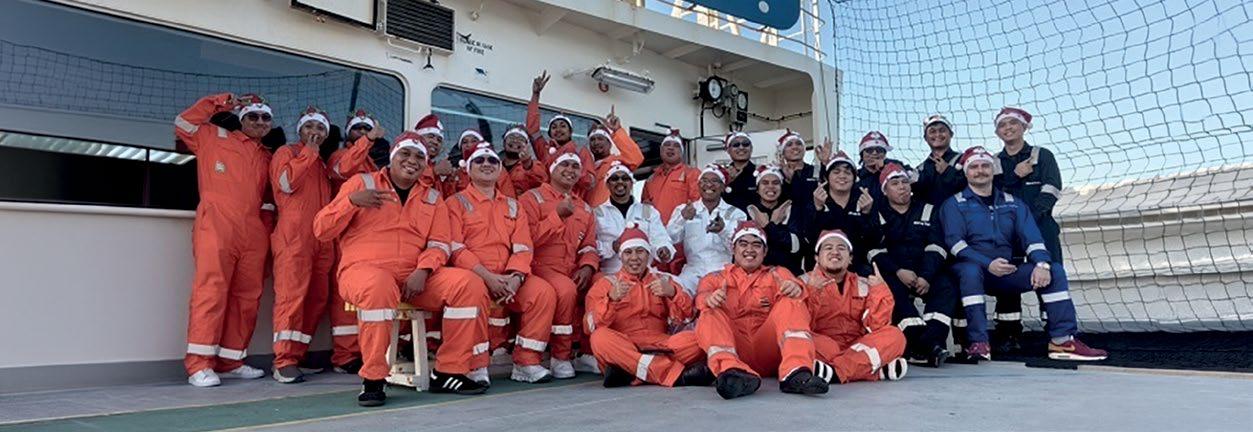
This past Christmas and New Year, our vessels once again demonstrated that distance from home does not diminish the spirit of the season. While sailing across oceans and serving global trade, our crews embraced the holidays with warmth, tradition, and togetherness—reminding us that a vessel is not only a workplace, but also a temporary home.
As a small token of appreciation for the dedication shown throughout the year, the Company supported onboard celebrations by offering complimentary internet access to every seafarer, helping crew members stay connected with their loved ones during this special time; sometimes, the greatest gift is simply hearing a familiar voice from home.
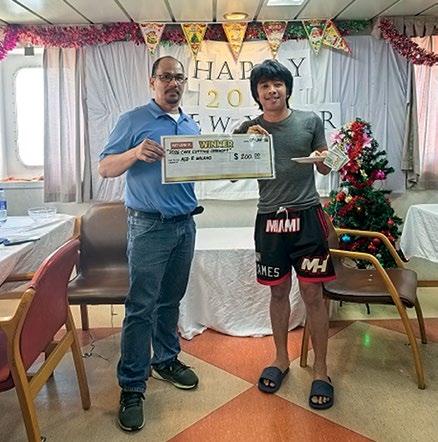
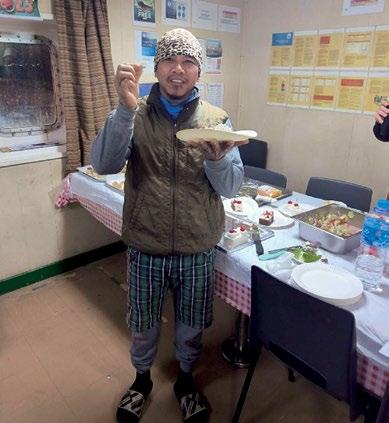
In keeping with tradition, vessels were also encouraged to celebrate the New Year by cutting the customary cake with the hidden coin—a Greek custom symbolizing luck and prosperity for the year ahead. The fortunate seafarer who discovered the coin received a special gift, adding excitement and joy to the celebration on board.
What made this season particularly meaningful was the beautiful exchange of traditions from our multinational crews. Seafarers shared how Christmas is celebrated in their home countries—

bringing cultural richness to life on board.
From the Philippines, we learned about Simbang Gabi, the nine dawn Masses leading up to Christmas, and the importance of Noche Buena, where families gather at midnight to share a festive meal. From Ukraine, traditions of Sviat Vechir, the symbolic 12 dishes, and the presence of the Didukh reminded us of the deep spiritual and historical roots of the holiday. Crew members from India shared how local culture blends with Christmas celebrations across different regions, while Romanian colleagues described the cherished tradition of Colinde, with carols, blessings, and village customs that bring communities together.
Though separated by thousands of miles, these shared stories, photos, and onboard celebrations created a sense of unity across our fleet. They reminded us that while our backgrounds may differ, the values of family, gratitude, hope, and resilience connect us all.
We extend our sincere appreciation to every vessel that participated, shared messages, and captured moments from their celebrations. Your photos reflect not only festive decorations and smiling faces—but the strength of our maritime community.
Wherever we sail, the spirit of the season travels with us.
The Parol Making Contest on board CORAL ISLAND was more than just a competition. It was a moment that brought us closer to home.
As the crew created different parols, each one carried memories of our families and Christmas traditions back home. Sharing stories while working reminded us of loved ones we miss and the reason we work far away.
When the parols were finally lit, they shone not just with colour but also with hope, love and connection. Even at sea, we felt the true Christmas spirit: together, united and thinking of home

MESSAGE FROM THE DPA:
Dear seafarers,

Permits to Work may sometimes appear to be a burden of bureaucracy. So, do you ever believe you waste time filling out forms instead of carrying out your task? If you do then you are WRONG! You spend time with your PTW, following each and every step in order to save lives.
There is NO shortcut to Safety!
I wish you safe voyages and safe returns home,
Elli Moretti
PS. Have you been using your SWO Card? It is an important tool to enforce Speaking Up on board your vessel!
free
During 2025, 60% of our fleet remained incident-free!
The vessels below stand among the leading examples of this achievement since they were Incident Free for 2025:
• M/T Semeru
• M/T Pserimos
• M/V Duke II
• M/V Calliope P.
• M/V Nilos
• M/V Andonis
• M/V Namrata
• M/T Yannis P
• M/T Dino

• M/T Alexia
• M/T Ag. Nikolaos
• M/T CE-Hamilton
• M/V Guardian
• M/T Dimitri
• M/T Popi P.
• M/V Venture
• M/T Costas P.
• M/T Leni P.
• M/T Kapsali
• M/T Amalia M.
• M/V Niriis
• M/T Sundoro
• M/V Irina
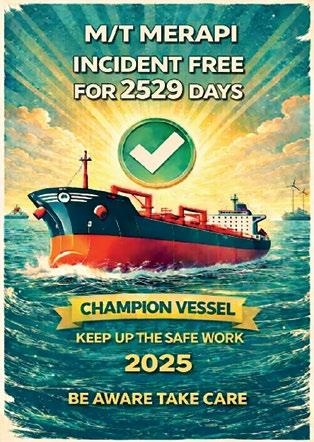
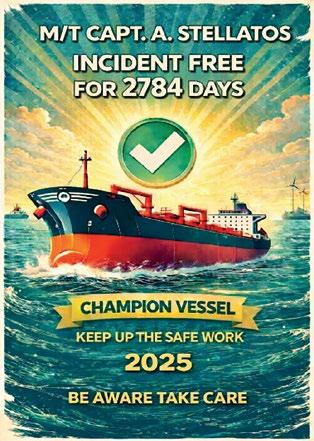
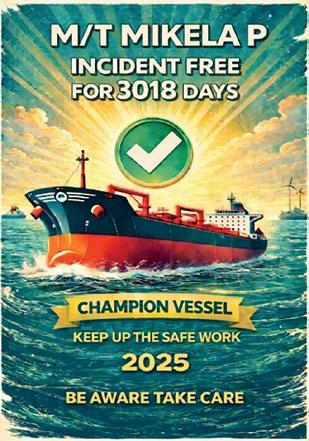
At the same time, we are proud to recognize and celebrate the outstanding achievement of three vessels for maintaining the longest periods of Incident-Free operations.
Congratulations to M/T Mikela P, M/T Captain A. Stellatos, and M/T Merapi on this remarkable accomplishment and on setting a strong example of safety and professionalism.
All Incident Free Vessels received a small token of our appreciation! This commitment to safety builds a lasting legacy, and the dedication sets a strong example for others to follow. Thank you for fostering a safe and positive environment on board.
And always remember: everything we do, every day, is to ensure that we all GET HOME SAFE
Congratulations on this accomplishment!
Source: Rio Tinton RTM/2025/024
An incident occurred on board a vessel in Australia, where an AB suffered fatal injuries from a 10m fall from the cargo hold cleaning platform during maintenance to a hydraulic pipe inside the cargo hold.
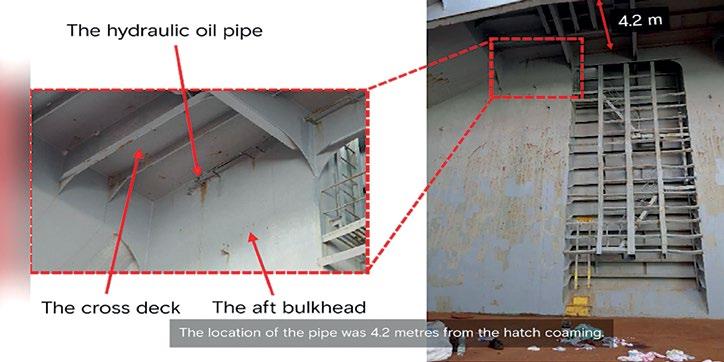
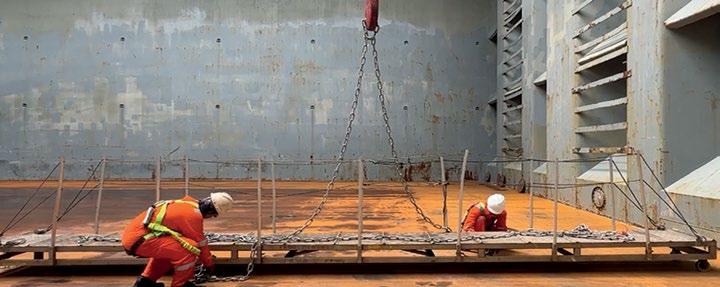
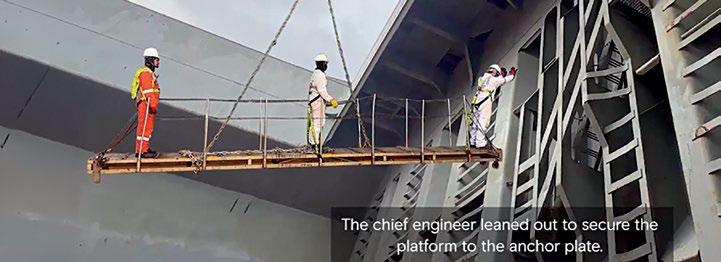
During the maintenance work, the rigging positions on the platform were repositioned. Only 2 chains were used, instead of the 4 required by company procedure, to try to move the platform closer to the pipe, which was positioned at the aft end of the hatch underneath the hatch coamings.

WAS IT ACCEPTABLE TO MODIFY THE RIGGING OF THE PLATFORM?
WAS IT CORRECT TO CARRY OUT THE JOB BY BALANCING THE LOAD WITH THE WEIGHT OF A PERSON?
The AB was wearing a fall arrestor harness but had not hooked it onto anything
The weight distribution on the platform resulted in the AB falling and unfortunately losing his life.
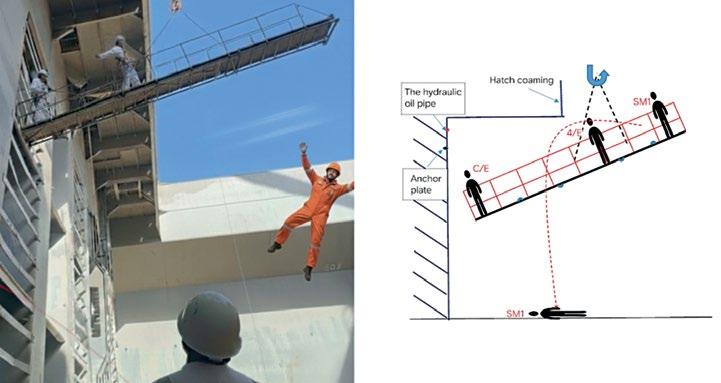
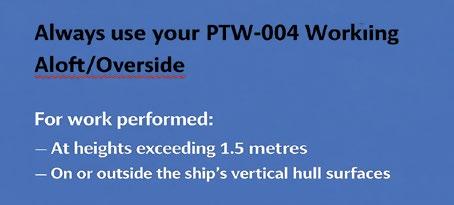
Such pipes can be safely maintained without taking such dangerous shortcuts, e.g. with staging at port. Situations can quickly deteriorate, particularly when readapting agreed procedures outside of planned tasks. Remember safe working procedures for working aloft and the necessity to ensure fall arrestor safety harnesses are properly fitted and securely attached to appropriate securing points at all times when working aloft. Watch the whole video created to re-enact the incident at: https://vimeo.com/1147702698/aa23ddfb68?
bunkers should not commence before receipt and review of fuel analysis results. If early consumption is unavoidable, guidance from Technical Department should be obtained in advance and risk controls agreed.
Should the analysis show that the bunkers comply with the ISO8217 specification, the vessel’s crew and equipment should be ready and in a position to consume the fuel as per laboratory recommendations.
The fuel treatment plant should be adequately and properly maintained. Sound maintenance practices should include, as a minimum, the following:
- Maintain correct separator temperature, suitable throughput and regular bowl cleaning.
- Maintain and monitor the performance of the 10 micron FO filter.
- Refrain from stopping purifiers for short periods. Instead, they should be placed in re-circulation mode.
- Avoid using the by-pass FO filter when the Main Engine is in operation.
- Drain the settling and service tanks properly or clean them if required.
- Conduct periodic testing of the efficiency of the purifiers to ensure they operate in an efficient mode. The same applies to testing before and after purification (and at the engine inlet) to safeguard the proper treatment of fuel prior to consumption.
The crew should remain vigilant and comply with procedures even in cases where the analysis of fuel received shows that it does not pose any obvious operational challenges.
Once the fuel has been safely delivered on board, the following important factors must be respected:
- There must be no commingling with other fuel grades or previous bunkers. Tanks should be well stripped and empty.
- Always follow the FIFO (First in / First Out) principle. Prolonged storage can cause degradation through oxidation and microbial growth, resulting in sediment formation, sludge and reduced combustion efficiency.
- Strictly adhere to storage temperature instructions as indicated on the analysis received. Modern fuels are highly paraffinic, so if the temperature of the fuel is not properly maintained, wax formation and solidification can occur causing operational disruptions and filter clogging. If the specification of the fuel changes in nature as a result of an improper storage temperature, it may be irreversible and the fuel may not be usable any more.
- Different deliveries will require different storage temperature conditions. These should be respected and monitored closely.
To sum up, the outlook for the global marine fuel quality in 2026 is shaped by a convergence of regulatory (such as newly introduced ECAs and regional Emission regulations), operational (blending practices), and technical factors.
The introduction of Biofuels bear the same challenges as well as some additional new ones, especially in connection with oxidation stability, microbial growth, cold flow, material compatibility, and FAME-related handling. ISO 8217:2024 and associated guidance have evolved specifically because of these issues. As a result, Biofuels is a new and challenging chapter for marine Bunkers, which will require attention to energy measurement, storage stability, and compatibility with existing systems.
Professional conduct on board remains a fundamental pillar of safe and efficient vessel operations. It is, therefore, important to reflect periodically on how leadership, hierarchy, and communication function within our ships. Shipping is a demanding profession, and vessels are, by necessity, structured hierarchical environments. Clear authority, defined responsibilities, and disciplined execution are essential for safety and operational success.
However, hierarchy must never become a shield for inappropriate behaviour, nor should the concept of “Speaking Up” be misunderstood or misused. Maintaining the right balance between authority, accountability, respect, and open communication is critical to sustaining a healthy and professional onboard culture.
A vessel does not support a flat organization. Clear ranks, defined responsibilities, and a chain of command are fundamental to safety and operational efficiency. In high-risk environments such as ours, decisive leadership is essential. Orders must sometimes be given quickly and firmly. Compliance is not optional when safety, cargo, or environmental protection are at stake.
Hierarchy ensures accountability. The Master carries the ultimate responsibility. Senior officers are accountable for their departments. Junior officers and ratings are expected to follow lawful and reasonable instructions.
However, authority must always be exercised professionally. Rank gives responsibility—not superiority. It gives accountability—not entitlement. The line between firm leadership and inappropriate conduct can sometimes be thin, but it is never invisible.
Firm leadership also requires a person in authority to prevent unwanted behaviour like bullying and harassment.
Bullying and harassment are not defined by whether someone feels uncomfortable in a demanding situation. Shipping is, by nature, operationally intense. Deadlines, inspections, port operations, weather, audits, and cargo pressures create stress.
Bullying and harassment occur when behaviour becomes:
• Repeated, hostile, or intimidating
• Humiliating or degrading
• Discriminatory or abusive
• Threatening in nature
• Physically aggressive
• Designed to undermine or isolate
Firm supervision, correction of mistakes, performance monitoring, or holding someone accountable for errors do not constitute bullying when conducted professionally and respectfully.
There is a difference between:
• “This report is incorrect. Correct it immediately.” (Professional instruction) and
• “You are useless and incapable.” (Personal attack)
The first addresses performance. The second attacks dignity.
Senior officers are expected to lead by example. Technical competence is only one part of leadership. Emotional control, communication style, and cultural awareness are equally important.
Strong leadership includes:
• Correcting mistakes without humiliation
• Giving feedback constructively
• Remaining calm under pressure
• Respecting cultural differences
• Following company procedures consistently
• Escalating serious concerns appropriately
By Chara Markatzinou
Raising one’s voice occasionally in an urgent situation does not automatically equate to abuse. However, repeated shouting, threats, insults, or intimidation undermine morale and erode safety culture.
A toxic environment does not only affect feelings—it affects performance, communication, and ultimately safety.
While senior officers must exercise authority responsibly, junior crew members also carry responsibilities.
Shipping requires resilience, discipline, and the ability to accept correction. Feedback may sometimes be direct. Instructions may be given firmly. Mistakes may be pointed out clearly and immediately.
Not every uncomfortable interaction is harassment.
Professional growth often comes from correction. Learning to distinguish between personal criticism and performance correction is essential. Taking every instruction or raised tone as a personal attack can weaken onboard effectiveness.

The “Speak Up” culture is a powerful tool. However, it must not be misused to avoid accountability or to escalate minor interpersonal friction without first attempting professional dialogue.
Before escalating, ask:
• Was this instruction related to safety or performance?
• Was I being corrected for a mistake?
• Did I attempt to clarify the situation directly and professionally?
• Is this a repeated pattern or a single incident?
Speaking up is about safety, dignity, and compliance—not about avoiding responsibility or reacting emotionally to operational pressure.
However, speaking up should follow a balanced approach: 1. Whenever possible, attempt respectful onboard resolution first.
2. Use the chain of command appropriately.
3. Escalate to the office when issues are serious, repeated, or unresolved.
Confidential reporting mechanisms exist for situations where onboard resolution is not possible or safe. These channels must be used responsibly and in good faith.
A culture where crew are afraid to report is unhealthy. A culture where reporting is used impulsively without context is also unhealthy.
Professional judgment is required on both sides.
One of the most important lessons in multicultural environments is that behaviour can be perceived differently by different people.
A direct communication style may be normal in one culture but perceived as harsh in another. A senior officer accustomed to a strict training background may consider their tone “efficient,” while a junior officer may perceive it as aggressive.
Intent and impact are not always the same.
This does not excuse inappropriate behavior—but it does remind us that awareness matters.
Leaders must ask themselves:
• How might my words be perceived?
• Am I correcting the task or attacking the person?
• Am I allowing stress to influence my tone?
Crew members should also ask:
• Could this be a communication style difference?
• Am I interpreting pressure as hostility?
• Have I clarified intent before escalating?
Mutual awareness reduces unnecessary conflict.
Stress and the Maritime Environment
Life at sea combines operational pressure, long hours, isolation, cultural diversity, and personal sacrifices. Stress affects everyone— Masters, officers, and ratings alike.
Unchecked stress can influence tone, patience, and decisionmaking. Recognizing early signs of strain and communicating proactively with the office or onboard team can prevent escalation. Seeking support is not weakness. It is professionalism.

• A healthy vessel culture is built on:
• Respect across all ranks
• Clear accountability
• Professional communication
• Fair correction of mistakes
• Cultural awareness
• Responsible use of reporting channels
• Emotional discipline under pressure
Authority must be exercised with professionalism.
Feedback must be delivered with dignity.
Speaking up must be used responsibly.
Correction must not become humiliation.
Resilience must not become tolerance of abuse.
Balance is key.
Creating a safe and respectful working environment is not solely the Master’s responsibility, nor the junior crew’s responsibility, nor the office’s responsibility. It is shared.
Senior officers must lead firmly but fairly. Junior crew must remain resilient and accountable.
The office must provide guidance, monitoring, and support. Every rank contributes to the onboard atmosphere.
Shipping demands discipline, resilience, and teamwork. It also demands respect.
Hierarchy ensures safety—but it does not justify abuse. Speaking up protects dignity—but it must be used wisely.
Correction builds competence—but it must not damage respect. Let us all reflect on how our behavior, tone, and reactions contribute to the culture onboard. A professional vessel is not defined only by its operational results, but by how its people treat one another while achieving them.
Safety is built not only on procedures—but on trust.
Life at sea can be demanding. Watch schedules, port operations, inspections, weather conditions, and time away from home all place pressure on both body and mind. While we often focus on procedures and routines to manage stress, one simple and powerful tool is sometimes overlooked: the food we eat. What we consume on board does not only affect our physical health—it also influences our mood, energy levels, and ability to stay calm under pressure.
The good news is that many foods which support stress management are already available on most vessels.
Oats, commonly served at breakfast, are an excellent choice. They help stabilize blood sugar levels, preventing sudden energy crashes that can lead to irritability. Stable blood sugar supports a stable mood—especially important during long watches.
Bananas are another simple option. Usually part of ship provisions, they are rich in potassium and vitamin B6, which support the nervous system. They are also an easy snack to take on duty.
Eggs provide high-quality protein and essential B vitamins that help maintain mental focus and balanced energy. A protein-rich breakfast can make a noticeable difference in concentration and patience throughout the day.
Yogurt supports gut health, and research increasingly shows that the gut and brain are closely connected. A healthy digestive system can positively influence mood and stress resilience.
Nuts such as almonds, peanuts, or walnuts are often available as snacks. They contain magnesium and healthy fats that support brain function. A small handful is a better choice during night watch than sugary snacks.
If available, fatty fish like tuna, sardines, or mackerel provide omega-3 fatty acids, which are associated with improved mood balance and reduced stress levels.
Leafy greens such as spinach, cabbage, or lettuce also contain magnesium, which supports relaxation and nervous system balance.
Even dark chocolate, in small amounts, may help reduce stress hormones. Moderation is key.
Just as important as what helps is what can increase stress. Excess coffee, energy drinks, high-sugar snacks, and very salty processed foods may give temporary energy but often lead to crashes,
irritability, and increased tension. Staying hydrated is equally essential—dehydration alone can cause fatigue and headaches, which affect mood and performance.
Of course, no single food eliminates stress. However, consistent small choices make a difference. Eating balanced meals, avoiding extreme sugar intake, drinking enough water, and choosing steady energy sources all support better emotional control and clearer thinking.

At sea, we cannot always control external pressures. But we can control some daily habits. Smart food choices are not about strict diets—they are about supporting our body and mind so we can perform safely, lead effectively, and work together with professionalism.
Sometimes, staying calm starts with what’s on your plate.

In this installment, five other members of the Purchasing Department will be giving you a brief insight into their education, experience, their professional duties and responsibilities as well as their perspective on ways to improve in their respective careers with the Company. Let’s meet these motivated colleagues from this Department.
Hello everyone,
My name is Vangelis Alexandropoulos, and I have been working with the Company for 30 years. I am part of the Purchasing Department, where I am responsible for the supply of spare parts and lubricants. My academic background, along with eight years of experience in trading and sales, has provided me with valuable knowledge and strong skills in public relations, organization, and the effective handling and scheduling of requests. Throughout my time here, my role has given me an important insight into the technical aspects of our vessels, and has strengthened my cooperation with technical teams and communication with the crew. I am also actively involved in negotiating with suppliers and supporting the training of new colleagues. I feel very happy to have been working in this field and with this Company for so many years, and I look forward to continuing to do so for the years to come.
Hello everyone,
My name is Tasos Lazos and I joined the Company in September 2025 as a Purchasing Officer. In my role, I am responsible for the supply of our vessels with provisions, stores and chemicals, ensuring smooth, timely and cost-effective operations while maintaining high quality standards. My daily focus is to respond efficiently to our vessels’ needs and contribute to the uninterrupted operation of the fleet. I hold a degree in Maritime Studies from the University of Piraeus. Prior to joining the Company, I gained five years of experience in a similar position, where I was handling provisions, stores, spares, chemicals, lubricants and paints. This experience helped me build a strong understanding of vessel requirements and supplier coordination in a demanding environment.
I believe that effective communication and teamwork are essential to achieving operational excellence. I am proud to be part of the Company and look forward to further developing my skills while consistently supporting our fleet with efficiency and dedication.
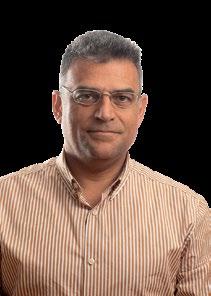

My name is Sofia Makrygianni and I have been serving as a Purchasing Officer in the Company for the past three years, bringing with me seven years of overall experience in the shipping industry in the field of marine procurement.
I hold a BSc in Mathematics, specializing in Statistics and Probability, an MSc in Shipping from the University of Piraeus, and a Diploma in Marine Purchasing from Lloyd’s Maritime Academy. My academic background, combined with hands-on industry experience, has shaped a structured and analytical approach to procurement, with a strong emphasis on data evaluation, cost control, and operational efficiency.
In my role, my primary objective is to ensure that the vessels’ requirements are covered in the most efficient and cost-effective manner, without compromising quality or reliability. The procurement cycle, from processing requisitions and sourcing competitive offers, to supplier evaluation, order placement, and systematic follow-up, requires precision, accountability, and proactive coordination. Knowing that timely delivery on board makes a critical contribution to fleet performance.

Beyond daily operations, I actively participate in internal company projects aimed at enhancing efficiency through the implementation of new methodologies and optimized procurement practices. Continuous improvement is a key priority, and I strongly believe that structured processes, performance monitoring, and collaborative teamwork drive measurable results. At the same time, I invest in continuous professional development by attending seminars and conferences focused on developments in the maritime sector. Effective communication with our vessels remains a central pillar of my work. Understanding operational challenges and maintaining open, solution-oriented dialogue with our Seafarers ensures that procurement decisions support both safety and efficiency. It is an honour to be part of the Company and contribute to its ongoing development. I look forward to continuing to support our collective objectives and to contributing to sustainable growth in the years ahead.
My name is Athina, and I have been working as a Purchasing Officer in the maritime sector since 2020. I am responsible for the procurement of spare parts and lubricants, ensuring the timely and cost-effective supply of critical materials to support smooth vessel operations.
With a Bachelor's degree in Chemistry and two Master's degrees in Economics, I combine technical understanding with strong analytical and financial expertise. This background allows me to approach procurement strategically, focusing on efficiency, quality, and long-term value creation.
I am truly passionate about the maritime industry and motivated by its dynamic and global nature. I take pride in contributing to operational excellence and supporting our fleet's performance through reliable and efficient purchasing practices. I look forward to collaborating with the team and contributing to our shared goals.
Hello everyone! My name is Thanos Kourevesis and I joined the Company one and a half years ago as a Forwarding Officer. I completed my Bachelor’s degree in Business Administration and subsequently pursued a Master’s degree in Supply Chain Management, which helped me broaden my knowledge and understanding in the sector of logistics and supply chains. My professional career was initiated nearly nine years ago in the Marine Logistics Division and in warehouse management. Throughout those years, I gained a comprehensive understanding of how the marine logistics sector operates and experienced the full delivery cycle of vessel spare parts until final delivery on board.
My role is to consolidate shipments, monitor vessels’ routes and plan supplies in the most cost effective and efficient way while ensuring timely delivery of urgent critical spare parts. Each day presents a new challenge, which is what makes this role engaging and rewarding.
It is both a privilege and a pleasure to be part of the Company, as it is something that it has helped me evolve personally and as a professional. I am happy to work with all of you on a daily basis and I am looking forward to the years to come.
Wishing all our Seafarers calm seas and safe voyages.


Folk Art in its broadest form is a form of art that primarily gives an insight into the day to day workings of a specific community. Very often it is simple in form and created by individuals who have little or no formal fine art training. Recently, it has received acknowledgement from Tate Modern in London, where an exhibition of Folk Art from all walks of life was held.
Among the exhibits were examples of Sailors’ Folk Art, which comes in many forms. This should come as no surprise as it is common knowledge that seafarers possess skills and ingenuity, which coupled with their versatility, make them capable of almost anything.
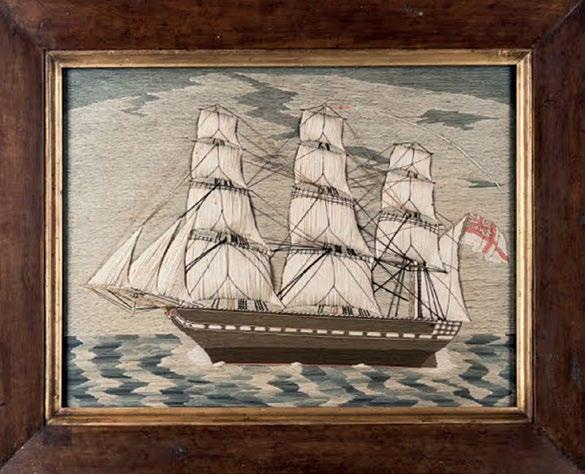
Source: www.thefabledthread.com
Today, antique Folk Art is both collectible and often sought after. Indeed, one specific form associated with a popular pastime among British Navy and Royal Marines sailors of the 18th and 19th centuries has gained a significant following. The form in question is referred to as woolworks or ‘woolies’. These are images created by leftover coloured wool stitched onto cotton or linen, using a combination of long and short stitches. They are testament to the meticulous needlework skills of the sailors of that period, and now can fetch as much as £12,000 in a retail setting.
Another example of a highly skilled craft is the sailing ship in a bottle creation. Producing an accurate, detailed model required both intense concentration and patience as such folk art takes hundreds of hours to complete. Other forms include carvings, ropework, scrimshaw, sketches, paintings and woodwork.
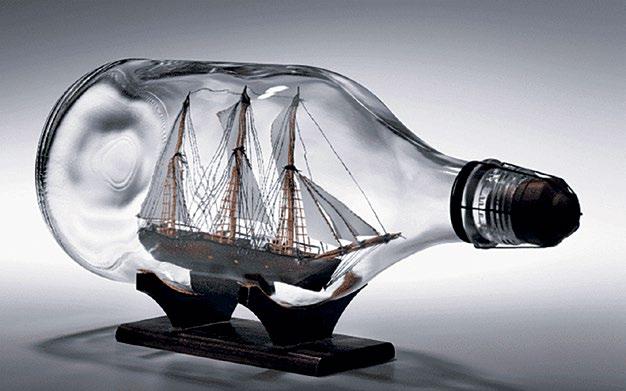
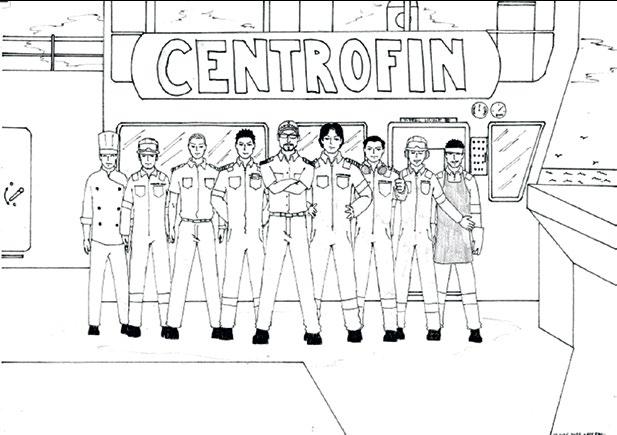
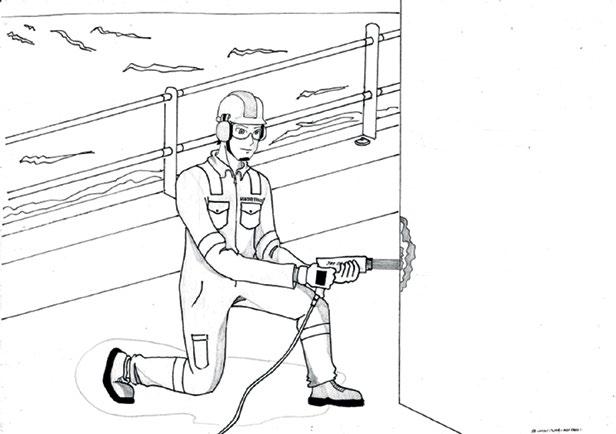
Although most sailors’ folk art is associated with the age of sail when seafarers had more downtime, modern seamen still display their talents to create works of folk art. This has been evidenced by submissions to the IMO for World Seafarer Day, and by one of our very own Seafarers, Mr. Christian Danico, whose anime style of recording life on board was recognised by Training Superintendent Fernandes Bosco, who correctly deemed it worthy of reaching a wider audience. Examples of his work below reflects how creativity is yet another hat worn by our multitalented Seafarers.

Born in 1451, Christopher Columbus was the son of Dominic Columbo and Susanna Fonrarossa, who had a total of five children. Little is known of his early life, but it was documented that he served an apprenticeship in his father’s wool weaving business. It is also known that he was largely selftaught in geography, astronomy and history in addition to studying sailing and mapmaking.
Columbus was still in his teens when he first went to sea. His career began in the merchant marine where he gained valuable knowledge of life on the waves. Though most of his experience was gained along established trading routes in the Mediterranean, he did travel extensively, venturing as far north as the British Isles and as far south as modern day Ghana. At the age of 25, the fleet he was sailing on was attacked by French privateers close to the Portuguese coast. Fortunately, he was able to survive the onslaught by swimming to shore after his ship was set ablaze. Then, he managed to reach Lisbon, where he married Filipa Perestolo. They had a son, Diego, but his wife died young and he moved to Spain.
He returned to the sea, during which time he made a study of the currents close to the Canary Islands. The knowledge he gained allowed him to plan a route to Asia via the Atlantic. It was this plan that he put forward to the King of Portugal, and to those in power from Genoa and Venice. On each occasion, his proposal was turned down, but Columbus had such a great belief in his plan that he approached the Spanish monarchy.

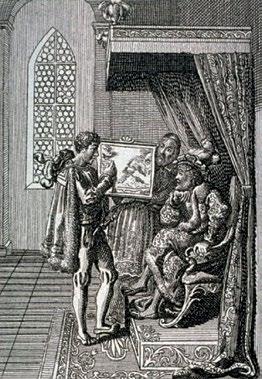
Again, he experienced rejection. This time, however, it was a pressing priority that prevented him from achieving his aim. So, he was retained in the royal court, where he continued to lobby for his proposed voyage. Eventually, when the priority no longer became an obstacle, he was given financial support by a large number of stakeholders. So, Columbus set off from Palos de la Frontera in August 1492. He sailed aboard the Santa Maria, which was escorted by two smaller vessels, the Pinta and Niña. Just five weeks into the voyage, he came upon an island in the Bahamas, which he claimed for Spain. The natives he encountered showed no hostility, so items were traded freely.
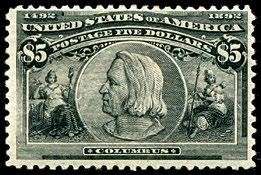
His next destinations were Cuba, which he believed to be part of China and Hispaniola (Haiti and the Dominican Republic), which he mistook for Japan. It was in this phase of the expedition when the Santa Maria came to grief. Together with the crews, the islanders of Hispaniola salvaged the timber, which they used to build Villa de la Navidad (“Christmas Town”). Columbus then sailed back to Spain, leaving 39 men at the new settlement. He received a very warm reception at the Spanish royal court. In the same year, 1493, Columbus went to other islands in the Caribbean. He also visited Hispaniola, where he discovered that the settlement had been destroyed and those who remained had perished. His reaction was to force the locals to rebuild the
settlement and dig for gold. The natives did not take kindly to forced labour. Nevertheless, he left for Spain via other islands, which he also believed to be part of China. Meanwhile, his brothers Bartholomew and Giacomo were given command of the settlement.
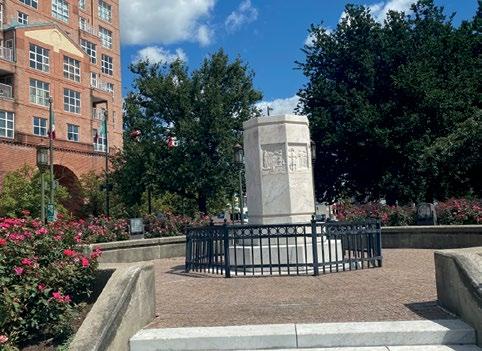
In his third voyage, Columbus visited the Orinoco River in present-day Venezuela. He also went back to the settlement on Hispaniola, which was rife with unrest. The displeasure there had been caused by the belief that Columbus had made false claims about riches and that his brothers had virtually no leadership skills. This situation led to Columbus being arrested by a representative of the monarchy sent from Spain. Back in Spain, Columbus faced numerous charges. These were eventually dropped, but he did lose some titles and was temporarily declined access to his wealth.
After gaining something of a reprieve, he succeeded in persuading King Ferdinand that there were riches for the taking. Thus, he set off on his final voyage in 1502. While on his travels, he had to seek refuge in Cuba because of a fierce storm. During his stay, he treated the islanders badly and his lust for gold overtook him. The locals responded by denying him food.
At this point, his cunning was deployed. He consulted an almanac that revealed there would be a lunar eclipse on 29th February 1504. So, he informed the islanders that he would take the moon away from them if they continued to deprive him and his crew of food. The ruse worked and Columbus returned to Spain shortly after.
He lived for about two more years and his exploits led to his reputation being tarnished. This also happened after his death when some statues commemorating him were taken down due to revelations of his ill treatment of natives. He is also remembered for being a manipulator, whose drive was fuelled by his lust for gold. However, there can be no doubt that he was an exceptional mariner and a true pioneer of the waves.
Source: www.biography.com, www.britannica.com, www.en.wikipedia.org
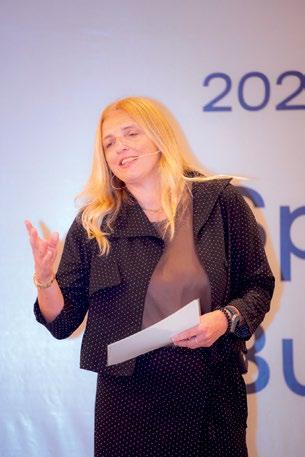
Can you guess which of these two wonderful presenters at the Manila Forum did not have their morning coffee before going on stage?

1. Make the names of TWO Company vessels using all the letters in the following sentence: I AM PAMELA LIN.
2. The letters in the chemical symbols for astatine, bismuth and chlorine can be rearranged to form the name of a sea. What is the name of the sea?
3. Which three-letter word can be used to complete the following words?
CR_ _ _ ER, L_ _ _ST, W _ _ _R and ST_ _ _ED
1. The port that is closest to the coordinates 34.6 ° N, 135.4 ° E is
A. Osaka B. Busan C. Shanghai D. Ulsan
2. In 1915, the Endurance under the command of Sir Ernest Shackleton sank as a result of A. striking an iceberg B. running aground C. being crushed by ice D. capsizing due to excess cargo
3. Which ions of the following metals ‘’ make ‘’ water hard?
A. sodium B. calcium C. potassium D. lithium
4. What is the approximate width of the Neo Panamax locks in the Panama Canal?
A. 35m B. 45m C. 55m D. 70m
4. Which five-letter word can be placed after the words to the left and before the words to the left? BRUTE - - - -PUMP GALE FEED AIR FIELD
5. In five steps change the word RISK to SAFE by changing one letter at a time to form intermediate words.
6. What is the next number (X) in the following sequence? 0, 6, 24, 60, 120, X
5. What type of 19th century vessel was the Flying Cloud? A. schooner B. barque C. sloop D. clipper
6. When a vessel is moving through shallow waters causing faster flow, there is an increased risk of grounding due to a principle of physics known as the A. Magnus effect B. Reynolds number effect C. Bernoulli effect D. Coriolis effect
7. Coffee beans, cotton, grains and sugar are common cargoes. How many are hygroscopic? A. 1
8. What was the surname of the Captain of the Titanic? A. Hazelwood B. Smith C. Rugiati D. Halpin
Source: www.surfline.com
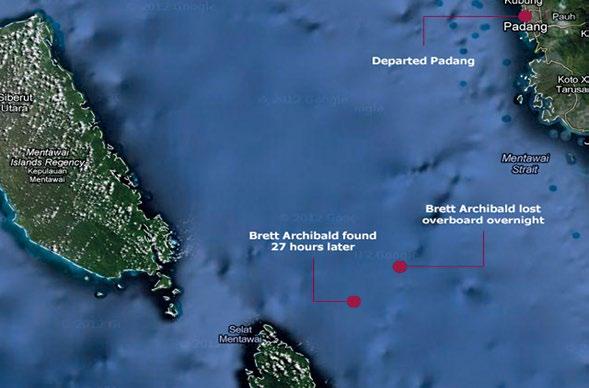
On 17th April 2013, Brett Archibald, a South African on a surfing holiday in the Mantawai Islands, was travelling abroad the Naga Laut with his friends. In the early hours, at around 03:30, he was feeling unwell due to suspected food poisoning and made the decision to go on deck and be sick overboard.
As he moved towards the side, he began to feel dizzy before losing consciousness and falling overboard.
When he came round in the water, the boat was already 1015m ahead of him in rough seas. He made a futile attempt to catch up with the boat, and gain the attention of his friends.
As he watched the lights disappear into the darkness, the reality of his situation hit hard. He became hysterical, but that not override his innate desire to survive. As these instincts kicked in, he started to think more logically.
As he was a strong swimmer, he knew that he had to breathe deeply to be able to survive oncoming waves. What he didn’t know, however, was that he would not be reported missing until he failed to appear for breakfast. At that point, the alert was given to the Indonesian Maritime Rescue Authorities, British and Australian maritime rescue coordinators, the Jakarta Maritime Coordination Centre as well as private vessels and fishing boats.
During his ordeal, Brett Archibald had to deal with cramps, exhaustion which caused him to hallucinate and fall asleep for brief periods. On one occasion, he was awakened by two gulls dive bombing him and be set on pecking his eyes out. Other encounters with wildlife included stung by jellyfish, nibbled at by fish and examined by a blacktip reef shark that posed no threat.
In order to stave off the negative effects of his physical exertion, he focused on other things to take his mind off the pain he was in. He also burst into song on several occasions to lift his spirits and hang onto the hope that rescue was imminent.
At about 06:30 on 18th April, some 27 hours after he had
Source: www.sail-world.com/122031
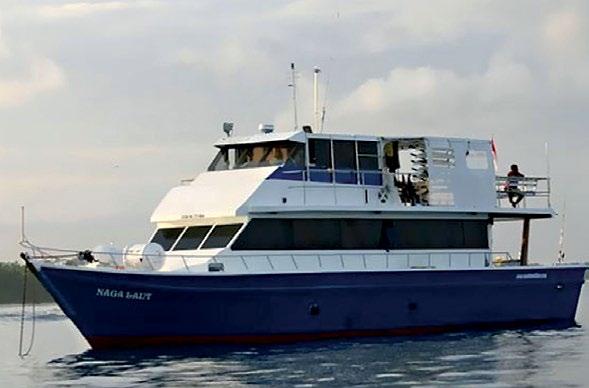
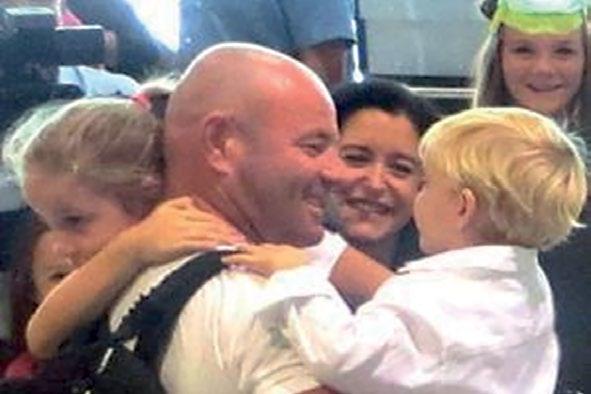
plunged into the Indian Ocean, Brett Archibald was spotted by a Sydney couple aboard a boat called Barrenjoey. They plucked him from the water. His eyes were swollen, he was sunburnt, in severe pain and he could not stop shaking. He was quickly taken for a medical assessment.
At the hospital, it was established that he had lost a staggering 13 pounds (6kg) during his struggle to survive. His feet, lips and hands were as white as snow, denoting there was no blood flow in those areas of his body. In addition, the examination revealed slight damage to his lungs and kidneys due to dehydration.
Brett Archibald acknowledges that his rescue came just in time as 27 hours swimming and reading water with nothing to hold on to had put him on the verge of collapse. He also attributes his survival to his constant thoughts of his wife and two children waiting for him, and how important it was for him to reunite with them.
Sources: www.sail-world.com, www.bbc.com, www.nsri.org.za