
April 19, 2024
Engagement | Fine Arts | Healthcare | Research | Scholarship

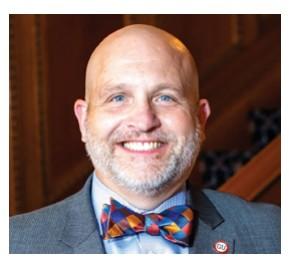
Welcome from Dr. Walter Iwanenko, President
Today we celebrate the research, scholarship, engagement and fine arts collaborations between our students and our faculty and staff through our annual Celebrate Gannon event.
Celebrate Gannon represents an incredible milestone for many of our students who have been diligently pursuing these scholarly and creative projects throughout the academic year, and it is a testament to the work of our faculty who teach, mentor and encourage them along the way.
Please join us in celebrating these incredible achievements as we Celebrate Gannon.
Thank you, and God bless.
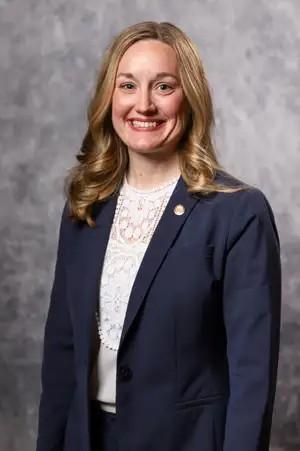
Welcome from Dr. Sarah Ewing, Provost & Vice President for Student Experience
We are grateful you could join us in highlighting the remarkable achievements of our students with the support of their faculty and staff at the annual showcase of academic excellence and creativity—Celebrate Gannon!
Celebrate Gannon is a wonderful opportunity for undergraduate and graduate students to share their academic triumphs, creative undertakings, and scholarly endeavors with the campus community. We are so proud of each students’ commitment to the hard work, dedication, and resilience necessary to prepare their work for dissemination with all of you. We also recognize students’ achievements build upon the unwavering support and mentorship of their faculty and staff who encourage and guide their path toward discovery, creativity, and new knowledge. Today, we honor the collaboration and achievements of our students and their mentors from throughout the academic year.
Thank you for Celebrating Gannon by engaging with our talented and impressive Gannon Knights!

Welcome to Celebrate Gannon 2024
Celebrate Gannon is an annual event at Gannon University that celebrates research, scholarship, engagement and fine art collaborations between our students and our faculty and staff. Students present their work via artwork, conference posters, and platform talks. Classes are canceled across campus so that the entire community can gather and learn from one another.
Every project is the result of students mentoring with faculty and staff on projects that evolve out of course work, independent research projects and student service projects. It is the cumulation of months, if not years, worth of work, presented to the Gannon University community. Over the years, thousands of students have been able to share their first professional presentation.
Within this document, you can view the combined work of our Erie campus and Ruskin campus to fully share the accomplishments with our whole Gannon Family.
TABLE OF CONTENTS
The following categories are used to describe the area under which each presentation falls.
ERIE
Engagement projects share students’ significant learning in activities outside of the classroom, such as public service in and around Erie as well as service-learning trips. “Engagement” presentations must cite and make explicit connections to outside research that informed the student learning (i.e. Catholic Social Teaching, leadership theory, etc.).
Fine Arts projects are creative works in the written, visual and performance arts. Student presentations will be in the format of a platform presentation focused upon their inspiration, process, and product. Eligible projects could include course-related writing, visual, and performing arts (performance, design, and direction).
Research & Scholarship eligible projects could include research studies, case studies, and independent study projects completed with a mentor, the analysis of literature or scholarly texts, or scholarly exposition that is typical within a particular discipline.
RUSKIN
Healthcare Initiative & Community Engagement projects share students’ significant learning in activities outside of the classroom, such as public service in and around the community as well as service-learning trips. “Engagement” presentations must cite and make explicit connections to outside research that informed the student learning.
Research & Scholarship projects are based on academic inquiry in a discipline or among disciplines. Eligible projects could include research studies, case studies, independent study projects completed with a mentor, the analysis of literature or scholarly texts, or scholarly exposition that is typical within a particular discipline
ERIE UNDERGRADUATE FINE ARTS PRESENTATIONS
Presentation: 1
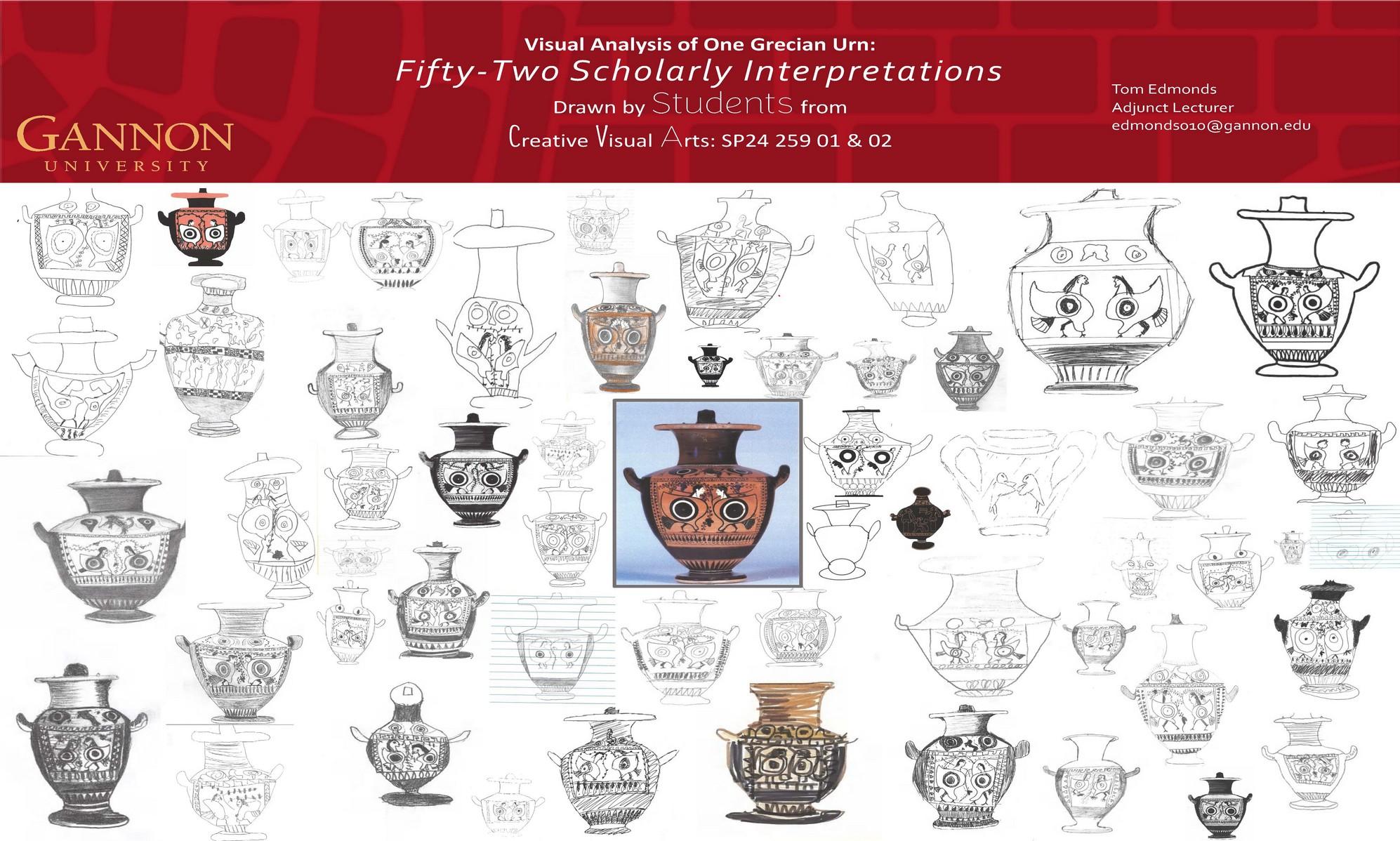
Title: Visual Analysis of One Grecian Urn: Fifty-One Scholarly Interpretations
Abstract: I am an Adjunct Lecturer of Art History for two Creative Visual Arts courses in the School of Communication and the Arts. This spring, I am instructing fifty-one students in “Visual Analysis” to non-art students in this required course. They are learning to clearly observe artwork, methodically find its meaning, intention and historic context, and accurately record descriptions and any feelings or mood elicited from themselves. In addition to looking at images in the classroom, we go on field trips to galleries, museums, art centers, civic buildings and churches. This assignment requires them to make a drawing of a hydria, a Grecian urn in the British Museum. My wish is for students to use Visual Analysis in order to be aware of their environment, both professionally and in real-life situations. I am delighted with every single student’s drawing and want to share them.
Presenter(s): Thomas Edmonds
Sponsoring Department: School of Communication and Arts
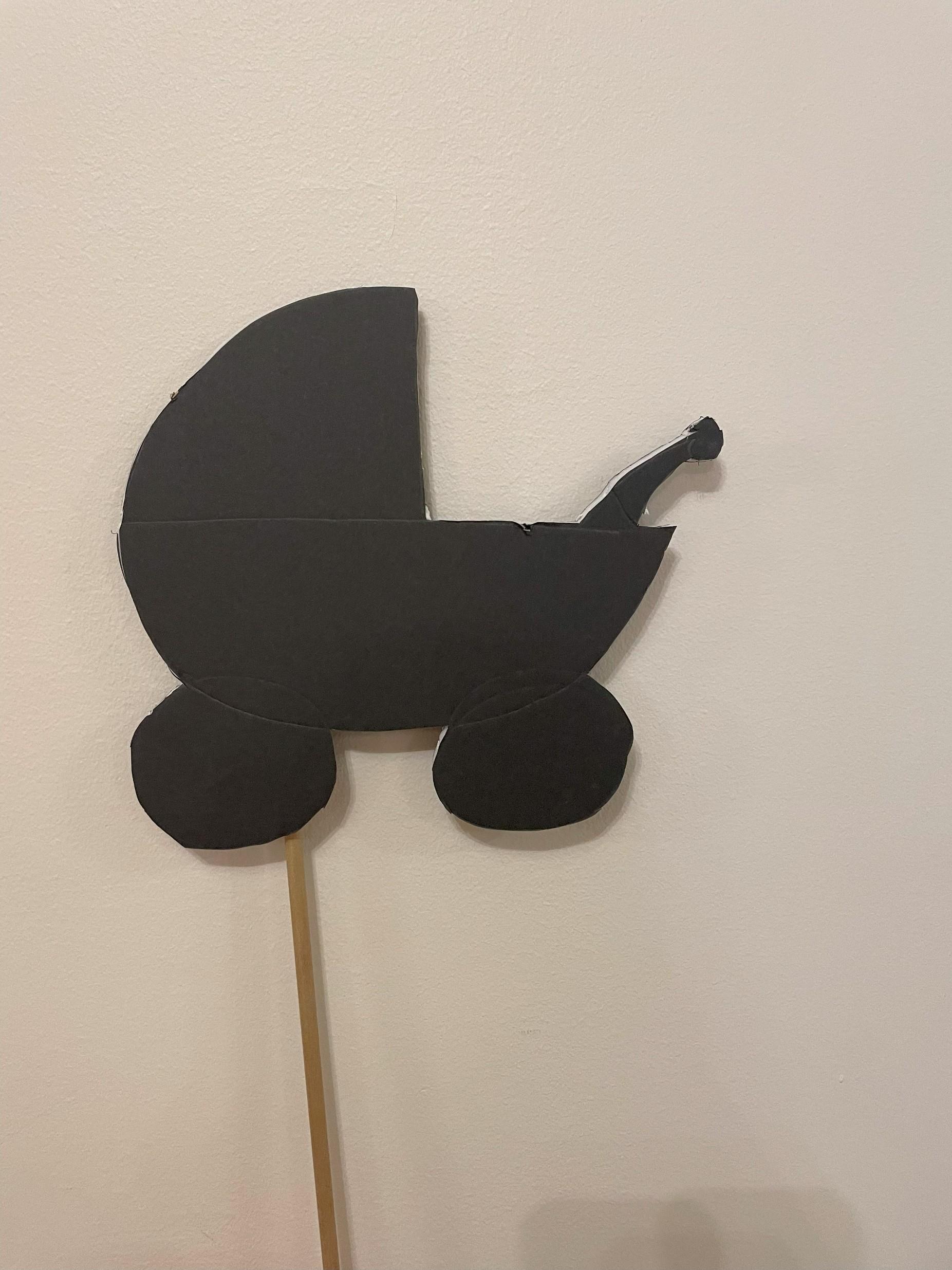
Title: Baby Carriage
Abstract:
In small groups, students develop scripts, build puppets, rehearse, and perform. The puppets on display today are inspired by the ancient Chinese tradition of shadow puppetry. Ancient puppets were skillfully cut from thin leather that was tanned and dyed; a tradition that is passed on through generations of artists. Our shadow puppets are made from the humblest of materials; posterboard, foamcore, brads, tape, and wooden rods yet they carry on the tradition of telling stories with shadows just the same.
Presenter(s
Sponsoring Department: Theatre
Mentor(s): Angela Howell
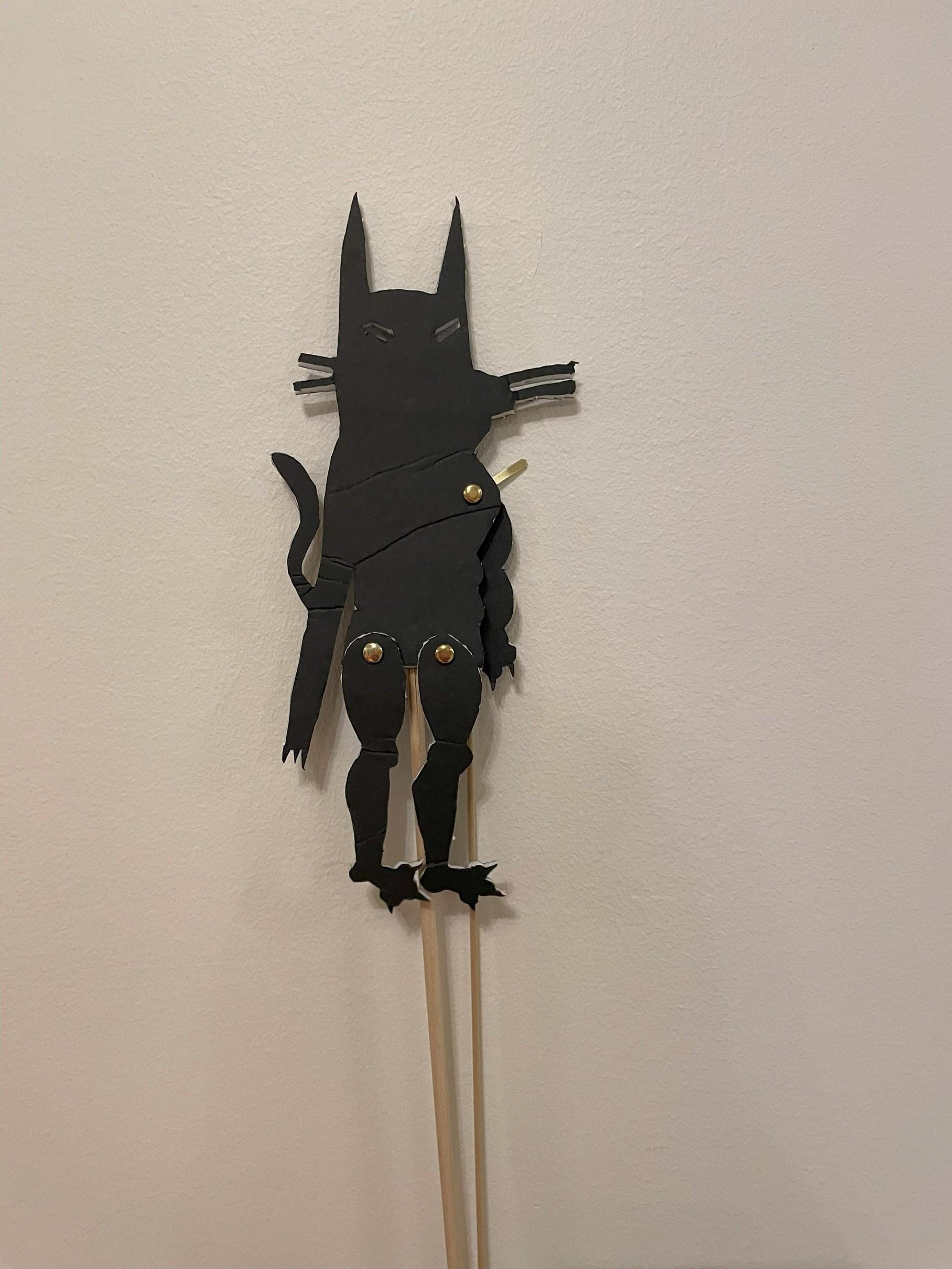
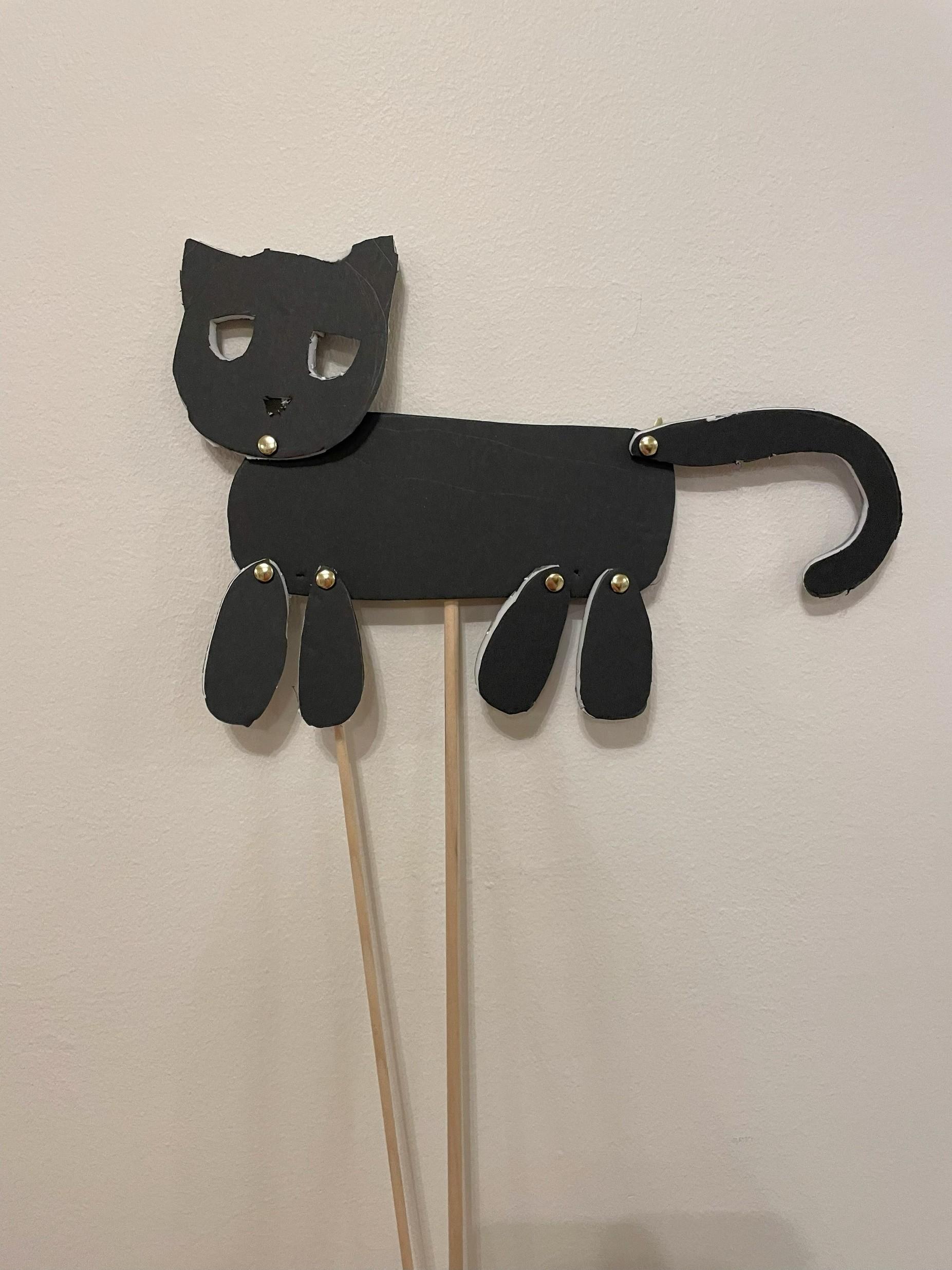
Title: Batcat
Abstract: The students in Puppetry (ARTS 253) explore the art of storytelling through the medium of puppets. In small groups, students develop scripts, build puppets, rehearse, and perform. The puppets on display today are inspired by the ancient Chinese tradition of shadow puppetry. Ancient puppets were skillfully cut from thin leather that was tanned and dyed; a tradition that is passed on through generations of artists. Our shadow puppets are made from the humblest of materials; posterboard, foamcore, brads, tape, and wooden rods yet they carry on the tradition of telling stories with shadows just the same.
Presenter(s): Florez Sandoval
Sponsoring Department: Theatre
Mentor(s): Angela Howell
Title:
Abstract: The students in Puppetry (ARTS 253) explore the art of storytelling through the medium of puppets. In small groups, students develop scripts, build puppets, rehearse, and perform. The puppets on display today are inspired by the ancient Chinese tradition of shadow puppetry. Ancient puppets were skillfully cut from thin leather that was tanned and dyed; a tradition that is passed on through generations of artists. Our shadow puppets are made from the humblest of materials; posterboard, foamcore, brads, tape, and wooden rods yet they carry on the tradition of telling stories with shadows just the same.
Presenter(s
Sponsoring Department: Theatre
Mentor(s): Angela Howell
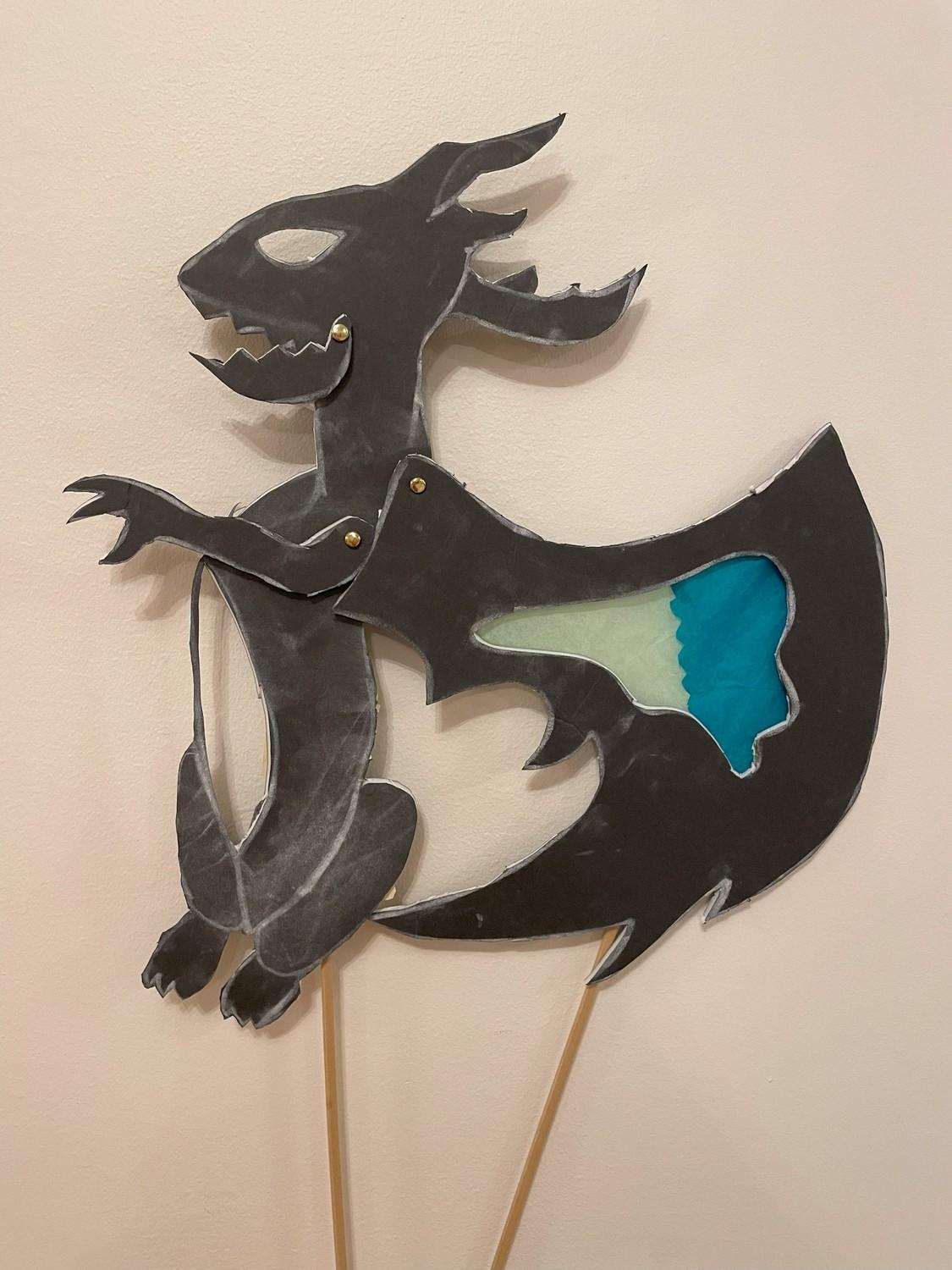
Title: Dragon
Presentation: 5
Abstract: The students in Puppetry (ARTS 253) explore the art of storytelling through the medium of puppets. In small groups, students develop scripts, build puppets, rehearse, and perform. The puppets on display today are inspired by the ancient Chinese tradition of shadow puppetry. Ancient puppets were skillfully cut from thin leather that was tanned and dyed; a tradition that is passed on through generations of artists. Our shadow puppets are made from the humblest of materials; posterboard, foamcore, brads, tape, and wooden rods yet they carry on the tradition of telling stories with shadows just the same.
Presenter(s): Ashlyn Jessup
Sponsoring Department: Theatre
Mentor(s): Angela Howell
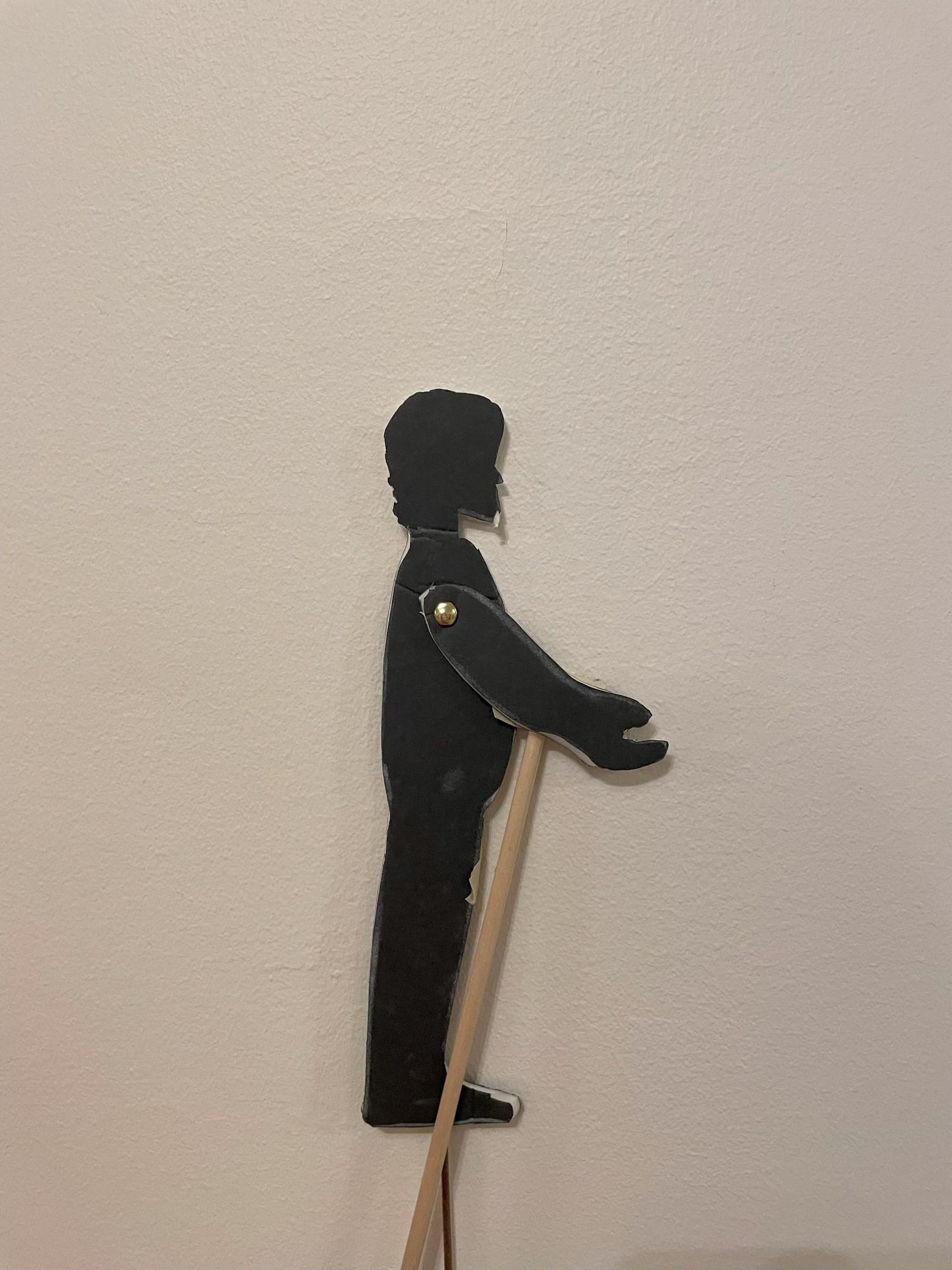
Title: Favio
Presentation: 6
Abstract: The students in Puppetry (ARTS 253) explore the art of storytelling through the medium of puppets. In small groups, students develop scripts, build puppets, rehearse, and perform. The puppets on display today are inspired by the ancient Chinese tradition of shadow puppetry. Ancient puppets were skillfully cut from thin leather that was tanned and dyed; a tradition that is passed on through generations of artists. Our shadow puppets are made from the humblest of materials; posterboard, foamcore, brads, tape, and wooden rods yet they carry on the tradition of telling stories with shadows just the same.
Presenter(s): Nick Leone
Sponsoring Department: Theatre
Mentor(s): Angela Howell
Title: House
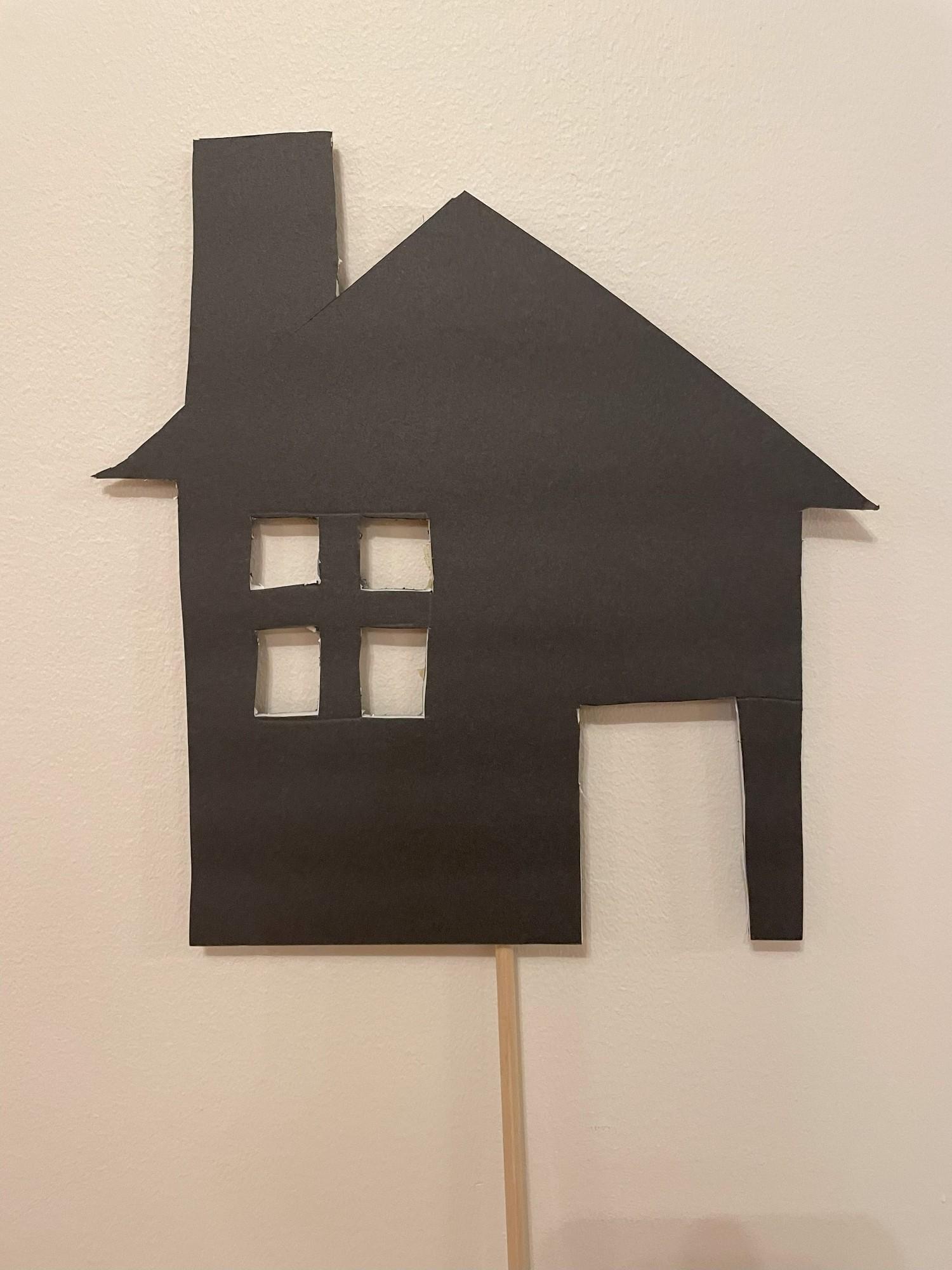
Abstract: The students in Puppetry (ARTS 253) explore the art of storytelling through the medium of puppets. In small groups, students develop scripts, build puppets, rehearse, and perform. The puppets on display today are inspired by the ancient Chinese tradition of shadow puppetry. Ancient puppets were skillfully cut from thin leather that was tanned and dyed; a tradition that is passed on through generations of artists. Our shadow puppets are made from the humblest of materials; posterboard, foamcore, brads, tape, and wooden rods yet they carry on the tradition of telling stories with shadows just the same.
Presenter(s): Caeley Scherer
Sponsoring Department: Theatre
Mentor(s): Angela Howell
Title:
Abstract: The students in Puppetry (ARTS 253) explore the art of storytelling through the medium of puppets. In small groups, students develop scripts, build puppets, rehearse, and perform. The puppets on display today are inspired by the ancient Chinese tradition of shadow puppetry. Ancient puppets were skillfully cut from thin leather that was tanned and dyed; a tradition that is passed on through generations of artists. Our shadow puppets are made from the humblest of materials; posterboard, foamcore, brads, tape, and wooden rods yet they carry on the tradition of telling stories with shadows just the same.
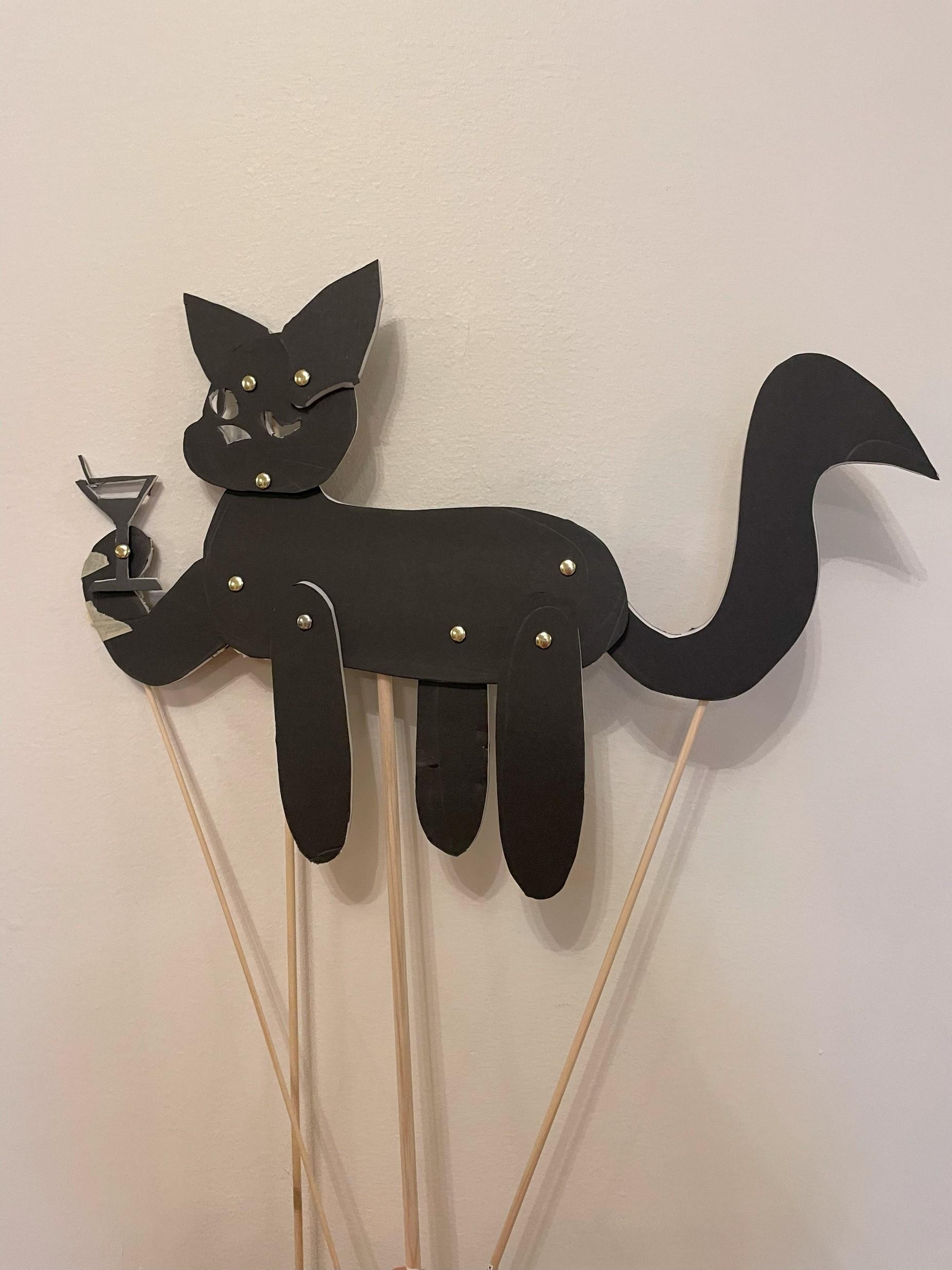
Presenter(s): Bella Fried
Sponsoring Department: Theatre
Mentor(s): Angela Howell
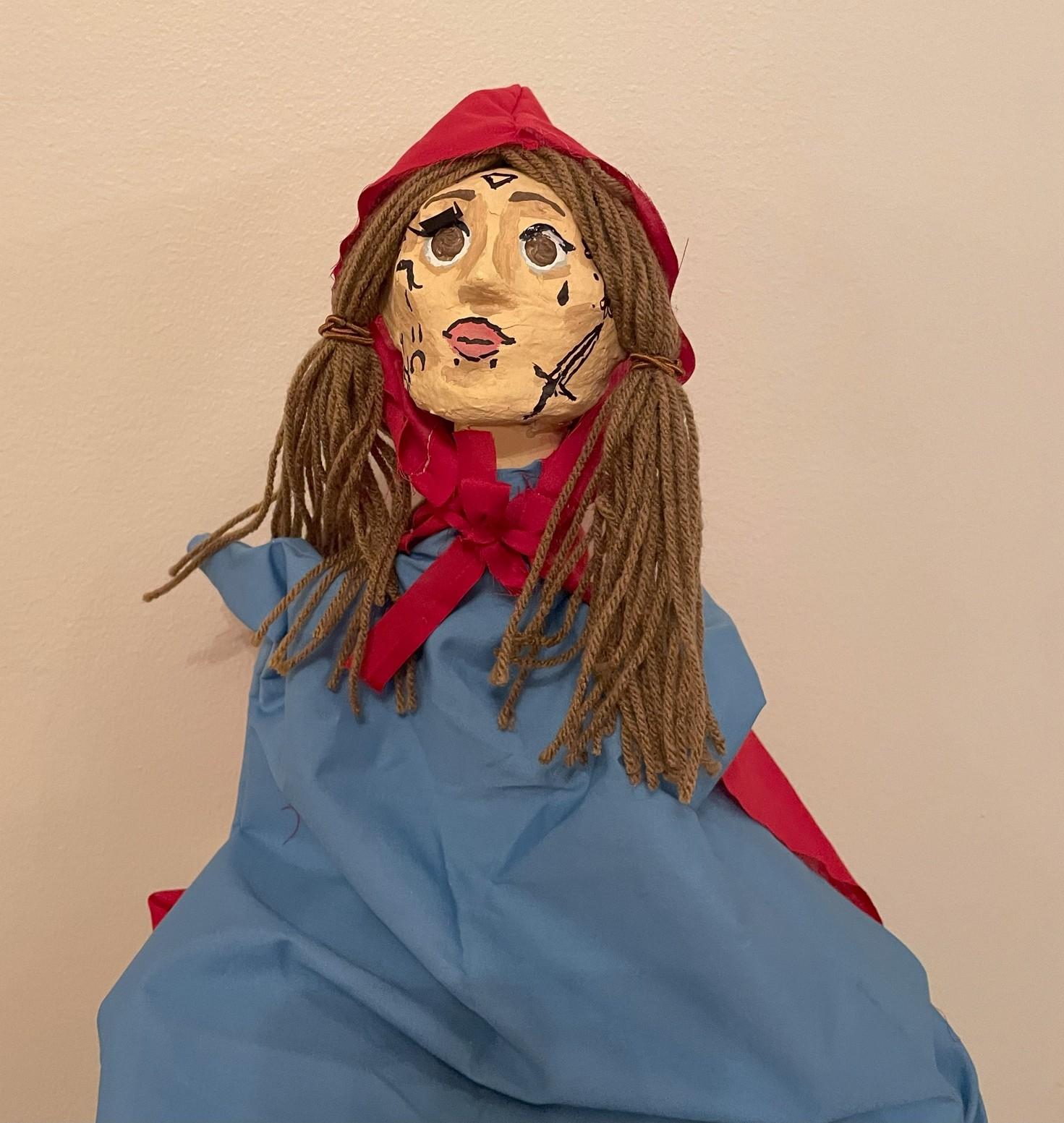
Presentation: 9
Title: Red from the Hood
Abstract: The students in Puppetry (ARTS 253) explore the art of storytelling through the medium of puppets. In small groups, students develop scripts, build puppets, rehearse, and perform. The puppets on display today are inspired by the ancient Chinese tradition of shadow puppetry. Ancient puppets were skillfully cut from thin leather that was tanned and dyed; a tradition that is passed on through generations of artists. Our shadow puppets are made from the humblest of materials; posterboard, foamcore, brads, tape, and wooden rods yet they carry on the tradition of telling stories with shadows just the same.
Presenter(s): Bella Fried
Sponsoring Department: Theatre
Mentor(s): Angela Howell
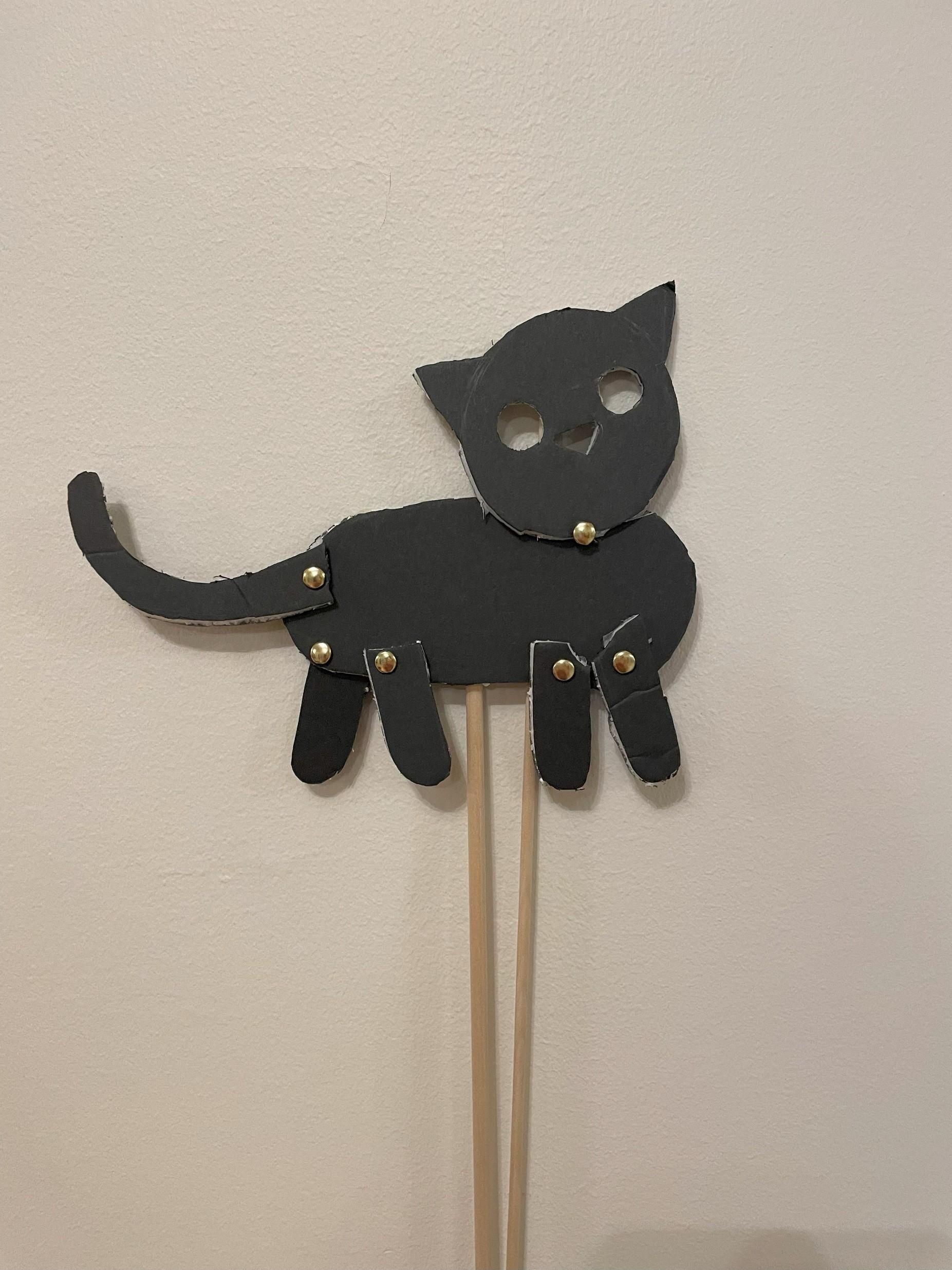
Title:
Abstract:
In small groups, students develop scripts, build puppets, rehearse, and perform. The puppets on display today are inspired by the ancient Chinese tradition of shadow puppetry. Ancient puppets were skillfully cut from thin leather that was tanned and dyed; a tradition that is passed on through generations of artists. Our shadow puppets are made from the humblest of materials; posterboard, foamcore, brads, tape, and wooden rods yet they carry on the tradition of telling stories with shadows just the same.
Presenter(s
Sponsoring Department:
Mentor(s):
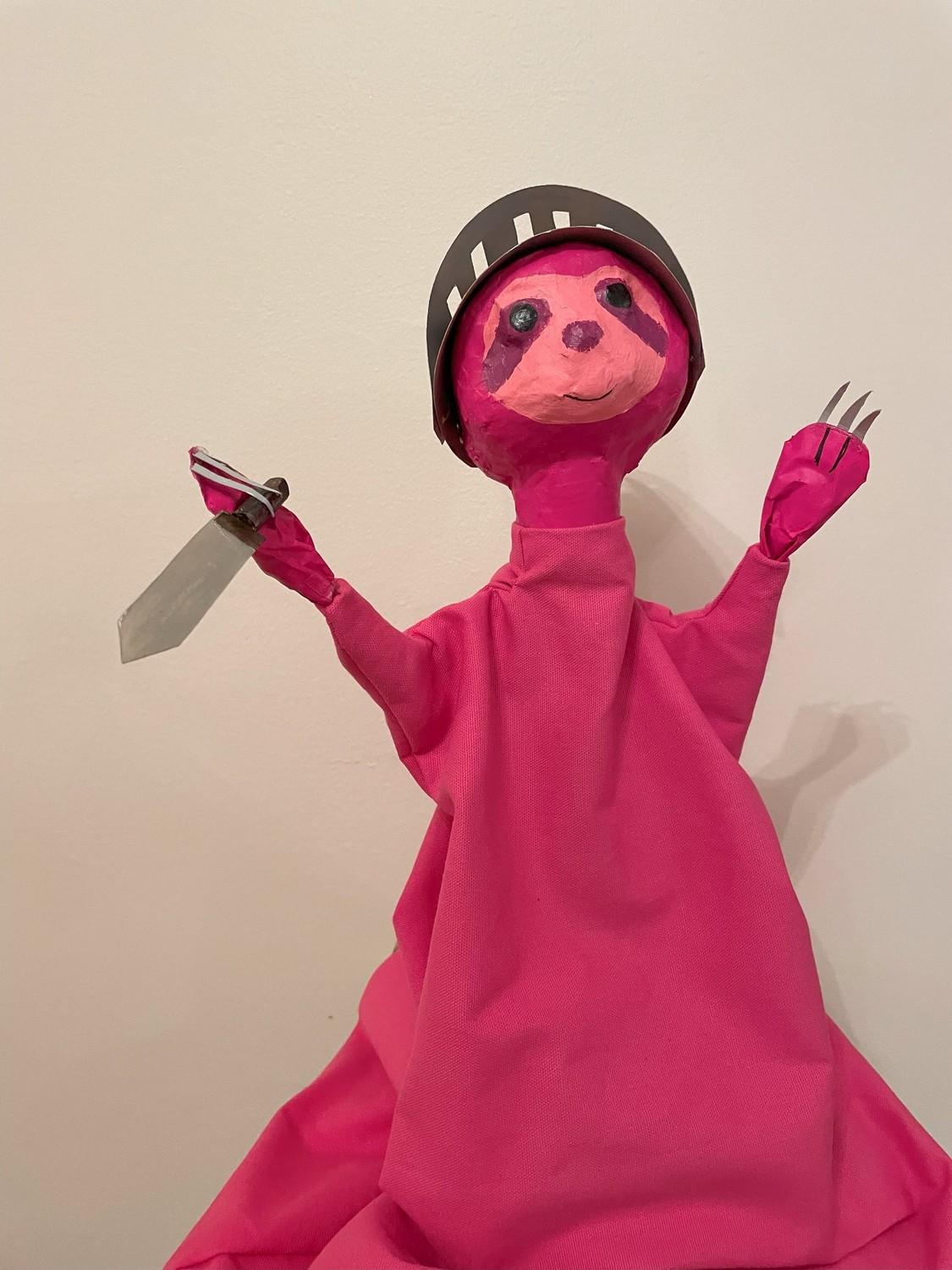
Presentation: 11
Title: Shronk the Sloth Soldier
Abstract: The students in Puppetry (ARTS 253) explore the art of storytelling through the medium of puppets. In small groups, students develop scripts, build puppets, rehearse, and perform. The puppets on display today are inspired by the ancient Chinese tradition of shadow puppetry. Ancient puppets were skillfully cut from thin leather that was tanned and dyed; a tradition that is passed on through generations of artists. Our shadow puppets are made from the humblest of materials; posterboard, foamcore, brads, tape, and wooden rods yet they carry on the tradition of telling stories with shadows just the same.
Presenter(s): Emily Lynch
Sponsoring Department: Theatre
Mentor(s): Angela Howell
Title: The Hair
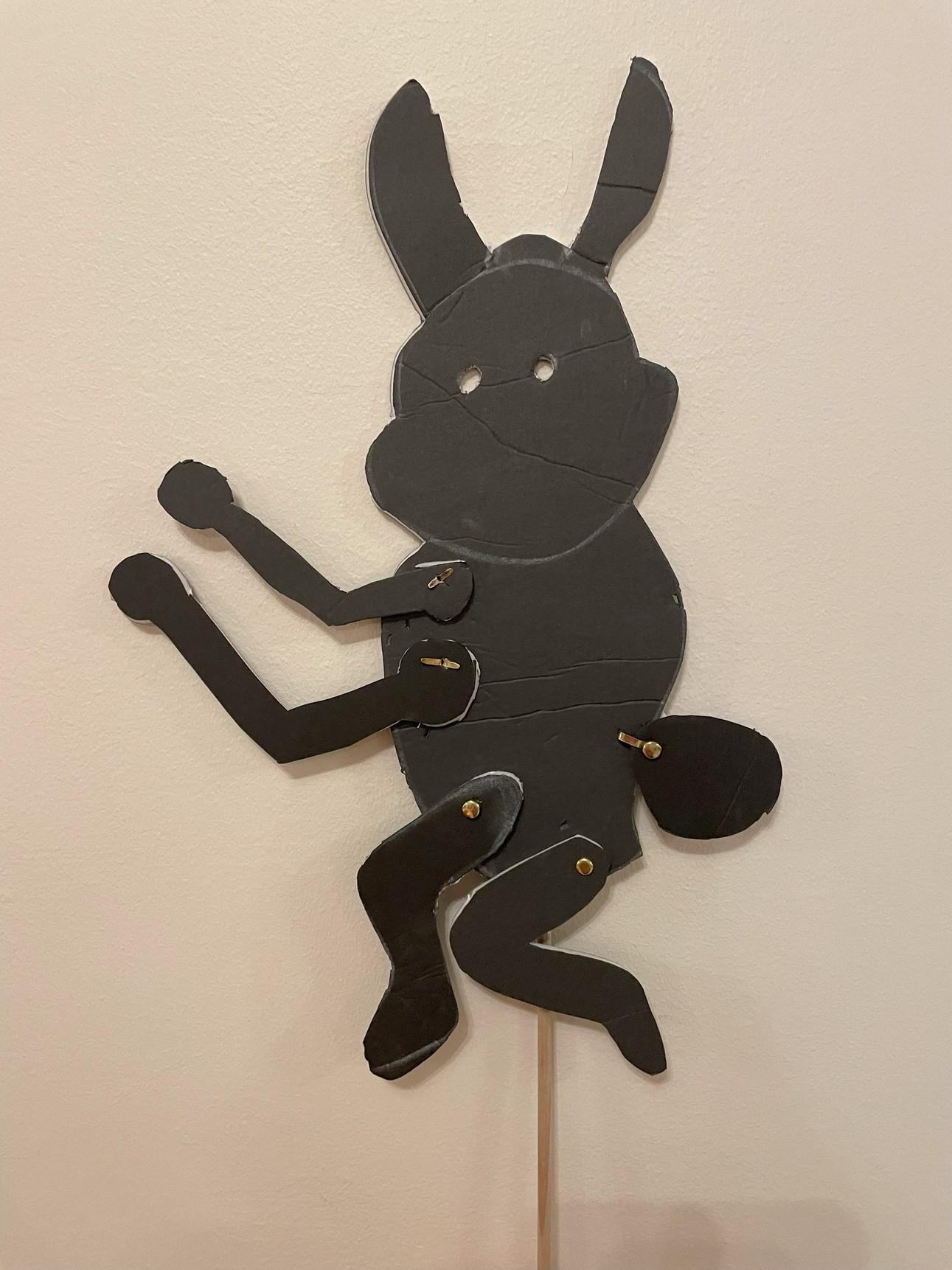
Abstract: The students in Puppetry (ARTS 253) explore the art of storytelling through the medium of puppets. In small groups, students develop scripts, build puppets, rehearse, and perform. The puppets on display today are inspired by the ancient Chinese tradition of shadow puppetry. Ancient puppets were skillfully cut from thin leather that was tanned and dyed; a tradition that is passed on through generations of artists. Our shadow puppets are made from the humblest of materials; posterboard, foamcore, brads, tape, and wooden rods yet they carry on the tradition of telling stories with shadows just the same.
Presenter(s): Thien Do
Sponsoring Department: Theatre
Mentor(s): Angela Howell
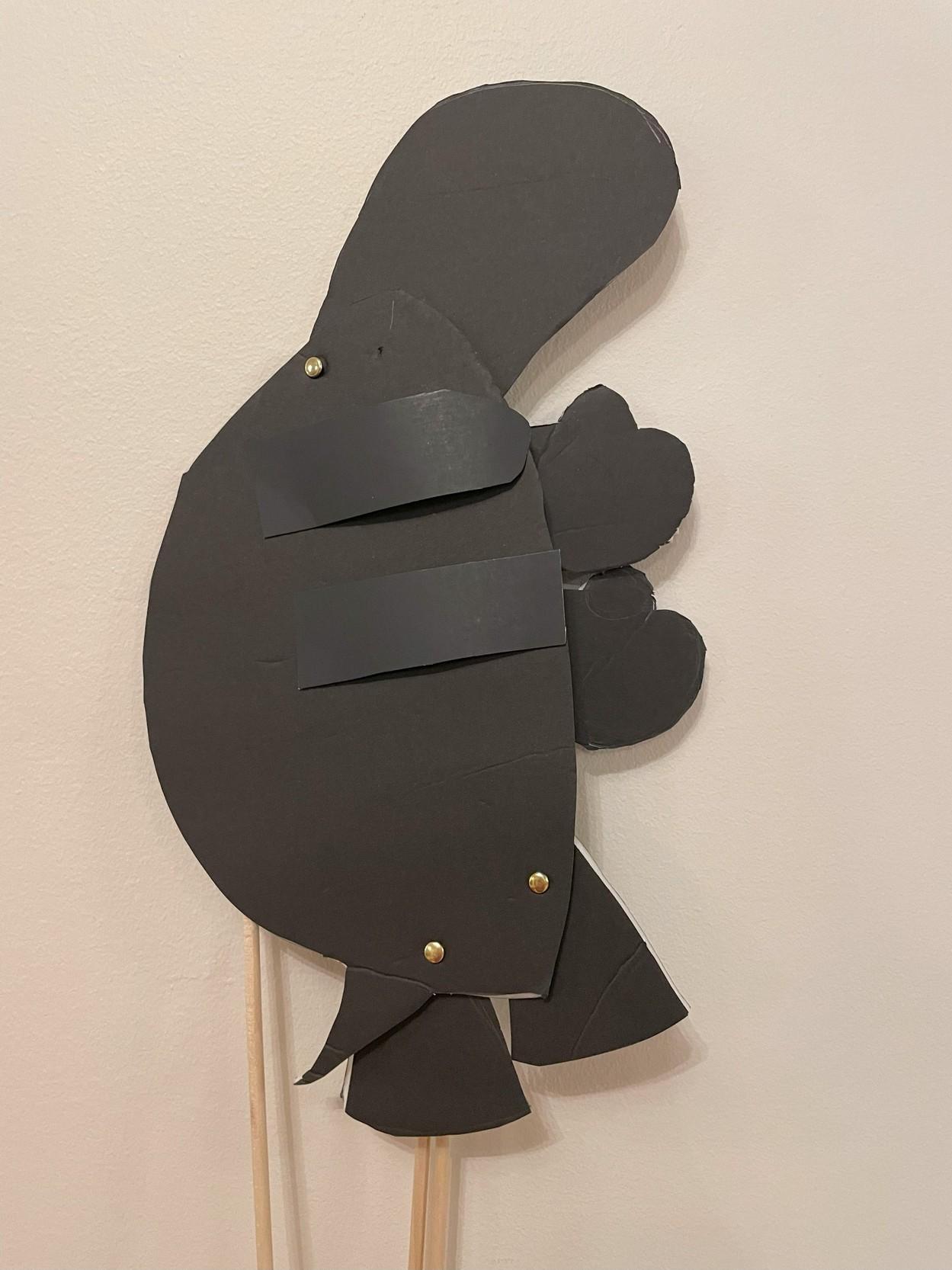
Presentation: 13
Title: Tommy the Boxing Turtle
Abstract: The students in Puppetry (ARTS 253) explore the art of storytelling through the medium of puppets. In small groups, students develop scripts, build puppets, rehearse, and perform. The puppets on display today are inspired by the ancient Chinese tradition of shadow puppetry. Ancient puppets were skillfully cut from thin leather that was tanned and dyed; a tradition that is passed on through generations of artists. Our shadow puppets are made from the humblest of materials; posterboard, foamcore, brads, tape, and wooden rods yet they carry on the tradition of telling stories with shadows just the same.
Presenter(s): Emily Lynch
Sponsoring Department: Theatre
Mentor(s): Angela Howell
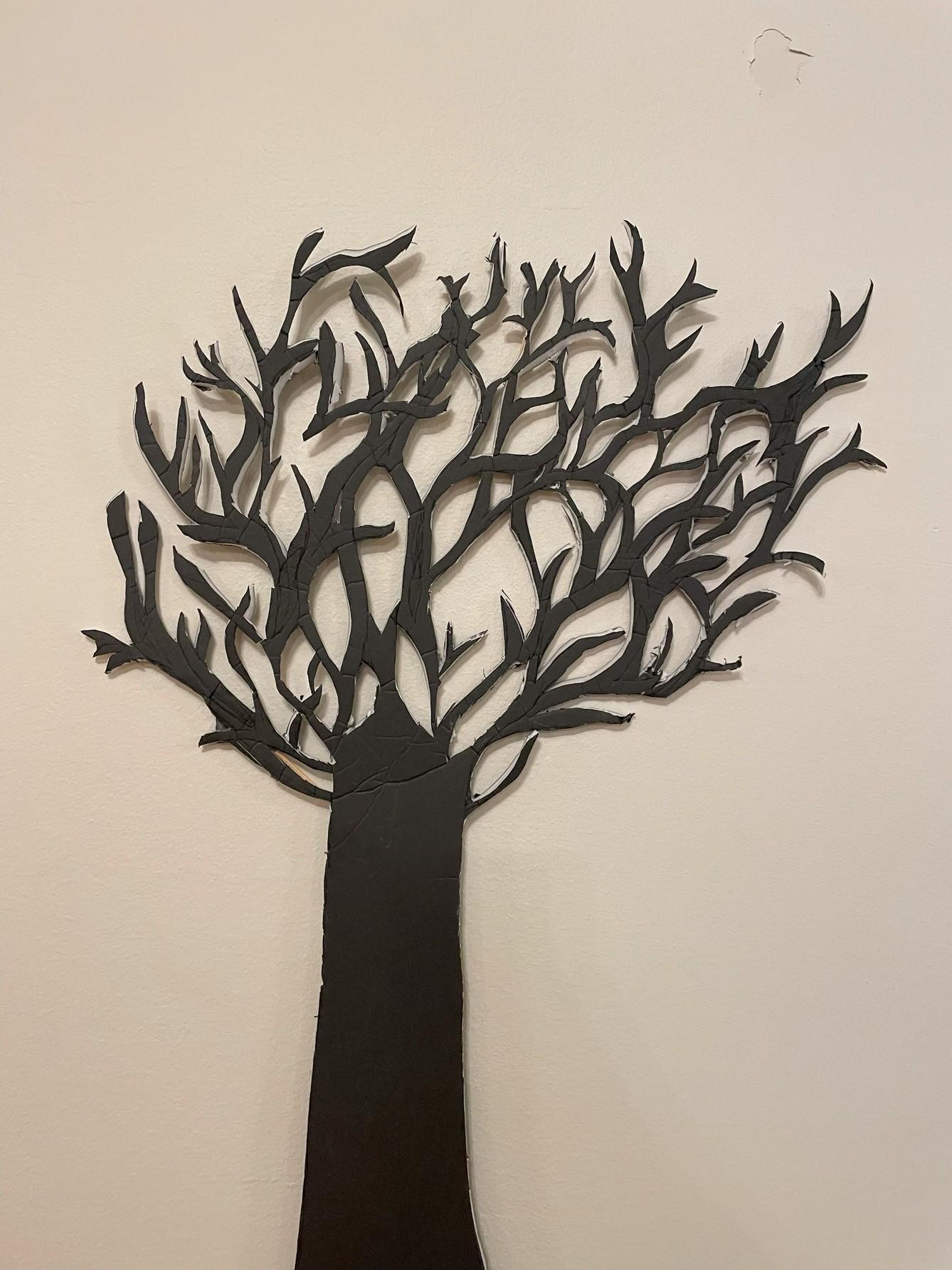
Title: Tree
Presentation: 14
Abstract: The students in Puppetry (ARTS 253) explore the art of storytelling through the medium of puppets. In small groups, students develop scripts, build puppets, rehearse, and perform. The puppets on display today are inspired by the ancient Chinese tradition of shadow puppetry. Ancient puppets were skillfully cut from thin leather that was tanned and dyed; a tradition that is passed on through generations of artists. Our shadow puppets are made from the humblest of materials; posterboard, foamcore, brads, tape, and wooden rods yet they carry on the tradition of telling stories with shadows just the same.
Presenter(s): Ashlyn Jessup
Sponsoring Department: Theatre
Mentor(s): Angela Howell
Title: Yellin' Leroy the Rooster
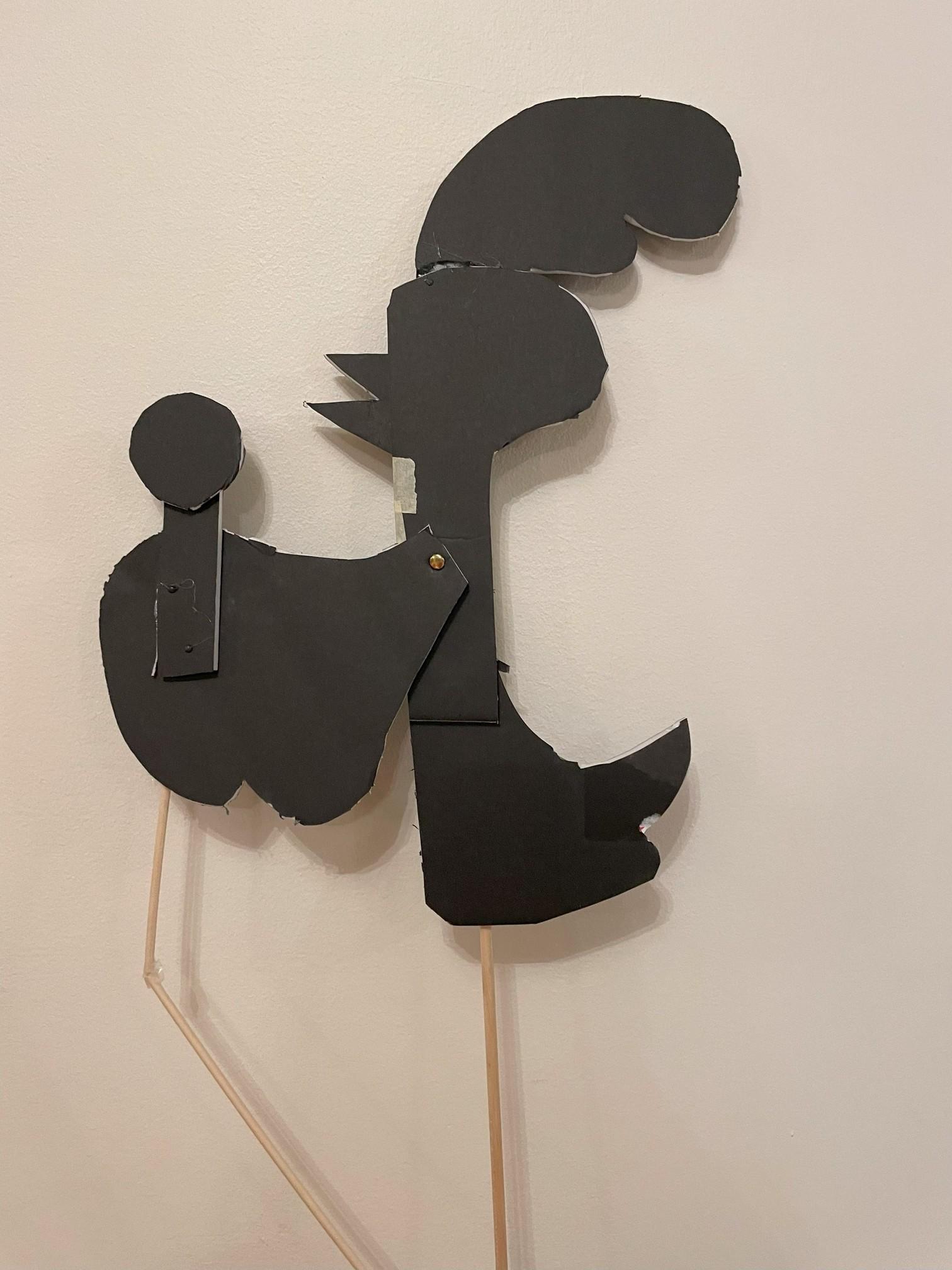
Abstract: The students in Puppetry (ARTS 253) explore the art of storytelling through the medium of puppets. In small groups, students develop scripts, build puppets, rehearse, and perform. The puppets on display today are inspired by the ancient Chinese tradition of shadow puppetry. Ancient puppets were skillfully cut from thin leather that was tanned and dyed; a tradition that is passed on through generations of artists. Our shadow puppets are made from the humblest of materials; posterboard, foamcore, brads, tape, and wooden rods yet they carry on the tradition of telling stories with shadows just the same.
Presenter(s): Tom Swick
Sponsoring Department: Theatre
Mentor(s): Angela Howell
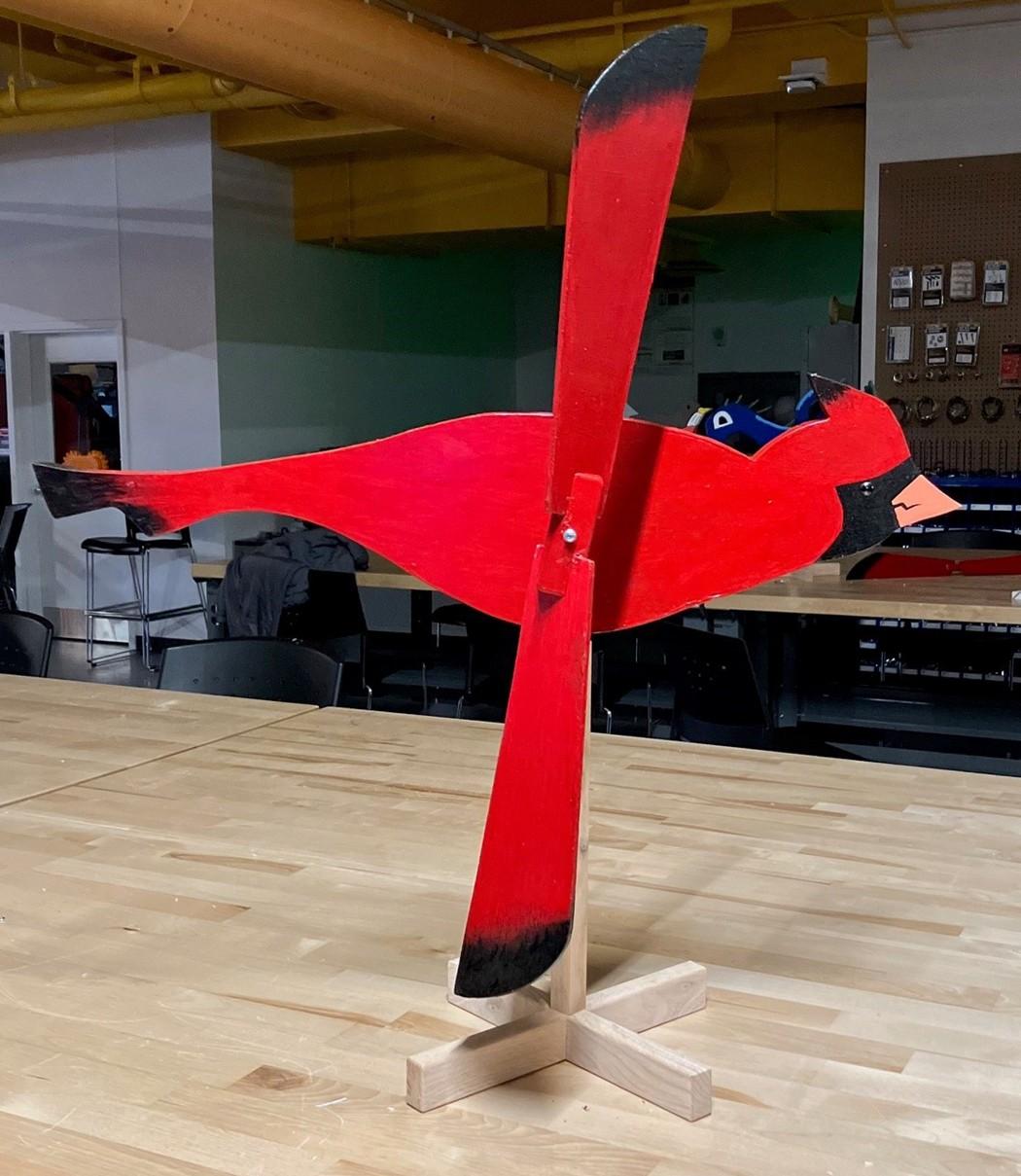
Title: Big Red
Presentation: 16
Abstract: Building prototypes is the focus of the lessons in MIC 310. We start with paper and craft messages using paper folds, glue, and color. Throughout the semester the makers develop skills in using various mediaclay, metal, glass, and 3D printing. Either we use an additive process or a sculpting process to shape ideas and content. Working with wood and tools is challenging. Making 2 and 3 dimensional objects is one level of prototyping. Making an object deliberately MOVE is another dimension of being a maker. In Folk Art, these sculptures are known as Whirly-gigs. Evidence of Whirly-gigs has been found as far back as 500BC in China. The movement of the wings captures and uses the power of the wind to keep the blades moving. These are our finished models.
Presenter(s): Chenay Dateline, Angelise Zakis, Molly Fehr
Sponsoring Department: The Minor in Innovation and Creativity
Mentor(s): Nick Devine, MC Gensheimer
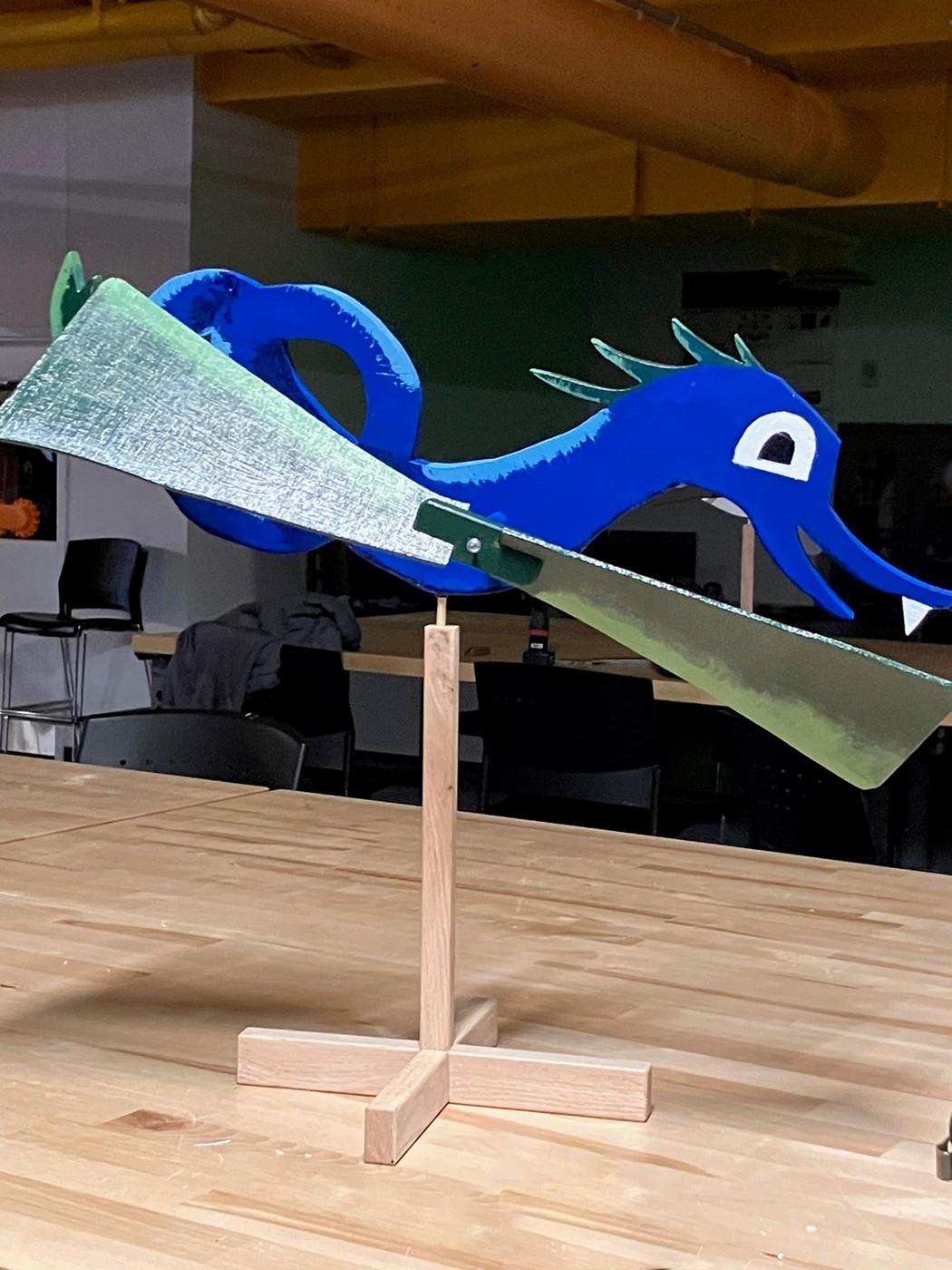
Title: Dragon
Presentation: 17
Abstract: Building prototypes is the focus of the lessons in MIC 310. We start with paper and craft messages using paper folds, glue, and color. Throughout the semester the makers develop skills in using various mediaclay, metal, glass, and 3D printing. Either we use an additive process or a sculpting process to shape ideas and content. Working with wood and tools is challenging. Making 2 and 3 dimensional objects is one level of prototyping. Making an object deliberately MOVE is another dimension of being a maker. In Folk Art, these sculptures are known as Whirly-gigs. Evidence of Whirly-gigs has been found as far back as 500BC in China. The movement of the wings captures and uses the power of the wind to keep the blades moving. These are our finished models.
Presenter(s): Madeline Emerson, Westley Woodman, Jessica McCraken
Sponsoring Department: The Minor in Innovation and Creativity
Mentor(s): Nick Devine, MC Gensheimer

Title: Jolene Gold Finch
Abstract: Building prototypes is the focus of the lessons in MIC 310. We start with paper and craft messages using paper folds, glue, and color. Throughout the semester the makers develop skills in using various mediaclay, metal, glass, and 3D printing. Either we use an additive process or a sculpting process to shape ideas and content. Working with wood and tools is challenging. Making 2 and 3 dimensional objects is one level of prototyping. Making an object deliberately MOVE is another dimension of being a maker. In Folk Art, these sculptures are known as Whirly-gigs. Evidence of Whirly-gigs has been found as far back as 500BC in China. The movement of the wings captures and uses the power of the wind to keep the blades moving. These are our finished models.
Presenter(s): Alexa Augusto, Caesar Grandinetti, Austin Stevwing
Sponsoring Department: The Minor in Innovation and Creativity
Mentor(s): Nick Devine, MC Gensheimer
Title: Pegasus
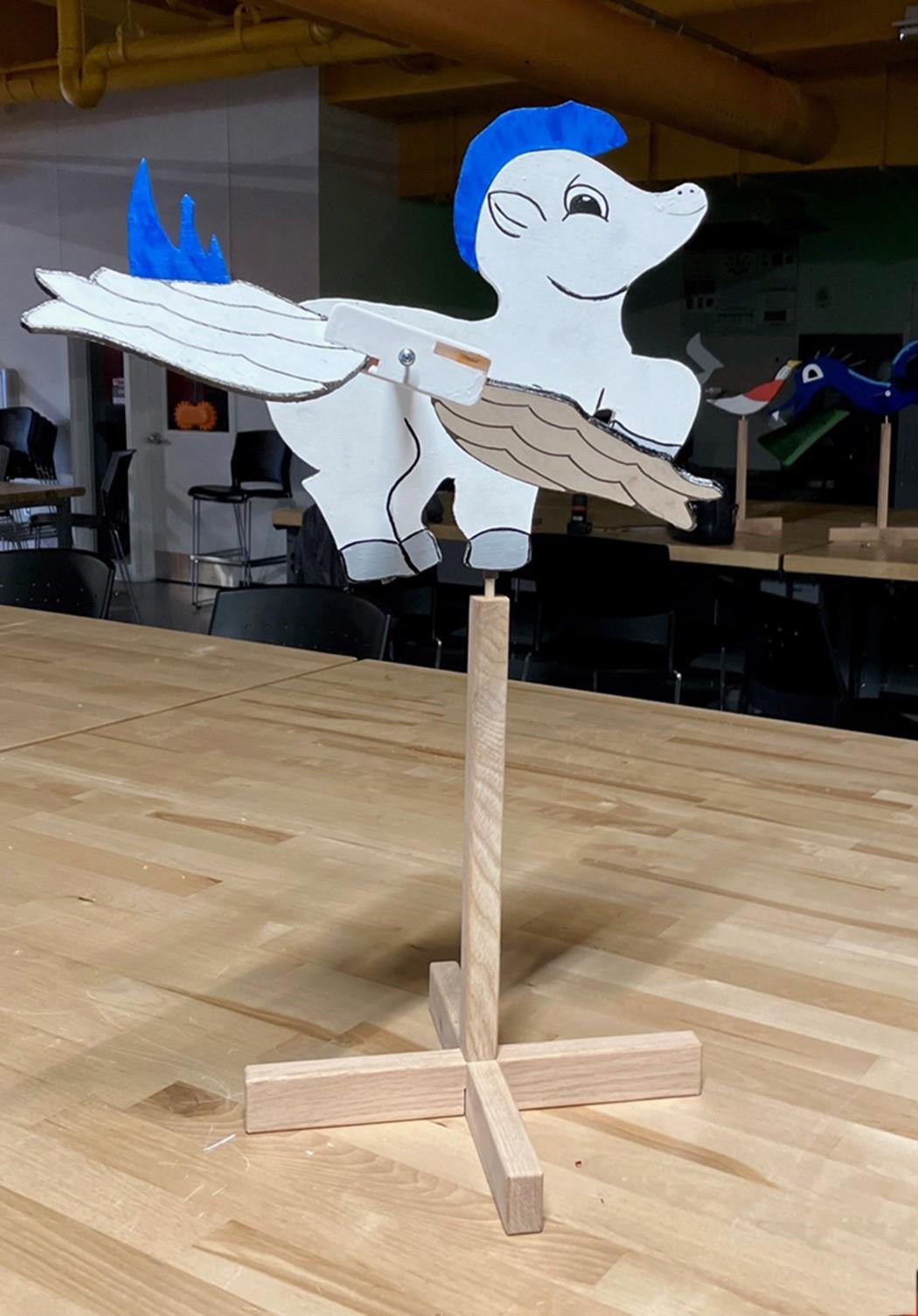
Abstract: Building prototypes is the focus of the lessons in MIC 310. We start with paper and craft messages using paper folds, glue, and color. Throughout the semester the makers develop skills in using various mediaclay, metal, glass, and 3D printing. Either we use an additive process or a sculpting process to shape ideas and content. Working with wood and tools is challenging. Making 2 and 3 dimensional objects is one level of prototyping. Making an object deliberately MOVE is another dimension of being a maker. In Folk Art, these sculptures are known as Whirly-gigs. Evidence of Whirly-gigs has been found as far back as 500BC in China. The movement of the wings captures and uses the power of the wind to keep the blades moving. These are our finished models.
Presenter(s): Emma Prischak, Megan Ferber, Shannon Yahner
Sponsoring Department: The Minor in Innovation and Creativity
Mentor(s): Nick Devine, MC Gensheimer

Presentation: 20
Title: Yum – Red Robin
Abstract: Building prototypes is the focus of the lessons in MIC 310. We start with paper and craft messages using paper folds, glue, and color. Throughout the semester the makers develop skills in using various mediaclay, metal, glass, and 3D printing. Either we use an additive process or a sculpting process to shape ideas and content. Working with wood and tools is challenging. Making 2 and 3 dimensional objects is one level of prototyping. Making an object deliberately MOVE is another dimension of being a maker. In Folk Art, these sculptures are known as Whirly-gigs. Evidence of Whirly-gigs has been found as far back as 500BC in China. The movement of the wings captures and uses the power of the wind to keep the blades moving. These are our finished models.
Presenter(s): Francisco Palacian, Kara Loftus, Julia Westland
Sponsoring Department: The Minor in Innovation and Creativity
Mentor(s): Nick Devine, MC Gensheimer
ERIE UNDERGRADUATE ENGAGEMENT POSTER PRESENTATIONS

Presentation: 21
Title: All Inclusive Erie
Abstract: Our project revolves around the development of a user-friendly website aimed at enhancing accessibility for individuals with disabilities. This initiative provides insights into facilities at accessible places and encourages community engagement. Adhering to principles, we address potential risks such as data accuracy and privacy. Collaborative technologies such as Azure, Jira, GitHub and User Testing. Nonfunctional requirements ensure a strong system, with research, mentor collaboration, and continuous development as integral components. The quality of our project is evident in the developed use case, stakeholders' table, and website framework. Design solutions prioritize an intuitive UI, accessibility features, personalization, real-time updates, interactive maps, and community engagement. Tools and methods include Leaflet, OpenStreet Maps, Firebase, MongoDB, GitHub, User Testing, and React. Our solution supports involved partnerships, data management relies on MongoDB, and team operations emphasize communication and responsible professionalism, guided by applied theory in Computer Science, and Cybersecurity.
Presenter(s): Nicole Spiegel, Caitlyn Crawford, Alyssa MacLefko, Andrew Buczynski
Sponsoring Department: Computer Science
Mentor(s): Nate Carlin

Presentation: 22
Title: Eco Exchange Web Application
Abstract: The Eco Material Exchange project aims to cultivate an environmentally conscious community among students by promoting the reuse and recycling of items. This initiative strives to combat wasteful disposal practices, instill sustainable habits, and alleviate financial burdens for students. Key objectives include reducing waste by encouraging the reuse of items at the end of each semester, providing economic benefits through affordable second-hand purchases and the opportunity to sell unwanted items, fostering a sense of community where students support one another, raising awareness about the environmental impacts of waste, and expanding the initiative to include students from diverse educational institutions, thus amplifying its impact on sustainability efforts.
Presenter(s): Reginald Hamette, Tiya Allen, Zoe Little, Rie Hasegawa
Sponsoring Department: Computer and Information Science
Mentor(s): Tajmilur Rahman
Presentation: 23
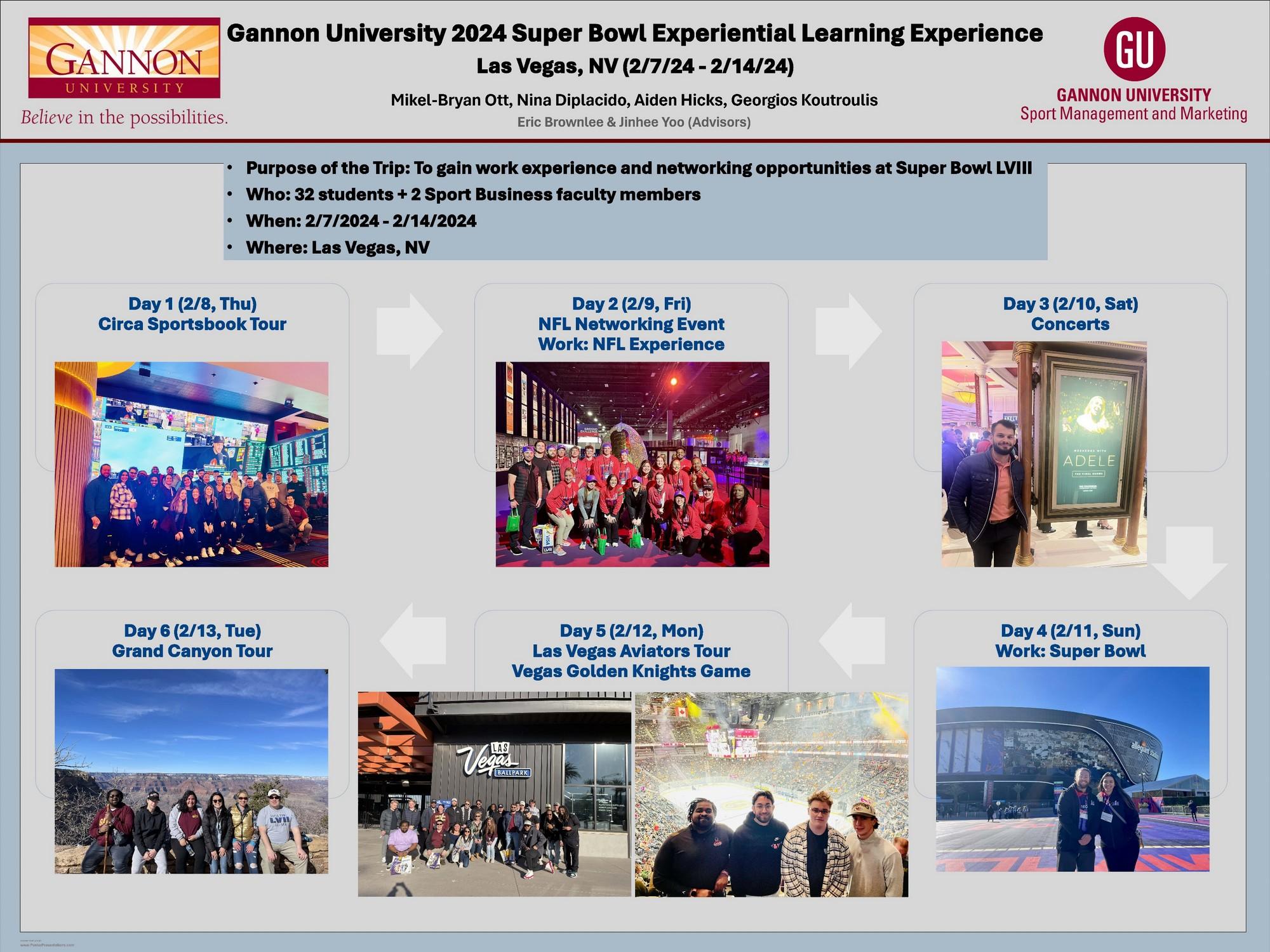
Title: Gannon University 2024 Super Bowl Experiential Learning Experience
Abstract: This presentation is to showcase Gannon’s 2024 Super Bowl trip to Las Vegas, NV. We will present the trip itineraries (including a tour to the Las Vegas Aviator Baseball Club’s ballpark and to the Grand Canyon), and particularly focus on work experience at the Super Bowl and at the NFL Experience. We will also present how our experience benefits Gannon students.
Presenter(s): Mikel-Bryan Ott, Nina Diplacido, Aiden Hicks, Georgios Koutroulis
Sponsoring Department: Dahlkempher School of Business
Mentor(s): Jinhee Yoo, Eric Brownlee
Presentation: 24
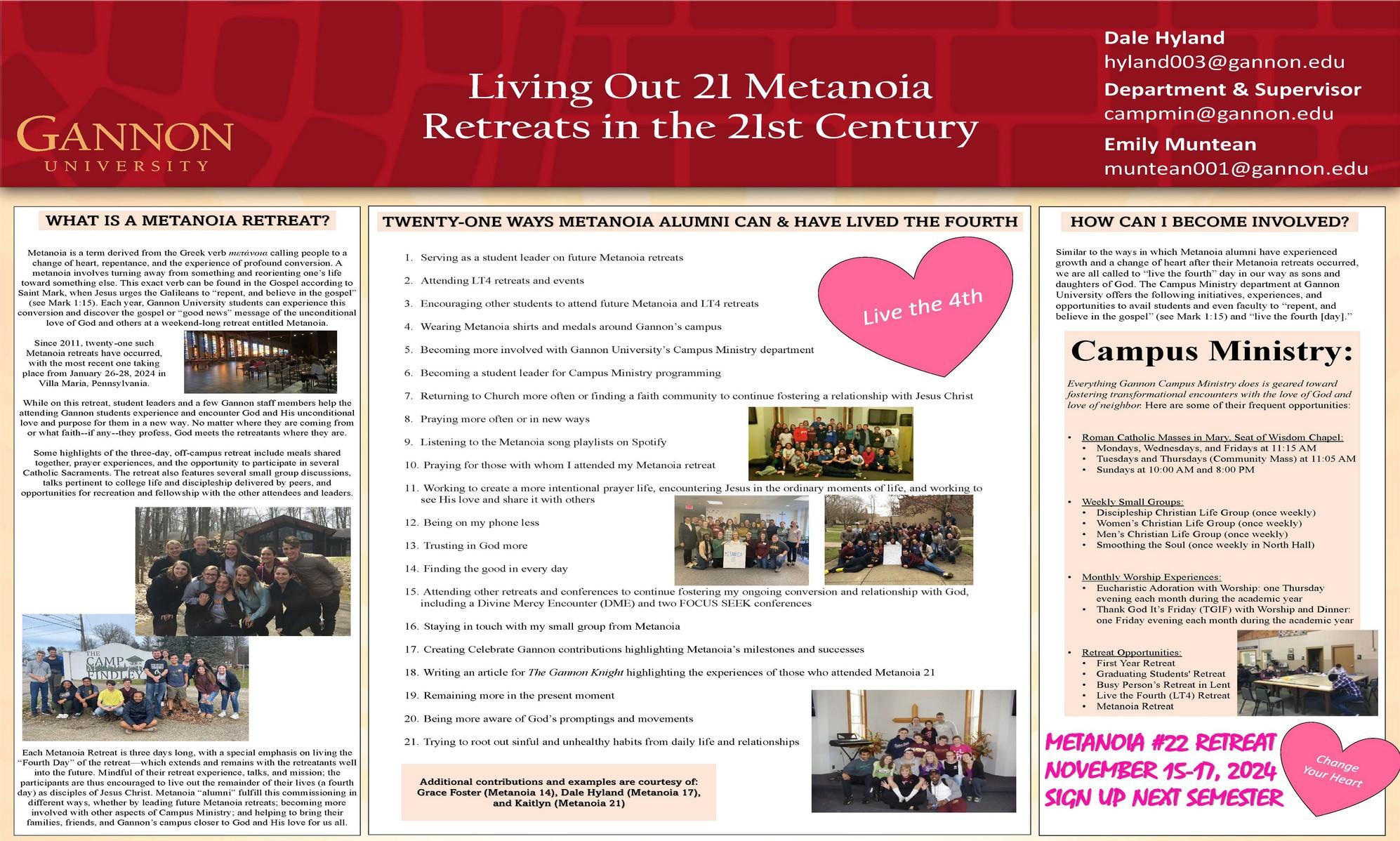
Title: Living Out 21 Metanoia Retreats in the 21st Century
Abstract: Each year for over a decade, Gannon University’s Campus Ministry department has hosted a retreat entitled “Metanoia.” While on retreat, student leaders and a couple staff members help the attending Gannon students experience and encounter God and His love and purpose for them in a whole new way. The offcampus retreat is three days long, with a special emphasis on Living the Fourth Day of the retreat—which extends and remains with them well into the future. Mindful of their retreat experience, talks, and mission; the participants are thus encouraged to live out the remainder of their lives (the 4th Day) as disciples of Jesus Christ. Metanoia “alumni” fulfill this commissioning in different ways, whether by leading future Metanoia retreats, becoming more involved in other aspects of Campus Ministry, and helping to bring their families, friends, and Gannon’s entire campus closer to God and His love for them.
Presenter(s): Dale Hyland
Sponsoring Department: Campus Ministry
Mentor(s): Emily Muntean
Presentation: 25
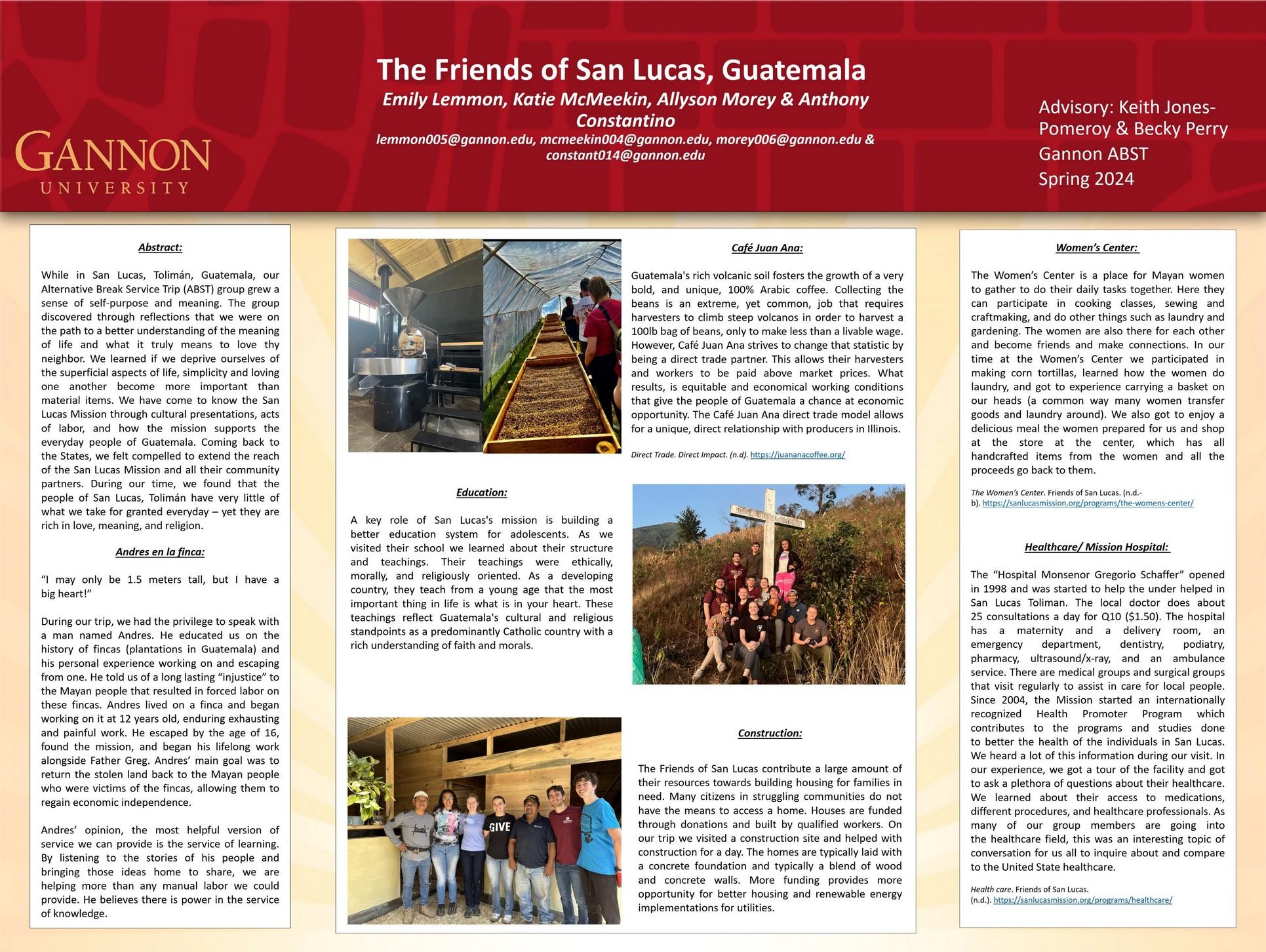
Title: The Friends of San Lucas, Guatemala
Abstract: While in San Lucas, Tolimán, Guatemala, our Alternative Break Service Trip (ABST) group grew a sense of self-purpose and meaning. The group discovered through reflections that we were on the path to a better understanding of the meaning of life and what it truly means to love thy neighbor. We learned if we deprive ourselves of the superficial aspects of life, simplicity and loving one another become more important than material items. We have come to know the San Lucas Mission through cultural presentations, acts of labor, and how the mission supports the everyday people of Guatemala. Coming back to the States, we felt compelled to extend the reach of the San Lucas Mission and all their community partners. During our time, we found that the people of San Lucas, Tolimán have very little of what we take for granted everyday – yet they are rich in love, meaning, and religion.
Presenter(s): Emily Lemmon, Katie McMeekin, Allyson Morey, Anthony Constantino
Sponsoring Department: Center for Social Concerns
Mentor(s): Keith Jones–Pomeroy, Becky Perry
Presentation: 26
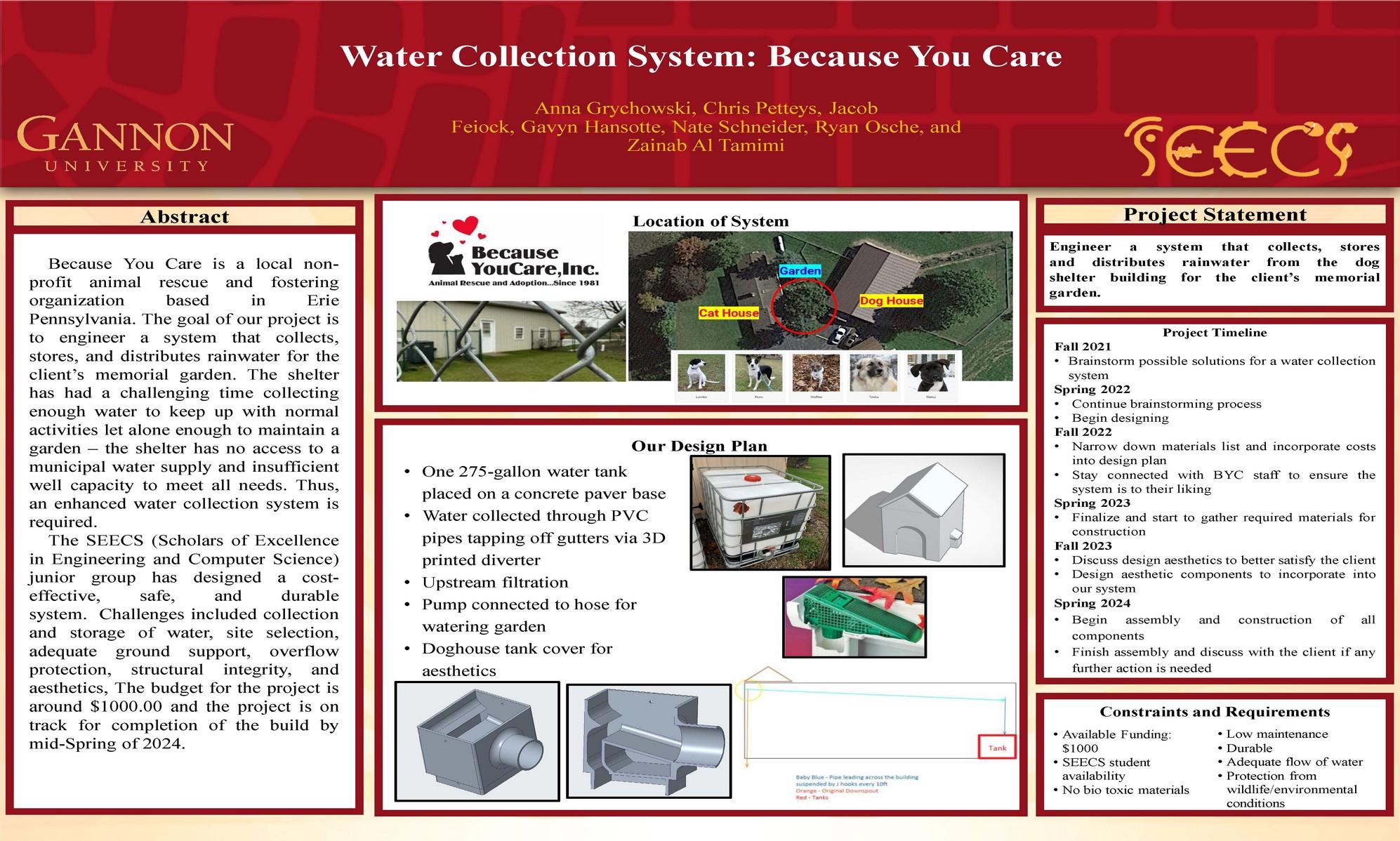
Title: Water Collection Unit at Because You Care Animal Shelter
Abstract: Because You Care, is a local non-profit animal rescue and fostering organization based in Erie Pennsylvania. The goal of our project is to engineer a system that collects, stores, and distributes rainwater for the client’s memorial garden. The shelter has had a challenging time collecting enough water to keep up with normal activities let alone enough to maintain a garden – the shelter has no access to a municipal water supply and insufficient well capacity to meet all needs. Thus, an enhanced water collection system is required. The SEECS (Scholars of Excellence in Engineering and Computer Science) junior group has designed a costeffective, safe, and durable system. Challenges included collection and storage of water, site selection, adequate ground support, overflow protection, structural integrity and aesthetics, The budget for the project is around $1000.00 and the project is on track for completion of the build by mid-Spring of 2024.
Presenter(s): Chris Petteys, Anna Grychowski, Nathan Schneider, Gavyn Hansotte, Ryan Osche, Zainab Al Tamimi
Sponsoring Department: SEECS
Mentor(s): Scott Steinbrink
ERIE UNDERGRADUATE RESEARCH AND SCHOLARSHIP POSTER PRESENTATIONS
Presentation: 27
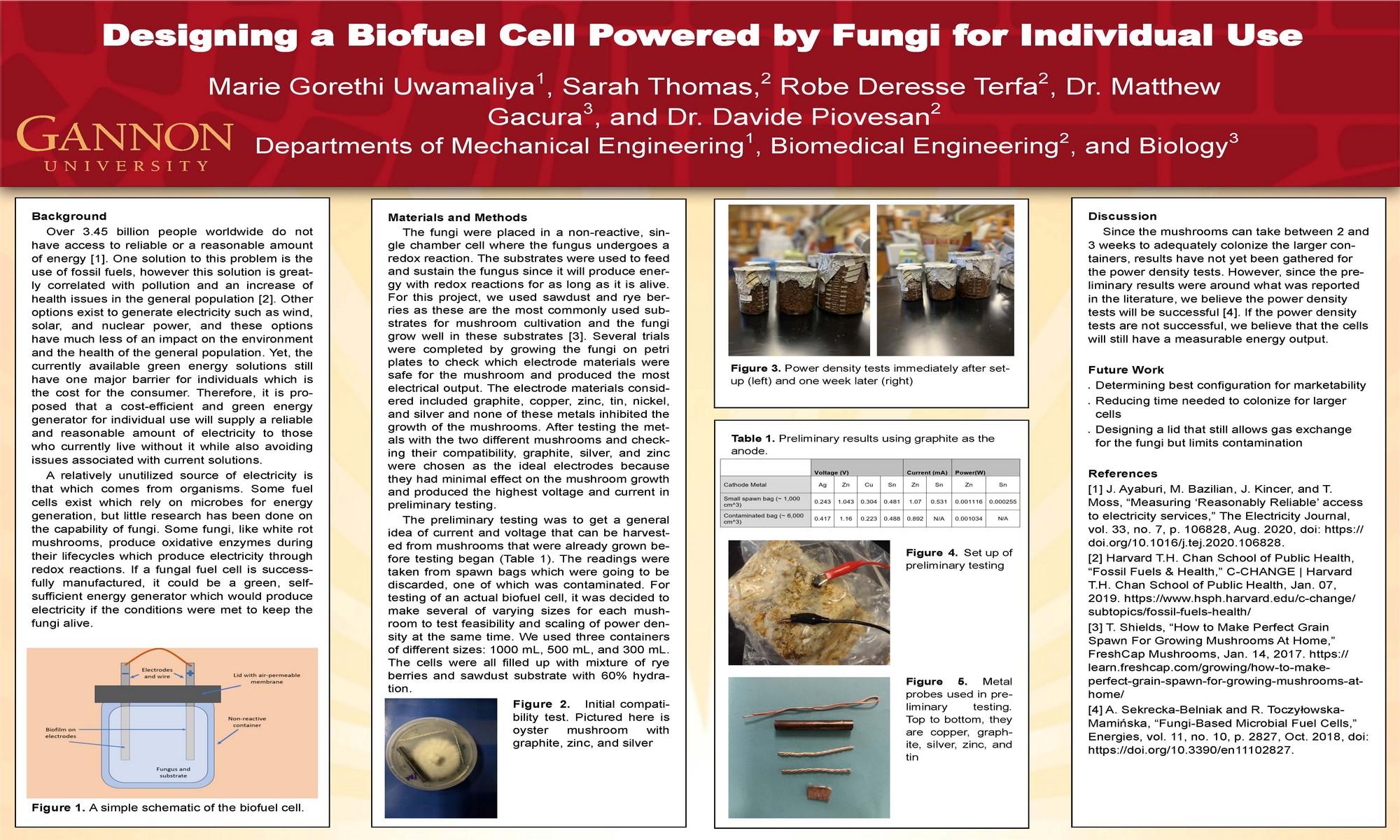
Title: Designing a Biofuel Cell Powered by Fungi for Individual Use
Abstract: The goal of this work is to create a fuel cell which utilizes biomass and fungi to generate electricity. Fossil fuel consumption has accounted for a large part of the total greenhouse gas emissions in the United States. However, common green energy solutions such as solar, wind, and nuclear energy are typically very expensive for individuals. The proposed project is to design a biofuel cell that is cost-effective for consumers, lightweight, portable, easy to maintain, and more environmentally friendly than some other energy sources such as natural gas or coal. The basic design of this cell consists of a non-reactive container, a substrate, a white rot fungus, electrodes, and conductive wires to complete the circuit and harvest the electricity. An additional feature is that all components can be recycled or decomposed after the fuel cell has stopped creating electricity. Development of this project includes determining which specific substrates, fungi, and electrode materials can be used in the cell for maximum energy production. Overall, this fungi-powered fuel cell will be a low-cost option for sourcing renewable energy.
Presenter(s): Marie Gorethi Uwamaliya, Sarah Thomas, Robe Deresse Terfa
Sponsoring Department: Biology
Mentor(s): Matthew Gacura, Davide Piovesan
Presentation: 28
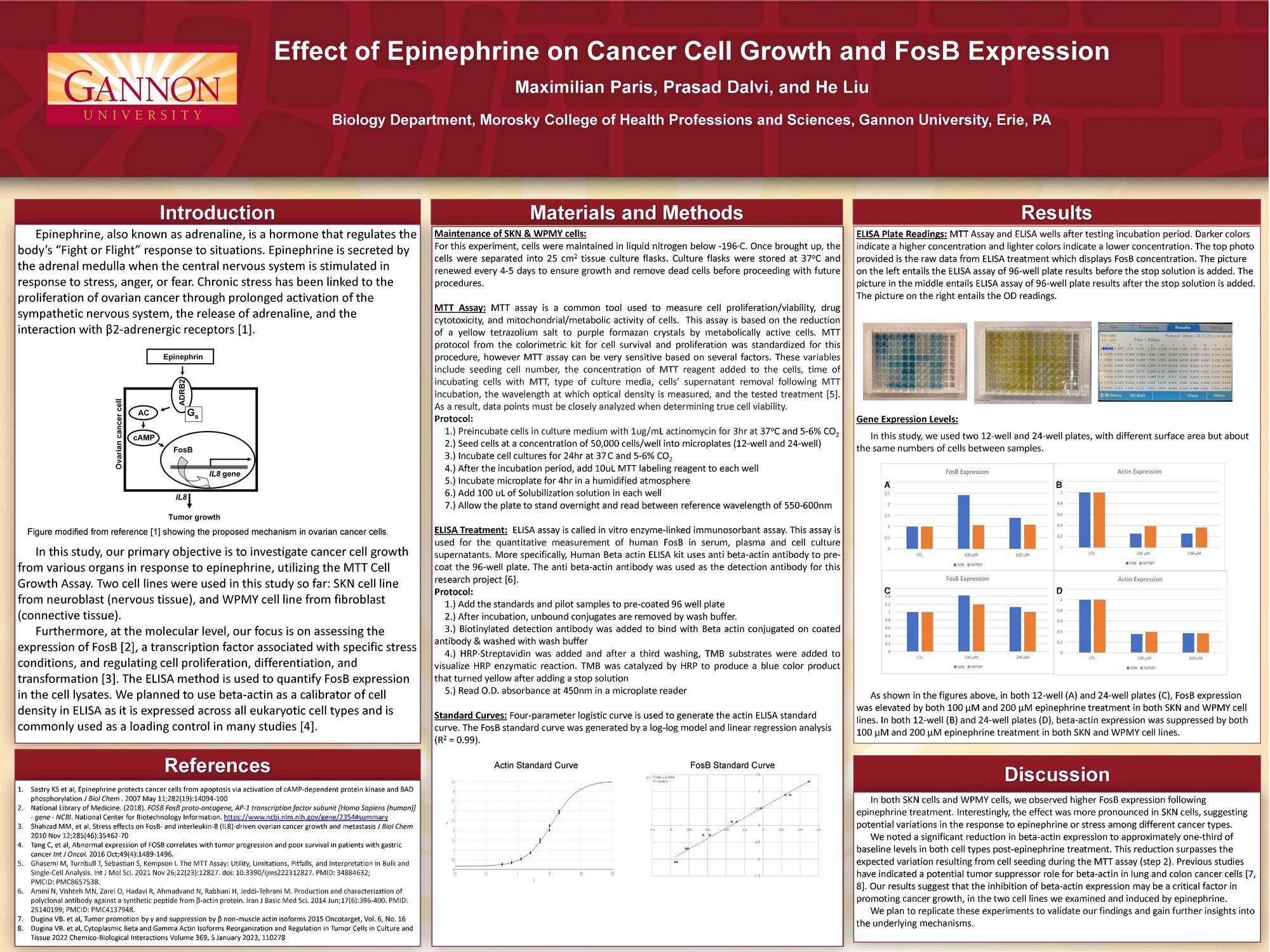
Title: Effect of Epinephrine on Cancer Cell Growth and FosB Expression
Abstract: Epinephrine, also known as adrenaline, is a hormone that regulates the body’s “Fight or Flight” response to situations. Epinephrine is secreted by the adrenal medulla when the central nervous system is stimulated in response to stress, anger, or fear. Chronic stress has been linked to the proliferation of ovarian cancer through prolonged activation of the sympathetic nervous system, the release of adrenaline, and the interaction with β2-adrenergic receptors [1].
Presenter(s): Maximilian Paris
Sponsoring Department: Biology
Mentor(s): He Liu, Prasad Dalvi
Presentation: 29
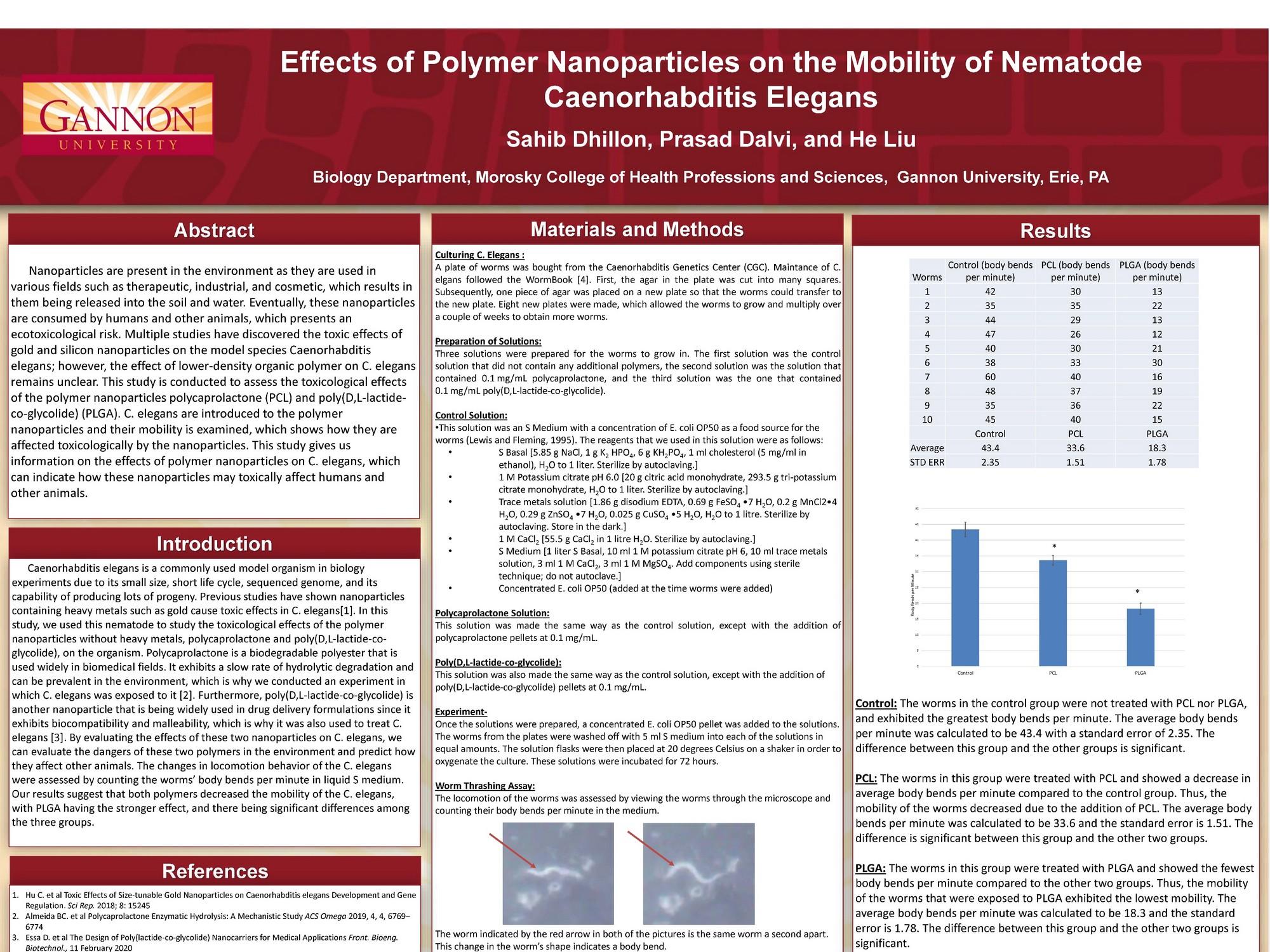
Title: Effects of Polymer Nanoparticles on the Mobility of Nematode Caenorhabditis Elegans
Abstract: Nanoparticles are present in the environment as they are used in various fields such as therapeutic, industrial, and cosmetic, which results in them being released into the soil and water. Eventually, these nanoparticles are consumed by humans and other animals, which presents an ecotoxicological risk. Multiple studies have discovered the toxic effects of gold and silicon nanoparticles on the model species Caenorhabditis elegans; however, the effect of lower-density organic polymer on C. elegans remains unclear. This study is conducted to assess the toxicological effects of the polymer nanoparticles polycaprolactone (PCL) and poly(D,L-lactide-co-glycolide) (PLGA). C. elegans are introduced to the polymer nanoparticles and their mobility is examined, which shows how they are affected toxicologically by the nanoparticles. This study gives us information on the effects of polymer nanoparticles on C. elegans, which can indicate how these nanoparticles may toxically affect humans and other animals.
Presenter(s): Sahib Dhillon
Sponsoring Department: Biology
Mentor(s): He Liu, Prasad Dalvi
Presentation: 30
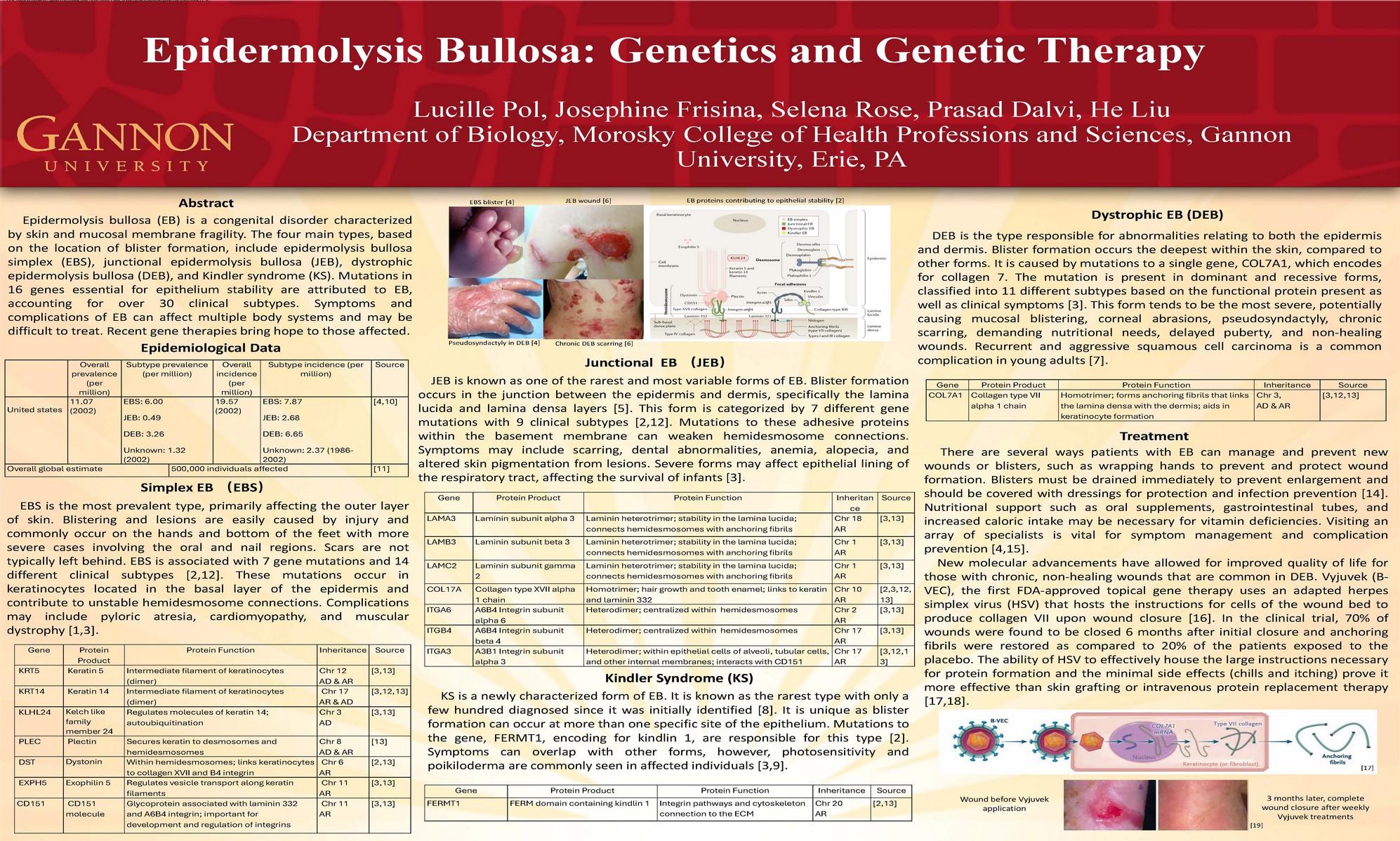
Title: Epidermolysis Bullosa: Genetics and Genetic Therapy
Abstract: Epidermolysis bullosa (EB) is a congenital disorder characterized by skin and mucosal membrane fragility. The four main types, based on the location of blister formation, include epidermolysis bullosa simplex (EBS), junctional epidermolysis bullosa (JEB), dystrophic epidermolysis bullosa (DEB), and Kindler syndrome (KS). Mutations in 16 genes essential for epithelium stability are attributed to EB, accounting for over 30 clinical subtypes. Symptoms and complications of EB can affect multiple body systems and may be difficult to treat. Recent gene therapies bring hope to those affected.
Presenter(s): Lucille Pol, Josephine Frisina, Selena Rose
Sponsoring Department: Biology
Mentor(s): He Liu, Prasad Dalvi
Presentation: 31
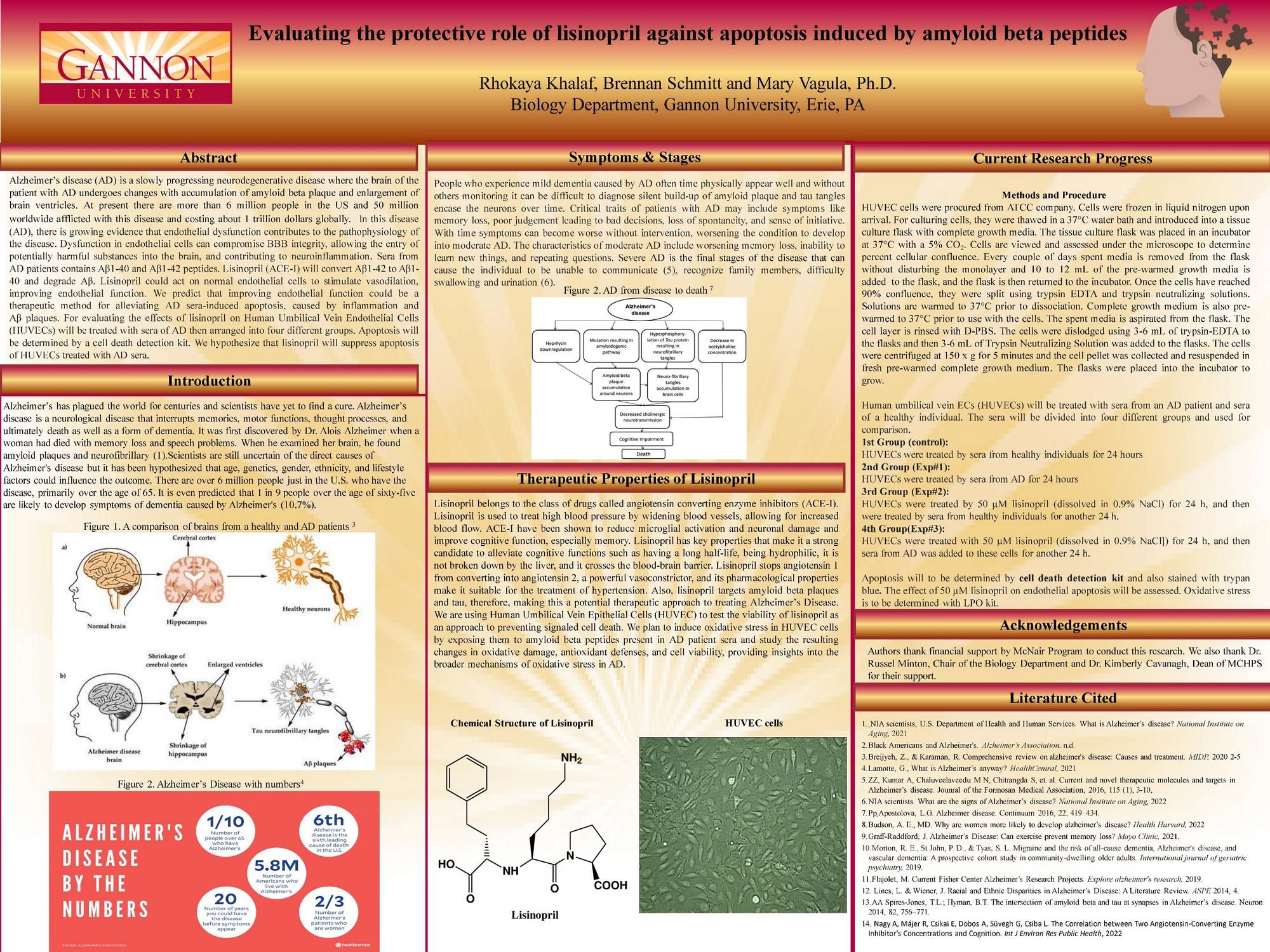
Title: Evaluating the protective role of lisinopril against apoptosis induced by amyloid beta peptides
Abstract: Alzheimer’s disease (AD) is a slowly progressing neurodegenerative disease where the brain of the patient with AD undergoes changes with accumulation of amyloid beta plaque and enlargement of brain ventricles. At present there are more than 6 million people in the US and 50 million worldwide afflicted with this disease and costing about 1 trillion dollars globally. In this disease (AD), there is growing evidence that endothelial dysfunction contributes to the pathophysiology of the disease. Dysfunction in endothelial cells can compromise BBB integrity, allowing the entry of potentially harmful substances into the brain, and contributing to neuroinflammation. Sera from AD patients contains Aβ1-40 and Aβ1-42 peptides. Lisinopril (ACE-I) will convert Aβ1-42 to Aβ1-40 and degrade Aβ. Lisinopril could act on normal endothelial cells to stimulate vasodilation, improving endothelial function. We predict that improving endothelial function could be a therapeutic method for alleviating AD sera-induced apoptosis, caused by inflammation and Aβ plaques. For evaluating the effects of lisinopril on Human Umbilical Vein Endothelial Cells (HUVECs) will be treated with sera of AD then arranged into four different groups. Apoptosis will be determined by a cell death detection kit. We hypothesize that lisinopril will suppress apoptosis of HUVECs treated with AD sera.
Presenter(s): Brennan Schmitt, Rhokaya Khalaf
Sponsoring Department: Biology
Mentor(s): Mary Vagula
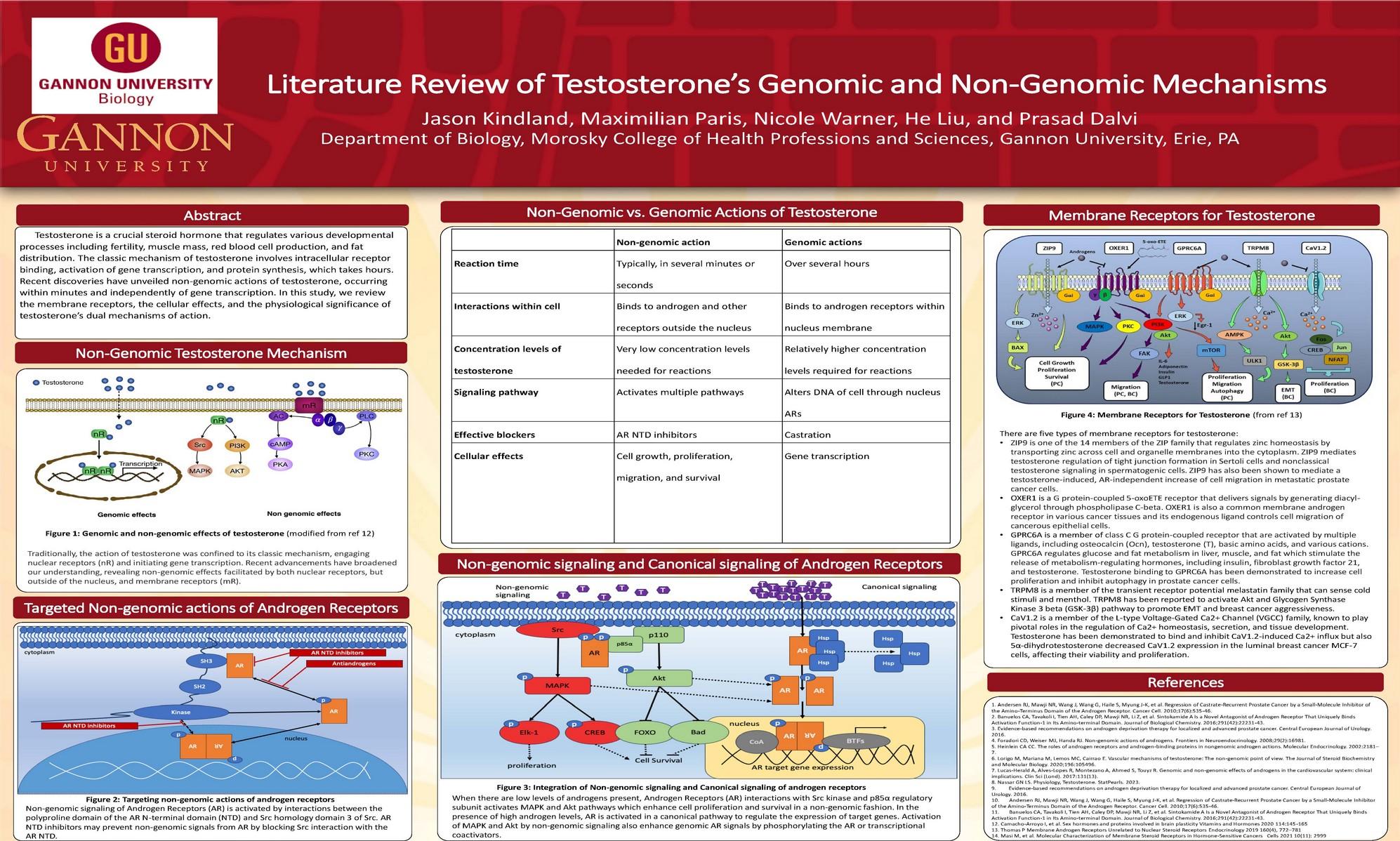
Presentation: 32
Title: Literature Review of Testosterone’s Genomic and Non-Genomic Mechanisms
Abstract: Testosterone is a crucial steroid hormone that regulates various developmental processes including fertility, muscle mass, red blood cell production, and fat distribution. The classic mechanism of testosterone involves intracellular receptor binding, activation of gene transcription, and protein synthesis, which takes hours. Recent discoveries have unveiled non-genomic actions of testosterone, occurring within minutes and independently of gene transcription. In this study, we review the membrane receptors, the cellular effects, and the physiological significance of testosterone’s dual mechanisms of action.
Presenter(s): Jason Kindland, Maximilian Paris, Nicole Warner
Sponsoring Department: Biology
Mentor(s): Prasad Dalvi, He Liu
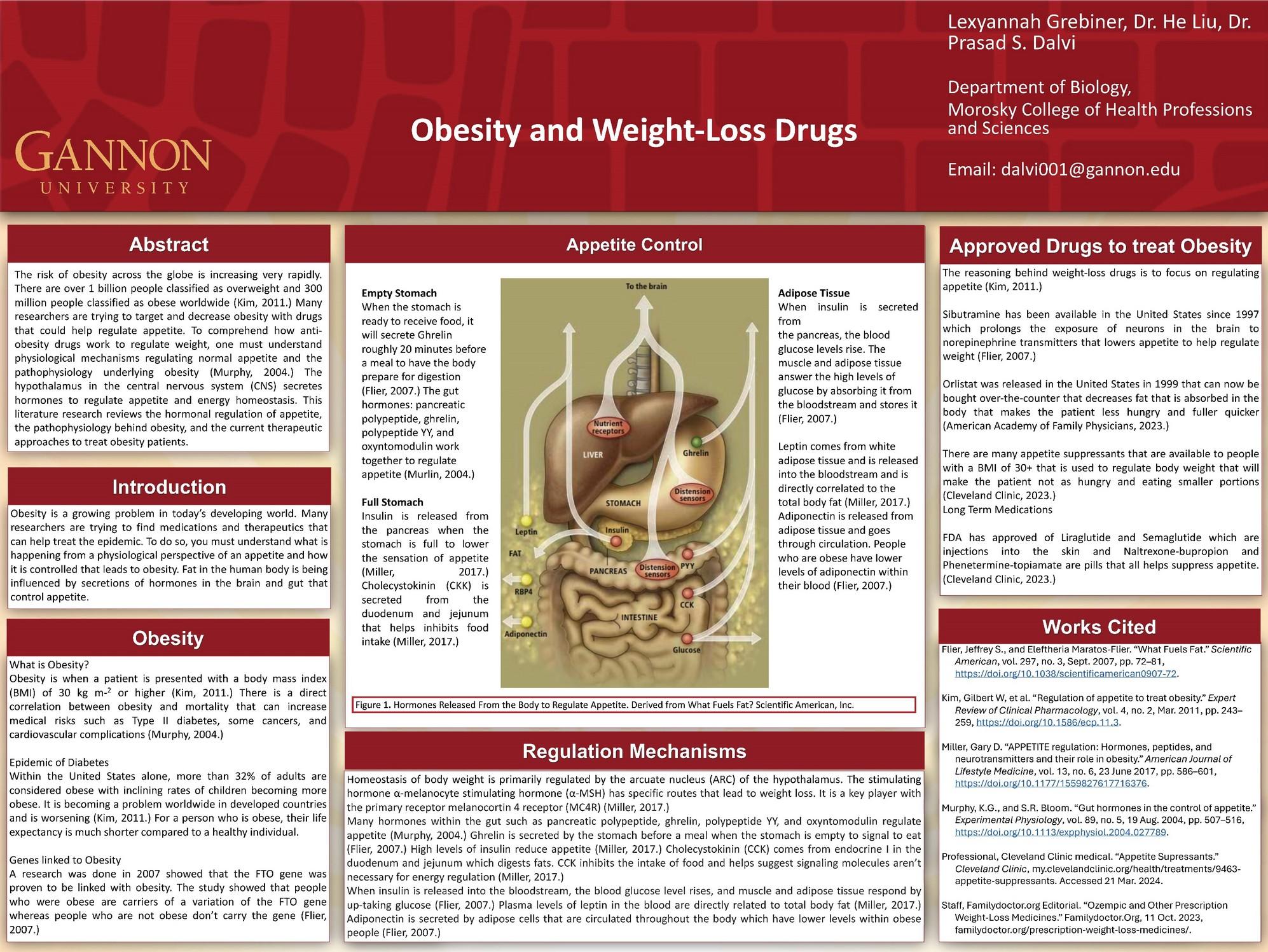
Presentation: 33
Title: Obesity and Weight-Loss Drugs
Abstract: The risk of obesity across the globe is increasing very rapidly. There are over 1 billion people classified as overweight and 300 million people classified as obese worldwide (Kim, 2011.) Many researchers are trying to target and decrease obesity with drugs that could help regulate appetite. To comprehend how antiobesity drugs work to regulate weight, one must understand physiological mechanisms regulating normal appetite and the pathophysiology underlying obesity (Murphy, 2004.) The hypothalamus in the central nervous system (CNS) secretes hormones to regulate appetite and energy homeostasis. This literature research reviews the hormonal regulation of appetite, the pathophysiology behind obesity, and the current therapeutic approaches to treat obesity patients.
Presenter(s): Lexyannah Grebiner
Sponsoring Department: Biology
Mentor(s): He Liu, Prasad Dalvi
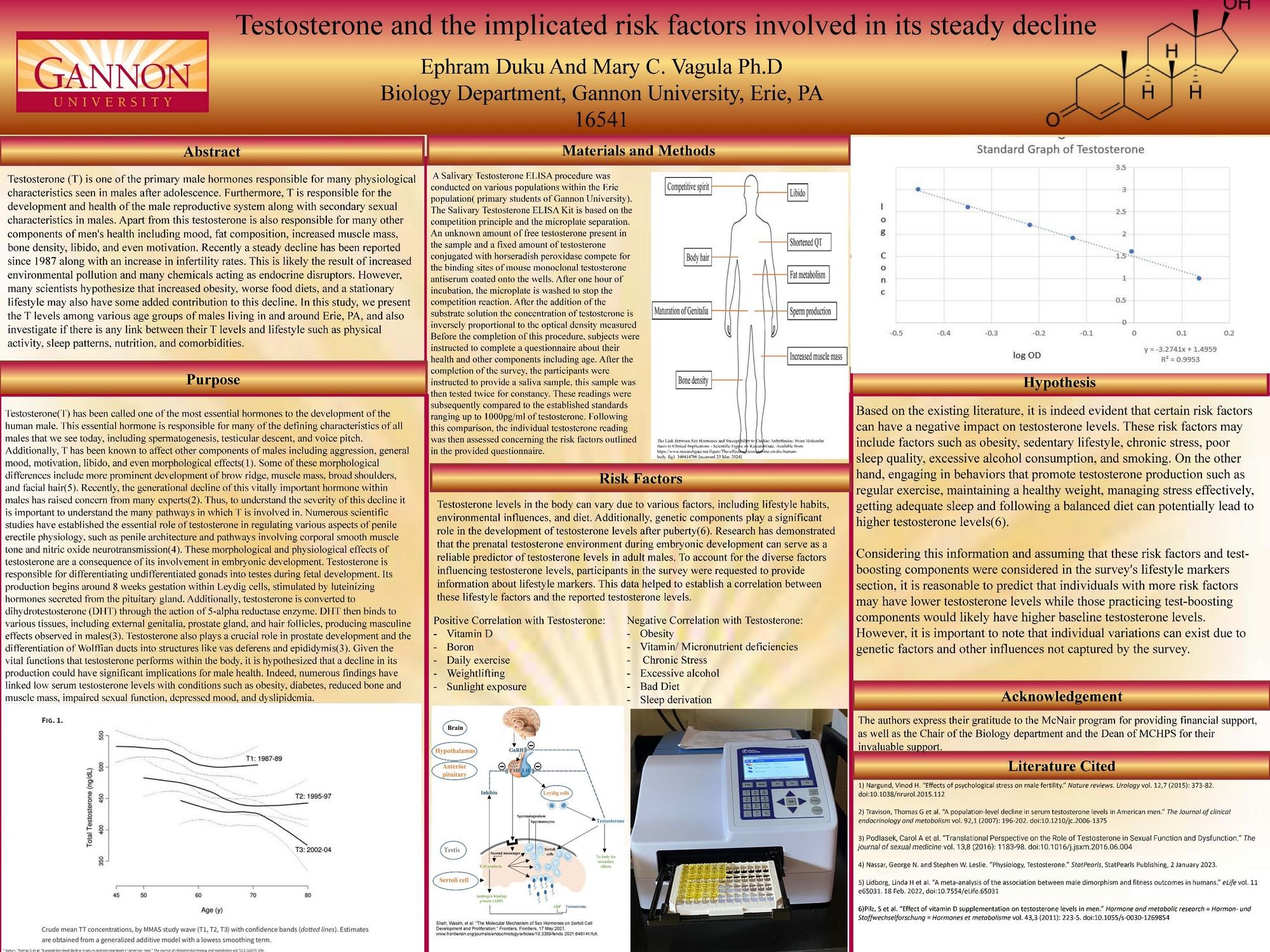
Presentation: 34
Title: Testosterone and the implicated risk factors involved in its steady decline
Abstract: Testosterone (T) is one of the primary male hormones responsible for many physiological characteristics seen in males after adolescence. Furthermore, T is responsible for the development and health of the male reproductive system along with secondary sexual characteristics in males. Apart from this testosterone is also responsible for many other components of men's health including mood, fat composition, increased muscle mass, bone density, libido, and even motivation. Recently a steady decline has been reported since 1987 along with an increase in infertility rates. This is likely the result of increased environmental pollution and many chemicals acting as endocrine disruptors. However, many scientists hypothesize that increased obesity, worse food diets, and a stationary lifestyle may also have some added contribution to this decline. In this study, we present the T levels among various age groups of males living in and around Erie, PA, and also investigate if there is any link between their T levels and lifestyle such as physical activity, sleep patterns, nutrition, and comorbidities.
Presenter(s): Ephram Duku
Sponsoring Department: Biology
Mentor(s): Mary Vagula
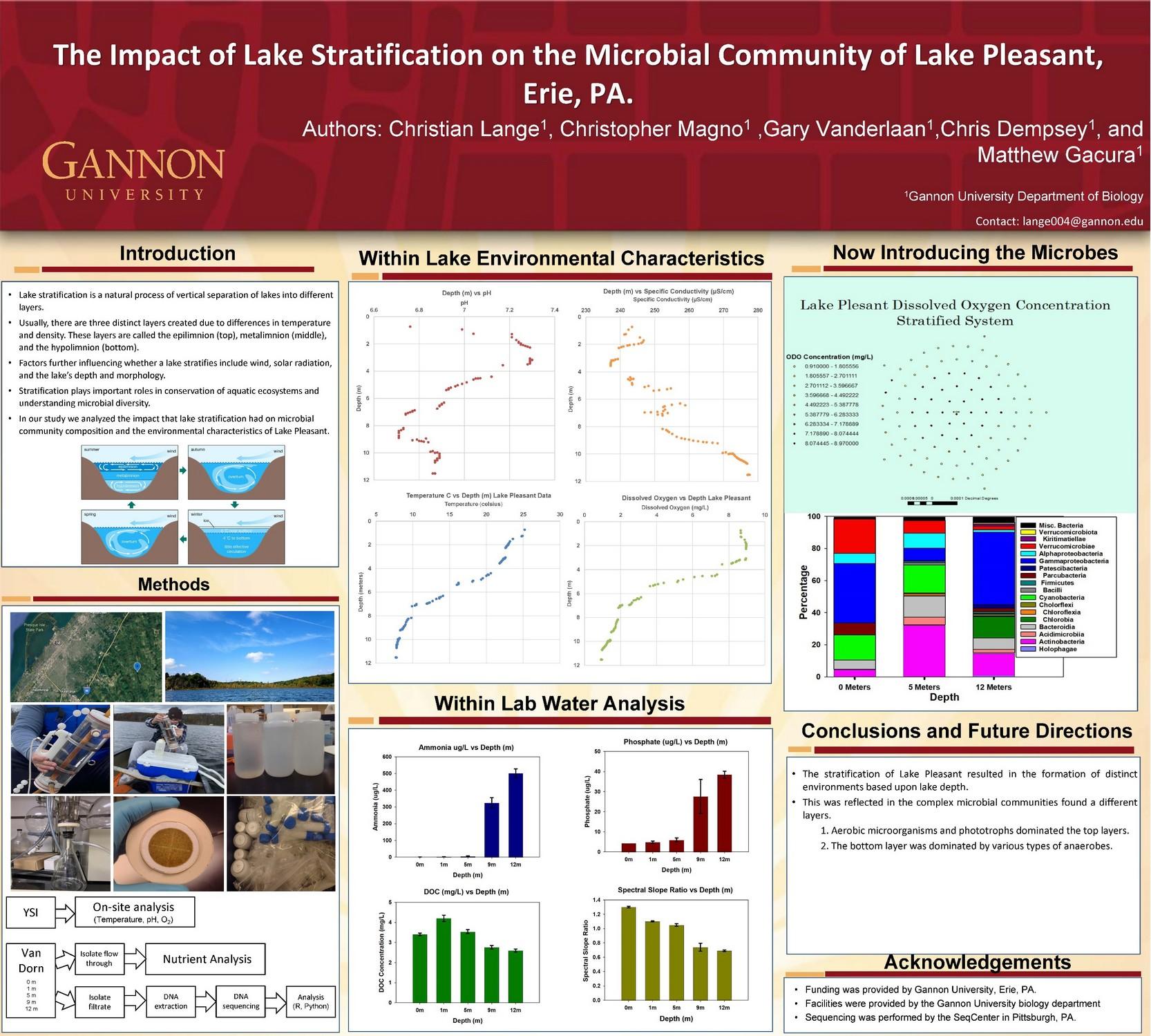
Presentation: 35
Title: The Impact of Lake Stratification on the Microbial Community of Lake Pleasant, Erie, PA.
Abstract: Microbial Diversity found in Lake Stratification of Lake Pleasant Lake Pleasant Lake is located eight minutes south of the city of Eire and I-90. The lake is one of few examples of lakes found in Northwestern Pennsylvania to develop from a natural glacier. Lake Pleasant is also a lake that stratifies during certain months of the year. Lake stratification refers to a distinct separation of the lake into three layers due to temperature changes. These temperature changes can lead to changes in factors including organism present, nutrient concentrations, and chemical compositions. The goal of our experiment was to determine what organisms were present in each layer through DNA extractions. Our methods included filtering and running DNA extractions on 6 samples for each distinctive layer. The DNA kit used was the DNeasy PowerWater Kit from QIAGEN. Furthermore, we used a Nanodrop spectrophotometer to determine the DNA concentration using UV/visible light. After sending out our samples to the Seqcenter lab in Pittsburgh we gained access to data that reflected our assertion. Currently, work is ongoing to determine the makeup of these layers more specifically. In my GIS mapping project I will be mapping environmental characteristics of Lake Pleasant based off of GPS location
Presenter(s): Christian Lange
Sponsoring Department: Biology
Mentor(s): Matthew Gacura, Christopher Magno, Christopher Dempsey, Gary Vanderlaan
Presentation: 36
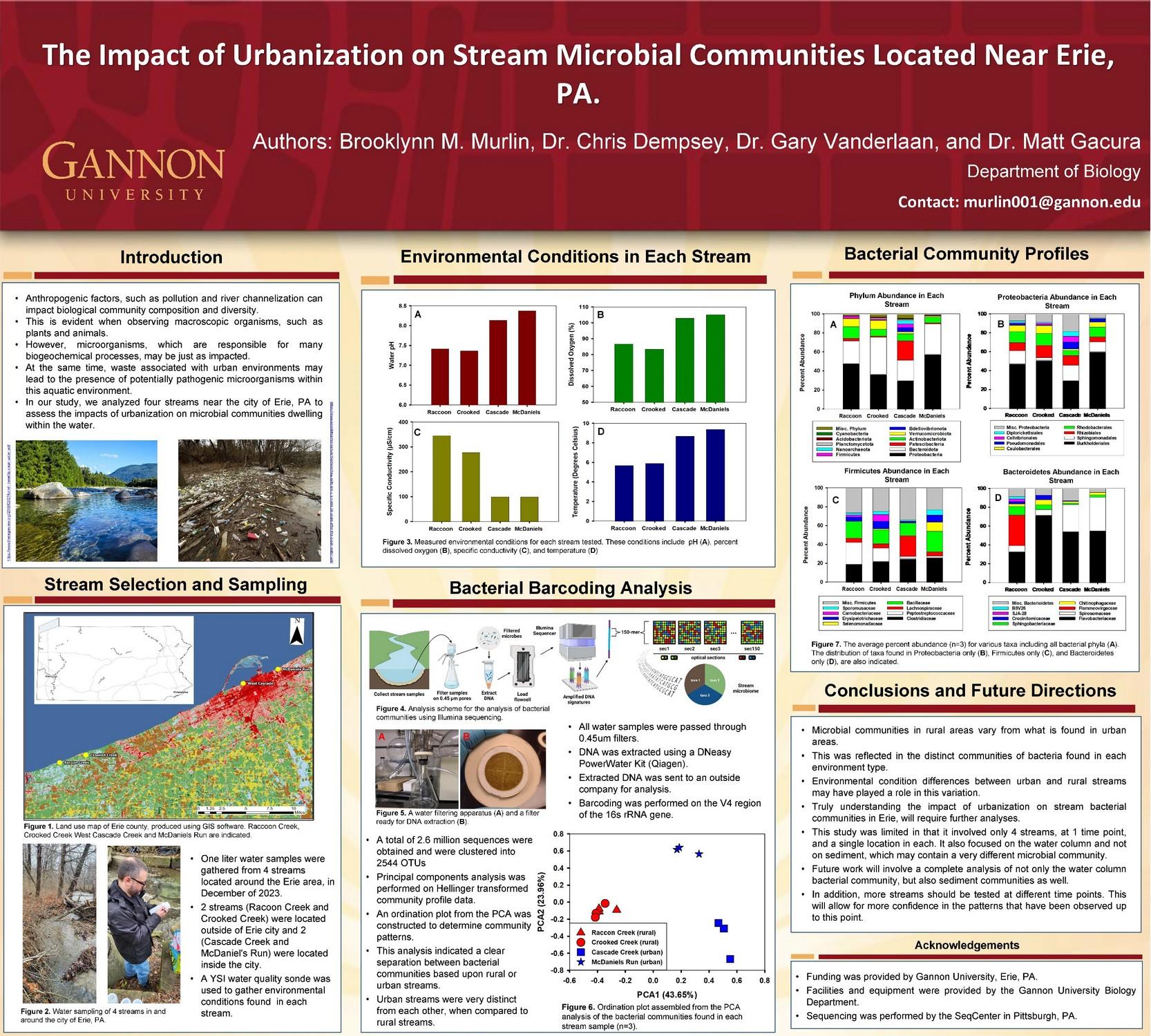
Title: The Impact of Urbanization on Stream Microbial Communities Located Near Erie, PA.
Abstract: Anthropogenic factors, such as pollution and river channelization can impact microbial community composition and diversity. In our study, we analyzed four streams near the city of Erie, PA to assess the impacts of urbanization on microbial communities dwelling within them. To do this, triplicate water samples from four streams (West Cascade, McDaniels Run, Crooked Creek, and Racoon Creek) were collected in December 2023. West Cascade and McDaniels Run flow primarily through urbanized areas, whereas Crooked Creek and Racoon Creek are in more rural watersheds. A YSI water quality sonde was used to collect pH, water temperature, specific conductivity, and dissolved oxygen at each site. Water samples were filtered using 0.45 µm filters and DNA extractions were performed on the filters. Illumina barcoding was then performed on the 16s rRNA gene from each sample. Distinct differences are clear between the community composition found in the urban streams compared to the rural streams.
Presenter(s): Brooklynn Murlin
Sponsoring Department: Biology
Mentor(s): Matthew Gacura, Gary Vanderlaan, Chris Dempsey
Presentation: 37
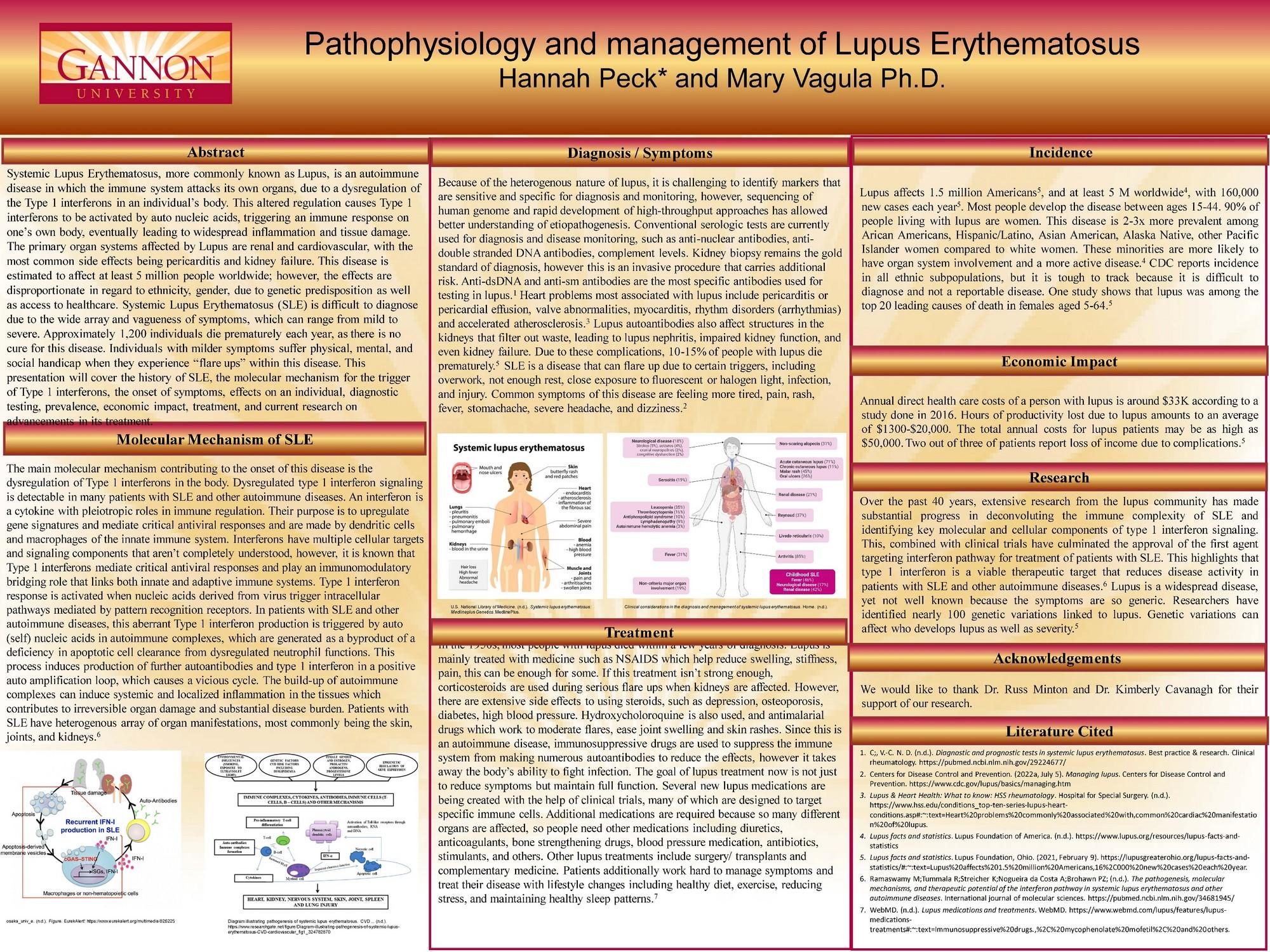
Title: Pathophysiology and management of Lupus Erythematosus
Abstract: Systemic Lupus Erythematosus (SLE), commonly known as Lupus, is an autoimmune disease involving a dysregulation of Type 1 Interferons. This altered regulation causes Type 1 Interferons to be activated by auto nucleic acids, triggering an immune response, leading to inflammation and tissue damage. Lupus primarily affects renal and cardiothoracic systems, with the most common side effects being pericarditis and kidney failure. This disease affects about 5 million people worldwide; however, the effects are disproportionate due to genetic predisposition and differing access to healthcare. SLE is difficult to diagnose, secondary to vague symptoms, ranging from mild to severe. There is no cure for SLE, leading to approximately 1,200 premature deaths. Individuals suffer physical and mental handicap when they experience disease “flare ups”. This presentation covers the history of SLE, molecular mechanism of Type 1 Interferons, onset of symptoms, effects on an individual, diagnostic testing, prevalence, economic impact, treatment, and current research.
Presenter(s): Hannah Peck
Sponsoring Department: Biology
Mentor(s): Mary Vagula
Presentation: 38
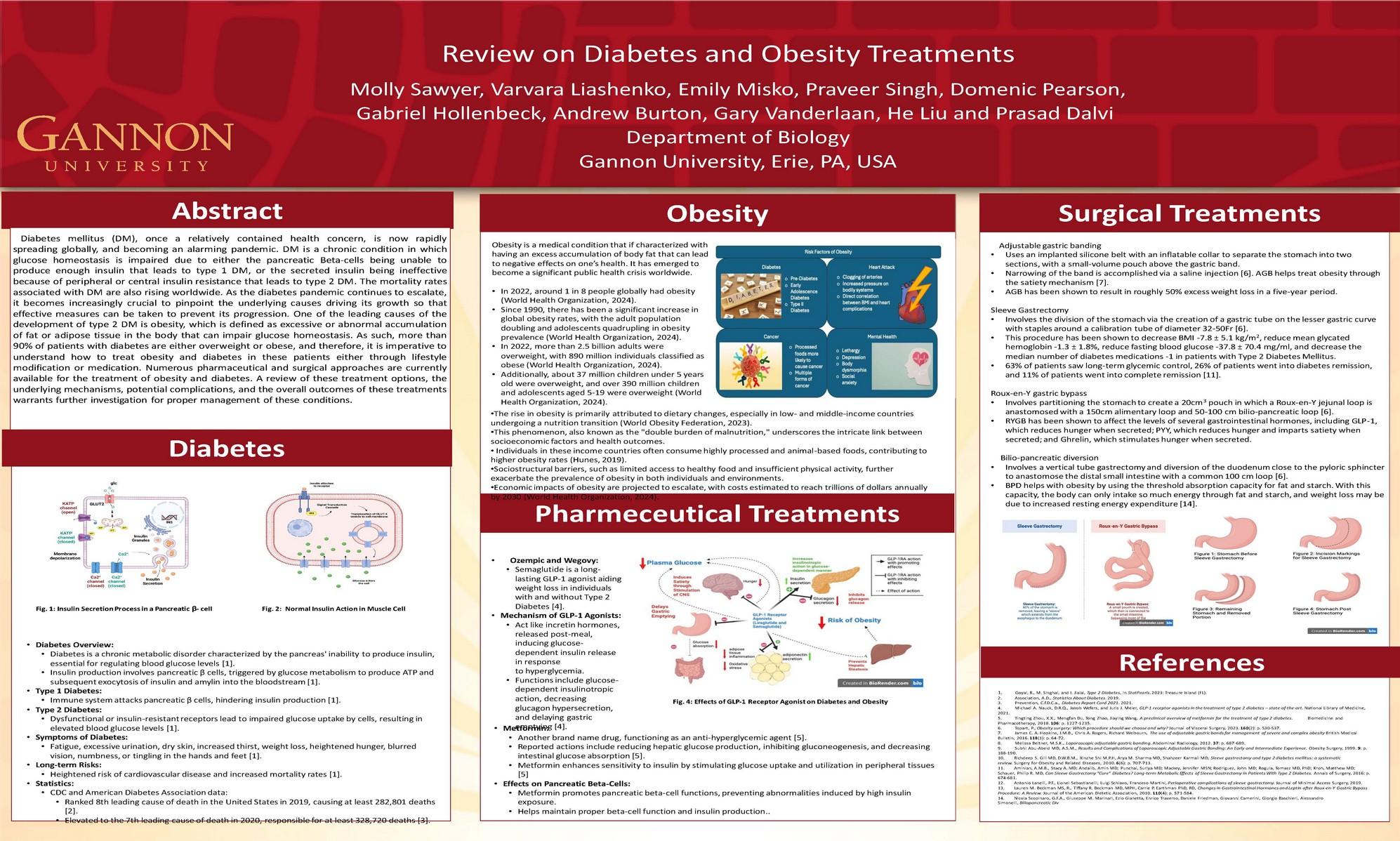
Title: Review on Diabetes and Obesity Treatments
Abstract: Diabetes mellitus (DM), once a relatively contained health concern, is now rapidly spreading globally, and becoming an alarming pandemic. DM is a chronic condition in which glucose homeostasis is impaired due to either the pancreatic Beta-cells being unable to produce enough insulin that leads to type 1 DM, or the secreted insulin being ineffective because of peripheral or central insulin resistance that leads to type 2 DM. The mortality rates associated with DM are also rising worldwide. As the diabetes pandemic continues to escalate, it becomes increasingly crucial to pinpoint the underlying causes driving its growth so that effective measures can be taken to prevent its progression. One of the leading causes of the development of type 2 DM is obesity, which is defined as excessive or abnormal accumulation of fat or adipose tissue in the body that can impair glucose homeostasis. As such, more than 90% of patients with diabetes are either overweight or obese, and therefore, it is imperative to understand how to treat obesity and diabetes in these patients either through lifestyle modification or medication. Numerous pharmaceutical and surgical approaches are currently available for the treatment of obesity and diabetes. A review of these treatment options, the underlying mechanisms, potential complications, and the overall outcomes of these treatments warrants further investigation for proper management of these conditions.
Presenter(s): Molly Sawyer, Varvara Liashenko, Emily Misko, Praveer Singh, Domenic Pearson, Gabriel Hollenbeck, Andrew Burton
Sponsoring Department: Biology
Mentor(s): Prasad Dalvi He Liu
Presentation: 39
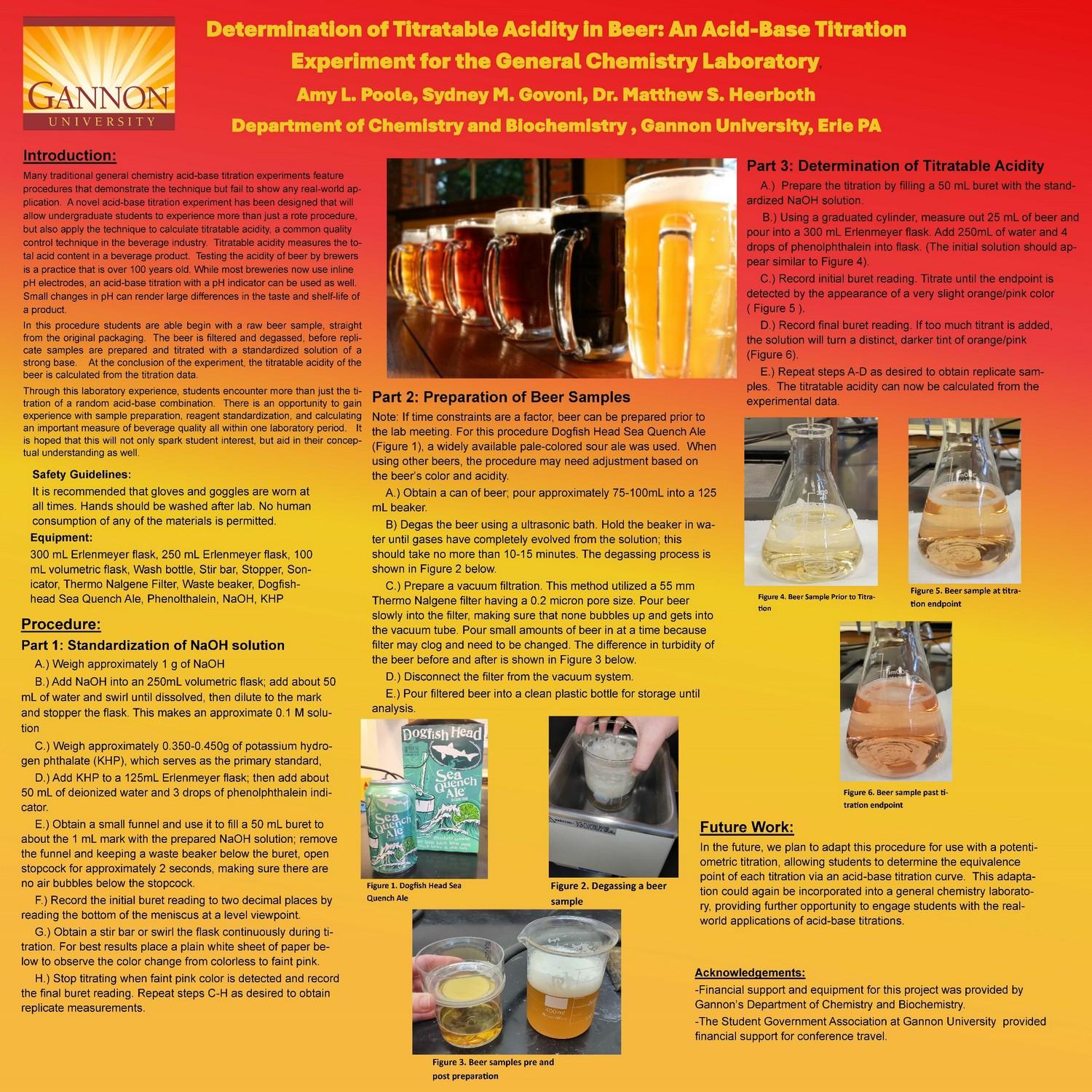
Title: Determination of Titratable Acidity in Beer: An Acid-Base Titration Experiment for the General Chemistry Laboratory
Abstract: Volumetric analyses such as acid-base titrations have long been a staple of general chemistry laboratory courses. Despite being an older analytical technique, titrations remain important in modern chemical and biological analysis and when utilized appropriately can yield high accuracy, precision as well as cost efficiency when compared to instrumental techniques. It thus remains important that undergraduate chemistry students gain experience with titrations as they develop as future scientists and build toward their careers. Many traditional general chemistry acid-base titration experiments feature procedures that demonstrate the technique but fail to show any real-world application. A novel laboratory procedure has been developed that allows students to measure the titratable acidity in beer samples. Titratable acidity has long been an important quality control measurement in the beer and wine industries. Small changes in pH can render large differences in the taste and shelf-life of a product. In this procedure students are able begin with a raw beer sample, straight from the original packaging. The beer is filtered and degassed, before replicate samples are prepared and titrated with a standardized solution of a strong base. At the conclusion of the experiment, the titratable acidity of the beer is calculated from the titration data. Through this laboratory procedure, students encounter more than just a rote titration procedure. There is an opportunity to gain experience with sample preparation, reagent standardization, and calculating an important measure of beverage quality all within one laboratory period.
Presenter(s): Amy Poole
Sponsoring Department: Chemistry and Biochemistry
Mentor(s): Matthew Heerboth
Presentation: 40
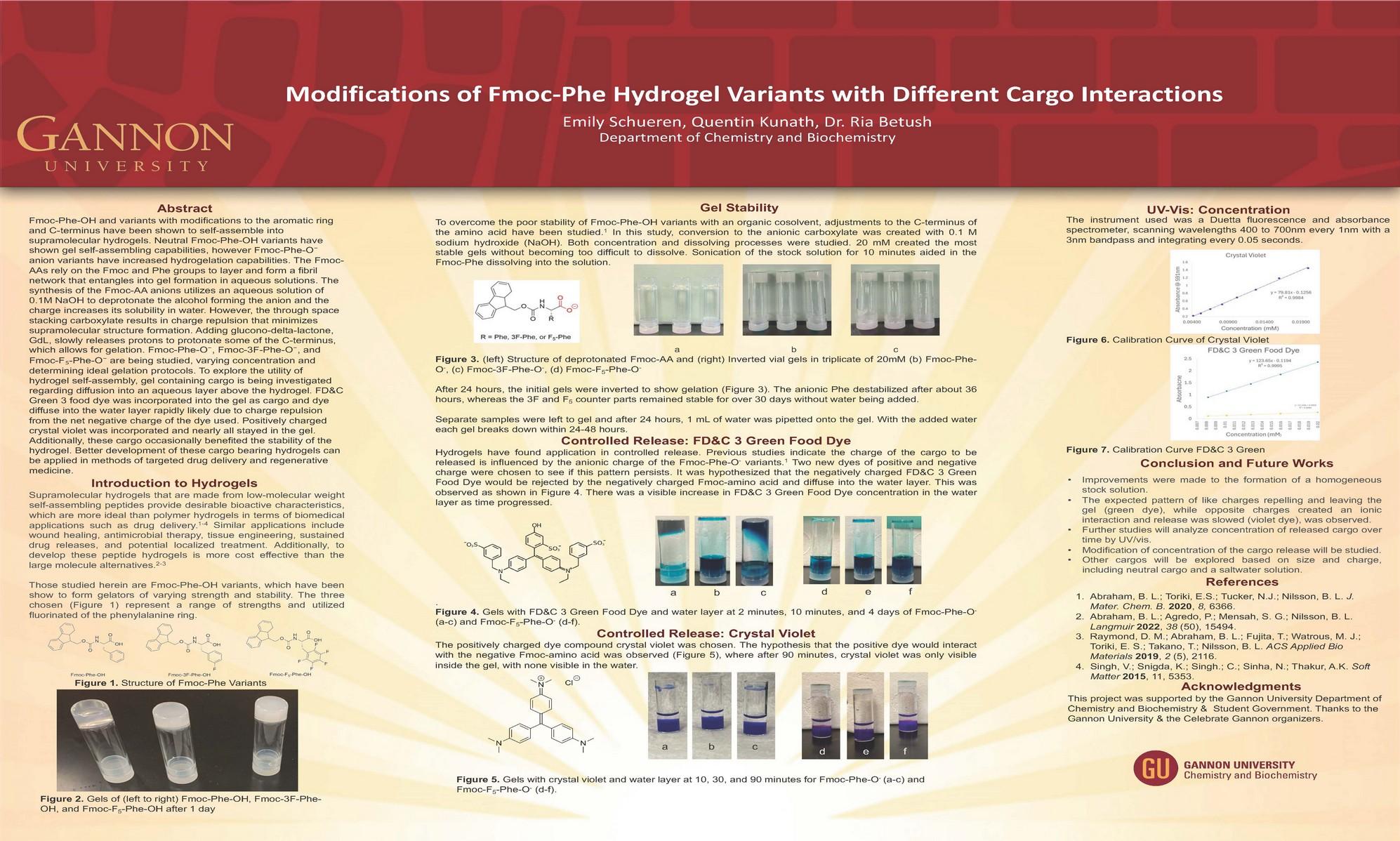
Title: Modifications of Fmoc-Phe Hydrogel Variants with Different Cargo Interactions
Abstract: Fmoc-Phe-OH and variants with modifications to the aromatic ring and C-terminus have been shown to selfassemble into supramolecular hydrogels. Neutral Fmoc-Phe-OH variants have shown gel self-assembling capabilities, however Fmoc-Phe-O anion variants have increased hydrogelation capabilities. The Fmoc-AAs rely on the Fmoc and Phe groups to layer and form a fibril network that entangles into gel formation in aqueous solutions. The synthesis of the Fmoc-AA anions utilizes an aqueous solution of 0.1M NaOH to deprotonate the alcohol forming the anion and the charge increases its solubility in water. However, the through space stacking carboxylate results in charge repulsion that minimizes supramolecular structure formation. Adding glucono-delta-lactone, GdL, slowly releases protons to protonate some of the C-terminus, which allows for gelation. Fmoc-Phe-O, Fmoc-3F-Phe-O, and Fmoc-F-Phe-O are being ⁻⁻₅⁻ studied, varying concentration and determining ideal gelation protocols. To explore the utility of hydrogel self-assembly, gel containing cargo is being investigated regarding diffusion into an aqueous layer above the hydrogel. FD&C Green 3 food dye was incorporated into the gel as cargo and dye diffuse into the water layer rapidly likely due to charge repulsion from the net negative charge of the dye used. Positively charged crystal violet was incorporated and nearly all stayed in the gel. Additionally, these cargo occasionally benefited the stability of the hydrogel. Better development of these cargo bearing hydrogels can be applied in methods of targeted drug delivery and regenerative medicine.
Presenter(s): Emily Schueren, Quentin Kunath
Sponsoring Department: Chemistry and Biochemistry
Mentor(s): Ria Betush
Presentation: 41
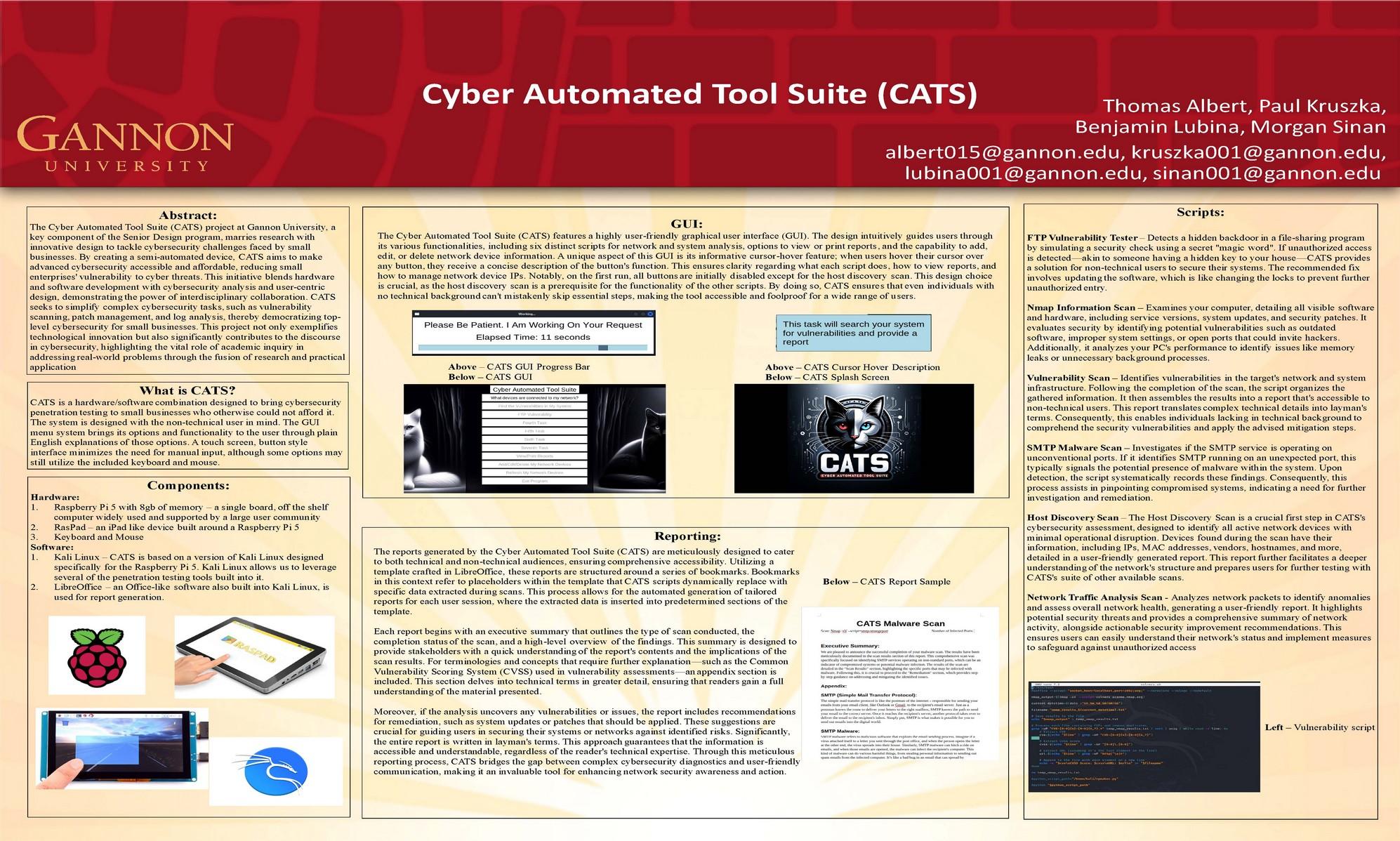
Title: Cyber Automated Tool Suite (CATS)
Abstract: The Cyber Automated Tool Suite (CATS) project at Gannon University, a key component of the Senior Design program, marries research with innovative design to tackle cybersecurity challenges faced by small businesses. By creating a semi-automated device, CATS aims to make advanced cybersecurity accessible and affordable, reducing small enterprises' vulnerability to cyber threats. This initiative blends hardware and software development with cybersecurity analysis and user-centric design, demonstrating the power of interdisciplinary collaboration. CATS seeks to simplify complex cybersecurity tasks, such as vulnerability scanning, patch management, and log analysis, thereby democratizing top-level cybersecurity for small businesses. This project not only exemplifies technological innovation but also significantly contributes to the discourse in cybersecurity, highlighting the vital role of academic inquiry in addressing real-world problems through the fusion of research and practical application.
Presenter(s): Morgan Sinan, Benjamin Lubina, Thomas Albert, Paul Kruszka
Sponsoring Department: Computer & Information Science
Mentor(s): John Coffman
Presentation: 42
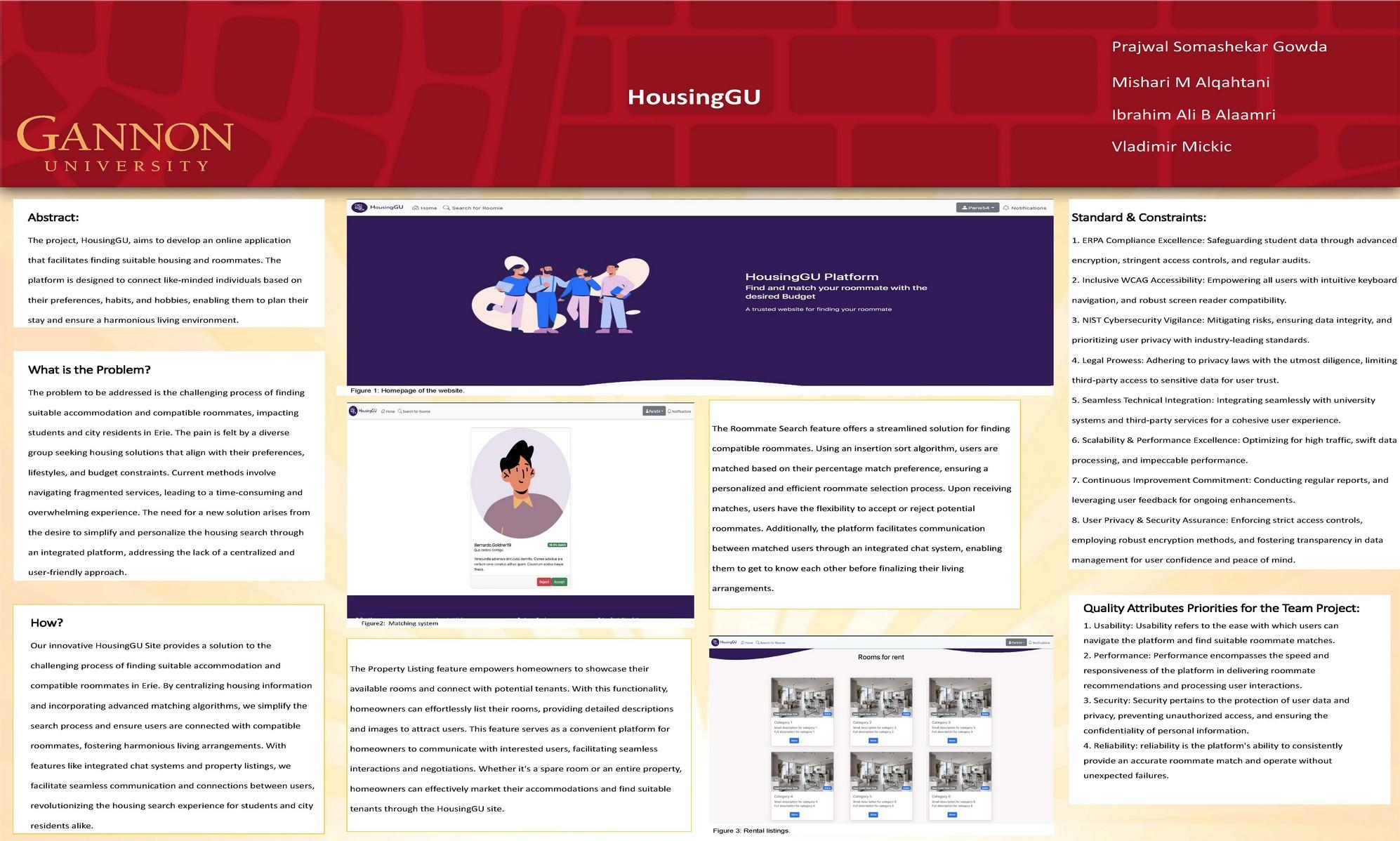
Title: HousingGU
Abstract: The project, HousingGU, aims to develop an online application that facilitates finding suitable housing and roommates. The platform is designed to connect like-minded individuals based on their preferences, habits, and hobbies, enabling them to plan their stay and ensure a harmonious living environment.
Presenter(s): Prajwal Somashekar Gowda, Mishari M Alqahtani, Ibrahim Ali B Alaamri, Vladimir Mickic
Sponsoring Department: Computer Science
Mentor(s): Mei-Huei Tang, Samuel Tweneboah-Koduah
Presentation: 43
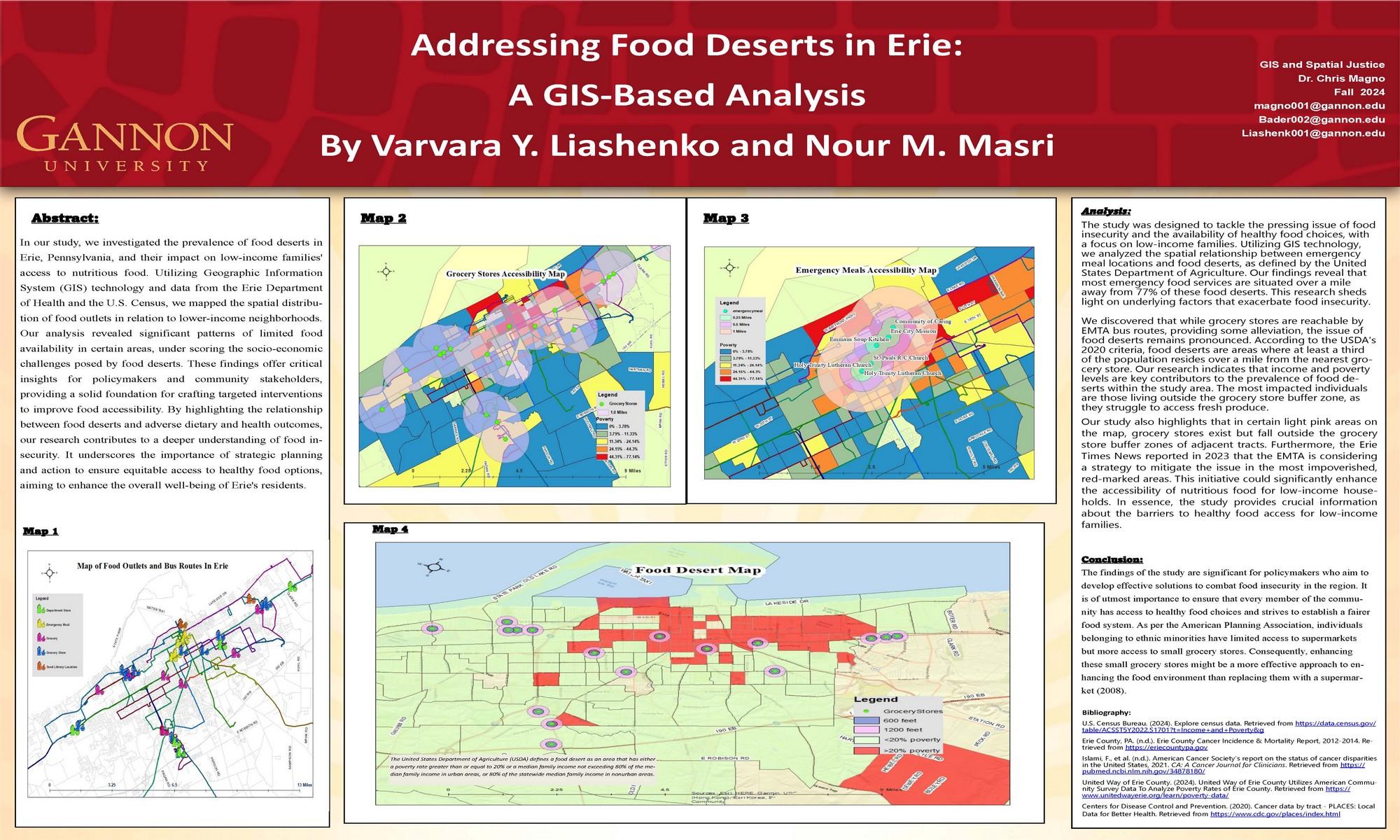
Title: Addressing Food Deserts in Erie: A GIS-Based Analysis
Abstract: In our study, we investigated the prevalence of food deserts in Erie, Pennsylvania, and their impact on low-income families' access to nutritious food. Utilizing Geographic Information System (GIS) technology and data from the Erie Department of Health and the U.S. Census, we mapped the spatial distribution of food outlets in relation to lower-income neighborhoods. Our analysis revealed significant patterns of limited food availability in certain areas, underscoring the socio-economic challenges posed by food deserts. These findings offer critical insights for policymakers and community stakeholders, providing a solid foundation for crafting targeted interventions to improve food accessibility. By highlighting the relationship between food deserts and adverse dietary and health outcomes, our research contributes to a deeper understanding of food insecurity. It underscores the importance of strategic planning and action to ensure equitable access to healthy food options, aiming to enhance the overall well-being of Erie's residents.
Presenter(s): Nour Masri, Varvara Liashenko
Sponsoring Department: Criminal Justice
Mentor(s): Chris Magno
Presentation: 44
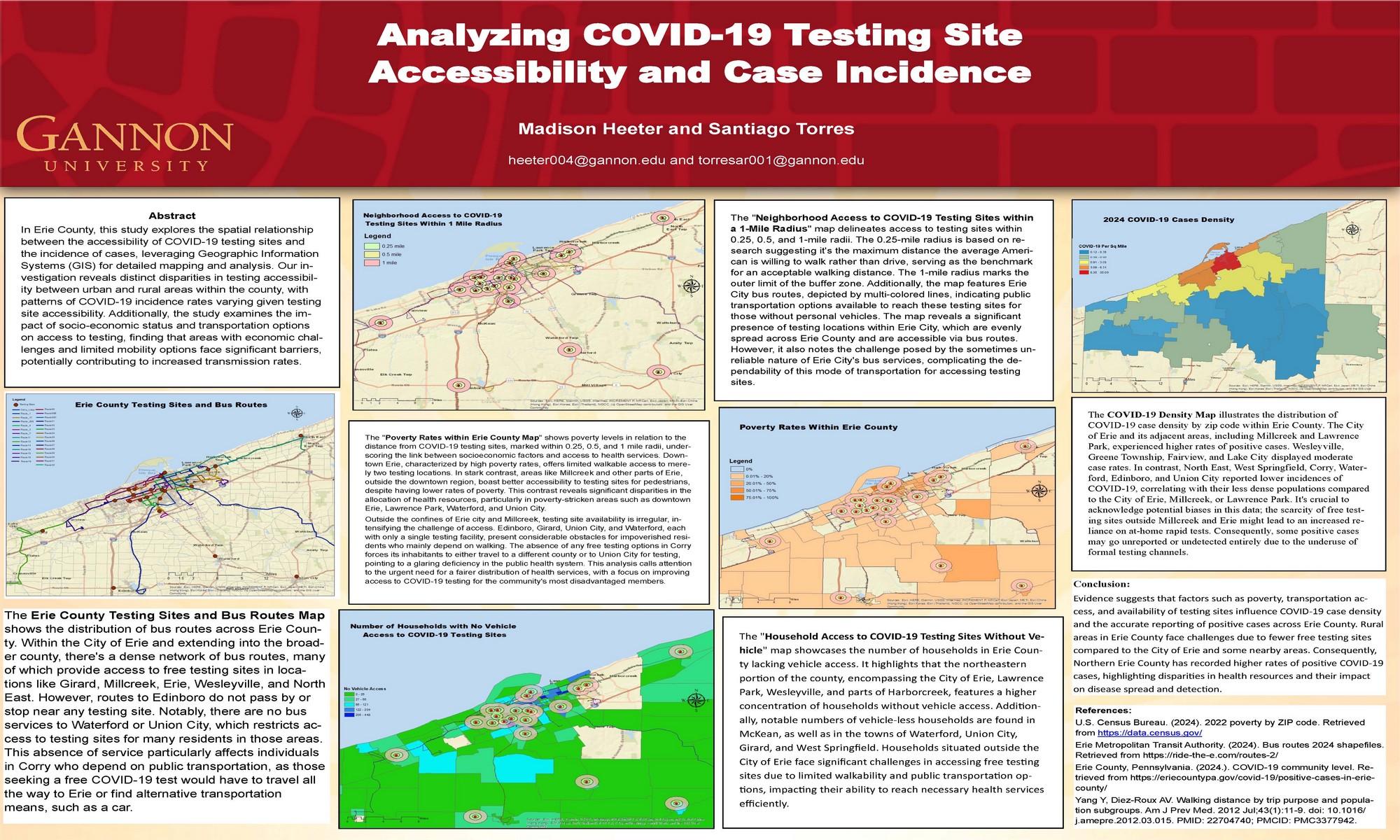
Title: Analyzing COVID-19 Testing Site Accessibility and Case Incidence
Abstract: In Erie County, this study explores the spatial relationship between the accessibility of COVID-19 testing sites and the incidence of cases, leveraging Geographic Information Systems (GIS) for detailed mapping and analysis. Our investigation reveals distinct disparities in testing accessibility between urban and rural areas within the county, with patterns of COVID-19 incidence rates varying given testing site accessibility. Additionally, the study examines the impact of socio-economic status and transportation options on access to testing, finding that areas with economic challenges and limited mobility options face significant barriers, potentially contributing to increased transmission rates.
Presenter(s): Madison Heeter, Santiago Torres
Sponsoring Department: Criminal Justice
Mentor(s): Chris Magno
Presentation: 45
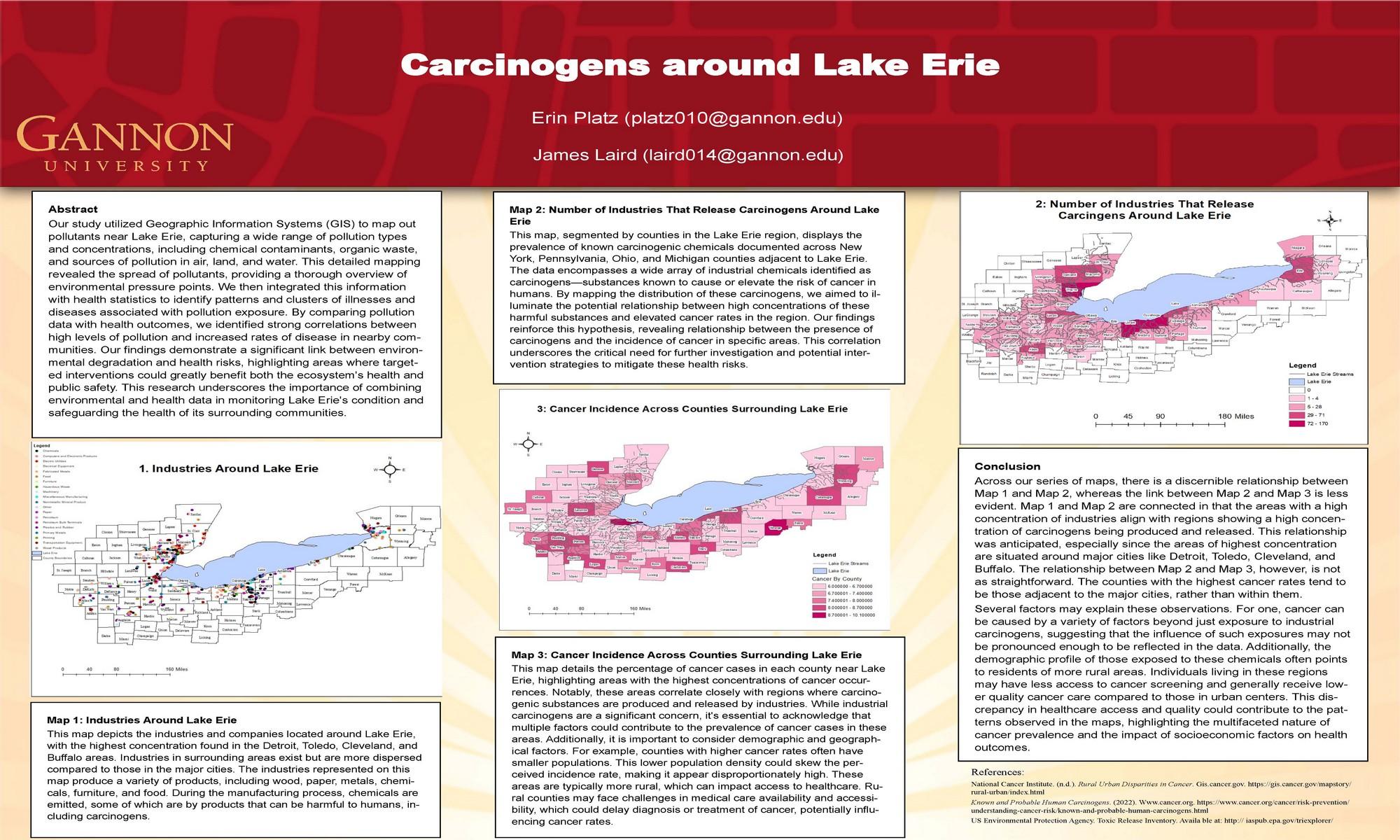
Title: Carcinogens Around Lake Erie
Abstract: Our study utilized Geographic Information Systems (GIS) to map out pollutants near Lake Erie, capturing a wide range of pollution types and concentrations, including chemical contaminants, organic waste, and sources of pollution in air, land, and water. This detailed mapping revealed the spread of pollutants, providing a thorough overview of environmental pressure points. We then integrated this information with health statistics to identify patterns and clusters of illnesses and diseases associated with pollution exposure. By comparing pollution data with health outcomes, we identified strong correlations between high levels of pollution and increased rates of disease in nearby communities. Our findings demonstrate a significant link between environmental degradation and health risks, highlighting areas where targeted interventions could greatly benefit both the ecosystem's health and public safety. This research underscores the importance of combining environmental and health data in monitoring Lake Erie's condition and safeguarding the health of its surrounding communities.
Presenter(s): Erin Platz, James Laird
Sponsoring Department: Criminal Justice
Mentor(s): Christopher Magno
Presentation: 46
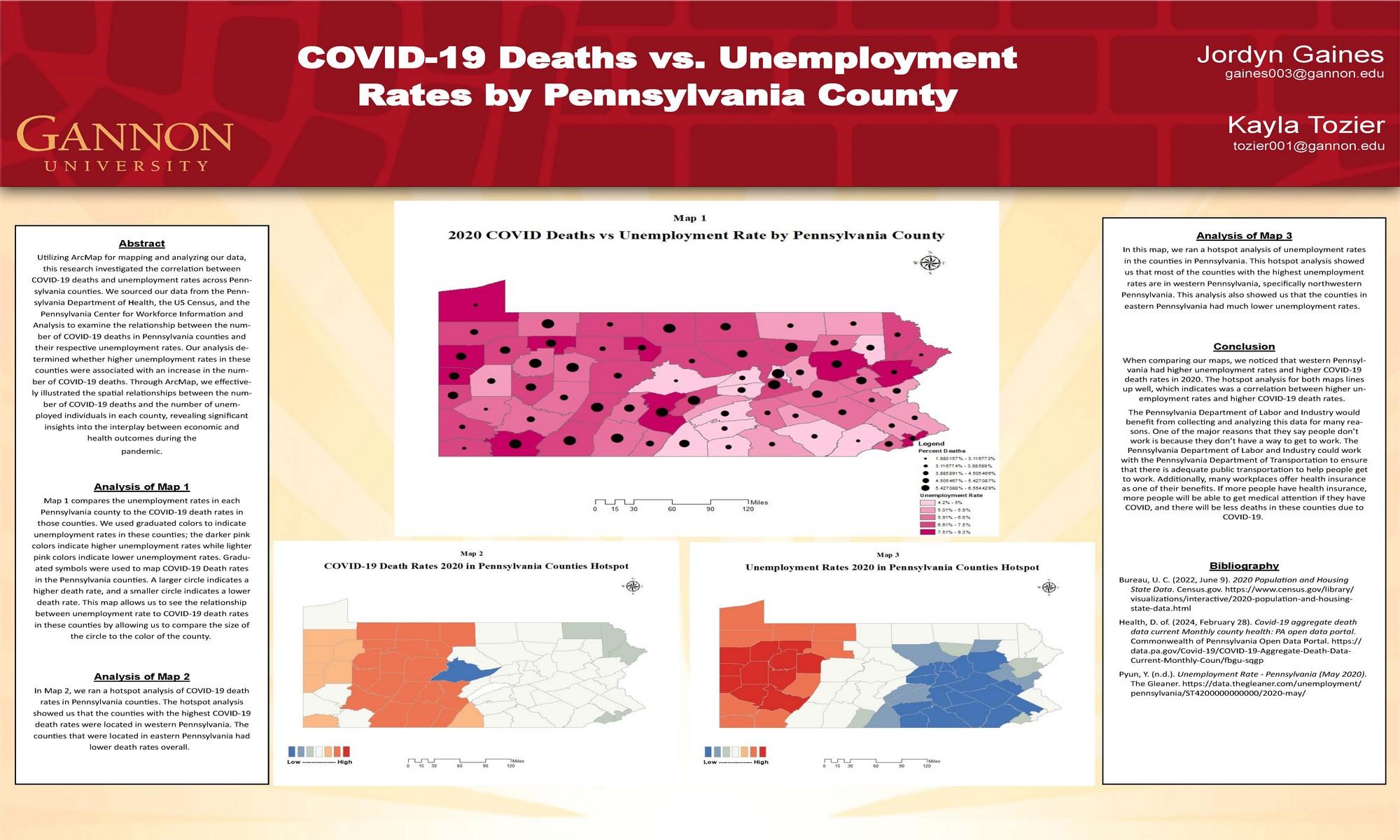
Title: COVID-19 Deaths vs. Unemployment Rates by Pennsylvania County
Abstract: Utilizing ArcMap for mapping and analyzing our data, this research investigated the correlation between COVID-19 deaths and unemployment rates across Pennsylvania counties. We sourced our data from the Pennsylvania Department of Health, the US Census, and the Pennsylvania Center for Workforce Information and Analysis to examine the relationship between the number of COVID-19 deaths in Pennsylvania counties and their respective unemployment rates. Our analysis determined whether higher unemployment rates in these counties were associated with an increase in the number of COVID-19 deaths. Through ArcMap, we effectively illustrated the spatial relationships between the number of COVID-19 deaths and the number of unemployed individuals in each county, revealing significant insights into the interplay between economic and health outcomes during the pandemic.
Presenter(s): Jordyn Gaines, Kayla Tozier
Sponsoring Department: Criminal Justice
Mentor(s): Christopher Magno
Presentation: 47
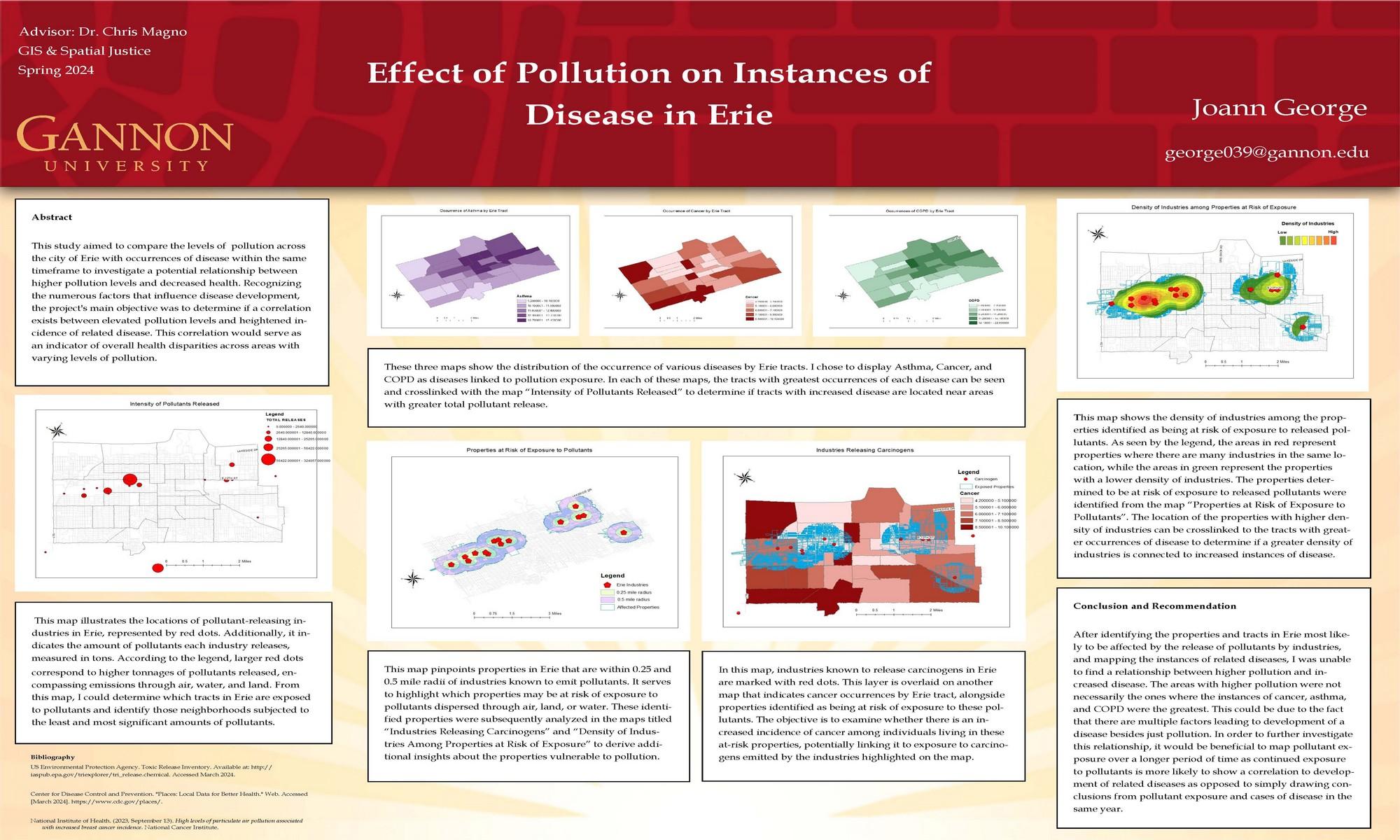
Title: Effect of Pollution on Instances of Disease in Erie
Abstract: This study aimed to compare the levels of pollution across the city of Erie with occurrences of disease within the same timeframe to investigate a potential relationship between higher pollution levels and decreased health. Recognizing the numerous factors that influence disease development, the project's main objective was to determine if a correlation exists between elevated pollution levels and heightened incidence of related disease. This correlation would serve as an indicator of overall health disparities across areas with varying levels of pollution.
Presenter(s): Joann George
Sponsoring Department: Criminal Justice
Mentor(s): Chris Magno
Presentation: 48
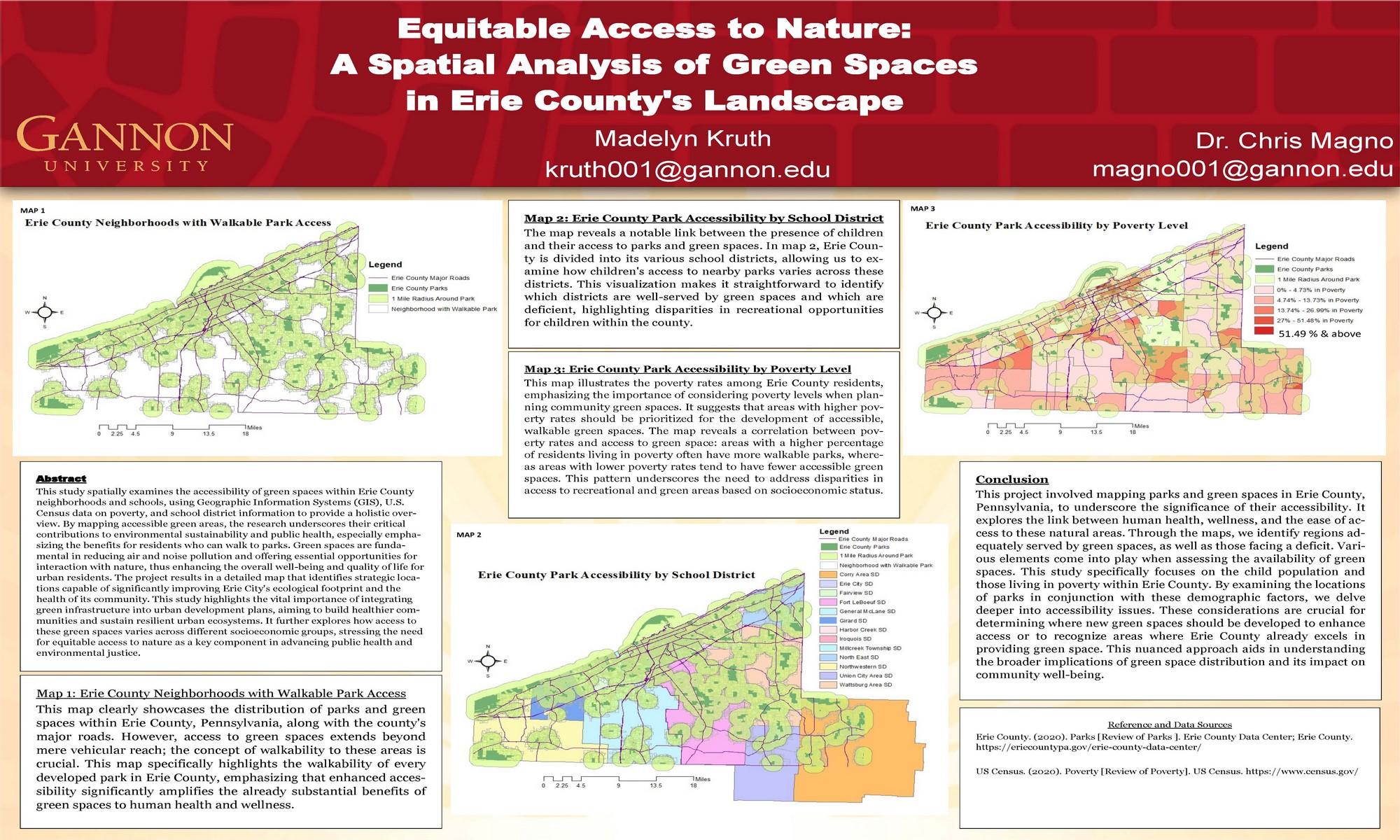
Title: Equitable Access to Nature: A Spatial Analysis of Green Spaces in Erie County's Landscape
Abstract: This study spatially examines the accessibility of green spaces within Erie County neighborhoods and schools, using Geographic Information Systems (GIS), U.S. Census data on poverty, and school district information to provide a holistic over-view. By mapping accessible green areas, the research underscores their critical contributions to environmental sustainability and public health, especially emphasizing the benefits for residents who can walk to parks. Green spaces are funda-mental in reducing air and noise pollution and offering essential opportunities for interaction with nature, thus enhancing the overall well-being and quality of life for urban residents. The project results in a detailed map that identifies strategic locations capable of significantly improving Erie City's ecological footprint and the health of its community. This study highlights the vital importance of integrating green infrastructure into urban development plans, aiming to build healthier communities and sustain resilient urban ecosystems. It further explores how access to these green spaces varies across different socioeconomic groups, stressing the need for equitable access to nature as a key component in advancing public health and environmental justice.
Presenter(s): Madelyn Kruth
Sponsoring Department: Criminal Justice
Mentor(s): Christopher Magno
Presentation: 49
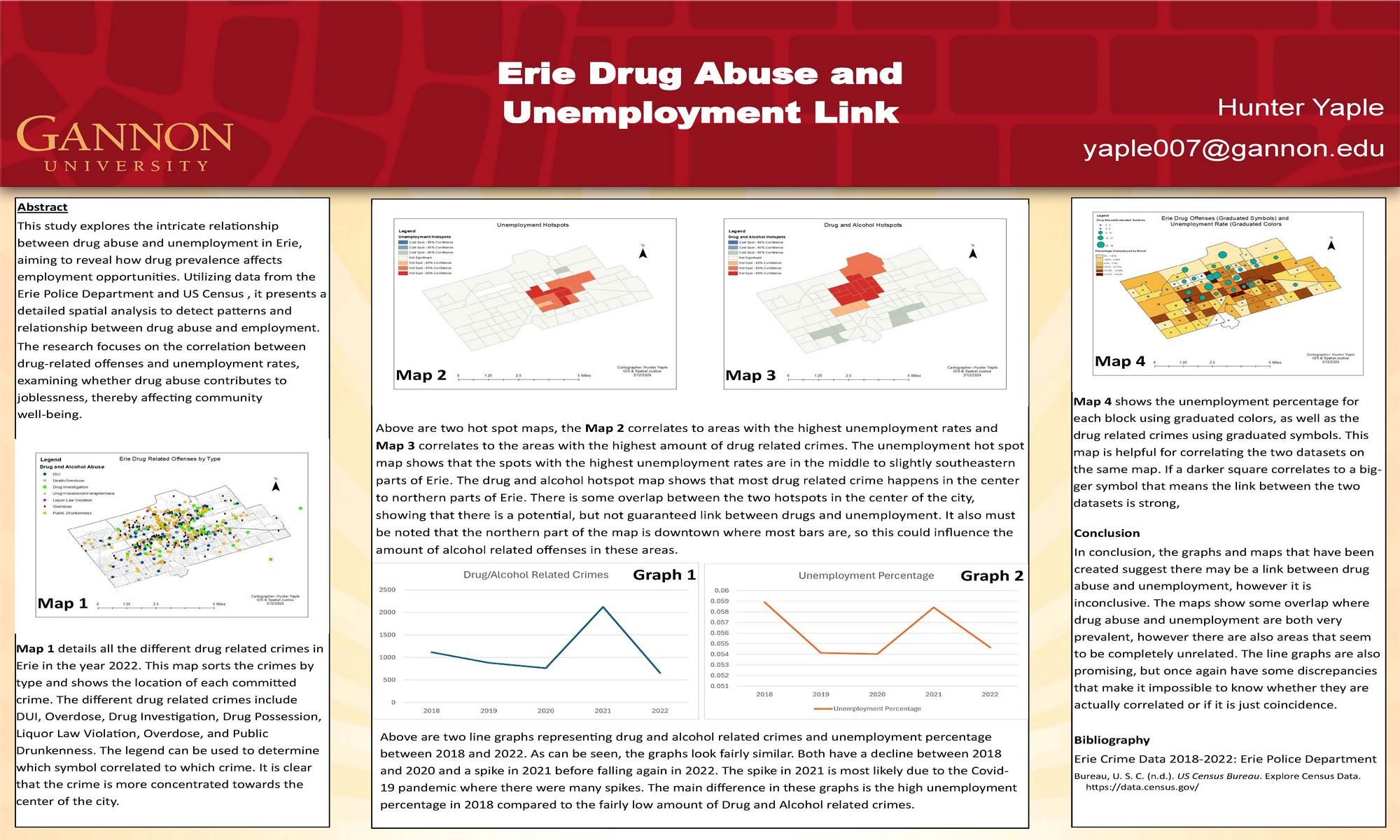
Title: Erie Drug Abuse and Unemployment Link
Abstract: This study explores the intricate relationship between drug abuse and unemployment in Erie, aiming to reveal how drug prevalence affects employment opportunities. Utilizing data from the Erie Police Department and US Census , it presents a detailed spatial analysis to detect patterns and relationship between drug abuse and employment. The research focuses on the correlation between drug-related offenses and unemployment rates, examining whether drug abuse contributes to joblessness, thereby affecting community well-being.
Presenter(s): Hunter Yaple
Sponsoring Department: Criminal Justice
Mentor(s): Christopher Magno
Presentation: 50
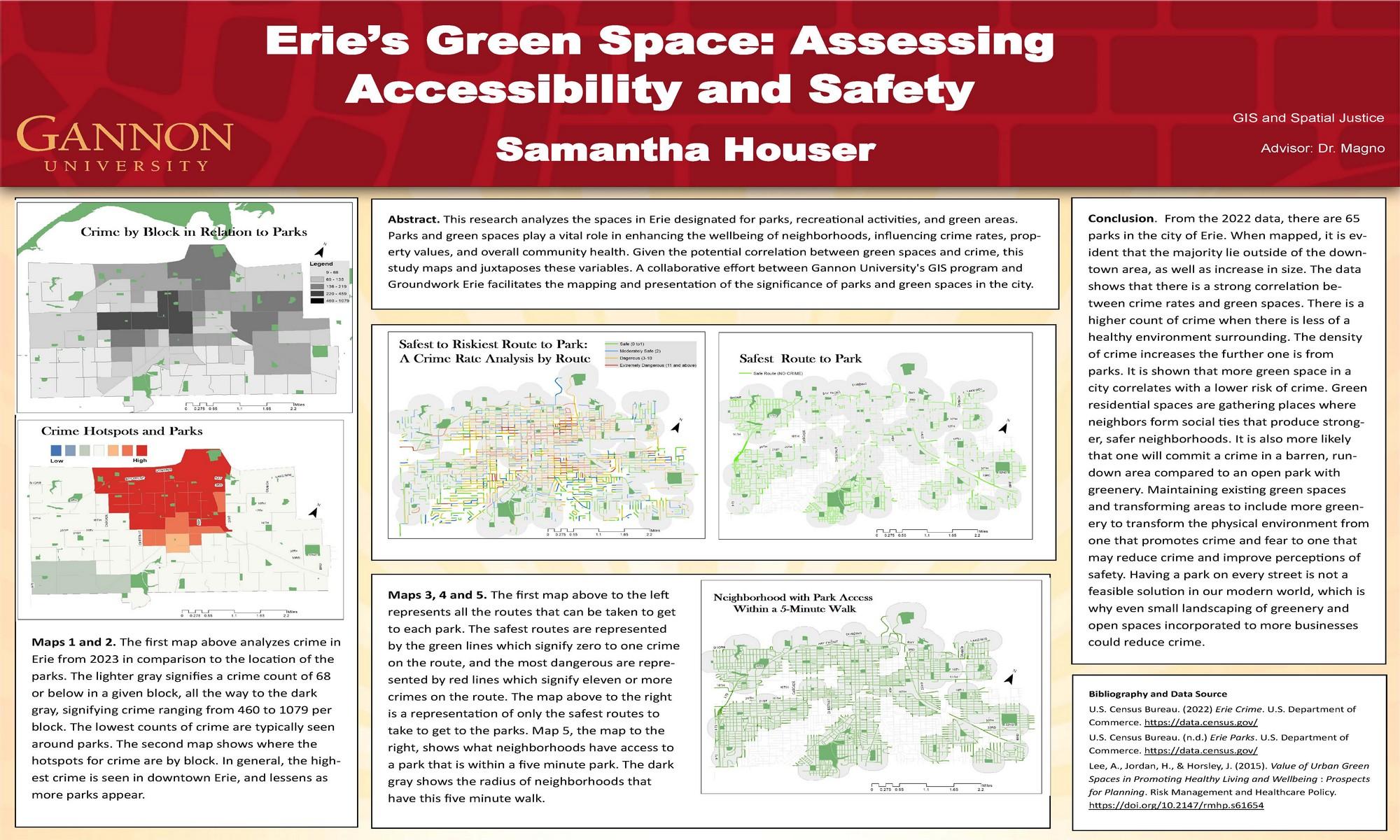
Title: Erie Green Space: Assessing Accessibility and Safety
Abstract: This research analyzes the spaces in Erie designated for parks, recreational activities, and green areas. Parks and green spaces play a vital role in enhancing the wellbeing of neighborhoods, influencing crime rates, property values, and overall community health. Given the potential correlation between green spaces and crime, this study maps and juxtaposes these variables. A collaborative effort between Gannon University's GIS program and Groundwork Erie facilitates the mapping and presentation of the significance of parks and green spaces in the city.
Presenter(s): Samantha Houser
Sponsoring Department: Criminal Justice
Mentor(s): Christopher Magno
Presentation: 51
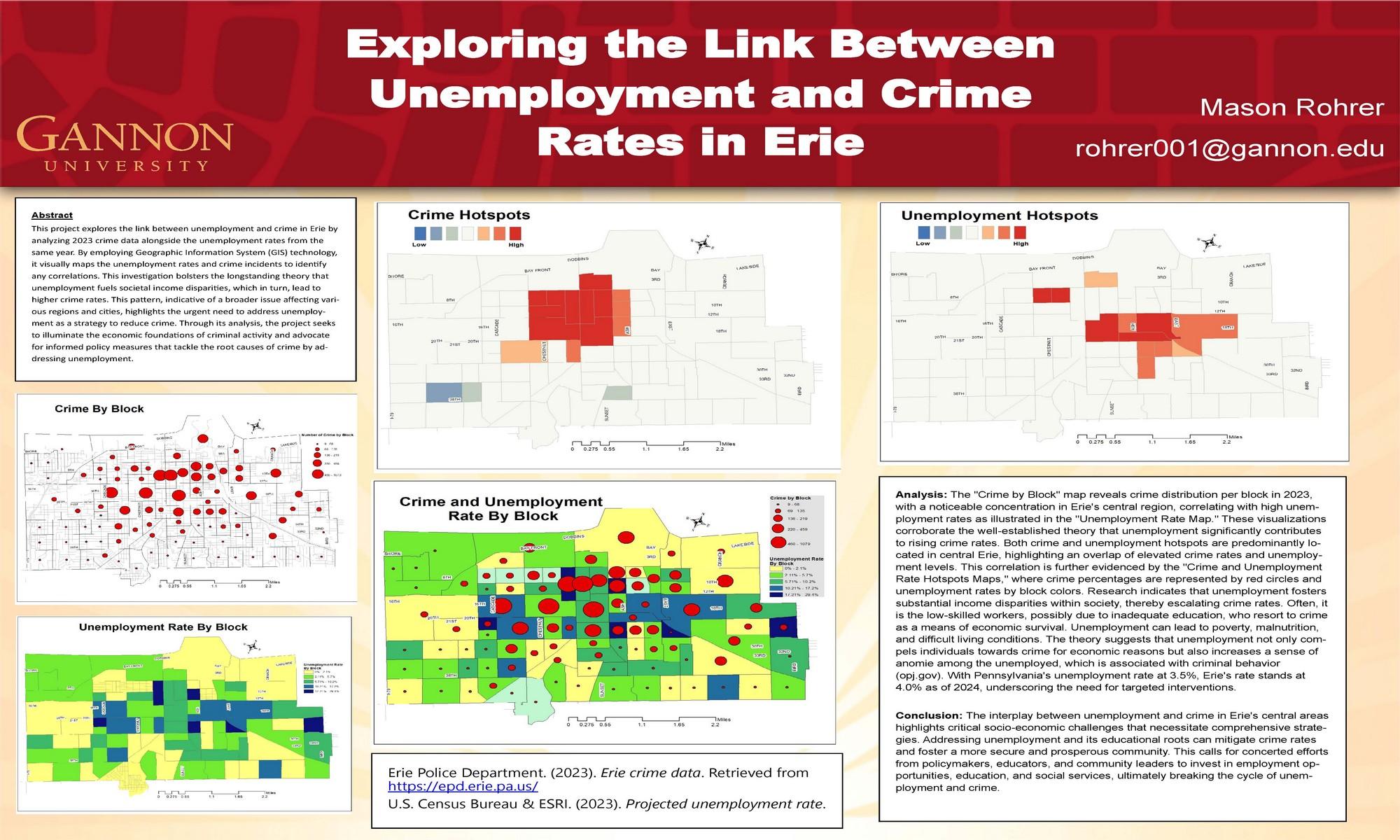
Title: Exploring the Link Between Unemployment and Crime Rates in Erie
Abstract: This project explores the link between unemployment and crime in Erie by analyzing 2023 crime data alongside the unemployment rates from the same year. By employing Geographic Information System (GIS) technology, it visually maps the unemployment rates and crime incidents to identify any correlations. This investigation bolsters the longstanding theory that unemployment fuels societal income disparities, which in turn, lead to higher crime rates. This pattern, indicative of a broader issue affecting various regions and cities, highlights the urgent need to address unemployment as a strategy to reduce crime. Through its analysis, the project seeks to illuminate the economic foundations of criminal activity and advocate for informed policy measures that tackle the root causes of crime by addressing unemployment.
Presenter(s): Mason Rohrer
Sponsoring Department: Criminal Justice
Mentor(s): Chris Magno
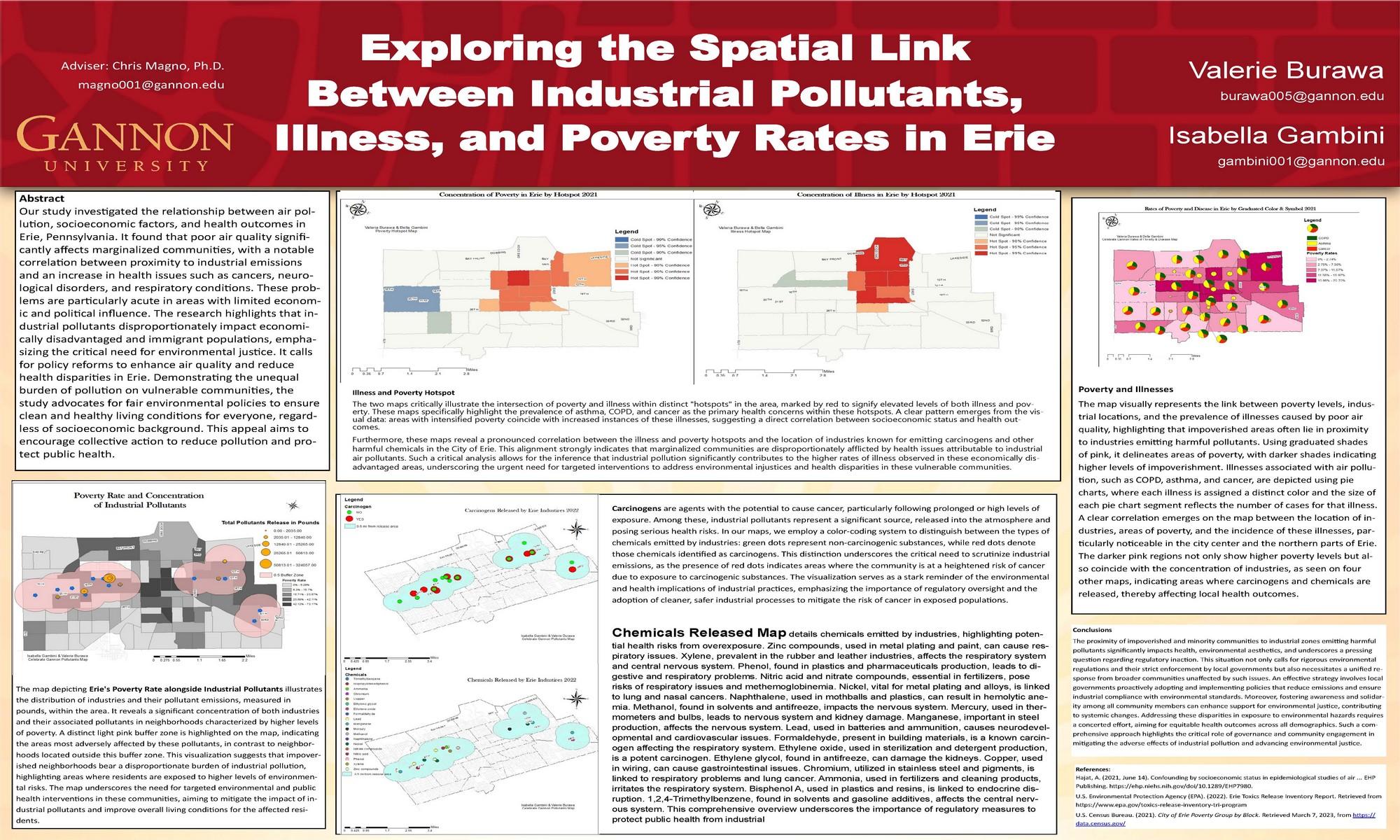
Presentation: 52
Title: Exploring the Spatial Link Between Industrial Pollutants, Illness, and Poverty Rates in Erie
Abstract: Our study delved into the relationship between air pollution, socioeconomic disparity, and health outcomes in Erie, Pennsylvania, revealing a pronounced impact of poor air quality on marginalized communities. Analysis indicated a strong link between the proximity to industrial emissions and a surge in health issues such as cancers, neurological disorders, and respiratory diseases, especially in areas lacking economic and political representation. Industrial pollutants predominantly affect economically disadvantaged and immigrant populations, underscoring an urgent need for environmental justice. The research underscores the necessity for policy reforms aimed at improving air quality and minimizing health disparities in Erie. By showcasing the disproportionate effects of pollution on vulnerable groups, the study advocates for equitable environmental policies, ensuring that all residents, irrespective of their socioeconomic status, have access to a clean and healthy environment. This call to action seeks to foster a collective effort towards mitigating pollution and safeguarding public health in urban communities.
Presenter(s): Valerie Burawa, Isabella Gambini
Sponsoring Department: Criminal Justice
Mentor(s): Chris Magno
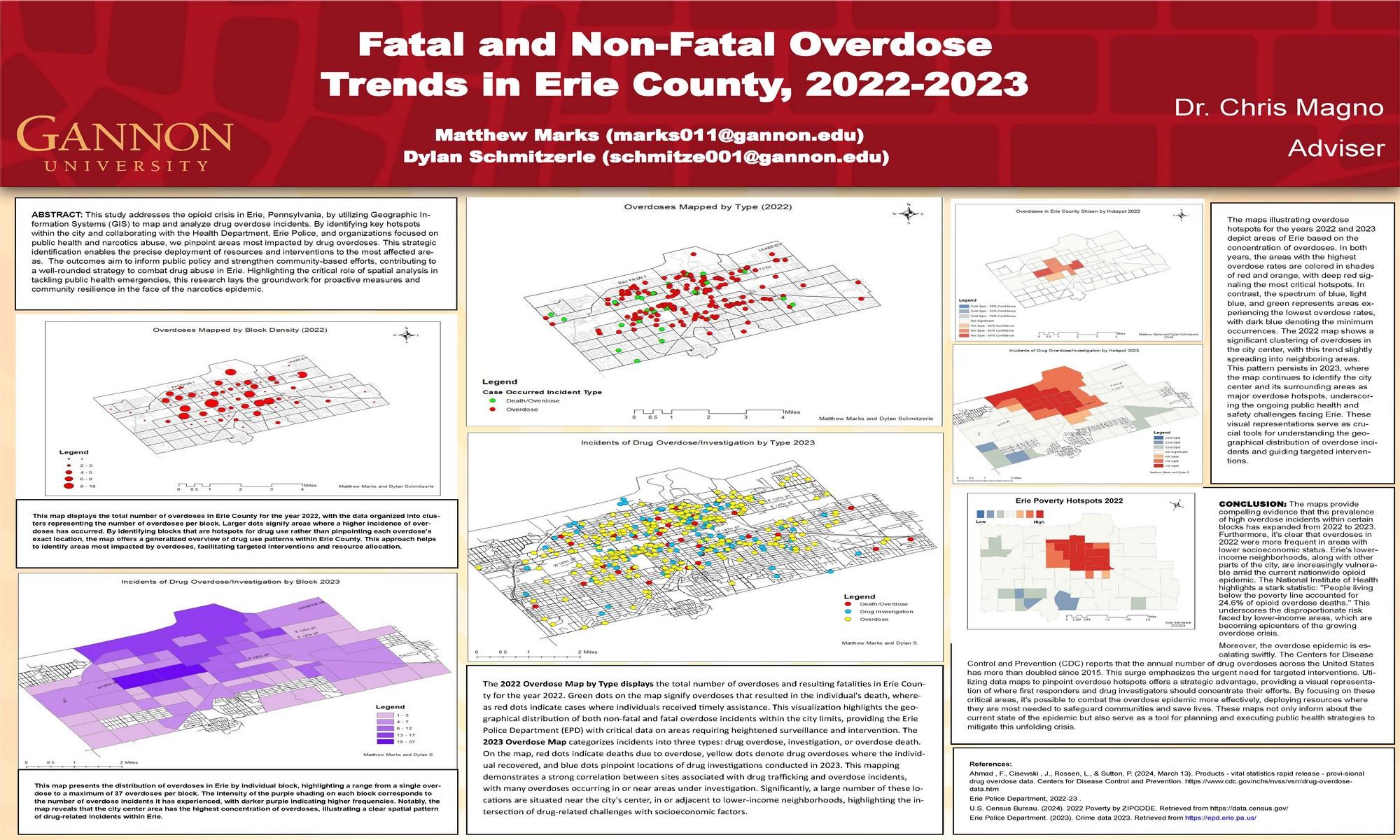
Presentation: 53
Title: Fatal and Non-Fatal Overdose Trends in Erie County, 2022-2023
Abstract: This study addresses the opioid crisis in Erie, Pennsylvania, by utilizing Geographic Information Systems (GIS) to map and analyze drug overdose incidents. By identifying key hotspots within the city and collaborating with the Health Department, Erie Police, and organizations focused on public health and narcotics abuse, we pinpoint areas most impacted by drug overdoses. This strategic identification enables the precise deployment of resources and interventions to the most affected areas. The outcomes aim to inform public policy and strengthen community-based efforts, contributing to a well-rounded strategy to combat drug abuse in Erie. Highlighting the critical role of spatial analysis in tackling public health emergencies, this research lays the groundwork for proactive measures and community resilience in the face of the narcotics epidemic.
Presenter(s): Matthew Marks, Dylan Schmitzerle
Sponsoring Department: Criminal Justice
Mentor(s): Chris Magno
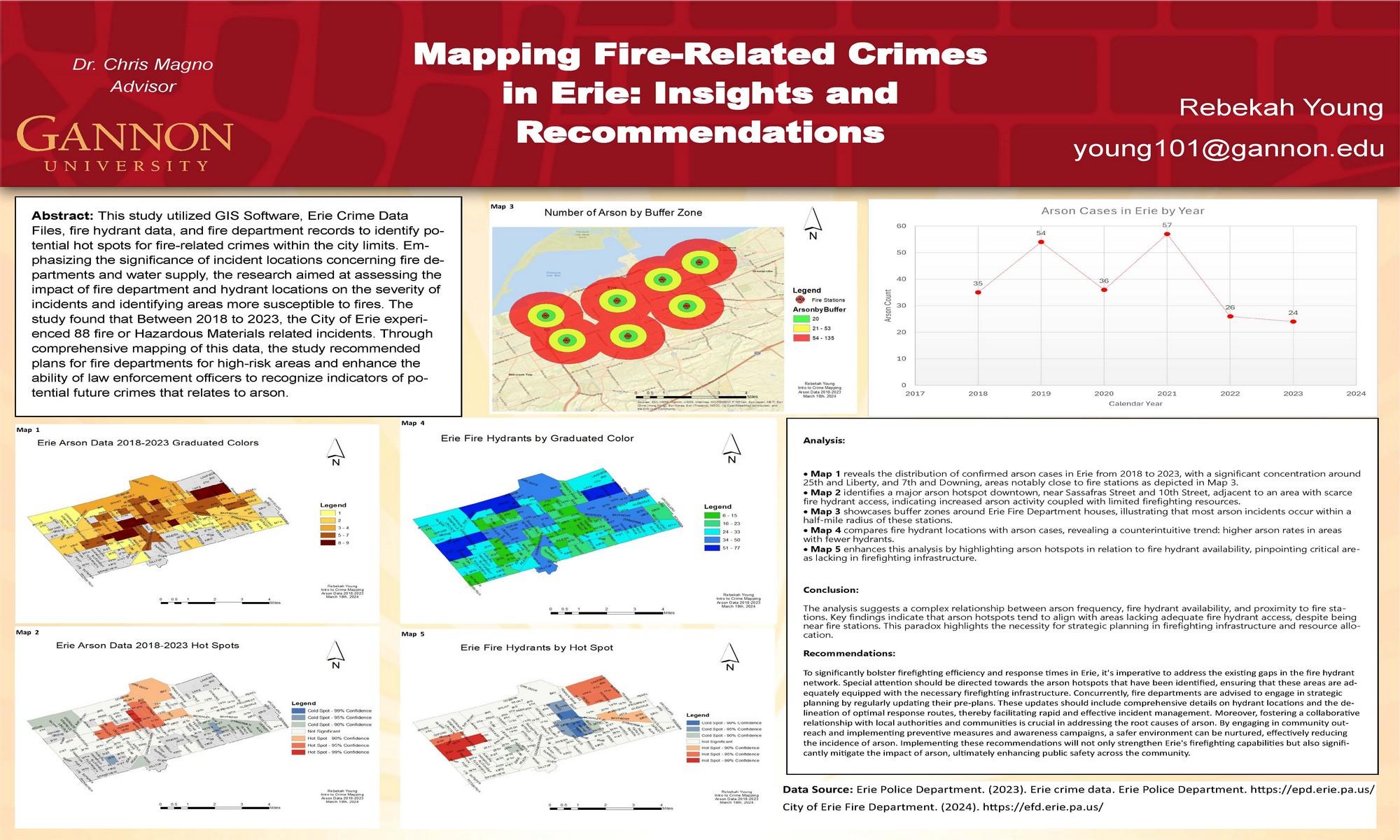
Presentation: 54
Title: Mapping Fire-Related Crimes in Erie: Insights and Recommendations
Abstract: This study utilized GIS Software, Erie Crime Data Files, fire hydrant data, and fire department records to identify potential hot spots for fire-related crimes within the city limits. Emphasizing the significance of incident locations concerning fire departments and water supply, the research aimed at assessing the impact of fire department and hydrant locations on the severity of incidents and identifying areas more susceptible to fires. The study found that Between 2018 to 2023, the City of Erie experienced 88 fire or Hazardous Materials related incidents. Through comprehensive mapping of this data, the study recommended plans for fire departments for high-risk areas and enhance the ability of law enforcement officers to recognize indicators of potential future crimes that relates to arson.
Presenter(s): Rebekah Young
Sponsoring Department: Criminal Justice
Mentor(s): Chris Magno
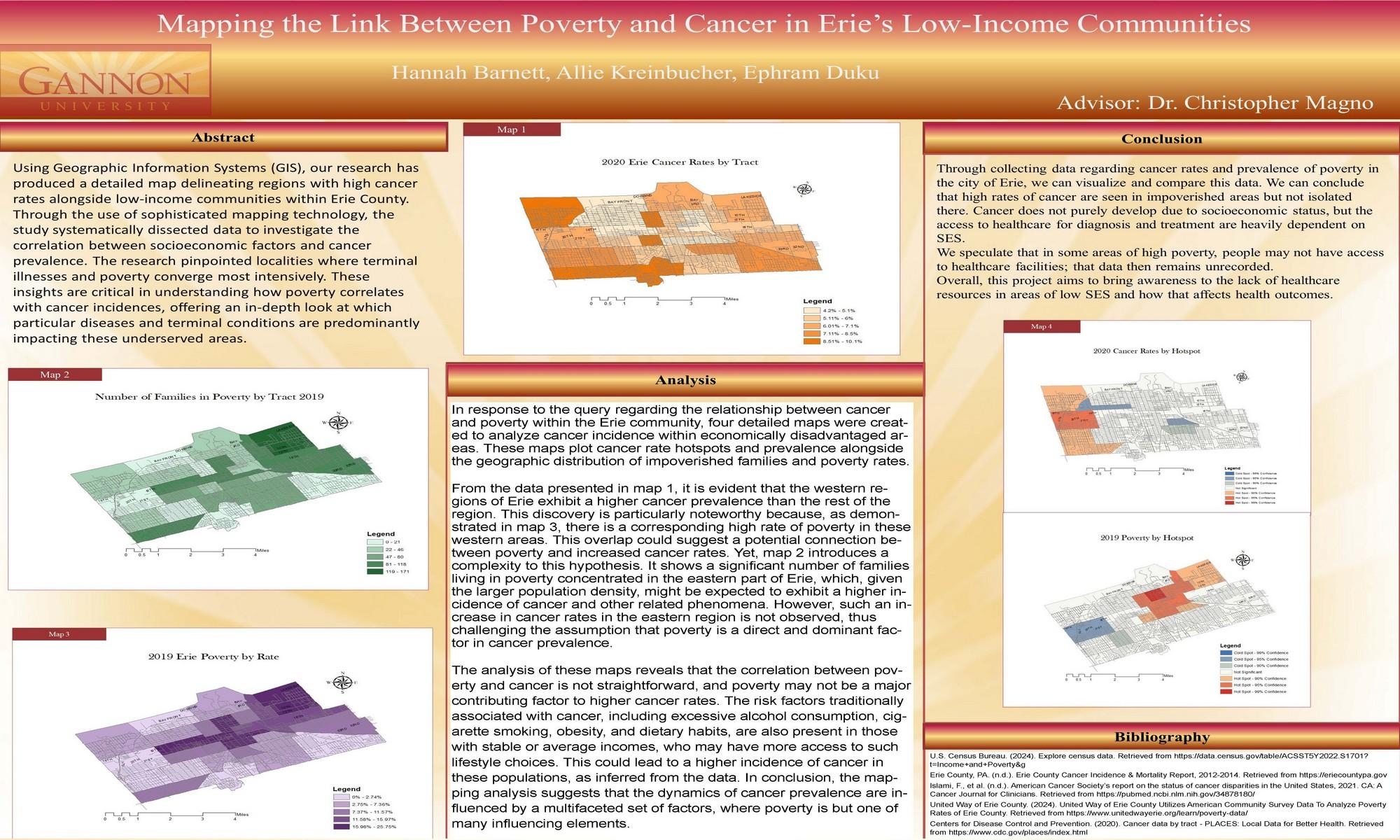
Presentation: 55
Title: Mapping the Link Between Poverty and Cancer in Erie's Low-Income Communities
Abstract: Using Geographic Information Systems (GIS), our research has produced a detailed map delineating regions with high cancer rates alongside low-income communities within Erie County. Through the use of sophisticated mapping technology, the study systematically dissected data to investigate the correlation between socioeconomic factors and cancer prevalence. The research pinpointed localities where terminal illnesses and poverty converge most intensely. These insights are critical in understanding how poverty correlates with cancer incidences, offering an in-depth look at which particular diseases and terminal conditions are predominantly impacting these underserved areas.
Presenter(s): Hannah Barnett, Allie Kreinbucher, Ephram Duku
Sponsoring Department: Criminal Justice
Mentor(s): Chris Magno
Presentation: 56
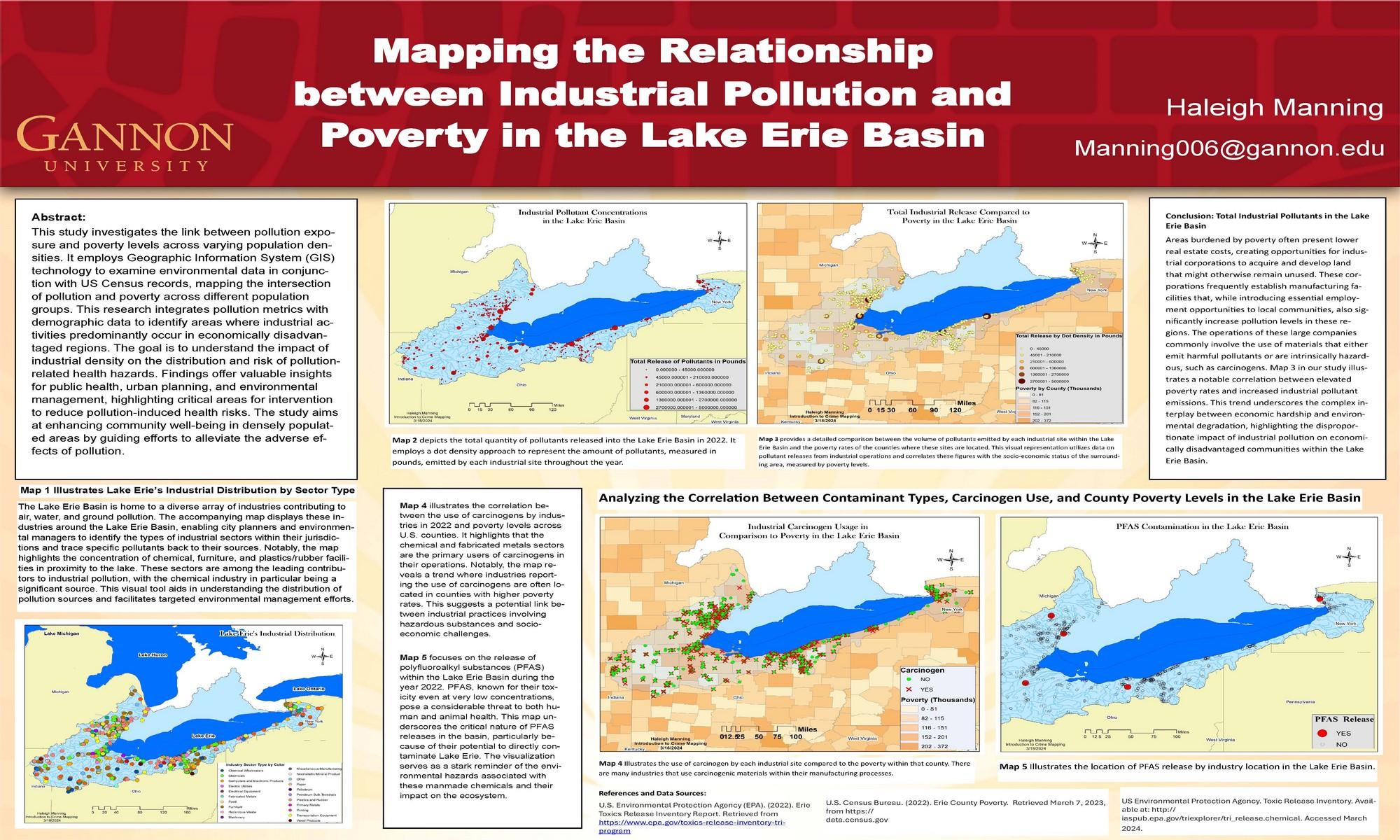
Title: Mapping the Relationship between Industrial Pollution and Poverty in the Lake Erie Basin
Abstract: This study investigates the link between pollution exposure and poverty levels across varying population densities. It employs Geographic Information System (GIS) technology to examine environmental data in conjunction with US Census records, mapping the intersection of pollution and poverty across different population groups. This research integrates pollution metrics with demographic data to identify areas where industrial activities predominantly occur in economically disadvantaged regions. The goal is to understand the impact of industrial density on the distribution and risk of pollution-related health hazards. Findings offer valuable insights for public health, urban planning, and environmental management, highlighting critical areas for intervention to reduce pollution-induced health risks. The study aims at enhancing community well-being in densely populated areas by guiding efforts to alleviate the adverse effects of pollution.
Presenter(s): Haleigh Manning
Sponsoring Department: Criminal Justice
Mentor(s): Chris Magno
Presentation: 57
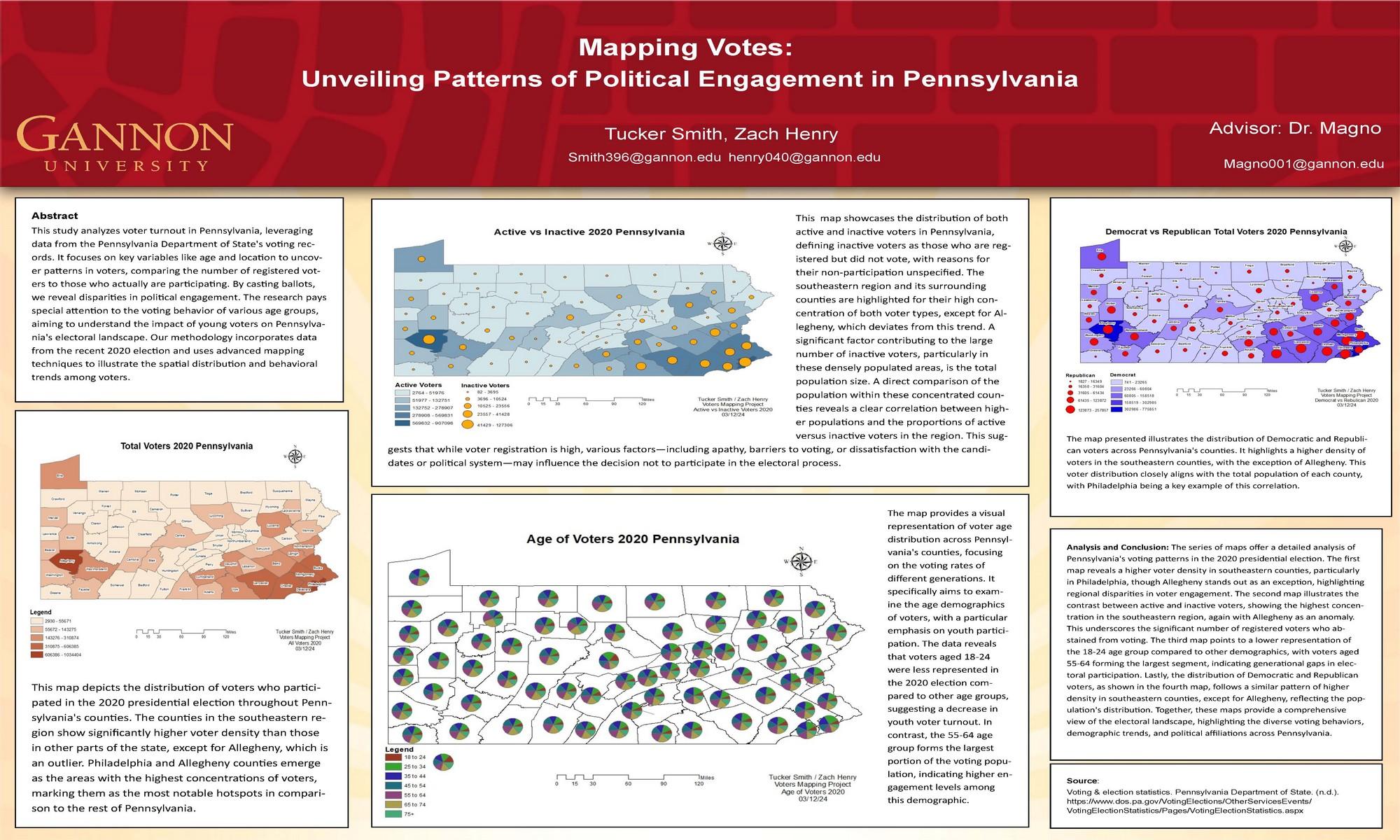
Title: Mapping Votes: Unveiling Patterns of Political Engagement in Pennsylvania
Abstract: This study analyzes voter turnout in Pennsylvania, leveraging data from the Pennsylvania Department of State's voting records. It focuses on key variables like age and location to uncover patterns in voters, comparing the number of registered voters to those who actually are participating. By casting ballots, we reveal disparities in political engagement. The research pays special attention to the voting behavior of various age groups, aiming to understand the impact of young voters on Pennsylvania's electoral landscape. Our methodology incorporates data from the recent 2020 election and uses advanced mapping techniques to illustrate the spatial distribution and behavioral trends among voters.
Presenter(s): Tucker Smith, Zach Henry
Sponsoring Department: Criminal Justice
Mentor(s): Chris Magno
Presentation: 58
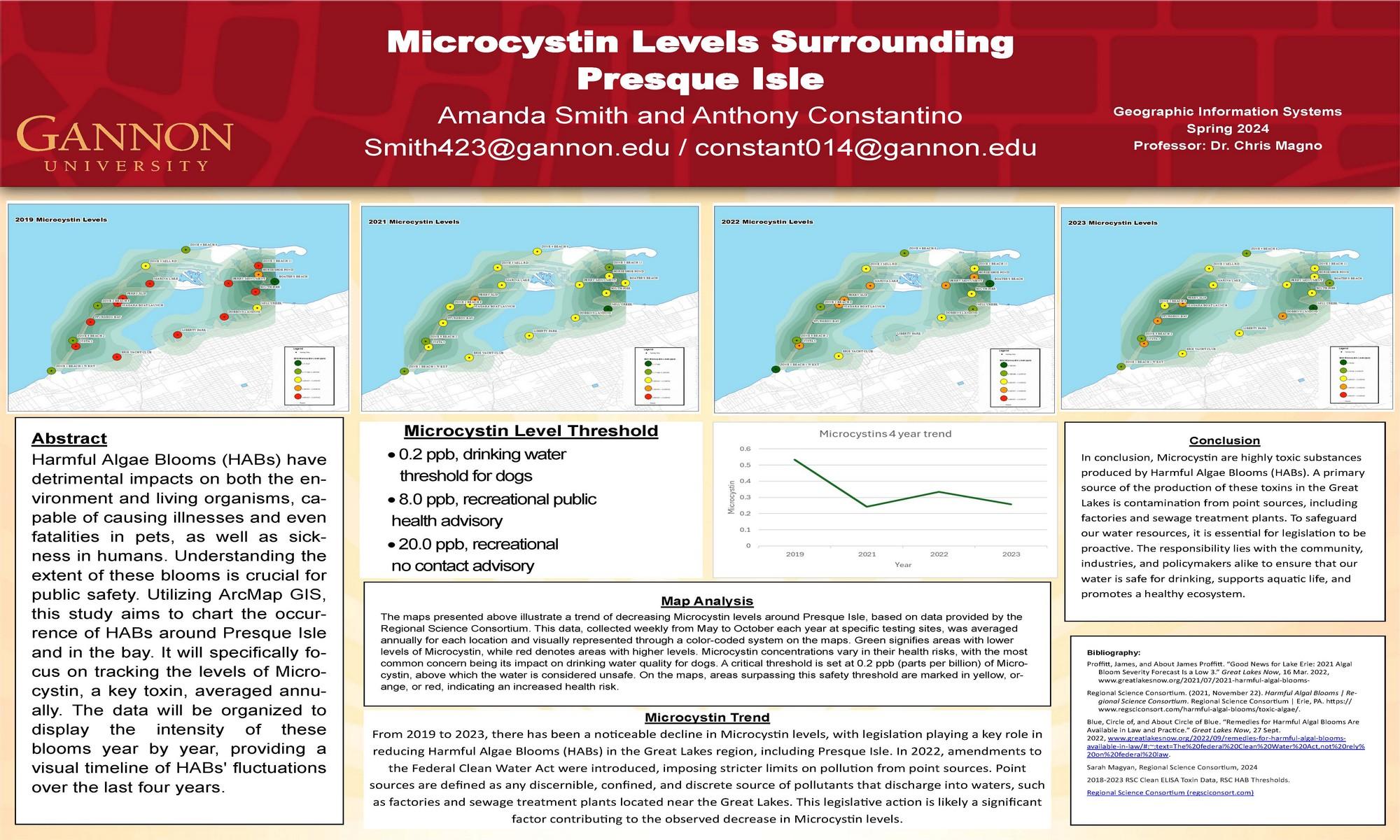
Title: Microcystin Levels Surrounding Presque Isle
Abstract: Harmful Algae Blooms (HABs) have detrimental impacts on both the environment and living organisms, capable of causing illnesses and even fatalities in pets, as well as sickness in humans. Understanding the extent of these blooms is crucial for public safety. Utilizing ArcMap GIS, this study aims to chart the occurrence of HABs around Presque Isle and in the bay. It will specifically focus on tracking the levels of Microcystin, a key toxin, averaged annually. The data will be organized to display the intensity of these blooms year by year, providing a visual timeline of HABs' fluctuations over the last four years.
Presenter(s): Amanda Smith, Anthony Constantino
Sponsoring Department: Criminal Justice
Mentor(s): Christ Magno
Presentation: 59
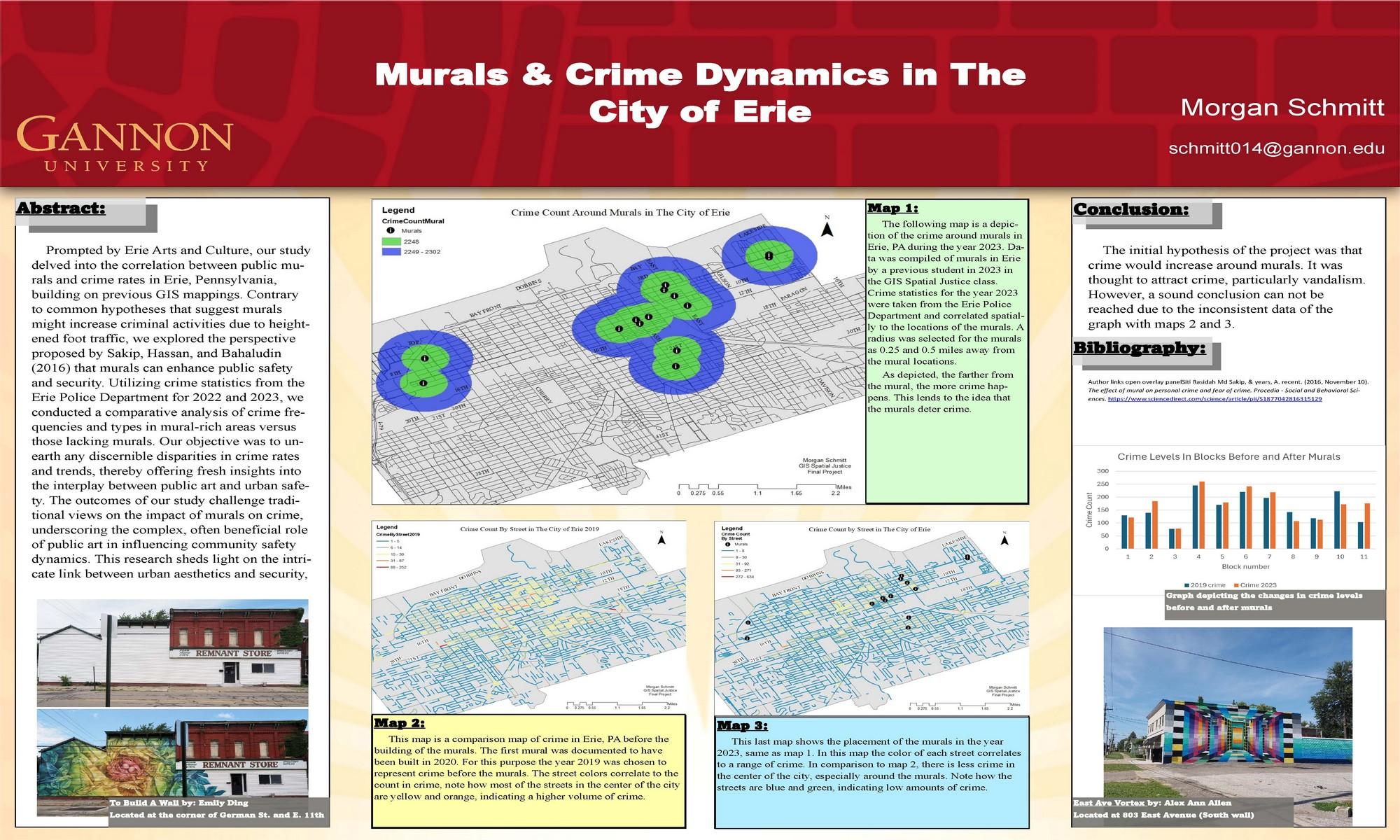
Title: Murals & Crime Dynamics in The City of Erie
Abstract: Prompted by Erie Arts and Culture, our study delved into the correlation between public murals and crime rates in Erie, Pennsylvania, building on previous GIS mappings. Contrary to common hypotheses that suggest murals might increase criminal activities due to heightened foot traffic, we explored the perspective proposed by Sakip, Hassan, and Bahaludin (2016) that murals can enhance public safety and security. Utilizing crime statistics from the Erie Police Department for 2022 and 2023, we conducted a comparative analysis of crime frequencies and types in mural-rich areas versus those lacking murals. Our objective was to unearth any discernible disparities in crime rates and trends, thereby offering fresh insights into the interplay between public art and urban safety. The outcomes of our study challenge traditional views on the impact of murals on crime, underscoring the complex, often beneficial role of public art in influencing community safety dynamics. This research sheds light on the intricate link between urban aesthetics and security.
Presenter(s): Morgan Schmitt
Sponsoring Department: Criminal Justice
Mentor(s): Chris Magno
Presentation: 60
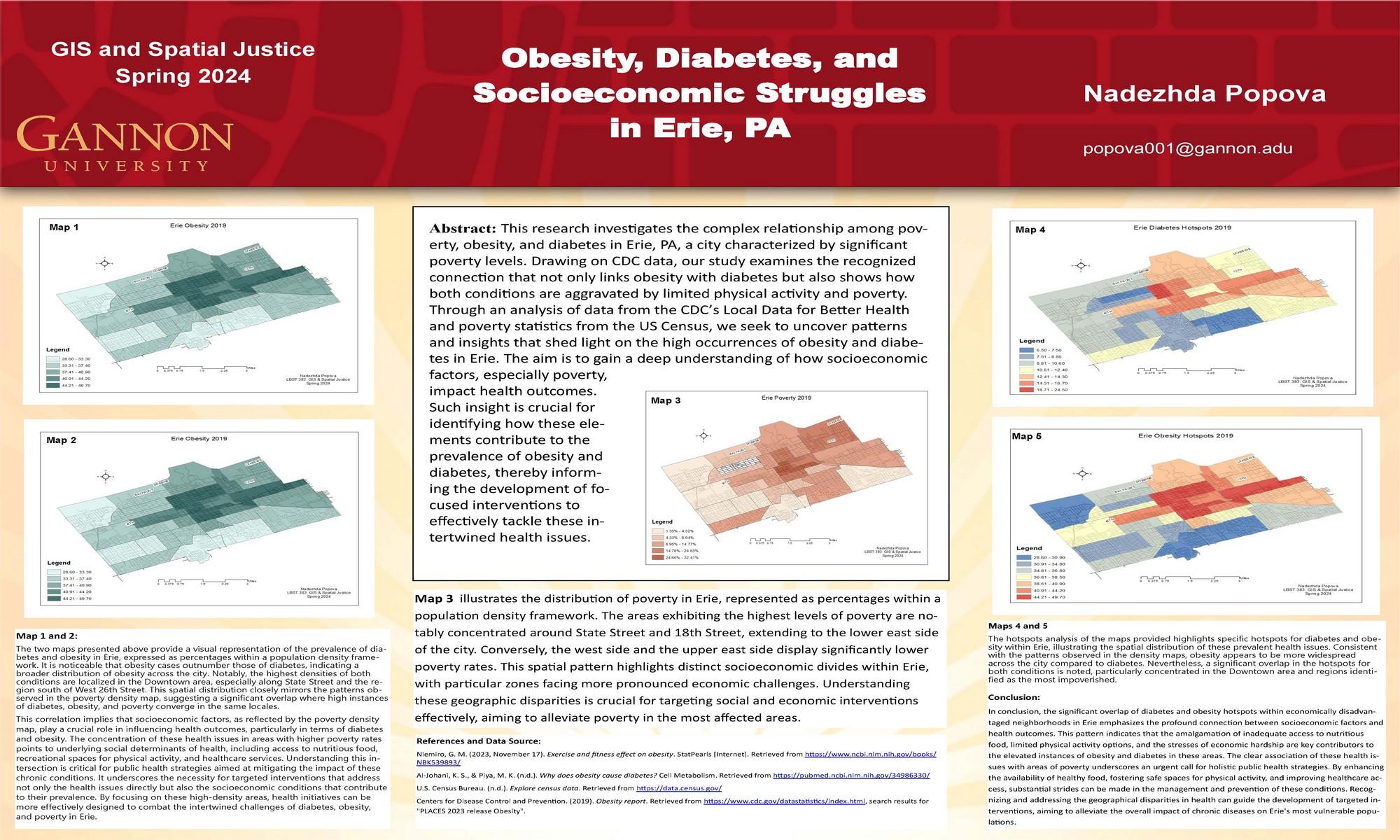
Title: Obesity, Diabetes, and Socioeconomic Struggles in Erie, PA
Abstract: This study takes a closer look at how income levels, obesity, and diabetes are interlinked in Erie, PA, a city struggling with high poverty rates. Erie stands out due to its significantly high obesity rates, surpassing many other regions. Our analysis, grounded in CDC data, investigates the established medical consensus that obesity not only strongly correlates with diabetes but is also worsened by both a lack of physical activity and poverty. By leveraging data from the CDC's Local Data for Better Health and integrating poverty and income stats from the US Census, we aim to uncover patterns and insights that clarify why Erie is experiencing such high levels of obesity and diabetes. Our objective is to deeply understand the impact of socioeconomic factors, especially poverty and low income, on health outcomes. Gaining this insight is crucial for identifying how these elements contribute to obesity and diabetes prevalence, ultimately guiding us towards designing targeted interventions to tackle these intertwined health challenges effectively.
Presenter(s): Nadezhda Popova
Sponsoring Department: Criminal Justice
Mentor(s): Chris Mango
Presentation: 61
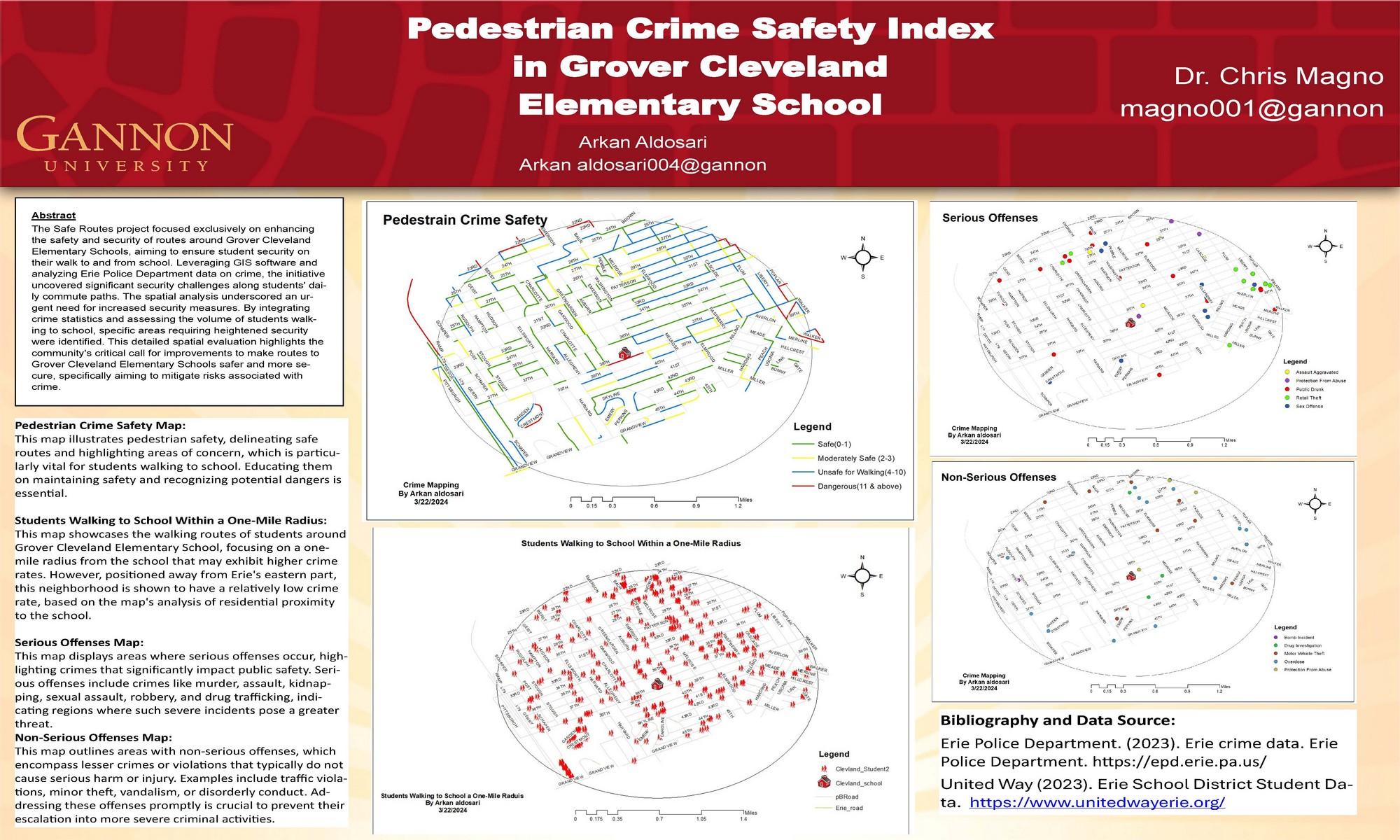
Title: Pedestrian Crime Safety Index in Grover Cleveland Elementary School
Abstract: The Safe Routes project focused exclusively on enhancing the safety and security of routes around Grover Cleveland Elementary Schools, aiming to ensure student security on their walk to and from school. Leveraging GIS software and analyzing Erie Police Department data on crime, the initiative uncovered significant security challenges along students' daily commute paths. The spatial analysis underscored an urgent need for increased security measures. By integrating crime statistics and assessing the volume of students walking to school, specific areas requiring heightened security were identified. This detailed spatial evaluation highlights the community's critical call for improvements to make routes to Grover Cleveland Elementary Schools safer and more se-cure, specifically aiming to mitigate risks associated with crime.
Presenter(s): Arkan Aldosari
Sponsoring Department: Criminal Justice
Mentor(s): Chris Magno
Presentation: 62
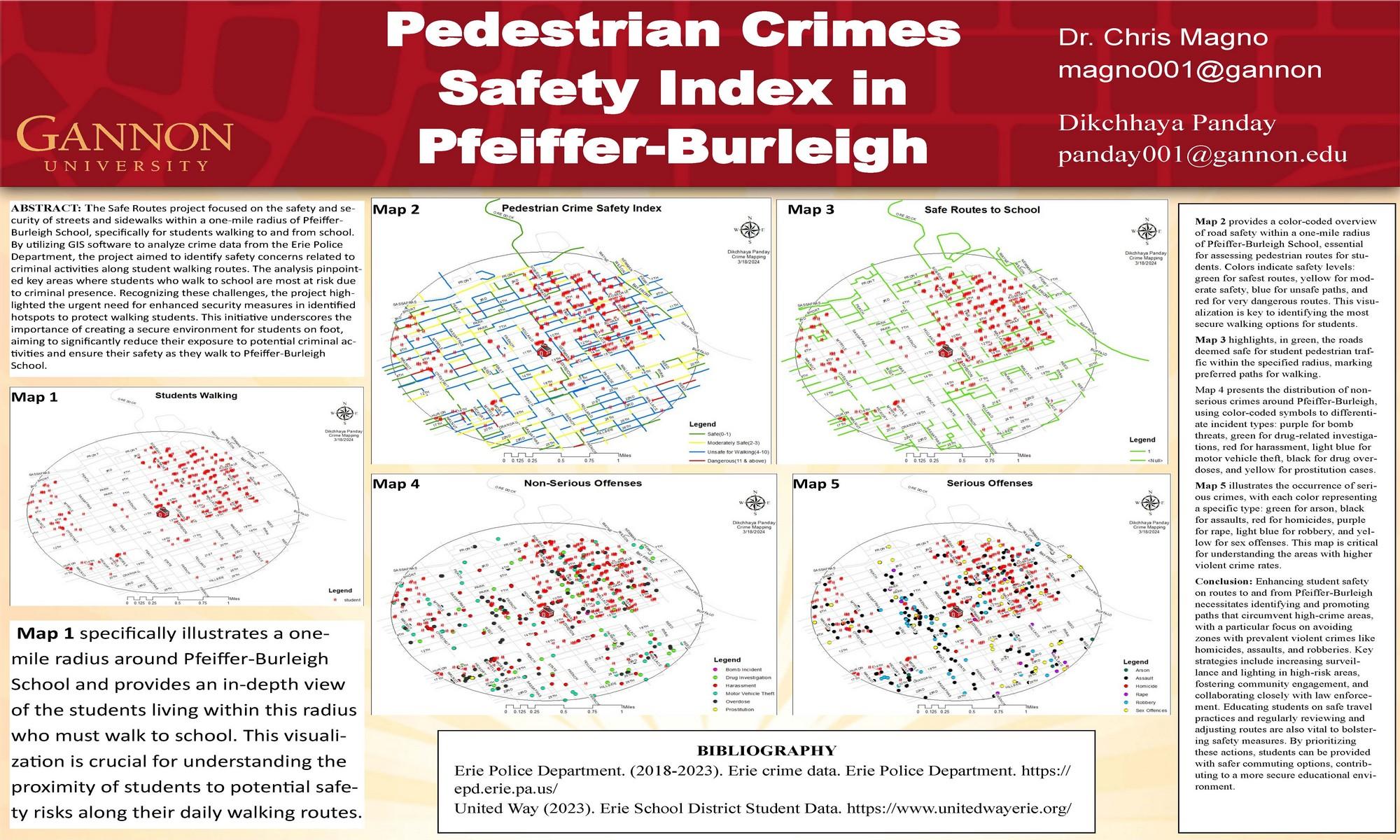
Title: Pedestrian Crimes Safety Index in Pfeiffer-Burleigh
Abstract: The Safe Routes project focused on the safety and security of streets and sidewalks within a onemile radius of Pfeiffer-Burleigh School, specifically for students walking to and from school. By utilizing GIS software to analyze crime data from the Erie Police Department, the project aimed to identify safety concerns related to criminal activities along student walking routes. The analysis pinpoint-ed key areas where students who walk to school are most at risk due to criminal presence. Recognizing these challenges, the project highlighted the urgent need for enhanced security measures in identified hotspots to protect walking students. This initiative underscores the importance of creating a secure environment for students on foot, aiming to significantly reduce their exposure to potential criminal activities and ensure their safety as they walk to Pfeiffer-Burleigh School.
Presenter(s): Dikchhaya Panday
Sponsoring Department: Criminal Justice
Mentor(s): Chris Magno
Presentation: 63
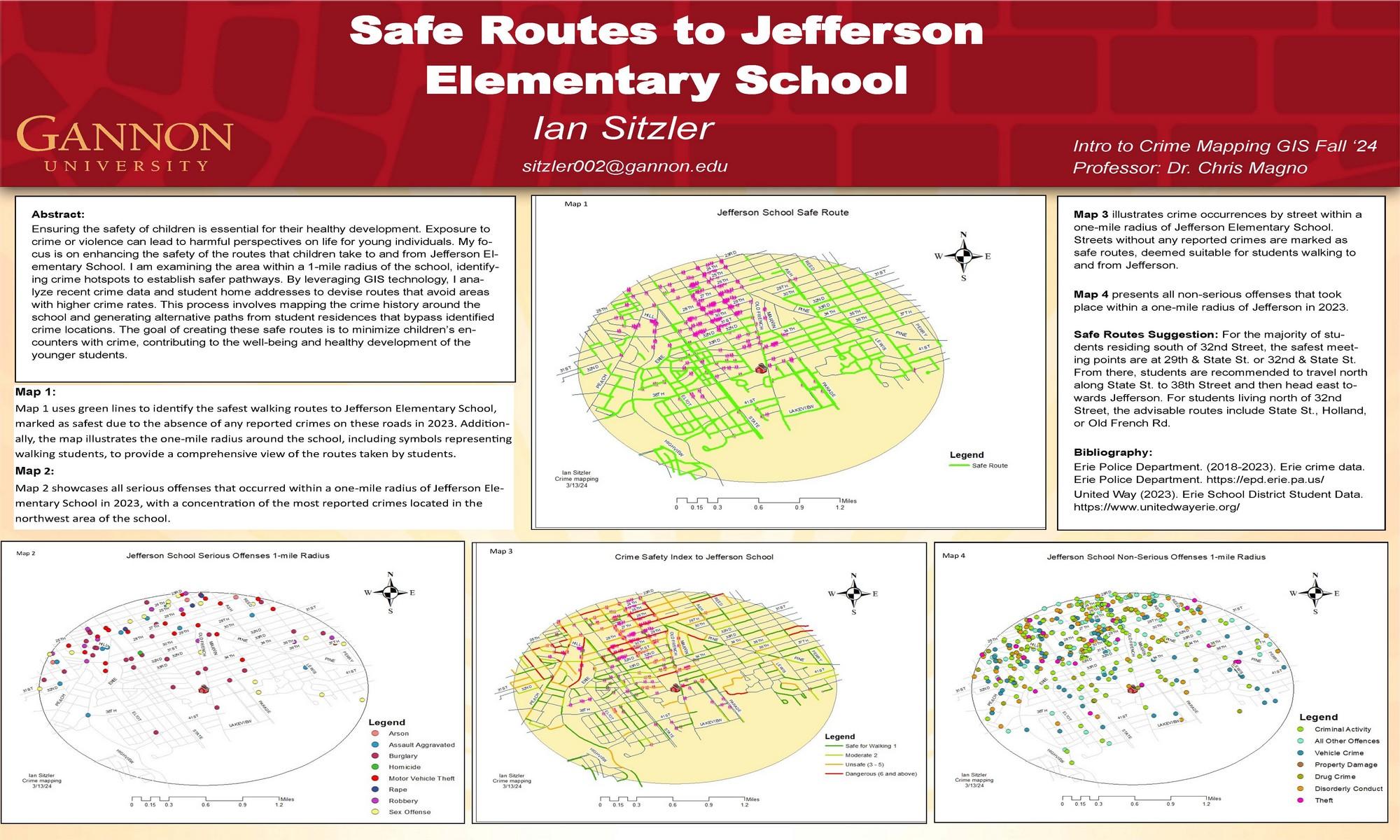
Title: Safe Routes to Jefferson Elementary School
Abstract: Ensuring the safety of children is essential for their healthy development. Exposure to crime or violence can lead to harmful perspectives on life for young individuals. My focus is on enhancing the safety of the routes that children take to and from Jefferson Elementary School. I am examining the area within a 1-mile radius of the school, identifying crime hotspots to establish safer pathways. By leveraging GIS technology, I analyze recent crime data and student home addresses to devise routes that avoid areas with higher crime rates. This process involves mapping the crime history around the school and generating alternative paths from student residences that bypass identified crime locations. The goal of creating these safe routes is to minimize children’s encounters with crime, contributing to the well-being and healthy development of the younger students.
Presenter(s): Ian Sitzler
Sponsoring Department: Criminal Justice
Mentor(s): Chris Magno
Presentation: 64
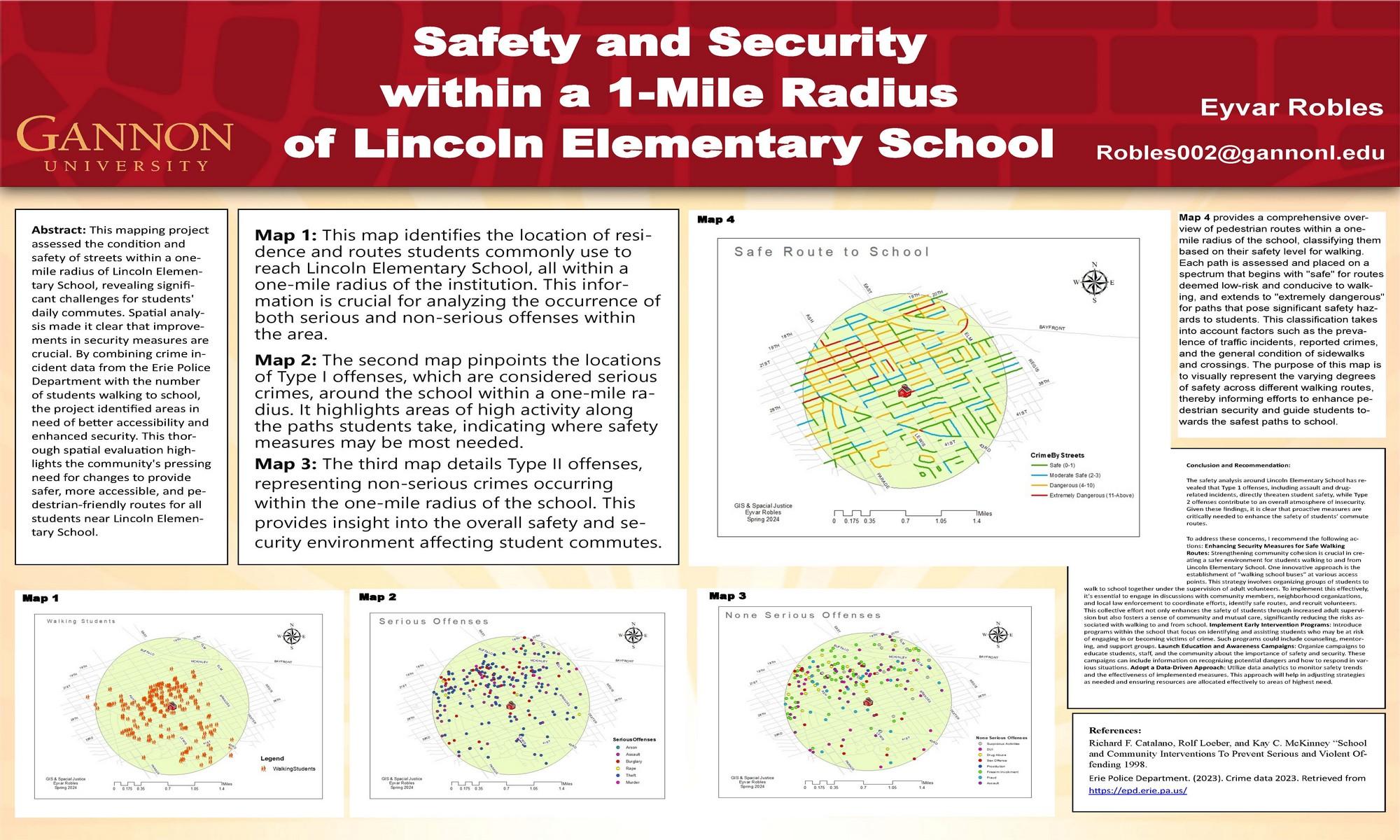
Title: Safety and Security within a 1-Mile Radius of Lincoln Elementary School
Abstract: This mapping project assessed the condition and safety of streets within a one-mile radius of Lincoln Elementary School, revealing significant challenges for students' daily commutes. Spatial analysis made it clear that improvements in security measures are crucial. By combining crime incident data from the Erie Police Department with the number of students walking to school, the project identified areas in need of better accessibility and enhanced security. This thorough spatial evaluation highlights the community's pressing need for changes to provide safer, more accessible, and pedestrian-friendly routes for all students near Lincoln Elementary School.
Presenter(s): Eyvar Robles
Sponsoring Department: Criminal Justice
Mentor(s): Chris Magno
Presentation: 65
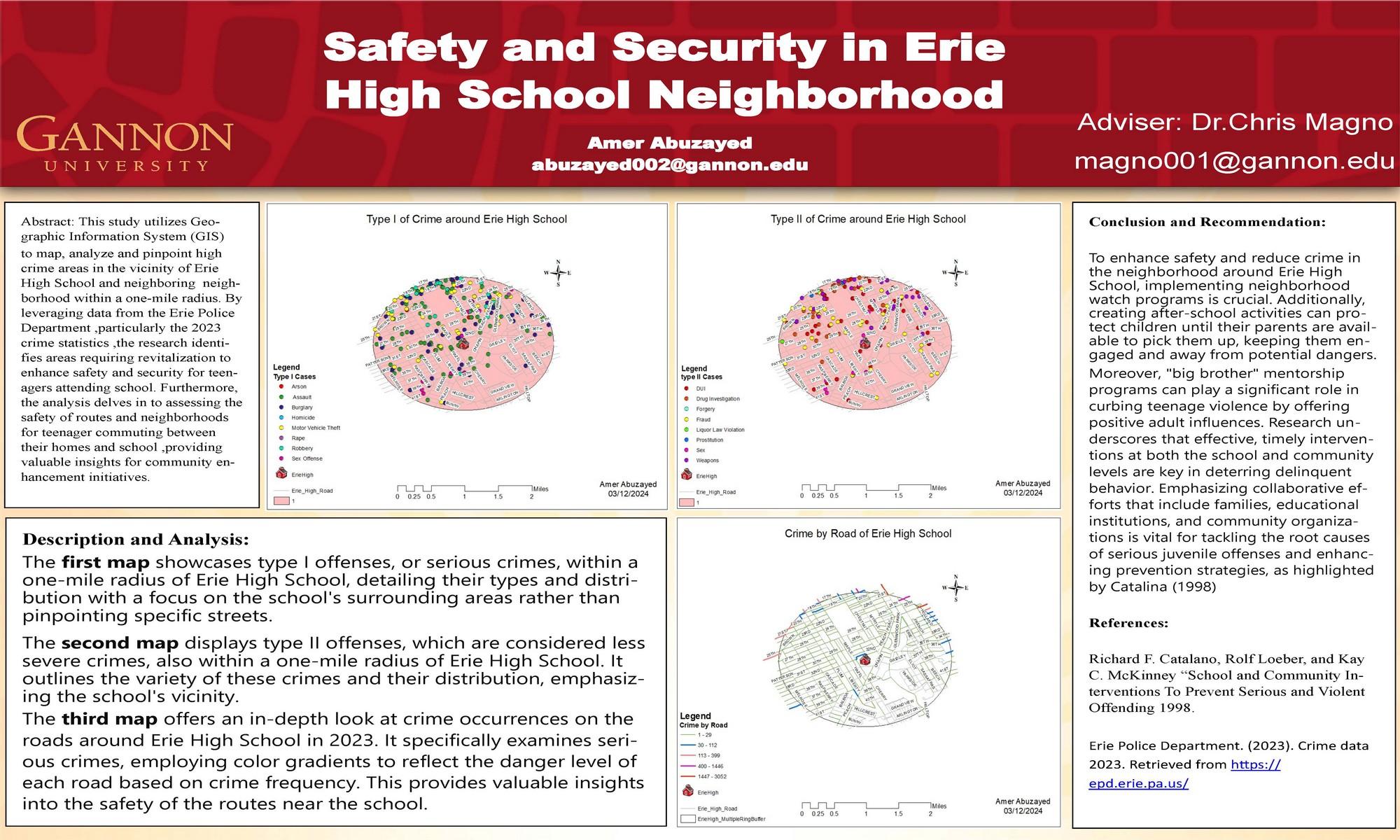
Title: Safety and Security in Erie High School Neighborhood
Abstract: This study utilizes Geographic Information System (GIS) to map, analyze and pinpoint high crime areas in the vicinity of Erie High School and neighboring neighborhood within a one-mile radius. By leveraging data from the Erie Police Department, particularly the 2023 crime statistics, the research identifies areas requiring revitalization to enhance safety and security for teenagers attending school. Furthermore, the analysis delves in to assessing the safety of routes and neighborhoods for teenager commuting between their homes and school, providing valuable insights for community enhancement initiatives.
Presenter(s): Amer Abuzayed
Sponsoring Department: Criminal Justice
Mentor(s): Chris Magno
Presentation: 66
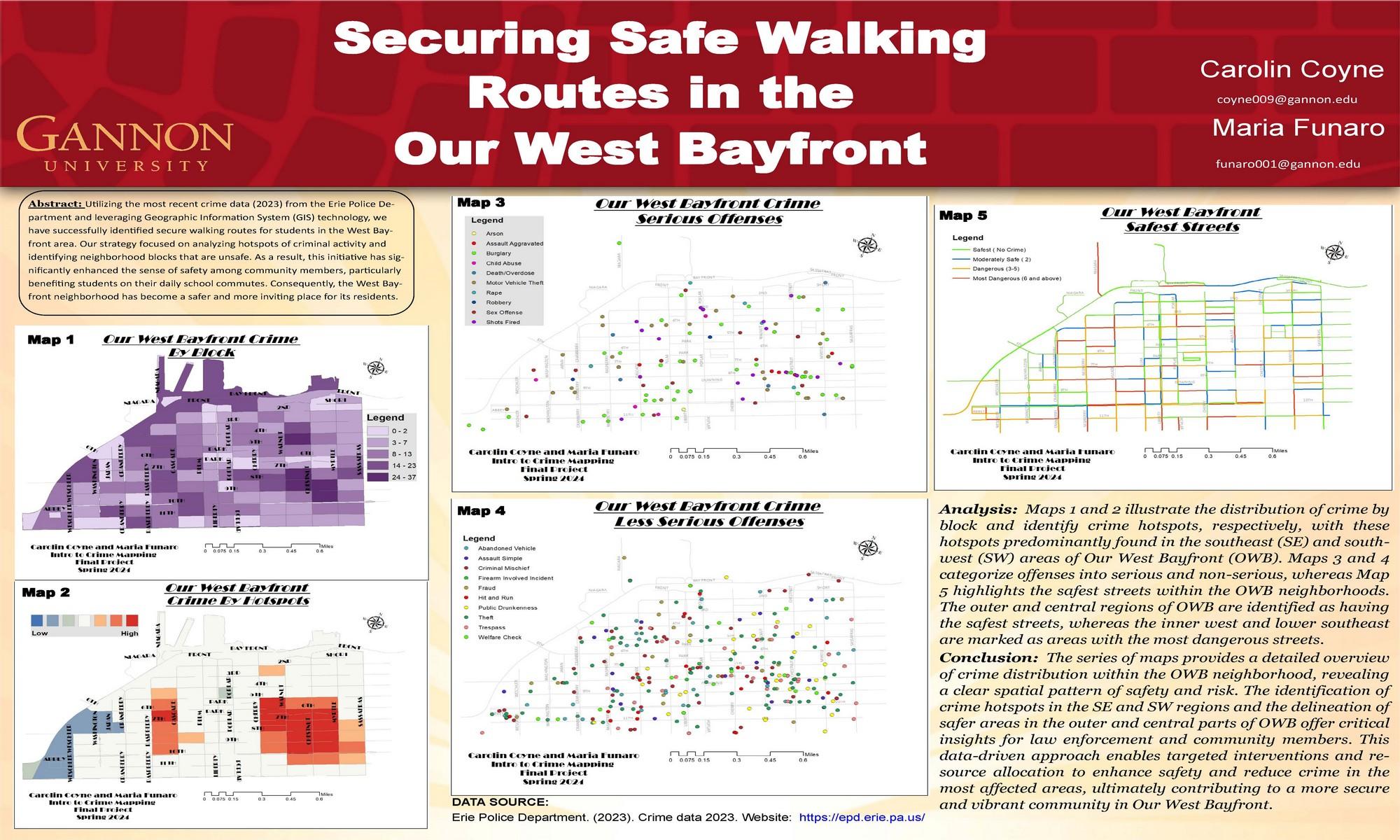
Title: Securing Safe Walking Routes in the Our West Bayfront
Abstract: Utilizing the most recent crime data (2023) from the Erie Police Department and leveraging Geographic Information System (GIS) technology, we have successfully identified secure walking routes for students in the West Bayfront area. Our strategy focused on analyzing hotspots of criminal activity and identifying neighborhood blocks that are unsafe. As a result, this initiative has significantly enhanced the sense of safety among community members, particularly benefiting students on their daily school commutes. Consequently, the West Bayfront neighborhood has become a safer and more inviting place for its residents.
Presenter(s): Carolin Coyne, Maria Funaro
Sponsoring Department: Criminal Justice
Mentor(s): Chris Magno
Presentation: 67
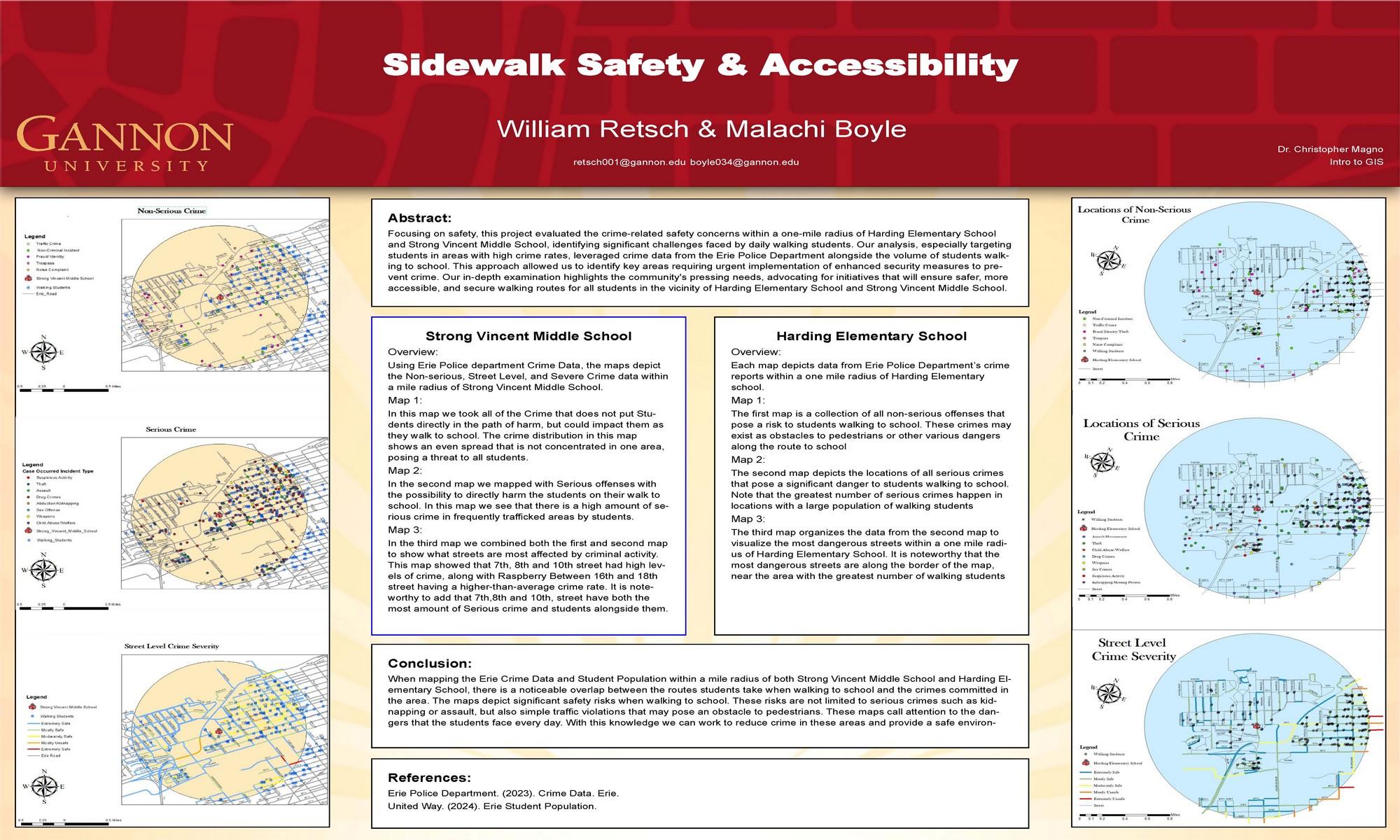
Title: Sidewalk Safety & Accessibility
Abstract: Focusing on safety, this project evaluated the crime-related safety concerns within a one-mile radius of Harding Elementary School and Strong Vincent Middle School, identifying significant challenges faced by daily walking students. Our analysis, especially targeting students in areas with high crime rates, leveraged crime data from the Erie Police Department alongside the volume of students walking to school. This approach allowed us to identify key areas requiring urgent implementation of enhanced security measures to prevent crime. Our in-depth examination highlights the community's pressing needs, advocating for initiatives that will ensure safer, more accessible, and secure walking routes for all students in the vicinity of Harding Elementary School and Strong Vincent Middle School.
Presenter(s): William Retsch, Malachi Boyle
Sponsoring Department: Criminal Justice
Mentor(s): Chris Magno
Presentation: 68
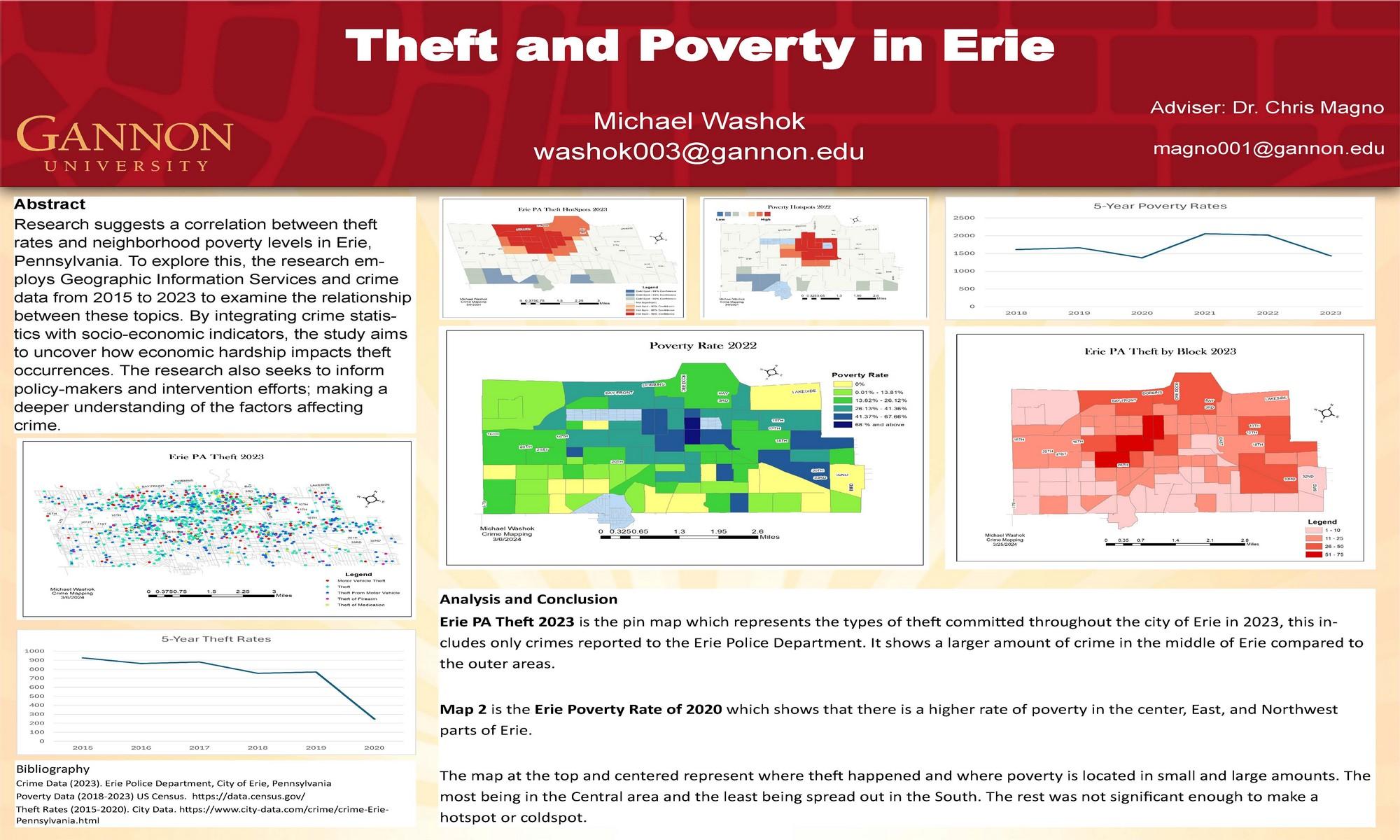
Title: Theft and Poverty in Erie, PA
Abstract: Research suggests a correlation between theft rates and neighborhood poverty levels in Erie, Pennsylvania. To explore this, the research employs Geographic Information Services and crime data from 2015 to 2023 to examine the relationship between these topics. By integrating crime statistics with socioeconomic indicators, the study aims to uncover how economic hardship impacts theft occurrences. The research also seeks to inform policy-makers and intervention efforts; making a deeper understanding of the factors affecting crime.
Presenter(s): Michael Washok
Sponsoring Department: Criminal Justice
Mentor(s): Chris Magno
Presentation: 69
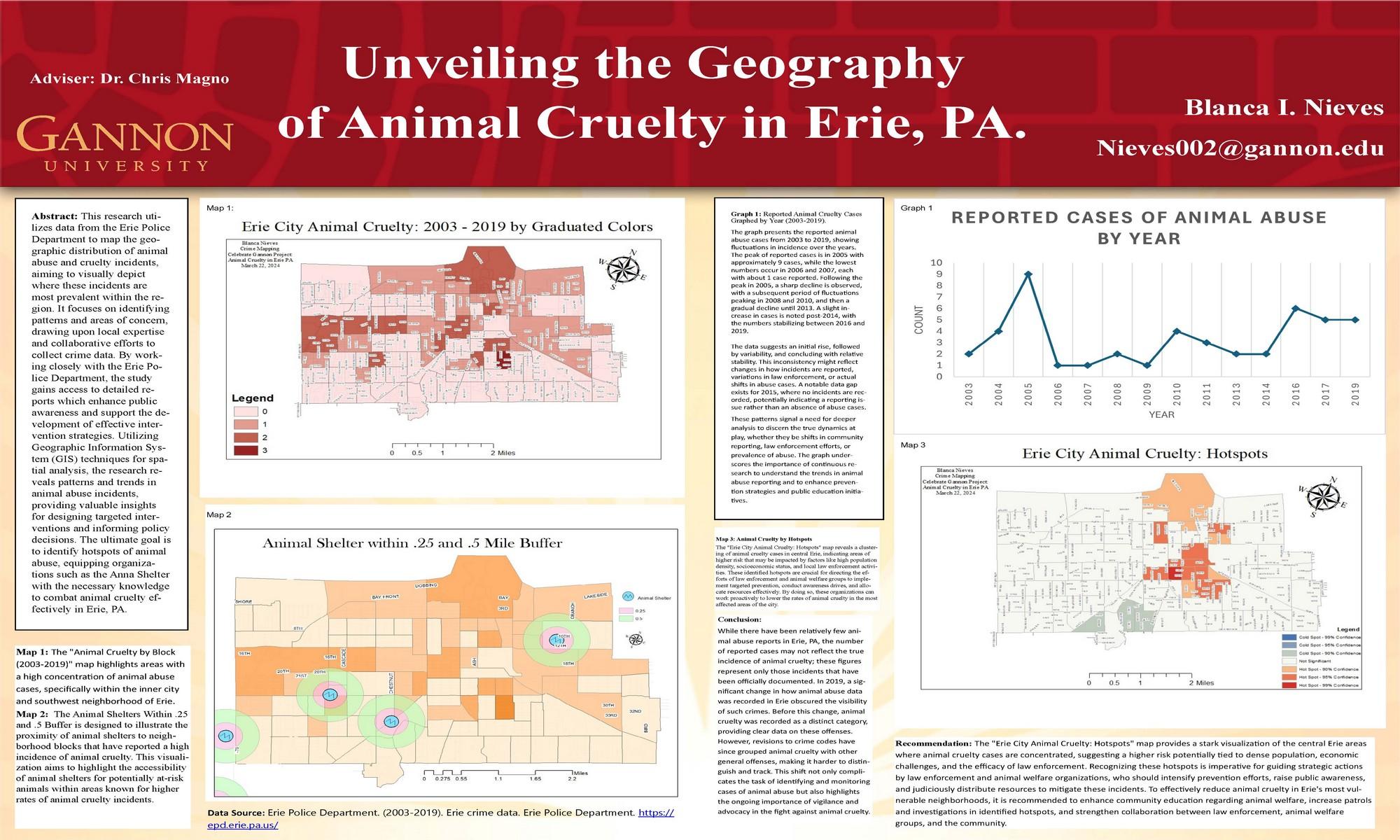
Title: Unveiling the Geography of Animal Cruelty in Erie, PA
Abstract: This research utilizes data from the Erie Police Department to map the geographic distribution of animal abuse and cruelty incidents, aiming to visually depict where these incidents are most prevalent within the region. It focuses on identifying patterns and areas of concern, drawing upon local expertise and collaborative efforts to collect crime data. By working closely with the Erie Police Department, the study gains access to detailed reports that enhance public awareness and support the development of effective intervention strategies. Utilizing Geographic Information System (GIS) techniques for spatial analysis, the research reveals patterns and trends in animal abuse incidents, providing valuable insights for designing targeted interventions and informing policy decisions. The ultimate goal is to identify hotspots of animal abuse, equipping organizations such as the Anna Shelter with the necessary knowledge to combat animal cruelty effectively in Erie, PA.
Presenter(s): Blanca Nieves
Sponsoring Department: Criminal Justice
Mentor(s): Chris Magno
Presentation: 70
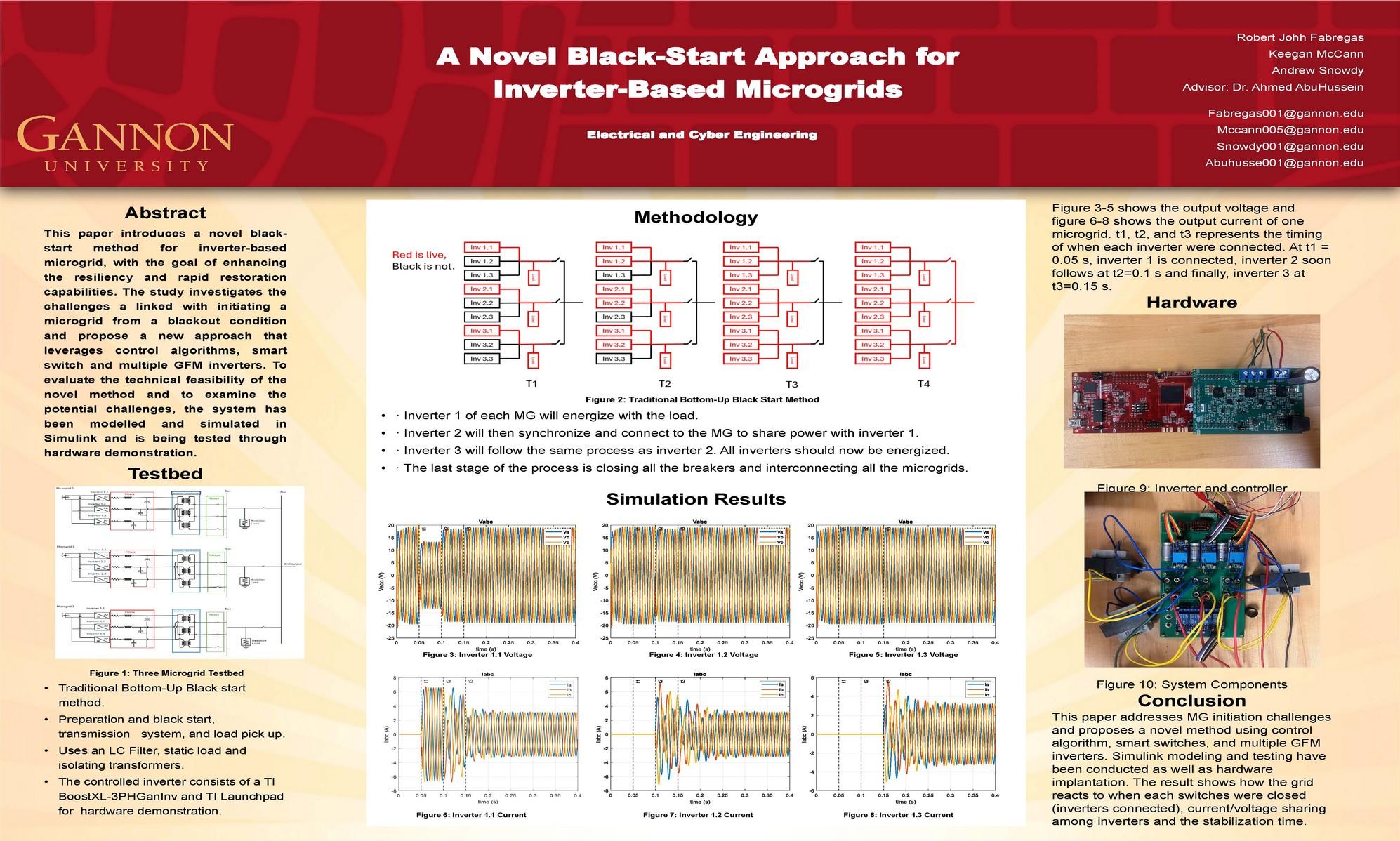
Title: A Novel Black-Start Approach for Inverter-Based Microgrids
Abstract: In this poster, we present a technical detail of a black-start approach for inverter-based microgrids under the supervision of Dr. Ahmed AbuHussein. The system is designed to bolstering the resiliency and expediting restoration capabilities. With the increasing integration of inverter-based resources (IBRs), there is a bigger need to explore other methods of power system restoration, especially with the threats of cyberattacks, natural disasters, etc. Traditional black start strategies rely on synchronous generators. This study supports using grid-forming inverters (GFM) to enhance microgrid recovery. The proposed approach uses a collective black-start strategy, leveraging control algorithms, smart switches, and multiple GFM inverters in parallel. To evaluate the technical feasibility and identify potential challenges, the system has been modeled and tested through Simulink and is currently being constructed and tested for hardware demonstration. The research emphasizes the importance of a bottom-up black-start method in which the microgrid restoration process is divided into three stages; preparation and black start, transmission system energization and load pick up. The main part of the system is the three microgrids which consists of three GFM inverters, linked together to form a durable and resilient power grid. The black start procedure uses a sequential energization of inverters within each microgrid, synchronization, and eventual interconnection of microgrids to create a cohesive system. Challenges related to connectivity, synchronization, power sharing and load balancing are addressed through control algorithms and switching. Results and insights from the ongoing implementation and testing phase will be presented, providing a comprehensive understanding of the proposed black-start approach for inverter based microgrids. The approach presented in this paper contributes to the evolving landscape of microgrid operation and offers practical solutions for a more reliable and robust power system.
Presenter(s): Robert John Fabregas, Keegan McCann, Andrew Snowdy
Sponsoring Department: Engineering
Mentor(s): Ahmed AbuHussein
Presentation: 71
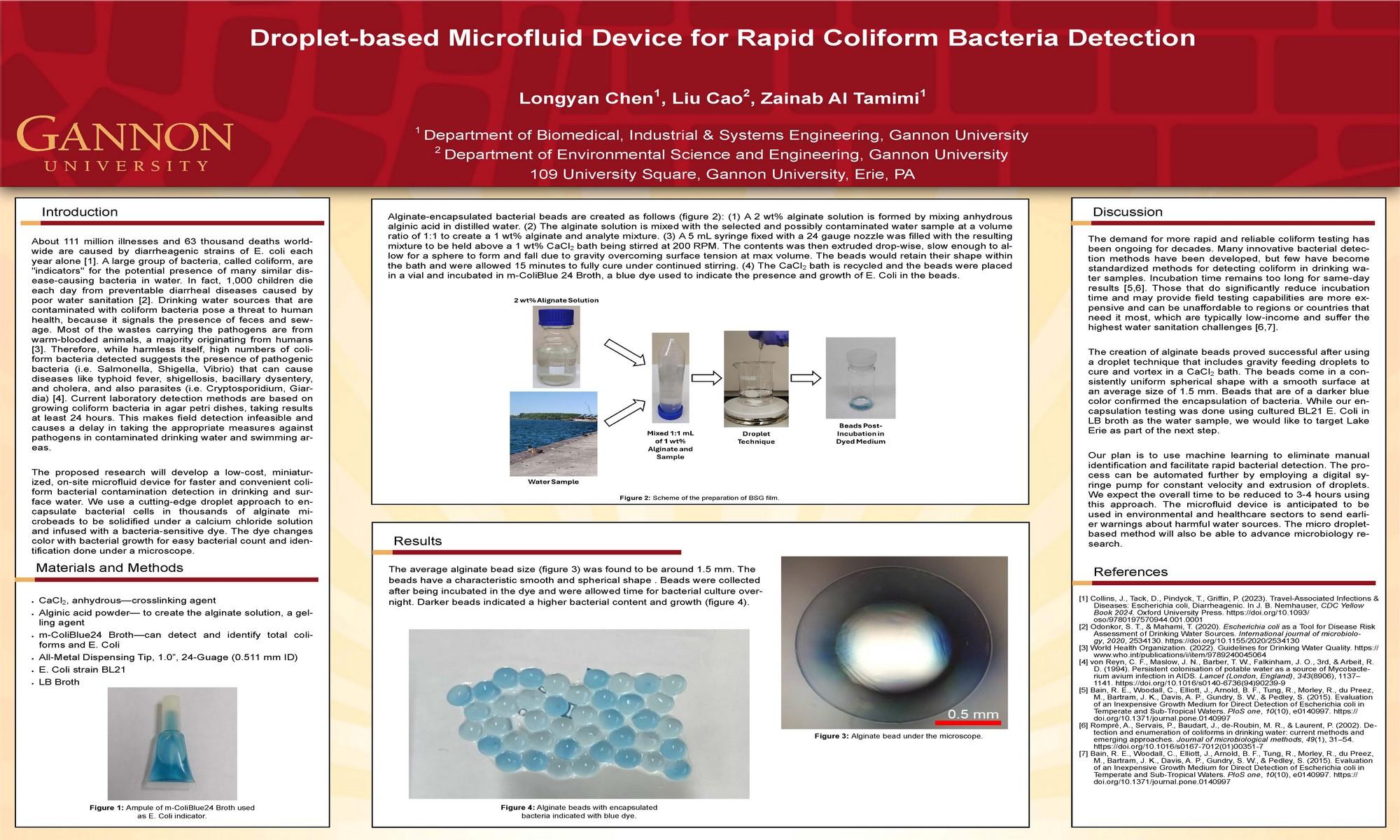
Title: Droplet-based Microfluid Device for Rapid Coliform Bacteria Detection
Abstract: About 111 million illnesses and 63 thousand deaths worldwide are caused by diarrheagenic strains of E. coli each year alone [1]. A large group of bacteria, called coliform, are "indicators" for the potential presence of many similar disease-causing bacteria in water. In fact, 1,000 children die each day from preventable diarrheal diseases caused by poor water sanitation [2]. Drinking water sources that are contaminated with coliform bacteria pose a threat to human health, because it signals the presence of feces and sewage. Most of the wastes carrying the pathogens are from warmblooded animals, a majority originating from humans [3]. Therefore, while harmless itself, high numbers of coliform bacteria detected suggests the presence of pathogenic bacteria (i.e. Salmonella, Shigella, Vibrio) that can cause diseases like typhoid fever, shigellosis, bacillary dysentery, and cholera, and also parasites (i.e. Cryptosporidium, Giardia) [4]. Current laboratory detection methods are based on growing coliform bacteria in agar petri dishes, taking results at least 24 hours. This makes field detection infeasible and causes a delay in taking the appropriate measures against pathogens in contaminated drinking water and swimming areas. The proposed research will develop a low-cost, miniaturized, on-site microfluid device for faster and convenient coliform bacterial contamination detection in drinking and surface water. We use a cutting-edge droplet approach to encapsulate bacterial cells in thousands of alginate microbeads to be solidified under a calcium chloride solution and infused with a bacteria-sensitive dye. The dye changes color with bacterial growth for easy bacterial count and identification done under a microscope.
Presenter(s): Zainab Al Tamimi
Sponsoring Department: Biomedical Engineering
Mentor(s): Longyan Chen, Liu Cao
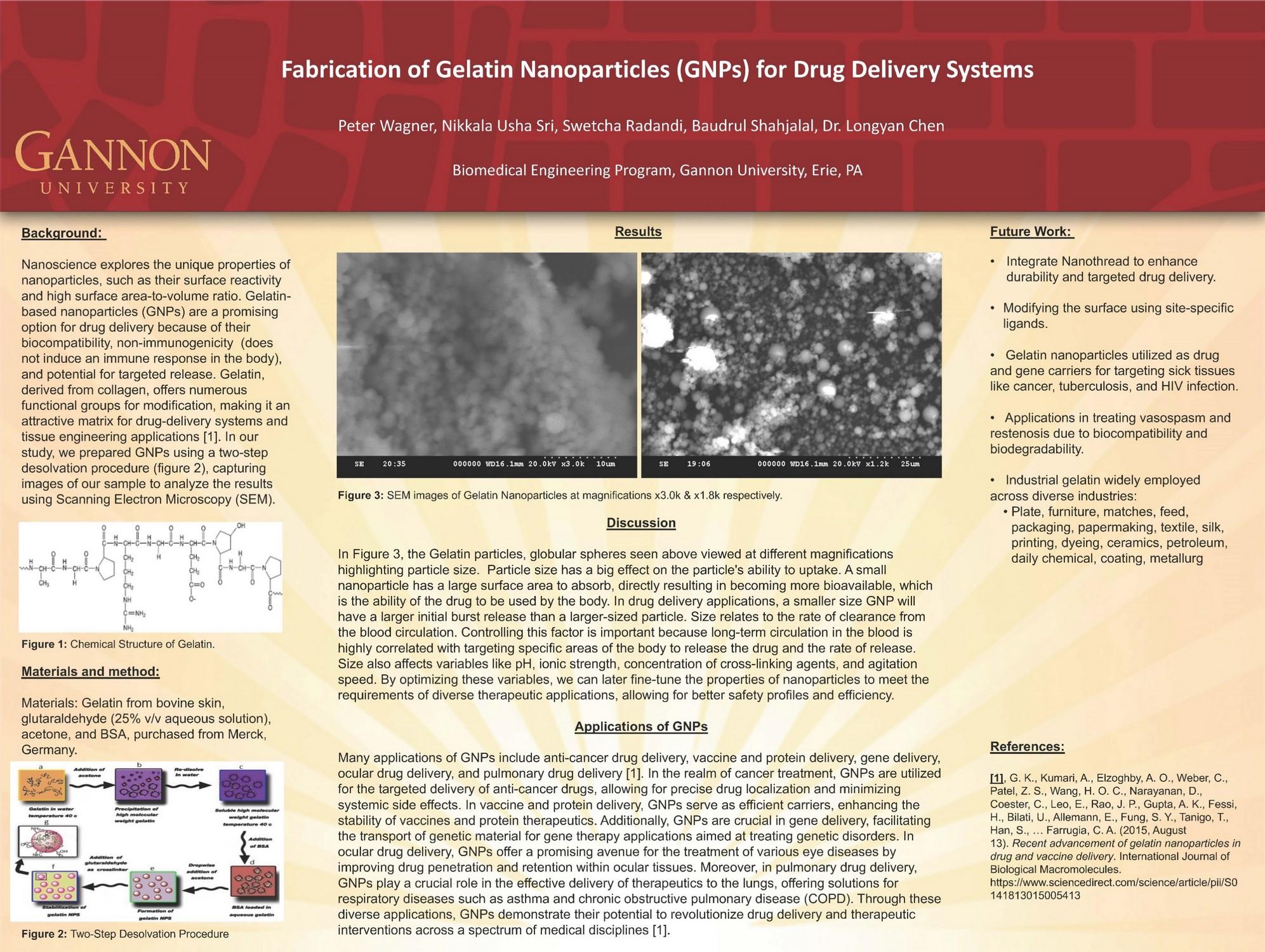
Presentation: 72
Title: Fabrication of Gelatin Nanoparticles (GNPs) for Drug Delivery Systems
Abstract: Nanoscience explores the unique properties of nanoparticles, such as their surface reactivity and high surface area-to-volume ratio. Gelatin-based nanoparticles (GNPs) are a promising option for drug delivery because of their biocompatibility, non-immunogenicity (does not induce an immune response in the body), and potential for targeted release. Gelatin, derived from collagen, offers numerous functional groups for modification, making it an attractive matrix for drug-delivery systems and tissue engineering applications [1]. In our study, we prepared GNPs using a two-step desolvation procedure (figure 2), capturing images of our sample to analyze the results using Scanning Electron Microscopy (SEM).
Presenter(s): Peter Wagner, Nikkala Usha Sri, Swetcha Radandi, Baudrul Shahjalal
Sponsoring Department: Biomedical Engineering
Mentor(s): Longyan Chen
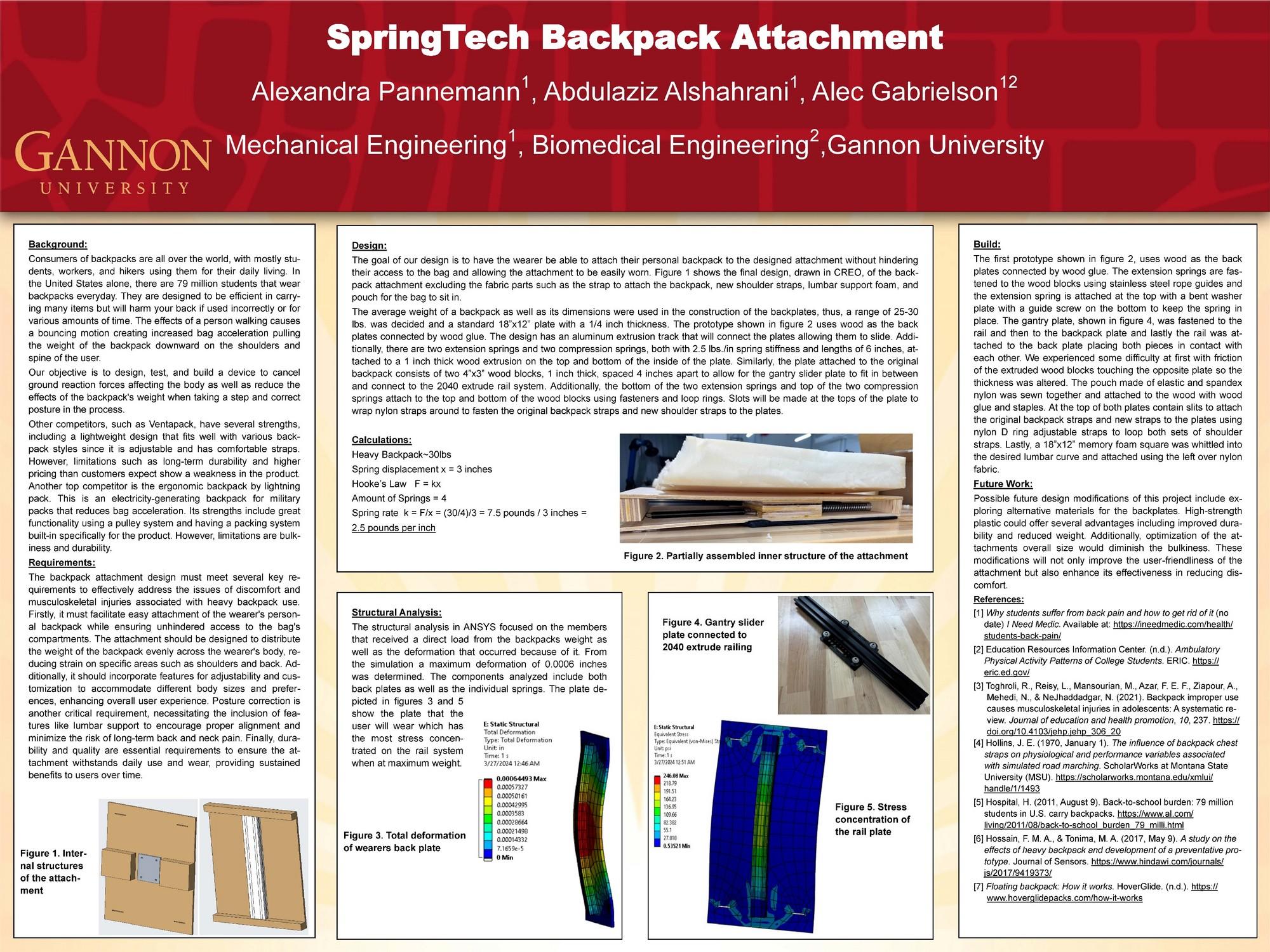
Presentation: 73
Title: SpringTech Backpack Attachment
Abstract: This project aims to develop a backpack attachment to address the prevalent issue of discomfort and musculoskeletal injuries associated with heavy backpack use among students, professionals, and hikers. Our objective is to integrate a spring system into the attachment design to minimize ground reaction forces when walking, running, or jumping resulting in a reduction of strain on the body. Additionally, the attachment will feature lumbar support, shoulder straps, and a spring system to optimize weight distribution and provide further stress relief. Testing will involve virtual simulations using ANSYS and extensive physical testing with force plates to ensure functionality and durability. The anticipated impact includes alleviating back and neck pain, improving posture, and enhancing overall comfort for users, which will potentially benefit millions worldwide. This innovative design has the potential to transform the backpack industry and significantly improve the daily lives of its users by providing a more ergonomic and comfortable carrying solution.
Presenter(s): Alec Gabrielson, Alexandra Pannemann, Abdulaziz Alshahrani
Sponsoring Department: Biomedical Engineering
Mentor(s): Longyan Chen
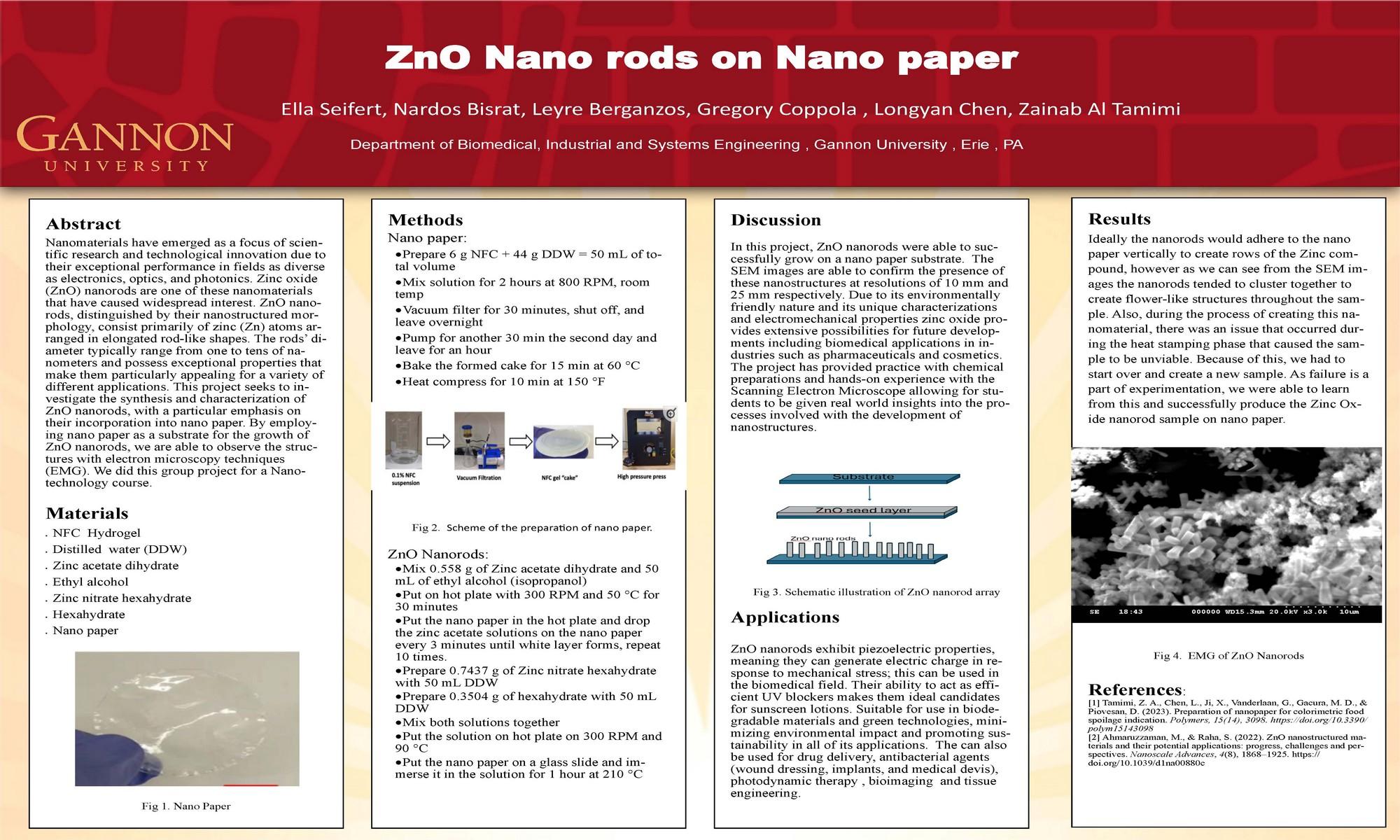
Presentation: 74
Title: ZnO Nano rods on Nano paper
Abstract: Nanomaterials have emerged as a focus of scientific research and technological innovation due to their exceptional performance in fields as diverse as electronics, optics, and photonics. Zinc oxide (ZnO) nanorods are one of these nanomaterials that have caused widespread interest. ZnO nanorods, distinguished by their nanostructured morphology, consist primarily of zinc (Zn) atoms arranged in elongated rod-like shapes. The rods’ diameter typically range from one to tens of nanometers and possess exceptional properties that make them particularly appealing for a variety of different applications. This project seeks to investigate the synthesis and characterization of ZnO nanorods, with a particular emphasis on their incorporation into nano paper. By employing nanopaper as a substrate for the growth of ZnO nanorods, we are able to observe the structures with electron microscopy techniques (EMG).
Presenter(s): Ella Seifert, Nardos Bisrat, Leyre Berganzos, Gregory Coppola, Zainab Al Tamimi
Sponsoring Department: Biomedical Engineering
Mentor(s): Longyan Chen
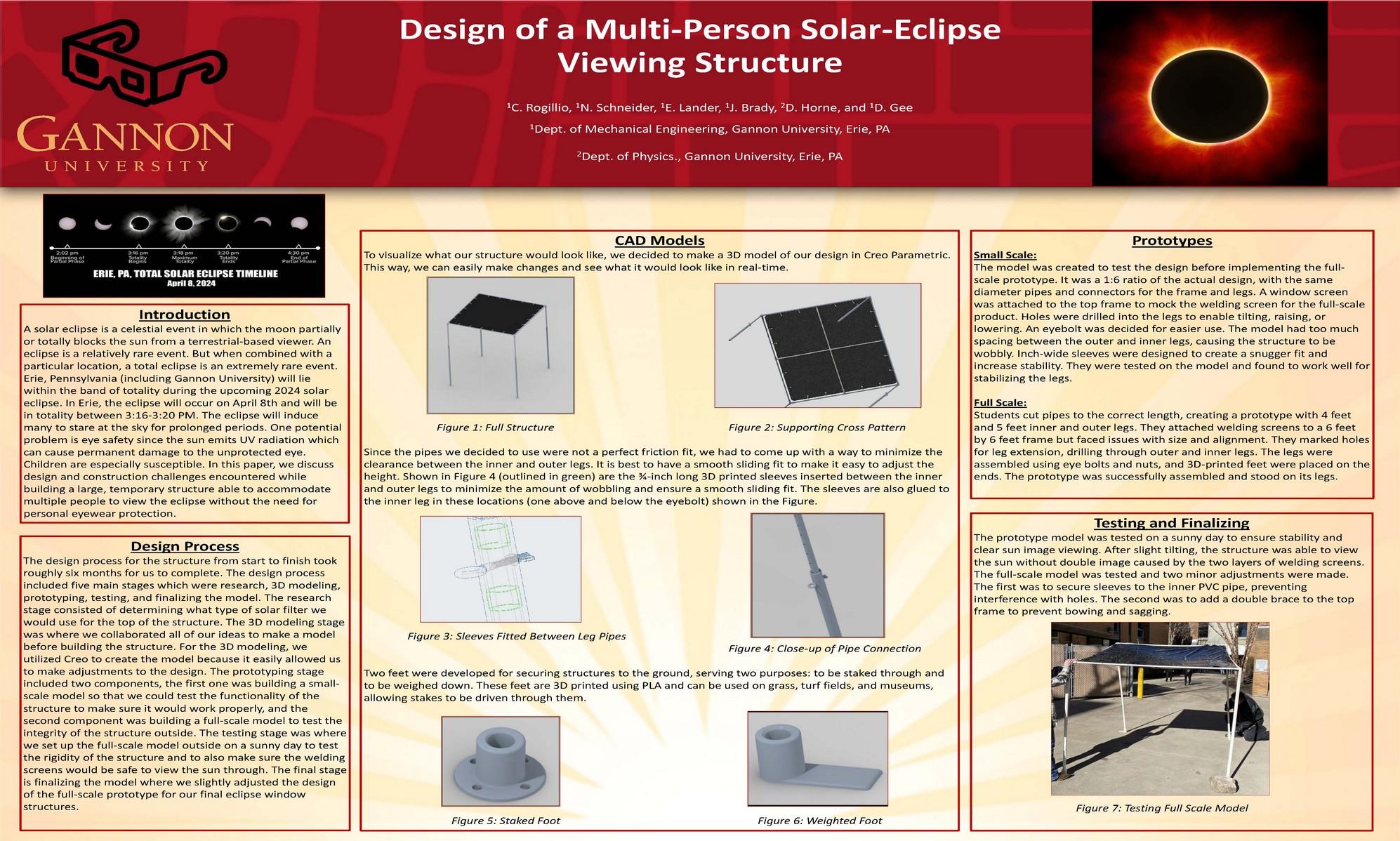
Presentation: 75
Title: Design of a Multi-Person Solar-Eclipse Viewing Structure
Abstract: A solar eclipse is a celestial event in which the moon partially or totally blocks the sun from a terrestrial-based viewer. An eclipse is a relatively rare event. But when combined with a particular location, a total eclipse is an extremely rare event. Erie, Pennsylvania (including Gannon University) will lie within the band of totality during the upcoming 2024 solar eclipse. In Erie, the eclipse will occur on April 8th and will be in totality between 3:16-3:20 PM. The eclipse will induce many to stare at the sky for prolonged periods. One potential problem is eye safety since the sun emits UV radiation which can cause permanent damage to the unprotected eye. Children are especially susceptible. In this paper, we discuss design and construction challenges encountered while building a large, temporary structure able to accommodate multiple people to view the eclipse without the need for personal eyewear protection.
Presenter(s): Claire Rogillio, Nathan Schneider, Elizabeth Lander, John Brady
Sponsoring Department: Mechanical Engineering
Mentor(s): David Gee, David Horne
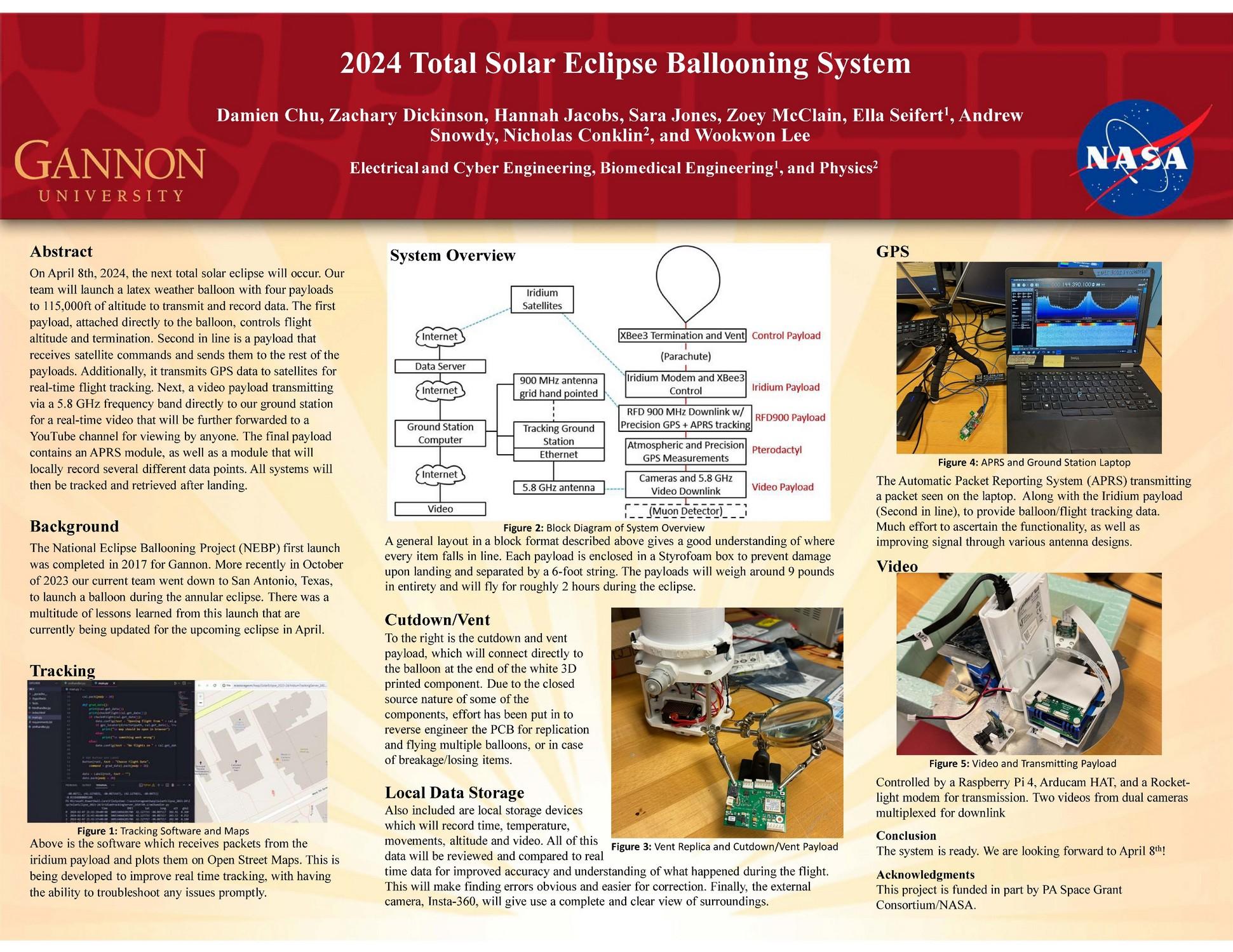
Presentation: 76
Title: 2024 Total Solar Eclipse Ballooning System
Abstract: On April 8th, 2024, the next total solar eclipse will occur. Our team will launch a latex weather balloon with four payloads to 115,000ft of altitude to transmit and record data. The first payload, attached directly to the balloon, controls flight altitude and termination. Second in line is a payload that receives satellite commands and sends them to the rest of the payloads. Additionally, it transmits GPS data to satellites for realtime flight tracking. Next, a video payload transmitting via a 5.8 GHz frequency band directly to our ground station for a real-time video that will be further forwarded to a YouTube channel for viewing by anyone. The final payload contains an APRS module, as well as a module that will locally record several different data points. All systems will then be tracked and retrieved after landing.
Presenter(s): Damien Chu, Zachary Dickinson, Hannah Jacobs, Sara Jones, Zoey McClain, Ella Seifert, Andrew Snowdy
Sponsoring Department: Electrical and Computer Engineering
Mentor(s): Wookwon Lee, Nicholas Conklin
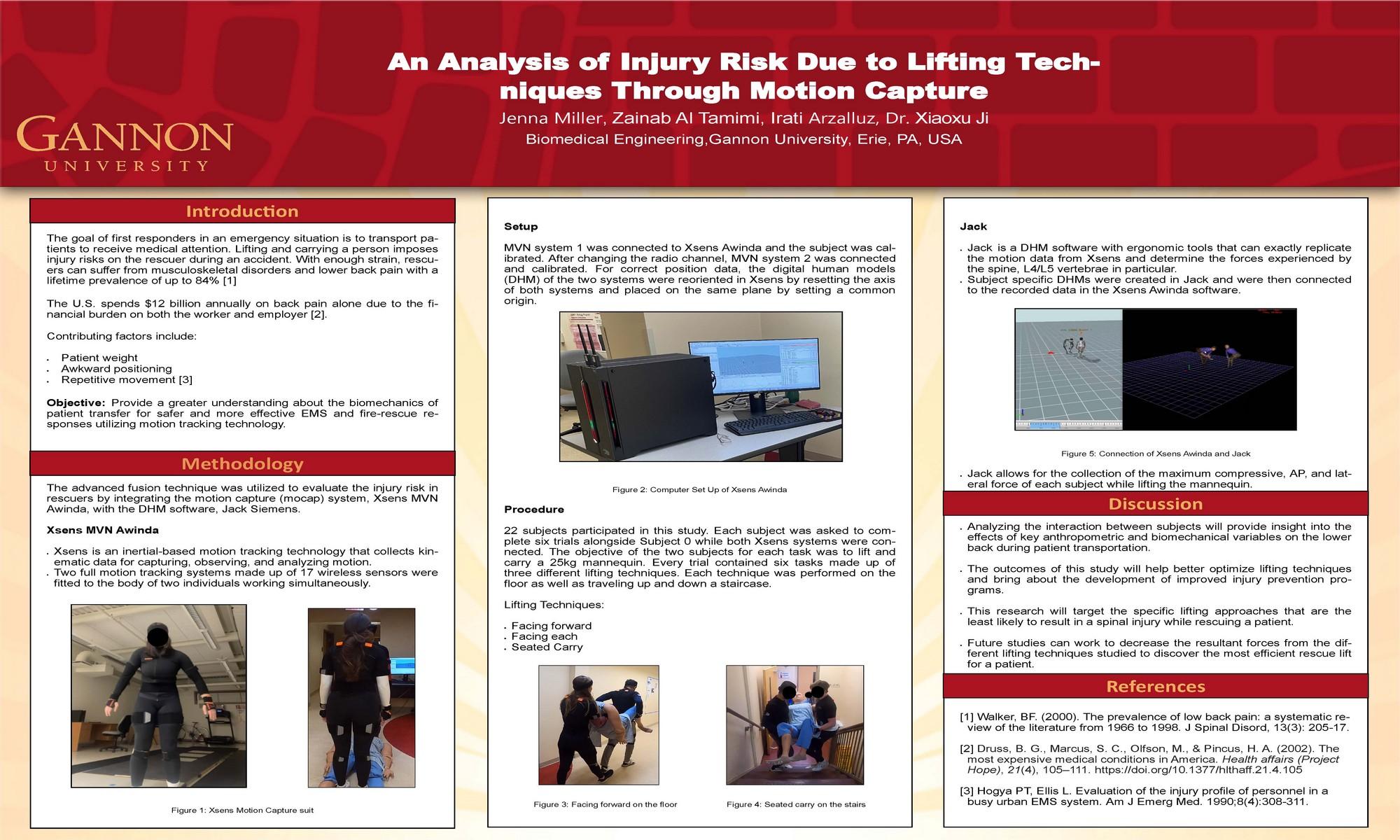
Presentation: 77
Title: An Analysis of Injury Risk Due to Lifting Techniques Through Motion Capture
Abstract: The goal of first responders in an emergency situation is to transport people to receive medical attention. However, lifting and carrying a person imposes injury risks on the rescuer. Patient weight, awkward positioning, and repetitive movement are the three major contributing factors to lifting injuries. Previous studies have not investigated the interaction between these variables. Utilizing the advanced fusion technique, the motion tracking technology, Xsens MVN Awind, provides data which can be used for injury risk analysis in combination with a digital human modeling (DHM) software, Jack Siemens. The study will be the first to utilize two full motion tracking systems on two individuals working simultaneously. Analyzing their interaction will provide insight into the effects of key anthropometric and biomechanical variables on the lower back during patient transportation. The outcomes of this study will help better optimize lifting techniques and bring about the development of improved injury prevention programs.
Presenter(s): Jenna Miller, Zainab Al Tamimi, Irati Arzalluz
Sponsoring Department: Biomedical Engineering
Mentor(s): Xiaoxu Ji
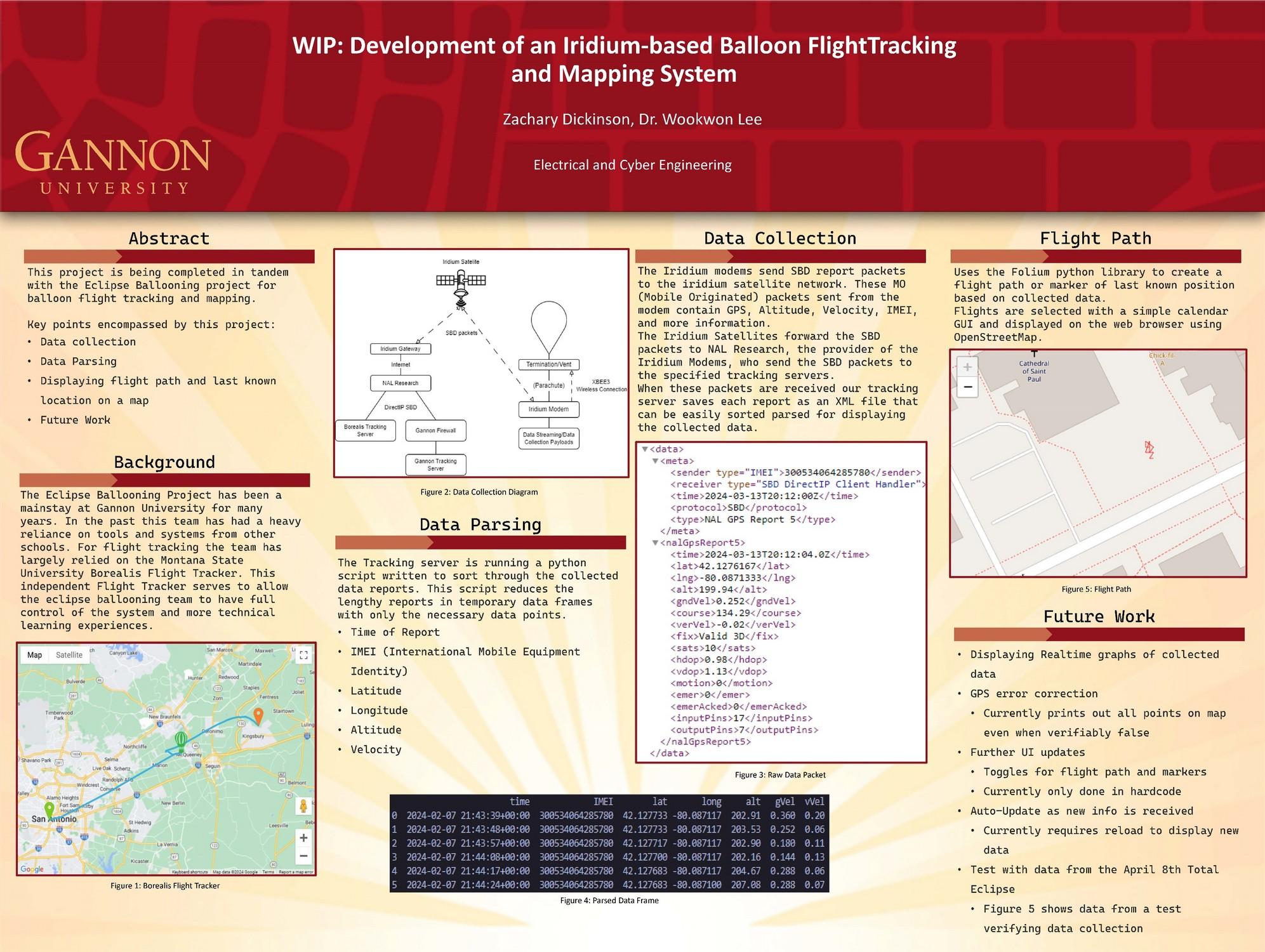
Presentation: 78
Title: WIP: Development of an Iridium-based Balloon FlightTracking and Mapping System
Abstract: This project encompasses the collection, parsing, and display of GPS (Global Positioning System) data for the use of balloon flight tracking and mapping. This system collects location, altitude, and velocity data from Iridium satellite modems via the use of the DirectIP SBD (Short Burst Data) reports. A python script is used to parse through the data reports based on a given time frame of the flight and/or IMEI (International Mobile Equipment Identity) number of the Iridium modem. The Python script then stores the important data points (longitude, latitude, altitude, velocity, and time of report) in a temporary data frame. A Web based application displays this data on a map allowing for the user to easily track balloon flights and for the user to easily map the flight paths of balloon flights. This project is being completed in tandem with the Eclipse Ballooning project as a way to track the flights.
Presenter(s): Zachary Dickinson
Sponsoring Department: Electrical or Cyber Engineering
Mentor(s): Wookwon Lee
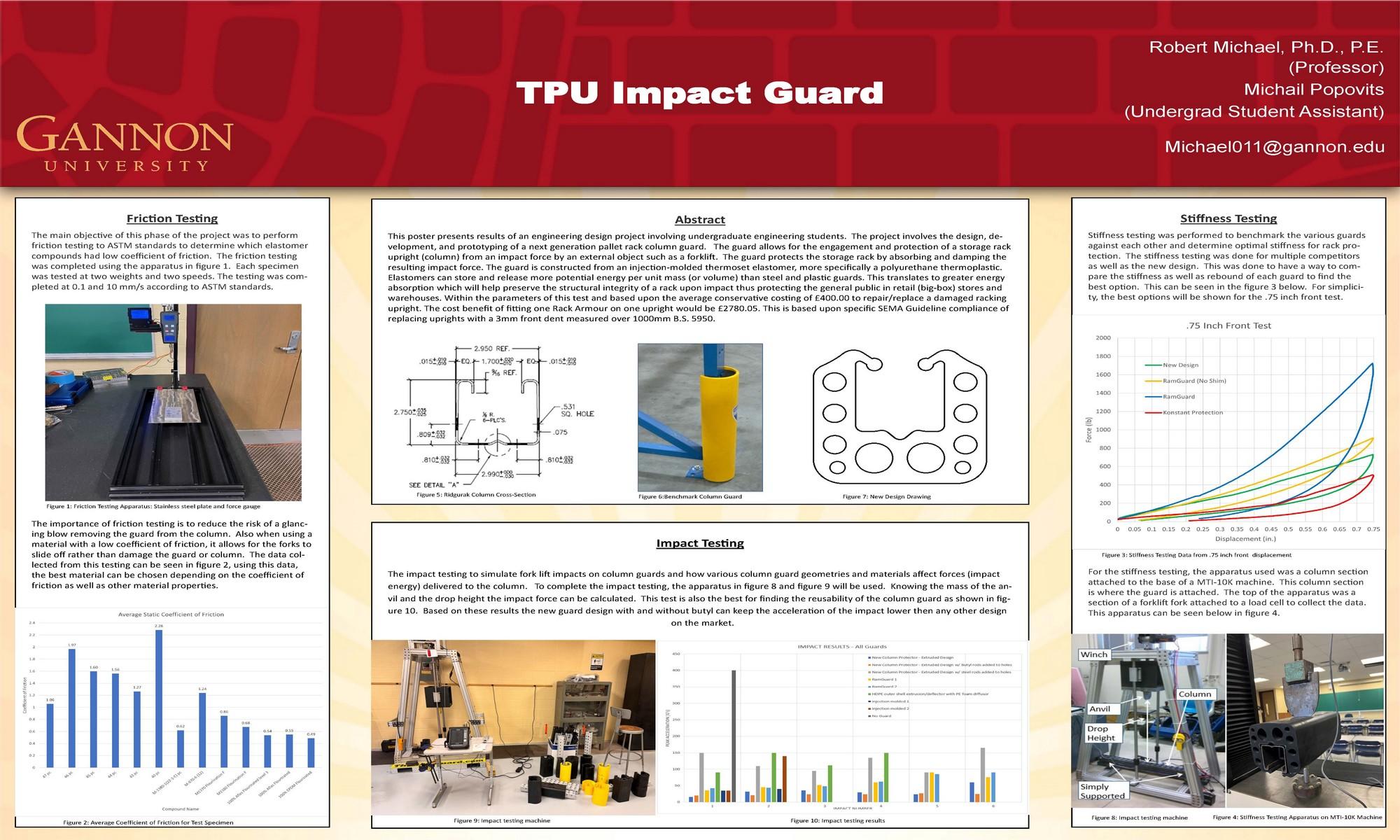
Presentation: 79
Title: TPU Impact Guard
Abstract: This poster presents results of an engineering design project involving undergraduate engineering students. The project involves the design, development, and prototyping of a next generation pallet rack column guard. The guard allows for the engagement and protection of a storage rack upright (column) from an impact force by an external object such as a forklift. The guard protects the storage rack by absorbing and damping the resulting impact force. The guard is constructed from an injection-molded thermoset elastomer, more specifically a polyurethane thermoplastic. Elastomers can store and release more potential energy per unit mass (or volume) than steel and plastic guards. This translates to greater energy absorption which will help preserve the structural integrity of a rack upon impact thus protecting the general public in retail (big-box) stores and warehouses. Within the parameters of this test and based upon the average conservative costing of £400.00 to repair/replace a damaged racking upright. The cost benefit of fitting one Rack Armour on one upright would be £2780.05. This is based upon specific SEMA Guideline compliance of replacing uprights with a 3mm front dent measured over 1000mm B.S. 5950.
Presenter(s): Michail Popovits
Sponsoring Department: Mechanical Engineering
Mentor(s): Robert Michael
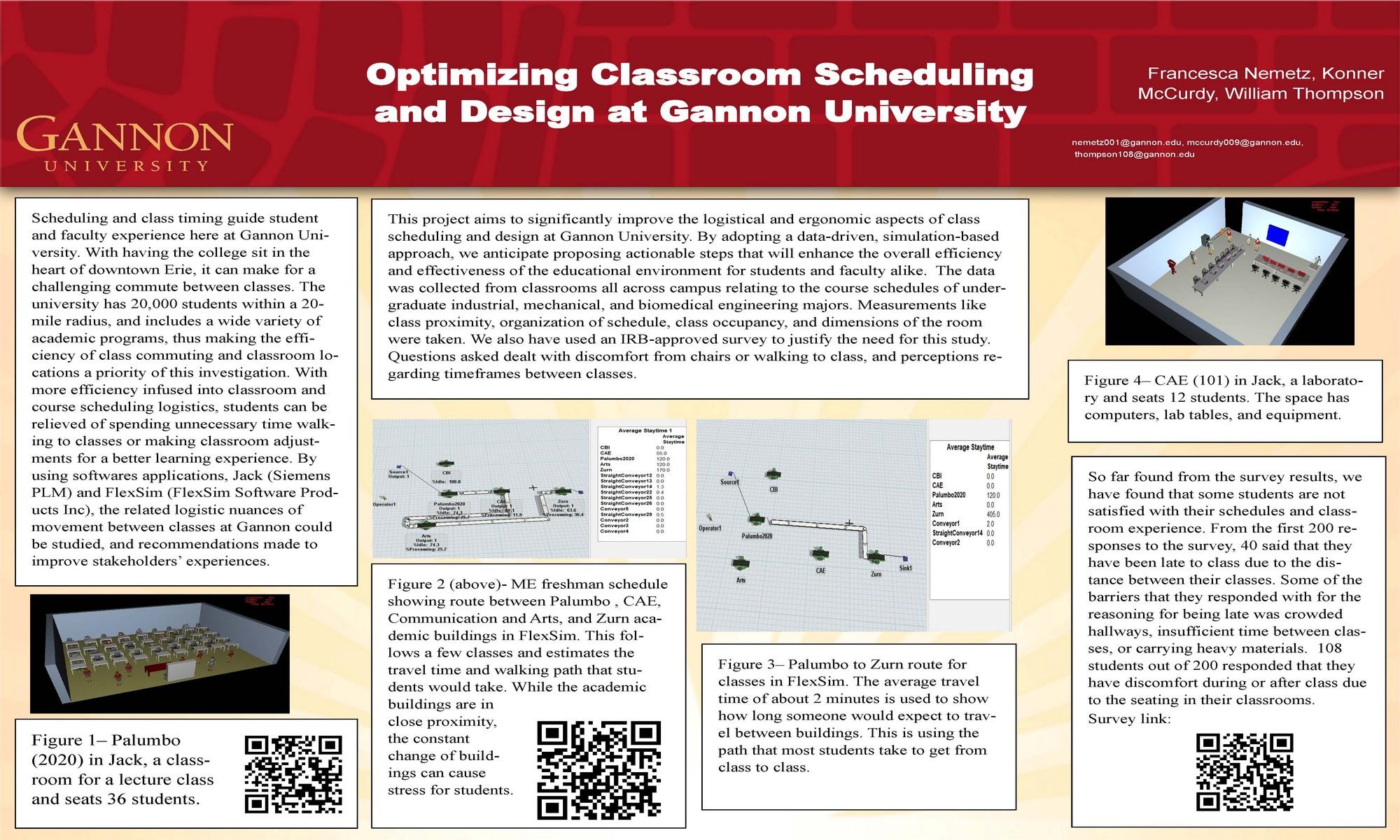
Presentation: 80
Title: Optimizing Classroom Scheduling and Design at Gannon University
Abstract: Scheduling and class timing guide student and faculty experience here at Gannon University. With having the college sit in the heart of downtown Erie, it can make for a challenging commute between classes. The university has 20,000 students within a 20-mile radius, and includes a wide variety of academic programs, thus making the efficiency of class commuting and classroom locations a priority of this investigation. With more efficiency infused into classroom and course scheduling logistics, students can be relieved of spending unnecessary time walking to classes or making classroom adjustments for a better learning experience. By using softwares applications, Jack (Siemens PLM) and FlexSim (FlexSim Software Products Inc), the related logistic nuances of movement between classes at Gannon could be studied, and recommendations made to improve stakeholders’ experiences.
Presenter(s): Francesca Nemetz, Konner McCurdy, William Thompson
Sponsoring Department: Industrial Engineering
Mentor(s): Ikechukwu Ohu

Presentation: 81
Title: Off-Grid Power Supply for Christmas Lights
Abstract: In this poster, we present technical details learned from setting up an Off-grid Power System under development for PRESQUE ISLE PARTNERSHIP. The power system consists of various electronic subsystems to carry out sustainable and self-sufficient power supply for lighting an LED tree during the Christmas season. The key system contains a Wind Turbine which includes a set of controllers that regulates the power produced to continuously charge batteries providing an off-grid LED Christmas tree. Designing a safe, yet practical tree-like structure was key in the process of meeting the client's needs and requirements. The design required attention to details and structural analysis while still being relativity simple to assemble and sustainable. Integrating a system seamlessly between the electronic and structural components requires thorough review and testing for compatibility between all the various parts. Designing a system like such is a was an exceedingly valuable learning experience for all involved.
Presenter(s): Kalkidan Lakew, Maksim Mayster, Bridget Tucker
Sponsoring Department: Electrical and Mechanical Engineering
Mentor(s): Davide Piovesan, Ahmed Abuhussein
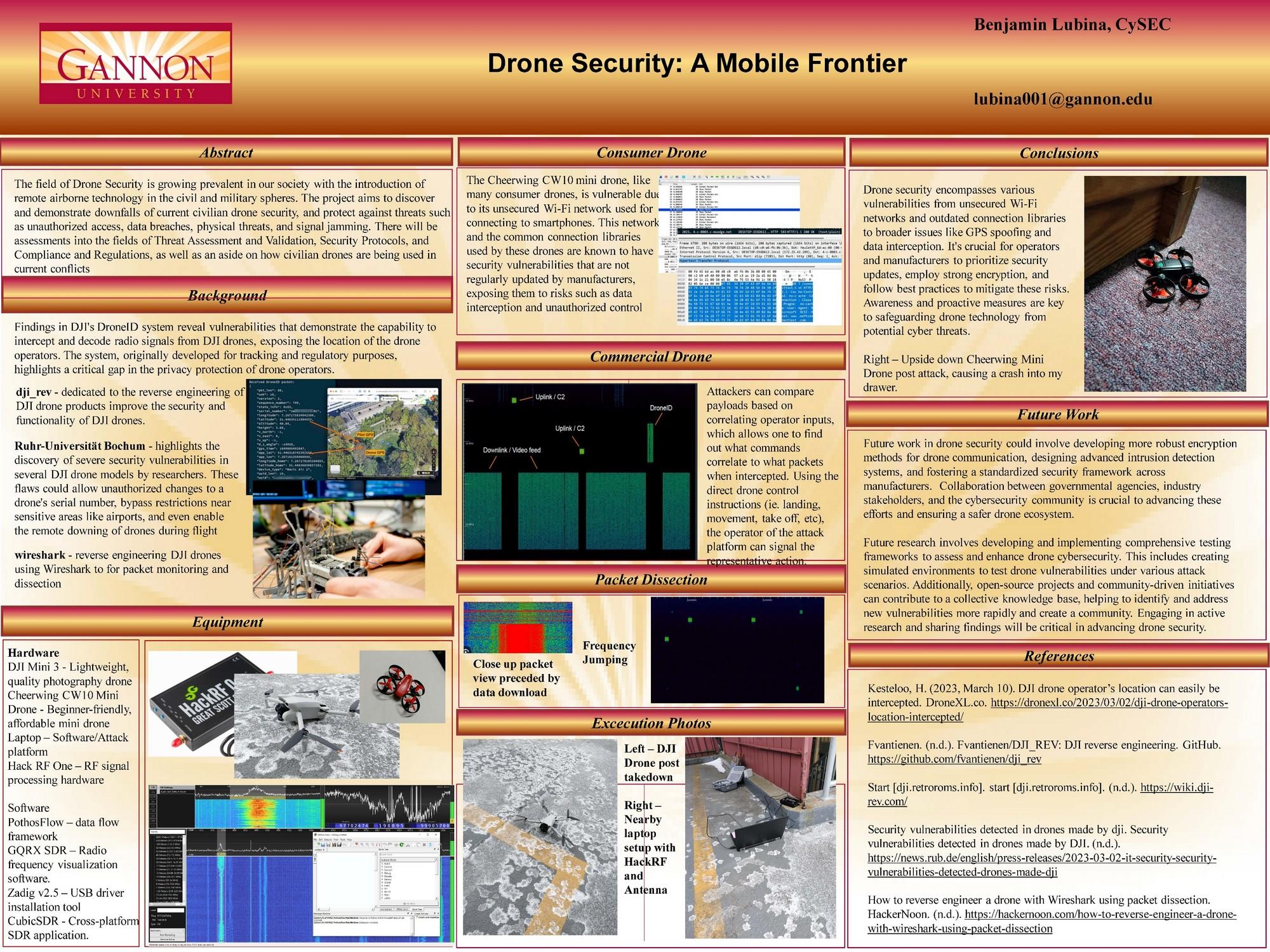
Presentation: 82
Title: Drone Security: A Mobile Frontier
Abstract: The field of Drone Security is growing prevalent in our society with the introduction of remote airborne technology in the civil and military spheres. The project aims to discover and demonstrate downfalls of current civilian drone security, and protect against threats such as unauthorized access, data breaches, physical threats, and signal jamming. There will be assessments into the fields of Threat Assessment and Validation, Security Protocols, and Compliance and Regulations, as well as an aside on how civilian drones are being used incurrent conflicts.
Presenter(s): Benjamin Lubina
Sponsoring Department: Cybersecurity
Mentor(s): Steven Rowland
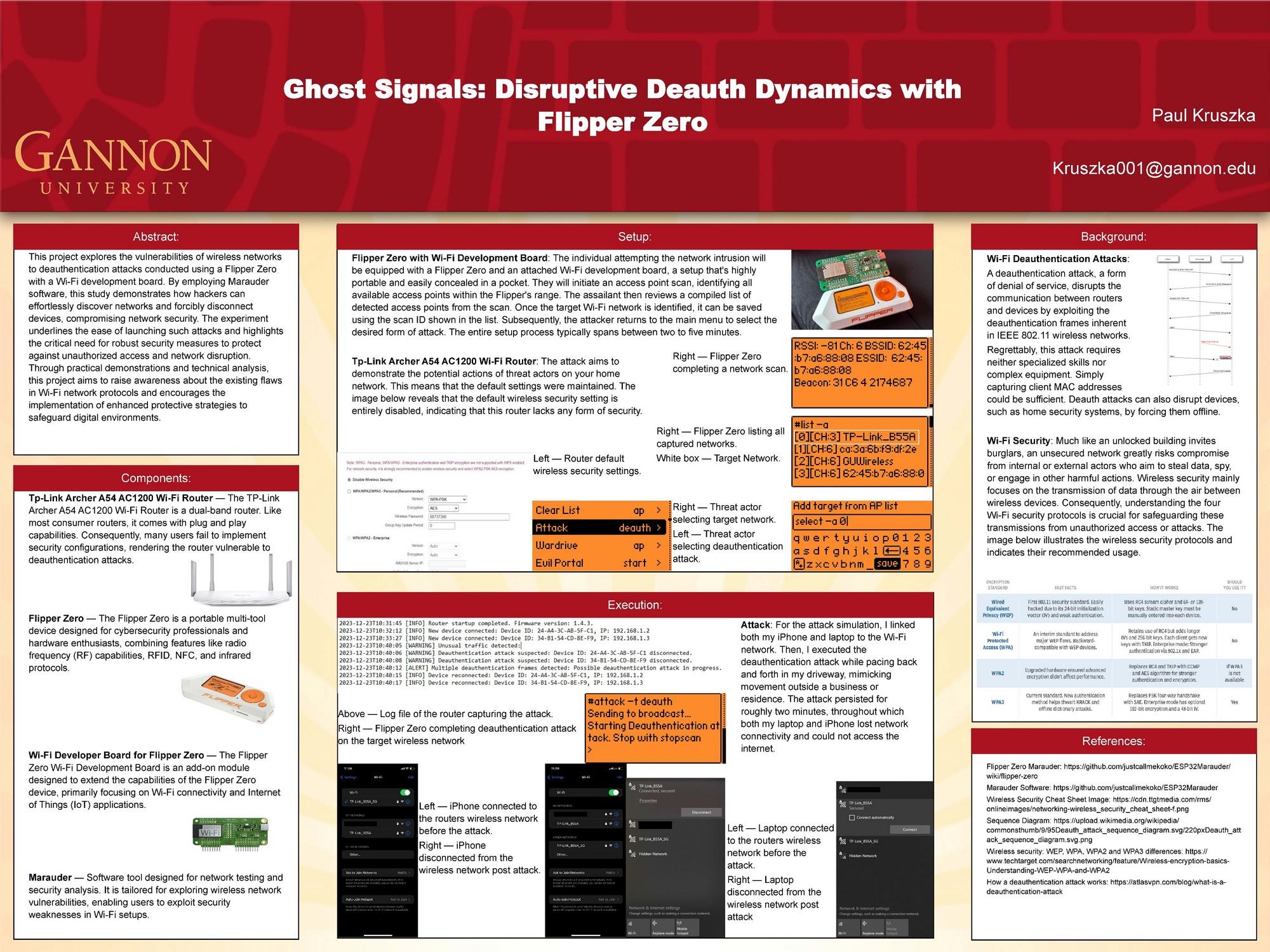
Presentation: 83
Title: Ghost Signals: Disruptive Deauth Dynamics with Flipper Zero
Abstract: This project explores the vulnerabilities of wireless networks to deauthentication attacks conducted using a Flipper Zero with a Wi-Fi development board. By employing Marauder software, this study demonstrates how hackers can effortlessly discover networks and forcibly disconnect devices, compromising network security. The experiment underlines the ease of launching such attacks and highlights the critical need for robust security measures to protect against unauthorized access and network disruption. Through practical demonstrations and technical analysis, this project aims to raise awareness about the existing flaws in Wi-Fi network protocols and encourages the implementation of enhanced protective strategies to safeguard digital environments.
Presenter(s): Paul Kruszka
Sponsoring Department: Cybersecurity
Mentor(s): Steven Rowland
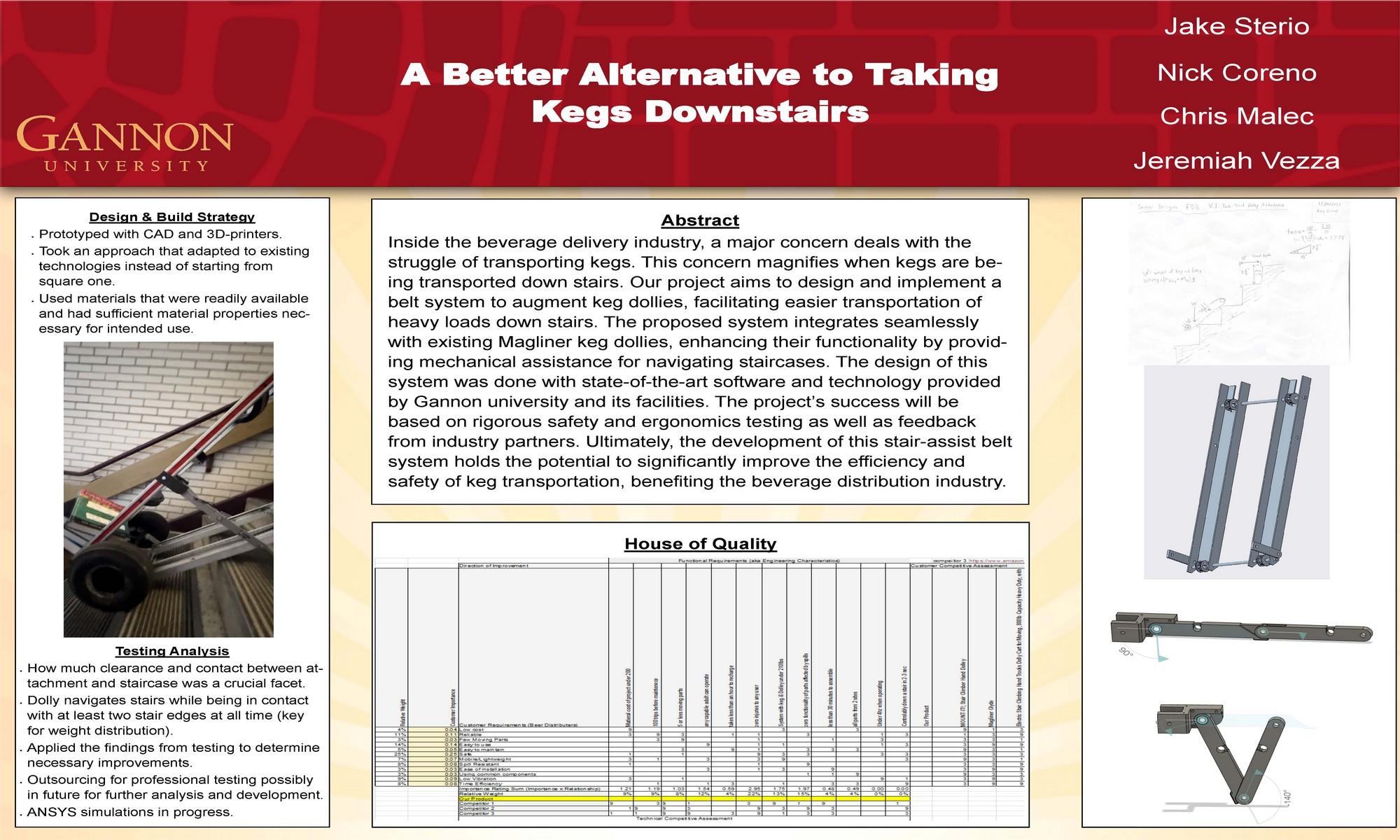
Presentation: 84
Title: Kegzilla - A Better Alternative to Taking Kegs Downstairs
Abstract: Inside the beverage delivery industry, a major concern comes from the safe transportation of kegs. This concern magnifies with the obstacle of stairs in which kegs are only transported down stairs and are done so very hesitantly. This project aims to design and implement a belt system to augment keg dollies, facilitating easier transportation of heavy loads down stairs. The proposed system integrates seamlessly with existing Maglinger keg dollies, enhancing their functionality by providing mechanical assistance for navigating staircases. The design of this system was done with state-of-the-art software and technology provided by Gannon university and its facilities. The project’s success will be based on rigorous safety and ergonomics testing as well as feedback from industry partners. Ultimately, the development of this stair-assist belt system holds the potential to significantly improve the efficiency and safety of keg transportation, benefiting the beverage distribution industry.
Presenter(s): Jake Sterio, Nick Coreno, Chris Malec, Jeremiah Vezza
Sponsoring Department: Engineering
Mentor(s): Scott Steinbrink
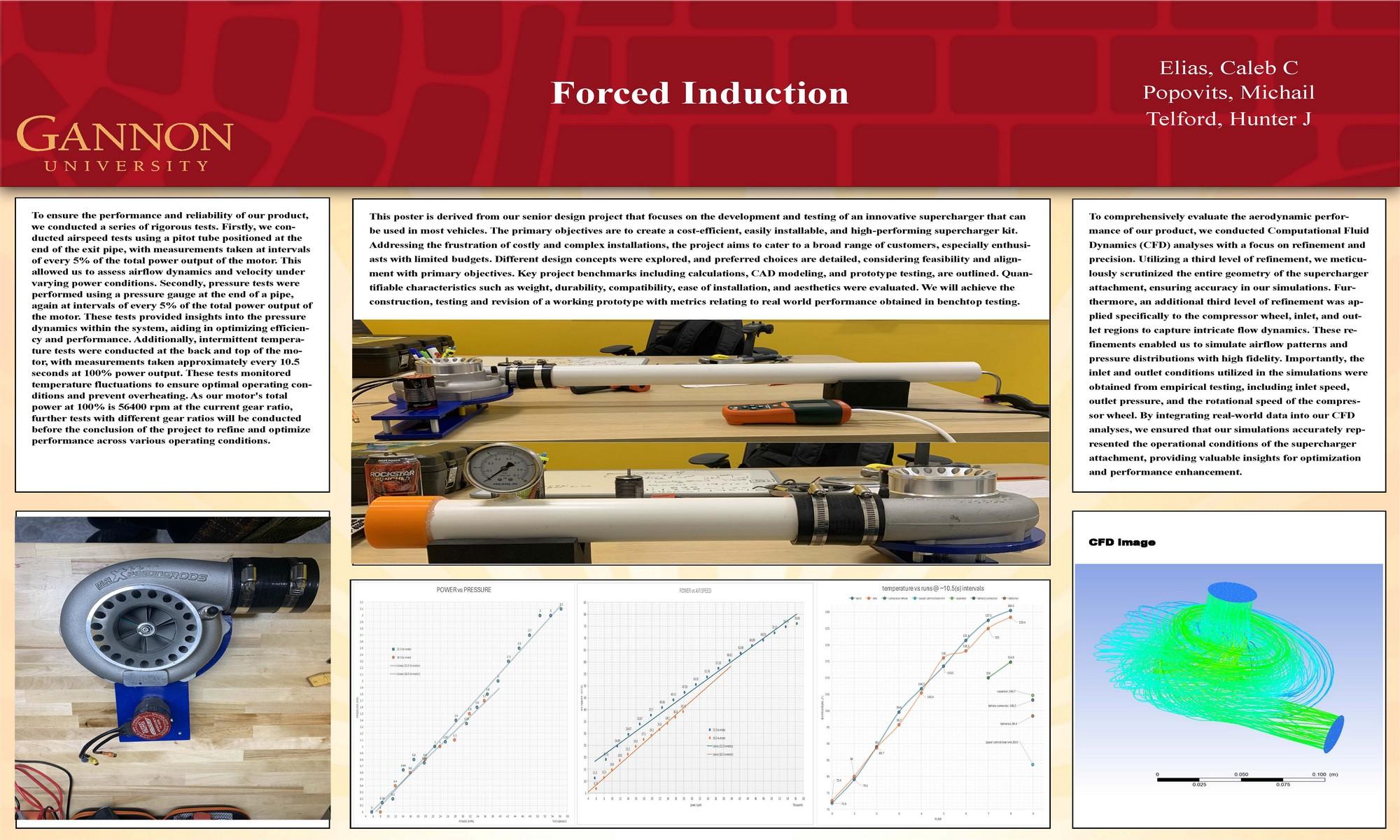
Presentation: 85
Title: Forced Induction
Abstract: This poster is derived from our senior design project that focuses on the development and testing of an innovative supercharger that can be used in most vehicles. The primary objectives are to create a costefficient, easily installable, and high-performing supercharger kit. Addressing the frustration of costly and complex installations, the project aims to cater to a broad range of customers, especially enthusiasts with limited budgets. Different design concepts were explored, and preferred choices are detailed, considering feasibility and alignment with primary objectives. Key project benchmarks including calculations, CAD modeling, and prototype testing, are outlined. Quantifiable characteristics such as weight, durability, compatibility, ease of installation, and aesthetics were evaluated. We will achieve the construction, testing and revision of a working prototype with metrics relating to real world performance obtained in benchtop testing.
Presenter(s): Caleb Elias, Michail Popovits, Hunter Telford
Sponsoring Department: Mechanical Engineering
Mentor(s): Scott Steinbrink
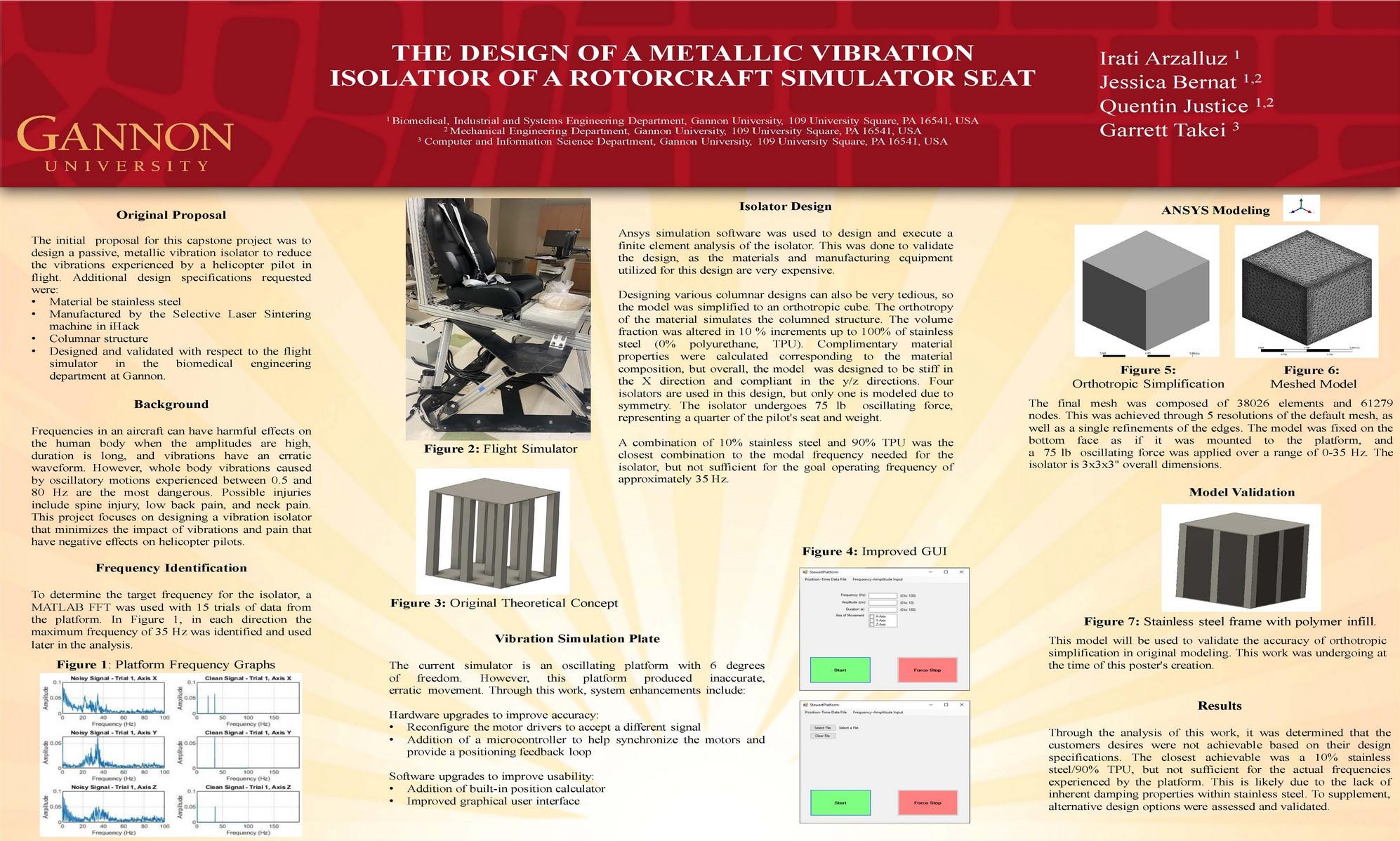
Presentation: 86
Title: The Design of a Metallic Vibration Isolator of a Rotorcraft Simulator Seat
Abstract: The initial proposal for this capstone project was to design a passive, metallic vibration isolator to reduce the vibrations experienced by a helicopter pilot in flight. Additional design specifications requested were:- Material be stainless steel- Manufactured by the Selective Laser Sintering machine in iHack- Columnar structure- Designed and validated with respect to the flight simulator in the biomedical engineering department at Gannon.
Presenter(s): Jessica Bernat, Quentin Justice, Irati Arzalluz, Garrett Takei
Sponsoring Department: Engineering
Mentor(s): Scott Steinbrink
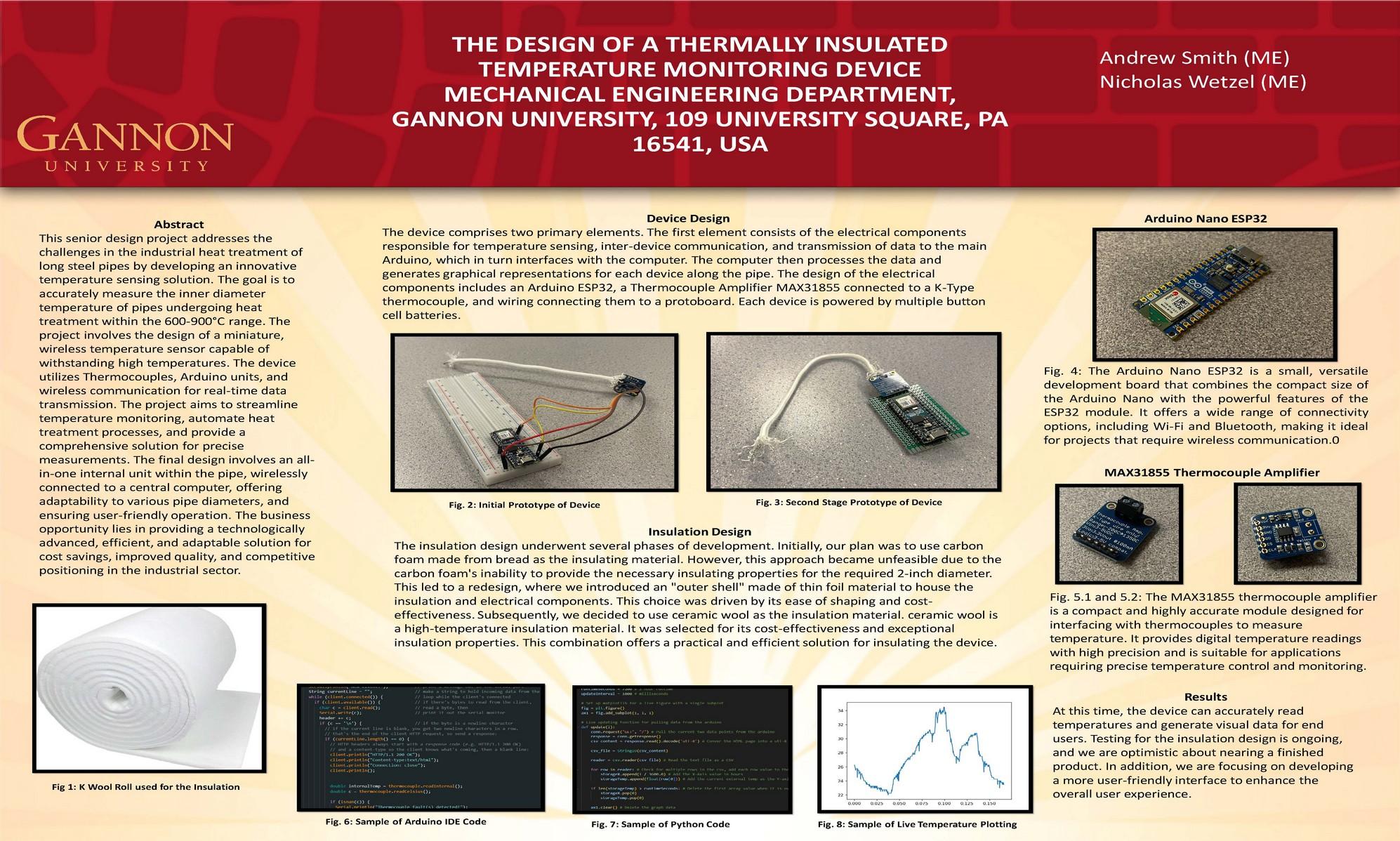
Presentation: 87
Title: The Design of a Thermally Insulated Temperature Monitoring Device
Abstract: This senior design project addresses the challenges in the industrial heat treatment of long steel pipes by developing an innovative temperature sensing solution. The goal is to accurately measure the inner diameter temperature of pipes undergoing heat treatment within the 600-900°C range. The project involves the design of a miniature, wireless temperature sensor capable of withstanding high temperatures. The device utilizes Thermocouples, Arduino units, and wireless communication for real-time data transmission. The project aims to streamline temperature monitoring, automate heat treatment processes, and provide a comprehensive solution for precise measurements. The final design involves an all-in-one internal unit within the pipe, wirelessly connected to a central computer, offering adaptability to various pipe diameters, and ensuring userfriendly operation. The business opportunity lies in providing a technologically advanced, efficient, and adaptable solution for cost savings, improved quality, and competitive positioning in the industrial sector.
Presenter(s): Nicholas Wetzel, Andrew Smith
Sponsoring Department: Mechanical Engineering
Mentor(s): Scott Steinbrink, Davide Piovesan
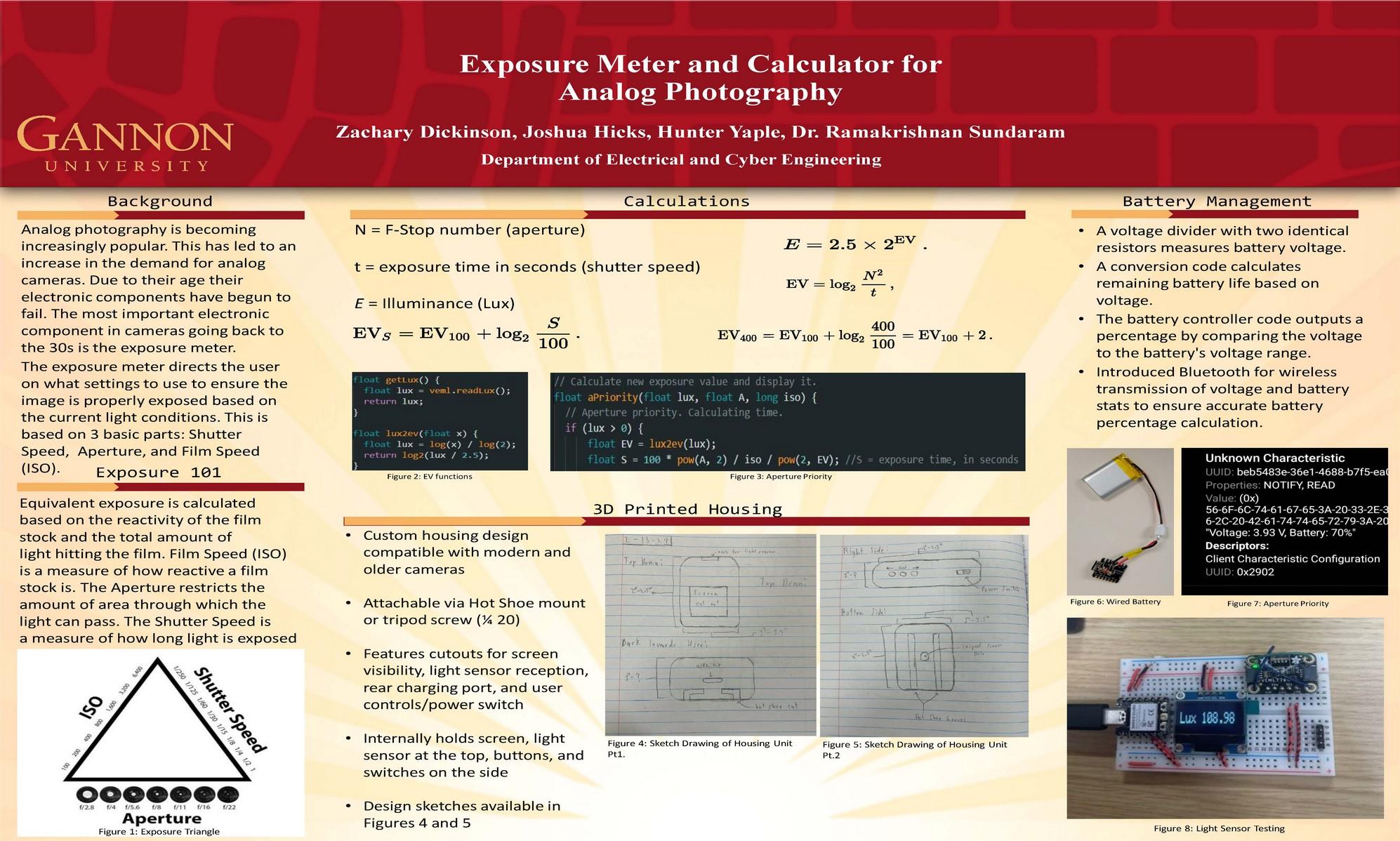
Presentation: 88
Title: Exposure Meter and Calculator for Analog Photography
Abstract: In this project, we are building an Exposure Meter and Calculator for Analog Photography. This device is being designed to meet the needs of amateur analog photographers and to supplement the short comings of the deprecated electronics in vintage mechanical cameras. Using an ESP32c micro controller in tandem with a highly accurate wide range VEML7700 lux sensor allows a user to calculate required exposure settings near instantaneously in a wide range of shooting conditions. The ESP32c allows for integrated Bluetooth connectivity. The device is accurate from 0 lux to about 120k lux with resolution down to 0.0036 lx/ct. An integrated OLED screen allows for an easily read display to inform the user of the appropriate Aperture and shutter speed for their given ISO speed.
Presenter(s): Zachary Dickinson, Joshua Hicks, Hunter Yaple
Sponsoring Department: Electrical and Cyber Engineering
Mentor(s): Ramakrishnan Sundaram
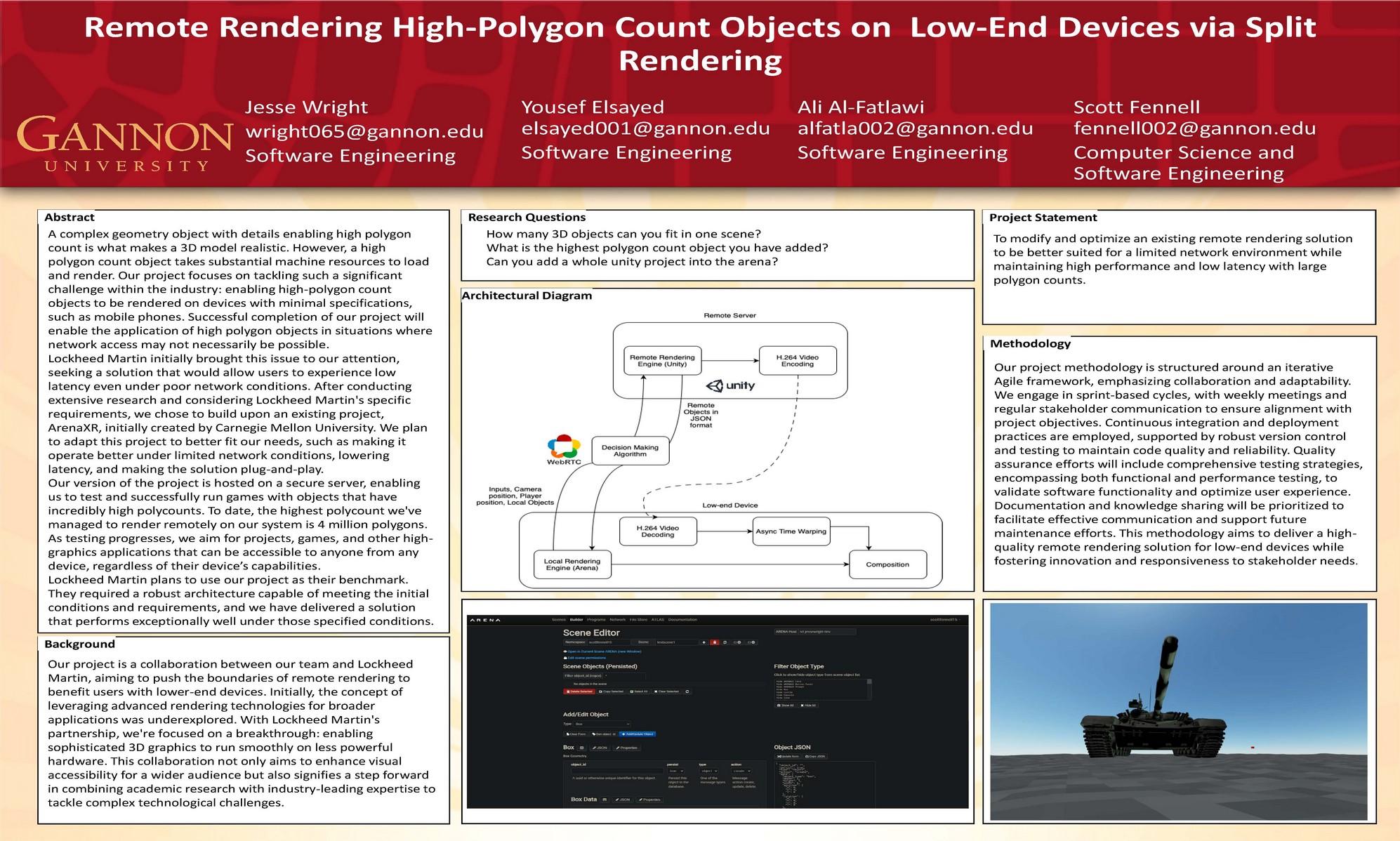
Presentation: 89
Title: Remote Rendering High-Polygon Count Objects on Low-End Devices via Split Rendering
Abstract: A complex geometry object with details enabling high polygon count is what makes a 3D model realistic. However, a high polygon count object takes substantial machine resources to load and render. Our project focuses on tackling such a significant challenge within the industry: enabling high-polygon count objects to be rendered on devices with minimal specifications, such as mobile phones. Successful completion of our project will enable the application of high polygon objects in situations where network access may not necessarily be possible. Lockheed Martin initially brought this issue to our attention, seeking a solution that would allow users to experience low latency even under poor network conditions. After conducting extensive research and considering Lockheed Martin's specific requirements, we chose to build upon an existing project, ArenaXR, initially created by Carnegie Mellon University. We plan to adapt this project to better fit our needs, such as making it operate better under limited network conditions, lowering latency, and making the solution plug-and-play. Our version of the project is hosted on a secure server, enabling us to test and successfully run games with objects that have incredibly high polycounts. To date, the highest polycount we've managed to render remotely on our system is 4 million polygons. As testing progresses, we aim for projects, games, and other high-graphics applications that can be accessible to anyone from any device, regardless of their device’s capabilities. Lockheed Martin plans to use our project as their benchmark. They required a robust architecture capable of meeting the initial conditions and requirements, and we have delivered a solution that performs exceptionally well under those specified conditions.
Presenter(s): Jesse Wright, Yousef Elsayed, Ali Al-Fatlawi, Scott Fennell
Sponsoring Department: Software Engineering
Mentor(s): Mei-Huei Tang
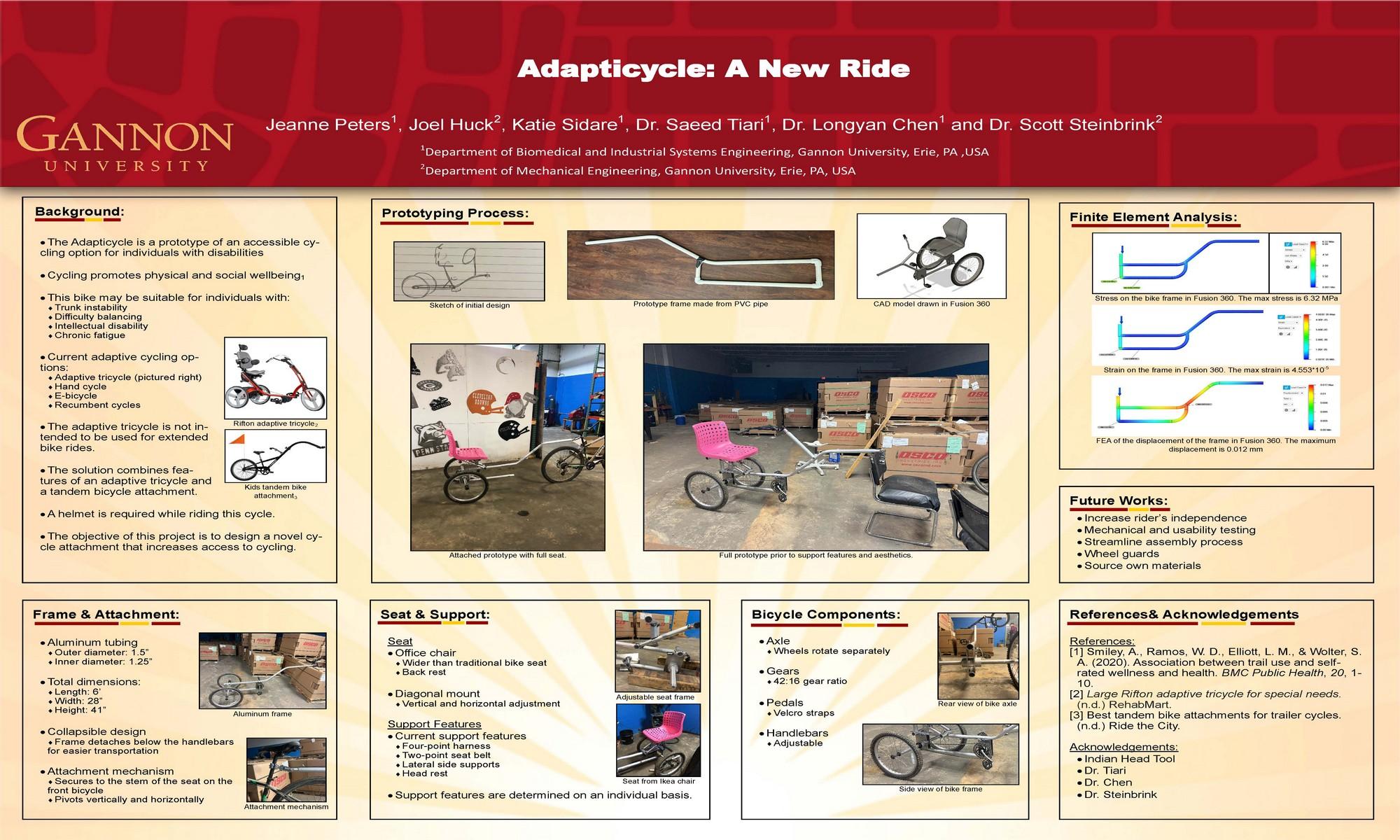
Presentation: 90
Title: Adapticycle: A New Ride
Abstract: Cycling is an opportunity to support both physical health and create social connections. Individuals with certain physical and intellectual disabilities do not have adequate access to cycling options. Current adaptive biking options include adult tricycles, hand cycles, e-bikes, and non-pedaling trailers, but these leave a gap in access for people with disabilities such as cerebral palsy to go on extended bike rides. The objective of this project is to design a novel cycle attachment. This attachment is an aluminum trailer for standard bicycles that is the cross between an adaptive tricycle and a tandem trailer bike with an adjustable seat and handlebars to accommodate adults both short and tall. The cycle design includes several safety features including a harness, foot straps, side and head supports, and gear and wheel covers. The intention of the project is to design an adaptive cycling solution for individuals with disabilities.
Presenter(s): Jeanne Peters, Joel Huck, Kaitlin Sidare
Sponsoring Department: Department of Biomedical and Industrial Systems Engineering
Mentor(s): Saeed Tiari, Longyan Chen, Scott Steinbrink
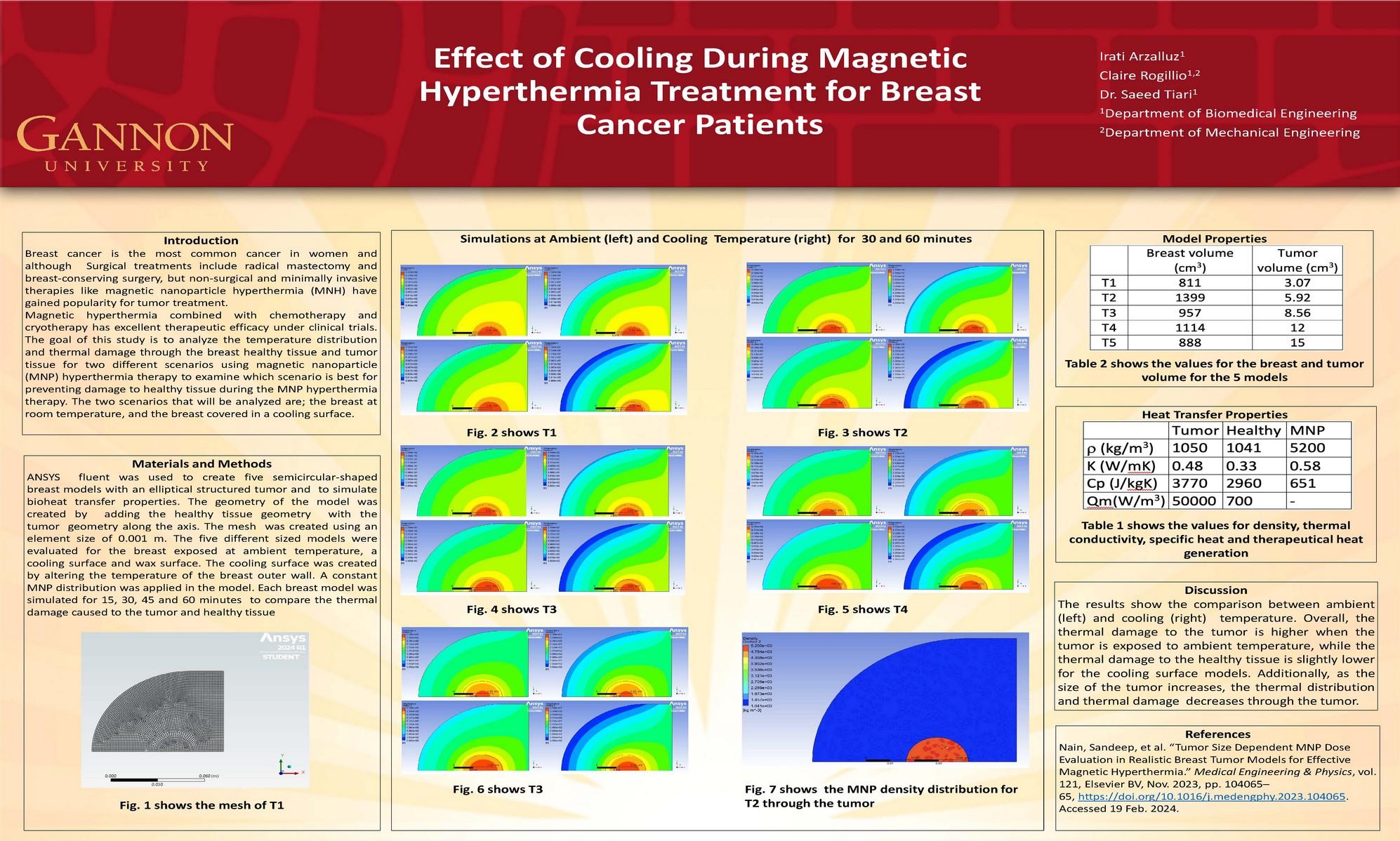
Presentation: 91
Title: Effect of Cooling During Magnetic Hyperthermia Treatment for Breast Cancer Patients
Abstract: Breast cancer is the most common cancer in women and although Surgical treatments include radical mastectomy and breast-conserving surgery, but non-surgical and minimally invasive therapies like magnetic nanoparticle hyperthermia (MNH) have gained popularity for tumor treatment. Magnetic hyperthermia combined with chemotherapy and cryotherapy has excellent therapeutic efficacy under clinical trials. The goal of this study is to analyze the temperature distribution and thermal damage through the breast healthy tissue and tumor tissue for two different scenarios using magnetic nanoparticle (MNP) hyperthermia therapy to examine which scenario is best for preventing damage to healthy tissue during the MNP hyperthermia therapy. The two scenarios that will be analyzed are; the breast at room temperature, and the breast covered in a cooling surface.
Presenter(s): Irati Arzalluz, Claire Rogillio
Sponsoring Department: Biomedical Engineering
Mentor(s): Saeed Tiari
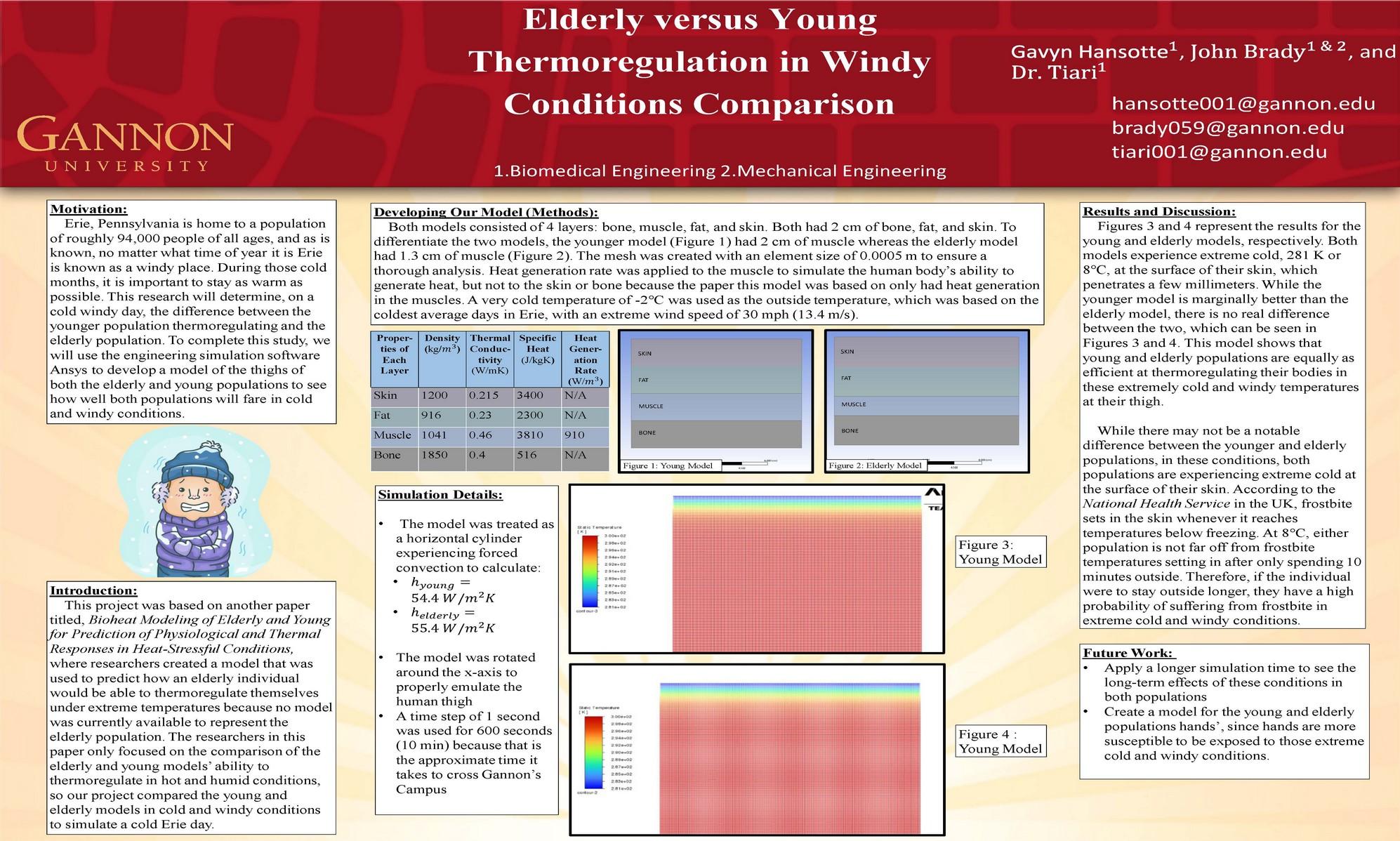
Presentation: 92
Title: Elderly versus Young Thermoregulation in Windy Conditions Comparison
Abstract: Erie, Pennsylvania is home to a population of roughly 94,000 people of all ages, and as is known, no matter what time of year it is Erie is known as a windy place. During those cold months, it is important to stay as warm as possible. This research will determine, on a cold windy day, the difference between the younger population thermoregulating and the elderly population. To complete this study, we will use the engineering simulation software Ansys to develop a model of the thighs of both the elderly and young populations to see how well both populations will fare in cold and windy conditions.
Presenter(s): Gavyn Hansotte, John Brady
Sponsoring Department: Biomedical Engineering
Mentor(s): Saeed Tiari
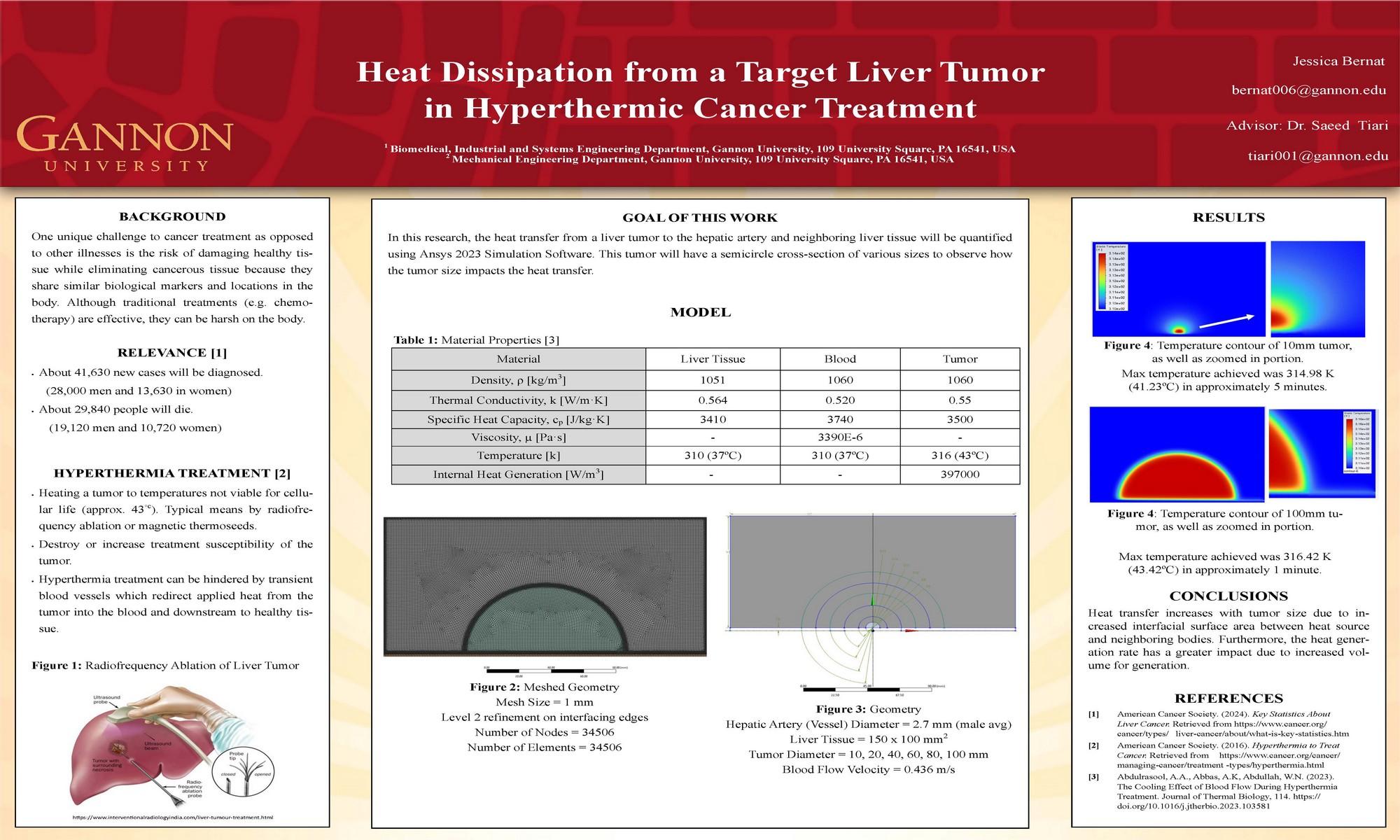
Presentation: 93
Title: Heat Dissipation from a Target Liver Tumor in Hyperthermic Cancer Treatment
Abstract: One unique challenge to cancer treatment as opposed to other illnesses is the risk of damaging healthy tissue while eliminating cancerous tissue because they share similar biological markers and locations in the body. Although traditional treatments (e.g. chemotherapy) are effective, they can be harsh on the body.
Presenter(s): Jessica Bernat
Sponsoring Department: Engineering
Mentor(s): Saeed Tiari
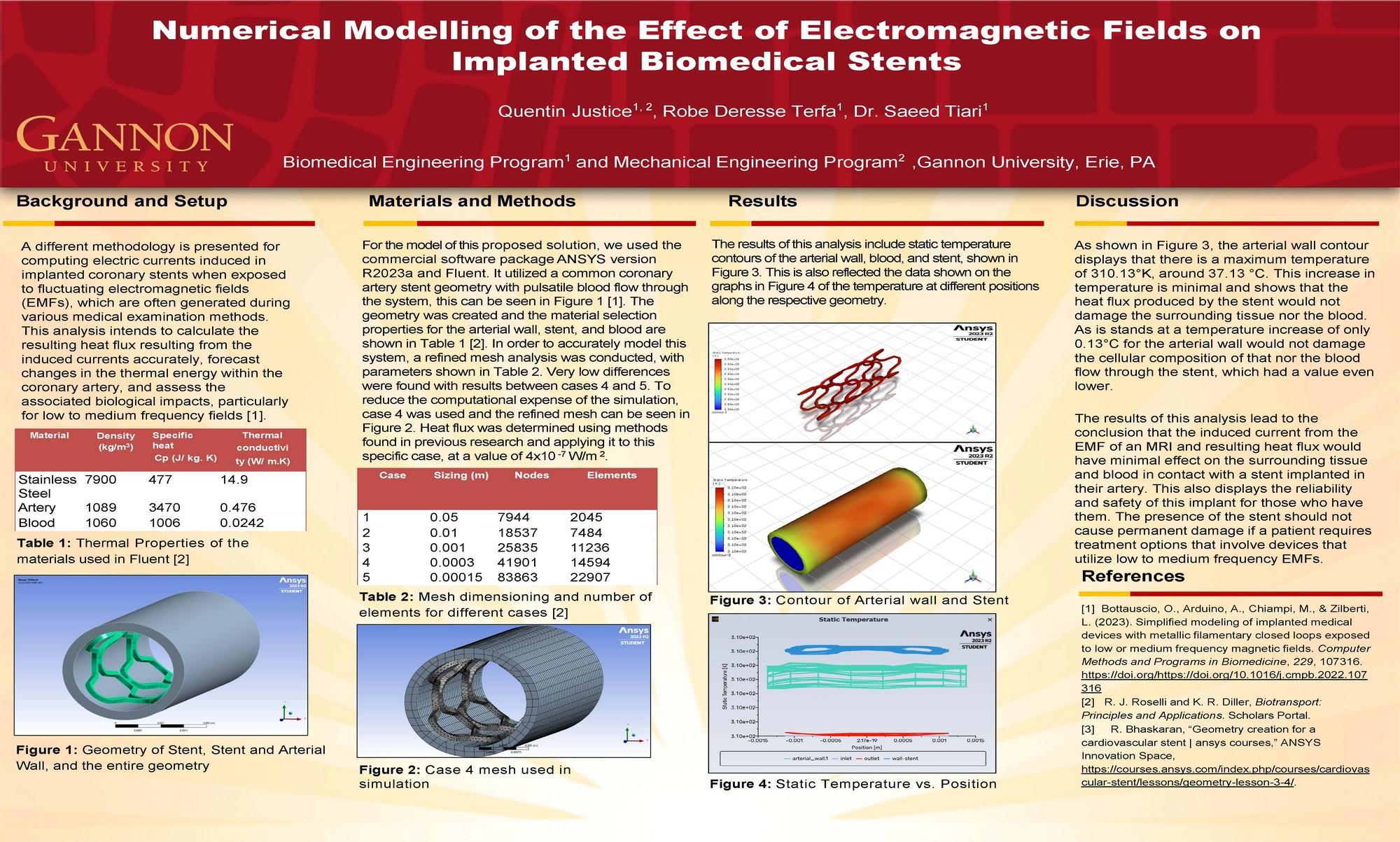
Presentation: 94
Title: Numerical Modelling of the Effect of Electromagnetic Fields on Implanted Biomedical Stents
Abstract: Electromagnetic fields (EMFs) produced by many common medical procedures are capable of inducing currents on implanted medical devices. These induced currents can produce unwanted heat in medical devices that are capable of damaging nearby healthy cells. This research involves a 3D ANSYS simulation for an implanted stent in the coronary artery that is exposed to this heat gain from EMFs while pulsatile blood flow passes through the device. Based on the examination of past works, researchers anticipate that the methodology will closely match solutions offered by competing approaches, with differences in the amplitude of generated currents in the wires constantly staying around 3%. After validation, the technology will be used to investigate interactions between a coronary artery grid—which represents the implantation of a stent—and the magnetic field produced by different biomedical equipment.
Presenter(s): Quentin Justice, Robe Deresse Terfa
Sponsoring Department: Biomedical Engineering
Mentor(s): Saeed Tiari
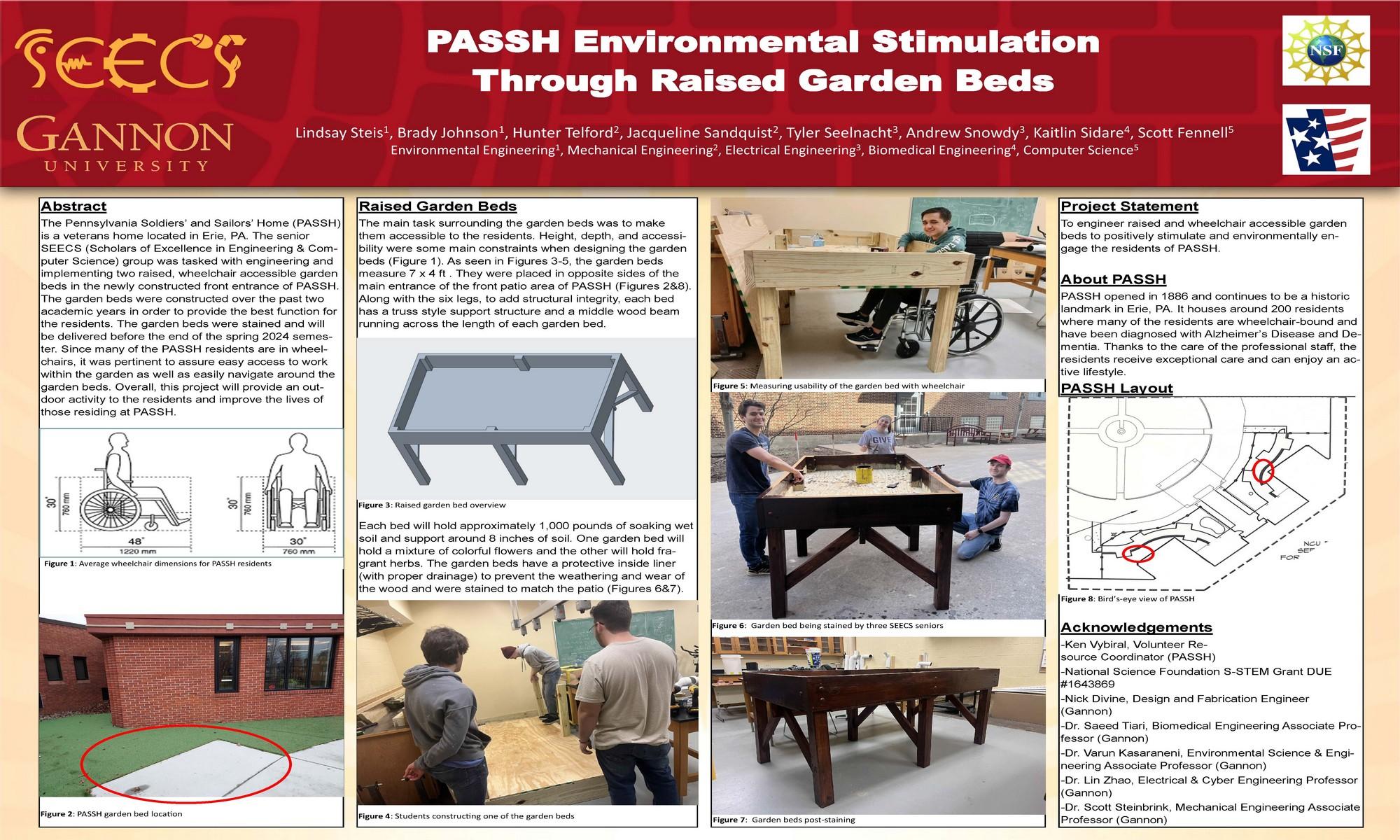
Presentation: 95
Title: PASSH Environmental Stimulation Through Raised Garden Beds
Abstract: The Pennsylvania Soldiers’ and Sailors’ Home (PASSH) is a veterans home located in Erie, PA. The senior SEECS (Scholars of Excellence in Engineering & Computer Science) group was tasked with engineering and implementing two raised, wheelchair accessible garden beds in the newly constructed front entrance of PASSH. The garden beds were constructed over the past two academic years in order to provide the best function for the residents. The garden beds were stained and will be delivered before the end of the spring 2024 semester. Since many of the PASSH residents are in wheelchairs, it was pertinent to assure easy access to work within the garden as well as easily navigate around the garden beds. Overall, this project will provide an outdoor activity to the residents and improve the lives of those residing at PASSH.
Presenter(s): Lindsay Steis, Brady Johnson, Hunter Telford, Jacqueline Sandquist, Tyler Seelnacht, Andrew Snowdy, Kaitlin Sidare, Scott Fennell
Sponsoring Department: SEECS (Engineering Department)
Mentor(s): Saeed Tiari, Lin Zhao, Varun Kasaraneni, Scott Steinbrink
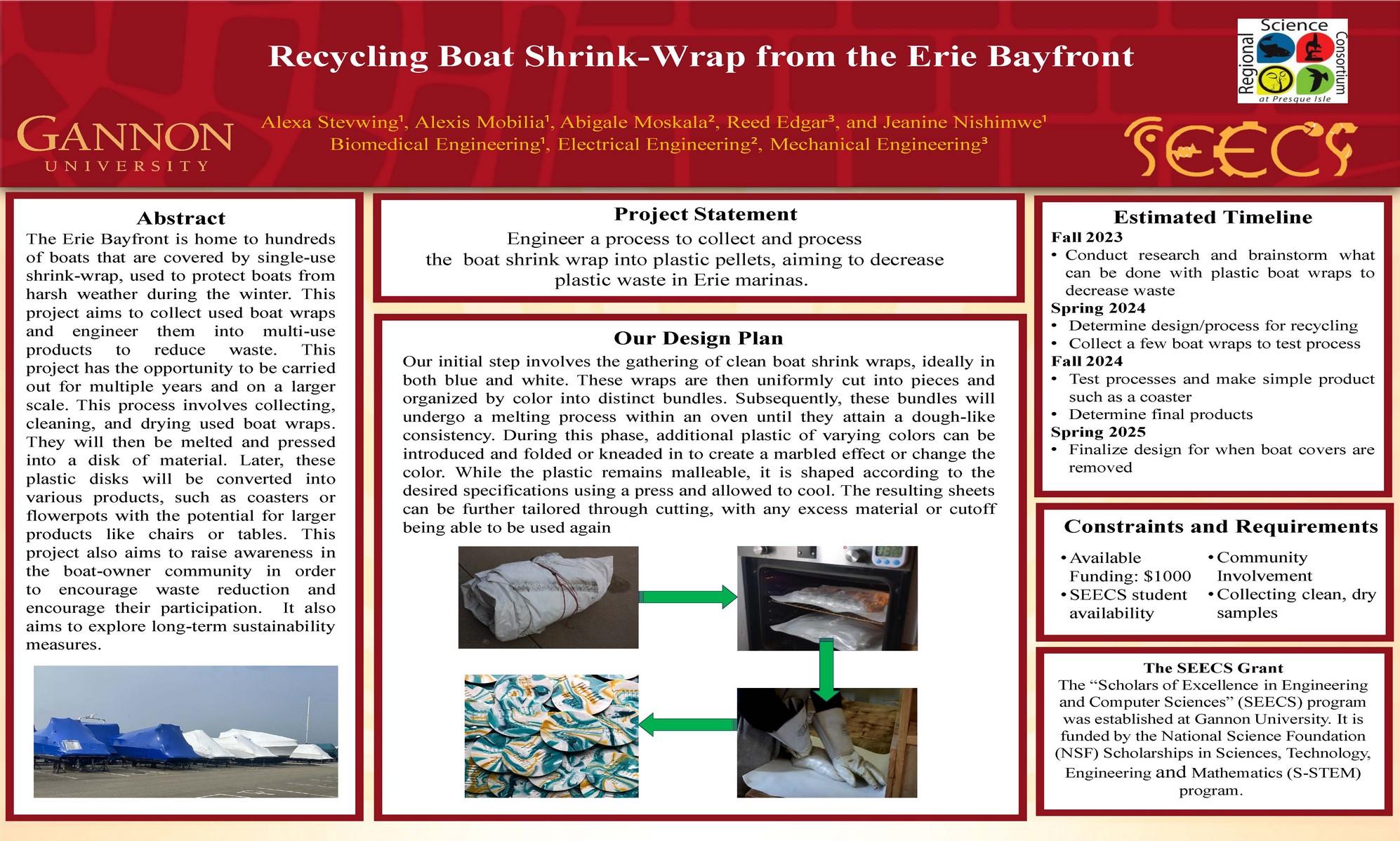
Presentation: 96
Title: Recycling Boat Shrink-Wrap from the Erie Bayfront
Abstract: This process involves collecting, cleaning, and drying used boat wraps. They will then be melted and pressed into a disk of material. Later, these plastic disks will be converted into various products, such as coasters or flowerpots with the potential for larger products like chairs or tables. This project also aims to raise awareness in the boat-owner community in order to encourage waste reduction and encourage their participation. It also aims to explore long-term sustainability measures.
Presenter(s): Alexa Stevwing, Alexis Mobilia, Abigale Moskala, Reed Edgar, Jeanine Nishimwe
Sponsoring Department: Electrical and Cyber Engineering
Mentor(s): Lin Zhao
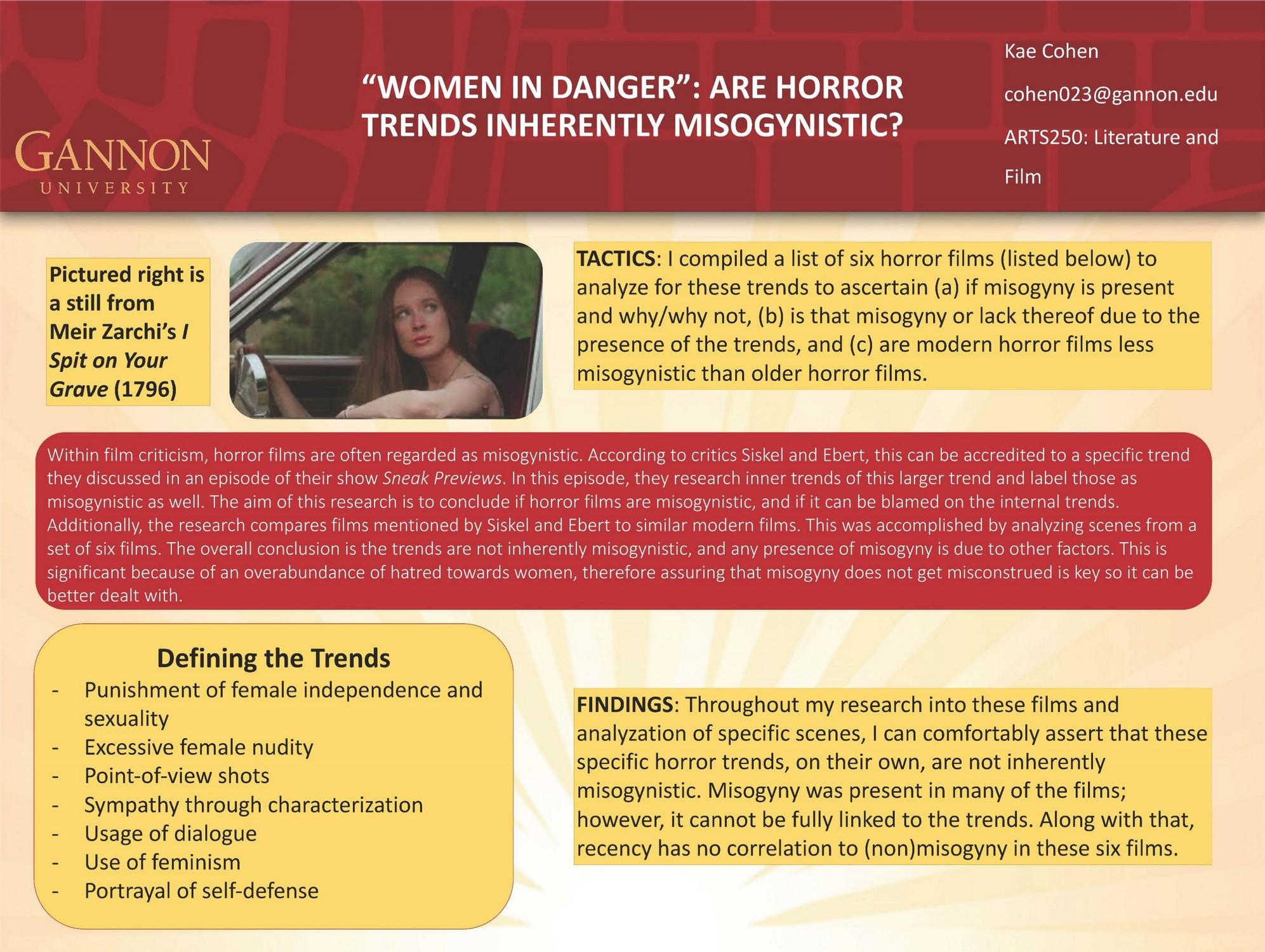
Presentation: 97
Title: "Women in Danger": Are Horror Trends Inherently Misogynistic?
Abstract: Within film criticism, horror films are often regarded as misogynistic. According to critics Siskel and Ebert, this can be accredited to a specific trend they discussed in an episode of their show Sneak Previews. In this episode, they research inner trends of this larger trend and label those as misogynistic as well. The aim of this research is to conclude if horror films are misogynistic, and if it can be blamed on the internal trends. Additionally, the research compares films mentioned by Siskel and Ebert to similar modern films. This was accomplished by analyzing scenes from a set of six films. The overall conclusion is the trends are not inherently misogynistic, and any presence of misogyny is due to other factors. This is significant because of an overabundance of hatred towards women, therefore assuring that misogyny does not get misconstrued is key so it can be better dealt with.
Presenter(s): Kae Cohen
Sponsoring Department: English
Mentor(s): Doug King
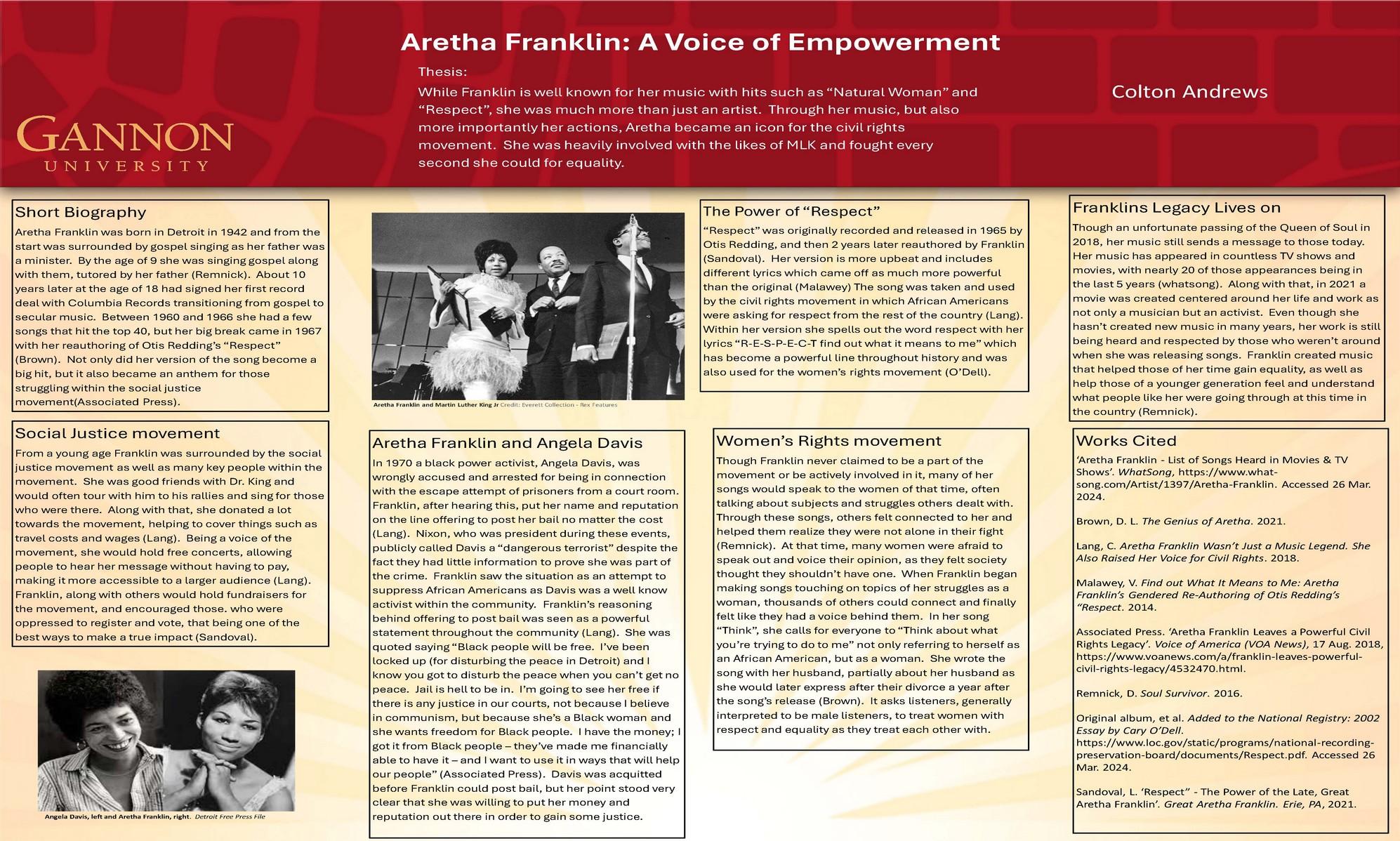
Presentation: 98
Title: Aretha Franklin: A Voice of Empowerment
Abstract: This poster will look into Aretha Franklin and how her music shaped and changed both the civil rights movement as well as women’s rights as a whole. While most people know her as the “Queen of Soul” for her voice and the music she created, her work also touched the lives of those struggling in the social climate of her time. Many of her works were written to uplift those who were oppressed as well as to get a message through to the oppressors. This project focuses on Franklin, and how through her music, she fought for equality throughout the country and justice for those who have been put down by the racial system that was put in place.
Presenter(s): Colton Andrews
Sponsoring Department: English
Mentor(s): Ann Bomberger
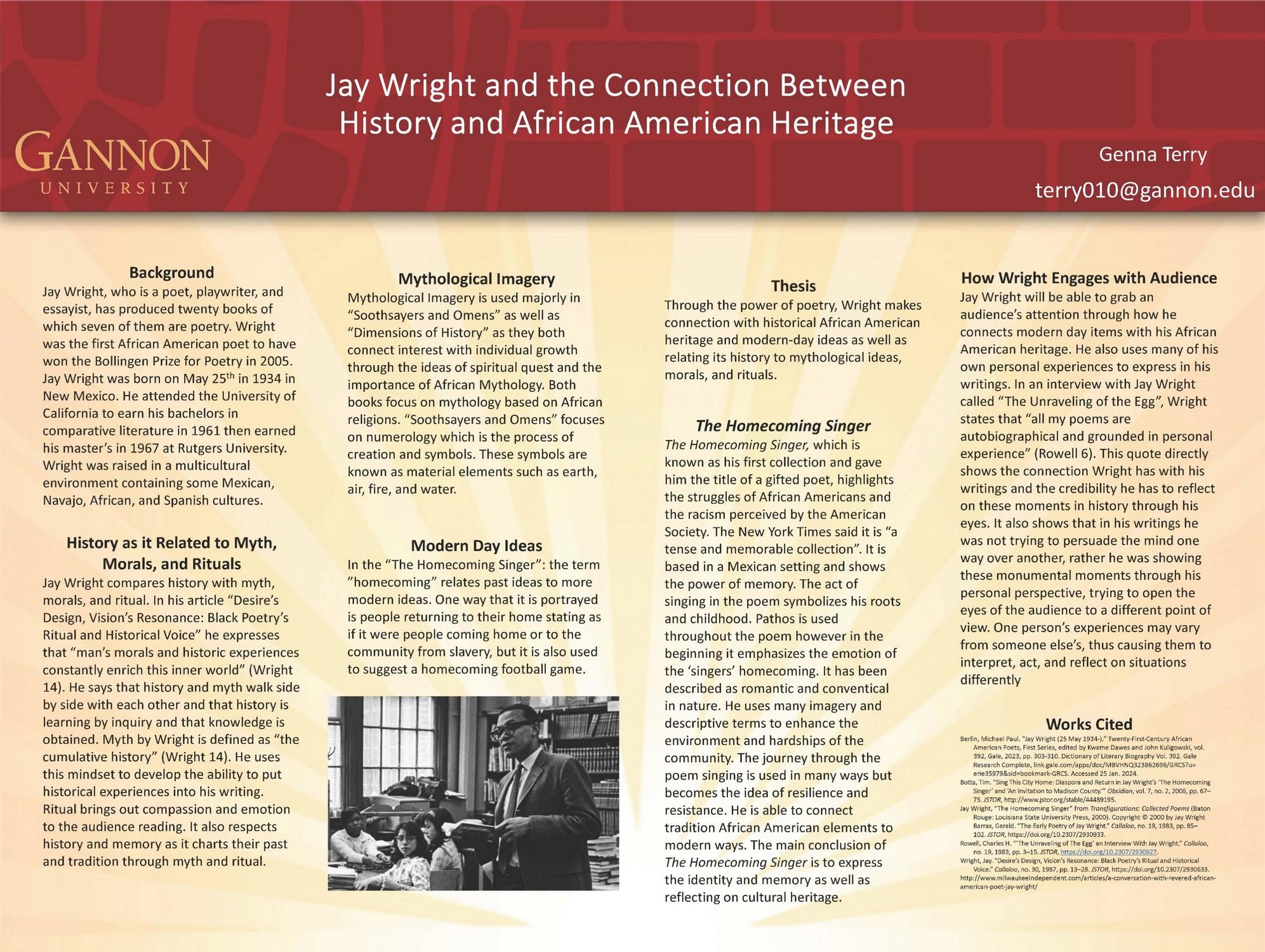
Presentation: 99
Title: Jay Wright and the Connection Between History and African American Heritage
Abstract: Jay Wright, a praised poet, playwriter, and essayist, is known for his works that rediscover his African American heritage and the role that it play’s in moments of history. He explores the relationship between the past and present stories, religions, and traditions. Many of his works such as “The Homecoming Singer” and “Death as History” show how history and identity link together. With many sources, such as an interview with Wright, express how all of his poems are grounded from personal experience and history. I also want to show how he compares historical events with myth, moral, and ritual. With Jay Wright’s pieces of literature, future generations will be able to learn through African American history using the power of poetry.
Presenter(s): Genna Terry
Sponsoring Department: English
Mentor(s): Ann Bomberger
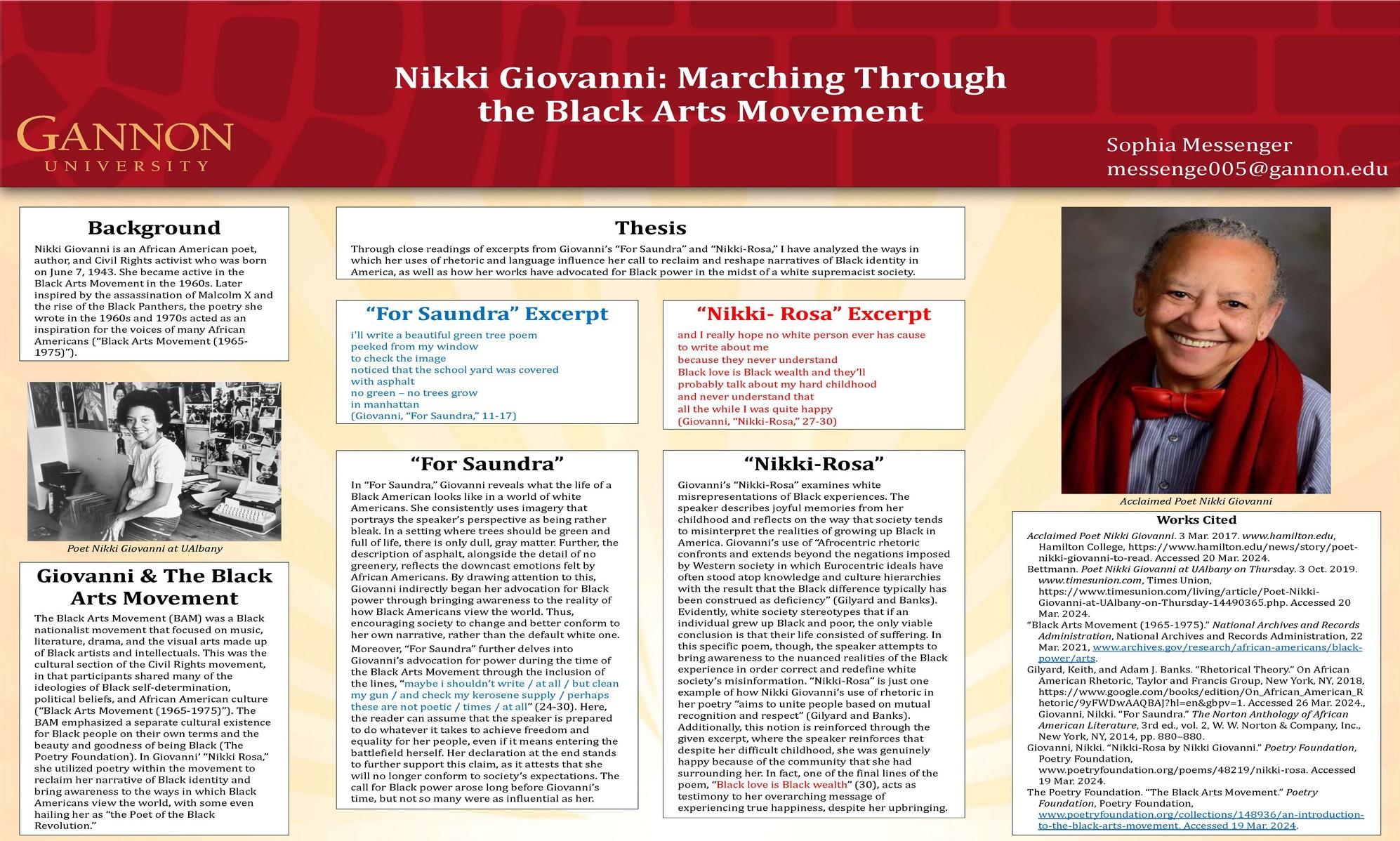
Presentation: 100
Title: Nikki Giovanni: Marching Through the Black Arts Movement
Abstract: Through close readings of excerpts from Giovanni’s “For Saundra” and “Nikki-Rosa,” I have analyzed the ways in which her uses of rhetoric and language influence her call to reclaim and reshape narratives of Black identity in America, as well as how her works have advocated for Black power in the midst of a white supremacist society.
Presenter(s): Sophia Messenger
Sponsoring Department: English Department
Mentor(s): Ann Bomberger
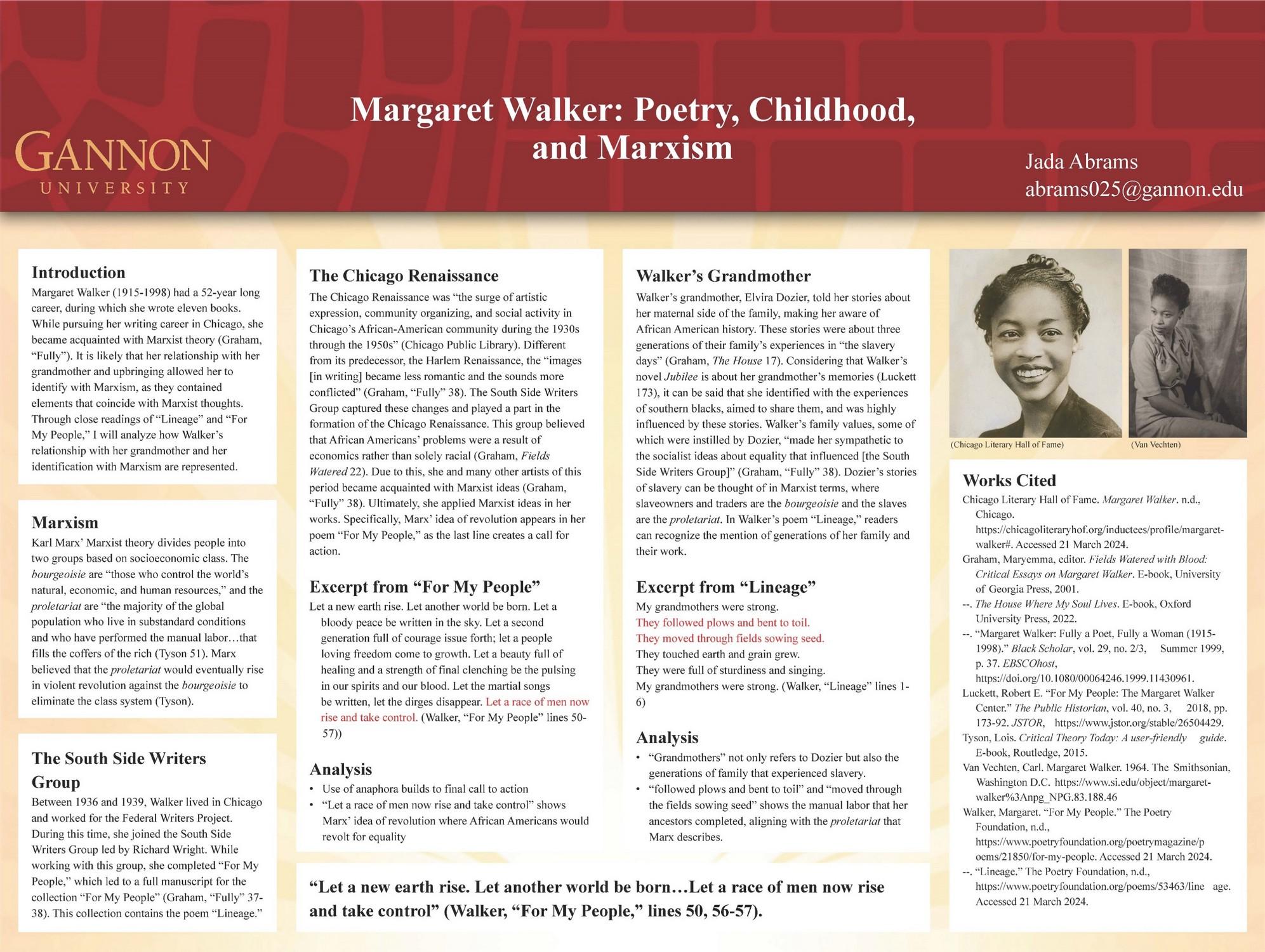
Presentation: 101
Title: Margaret Walker: Poetry, Childhood, and Marxism
Abstract: The poster will put into conversation Margaret Walker’s works and how they reflect the connections between her childhood and identification with Marxism. Through close readings of her poems, “Lineage” and “I Want to Write,” I will analyze how the stories Walker’s grandmother told to her as a child and the importance of heritage are represented in the verses. Then, through a close reading of “For My People,” I will analyze how Walker’s identification with Marxism early in her career is represented. These close readings will show the progression from Walker’s childhood to the development of her views of class as an adult. This is significant because her works are generally thought of in a historical lens, and many do not know about or recognize the influence of Marxism on her works.
Presenter(s): Jada Abrams
Sponsoring Department: English
Mentor(s): Ann Bomberger
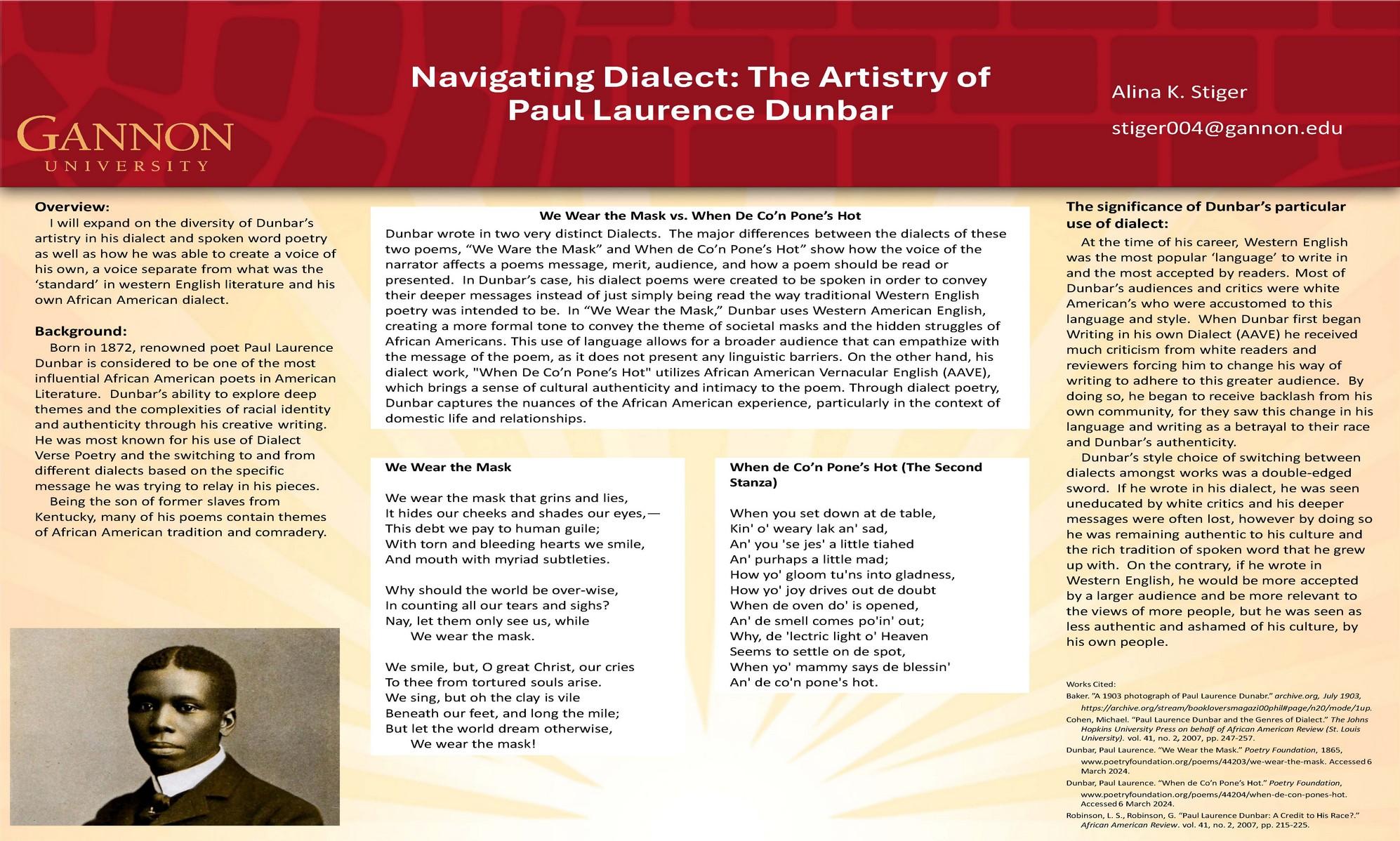
Presentation: 102
Title: Navigating Dialect: The Artistry of Paul Laurence Dunbar
Abstract: This presentation analyzes the voice of renowned African American poet, Paul Laurence Dunbar, who was best known for his use of two Dialects. I will explain the harsh criticism Dunbar received as an “underdeveloped” writer by the white intellectuals of his time and a “traitor” of his race by African American intellectuals as well. Dunbar spent his 14-year career adhering to multiple audiences, specifically those of two opposite ideals, and more noticeably, dialect. I will expand on the diversity of Dunbar’s artistry in his dialect and spoken word poetry as well as how he was able to create a voice of his own, a voice separate from what was the ‘standard’ in western English literature and his own African American dialect.
Presenter(s): Alina Stiger
Sponsoring Department: English
Mentor(s): Ann Bomberger
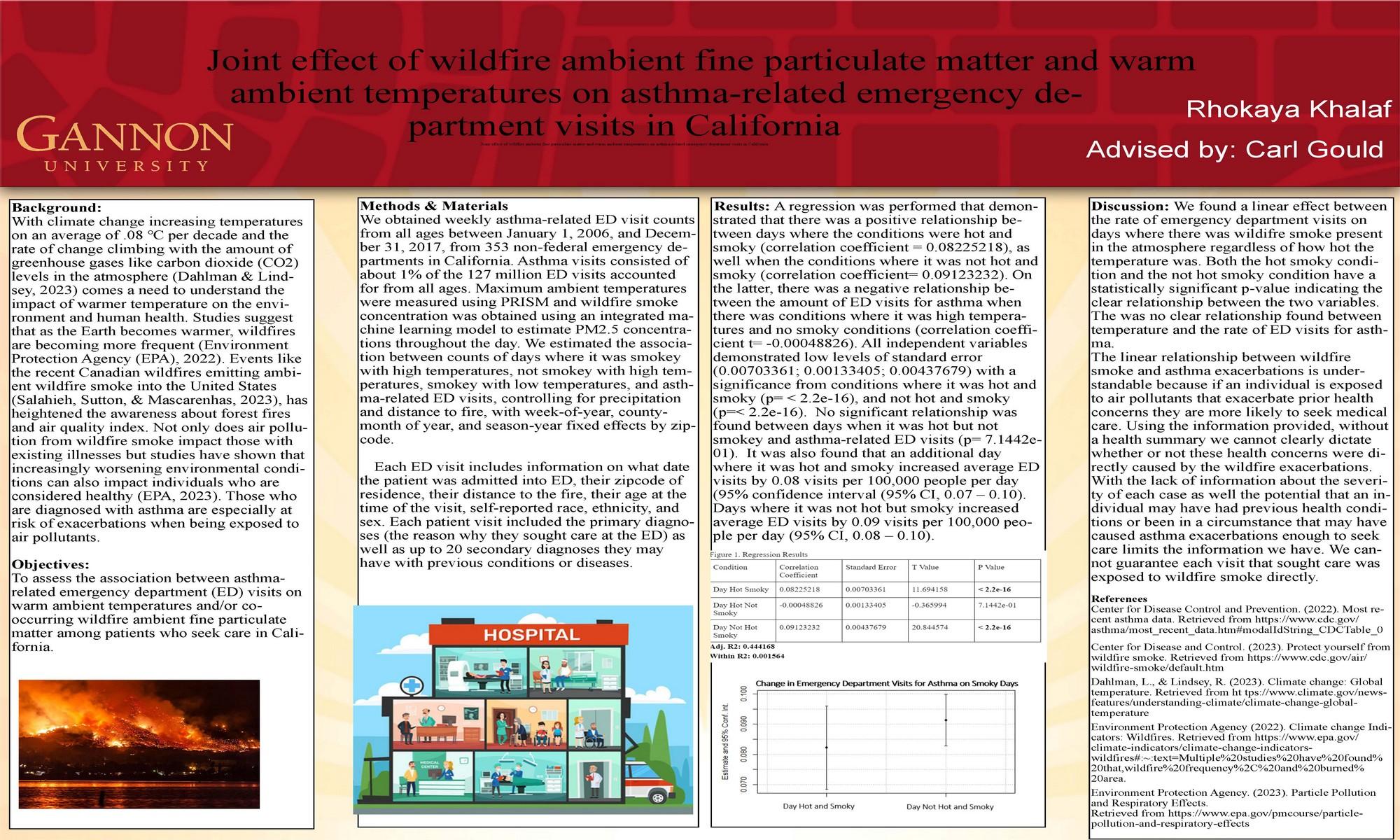
Presentation: 103
Title: Joint effect of wildfire ambient fine particulate matter and warm ambient temperatures on asthma-related emergency department visits in California
Abstract: With increasing temperatures as a consequence of global warming and wildfires being a worldwide issue, it is important to understand the impact that these exposures have on ongoing lifelong respiratory diseases such as asthma. The objectives were to assess the association between asthma-related emergency department (ED) visits on warm ambient temperatures and/or co-occurring wildfire ambient fine particulate matter among patients who seek care in California.
Presenter(s): Rhokaya Khalaf
Sponsoring Department: Health & Wellness center
Mentor(s): Mary Taylor, Carl Gould
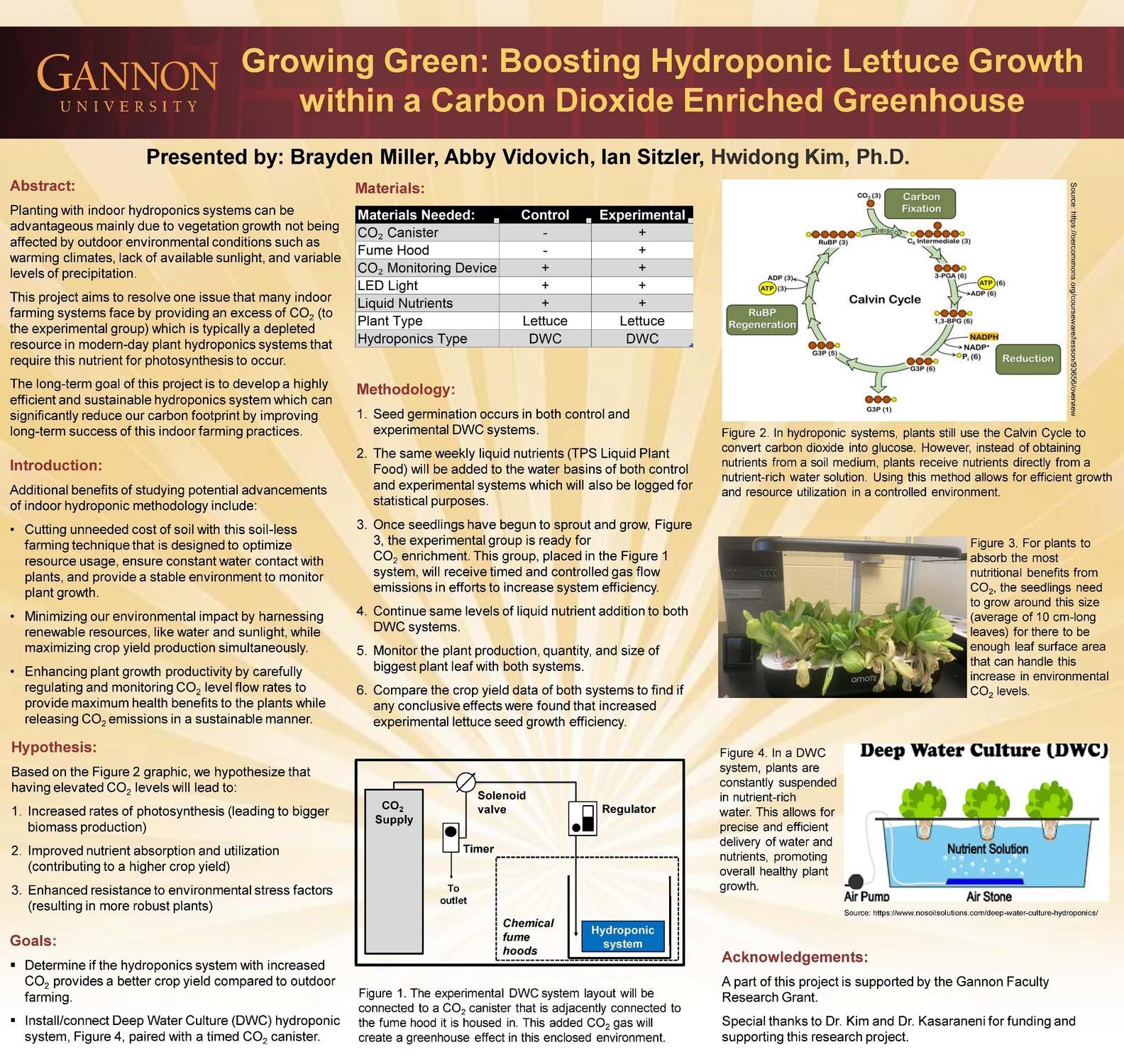
Presentation: 104
Title: Growing Green: Boosting Hydroponic Lettuce Growth within a Carbon Dioxide Enriched Greenhouse
Abstract: Planting with indoor hydroponics systems can be advantageous mainly due to vegetation growth not being affected by outdoor environmental conditions such as weather, length of sunlight, and amount of available precipitation. One of the most challenging issues with indoor farming systems, however, is a lack of carbon dioxide within indoor spaces that plants critically need to produce photosynthesis. Thus, this project aims to assess the effects of CO 2 on lettuce plant growth in the control (no CO 2 supply) and experimental (provided CO2 supply) environments within a lab scale greenhouse. To mitigate health effects of CO 2, supplying carbon dioxide to the experimental group will be implemented within a limited time period in the chemical fume hood. The long-term goal of this project is to develop one of the most sustainable hydroponics systems by supplying CO2 produced from composting or anaerobic digester operated using waste from hydroponic plant cultivation.
Presenter(s): Abby Vidovich, Brayden Miller, Ian Sitzler
Sponsoring Department: Environmental Science
Mentor(s): Hwidong Kim
American Paratroopers during the Battle of the Bulge
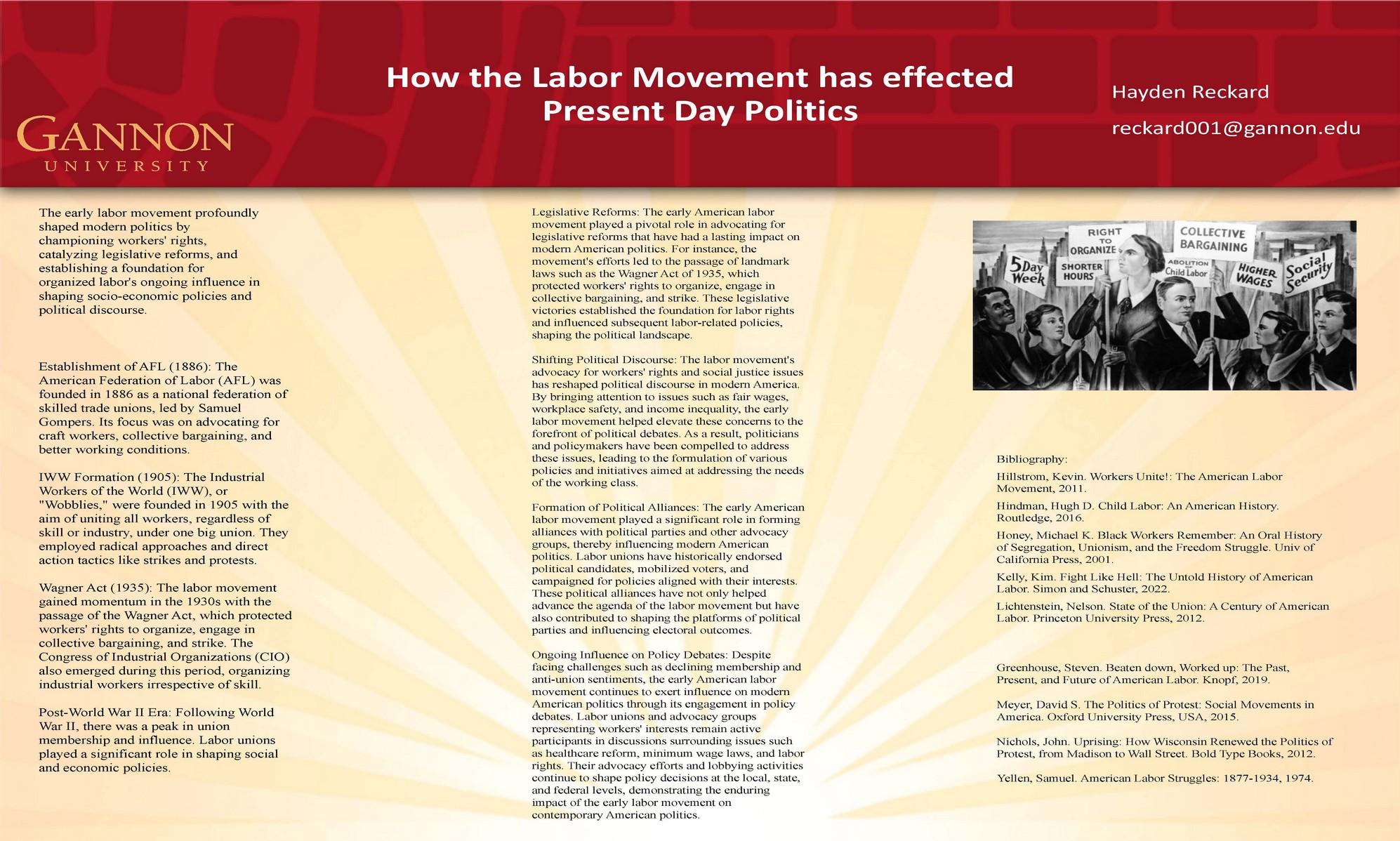
Presentation: 106
Title: How the Labor Movement has effected Present Day Politics
Abstract: The early labor movement in the United States significantly shaped modern politics by fostering the establishment of labor rights, influencing legislative reforms, and shaping the dynamics of political discourse, thereby contributing to the development of a more equitable and inclusive democratic system.
Presenter(s): Hayden Reckard
Sponsoring Department: History
Mentor(s): Peter Agresti
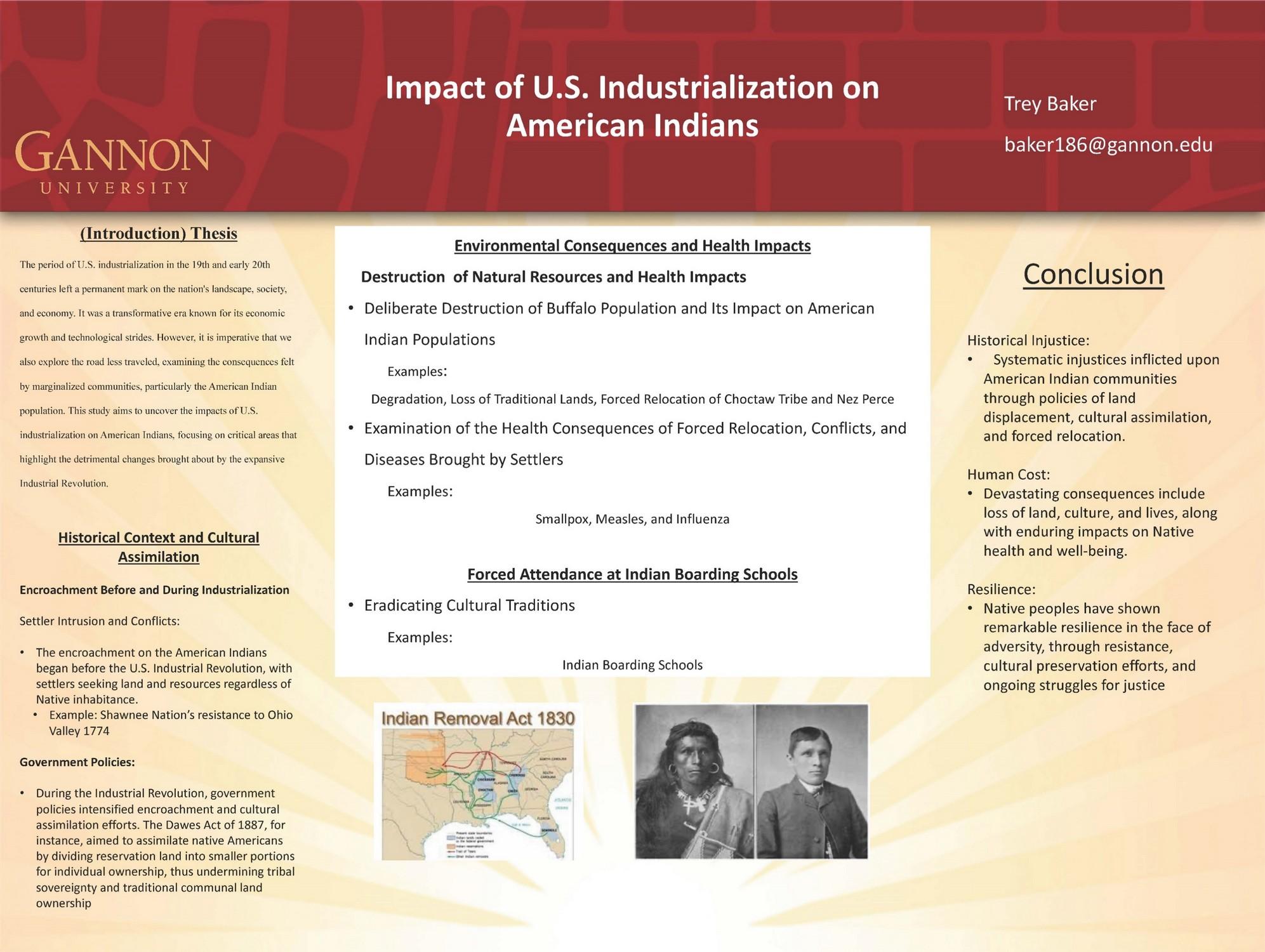
Presentation: 107
Title: Impact of U.S. Industrialization on American Indians
Abstract: The impact of U.S. industrialization on American Indians during the 19th and early 20th centuries was profound and multifaceted, leaving lasting scars on indigenous communities. This paper delves into the consequences of industrialization, focusing on themes such as land displacement, resource exploitation, cultural disruption, health crises, and forced assimilation policies. Through historical analysis and case studies, it reveals the systematic efforts to undermine American Indian sovereignty, culture, and way of life, ultimately highlighting the devastating consequences of progress and expansion on indigenous communities. This study highlights the importance of acknowledging and reckoning with the historical injustices inflicted upon indigenous peoples in pursuing industrial advancement.
Presenter(s): Trey Baker
Sponsoring Department: History
Mentor(s): Peter Agresti
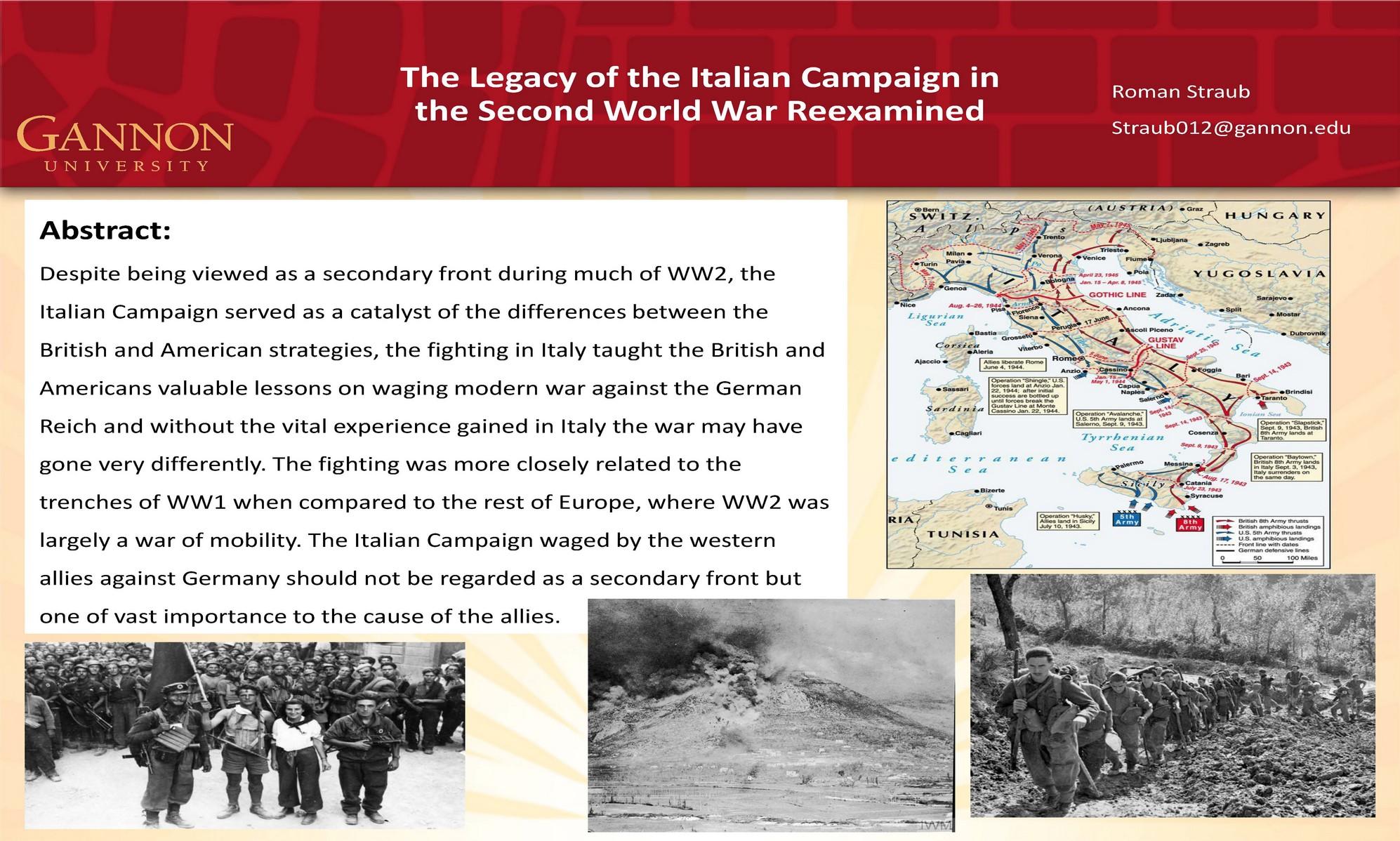
Presentation: 108
Title: The Legacy of the Italian Campaign in the Second World War Reexamined
Abstract: Despite being regarded as a secondary front during the majority of the time the campaign was active, the Italian Campaign served as a catalyst of the differences between the British and American views of waging war, additionally the fighting in Italy taught the British and Americans valuable lessons on waging modern war against the German Reich and without the vital experience gained in Italy the war may have gone very differently. The very bitter fighting was more closely related to the trenches of the Western Front between 1914 and 1918 and was the standard on the Italian Front when compared to other areas of Europe, where the Second World War was largely a war of mobility. For these reasons, the Italian Campaign waged by the British and Americans and their allies against the forces of the German Reich should not be regarded as a secondary frontier but one of vast importance to the cause of the western allies.
Presenter(s): Roman Straub
Sponsoring Department: History
Mentor(s): Peter Agresti
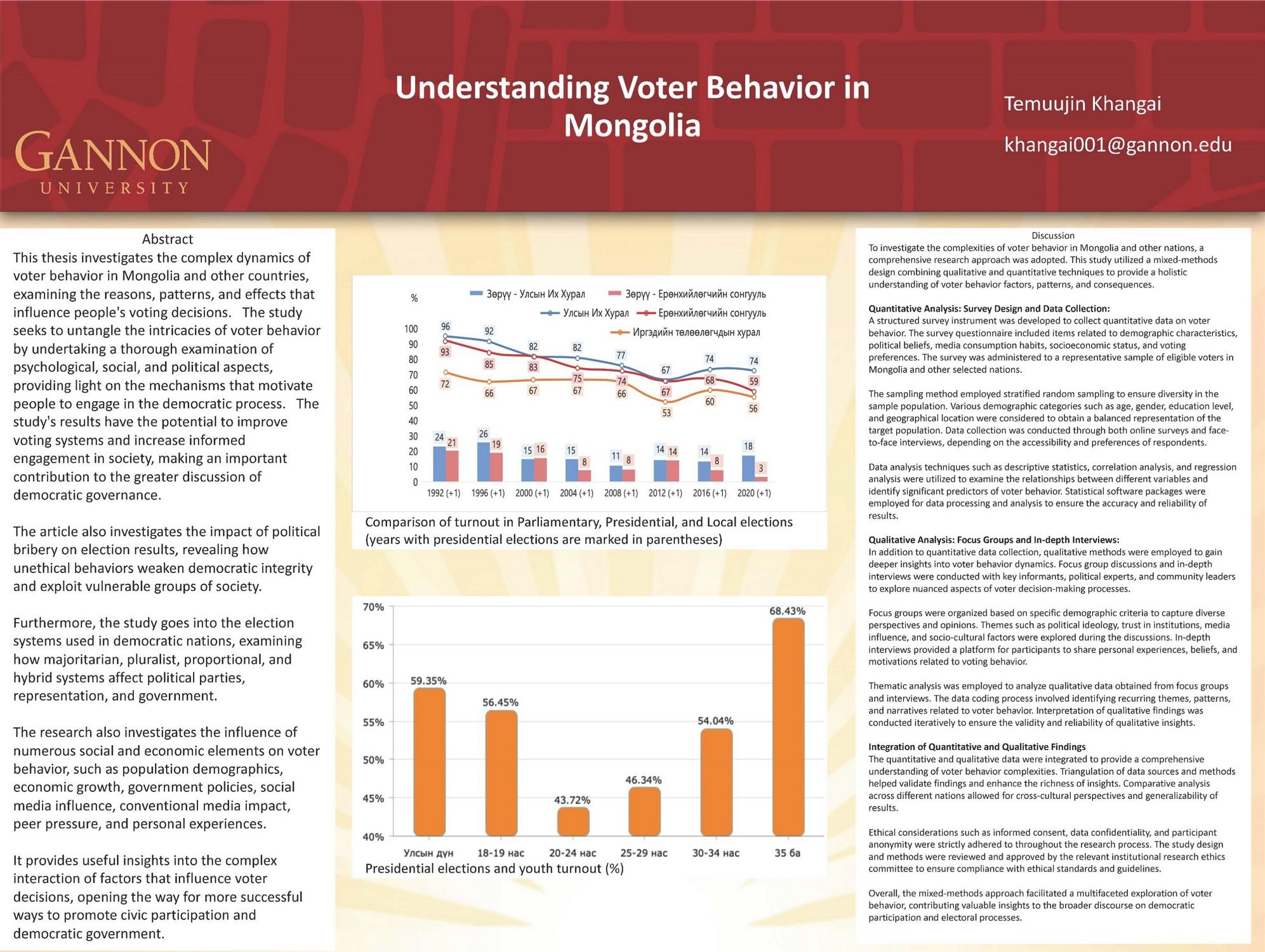
Presentation: 109
Title: Understanding Voter Behavior in Mongolia
Abstract: This thesis investigates the complex dynamics of voter behavior in Mongolia and other countries, examining the reasons, patterns, and effects that influence people's voting decisions. The study seeks to untangle the intricacies of voter behavior by undertaking a thorough examination of psychological, social, and political aspects, providing light on the mechanisms that motivate people to engage in the democratic process. The study's results have the potential to improve voting systems and increase informed engagement in society, making an important contribution to the greater discussion of democratic governance. The article also investigates the impact of political bribery on election results, revealing how unethical behaviors weaken democratic integrity and exploit vulnerable groups of society. Furthermore, the study goes into the election systems used in democratic nations, examining how majoritarian, pluralist, proportional, and hybrid systems affect political parties, representation, and government. The research also investigates the influence of numerous social and economic elements on voter behavior, such as population demographics, economic growth, government policies, social media influence, conventional media impact, peer pressure, and personal experiences. It provides useful insights into the complex interaction of factors that influence voter decisions, opening the way for more successful ways to promote civic participation and democratic government.
Presenter(s): Temuujin Khangai
Sponsoring Department: History
Mentor(s): Peter Agresti
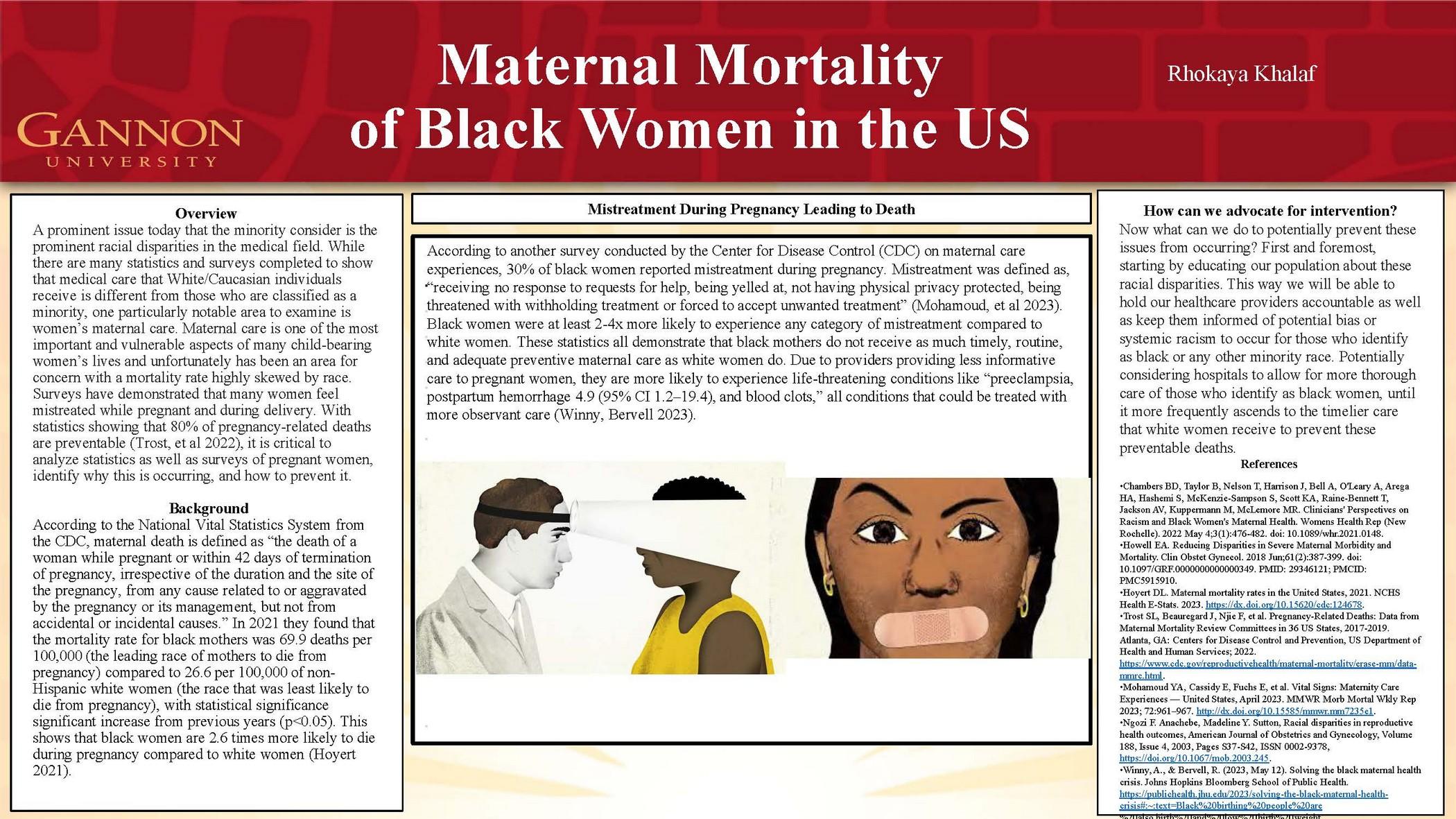
Presentation: 110
Title: Maternal Mortality of Black Women in the US
Abstract: A prominent issue today that the minority consider is the prominent racial disparities in the medical field. While there are many statistics and surveys completed to show that medical care that White/Caucasian individuals receive is different from those who are classified as a minority, one particularly notable area to examine is women’s maternal care. Maternal care is one of the most important and vulnerable aspects of many child-bearing women’s lives and unfortunately has been an area for concern with a mortality rate highly skewed by race. Surveys have demonstrated that many women feel mistreated while pregnant and during delivery. With statistics showing that 80% of pregnancy-related deaths are preventable (Trost, et al 2022), it is critical to analyze statistics as well as surveys of pregnant women, identify why this is occurring, and how to prevent it.
Presenter(s): Rhokaya Khalaf
Sponsoring Department: Philosophy
Mentor(s): Dominic Prianti
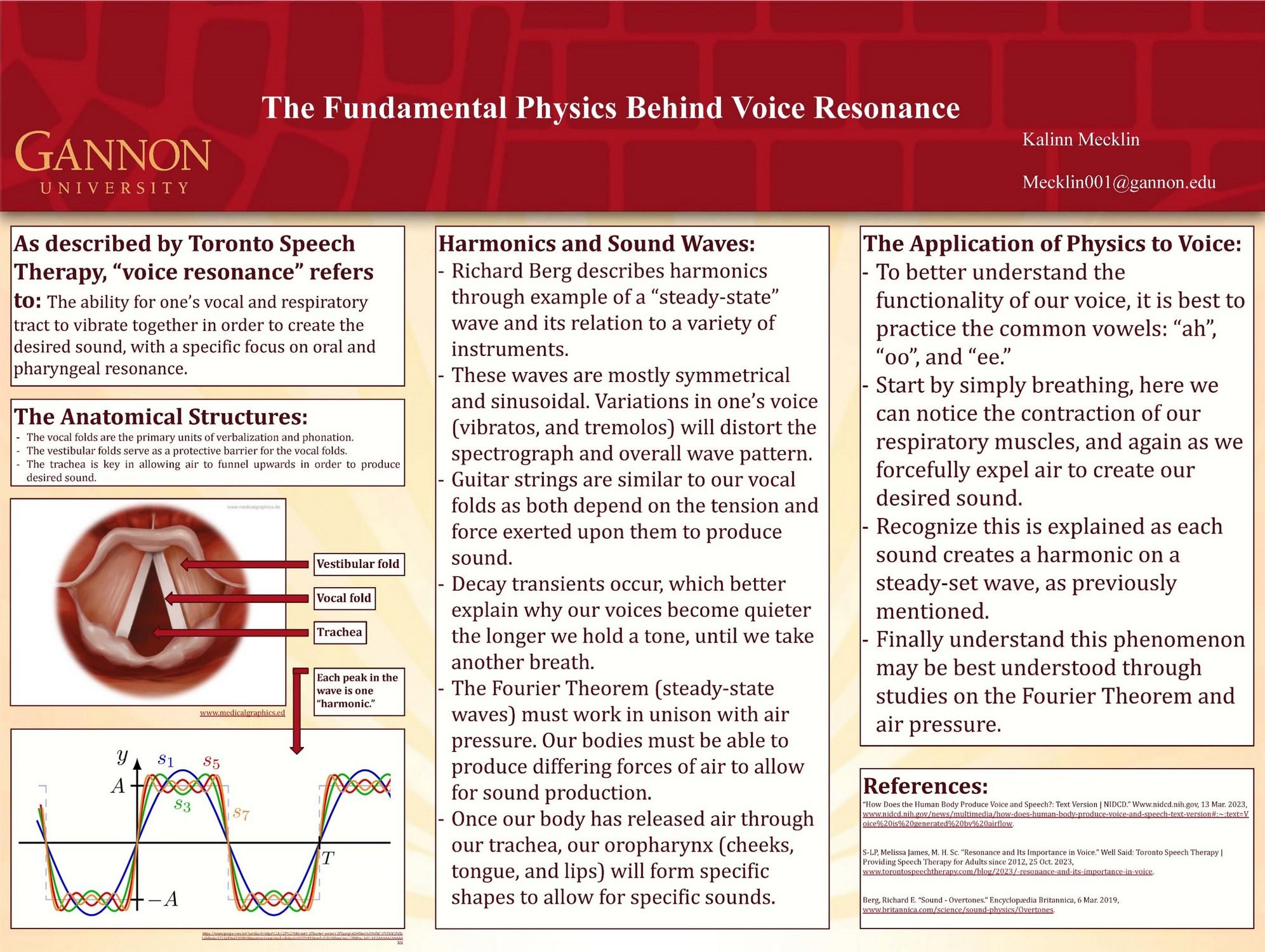
Presentation: 111
Title: The Fundamental Physics Behind Voice Resonance
Abstract: We review literature to bring together the anatomy of voice and the physics of sound to then explain voice resonance. Such phenomenon may be described through exploration of the physical properties behind anatomical structures and their processes within the laryngeal system. The larynx is a complex system of four specific structures. Structures then collaborate to produce seven total forms of voice resonance. Studies focus on oral and pharyngeal, as both are the most common form of verbal communication. All which are explained by harmonics of a sound wave. Tension and vibration, with variable components such as weight, expound fundamental harmonics that are used to demonstrate sound waves. In this paper we apply said physics through comparison of our vocal folds to stringed instruments, such as a guitar, allowing us to better understand human voice and how the larynx generates sound.
Presenter(s): Kalinn Mecklin
Sponsoring Department: Physics
Mentor(s): Nicholas Conklin
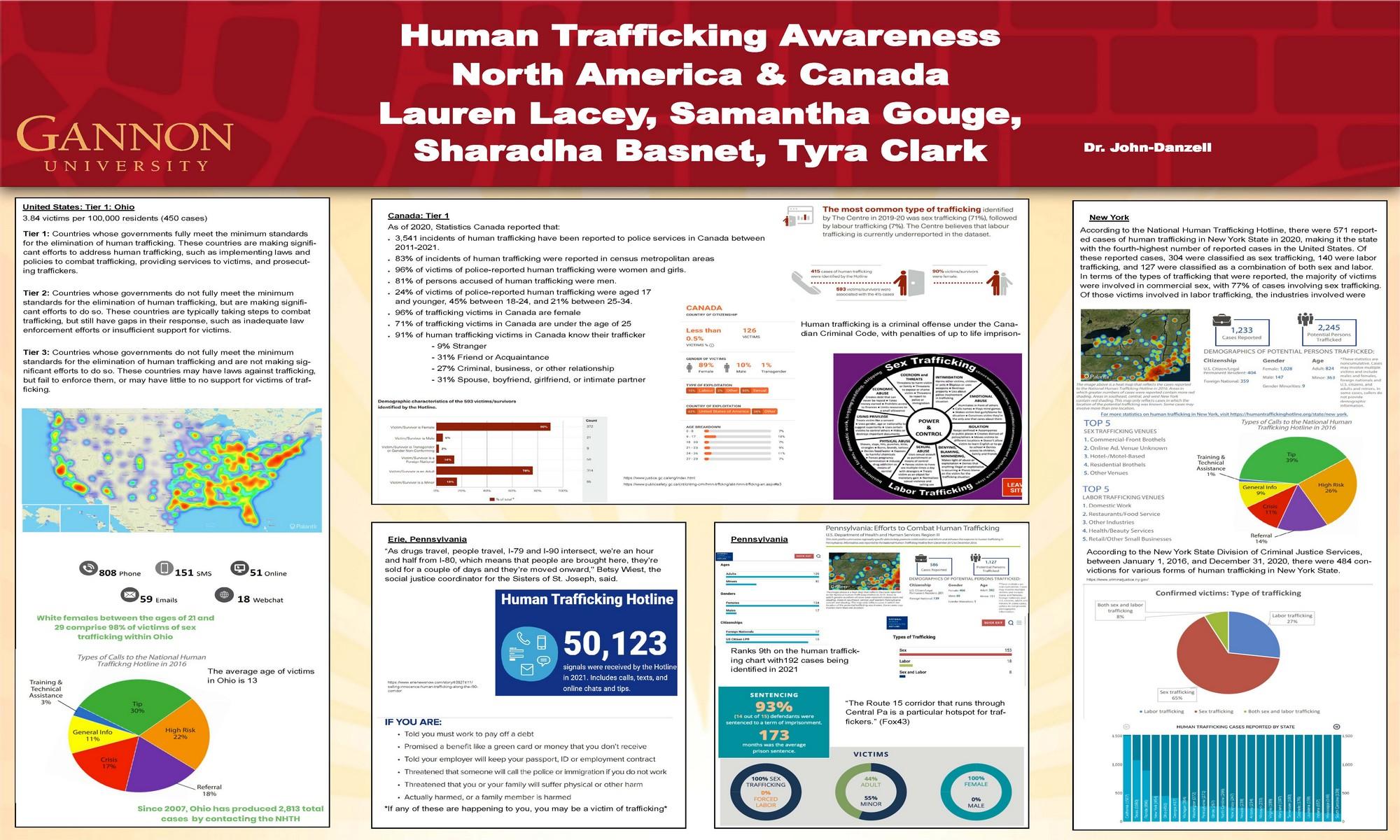
Presentation: 112
Title: Human Trafficking Awareness in North America and Canada
Abstract: Human trafficking is a pervasive problem. Across the globe, approximately 50 million people were trafficking victims in 2021. While Modern-Day Slavery (MDS) is often viewed as a problem within developing countries, we aim to present shed light on its pervasiveness in North America. This human trafficking poster is informational to create awareness. We will investigate the problem of human trafficking particularly in the U.S. and with a localized view of PA and Erie. We aim to illustrate how MDS is occurring in the U.S. and PA. We will present data on the most prominent forms of trafficking, the scope of the issue, and initiatives at the micro and macro levels to mitigate human trafficking in the region.
Presenter(s): Lauren Lacey, Samantha Gouge, Sharadha Basnet, Tyra Clark
Sponsoring Department: Sociology
Mentor(s): Nicole John-Danzell
ERIE UNDERGRADUATE RESEARCH AND SCHOLARSHIP PLATFORM PRESENTATIONS
2:45
Platform Presentation Schedule – Beyer Hall 405
Research & Scholarship
Environmental Science & Engineering Utilizing Computational Fluid Dynamics (CFD) to Simulate Microplastic Removal from Storm Sewers
Lindsay Steis, Jacob Schwerer, Santiago Torres
A Comparison of Middle Eastern Film Depictions of Women in Society
A Study of Bird/Building Collisions During Migration Seasons in the City of Erie
A New Life for Old Genes
Developing an Anaerobic Digestion System to Break Down Food Waste and Contain Resultant Gases
HydroCool: Revolutionizing Water Cooling with Efficient and Cost-Effective Treatment
Utilizing Computational Fluid Dynamics (CFD) to Simulate Microplastic Removal from Storm Sewers
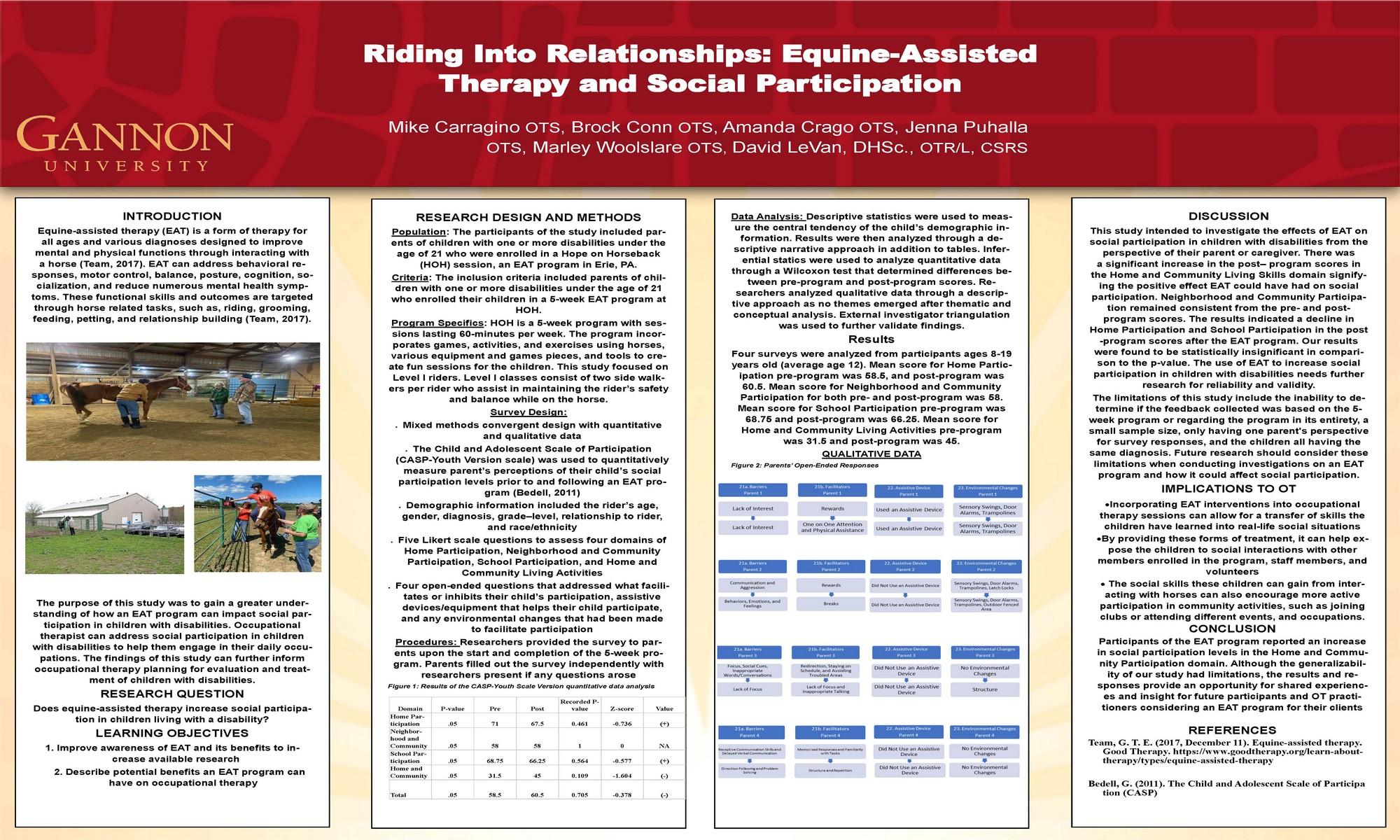
Presentation: 119
Title: Riding Into Relationships: Equine-Assisted Therapy and Social Participation
Abstract:
Objective: The purpose of this study was to investigate effects of equine assisted therapy on social participation in children with disabilities from the perspective of their parent or caregiver. Population: Four parents of children with disabilities who enrolled their child in a 5-week equine assisted therapy program. Research Design: This research study is a mixed-methods design. Outcome Measures: Each participant completed a demographic survey and a pre- and post-program CASP-Youth Version self-report scale to measure social participation. Results: The ordinal results of the CASP-Youth Version scale indicated no significant difference in social participation. Open-ended question responses indicated that a child’s communication ability and motivation impact social participation which was consistent with previous literature.
Conclusion: Understanding factors that hinder or facilitate social participation can support rehabilitation programs for children with disabilities. The impact of equine assisted therapy on social participation in children with disabilities requires further investigation.
Presenter(s): Mike Carragino, Brock Conn, Amanda Crago, Jenna Puhalla, Marley Woolslare
Sponsoring Department: Occupational Therapy
Mentor(s): David LeVan
ERIE GRADUATE RESEARCH AND SCHOLARSHIP POSTER PRESENTATIONS
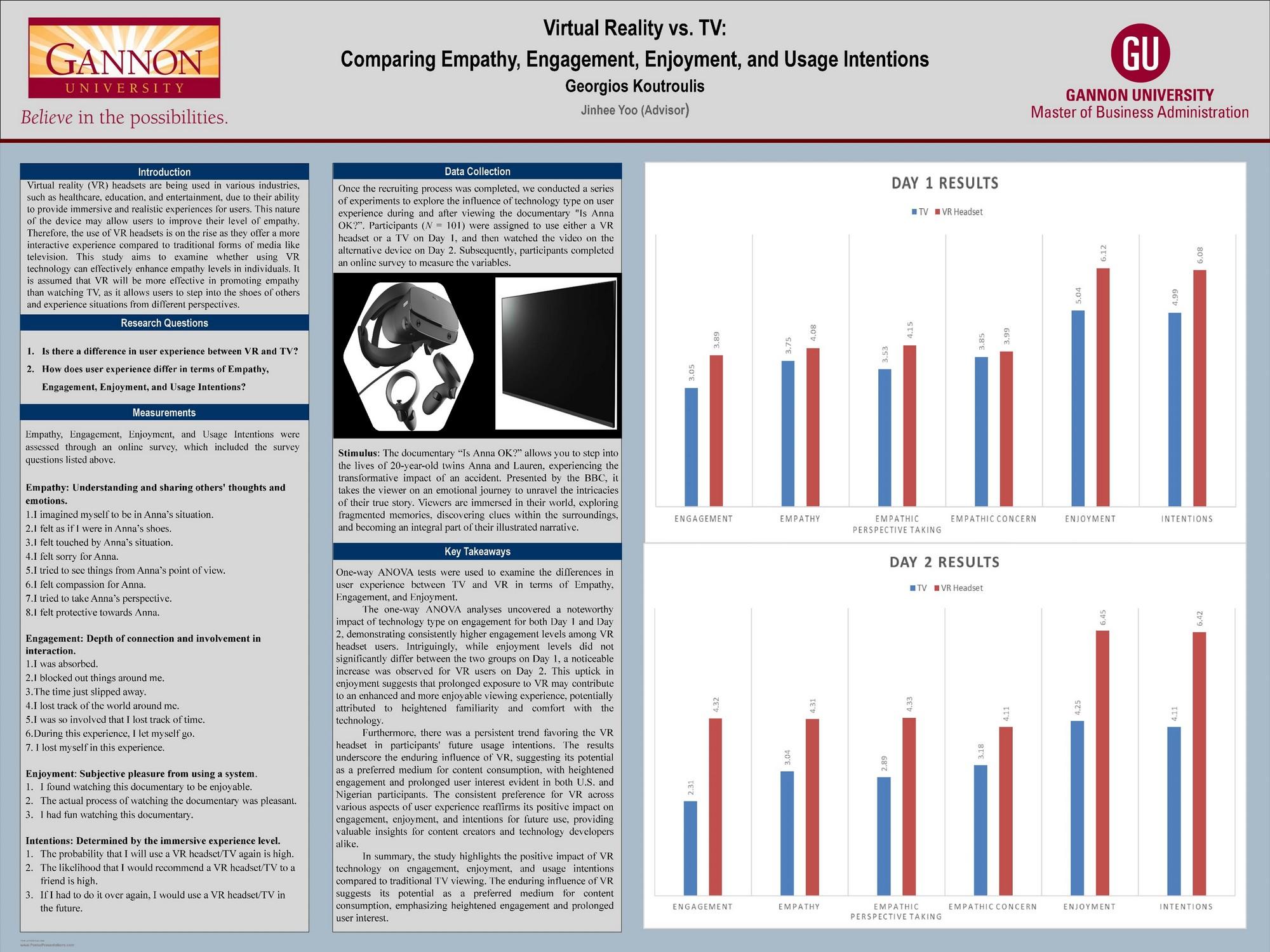
Presentation: 120
Title: Virtual Reality vs. TV: Comparing Empathy, Engagement, Enjoyment, and Usage Intentions
Abstract: Virtual reality (VR) headsets are being used in various industries, such as healthcare, education, and entertainment, due to their ability to provide immersive and realistic experiences for users. This nature of the device may allow users to improve their level of empathy. Therefore, the use of VR headsets is on the rise as they offer a more interactive experience compared to traditional forms of media like television. This study aims to examine whether using VR technology can effectively enhance empathy levels in individuals. It is assumed that VR will be more effective in promoting empathy than watching TV, as it allows users to step into the shoes of others and experience situations from different perspectives.
Presenter(s): Georgios Koutroulis
Sponsoring Department: Business
Mentor(s): Jinhee Yoo
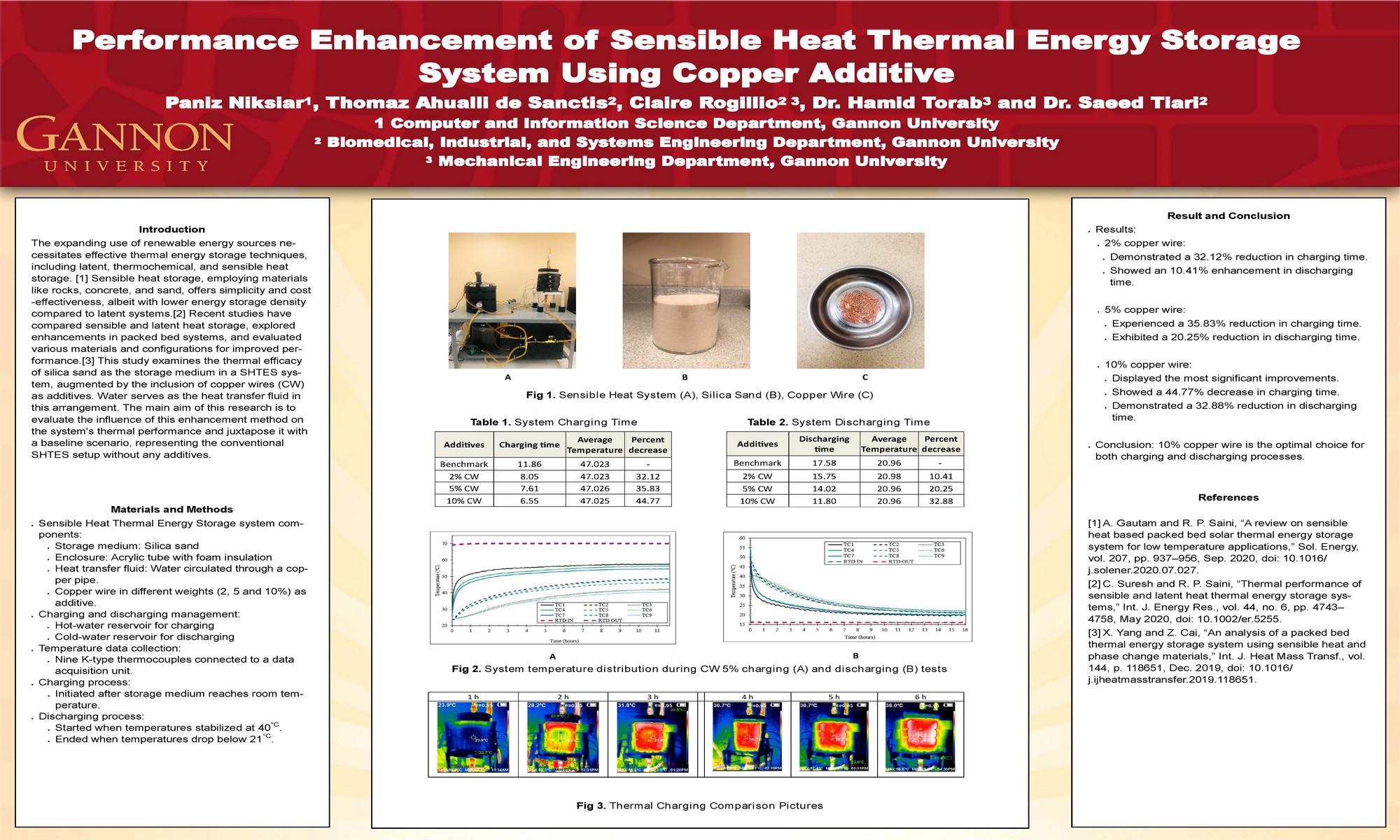
Presentation: 121
Title: Performance Enhancement of Sensible Heat Thermal Energy Storage System Using Copper Additive
Abstract: The upward pathway of renewable energy sources reflects society's growing commitment to sustainable alternatives, aiming to curb environmental repercussions and fulfill escalating energy needs. Within this shift, thermal energy storage emerges as a pivotal component in harnessing renewable energy. Sensible Heat Thermal Energy Storage (SHTES) is a promising method for efficiently storing and releasing thermal energy. Through experimental testing, this research investigates the thermal performance of silica sand as the storage medium within a SHTES system, enhanced by dispersion of copper wires as additives. Water is employed as the heat transfer fluid in this setup. The primary goal of this study is to assess the impact of this enhancement technique on the thermal performance of the system and compare it with a benchmark scenario, representing the standard SHTES setup without additives.
Presenter(s): Paniz Niksiar, Thomaz Ahualli de Sanctis, Claire Rogillio
Sponsoring Department: Biomedical, Industrial, and Systems Engineering
Mentor(s): Saeed Tiari, Hamid Torab
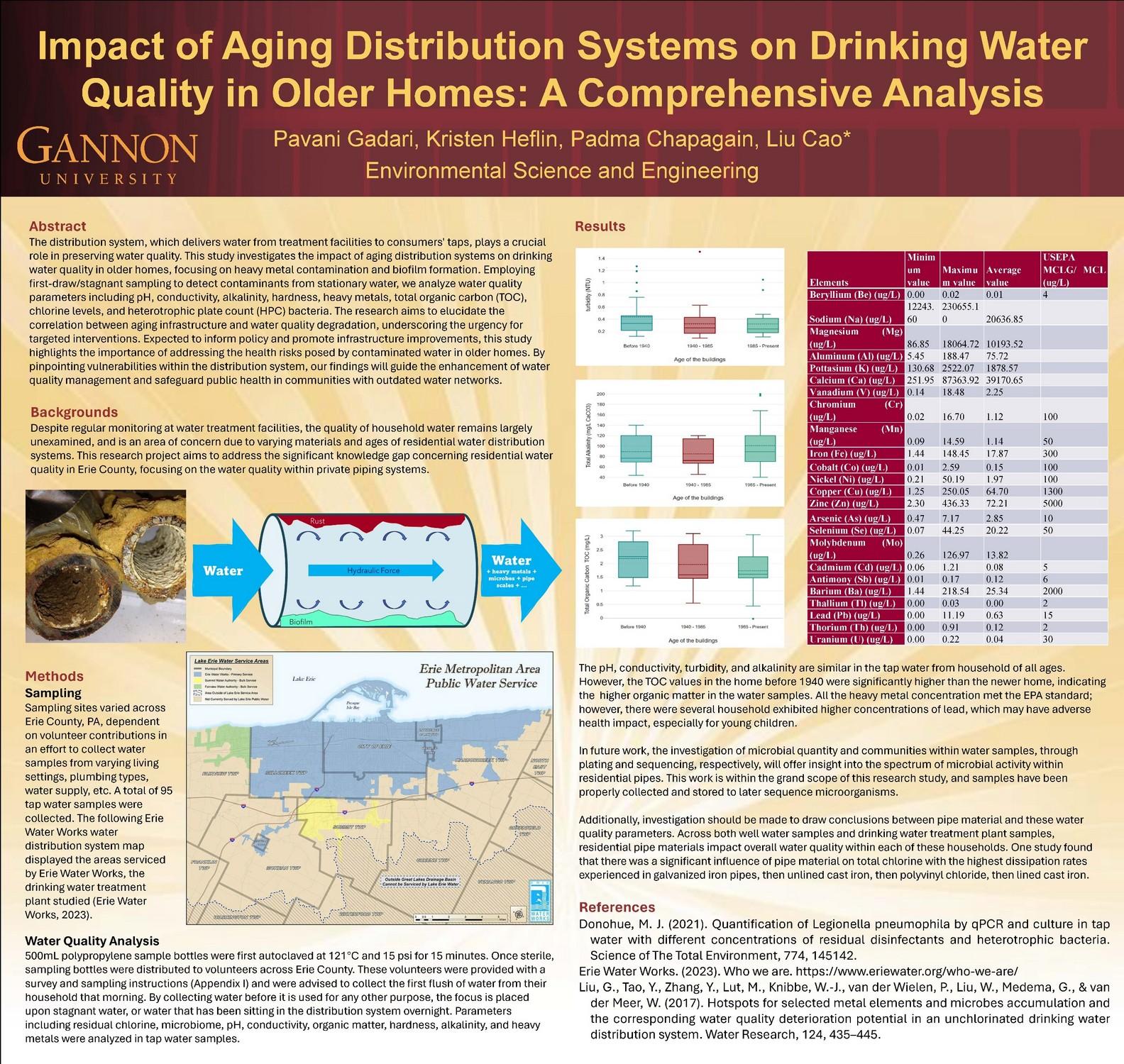
Presentation: 122
Title: Impact of Aging Distribution Systems on Drinking Water Quality in Older Homes: A Comprehensive Analysis
Abstract: The distribution system, which delivers water from treatment facilities to consumers' taps, plays a crucial role in preserving water quality. This study investigates the impact of aging distribution systems on drinking water quality in older homes, focusing on heavy metal contamination and biofilm formation. Employing first-draw/stagnant sampling to detect contaminants from stationary water, we analyze water quality parameters including pH, conductivity, alkalinity, hardness, heavy metals, total organic carbon (TOC),chlorine levels, and heterotrophic plate count (HPC) bacteria. The research aims to elucidate the correlation between aging infrastructure and water quality degradation, underscoring the urgency for targeted interventions. Expected to inform policy and promote infrastructure improvements, this study highlights the importance of addressing the health risks posed by contaminated water in older homes. By pinpointing vulnerabilities within the distribution system, our findings will guide the enhancement of water quality management and safeguard public health in communities with outdated water networks.
Presenter(s): Pavani Gadari, Kristen Heflin, Padma Chapagain
Sponsoring Department: Environmental Science and Engineering
Mentor(s): Liu Cao
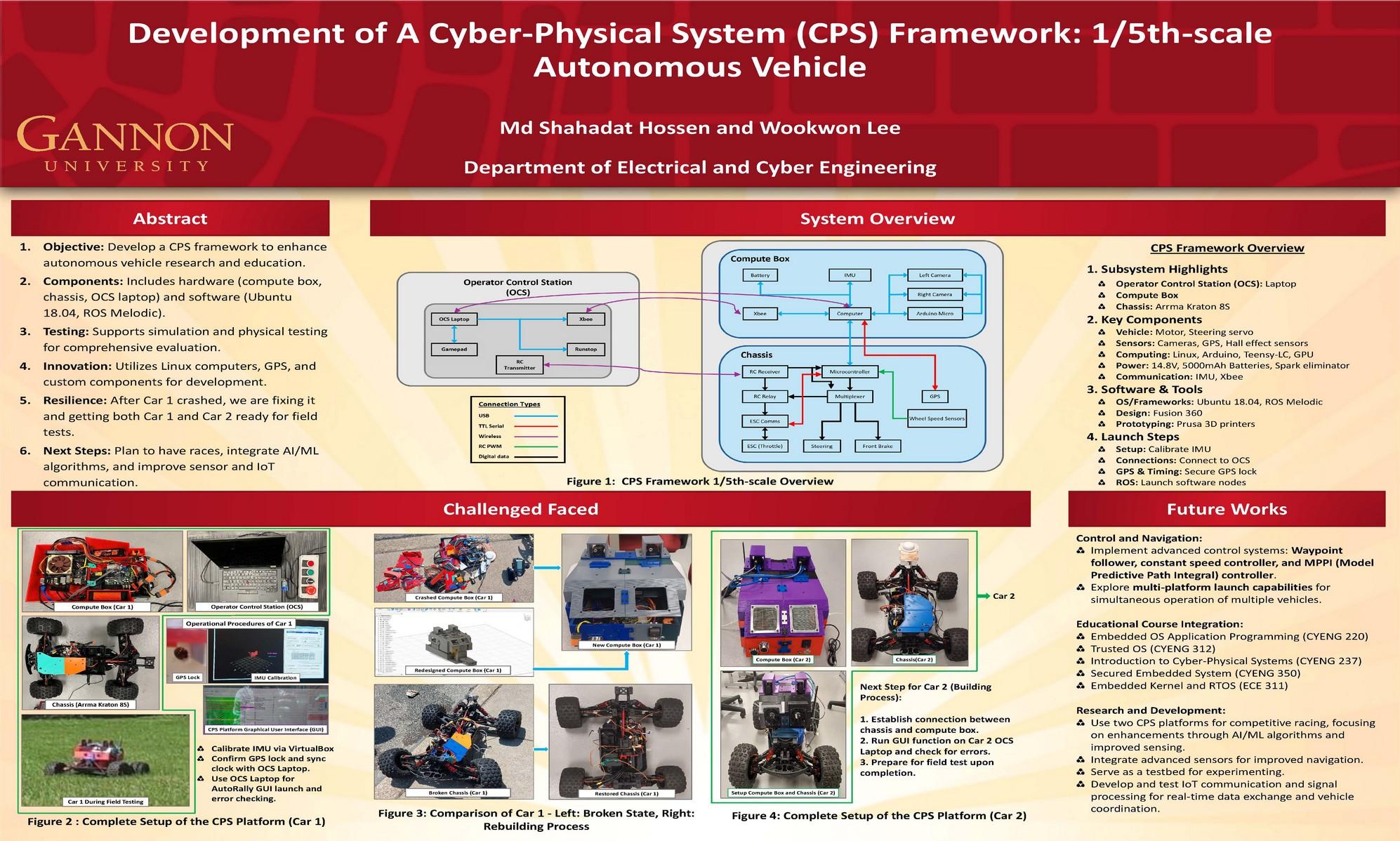
Presentation: 123
Title: Development of A Cyber-Physical System (CPS) Framework: 1/5th-scale Autonomous Vehicle
Abstract: 1. Objective: Develop a CPS framework to enhance autonomous vehicle research and education.2. Components: Includes hardware (compute box, chassis, OCS laptop) and software (Ubuntu 18.04, ROS Melodic).3. Testing: Supports simulation and physical testing for comprehensive evaluation.4. Innovation: Utilizes Linux computers, GPS, and custom components for development.5. Resilience: After Car 1 crashed, we are fixing it and getting both Car 1 and Car 2 ready for field tests.6. Next Steps: Plan to have races, integrate AI/ML algorithms, and improve sensor and IoT communication.
Presenter(s): Md Shahadat Hossen
Sponsoring Department: Electrical & Cyber Engineering
Mentor(s): Wookwon Lee
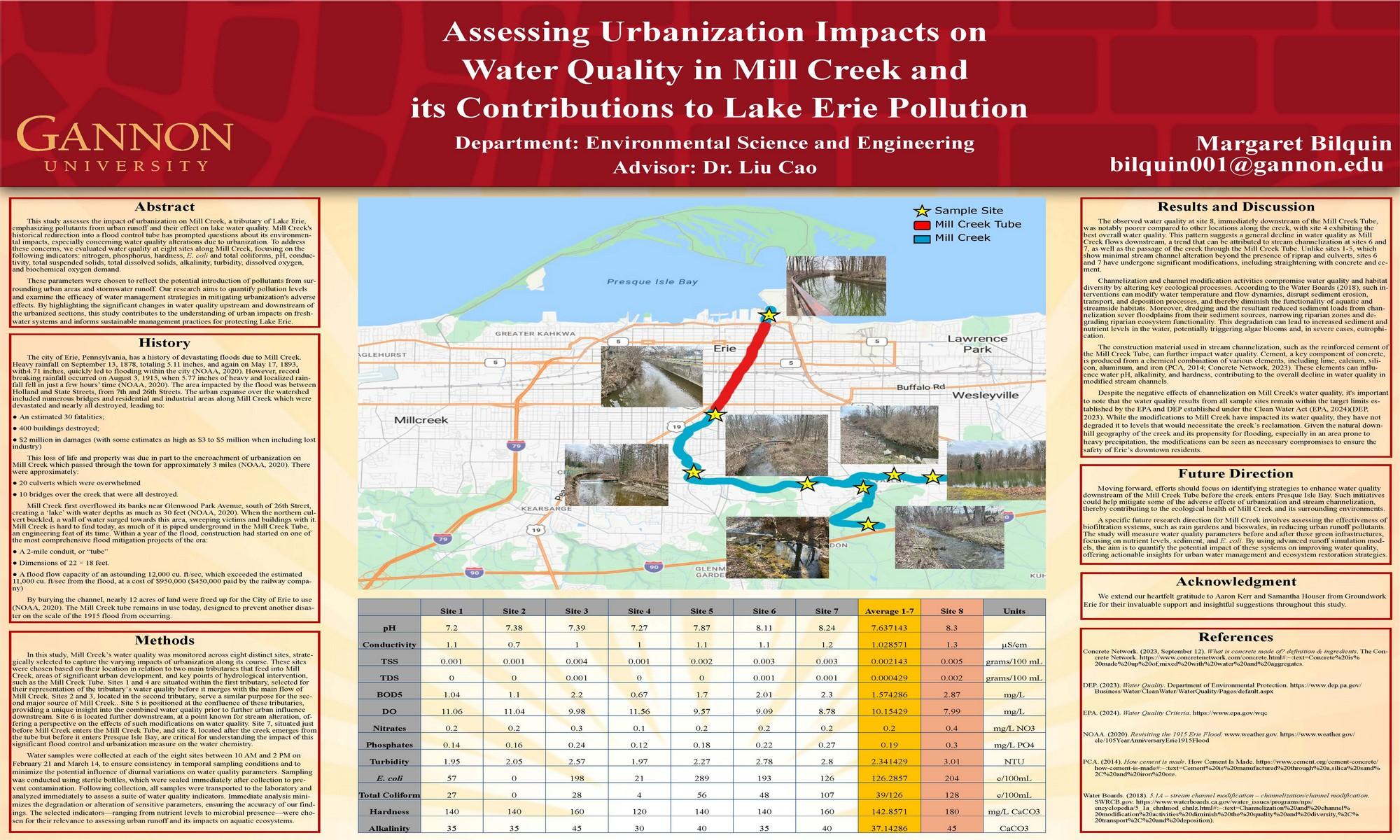
Presentation: 124
Title: Assessing Urbanization Impacts on Water Quality in Mill Creek and its Contributions to Lake Erie Pollution
Abstract: This study assesses the impact of urbanization on Mill Creek, a tributary of Lake Erie, emphasizing pollutants from urban runoff and their effect on lake water quality. Mill Creek's historical redirection into a flood control tube has prompted questions about its environmental impacts, especially concerning water quality alterations due to urbanization. To address these concerns, we evaluated water quality at eight sites along Mill Creek, focusing on the following indicators: nitrogen, phosphorus, hardness, E. coli and total coliforms, pH, conductivity, total suspended solids, total dissolved solids, alkalinity, turbidity, dissolved oxygen, and biochemical oxygen demand. These parameters were chosen to reflect the potential introduction of pollutants from surrounding urban areas and stormwater runoff. Our research aims to quantify pollution levels and examine the efficacy of water management strategies in mitigating urbanization's adverse effects. By highlighting the significant changes in water quality upstream and downstream of the urbanized sections, this study contributes to the understanding of urban impacts on freshwater systems and informs sustainable management practices for protecting Lake Erie.
Presenter(s): Margaret Bilquin
Sponsoring Department: Environmental Science and Engineering
Mentor(s): Liu Cao
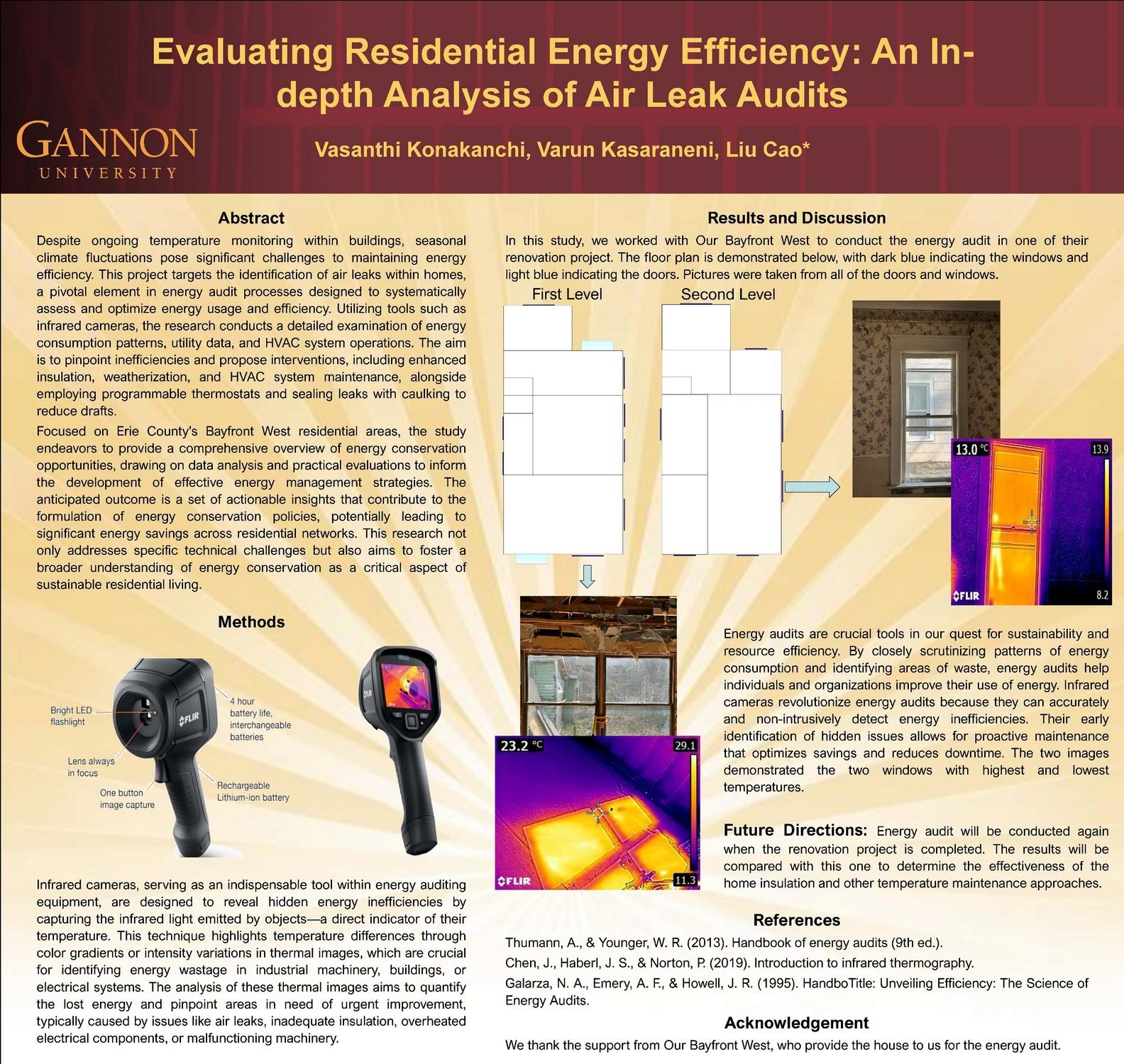
Presentation: 125
Title: Evaluating Residential Energy Efficiency: An In-depth Analysis of Air Leak Audits
Abstract: Despite ongoing temperature monitoring within buildings, seasonal climate fluctuations pose significant challenges to maintaining energy efficiency. This project targets the identification of air leaks within homes, a pivotal element in energy audit processes designed to systematically assess and optimize energy usage and efficiency. Utilizing tools such as infrared cameras, the research conducts a detailed examination of energy consumption patterns, utility data, and HVAC system operations. The aim is to pinpoint inefficiencies and propose interventions, including enhanced insulation, weatherization, and HVAC system maintenance, alongside employing programmable thermostats and sealing leaks with caulking to reduce drafts. Focused on Erie County's Bayfront West residential areas, the study endeavors to provide a comprehensive overview of energy conservation opportunities, drawing on data analysis and practical evaluations to inform the development of effective energy management strategies. The anticipated outcome is a set of actionable insights that contribute to the formulation of energy conservation policies, potentially leading to significant energy savings across residential networks. This research not only addresses specific technical challenges but also aims to foster a broader understanding of energy conservation as a critical aspect of sustainable residential living.
Presenter(s): Vasanthi Konakanchi
Sponsoring Department: Environmental Science and Engineering
Mentor(s): Varun Kasaraneni Cao Liu
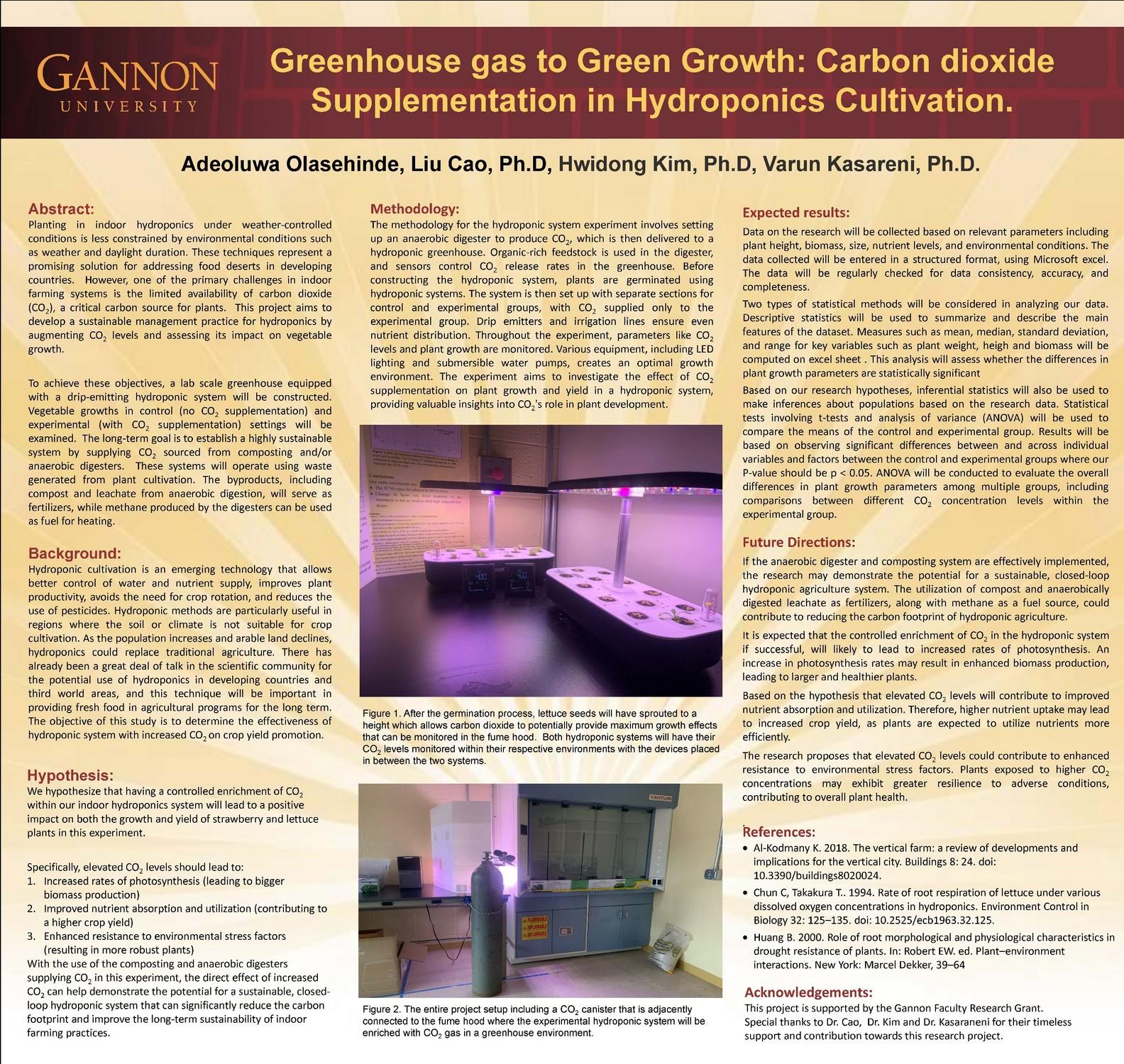
Presentation: 126
Title: Greenhouse gas to Green Growth: Carbon dioxide Supplementation in Hydroponics Cultivation.
Abstract: Planting in indoor hydroponics under weather-controlled conditions is less constrained by environmental conditions such as weather and daylight duration. These techniques represent a promising solution for addressing food deserts in developing countries. However, one of the primary challenges in indoor farming systems is the limited availability of carbon dioxide (CO 2), a critical carbon source for plants. This project aims to develop a sustainable management practice for hydroponics by augmenting CO 2 levels and assessing its impact on vegetable growth. To achieve these objectives, a lab scale greenhouse equipped with a drip-emitting hydroponic system will be constructed. Vegetable growths in control (no CO 2 supplementation) and experimental (with CO2 supplementation) settings will be examined. The long-term goal is to establish a highly sustainable system by supplying CO2 sourced from composting and/or anaerobic digesters. These systems will operate using waste generated from plant cultivation. The byproducts, including compost and leachate from anaerobic digestion, will serve as fertilizers, while methane produced by the digesters can be used as fuel for heating.
Presenter(s): Adeoluwa Olasehinde
Sponsoring Department: Environmental Science and Management
Mentor(s): Liu Cao, Hwidong Kim, Varun Kasaraneni
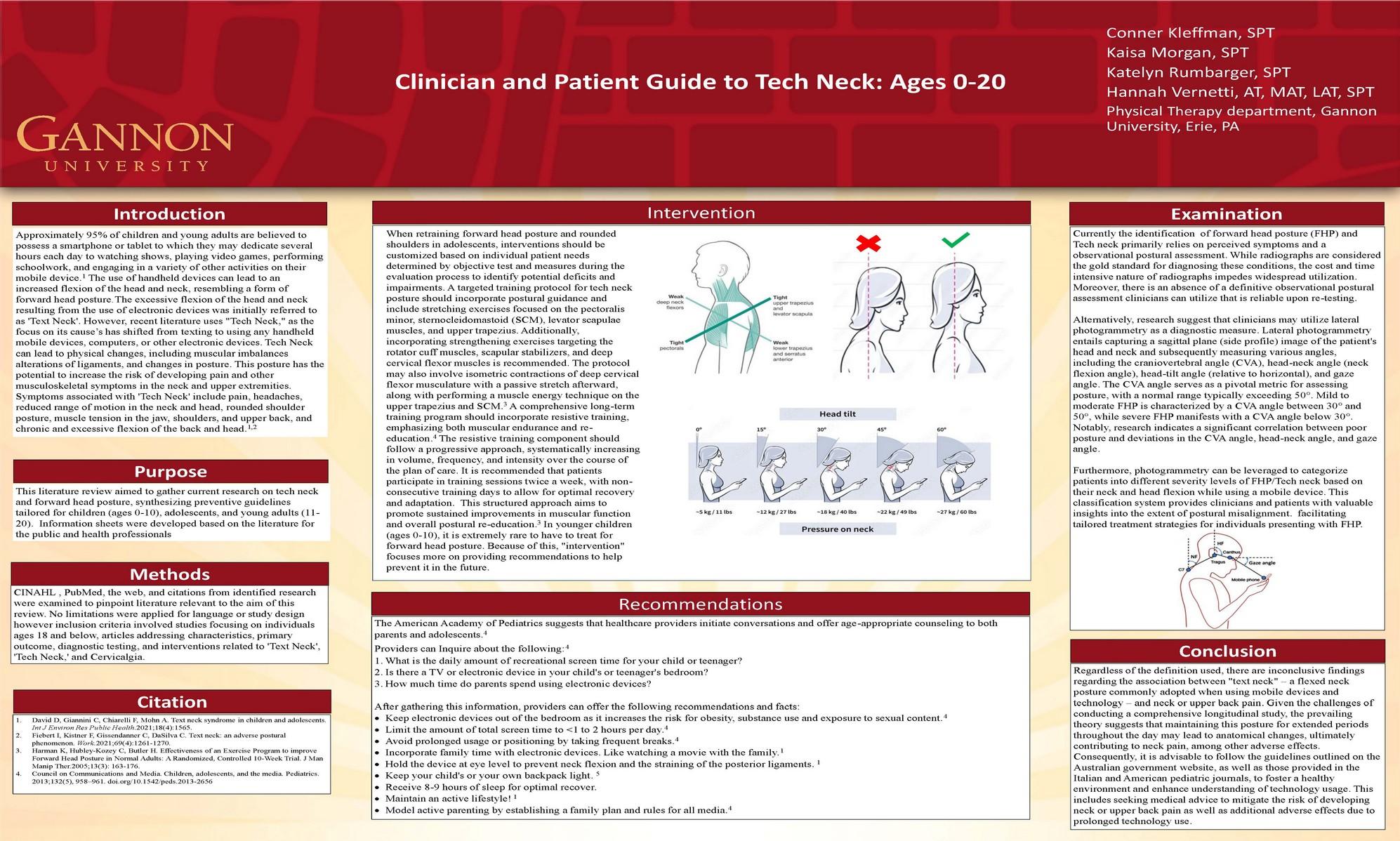
Presentation: 127
Title: Clinician and Patient Guide to Tech Neck: Ages 0-20
Abstract: Approximately 95% of children and young adults are believed to possess a smartphone or tablet to which they may dedicate several hours each day to watching shows, playing video games, performing schoolwork, and engaging in a variety of other activities on their mobile device. The use of handheld devices can lead to an increased flexion of the head and neck, resembling a form of forward head posture. The excessive flexion of the head and neck resulting from the use of electronic devices was initially referred to as 'Text Neck'. However, recent literature uses "Tech Neck," as the focus on its cause’s has shifted from texting to using any handheld mobile devices, computers, or other electronic devices. Tech Neck can lead to physical changes, including muscular imbalances alterations of ligaments, and changes in posture. This posture has the potential to increase the risk of developing pain and other musculoskeletal symptoms in the neck and upper extremities. Symptoms associated with 'Tech Neck' include pain, headaches, reduced range of motion in the neck and head, rounded shoulder posture, muscle tension in the jaw, shoulders, and upper back, and chronic and excessive flexion of the back and head.
Presenter(s): Kaisa Morgan, Conner Kleffman, Katelyn Rumbarger, Hannah Vernetti
Sponsoring Department: Doctor of Physical Therapy
Mentor(s): Donna Skelly
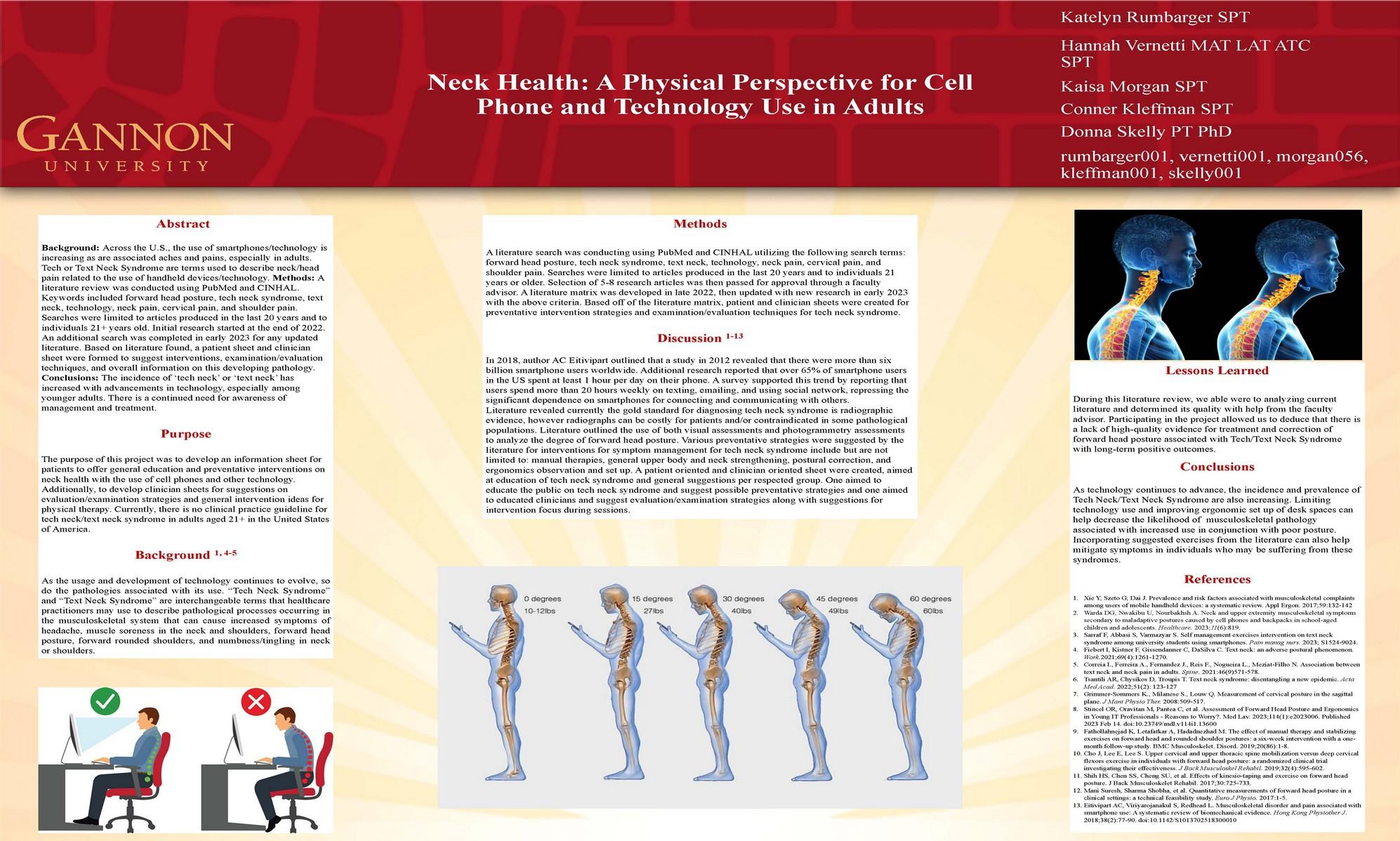
Presentation: 128
Title: Neck Health: A Physical Perspective for Cell Phone and Technology Use in Adults
Abstract: Across the U.S., the use of smartphones/technology is increasing as are associated aches and pains, especially in adults. Tech or Text Neck Syndrome are terms used to describe neck/head pain related to the use of handheld devices/technology. Methods: A literature review was conducted using PubMed and CINHAL. Keywords included forward head posture, tech neck syndrome, text neck, technology, neck pain, cervical pain, and shoulder pain. Searches were limited to articles produced in the last 20 years and to individuals 21+ years old. Initial research started at the end of 2022. An additional search was completed in early 2023 for any updated literature. Based on literature found, a patient sheet and clinician sheet were formed to suggest interventions, examination/evaluation techniques, and overall information on this developing pathology. Conclusions: The incidence of ‘tech neck’ or ‘text neck’ has increased with advancements in technology, especially among younger adults. There is a continued need for awareness of management and treatment.
Presenter(s): Katelyn Rumbarger, Hannah Vernetti, Conner Kleffman, Kaisa Morgan
Sponsoring Department: Doctor of Physical Therapy
Mentor(s): Donna Skelly
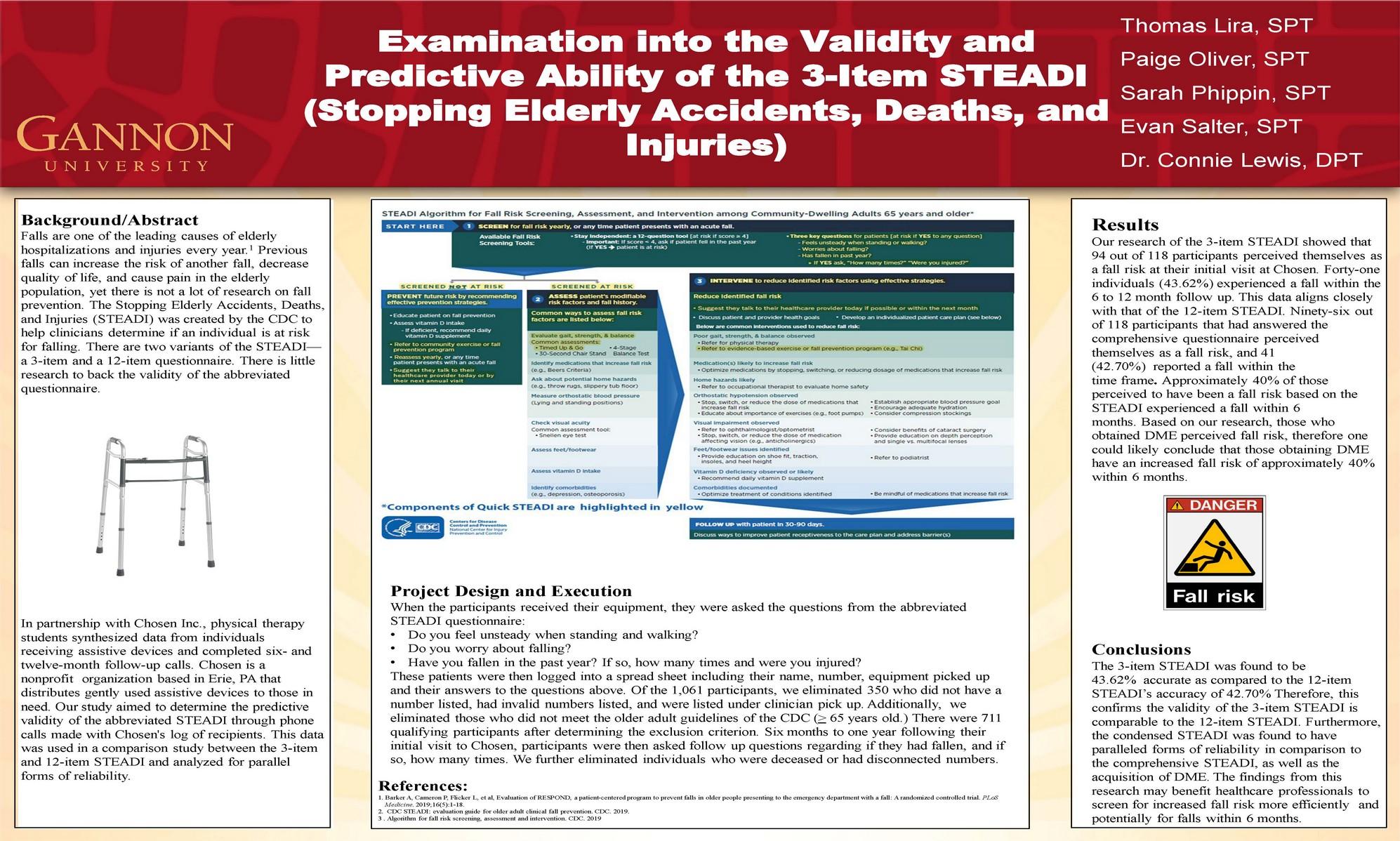
Presentation: 129
Title: Examination into the Validity and Predictive Ability of the 3-Item STEADI (Stopping Elderly Accidents, Deaths, and Injuries)
Abstract: Falls are one of the leading causes of elderly hospitalizations and injuries every year. Previous falls can increase the risk of another fall, decrease quality of life, and cause pain in the elderly population, yet there is not a lot of research on fall prevention. The Stopping Elderly Accidents, Deaths, and Injuries (STEADI) was created by the CDC to help clinicians determine if an individual is at risk for falling. There are two variants of the STEADI—a 3-item and a 12-item questionnaire. There is little research to back the validity of the abbreviated questionnaire. In partnership with Chosen Inc., physical therapy students synthesized data from individuals receiving assistive devices and completed six- and twelve-month follow-up calls. Chosen is a nonprofit organization based in Erie, PA that distributes gently used assistive devices to those in need. Our study aimed to determine the predictive validity of the abbreviated STEADI through phone calls made with Chosen's log of recipients. This data was used in a comparison study between the 3-item and 12-item STEADI and analyzed for parallel forms of reliability.
Presenter(s): Thomas Lira, Paige Oliver, Sarah Phippin, Evan Salter
Sponsoring Department: Doctor of Physical Therapy
Mentor(s): Constance Lewis
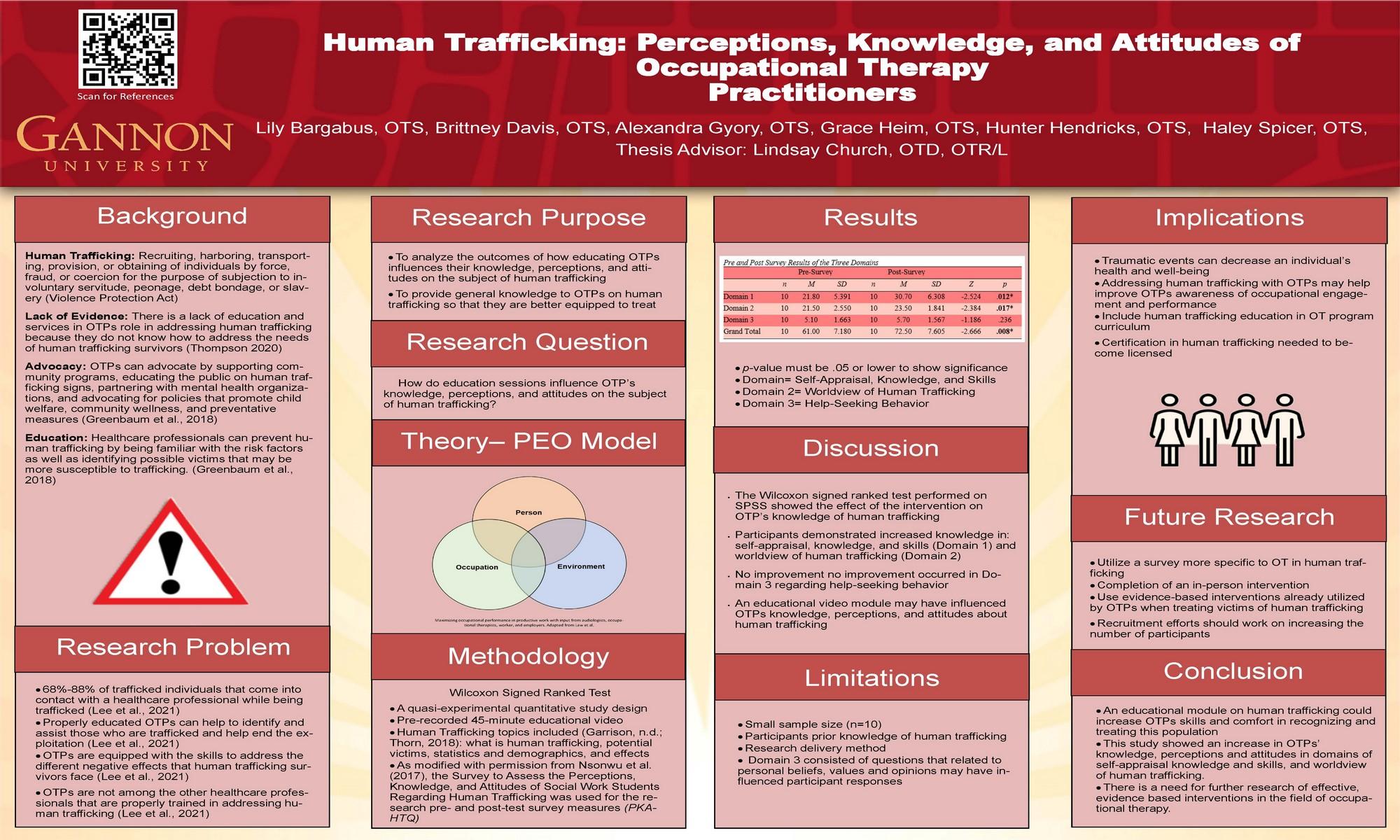
Presentation: 130
Title: Human Trafficking: Perceptions, Knowledge, and Attitudes of Occupational Therapy Practitioners
Abstract: Limited literature supports Occupational Therapy Practitioners' (OTPs) role and awareness of human trafficking. This study sought to determine whether or not an educational module increased the knowledge, perceptions, and attitudes of OTPs regarding human trafficking. As modified with permission from Nsonwu et al.(2017), the Survey to Assess the Perceptions, Knowledge, and Attitudes of Social Work Students Regarding Human Trafficking was used for the research pre- and post-test survey measures (PKA-HTQ). The study consisted of 10 OTPs varying in age range. Using the Wilcoxon Signed Ranked Test and a p-value of .05, three domains were significant: self-appraisal knowledge and skills (p=.012), worldview of human trafficking (p=.017), and grand total (p=.008). The help-seeking behaviors/personal beliefs domain was not significant with a p-value of .236. The data suggests that an educational module may improve OTP’s knowledge in self-appraisal knowledge and skills, worldview of human trafficking, and personal values.
Presenter(s): Lily Bargabus, Brittney Davis, Alexandra Gyory, Grace Heim, Hunter Hendricks, Haley Spicer
Sponsoring Department: Occupational Therapy
Mentor(s): Lindsay Church
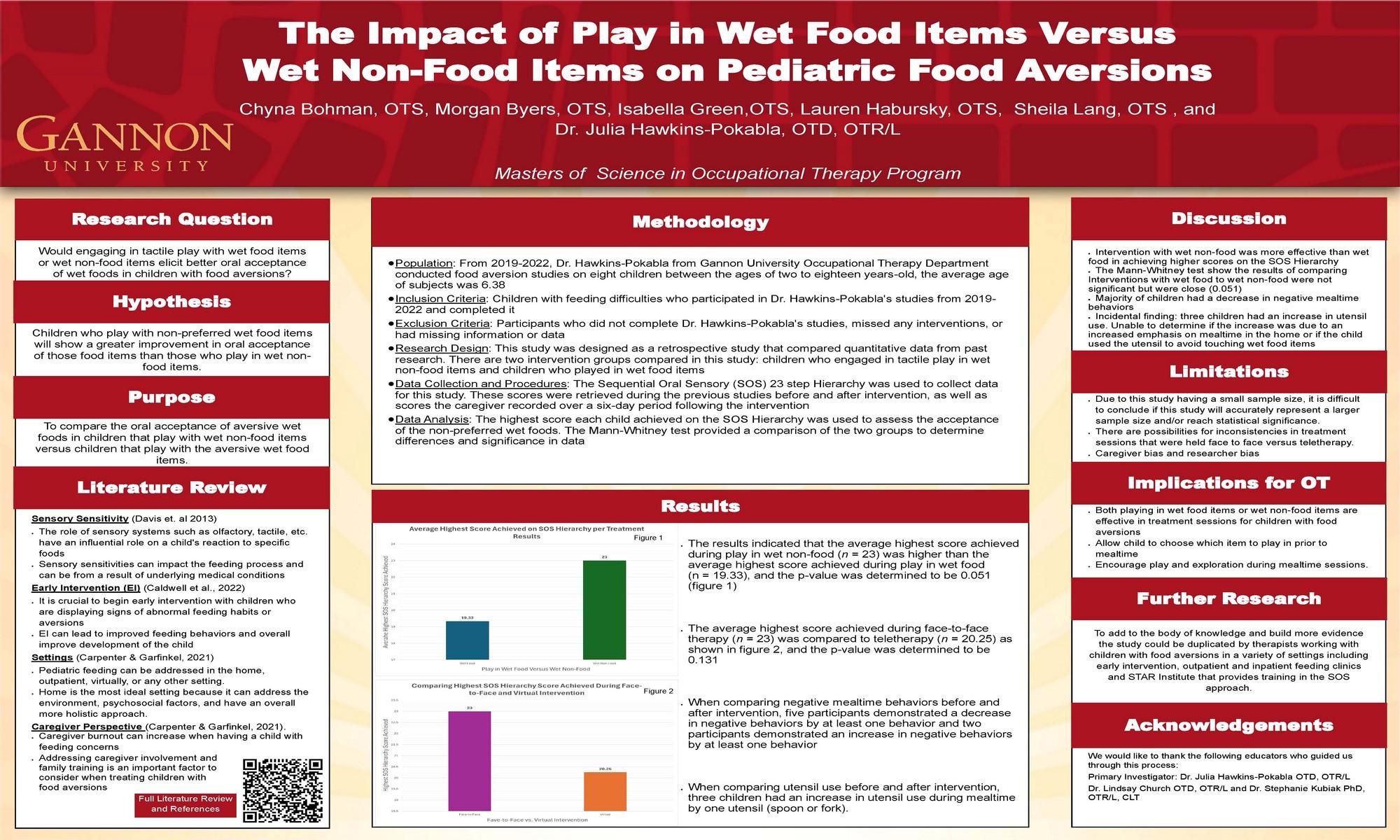
Presentation: 131
Title: The Impact of Play in Wet Food Items Versus Wet Non-Food Items on Pediatric Food Aversions
Abstract: A pediatric feeding disorder (PFD) can be defined as “the inability to orally consume an ageappropriate diet” (Kovacic et al., 2021, p. 13). This research compares the impact of two intervention strategies in the treatment of eight pediatric clients with food aversions: tactile play with both wet food items and wet nonfood items to improve the oral acceptance of aversive wet foods. The use of the 23-step hierarchy scoring of the Sequential Oral Sensory (SOS) Approach was consistent throughout previous studies across a four-year collection period and was the sole resource for data collection. Using the Mann-Whitney test, this retrospective analysis has concluded that play with wet non-food items is more effective in improving acceptance of nonpreferred foods in children with pediatric feeding disorders. These findings implicate that play in both wet food items and wet non-food items are beneficial in occupational therapy treatments of PFD’s.
Presenter(s): Isabella Green, Lauren Habursky, Sheila Lang, Morgan Byers, Chyna Bohman
Sponsoring Department: Occupational Therapy
Mentor(s): Julia Hawkins-Pokabla
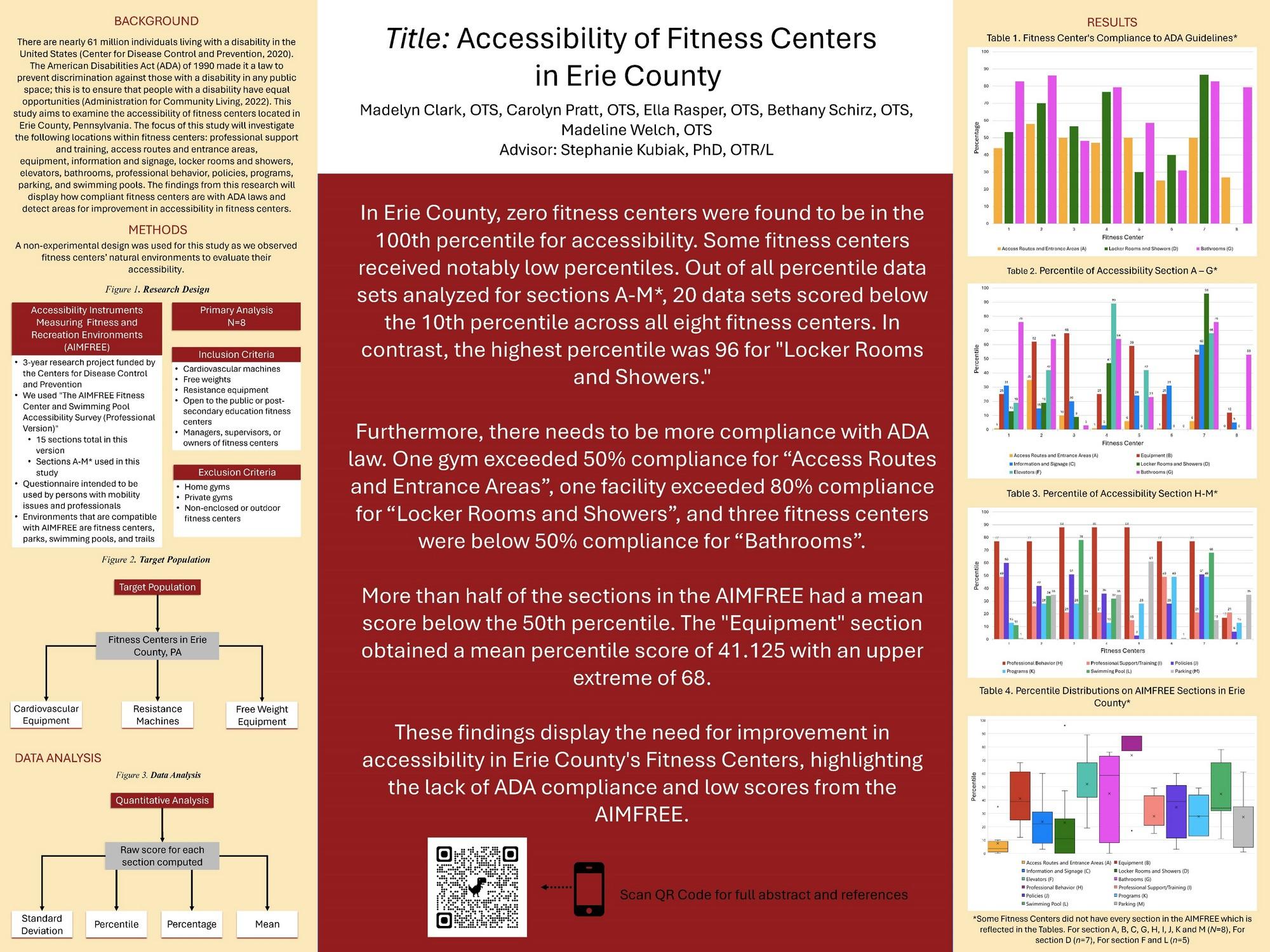
Presentation: 132
Title: Accessibility of Fitness Centers in Erie County
Abstract: This study assessed the accessibility of fitness centers (N = 8) in Erie County, PA. Four centers were university fitness centers; four centers were public fitness centers. Participants were surveyed using the Accessibility Instruments Measuring Fitness and Recreation Environments (AIMFREE), which assesses 15 different domains to obtain objective measurements of accessibility. For this study, only 13 domains were assessed. Public fitness centers had better overall accessibility, with average raw scores of 25.500 in the equipment section, placing them above the 50th percentile. Given the Americans with Disabilities Act (ADA) standards, there was a surprising lack of accessibility among all fitness centers in access routes and parking lots, with average raw scores of 19.250 and 15.000 out of a total raw score of 38. These findings display the need for improvement in accessibility in Erie County's Fitness Centers, highlighting the lack of ADA compliance and low scores from the AIMFREE.
Presenter(s): Madelyn Clark, Carolyn Pratt, Ella Rasper, Bethany Schirz, Madeline Welch
Sponsoring Department: Occupational Therapy
Mentor(s): Stephanie Kubiak

Presentation: 133
Title: Life Satisfaction and Online Socialization Following a Traumatic Brain Injury
Abstract: This study explored whether online socialization positively influences life satisfaction after traumatic brain injury (TBI). Population: The target population consisted of individuals who experienced a TBI, participated in the Traumatic Brain Injury Model Systems (TBIMS) observational study between 2017-2022, and were at least one-year post-injury (N=8531). Research Design: A secondary analysis of a prospective ongoing observational cohort study (TBIMS) was conducted. Outcome Measures: Outcome measures included the Satisfaction with Life Scale (SWLS) and demographic variables. To compare if differences of life satisfaction exist across categories of weekly internet socialization, a Kruskal-Wallis and post-hoc test were conducted. Results: Participants who socialize via the internet have higher life satisfaction when compared to participants who did not socialize via the internet (H[5]=248, p=< .001). Conclusion: These findings support online socialization and internet access as an opportunity to improve social participation and life satisfaction post TBI.
Presenter(s): Allison Gladden, Bryce Grecco, Madeline Horst, Brianna McCloskey, Rebecca Sheridan
Sponsoring Department: Occupational Therapy
Mentor(s): Stephanie Kubiak
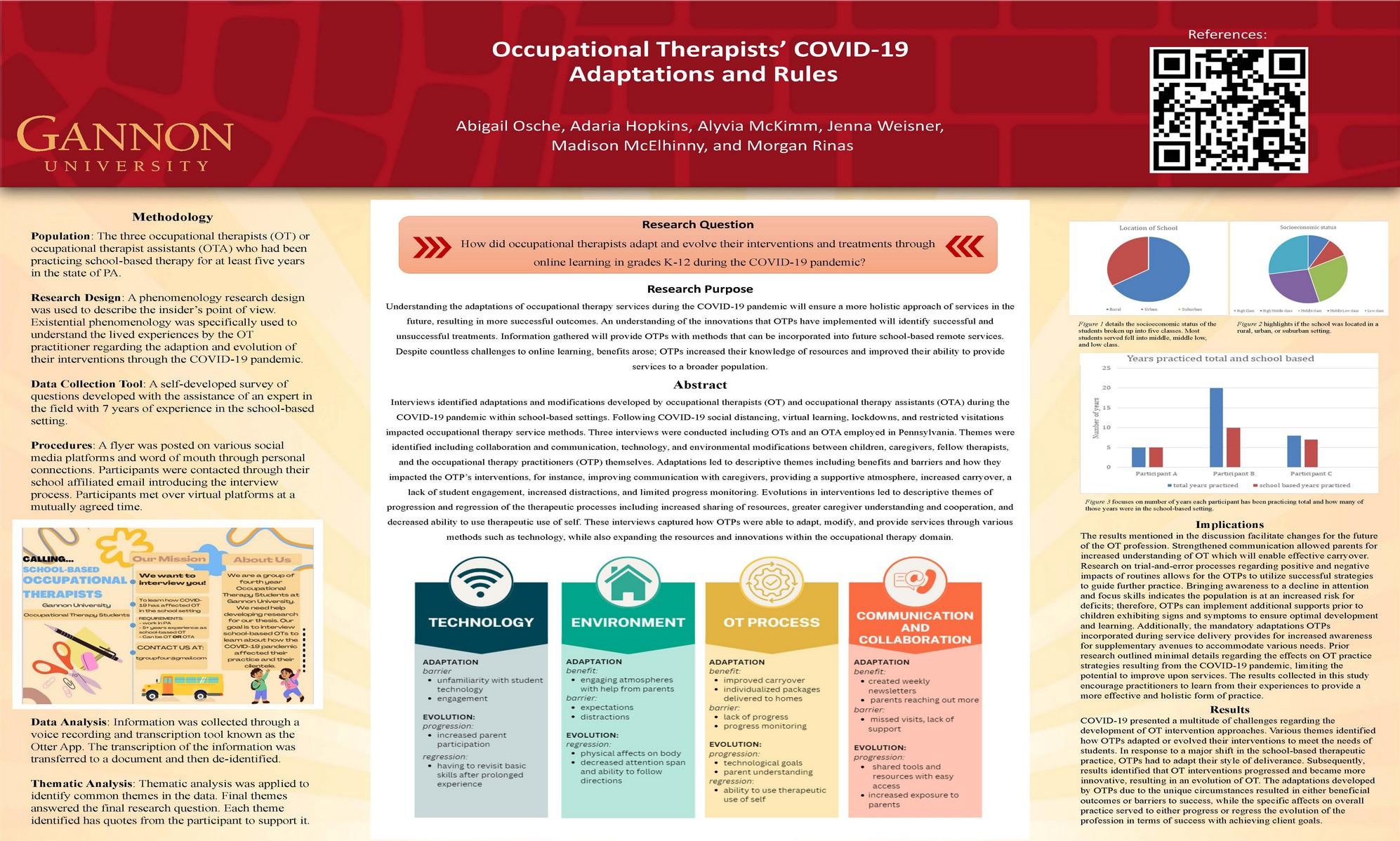
Presentation: 134
Title: Occupational Therapists’ COVID-19 Adaptations and Rules
Abstract:
Interviews identified adaptations and modifications developed by occupational therapists (OT) and occupational therapy assistants (OTA) during the COVID-19 pandemic within school-based settings. Following COVID-19 social distancing, virtual learning, lockdowns, and restricted visitations impacted occupational therapy service methods. Three interviews were conducted including OTs and an OTA employed in Pennsylvania. Themes were identified including collaboration and communication, technology, and environmental modifications between children, caregivers, fellow therapists, and the occupational therapy practitioners (OTP) themselves. Adaptations led to descriptive themes including benefits and barriers and how they impacted the OTP’s interventions, for instance, improving communication with caregivers, providing a supportive atmosphere, increased carryover, a lack of student engagement, increased distractions, and limited progress monitoring. Evolutions in interventions led to descriptive themes of progression and regression of the therapeutic processes including increased sharing of resources, greater caregiver understanding and cooperation, and decreased ability to use therapeutic use of self. These interviews captured how OTPs were able to adapt, modify, and provide services through various methods such as technology, while also expanding the resources and innovations within the occupational therapy domain.
Presenter(s): Abigail Osche, Adaria Hopkins, Alyvia McKimm, Jenna Weisner, Madison McElhinny, Morgan Rinas
Sponsoring Department: Occupational Therapy
Mentor(s): Nicole Lavery
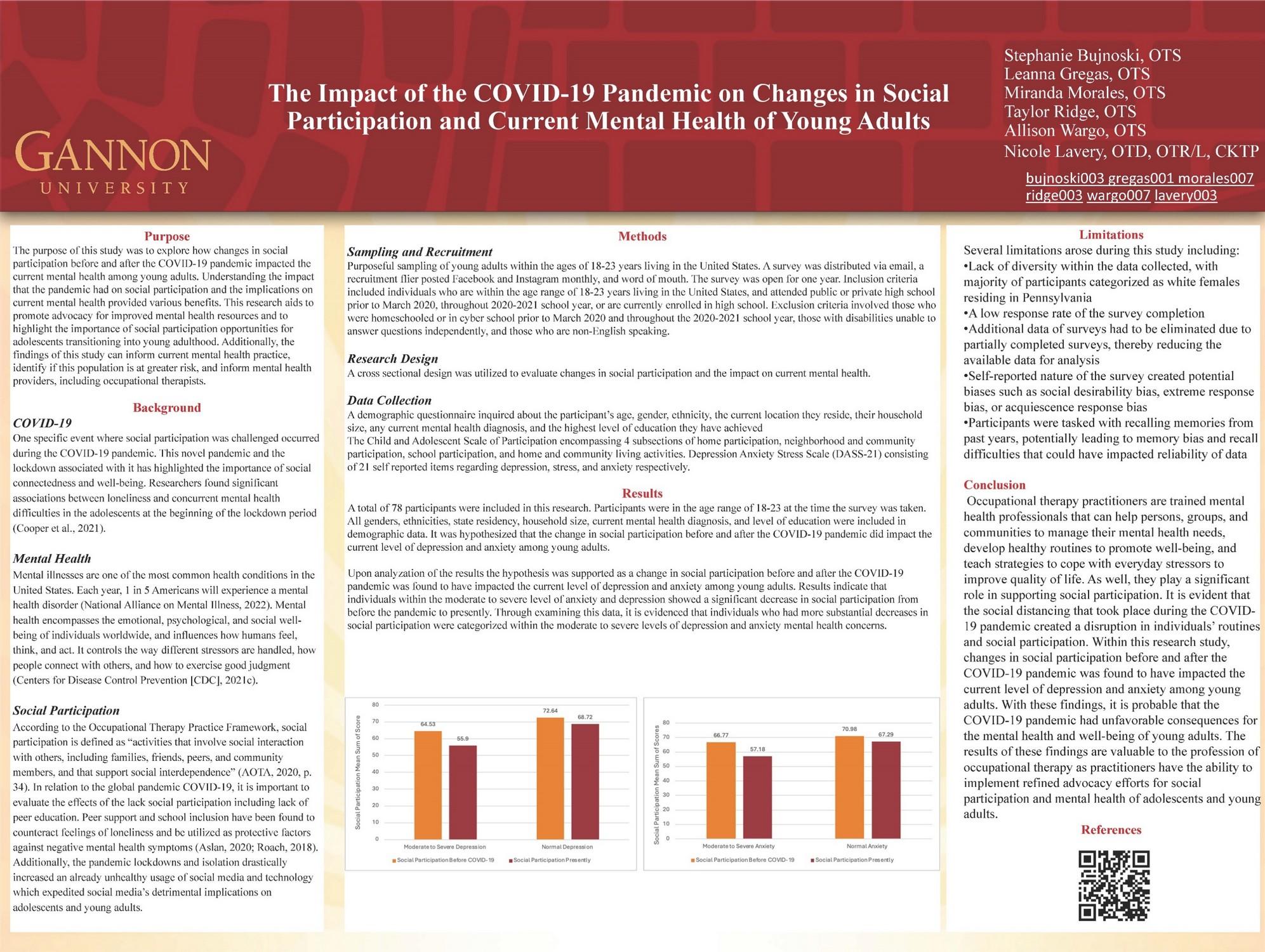
Presentation: 135
Title: The Impact of the COVID-19 Pandemic on Changes in Social Participation and Current Mental Health of Young Adults
Abstract: This research study analyzes the changes in social participation before and after the COVID-19 pandemic and the impact it had on depression and anxiety levels of young adults. The purpose of this study was to identify if there were changes in social participation amongst participants, ranging from 18-23 years old, from the time period before the pandemic in comparison to presently. Individuals (N=78) answered standardized assessment multiple choice questions that determined their social participation level followed by a separate assessment to identify their present level of anxiety and depression within normal and moderate to severe ranges. Survey data was evaluated using a dependent samples ttest where results indicate a decrease in social participation occurred from prior to the pandemic to present. Additional analysis of results indicated that individuals categorized within a moderate to severe level of anxiety and depression showed a greater decrease in social participation than those categorized within the normal range. The implications of this study can lead to expanding and advocating for the role of occupational therapy in mental health settings in addition to advocating for mental health to reduce depression or anxiety among young adults and promote social participation.
Presenter(s): Stephanie Bujnoski, Leanna Gregas, Miranda Morales, Taylor Ridge, Allison Wargo
Sponsoring Department: Occupational Therapy
Mentor(s): Nicole Lavery
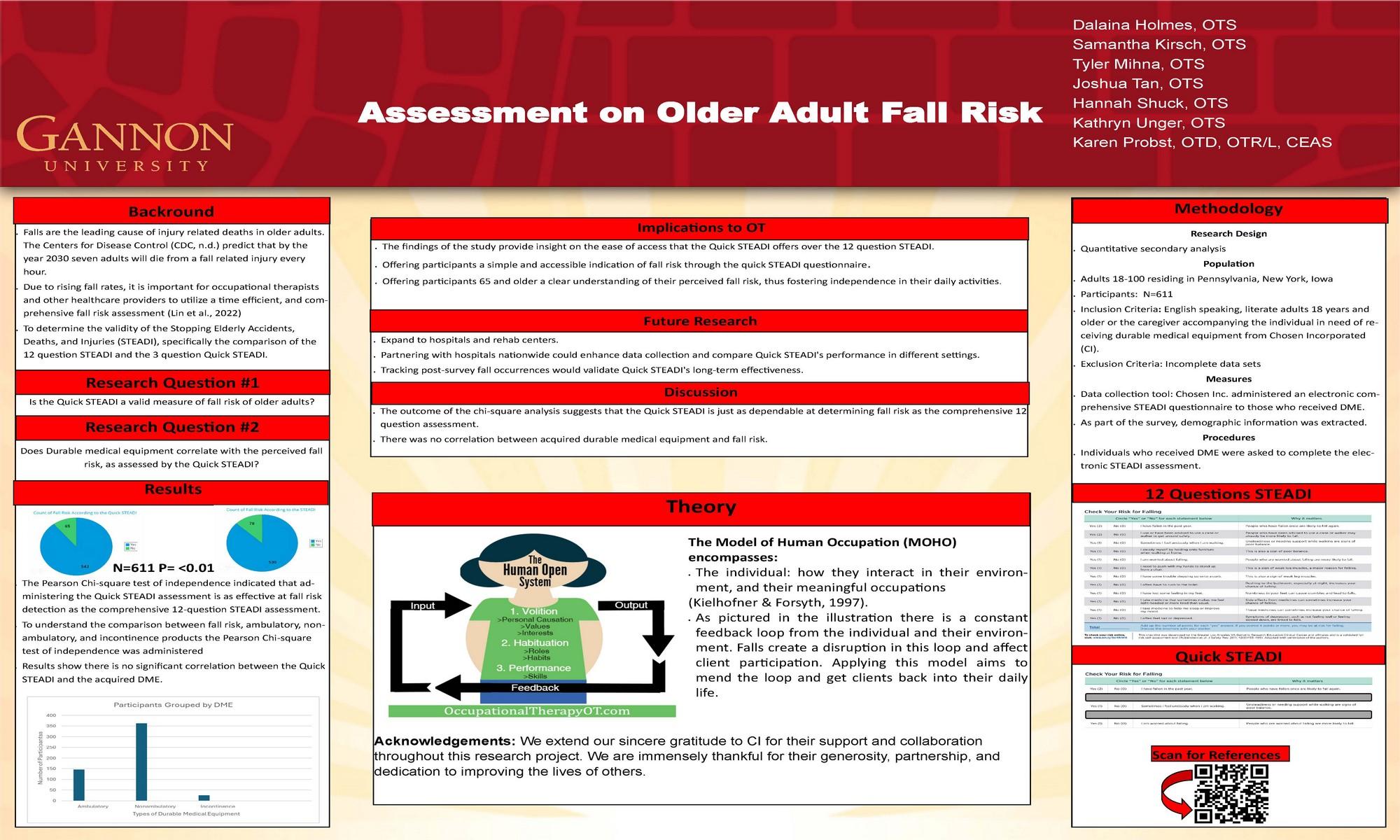
Presentation: 136
Title: Assessment on Older Adult Fall Risk
Abstract: Falls are the leading cause of injury related deaths in older adults. The Center for Disease Control (CDC,n.d.) predict by the year 2030 seven adults will die from a fall related injury every hour. Due to rising fall rates, it is important for occupational therapists and other healthcare providers to utilize a time efficient, and comprehensive fall risk assessment (Lin et al., 2022). To determine the validity of the Stopping Elderly Accidents, Deaths and Injuries (STEADI), specifically the comparison of the 12 question STEADI and the 3 question Quick STEADI.
Presenter(s): Dalaina Holmes, Samantha Kirsch, Tyler Mihna, Joshua Tan, Hannah Shuck, Kathryn Unger
Sponsoring Department: Occupational Therapy Department
Mentor(s): Dr. Karen Probst
RUSKIN GRADUATE RESEARCH AND SCHOLARSHIP POSTER PRESENTATIONS
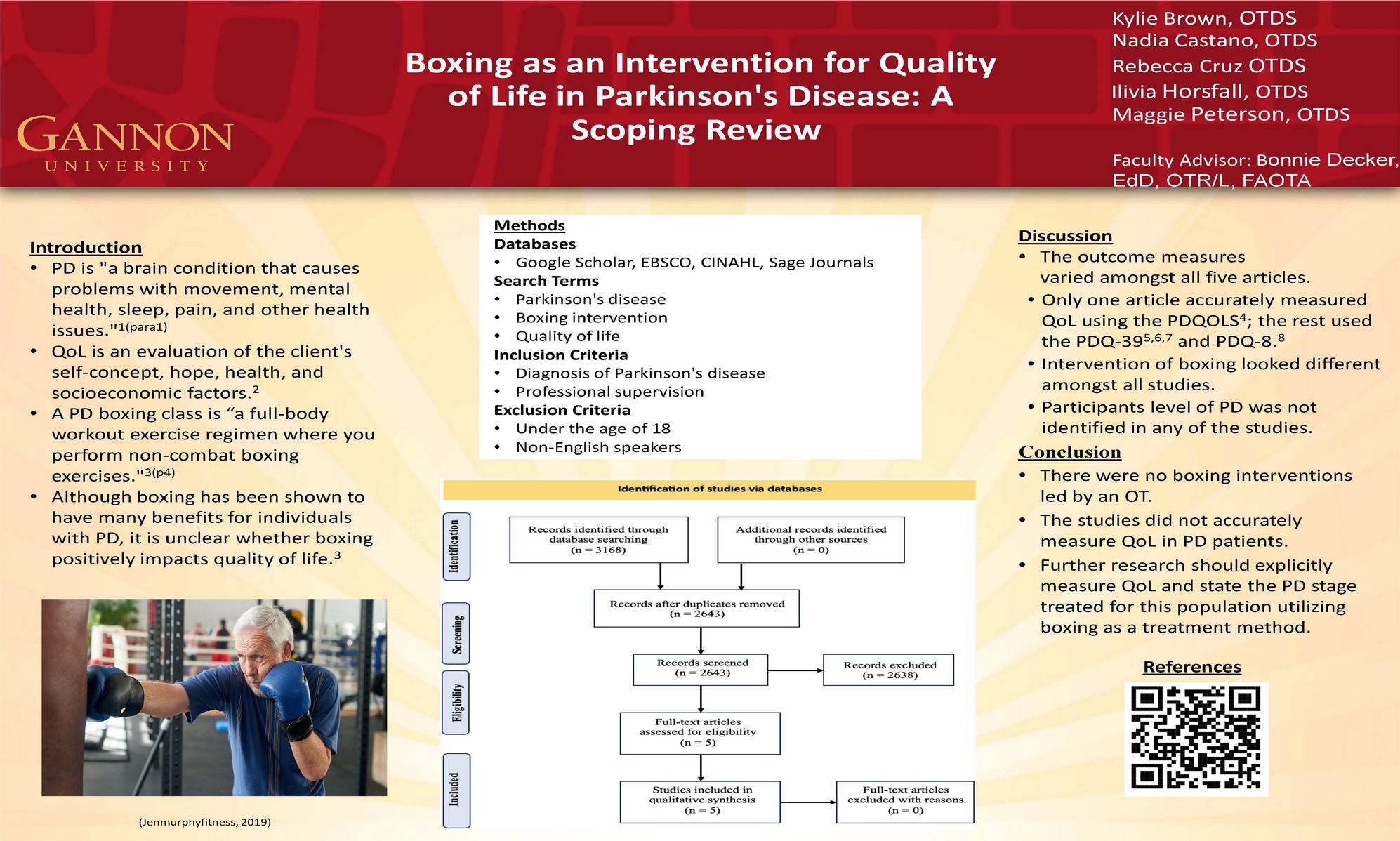
Presentation: 137
Title: Boxing as an Intervention for Quality of Life in Parkinson's Disease: A Scoping Review
Abstract: Parkinson’s disease (PD) is “a brain condition that causes problems with movement, mental health, sleep, pain, and other health issues” (World Health Organization, 2023, par.1). Boxing has been used successfully to address movement issues. This scoping review explored the quality of life (QoL) of individuals using boxing as an intervention. While there are many experimental articles on this topic, only five addressed quality of life (QoL), with one focusing on it as a primary outcome. This poster highlights the need for further research regarding QoL for individuals with PD who participate in boxing.
Presenter(s): Nadia Castano, Maggie Peterson, Ilivia Horsfall; Kylie Brown, Rebecca Cruz
Sponsoring Department: Occupational Therapy
Mentor(s): Bonnie Decker
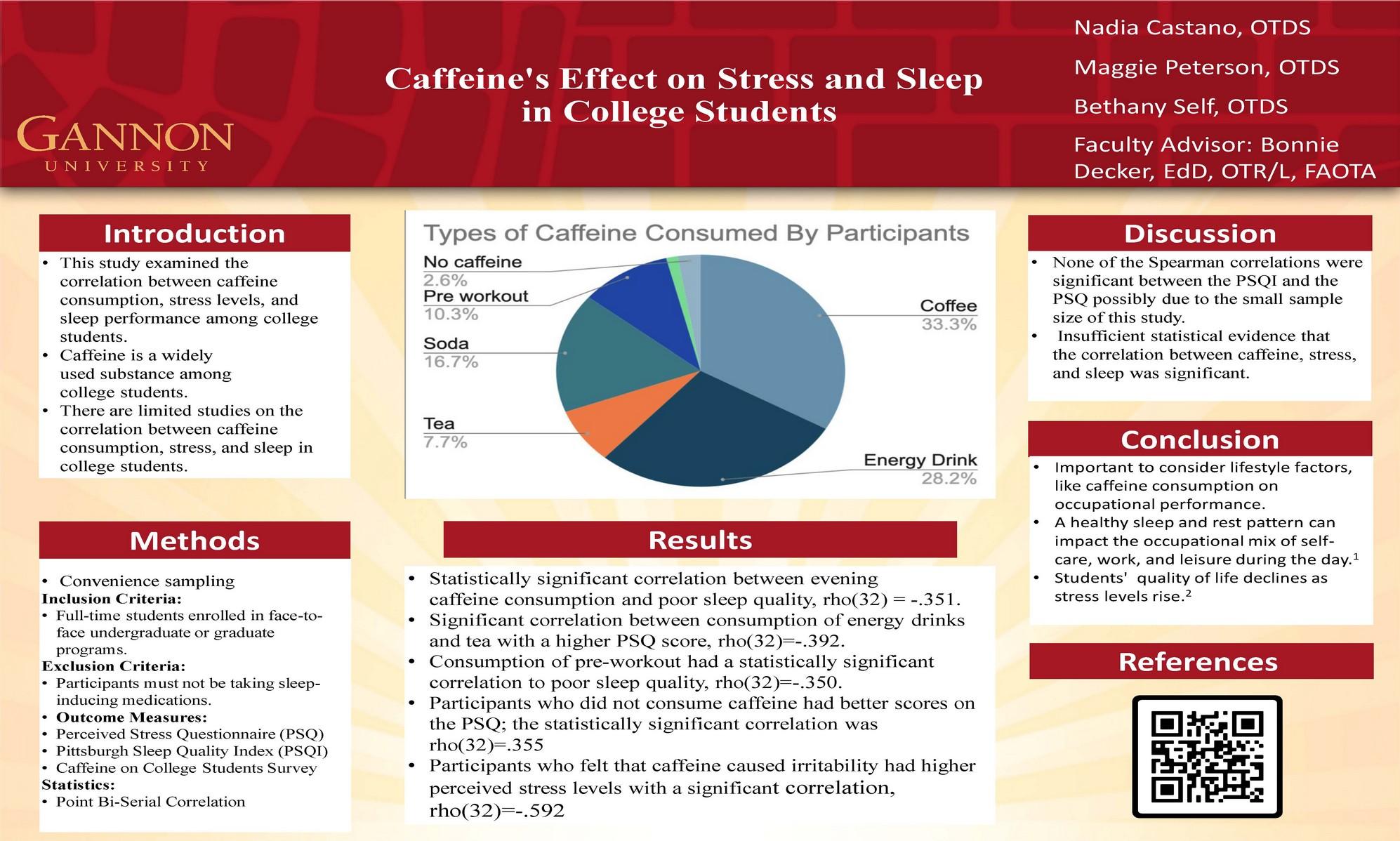
Presentation: 138
Title: Caffeine's Effect on Stress and Sleep in College Students
Abstract: This study examined the correlation between caffeine consumption, stress levels, and sleep performance among college students. There were 33 full-time students gathered through convenience sampling. The Perceived Stress Questionnaire (PSQ), the Pittsburgh Sleep Quality Index (PSQI), and the Caffeine on College Students Survey were used as outcome measures. A point bi-serial correlation coefficient was utilized. While significant correlations were not found, this poster will present the results of this study and potential implications for students who consume caffeine.
Presenter(s): Maggie Peterson, Nadia Castano, Bethany Self
Sponsoring Department: Occupational Therapy
Mentor(s): Bonnie Decker
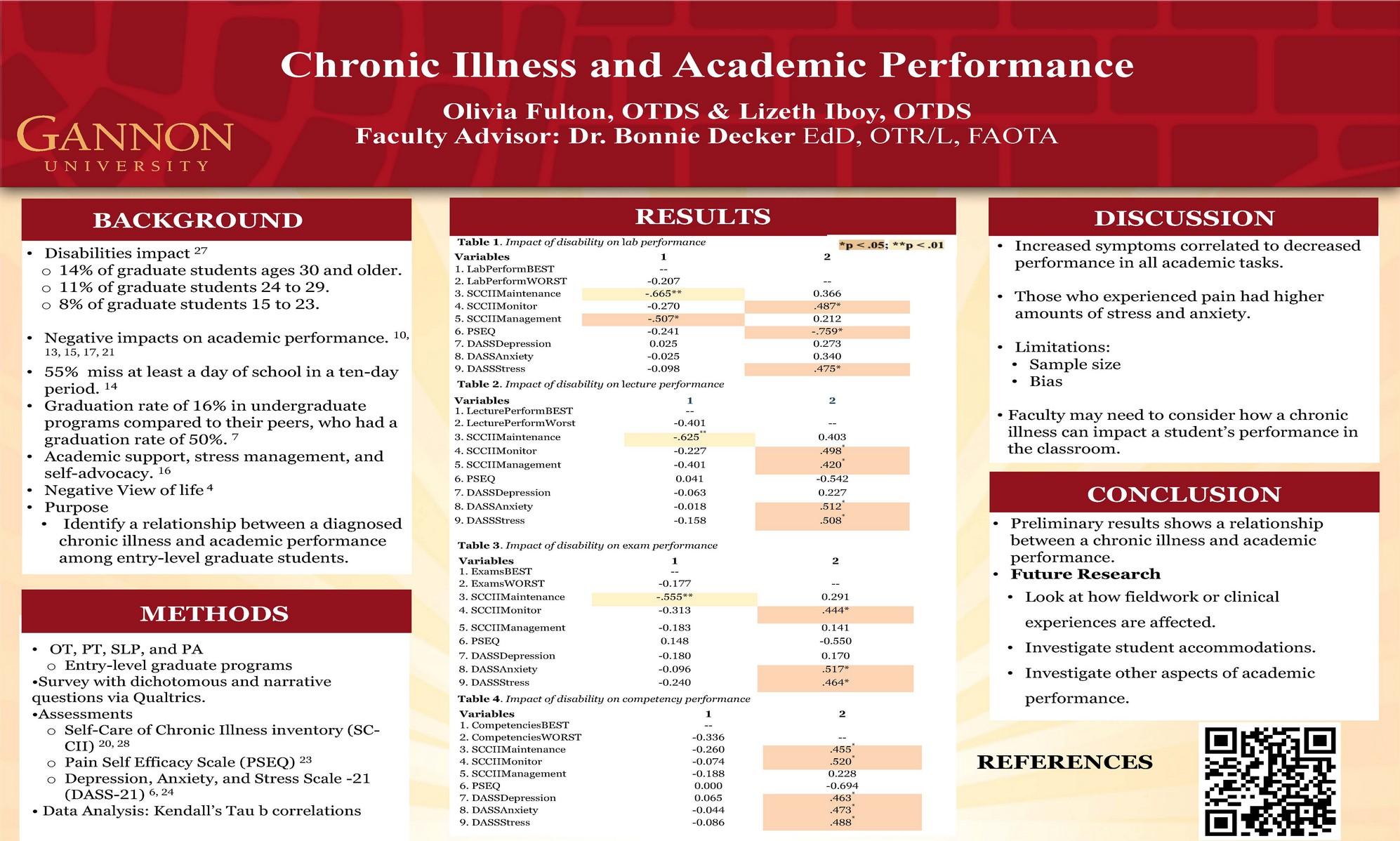
Presentation: 139
Title: Chronic Illness and Academic Performance
Abstract: Disabilities impact 14% of graduate students ages 30 and older, 11% of graduate students 24 to 29, and 8% of graduate students 15 to 23 (Postsecondary National Policy Institute, 2022). This study examined the relationship between chronic illness and academic performance in graduate healthcare students. A total of 18 participants from different healthcare professions completed our survey, including the DASS, SC-CII, PSEQ, and Likert scale questions. Additional research is needed to further examine the effects and its implications. The poster presents the results of this study.
Presenter(s): Olivia Fulton, Lizeth Iboy
Sponsoring Department: Occupational Therapy
Mentor(s): Bonnie Decker
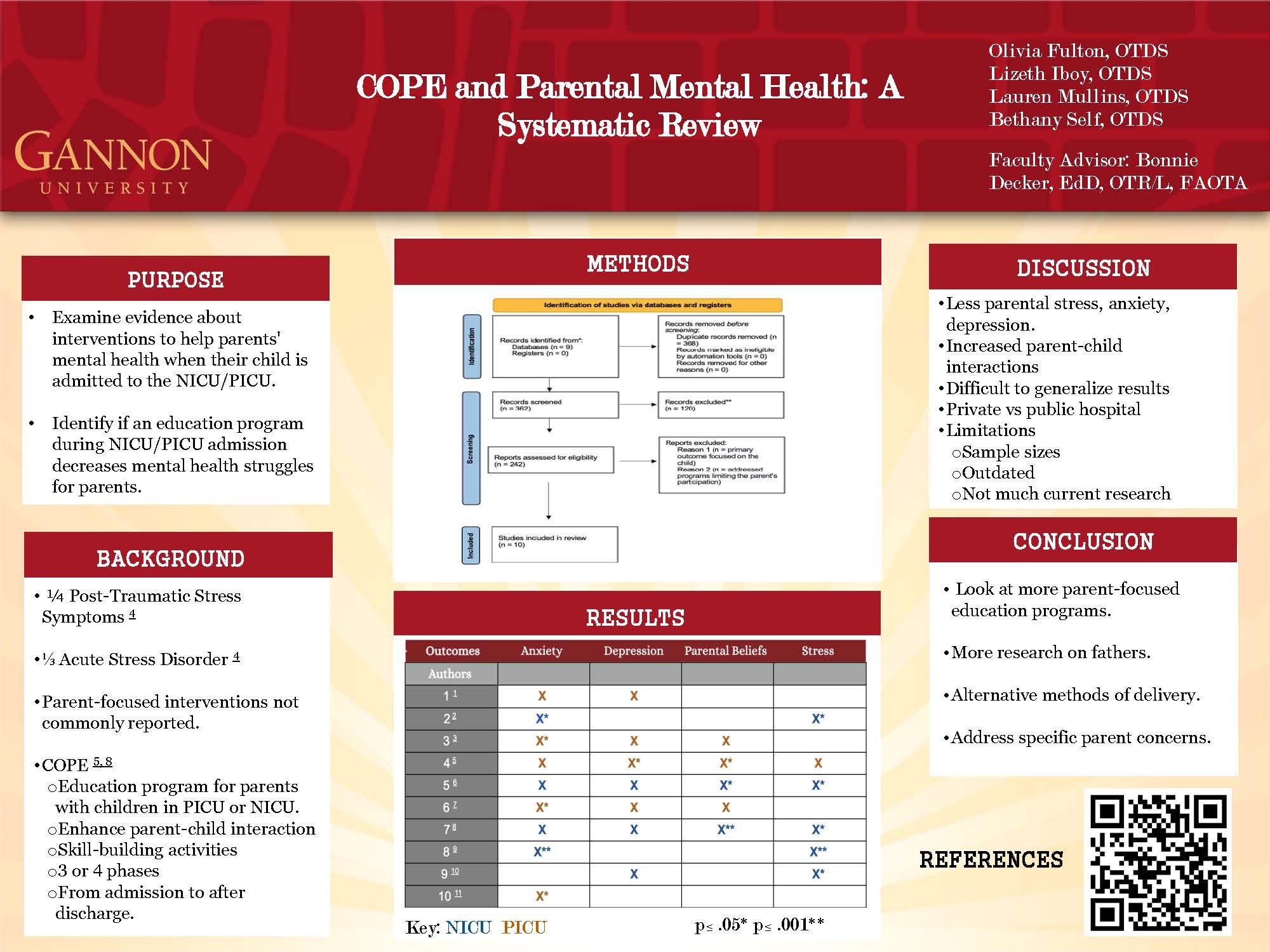
Presentation: 140
Title: Creating Opportunities for Parent Empowerment (COPE) and Parental Mental Health: A Systematic Review
Abstract: Parents of children in acute care settings often experience significant distress and family dynamic changes (Logan et al., 2020). Creating Opportunities for Parent Empowerment (COPE) is an intervention focused on the mental health of parents with children in acute care. This systematic review was conducted to determine the effect of COPE. Ten articles utilizing COPE were identified from 5 databases. Themes include anxiety, stress, parental beliefs, length of stay, and depression. Further research is needed to examine additional parent-focused interventions in acute care settings. This poster presents the results of this study.
Presenter(s): Olivia Fulton, Lizeth Iboy, Lauren Mullins, Bethany Self
Sponsoring Department: Occupational Therapy
Mentor(s): Bonnie Decker
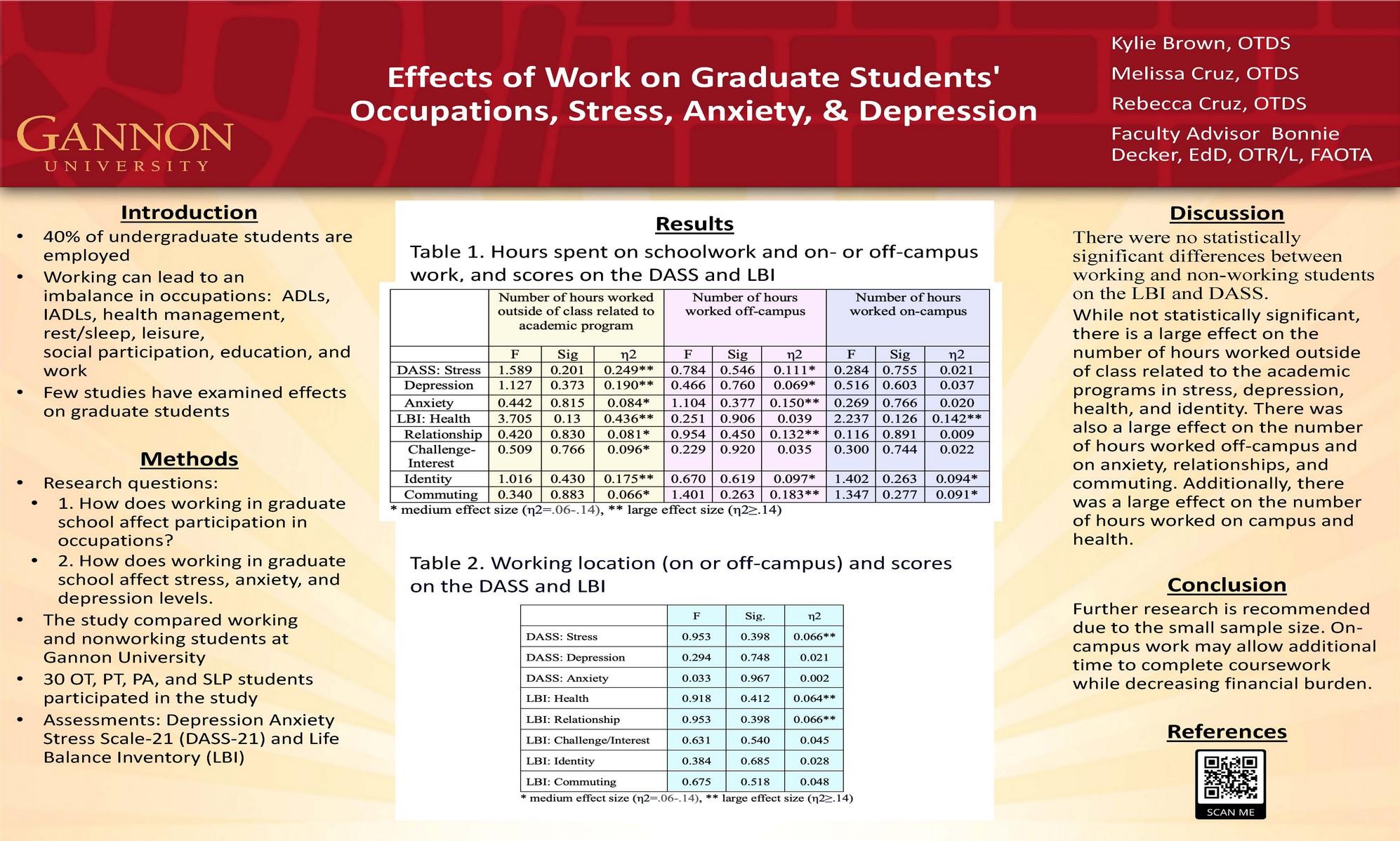
Presentation: 141
Title: Effects of Work on Graduate Students' Occupations, Stress, Anxiety, & Depression
Abstract: Graduate students that work while attending school may face additional stress on their daily occupations. This study explored the effect of hours worked and participation in occupations, anxiety, depression, and stress levels in 30 graduate students. A survey collected data using the Life Balance Inventory (LBI) and the Depression Anxiety Stress Scale 21 (DASS-21). The results of the ANOVA showed that there was no significant difference between working and DASS or LBI scores. This poster will highlight the medium and large effect sizes found. Implications of these results will be shared.
Presenter(s): Kylie Brown, Rebecca Cruz, Melissa Cruz
Sponsoring Department: Occupational Therapy
Mentor(s): Bonnie Decker
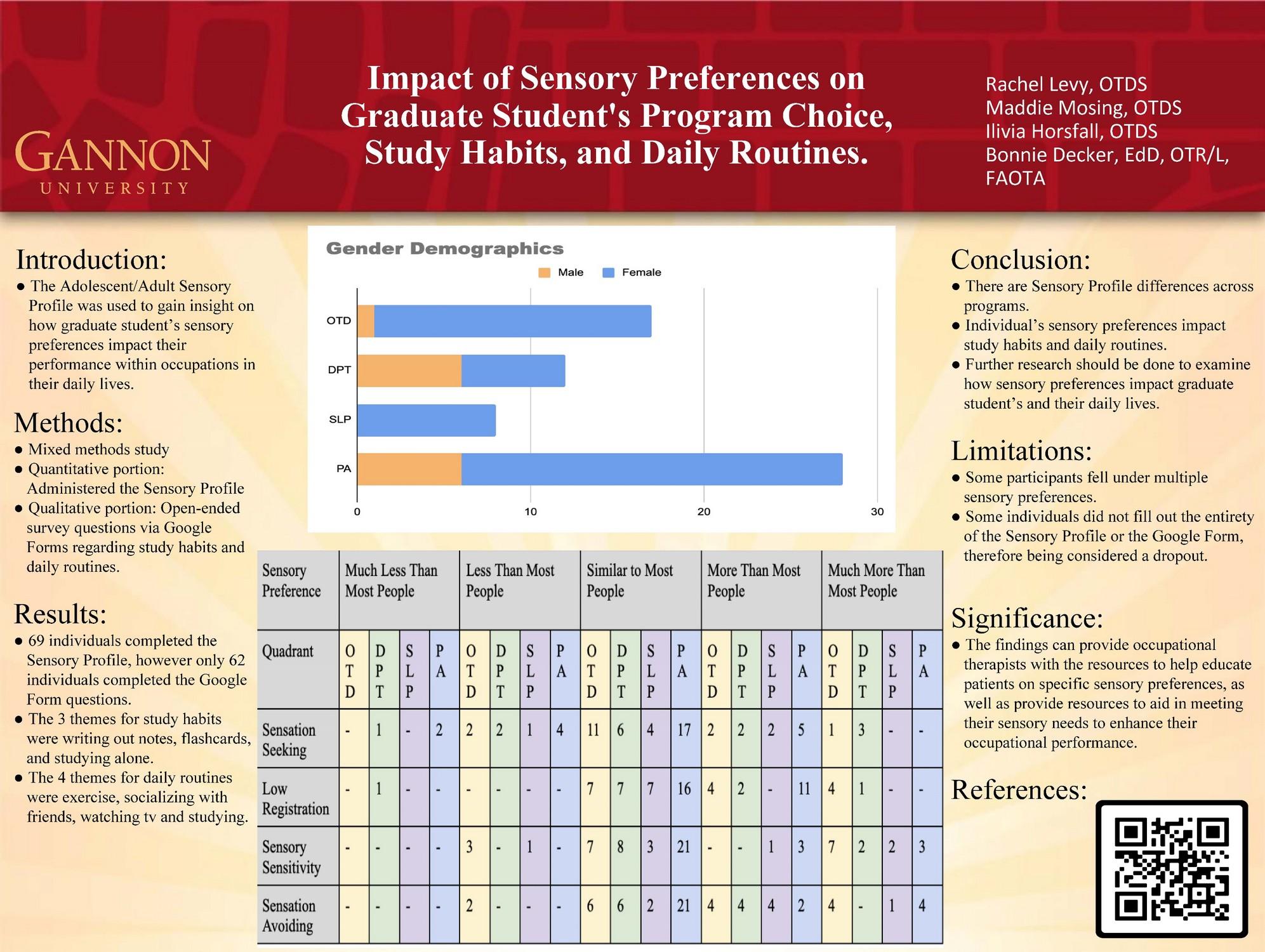
Presentation: 142
Title: Impact of Sensory Preferences on Graduate Student's Program Choice, Study Habits, and Daily Routines.
Abstract: This mixed-methods study examined the impact of sensory preferences on graduate student’s habits, routines, and program choices. The quantitative portion used the Sensory Profile to identify the respondent’s sensory preferences. The qualitative component used Google forms, to ask questions related to daily habits, routines, and program choice. Sixty-four full-time graduate students from Gannon University participated. Overall, the quantitative correlations were not significant except between sensory preference and gender. Qualitative results indicated potential trends in routines and habits based on the respondent’s sensory preferences. Implications for health care providers are included.
Presenter(s): Madeline Mosing, Rachel Levy, Ilivia Horsfal
Sponsoring Department: Occupational Therapy
Mentor(s): Bonnie Decker
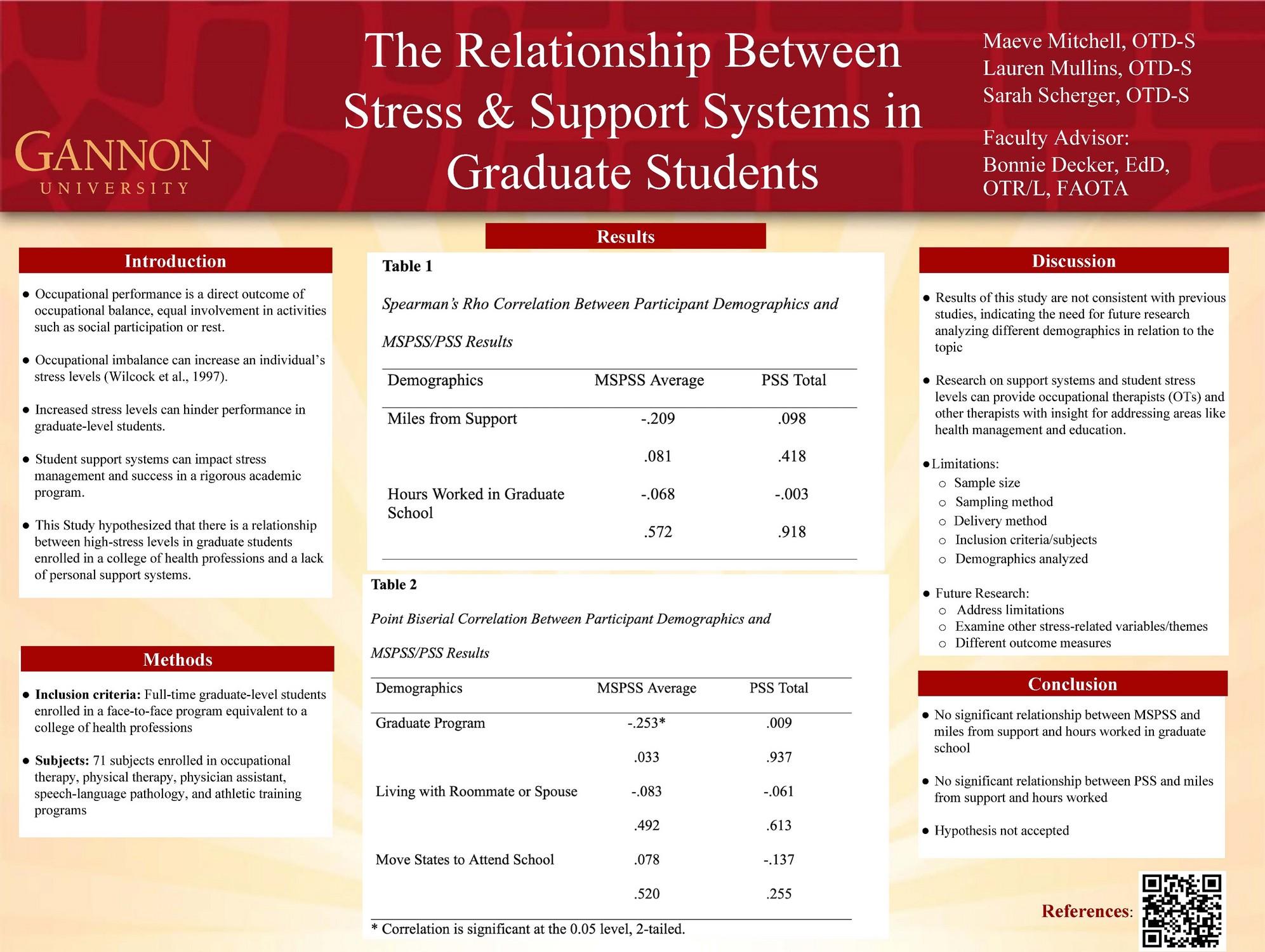
Presentation: 143
Title: The Relationship Between Stress & Support Systems in Graduate Students
Abstract: This study assessed the impact of social supports on stress in full-time graduate students. The 71 participants were in face-to-face health professional programs. Data was collected using the Perceived Stress Scale (PSS) (Cohen et al., 1983) and the Multidimensional Scale of Perceived Social Support (MSPSS) (Zimet et al., 1988) to determine if there is a relationship between stress levels and personal support systems. No significant correlations were found between participant demographics and their MSPSS/PSS results. This poster will highlight the findings of the study and future research implications.
Presenter(s): Lauren Mullins, Sarah Scherger, Maeve Mitchell
Sponsoring Department: Occupational Therapy
Mentor(s): Bonnie Decker
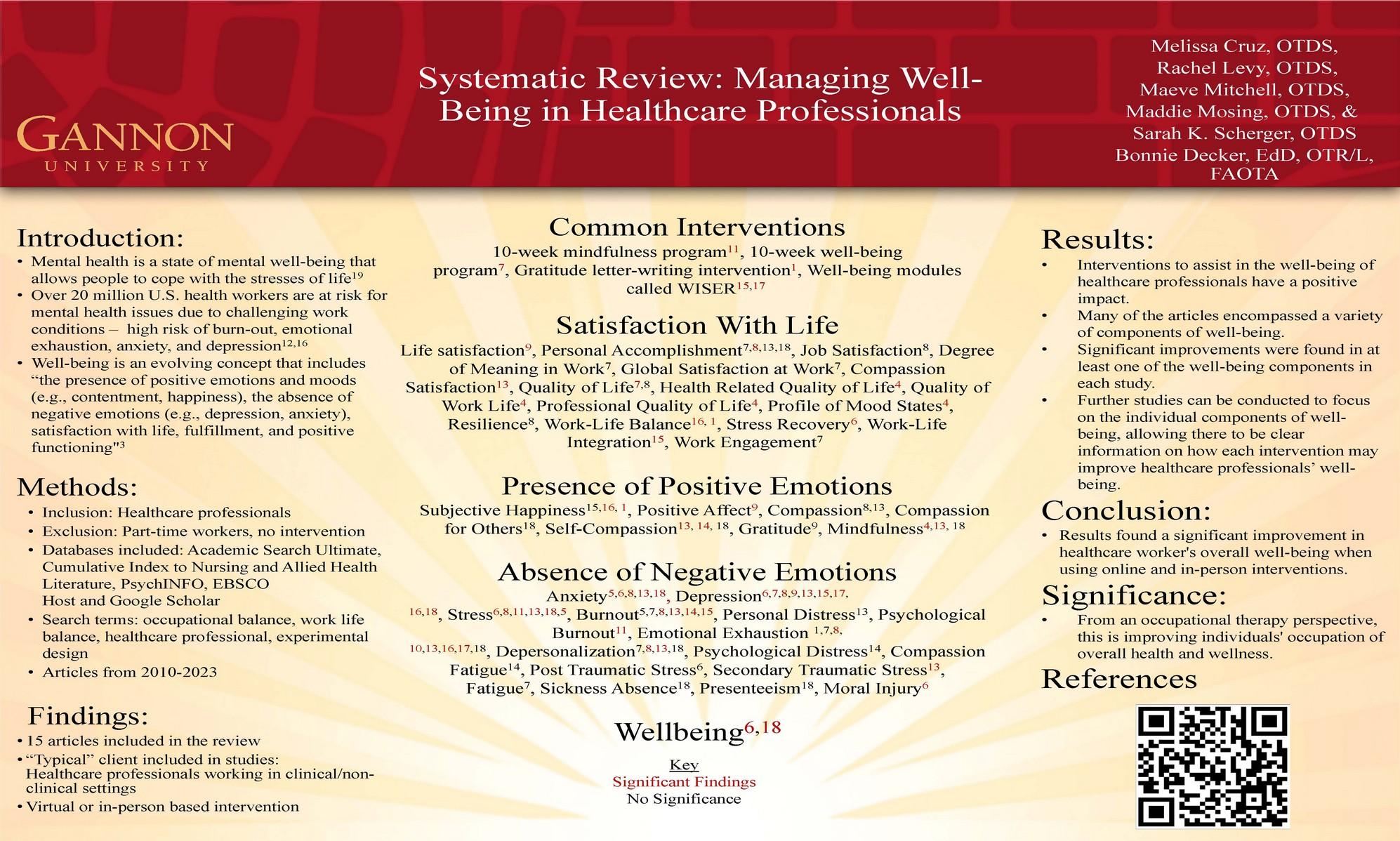
Presentation: 144
Title: Managing Well-Being in Healthcare Professionals
Abstract: There are three aspects to well-being: presence of positive emotions, absence of negative emotions, and satisfaction with life. This systematic review examined how these aspects of well-being are impacted and managed by individuals in healthcare professions. Systematic searches were conducted in five databases from 2010-2023, identifying published peer-reviewed articles whose outcome measures fall under at least one aspect of well-being. Across 15 articles, interventions to assist the well-being of healthcare professionals have a positive impact. Online and in-person interventions both led to significant improvements in at least one component of well-being in each study. Implications for therapists are included.
Presenter(s): Melissa Cruz, Maeve Mitchell, Rachel Levy, Maddie Mosing, Sarah Scherger
Sponsoring Department: Occupational Therapy
Mentor(s): Bonnie Decker
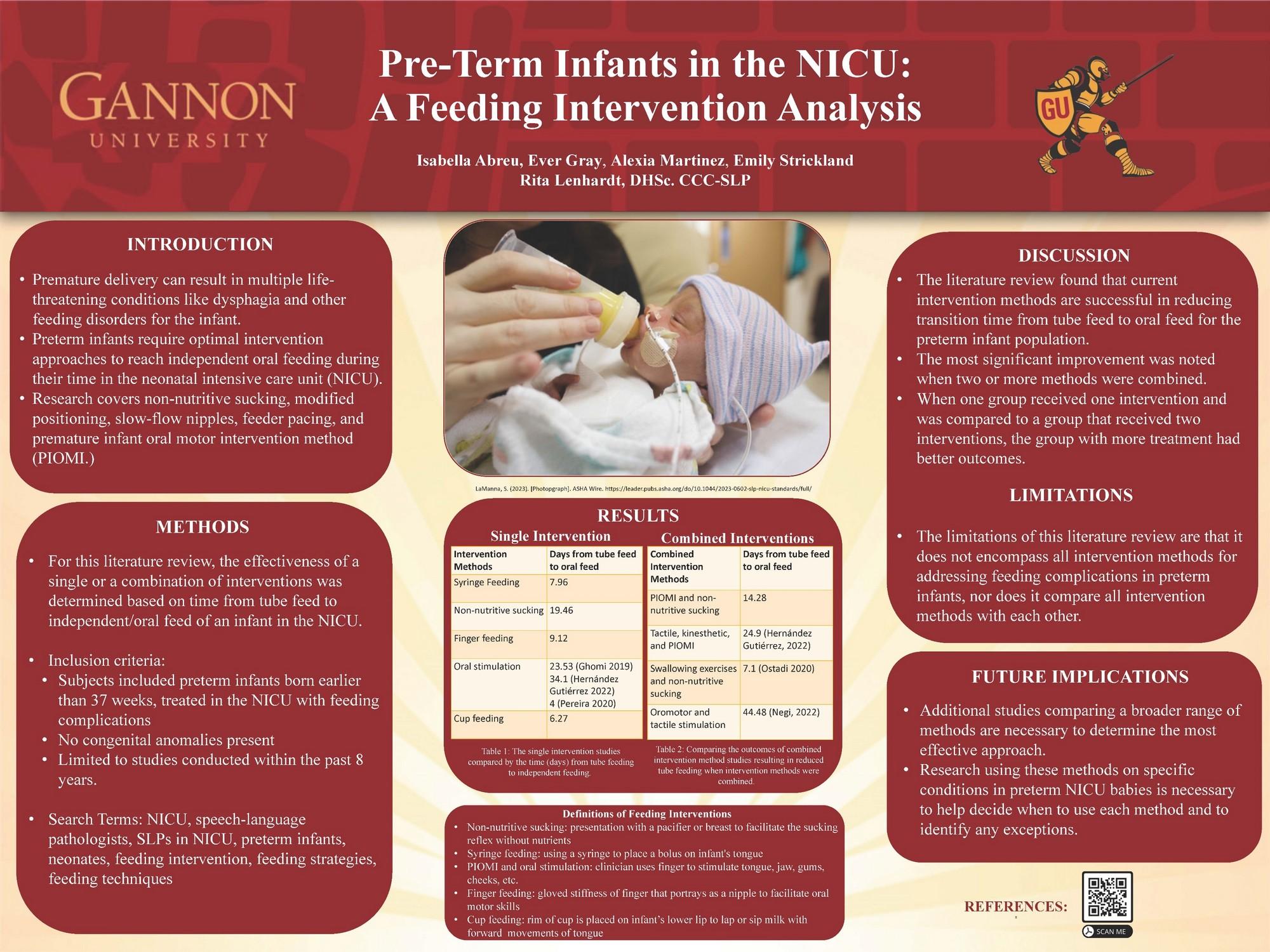
Presentation: 145
Title: Pre-Term Infants in the NICU: A Feeding Intervention Analysis
Abstract: Preterm infants require optimal intervention strategies to achieve independent oral feeding. Various treatment modalities exist for preterm infants experiencing feeding challenges. Given their prolonged stays in neonatal intensive care units, it is imperative for clinicians to employ the most efficacious intervention methods. Existing research delineates current methodologies and resultant outcomes of these interventions. However, a critical gap remains in identifying the most effective approach for addressing feeding difficulties in preterm infants. This literature review aims to scrutinize and evaluate current research findings to ascertain the most efficacious method for the preterm infant population.
Presenter(s): Ever Gray, Bella Abreu, Emily Strickland, Alexia Martinez
Sponsoring Department: Speech & Language Pathology
Mentor(s):
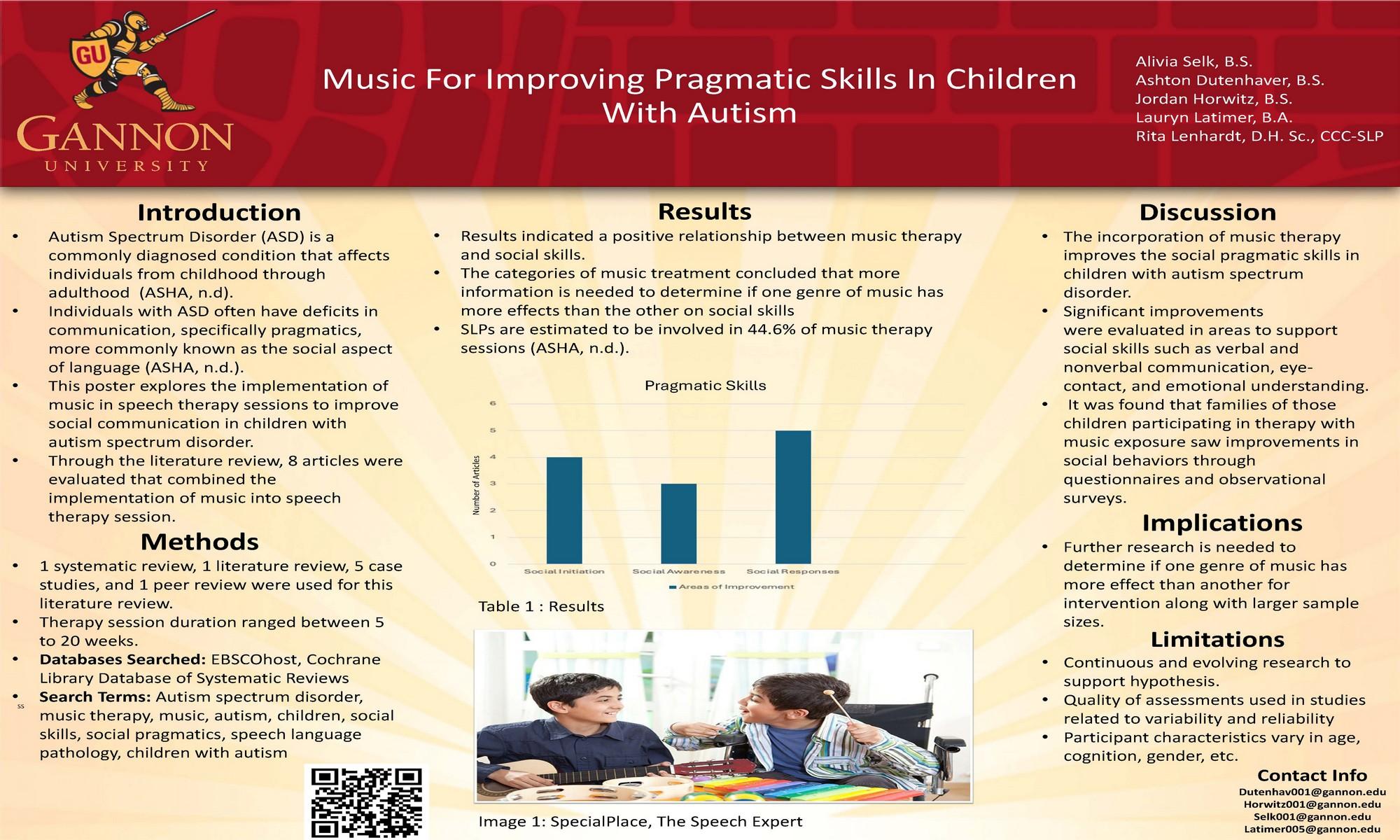
Presentation: 146
Title: Music For Improving Pragmatic Skills In Children With Autism
Abstract: This poster investigates music therapy's impact on social communication in children with autism spectrum disorder, addressing challenges linked to intellectual and sensory deficits. The literature review reveals pathologists enhanced pragmatic skills when music is integrated into therapy. Notably, speechlanguage pathologists can administer this intervention, presenting an opportunity for targeted support. While existing studies support this, further research is crucial to fortify the hypothesis. This underscores ongoing exploration of music therapy as a valuable tool in addressing social communication challenges in children with autism, particularly when facilitated by speech-language pathologists.
Presenter(s): Alivia Selk, Ashton Dutenhaver, Jordan Horwitz, Lauryn Latimer
Sponsoring Department: Speech & Language Pathology
Mentor(s): Rita Lenhardt
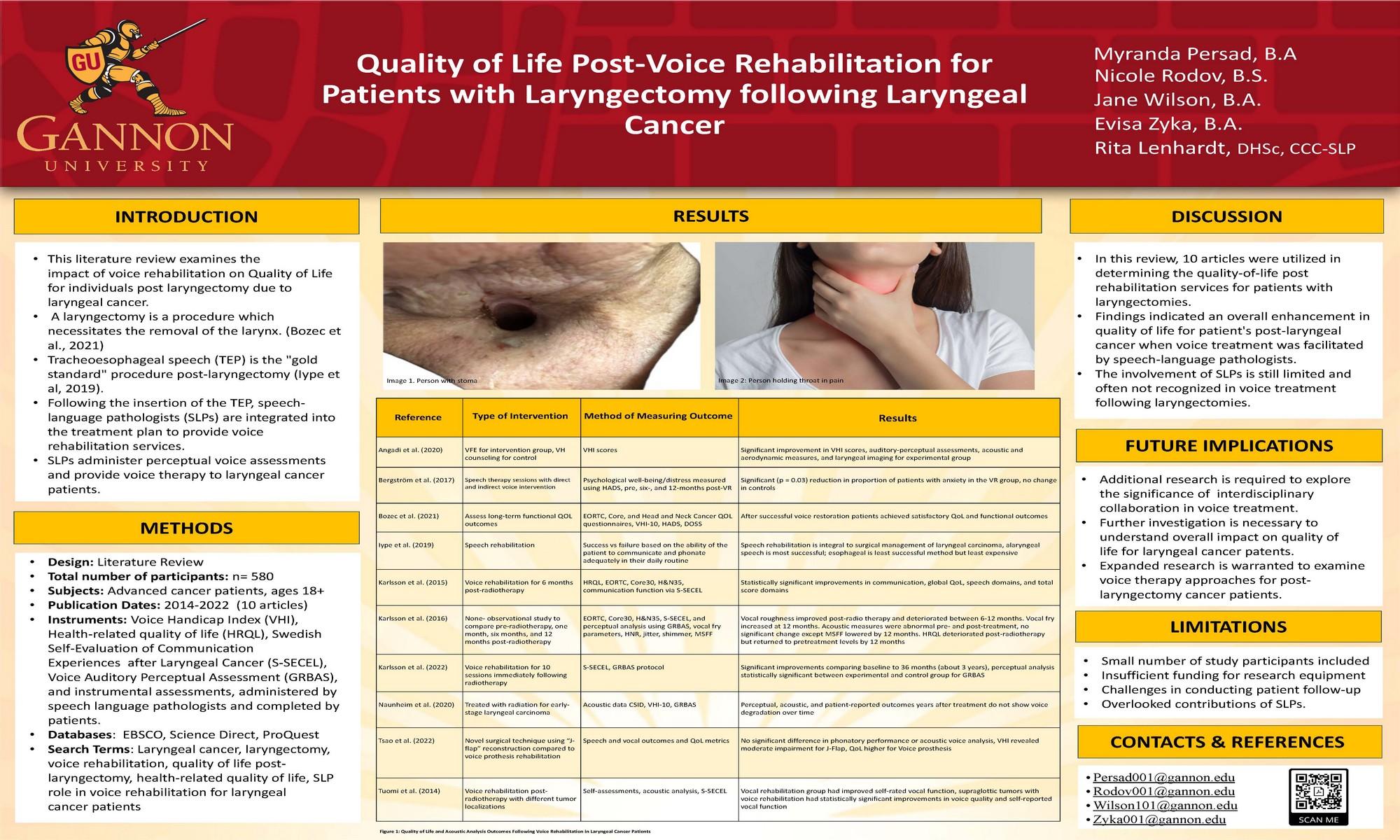
Presentation: 147
Title: Quality of Life Post-Voice Rehabilitation for Patients with Laryngectomy following Laryngeal Cancer
Abstract: This literature review examines the impact of voice rehabilitation on Quality of Life (QoL) for individuals post-total laryngectomy due to laryngeal cancer. Administered by speech-language pathologists, the reviewed articles utilize self-assessment tools such as the Voice Handicap Index (VHI), Health-Related QoL (HRQL), and the Swedish Self-Evaluation of Communication Experiences after Laryngeal Cancer (SSECEL) to gauge voice-related patient concerns. Pre- and post-voice rehabilitation assessments were conducted over a six to 12-month period. Despite limited research, the findings indicate an overall enhancement in QoL for patients post-laryngeal cancer when voice treatment is facilitated by speech-language pathologists.
Presenter(s): Myranda Persad, Nicole Rodov, Jane Wilson, Evisa Zyka
Sponsoring Department: Speech & Language Pathology
Mentor(s): Rita Lenhardt
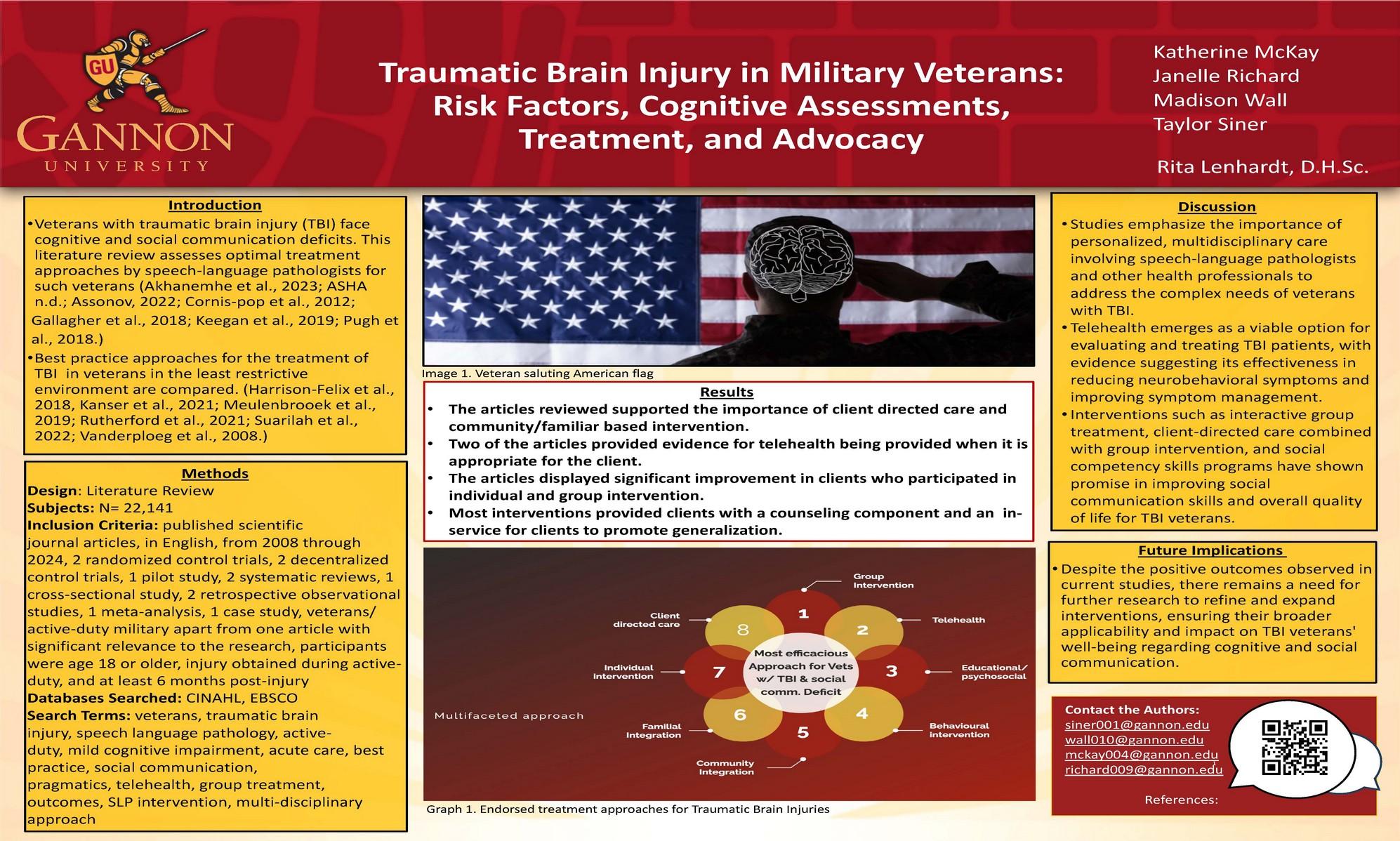
Presentation: 148
Title: Traumatic Brain Injury in Military Veterans: Risk Factors, Cognitive Assessments, Treatment, and Advocacy.
Abstract: Veterans with traumatic brain injury face cognitive and social communication deficits. This literature review assesses optimal treatment approaches by speech-language pathologists for such veterans. Studies endorse personalized, multidisciplinary care, considering individual and external factors. However, the scarcity of research on effective strategies for TBI veterans is evident. Prioritizing contextualized, least restrictive settings, our collaborative efforts between SLPs and health professionals tailor interventions, fostering positive communication outcomes. The approaches identified in the literature review hold promise for improving veterans' quality of life. Future research should refine and expand these interventions to maximize their broader applicability and impact.
Presenter(s): Katherine McKay, Taylor Siner, Janelle Richard, Madison Wall
Sponsoring Department: Speech & Language Pathology
Mentor(s): Rita Lenhardt